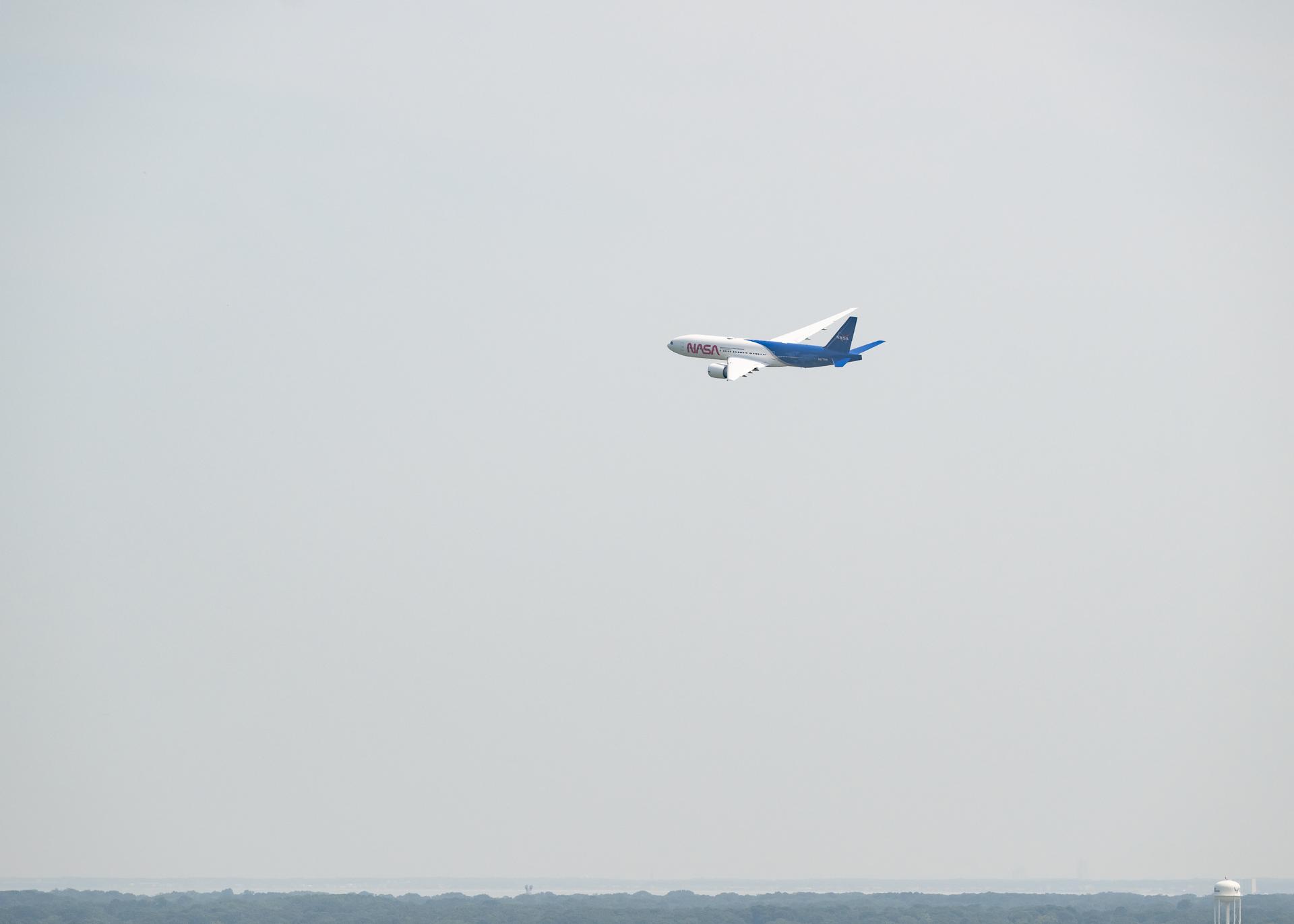
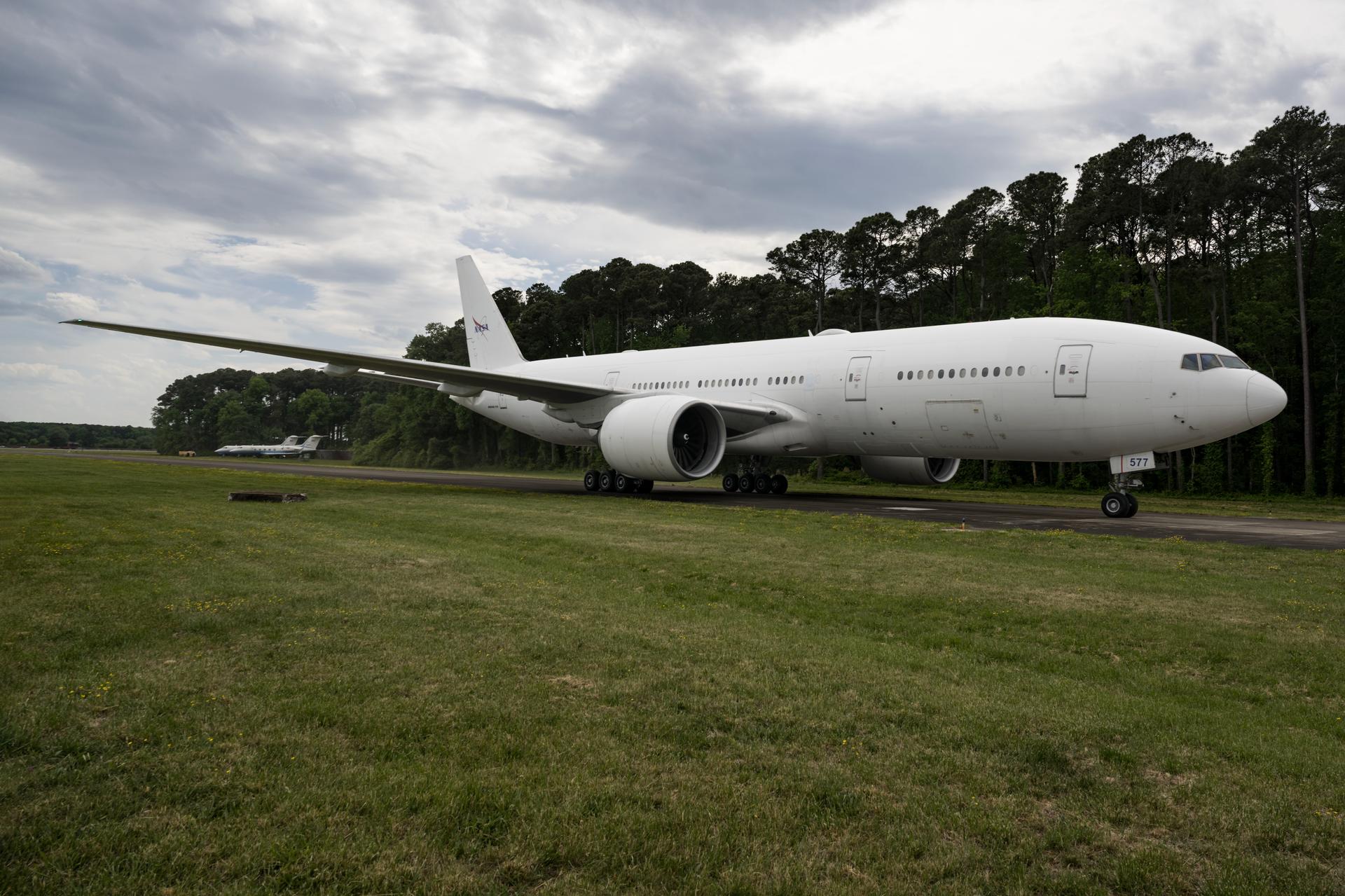
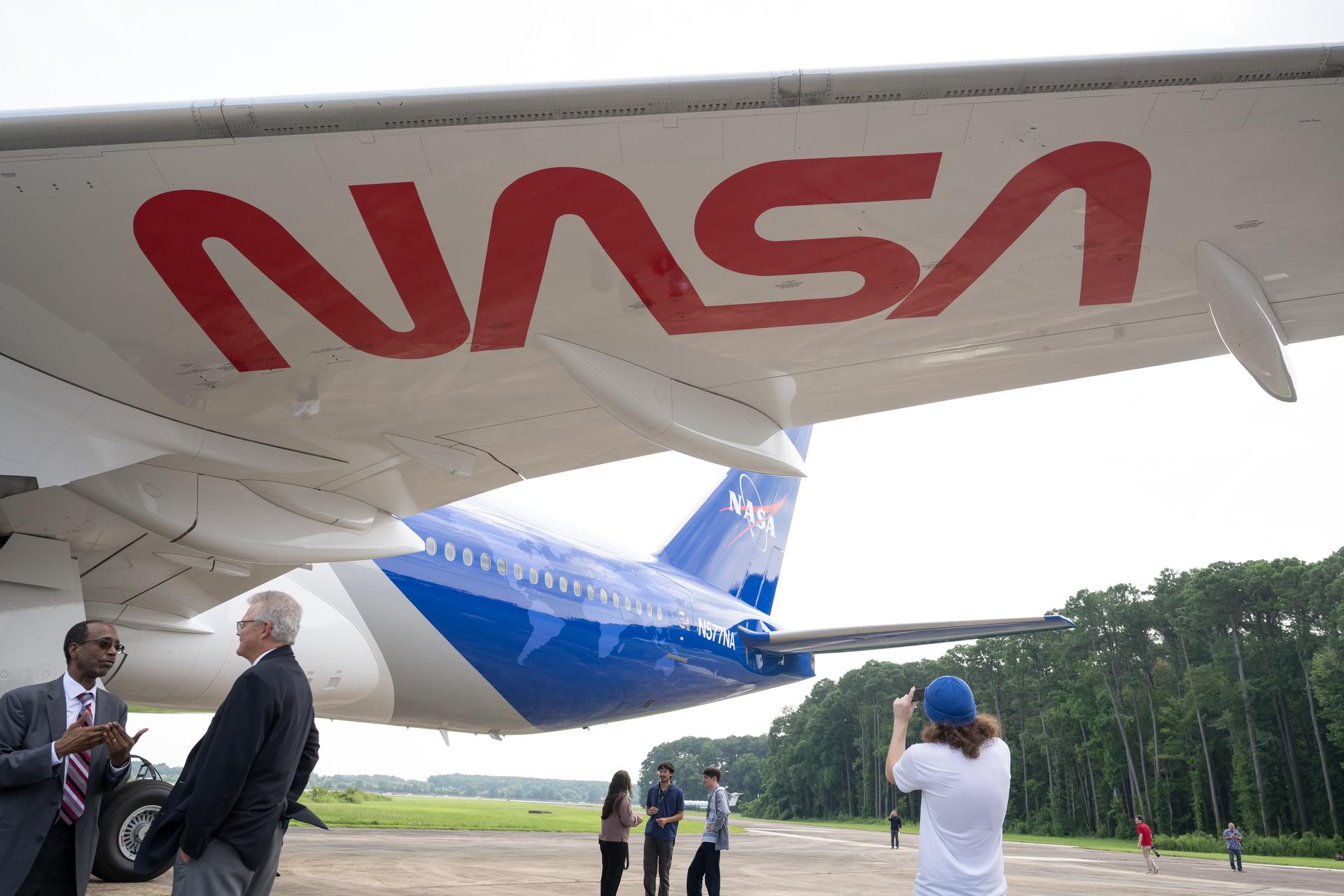
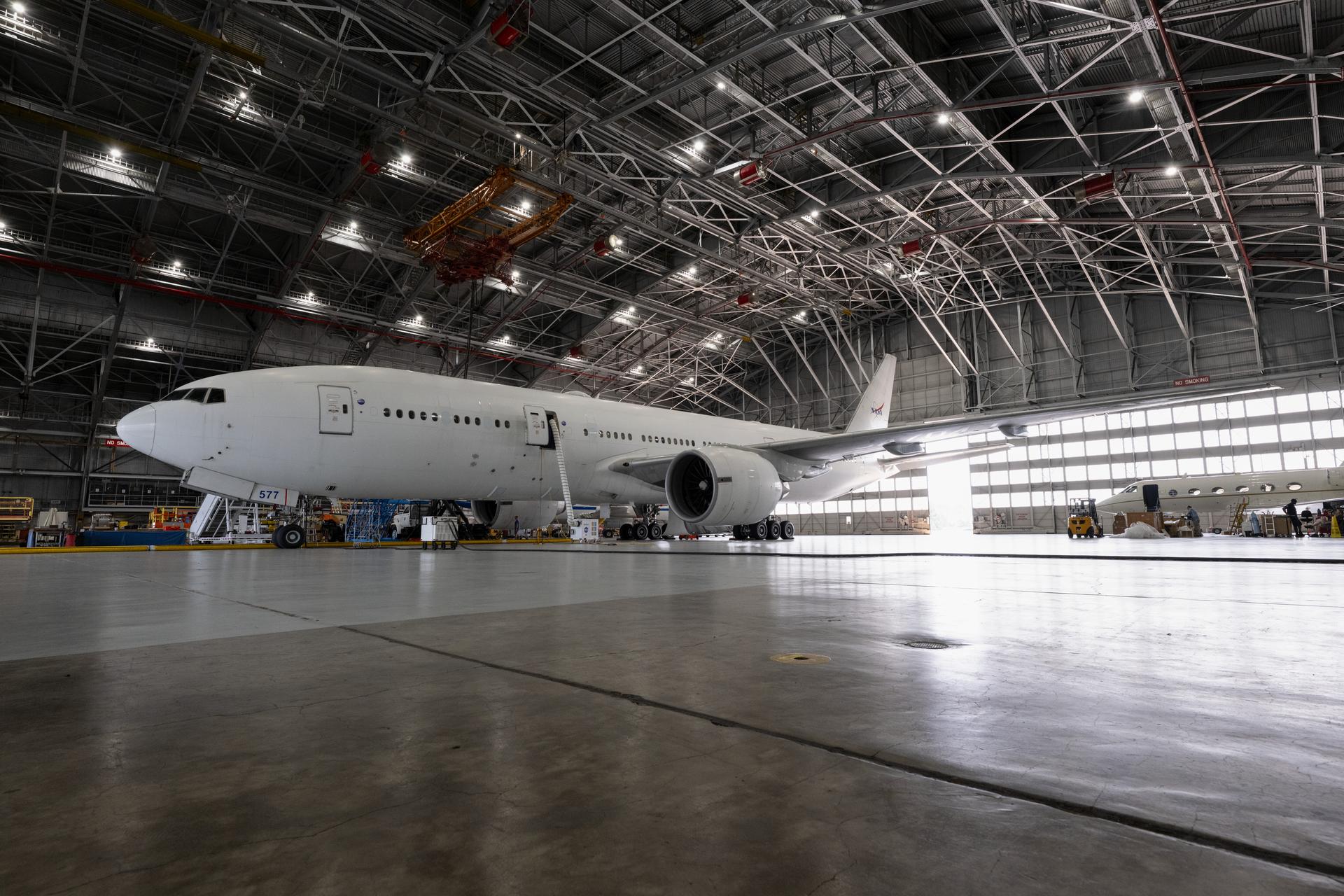
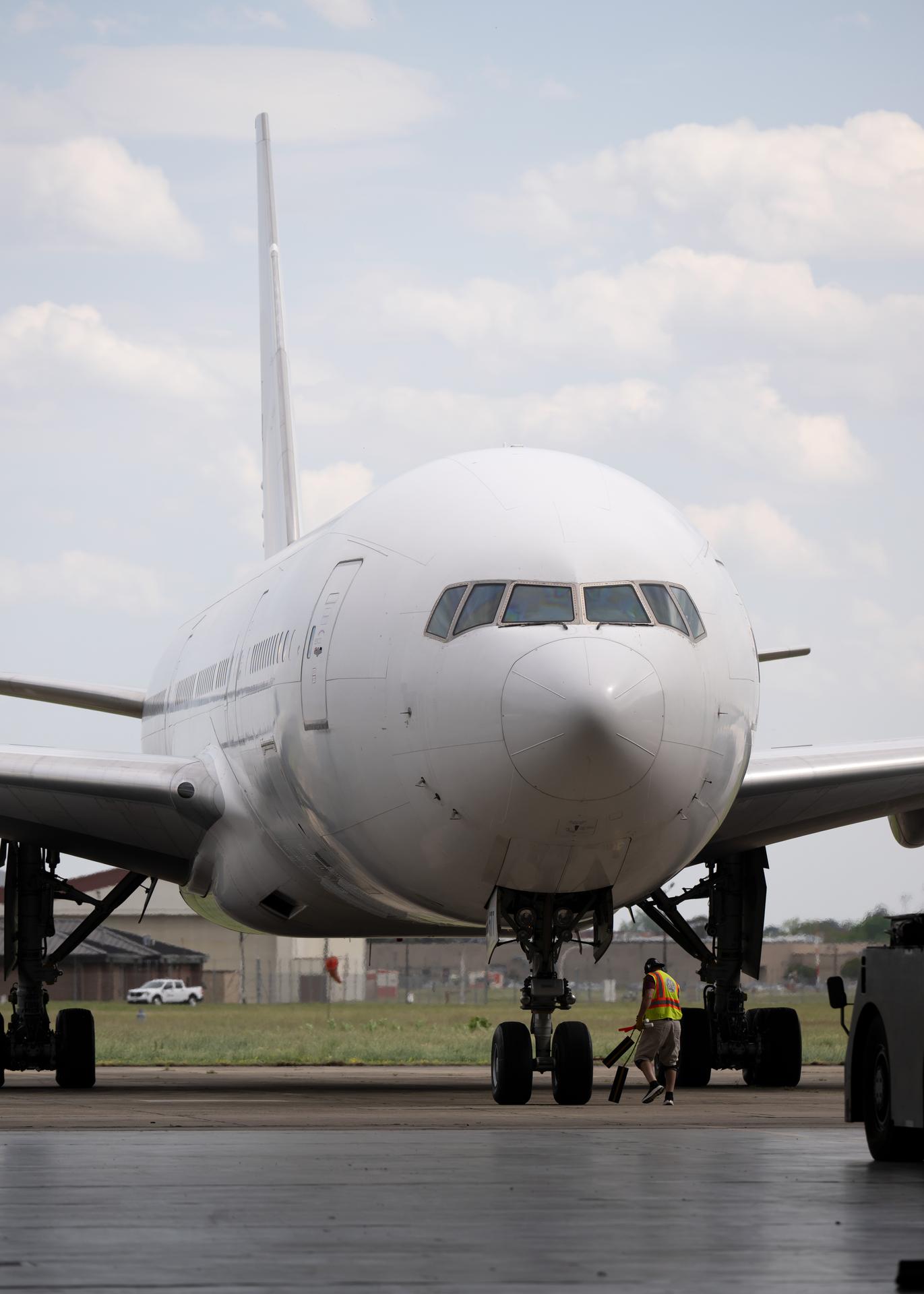
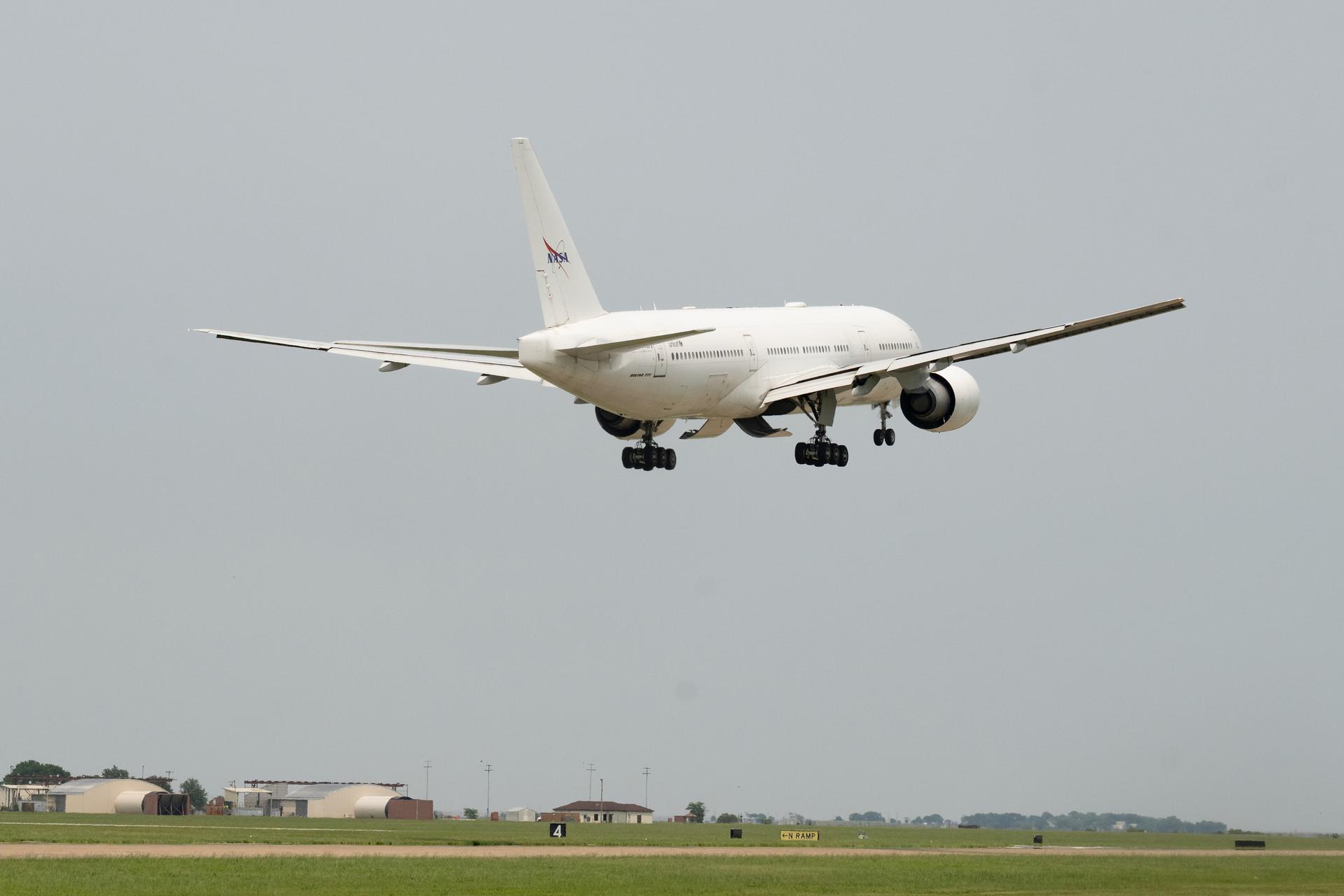
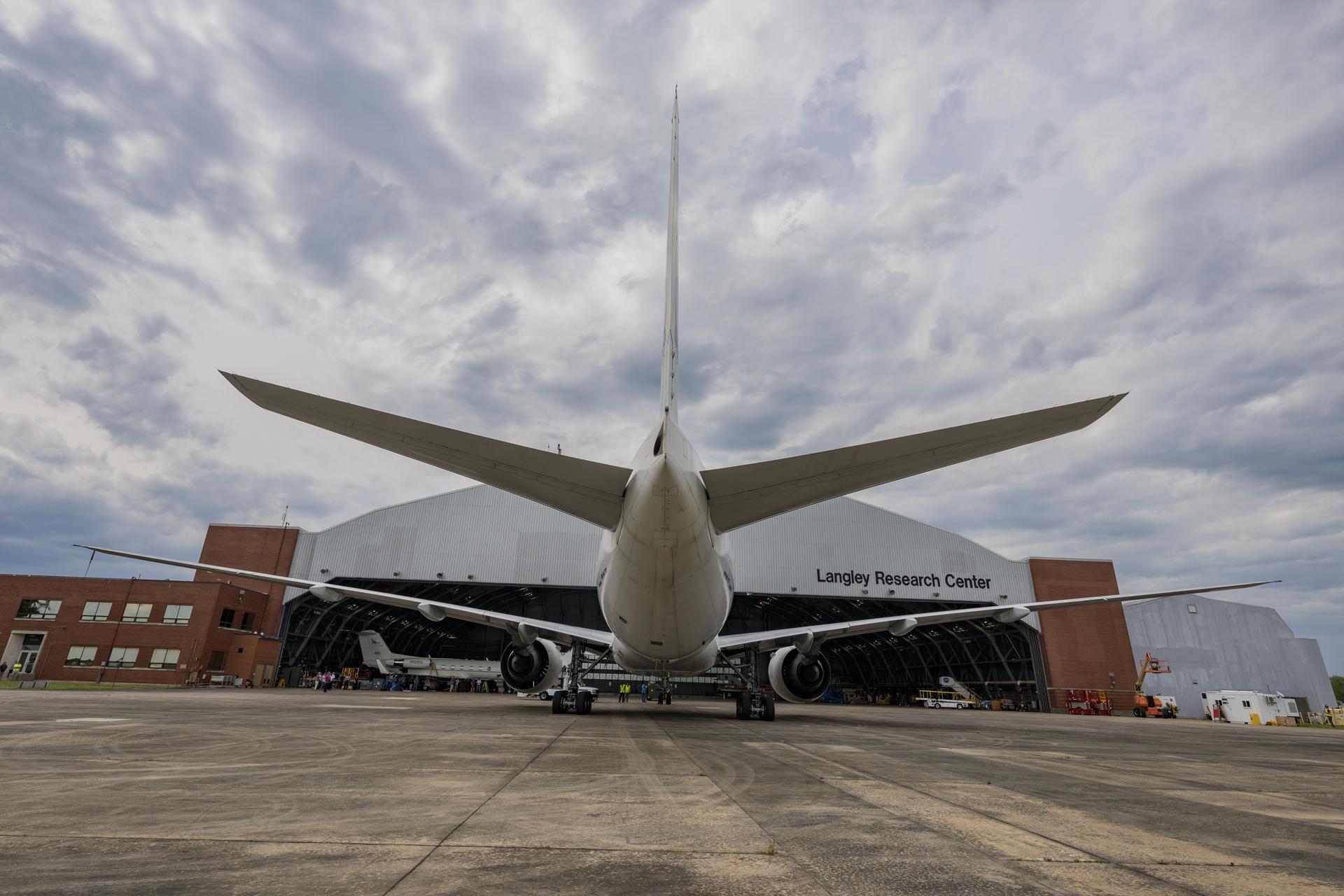
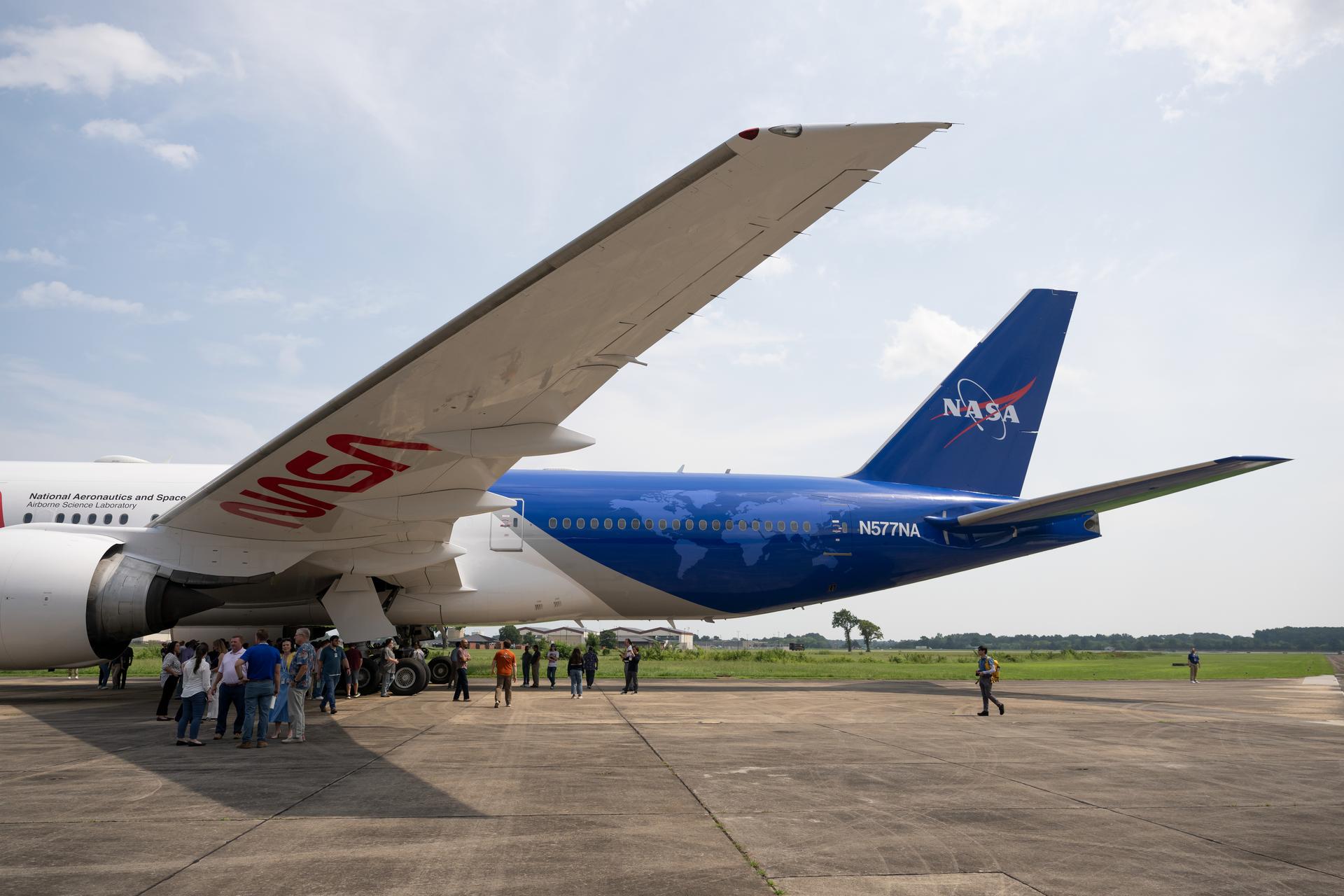
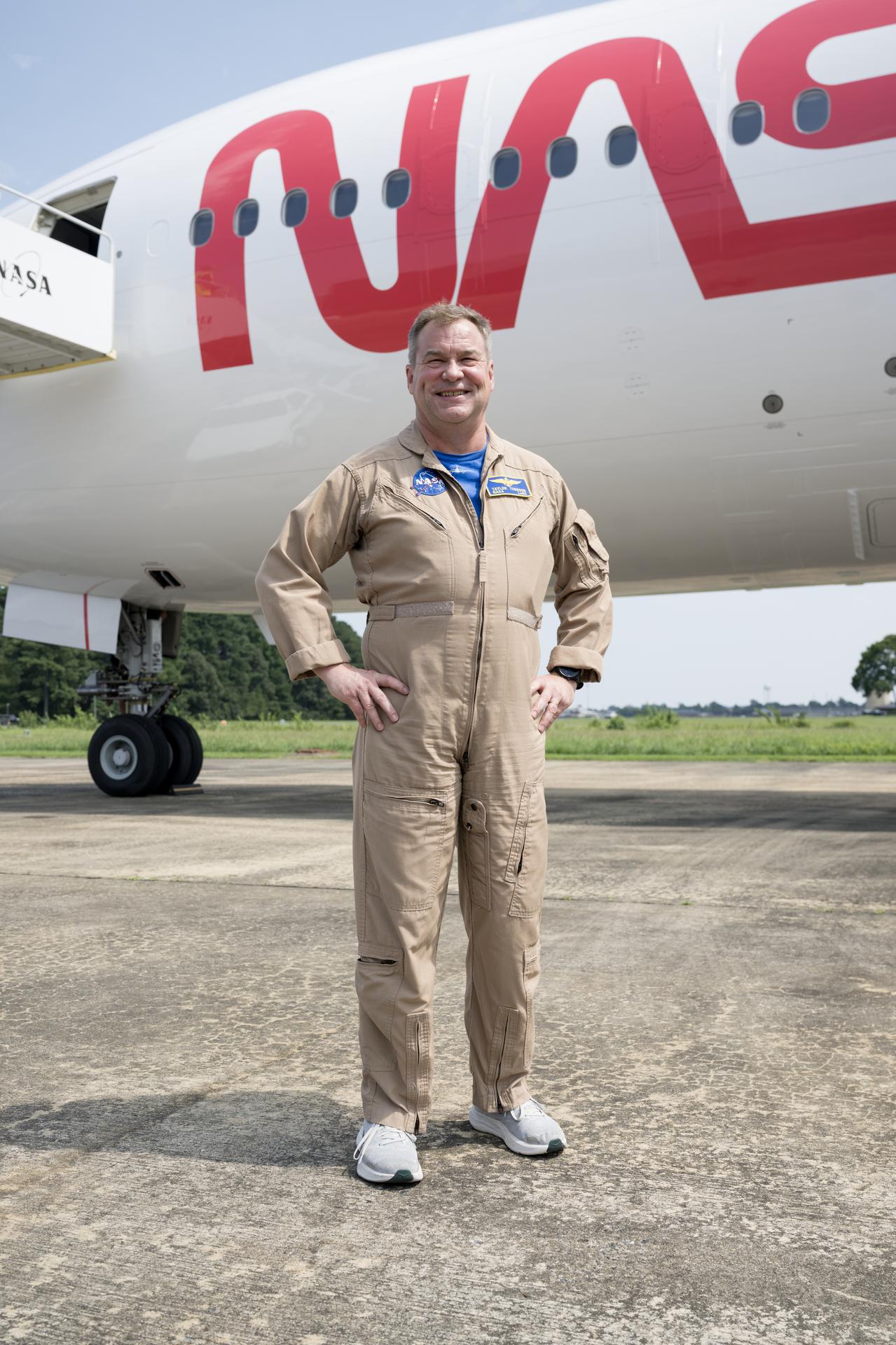
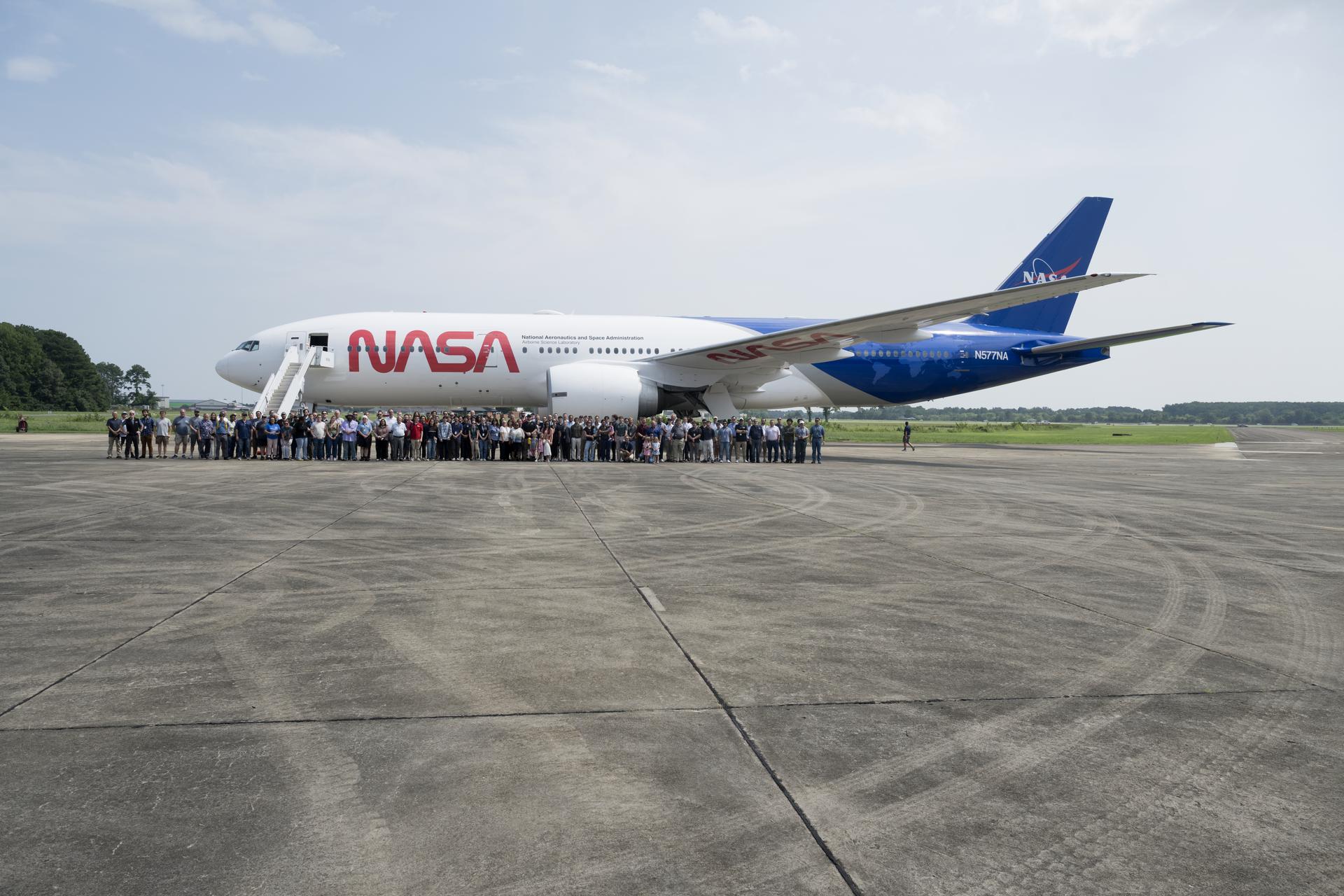
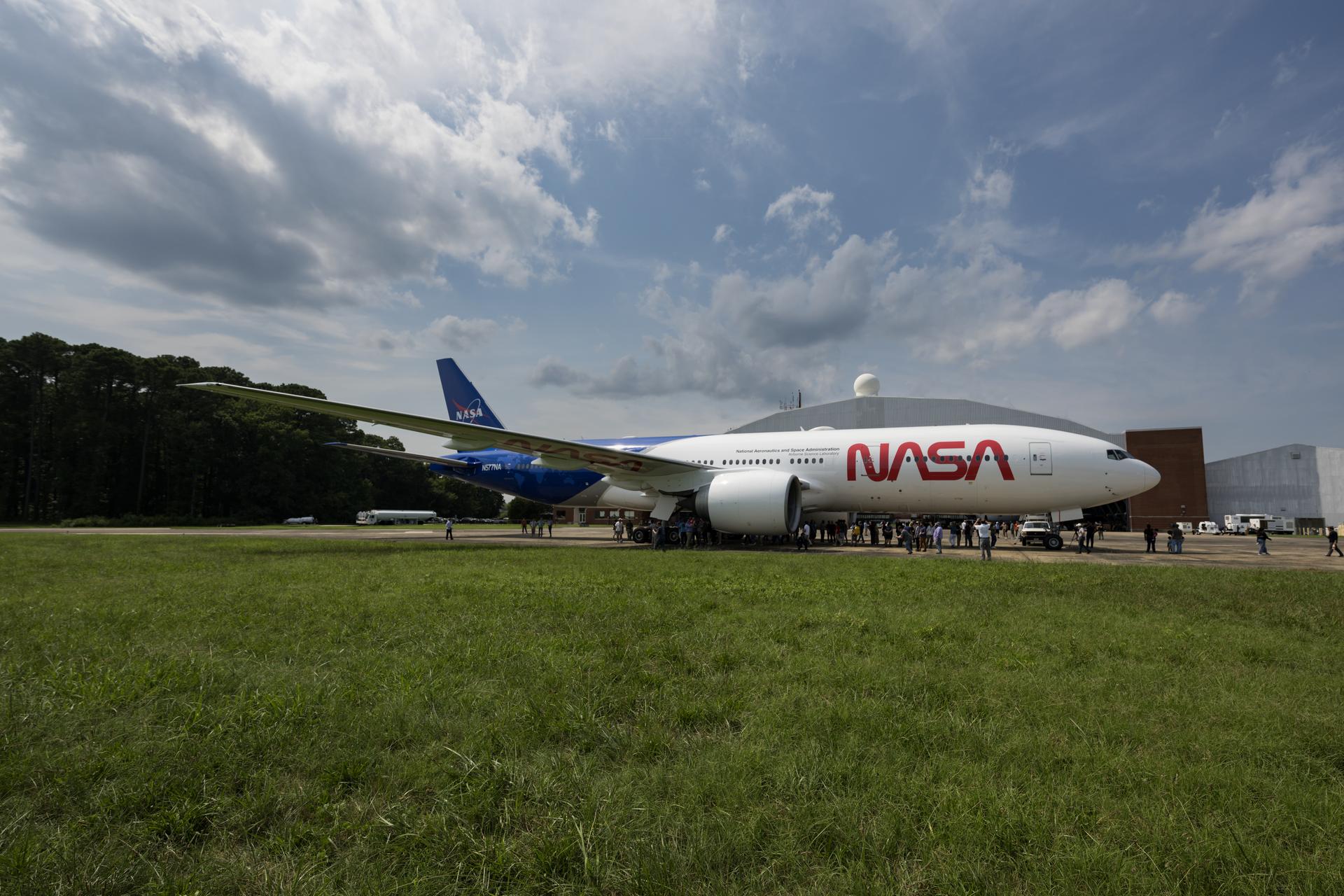
NASA B777-200ER (N577NA) arrived at Langley Research Center’s Hangar with new paint livery Aug 12. It was flown by NASA pilot Taylor Thorson, as this marks his final flight. Photo Credit NASA/ Mark Knopp
B777 Arrives In New Paint Livery
NASA B777-200ER (N577NA) arrived at Langley Research Center’s Hangar with new paint livery Aug 12. It was flown by NASA pilot Taylor Thorson, as this marks his final flight. Photo Credit NASA/ Mark Knopp
B777 Arrives In New Paint Livery
NASA B777-200ER (N577NA) arrived at Langley Research Center’s Hangar with new paint livery Aug 12. It was flown by NASA pilot Taylor Thorson, as this marks his final flight. Photo Credit NASA/ Mark Knopp
B777 Arrives In New Paint Livery
NASA B777-200ER (N577NA) arrived at Langley Research Center’s Hangar with new paint livery Aug 12. It was flown by NASA pilot Taylor Thorson, as this marks his final flight. Photo Credit NASA/ Mark Knopp
B777 Arrives In New Paint Livery
NASA B777-200ER (N577NA) arrived at Langley Research Center’s Hangar with new paint livery Aug 12. It was flown by NASA pilot Taylor Thorson, as this marks his final flight. Photo Credit NASA/ Mark Knopp
B777 Arrives In New Paint Livery
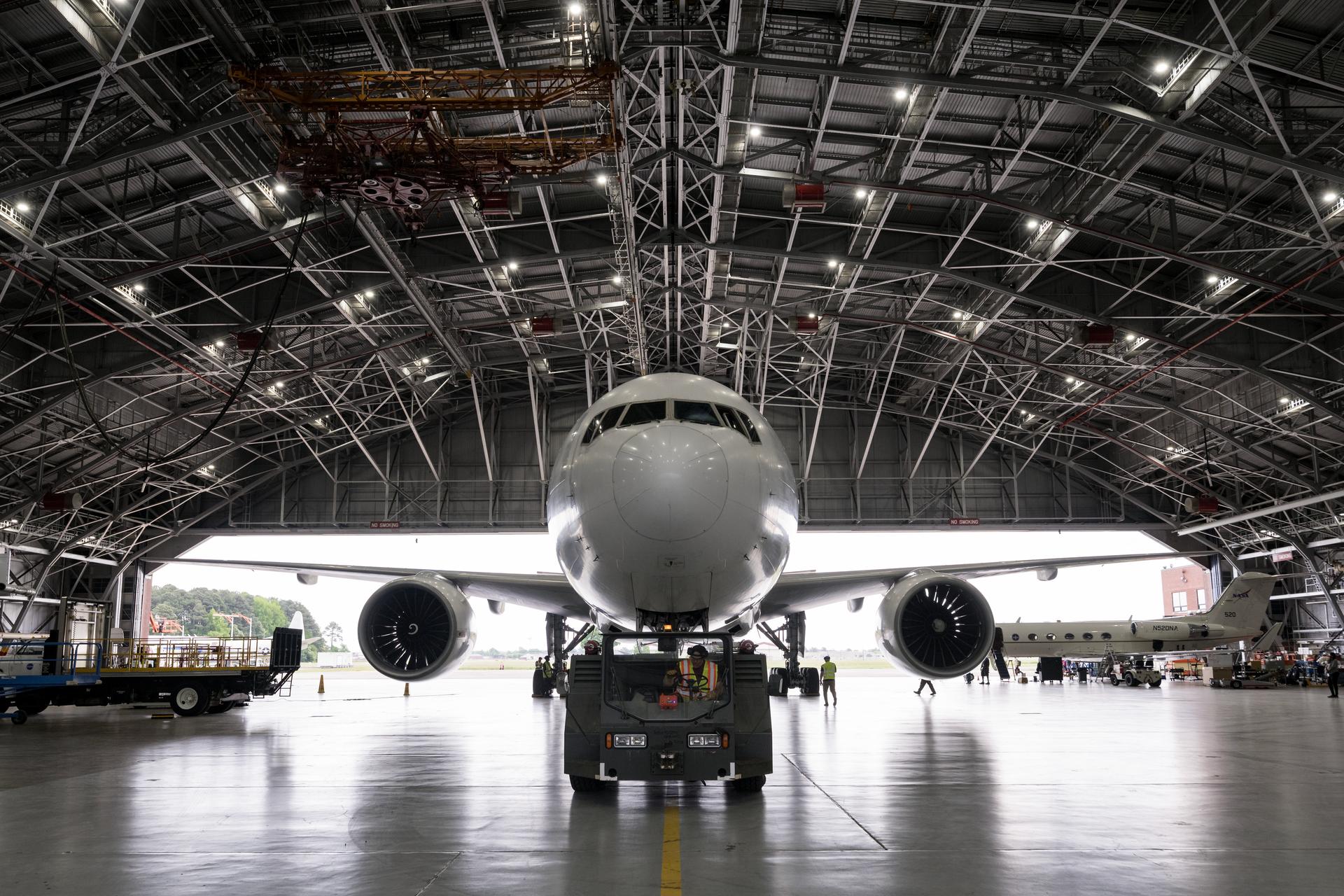
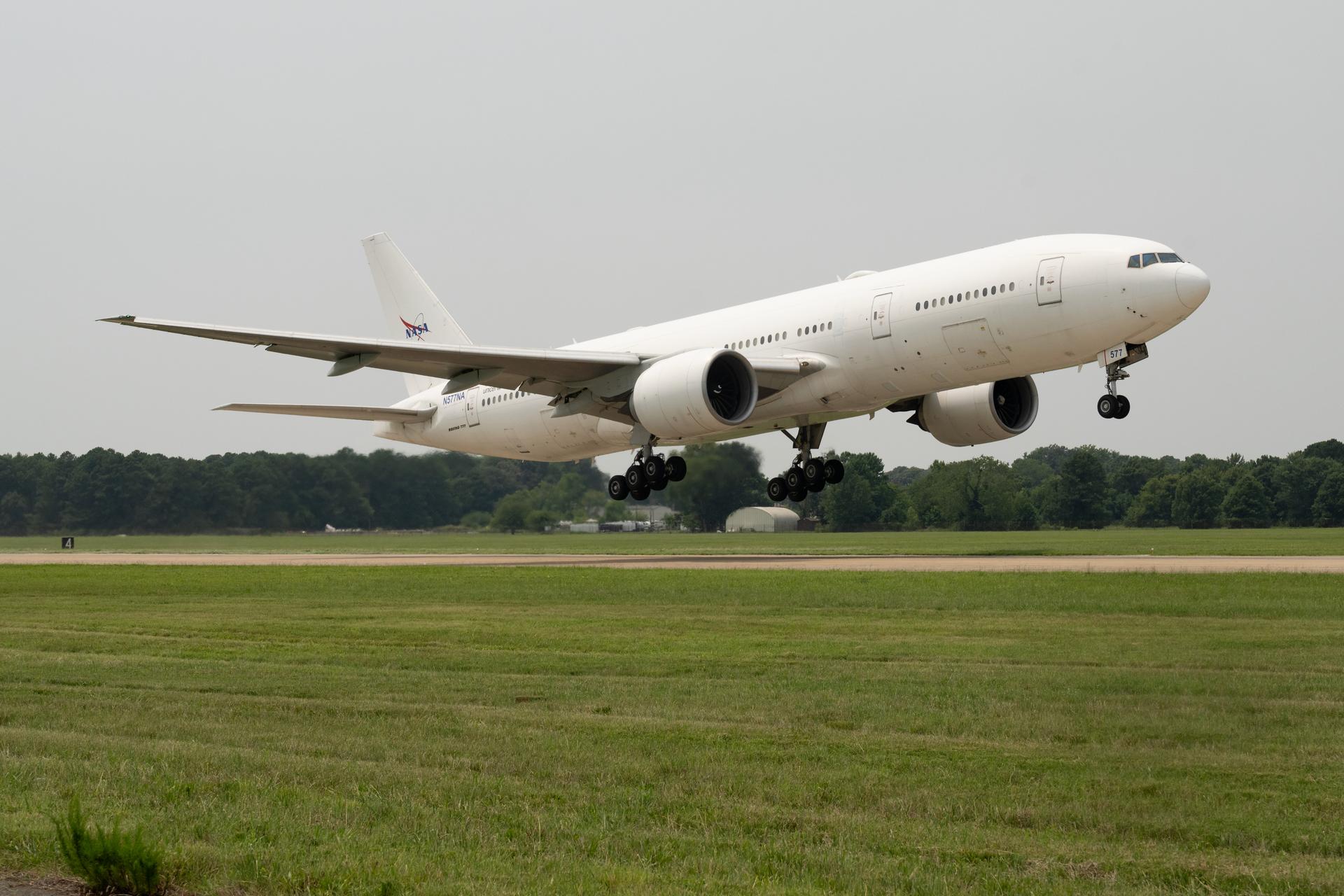
NASA Langley's B777 aircraft before it departs Langley Research Center to receive its new livery (paint job), prior to its departure on July 16th, it received ground maintenance in the center’s hangar. (Photo Credit NASA/ Mark Knopp)
NASA's B777 Sports New Paint Job
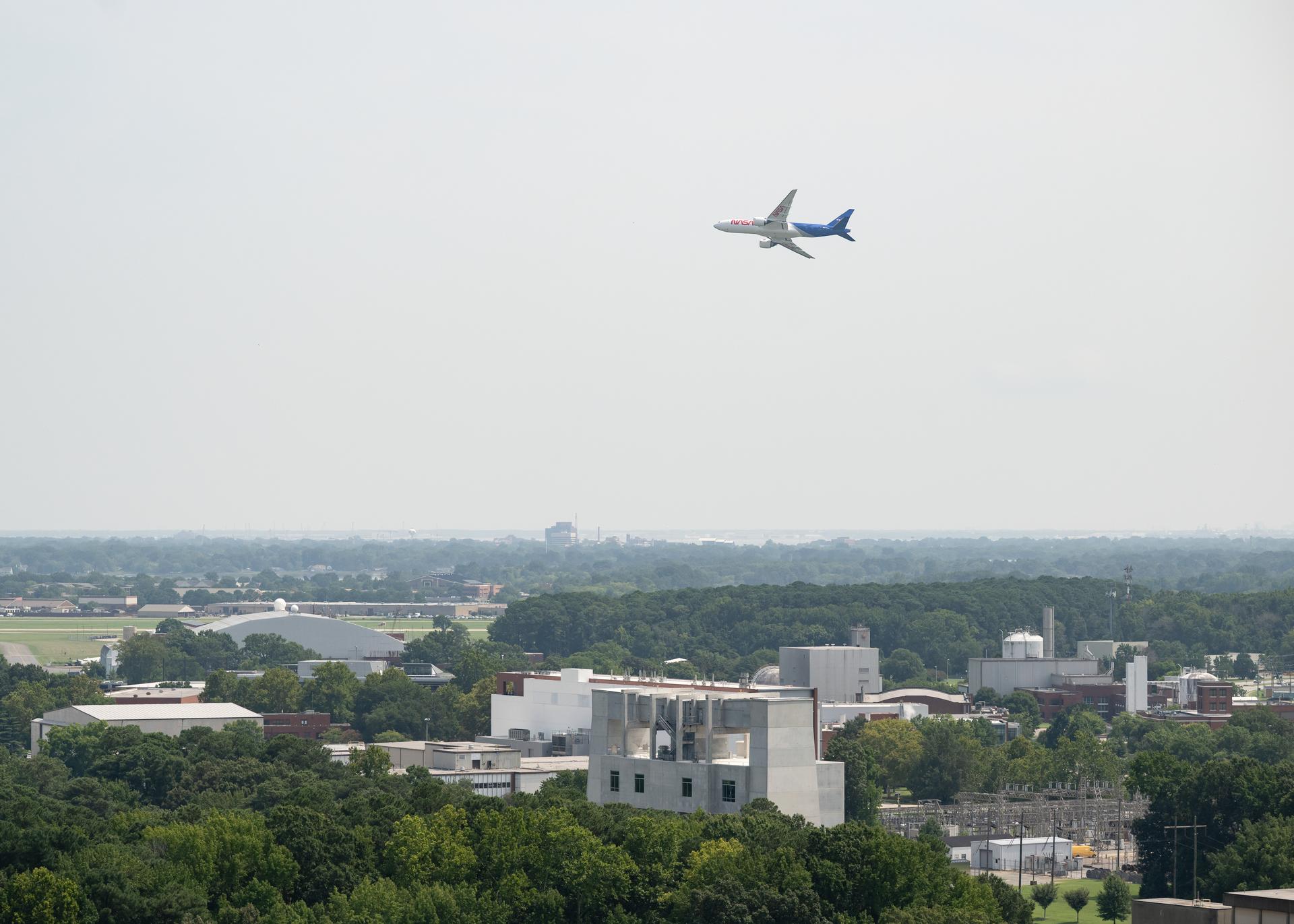
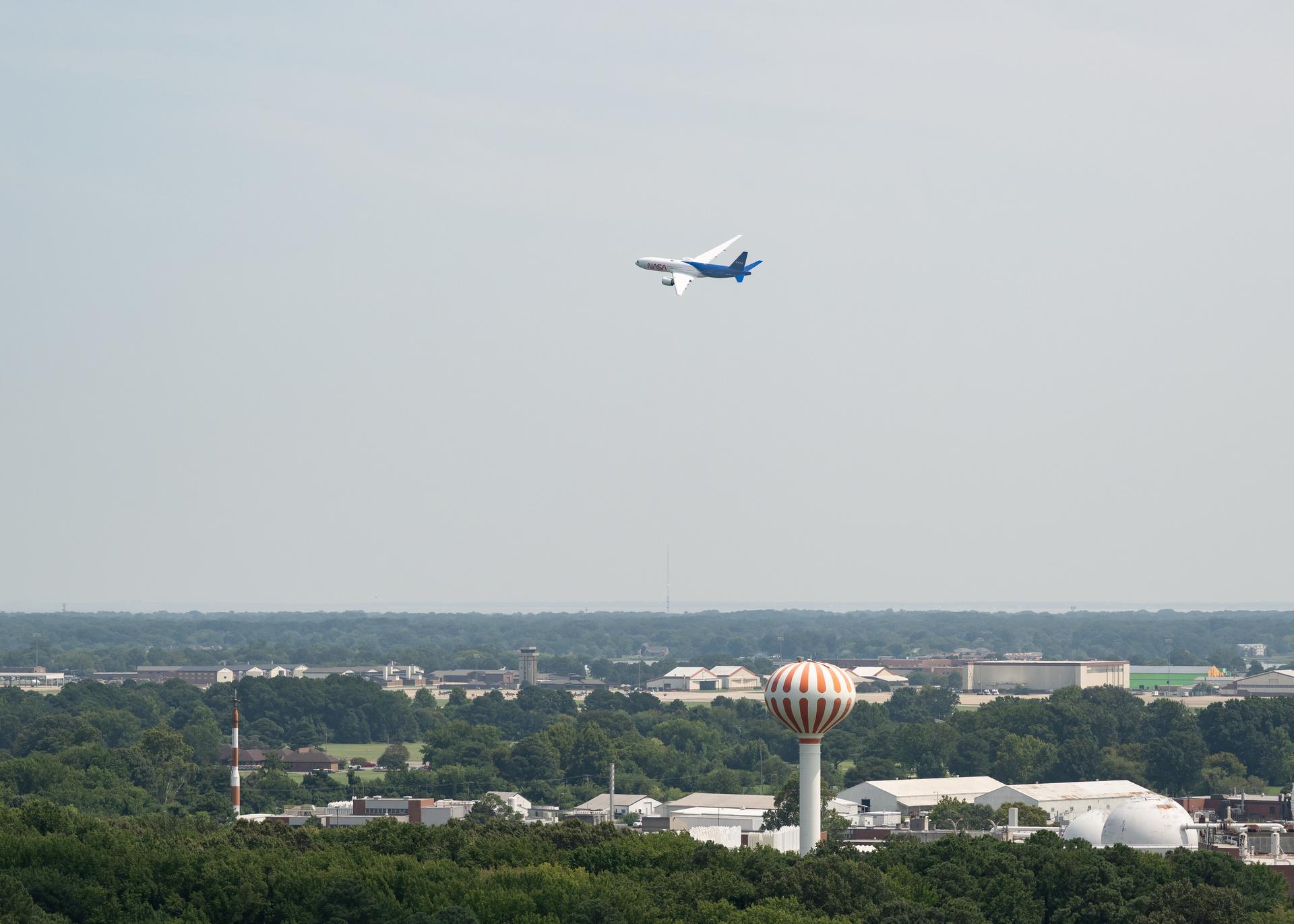
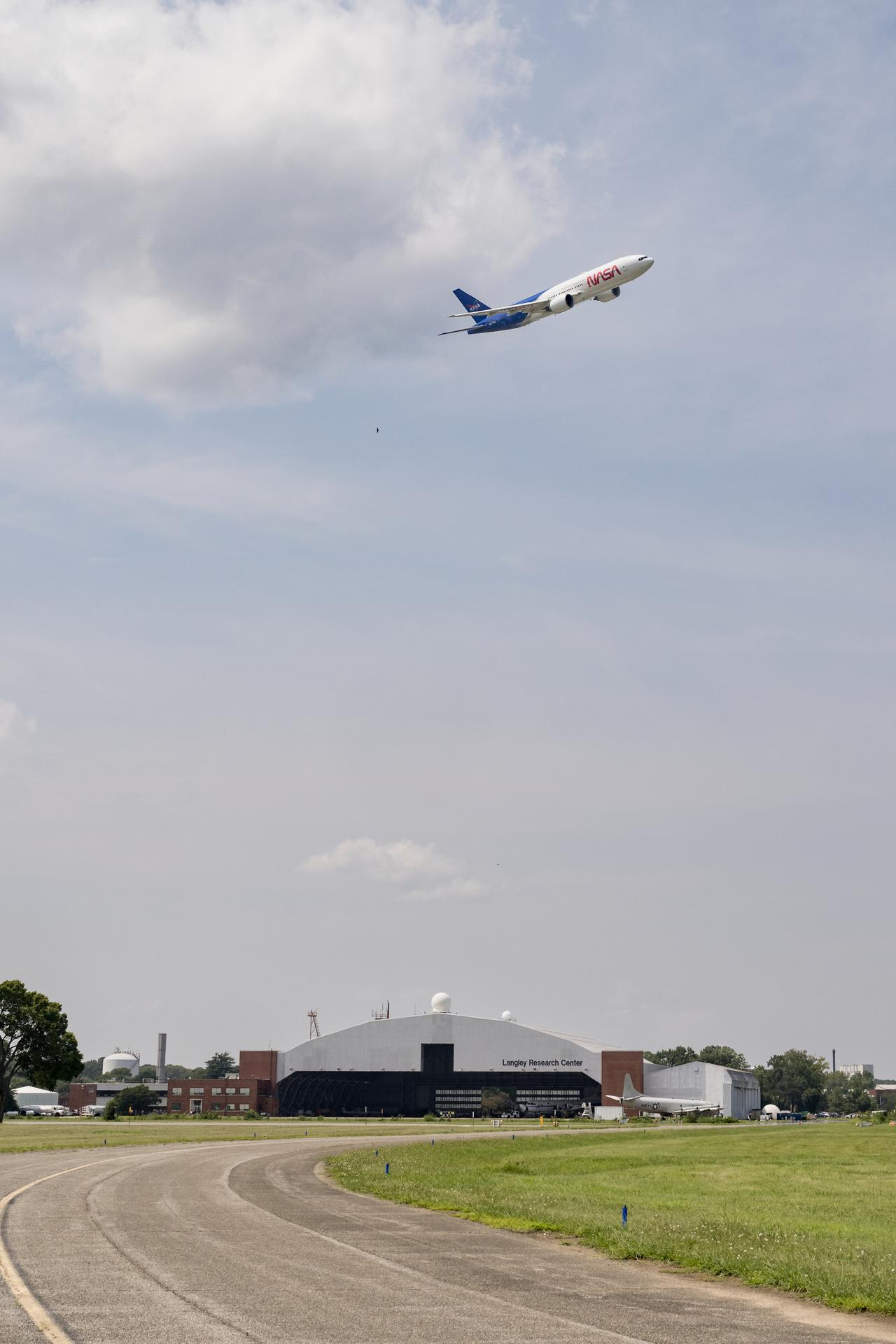
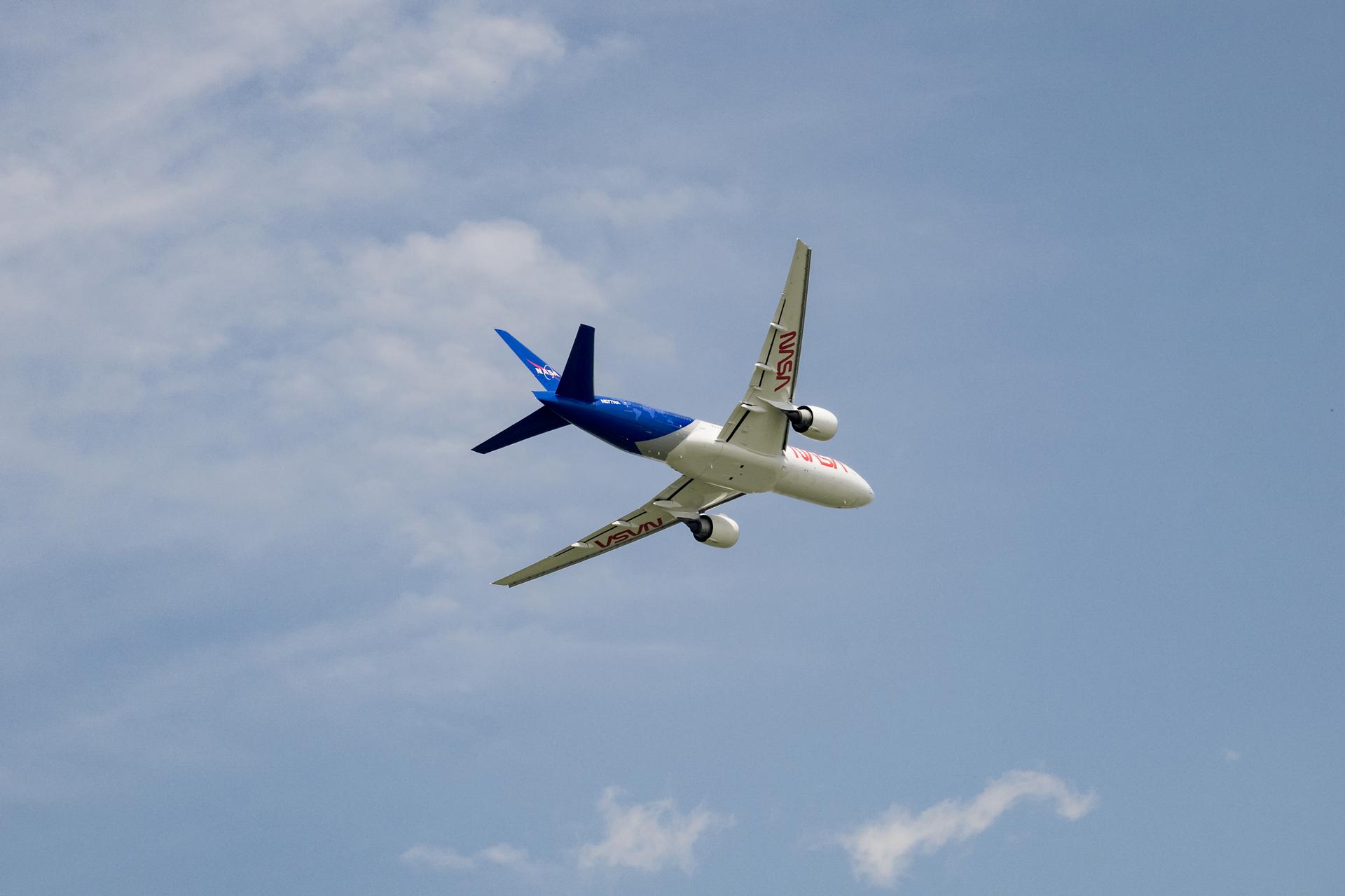
NASA's B777 aircraft returning to NASA Langley Research Center the 31st of July in Hampton, Virginia after a new paint job. It will now continue its maintenance and instrument integration schedule to prepare for its initial airborne science flights in 2027. (Photo Credit NASA/ Ryan Hill)
NASA's B777 Sports New Paint Job
NASA Langley's B777 aircraft before it departs Langley Research Center to receive its new livery (paint job), prior to its departure on July 16th, it received ground maintenance in the center’s hangar. (Photo Credit NASA/ Mark Knopp)
NASA's B777 Sports New Paint Job
NASA Langley's B777 aircraft before it departs Langley Research Center to receive its new livery (paint job), prior to its departure on July 16th, it received ground maintenance in the center’s hangar. (Photo Credit NASA/ Mark Knopp)
NASA's B777 Sports New Paint Job
NASA's B777 aircraft returning to NASA Langley Research Center the 31st of July in Hampton, Virginia after a new paint job. It will now continue its maintenance and instrument integration schedule to prepare for its initial airborne science flights in 2027. Photo Credit NASA/ Ryan Hill)
NASA's B777 Sports New Paint Job
NASA Langley's B777 aircraft before it departs Langley Research Center to receive its new livery (paint job), prior to its departure on July 16th, it received ground maintenance in the center’s hangar. (Photo Credit NASA/ Ryan Hill)
NASA's B777 Sports New Paint Job
NASA Langley's B777 aircraft before it departs Langley Research Center to receive its new livery (paint job), prior to its departure on July 16th, it received ground maintenance in the center’s hangar. (Photo Credit NASA/ Ryan Hill)
NASA's B777 Sports New Paint Job
NASA's B777 aircraft returning to NASA Langley Research Center the 31st of July in Hampton, Virginia after a new paint job. It will now continue its maintenance and instrument integration schedule to prepare for its initial airborne science flights in 2027. (Photo Credit NASA/ Ryan Hill)
NASA's B777 Sports New Paint Job
NASA Langley's B777 aircraft before it departs Langley Research Center to receive its new livery (paint job), prior to its departure on July 16th, it received ground maintenance in the center’s hangar. (Photo Credit NASA/ Mark Knopp)
NASA's B777 Sports New Paint Job
NASA Langley's B777 aircraft before it departs Langley Research Center to receive its new livery (paint job), prior to its departure on July 16th, it received ground maintenance in the center’s hangar. (Photo Credit NASA/ Mark Knopp)
NASA's B777 Sports New Paint Job
NASA's B777 aircraft returning to NASA Langley Research Center the 31st of July in Hampton, Virginia after a new paint job. It will now continue its maintenance and instrument integration schedule to prepare for its initial airborne science flights in 2027. Photo Credit NASA/ Ryan Hill)
NASA's B777 Sports New Paint Job
NASA's B777 aircraft returning to NASA Langley Research Center the 31st of July in Hampton, Virginia after a new paint job. It will now continue its maintenance and instrument integration schedule to prepare for its initial airborne science flights in 2027. Photo Credit NASA/ Ryan Hill)
NASA's B777 Sports New Paint Job
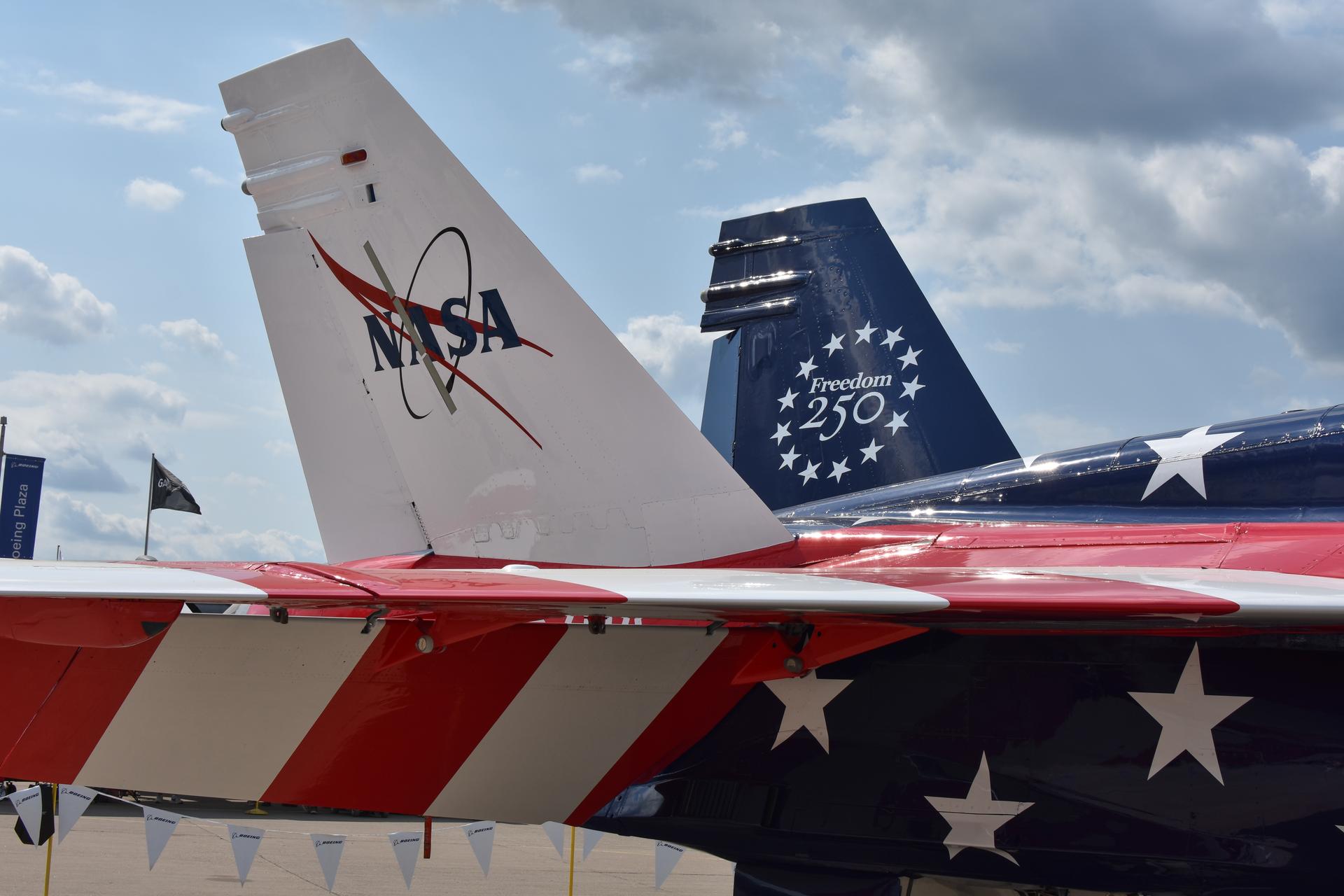
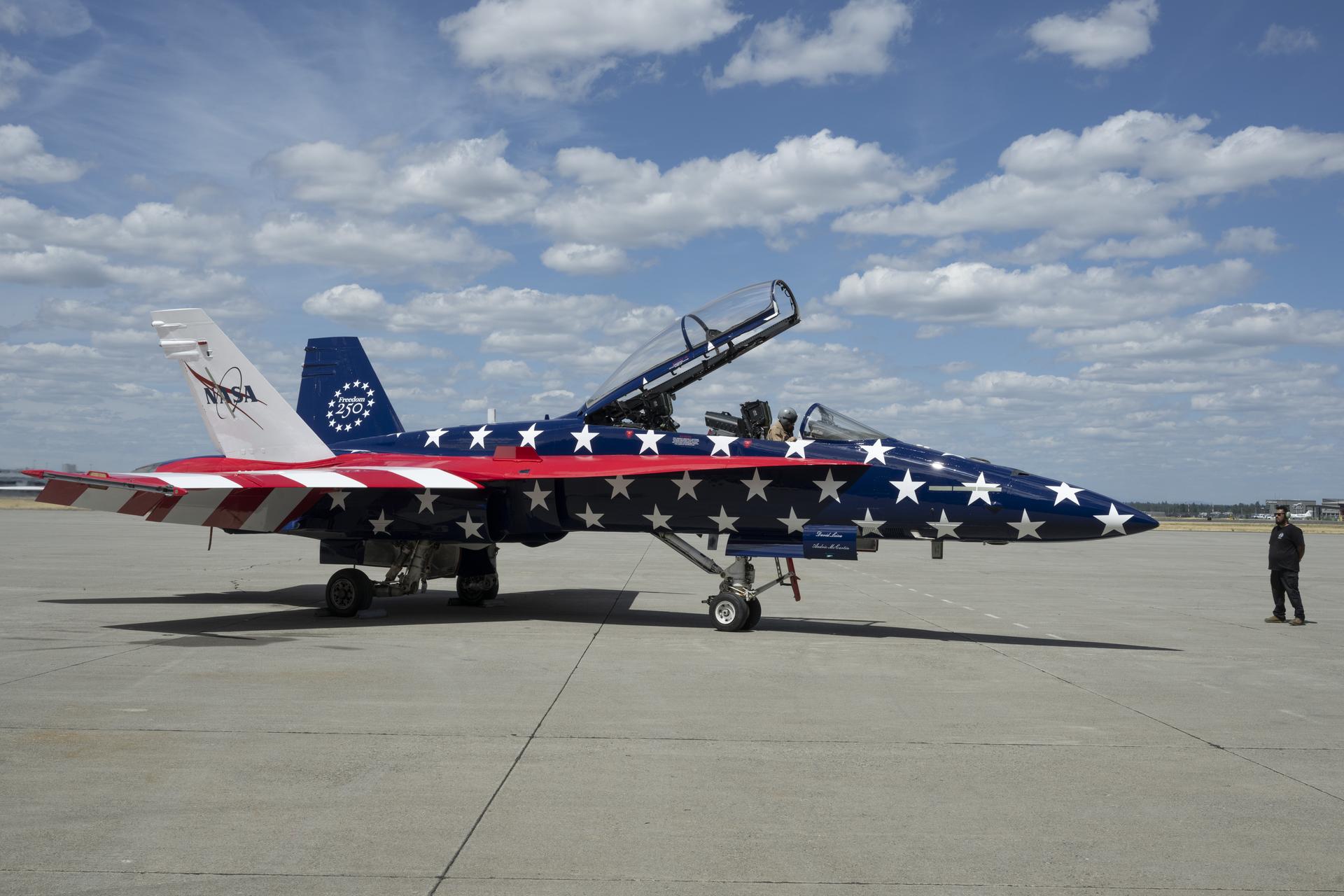
NASA’s F/A-18 aircraft painted with new red, white, and blue livery to celebrate America’s 250th birthday is shown on display at Boeing Plaza at the 2026 Experimental Aircraft Association (EAA) AirVenture air show in Oshkosh, Wisconsin, on Friday, July 24, 2026.
NASA at AirVenture 2026
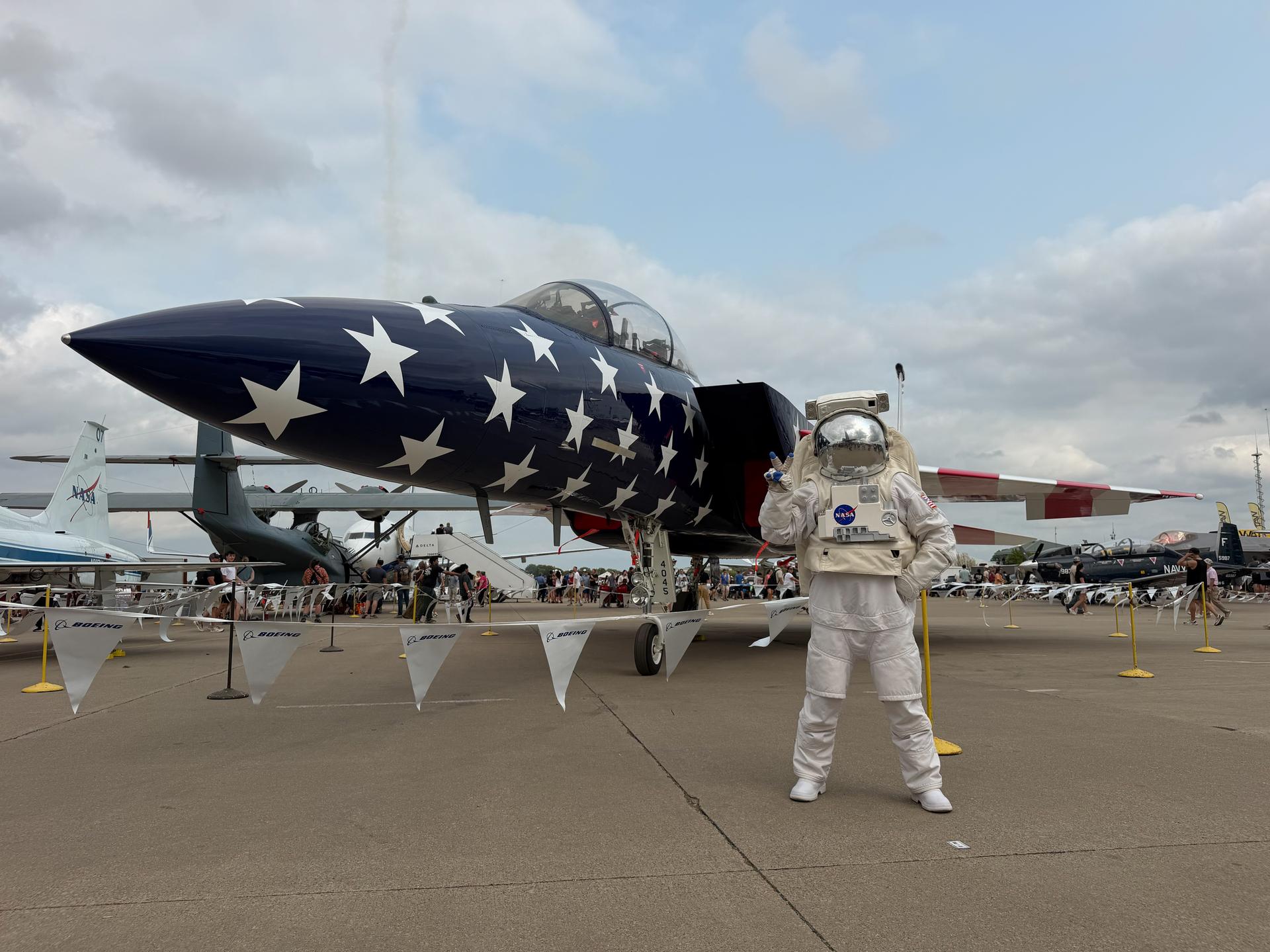
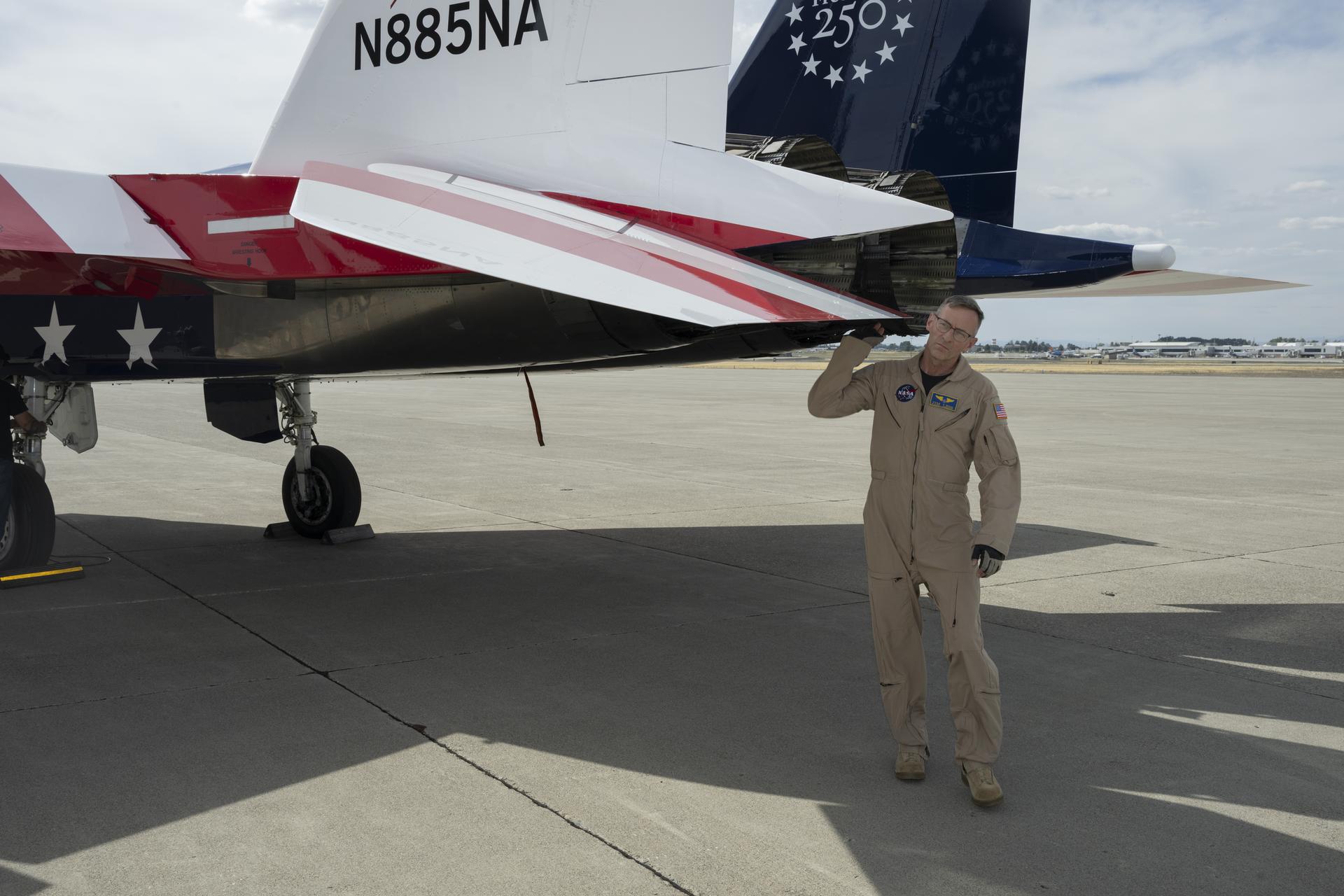
NASA’s Spacey Casey poses in front of NASA’s F-15 painted with new red, white, and blue livery to celebrate America’s 250th birthday at the Boeing Plaza at the 2026 Experimental Aircraft Association (EAA) AirVenture air show in Oshkosh, Wisconsin, on Saturday, July 26, 2026.
NASA at AirVenture 2026
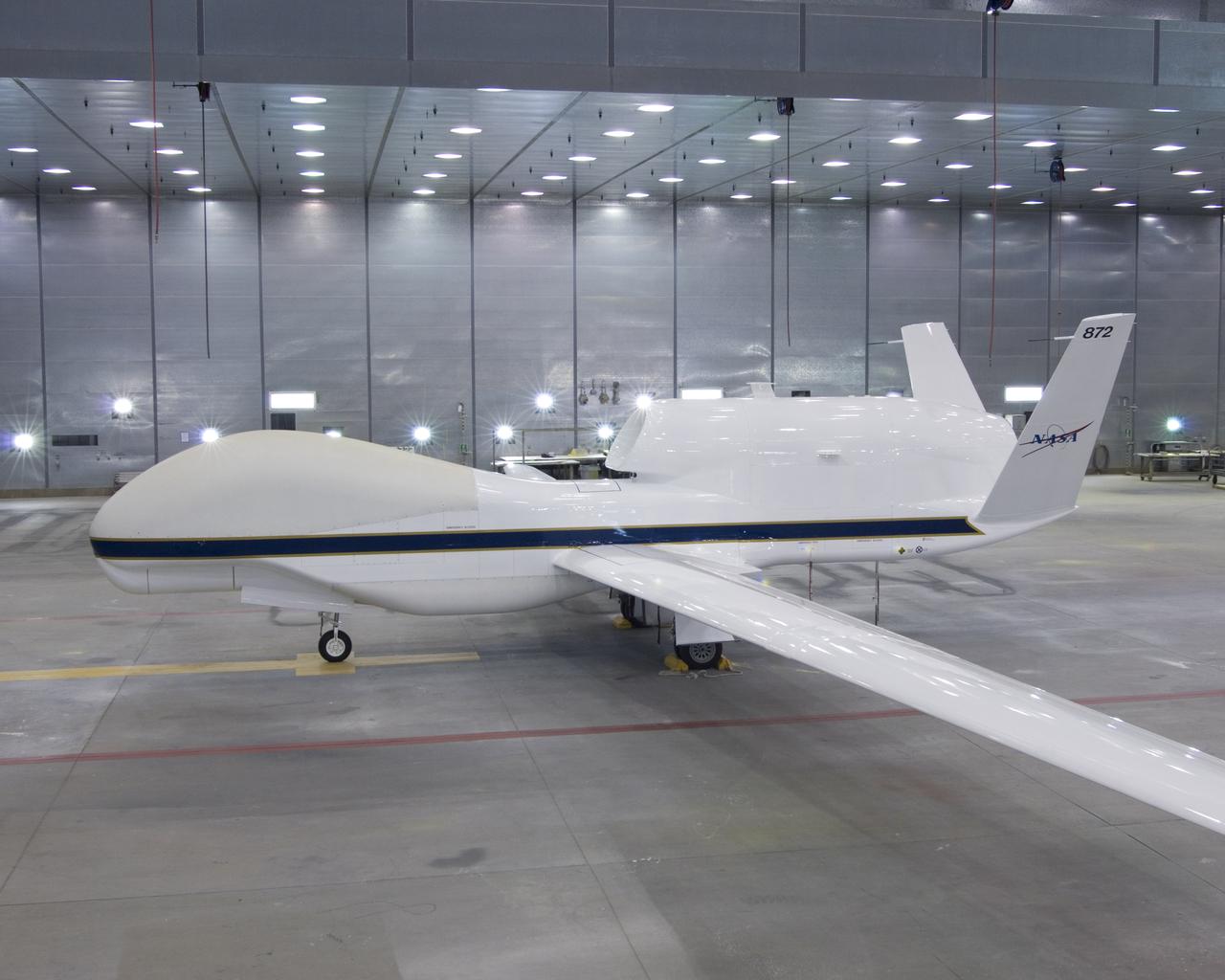
One of NASA's two Global Hawk unmanned aircraft shows off its new blue-and-white livery shortly after being repainted in the Edwards Air Force Base paint hangar.
ED07-0244-028
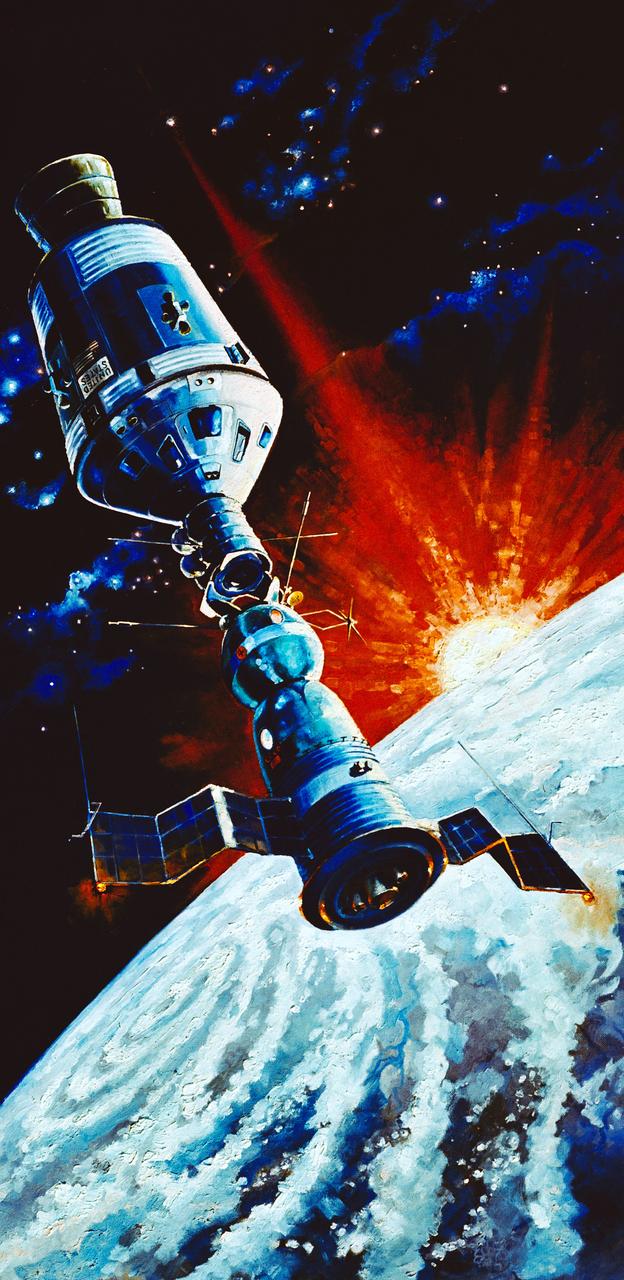
S75-25077 (May 1975) --- A photographic copy of a painting made by cosmonaut Aleksey A. Leonov, commander of the Soviet ASTP first (prime) crew. This symbolic artwork, representing a Soviet Soyuz spacecraft docking in Earth orbit with an American Apollo spacecraft, was finished in May 1974. The sketch for the painting was made in 1973 following the signing of the space agreement between the United Stated and the Soviet Union. Leonov said that his painting symbolizes the new type of international cooperation of working together in space. The original painting, which measures 80 centimeters by 160 centimeters (1 cm. = 0.39 in.), is on display in a museum in the city of Baku on the Caspian Sea. In making the sketch for the painting Leonov used a model of an earlier Soyuz spacecraft and a picture of an Apollo spacecraft. Later, he obtained a model of an Apollo which helped him check the configuration of the American spacecraft. The tanks on the Docking Module are no longer exposed on the current DM configuration, he noted. Also, this would not be an exact view of the sun as seen from Earth orbit. Leonov took artist license in stressing the symbolism in his artwork. The Soyuz is represented smaller in the painting than it actually is, Leonov added.
APOLLO-SOYUZ TEST PROJECT (ASTP) - ART CONCEPTS
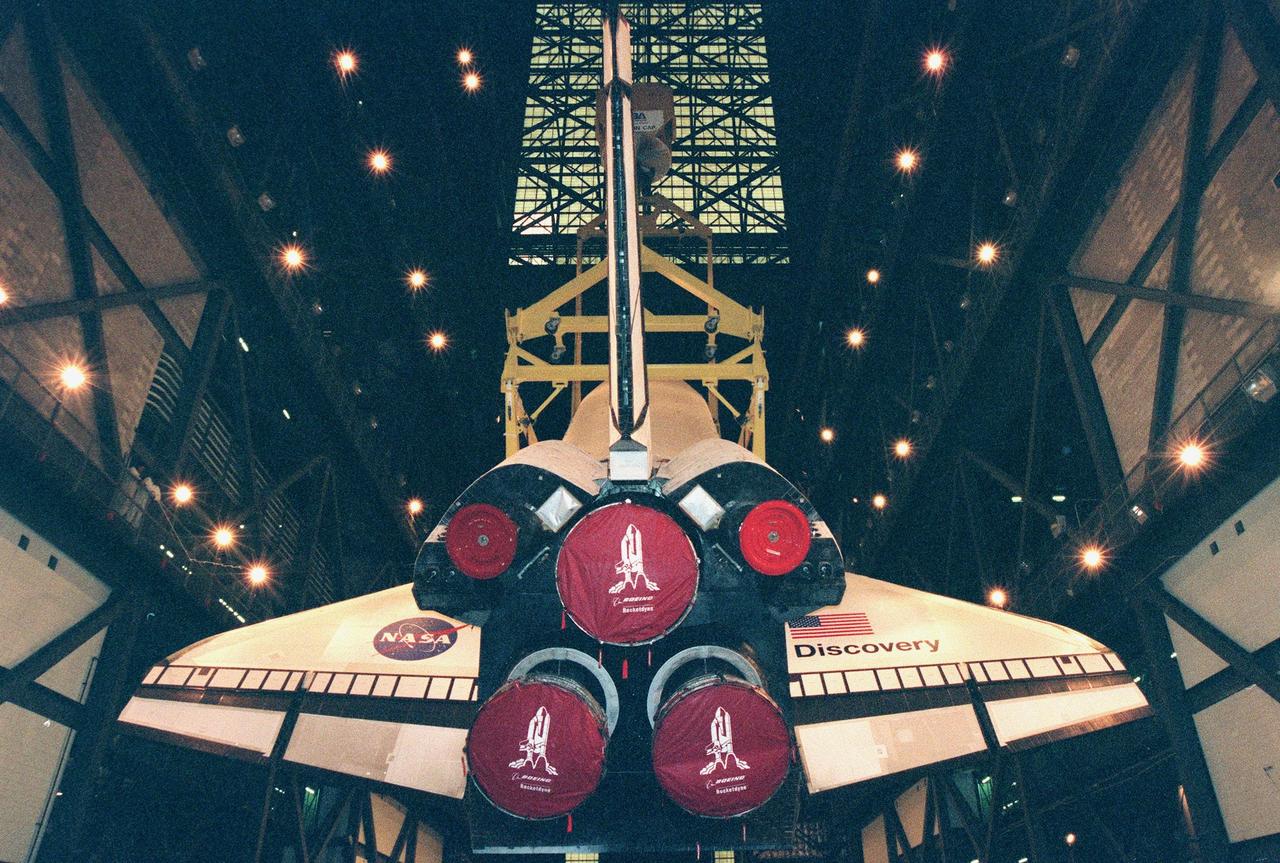
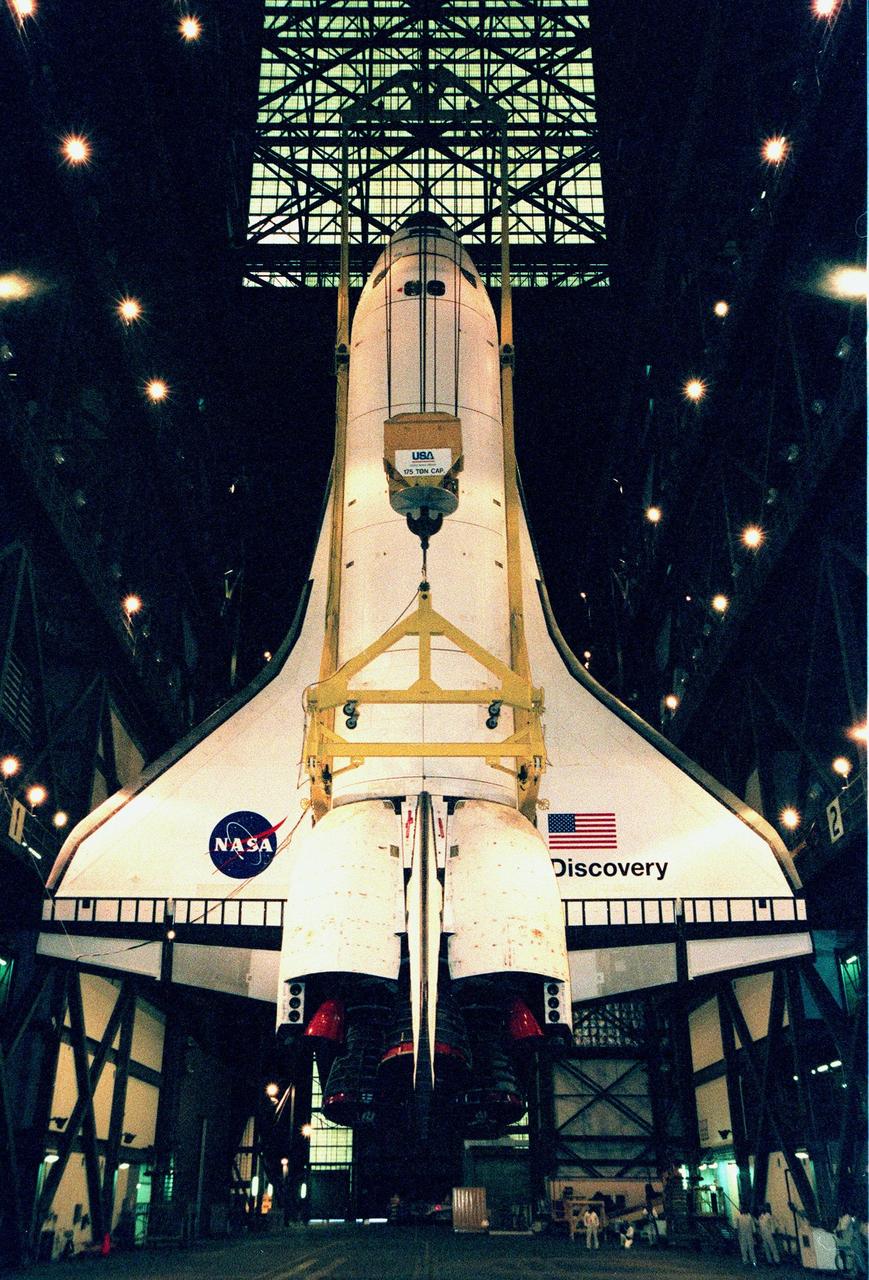
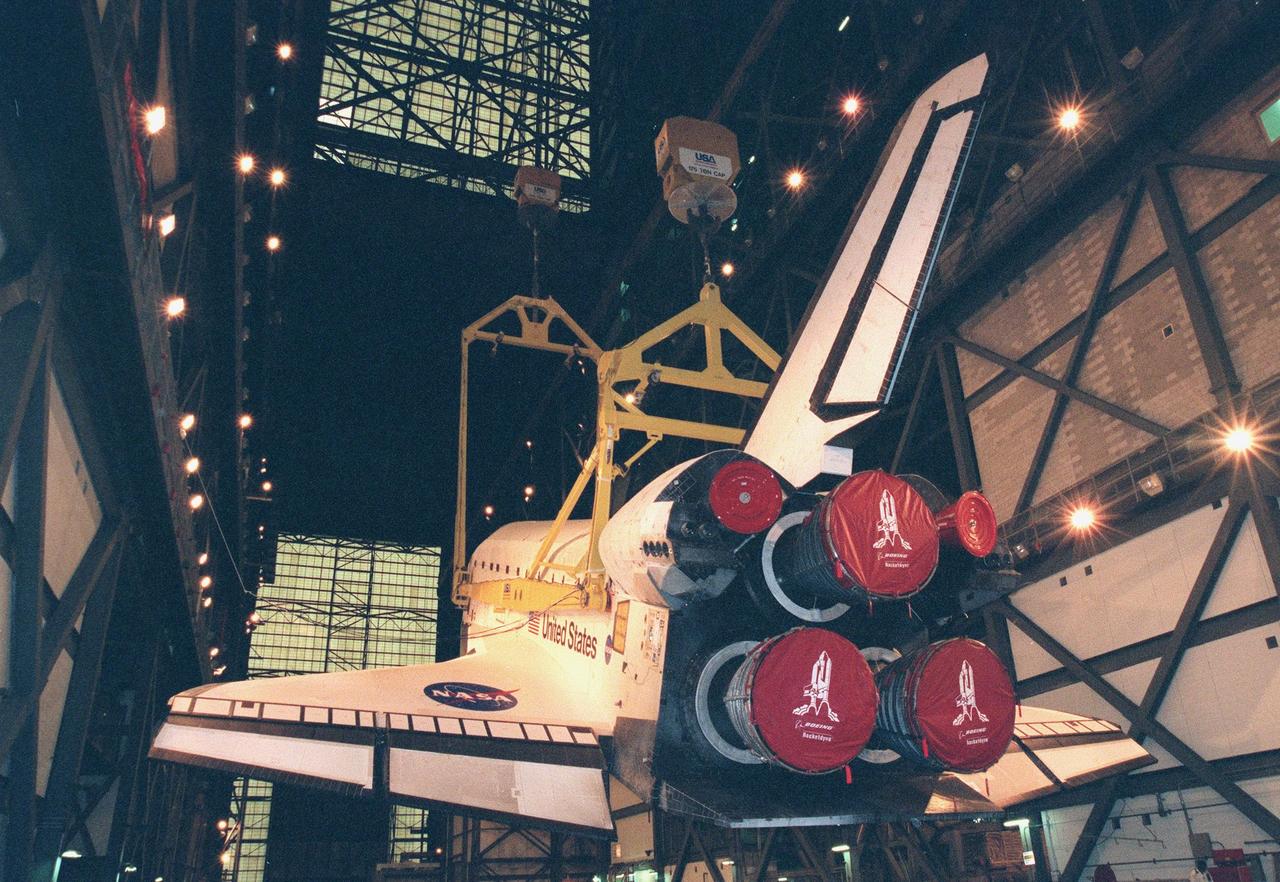
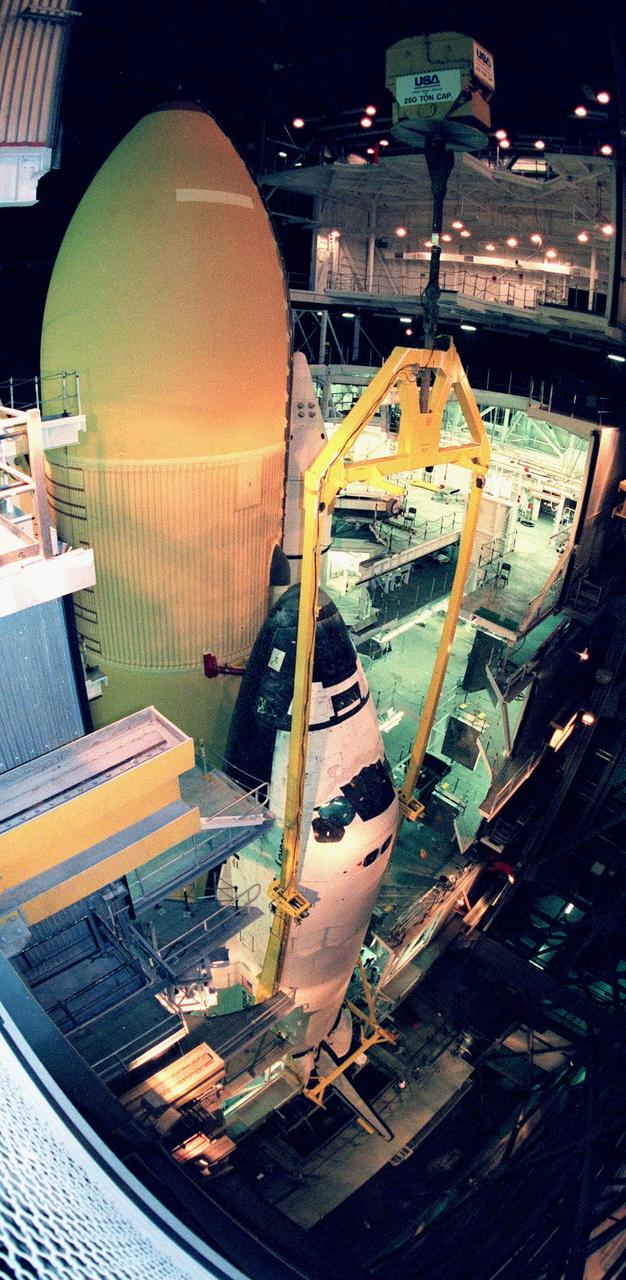
In the Vehicle Assembly Building, the orbiter Discovery (viewed from behind the Space Shuttle Main Engines) is raised to a vertical position in order to be mated with the external tank. The orbiter displays the recently painted NASA logo, termed the "meatball," on its left, or port, wing. The logo also has been painted on both sides of the aft fuselage. Discovery (OV-103), the first of the orbiters to be launched with the new art work, is scheduled for its 25th flight, from Launch Pad 39B, on Oct. 29, 1998, for the STS-95 mission
KSC-98pc1067
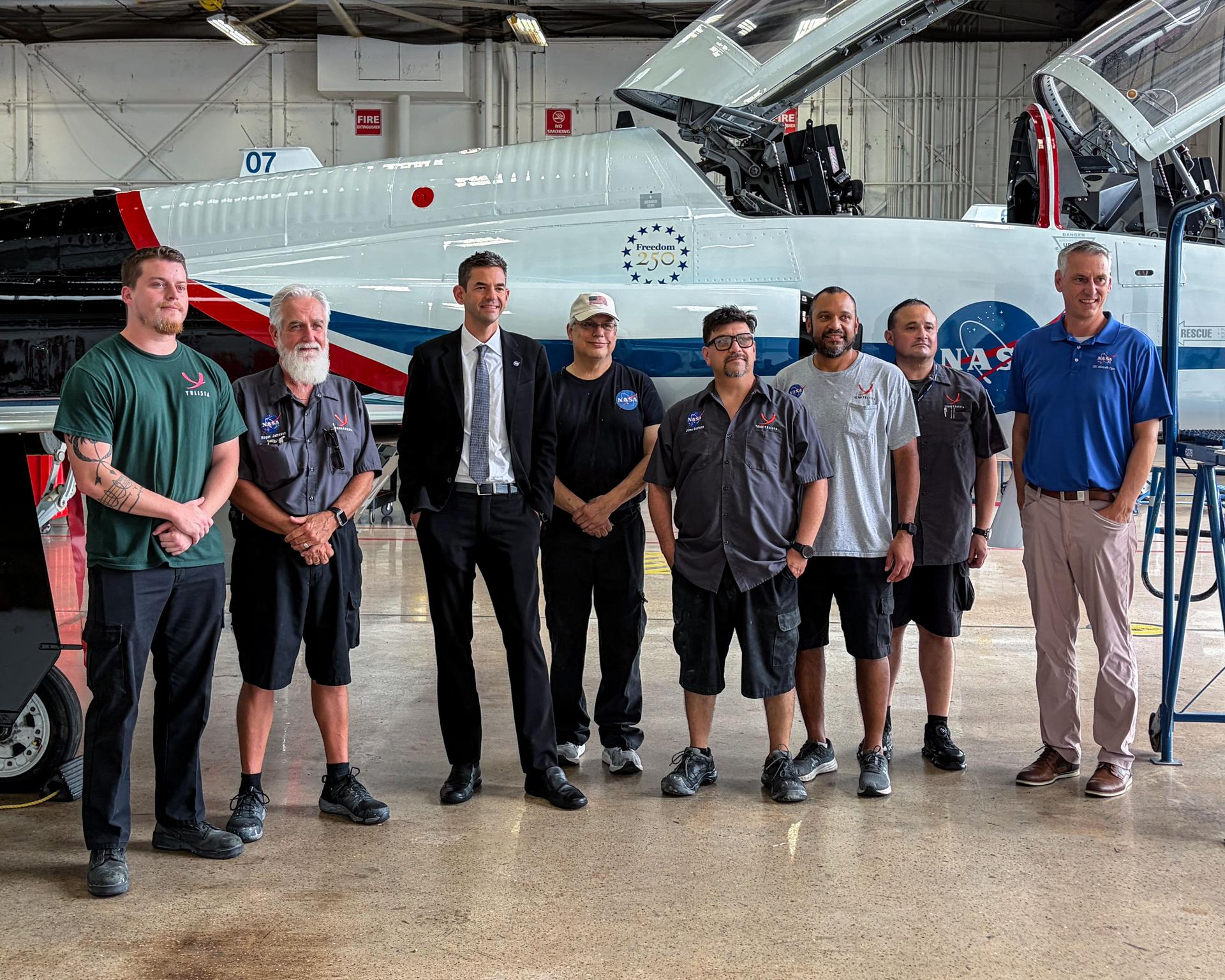
jsc2026e407799 (Aug. 6, 2026) - NASA administrator Jared Isaacman visited Ellington Field to admire the T-38 jet featuring a new paint job reflecting the Artemis Program. He met with the team members who designed and painted the aircraft, which NASA astronauts use to train for making real-time decisions in a high-stakes, operational environment.   Credit: NASA/James Blair
NASA Administrator Jared Isaacman Visits Ellington Field
In the Vehicle Assembly Building, the orbiter Discovery is fully vertical, after being lifted into position for mating with the external tank. The orbiter displays the recently painted NASA logo, termed the "meatball," on its left, or port, wing. The logo also has been painted on both sides of the aft fuselage. Discovery (OV-103), the first of the orbiters to be launched with the new art work, is scheduled for its 25th flight, from Launch Pad 39B, on Oct. 29, 1998, for the STS-95 mission
KSC-98pc1069
In the Vehicle Assembly Building, the orbiter Discovery (viewed from below the Space Shuttle Main Engines, starboard side) is raised to a vertical position in order to be mated with the external tank. The orbiter displays the recently painted NASA logo, termed the "meatball," on the aft fuselage. The logo also has been painted on the left, or port, wing. Discovery (OV-103), the first of the orbiters to be launched with the new art work, is scheduled for its 25th flight, from Launch Pad 39B, on Oct. 29, 1998, for the STS-95 mission
KSC-98pc1068
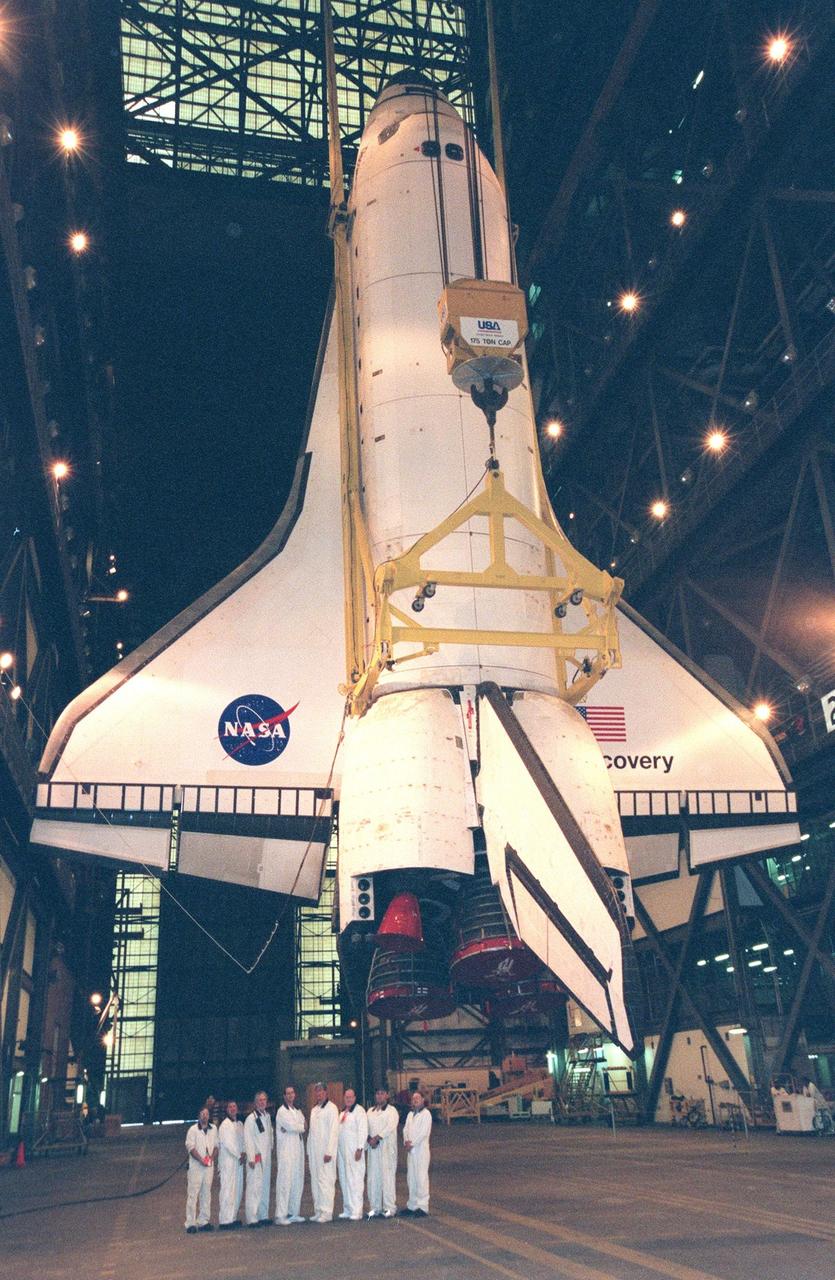
United Space Alliance Forward Shop workers stand near the orbiter Discovery in the Vehicle Assembly Building . The orbiter is being prepared for mating with the external tank. Discovery displays the recently painted NASA logo, termed the "meatball," on its left, or port, wing. The logo also has been painted on both sides of the aft fuselage. Discovery (OV-103), the first of the orbiters to be launched with the new art work, is scheduled for its 25th flight, from Launch Pad 39B, on Oct. 29, 1998, for the STS-95 mission
KSC-98pc1070
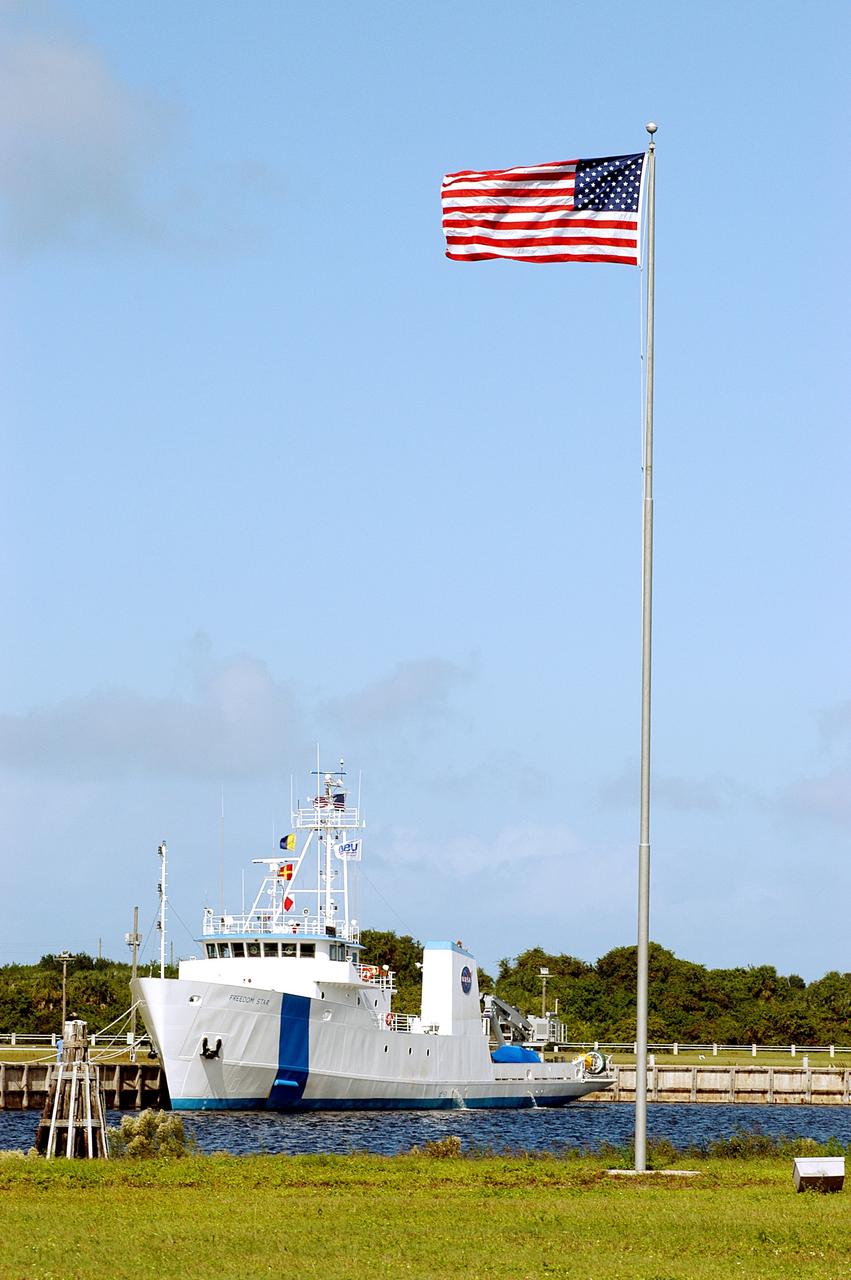
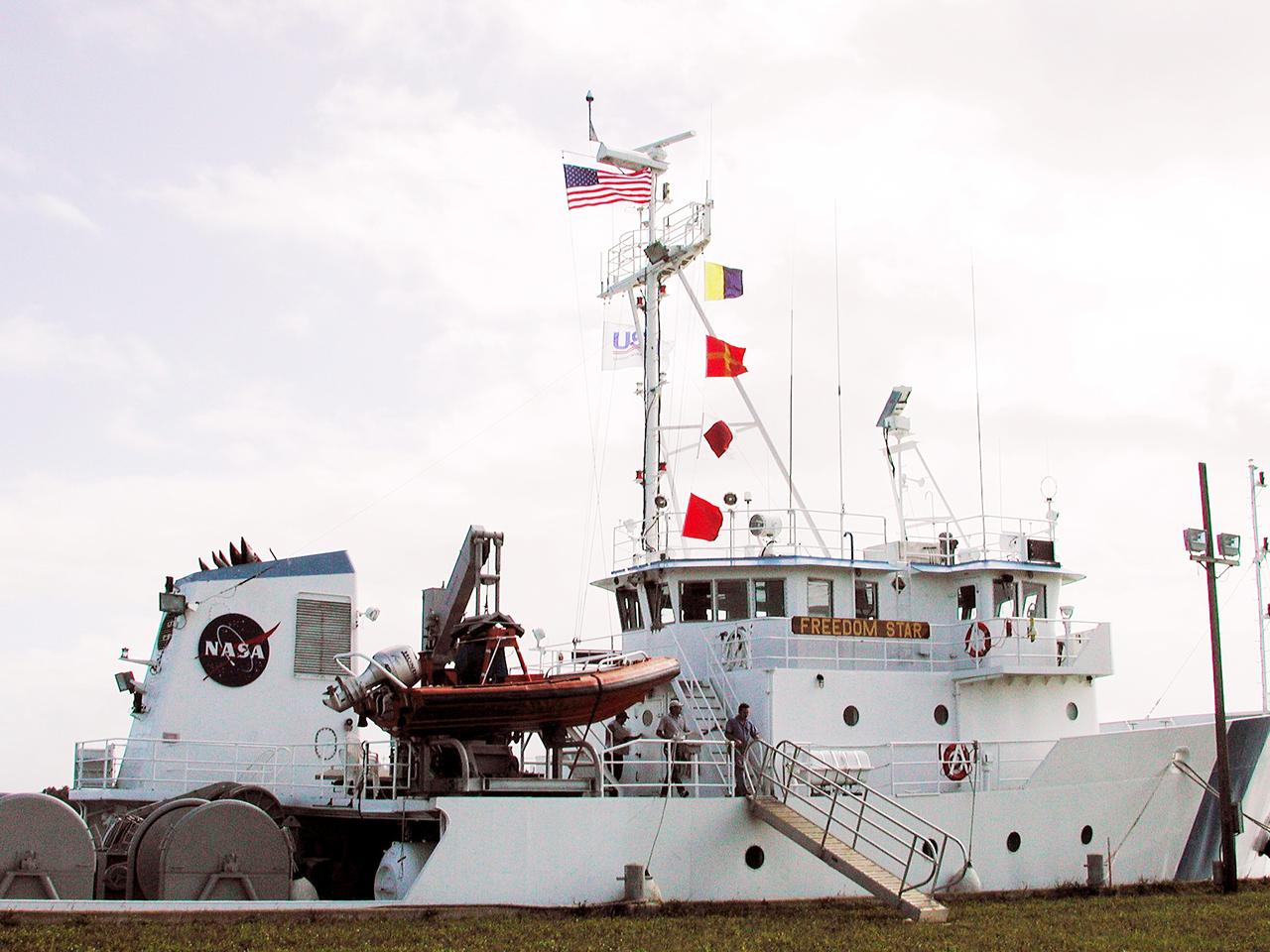
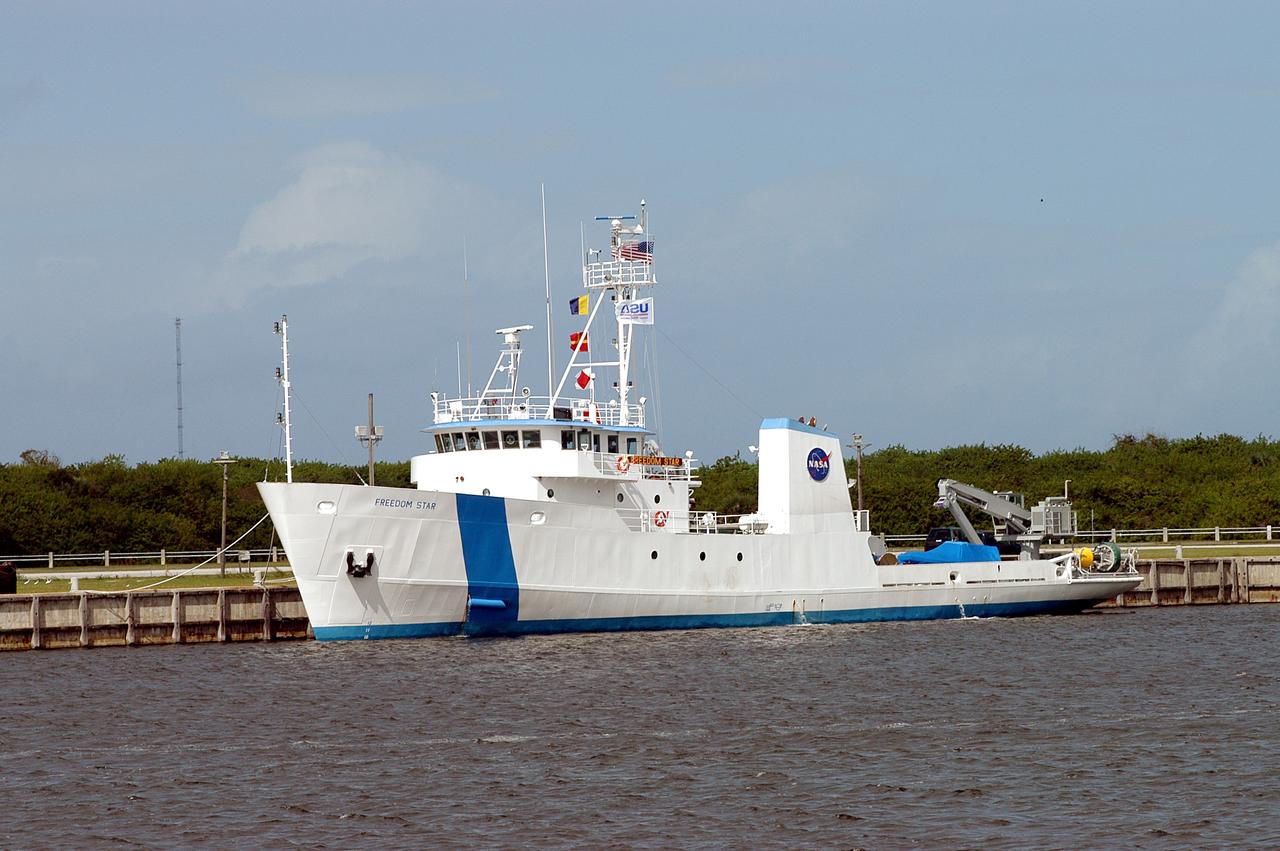
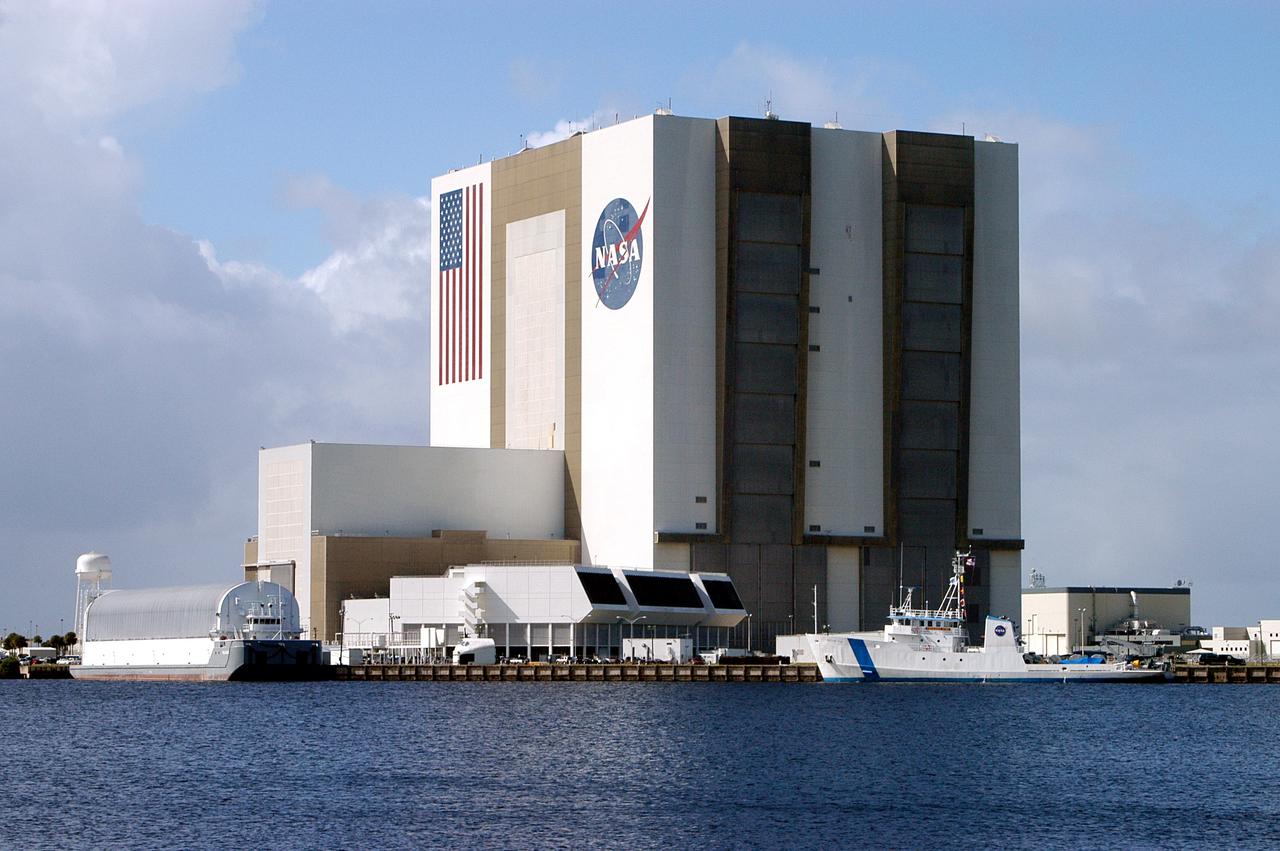
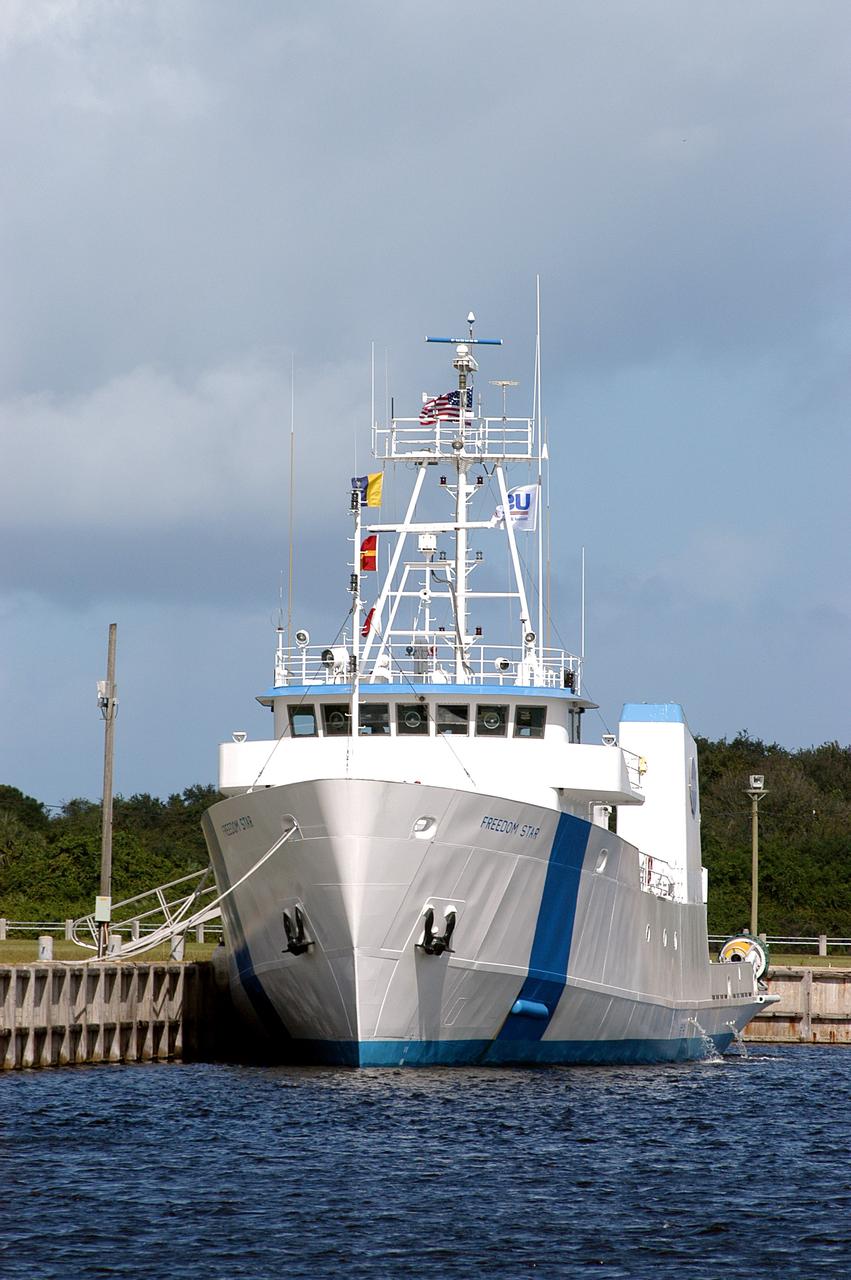
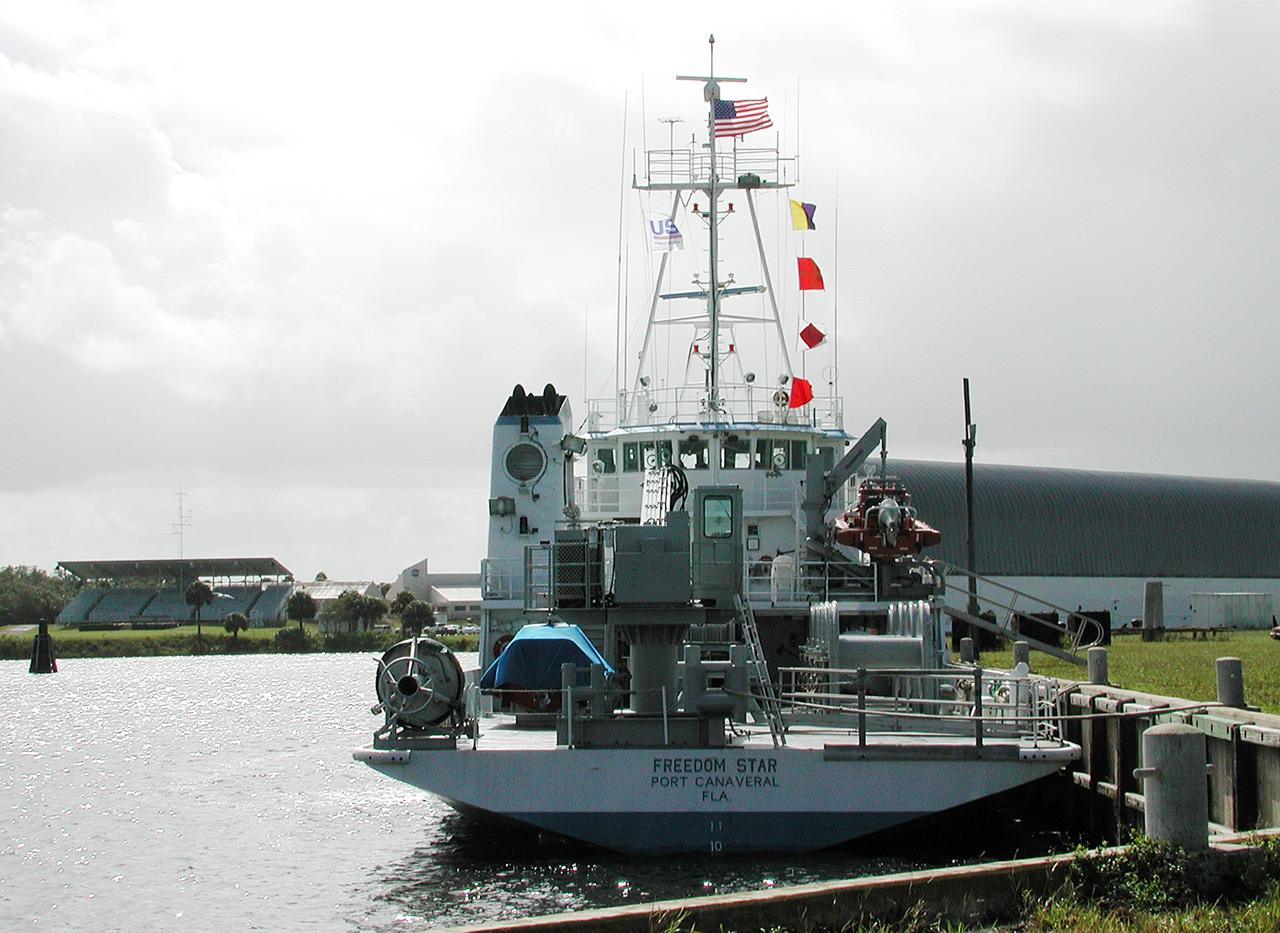
KENNEDY SPACE CENTER, FLA. -  The Freedom Star is berthed at the Turn Basin near the Vehicle Assembly Building and NASA-KSC News Center.  The flag is near the News Center.   The ship has recently returned to KSC after refurbishment at Fort George Island, Fla., including new paint.  Freedom Star is one of the solid rocket booster (SRB) retrieval ships built to recover the SRB casings released over the Atlantic Ocean after launch of a Space Shuttle.  In addition to the SRBs, the ship recovers the drogue and main parachutes that slow the boosters’ speed before splashdown.   The ships also tow the external tanks built at the Michoud Space Systems Assembly Facility near New Orleans to Port Canaveral, Fla.  Freedom Star was brought to KSC today for a visit by NATO Parliamentarians.
KENNEDY SPACE CENTER, FLA. - The Freedom Star is berthed at the Turn Basin near the Vehicle Assembly Building and NASA-KSC News Center. The flag is near the News Center. The ship has recently returned to KSC after refurbishment at Fort George Island, Fla., including new paint. Freedom Star is one of the solid rocket booster (SRB) retrieval ships built to recover the SRB casings released over the Atlantic Ocean after launch of a Space Shuttle. In addition to the SRBs, the ship recovers the drogue and main parachutes that slow the boosters’ speed before splashdown. The ships also tow the external tanks built at the Michoud Space Systems Assembly Facility near New Orleans to Port Canaveral, Fla. Freedom Star was brought to KSC today for a visit by NATO Parliamentarians.
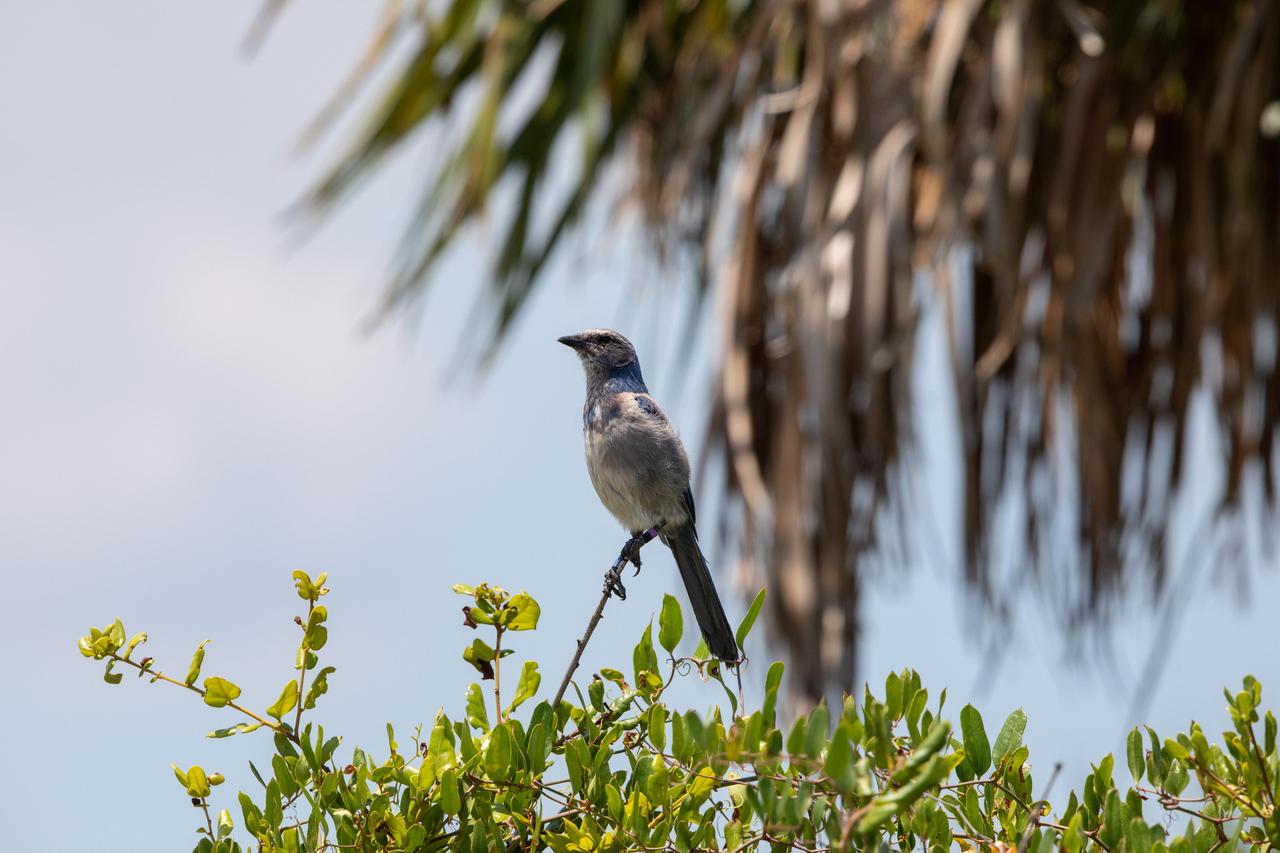
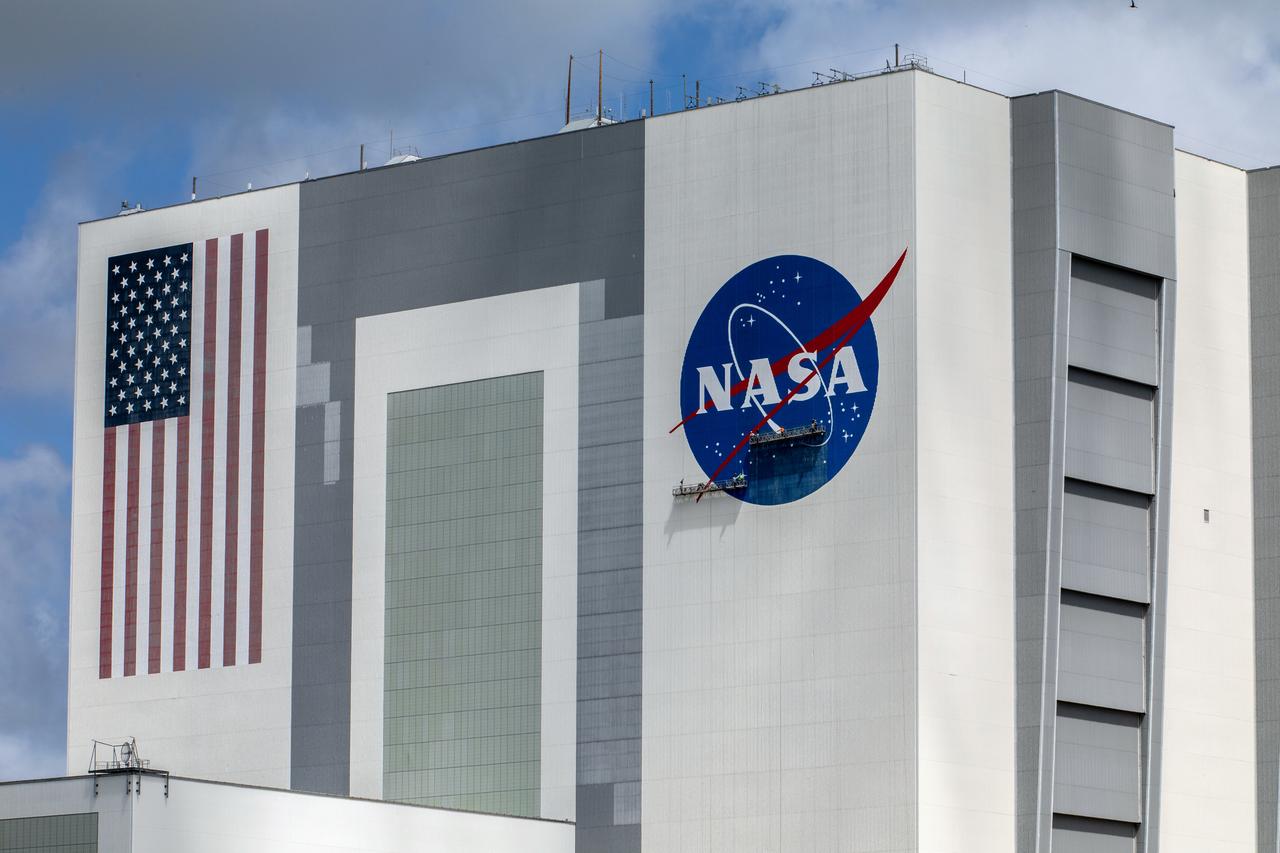
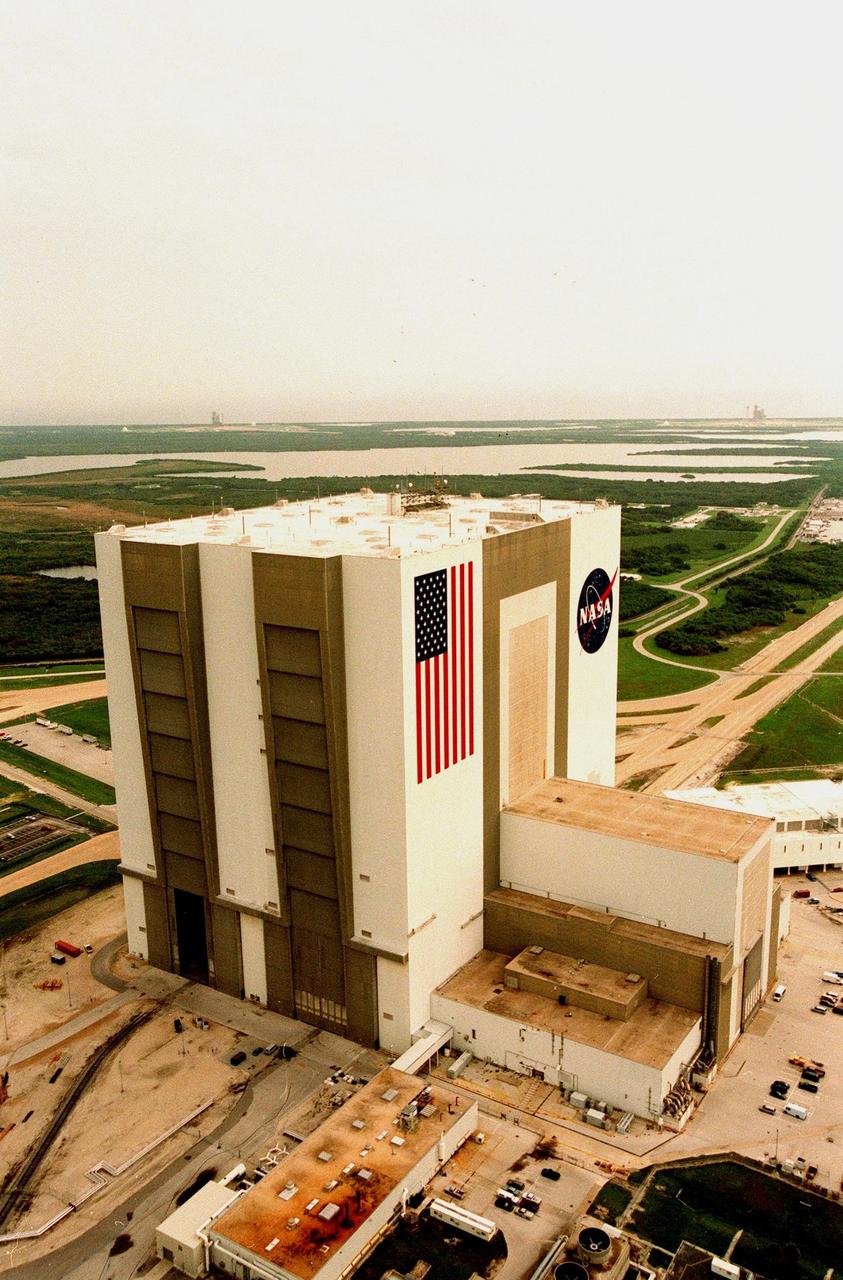
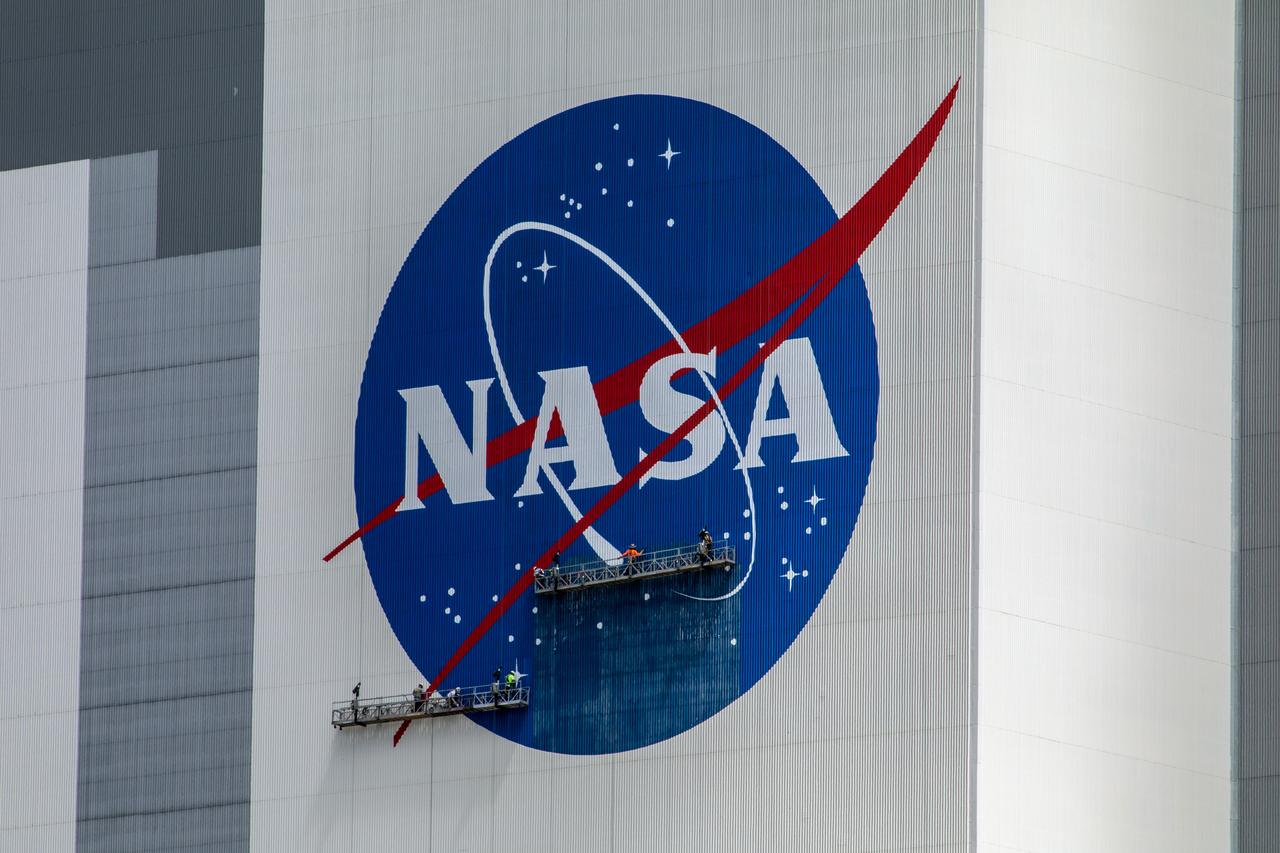
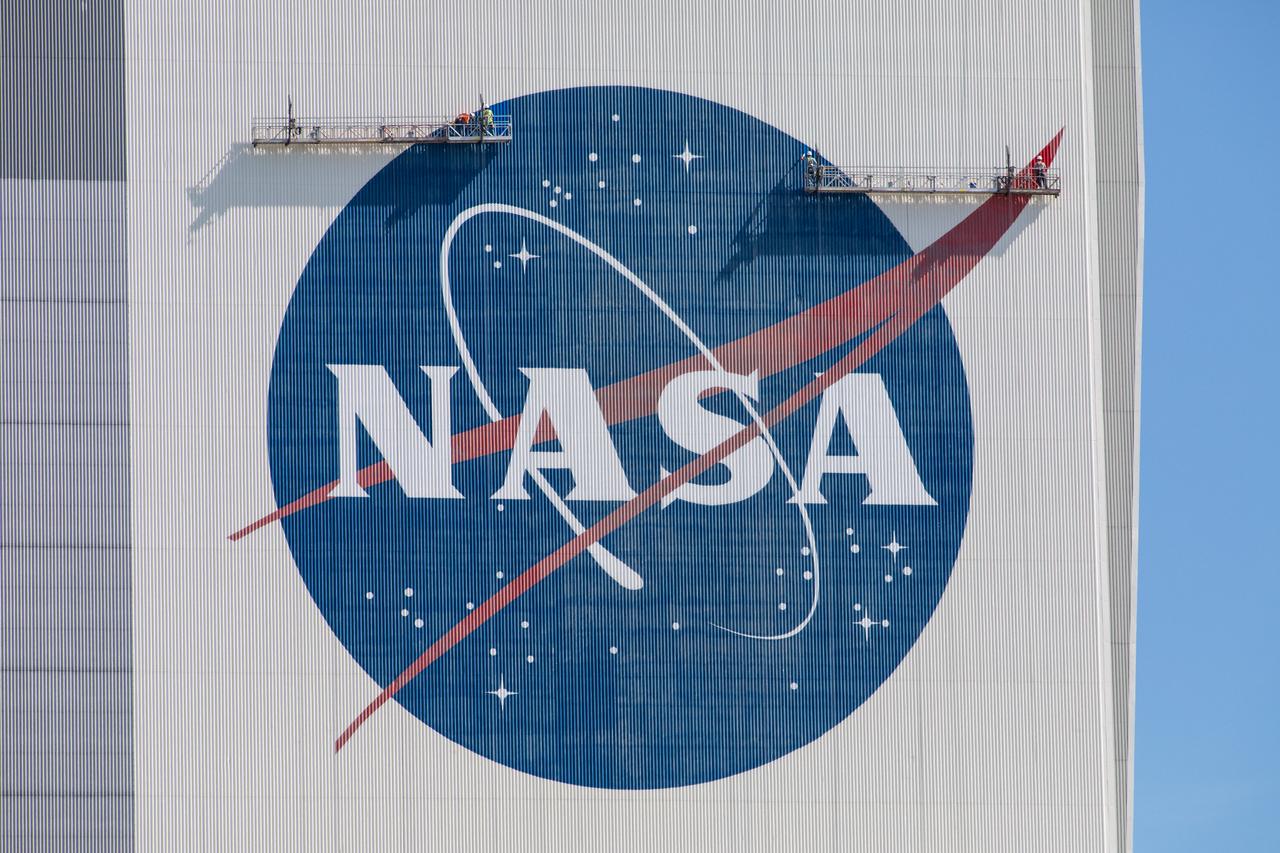
A scrub jay perches on a branch near the Vehicle Assembly Building (VAB) at NASA’s Kennedy Space Center in Florida on June 22, 2020. Painting of the NASA logo, also called the meatball, continues on the 525-foot-tall building. HM2 and H.I.S. Painting of Titusville, Florida, are repainting the meatball and the American Flag on the iconic building. The VAB was last painted in 2007, when repairs were completed after the 2004 Hurricanes Frances and Jeanne tore 845 panels off the building. It will take over 500 gallons of paint to paint the 209-by-110-foot flag and the 110-by-132-foot meatball. High Bay 3 inside the VAB has been upgraded with 10 new levels of work platforms that will surround and provide access for service and processing of NASA's Space Launch System (SLS) rocket and Orion spacecraft. Exploration Ground Systems is overseeing upgrades to the VAB to support the launch of the SLS and Orion for Artemis missions. Under the Artemis program, NASA will send the first woman and next man to the Moon.
VAB Painting and Nature
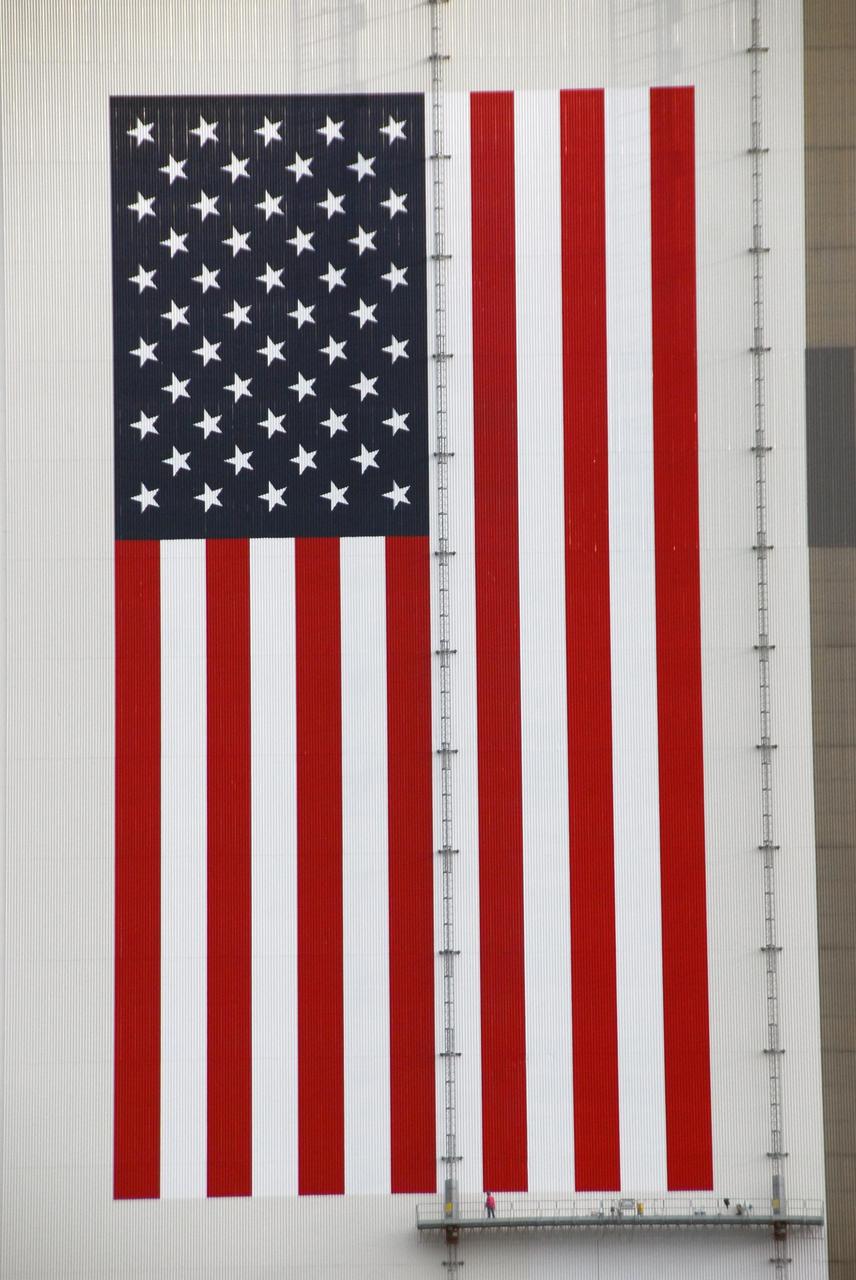
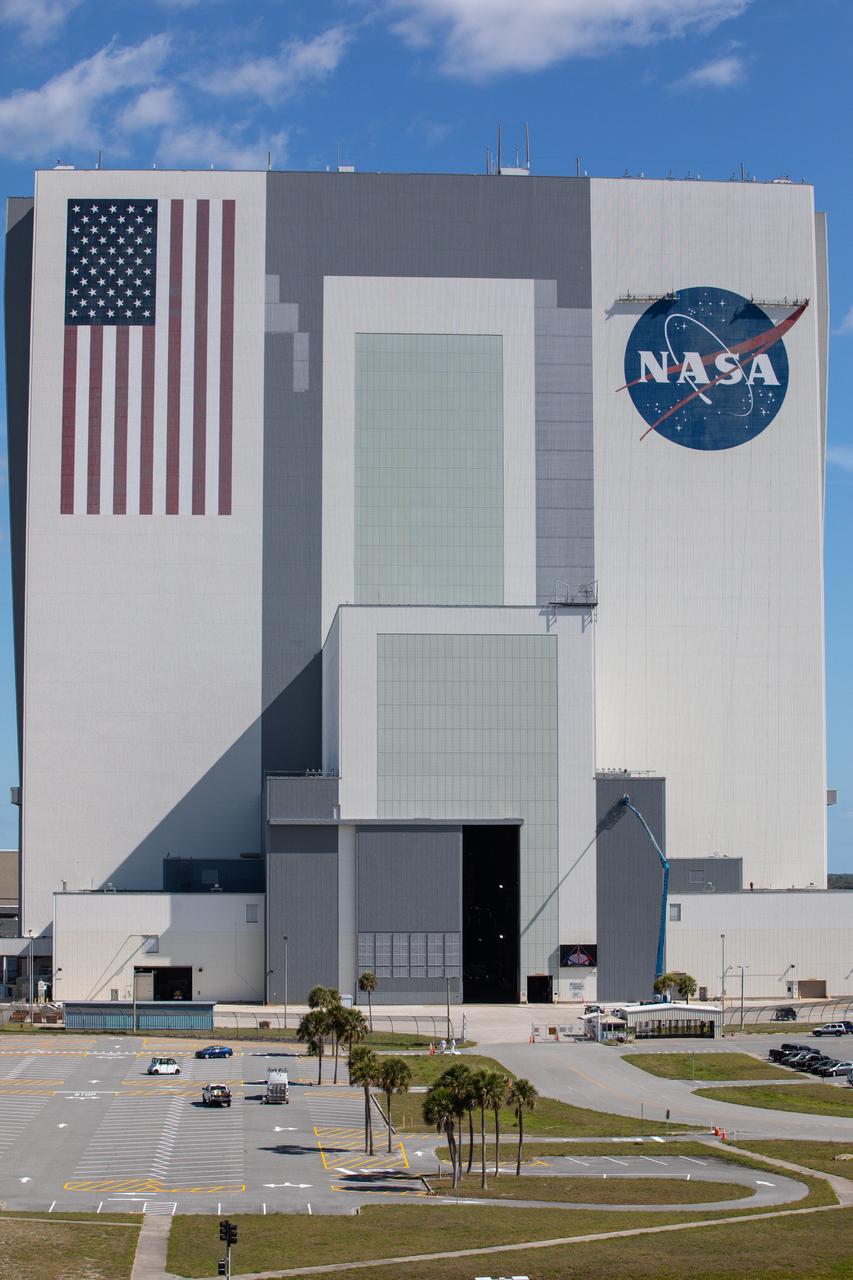
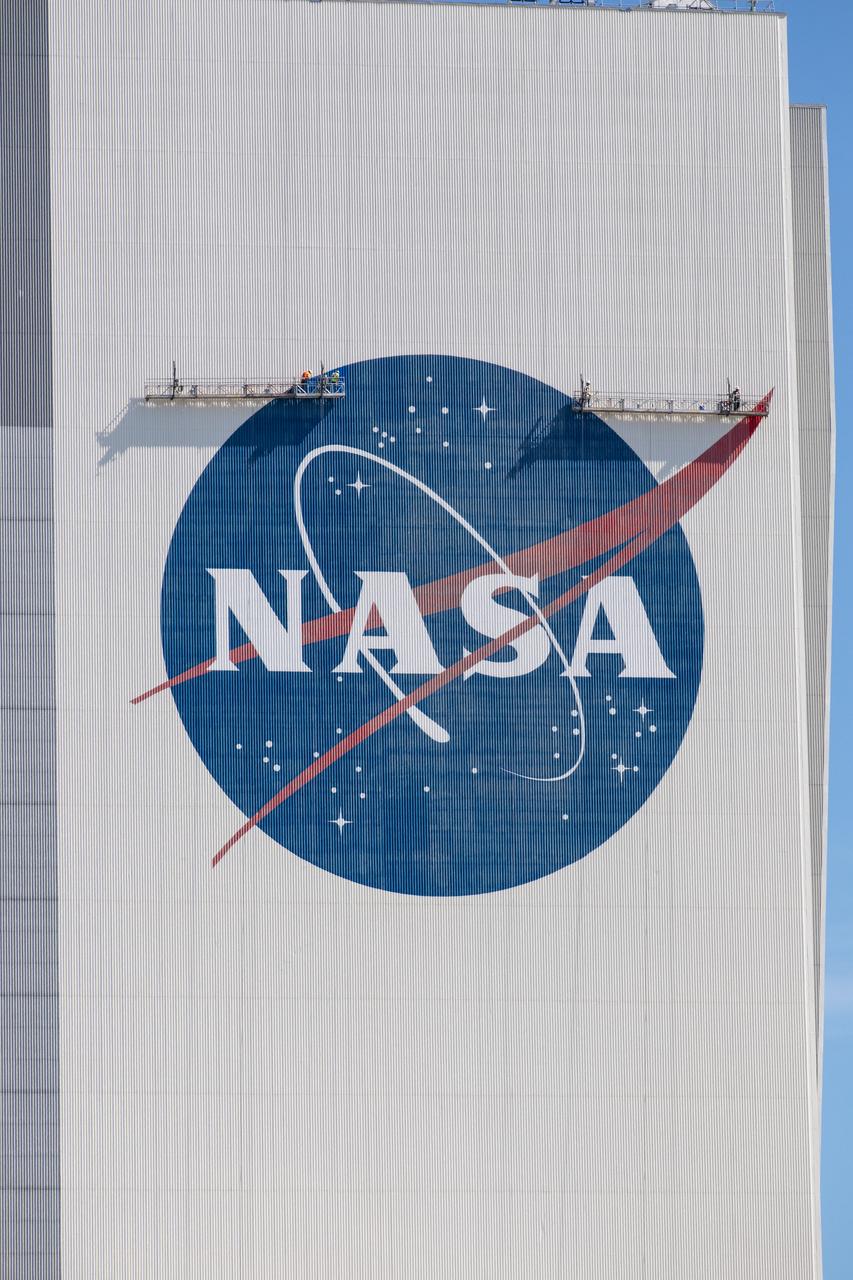
KENNEDY SPACE CENTER, FLA.  -- The finishing touches are painted on the American flag that embellishes the southwest side of the Vehicle Assembly Building at NASA's Kennedy Space Center.  The flag and the NASA logo, which is on the southeast side, have both been refreshed with new paint. The flag and logo were last painted in 1998, honoring NASA's 40th anniversary. The flag spans an area 209 feet by 110 feet, or about 23, 437 square feet. Each stripe is 9 feet wide and each star is 6 feet in diameter.  The logo, which is known as the "meatball," measures 110 feet by 132 feet, or about 12,300 square feet. The building stands 525-feet tall.  Photo credit: NASA/George Shelton
KSC-07pd0924
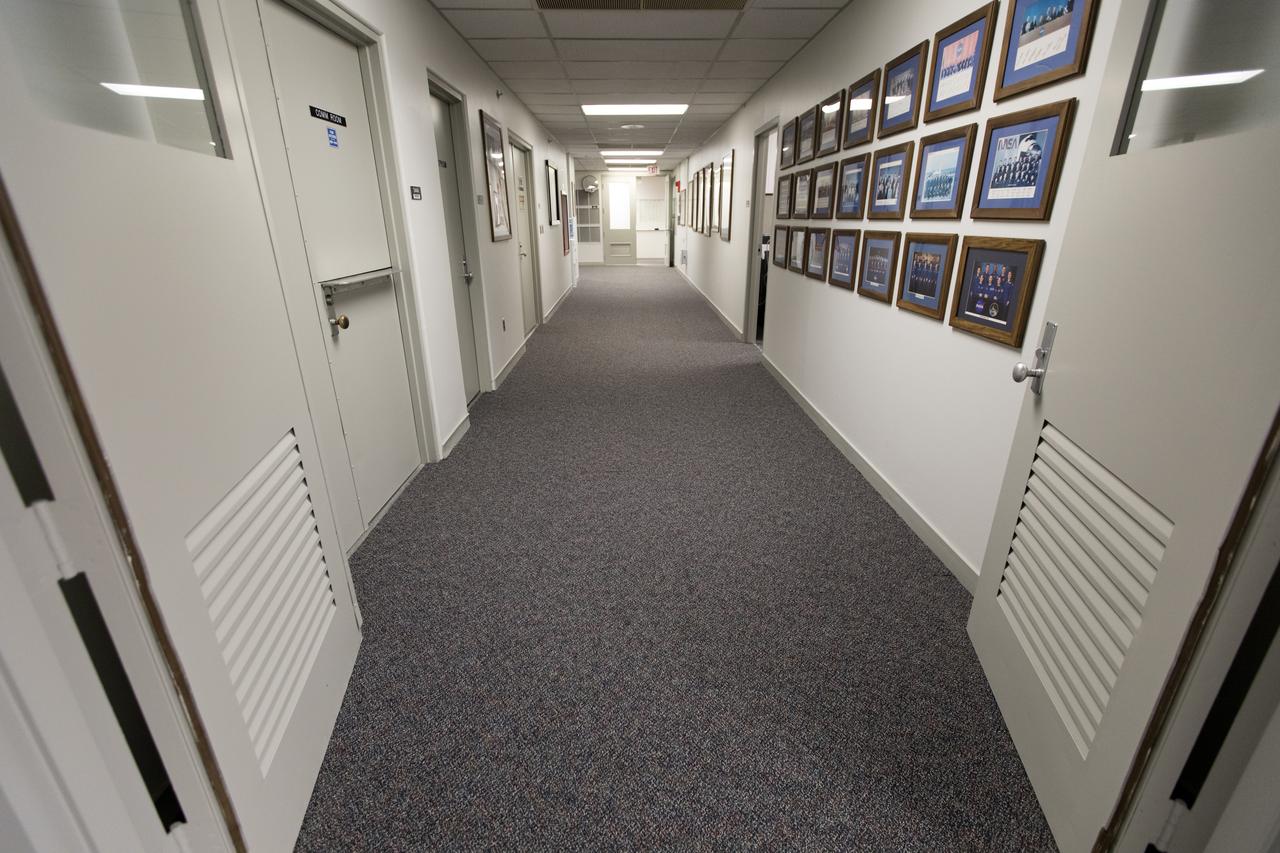
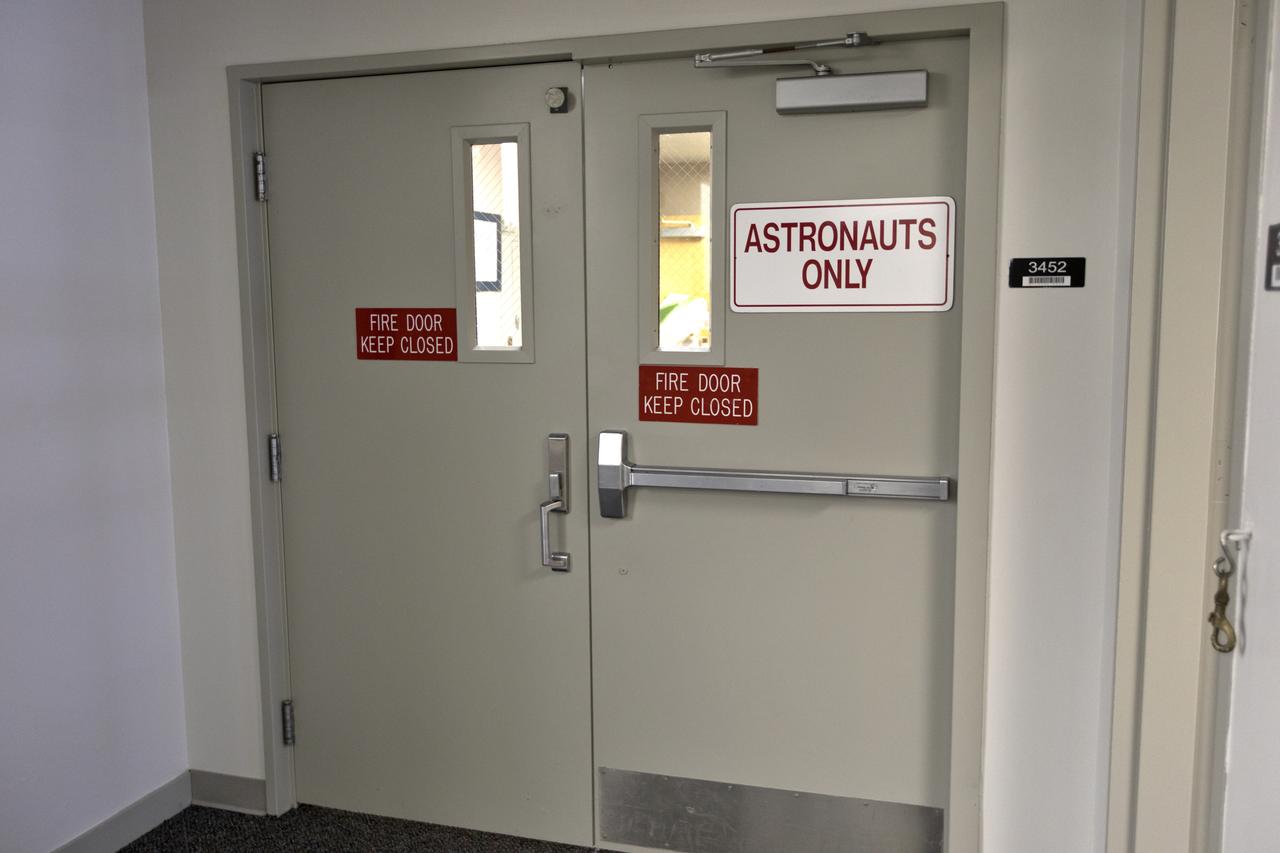
The hallway of the astronaut crew quarters at Kennedy Space Center in Florida reflects new carpeting and a fresh coat of paint. The crew quarters, located on the third floor of the Neil Armstrong Operations and Checkout Building, has been recently upgraded in preparation for Kennedy’s return to human spaceflight.
Astronaut Crew Quarters Upgrades
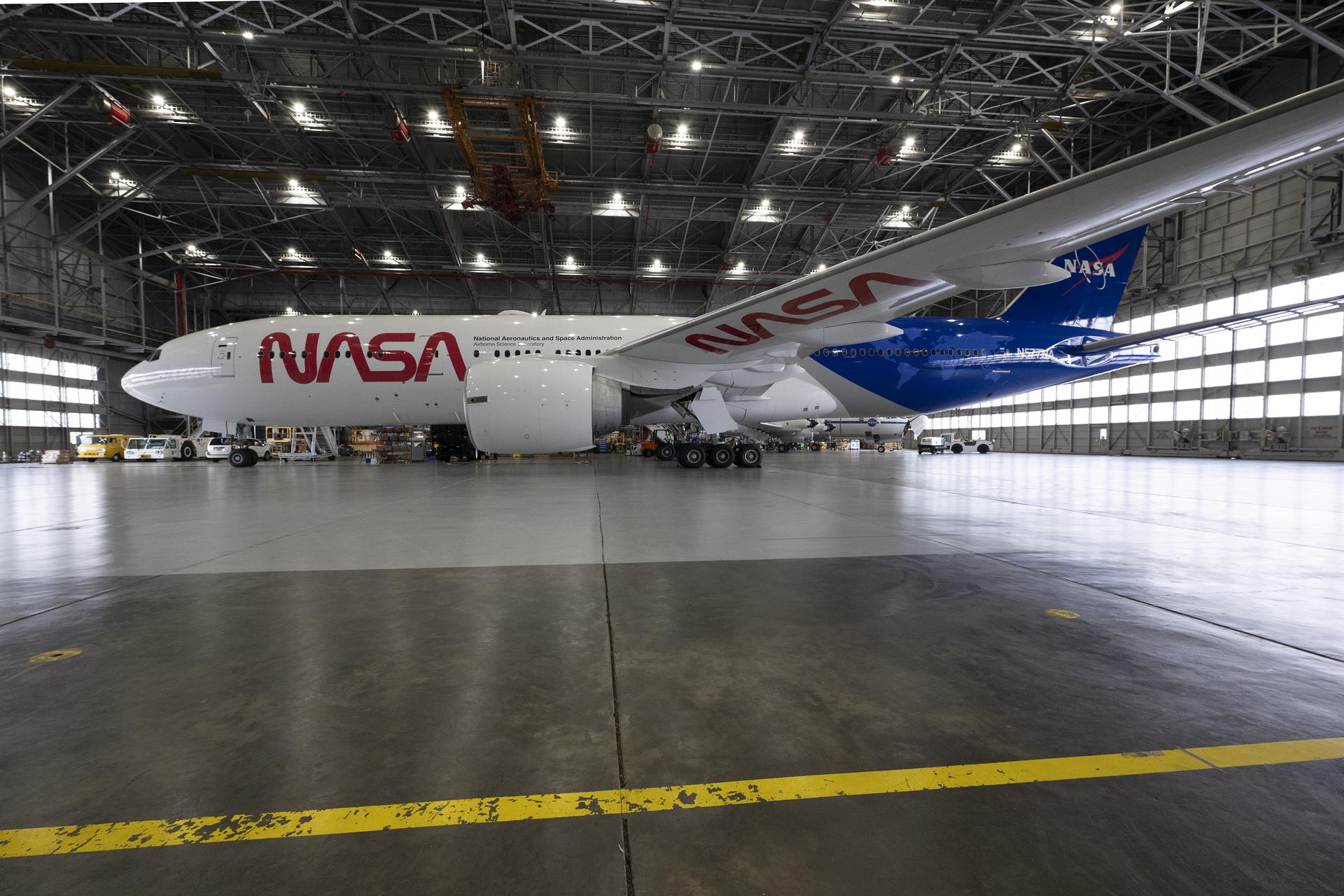
NASA's B777 aircraft returned to NASA Langley Research Center in Hampton, Virginia on Aug 12th with its new livery or paint job. It will now continue its maintenance and instrument integration schedule to prepare for its initial airborne science flights in 2027. Photo Credit NASA/Ryan Hill
NASA's 777 Returns to Langley After Being Painted
In the Vehicle Assembly Building, the orbiter Discovery (viewed from behind the Space Shuttle Main Engines, port side) is raised to a vertical position in order to be mated with the external tank. The orbiter displays the recently painted NASA logo, termed the "meatball," on its left, or port, wing. The logo also has been painted on both sides of the aft fuselage. Discovery (OV-103), the first of the orbiters to be launched with the new art work, is scheduled for its 25th flight, from Launch Pad 39B, on Oct. 29, 1998, for the STS-95 mission
KSC-98pc1066
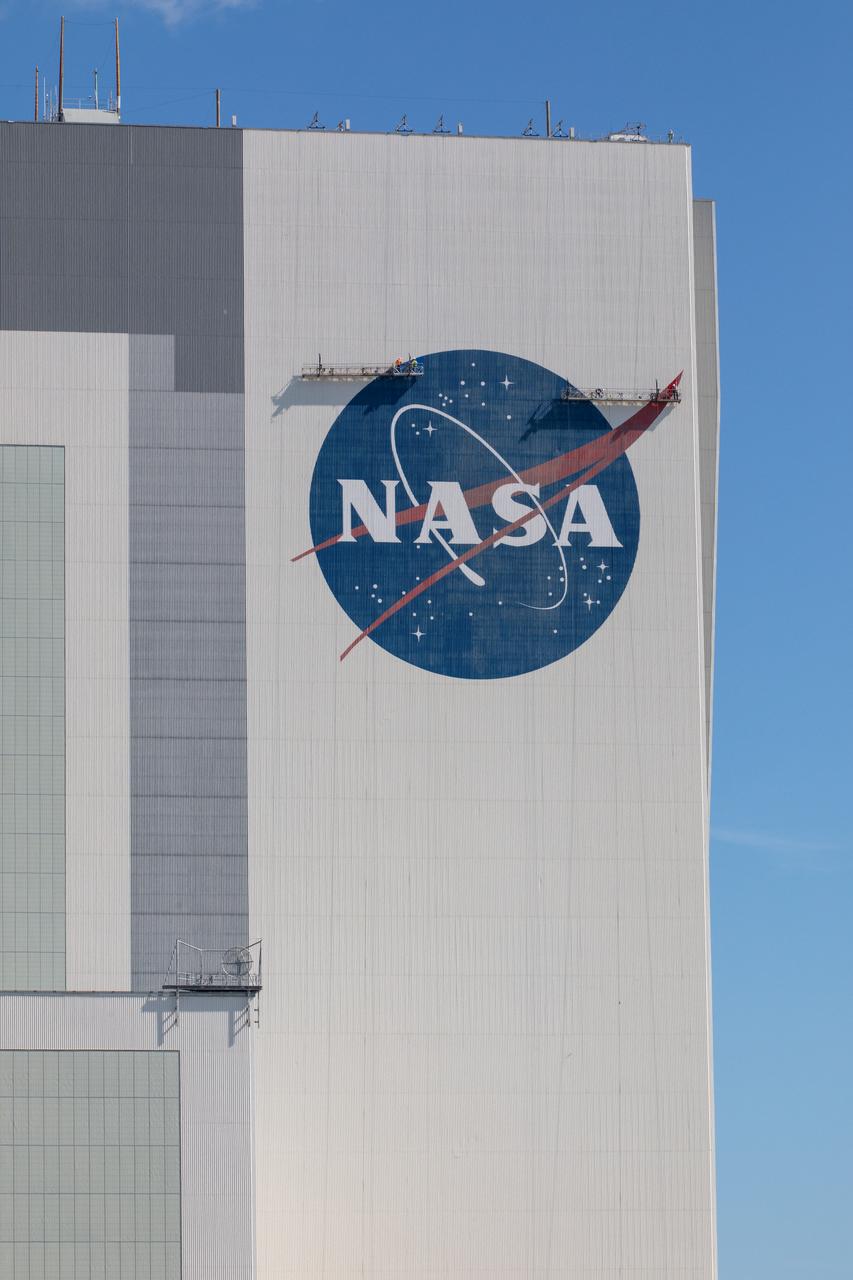
Painting of the NASA logo, also called the meatball, continues on the 525-foot-tall Vehicle Assembly Building (VAB) at the agency’s Kennedy Space Center in Florida on May 29 2020. HM2 and H.I.S. Painting of Titusville, Florida, are repainting the meatball and the American Flag on the iconic building. High Bay 3 inside the VAB has been upgraded with 10 new levels of work platforms that will surround and provide access for service and processing of NASA's Space Launch System (SLS) rocket and Orion spacecraft. Exploration Ground Systems is overseeing upgrades to the VAB to support the launch of the SLS and Orion for Artemis missions. Under the Artemis program, NASA will send the first woman and next man to the Moon.
NASA Meatball Painting on VAB
Painting of the NASA logo, also called the meatball, is underway on the 525-foot-tall Vehicle Assembly Building (VAB) at the agency’s Kennedy Space Center in Florida on May 8, 2020. HM2 and H.I.S. Painting of Titusville, Florida, are repainting the meatball and the American Flag on the iconic building. High Bay 3 inside the VAB has been upgraded with 10 new levels of work platforms that will surround and provide access for service and processing of NASA's Space Launch System (SLS) rocket and Orion spacecraft. Exploration Ground Systems is overseeing upgrades to the VAB to support the launch of the SLS and Orion for Artemis missions. Under the Artemis program, NASA will send the first woman and next man to the Moon.
NASA Meatball Painting at VAB
Painting of the NASA logo, also called the meatball, is underway on the 525-foot-tall Vehicle Assembly Building (VAB) at the agency’s Kennedy Space Center in Florida on May 8, 2020. HM2 and H.I.S. Painting of Titusville, Florida, are repainting the meatball and the American Flag on the iconic building. High Bay 3 inside the VAB has been upgraded with 10 new levels of work platforms that will surround and provide access for service and processing of NASA's Space Launch System (SLS) rocket and Orion spacecraft. Exploration Ground Systems is overseeing upgrades to the VAB to support the launch of the SLS and Orion for Artemis missions. Under the Artemis program, NASA will send the first woman and next man to the Moon.
NASA Meatball Painting at VAB
Painting of the NASA logo, also called the meatball, continues on the 525-foot-tall Vehicle Assembly Building (VAB) at the agency’s Kennedy Space Center in Florida on May 29 2020. HM2 and H.I.S. Painting of Titusville, Florida, are repainting the meatball and the American Flag on the iconic building. High Bay 3 inside the VAB has been upgraded with 10 new levels of work platforms that will surround and provide access for service and processing of NASA's Space Launch System (SLS) rocket and Orion spacecraft. Exploration Ground Systems is overseeing upgrades to the VAB to support the launch of the SLS and Orion for Artemis missions. Under the Artemis program, NASA will send the first woman and next man to the Moon.
NASA Meatball Painting on VAB
Painting of the NASA logo, also called the meatball, is underway on the 525-foot-tall Vehicle Assembly Building (VAB) at the agency’s Kennedy Space Center in Florida on May 8, 2020. HM2 and H.I.S. Painting of Titusville, Florida, are repainting the meatball and the American Flag on the iconic building. High Bay 3 inside the VAB has been upgraded with 10 new levels of work platforms that will surround and provide access for service and processing of NASA's Space Launch System (SLS) rocket and Orion spacecraft. Exploration Ground Systems is overseeing upgrades to the VAB to support the launch of the SLS and Orion for Artemis missions. Under the Artemis program, NASA will send the first woman and next man to the Moon.
NASA Meatball Painting at VAB
Painting of the NASA logo, also called the meatball, is underway on the 525-foot-tall Vehicle Assembly Building (VAB) at the agency’s Kennedy Space Center in Florida on May 8, 2020. HM2 and H.I.S. Painting of Titusville, Florida, are repainting the meatball and the American Flag on the iconic building. High Bay 3 inside the VAB has been upgraded with 10 new levels of work platforms that will surround and provide access for service and processing of NASA's Space Launch System (SLS) rocket and Orion spacecraft. Exploration Ground Systems is overseeing upgrades to the VAB to support the launch of the SLS and Orion for Artemis missions. Under the Artemis program, NASA will send the first woman and next man to the Moon.
NASA Meatball Painting at VAB
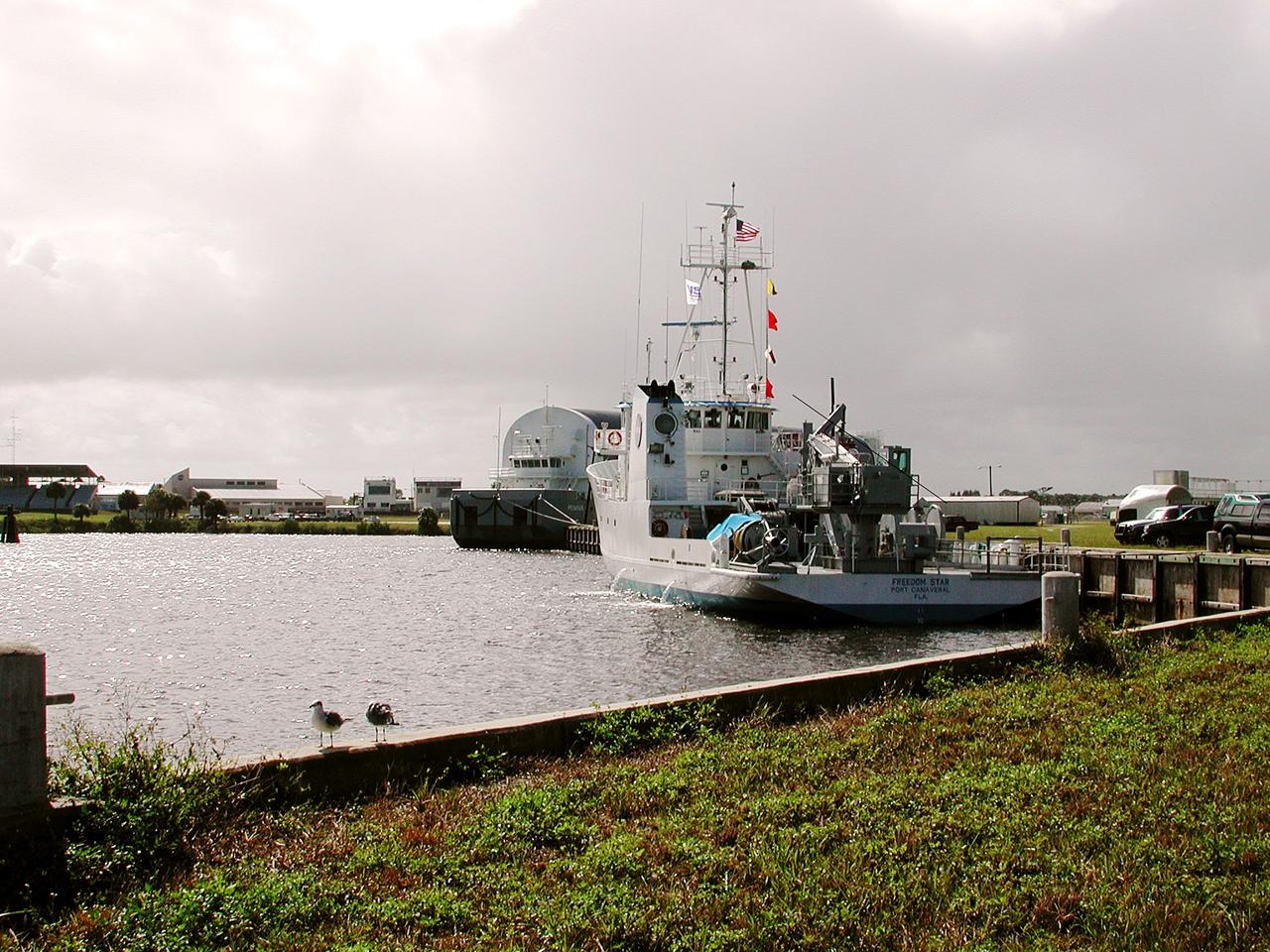
KENNEDY SPACE CENTER, FLA. - The Freedom Star is berthed at the Turn Basin near the Vehicle Assembly Building.  The ship has recently returned to KSC after refurbishment at Fort George Island, Fla., including new paint.  Freedom Star is one of the solid rocket booster (SRB) retrieval ships built to recover the SRB casings released over the Atlantic Ocean after launch of a Space Shuttle.  In addition to the SRBs, the ship recovers the drogue and main parachutes that slow the boosters’ speed before splashdown.  Some of the retrieval equipment can be seen on the rear deck.  The ships also tow the external tanks built at the Michoud Space Systems Assembly Facility near New Orleans to Port Canaveral, Fla.  Freedom Star was brought to KSC today for a visit by NATO Parliamentarians.
KENNEDY SPACE CENTER, FLA. - The Freedom Star is berthed at the Turn Basin near the Vehicle Assembly Building. The ship has recently returned to KSC after refurbishment at Fort George Island, Fla., including new paint. Freedom Star is one of the solid rocket booster (SRB) retrieval ships built to recover the SRB casings released over the Atlantic Ocean after launch of a Space Shuttle. In addition to the SRBs, the ship recovers the drogue and main parachutes that slow the boosters’ speed before splashdown. Some of the retrieval equipment can be seen on the rear deck. The ships also tow the external tanks built at the Michoud Space Systems Assembly Facility near New Orleans to Port Canaveral, Fla. Freedom Star was brought to KSC today for a visit by NATO Parliamentarians.
KENNEDY SPACE CENTER, FLA. - The Freedom Star is berthed at the Turn Basin near the Vehicle Assembly Building.  The ship has recently returned to KSC after refurbishment at Fort George Island, Fla., including new paint.  Freedom Star is one of the solid rocket booster (SRB) retrieval ships built to recover the SRB casings released over the Atlantic Ocean after launch of a Space Shuttle.  In addition to the SRBs, the ship recovers the drogue and main parachutes that slow the boosters’ speed before splashdown.  Some of the retrieval equipment can be seen on the rear deck.  The ships also tow the external tanks built at the Michoud Space Systems Assembly Facility near New Orleans to Port Canaveral, Fla.  Freedom Star was brought to KSC today for a visit by NATO Parliamentarians.
KENNEDY SPACE CENTER, FLA. - The Freedom Star is berthed at the Turn Basin near the Vehicle Assembly Building. The ship has recently returned to KSC after refurbishment at Fort George Island, Fla., including new paint. Freedom Star is one of the solid rocket booster (SRB) retrieval ships built to recover the SRB casings released over the Atlantic Ocean after launch of a Space Shuttle. In addition to the SRBs, the ship recovers the drogue and main parachutes that slow the boosters’ speed before splashdown. Some of the retrieval equipment can be seen on the rear deck. The ships also tow the external tanks built at the Michoud Space Systems Assembly Facility near New Orleans to Port Canaveral, Fla. Freedom Star was brought to KSC today for a visit by NATO Parliamentarians.
KENNEDY SPACE CENTER, FLA. - The Freedom Star is berthed at the Turn Basin near the Vehicle Assembly Building.  The ship has recently returned to KSC after refurbishment at Fort George Island, Fla., including new paint.  Freedom Star is one of the solid rocket booster (SRB) retrieval ships built to recover the SRB casings released over the Atlantic Ocean after launch of a Space Shuttle.  In addition to the SRBs, the ship recovers the drogue and main parachutes that slow the boosters’ speed before splashdown.  The ships also tow the external tanks built at the Michoud Space Systems Assembly Facility near New Orleans to Port Canaveral, Fla.  Freedom Star was brought to KSC today for a visit by NATO Parliamentarians.
KENNEDY SPACE CENTER, FLA. - The Freedom Star is berthed at the Turn Basin near the Vehicle Assembly Building. The ship has recently returned to KSC after refurbishment at Fort George Island, Fla., including new paint. Freedom Star is one of the solid rocket booster (SRB) retrieval ships built to recover the SRB casings released over the Atlantic Ocean after launch of a Space Shuttle. In addition to the SRBs, the ship recovers the drogue and main parachutes that slow the boosters’ speed before splashdown. The ships also tow the external tanks built at the Michoud Space Systems Assembly Facility near New Orleans to Port Canaveral, Fla. Freedom Star was brought to KSC today for a visit by NATO Parliamentarians.
KENNEDY SPACE CENTER, FLA. - The Freedom Star is berthed at the Turn Basin near the Vehicle Assembly Building.  The ship has recently returned to KSC after refurbishment at Fort George Island, Fla., including new paint.  Freedom Star is one of the solid rocket booster (SRB) retrieval ships built to recover the SRB casings released over the Atlantic Ocean after launch of a Space Shuttle.  In addition to the SRBs, the ship recovers the drogue and main parachutes that slow the boosters’ speed before splashdown.  Some of the retrieval equipment can be seen on the rear deck.  The ships also tow the external tanks built at the Michoud Space Systems Assembly Facility near New Orleans to Port Canaveral, Fla.  Freedom Star was brought to KSC today for a visit by NATO Parliamentarians.
KENNEDY SPACE CENTER, FLA. - The Freedom Star is berthed at the Turn Basin near the Vehicle Assembly Building. The ship has recently returned to KSC after refurbishment at Fort George Island, Fla., including new paint. Freedom Star is one of the solid rocket booster (SRB) retrieval ships built to recover the SRB casings released over the Atlantic Ocean after launch of a Space Shuttle. In addition to the SRBs, the ship recovers the drogue and main parachutes that slow the boosters’ speed before splashdown. Some of the retrieval equipment can be seen on the rear deck. The ships also tow the external tanks built at the Michoud Space Systems Assembly Facility near New Orleans to Port Canaveral, Fla. Freedom Star was brought to KSC today for a visit by NATO Parliamentarians.
KENNEDY SPACE CENTER, FLA. -  The Freedom Star is berthed at the Turn Basin near the Vehicle Assembly Building.  The ship has recently returned to KSC after refurbishment at Fort George Island, Fla., including new paint.  Freedom Star is one of the solid rocket booster (SRB) retrieval ships built to recover the SRB casings released over the Atlantic Ocean after launch of a Space Shuttle.  In addition to the SRBs, the ship recovers the drogue and main parachutes that slow the boosters’ speed before splashdown.  Some of the retrieval equipment can be seen on the rear deck.  The ships also tow the external tanks built at the Michoud Space Systems Assembly Facility near New Orleans to Port Canaveral, Fla.  Freedom Star was brought to KSC today for a visit by NATO Parliamentarians.
KENNEDY SPACE CENTER, FLA. - The Freedom Star is berthed at the Turn Basin near the Vehicle Assembly Building. The ship has recently returned to KSC after refurbishment at Fort George Island, Fla., including new paint. Freedom Star is one of the solid rocket booster (SRB) retrieval ships built to recover the SRB casings released over the Atlantic Ocean after launch of a Space Shuttle. In addition to the SRBs, the ship recovers the drogue and main parachutes that slow the boosters’ speed before splashdown. Some of the retrieval equipment can be seen on the rear deck. The ships also tow the external tanks built at the Michoud Space Systems Assembly Facility near New Orleans to Port Canaveral, Fla. Freedom Star was brought to KSC today for a visit by NATO Parliamentarians.
KENNEDY SPACE CENTER, FLA. -  The Freedom Star is berthed at the Turn Basin near the Vehicle Assembly Building.  The ship has recently returned to KSC after refurbishment at Fort George Island, Fla., including new paint.  Freedom Star is one of the solid rocket booster (SRB) retrieval ships built to recover the SRB casings released over the Atlantic Ocean after launch of a Space Shuttle.  In addition to the SRBs, the ship recovers the drogue and main parachutes that slow the boosters’ speed before splashdown.   The ships also tow the external tanks built at the Michoud Space Systems Assembly Facility near New Orleans to Port Canaveral, Fla.  Freedom Star was brought to KSC today for a visit by NATO Parliamentarians.
KENNEDY SPACE CENTER, FLA. - The Freedom Star is berthed at the Turn Basin near the Vehicle Assembly Building. The ship has recently returned to KSC after refurbishment at Fort George Island, Fla., including new paint. Freedom Star is one of the solid rocket booster (SRB) retrieval ships built to recover the SRB casings released over the Atlantic Ocean after launch of a Space Shuttle. In addition to the SRBs, the ship recovers the drogue and main parachutes that slow the boosters’ speed before splashdown. The ships also tow the external tanks built at the Michoud Space Systems Assembly Facility near New Orleans to Port Canaveral, Fla. Freedom Star was brought to KSC today for a visit by NATO Parliamentarians.
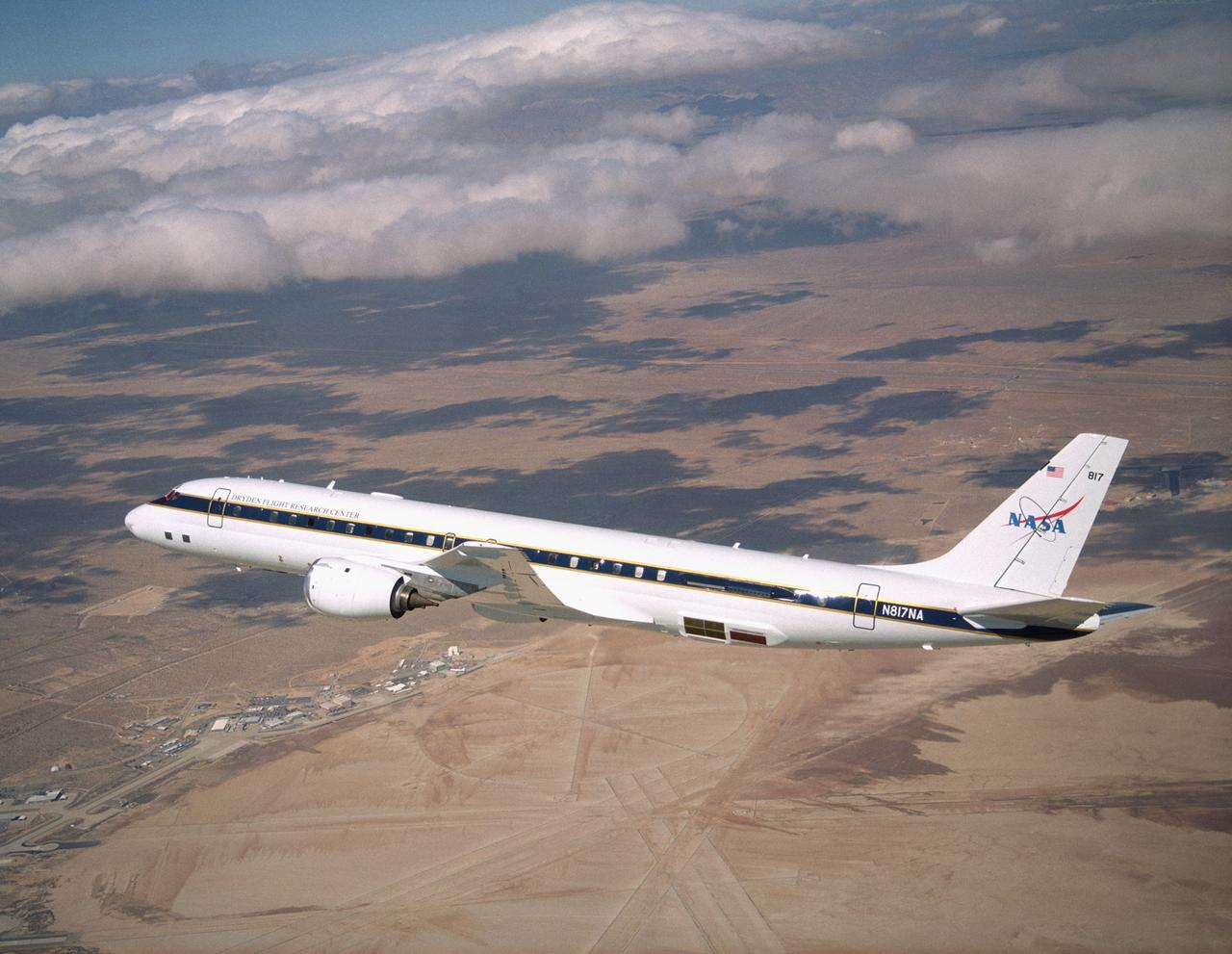
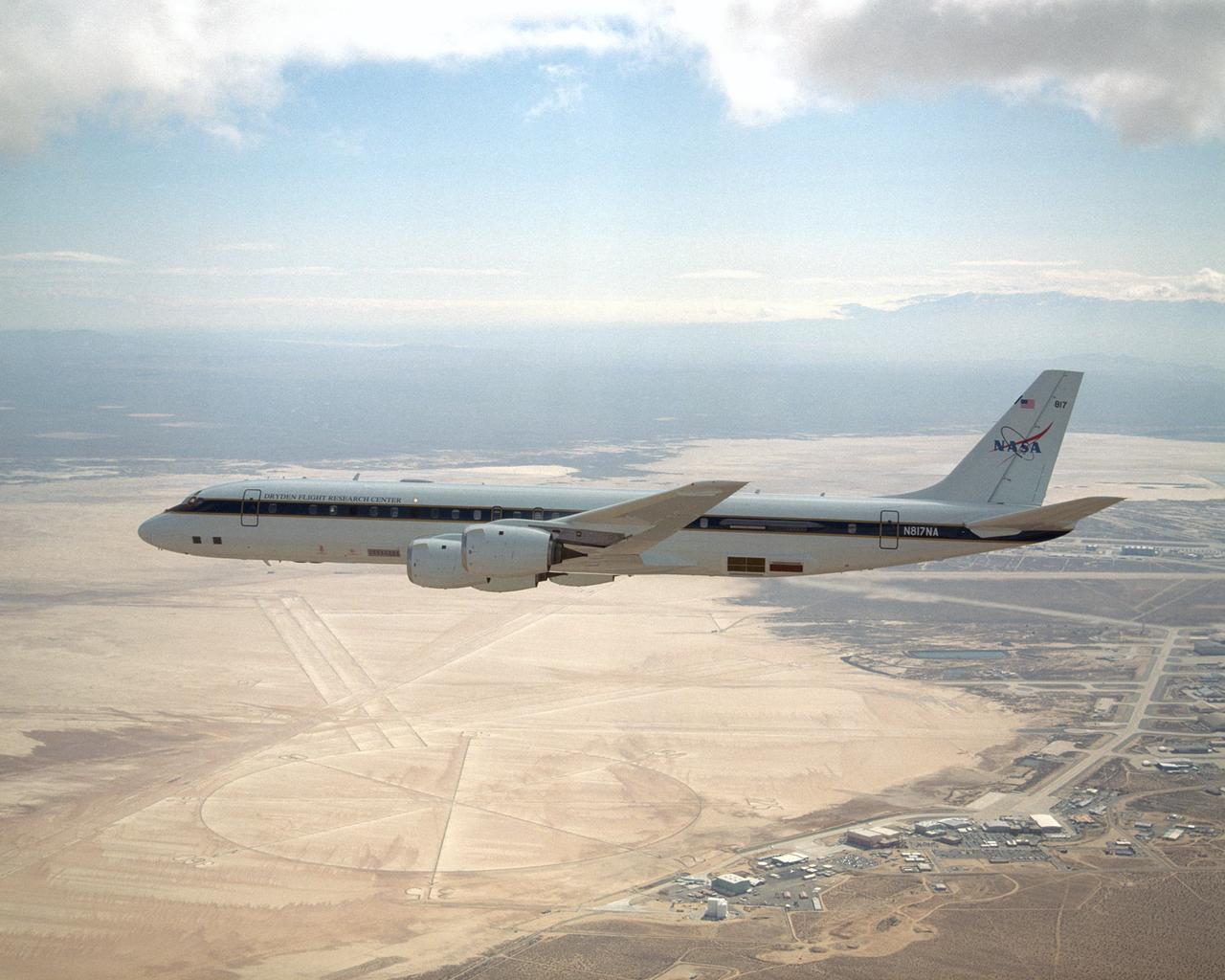
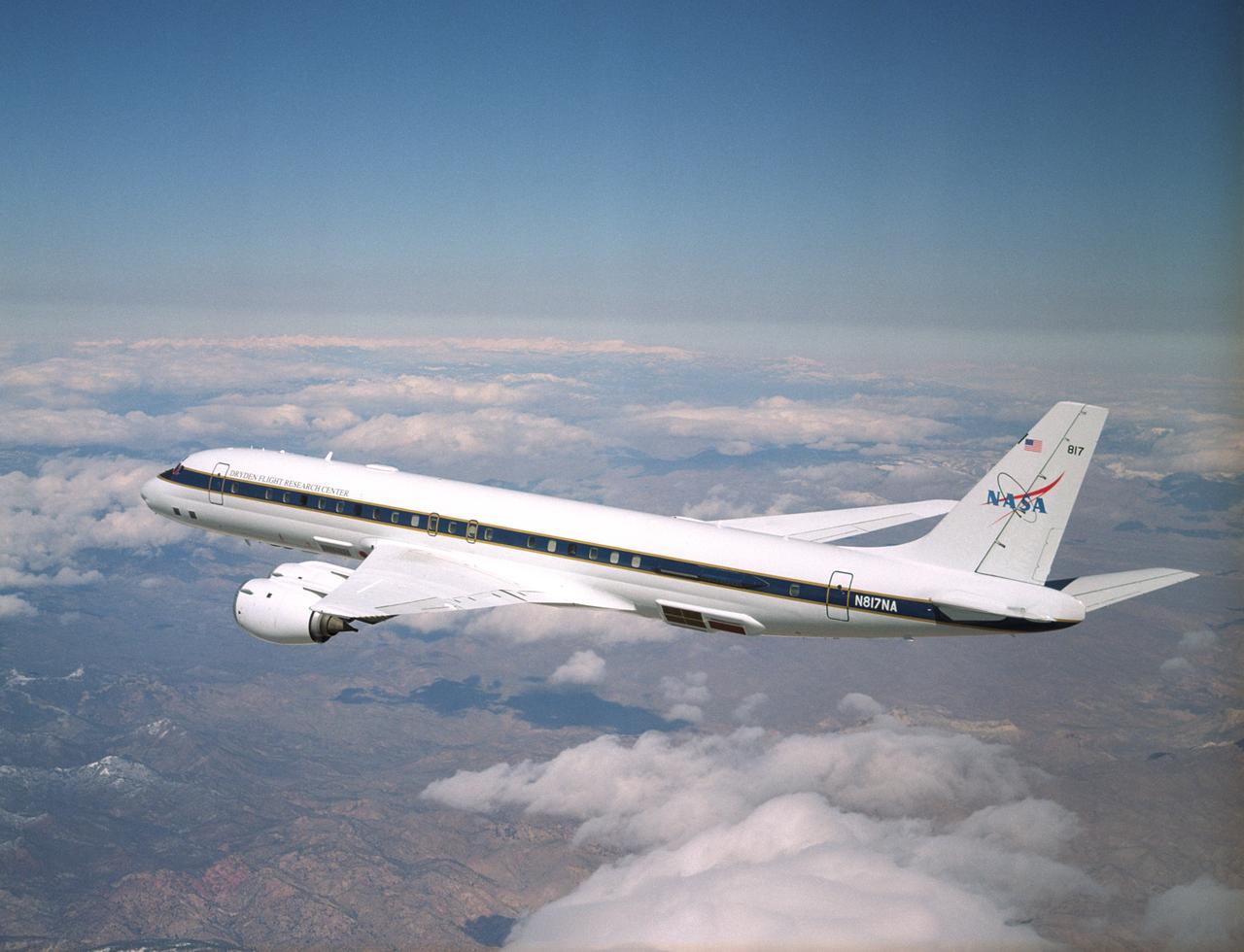
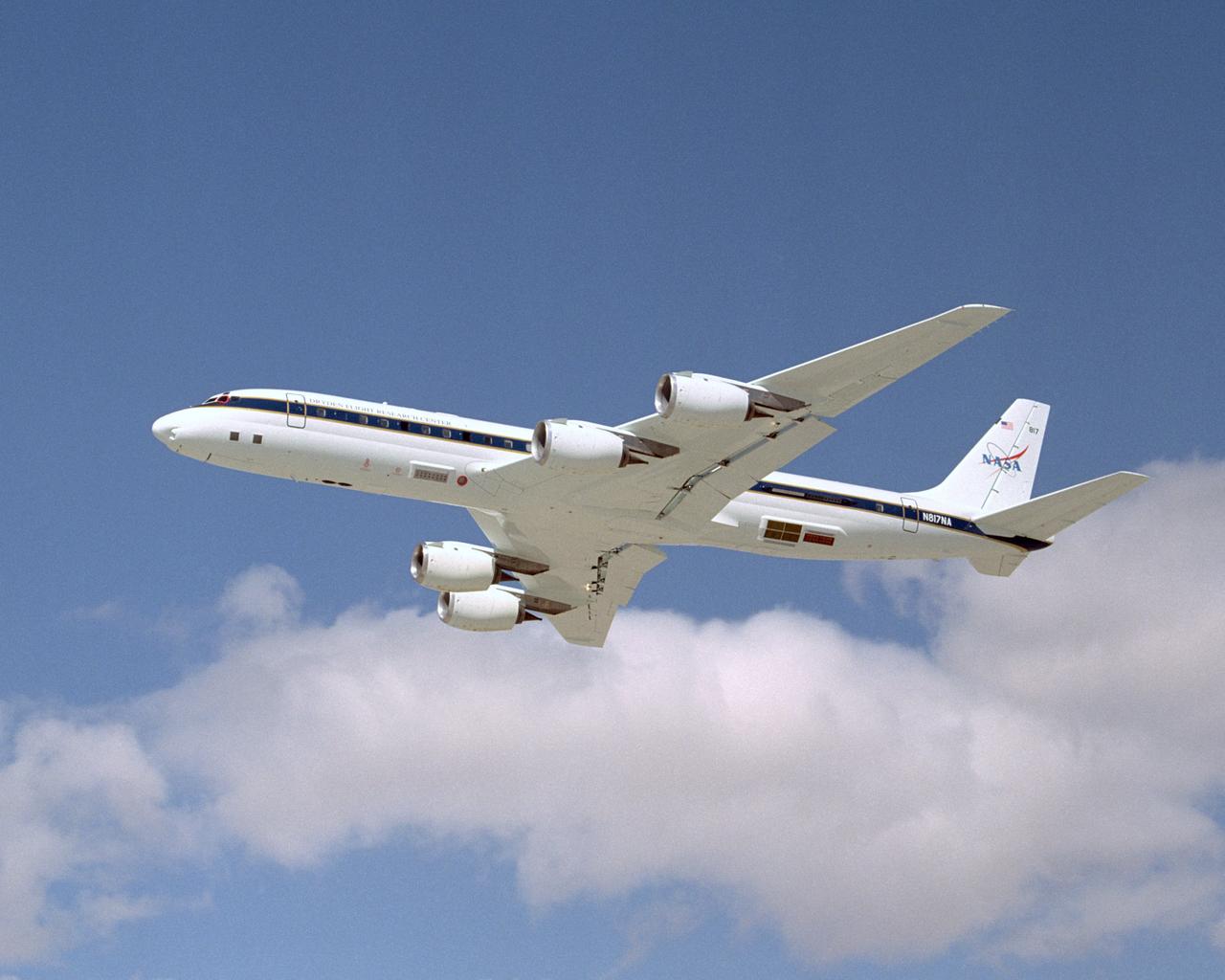
NASA's large Airborne Science research aircraft, a modified DC-8 airliner, displayed new colors in a check flight Feb. 24, 2004, over its home base, the NASA Dryden Flight Research Center at Edwards AFB, California.
NASA's Airborne Science DC-8, displaying new colors in a check flight Feb. 24, 2004, over the Dryden Flight Research Center
NASA's large Airborne Science research aircraft, a modified DC-8 airliner, displayed new colors in a check flight Feb. 24, 2004, over its home base, the NASA Dryden Flight Research Center at Edwards AFB, California.
NASA's Airborne Science DC-8 displays new colors in a check flight over the Dryden Flight Research Center
NASA's DC-8 Airborne Science research aircraft, in new colors and markings, in flight Feb. 24, 2004. Dark panels on lower fuselage are synthetic aperture radar antennas enabling sophisticated studies of Earth features.
NASA's DC-8 Airborne Science research aircraft, in new colors and markings, in flight Feb. 24, 2004
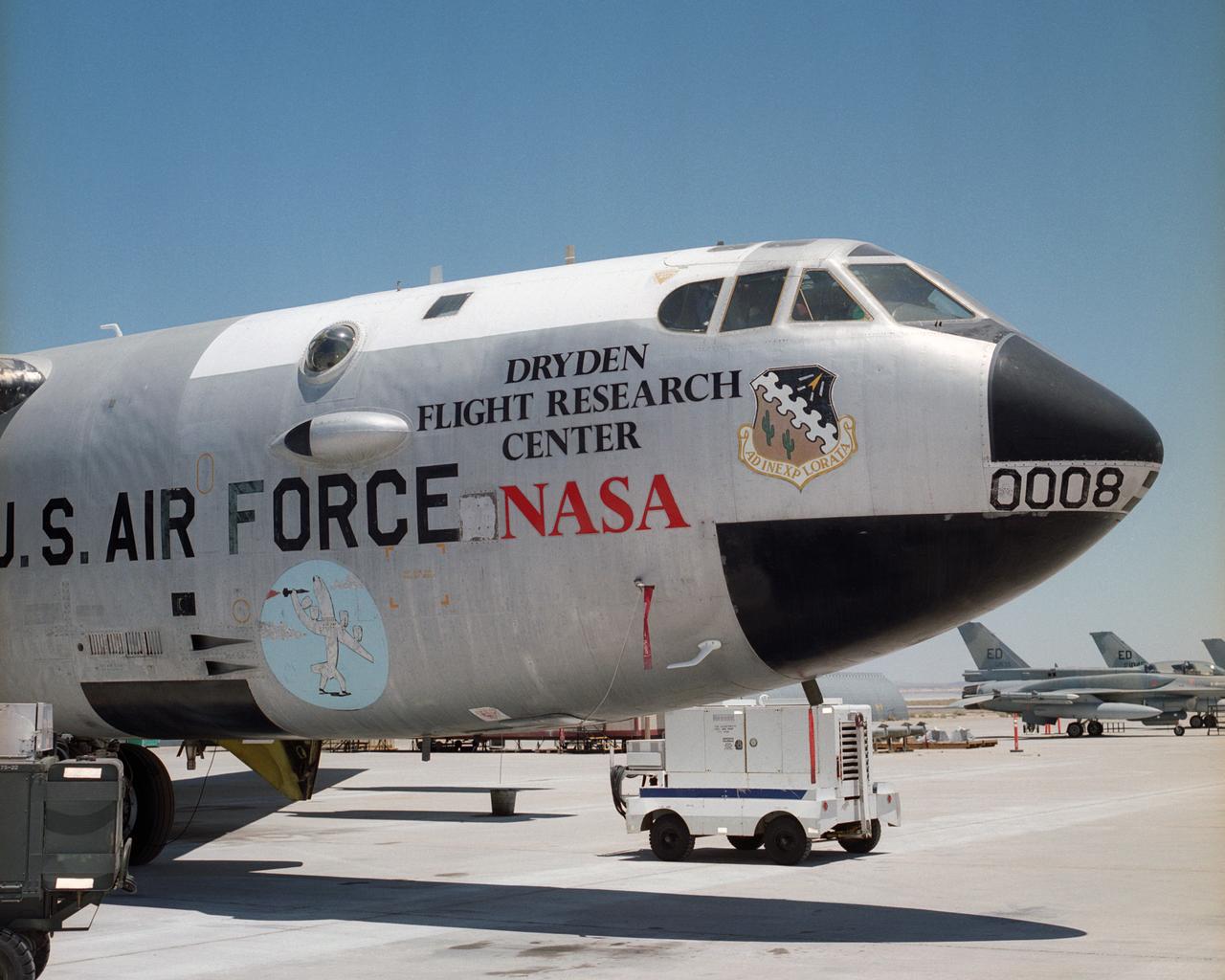
NASA Dryden Flight Research Center's workhorse B-52B launch aircraft, known as NASA 008, displays new markings.
EC04-0197-4
NASA's DC-8 Airborne Science research aircraft, in new colors and markings, takes off Feb. 24, 2004. Dark panels on lower fuselage are synthetic aperture radar antennas enabling sophisticated studies of Earth features.
NASA's DC-8 Airborne Science research aircraft, in new colors and markings, takes off Feb. 24, 2004
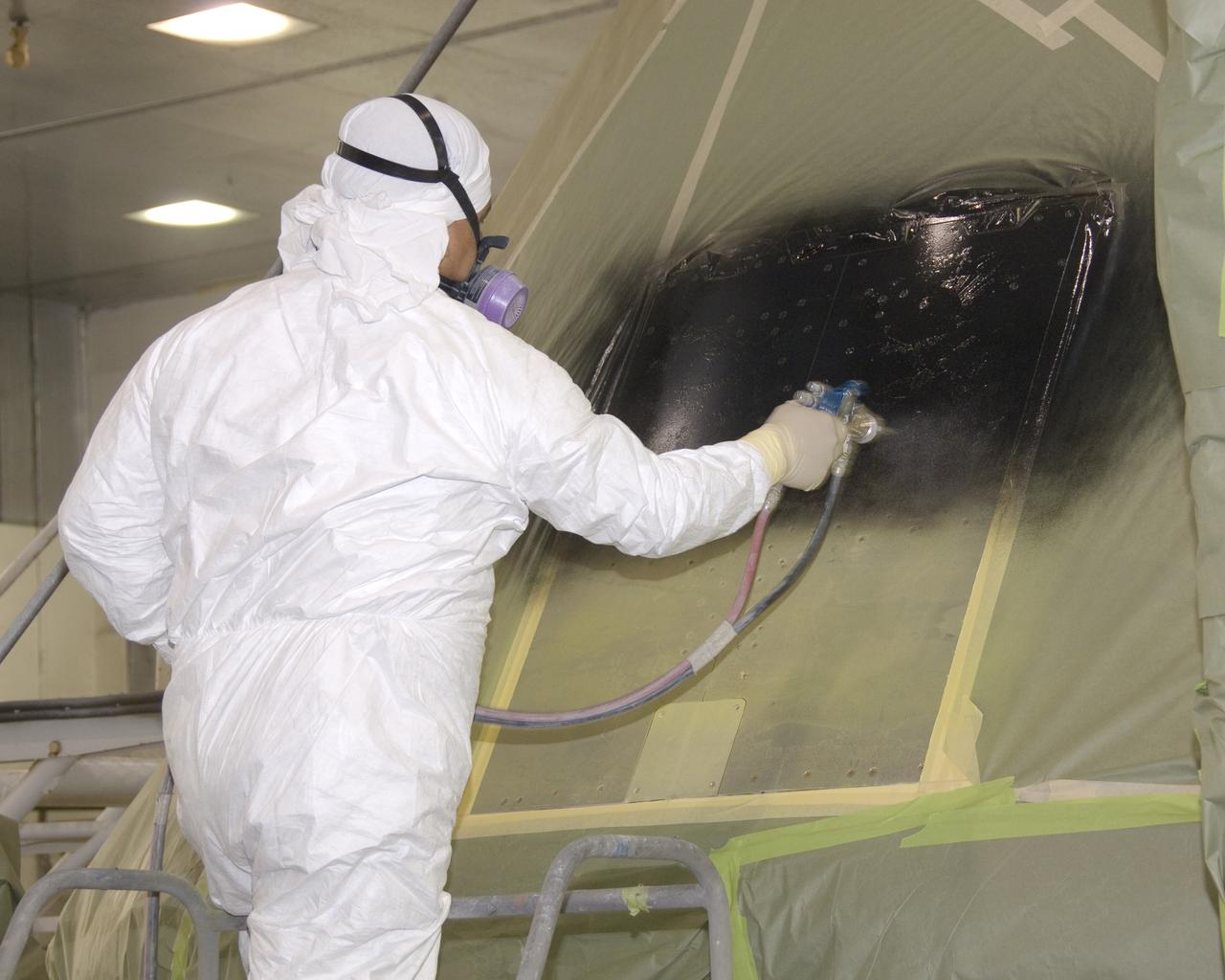
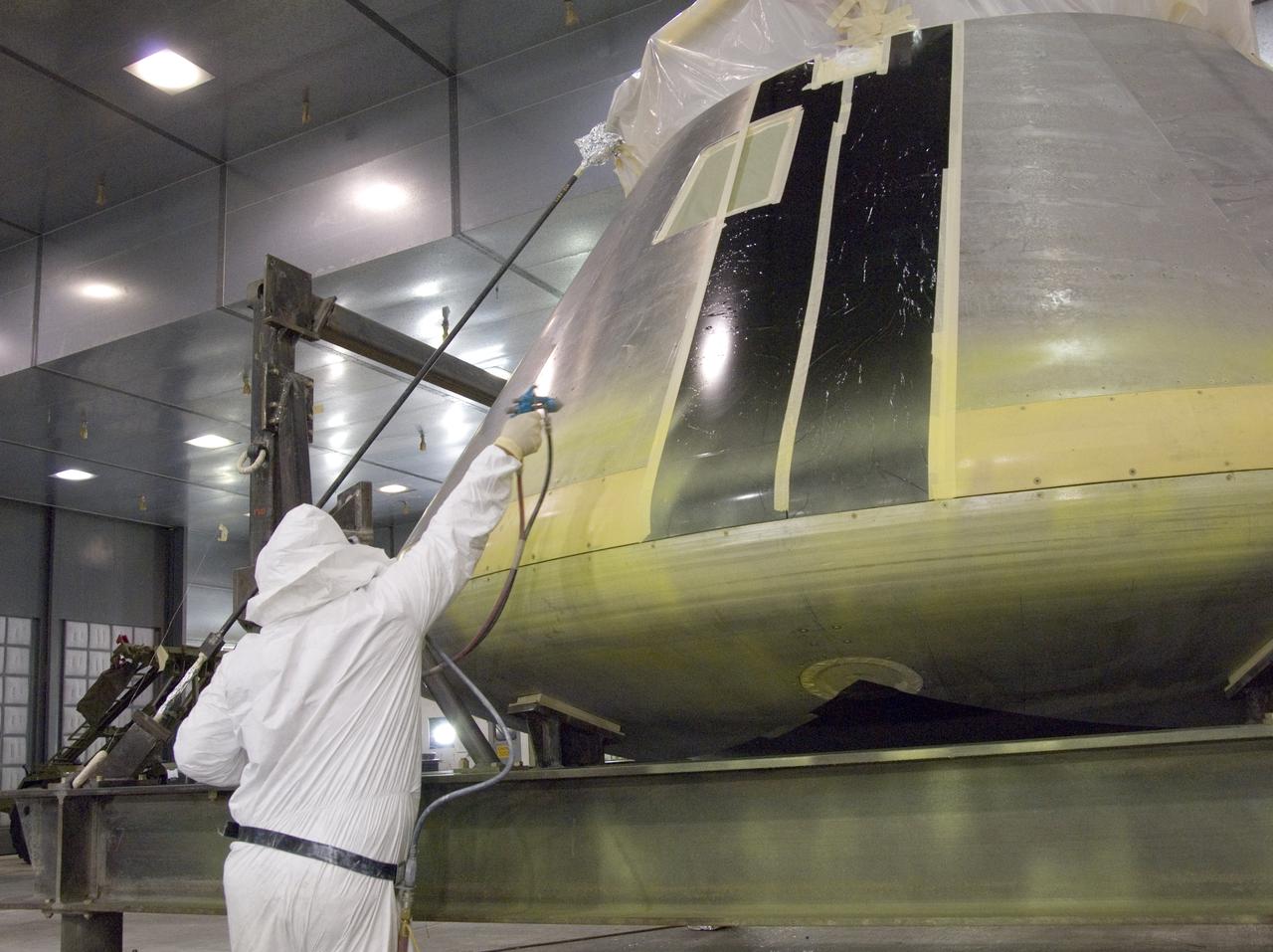
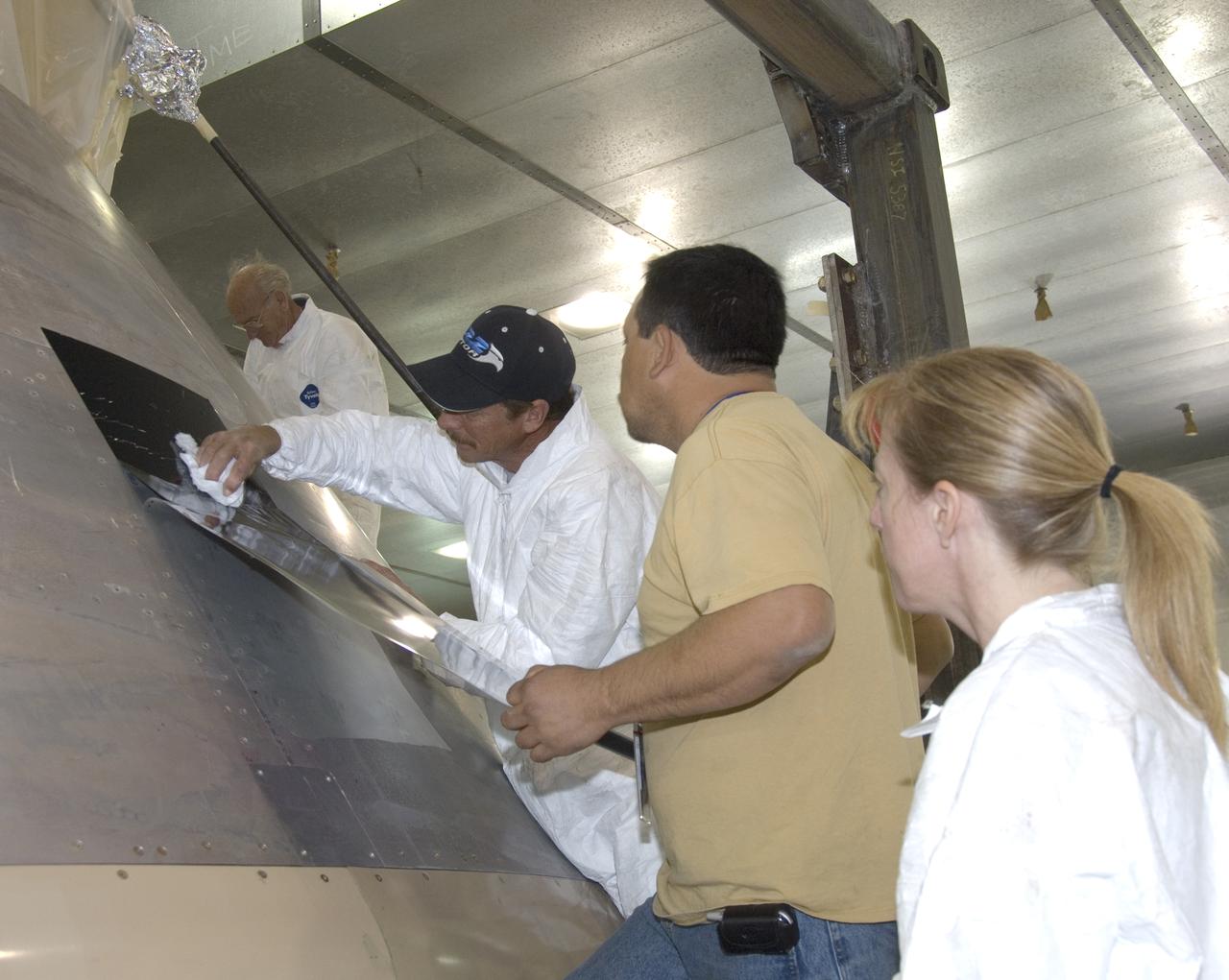
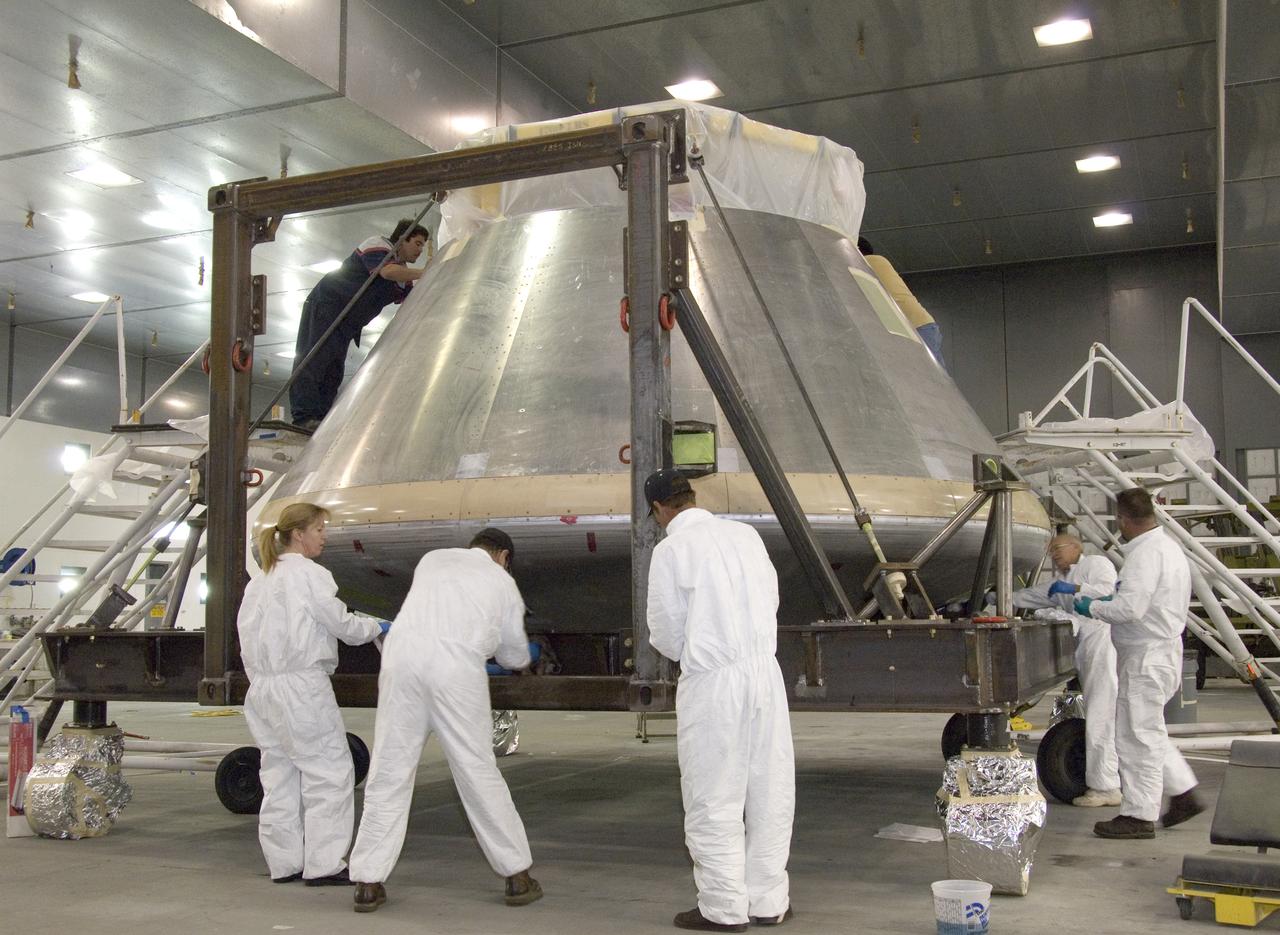
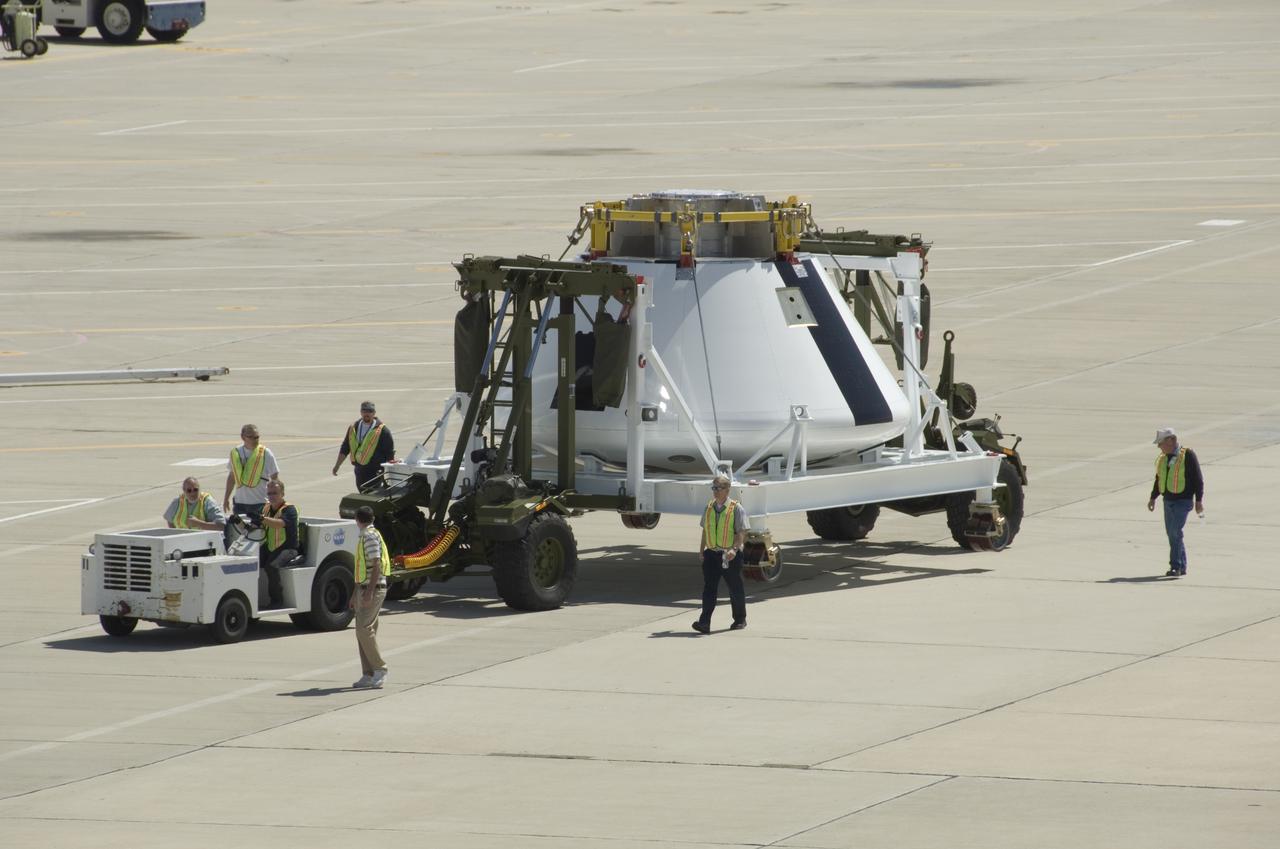
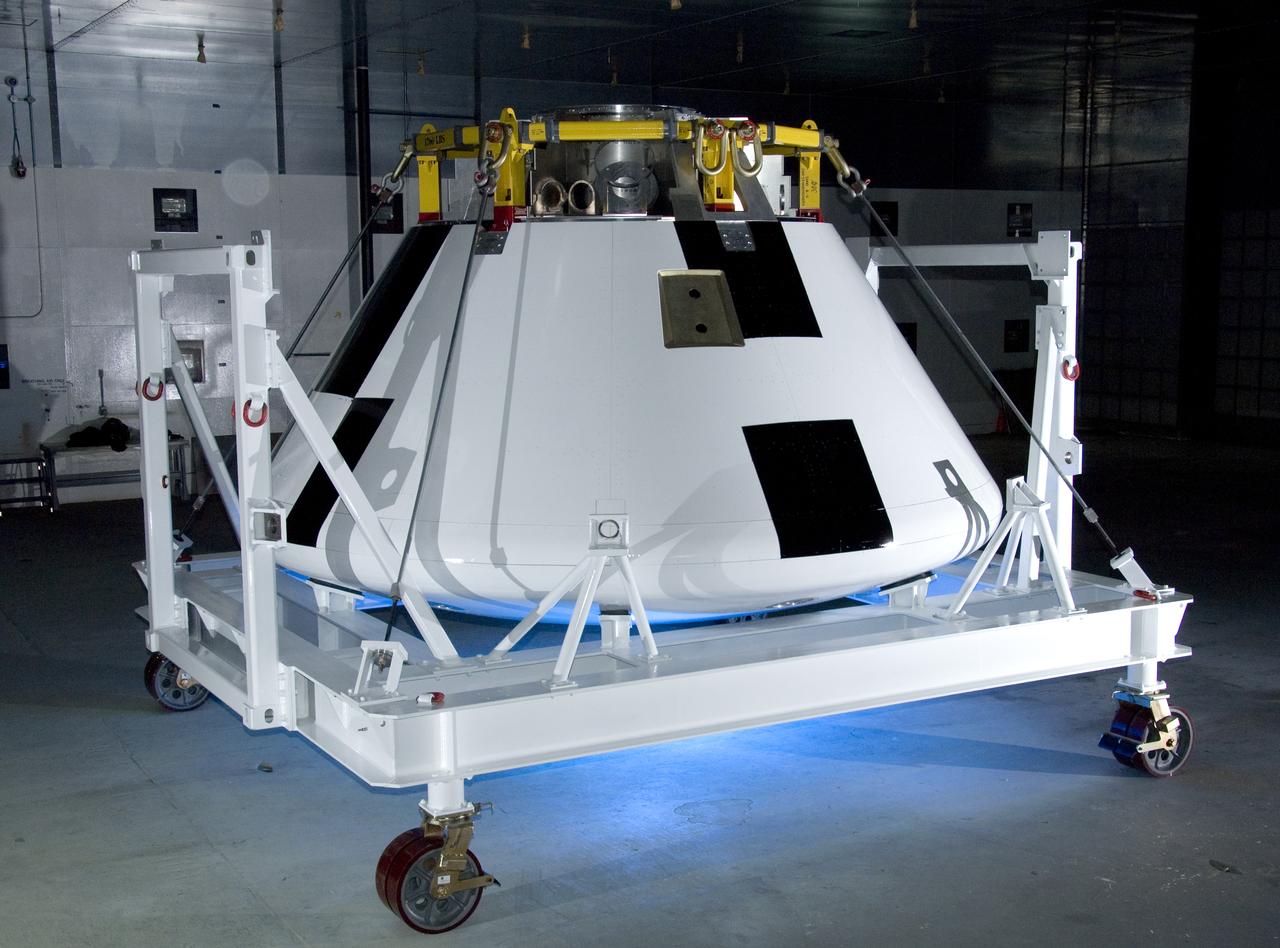
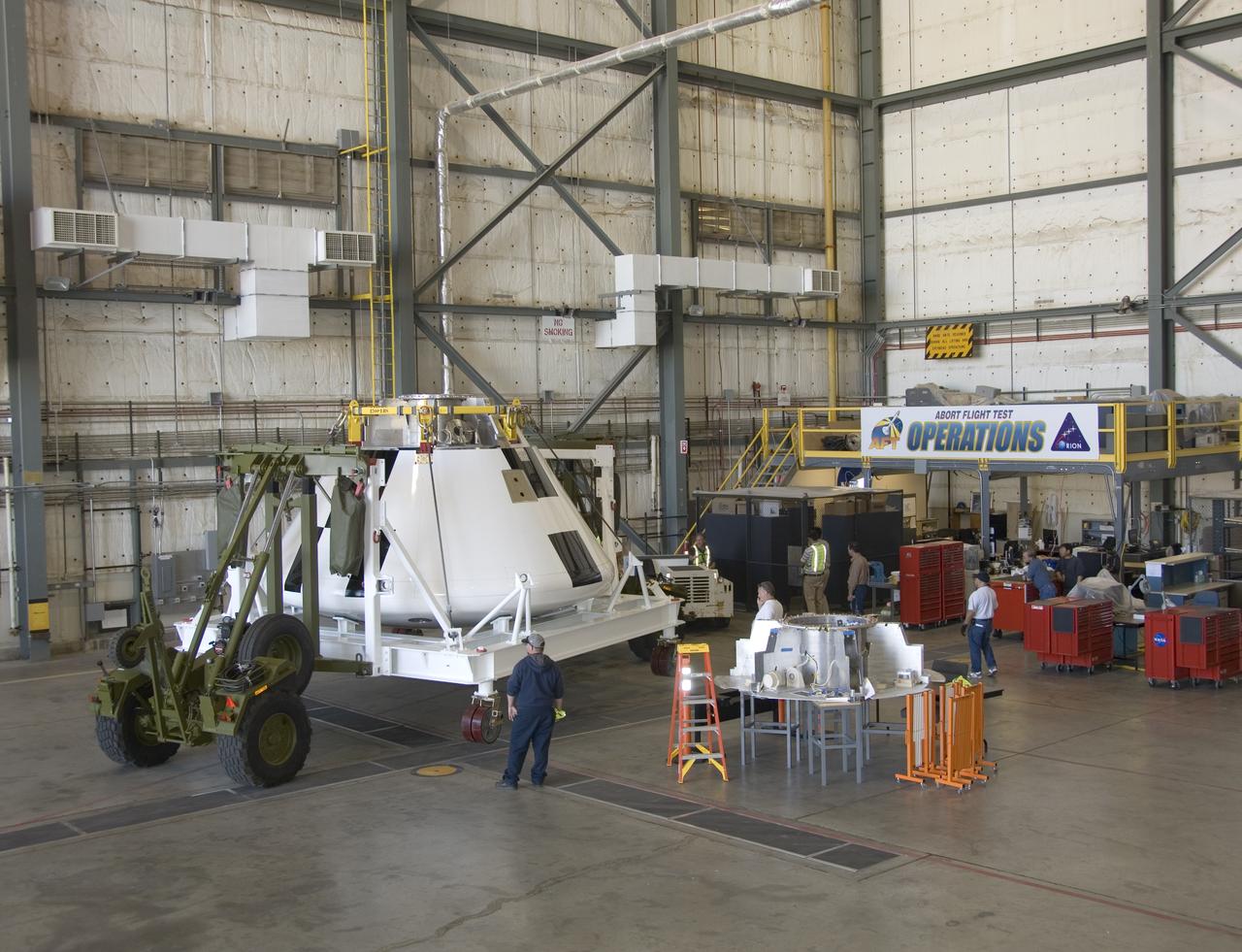
A full-scale flight-test mockup of the Constellation program's Orion crew vehicle arrived at NASA's Dryden Flight Research Center in late March 2008 to undergo preparations for the first short-range flight test of the spacecraft's astronaut escape system later that year. Engineers and technicians at NASA's Langley Research Center fabricated the structure, which precisely represents the size, outer shape and mass characteristics of the Orion space capsule. The Orion crew module mockup was ferried to NASA Dryden on an Air Force C-17. After painting in the Edwards Air Force Base paint hangar, the conical capsule was taken to Dryden for installation of flight computers, instrumentation and other electronics prior to being sent to the U.S. Army's White Sands Missile Range in New Mexico for integration with the escape system and the first abort flight test in late 2008. The tests were designed to ensure a safe, reliable method of escape for astronauts in case of an emergency.
A NASA technician paints NASA's first Orion full-scale abort flight test crew module.
A full-scale flight-test mockup of the Constellation program's Orion crew vehicle arrived at NASA's Dryden Flight Research Center in late March 2008 to undergo preparations for the first short-range flight test of the spacecraft's astronaut escape system later that year. Engineers and technicians at NASA's Langley Research Center fabricated the structure, which precisely represents the size, outer shape and mass characteristics of the Orion space capsule. The Orion crew module mockup was ferried to NASA Dryden on an Air Force C-17. After painting in the Edwards Air Force Base paint hangar, the conical capsule was taken to Dryden for installation of flight computers, instrumentation and other electronics prior to being sent to the U.S. Army's White Sands Missile Range in New Mexico for integration with the escape system and the first abort flight test in late 2008. The tests were designed to ensure a safe, reliable method of escape for astronauts in case of an emergency.
A NASA painter applies the first primer coat to NASA's Orion full-scale abort flight test crew module in the Edwards Air Force Base paint hangar.
A full-scale flight-test mockup of the Constellation program's Orion crew vehicle arrived at NASA's Dryden Flight Research Center in late March 2008 to undergo preparations for the first short-range flight test of the spacecraft's astronaut escape system later that year. Engineers and technicians at NASA's Langley Research Center fabricated the structure, which precisely represents the size, outer shape and mass characteristics of the Orion space capsule. The Orion crew module mockup was ferried to NASA Dryden on an Air Force C-17. After painting in the Edwards Air Force Base paint hangar, the conical capsule was taken to Dryden for installation of flight computers, instrumentation and other electronics prior to being sent to the U.S. Army's White Sands Missile Range in New Mexico for integration with the escape system and the first abort flight test in late 2008. The tests were designed to ensure a safe, reliable method of escape for astronauts in case of an emergency.
Paint shop technicians carefully apply masking prior to painting the Orion full-scale abort flight test crew module in the Edwards Air Force Base paint hangar.
KENNEDY SPACE CENTER, FLA. -- Looking eastward, the Vehicle Assembly Building (VAB) in the Launch Complex 39 area can be seen with its new coat of paint, along with newly painted American flag and NASA logo. The improved look was finished in time to honor NASA's 40th anniversary on Oct. 1. In order to do the job, workers were suspended on platforms from the top of the 525-foot-high VAB. One of the world's largest buildings by volume, the VAB is the last stop for the Shuttle before rollout to the launch pad. Integration and stacking of the complete Space Shuttle vehicle (orbiter, two solid rocket boosters and the external tank) takes place in High Bays 1 or 3. Stretching from the side of the VAB, on the right, is the crawlerway, used to transport the Space Shuttle to the launch pad. Beyond the VAB is Banana Creek
KSC-98pc1238
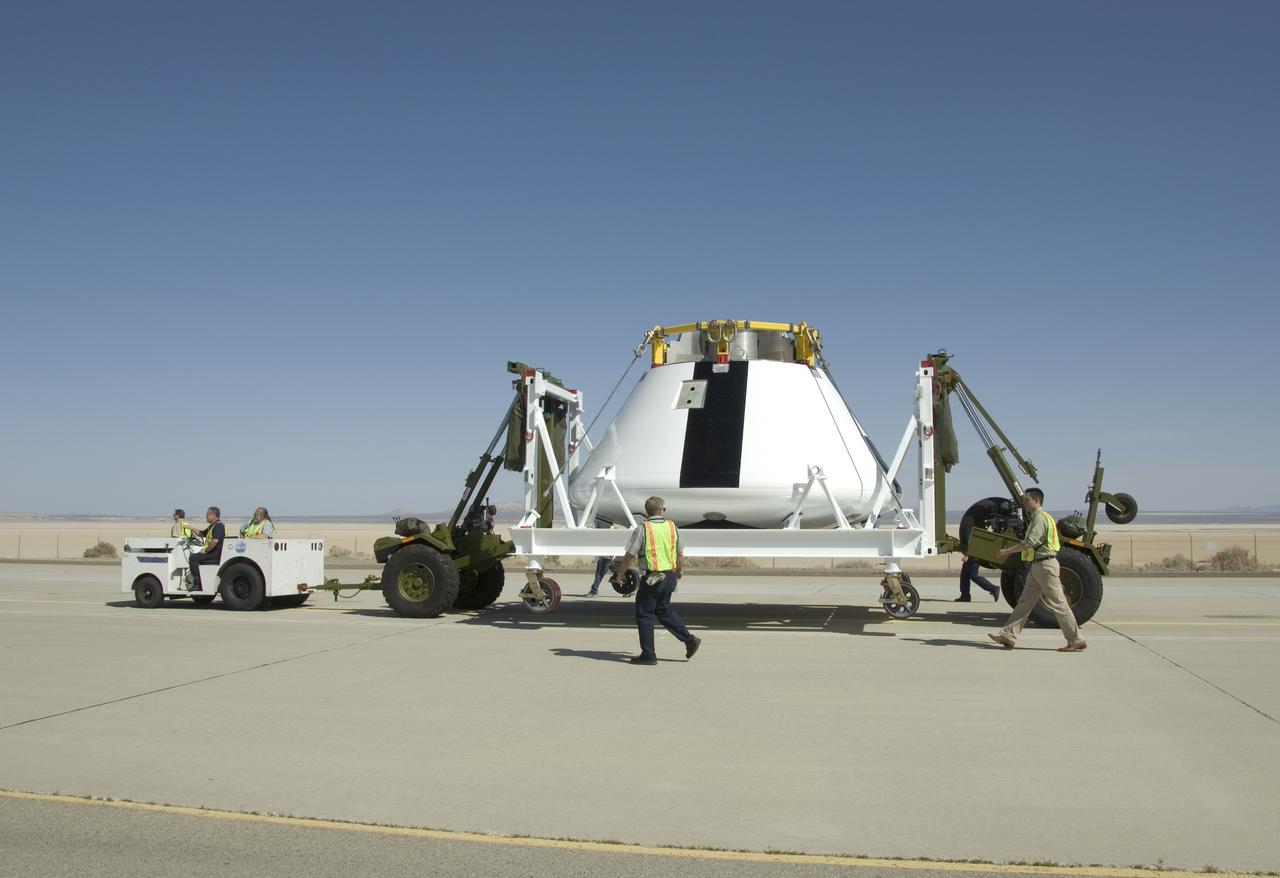
A full-scale flight-test mockup of the Constellation program's Orion crew vehicle arrived at NASA's Dryden Flight Research Center in late March 2008 to undergo preparations for the first short-range flight test of the spacecraft's astronaut escape system later that year. Engineers and technicians at NASA's Langley Research Center fabricated the structure, which precisely represents the size, outer shape and mass characteristics of the Orion space capsule. The Orion crew module mockup was ferried to NASA Dryden on an Air Force C-17. After painting in the Edwards Air Force Base paint hangar, the conical capsule was taken to Dryden for installation of flight computers, instrumentation and other electronics prior to being sent to the U.S. Army's White Sands Missile Range in New Mexico for integration with the escape system and the first abort flight test in late 2008. The tests were designed to ensure a safe, reliable method of escape for astronauts in case of an emergency.
NASA Dryden Flight Research Center personnel accompany NASA's first Orion full-scale abort flight test crew module as it heads to its new home.
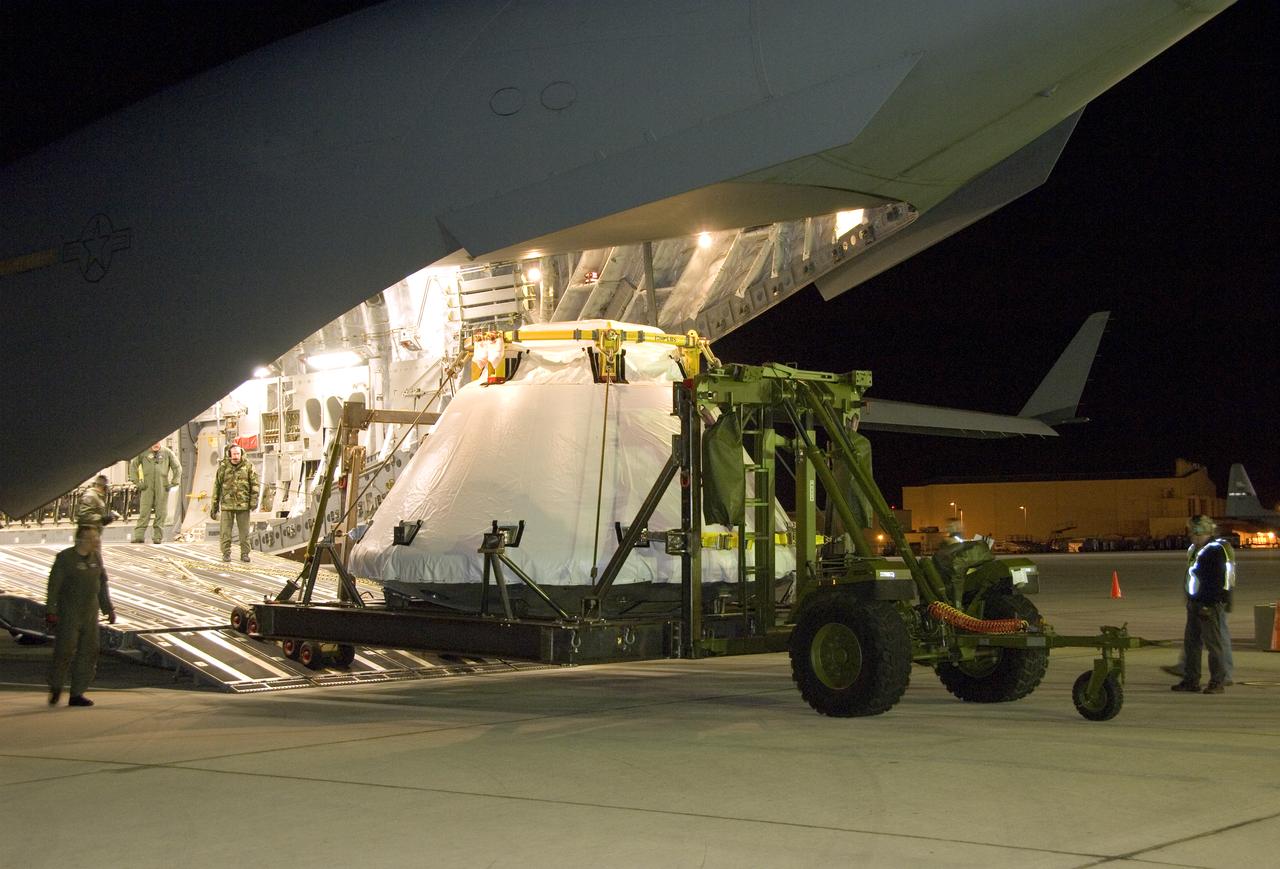
A full-scale flight-test mockup of the Constellation program's Orion crew vehicle arrived at NASA's Dryden Flight Research Center in late March 2008 to undergo preparations for the first short-range flight test of the spacecraft's astronaut escape system later that year. Engineers and technicians at NASA's Langley Research Center fabricated the structure, which precisely represents the size, outer shape and mass characteristics of the Orion space capsule. The Orion crew module mockup was ferried to NASA Dryden on an Air Force C-17. After painting in the Edwards Air Force Base paint hangar, the conical capsule was taken to Dryden for installation of flight computers, instrumentation and other electronics prior to being sent to the U.S. Army's White Sands Missile Range in New Mexico for integration with the escape system and the first abort flight test in late 2008. The tests were designed to ensure a safe, reliable method of escape for astronauts in case of an emergency.
Air Force loadmasters oversee unloading of the full-scale Orion abort test crew module mockup from a C-17 cargo aircraft at Edwards Air Force Base March 28.
A full-scale flight-test mockup of the Constellation program's Orion crew vehicle arrived at NASA's Dryden Flight Research Center in late March 2008 to undergo preparations for the first short-range flight test of the spacecraft's astronaut escape system later that year. Engineers and technicians at NASA's Langley Research Center fabricated the structure, which precisely represents the size, outer shape and mass characteristics of the Orion space capsule. The Orion crew module mockup was ferried to NASA Dryden on an Air Force C-17. After painting in the Edwards Air Force Base paint hangar, the conical capsule was taken to Dryden for installation of flight computers, instrumentation and other electronics prior to being sent to the U.S. Army's White Sands Missile Range in New Mexico for integration with the escape system and the first abort flight test in late 2008. The tests were designed to ensure a safe, reliable method of escape for astronauts in case of an emergency.
NASA paint shop technicians prepare the Orion full-scale flight test crew module for painting in the Edwards Air Force Base paint hangar.
A full-scale flight-test mockup of the Constellation program's Orion crew vehicle arrived at NASA's Dryden Flight Research Center in late March 2008 to undergo preparations for the first short-range flight test of the spacecraft's astronaut escape system later that year. Engineers and technicians at NASA's Langley Research Center fabricated the structure, which precisely represents the size, outer shape and mass characteristics of the Orion space capsule. The Orion crew module mockup was ferried to NASA Dryden on an Air Force C-17. After painting in the Edwards Air Force Base paint hangar, the conical capsule was taken to Dryden for installation of flight computers, instrumentation and other electronics prior to being sent to the U.S. Army's White Sands Missile Range in New Mexico for integration with the escape system and the first abort flight test in late 2008. The tests were designed to ensure a safe, reliable method of escape for astronauts in case of an emergency.
NASA Dryden Flight Research Center personnel accompany NASA's first Orion full-scale abort flight test crew module as it heads to its new home.
A KSC worker paints the NASA logo on the port wing of the orbiter Endeavour, which is scheduled to launch in December for STS-88. The paint is a special pigment that takes 18 hours to dry; the whole process takes approximately two weeks to complete. The NASA logo, termed "meatball," was originally designed in the late 1950s. It symbolized NASA’s role in aeronautics and space in the early years of the agency. The original design included a white border surrounding it. The border was dropped for the Apollo 7 mission in October 1968, replaced with royal blue to match the background of the emblem. In 1972 the logo was replaced by a simple and contemporary design the "worm" which was retired from use last year. NASA reverted to its original logo in celebration of the agency’s 40th anniversary in October, and the "golden age" of America’s space program. All the orbiters will bear the new logo
KSC-98pc983
A full-scale flight-test mockup of the Constellation program's Orion crew vehicle arrived at NASA's Dryden Flight Research Center in late March 2008 to undergo preparations for the first short-range flight test of the spacecraft's astronaut escape system later that year. Engineers and technicians at NASA's Langley Research Center fabricated the structure, which precisely represents the size, outer shape and mass characteristics of the Orion space capsule. The Orion crew module mockup was ferried to NASA Dryden on an Air Force C-17. After painting in the Edwards Air Force Base paint hangar, the conical capsule was taken to Dryden for installation of flight computers, instrumentation and other electronics prior to being sent to the U.S. Army's White Sands Missile Range in New Mexico for integration with the escape system and the first abort flight test in late 2008. The tests were designed to ensure a safe, reliable method of escape for astronauts in case of an emergency.
Sporting a fresh paint job, NASA's first Orion full-scale abort flight test crew module awaits avionics and other equipment installation.
A full-scale flight-test mockup of the Constellation program's Orion crew vehicle arrived at NASA's Dryden Flight Research Center in late March 2008 to undergo preparations for the first short-range flight test of the spacecraft's astronaut escape system later that year. Engineers and technicians at NASA's Langley Research Center fabricated the structure, which precisely represents the size, outer shape and mass characteristics of the Orion space capsule. The Orion crew module mockup was ferried to NASA Dryden on an Air Force C-17. After painting in the Edwards Air Force Base paint hangar, the conical capsule was taken to Dryden for installation of flight computers, instrumentation and other electronics prior to being sent to the U.S. Army's White Sands Missile Range in New Mexico for integration with the escape system and the first abort flight test in late 2008. The tests were designed to ensure a safe, reliable method of escape for astronauts in case of an emergency.
NASA's first Orion full-scale abort flight test crew module was placed in NASA Dryden's Abort Flight Test integration area for equipment installation.
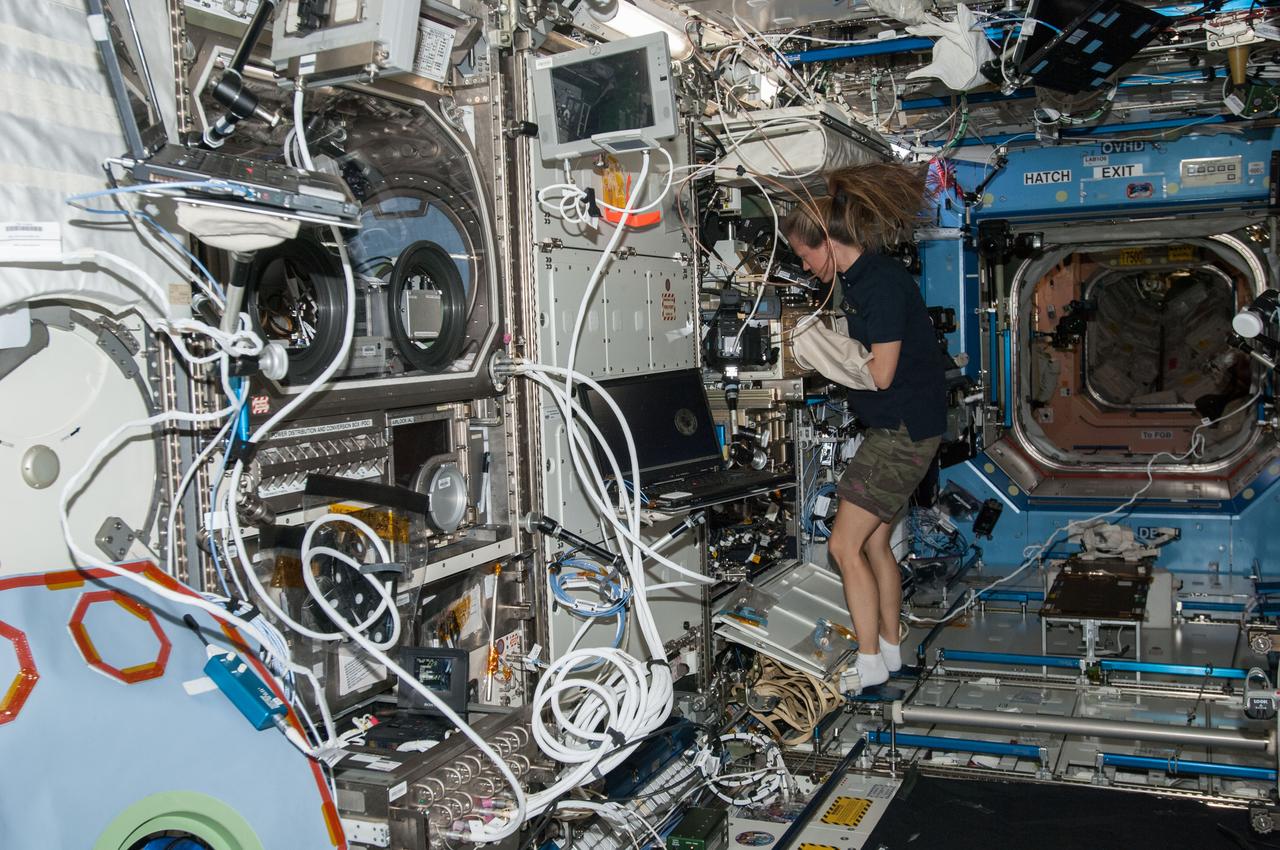
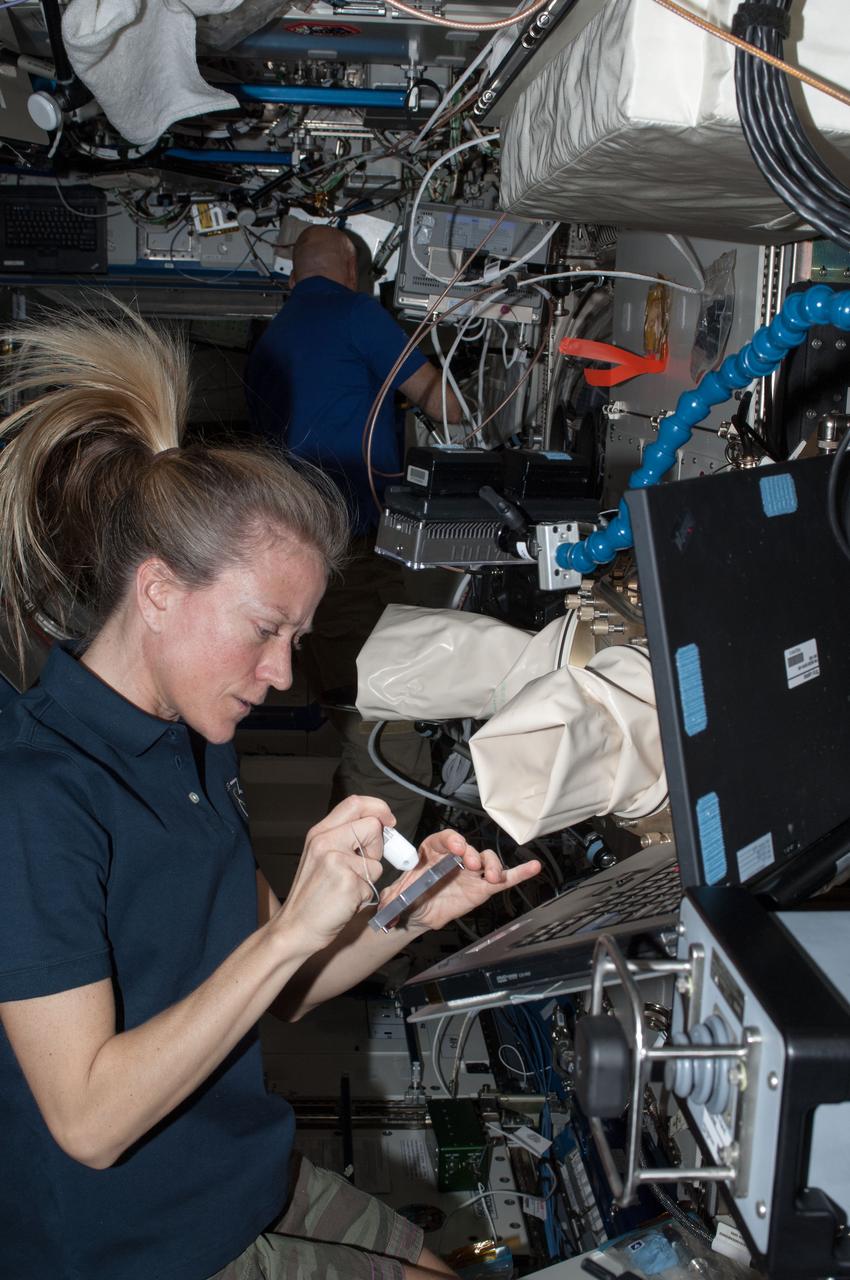
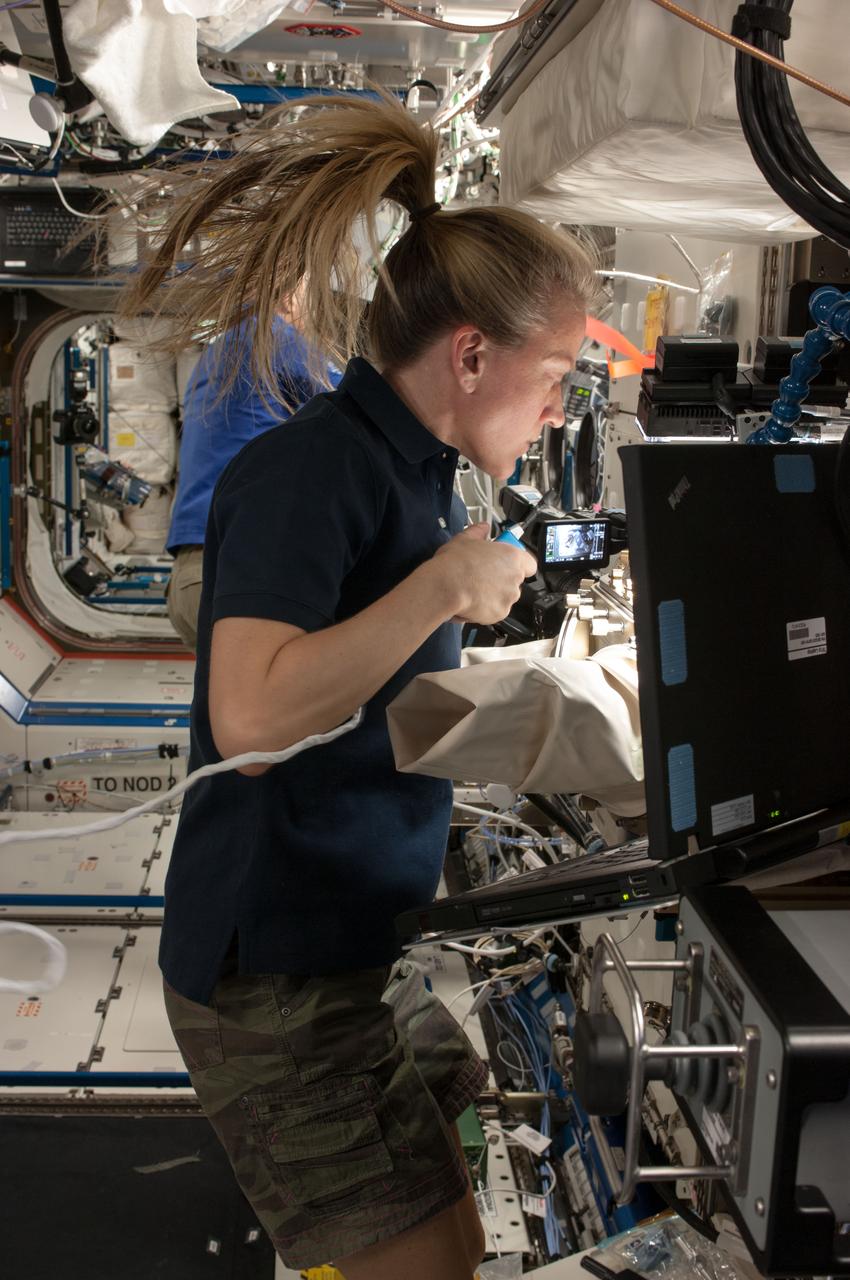
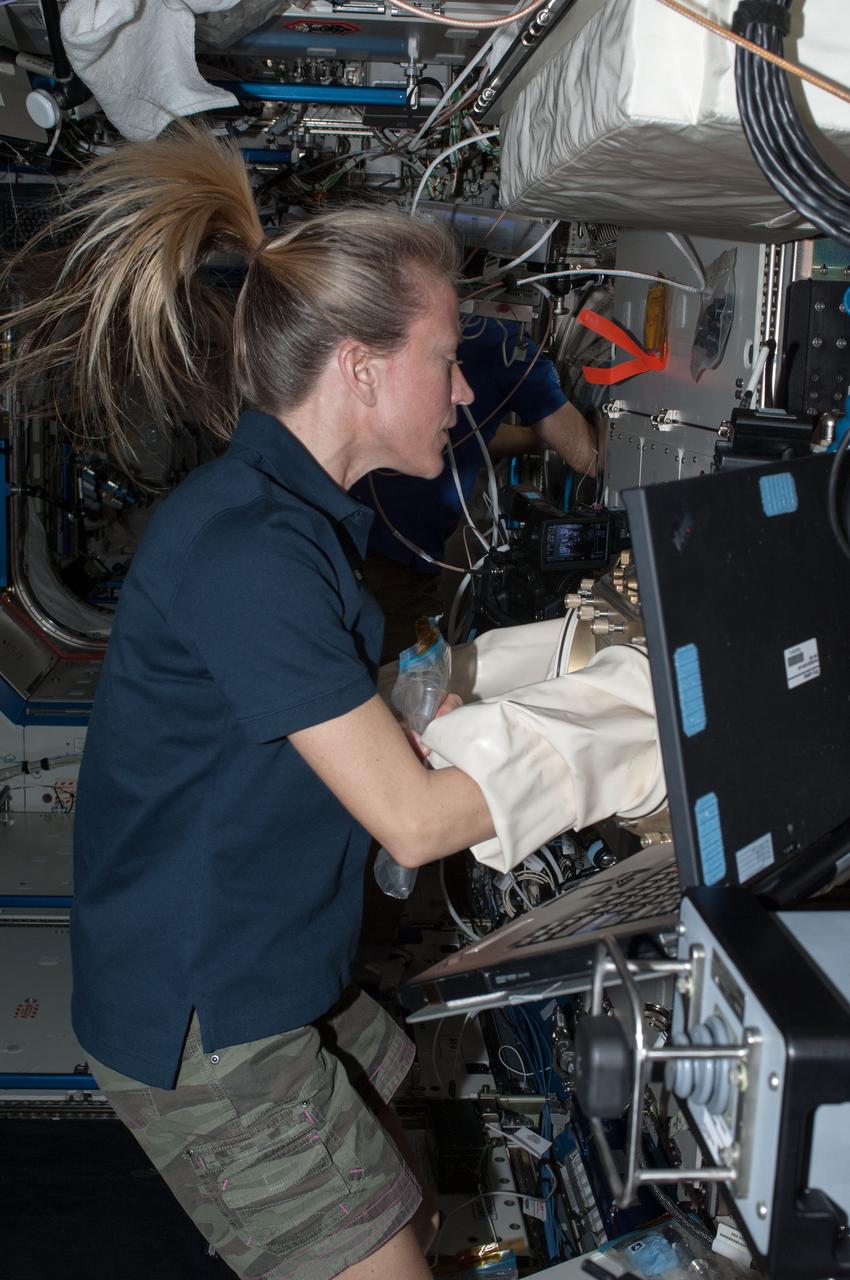
ISS036-E-033948 (18 Aug. 2013) --- NASA astronaut Karen Nyberg, Expedition 36 flight engineer, works with new test samples for the Advanced Colloids Experiment, or ACE, housed in the Light Microscopy Module (LMM) inside the Fluids Integrated Rack of the International Space Station?s Destiny laboratory. Results from ACE will help researchers understand how to optimize stabilizers to extend the shelf life of products like laundry detergent, paint, ketchup and even salad dressing.
InSPACE-3 experiment
ISS036-E-035770 (18 Aug. 2013) --- NASA astronaut Karen Nyberg, Expedition 36 flight engineer, works with new test samples for the Advanced Colloids Experiment, or ACE, housed in the Light Microscopy Module (LMM) inside the Fluids Integrated Rack of the International Space Station?s Destiny laboratory. Results from ACE will help researchers understand how to optimize stabilizers to extend the shelf life of products like laundry detergent, paint, ketchup and even salad dressing.
Nyberg working with ACE in U.S. Laboratory
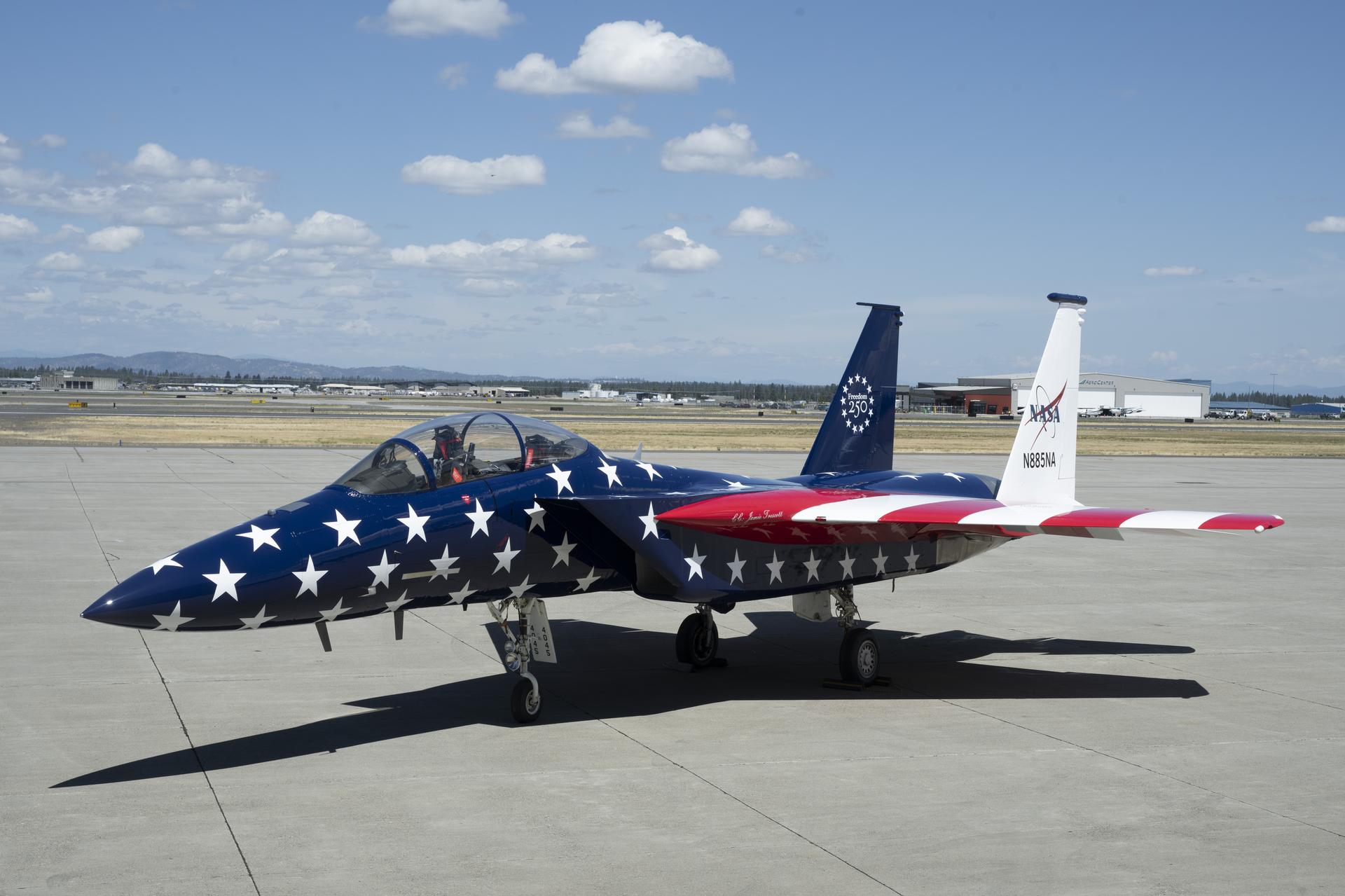
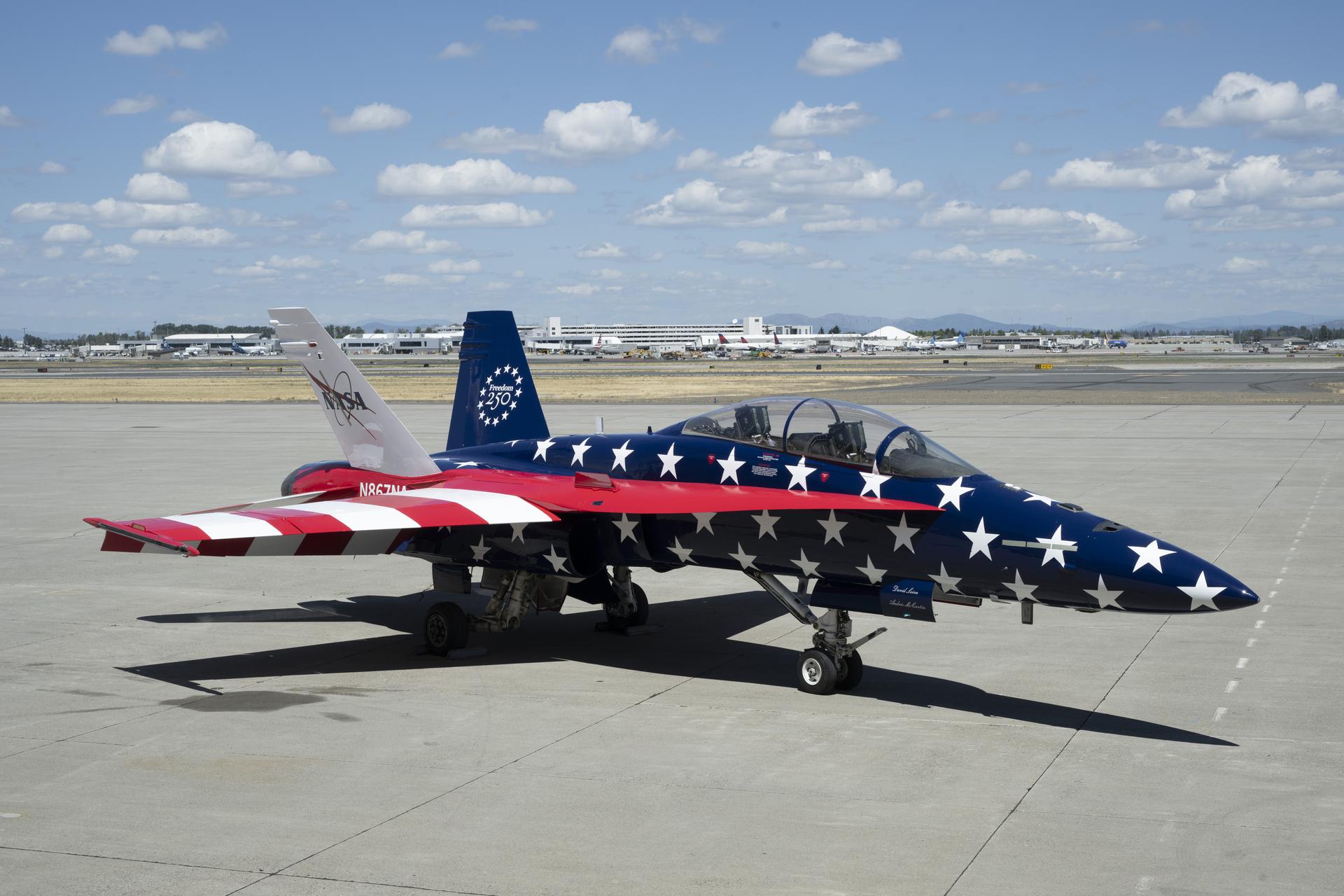
A NASA F/A‑18 aircraft is shown in Spokane, Washington, on Thursday, July 2, 2026, with new red, white, and blue paint to celebrate America’s 250th birthday. The aircraft, from NASA’s Armstrong Flight Research Center in Edwards, California, was preparing to fly cross‑country to Washington, D.C., where it participated in the Freedom 250 flyover with other NASA and military aircraft on Saturday, July 4, 2026. NASA/Jim Ross
NASA F-15, F-18 Painted in Red, White, Blue to Celebrate America’s 250th Birthday
NASA’s F-15 aircraft is shown at International Aerospace Coatings Inc.’s facility in Spokane, Washington, on Thursday, July 2, 2026, with new red, white, and blue paint to celebrate America’s 250th birthday. The aircraft, from NASA’s Armstrong Flight Research Center in Edwards, California, participated in the Freedom 250 flyover in Washington on Saturday, July 4, 2026, with other NASA and military aircraft. NASA/Jim Ross
NASA F-15, F-18 Painted in Red, White, Blue to Celebrate America’s 250th Birthday
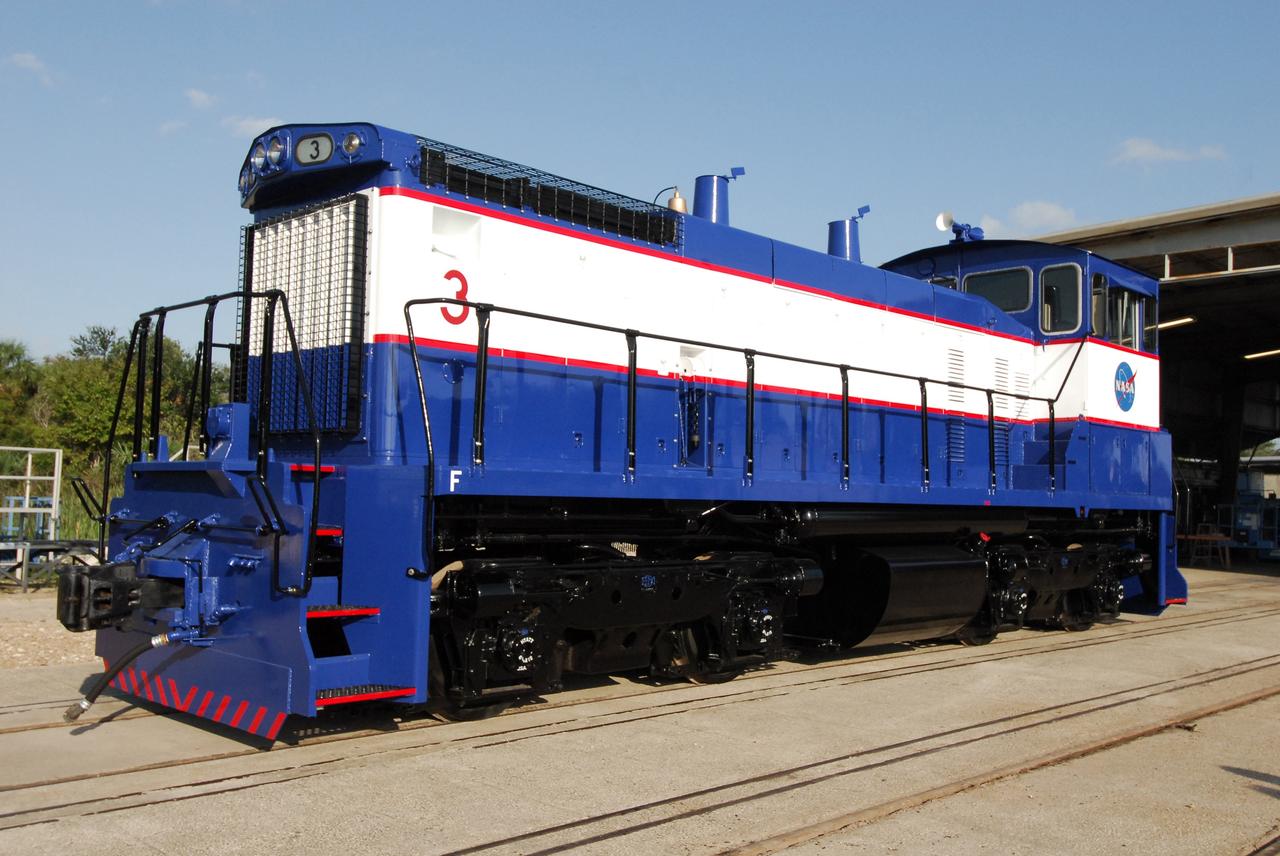
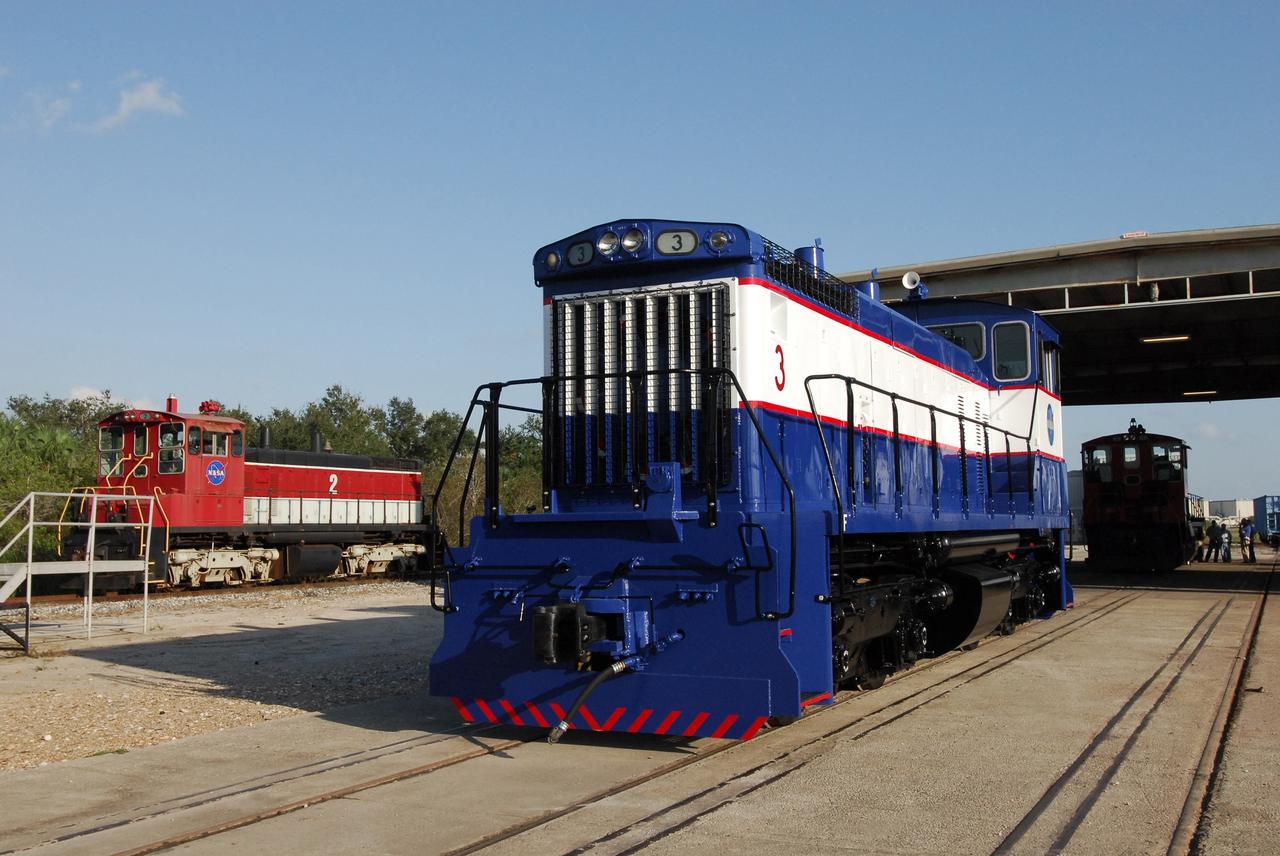
CAPE CANAVERAL, Fla. –    At NASA's Kennedy Space Center in Florida, NASA Railroad locomotive 3 has been repainted. The Railroad Operation and Maintenance Team at Kennedy completed the refurbishment of locomotive 3 in October. The 15-month process, including a new paint scheme, dealt with extensive corrosion to the locomotive because of Kennedy's proximity to the Atlantic Ocean.  Locomotives 1 and 2 also will be refurbished eventually.  The NASA Railroad locomotives are SW-1500 switch engines built by Electro Motive Diesel (EMD).  Photo credit:  NASA/Amanda Diller
KSC-08pd3587
CAPE CANAVERAL, Fla. –  At NASA's Kennedy Space Center in Florida, NASA Railroad locomotive 3 has been repainted. The Railroad Operation and Maintenance Team at Kennedy completed the refurbishment of locomotive 3 in October. The 15-month process, including a new paint scheme, dealt with extensive corrosion to the locomotive because of Kennedy's proximity to the Atlantic Ocean.  Locomotives 1 and 2 also will be refurbished eventually.  The NASA Railroad locomotives are SW-1500 switch engines built by Electro Motive Diesel (EMD).  Photo credit:  NASA/Amanda Diller
KSC-08pd3589
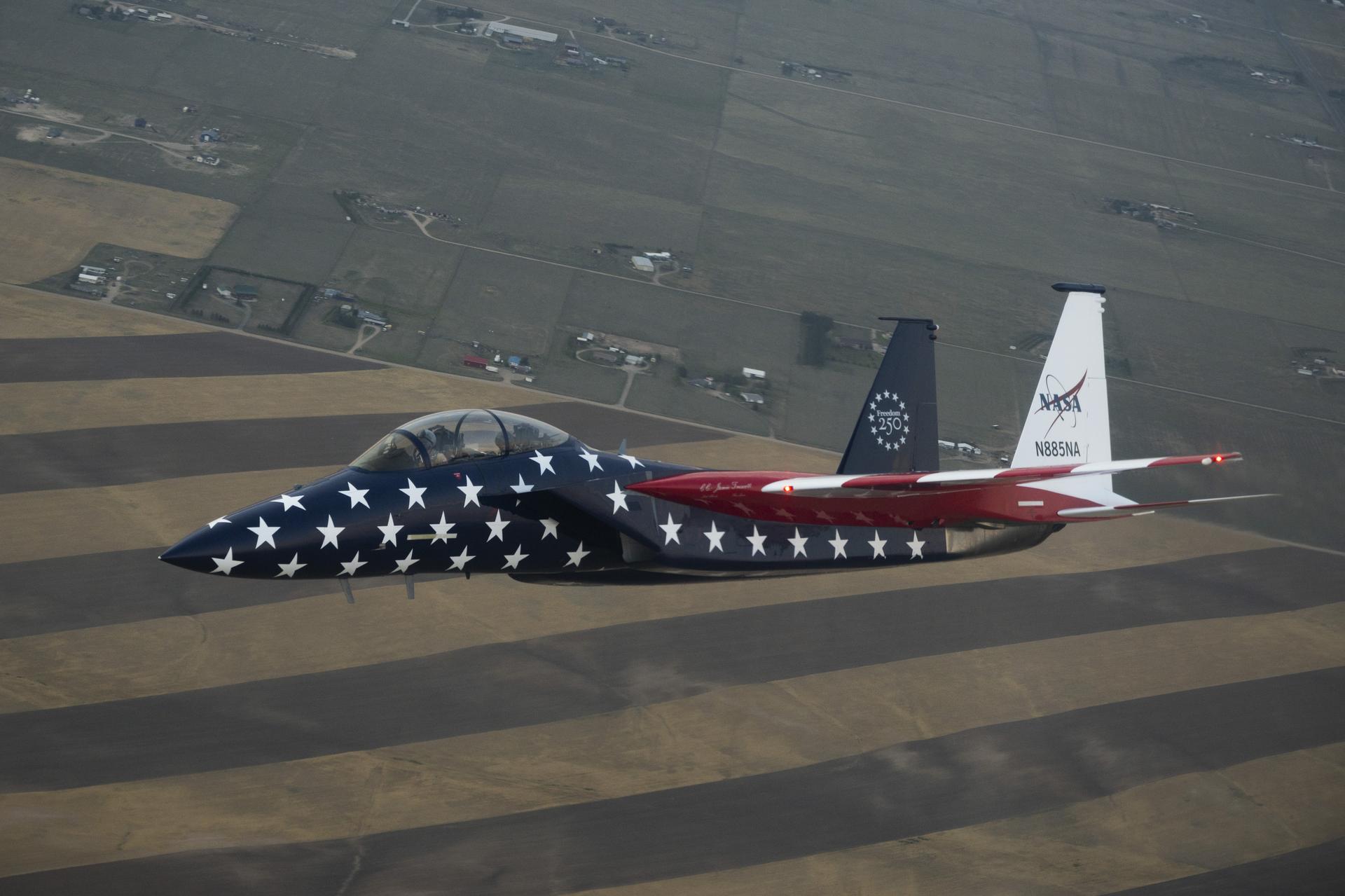
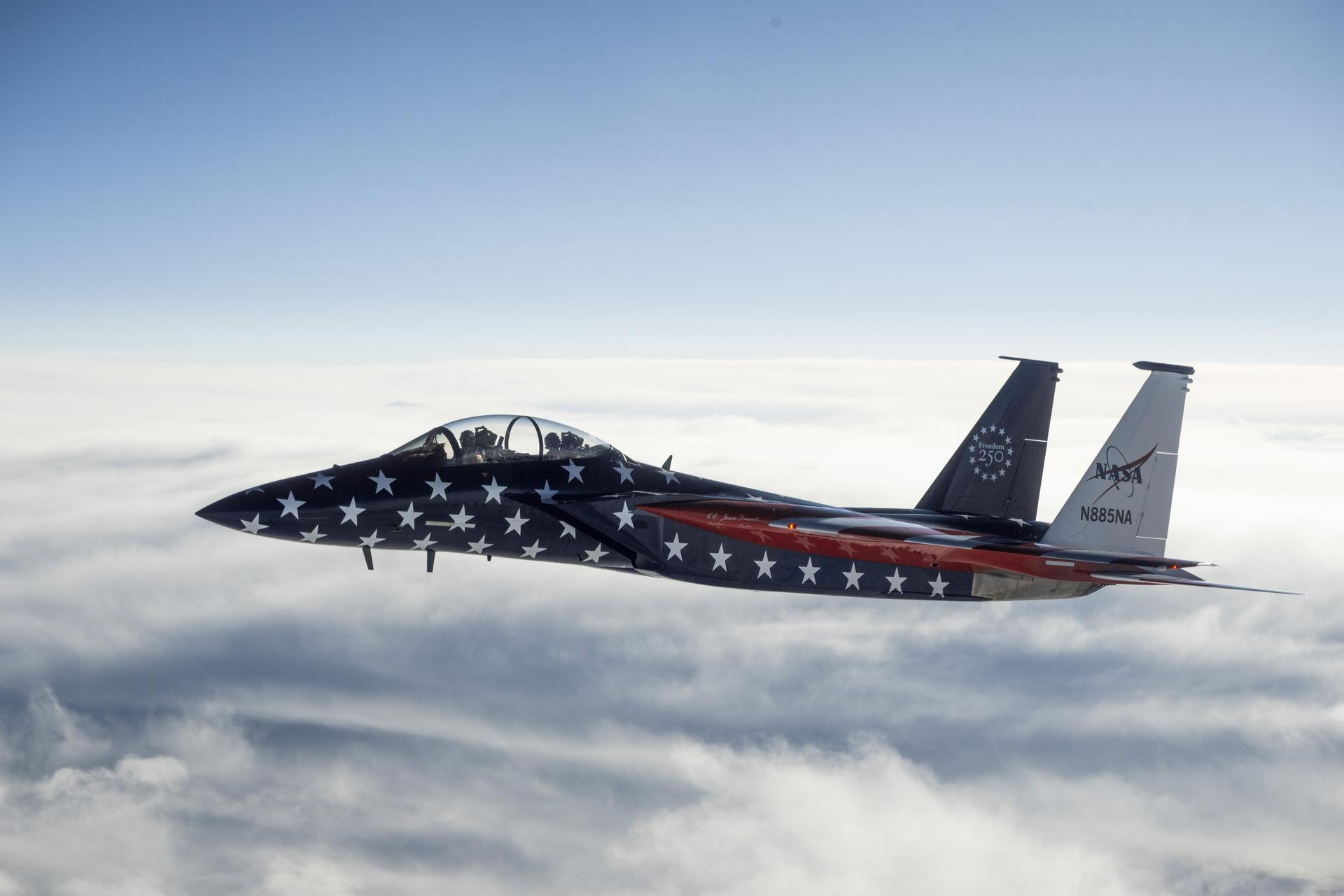
A NASA F‑15 aircraft is shown during a cross‑country flight from Spokane, Washington, to Washington, D.C., on Thursday, July 2, 2026. The aircraft displays new red, white, and blue paint to celebrate America’s 250th birthday. The F‑15, from NASA’s Armstrong Flight Research Center in Edwards, California, participated in the Freedom 250 flyover with other NASA and military aircraft on Saturday, July 4, 2026. NASA/Jim Ross
NASA F-15 and F-18 Soar Above Washington to Celebrate America’s 250th Birthday
ISS036-E-035780 (18 Aug. 2013) --- NASA astronaut Karen Nyberg, Expedition 36 flight engineer, works with new test samples for the Advanced Colloids Experiment, or ACE, housed in the Light Microscopy Module (LMM) inside the Fluids Integrated Rack of the International Space Station?s Destiny laboratory. Results from ACE will help researchers understand how to optimize stabilizers to extend the shelf life of products like laundry detergent, paint, ketchup and even salad dressing.
Nyberg working with ACE in U.S. Laboratory
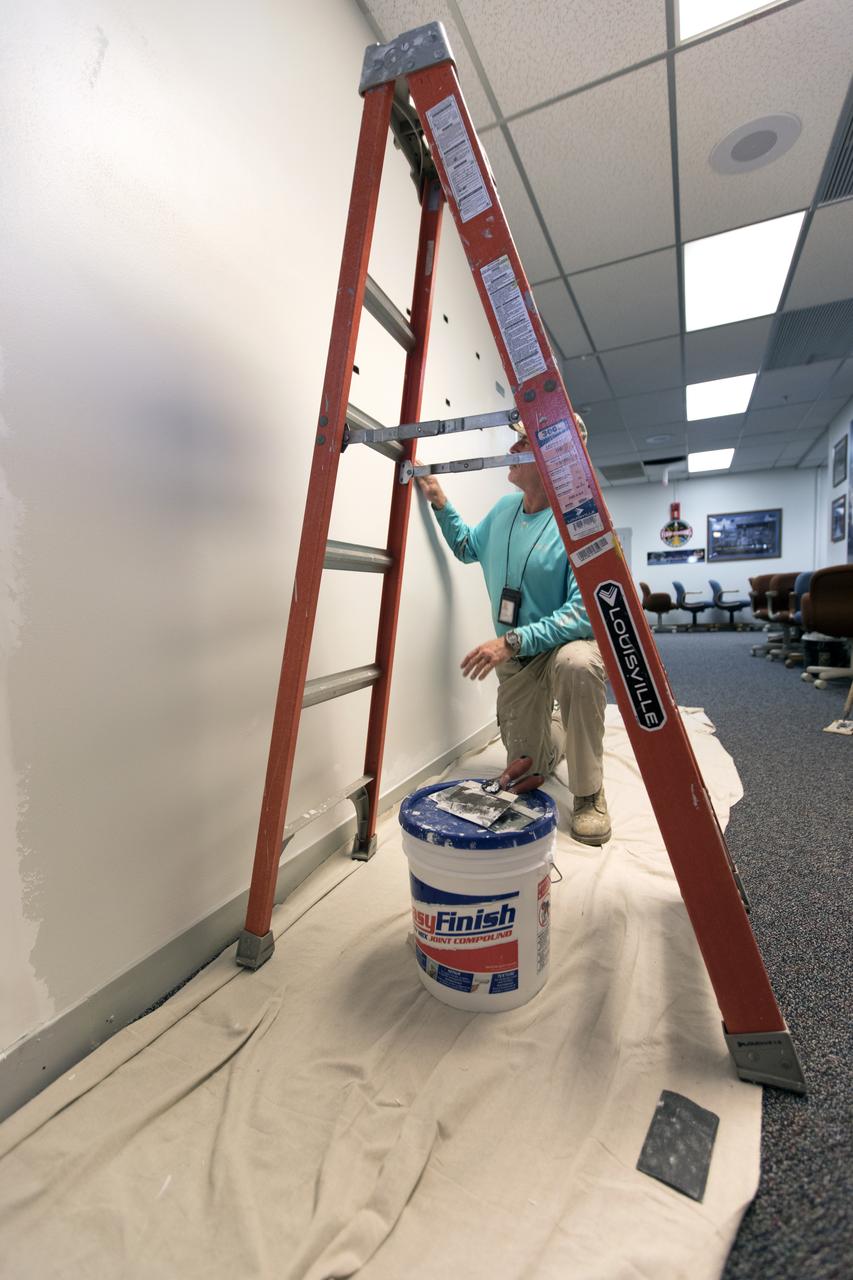
Modifications and upgrades are underway inside the Astronaut Crew Quarters in the Neil Armstrong Operations and Checkout Building at NASA's Kennedy Space Center in Florida. The walls inside the meeting room are being painted. New carpeting has been installed. The crew quarters are being prepared for the next generation of space explorers. The historic facility housed Apollo and space shuttle astronauts before and after their missions into space.
Crew Quarters Modifications
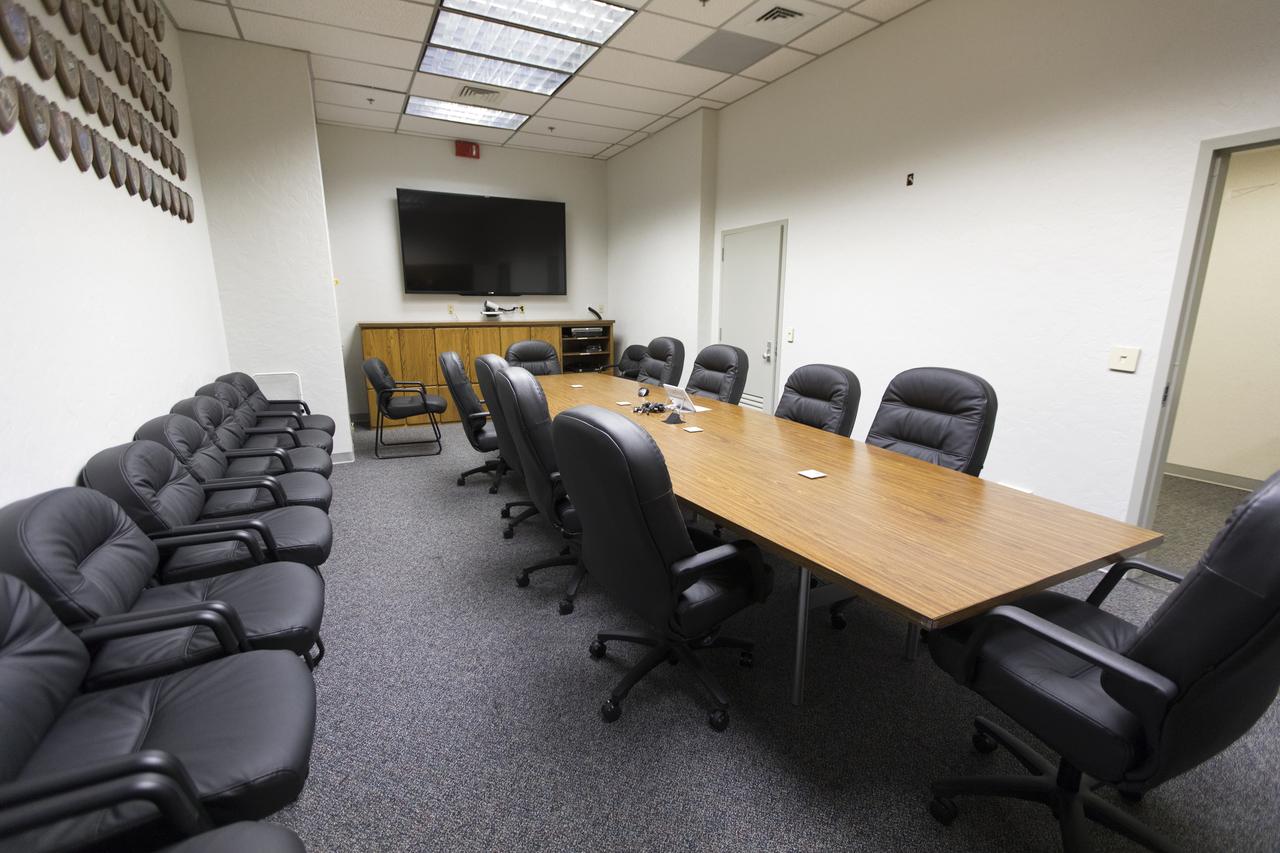
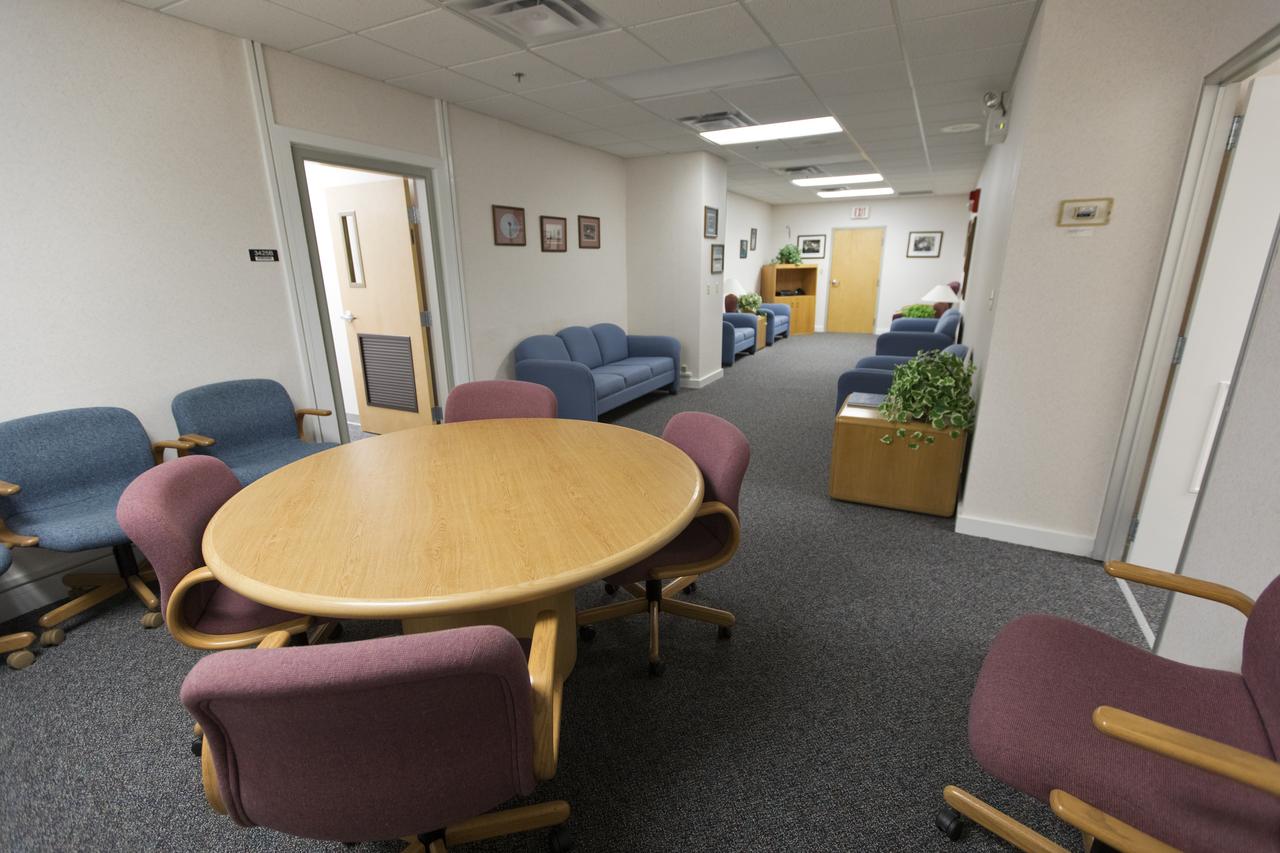
Several upgrades have been completed in the crew quarters at Kennedy Space Center in Florida. This includes new carpeting, paint, furniture and ceiling tiles. Located on the third floor of the Neil Armstrong Operations and Checkout Building, the crew quarters serves as the astronauts’ home as they prepare for missions. This will once again be the case as Kennedy moves closer to a return to human spaceflight. Pictured is a meeting room in the crew quarters.
Astronaut Crew Quarters Upgrades
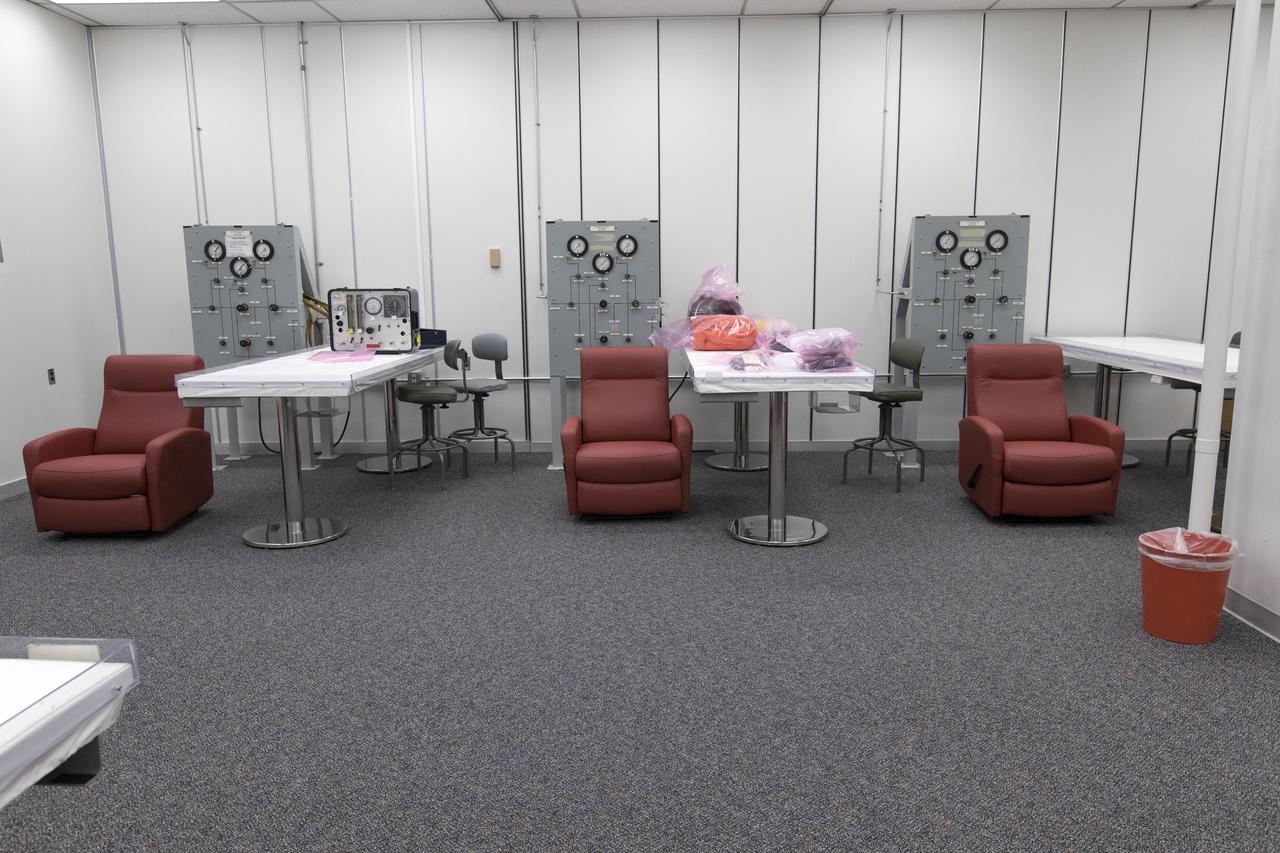
New carpeting, ceiling tiles, appliances and fresh paint are among the improvements that have been made to the astronaut crew quarters, located in the Neil Armstrong Operations and Checkout Building at Kennedy Space Center in Florida. Shown here is the suit room, where astronauts are helped into their pressure suits before leaving the crew quarters for a mission. This room now features three suit containment rooms — one each for Orion, Boeing and SpaceX.
Astronaut Crew Quarters Upgrades
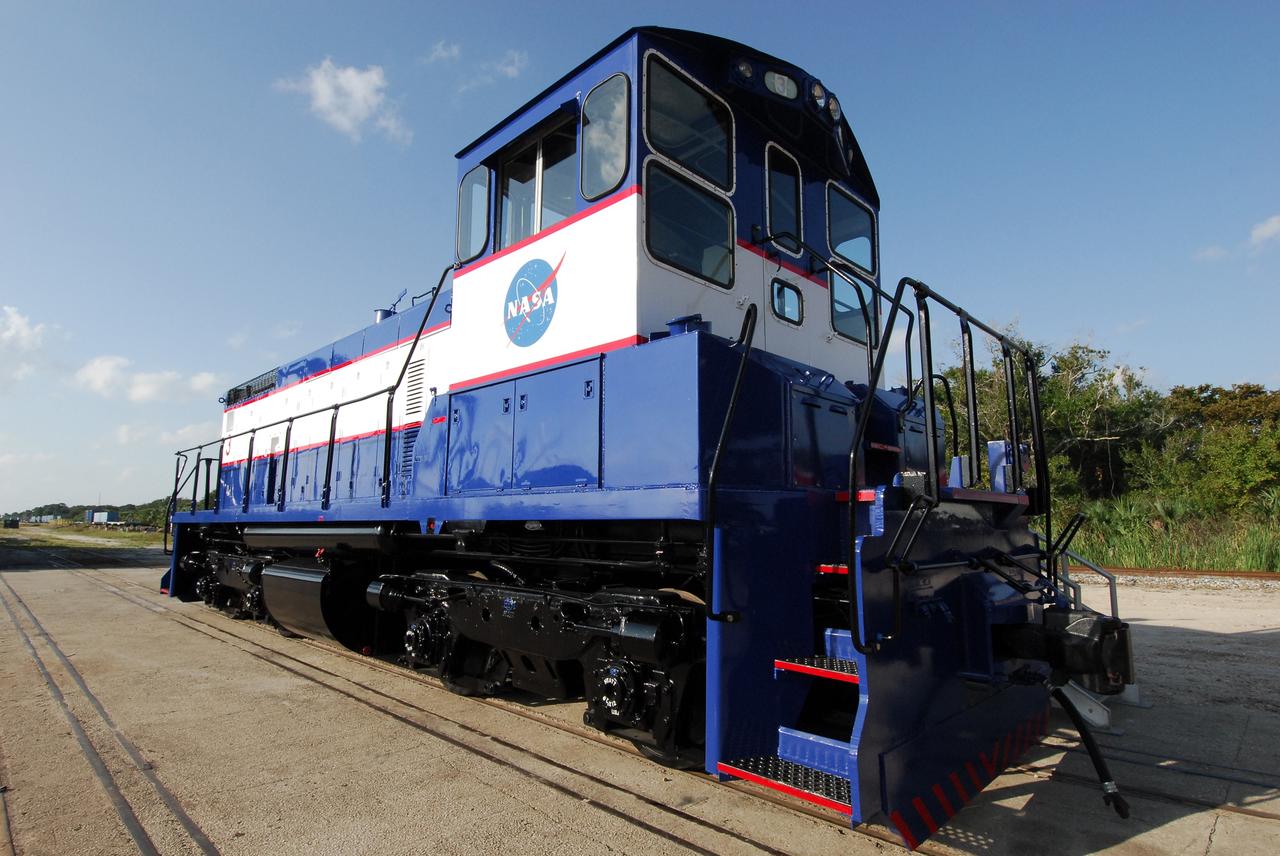
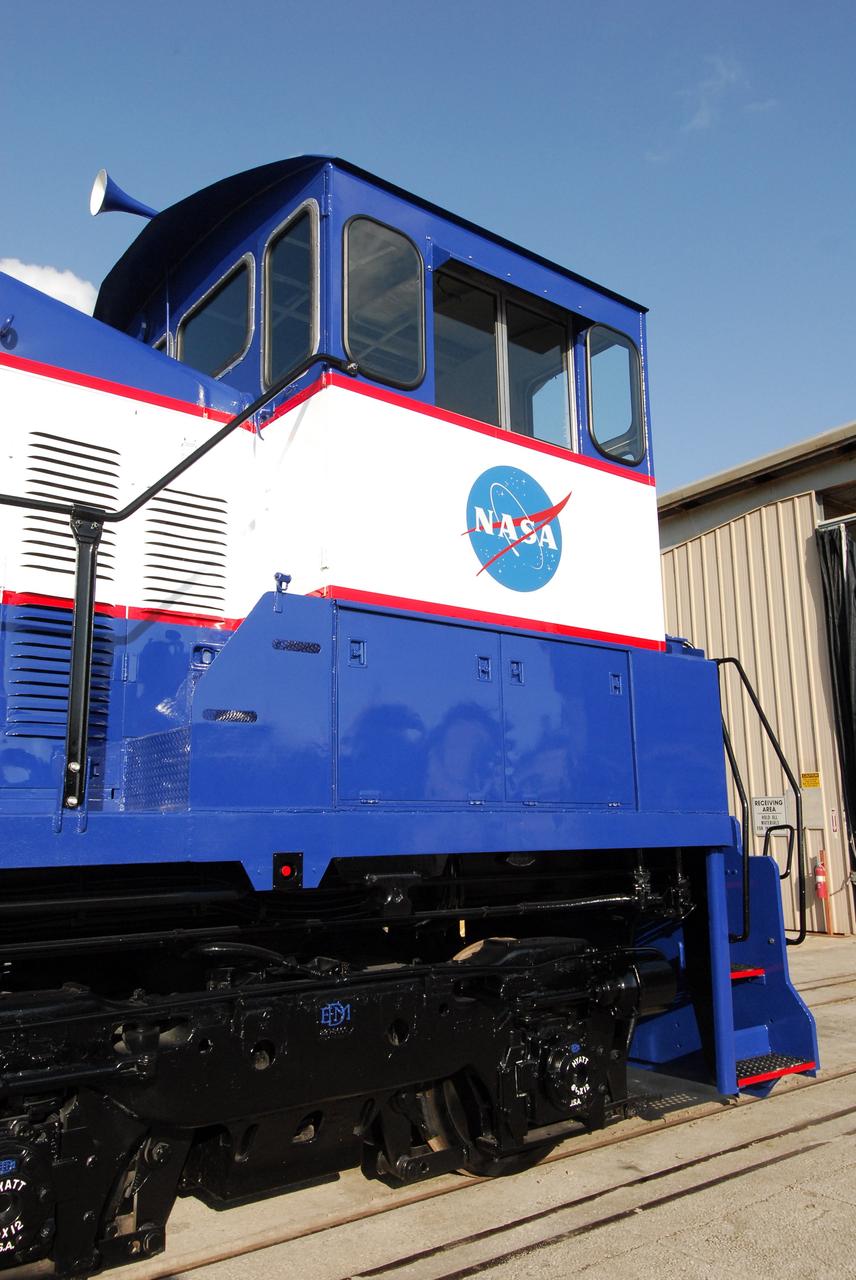
CAPE CANAVERAL, Fla. –  A closeup of the cab on NASA Railroad locomotive 3 which was recently refurbished by the Railroad Operation and Maintenance Team at NASA's Kennedy Space Center in Florida.  The 15-month process, including a new paint scheme, dealt with extensive corrosion to the locomotive because of Kennedy's proximity to the Atlantic Ocean.  Locomotives 1 and 2 also will be refurbished eventually.  The NASA Railroad locomotives are SW-1500 switch engines built by Electro Motive Diesel (EMD).  Photo credit:  NASA/Amanda Diller
KSC-08pd3588
CAPE CANAVERAL, Fla. –    At NASA's Kennedy Space Center in Florida, NASA Railroad locomotive 3 has been repainted. The Railroad Operation and Maintenance Team at Kennedy completed the refurbishment of locomotive 3 in October.  The 15-month process, including a new paint scheme, dealt with extensive corrosion to the locomotive because of Kennedy's proximity to the Atlantic Ocean.  Locomotives 1 and 2 also will be refurbished eventually.  The NASA Railroad locomotives are SW-1500 switch engines built by Electro Motive Diesel (EMD).  Photo credit:  NASA/Amanda Diller
KSC-08pd3582
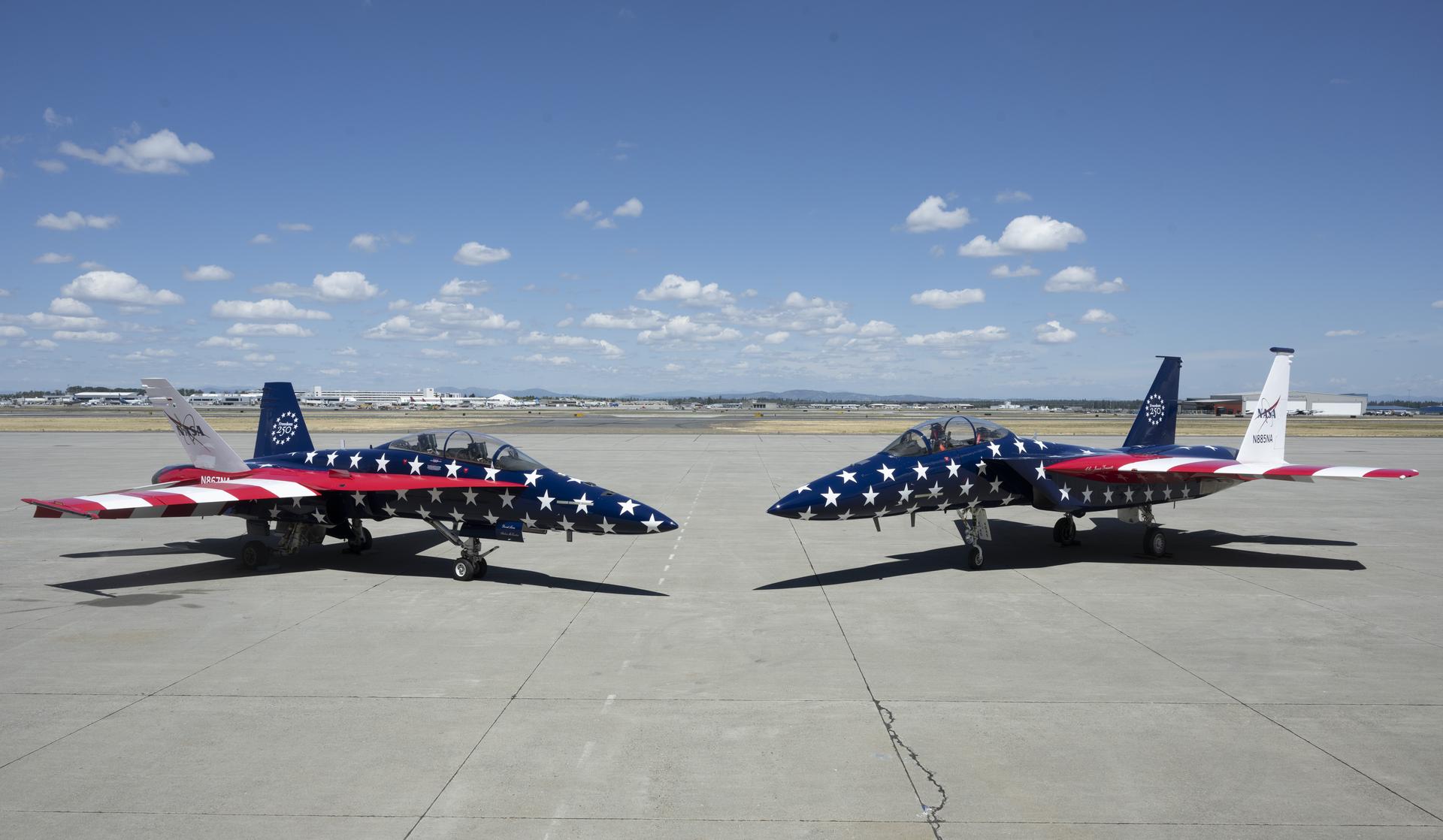
NASA’s F-15, right, and F/A-18 aircraft are shown at International Aerospace Coatings Inc.’s facility in Spokane, Washington, on Thursday, July 2, 2026, with new red, white, and blue paint to celebrate America’s 250th birthday. The aircraft, from NASA’s Armstrong Flight Research Center in Edwards, California, participated in the Freedom 250 flyover in Washington on Saturday, July 4, 2026, with other NASA and military aircraft. NASA/Jim Ross
NASA F-15, F-18 Painted in Red, White, Blue to Celebrate America’s 250th Birthday
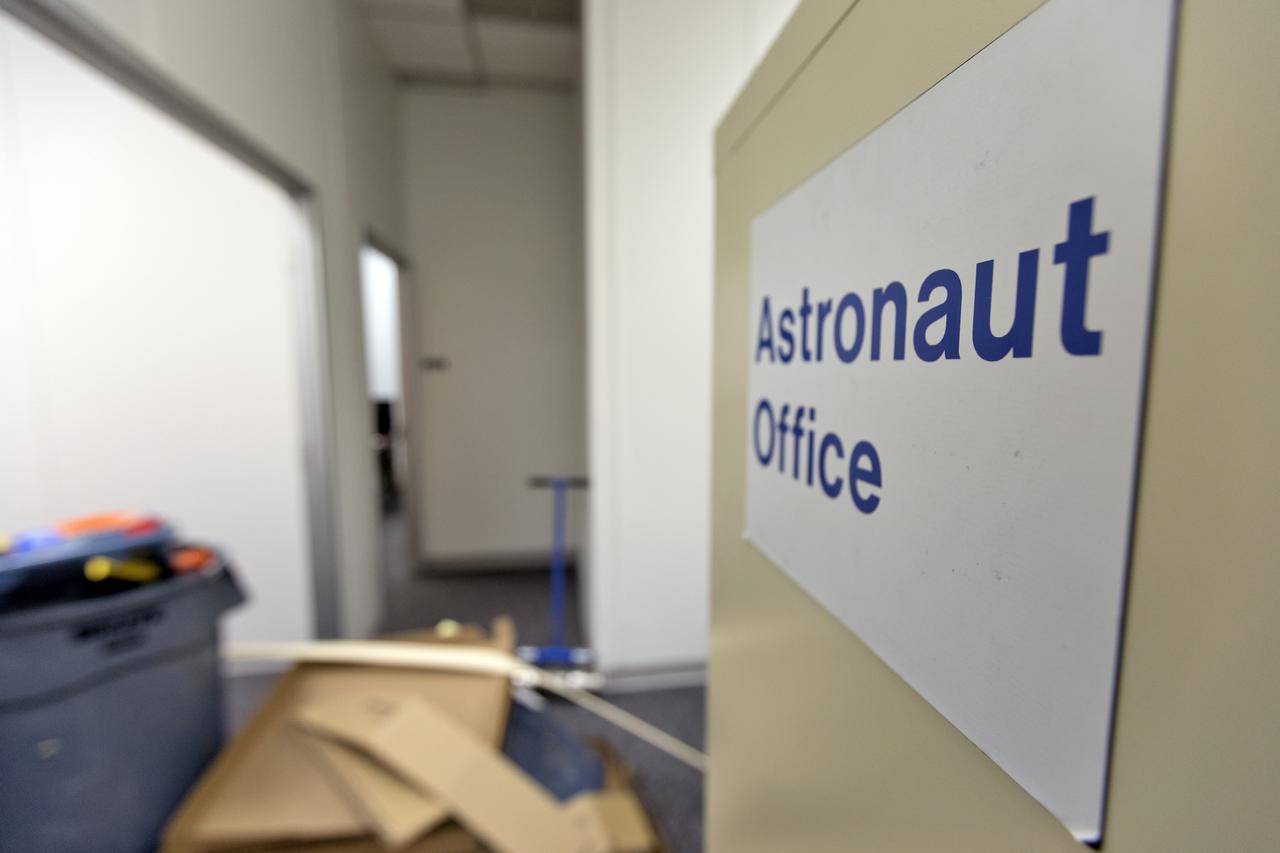
A sign marks the entrance to the Astronaut Office inside the Astronaut Crew Quarters in the Neil Armstrong Operations and Checkout Building at NASA's Kennedy Space Center in Florida. The crew quarters are being prepared for the next generation of space explorers. The walls are receiving fresh coats of paint and new flooring is being installed. The historic facility housed Apollo and space shuttle astronauts before and after their missions into space.
Crew Quarters Modifications
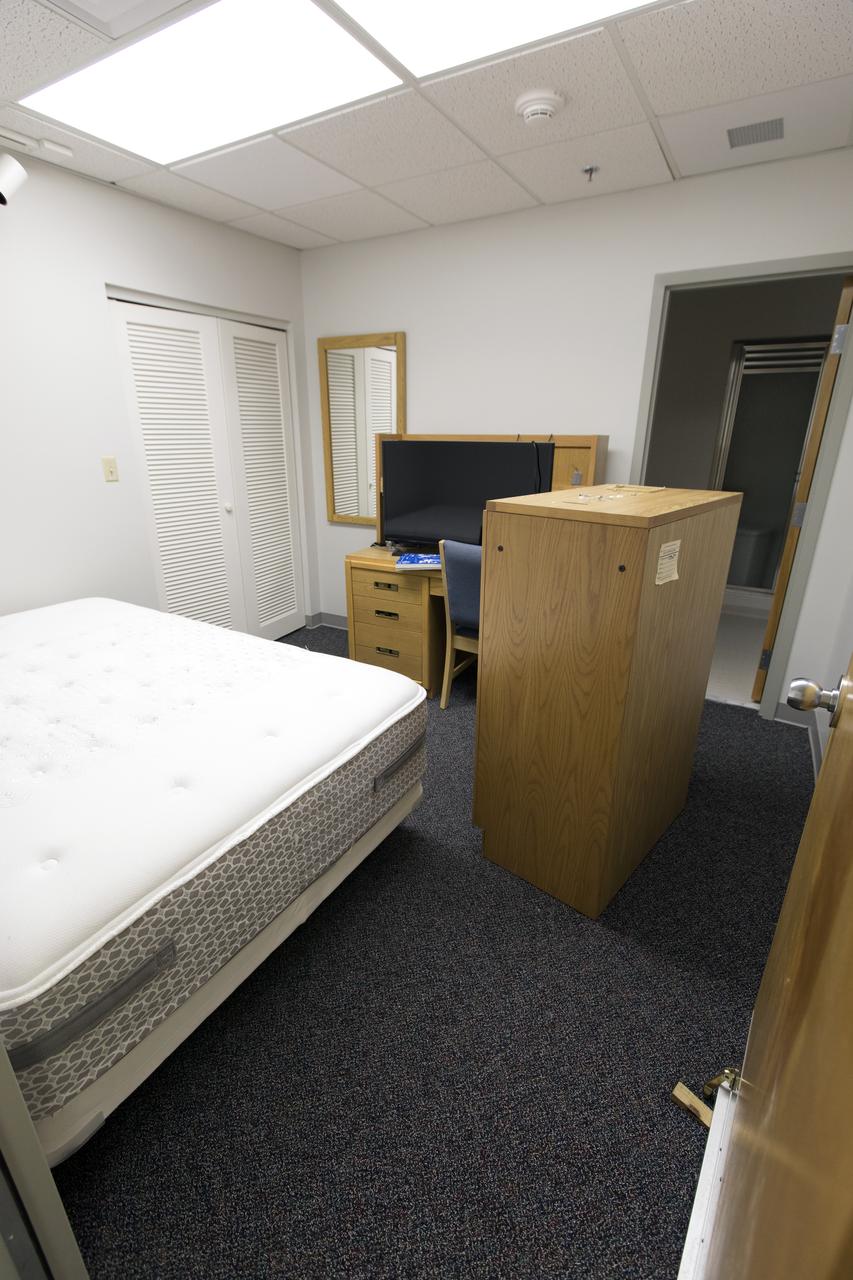
Modifications and upgrades are underway inside the Astronaut Crew Quarters in the Neil Armstrong Operations and Checkout Building at NASA's Kennedy Space Center in Florida. Walls are painted and new carpeting was installed in one of the bedrooms. The crew quarters are being prepared for the next generation of space explorers. The historic facility housed Apollo and space shuttle astronauts before and after their missions into space.
Crew Quarters Modifications
NASA’s F-18 aircraft is shown at International Aerospace Coatings Inc.’s facility in Spokane, Washington, on Thursday, July 2, 2026, with new red, white, and blue paint to celebrate America’s 250th birthday. The aircraft, from NASA’s Armstrong Flight Research Center in Edwards, California, participated in the Freedom 250 flyover in Washington on Saturday, July 4, 2026, with other NASA and military aircraft. NASA/Jim Ross
NASA F-15, F-18 Painted in Red, White, Blue to Celebrate America’s 250th Birthday
ISS036-E-035767 (18 Aug. 2013) --- NASA astronaut Karen Nyberg, Expedition 36 flight engineer, works with new test samples for the Advanced Colloids Experiment, or ACE, housed in the Light Microscopy Module (LMM) inside the Fluids Integrated Rack of the International Space Station?s Destiny laboratory. Results from ACE will help researchers understand how to optimize stabilizers to extend the shelf life of products like laundry detergent, paint, ketchup and even salad dressing.
Nyberg working with ACE in U.S. Laboratory
Modifications and upgrades are underway inside the Astronaut Crew Quarters in the Neil Armstrong Operations and Checkout Building at NASA's Kennedy Space Center in Florida. One of the support rooms is being prepped for upgrades, including new paint, carpeting and trim around the doors. The crew quarters are being prepared for the next generation of space explorers. The historic facility housed Apollo and space shuttle astronauts before and after their missions into space.
Crew Quarters Modifications
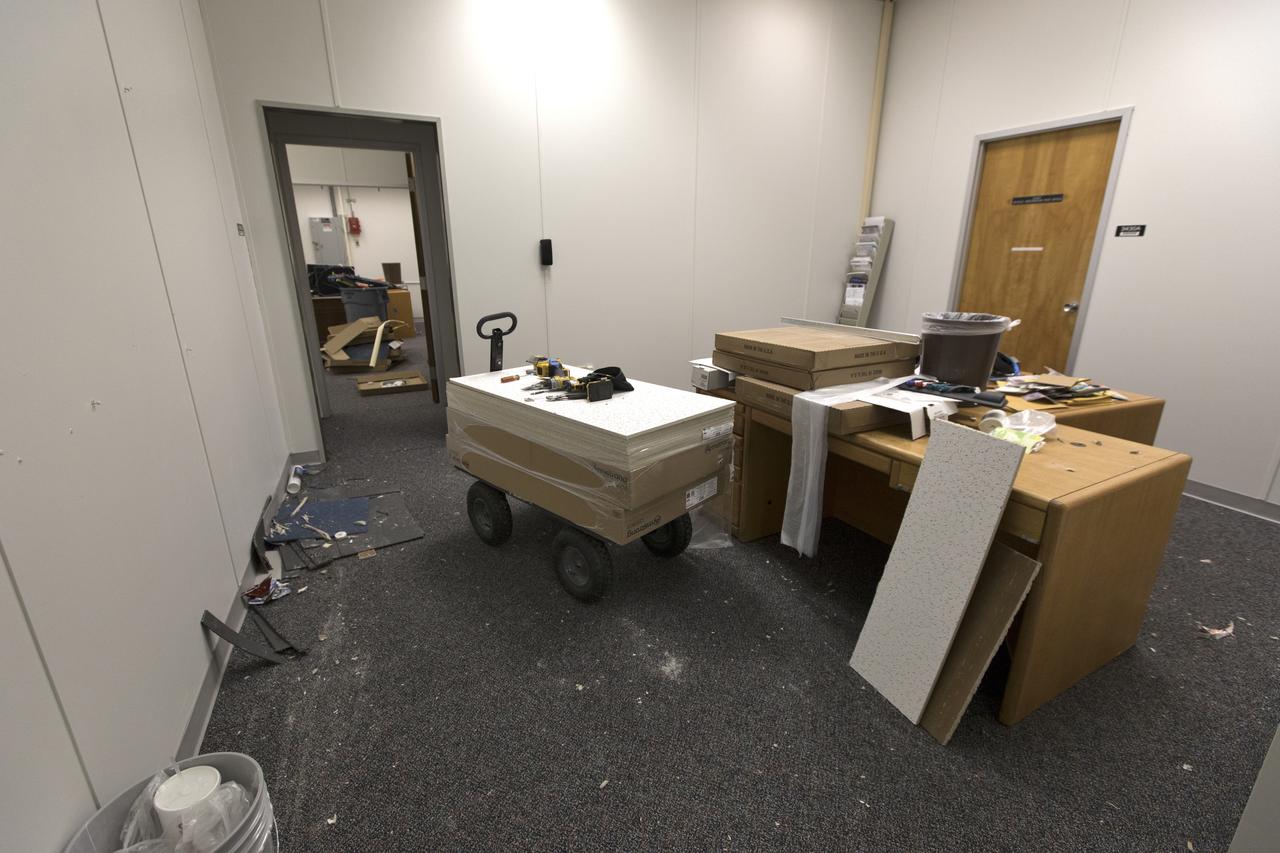
Modifications and upgrades are underway inside the Astronaut Crew Quarters in the Neil Armstrong Operations and Checkout Building at NASA's Kennedy Space Center in Florida. Walls are receiving fresh coats of paint and new flooring is being installed. The crew quarters are being prepared for the next generation of space explorers. The historic facility housed Apollo and space shuttle astronauts before and after their missions into space.
Crew Quarters Modifications
NASA test pilot Jim “Clue” Less completes pre‑flight checks on a NASA F‑15 in Spokane, Washington, on Thursday, July 2, 2026. The aircraft, from NASA’s Armstrong Flight Research Center in Edwards, California, displays new red, white, and blue paint to celebrate America’s 250th birthday and was preparing to fly cross‑country to Washington, D.C., where it participated in the Freedom 250 flyover with other NASA and military aircraft on Saturday, July 4, 2026. NASA/Jim Ross
NASA F-15 and F-18 Soar Above Washington to Celebrate America’s 250th Birthday
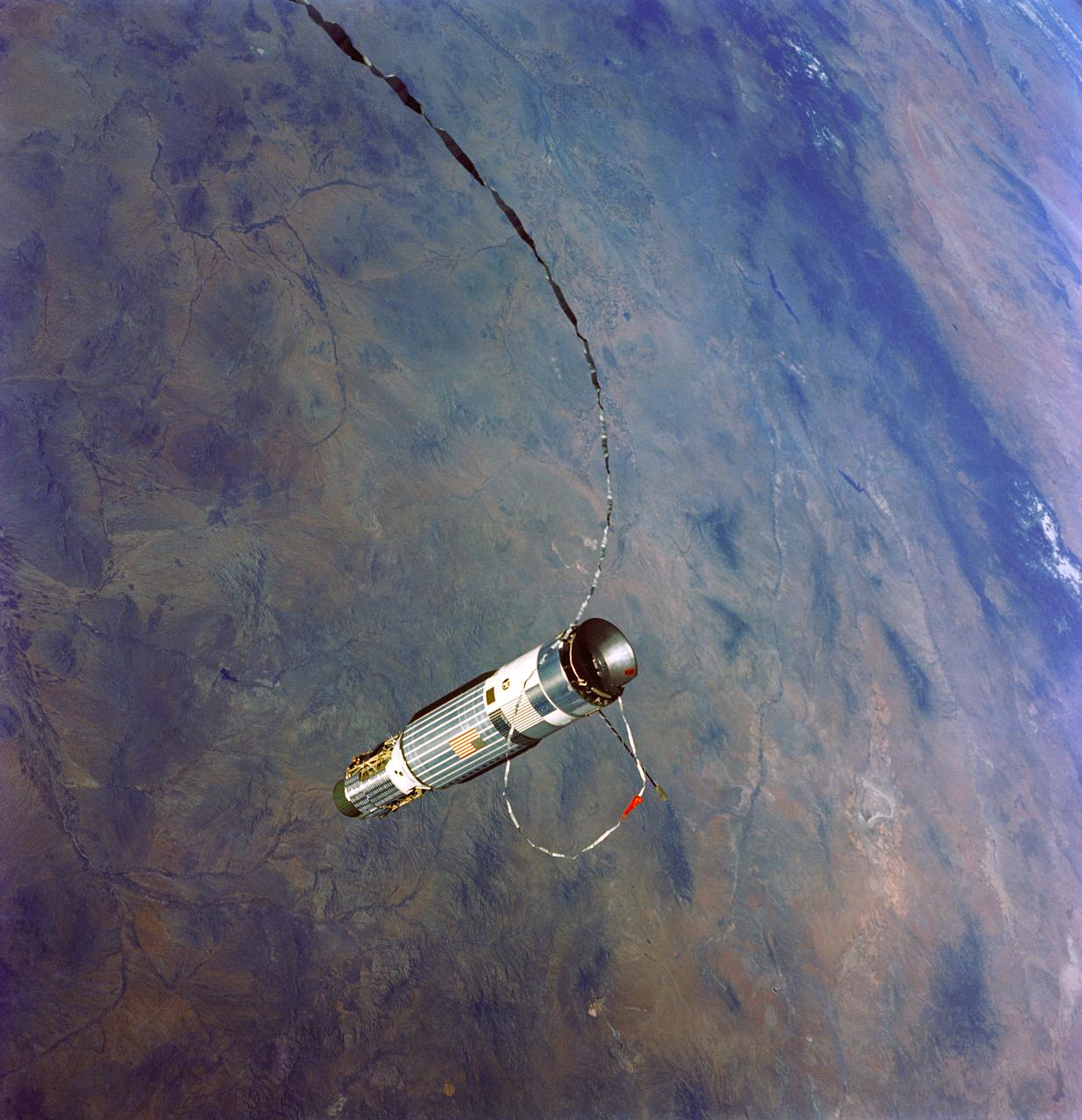
S66-62794 (13 Nov. 1966) --- Northern portion of Sonora, Mexico; southeastern Arizona and southwestern New Mexico, as seen from the Gemini-12 spacecraft during its 30th revolution of Earth. Includes the Tucson, Phoenix, Mogollon Rim, and Painted Desert areas. A 100-foot tether line connects the Agena Target Docking Vehicle with the Gemini-12 spacecraft. Photo credit: NASA.
GEMINI-TITAN (GT)-12 - EARTH SKY - NORTHERN SONORA, MEXICO - OUTER SPACE
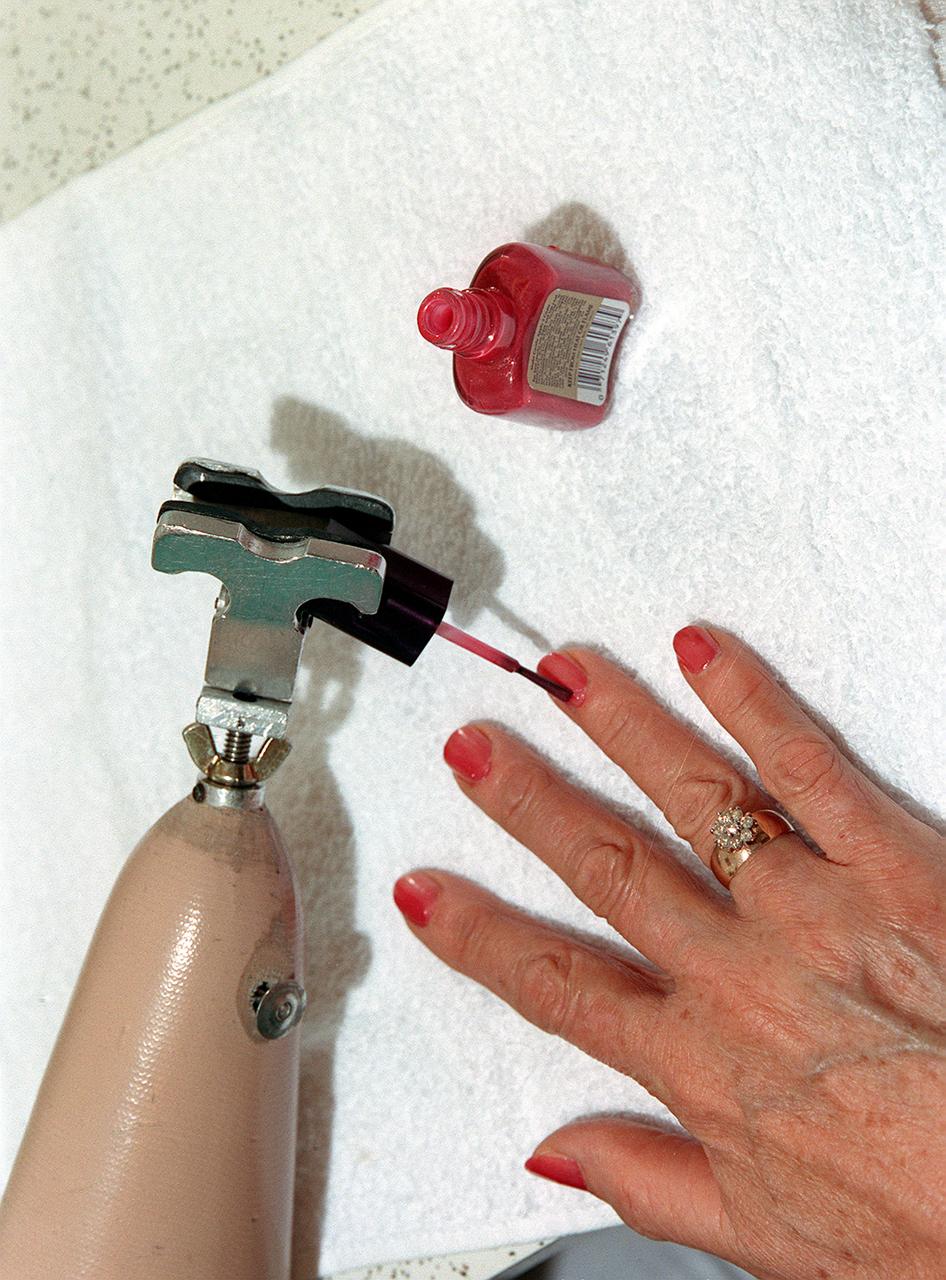
In this photograph, Amputee Amie Bradly uses a NASA-developed prosthesis to paint her fingernails. Derived from foam insulation technology used to protect the Space Shuttle External Tank from excessive heat, FAB/CAD, a subsidiary of the Harshberger Prosthetic and Orthotic Center, utilized the technology to replace the heavy, fragile plaster they used to produce master molds for prosthetics. The new material was lighter, cheaper and easier to manufacture than plaster, resulting in lower costs to the customer.
Benefit from NASA
In the Vehicle Assembly Building, the orbiter Discovery is mated with the external tank and solid rocket booster stack (seen behind the orbiter, to the left). The orbiter was recently painted with the NASA logo, termed the "meatball," on the left, or port, wing and both sides of the aft fuselage. Discovery (OV-103) is the first of the orbiters to be launched with the new artwork. It is scheduled for its 25th flight, from Launch Pad 39B, on Oct. 29, 1998, for the STS-95 mission
KSC-98pc1077
A NASA F‑15 aircraft is shown during a cross‑country flight from Spokane, Washington, to Washington, D.C., on Thursday, July 2, 2026. The aircraft displays new red, white, and blue paint to celebrate America’s 250th birthday. The F‑15, from NASA’s Armstrong Flight Research Center in Edwards, California, participated in the Freedom 250 flyover with other NASA and military aircraft on Saturday, July 4, 2026. NASA/Jim Ross
NASA F-15 and F-18 Soar Above Washington to Celebrate America’s 250th Birthday
The lounge area inside the astronaut crew quarters is where astronauts’ family members waited for their return upon landing during the Space Shuttle Program. The crew quarters, located on the third floor of Kennedy Space Center’s Neil Armstrong Operations and Checkout Building, recently received a number of upgrades, including new paint, ceiling tiles, carpeting, appliances and furniture.
Astronaut Crew Quarters Upgrades
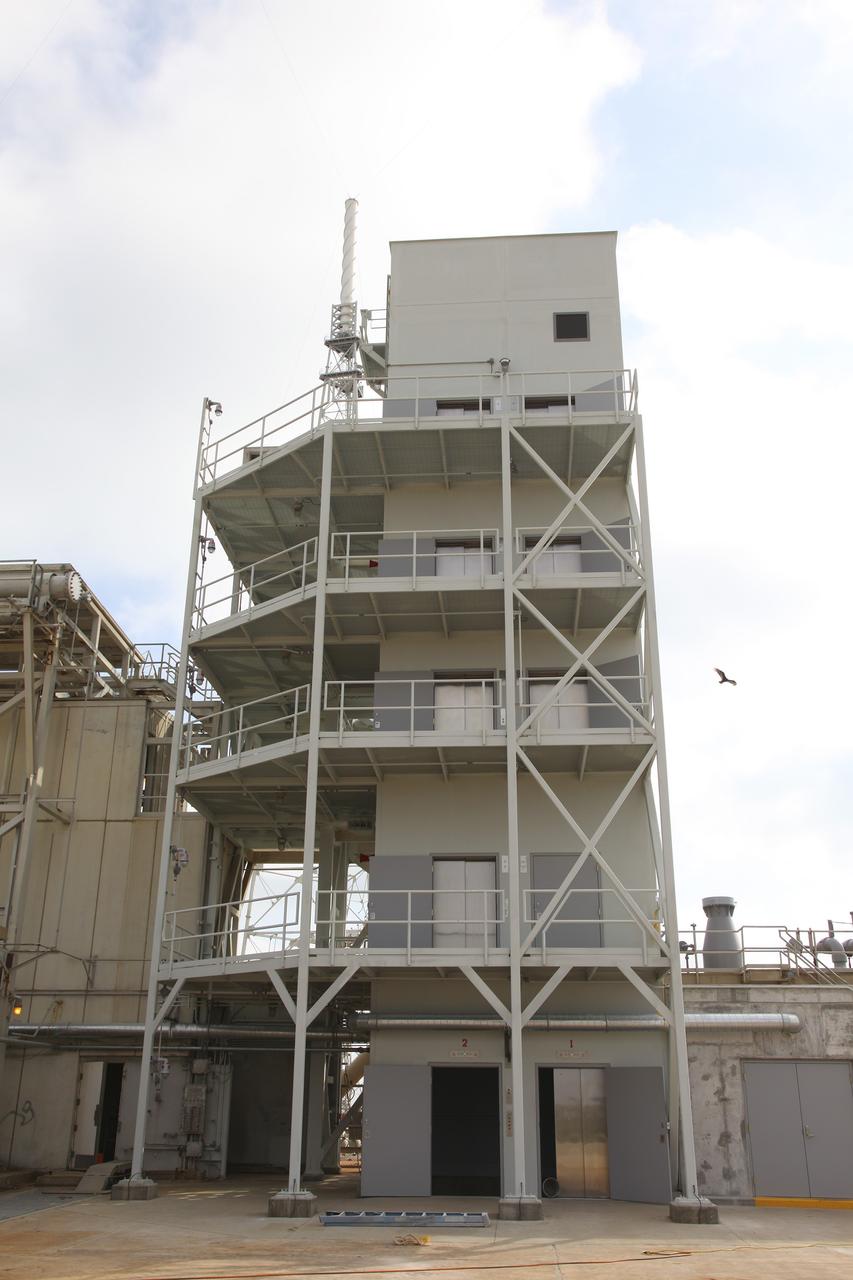
CAPE CANAVERAL, Fla. -- At NASA’s Kennedy Space Center in Florida, the Launch Pad 39B elevator has been upgraded and painted. Also, various fluid interface connections have been installed on the pad. New system connections include chilled water supply-and-return and conditioned air that will be used to provide the mobile launcher with the necessary commodities during launch operations.    The Ground Systems Development and Operations Program office at Kennedy is overseeing upgrades and modifications to Pad B to support the launch of NASA’s Space Launch System heavy-lift rocket, which is under design, and new Orion spacecraft. The pads supported space shuttle launches for 30 years.  Photo credit: NASA/Frankie Martin
KSC-2013-1513
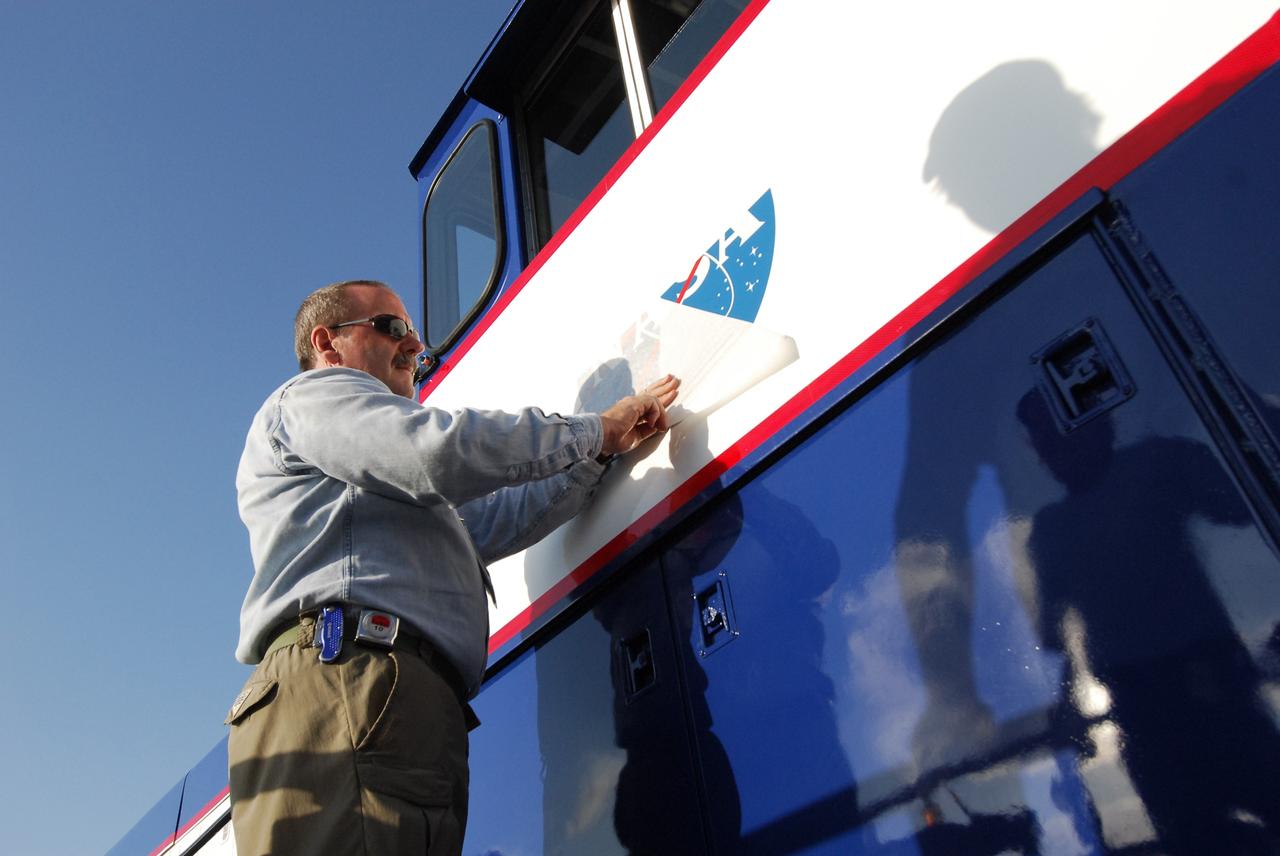
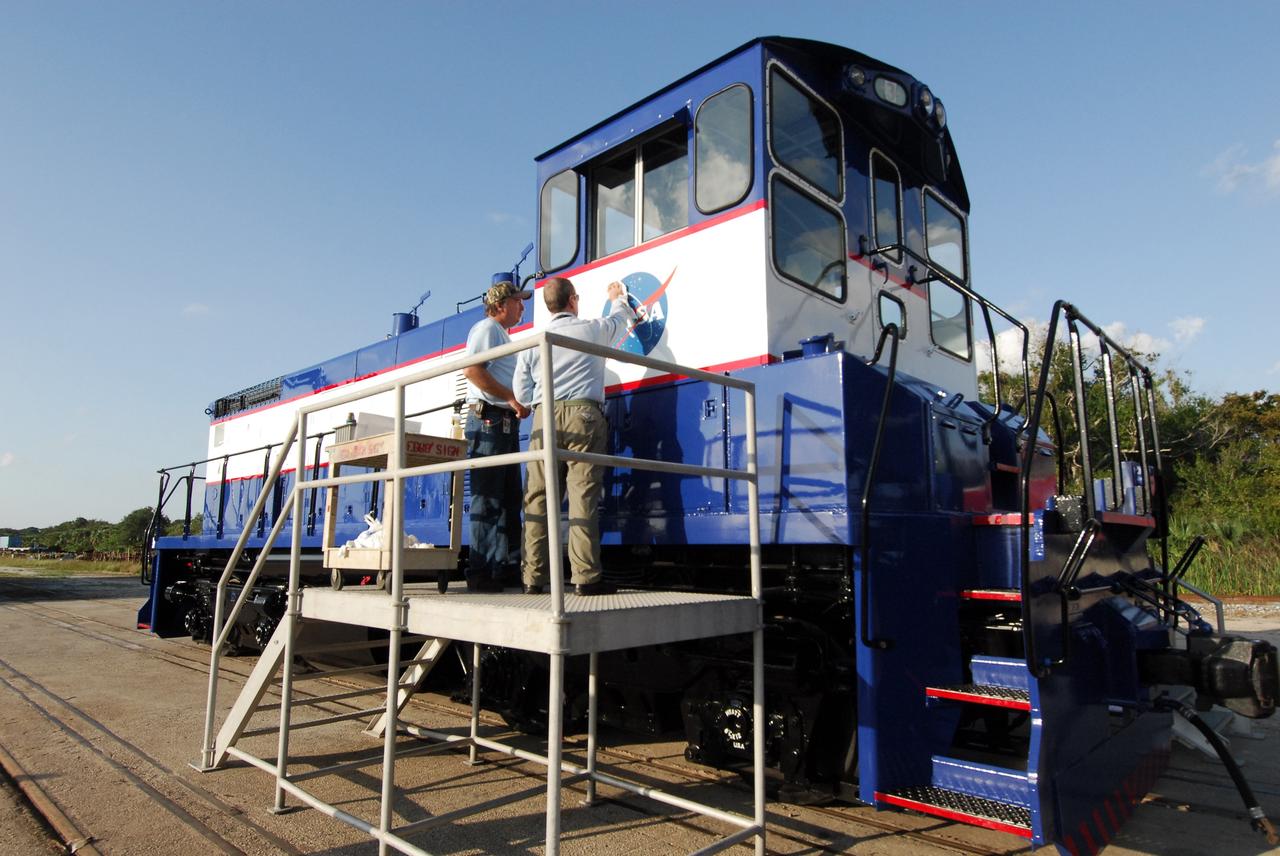
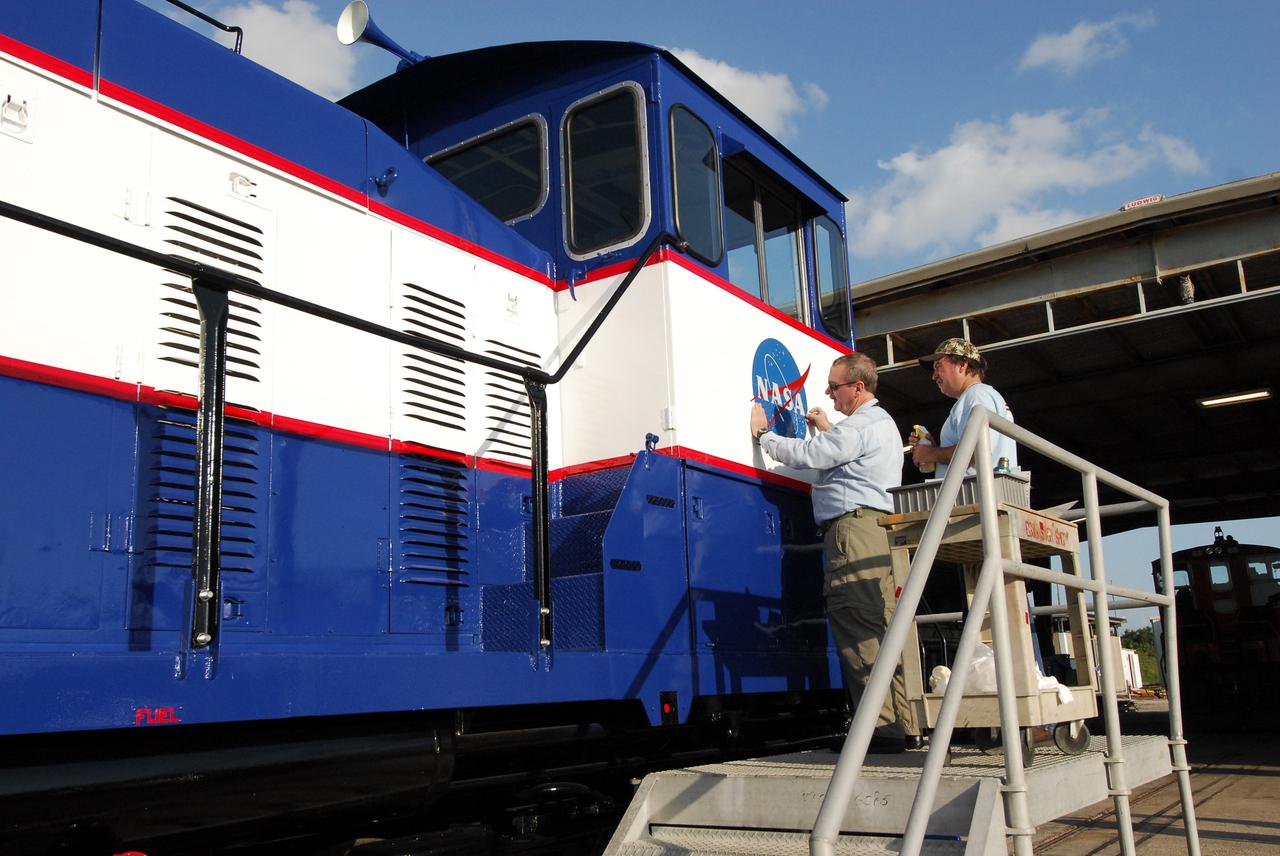
CAPE CANAVERAL, Fla. –  At NASA's Kennedy Space Center in Florida, Phil Moore places a new NASA insignia on the side of NASA Railroad locomotive 3.  The Railroad Operation and Maintenance Team at Kennedy completed the refurbishment of locomotive 3 in October. The 15-month process, including a new paint scheme, dealt with extensive corrosion to the locomotive because of Kennedy's proximity to the Atlantic Ocean.  Locomotives 1 and 2 also will be refurbished eventually.  The NASA Railroad locomotives are SW-1500 switch engines built by Electro Motive Diesel (EMD).  Photo credit:  NASA/Amanda Diller
KSC-08pd3579
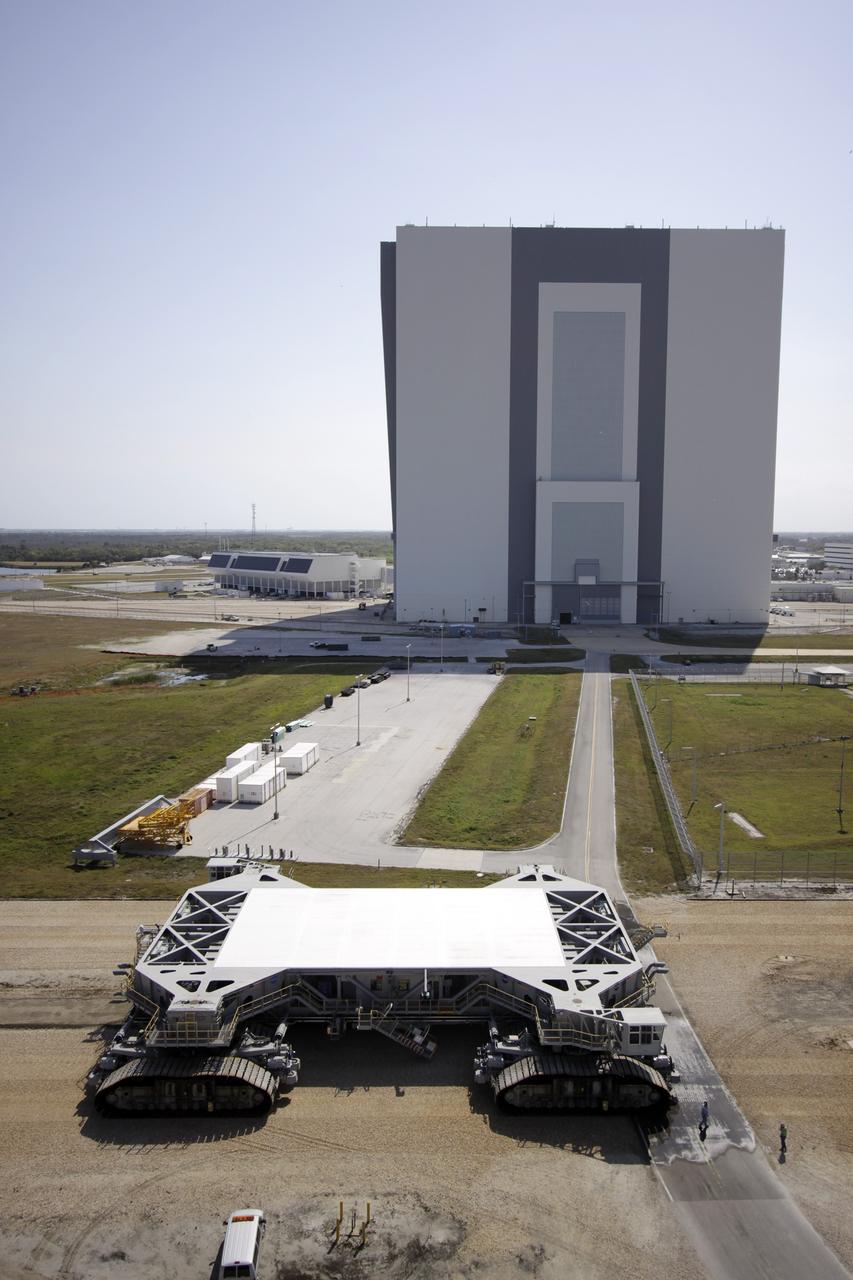
CAPE CANAVERAL, Fla. – At NASA’s Kennedy Space Center in Florida, the crawler-transporter 2, or CT-2, is on its way to the Park Site west of the Vehicle Assembly Building. The transporter has new brakes and mufflers and a recently-painted white roof deck.    The Ground Systems Development and Operations Program office at Kennedy is overseeing the upgrades to CT-2 so that it can carry NASA’s Space Launch System heavy-lift rocket, which is under design, and new Orion spacecraft to the launch pad. The crawler-transporters were used to carry the mobile launcher platform and space shuttle to Launch Complex 39 for space shuttle launches for 30 years.  Photo credit: NASA/Jim Grossmann
KSC-2013-1510
CAPE CANAVERAL, Fla. –   At NASA's Kennedy Space Center in Florida, Ron Burrill (left) and Phil Moore place a new NASA insignia on the side of NASA Railroad locomotive 3.  The Railroad Operation and Maintenance Team at Kennedy completed the refurbishment of locomotive 3 in October. The 15-month process, including a new paint scheme, dealt with extensive corrosion to the locomotive because of Kennedy's proximity to the Atlantic Ocean.  Locomotives 1 and 2 also will be refurbished eventually.  The NASA Railroad locomotives are SW-1500 switch engines built by Electro Motive Diesel (EMD).  Photo credit:  NASA/Amanda Diller
KSC-08pd3580
CAPE CANAVERAL, Fla. –   At NASA's Kennedy Space Center in Florida, Phil Moore (left) and Ron Burrill place a new NASA insignia on the side of NASA Railroad locomotive 3.  The Railroad Operation and Maintenance Team at Kennedy completed the refurbishment of locomotive 3 in October. The 15-month process, including a new paint scheme, dealt with extensive corrosion to the locomotive because of Kennedy's proximity to the Atlantic Ocean.  Locomotives 1 and 2 also will be refurbished eventually.  The NASA Railroad locomotives are SW-1500 switch engines built by Electro Motive Diesel (EMD).  Photo credit:  NASA/Amanda Diller
KSC-08pd3581
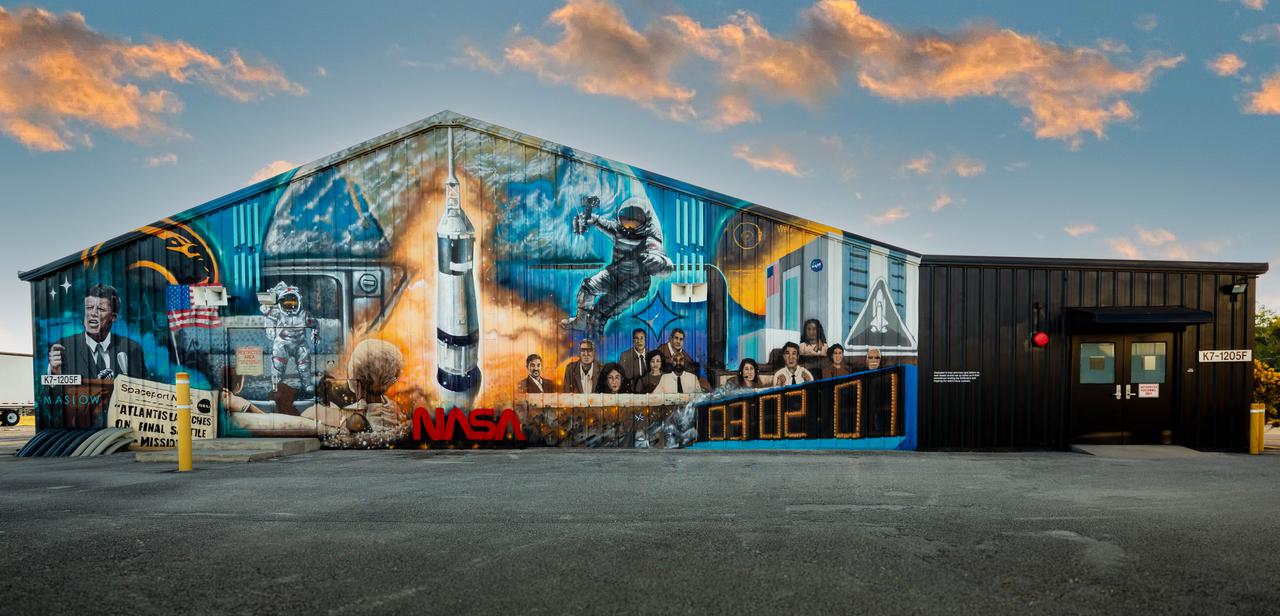
A mural painted by Florida artist Christopher Maslow adorns the northwest exterior wall of the Press Site News Facility at NASA’s Kennedy Space Center in Florida on Jan. 10, 2022. Completed by the artist over the course of several months during 2021, the largescale artwork depicts notable landmarks, missions, and milestones from the history of NASA and its world-famous spaceport. The Press Site News Facility is the hub of launch broadcasts and home to the center’s TV auditorium. Along with the nearby NASA News Center, for decades Kennedy’s Press Site has been where reporters from television, radio, print, and online media outlets have monitored countless launches, landings, and other space events in order to deliver the news to the world.
LC 39 Press Site Mural
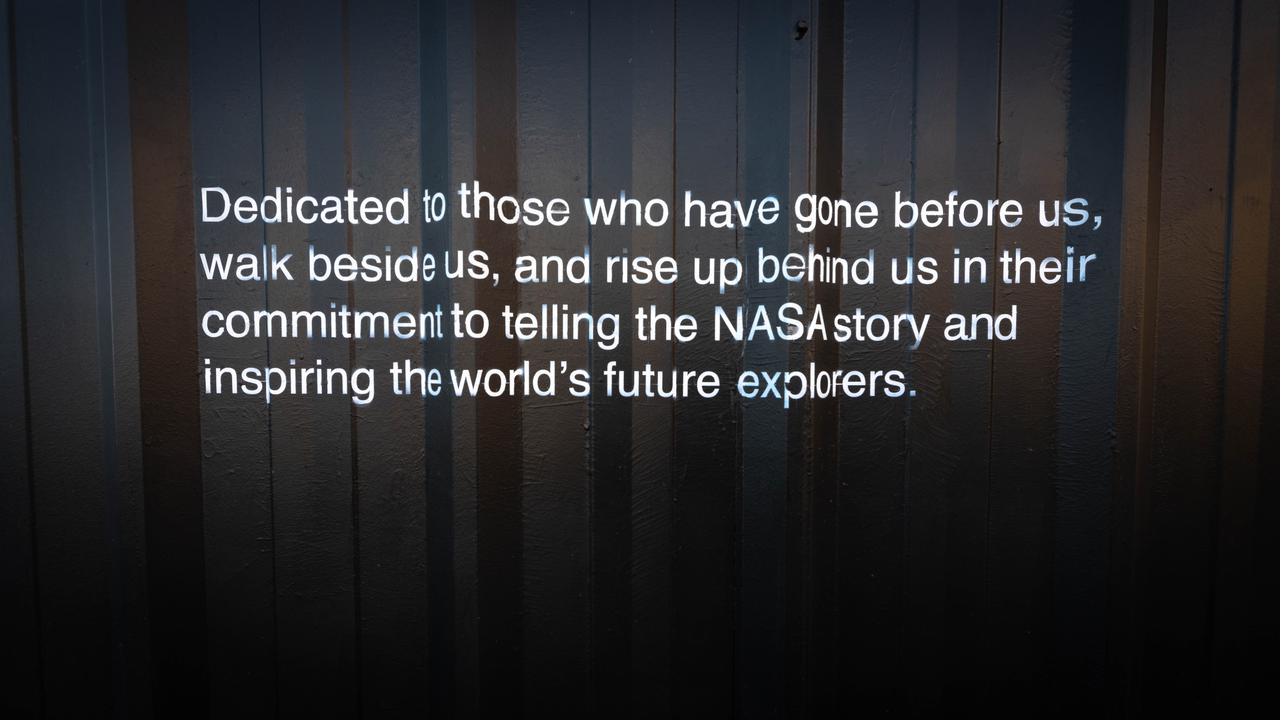
A dedication to those who tell the NASA story is part of a mural painted by Florida artist Christopher Maslow on the northwest exterior wall of the Press Site News Facility at NASA’s Kennedy Space Center in Florida, photographed on Jan. 10, 2022. Completed by the artist over the course of several months during 2021, the largescale artwork depicts notable landmarks, missions, and milestones from the history of NASA and its world-famous spaceport. The Press Site News Facility is the hub of launch broadcasts and home to the center’s TV auditorium. Along with the nearby NASA News Center, for decades Kennedy’s Press Site has been where reporters from television, radio, print, and online media outlets have monitored countless launches, landings, and other space events in order to deliver the news to the world.
LC 39 Press Site Mural
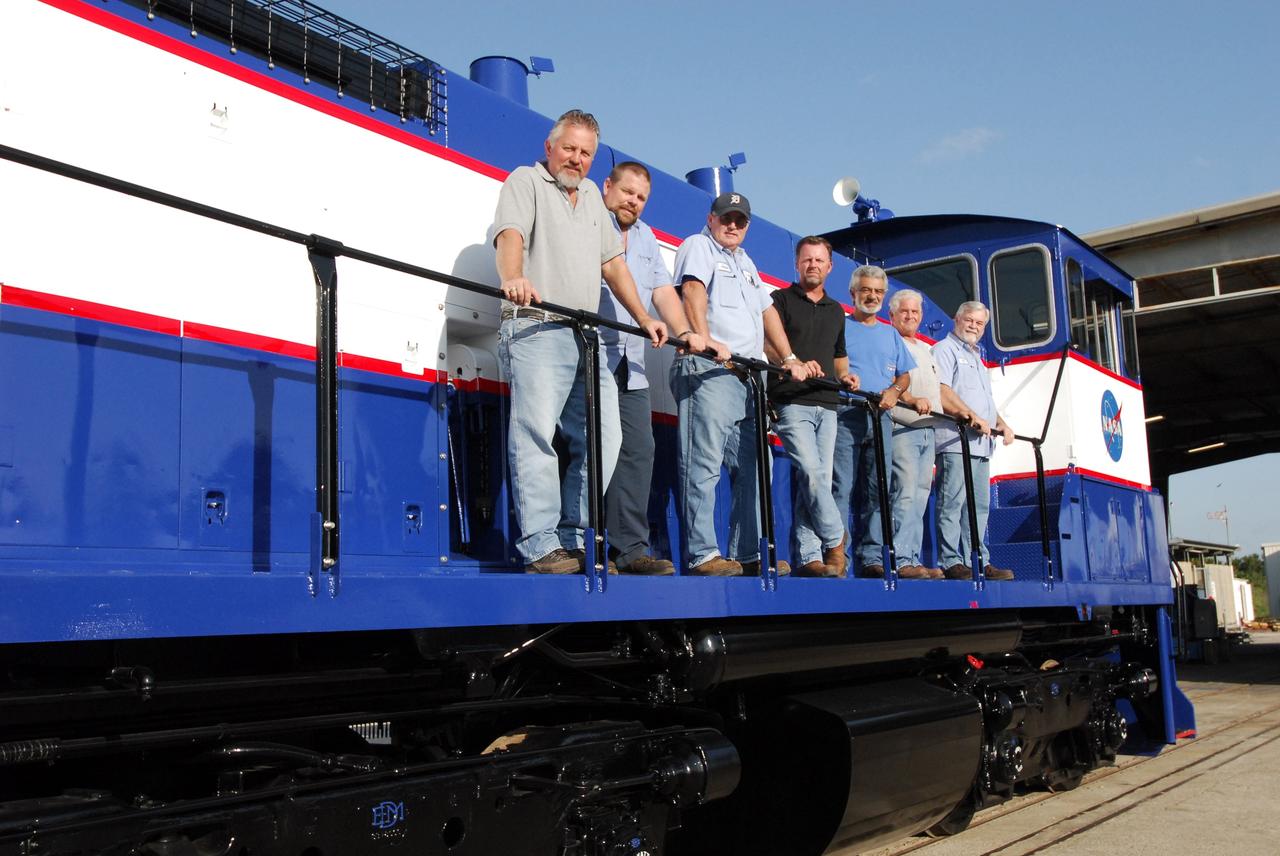
CAPE CANAVERAL, Fla. –   At NASA's Kennedy Space Center in Florida, the NASA Railroad Maintenance Crew pose on the side of NASA Railroad locomotive 3.  From left are Mike Stephens, Mike Fitch, Jesse Crews, Chris Bryant, Rick Koury, Gary Steele and Will Eriksen.  The team at Kennedy completed the refurbishment of locomotive 3 in October. The 15-month process, including a new paint scheme, dealt with extensive corrosion to the locomotive because of Kennedy's proximity to the Atlantic Ocean.  Locomotives 1 and 2 also will be refurbished eventually.  The NASA Railroad locomotives are SW-1500 switch engines built by Electro Motive Diesel (EMD).  Photo credit:  NASA/Amanda Diller
KSC-08pd3585
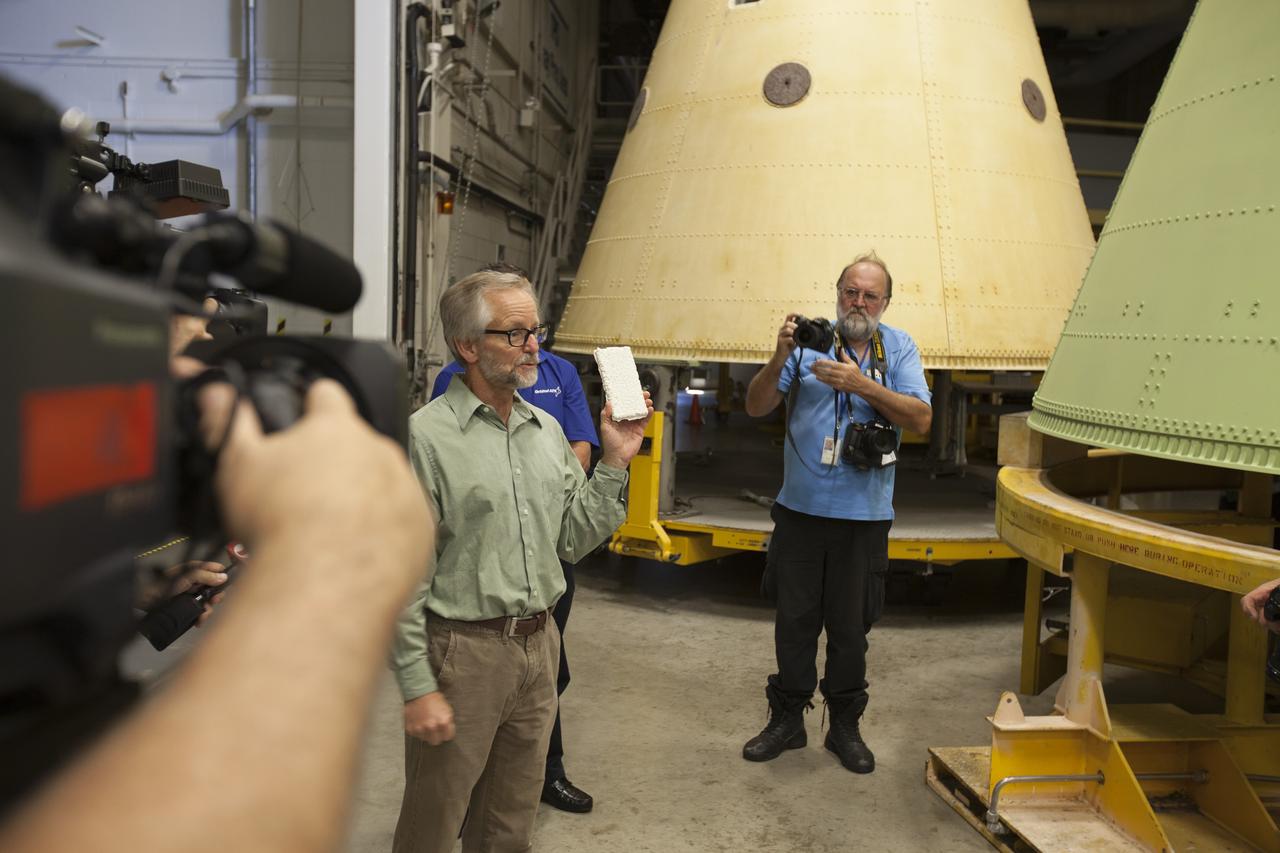
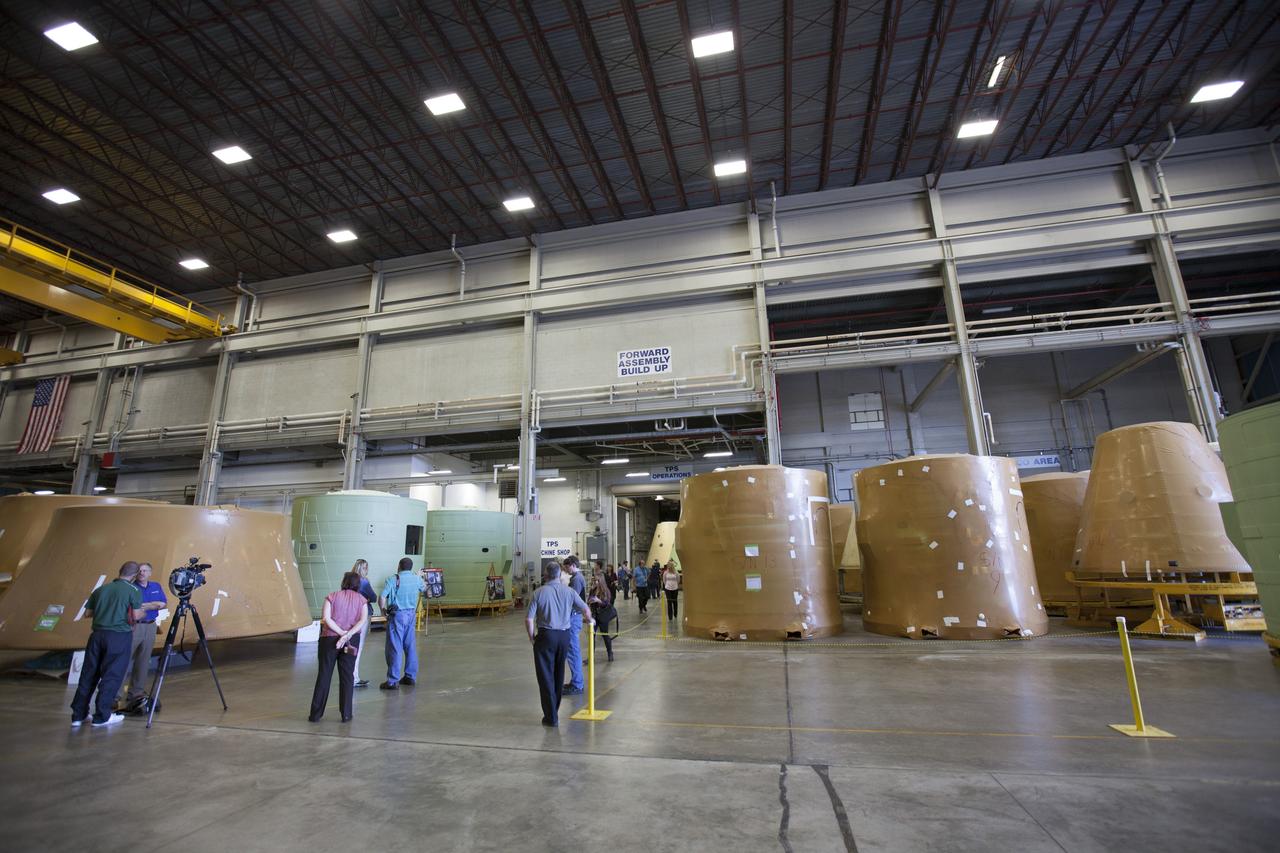
Inside the Booster Fabrication Facility (BFF) at NASA’s Kennedy Space Center in Florida, Jeff Cook, a thermal protection system specialist with Orbital ATK, displays a sample of the painted thermal protection system that is being applied to booster segments. Members of the news media toured the BFF. Orbital ATK is a contractor for NASA’s Marshall Space Flight Center in Alabama, and operates the BFF to prepare aft booster segments and hardware for the SLS rocket boosters. The SLS rocket and Orion spacecraft will launch on Exploration Mission-1 in 2018. The Ground Systems Development and Operations Program is preparing the infrastructure to process and launch spacecraft for deep-space missions and the journey to Mars.
SRB Processing Facilities Media Event
KENNEDY SPACE CENTER, FLA. -- Several Apollo program astronauts, along with their family members and friends, pause before a painting of an Apollo/Saturn V launch vehicle at the pad in the new Apollo/Saturn V Center (ASVC) at KSC prior to the gala grand opening ceremony for the facility that was held Jan. 8, 1997. The astronauts were invited to participate in the event, which also featured NASA Administrator Dan Goldin and KSC Director Jay Honeycutt. The ASVC also features several other Apollo program spacecraft component displays and multimedia presentations. The facility will be a part of the KSC bus tour that embarks from the KSC Visitor Center
KSC-97pc116
Astronaut Mike Fincke places droplets of honey onto the strings for the Fluid Merging Viscosity Measurement (FMVM) investigation onboard the International Space Station (ISS). The FMVM experiment measures the time it takes for two individual highly viscous fluid droplets to coalesce or merge into one droplet. Different fluids and droplet size combinations were tested in the series of experiments.  By using the microgravity environment, researchers can measure the viscosity or "thickness" of fluids without the influence of containers and gravity using this new technique. Understanding viscosity could help scientists understand industrially important materials such as paints, emulsions, polymer melts and even foams used to produce pharmaceutical, food, and cosmetic products.
Material Science
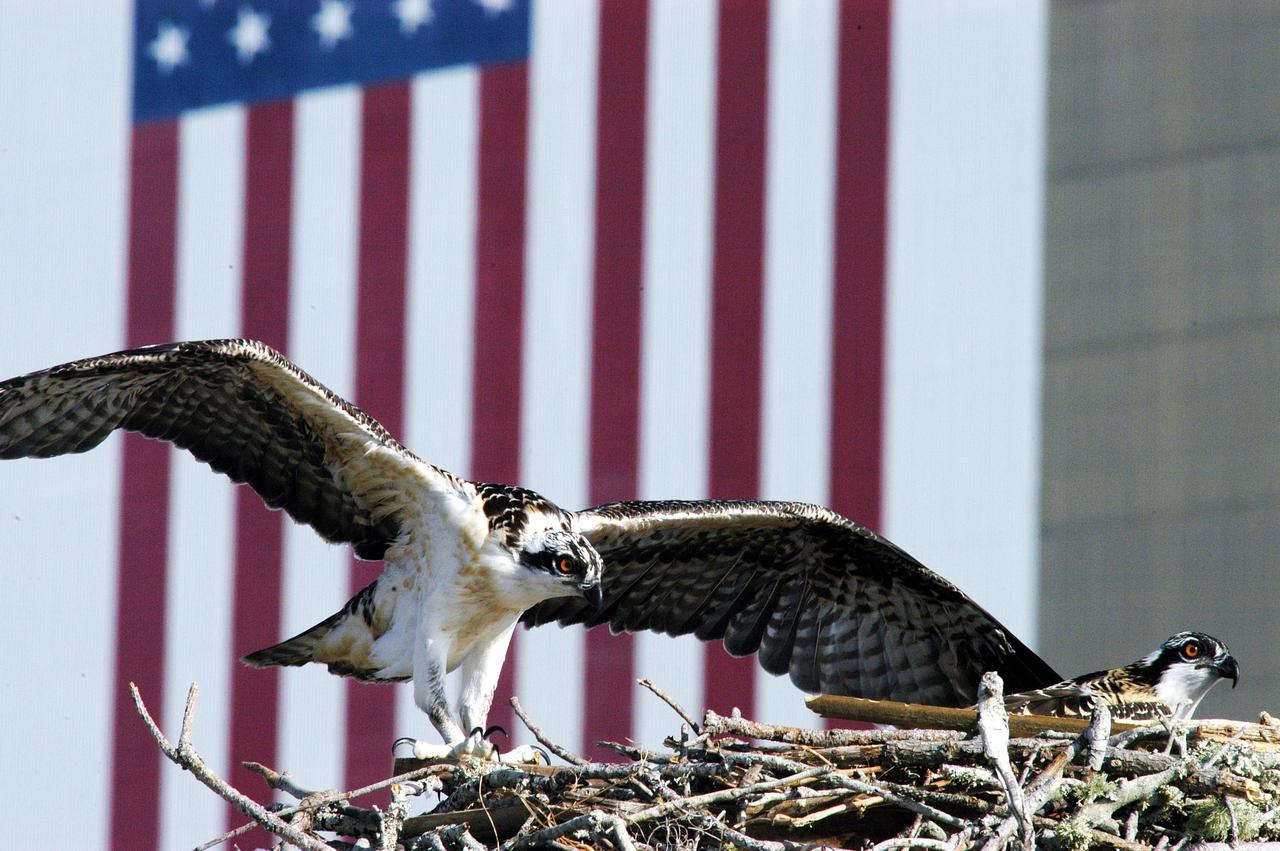
KENNEDY SPACE CENTER, FLA. -- One of three osprey fledglings spreads its wings, anticipating flight.  The nest is in the NASA News Center parking lot, across from the Vehicle Assembly Building, with its 209-foot-high American flag painted on the south side.  Ospreys select nesting sites of opportunity, from trees and telephone poles to rocks or even flat ground.  In the United States they are found from Alaska to Florida and the Gulf Coast.  Osprey nests are found throughout the Kennedy Space Center and nearby Merritt Island National Wildlife Refuge.  Known as a fish hawk, ospreys often can be seen flying overhead with a fish in their talons.
KSC-04pd1145
KENNEDY SPACE CENTER, FLA. -- Workers put the finishing touches on new paint for the blades of a NASA UH-1H helicopter. They have changed the black to a pattern of white and yellow stripes. The pattern provides better visibility in smoke and fire conditions. When the rotors are turning, the stripes create a yellow and white circle that is more easily seen from above by a second helicopter. The helicopters, primarily used for security and medical evacuation for NASA, will be used to deliver water via buckets during brush fires. The change was made to comply with U.S. Fish and Wildlife and Department of Forestry regulations for helicopter-assisted fire control
KSC-00pp1788
Members of the news media view forward booster segments (painted green) for NASA’s Space Launch System rocket boosters inside the Booster Fabrication Facility (BFF) at NASA’s Kennedy Space Center in Florida. Orbital ATK is a contractor for NASA’s Marshall Space Flight Center in Alabama, and operates the BFF to prepare aft booster segments and hardware for the SLS rocket boosters. The SLS rocket and Orion spacecraft will launch on Exploration Mission-1 in 2018. The Ground Systems Development and Operations Program is preparing the infrastructure to process and launch spacecraft for deep-space missions and the journey to Mars.
SRB Processing Facilities Media Event