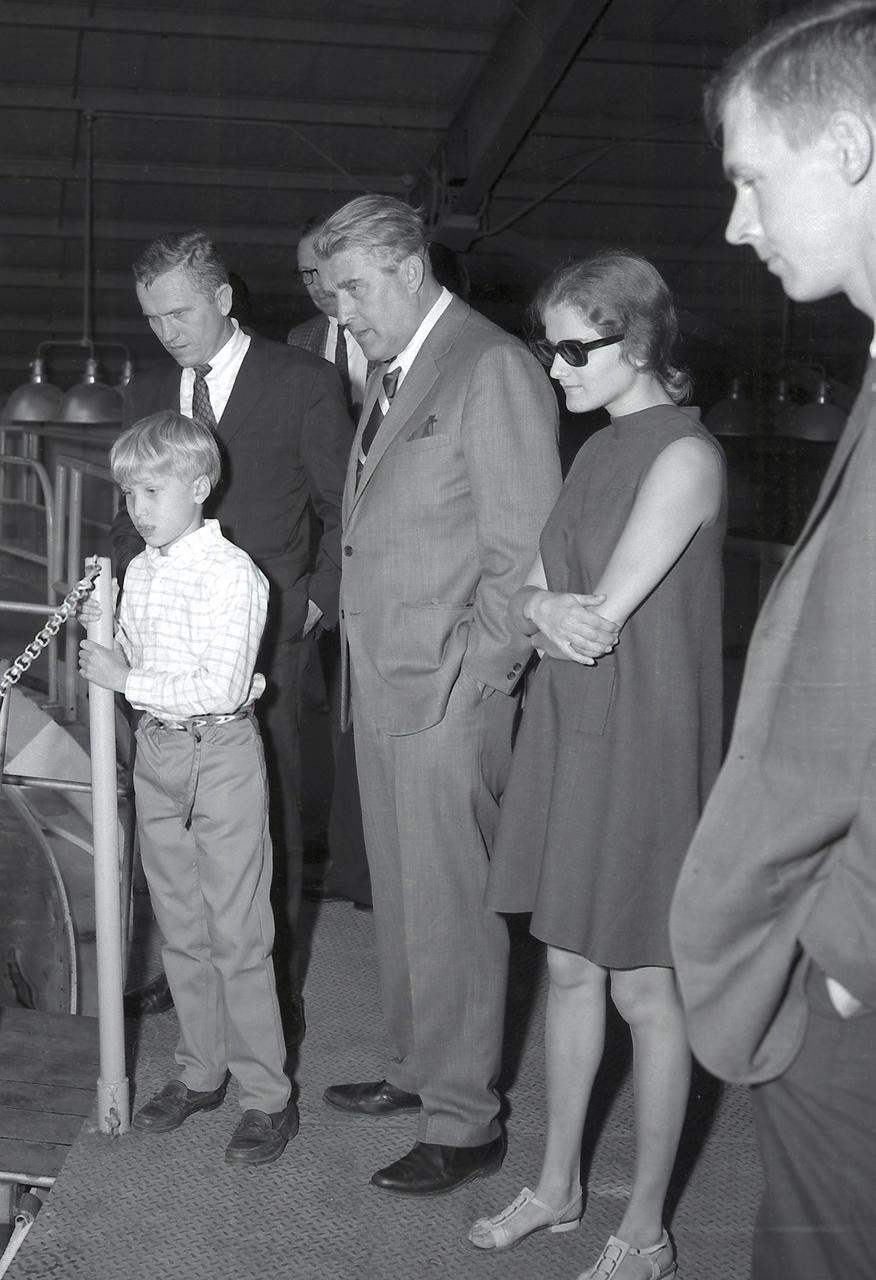
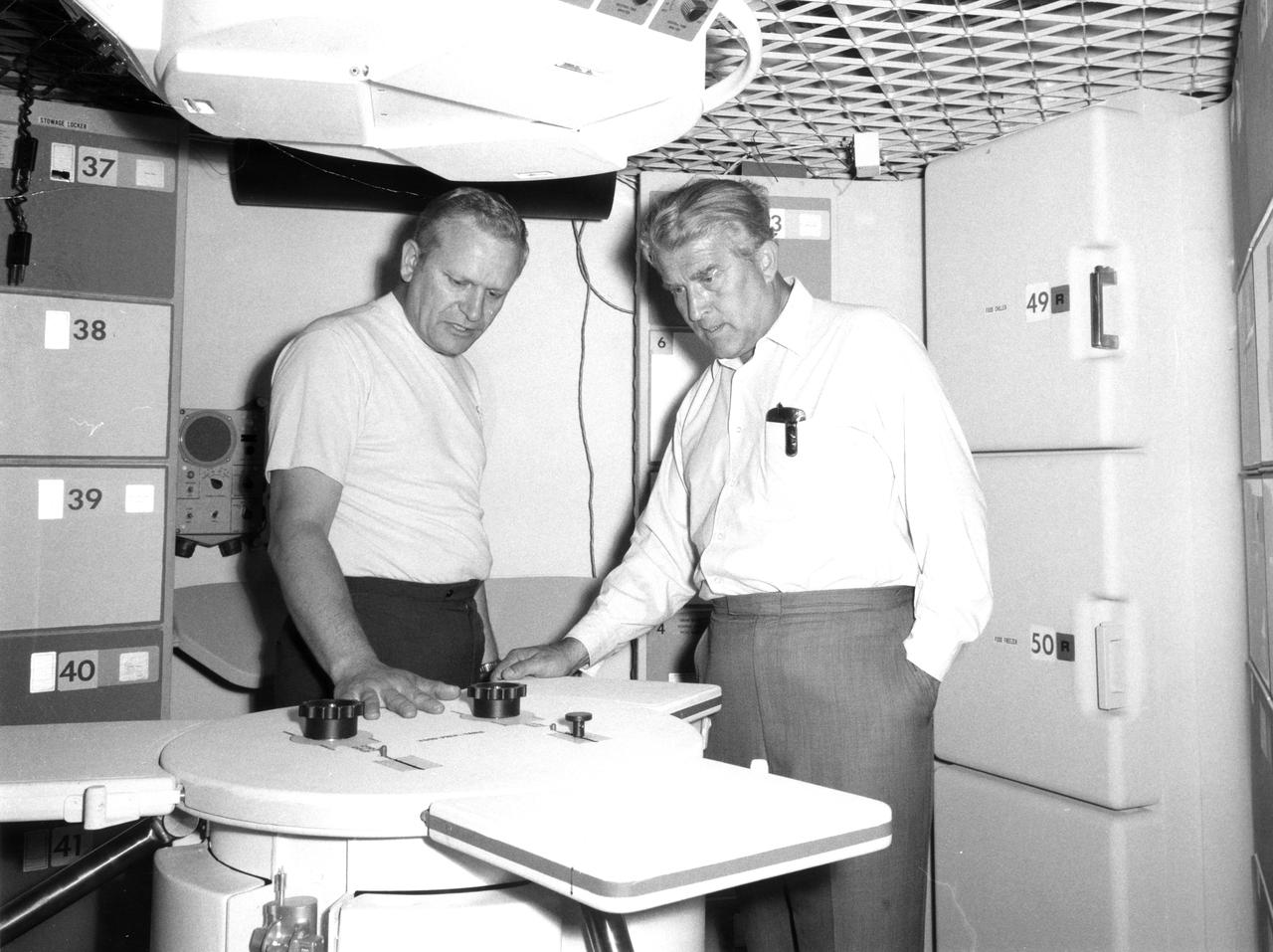
(L to R) Peter von Braun; Astronaut Frank Borman; M.P.Siebel; Dr. von Braun; Tris von Braun at the MSFC Neutral Buoyancy Simulator (NBS).
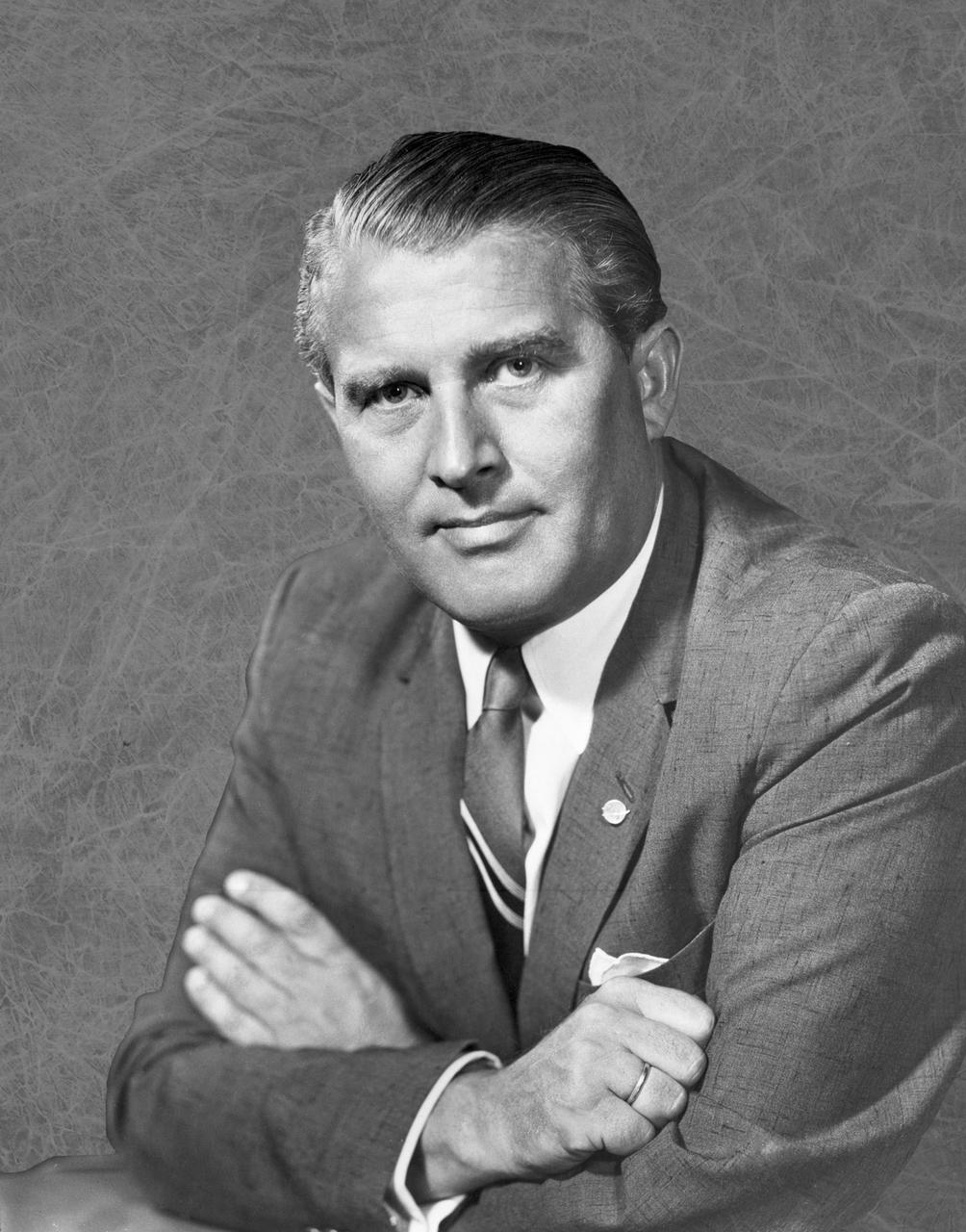
Dr. Wernher von Braun served as Marshall Space Flight Center's first director from July 1, 1960 until January 27, 1970, when he was appointed NASA Deputy Associate Administrator for Plarning. Following World War II, Dr. von Braun and his German colleagues arrived in the United States under Project Paperclip to continue their rocket development work. In 1950, von Braun and his rocket team were transferred from Ft. Bliss, Texas to Huntsville, Alabama to work for the Army's rocket program at Redstone Arsenal and later, NASA's Marshall Space Flight Center. Under von Braun's leadership, Marshall developed the Saturn V launch vehicle which took Apollo astronauts to the moon.
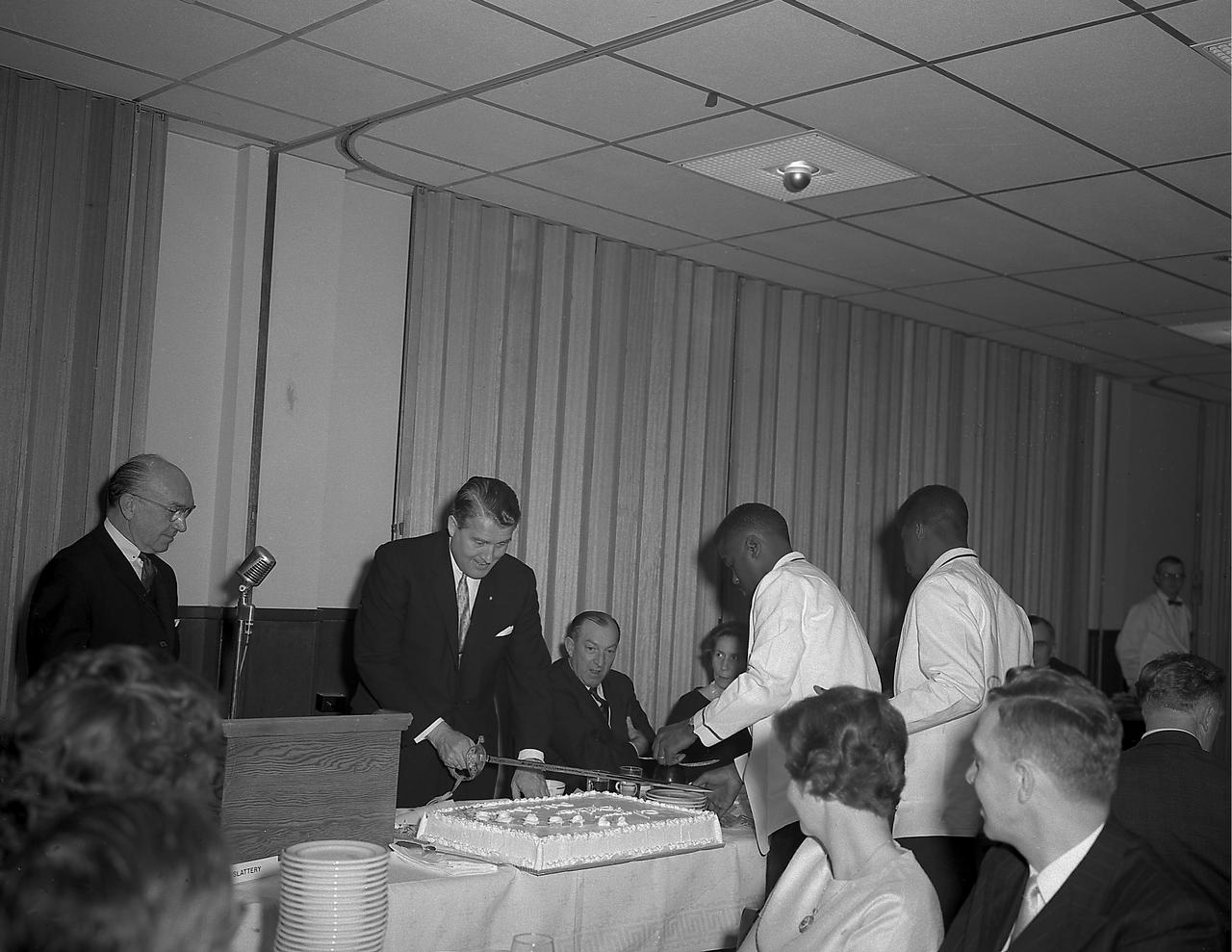
Dr. von Braun's 50th Birthday Party was celebrated at the Officers Club at Redstone Arsenal, Alabama on March 23, 1962. Dr. von Braun cuts his birthday cake, while congressman Bob Jones looks on.
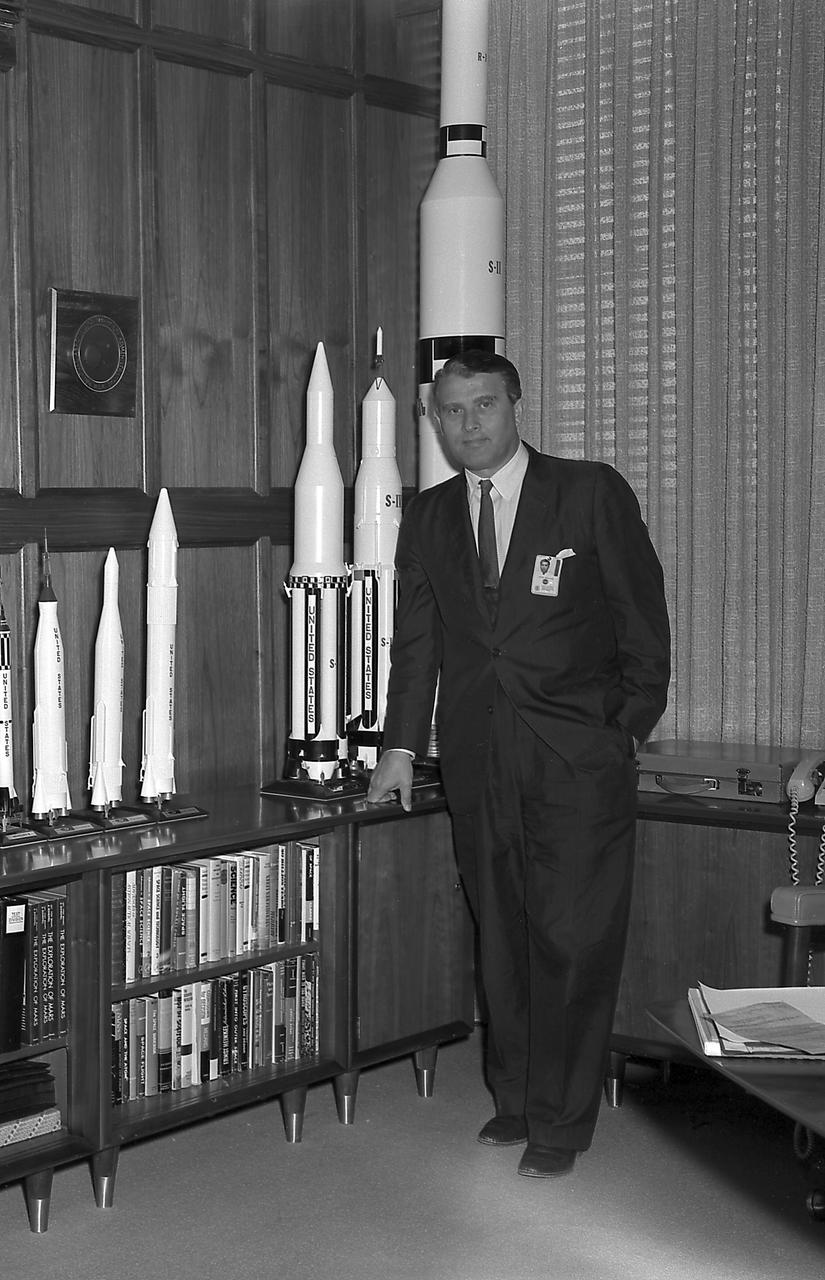
Dr. von Braun in his office with models of rockets, April 20, 1962. Dr. von Braun was the director of the Marshall Space Flight Center from July 1960 through February 1970.
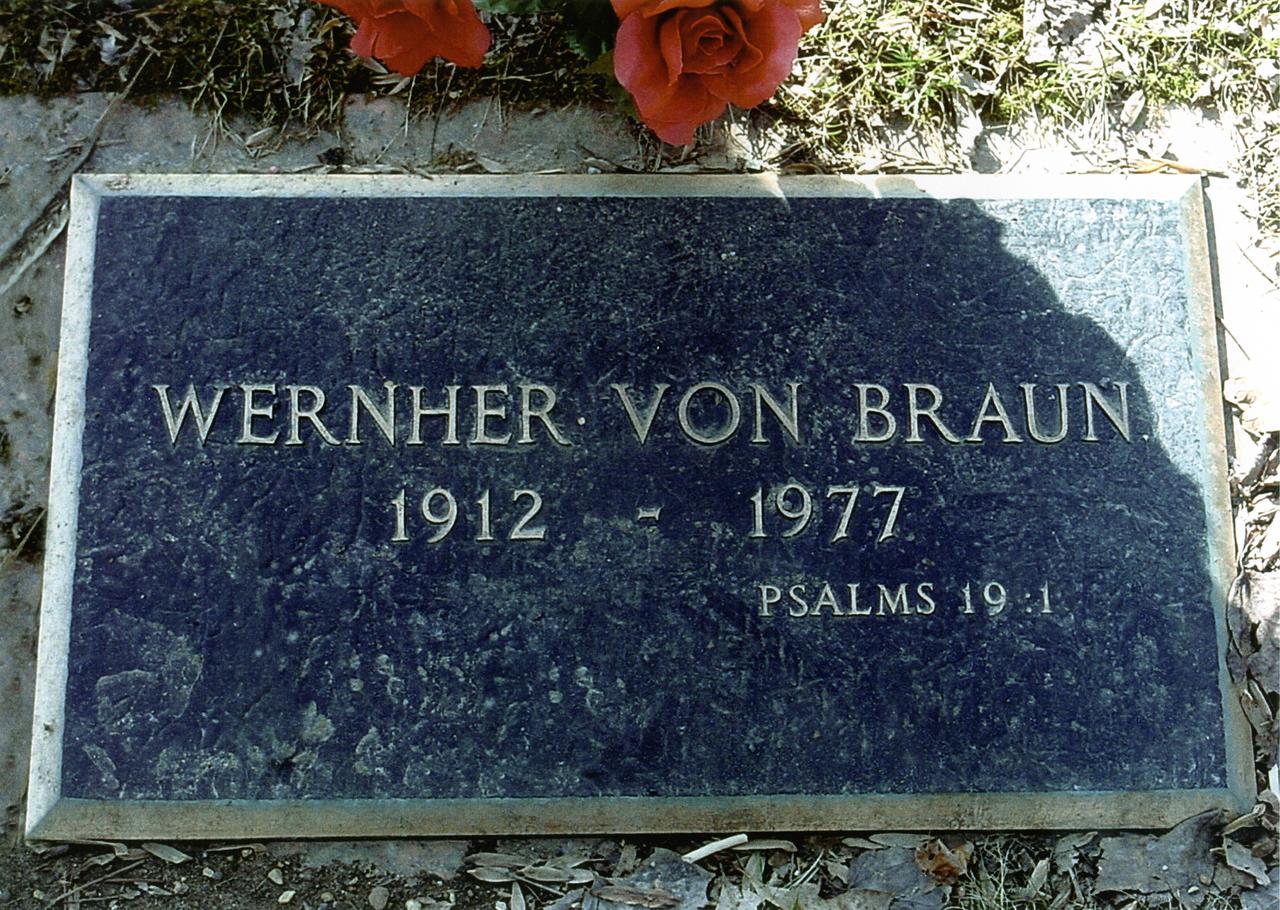
Dr. Wernher von Braun served as Marshall Space Flight Center's first director from July 1, 1960 until January 27, 1970, when he was appointed NASA Deputy Associate Administrator for Planning. Following World War II, Dr. von Braun and his German colleagues arrived in the United States under Project Paper Clip to continue their rocket development work. In 1950, von Braun and his rocket team were transferred from Ft. Bliss, Texas to Huntsville, Alabama to work for the Army's rocket program at Redstone Arsenal and later, NASA's Marshall Space Flight Center. Under von Braun's leadership, Marshall developed the Saturn V launch vehicle which took Apollo astronauts to the moon. Dr. von Braun died in Alexandria, Va., on June 16, 1977, seven years after his NASA appointment. This photo was taken at the site where he was laid to rest.
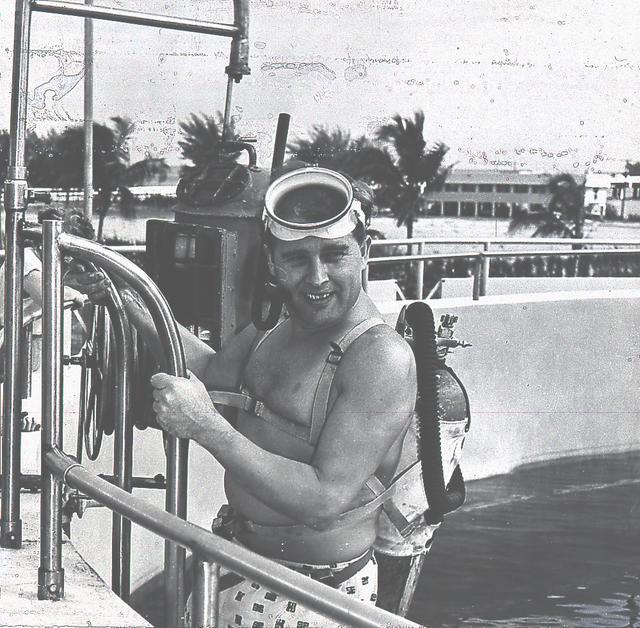
Dr. Wernher von Braun, Marshall's first Center Director (1960-1970), skin diving in Puerto Rico.
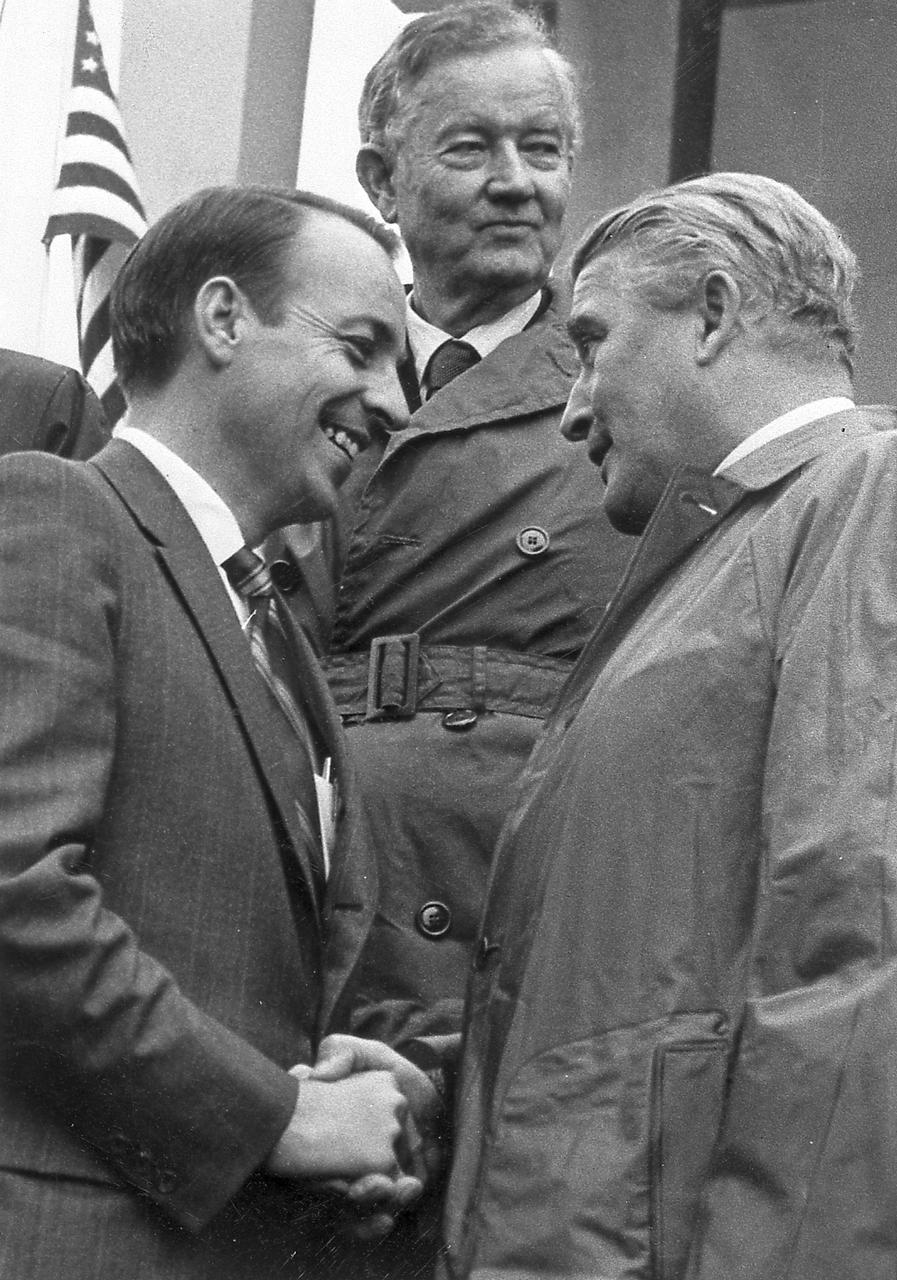
In 1970 Marshall Space Flight Center (MSFC) Director Dr. Wernher von Braun (right) was reassigned to NASA Headquarters to serve as Deputy Associate Administrator for Plarning. Prior to his transfer, Dr. von Braun was honored for his career in Huntsville, Alabama, with the celebration of "Wernher von Braun Day." Among those participating were Alabama Governor Albert Brewer (left) and Alabama Senator John Sparkman (center). (Courtesy of Huntsville/Madison County Public library)
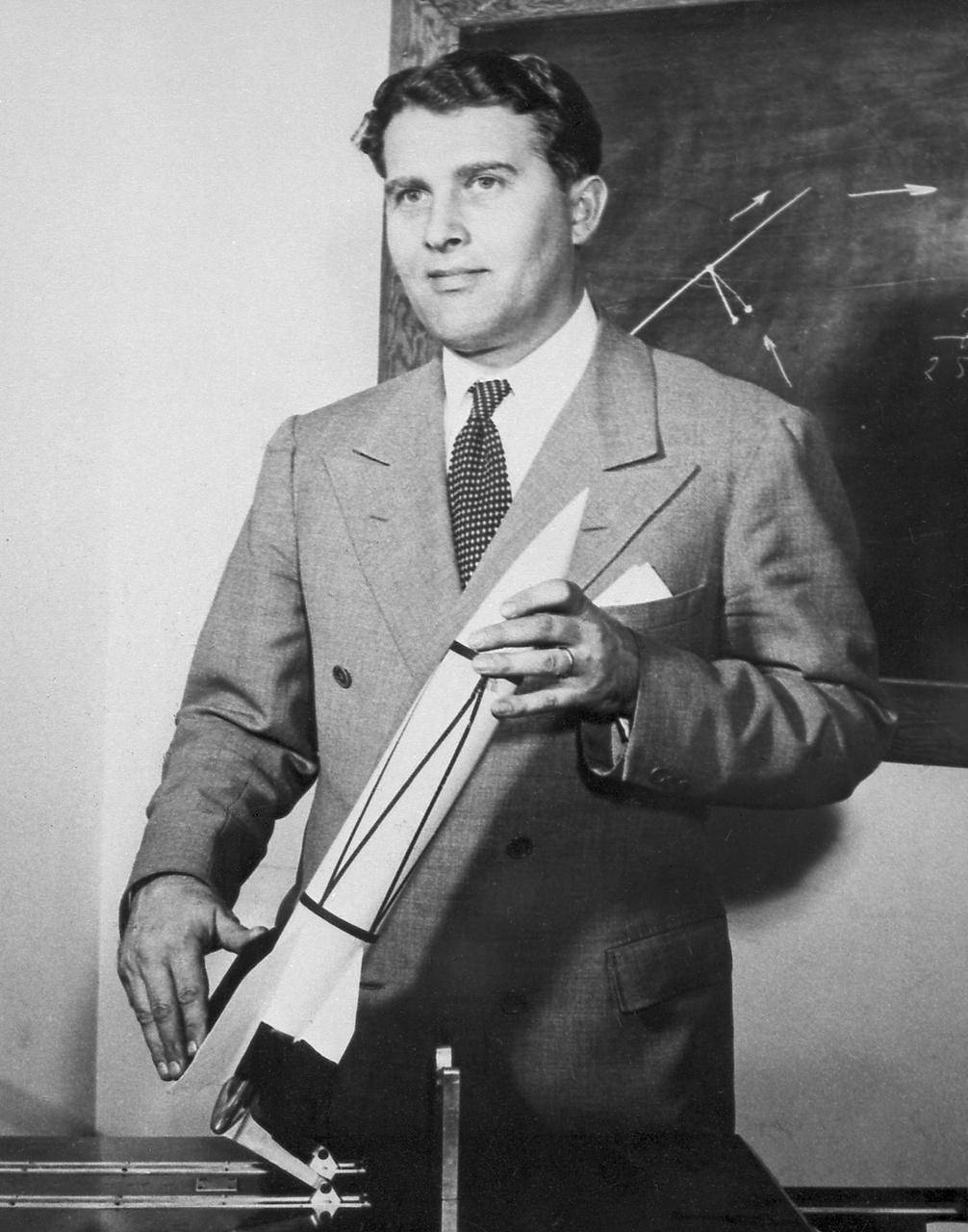
Dr. von Braun with a model of a V2 rocket.
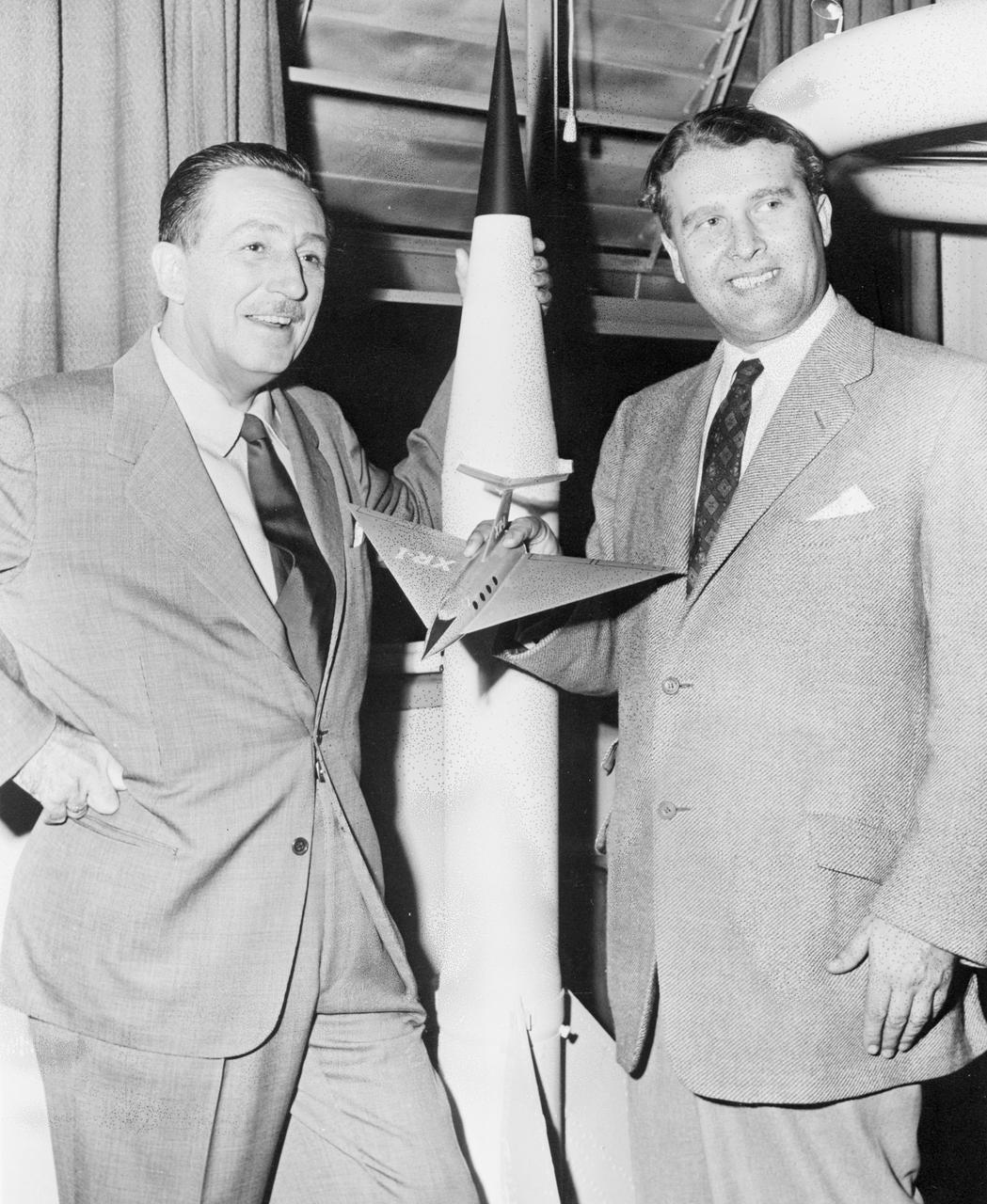
Marshall Center Director Dr. Wernher Von Braun is pictured with Walt Disney during a visit to the Marshall Space Flight Center in 1954. In the 1950s, Dr. Von Braun while working in California on the Saturn project, also worked with Disney studios as a technical director in making three films about Space Exploration for television. Disney's tour of Marshall in 1965 was Von Braun's hope for a renewed public interest in the future of the Space Program at NASA.
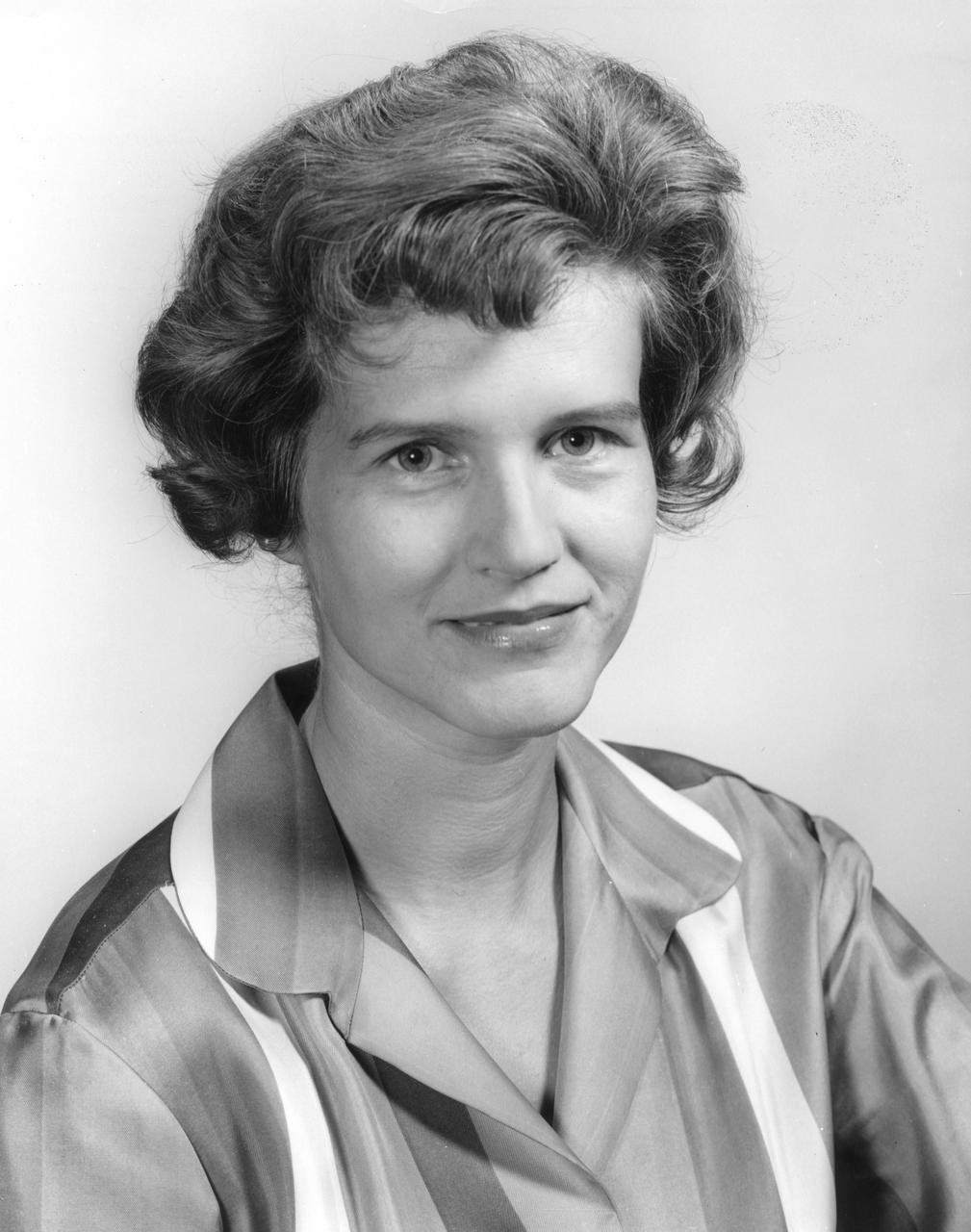
This is a portrait of Maria von Braun, wife of the famous Marshall Space Flight Center (MSFC) director Wernher von Braun. Her husband, Wernher, who led America to the Moon, served as MSFC’s first director from July 1, 1960 until January 27, 1970.
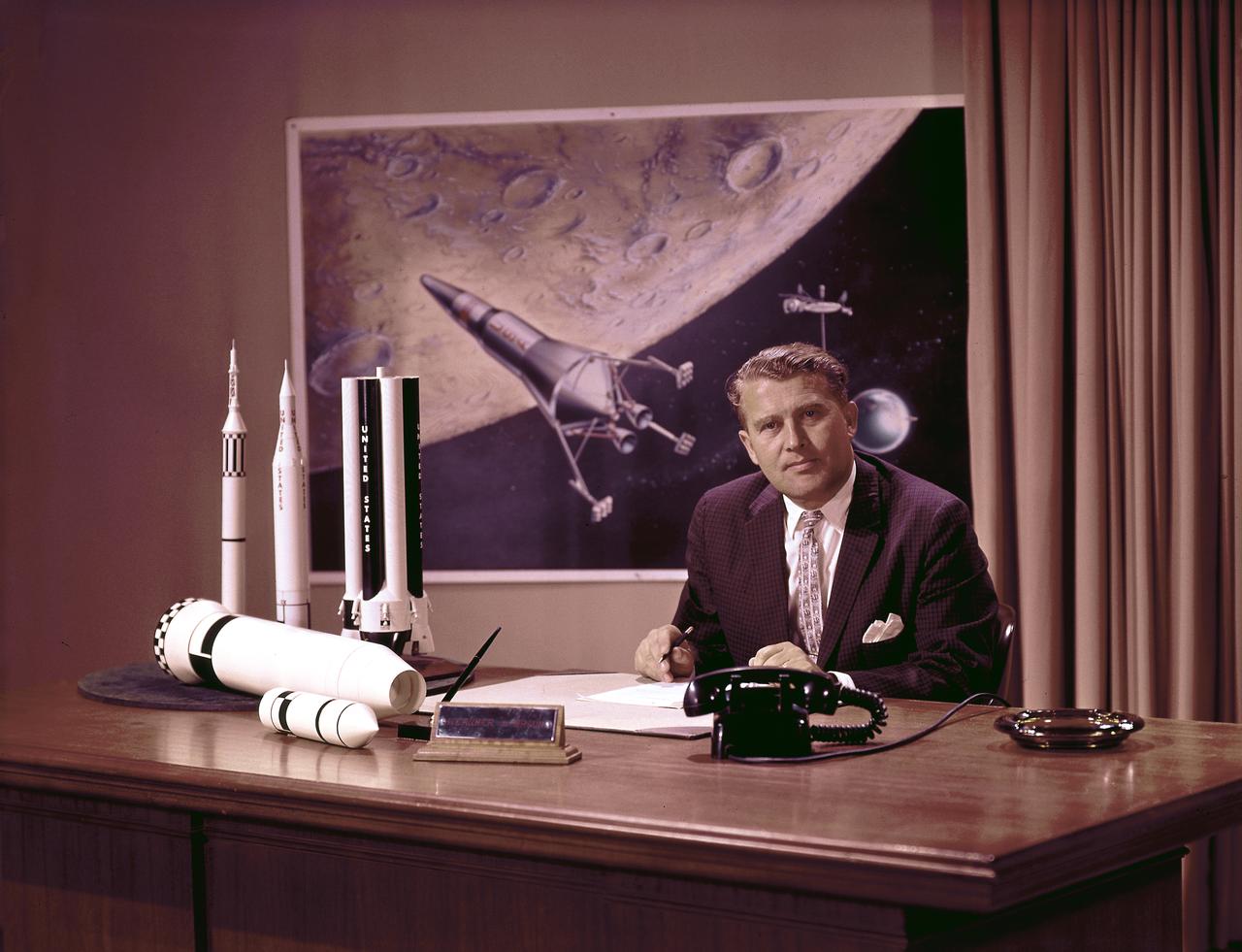
Photo of Marshall Space Flight Center (MSFC) Director Dr. Wernher von Braun at his desk with moon lander in background and rocket models on his desk. Dr. von Braun served as Marshall's first director from 1960 until his transfer to NASA Headquarters in 1970
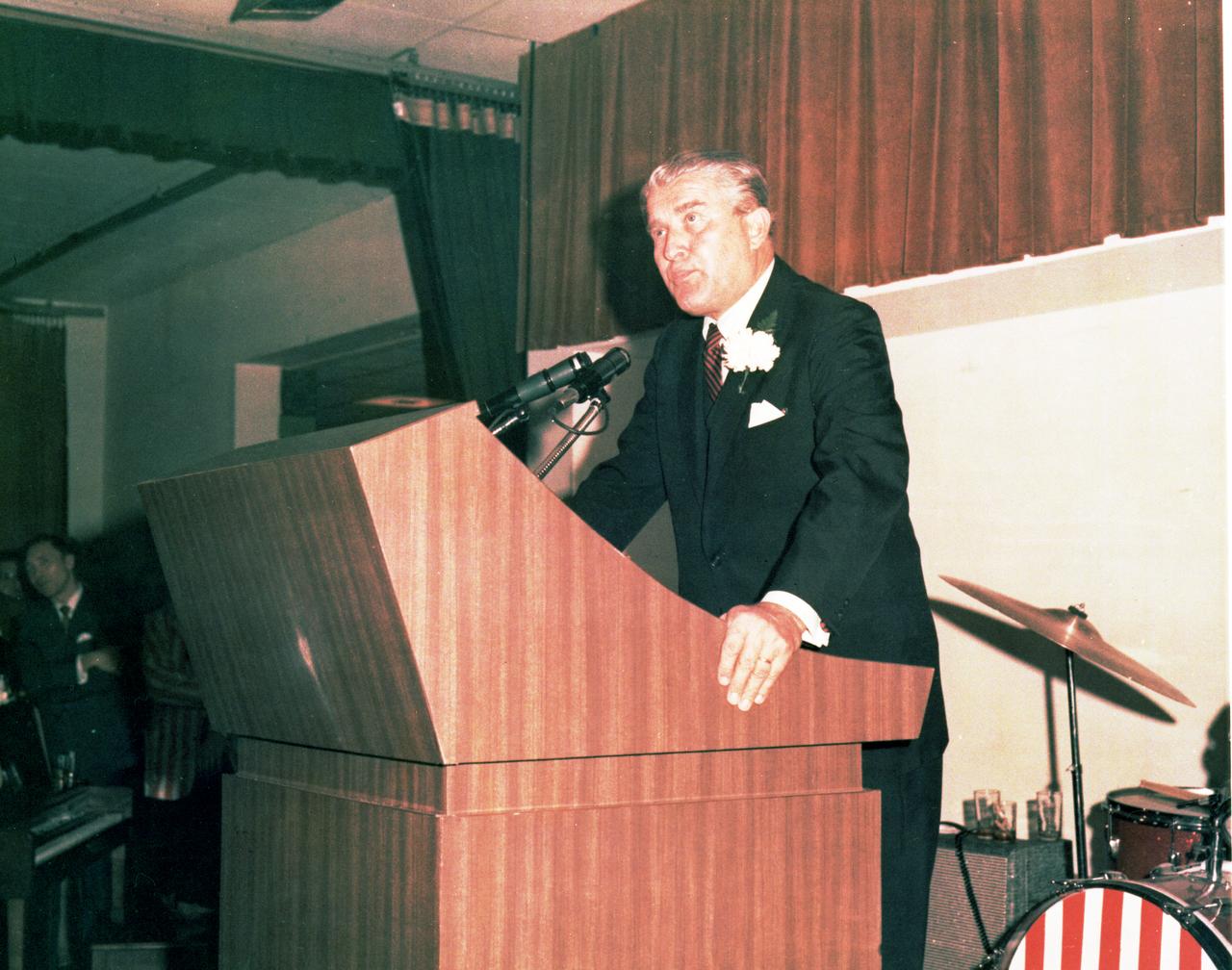
Dr. von Braun was noted for his public speeches and presentations. In this photograph, Dr. von Braun gave a speech during a series of events to honor him prior to his relocation to Washington where he was assigned to his new duty as NASA's Deputy Associate Administrator for Plarning at NASA Headquarters.
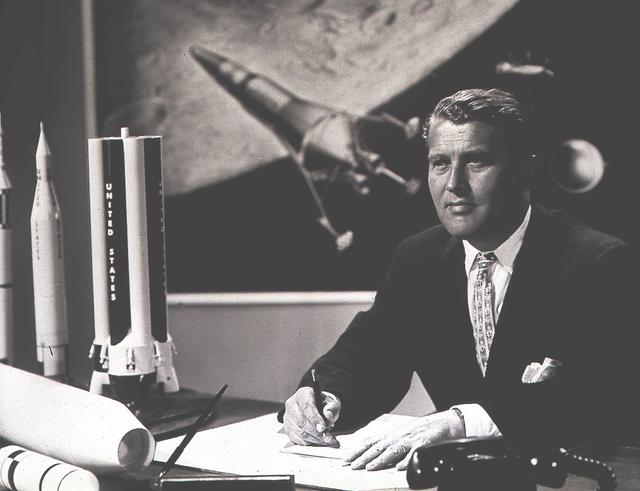
Dr. Wernher von Braun, Marshall's first Center Director (1960-1970), in his office with illustrations of rocket models behind him.
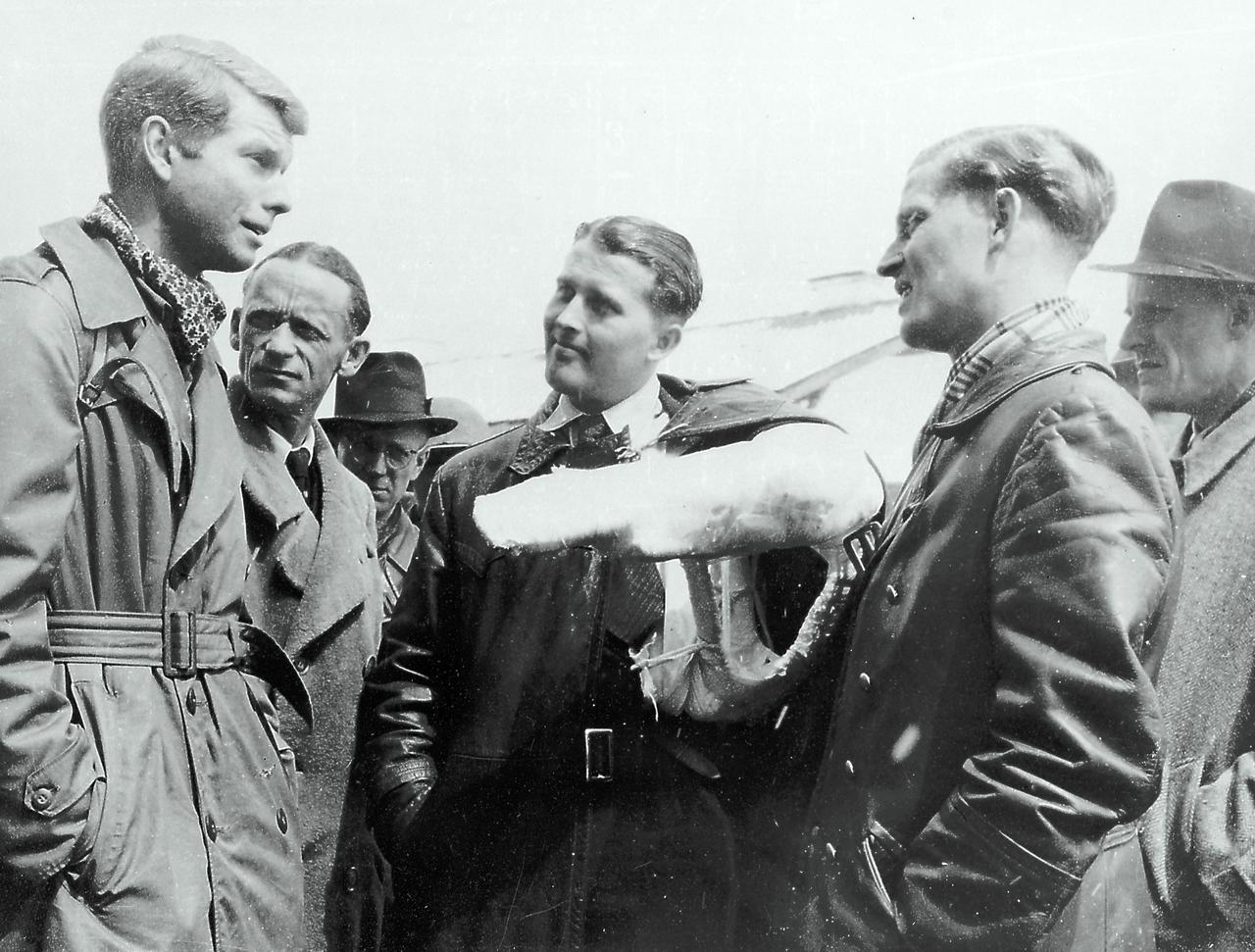
Dr. Wernher von Braun surrenders to U.S. Army Counterintelligence persornel of the 44th Infantry Division in Ruette, Bavaria on May 2, 1945. Left to right are Charles Stewart, CIC agent; Dr. Herbert Axster; Dieter Huzel; Dr. von Braun (arm in cast); Magnus von Braun (brother); and Hans Lindenberg.
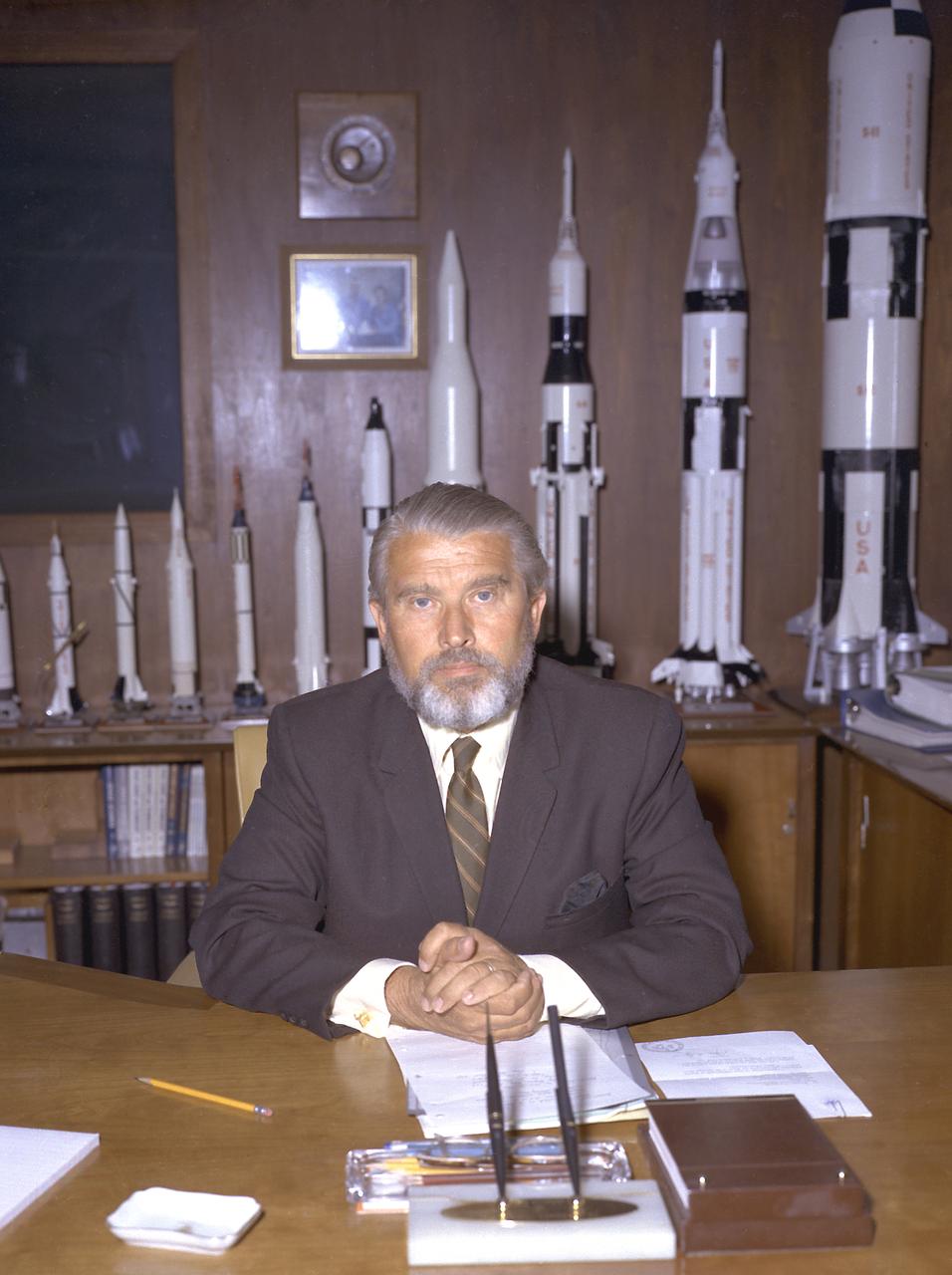
Upon return from a Bahamas vacation, Dr. von Braun pulled a practical joke upon his associates by sporting a beard.
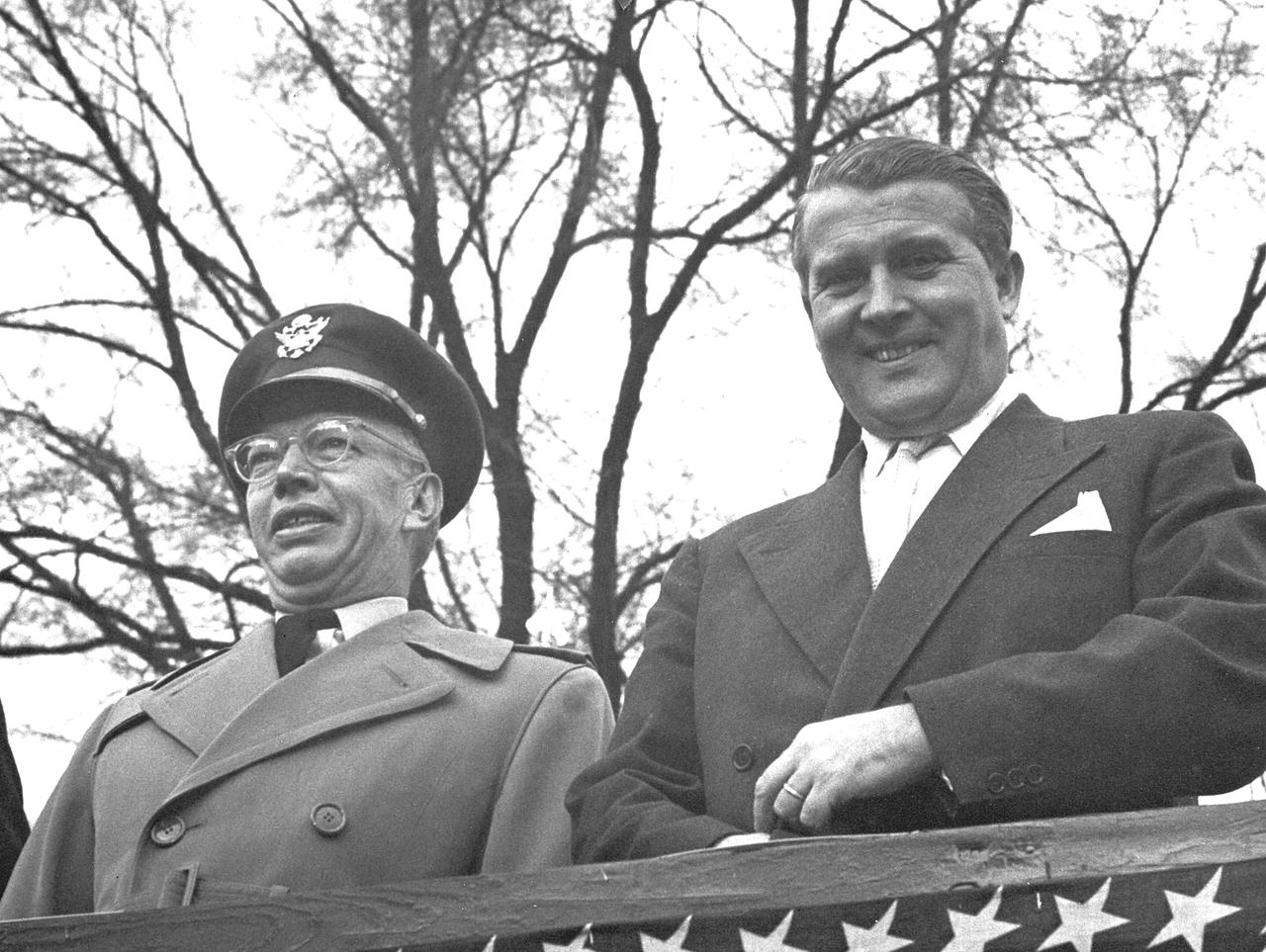
This photograph was taken about 1960 and shows Dr. von Braun viewing a parade with Major General John Barclay.
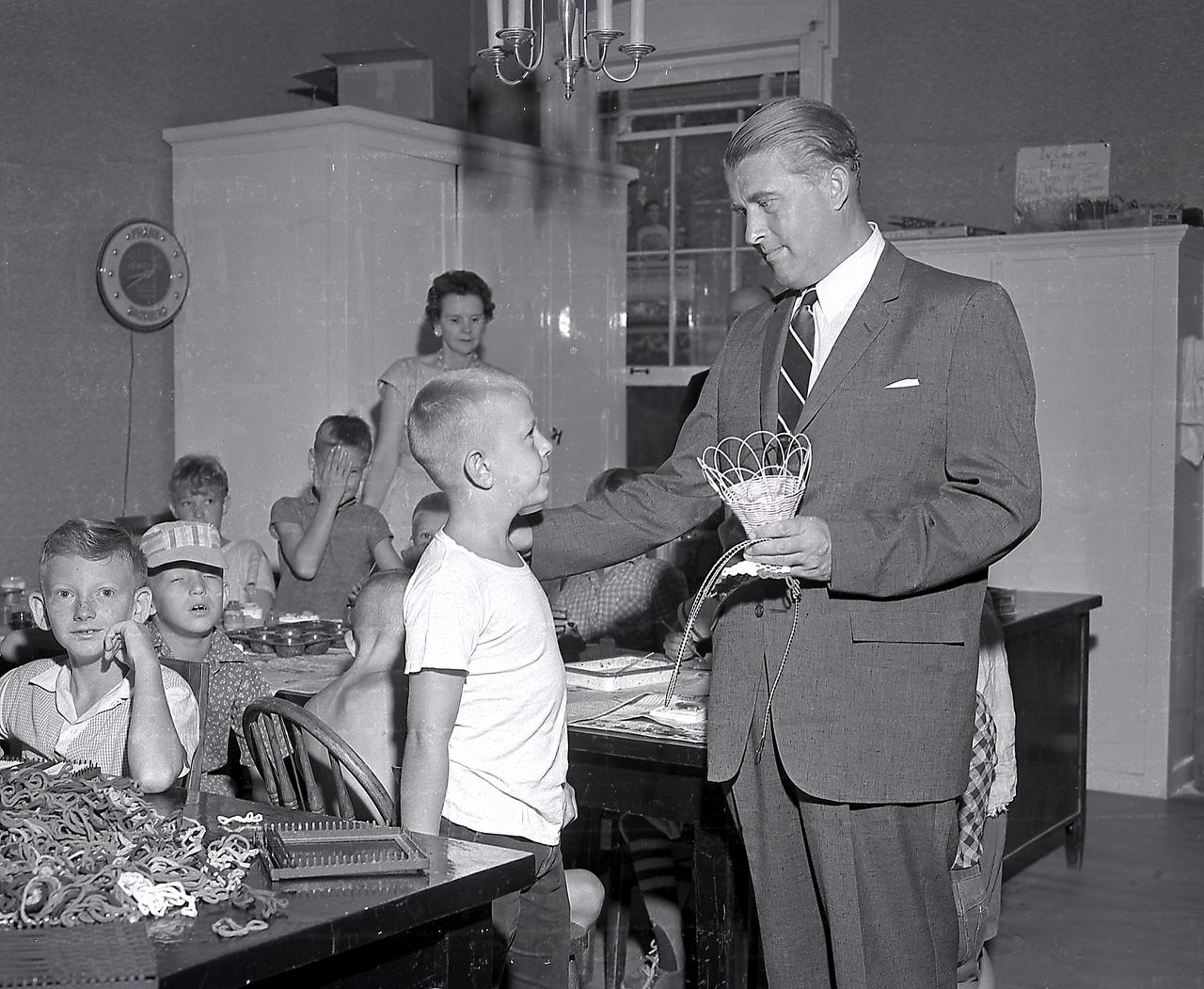
Dr. Wernher von Braun during his visit to the Huntsville Boy's Club on August 14, 1961.
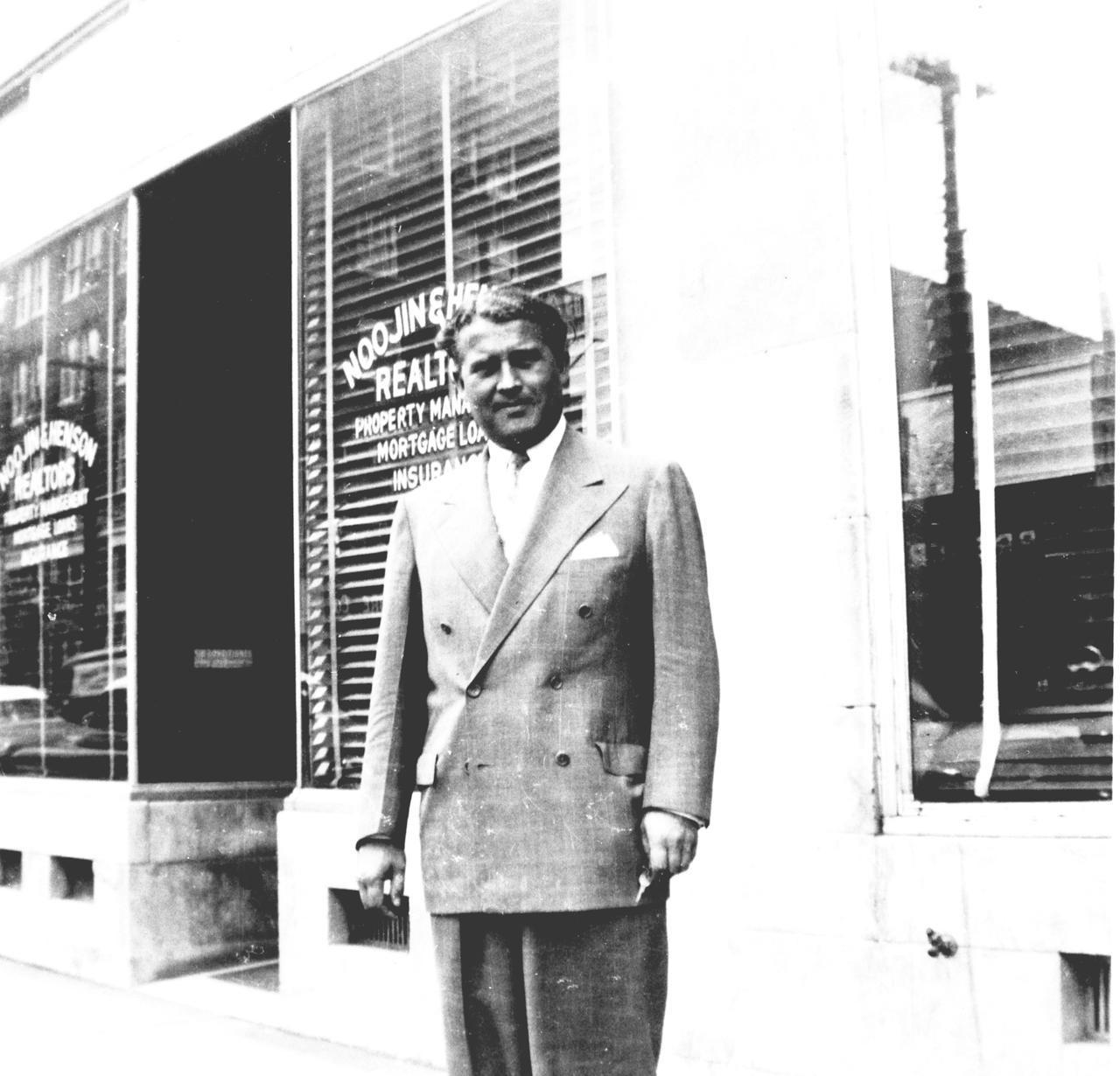
This snapshot, dated November 1957, shows Dr. von Braun in downtown Huntsville, Alabama.

Dr. Wernher Von Braun and other dignitaries at commencement exercises at Wagner College, Staten Island, N.Y.
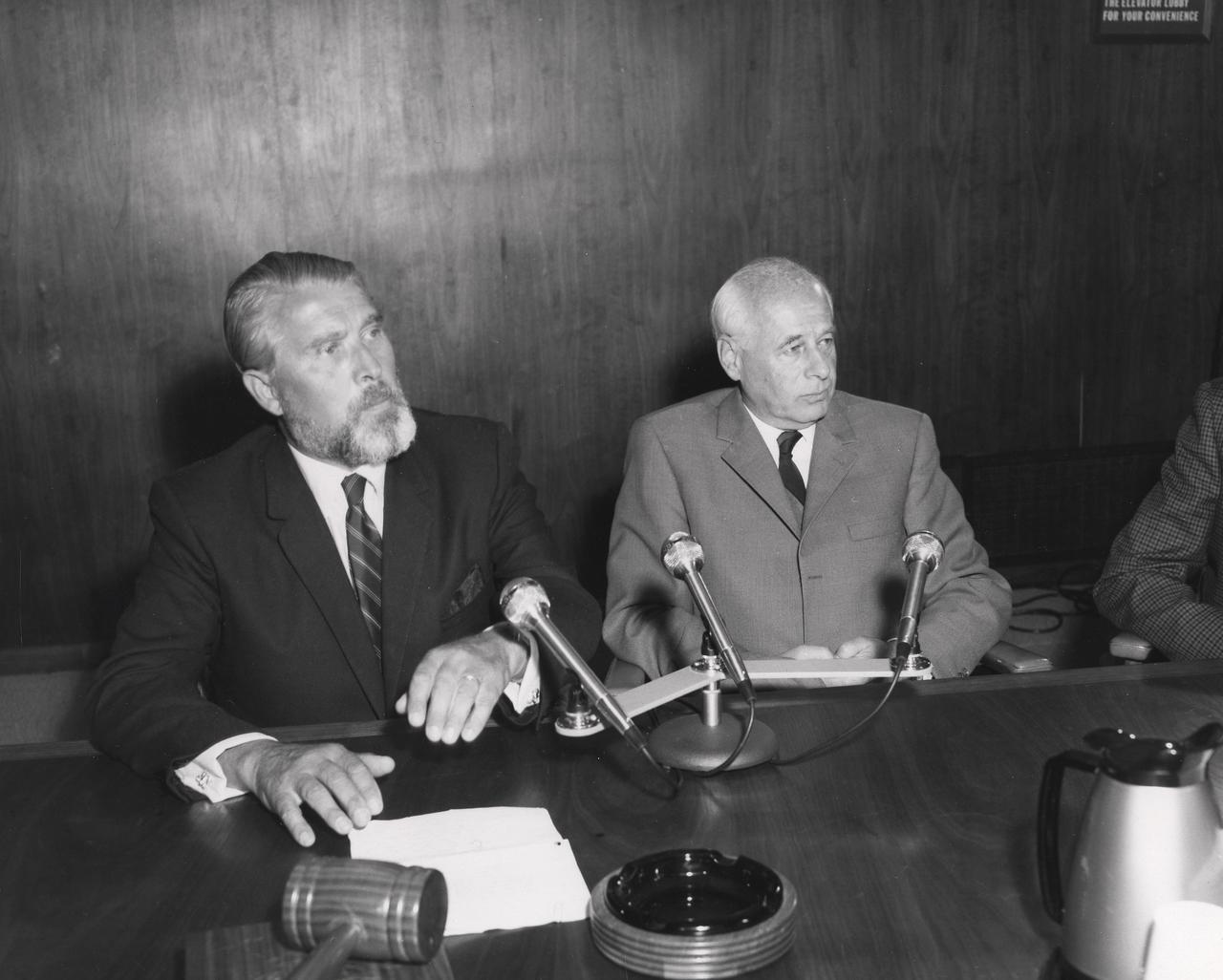
This is a photograph of Dr. von Braun and Dr. Eberhard Rees at a press conference in 1970 at the Marshall Space Flight Center.

Dr. von Braun became Director of the NASA Marshall Space Flight Center on July 1, 1960.
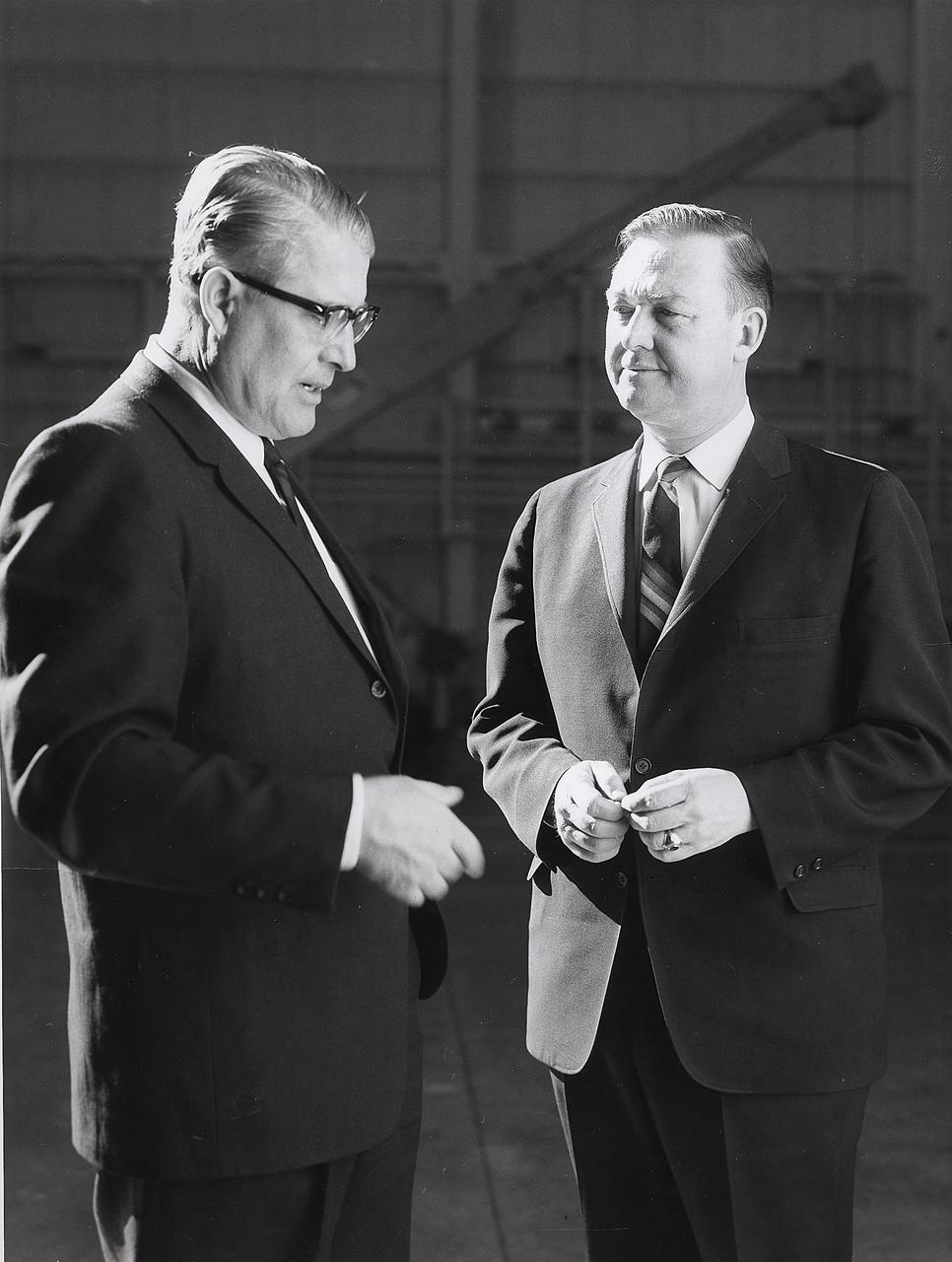
This photograph is dated March 2, 1968. Dr. von Braun is shown talking with U.S. Representative Armistead Selden of Alabama.
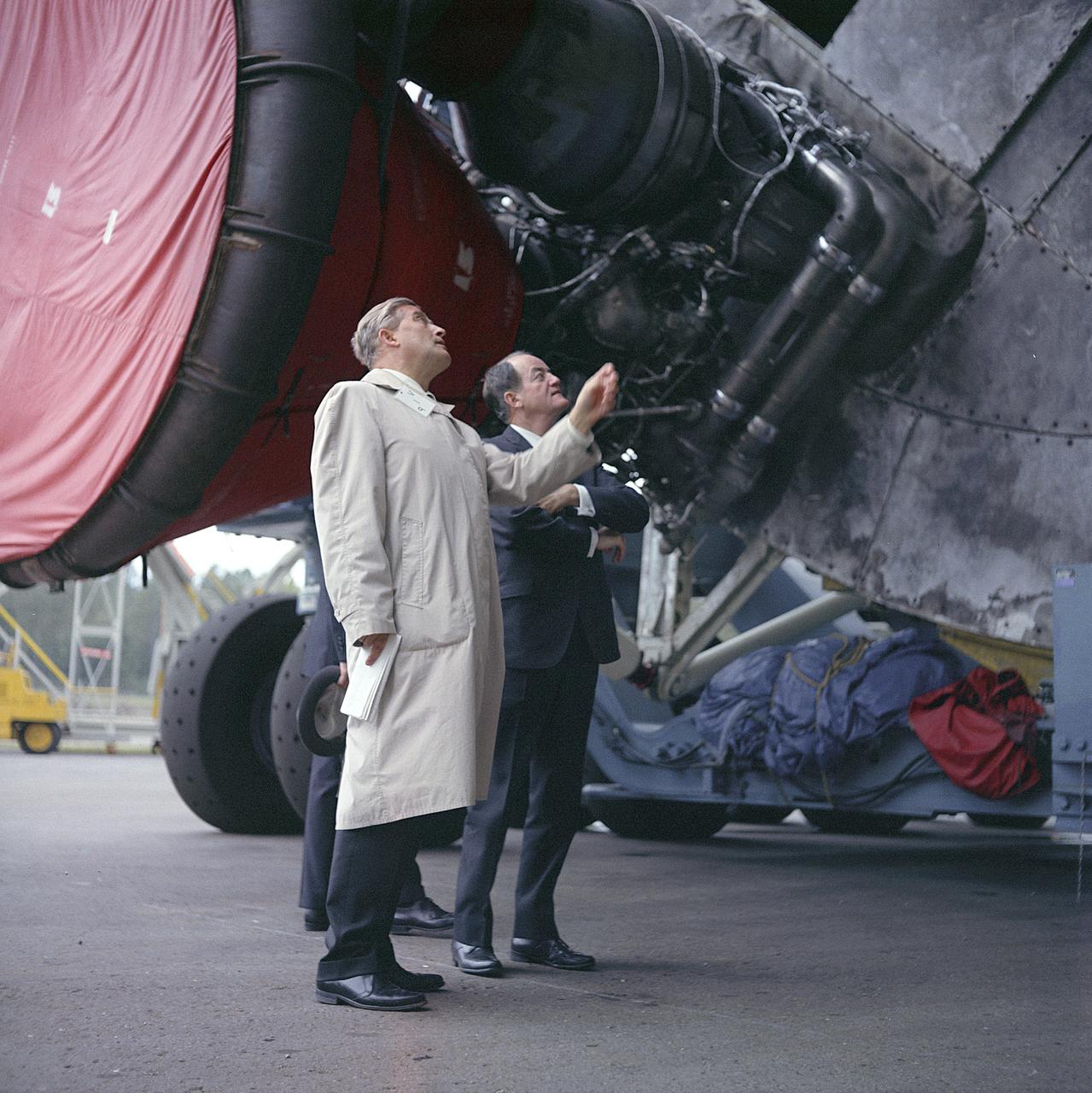
Vice President Hubert Humphrey Dr. von Braun during the Vice President's visit to the Marshall Space Flight Center (MSFC) on May 22, 1967.
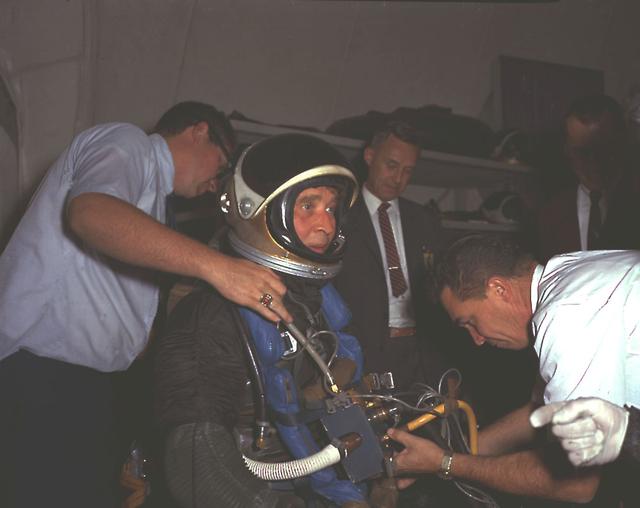
Dr. Wernher von Braun, Marshall Space Flight Center (MSFC) Director, was suited with a space suit and diving equipment at MSFC Neutral buoyancy Simulator (NBS).
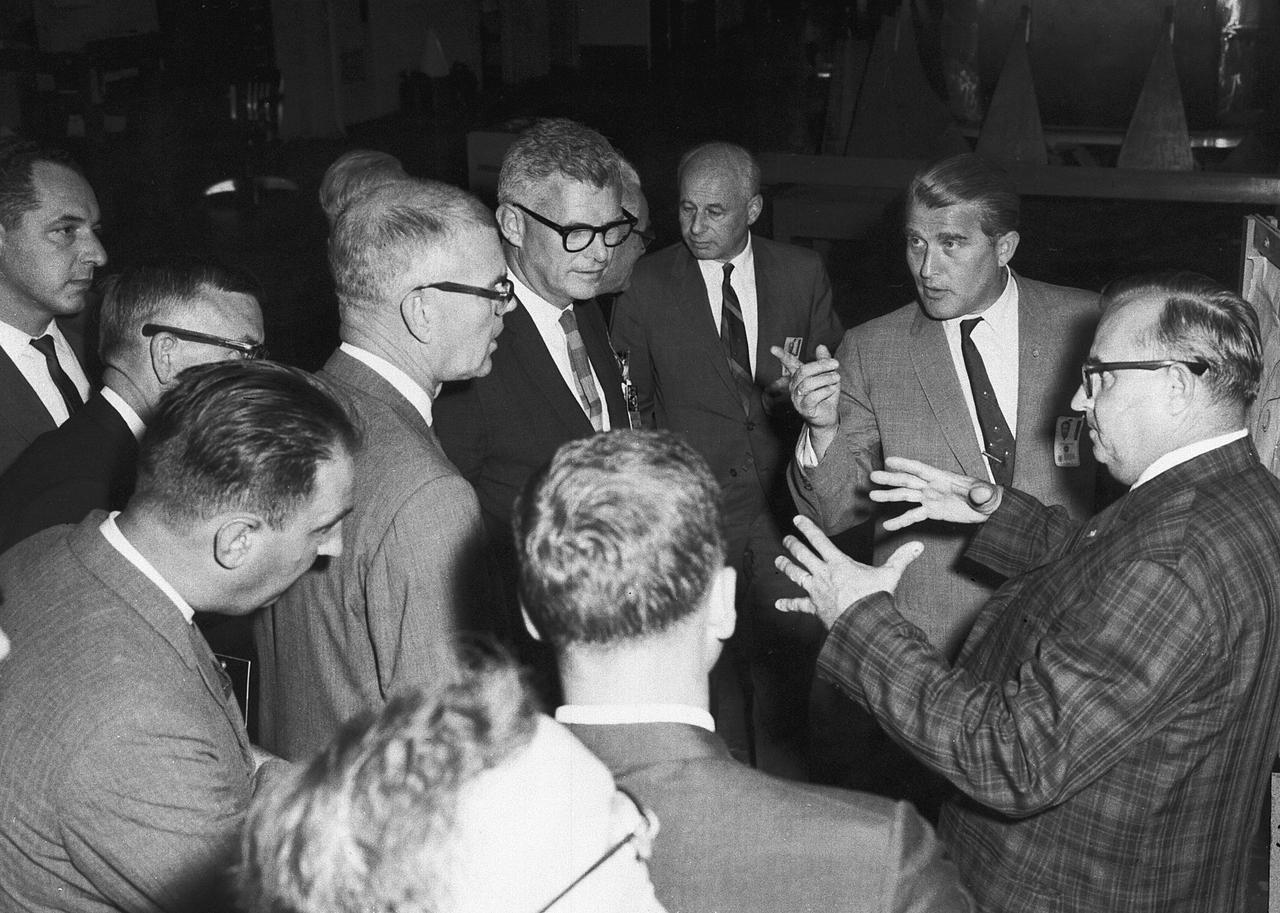
A group of NASA officials, headed by Associate Administrator Robert Seamans, toured the Marshall Space Flight Center with Dr. von Braun in 1963.
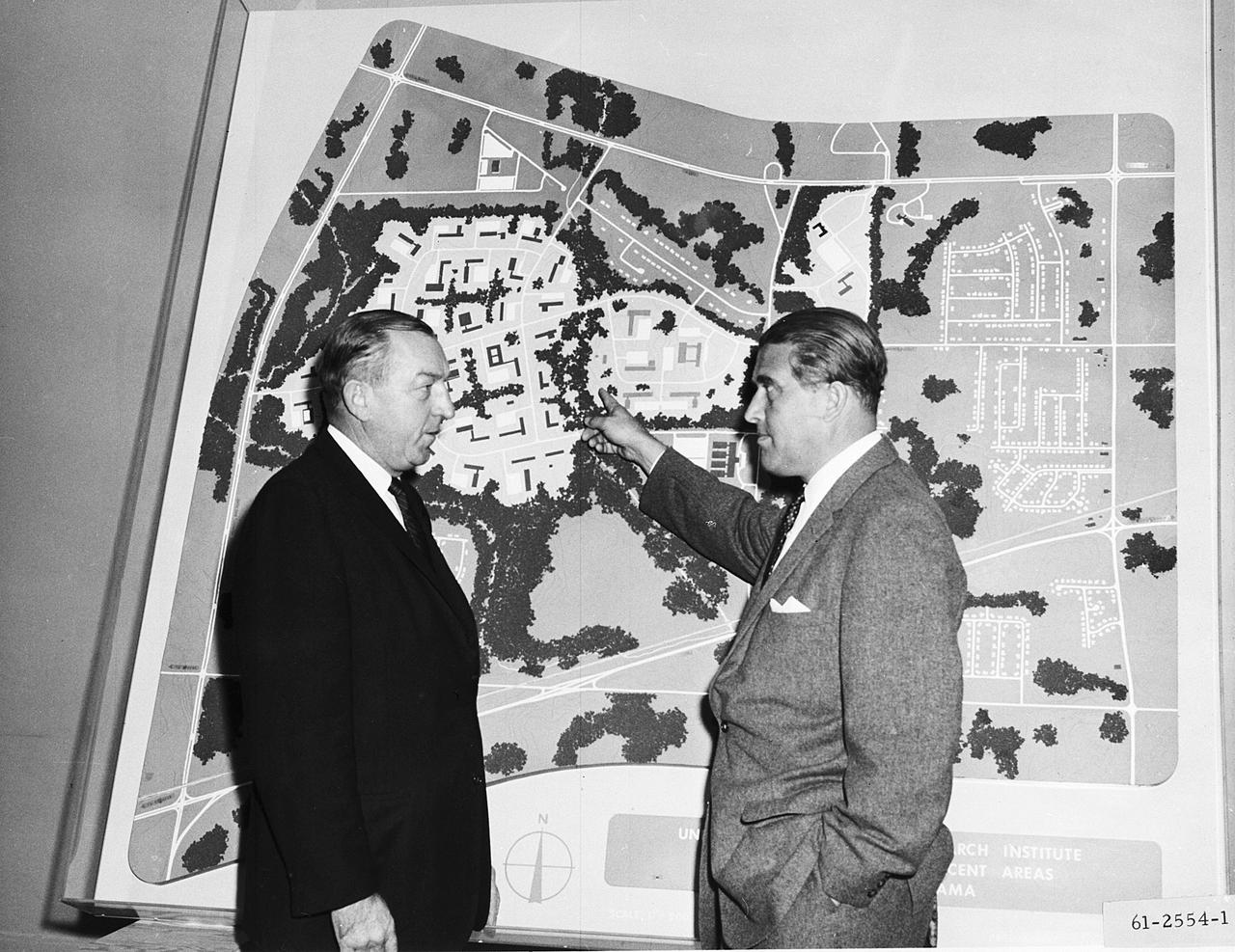
This 1961 photograph shows Dr. von Braun and Alabama Congressman Robert Jones before a huge map illustrating the layout for a Research Institute at the University of Alabama in Huntsville.
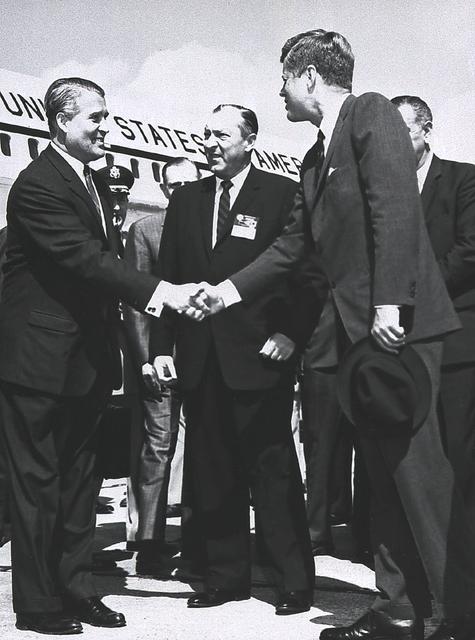
This is a photograph of Dr. von Braun greeting President Kennedy upon his arrival at the Marshall Space Flight Center on September 12, 1962.
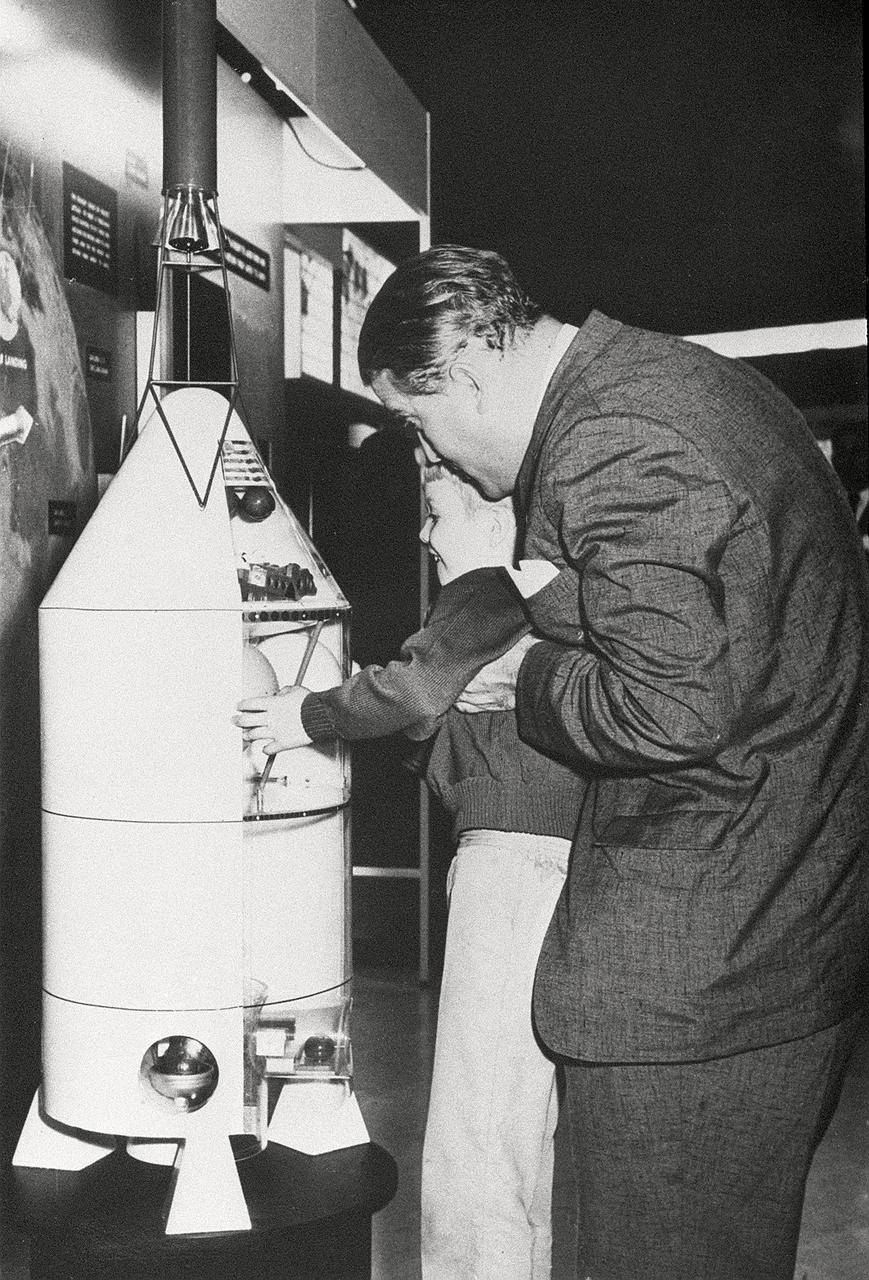
Dr. von Braun always promoted an increased emphasis on education in American culture. He is shown in this photograph with a young boy looking at a space-related exhibit.
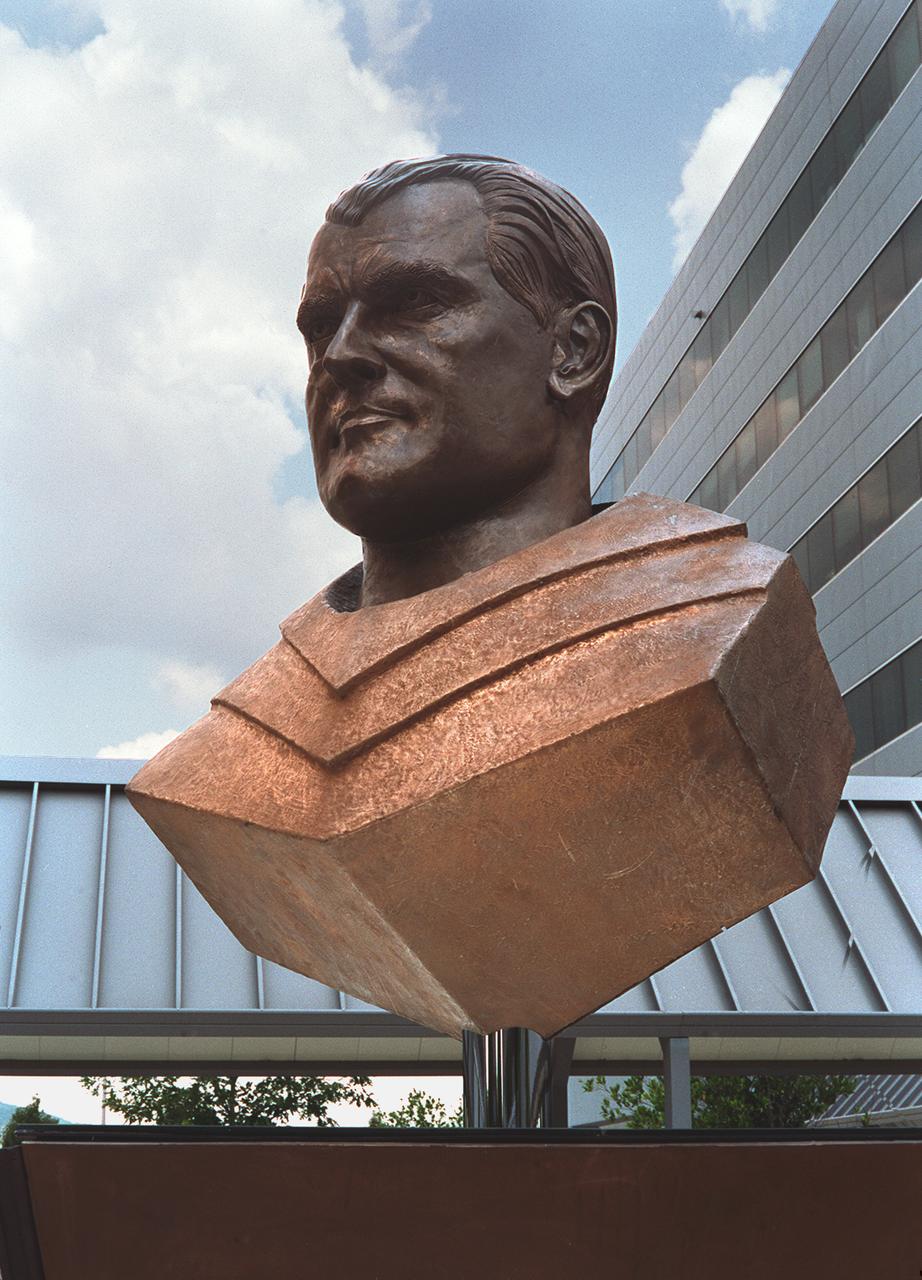
In a ceremony honoring Dr. Wernher von Braun, who served as Marshall Space Flight Center Director from 1960 to 1970, Marshall officials renamed the 4200 Building Complex as the Wernher von Braun Office Complex and unveiled a bust of the former director. This photograph is a close-up of the bust in the courtyard. The sculptor of the bust is a MSFC employee, Jack Hood.
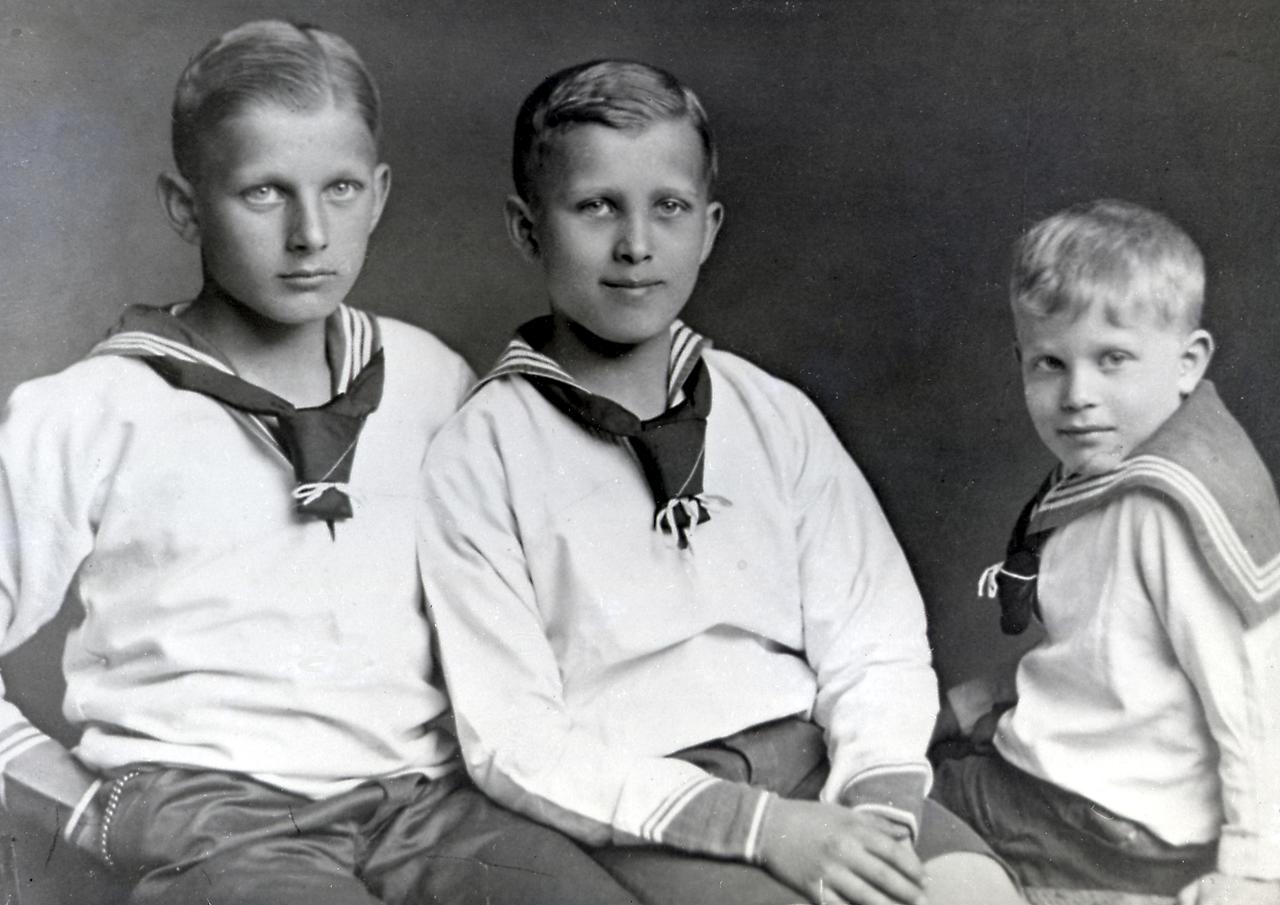
This is a childhood picture of Dr. von Braun (center) with his brothers. Dr. Wernher von Braun was born in Wirsitz, Germany, March 23, 1912. His childhood dreams of marned space flight were fulfilled when giant Saturn rockets, developed under his direction at NASA's Marshall Space Flight Center, boosted the manned Apollo spacecraft to the Moon. His life was dedicated to expanding man's knowledge through the exploration of space.

In a ceremony honoring Dr. Wernher von Braun, who served as Marshall Space Flight Center Director from 1960 to 1970, Marshall officials renamed the 4200 Building Complex as the Wernher von Braun Office Complex and unveiled a bust of the former director. This photograph is a close-up of the bust in the courtyard. The sculptor of the bust is a MSFC employee, Jack Hood.
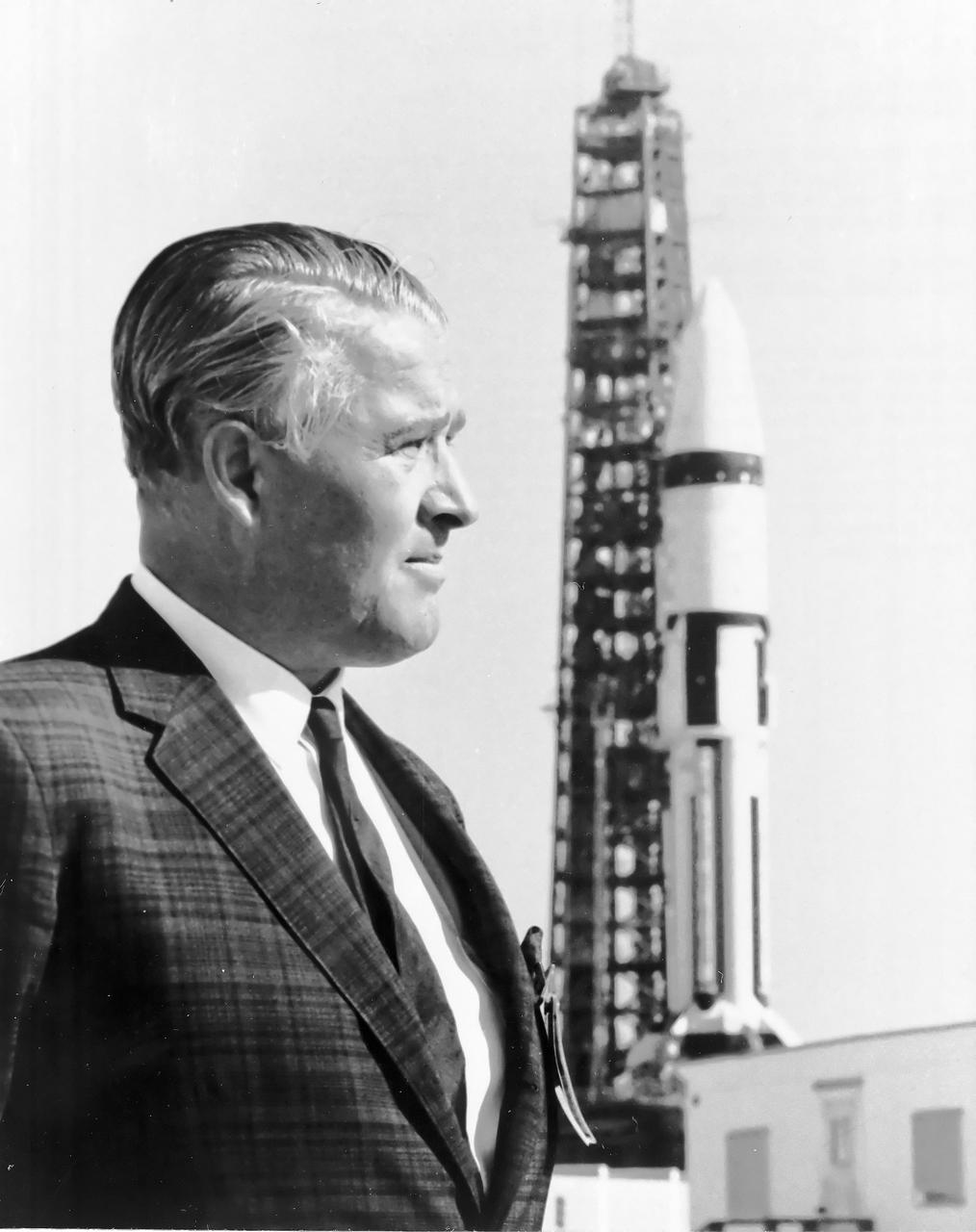
Dr. Wernher Von Braun, stands in front of a Saturn IB Launch Vehicle at Kennedy Space Center (KSC). Dr. Von Braun was Marshall's first Center Director (1960-1970). Under his leadership Marshall was responsible for the development of the Saturn rockets, the Skylab project and getting the United States into Space and landing on the moon with the Apollo missions.
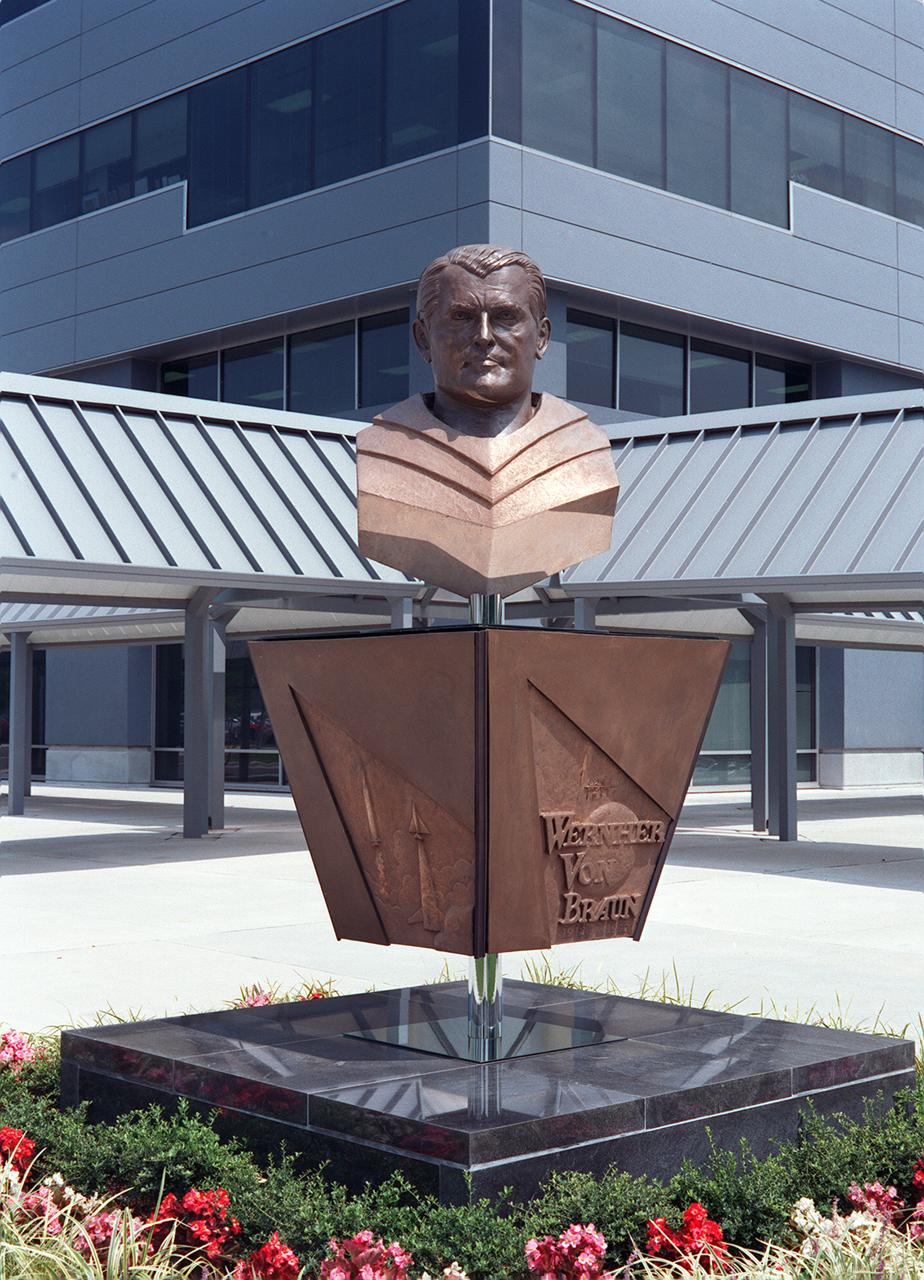
In a ceremony honoring Dr. Wernher von Braun, who served as Marshall Space Flight Center Director from 1960 to 1970, Marshall officials renamed the 4200 Building Complex as the Wernher von Braun Office Complex and unveiled a bust of the former director. This photograph is a close-up of the bust in the courtyard. The sculptor of the bust is a MSFC employee, Jack Hood.
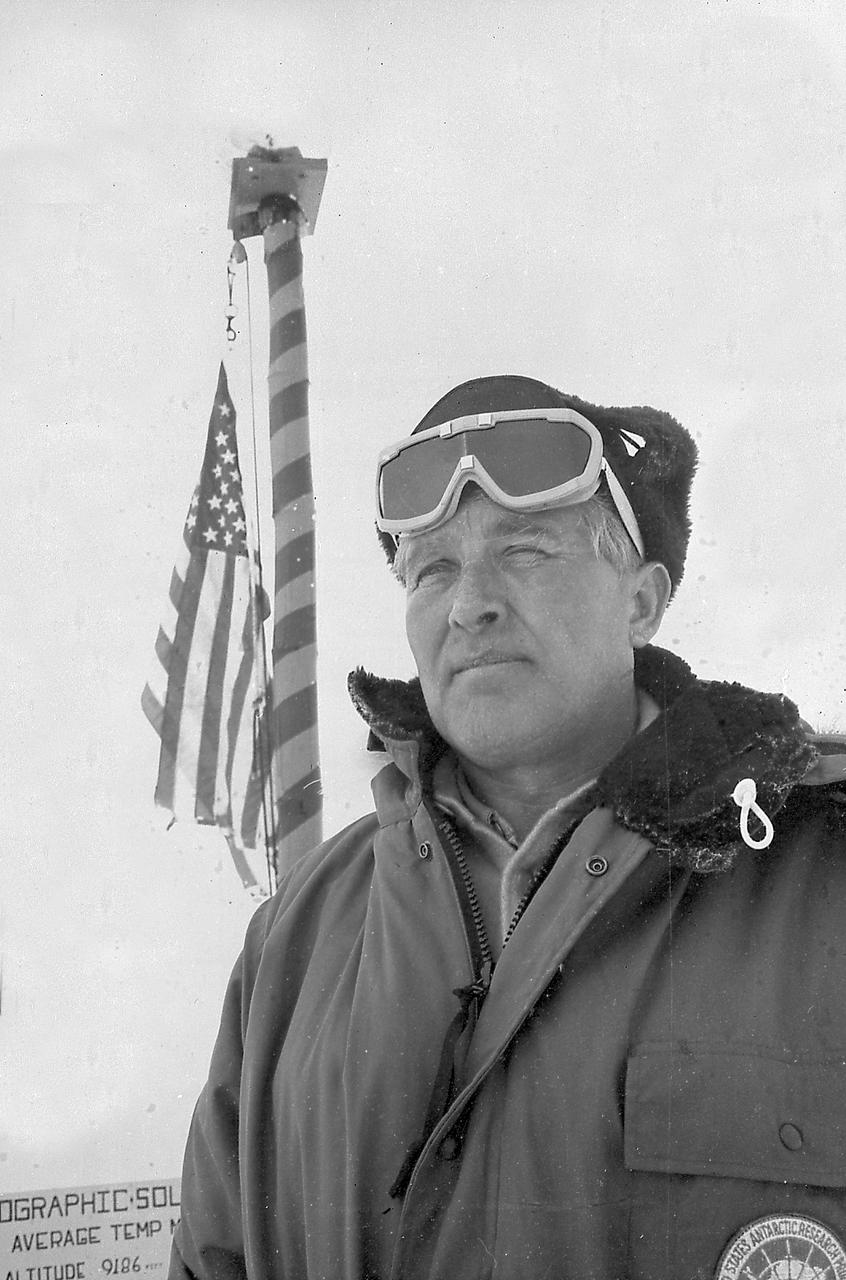
Dr. von Braun, Director of the Marshall Space Flight Center (MSFC), at the South Pole Antarctica. January 7, 1967.
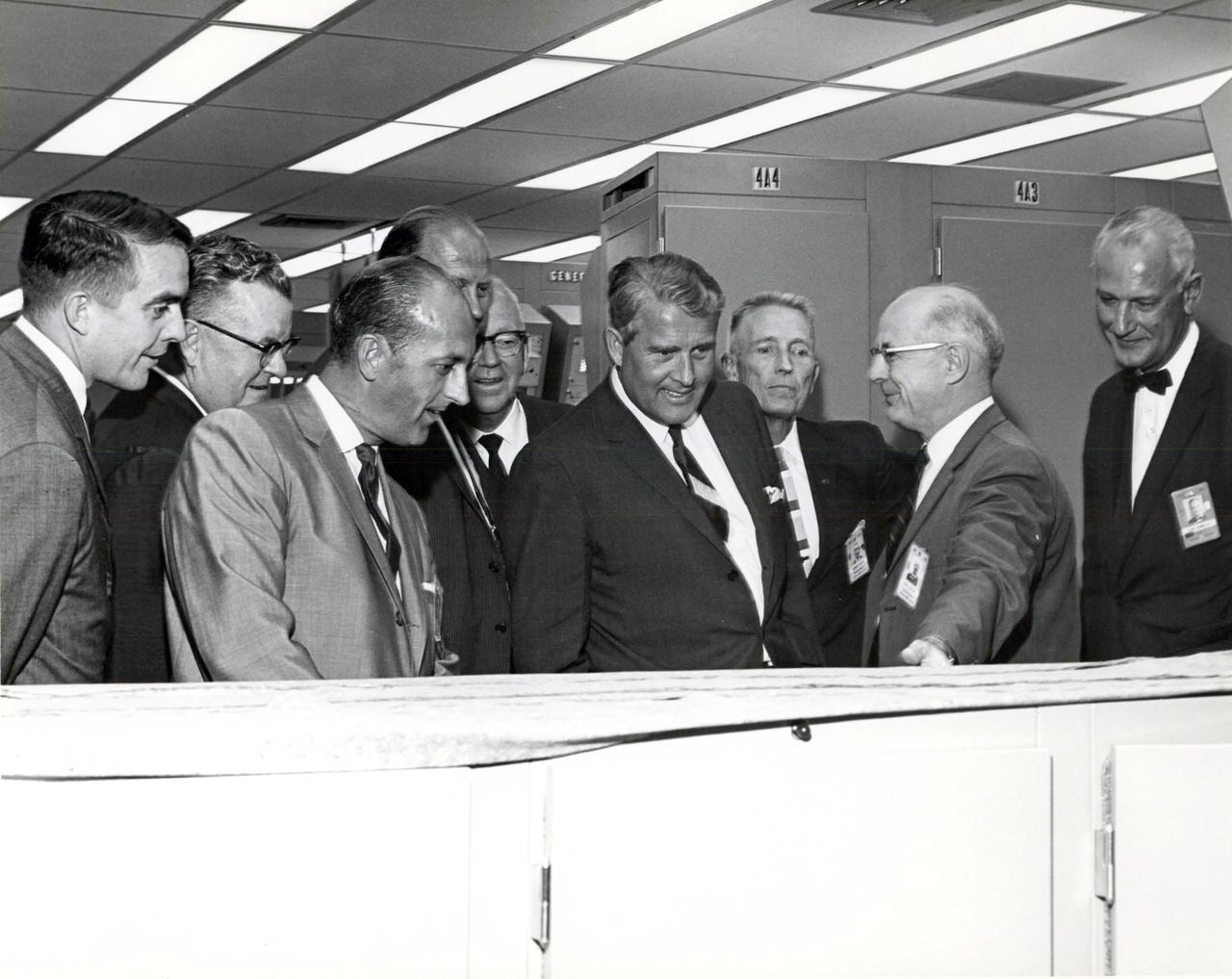
Dr. Wernher Von Braun attending commencement exercises of Wagner College, Staten Island, N.Y.
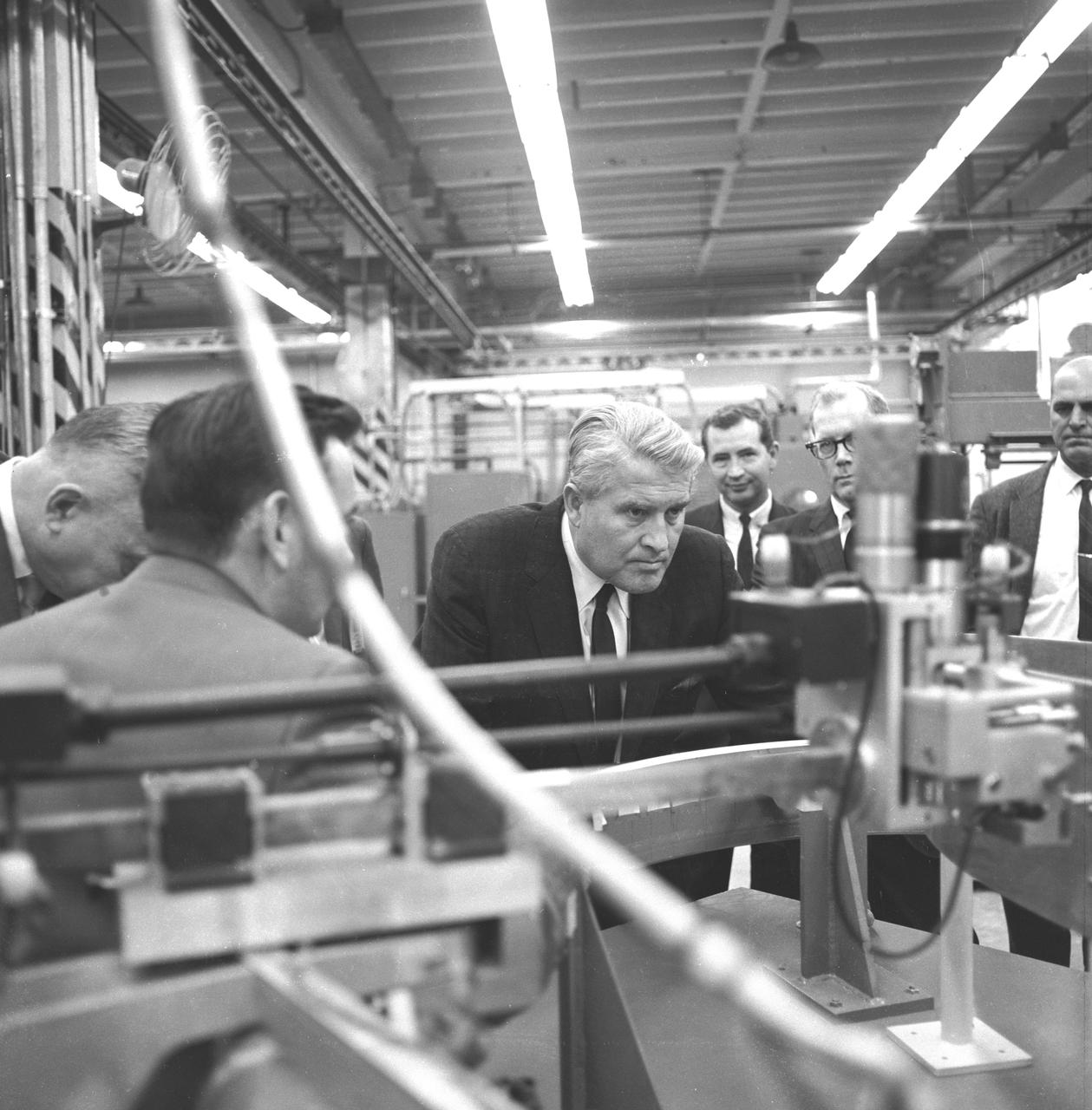
Dr. von Braun examining a welding device during the tour of the MSFC Manufacturing and Engineering (ME) Laboratory on October 17, 1967.
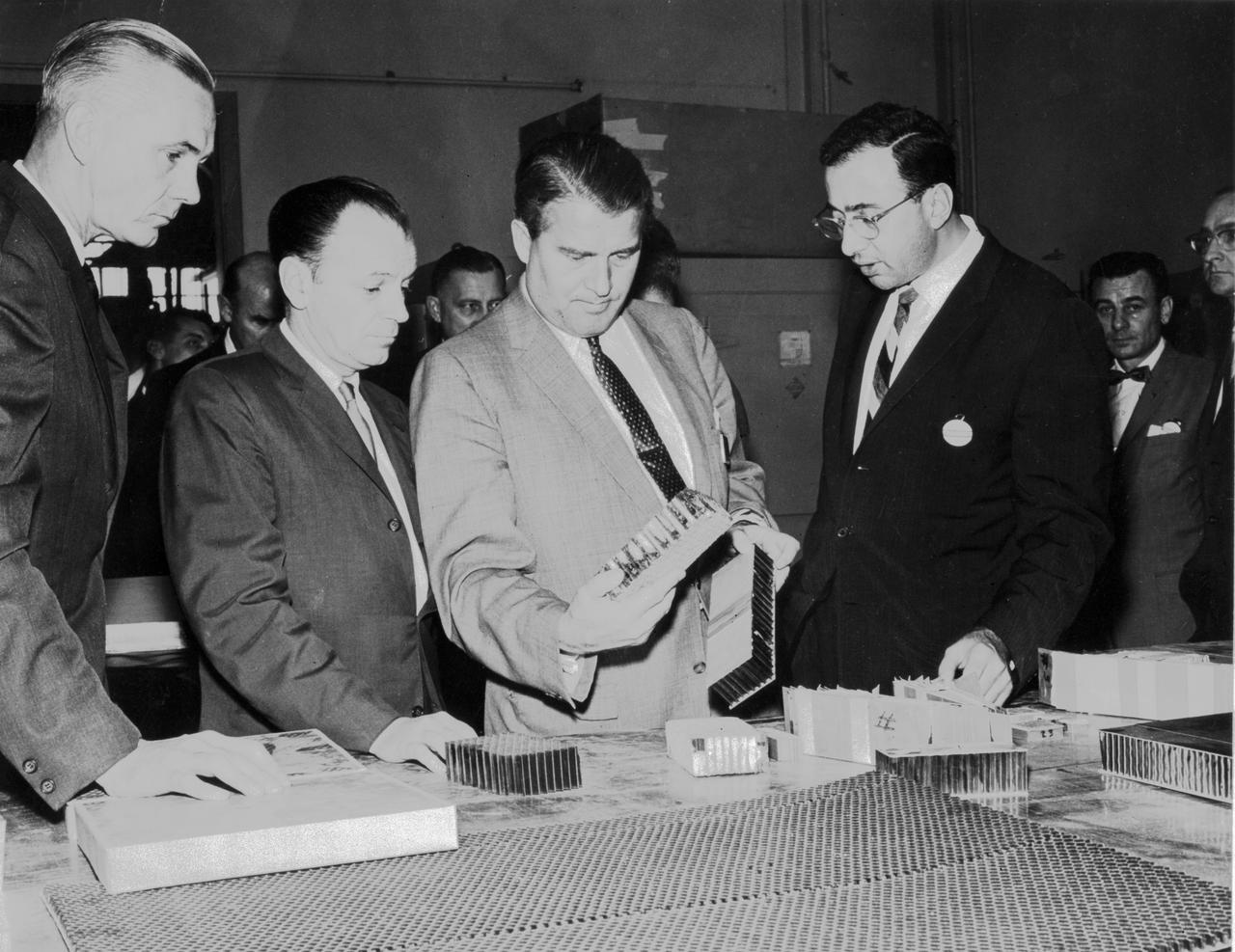
This is a photograph of Dr. von Braun, taken in 1961, visiting North American Aviation's Space and Information Systems Division in Downey, California.
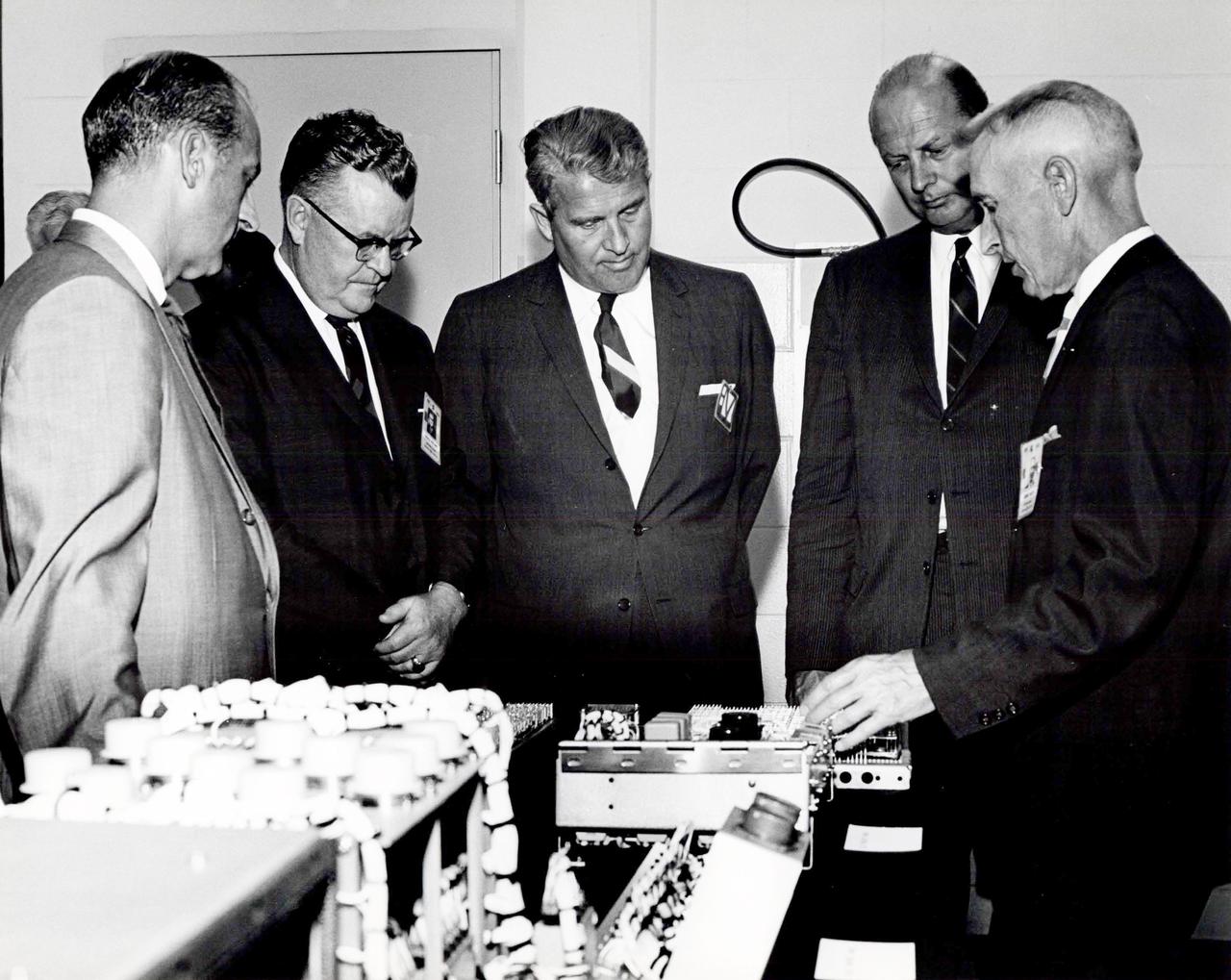
Dr. Wernher Von Braun shown after commencement exercises at Wagner College, Staten Island, N.Y.
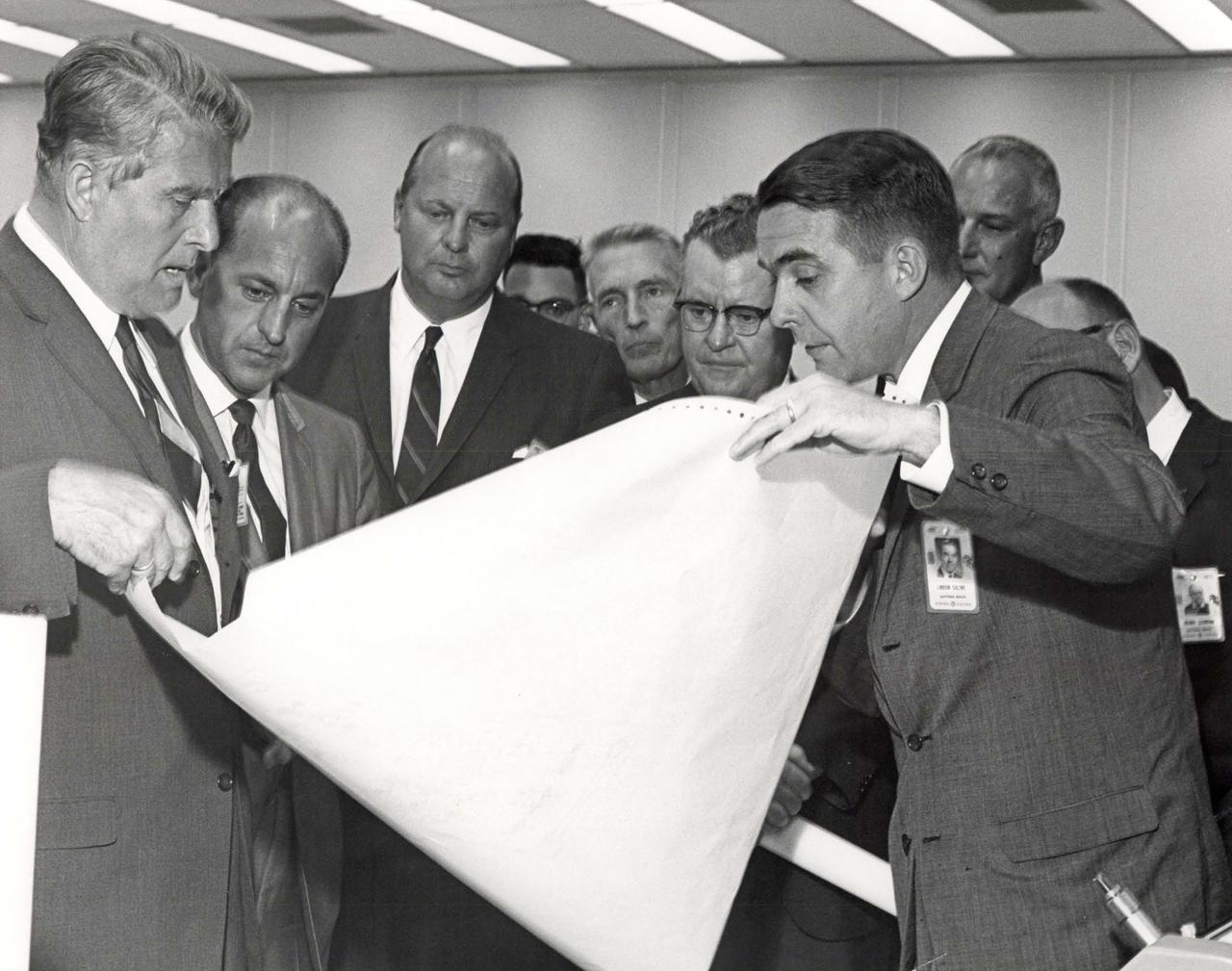
Dr. Wernher Von Braun photographed during his visit to Wagner College, Staten Island, N.Y. for commencement exercises.
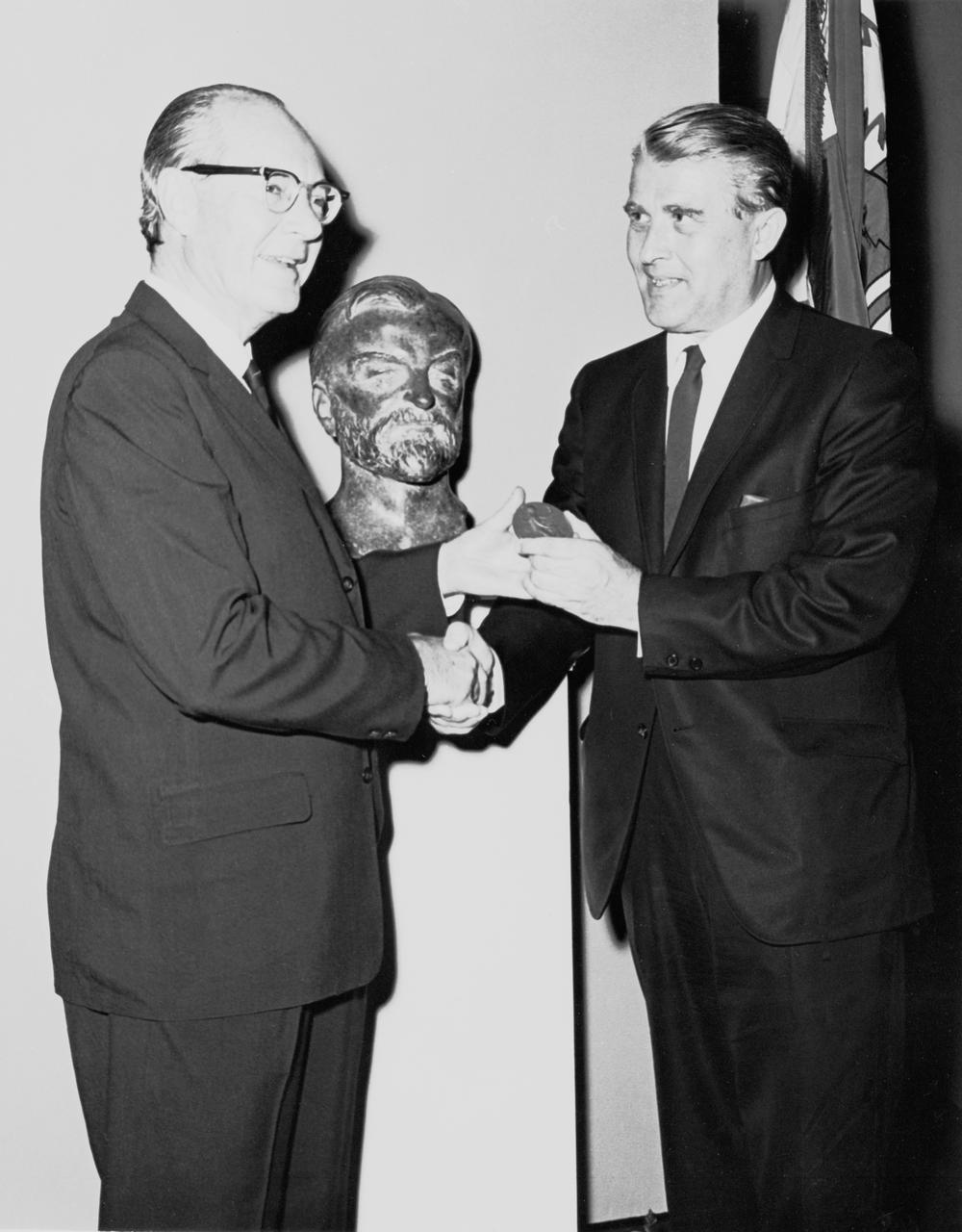
Throughout his career, Dr. von Braun received numerous awards for his contributions to space flight. On June 6, 1967, Dr. Fred L. Whipple, Director of the Smithsonian Astrophysical Observatory, presented Dr. von Braun with the Smithsonian Langley Medal.
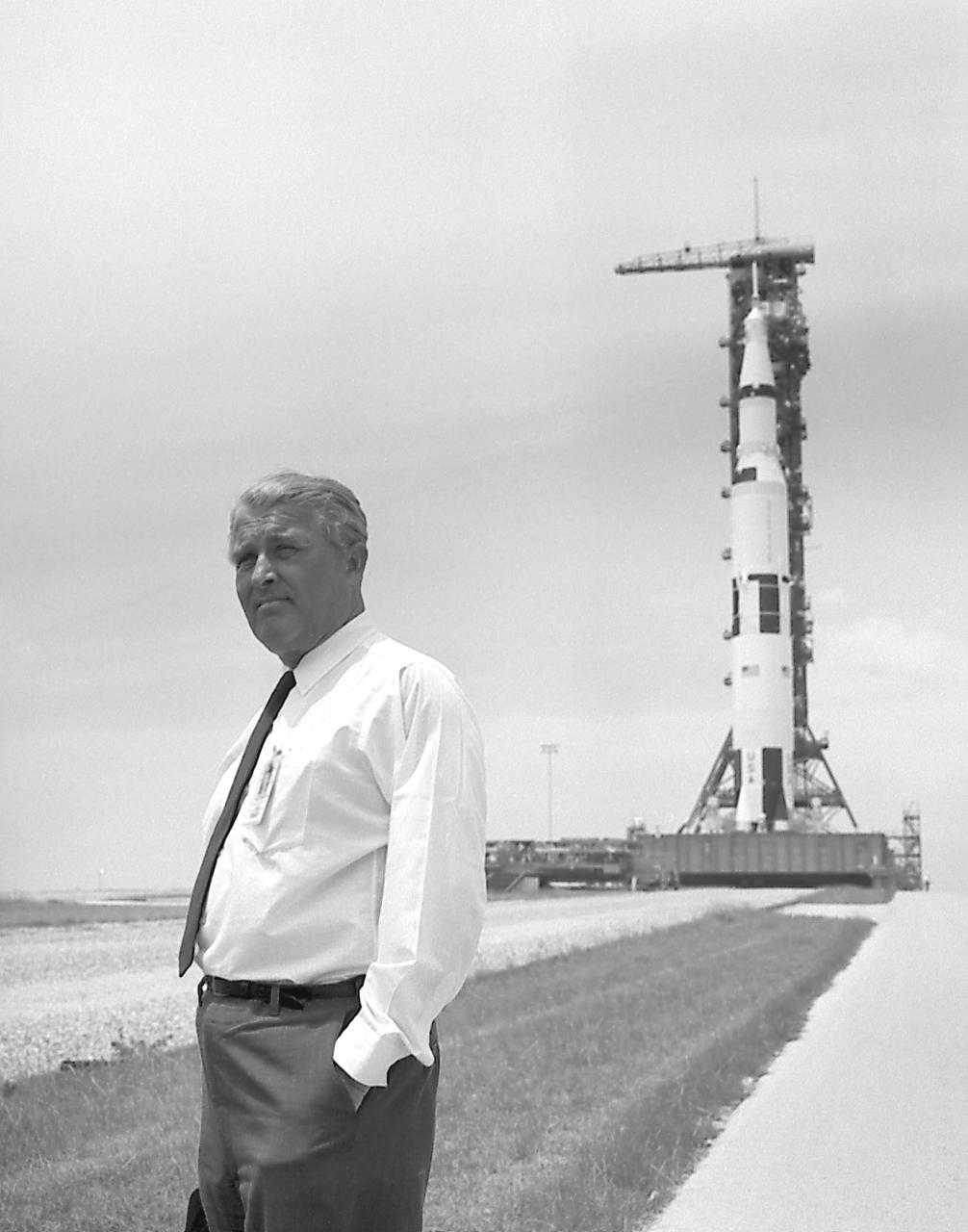
Dr. von Braun pauses in front of the Saturn V vehicle being readied for the historic Apollo 11 lunar landing mission at the Kennedy Space Center (KSC). The Saturn V vehicle was developed by the Marshall Space Flight Center (MSFC) under the direction of Dr. von Braun.
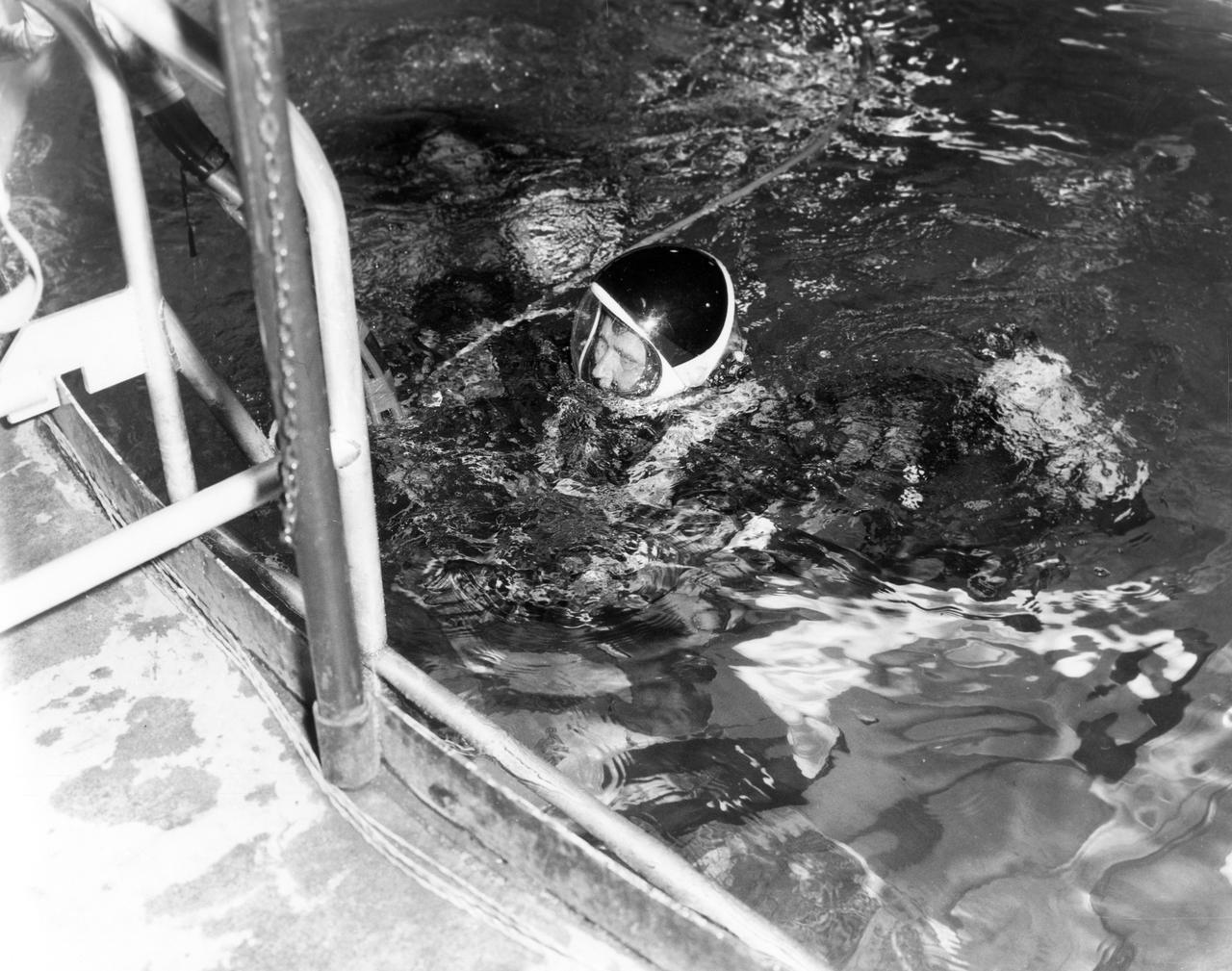
Marshall Space Flight Center (MSFC) Director, Dr. von Braun, submerges after spending some time under water in the MSFC Neutral Buoyancy Simulator (NBS). Weighted to a neutrally buoyant condition, Dr. von Braun was able to perform tasks underwater which simulated weightless conditions found in space.
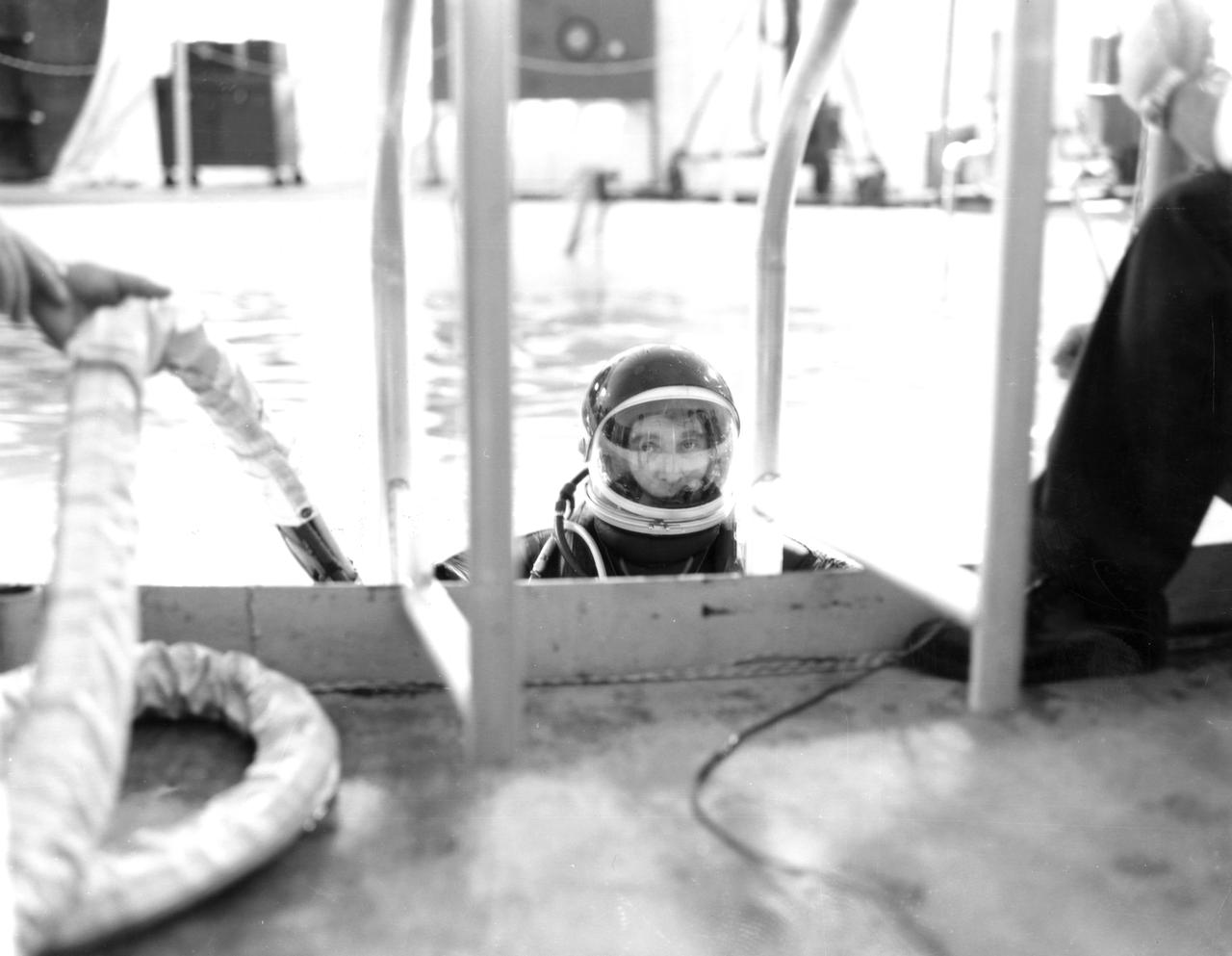
Marshall Space Flight Center (MSFC) Director, Dr. von Braun, submerges after spending some time under water in the MSFC Neutral Buoyancy Simulator (NBS). Weighted to a neutrally buoyant condition, Dr. von Braun was able to perform tasks underwater which simulated weightless conditions found in space.
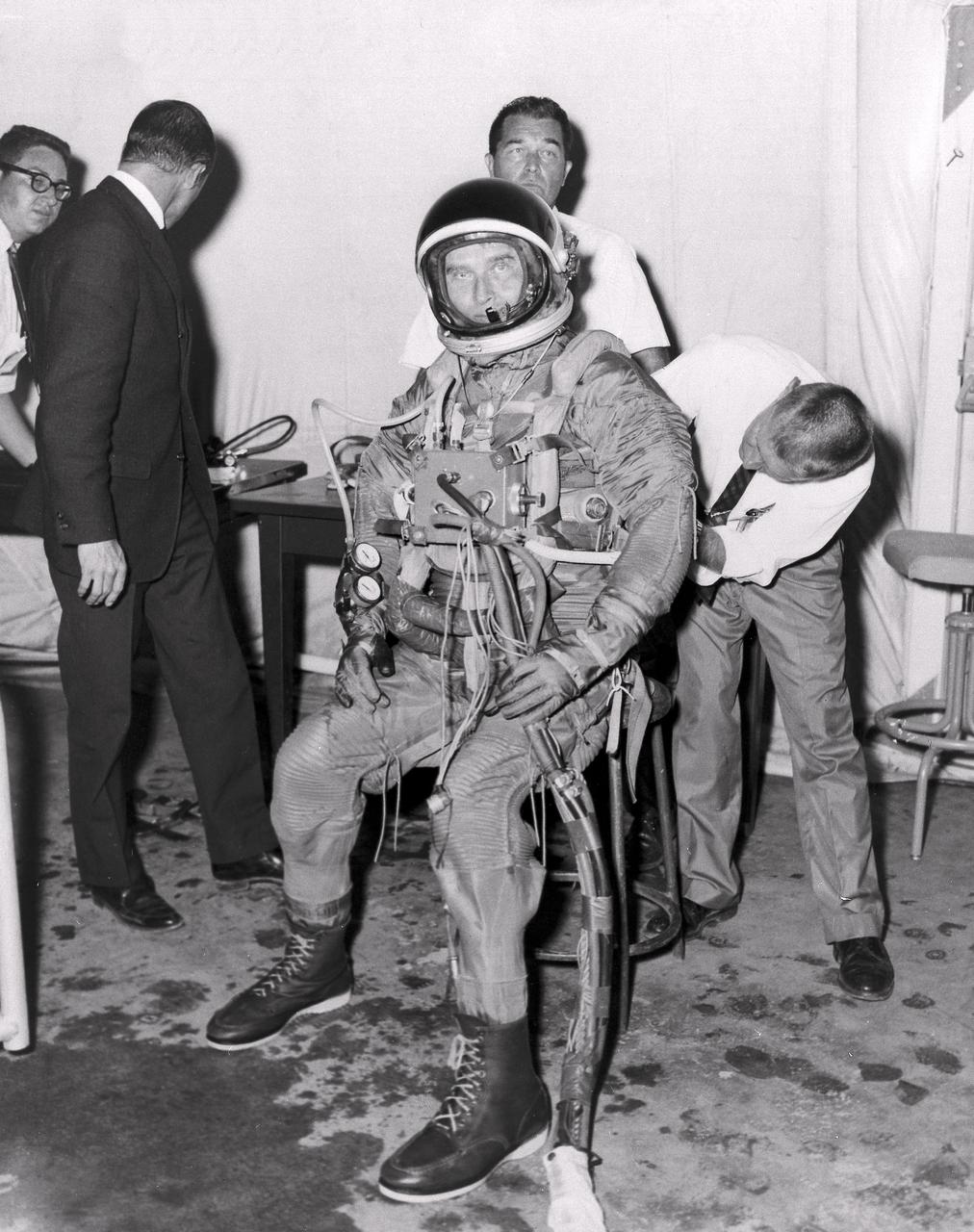
Marshall Space Flight Center (MSFC) Director, Dr. von Braun, is shown fitted with suit and diving equipment as he prepares for a tryout in the MSFC Neutral Buoyancy Simulator (NBS). Weighted to a neutrally buoyant condition, Dr. von Braun was able to perform tasks underwater which simulated weightless conditions found in space.
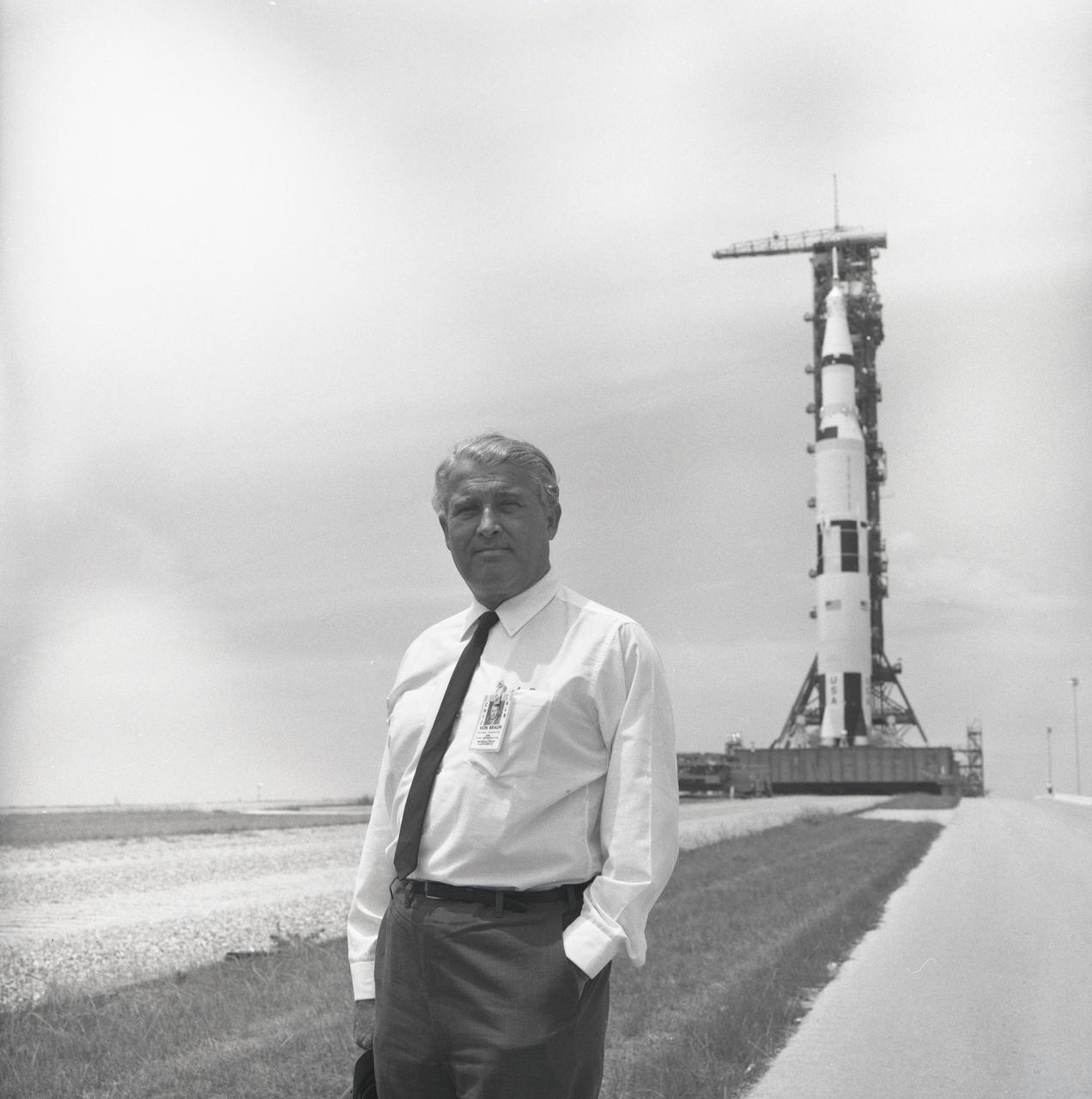
Dr. von Braun pauses in front of the Saturn V vehicle being readied for the historic Apollo 11 lunar landing mission at the Kennedy Space Center (KSC). The Saturn V vehicle was developed by the Marshall Space Flight Center (MSFC) under the direction of Dr. von Braun.
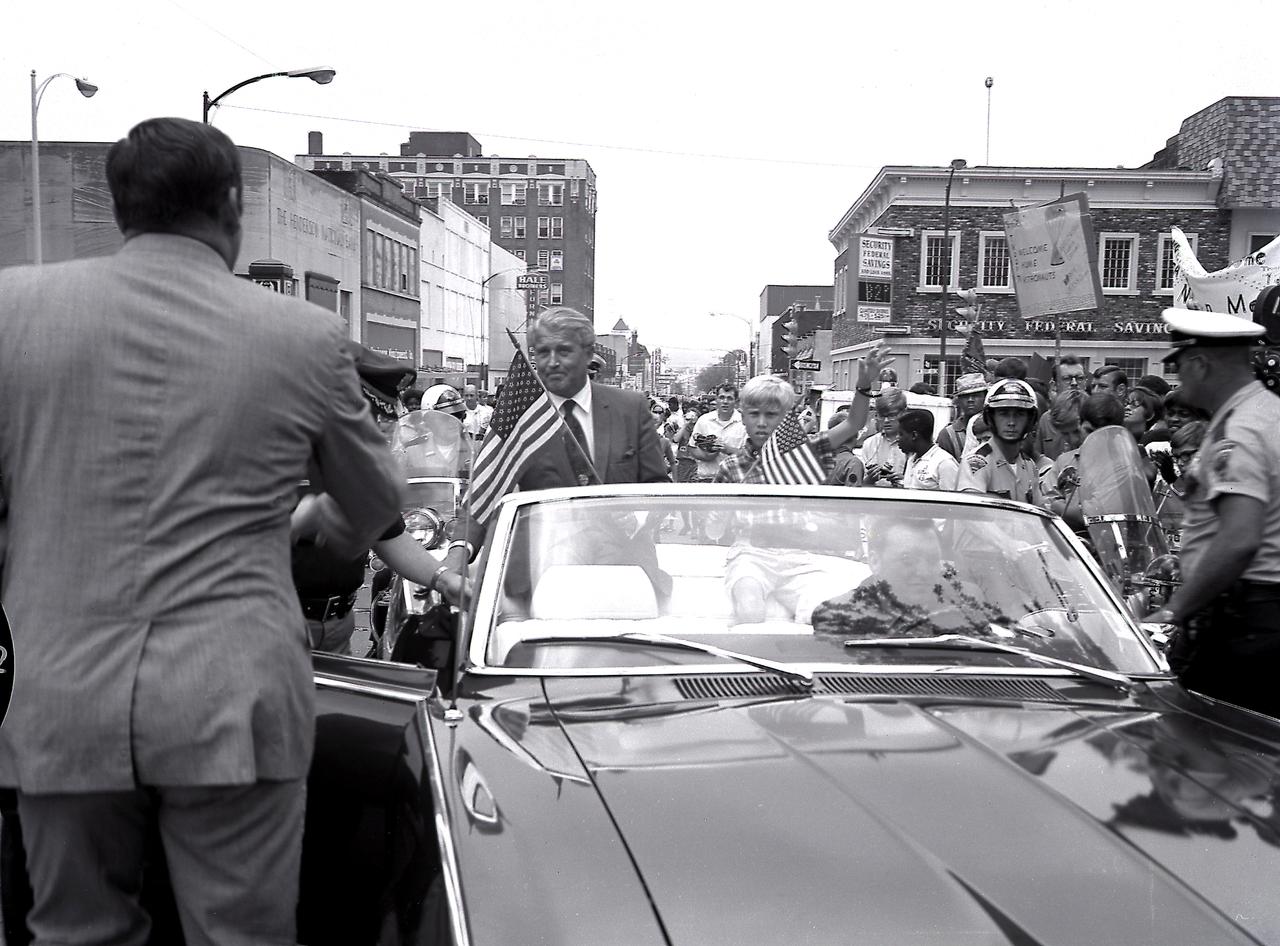
Dr. von Braun and his son were driven around the Courthouse Square during the Apollo 11 celebration at Huntsville, Alabama, on July 24, 1969. The city of Huntsville is the home the Marshall Space Flight Center which developed the Saturn vehicles under the direction of Dr. von Braun.
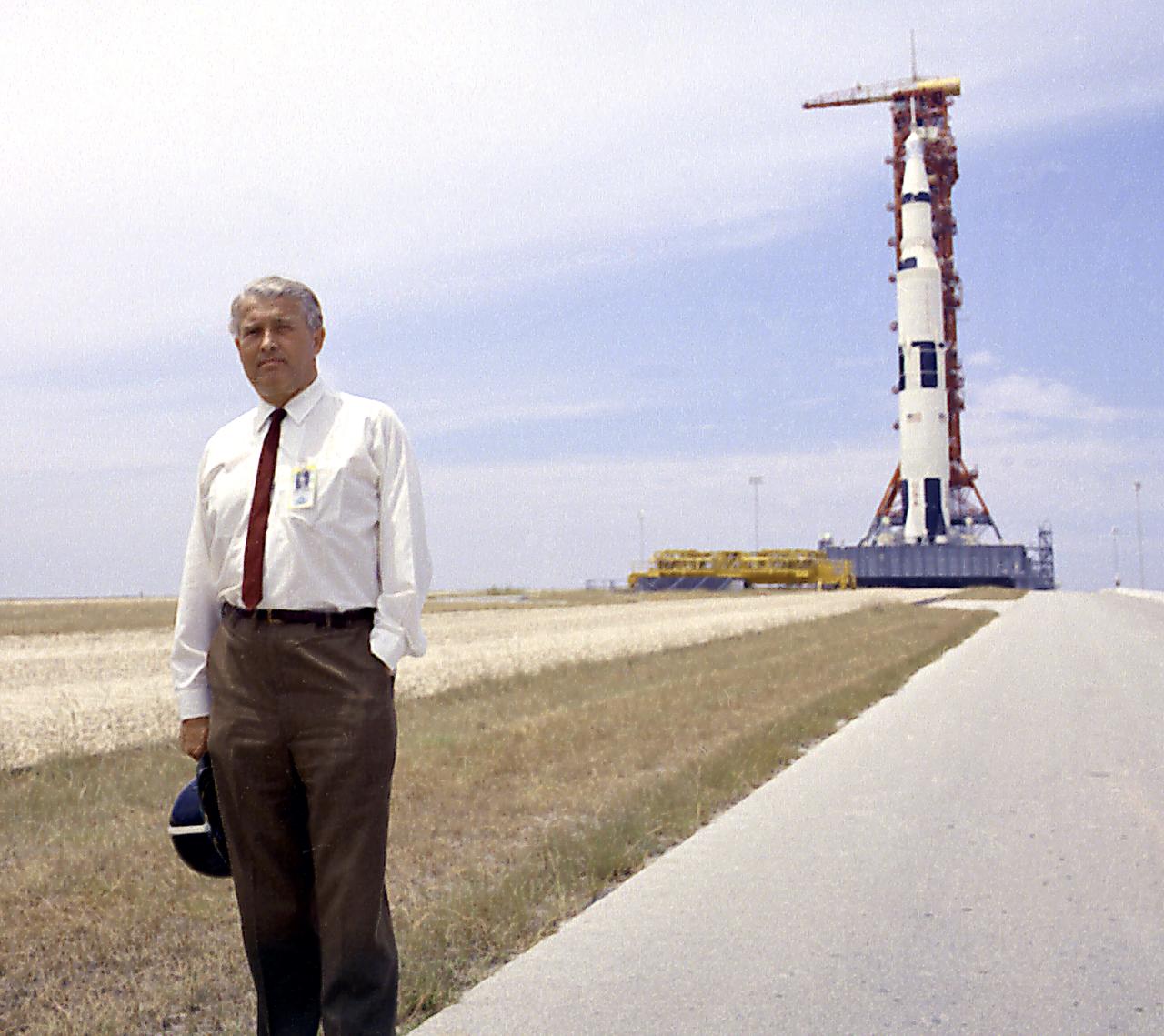
Dr. von Braun pauses in front of the Saturn V vehicle being readied for the historic Apollo 11 lunar landing mission at the Kennedy Space Center (KSC). The Saturn V vehicle was developed by the Marshall Space Flight Center (MSFC) under the direction of Dr. von Braun.
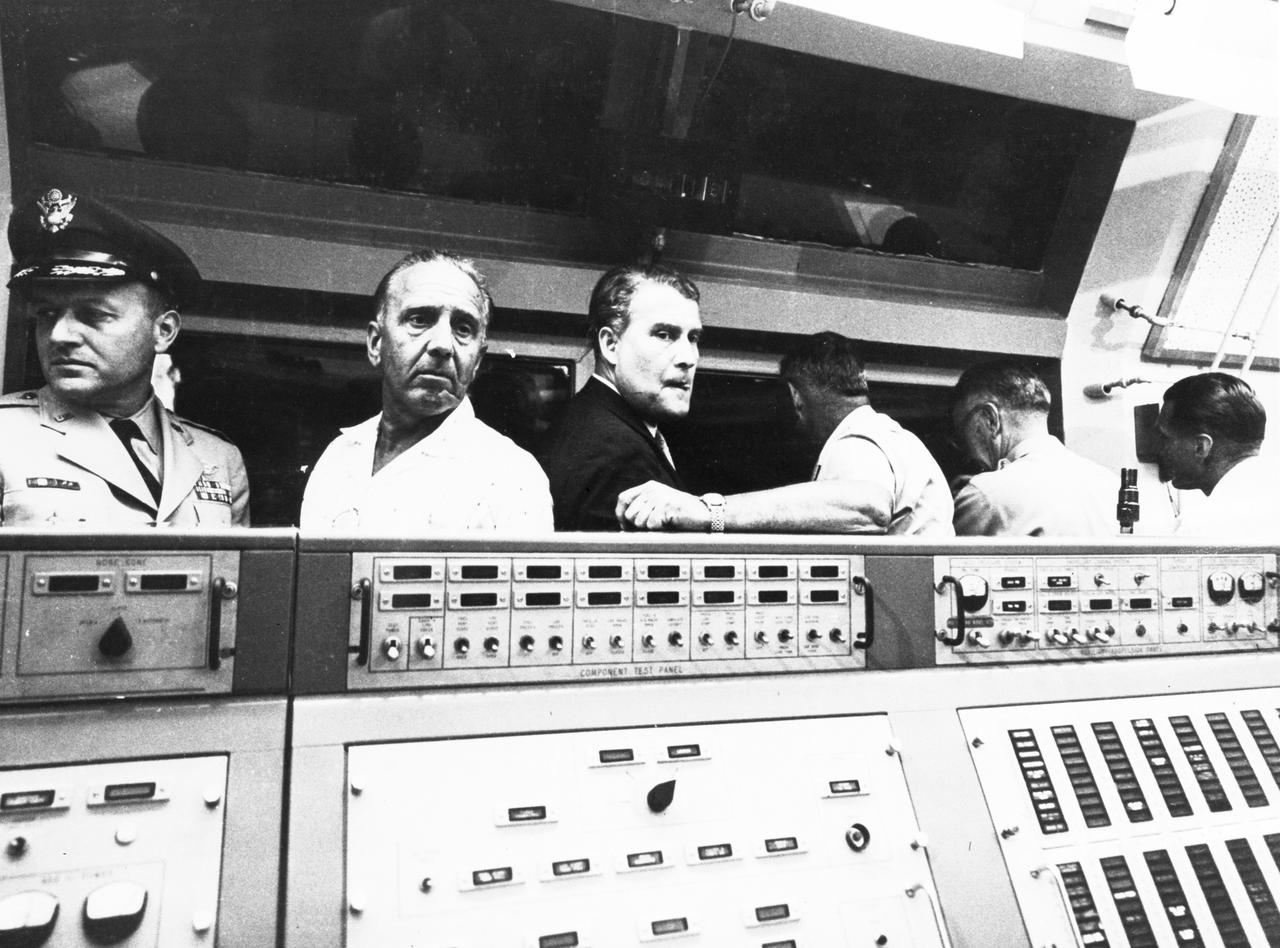
This photograph shows Dr. von Braun, second from the left, in the blockhouse at the Florida launch facilities on March 3, 1959. He and others gathered for the launch of the Pioneer IV satellite. On the left of Dr. von Braun is Kurt Debus, who managed the Florida launch facilities. To the right of Dr. von Braun is Army General John B. Medaris. Next to him is General John Barclay. At this time, Dr. von Braun and his associates were members of the Army Ballistic Missile Agency in Huntsville, Alabama.
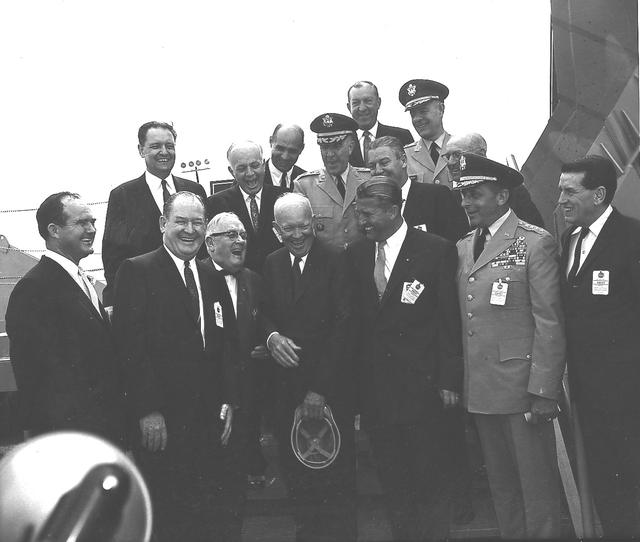
President Dwight D. Eisenhower and MSFC Director Dr. Wernher von Braun share a joke as other dignitaries look on. Eisenhower was visiting Marshall to participate in the September 8, 1960 dedication ceremony.
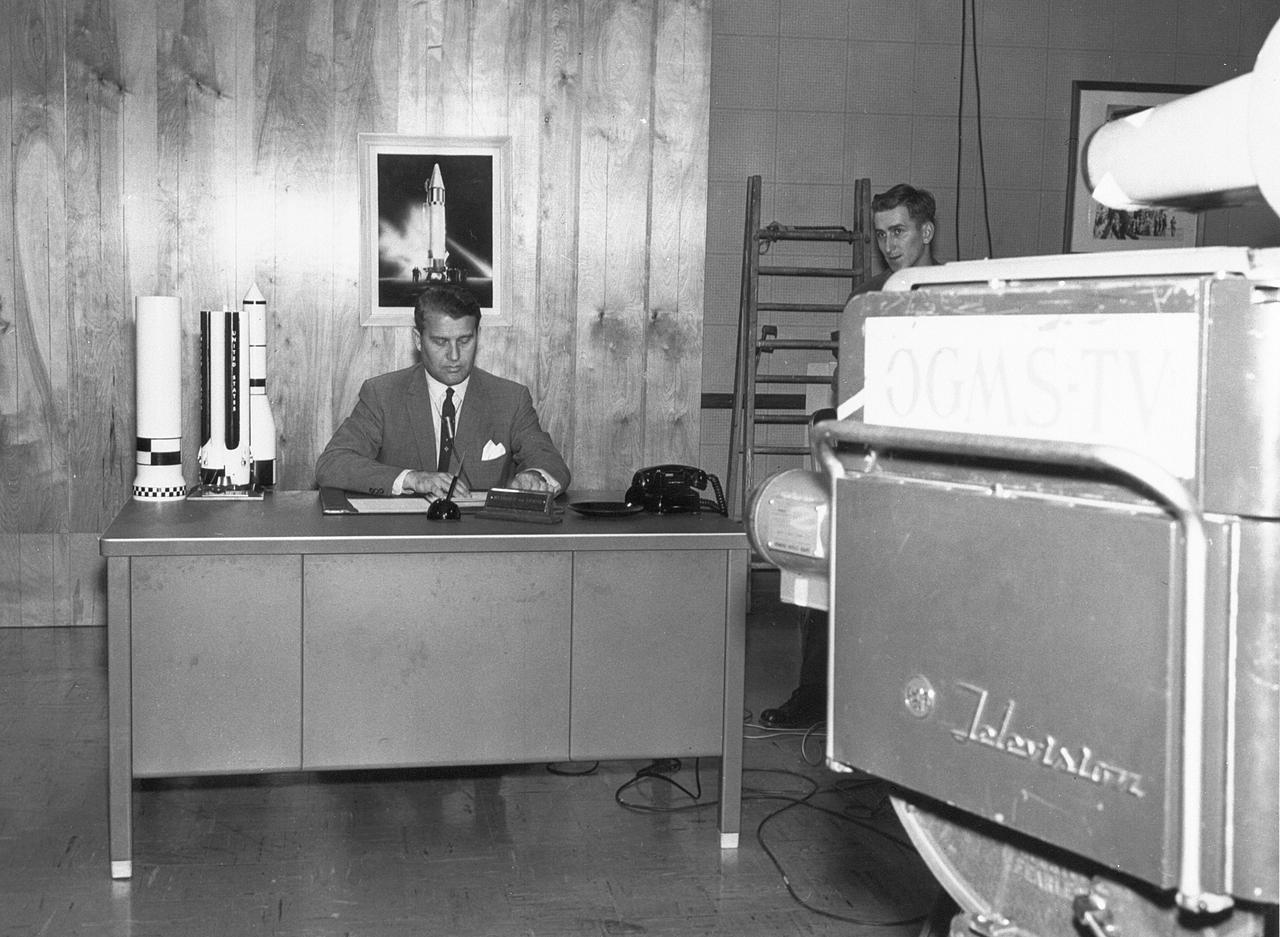
Dr. von Braun was the subject of countless television programs produced both inside and outside of NASA. He is shown here in this undated photograph preparing for one such film session.
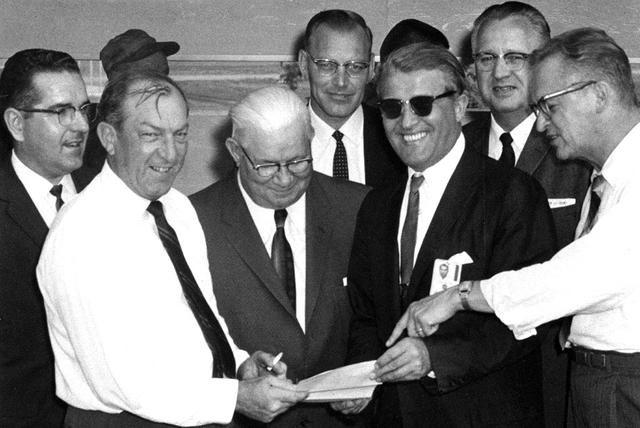
This is a photograph of a group of government officials touring the Marshall Space Flight Center in July 1961 with Dr. von Braun. Second from left is Alabama Congressman Robert Jones.
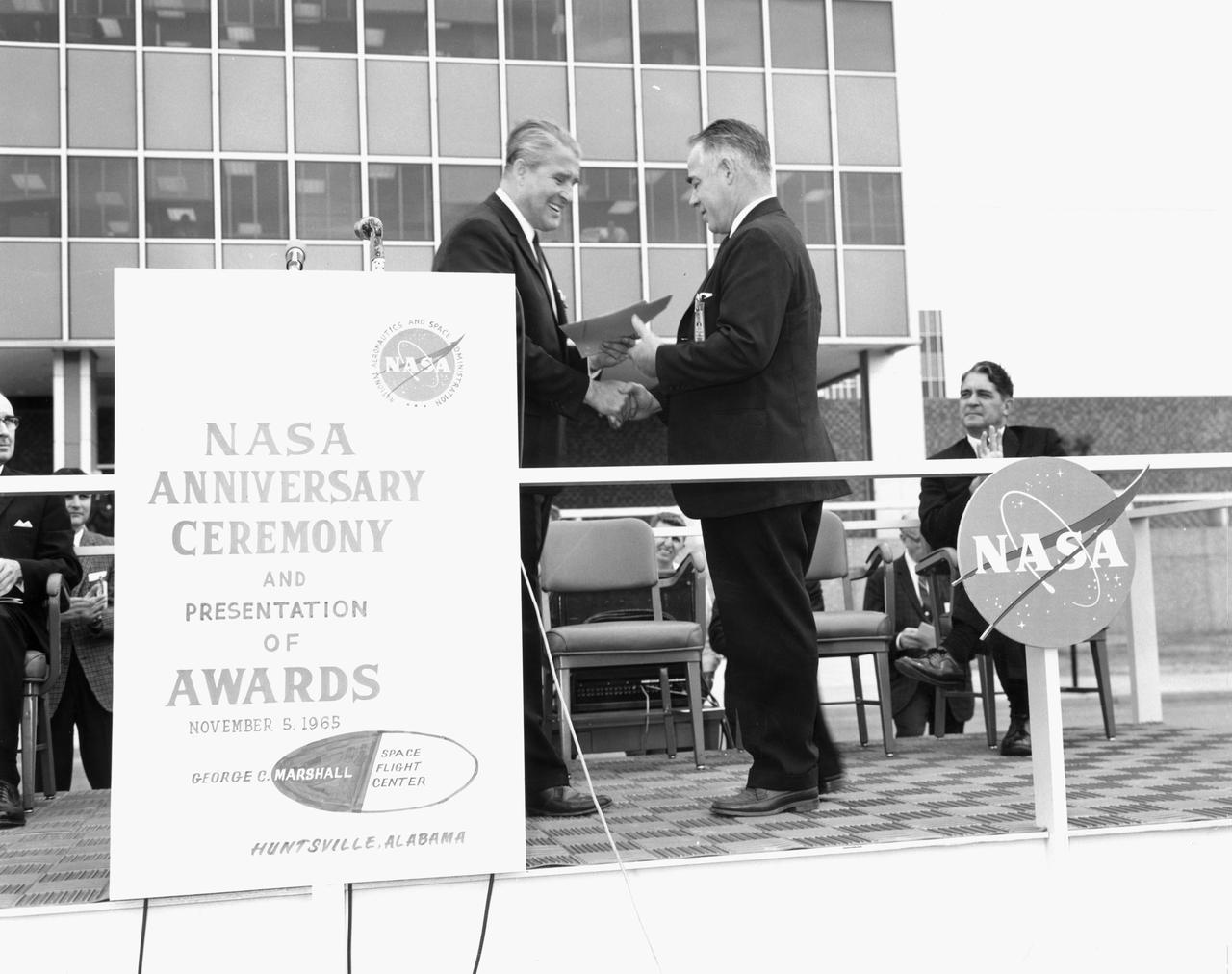
In this photograph, Marshall Space Flight Center Director, Dr. Wernher von Braun, presents a Co-Inventor’s award to MSFC employee Martin Hall of the Mechanical Engineering Laboratory during the NASA Anniversary ceremony.
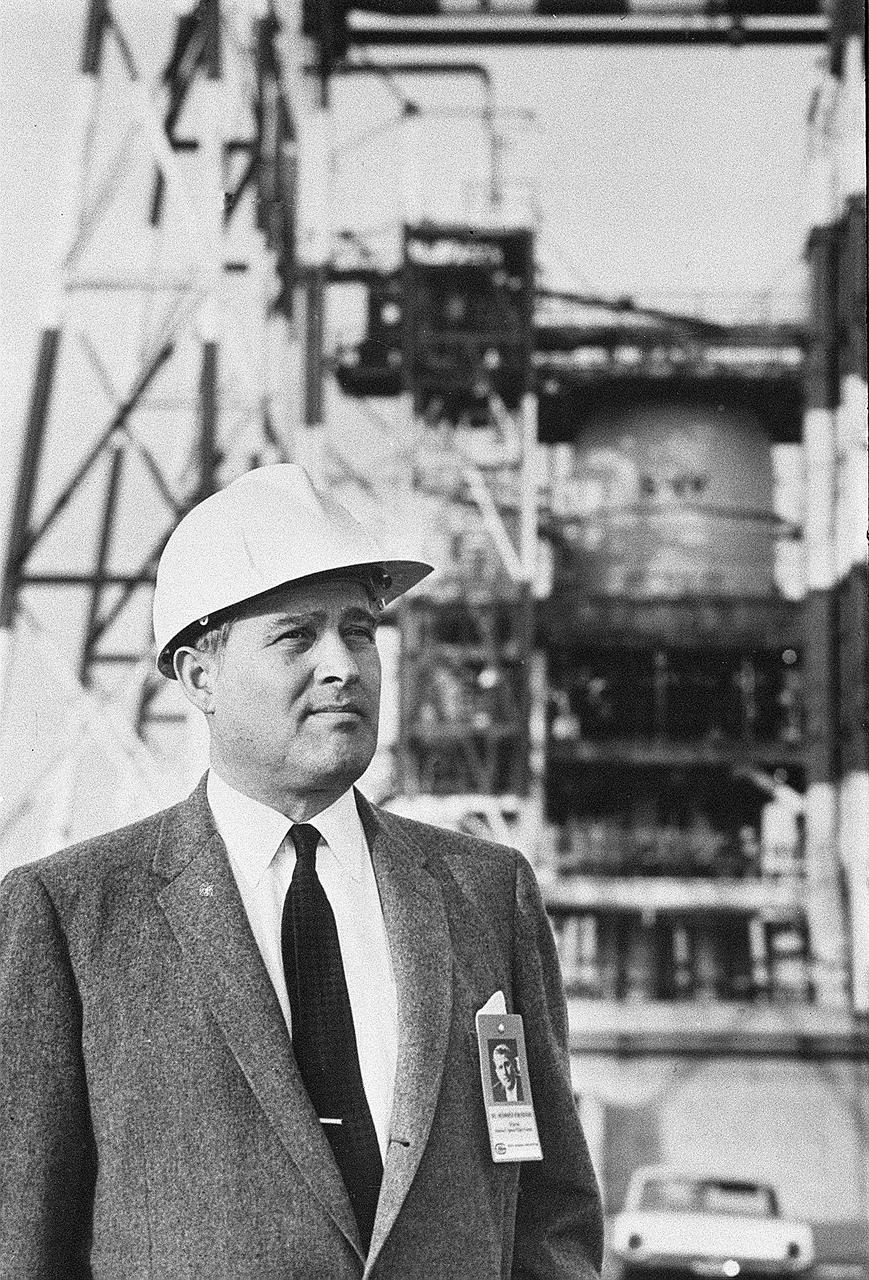
This photograph is believed to have been taken in the early 1960s and shows Dr. von Braun at the Douglas Aircraft Company's Missile Space Systems Division in Sacramento, California.
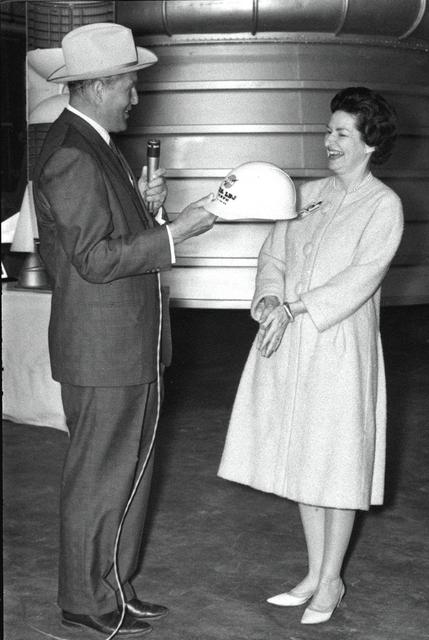
Marshall Space Flight Center Director Dr. Wernher von Braun presents Lady Bird Johnson with an inscribed hard hat during the First Lady's March 24, 1964 visit. While at the Marshall Center, Mrs. Johnson addressed Center employees, toured facilities and witnessed test firings of a Saturn I first stage and an F-1 engine. Dr. von Braun is wearing a Texas hat presented to him months earlier by Lyndon Johnson during a visit to the Johnson ranch in Texas.
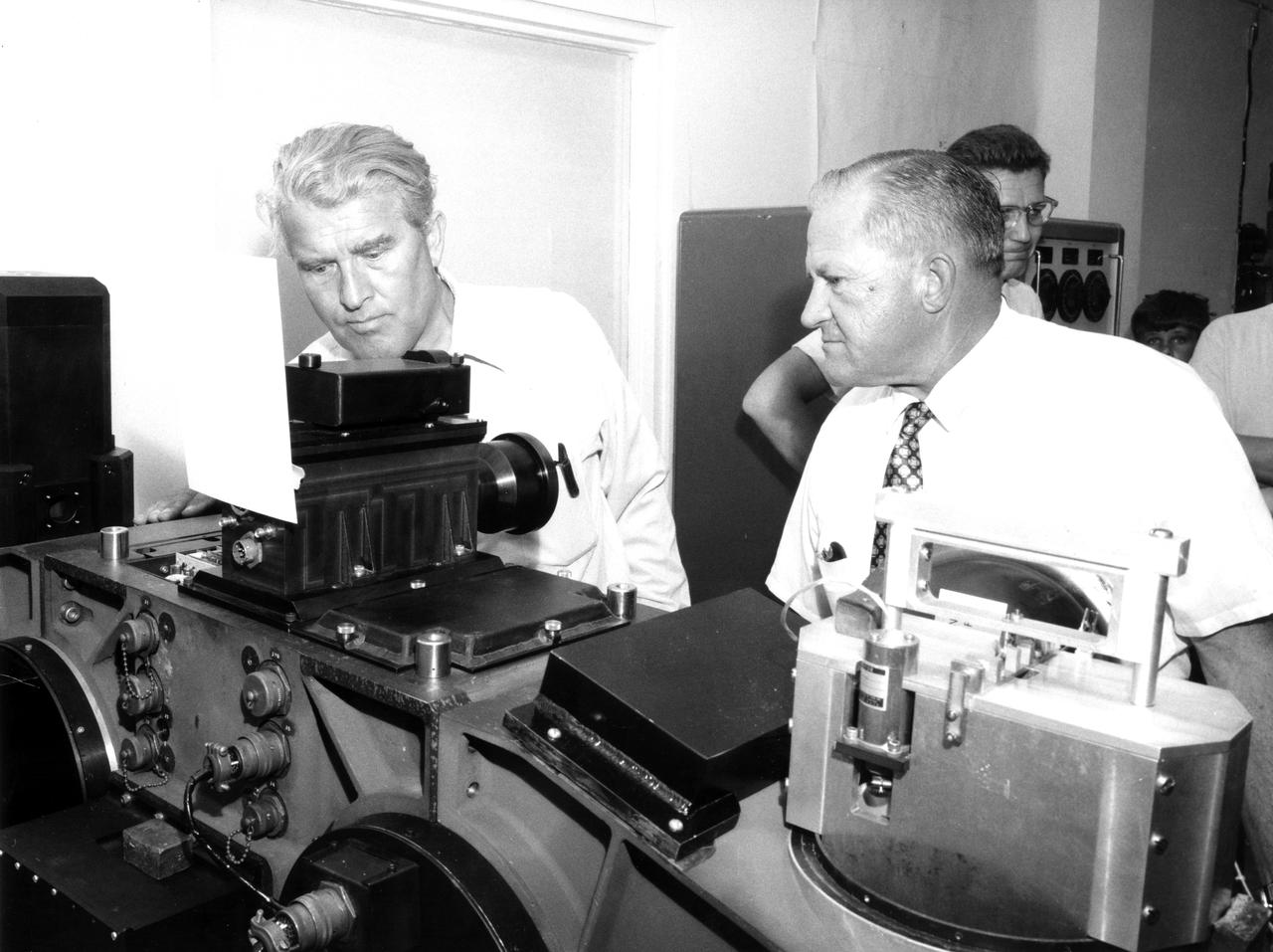
This photograph was taken after Dr. von Braun moved from his post as Director of the Marshall Space Flight Center (MSFC) to Deputy Associate Administrator for Planning at NASA Headquarters. On June 27, 1970, he visited the MSFC again during the center’s 10th anniversary to look at a mockup of the spacecraft that would later be known as Skylab. In this photograph, von Braun (left) and Fred W. Kelley examine an ST-100 stellar instrument platform in MSFC’s Astrionics Lab.
This photograph was taken after Dr. von Braun moved from his post as Director of the Marshall Space Flight Center (MSFC) to Deputy Associate Administrator for Planning at NASA Headquarters. On June 27, 1970, he visited the MSFC again during the center’s 10th anniversary to look at a mockup of the spacecraft that would later be known as Skylab. In this photograph, von Braun is talking with George Hardy of the MSFC Astronautics Lab.
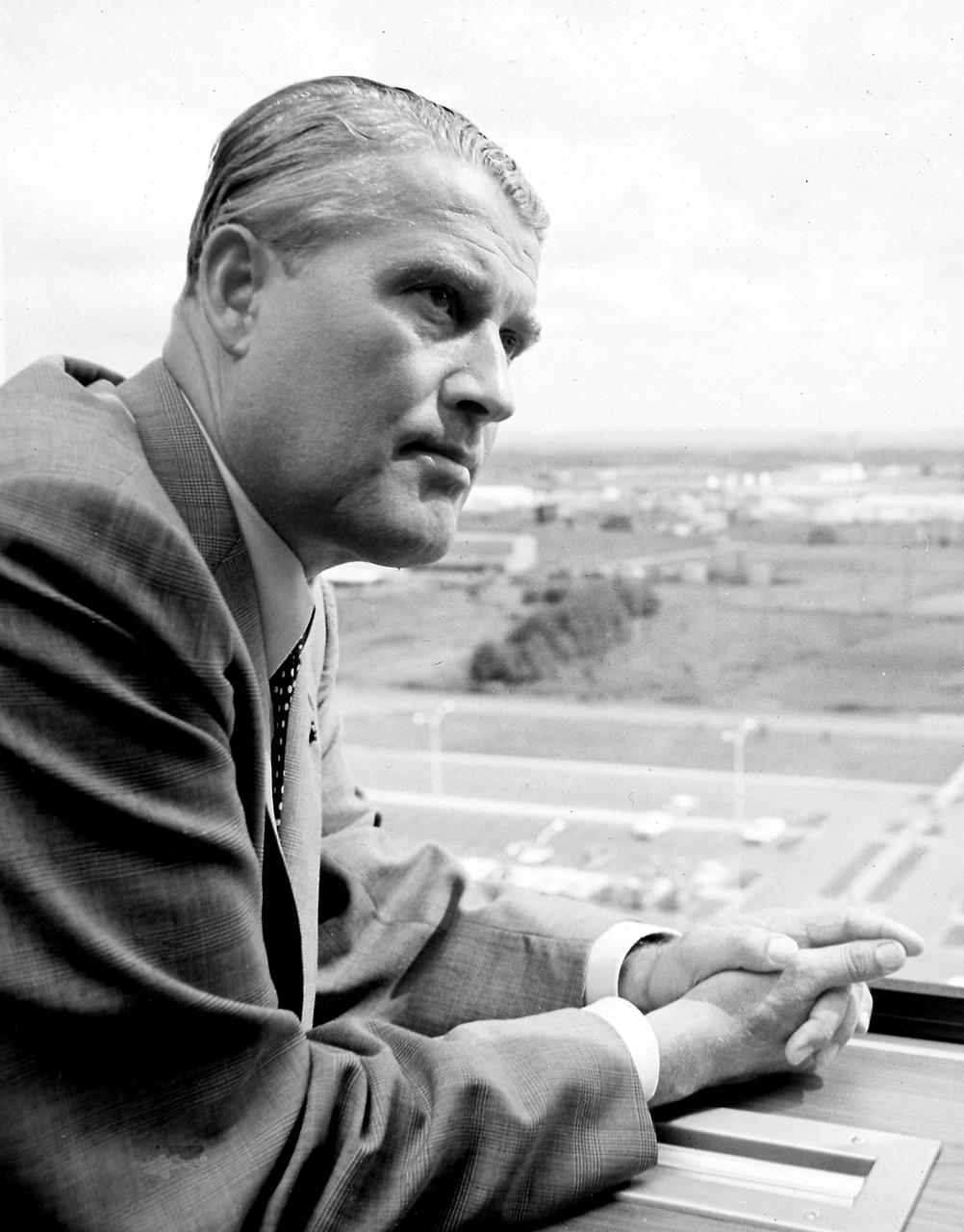
Dr. von Braun is looking out from a 10th floor window of building 4200 at the Marshall Space Flight Center (MSFC). He was the first Center Director and served as the Director from July 1960 through February 1970. Following World War II, Dr. von Braun and his German colleagues arrived in the United States under the Project Paperclip (American acquisition of German rocket experts) to continue their rocket development work. In 1950, von Braun and his German Rocket Team (also called the Peenemuende Team) were transferred from Ft. Bliss, Texas to Huntsville, Alabama to work for the Army's rocket program at Redstone Arsenal and later, NASA's Marshall Space Flight Center (MSFC). Under Dr. von Braun's leadership, MSFC developed the Saturn V launch vehicle, which placed the first men, two American astronauts, on the Moon. Wernher von Braun's life was dedicated to expanding man's knowledge through the exploration of space.
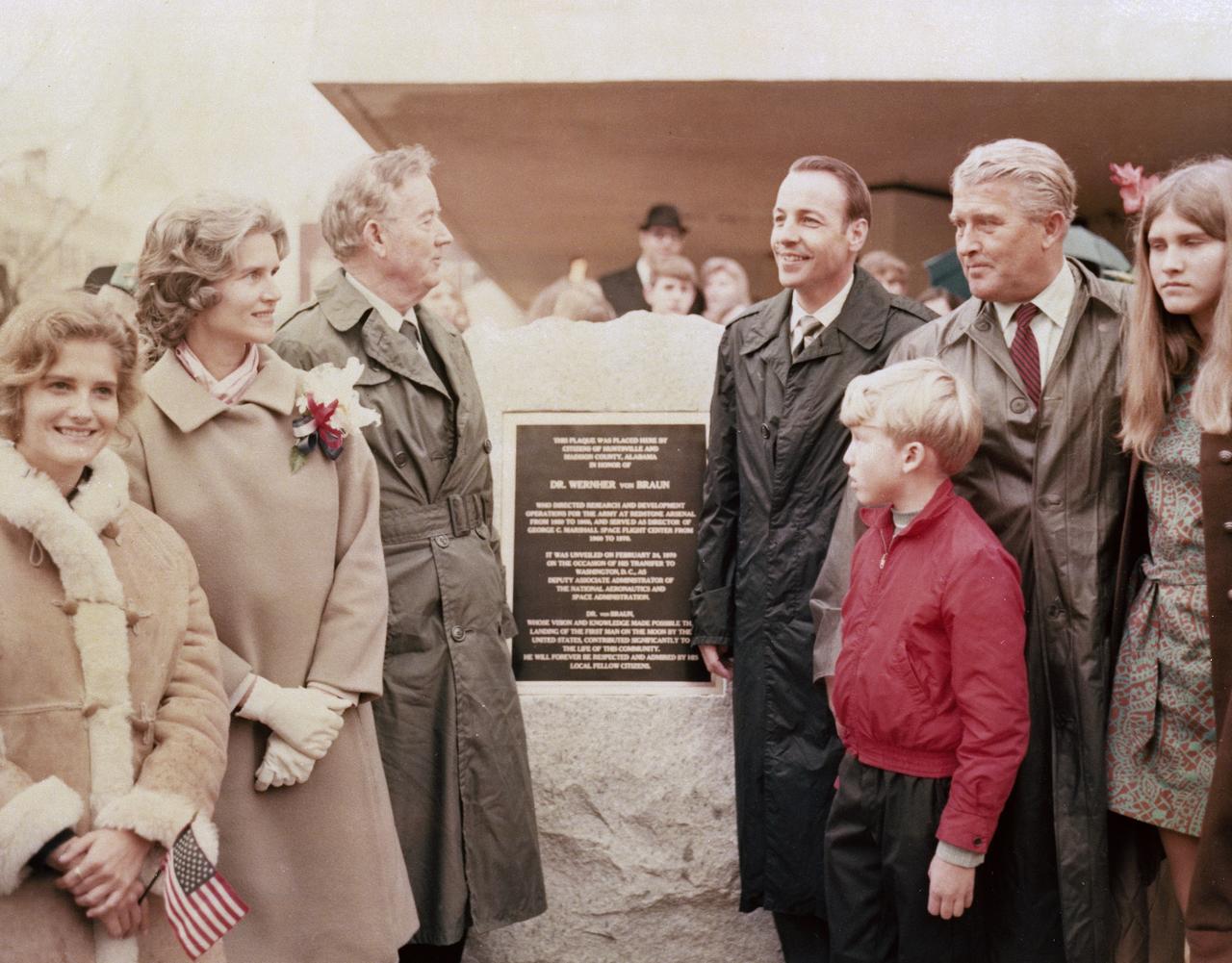
In February 1970, MSFC Director Dr. von Braun was named NASA Deputy Associate Administrator for Plarning and transferred to the Agency's Headquarters in Washington D.C. Prior to his departure, Huntsvillians, along with state local dignitaries, honored his years of service to the Army and NASA with a series of events. One included unveiling a plaque in von Braun's honor. Pictured with Dr. von Braun are (left to right), his daughter Iris, wife Maria, U.S. Senator John Sparkman and Alabama Governor Albert Brewer, Dr. von Braun, son Peter, and daughter Margrit.
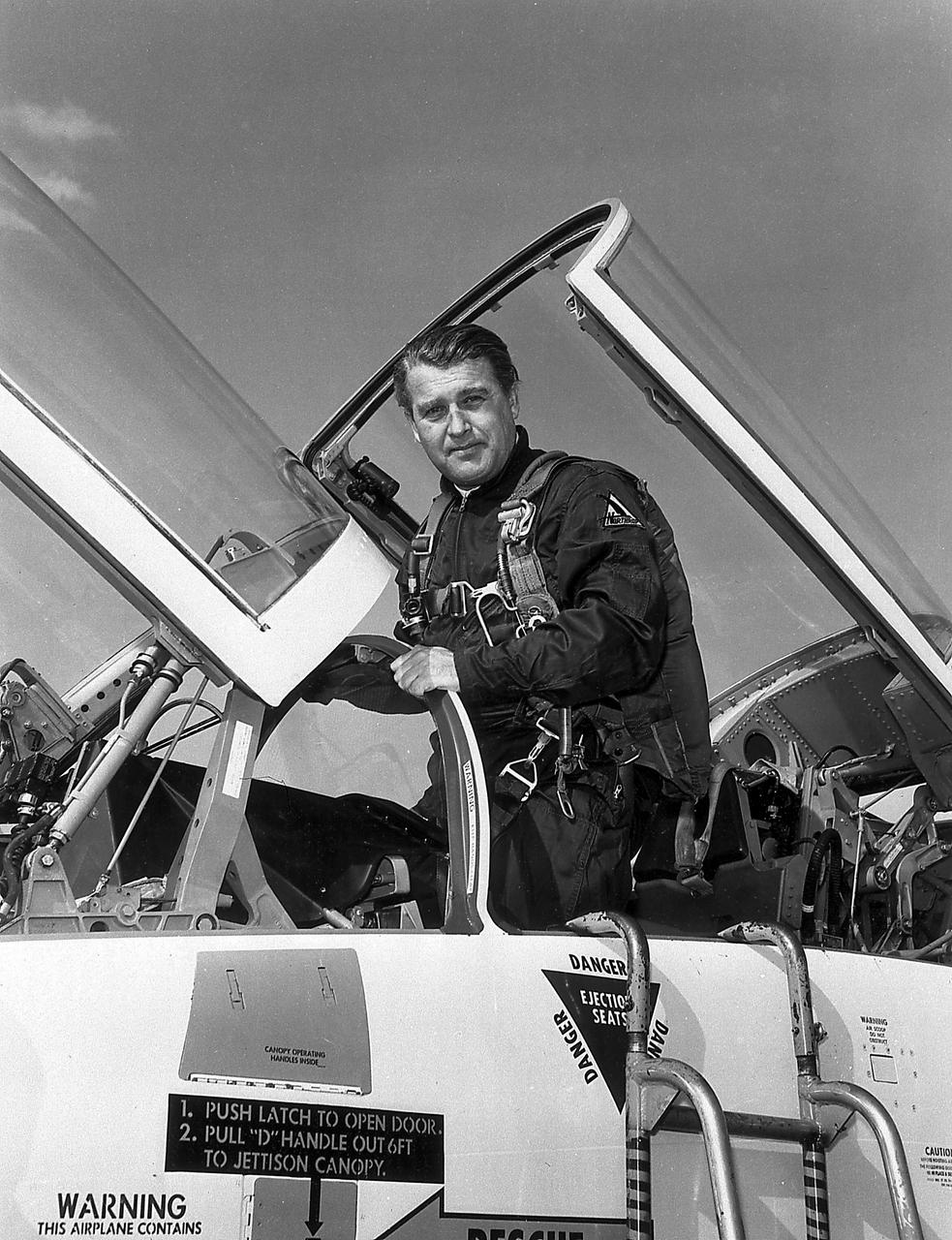
Dr. von Braun took a supersonic flight in the T-38 at Edwards Air Force Base, California.
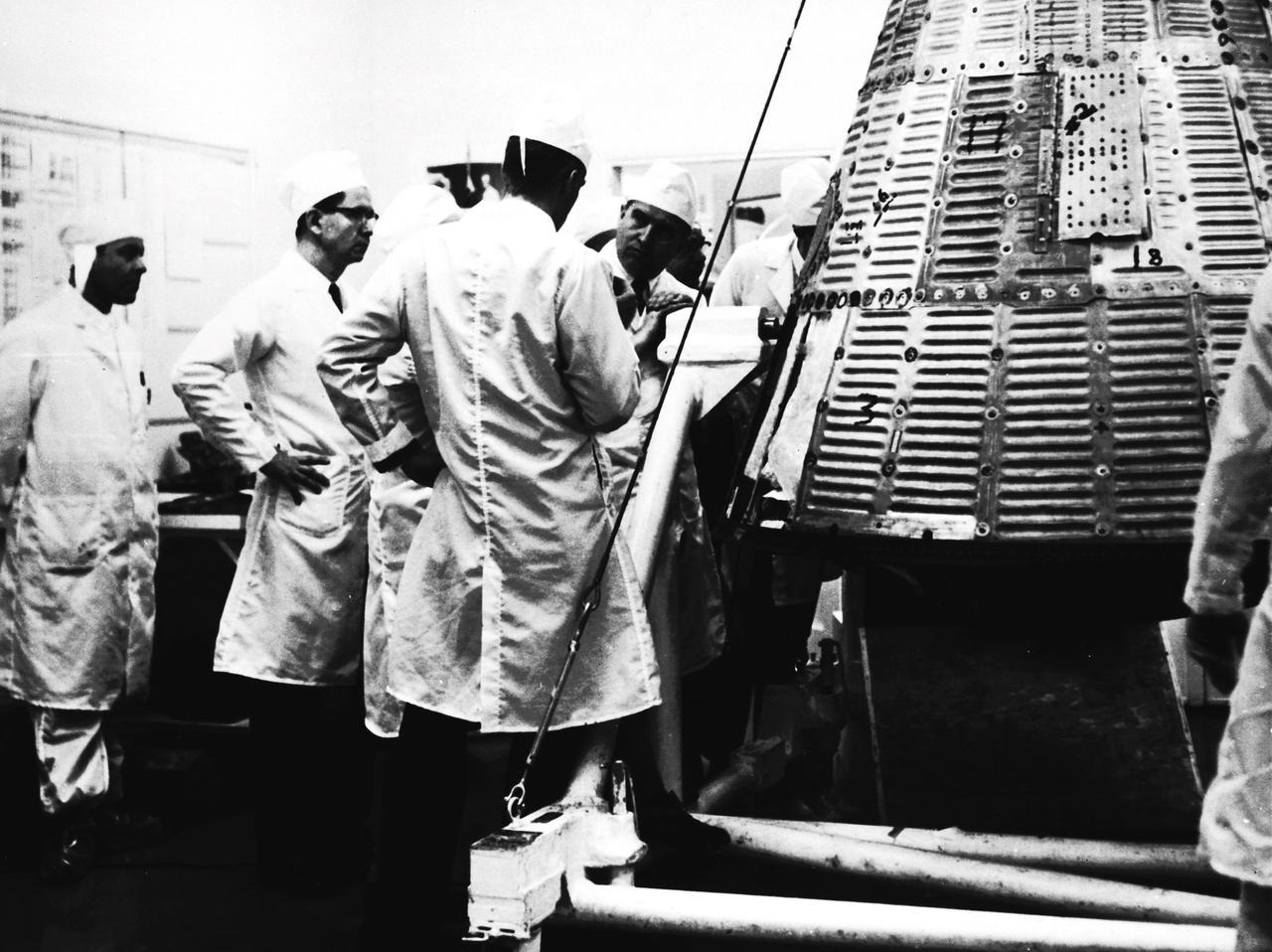
In this undated photograph, Dr. von Braun is shown during a visit to McDonnell Aircraft to inspect Mercury spacecraft manufacturing.
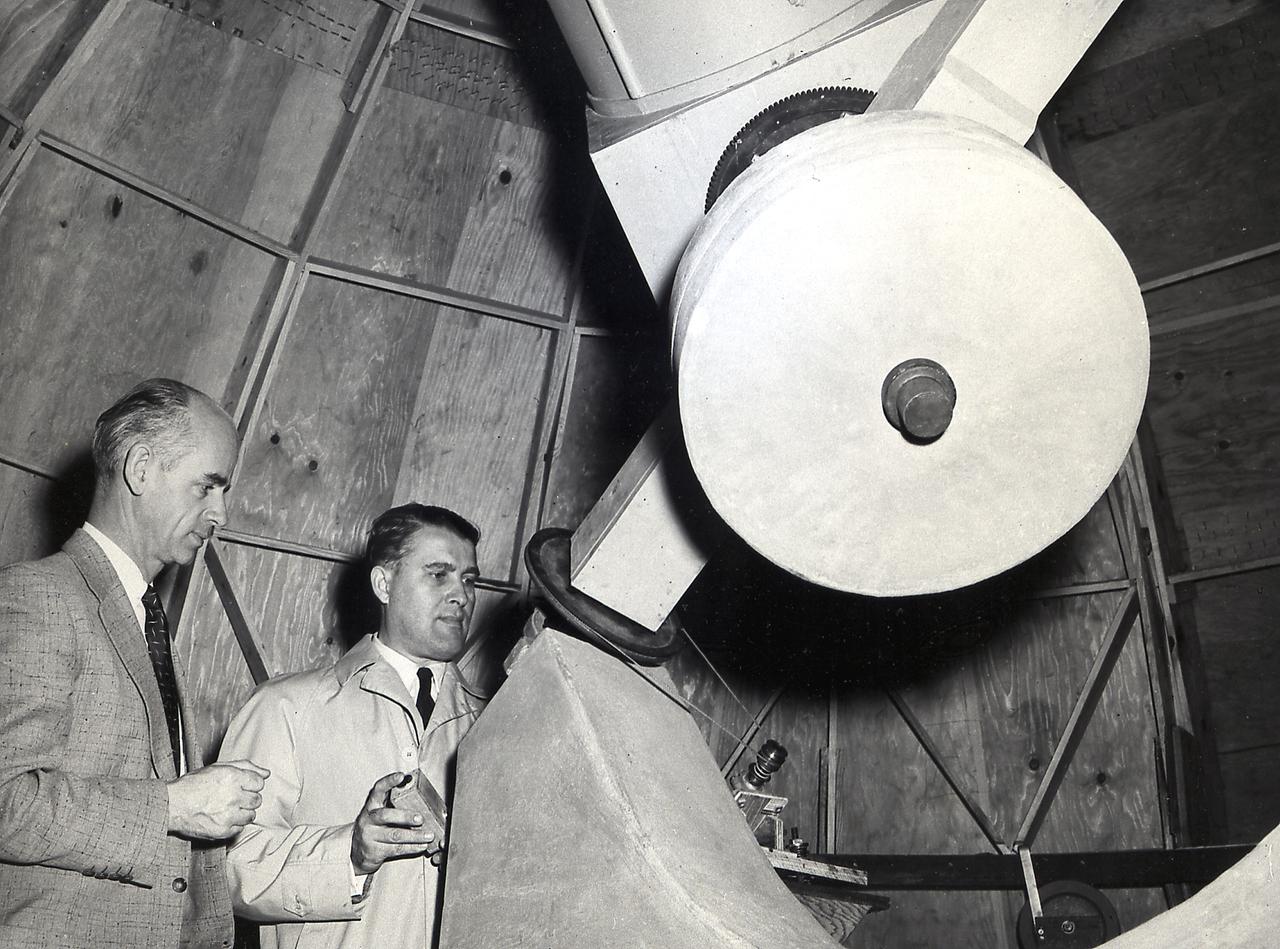
Dr. von Braun and Dr. Ernst Stuhlinger at the Observatory of the Rocket City Astronomical Association in 1956.
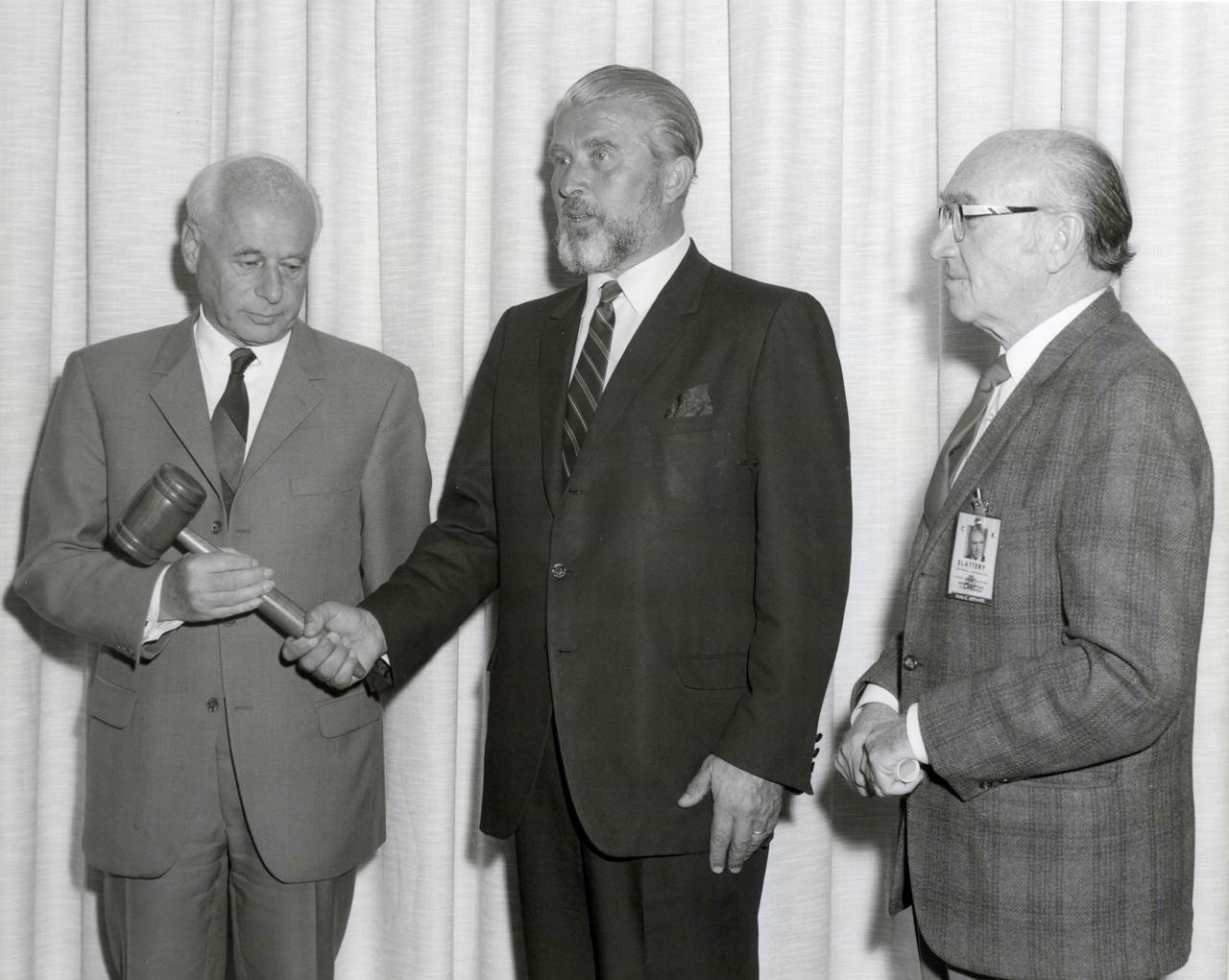
Dr. Wernher Von Braun presents the gavel to incoming center director Dr. Eberhard Rees with Art Slattery looking on.
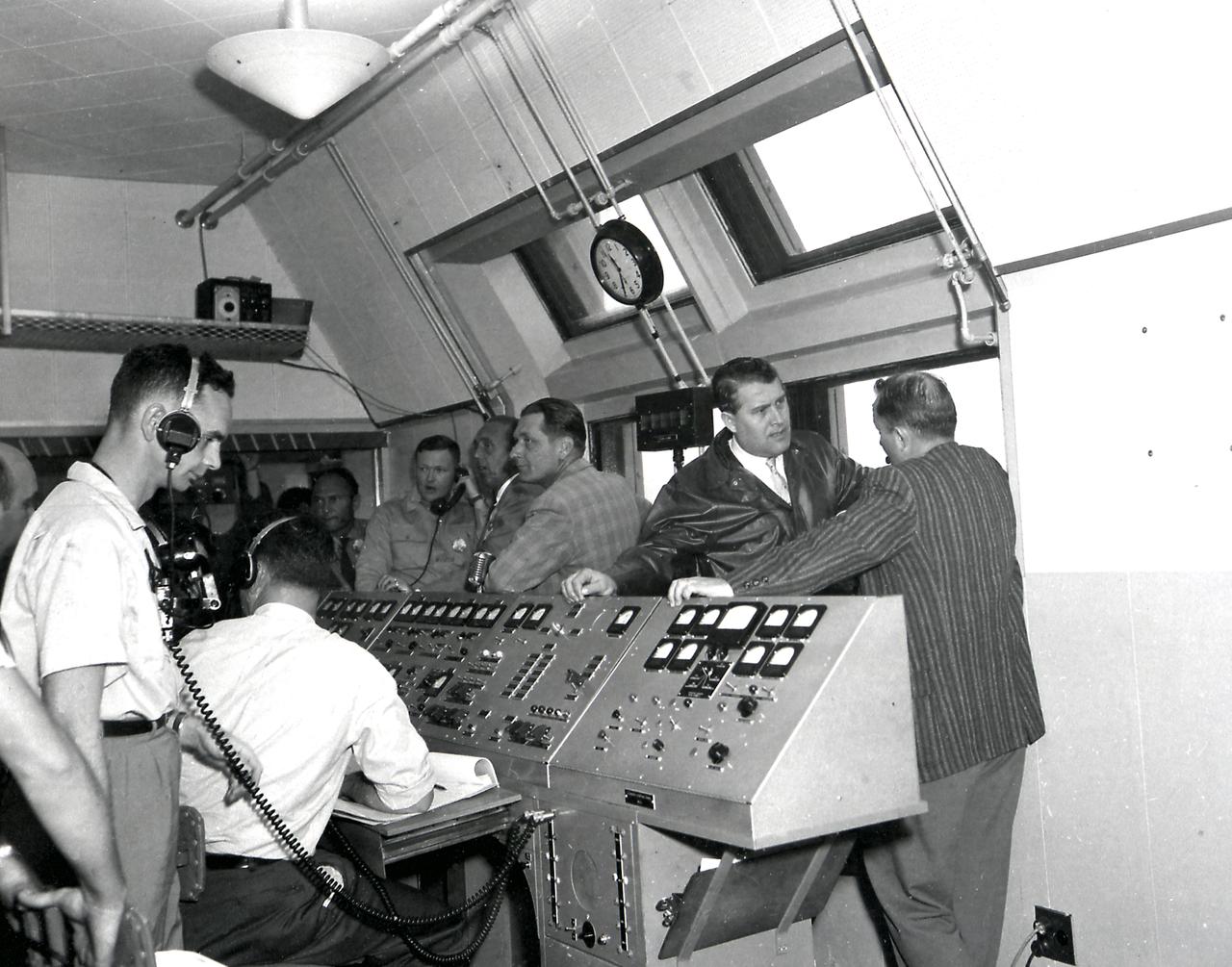
Dr. von Braun inside the blockhouse during the launch of the Jupiter C/Explorer III in March 1958.
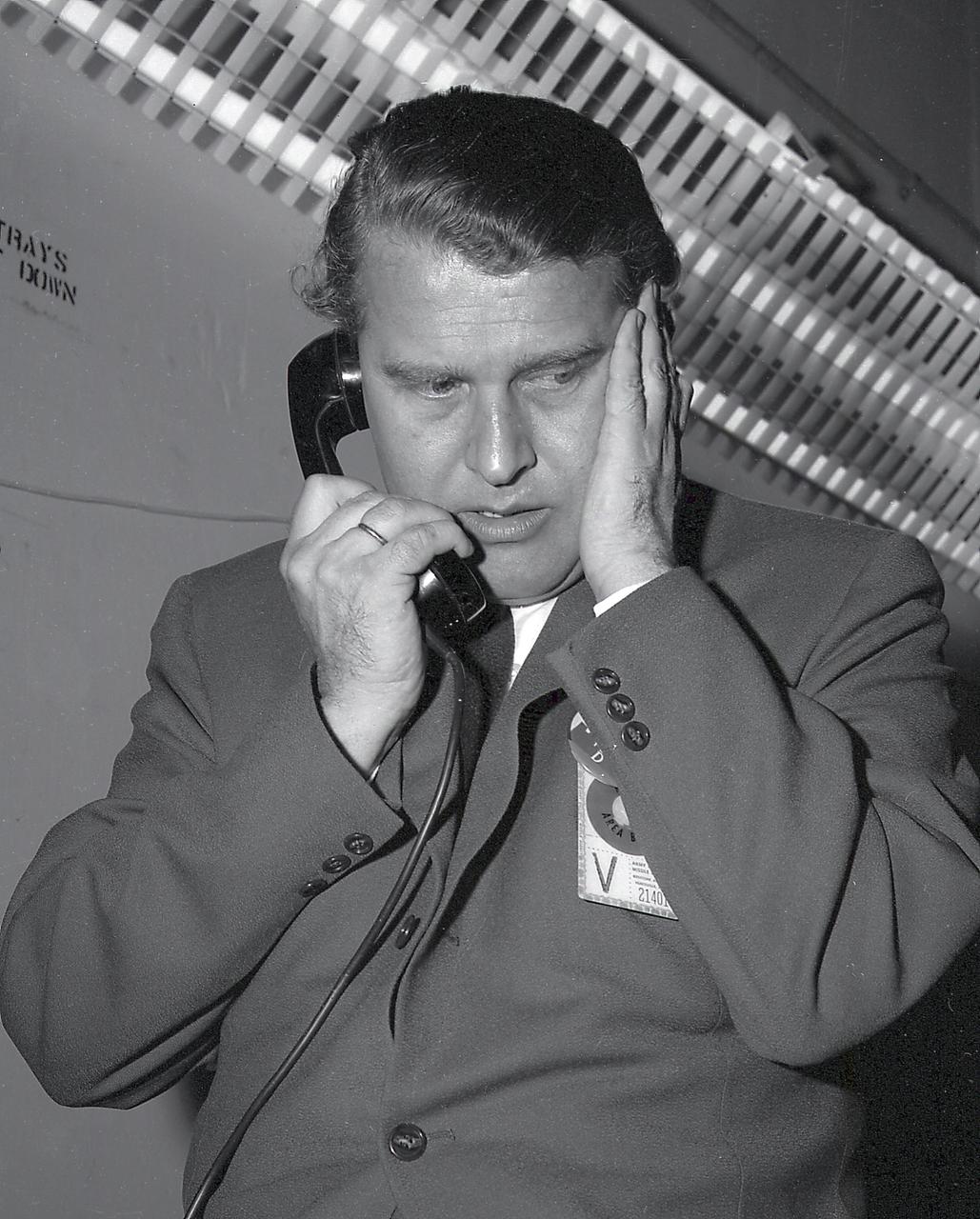
Dr. von Braun on the telephone prior to the launch of the Pioneer IV, March 1, 1959.
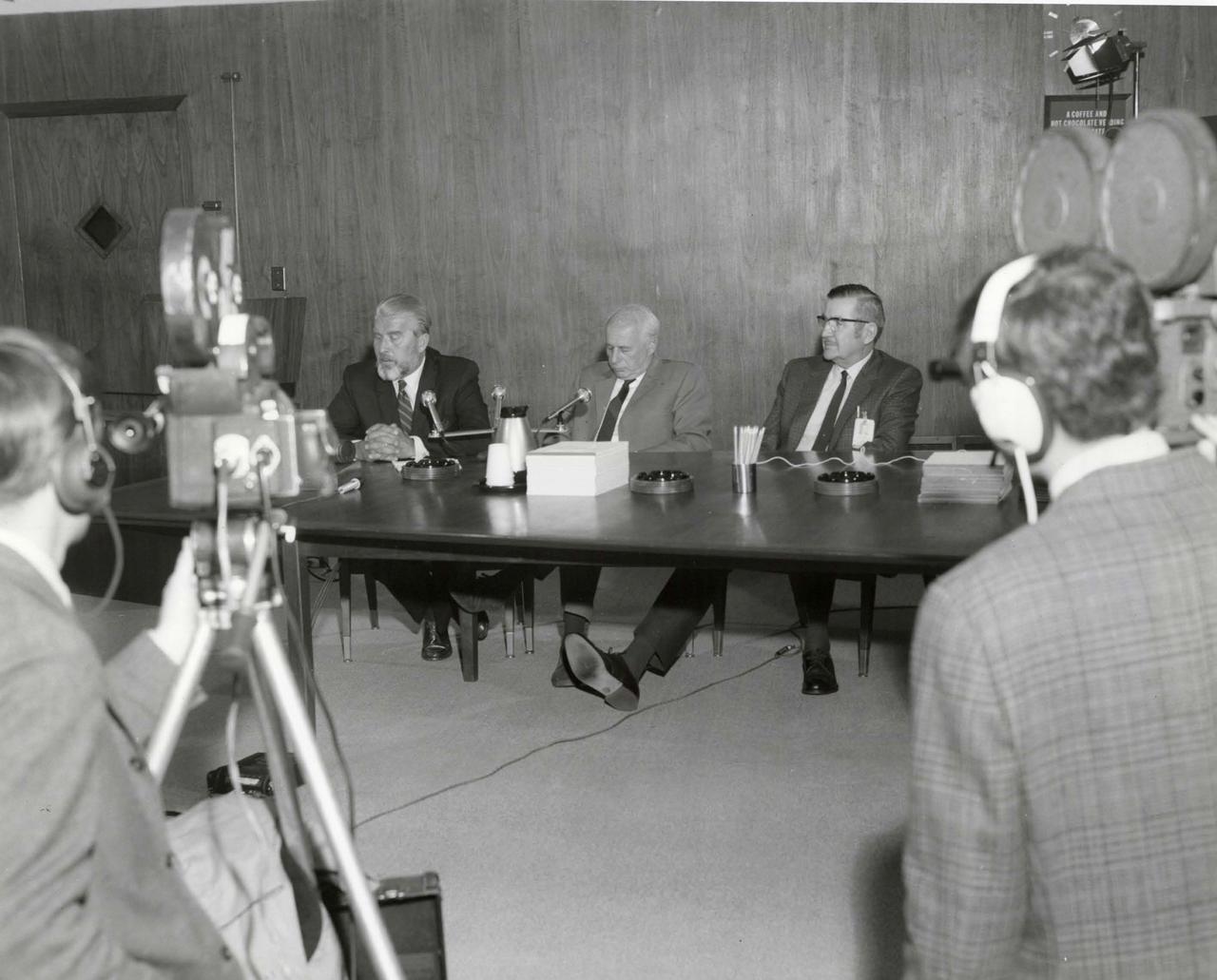
Dr. Wernher Von Braun, Dr. Eberhard Rees, and R.W. Cook at a press conference with cameras in the foreground.
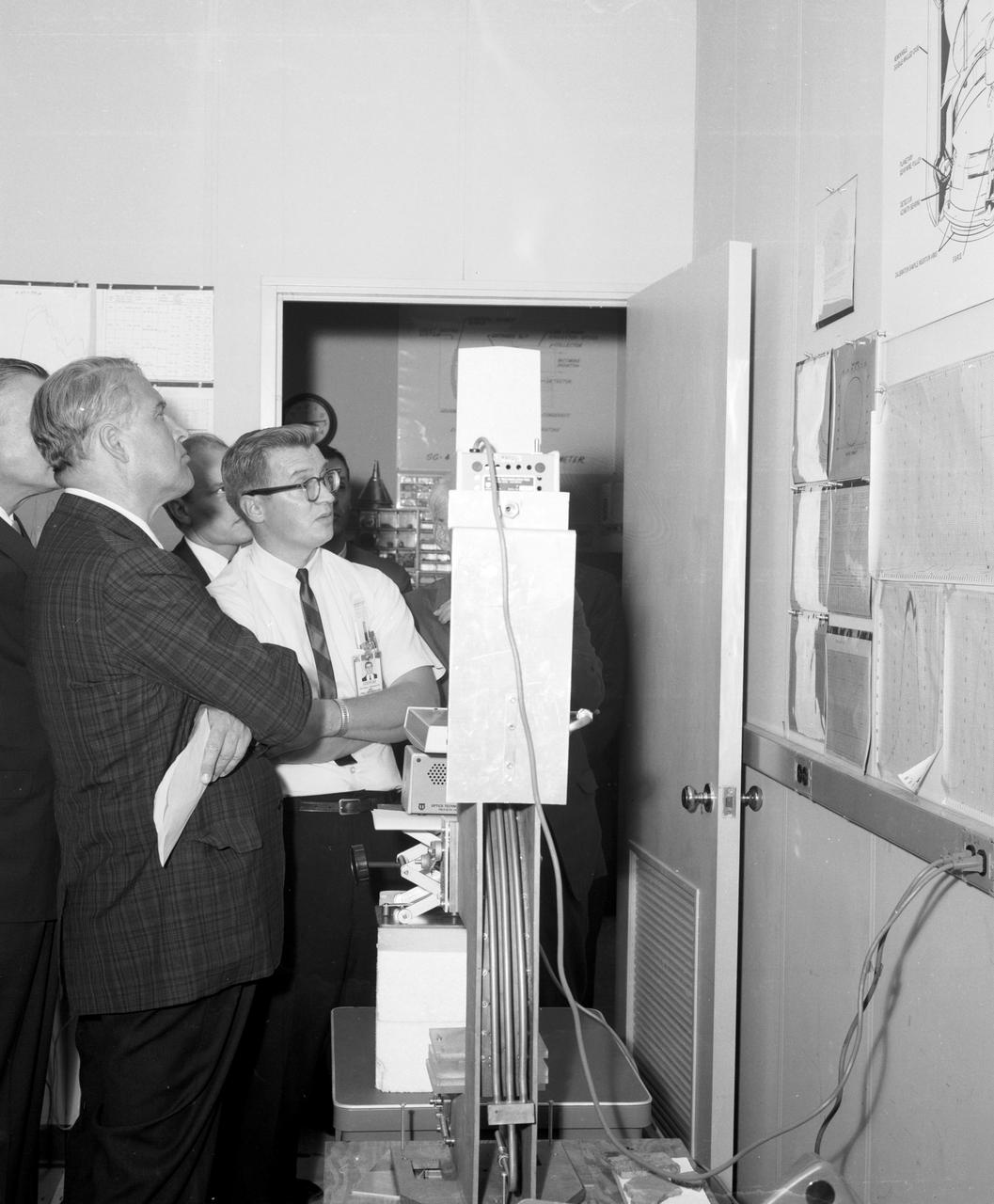
Marshall Space Flight Center’s (MSFC) Director, Dr. Wernher von Braun (left), studies charts depicting the status of an experiment conducted in MSFC’s Space Sciences Laboratory during a tour on August 28, 1967.
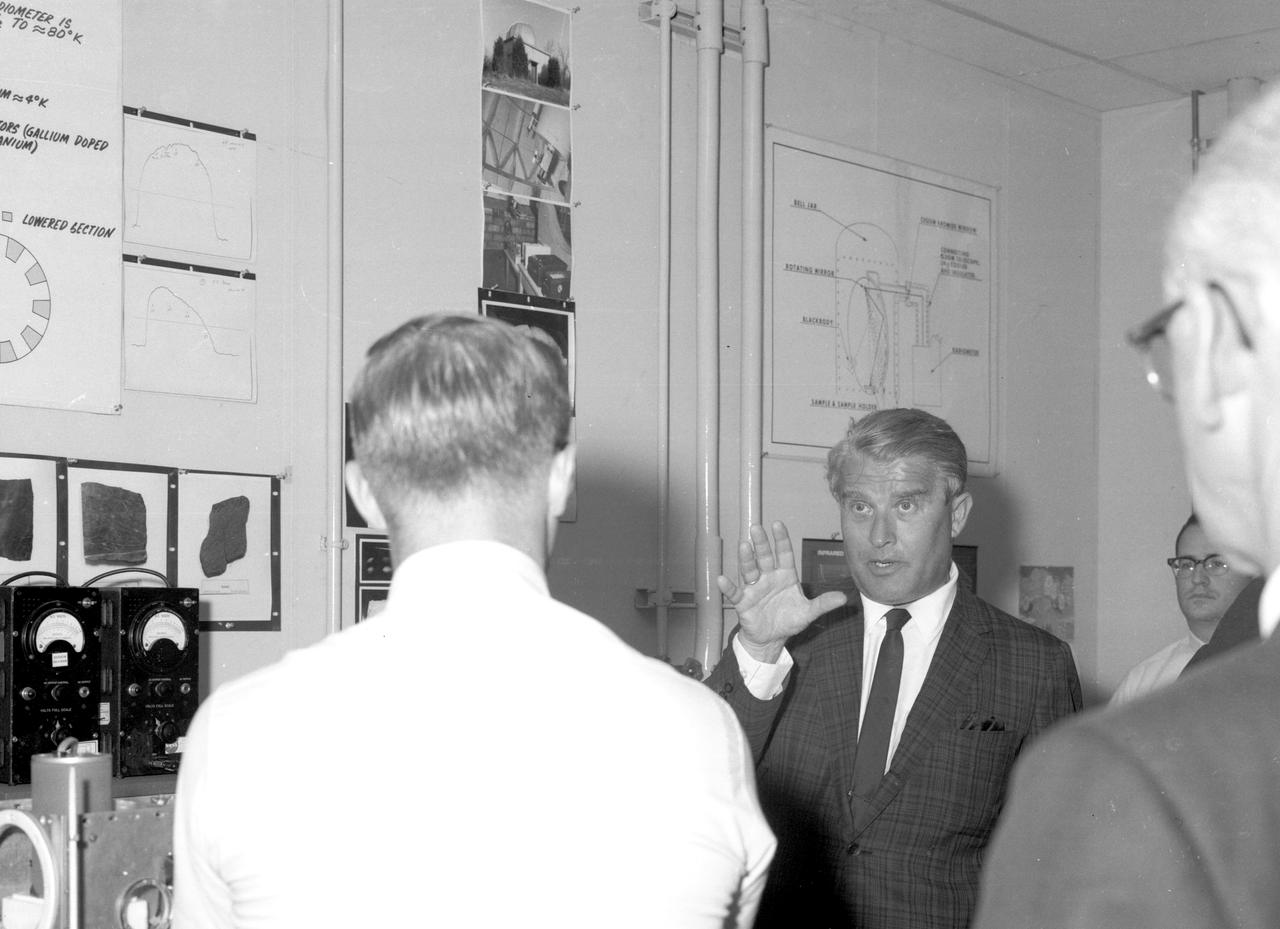
Marshall Space Flight Center (MSFC) director, Dr. Wernher von Braun, poses a question to a technician during a visit to one of the branches of MSFC’s Space Sciences Laboratory.
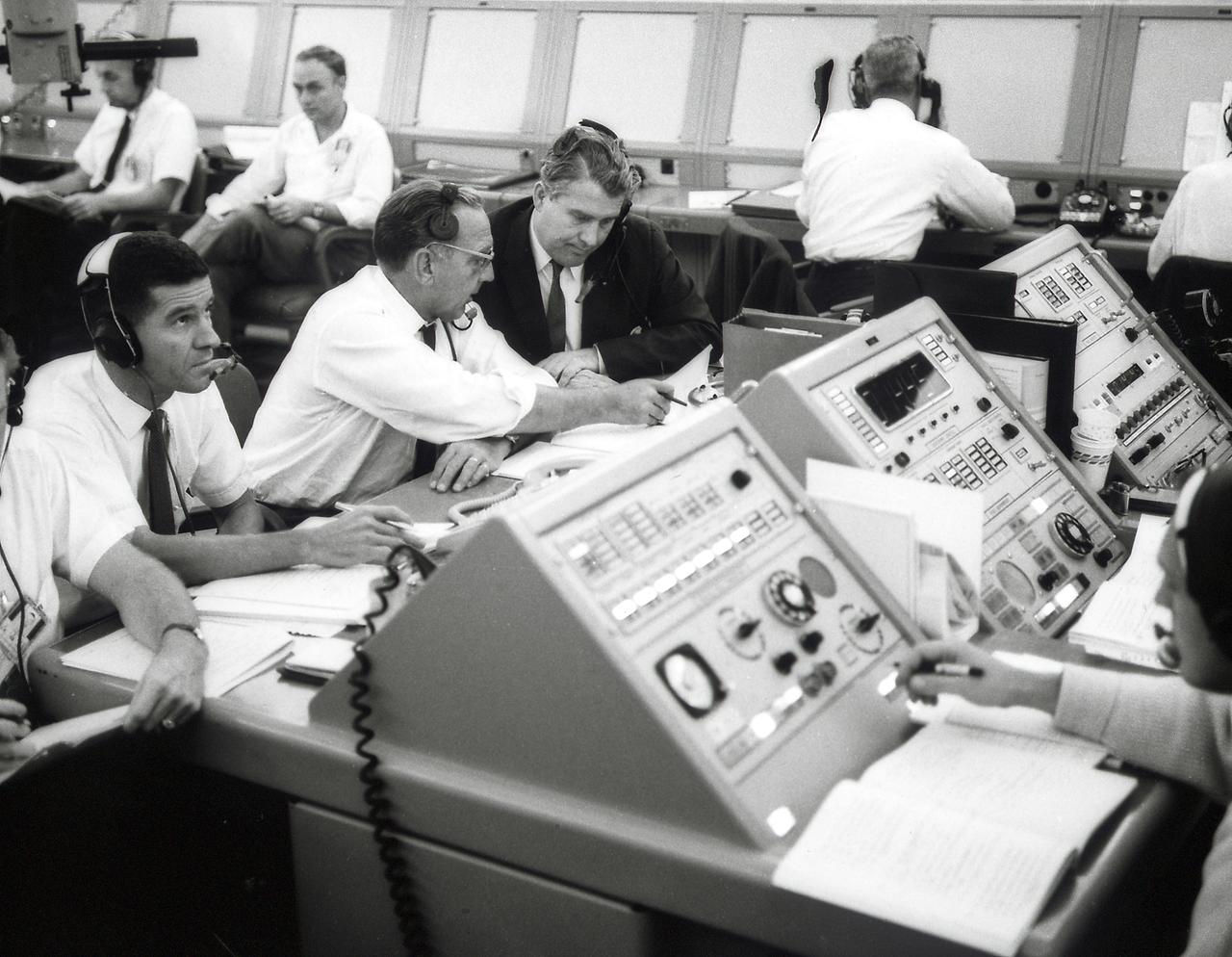
Dr. von Braun, Director of the Marshall Space Flight Center (MSFC), and Dr. Debus, Director of Launch Operations Directorate, photographed in the blockhouse during the Apollo launch simulation.
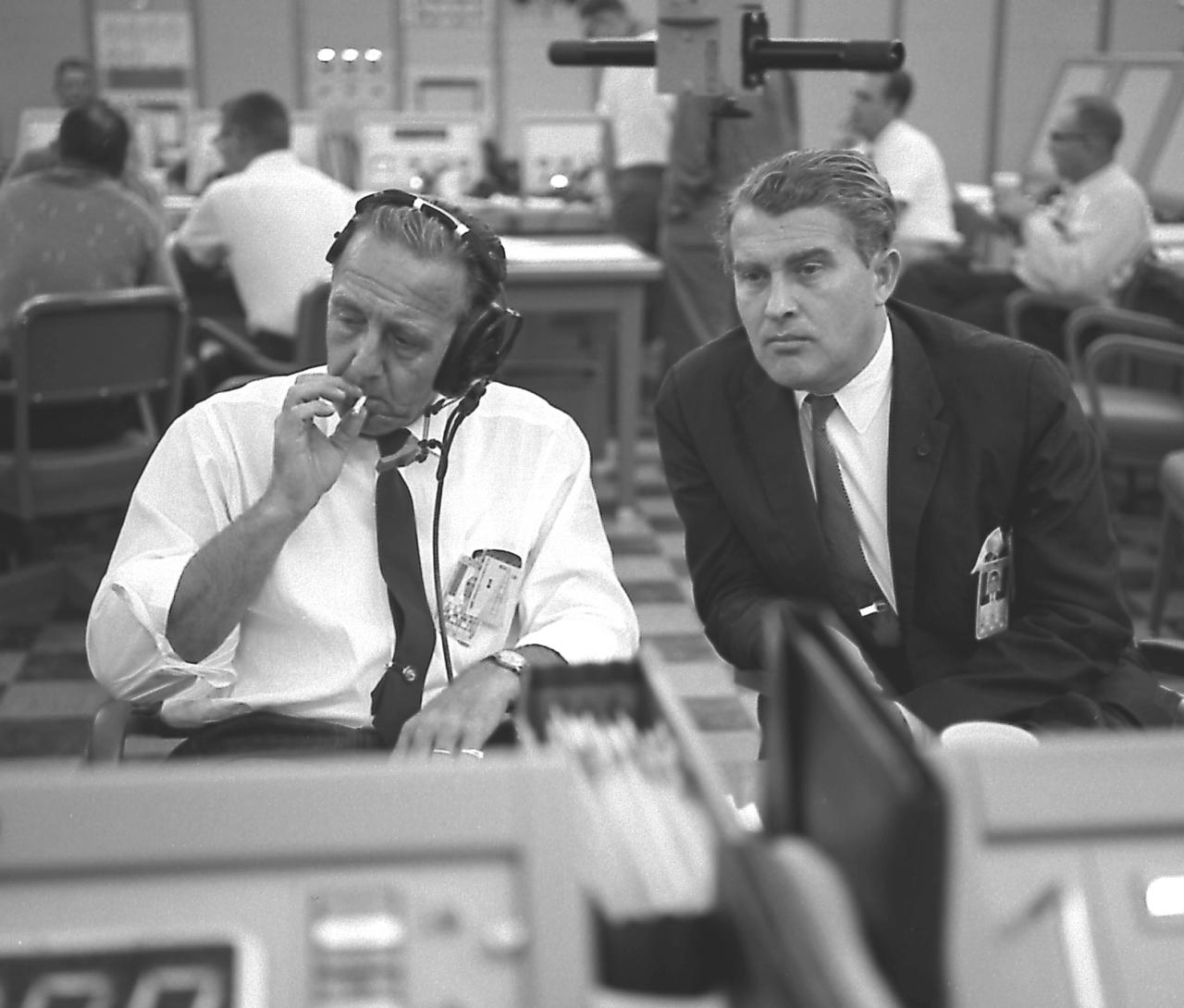
Dr. von Braun, Director of the Marshall Space Flight Center (MSFC), and Dr. Debus, Director of Launch Operations Directorate, photographed in the blockhouse during the Apollo launch simulation.
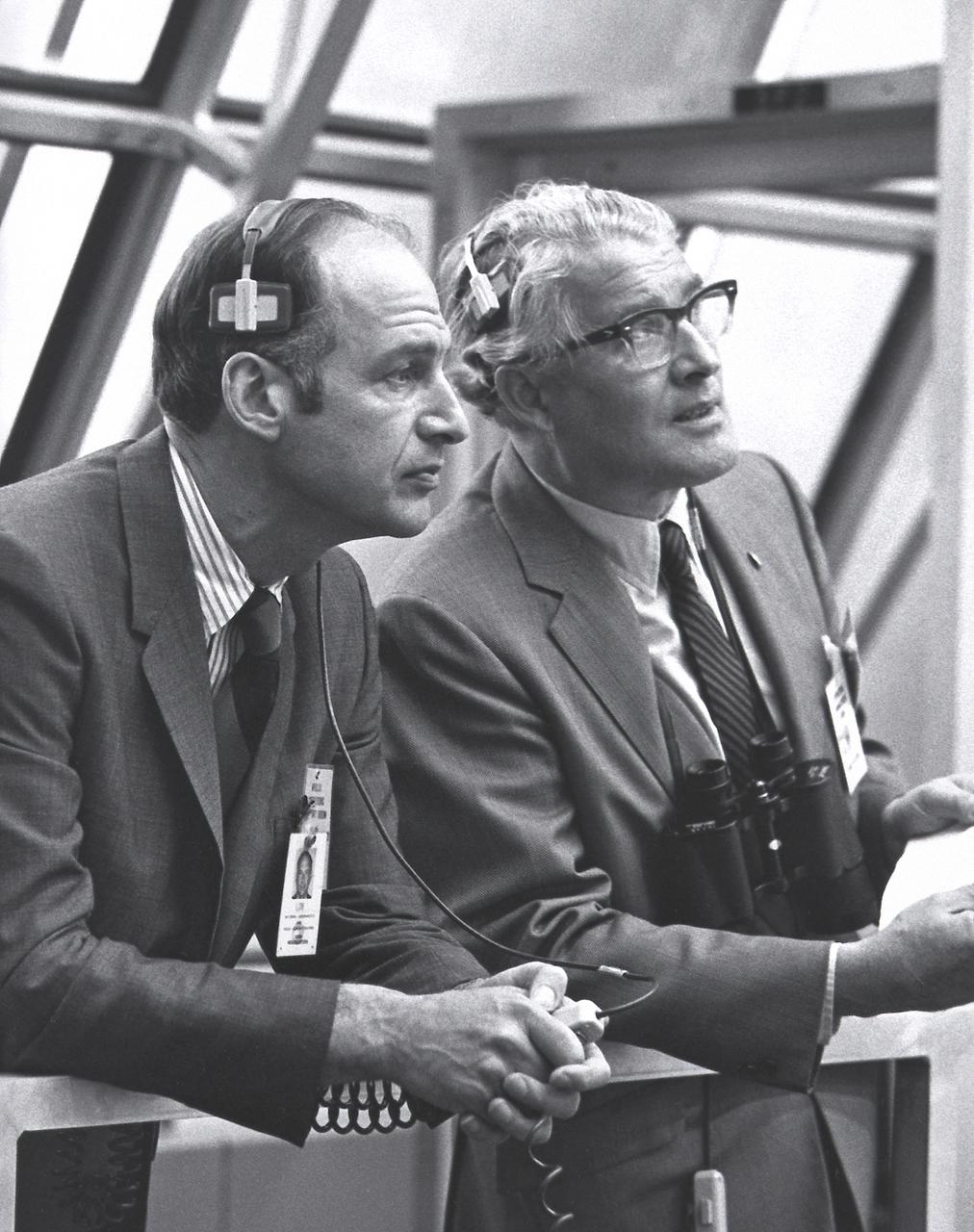
Dr. George M. Lowe, left, Acting Administrator of NASA, and Dr. von Braun monitor the Apollo 14 prelaunch activities in the Firing Room of the Launch Control Center at the Kennedy Space Center.
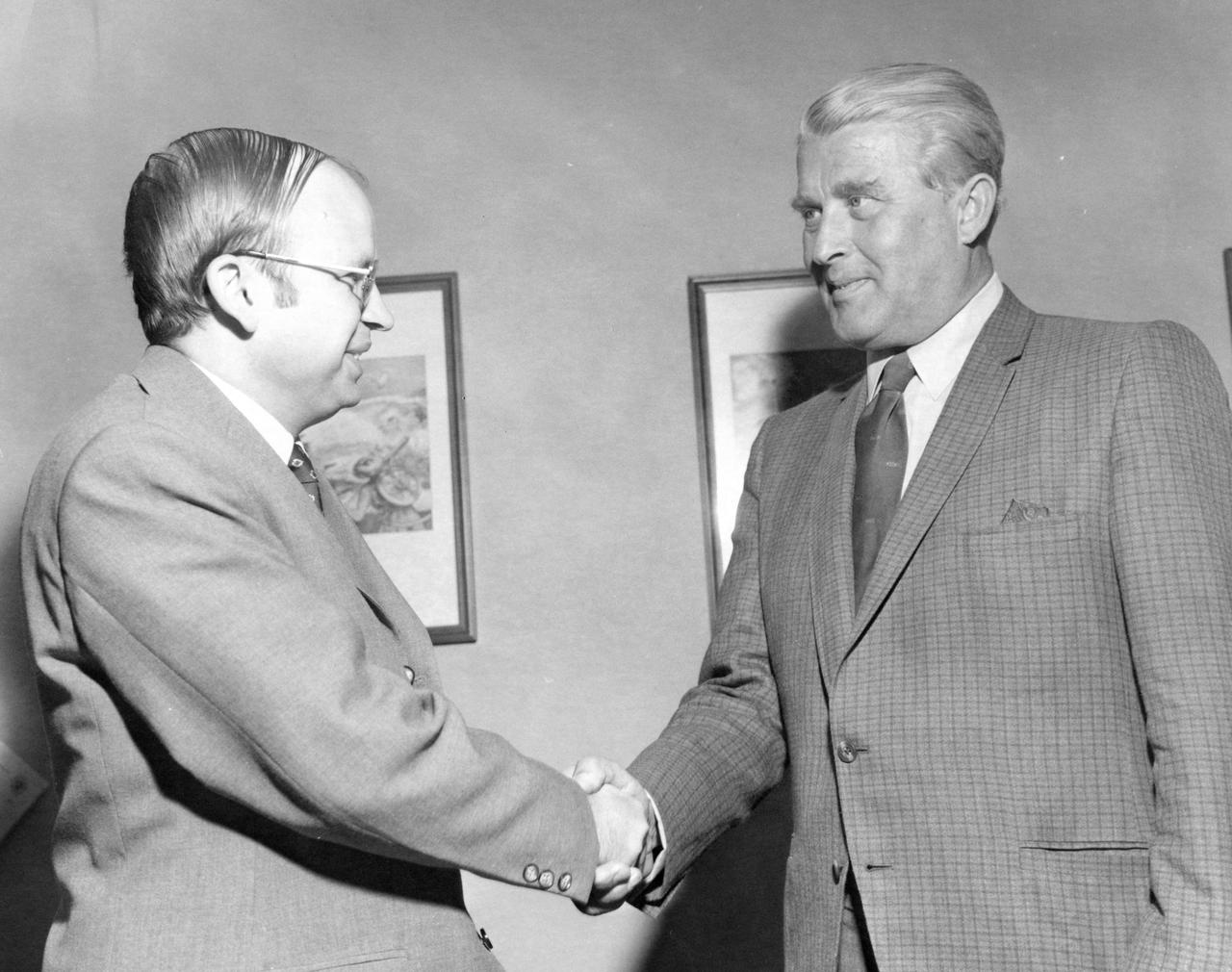
In this photograph, Guenter Ogger of Capitol Magazine, West Germany, greets Marshall Space Flight Center Director, Dr. Wernher von Braun. Mr. Ogger interviewed the famous rocket scientist for his magazine.
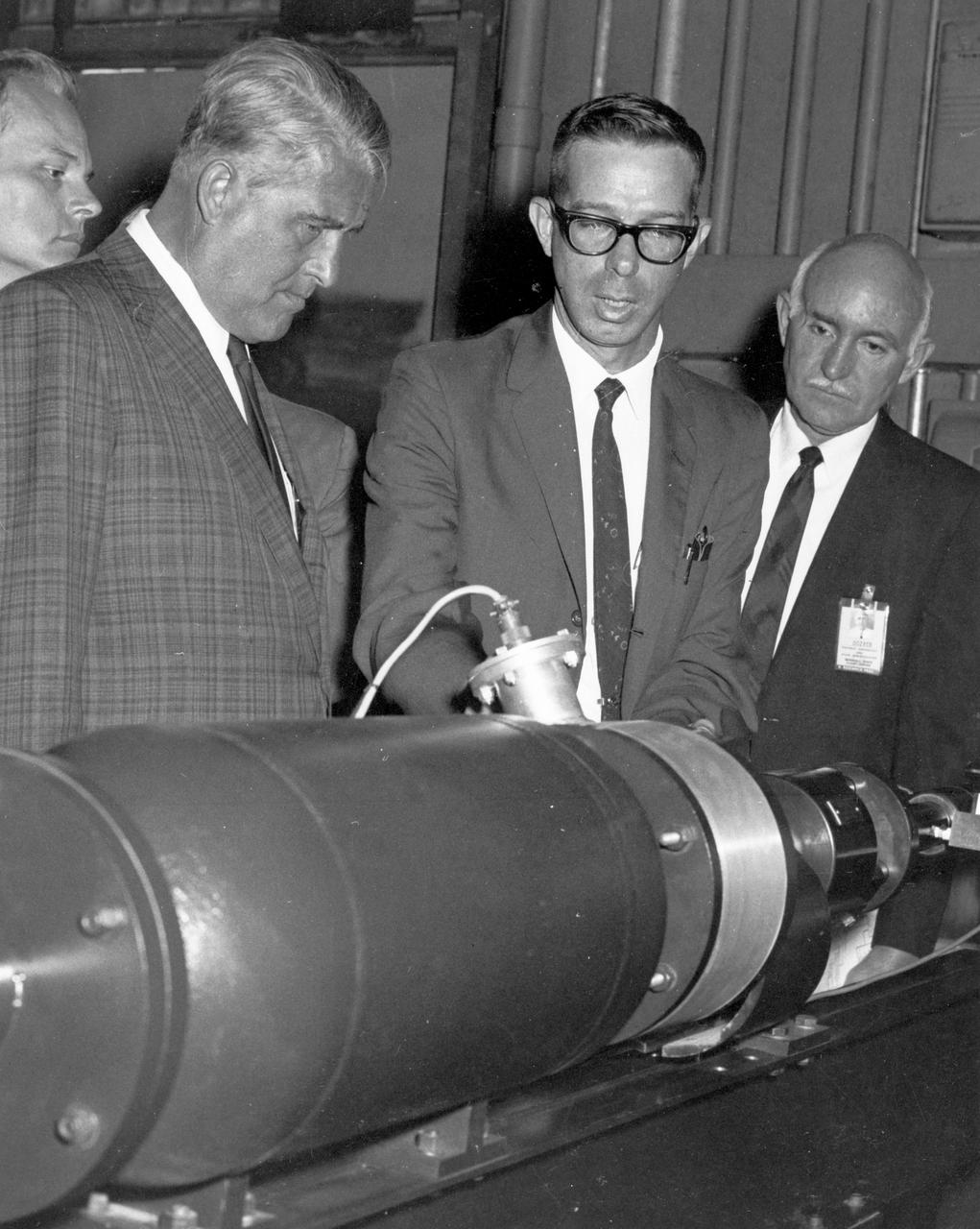
Marshall Space Flight Center’s (MSFC) director, Dr. Wernher von Braun (far left), gets a briefing on an experiment being conducted in MSFC’s Space Sciences Laboratory during a tour on August 28, 1967.
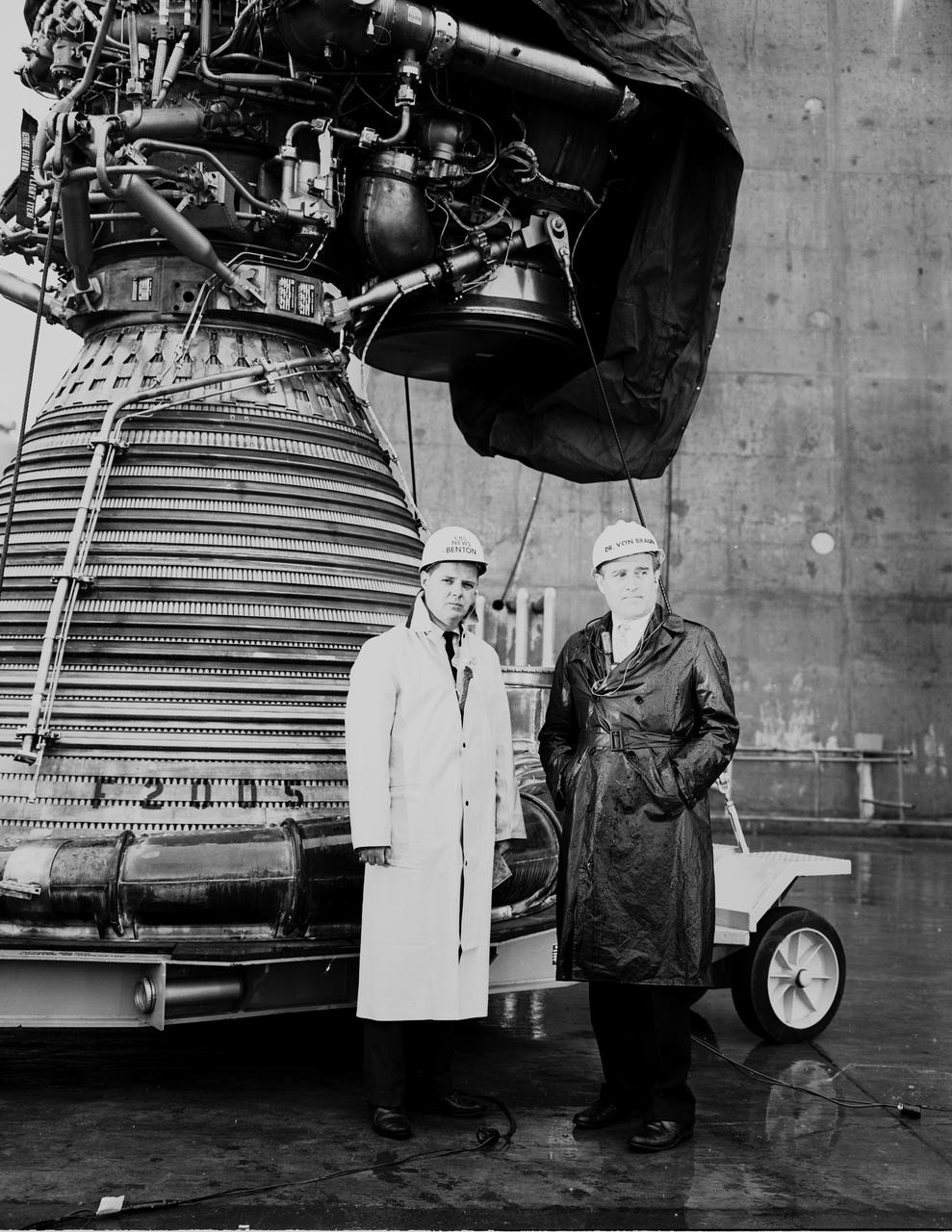
This is a photograph, probably from the early 1960s, that shows Dr. von Braun, right, with a correspondent for CBS News. The correspondent is believed to be Nelson Benton. The two men are standing in front of a huge rocket engine.
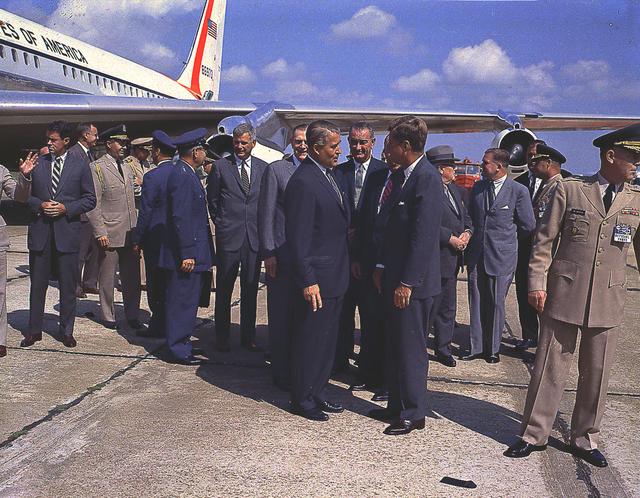
President John F. Kennedy, Vice President Lyndon B. Johnson and Marshall Space Flight Center Director Dr. Wernher von Braun at the Redstone Arsenal Airfield, September 11, 1962. Kennedy and Johnson visited the Marshall Center to tour national space facilities.
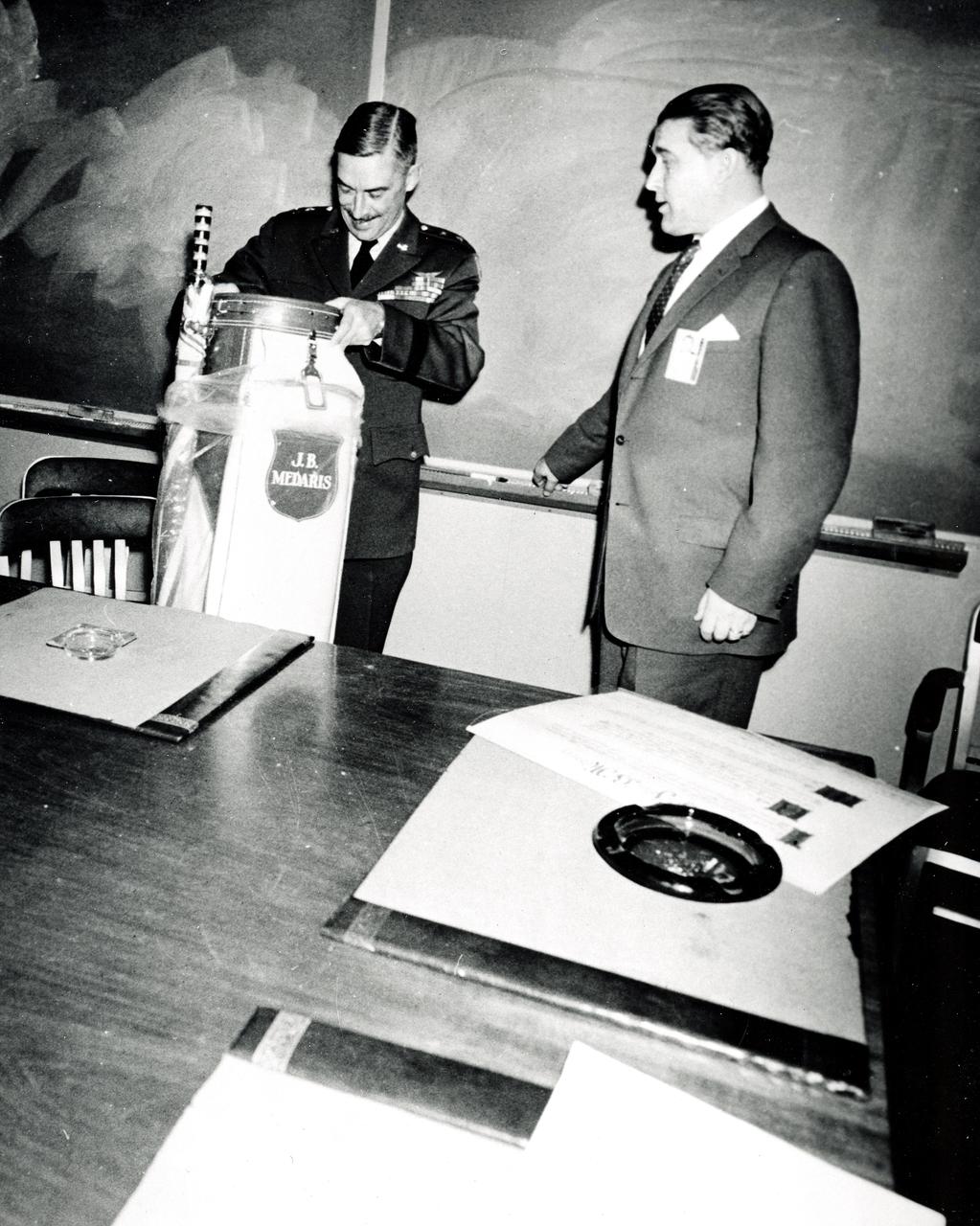
Marshall Space Flight Center Director Wernher von Braun presents General J.B. Medaris with a new golf bag. General Medaris, (left) was a Commander of the Army Ballistic Missile Agency (ABMA) in Redstone Arsenal, Alabama during 1955 to 1958.
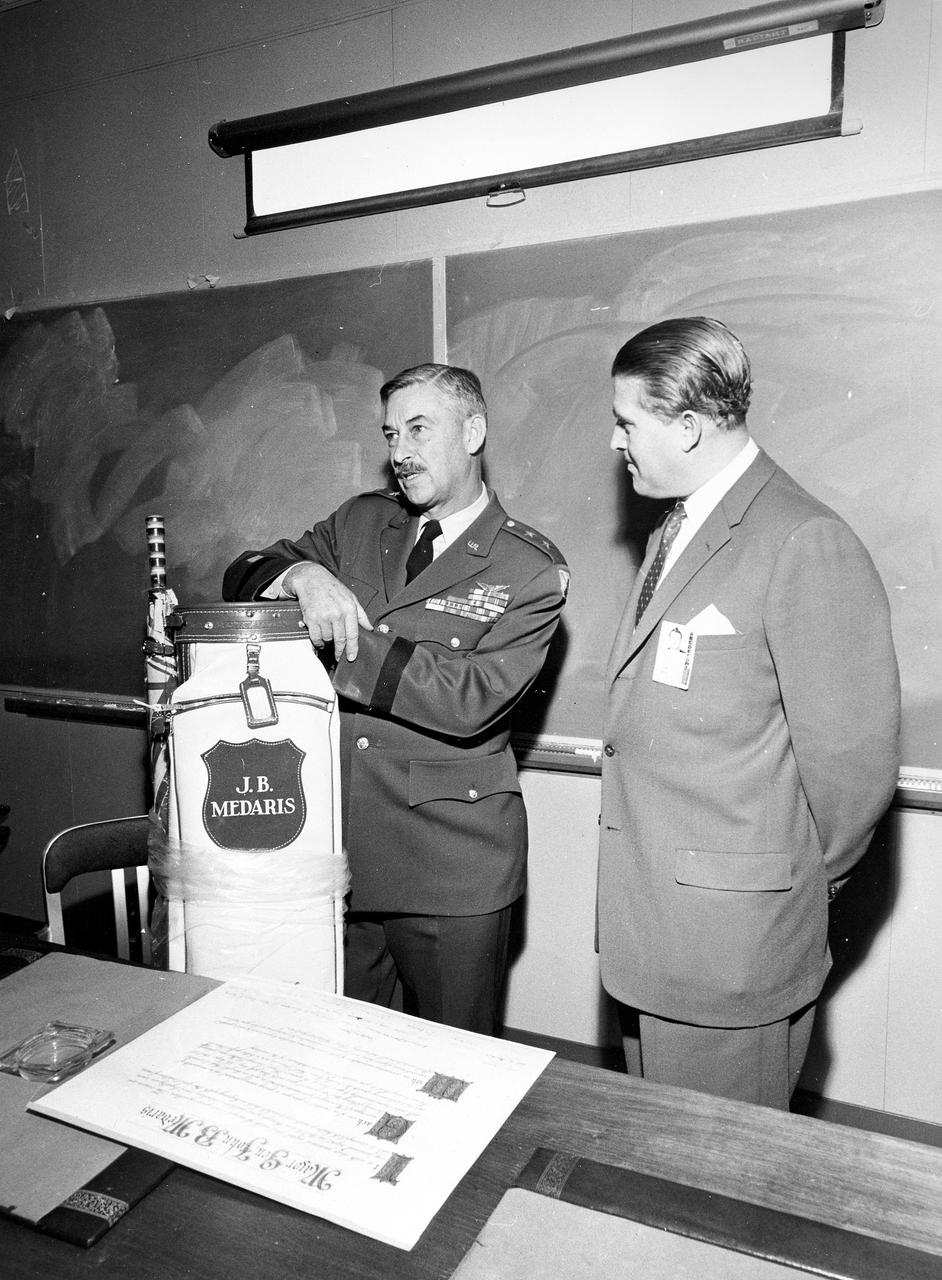
Marshall Space Flight Center Director Wernher von Braun presents General J.B. Medaris with a new golf bag. General Medaris, (left) was a Commander of the Army Ballistic Missile Agency (ABMA) in Redstone Arsenal, Alabama during 1955 to 1958.
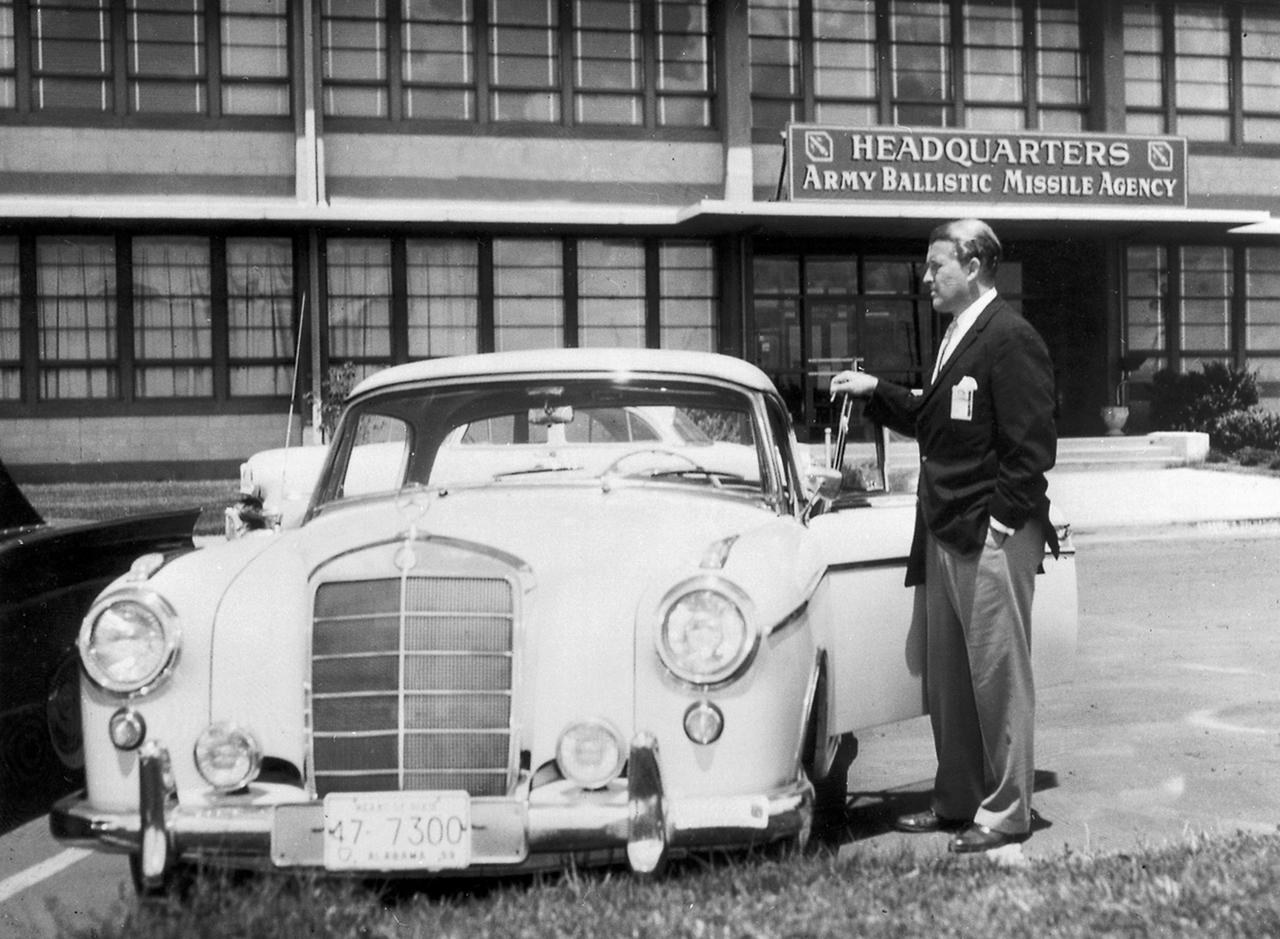
In this picture, Dr. Wernher von Braun, who was serving as Director of the Army Ballistic Missile Agency's (ABMA) Development Operations Division, is shown posed with his Mercedes 220SE automobile in front of Redstone Building 4488, which houses the ABMA.
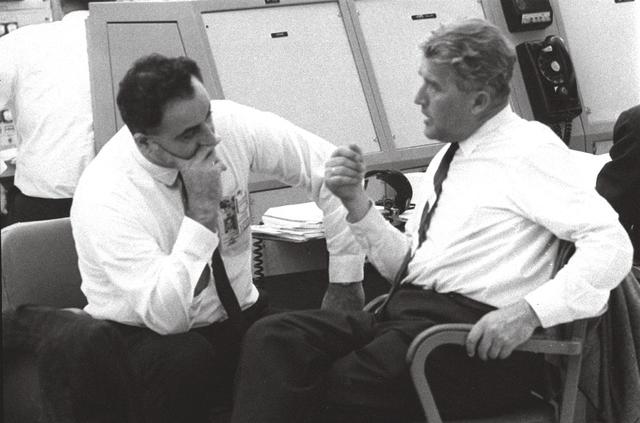
Dr. Wernher Von Braun (Marshall Center Director 1960-1970) and Dr. Rocco Petrone (Marshall Center Director 1973-1974) talk during a lull in the preparations of a Saturn 1 vehicle launch at Cape Kennedy's Launch complex 37 Control Center.
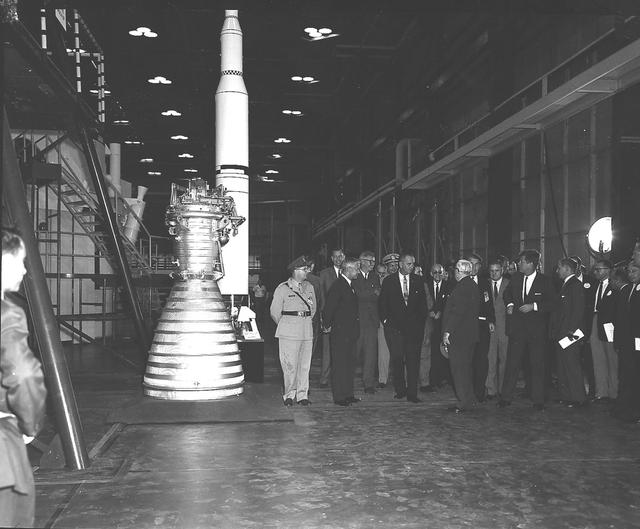
Marshall Space Flight Center Director Dr. Wernher von Braun explains a detail from a Saturn IB mockup and engine to President John F. Kennedy, Vice President Lyndon Johnson and other guests, September 11, 1962.
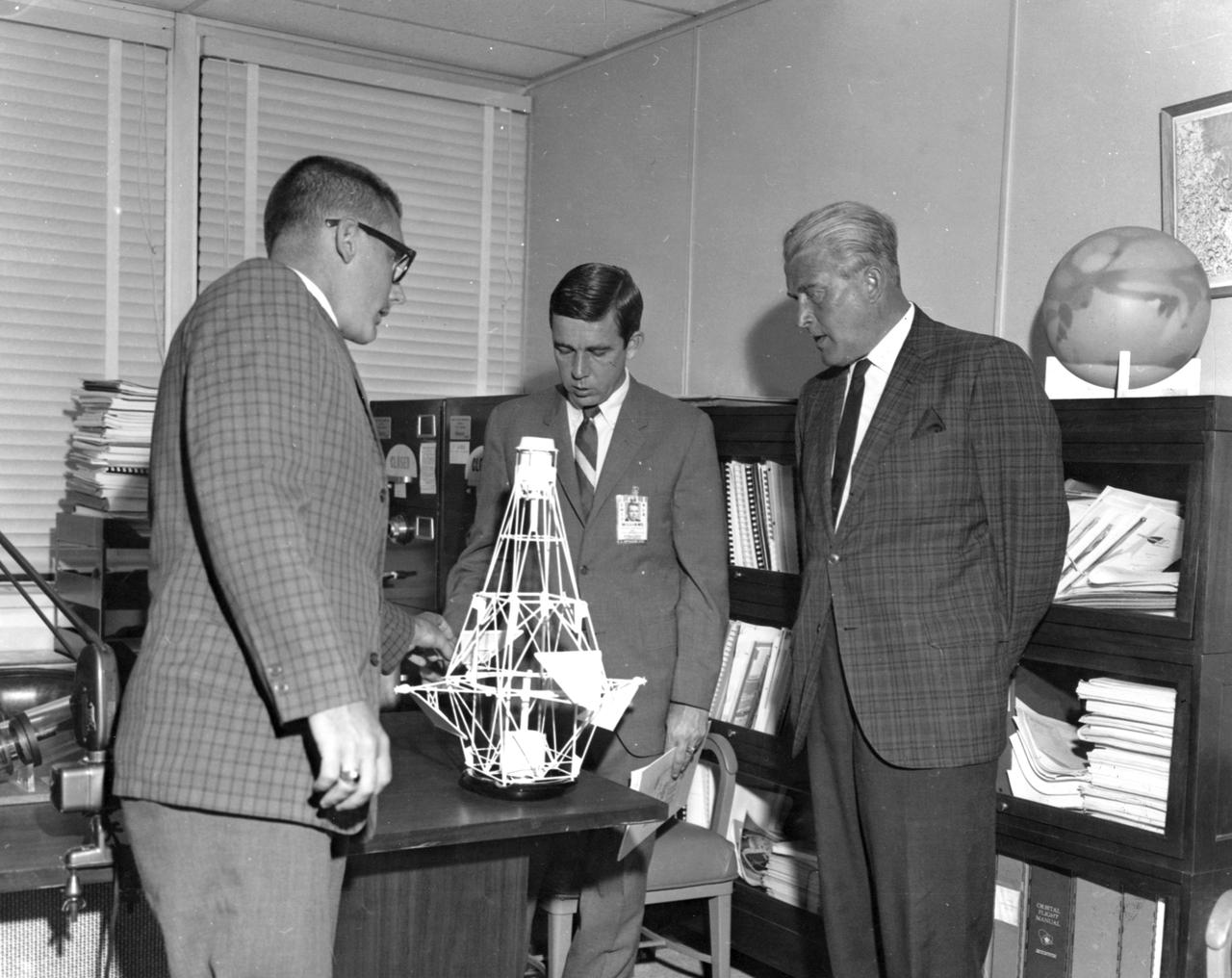
Dr. Wernher von Braun, Director of the Marshall Space Flight Center (right), listens to an explanation of an advanced orbiting observatory concept from MSFC employees Ted Carey, Vehicle and Mission Analysis Office (left), and Frank Williams, Director of Advanced Systems Office.
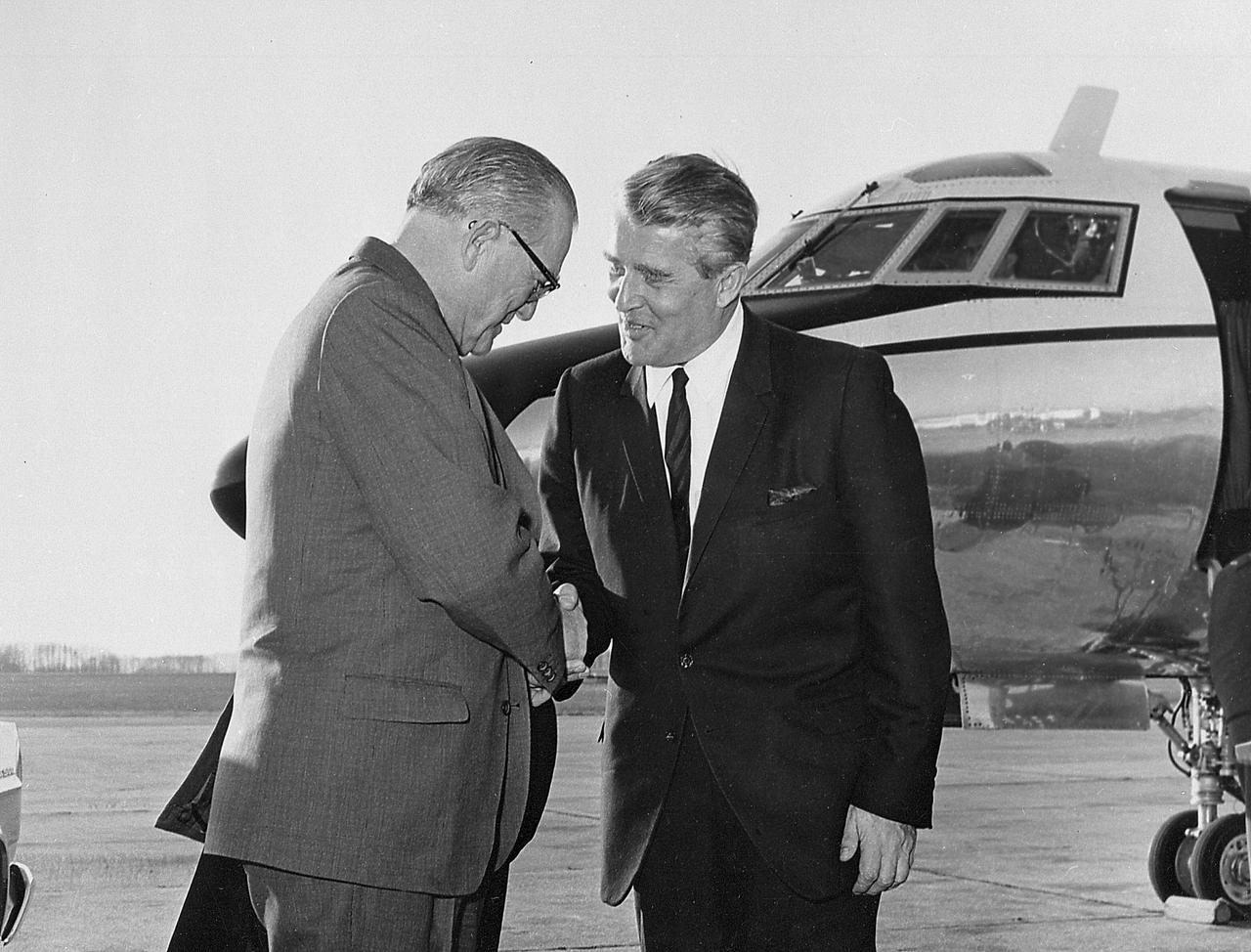
U.S. Senator from Mississippi, John Stennis (left) visited the Marshall Space Flight Center (MSFC) in mid-November 1967, where he was greeted at the Redstone Airfield by Center Director Dr. Wernher von Braun (right). During his visit to MSFC, Senator Stennis was given a tour and briefed on MSFC programs.
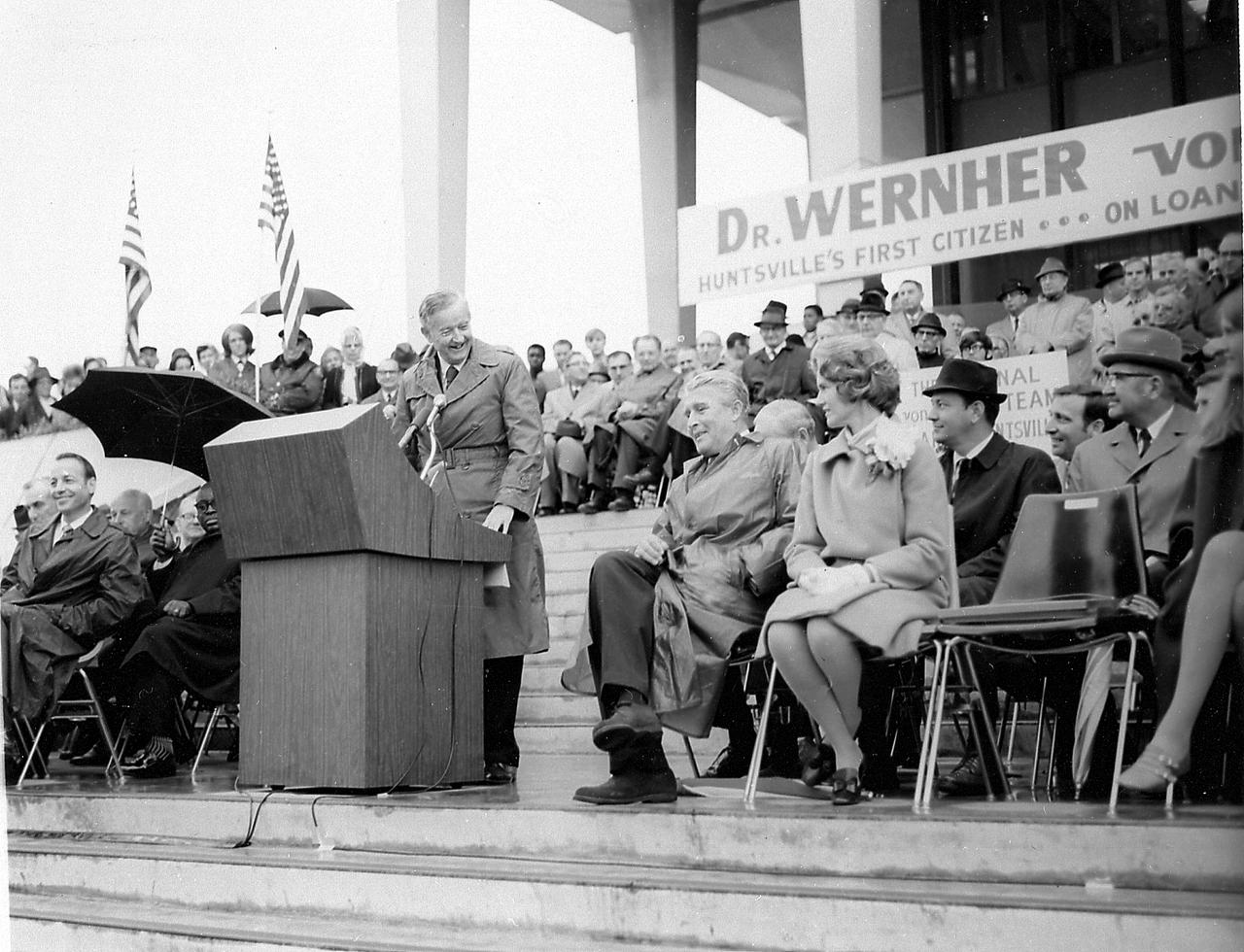
Prior to MSFC (Marshall Space Flight Center) Director, Dr. von Braun's transfer to NASA Headquarters where he had been appointed Deputy Associate Administrator for Plarning, he was honored during a series of events recognizing his contribution to the space effort during his career in Huntsville, Alabama. In this photo at the Madison County Courthouse, Dr. von Braun is shown seated next to his wife, Maria, as U.S. Senator John Sparkman comments on his career in Huntsville, Alabama, where he worked for both the Army and NASA (National Aeronautic Space Administration).
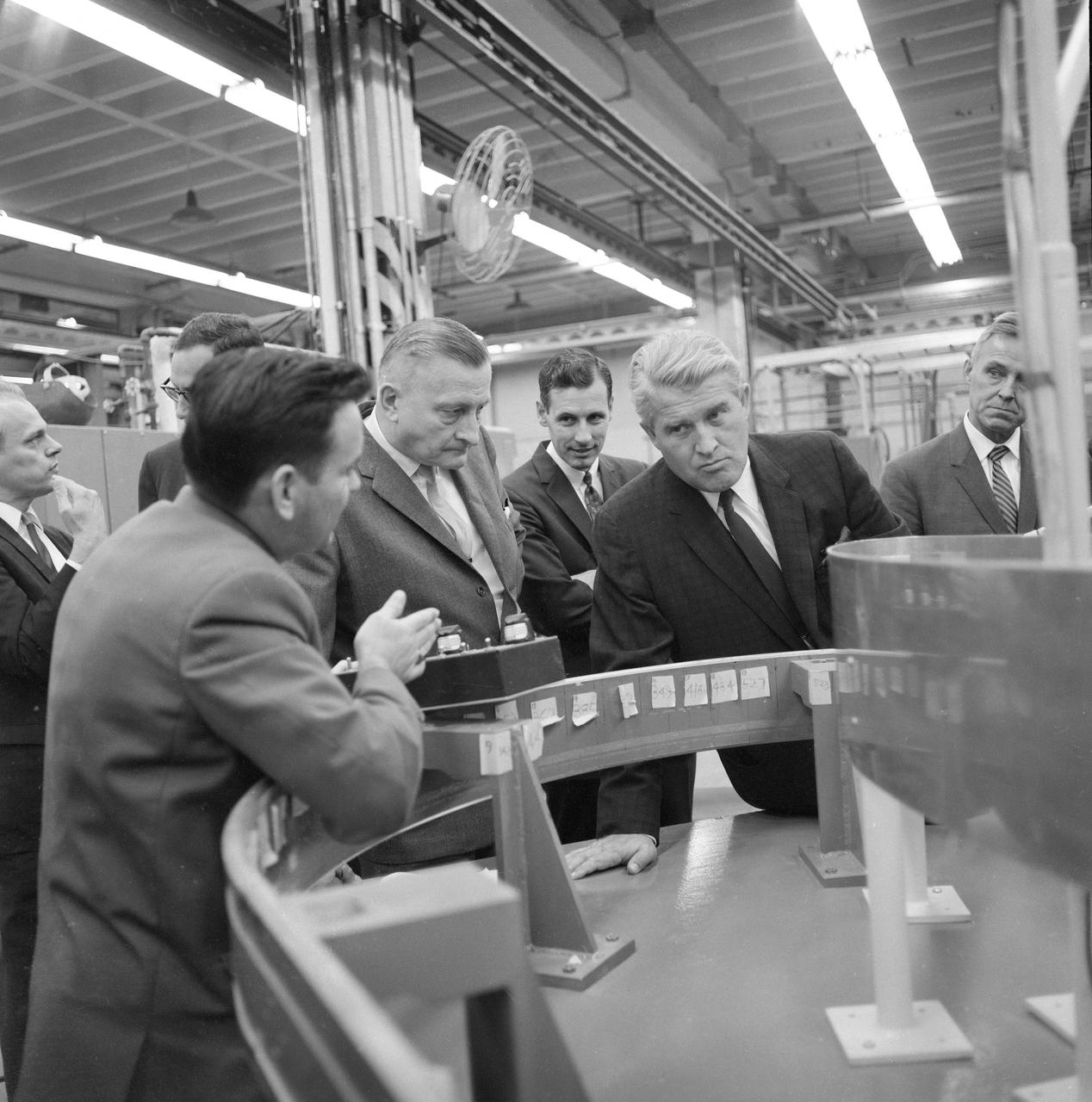
Dr. von Braun, Dr. Weidner, and Ed Weaver examining a welding device during a tour of the MSFC Manufacturing and Engineering (ME) Laboratory on October 17, 1967.

Dr. Kurt Debus and Dr. von Braun during prelaunch activities of the Ranger IV at Launch Pad 12 on April 12. 1962.
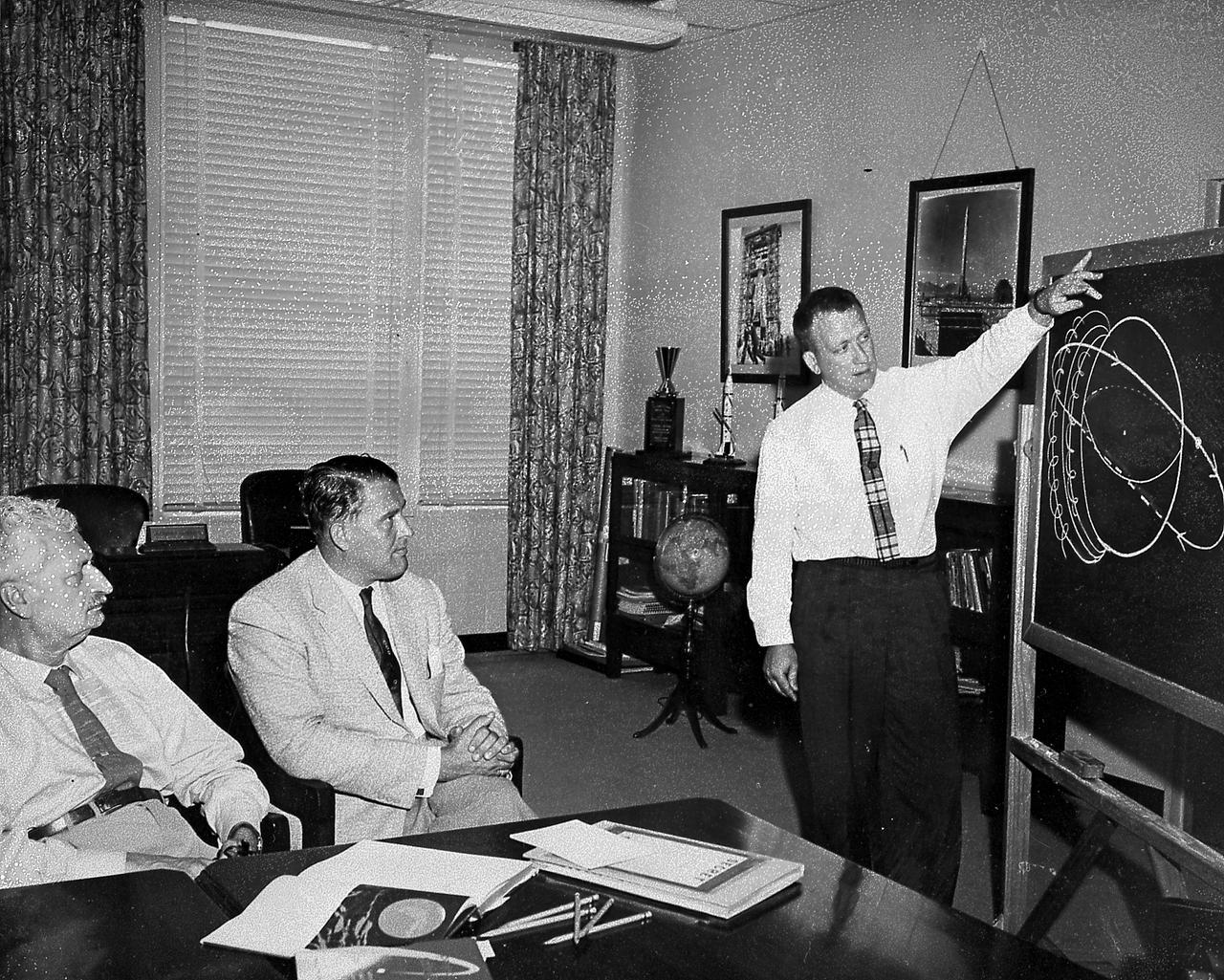
Professor Hermann Oberth and Dr. von Braun are briefed on satellite orbits by Dr. Charles A. Lundquist at Army Ballistic Missile Agency, Redstone Arsenal, Huntsville, Alabama.
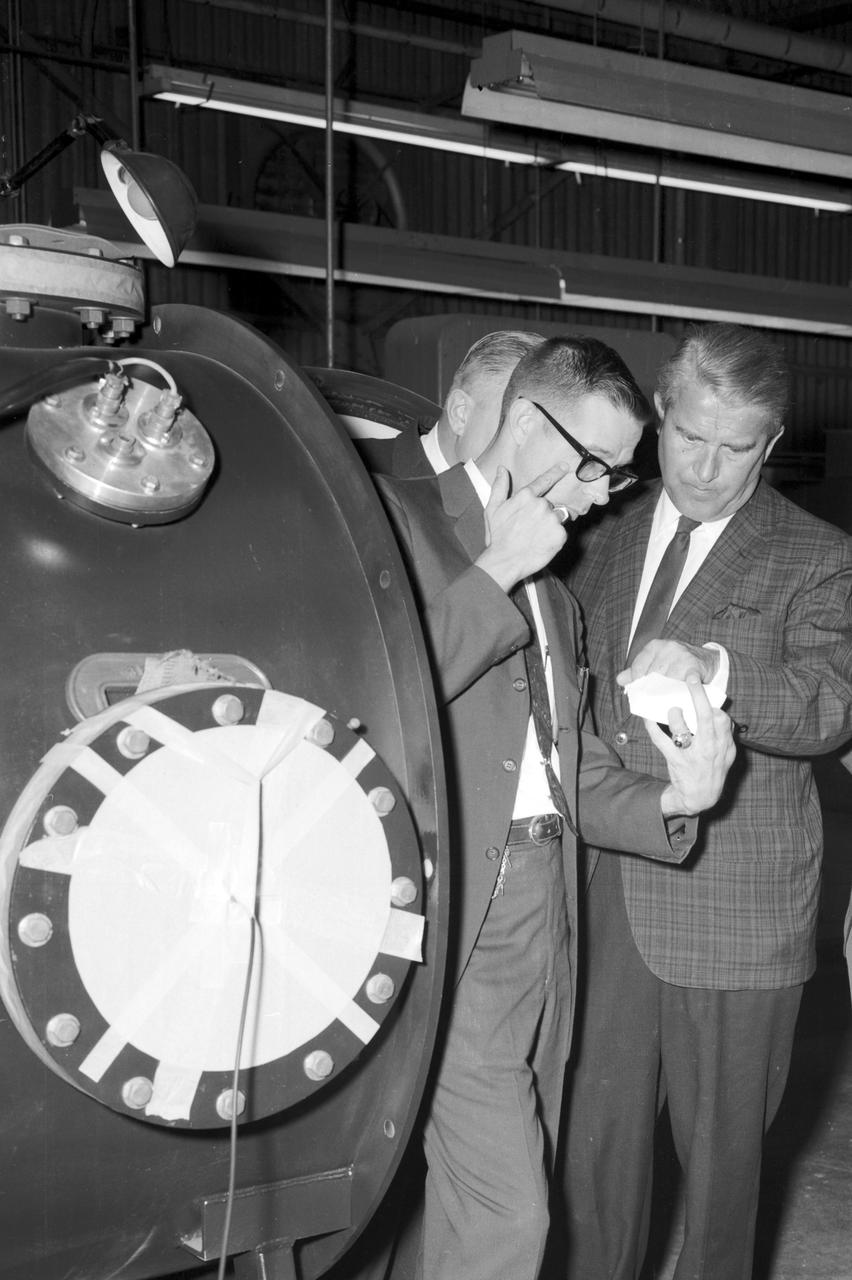
Dr. von Braun and party look at a laser beam component during a visit at the Marshall Space Flight Center Space Science Laboratory on August 28, 1967.
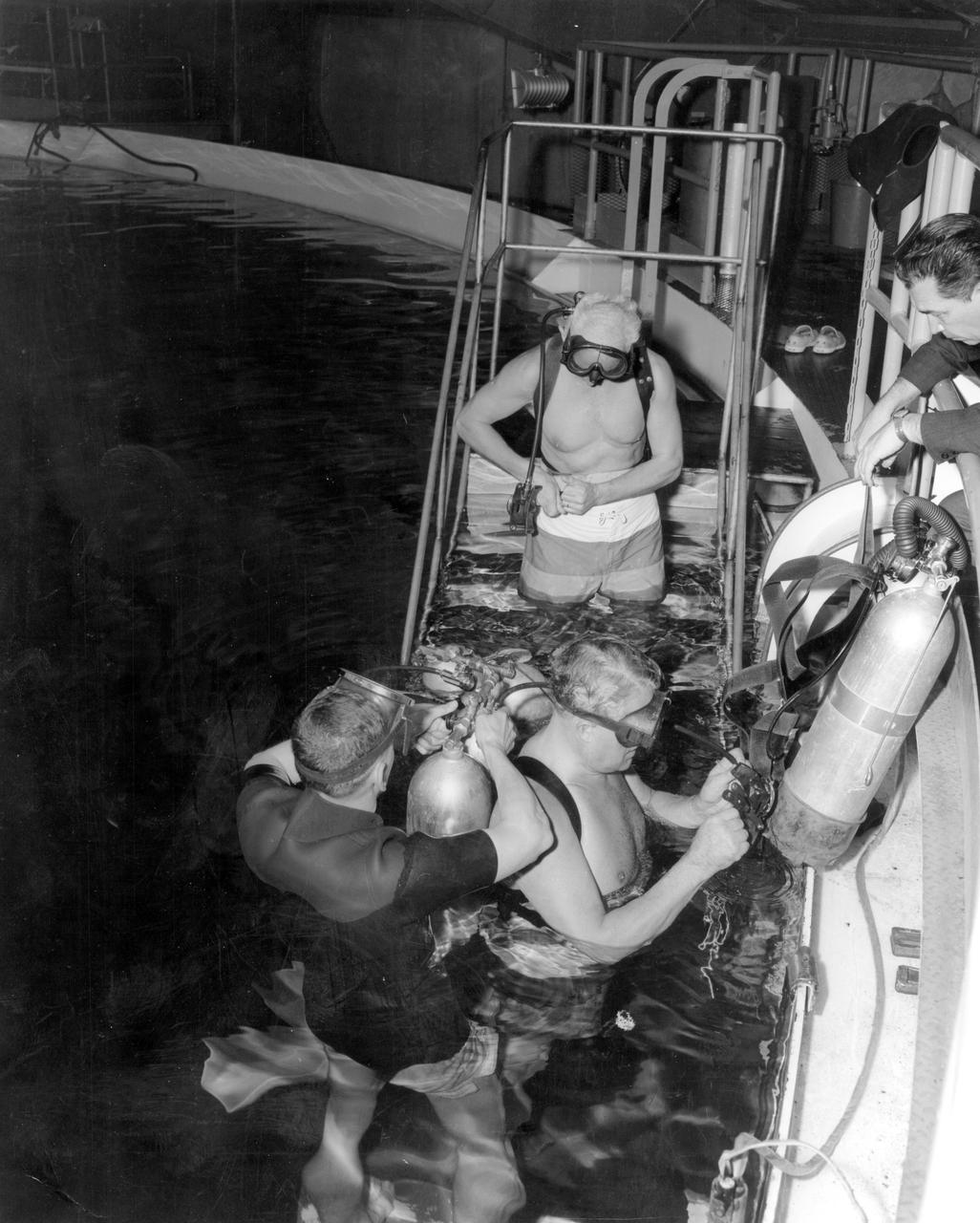
Marshall Space Flight Center’s (MSFC) Dr. Ernst Stuhlinger, Director of Research Projects Office; and Dr. Wernher von Braun, center director, along with others, took a swim in the Neutral Buoyancy Simulator (NBS) at MSFC. A safety diver adjusts scuba equipment worn by von Braun, while Stuhlinger adjusts his weight belt prior to entering the tank. In the NBS, subjects were weighted to a neutrally buoyant condition underwater to perform and practice tasks in a simulated weightless condition as would be encountered in space.
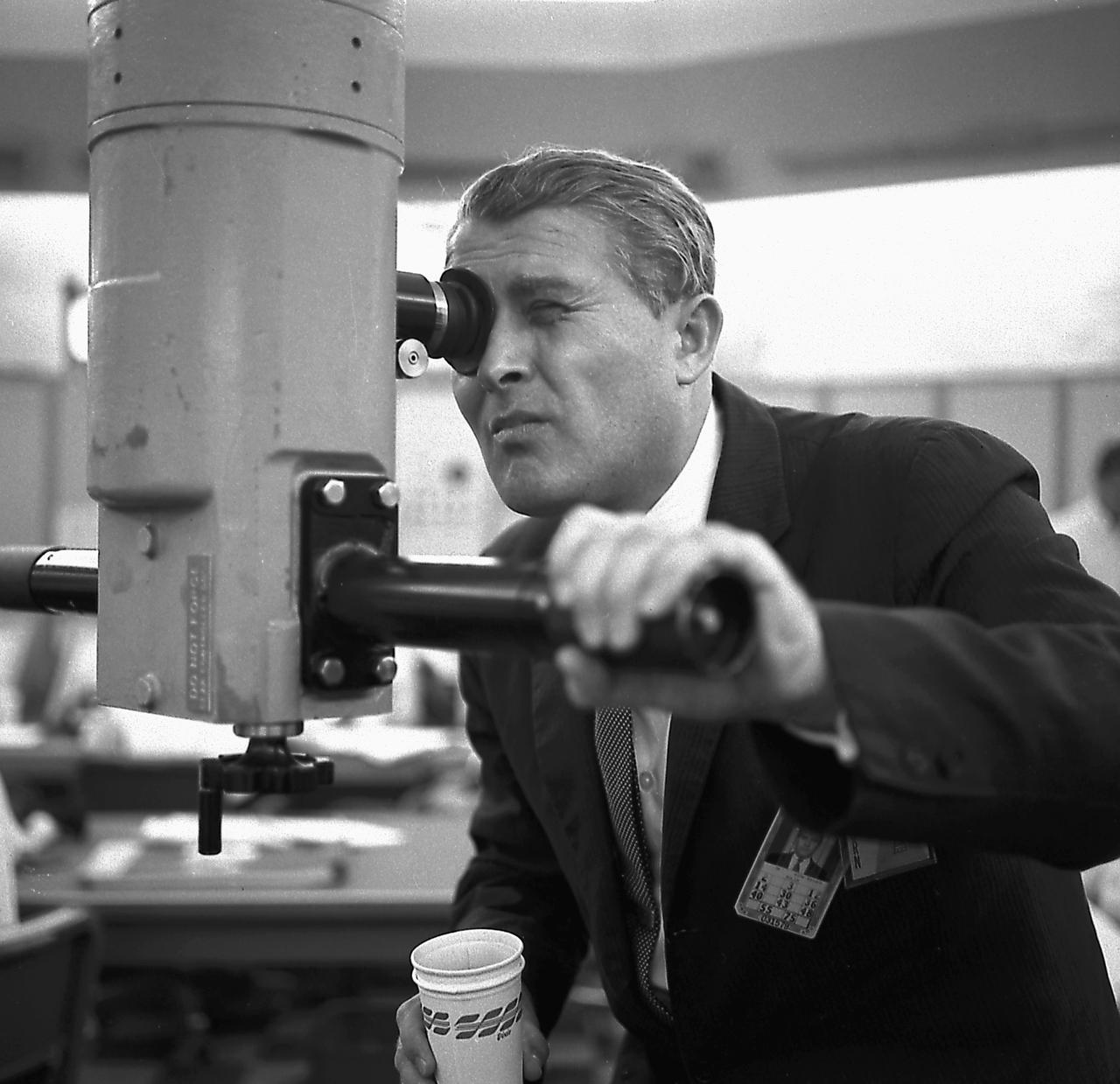
Dr. von Braun watches the Saturn 1 (SA-1) launch through a scope from the blockhouse 34 on October 27, 1961. The SA-1 was the first launch of Saturn launch vehicles developed at the Marshall Space Flight Center (MSFC) under the direction of Dr. von Braun. The flight demonstrated the validity of the clustered engine concept and launched dummy upper stages.
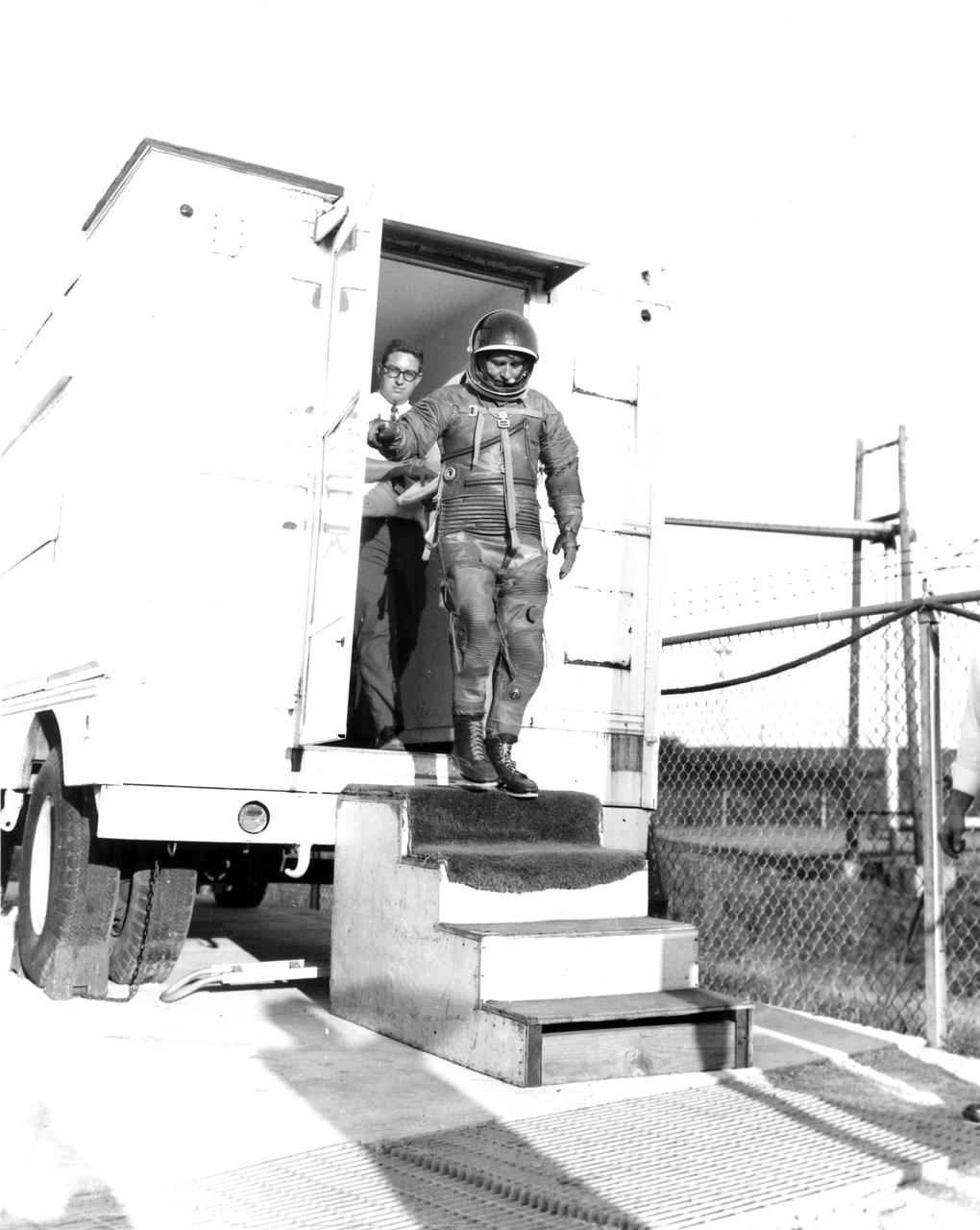
Marshall Space Flight Center (MSFC) Director, Dr. von Braun, is shown leaving the suiting-up van wearing a pressure suit prepared for a tryout in the MSFC Neutral Buoyancy Simulator (NBS). Weighted to a neutrally buoyant condition, Dr. von Braun was able to perform tasks underwater which simulated weightless conditions found in space.
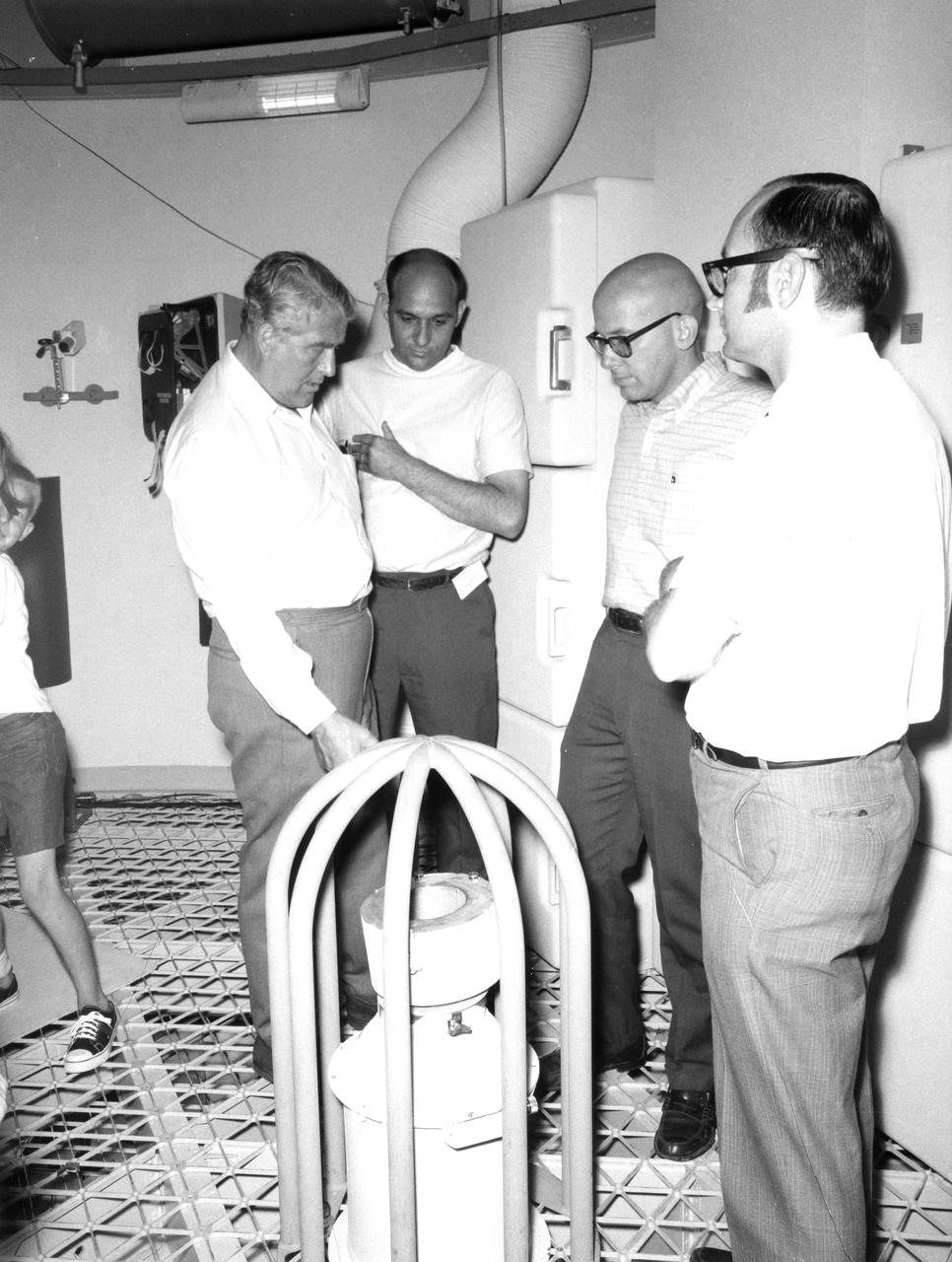
This photograph was taken after Dr. von Braun moved from his post as Director of the Marshall Space Flight Center (MSFC) to Deputy Associate Administrator for Planning at NASA Headquarters. On June 27, 1970, he visited the MSFC again during the center’s 10th anniversary to look at a mockup of the spacecraft that would later be known as Skylab. In this photo, he is examining an experiment in the mockup. With von Braun are (left to right): James R. Thompson, Richard T. Heckman, and Jack Stokes of the Center’s Astrionics Laboratory.
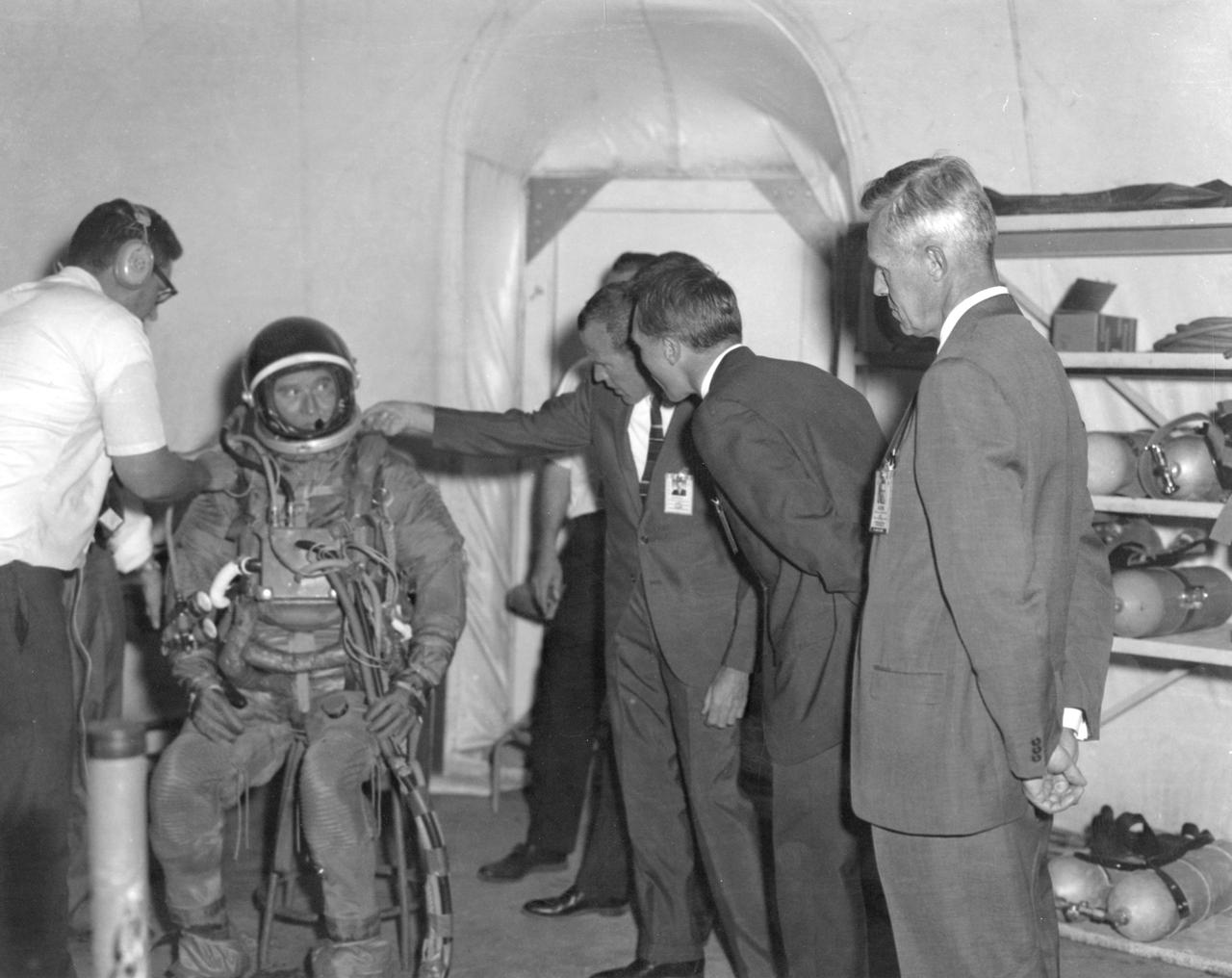
Astronaut L. Gordon Cooper checks the neck ring of a space suit worn by Marshall Space Flight Center (MSFC) Director, Dr. von Braun before he submerges into the water of the MSFC Neutral Buoyancy Simulator (NBS). Wearing a pressurized suit and weighted to a neutrally buoyant condition, Dr. von Braun was able to perform tasks underwater which simulated weightless conditions found in space.
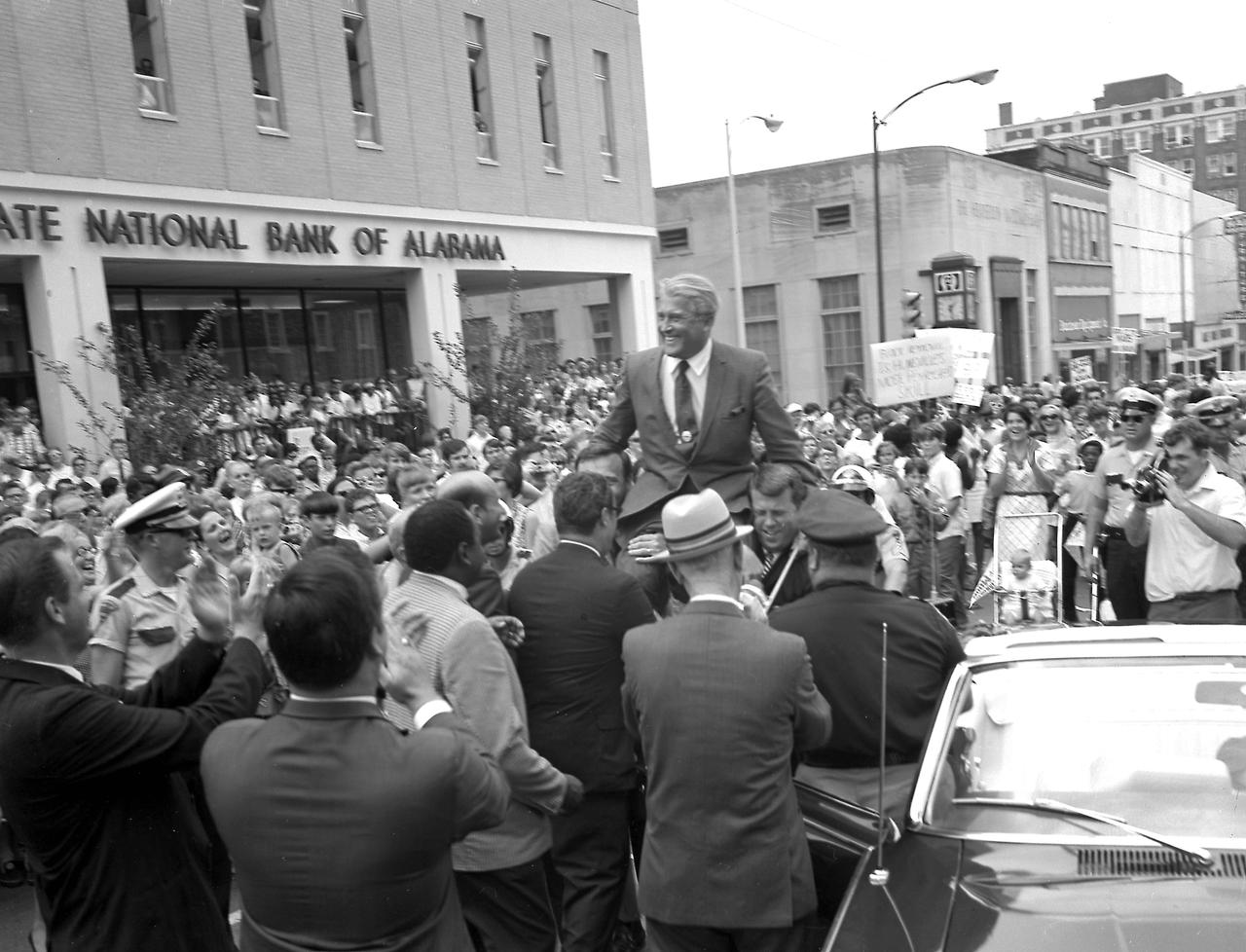
Dr. von Braun is carried aloft on the shoulders of Huntsville city officials during the Apollo 11 celebration in Huntsville, Alabama, on July 24, 1969. Huntsville, Alabama is the home of the Marshall Space Flight Center which developed the Saturn vehicles under the direction of Dr. von Braun. The Apollo 11 lifted off in July and made the first marned lunar landing on the Moon.
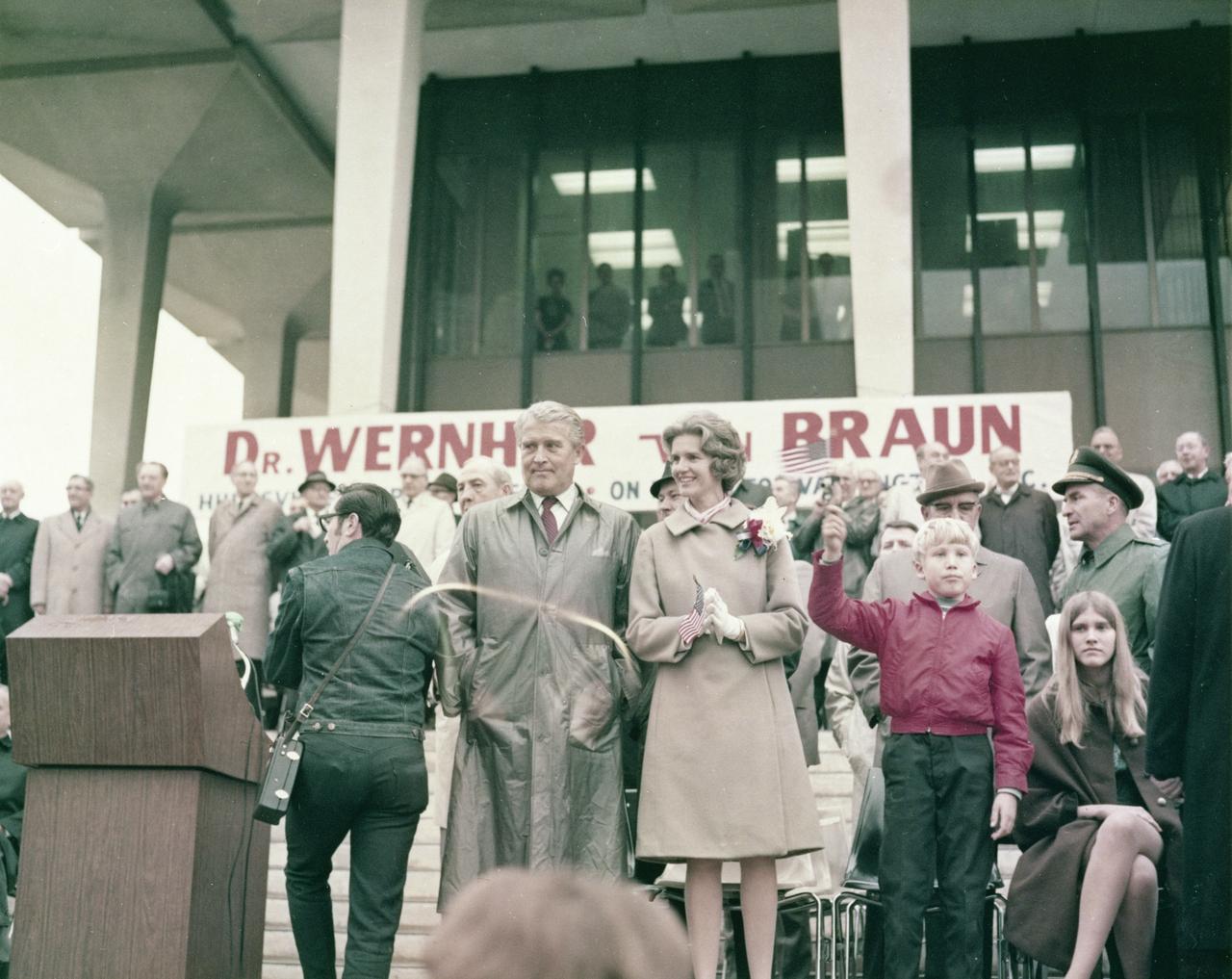
Marshall Space Flight Center (MSFC) Director Dr. von Braun and his family were honored with a series of events prior to his relocation to Washington, D.C., where he was assigned duties at NASA Headquarters as Deputy Associate Administrator for Plarning. (Left to right) Dr. von Braun, wife Maria, son Peter, and daughter Margrit are shown on the steps of the Madison County Courthouse, Huntsville, Alabama.
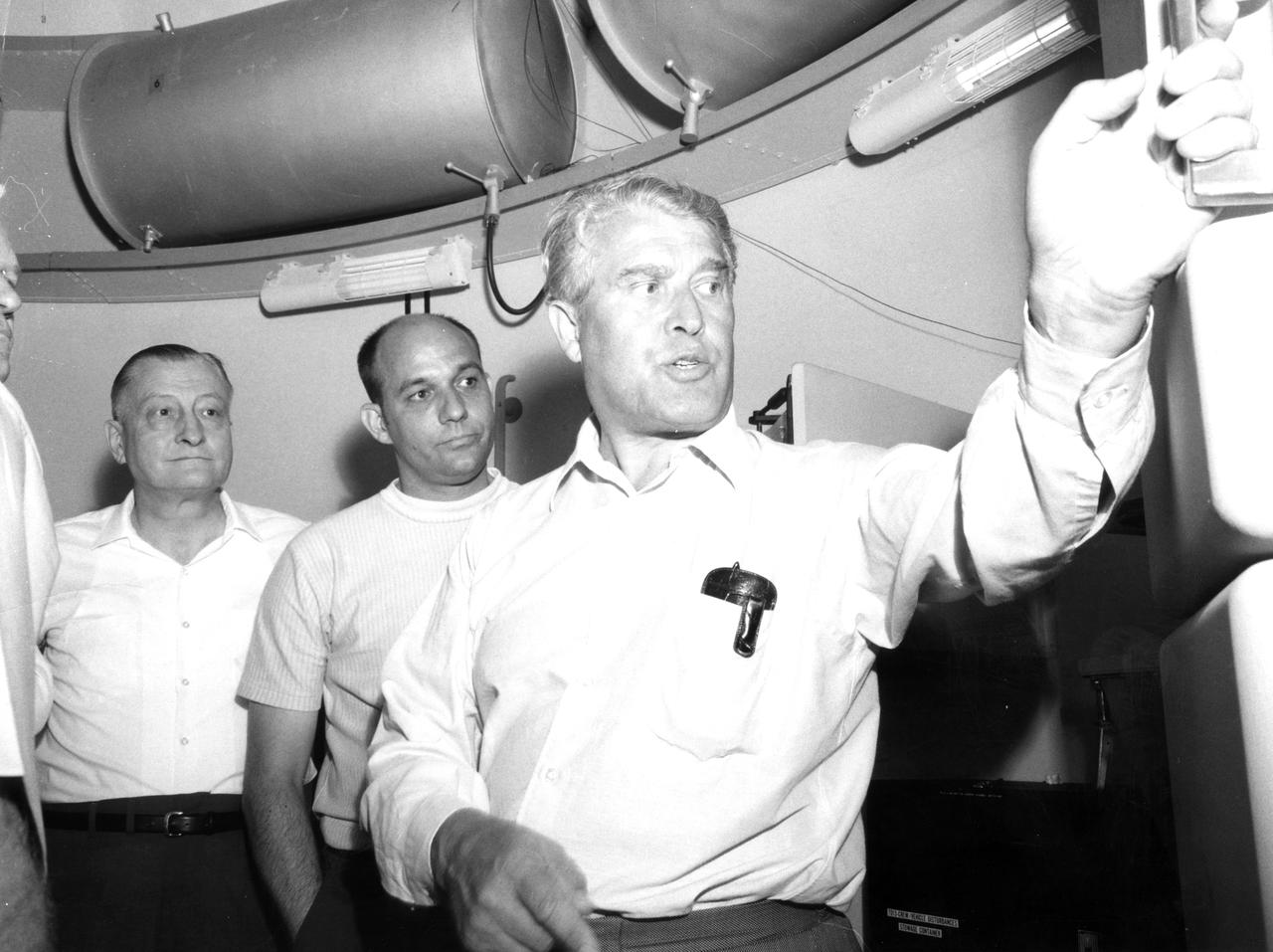
This photograph was taken after Dr. von Braun moved from his post as Director of the Marshall Space Flight Center (MSFC) to Deputy Associate Administrator for Planning at NASA Headquarters. On June 27, 1970, he visited the MSFC again during the center’s 10th anniversary to look at a mockup of the spacecraft that would later be known as Skylab. With von Braun are (left to right): Herman K. Weidner, director of Science and Engineering at MSFC, and James R. Thompson of the center’s Astrionics Laboratory.
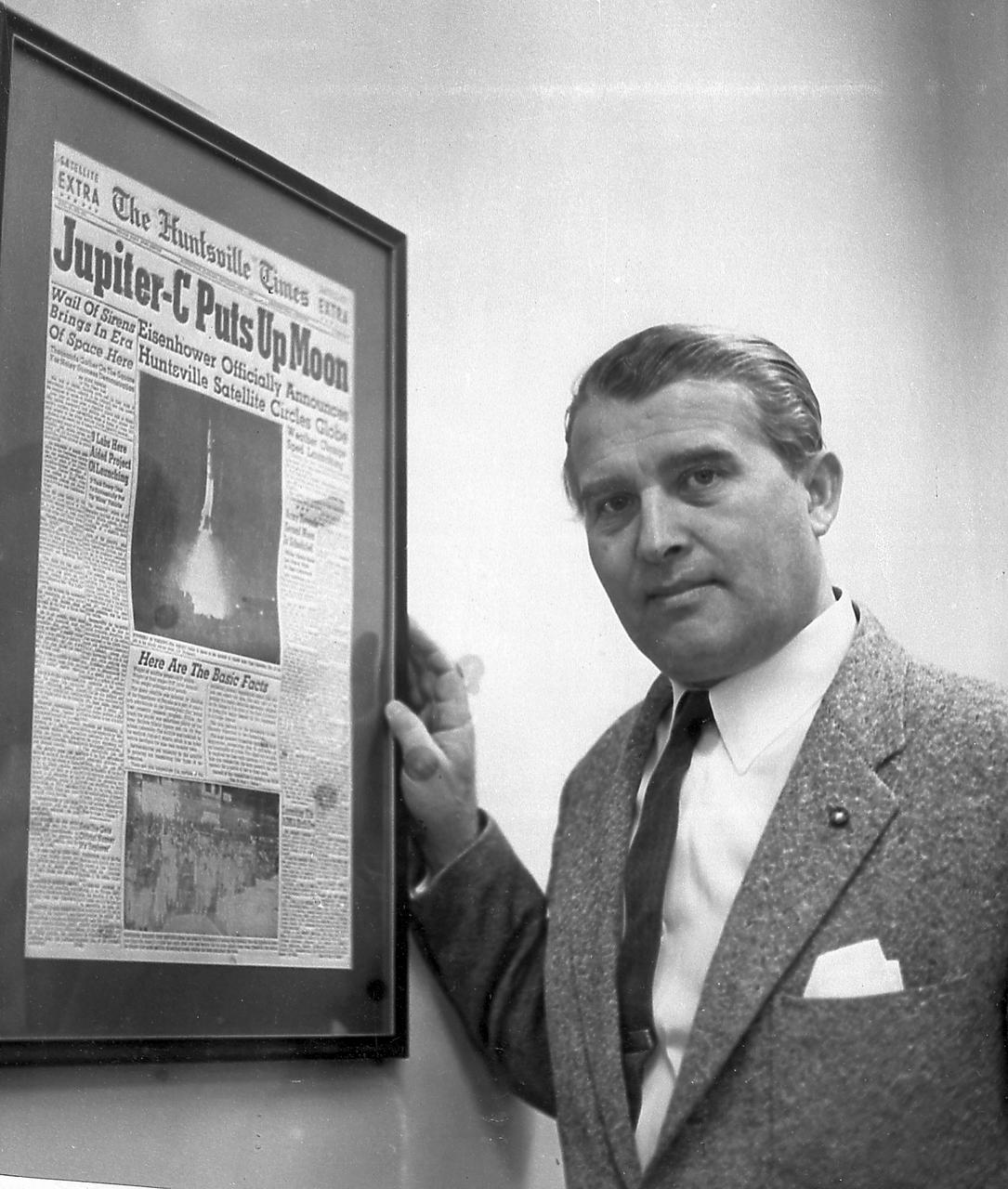
Dr. von Braun is presented with the front page of the Huntsville Times arnouncing the launch of Explorer I, the first U.S. Earth satellite, which was boosted by the Jupiter-C launch vehicle developed by Army Ballistic Missile Agency (ABMA) under the direction of Dr. von Braun. The occasion was the fifth Anniversary of the Explorer I launch in January 1958.
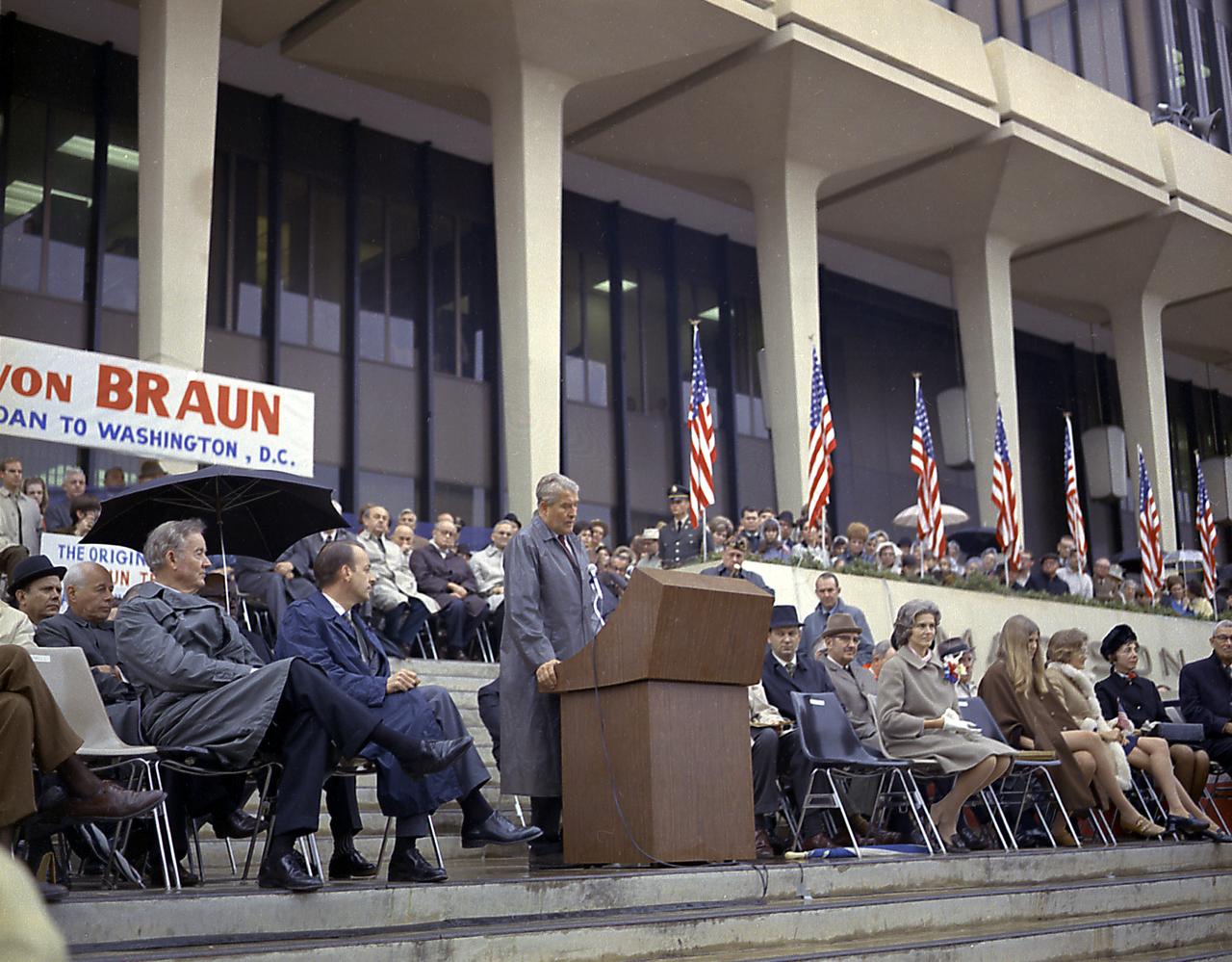
Dr. von Braun was honored with a series of farewell events and ceremonies prior to his reassignment to NASA Headquarters in Washington, D.C. Dr. von Braun speaks to the crowd in front of the Madison County Courthouse in Huntsville, Alabama. Alabama Governor Brewer and U.S. Senator Sparkman are in the foreground.
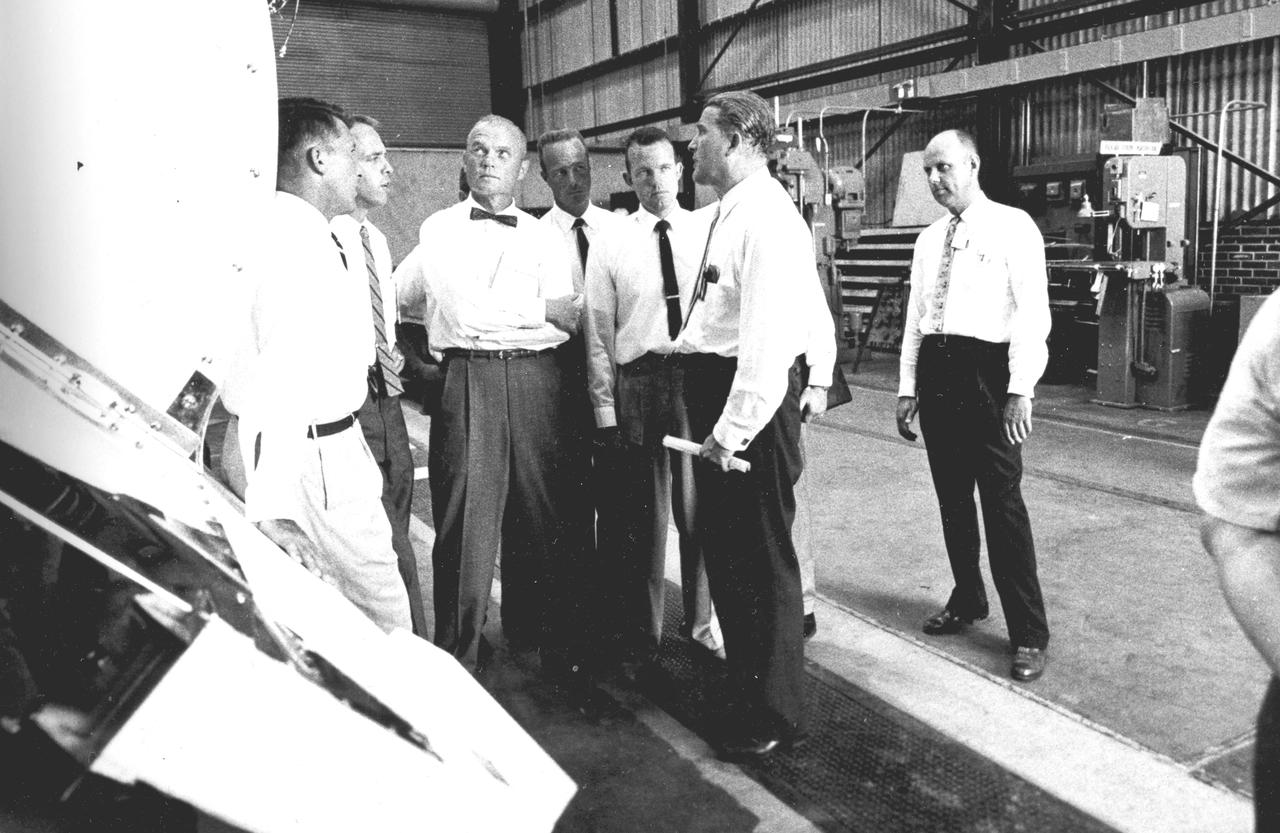
Five of the seven original astronauts are seen with Dr. von Braun inspecting the Mercury-Redstone hardware in the Fabrication Laboratory of Army Ballistic Missile Agency (ABMA) in 1959. Left to right: Astronauts Walter Schirra, Alan Shepard, John Glenn, Scott Carpenter, Gordon Cooper, and Dr. von Braun.
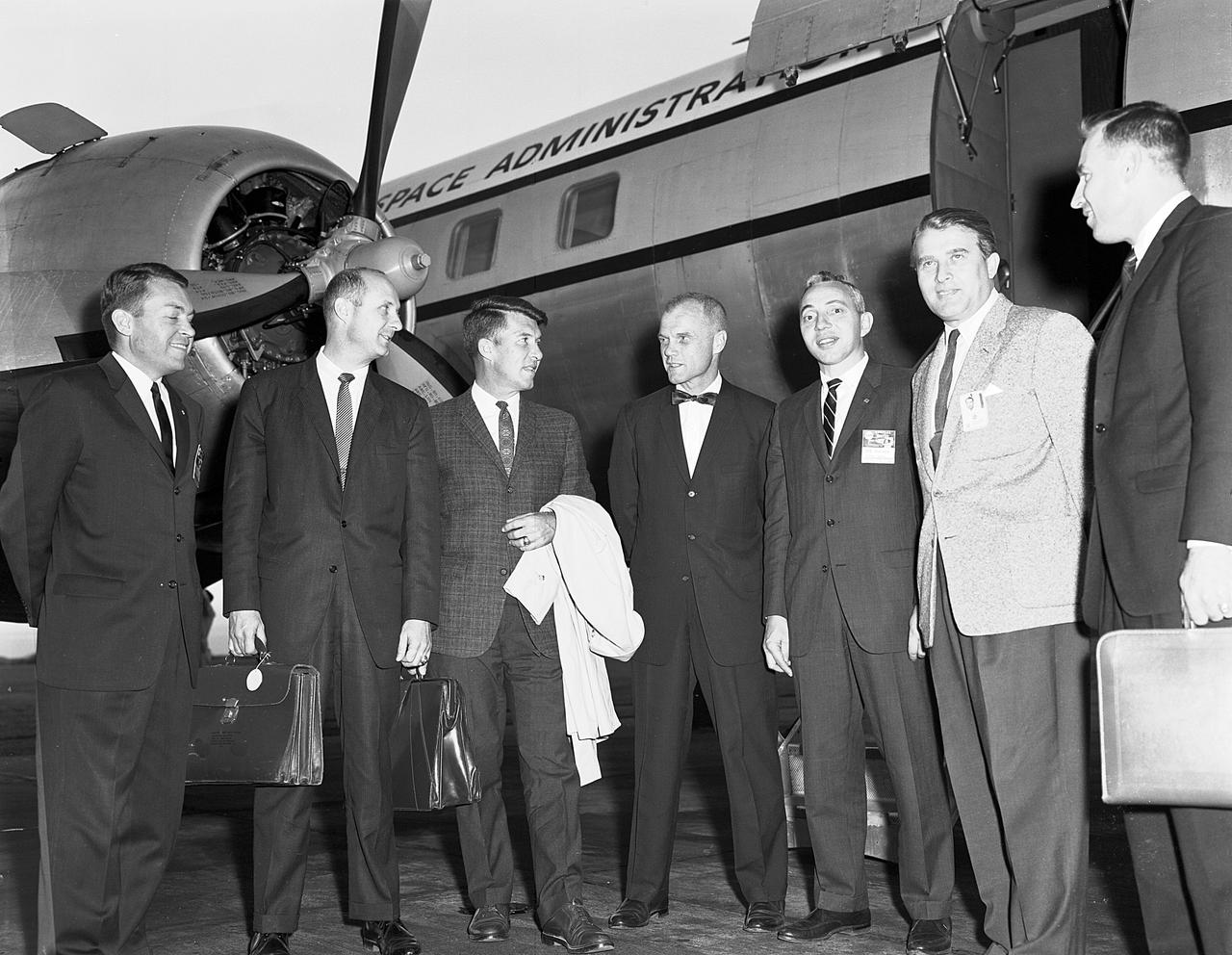
NASA officials from Headquarters and the astronauts often met with Dr. von Braun in Huntsville, Alabama. This photograph was taken in September 1962 during one such visit. From left to right are Elliot See, Tom Stafford, Wally Schirra, John Glenn, Brainerd Holmes, Dr. von Braun, and Jim Lovell.
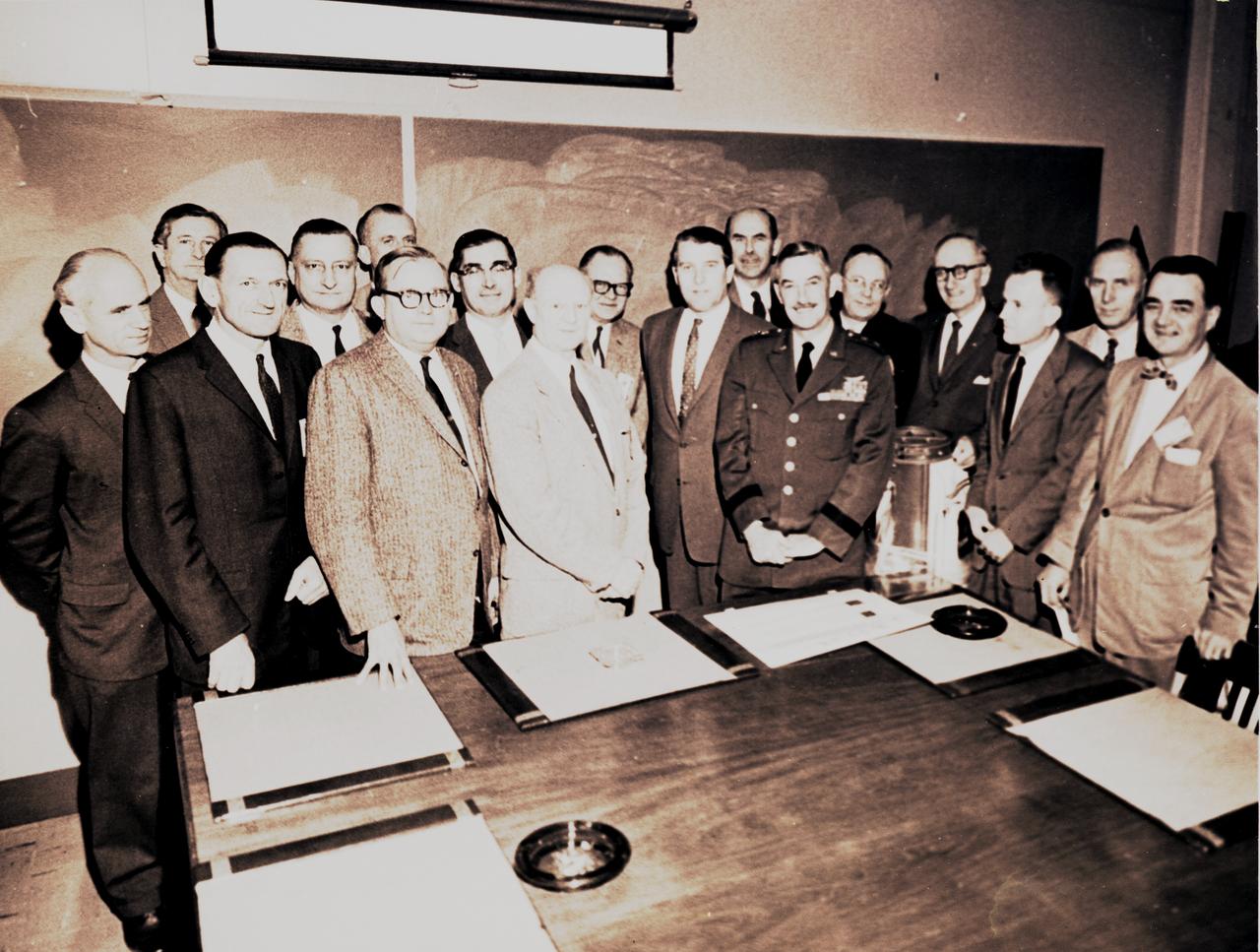
This photograph of Dr. von Braun, shown here to the left of General Bruce Medaris, was taken in the fall of 1959, immediately prior to Medaris' retirement from the Army. At the time, von Braun and his associates worked for the Army Ballistics Missile Agency in Huntsville, Alabama. Those in the photograph have been identified as Ernst Stuhlinger, Frederick von Saurma, Fritz Mueller, Hermarn Weidner, E.W. Neubert (partially hidden), W.A. Mrazek, Karl Heimburg, Arthur Rudolph, Otto Hoberg, von Braun, Oswald Lange, Medaris, Helmut Hoelzer, Hans Maus, E.D. Geissler, Hans Heuter, and George Constan.
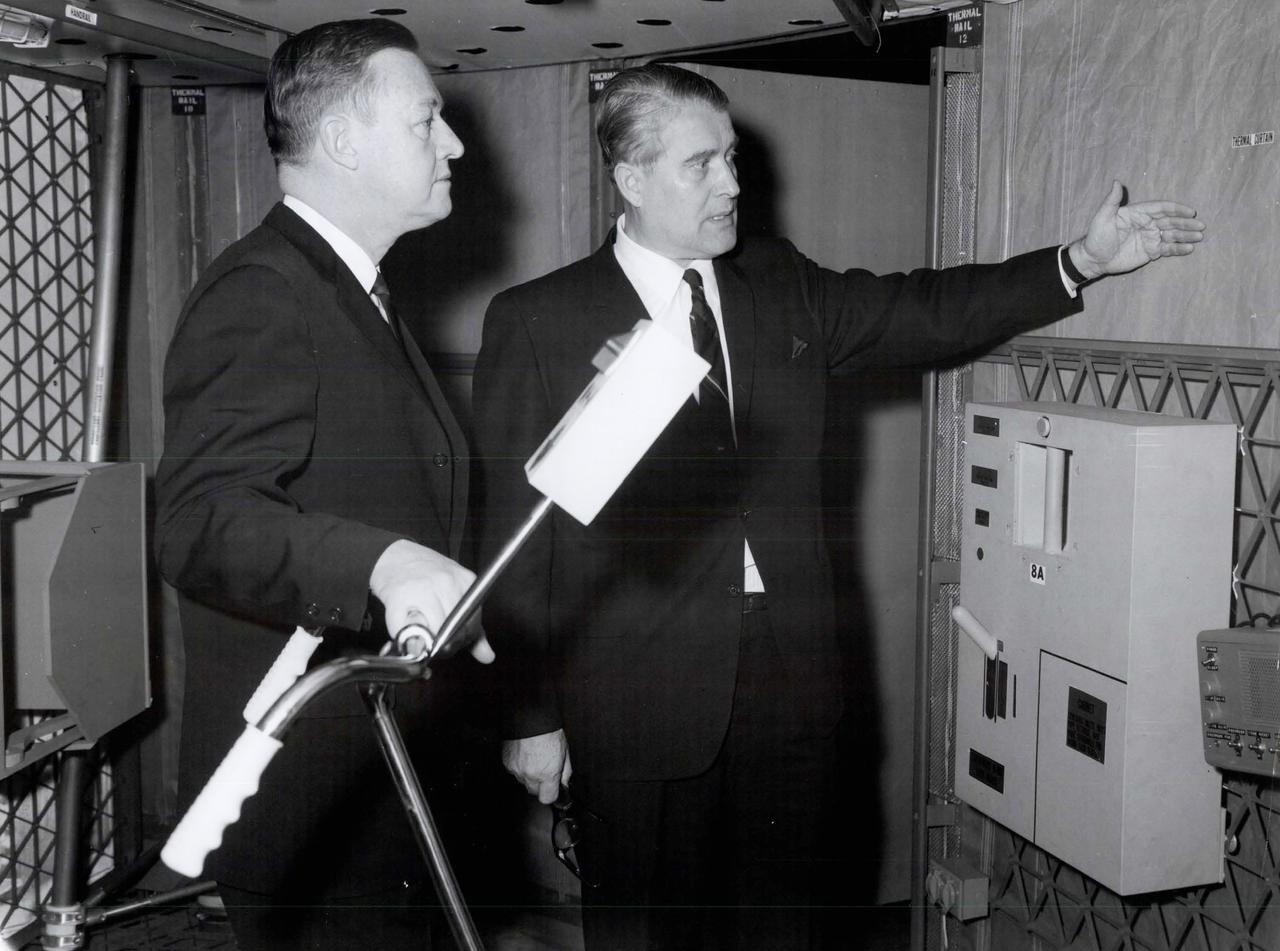
Dr. Wernher von Braun, Director of the Marshall Space Flight Center, explains the purpose of a thermal curtain in the mockup of a Saturn I workshop to U.S. Representative Armistead Seldon of Alabama. The Congressman visited the Marshall Center on March 2, 1968 to tour the workshop and to visit Marshall Center facilities.