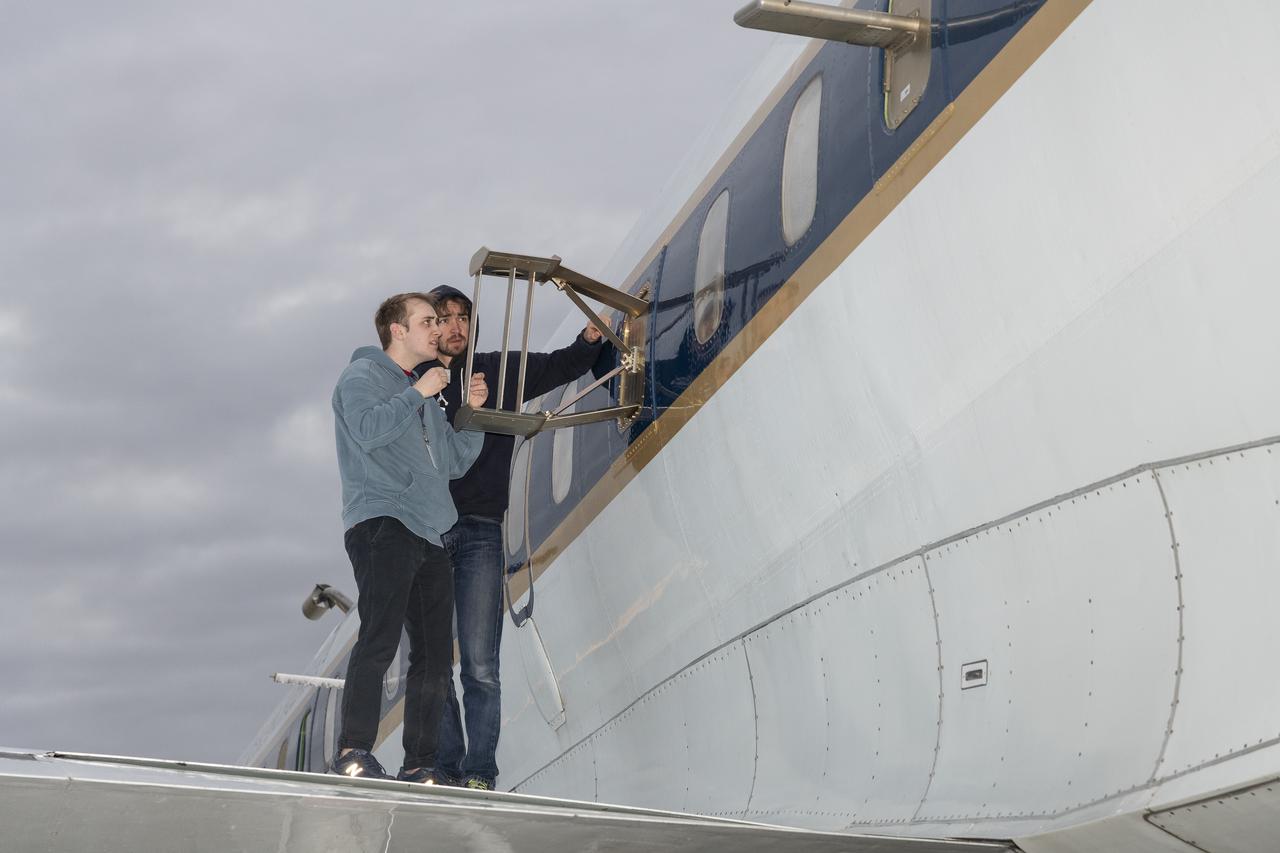
Scientists Ryan Boyd (left) and Vladislav Sevostianov (right) attend to the Optical Payload for Lasercomm Science (OPALS) instrument on the exterior the DC-8 aircraft at Building 703 in Palmdale, CA. The DC-8 aircraft is prepared for its last mission, ASIA-AQ (Airborne and Satellite Investigation of Asian Air Quality), that will collect detailed air quality data over several locations in Asia to improve the understanding of local air quality in collaboration with local scientists, air quality agencies, and government partners
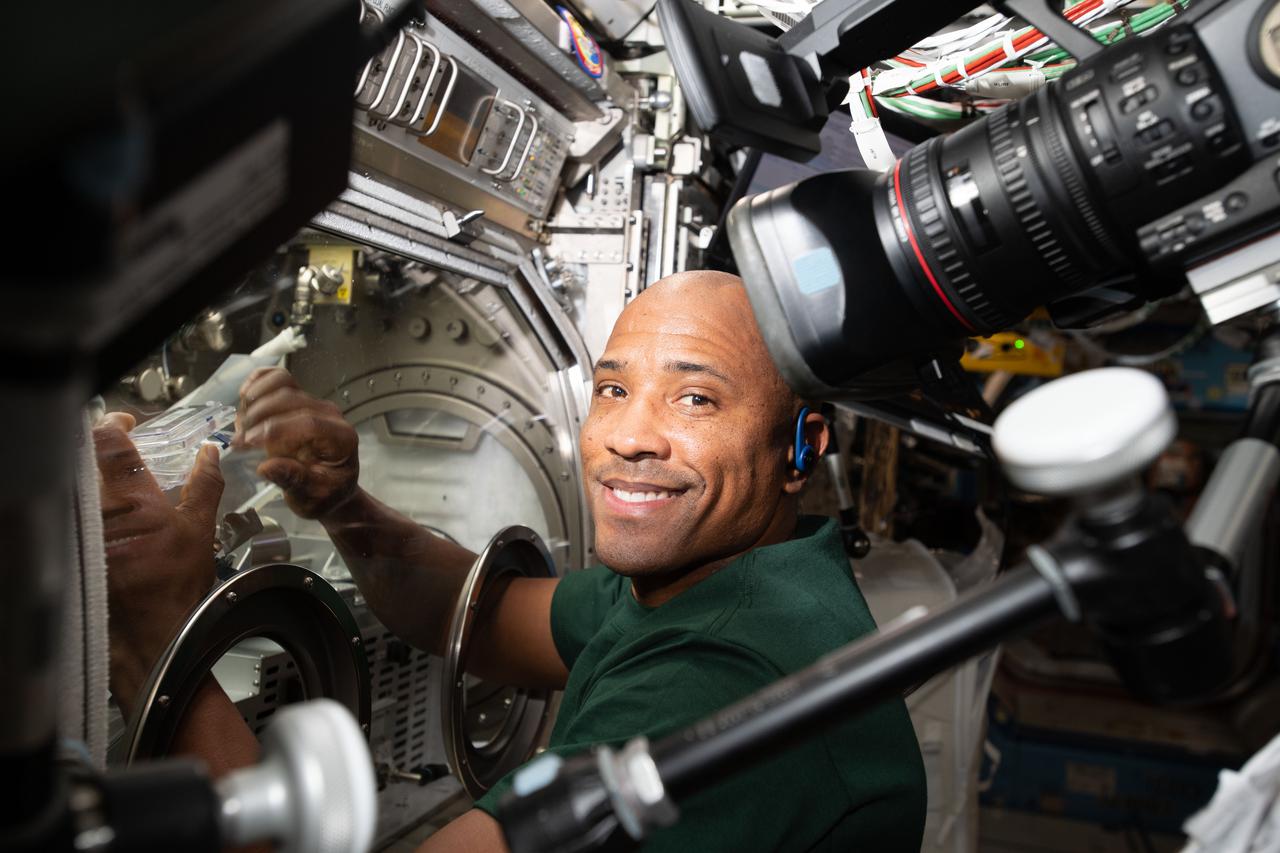
NASA astronaut and Expedition 64 Flight Engineer Victor Glover performs a sample exchange in the Microgravity Science Glovebox (MSG) as part of the Fiber Optic Production (FOP) experiment. FOP produces fiber optic cable in microgravity from a blend of elements called ZBLAN. Previous research suggests optical fibers produced in microgravity should exhibit superior qualities to those produced on Earth.
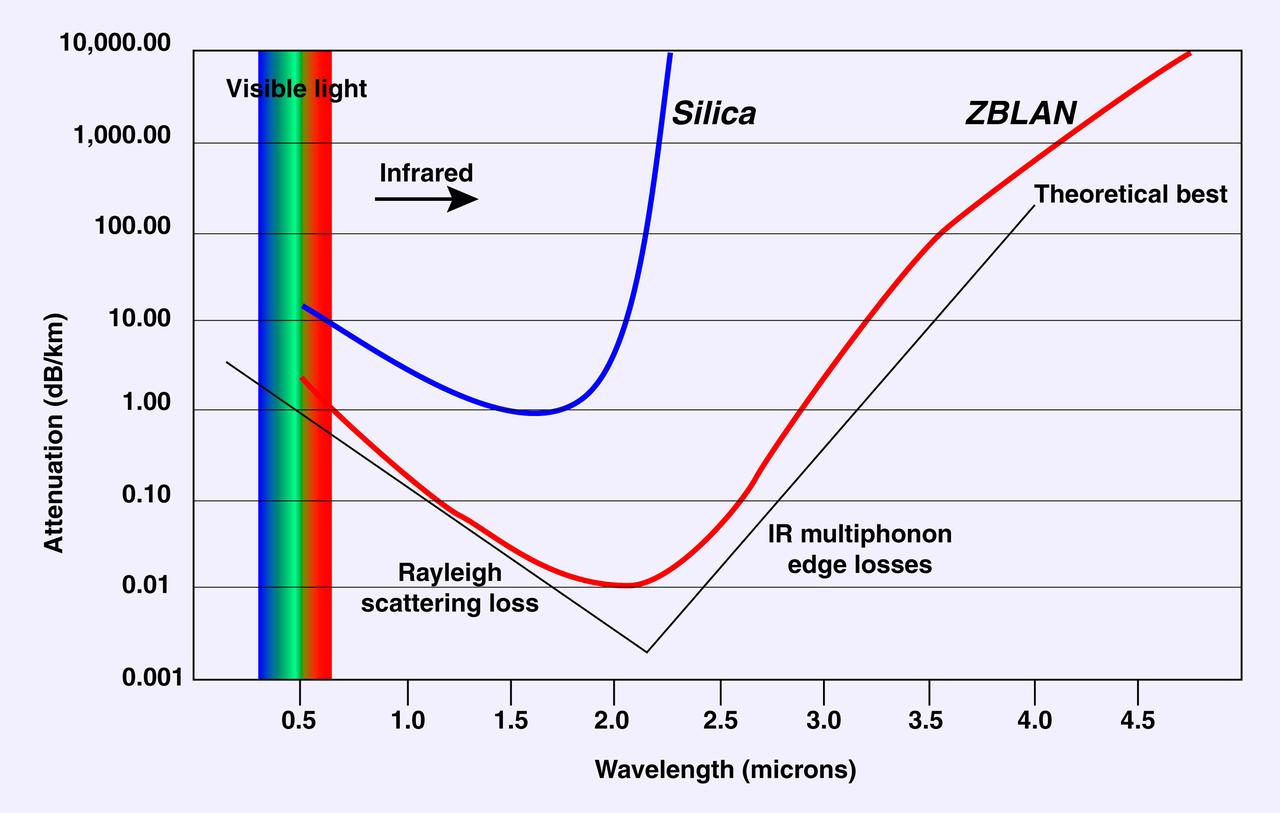
This graph depicts the increased signal quality possible with optical fibers made from ZBLAN, a family of heavy-metal fluoride glasses (fluorine combined zirconium, barium, lanthanum, aluminum, and sodium) as compared to silica fibers. NASA is conducting research on pulling ZBLAN fibers in the low-g environment of space to prevent crystallization that limits ZBLAN's usefulness in optical fiber-based communications. In the graph, a line closer to the black theoretical maximum line is better. Photo credit: NASA/Marshall Space Flight Center

iss064e011648 (Dec. 10, 2020) --- NASA astronaut and Expedition 64 Flight Engineer Michael Hopkins conducts research activities inside the Microgravity Science Glovebox for the Fiber Optic Production experiment. The space manufacturing investigation creates optical fibers in microgravity with high commercial value that should exhibit far superior qualities to those produced on Earth.
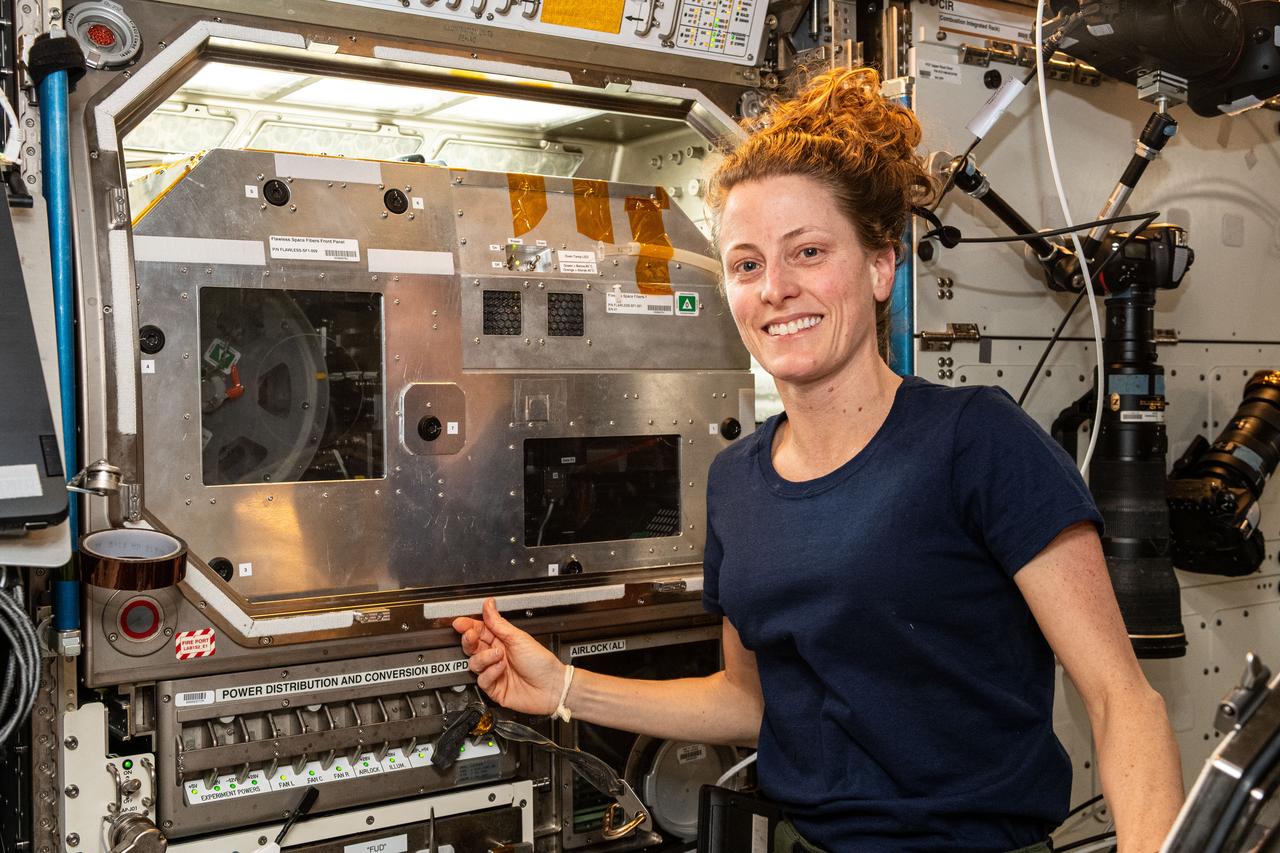
ISS070E110532 - NASA astronaut Loral O'Hara poses in front of the Destiny laboratory’s Microgravity Science Glovebox (MSG) during Flawless Space Fibers operations. Production of Flawless Space Fiber (Flawless Space Fibers-1) tests new hardware and processes for producing high-quality optical fibers in space.
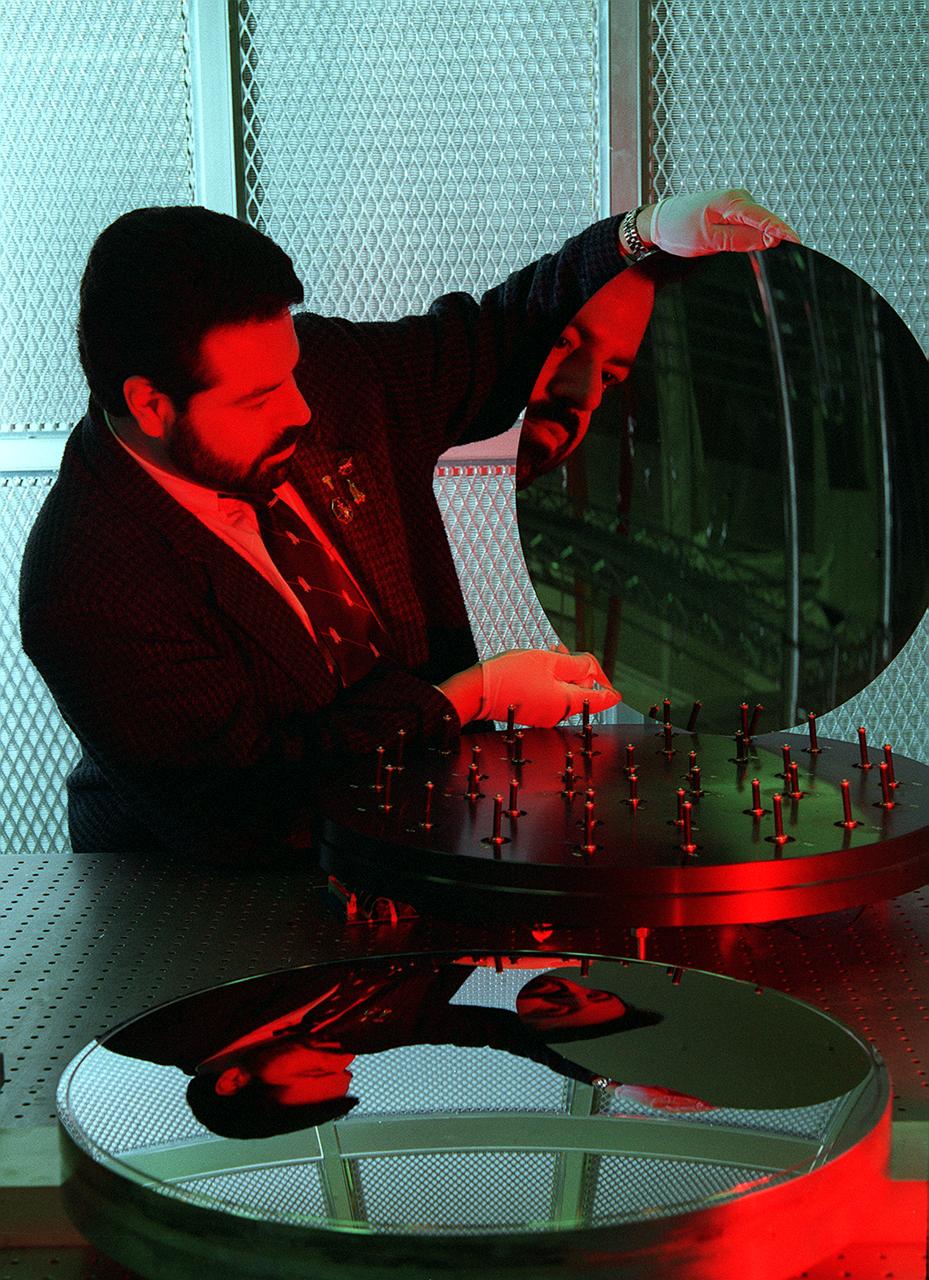
NASA's Space Optics Manufacturing Center has been working to expand our view of the universe via sophisticated new telescopes. The Optics Center's goal is to develop low-cost, advanced space optics technologies for the NASA program in the 21st century - including the long-term goal of imaging Earth-like planets in distant solar systems. To reduce the cost of mirror fabrication, Marshall Space Flight Center (MSFC) has developed replication techniques, the machinery, and materials to replicate electro-formed nickel mirrors. The process allows fabricating precisely shaped mandrels to be used and reused as masters for replicating high-quality mirrors. Dr. Joe Ritter examines a replicated electro-formed nickel-alloy mirror which exemplifies the improvements in mirror fabrication techniques, with benefits such as dramtic weight reduction that have been achieved at the Marshall Space Flight Center's Space Optics Manufacturing Technology Center (SOMTC).
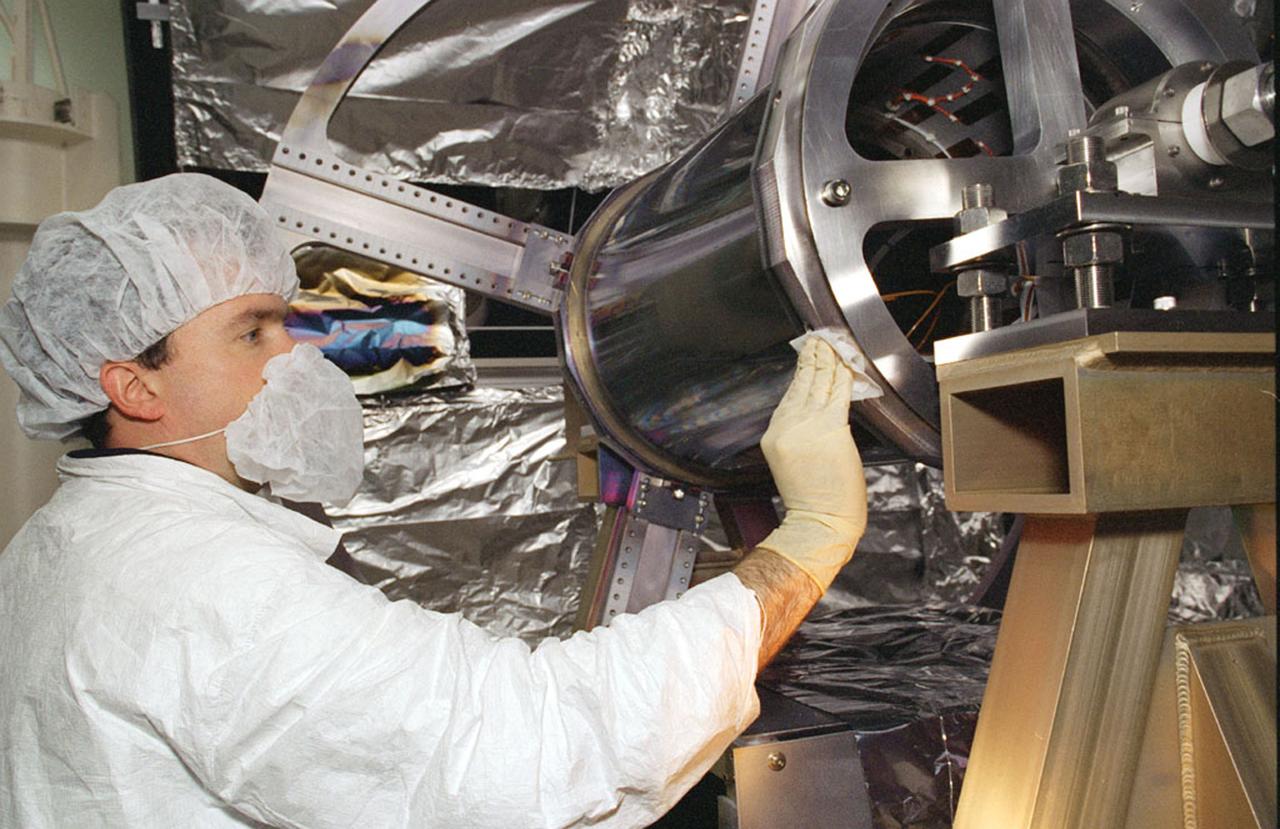
NASA's Space Optics Manufacturing Center has been working to expand our view of the universe via sophisticated new telescopes. The Optics Center's goal is to develop low-cost, advanced space optics technologies for the NASA program in the 21st century - including the long-term goal of imaging Earth-like planets in distant solar systems. To reduce the cost of mirror fabrication, Marshall Space Flight Center (MSFC) has developed replication techniques, the machinery, and materials to replicate electro-formed nickel mirrors. The process allows fabricating precisely shaped mandrels to be used and reused as masters for replicating high-quality mirrors. Image shows Dr. Alan Shapiro cleaning mirror mandrel to be applied with highly reflective and high-density coating in the Large Aperture Coating Chamber, MFSC Space Optics Manufacturing Technology Center (SOMTC).
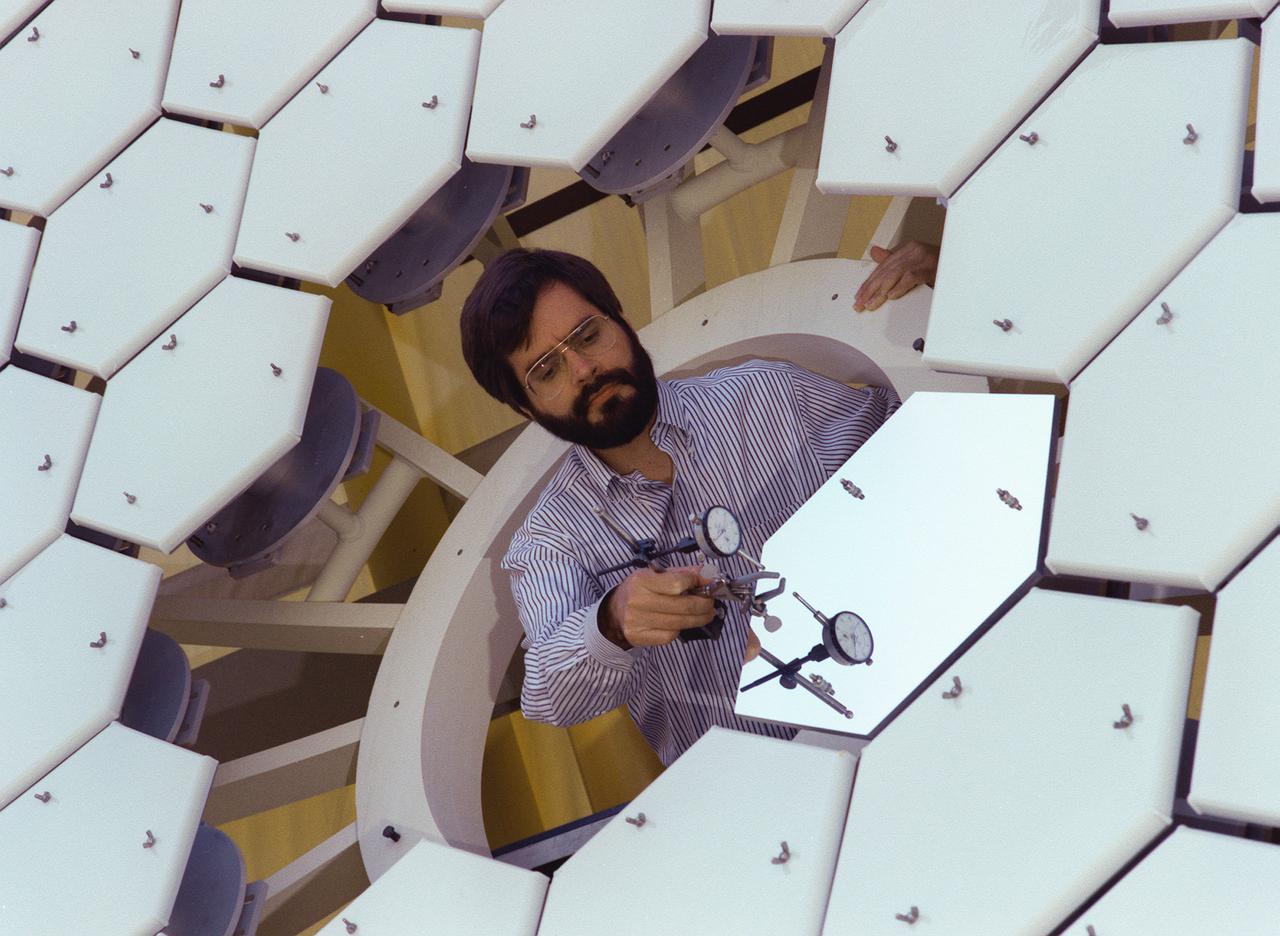
NASA's Space Optics Manufacturing Technology Center has been working to expand our view of the universe via sophisticated new telescopes. The Optics Center's goal is to develop low-cost, advanced space optics technologies for the NASA program in the 21st century, including the long-term goal of imaging Earth-like planets in distant solar systems. A segmented array of mirrors was designed by the Space Optics Manufacturing Technology Center for the solar concentrator test stand at the Marshall Space Flight Center (MSFC) for powering solar thermal propulsion engines. Each hexagon mirror has a spherical surface to approximate a parabolic concentrator when combined into the entire 18-foot diameter array. The aluminum mirrors were polished with a diamond turning machine that creates a glass-like reflective finish on metal. The precision fabrication machinery at the Space Optics Manufacturing Technology Center at MSFC can polish specialized optical elements to a world class quality of smoothness. This image shows optics physicist, Vince Huegele, examining one of the 144-segment hexagonal mirrors of the 18-foot diameter array at the MSFC solar concentrator test stand.
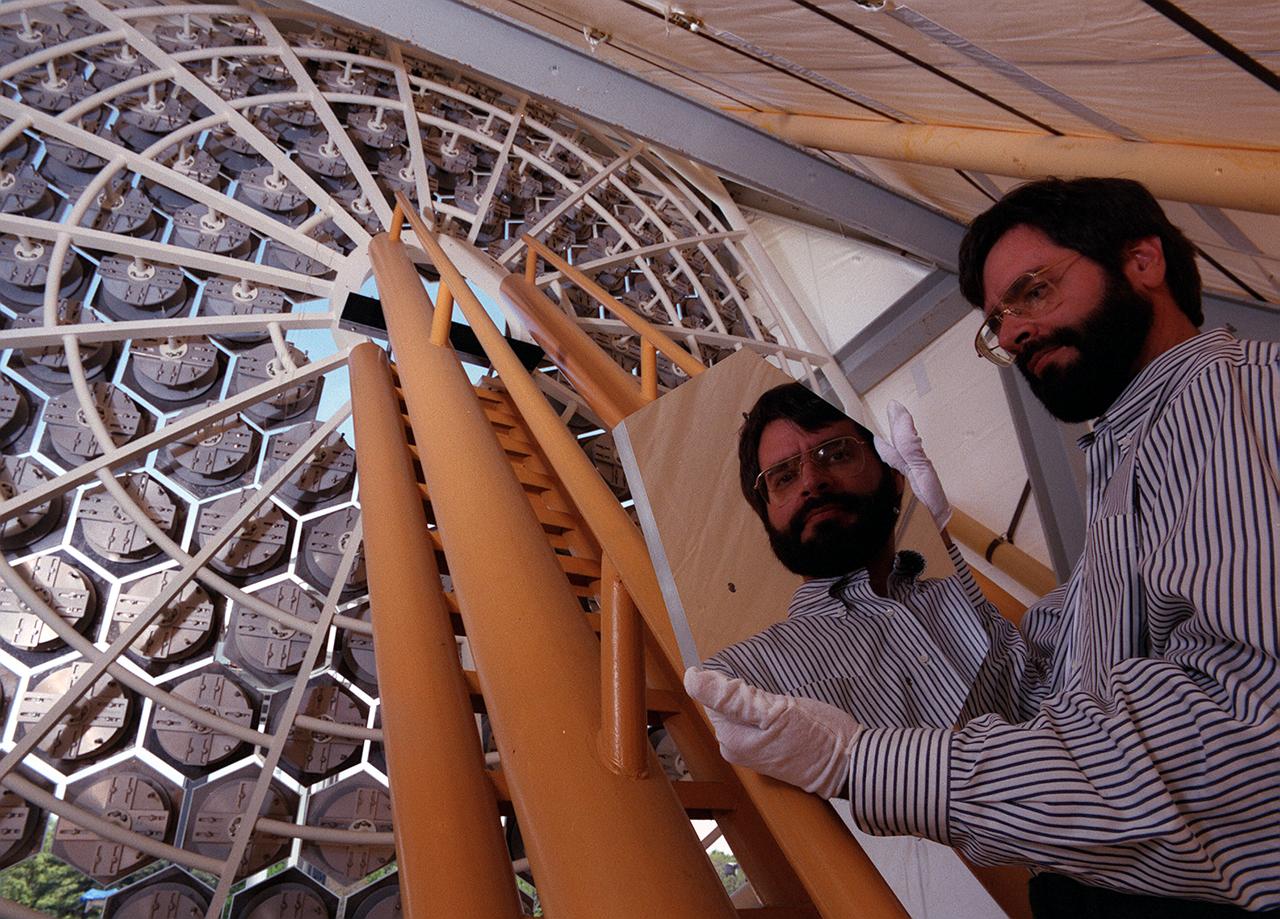
NASA's Space Optics Manufacturing Technology Center has been working to expand our view of the universe via sophisticated new telescopes. The Optics Center's goal is to develop low-cost, advanced space optics technologies for the NASA program in the 21st century, including the long-term goal of imaging Earth-like planets in distant solar systems. A segmented array of mirrors was designed by the Space Optics Manufacturing Technology Center for solar the concentrator test stand at the Marshall Space Flight Center (MSFC) for powering solar thermal propulsion engines. Each hexagon mirror has a spherical surface to approximate a parabolic concentrator when combined into the entire 18-foot diameter array. The aluminum mirrors were polished with a diamond turning machine, that creates a glass-like reflective finish on metal. The precision fabrication machinery at the Space Optics Manufacturing Technology Center at MSFC can polish specialized optical elements to a world class quality of smoothness. This image shows optics physicist, Vince Huegele, examining one of the 144-segment hexagonal mirrors of the 18-foot diameter array at the MSFC solar concentrator test stand.

New Delhi, India's capital city, is currently suffering though a period of particularly poor air quality. In early November 2016, monitors at various locations in the area posted air quality index measurements as high as the 900s (the most severe ranking, "hazardous," is any air quality index measurement over 300). Thousands of schools have been closed, and a survey by the Associate Chambers of Commerce and Industry of India reports that 10 percent of the city's workers called in sick due to air-pollution-related health issues. According to several published news reports, the extreme air pollution may be due to a combination of nearby agricultural burning after harvest, urban construction and solid-waste burning, as well as remnants of firecracker smoke and additional car emissions after the celebration of Diwali, the Hindu festival of lights, on October 30. The Multi-angle Imaging SpectroRadiometer (MISR) instrument aboard NASA's Terra satellite passed over the region on Saturday, Nov. 5, 2016, at around 11:05 a.m. local time. At left is an image acquired from MISR's vertical viewing camera. The Himalayas stretch across the northern portion of the image. This towering mountain range tends to concentrate pollution in the region immediately to the south, including New Delhi, by preventing pollutants from blowing northwards. New Delhi, whose location is indicated on the image, is under a patch of especially thick haze. At 6:00 a.m. local time on that date, the U.S. Mission India NowCast Air Quality Index for New Delhi was reported at 751, more than twice the threshold for hazardous air quality. At right, a map of aerosol optical depth is superimposed on the image. Optical depth is a quantitative measure of the abundance of aerosols (tiny particles in the atmosphere). Optical depths for the area around New Delhi have not been calculated because the haze is so thick that the algorithm has classified the area as a cloud. In the region immediately surrounding the thick haze, optical depths approach 1.0. An optical depth of 1.0 means that only about 37 percent of direct sunlight reaches the surface due to interactions with particles in the atmosphere. These data were acquired during Terra orbit 89805. Other MISR data are available through the NASA Langley Research Center; for more information, go to https://eosweb.larc.nasa.gov/project/misr/misr_table. MISR was built and is managed by NASA's Jet Propulsion Laboratory, Pasadena, California, for NASA's Science Mission Directorate, Washington, D.C. The Terra spacecraft is managed by NASA's Goddard Space Flight Center, Greenbelt, Maryland. The MISR data were obtained from the NASA Langley Research Center Atmospheric Science Data Center, Hampton, Virginia. JPL is a division of the California Institute of Technology in Pasadena. http://photojournal.jpl.nasa.gov/catalog/PIA21100
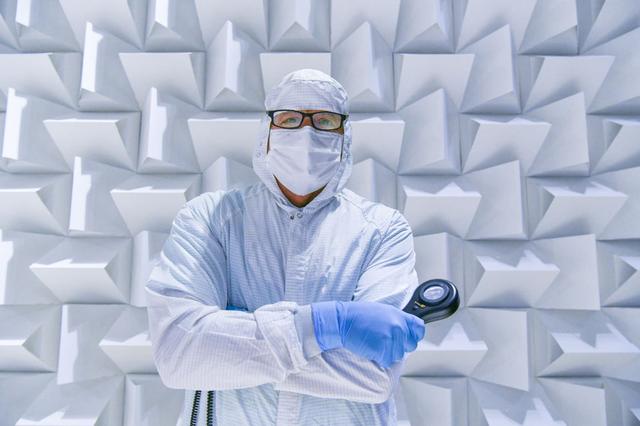
Quality engineer, John Tota, poses with a magnifying glass and stands close to the textured wall in the Electro Magnetic Interference (EMI) chamber. Mr. Tota works to ensure the overall quality of the flight hardware builds on the Ocean Color Instrument (OCI). OCI is a highly advanced optical spectrometer that will be used to measure properties of light over portions of the electromagnetic spectrum. It will enable continuous measurement of light at finer wavelength resolution than previous NASA satellite sensors, extending key system ocean color data records for climate studies. OCI is PACE's (Plankton, Aerosol, Cloud, ocean Ecosystem) primary sensor built at Goddard Space Flight Center in Greenbelt, MD.
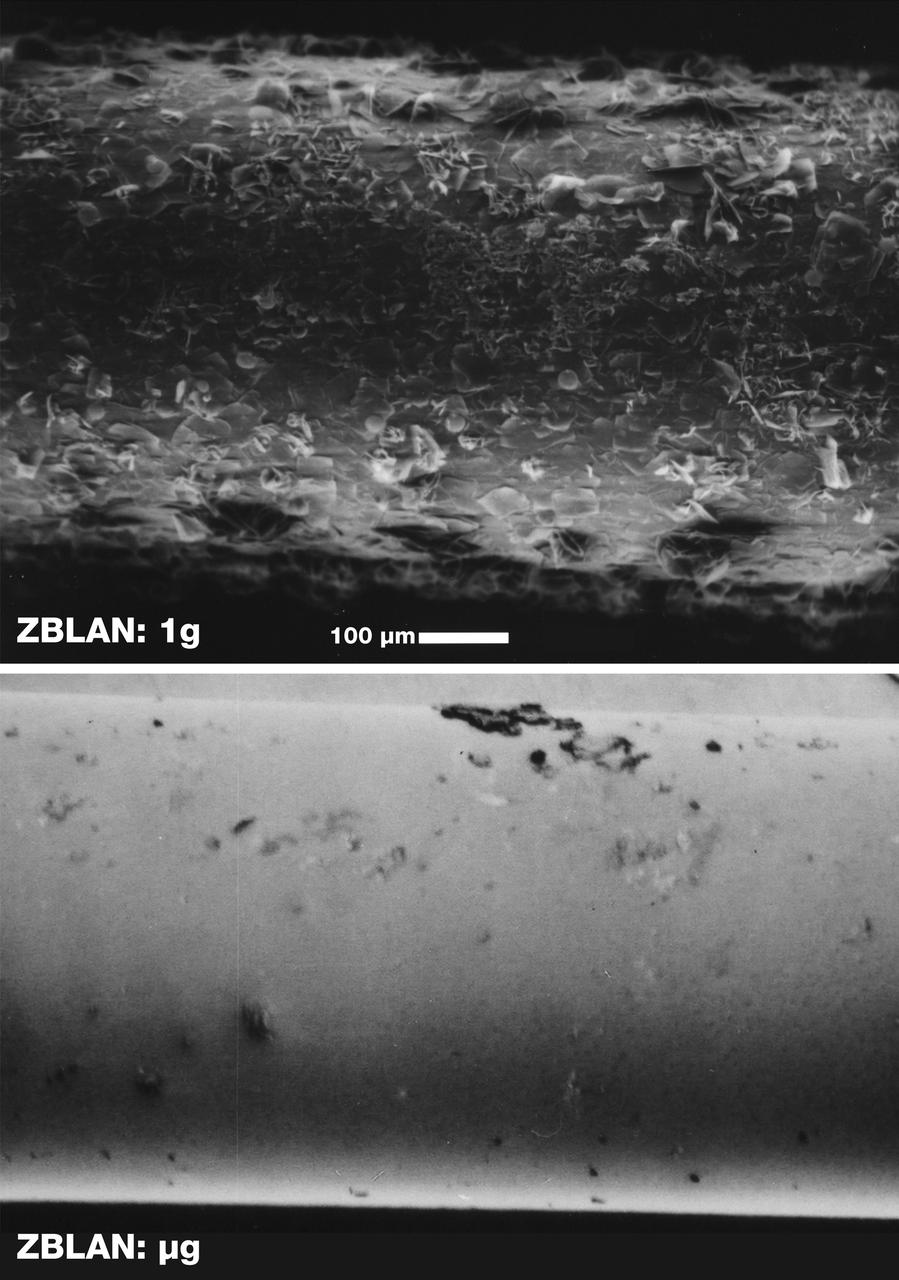
Scarning electron microscope images of the surface of ZBLAN fibers pulled in microgravity (ug) and on Earth (1g) show the crystallization that normally occurs in ground-based processing. The face of each crystal will reflect or refract a portion of the optical signal, thus degrading its quality. NASA is conducting research on pulling ZBLAN fibers in the low-g environment of space to prevent crystallization that limits ZBLAN's usefulness in optical fiber-based communications. ZBLAN is a heavy-metal fluoride glass that shows exdeptional promise for high-throughput communications with infrared lasers. Photo credit: NASA/Marshall Space Flight Center
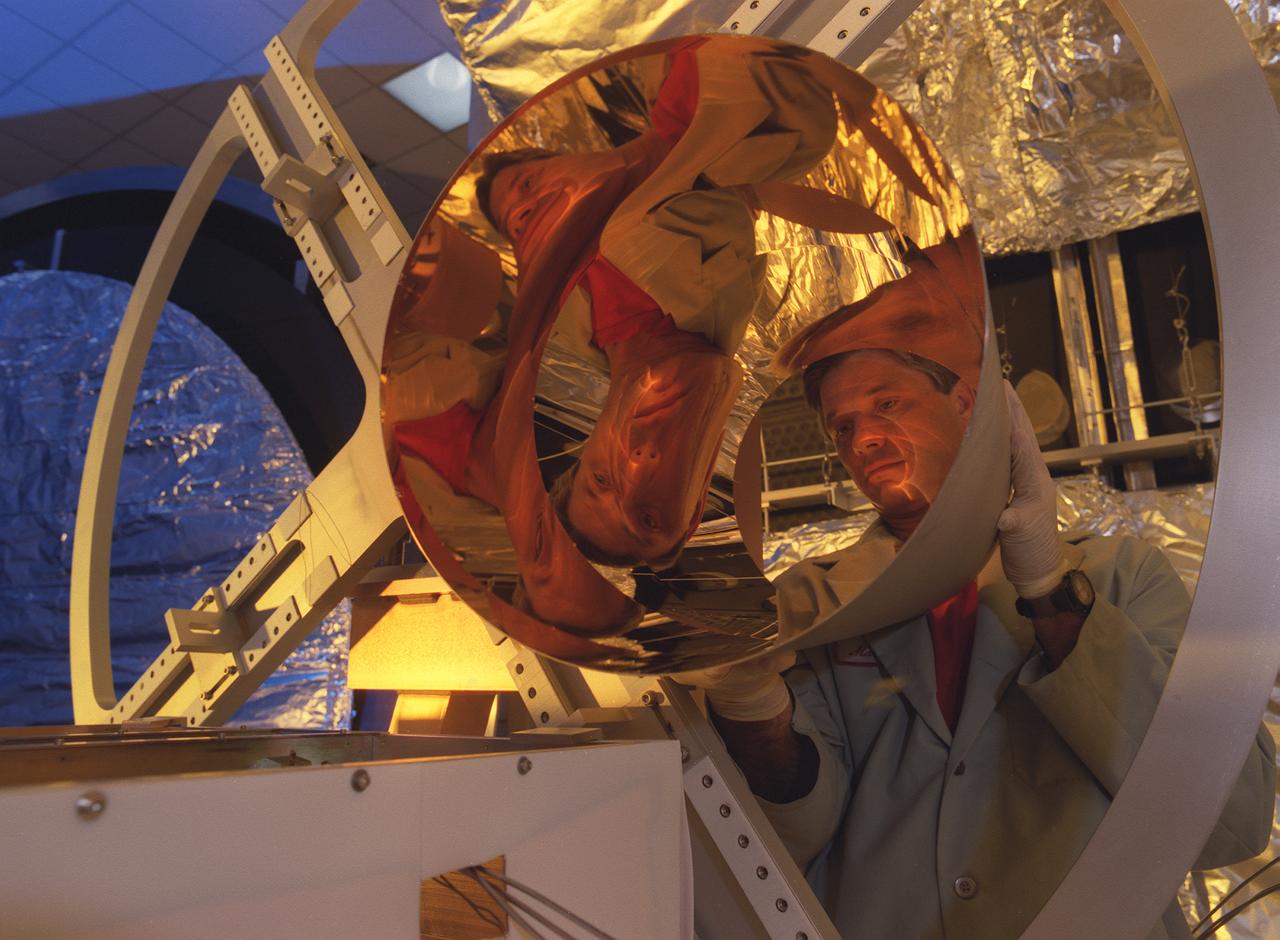
NASA's Space Optics Manufacturing Center has been working to expand our view of the universe via sophisticated new telescopes. The Optics Center's goal is to develop low-cost, advanced space optics technologies for the NASA program in the 21st century - including the long-term goal of imaging Earth-like planets in distant solar systems. To reduce the cost of mirror fabrication, Marshall Space Flight Center (MSFC) has developed replication techniques, the machinery and materials to replicate electro-formed nickel mirrors. The process allows fabricating precisely shaped mandrels to be used and reused as masters for replicating high-quality mirrors. This image shows a lightweight replicated x-ray mirror with gold coatings applied.
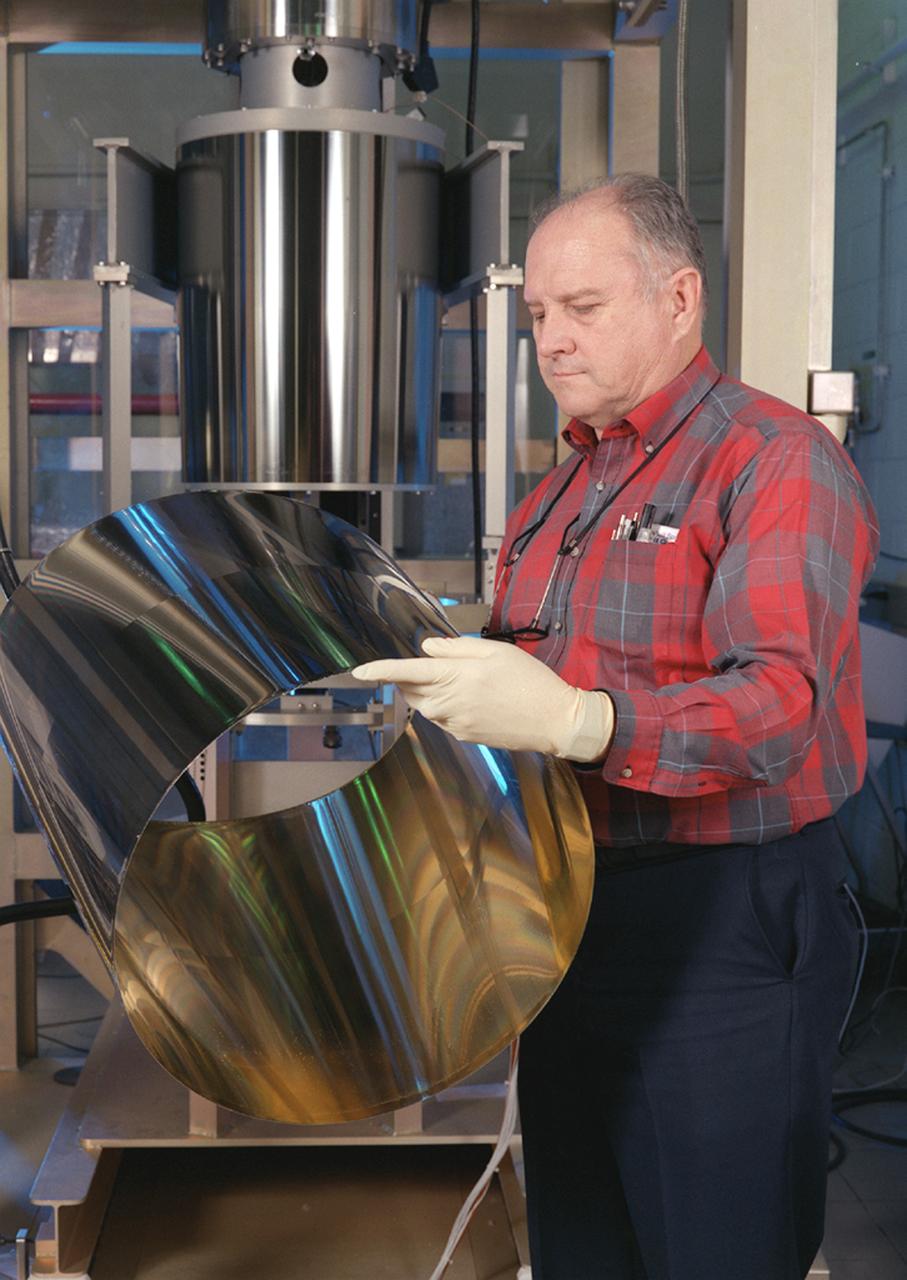
NASA's Space Optics Manufacturing Center has been working to expand our view of the universe via sophisticated new telescopes. The Optics Center's goal is to develop low-cost, advanced space optics technologies to the NASA program in the 21st century - including the long-term goal of imaging Earth-like planets in distant solar systems. To reduce the cost of mirror fabrication, Marshall Space Flight Center (MSFC) has developed replication techniques, the machinery, and materials to replicate electro-formed nickel mirrors. The process allows fabricating precisely shaped mandrels to be used and reused as masters for replicating high-quality mirrors. Photograph shows J.R. Griffith inspecting a replicated x-ray mirror mandrel.
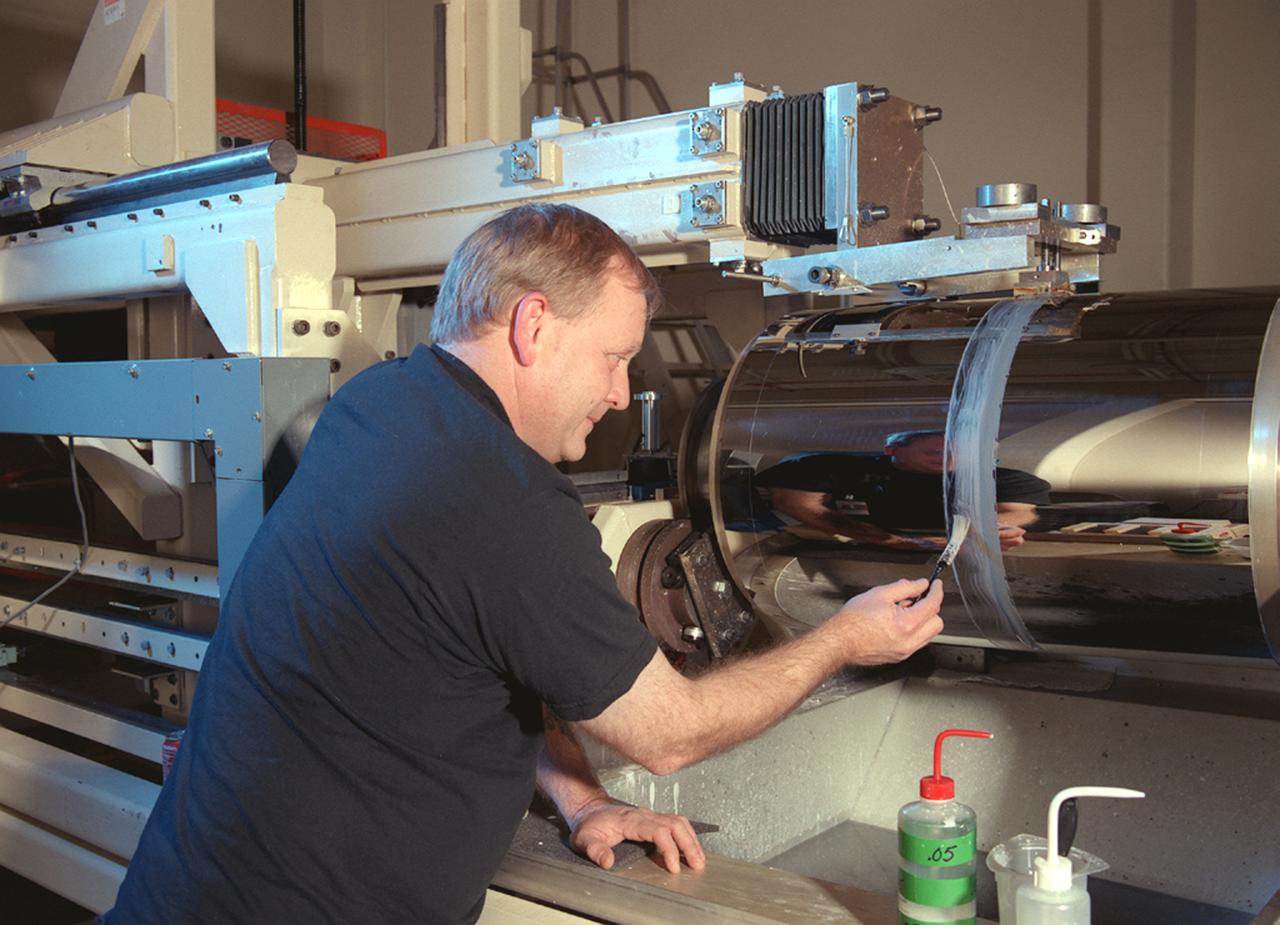
NASA's Space Optics Manufacturing Center has been working to expand our view of the universe via sophisticated new telescopes. The Optics Center's goal is to develop low-cost, advanced space optics technologies for the NASA program in the 21st century - including the long-term goal of imaging Earth-like planets in distant solar systems. To reduce the cost of mirror fabrication, Marshall Space Flight Center (MSFC) has developed replication techniques, the machinery, and materials to replicate electro-formed nickel mirrors. The process allows fabricating precisely shaped mandrels to be used and reused as masters for replicating high-quality mirrors. MSFC's Space Optics Manufacturing Technology Center (SOMTC) has grinding and polishing equipment ranging from conventional spindles to custom-designed polishers. These capabilities allow us to grind precisely and polish a variety of optical devices, including x-ray mirror mandrels. This image shows Charlie Griffith polishing the half-meter mandrel at SOMTC.
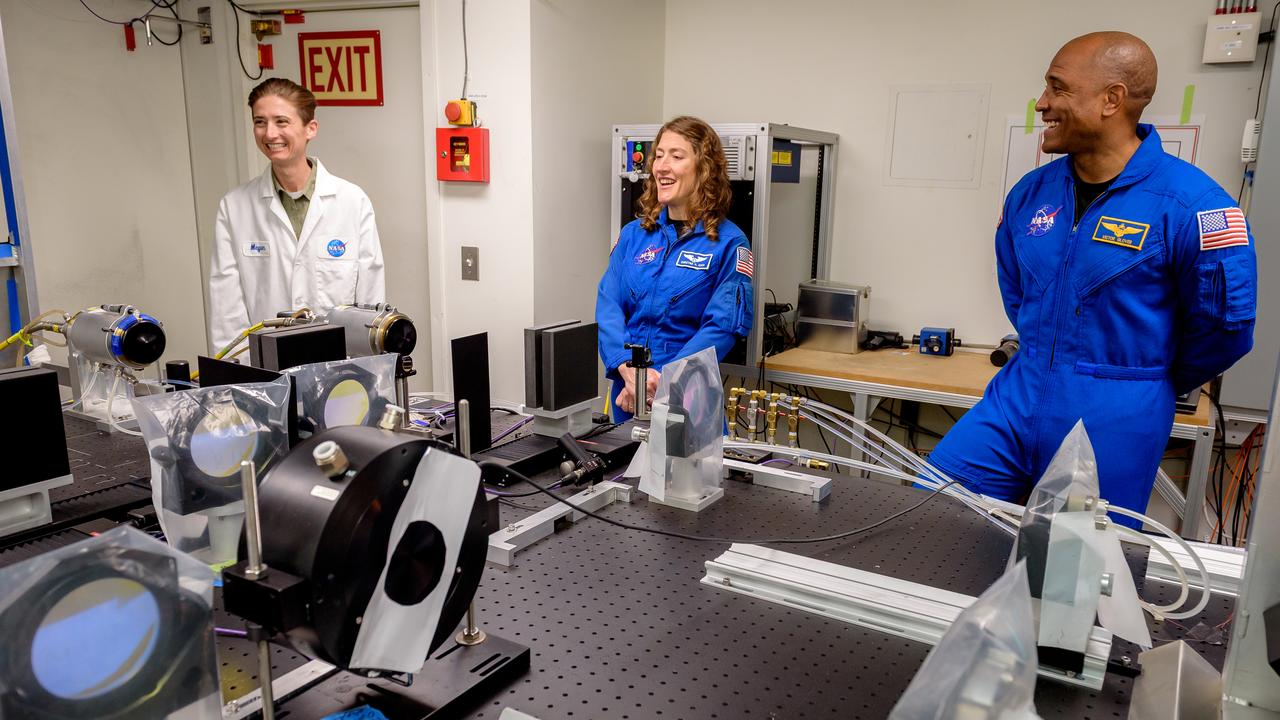
Megan MacDonald, left, leads NASA astronauts Christina Koch and Victor J. Glover, right, on a tour of the Laser Enhanced Arc Jet Facility (LEAF) laboratory, in N238. The LEAF laser augments the hypersonic shock heating experienced by a test sample during an arc jet test and provides improved test simulation quality by supplying an intense source of optical heating while the arc jet flow provides shock-driven convective heating.
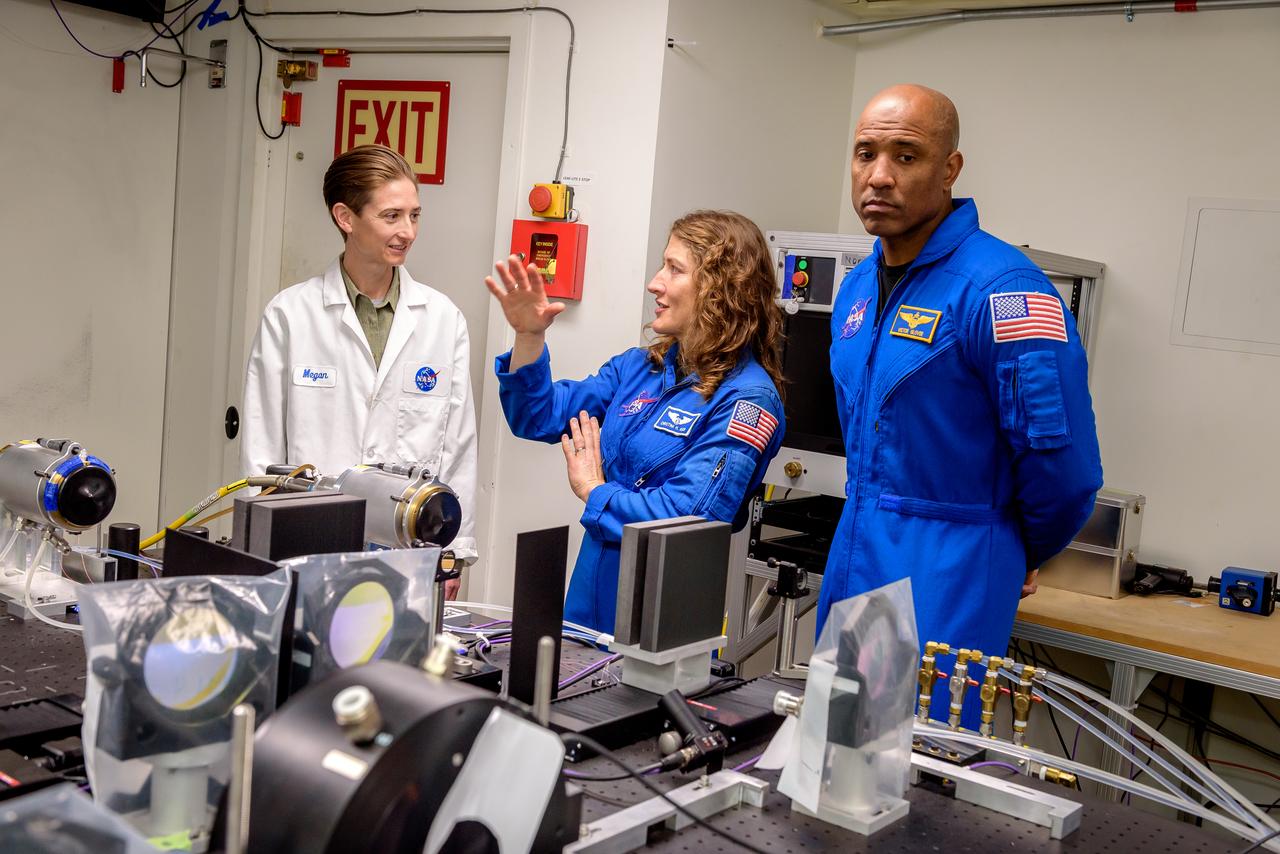
Megan MacDonald, left, leads NASA astronauts Christina Koch and Victor J. Glover, right, on a tour of the Laser Enhanced Arc Jet Facility (LEAF) laboratory, in N238. The LEAF laser augments the hypersonic shock heating experienced by a test sample during an arc jet test and provides improved test simulation quality by supplying an intense source of optical heating while the arc jet flow provides shock-driven convective heating.
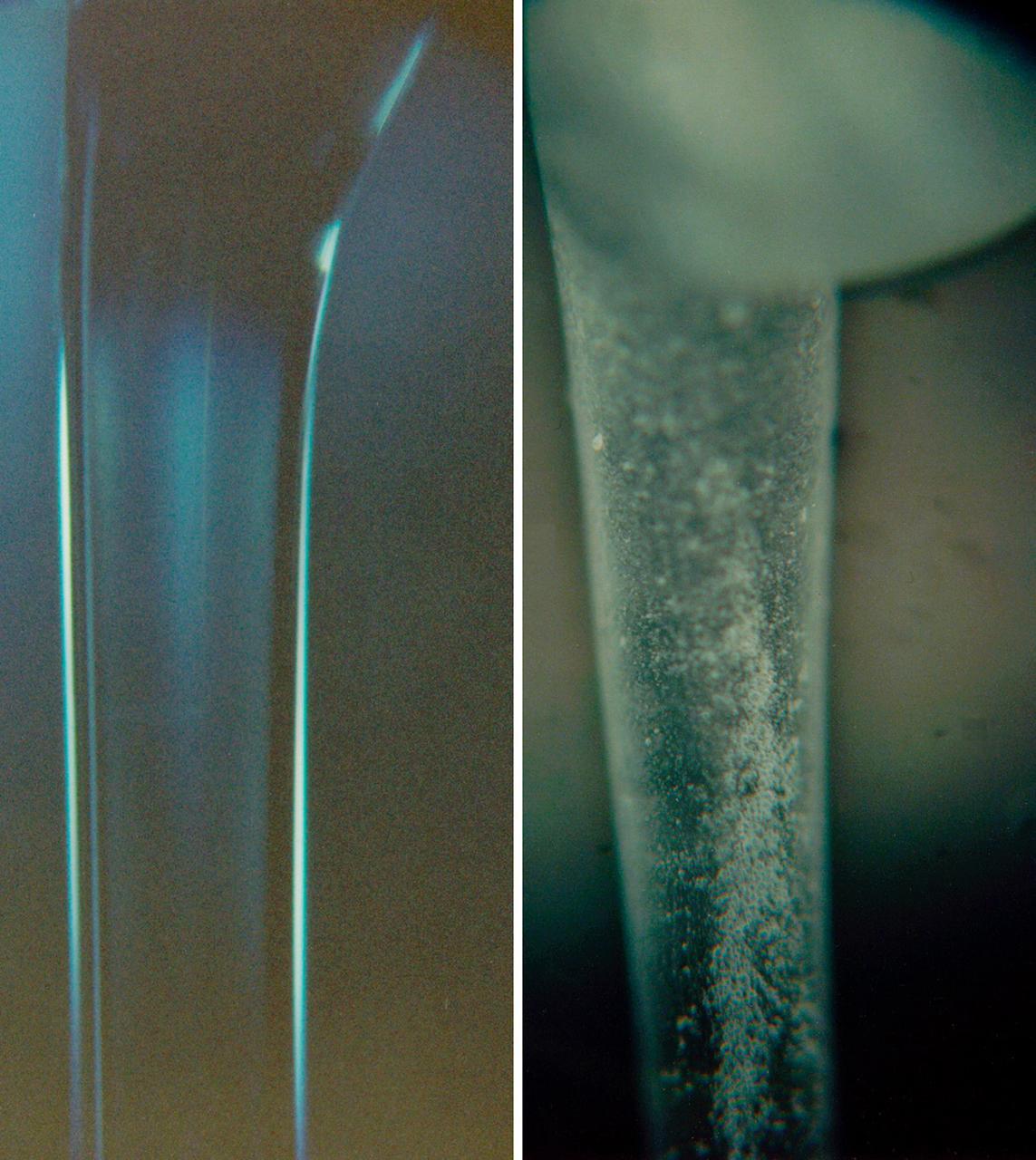
Sections of ZBLAN fibers pulled in a conventional 1-g process (right) and in experiments aboard NASA's KC-135 low-gravity aircraft (left). The rough surface of the 1-g fiber indicates surface defects that would scatter an optical signal and greatly degrade its quality. ZBLAN is part of the family of heavy-metal fluoride glasses (fluorine combined zirconium, barium, lanthanum, aluminum, and sodium). NASA is conducting research on pulling ZBLAN fibers in the low-g environment of space to prevent crystallization that limits ZBLAN's usefulness in optical fiber-based communications. ZBLAN is a heavy-metal fluoride glass that shows exceptional promise for high-throughput communications with infrared lasers. Photo credit: NASA/Marshall Space Flight Center
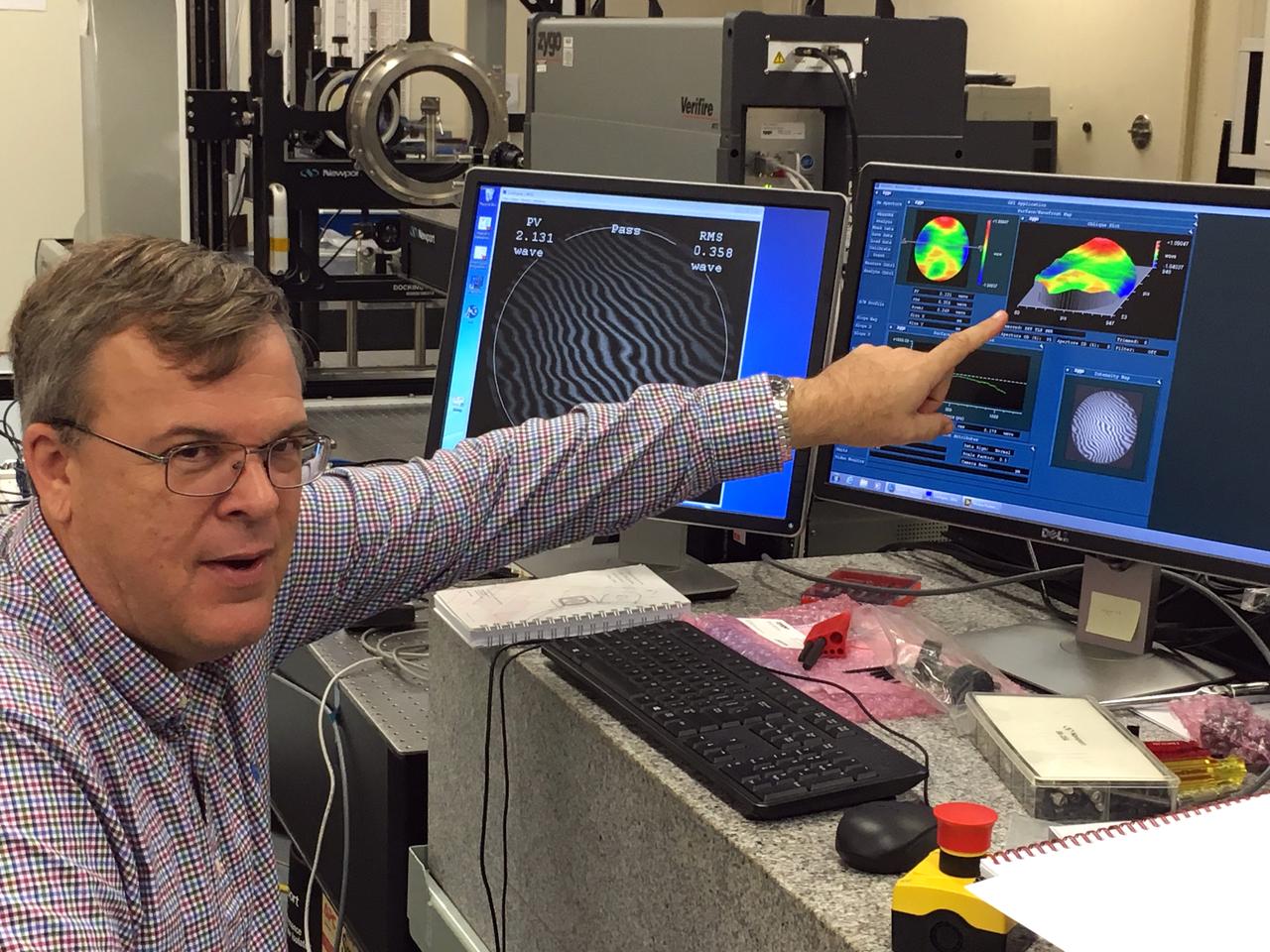
Mark Nurge, Ph.D., a physicist in the Applied Physics Lab with the Exploration Research and Technology Programs at NASA's Kennedy Space Center in Florida, looks at data during the first optical quality test on a full window stack that is ready for installation in the docking hatch of NASA's Orion spacecraft. The data from the tests will help improve the requirements for manufacturing tolerances on Orion's windows and verify how the window should perform in space. Orion is being prepared for its first integrated uncrewed flight atop NASA's Space Launch System rocket on Exploration Mission-1.
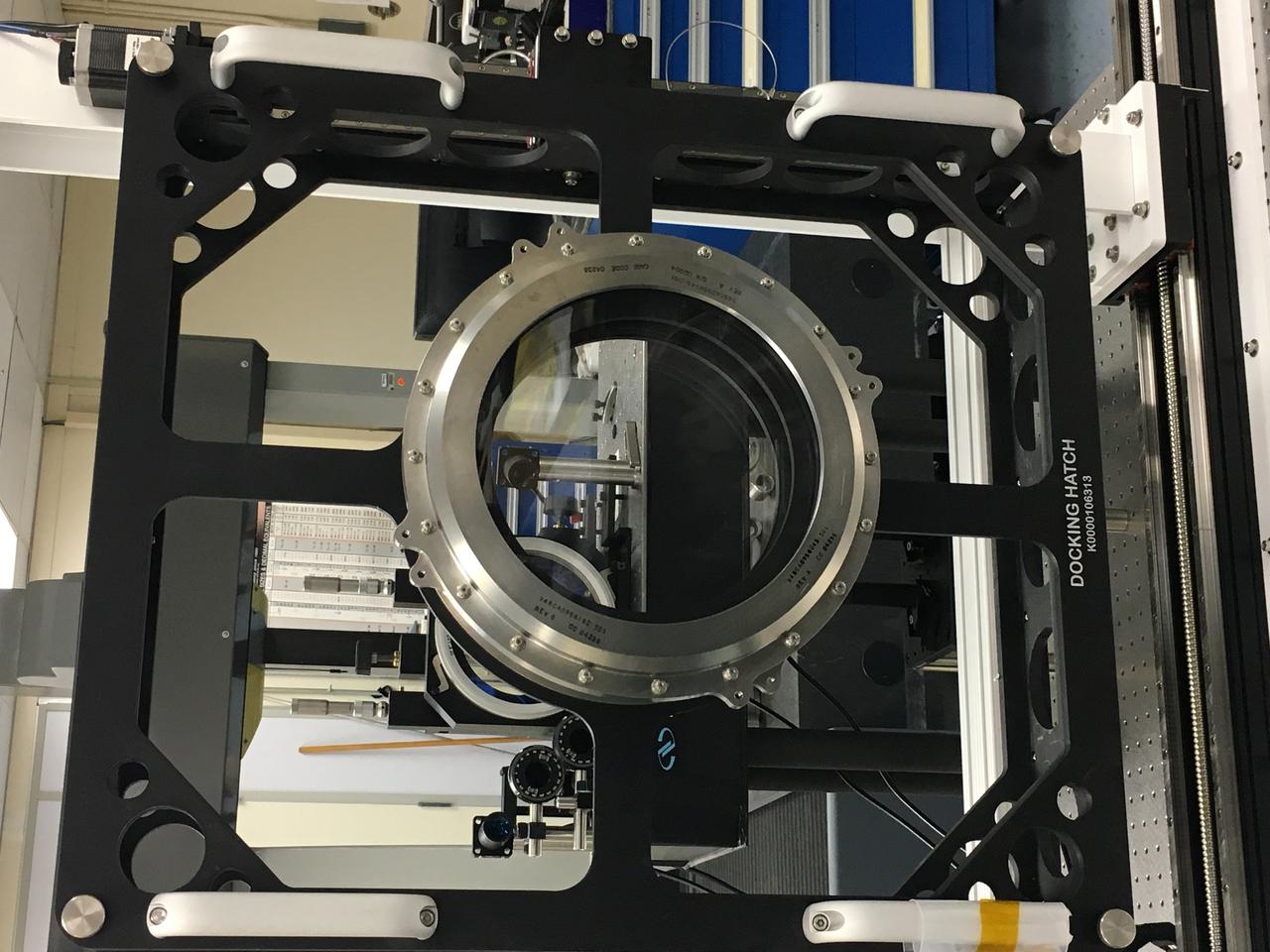
The first optical quality testing on a full window stack that is ready for installation in the docking hatch of NASA's Orion spacecraft is underway inside a laboratory in the Neil Armstrong Operations and Checkout Building at the agency's Kennedy Space Center in Florida. The test is being performed by a team from the center's Exploration Research and Technology Programs. The data from the tests will help improve the requirements for manufacturing tolerances on Orion's windows and verify how the window should perform in space. Orion is being prepared for its first integrated uncrewed flight atop NASA's Space Launch System rocket on Exploration Mission-1.
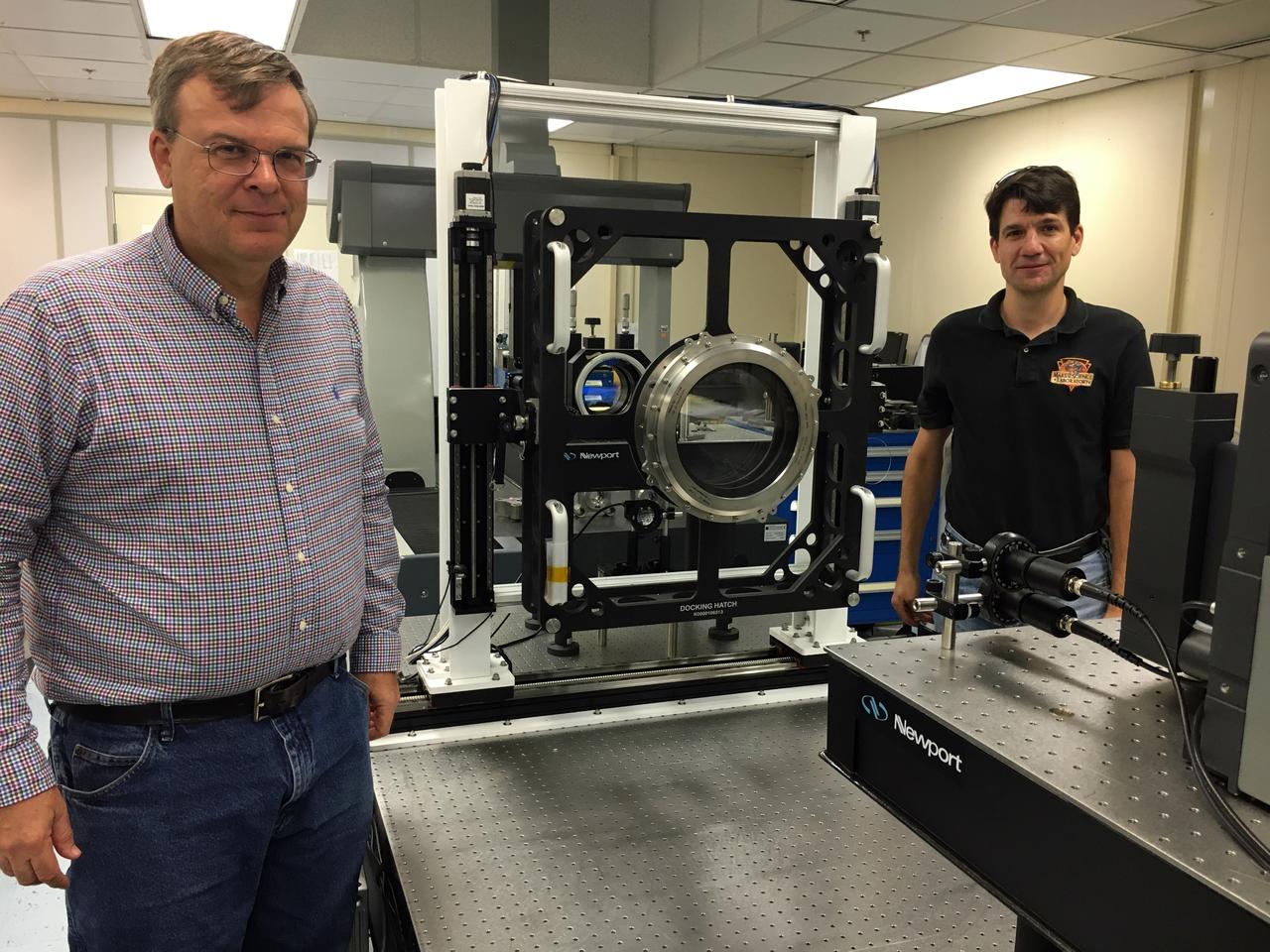
Inside a laboratory in the Neil Armstrong Operations and Checkout Building at NASA's Kennedy Space Center in Florida, Mark Nurge, Ph.D., at left, a physicist in the Applied Physics Lab with the center's Exploration Research and Technology Programs, and Bence Bartha, Ph.D., a specialist in non-destructive testing with URS Federal Services, are performing the first optical quality testing on a full window stack that is ready for installation in the docking hatch of NASA's Orion spacecraft. The data from the tests will help improve the requirements for manufacturing tolerances on Orion's windows and verify how the window should perform in space. Orion is being prepared for its first integrated uncrewed flight atop NASA's Space Launch System rocket on Exploration Mission-1.
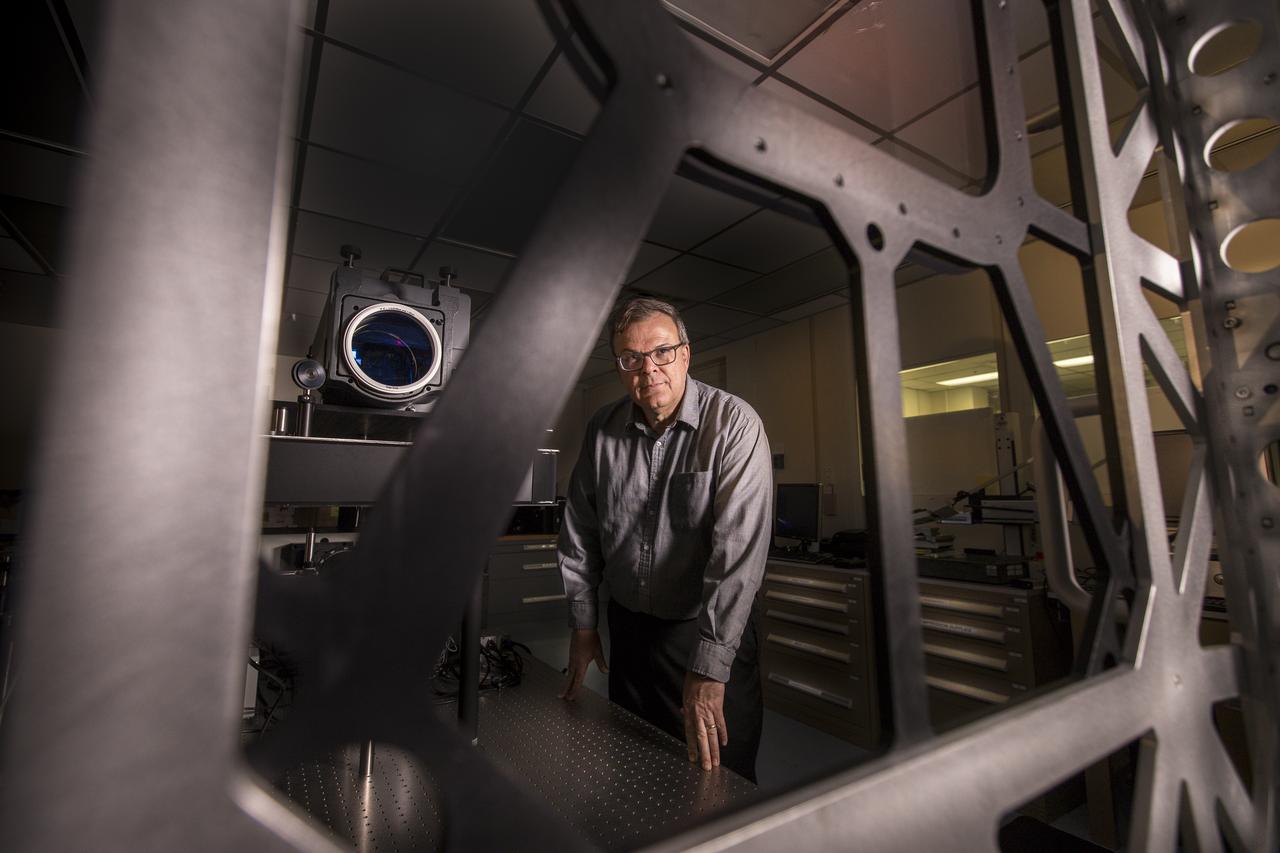
Mark Nurge, a physicist in Kennedy Space Center’s Applied Physics Lab, stands near a laser interferometer, which is used to determine if there are acceptable levels of distortion and imperfections in windows. Nurge recently completed optical metrology testing and evaluation of all flight windows on the Orion capsule for Artemis 1. The interferometer uses a laser source to do wavefront and transmission measurements, as well as evaluation of the color balance. Artemis 1 is an uncrewed flight that will pave the way for future crewed missions and enable future missions to the Moon, Mars, and beyond.
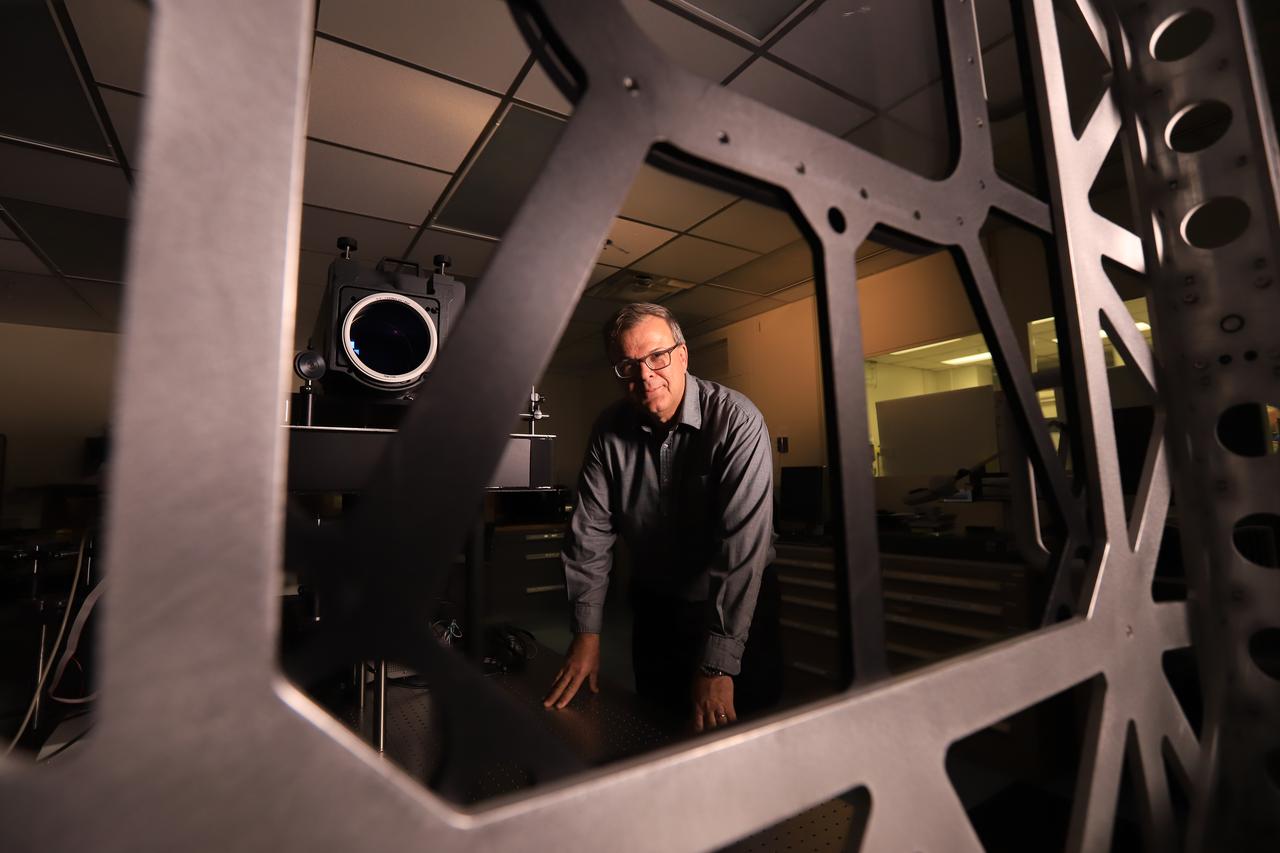
Mark Nurge, a physicist in Kennedy Space Center’s Applied Physics Lab, stands near a laser interferometer, which is used to determine if there are acceptable levels of distortion and imperfections in windows. Nurge recently completed optical metrology testing and evaluation of all flight windows on the Orion capsule for Artemis 1. The interferometer uses a laser source to do wavefront and transmission measurements, as well as evaluation of the color balance. Artemis 1 is an uncrewed flight that will pave the way for future crewed missions and enable future missions to the Moon, Mars, and beyond.
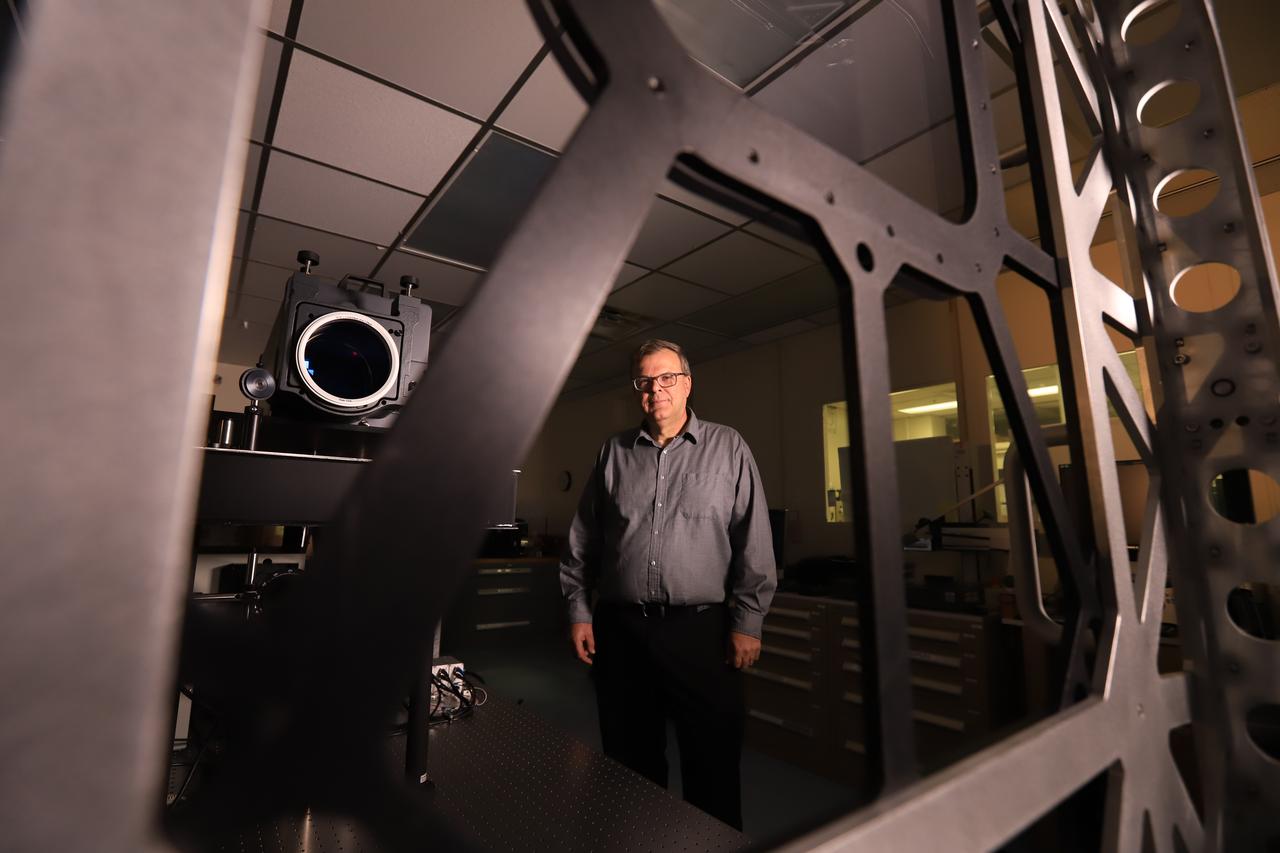
Mark Nurge, a physicist in Kennedy Space Center’s Applied Physics Lab, stands near a laser interferometer, which is used to determine if there are acceptable levels of distortion and imperfections in windows. Nurge recently completed optical metrology testing and evaluation of all flight windows on the Orion capsule for Artemis 1. The interferometer uses a laser source to do wavefront and transmission measurements, as well as evaluation of the color balance. Artemis 1 is an uncrewed flight that will pave the way for future crewed missions and enable future missions to the Moon, Mars, and beyond.
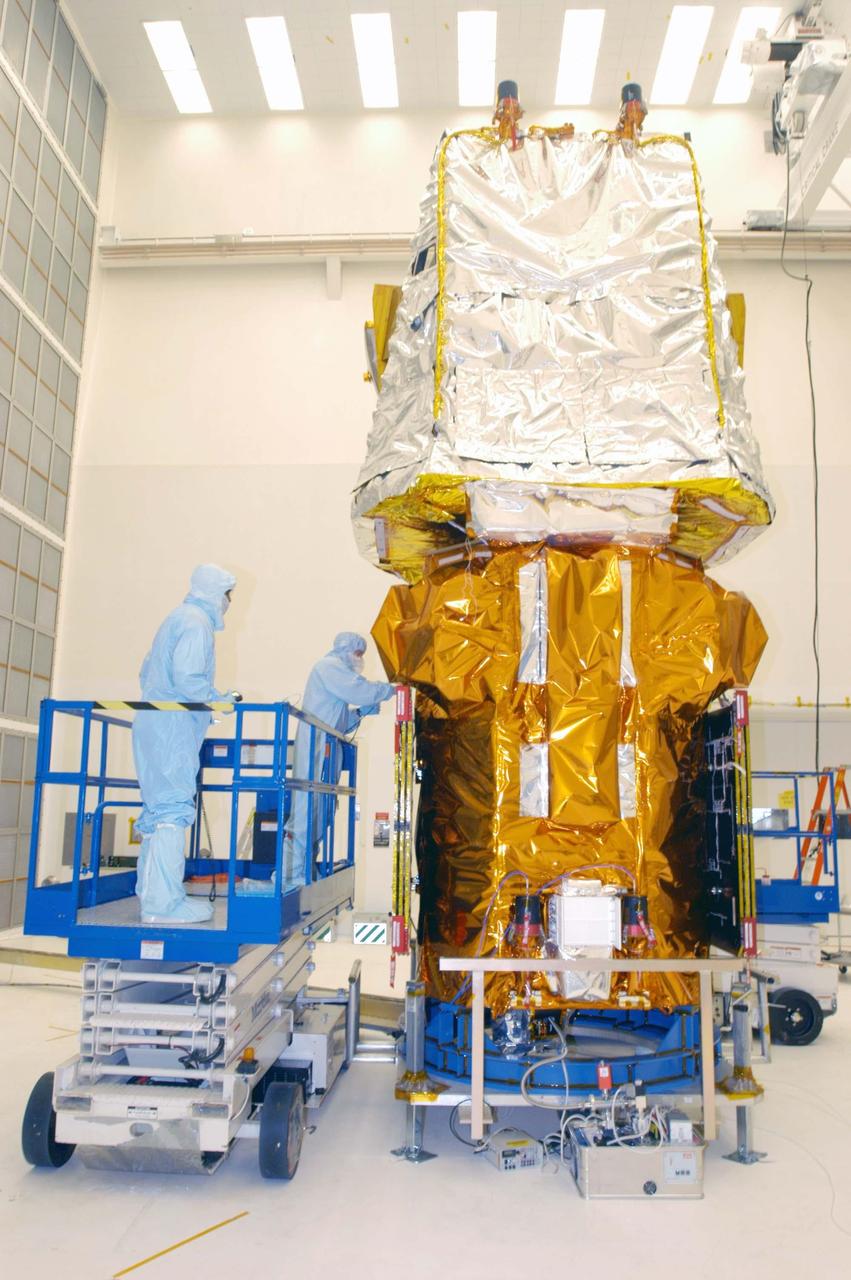
KENNEDY SPACE CENTER, FLA. - Quality Assurance Services technicians Willy Jones and Brian Kittle do some touch-up work on the Swift spacecraft in Hangar AE at Cape Canaveral Air Force Station. Swift has been wrapped with blankets to provide thermal stability during the mission. Swift is a first-of-its-kind multi-wavelength observatory dedicated to the study of gamma-ray burst (GRB) science. Its three instruments will work together to observe GRBs and afterglows in the gamma-ray, X-ray, ultraviolet and optical wavebands. The most comprehensive study of GRB afterglows to date, Swift is expected to observe more than 200 gamma-ray bursts during its 2-year mission.
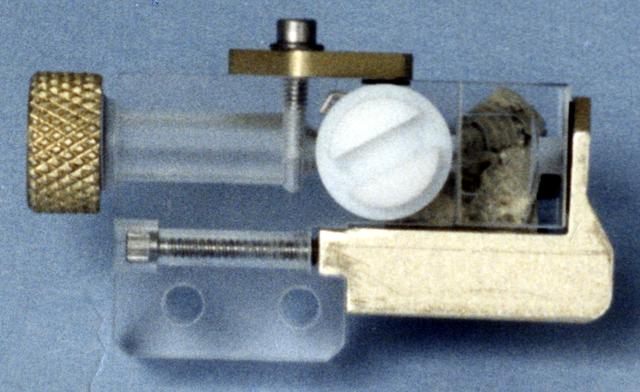
This photo shows an individual cell from the Handheld Diffusion Test Cell (HH-DTC) apparatus flown on the Space Shuttle. Similar cells will be used in the Observable Protein Crystal Growth Apparatus (OPCGA) to be operated aboard the International Space Station (ISS). The principal investigator is Dr. Alex McPherson of the University of California, Irvine. Each individual cell comprises two sample chambers with a rotating center section that isolates the two from each other until the start of the experiment and after it is completed. The cells are made from optical-quality quartz glass to allow photography and interferometric observations. Each cell has a small light-emitting diode and lens to back-light the solution. In protein crystal growth experiments, a precipitating agent such as a salt solution is used to absorb and hold water but repel the protein molecules. This increases the concentration of protein until the molecules nucleate to form crystals. This cell is one of 96 that make up the experiment module portion of the OPCGA.

KENNEDY SPACE CENTER, FLA. - Technician Grace Miller-Swales (left) does touch-up work on the Swift spacecraft in Hangar AE at Cape Canaveral Air Force Station. John Batilito, with Quality Assurance Services, is at right. Swift is wrapped with blankets to provide thermal stability during the mission. Swift is a first-of-its-kind multi-wavelength observatory dedicated to the study of gamma-ray burst (GRB) science. Its three instruments will work together to observe GRBs and afterglows in the gamma-ray, X-ray, ultraviolet and optical wavebands. The most comprehensive study of GRB afterglows to date, Swift is expected to observe more than 200 gamma-ray bursts during its 2-year mission.
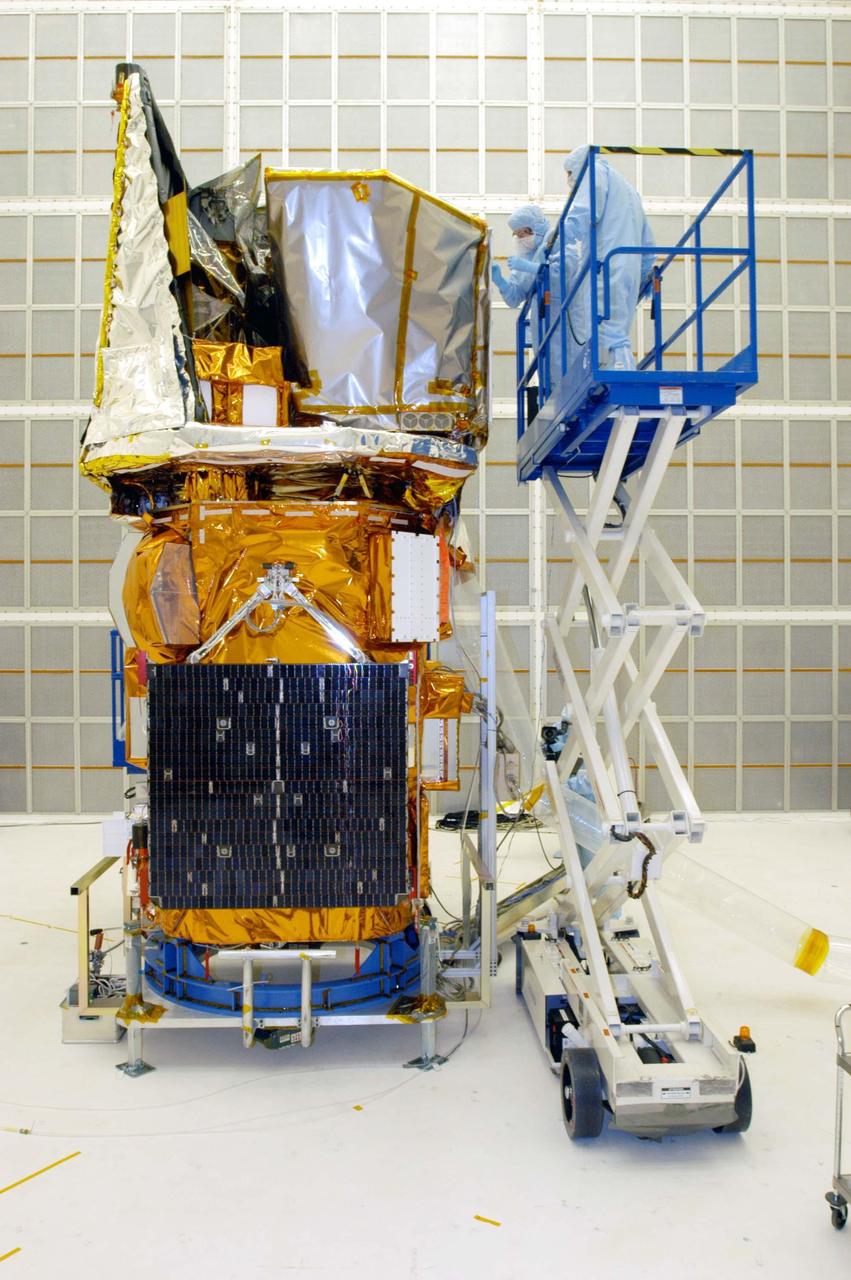
KENNEDY SPACE CENTER, FLA. - Technician Grace Miller-Swales (left) does touch-up work on the Swift spacecraft in Hangar AE at Cape Canaveral Air Force Station. John DiBatilito, with Quality Assurance Services, is at right. Swift is wrapped with blankets to provide thermal stability during the mission. Swift is a first-of-its-kind multi-wavelength observatory dedicated to the study of gamma-ray burst (GRB) science. Its three instruments will work together to observe GRBs and afterglows in the gamma-ray, X-ray, ultraviolet and optical wavebands. The most comprehensive study of GRB afterglows to date, Swift is expected to observe more than 200 gamma-ray bursts during its 2-year mission.
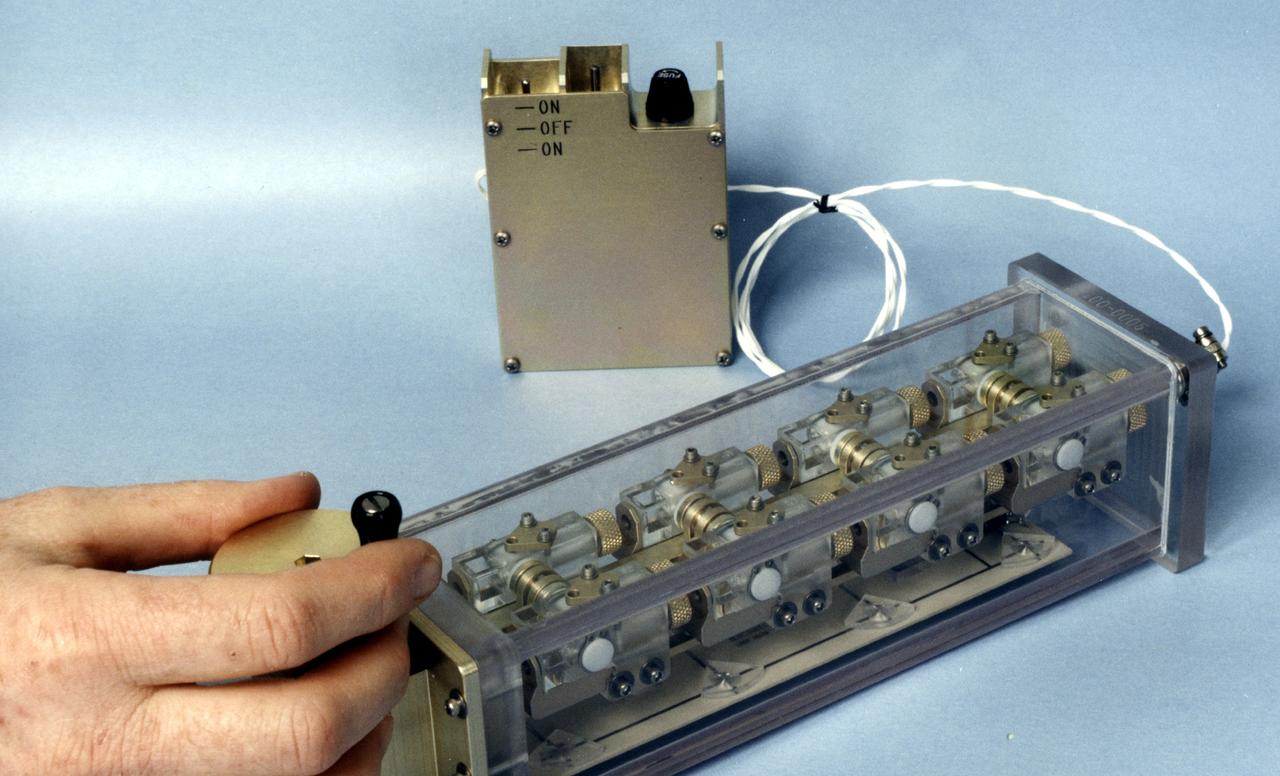
This photo shows the Handheld Diffusion Test Cell (HH-DTC) apparatus flown on the Space Shuttle. Similar cells (inside the plastic box) will be used in the Observable Protein Crystal Growth Apparatus (OPCGA) to be operated aboard the International Space Station (ISS). The principal investigator is Dr. Alex McPherson of the University of California, Irvine. Each individual cell comprises two sample chambers with a rotating center section that isolates the two from each other until the start of the experiment and after it is completed. The cells are made from optical-quality quartz glass to allow photography and interferometric observations. Each cell has a small light-emitting diode and lens to back-light the solution. In protein crystal growth experiments, a precipitating agent such as a salt solution is used to absorb and hold water but repel the protein molecules. This increases the concentration of protein until the molecules nucleate to form crystals. This cell is one of 96 that make up the experiment module portion of the OPCGA.

This patch represents the essential elements associated with pressurized Earth science research aboard the International Space Station. At the top of the patch Klingon script spells out the acronym WORF making reference to the famed Star Trek character of the same name. In doing so it attests to the foresight, honor, integrity, and persistence of all those who made the WORF possible. To the right of the Klingon script is a single four pointed star in the form of a cross to honor the late Dr. Jack Estes and Dr. Dave Amsbury, the individuals most responsible for seeing to it that an optical quality, Earth science research window was added to the United States laboratory module, Destiny. The "flying eyeball" represents the ability of the ISS to allow scientists and astronauts to make and record continuous observations of natural and manmade processes on the surface of the Earth. The Destiny laboratory is depicted on the right of the patch above the Flag of the United States of America and highlights the position of the nadir looking, optical quality, science window in the module. The light emanating from the window from the lighted interior of the module appropriately illuminates the National Ensign for display during both day and night time. In the center of the patch, below the flying eyeball is a graphic representation of the WORF rack. A science instrument is mounted on the WORF payload shelf and is recording data of the Earth's surface through the nadir looking, science window over which the WORF rack is mounted. An astronaut represented by Mario Runco Jr., a designer, developer, and manager of the WORF and depicted as Star Trek's Mr. Spock, is to the left of the WORF rack and is shown in his flight suit with his STS-44 mission patch operating an imaging instrument, emphasizing the importance of astronaut participation to achieve the maximum scientific return from orbital research.
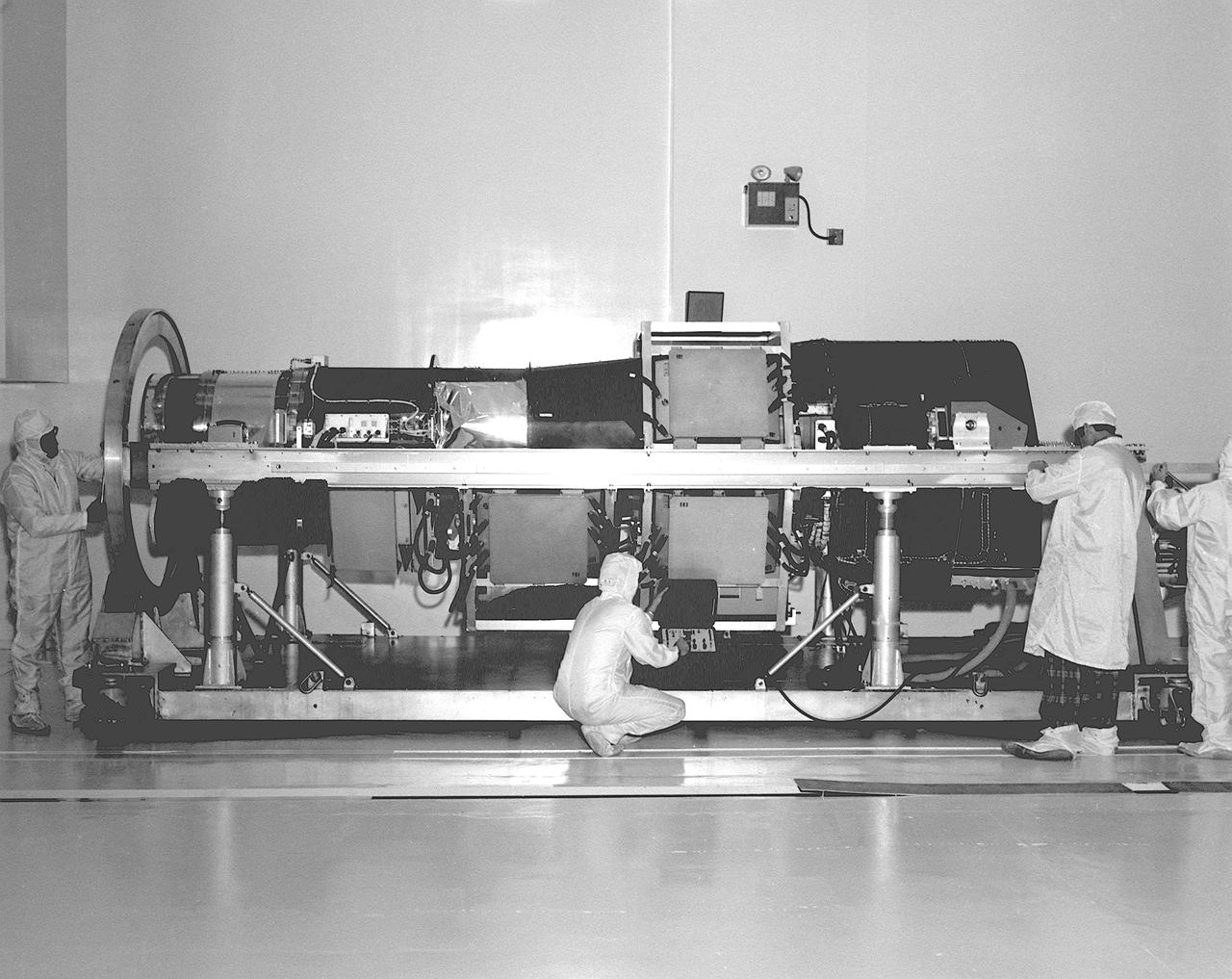
This photograph is of the High Energy Astronomy Observatory (HEAO)-2 telescope being checked by engineers in the X-Ray Calibration Facility at the Marshall Space Flight Center (MSFC). The MSFC was heavily engaged in the technical and scientific aspects, testing and calibration, of the HEAO-2 telescope. The HEAO-2 was the first imaging and largest x-ray telescope built to date. The X-Ray Calibration Facility was built in 1976 for testing MSFC's HEAO-2. The facility is the world's largest, most advanced laboratory for simulating x-ray emissions from distant celestial objects. It produced a space-like environment in which components related to x-ray telescope imaging are tested and the quality of their performance in space is predicted. The original facility contained a 1,000-foot long by 3-foot diameter vacuum tube (for the x-ray path) cornecting an x-ray generator and an instrument test chamber. Recently, the facility was upgraded to evaluate the optical elements of NASA's Hubble Space Telescope, Chandra X-Ray Observatory and Compton Gamma-Ray Observatory.
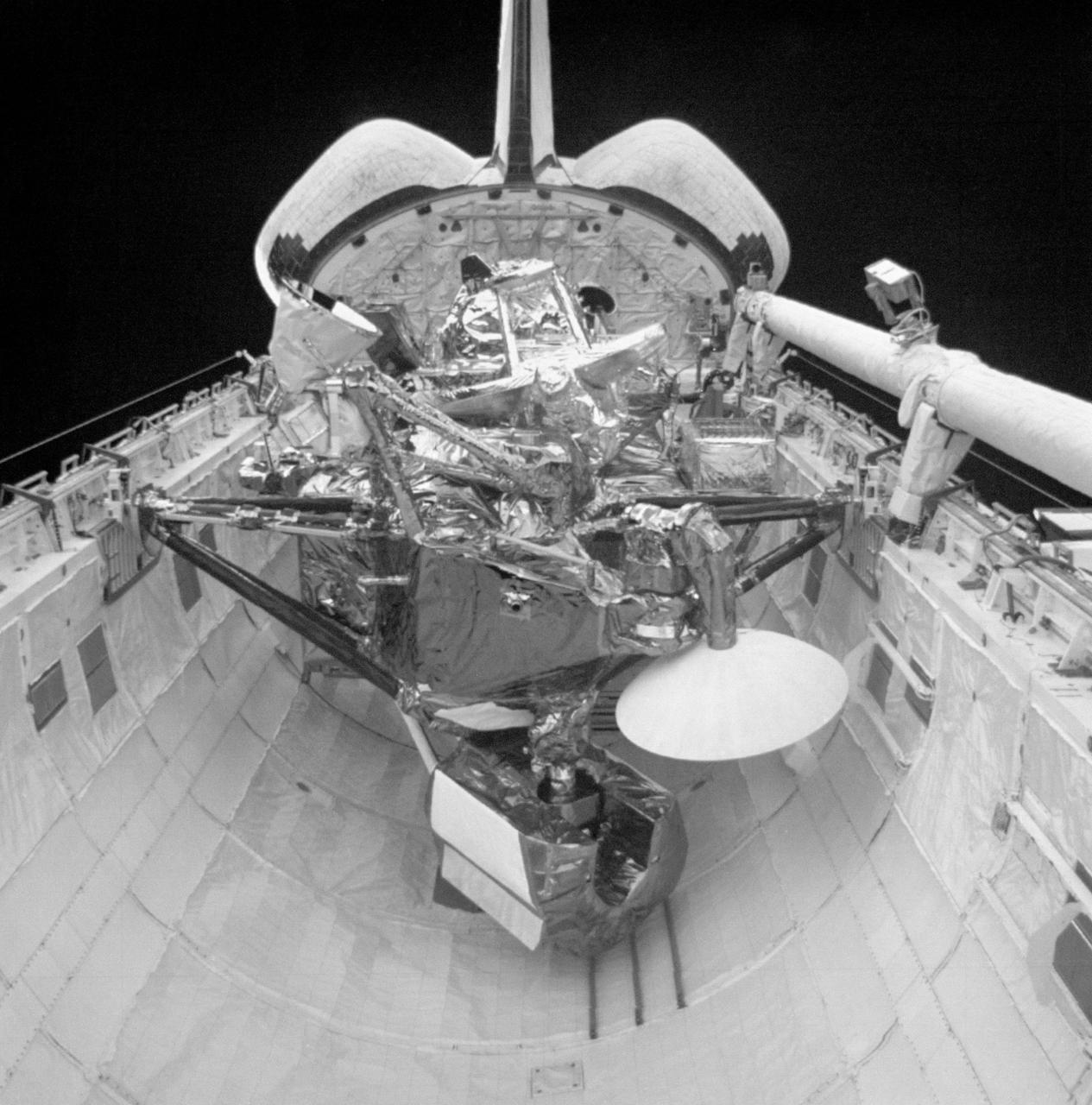
S48-E-013 (15 Sept 1991) --- The Upper Atmosphere Research Satellite (UARS) in the payload bay of the earth- orbiting Discovery. UARS is scheduled for deploy on flight day three of the STS-48 mission. Data from UARS will enable scientists to study ozone depletion in the stratosphere, or upper atmosphere. This image was transmitted by the Electronic Still Camera (ESC), Development Test Objective (DTO) 648. The ESC is making its initial appearance on a Space Shuttle flight. Electronic still photography is a new technology that enables a camera to electronically capture and digitize an image with resolution approaching film quality. The digital image is stored on removable hard disks or small optical disks, and can be converted to a format suitable for downlink transmission or enhanced using image processing software. The Electronic Still Camera (ESC) was developed by the Man- Systems Division at the Johnson Space Center and is the first model in a planned evolutionary development leading to a family of high-resolution digital imaging devices. H. Don Yeates, JSC's Man-Systems Division, is program manager for the ESC. THIS IS A SECOND GENERATION PRINT MADE FROM AN ELECTRONICALLY PRODUCED NEGATIVE.
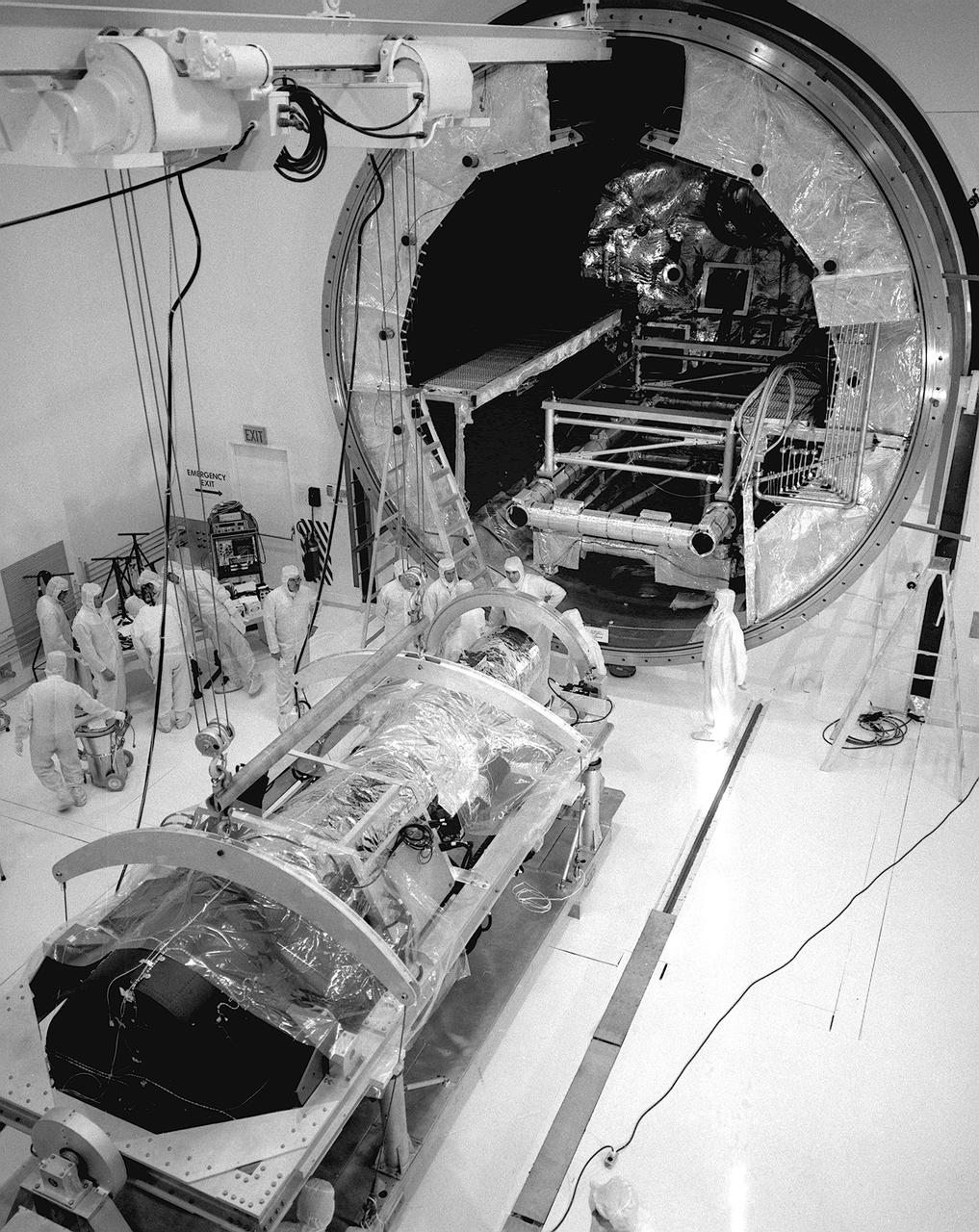
This photograph is of the High Energy Astronomy Observatory (HEAO)-2 telescope being evaluated by engineers in the clean room of the X-Ray Calibration Facility at the Marshall Space Flight Center (MSFC). The MSFC was heavily engaged in the technical and scientific aspects, testing and calibration, of the HEAO-2 telescope The HEAO-2 was the first imaging and largest x-ray telescope built to date. The X-Ray Calibration Facility was built in 1976 for testing MSFC's HEAO-2. The facility is the world's largest, most advanced laboratory for simulating x-ray emissions from distant celestial objects. It produced a space-like environment in which components related to x-ray telescope imaging are tested and the quality of their performance in space is predicted. The original facility contained a 1,000-foot long by 3-foot diameter vacuum tube (for the x-ray path) cornecting an x-ray generator and an instrument test chamber. Recently, the facility was upgraded to evaluate the optical elements of NASA's Hubble Space Telescope, Chandra X-Ray Observatory and Compton Gamma-Ray Observatory.
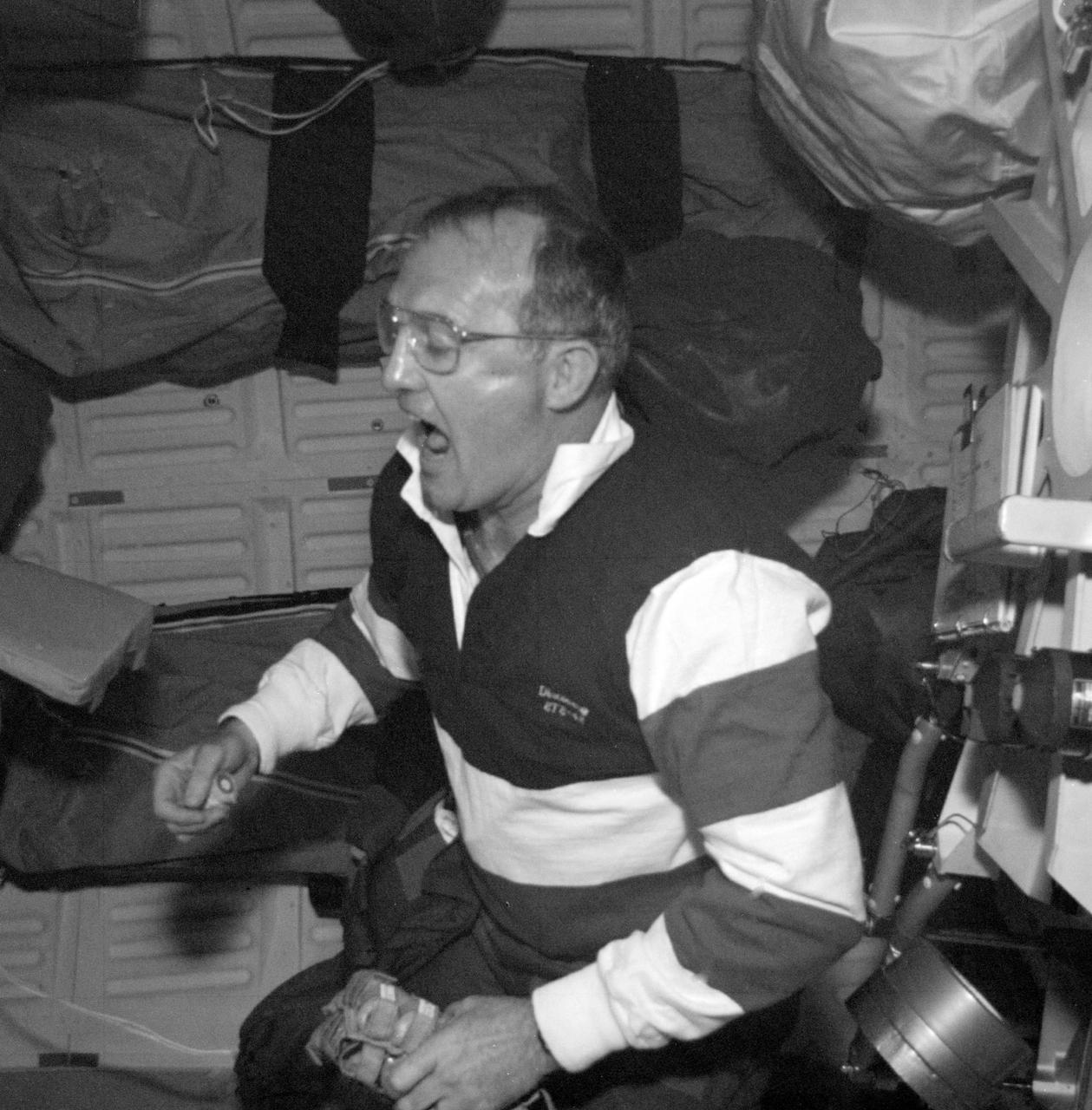
S48-E-007 (12 Sept 1991) --- Astronaut James F. Buchli, mission specialist, catches snack crackers as they float in the weightless environment of the earth-orbiting Discovery. This image was transmitted by the Electronic Still Camera, Development Test Objective (DTO) 648. The ESC is making its initial appearance on a Space Shuttle flight. Electronic still photography is a new technology that enables a camera to electronically capture and digitize an image with resolution approaching film quality. The digital image is stored on removable hard disks or small optical disks, and can be converted to a format suitable for downlink transmission or enhanced using image processing software. The Electronic Still Camera (ESC) was developed by the Man- Systems Division at the Johnson Space Center and is the first model in a planned evolutionary development leading to a family of high-resolution digital imaging devices. H. Don Yeates, JSC's Man-Systems Division, is program manager for the ESC. THIS IS A SECOND GENERATION PRINT MADE FROM AN ELECTRONICALLY PRODUCED NEGATIVE
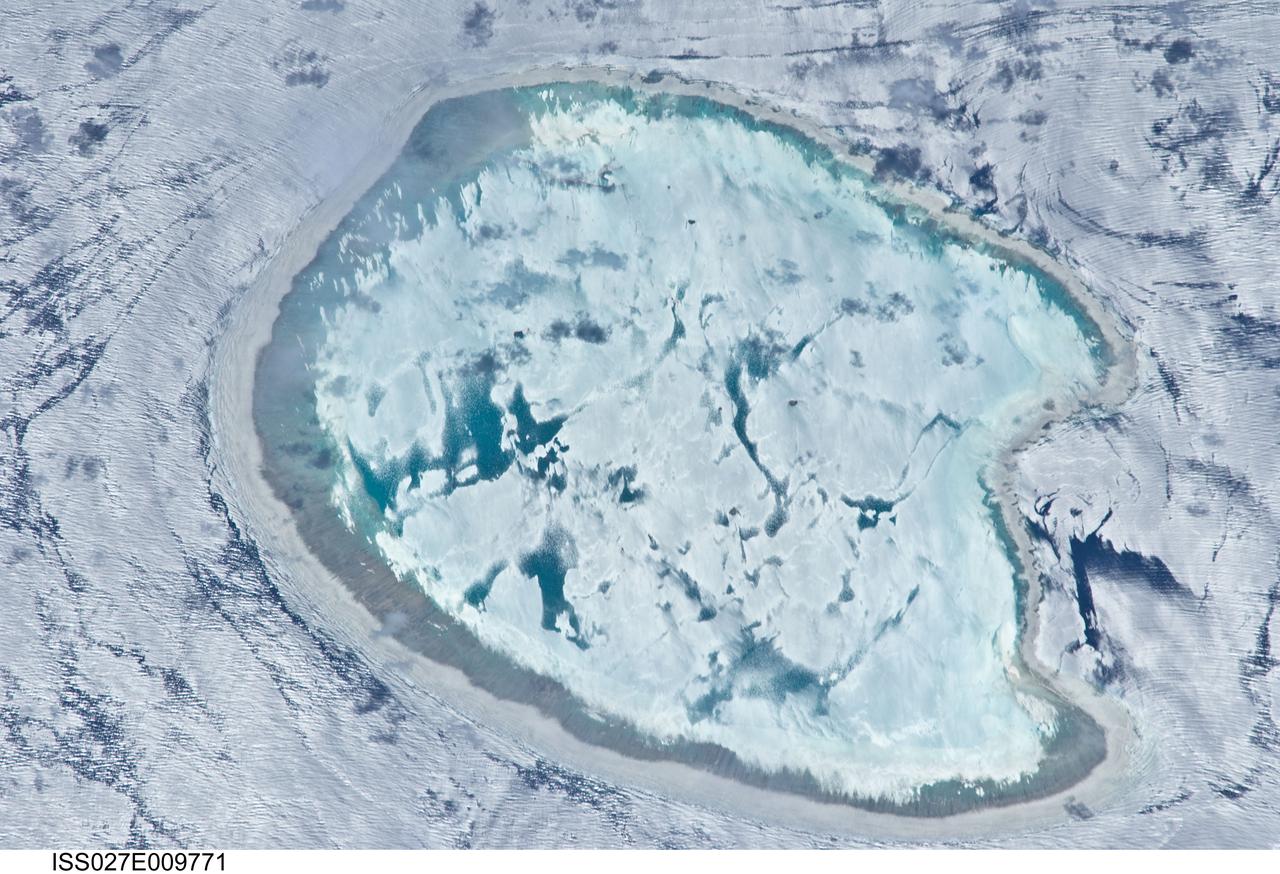
ISS027-E-009771 (2 April 2011) --- Bassas da India is featured in this image photographed by an Expedition 27 crew member on the International Space Station. The vantage point of crew members onboard the space station provides many dramatic views of Earth?s surface. This detailed photograph of the Bassas da India, an uninhabited atoll in the Indian Ocean (between the Mozambique coast of Africa and the island of Madagascar) has an almost surreal quality due to varying degrees of sunglint. Sunglint is an optical phenomena caused by light reflecting off of a water surface directly back towards the observer. Variations in the roughness of the water surface?presence or absence of waves due to wind and water currents?will cause differences in the intensity of the sunglint. The presence of other materials, such as oils or surfactants, can also change the properties of the water surface. Here the presence of currents is highlighted as darker patches or streaks (left and upper right). In contrast, shallow water in the lagoon (center) presents a more uniform, mirror-like appearance in sunglint suggesting that there are no subsurface currents present. Wave crests visible around the atoll are likely the result of both surface winds and subsurface currents. The Bassas da India atoll is part of the French Southern and Antarctic Lands. It is uninhabited due to its complete submergence during high tide ? there is no vegetation established on the atoll for the same reason. The atoll is approximately 10 kilometers in diameter, and covers an area (including the lagoon) of approximately 80 square kilometers.
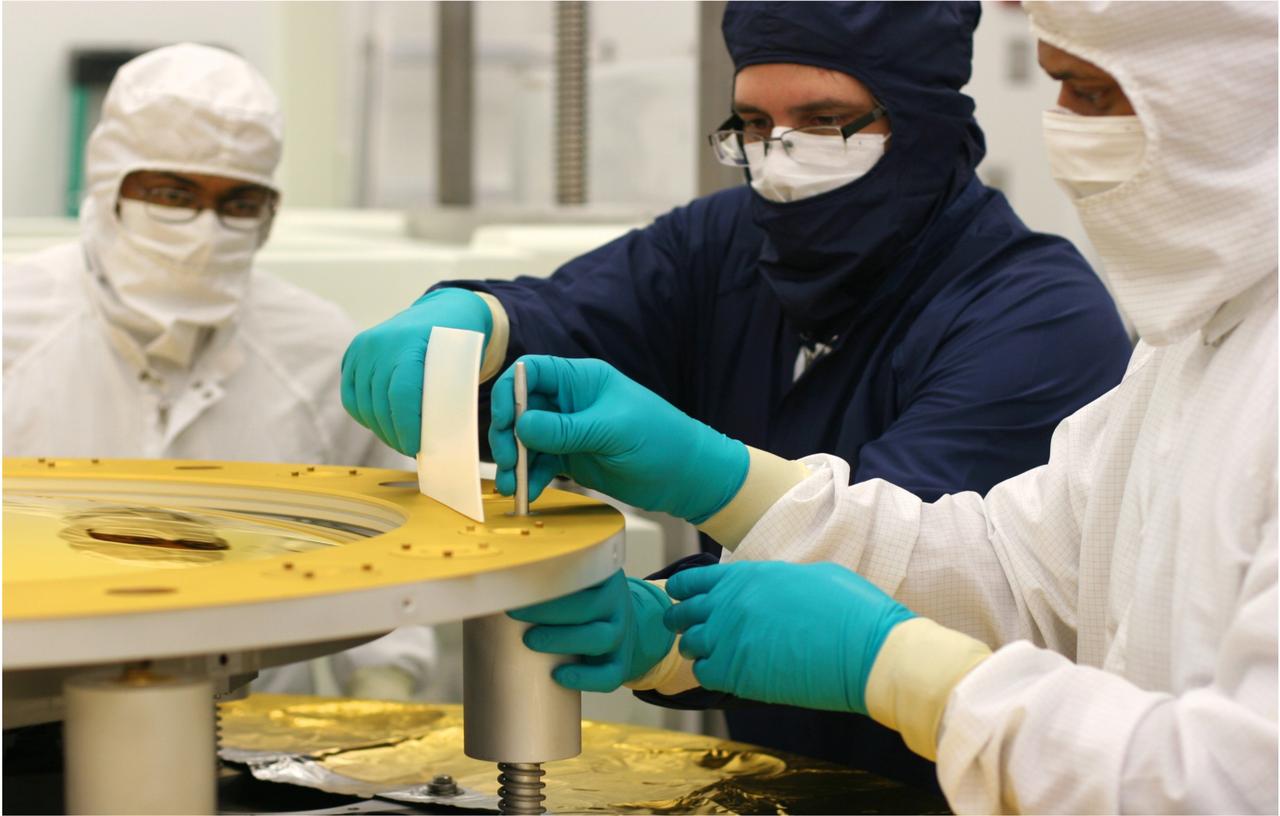
NASA release July 19, 2011 <b>Click here to learn about the <a href="http://www.jwst.nasa.gov/" rel="nofollow"> James Webb Space Telescope</a></b> The secondary mirror (shown here) was polished at the L3 Integrated Optical Systems - Tinsley in Richmond, Calif. to accuracies of less than one millionth of an inch. That accuracy is important for forming the sharpest images when the mirrors cool to -400°F (-240°C) in the cold of space. The Webb's secondary mirror was recently completed, following polishing and gold-coating. "Secondary" may not sound as important as "primary" but when it comes to the next-generation James Webb Space Telescope a secondary mirror plays a critical role in ensuring the telescope gathers information from the cosmos. The Webb's secondary mirror was recently completed, following polishing and gold-coating. There are four different types of mirrors that will fly on the James Webb Space Telescope, and all are made of a light metal called beryllium. It is very strong for its weight and holds its shape across a range of temperatures. There are primary mirror segments (18 total that combined make the large primary mirror providing a collecting area of 25 meters squared/269.1 square feet), the secondary mirror, tertiary mirror and the fine steering mirror. Unlike the primary mirror, which is molded into the shape of a hexagon, the secondary mirror is perfectly rounded. The mirror is also convex, so the reflective surface bulges toward a light source. It looks much like a curved mirror that you'll see on the wall near the exit of a parking garage that lets motorists see around a corner. This mirror is coated with a microscopic layer of gold to enable it to efficiently reflect infrared light (which is what the Webb telescope's cameras see). The quality of the secondary mirror surface is so good that the final convex surface at cold temperatures does not deviate from the design by more than a few millionths of a millimeter - or about one ten thousandth the diameter of a human hair. "As the only convex mirror on the Webb telescope, the secondary mirror has always been recognized to be the hardest of all of the mirrors to polish and test, so we are delighted that its performance meets all specifications," said Lee Feinberg, Webb Optical Telescope manager at NASA's Goddard Space Flight Center in Greenbelt, Md. Convex mirrors are particularly hard to test because light that strikes them diverges away from the mirror. Feinberg noted, "The Webb telescope convex secondary mirror is approximately the size of the Spitzer Space Telescope's primary mirror and is by far the largest convex cryogenic mirror ever built for a NASA program." It was data from the Spitzer's mirrors that helped make the decision to use beryllium for the Webb telescope mirrors. Spitzer's mirrors were also made of beryllium. So why is this mirror so critical? Because the secondary mirror captures light from the 18 primary mirror segments and relays those distant images of the cosmos to the telescope's science cameras. The secondary mirror is mounted on folding "arms" that position it in front of the 18 primary mirror segments. The secondary mirror will soon come to NASA's Goddard Space Flight Center in Greenbelt, Md. where it will be installed on the telescope structure. Then, as a complete unit, the telescope structure and mirrors will undergo acoustic and vibration testing. The secondary mirror was developed at Ball Aerospace & Technology Corp. of Boulder, Colo. and the mirror recently completed polishing at the L3–IOS-Tinsley facility in Richmond, Calif. Northrop Grumman space Systems is the prime contractor on the Webb telescope program. The James Webb Space Telescope is the world’s next-generation space observatory and successor to the Hubble Space Telescope. The most powerful space telescope ever built, Webb will observe the most distant objects in the universe, provide images of the very first galaxies ever formed and see unexplored planets around distant stars. The Webb Telescope is a joint project of NASA, the European Space Agency and the Canadian Space Agency. Credit:NASA/Ball Aerospace/Tinsley <b><a href="http://www.nasa.gov/centers/goddard/home/index.html" rel="nofollow">NASA Goddard Space Flight Center</a></b> enables NASA’s mission through four scientific endeavors: Earth Science, Heliophysics, Solar System Exploration, and Astrophysics. Goddard plays a leading role in NASA’s accomplishments by contributing compelling scientific knowledge to advance the Agency’s mission. <b>Follow us on <a href="http://twitter.com/NASA_GoddardPix" rel="nofollow">Twitter</a></b> <b>Like us on <a href="http://www.facebook.com/pages/Greenbelt-MD/NASA-Goddard/395013845897?ref=tsd" rel="nofollow">Facebook</a></b> <b>Find us on <a href="http://web.stagram.com/n/nasagoddard/?vm=grid" rel="nofollow">Instagram</a></b>
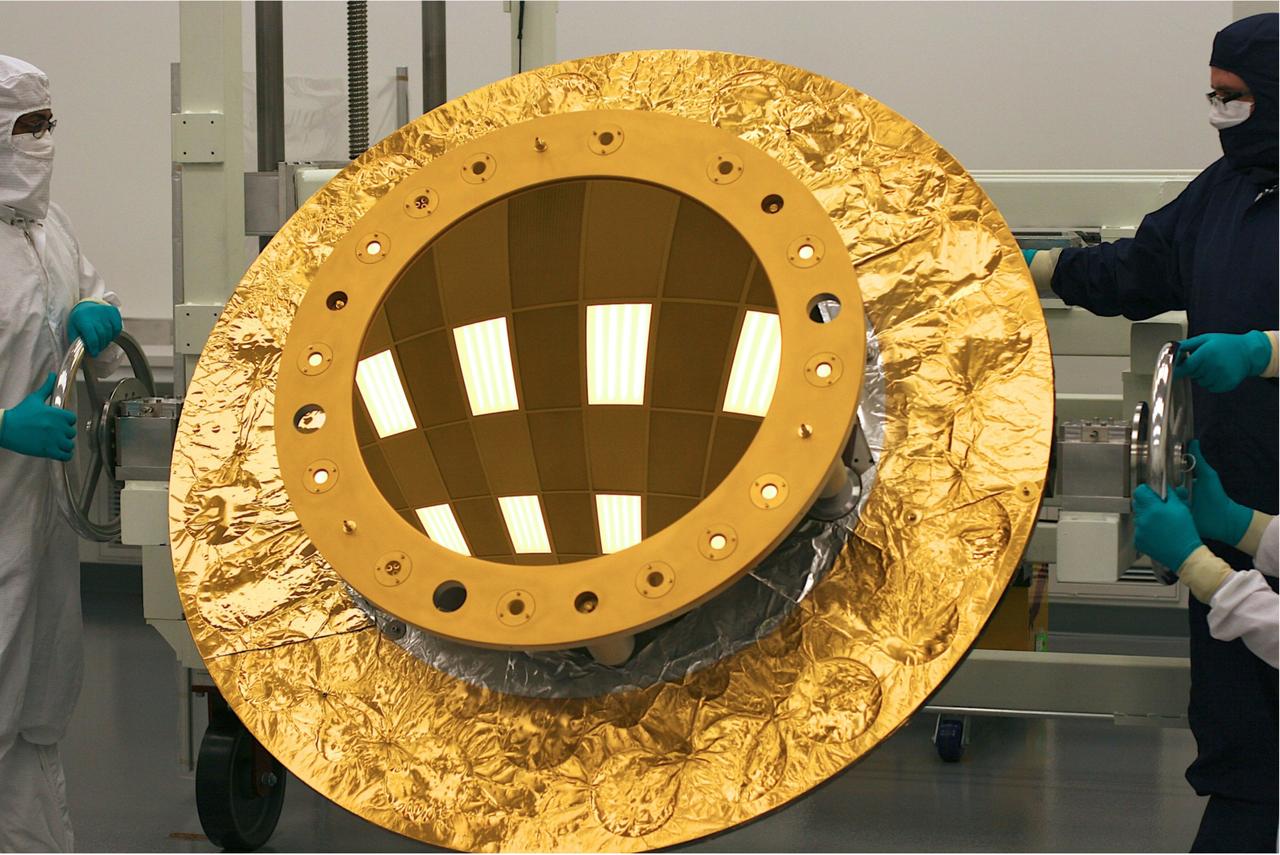
NASA release July 19, 2011 <b>Click here to learn about the <a href="http://www.jwst.nasa.gov/" rel="nofollow"> James Webb Space Telescope</a></b> The secondary mirror (shown here) was polished at the L3 Integrated Optical Systems - Tinsley in Richmond, Calif. to accuracies of less than one millionth of an inch. That accuracy is important for forming the sharpest images when the mirrors cool to -400°F (-240°C) in the cold of space. The Webb's secondary mirror was recently completed, following polishing and gold-coating. "Secondary" may not sound as important as "primary" but when it comes to the next-generation James Webb Space Telescope a secondary mirror plays a critical role in ensuring the telescope gathers information from the cosmos. The Webb's secondary mirror was recently completed, following polishing and gold-coating. There are four different types of mirrors that will fly on the James Webb Space Telescope, and all are made of a light metal called beryllium. It is very strong for its weight and holds its shape across a range of temperatures. There are primary mirror segments (18 total that combined make the large primary mirror providing a collecting area of 25 meters squared/269.1 square feet), the secondary mirror, tertiary mirror and the fine steering mirror. Unlike the primary mirror, which is molded into the shape of a hexagon, the secondary mirror is perfectly rounded. The mirror is also convex, so the reflective surface bulges toward a light source. It looks much like a curved mirror that you'll see on the wall near the exit of a parking garage that lets motorists see around a corner. This mirror is coated with a microscopic layer of gold to enable it to efficiently reflect infrared light (which is what the Webb telescope's cameras see). The quality of the secondary mirror surface is so good that the final convex surface at cold temperatures does not deviate from the design by more than a few millionths of a millimeter - or about one ten thousandth the diameter of a human hair. "As the only convex mirror on the Webb telescope, the secondary mirror has always been recognized to be the hardest of all of the mirrors to polish and test, so we are delighted that its performance meets all specifications," said Lee Feinberg, Webb Optical Telescope manager at NASA's Goddard Space Flight Center in Greenbelt, Md. Convex mirrors are particularly hard to test because light that strikes them diverges away from the mirror. Feinberg noted, "The Webb telescope convex secondary mirror is approximately the size of the Spitzer Space Telescope's primary mirror and is by far the largest convex cryogenic mirror ever built for a NASA program." It was data from the Spitzer's mirrors that helped make the decision to use beryllium for the Webb telescope mirrors. Spitzer's mirrors were also made of beryllium. So why is this mirror so critical? Because the secondary mirror captures light from the 18 primary mirror segments and relays those distant images of the cosmos to the telescope's science cameras. The secondary mirror is mounted on folding "arms" that position it in front of the 18 primary mirror segments. The secondary mirror will soon come to NASA's Goddard Space Flight Center in Greenbelt, Md. where it will be installed on the telescope structure. Then, as a complete unit, the telescope structure and mirrors will undergo acoustic and vibration testing. The secondary mirror was developed at Ball Aerospace & Technology Corp. of Boulder, Colo. and the mirror recently completed polishing at the L3–IOS-Tinsley facility in Richmond, Calif. Northrop Grumman space Systems is the prime contractor on the Webb telescope program. The James Webb Space Telescope is the world’s next-generation space observatory and successor to the Hubble Space Telescope. The most powerful space telescope ever built, Webb will observe the most distant objects in the universe, provide images of the very first galaxies ever formed and see unexplored planets around distant stars. The Webb Telescope is a joint project of NASA, the European Space Agency and the Canadian Space Agency. Credit:NASA/Ball Aerospace/Tinsley <b><a href="http://www.nasa.gov/centers/goddard/home/index.html" rel="nofollow">NASA Goddard Space Flight Center</a></b> enables NASA’s mission through four scientific endeavors: Earth Science, Heliophysics, Solar System Exploration, and Astrophysics. Goddard plays a leading role in NASA’s accomplishments by contributing compelling scientific knowledge to advance the Agency’s mission. <b>Follow us on <a href="http://twitter.com/NASA_GoddardPix" rel="nofollow">Twitter</a></b> <b>Like us on <a href="http://www.facebook.com/pages/Greenbelt-MD/NASA-Goddard/395013845897?ref=tsd" rel="nofollow">Facebook</a></b> <b>Find us on <a href="http://web.stagram.com/n/nasagoddard/?vm=grid" rel="nofollow">Instagram</a></b>