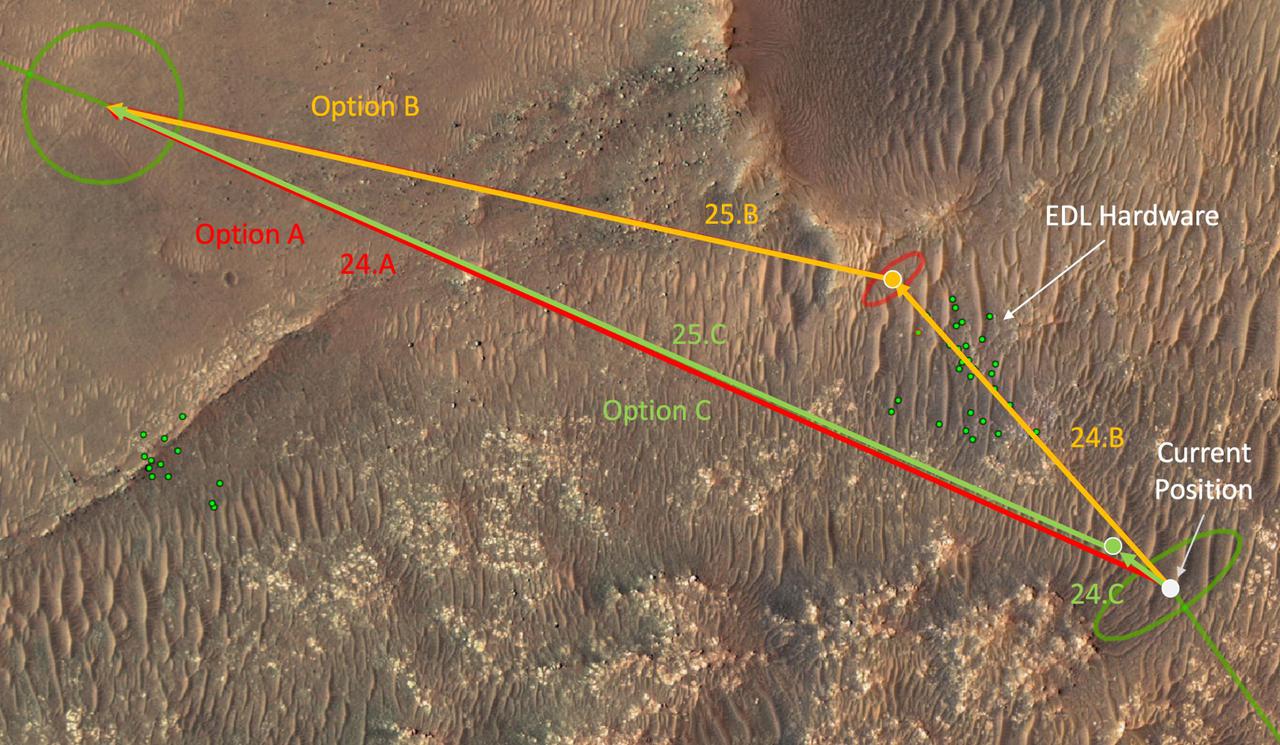
This annotated overhead image from the HiRISE camera aboard NASA's Mars Reconnaissance Orbiter (MRO) depicts three options for the agency's Mars Ingenuity Helicopter to take on flights out of the "Séítah" region, as well as the location of the entry, descent, and landing (EDL) hardware. The size and location of the landing ellipses have been analyzed to be safe for landing – free of hazards such as rocks, dunes, and large slopes. See an interactive map with Perseverance and Ingenuity location updates here: https://mars.nasa.gov/mars2020/mission/where-is-the-rover/ https://photojournal.jpl.nasa.gov/catalog/PIA25029

Space Station Freedom option A showing two Soyuz Assured Crew Return Vehicle (ACRV) capsules docked at berthing ports.
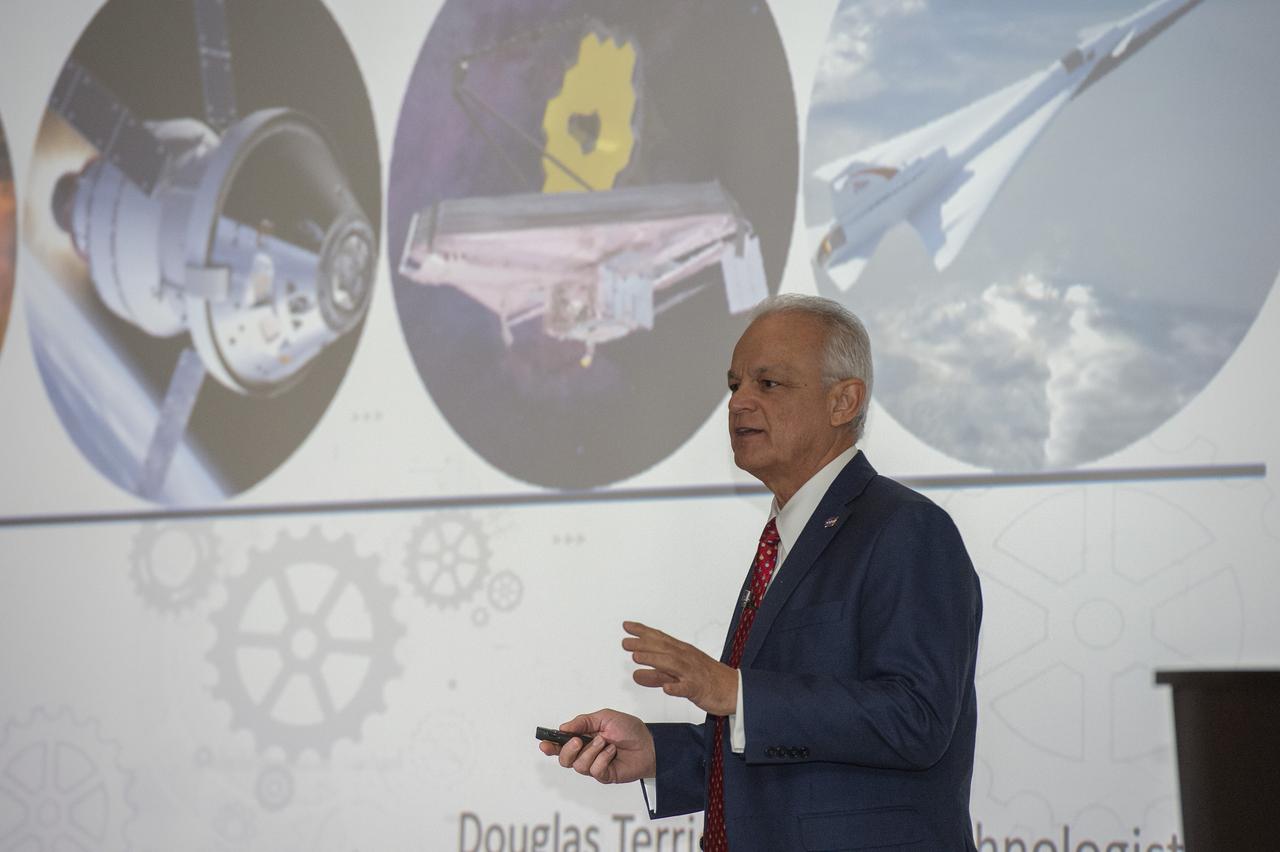
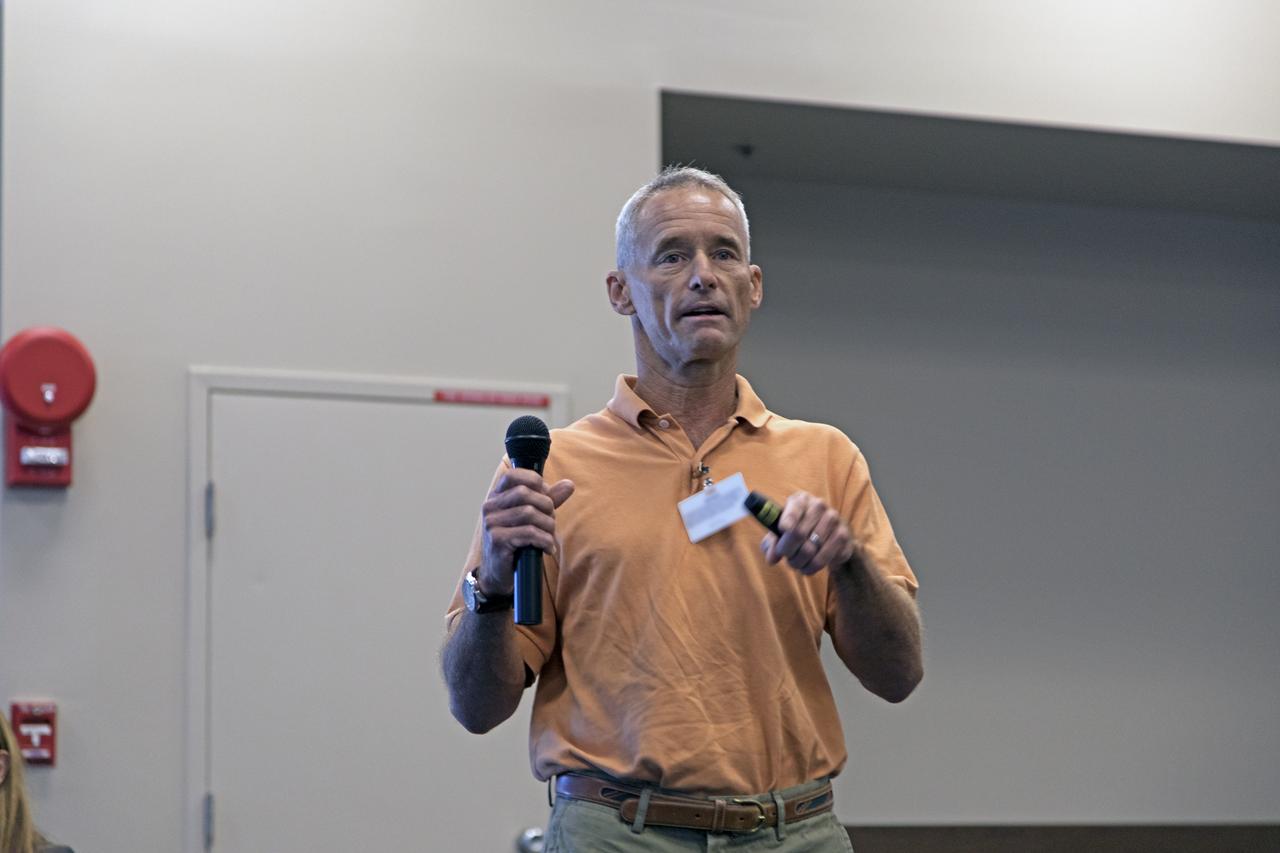
“INNOVATION IS NOT OPTIONAL,” SAYS DOUGLAS TERRIER, NASA CHIEF TECHNOLOGIST, DURING A TALK ABOUT INNOVATION AT THE AGENCY DEC. 3 IN MORRIS AUDITORIUM AT NASA’S MARSHALL SPACE FLIGHT CENTER. TERRIER SAID THAT NASA MUST CONTINUE TO BE INNOVATIVE TO ACHIEVE THE AGENCY’S MISSIONS AND GOALS FOR THE NEXT 5-10 YEARS, INCLUDING THE 2024 ARTEMIS II MOON LANDING.
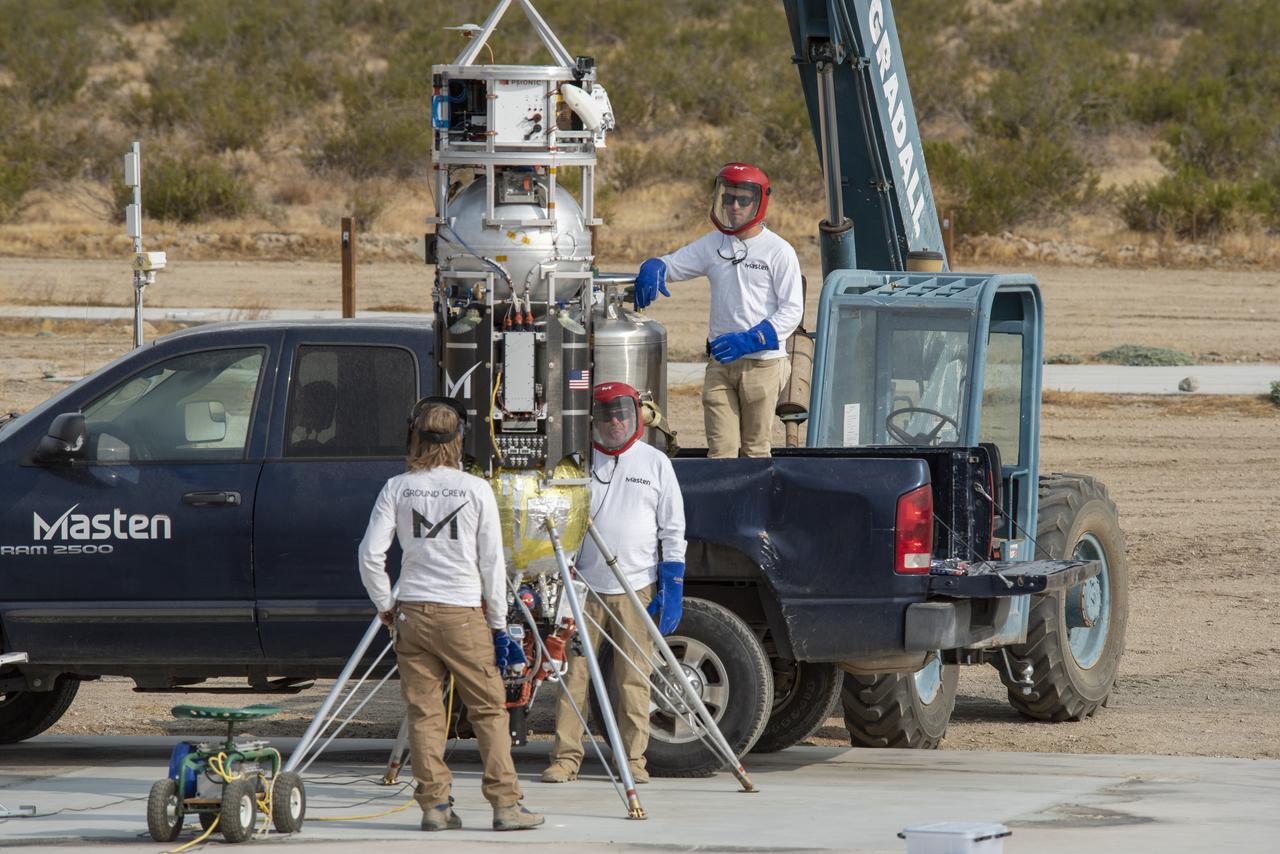
Masten Space Systems employees prepare its rocket to flight test NASA -licensed Psionic navigation doppler lidar technology that enables precision landing on celestial bodies where GPS for navigation only available on Earth is not an option.
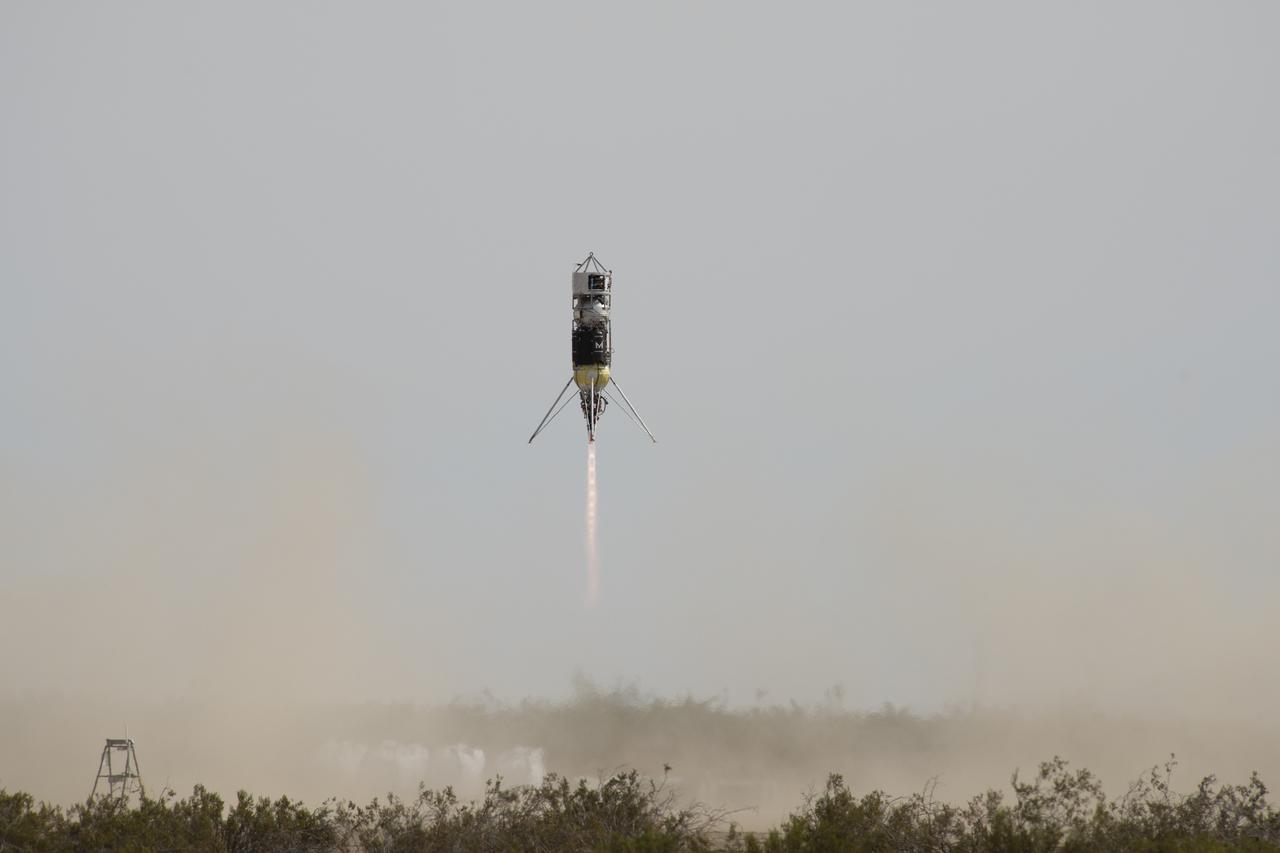
Masten Space Systems vertical takeoff vertical landing rocket launched September 10, 2020 to flight test NASA-licensed Psionic navigation doppler lidar technology that enables precision landing on celestial bodies where GPS for navigation only available on Earth is not an option.
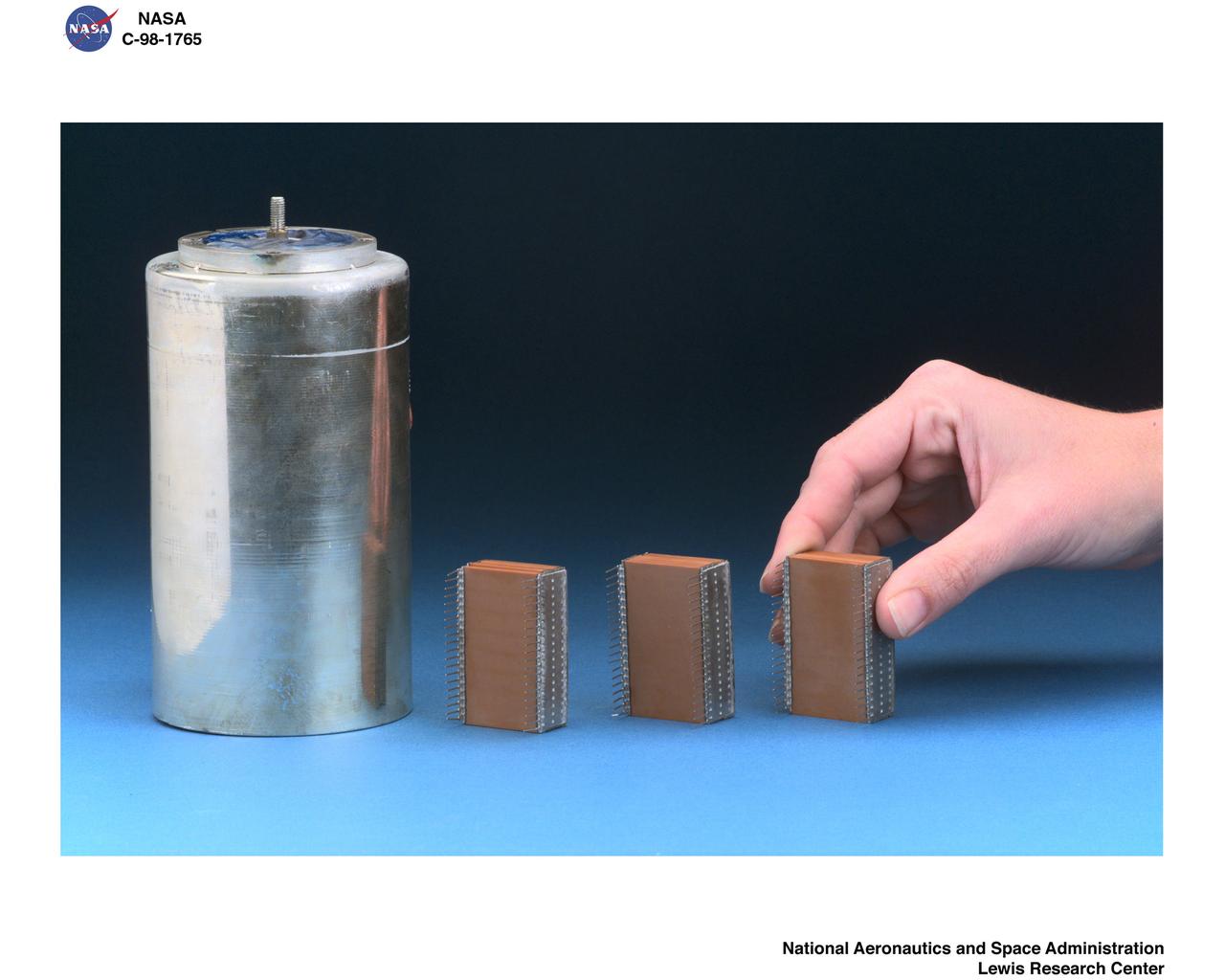
PULSED PLASMA THRUSTER CAPACITOR OPTIONS
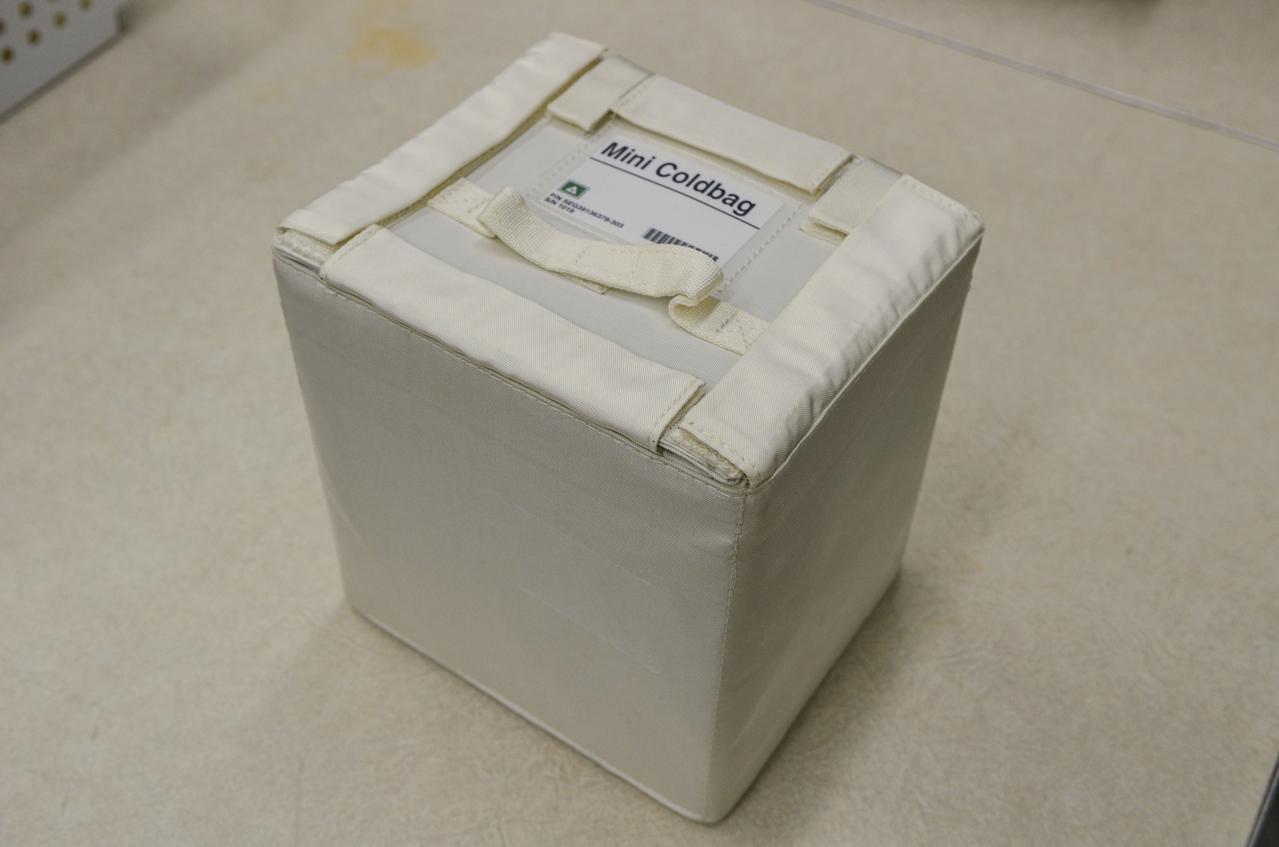
jsc2021e019955 (8/10/2015) --- A preflight photo of a Mini Coldbag. The Mini Coldbag is a temperature control resource that provides for the specific needs for scientific samples and other temperature-sensitive payload items. These options are available on the International Space Station (ISS) during launch and return operations.
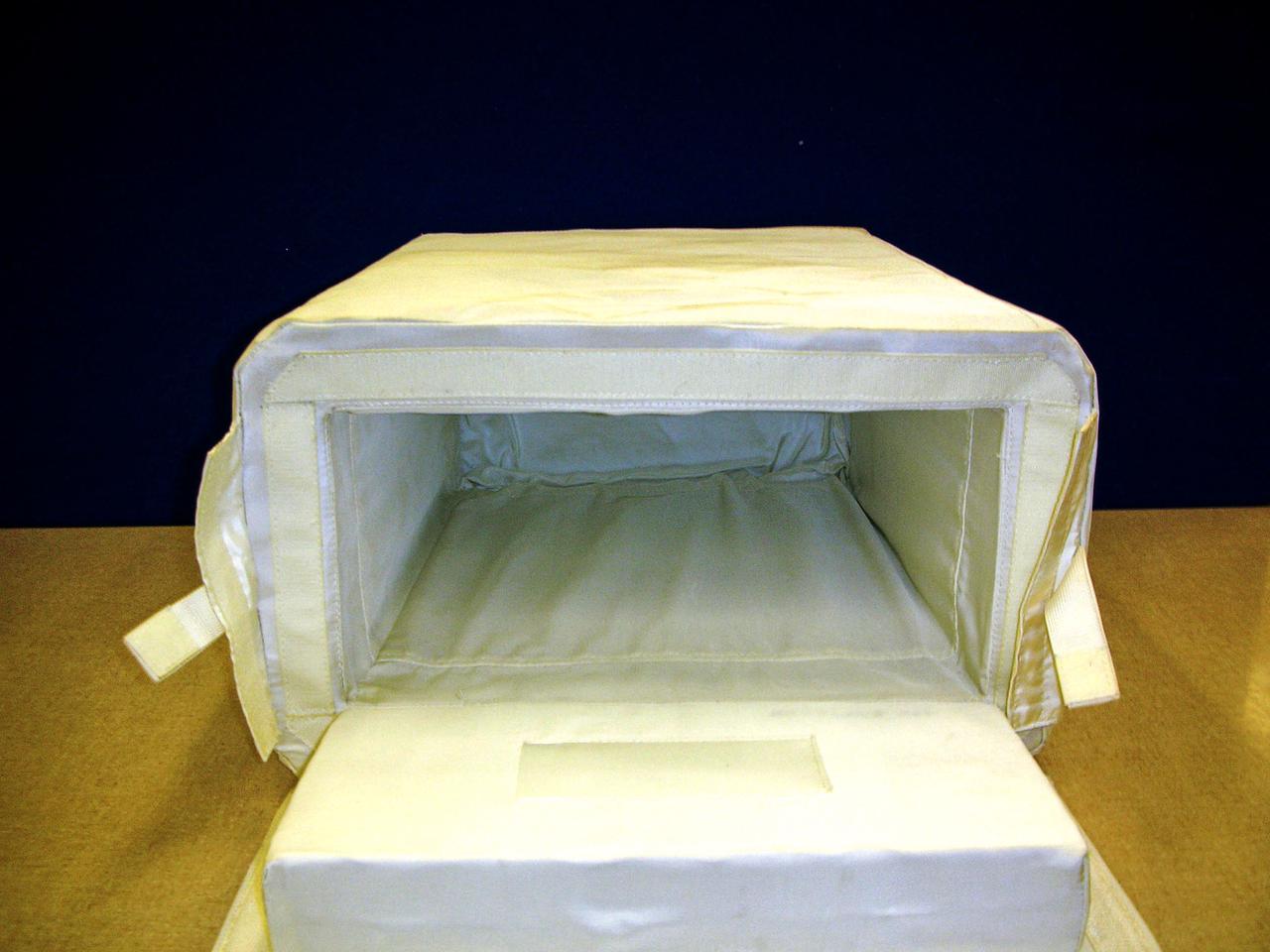
jsc2021e019953 (2/15/2006) --- A preflight photo of a Double Coldbag with the lid open. The Double Coldbag is a passive resource that provides for the specific temperature needs for scientific samples and other temperature-sensitive payload items. These options are available on the International Space Station (ISS), during launch and return.
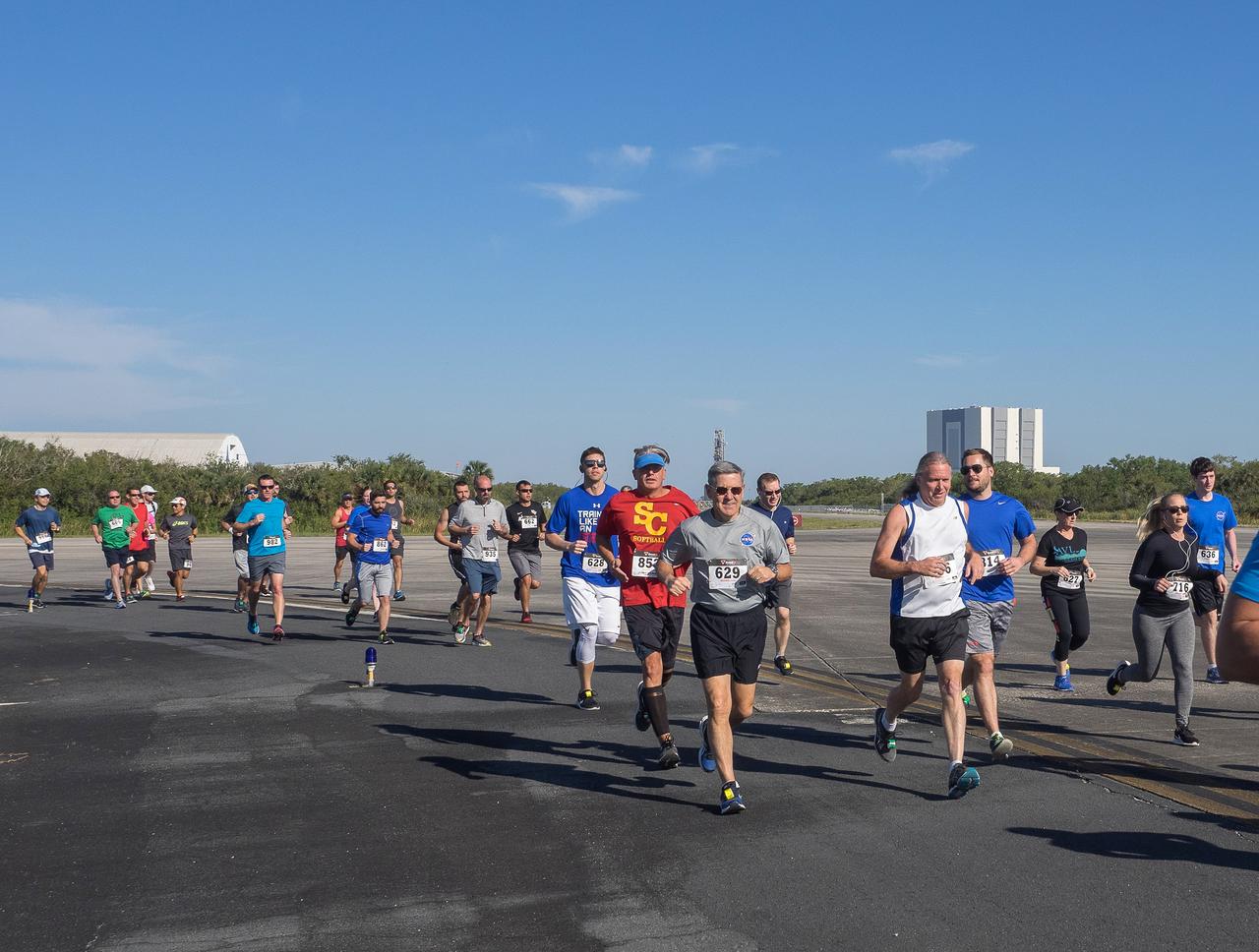
Kennedy Space Center Director Bob Cabana, center, is joined by a large group of center employees and guests as they participate in the KSC Walk Run on the Shuttle Landing Facility runway. The annual event, part of Kennedy’s Safety and Health Days, offers 10K, 5K and 2-mile options in the spirit of friendly competition.
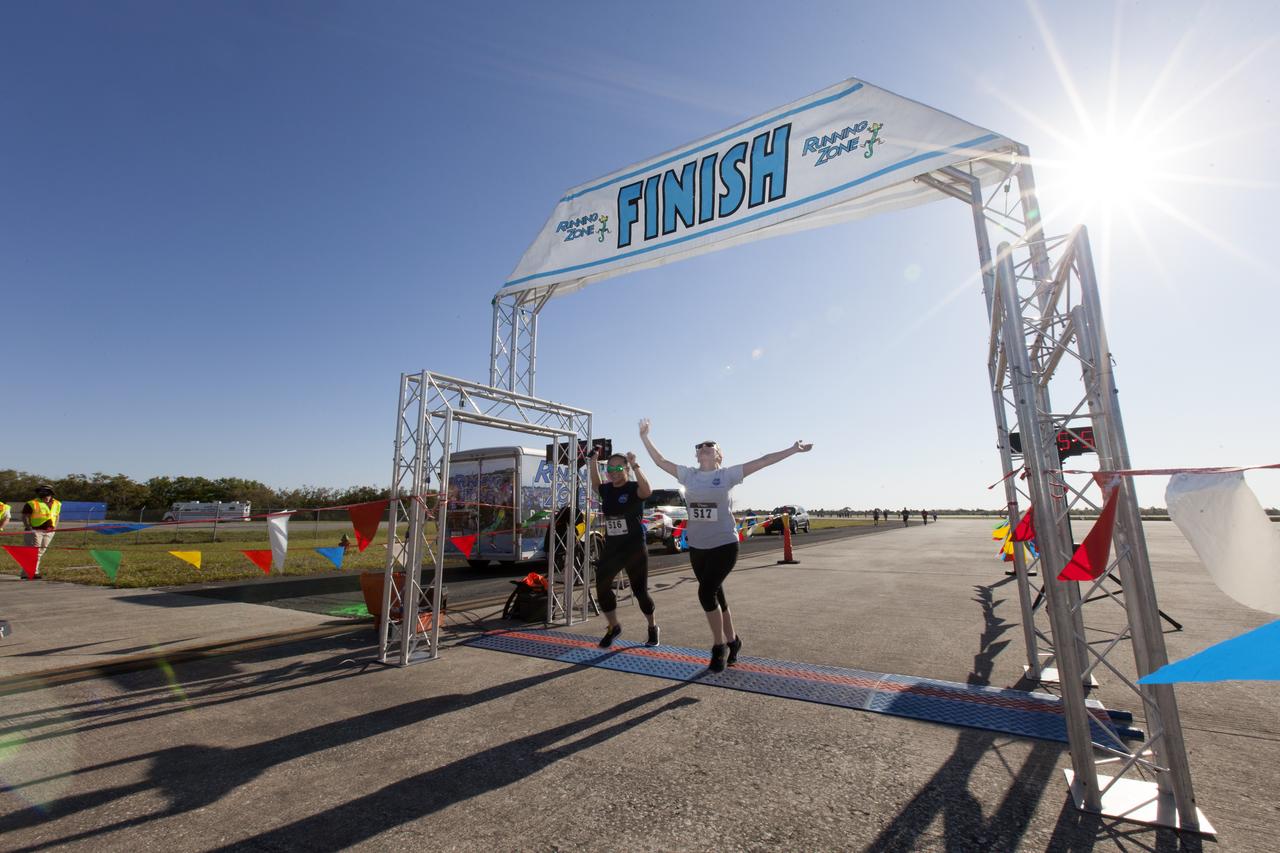
Kennedy Space Center employees and guests cross the finish line during the KSC Walk Run on the Shuttle Landing Facility runway. The annual event, part of Kennedy’s Safety and Health Days, offers 10K, 5K and 2-mile options in the spirit of friendly competition.
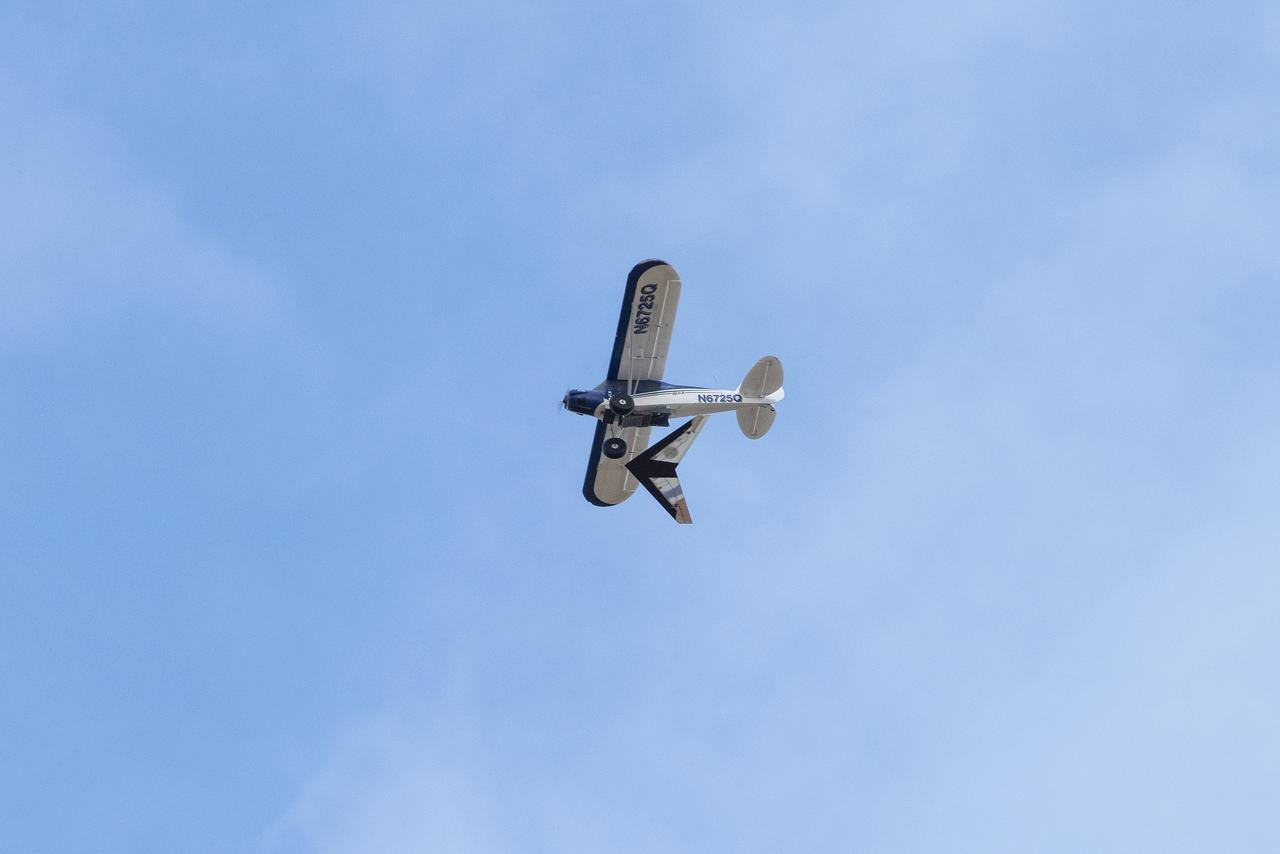
A Prandtl-M prototype is air launched from the Carbon Cub aircraft March 13, 2020, at NASA’s Armstrong Flight Research Center in California. The aircraft is the second of three prototypes of varying sizes to provide scientists with options to fly sensors in the Martian atmosphere to collect weather and landing site information for future human exploration of Mars.
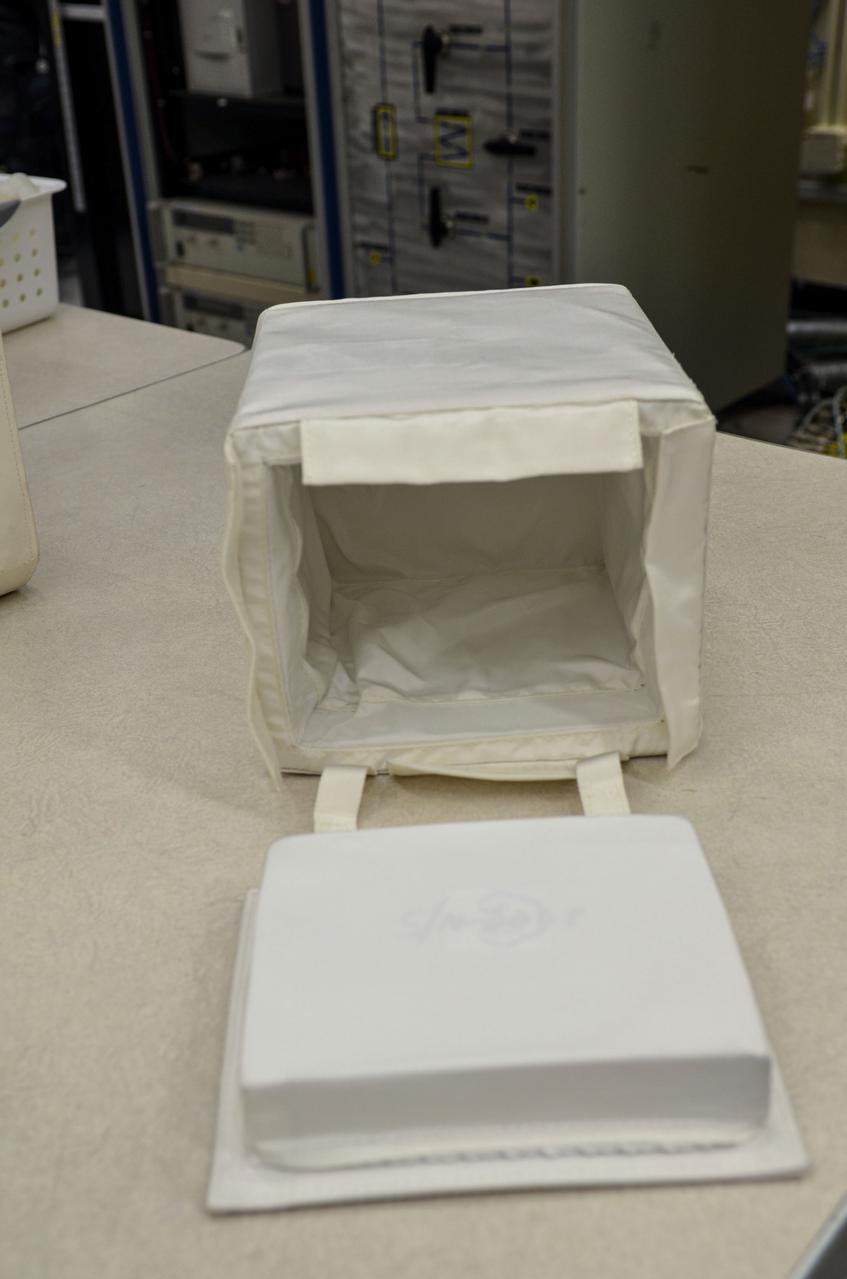
jsc2021e019956 (8/10/2015) --- A preflight photo of a Mini Coldbag with the lid open. The Mini Coldbag is a temperature control resource that provides for the specific needs for scientific samples and other temperature-sensitive payload items. These options are available on the International Space Station (ISS) during launch and return operations.
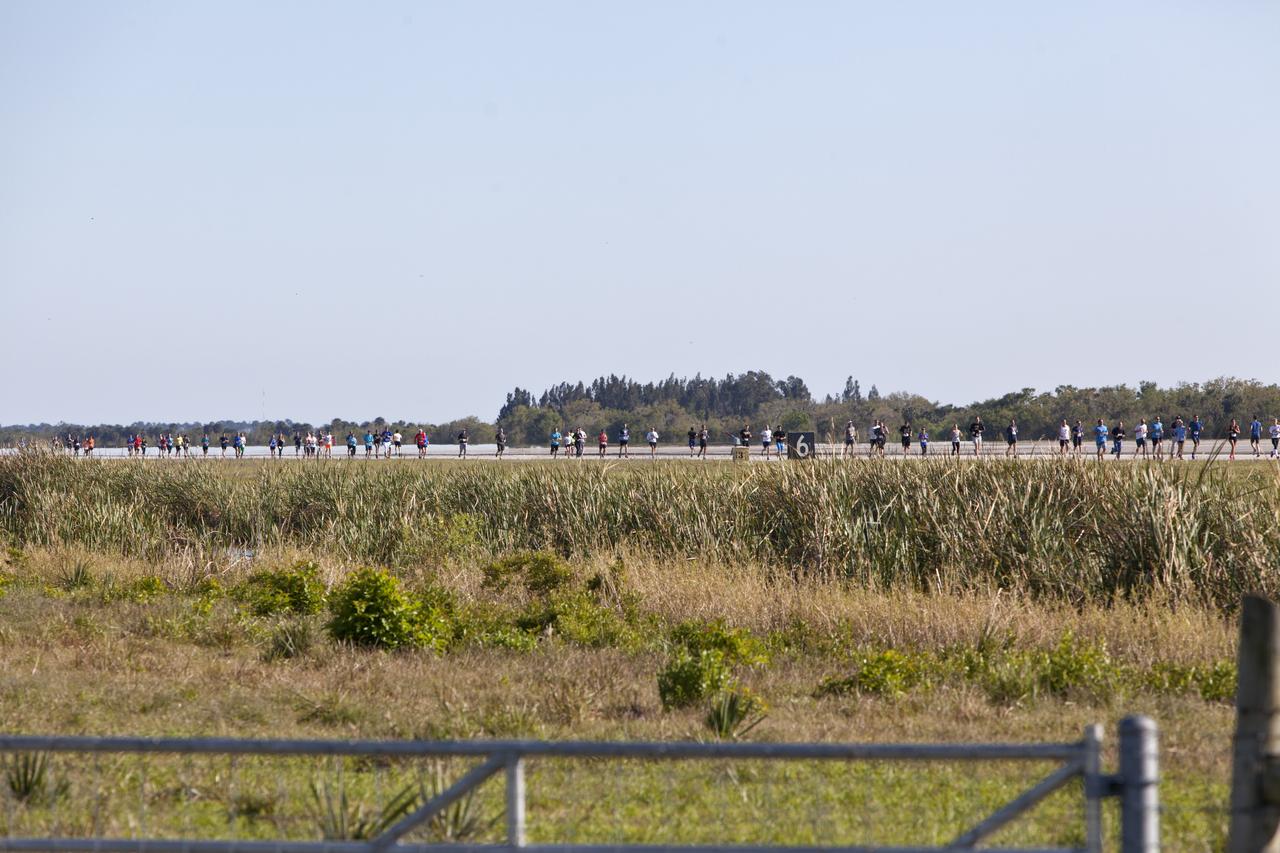
A line of Kennedy Space Center employees and guests stretches down the Shuttle Landing Facility Runway during the KSC Walk Run. The annual event, part of Kennedy’s Safety and Health Days, offers 10K, 5K and 2-mile options in the spirit of friendly competition.
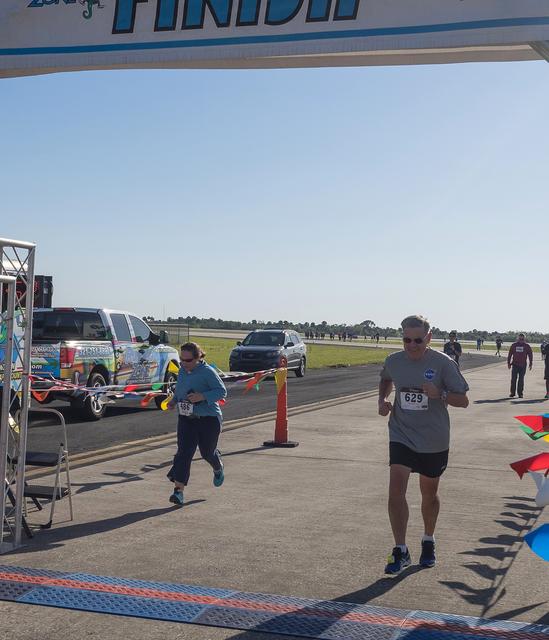
Kennedy Space Center Director Bob Cabana approaches the finish line at the KSC Walk Run on the Shuttle Landing Facility runway. The annual event, part of Kennedy’s Safety and Health Days, offers 10K, 5K and 2-mile options in the spirit of friendly competition.
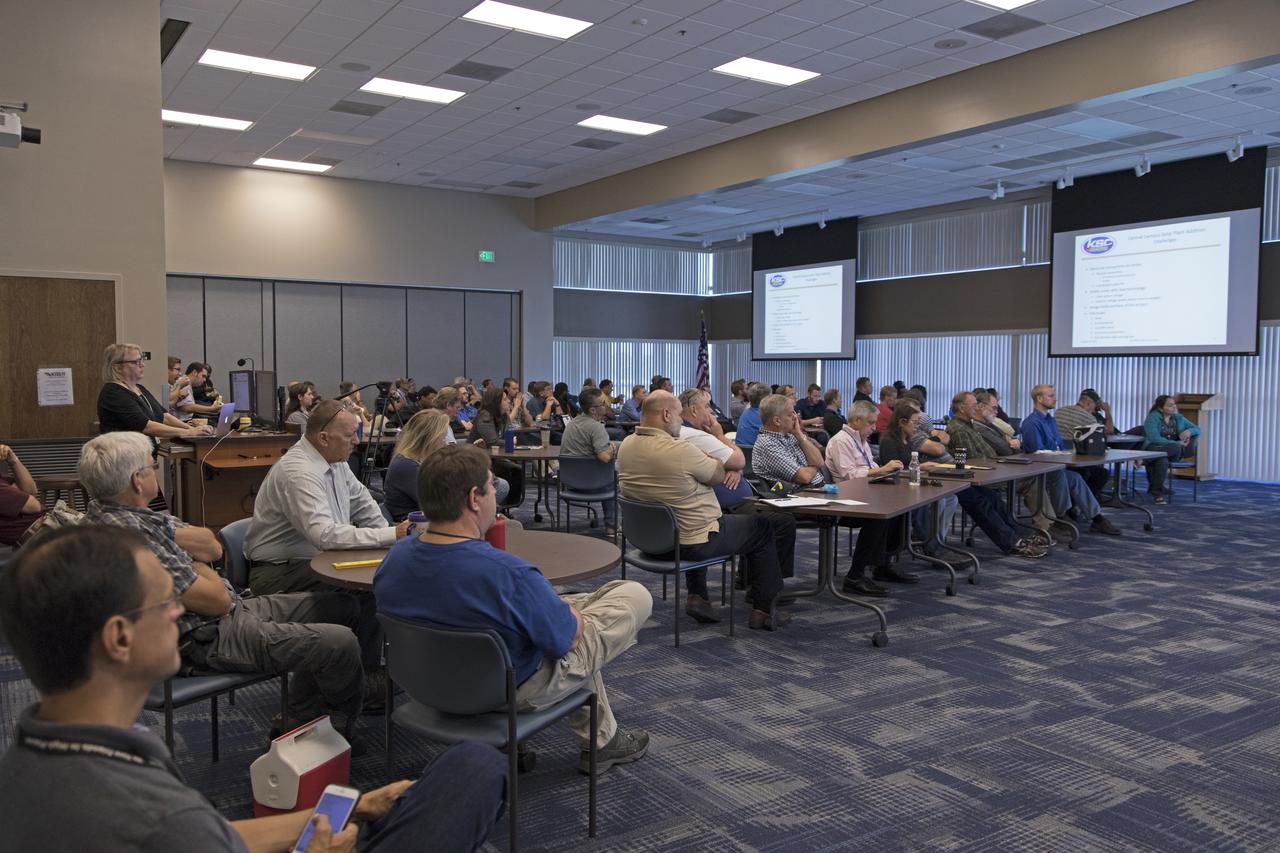
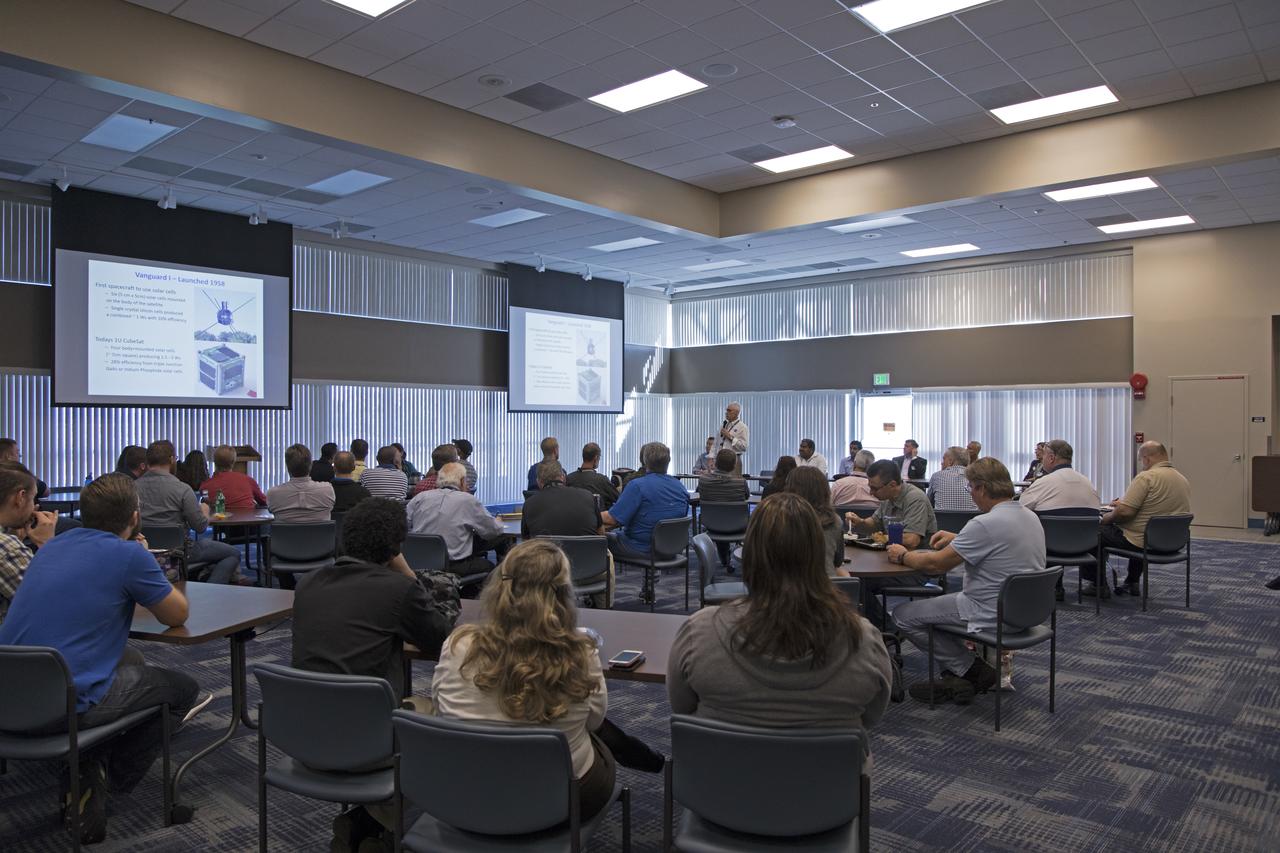
NASA Kennedy Space Center employees attend the Energy Action Day event held in the center's Space Station Processing Facility. Part of Energy Awareness Month, the event featured subject matter experts in the area of solar energy, its connections to the space program and options for residential solar power.
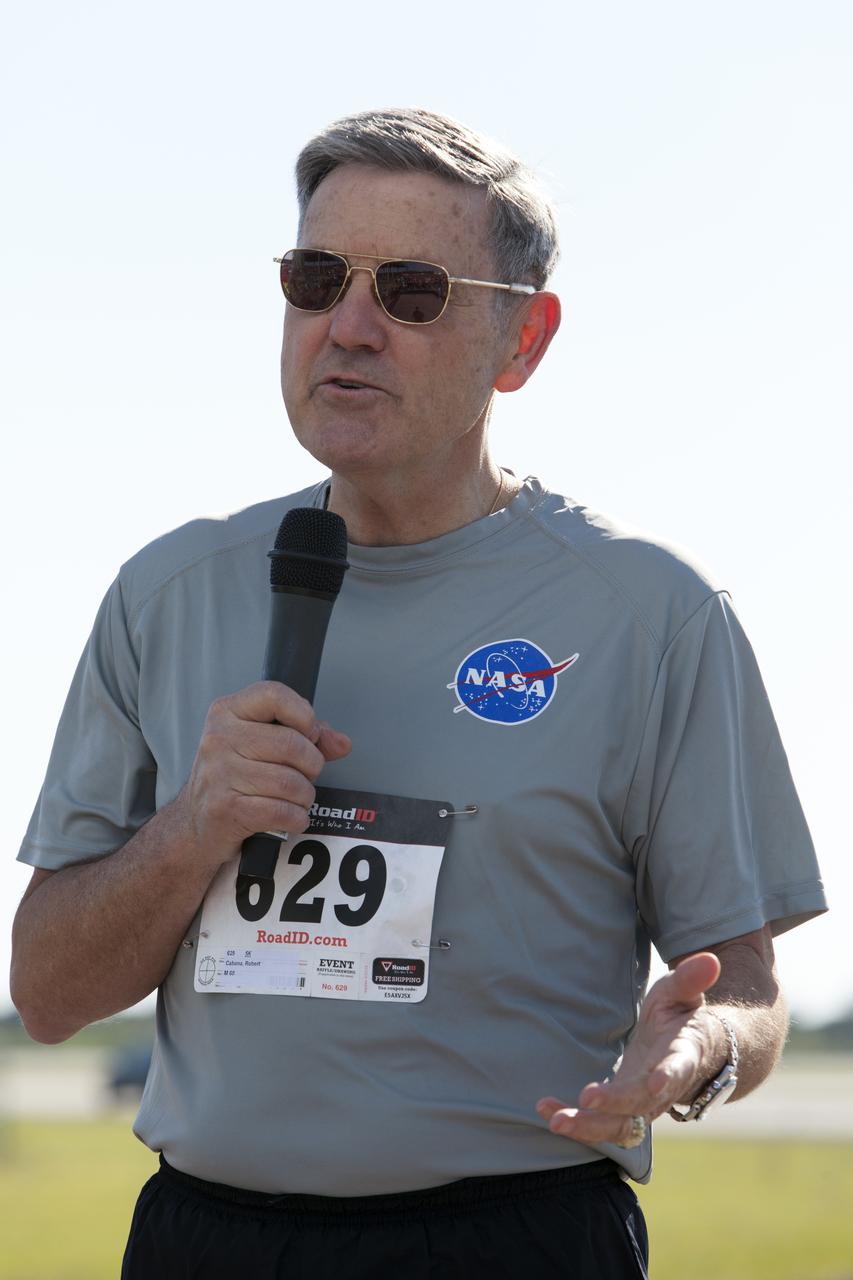
Kennedy Space Center Director Bob Cabana speaks to center employees and guests before the KSC Walk Run on the Shuttle Landing Facility runway. The annual event, part of Kennedy’s Safety and Health Days, offers 10K, 5K and 2-mile options in the spirit of friendly competition.
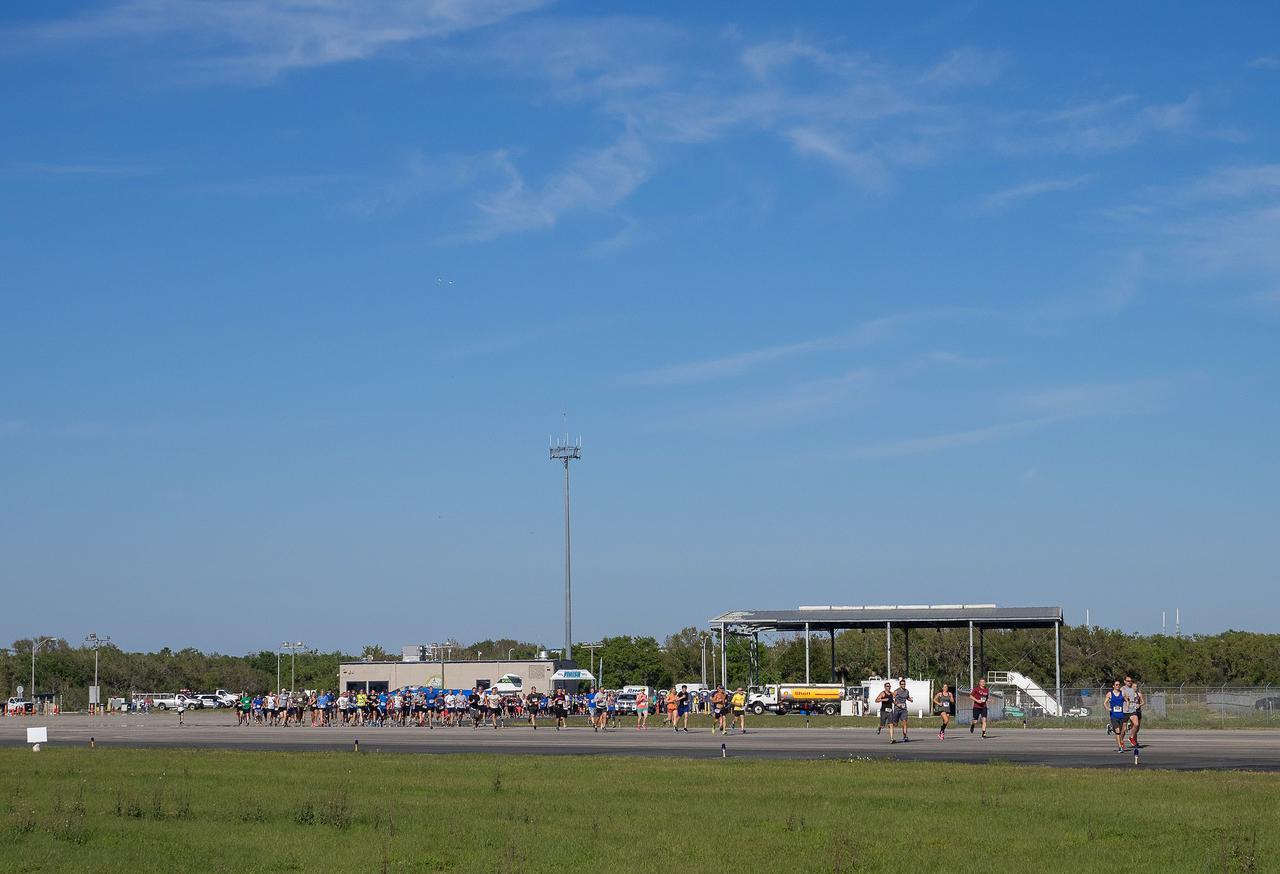
Kennedy Space Center employees and guests are off to a running start at the KSC Walk Run on the Shuttle Landing Facility runway. The annual event, part of Kennedy’s Safety and Health Days, offers 10K, 5K and 2-mile options in the spirit of friendly competition.
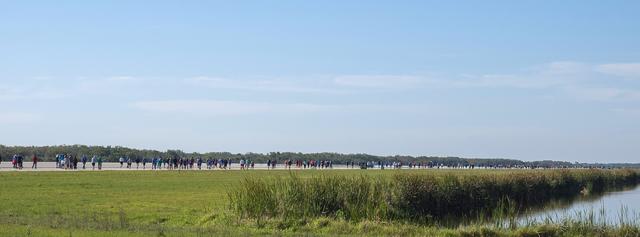
A line of Kennedy Space Center employees and guests stretches down the Shuttle Landing Facility Runway during the KSC Walk Run. The annual event, part of Kennedy’s Safety and Health Days, offers 10K, 5K and 2-mile options in the spirit of friendly competition.
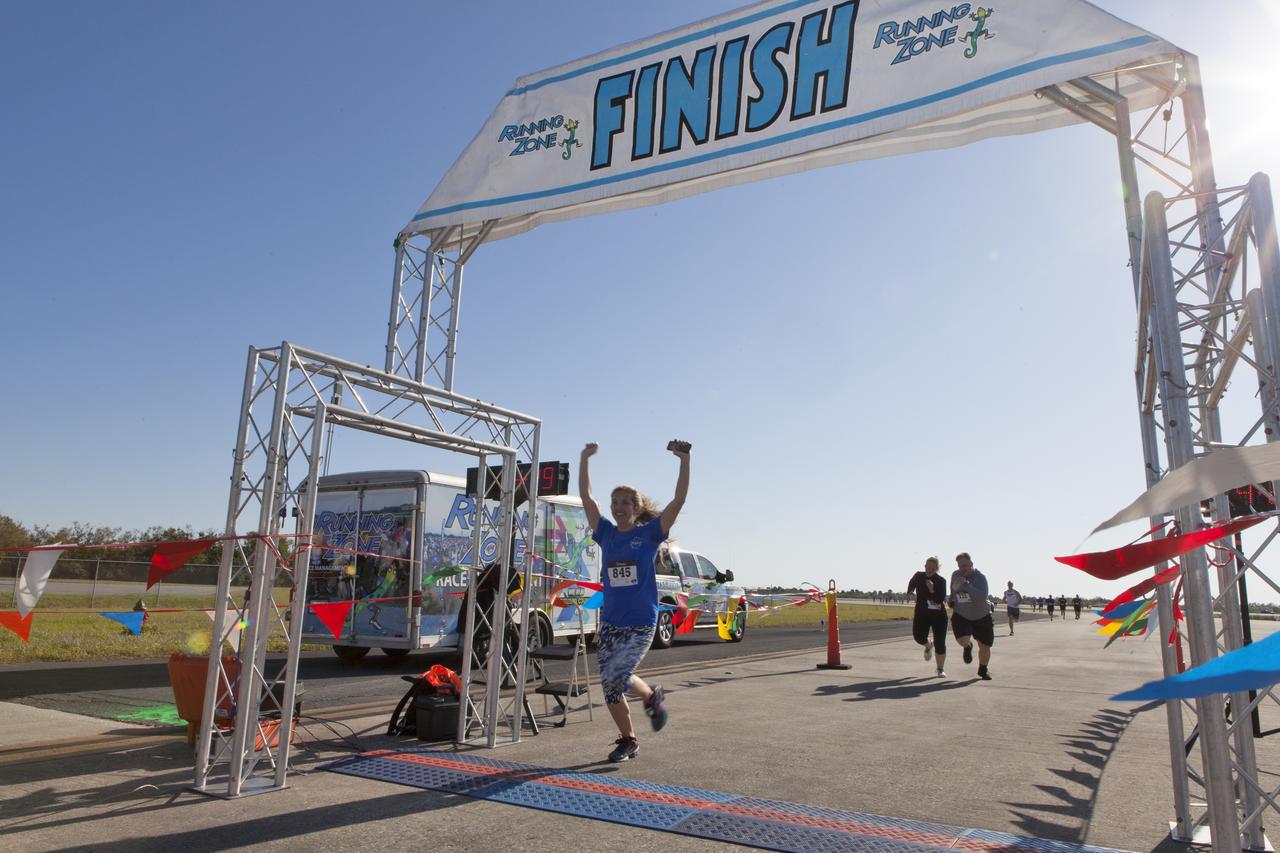
Kennedy Space Center employees and guests approach the finish line during the KSC Walk Run on the Shuttle Landing Facility runway. The annual event, part of Kennedy’s Safety and Health Days, offers 10K, 5K and 2-mile options in the spirit of friendly competition.
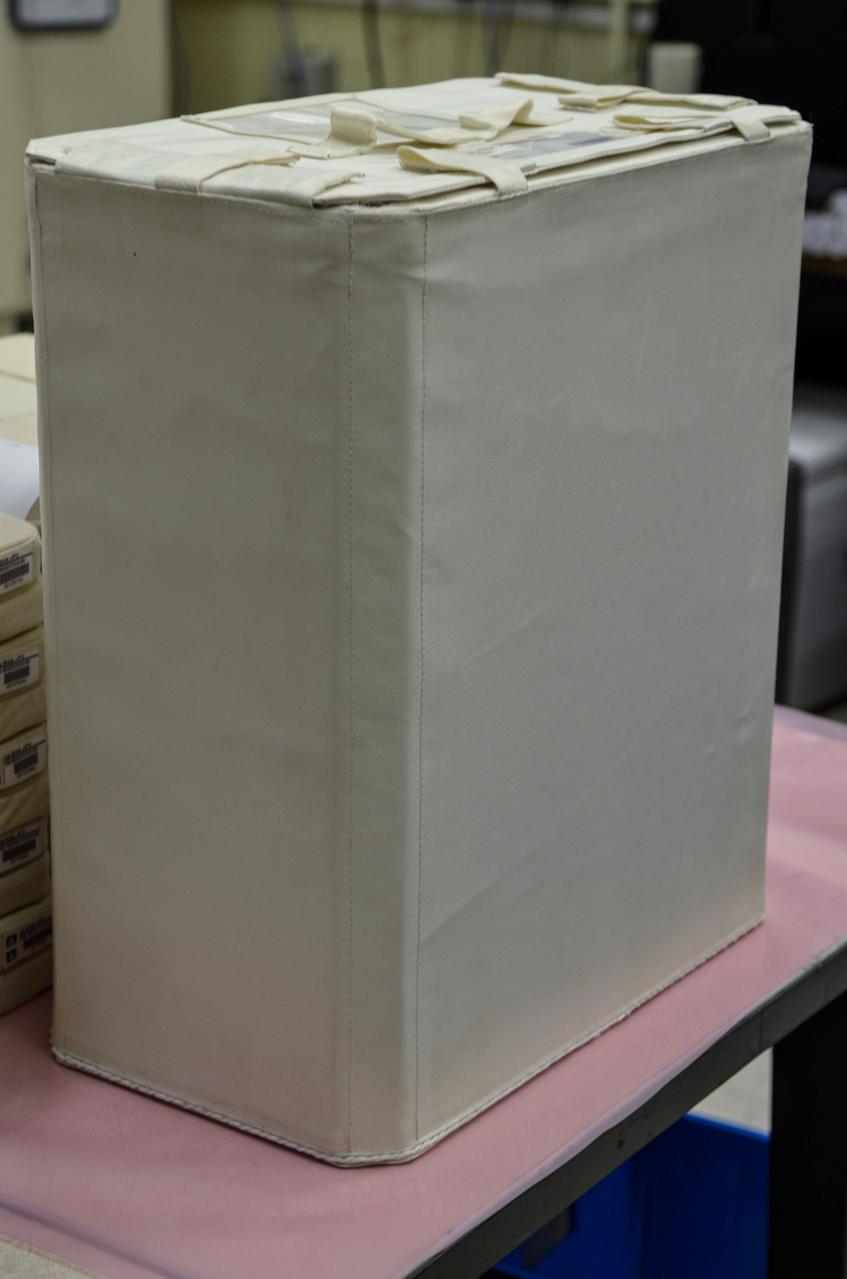
jsc2021e019951 (6/10/2015) --- A preflight photo of a Double Coldbag. The Double Coldbag is a passive resource that provides for the specific temperature needs for scientific samples and other temperature-sensitive payload items. These options are available on the International Space Station (ISS), during launch and return.
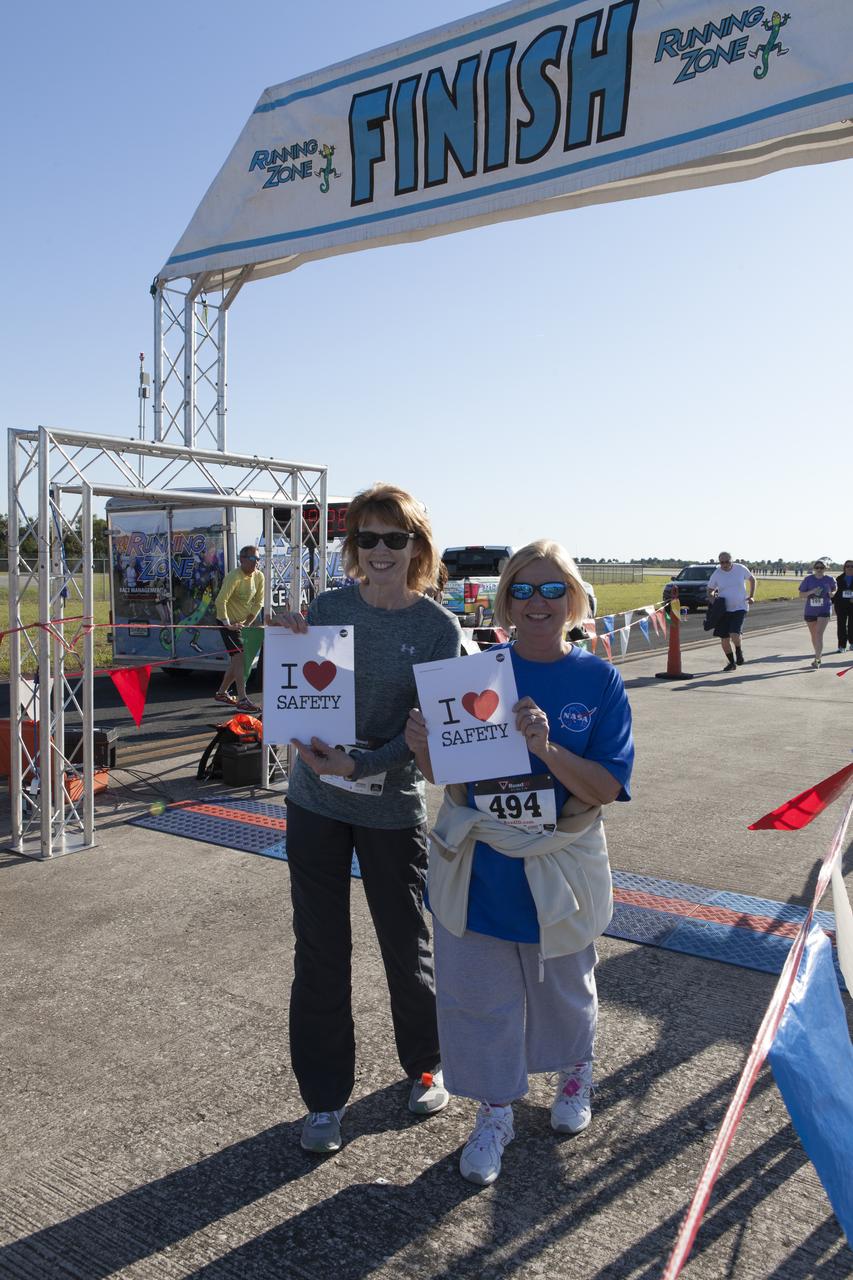
Kennedy Space Center employees hold up signs showing their commitment to safety after crossing the finish line at the KSC Walk Run. The annual event, part of Kennedy’s Safety and Health Days, offers 10K, 5K and 2-mile options on the Shuttle Landing Facility runway in the spirit of friendly competition.
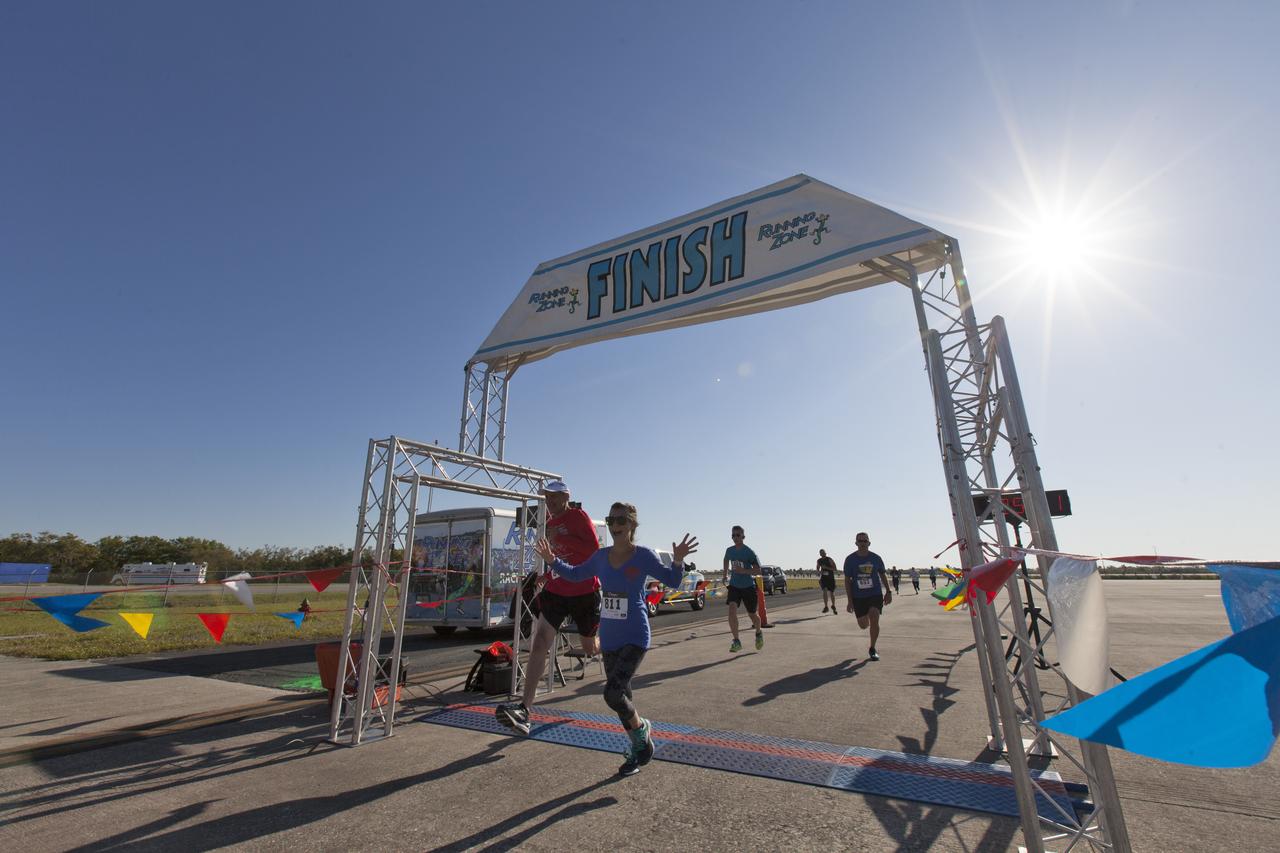
Kennedy Space Center employees and guests cross the finish line during the KSC Walk Run on the Shuttle Landing Facility runway. The annual event, part of Kennedy’s Safety and Health Days, offers 10K, 5K and 2-mile options in the spirit of friendly competition.
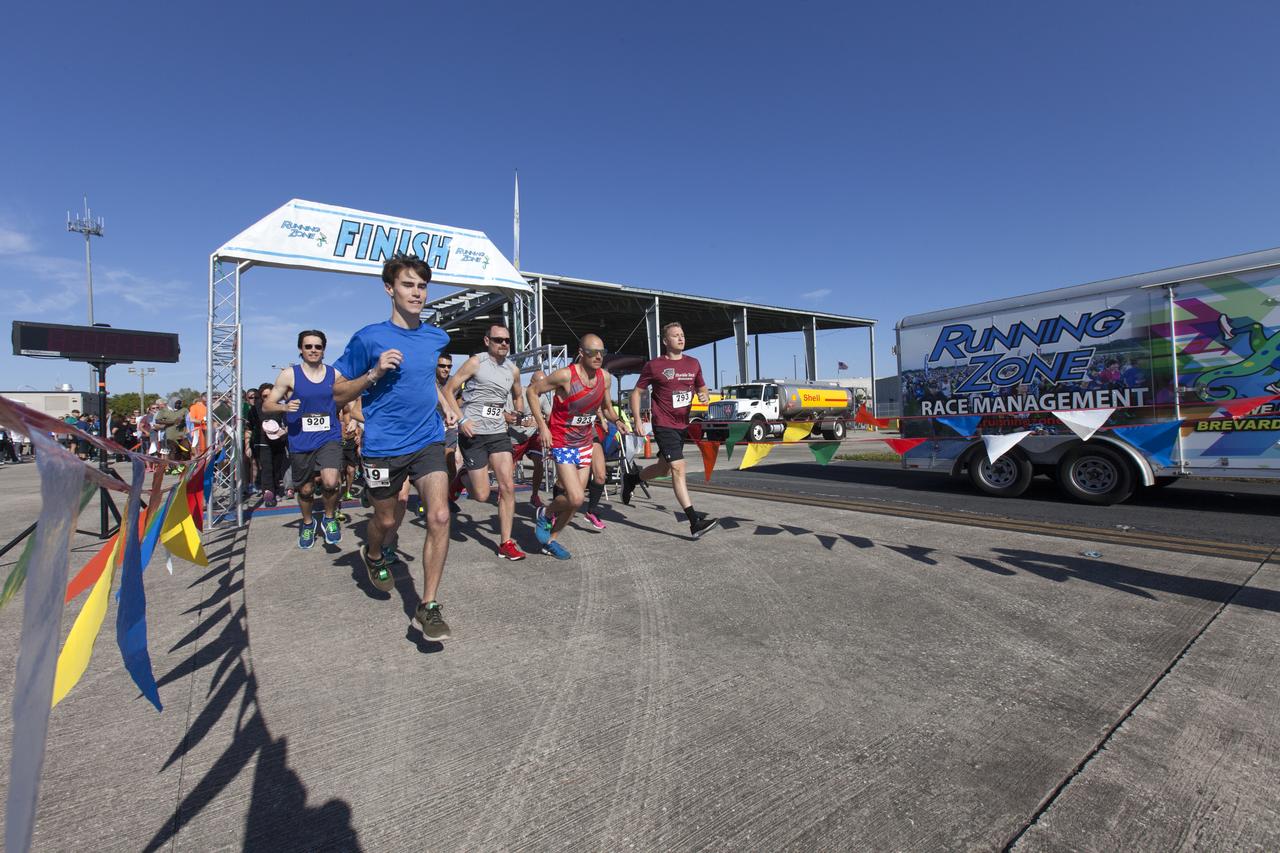
Kennedy Space Center employees and guests cross the finish line during the KSC Walk Run on the Shuttle Landing Facility runway. The annual event, part of Kennedy’s Safety and Health Days, offers 10K, 5K and 2-mile options in the spirit of friendly competition.
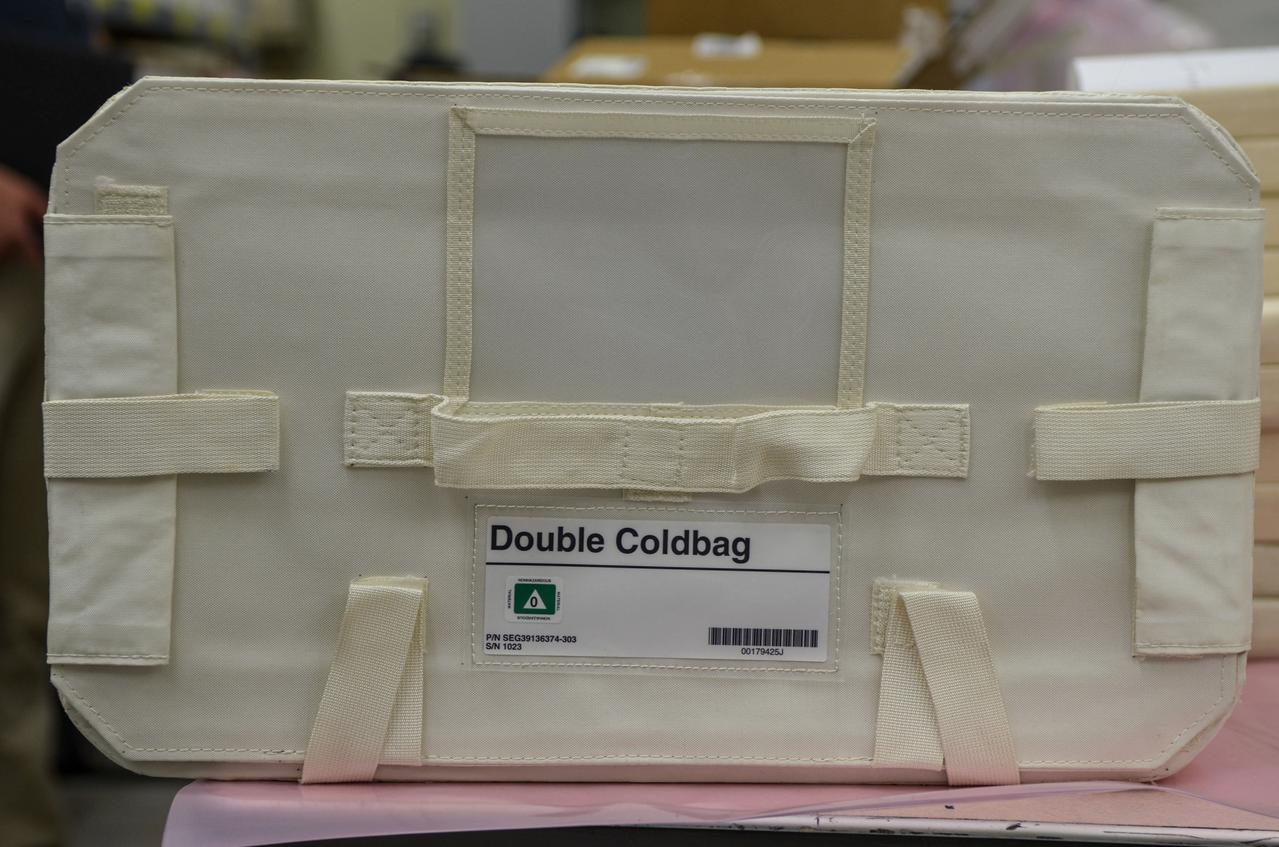
jsc2021e019952 (6/10/2015) --- A preflight photo of a Double Coldbag. The Double Coldbag is a passive resource that provides for the specific temperature needs for scientific samples and other temperature-sensitive payload items. These options are available on the International Space Station (ISS), during launch and return.
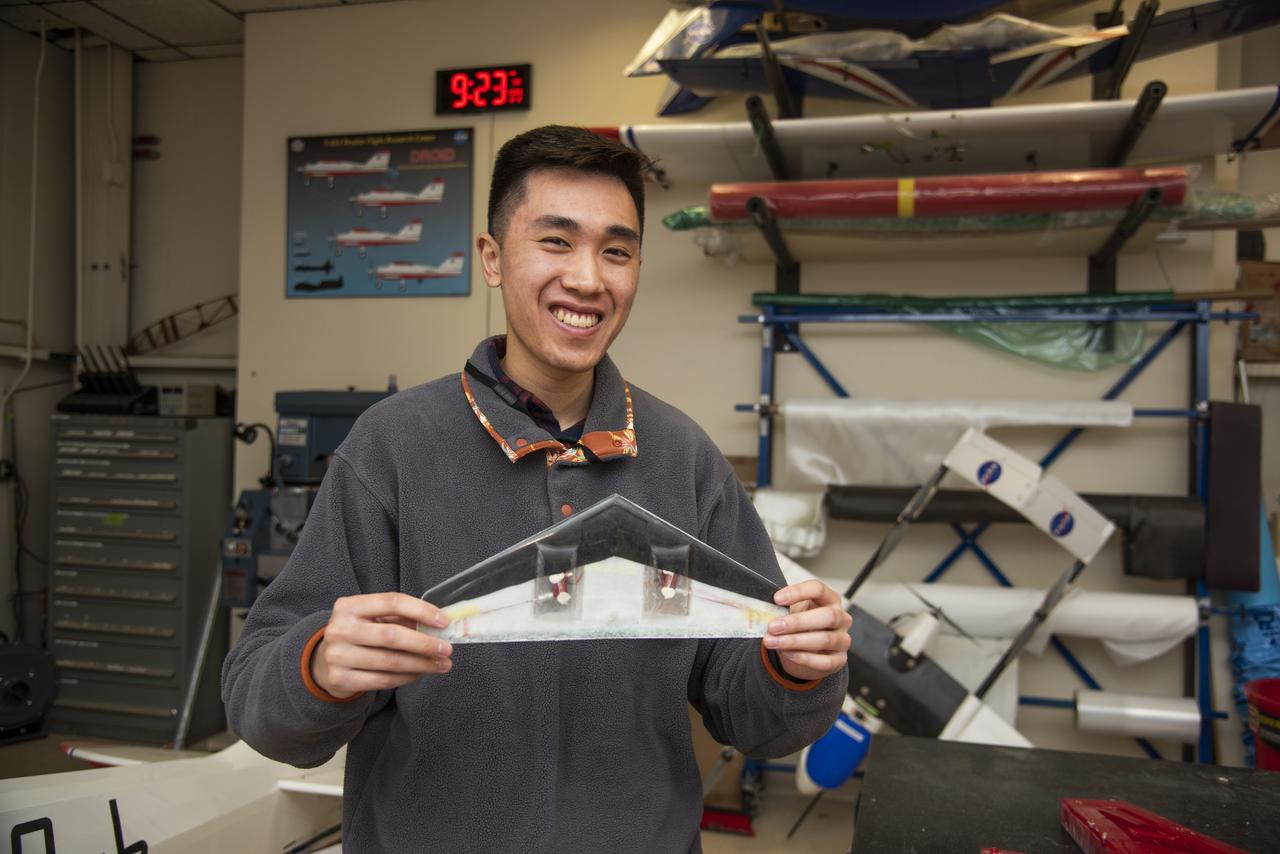
Nathan Sam shows the Prandtl-M aircraft he helped fabricate at NASA’s Armstrong Flight Research Center in California. The aircraft is the second of three prototypes of varying sizes to provide scientists with options to fly sensors in the Martian atmosphere to collect weather and landing site information for future human exploration of Mars.
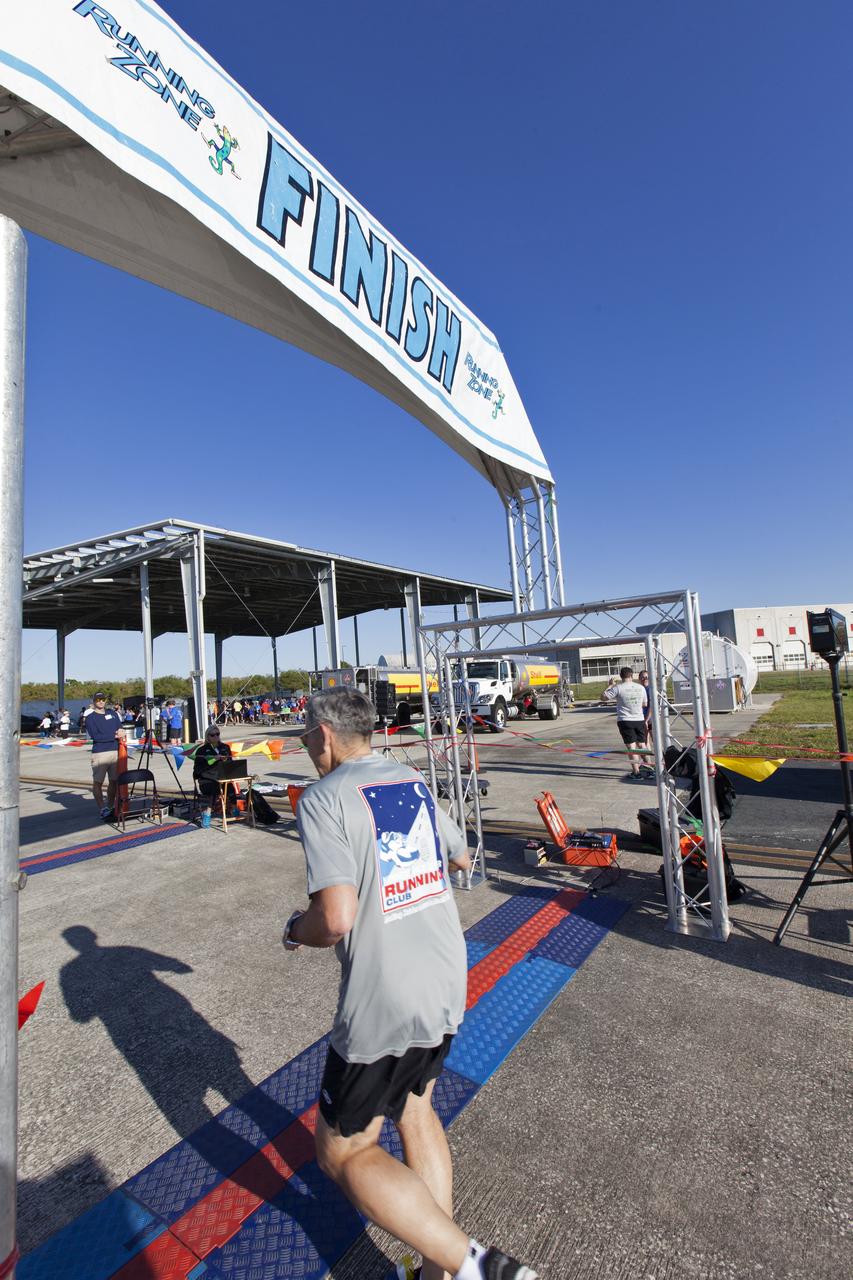
Kennedy Space Center Director Bob Cabana approaches the finish line at the KSC Walk Run on the Shuttle Landing Facility runway. The annual event, part of Kennedy’s Safety and Health Days, offers 10K, 5K and 2-mile options in the spirit of friendly competition.

Kennedy Space Center employees and guests head toward the start line for the KSC Walk Run on the Shuttle Landing Facility runway. The annual event, part of Kennedy’s Safety and Health Days, offers 10K, 5K and 2-mile options in the spirit of friendly competition.
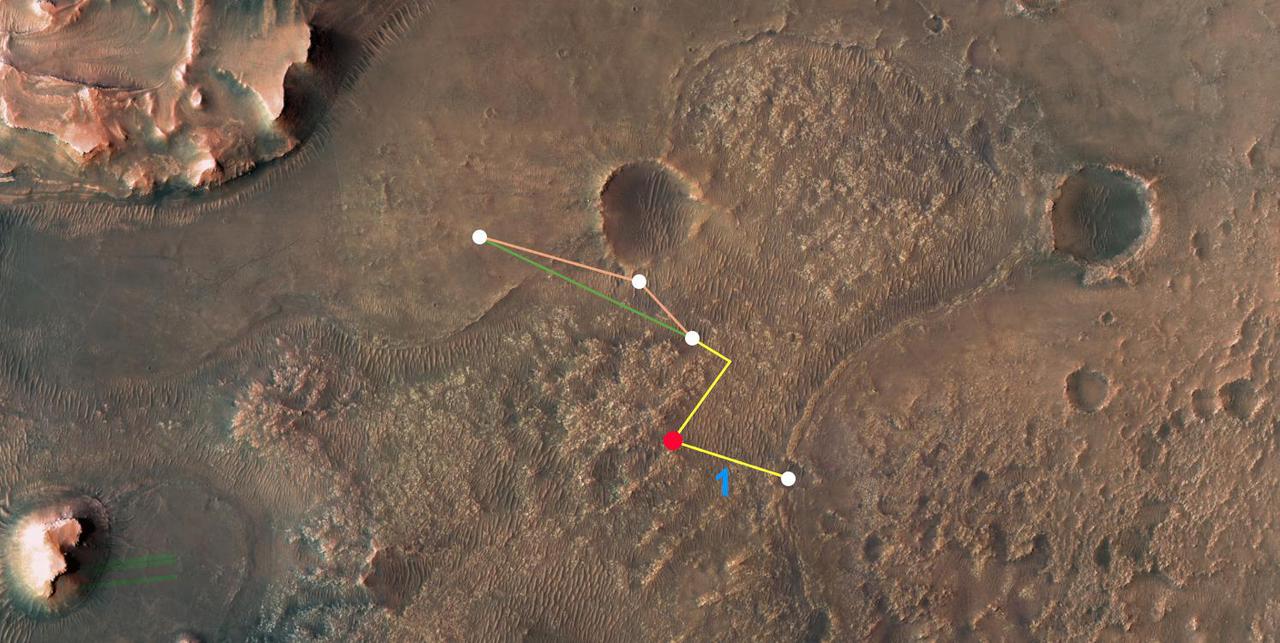
This annotated overhead image from NASA's Mars Reconnaissance Orbiter (MRO) depicts the multiple flights – and two different routes – the agency's Ingenuity Mars Helicopter could take on its way to Jezero Crater's delta. The location of Ingenuity as of March 14, 2022, is indicated by the red dot. This map is made using images from MRO's High Resolution Imaging Experiment (HiRISE) camera. The first flight in this series (indicated by the number 1 in blue) occurred on March 10, 2022. After the next flight – which includes a sharp bend in the course to avoid a large hill – the helicopter team will consider which of two routes to take. The first option requires two flights to reach the base of the delta. The second option is more direct, necessitating only one final flight to reach the same location. https://photojournal.jpl.nasa.gov/catalog/PIA25080
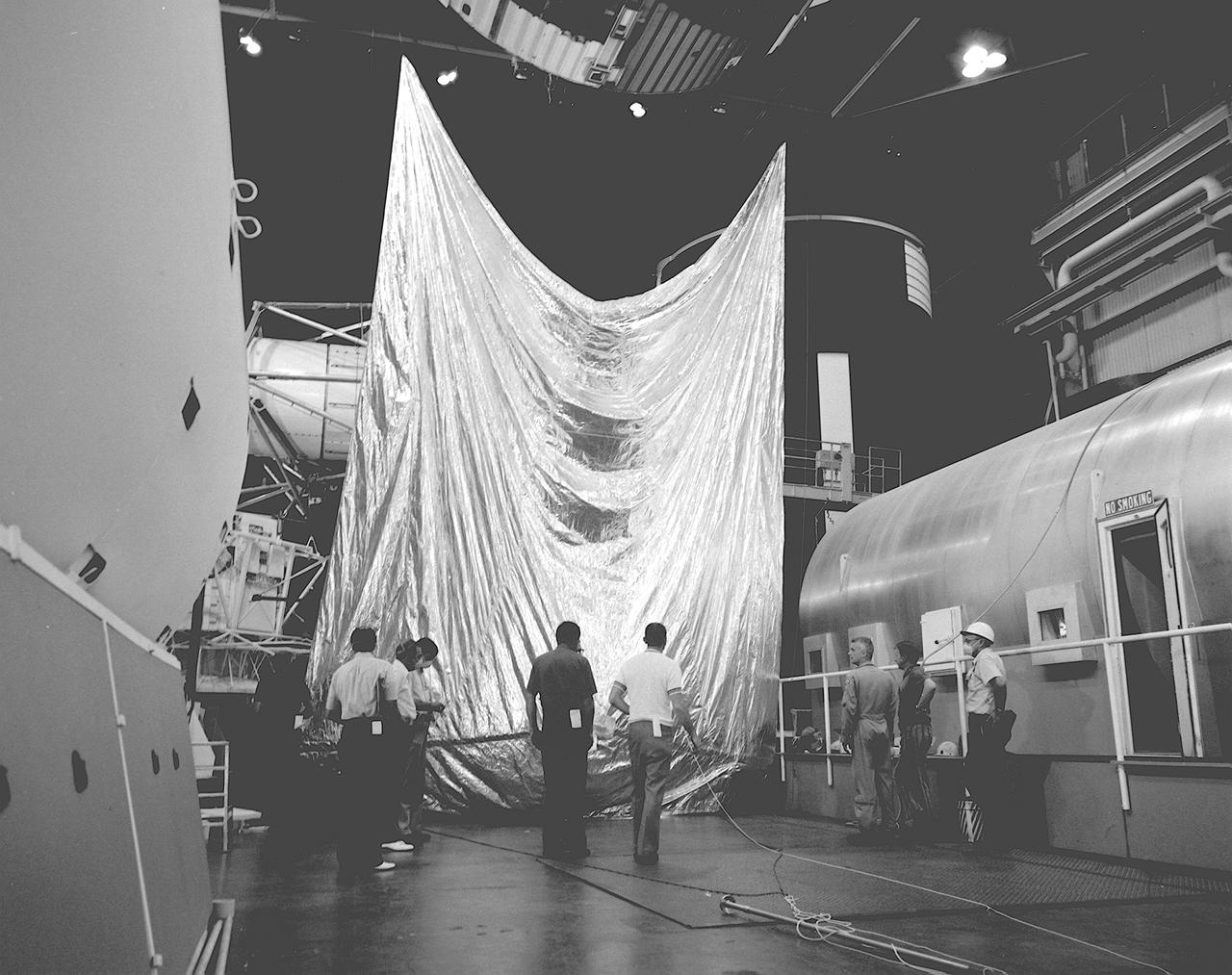
Engineers from the Marshall Space Flight Center (MSFC) and its contractors were testing the twin-pole sunshade at the Skylab mockup in the MSFC Building 4619. The Skylab Orbital Workshop (OWS) lost its thermal protection shield during launch on May 14, 1963. Without the heat shield, the temperature inside the OWS became dangerously high, rendering the workshop uninhabitable and threatened deterioration of the interior insulation and adhesive. Engineers from the MSFC, its contractors, and NASA persornel at other centers worked day and night for several days to develop the way to save the Skylab OWS. Eventually, they developed, tested, rehearsed, and approved three repair options. These options included a parasol sunshade and a twin-pole sunshade to restore the temperature inside the workshop, and a set of metal cutting tools to free the jammed solar panel.
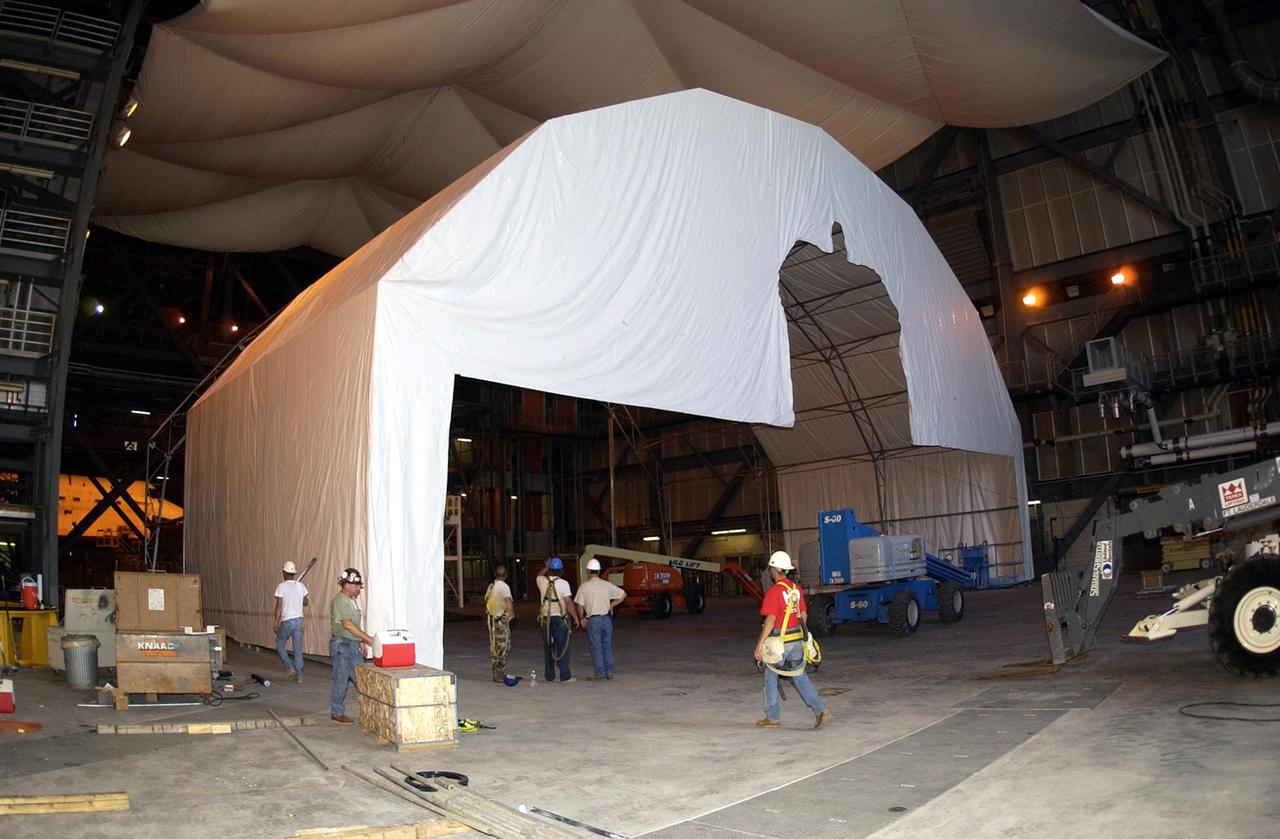
KENNEDY SPACE CENTER, FLA. -- In Vehicle Assembly Building (VAB) high bay 4, installation of a Payload Bay Door Drying Enclosure is in progress. The enclosure will keep moisture from being absorbed into the graphite epoxy used on the payload bay doors of the Shuttle orbiters with the assistance of mini-Portable Purge Units (PPUs). Once in operation, the enclosure will allow NASA the option to store an orbiter in the VAB bay up to 180 days in a "standby-to-stack" mode.
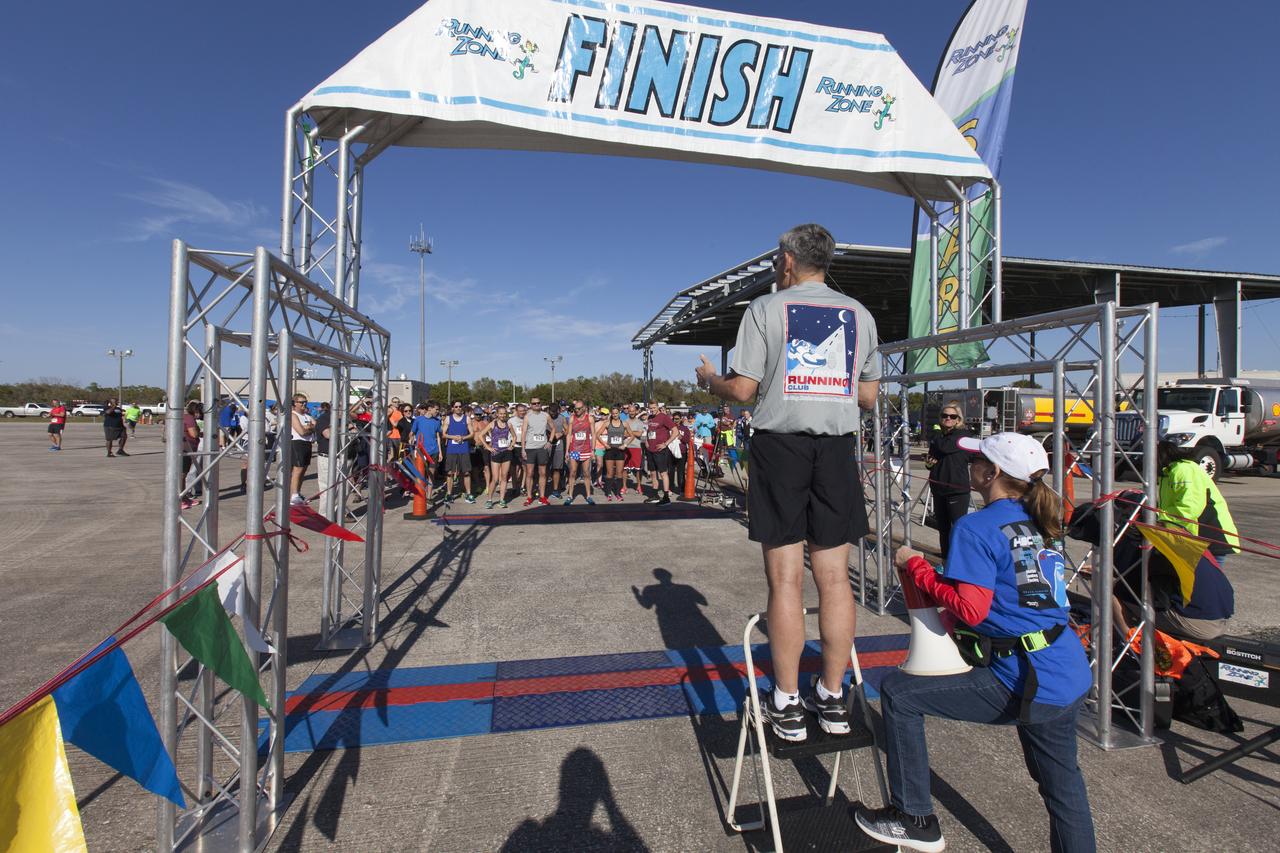
From his vantage point atop a stepladder near the finish line, Kennedy Space Center Director Bob Cabana speaks to center employees and guests before the KSC Walk Run on the Shuttle Landing Facility runway. The annual event, part of Kennedy’s Safety and Health Days, offers 10K, 5K and 2-mile options in the spirit of friendly competition.
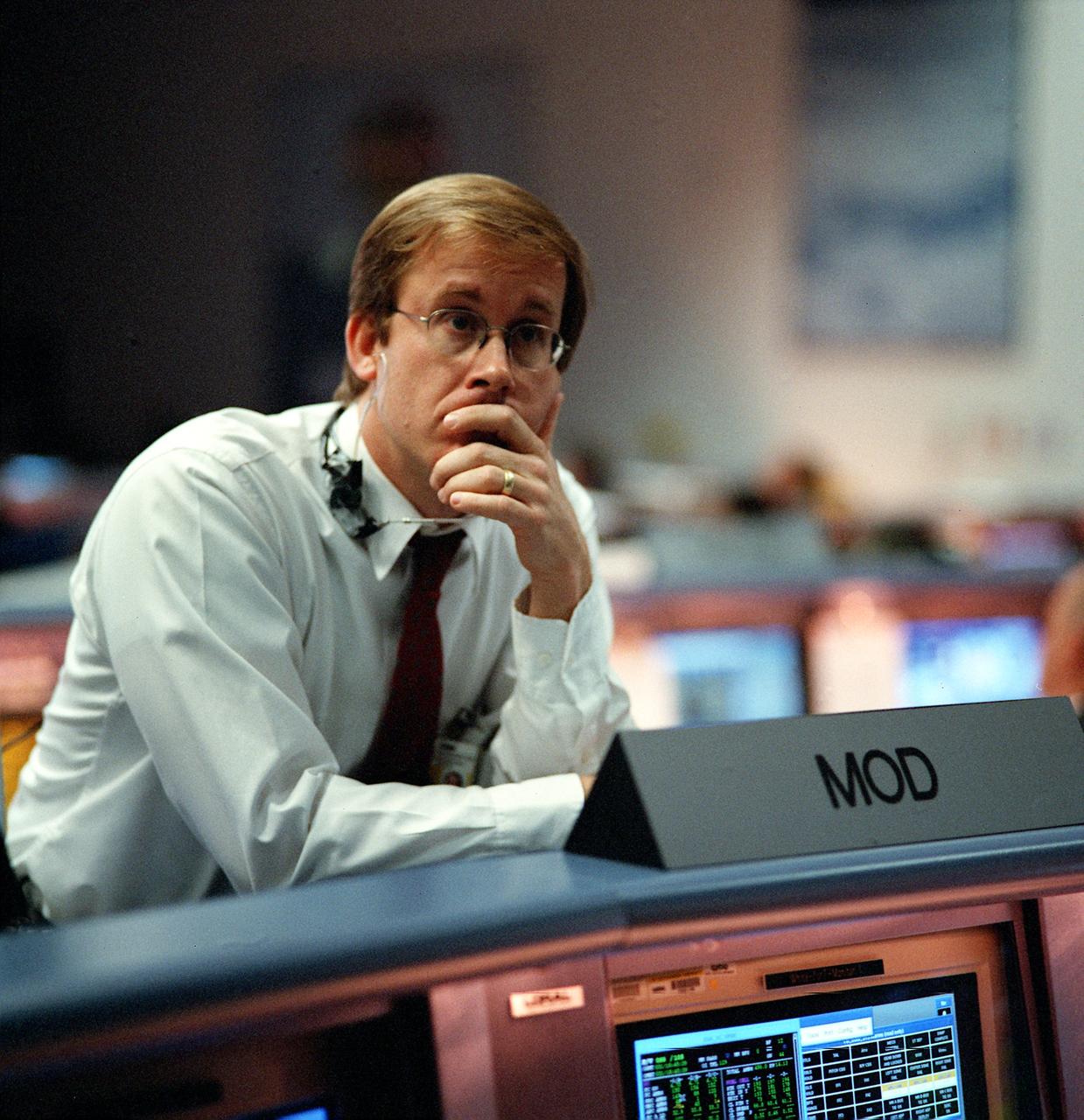
JSC2000-01065 (31 January 2000) --- Flight Director John Shannon, with his back to the FD console, waits patiently for the "go" or "no go" decision from the Kennedy Space Center (KSC). This attempt of the STS-99 Endeavour launch was eventually scrubbed, and managers quickly huddled to decide options for the next opportunity.
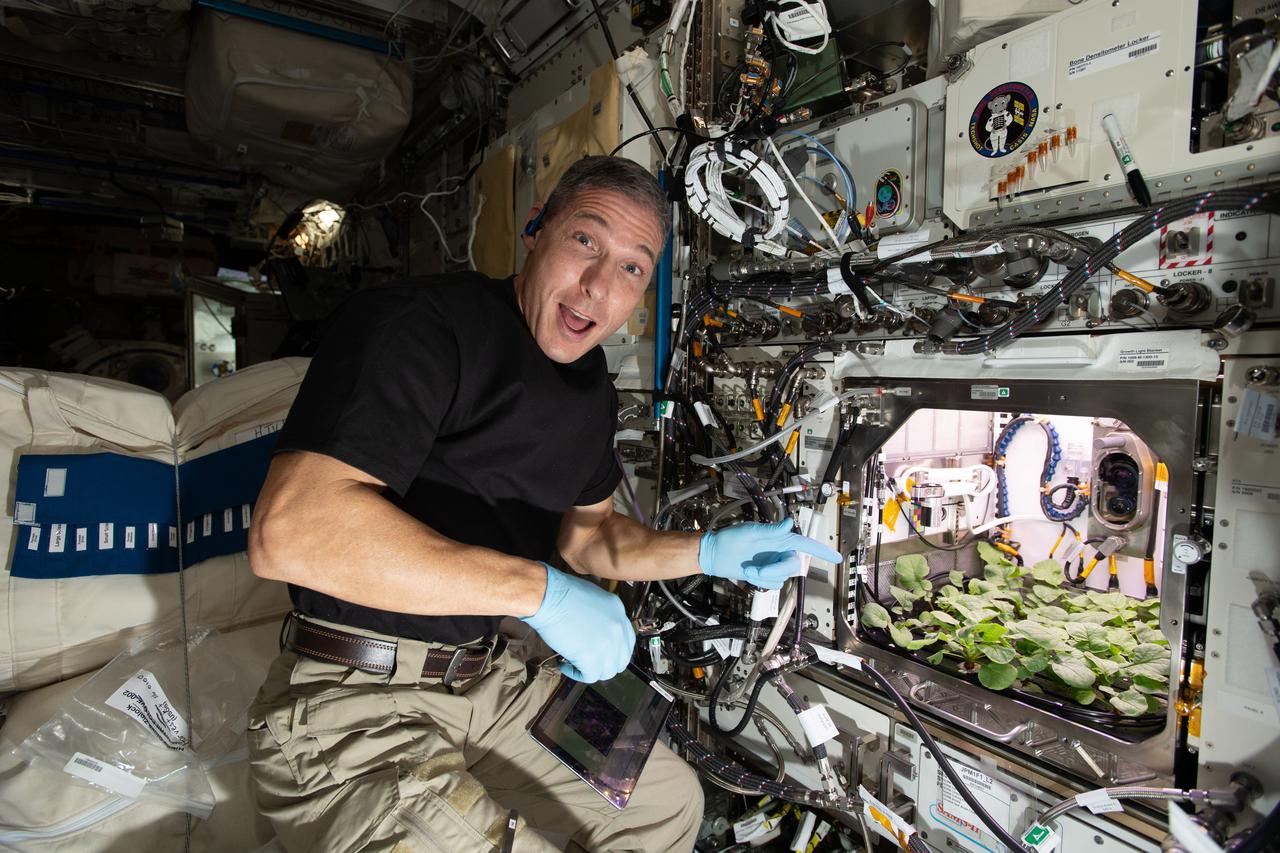
Hopkins welcomes in the new year by preparing to harvest radishes for Plant Habitat-02. Radishes are one of several options being investigated as potential food sources to sustain future long-duration missions. The Crew-1 astronauts were also involved in Food Physiology experiments evaluating an enhanced spaceflight diet on their immune systems and gut microbiomes.
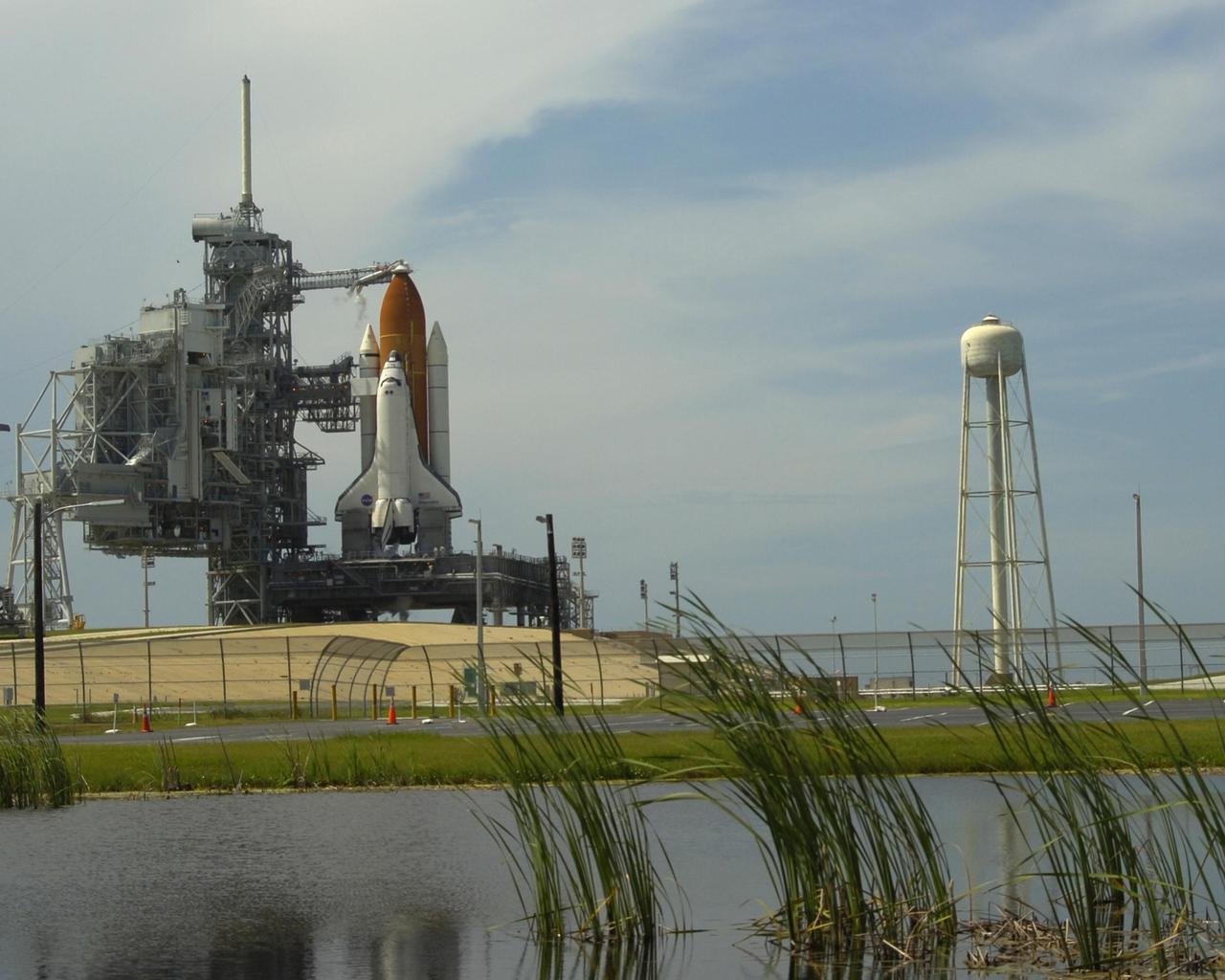
KENNEDY SPACE CENTER, FLA. - Space Shuttle Discovery remains on the launch pad at 3:51 p.m. EDT, the scheduled time of liftoff for Return to Flight mission STS-114. The launch was scrubbed due to a faulty sensor reading in the External Tank during countdown. The Mission Management Team is testing the sensor and evaluating future launch options. (Photo courtesy of Scott Andrews)
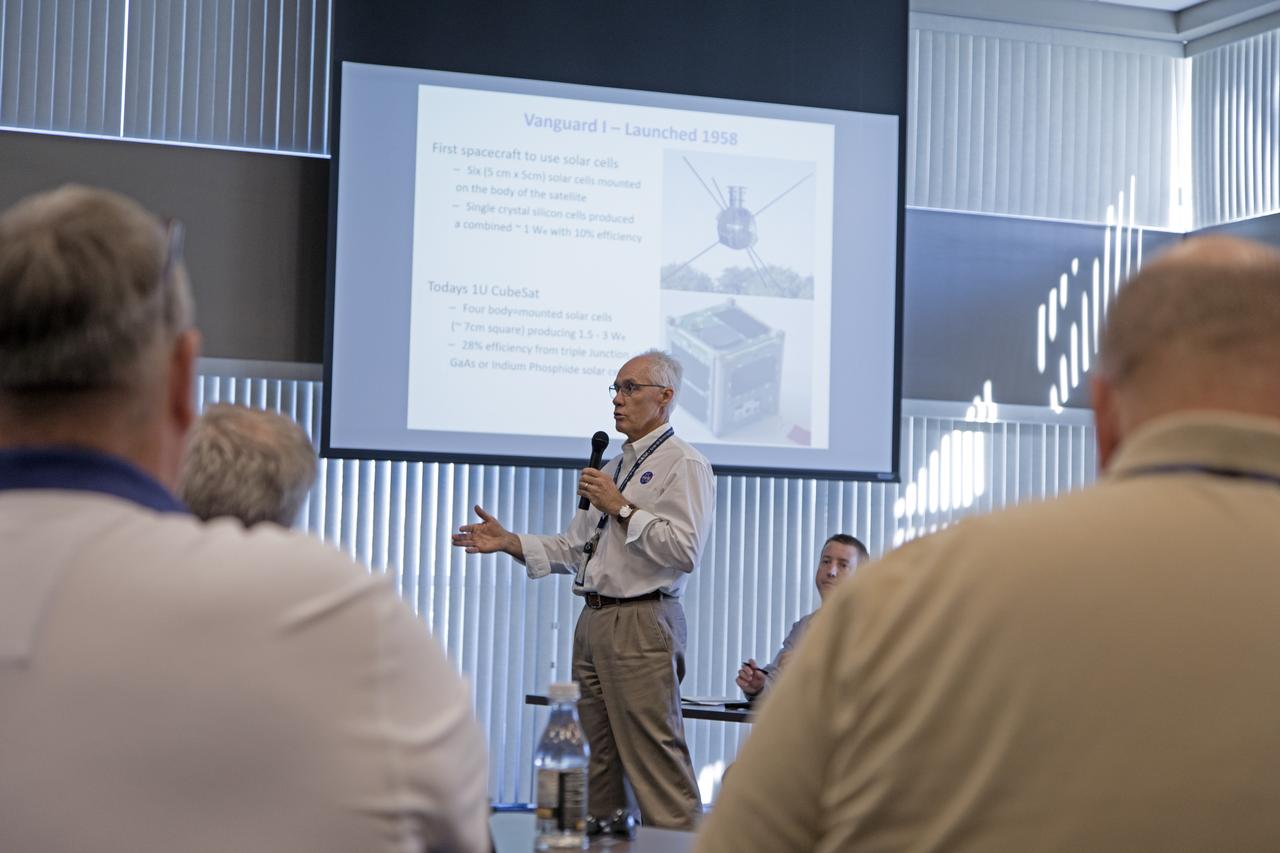
Chuck Tatro of NASA's Launch Services Program discusses the use of solar arrays on space science missions during the Energy Action Day employee event held in Kennedy Space Center's Space Station Processing Facility. Part of Energy Awareness Month, the event featured subject matter experts in the area of solar energy, its connections to the space program and options for residential solar power.
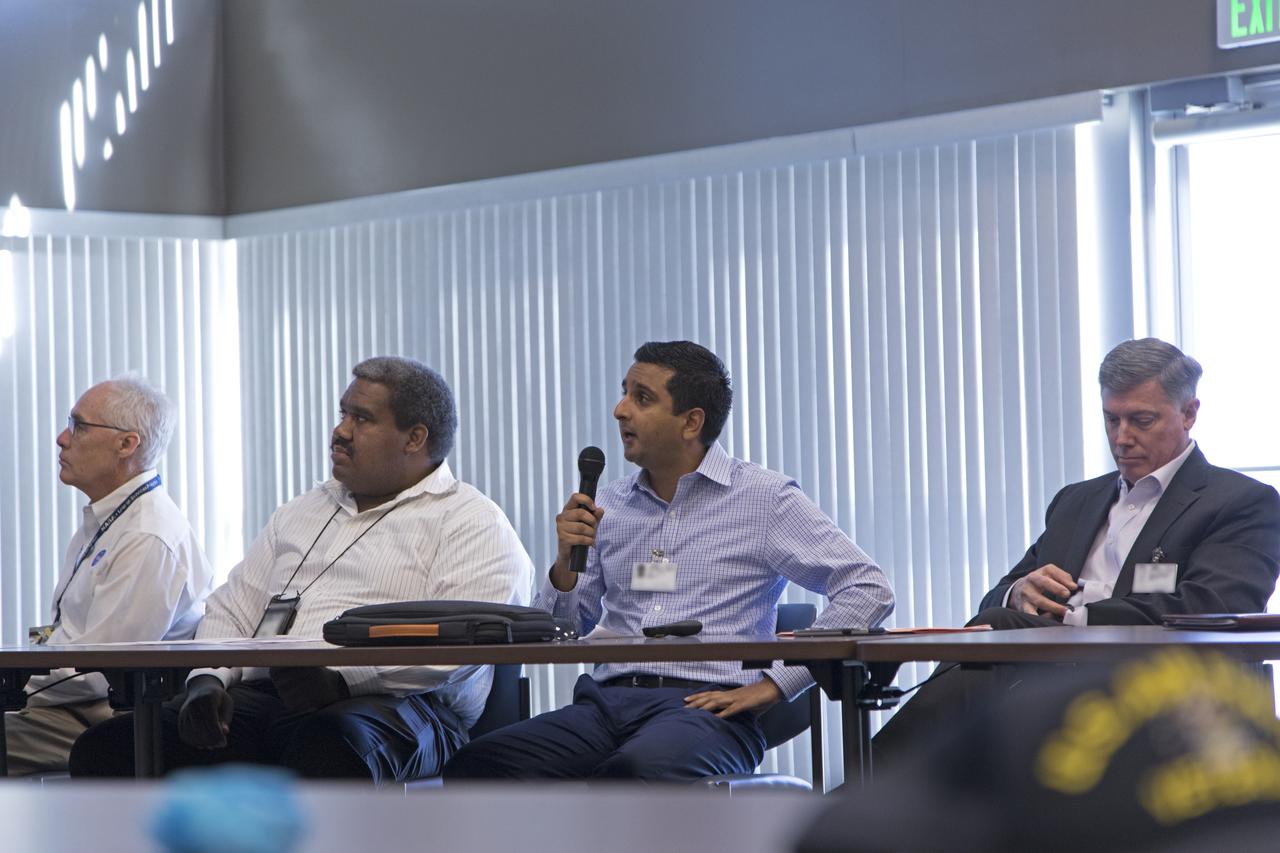
Anuj Chokshi of FPL, center, speaks during the Energy Action Day employee event held in NASA Kennedy Space Center's Space Station Processing Facility. Part of Energy Awareness Month, the event featured subject matter experts in the area of solar energy, its connections to the space program and options for residential solar power. From left to right are Chuck Tatro of NASA's Launch Services Program; Sam Ball of NASA Kennedy's Engineering directorate; Chokshi; and Bill McMullen of Southern Power.
Bill McCullen of Southern Power speaks to NASA Kennedy Space Center employees during the Energy Action Day event held in Kennedy's Space Station Processing Facility. Part of Energy Awareness Month, the event featured subject matter experts in the area of solar energy, its connections to the space program and options for residential solar power.

Nathan Sam and Robert “Red†Jensen lay material into a Prandtl-M aircraft mold at NASA’s Armstrong Flight Research Center in California. The aircraft is the second of three prototypes of varying sizes to provide scientists with options to fly sensors in the Martian atmosphere to collect weather and landing site information for future human exploration of Mars.
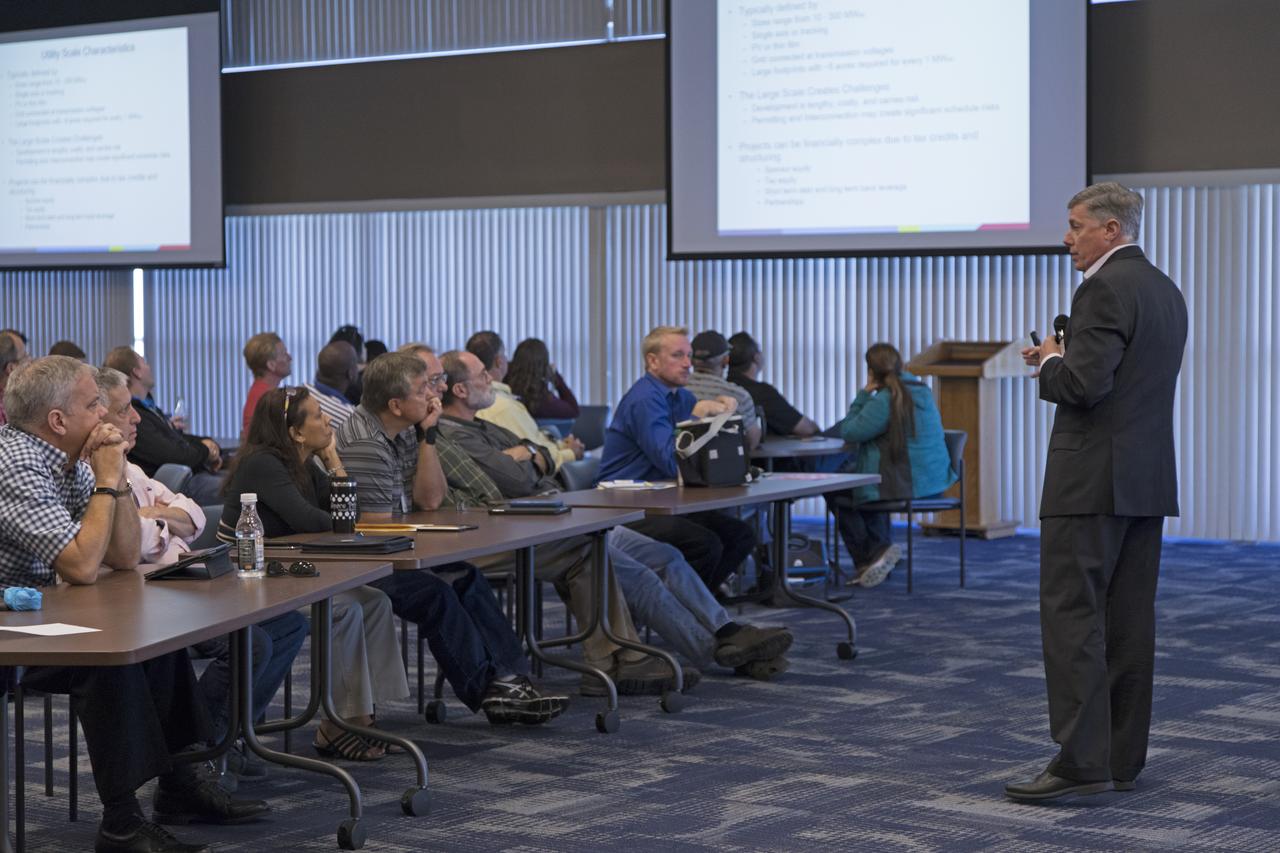
Chuck Tatro of NASA's Launch Services Program discusses the use of solar arrays on space science missions during the Energy Action Day employee event held in Kennedy Space Center's Space Station Processing Facility. Part of Energy Awareness Month, the event featured subject matter experts in the area of solar energy, its connections to the space program and options for residential solar power.
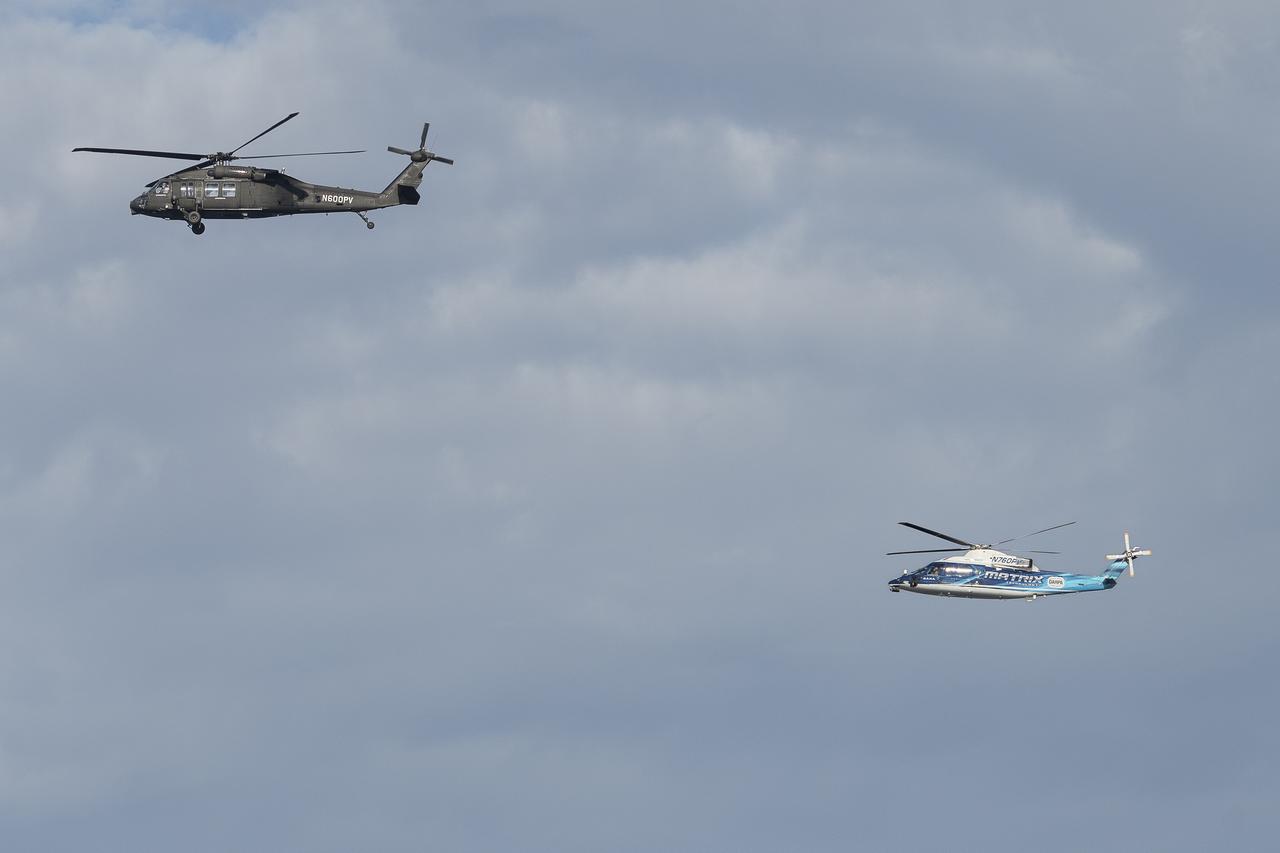
NASA pilots along with Sikorsky safety pilots flying Sikorsky’s Black Hawk Optionally Piloted Vehicle, left, and SARA S-76B over Long Island Sound Thursday, Oct. 26, 2023. These flights will allow NASA researchers to test and evaluate multiple Advanced Air Mobility autonomous flight software products designed by NASA.

Norman Augustine, chair of the Human Space Flight Review Committee, makes a point during the first of several public meetings at different U.S. locations, Wednesday, June 17, 2009, at the Carnegie Institution in Washington. The panel will examine ongoing and planned NASA development activities and potential alternatives in order to present options for advancing a safe, innovative, affordable and sustainable human space flight program following the space shuttle's retirement. The committee wil present its results by August 2009. Photo Credit: (NASA/Paul E. Alers)
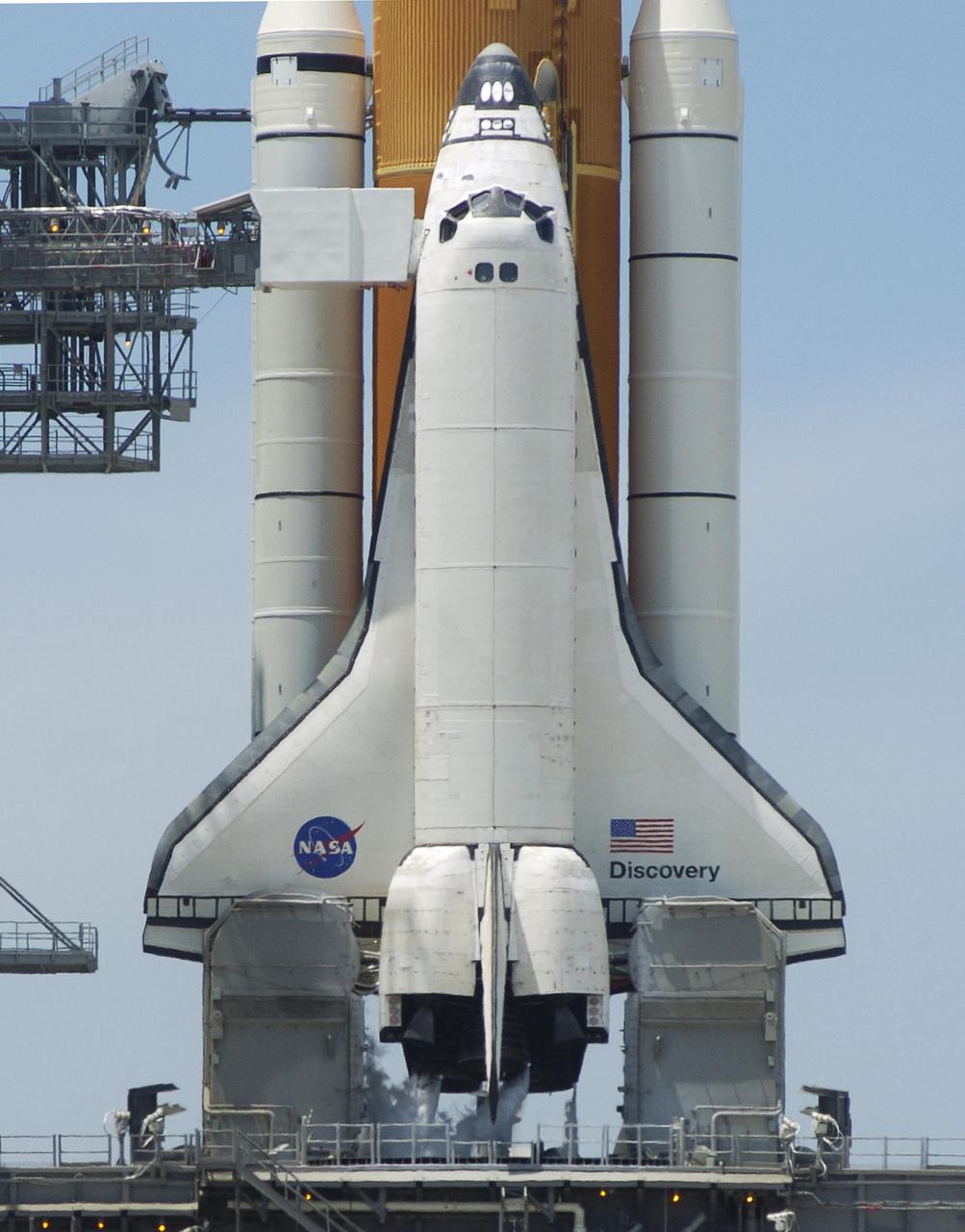
KENNEDY SPACE CENTER, FLA. - Space Shuttle Discovery remains on the launch pad at 3:51 p.m. EDT, the scheduled time of liftoff for Return to Flight mission STS-114. The launch was scrubbed due to a faulty sensor reading in the External Tank during countdown. The Mission Management Team is testing the sensor and evaluating future launch options. (Photo courtesy of Scott Andrews)

KENNEDY SPACE CENTER, FLA. -- In Vehicle Assembly Building (VAB) high bay 4, installation of a Payload Bay Door Drying Enclosure is in progress. The enclosure will keep moisture from being absorbed into the graphite epoxy used on the payload bay doors of the Shuttle orbiters with the assistance of mini-Portable Purge Units (PPUs). Once in operation, the enclosure will allow NASA the option to store an orbiter in the VAB bay up to 180 days in a "standby-to-stack" mode.
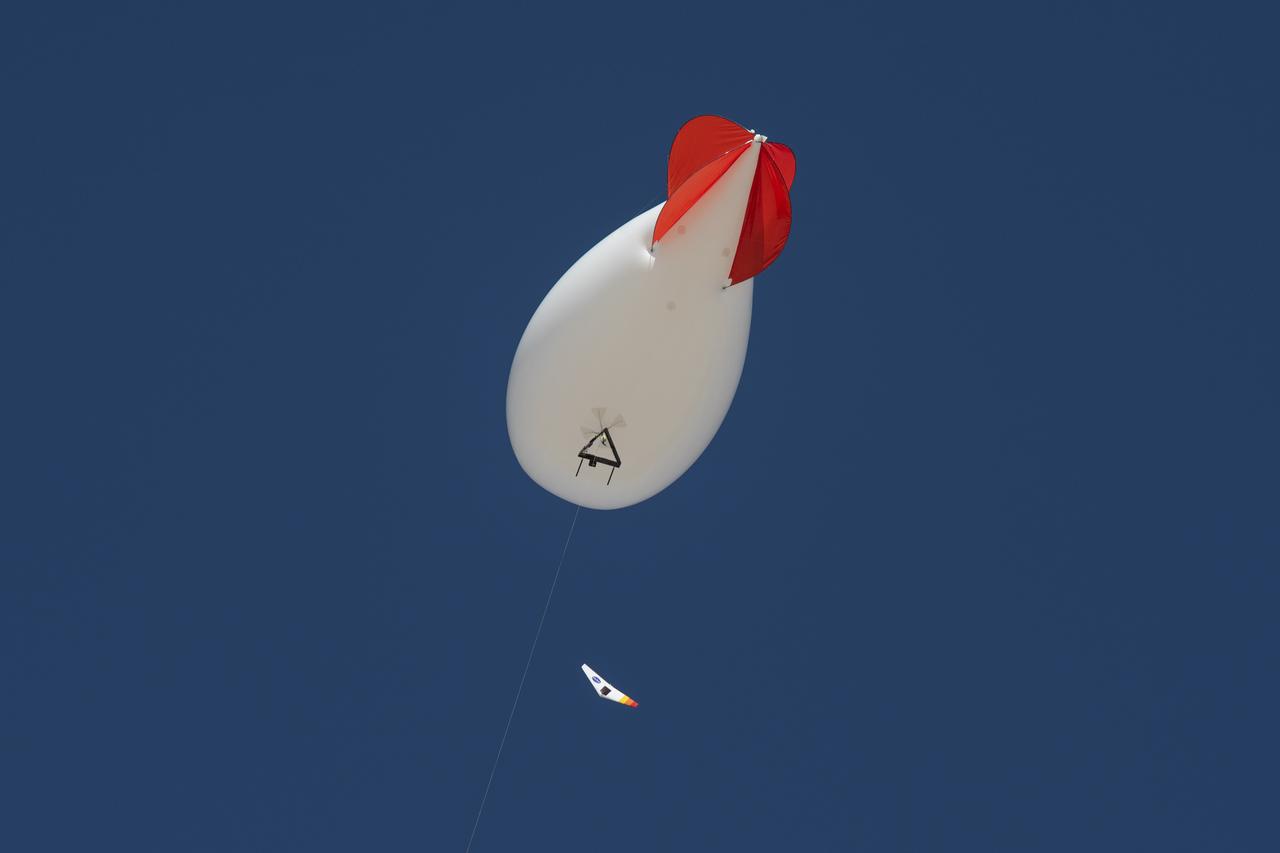
The first of three Prandtl-M prototype aircraft was air launched Aug. 16, 2019, from an Aerostat blimp at NASA’s Armstrong Flight Research Center in California. Three different prototypes of varying size, two still in development, eventually will be air launched from a weather balloon at 100,000 feet to simulate the atmosphere on Mars. The validated Prandtl-M could give scientists options to fly sensors in the Martian atmosphere to collect weather and landing site information for future human exploration of Mars.
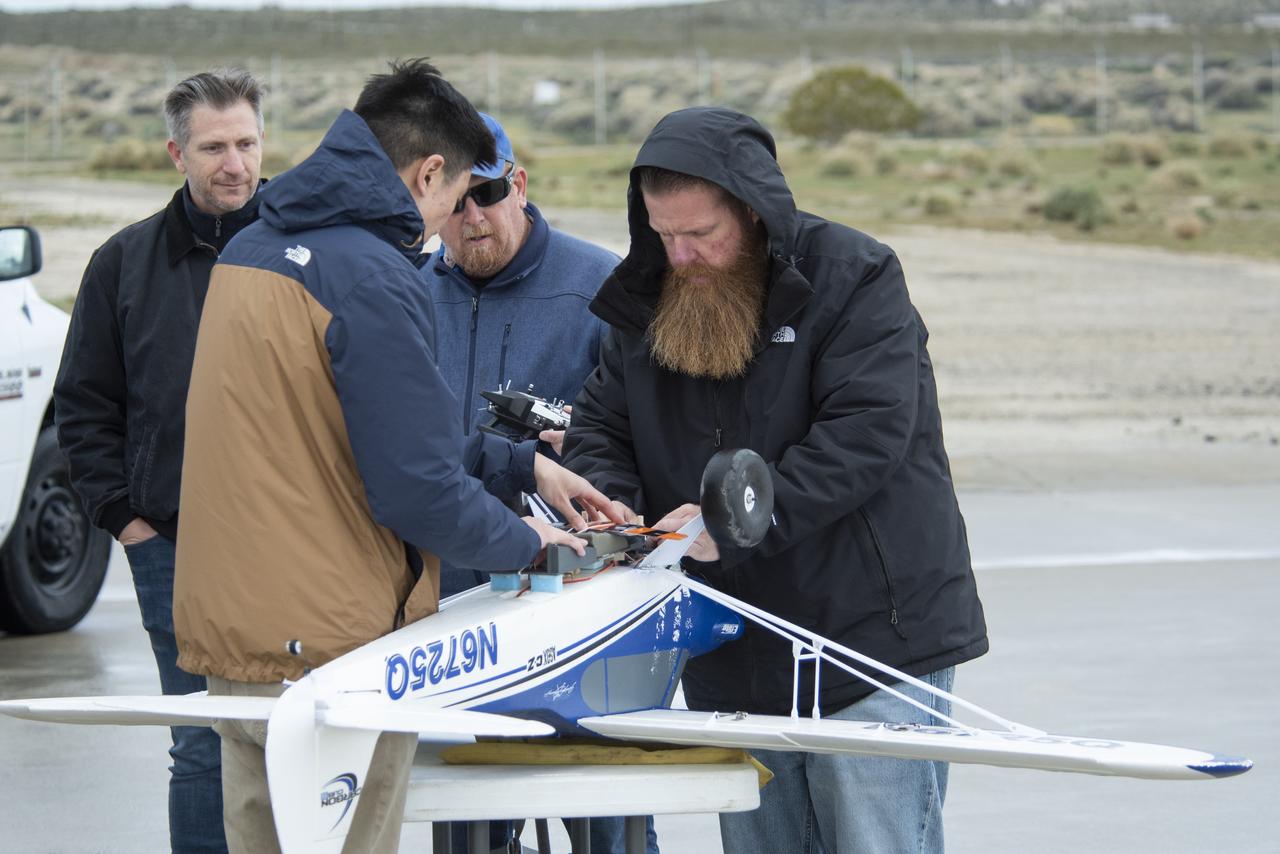
From left Eric Becker watches as Nathan Sam, Robert 'Red' Jensen and Justin Hall attach a Prandtl-M aircraft onto the Carbon Cub aircraft that air launched it at NASA's Armstrong Flight Research Center in California. The aircraft is the second of three prototypes of varying sizes to provide scientists with options to fly sensors in the Martian atmosphere to collect weather and landing site information for future human exploration of Mars.
John Sherwin of the Florida Solar Energy Center in Cocoa speaks during the Energy Action Day employee event held in NASA Kennedy Space Center's Space Station Processing Facility. Part of Energy Awareness Month, the event featured subject matter experts in the area of solar energy, its connections to the space program and options for residential solar power.
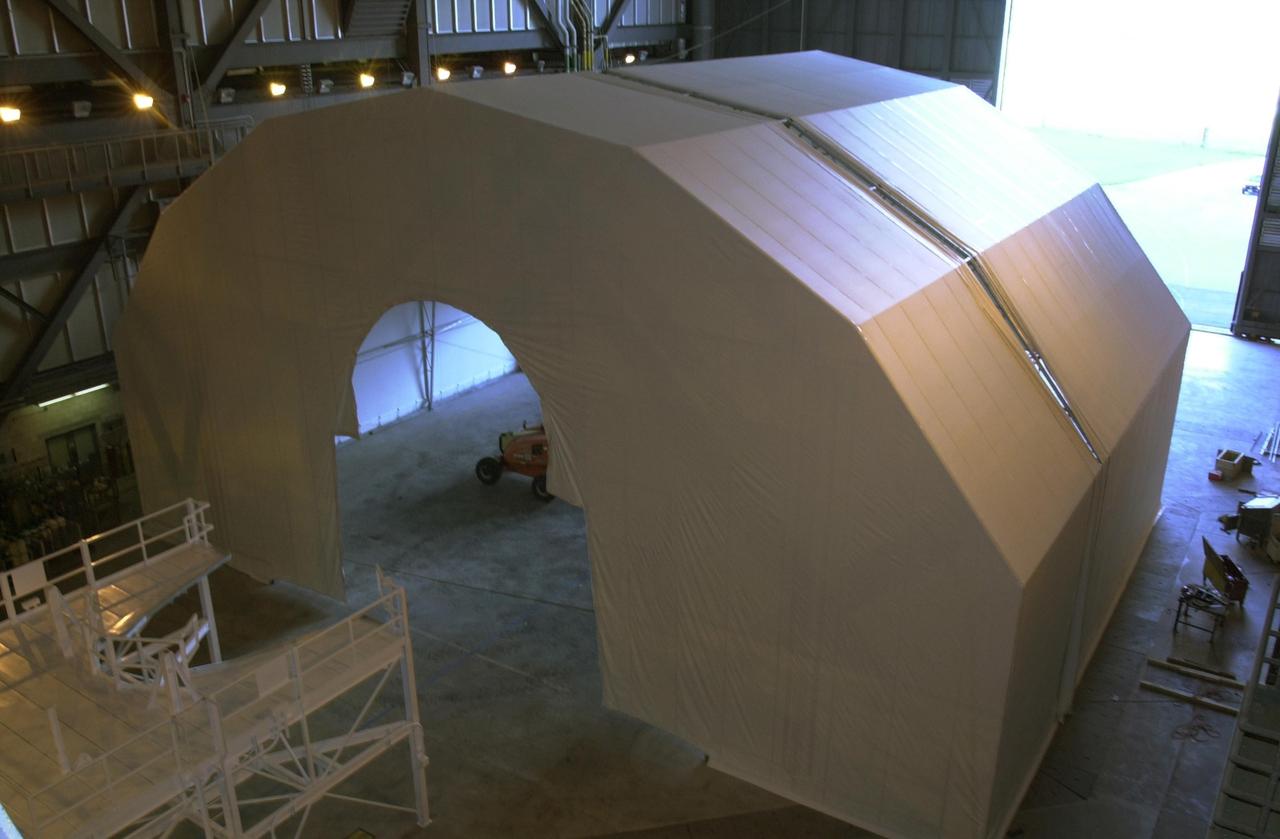
KENNEDY SPACE CENTER, FLA. -- -- In Vehicle Assembly Building (VAB) high bay 4, installation of a Payload Bay Door Drying Enclosure is in progress. The enclosure will keep moisture from being absorbed into the graphite epoxy used on the payload bay doors of the Shuttle orbiters with the assistance of mini-Portable Purge Units (PPUs). Once in operation, the enclosure will allow NASA the option to store an orbiter in the VAB bay up to 180 days in a "standby-to-stack" mode.
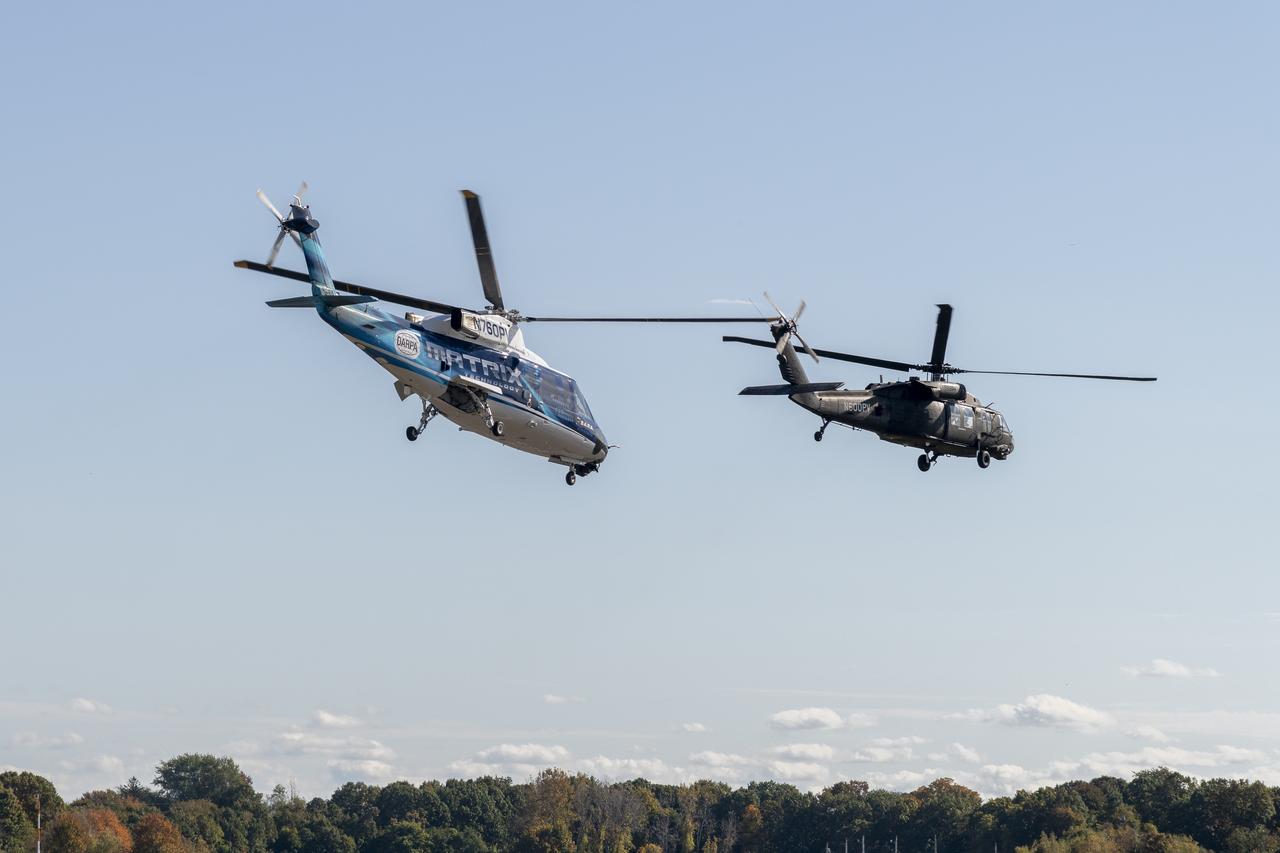
NASA pilots along with Sikorsky safety pilots take off in Sikorsky’s SARA S-76B, left, and Black Hawk Optionally Piloted Vehicle from Sikorsky Memorial Airport, Bridgeport, Connecticut on Tuesday, Oct. 24, 2023. NASA is using these experimental aircraft to test and evaluate multiple autonomous flight software systems designed for Advanced Air Mobility concepts.
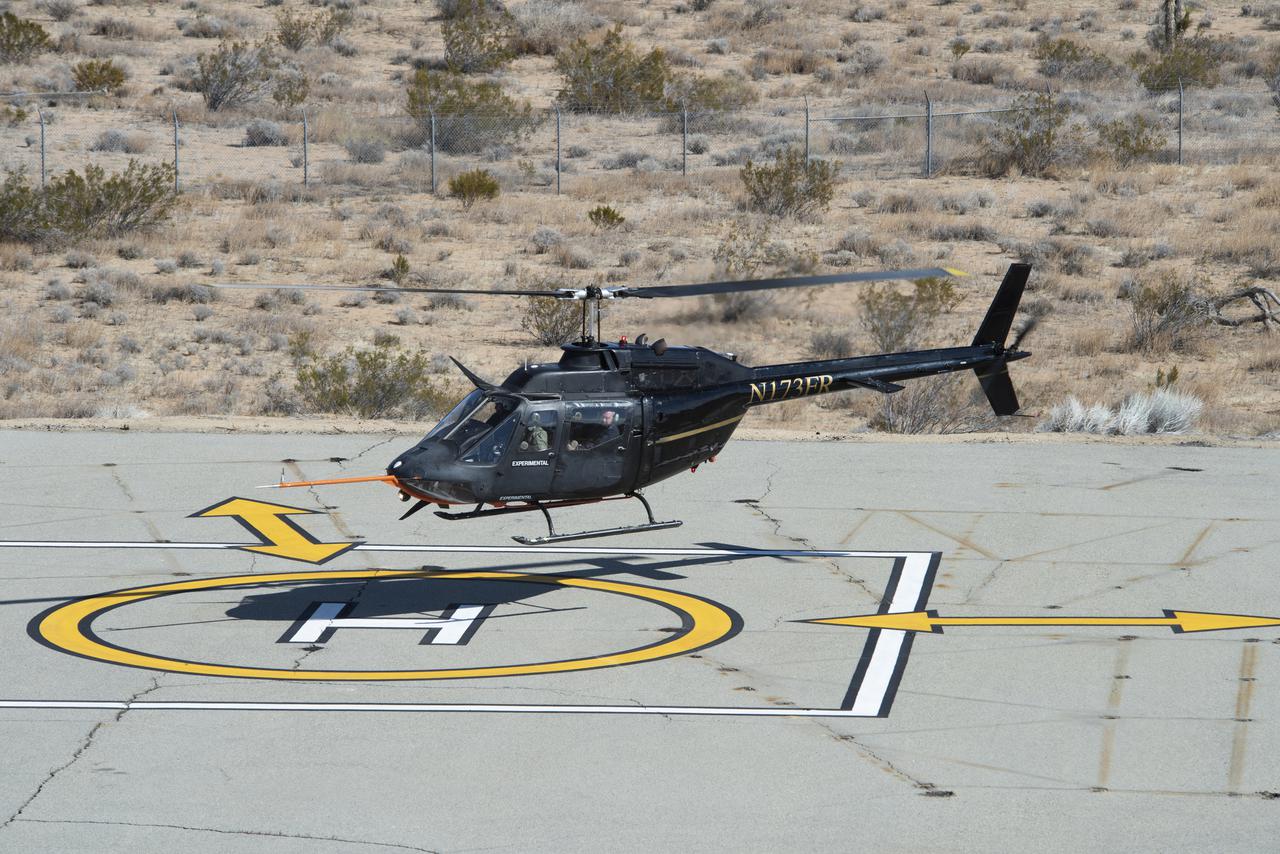
Flight Research Inc.’s Bell OH-58C Kiowa helicopter hovers over a helipad after completing an urban air mobility approach at NASA’s Armstrong Flight Research Center in California in March 2021. The Advanced Air Mobility National Campaign studied the viability of various urban air mobility approach options during a second phase called build II. This helicopter was used as a surrogate urban air mobility or air taxi vehicle.
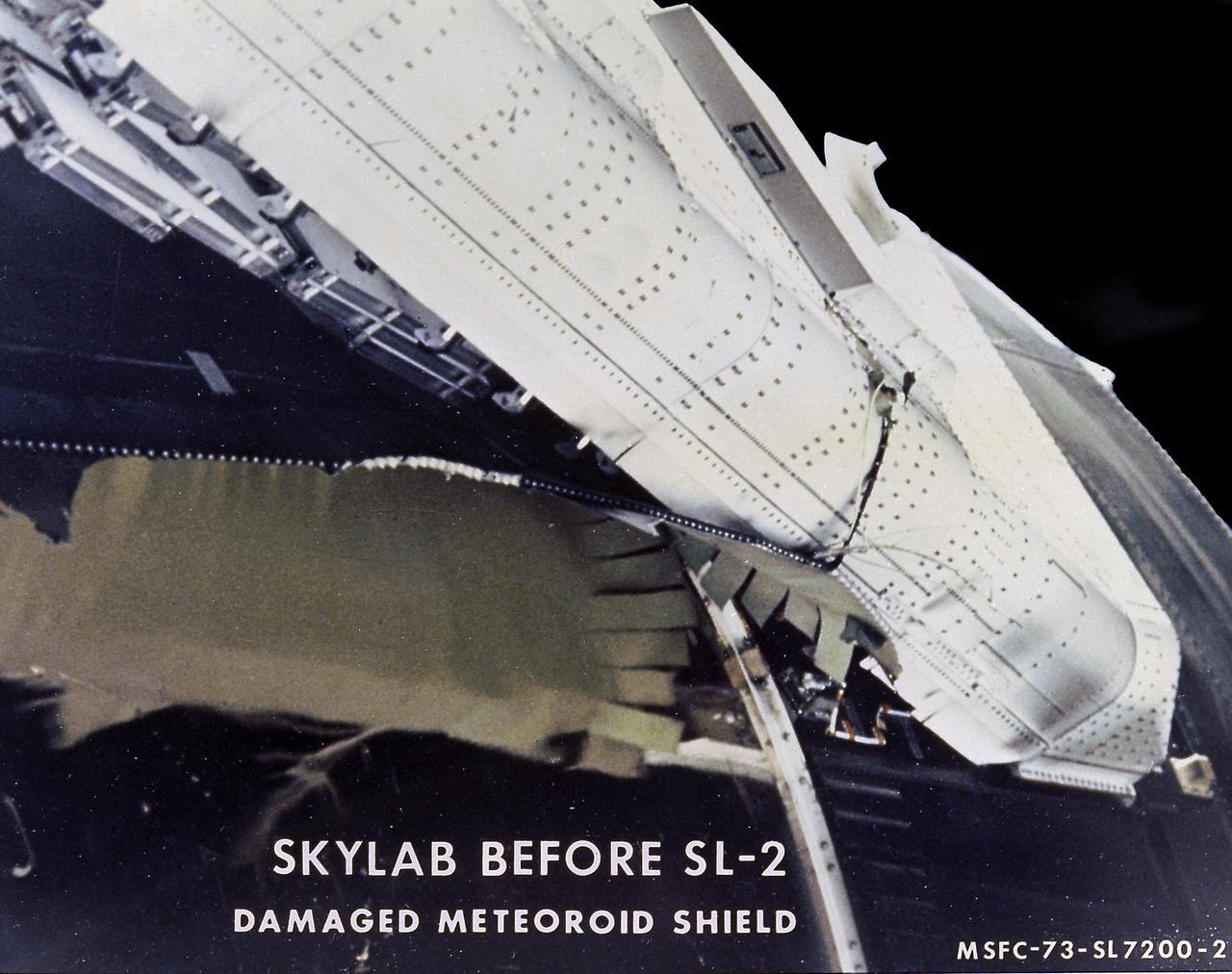
The Saturn V vehicle, carrying the unmarned orbital workshop for the Skylab-1 mission, lifted off successfully and all systems performed normally. Sixty-three seconds into flight, engineers in the operation support and control center saw an unexpected telemetry indication that signalled that damages occurred on one solar array and the micrometeoroid shield during the launch. The micrometeoroid shield, a thin protective cylinder surrounding the workshop protecting it from tiny space particles and the sun's scorching heat, ripped loose from its position around the workshop. This caused the loss of one solar wing and jammed the other. Still unoccupied, the Skylab was stricken with the loss of the heat shield and sunlight beat mercilessly on the lab's sensitive skin. Internal temperatures soared, rendering the station uninhabitable, threatening foods, medicines, films, and experiments. This image, taken during a fly-around inspection by the Skylab-2 crew, shows the damaged meteoroid shield being held by a thin aluminum strap entangled with green-hued remnants of the lost heat shield. The Marshall Space Flight Center (MSFC) developed, tested, rehearsed, and approved three repair options. These options included a parasol sunshade and a twin-pole sunshade to restore the temperature inside the workshop, and a set of metal cutting tools to free the jammed solar panel.
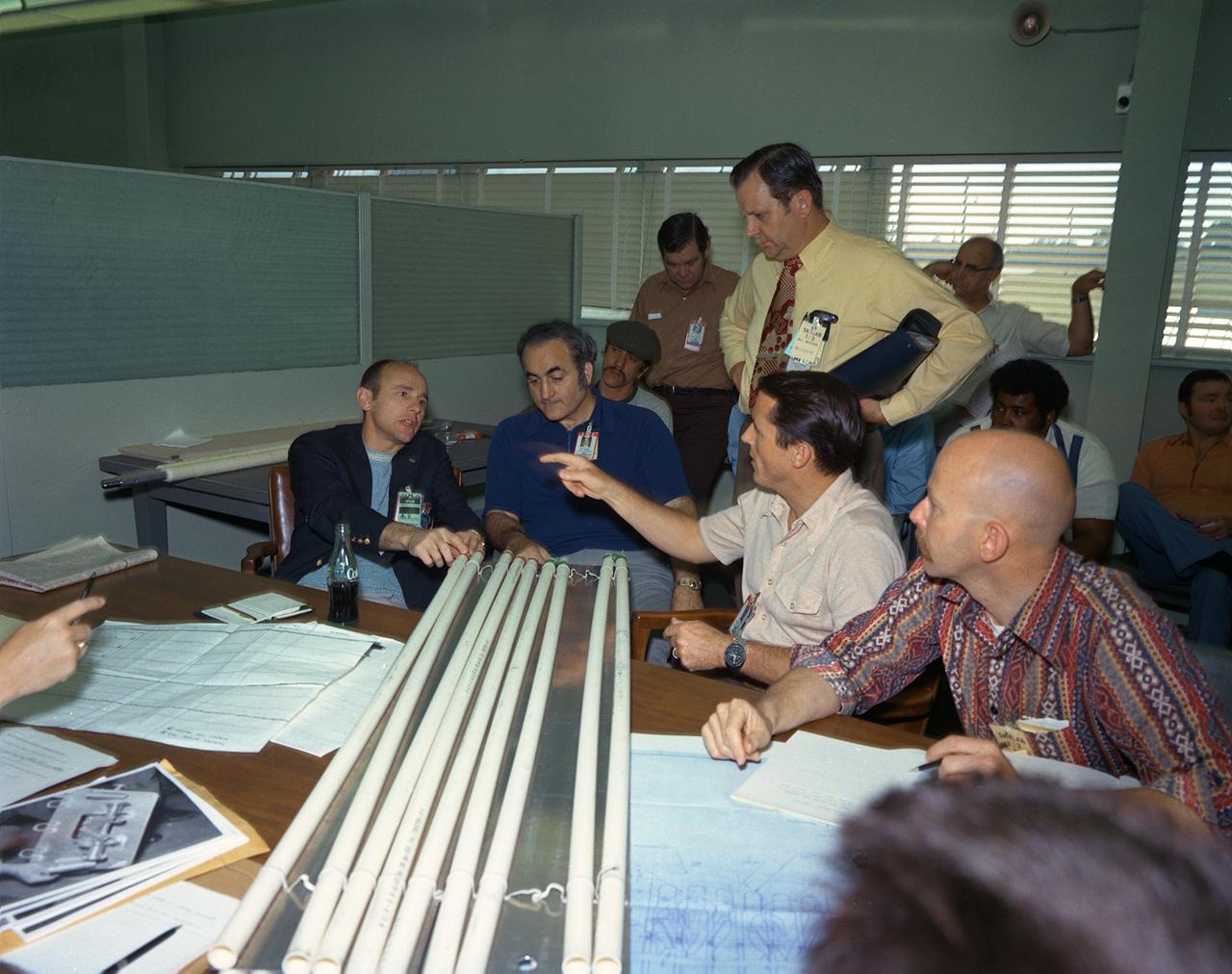
Sixty-three seconds after the launch of the modified Saturn V vehicle carrying the Skylab cluster, engineers in the operation support and control center saw an unexpected telemetry indication that signalled that damages occurred on one solar array and the micrometeoroid shield during the launch. Still unoccupied, the Skylab was stricken with the loss of the heat shield and sunlight beat mercilessly on the lab's sensitive skin. Internal temperatures soared, rendering the the station uninhabitable, threatening foods, medicines, films, and experiments. The launch of the first marned Skylab (Skylab-2) mission was delayed until methods were devised to repair and salvage the workshop. Personnel from other NASA Centers and industries quickly joined the Marshall Space Flight Center (MSFC) in efforts to save the damaged Skylab. They worked day and night for the next several days. Eventually the MSFC developed, tested, rehearsed, and approved three repair options. These options included a parasol sunshade and a twin-pole sunshade to restore the temperature inside the workshop, and a set of metal cutting tools to free the jammed solar panel. This photograph was taken during a discussion of the methods of the twin-pole Sun shield by (left to right) Astronaut Alan Bean, MSFC Director Dr. Rocco Petrone, Astronaut Edward Gibson, and MSFC engineer Richard Heckman. Dr. William Lucas, who became MSFC Director after Dr. Petrone left MSFC in March of 1974, is standing.
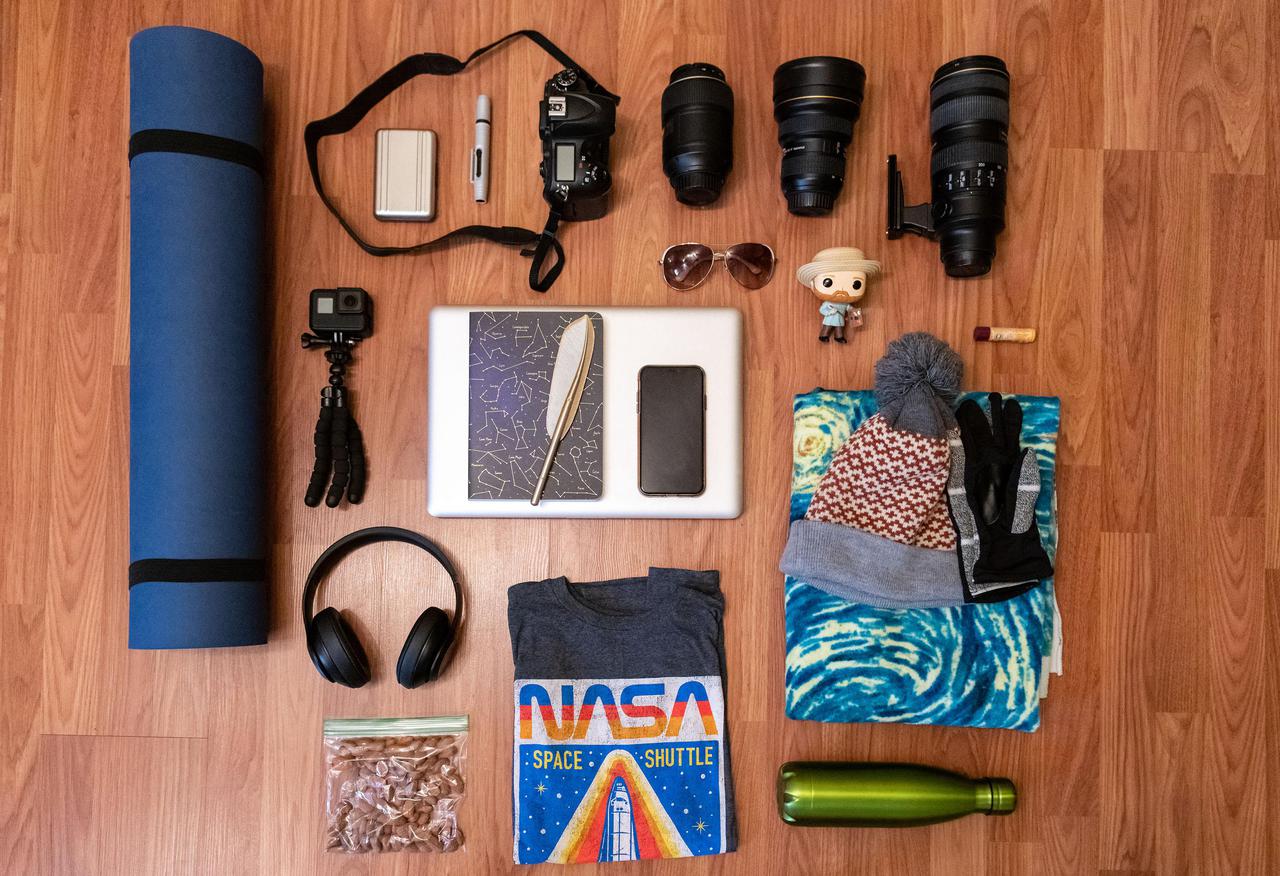
I may not always pack light, but I tried to only pack the essentials, with a couple of goodies. I get cold fairly easily hence the blanket, extra NASA shirt, hat and gloves. No trip is complete without my favorite snack of almonds, water, sunglasses, Chapstick, phone and my headphones to listen to some music. I figured I could bring my yoga mat, because who wouldn’t want to do yoga on the moon?? The most important part of this kit is my camera! I brought a couple of different lenses for a variety of options, along with a sports action camera, notebook and computer for editing. The Van Gogh doll was just for fun!
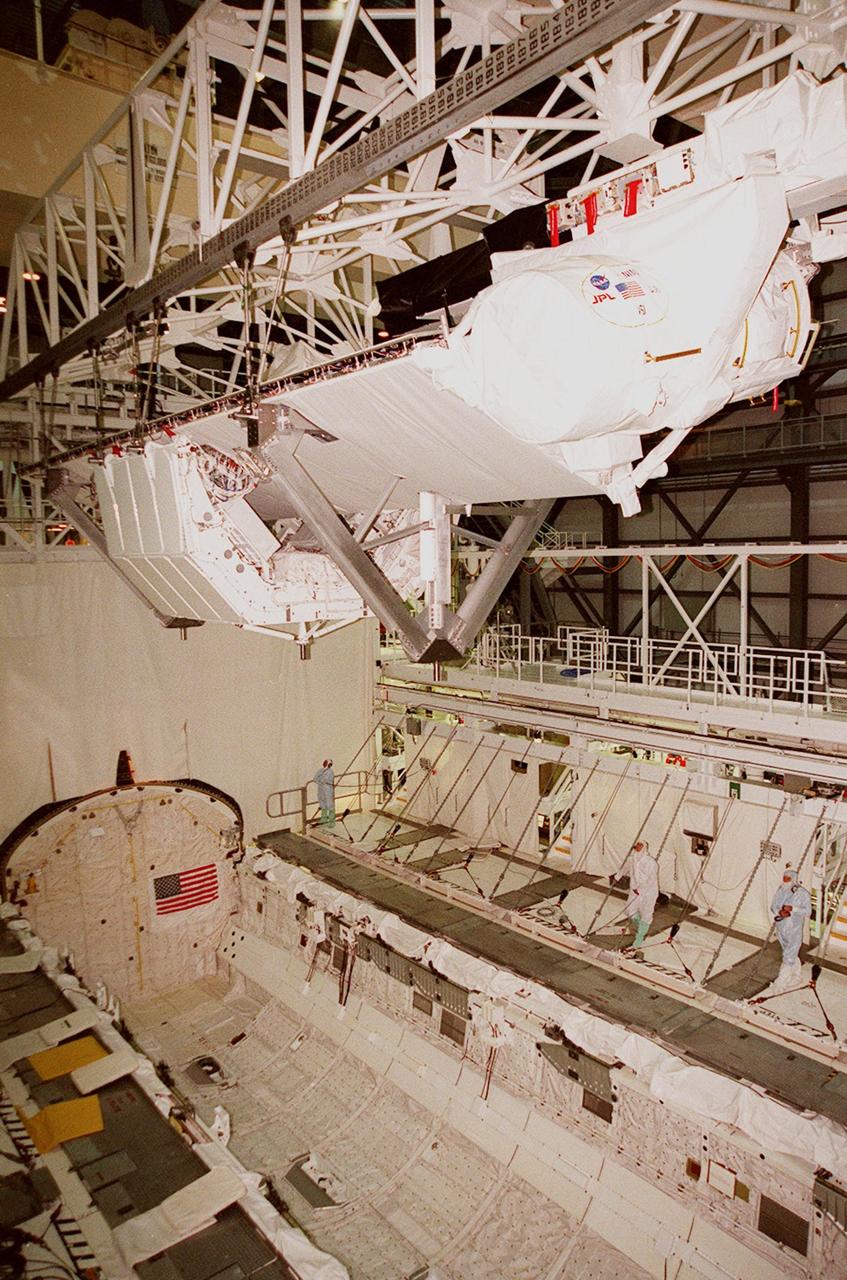
Inside orbiter Endeavour's payload bay, a crane lifts the Shuttle Radar Topography Mission (SRTM) clear of the orbiter for transfer to a payload canister. The payload on mission STS-99, SRTM is being removed to allow technicians access to the orbiter's midbody for planned wiring inspections. Endeavour is in the Orbiter Processing Facility. The entire fleet of orbiters is being inspected for wiring abrasions after the problem was first discovered in Columbia. Shuttle managers are reviewing several manifest options and could establish new target launch dates for the balance of 1999 next week. Shuttle Endeavour currently remains slated for launch in early October
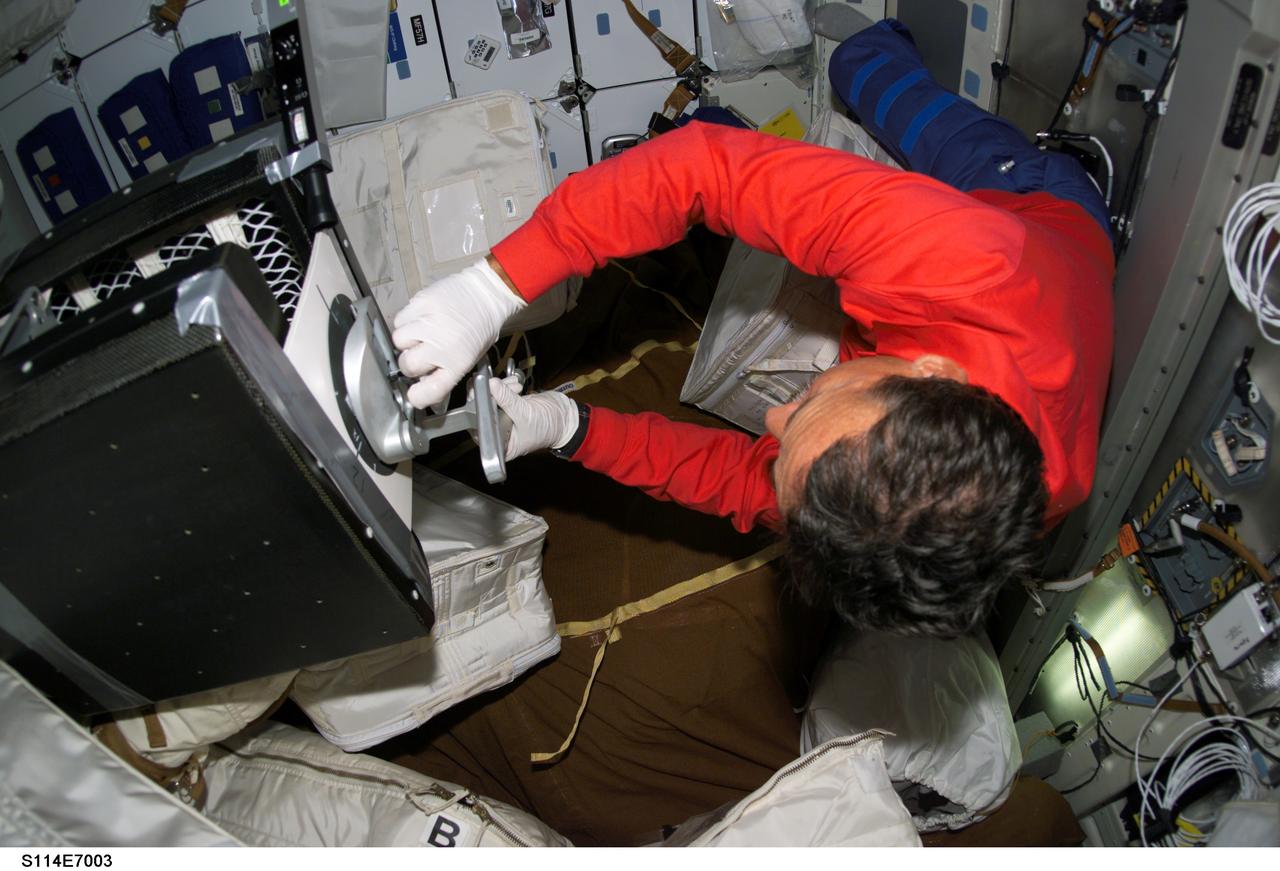
S114-E-7003 (4 August 2005) --- Astronaut Charles J. Camarda, STS-114 mission specialist, performs a middeck evaluation of the mechanical "plug" option for Reinforced Carbon-Carbon (RCC) repair aboard the Space Shuttle Discovery. Camarda used special pre-designated tools to accomplish the procedure, along with round thin, flexible 7-inch-diamter carbon-silicon cover plates designed to flex up to 0.25 inch to conform to the wing leading edge RCC panels, a hardware attachment mechanism similar to a toggle bolt and sealant.
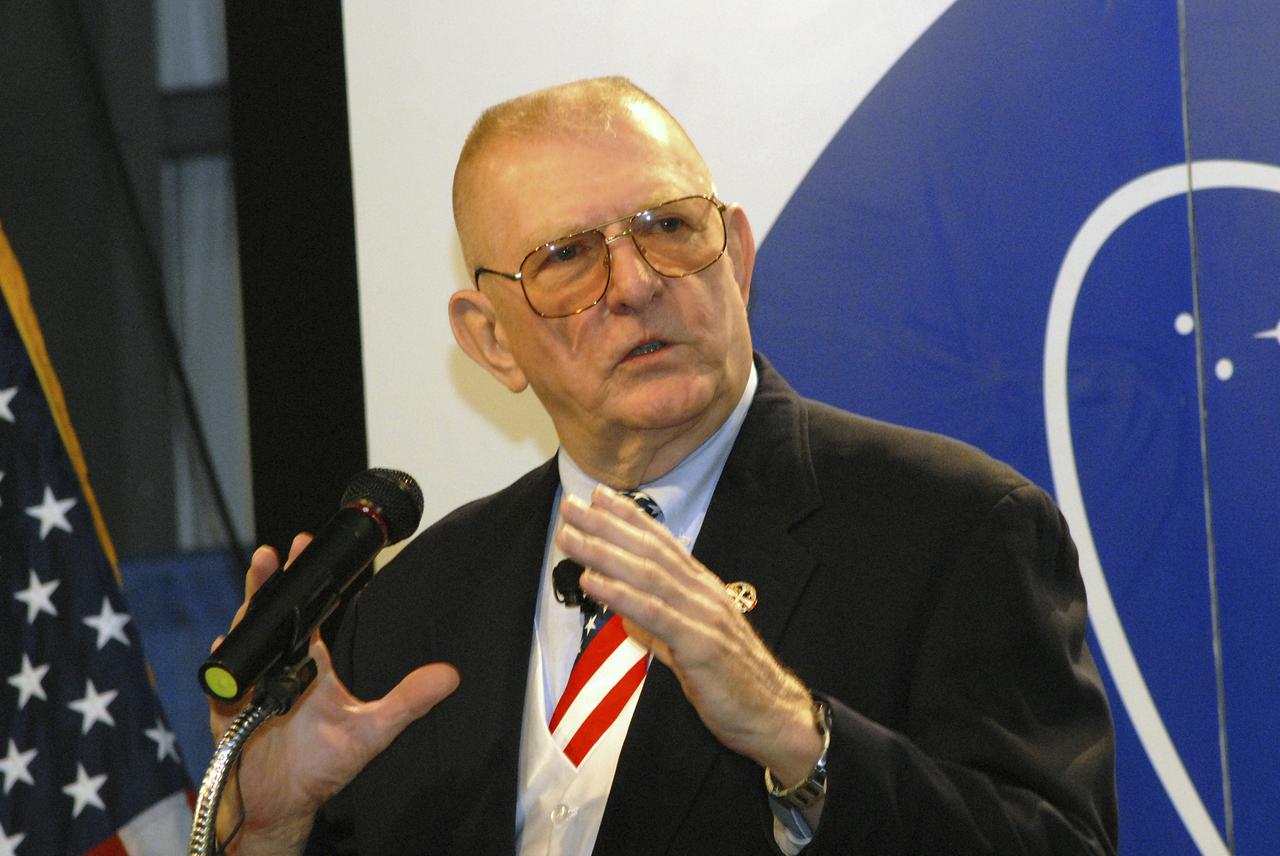
On October 19, 2006, former NASA director of Mission Operations Gene Kranz was a keynote speaker at the Marshall Space Flight Center’s (MSFC’s) 2006 Annual Safety Day program. The best selling author of “Failure Is Not An Option” and past Apollo flight director was featured during a morning session called “Coffee and Kranz”. Marshall employees hung on his every word as he told the fascinating story of Apollo 13. Kranz was the acting flight director during the Apollo 13 mission, a mission that seemed doomed to fail due to an onboard explosion. Kranz and his flight control team worked around the clock relentlessly, solving problem after problem, until the crew was returned safely to Earth.
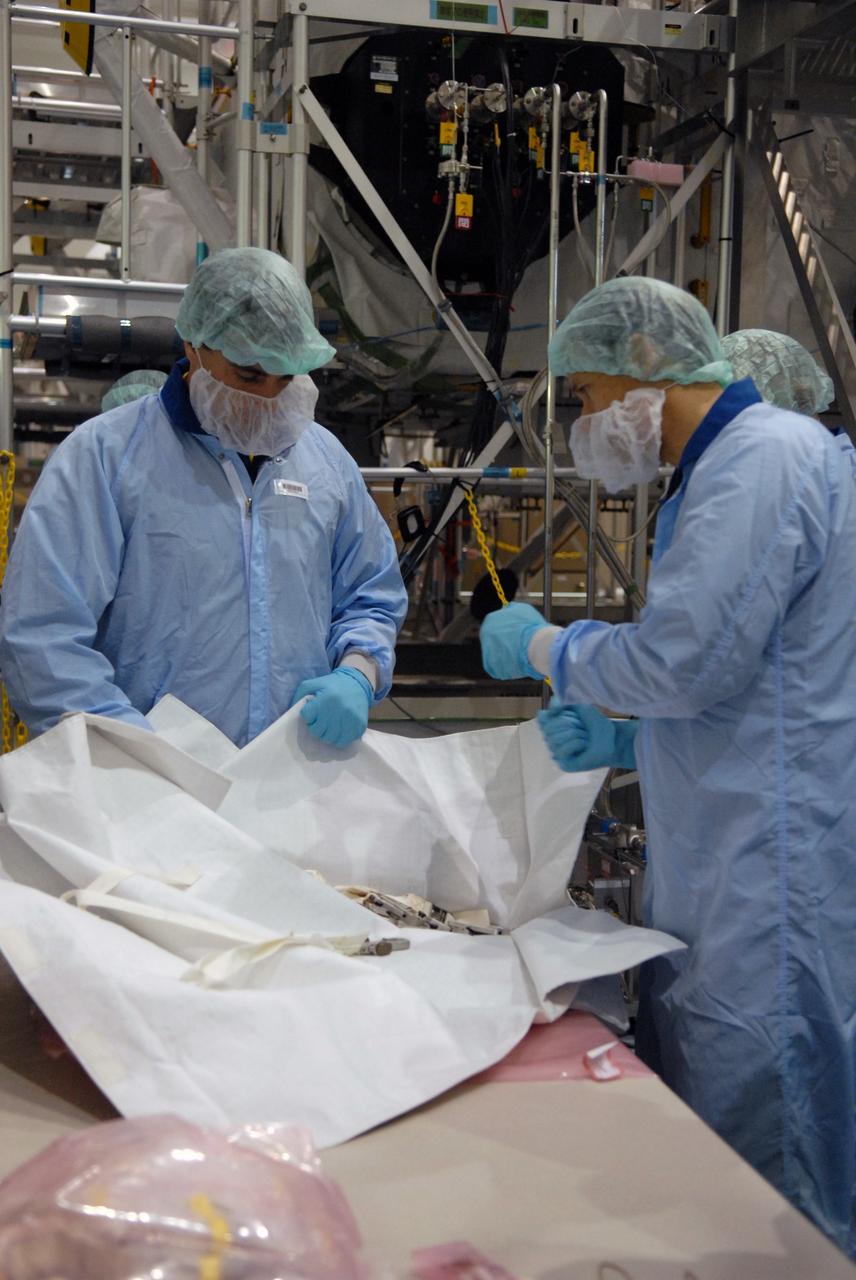
CAPE CANAVERAL, Fla. – In the Space Station Processing Facility at NASA's Kennedy Space Center in Florida, members of the STS-127 Mission Specialists Chris Cassidy and Tom Marshburn review options of how they will stow the excess thermal blankets on the Japanese Experiment Module's Experiment Logistics Module-Exposed Section, or ELM-ES, after they remove them on-orbit. The crew members are at Kennedy for Crew Equipment Interface Test activities, or CEIT, which provides experience handling tools, equipment and hardware for the mission. The payload will be launched to the International Space Station aboard space shuttle Endeavour on the STS-127 mission, targeted for launch on May 15. Photo credit: NASA/Dimitrios Gerondidakis
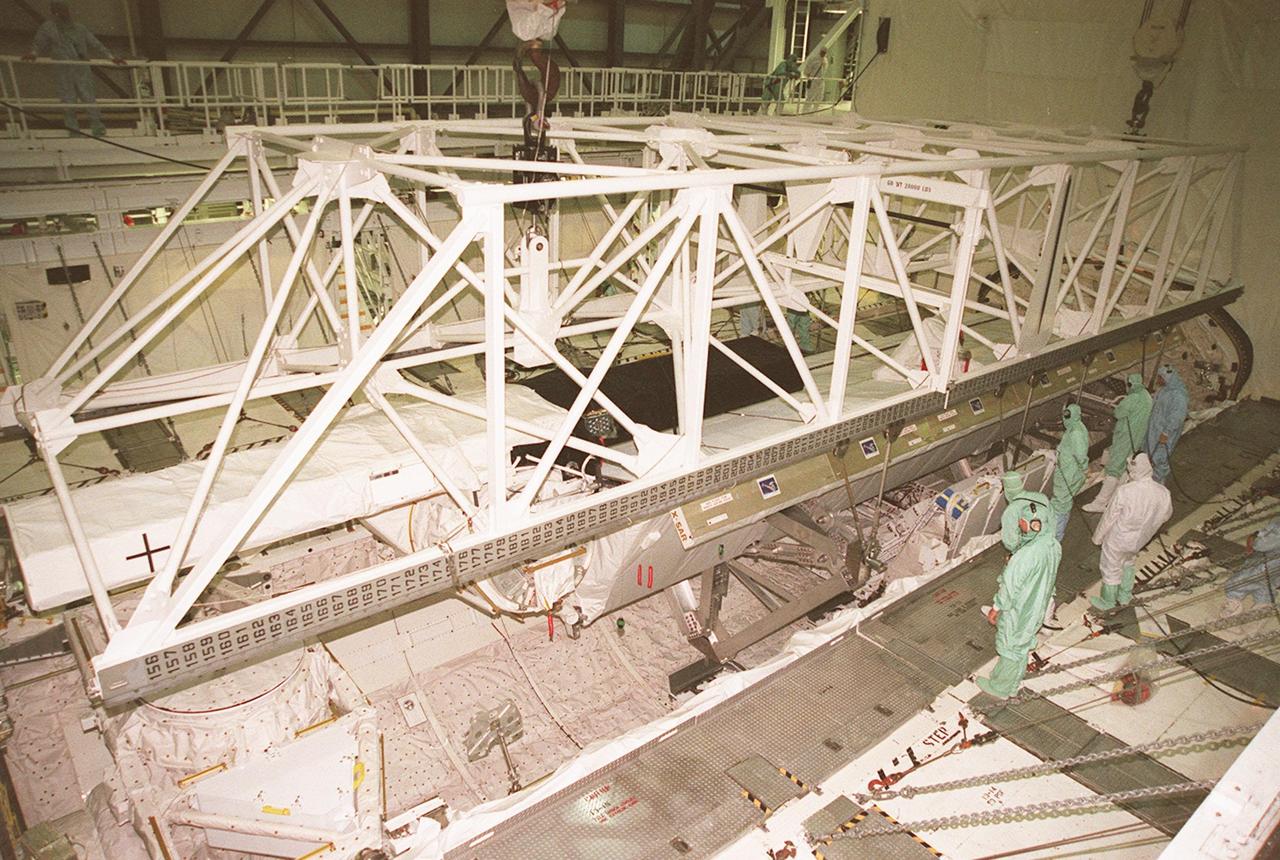
Workers inside orbiter Endeavour's payload bay observe as an overhead crane maneuvers to lift the Shuttle Radar Topography Mission (SRTM) for its transfer out of the orbiter to a payload canister. The payload on mission STS-99, SRTM is being removed to allow technicians access to the orbiter's midbody for planned wiring inspections. Endeavour is in the Orbiter Processing Facility. The entire fleet of orbiters is being inspected for wiring abrasions after the problem was first discovered in Columbia. Shuttle managers are reviewing several manifest options and could establish new target launch dates for the balance of 1999 next week. Shuttle Endeavour currently remains slated for launch in early October
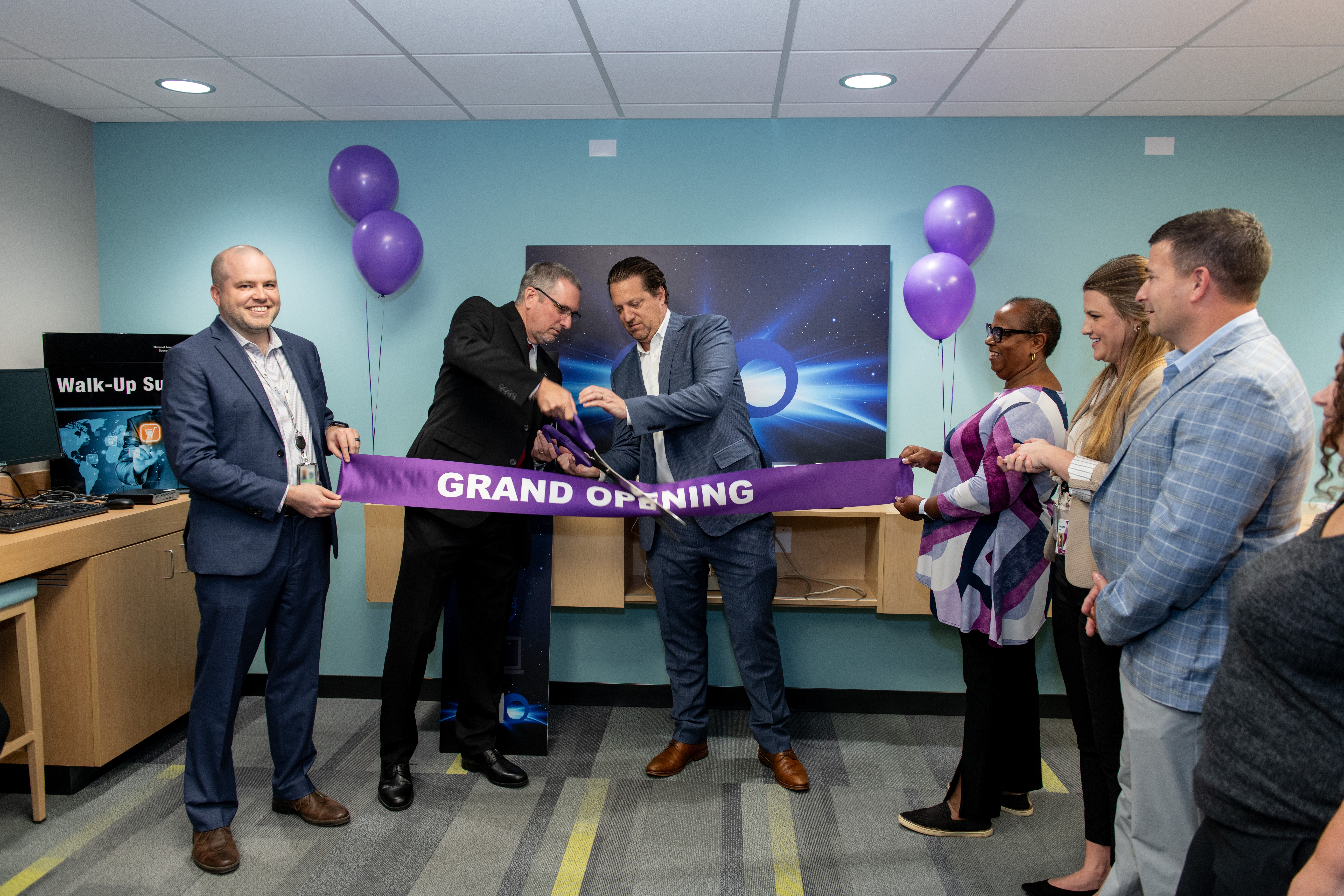
On Tuesday, Sept. 17, NASA IT hosted the Grand Opening for SpaceBar at Glenn Research Center (GRC), leading the way for enhanced IT customer service to NASA users! NEST corporate representatives and the Chief and Deputy Chief of OCIO cut the ribbon. The SpaceBar provides a place for walk-up IT service from our friendly, highly skilled service technicians coupled with a storefront atmosphere where NASA users can touch, feel, and test the latest and greatest hardware that NASA IT offers. Customers with NASA IT equipment and agency-managed services have the option to visit SpaceBar for their IT needs or continue to use remote/virtual access and deskside service.

NASA Kennedy Space Center's Sam Ball, third from left, speaks during the Energy Action Day employee event held in NASA Kennedy Space Center's Space Station Processing Facility. Part of Energy Awareness Month, the event featured subject matter experts in the area of solar energy, its connections to the space program and options for residential solar power. From left to right are Nick Murdock, energy and water program manager at Kennedy; Chuck Tatro of NASA's Launch Services Program; Ball; Anuj Chokshi of FPL; Bill McMullen of Southern Power; John Sherwin of the Florida Solar Energy Center in Cocoa; and Lorraine Koss of the Brevard County Solar Co-op.
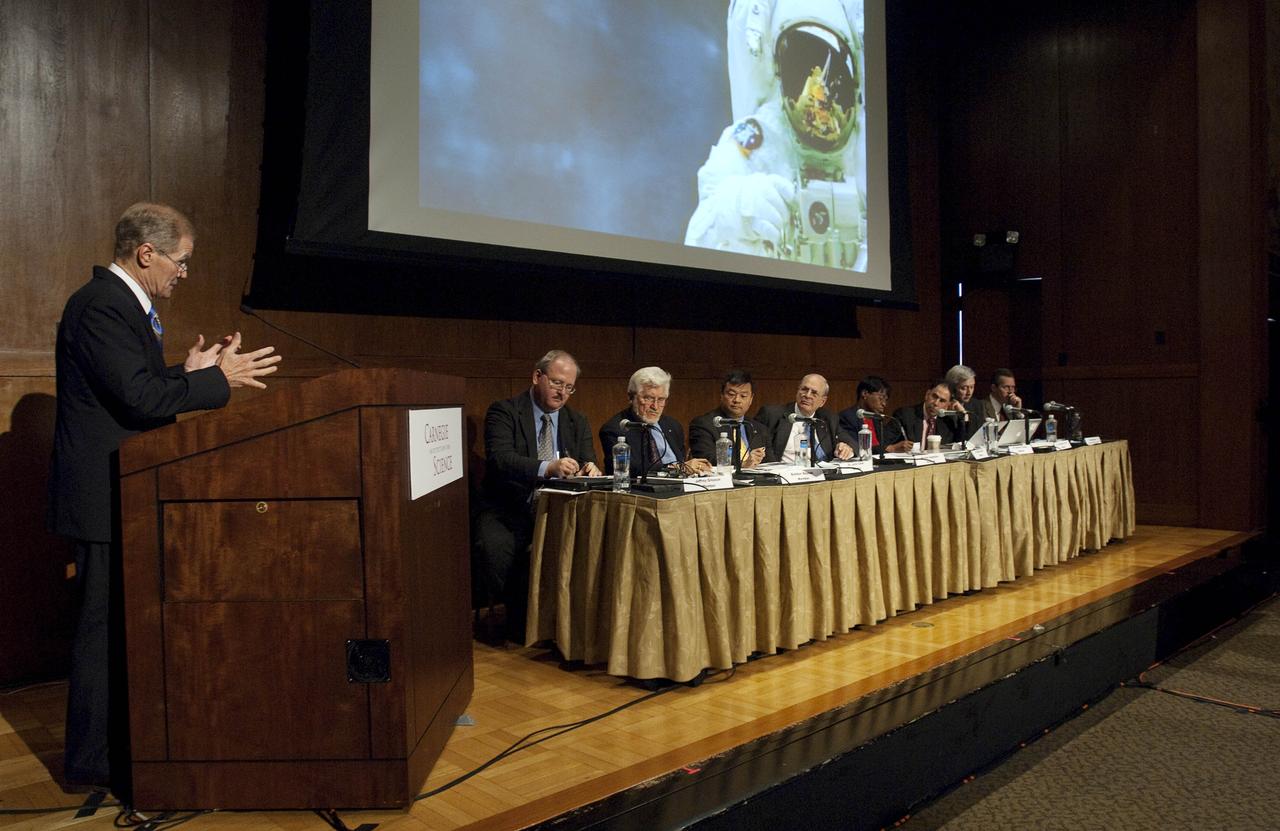
U.S. Sen. Bill Nelson, D-Fla., at podium, addresses members of the Human Space Flight Review Committee, Wednesday, June 17, 2009, at the Carnegie Institution in Washington. Seated from left are Jeffrey Greason, Bohdan Bejmuk, Dr. Leroy Chiao, Norman Augustine (chair), Dr. Wanda Austin, Dr. Edward Crawley, Dr. Christopher Chyba and Philip McAlister. The panel will examine ongoing and planned NASA development activities and potential alternatives in order to present options for advancing a safe, innovative, affordable and sustainable human space flight program following the space shuttle's retirement. The committee wil present its results by August 2009. Photo Credit: (NASA/Paul E. Alers)

Norman Augustine, chair of the Human Space Flight Review Committee, listens to a comment from the audience during the first of several public meetings at different U.S. locations, Wednesday, June 17, 2009, at the Carnegie Institution in Washington. The panel will examine ongoing and planned NASA development activities and potential alternatives in order to present options for advancing a safe, innovative, affordable and sustainable human space flight program following the space shuttle's retirement. The committee wil present its results by August 2009. Photo Credit: (NASA/Paul E. Alers)
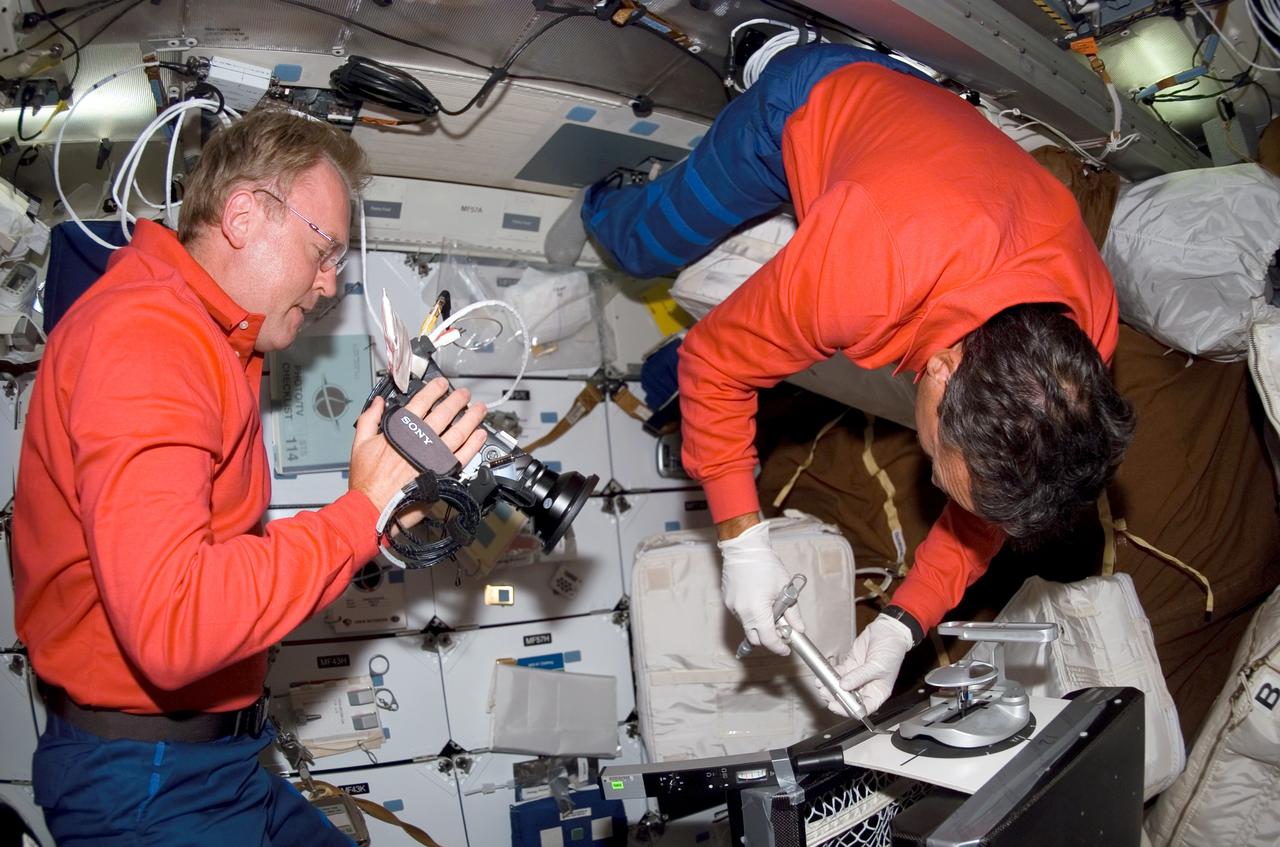
S114-E-7001 (4 August 2005) --- Astronaut Andrew S. W. Thomas, STS-114 mission specialist, photographs a middeck evaluation of the mechanical "plug" option for Reinforced Carbon-Carbon (RCC) repair aboard the Space Shuttle Discovery. Astronaut Charles J. Camarda, mission specialist, uses special pre-designated tools to accomplish the procedure, along with round thin, flexible 7-inch-diamter carbon-silicon cover plates designed to flex up to 0.25 inch to conform to the wing leading edge RCC panels, a hardware attachment mechanism similar to a toggle bolt and sealant.
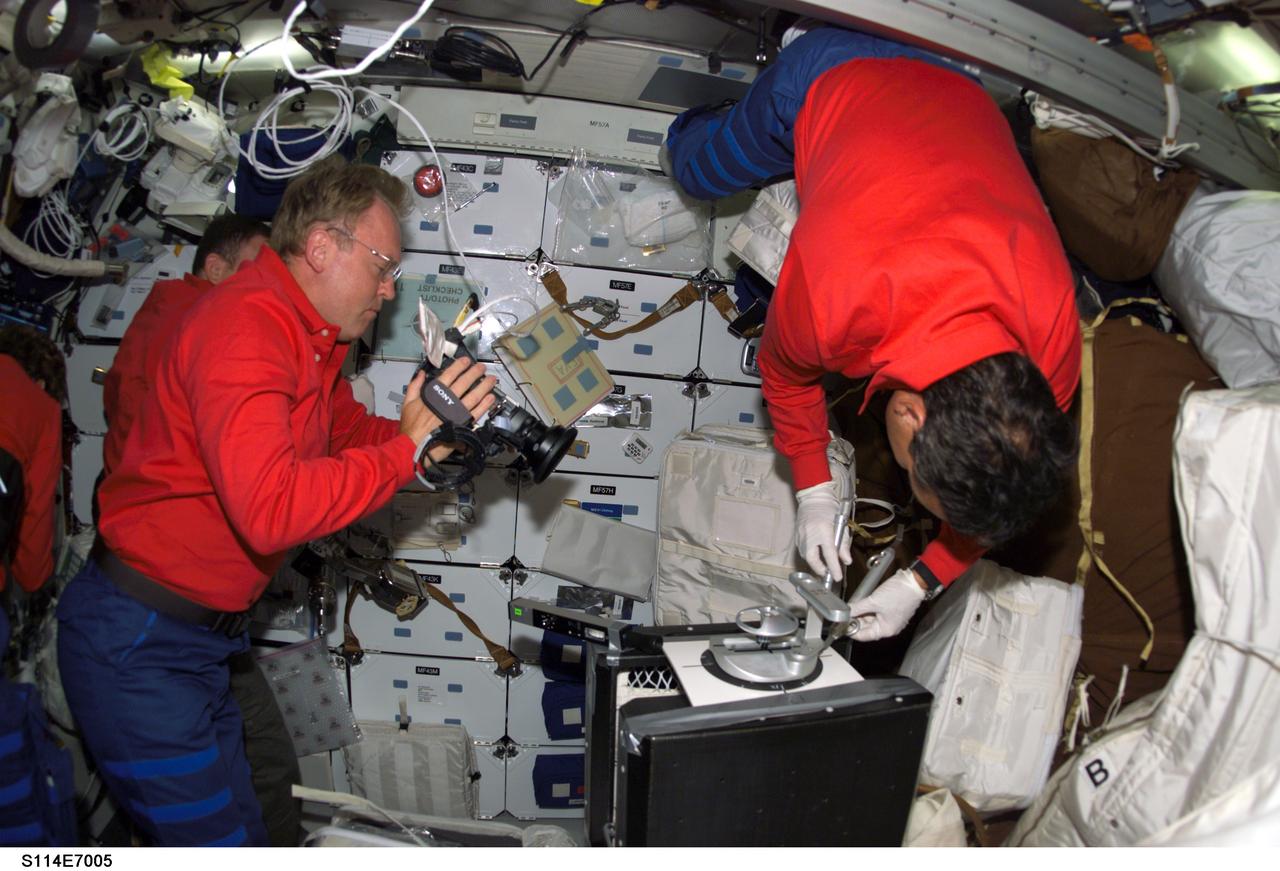
S114-E-7005 (4 August 2005) --- Astronaut Andrew S. W. Thomas, STS-114 mission specialist, photographs a middeck evaluation of the mechanical "plug" option for Reinforced Carbon-Carbon (RCC) repair aboard the Space Shuttle Discovery. Astronaut Charles J. Camarda, mission specialist, uses special pre-designated tools to accomplish the procedure, along with round thin, flexible 7-inch-diamter carbon-silicon cover plates designed to flex up to 0.25 inch to conform to the wing leading edge RCC panels, a hardware attachment mechanism similar to a toggle bolt and sealant.
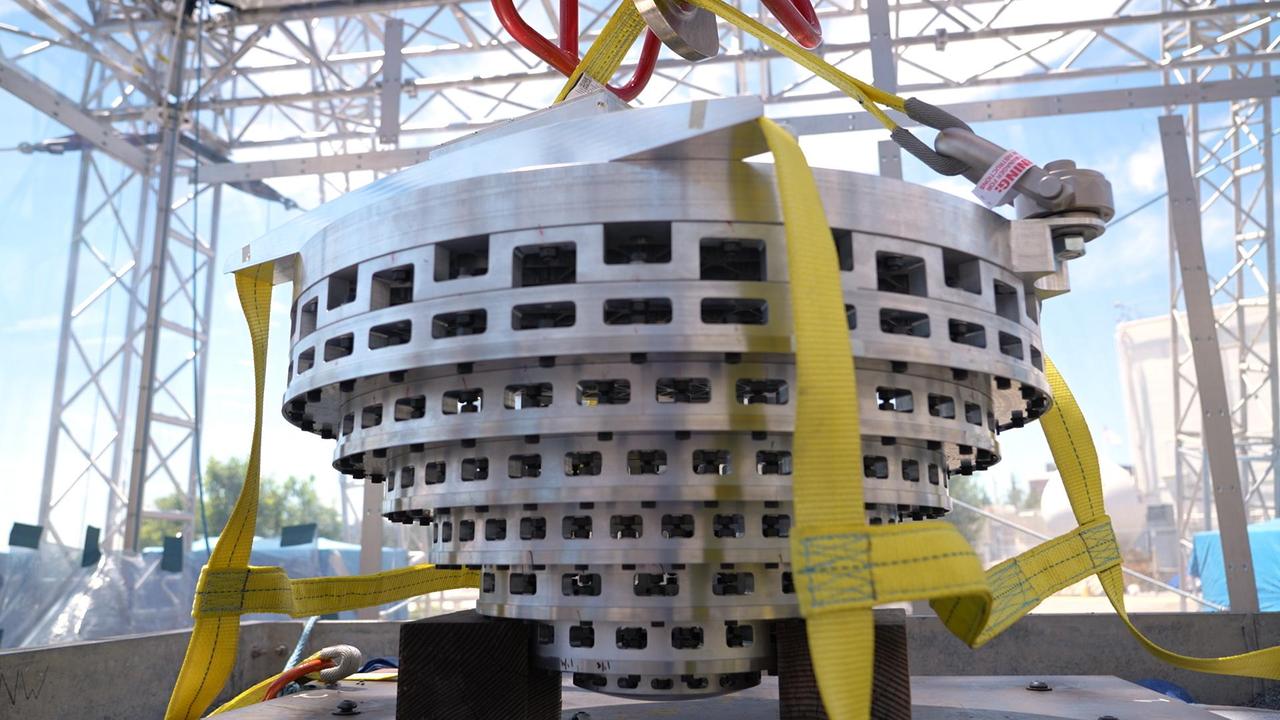
This prototype of a collapsible Mars lander base is part of SHIELD (Simplified High Impact Energy Landing Device), a project aimed at developing spacecraft that would intentionally crash land on the Red Planet, using an accordion-like, collapsible base that acts like the crumple zone of a car to absorb the energy of a hard impact. The design could drastically reduce the cost of landing on Mars by simplifying the harrowing entry, descent, and landing process and expanding options for possible landing sites. Developed at NASA's Jet Propulsion Laboratory in Southern California, the prototype was attached to a drop tower on Aug. 12, 2022, at JPL. https://photojournal.jpl.nasa.gov/catalog/PIA25420
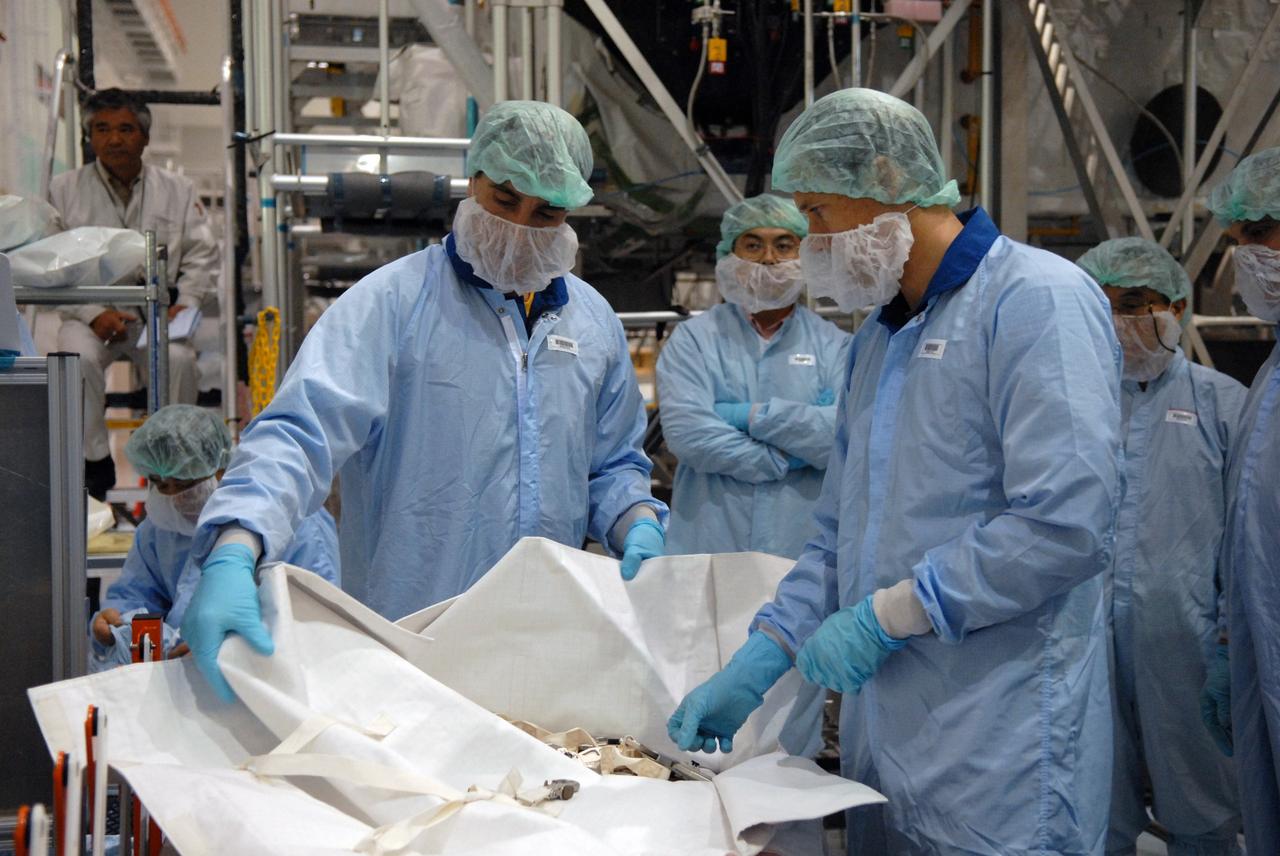
CAPE CANAVERAL, Fla. – In the Space Station Processing Facility at NASA's Kennedy Space Center in Florida, members of the STS-127 Mission Specialists Chris Cassidy and Tom Marshburn review options of how they will stow the excess thermal blankets on the Japanese Experiment Module's Experiment Logistics Module-Exposed Section, or ELM-ES, after they remove them on-orbit. The crew members are at Kennedy for Crew Equipment Interface Test activities, or CEIT, which provides experience handling tools, equipment and hardware for the mission. The payload will be launched to the International Space Station aboard space shuttle Endeavour on the STS-127 mission, targeted for launch on May 15. Photo credit: NASA/Dimitrios Gerondidakis
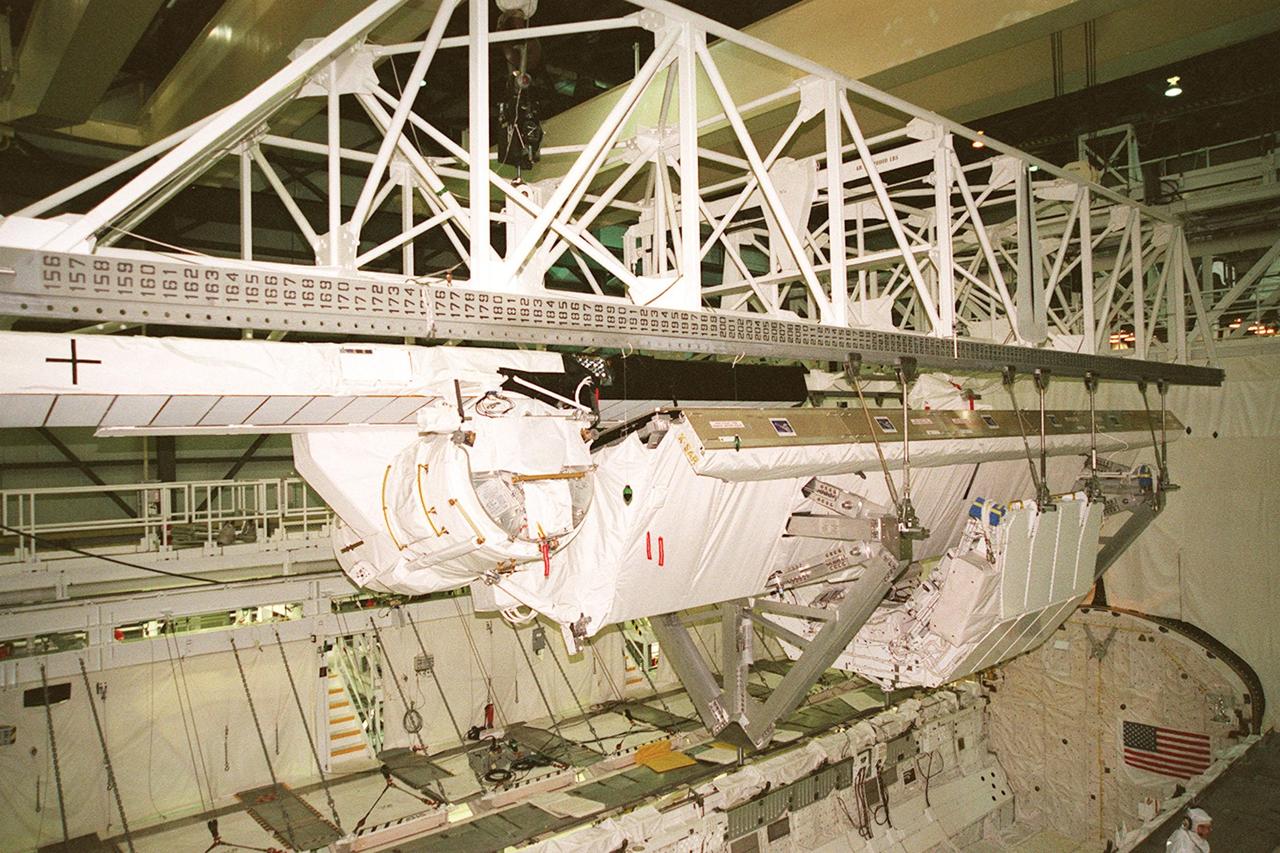
Inside orbiter Endeavour's payload bay, a crane lifts the Shuttle Radar Topography Mission (SRTM) for its transfer out of the orbiter to a payload canister. The payload on mission STS-99, SRTM is being removed to allow technicians access to the orbiter's midbody for planned wiring inspections. Endeavour is in the Orbiter Processing Facility. The entire fleet of orbiters is being inspected for wiring abrasions after the problem was first discovered in Columbia. Shuttle managers are reviewing several manifest options and could establish new target launch dates for the balance of 1999 next week. Shuttle Endeavour currently remains slated for launch in early October
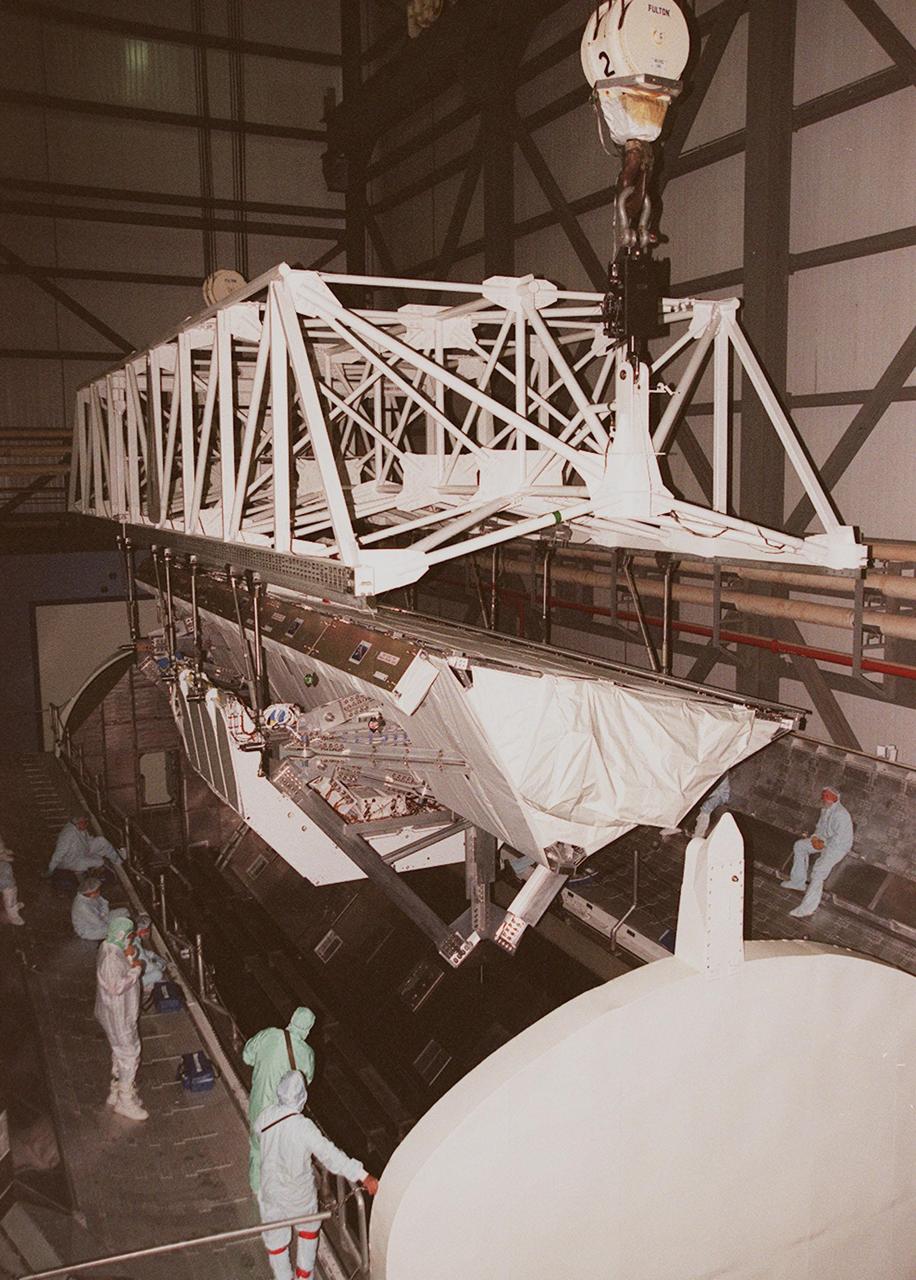
In the Orbiter Processing Facility, workers observe as an overhead crane lowers the Shuttle Radar Topography Mission (SRTM) into a payload canister. The payload on mission STS-99, SRTM was removed from orbiter Endeavour's payload bay to allow technicians access to the orbiter's midbody for planned wiring inspections. The entire fleet of orbiters is being inspected for wiring abrasions after the problem was first discovered in Columbia. Shuttle managers are reviewing several manifest options and could establish new target launch dates for the balance of 1999 next week. Shuttle Endeavour currently remains slated for launch in early October
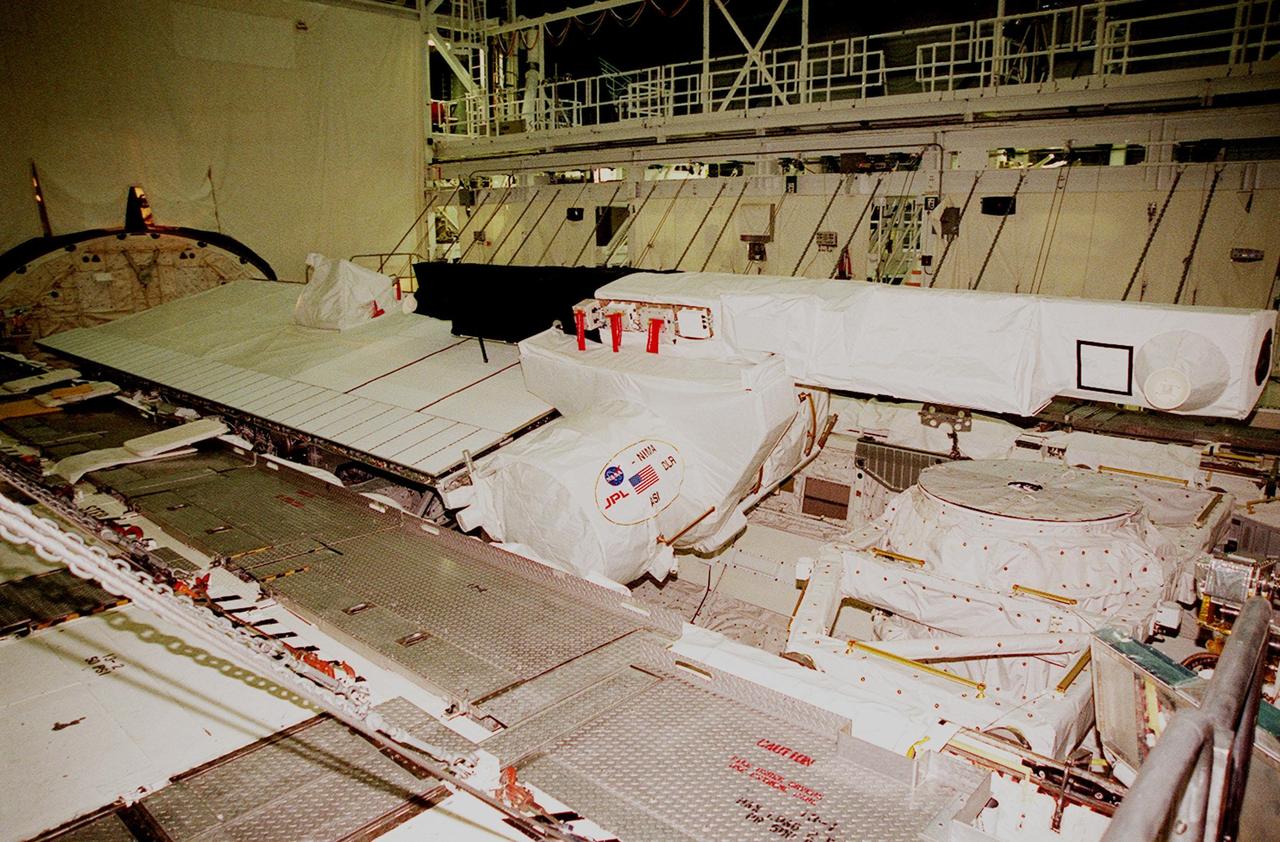
In the center of orbiter Endeavour's payload bay is the Shuttle Radar Topography Mission (SRTM), being prepared for transfer out of the orbiter to a payload canister. The payload on mission STS-99, SRTM is being removed to allow technicians access to the orbiter's midbody for planned wiring inspections. Endeavour is in the Orbiter Processing Facility. The entire fleet of orbiters is being inspected for wiring abrasions after the problem was first discovered in Columbia. Shuttle managers are reviewing several manifest options and could establish new target launch dates for the balance of 1999 next week. Shuttle Endeavour currently remains slated for launch in early October
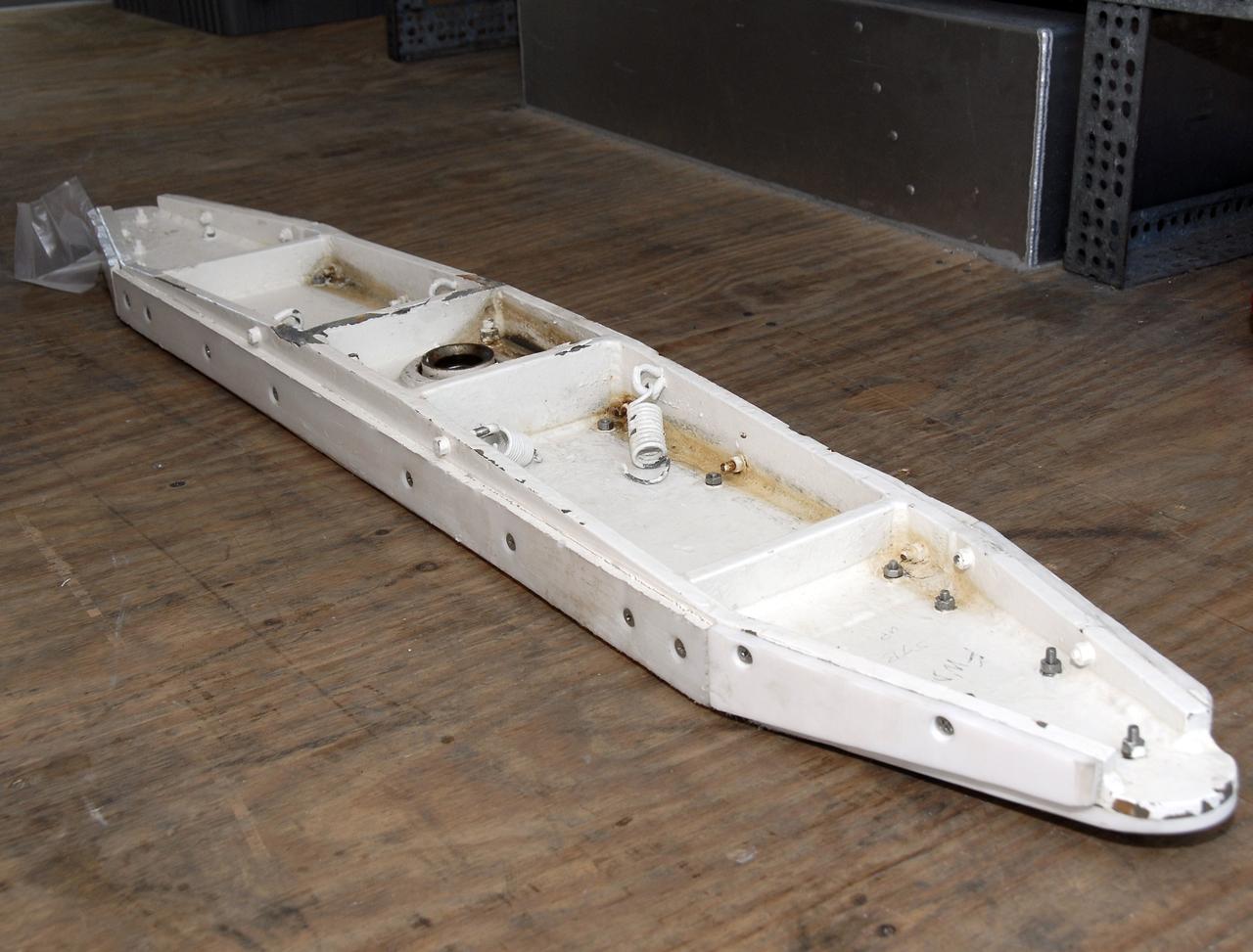
CAPE CANAVERAL, Fla. - Technicians removed a “shoe” on the Hubble payload canister at Launch pad 39A at NASA’s Kennedy Space Center in Florida. The canister arrived at the pad on Saturday evening; however, early Sunday morning technicians were unable to place the canister into the pad’s payload changeout room for space shuttle Atlantis’ STS-125 mission. Teflon pads on the “shoes” attached to the outside of the payload canister that help the canister move along the guide rails didn’t fit properly. The shoes were removed and several options were considered, including slightly shaving down the pads so the shoes will fit onto the rails. STS-125 is the fifth and final shuttle Hubble Space Telescope servicing mission. Atlantis’ launch is targeted for Oct. 10. Photo credit: NASA/Kim Shiflett.
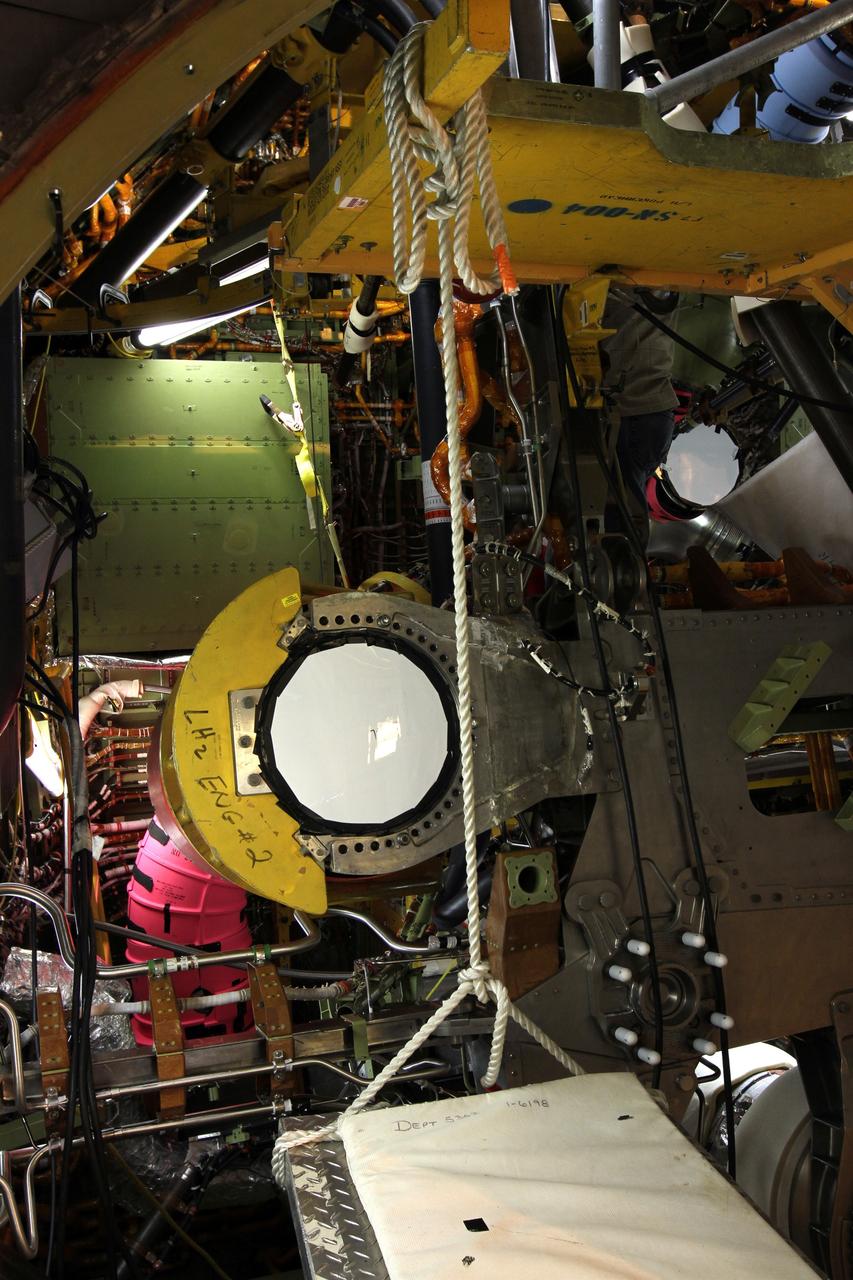
CAPE CANAVERAL, Fla. – In Orbiter Processing Facility-1 at NASA’s Kennedy Space Center in Florida, operations are under way to remove the fuel line that supplied liquid hydrogen propellant to space shuttle Atlantis’ main engine No. 2. The liquid hydrogen lines will be placed in storage to preserve the option to reuse them on NASA’s Space Launch System heavy-lift vehicle, under development. The work is part of the Space Shuttle Program’s transition and retirement processing of shuttle Atlantis. A groundbreaking was held Jan. 18 for Atlantis' future home, a 65,000-square-foot exhibit hall in Shuttle Plaza at the Kennedy Space Center Visitor Complex. Atlantis is scheduled to roll over to the visitor complex in November in preparation for the exhibit’s grand opening in July 2013. For more information, visit http://www.nasa.gov/shuttle. Photo credit: NASA/Ben Smegelsky
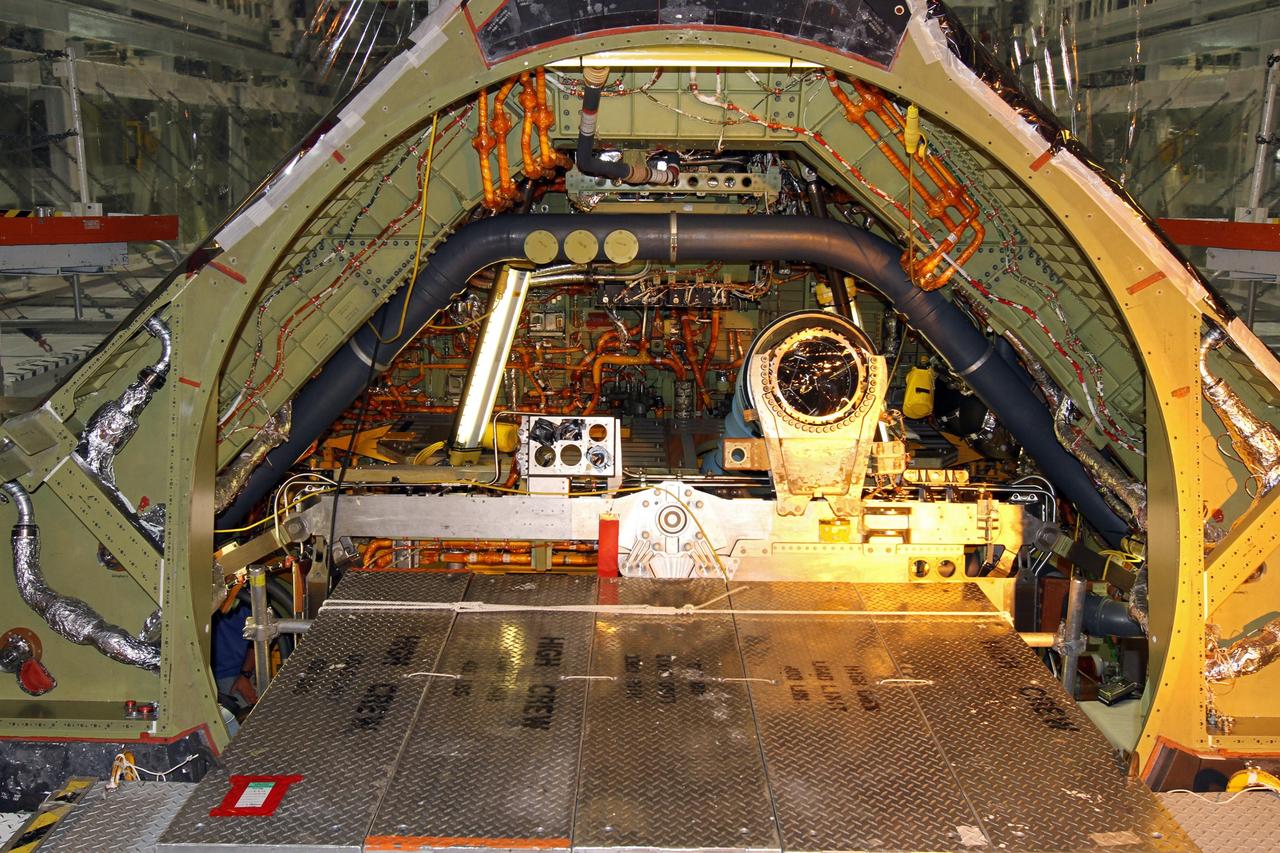
CAPE CANAVERAL, Fla. – In Orbiter Processing Facility-1 at NASA’s Kennedy Space Center in Florida, space shuttle Atlantis’ engine well is empty where main engine No. 1 has been removed. The liquid hydrogen lines will be placed in storage to preserve the option to reuse them on NASA’s Space Launch System heavy-lift vehicle, under development. The work is part of the Space Shuttle Program’s transition and retirement processing of shuttle Atlantis. A groundbreaking was held Jan. 18 for Atlantis' future home, a 65,000-square-foot exhibit hall in Shuttle Plaza at the Kennedy Space Center Visitor Complex. Atlantis is scheduled to roll over to the visitor complex in November in preparation for the exhibit’s grand opening in July 2013. For more information, visit http://www.nasa.gov/shuttle. Photo credit: NASA/Ben Smegelsky
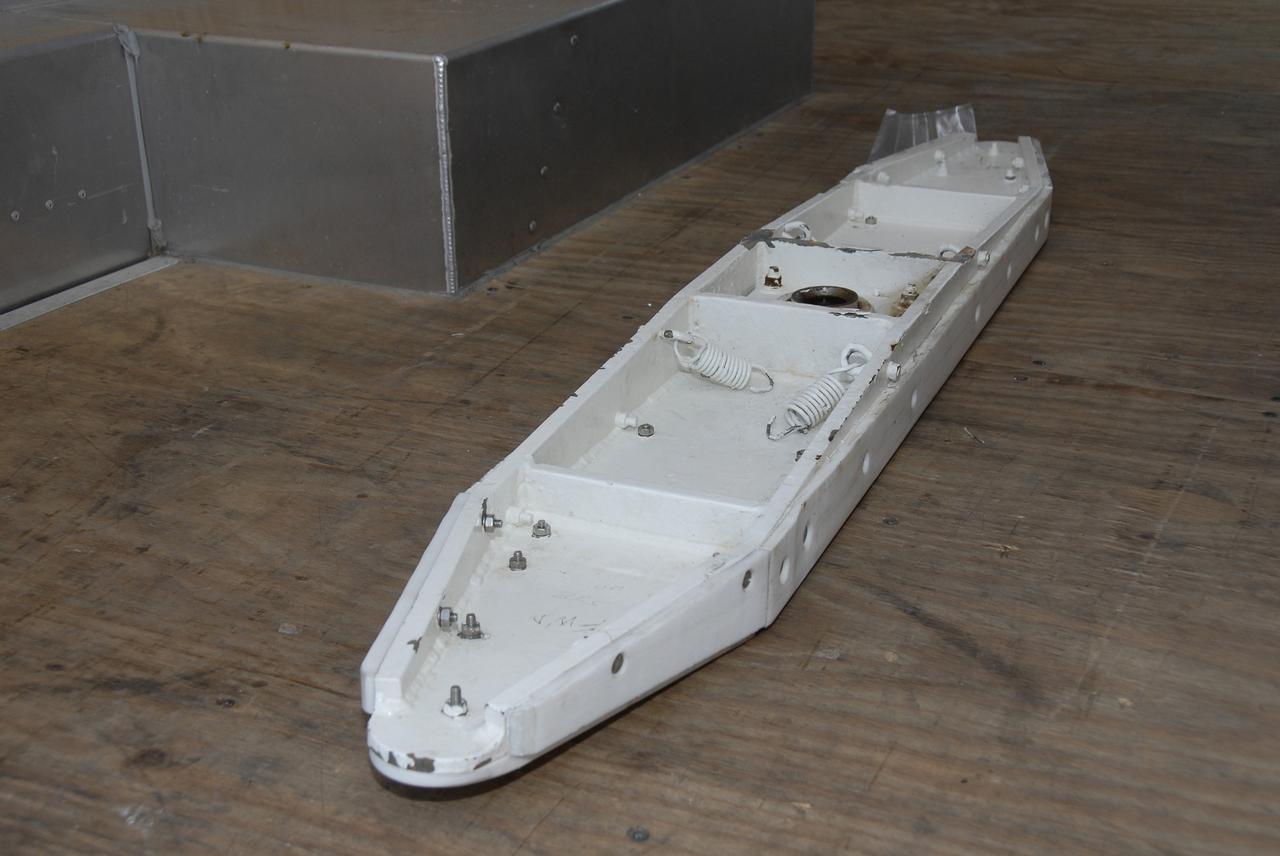
CAPE CANAVERAL, Fla. - Technicians removed a “shoe” on the Hubble payload canister at Launch pad 39A at NASA’s Kennedy Space Center in Florida. The canister arrived at the pad on Saturday evening; however, early Sunday morning technicians were unable to place the canister into the pad’s payload changeout room for space shuttle Atlantis’ STS-125 mission. Teflon pads on the “shoes” attached to the outside of the payload canister that help the canister move along the guide rails didn’t fit properly. The shoes were removed and several options were considered, including slightly shaving down the pads so the shoes will fit onto the rails. STS-125 is the fifth and final shuttle Hubble Space Telescope servicing mission. Atlantis’ launch is targeted for Oct. 10. Photo credit: NASA/Kim Shiflett.
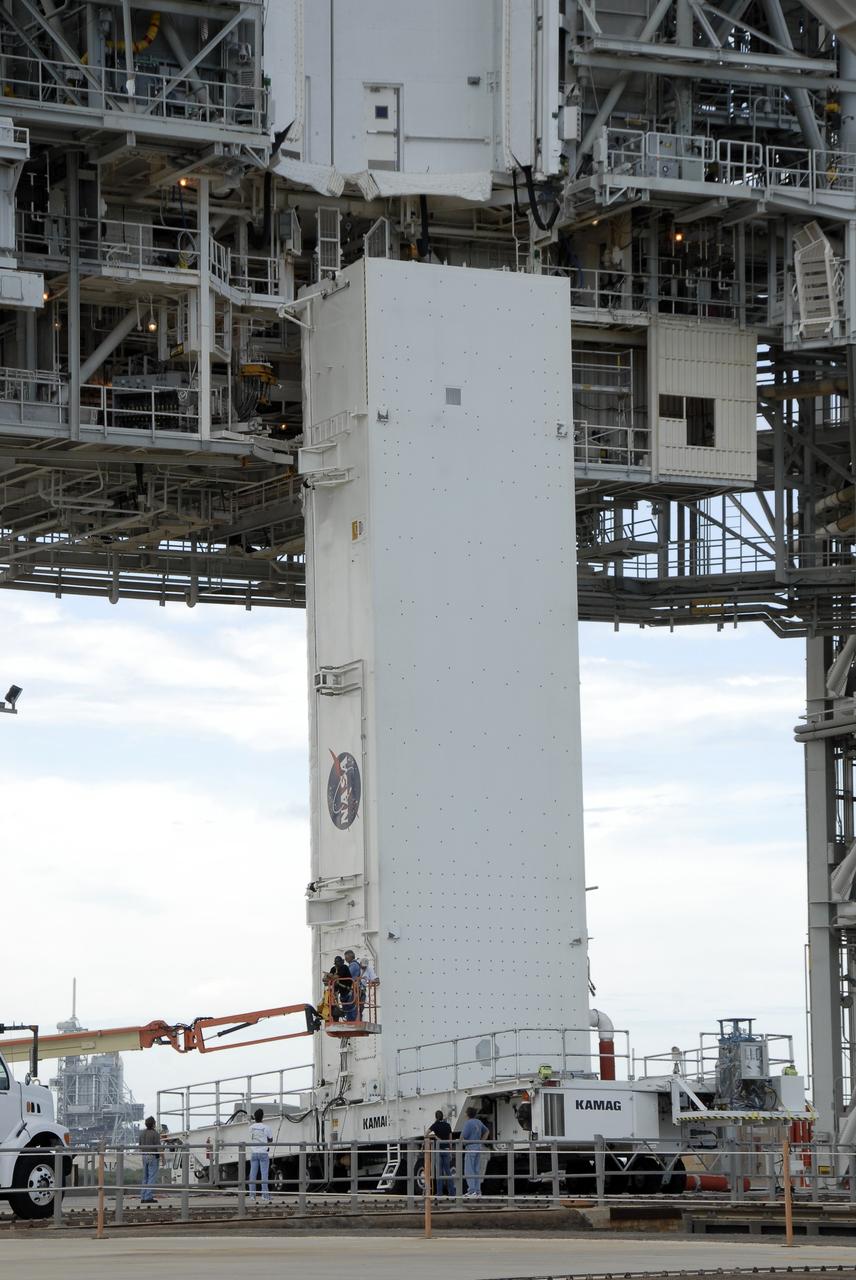
CAPE CANAVERAL, Fla. - At Launch Pad 39A at NASA’s Kennedy Space Center in Florida, technicians work to move the Hubble payload canister into the payload changeout room for space shuttle Atlantis’ STS-125 mission. The canister arrived at the pad on Saturday evening, however, early Sunday morning technicians were unable to place the canister into the pad’s payload changeout room. Teflon pads on “shoes” attached to the outside of the payload canister that help the canister move along guide rails didn’t fit properly. The shoes were removed and several options were considered, including slightly shaving down the pads so the shoes will fit onto the rails. STS-125 is the fifth and final shuttle Hubble Space Telescope servicing mission. Atlantis’ launch is targeted for Oct. 10. Photo credit: NASA/Kim Shiflett.
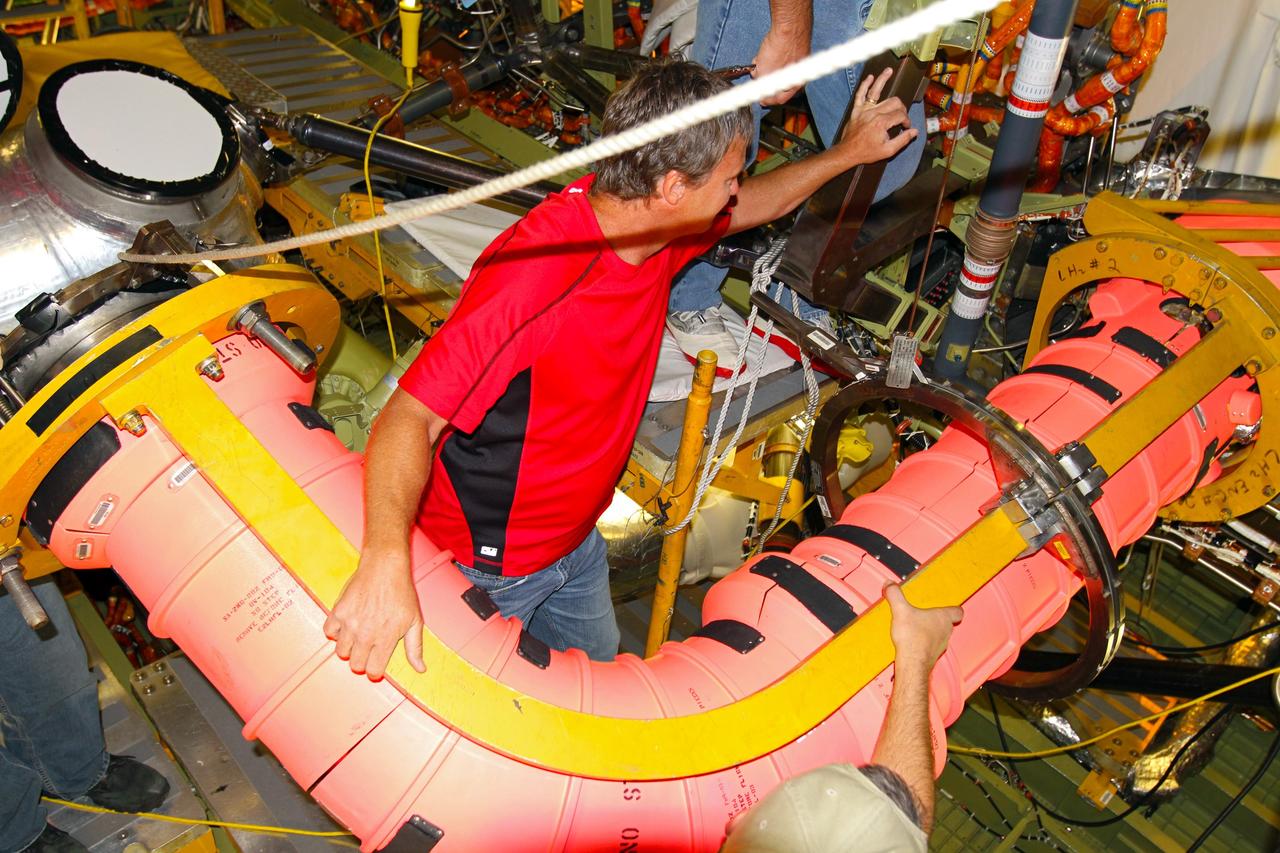
CAPE CANAVERAL, Fla. – In Orbiter Processing Facility-1 at NASA’s Kennedy Space Center in Florida, United Space Alliance technicians remove the fuel line that supplied liquid hydrogen propellant to space shuttle Atlantis’ main engine No. 2. The liquid hydrogen lines will be placed in storage to preserve the option to reuse them on NASA’s Space Launch System heavy-lift vehicle, under development. The work is part of the Space Shuttle Program’s transition and retirement processing of shuttle Atlantis. A groundbreaking was held Jan. 18 for Atlantis' future home, a 65,000-square-foot exhibit hall in Shuttle Plaza at the Kennedy Space Center Visitor Complex. Atlantis is scheduled to roll over to the visitor complex in November in preparation for the exhibit’s grand opening in July 2013. For more information, visit http://www.nasa.gov/shuttle. Photo credit: NASA/Ben Smegelsky
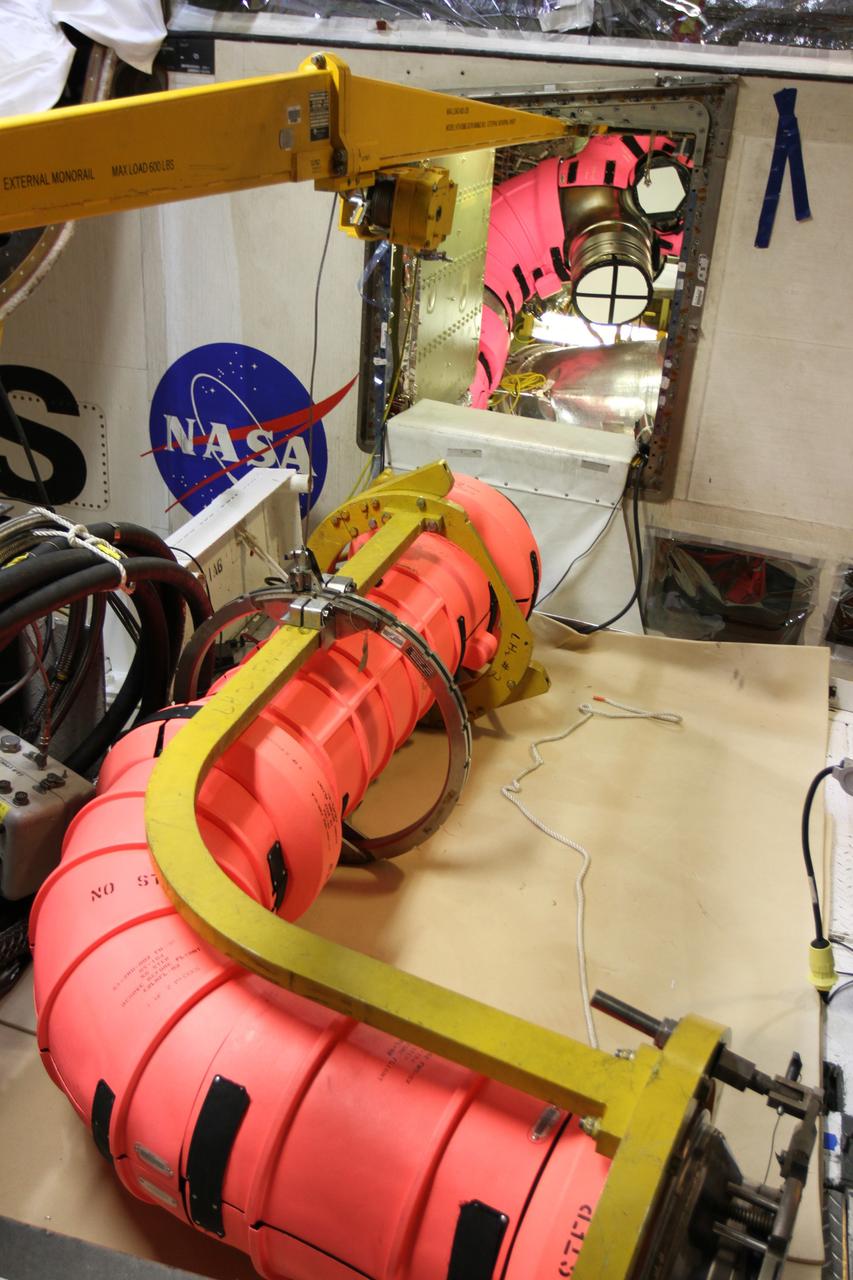
CAPE CANAVERAL, Fla. – In Orbiter Processing Facility-1 at NASA’s Kennedy Space Center in Florida, the fuel line that supplied liquid hydrogen propellant to space shuttle Atlantis’ main engine No. 2 has been disconnected from the shuttle. The liquid hydrogen lines will be placed in storage to preserve the option to reuse them on NASA’s Space Launch System heavy-lift vehicle, under development. The work is part of the Space Shuttle Program’s transition and retirement processing of shuttle Atlantis. A groundbreaking was held Jan. 18 for Atlantis' future home, a 65,000-square-foot exhibit hall in Shuttle Plaza at the Kennedy Space Center Visitor Complex. Atlantis is scheduled to roll over to the visitor complex in November in preparation for the exhibit’s grand opening in July 2013. For more information, visit http://www.nasa.gov/shuttle. Photo credit: NASA/Ben Smegelsky
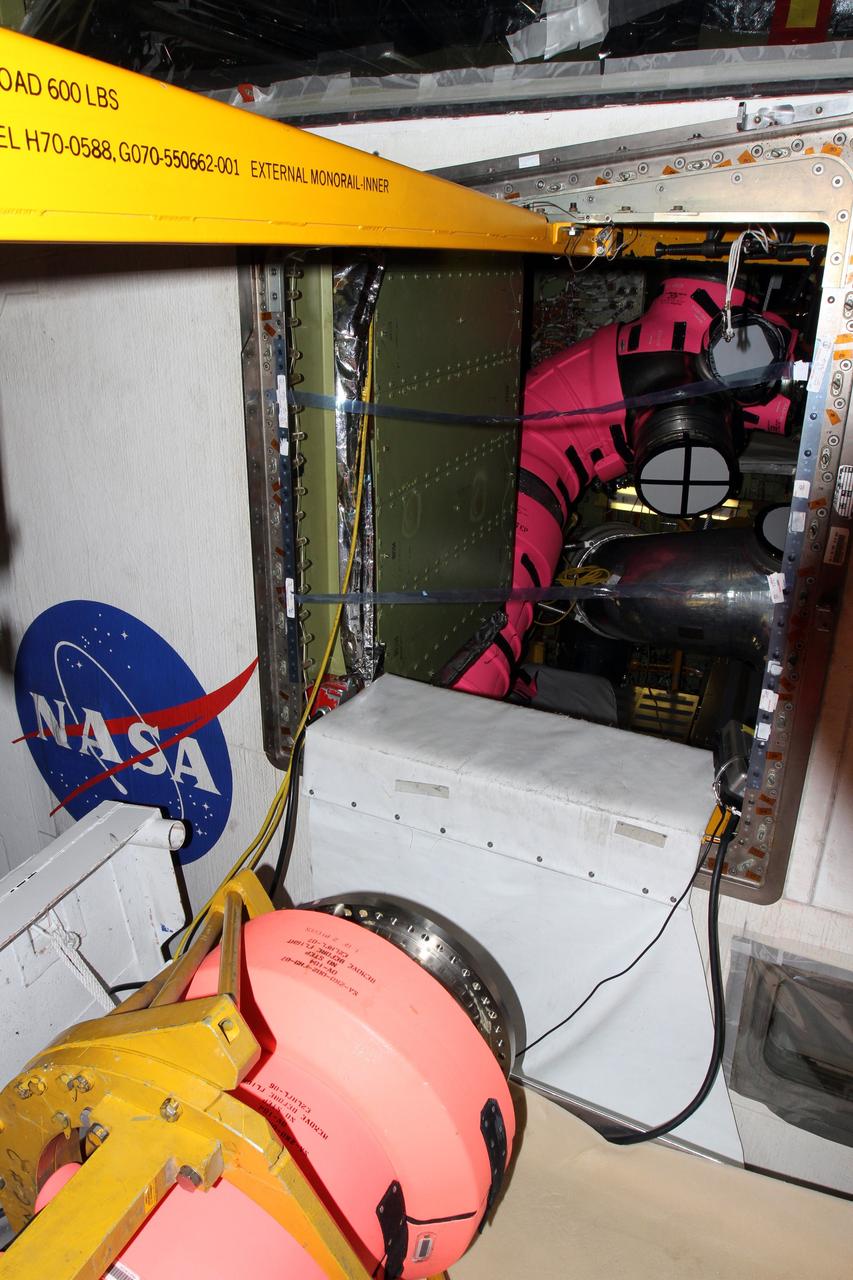
CAPE CANAVERAL, Fla. – In Orbiter Processing Facility-1 at NASA’s Kennedy Space Center in Florida, the first of three fuel lines that supplied liquid hydrogen propellant to space shuttle Atlantis’ main engines is disconnected from the shuttle. The liquid hydrogen lines will be placed in storage to preserve the option to reuse them on NASA’s Space Launch System heavy-lift vehicle, under development. The work is part of the Space Shuttle Program’s transition and retirement processing of shuttle Atlantis. A groundbreaking was held Jan. 18 for Atlantis' future home, a 65,000-square-foot exhibit hall in Shuttle Plaza at the Kennedy Space Center Visitor Complex. Atlantis is scheduled to roll over to the visitor complex in November in preparation for the exhibit’s grand opening in July 2013. For more information, visit http://www.nasa.gov/shuttle. Photo credit: NASA/Ben Smegelsky
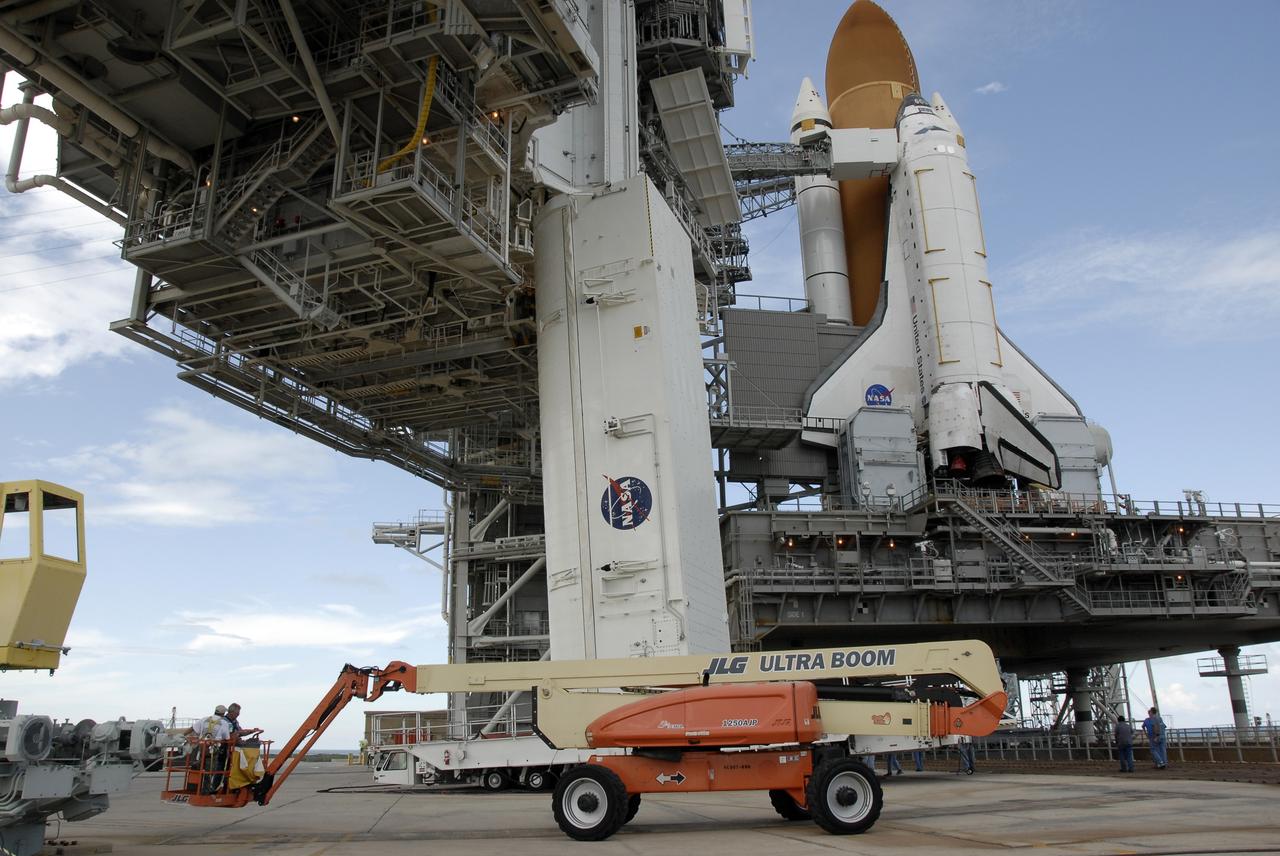
CAPE CANAVERAL, Fla. - At Launch Pad 39A at NASA’s Kennedy Space Center in Florida, technicians work to move the Hubble payload canister into the payload changeout room for space shuttle Atlantis’ STS-125 mission. The canister arrived at the pad on Saturday evening, however, early Sunday morning technicians were unable to place the canister into the pad’s payload changeout room. Teflon pads on “shoes” attached to the outside of the payload canister that help the canister move along guide rails didn’t fit properly. The shoes, one seen here, were removed and several options were considered, including slightly shaving down the pads so the shoes will fit onto the rails. STS-125 is the fifth and final shuttle Hubble Space Telescope servicing mission. Atlantis’ launch is targeted for Oct. 10. Photo credit: NASA/Kim Shiflett.
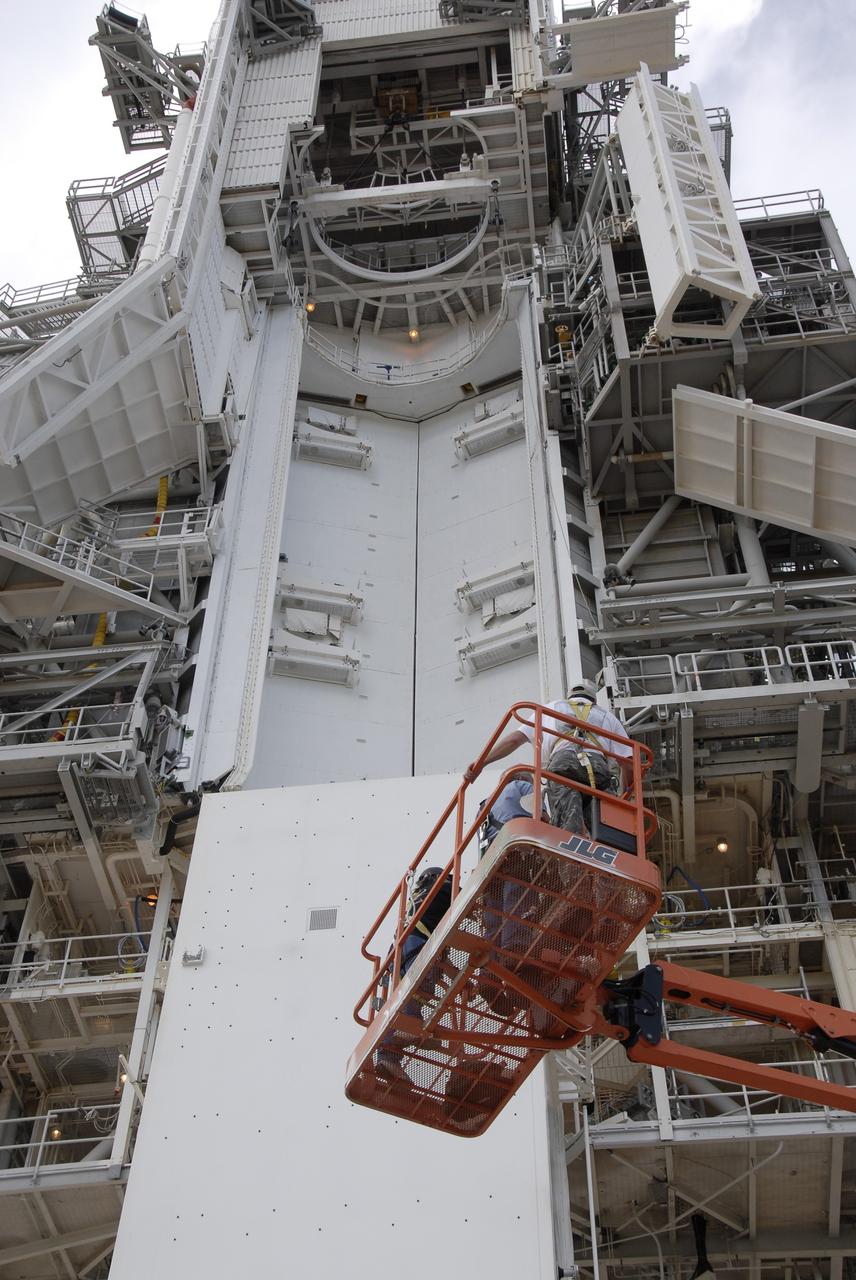
CAPE CANAVERAL, Fla. - At Launch Pad 39A at NASA’s Kennedy Space Center in Florida, technicians work to move the Hubble payload canister into the payload changeout room for space shuttle Atlantis’ STS-125 mission. The canister arrived at the pad on Saturday evening; however, early Sunday morning technicians were unable to place the canister into the pad’s payload changeout room. Teflon pads on “shoes” attached to the outside of the payload canister that help the canister move along the guide rails didn’t fit properly. The shoes were removed and several options were considered, including slightly shaving down the pads so the shoes will fit onto the rails. STS-125 is the fifth and final shuttle Hubble Space Telescope servicing mission. Atlantis’ launch is targeted for Oct. 10. Photo credit: NASA/Kim Shiflett.
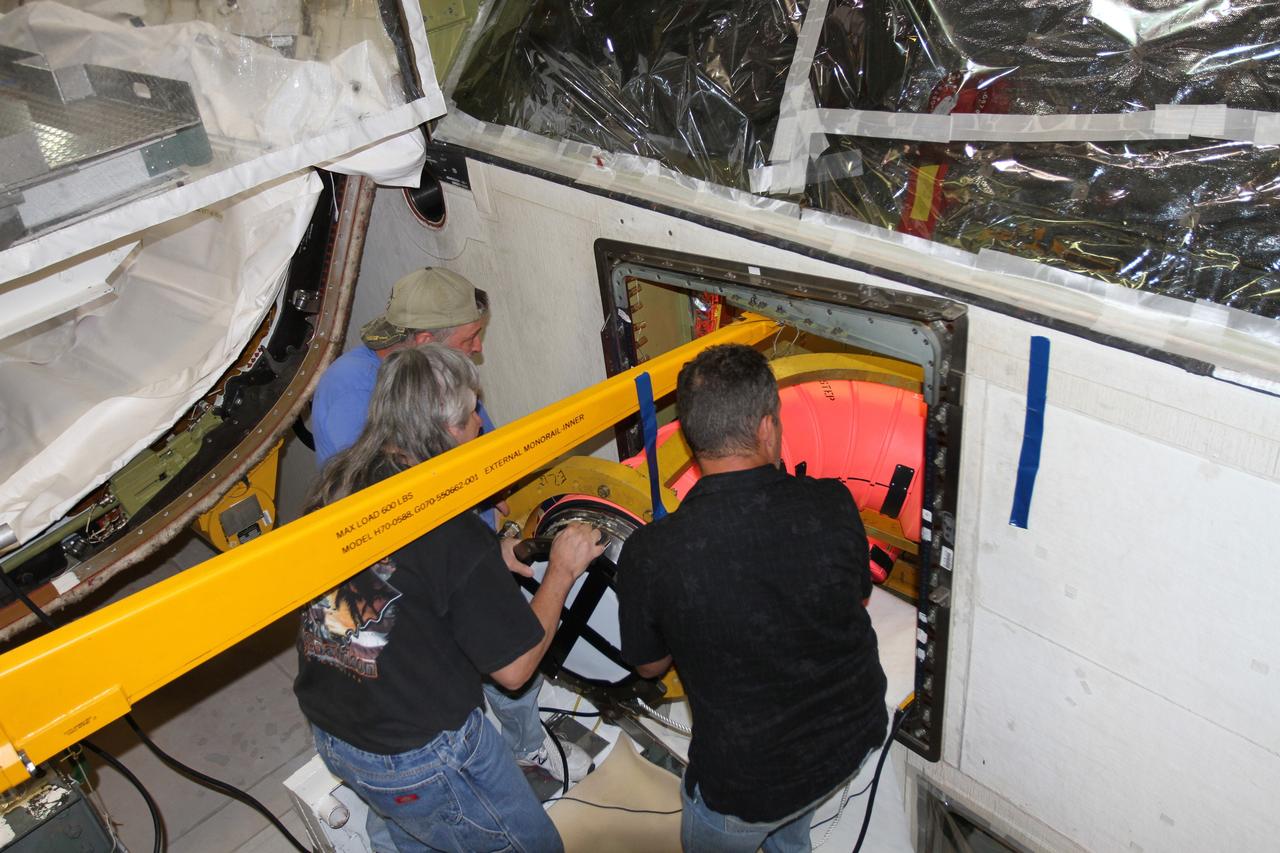
CAPE CANAVERAL, Fla. – In Orbiter Processing Facility-1 at NASA’s Kennedy Space Center in Florida, United Space Alliance technicians work with other technicians inside space shuttle Atlantis’ aft compartment, out of view, to remove the fuel line that supplied liquid hydrogen propellant to Atlantis’ main engine No. 2. The liquid hydrogen lines will be placed in storage to preserve the option to reuse them on NASA’s Space Launch System heavy-lift vehicle, under development. The work is part of the Space Shuttle Program’s transition and retirement processing of shuttle Atlantis. A groundbreaking was held Jan. 18 for Atlantis' future home, a 65,000-square-foot exhibit hall in Shuttle Plaza at the Kennedy Space Center Visitor Complex. Atlantis is scheduled to roll over to the visitor complex in November in preparation for the exhibit’s grand opening in July 2013. For more information, visit http://www.nasa.gov/shuttle. Photo credit: NASA/Ben Smegelsky
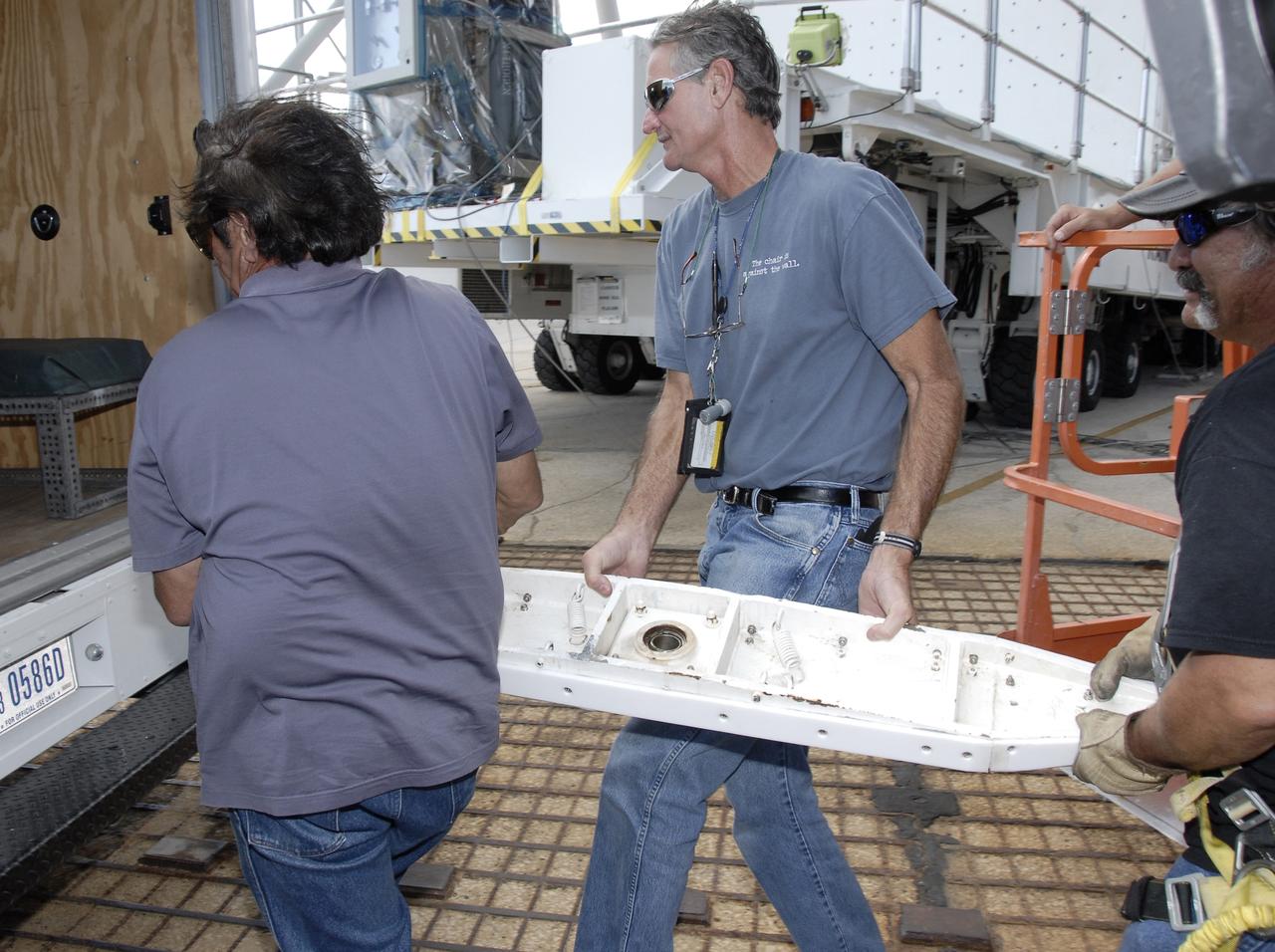
CAPE CANAVERAL, Fla. - Technicians carry a “shoe” that was removed from the Hubble payload canister at Launch Pad 39A at NASA’s Kennedy Space Center in Florida. The canister arrived at the pad on Saturday evening, however, early Sunday morning technicians were unable to place the canister into the pad’s payload changeout room for space shuttle Atlantis’ STS-125 mission. Teflon pads on “shoes” attached to the outside of the payload canister that help the canister move along the guide rails didn’t fit properly. The shoes were removed and several options were considered, including slightly shaving down the pads so the shoes will fit onto the rails. STS-125 is the fifth and final shuttle Hubble Space Telescope servicing mission. Atlantis’ launch is targeted for Oct. 10. Photo credit: NASA/Kim Shiflett.

CAPE CANAVERAL, Fla. - A close up view of one of the “shoes” removed from the Hubble payload canister at Launch Pad 39A at NASA’s Kennedy Space Center in Florida. The canister arrived at the pad on Saturday evening; however, early Sunday morning technicians were unable to place the canister into the pad’s payload changeout room for space shuttle Atlantis’ STS-125 mission. Teflon pads on “shoes” attached to the outside of the payload canister that help the canister move along the guide rails didn’t fit properly. The shoes were removed and several options were considered, including slightly shaving down the pads so the shoes will fit onto the rails. STS-125 is the fifth and final shuttle Hubble Space Telescope servicing mission. Atlantis’ launch is targeted for Oct. 10. Photo credit: NASA/Kim Shiflett.
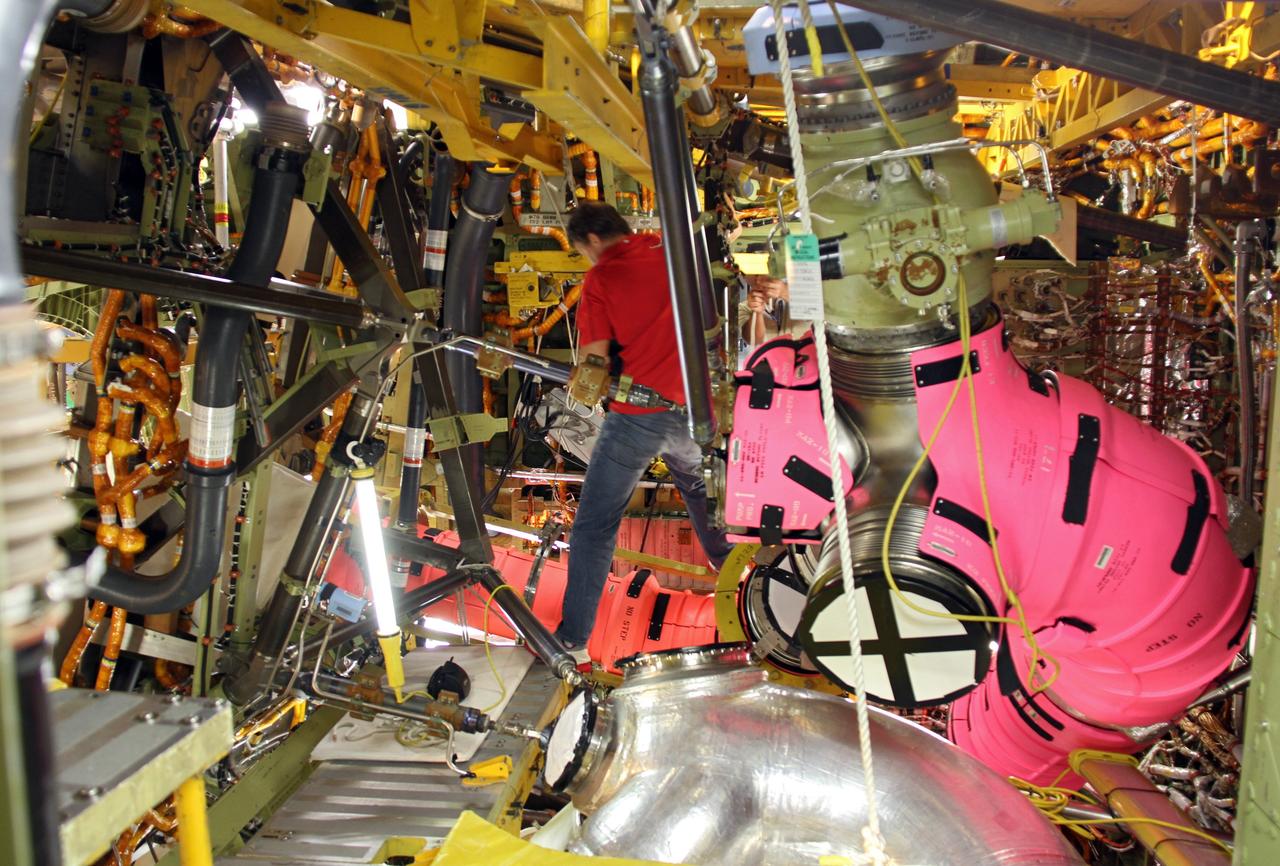
CAPE CANAVERAL, Fla. – In Orbiter Processing Facility-1 at NASA’s Kennedy Space Center in Florida, the camera catches a glimpse of the complex infrastructure in space shuttle Atlantis’ aft compartment as operations get under way to remove one of three fuel lines that supplied liquid hydrogen propellant to Atlantis’ main engines. The liquid hydrogen lines will be placed in storage to preserve the option to reuse them on NASA’s Space Launch System heavy-lift vehicle, under development. The work is part of the Space Shuttle Program’s transition and retirement processing of shuttle Atlantis. A groundbreaking was held Jan. 18 for Atlantis' future home, a 65,000-square-foot exhibit hall in Shuttle Plaza at the Kennedy Space Center Visitor Complex. Atlantis is scheduled to roll over to the visitor complex in November in preparation for the exhibit’s grand opening in July 2013. For more information, visit http://www.nasa.gov/shuttle. Photo credit: NASA/Ben Smegelsky

This is a computer generated image of a Shuttle launch utilizing 2nd generation Reusable Launch Vehicle (RLV) flyback boosters, a futuristic concept that is currently undergoing study by NASA's Space Launch Initiative (SLI) Propulsion Office, managed by the Marshall Space Fight Center in Huntsville, Alabama, working in conjunction with the Agency's Glenn Research Center in Cleveland, Ohio. Currently, after providing thrust to the Space Shuttle, the solid rocket boosters are parachuted into the sea and are retrieved for reuse. The SLI is considering vehicle concepts that would fly first-stage boosters back to a designated landing site after separation from the orbital vehicle. These flyback boosters would be powered by several jet engines integrated into the booster capable of providing over 100,000 pounds of thrust. The study will determine the requirements for the engines, identify risk mitigation activities, and identify costs associated with risk mitigation and jet engine development and production, as well as determine candidate jet engine options to pursue for the flyback booster.
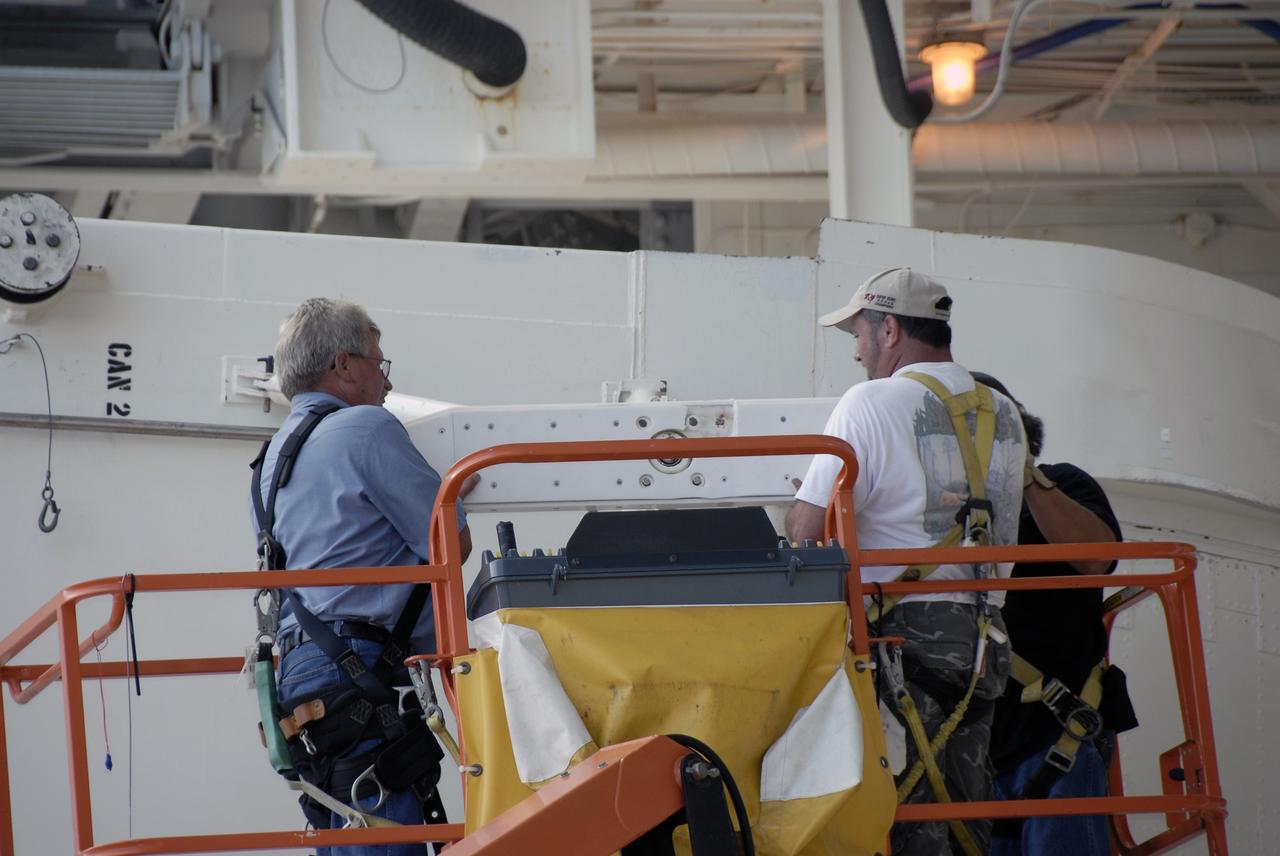
CAPE CANAVERAL, Fla. - At Launch Pad 39A at NASA’s Kennedy Space Center in Florida, technicians work to move the Hubble payload canister into the payload changeout room for space shuttle Atlantis’ STS-125 mission. The canister arrived at the pad on Saturday evening; however, early Sunday morning technicians were unable to place the canister into the pad’s payload changeout room. Teflon pads on “shoes” attached to the outside of the payload canister that help the canister move along the guide rails didn’t fit properly. The shoes were removed and several options were considered, including slightly shaving down the pads so the shoes will fit onto the rails. STS-125 is the fifth and final shuttle Hubble Space Telescope servicing mission. Atlantis’ launch is targeted for Oct. 10. Photo credit: NASA/Kim Shiflett.
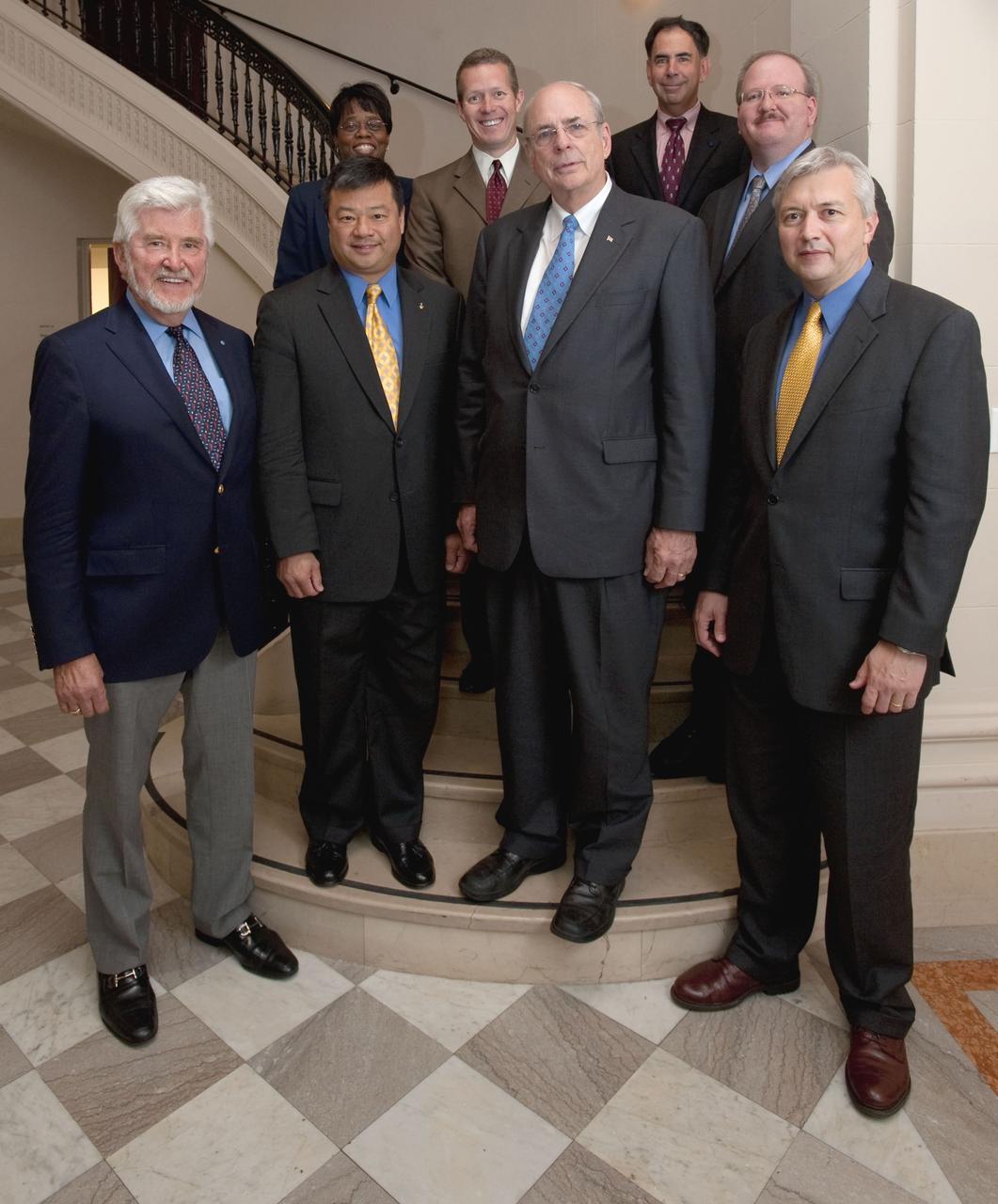
Norman Augustine, chair of the Human Space Flight Review Committee, front center, is joined by other members of the committee, clockwise from left, Bohdan Bejmuk, Leroy Chiao, Dr. Wanda Austin, Philip McAlister, Dr. Edward Crawley, Jeffrey Greason and Dr. Christopher Chyba prior to the start of the first of several public meetings at different U.S. locations, Wednesday, June 17, 2009, at the Carnegie Institution in Washington. The panel will examine ongoing and planned NASA development activities and potential alternatives in order to present options for advancing a safe, innovative, affordable and sustainable human space flight program following the space shuttle's retirement. The committee wil present its results by August 2009. Members of the committee that were not in attendance and are not pictured are Dr. Charles Kennel, Retired Air Force Gen. Lester Lyles and former astronaut Sally Ride. Photo Credit: (NASA/Paul E. Alers)
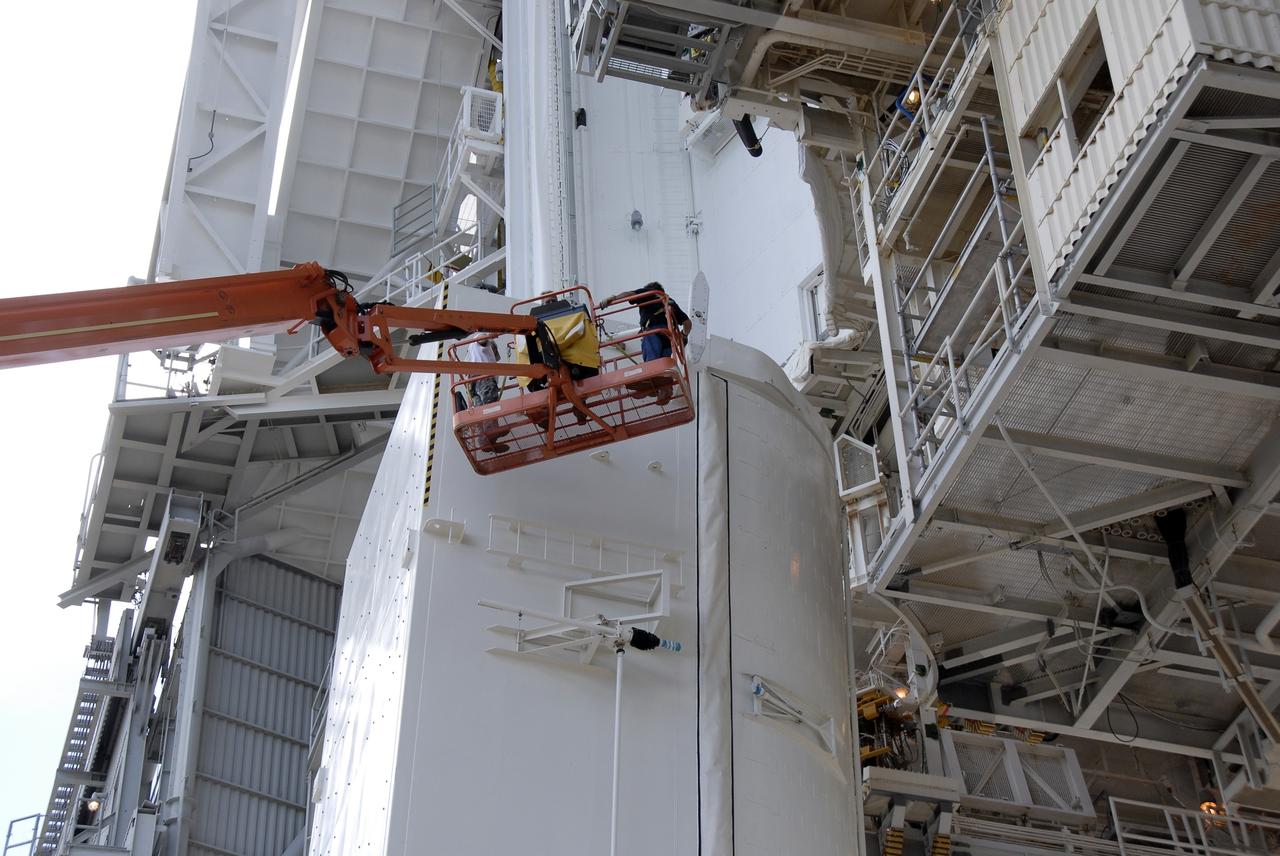
CAPE CANAVERAL, Fla. - At Launch Pad 39A at NASA’s Kennedy Space Center in Florida, technicians work to move the Hubble payload canister into the payload changeout room for space shuttle Atlantis’ STS-125 mission. The canister arrived at the pad on Saturday evening; however, early Sunday morning technicians were unable to place the canister into the pad’s payload changeout room. Teflon pads on “shoes” attached to the outside of the payload canister that help the canister move along the guide rails didn’t fit properly. The shoes were removed and several options were considered, including slightly shaving down the pads so the shoes will fit onto the rails. STS-125 is the fifth and final shuttle Hubble Space Telescope servicing mission. Atlantis’ launch is targeted for Oct. 10. Photo credit: NASA/Kim Shiflett.
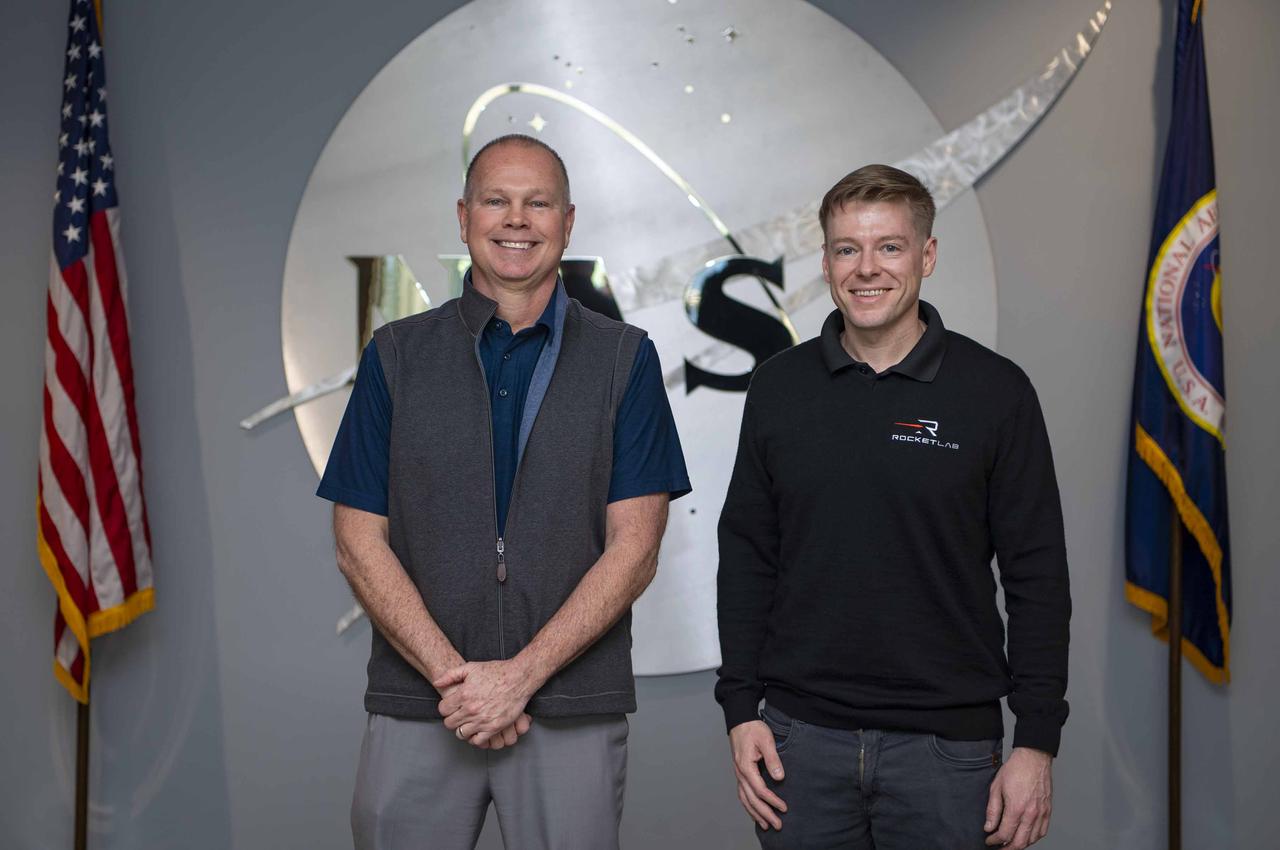
NASA Stennis Director John Bailey, left, welcomes Richard French, Rocket Lab USA, Inc. vice president of business development and strategy of space systems, for a tour of NASA Stennis on Feb. 26. In 2022, NASA and Rocket Lab reached an agreement for the aerospace company to locate its engine test complex at NASA Stennis. The initial 10-year agreement between NASA and Rocket Lab includes an option to extend an additional 10 years. The Archimedes Test Complex includes 24 acres surrounding the site’s A-3 Test Stand. Archimedes is Rocket Lab’s liquid oxygen and liquid methane rocket engine to power its medium-lift Neutron rocket. The company successfully completed the first hot fire of the new Archimedes rocket engine at NASA Stennis in August 2024.
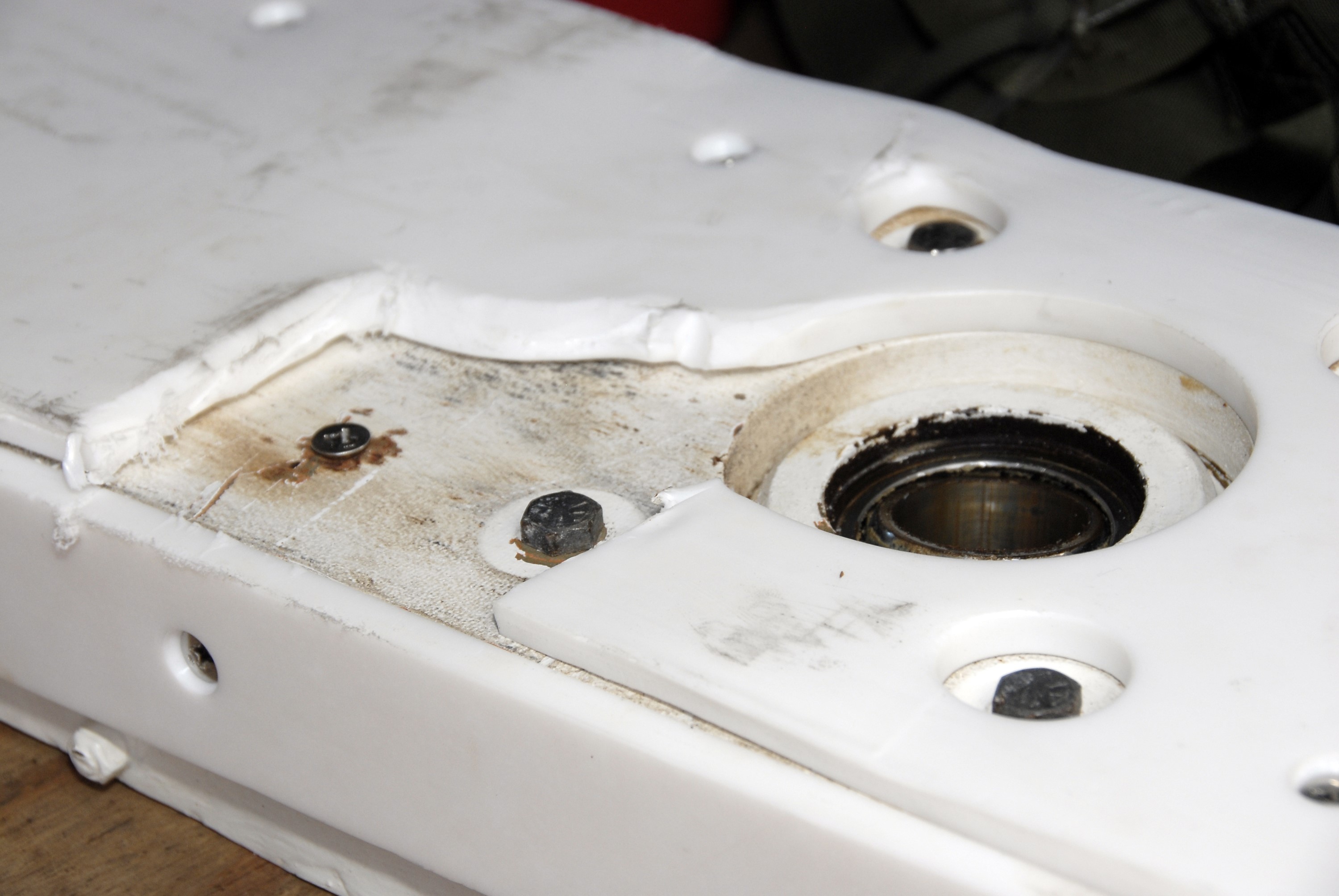
CAPE CANAVERAL, Fla. - A close up view of one of the “shoes” removed from the Hubble payload canister at Launch Pad 39A at NASA’s Kennedy Space Center in Florida. The canister arrived at the pad on Saturday evening; however, early Sunday morning technicians were unable to place the canister into the pad’s payload changeout room for space shuttle Atlantis’ STS-125 mission. Teflon pads on “shoes” attached to the outside of the payload canister that help the canister move along the guide rails didn’t fit properly. The shoes were removed and several options were considered, including slightly shaving down the pads so the shoes will fit onto the rails. STS-125 is the fifth and final shuttle Hubble Space Telescope servicing mission. Atlantis’ launch is targeted for Oct. 10. Photo credit: NASA/Kim Shiflett.
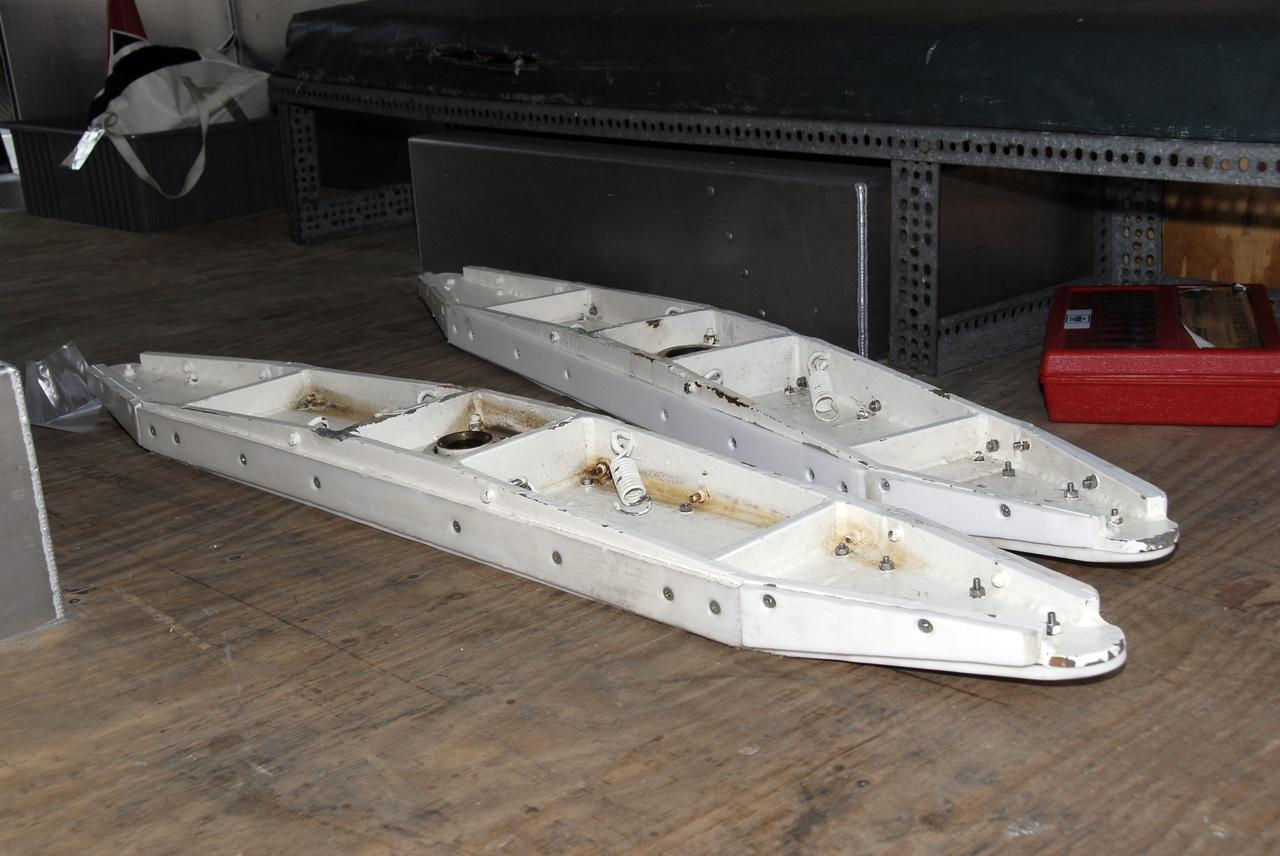
CAPE CANAVERAL, Fla. - Technicians removed two “shoes” from the Hubble payload canister at Launch Pad 39A at NASA’s Kennedy Space Center in Florida. The canister arrived at the pad on Saturday evening; however, early Sunday morning technicians were unable to place the canister into the pad’s payload changeout room for space shuttle Atlantis’ STS-125 mission. Teflon pads on “shoes” attached to the outside of the payload canister that help the canister move along the guide rails didn’t fit properly. The shoes were removed and several options were considered, including slightly shaving down the pads so the shoes will fit onto the rails. STS-125 is the fifth and final shuttle Hubble Space Telescope servicing mission. Atlantis’ launch is targeted for Oct. 10. Photo credit: NASA/Kim Shiflett.
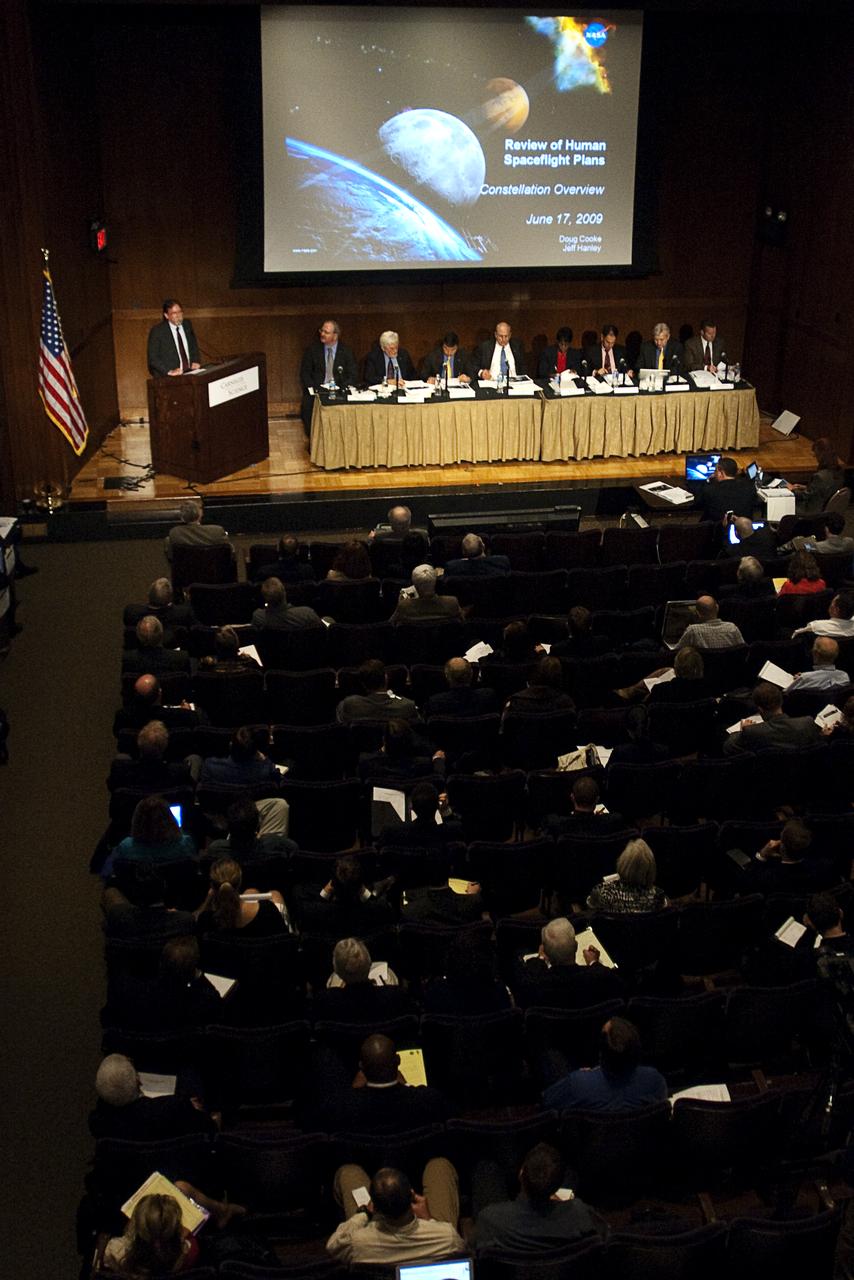
Douglas R. Cooke, Associate Administrator for Exploration Systems Mission Directorate, at podium, addresses the Human Space Flight Review Committee, Wednesday, June 17, 2009, at the Carnegie Institution in Washington. The panel will examine ongoing and planned NASA development activities and potential alternatives in order to present options for advancing a safe, innovative, affordable and sustainable human space flight program following the space shuttle's retirement. The committee wil present its results by August 2009. Seated from left on the panel is Jeffrey Greason, Bohdan Bejmuk, Dr. Leroy Chiao, Norman Augustine (chair), Dr. Wanda Austin, Dr. Edward Crawley, Dr. Christopher Chyba and Philip McAlister. Photo Credit: (NASA/Paul E. Alers)

CAPE CANAVERAL, Fla. - At Launch Pad 39A at NASA’s Kennedy Space Center in Florida, technicians work to move the Hubble payload canister into the payload changeout room for space shuttle Atlantis’ STS-125 mission. The canister arrived at the pad on Saturday evening, however, early Sunday morning technicians were unable to place the canister into the pad’s payload changeout room. Teflon pads on “shoes” attached to the outside of the payload canister that help the canister move along guide rails didn’t fit properly. The shoes were removed and several options were considered, including slightly shaving down the pads so the shoes will fit onto the rails. STS-125 is the fifth and final shuttle Hubble Space Telescope servicing mission. Atlantis’ launch is targeted for Oct. 10. Photo credit: NASA/Kim Shiflett.
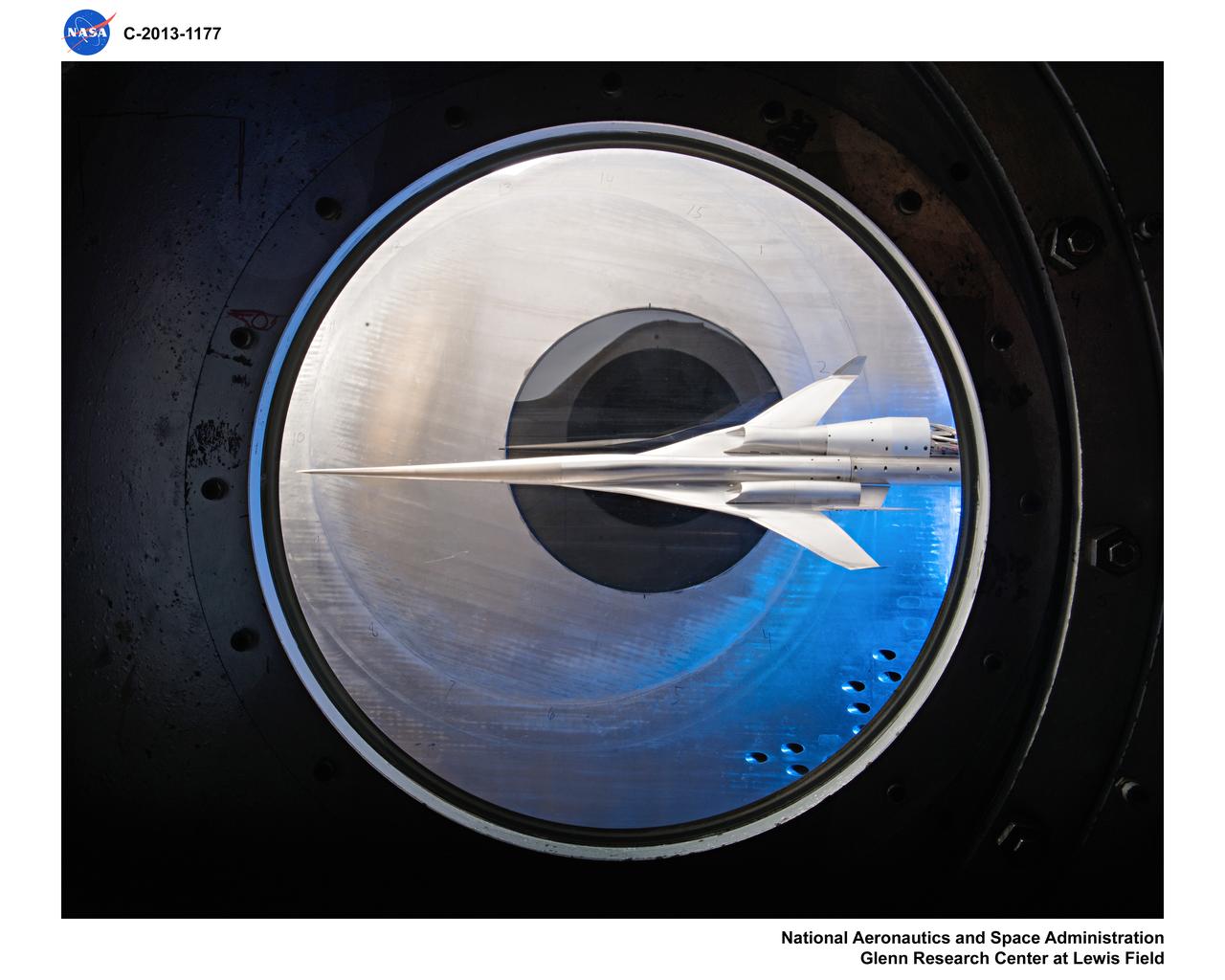
Supersonic Aircraft Model The window in the sidewall of the 8- by 6-foot supersonic wind tunnel at NASA's Glenn Research Center shows a 1.79 percent scale model of a future concept supersonic aircraft built by The Boeing Company. In recent tests, researchers evaluated the performance of air inlets mounted on top of the model to see how changing the amount of airflow at supersonic speeds through the inlet affected performance. The inlet on the pilot's right side (top inlet in this side view) is larger because it contains a remote-controlled device through which the flow of air could be changed. The work is part of ongoing research in NASA's Aeronautics Research Mission Directorate to address the challenges of making future supersonic flight over land possible. Researchers are testing overall vehicle design and performance options to reduce emissions and noise, and identifying whether the volume of sonic booms can be reduced to a level that leads to a reversal of the current ruling that prohibits commercial supersonic flight over land. Image Credit: NASA/Quentin Schwinn
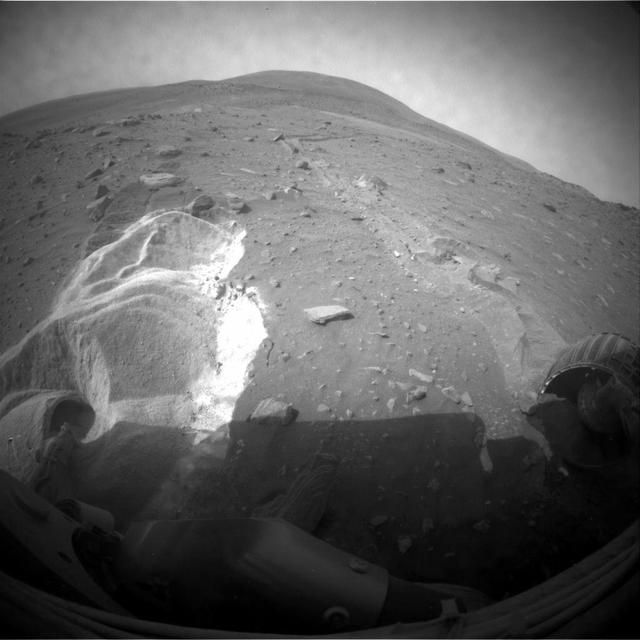
Wheel slippage during attempts to extricate NASA's Mars Rover Spirit from a patch of soft ground during the preceding two weeks had partially buried the wheels by the 1,899th Martian day, or sol, of the Spirit's mission on Mars (May 6, 2009). Spirit took this image with its front hazard-avoidance camera on Sol 1899. With Spirit in the position shown here, the rover team temporarily suspended driving attempts while studying the ground around Spirit and planning simulation tests of driving options with a test rover at NASA's Jet Propulsion Laboratory in Pasadena, Calif. Driving attempts between the time Spirit took a similar image (PIA12002) 10 sols earlier and when this image was taken moved the rover a total of about 36 centimeters (14 inches). While driving backwards, the rover drags its right front wheel, which no longer rotates. For scale, the distance between the wheel tracks is about 1 meter (40 inches). This view is looking northward, with Husband Hill on the horizon. http://photojournal.jpl.nasa.gov/catalog/PIA12007
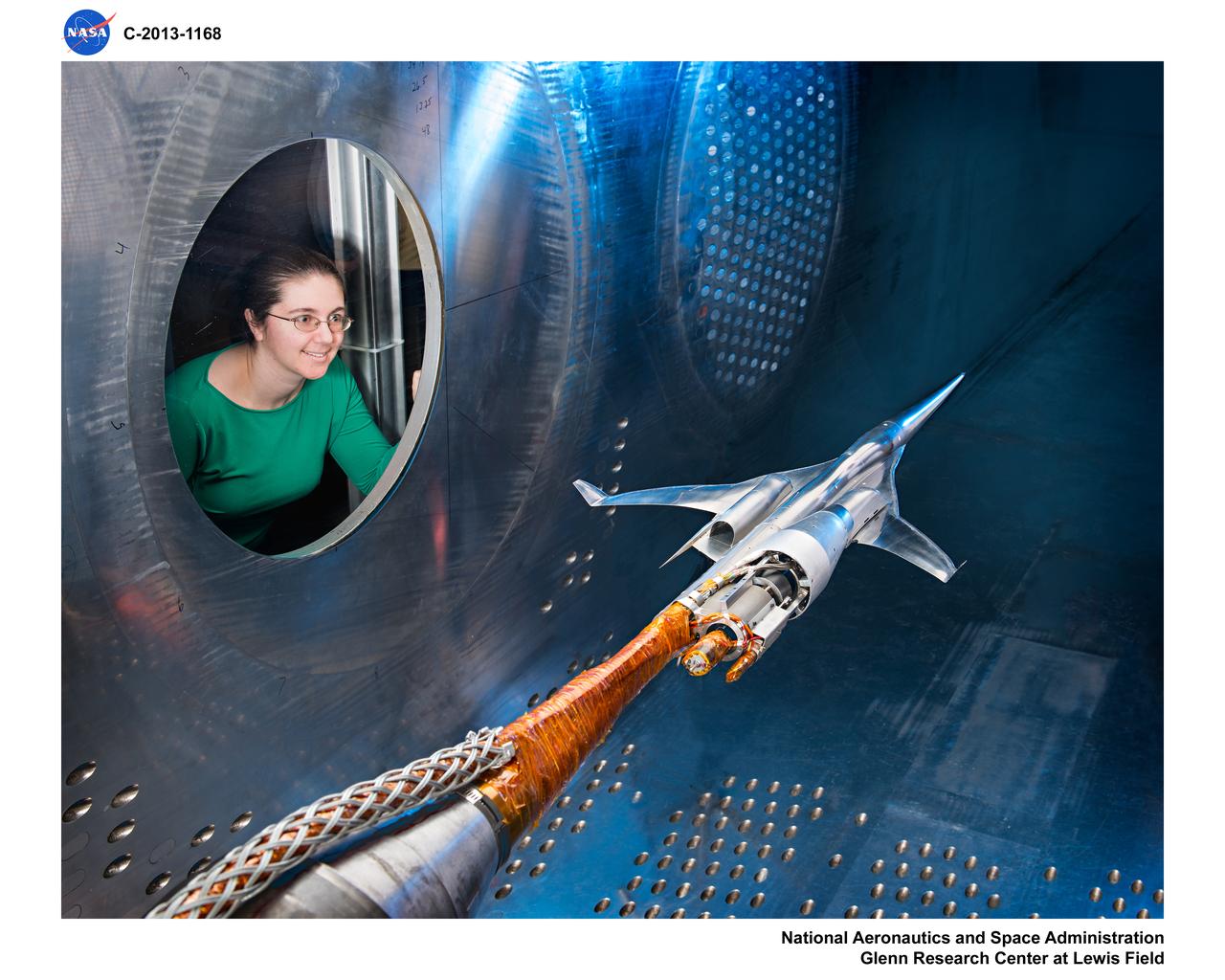
Supersonic Aircraft Model The window in the sidewall of the 8- by 6-foot supersonic wind tunnel at NASA's Glenn Research Center shows a 1.79 percent scale model of a future concept supersonic aircraft built by The Boeing Company. In recent tests, researchers evaluated the performance of air inlets mounted on top of the model to see how changing the amount of airflow at supersonic speeds through the inlet affected performance. The inlet on the pilot's right side (top inlet in this side view) is larger because it contains a remote-controlled device through which the flow of air could be changed. The work is part of ongoing research in NASA's Aeronautics Research Mission Directorate to address the challenges of making future supersonic flight over land possible. Researchers are testing overall vehicle design and performance options to reduce emissions and noise, and identifying whether the volume of sonic booms can be reduced to a level that leads to a reversal of the current ruling that prohibits commercial supersonic flight over land. Image Credit: NASA/Quentin Schwinn
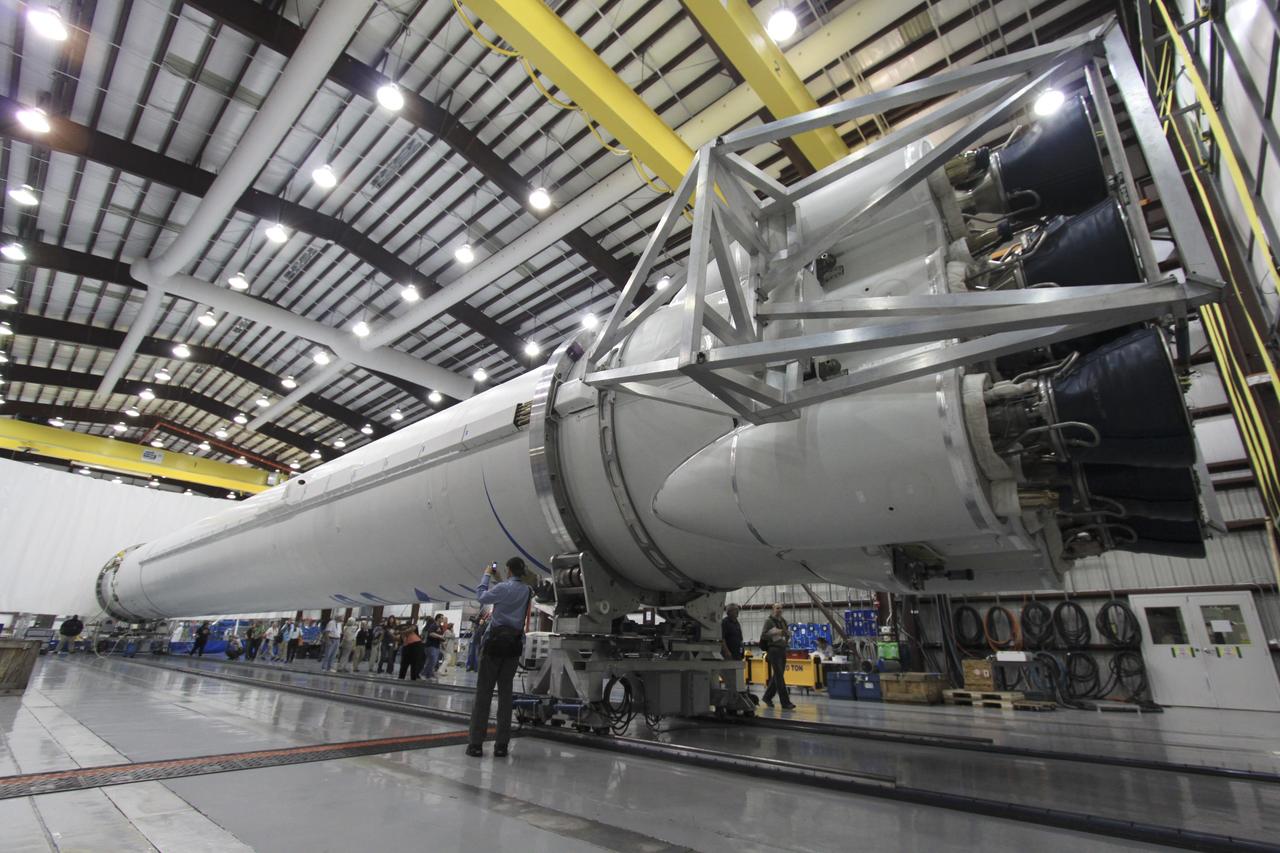
CAPE CANAVERAL, Fla. -- Media learn about the plans Space Exploration Technologies Corp. (SpaceX) has to take NASA astronauts to the International Space Station at Space Launch Complex-40 on Cape Canaveral Air Force Station. SpaceX is working to make its Falcon 9 rocket and Dragon capsule safe for humans for NASA's Commercial Crew Program (CCP) under the Commercial Crew Development Round 2 (CCDev2) activities. SpaceX already is developing these systems under NASA's Commercial Orbital Transportation System (COTS) Program to take supplies to the space station. Scott Henderson, director of SpaceX mission assurance, explained that the company is drafting designs to make the Dragon capsule crew-capable with life support systems while meeting CCP's safety requirements. One such option under discussion is a launch abort system that would push astronauts away from the launch pad in the event of an emergency, which is different than traditional pull systems. It's the freedom to develop innovative solutions such as this that CCP hopes will drive down the cost of space travel as well as open up space to more people than ever before. CCP, which is based at NASA's Kennedy Space Center in Florida, partnered with seven aerospace companies to mature launch vehicle and spacecraft designs under CCDev2, including Alliant Techsystems Inc. (ATK) of Promontory, Utah, Blue Origin of Kent, Wash., The Boeing Co., of Houston, Excalibur Almaz Inc. of Houston, Sierra Nevada Corp. of Louisville, Colo., Space Exploration Technologies (SpaceX) of Hawthorne, Calif., and United Launch Alliance (ULA) of Centennial, Colo. For more information, visit www.nasa.gov/exploration/commercial Photo credit: Jim Grossmann
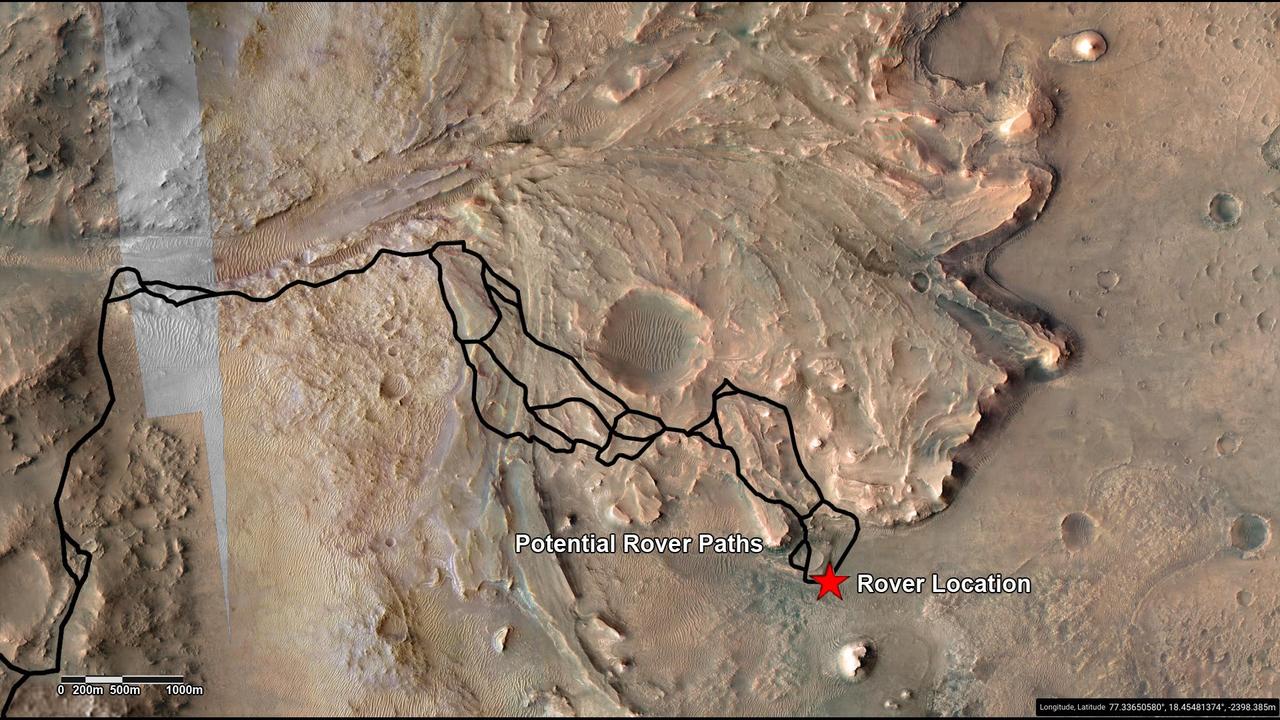
This annotated image highlights potential routes that NASA's Perseverance team is considering in September 2022 for the rover to drive from the front of an ancient river delta to the rim of Jezero Crater. The team will continue to investigate the Martian terrain and consider the science potential of these options before choosing the rover's route. The Perseverance team and the U.S. Geological Survey collaborated on the base map seen here, combining multiple images from the High Resolution Imaging Experiment (HiRISE) camera with color from the Compact Reconnaissance Imaging Spectrometer for Mars (CRISM), both instruments aboard NASA's Mars Reconnaissance Orbiter (MRO). The HiRISE images used span a period from 2007 to 2017. Perseverance landed on the floor of Jezero Crater on Feb. 18, 2021. The delta, which Perseverance reached in April 2022, is a fan-shaped area where an ancient river once flowed into an ancient lake and deposited rocks and sediment. A key objective for Perseverance's mission on Mars is astrobiology, including the search for signs of ancient microbial life. The rover will characterize the planet's geology and past climate, pave the way for human exploration of the Red Planet, and be the first mission to collect and cache Martian rock and regolith (broken rock and dust). Subsequent NASA missions, in cooperation with ESA (European Space Agency), would send spacecraft to Mars to collect these sealed samples from the surface and return them to Earth for in-depth analysis. The Mars 2020 Perseverance mission is part of NASA's Moon to Mars exploration approach, which includes Artemis missions to the Moon that will help prepare for human exploration of the Red Planet. https://photojournal.jpl.nasa.gov/catalog/PIA25244
![“Starting to host live broadcasts [brought up] so many emotions: terrified, excited, proud. And people have told me, ‘Oh my goodness, I feel like I would freeze up when the camera’s on,’ but that was the most natural position for me because I felt, just a little bit, like I was back on stage, cheerleading. You’re standing on the stage, the lights are off, you're in your head. And then the lights turn on, the music drops, and you’re on a world stage in front of thousands of people doing an incredibly difficult three-minute routine and who knows, you might even be injured right now, but you don't have an option. When those lights and that music comes on, it's almost like something bigger than yourself takes over and you just have to go. And that is the exact same feeling when they're counting you down for a live broadcast: “3, 2, 1. Hello, welcome to NASA. My name is Tahira Allen!” Before something like that happens, I am terrified. I am sitting here thinking, what is about to come out of my mouth? But just like with cheer, whatever you do, you keep moving. I don't know what's going to come out my mouth. But I need to keep talking and just embrace fear. Embrace being uncomfortable.” …You cannot grow without approaching the fear, embracing the fear, and then pushing past it.Science Mission Directorate Digital Lead Tahira Allen poses for a portrait Wednesday, Feb. 8, 2023, at the Mary W. Jackson NASA Headquarters building in Washington. Photo Credit: (NASA/Keegan Barber)](https://images-assets.nasa.gov/image/NHQ202302080001/NHQ202302080001~medium.jpg)
“Starting to host live broadcasts [brought up] so many emotions: terrified, excited, proud. And people have told me, ‘Oh my goodness, I feel like I would freeze up when the camera’s on,’ but that was the most natural position for me because I felt, just a little bit, like I was back on stage, cheerleading. You’re standing on the stage, the lights are off, you're in your head. And then the lights turn on, the music drops, and you’re on a world stage in front of thousands of people doing an incredibly difficult three-minute routine and who knows, you might even be injured right now, but you don't have an option. When those lights and that music comes on, it's almost like something bigger than yourself takes over and you just have to go. And that is the exact same feeling when they're counting you down for a live broadcast: “3, 2, 1. Hello, welcome to NASA. My name is Tahira Allen!” Before something like that happens, I am terrified. I am sitting here thinking, what is about to come out of my mouth? But just like with cheer, whatever you do, you keep moving. I don't know what's going to come out my mouth. But I need to keep talking and just embrace fear. Embrace being uncomfortable.” …You cannot grow without approaching the fear, embracing the fear, and then pushing past it.Science Mission Directorate Digital Lead Tahira Allen poses for a portrait Wednesday, Feb. 8, 2023, at the Mary W. Jackson NASA Headquarters building in Washington. Photo Credit: (NASA/Keegan Barber)
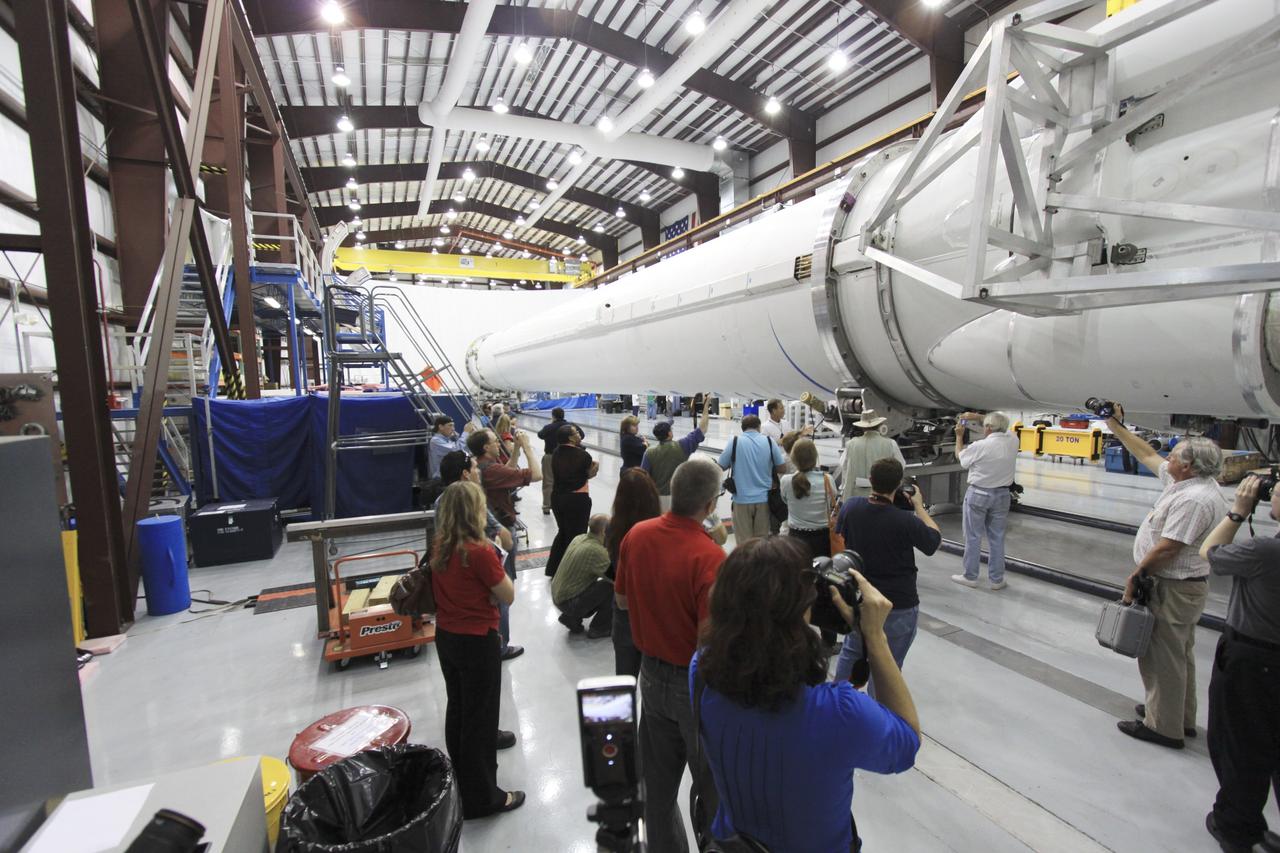
CAPE CANAVERAL, Fla. -- Media learn about the plans Space Exploration Technologies Corp. (SpaceX) has to take NASA astronauts to the International Space Station at Space Launch Complex-40 on Cape Canaveral Air Force Station. SpaceX is working to make its Falcon 9 rocket and Dragon capsule safe for humans for NASA's Commercial Crew Program (CCP) under the Commercial Crew Development Round 2 (CCDev2) activities. SpaceX already is developing these systems under NASA's Commercial Orbital Transportation System (COTS) Program to take supplies to the space station. Scott Henderson, director of SpaceX mission assurance, explained that the company is drafting designs to make the Dragon capsule crew-capable with life support systems while meeting CCP's safety requirements. One such option under discussion is a launch abort system that would push astronauts away from the launch pad in the event of an emergency, which is different than traditional pull systems. It's the freedom to develop innovative solutions such as this that CCP hopes will drive down the cost of space travel as well as open up space to more people than ever before. CCP, which is based at NASA's Kennedy Space Center in Florida, partnered with seven aerospace companies to mature launch vehicle and spacecraft designs under CCDev2, including Alliant Techsystems Inc. (ATK) of Promontory, Utah, Blue Origin of Kent, Wash., The Boeing Co., of Houston, Excalibur Almaz Inc. of Houston, Sierra Nevada Corp. of Louisville, Colo., Space Exploration Technologies (SpaceX) of Hawthorne, Calif., and United Launch Alliance (ULA) of Centennial, Colo. For more information, visit www.nasa.gov/exploration/commercial Photo credit: Jim Grossmann
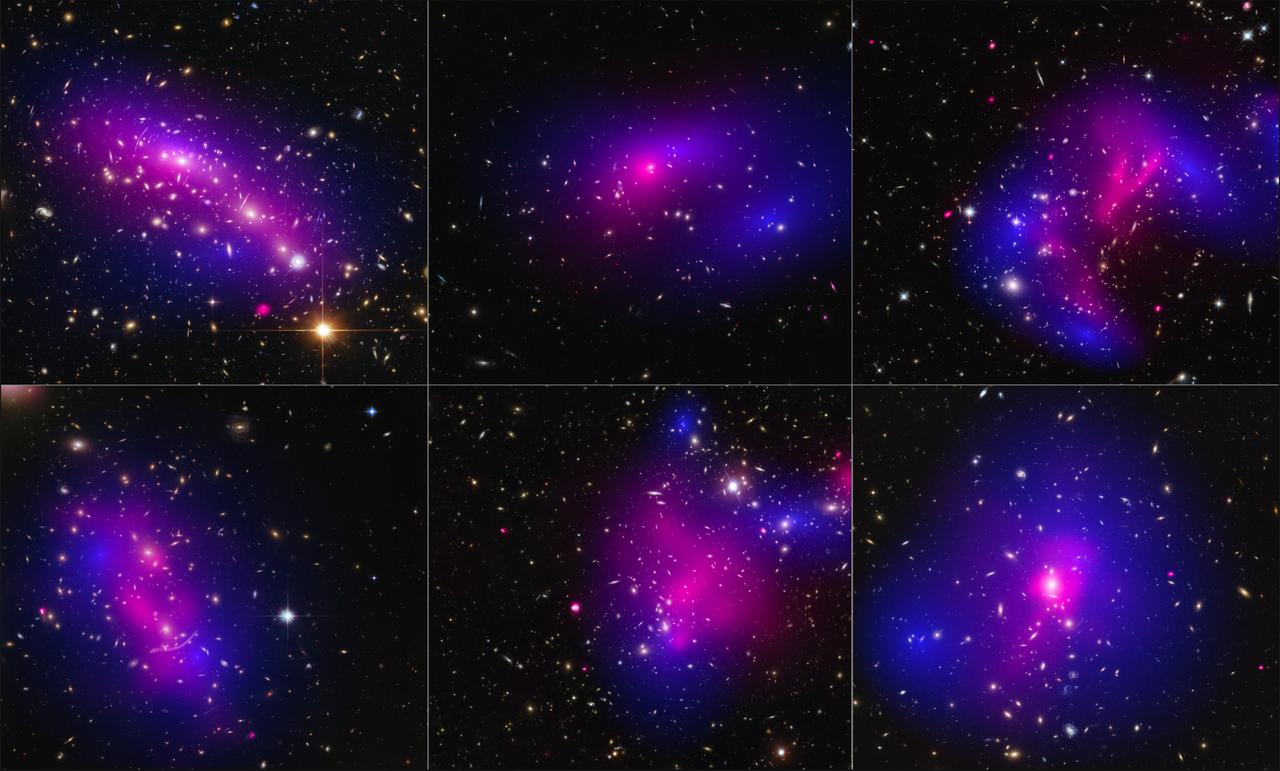
Using observations from NASA’s Hubble Space Telescope and Chandra X-ray Observatory, astronomers have found that dark matter does not slow down when colliding with itself, meaning it interacts with itself less than previously thought. Researchers say this finding narrows down the options for what this mysterious substance might be. Dark matter is an invisible matter that makes up most of the mass of the universe. Because dark matter does not reflect, absorb or emit light, it can only be traced indirectly by, such as by measuring how it warps space through gravitational lensing, during which the light from a distant source is magnified and distorted by the gravity of dark matter. Read more: <a href="http://1.usa.gov/1E5LcpO" rel="nofollow">1.usa.gov/1E5LcpO</a> Caption: Here are images of six different galaxy clusters taken with NASA's Hubble Space Telescope (blue) and Chandra X-ray Observatory (pink) in a study of how dark matter in clusters of galaxies behaves when the clusters collide. A total of 72 large cluster collisions were studied. Credit: NASA and ESA mage Credit: NASA and ESA <b><a href="http://www.nasa.gov/audience/formedia/features/MP_Photo_Guidelines.html" rel="nofollow">NASA image use policy.</a></b> <b><a href="http://www.nasa.gov/centers/goddard/home/index.html" rel="nofollow">NASA Goddard Space Flight Center</a></b> enables NASA’s mission through four scientific endeavors: Earth Science, Heliophysics, Solar System Exploration, and Astrophysics. Goddard plays a leading role in NASA’s accomplishments by contributing compelling scientific knowledge to advance the Agency’s mission. <b>Follow us on <a href="http://twitter.com/NASAGoddardPix" rel="nofollow">Twitter</a></b> <b>Like us on <a href="http://www.facebook.com/pages/Greenbelt-MD/NASA-Goddard/395013845897?ref=tsd" rel="nofollow">Facebook</a></b> <b>Find us on <a href="http://instagrid.me/nasagoddard/?vm=grid" rel="nofollow">Instagram</a></b>

<b>To view a video of the Gradient Sun go to: <a href="http://www.flickr.com/photos/gsfc/8103212817">www.flickr.com/photos/gsfc/8103212817</a></b> Looking at a particularly beautiful image of the sun helps show how the lines between science and art can sometimes blur. But there is more to the connection between the two disciplines: science and art techniques are often quite similar, indeed one may inform the other or be improved based on lessons from the other arena. One such case is a technique known as a "gradient filter" – recognizable to many people as an option available on a photo-editing program. Gradients are, in fact, a mathematical description that highlights the places of greatest physical change in space. A gradient filter, in turn, enhances places of contrast, making them all the more obviously different, a useful tool when adjusting photos. Scientists, too, use gradient filters to enhance contrast, using them to accentuate fine structures that might otherwise be lost in the background noise. On the sun, for example, scientists wish to study a phenomenon known as coronal loops, which are giant arcs of solar material constrained to travel along that particular path by the magnetic fields in the sun's atmosphere. Observations of the loops, which can be more or less tangled and complex during different phases of the sun's 11-year activity cycle, can help researchers understand what's happening with the sun's complex magnetic fields, fields that can also power great eruptions on the sun such as solar flares or coronal mass ejections. The still here shows an unfiltered image from the sun next to one that has been processed using a gradient filter. Note how the coronal loops are sharp and defined, making them all the more easy to study. On the other hand, gradients also make great art. NASA/Goddard Space Flight Center To download this video go to: <a href="http://svs.gsfc.nasa.gov/goto?11112" rel="nofollow">svs.gsfc.nasa.gov/goto?11112</a> <b><a href="http://www.nasa.gov/audience/formedia/features/MP_Photo_Guidelines.html" rel="nofollow">NASA image use policy.</a></b> <b><a href="http://www.nasa.gov/centers/goddard/home/index.html" rel="nofollow">NASA Goddard Space Flight Center</a></b> enables NASA’s mission through four scientific endeavors: Earth Science, Heliophysics, Solar System Exploration, and Astrophysics. Goddard plays a leading role in NASA’s accomplishments by contributing compelling scientific knowledge to advance the Agency’s mission. <b>Follow us on <a href="http://twitter.com/NASA_GoddardPix" rel="nofollow">Twitter</a></b> <b>Like us on <a href="http://www.facebook.com/pages/Greenbelt-MD/NASA-Goddard/395013845897?ref=tsd" rel="nofollow">Facebook</a></b> <b>Find us on <a href="http://instagrid.me/nasagoddard/?vm=grid" rel="nofollow">Instagram</a></b>