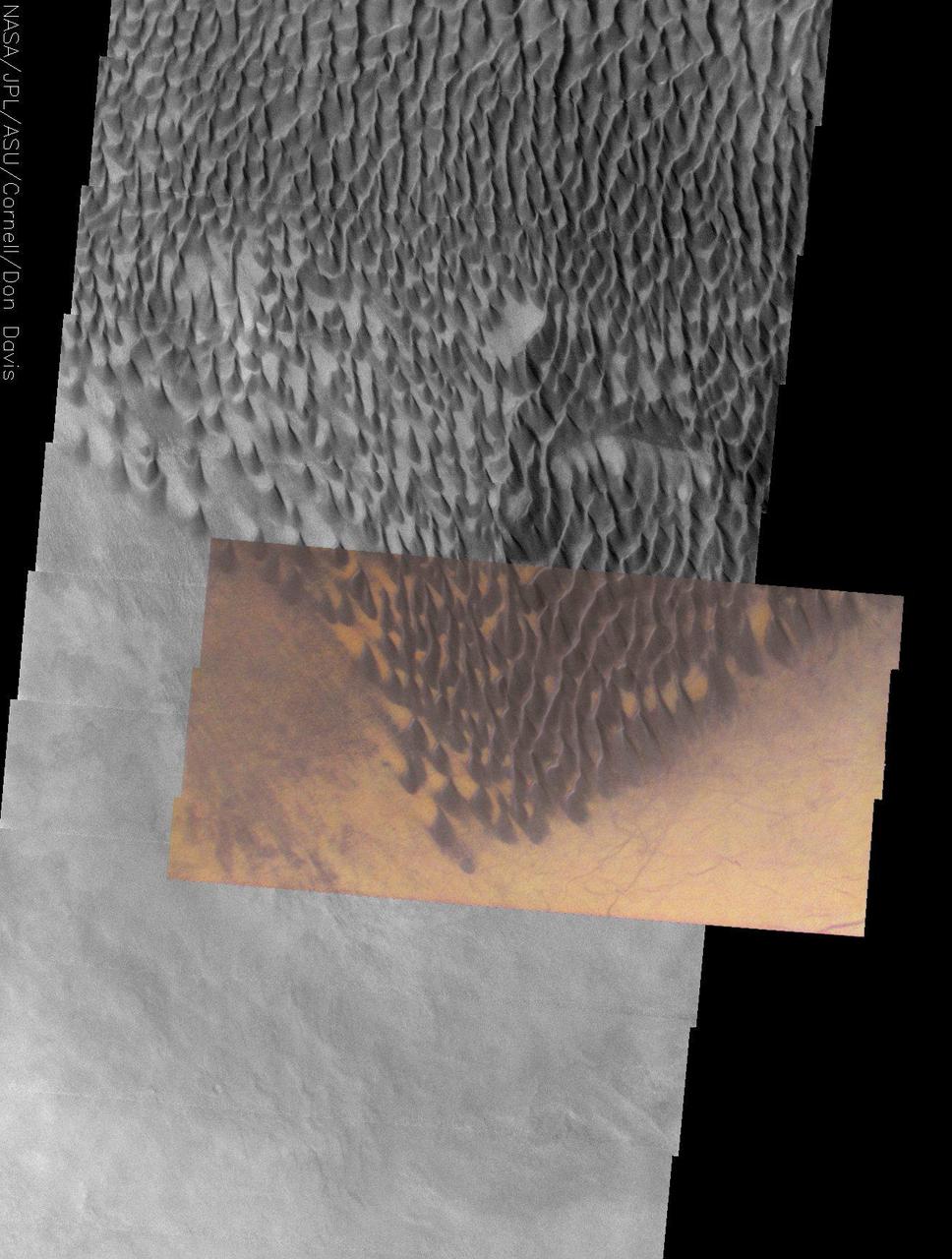
Dark Gray Dunes, Bright Orange Dust

Clockwork Orange
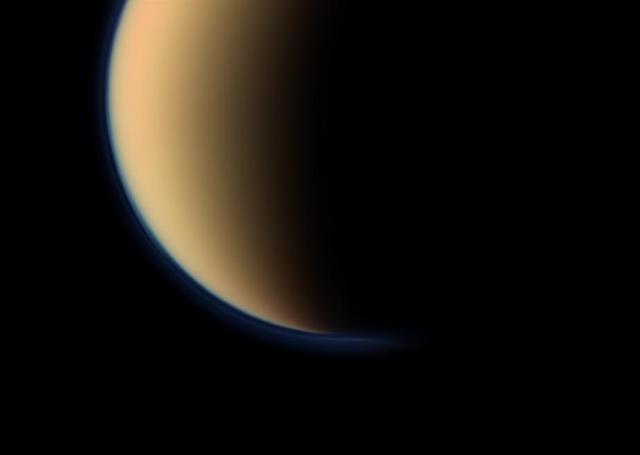
This view from NASA Cassini spacecraft look toward the south polar region of Saturn largest moon, Titan, and show a depression within the moon orange and blue haze layers near the south pole.

Titan atmosphere makes Saturn largest moon look like a fuzzy orange ball in this natural color view from NASA Cassini spacecraft. Titan north polar hood is visible at top, and a faint blue haze also can be detected above the south pole at bottom.
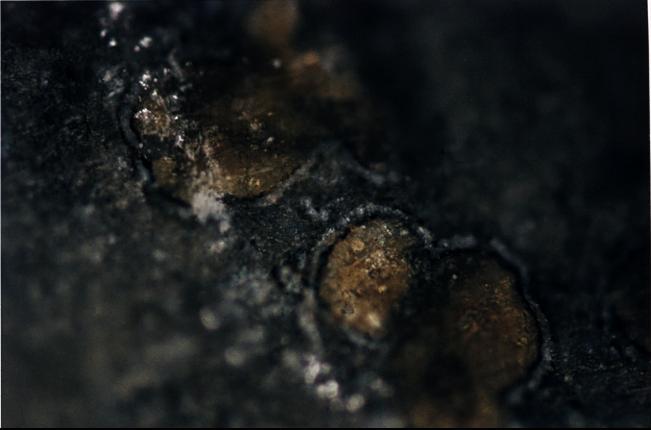
This photograph shows orange-colored carbonate mineral globules found in a meteorite, called ALH84001, believed to have once been a part of Mars. http://photojournal.jpl.nasa.gov/catalog/PIA00290
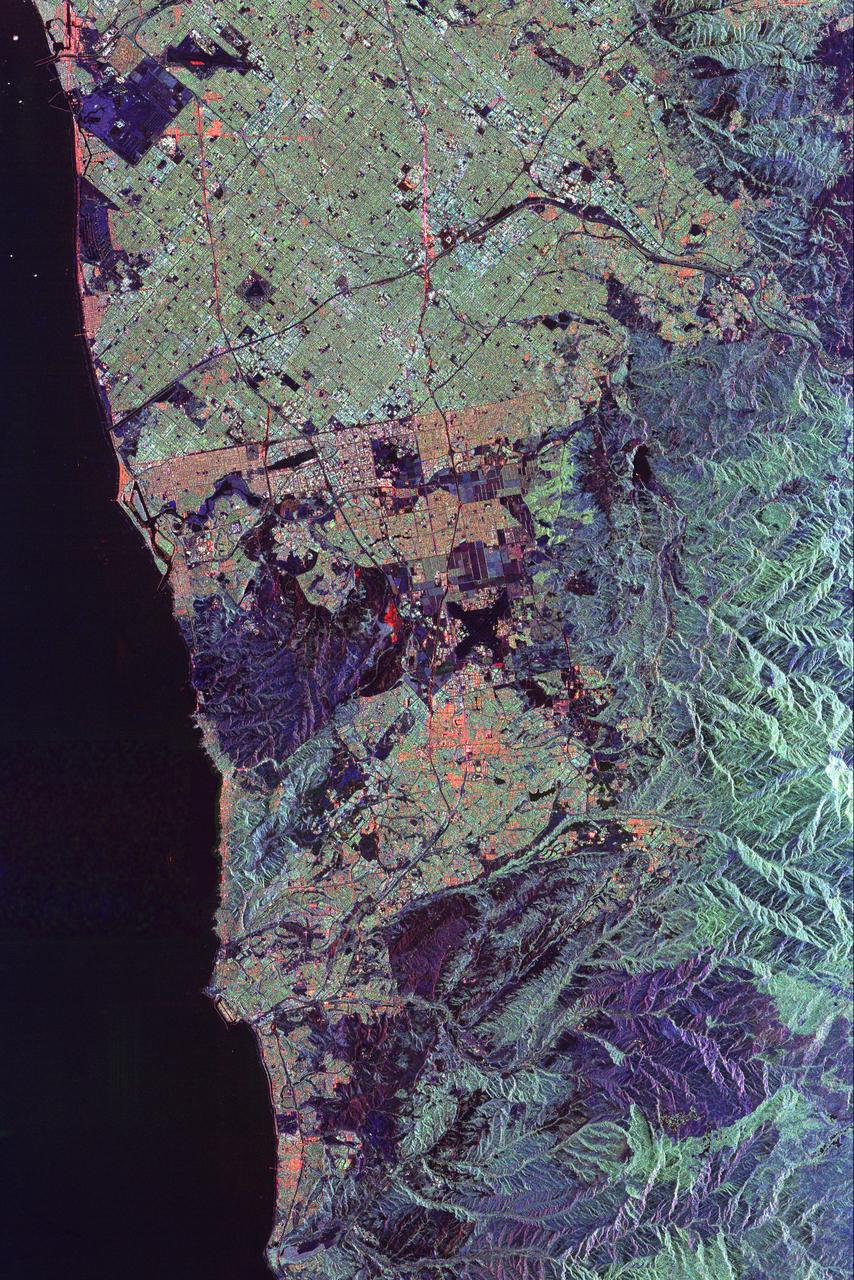
This spaceborne radar image of Orange County, Calif., shows the massive urbanization of this rapidly growing region located just south of Los Angeles.
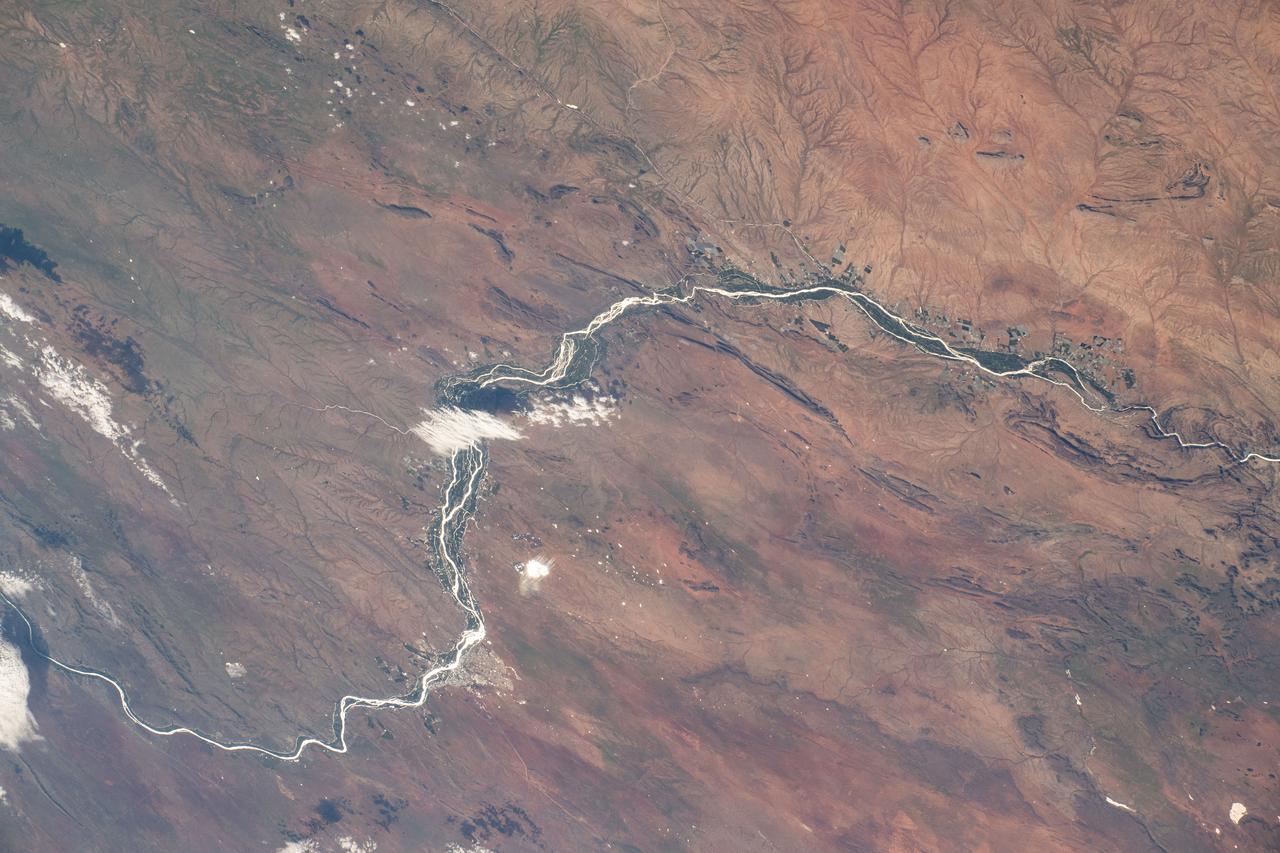
iss072e862232 (March 28, 2025) --- This portion of the Orange River, South Africa's longest river, east of Namibia's southern border and beaming under the sun's glint is pictured from the International Space Station as it orbited 264 miles above.
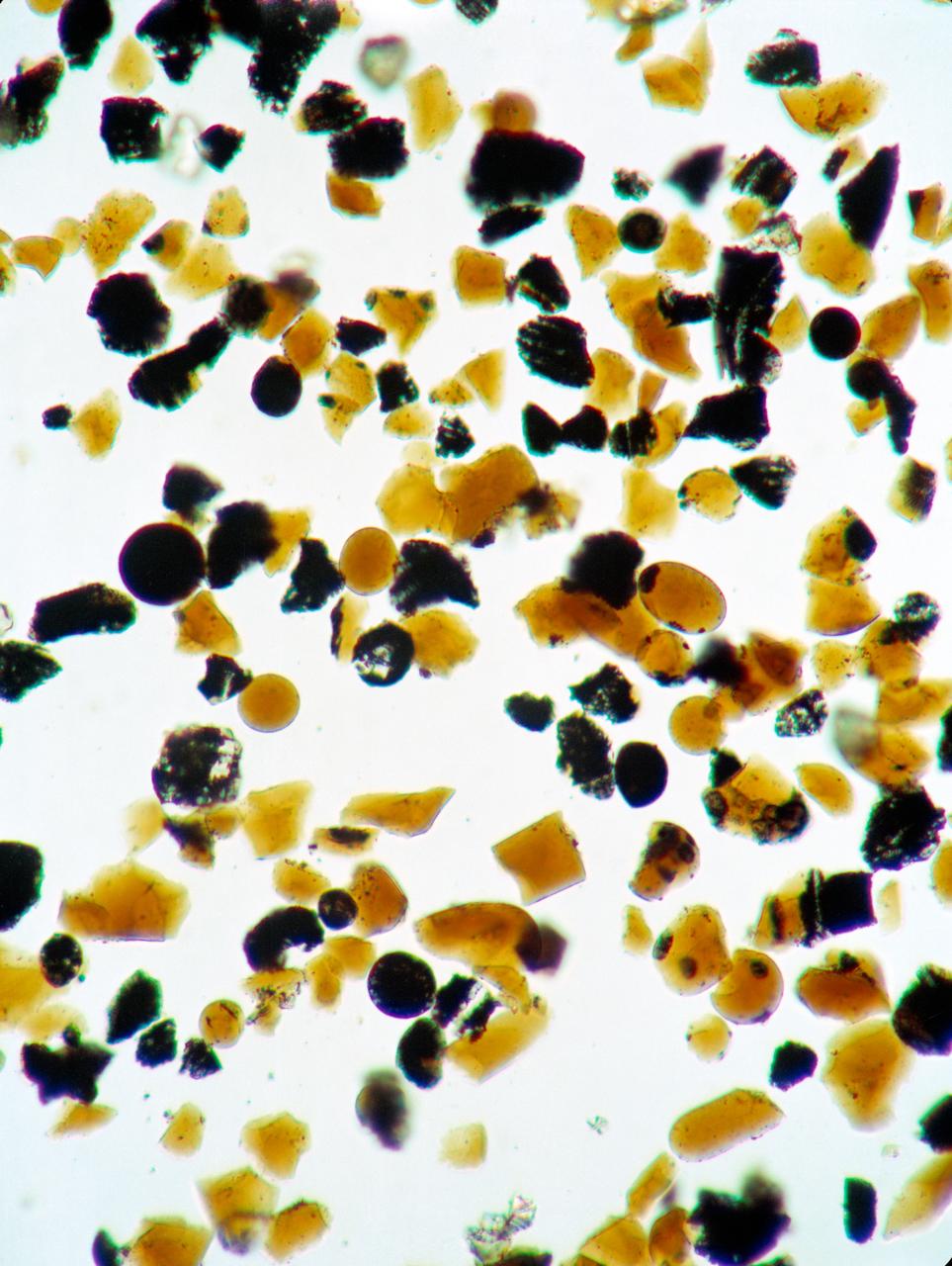
S73-15171 (4 Jan. 1973) --- These orange glass spheres and fragments are the finest particles ever brought back from the moon. Ranging in size from 20 to 45 microns (about 1/1000 of an inch) the particles are magnified 160 times in this photomicrograph made in the Lunar Receiving Laboratory at the Manned Spacecraft Center. The orange soil was brought back from the Taurus-Littrow landing site by the Apollo 17 crewmen. Scientist-astronaut Harrison H. "Jack" Schmitt discovered the orange soil at Shorty Crater during the second Apollo 17 extravehicular activity (EVA). This lunar material is being studied and analyzed by scientists in the LRL. The orange particles in this photomicrograph, which are intermixed with black and black-speckled grains, are about the same size as the particles that compose silt on Earth. Chemical analysis of the orange soil material has shown the sample to be similar to some of the samples brought back from the Apollo 11 (Sea of Tranquility) site several hundred miles to the southwest. Like those samples, it is rich in titanium (8%) and iron oxide (22%). But unlike the Apollo 11 samples, the orange soil is unexplainably rich in zinc ? an anomaly that has scientists in a quandary. This Apollo 17 sample is not high in volatile elements, nor do the minerals contain substantial amounts of water. These would have provided strong evidence of volcanic activity. On the other hand, the lack of agglutinates (rocks made up of a variety of minerals cemented together) indicates that the orange glass is probably not the product of meteorite impact -- strengthening the argument that the glass was produced by volcanic activity.
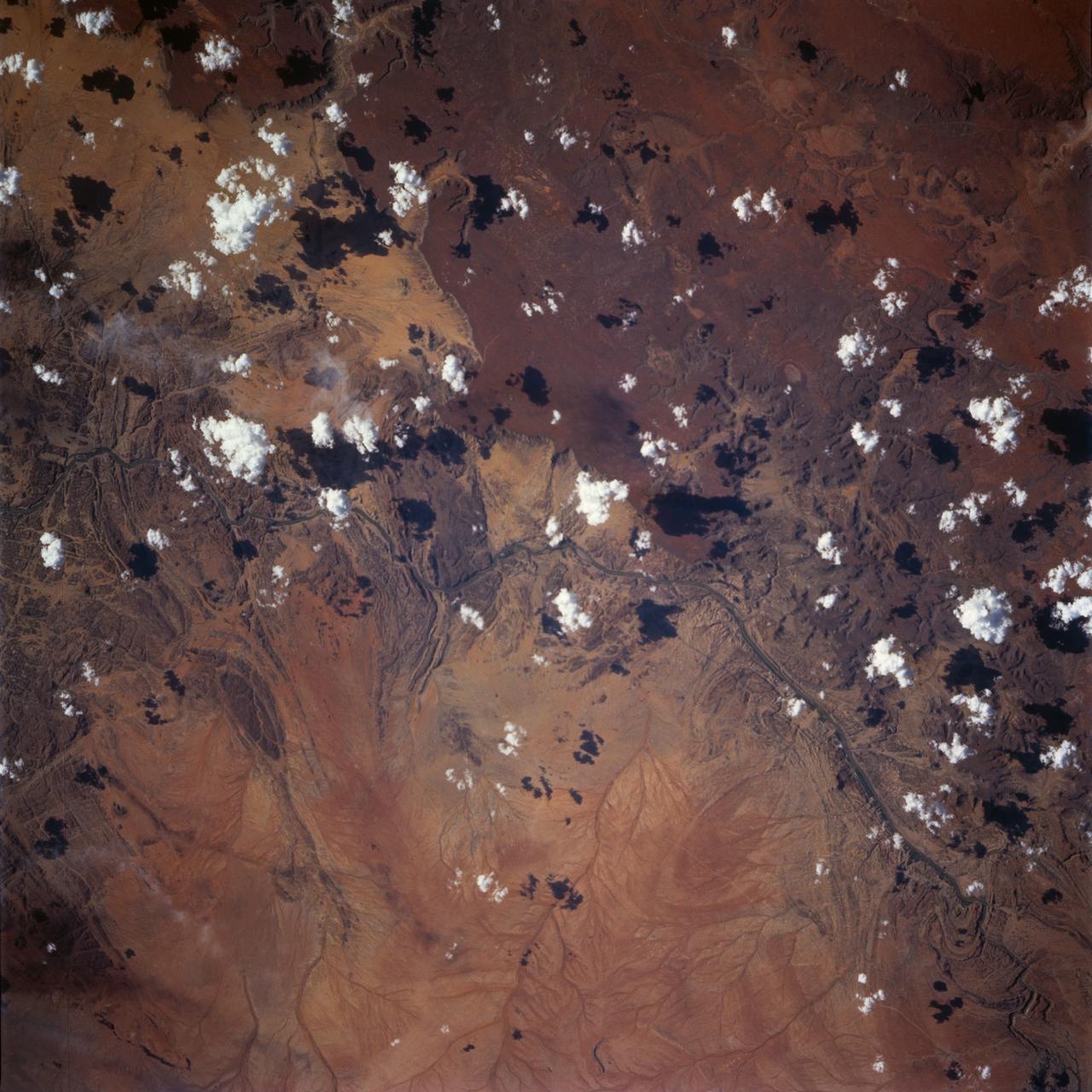
STS072-738-036 (11-20 Jan. 1996) --- The astronauts used a 70mm handheld camera to expose this frame of the west-flowing Orange River, which constitutes the international boundary between Namibia and the Republic of South Africa. The railroad and highway connecting the two countries is seen as a ribbon crossing the corner of the view. The broad color difference between strong browns/reds in the northern half of the view and lighter yellows in the southern corresponds to two land surfaces. The darker is a higher, flat land surface developed on horizontal Nama Sandstone’s, with rock surfaces widely coated with a dark manganese stain, typical of desert regions. This region is known as Namaqualand and borders the Namib Desert. Where rivers have cut down into this surface, the lighter underlying rock and soil colors show up.

iss074e0779393 (June 26, 2026) --- A bright orange sunburst illuminates Earth's atmosphere during an orbital sunrise in this photograph from the International Space Station as it orbited 264 miles above the Caucasus Mountains. Credit: NASA/Chris Williams

iss074e0784492 (June 29, 2026) --- A bright orange sunburst illuminates Earth's atmosphere during an orbital sunrise in this photograph from the International Space Station as it orbited 265 miles above western Mongolia. Credit: NASA/Chris Williams
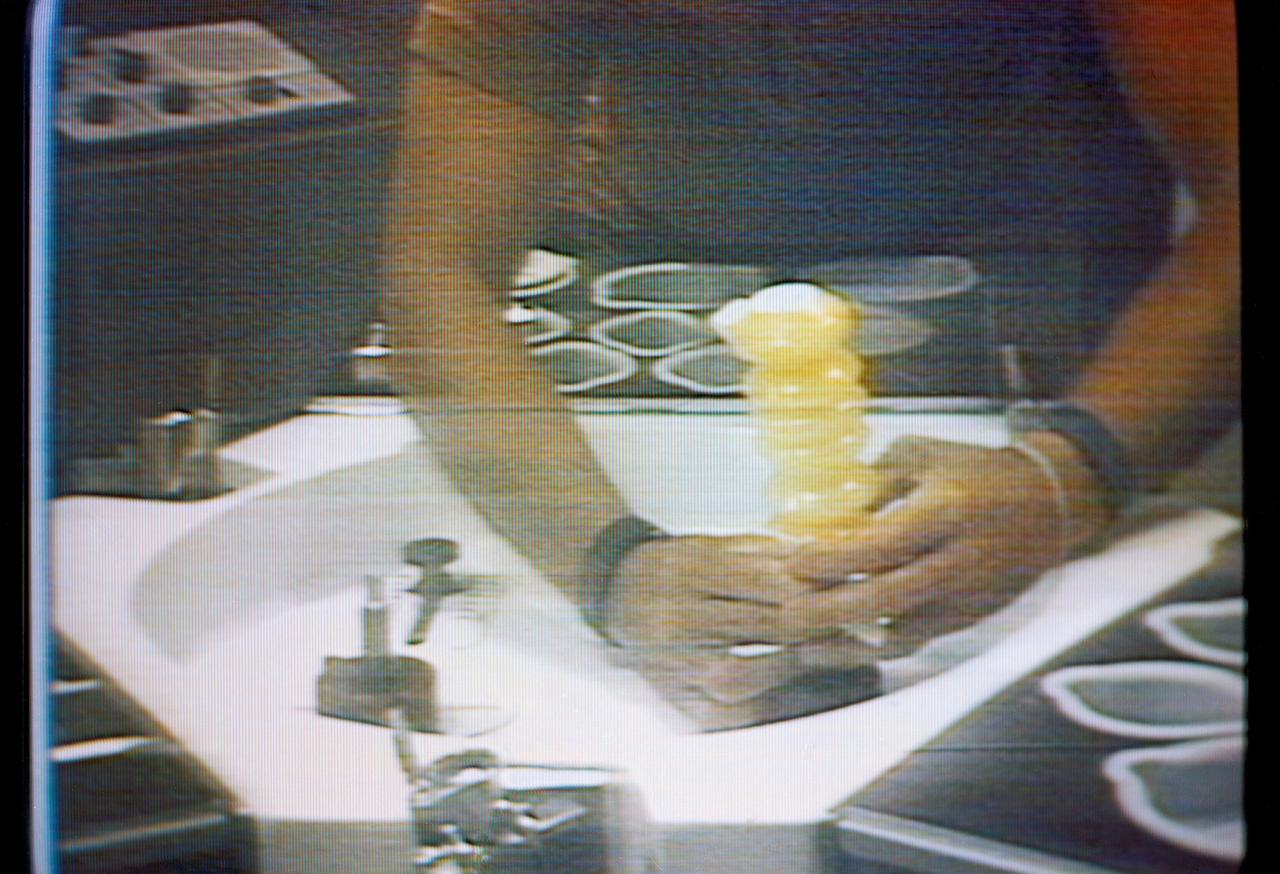
S73-27078 (30 May 1973) --- An accordian-style beverage dispenser filled with orange juice is held by astronaut Charles Conrad Jr., Skylab 2 commander, in this close-up view which is a reproduction taken from a color television transmission made by a TV camera aboard the Skylab 1 & 2 space station cluster in Earth orbit. Conrad (head and face not in view) is seated at the wardroom table in the crew quarters of the Orbital Workshop. The dispenser contained beverage crystals, and Conrad has just added the prescribed amount of water to make the orange drink. Photo credit: NASA
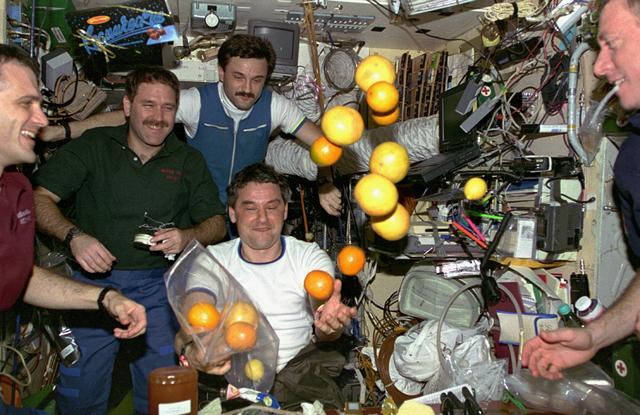
STS081-343-014 (12-22 Jan. 1997) --- Oranges and grapefruit brought up from Earth get a popular reception by the Mir-22 crewmembers. Left to right astronauts Peter J. K. (Jeff) Wisoff and John M. Grunsfeld, along with cosmonauts Aleksandr Y. Kaleri and Valeri G. Korzun, Mir-22 flight engineer and commander respectively, view the microgravity behavior of the seasonal gifts. Astronaut Michael A. Baker, mission commander, looks on at frame's right edge.
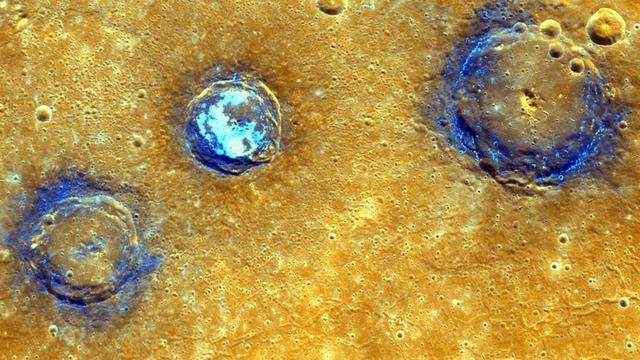
Measurements from NASA MESSENGER MLA instrument during the spacecraft greater than four-year orbital mission have mapped the topography of Mercury northern hemisphere in great detail. This enhanced color mosaic shows (from left to right) Munch (61 km/38 mi.), Sander (52 km/32 mi.), and Poe (81 km/50 mi.) craters, which lie in the northwest portion of the Caloris basin. The smooth volcanic plains that fill the Caloris basin appear orange in this image. All three craters are superposed on these volcanic plains and have excavated low-reflectance material, which appears blue in this image, from the subsurface. Hollows, typically associated with low-reflectance material, dot the rims of Munch and Poe and cover the floor of Sander. These images were acquired as high-resolution targeted color observations. Targeted color observations are images of a small area on Mercury's surface at resolutions higher than the 1-kilometer/pixel 8-color base map. During MESSENGER's one-year primary mission, hundreds of targeted color observations were obtained. During MESSENGER's extended mission, high-resolution targeted color observations are more rare, as the 3-color base map is covering Mercury's northern hemisphere with the highest-resolution color images that are possible. Date acquired: July 03, 2011, July 04, 2011 Image Mission Elapsed Time (MET): 218204186, 218204190, 218204194, 218246487, 218246491, 218246495 Image ID: 458397, 458398, 458399, 460433, 460434, 460435 Instrument: Wide Angle Camera (WAC) of the Mercury Dual Imaging System (MDIS) Center Latitude: 42° N Center Longitude: 154° E Projection: Equirectangular Resolution: 239 meters/pixel Scale: Munch crater is approximately 61 km (38 mi.) in diameter Incidence Angle: 43°, 42° Emission Angle: 35°, 13° Phase Angle: 79°, 55° http://photojournal.jpl.nasa.gov/catalog/PIA19421
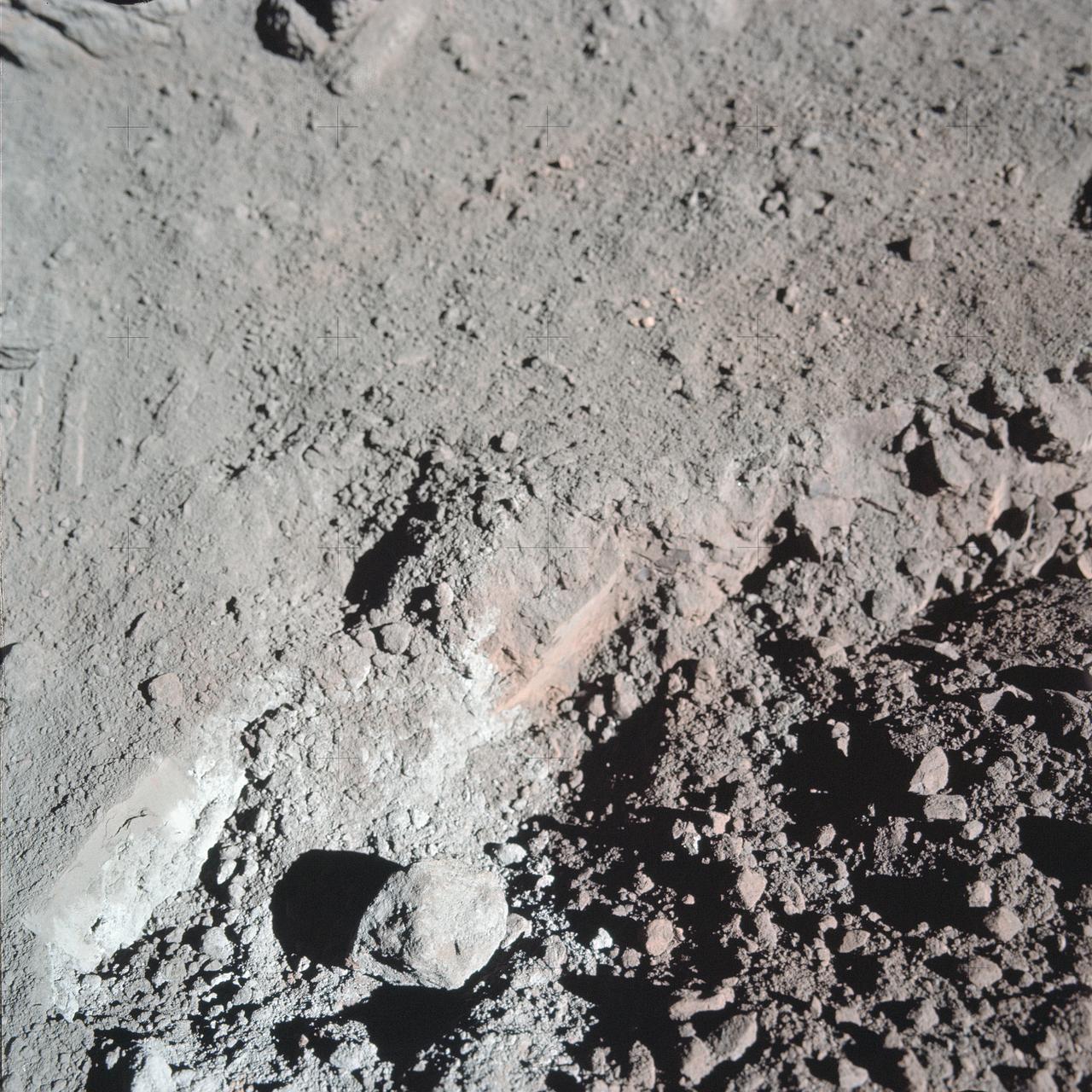
AS17-137-20989 (12 Dec. 1972) --- A close-up view of the much-publicized orange soil which the Apollo 17 crewmen found at Station 4 (Shorty Crater) during the second Apollo 17 extravehicular activity (EVA) at the Taurus-Littrow landing site. The orange soil was first spotted by scientist-astronaut Harrison H. Schmitt. While astronauts Schmitt and Eugene A. Cernan descended in the Lunar Module (LM) "Challenger" to explore the lunar surface, astronaut Ronald E. Evans remained with the Apollo 17 Command and Service Modules (CSM) in lunar orbit. The orange soil was never seen by the crewmen of the other lunar landing missions - Apollo 11 (Sea of Tranquility); Apollo 12 (Ocean of Storms); Apollo 14 (Fra Mauro); Apollo 15 (Hadley-Apennines); and Apollo 16 (Descartes).

iss073e0982679 (Oct. 25, 2025) --- The Milky Way spans the night sky above a bright orange-yellow airglow that blankets the city lights along the east coast of Africa, from Kenya to Somalia. The International Space Station was orbiting 259 miles above the Indian Ocean, north of Madagascar, at approximately 10:29 p.m. local time when this photograph was taken.
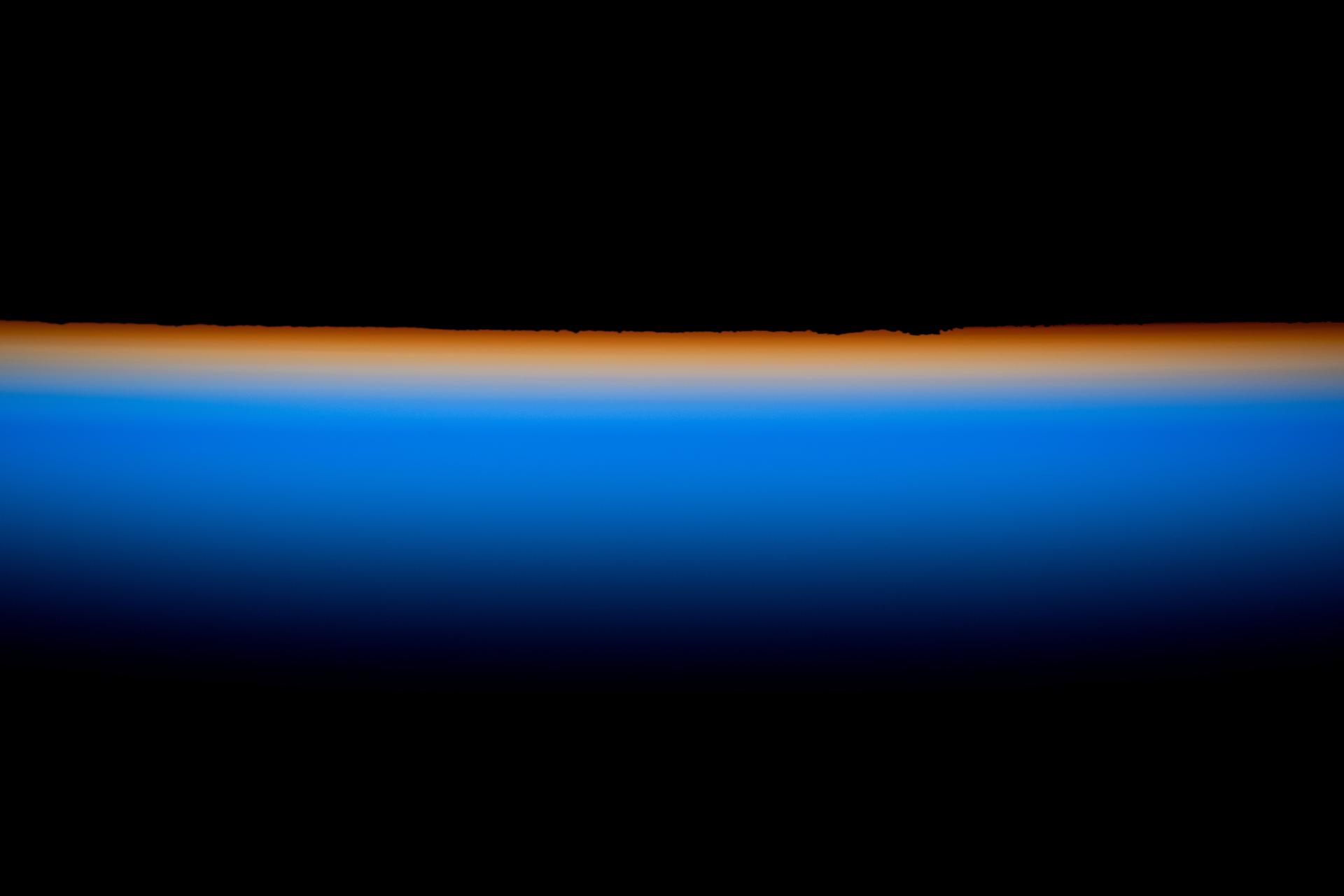
iss073e0763521 (Sept. 7, 2025) --- The last rays of an orbital sunset outline Earth’s horizon with a thin orange hue that fades into the blue atmosphere before dissipating into the darkness of space. The International Space Station was orbiting 262 miles above the border region between Mongolia and China at approximately 10:16 p.m. local time when this image was captured.
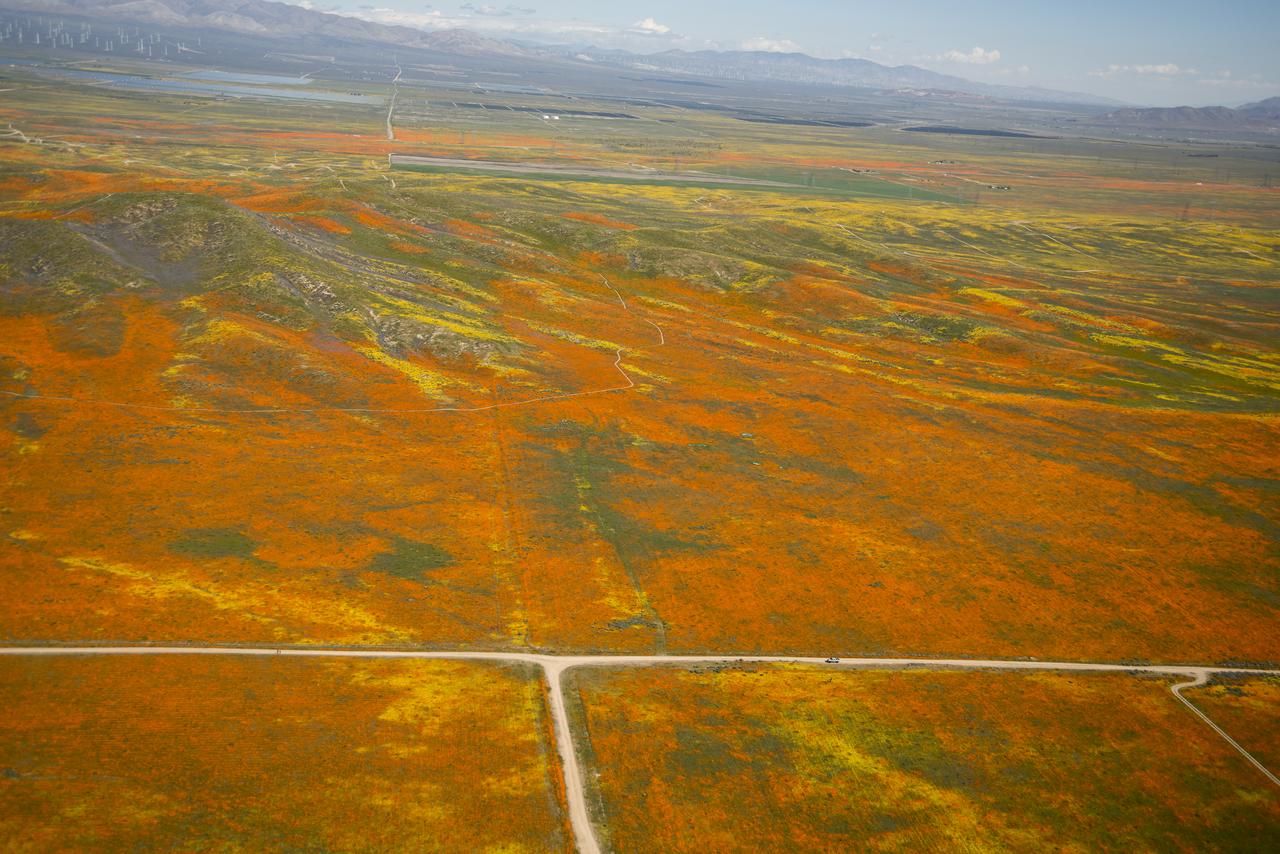
View from a NASA aircraft, TG-14, over the Superbloom of yellow wildflowers and orange poppies from the Antelope Valley in Southern California. The poppy is the state flower.
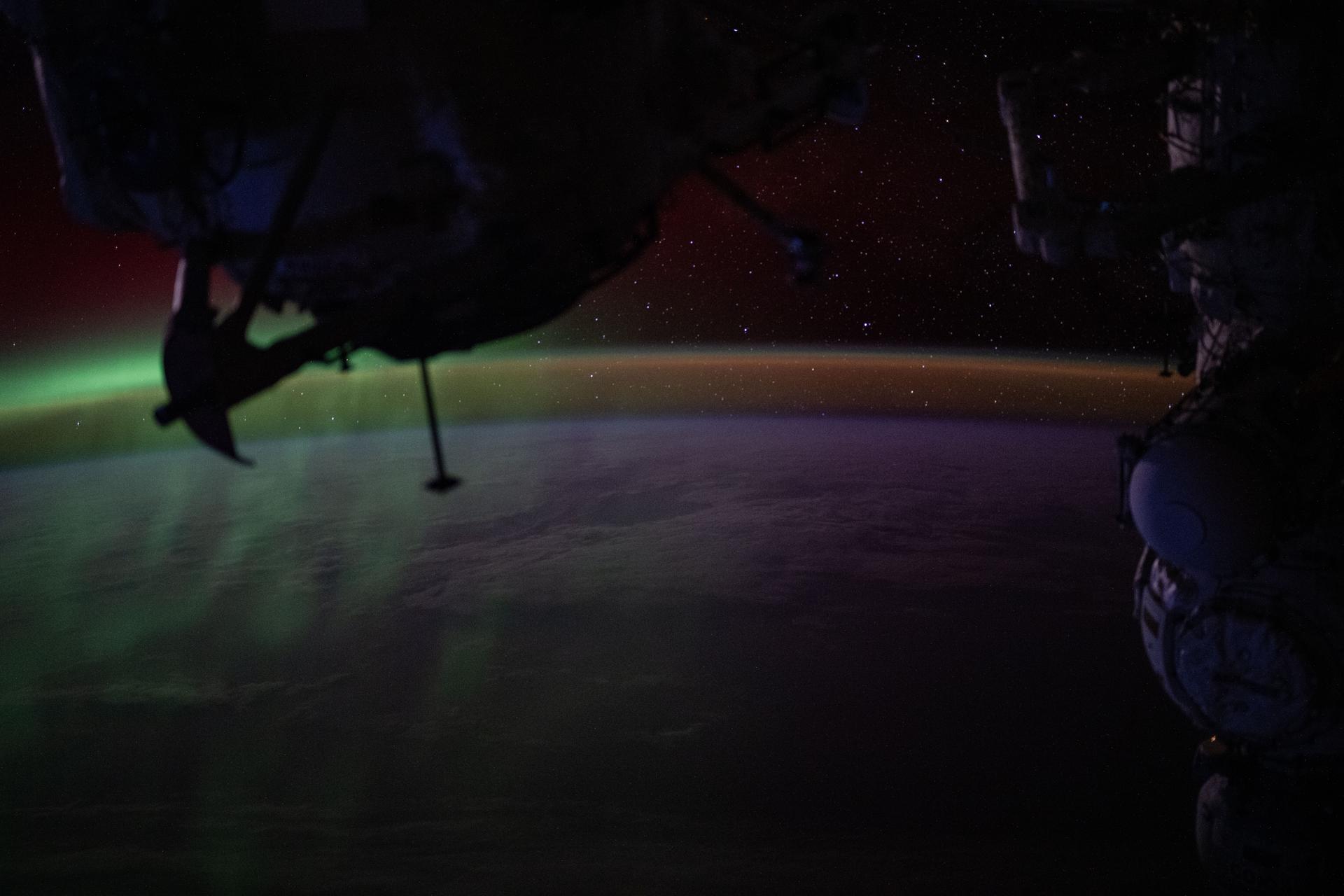
iss073e0865646 (Sept. 28, 2025) --- A wispy green aurora australis fades into a dim orange-yellow airglow above Earth’s horizon in this photograph taken at approximately 2:31 a.m. local time from the International Space Station, as it orbited 270 miles above the Indian Ocean, south of Perth, Australia.
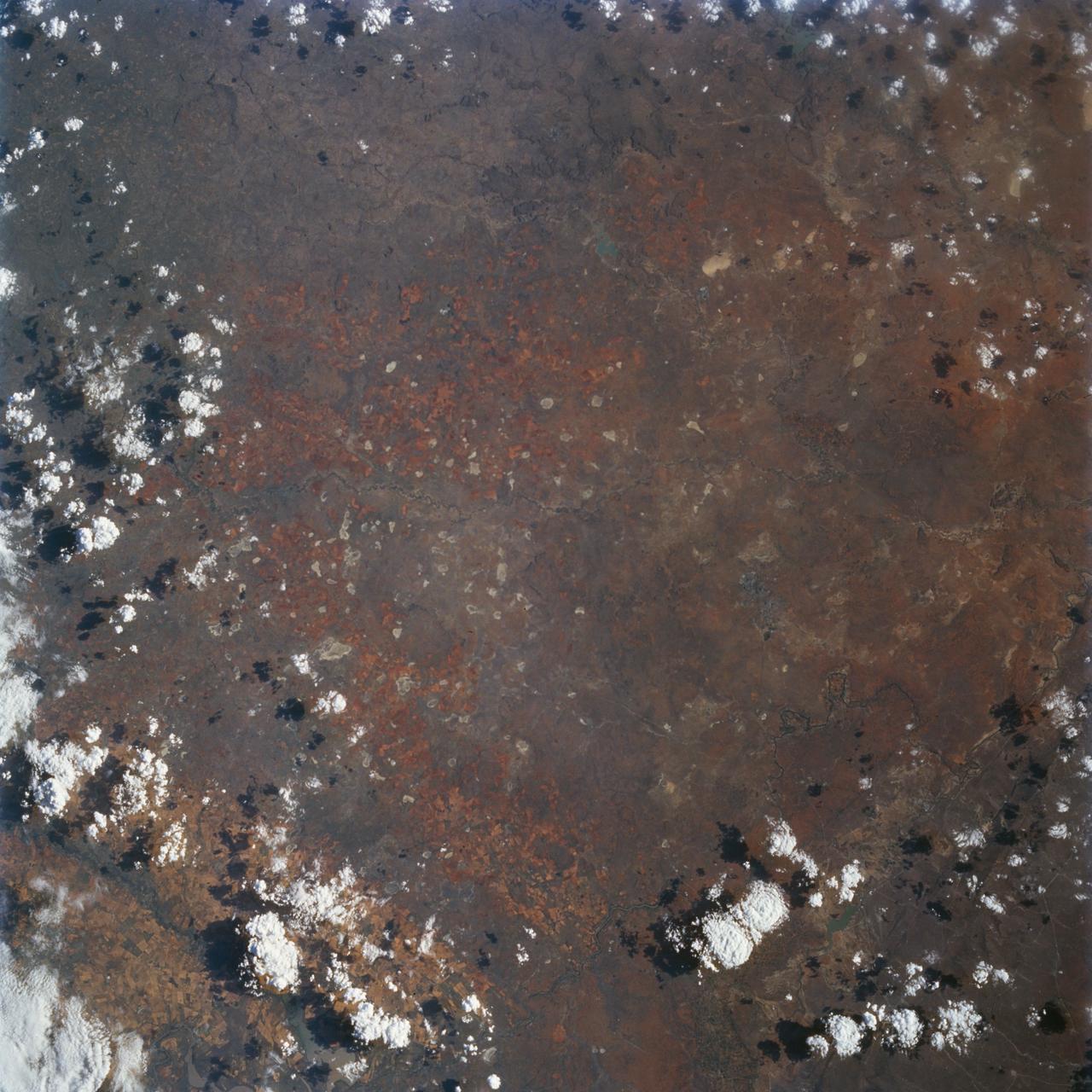
STS072-727-059 (11-20 Jan. 1996) --- Plains of the Orange Free State, South Africa are featured in this 70mm frame exposed from the Space Shuttle Endeavour. If the photograph is oriented with the largest clouds at the top edge, so that the cloud shadows fall to the upper right of each cloud, then north is to the top. The Vaal River flows along the top and through the upper left of the photograph; the reservoir of the Bloemhofdam on the Sand River can be seen between clouds at the upper right of the photograph. Kimberley can be seen as a gray smudge southeast of a contorted set of bends in the Vaal river (upper left center). With high magnification four dark dots, large open-pit mine shafts, can be seen within the gray smudge of the city. Kimberley, the capital of Northern Cape Province, was founded in 1878 after the discovery of diamonds in 1969 - 71, and reached by railway in 1885. Diamond mining and gem cutting remain prominent in the economy. The reddish soil and scattered salt pans (playa lakes) across the plateau suggest the semi-arid climate, suitable for cattle ranching. Reservoirs on most streams now provide water for the towns as well as irrigation for agriculture.
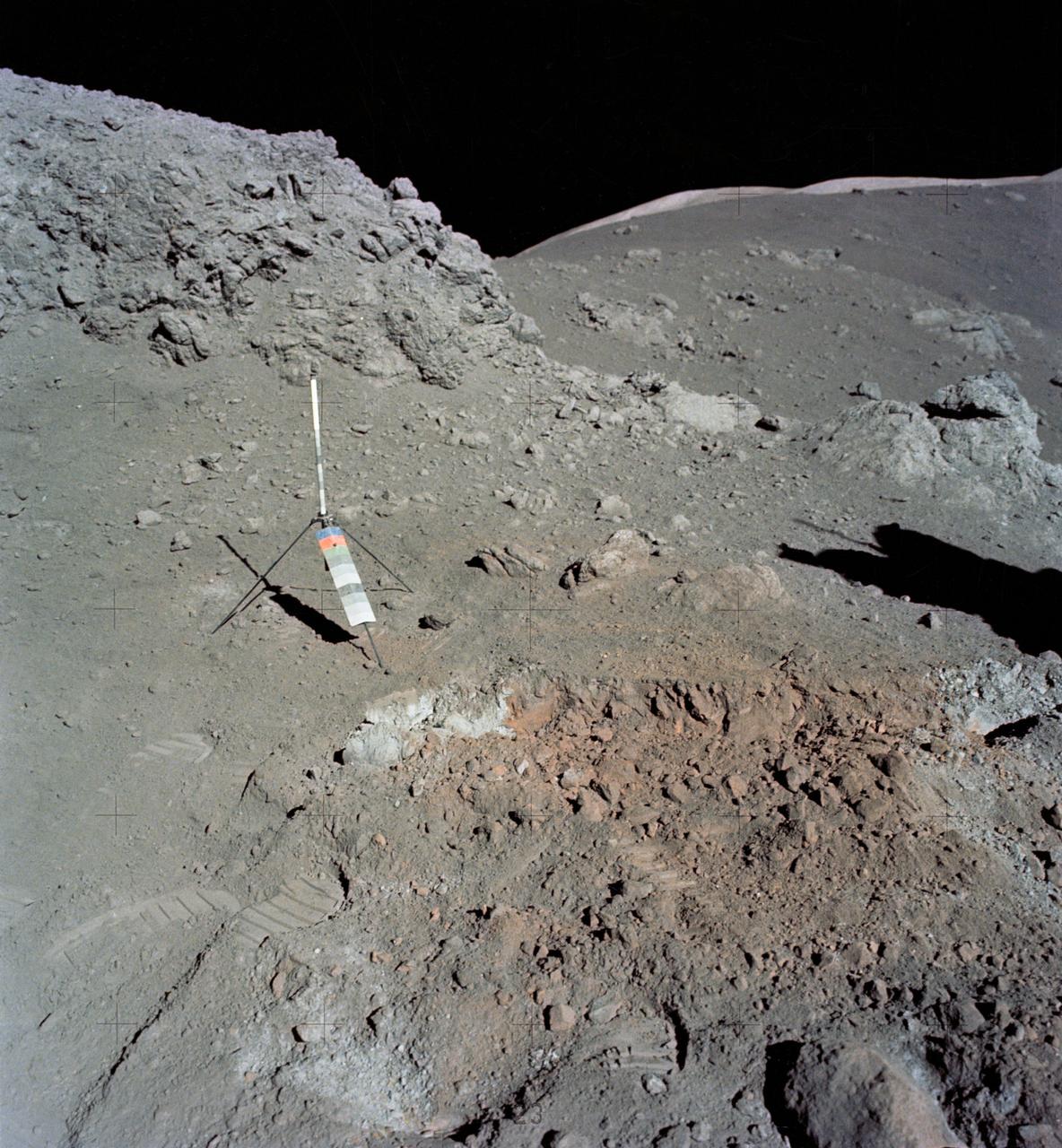
AS17-137-20990 (12 Dec. 1972) --- A view of the area at Station 4 (Shorty Crater) showing the now highly-publicized orange soil which the Apollo 17 crew members found on the moon during the second Apollo 17 extravehicular activity (EVA) at the Taurus-Littrow landing site. The tripod-like object is the gnomon and photometric chart assembly which is used as a photographic reference to establish local vertical sun angle, scale and lunar color. The gnomon is one of the Apollo lunar geology hand tools. While astronauts Eugene A. Cernan, commander, and Harrison H. Schmitt, lunar module pilot, descended in the Lunar Module (LM) "Challenger" to explore the Taurus-Littrow region of the moon, astronaut Ronald E. Evans, command module pilot, remained with the Command and Service Modules (CSM) "America" in lunar orbit. Schmitt was the crew man who first spotted the orange soil.
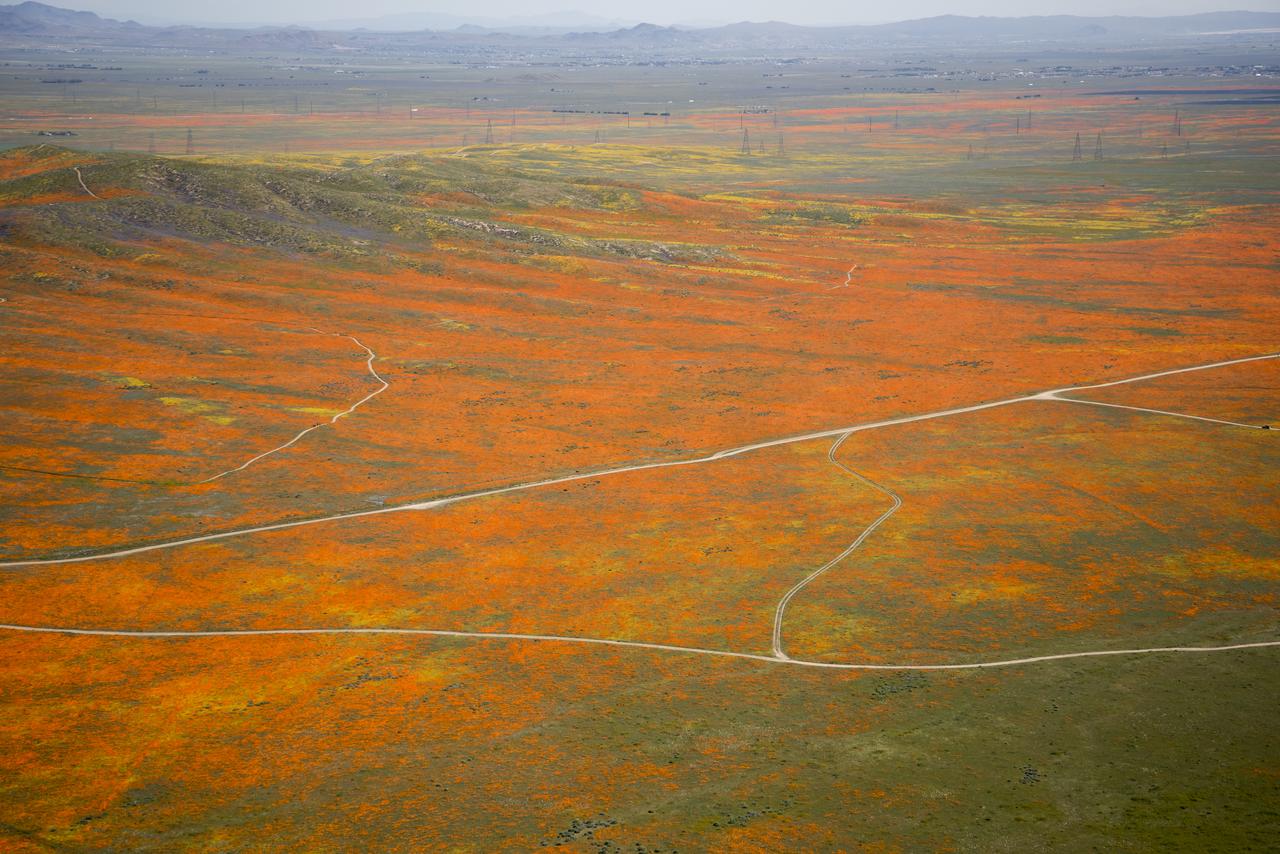
View from a NASA aircraft, TG-14, over the Superbloom of yellow wildflowers and orange poppies from the Antelope Valley in Southern California, Poppy Reserve and solar panels are in the background.
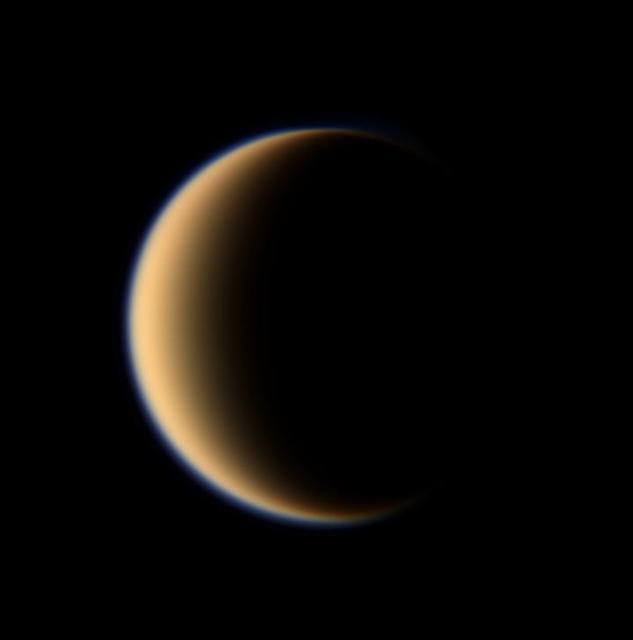
Titan hazy orange globe hangs before the Cassini spacecraft, partly illuminated -- a world with many mysteries yet to be uncovered.
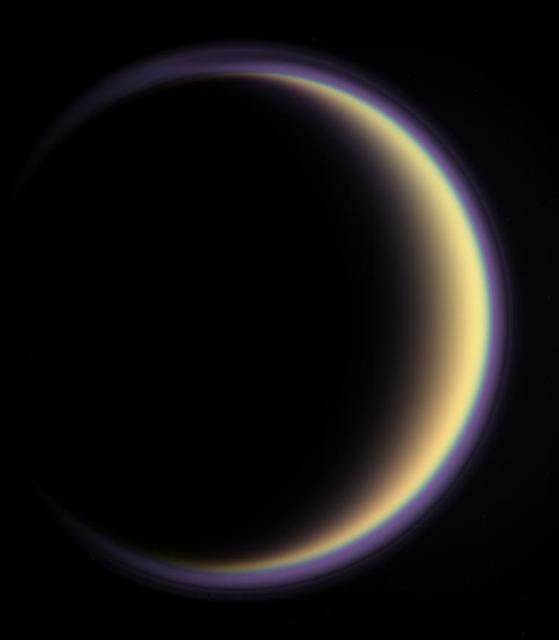
With its thick, distended atmosphere, Titan orange globe shines softly, encircled by a thin halo of purple light-scattering haze

iss074e05319021 (April 19, 2026) --- This serene view from the International Space Station captures a bright orange airglow outlining Earth’s horizon beneath the starry expanse of the night sky. The orbital outpost was soaring 259 miles above Colombia at approximately 2:09 a.m. local time when this photograph was taken. Credit: ESA/Sophie Adenot
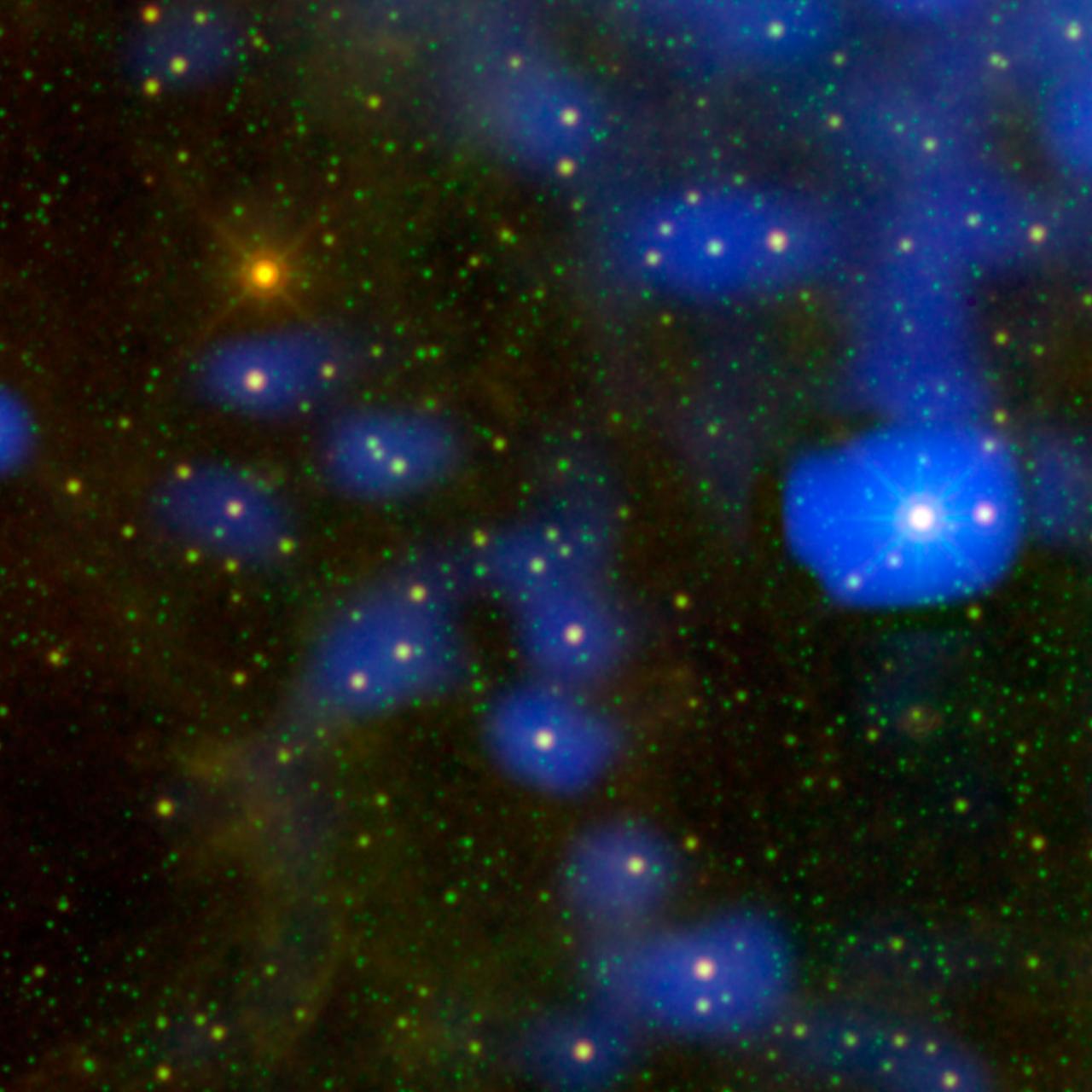
It a dust bunny of cosmic proportions. Astronomers used images from NASA WISE to locate an aging star shedding loads of dust orange dot at upper left.
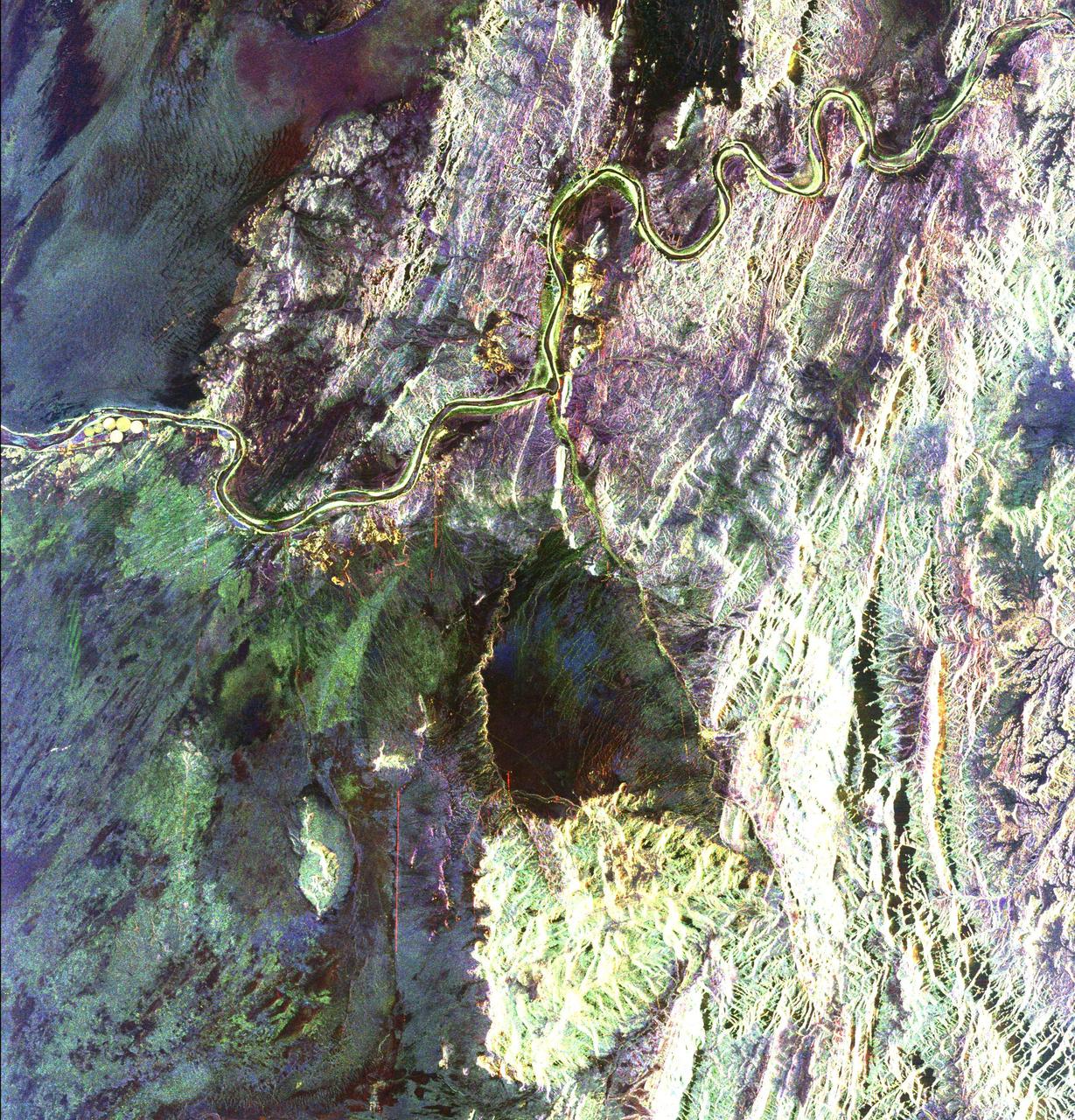
This radar image covers a portion of the Richtersveld National Park and Orange River top of image in the Northern Cape Province of the Republic of South Africa.
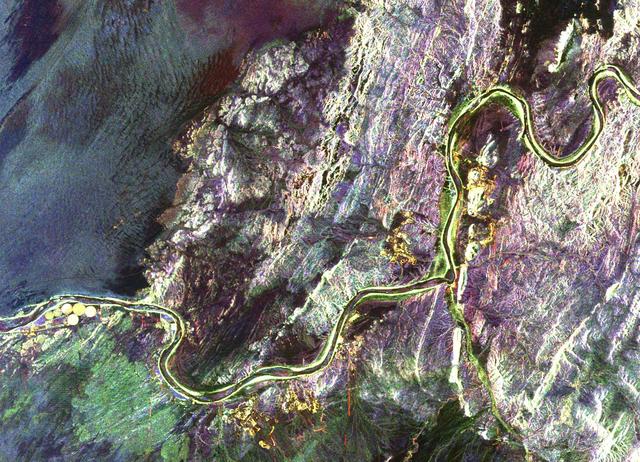
This radar image shows a close up view of a portion of the Richtersveld National Park and Orange River top of image in the Northern Cape Province of the Republic of South Africa.

This map shows the topography of the south polar region of Mars. The elevation of the terrain is shown by colors, with purple and blue representing the lowest areas, and orange and red the highest

Artemis III pilot Luca Parmitano poses for a portrait in the orange Orion Crew Survival System suit. Credit: NASA/Helen Arase Vargas

Artemis III commander Randy Bresnik poses for a portrait in the orange Orion Crew Survival System suit. Credit: NASA/Helen Arase Vargas

Artemis III mission specialist Andre Douglas poses for a portrait in the orange Orion Crew Survival System suit. Credit: NASA/Helen Arase Vargas

Artemis III backup crew member Bob Hines poses for a portrait in the orange Orion Crew Survival System suit. Credit: NASA/Helen Arase Vargas

Artemis III mission specialist Frank Rubio poses for a portrait in the orange Orion Crew Survival System suit. Credit: NASA/Helen Arase Vargas

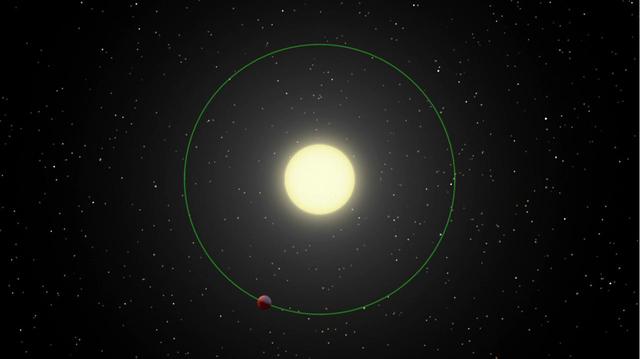
This illustration shows the unusual orbit of planet Kepler-413b around a close pair of orange and red dwarf stars. The planet 66-day orbit is tilted 2.5 degrees with respect to the plane of the binary stars orbit.
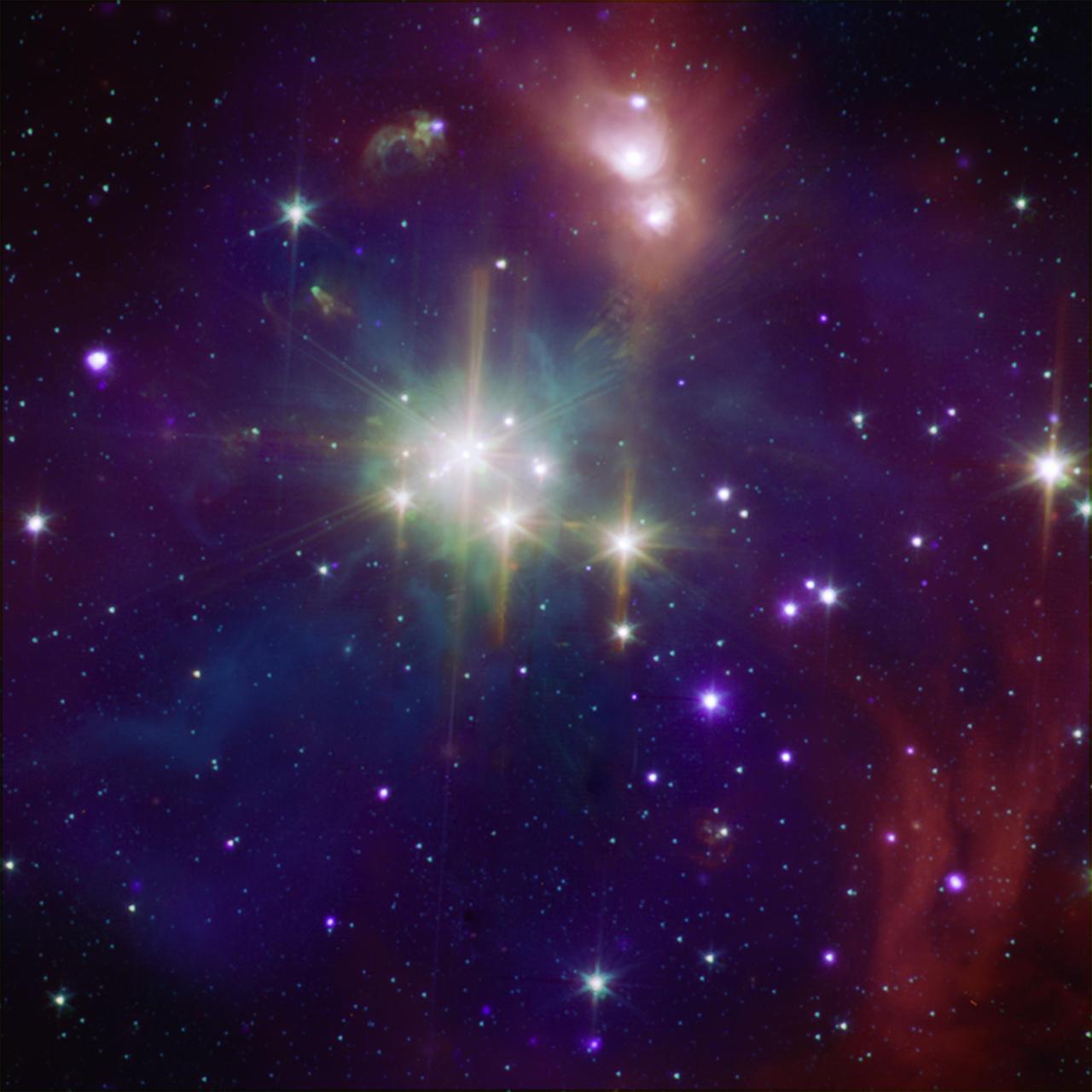
This composite image shows the Coronet in X-rays from Chandra and infrared from NASA Spitzer Space Telescope orange, green, and cyan. The Spitzer data show young stars plus diffuse emission from dust.
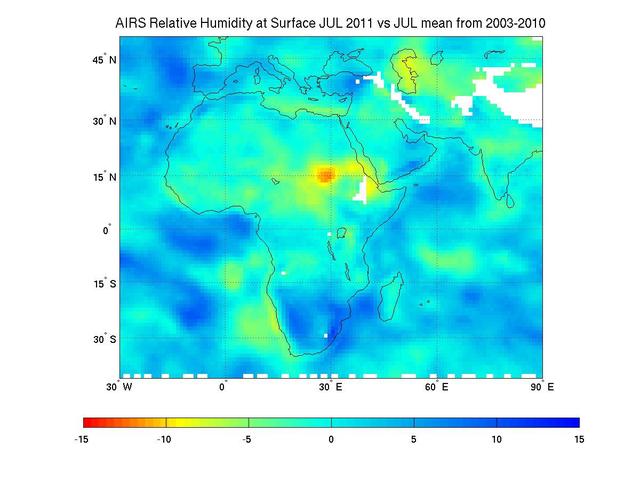
Surface relative humidity anomalies in percent, during July 2011 compared to the average surface relative humidity over the previous eight years, as measured by NASA Aqua instrument AIRS. The driest areas are shown in oranges and reds.
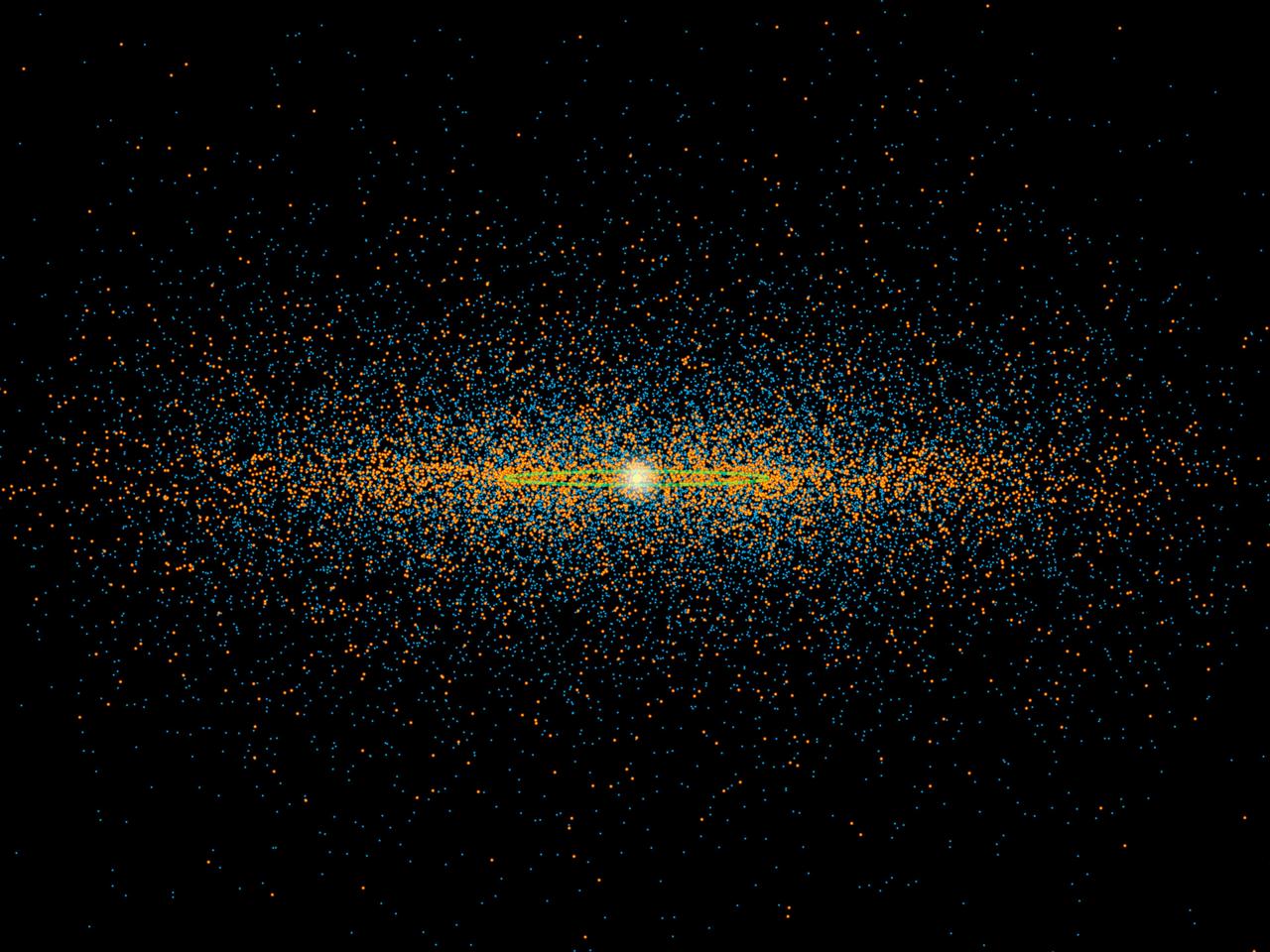
NEOWISE, the asteroid-hunting portion of NASA WISE mission, illustrates the differences between orbits of a typical near-Earth asteroid blue and a potentially hazardous asteroid, or PHA orange. PHAs are a subset of the near-Earth asteroids NEAs.
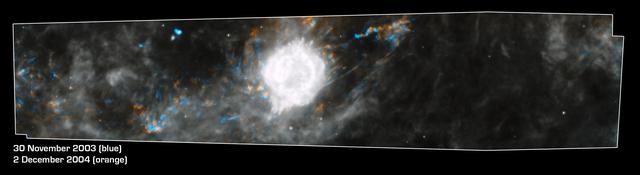
This Spitzer Space Telescope composite shows the supernova remnant Cassiopeia A white ball and surrounding clouds of dust gray, orange and blue. It consists of two processed images taken one year apart.
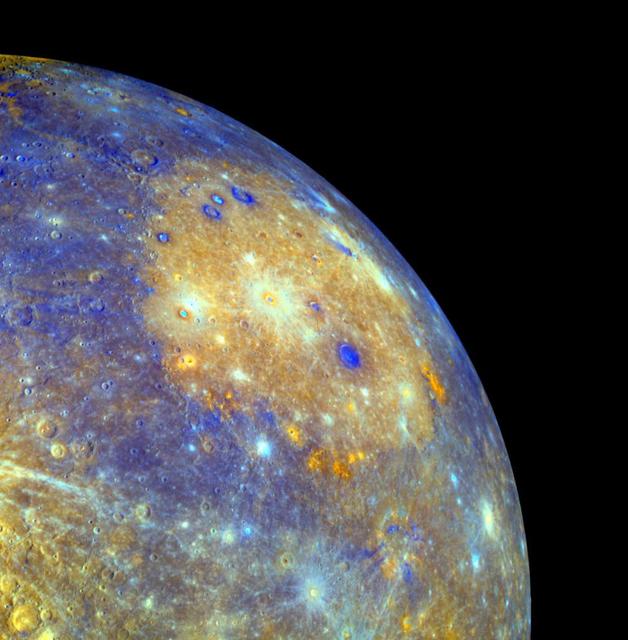
This false-color image of Mercury captured by NASA MESSENGER spacecraft shows the great Caloris impact basin, visible here as a large, circular, orange feature in the center of the picture.
This frame from an animation based on NASA Spitzer Space Telescope data illustrates an unexpected warm spot on the surface of a gaseous exoplanet.The bright orange patches are the hottest part of the planet.
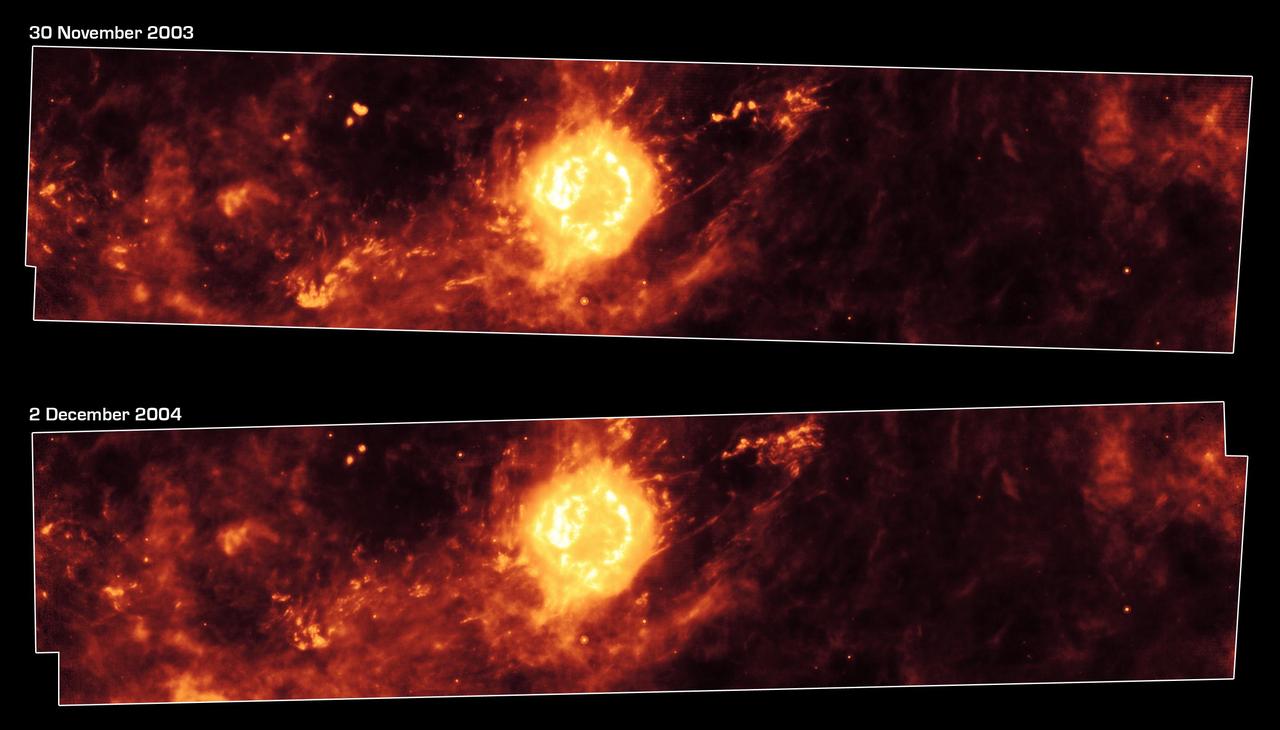
These images from NASA Spitzer Space Telescope, taken one year apart, show the supernova remnant Cassiopeia A yellow ball and surrounding clouds of dust reddish orange.
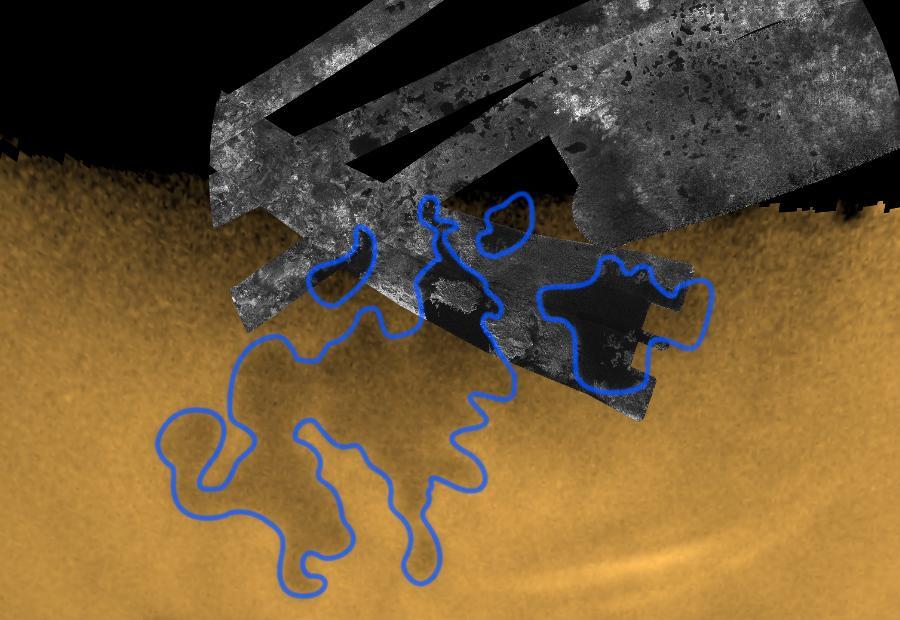
Cassini peers through the murky orange haze of Titan to spy what are believed to be bodies of liquid hydrocarbons, two of them as large as seas on Earth, near the moon north pole
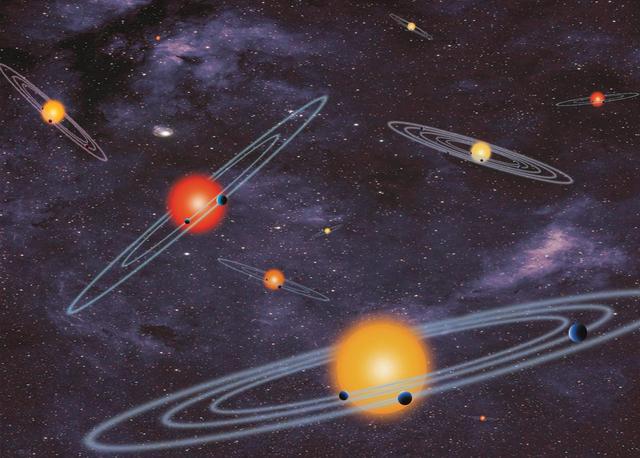
This illustration shows the unusual orbit of planet Kepler-413b around a close pair of orange and red dwarf stars. The planet 66-day orbit is tilted 2.5 degrees with respect to the plane of the binary stars orbit.
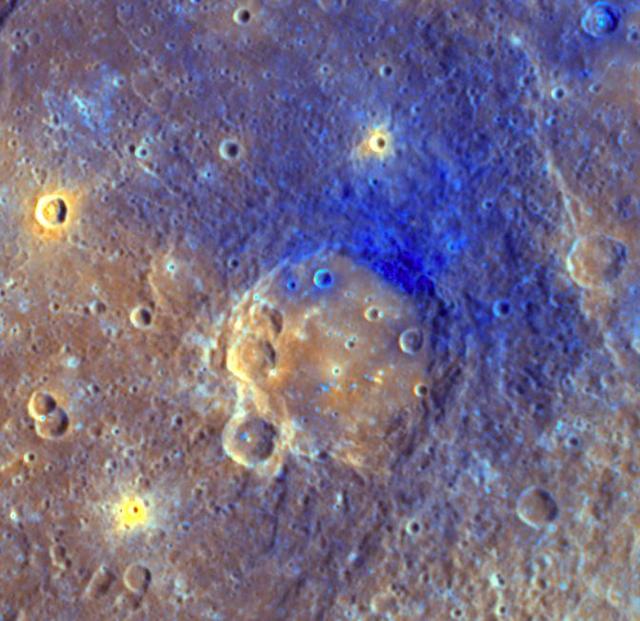
On Mercury, NASA MESSENGER shows the smooth floor of Titian is a brighter orange color than the surrounding area, likely due to being filled with volcanic material. Ejecta from Titian appears blue.
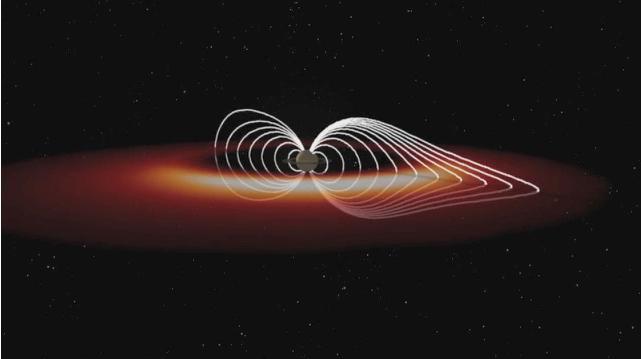
This frame from an animation based on data obtained by NASA Cassini spacecraft shows how the explosions of hot plasma on the night side orange and white periodically inflate Saturn magnetic field white lines.
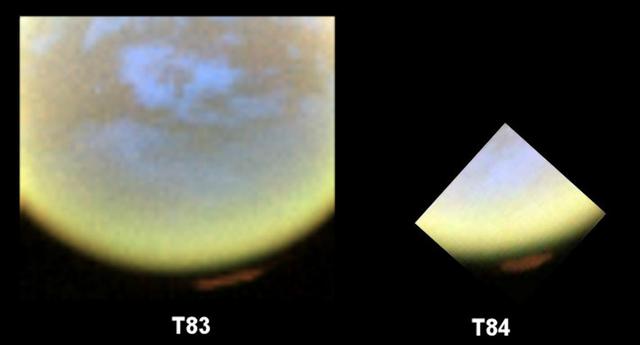
False-color images from NASA Cassini spacecraft show the development of a hood of high-altitude haze, which appears orange in this image, forming over the south pole of Saturn moon Titan.
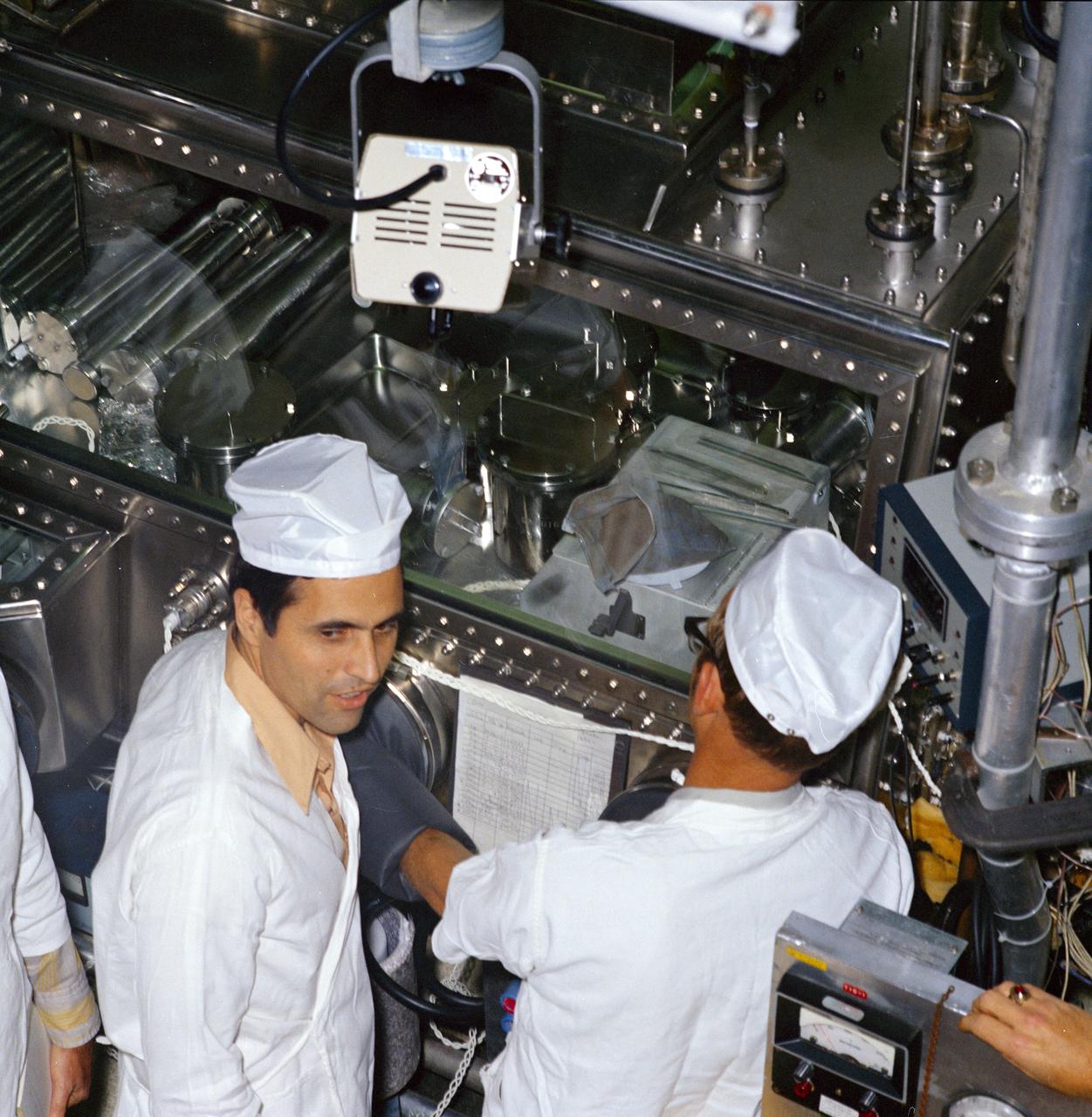
S72-56362 (27 Dec. 1972) --- Scientist-astronaut Harrison H. "Jack" Schmitt (facing camera), Apollo 17 lunar module pilot, was one of the first to look at the sample of "orange" soil which was brought back from the Taurus-Littrow landing site by the Apollo 17 crewmen. Schmitt discovered the material at Shorty Crater during the second Apollo 17 extravehicular activity (EVA). The "orange" sample, which was opened Wednesday, Dec. 27, 1972, is in the bag on a weighing platform in the sealed nitrogen cabinet in the upstairs processing line in the Lunar Receiving Laboratory at the Manned Spacecraft Center. Just before, the sample was removed from one of the bolt-top cans visible to the left in the cabinet. The first reaction of Schmitt was "It doesn't look the same." Most of the geologists and staff viewing the sample agreed that it was more tan and brown than orange. Closer comparison with color charts showed that the sample had a definite orange cast, according the MSC geology branch Chief William Phinney. After closer investigation and sieving, it was discovered that the orange color was caused by very fine spheres and fragments of orange glass in the midst of darker colored, larger grain material. Earlier in the day the "orange" soil was taken from the Apollo Lunar Sample Return Container No. 2 and placed in the bolt-top can (as was all the material in the ALSRC "rock box").
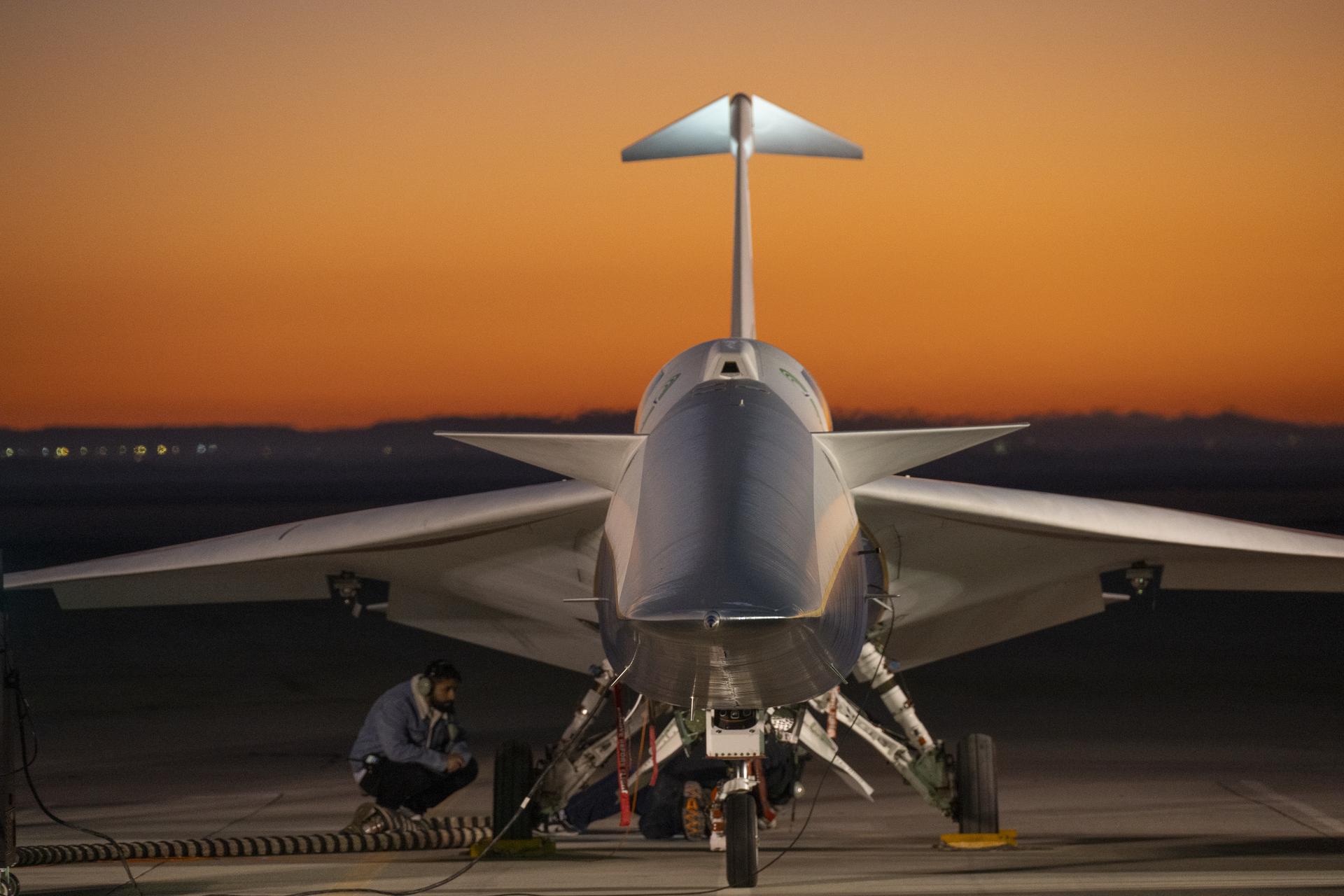
NASA’s X-59 quiet supersonic research aircraft sits on a ramp during engine run tests at NASA’s Armstrong Flight Research Center in Edwards, California, on Thursday, March 12, 2026. A maintenance technician inspects the aircraft near its landing gear as engine runs, one of the final tests before the aircraft’s second flight, take place.
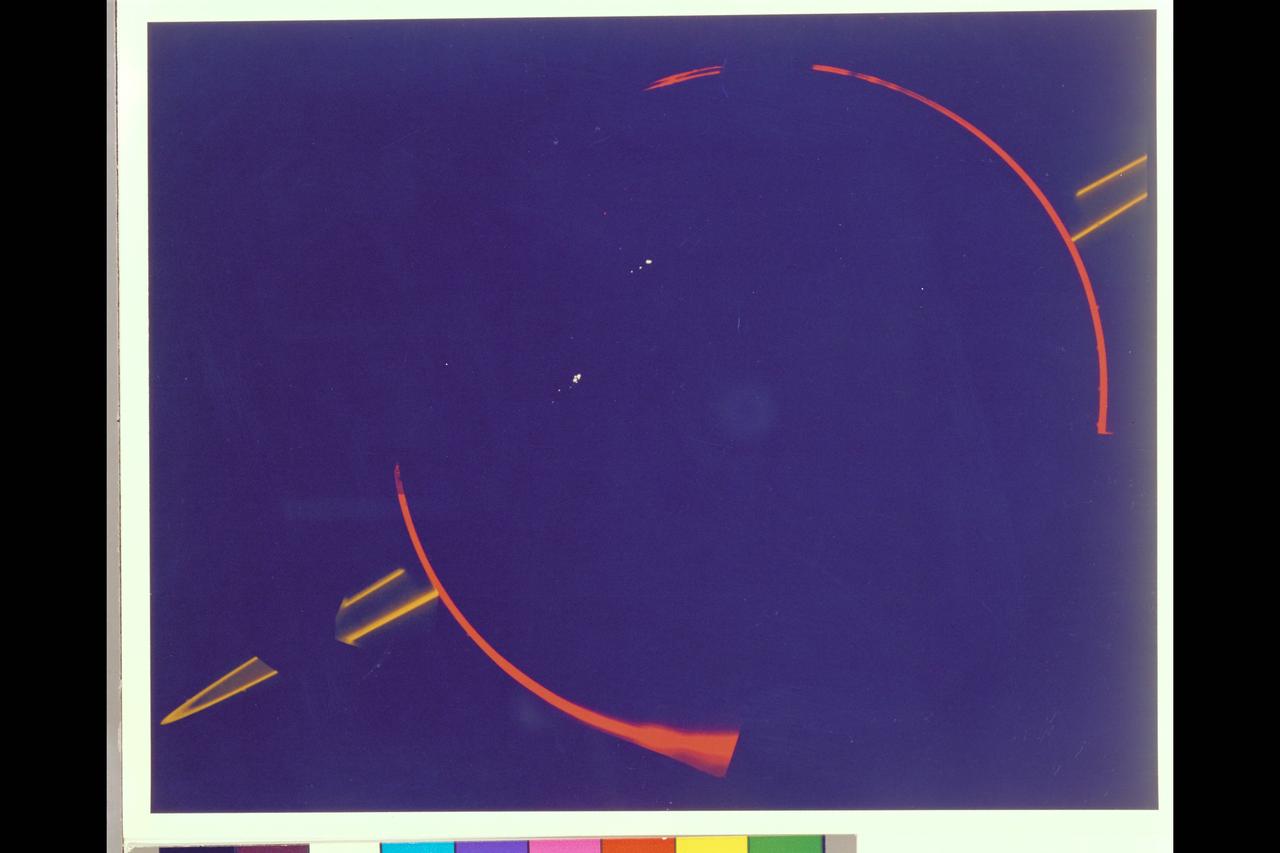
JUPITER'S FAINT RING SYSTEM IS SHOWN HERE AS TWO ORANGE LINES PROTRUDE FROM THE LEFT TOWARD JUPITER'S LIMB. THIS COLORFUL COMPOSITE WAS TAKEN IN JUPITER'S SHADOW THROUGH ORANGE AND VIOLET FILTERS. THE COLORFUL IMAGES OF JUPITER'S LIMB ARE EVIDENCE OF THE SPACECRAFT MOTION DERING THIS LONG EXPOSURE. VOYAGER 2
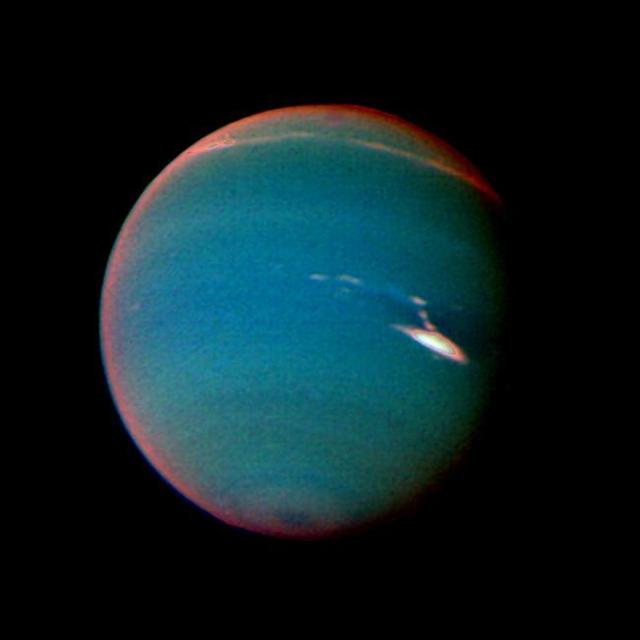
In this false color image of Neptune, objects that are deep in the atmosphere are blue, while those at higher altitudes are white. The image was taken by Voyager 2 wide-angle camera through an orange filter and two different methane filters. http://photojournal.jpl.nasa.gov/catalog/PIA00051
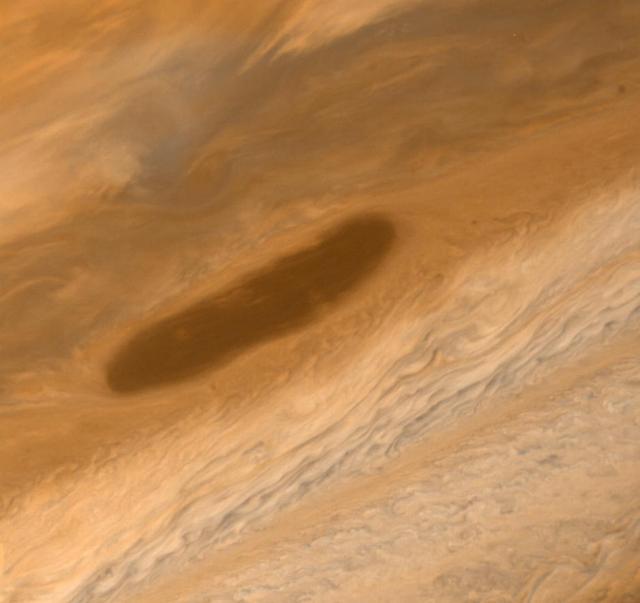
This large brown oval, photographed on Mar. 2, 1979 by NASA Voyager 1. Features of this sort are not rare on Jupiter and have an average lifetime of one to two years. Above the feature is the pale orange North Temperate Belt. http://photojournal.jpl.nasa.gov/catalog/PIA00015

Astronomers have discovered one of the most distant planets known, a gas giant about 13,000 light-years from Earth, called OGLE-2014-BLG-0124L. The planet was discovered using a technique called microlensing, and the help of NASA's Spitzer Space Telescope and the Optical Gravitational Lensing Experiment, or OGLE. In this artist's illustration, planets discovered with microlensing are shown in yellow. The farthest lies in the center of our galaxy, 25,000 light-years away. Most of the known exoplanets, numbering in the thousands, have been discovered by NASA's Kepler space telescope, which uses a different strategy called the transit method. Kepler's cone-shaped field of view is shown in pink/orange. Ground-based telescopes, which use the transit and other planet-hunting methods, have discovered many exoplanets close to home, as shown by the pink/orange circle around the sun. http://photojournal.jpl.nasa.gov/catalog/PIA19333
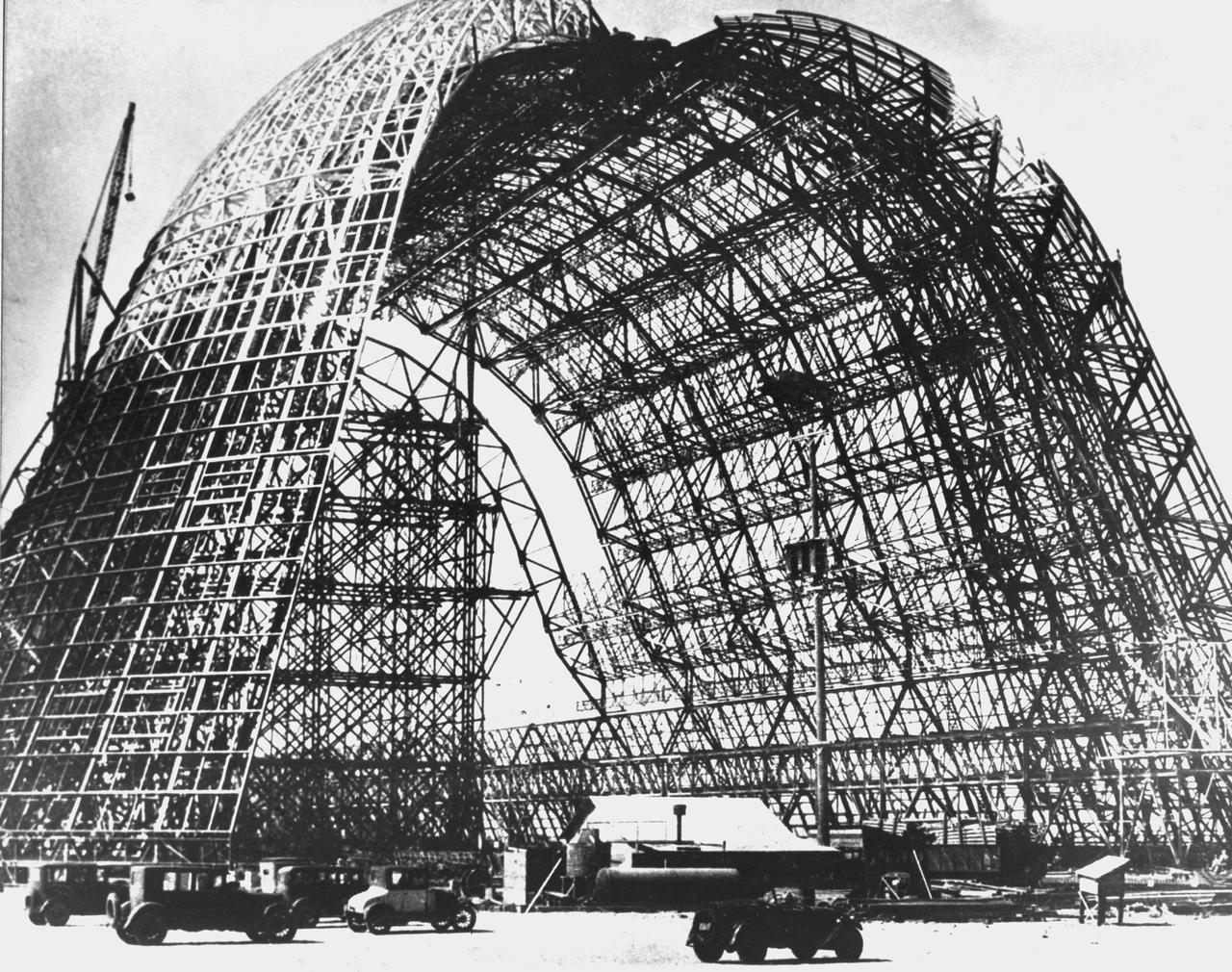
Navy Hangar 1 Early Construction showing frame work of 'Orange Peel' door Hangar One Construction
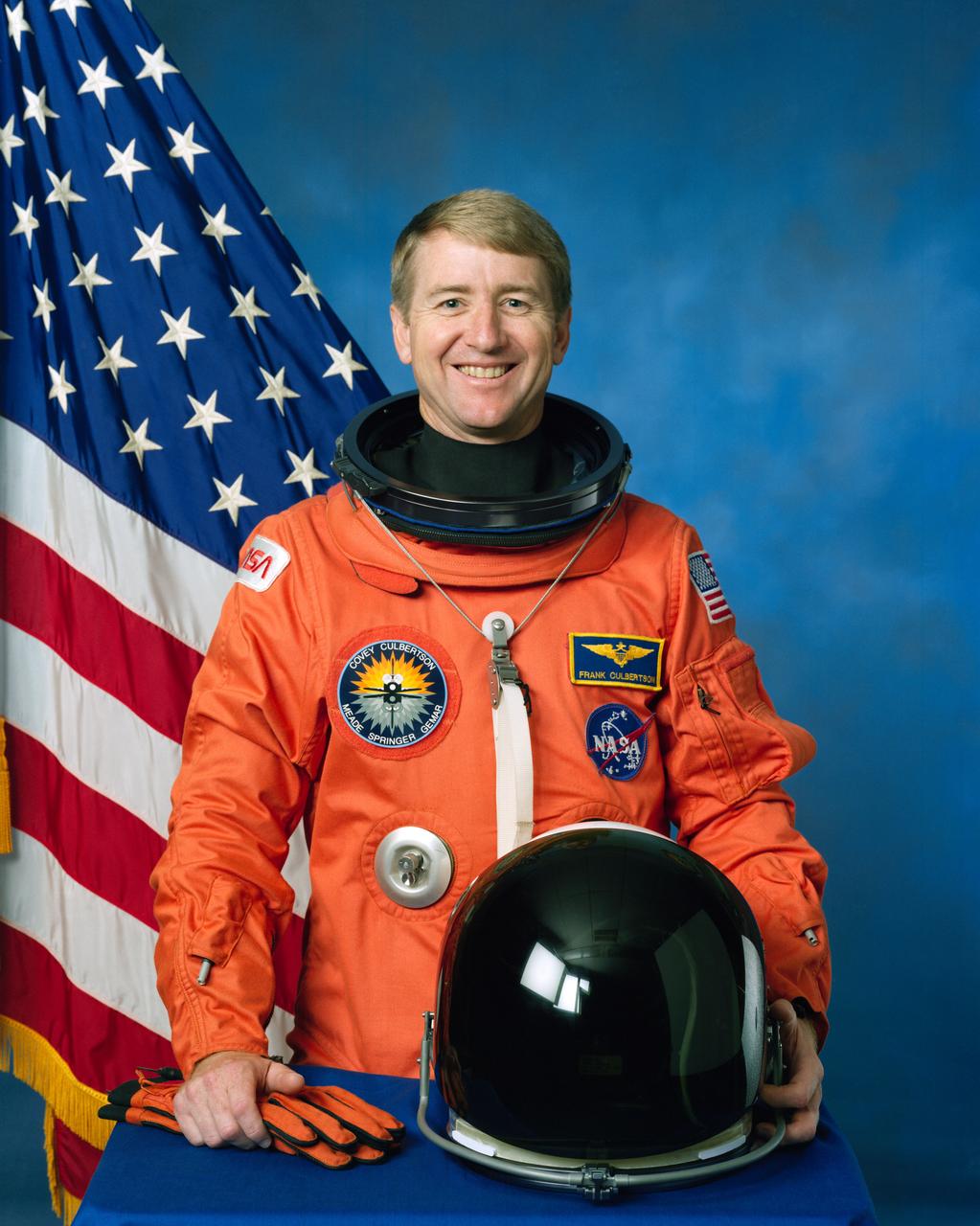
Portrait of Astronaut Frank L. Culbertson dressed in an orange launch/entry suit with his helmet on the table in front of him.

Official Portrait of Astronaut Mike Anderson (STS-107) in his orange launch and landing suit with an American flag in the background.

This artist concept shows the searing-hot gas planet WASP-12b orange orb and its star. NASA Spitzer Space Telescope discovered that the planet has more carbon than oxygen, making it the first carbon-rich planet ever observed.
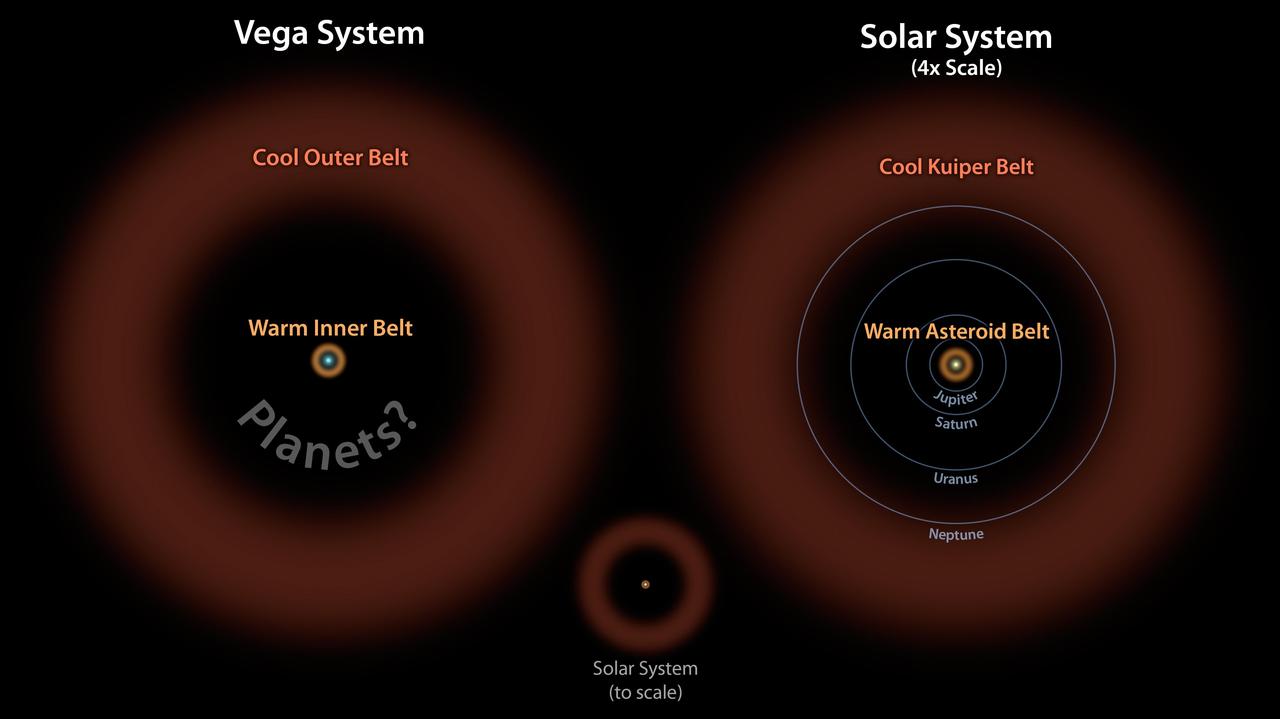
In this diagram, the Vega system, which was already known to have a cooler outer belt of comets orange, is compared to our solar system with its asteroid and Kuiper belts. The ring of warm, rocky debris was detected using NASA Spitzer Space Telescope,
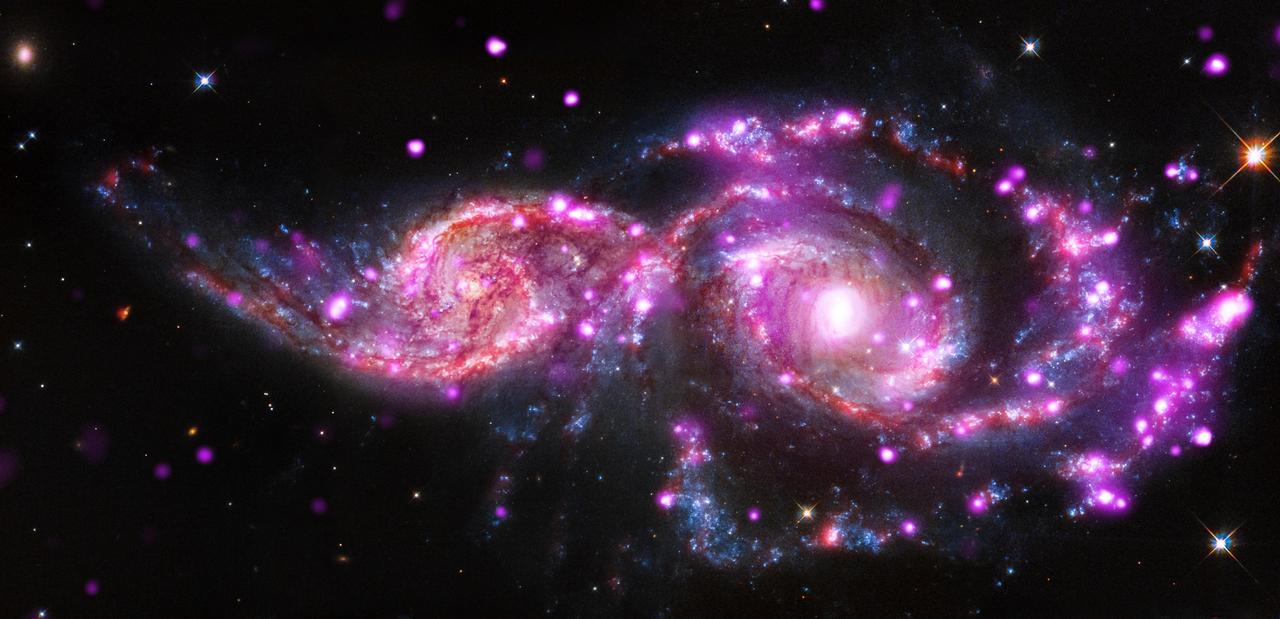
This composite image of NGC 2207 and IC 2163 contains Chandra data in pink, optical-light data from NASA Hubble Space Telescope in red, green, and blue appearing as blue, white, orange, and brown, and infrared data from Spitzer Space Telescope in red.
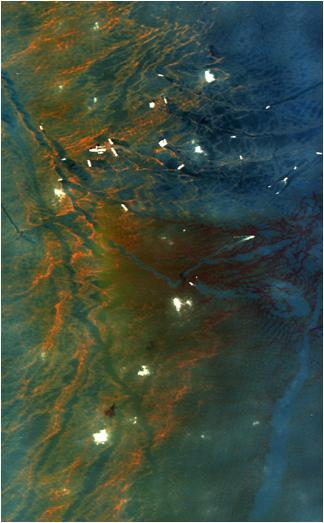
This image from NASA Airborne Visible/Infrared Imaging Spectrometer instrument AVIRIS was collected on May 17, 2010, over the site of the Deepwater Horizon BP oil spill disaster. In the image, crude oil on the surface appears orange to brown.
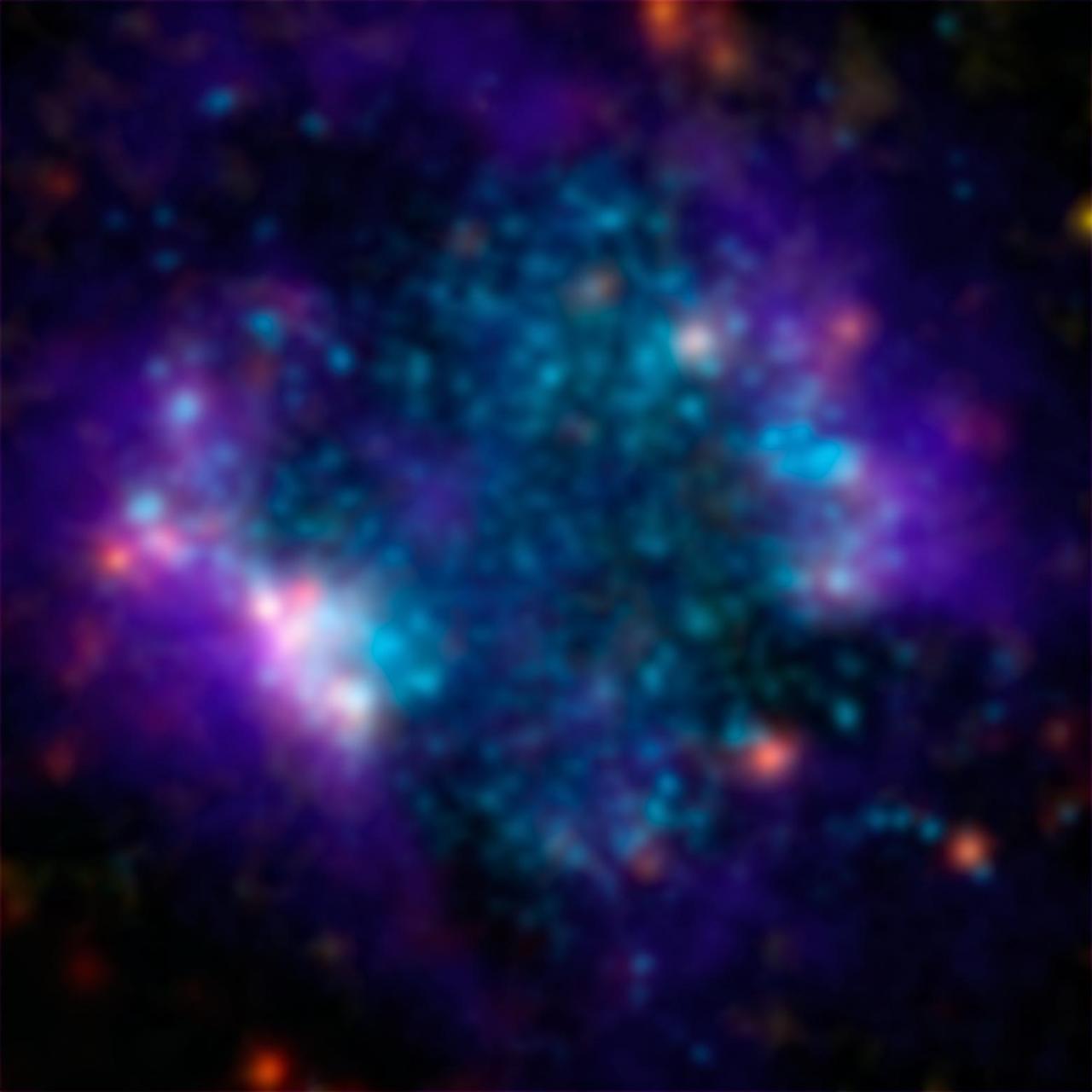
A small galaxy, called Sextans A, is shown here in a multi-wavelength mosaic captured by the ESA Herschel mission. In this image, the purple shows gas; blue shows young stars and the orange and yellow dots are newly formed stars heating up dust.
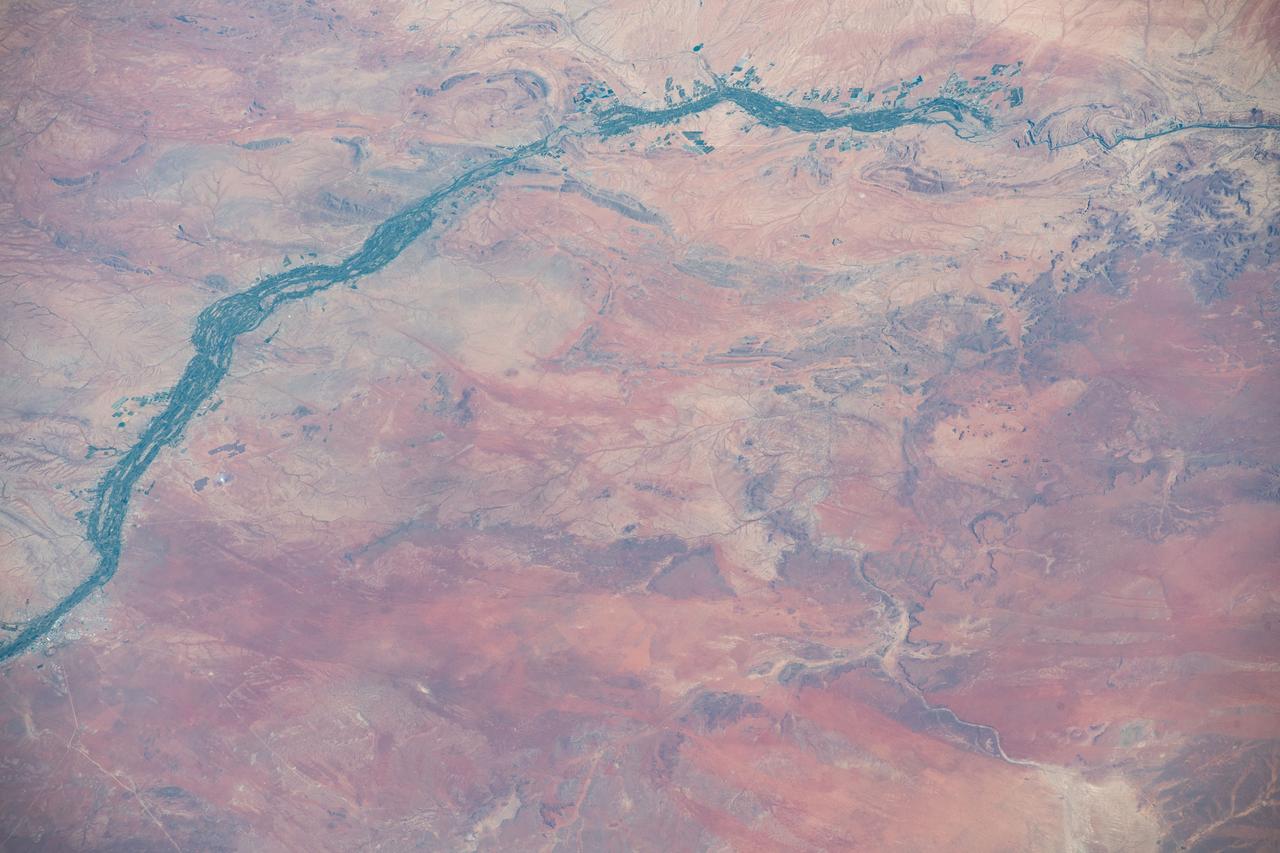
iss062e103145 (March 20, 2020) --- The Orange River in South Africa is pictured as the International Space Station orbited 264 miles above the African continent.
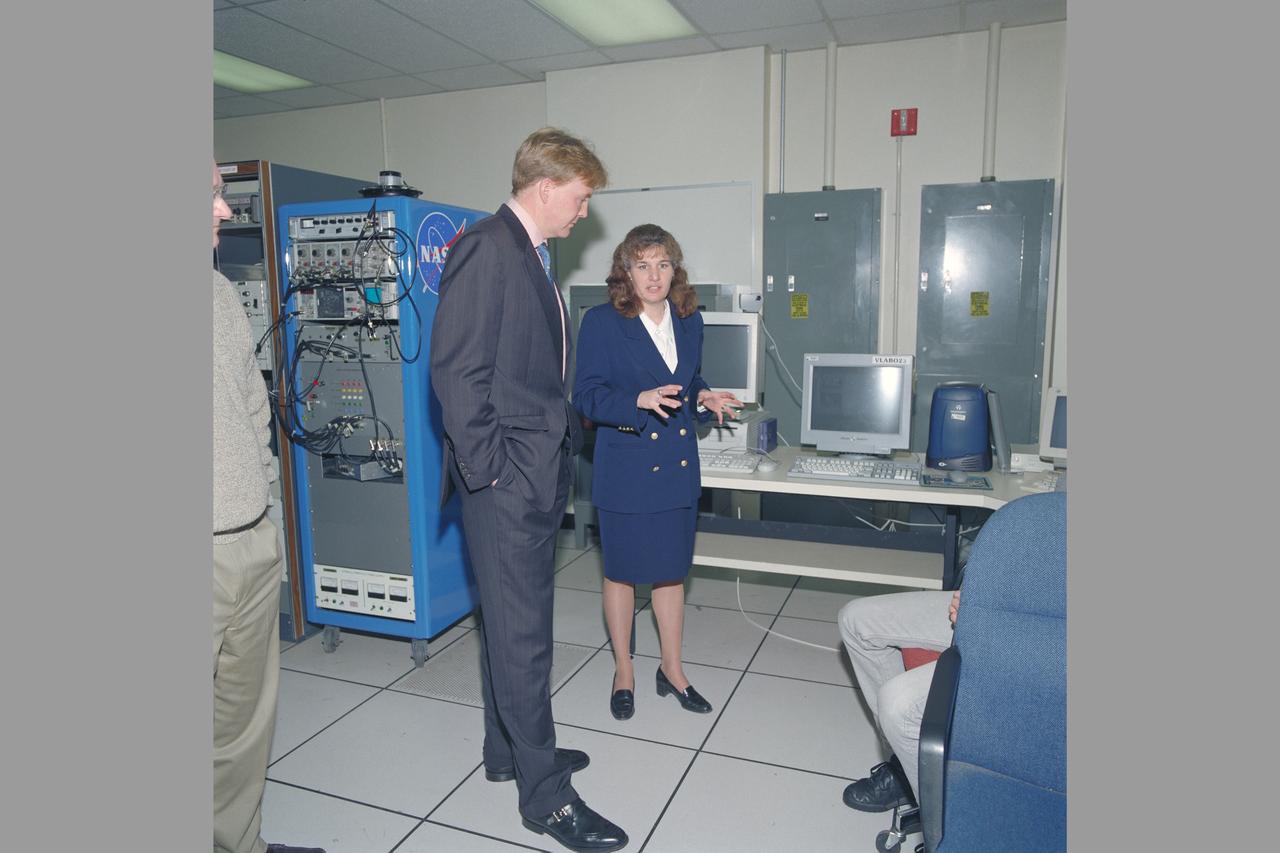
Julie Mikula & Prince in VMS Control Room. Visit: Crown Prince of the Netherlands, His Royal Highness The Prince of Orange Willem-Alexander.
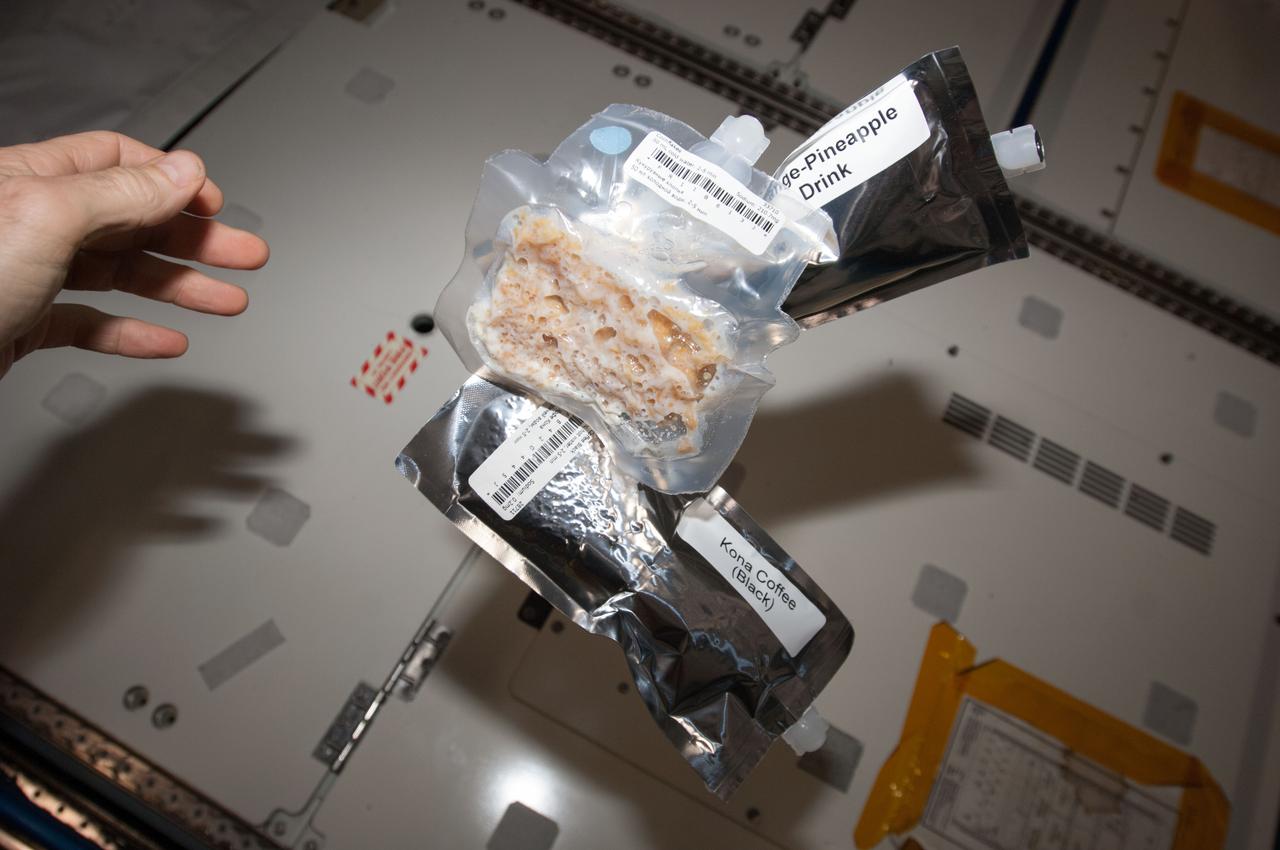
View of drink packets floating,in the U.S. Laboratory. Orange-pineapple drink,cold water,and Kona-coffee (black) are visible. Photo was taken during Expedition 34.

Earth atmosphere observation taken by the Expedition 35 crew aboard the ISS. The colors roughly denote the layers of the atmosphere (the orange troposphere, the white stratosphere, and the blue mesosphere).
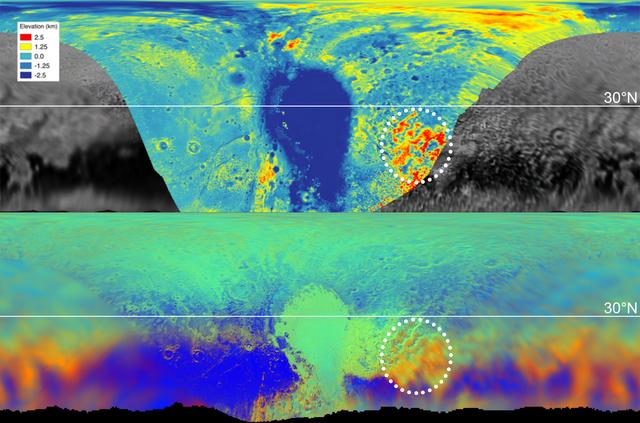
These maps are from New Horizons' data on the topography (top) and composition (bottom) of Pluto's surface. In the high-resolution topographical map, the highlighted red region is high in elevation. The map below, showing the composition, indicates the same section also contains methane, color-coded in orange. One can see the orange features spread into the fuzzier, lower-resolution data that covers the rest of the globe, meaning those areas, too, are high in methane, and therefore likely to be high in elevation. https://photojournal.jpl.nasa.gov/catalog/PIA22036

ISS007-E-10974 (27 July 2003) --- Photographed by an Expedition 7 crewmember onboard the International Space Station (ISS), this image shows the limb of the Earth at the bottom transitioning into the orange-colored troposphere, the lowest and most dense portion of the Earth's atmosphere. The troposphere ends abruptly at the tropopause, which appears in the image as the sharp boundary between the orange- and blue- colored atmosphere. The silvery-blue noctilucent clouds extend far above the Earth's troposphere. The sliver of the setting moon is visible at upper right.
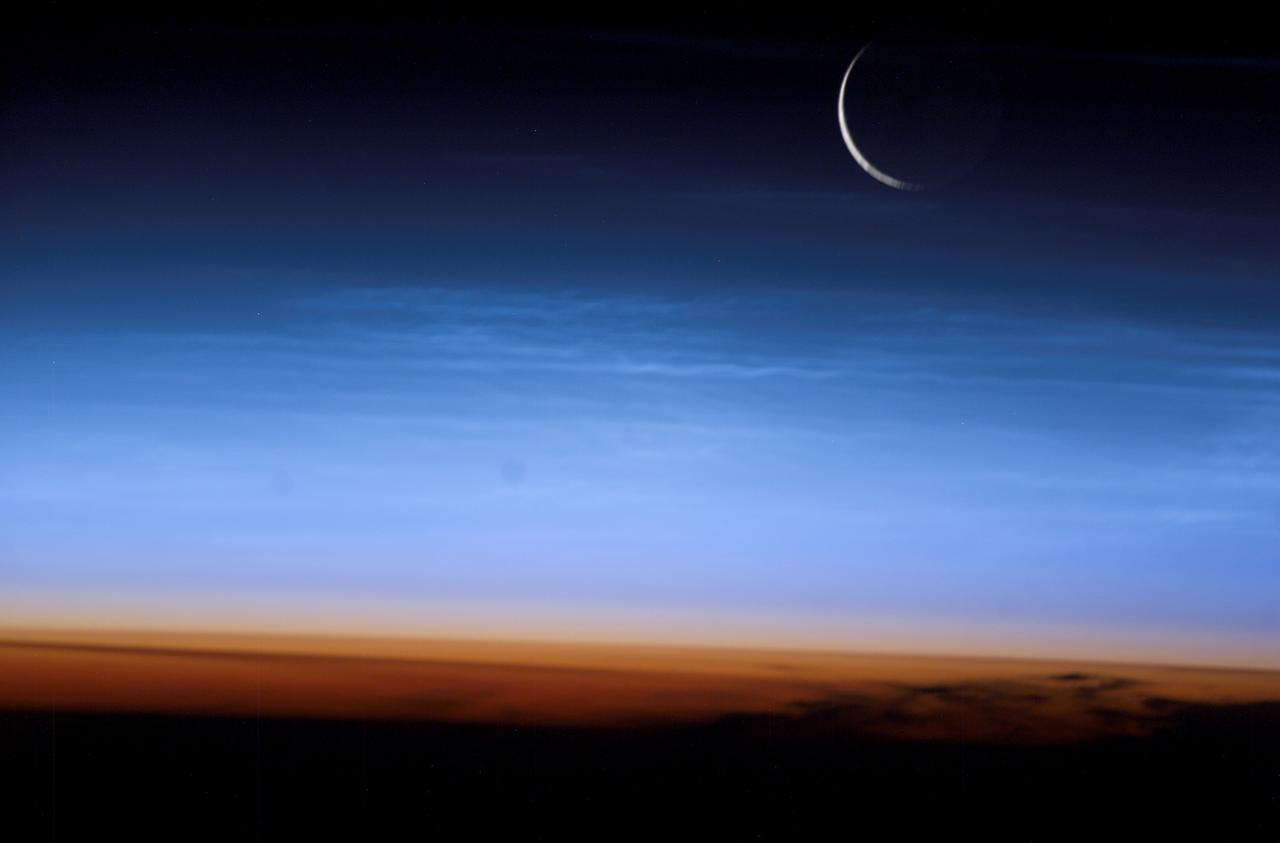
This Expedition Seven image, taken while aboard the International Space Station (ISS), shows the limb of the Earth at the bottom transitioning into the orange-colored stratosphere, the lowest and most dense portion of the Earth's atmosphere. The troposphere ends abruptly at the tropopause, which appears in the image as the sharp boundary between the orange- and blue-colored atmosphere. The silvery blue noctilucent clouds extend far above the Earth's troposphere. The silver of the setting moon is visible at upper right.
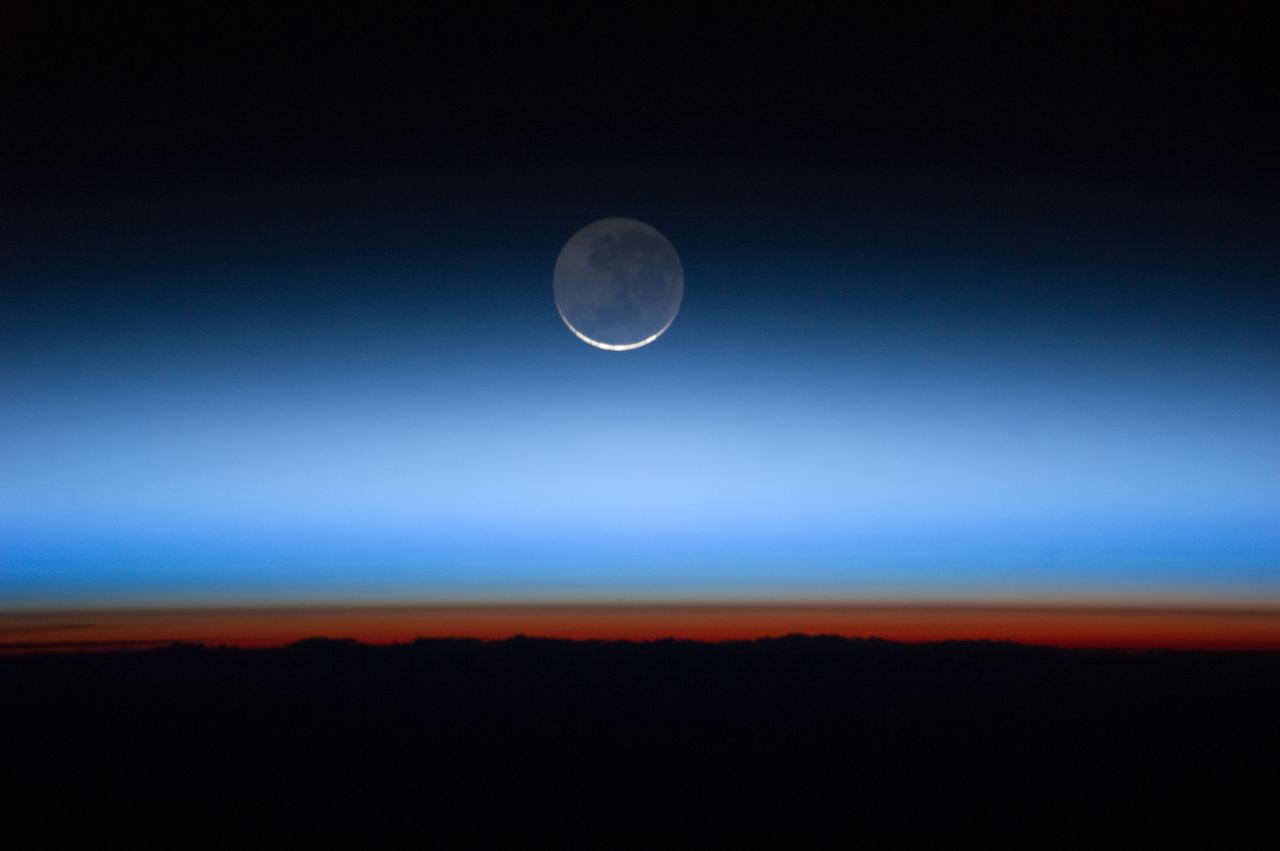
ISS028-E-020072 (31 July 2011) --- Photographed by an Expedition 28 crew member onboard the International Space Station, this image shows the moon at center, with the limb of Earth near the bottom transitioning into the orange-colored troposphere, the lowest and most dense portion of the Earth's atmosphere. The troposphere ends abruptly at the tropopause, which appears in the image as the sharp boundary between the orange- and blue- colored atmosphere. The silvery-blue noctilucent clouds extend far above the Earth's troposphere.
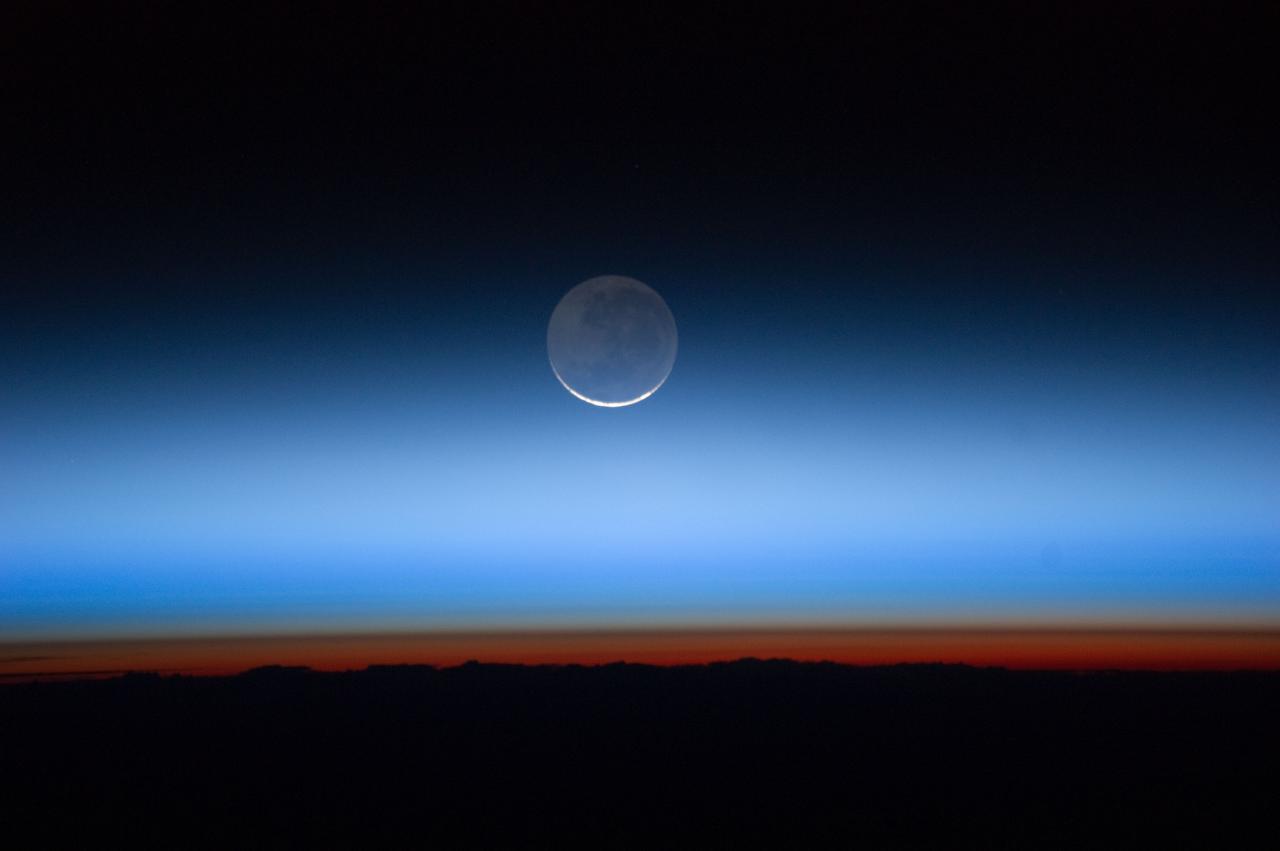
ISS028-E-020073 (31 July 2011) --- Photographed by an Expedition 28 crew member onboard the International Space Station, this image shows the moon at center, with the limb of Earth near the bottom transitioning into the orange-colored troposphere, the lowest and most dense portion of the Earth's atmosphere. The troposphere ends abruptly at the tropopause, which appears in the image as the sharp boundary between the orange- and blue- colored atmosphere. The silvery-blue noctilucent clouds extend far above the Earth's troposphere.

Range : 1,450,000 km. ( 900,000 miles ) Jupiter's faint ring system is shown here as two orange lines protrude from the left toward Jupiter's limb. This colorful composite was taken in Jupiter's shadow through orange and violet filters. The colorful images of Jupiter's limb are evidence of the spacecraft motion dering this long exposure. Voyager 2 was about 2 degrees below the plane of the ring when this was shot, leaving the lower ring image cut short by Jupiter's shadow on the ring. (JPL ref No. P-21779)
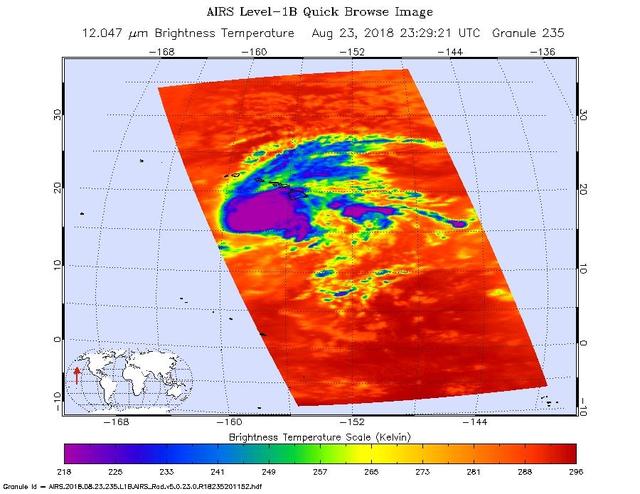
This image shows Hurricane Lane as observed by the Atmospheric Infrared Sounder (AIRS) instrument on NASA's Aqua satellite on Thursday, Aug. 23, 2018. Purple shows very cold clouds high in the atmosphere above the center of the hurricane, blue and green show the warmer temperatures of lower clouds surrounding the storm center; and orange and red areas have almost no clouds. No eye is seen in this image, which means it was either too small for AIRS to detect or it was covered by high, cold clouds. Figure 1 was observed on Aug. 22, 2018. Purple shows very cold clouds high in the atmosphere above the center of the hurricane, blue and green show the warmer temperatures of lower clouds surrounding the storm center; and orange and red areas have almost no clouds. The eye of the storm is clearly visible. https://photojournal.jpl.nasa.gov/catalog/PIA22493
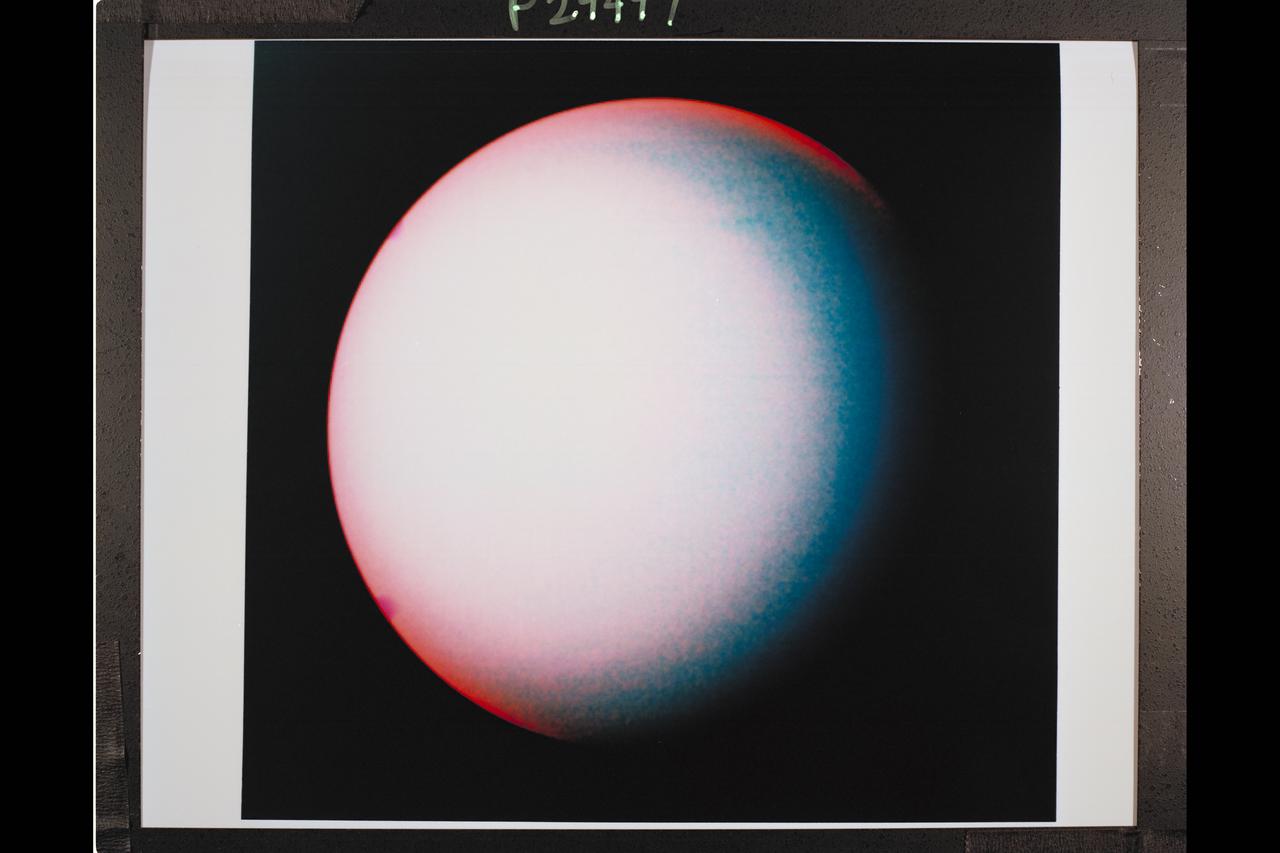
Range : 2.7 million miles (1.7 million miles) P-29497C Tis Voyager 2, false color composite of Uranus demonstrates the usefulness of special filters in the Voyager cameras for revealing the presence of high altitude hazes in Uranus' atmosphere. The picture is a composite of images obtained through the single orange and two methane filters of Voyager's wide angle camera. Orange, short wavelength and long wavelength methane images are displayed, retrospectively, as blue, green, and orange. The pink area centered on the pole is due to the presence of hazes high in the atmosphere that reflect the light before it has traversed a long enough path through the atmosphere to suffer absorbtion by methane gas. The bluest region at mid-latitude represent the most haze free regions on Uranus, thus, deeper cloud levels can be detected in these areas.
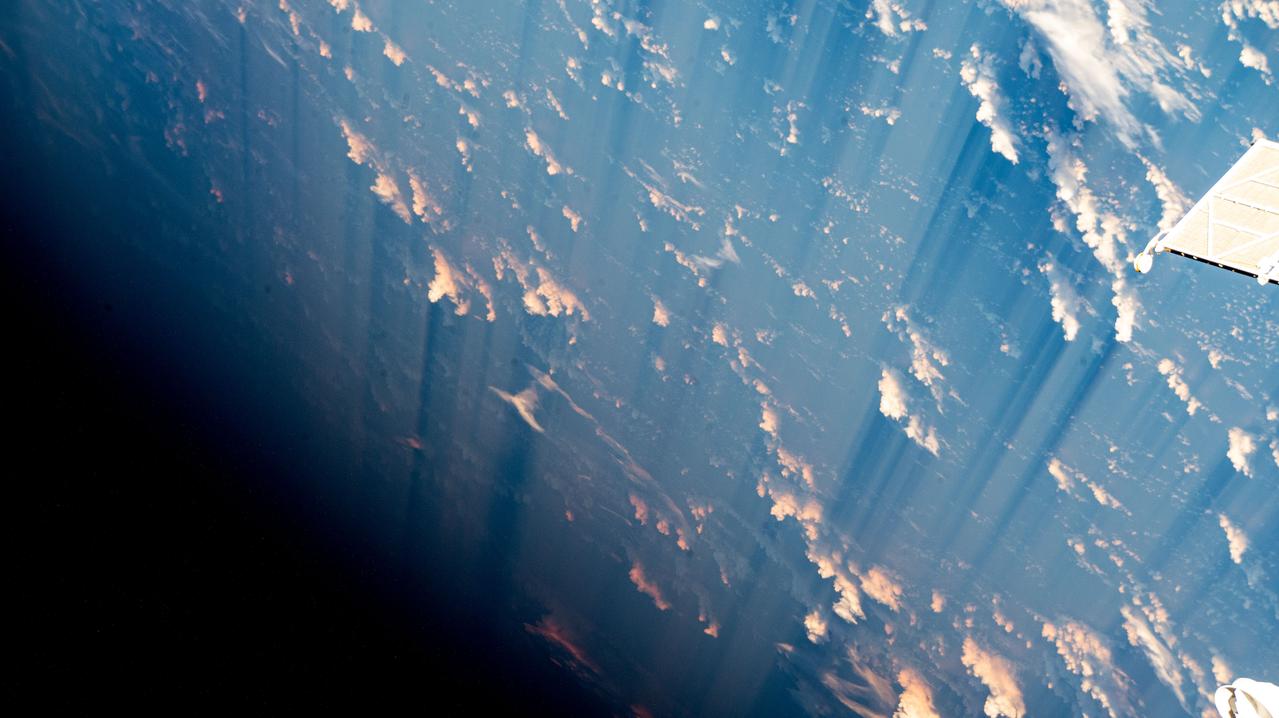
iss069e060352 (August 15, 2023) -- Light pink-orange and white clouds scatter across the blue waters of the Atlantic ocean as the International Space Station orbited 260 miles above.
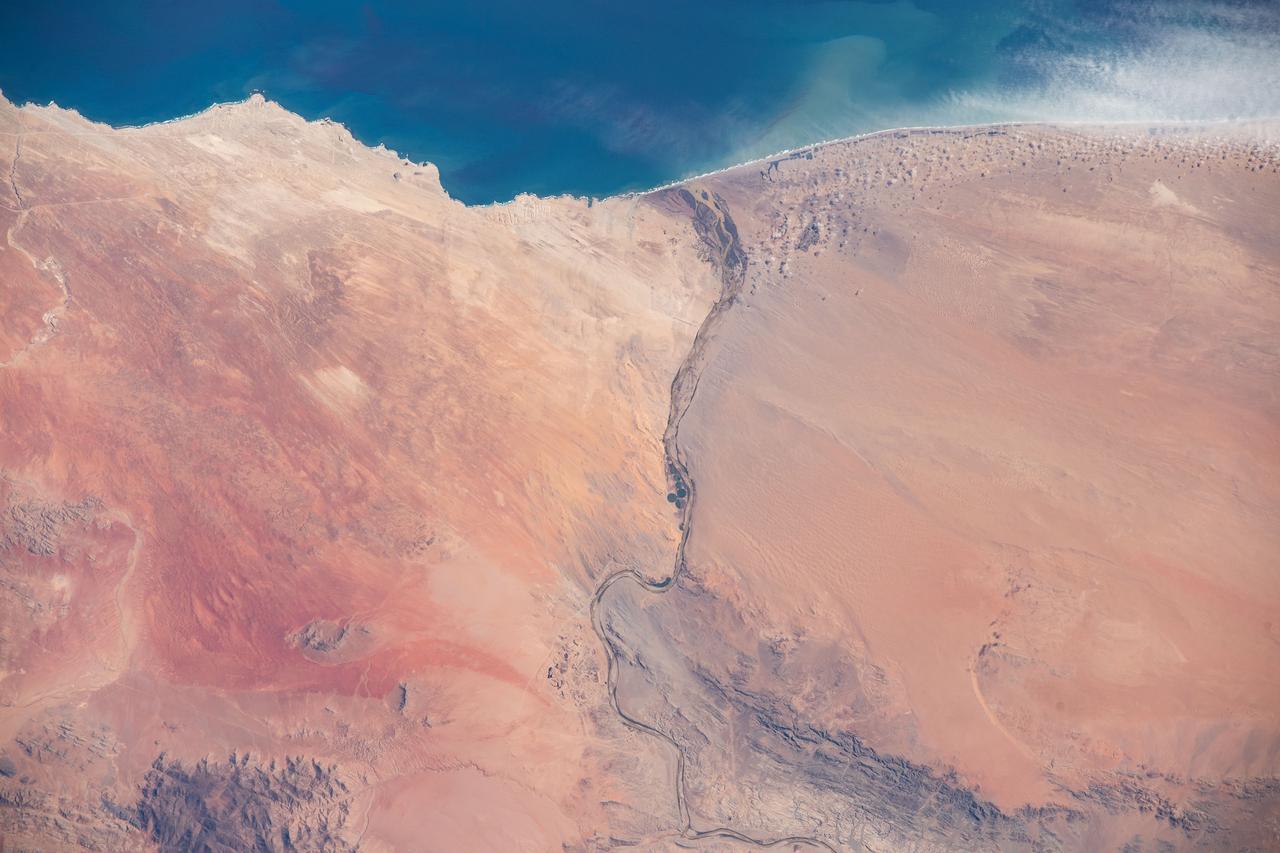
iss062e103100 (March 20, 2020) --- The Orange River empties into the Atlantic Ocean and separates the nations of Namibia and South Africa. The International Space Station was orbiting 265 miles above the African continent when this photograph was taken.
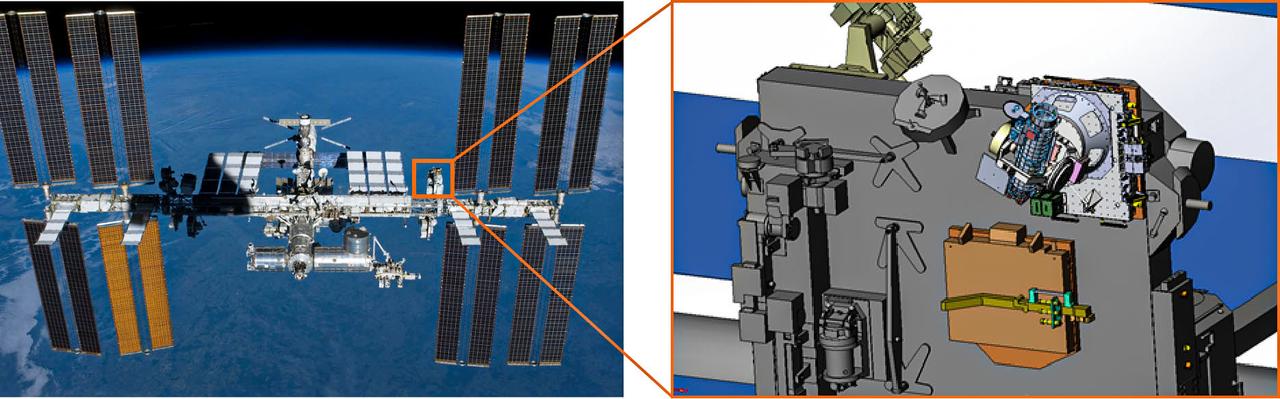
jsc2024e061951 (9/12/2024) --- In this composite image, an orange square identifies where the COronal Diagnostic EXperiment (CODEX) instrument will be placed onboard the International Space Station and what it will look like. Credit: CODEX team / NASA
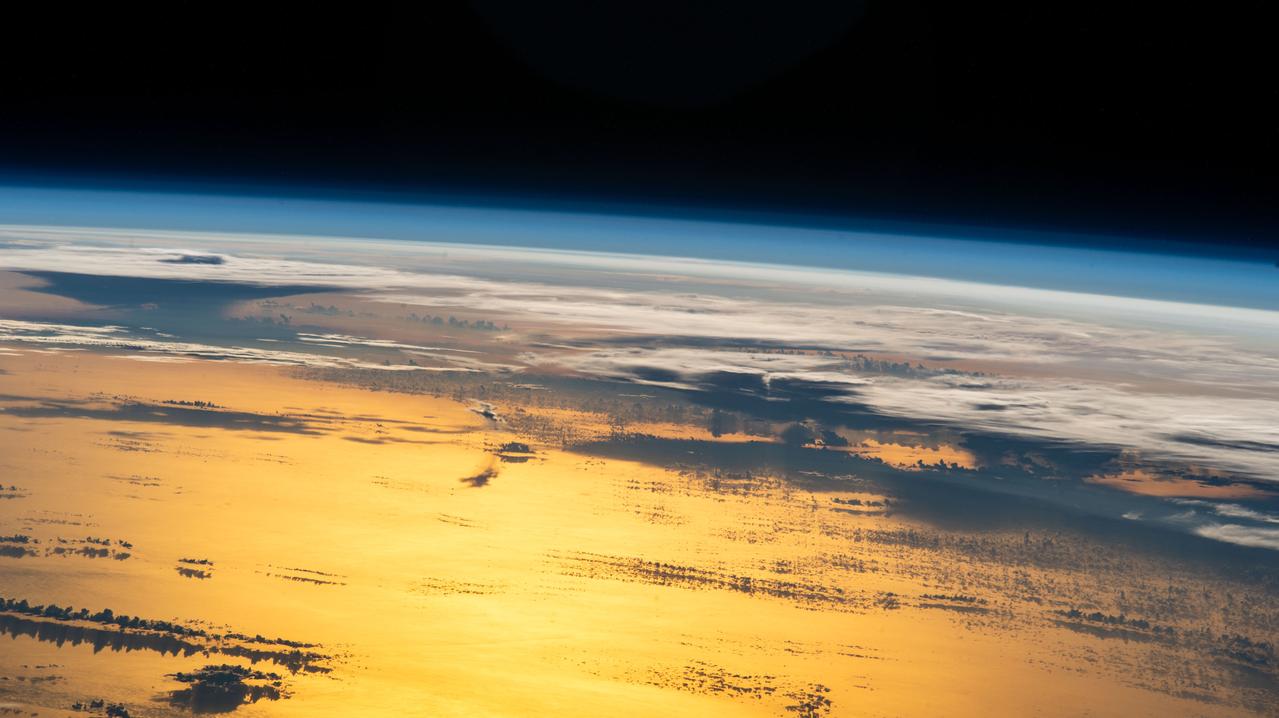
iss067e238146 (Aug. 4, 2022) --- The sun's glint beams off the Atlantic Ocean just before it sets creating a yellow-orange hue in this photograph from the International Space Station as it orbited 258 miles above.

CAPE CANAVERAL, Fla. – A rising sun paints the sky a blazing orange behind gathering clouds over the Launch Complex 39 Area at NASA's Kennedy Space Center. Photo credit: NASA/Dimitri Gerondidakis
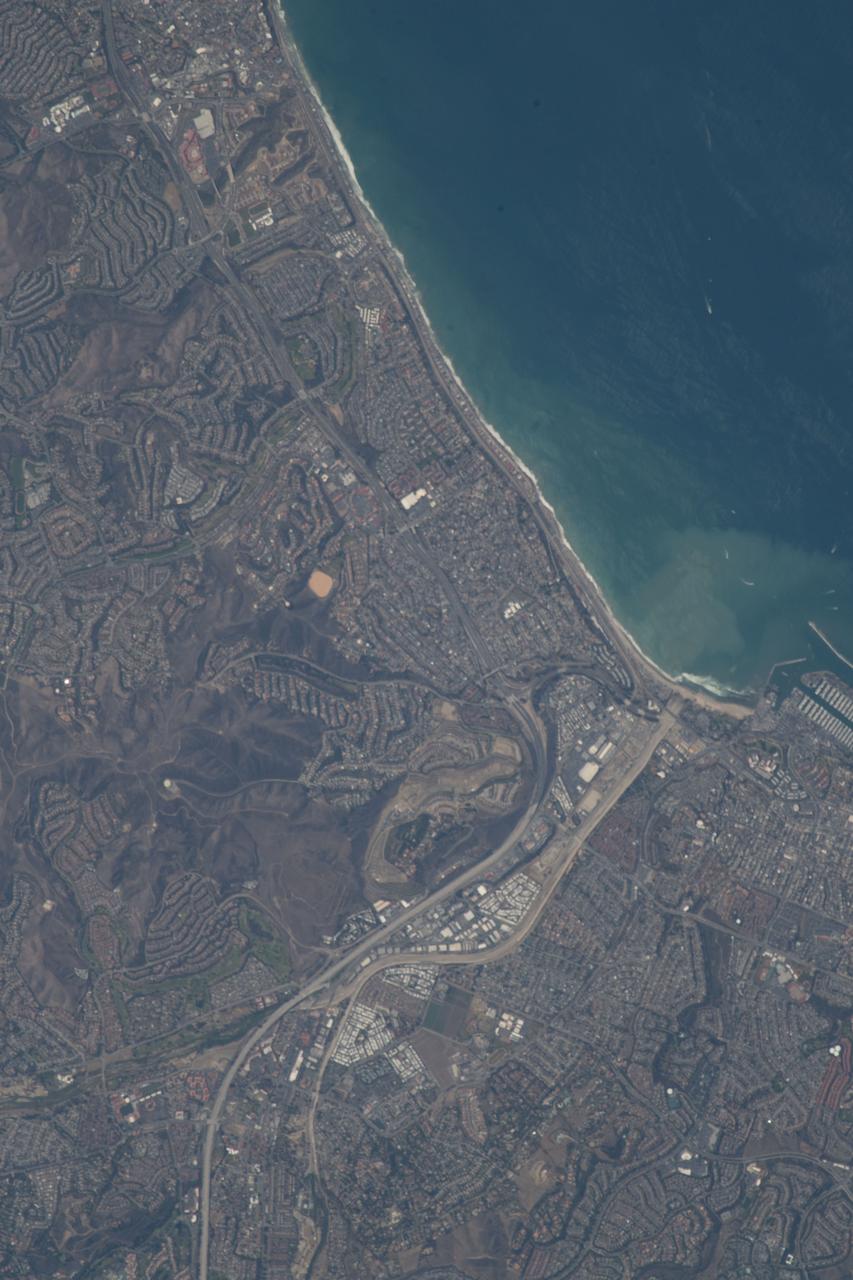
iss056e085198 (July 8, 2018) --- The Capistrano beach and the southern California cities of Dana Point and San Clemente in Orange County are pictured as the International Space Station orbited off the Pacific coastline.
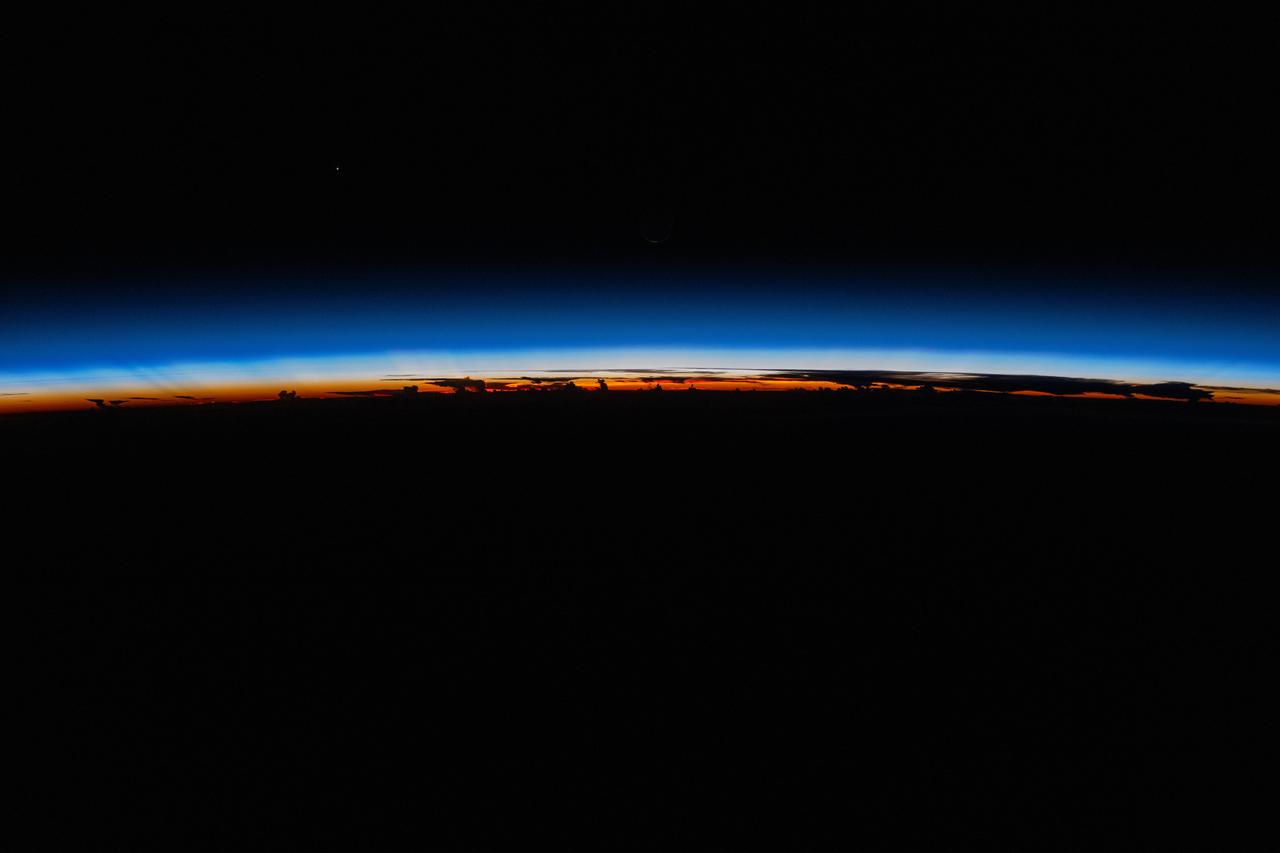
iss071e310017 (July 6, 2024) -- The last rays of an orbital sunset shine a striking orange against Earth's blue glow as the International Space Station orbited 255 miles above The Philippines.
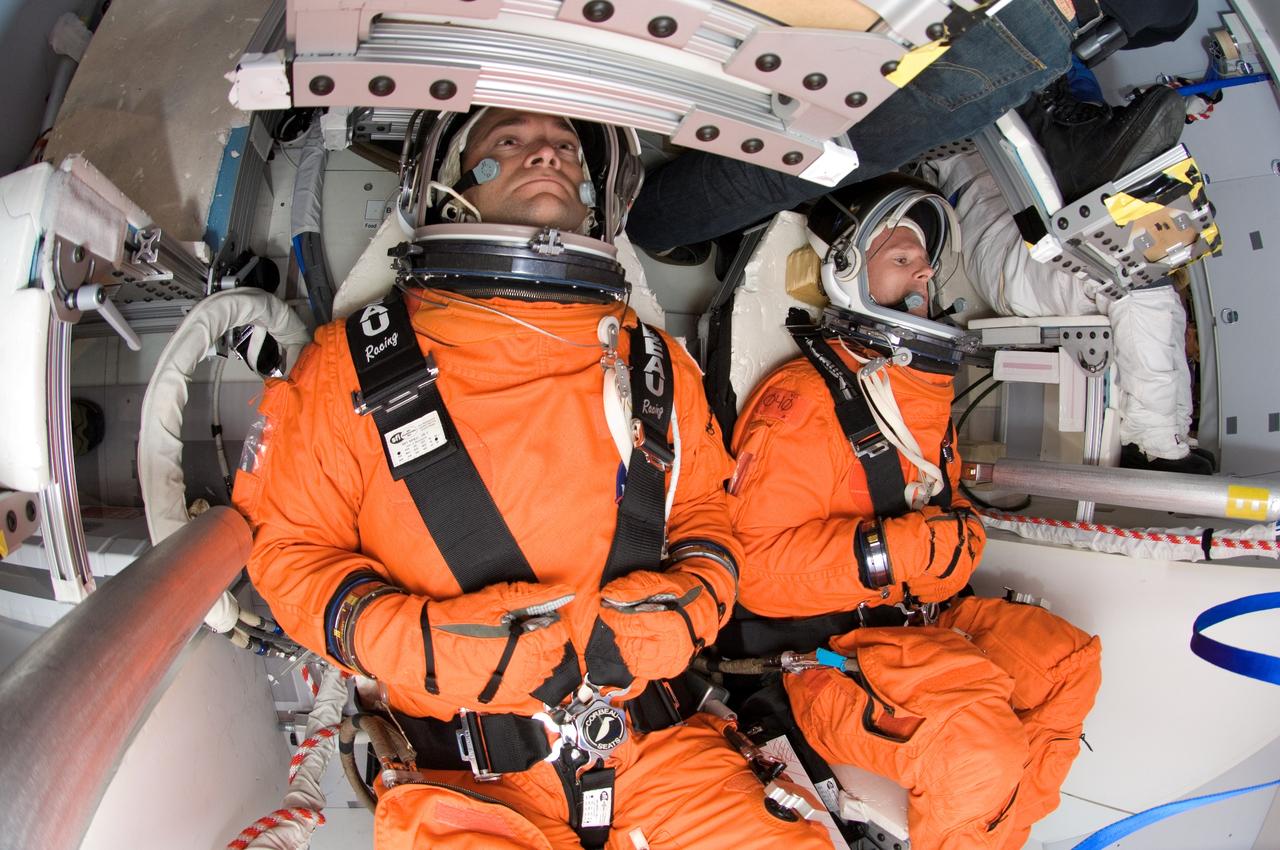
Photographic documentation of the CEV Seat Layout Evaluation taken in the Orion mockup located in bldg 9NW, Johnson Space Center (JSC). Test subjects in orange Launch and Entry Suit (LES) is visible in the seat.
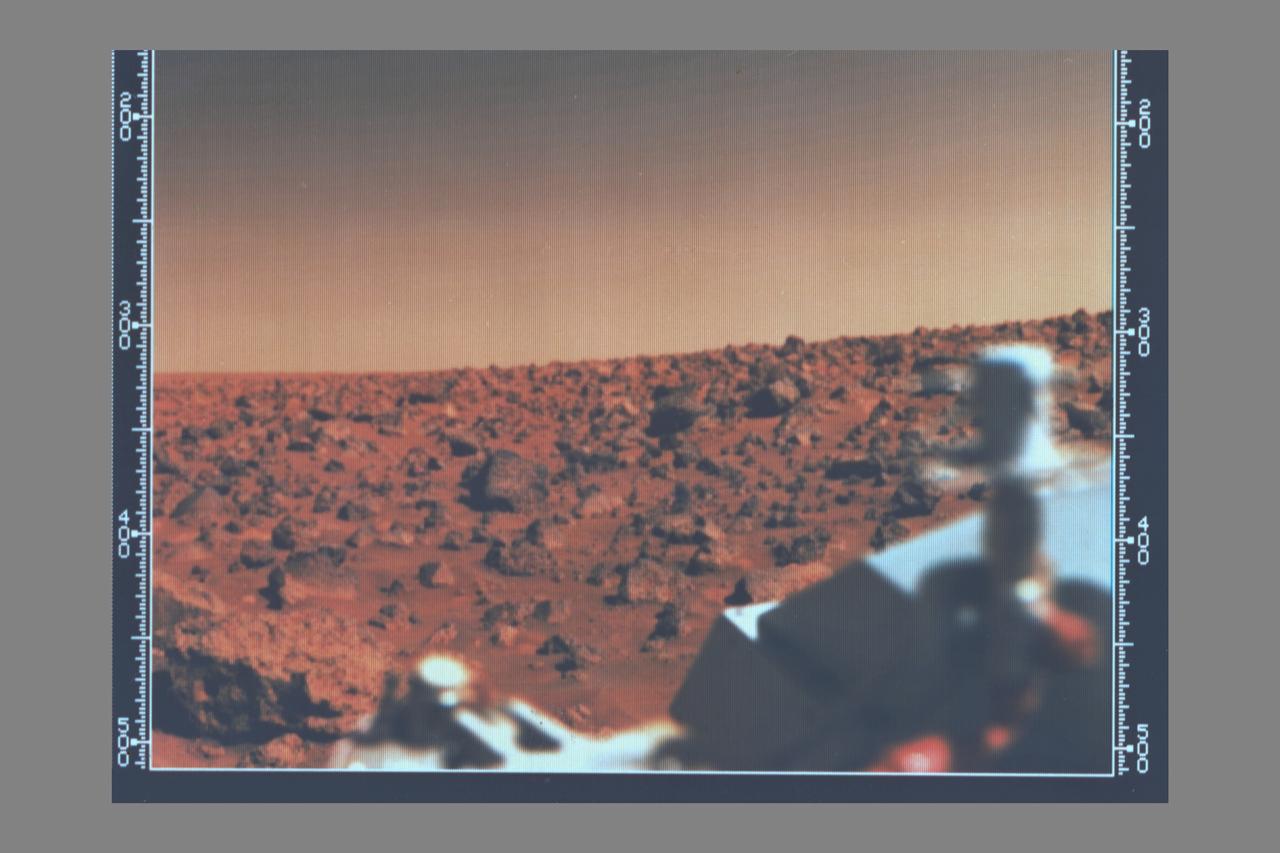
Viking 2 A utopian bright summer afternoon on Mars -- Looking south from Viking 2 on September 7, 1976 the orange-red surface of the nearly level plain upon which the spacecraft sits is seen strewn with rocks as large as three feet across. Many of these rocks are porous and sponge-like, similar to some of Earth's volcanic rocks. Other rocks are coarse-grained such as the large rock at lower left. Between the rocks, the surface is blanketed with fine-grained materials that, in places, is piled into small drifts and banked against some of the larger blocks. The cylindrical mast with the orange cable is the low-gain antenna used to receive cammands form Earth. (JPL ref: P-17690 color)
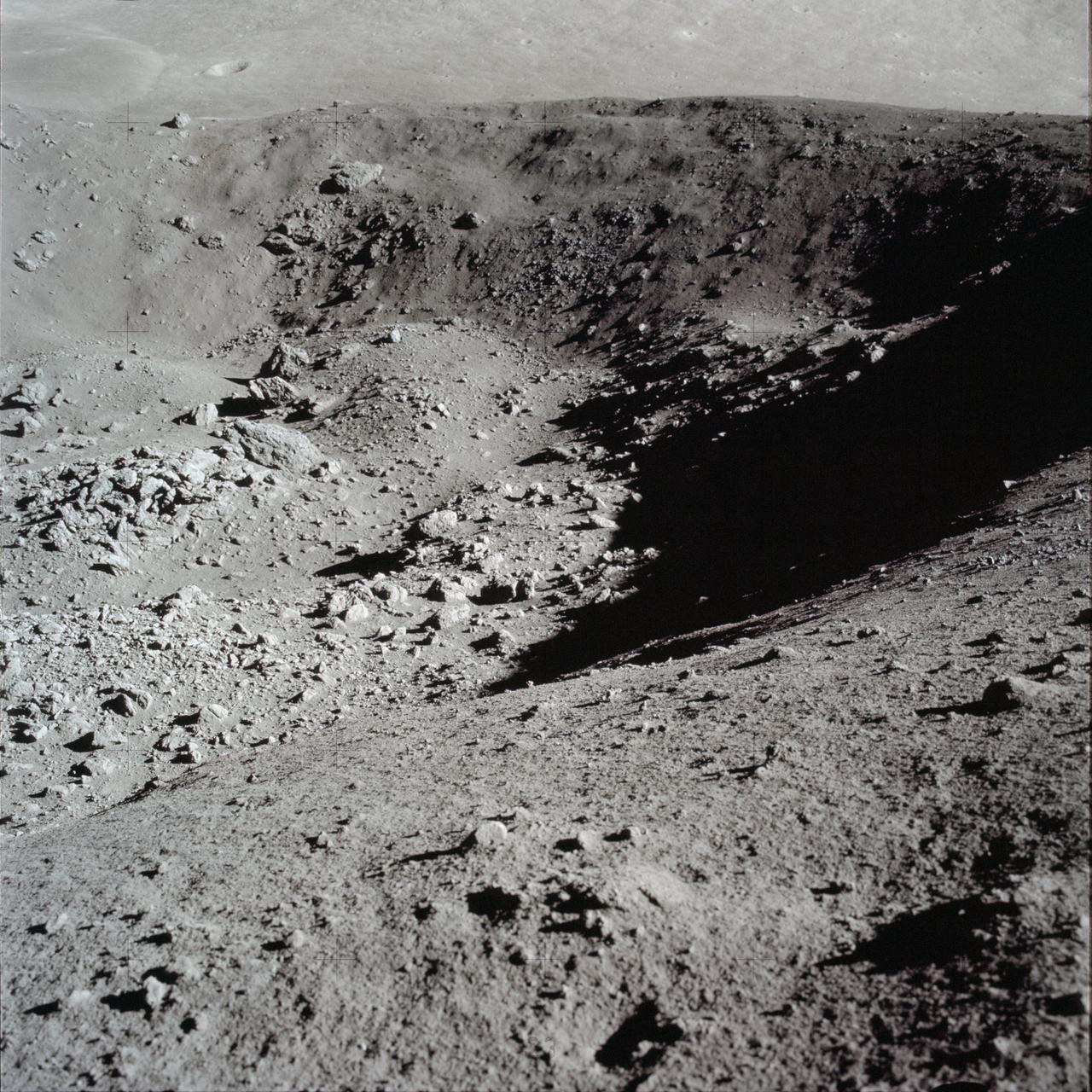
AS17-137-20992 (12 Dec. 1972) --- A view looking into Shorty Crater, taken at Station 4, showing the orange soil. Astronaut Harrison H. Schmitt found the orange soil on the moon during the second Apollo 17 extravehicular activity (EVA) at the Taurus-Littrow landing site. While astronauts Eugene A. Cernan, commander, and Schmitt, lunar module pilot, descended in the Lunar Module (LM) "Challenger" to explore the Taurus-Littrow region of the moon, astronaut Ronald E. Evans, command module pilot, remained with the Command and Service Modules (CSM) "America" in lunar orbit.
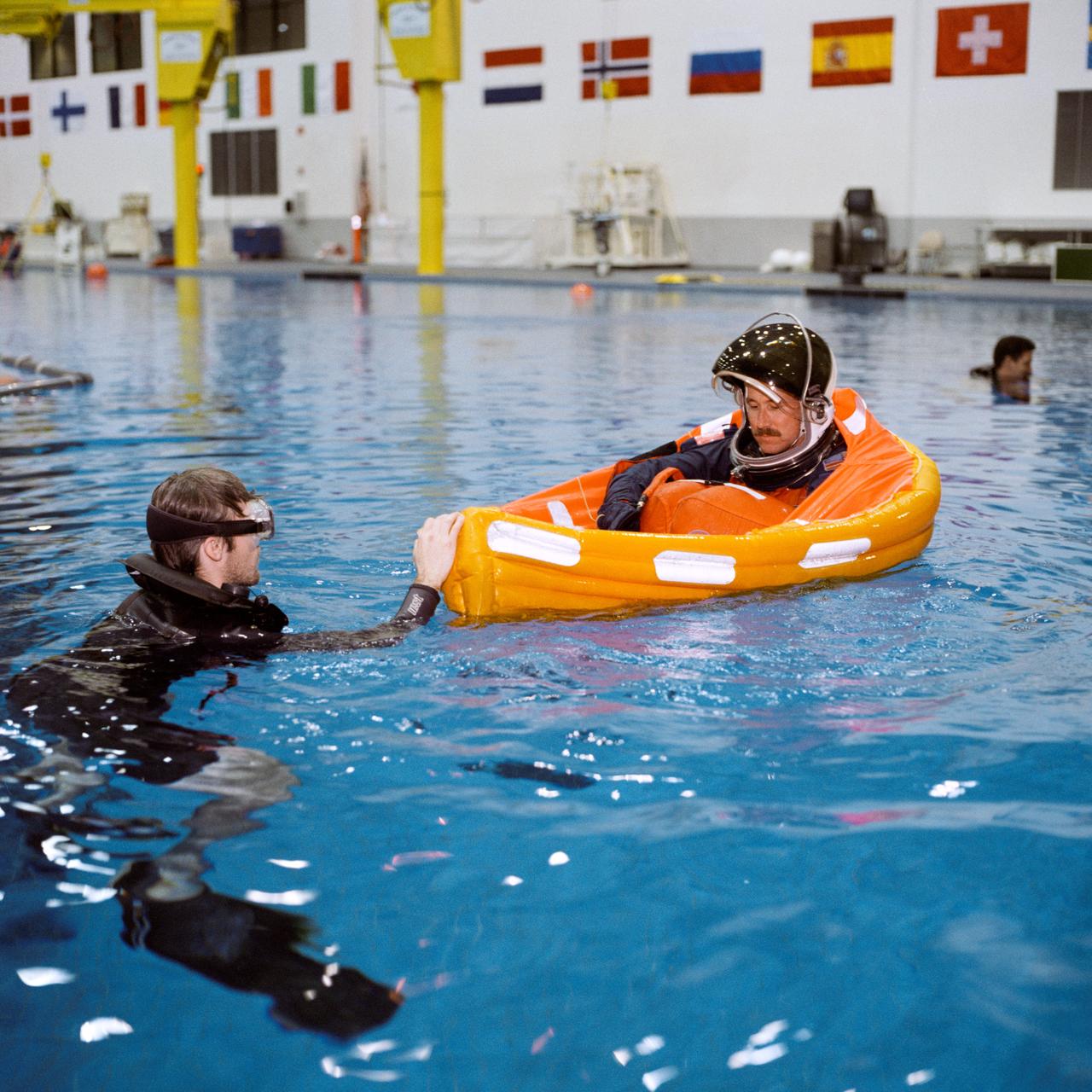
Photographic documentation of the crew of STS-96 conducting bailout training in the Neutral Buoyancy Lab (NBL) pool. Images include: an unidentifiable astronaut in an orange Launch and Entry Suit and helmet being dropped into the pool during training (00580); Mission Specialist (MS) Julie Payette being suspended above the NBL pool prior to being dropped (00581); Julie Payette in her floatation device in the NBL pool (00582-7); Flight Commander Kent Rominger in a blue Launch and Entry Suit (LES) being suspended over the NBL pool prior to being dropped (00589); Mission Specialist (MS) Ellen Ochoa in an orange LES being suspended over the NBL pool prior to being dropped (00590); Pilot Rick D. Husband and MS Daniel T. Barry in floatation devices (00591); closeups of Julie Payette prior to being lifted above the NBL pool (00592-3); MS Tamara E. Jernigan in her floatation device (00594); Julie Payette talking with a NASA employee prior to being raised over the pool (00595); Husband in an orange LES and helmet seated at the poolside talking with a NASA employee (00596); Kominger in his floatation device (00597-8); Barry being assisted with his floatation device at the poolside (00599); Ochoa in her orange LES with helmet talking to NASA personnel at the poolside (00600); Husband in his floatation device operating a transmitter (00601); Rominger splashing Husband (00602); Husband in his floatation device (00603); Barry in an orange LES suspended over the NBL pool prior to being dropped (00604); Ochoa in her floatation device (00605, 00607-8); and Ochoa suspended over the NBL pool with part of her floatation device already inflated (00606).
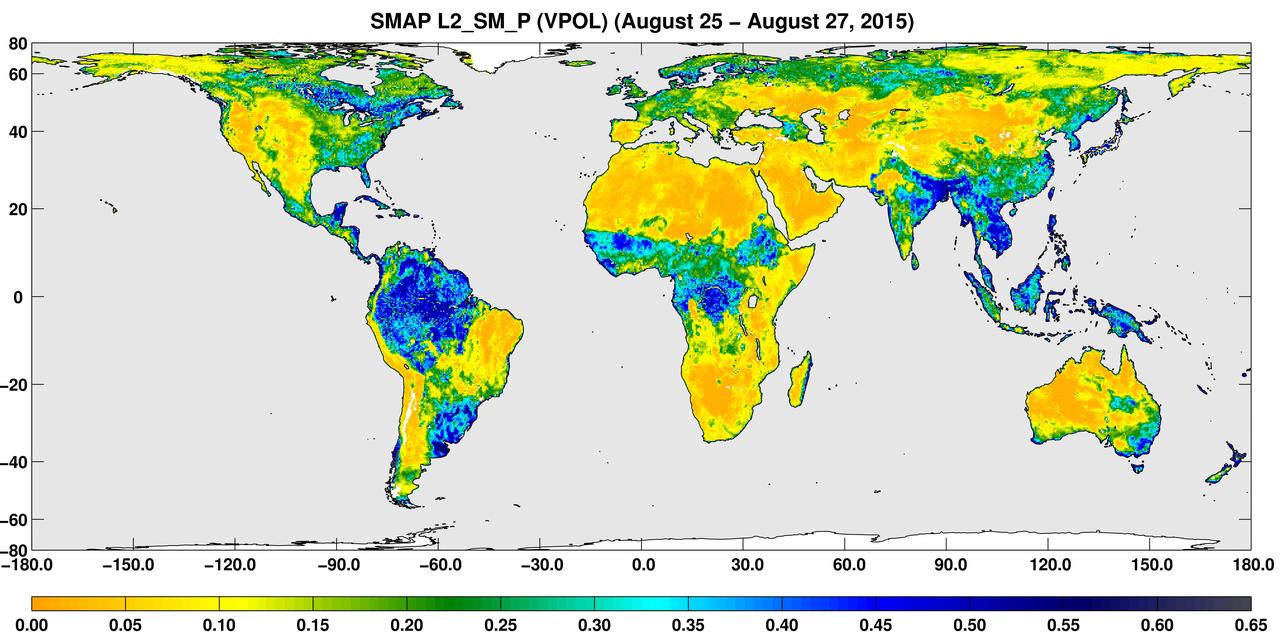
A three-day composite global map of surface soil moisture as retrieved from NASA SMAP radiometer instrument between Aug. 25-27, 2015. Dry areas appear yellow/orange, such as the Sahara Desert, western Australia and the western U.S. Wet areas appear blue, representing the impacts of localized storms. White areas indicate snow, ice or frozen ground. http://photojournal.jpl.nasa.gov/catalog/PIA19877

NASA's Mars Reconnaissance Orbiter (MRO) observed sand dunes in the north polar regions of Mars showing light coatings of pale orange dust blown partially across the dark basaltic sand. Around the edges of the dunes, patches of seasonal dry ice remain. These patches will be gone soon as they sublimate (turn from ice to gas) in the summer sun. Some blocks of ice are visible at the foot of an alcove formed by a sand avalanche down the slipface of the dune. https://photojournal.jpl.nasa.gov/catalog/PIA22511
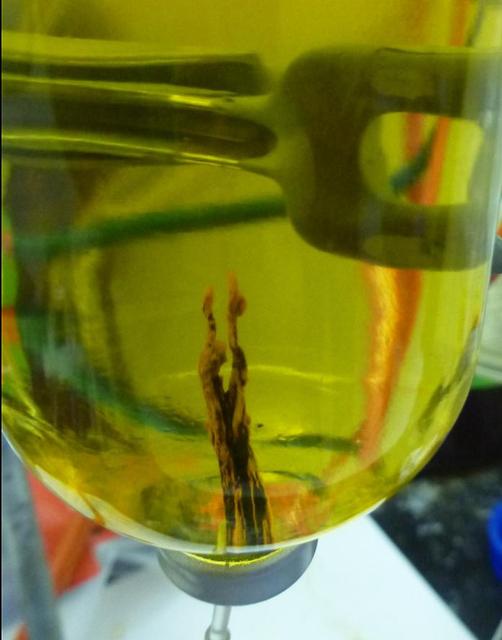
A laboratory-created "chemical garden" made of a combination of black iron sulfide and orange iron hydroxide/oxide is shown in this photo. Chemical gardens are a nickname for chimney-like structures that form at bubbling vents on the seafloor. Some researchers think that life may have originated at structures like these billions of years ago. JPL's research team is part of the Icy Worlds team of the NASA Astrobiology Institute, based at NASA's Ames Research Center in Moffett Field, California. JPL is managed by the California Institute of Technology in Pasadena for NASA. http://photojournal.jpl.nasa.gov/catalog/PIA19835
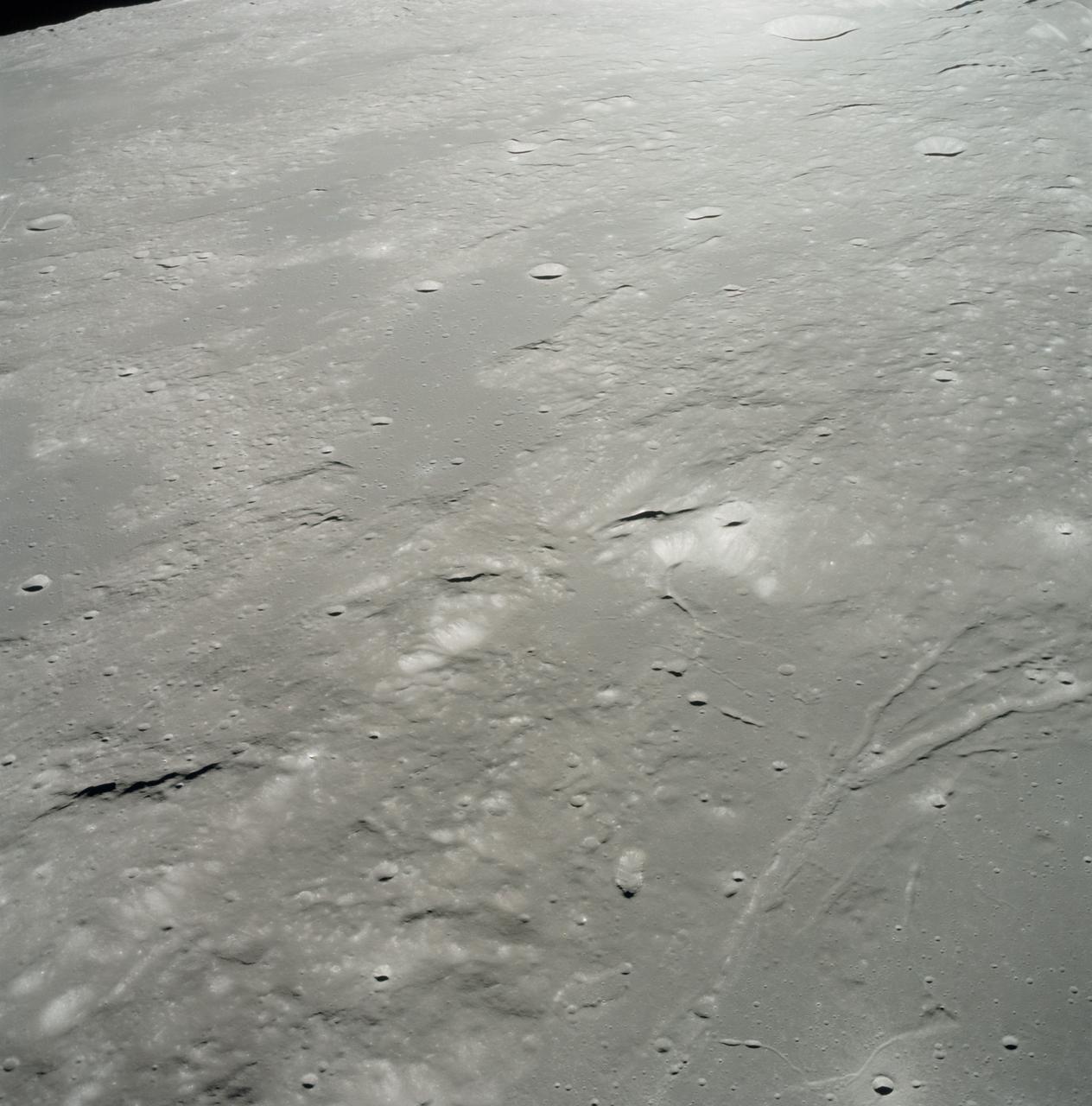
AS17-153-23572 (15 Dec. 1972) --- An oblique view of the Sulpicius Gallus region on the southwestern edge of the Sea of Serenity looking westward across the Haemus Mountains, as photographed from the Apollo 17 Command and Service Modules during its 65th revolution of the moon. This photograph shows the slight orange cast which was identified by astronaut Ronald E. Evans, command module pilot. The region shown in the picture is about 600 kilometers (360 statute miles) west across Mare Serentatis from the Taurus-Littrow landing site where scientist-astronaut Harrison H. "Jack" Schmitt, lunar module pilot, discovered an orange soil sample composed of fine glass particles rich in iron and titanium. North is toward the right. Rima Sulpicius Gallus is the lunar trench or valley (right foreground) that crosses the edge of the Mare and divides into three branches as it runs to the northwest. The crater Sulpicius Gallus is just off the photograph at the bottom right. Note that several small craters in the dark portion of the picture (east) show a more distinct orange cast. The coordinates of the center of this photograph are about 8.4 degrees east longitude and 19.8 degrees north latitude.
![Range : 16 million km (9.9 million miles) P-34616 This series of six Voyager 2 images of Neptune through different filters reveals altitude in Neptune's clouds. The top three images, taken though orange, violet, and ultraviolet filters by the narrow-angle camera, show several bright cloud features, clearly visible in each image. The 'scooter' cloud, at 42 degrees south latitude, although prominent in the orange image, is invisible in ultraviolet, where scattering by atmospheric molecules is strongest. The disappearance can be understood if the 'scooter cloud has more obscurring atmosphere above it ( i.e. the scooter cloud is lower ) than other bright clouds. The observation also suggest that the centrally located Great Dark Spot is also a low lying feature because it also loses visiblity in the ultraviolet image. The lower three wide angle images ( from left to right: orange, weak methane [541nm], and strong methane [619nm] are arranged in increasing absorption by methane in Neptune's atmosphere. In the lower images the 'scooter cloud' becomes less obvious from left to right, implying there is relatively more absorbing methane above the 'scooter cloud'. Thus the set of images also implies that the 'scooter cloud' is deeper in the atmosphere ( and therefore at higher atmospheric pressure ) than the other bright clouds.](https://images-assets.nasa.gov/image/ARC-1989-AC89-7003/ARC-1989-AC89-7003~medium.jpg)
Range : 16 million km (9.9 million miles) P-34616 This series of six Voyager 2 images of Neptune through different filters reveals altitude in Neptune's clouds. The top three images, taken though orange, violet, and ultraviolet filters by the narrow-angle camera, show several bright cloud features, clearly visible in each image. The 'scooter' cloud, at 42 degrees south latitude, although prominent in the orange image, is invisible in ultraviolet, where scattering by atmospheric molecules is strongest. The disappearance can be understood if the 'scooter cloud has more obscurring atmosphere above it ( i.e. the scooter cloud is lower ) than other bright clouds. The observation also suggest that the centrally located Great Dark Spot is also a low lying feature because it also loses visiblity in the ultraviolet image. The lower three wide angle images ( from left to right: orange, weak methane [541nm], and strong methane [619nm] are arranged in increasing absorption by methane in Neptune's atmosphere. In the lower images the 'scooter cloud' becomes less obvious from left to right, implying there is relatively more absorbing methane above the 'scooter cloud'. Thus the set of images also implies that the 'scooter cloud' is deeper in the atmosphere ( and therefore at higher atmospheric pressure ) than the other bright clouds.
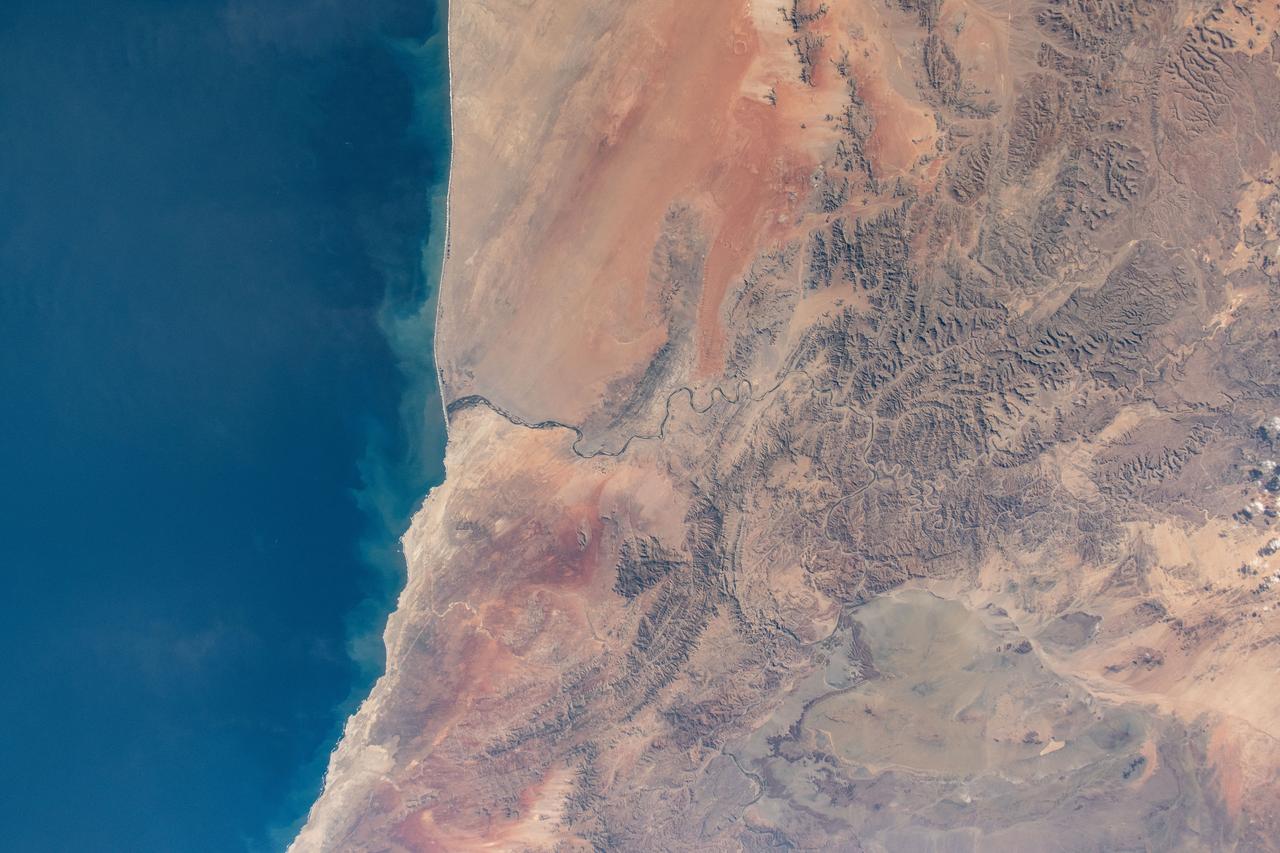
iss071e230735 (June 27, 2024) --- Orange River is the border between South Africa and Namibia on the Atlantic coast and is the termination point of the Namib desert to the north and the desert landscape of Richtersveld to the south. The International Space Station was orbiting 268 miles above at the time of this photograph
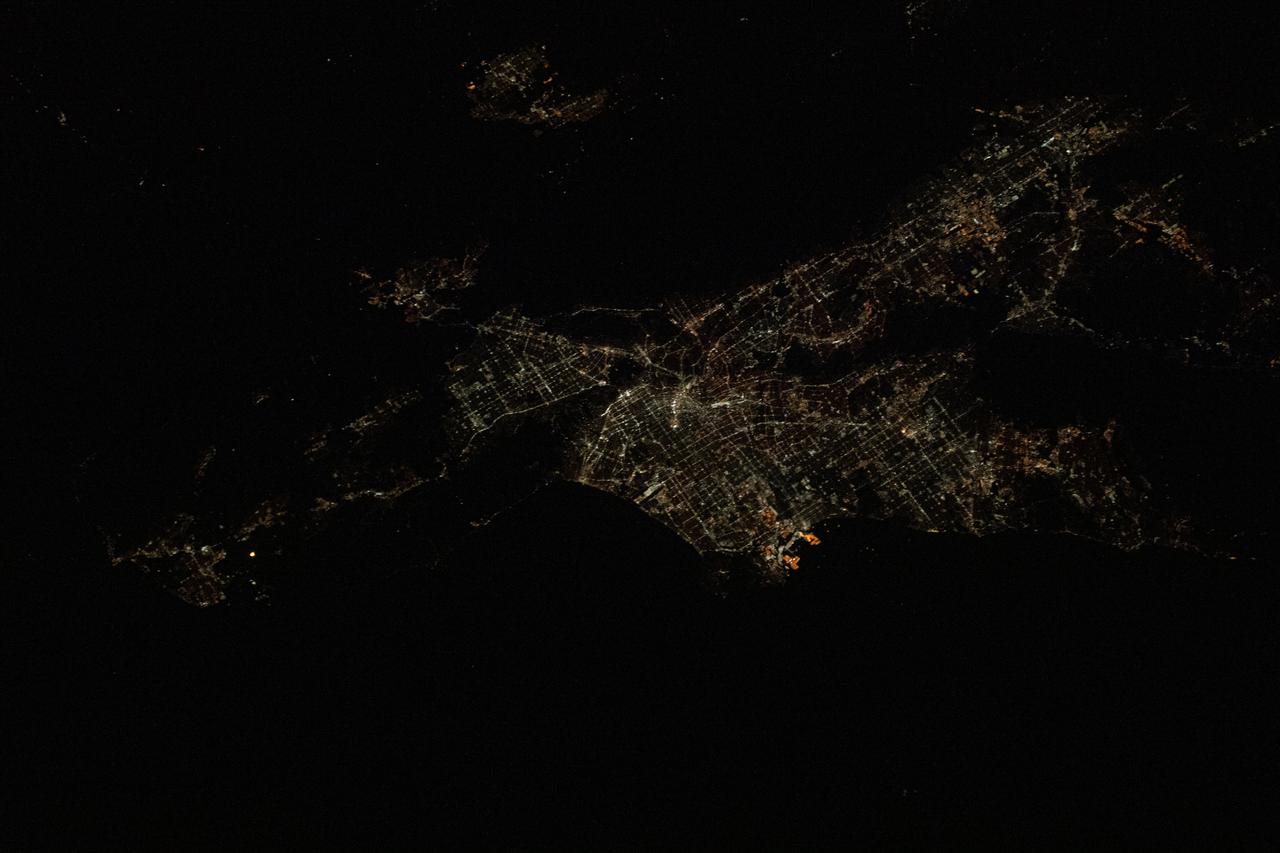
iss061e028440 (Nov. 4, 2019) --- Los Angeles, California is pictured at night as the International Space Station was orbiting 257 miles above the Pacific Ocean and about 215 miles southwest of the L.A. coastline. The bright orange lights at the center are Terminal Island and the Port of Los Angeles.
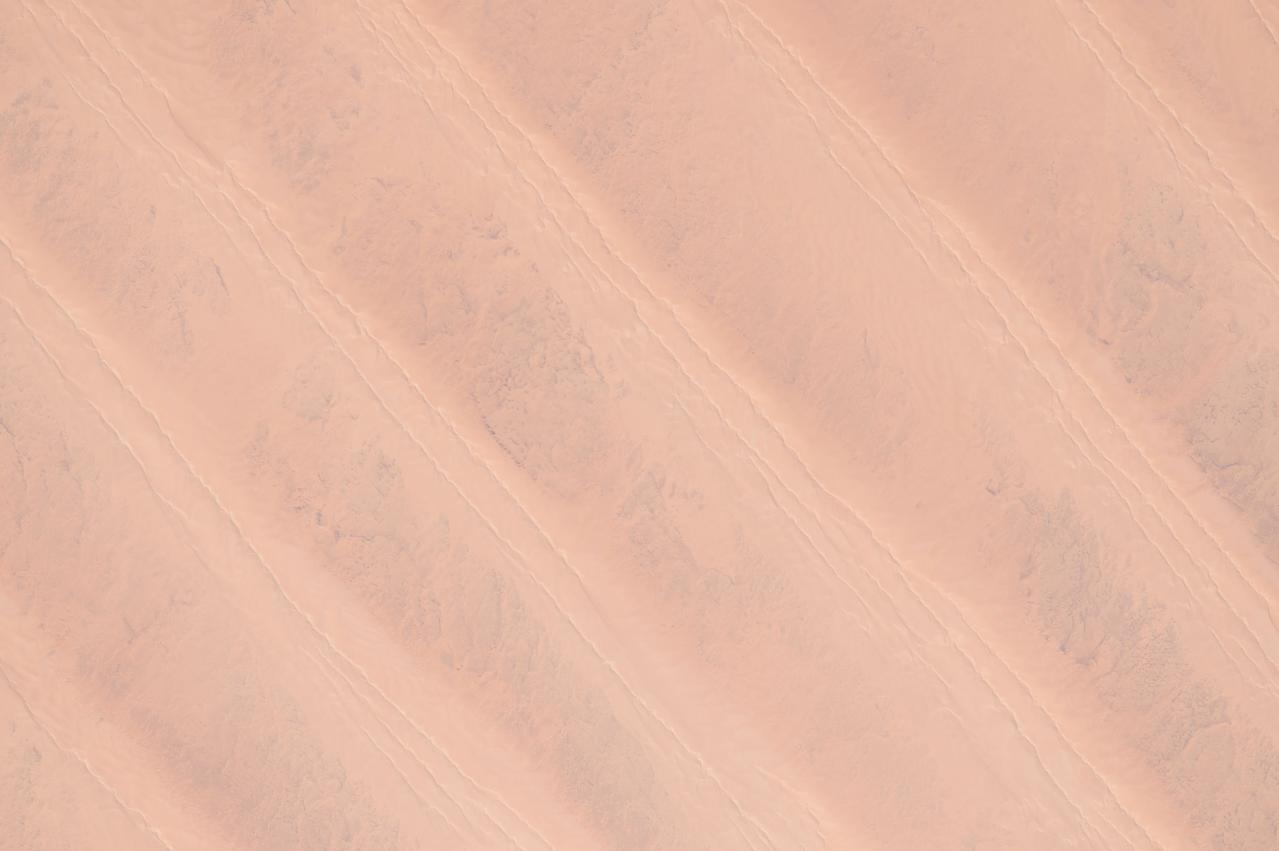
ISS043182398 (05/08/2015) --- Another view of the northern African Great Sand Sea, Libyan Desert and western Egypt with orange parallel dunes taken on May 8th 2015 by NASA astronaut Scott Kelly on the International Space Station.
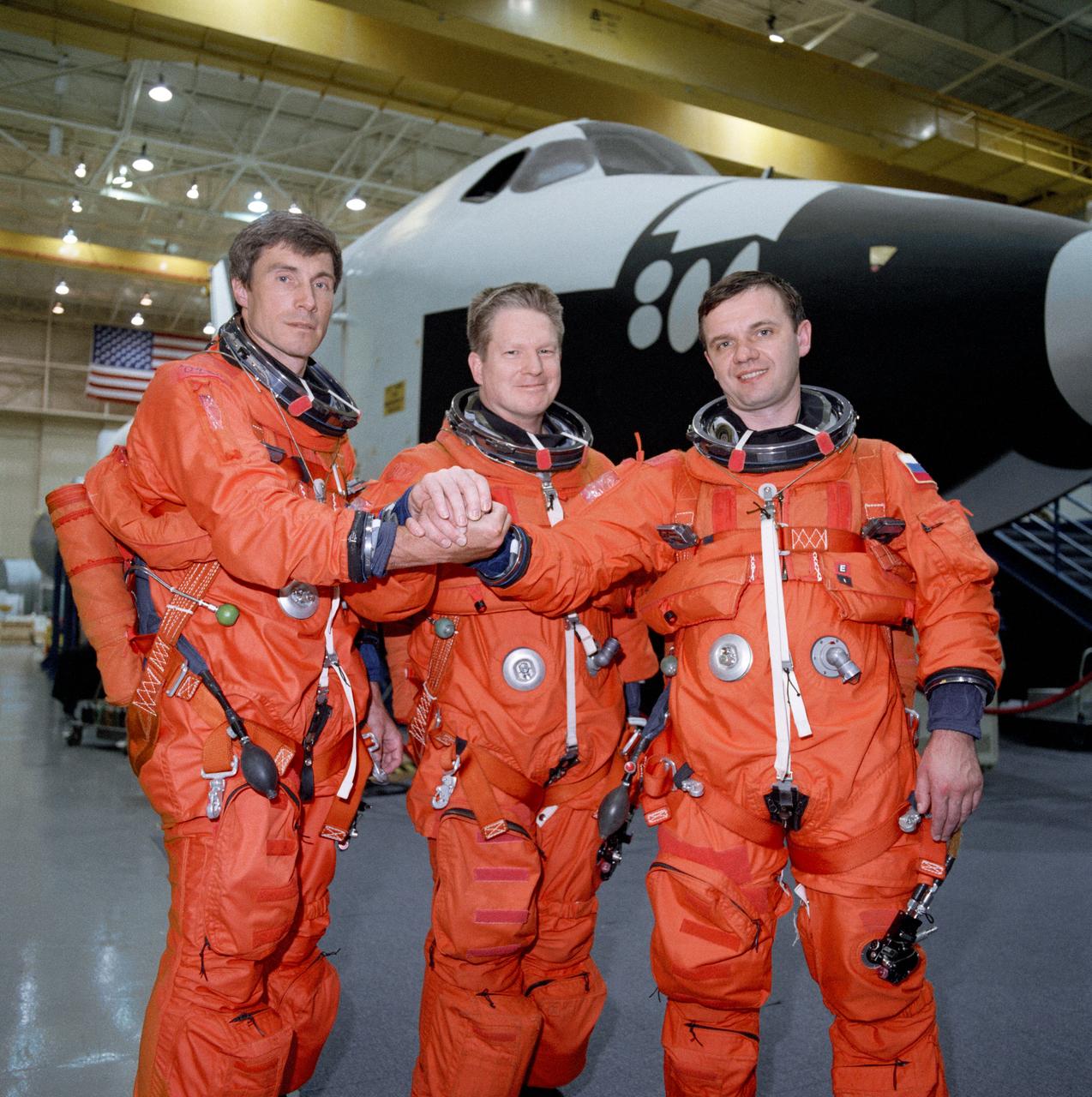
Photographic documentation showing the first crew of the ISS posing together in bldg. 9N during descent training, wearing orange Launch & Entry Suits (LES) and clasping right hands in a sign of unity. From left to right: Sergei Krikalev, William Shepherd and Yuri Gidzenko.
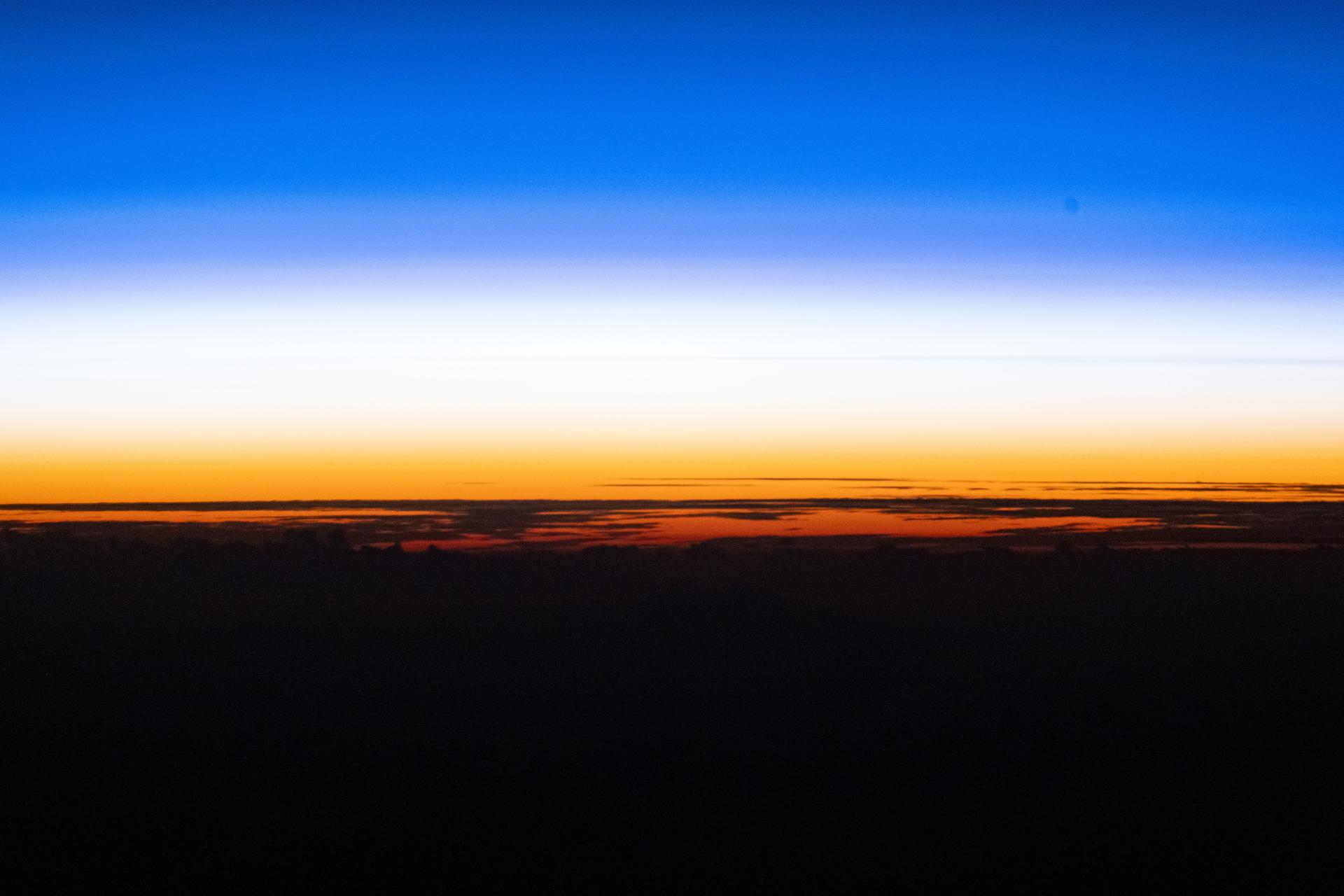
iss074e0046371 (Jan. 3, 2025) --- An orbital sunset silhouettes the cloud tops above the Pacific Ocean as the atmosphere along the horizon fades from orange to white, then to blue, in this photograph taken from the International Space Station while it orbited 262 miles above Earth. Credit: NASA/Chris Williams
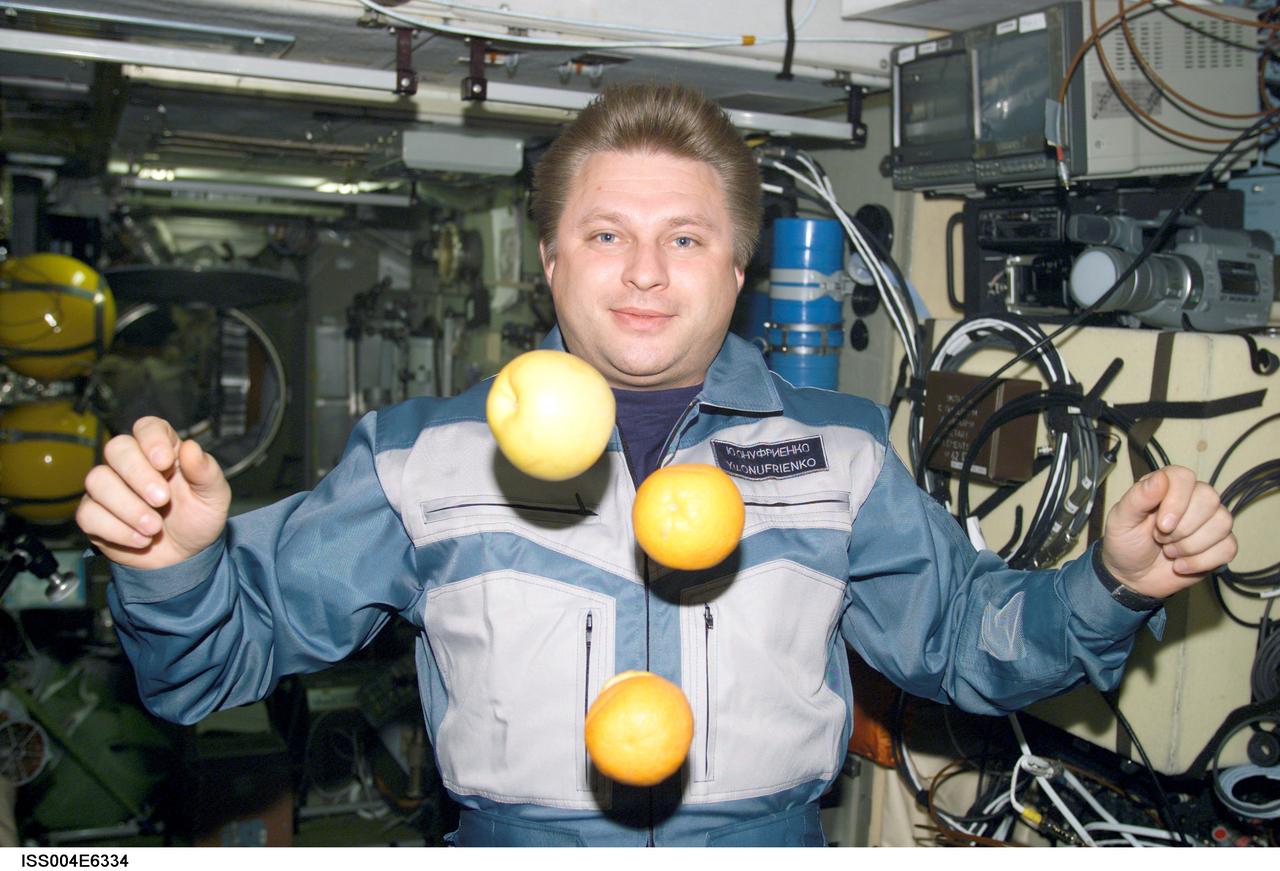
ISS004-E-6334 (January 2002) --- Cosmonaut Yury I. Onufrienko, Expedition Four mission commander representing Rosaviakosmos, is photographed in the Zvezda Service Module on the International Space Station (ISS). Apples and oranges are visible floating freely in front of Onufrienko. The image was taken with a digital still camera.
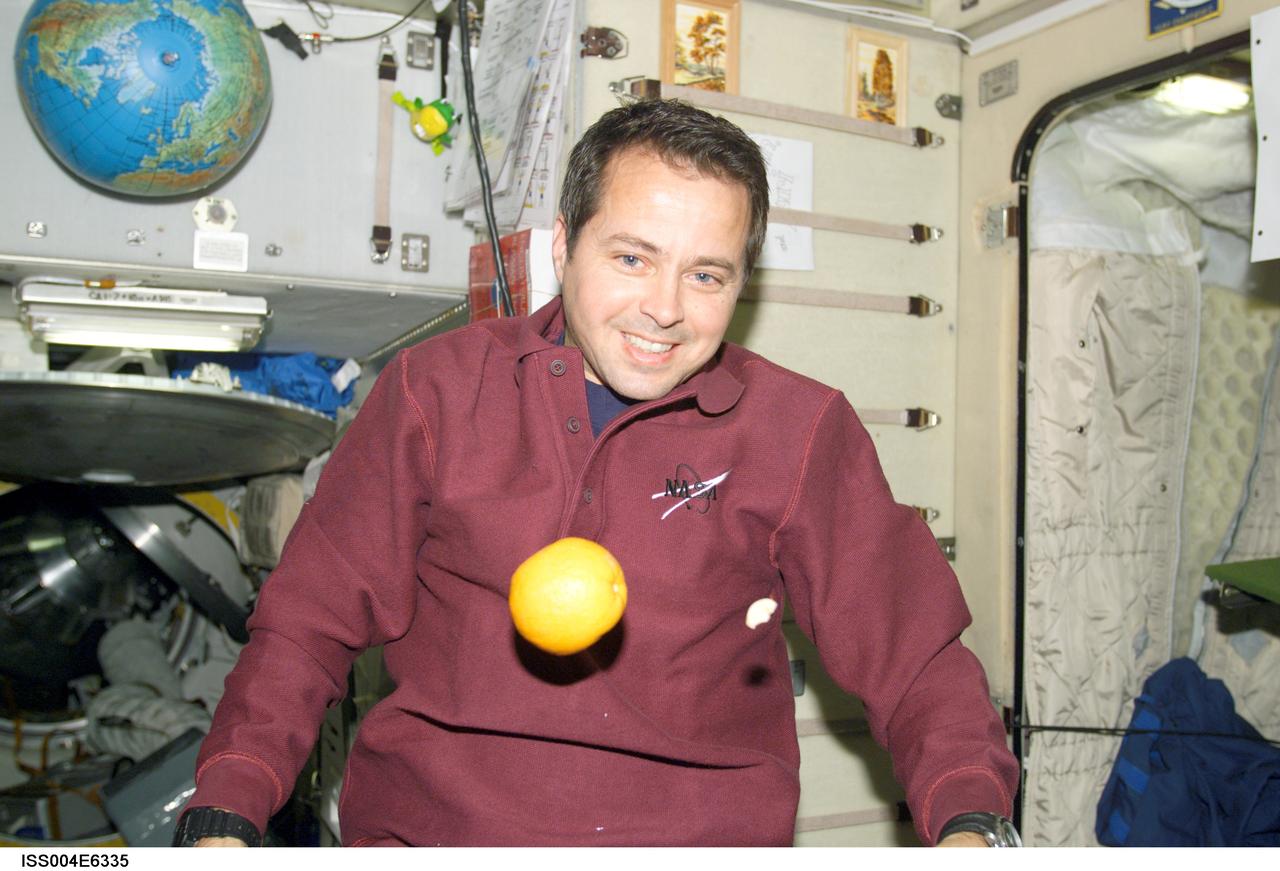
ISS004-E-6335 (January 2002) --- Astronaut Daniel W. Bursch, Expedition Four flight engineer, is photographed in the Zvezda Service Module on the International Space Station (ISS). An orange floats freely in front of Bursch. The image was taken with a digital still camera.
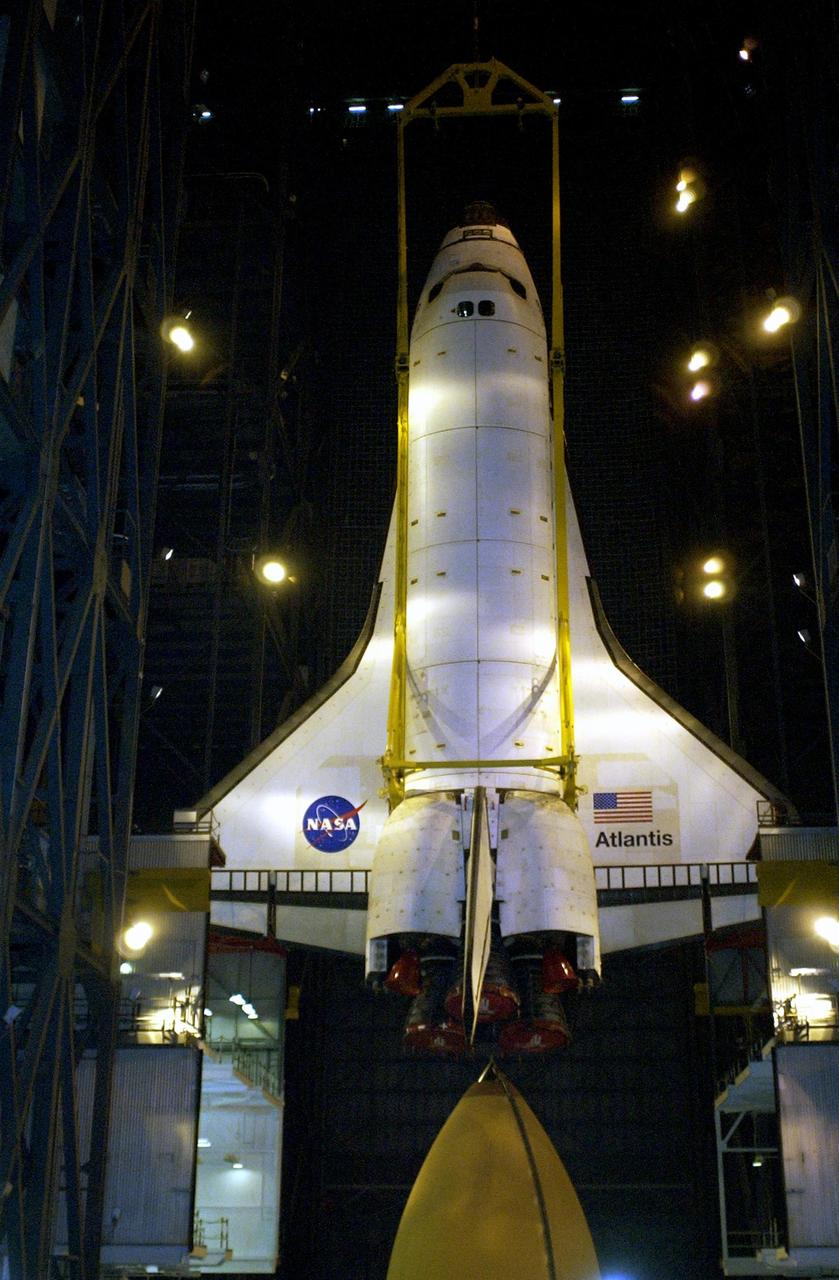
KENNEDY SPACE CENTER, FLA. - Atlantis is lifted up and away from the orange external tank after demating. The orbiter will be lifted out of the high bay in the Vehicle Assembly Building and lowered into the transfer aisle. Atlantis will then be moved to the Orbiter Processing Facility.
/iss071e414494 (1)~medium.jpg)
iss071e414494 (Aug. 2, 2024) -- The rich red saltwater of Lake Urmia is pictured from the International Space Station as it orbited 260 miles above. Over the past few decades, the lake has shrunk, causing higher salt concentrations in the water, resulting in microscopic organisms turning the water shades of red and orange.
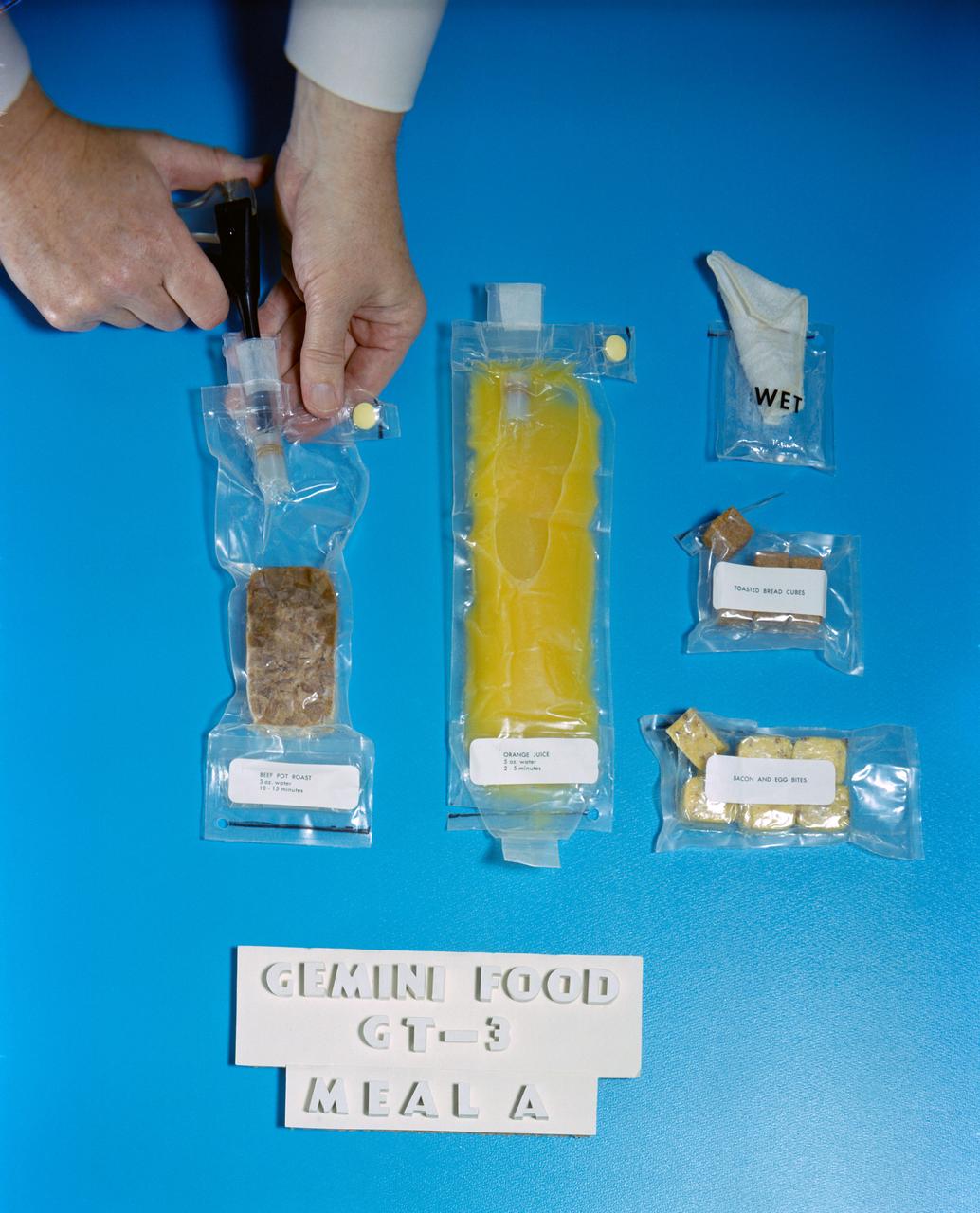
S65-10971 (March 1965 ) --- Food packets for use on the Gemini-3 flight including dehydrated beef pot roast, bacon and egg bites, toasted bread cubes, orange juice and a wet wipe. Water is being inserted into the pouch of dehydrated food.