Stennis Space Center mascot Orbie is presented to students during outreach activities at Lillie Burney Elementary School in Hattiesburg, Miss. NASA senior staff members from Stennis Space Center visited the school Jan. 27, 2012, for a morning of activities and outreach to students and school officials.
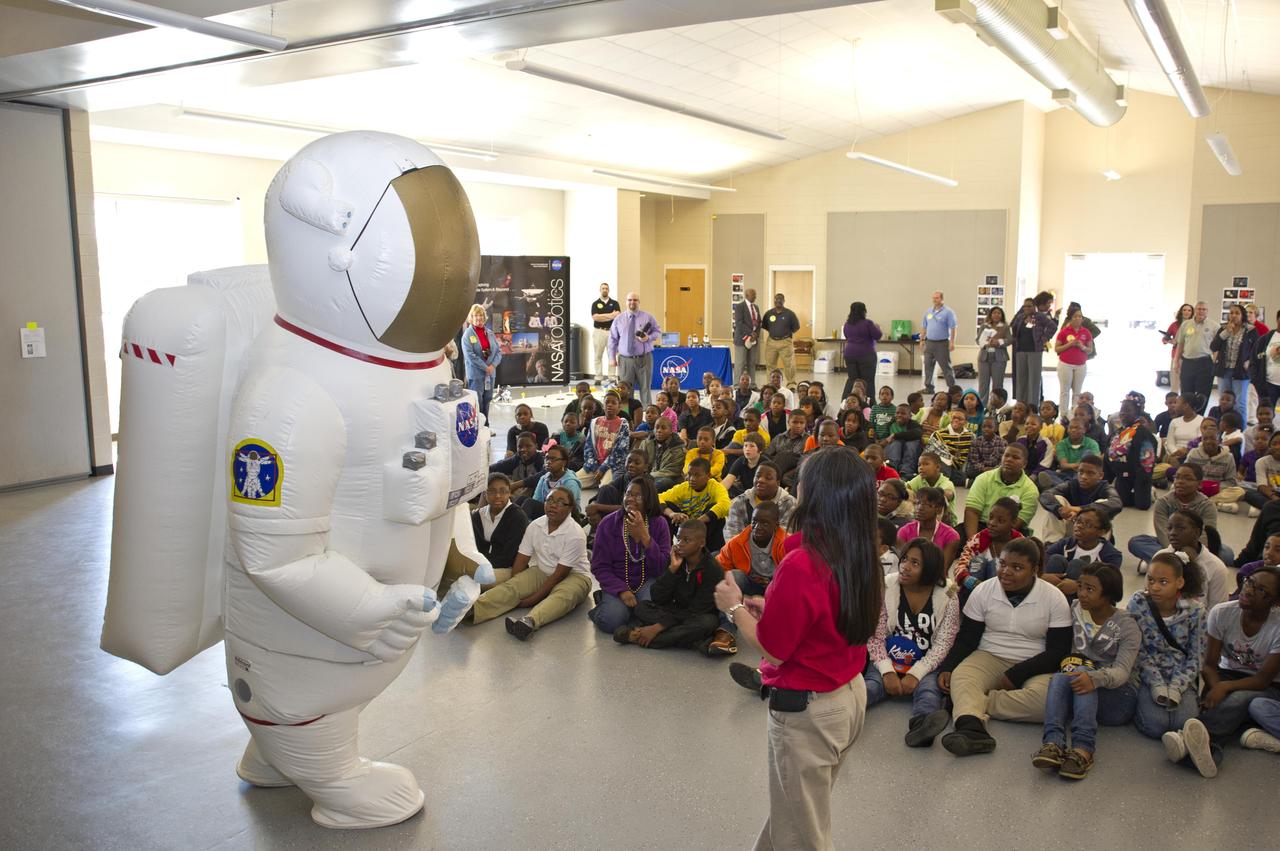
Stennis Space Center mascot Orbie is presented to students during outreach activities at Lillie Burney Elementary School in Hattiesburg, Miss. NASA senior staff members from Stennis Space Center visited the school Jan. 27, 2012, for a morning of activities and outreach to students and school officials.
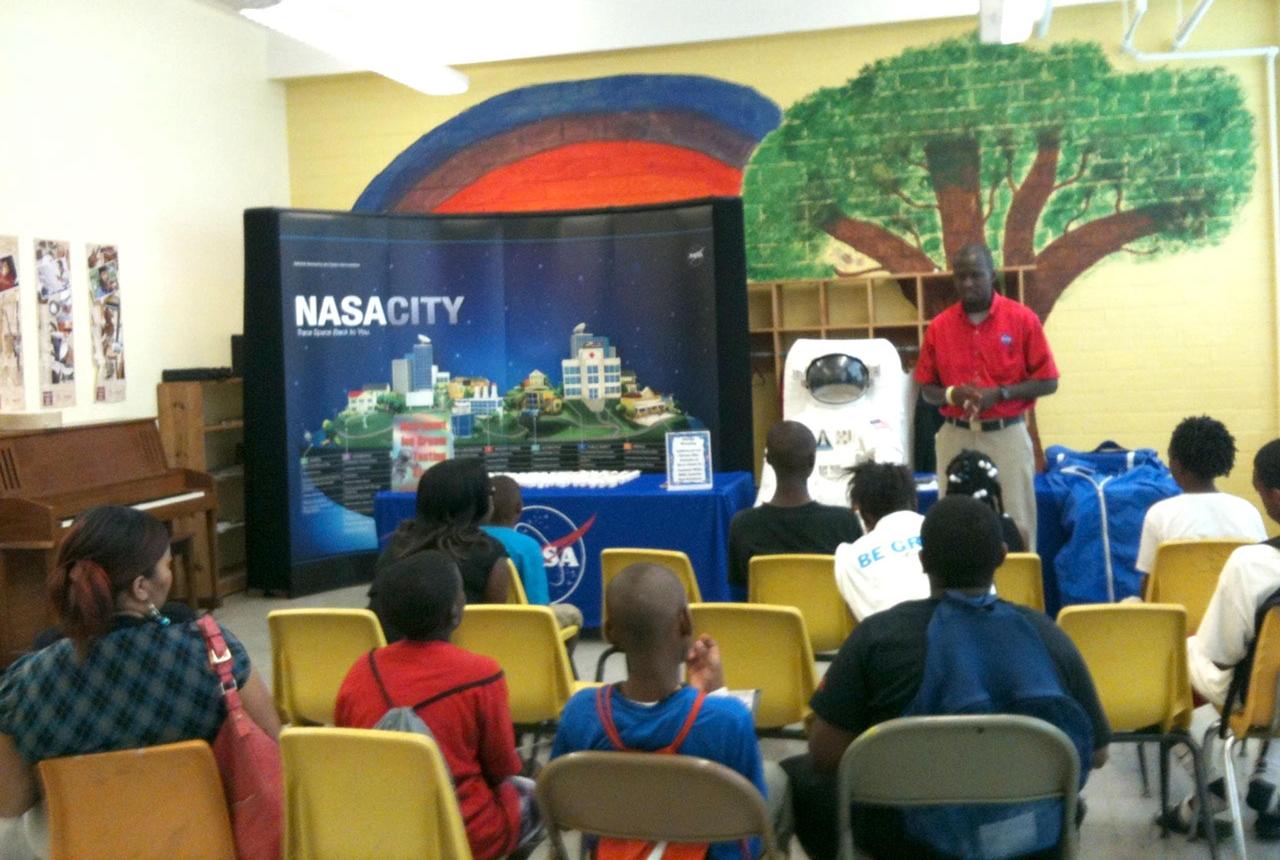
A Stennis Space Center employee talks to young people gathered for a NASA outreach activity at the Boys and Girls Club in Yazoo City, Miss., on June 5, 2012. The Stennis Office of External Affairs hosted outreach activities during a farmers' market in Canton on June 2 prior to visiting Yazoo City. In each instance, visitors were able to collect information about NASA, rocket engine testing and other work at Stennis.
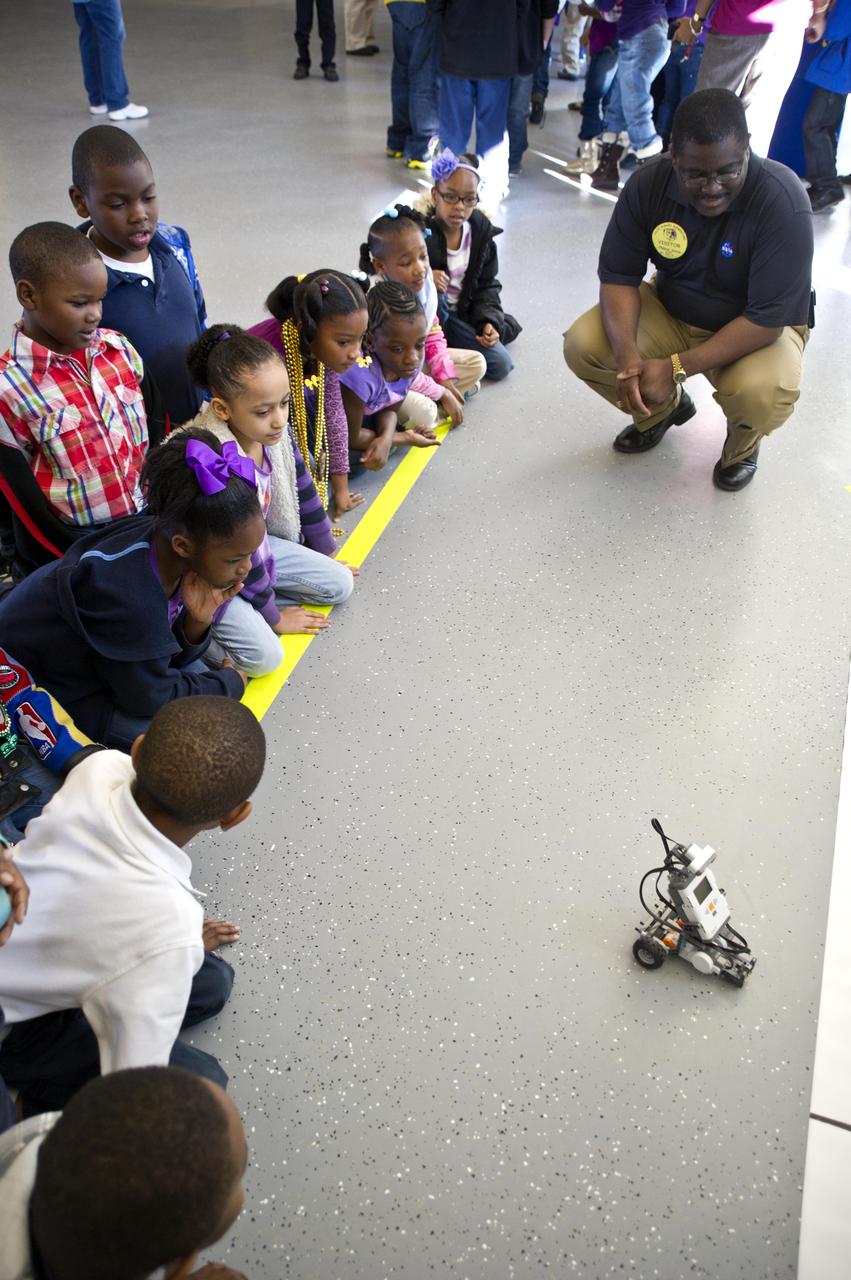
Freddie Douglas, manager of the Stennis Office of Safety and Mission Assurance, joins students to watch a robotic demonstration during activities at Lillie Burney Elementary School in Hattiesburg, Miss., on Jan. 27, 2012. NASA senior staff members from Stennis Space Center visited the school for a morning of activities and outreach to students and school officials.
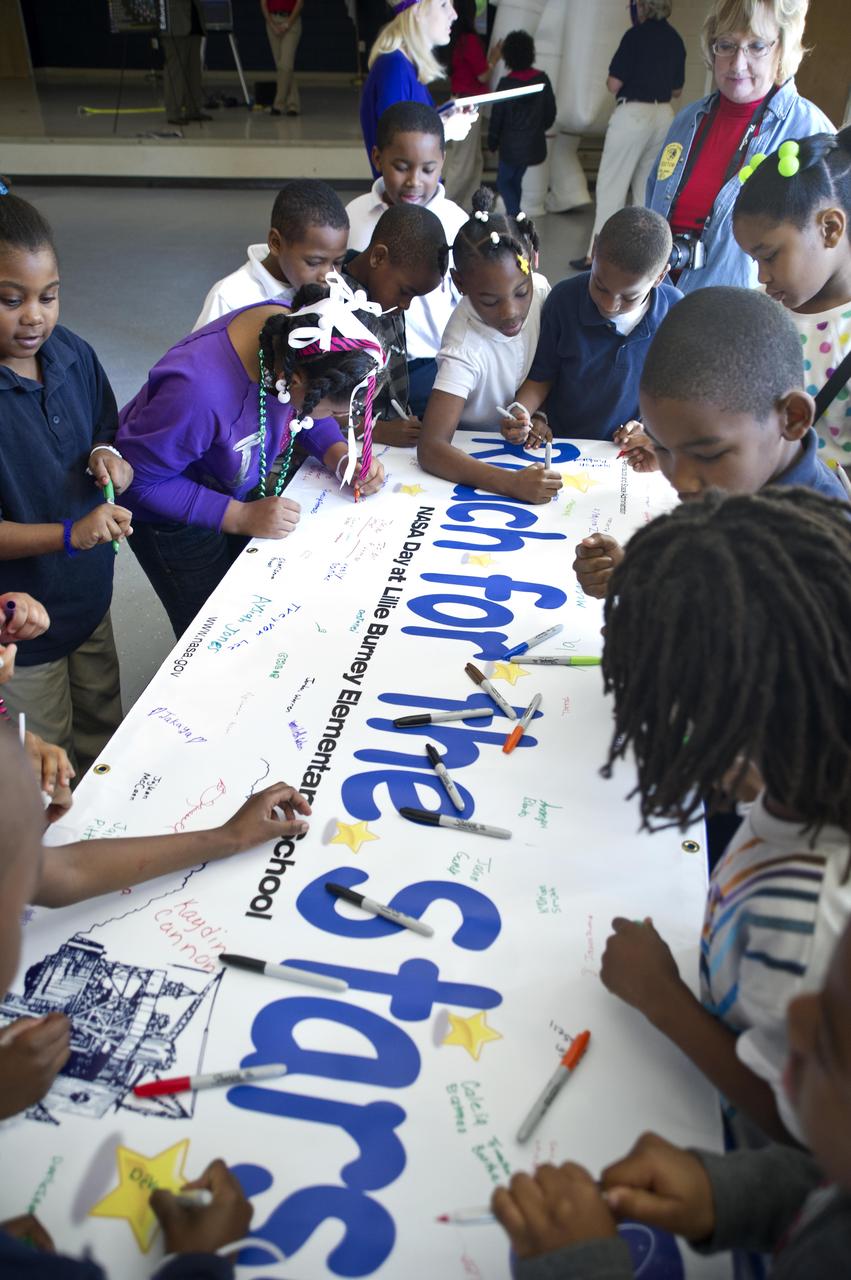
Students at Lillie Burney Elementary School in Hattiesburg, Miss., sign a 'Reach for the Stars' banner to be displayed at their school. NASA senior staff members from Stennis Space Center visited the school Jan. 27, 2012, for a morning of activities and outreach to students and school officials.
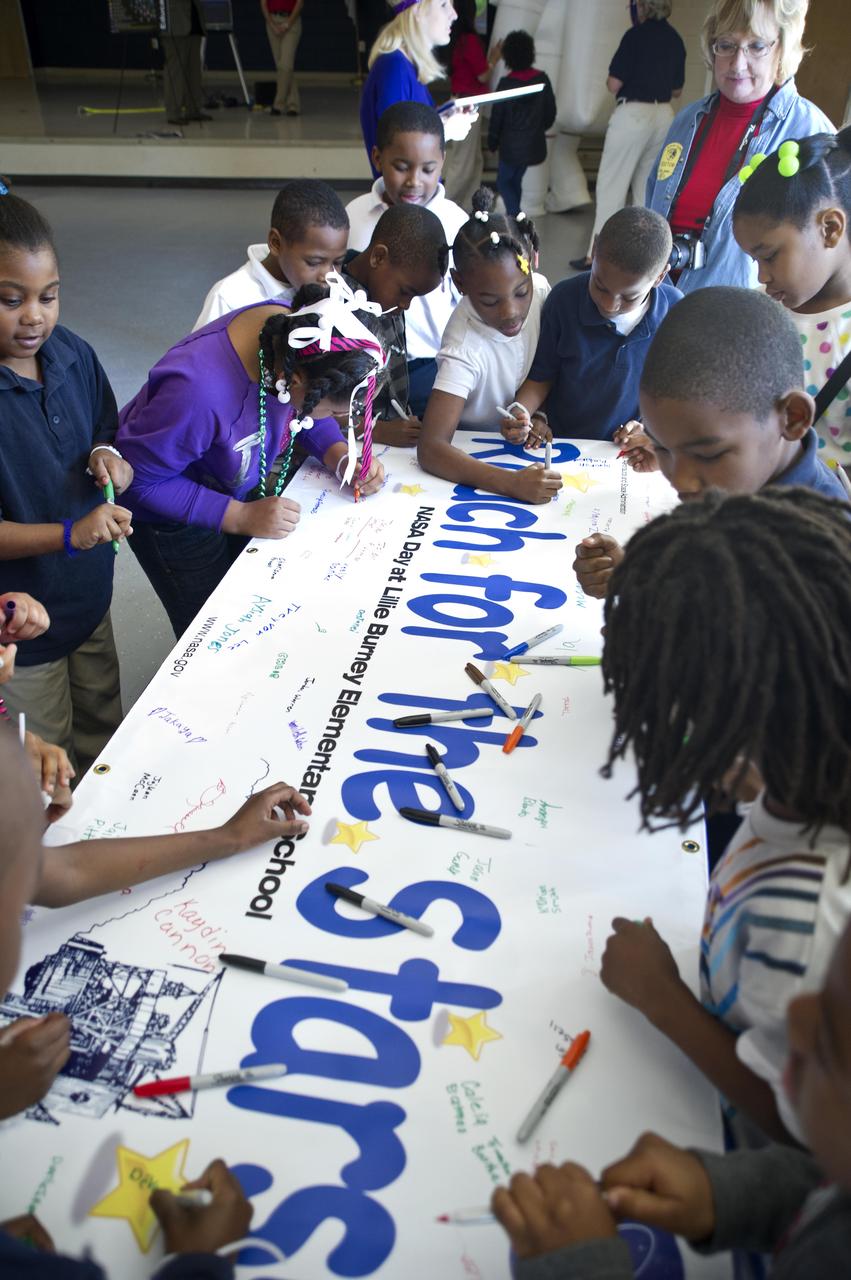
Students at Lillie Burney Elementary School in Hattiesburg, Miss., sign a 'Reach for the Stars' banner to be displayed at their school. NASA senior staff members from Stennis Space Center visited the school Jan. 27, 2012, for a morning of activities and outreach to students and school officials.
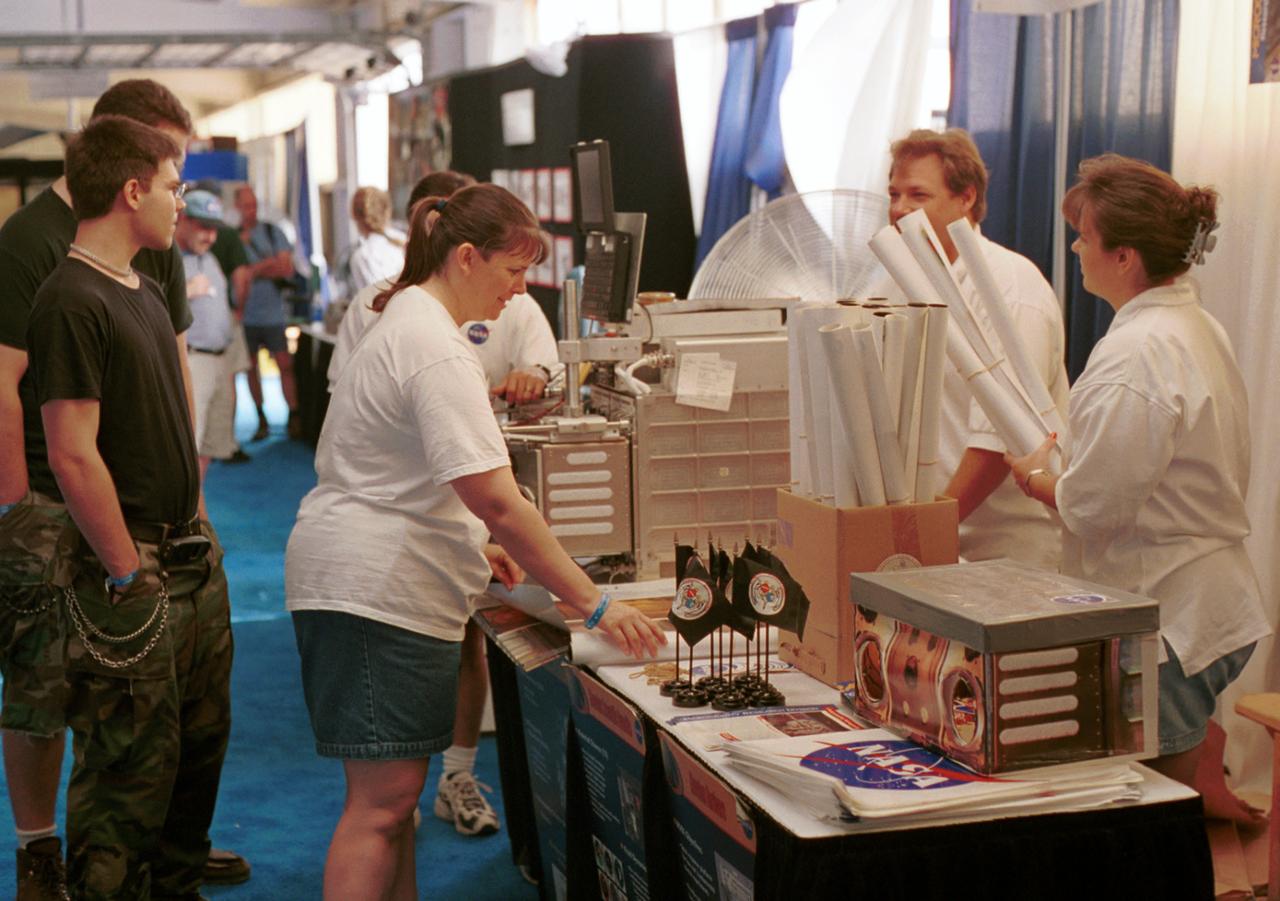
NASA representatives prepare for another day's work answering questions and handing out posters at AirVenture 2000. Part of their demonstrations included a training model of the Middeck Glovebox used aboard the Space Shuttle and Russian Mir Space Station. This and several other devices were used to explain to the public the kinds of research that have been conducted aboard the Space Shuttle and that will continue aboard the International Space Station (ISS). The exhibit was part of the NASA outreach activity at AirVenture 2000 sponsored by the Experimental Aircraft Association in Oshkosh, WI.
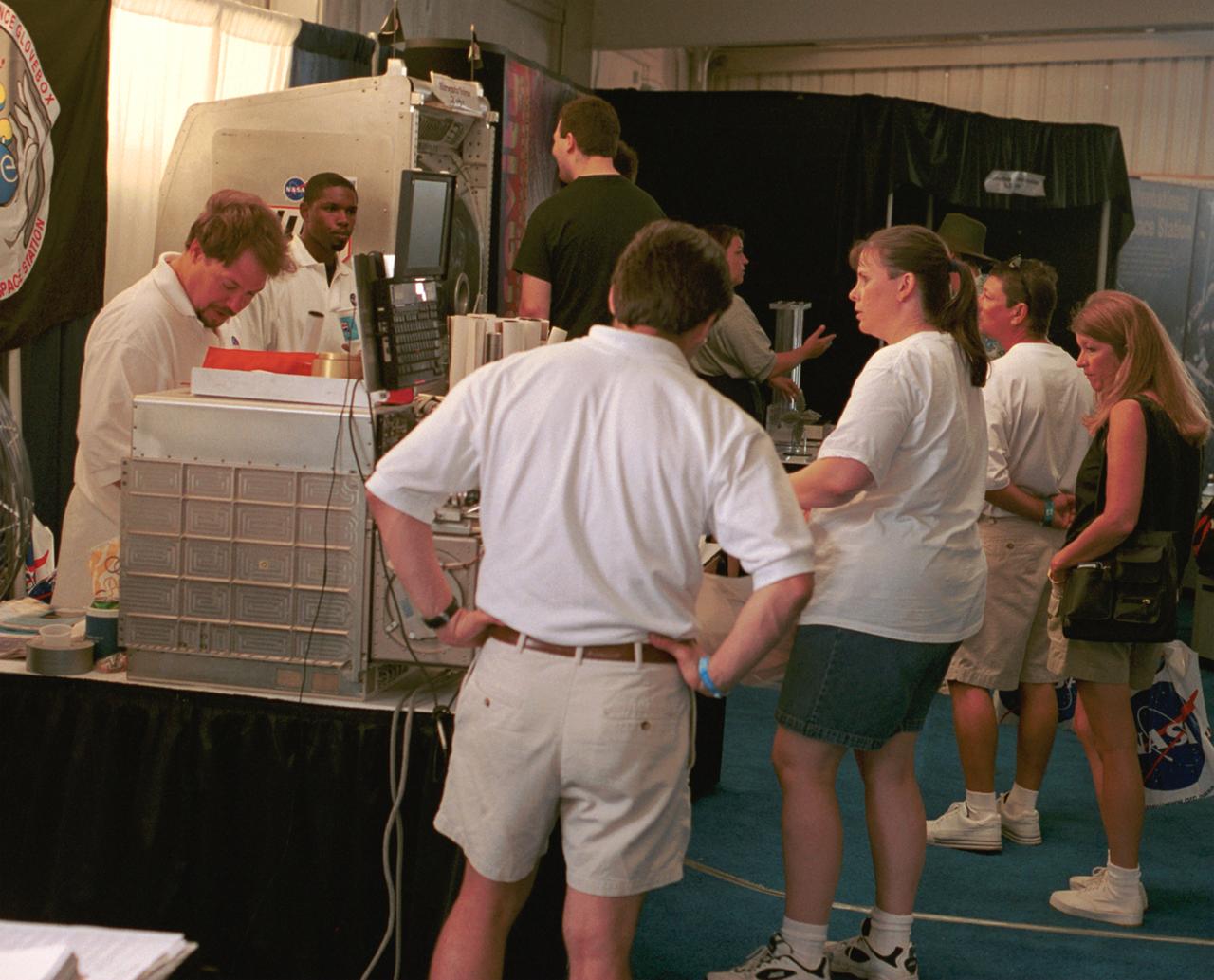
NASA representatives prepare for another day's work answering questions and handing out posters at AirVenture 2000. Part of their demonstrations included a training model of the Middeck Glovebox used aboard the Space Shuttle and Russian Mir Space Station. This and several other devices were used to explain to the public the kinds of research that have been conducted aboard the Space Shuttle and that will continue aboard the International Space Station (ISS). The exhibit was part of the NASA outreach activity at AirVenture 2000 sponsored by the Experimental Aircraft Association in Oshkosh, WI.
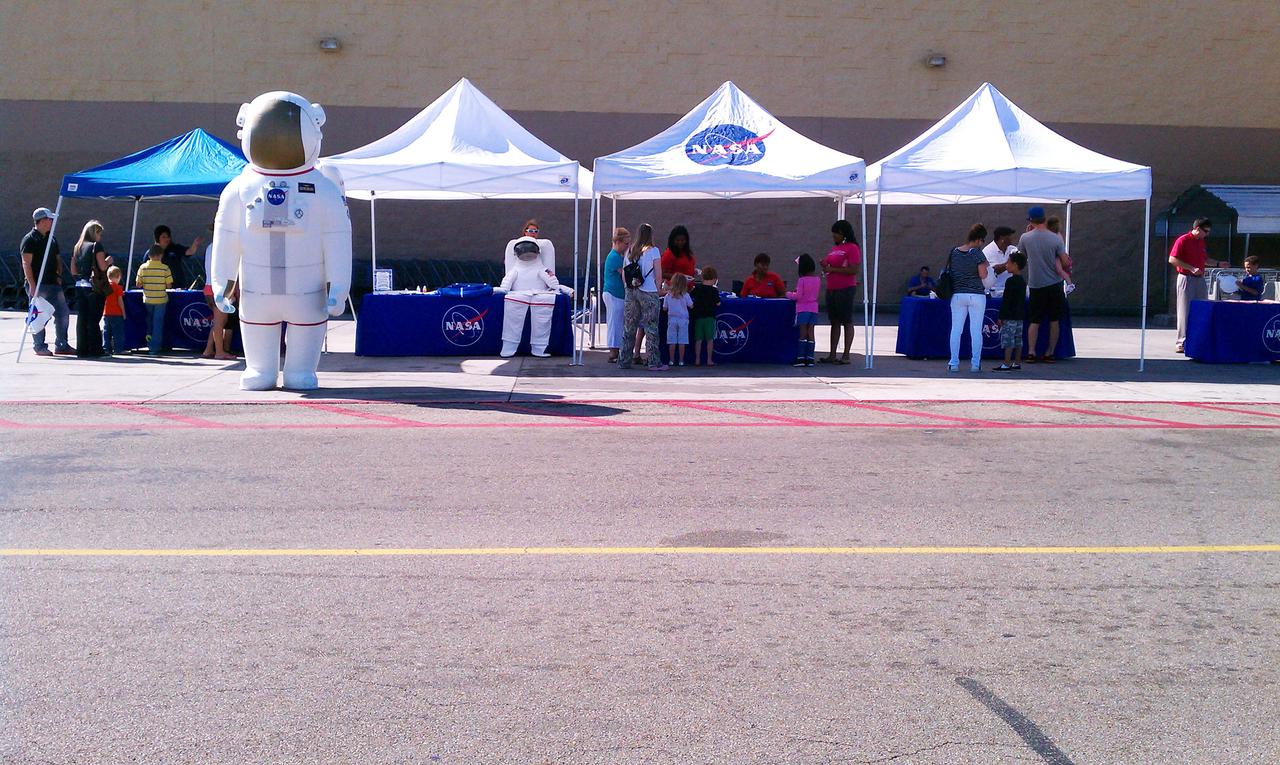
John C. Stennis Space Center hosted outreach activities at the Walmart Supercenter Store in Picayune on Nov. 3, focusing on helping area residents learn about NASA and Stennis' role in the future of space exploration. Visitors could learn about living and working in space, participate in hands-on educational activities, discover facts about the International Space Station, view images from NASA's latest rover mission to Mars and find out about rocket engine test work at Stennis Space Center.
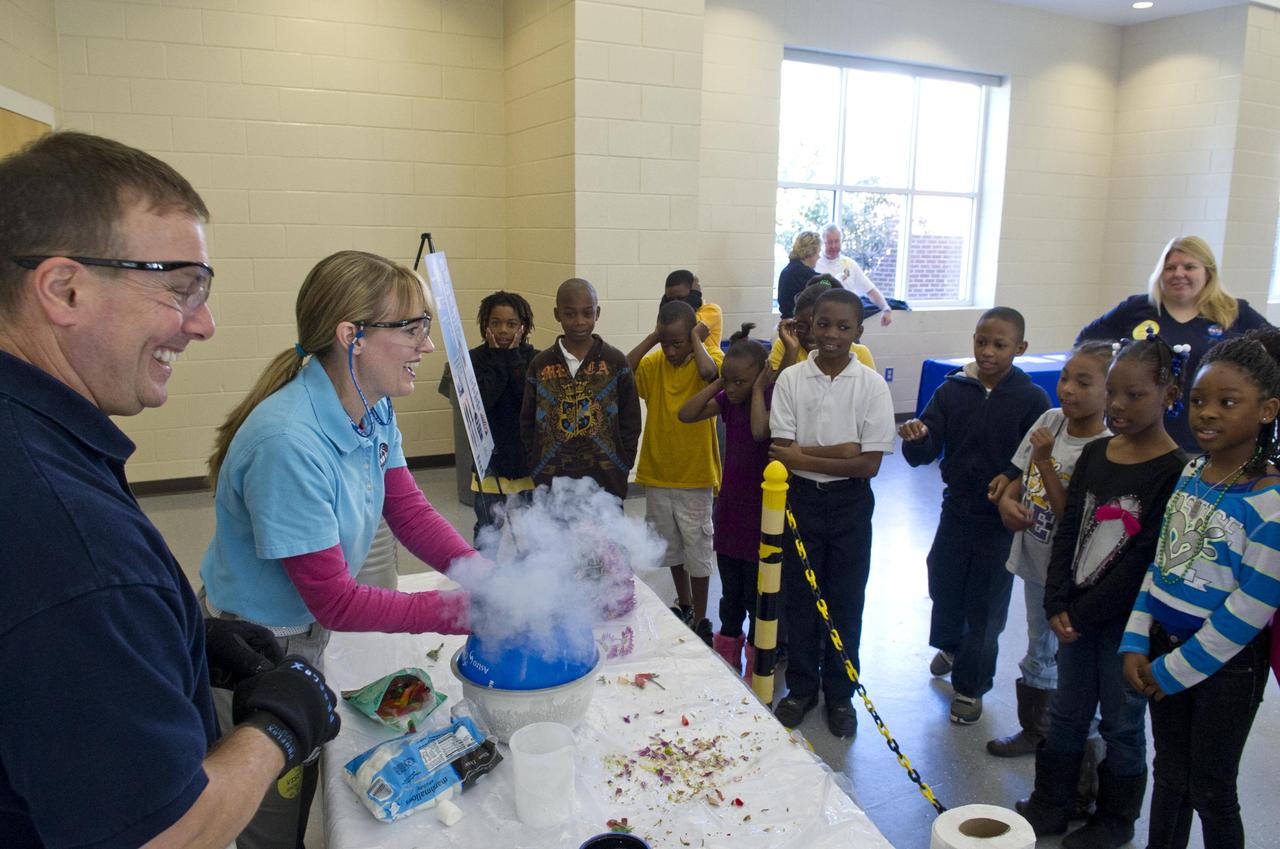
Rick Gilbrech (l), deputy director at Stennis Space Center, and Katie Wallace, director of the Stennis Education Office, team up for a cryogenics presentation at Lillie Burney Elementary School in Hattiesburg, Miss. NASA senior staff members from Stennis Space Center visited the school Jan. 27, 2012, for a morning of activities and outreach to students and school officials.
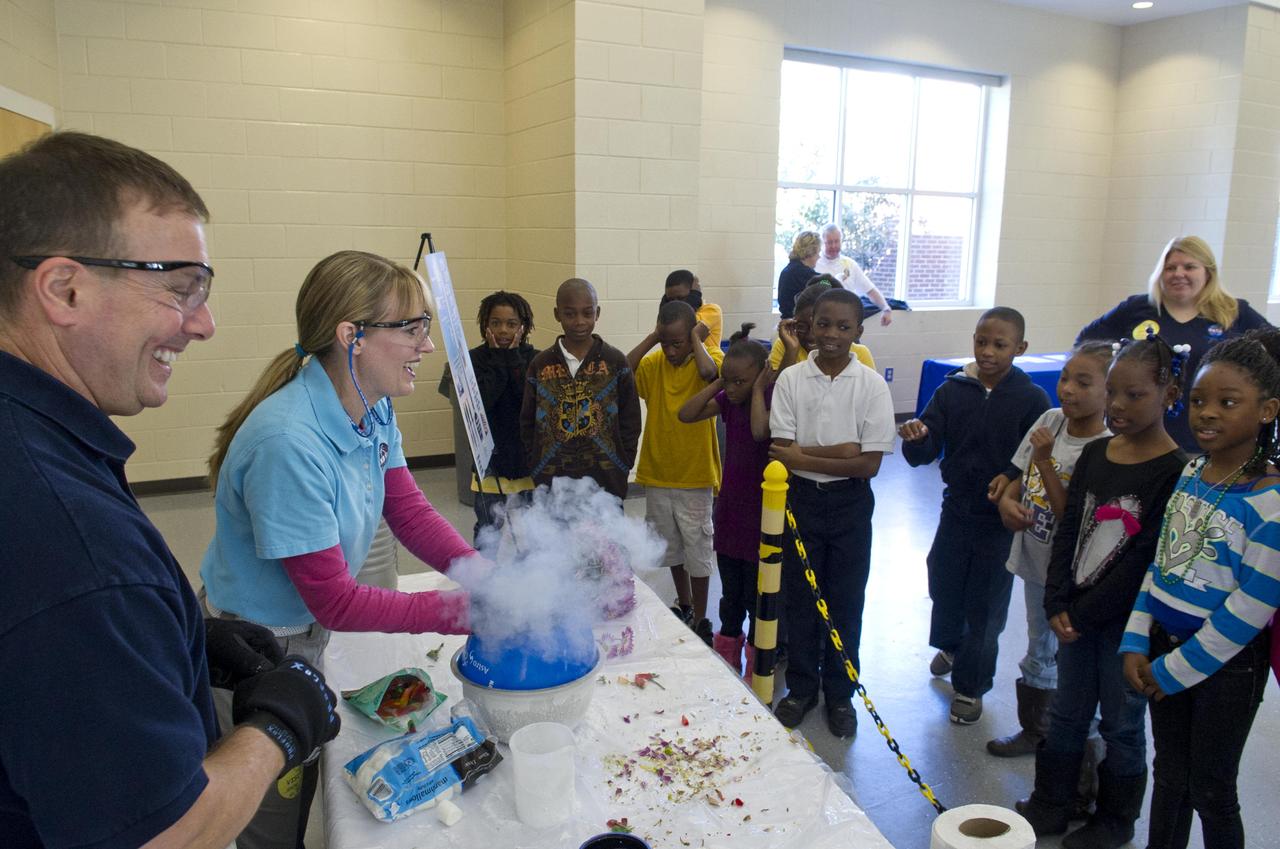
Rick Gilbrech (l), deputy director at Stennis Space Center, and Katie Wallace, director of the Stennis Education Office, team up for a cryogenics presentation at Lillie Burney Elementary School in Hattiesburg, Miss. NASA senior staff members from Stennis Space Center visited the school Jan. 27, 2012, for a morning of activities and outreach to students and school officials.
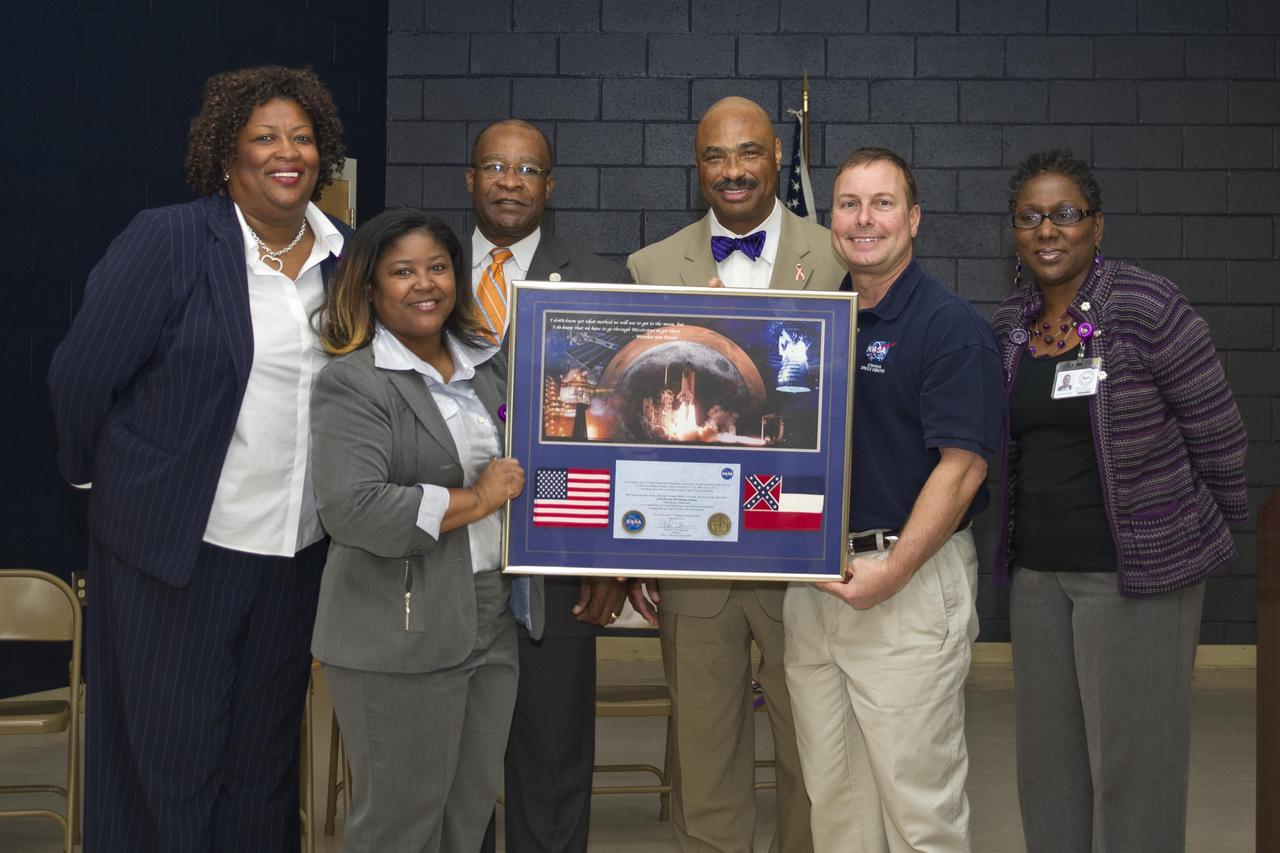
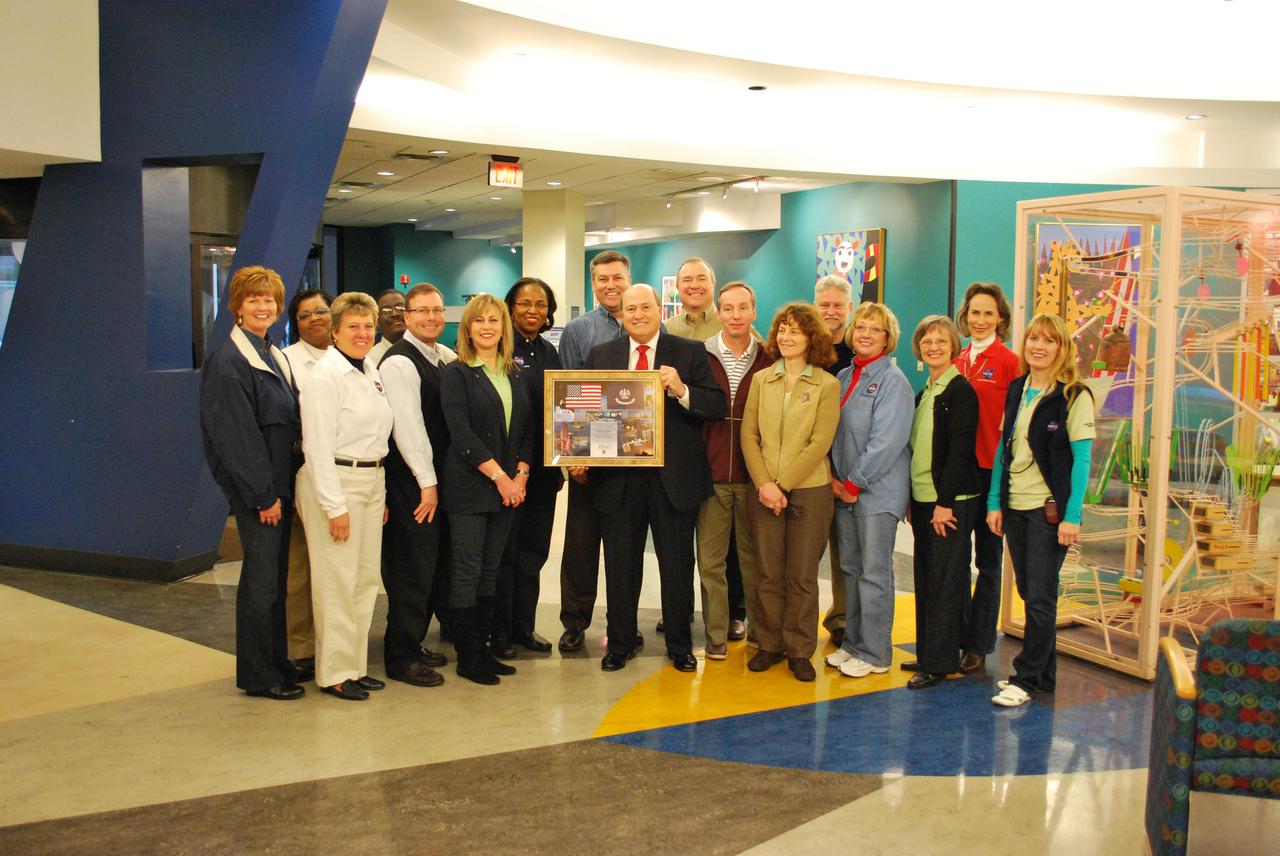
Stennis Deputy Director Rick Gilbrech (second from right) presents a commemorative plaque to Lillie Burney Elementary School officials, including (l to r): Lillie Burney Principal Deborah Smith; Assistant Principal Dr. Bobbie Trussell; Hattiesburg Mayor Johnny DuPree; Hattiesburg Public School District Superintendent James Bacchus; Gilbrech; and District Assistant Superintendent Dr. Edna Thomas. NASA senior staff members from Stennis visited the Hattiesburg, Miss., school Jan. 27, 2012, for a morning of activities and outreach to students and school officials.
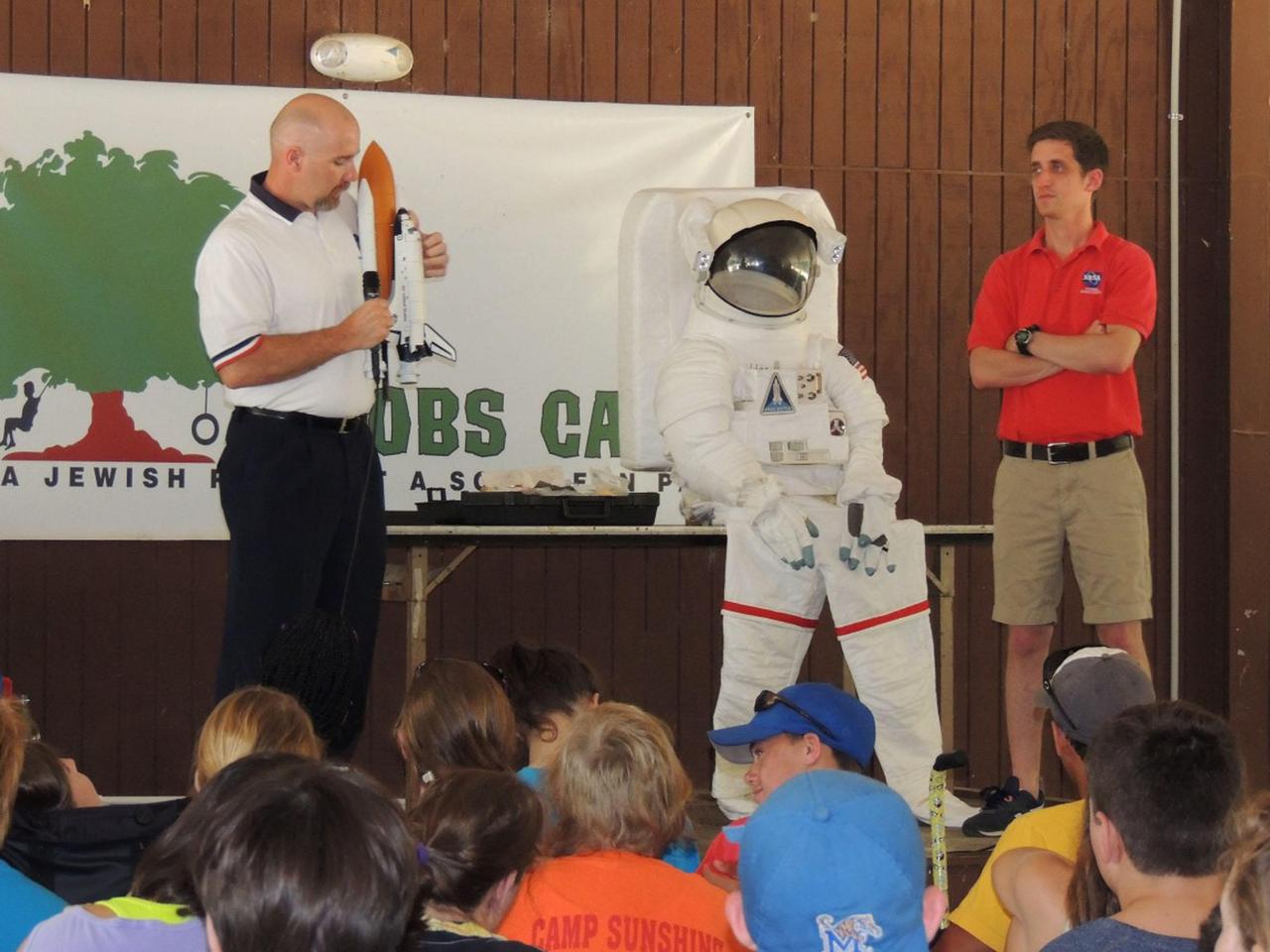
Stennis Space Center education program specialists Chris Copelan (l) and Joshua Finch provide a Working in Space presentation to Camp Dream Street participants during a May 30, 2012, visit to Utica, Miss. Dream Street is a five-day camp program for children with physical disabilities. Camp participants are primarily from Mississippi and surrounding states.
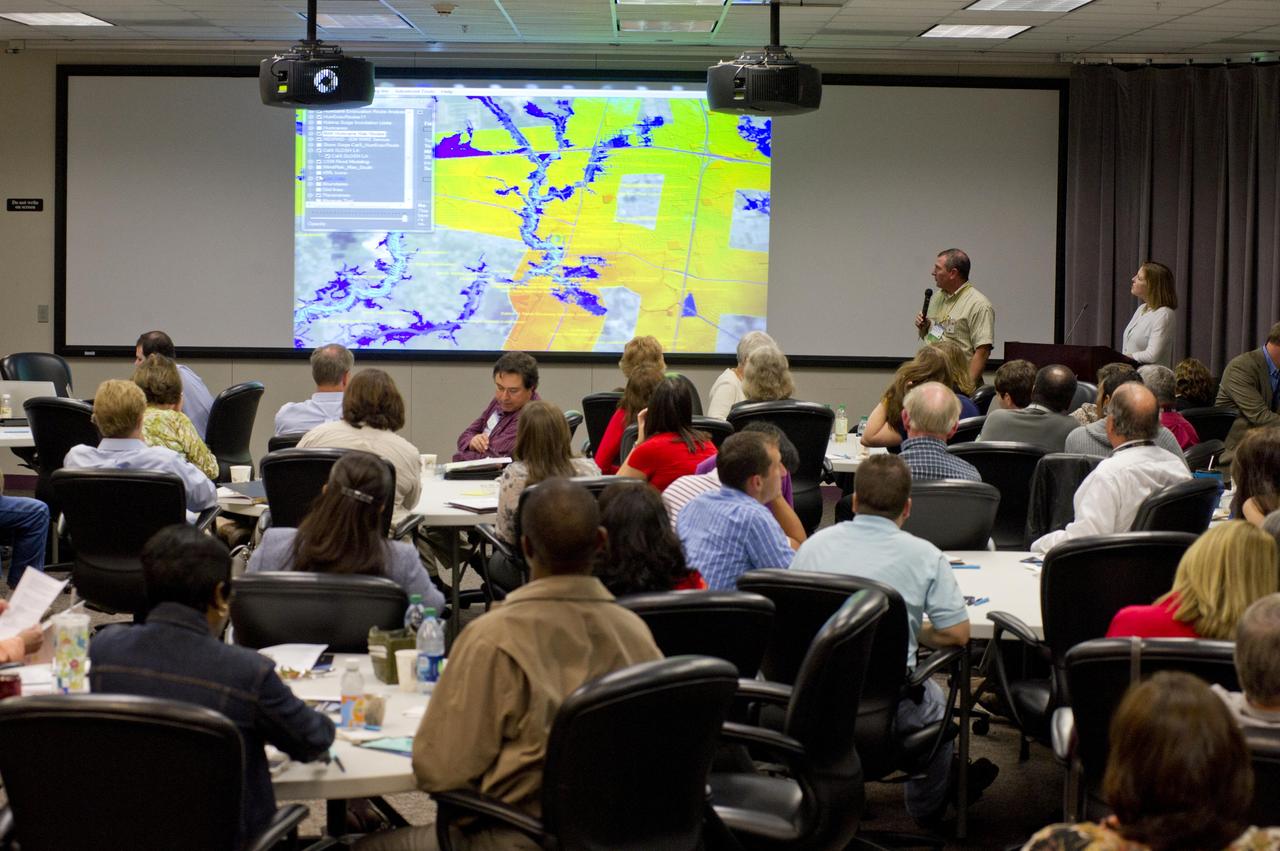
Participants in an Oct. 16-18 workshop at John C. Stennis Space Center focused on identifying current and future climate risks and developing strategies to address them. NASA Headquarters sponsored the Resilience and Adaptation to Climate Risks Workshop to understand climate change risks and adaptation strategies. The workshop was part of an effort that joins the science and operations arms of the agency in a coordinated response to climate change. NASA Headquarters is holding workshops on the subject at all NASA centers.
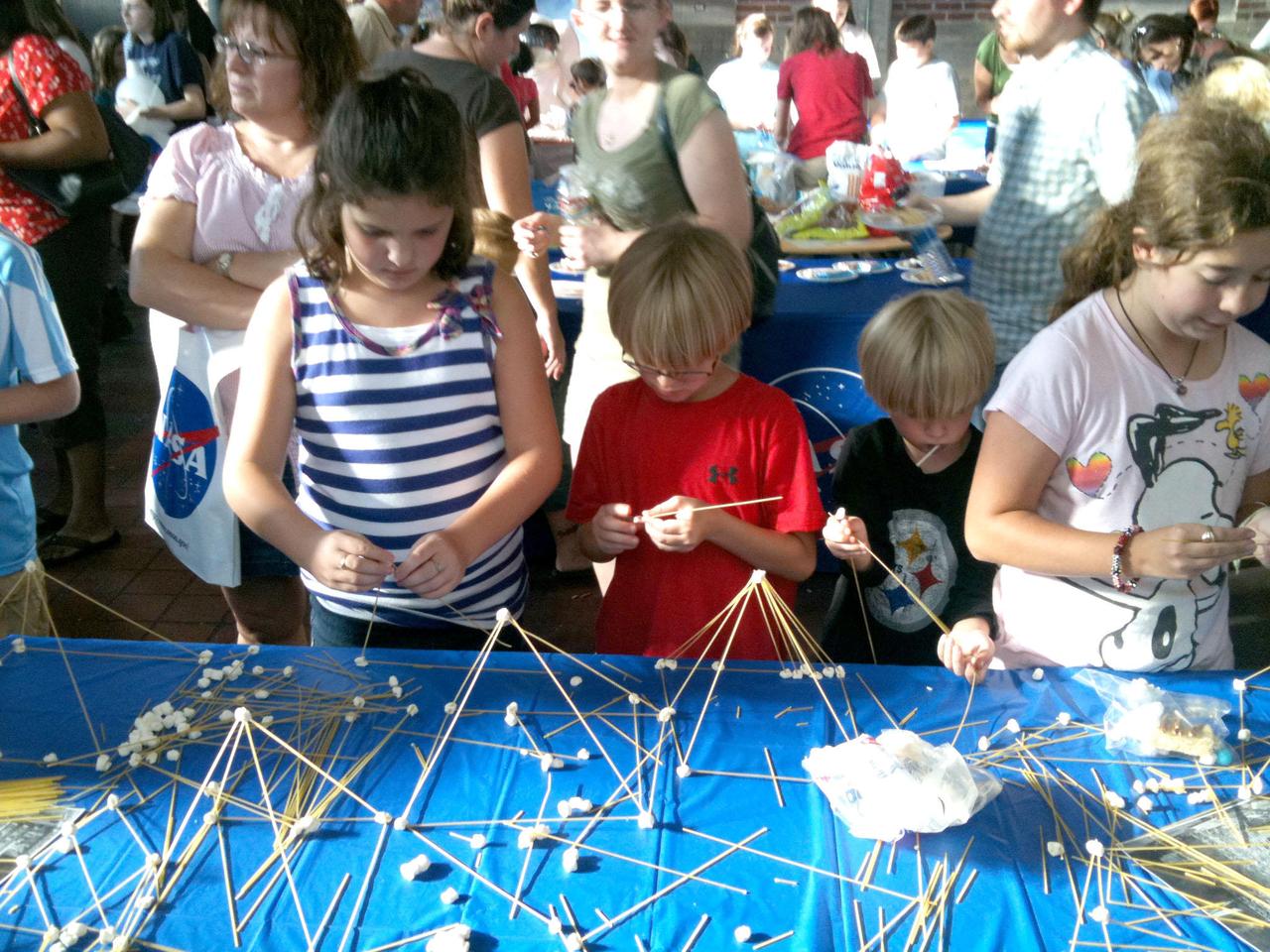
Stennis Space Center visited three Mississippi communities Sept. 11-13, offering interactive and space-related exhibits and presentations to visitors in Grenada, Oxford and Tupelo. Young visitors to the Powerhouse Community and Arts Center in Oxford enjoyed hands-on educational activities during the NASA Night event Sept. 11.
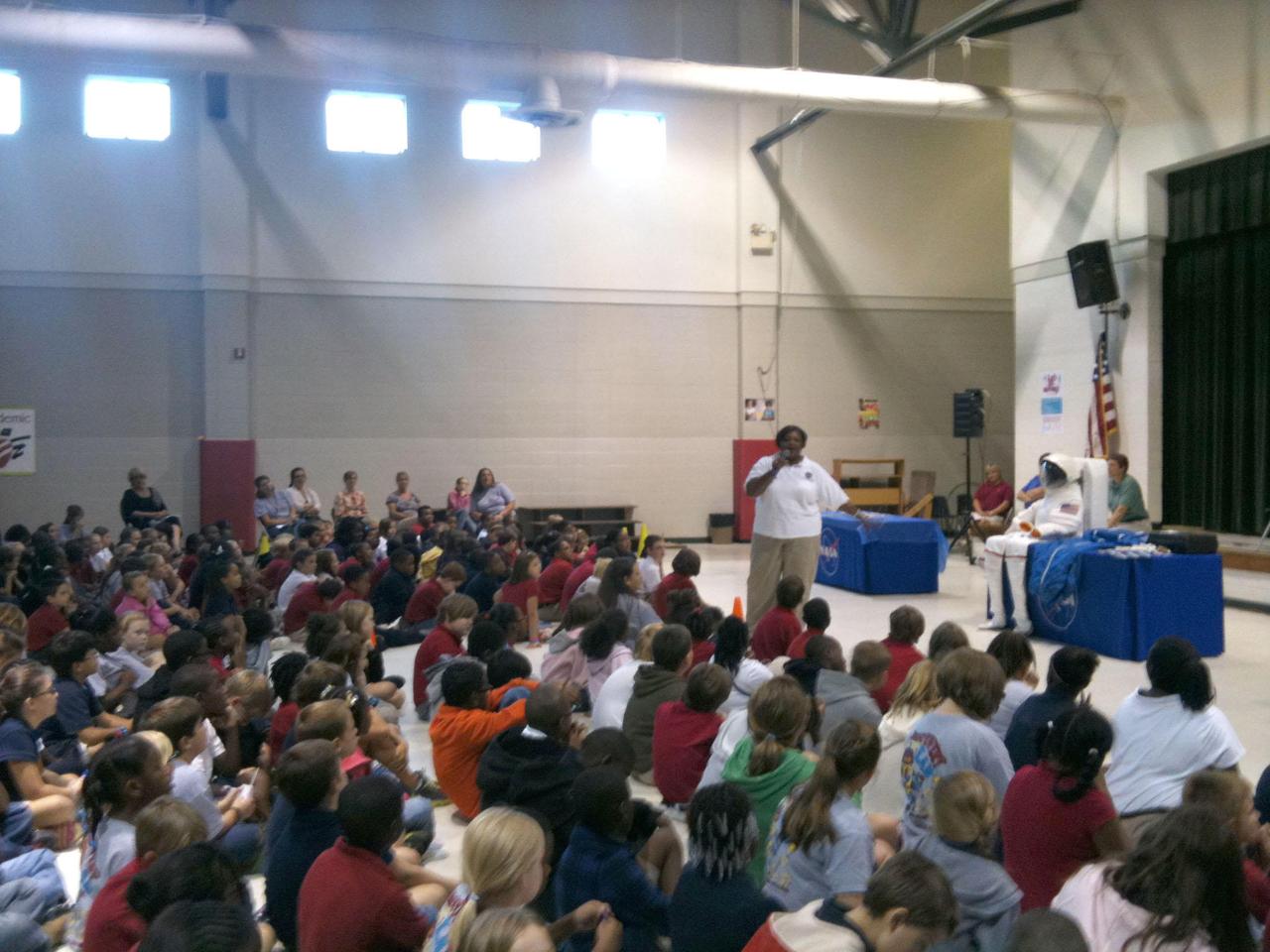
Stennis Space Center visited three Mississippi communities Sept. 11-13, offering interactive and space-related exhibits and presentations to visitors in Grenada, Oxford and Tupelo. In Grenada on Sept. 12, Stennis Office of External Affairs Manager Pam Covington spoke to a student assembly at Grenada Upper Elementary School.
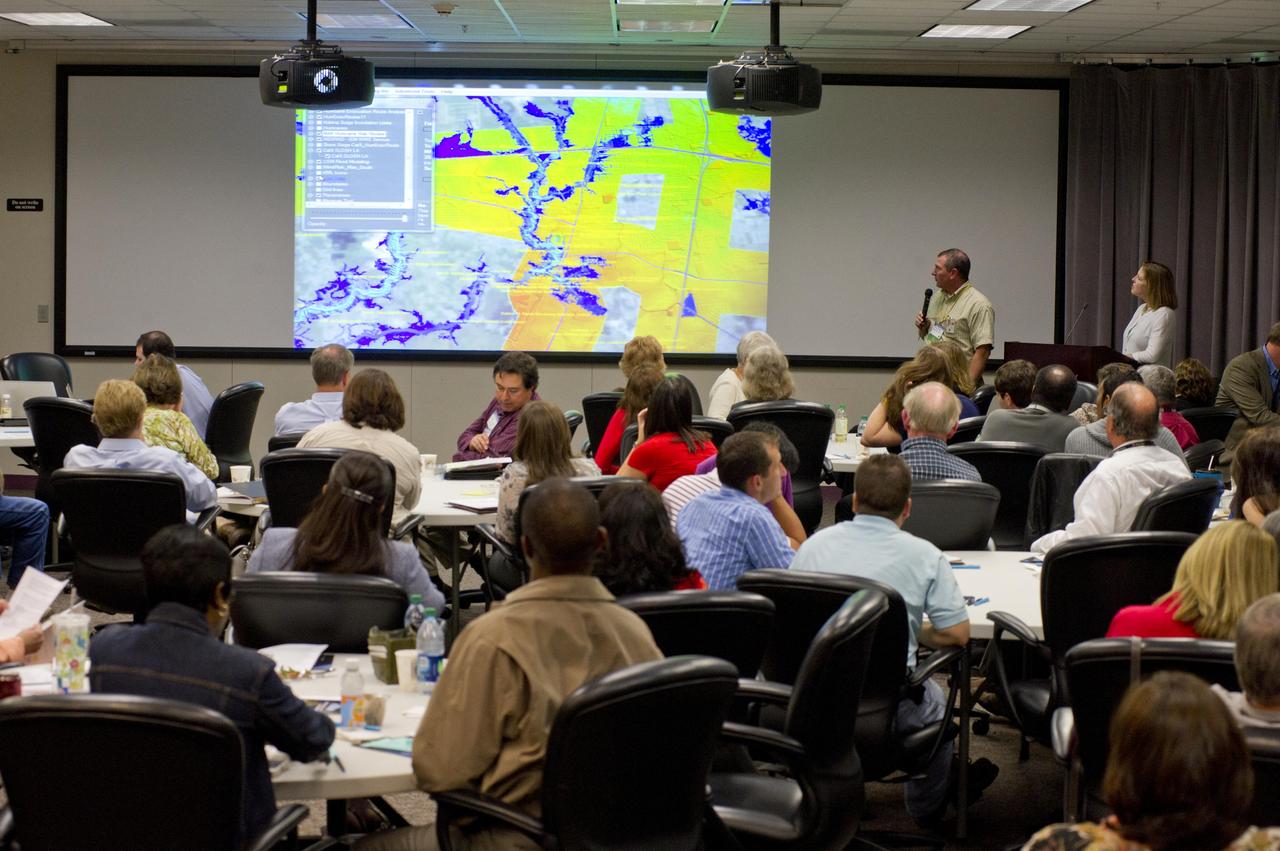
Participants in an Oct. 16-18 workshop at John C. Stennis Space Center focused on identifying current and future climate risks and developing strategies to address them. NASA Headquarters sponsored the Resilience and Adaptation to Climate Risks Workshop to understand climate change risks and adaptation strategies. The workshop was part of an effort that joins the science and operations arms of the agency in a coordinated response to climate change. NASA Headquarters is holding workshops on the subject at all NASA centers.
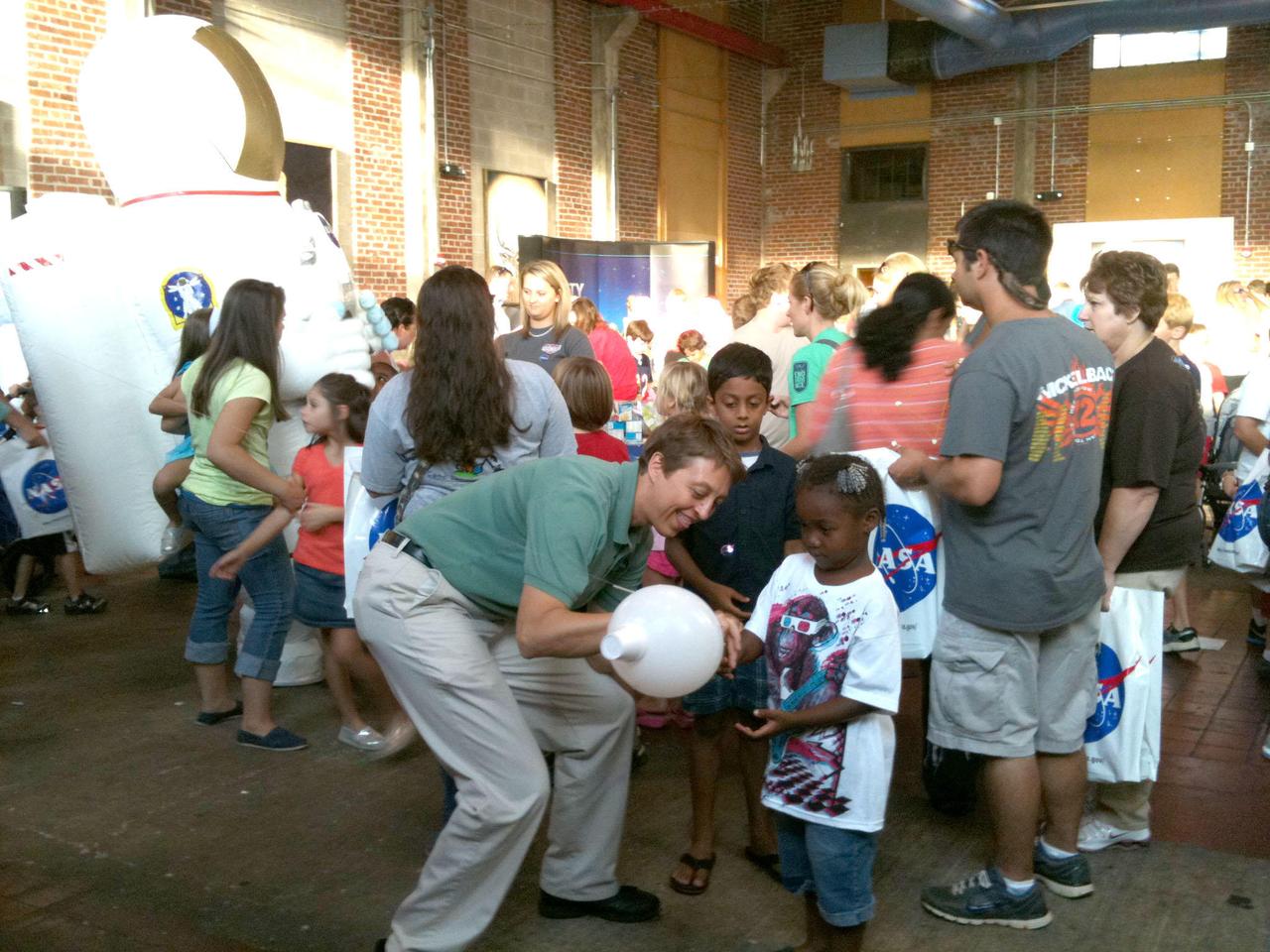
Stennis Space Center visited three Mississippi communities Sept. 11-13, offering interactive and space-related exhibits and presentations to visitors in Grenada, Oxford and Tupelo. During NASA Night activities in Oxford, NASA employee Michele Beisler helped young visitors launch her balloon rocket.
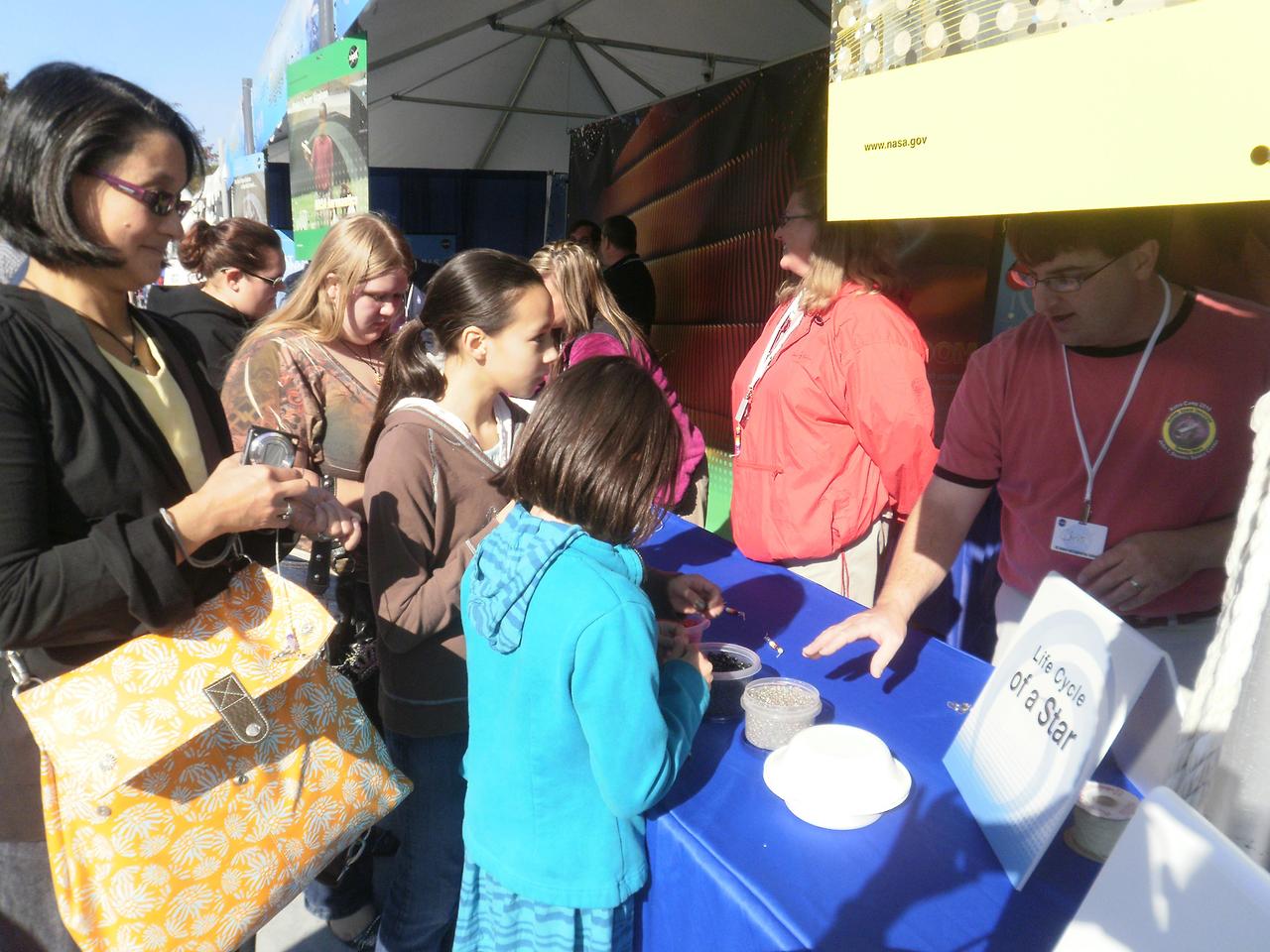
Young visitors to the inaugural USA Science and Engineering Festival at the National Mall in Washington, D.C., learn about the life cycle of a star at an exhibit sponsored by the John C. Stennis Space Center Education Office. Stennis personnel participated in the final weekend of the Oct. 10-24 festival with education activities and to present information on its new Spaced Out Sports Design Challenge.
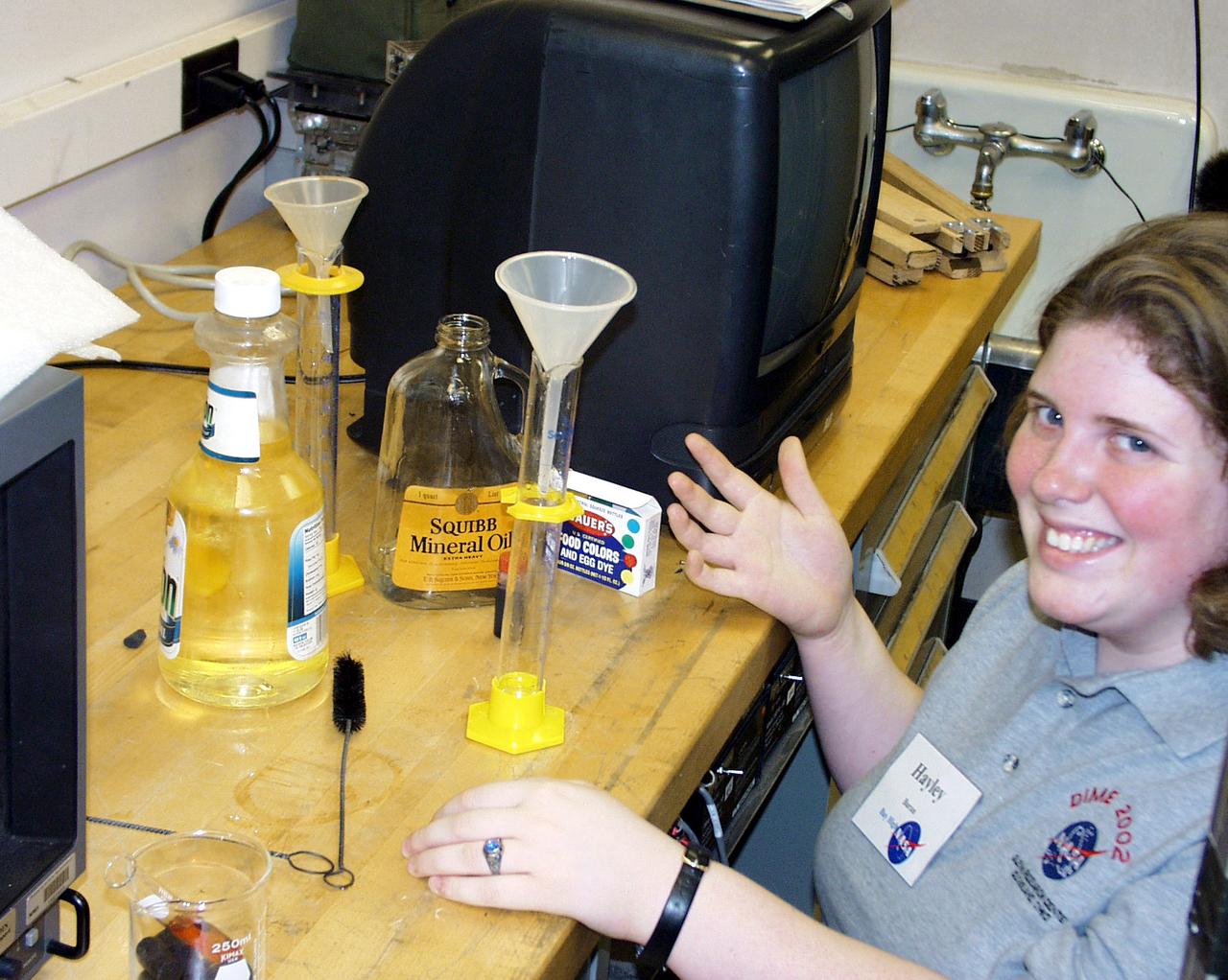
A Bay High School team member prepares the oil and water samples for their next drop operation as part of the second Dropping in a Microgravity Environment (DIME) competition held April 23-25, 2002, at NASA's Glenn Research Center. Competitors included two teams from Sycamore High School, Cincinnati, OH, and one each from Bay High School, Bay Village, OH, and COSI Academy, Columbus, OH. DIME is part of NASA's education and outreach activities. Details are on line at http://microgravity.grc.nasa.gov/DIME_2002.html.
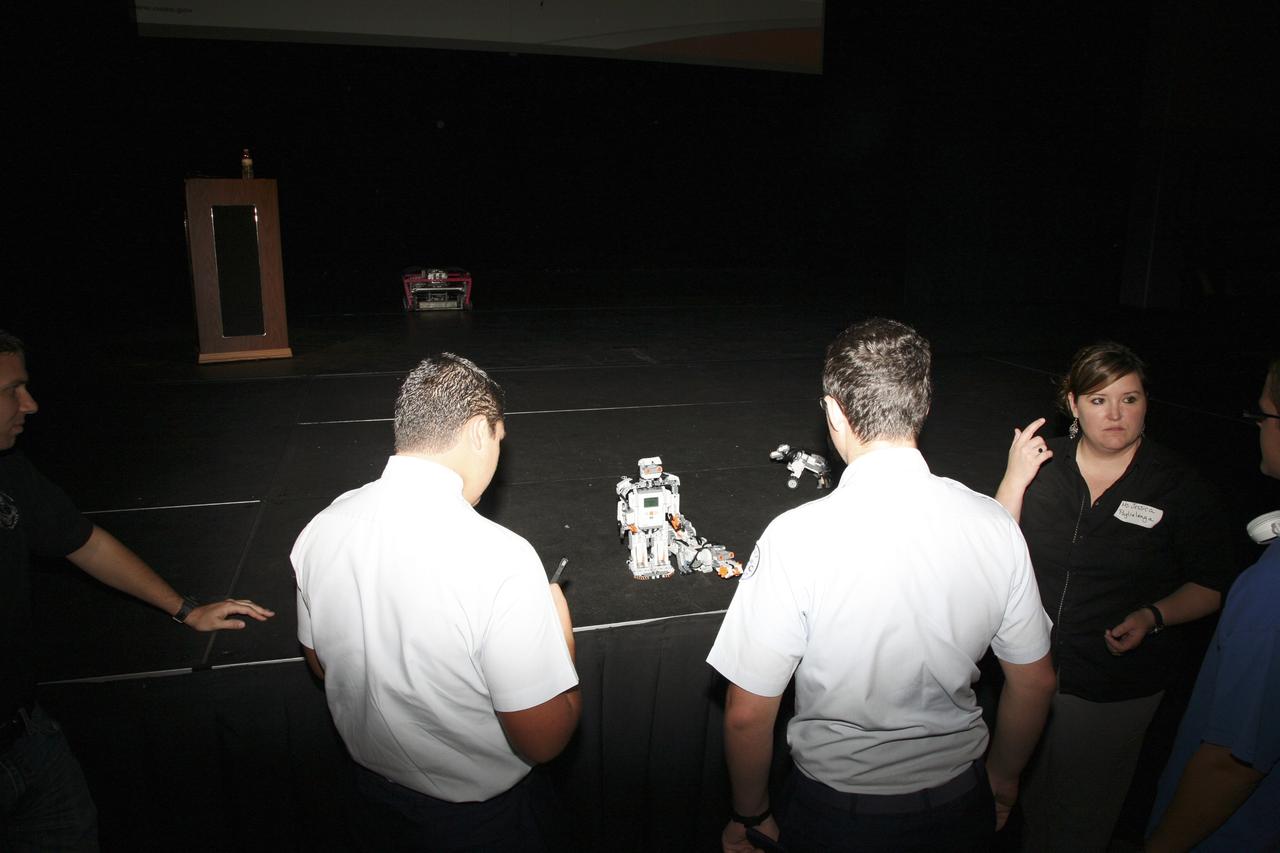
CAPE CANAVERAL, Fla. -- Pre-calculus, engineering, and physics students at Timber Creek High School in Orlando, Fla., had the opportunity to view a FIRST robotics robot demonstration during an education outreach event on Nov. 16 in the school’s Performing Arts Center. Students, heard from NASA Kennedy Space Center Deputy Director Janet Petro about work being done at the center, and learned about Kennedy’s Educate to Innovate (KETI) LEGO Mindstorm activities. Photo credit: NASA/Gianni Woods
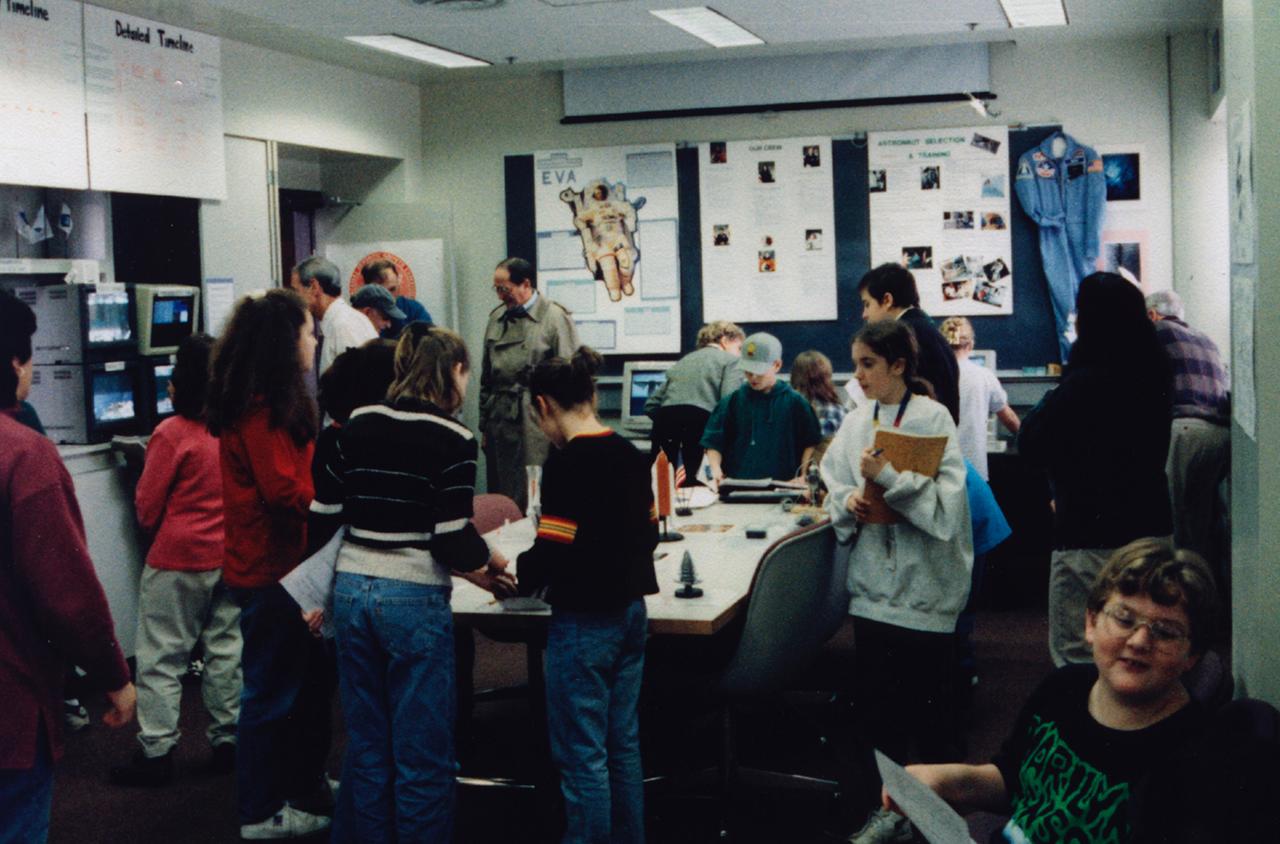
High school students observe the progress of the Isothermal Dendritic Growth Experiment (IDGE) during the U.S. Microgravity Payload-4 mission (STS-87, Nov. 19 - Dec. 5, 1997) at the IDGE Remote Operations Control Center (ROCC) at Rensselaer Polytechnic Institute (RPI) in Troy, NY. As part of the its outreach activity, the experiment team set up the center so students and the public could observe IDGE in progress and learn more about space and microgravity research. Photo credit: RPI
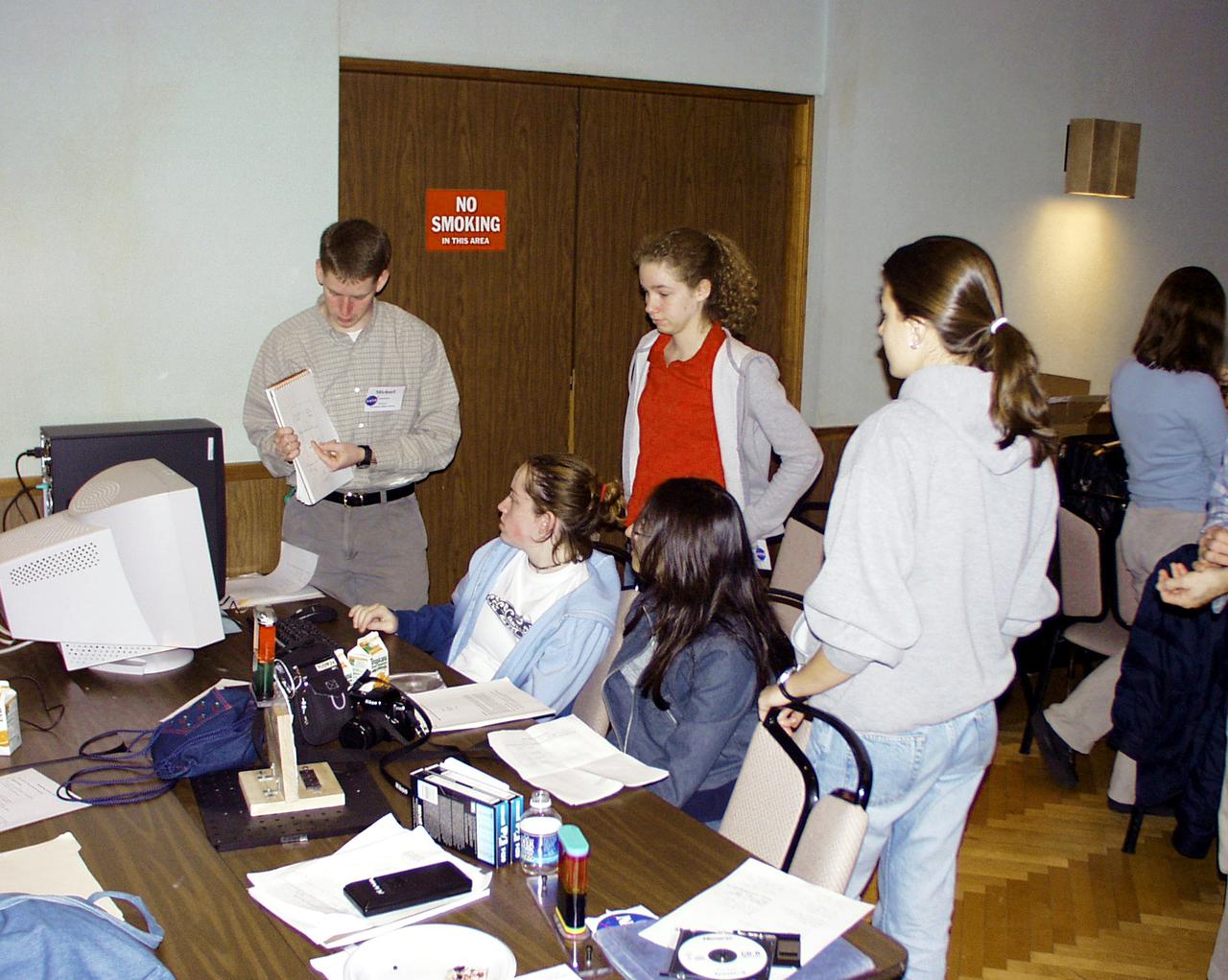
Students discuss fine points of their final design for the Drop Tower experiment during the second Dropping in a Microgravity Environment (DIME) competition held April 23-25, 2002, at NASA's Glenn Research Center. Competitors included two teams from Sycamore High School, Cincinnati, OH, and one each from Bay High School, Bay Village, OH, and COSI Academy, Columbus, OH. DIME is part of NASA's education and outreach activities. Details are on line at http://microgravity.grc.nasa.gov/DIME_2002.html.
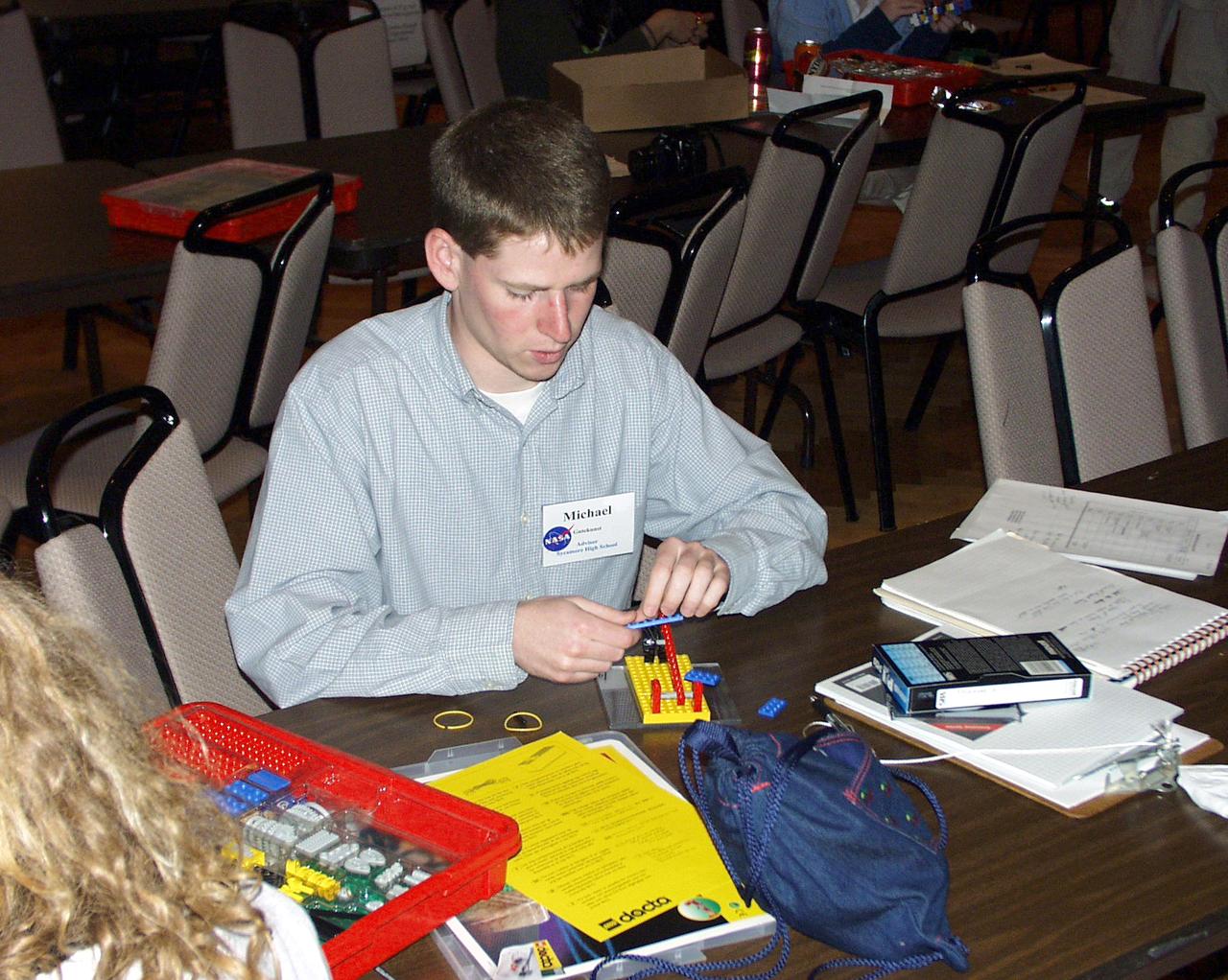
A student assembles a Lego (TM) Challenge device designed to operate in the portable drop tower demonstrator as part of the second Dropping in a Microgravity Environment (DIME) competition held April 23-25, 2002, at NASA's Glenn Research Center. Competitors included two teams from Sycamore High School, Cincinnati, OH, and one each from Bay High School, Bay Village, OH, and COSI Academy, Columbus, OH. DIME is part of NASA's education and outreach activities. Details are on line at http://microgravity.grc.nasa.gov/DIME_2002.html.
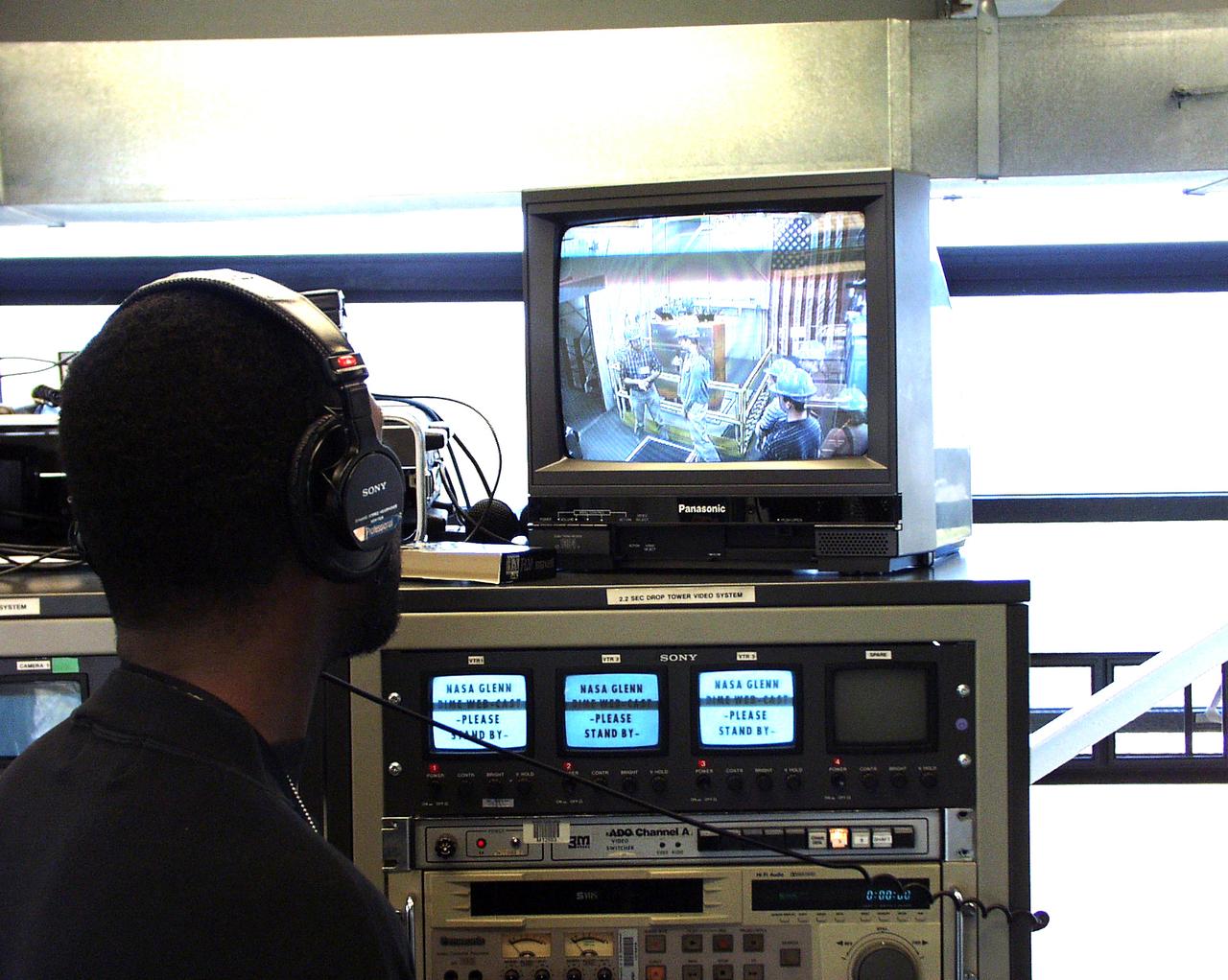
A NASA test conductor at the top of the 2.2-second Drop Tower monitors a student lecture at a lower level. This was part of the Microgravity Environment (DIME) competition held April 23-25, 2002, at NASA's Glenn Research Center. Competitors included two teams from Sycamore High School, Cincinnati, OH, and one each from Bay High School, Bay Village, OH, and COSI Academy, Columbus, OH. DIME is part of NASA's education and outreach activities. Details are on line at http://microgravity.grc.nasa.gov/DIME_2002.html.

Panorama view of Apollo 17 Lunar surface photos for use in presentations to NASA management and for Outreach Education in regard to new NASA initiative for human planetary research. Photo numbers used for this panoramic include: Apollo 17 start frame AS17-138-21053 thru end frame AS17-138-21073. View is of Station 2, taken during the second Extravehicular Activity (EVA) 2.
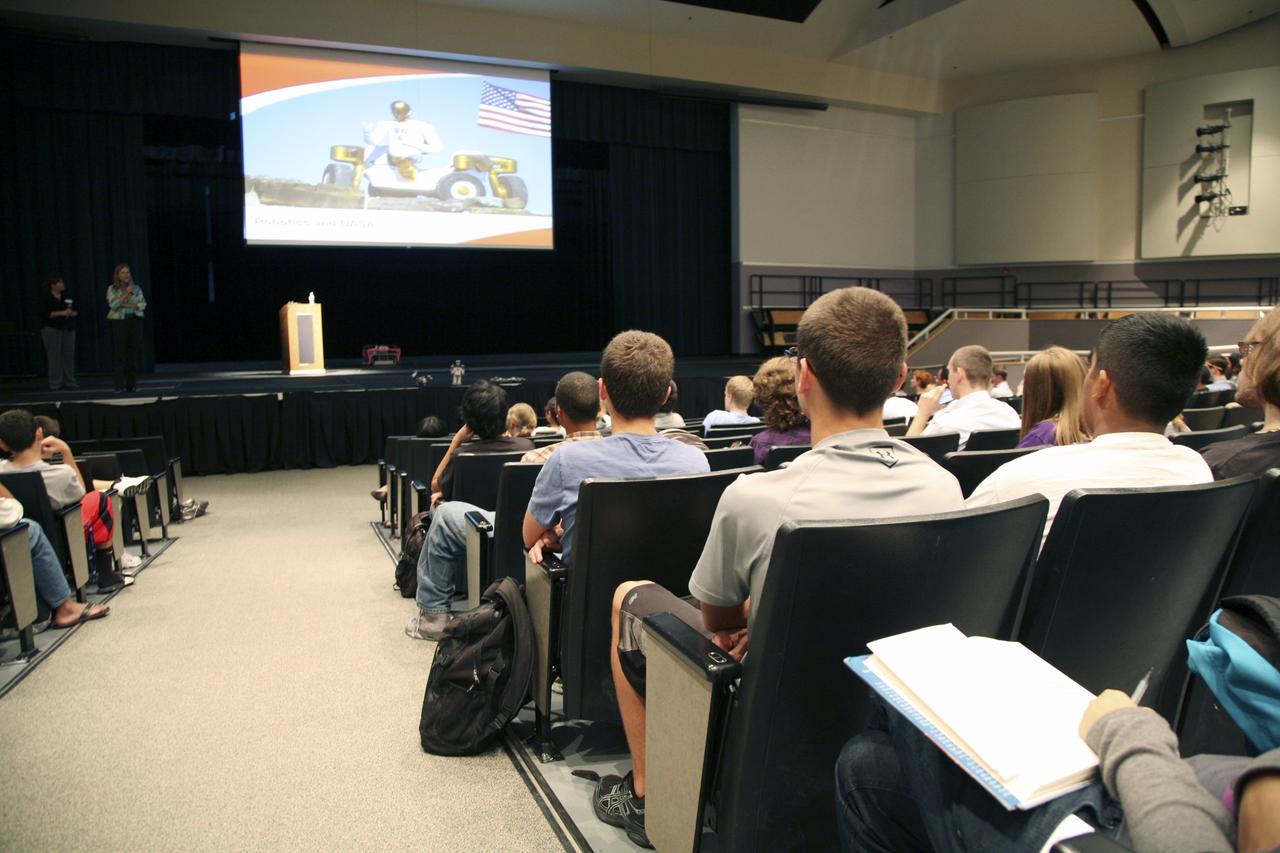
CAPE CANAVERAL, Fla. -- -- Pre-calculus, engineering, and physics students at Timber Creek High School in Orlando, Fla., listen to NASA Kennedy Space Center Deputy Director Janet Petro speak on work being done at the center during an education outreach event on Nov. 16 in the school’s Performing Arts Center. Students also had the opportunity to view a FIRST Robotics robot in action and learn about Kennedy’s Educate to Innovate (KETI) LEGO Mindstorm activities. Photo credit: NASA/Gianni Woods
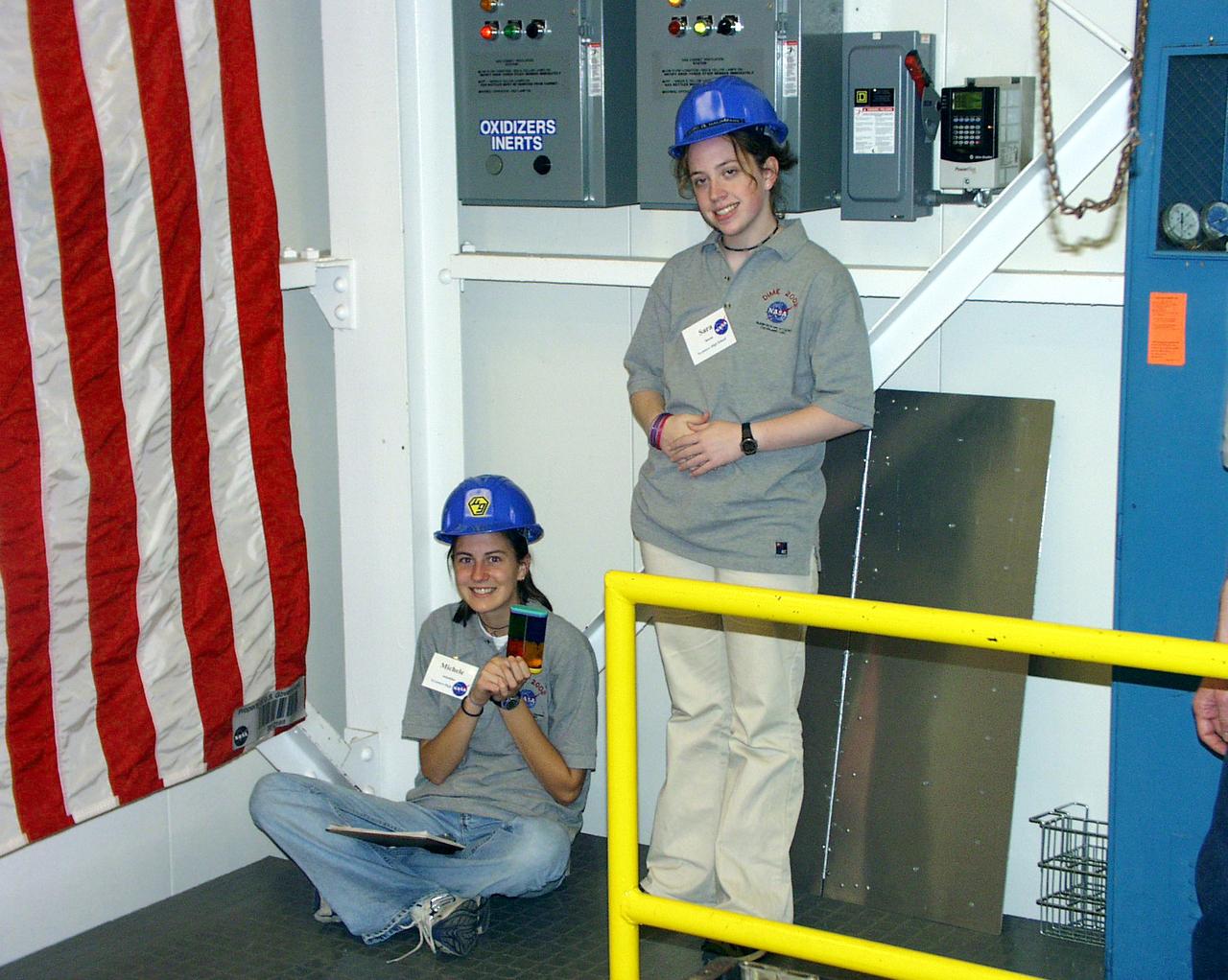
Students pause while waiting their turn at the 2.2-second Drop Tower during the second Dropping in a Microgravity Environment (DIME) competition held April 23-25, 2002, at NASA's Glenn Research Center. Competitors included two teams from Sycamore High School, Cincinnati, OH, and one each from Bay High School, Bay Village, OH, and COSI Academy, Columbus, OH. DIME is part of NASA's education and outreach activities. Details are on line at http://microgravity.grc.nasa.gov/DIME_2002.html.
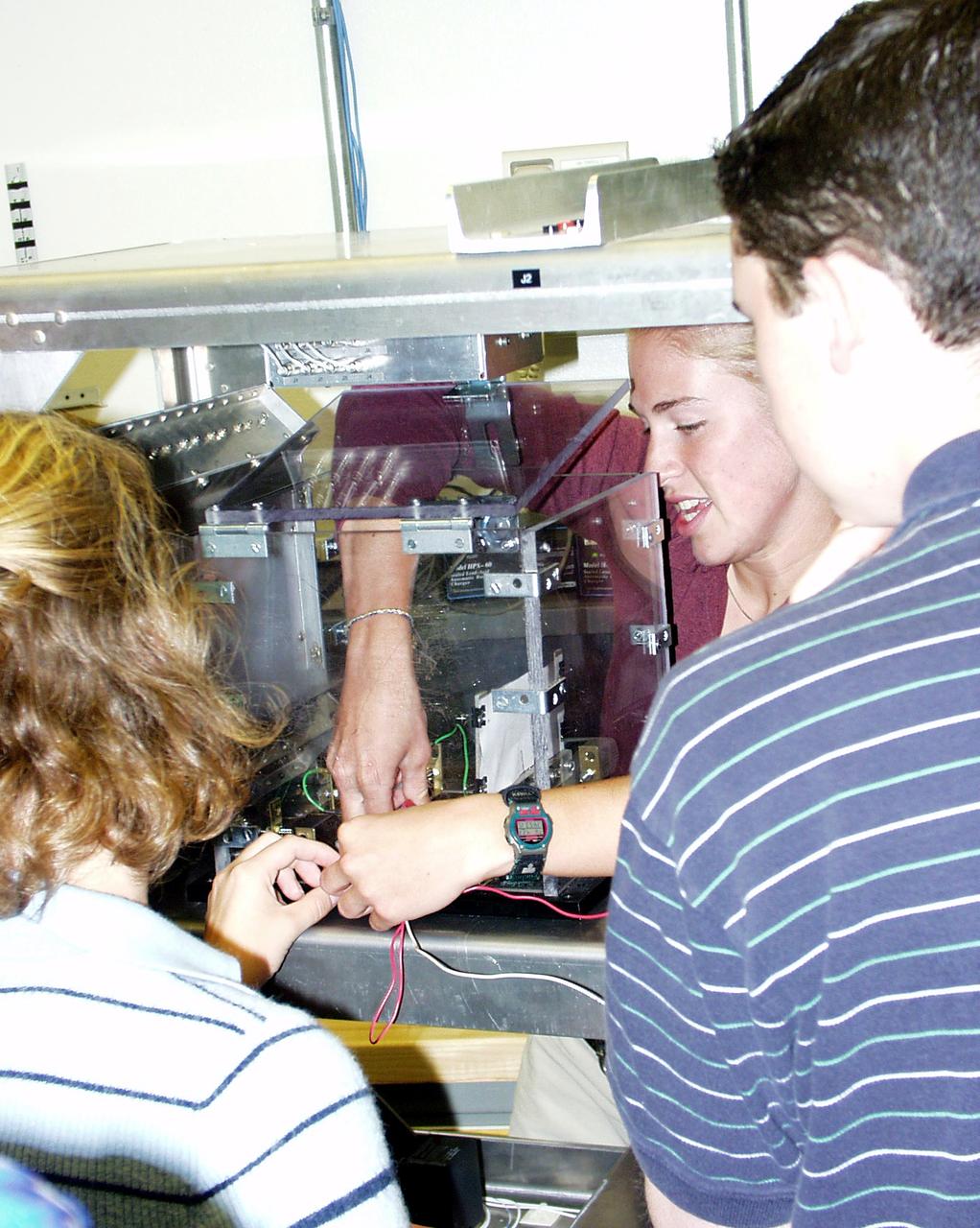
Students prepare their experiment apparatus for free-fall during the second Dropping in a Microgravity Environment (DIME) competition held April 23-25, 2002, at NASA's Glenn Research Center. Competitors included two teams from Sycamore High School, Cincinnati, OH, and one each from Bay High School, Bay Village, OH, and COSI Academy, Columbus, OH. DIME is part of NASA's education and outreach activities. Details are on line at http://microgravity.grc.nasa.gov/DIME_2002.html.
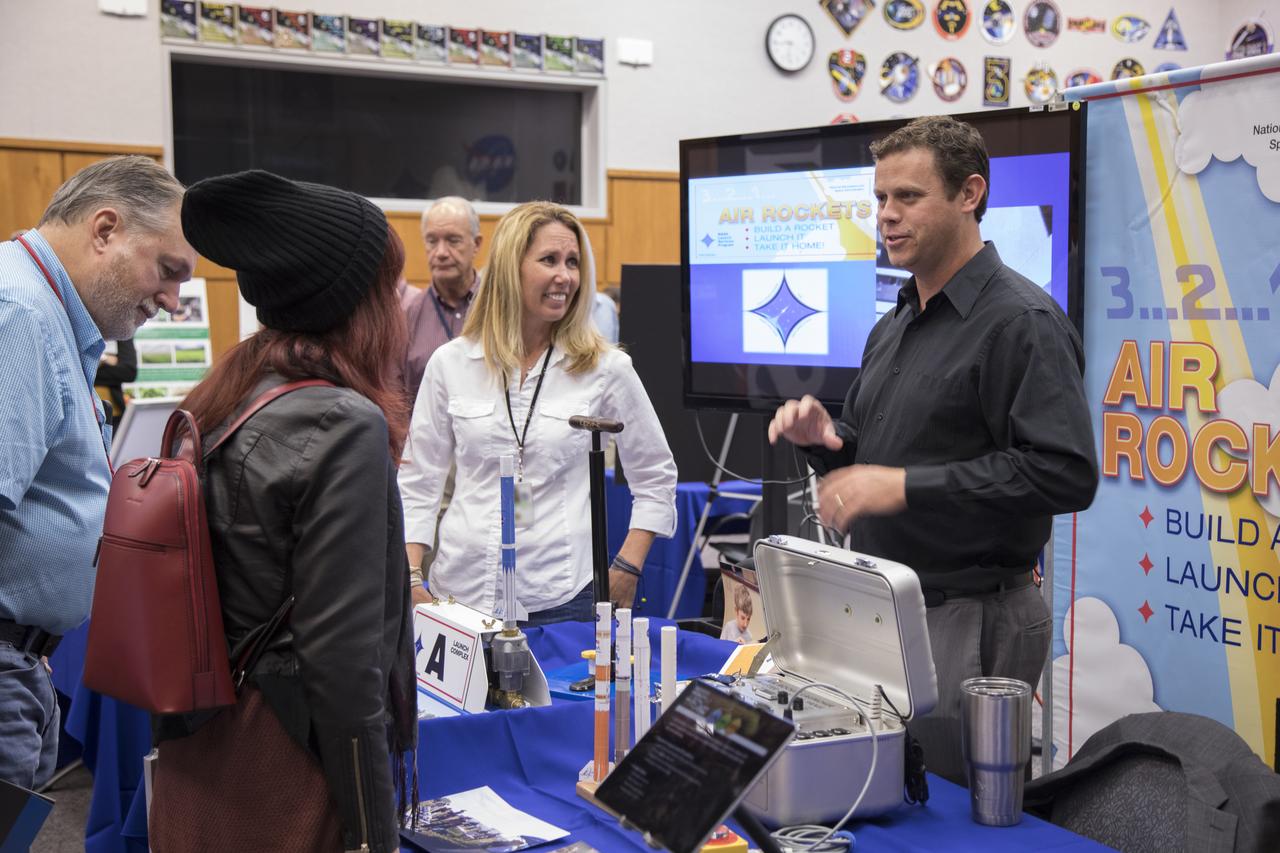
Shaun Daly, an integration engineer in the Launch Services Program, explains a new outreach activity for young students during the 2017 Innovation Expo showcase at NASA's Kennedy Space Center in Florida. The purpose of the annual two-day event is to help foster innovation and creativity among the Kennedy workforce. The event included several keynote speakers, training opportunities, an innovation showcase and the KSC Kickstart competition.
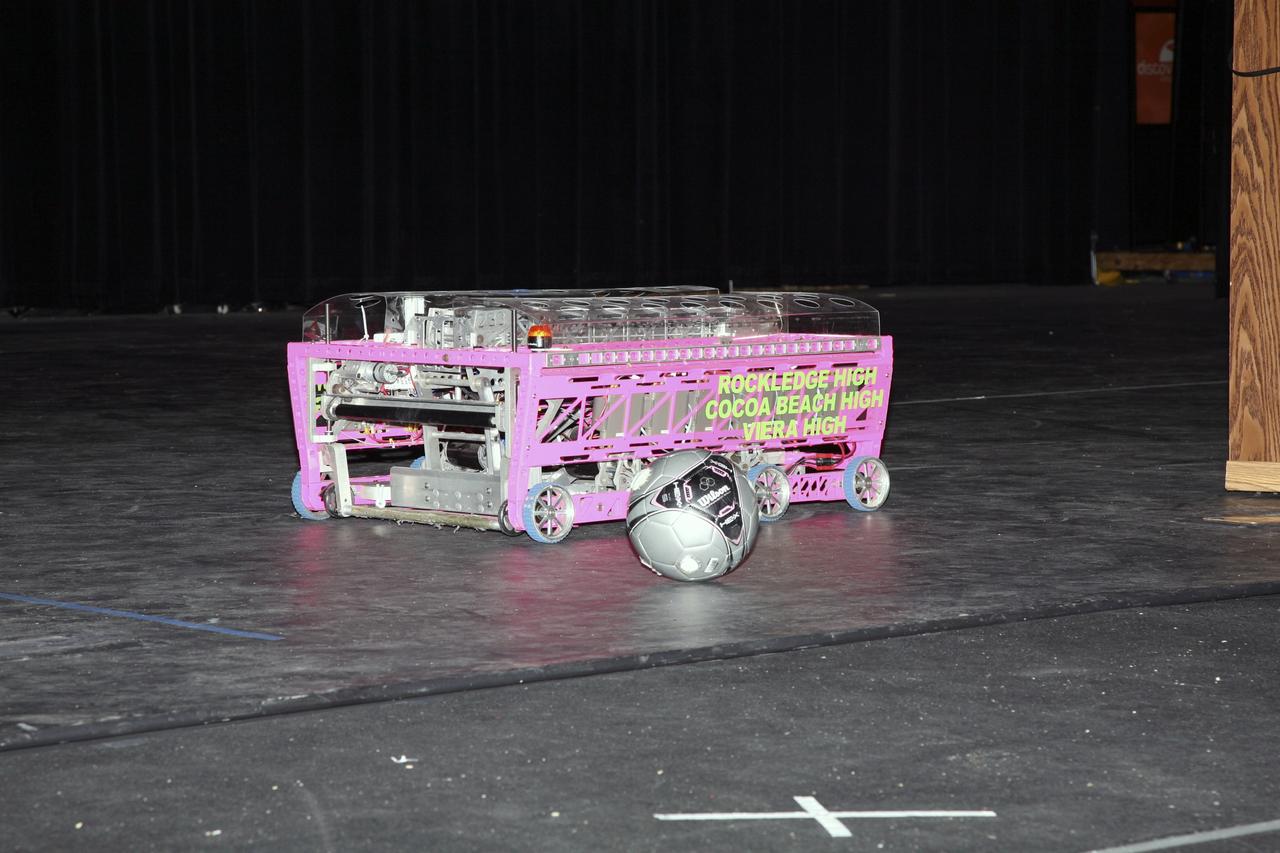
CAPE CANAVERAL, Fla. -- -- Pre-calculus, engineering, and physics students at Timber Creek High School in Orlando, Fla., had the opportunity to view a FIRST robotics robot demonstration during an education outreach event on Nov. 16 in the school’s Performing Arts Center. Students, heard from NASA Kennedy Space Center Deputy Director Janet Petro about work being done at the center, and also learned about Kennedy’s Educate to Innovate (KETI) LEGO Mindstorm activities. Photo credit: NASA/Gianni Woods
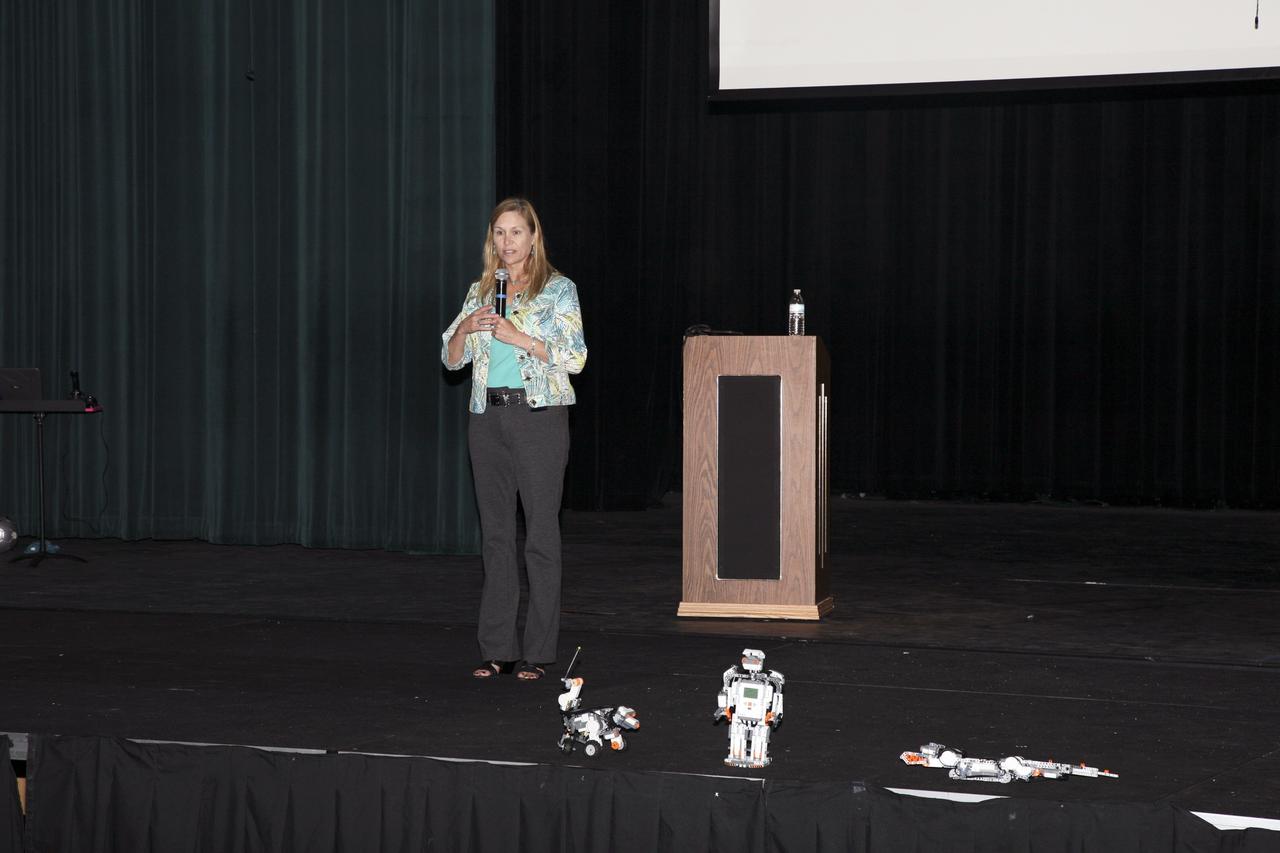
CAPE CANAVERAL, Fla. -- -- NASA Kennedy Space Center Deputy Director Janet Petro addresses pre-calculus, engineering and physics students at Timber Creek High School, in Orlando, Fla., on work being done at the center during an education outreach event on Nov. 16. Students also had the opportunity to view a FIRST Robotics robot in action, and learn about Kennedy’s Educate to Innovate (KETI) LEGO Mindstorm activities in the school’s Performing Arts Center. Photo credit: NASA/Gianni Woods

Panorama view of Apollo 17 Lunar surface photos for use in presentations to NASA management and for Outreach Education in regard to new NASA initiative for human planetary research. Photo numbers used for this panoramic include: Apollo 17 start frame AS17-146-22339 thru end frame AS17-146-22363. View is of Station 7 Panorama taken during Extravehicular Activity (EVA) 3.
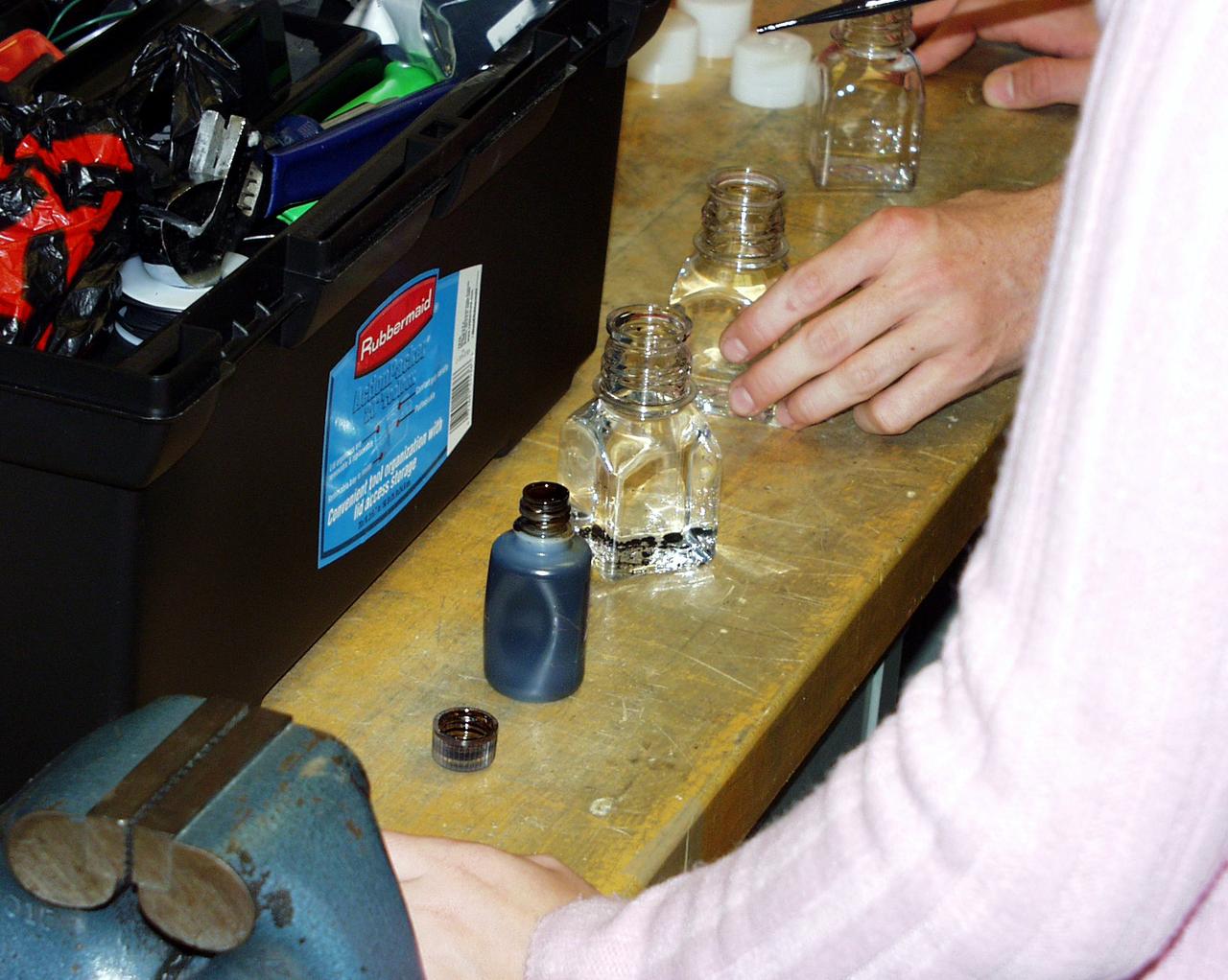
Students prepare to load fluids in their experiment apparatus during the Dropping In a Microgravity Environment (DIME) competition held April 23-25, 2002, at NASA's Glenn Research Center. Competitors included two teams from Sycamore High School, Cincinnati, OH, and one each from Bay High School, Bay Village, OH, and COSI Academy, Columbus, OH. DIME is part of NASA's education and outreach activities. Details are on line at http://microgravity.grc.nasa.gov/DIME_2002.html.
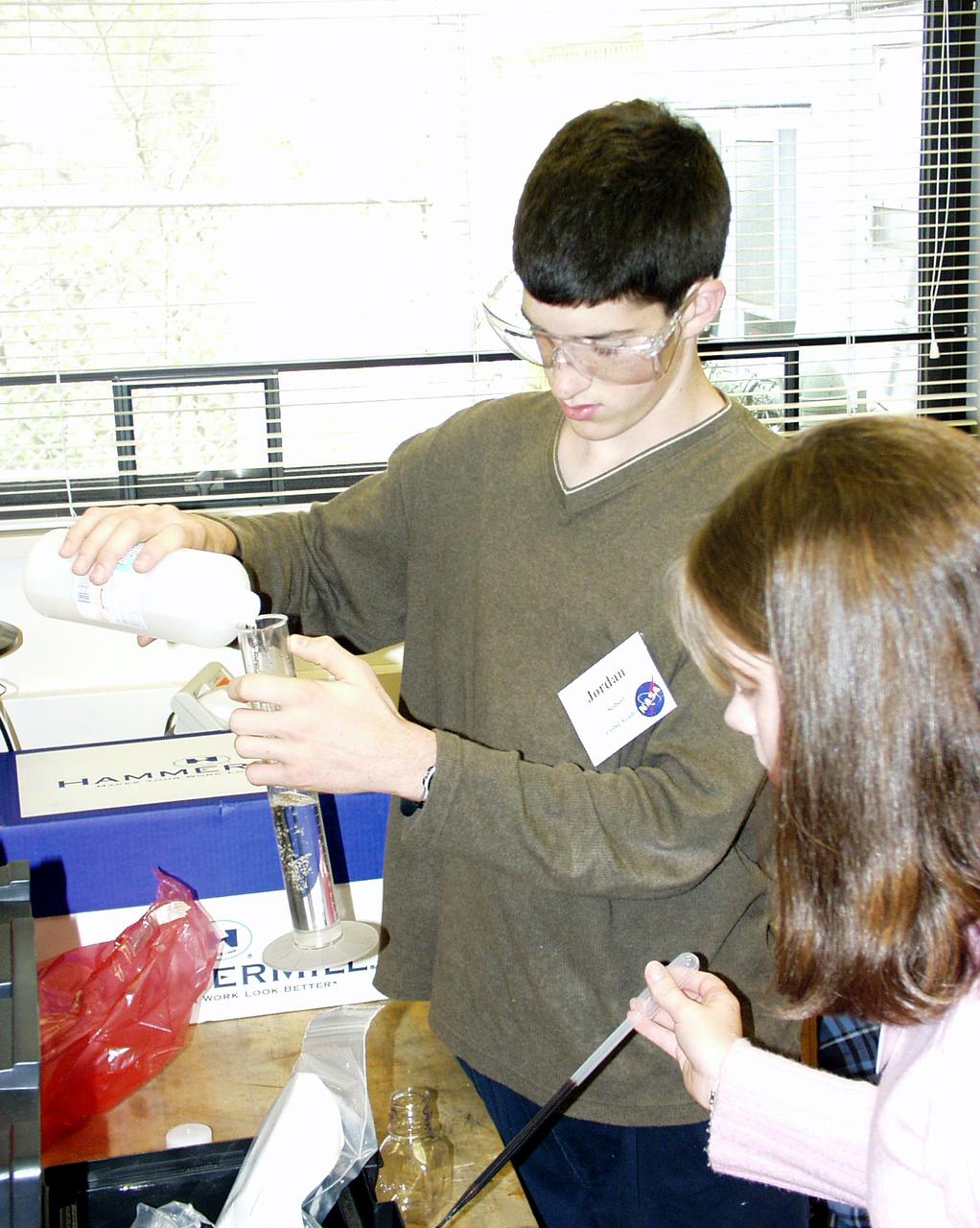
Students prepare to load fluids in their experiment apparatus during the Microgravity Environment (DIME) competition held April 23-25, 2002, at NASA's Glenn Research Center. Competitors included two teams from Sycamore High School, Cincinnati, OH, and one each from Bay High School, Bay Village, OH, and COSI Academy, Columbus, OH. DIME is part of NASA's education and outreach activities. Details are on line at http://microgravity.grc.nasa.gov/DIME_2002.html.
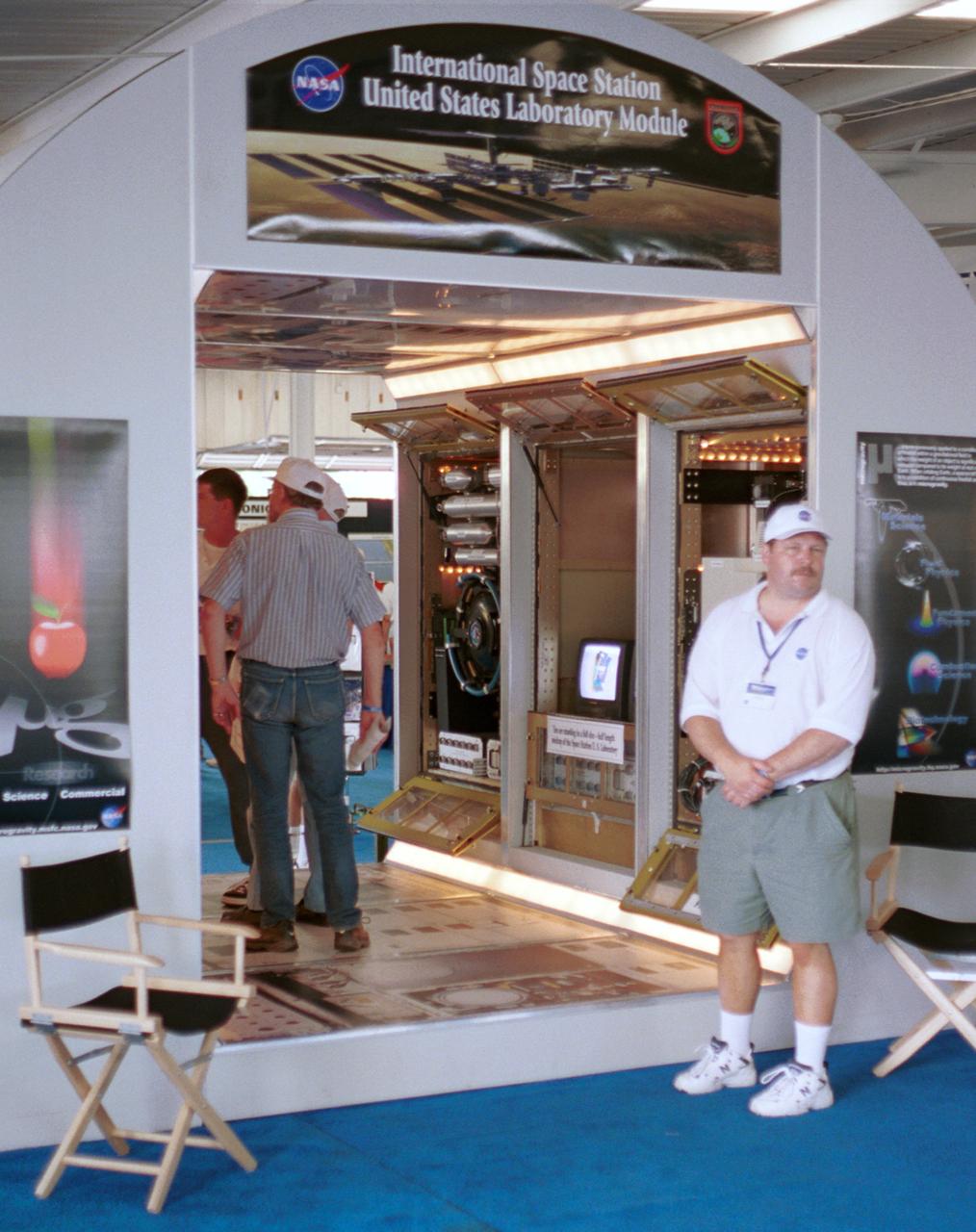
Thomas Turk, an engineer with NASA's Glenn Research Center, waits for more visitors at a mockup of part of Destiny, the U.S. laboratory module that will be attached to the International Space Station (ISS) in Year 2001. Visible behind Turk are engineering models of the three racks that will make up the Fluids and Combustion Facility (FCF) in the module. The mockup is full scale, although Destiny will be twice as long to accomodate six experiment racks along each side. The exhibit was part of the NASA outreach activity at AirVenture 2000 sponsored by the Expeprimental Aircraft Association in Oshkosh, WI.
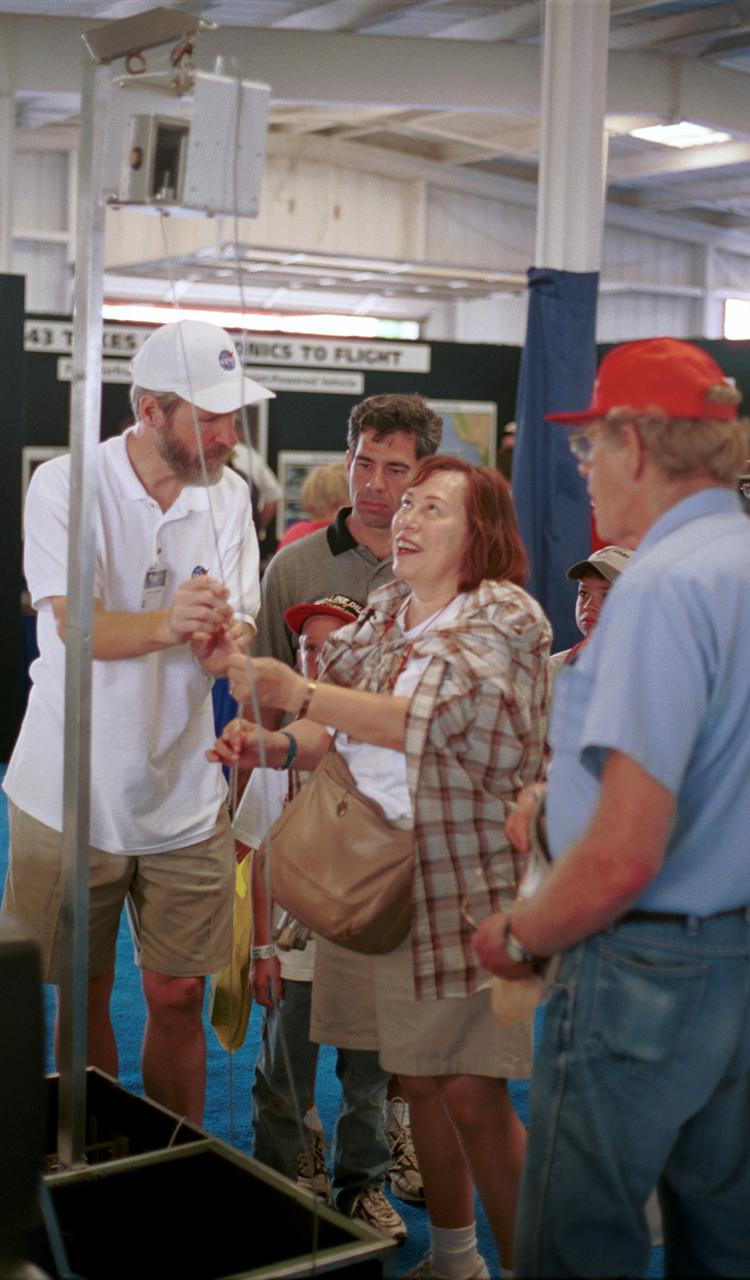
Dr. Richard DeLombard of NASA's Glenn Research Center, hands the relase line for the Microgravity Demonstrator to a visitor for her to start a short experiment showing the effects of microgravity on candle flames. Combustion physics will be a major line of investigation for NASA aboard the International Space Station (ISS). The Microgravity Demonstrator is frequently used at shows and schools to illustrate how phenomena change in microgravity. The exhibit was part of the NASA outreach activity at AirVenture 2000 sponsored by the Experimental Aircraft Association in Oshkosh, WI

Panorama view of Apollo 17 Lunar surface photos for use in presentations to NASA management and for Outreach Education in regard to new NASA initiative for human planetary research. Photo numbers used for this panoramic include: Apollo 17 start frame AS17-147-22572 thru end frame AS17-147-22600. View is of the Apollo Lunar Surface Experiment Package (ALSEP) Station taken during Extravehicular Activity (EVA) 1.
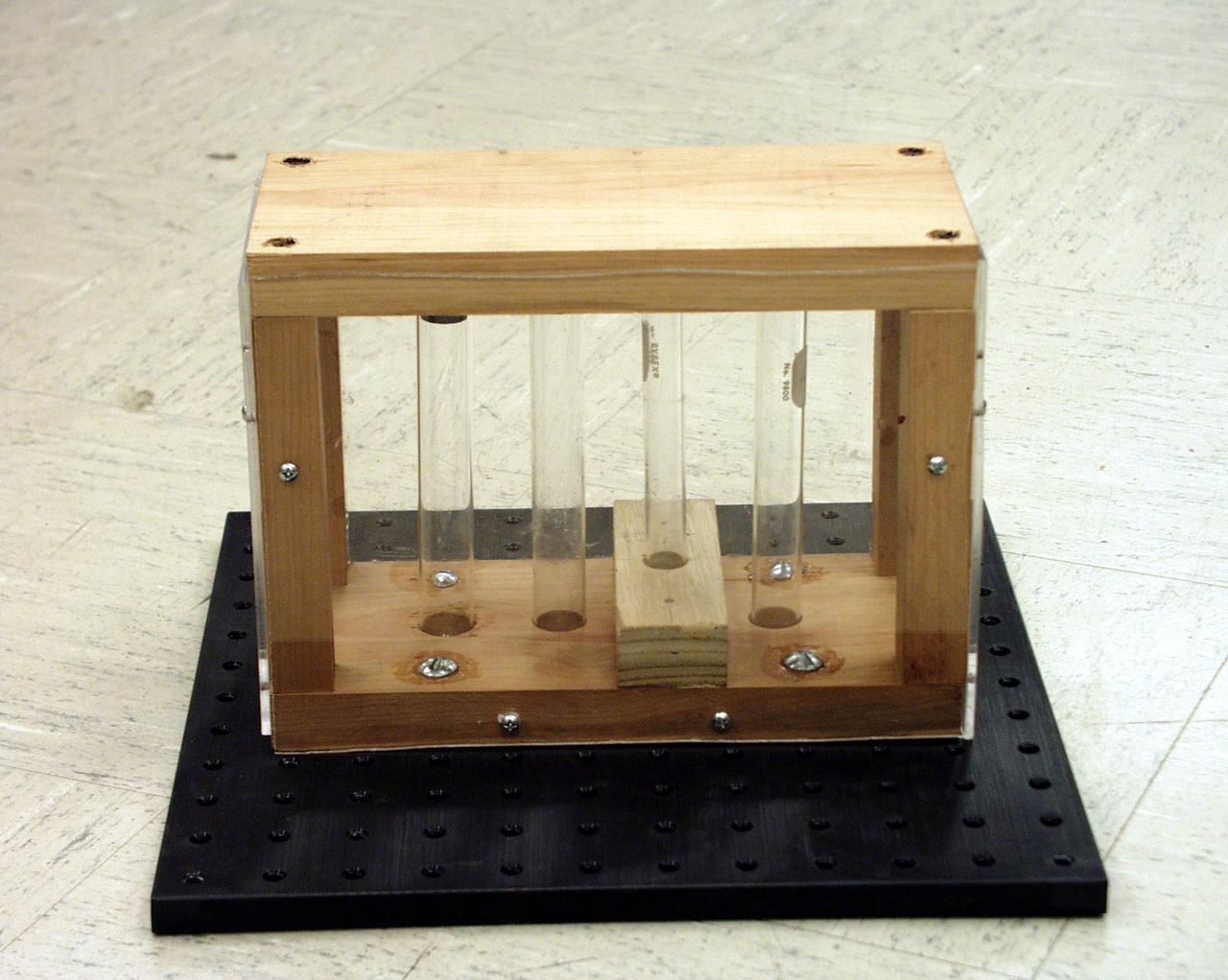
Test tubes to hold different types of fluids while in free-fall were among the student-designed items for the second Dropping in a Microgravity Environment (DIME) competition held April 23-25, 2002, at NASA's Glenn Research Center. Competitors included two teams from Sycamore High School, Cincinnati, OH, and one each from Bay High School, Bay Village, OH, and COSI Academy, Columbus, OH. DIME is part of NASA's education and outreach activities. Details are on line at http://microgravity.grc.nasa.gov/DIME_2002.html.
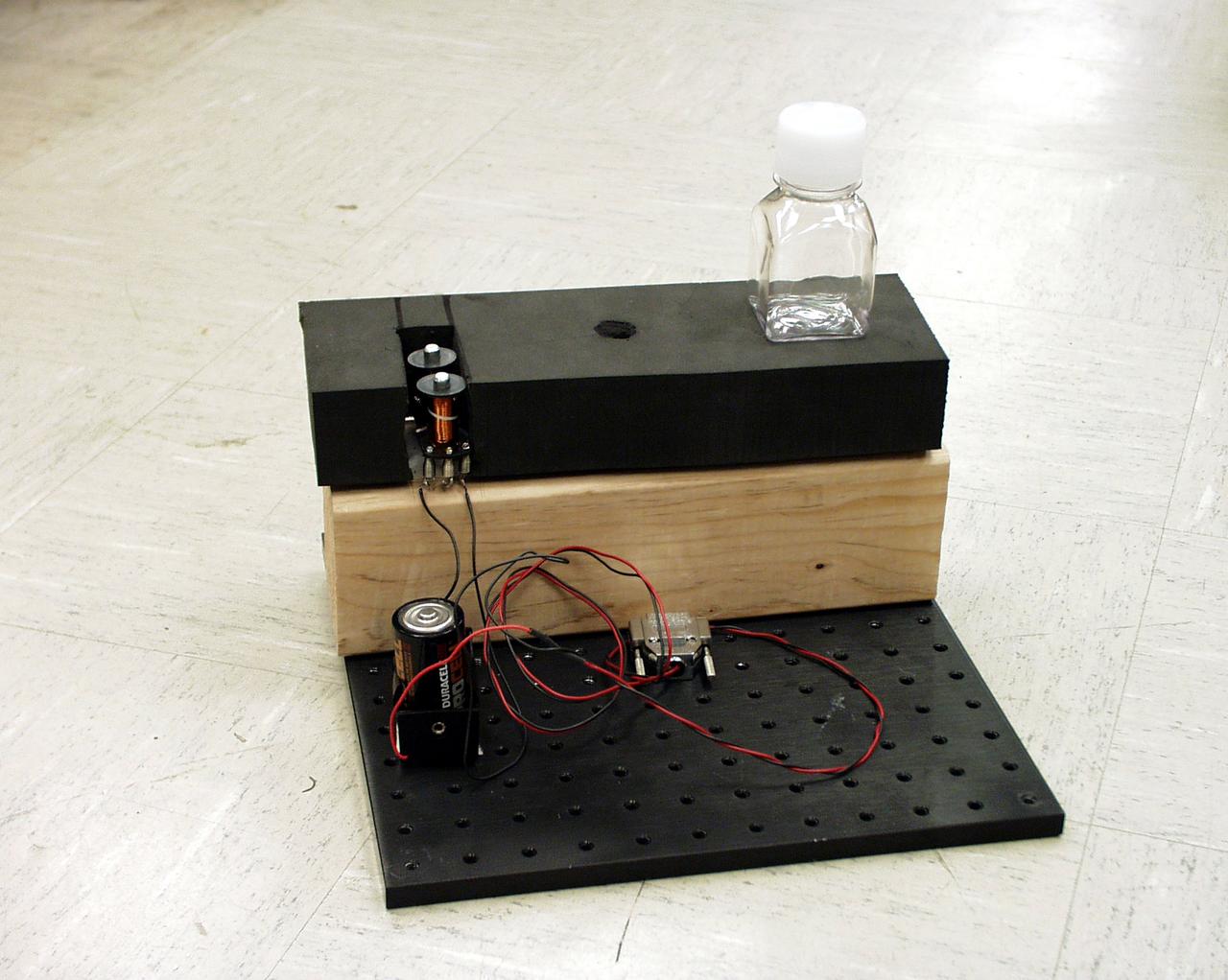
Student-designed and -built apparatus for the second Dropping in a Microgravity Environment (DIME) competition held April 23-25, 2002, at NASA's Glenn Research Center. Competitors included two teams from Sycamore High School, Cincinnati, OH, and one each from Bay High School, Bay Village, OH, and COSI Academy, Columbus, OH. DIME is part of NASA's education and outreach activities. Details are on line at http://microgravity.grc.nasa.gov/DIME_2002.html.
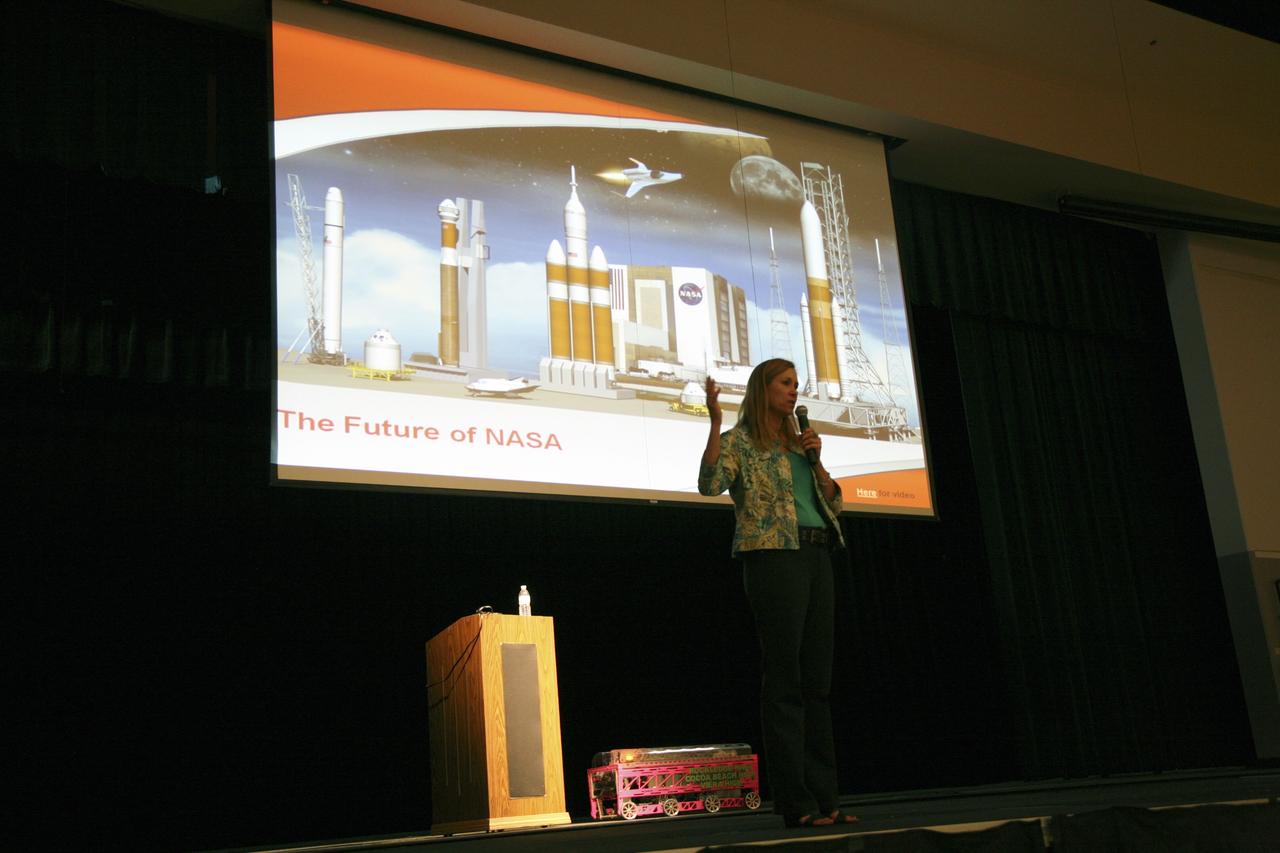
CAPE CANAVERAL, Fla. -- -- NASA Kennedy Space Center Deputy Director Janet Petro addresses pre-calculus, engineering, and physics students at Timber Creek High School in Orlando, Fla., on the future of the center during an education outreach event on Nov. 16 in the school’s Performing Arts Center. Students also had the opportunity to view FIRST Robotics robot in action and learned about Kennedy’s Educate to Innovate (KETI) LEGO Mindstorm activities. Photo credit: NASA/Gianni Woods
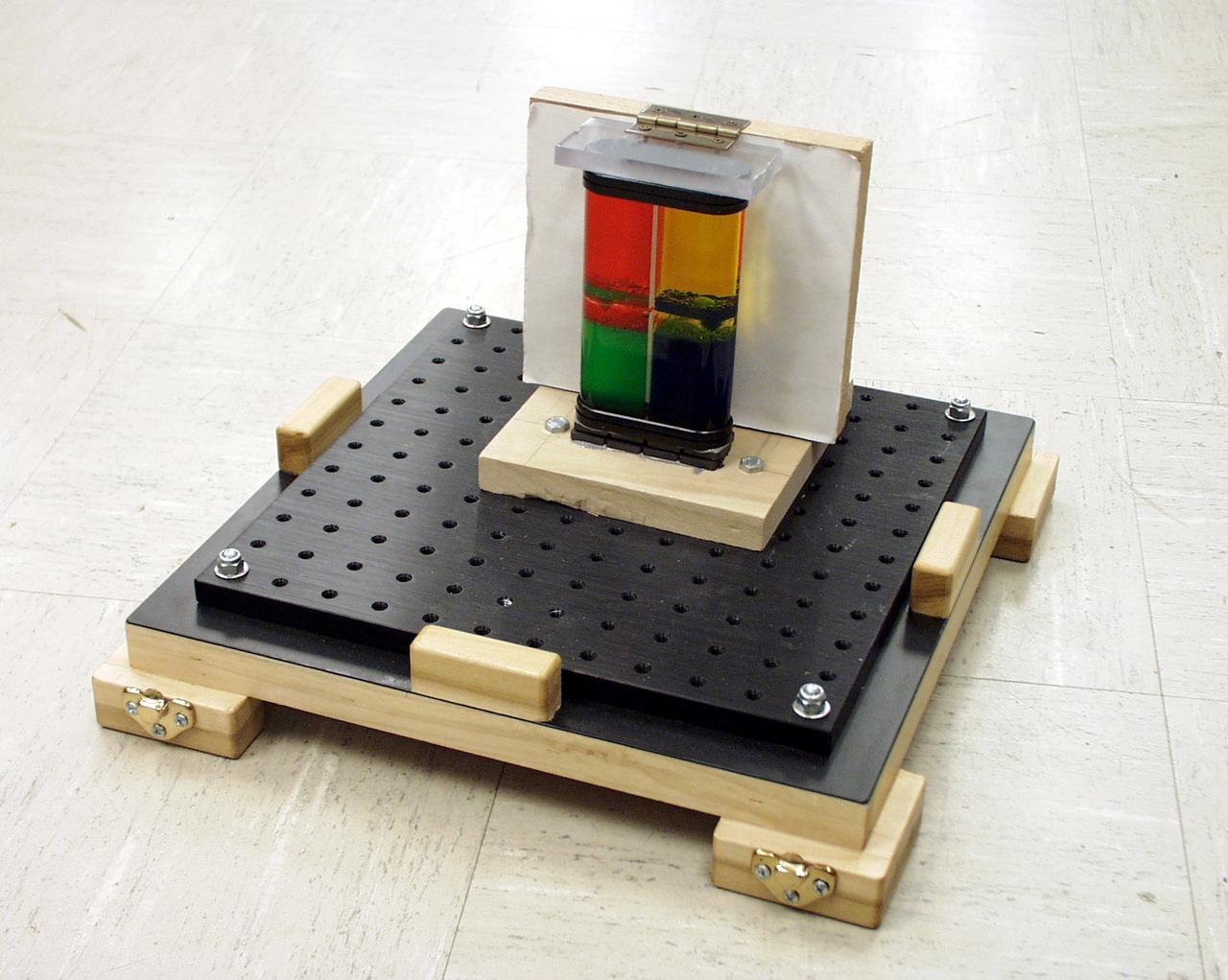
Colored oil flow toy was part of a student-designed apparatus used in the second Dropping in a Microgravity Environment (DIME) competition held April 23-25, 2002, at NASA's Glenn Research Center. Competitors included two teams from Sycamore High School, Cincinnati, OH, and one each from Bay High School, Bay Village, OH, and COSI Academy, Columbus, OH. DIME is part of NASA's education and outreach activities. Details are on line at http://microgravity.grc.nasa.gov/DIME_2002.html.
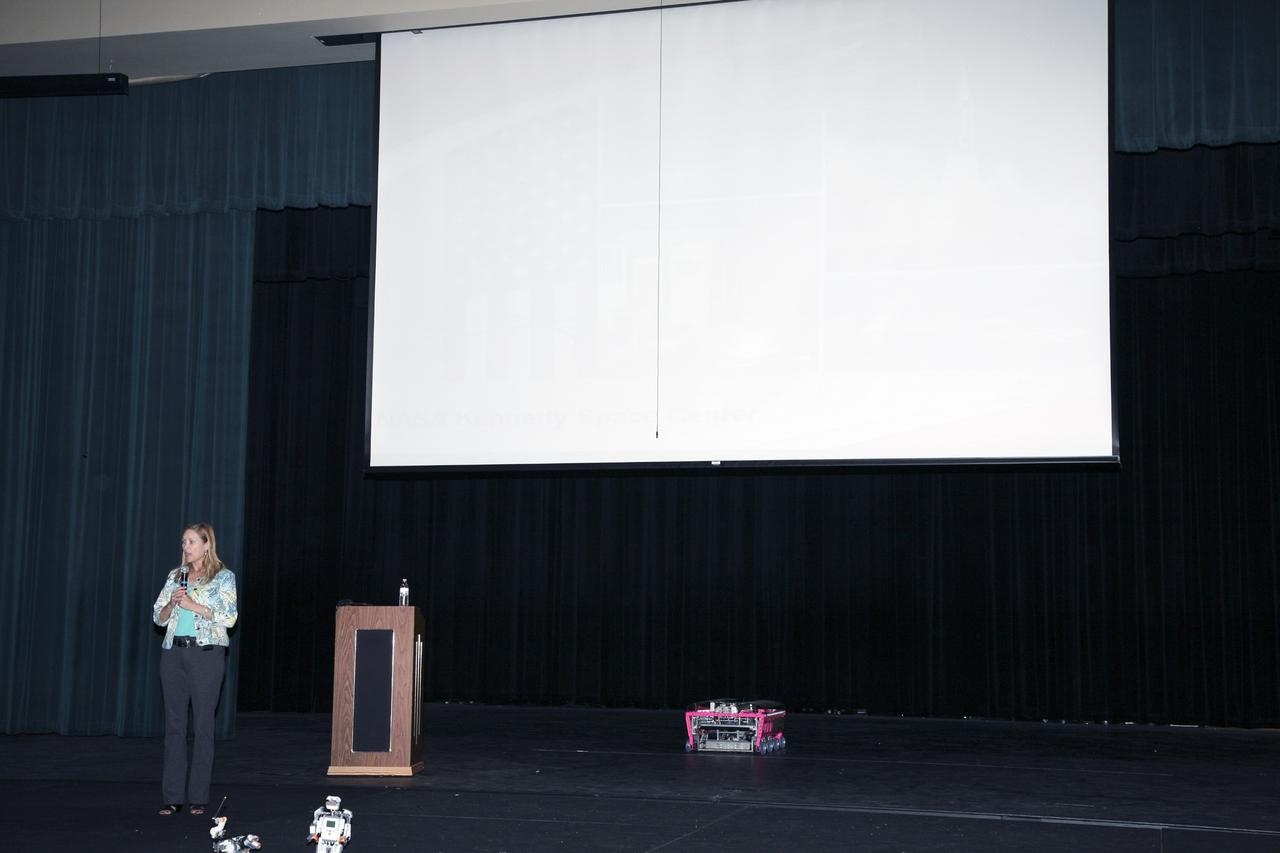
CAPE CANAVERAL, Fla. -- -- NASA Kennedy Space Center Deputy Director Janet Petro addresses pre-calculus, engineering and physics students at Timber Creek High School, in Orlando, Fla., on work being done at the center during an education outreach event on Nov. 16. Students also had the opportunity to view a FIRST Robotics robot in action, and learn about Kennedy’s Educate to Innovate (KETI) LEGO Mindstorm activities in the school’s Performing Arts Center. Photo credit: NASA/Gianni Woods
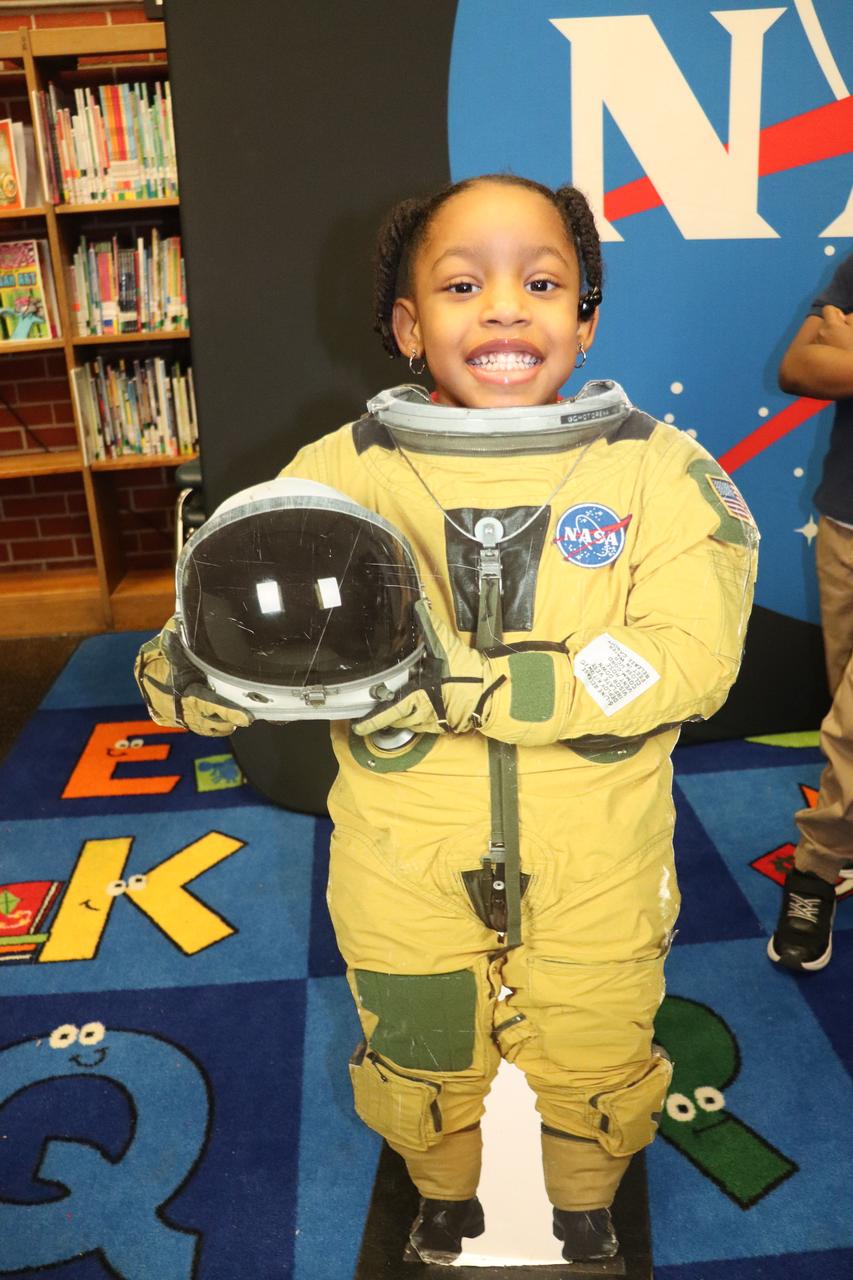
NASA senior staff members from John C. Stennis Space Center traveled to Children's Hospital in New Orleans on Feb. 4 for a morning of educational outreach, offering interactive demonstrations and activities for children. Staff members offered cryogenic demonstrations, informative and interactive exhibits and a chance for children to take photos 'wearing' a space suit. Children also had a chance to interact with Stennis' astronaut mascot.

Panorama view of Apollo 17 Lunar surface photos for use in presentations to NASA management and for Outreach Education in regard to new NASA initiative for human planetary research. Photo numbers used for this panoramic include: Apollo 17 start frame AS17-136-20745 thru end frame AS17-136-20759. View is of Station 1, taken during the first Extravehicular Activity (EVA) 1.
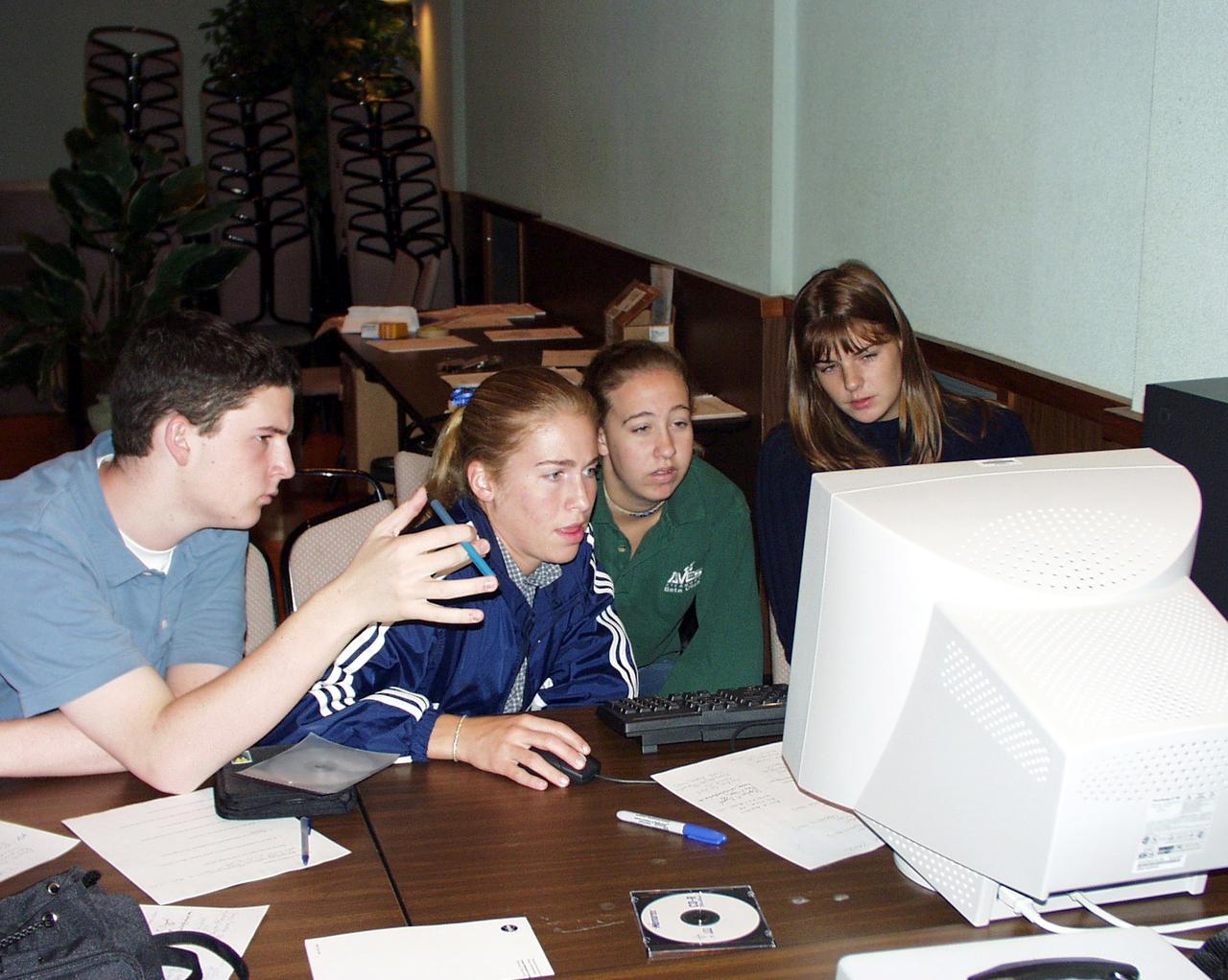
Students discuss fine points of their final design for the drop tower experiment during the second Dropping in a Microgravity Environment (DIME) competition held April 23-25, 2002, at NASA's Glenn Research Center. Competitors included two teams from Sycamore High School, Cincinnati, OH, and one each from Bay High School, Bay Village, OH, and COSI Academy, Columbus, OH. DIME is part of NASA's education and outreach activities. Details are on line at http://microgravity.grc.nasa.gov/DIME_2002.html.
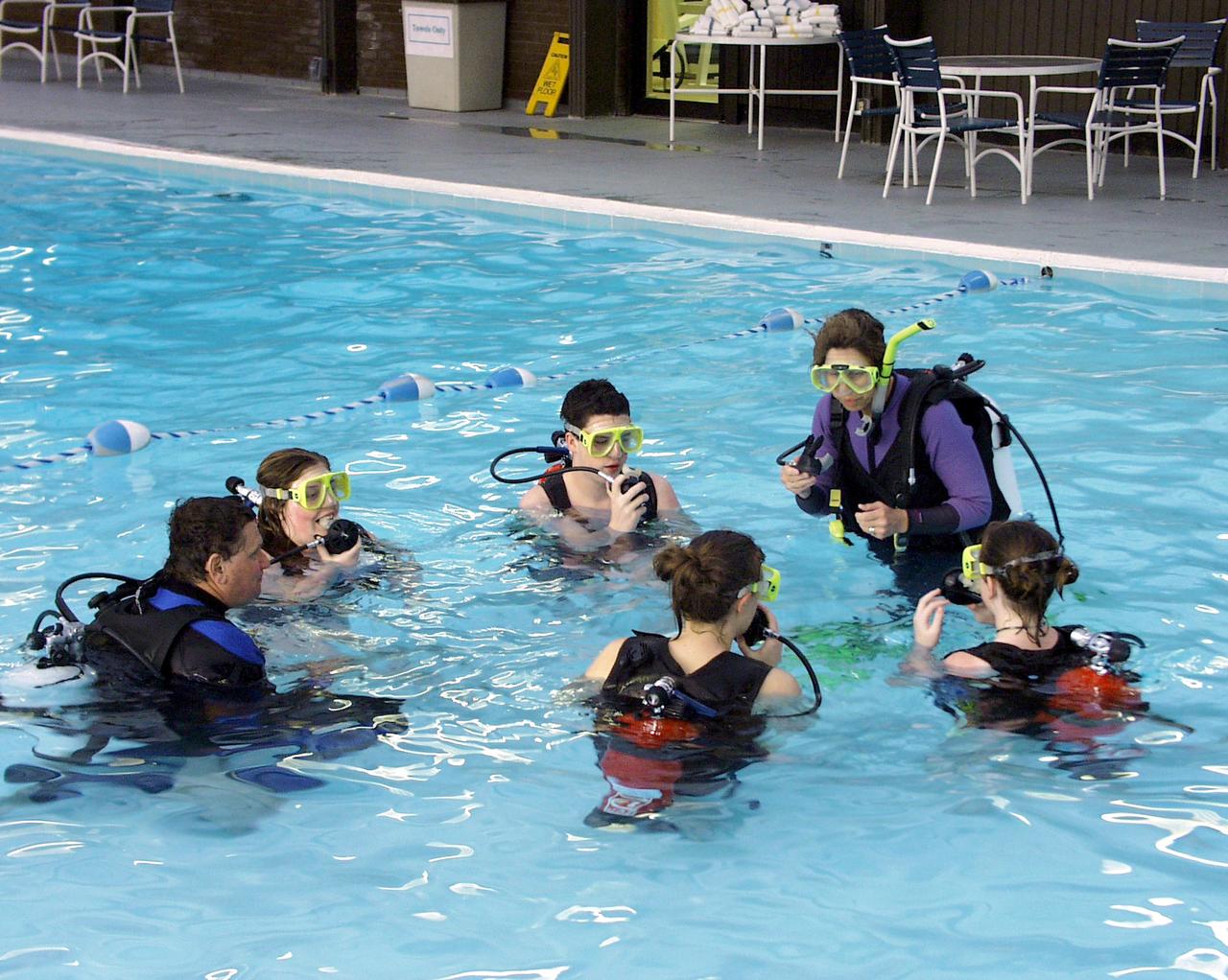
In addition to drop tower activities, students assembled a plastic pipe structure underwater in a SCUBA exercise similar to training astronauts receive at NASA Johnson Space Center. This was part of the second Dropping in a Microgravity Environment (DIME) competition held April 23-25, 2002, at NASA's Glenn Research Center. Competitors included two teams from Sycamore High School, Cincinnati, OH, and one each from Bay High School, Bay Village, OH, and COSI Academy, Columbus, OH. DIME is part of NASA's education and outreach activities. Details are on line at http://microgravity.grc.nasa.gov/DIME_2002.html.
Representatives from NASA’s Stennis Space Center and NASA Shared Services Center participate in multiple related outreach events throughout Jackson, Mississippi, as part of the annual Stennis Day at the Capitol activities on Feb. 29. NASA personnel inspired the Artemis Generation with visits to Spann Elementary and Blackburn Middle schools. Activities included students learning about life as a NASA astronaut and a hands-on STEM (science, technology, engineering, and mathematics) activity. Sending the first woman and first person of color to the Moon on future Artemis missions will inspire the Artemis Generation to see themselves in space and understand the importance of STEM studies and careers. As NASA takes giant leaps to bridge disparities and break barriers in STEM, the agency’s efforts in the future workforce advances the nation’s space exploration.
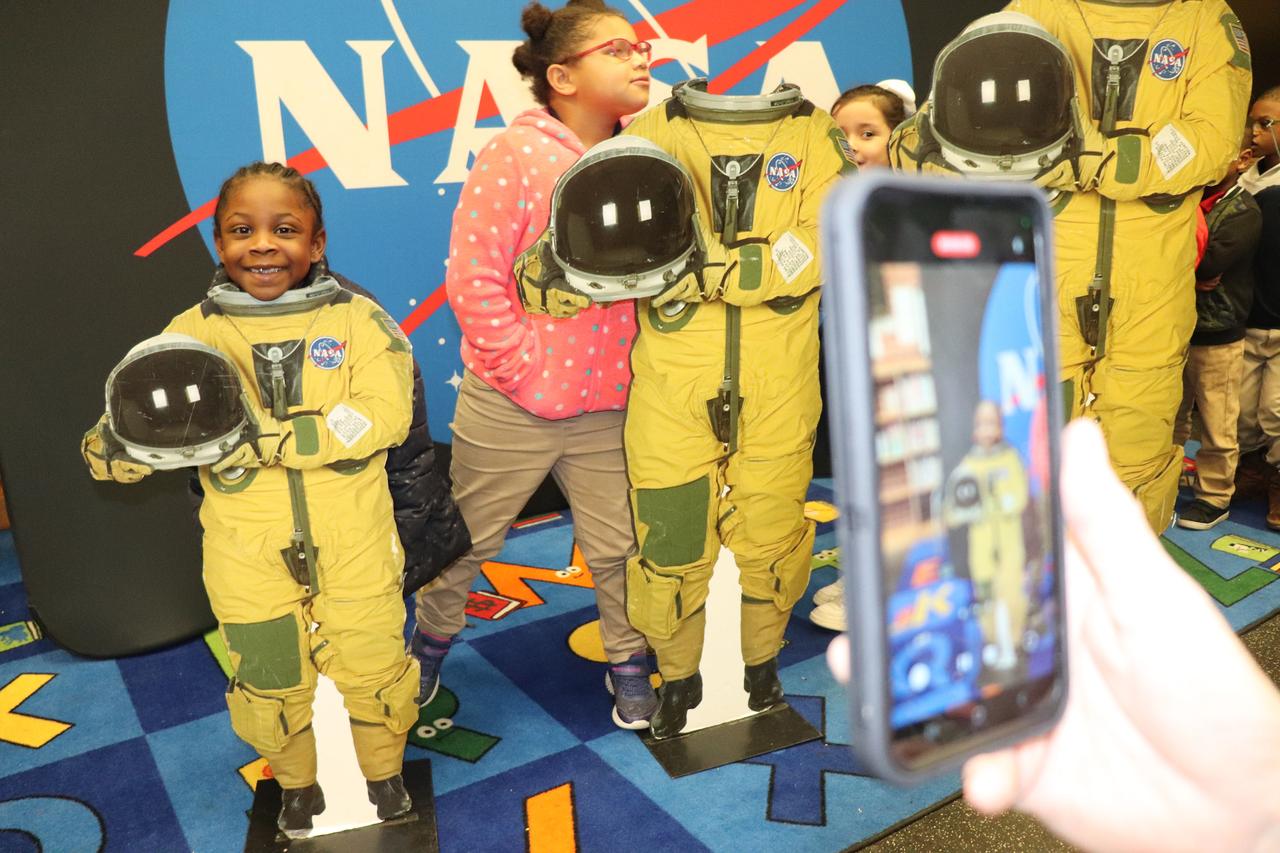
Representatives from NASA’s Stennis Space Center and NASA Shared Services Center participate in multiple related outreach events throughout Jackson, Mississippi, as part of the annual Stennis Day at the Capitol activities on Feb. 29. NASA personnel inspired the Artemis Generation with visits to Spann Elementary and Blackburn Middle schools. Activities included students learning about life as a NASA astronaut and a hands-on STEM (science, technology, engineering, and mathematics) activity. Sending the first woman and first person of color to the Moon on future Artemis missions will inspire the Artemis Generation to see themselves in space and understand the importance of STEM studies and careers. As NASA takes giant leaps to bridge disparities and break barriers in STEM, the agency’s efforts in the future workforce advances the nation’s space exploration.
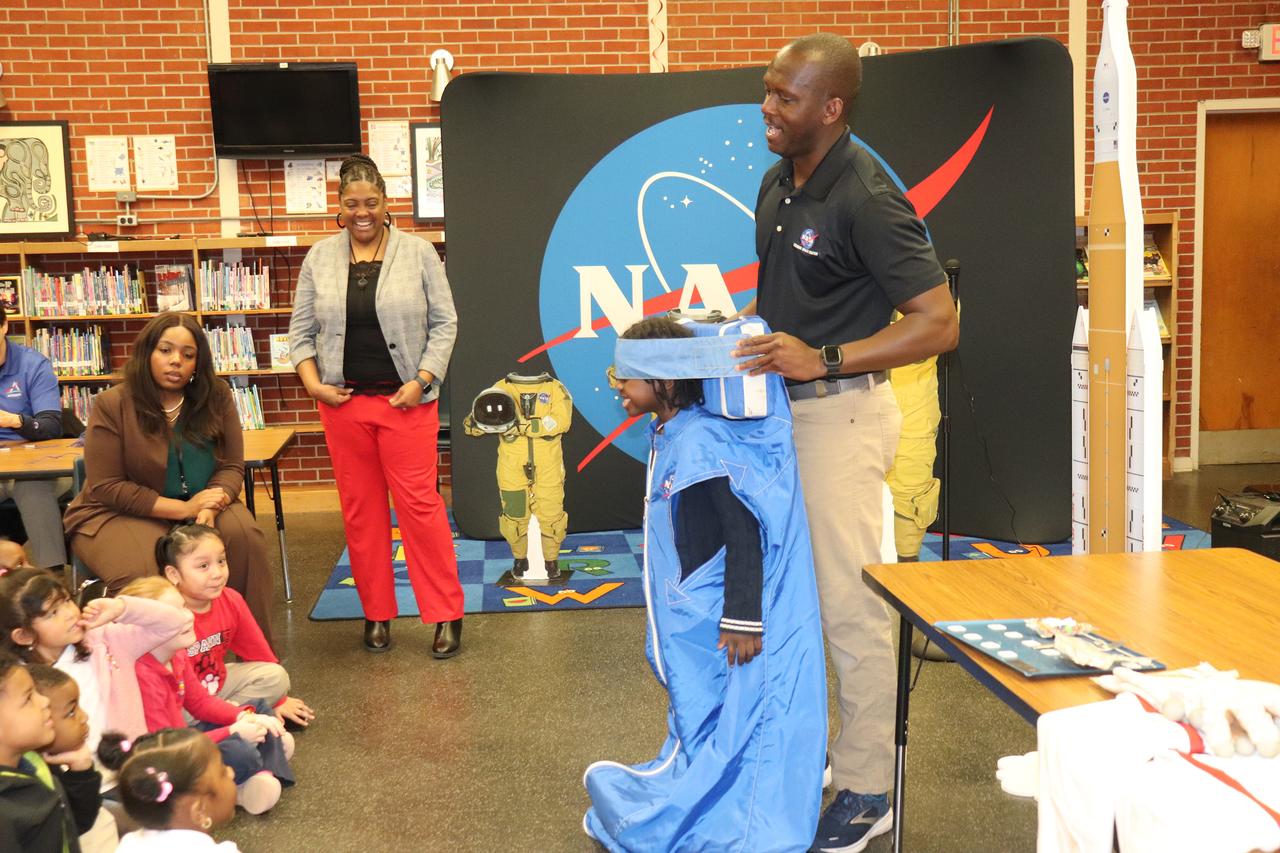
Representatives from NASA’s Stennis Space Center and NASA Shared Services Center participate in multiple related outreach events throughout Jackson, Mississippi, as part of the annual Stennis Day at the Capitol activities on Feb. 29. NASA personnel inspired the Artemis Generation with visits to Spann Elementary and Blackburn Middle schools. Activities included students learning about life as a NASA astronaut and a hands-on STEM (science, technology, engineering, and mathematics) activity. Sending the first woman and first person of color to the Moon on future Artemis missions will inspire the Artemis Generation to see themselves in space and understand the importance of STEM studies and careers. As NASA takes giant leaps to bridge disparities and break barriers in STEM, the agency’s efforts in the future workforce advances the nation’s space exploration.
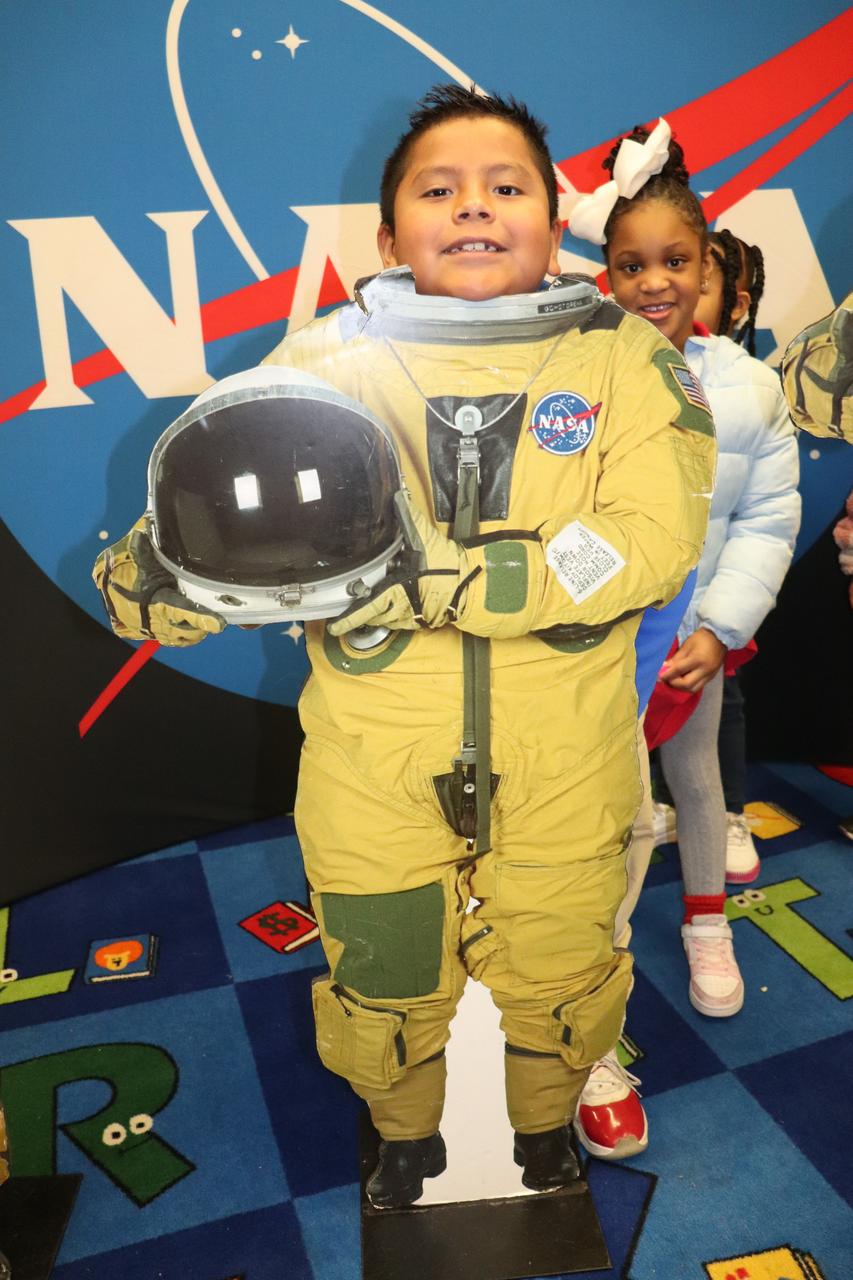
Representatives from NASA’s Stennis Space Center and NASA Shared Services Center participate in multiple related outreach events throughout Jackson, Mississippi, as part of the annual Stennis Day at the Capitol activities on Feb. 29. NASA personnel inspired the Artemis Generation with visits to Spann Elementary and Blackburn Middle schools. Activities included students learning about life as a NASA astronaut and a hands-on STEM (science, technology, engineering, and mathematics) activity. Sending the first woman and first person of color to the Moon on future Artemis missions will inspire the Artemis Generation to see themselves in space and understand the importance of STEM studies and careers. As NASA takes giant leaps to bridge disparities and break barriers in STEM, the agency’s efforts in the future workforce advances the nation’s space exploration.
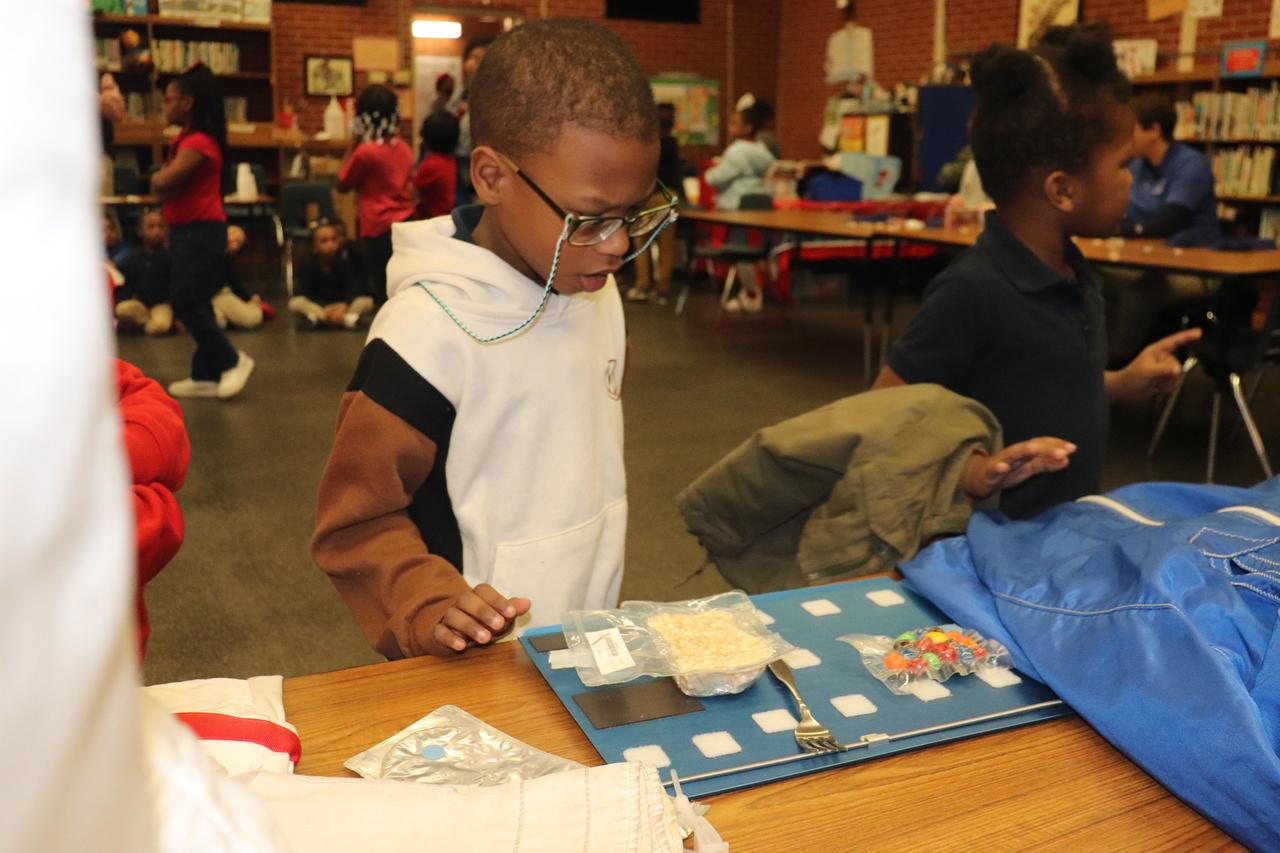
Representatives from NASA’s Stennis Space Center and NASA Shared Services Center participate in multiple related outreach events throughout Jackson, Mississippi, as part of the annual Stennis Day at the Capitol activities on Feb. 29. NASA personnel inspired the Artemis Generation with visits to Spann Elementary and Blackburn Middle schools. Activities included students learning about life as a NASA astronaut and a hands-on STEM (science, technology, engineering, and mathematics) activity. Sending the first woman and first person of color to the Moon on future Artemis missions will inspire the Artemis Generation to see themselves in space and understand the importance of STEM studies and careers. As NASA takes giant leaps to bridge disparities and break barriers in STEM, the agency’s efforts in the future workforce advances the nation’s space exploration.
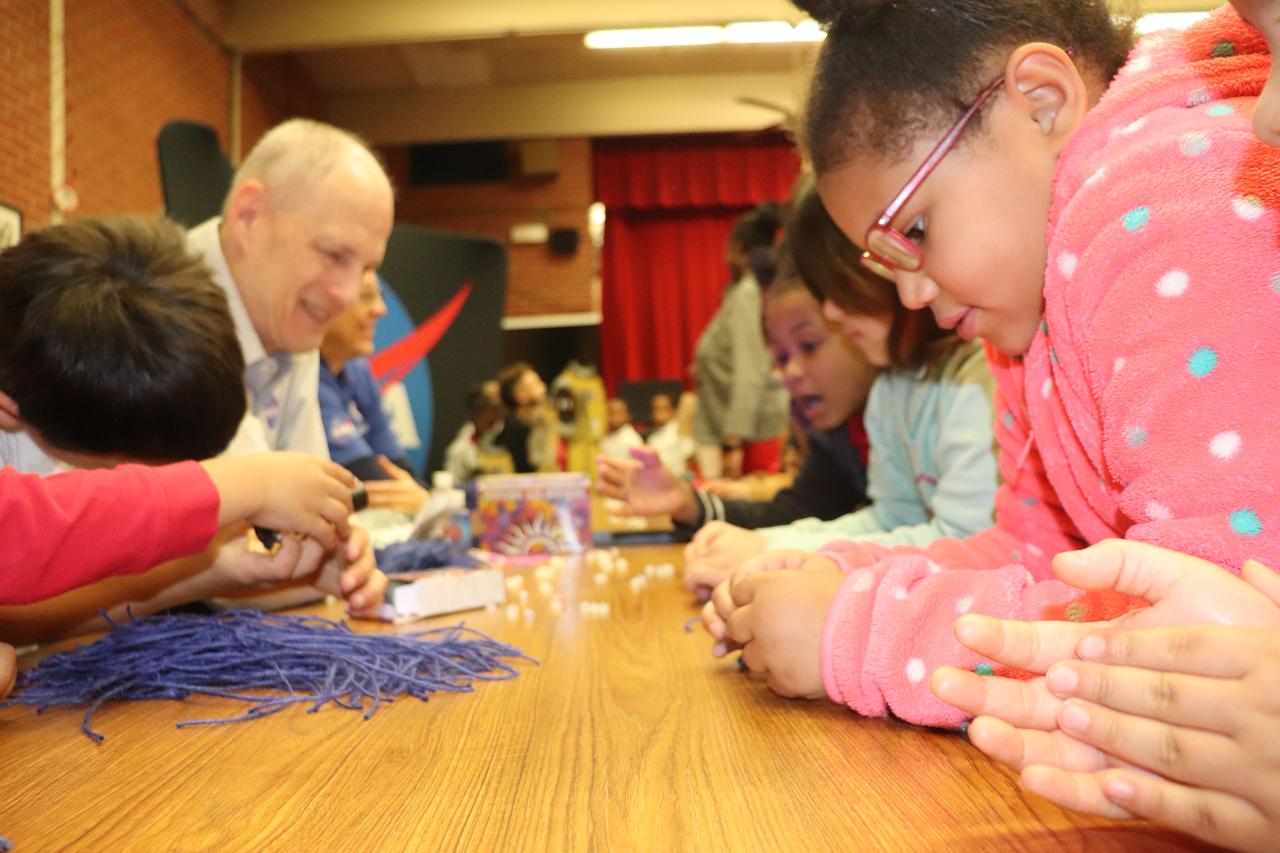
Representatives from NASA’s Stennis Space Center and NASA Shared Services Center participate in multiple related outreach events throughout Jackson, Mississippi, as part of the annual Stennis Day at the Capitol activities on Feb. 29. NASA personnel inspired the Artemis Generation with visits to Spann Elementary and Blackburn Middle schools. Activities included students learning about life as a NASA astronaut and a hands-on STEM (science, technology, engineering, and mathematics) activity. Sending the first woman and first person of color to the Moon on future Artemis missions will inspire the Artemis Generation to see themselves in space and understand the importance of STEM studies and careers. As NASA takes giant leaps to bridge disparities and break barriers in STEM, the agency’s efforts in the future workforce advances the nation’s space exploration.
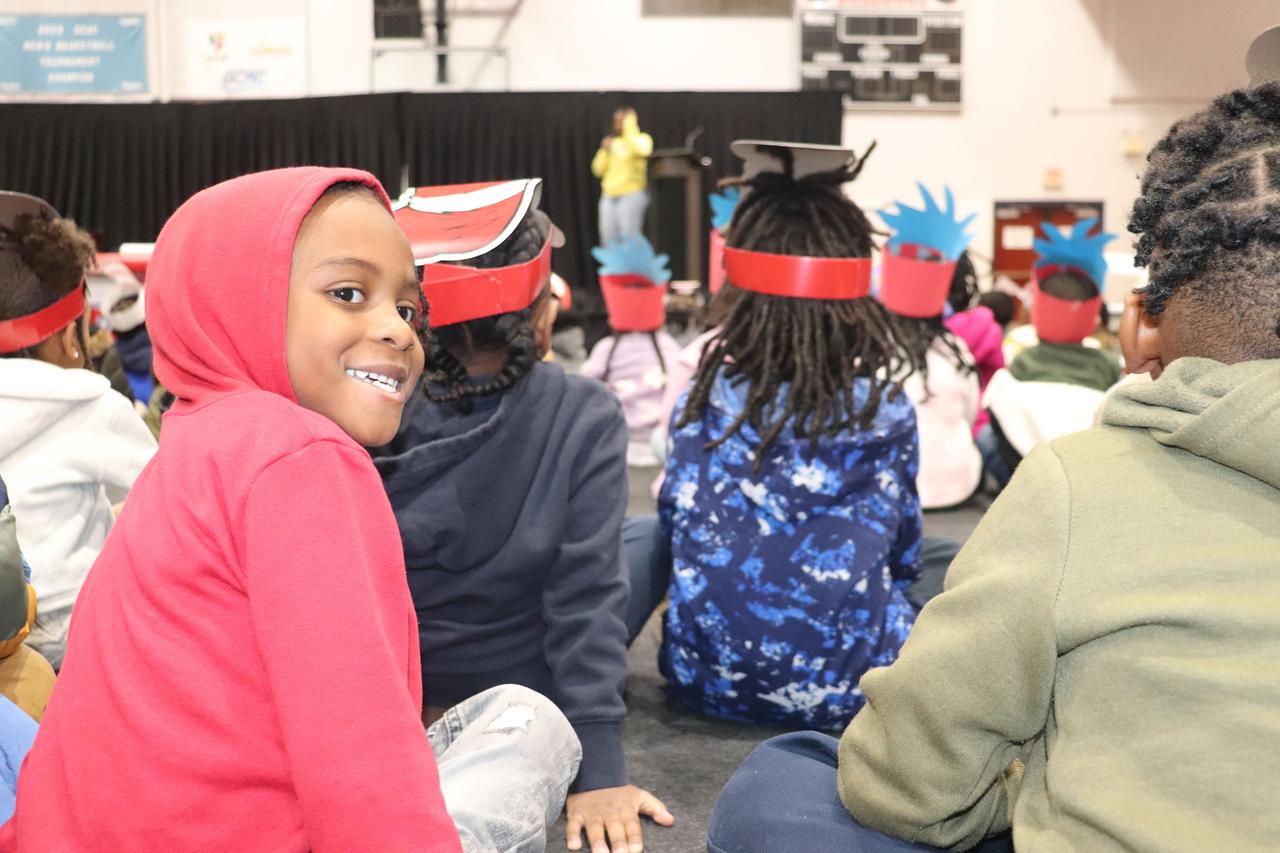
Representatives from NASA’s Stennis Space Center and NASA Shared Services Center participate in multiple related outreach events throughout Jackson, Mississippi, as part of the annual Stennis Day at the Capitol activities on Feb. 29. NASA personnel inspired the Artemis Generation with visits to Spann Elementary and Blackburn Middle schools. Activities included students learning about life as a NASA astronaut and a hands-on STEM (science, technology, engineering, and mathematics) activity. Sending the first woman and first person of color to the Moon on future Artemis missions will inspire the Artemis Generation to see themselves in space and understand the importance of STEM studies and careers. As NASA takes giant leaps to bridge disparities and break barriers in STEM, the agency’s efforts in the future workforce advances the nation’s space exploration.
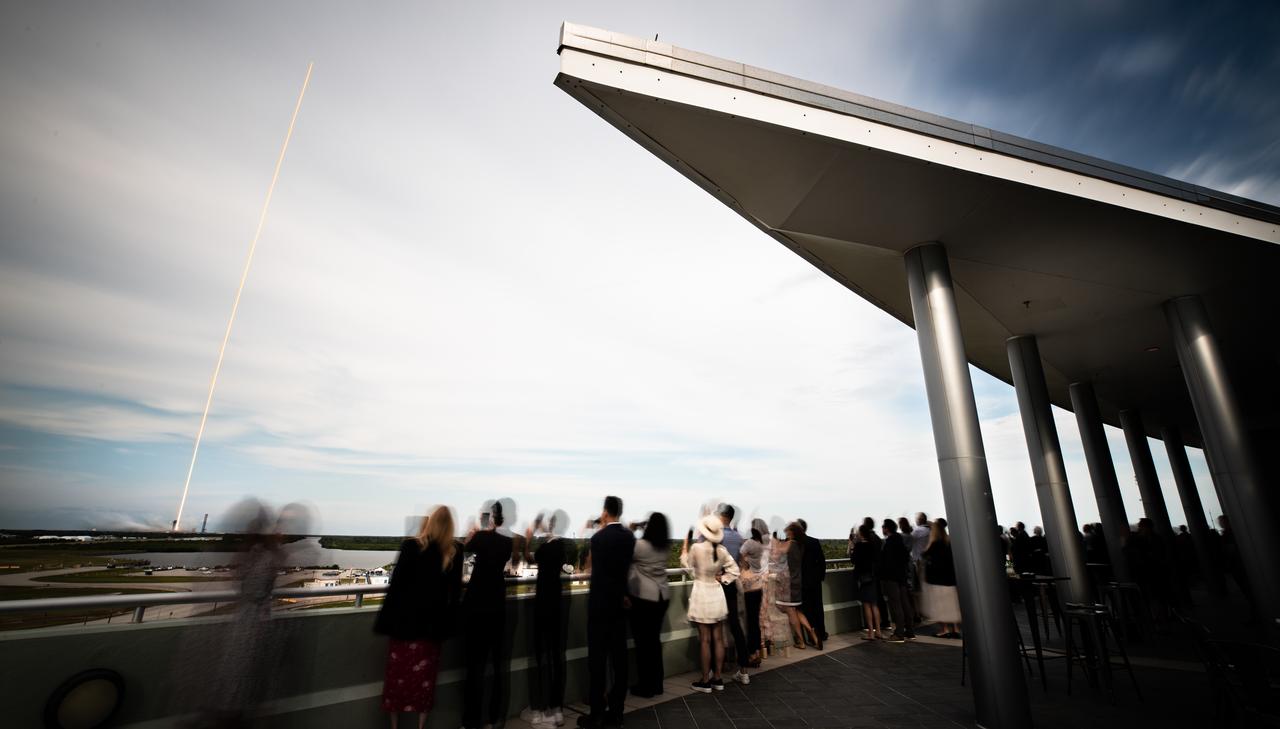
In this long exposure shot, a SpaceX Falcon 9 rocket, carrying the company’s Dragon spacecraft, soars upward after lifting off from NASA Kennedy Space Center’s Launch Complex 39A in Florida on May 21, 2023, for the Axiom Mission 2 (Ax-2) to the International Space Station. Ax-2 is the second all private astronaut mission to the International Space Station, sending Commander Peggy Whitson, Pilot John Shoffner, and Mission Specialists Ali Alqarni and Rayyanah Barnawi to the orbiting laboratory, where they will spend about 10 days conducting scientific research, outreach, and commercial activities. Liftoff occurred at 5:37 p.m. EDT.

A SpaceX Falcon 9 rocket carrying the company’s Dragon spacecraft for Axiom Space’s Axiom Mission 3 (Ax-3) to the International Space Station lifts off at 4:49 p.m. EST from Launch Complex 39A at NASA’s Kennedy Space Center in Florida on Thursday, Jan. 18, 2024. Ax-3 is the third all private astronaut mission to the space station, sending crew members Commander Michael López-Alegría, Pilot Walter Villadei, and Mission Specialists Marcus Wandt and Alper Gezeravci into orbit. The crew will spend about two weeks conducting microgravity research, educational outreach, and commercial activities aboard the space station.
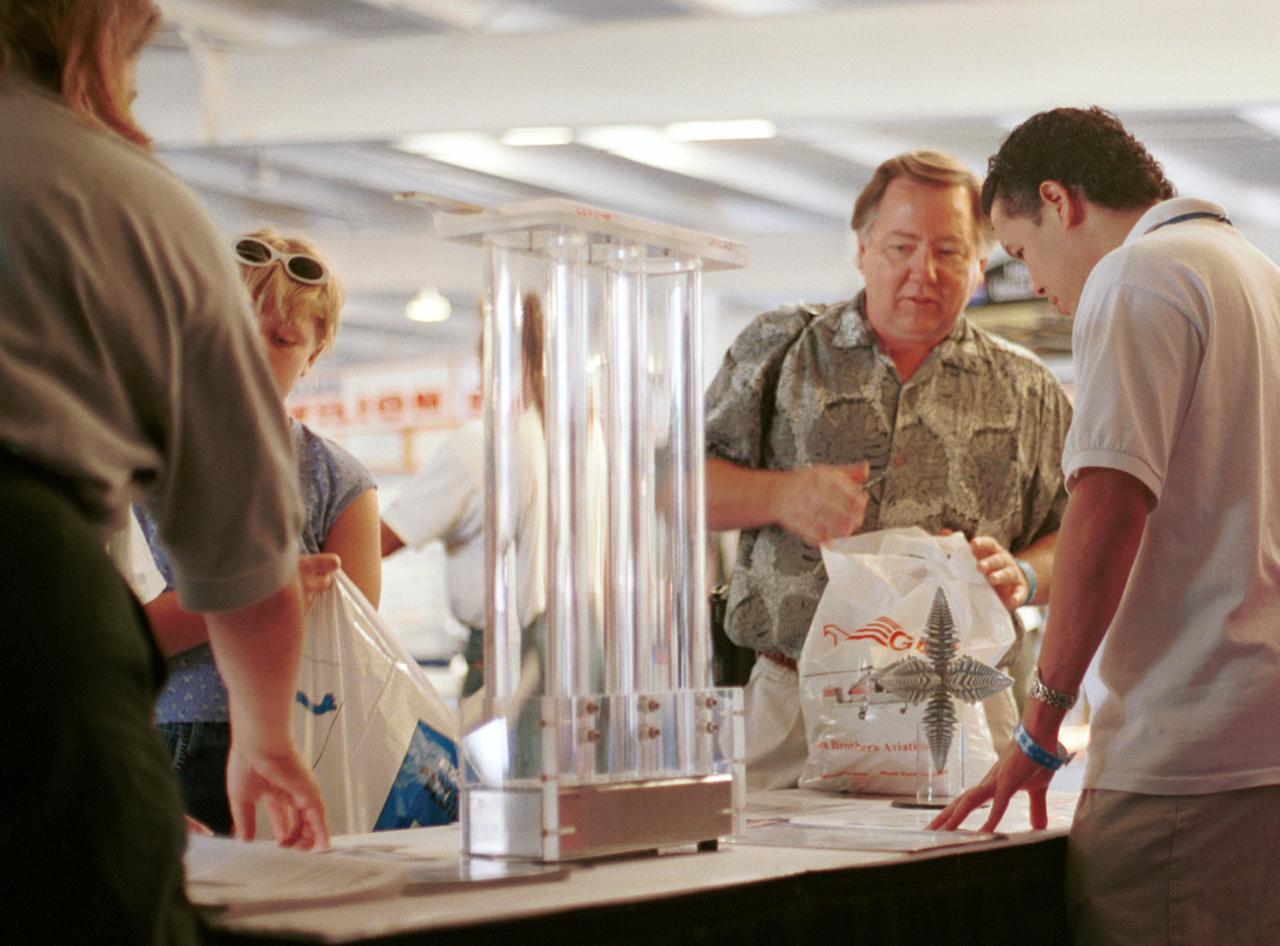
Paul Luz (right), an aerospace flight systems engineer at NASA's Marshall Space Flight Center (MSFC), takes a question from a visitor as they discuss microgravity research at AirVenture 2000. Part of the NASA exhibits included demonstrations of knowledge gained from microgravity research aboard the Space Shuttle. These include liquid metal (liquid metal demonstrator is three plastic drop tubes at center) and dendritic growth (in front of Luz), both leading to improvements in processes of Earth. The exhibit was part of the NASA outreach activity at AirVenture 2000 sponsored by the Experimental Aircraft Association in Oshkosh, WI.
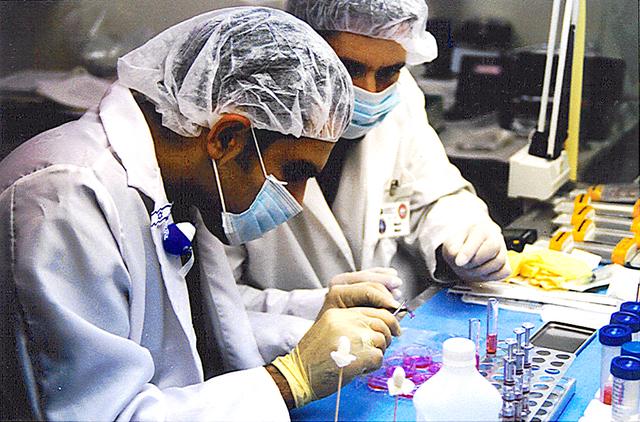
Experiments to seek solutions for a range of biomedical issues are at the heart of several investigations that will be hosted by the Commercial Instrumentation Technology Associates (ITA), Inc. Biomedical Experiments (CIBX-2) payload. CIBX-2 is unique, encompassing more than 20 separate experiments including cancer research, commercial experiments, and student hands-on experiments from 10 schools as part of ITA's ongoing University Among the Stars program. Student Marnix Aklian and ITA's Mark Bem prepare biological samples for flight as part of ITA's hands-on student outreach program on STS-95. Similar activities are a part of the CIBX-2 payload. The experiments are sponsored by NASA's Space Product Development Program (SPD).
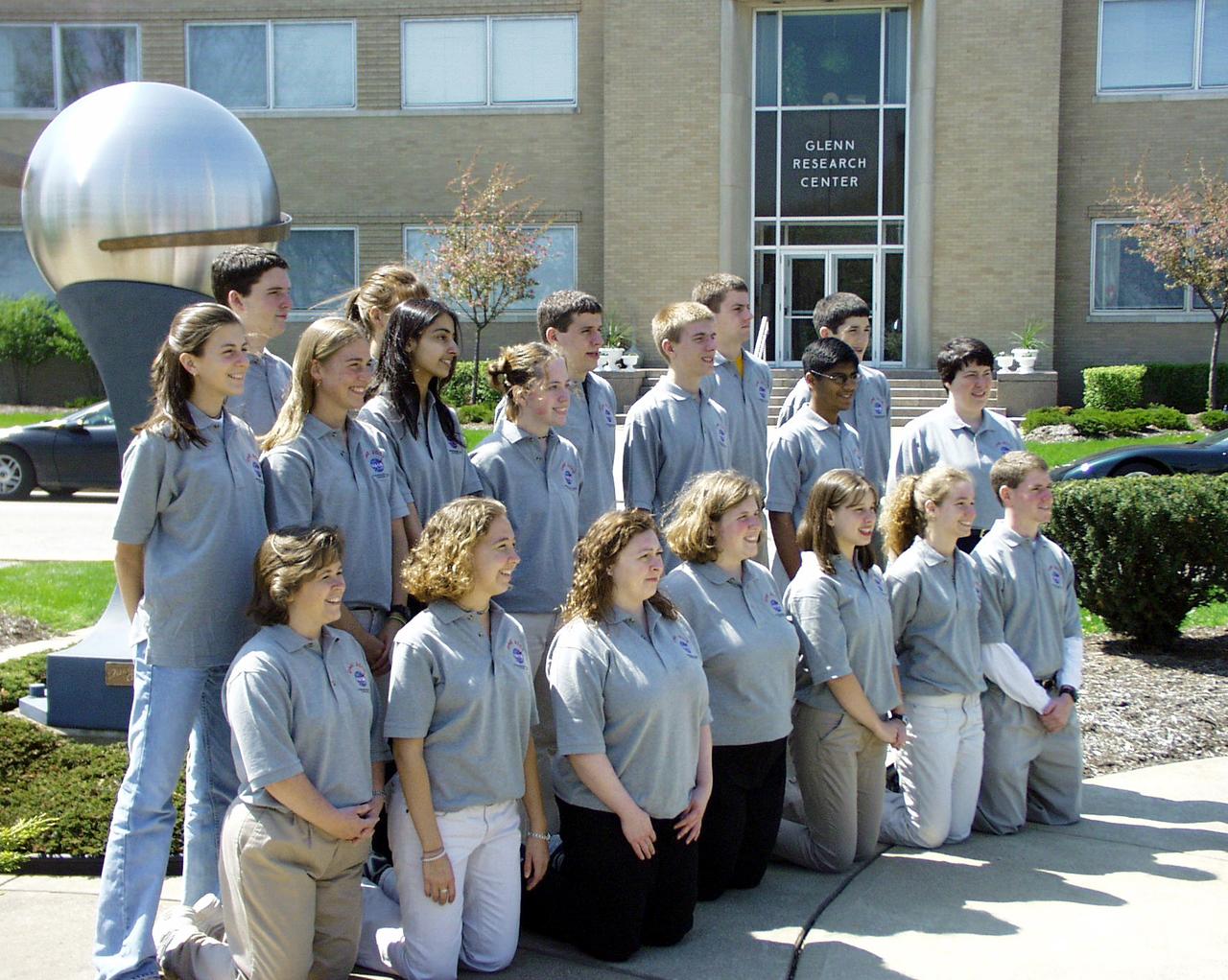
Students from the four teams pose in front of he NASA Glenn Administration Building alongside the NASA Glenn Time Capsule. The students participated in the second Dropping in a Microgravity Environment (DIME) competition held April 23-25, 2002, at NASA's Glenn Research Center. Competitors included two teams from Sycamore High School, Cincinnati, OH, and one each from Bay High School, Bay Village, OH, and COSI Academy, Columbus, OH. DIME is part of NASA's education and outreach activities. Details are on line at http://microgravity.grc.nasa.gov/DIME_2002.html.
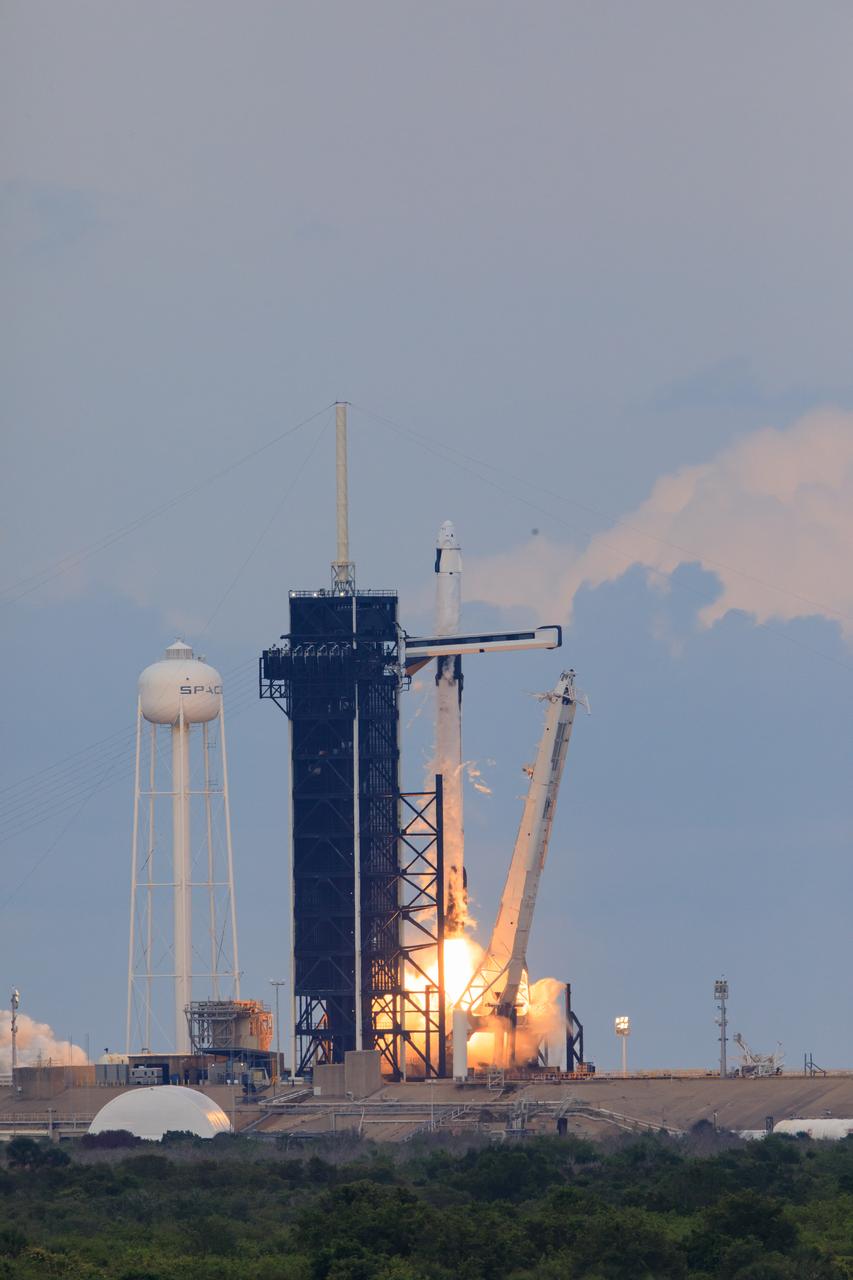
A SpaceX Falcon 9 rocket, carrying the company’s Dragon spacecraft, lifts off from NASA Kennedy Space Center’s Launch Complex 39A in Florida on May 21, 2023, for the Axiom Mission 2 (Ax-2) to the International Space Station. Ax-2 is the second all private astronaut mission to the International Space Station, sending Commander Peggy Whitson, Pilot John Shoffner, and Mission Specialists Ali Alqarni and Rayyanah Barnawi to the orbiting laboratory, where they will spend about 10 days conducting scientific research, outreach, and commercial activities. Liftoff occurred at 5:37 p.m. EDT.
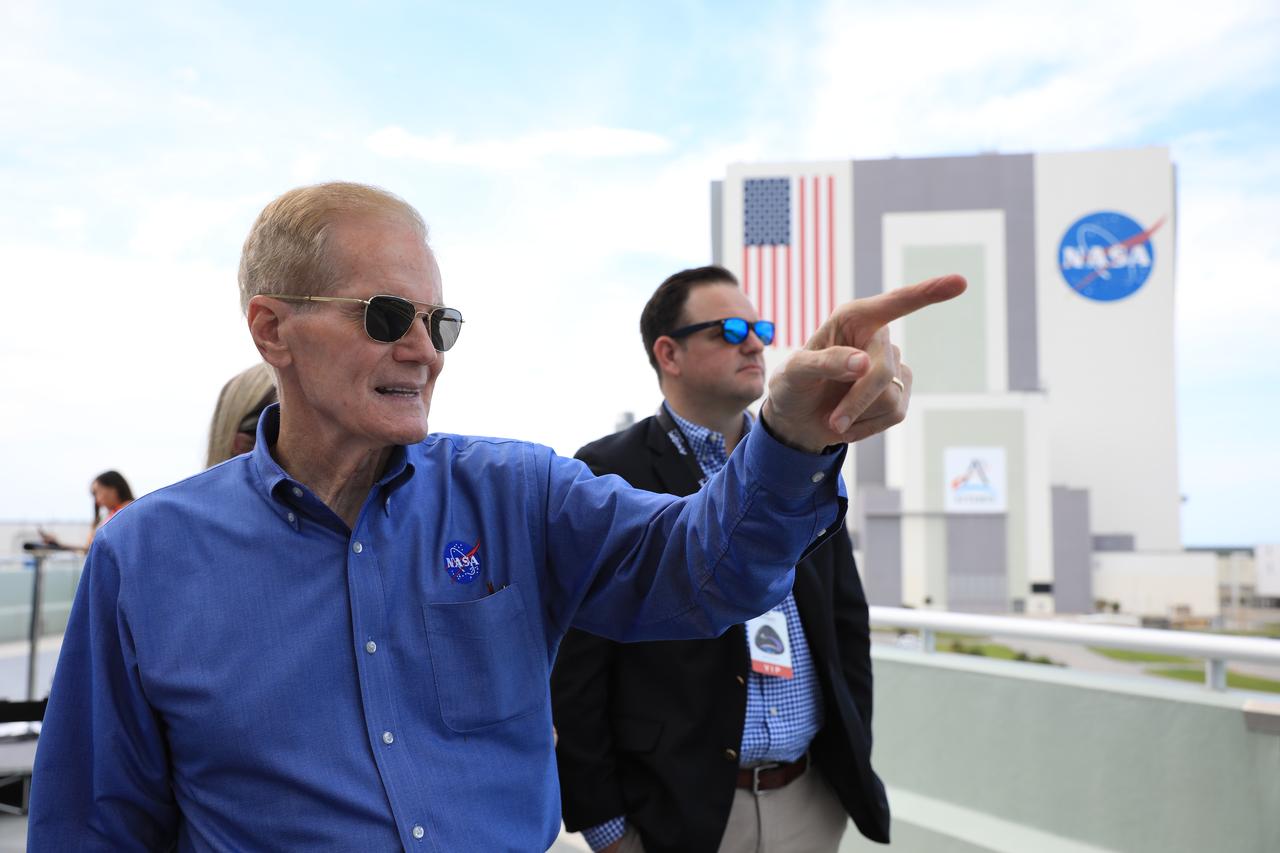
NASA Administrator Bill Nelson watches as a SpaceX Falcon 9 rocket and Crew Dragon spacecraft lifts off from Launch Complex 39A at the agency’s Kennedy Space Center in Florida for the Axiom Mission 2 (Ax-2) on May 21, 2023. Ax-2 is the second all private astronaut mission to the International Space Station, sending Commander Peggy Whitson, Pilot John Shoffner, and Mission Specialists Ali Alqarni and Rayyanah Barnawi to the orbiting laboratory, where they will spend about 10 days conducting scientific research, outreach, and commercial activities. Liftoff occurred at 5:37 p.m. EDT.
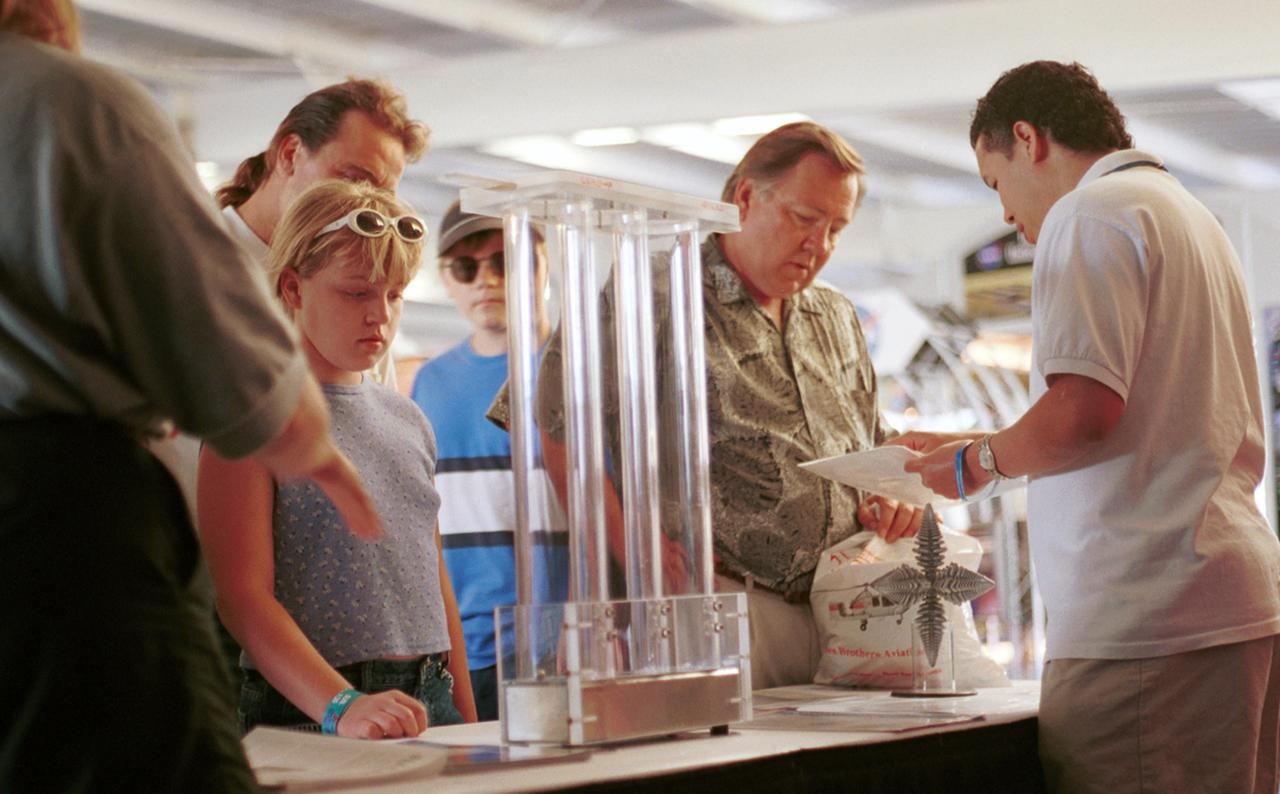
Paul Luz (right), an aerospace flight system engineer at NASA's Marshall Space Flight Center (MSFC), discusses microgravity research with a visitor at AirVenture 2000. Part of the NASA exhibits included demonstration of knowledge gained from micorgravity research aboard the Space Shuttle. These include liquid metal (Liquid metal demonstrator is three plastic drop tubes at center) and dendritic growth (in front of Luz), both leading to improvements in processes on Earth. The exhibit was part of the NASA outreach activity at AirVenture 2000 sponsored by the Experimental Aircraft Association in Oshkosh, WI.

A SpaceX Falcon 9 rocket carrying the company’s Dragon spacecraft for Axiom Space’s Axiom Mission 3 (Ax-3) to the International Space Station lifts off at 4:49 p.m. EST from Launch Complex 39A at NASA’s Kennedy Space Center in Florida on Thursday, Jan. 18, 2024. Ax-3 is the third all private astronaut mission to the space station, sending crew members Commander Michael López-Alegría, Pilot Walter Villadei, and Mission Specialists Marcus Wandt and Alper Gezeravci into orbit. The crew will spend about two weeks conducting microgravity research, educational outreach, and commercial activities aboard the space station.

A SpaceX Falcon 9 rocket carrying the company’s Dragon spacecraft for Axiom Space’s Axiom Mission 3 (Ax-3) to the International Space Station lifts off at 4:49 p.m. EST from Launch Complex 39A at NASA’s Kennedy Space Center in Florida on Thursday, Jan. 18, 2024. Ax-3 is the third all private astronaut mission to the space station, sending crew members Commander Michael López-Alegría, Pilot Walter Villadei, and Mission Specialists Marcus Wandt and Alper Gezeravci into orbit. The crew will spend about two weeks conducting microgravity research, educational outreach, and commercial activities aboard the space station.
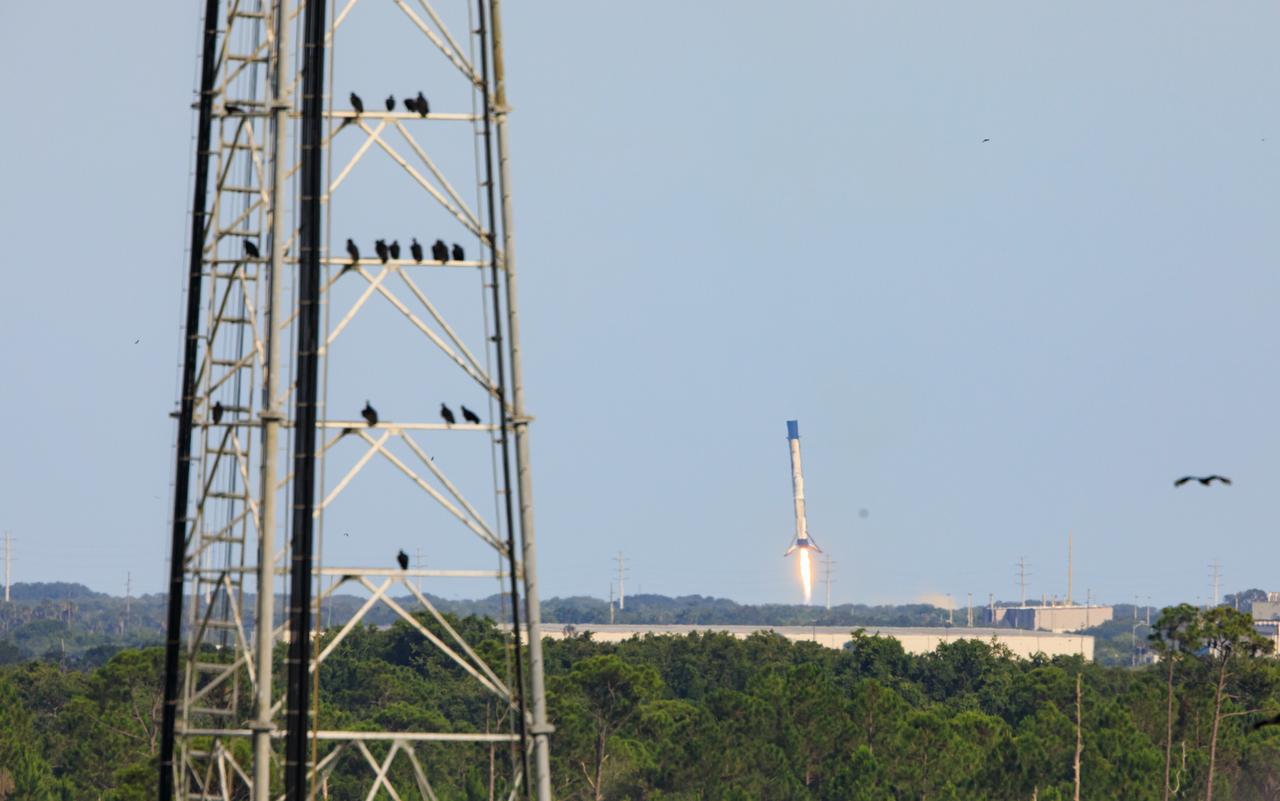
The first stage of a two-stage SpaceX Falcon 9 rocket makes its descent toward Landing Zone 1 at Cape Canaveral Space Force Station after lifting off from NASA Kennedy Space Center’s Launch Complex 39A in Florida for the Axiom Mission 2 (Ax-2) on May 21, 2023. Ax-2 is the second all private astronaut mission to the International Space Station, sending Commander Peggy Whitson, Pilot John Shoffner, and Mission Specialists Ali Alqarni and Rayyanah Barnawi to the orbiting laboratory, where they will spend about 10 days conducting scientific research, outreach, and commercial activities. Liftoff occurred at 5:37 p.m. EDT.

A SpaceX Falcon 9 rocket carrying the company’s Dragon spacecraft for Axiom Space’s Axiom Mission 3 (Ax-3) to the International Space Station lifts off at 4:49 p.m. EST from Launch Complex 39A at NASA’s Kennedy Space Center in Florida on Thursday, Jan. 18, 2024. Ax-3 is the third all private astronaut mission to the space station, sending crew members Commander Michael López-Alegría, Pilot Walter Villadei, and Mission Specialists Marcus Wandt and Alper Gezeravci into orbit. The crew will spend about two weeks conducting microgravity research, educational outreach, and commercial activities aboard the space station.
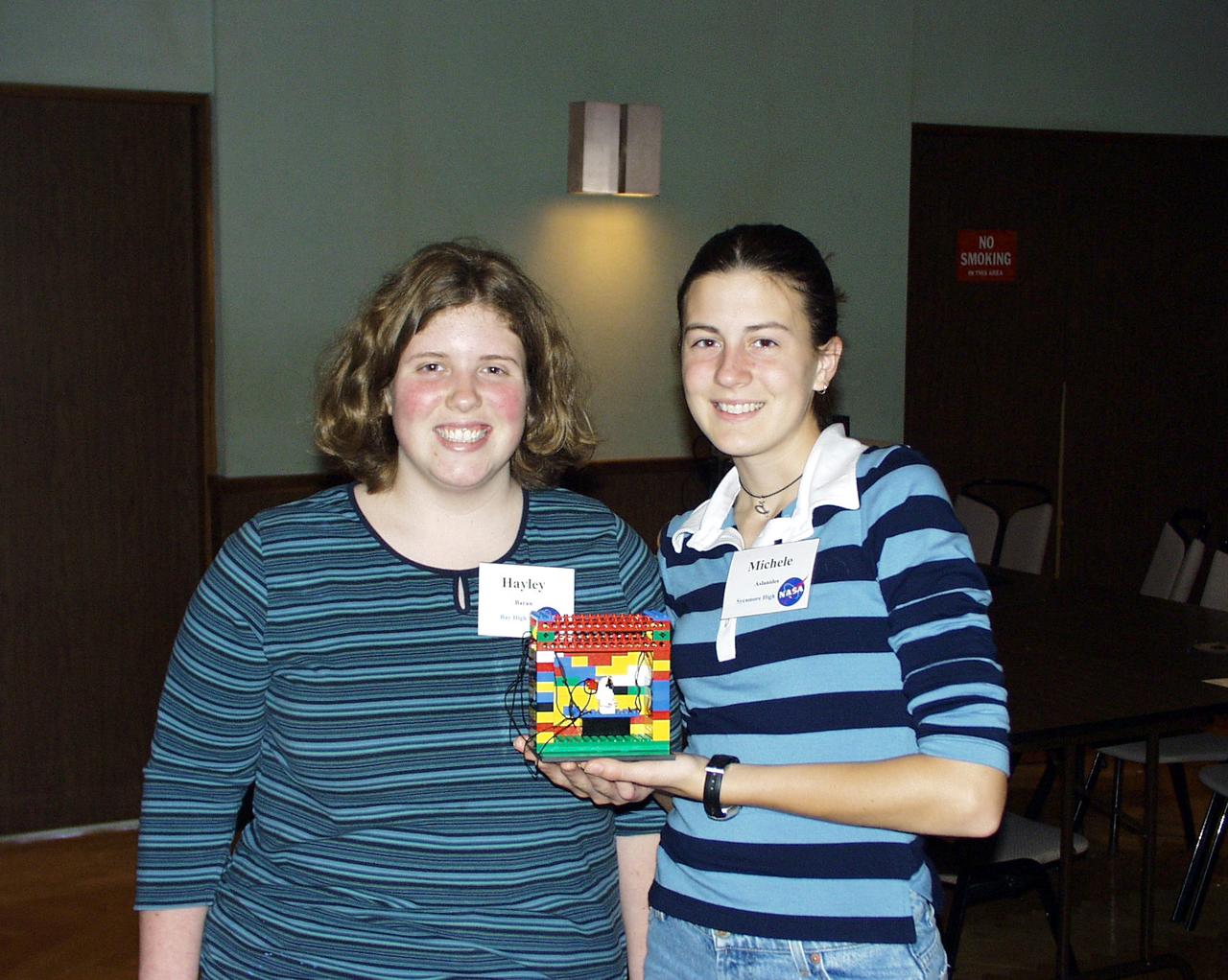
Two students show the Lego (TM) Challenge device they designed and built to operate in the portable drop tower demonstrator as part of the second Dropping in a Microgravity Environment (DIME) competition held April 23-25, 2002, at NASA's Glenn Research Center. Competitors included two teams from Sycamore High School, Cincinnati, OH, and one each from Bay High School, Bay Village, OH, and COSI Academy, Columbus, OH. DIME is part of NASA's education and outreach activities. Details are on line at http://microgravity.grc.nasa.gov/DIME_2002.html.
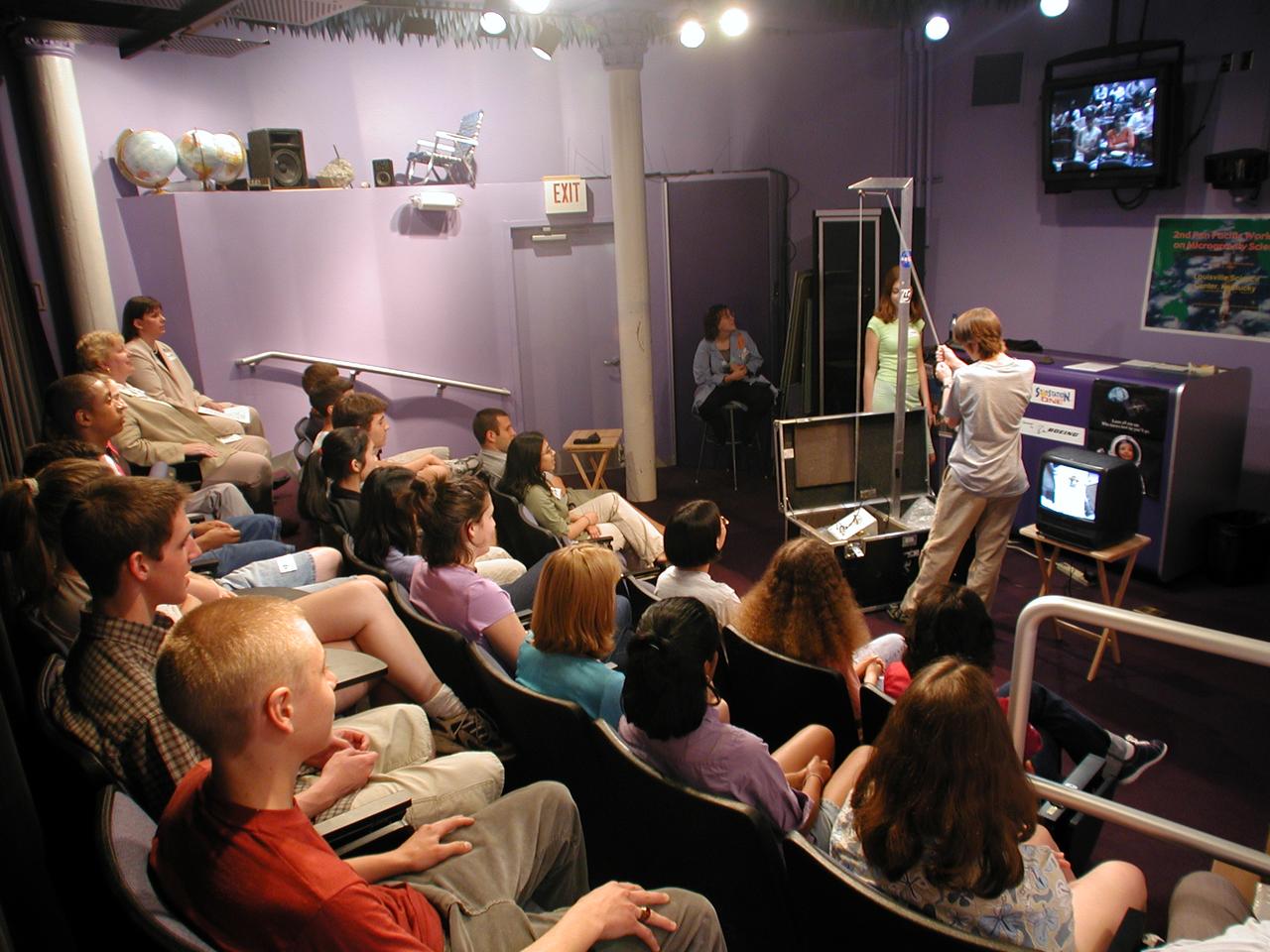
John Henson (grade 12) and Suzi Bryce (grade 10) from DuPont Manual High School in Louisville, Kentucky, conduct a drop with NASA's Microgravity Demonstrator. A camera and a TV/VCR unit let students play back recordings of how different physical devices behave differently during freefall as compared to 1-g. The activity was part of the education outreach segment of the Pan-Pacific Basin Workshop on Microgravity Sciences held in Pasadena, California. The event originated at the California Science Center in Los Angeles. The DuPont Manual students patched in to the event through the distance learning lab at the Louisville Science Center. This image is from a digital still camera; higher resolution is not available.
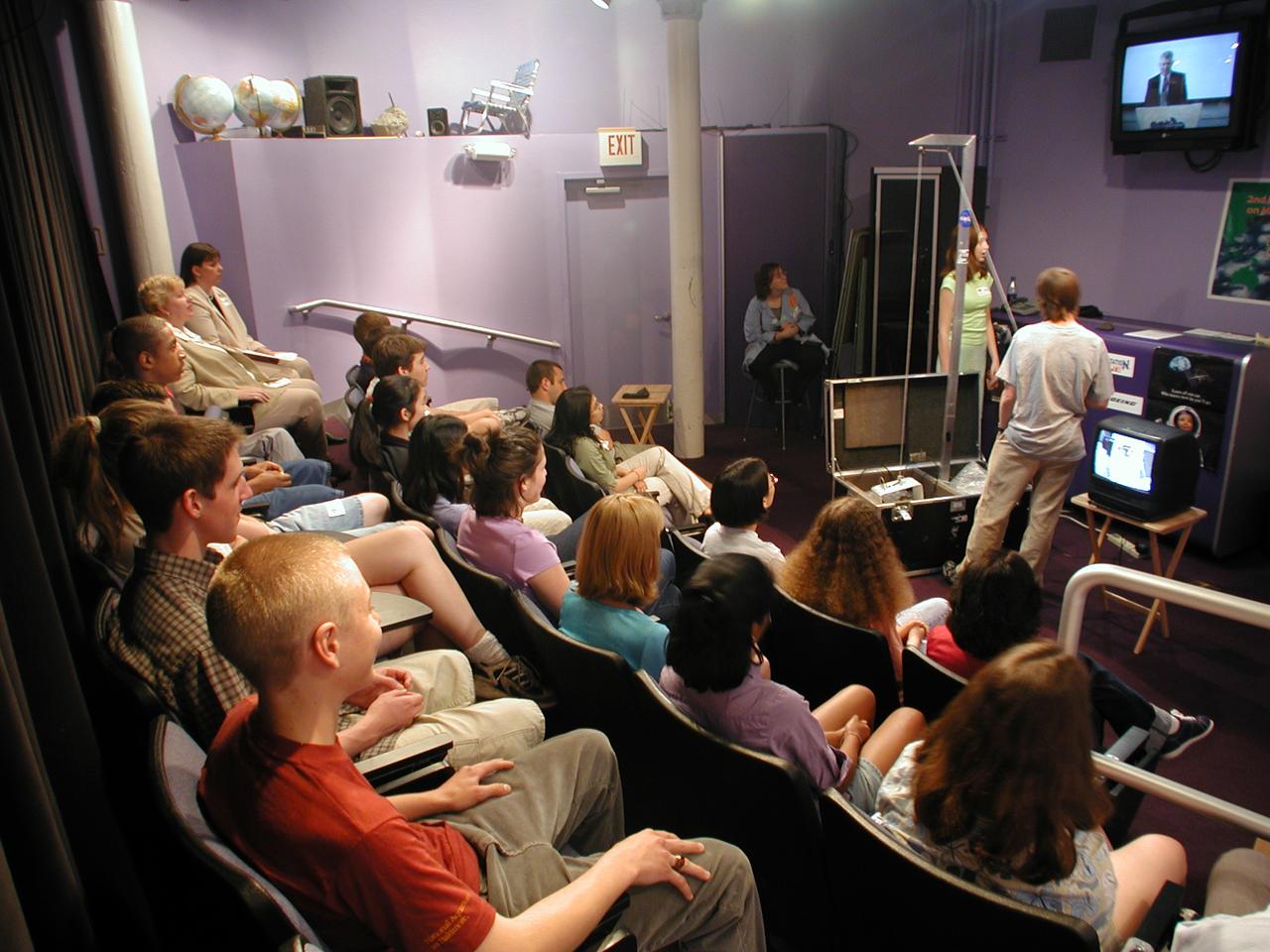
John Henson (grade 12) and Suzi Bryce (grade 10) conducted the drop from DuPont Manual High School in Louisville, Kentucky, conduct a drop with NASA's Microgravity Demonstrator. A camera and a TV/VCR unit let students play back recordings of how different physical devices behave differently during freefall as compared to 1-g. The activity was part of the education outreach segment of the Pan-Pacific Basin Workshop on Microgravity Sciences held in Pasadena, California. The event originated at the California Science Center in Los Angeles. The DuPont Manual students patched in to the event through the distance learning lab at the Louisville Science Center. This image is from a digital still camera; higher resolution is not available.
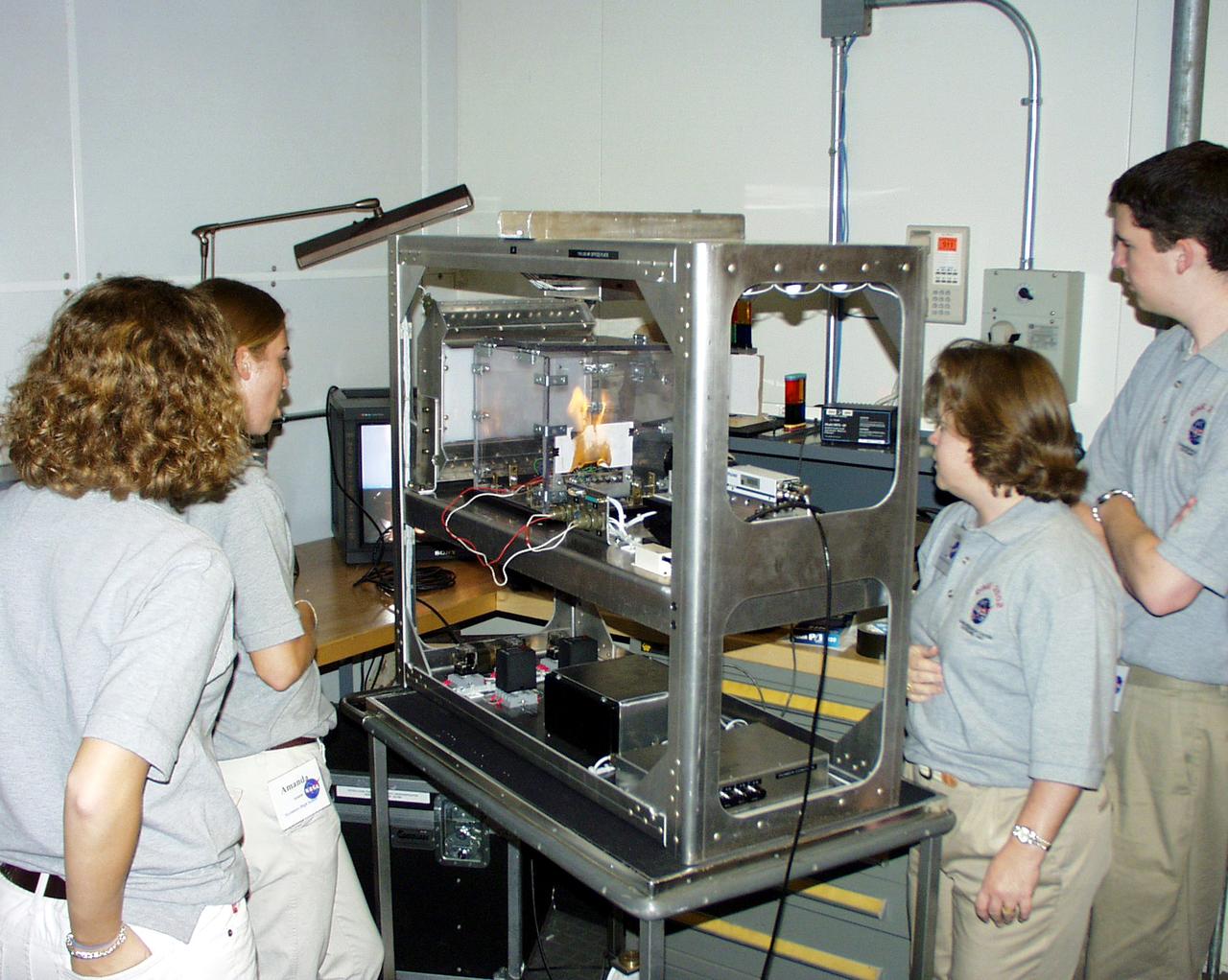
Students watch a test run on their experiment before the actual drop. They designed and built their apparatus to fit within a NASA-provided drop structure. This was part of the second Dropping in a Microgravity Environment (DIME) competition held April 23-25, 2002, at NASA's Glenn Research Center. Competitors included two teams from Sycamore High School, Cincinnati, OH, and one each from Bay High School, Bay Village, OH, and COSI Academy, Columbus, OH. DIME is part of NASA's education and outreach activities. Details are on line at http://microgravity.grc.nasa.gov/DIME_2002.html.
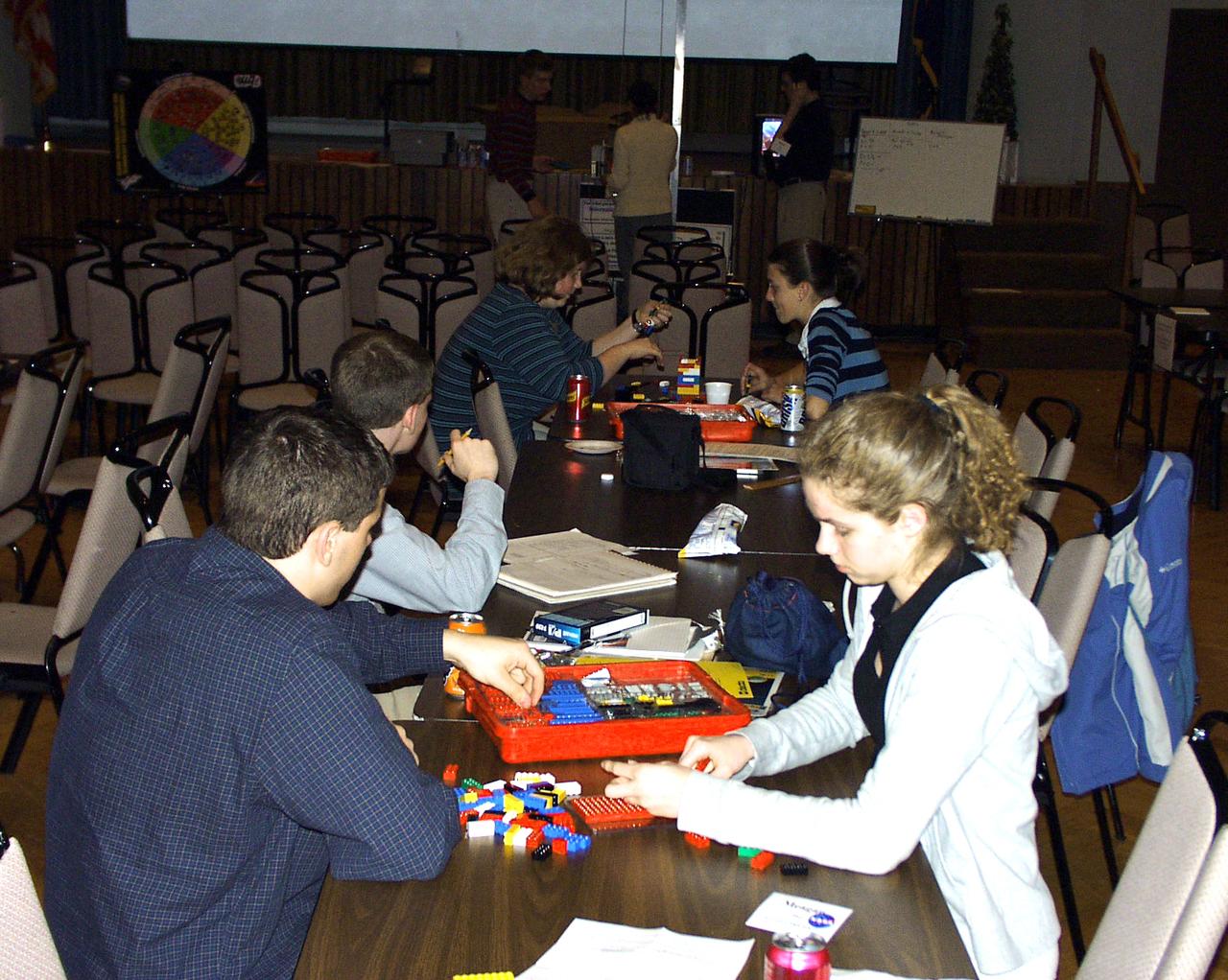
Members from all four teams were mixed into pairs to work on a Lego (TM) Challenge device to operate in the portable drop tower demonstrator (background). These two team members are about to try out their LEGO (TM) creation. This was part of the second Dropping in a Microgravity Environment (DIME) competition held April 23-25, 2002, at NASA's Glenn Research Center. Competitors included two teams from Sycamore High School, Cincinnati, OH, and one each from Bay High School, Bay Village, OH, and COSI Academy, Columbus, OH. DIME is part of NASA's education and outreach activities. Details are on line at http://microgravity.grc.nasa.gov/DIME_2002.html.

A SpaceX Falcon 9 rocket carrying the company’s Dragon spacecraft for Axiom Space’s Axiom Mission 3 (Ax-3) to the International Space Station lifts off at 4:49 p.m. EST from Launch Complex 39A at NASA’s Kennedy Space Center in Florida on Thursday, Jan. 18, 2024. Ax-3 is the third all private astronaut mission to the space station, sending crew members Commander Michael López-Alegría, Pilot Walter Villadei, and Mission Specialists Marcus Wandt and Alper Gezeravci into orbit. The crew will spend about two weeks conducting microgravity research, educational outreach, and commercial activities aboard the space station.
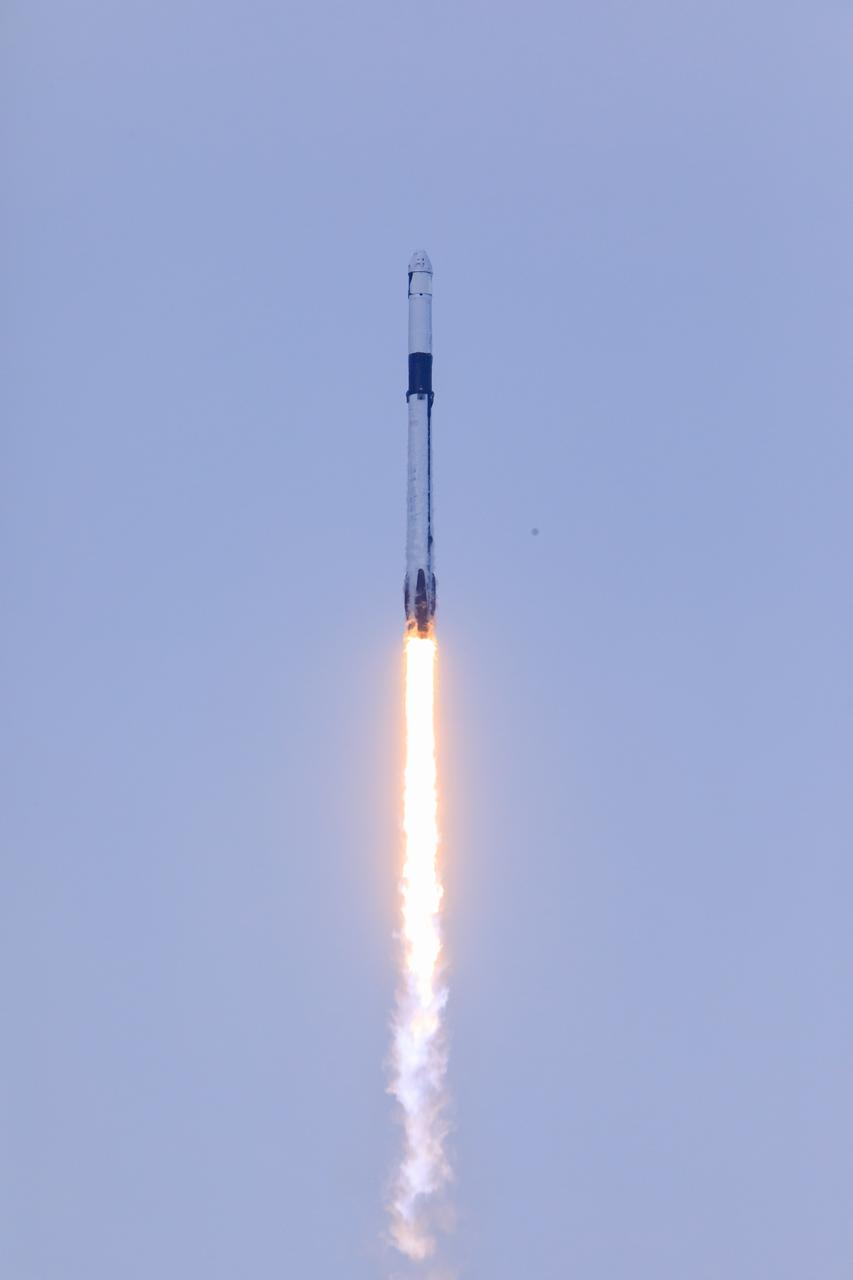
A SpaceX Falcon 9 rocket, carrying the company’s Dragon spacecraft, soars upward after lifting off from NASA Kennedy Space Center’s Launch Complex 39A in Florida on May 21, 2023, for the Axiom Mission 2 (Ax-2) to the International Space Station. Ax-2 is the second all private astronaut mission to the International Space Station, sending Commander Peggy Whitson, Pilot John Shoffner, and Mission Specialists Ali Alqarni and Rayyanah Barnawi to the orbiting laboratory, where they will spend about 10 days conducting scientific research, outreach, and commercial activities. Liftoff occurred at 5:37 p.m. EDT.
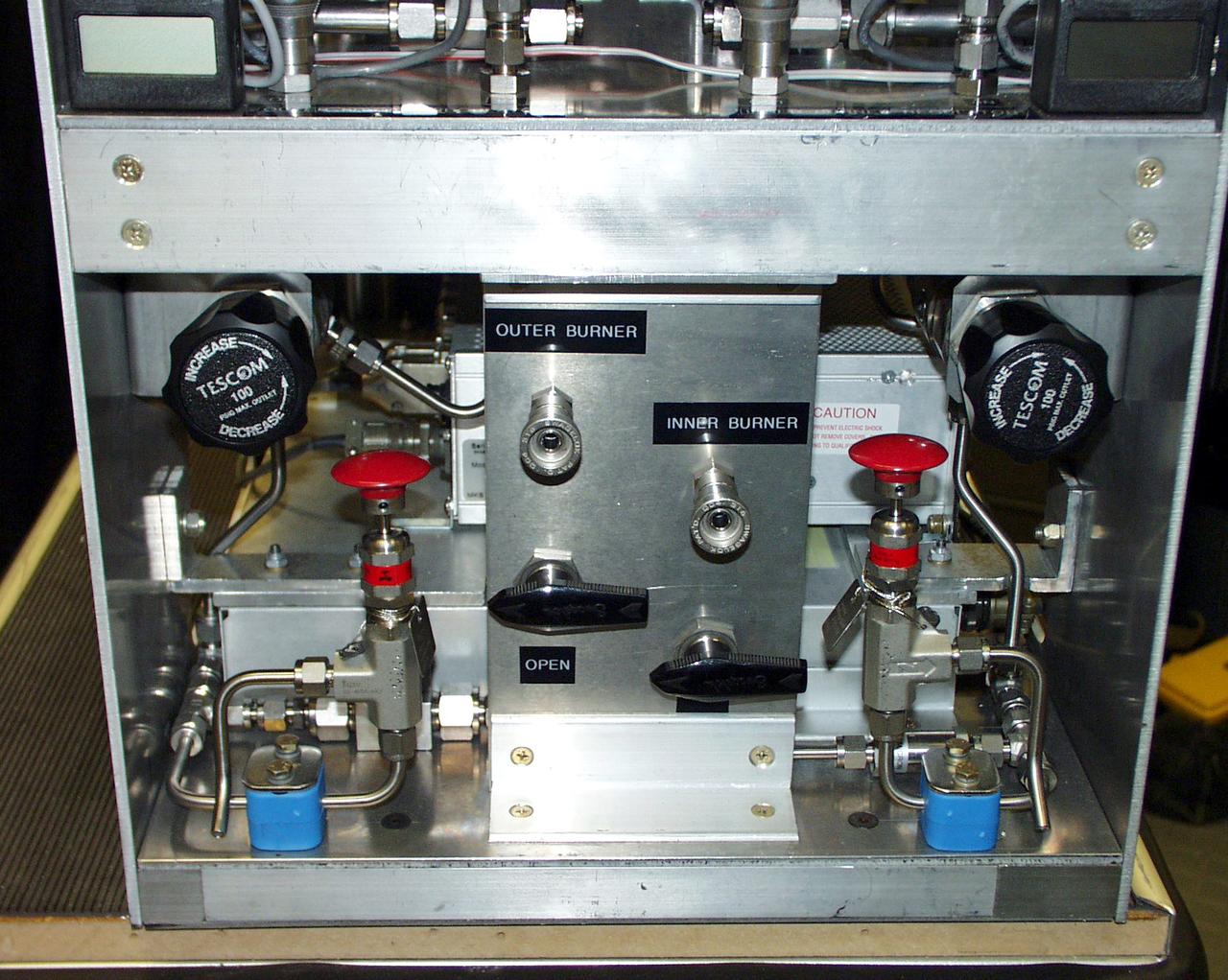
Interior of a combustion experiment apparatus used in the 2.2-second drop tower at NASA's Glenn Research Center. This was shown to students participating in the second Dropping in a Microgravity Environment (DIME) competition held April 23-25, 2002, at NASA's Glenn Research Center. Competitors included two teams from Sycamore High School, Cincinnati, OH, and one each from Bay High School, Bay Village, OH, and COSI Academy, Columbus, OH. DIME is part of NASA's education and outreach activities. Details are on line at http://microgravity.grc.nasa.gov/DIME_2002.html.

Angie Jackman, a NASA project manager in microgravity research, demonstrates the enhanced resilience of undercooled metal alloys as compared to conventional alloys. Experiments aboard the Space Shuttle helped scientists refine their understanding of the physical properties of certain metal alloys when undercooled (i.e., kept liquid below their normal solidification temperature). This new knowledge then allowed scientists to modify a terrestrial production method so they can now make limited quantities marketed under the Liquid Metal trademark. The exhibit was a part of the NASA outreach activity at AirVenture 2000 sponsored by the Experimental Aircraft Association in Oshkosh, WI.
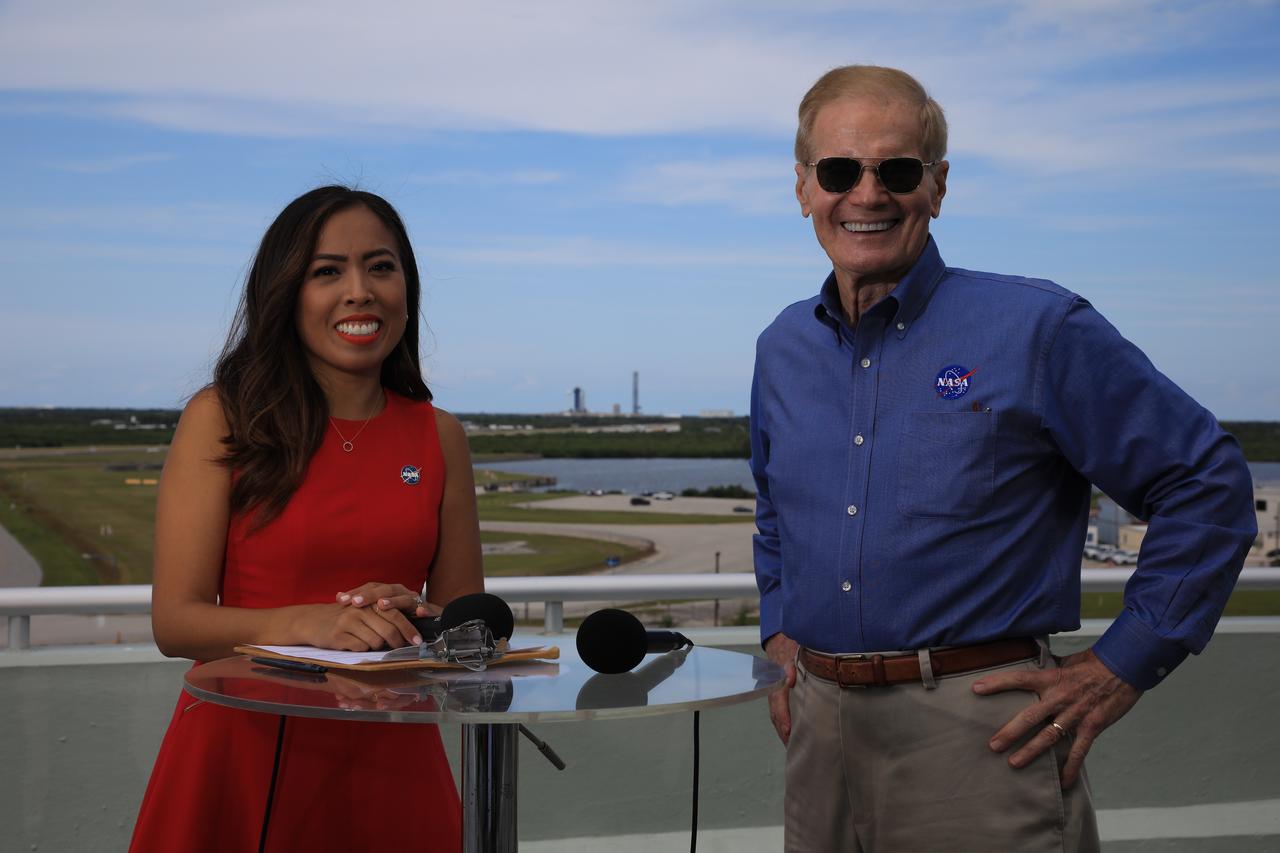
NASA Communications’ Megan Cruz (left) prepares to interview NASA Administrator Bill Nelson during a live broadcast ahead of the Axiom Mission 2 (Ax-2) launch from the agency’s Kennedy Space Center in Florida on May 21, 2023. Ax-2 is the second all private astronaut mission to the International Space Station, sending Commander Peggy Whitson, Pilot John Shoffner, and Mission Specialists Ali Alqarni and Rayyanah Barnawi to the orbiting laboratory, where they will spend about 10 days conducting scientific research, outreach, and commercial activities. Liftoff occurred at 5:37 p.m. EDT from Kennedy’s Launch Complex 39A.
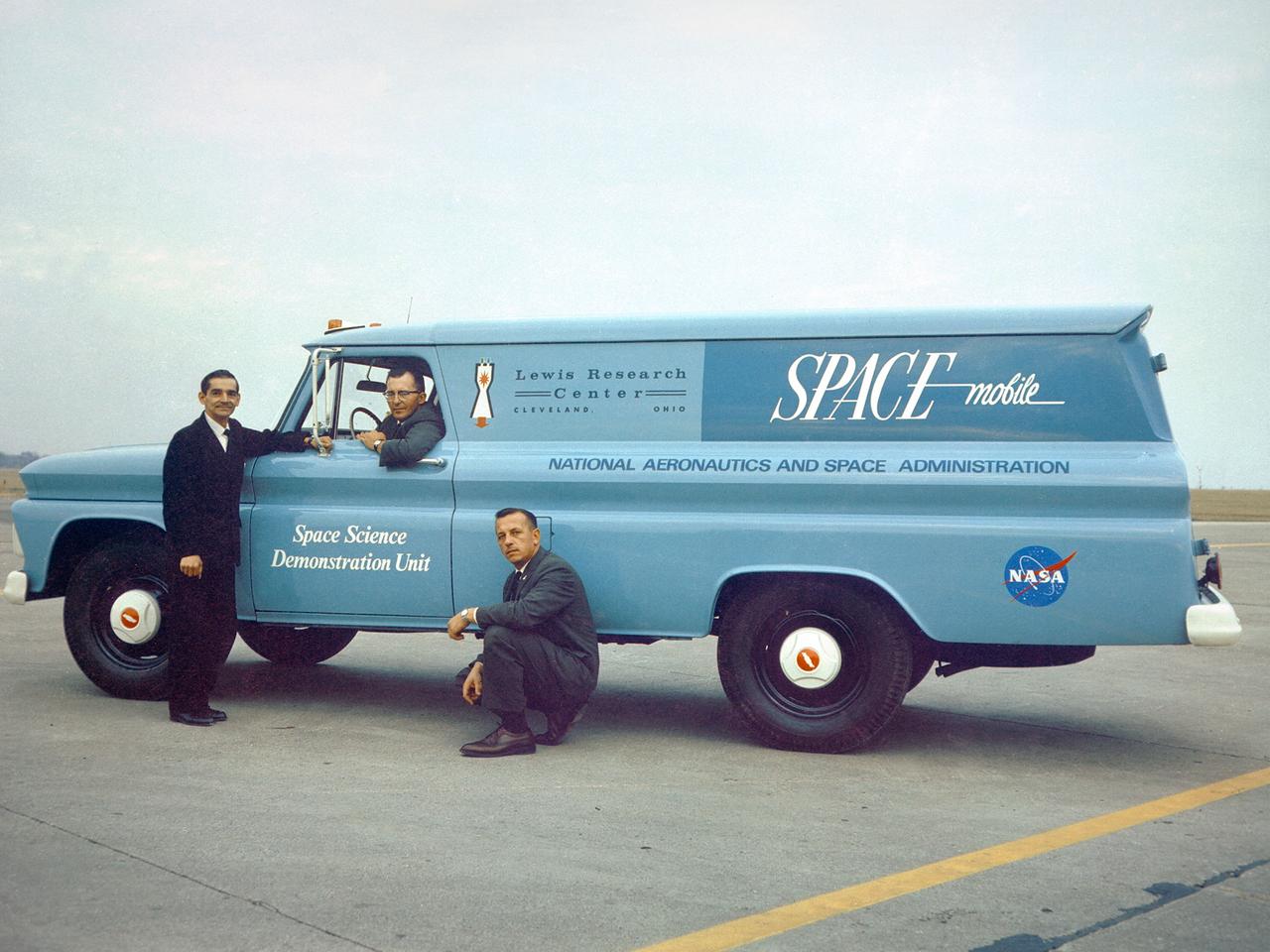
Members of Lewis’ Educational Services Office pose with one of the center’s Spacemobile space science demonstration units. Unlike its predecessor, the NACA, the new NASA space agency considered public outreach one of its core tenets. The early astronauts were lionized and new technologies touted. Lewis, which had previously been a closed laboratory, began hosting open houses and elaborate space fairs in the early 1960s. In addition, the center initiated educational programs that worked with local schools and a robust speaker’s bureau that explained NASA activities to the community. One aspect of these efforts was the Spacemobile Program. These vehicles included a delegated speaker, exhibits, models, and other resources. The Spacemobiles, which made forays across the Midwest, were extremely active throughout the 1960s.
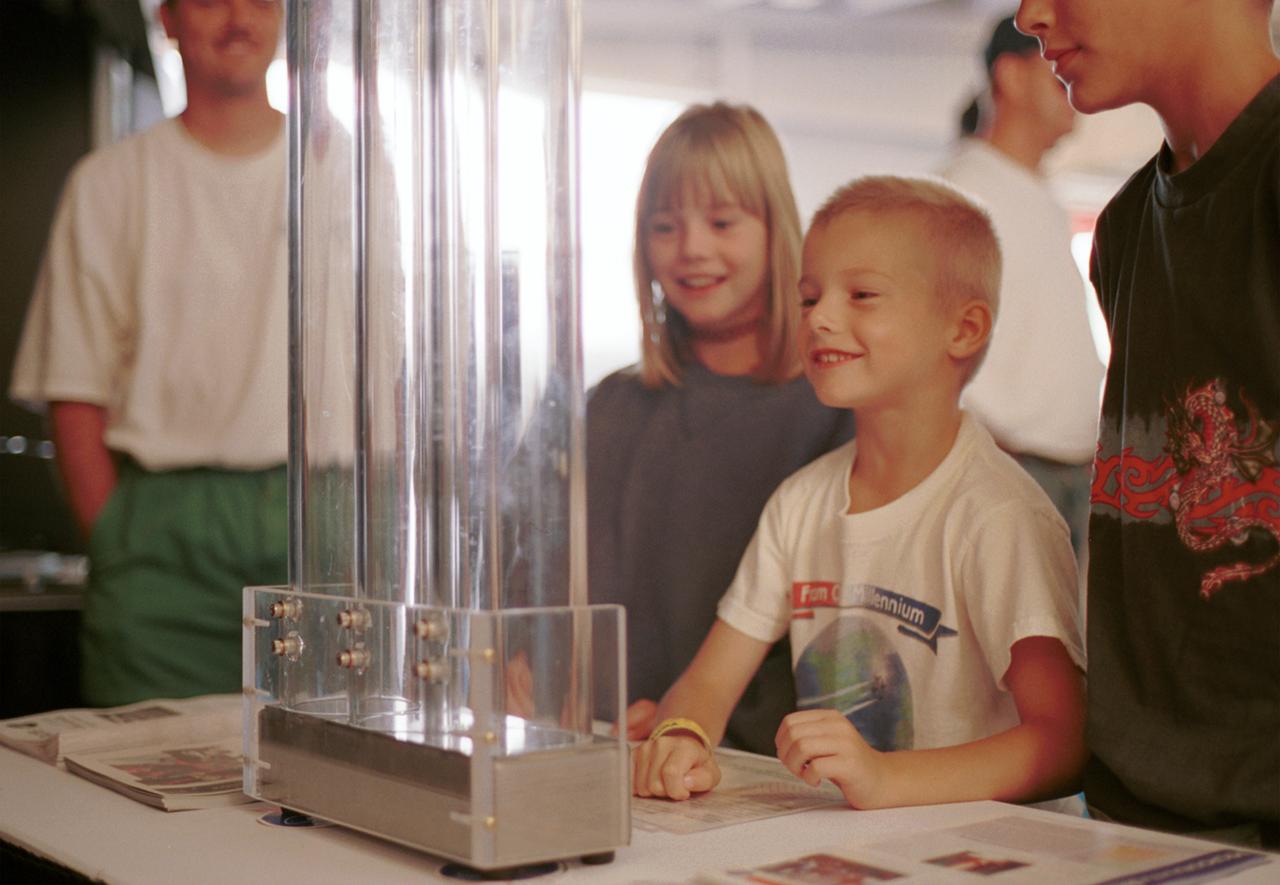
An entranced youngster watches a demonstration of the enhanced resilience of undercooled metal alloys as compared to conventional alloys. Steel bearings are dropped onto plates made of steel, titanium alloy, and zirconium liquid metal alloy, so-called because its molecular structure is amorphous and not crystalline. The bearing on the liquid metal plate bounces for a minute or more longer than on the other plates. Experiments aboard the Space Shuttle helped scientists refine their understanding of the physical properties of certain metal alloys when undercooled (i.e., kept liquid below their normal solidification temperature). This new knowledge then allowed scientists to modify a terrestrial production method so they can now make limited quantities marketed under the Liquid Metal trademark. The exhibit was a part of the NASA outreach activity at AirVenture 2000 sponsored by the Experimental Aircraft Association in Oshkosh, WI.

NASA climatologist Gary Jedlovec, a member of the Earth Science team in Marshall Space Flight Center’s Science and Technology Office, discusses the satellite technology and ground-based tools used to record and trend regional and global climate changes over the past century and to provide forecast models looking 100 years into the future. Jedlovec and his team, which partners with National Oceanic and Atmospheric Association researchers and their colleagues around the world, spoke to the Marshall “Green Team” -- environmental engineers and support personnel who help guide Marshall’s focus on safer, more cost-efficient energy use. The Green Team, led by Marshall Sustainability Engineer Donna Leach of the Environmental Engineering & Occupational Health Office, currently is preparing activities and outreach for Earth Day 2020, set for next April.
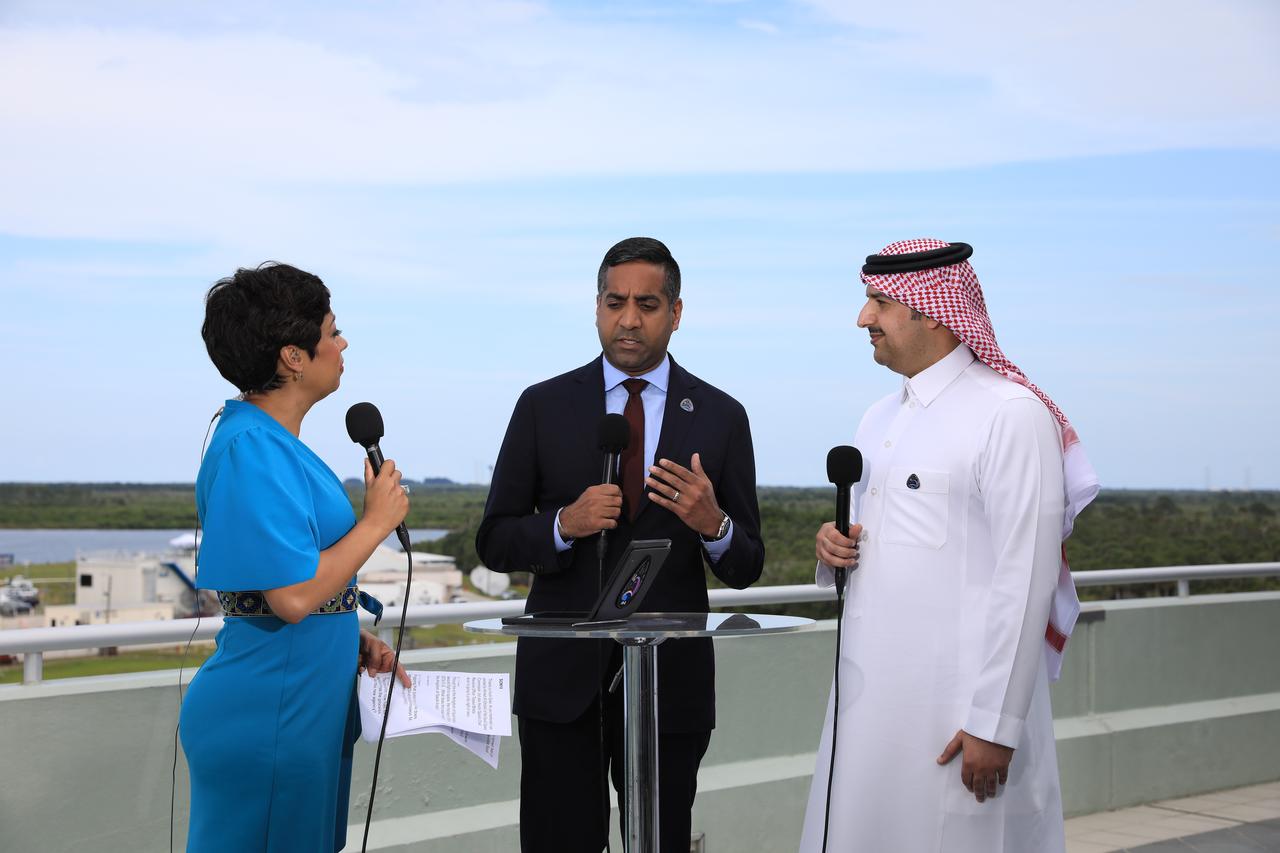
From left, Director of Digital Strategy for Axiom Space Sonya Gavankar McKay interviews Axiom Space Chief Revenue Officer Tejpaul Bhatia and Chief Development and Planning Officer of the Saudi Space Commission Ahmed Al-Ghofaili during a live broadcast ahead of the Axiom Mission 2 (Ax-2) launch from NASA’s Kennedy Space Center in Florida on May 21, 2023. Ax-2 is the second all private astronaut mission to the International Space Station, sending Commander Peggy Whitson, Pilot John Shoffner, and Mission Specialists Ali Alqarni and Rayyanah Barnawi to the orbiting laboratory, where they will spend about 10 days conducting scientific research, outreach, and commercial activities. Liftoff occurred at 5:37 p.m. EDT from Kennedy’s Launch Complex 39A.

Sonya Gavankar McKay (left), director of digital strategy for Axiom Space, prepares to interview Dr. Lucie Low, chief scientist for Axiom Space, during a live broadcast ahead of the Axiom Mission 2 (Ax-2) launch from NASA’s Kennedy Space Center in Florida on May 21, 2023. Ax-2 is the second all private astronaut mission to the International Space Station, sending Commander Peggy Whitson, Pilot John Shoffner, and Mission Specialists Ali Alqarni and Rayyanah Barnawi to the orbiting laboratory, where they will spend about 10 days conducting scientific research, outreach, and commercial activities. Liftoff occurred at 5:37 p.m. EDT from Kennedy’s Launch Complex 39A.
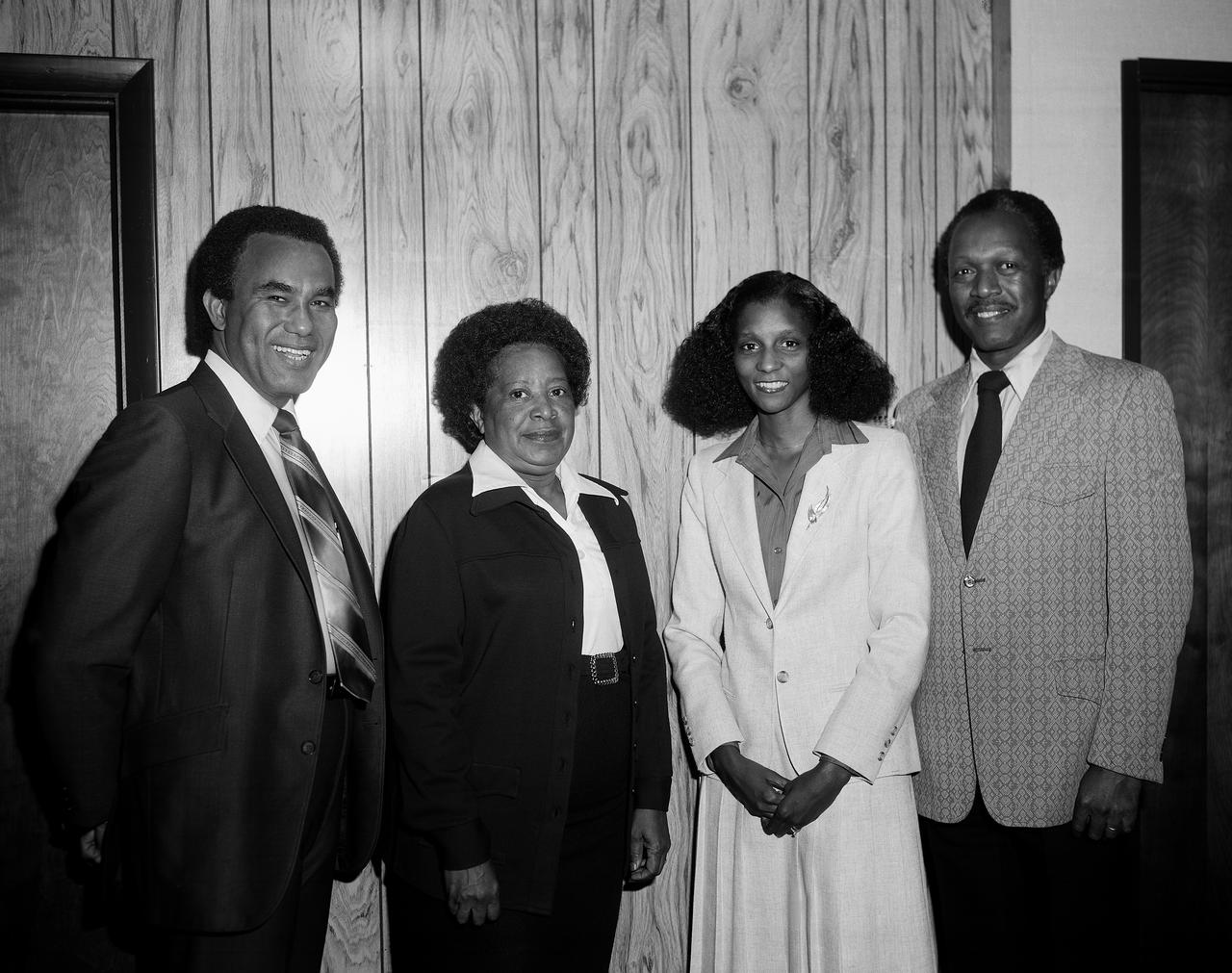
Samuel J. Scott, Administrative Operations Specialist, Acquisition Division; Mary W. Jackson, Federal Women's Program Manager, Office of Equal Opportunity Programs; Fabiola C. Martin, Contract Specialist, Acquisition Division; and Gilbert A. Haynes, Head of the Experimental Avionics Section, Flight Electronics Division, represented Langley recently at the annual National Football League Players' Association Youth Camp in Culpepper, Va. The camp offered four two-week sessions with approximately 60 youngsters attending each session. Serving as role models to minority youth from the Washington, D.C. area, the Langley employees each attended a session for one day discussing their careers and providing information on opportunities at Langley, as part of the community outreach effort of the Office of Equal Opportunity Programs. This was the first year that Langley participated in the camp's activities. Published in the Langley Researcher, August, 28, 1981 page 2.

At a Sept. 26 all-hands meeting, NASA Marshall Space Flight Center Director Todd May highlights some of the key moments from Vice President Mike Pence's visit to Marshall Sept. 25. "I'd like to thank all the people that prepared for the vice president's visit. I think it was a great day for the center," said May. "We were able to talk to him about NASA's Space Launch System as well as some other projects. As the chairman of the U.S. Space Council, he is going to be very influential in space policy and I think this was a great opportunity for us." May also commented on the nomination of U.S. Rep. Jim Bridenstine, President Donald Trump's selection for NASA Administrator, and spoke about continuing to advance Marshall's Plan to Thrive – a strategic management agenda that focuses on human capital, organizational efficiency and bi-modal operations. Marshall Deputy Director Jody Singer updated the workforce on the results of the recent employee viewpoint survey. Singer also provided an overview of NASA's outreach during the Aug. 21 total solar eclipse, mentoring opportunities and the activities associated with the ongoing Safety Week 2017.
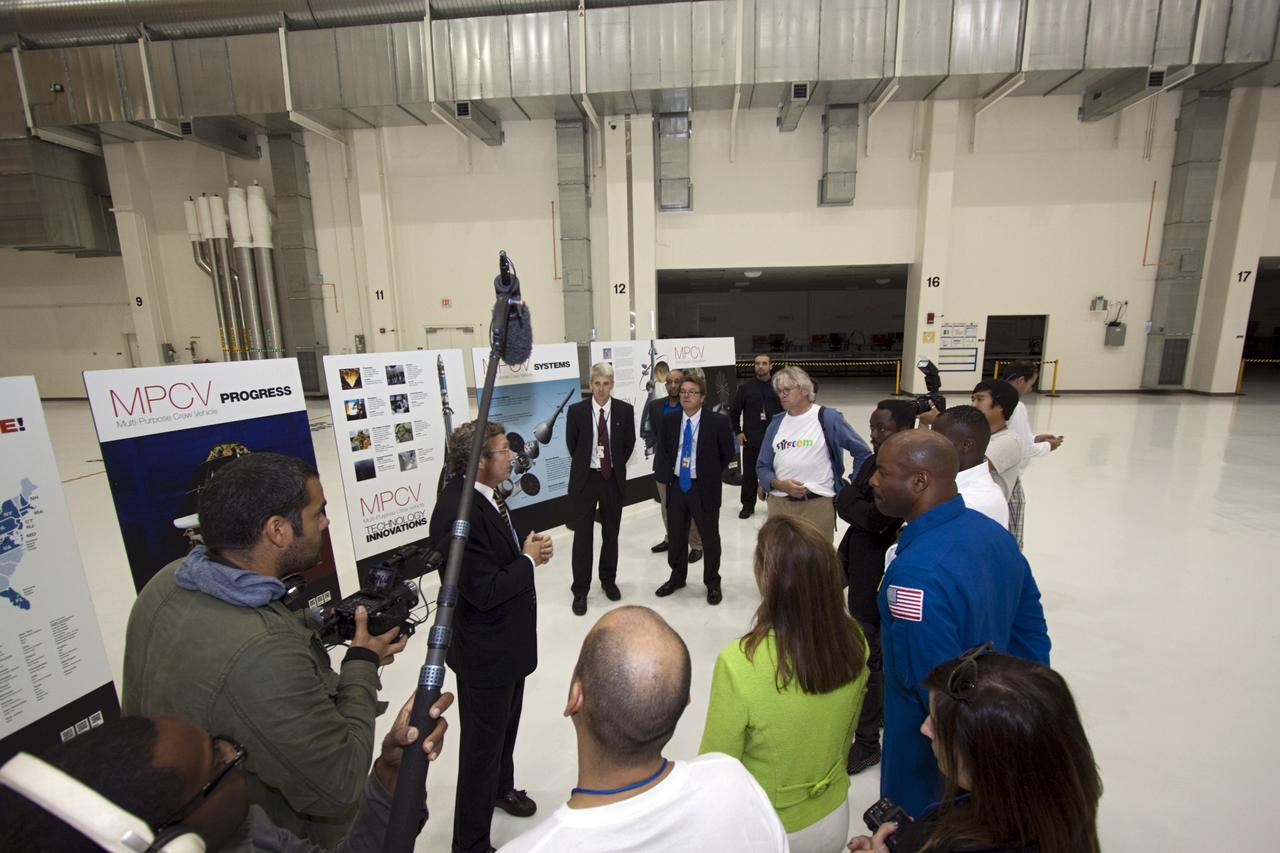
CAPE CANAVERAL, Fla. – At NASA Kennedy Space Center in Florida, presenters in a NASA Tweetup tour the Operations and Checkout Building (O&C). Listening to a briefing from from Larry Price, Lockheed Martin deputy program manager, on the Orion Multi Purpose Crew Vehicle are, from left, NASA Deputy Administrator Lori Garver (green jacket); former astronaut Leland Melvin, NASA associate administrator for Education (blue flight suit); Yves Lamothe, lead systems engineer for the 21st Century Ground Systems Program at Kennedy; Will.i.am, entertainer and member of The Black Eyed Peas; and Lars Perkins, chair of the Education and Public Outreach Committee of the NASA Advisory Council. The visit to the O&C followed their participation in a NASA Tweetup. The Tweetup is part of prelaunch activities for the agency’s Mars Science Laboratory (MSL) launch and provides the opportunity for tweeters will share their experiences with followers through the social networking site Twitter. The MSL mission will pioneer precision landing technology and a sky-crane touchdown to place a car-sized rover, Curiosity, near the foot of a mountain inside Gale Crater on Aug. 6, 2012. During a nearly two-year prime mission after landing, the rover will investigate whether the region has ever offered conditions favorable for microbial life, including the chemical ingredients for life. Liftoff of MSL aboard a United Launch Alliance Atlas V rocket from Space Launch Complex-41 on Cape Canaveral Air Force Station was at 10:02 a.m. EST on Nov. 26. For more information, visit http://www.nasa.gov/msl. Photo credit: NASA/Jim Grossmann
The first NASA Dropping In a Microgravity Environment (DIME) student competition pilot project came to a conclusion at the Glenn Research Center in April 2001. The competition involved high-school student teams who developed the concept for a microgravity experiment and prepared an experiment proposal. The two student teams - COSI Academy, sponsored by the Columbus Center of Science and Industry, and another team from Cincinnati, Ohio's Sycamore High School, designed a microgravity experiment, fabricated the experimental apparatus, and visited NASA Glenn to operate their experiment in the 2.2 Second Drop Tower. NASA and contractor personnel who conducted the DIME activity with the students. Shown (L-R) are: Eric Baumann (NASA, 2.2-second Drop Tower Facility manager), Daniel Dietrich (NASA) mentor for Sycamore High School team), Carol Hodanbosi (National Center for Microgravity Research; DIME staff), Richard DeLombard (NASA; DIME staff), Jose Carrion (GRC Akima, drop tower technician), Dennis Stocker (NASA; DIME staff), Peter Sunderland (NCMR, mentor for COSI Academy student team), Sandi Thompson (NSMR sabbatical teacher; DIME staff), Dan Woodard (MASA Microgravity Outreach Program Manager), Adam Malcolm (NASA co-op student; DIME staff), Carla Rosenberg (NCMR; DIME staff), and Twila Schneider (Infinity Technology; NASA Microgravity Research program contractor). This image is from a digital still camera; higher resolution is not available.
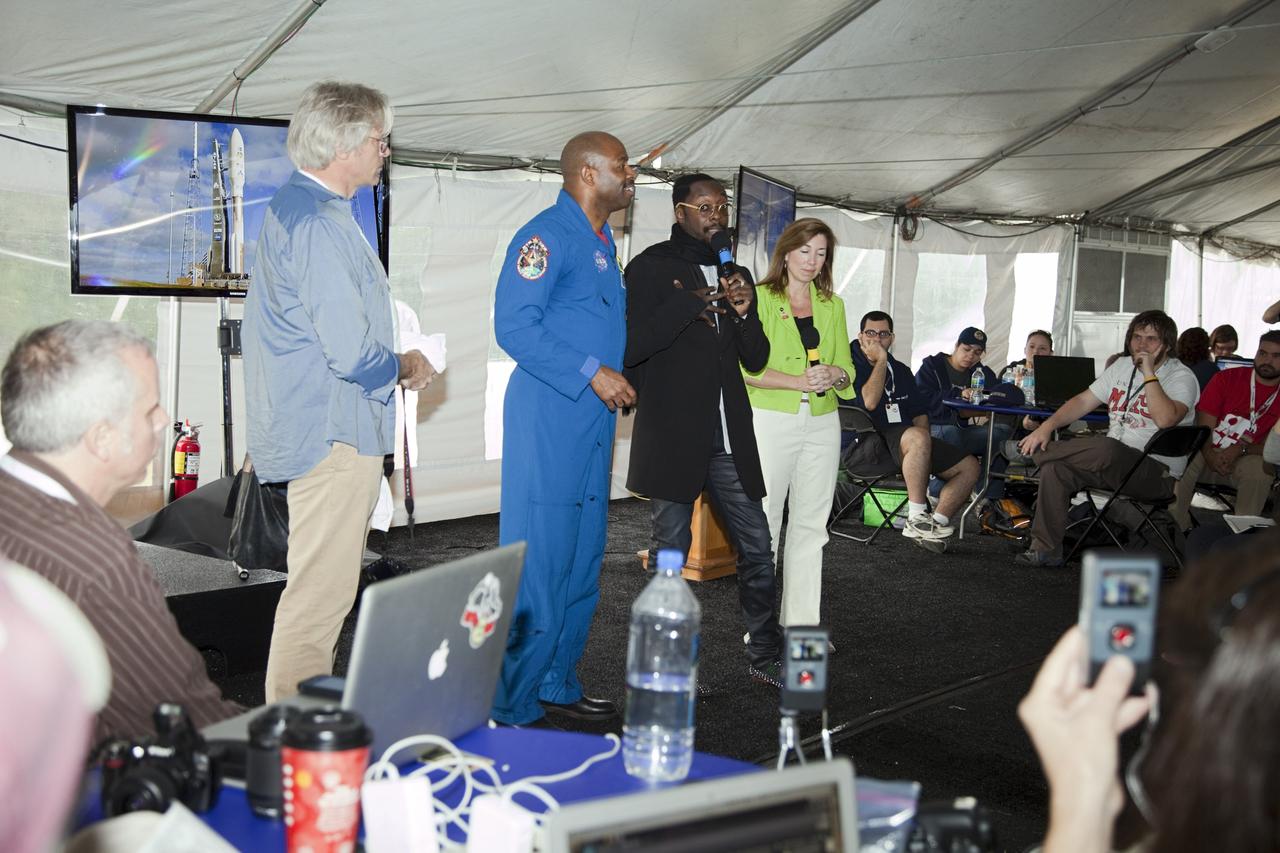
CAPE CANAVERAL, Fla. – From left, Lars Perkins, chair of the Education and Public Outreach Committee of the NASA Advisory Council; former astronaut Leland Melvin, NASA associate administrator for Education; Will.i.am, entertainer and member of The Black Eyed Peas; and NASA Deputy Administrator Lori Garver talk to the participants of a NASA Tweetup in a tent set up at NASA Kennedy Space Center's Press Site in Florida during prelaunch activities for the agency’s Mars Science Laboratory (MSL) launch. Participants in the Tweetup are given the opportunity to listen to agency briefings, tour locations on the center normally off limits to visitors, and get a close-up view of Space Launch Complex-41 on Cape Canaveral Air Force Station. The tweeters will share their experiences with followers through the social networking site Twitter. The MSL mission will pioneer precision landing technology and a sky-crane touchdown to place a car-sized rover, Curiosity, near the foot of a mountain inside Gale Crater on Aug. 6, 2012. During a nearly two-year prime mission after landing, the rover will investigate whether the region has ever offered conditions favorable for microbial life, including the chemical ingredients for life. Liftoff of MSL aboard a United Launch Alliance Atlas V rocket from pad 41 is planned during a launch window which extends from 10:02 a.m. to 11:45 a.m. EST on Nov. 26. For more information, visit http://www.nasa.gov/msl. Photo credit: NASA/Frankie Martin
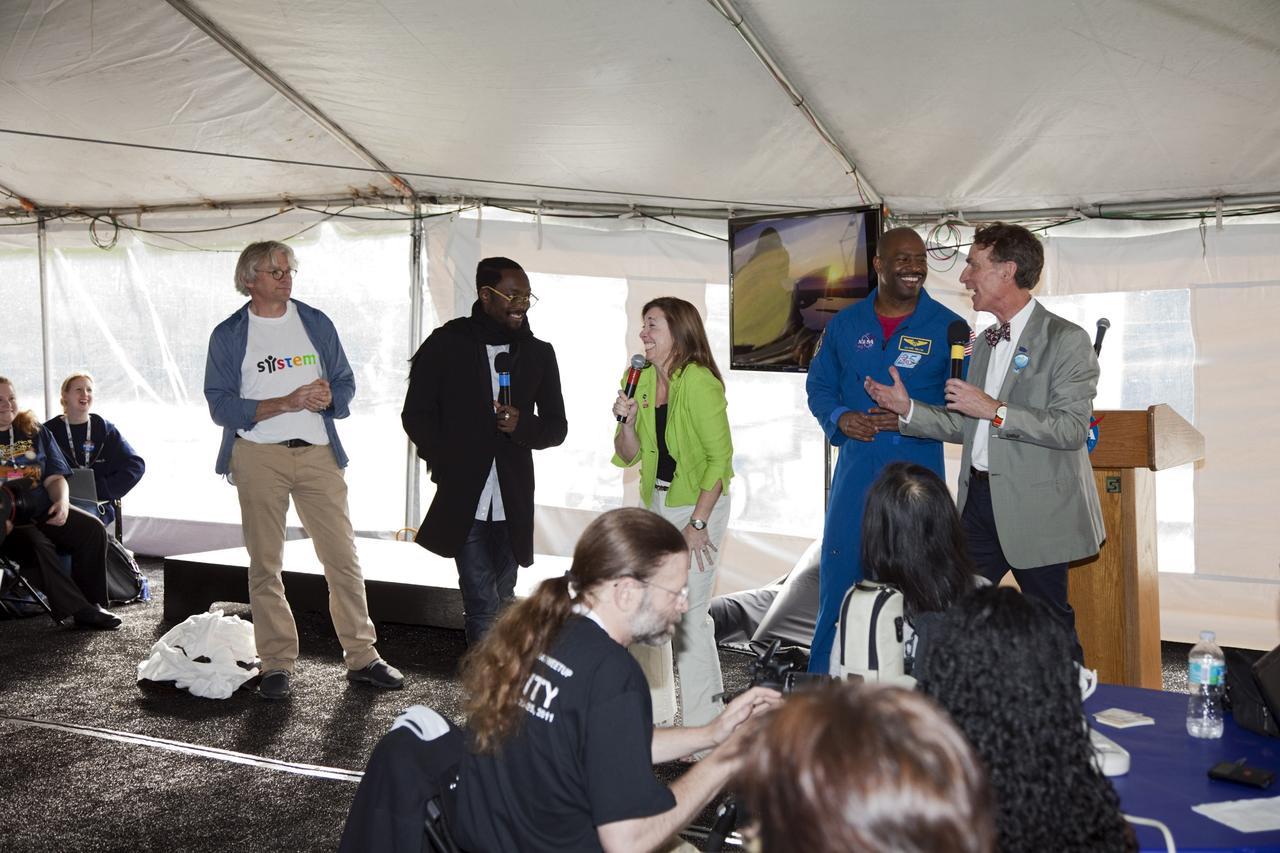
CAPE CANAVERAL, Fla. – From left, Lars Perkins, chair of the Education and Public Outreach Committee of the NASA Advisory Council; Will.i.am, entertainer and member of the pop group The Black Eyed Peas; NASA Deputy Administrator Lori Garver; former astronaut Leland Melvin, NASA associate administrator for Education; and television personality Bill Nye the Science Guy share a light moment with the participants of a NASA Tweetup in a tent set up at NASA Kennedy Space Center's Press Site in Florida during prelaunch activities for the agency’s Mars Science Laboratory (MSL) launch. Participants in the Tweetup are given the opportunity to listen to agency briefings, tour locations on the center normally off limits to visitors, and get a close-up view of Space Launch Complex-41 on Cape Canaveral Air Force Station. The tweeters will share their experiences with followers through the social networking site Twitter. The MSL mission will pioneer precision landing technology and a sky-crane touchdown to place a car-sized rover, Curiosity, near the foot of a mountain inside Gale Crater on Aug. 6, 2012. During a nearly two-year prime mission after landing, the rover will investigate whether the region has ever offered conditions favorable for microbial life, including the chemical ingredients for life. Liftoff of MSL aboard a United Launch Alliance Atlas V rocket from pad 41 is planned during a launch window which extends from 10:02 a.m. to 11:45 a.m. EST on Nov. 26. For more information, visit http://www.nasa.gov/msl. Photo credit: NASA/Frankie Martin