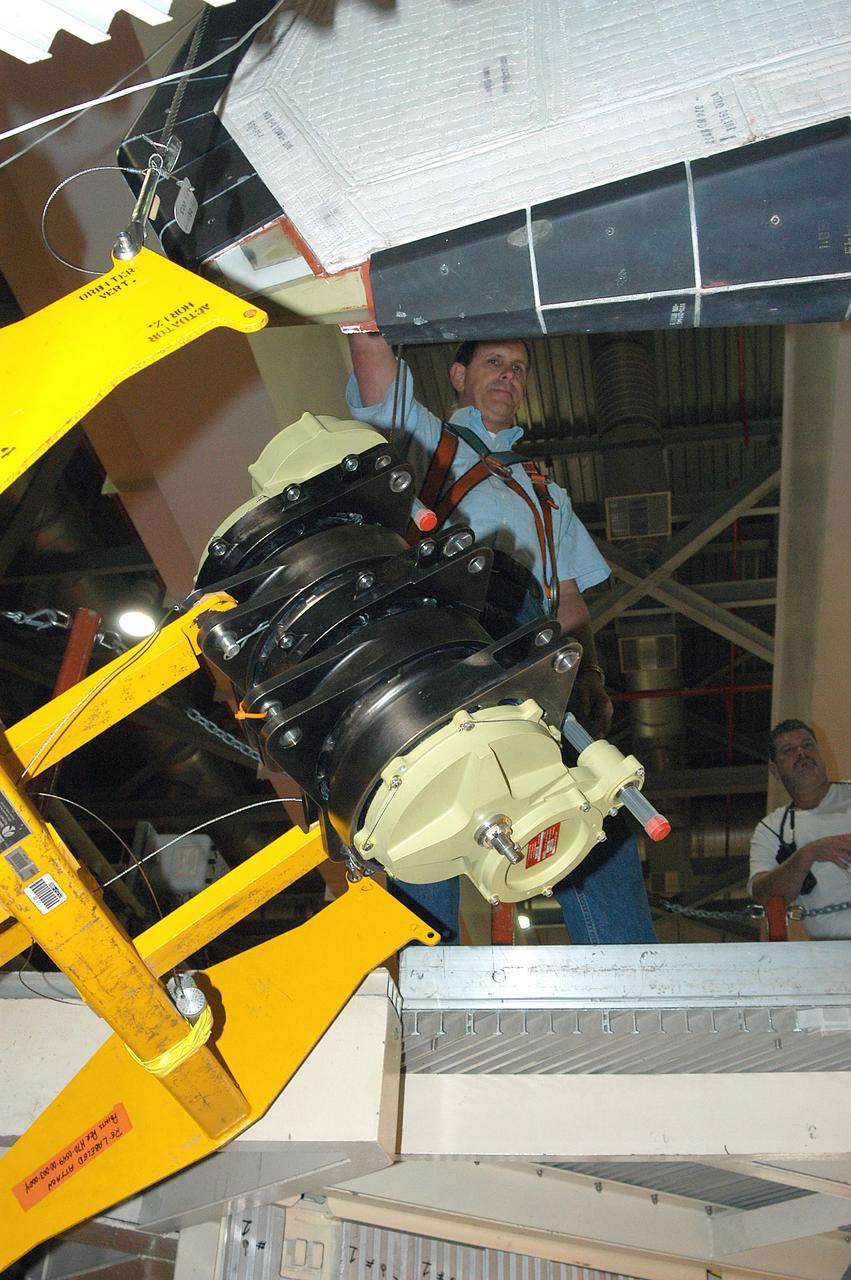
KENNEDY SPACE CENTER, FLA. - A United Space Alliance technician monitors Rudder Speed Brake actuator No. 4 as it is moved into position for installation on Space Shuttle orbiter Discovery in the Orbiter Processing Facility. Discovery has been assigned to the first Return to Flight mission, STS-114, a logistics flight to the International Space Station.
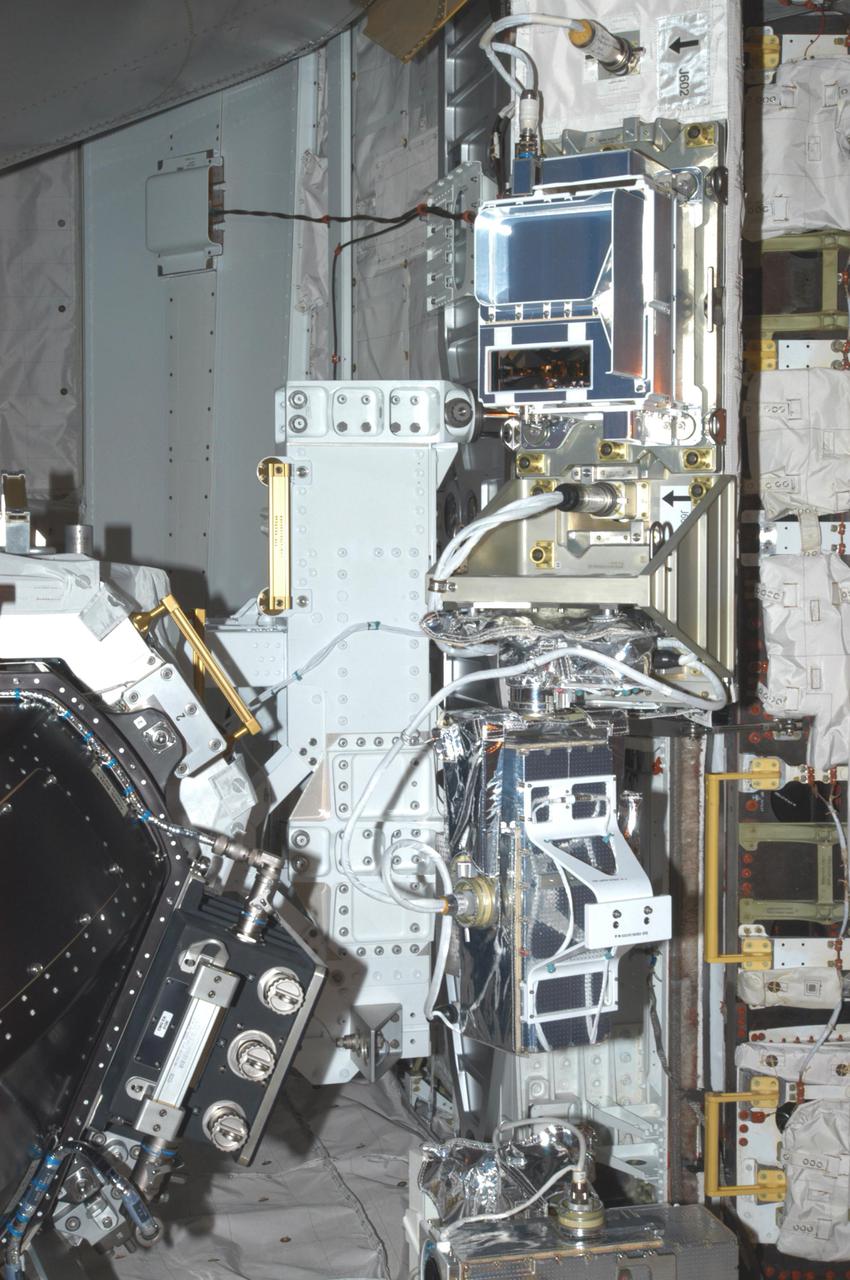
KENNEDY SPACE CENTER, FLA. - At Launch Pad 39B, the Orbiter Boom Sensor System (OBSS) sensor package is viewed before the orbiter's payload bay doors are closed for launch. Payload bay door closure is a significant milestone in the preparations of Discovery for the first Return to Flight mission, STS-114. This sensor package will provide surface area and depth defect inspection for all the surfaces of the orbiter. It includes an intensified television camera (ITVC) and a laser dynamic range imager, which are mounted on a pan and tilt unit, and a laser camera system (LCS) mounted on a stationary bracket. The package is part of the new safety measures added for all future Space Shuttle missions. During its 12-day mission, Discovery’s seven-person crew will test new hardware and techniques to improve Shuttle safety, as well as deliver supplies to the International Space Station. Discovery’s payloads include the Multi-Purpose Logistics Module Raffaello, the Lightweight Multi-Purpose Experiment Support Structure Carrier (LMC), and the External Stowage Platform-2 (ESP-2). Raffaello will deliver supplies to the International Space Station including food, clothing and research equipment. The LMC supports a replacement Control Moment Gyroscope and a tile repair sample box. The ESP-2 is outfitted with replacement parts. Launch of mission STS-114 was set for July 13 at the conclusion of the Flight Readiness Review yesterday.
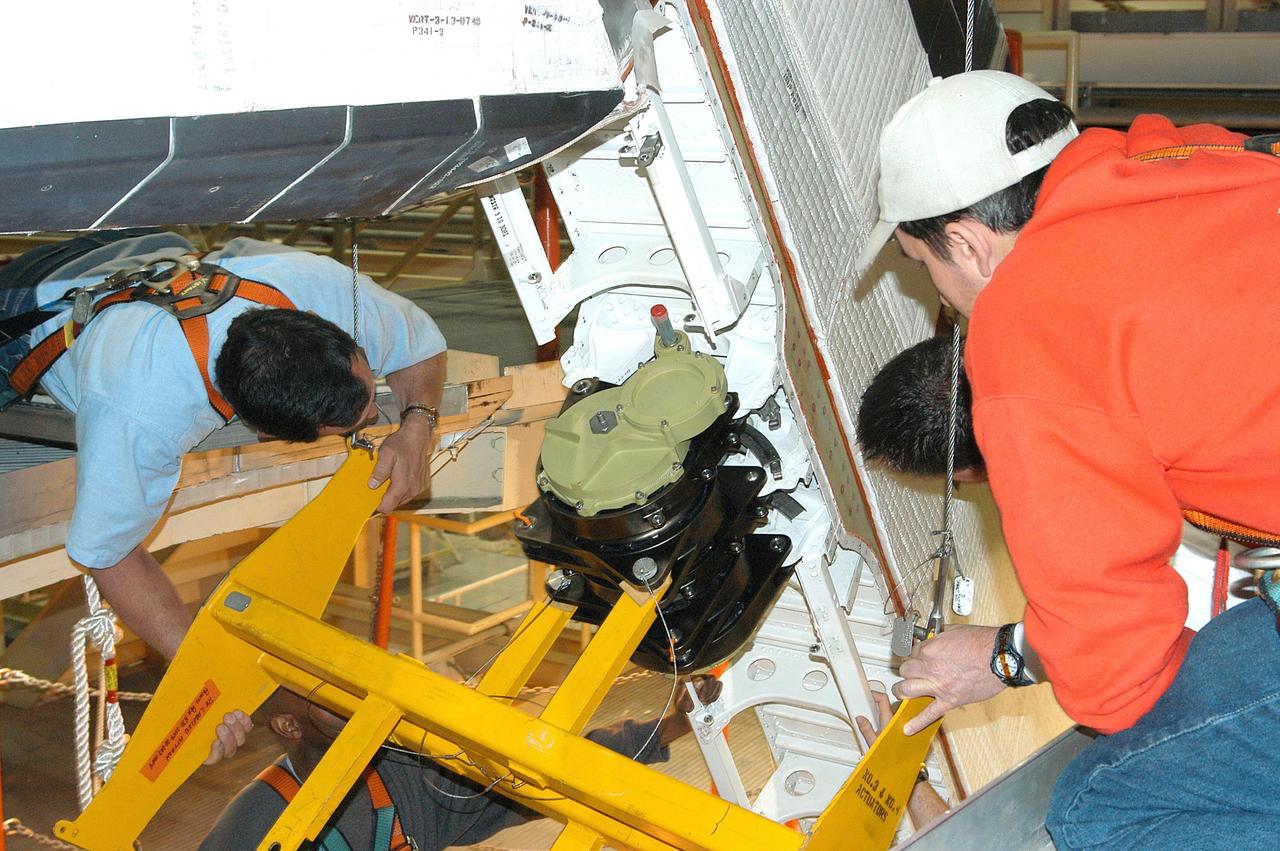
KENNEDY SPACE CENTER, FLA. - United Space Alliance technicians verify the alignment of Rudder Speed Brake actuator No.4 as it is attached to Space Shuttle orbiter Discovery in the Orbiter Processing Facility. Discovery has been assigned to the first Return to Flight mission, STS-114, a logistics flight to the International Space Station.
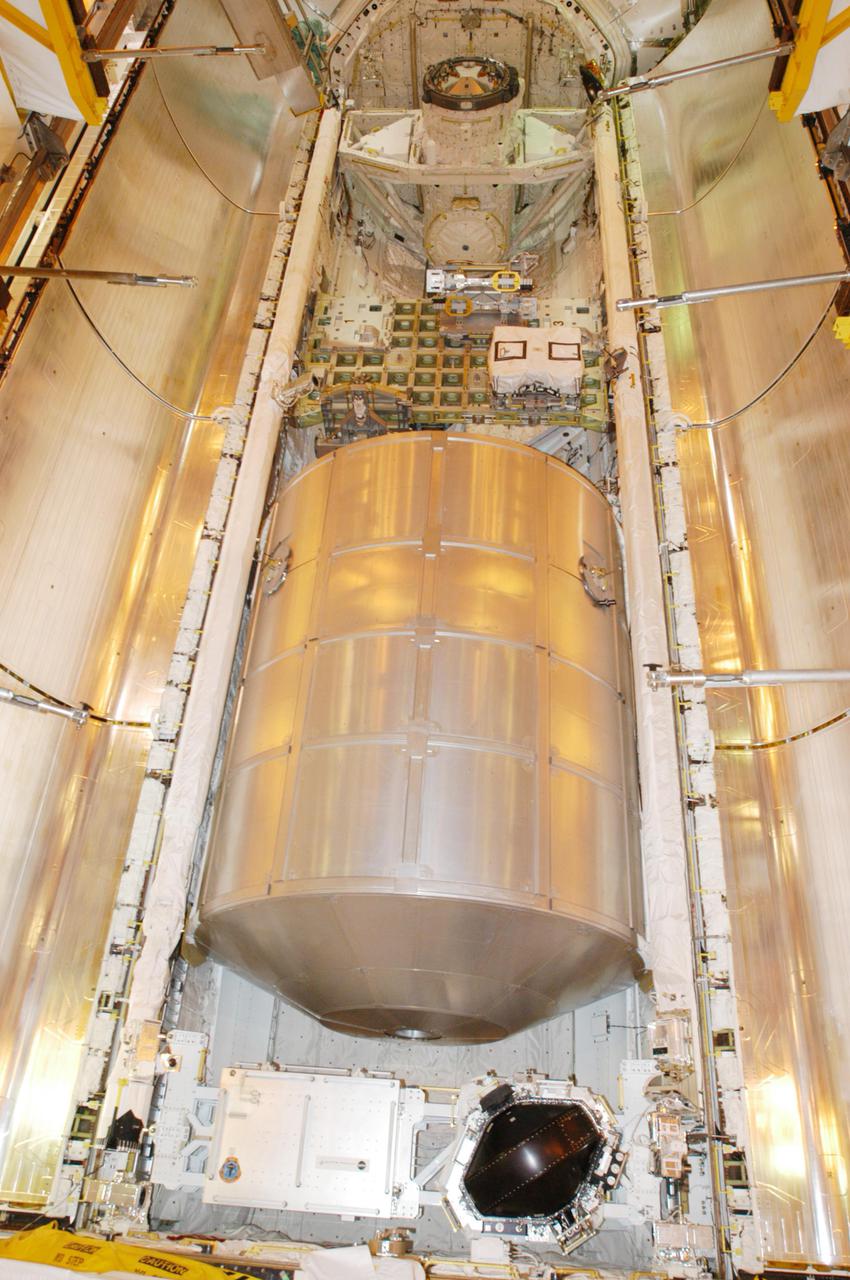
KENNEDY SPACE CENTER, FLA. - At Launch Pad 39B, all payloads are secure and closure of the cargo bay doors on Space Shuttle Discovery is moments away. Payload bay door closure is a significant milestone in the preparations for the first Return to Flight mission, STS-114. During its 12-day mission, Discovery’s seven-person crew will test new hardware and techniques to improve Shuttle safety, as well as deliver supplies to the International Space Station. Discovery’s payloads include the Multi-Purpose Logistics Module Raffaello (center), the Lightweight Multi-Purpose Experiment Support Structure Carrier (LMC), and the External Stowage Platform-2 (ESP-2). Raffaello will deliver supplies to the International Space Station including food, clothing and research equipment. The LMC supports a replacement Control Moment Gyroscope (bottom right) and a tile repair sample box (bottom left). The ESP-2 is outfitted with replacement parts. Launch of STS-114 was set for July 13 at the conclusion of the mission's Flight Readiness Review yesterday.
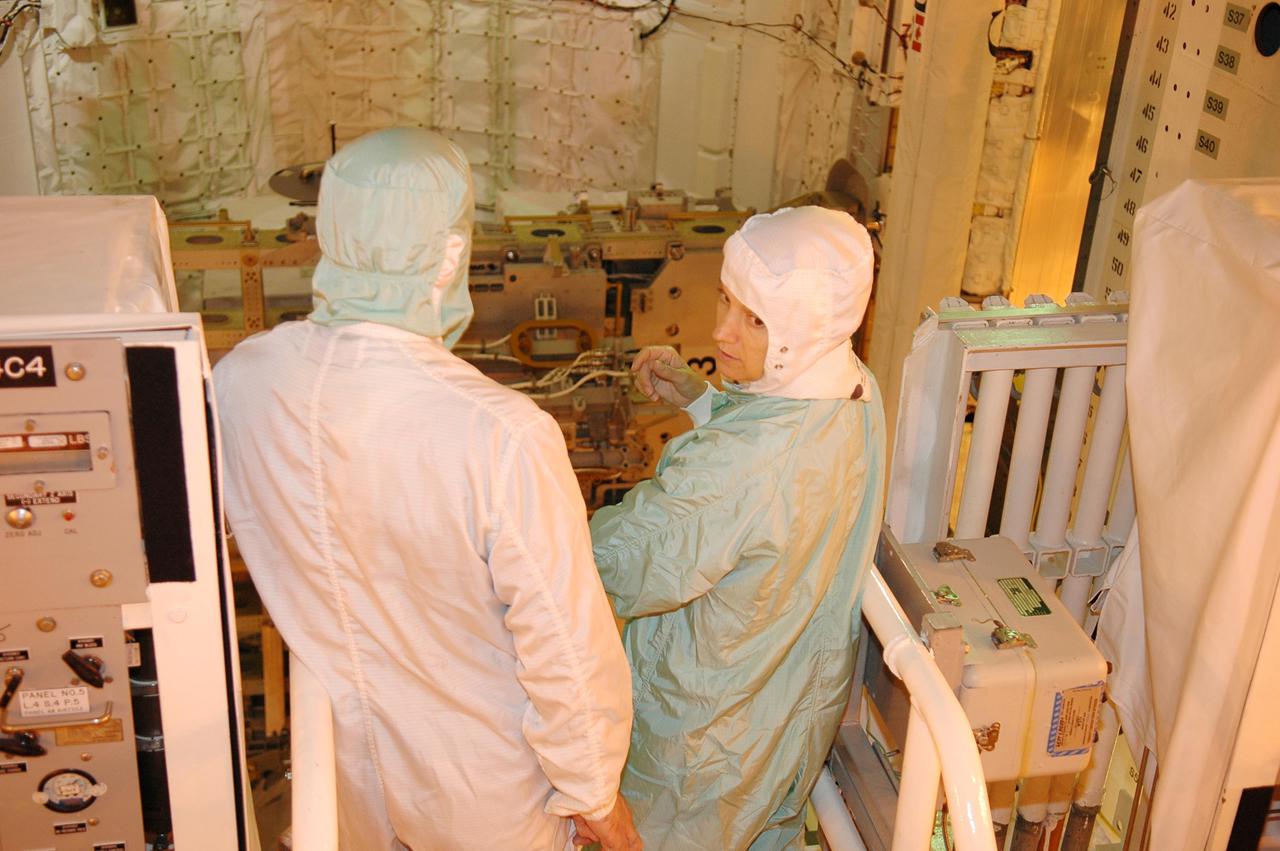
KENNEDY SPACE CENTER, FLA. - At Launch Pad 39B, STS-114 Commander Eileen Collins (right) takes a final look at the payloads in Space Shuttle Discovery's cargo bay before launch. During its 12-day mission, Discovery’s seven-person crew will test new hardware and techniques to improve Shuttle safety, as well as deliver supplies to the International Space Station. Discovery’s payloads include the Multi-Purpose Logistics Module Raffaello, the Lightweight Multi-Purpose Experiment Support Structure Carrier (LMC), and the External Stowage Platform-2 (ESP-2). Raffaello will deliver supplies to the International Space Station including food, clothing and research equipment. The LMC will carry a replacement Control Moment Gyroscope and a tile repair sample box. The ESP-2 is outfitted with replacement parts. Launch of Discovery on its Return to Flight mission STS-114 is set for July 13.
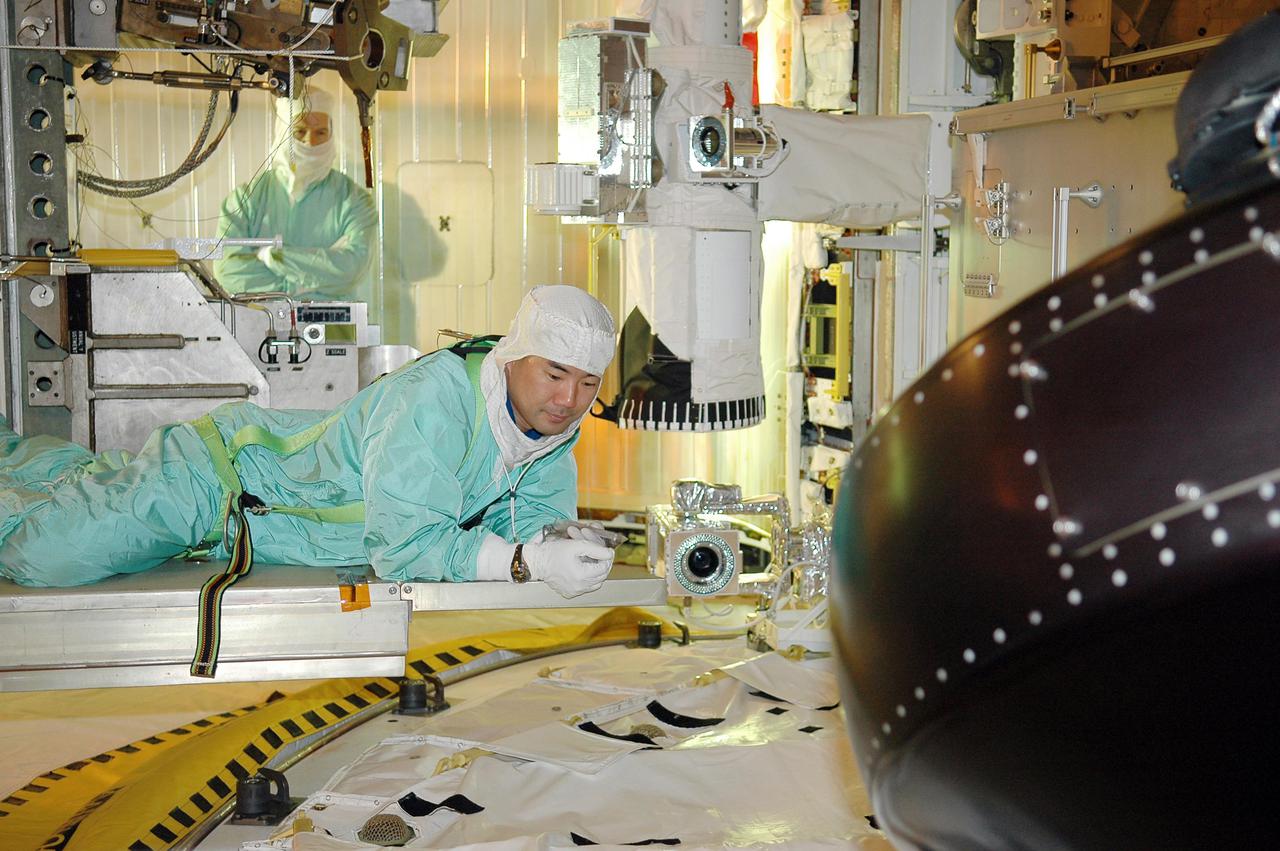
KENNEDY SPACE CENTER, FLA. - At Launch Pad 39B, STS-114 Mission Specialist Soichi Noguchi (prone) inspects the payloads in Space Shuttle Discovery's payload bay. During its 12-day mission, Discovery’s seven-person crew will test new hardware and techniques to improve Shuttle safety, as well as deliver supplies to the International Space Station. Discovery’s payloads include the Multi-Purpose Logistics Module Raffaello, the Lightweight Multi-Purpose Experiment Support Structure Carrier (LMC), and the External Stowage Platform-2 (ESP-2). Raffaello will deliver supplies to the International Space Station including food, clothing and research equipment. The LMC will carry a replacement Control Moment Gyroscope and a tile repair sample box. The ESP-2 is outfitted with replacement parts. Launch of Discovery on its Return to Flight mission STS-114 is set for July 13.
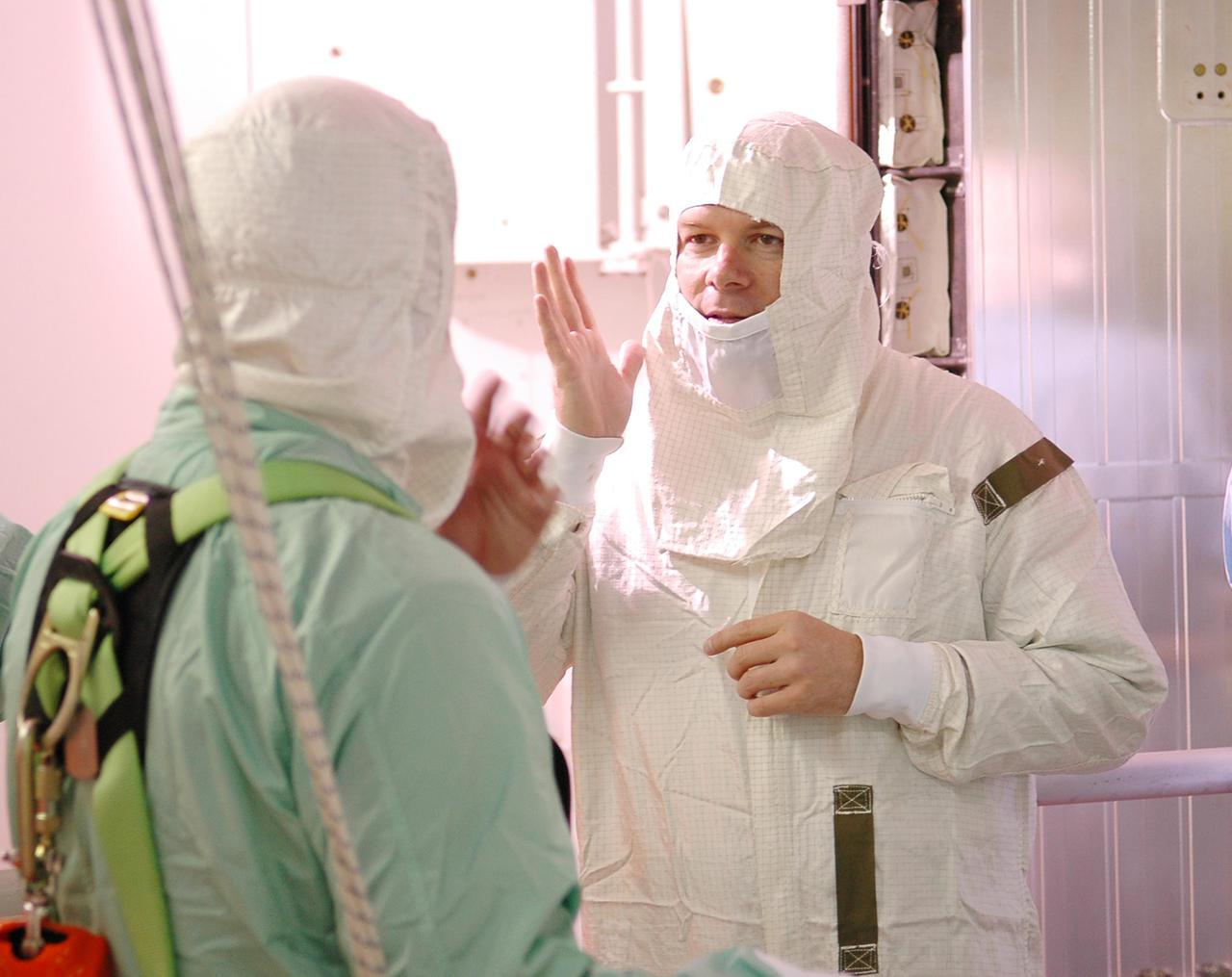
KENNEDY SPACE CENTER, FLA. - At Launch Pad 39B, STS-114 Pilot James Kelly discusses the payloads in Space Shuttle Discovery's cargo bay with his fellow crew members before launch. The STS-114 crew is conducting a final inspection of their mission payloads before launch. During its 12-day mission, Discovery’s seven-person crew will test new hardware and techniques to improve Shuttle safety, as well as deliver supplies to the International Space Station. Discovery’s payloads include the Multi-Purpose Logistics Module Raffaello, the Lightweight Multi-Purpose Experiment Support Structure Carrier (LMC), and the External Stowage Platform-2 (ESP-2). Raffaello will deliver supplies to the International Space Station including food, clothing and research equipment. The LMC will carry a replacement Control Moment Gyroscope and a tile repair sample box. The ESP-2 is outfitted with replacement parts. Launch of Discovery on its Return to Flight mission STS-114 is set for July 13.
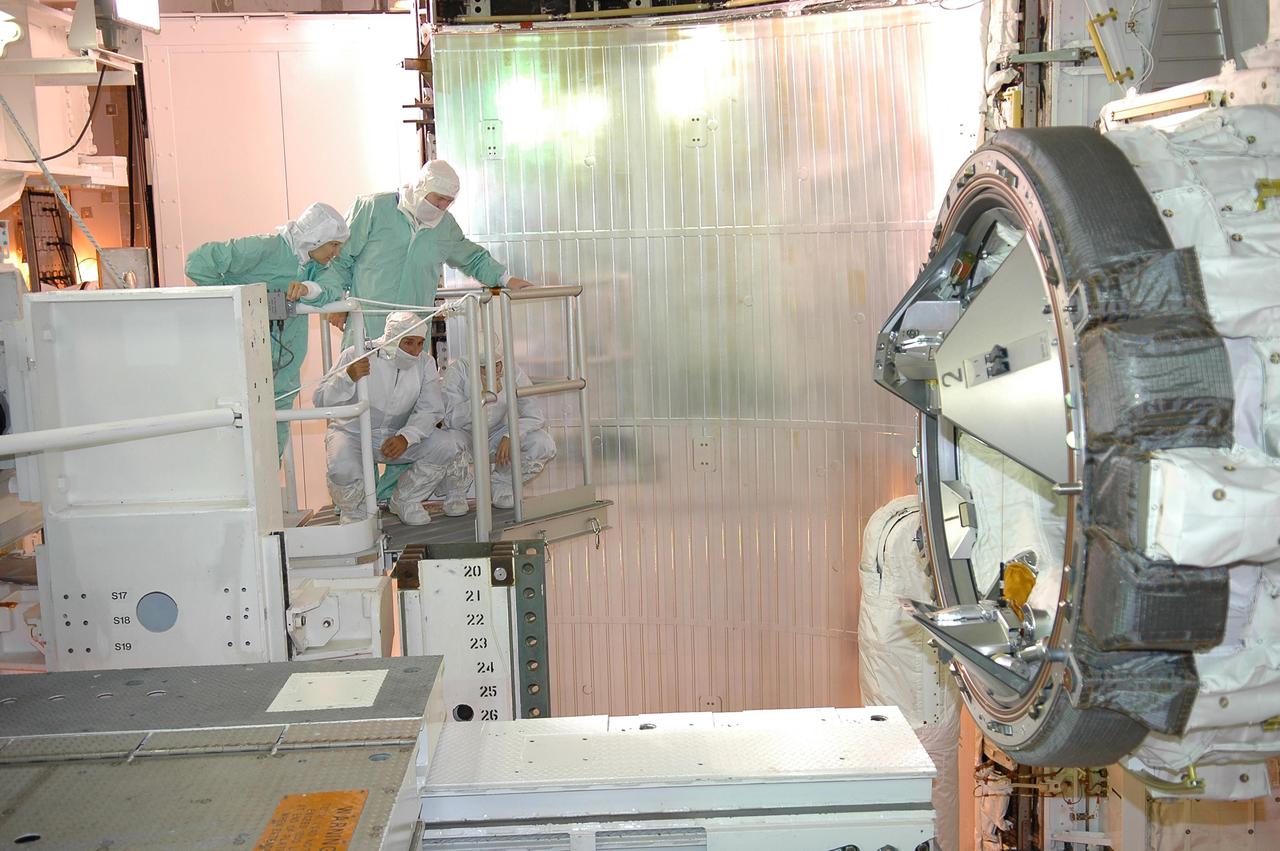
KENNEDY SPACE CENTER, FLA. - At Launch Pad 39B, STS-114 Commander Eileen Collins (left) inspects the payloads in Space Shuttle Discovery's payload bay as Mission Specialists Charles Camarda and Wendy Lawrence (kneeling) look on. During its 12-day mission, Discovery’s seven-person crew will test new hardware and techniques to improve Shuttle safety, as well as deliver supplies to the International Space Station. Discovery’s payloads include the Multi-Purpose Logistics Module Raffaello, the Lightweight Multi-Purpose Experiment Support Structure Carrier (LMC), and the External Stowage Platform-2 (ESP-2). Raffaello will deliver supplies to the International Space Station including food, clothing and research equipment. The LMC will carry a replacement Control Moment Gyroscope and a tile repair sample box. The ESP-2 is outfitted with replacement parts. Launch of Discovery on its Return to Flight mission STS-114 is set for July 13.
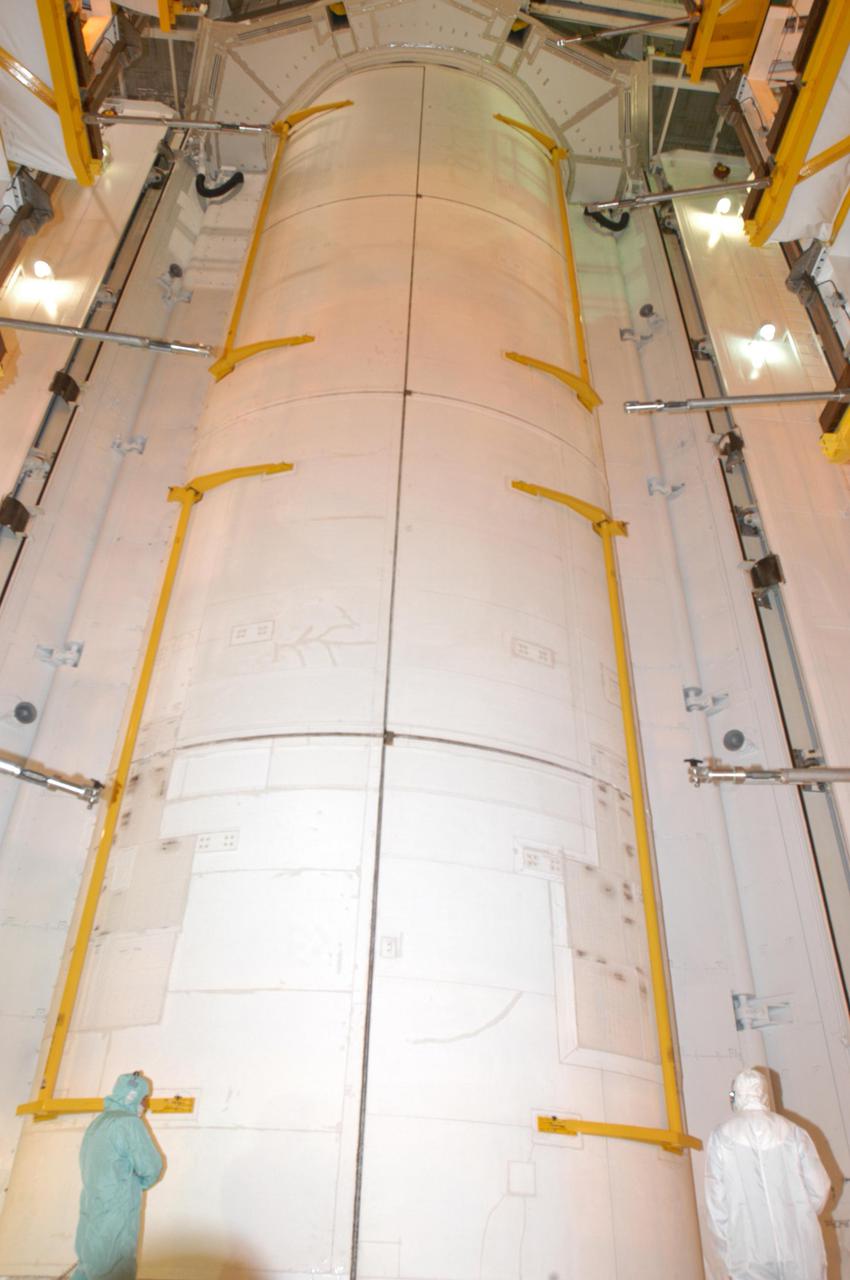
KENNEDY SPACE CENTER, FLA. - At Launch Pad 39B, the payload bay doors on Space Shuttle Discovery are closed for launch. Payload bay door closure is a significant milestone in the preparations for the first Return to Flight mission, STS-114. During its 12-day mission, Discovery’s seven-person crew will test new hardware and techniques to improve Shuttle safety, as well as deliver supplies to the International Space Station. Discovery’s payloads include the Multi-Purpose Logistics Module Raffaello, the Lightweight Multi-Purpose Experiment Support Structure Carrier (LMC), and the External Stowage Platform-2 (ESP-2). Raffaello will deliver supplies to the International Space Station including food, clothing and research equipment. The LMC supports a replacement Control Moment Gyroscope and a tile repair sample box. The ESP-2 is outfitted with replacement parts. Launch of mission STS-114 was set for July 13 at the conclusion of the Flight Readiness Review yesterday.
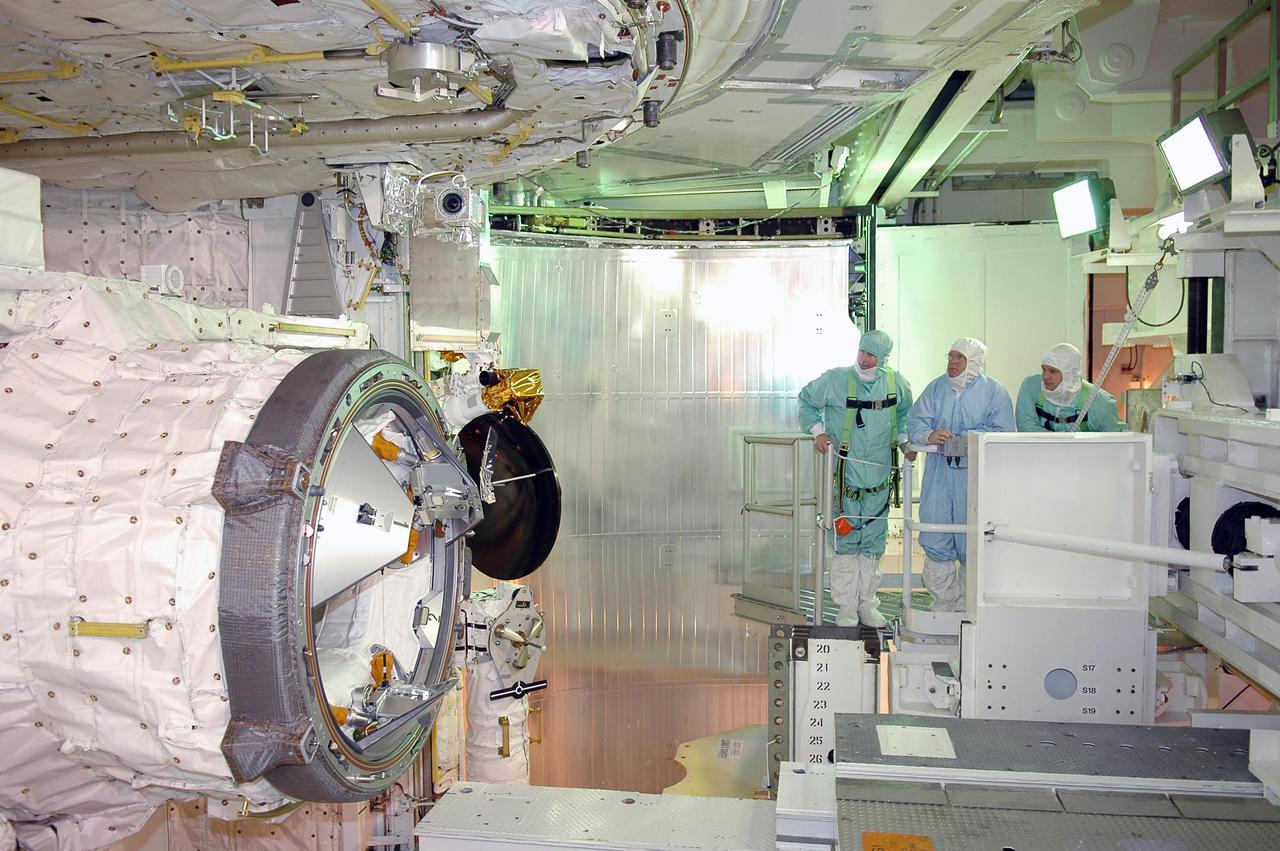
KENNEDY SPACE CENTER, FLA. - At Launch Pad 39B, STS-114 Mission Specialists Stephen Robinson (left) and Andrew Thomas discuss the payloads in Space Shuttle Discovery's cargo bay with a technician. The STS-114 crew is conducting a final inspection of their mission payloads before launch. During its 12-day mission, Discovery’s seven-person crew will test new hardware and techniques to improve Shuttle safety, as well as deliver supplies to the International Space Station. Discovery’s payloads include the Multi-Purpose Logistics Module Raffaello, the Lightweight Multi-Purpose Experiment Support Structure Carrier (LMC), and the External Stowage Platform-2 (ESP-2). Raffaello will deliver supplies to the International Space Station including food, clothing and research equipment. The LMC will carry a replacement Control Moment Gyroscope and a tile repair sample box. The ESP-2 is outfitted with replacement parts. Launch of Discovery on its Return to Flight mission STS-114 is set for July 13.
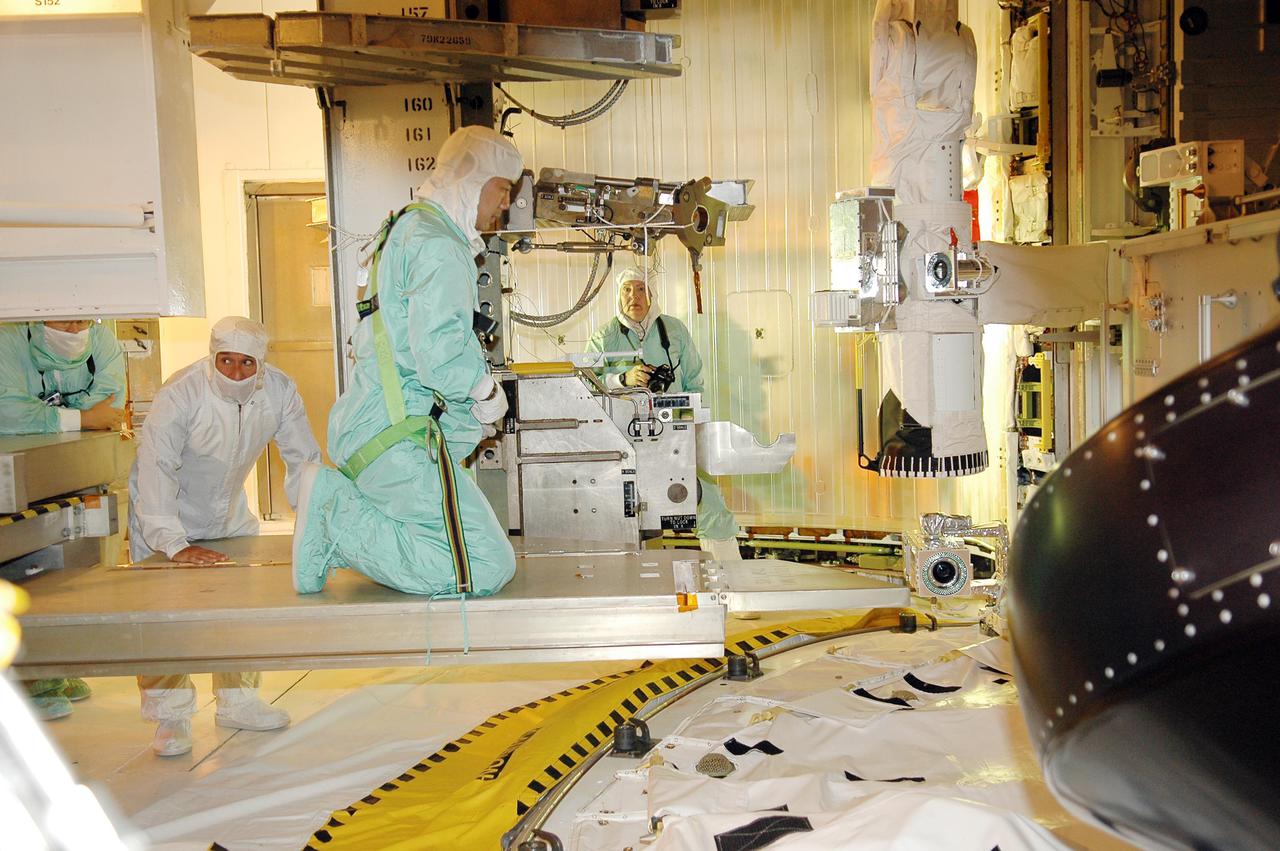
KENNEDY SPACE CENTER, FLA. - At Launch Pad 39B, STS-114 Mission Specialist Soichi Noguchi (kneeling) inspects the payloads in Space Shuttle Discovery's payload bay as Mission Specialist Charles Camarda (left) looks on. During its 12-day mission, Discovery’s seven-person crew will test new hardware and techniques to improve Shuttle safety, as well as deliver supplies to the International Space Station. Discovery’s payloads include the Multi-Purpose Logistics Module Raffaello, the Lightweight Multi-Purpose Experiment Support Structure Carrier (LMC), and the External Stowage Platform-2 (ESP-2). Raffaello will deliver supplies to the International Space Station including food, clothing and research equipment. The LMC will carry a replacement Control Moment Gyroscope and a tile repair sample box. The ESP-2 is outfitted with replacement parts. Launch of Discovery on its Return to Flight mission STS-114 is set for July 13.
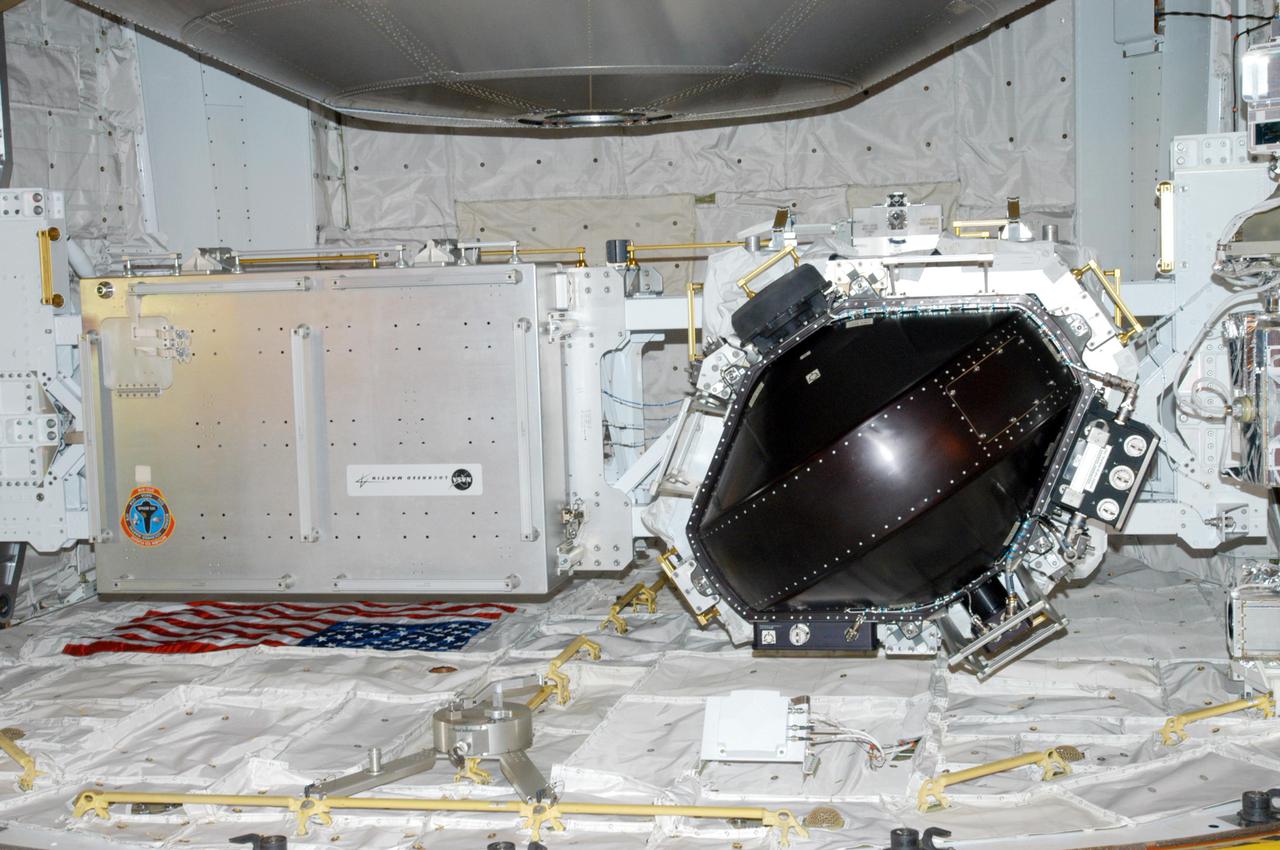
KENNEDY SPACE CENTER, FLA. - At Launch Pad 39B, the Lightweight Multi-Purpose Experiment Support Structure Carrier (LMC), supporting the Control Moment Gyroscope (right) and a tile repair sample box, is viewed before the orbiter's payload bay doors are closed for launch. Payload bay door closure is a significant milestone in the preparations of Discovery for the first Return to Flight mission, STS-114. Other payloads in the bay include the Multi-Purpose Logistics Module Raffaello and the External Stowage Platform-2 (ESP-2). During its 12-day mission, Discovery’s seven-person crew will test new hardware and techniques to improve Shuttle safety, as well as deliver supplies to the International Space Station. Launch of STS-114 was set for July 13 at the conclusion of the mission's Flight Readiness Review yesterday.
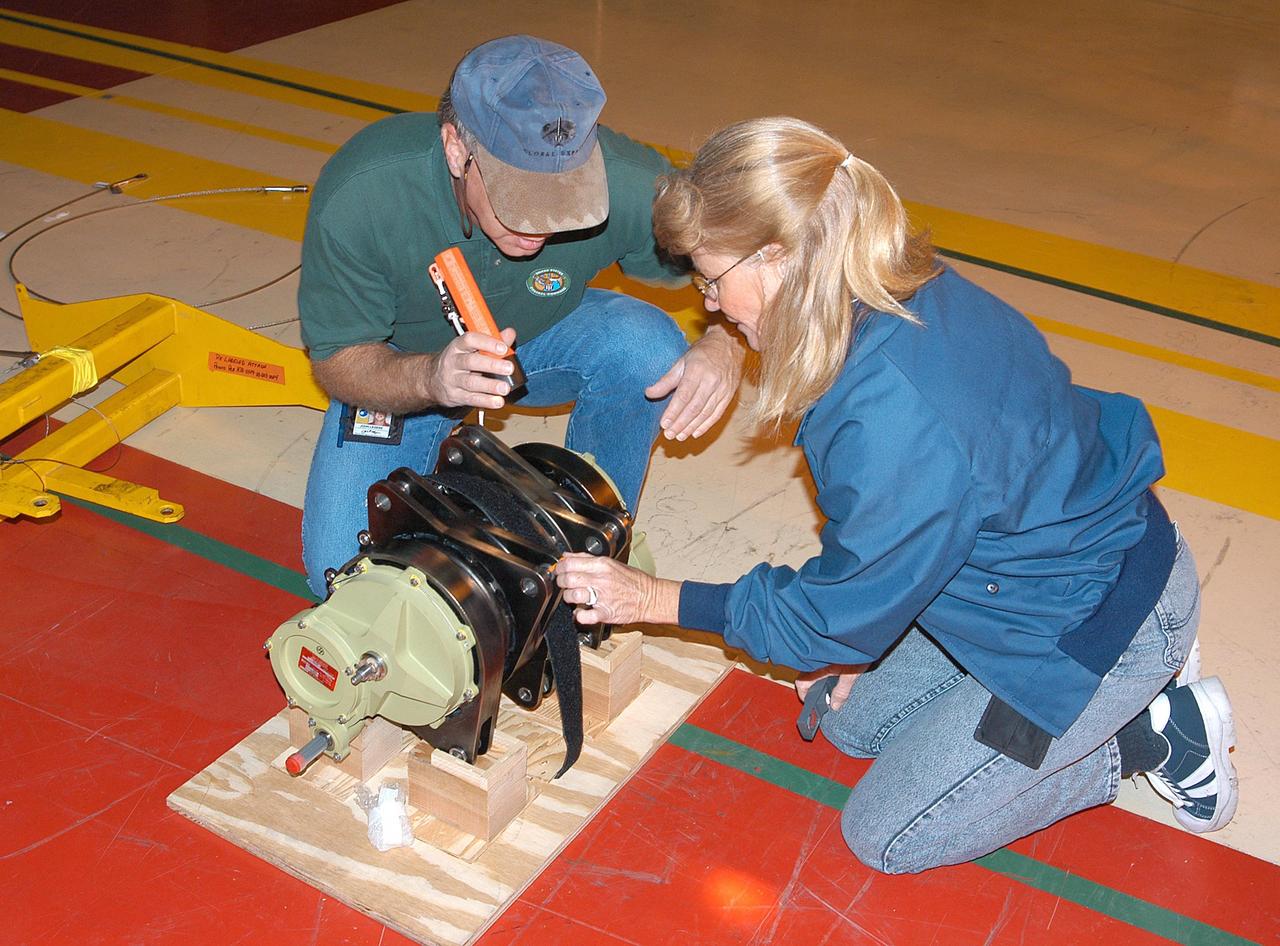
KENNEDY SPACE CENTER, FLA. - United Space Alliance technicians check out Rudder Speed Brake actuator No. 4 before installing it on Space Shuttle orbiter Discovery in the Orbiter Processing Facility. Discovery has been assigned to the first Return to Flight mission, STS-114, a logistics flight to the International Space Station.
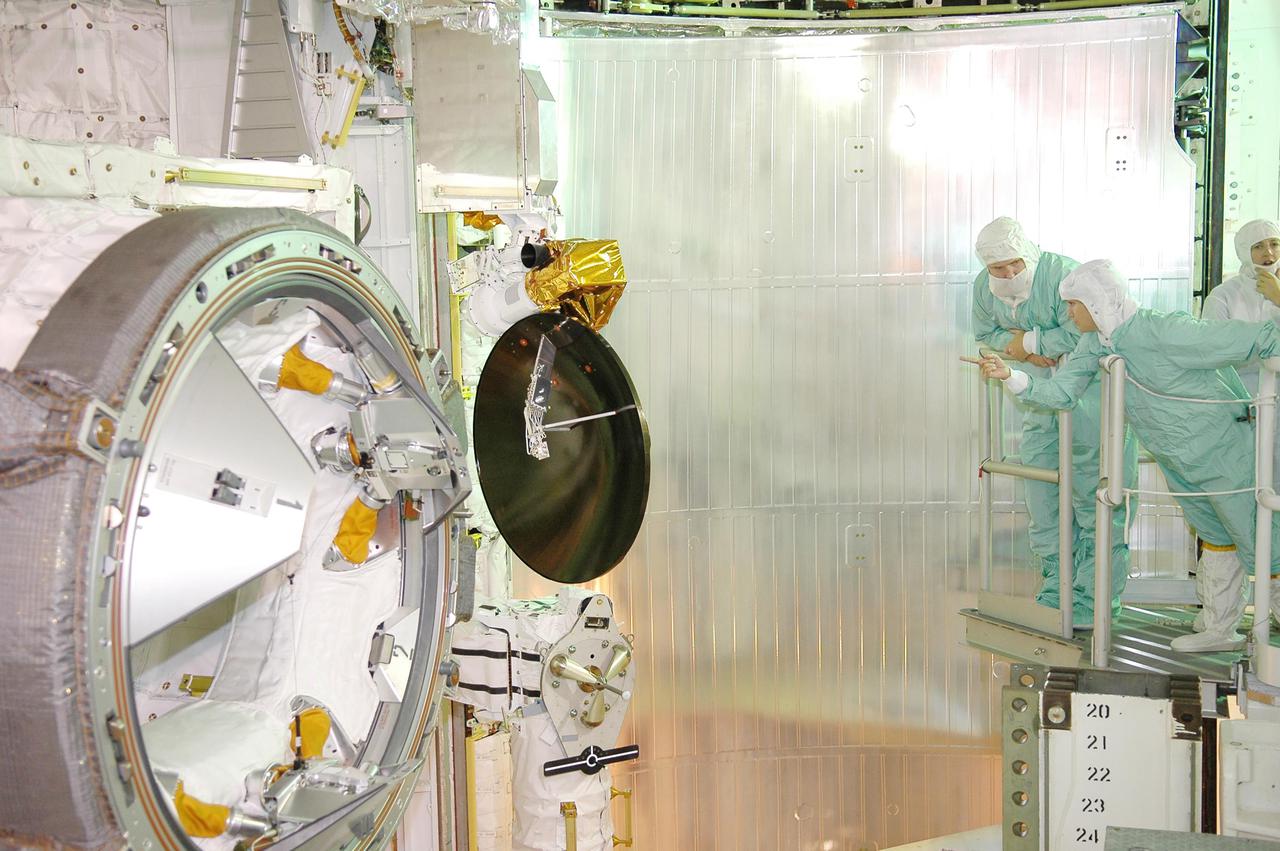
KENNEDY SPACE CENTER, FLA. - At Launch Pad 39B, STS-114 Commander Eileen Collins (leaning forward) discusses the payloads in Space Shuttle Discovery's cargo bay with Mission Specialist Wendy Lawrence (right) looking on behind her. The STS-114 crew is conducting a final inspection of their mission payloads before launch. During its 12-day mission, Discovery’s seven-person crew will test new hardware and techniques to improve Shuttle safety, as well as deliver supplies to the International Space Station. Discovery’s payloads include the Multi-Purpose Logistics Module Raffaello, the Lightweight Multi-Purpose Experiment Support Structure Carrier (LMC), and the External Stowage Platform-2 (ESP-2). Raffaello will deliver supplies to the International Space Station including food, clothing and research equipment. The LMC will carry a replacement Control Moment Gyroscope and a tile repair sample box. The ESP-2 is outfitted with replacement parts. Launch of Discovery on its Return to Flight mission STS-114 is set for July 13.
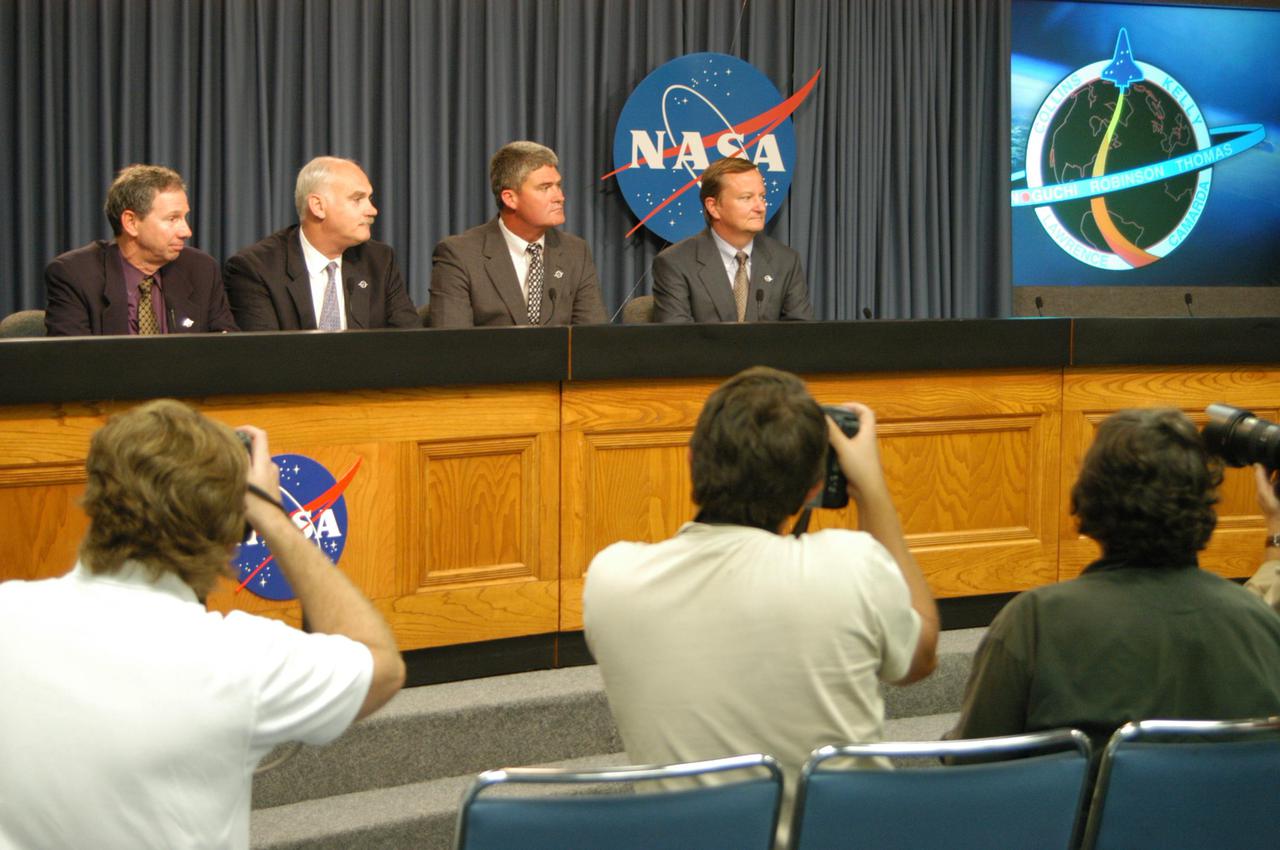
KENNEDY SPACE CENTER, FLA. - Space Shuttle managers take questions from the media during a press conference held following the conclusion of the Flight Readiness Review for Space Shuttle Discovery's Return to Flight mission STS-114. From left are NASA's Administrator Michael Griffin, Associate Administrator for Space Operations William Readdy, Space Shuttle Program Manager William Parsons, and Space Shuttle Launch Director Michael Leinbach. A July 13 launch date was approved for the 12-day mission during which Discovery’s seven-person crew will test new hardware and techniques to improve Shuttle safety, as well as deliver supplies to the International Space Station.
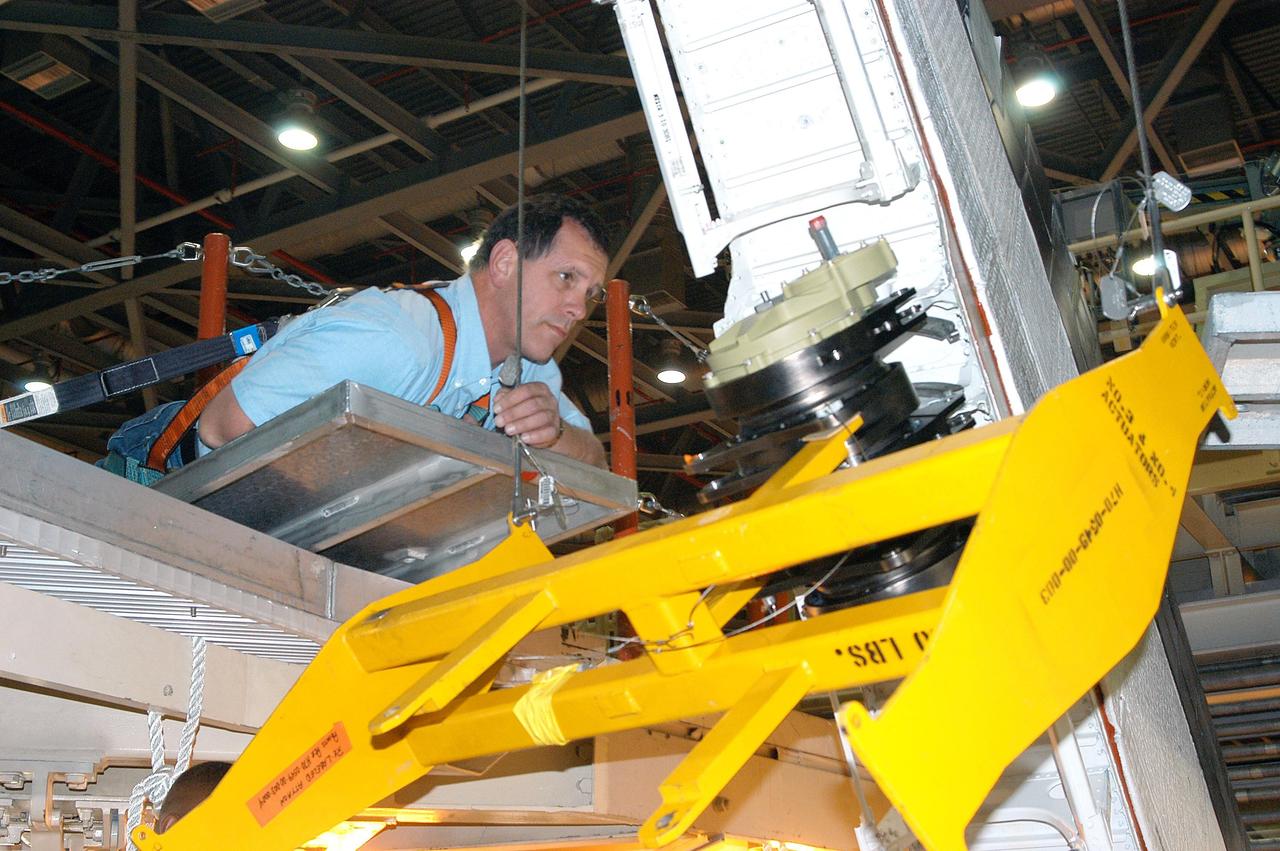
KENNEDY SPACE CENTER, FLA. - A United Space Alliance technician monitors the placement of Rudder Speed Brake actuator No.4 as work proceeds to install it on Space Shuttle orbiter Discovery in the Orbiter Processing Facility. Discovery has been assigned to the first Return to Flight mission, STS-114, a logistics flight to the International Space Station.
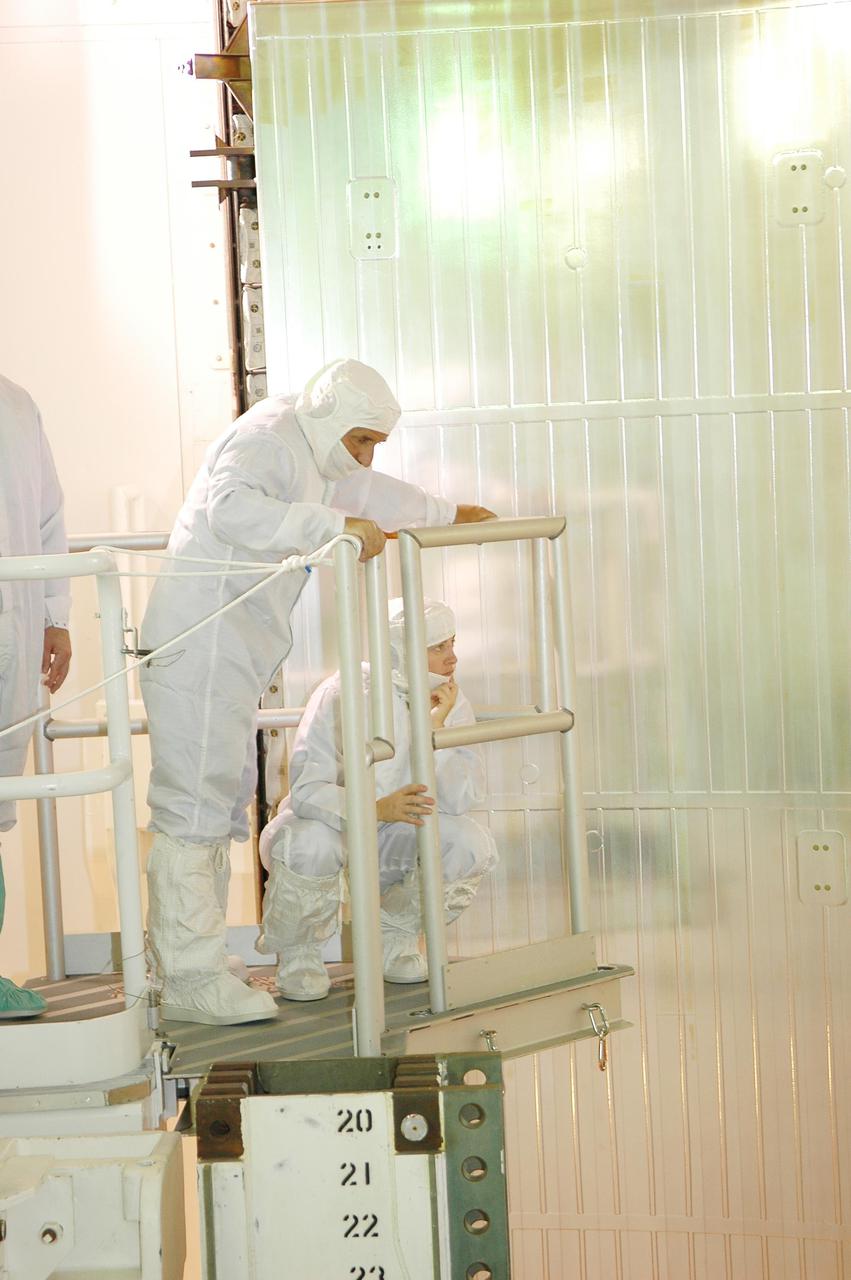
KENNEDY SPACE CENTER, FLA. - At Launch Pad 39B, Mission Specialists Charles Camarda (left) and Wendy Lawrence take a final look at the payloads in Space Shuttle Discovery's cargo bay before launch. During its 12-day mission, Discovery’s seven-person crew will test new hardware and techniques to improve Shuttle safety, as well as deliver supplies to the International Space Station. Discovery’s payloads include the Multi-Purpose Logistics Module Raffaello, the Lightweight Multi-Purpose Experiment Support Structure Carrier (LMC), and the External Stowage Platform-2 (ESP-2). Raffaello will deliver supplies to the International Space Station including food, clothing and research equipment. The LMC will carry a replacement Control Moment Gyroscope and a tile repair sample box. The ESP-2 is outfitted with replacement parts. Launch of Discovery on its Return to Flight mission STS-114 is set for July 13.

KENNEDY SPACE CENTER, FLA. - United Space Alliance technicians start the lift of Rudder Speed Brake actuator No. 4 to Space Shuttle orbiter Discovery in the Orbiter Processing Facility. Discovery has been assigned to the first Return to Flight mission, STS-114, a logistics flight to the International Space Station.

KENNEDY SPACE CENTER, FLA. - A NASA quality inspector checks the placement of Rudder Speed Brake actuator No. 4 as work to install it on Space Shuttle orbiter Discovery nears completion in the Orbiter Processing Facility. Discovery has been assigned to the first Return to Flight mission, STS-114, a logistics flight to the International Space Station.
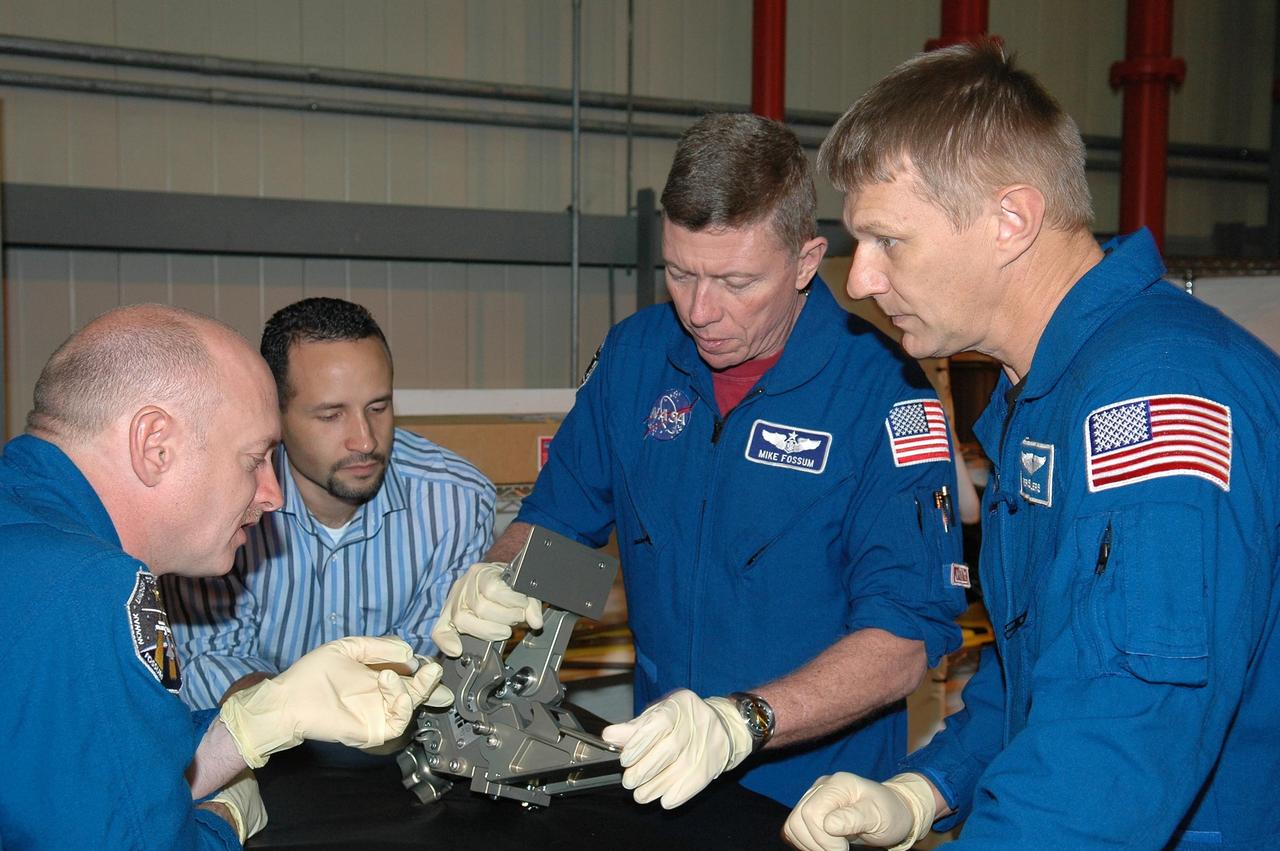
KENNEDY SPACE CENTER, FLA. - In NASA Kennedy Space Center's Orbiter Processing Facility bay 3, members of the STS-121 crew practice working with hardware for the mission under the watchful eyes of Tomas Gonzalez-Torres, with NASA's Johnson Space Center. At left is Pilot Mark Kelly; at right are Mission Specialists Michael Fossum and Piers Sellers. The crew is at Kennedy to take part in the crew equipment interface test, which provides hands-on experience with equipment to be used on-orbit. Launch of Space Shuttle Discovery on mission STS-121, the second return-to-flight mission, is scheduled no earlier than May.
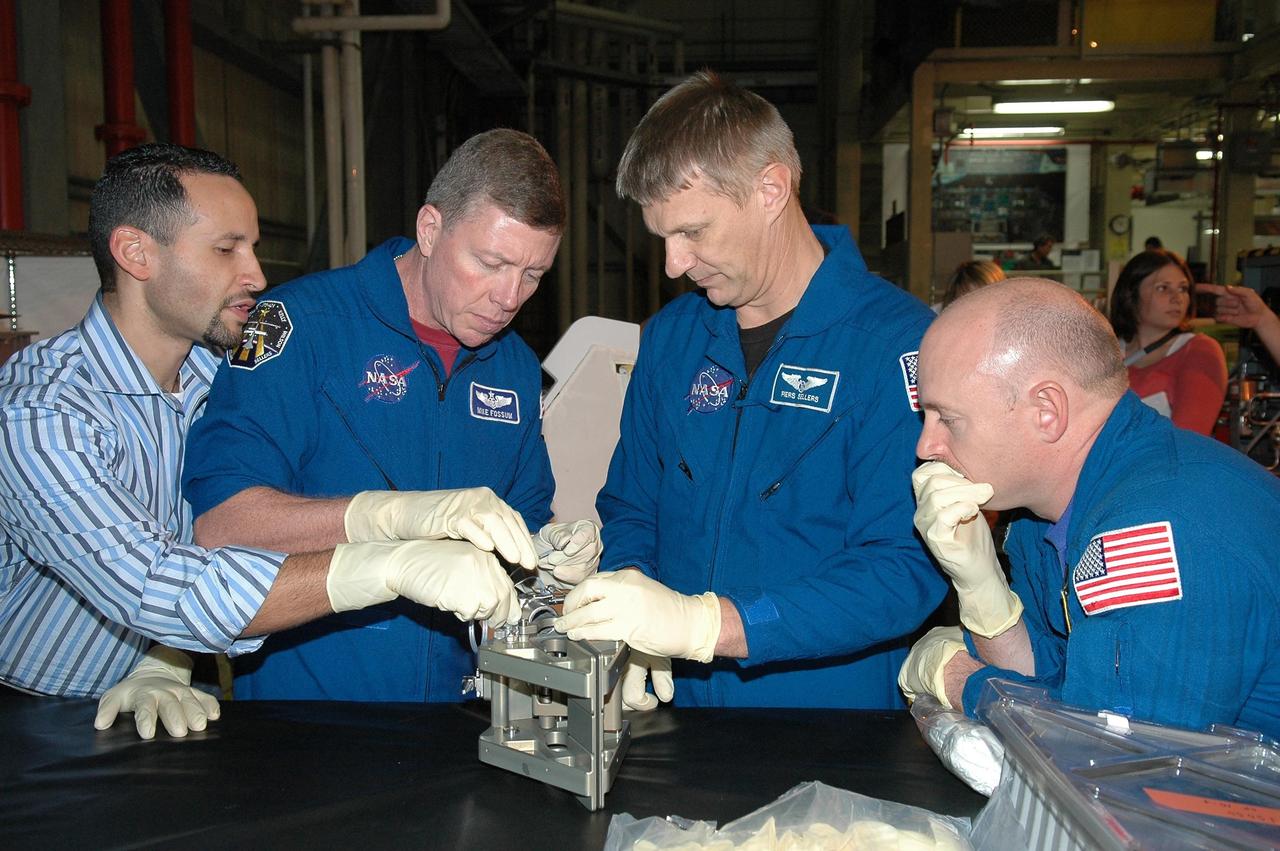
KENNEDY SPACE CENTER, FLA. - In NASA Kennedy Space Center's Orbiter Processing Facility bay 3, members of the STS-121 crew, under the watchful eyes of Tomas Gonzalez-Torres, with NASA's Johnson Space Center, practice working with hardware for the mission. Seen are (second from left) Mission Specialists Michael Fossum and Piers Sellers and Pilot Mark Kelly. The crew is at Kennedy to take part in the crew equipment interface test, which provides hands-on experience with equipment to be used on-orbit. Launch of Space Shuttle Discovery on mission STS-121, the second return-to-flight mission, is scheduled no earlier than May.
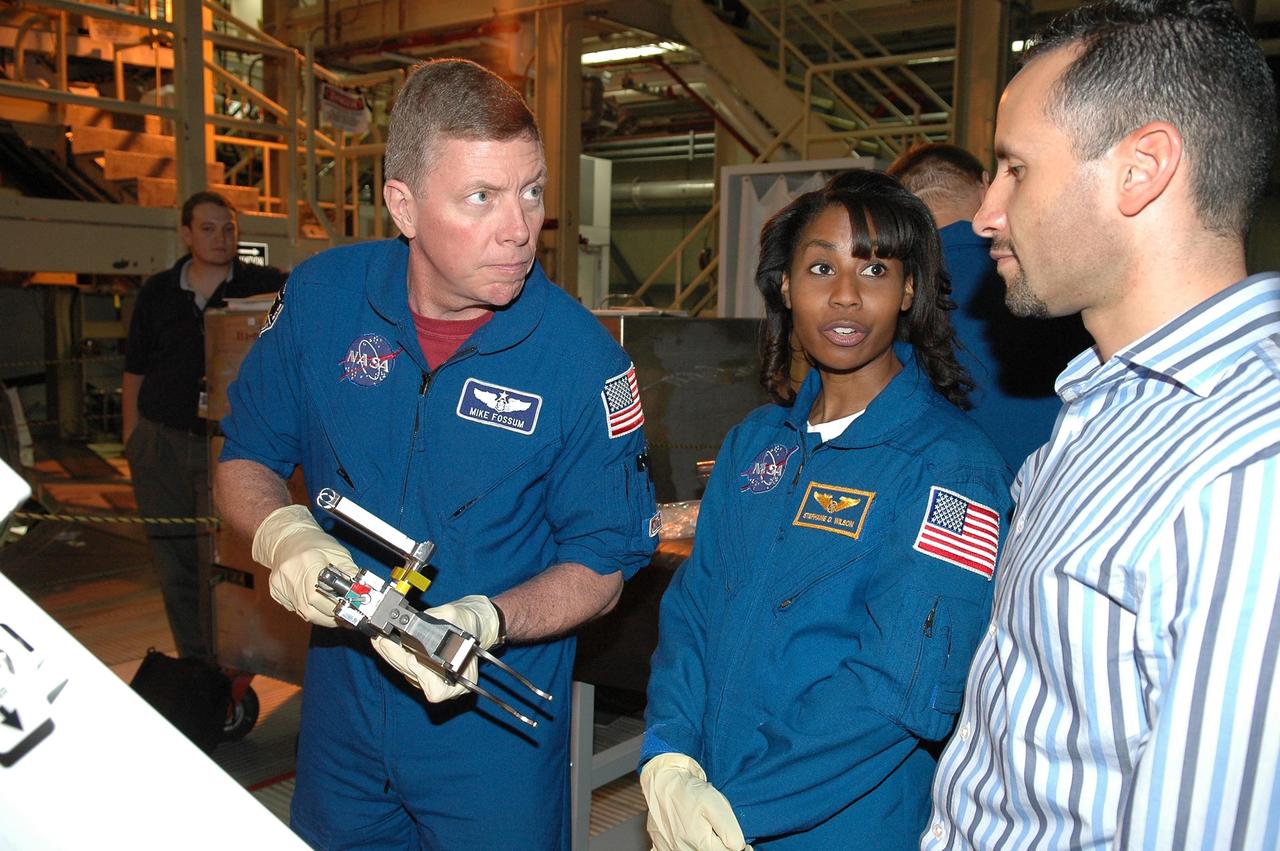
KENNEDY SPACE CENTER, FLA. - In NASA Kennedy Space Center's Orbiter Processing Facility bay 3, STS-121 Mission Specialist Michael Fossum (left) talks to Tomas Gonzalez-Torres, with NASA's Johnson Space Center, about the equipment he is handling. Next to Fossum is Mission Specialist Stephanie Wilson. The crew is at Kennedy to take part in the crew equipment interface test, which provides hands-on experience with equipment to be used on-orbit. Launch of Space Shuttle Discovery on mission STS-121, the second return-to-flight mission, is scheduled no earlier than May.
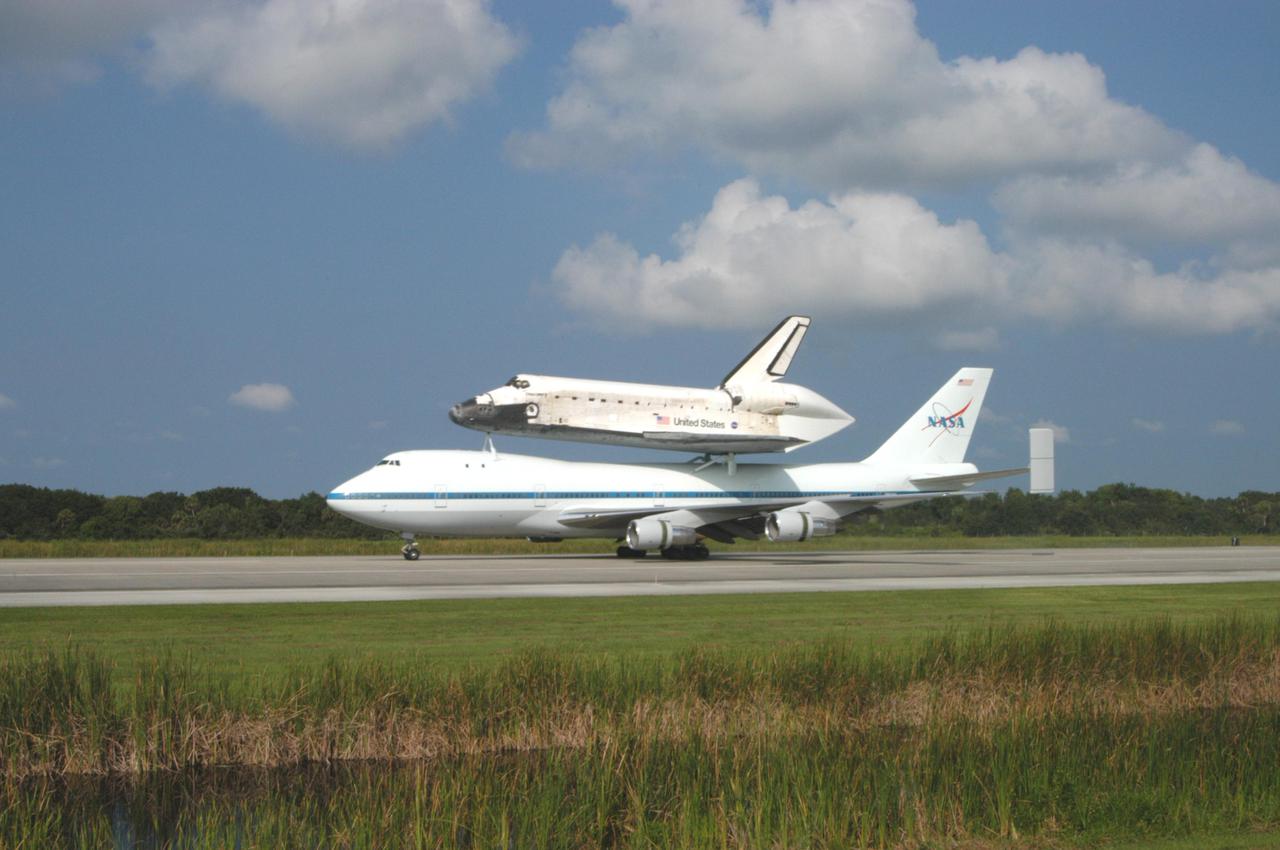
KENNEDY SPACE CENTER, FLA. - Space Shuttle Discovery, atop a modified Boeing 747 Shuttle Carrier Aircraft (SCA), lands on runway 15 at NASA Kennedy Space Center's Shuttle Landing Facility (SLF) at about 10:00 a.m. EDT. The cross-country ferry flight became necessary when two days of unfavorable weather conditions at KSC forced Discovery to land on runway 22 at Edwards Air Force Base, Calif., on Aug. 9 following mission STS-114. On the return trip, stops were made at Altus Air Force Base, Okla., and Barksdale Air Force Base, La., where Discovery stayed for two nights. The SCA and Discovery will be towed to the Mate_Demate Device at the SLF where a crane will lift Discovery from the SCA and place it on solid ground. Discovery will then be towed to the Orbiter Processing Facility where preparations will begin for its next flight, STS-121.
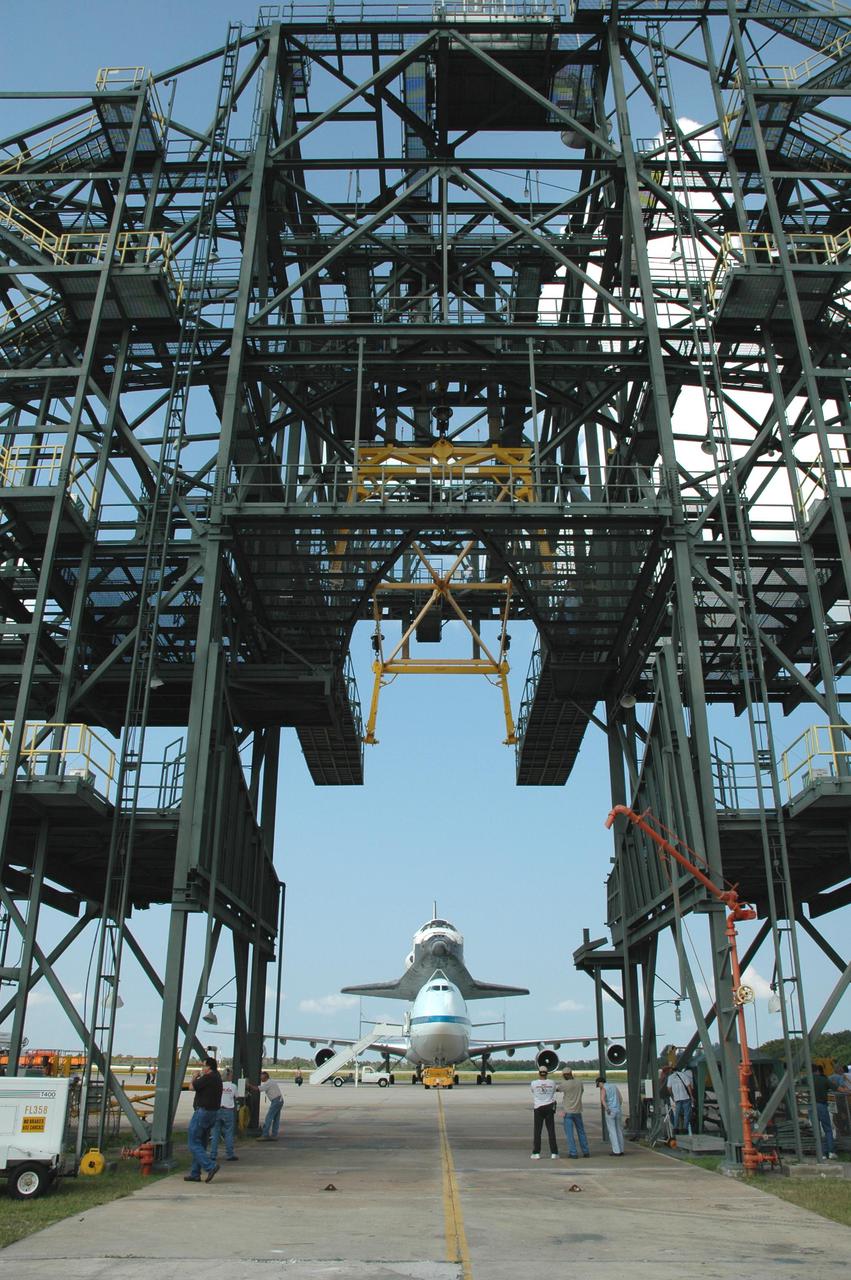
KENNEDY SPACE CENTER, FLA. - Space Shuttle Discovery, atop a modified Boeing 747 Shuttle Carrier Aircraft (SCA), is towed toward the Mate_Demate Device (MDD), in the foreground, at NASA Kennedy Space Center's Shuttle Landing Facility (SLF) following touchdown on runway 15 at about 10:00 a.m. EDT. The cross-country ferry flight became necessary when two days of unfavorable weather conditions at KSC forced Discovery to land on runway 22 at Edwards Air Force Base, Calif., on Aug. 9 following mission STS-114. On the return trip, stops were made at Altus Air Force Base, Okla., and Barksdale Air Force Base, La., where Discovery stayed for two nights. A crane on the MDD will lift Discovery from the SCA and place it on solid ground. Discovery will then be towed to the Orbiter Processing Facility where preparations will begin for its next flight, STS-121.
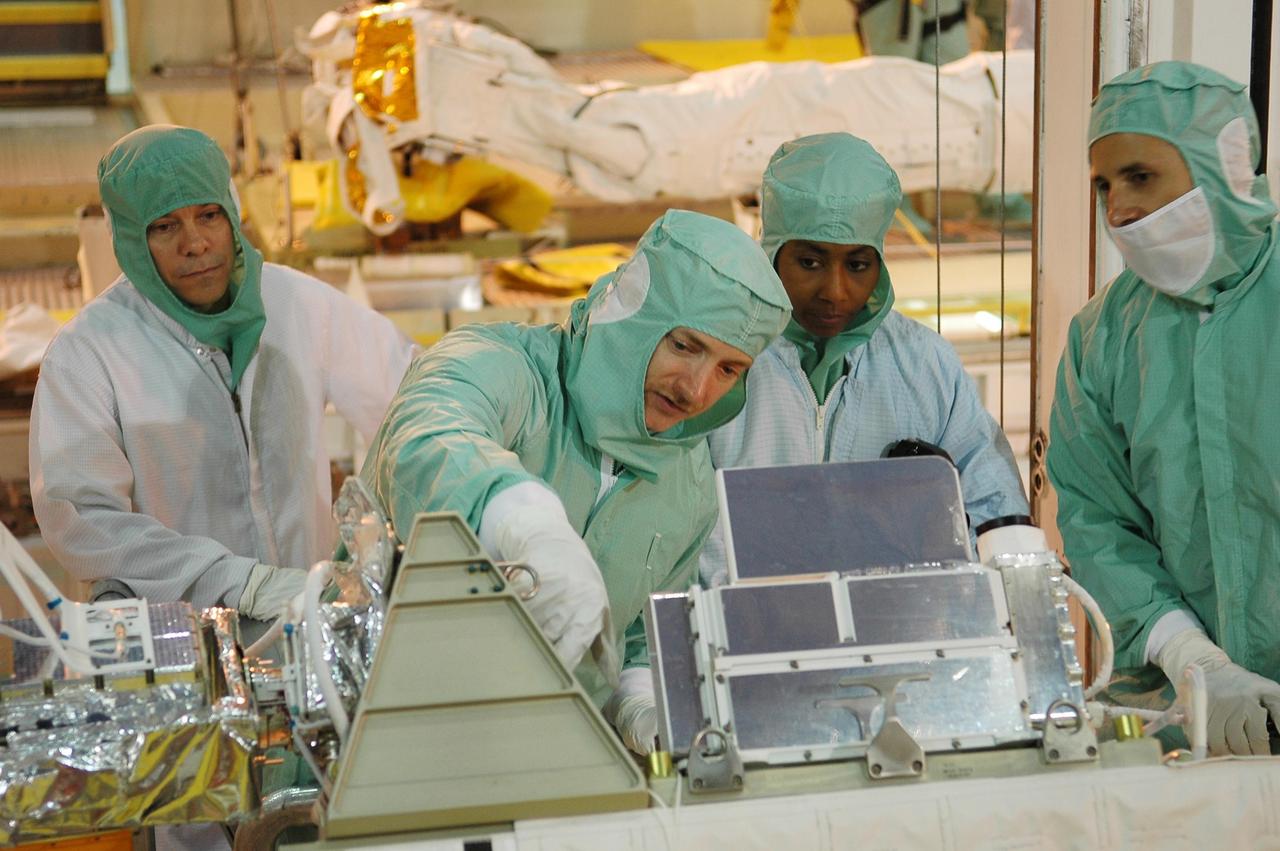
KENNEDY SPACE CENTER, FLA. - In NASA Kennedy Space Center's Orbiter Processing Facility bay 3, STS-121 Pilot Mark Kelly and Mission Specialist Stephanie Wilson are joined by two shuttle technicians as they work with equipment that will be on the mission. The crew is at Kennedy to take part in the crew equipment interface test, which provides hands-on experience with equipment to be used on-orbit. Launch of Space Shuttle Discovery on mission STS-121, the second return-to-flight mission, is scheduled no earlier than May.
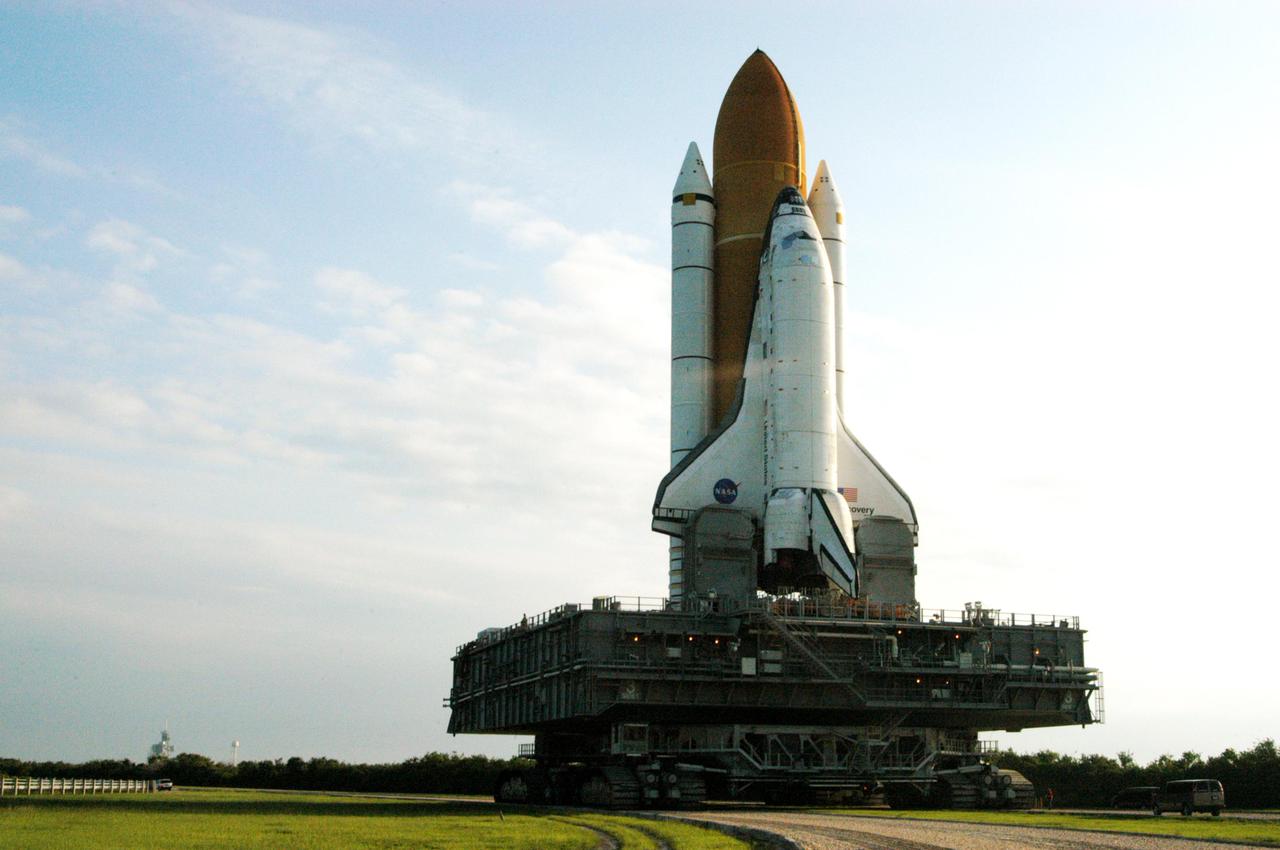
KENNEDY SPACE CENTER, FLA. - Space Shuttle Discovery makes its way along the crawlerway to Launch Pad 39B, seen at left. First motion for the 4.2-mile journey was at 1:58 a.m. EDT. The Space Shuttle rests on a Mobile Launcher Platform that sits atop a Crawler-Transporter. This is the second rollout of Discovery. The vehicle was returned to the Vehicle Assembly Building for connection to an improved External Tank. Launch of Discovery on its Return to Flight mission STS-114 is targeted for a launch window extending from July 13 to July 31.
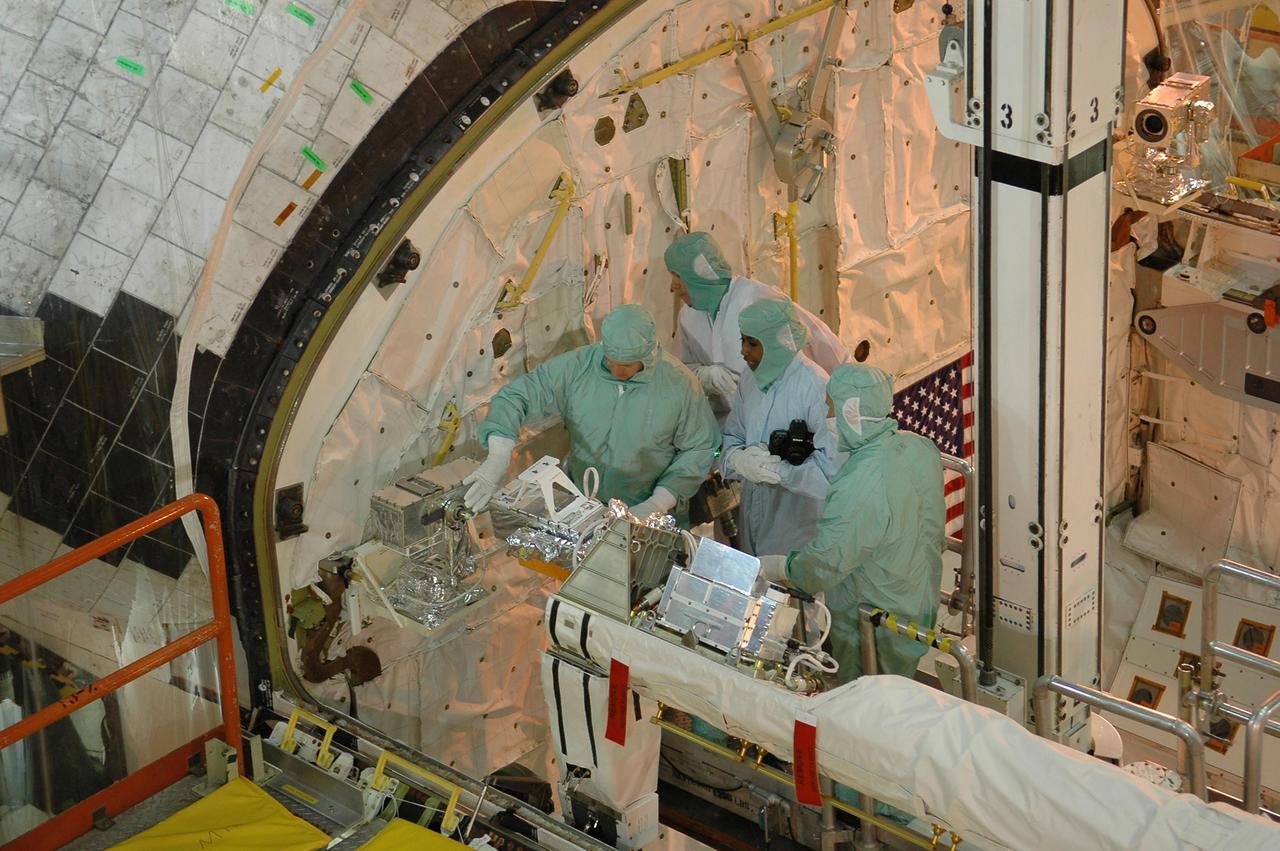
KENNEDY SPACE CENTER, FLA. - In NASA Kennedy Space Center's Orbiter Processing Facility bay 3, STS-121 Pilot Mark Kelly and Mission Specialist Stephanie Wilson are joined by two shuttle technicians as they work with equipment that will be on the mission. The crew is at Kennedy to take part in the crew equipment interface test, which provides hands-on experience with equipment to be used on-orbit. Launch of Space Shuttle Discovery on mission STS-121, the second return-to-flight mission, is scheduled no earlier than May.
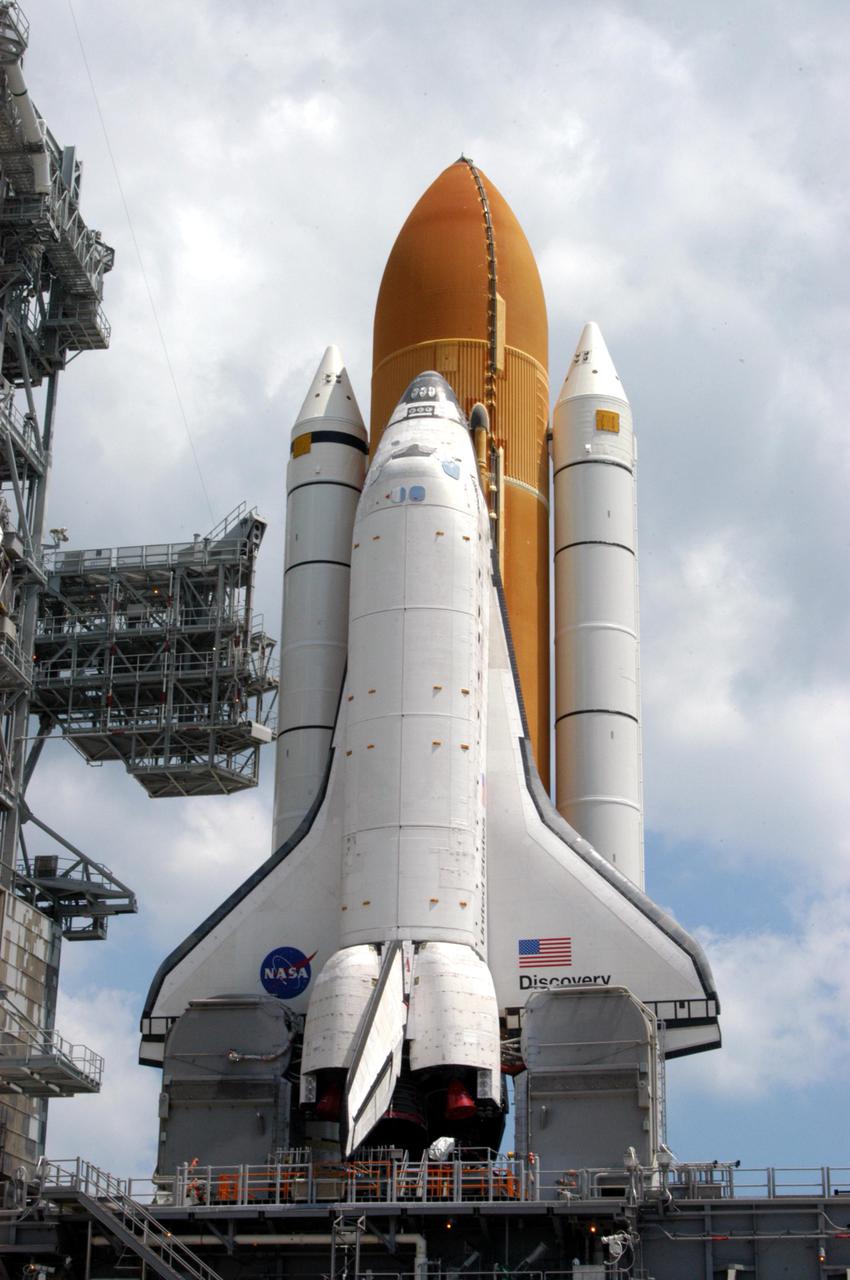
KENNEDY SPACE CENTER, FLA. - Space Shuttle Discovery moves into position on the hardstand of Launch Pad 39B. First motion for the 4.2-mile journey was at 1:58 a.m. EDT. The Space Shuttle rests on a Mobile Launcher Platform that sits atop a Crawler-Transporter. This is the second rollout of Discovery. The orbiter was returned to the Vehicle Assembly Building for connection to an improved External Tank. Launch of Discovery on its Return to Flight mission STS-114 is targeted for a launch window extending from July 13 to July 31.
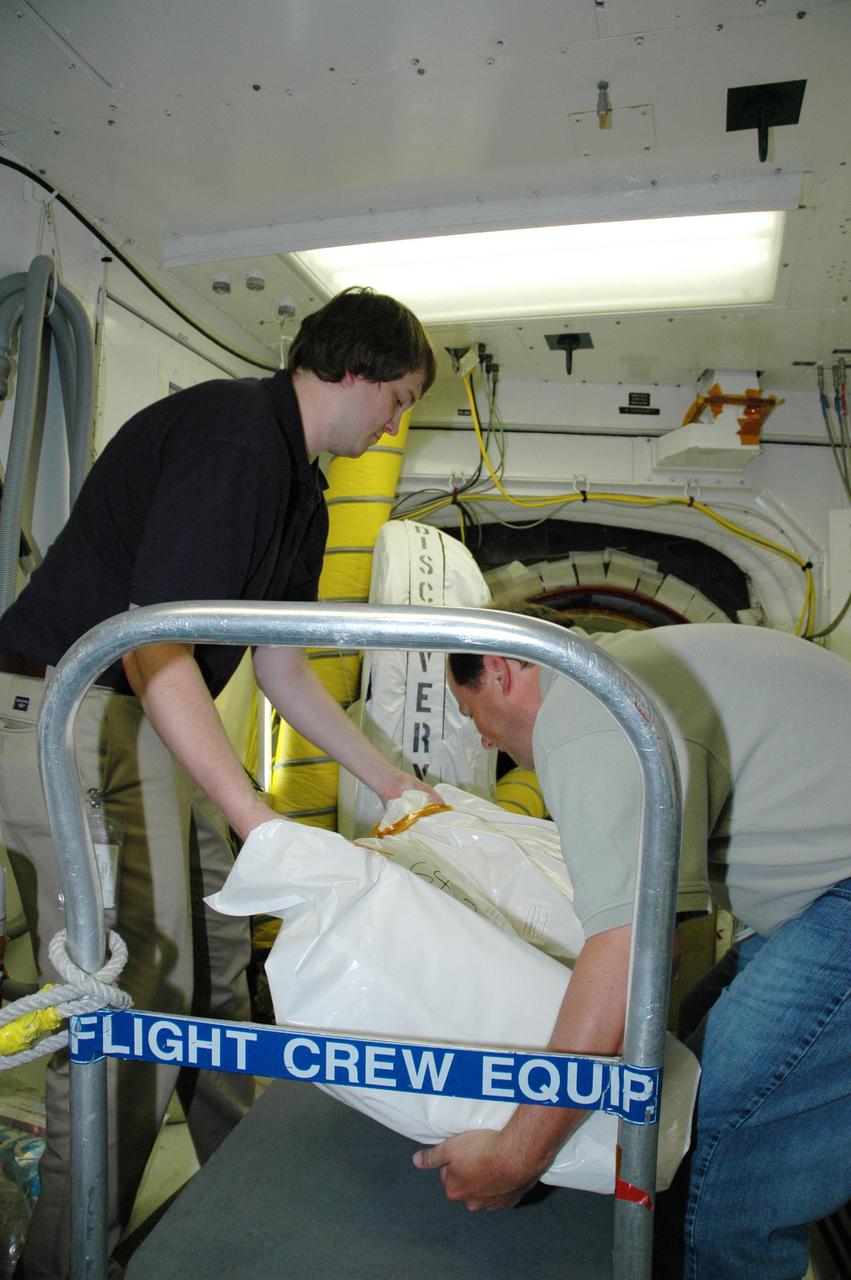
KENNEDY SPACE CENTER, FLA. - At Launch Pad 39B, NASA Flight Crew Systems engineers Ben Van Lear (left) and Brad Poffenberger hand a stowage container to a technician inside Space Shuttle Discovery for installation, a final step in launch preparations. Launch of Discovery on its Return to Flight mission STS-114 is set for July 13, just days away. The container holds consumables that will be unpacked by the crew once on orbit and will be used to return miscellaneous used products back to Earth. During its 12-day mission, Discovery’s seven-person crew will test new hardware and techniques to improve Shuttle safety, as well as deliver supplies to the International Space Station. Discovery’s payloads include the Multi-Purpose Logistics Module Raffaello, the Lightweight Multi-Purpose Experiment Support Structure Carrier (LMC), and the External Stowage Platform-2 (ESP-2). Raffaello will deliver supplies to the International Space Station including food, clothing and research equipment. The LMC will carry a replacement Control Moment Gyroscope and a tile repair sample box. The ESP-2 is outfitted with replacement parts.
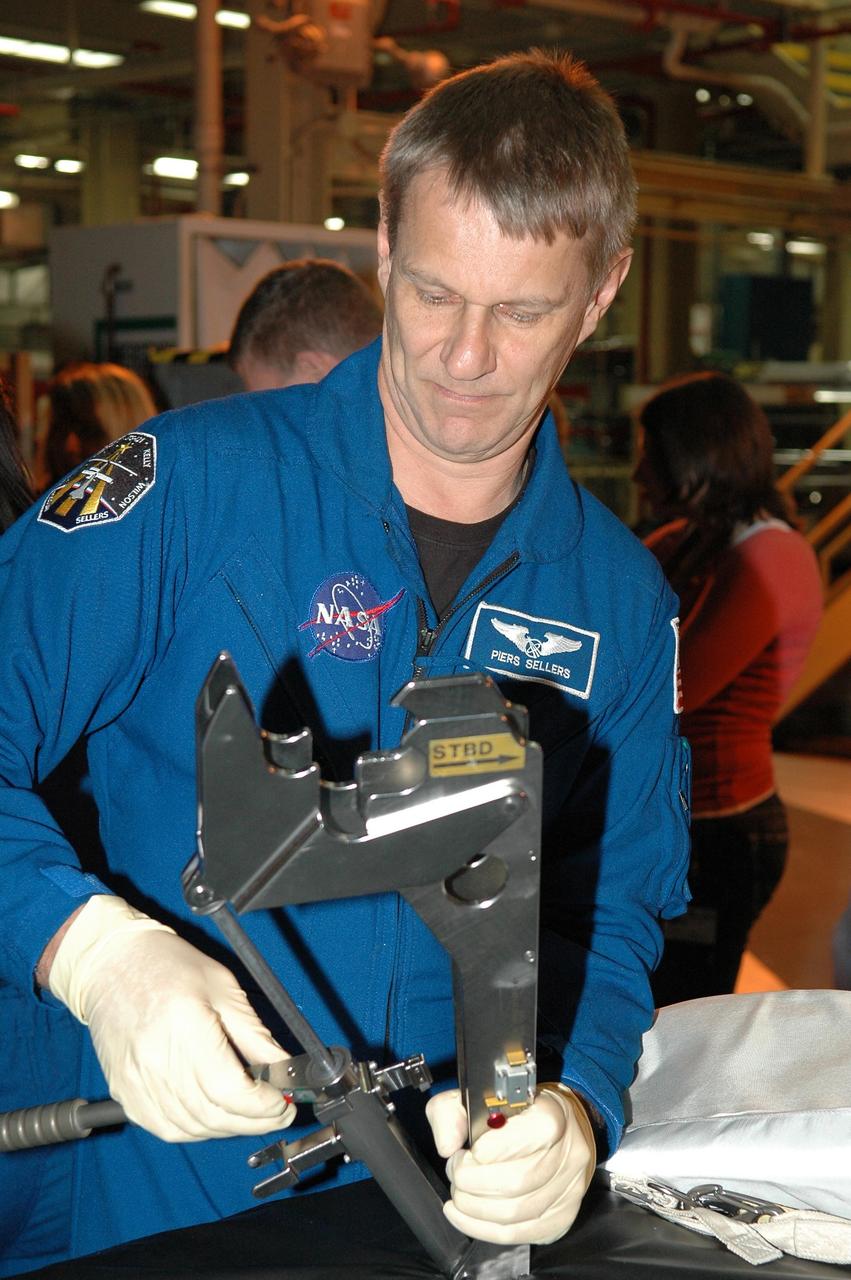
KENNEDY SPACE CENTER, FLA. - In NASA Kennedy Space Center's Orbiter Processing Facility bay 3, STS-121 Mission Specialist Piers Sellers practices using a piece of equipment that will be on the mission. The crew is at Kennedy to take part in the crew equipment interface test, which provides hands-on experience with equipment to be used on-orbit. Launch of Space Shuttle Discovery on mission STS-121, the second return-to-flight mission, is scheduled no earlier than May.
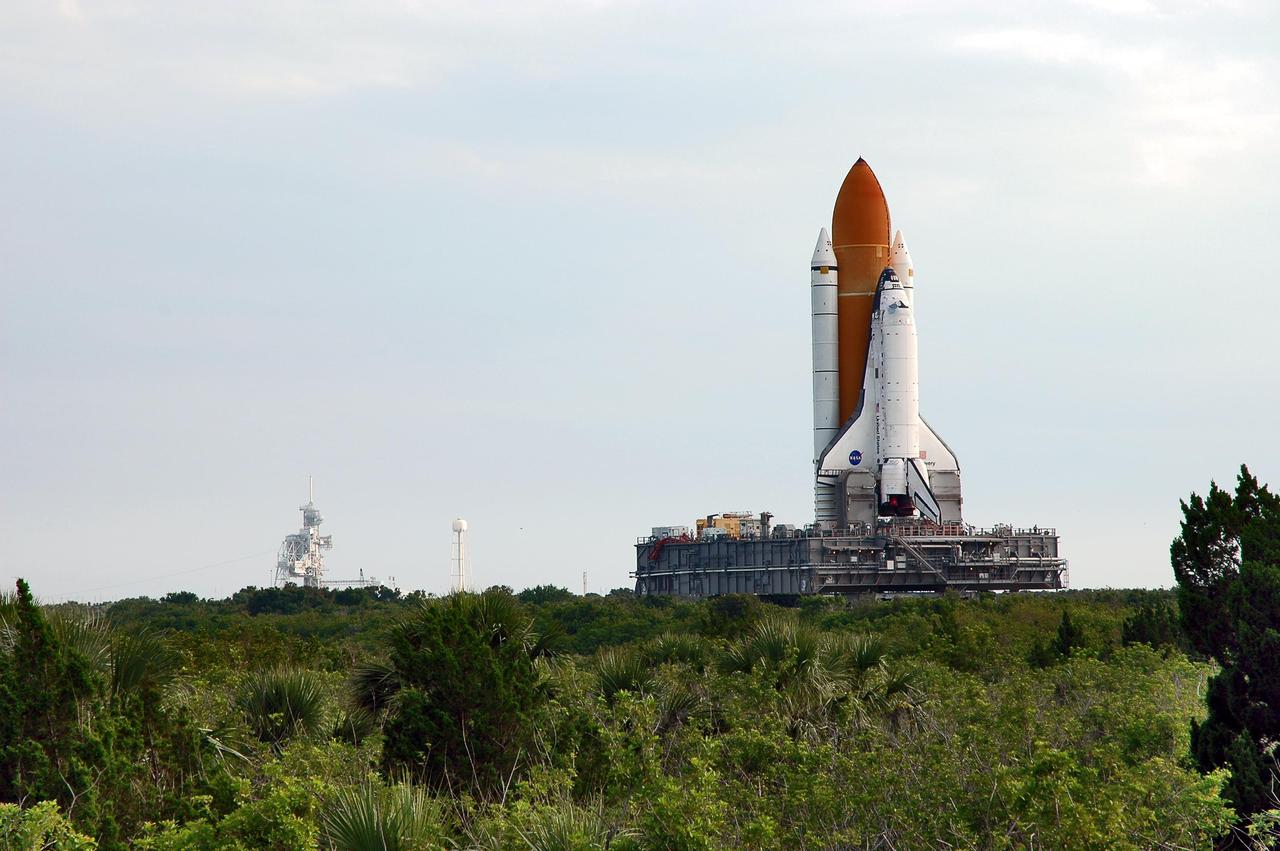
KENNEDY SPACE CENTER, FLA. - Space Shuttle Discovery makes its way along the crawlerway to Launch Pad 39B, seen at left. First motion for the 4-mile, 6-hour journey was at 1:58 a.m. EDT. The Space Shuttle rests on a Mobile Launcher Platform that sits atop a Crawler-Transporter. This is the second rollout of Discovery after being returned to the Vehicle Assembly Building for connection to an improved External Tank. Launch of Discovery on its Return to Flight mission STS-114 is targeted for a launch window extending from July 13 to July 31.
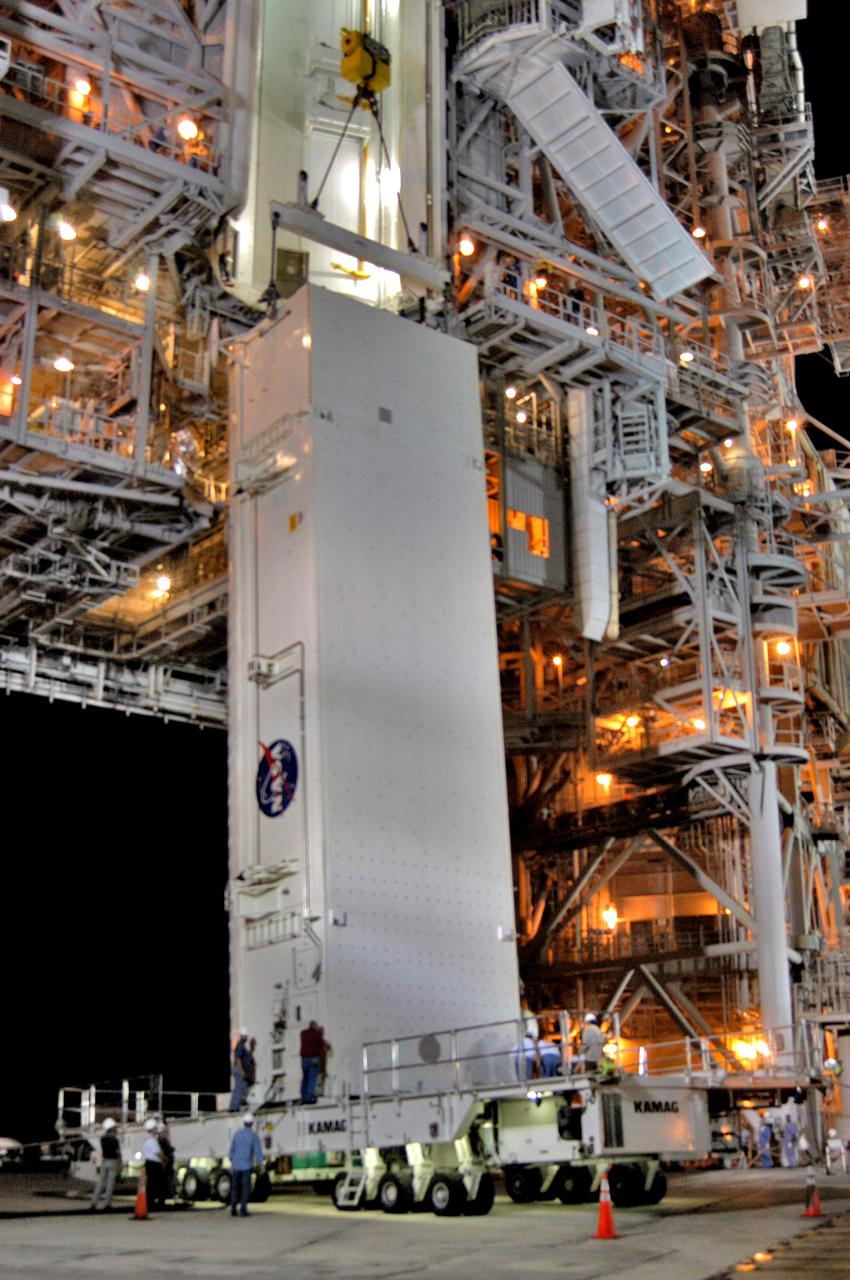
KENNEDY SPACE CENTER, FLA. - At Launch Pad 39B, the payload canister that delivered payloads launching aboard Space Shuttle Discovery's Return to Flight mission STS-114 is lowered from the Payload Changeout Room onto a transporter. The payloads will be installed into Discovery, scheduled to arrive at the pad later today. Discovery’s payloads include the Multi-Purpose Logistics Module Raffaello, the Lightweight Multi-Purpose Experiment Support Structure Carrier (LMC), and the External Stowage Platform-2 (ESP-2). Raffaello will deliver supplies to the International Space Station including food, clothing and research equipment. The LMC will carry a replacement Control Moment Gyroscope and a tile repair sample box. The ESP-2 is outfitted with replacement parts. Discovery’s launch window extends from July 13 through July 31.
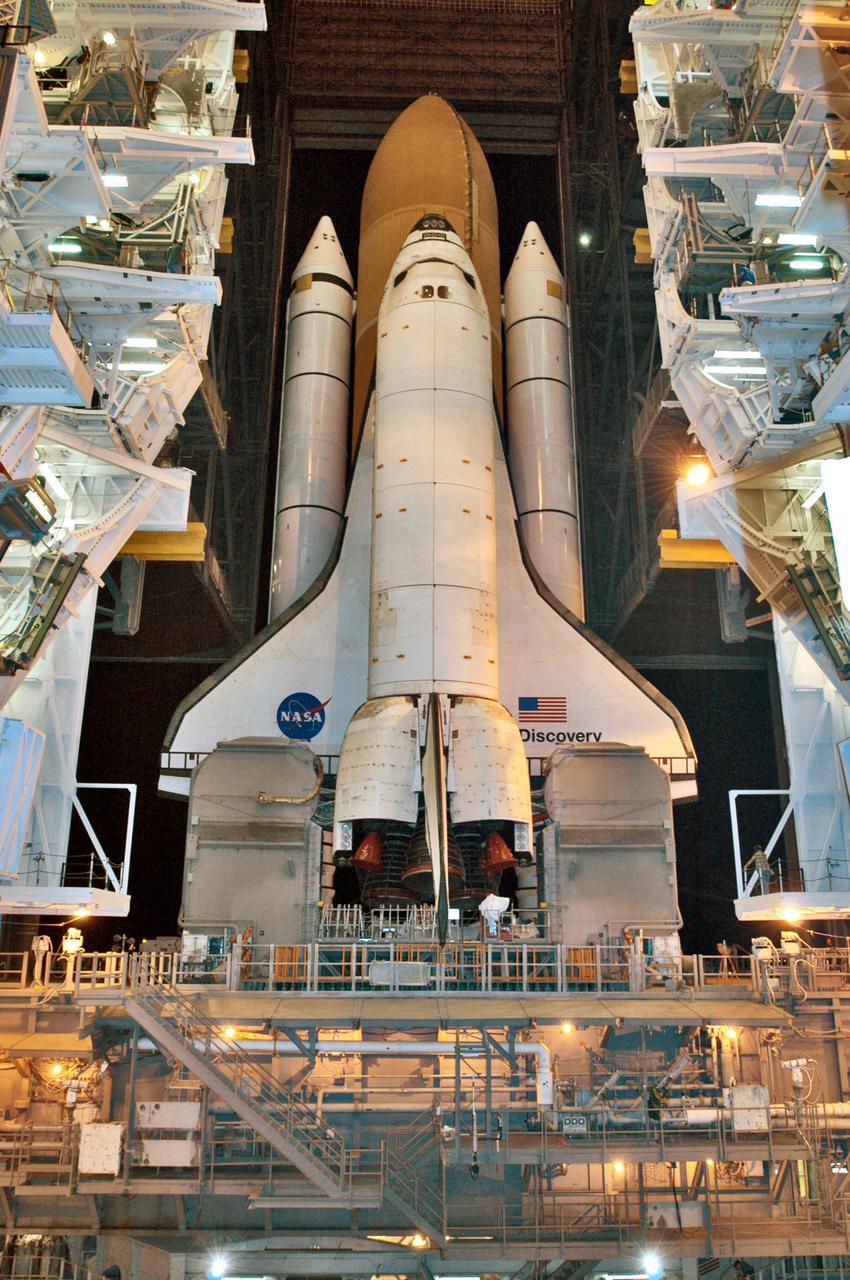
KENNEDY SPACE CENTER, FLA. - In the Vehicle Assembly Building (VAB) at NASA’s Kennedy Space Center, Space Shuttle Discovery exits high bay 3 to begin its trip to Launch Pad 39B, a 4-mile, 6-hour journey. First motion was at 1:58 a.m. EDT. The Space Shuttle rests on a Mobile Launcher Platform which sits atop a Crawler-Transporter. This is the second rollout of Discovery after being returned to the Vehicle Assembly Building for connection to an improved External Tank. Launch of Discovery on its Return to Flight mission STS-114 is targeted for a launch window extending from July 13 to July 31. During its 12-day mission, Discovery’s seven-person crew will test new hardware and techniques to improve Shuttle safety, as well as deliver supplies to the International Space Station.
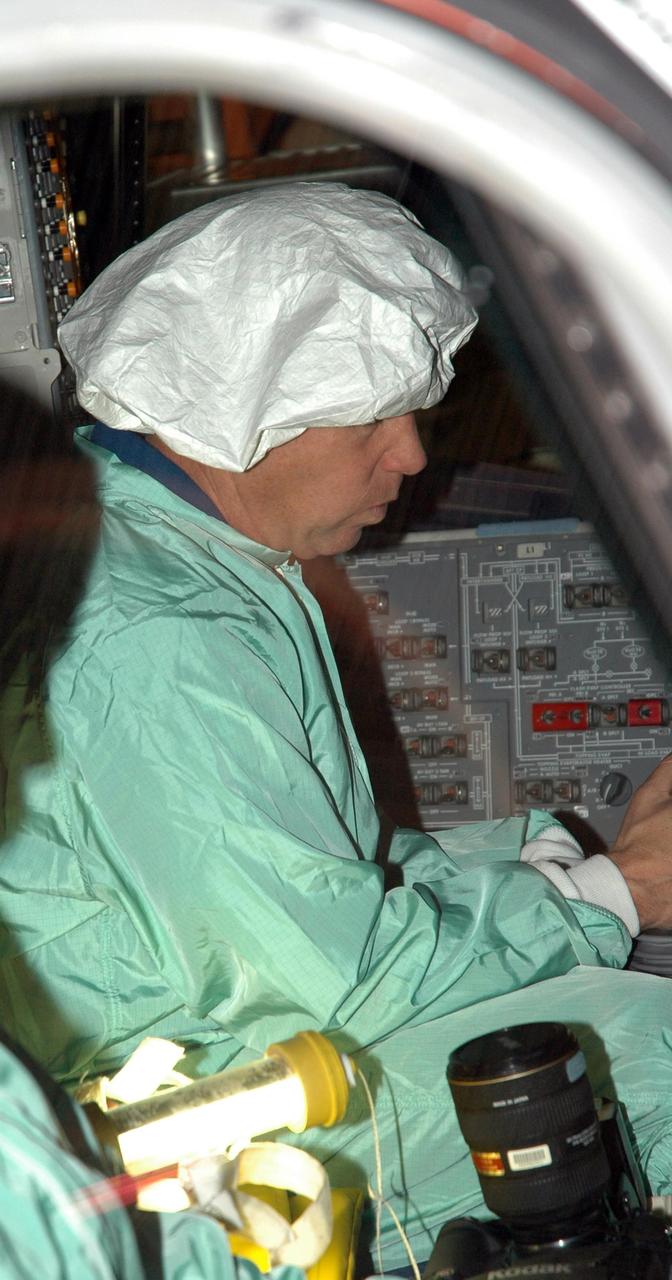
KENNEDY SPACE CENTER, FLA. - In NASA Kennedy Space Center's Orbiter Processing Facility bay 3, STS-121 Commander Steve Lindsey inspects one of the windows that will fly on Space Shuttle Discovery during the mission. The crew is at Kennedy to take part in the crew equipment interface test, which provides hands-on experience with equipment to be used on-orbit. Launch of Space Shuttle Discovery on mission STS-121, the second return-to-flight mission, is scheduled no earlier than May.
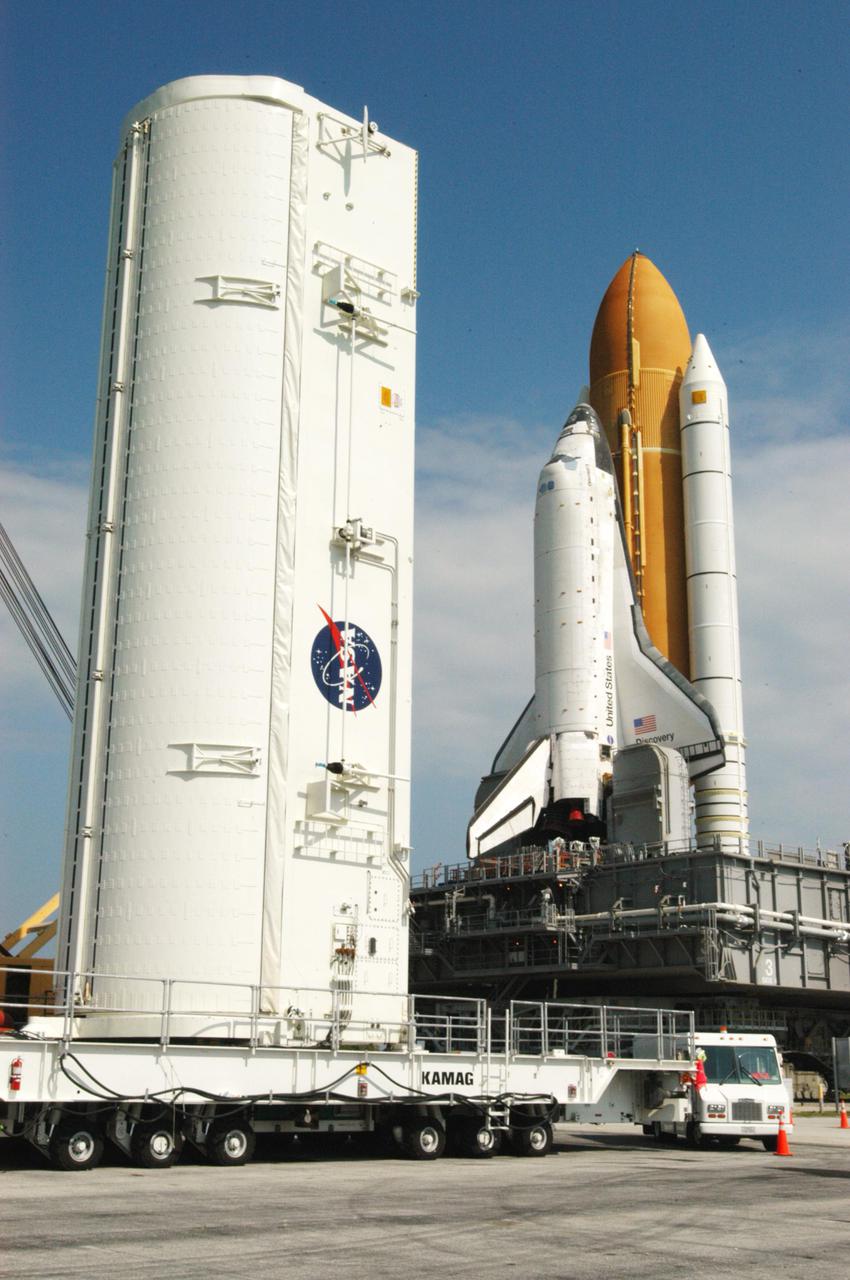
KENNEDY SPACE CENTER, FLA. - As Space Shuttle Discovery approaches Launch Pad 39B, the canister that delivered the mission STS-114 payloads to the pad departs. First motion for the 4.2-mile journey was at 1:58 a.m. EDT. The Space Shuttle rests on a Mobile Launcher Platform that sits atop a Crawler-Transporter. This is the second rollout of Discovery. The vehicle was returned to the Vehicle Assembly Building for connection to an improved External Tank. Launch of Discovery on its Return to Flight mission STS-114 is targeted for a launch window extending from July 13 to July 31.
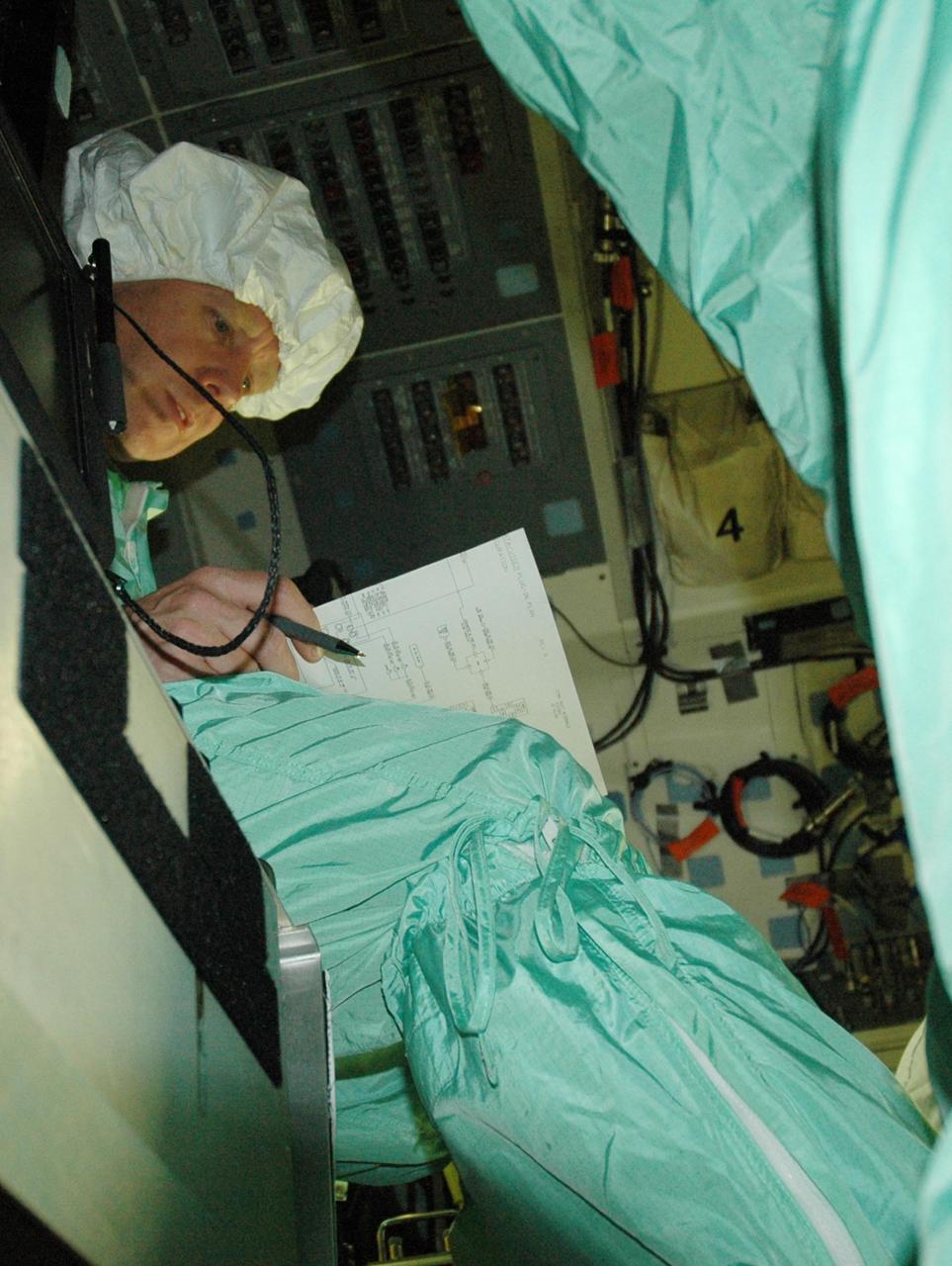
KENNEDY SPACE CENTER, FLA. - In NASA Kennedy Space Center's Orbiter Processing Facility bay 3, STS-121 Commander Steve Lindsey prepares for his upcoming mission inside Space Shuttle Discovery. The crew is at Kennedy to take part in the crew equipment interface test, which provides hands-on experience with equipment to be used on-orbit. Launch of Space Shuttle Discovery on mission STS-121, the second return-to-flight mission, is scheduled no earlier than May.
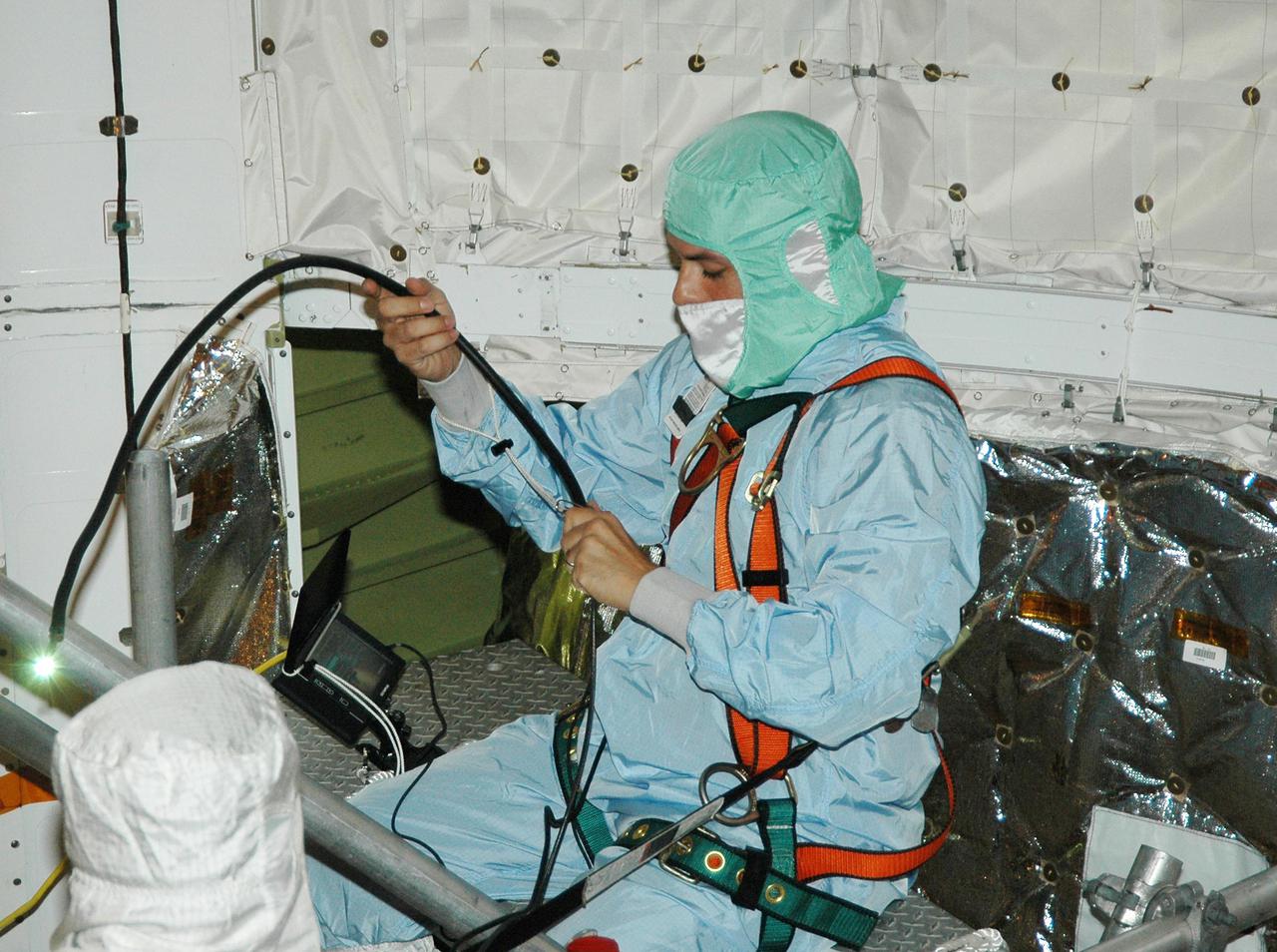
KENNEDY SPACE CENTER, FLA. - At Launch Complex 39B, a technician in Space Shuttle Discovery's payload bay prepares a borescope for an inspection of the retract link assembly on the orbiter's main landing gear door. The inspection is a precautionary measure after a small crack was found in a retract link assembly on the right-hand main landing gear on orbiter Atlantis. An initial review of the closeout photos of the link assembly on Discovery did not reveal any cracks. Discovery is scheduled to return the Space Shuttle fleet to operational status on mission STS-114. This additional work does not impact the launch planning window of July 13-31.
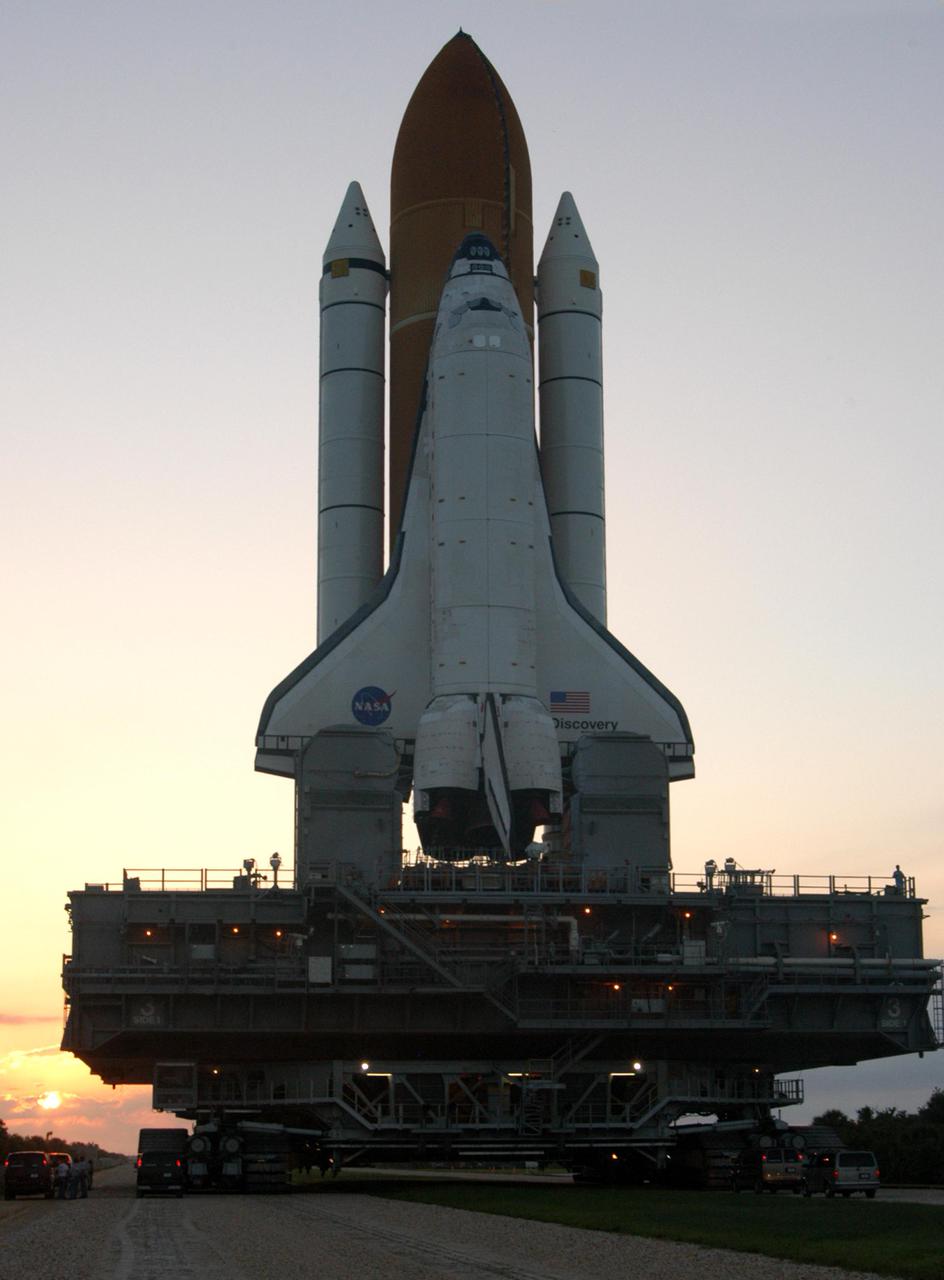
KENNEDY SPACE CENTER, FLA. - Space Shuttle Discovery makes its way along the crawlerway from high bay 3 to Launch Pad 39B as the sun rises. First motion for the 4-mile, 6-hour journey was at 1:58 a.m. EDT. The Space Shuttle rests on a Mobile Launcher Platform which sits atop a Crawler-Transporter. This is the second rollout of Discovery after being returned to the Vehicle Assembly Building for connection to an improved External Tank. Launch of Discovery on its Return to Flight mission STS-114 is targeted for a launch window extending from July 13 to July 31. During its 12-day mission, Discovery’s seven-person crew will test new hardware and techniques to improve Shuttle safety, as well as deliver supplies to the International Space Station.
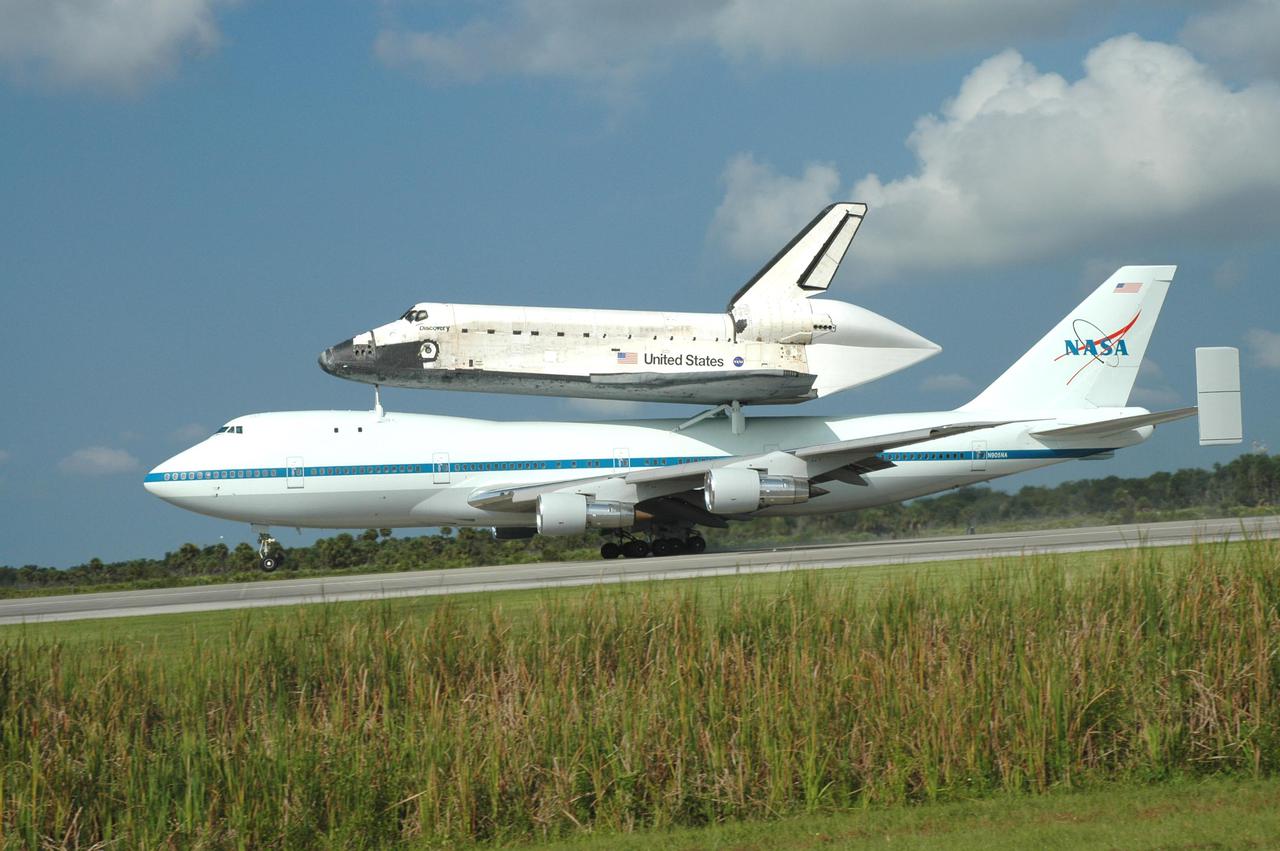
KENNEDY SPACE CENTER, FLA. - Space Shuttle Discovery, atop a modified Boeing 747 Shuttle Carrier Aircraft (SCA), touches down on runway 15 at NASA Kennedy Space Center's Shuttle Landing Facility (SLF) at about 10:00 a.m. EDT. The cross-country ferry flight became necessary when two days of unfavorable weather conditions at KSC forced Discovery to land on runway 22 at Edwards Air Force Base, Calif., on Aug. 9 following mission STS-114. On the return trip, stops were made at Altus Air Force Base, Okla., and Barksdale Air Force Base, La., where Discovery stayed for two nights. The SCA and Discovery will be towed to the Mate_Demate Device at the SLF where a crane will lift Discovery from the SCA and place it on solid ground. Discovery will then be towed to the Orbiter Processing Facility where preparations will begin for its next flight, STS-121.
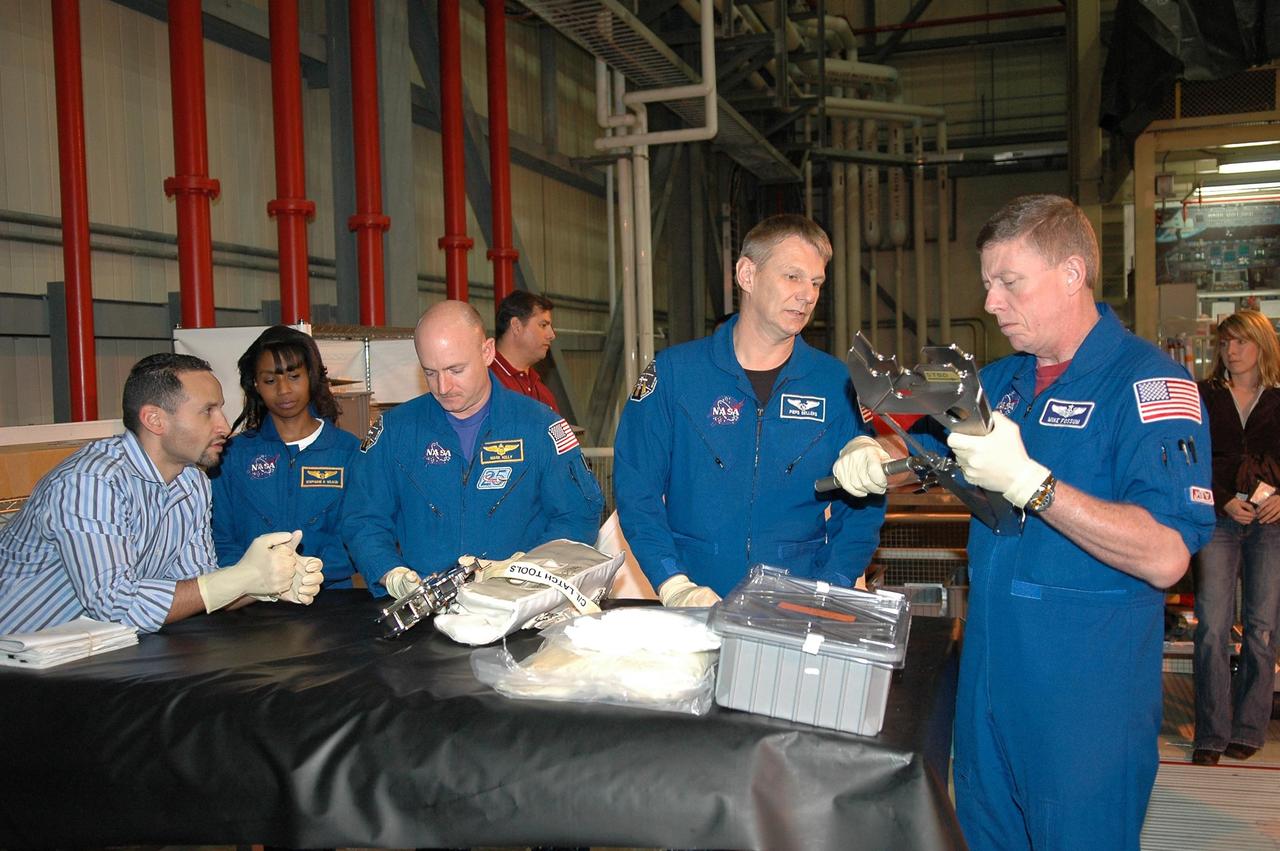
KENNEDY SPACE CENTER, FLA. - In NASA Kennedy Space Center's Orbiter Processing Facility bay 3, members of the STS-121 crew practice working with equipment for the mission. Starting from left are Tomas Gonzalez-Torres, with NASA's Johnson Space Center; Mission Specialist Stephanie Wilson, Pilot Mark Kelly, and Mission Specialists Piers Sellers and Michael Fossum. The crew is at Kennedy to take part in the crew equipment interface test, which provides hands-on experience with equipment to be used on-orbit. Launch of Space Shuttle Discovery on mission STS-121, the second return-to-flight mission, is scheduled no earlier than May.
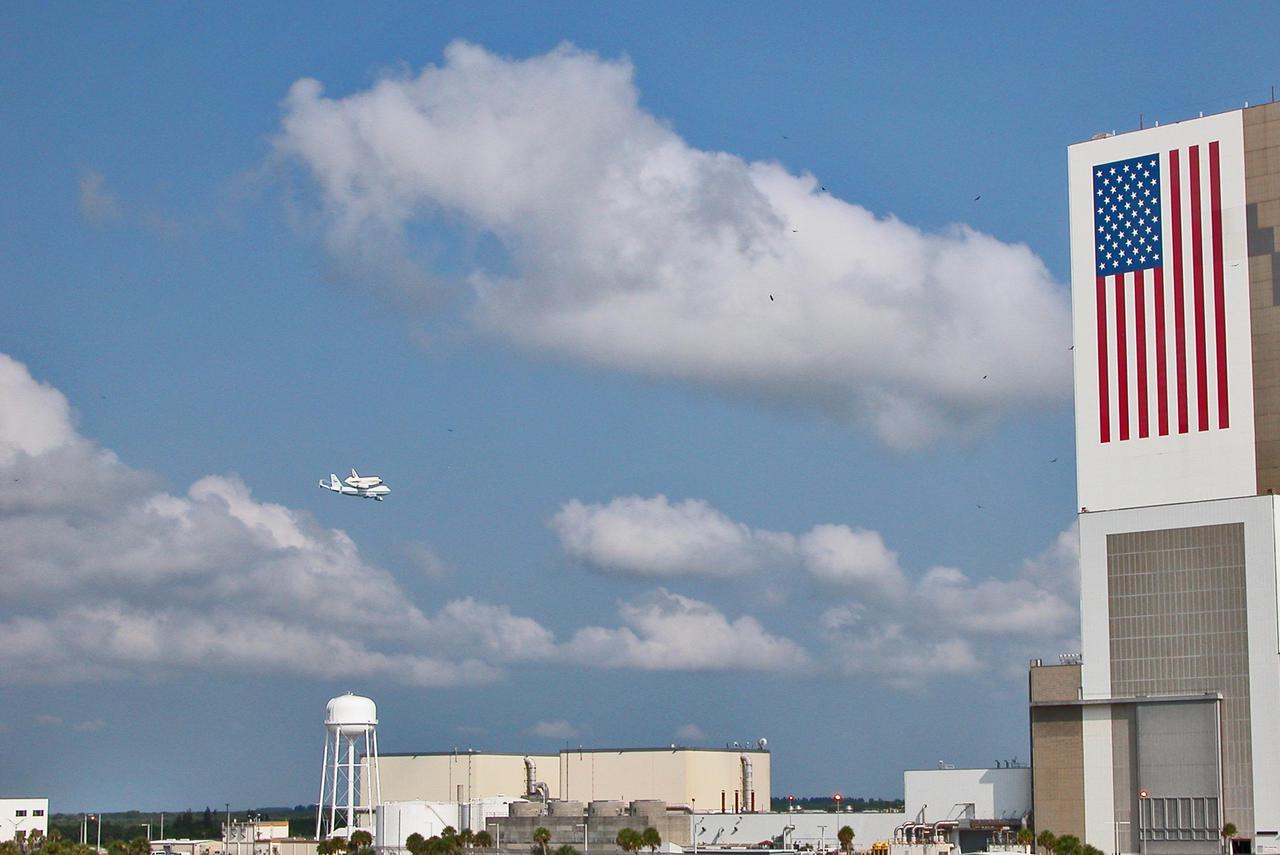
KENNEDY SPACE CENTER, FLA. -- Space Shuttle Discovery, atop a modified Boeing 747 Shuttle Carrier Aircraft (SCA), flies past the Vehicle Assembly Building at Kennedy Space Center on its final approach to runway 15 at the Shuttle Landing Facility (SLF). Landing was at about 10:00 a.m. EDT. The cross-country ferry flight became necessary when two days of unfavorable weather conditions at KSC forced Discovery to land on runway 22 at Edwards Air Force Base, Calif., on Aug. 9 following mission STS-114. The SCA and Discovery will be towed to the Mate_Demate Device at the SLF where a crane will lift Discovery from the SCA and place it on solid ground. Discovery will then be towed to the Orbiter Processing Facility where preparations will begin for its next flight, STS-121.
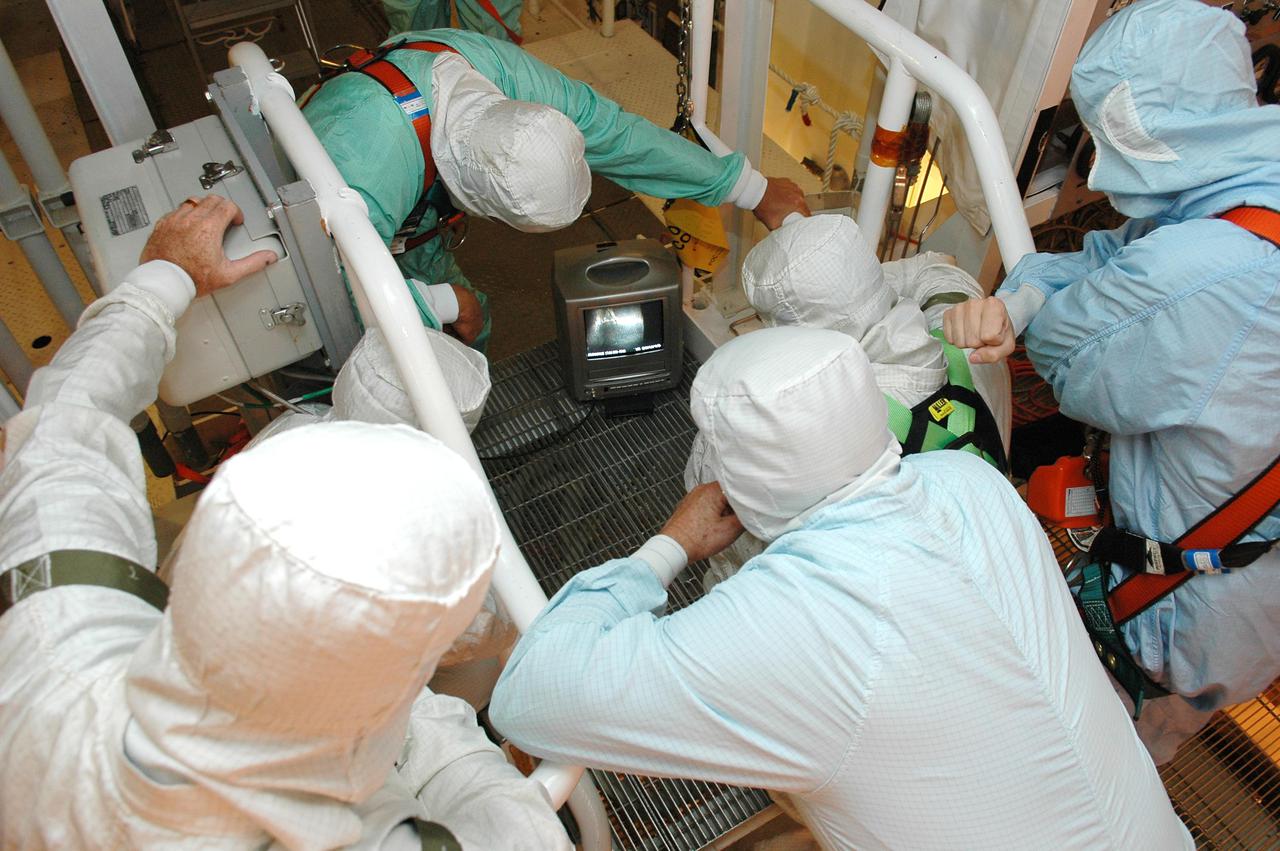
KENNEDY SPACE CENTER, FLA. - At Launch Complex 39B, technicians in Space Shuttle Discovery's payload bay perform a borescope inspection of the retract link assembly on the orbiter's main landing gear door. The inspection is a precautionary measure after a small crack was found in a retract link assembly on the right-hand main landing gear on orbiter Atlantis. An initial review of the closeout photos of the link assembly on Discovery did not reveal any cracks. Discovery is scheduled to return the Space Shuttle fleet to operational status on mission STS-114. This additional work does not impact the launch planning window of July 13-31.
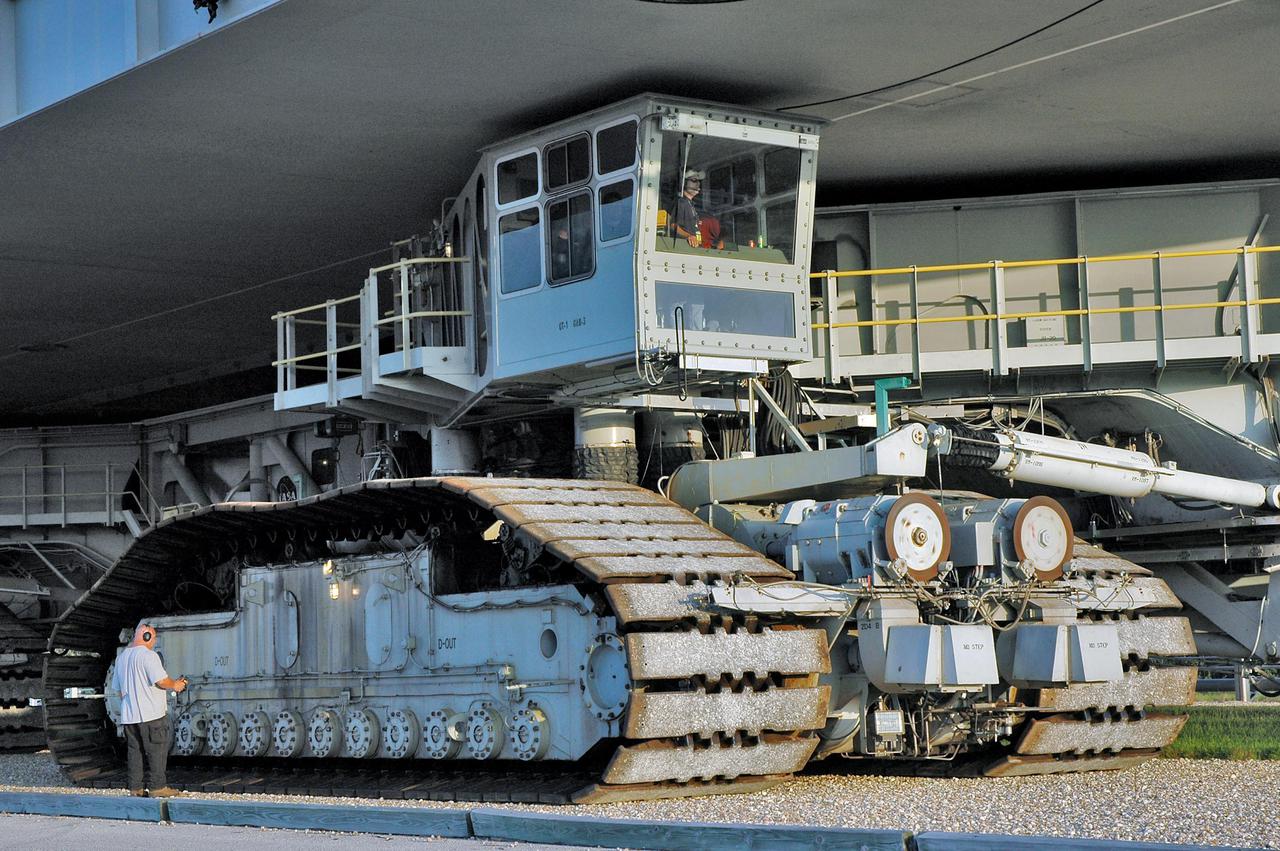
KENNEDY SPACE CENTER, FLA. - The Crawler-Transporter carries Space Shuttle Discovery and the Mobile Launcher Platform to Launch Pad 39B. The crawler is operated by a United Space Alliance driver, seen in the cab above the crawler tracks. The transporter uses a laser guidance system and a leveling system for the journey that keeps the top of the Space Shuttle vertical. This is the second rollout of Discovery after being returned to the Vehicle Assembly Building for connection to an improved External Tank. Launch of Discovery on its Return to Flight mission STS-114 is targeted for a launch window extending from July 13 to July 31.
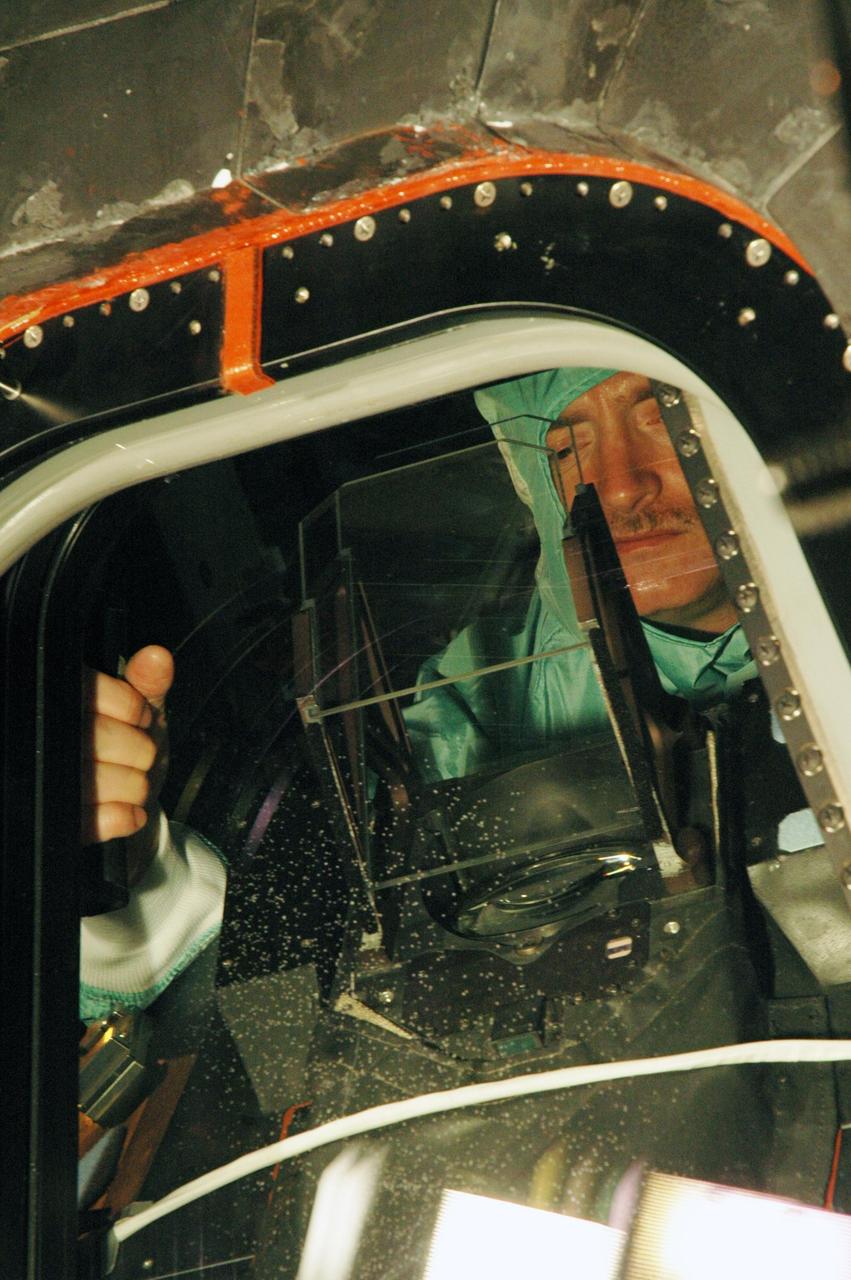
KENNEDY SPACE CENTER, FLA. - In NASA Kennedy Space Center's Orbiter Processing Facility bay 3, STS-121 Pilot Mark Kelly inspects one of the windows that will fly on Space Shuttle Discovery during the mission. The crew is at Kennedy to take part in the crew equipment interface test, which provides hands-on experience with equipment to be used on-orbit. Launch of Space Shuttle Discovery on mission STS-121, the second return-to-flight mission, is scheduled no earlier than May.
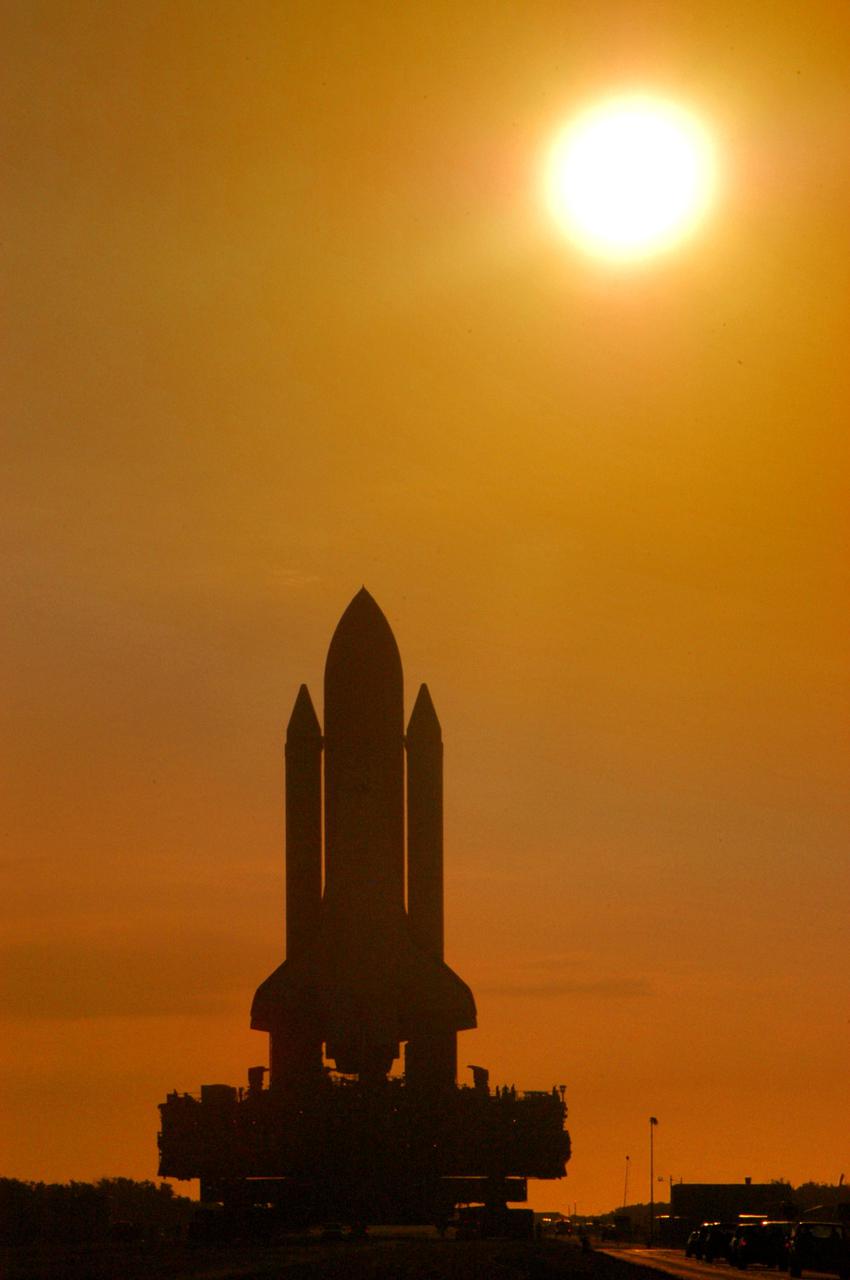
KENNEDY SPACE CENTER, FLA. - Space Shuttle Discovery makes its way along the crawlerway from high bay 3 to Launch Pad 39B as the sun rises. First motion for the 4-mile, 6-hour journey was at 1:58 a.m. EDT. The Space Shuttle rests on a Mobile Launcher Platform which sits atop a Crawler-Transporter. This is the second rollout of Discovery after being returned to the Vehicle Assembly Building for connection to an improved External Tank. Launch of Discovery on its Return to Flight mission STS-114 is targeted for a launch window extending from July 13 to July 31. During its 12-day mission, Discovery’s seven-person crew will test new hardware and techniques to improve Shuttle safety, as well as deliver supplies to the International Space Station.
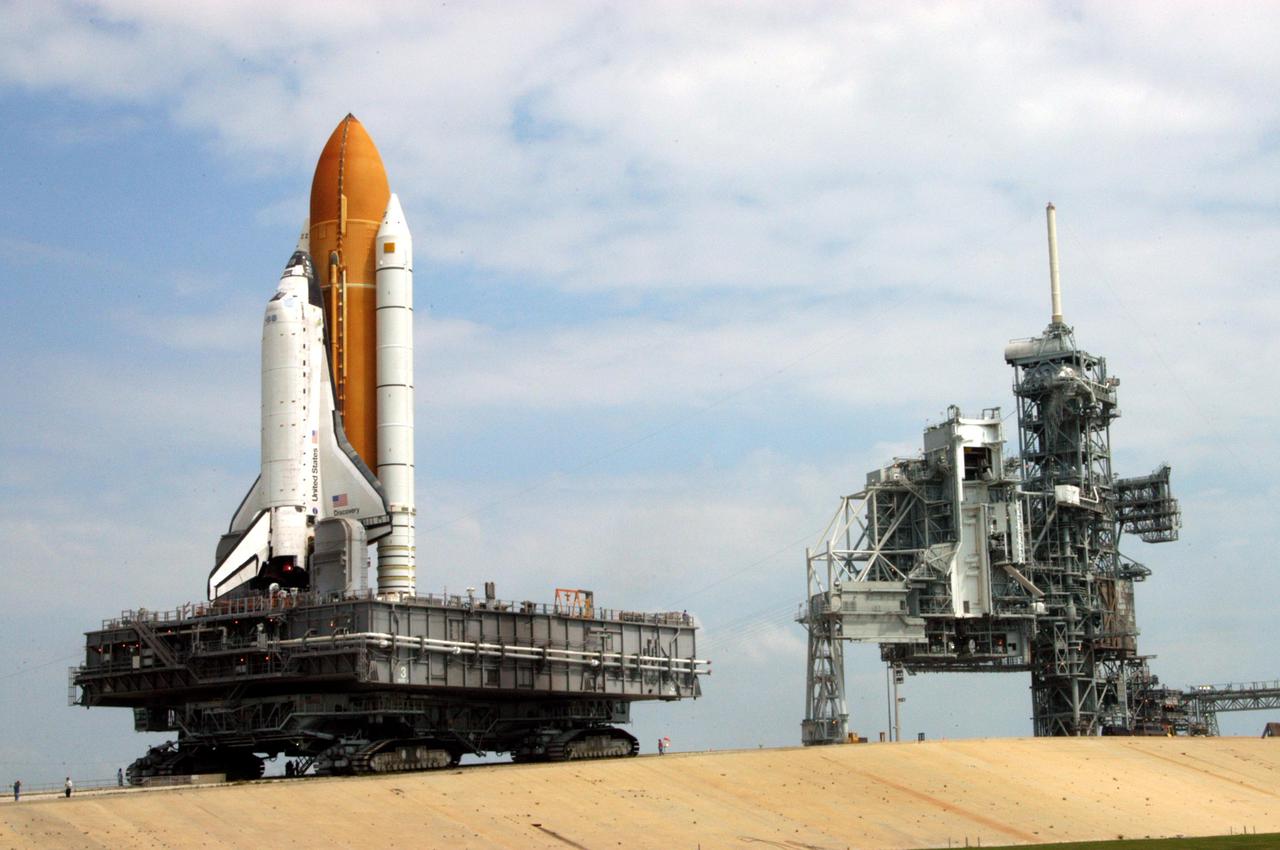
KENNEDY SPACE CENTER, FLA. - Space Shuttle Discovery makes its way up the 5 percent grade to the hardstand of Launch Pad 39B. First motion for the 4.2-mile journey was at 1:58 a.m. EDT. The Space Shuttle rests on a Mobile Launcher Platform that sits atop a Crawler-Transporter. This is the second rollout of Discovery. The orbiter was returned to the Vehicle Assembly Building for connection to an improved External Tank. Launch of Discovery on its Return to Flight mission STS-114 is targeted for a launch window extending from July 13 to July 31.
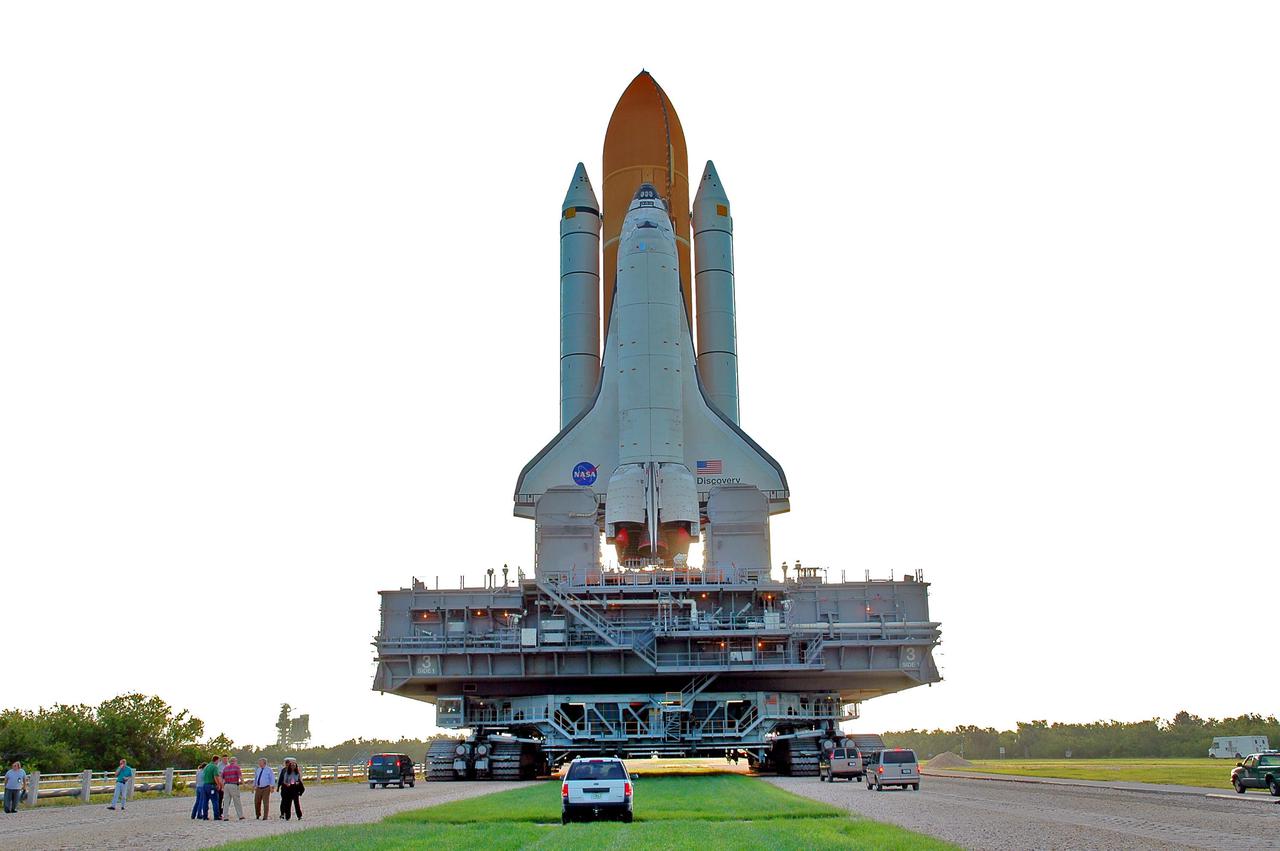
KENNEDY SPACE CENTER, FLA. - Space Shuttle Discovery makes its way along the crawlerway to Launch Pad 39B. First motion for the 4-mile, 6-hour journey was at 1:58 a.m. EDT. The Space Shuttle rests on a Mobile Launcher Platform that sits atop a Crawler-Transporter. This is the second rollout of Discovery after being returned to the Vehicle Assembly Building for connection to an improved External Tank. Launch of Discovery on its Return to Flight mission STS-114 is targeted for a launch window extending from July 13 to July 31.
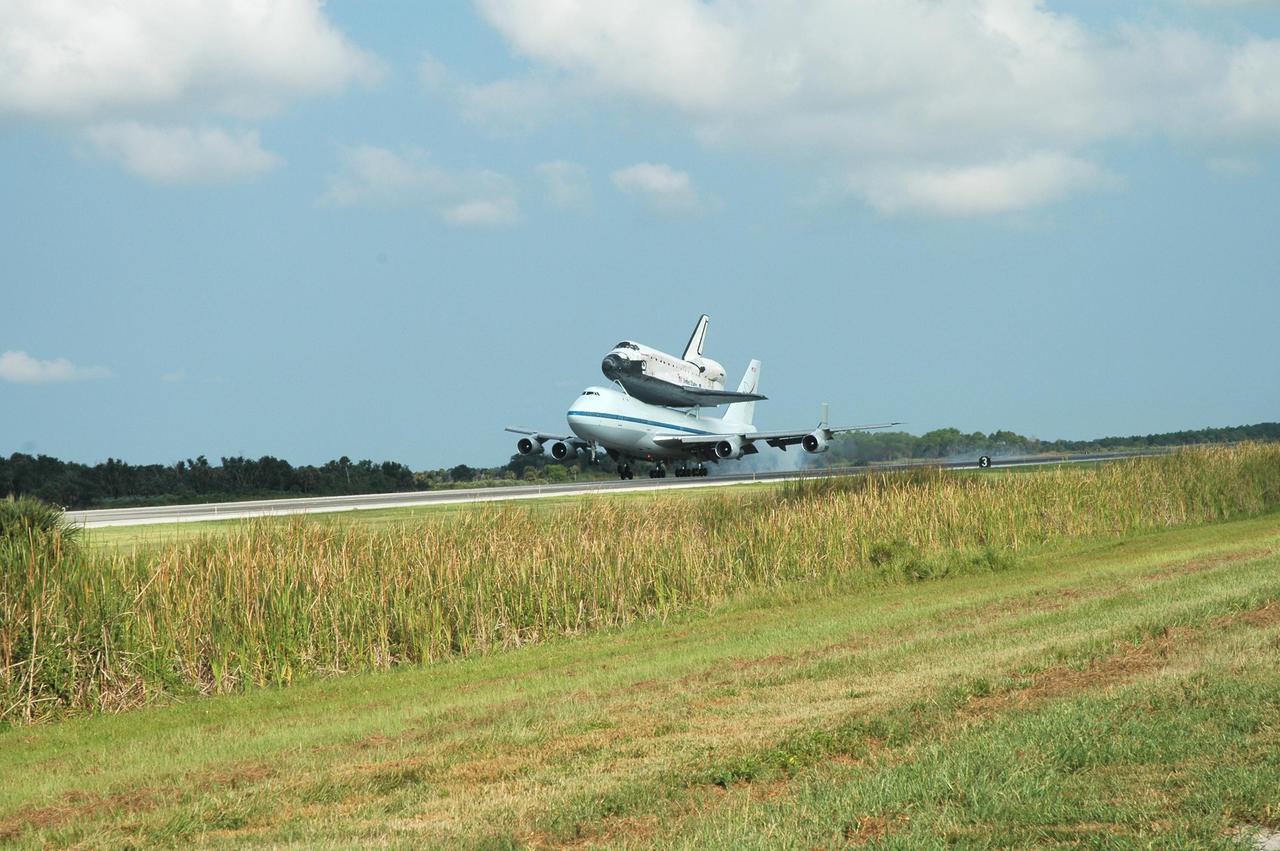
KENNEDY SPACE CENTER, FLA. - Space Shuttle Discovery, atop a modified Boeing 747 Shuttle Carrier Aircraft (SCA), touches down on runway 15 at NASA Kennedy Space Center's Shuttle Landing Facility (SLF) at about 10:00 a.m. EDT. The cross-country ferry flight became necessary when two days of unfavorable weather conditions at KSC forced Discovery to land on runway 22 at Edwards Air Force Base, Calif., on Aug. 9 following mission STS-114. On the return trip, stops were made at Altus Air Force Base, Okla., and Barksdale Air Force Base, La., where Discovery stayed for two nights. The SCA and Discovery will be towed to the Mate_Demate Device at the SLF where a crane will lift Discovery from the SCA and place it on solid ground. Discovery will then be towed to the Orbiter Processing Facility where preparations will begin for its next flight, STS-121.
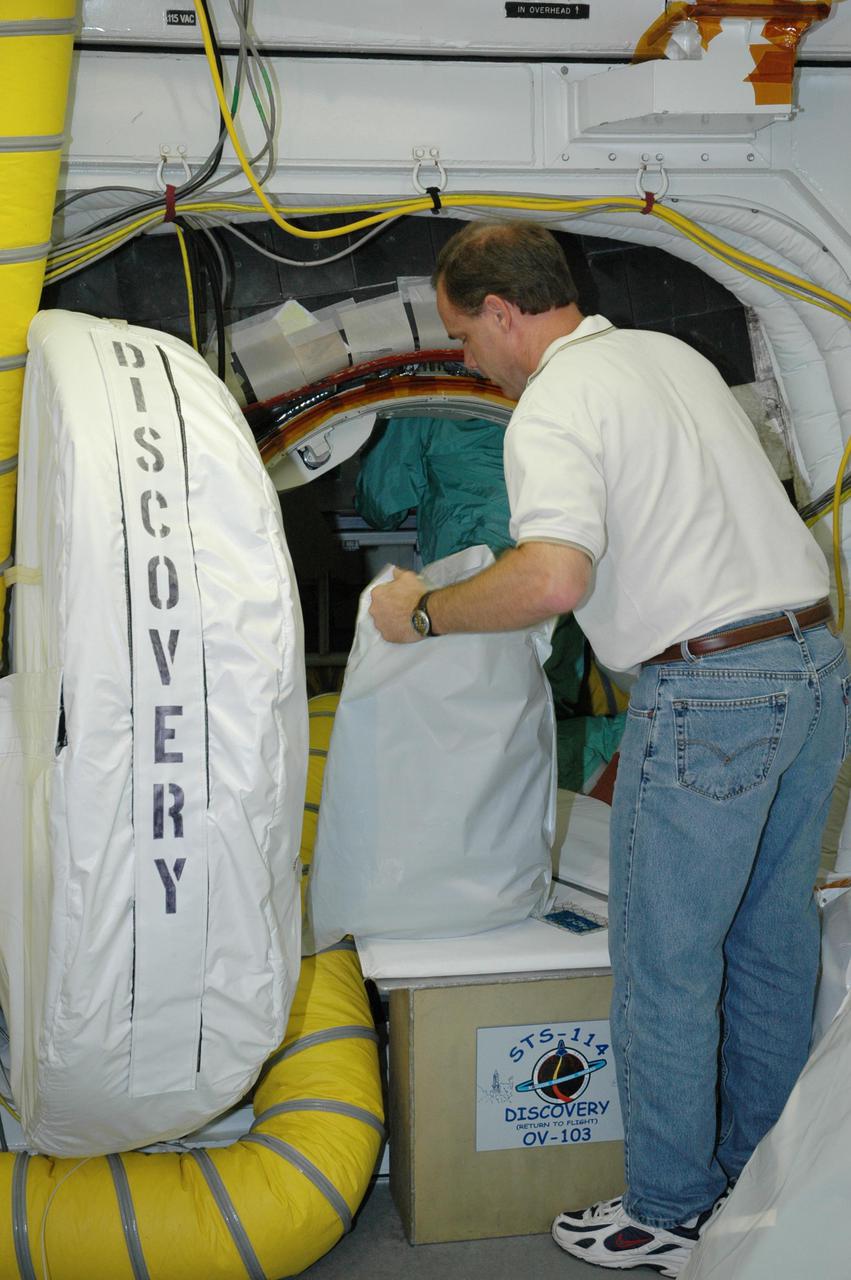
KENNEDY SPACE CENTER, FLA. - At Launch Pad 39B, United Space Alliance Flight Crew Systems engineer John Biegert uncovers a sleep restraint to be installed inside Space Shuttle Discovery, a final step in launch preparations. Launch of Discovery on its Return to Flight mission STS-114 is set for July 13, just days away. During its 12-day mission, Discovery’s seven-person crew will test new hardware and techniques to improve Shuttle safety, as well as deliver supplies to the International Space Station. Discovery’s payloads include the Multi-Purpose Logistics Module Raffaello, the Lightweight Multi-Purpose Experiment Support Structure Carrier (LMC), and the External Stowage Platform-2 (ESP-2). Raffaello will deliver supplies to the International Space Station including food, clothing and research equipment. The LMC will carry a replacement Control Moment Gyroscope and a tile repair sample box. The ESP-2 is outfitted with replacement parts.
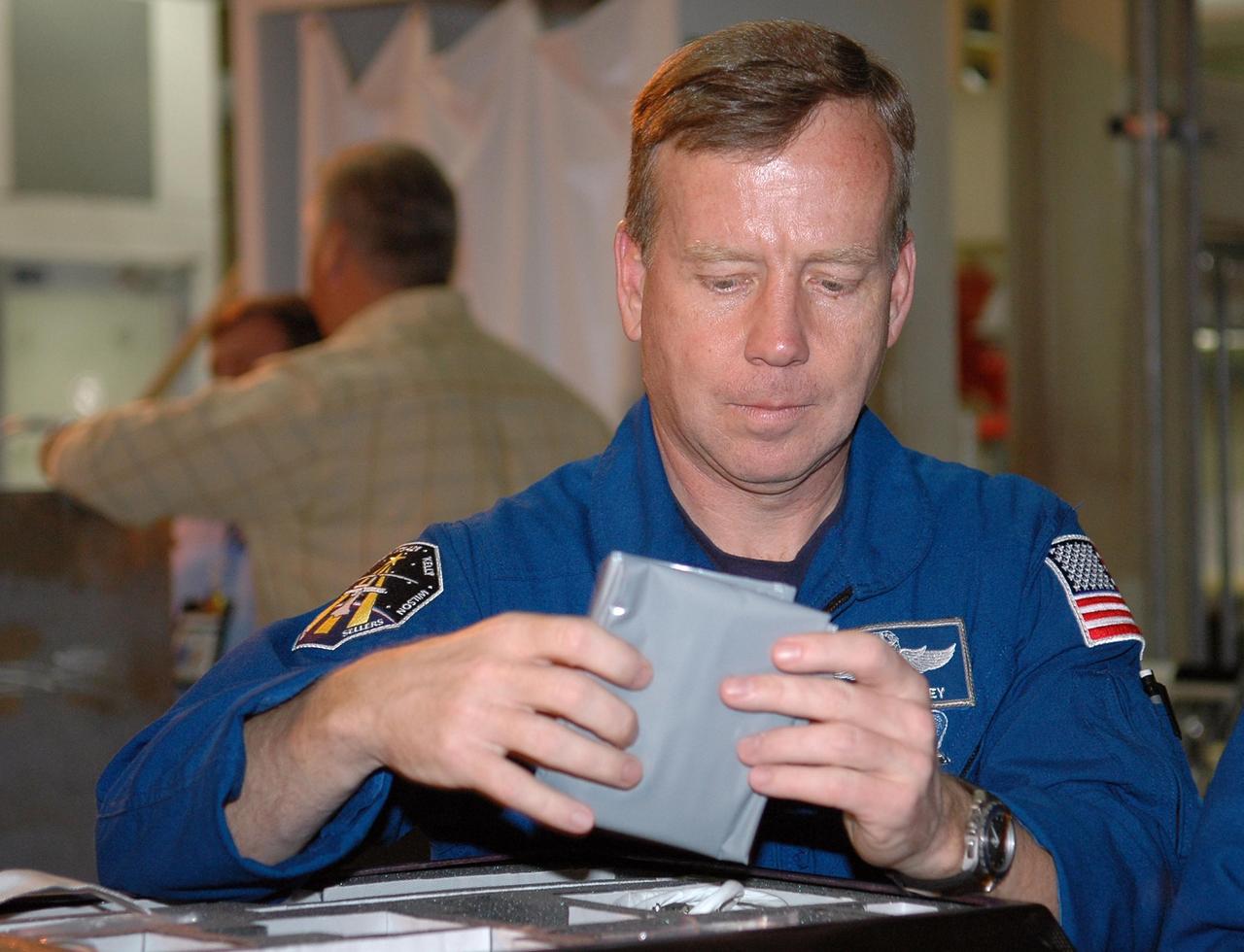
KENNEDY SPACE CENTER, FLA. - In NASA Kennedy Space Center's Orbiter Processing Facility bay 3, STS-121 Commander Steve Lindsey works with equipment that will be on the mission. The crew is at Kennedy to take part in the crew equipment interface test, which provides hands-on experience with equipment to be used on-orbit. Launch of Space Shuttle Discovery on mission STS-121, the second return-to-flight mission, is scheduled no earlier than May.
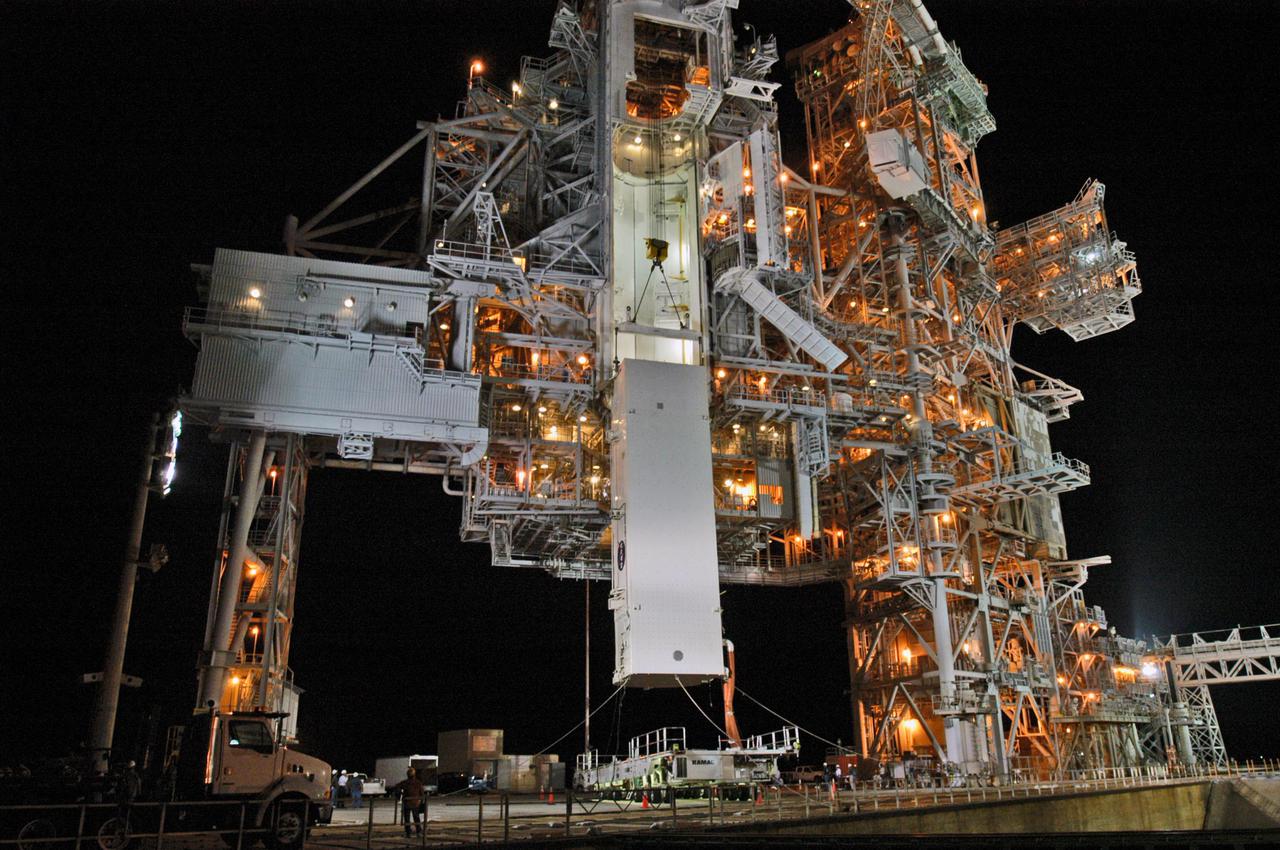
KENNEDY SPACE CENTER, FLA. - At Launch Pad 39B, the payload canister that delivered payloads launching aboard Space Shuttle Discovery's Return to Flight mission STS-114 is lowered from the Payload Changeout Room. The payloads will be installed into Discovery, scheduled to arrive at the pad later today. Discovery’s payloads include the Multi-Purpose Logistics Module Raffaello, the Lightweight Multi-Purpose Experiment Support Structure Carrier (LMC), and the External Stowage Platform-2 (ESP-2). Raffaello will deliver supplies to the International Space Station including food, clothing and research equipment. The LMC will carry a replacement Control Moment Gyroscope and a tile repair sample box. The ESP-2 is outfitted with replacement parts. Discovery’s launch window extends from July 13 through July 31.

KENNEDY SPACE CENTER, FLA. - In the Vehicle Assembly Building (VAB) at NASA’s Kennedy Space Center, a technician monitors the progress of a Crawler-Transporter as it moves Space Shuttle Discovery out of high bay 3 to Launch Pad 39B, a 4-mile, 6-hour journey. First motion was at 1:58 a.m. EDT. The Space Shuttle rests on a Mobile Launcher Platform which sits atop the Crawler-Transporter. This is the second rollout of Discovery after being returned to the Vehicle Assembly Building for connection to an improved External Tank. Launch of Discovery on its Return to Flight mission STS-114 is targeted for a launch window extending from July 13 to July 31. During its 12-day mission, Discovery’s seven-person crew will test new hardware and techniques to improve Shuttle safety, as well as deliver supplies to the International Space Station.
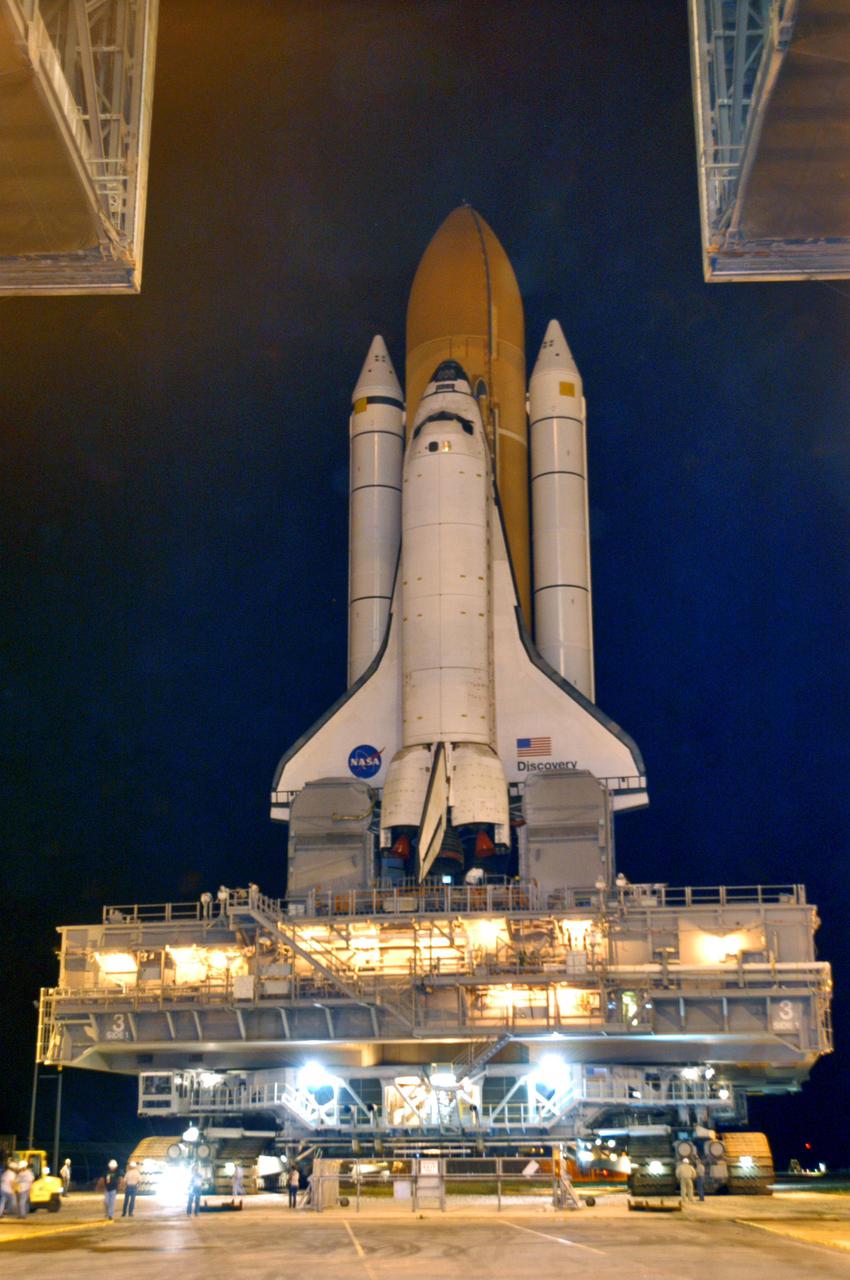
KENNEDY SPACE CENTER, FLA. - In the Vehicle Assembly Building (VAB) at NASA’s Kennedy Space Center, Space Shuttle Discovery rolls outside high bay 3 to begin its trip to Launch Pad 39B, a 4-mile, 6-hour journey. First motion was at 1:58 a.m. EDT. The Space Shuttle rests on a Mobile Launcher Platform which sits atop a Crawler-Transporter. This is the second rollout of Discovery after being returned to the Vehicle Assembly Building for connection to an improved External Tank. Launch of Discovery on its Return to Flight mission STS-114 is targeted for a launch window extending from July 13 to July 31. During its 12-day mission, Discovery’s seven-person crew will test new hardware and techniques to improve Shuttle safety, as well as deliver supplies to the International Space Station.
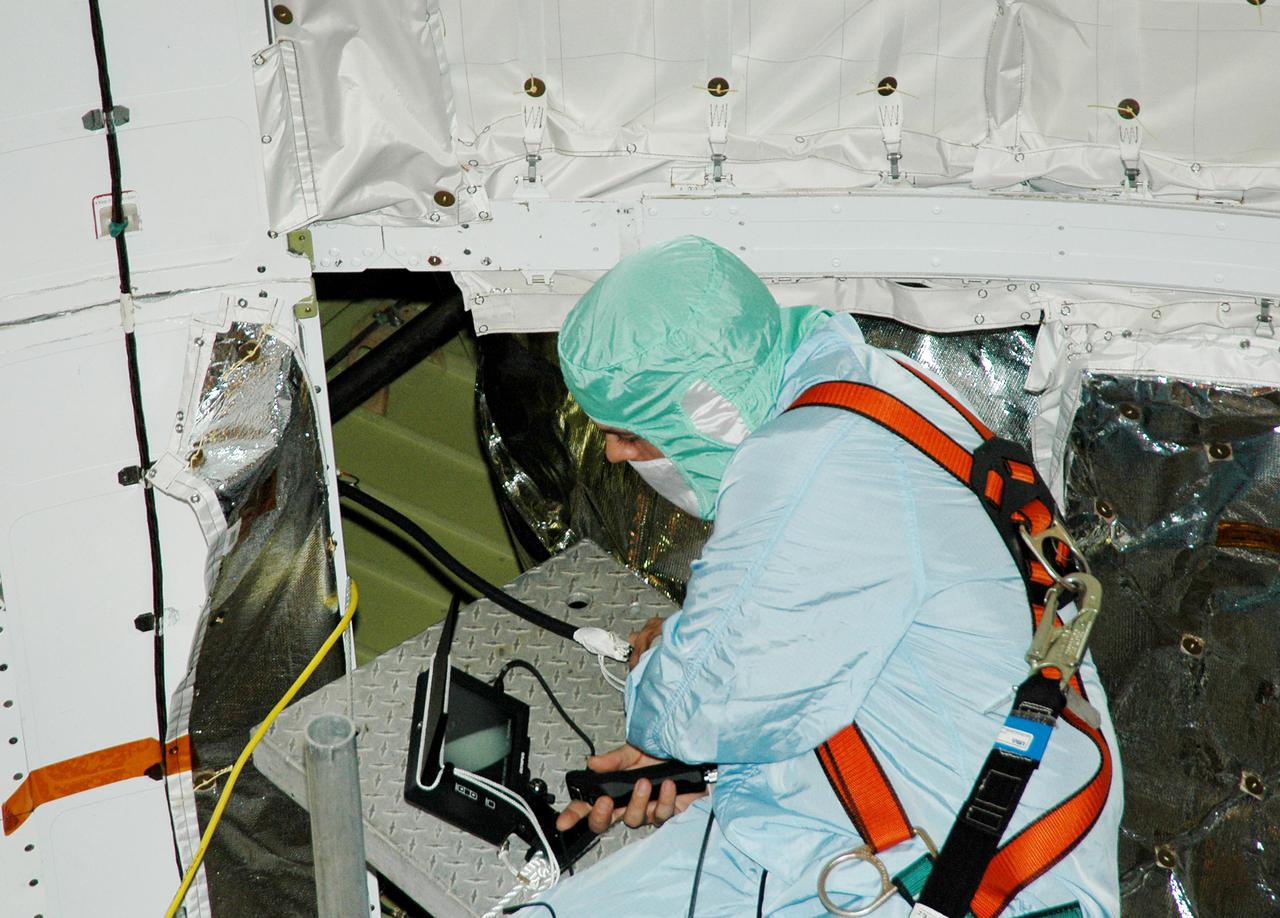
KENNEDY SPACE CENTER, FLA. - At Launch Complex 39B, a technician in Space Shuttle Discovery's payload bay performs a borescope inspection of the retract link assembly on the orbiter's main landing gear door. The inspection is a precautionary measure after a small crack was found in a retract link assembly on the right-hand main landing gear on orbiter Atlantis. An initial review of the closeout photos of the link assembly on Discovery did not reveal any cracks. Discovery is scheduled to return the Space Shuttle fleet to operational status on mission STS-114. This additional work does not impact the launch planning window of July 13-31.
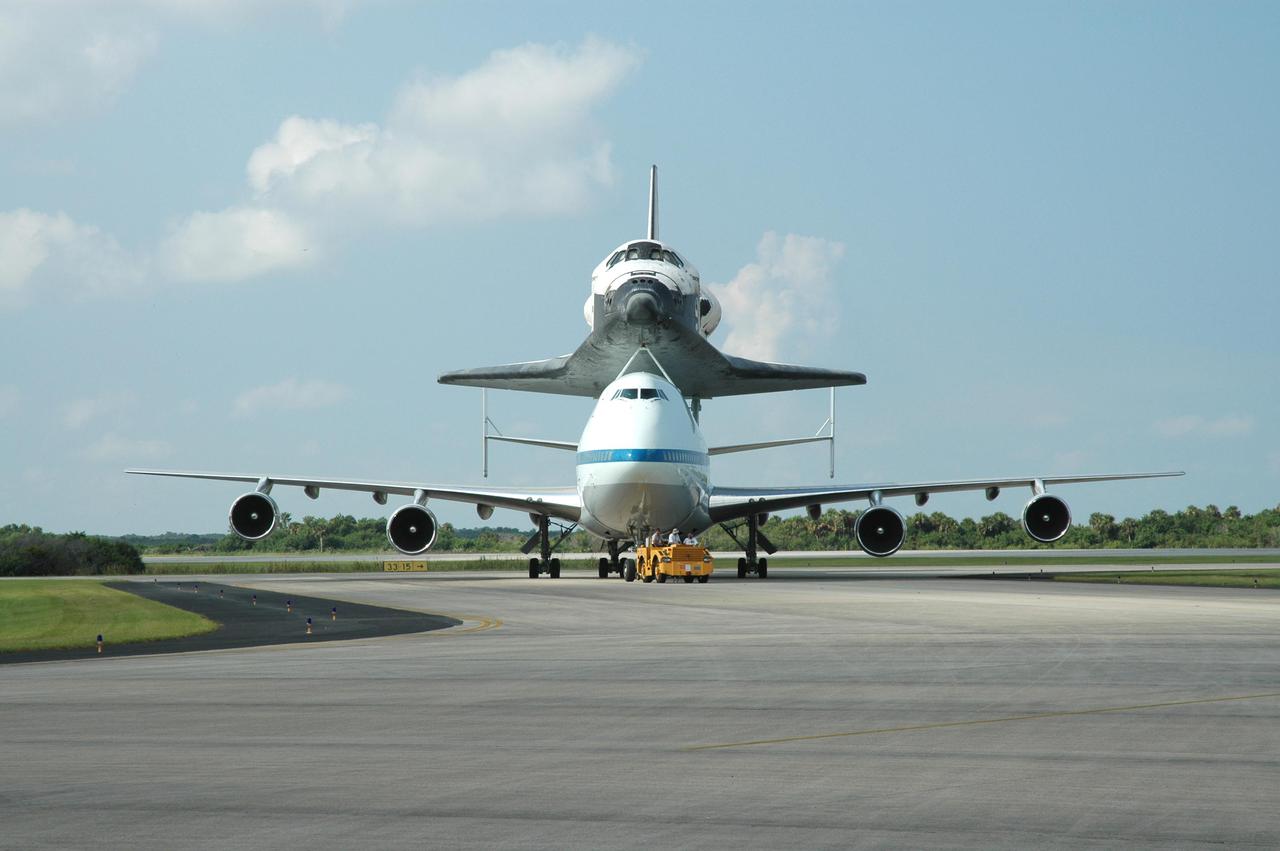
KENNEDY SPACE CENTER, FLA. - Space Shuttle Discovery, atop a modified Boeing 747 Shuttle Carrier Aircraft (SCA), is towed to the Mate_Demate Device (MDD) at NASA Kennedy Space Center's Shuttle Landing Facility (SLF) following touchdown on runway 15 at about 10:00 a.m. EDT. The cross-country ferry flight became necessary when two days of unfavorable weather conditions at KSC forced Discovery to land on runway 22 at Edwards Air Force Base, Calif., on Aug. 9 following mission STS-114. On the return trip, stops were made at Altus Air Force Base, Okla., and Barksdale Air Force Base, La., where Discovery stayed for two nights. A crane on the MDD will lift Discovery from the SCA and place it on solid ground. Discovery will then be towed to the Orbiter Processing Facility where preparations will begin for its next flight, STS-121.
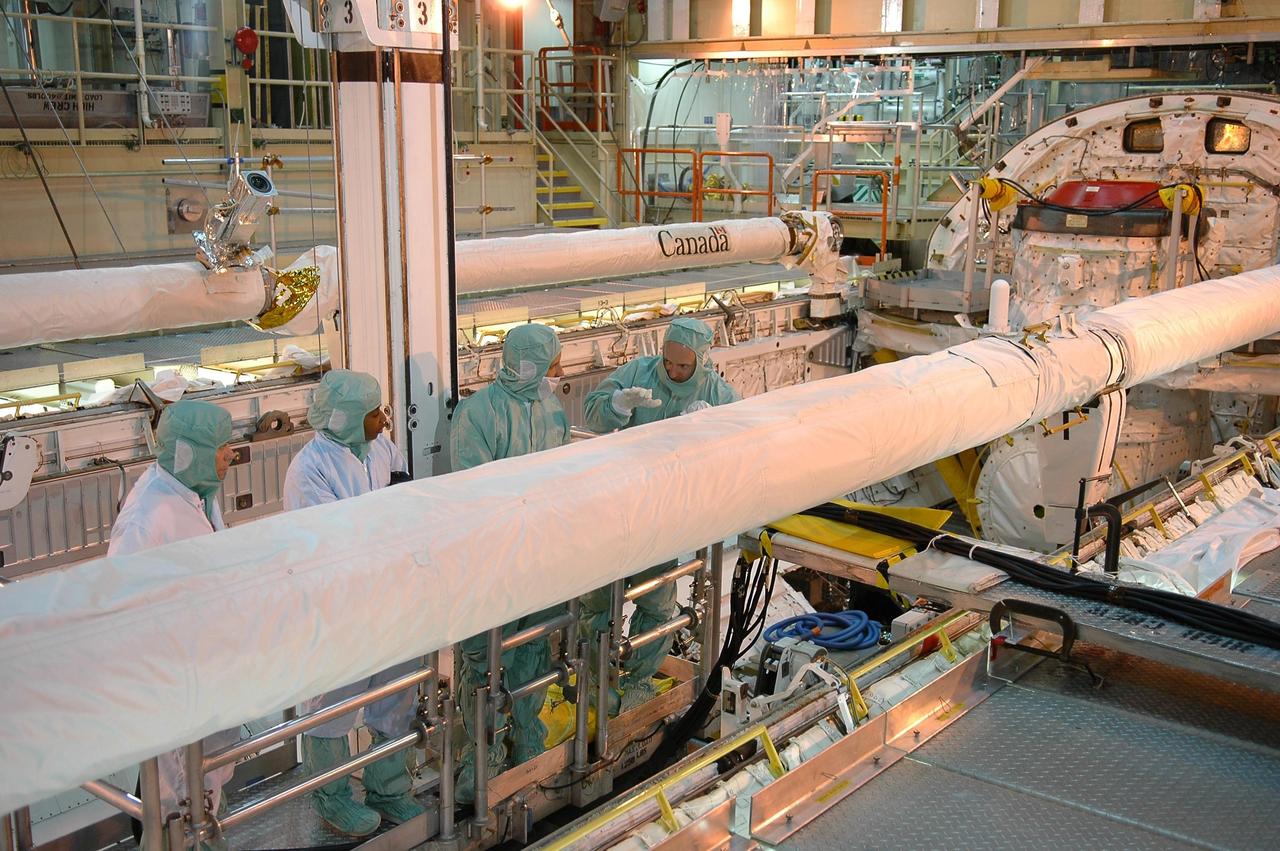
KENNEDY SPACE CENTER, FLA. - In NASA Kennedy Space Center's Orbiter Processing Facility bay 3, STS-121 Pilot Mark Kelly and Mission Specialist Stephanie Wilson are joined by two shuttle technicians as they examine the orbiter boom sensor system in Discovery's payload bay. The crew is at Kennedy to take part in the crew equipment interface test, which provides hands-on experience with equipment to be used on-orbit. Launch of Space Shuttle Discovery on mission STS-121, the second return-to-flight mission, is scheduled no earlier than May.
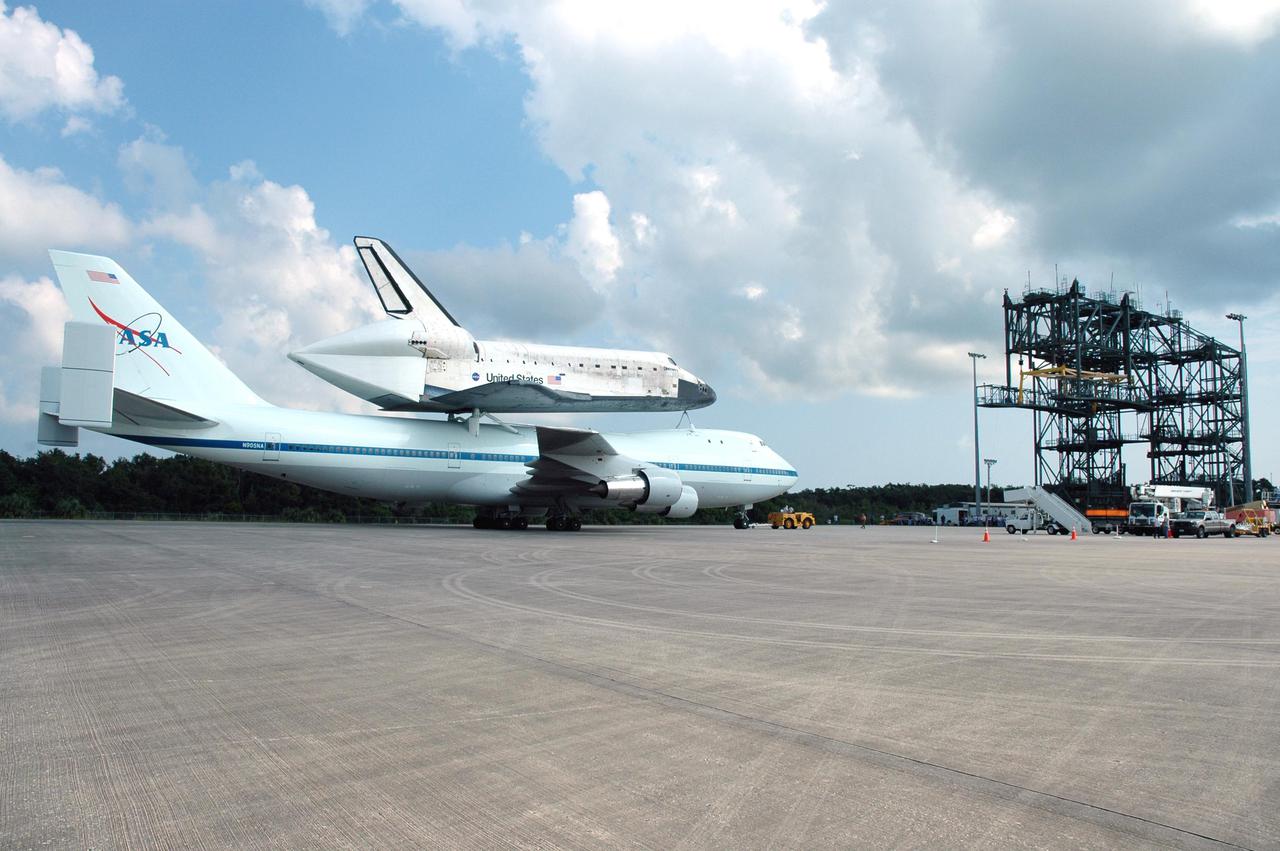
KENNEDY SPACE CENTER, FLA. - Space Shuttle Discovery, atop a modified Boeing 747 Shuttle Carrier Aircraft (SCA), is towed to the Mate_Demate Device (MDD), at right, at NASA Kennedy Space Center's Shuttle Landing Facility (SLF) following touchdown on runway 15 at about 10:00 a.m. EDT. The cross-country ferry flight became necessary when two days of unfavorable weather conditions at KSC forced Discovery to land on runway 22 at Edwards Air Force Base, Calif., on Aug. 9 following mission STS-114. On the return trip, stops were made at Altus Air Force Base, Okla., and Barksdale Air Force Base, La., where Discovery stayed for two nights. A crane on the MDD will lift Discovery from the SCA and place it on solid ground. Discovery will then be towed to the Orbiter Processing Facility where preparations will begin for its next flight, STS-121.
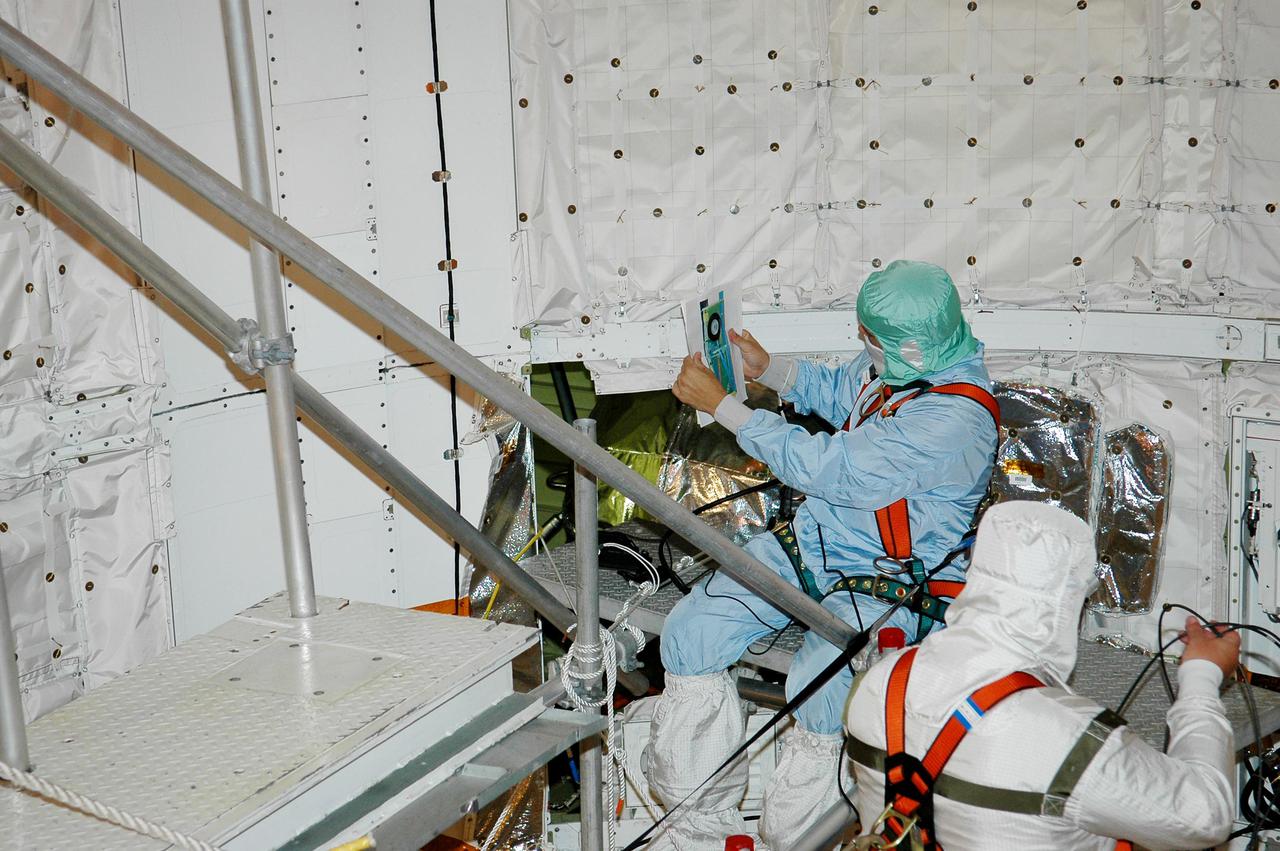
KENNEDY SPACE CENTER, FLA. - At Launch Complex 39B, a technician in Space Shuttle Discovery's payload bay studies a photo of the retract link assembly on the orbiter's main landing gear door prior to conducting a borescope inspection. The inspection is a precautionary measure after a small crack was found in a retract link assembly on the right-hand main landing gear on orbiter Atlantis. An initial review of the closeout photos of the link assembly on Discovery did not reveal any cracks. Discovery is scheduled to return the Space Shuttle fleet to operational status on mission STS-114. This additional work does not impact the launch planning window of July 13-31.
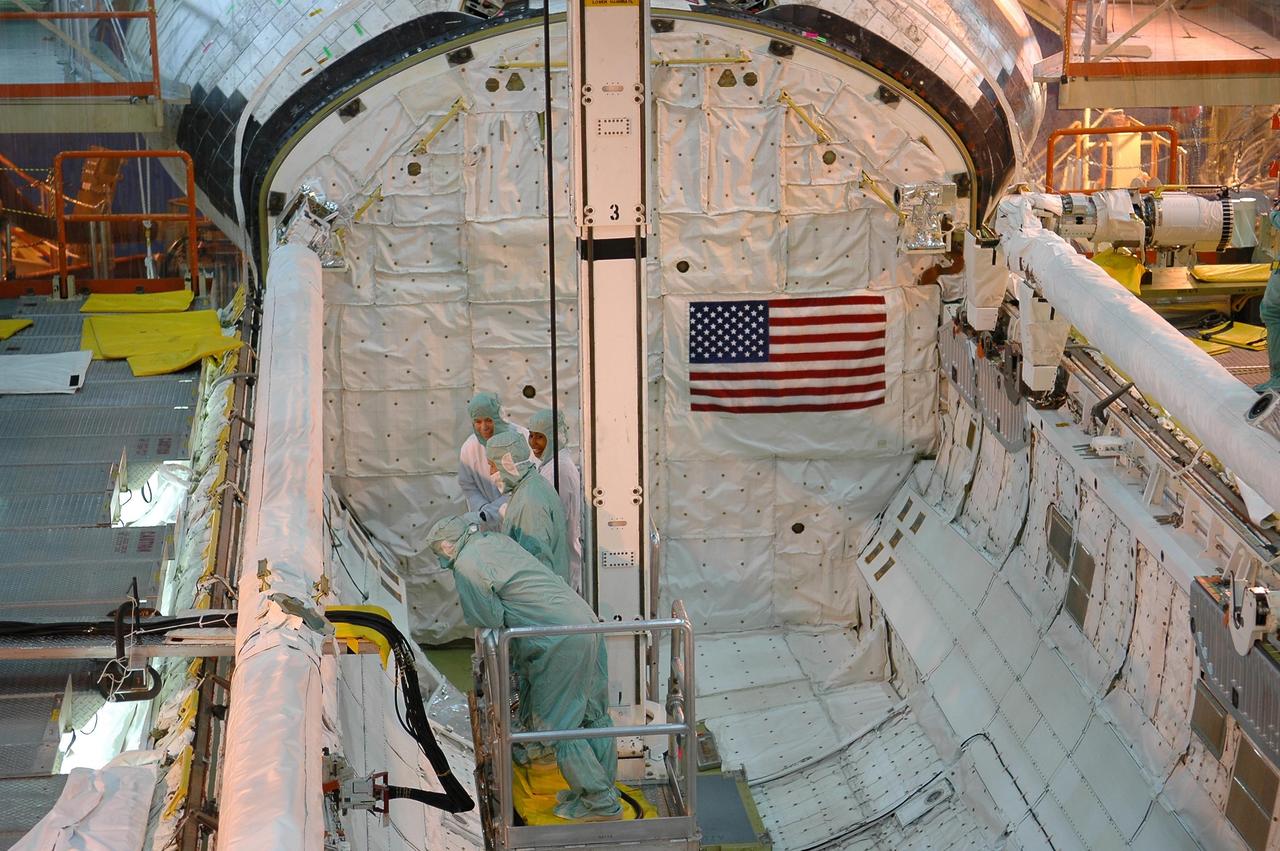
KENNEDY SPACE CENTER, FLA. - In NASA Kennedy Space Center's Orbiter Processing Facility bay 3, STS-121 Pilot Mark Kelly and Mission Specialist Stephanie Wilson are joined by two shuttle technicians in Discovery's payload bay as they examine equipment that will be on the mission. The crew is at Kennedy to take part in the crew equipment interface test, which provides hands-on experience with equipment to be used on-orbit. Launch of Space Shuttle Discovery on mission STS-121, the second return-to-flight mission, is scheduled no earlier than May.
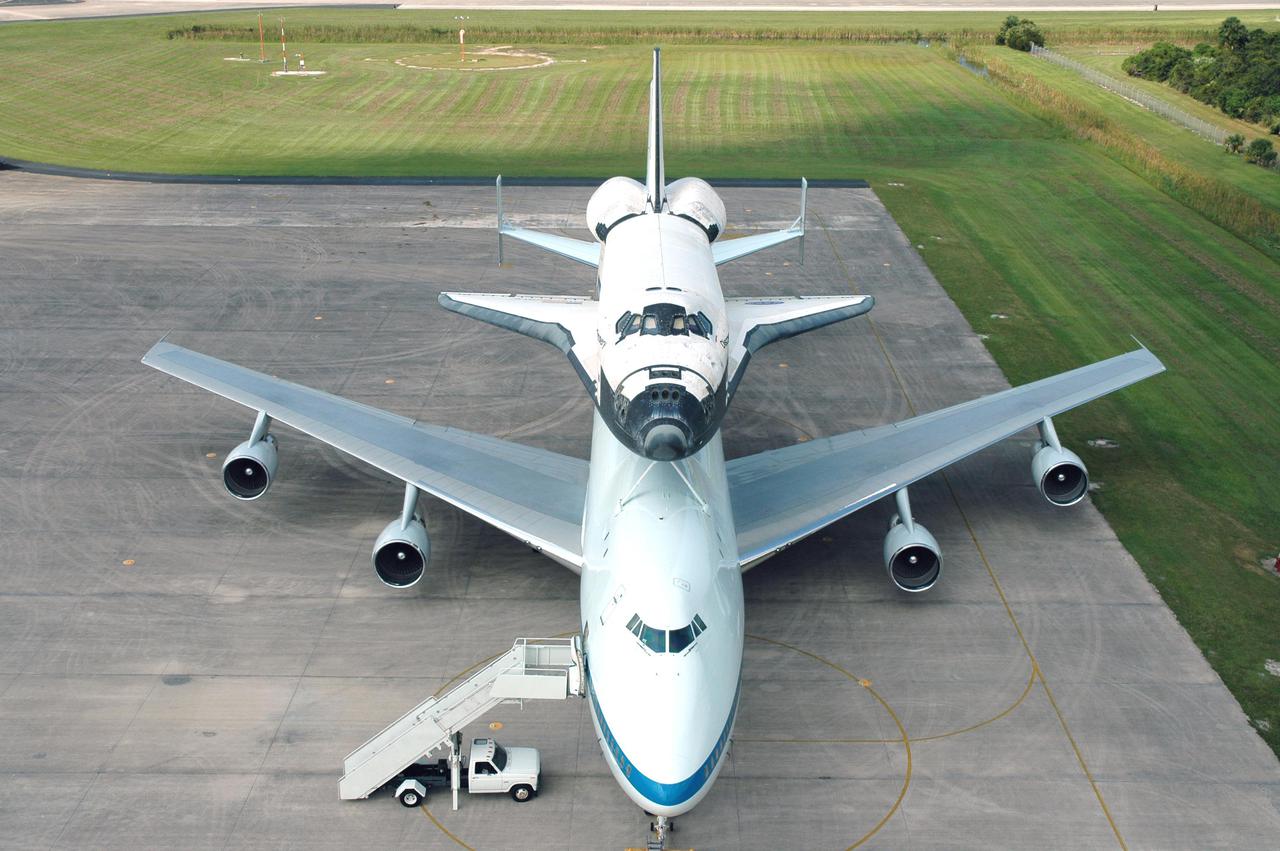
KENNEDY SPACE CENTER, FLA. - Space Shuttle Discovery, atop a modified Boeing 747 Shuttle Carrier Aircraft (SCA), has arrived at the Mate_Demate Device (MDD) at NASA Kennedy Space Center's Shuttle Landing Facility (SLF) following touchdown on runway 15 at about 10:00 a.m. EDT. The cross-country ferry flight became necessary when two days of unfavorable weather conditions at KSC forced Discovery to land on runway 22 at Edwards Air Force Base, Calif., on Aug. 9 following mission STS-114. On the return trip, stops were made at Altus Air Force Base, Okla., and Barksdale Air Force Base, La., where Discovery stayed for two nights. A crane on the MDD will lift Discovery from the SCA and place it on solid ground. Discovery will then be towed to the Orbiter Processing Facility where preparations will begin for its next flight, STS-121.
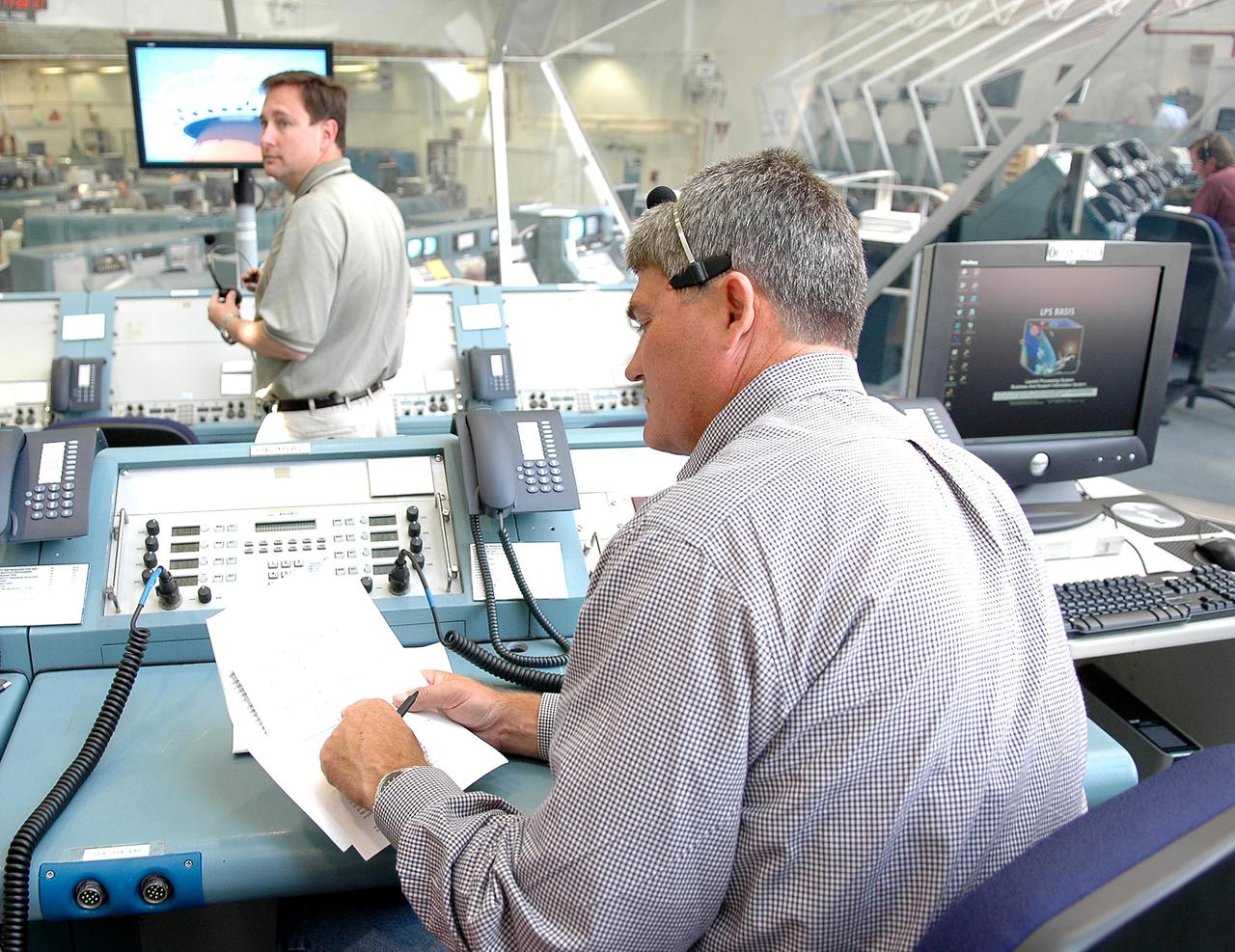
KENNEDY SPACE CENTER, FLA. - Bill Parsons (foreground), manager of the Space Shuttle Program, supports an External Tank (ET) tanking test at Launch Pad 39B from the Launch Control Center. The tanking test is designed to evaluate how the tank, orbiter, solid rocket boosters and ground systems perform under 'cryo-load,' when the tank is filled with the two ultra-low-temperature propellants. The tank filling and draining portion of the test takes about 11 hours. The test also includes a simulated countdown through the hold at T-31 seconds. The test is being conducted to troubleshoot two issues identified by a tanking test held on April 14. Data is being collected to analyze the liquid hydrogen sensors that gave intermittent readings and the liquid hydrogen pressurization relief valve that cycled more times than standard. The tanking tests are part of preparations for Space Shuttle Discovery's Return to Flight mission, STS-114, to the International Space Station. The launch window extends from July 13 through July 31.
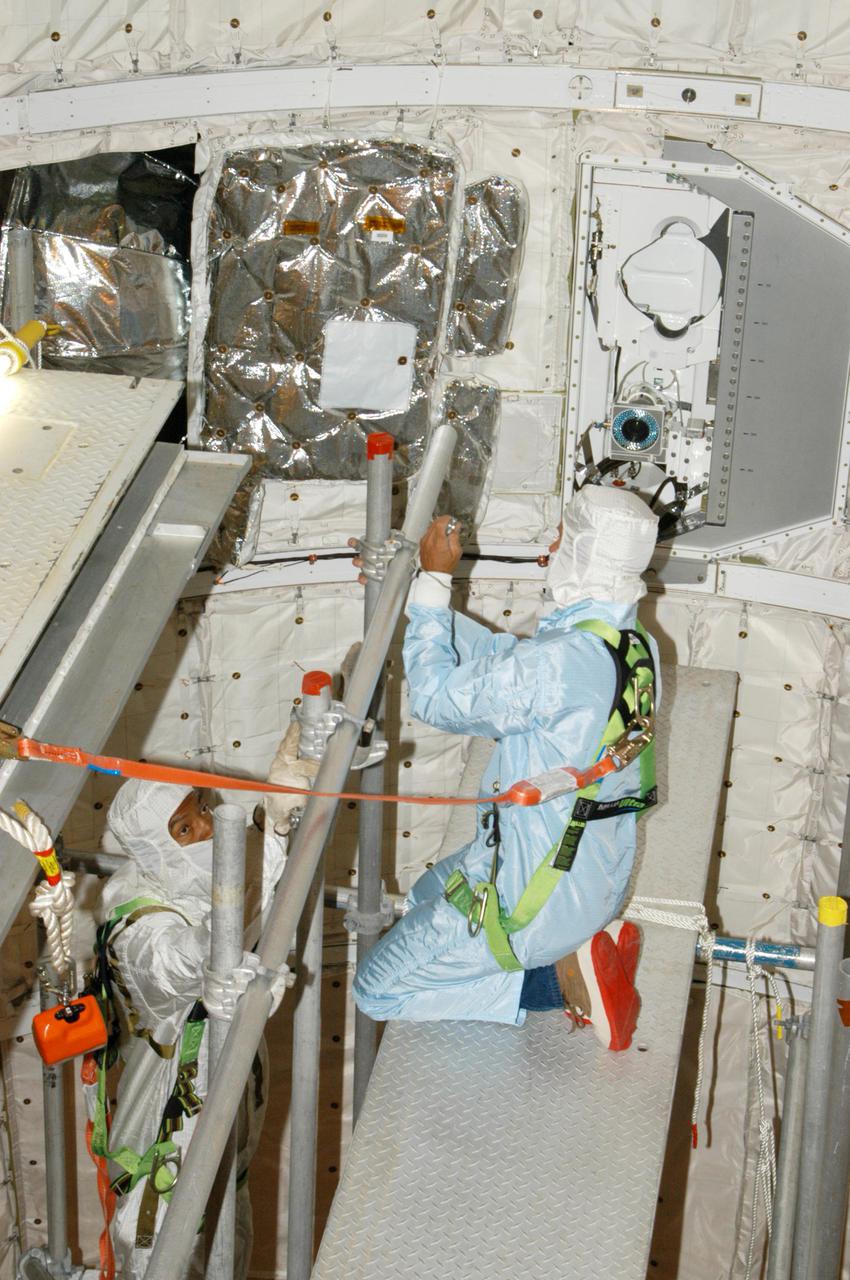
KENNEDY SPACE CENTER, FLA. - At Launch Complex 39B, technicians construct a platform in Space Shuttle Discovery's payload bay to support an upcoming borescope inspection of the retract link assembly on the orbiter's main landing gear door. The inspection is a precautionary measure after a small crack was found in a retract link assembly on the right-hand main landing gear on orbiter Atlantis. An initial review of the closeout photos of the link assembly on Discovery did not reveal any cracks. Discovery is scheduled to return the Space Shuttle fleet to operational status on mission STS-114. This additional work does not impact the launch planning window of July 13-31.
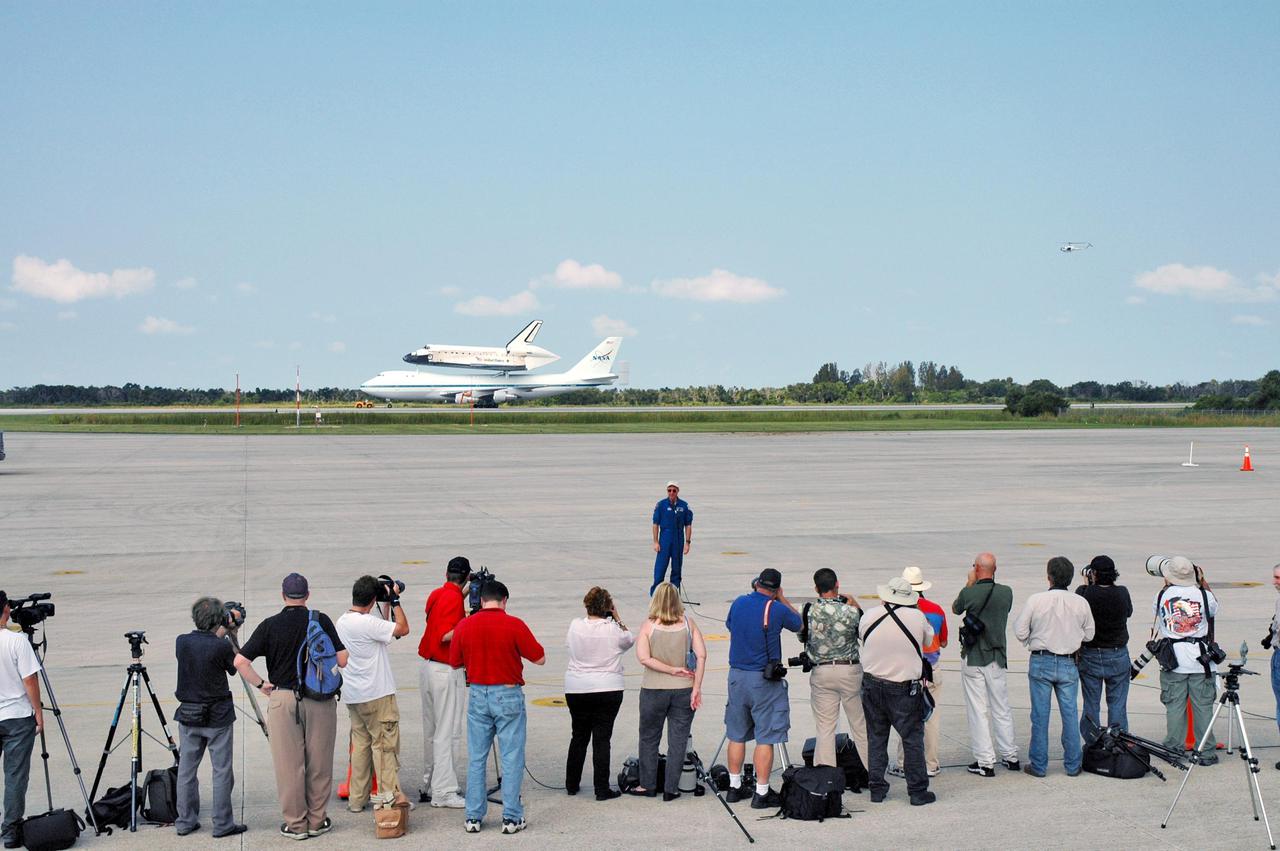
KENNEDY SPACE CENTER, FLA. - Representatives from the news media are on hand to view the touchdown of Space Shuttle Discovery, atop a modified Boeing 747 Shuttle Carrier Aircraft (SCA), on runway 15 at NASA Kennedy Space Center's Shuttle Landing Facility (SLF) at about 10:00 a.m. EDT. The cross-country ferry flight became necessary when two days of unfavorable weather conditions at KSC forced Discovery to land on runway 22 at Edwards Air Force Base, Calif., on Aug. 9 following mission STS-114. On the return trip, stops were made at Altus Air Force Base, Okla., and Barksdale Air Force Base, La., where Discovery stayed for two nights. The SCA and Discovery will be towed to the Mate_Demate Device at the SLF where a crane will lift Discovery from the SCA and place it on solid ground. Discovery will then be towed to the Orbiter Processing Facility where preparations will begin for its next flight, STS-121.
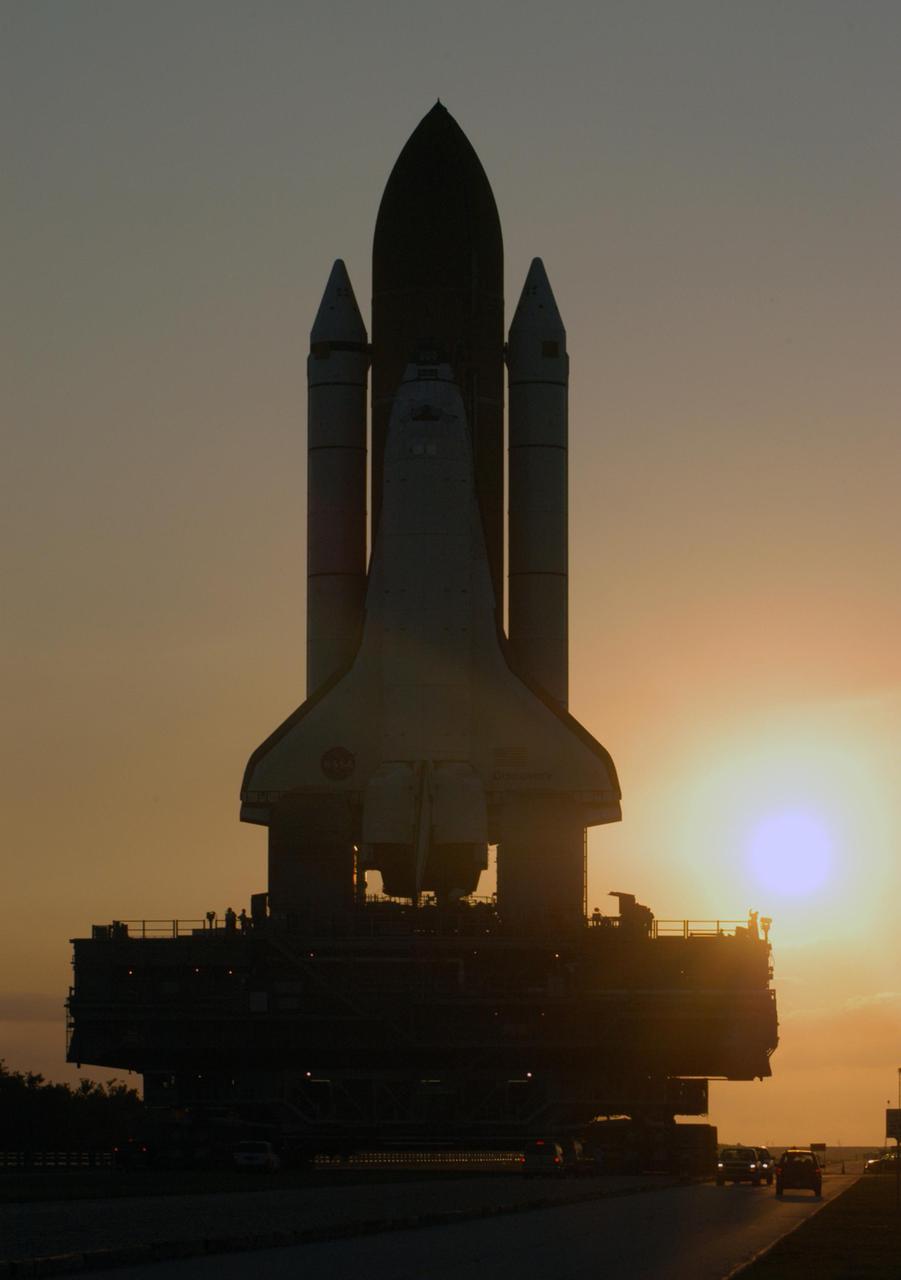
KENNEDY SPACE CENTER, FLA. - Space Shuttle Discovery makes its way along the crawlerway from high bay 3 to Launch Pad 39B as the sun rises. First motion for the 4-mile, 6-hour journey was at 1:58 a.m. EDT. The Space Shuttle rests on a Mobile Launcher Platform which sits atop a Crawler-Transporter. This is the second rollout of Discovery after being returned to the Vehicle Assembly Building for connection to an improved External Tank. Launch of Discovery on its Return to Flight mission STS-114 is targeted for a launch window extending from July 13 to July 31. During its 12-day mission, Discovery’s seven-person crew will test new hardware and techniques to improve Shuttle safety, as well as deliver supplies to the International Space Station.
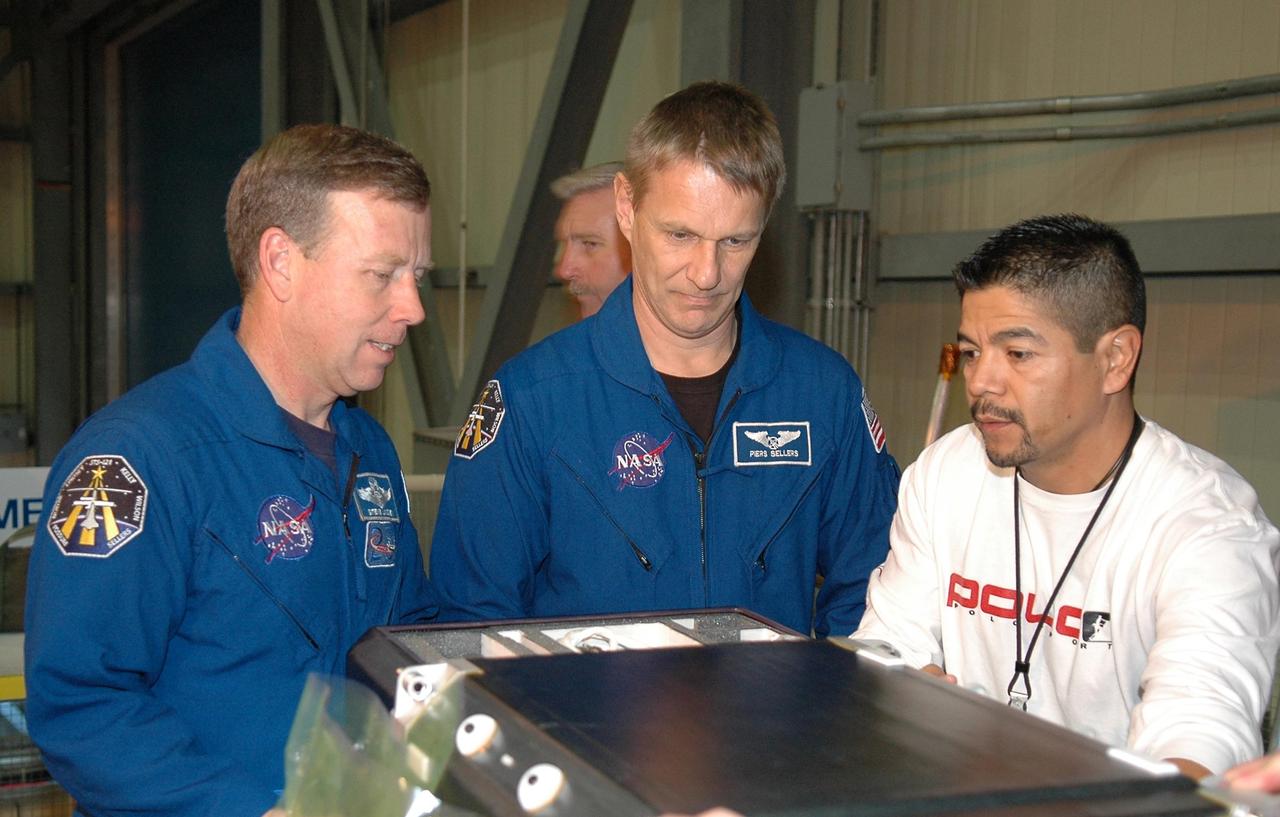
KENNEDY SPACE CENTER, FLA. - In NASA Kennedy Space Center's Orbiter Processing Facility bay 3, STS-121 Commander Steve Lindsey and Mission Specialist Piers Sellers, under the watchful eyes of Victor Badillo, practice working with equipment for the mission. Badillo, with United Space Alliance, is a flight maintenance trainer from Johnson Space Center. The crew is at Kennedy to take part in the crew equipment interface test, which provides hands-on experience with equipment to be used on-orbit. Launch of Space Shuttle Discovery on mission STS-121, the second return-to-flight mission, is scheduled no earlier than May.
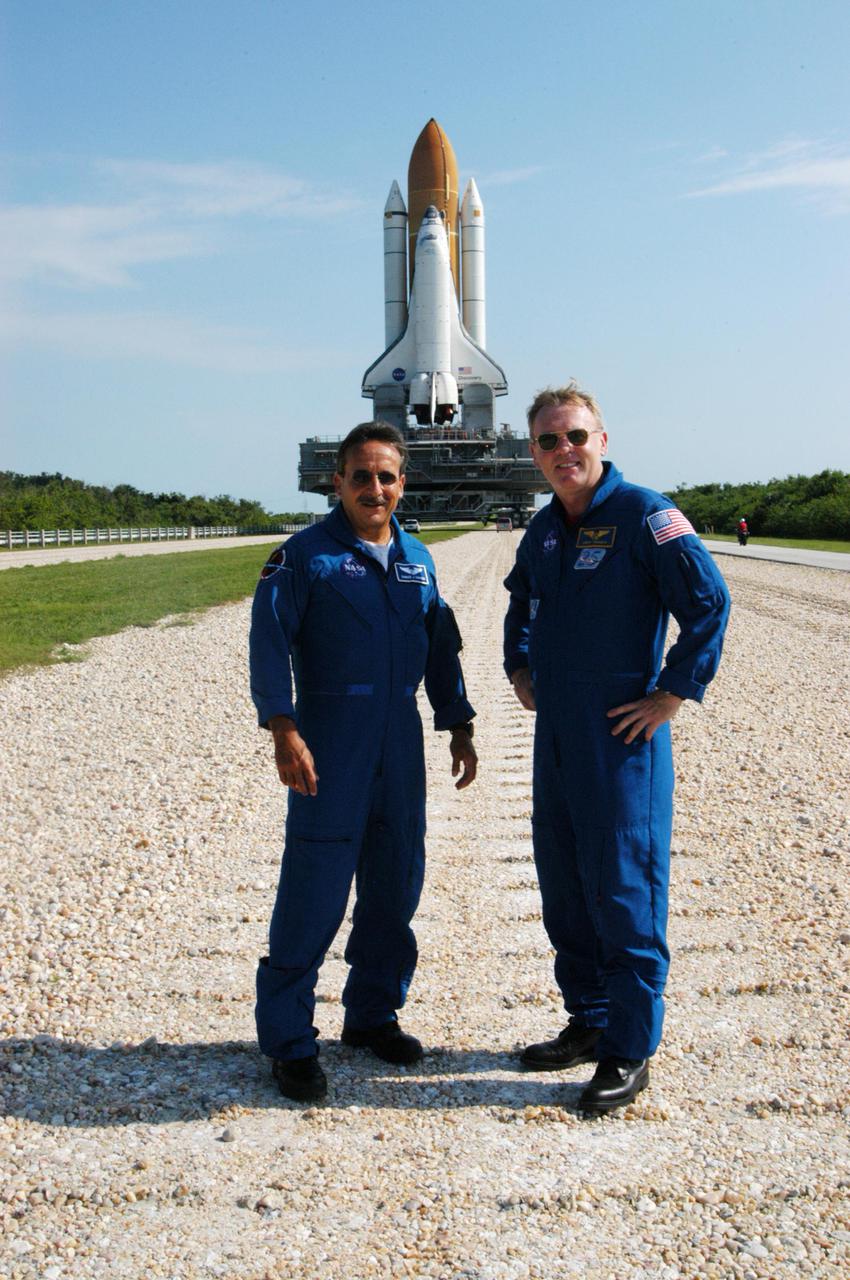
KENNEDY SPACE CENTER, FLA. - STS-114 Mission Specialists Charles Camarda (left) and Andrew Thomas monitor the progress of Space Shuttle Discovery as it makes its way along the crawlerway to Launch Pad 39B. First motion for the 4.2-mile journey was at 1:58 a.m. EDT. The Space Shuttle rests on a Mobile Launcher Platform that sits atop a Crawler-Transporter. This is the second rollout of Discovery. The vehicle was returned to the Vehicle Assembly Building for connection to an improved External Tank. Launch of Discovery on its Return to Flight mission STS-114 is targeted for a launch window extending from July 13 to July 31.
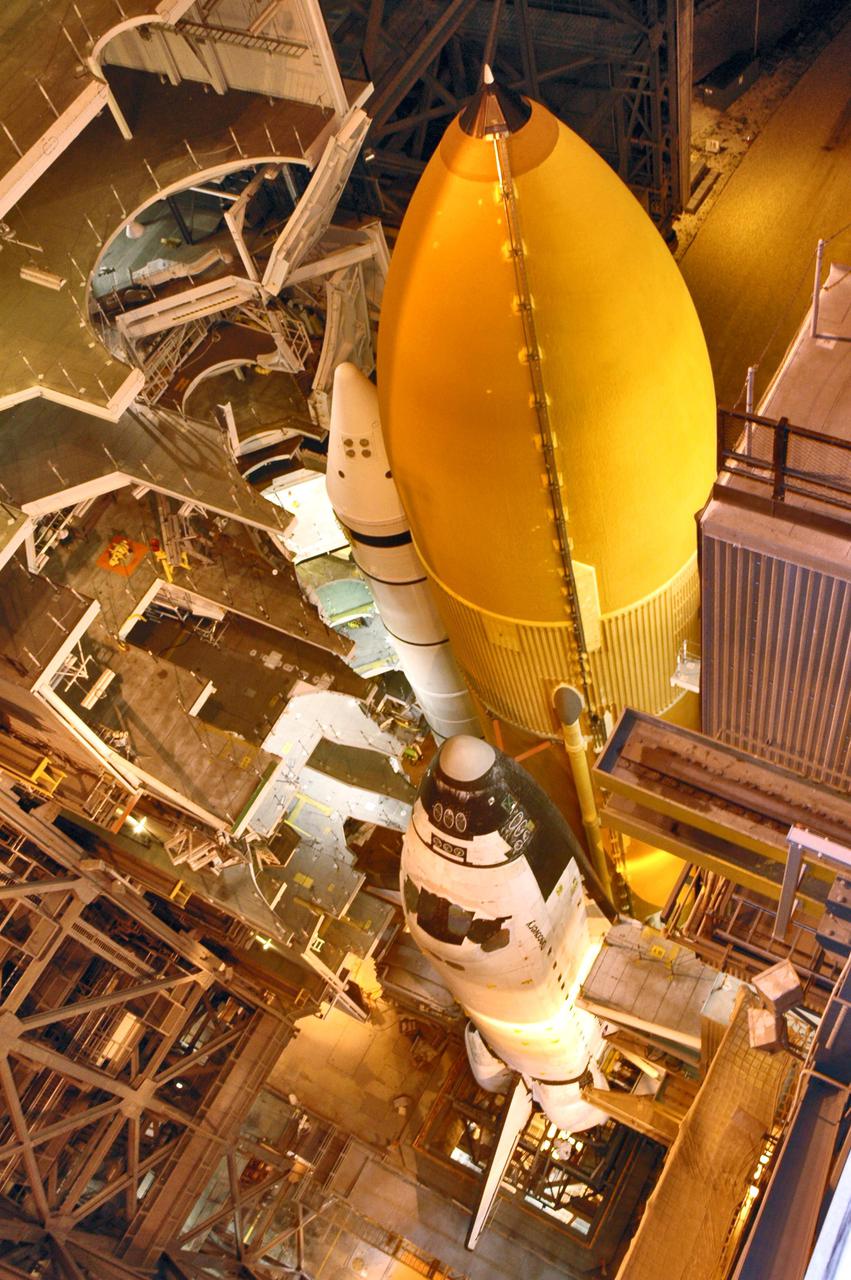
KENNEDY SPACE CENTER, FLA. - In the Vehicle Assembly Building (VAB) at NASA’s Kennedy Space Center, Space Shuttle Discovery is viewed from above as it departs high bay 3 for its trip to Launch Pad 39B, a 4-mile, 6-hour journey. First motion was at 1:58 a.m. EDT. The Space Shuttle rests on a Mobile Launcher Platform which sits atop a Crawler-Transporter. This is the second rollout of Discovery after being returned to the Vehicle Assembly Building for connection to an improved External Tank. Launch of Discovery on its Return to Flight mission STS-114 is targeted for a launch window extending from July 13 to July 31. During its 12-day mission, Discovery’s seven-person crew will test new hardware and techniques to improve Shuttle safety, as well as deliver supplies to the International Space Station.
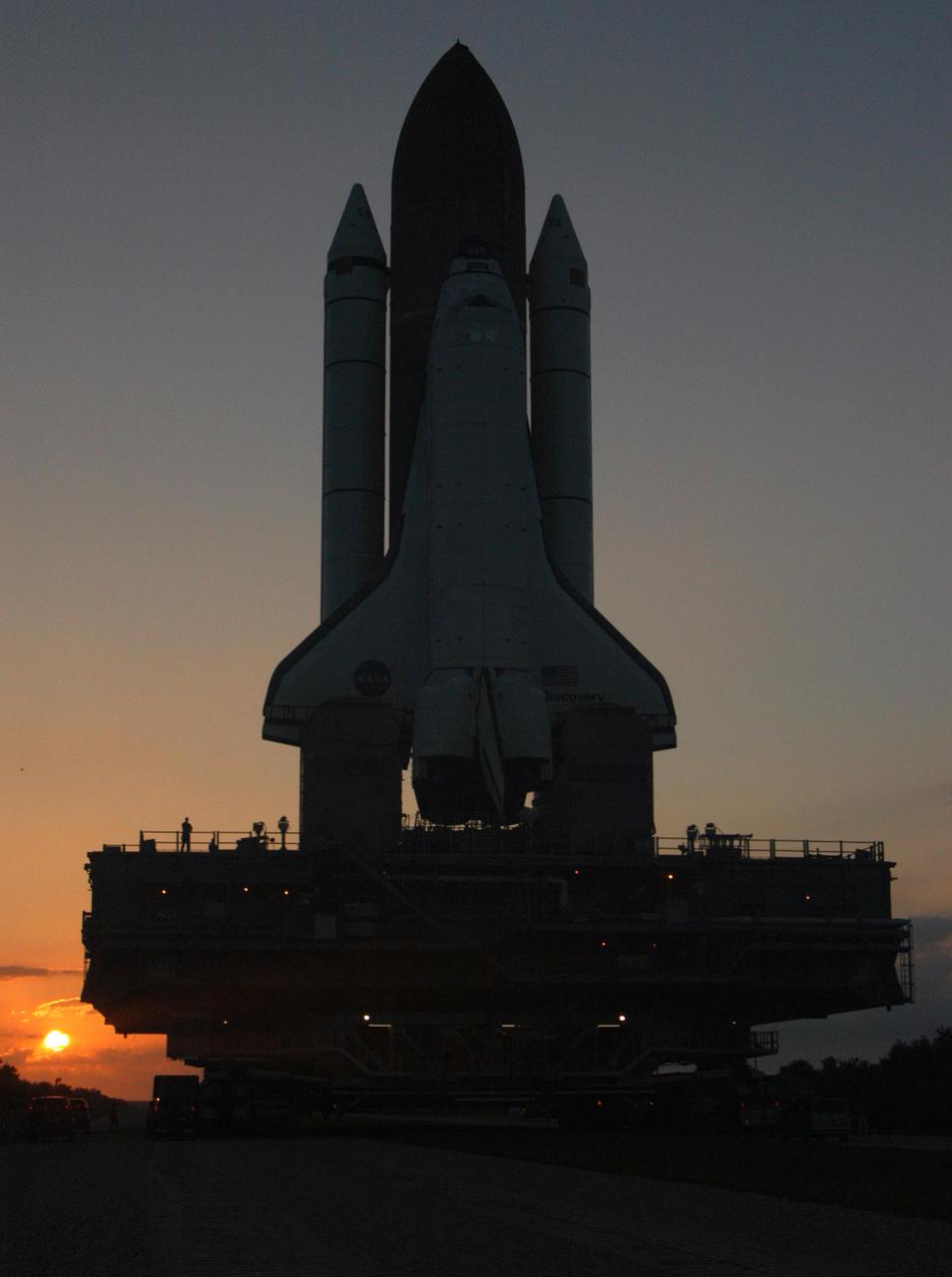
KENNEDY SPACE CENTER, FLA. - Space Shuttle Discovery makes its way along the crawlerway from high bay 3 to Launch Pad 39B as the sun rises. First motion for the 4-mile, 6-hour journey was at 1:58 a.m. EDT. The Space Shuttle rests on a Mobile Launcher Platform which sits atop a Crawler-Transporter. This is the second rollout of Discovery after being returned to the Vehicle Assembly Building for connection to an improved External Tank. Launch of Discovery on its Return to Flight mission STS-114 is targeted for a launch window extending from July 13 to July 31. During its 12-day mission, Discovery’s seven-person crew will test new hardware and techniques to improve Shuttle safety, as well as deliver supplies to the International Space Station.
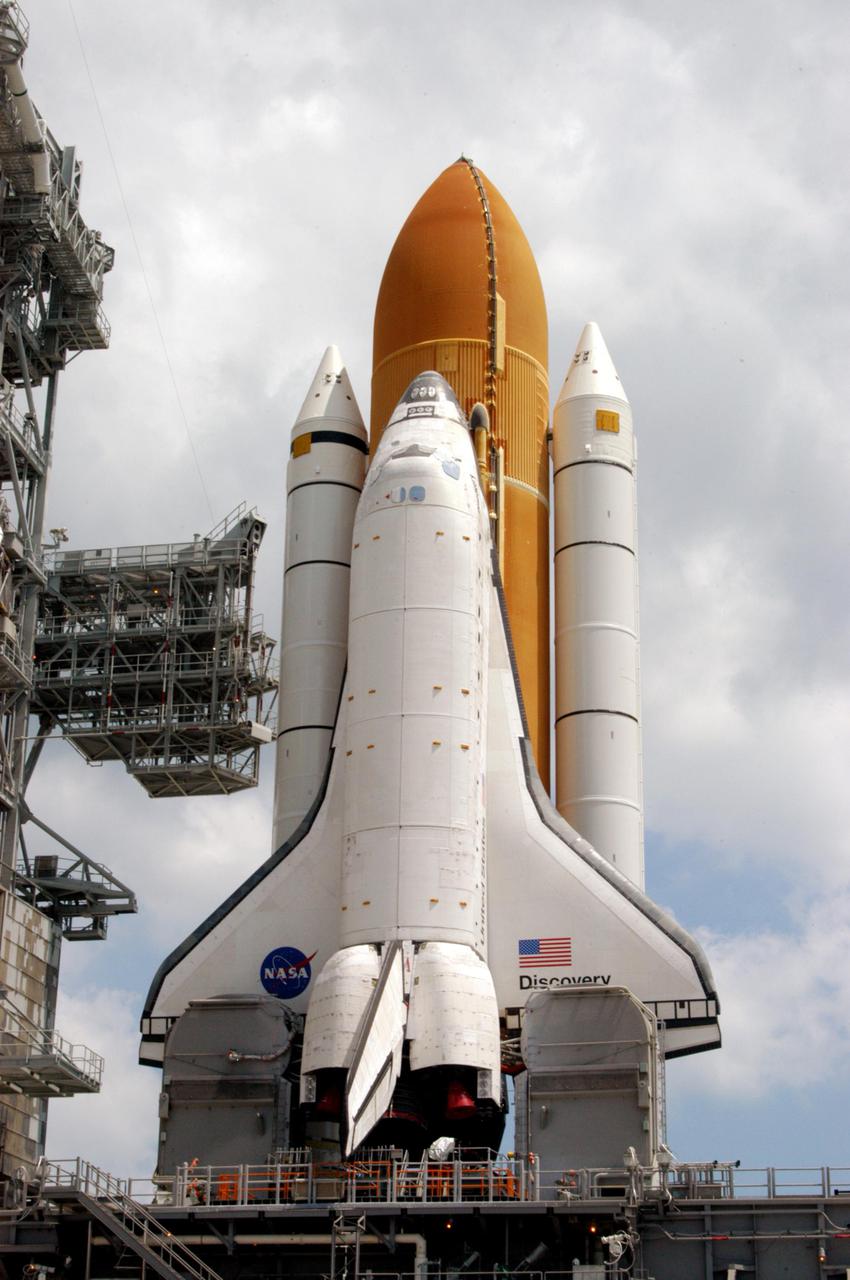
KENNEDY SPACE CENTER, FLA. - The work to secure Space Shuttle Discovery is under way at Launch Pad 39B following its move from the Vehicle Assembly Building. First motion for the 4.2-mile journey was at 1:58 a.m. EDT. The Space Shuttle rests on a Mobile Launcher Platform that sits atop a Crawler-Transporter. This is the second rollout of Discovery. The orbiter was returned to the Vehicle Assembly Building for connection to an improved External Tank. Launch of Discovery on its Return to Flight mission STS-114 is targeted for a launch window extending from July 13 to July 31.
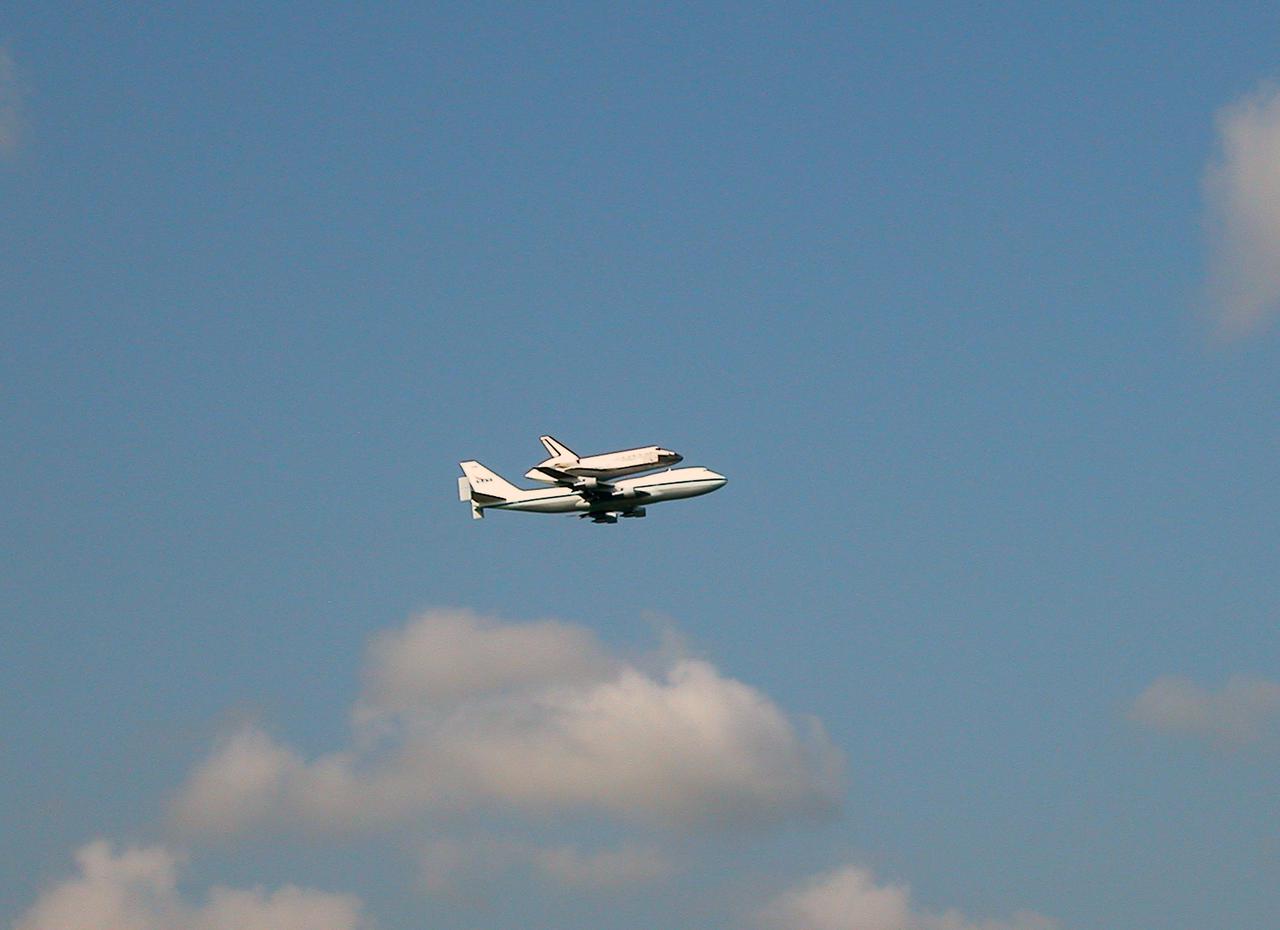
KENNEDY SPACE CENTER, FLA. -- Space Shuttle Discovery, atop a modified Boeing 747 Shuttle Carrier Aircraft (SCA), flies over Launch Complex 39 at Kennedy Space Center on its final approach to runway 15 at the Shuttle Landing Facility (SLF). Landing was at about 10:00 a.m. EDT. The cross-country ferry flight became necessary when two days of unfavorable weather conditions at KSC forced Discovery to land on runway 22 at Edwards Air Force Base, Calif., on Aug. 9 following mission STS-114. The SCA and Discovery will be towed to the Mate_Demate Device at the SLF where a crane will lift Discovery from the SCA and place it on solid ground. Discovery will then be towed to the Orbiter Processing Facility where preparations will begin for its next flight, STS-121.
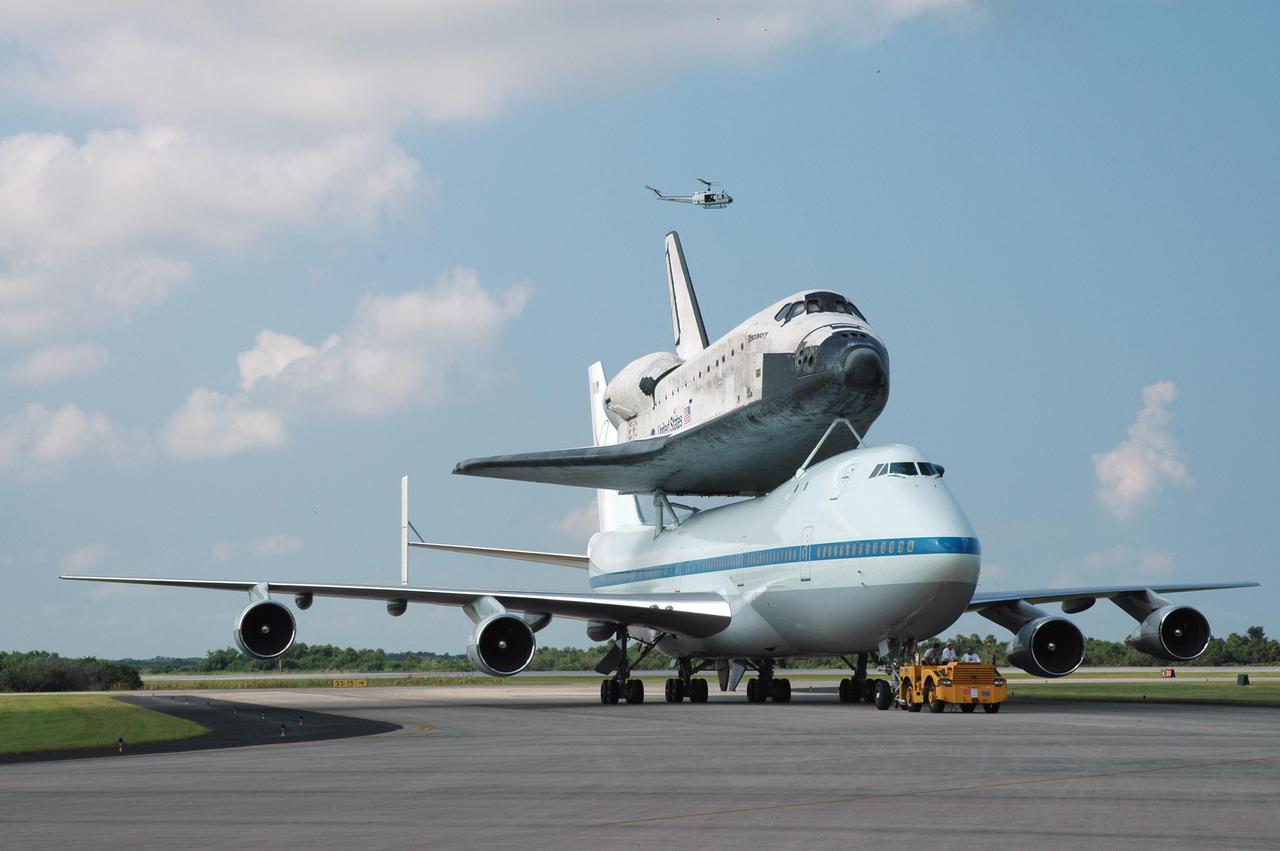
KENNEDY SPACE CENTER, FLA. - Space Shuttle Discovery, atop a modified Boeing 747 Shuttle Carrier Aircraft (SCA), is towed to the Mate_Demate Device (MDD) at NASA Kennedy Space Center's Shuttle Landing Facility (SLF) following touchdown on runway 15 at about 10:00 a.m. EDT. The cross-country ferry flight became necessary when two days of unfavorable weather conditions at KSC forced Discovery to land on runway 22 at Edwards Air Force Base, Calif., on Aug. 9 following mission STS-114. On the return trip, stops were made at Altus Air Force Base, Okla., and Barksdale Air Force Base, La., where Discovery stayed for two nights. A crane on the MDD will lift Discovery from the SCA and place it on solid ground. Discovery will then be towed to the Orbiter Processing Facility where preparations will begin for its next flight, STS-121.
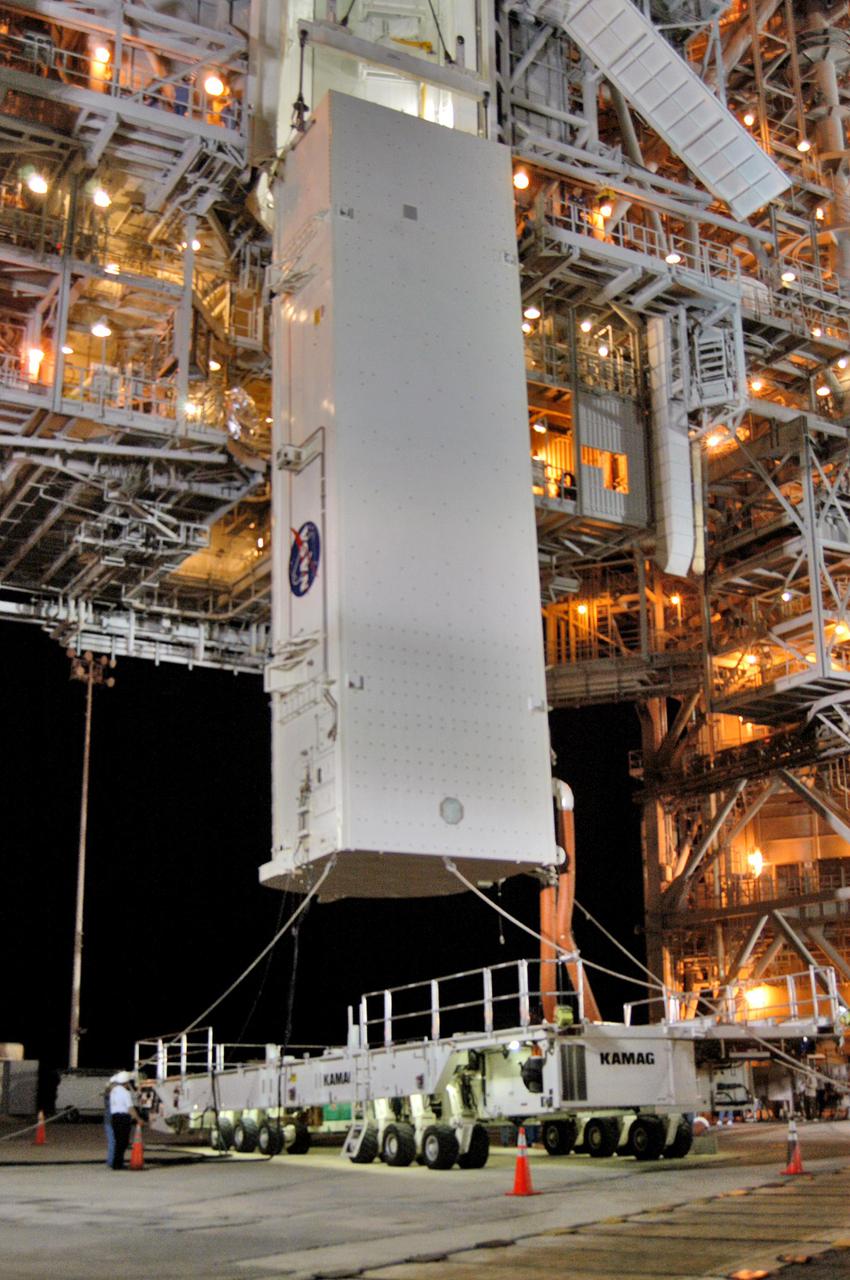
KENNEDY SPACE CENTER, FLA. - At Launch Pad 39B, the payload canister that delivered payloads launching aboard Space Shuttle Discovery's Return to Flight mission STS-114 is lowered from the Payload Changeout Room. The payloads will be installed into Discovery, scheduled to arrive at the pad later today. Discovery’s payloads include the Multi-Purpose Logistics Module Raffaello, the Lightweight Multi-Purpose Experiment Support Structure Carrier (LMC), and the External Stowage Platform-2 (ESP-2). Raffaello will deliver supplies to the International Space Station including food, clothing and research equipment. The LMC will carry a replacement Control Moment Gyroscope and a tile repair sample box. The ESP-2 is outfitted with replacement parts. Discovery’s launch window extends from July 13 through July 31.
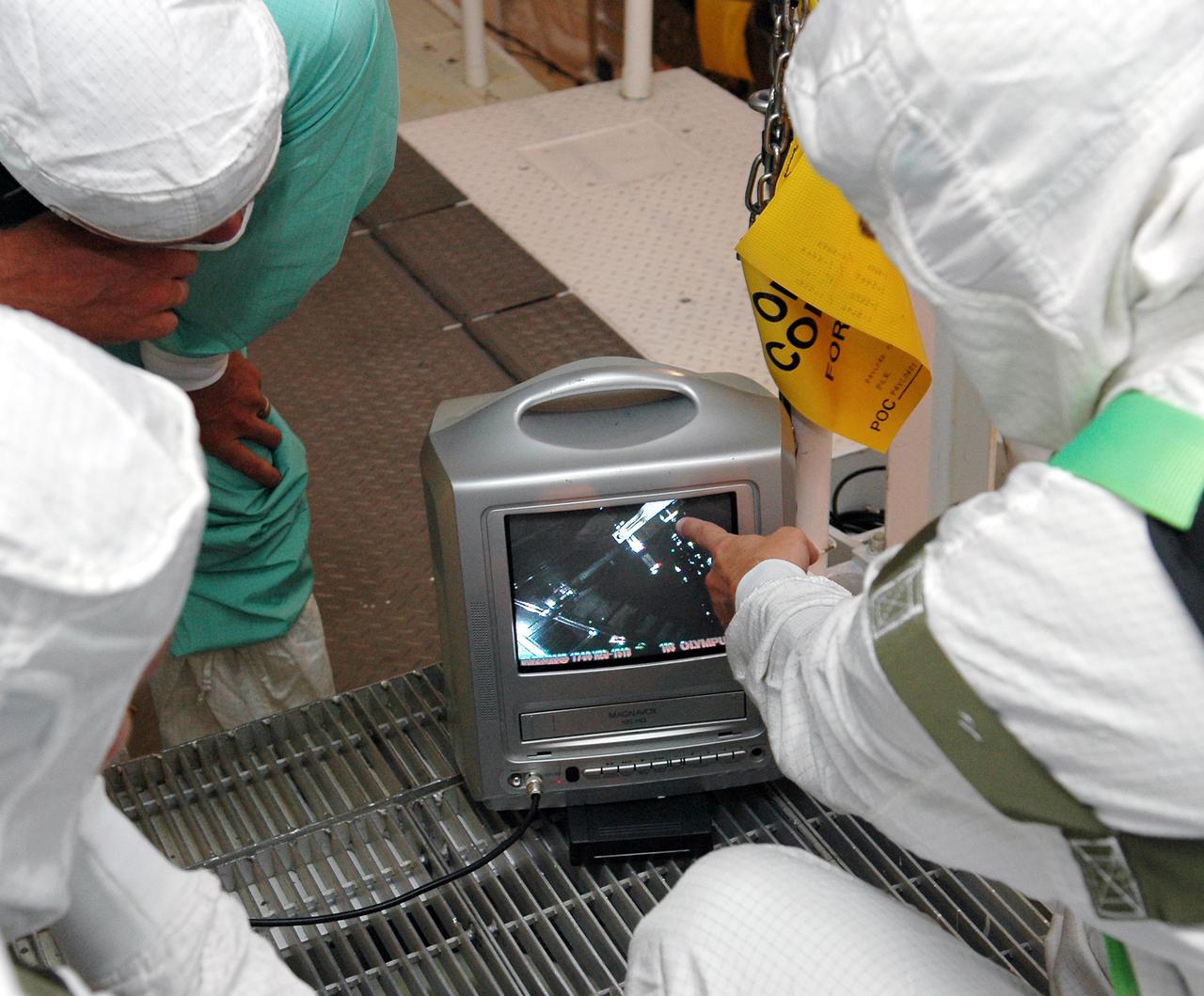
KENNEDY SPACE CENTER, FLA. - At Launch Complex 39B, technicians in Space Shuttle Discovery's payload bay monitor the images received during a borescope inspection of the retract link assembly on the orbiter's main landing gear door. The inspection is a precautionary measure after a small crack was found in a retract link assembly on the right-hand main landing gear on orbiter Atlantis. An initial review of the closeout photos of the link assembly on Discovery did not reveal any cracks. Discovery is scheduled to return the Space Shuttle fleet to operational status on mission STS-114. This additional work does not impact the launch planning window of July 13-31.
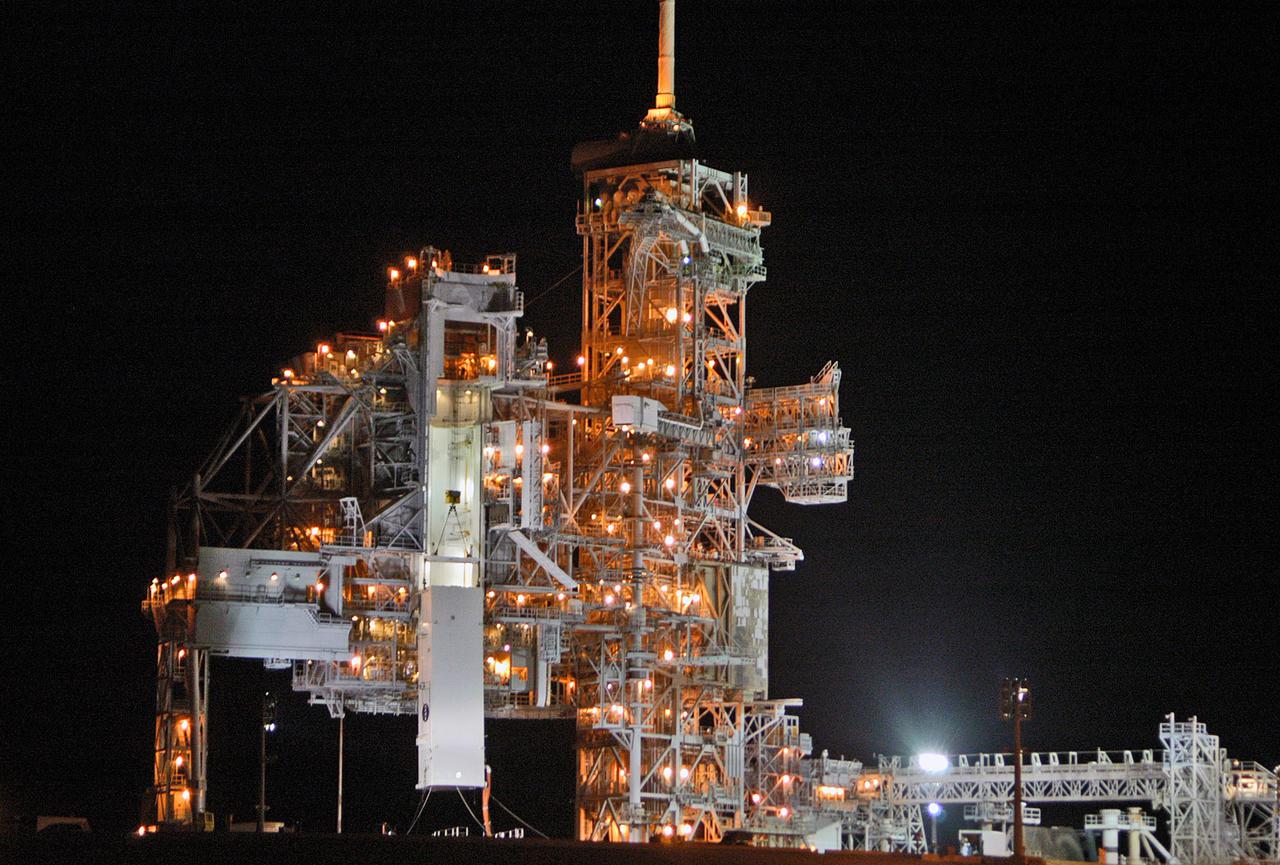
KENNEDY SPACE CENTER, FLA. - At Launch Pad 39B, the payload canister that delivered payloads launching aboard Space Shuttle Discovery's Return to Flight mission STS-114 is lowered from the Payload Changeout Room. The payloads will be installed into Discovery, scheduled to arrive at the pad later today. Discovery’s payloads include the Multi-Purpose Logistics Module Raffaello, the Lightweight Multi-Purpose Experiment Support Structure Carrier (LMC), and the External Stowage Platform-2 (ESP-2). Raffaello will deliver supplies to the International Space Station including food, clothing and research equipment. The LMC will carry a replacement Control Moment Gyroscope and a tile repair sample box. The ESP-2 is outfitted with replacement parts. Discovery’s launch window extends from July 13 through July 31.

KENNEDY SPACE CENTER, FLA. - In NASA Kennedy Space Center's Orbiter Processing Facility bay 3, STS-121 Pilot Mark Kelly works with equipment that will be on the mission. The crew is at Kennedy to take part in the crew equipment interface test, which provides hands-on experience with equipment to be used on-orbit. Launch of Space Shuttle Discovery on mission STS-121, the second return-to-flight mission, is scheduled no earlier than May.
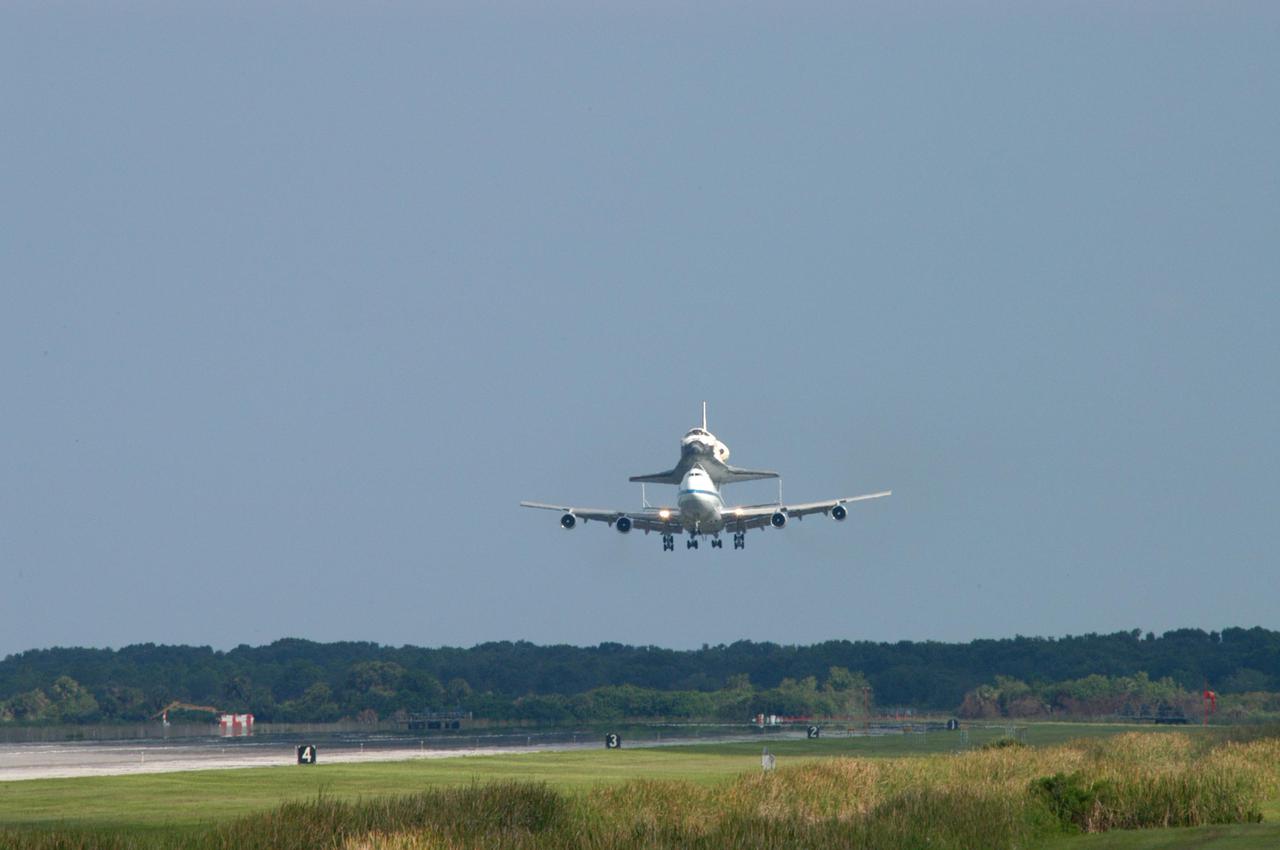
KENNEDY SPACE CENTER, FLA. - Space Shuttle Discovery, atop a modified Boeing 747 Shuttle Carrier Aircraft (SCA), is on its final approach to land on runway 15 at NASA Kennedy Space Center's Shuttle Landing Facility (SLF) at about 10:00 a.m. EDT. The cross-country ferry flight became necessary when two days of unfavorable weather conditions at KSC forced Discovery to land on runway 22 at Edwards Air Force Base, Calif., on Aug. 9 following mission STS-114. On the return trip, stops were made at Altus Air Force Base, Okla., and Barksdale Air Force Base, La., where Discovery stayed for two nights. The SCA and Discovery will be towed to the Mate_Demate Device at the SLF where a crane will lift Discovery from the SCA and place it on solid ground. Discovery will then be towed to the Orbiter Processing Facility where preparations will begin for its next flight, STS-121.
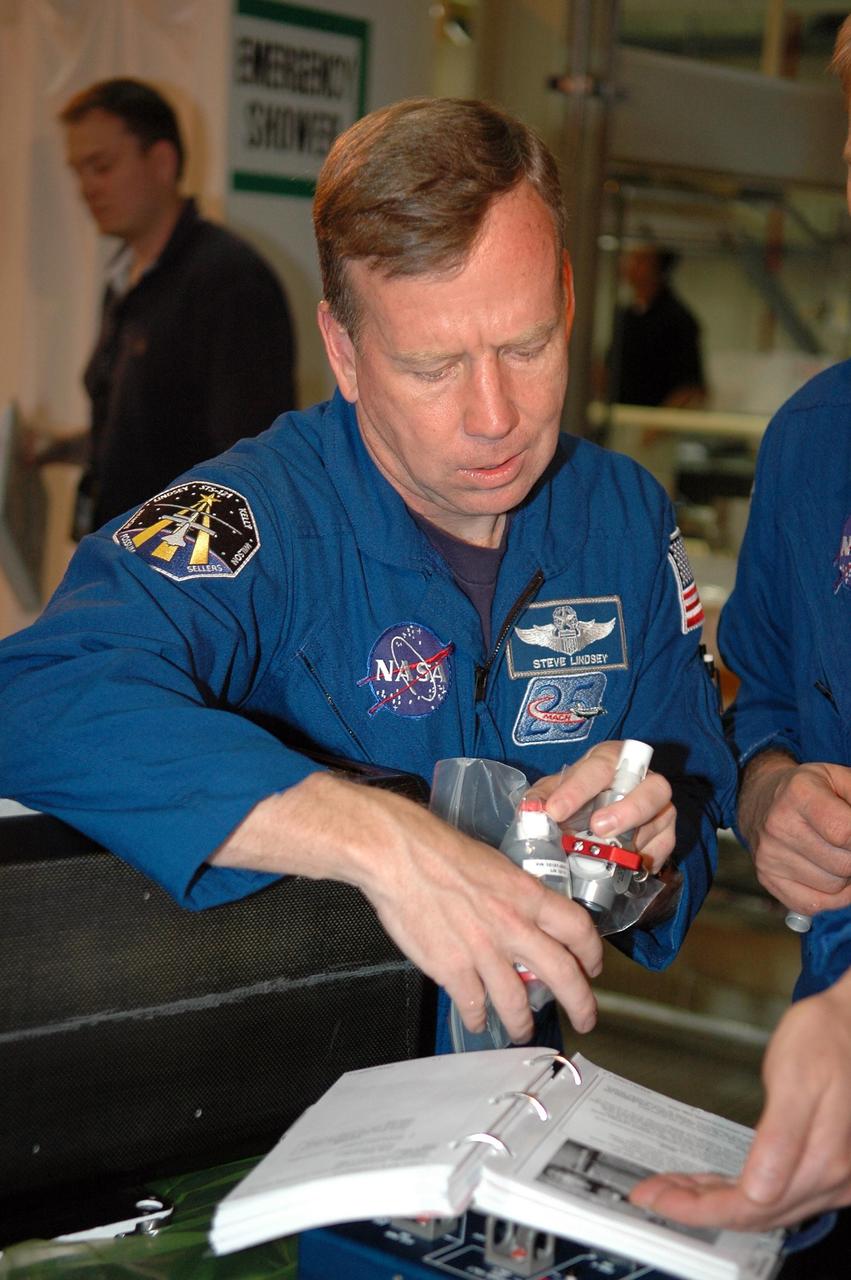
KENNEDY SPACE CENTER, FLA. - In NASA Kennedy Space Center's Orbiter Processing Facility bay 3, STS-121 Commander Steve Lindsey works with equipment that will be on the mission. The crew is at Kennedy to take part in the crew equipment interface test, which provides hands-on experience with equipment to be used on-orbit. Launch of Space Shuttle Discovery on mission STS-121, the second return-to-flight mission, is scheduled no earlier than May.
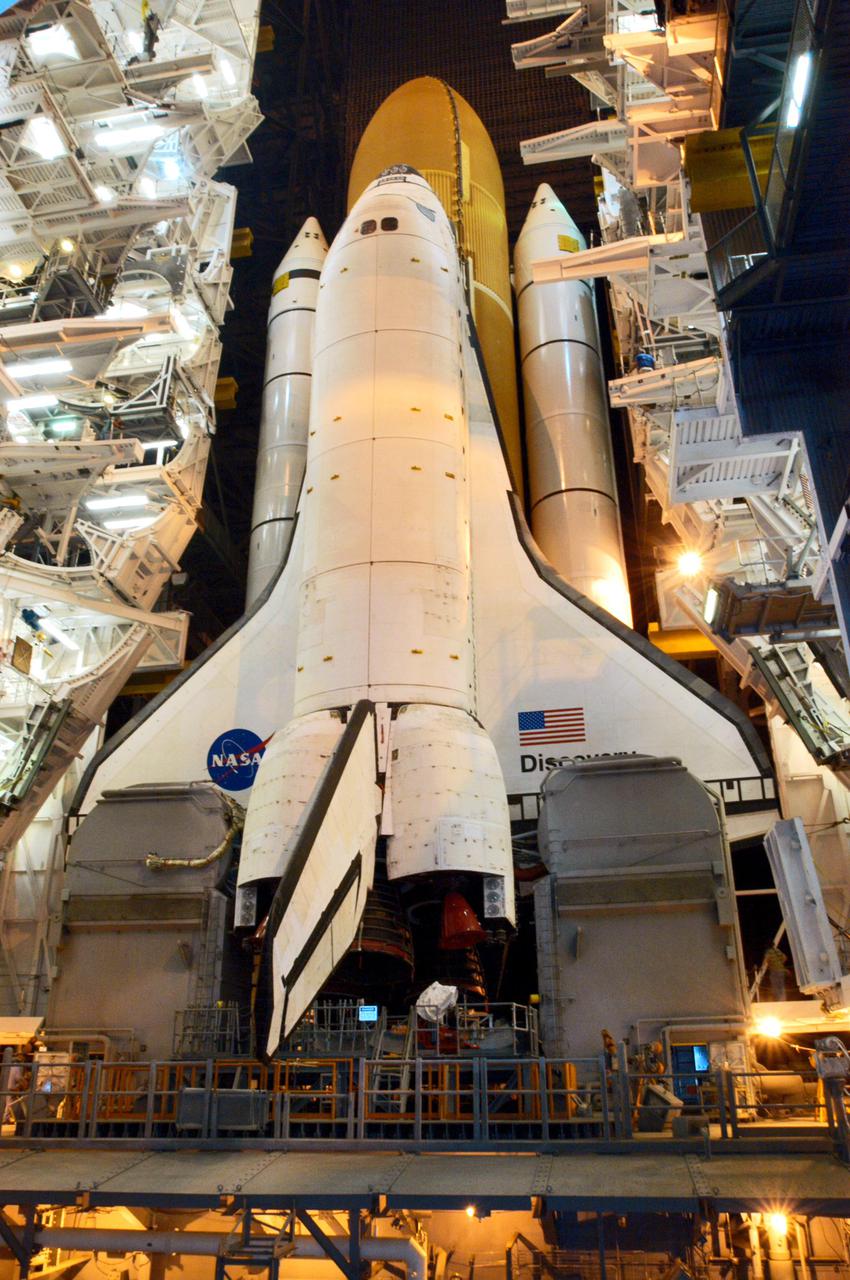
KENNEDY SPACE CENTER, FLA. - In the Vehicle Assembly Building (VAB) at NASA’s Kennedy Space Center, Space Shuttle Discovery exits high bay 3 to begin its trip to Launch Pad 39B, a 4-mile, 6-hour journey. First motion was at 1:58 a.m. EDT. The Space Shuttle rests on a Mobile Launcher Platform which sits atop a Crawler-Transporter. This is the second rollout of Discovery after being returned to the Vehicle Assembly Building for connection to an improved External Tank. Launch of Discovery on its Return to Flight mission STS-114 is targeted for a launch window extending from July 13 to July 31. During its 12-day mission, Discovery’s seven-person crew will test new hardware and techniques to improve Shuttle safety, as well as deliver supplies to the International Space Station.
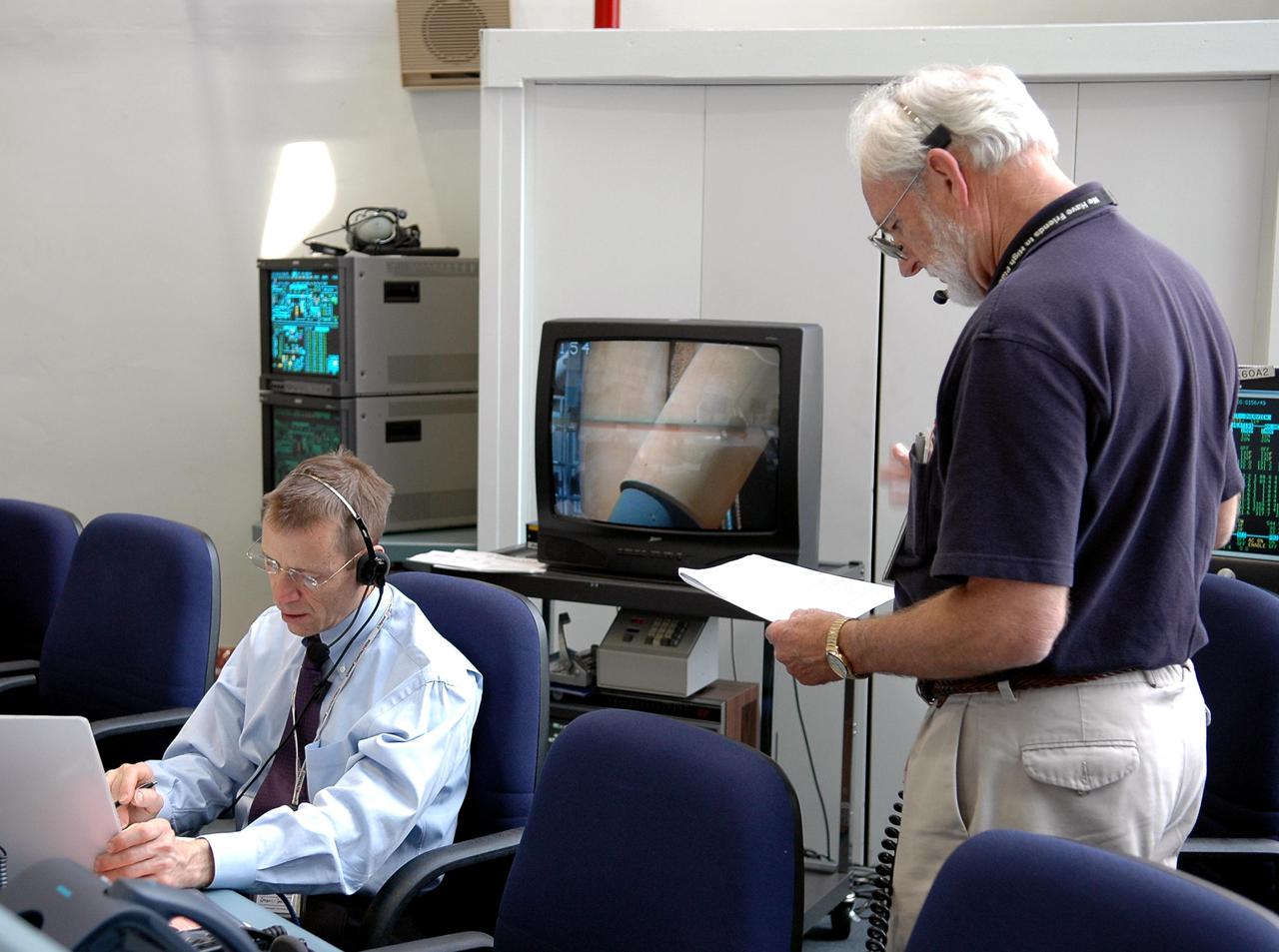
KENNEDY SPACE CENTER, FLA. - Greg 'Ray J' Johnson (left), KSC manager of Launch Integration, and Denny Kross, KSC deputy director of the Space Shuttle Program, support an External Tank (ET) tanking test at Launch Pad 39B from the Launch Control Center. The tanking test is designed to evaluate how the tank, orbiter, solid rocket boosters and ground systems perform under 'cryo-load,' when the tank is filled with the two ultra-low-temperature propellants. The tank filling and draining portion of the test takes about 11 hours. The test also includes a simulated countdown through the hold at T-31 seconds. The test is being conducted to troubleshoot two issues identified by a tanking test held on April 14. Data is being collected to analyze the liquid hydrogen sensors that gave intermittent readings and the liquid hydrogen pressurization relief valve that cycled more times than standard. The tanking tests are part of preparations for Space Shuttle Discovery's Return to Flight mission, STS-114, to the International Space Station. The launch window extends from July 13 through July 31.
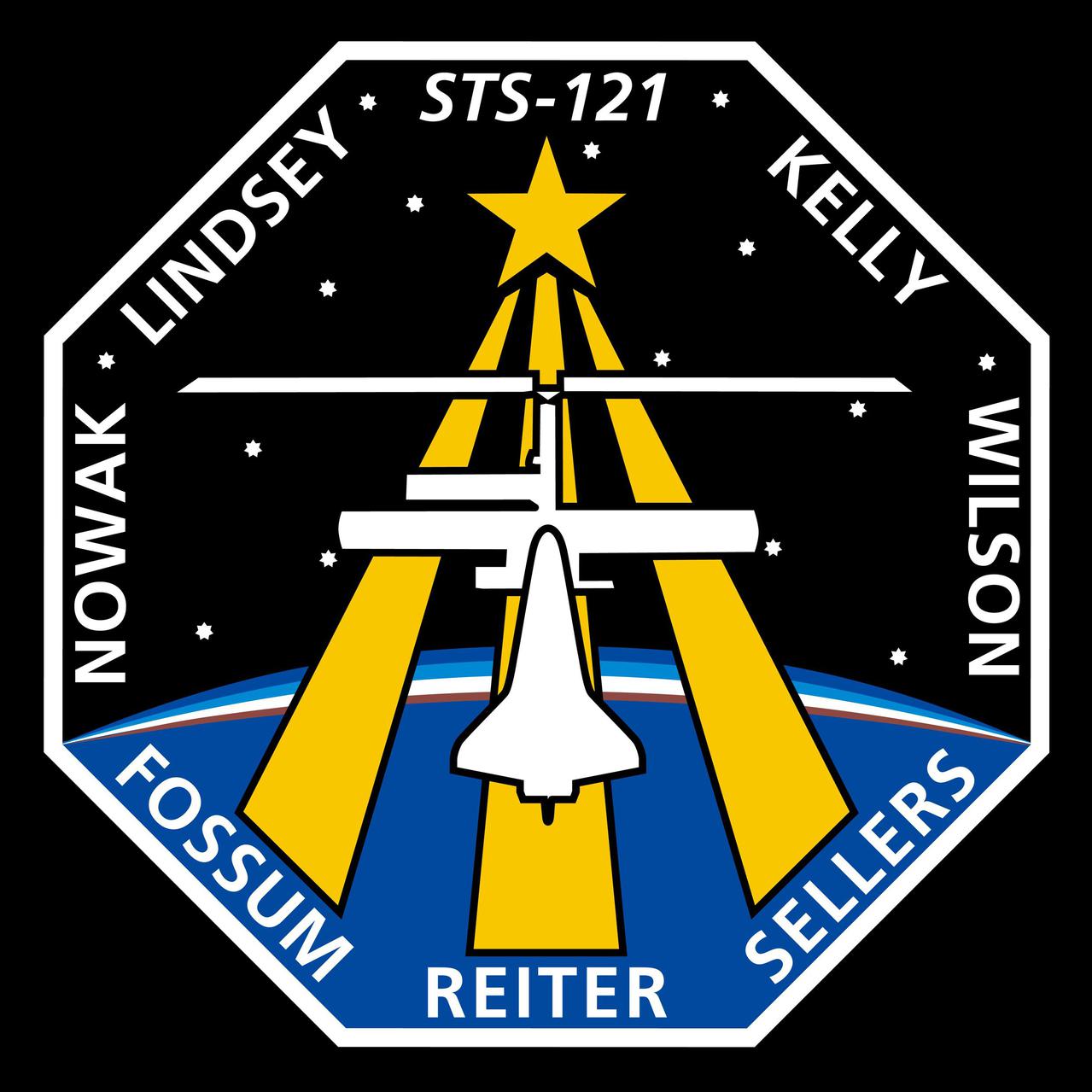
JOHNSON SPACE CENTER, HOUSTON - STS121-S-001 (June 2005) --- The STS-121 patch depicts the Space Shuttle Atlantis docked with the International Space Station (ISS) in the foreground, overlaying the astronaut symbol with three gold columns and a gold star. The ISS is shown in the configuration that it will be in during the STS-121 mission. The background shows the nighttime Earth with a dawn breaking over the horizon. STS-121, ISS mission ULF1.1, is the final Shuttle Return to Flight test mission. This utilization and logistics flight will bring a Multi-Purpose Logistics Module (MPLM) to the ISS with several thousand pounds of new supplies and experiments. In addition, some new Orbital Replacement Units (ORUs) will be delivered and stowed externally on ISS on a special pallet. These ORUs are spares for critical machinery located on the outside of the ISS. During this mission the crew will also carry out testing of Shuttle inspection and repair hardware, as well as evaluate operational techniques and concepts for conducting on-orbit inspection and repair. The NASA insignia design for Shuttle space flights is reserved for use by the astronauts and other official use as the NASA Administrator may authorize. Public availability has been approved only in the form of illustrations by the various news media. When and if there is any change in this policy, which is not anticipated, such will be publicly announced.
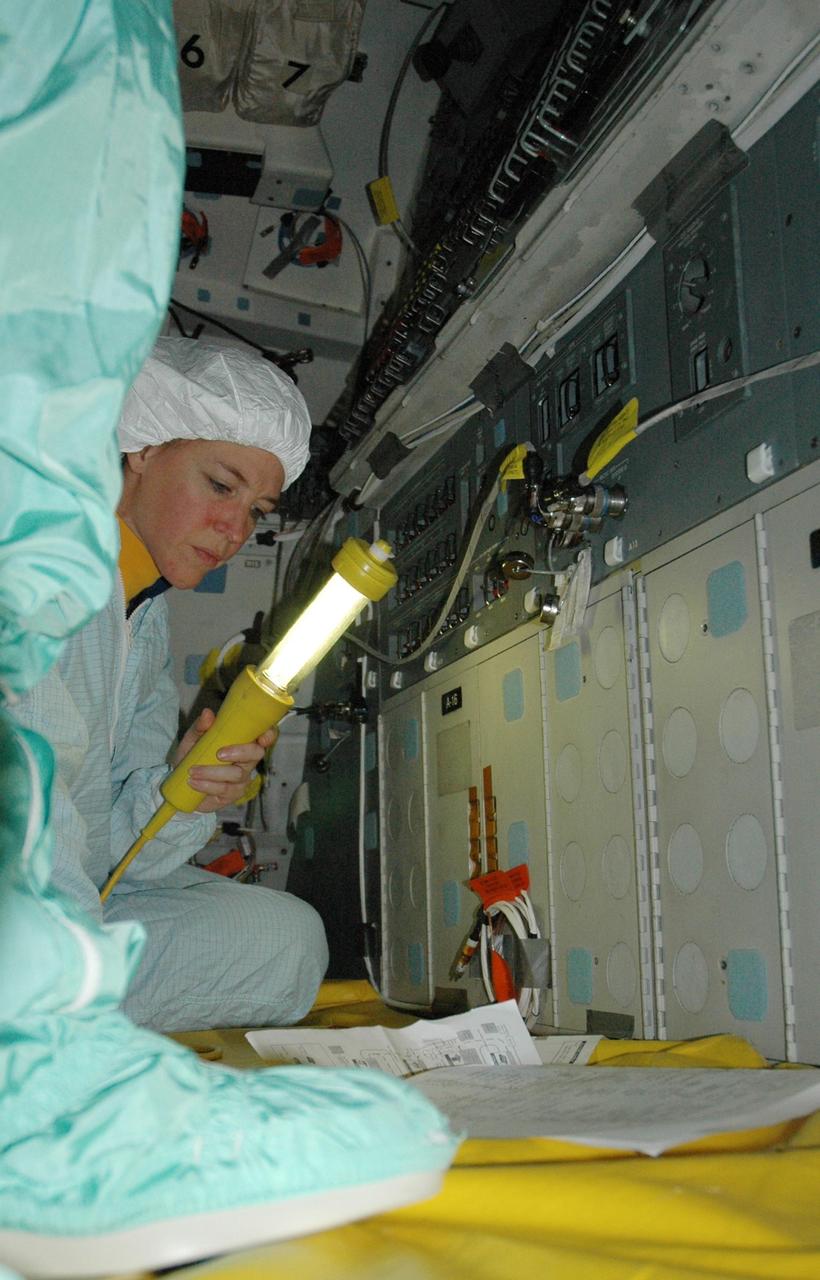
KENNEDY SPACE CENTER, FLA. - In NASA Kennedy Space Center's Orbiter Processing Facility bay 3, STS-121 Mission Specialist Lisa Nowak prepares for her upcoming mission inside Space Shuttle Discovery. The crew is at Kennedy to take part in the crew equipment interface test, which provides hands-on experience with equipment to be used on-orbit. Launch of Space Shuttle Discovery on mission STS-121, the second return-to-flight mission, is scheduled no earlier than May.
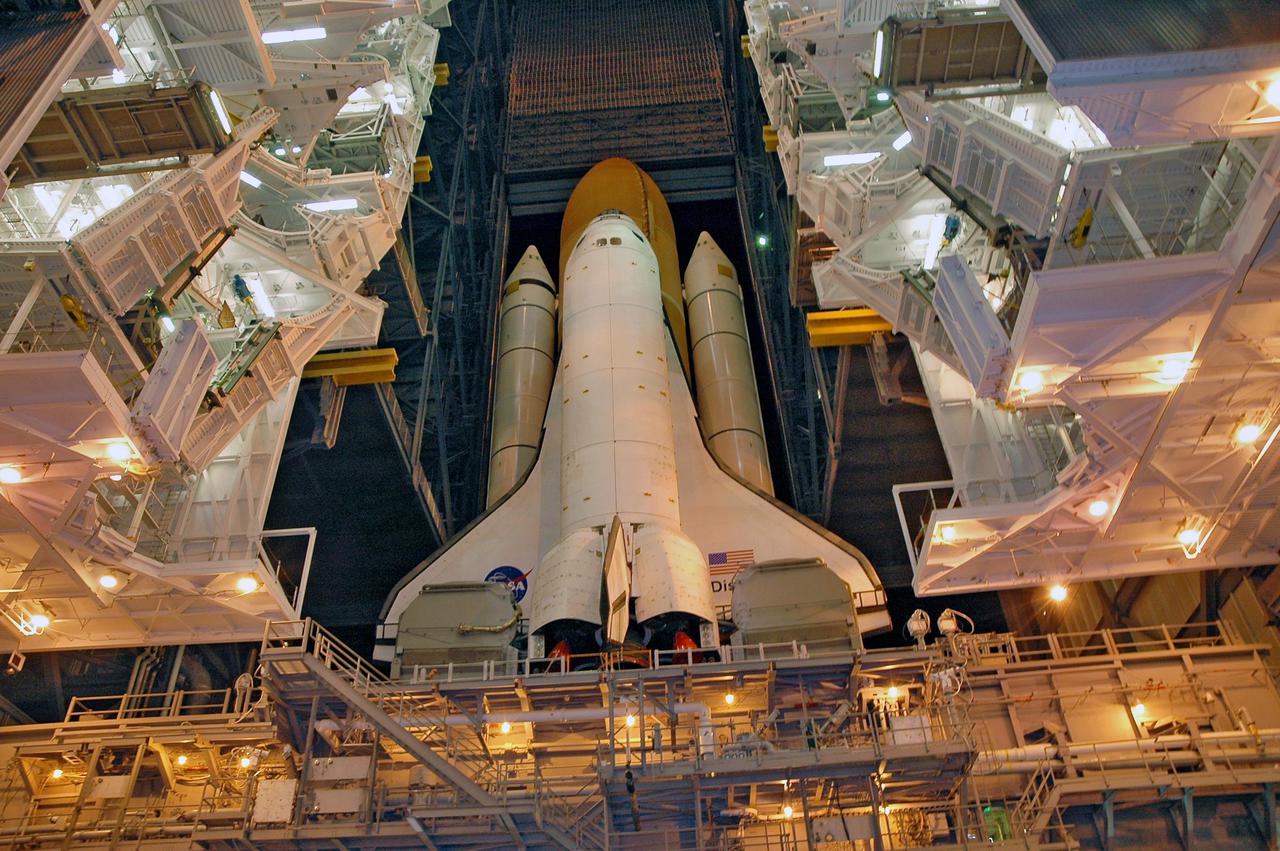
KENNEDY SPACE CENTER, FLA. - In the Vehicle Assembly Building (VAB) at NASA’s Kennedy Space Center, Space Shuttle Discovery begins its trip from high bay 3 to Launch Pad 39B, a 4-mile, 6-hour journey. First motion was at 1:58 a.m. EDT. The Space Shuttle rests on a Mobile Launcher Platform which sits atop a Crawler-Transporter. This is the second rollout of Discovery after being returned to the Vehicle Assembly Building for connection to an improved External Tank. Launch of Discovery on its Return to Flight mission STS-114 is targeted for a launch window extending from July 13 to July 31. During its 12-day mission, Discovery’s seven-person crew will test new hardware and techniques to improve Shuttle safety, as well as deliver supplies to the International Space Station.
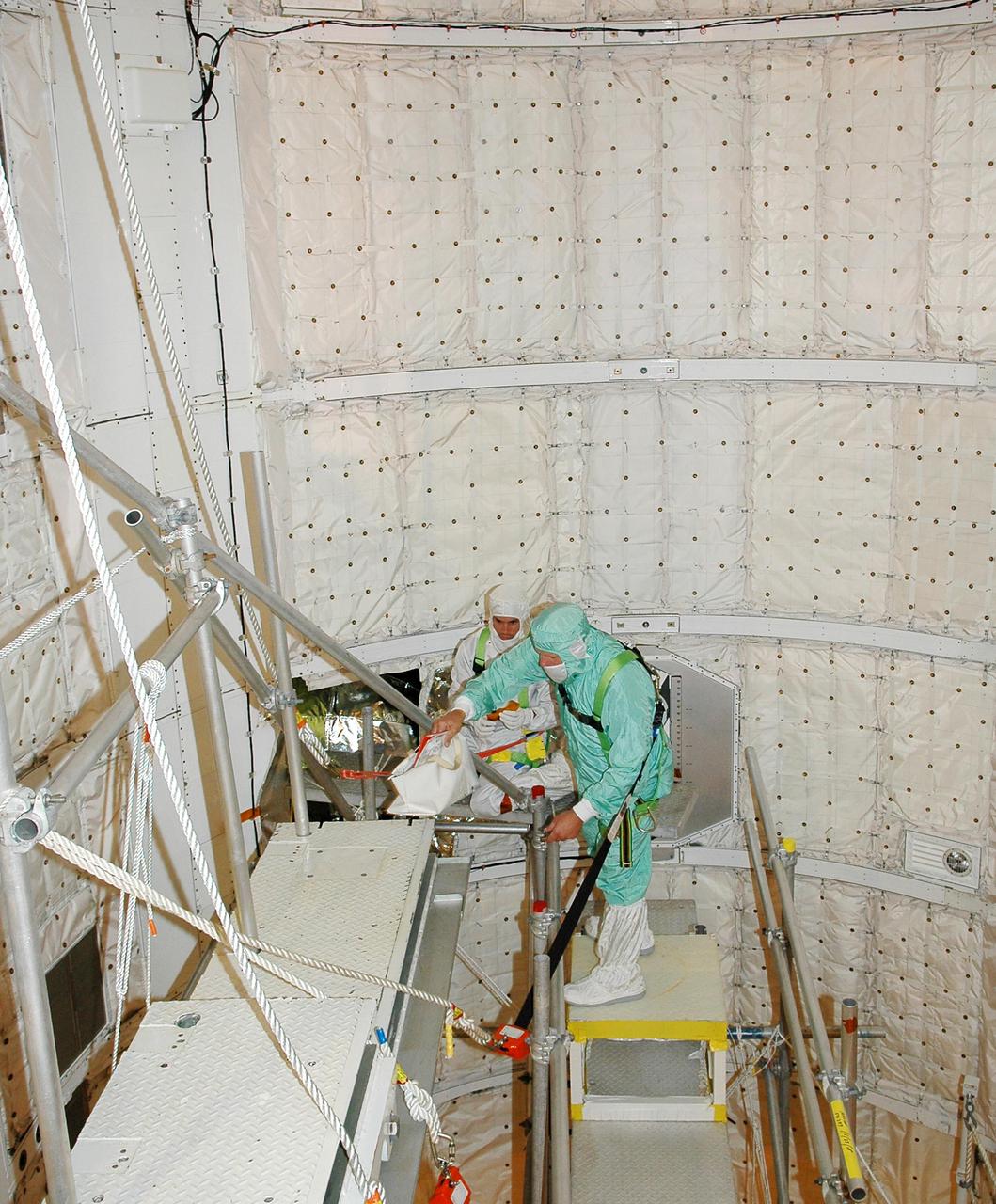
KENNEDY SPACE CENTER, FLA. - At Launch Complex 39B, technicians enter Space Shuttle Discovery's payload bay and prepare to conduct a borescope inspection of the retract link assembly on the orbiter's main landing gear door. The inspection is a precautionary measure after a small crack was found in a retract link assembly on the right-hand main landing gear on orbiter Atlantis. An initial review of the closeout photos of the link assembly on Discovery did not reveal any cracks. Discovery is scheduled to return the Space Shuttle fleet to operational status on mission STS-114. This additional work does not impact the launch planning window of July 13-31.
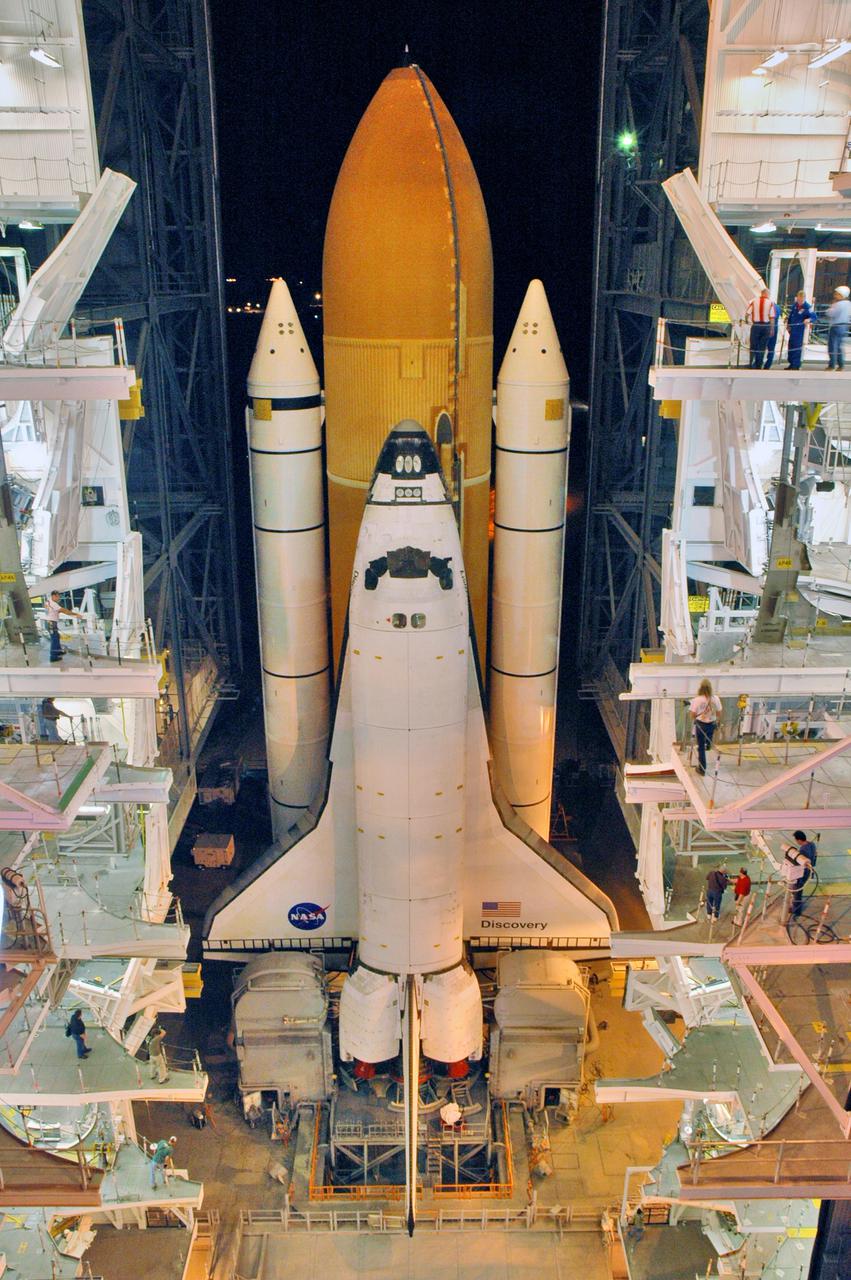
KENNEDY SPACE CENTER, FLA. - In the Vehicle Assembly Building (VAB) at NASA’s Kennedy Space Center, Space Shuttle Discovery begins its trip from high bay 3 to Launch Pad 39B, a 4-mile, 6-hour journey. First motion was at 1:58 a.m. EDT. The Space Shuttle rests on a Mobile Launcher Platform which sits atop a Crawler-Transporter. This is the second rollout of Discovery after being returned to the Vehicle Assembly Building for connection to an improved External Tank. Launch of Discovery on its Return to Flight mission STS-114 is targeted for a launch window extending from July 13 to July 31. During its 12-day mission, Discovery’s seven-person crew will test new hardware and techniques to improve Shuttle safety, as well as deliver supplies to the International Space Station.
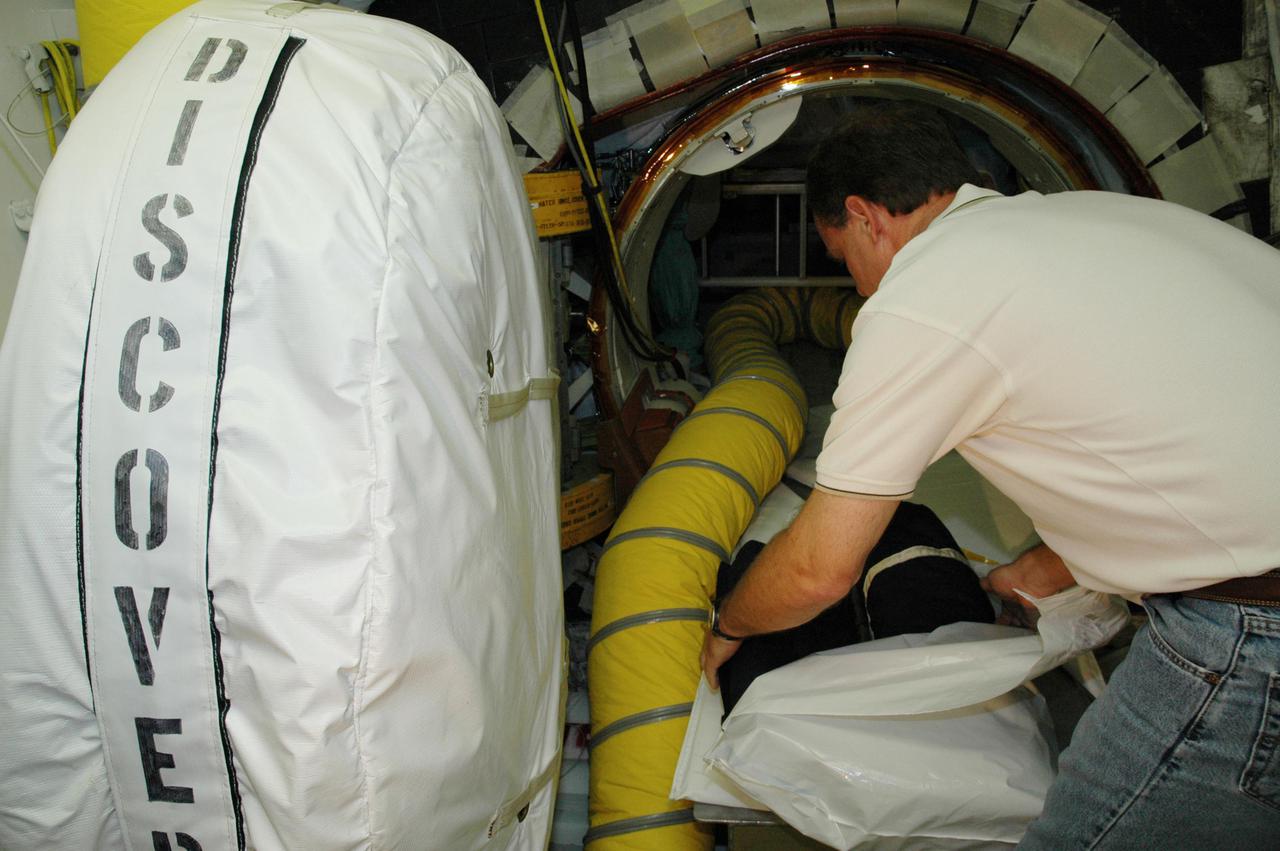
KENNEDY SPACE CENTER, FLA. - At Launch Pad 39B, United Space Alliance Flight Crew Systems engineer John Biegert passes a sleep restraint to a technician inside Space Shuttle Discovery for installation, a final step in launch preparations. Launch of Discovery on its Return to Flight mission STS-114 is set for July 13, just days away. During its 12-day mission, Discovery’s seven-person crew will test new hardware and techniques to improve Shuttle safety, as well as deliver supplies to the International Space Station. Discovery’s payloads include the Multi-Purpose Logistics Module Raffaello, the Lightweight Multi-Purpose Experiment Support Structure Carrier (LMC), and the External Stowage Platform-2 (ESP-2). Raffaello will deliver supplies to the International Space Station including food, clothing and research equipment. The LMC will carry a replacement Control Moment Gyroscope and a tile repair sample box. The ESP-2 is outfitted with replacement parts.

KENNEDY SPACE CENTER, FLA. - Space Shuttle Discovery makes its way along the crawlerway from high bay 3 to Launch Pad 39B as the sun rises. First motion for the 4-mile, 6-hour journey was at 1:58 a.m. EDT. The Space Shuttle rests on a Mobile Launcher Platform which sits atop a Crawler-Transporter. This is the second rollout of Discovery after being returned to the Vehicle Assembly Building for connection to an improved External Tank. Launch of Discovery on its Return to Flight mission STS-114 is targeted for a launch window extending from July 13 to July 31. During its 12-day mission, Discovery’s seven-person crew will test new hardware and techniques to improve Shuttle safety, as well as deliver supplies to the International Space Station.
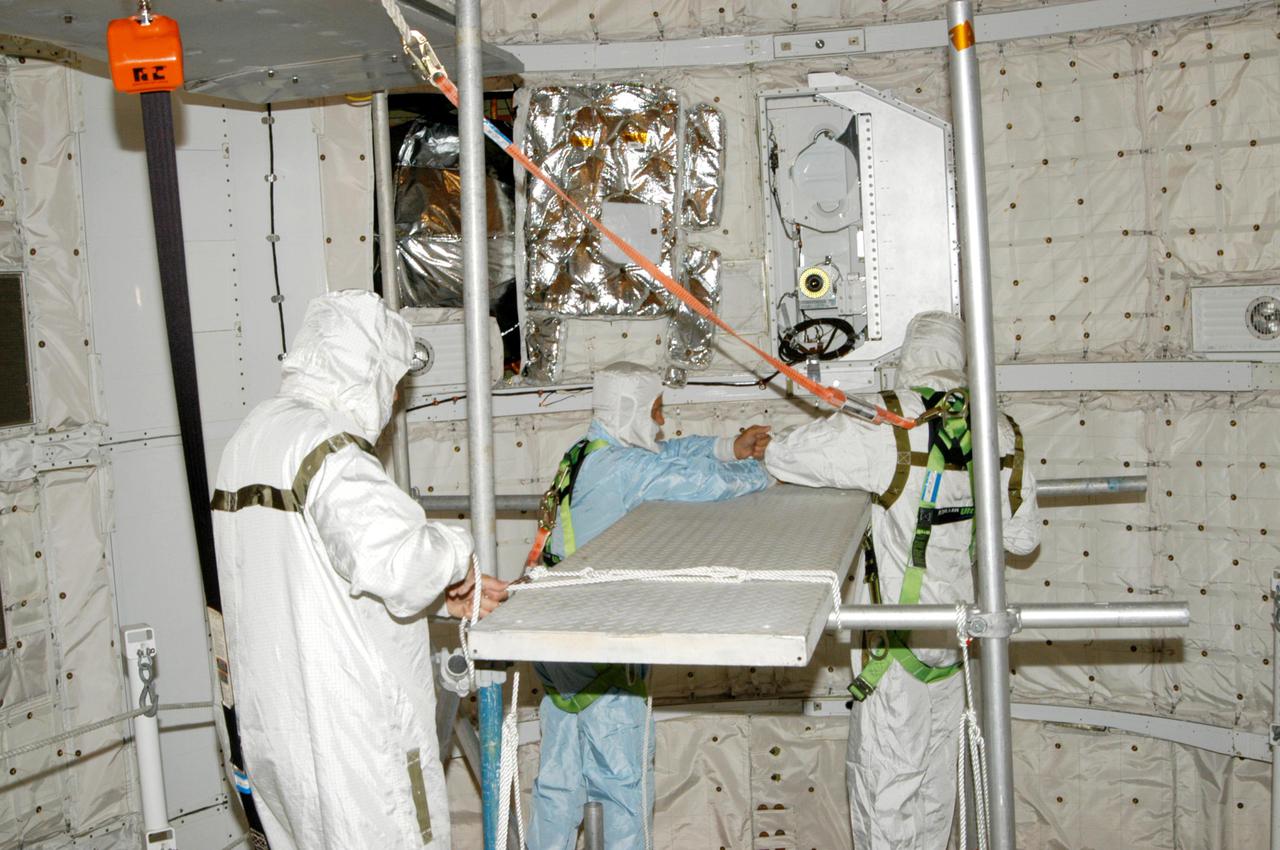
KENNEDY SPACE CENTER, FLA. - At Launch Complex 39B, technicians construct a platform in Space Shuttle Discovery's payload bay to support an upcoming borescope inspection of the retract link assembly on the orbiter's main landing gear door. The inspection is a precautionary measure after a small crack was found in a retract link assembly on the right-hand main landing gear on orbiter Atlantis. An initial review of the closeout photos of the link assembly on Discovery did not reveal any cracks. Discovery is scheduled to return the Space Shuttle fleet to operational status on mission STS-114. This additional work does not impact the launch planning window of July 13-31.
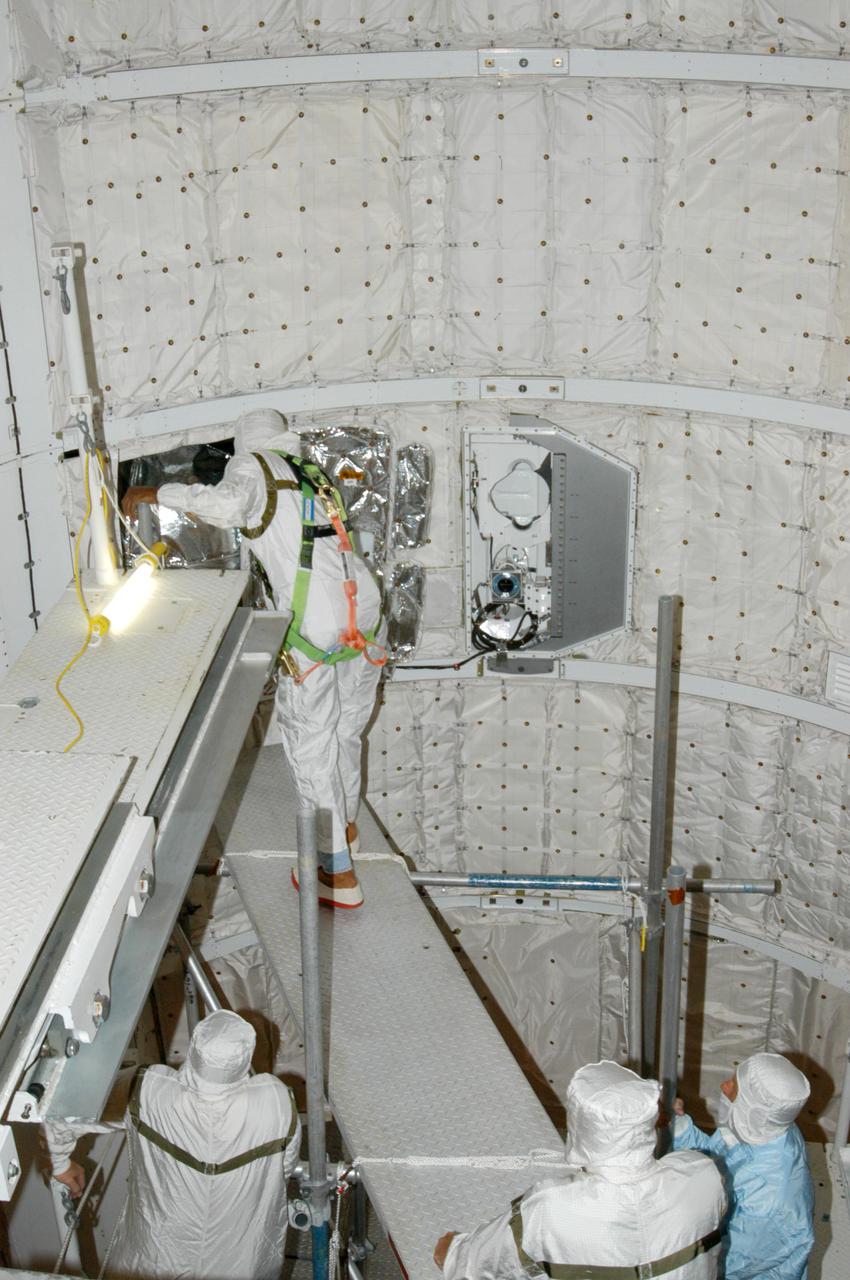
KENNEDY SPACE CENTER, FLA. - At Launch Complex 39B, technicians construct a platform in Space Shuttle Discovery's payload bay to support an upcoming borescope inspection of the retract link assembly on the orbiter's main landing gear door. The inspection is a precautionary measure after a small crack was found in a retract link assembly on the right-hand main landing gear on orbiter Atlantis. An initial review of the closeout photos of the link assembly on Discovery did not reveal any cracks. Discovery is scheduled to return the Space Shuttle fleet to operational status on mission STS-114. This additional work does not impact the launch planning window of July 13-31.
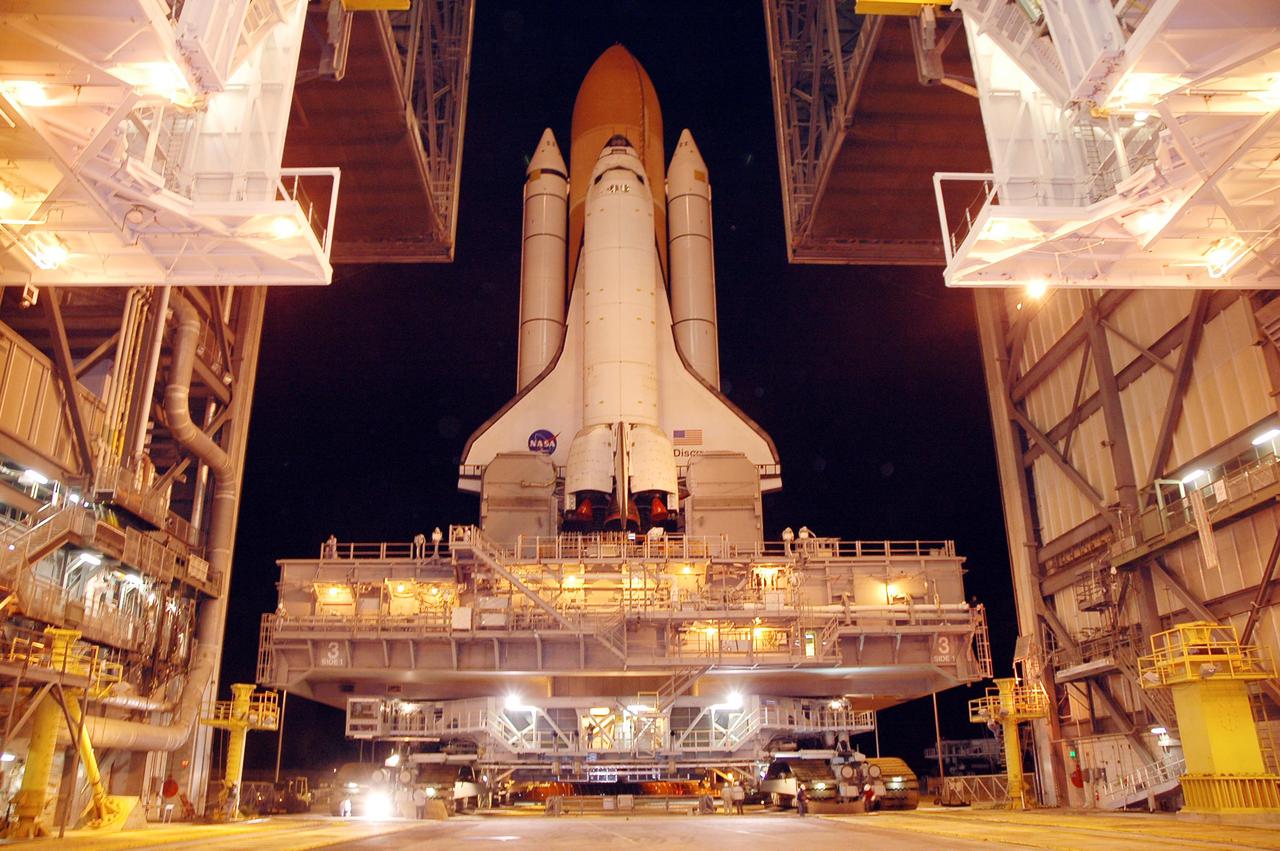
KENNEDY SPACE CENTER, FLA. - In the Vehicle Assembly Building (VAB) at NASA’s Kennedy Space Center, Space Shuttle Discovery rolls outside high bay 3 to begin its trip to Launch Pad 39B, a 4-mile, 6-hour journey. First motion was at 1:58 a.m. EDT. The Space Shuttle rests on a Mobile Launcher Platform which sits atop a Crawler-Transporter. This is the second rollout of Discovery after being returned to the Vehicle Assembly Building for connection to an improved External Tank. Launch of Discovery on its Return to Flight mission STS-114 is targeted for a launch window extending from July 13 to July 31. During its 12-day mission, Discovery’s seven-person crew will test new hardware and techniques to improve Shuttle safety, as well as deliver supplies to the International Space Station.
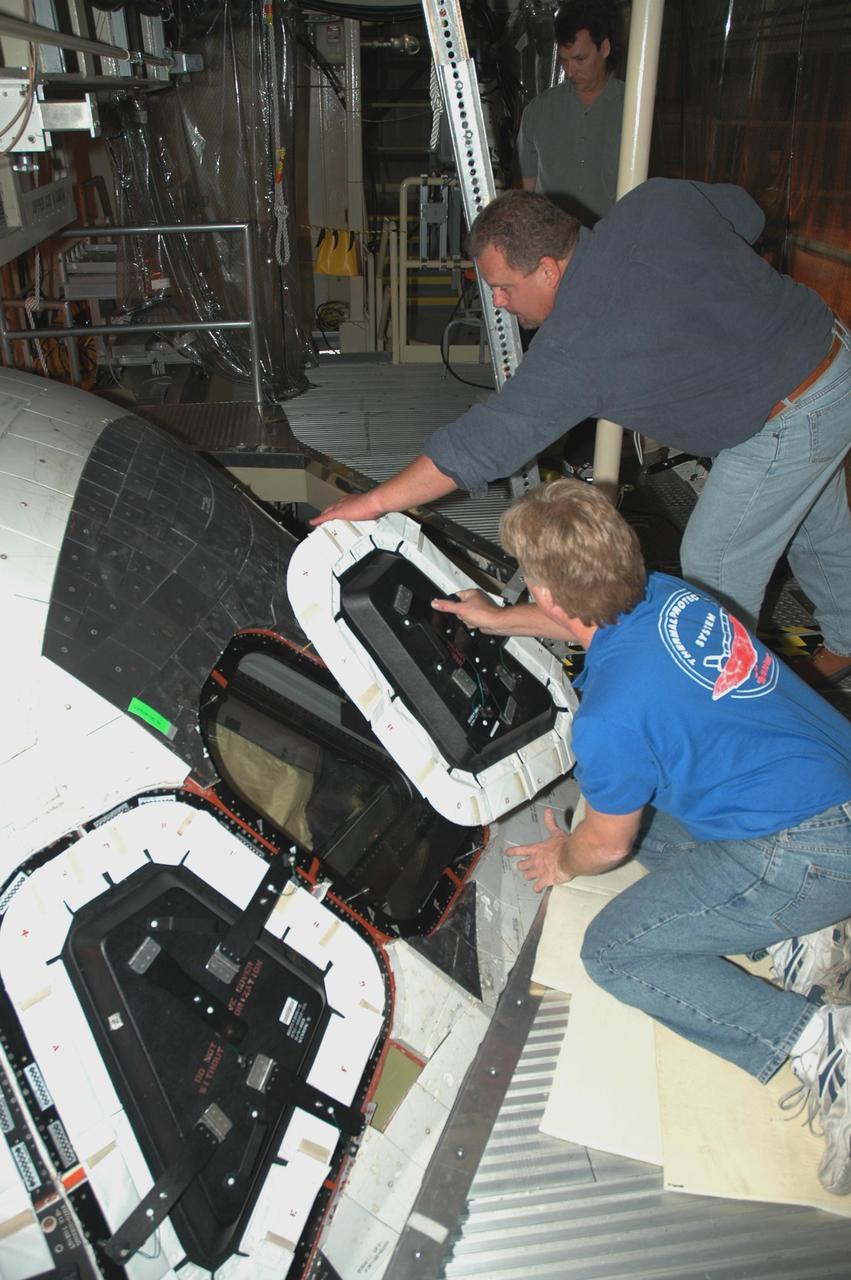
KENNEDY SPACE CENTER, FLA. - In NASA Kennedy Space Center's Orbiter Processing Facility bay 3, United Space Alliance shuttle technicians remove the hard cover from a window on Space Shuttle Discovery to enable STS-121 crew members to inspect the window from the cockpit. Launch of Space Shuttle Discovery on mission STS-121, the second return-to-flight mission, is scheduled no earlier than May.
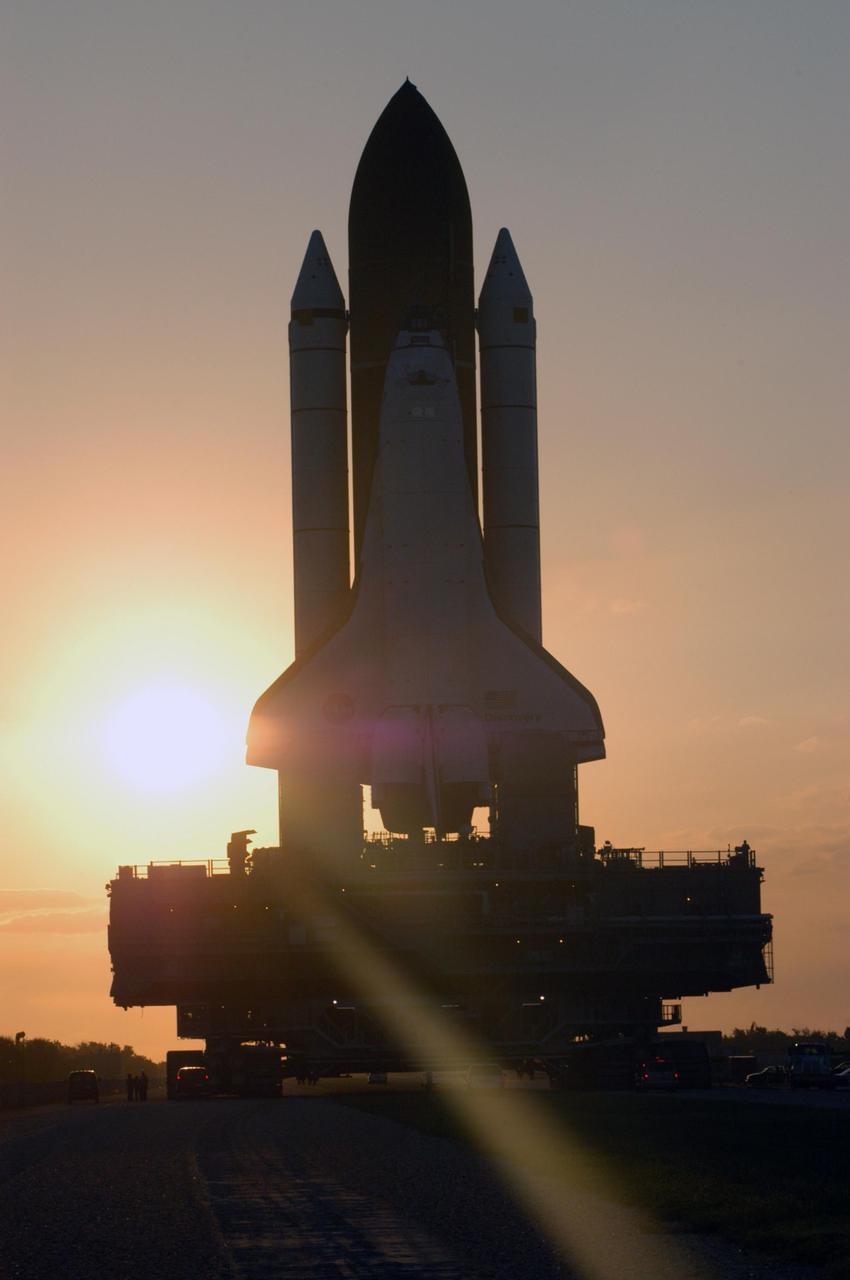
KENNEDY SPACE CENTER, FLA. - Space Shuttle Discovery makes its way along the crawlerway from high bay 3 to Launch Pad 39B as the sun rises. First motion for the 4-mile, 6-hour journey was at 1:58 a.m. EDT. The Space Shuttle rests on a Mobile Launcher Platform which sits atop a Crawler-Transporter. This is the second rollout of Discovery after being returned to the Vehicle Assembly Building for connection to an improved External Tank. Launch of Discovery on its Return to Flight mission STS-114 is targeted for a launch window extending from July 13 to July 31. During its 12-day mission, Discovery’s seven-person crew will test new hardware and techniques to improve Shuttle safety, as well as deliver supplies to the International Space Station.
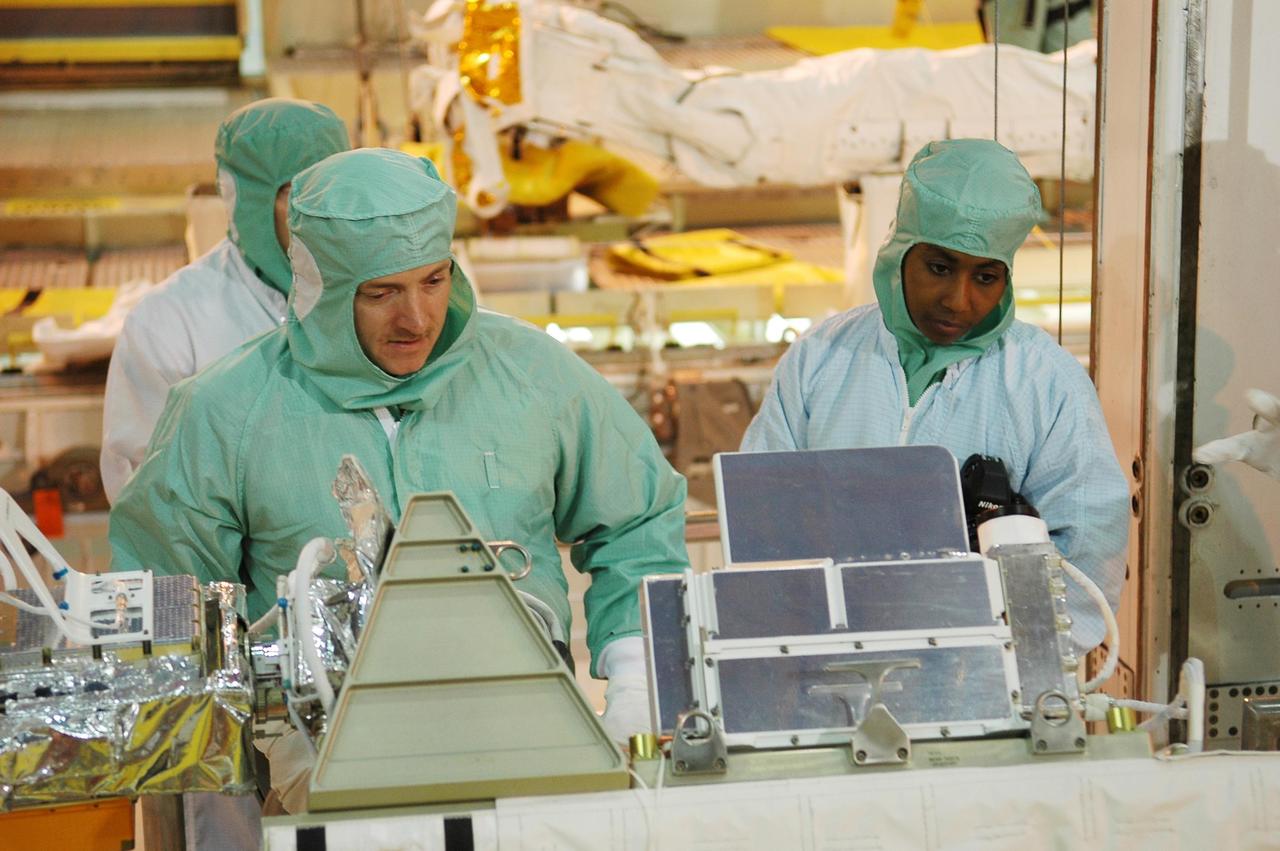
KENNEDY SPACE CENTER, FLA. - In NASA Kennedy Space Center's Orbiter Processing Facility bay 3, STS-121 Pilot Mark Kelly and Mission Specialist Stephanie Wilson work with equipment that will be on the mission. The crew is at Kennedy to take part in the crew equipment interface test, which provides hands-on experience with equipment to be used on-orbit. Launch of Space Shuttle Discovery on mission STS-121, the second return-to-flight mission, is scheduled no earlier than May.
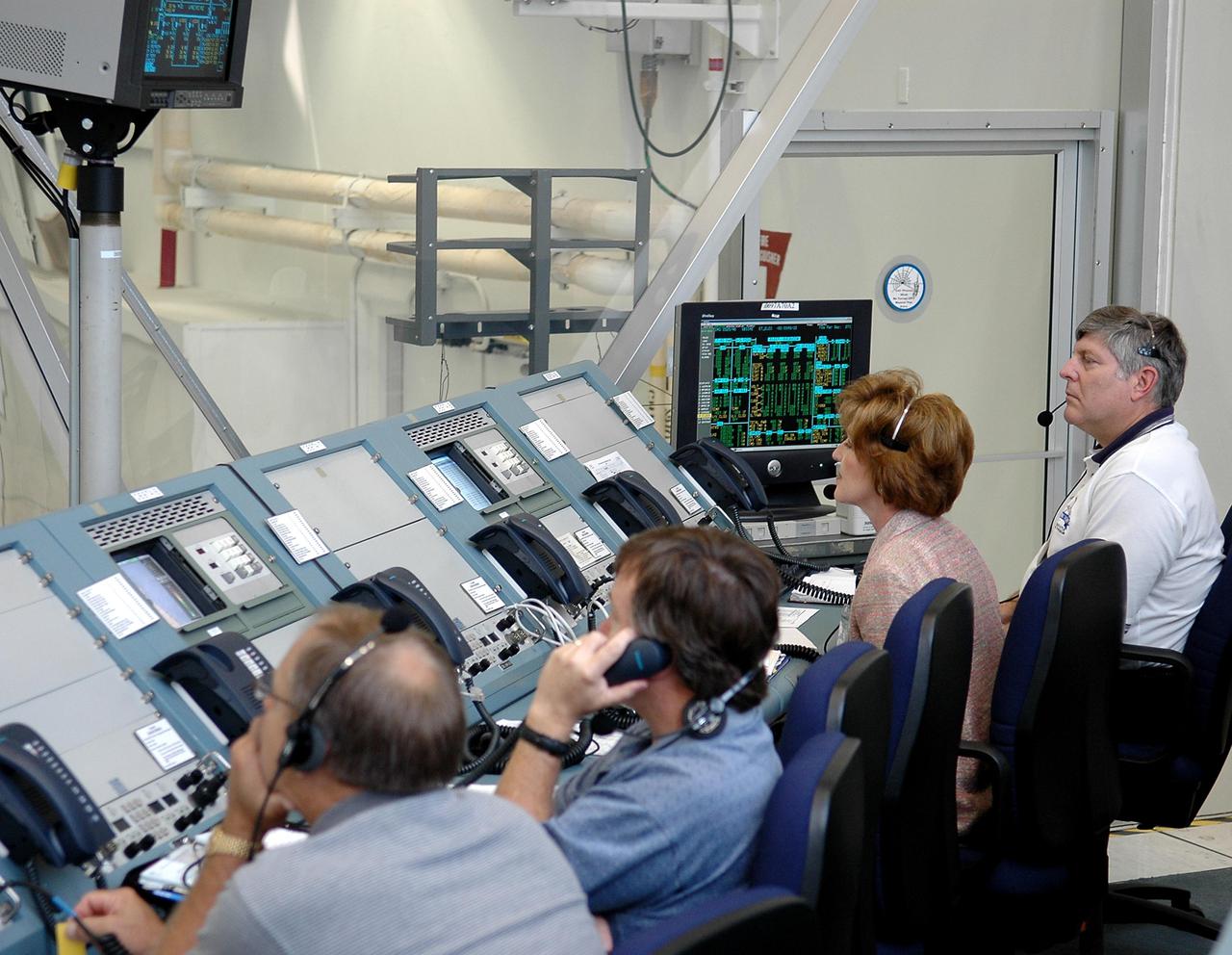
KENNEDY SPACE CENTER, FLA. - Space Shuttle managers support an External Tank (ET) tanking test at Launch Pad 39B from the Launch Control Center. At far right is Ron Wetmore, External Tank Project vice president, Lockheed Martin, and to his left, Sandy Coleman, External Tank Project manager, NASA. The tanking test is designed to evaluate how the tank, orbiter, solid rocket boosters and ground systems perform under 'cryo-load,' when the tank is filled with the two ultra-low-temperature propellants. The tank filling and draining portion of the test takes about 11 hours. The test also includes a simulated countdown through the hold at T-31 seconds. The test is being conducted to troubleshoot two issues identified by a tanking test held on April 14. Data is being collected to analyze the liquid hydrogen sensors that gave intermittent readings and the liquid hydrogen pressurization relief valve that cycled more times than standard. The tanking tests are part of preparations for Space Shuttle Discovery's Return to Flight mission, STS-114, to the International Space Station. The launch window extends from July 13 through July 31.
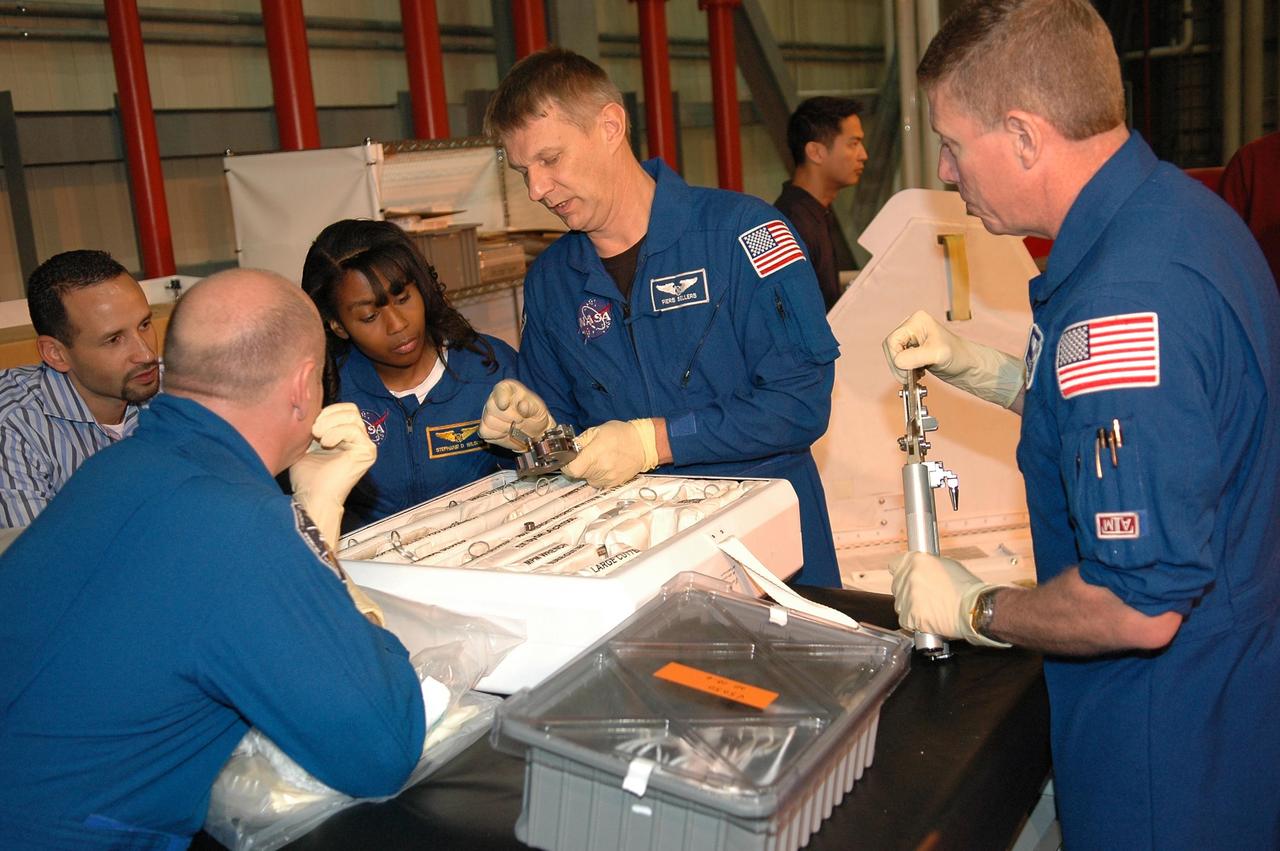
KENNEDY SPACE CENTER, FLA. - In NASA Kennedy Space Center's Orbiter Processing Facility bay 3, members of the STS-121 crew practice working with equipment for the mission. From the left are Tomas Gonzalez-Torres, with NASA's Johnson Space Center; then Mission Specialists Stephanie Wilson, Piers Sellers and Michael Fossum. Pilot Mark Kelly has his back to the camera. The crew is at Kennedy to take part in the crew equipment interface test, which provides hands-on experience with equipment to be used on-orbit. Launch of Space Shuttle Discovery on mission STS-121, the second return-to-flight mission, is scheduled no earlier than May.
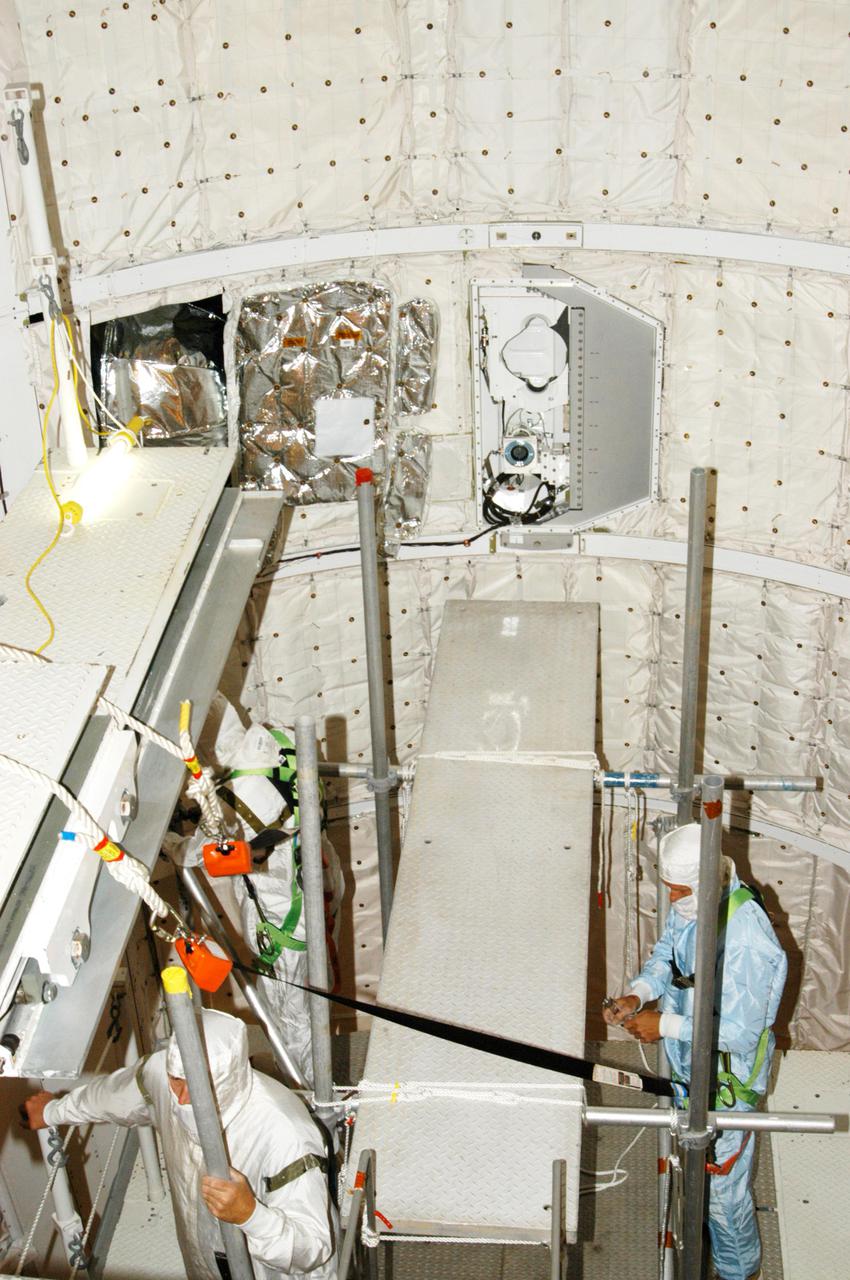
KENNEDY SPACE CENTER, FLA. - At Launch Complex 39B, technicians construct a platform in Space Shuttle Discovery's payload bay to support an upcoming borescope inspection of the retract link assembly on the orbiter's main landing gear door. The inspection is a precautionary measure after a small crack was found in a retract link assembly on the right-hand main landing gear on orbiter Atlantis. An initial review of the closeout photos of the link assembly on Discovery did not reveal any cracks. Discovery is scheduled to return the Space Shuttle fleet to operational status on mission STS-114. This additional work does not impact the launch planning window of July 13-31.
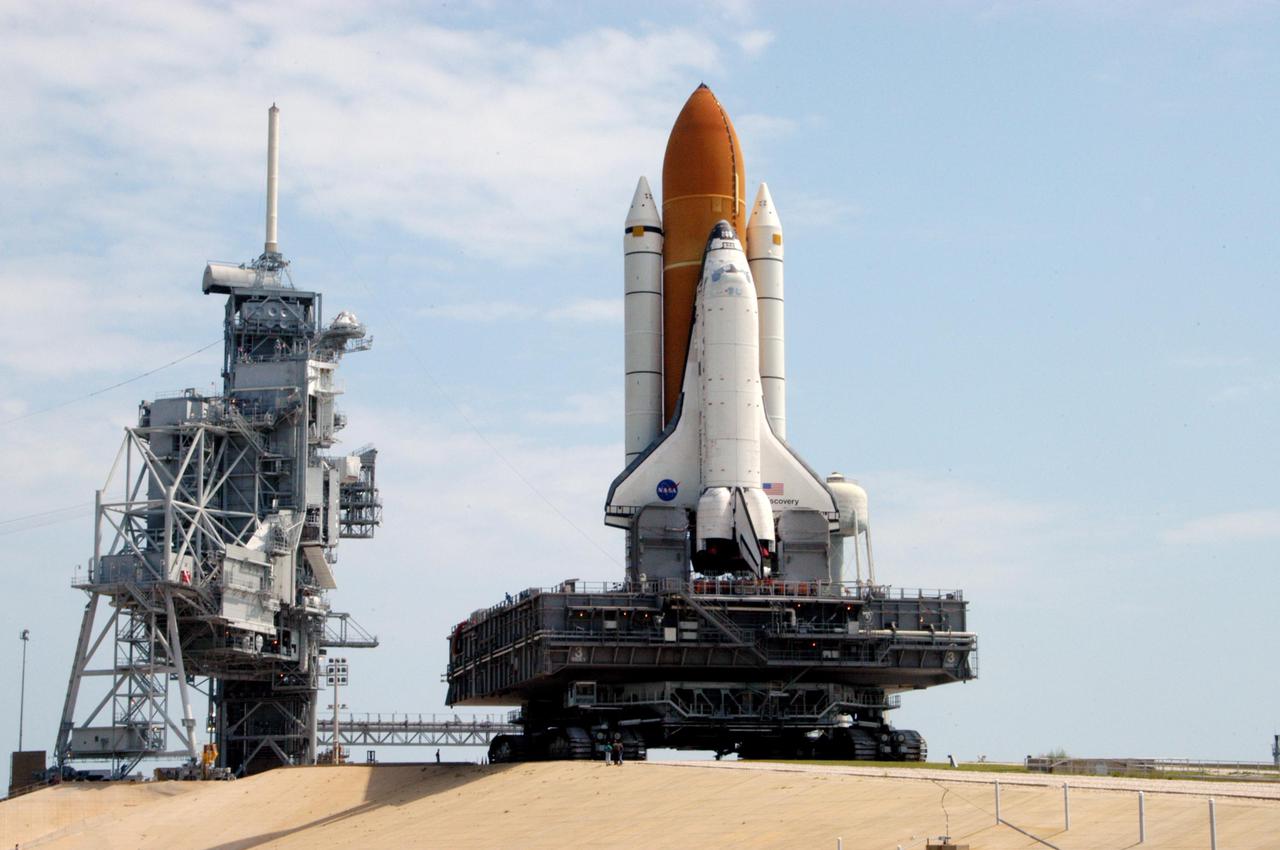
KENNEDY SPACE CENTER, FLA. - Space Shuttle Discovery makes its way up the 5 percent grade to the hardstand of Launch Pad 39B. First motion for the 4.2-mile journey was at 1:58 a.m. EDT. The Space Shuttle rests on a Mobile Launcher Platform that sits atop a Crawler-Transporter. This is the second rollout of Discovery. The orbiter was returned to the Vehicle Assembly Building for connection to an improved External Tank. Launch of Discovery on its Return to Flight mission STS-114 is targeted for a launch window extending from July 13 to July 31.
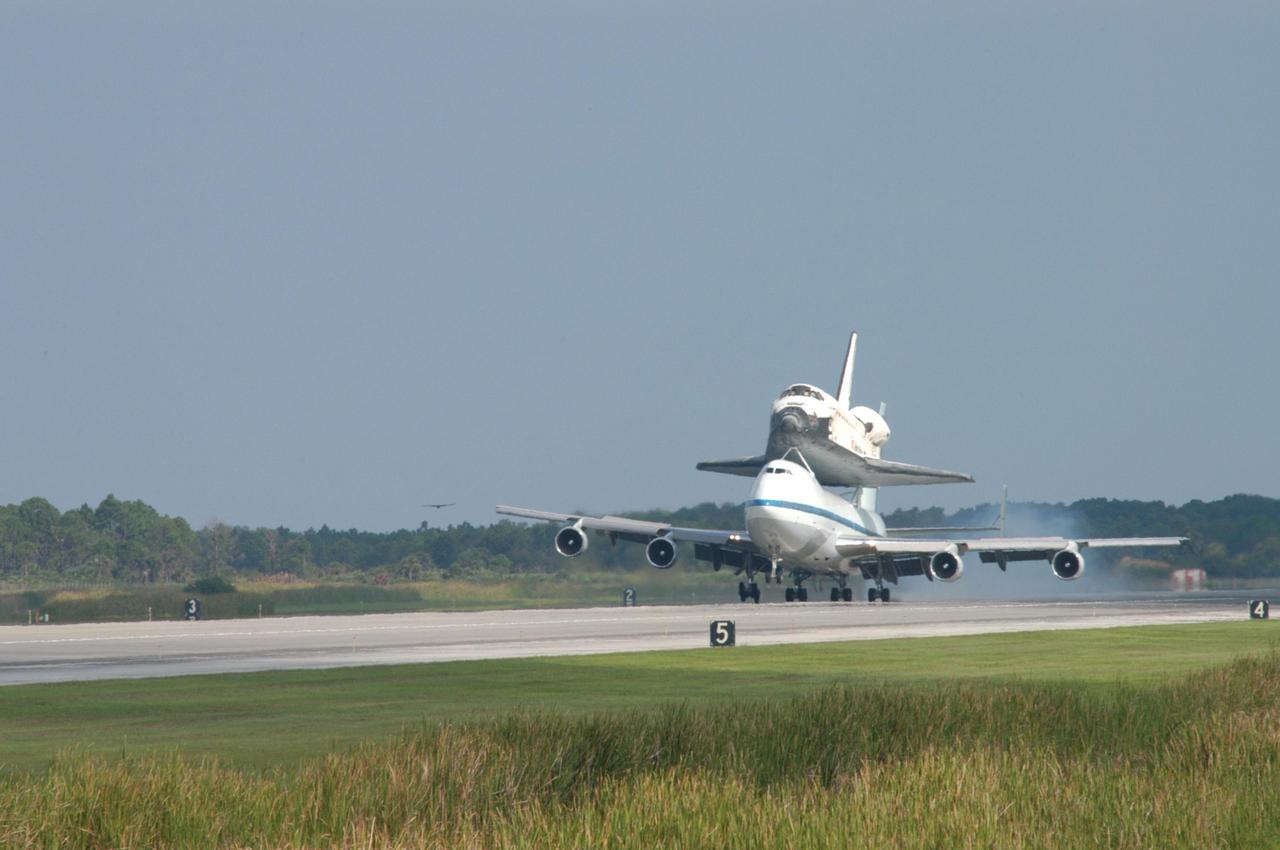
KENNEDY SPACE CENTER, FLA. - Space Shuttle Discovery, atop a modified Boeing 747 Shuttle Carrier Aircraft (SCA), lands on runway 15 at NASA Kennedy Space Center's Shuttle Landing Facility (SLF) at about 10:00 a.m. EDT. The cross-country ferry flight became necessary when two days of unfavorable weather conditions at KSC forced Discovery to land on runway 22 at Edwards Air Force Base, Calif., on Aug. 9 following mission STS-114. On the return trip, stops were made at Altus Air Force Base, Okla., and Barksdale Air Force Base, La., where Discovery stayed for two nights. The SCA and Discovery will be towed to the Mate_Demate Device at the SLF where a crane will lift Discovery from the SCA and place it on solid ground. Discovery will then be towed to the Orbiter Processing Facility where preparations will begin for its next flight, STS-121.

KENNEDY SPACE CENTER, FLA. - The Rotating Service Structure at Launch Pad 39B is ready to enfold Space Shuttle Discovery upon its arrival. First motion for the 4.2-mile journey was at 1:58 a.m. EDT. The Space Shuttle rests on a Mobile Launcher Platform that sits atop a Crawler-Transporter. This is the second rollout of Discovery. The orbiter was returned to the Vehicle Assembly Building for connection to an improved External Tank. Launch of Discovery on its Return to Flight mission STS-114 is targeted for a launch window extending from July 13 to July 31.
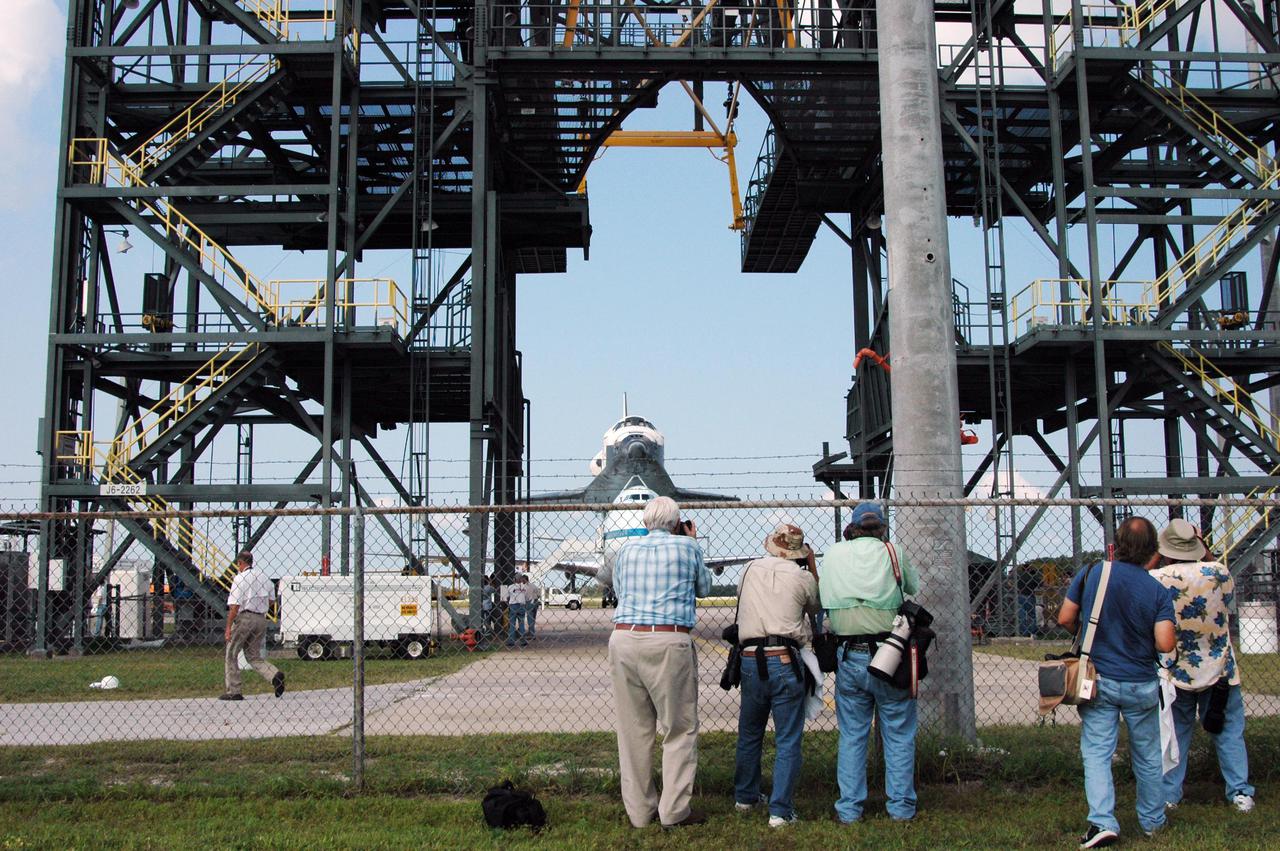
KENNEDY SPACE CENTER, FLA. - News media photographers capture the approach of Space Shuttle Discovery, atop a modified Boeing 747 Shuttle Carrier Aircraft (SCA), as it is towed to the Mate_Demate Device (MDD) at the Kennedy Space Center (KSC) Shuttle Landing Facility (SLF). Discovery touched down on runway 15 at the SLF at about 10:00 a.m. EDT. The cross-country ferry flight became necessary when two days of unfavorable weather conditions at KSC forced Discovery to land on runway 22 at Edwards Air Force Base, Calif., on Aug. 9 following mission STS-114. On the return trip, stops were made at Altus Air Force Base, Okla., and Barksdale Air Force Base, La., where Discovery stayed for two nights. A crane on the MDD will lift Discovery from the SCA and place it on solid ground. Discovery will then be towed to the Orbiter Processing Facility where preparations will begin for its next flight, STS-121.
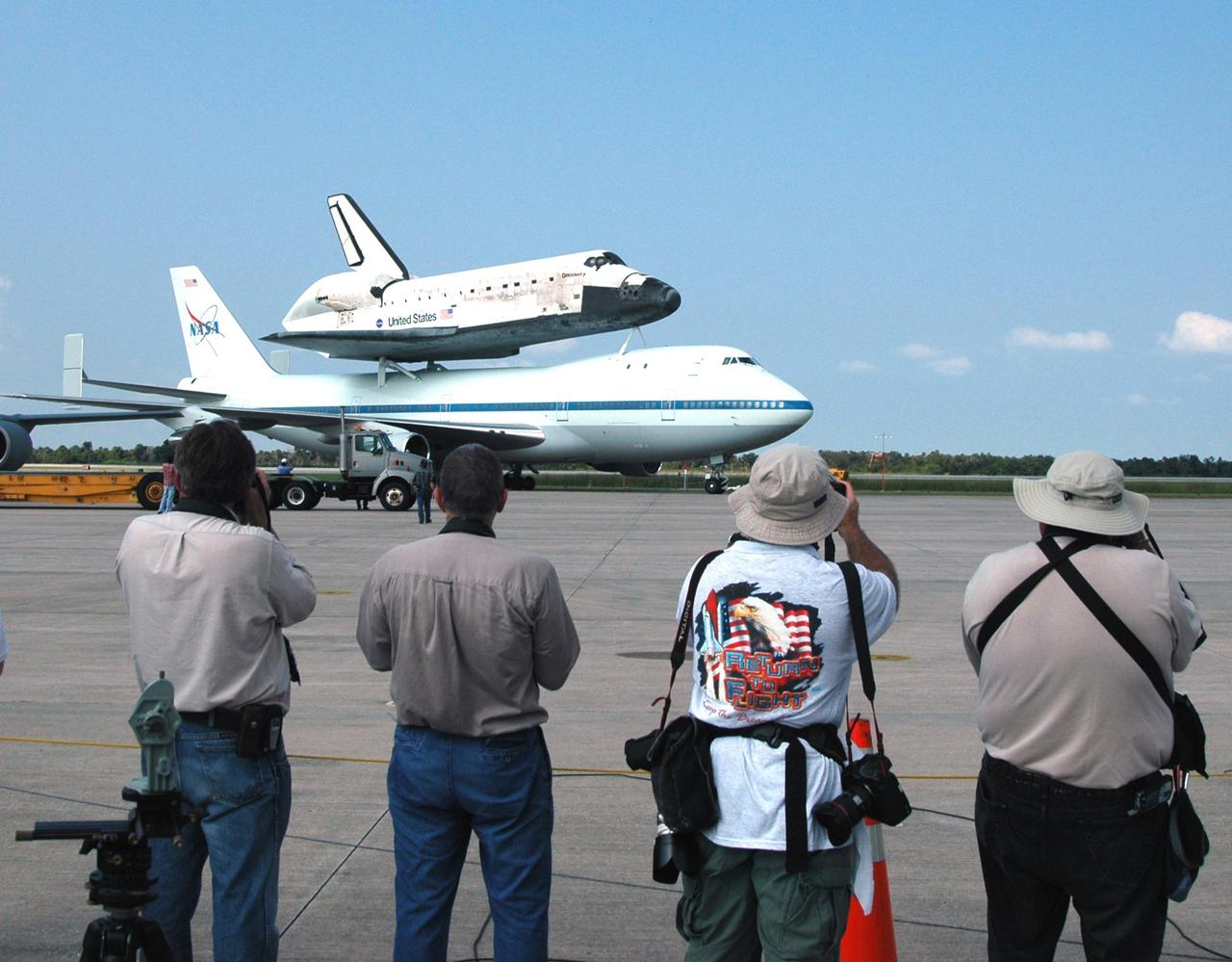
KENNEDY SPACE CENTER, FLA. - News media photographers are on hand for the touchdown of Space Shuttle Discovery, atop a modified Boeing 747 Shuttle Carrier Aircraft (SCA), on runway 15 at NASA Kennedy Space Center's Shuttle Landing Facility (SLF) at about 10:00 a.m. EDT. The cross-country ferry flight became necessary when two days of unfavorable weather conditions at KSC forced Discovery to land on runway 22 at Edwards Air Force Base, Calif., on Aug. 9 following mission STS-114. On the return trip, stops were made at Altus Air Force Base, Okla., and Barksdale Air Force Base, La., where Discovery stayed for two nights. The SCA and Discovery will be towed to the Mate_Demate Device at the SLF where a crane will lift Discovery from the SCA and place it on solid ground. Discovery will then be towed to the Orbiter Processing Facility where preparations will begin for its next flight, STS-121.