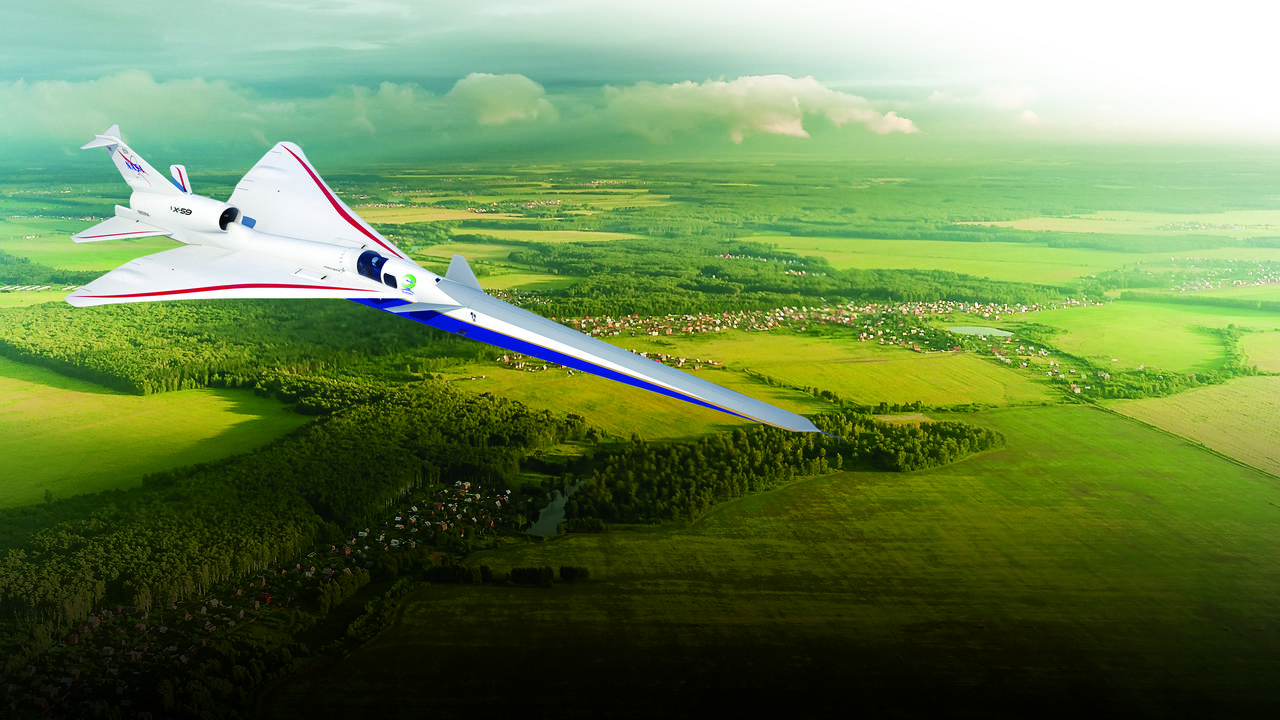
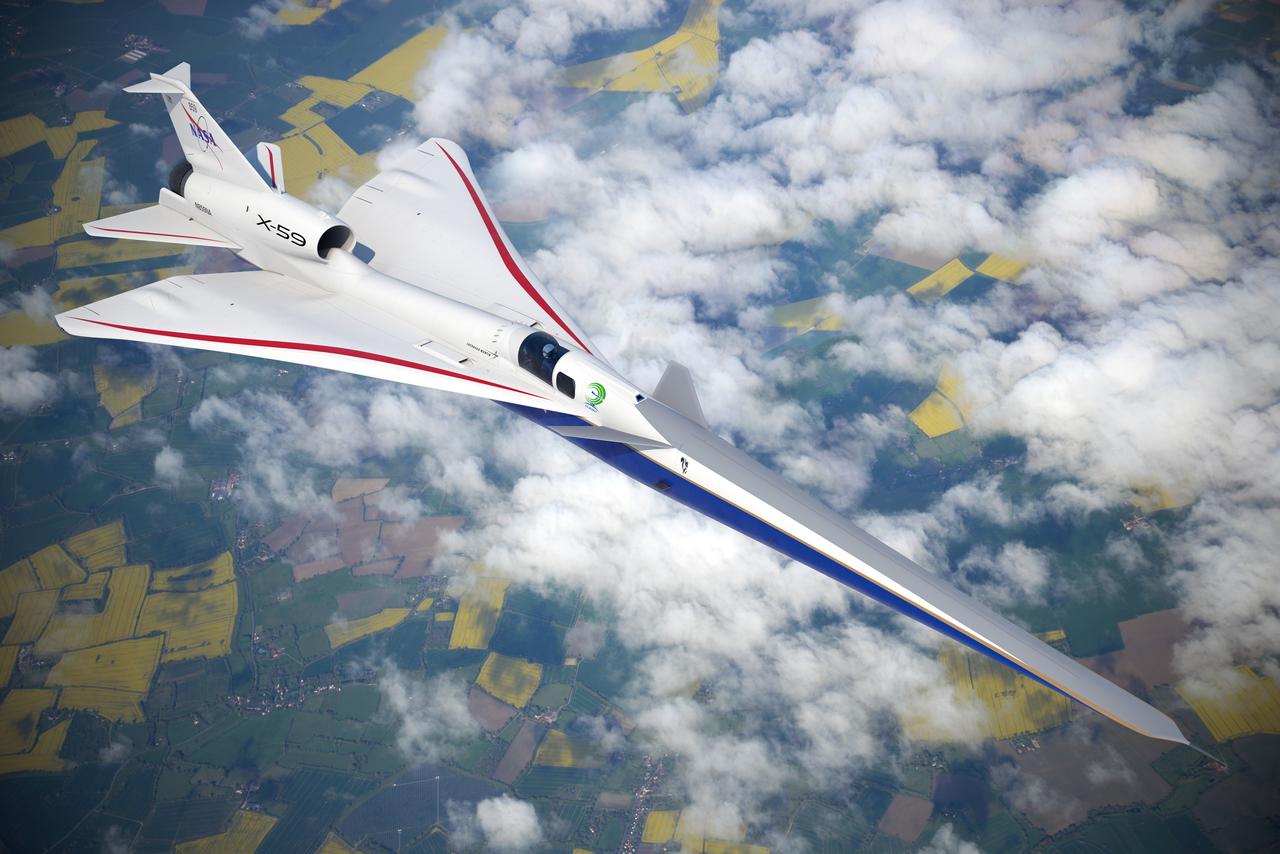
Artist illustration of the X-59 in flight over land (with cities and rural areas below). Satellite image from USGS/NASA Landsat.
X-59-fying-over-land-15x11-300dpi
Artist illustration of the X-59 in flight over land.
X59_Plate_003-Aug.jpg
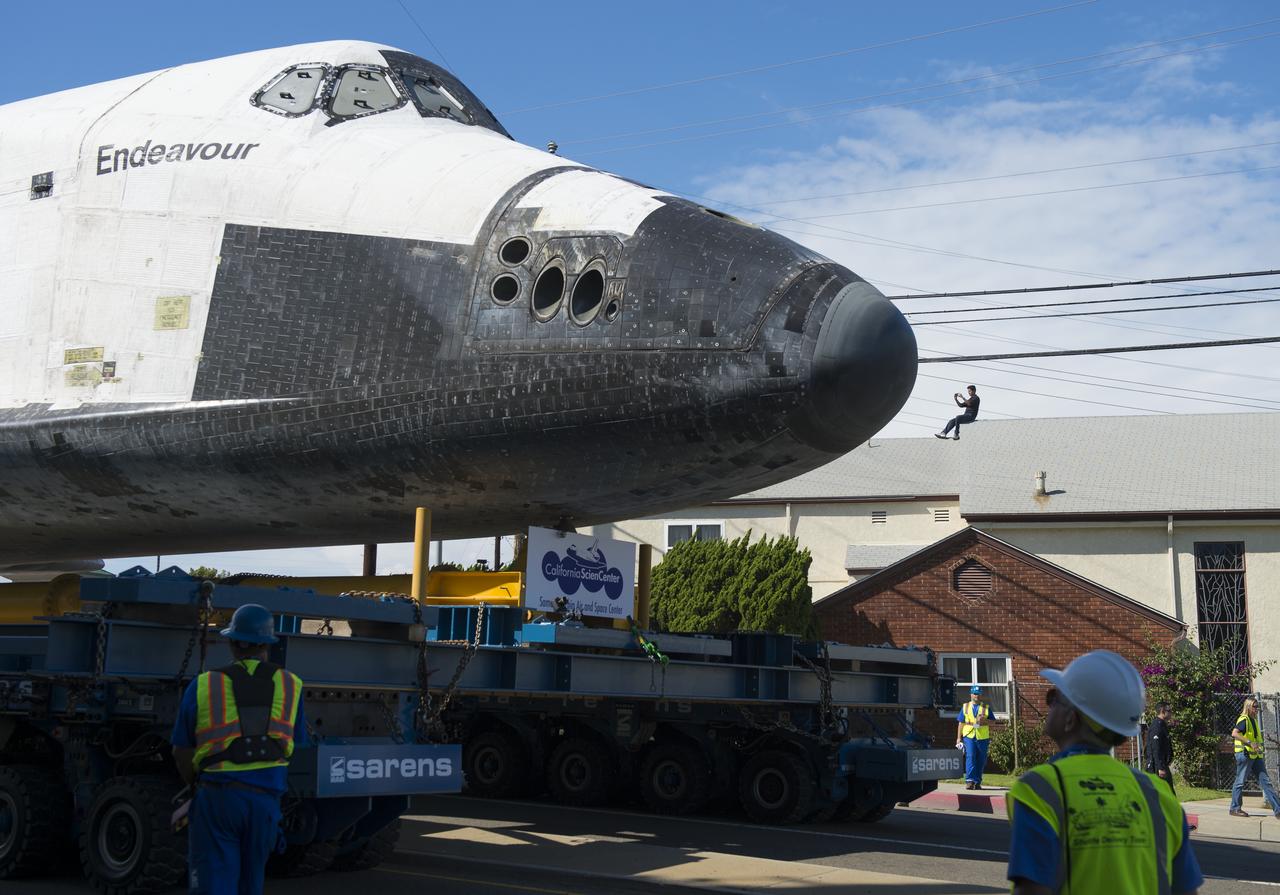
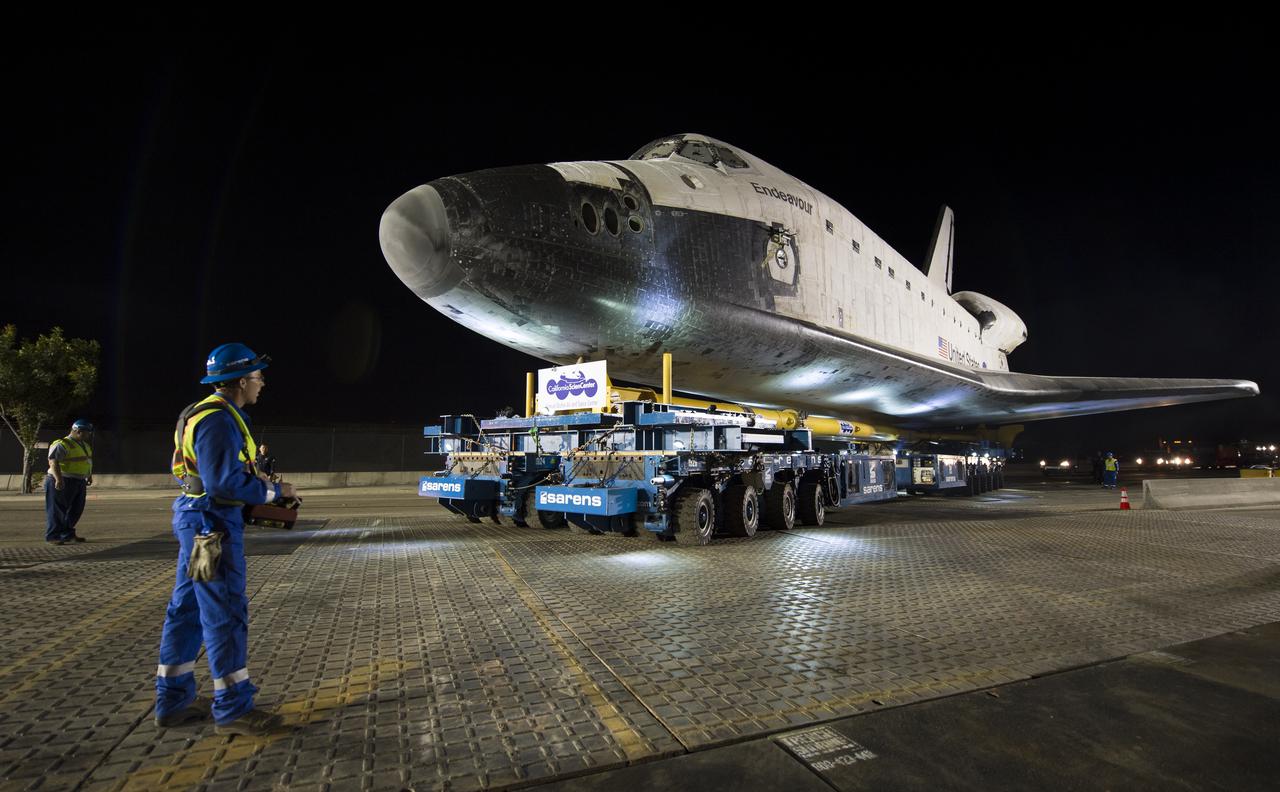
A technician for the Over Land Transporter (OLT) carrying the space shuttle Endeavour signals how much room is available between a tree and the orbiter’s wing, Saturday, Oct. 13, 2012. Endeavour, built as a replacement for space shuttle Challenger, completed 25 missions, spent 299 days in orbit, and orbited Earth 4,671 times while traveling 122,883,151 miles. Beginning Oct. 30, the shuttle will be on display in the CSC’s Samuel Oschin Space Shuttle Endeavour Display Pavilion, embarking on its new mission to commemorate past achievements in space and educate and inspire future generations of explorers. Photo Credit: (NASA/Carla Cioffi)
Space Shuttle Endeavour Move
The driver of the Over Land Transporter is seen as he maneuvers the space shuttle Endeavour on the streets of Los Angeles as it heads to its new home at the California Science Center, Friday, Oct. 12, 2012. Endeavour, built as a replacement for space shuttle Challenger, completed 25 missions, spent 299 days in orbit, and orbited Earth 4,671 times while traveling 122,883,151 miles. Beginning Oct. 30, the shuttle will be on display in the CSC’s Samuel Oschin Space Shuttle Endeavour Display Pavilion, embarking on its new mission to commemorate past achievements in space and educate and inspire future generations of explorers. Photo Credit: (NASA/Bill Ingalls)
Space Shuttle Endeavour Move
The driver of the Over Land Transporter is seen as he maneuvers the space shuttle Endeavour on the streets of Los Angeles as it heads to its new home at the California Science Center, Friday, Oct. 12, 2012. Endeavour, built as a replacement for space shuttle Challenger, completed 25 missions, spent 299 days in orbit, and orbited Earth 4,671 times while traveling 122,883,151 miles. Beginning Oct. 30, the shuttle will be on display in the CSC’s Samuel Oschin Space Shuttle Endeavour Display Pavilion, embarking on its new mission to commemorate past achievements in space and educate and inspire future generations of explorers. Photo Credit: (NASA/Bill Ingalls)
Space Shuttle Endeavour Move
The driver of the Over Land Transporter (OLT) is seen as he maneuvers the space shuttle Endeavour on the streets of Los Angeles as it heads to its new home at the California Science Center, Friday, Oct. 12, 2012.  Endeavour, built as a replacement for space shuttle Challenger, completed 25 missions, spent 299 days in orbit, and orbited Earth 4,671 times while traveling 122,883,151 miles.  Beginning Oct. 30, the shuttle will be on display in the CSC's Samuel Oschin Space Shuttle Endeavour Display Pavilion, embarking on its new mission to commemorate past achievements in space and educate and inspire future generations of explorers.  Photo Credit: (NASA/Carla Cioffi)
Space Shuttle Endeavour Move
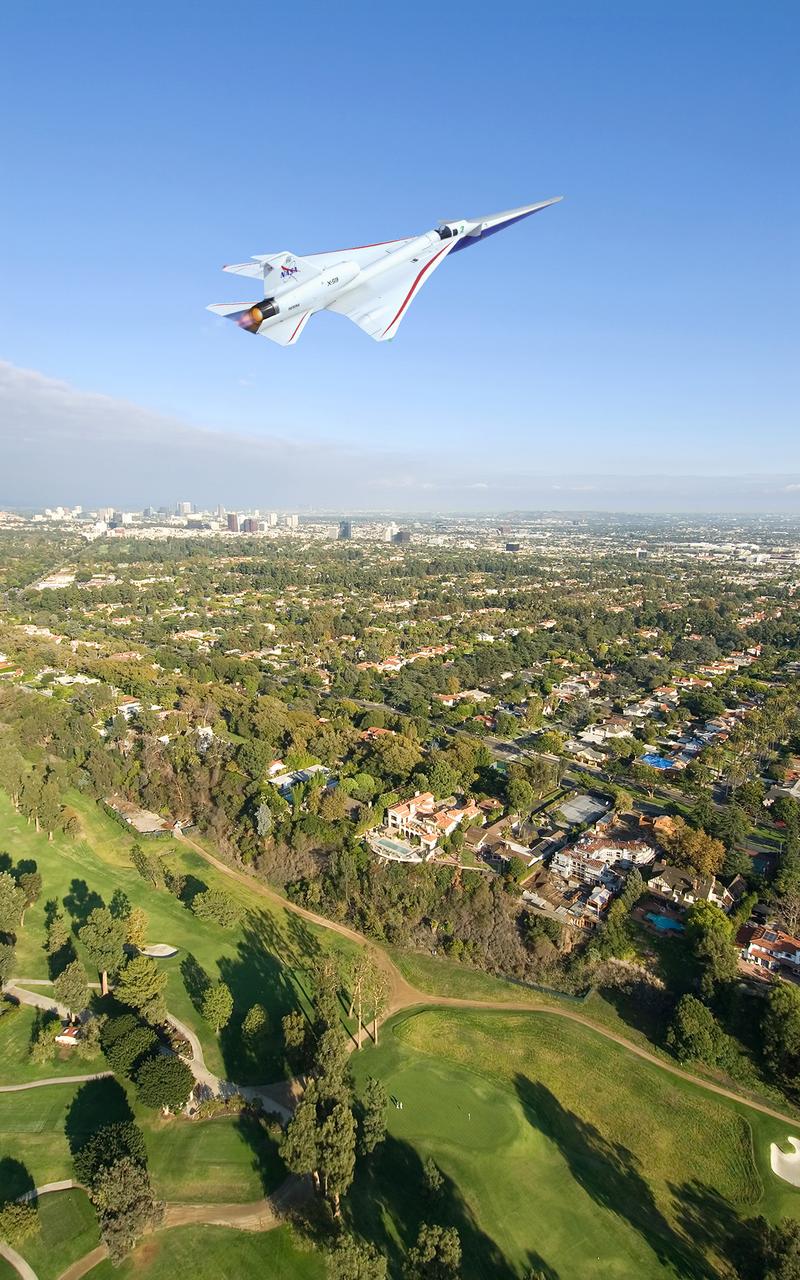
An artist illustration of the Low-Boom Flight Demonstration vehicle flying over a community.
Low-Boom Flight Demonstration over land
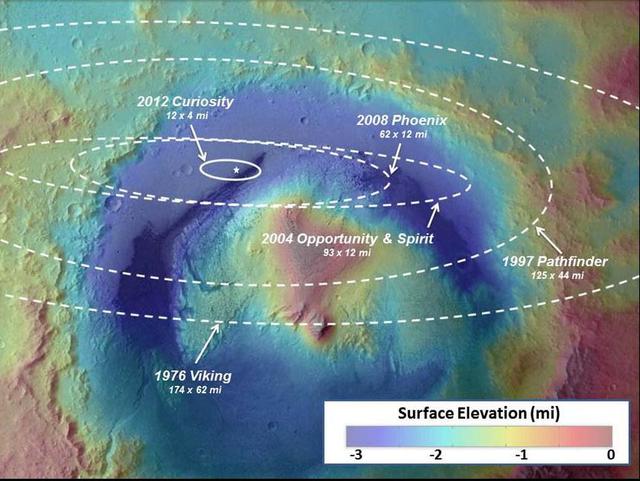
This image illustrates how spacecraft landings on Mars have become more and more precise over the years. Since NASA first Mars landing of Viking in 1976, the targeted landing regions, or ellipses, have shrunk.
Landing Accuracy on Mars: A Historical Perspective
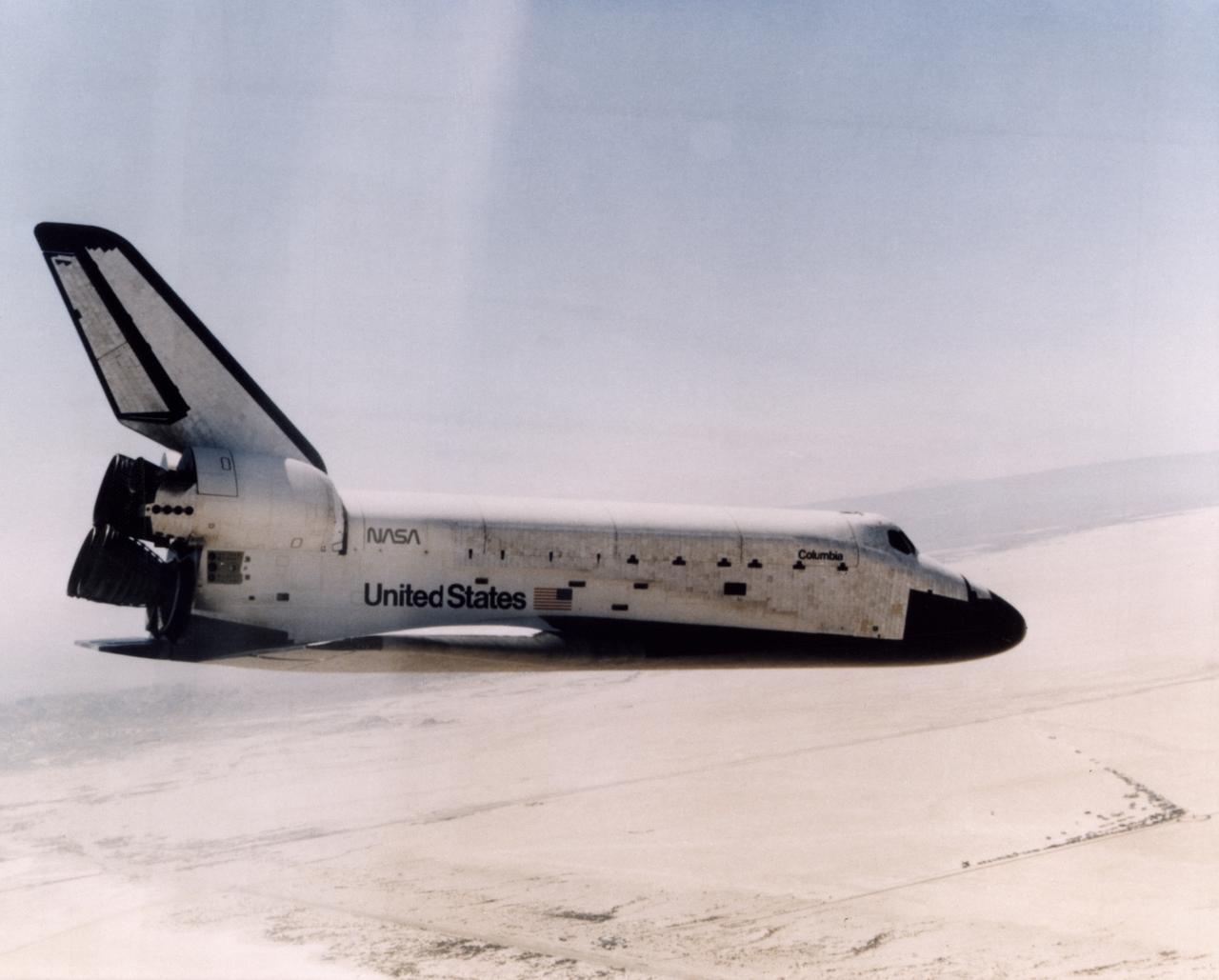
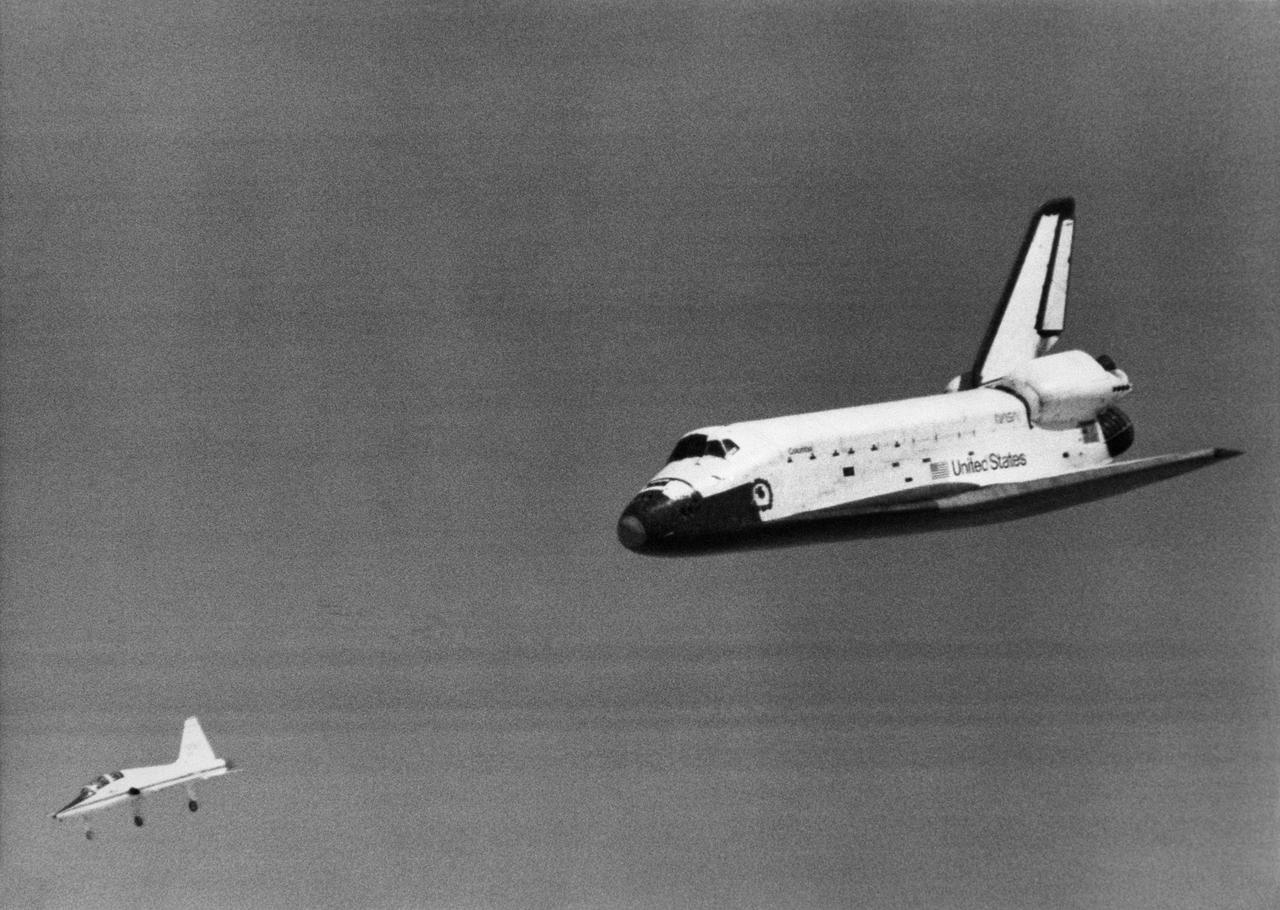
FIRST SHUTTLE LANDING -- The Space Shuttle Columbia glides down over Rogers Dry Lake as it heads for a landing at Edwards Air Force Base at the conclusion of its first orbital mission on April 14, 1981.
The Space Shuttle Columbia glides down over Rogers Dry Lake as it heads for a landing at Edwards Air Force Base at the conclusion of its first orbital mission
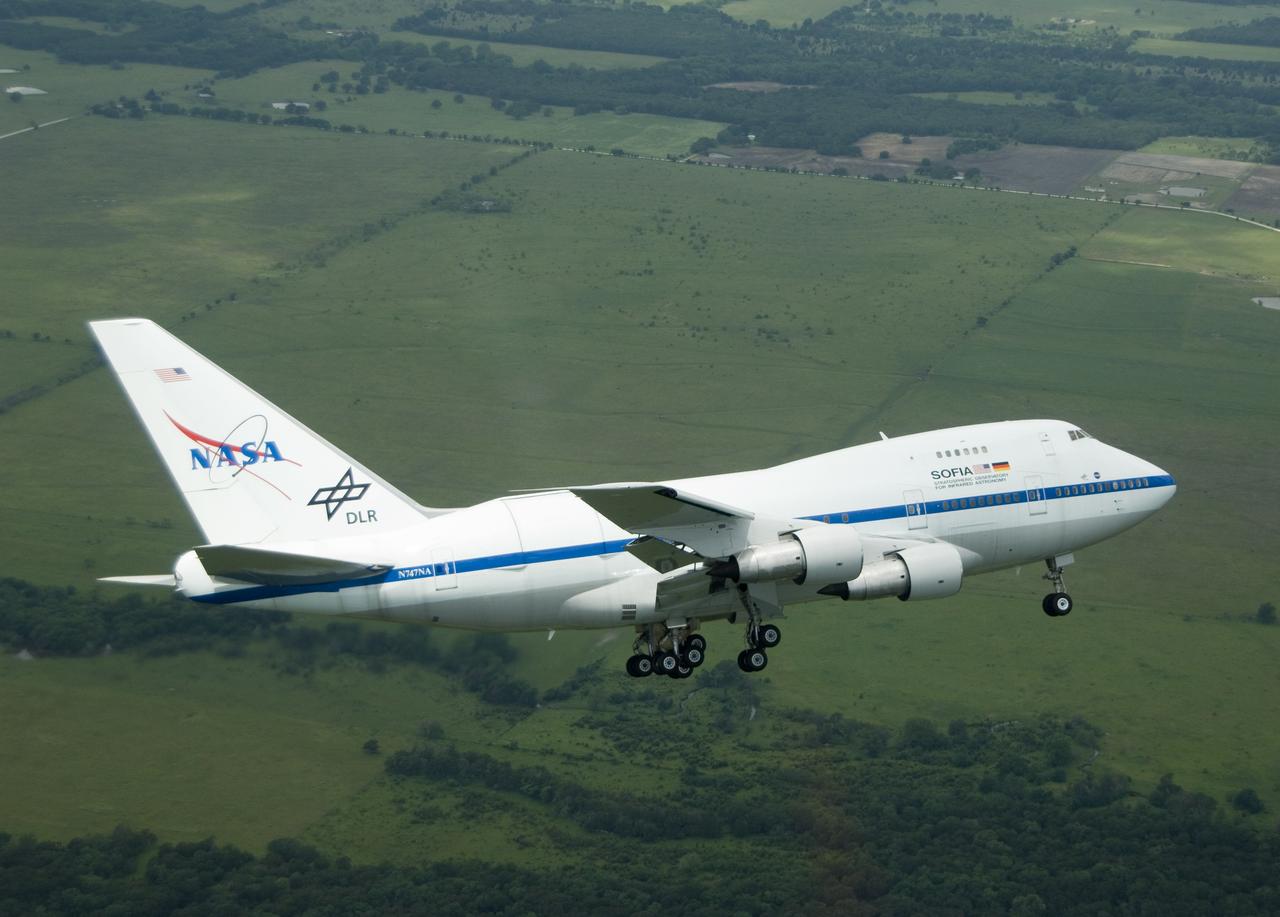
With landing gear extended, the NASA/DLR Stratospheric Observatory for Infared Astronomy (SOFIA) 747SP cruises over central Texas on its first checkout flight.
With landing gear extended, the NASA/DLR Stratospheric Observatory for Infared Astronomy (SOFIA) 747SP cruises over central Texas on its first checkout flight
NASA's highly modified Boeing 747SP SOFIA observatory banks low over the Texas countryside as it heads for landing at Waco to conclude its second check flight.
NASA's highly modified Boeing 747SP SOFIA observatory banks low over the Texas countryside as it heads for landing at Waco to conclude its second check flight
The Space Shuttle Columbia glides down over Rogers Dry Lake as it heads for a landing at Edwards Air Force Base at the conclusion of its first orbital mission on April 14, 1981.
The Space Shuttle Columbia glides down over Rogers Dry Lake as it heads for a landing at Edwards AFB at the conclusion of its first orbital mission
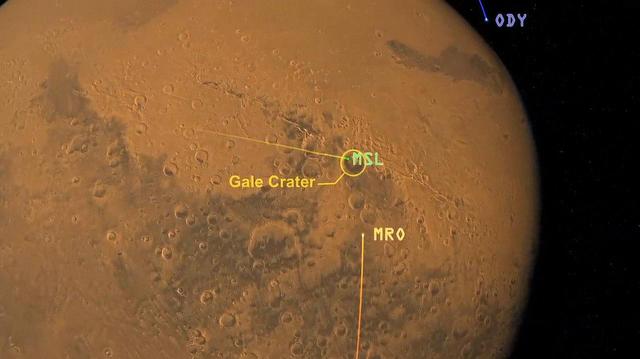
This frame from an artist animation shows how NASA how orbiters over Mars will monitor the landing of NASA Curiosity rover as it speeds towards its Martian landing site in Gale Crater.
Great Convergence of Spacecraft around Mars
NASA Phoenix Mars Lander telltale catches a breeze as clouds move over the landing site on Sol 103 Sept. 7, 2008, the 103rd Martian day since landing.
Phoenix Telltale Movie with Clouds, Sol 103
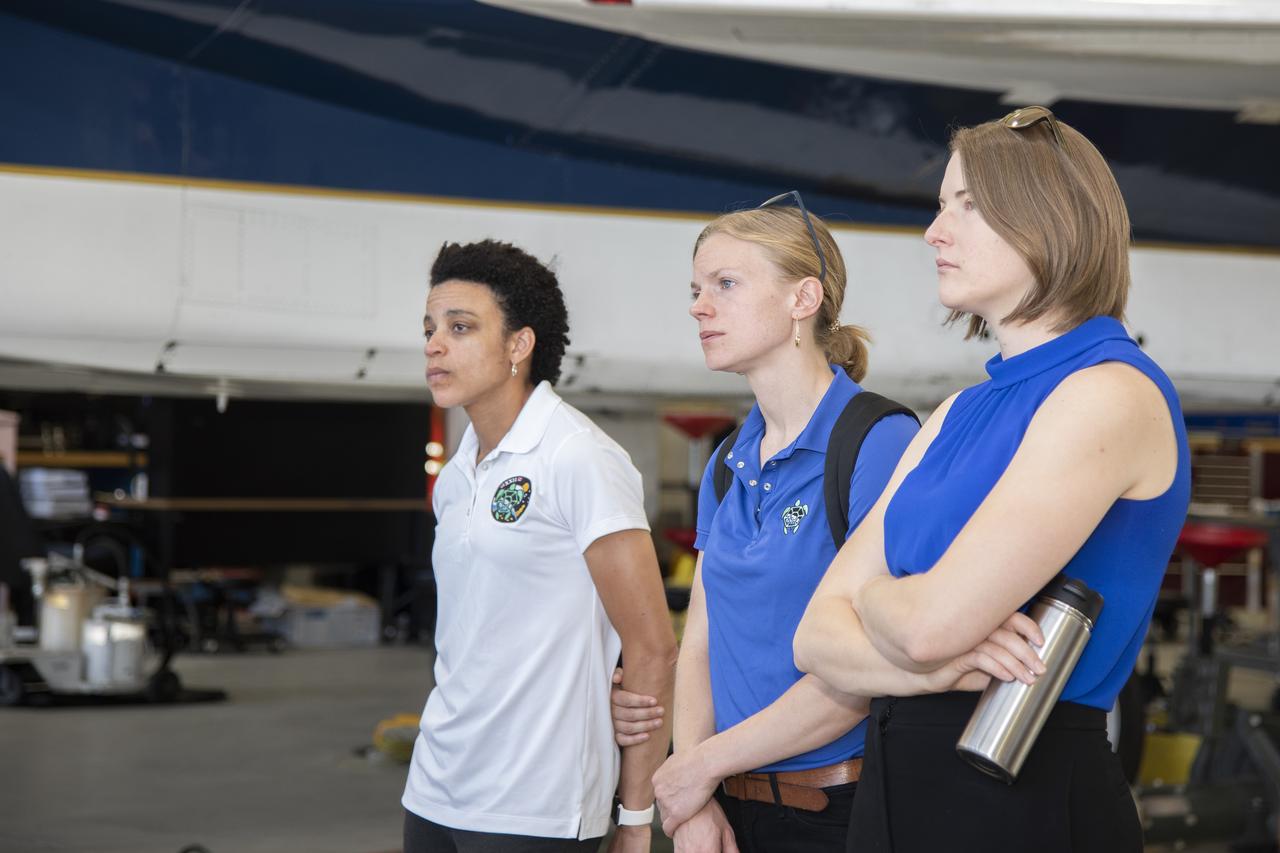
NASA’s 2017 astronaut candidates (L to R) Jessica Watkins, Zena Cardman, Kayla Barron toured aircraft hangar at Armstrong Flight Research Center, in Southern California where they were briefed on the use of Armstrong's F-15 and F-18 aircraft for studying sonic booms.  The aircraft will be used during the development of the low-boom X-59 aircraft that is planned to fly supersonically over land, which is not allowed at this time because of the loud noise created when flying beyond the speed of sound.
Pilot Nils Larsen Speaks to Astronauts on X-59 Research Using Jets
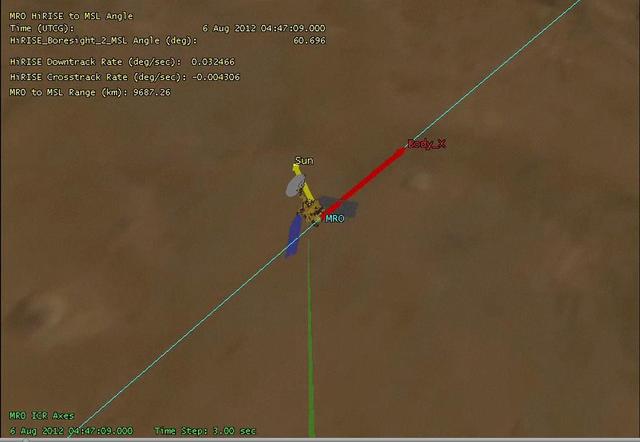
This frame from an animation shows NASA Mars Reconnaissance Orbiter flying over NASA Curiosity shown in pink as the rover lands on the Red Planet.
Mars Reconnaissance Orbiter Flying Over Mars
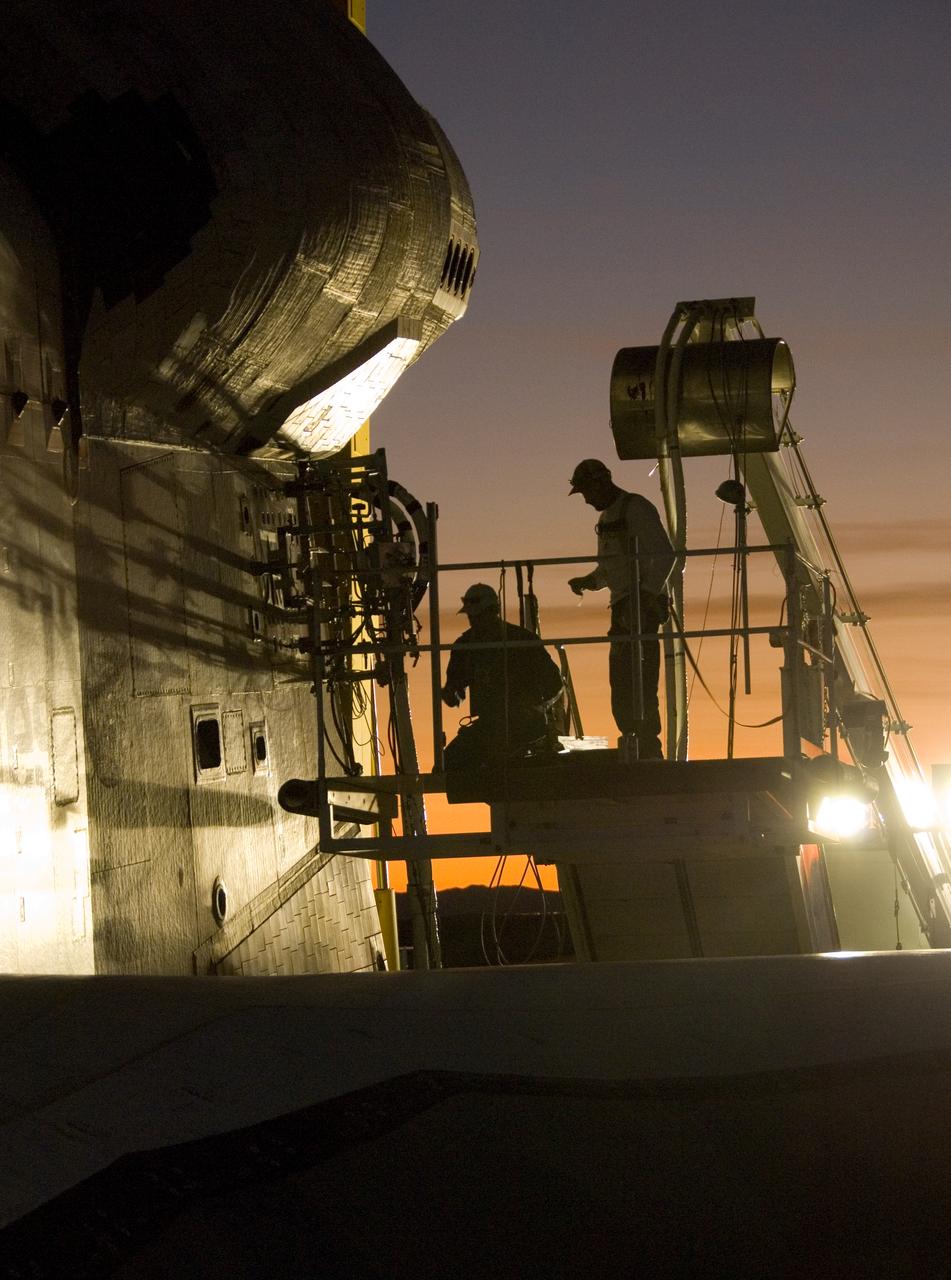
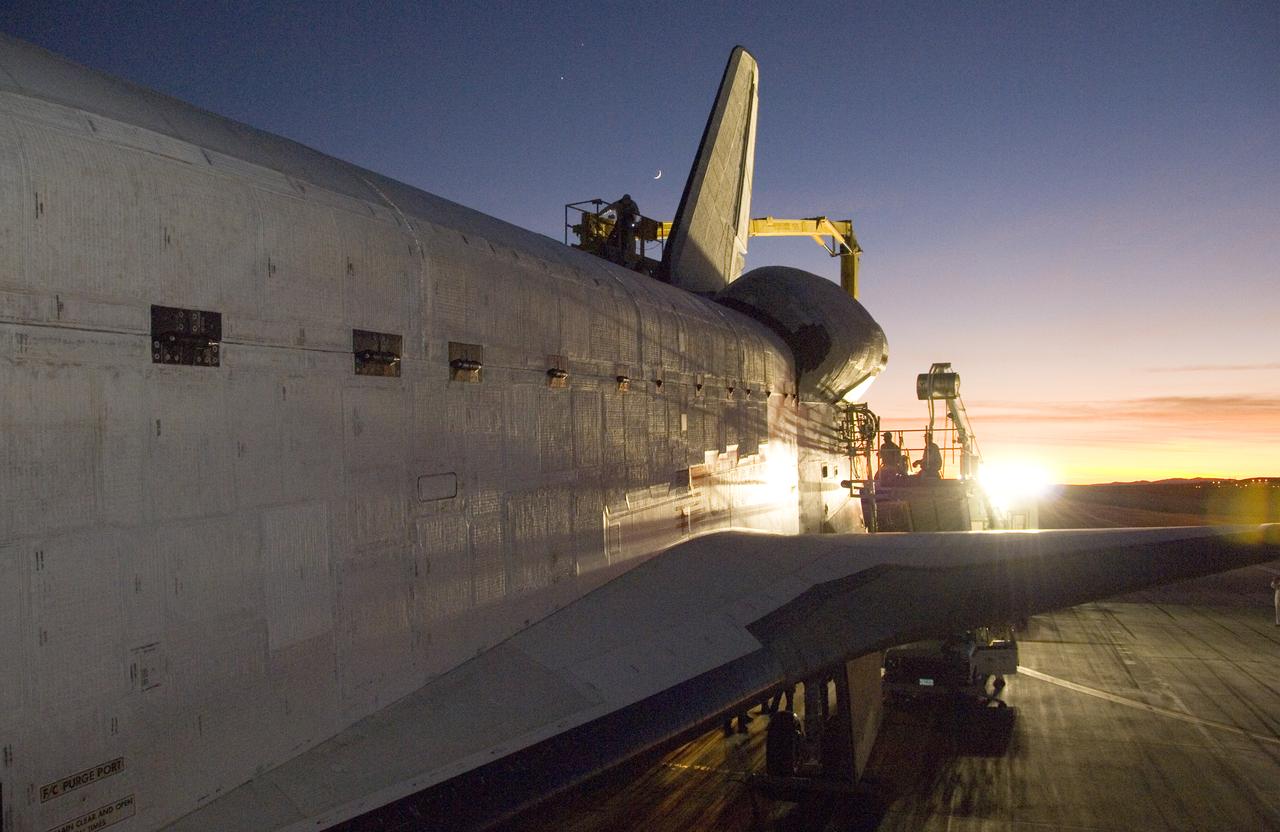
As dusk settles over Edwards Air Force Base, NASA technicians hook up various ground-support systems before shuttle Endeavour is towed off the landing runway.
As dusk settles over Edwards Air Force Base, NASA technicians hook up various ground-support systems before shuttle Endeavour is towed off the landing runway
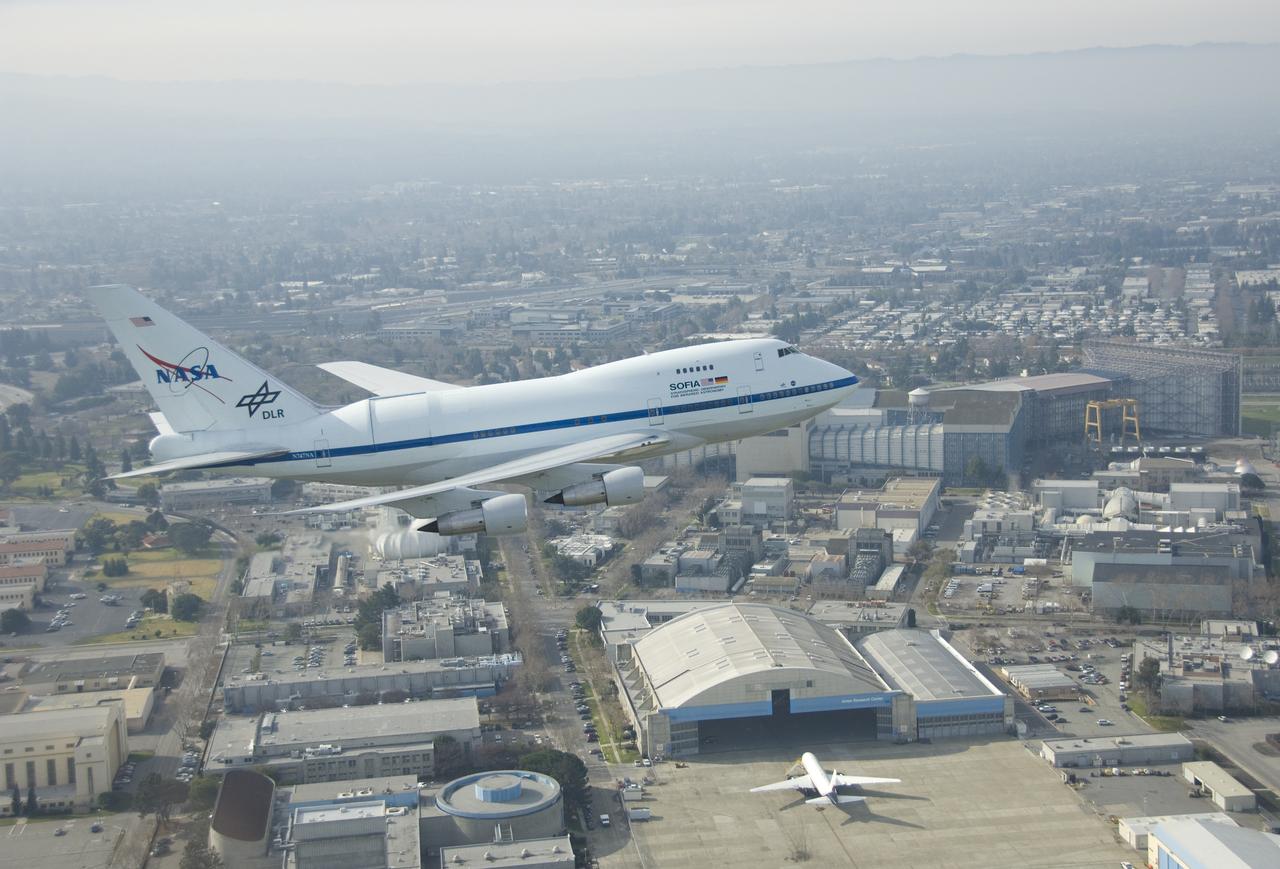
NASA's SOFIA flying observatory makes a low pass over NASA Ames Research Center prior to landing at Moffett Field for a brief visit on Jan. 14, 2008.
NASA's SOFIA flying observatory makes a low pass over NASA Ames Research Center prior to landing at Moffett Field for a brief visit on Jan. 14, 2008
The setting sun casts long shadows over shuttle Endeavour as technicians prepare to tow the orbiter from the Edwards Air Force Base runway after landing Nov. 30.
he setting sun casts long shadows over shuttle Endeavour as technicians prepare to tow the orbiter from the Edwards AFB runway after landing Nov. 30
Aerial view cityscape from airplane at summer
Quesst Overland (Green)
This frame from a colorized flyover movie from NASA Cassini mission shows the two largest seas on Saturn moon Titan and nearby lakes. The liquid in Titan lakes and seas is mostly methane and ethane.
Flying over an Extraterrestrial Land of Lakes
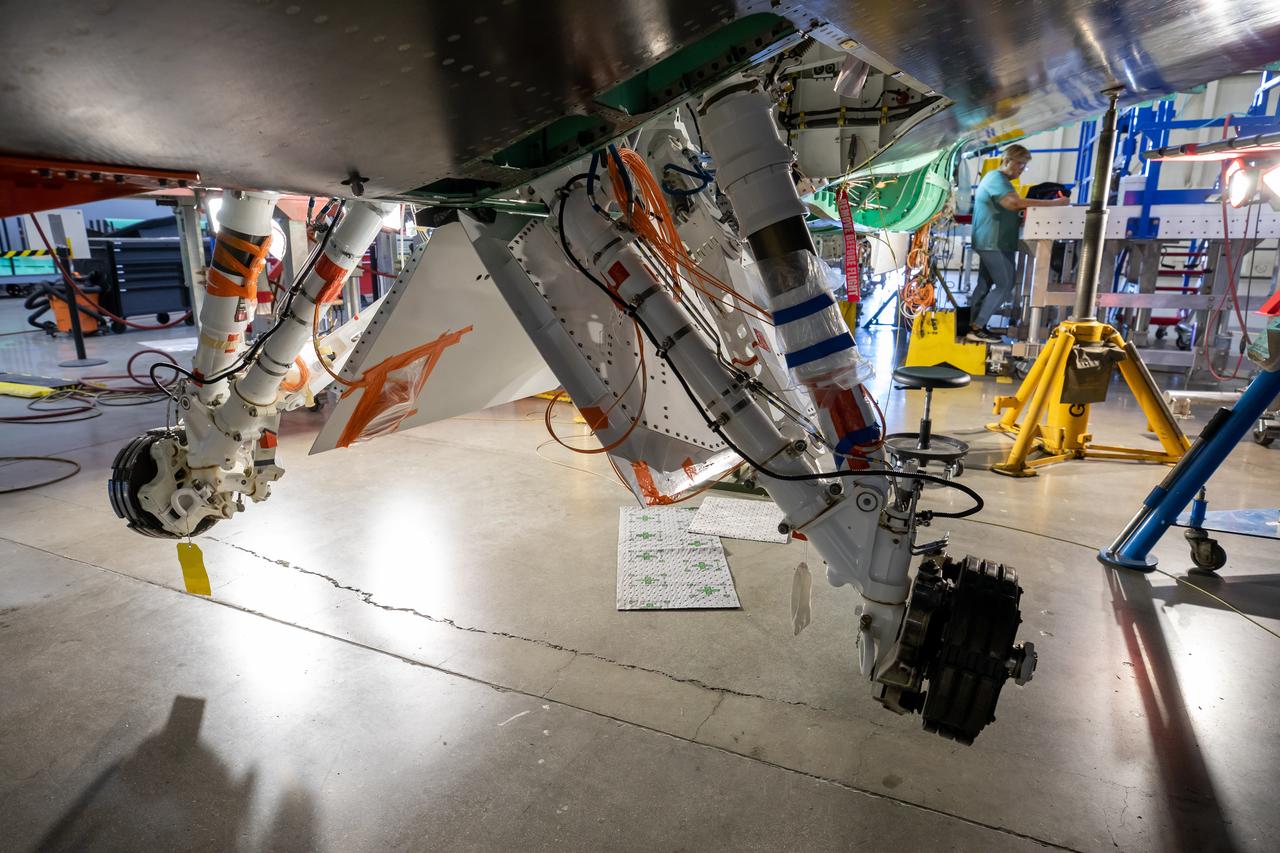
The Quesst team has repurposed the landing gear from an F-16 Fighting Falcon aircraft and is working on adjusting the fit onto the X-59 airplane. This is part of NASA’s Quesst mission which plans to help enable commercial supersonic air travel over land.
Landing Gear, XVS Camera and Updates
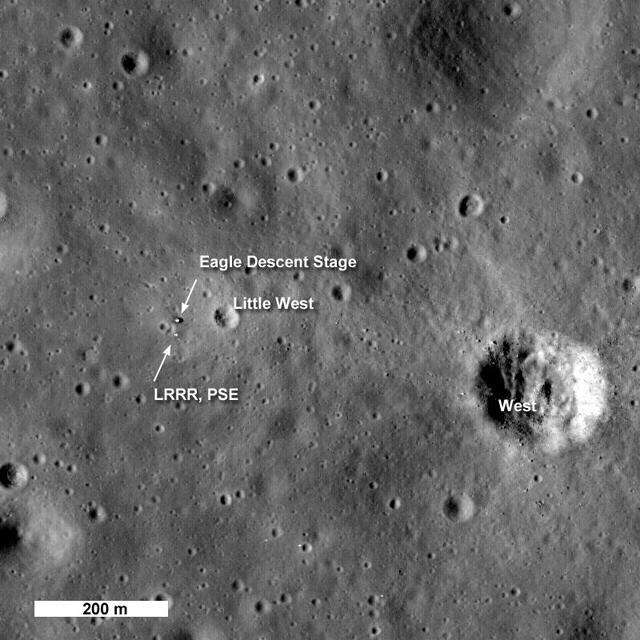
One month after its first image of the Apollo 11 landing site was acquired, NASA Lunar Reconnaissance Orbiter passed over the site again providing a new view of the historic site.
Apollo 11: Second Look
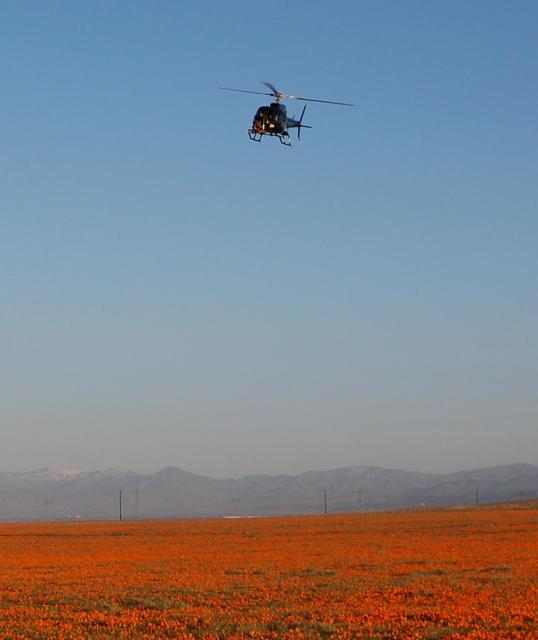
This image, taken April 9, 2010, shows a helicopter carrying an engineering test model of the landing radar for NASA Mars Science Laboratory over a patch of desert with abundant California poppies.
Testing of Mars Landing Radar near Lancaster, Calif.
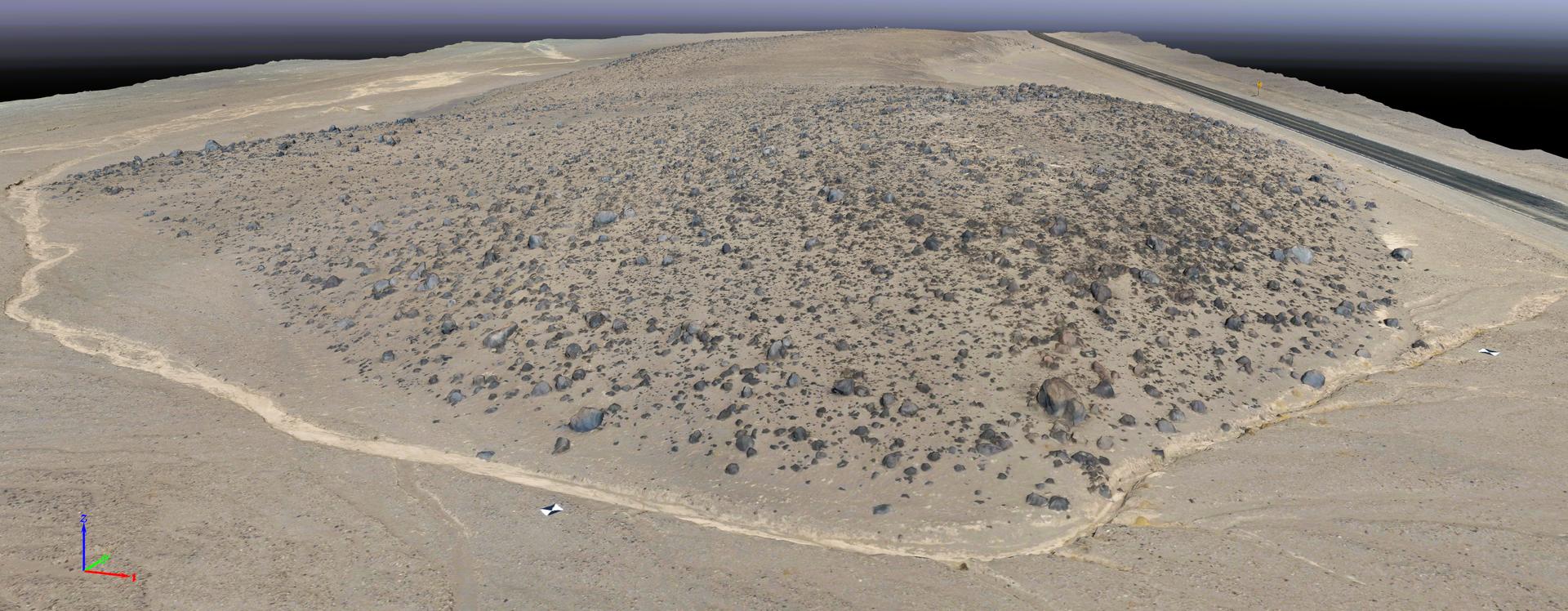
This rendering was created by research drones flying over Mars Hill, a region of Death Valley National Park that has been used by NASA’s Mars researchers since the 1970s, when the agency was preparing to land the twin Viking spacecraft. The hill’s rubbly, volcanic rock resembles the kind of inhospitable terrain that Mars rovers must navigate around and which posed a landing hazard for the Ingenuity Mars Helicopter.  In September 2025, researchers from NASA’s Jet Propulsion Laboratory in Southern California flew research drones over Mars Hill as part of a test campaign to develop navigation software for future Mars rotorcraft. Being able to precisely land between rocks like those seen here is a critical capability to access similar Martian terrain in the future.
Rendering of Mars Hill in Death Valley National Park
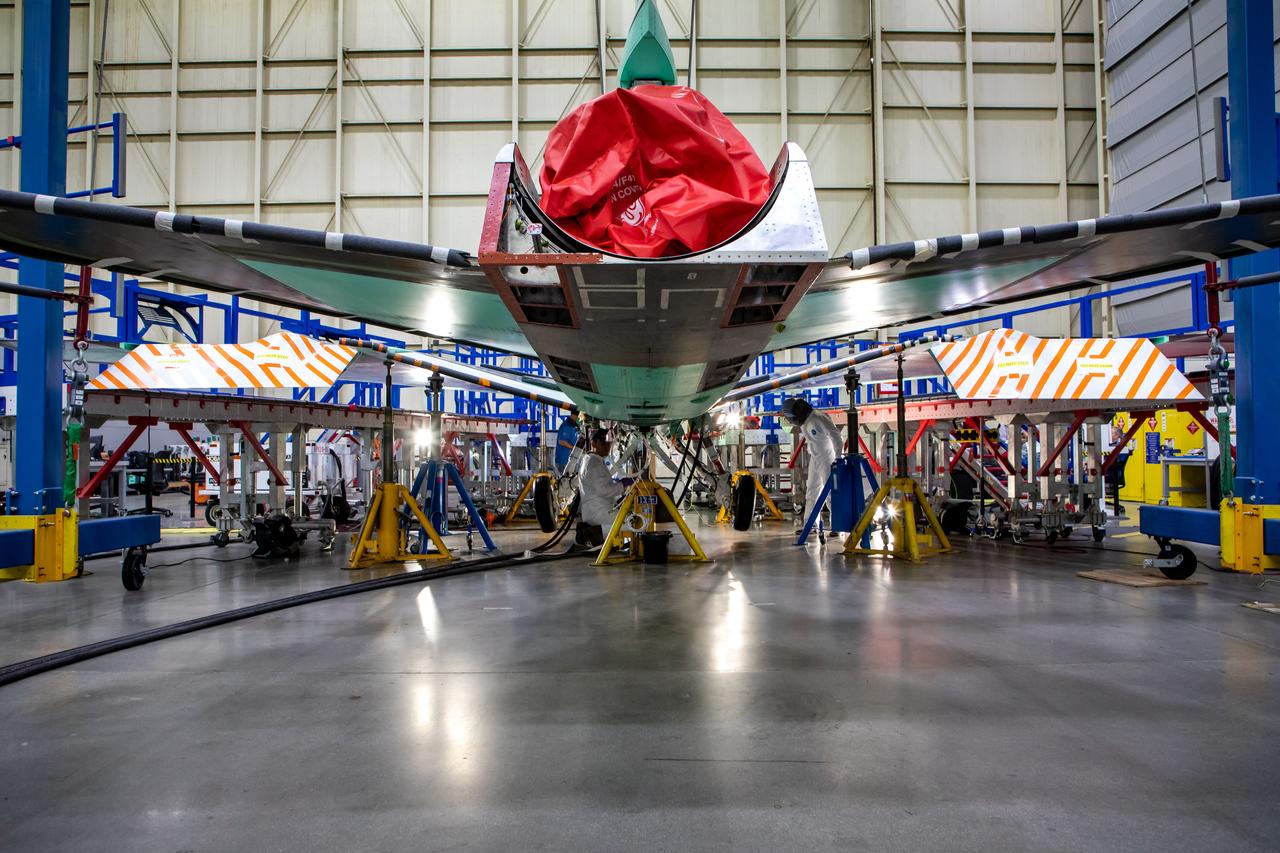
Technicians perform landing gear checkout testing at Lockheed Martin Skunk Works in Palmdale, California. These tests make sure that all the parts of X-59’s landing gear and doors are working in the correct order.  The X-59 is the centerpiece of NASA’s Quesst mission, which could help enable commercial supersonic air travel over land.
Checkout Tests of X-59 Landing Gear
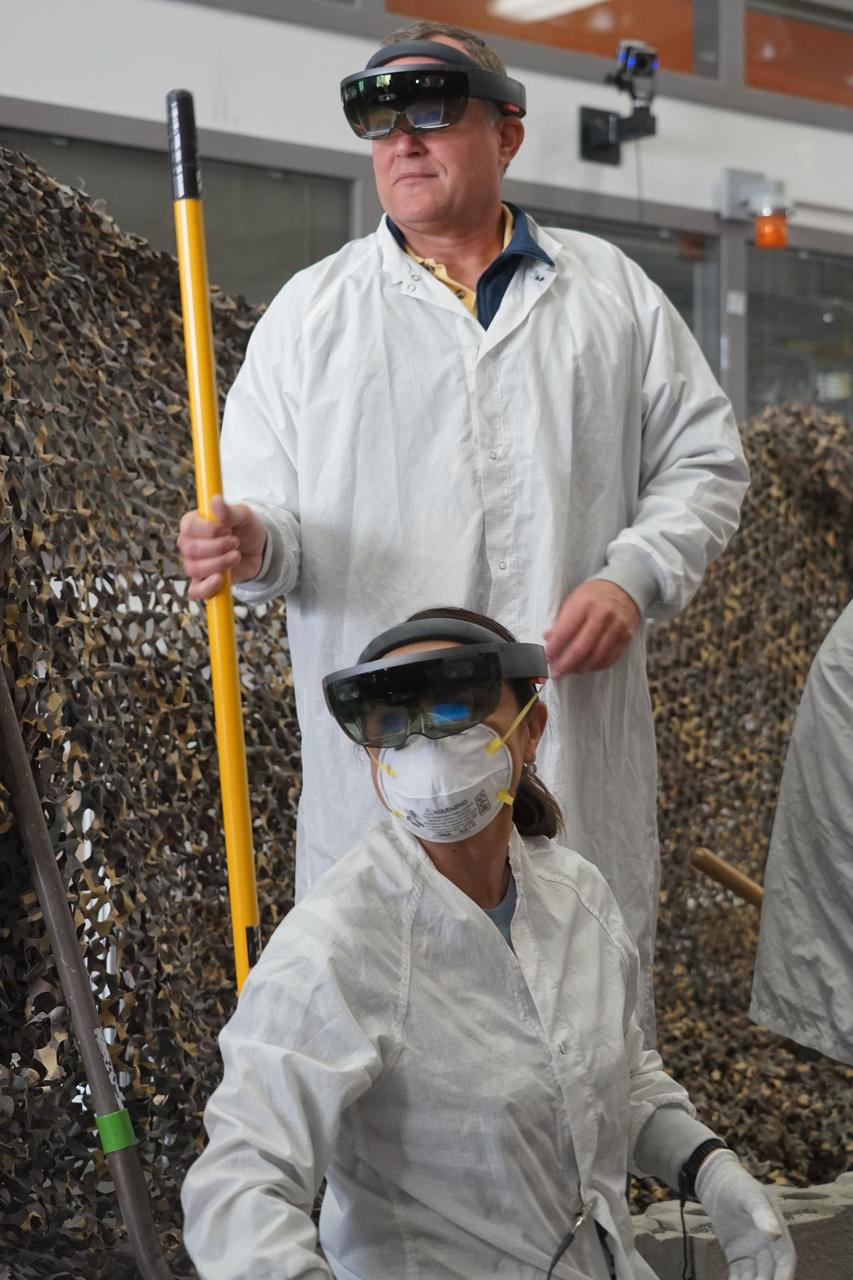
InSight Project Manager Tom Hoffman (standing) and engineer Marleen Sundgaard wear Microsoft HoloLens augmented reality headsets, which project digital terrain models of InSight's landing location on Mars over a lab space.  https://photojournal.jpl.nasa.gov/catalog/PIA22951
Marsforming With HoloLens
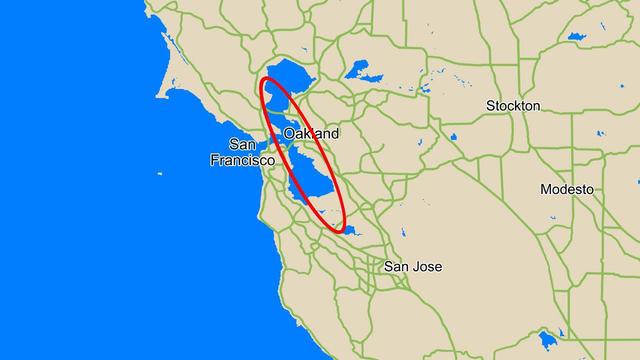
This map compares the size of the area where NASA Phoenix Mars Lander was expected to land, called the landing ellipse red, to the size of the San Francisco Bay Area.
Phoenix Landing Ellipse Over San Francisco
This map compares the size of the area where NASA Phoenix Mars Lander was expected to land, called the landing ellipse red, to the size of Long Island, N.Y.
Phoenix Landing Ellipse over Long Island
Support personnel and film crews are seen working around the space shuttle Endeavour as it traverses through Inglewood, Calif. on Friday, Oct. 12, 2012.  Endeavour, built as a replacement for space shuttle Challenger, completed 25 missions, spent 299 days in orbit, and orbited Earth 4,671 times while traveling 122,883,151 miles.  Beginning Oct. 30, the shuttle will be on display in the CSC's Samuel Oschin Space Shuttle Endeavour Display Pavilion, embarking on its new mission to commemorate past achievements in space and educate and inspire future generations of explorers.  Photo Credit: (NASA/Carla Cioffi)
Space Shuttle Endeavour Move
A spectator on the roof of a building photographs space shuttle Endeavour as it passes by on its way to its new home at the California Science Center in Los Angeles, Friday, Oct. 12, 2012.  Endeavour, built as a replacement for space shuttle Challenger, completed 25 missions, spent 299 days in orbit, and orbited Earth 4,671 times while traveling 122,883,151 miles. Beginning Oct. 30, the shuttle will be on display in the CSC’s Samuel Oschin Space Shuttle Endeavour Display Pavilion, embarking on its new mission to commemorate past achievements in space and educate and inspire future generations of explorers. Photo Credit: (NASA/Carla Cioffi)
Space Shuttle Endeavour Move
The space shuttle Endeavour is seen as it is maneuvered through the streets of Inglewood on its way to its new home at the California Science Center,  Saturday, Oct. 13, 2012. Endeavour, built as a replacement for space shuttle Challenger, completed 25 missions, spent 299 days in orbit, and orbited Earth 4,671 times while traveling 122,883,151 miles. Beginning Oct. 30, the shuttle will be on display in the CSC’s Samuel Oschin Space Shuttle Endeavour Display Pavilion, embarking on its new mission to commemorate past achievements in space and educate and inspire future generations of explorers. Photo Credit: (NASA/Carla Cioffi)
Space Shuttle Endeavour Move
Support personnel and film crews are seen working around the space shuttle Endeavour as it traverses through Inglewood, Calif. on Friday, Oct. 12, 2012.  Endeavour, built as a replacement for space shuttle Challenger, completed 25 missions, spent 299 days in orbit, and orbited Earth 4,671 times while traveling 122,883,151 miles.  Beginning Oct. 30, the shuttle will be on display in the CSC's Samuel Oschin Space Shuttle Endeavour Display Pavilion, embarking on its new mission to commemorate past achievements in space and educate and inspire future generations of explorers.  Photo Credit: (NASA/Carla Cioffi)
Space Shuttle Endeavour Move
The nose cone of the space shuttle Endeavour is seen next to the Randy’s Donuts landmark in Inglewood, California, Friday, Oct. 12, 2012. Endeavour, built as a replacement for space shuttle Challenger, completed 25 missions, spent 299 days in orbit, and orbited Earth 4,671 times while traveling 122,883,151 miles. Beginning Oct. 30, the shuttle will be on display in the CSC’s Samuel Oschin Space Shuttle Endeavour Display Pavilion, embarking on its new mission to commemorate past achievements in space and educate and inspire future generations of explorers. Photo Credit: (NASA/Carla Cioffi)
Space Shuttle Endeavour Move
The space shuttle Endeavour is seen as it traverses through Inglewood, California on Friday, Oct. 2012. Endeavour, built as a replacement for space shuttle Challenger, completed 25 missions, spent 299 days in orbit, and orbited Earth 4,671 times while traveling 122,883,151 miles. Beginning Oct. 30, the shuttle will be on display in the CSC’s Samuel Oschin Space Shuttle Endeavour Display Pavilion, embarking on its new mission to commemorate past achievements in space and educate and inspire future generations of explorers. Photo Credit: (NASA/Carla Cioffi)
Space Shuttle Endeavour Move
Spectators watch space shuttle Endeavour as it passes by on its way to its new home at the California Science Center in Los Angeles, Friday, Oct. 12, 2012.  Endeavour, built as a replacement for space shuttle Challenger, completed 25 missions, spent 299 days in orbit, and orbited Earth 4,671 times while traveling 122,883,151 miles.  Beginning Oct. 30, the shuttle will be on display in the CSC's Samuel Oschin Space Shuttle Endeavour Display Pavilion, embarking on its new mission to commemorate past achievements in space and educate and inspire future generations of explorers.  Photo Credit: (NASA/Carla Cioffi)
Space Shuttle Endeavour Move
A 3D camera films the space shuttle Endeavour as it makes its way through the streets of Inglewood on its way to its new home at the California Science Center, Saturday, Oct. 13, 2012. Endeavour, built as a replacement for space shuttle Challenger, completed 25 missions, spent 299 days in orbit, and orbited Earth 4,671 times while traveling 122,883,151 miles. Beginning Oct. 30, the shuttle will be on display in the CSC’s Samuel Oschin Space Shuttle Endeavour Display Pavilion, embarking on its new mission to commemorate past achievements in space and educate and inspire future generations of explorers. Photo Credit: (NASA/Carla Cioffi)
Space Shuttle Endeavour Move
Spectators are seen photographing space shuttle Endeavour as it passes by on its way to its new home at the California Science Center, Friday, Oct. 12, 2012, in Inglewood.  Endeavour, built as a replacement for space shuttle Challenger, completed 25 missions, spent 299 days in orbit, and orbited Earth 4,671 times while traveling 122,883,151 miles. Beginning Oct. 30, the shuttle will be on display in the CSC’s Samuel Oschin Space Shuttle Endeavour Display Pavilion, embarking on its new mission to commemorate past achievements in space and educate and inspire future generations of explorers. Photo Credit: (NASA/Carla Cioffi)
Space Shuttle Endeavour Move
The space shuttle Endeavour is seen as it traverses through Inglewood, Calif. on Friday, Oct. 12, 2012.  Endeavour, built as a replacement for space shuttle Challenger, completed 25 missions, spent 299 days in orbit, and orbited Earth 4,671 times while traveling 122,883,151 miles.  Beginning Oct. 30, the shuttle will be on display in the CSC's Samuel Oschin Space Shuttle Endeavour Display Pavilion, embarking on its new mission to commemorate past achievements in space and educate and inspire future generations of explorers.  Photo Credit: (NASA/Carla Cioffi)
Space Shuttle Endeavour Move
The space shuttle Endeavour is seen as it traverses through Inglewood, Calif. on Friday, Oct. 12, 2012.  Endeavour, built as a replacement for space shuttle Challenger, completed 25 missions, spent 299 days in orbit, and orbited Earth 4,671 times while traveling 122,883,151 miles.  Beginning Oct. 30, the shuttle will be on display in the CSC's Samuel Oschin Space Shuttle Endeavour Display Pavilion, embarking on its new mission to commemorate past achievements in space and educate and inspire future generations of explorers.  Photo Credit: (NASA/Carla Cioffi)
Space Shuttle Endeavour Move
The space shuttle Endeavour is seen as it is maneuvered through the streets of Inglewood on its way to its new home at the California Science Center,  Saturday, Oct. 13, 2012. Endeavour, built as a replacement for space shuttle Challenger, completed 25 missions, spent 299 days in orbit, and orbited Earth 4,671 times while traveling 122,883,151 miles. Beginning Oct. 30, the shuttle will be on display in the CSC’s Samuel Oschin Space Shuttle Endeavour Display Pavilion, embarking on its new mission to commemorate past achievements in space and educate and inspire future generations of explorers. Photo Credit: (NASA/Carla Cioffi)
Space Shuttle Endeavour Move
The space shuttle Endeavour is seen as it traverses through Inglewood, Calif. on Friday, Oct. 12, 2012.  Endeavour, built as a replacement for space shuttle Challenger, completed 25 missions, spent 299 days in orbit, and orbited Earth 4,671 times while traveling 122,883,151 miles.  Beginning Oct. 30, the shuttle will be on display in the CSC's Samuel Oschin Space Shuttle Endeavour Display Pavilion, embarking on its new mission to commemorate past achievements in space and educate and inspire future generations of explorers.  Photo Credit: (NASA/Carla Cioffi)
Space Shuttle Endeavour Move
The space shuttle Endeavour is seen as it traverses through the streest of Los Angeles on its way to its new home at the California Science Center, Friday, Oct. 12, 2012.  Endeavour, built as a replacement for space shuttle Challenger, completed 25 missions, spent 299 days in orbit, and orbited Earth 4,671 times while traveling 122,883,151 miles.  Beginning Oct. 30, the shuttle will be on display in the CSC's Samuel Oschin Space Shuttle Endeavour Display Pavilion, embarking on its new mission to commemorate past achievements in space and educate and inspire future generations of explorers.  Photo Credit: (NASA/Carla Cioffi)
Space Shuttle Endeavour Move
Power lines are hoisted upwards by a crane in order to allow the space shuttle Endeavour to traverse on its path to its new home at the California Science Center, Friday, Oct. 12, 2012 in Inglewood. Endeavour, built as a replacement for space shuttle Challenger, completed 25 missions, spent 299 days in orbit, and orbited Earth 4,671 times while traveling 122,883,151 miles. Beginning Oct. 30, the shuttle will be on display in the CSC’s Samuel Oschin Space Shuttle Endeavour Display Pavilion, embarking on its new mission to commemorate past achievements in space and educate and inspire future generations of explorers. Photo Credit: (NASA/Carla Cioffi)
Space Shuttle Endeavour Move
The space shuttle Endeavour moves out of the Los Angeles International Airport and onto the streets of Los Angeles to make its way to its new home at the California Science Center, Friday, Oct. 12, 2012.  Endeavour, built as a replacement for space shuttle Challenger, completed 25 missions, spent 299 days in orbit, and orbited Earth 4,671 times while traveling 122,883,151 miles.  Beginning Oct. 30, the shuttle will be on display in the CSC's Samuel Oschin Space Shuttle Endeavour Display Pavilion, embarking on its new mission to commemorate past achievements in space and educate and inspire future generations of explorers.  Photo Credit: (NASA/Carla Cioffi)
Space Shuttle Endeavour Move
The space shuttle Endeavour is seen as it is maneuvered through the streets of Inglewood on its way to its new home at the California Science Center,  Saturday, Oct. 13, 2012. Endeavour, built as a replacement for space shuttle Challenger, completed 25 missions, spent 299 days in orbit, and orbited Earth 4,671 times while traveling 122,883,151 miles. Beginning Oct. 30, the shuttle will be on display in the CSC’s Samuel Oschin Space Shuttle Endeavour Display Pavilion, embarking on its new mission to commemorate past achievements in space and educate and inspire future generations of explorers. Photo Credit: (NASA/Carla Cioffi)
Space Shuttle Endeavour Move
The above images, derived from NASA QuikScat satellite data, show the extensive pattern of rain water deposited by Hurricanes Katrina and Rita on land surfaces over several states in the southern and eastern United States. These results demonstrate the capability of satellite scatterometers to monitor changes in surface water on land.  The color scale depicts increases in radar backscatter (in decibels) between the current measurement and the mean of measurements obtained during the previous two weeks. The backscatter can be calibrated to measure increases in surface soil moisture resulting from rainfall. The yellow color corresponds to an increase of approximately 10 percent or more in surface soil moisture according to the calibration site of Lonoke, Ark.  The two hurricanes deposited excessive rainfall over extensive regions of the Mississippi River basin. Basins the size of the Mississippi can take up to several weeks before such excess rainfall significantly increases the amount of river discharge in large rivers such as the Mississippi. With hurricane season not over until November 30, the potential exists for significant flooding, particularly if new rain water is deposited by new hurricanes when river discharge peaks up as a result of previous rainfalls. River discharge should be closely monitored to account for this factor in evaluating potential flood conditions in the event of further hurricanes.  http://photojournal.jpl.nasa.gov/catalog/PIA03029
Distribution Patterns of Land Surface Water from Hurricanes Katrina and Rita
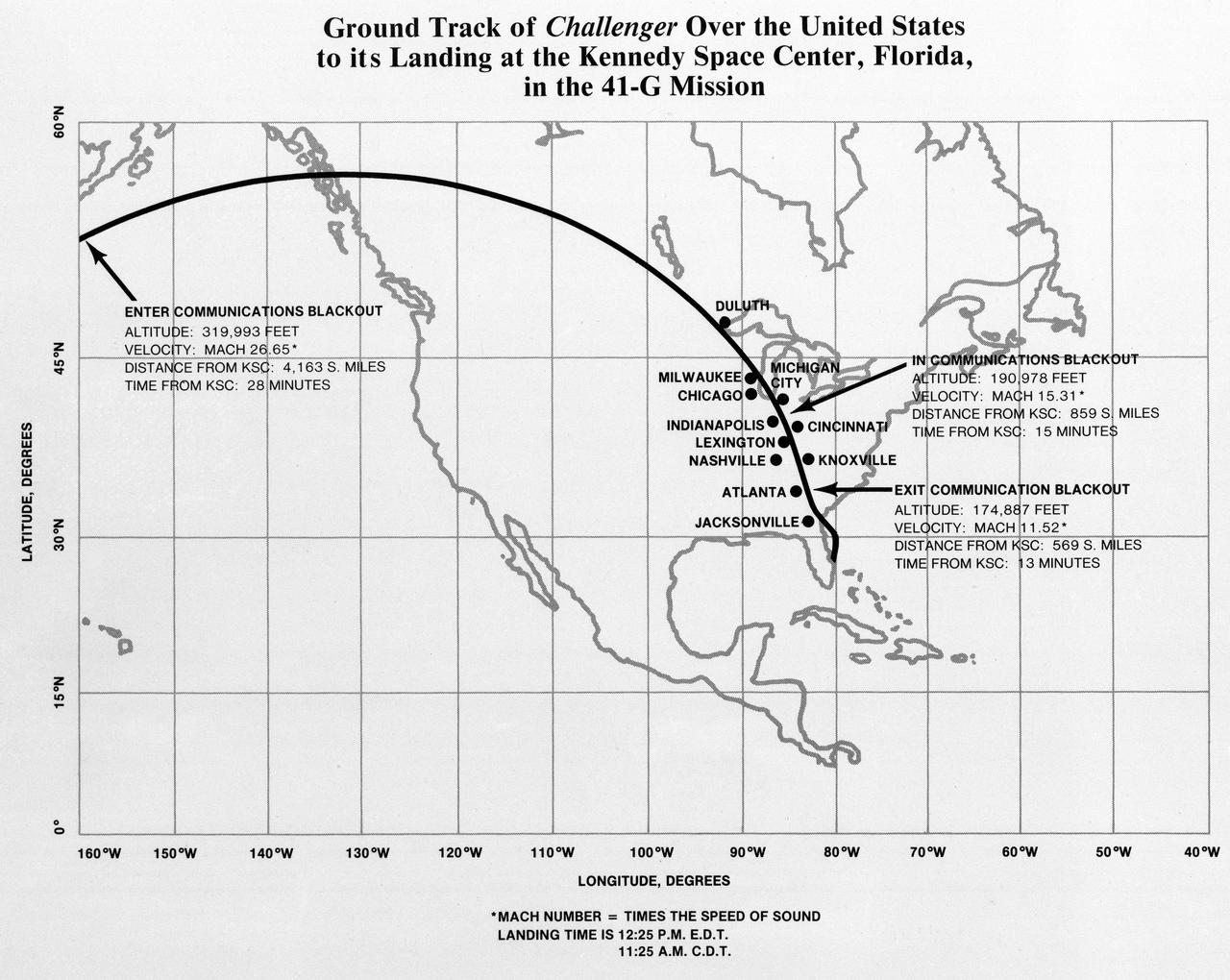
Art drawing of ground track over U.S. of landing for STS-41G.        1.  ART CONCEPTS - STS-41G MAP (LANDING)        KSC, FL
LANDING (MAP) - STS-41G - KSC
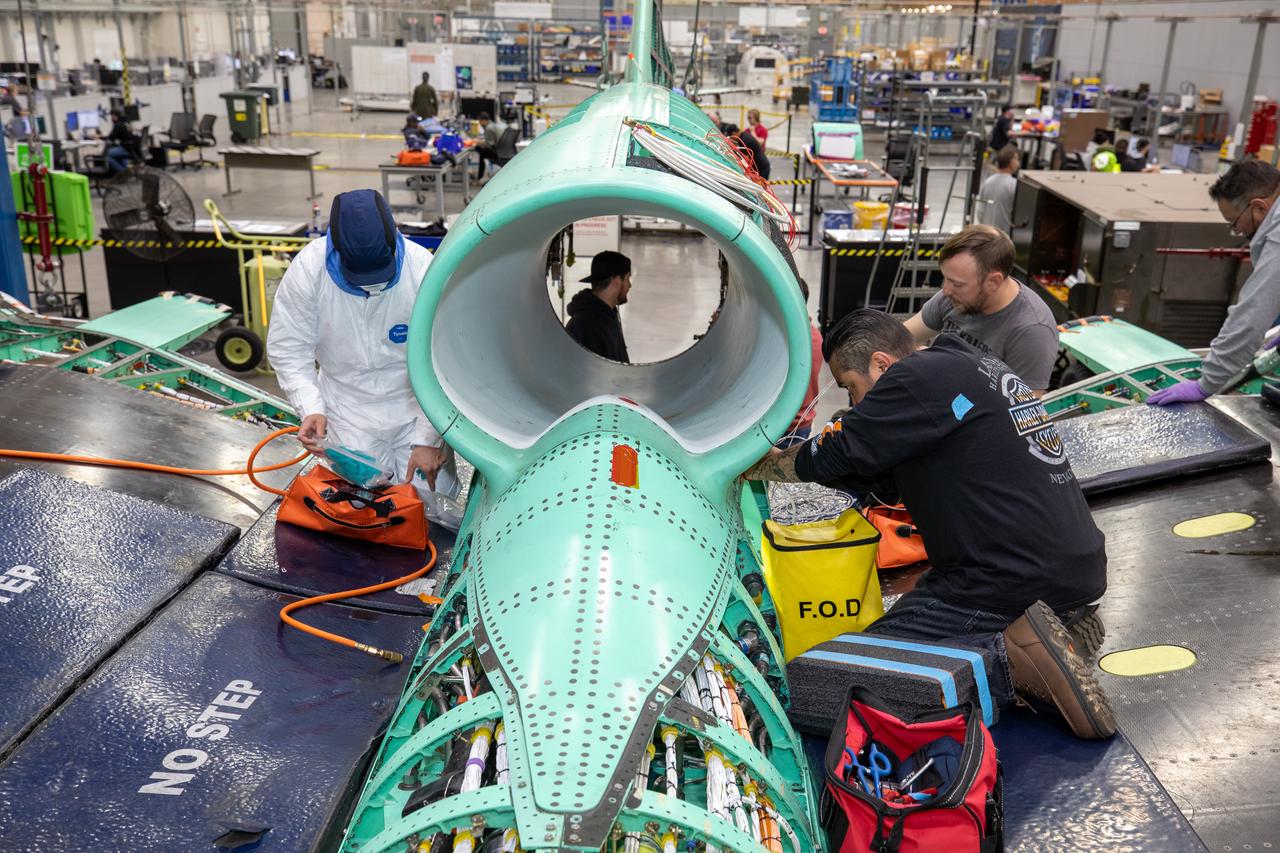
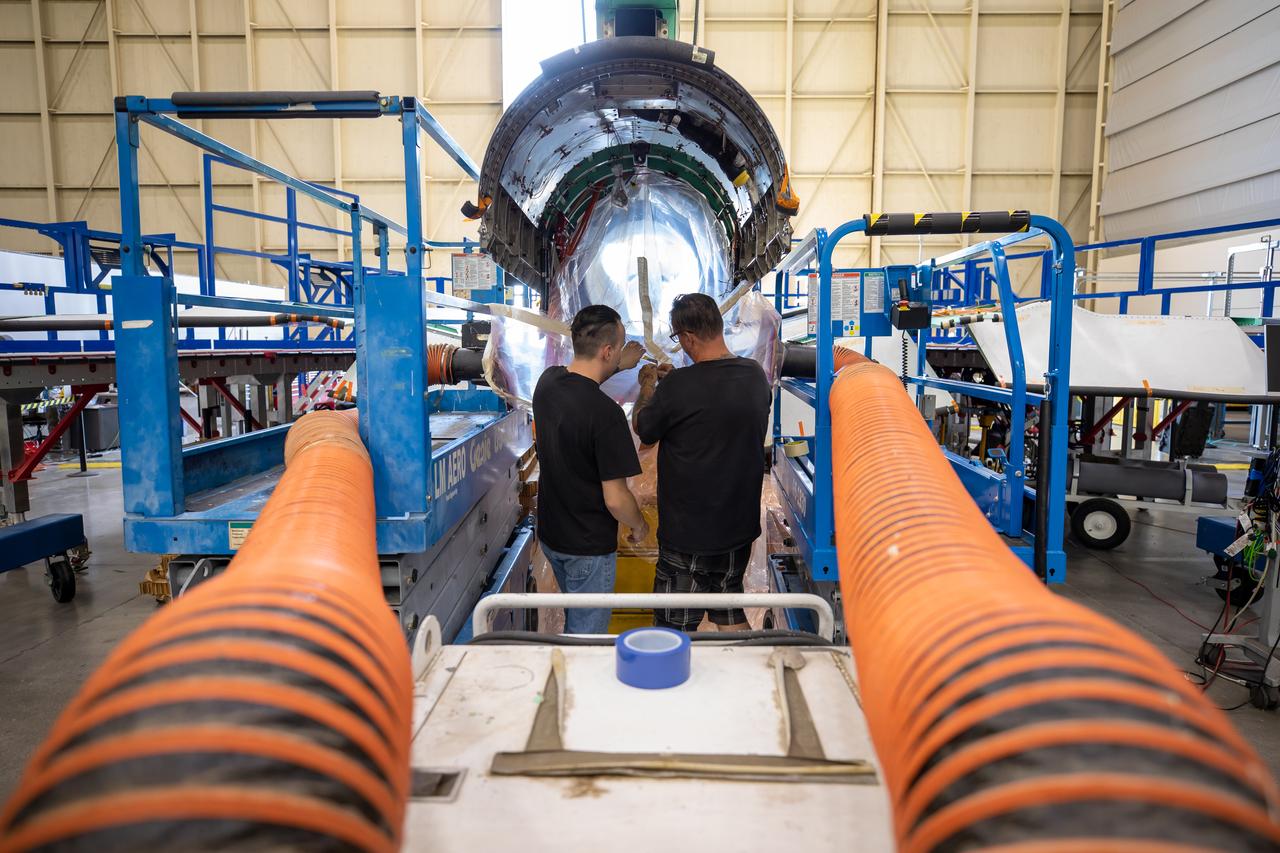
The X-59 team working on the aircraft’s wiring around the engine inlet prior to the engine being installed.  Once complete, the X-59 is designed to fly supersonic while reducing the loud sonic boom. The Quesst mission could help change the rules for commercial supersonic air travel over land.
Quesst Mission | X-59 Engine Inlet
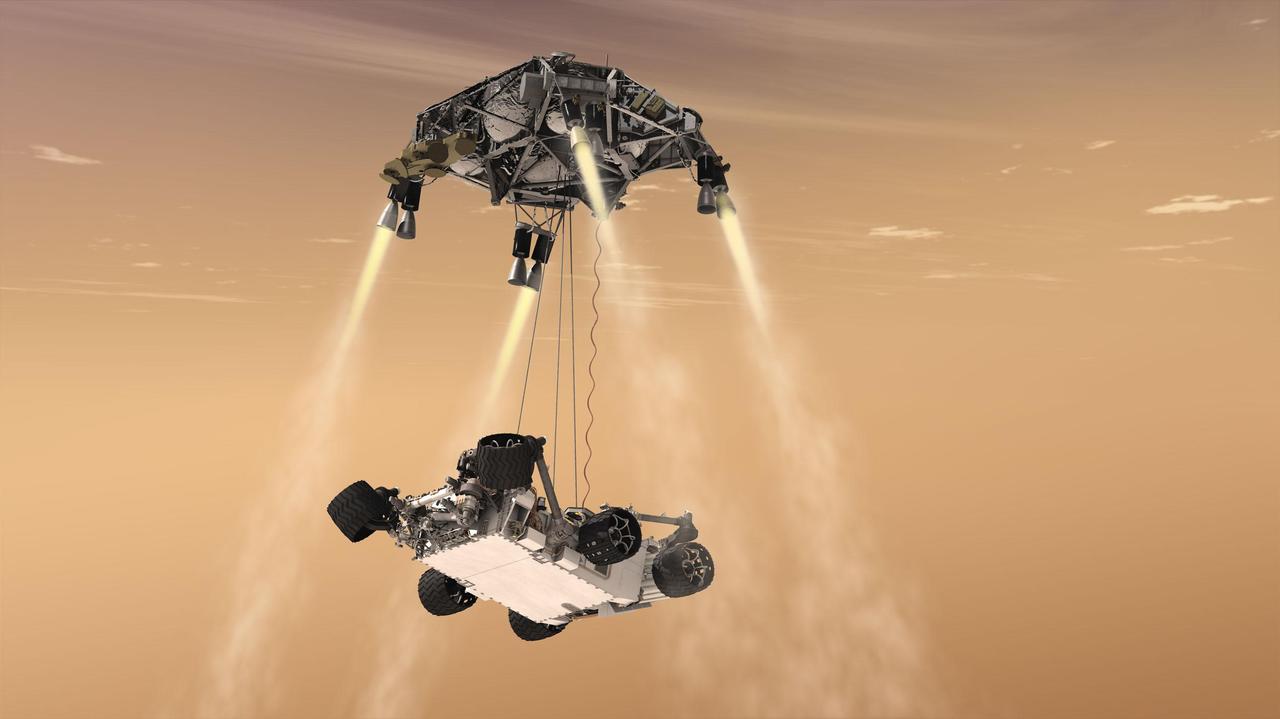
This artist concept shows the sky crane maneuver during the descent of NASA Curiosity rover to the Martian surface. The sheer size of the rover over one ton, or 900 kilograms would preclude it from taking advantage of an airbag-assisted landing.
Curiosity Sky Crane Maneuver, Artist Concept
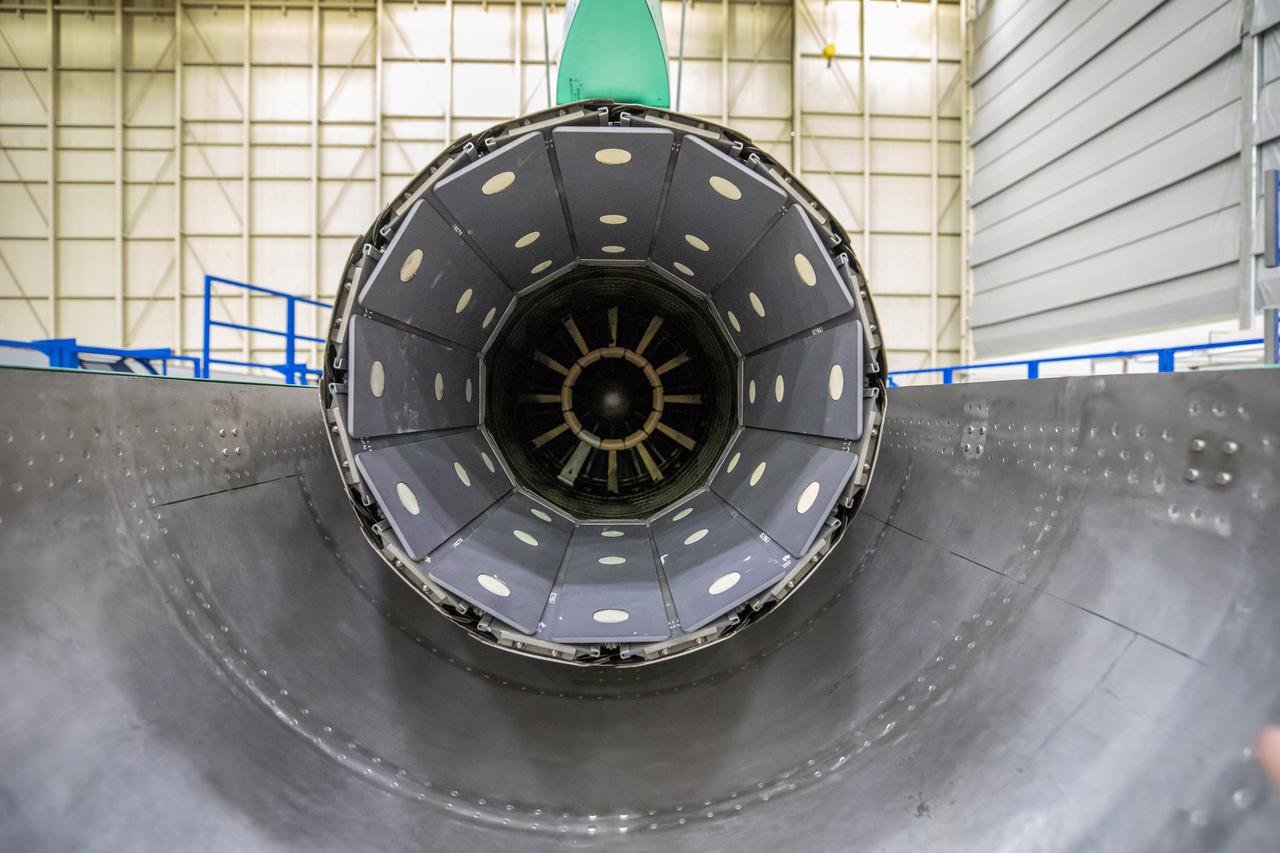
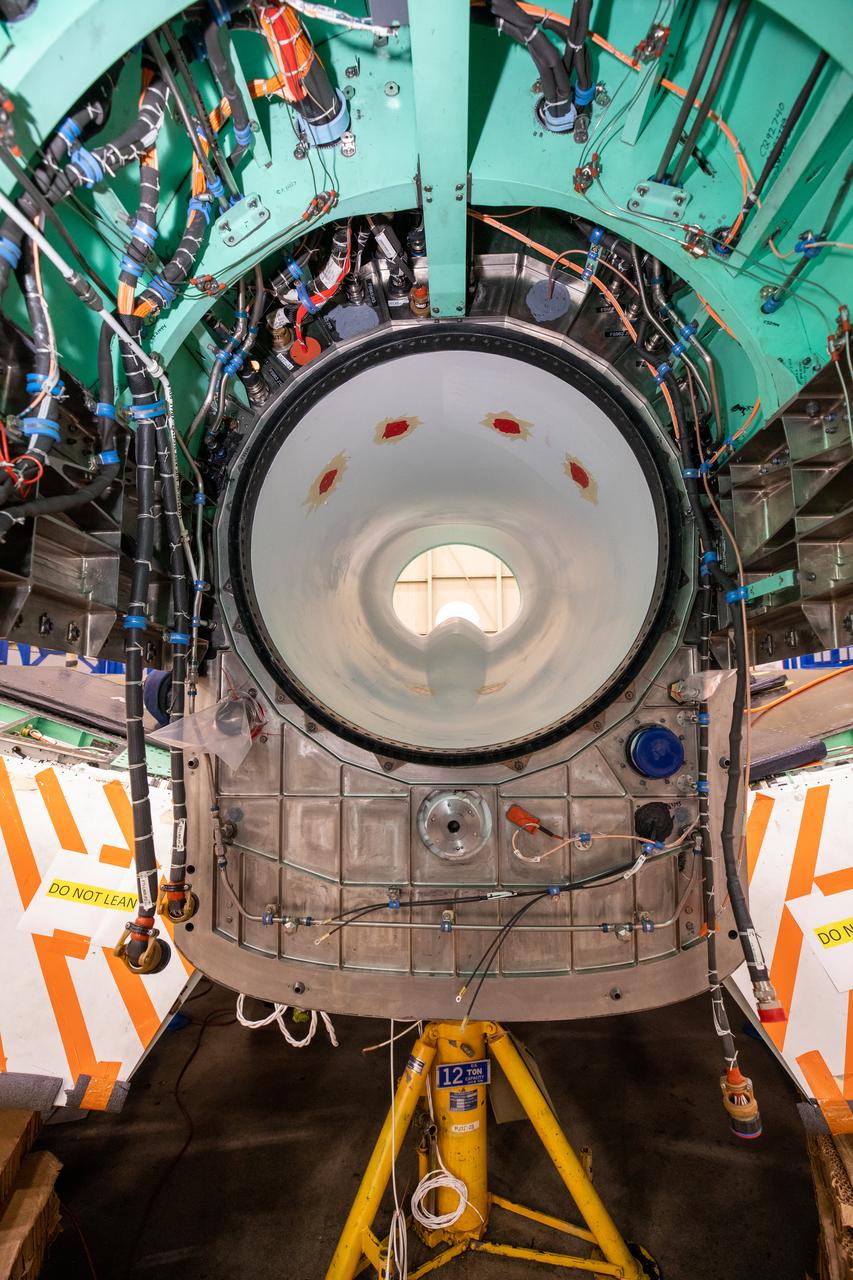
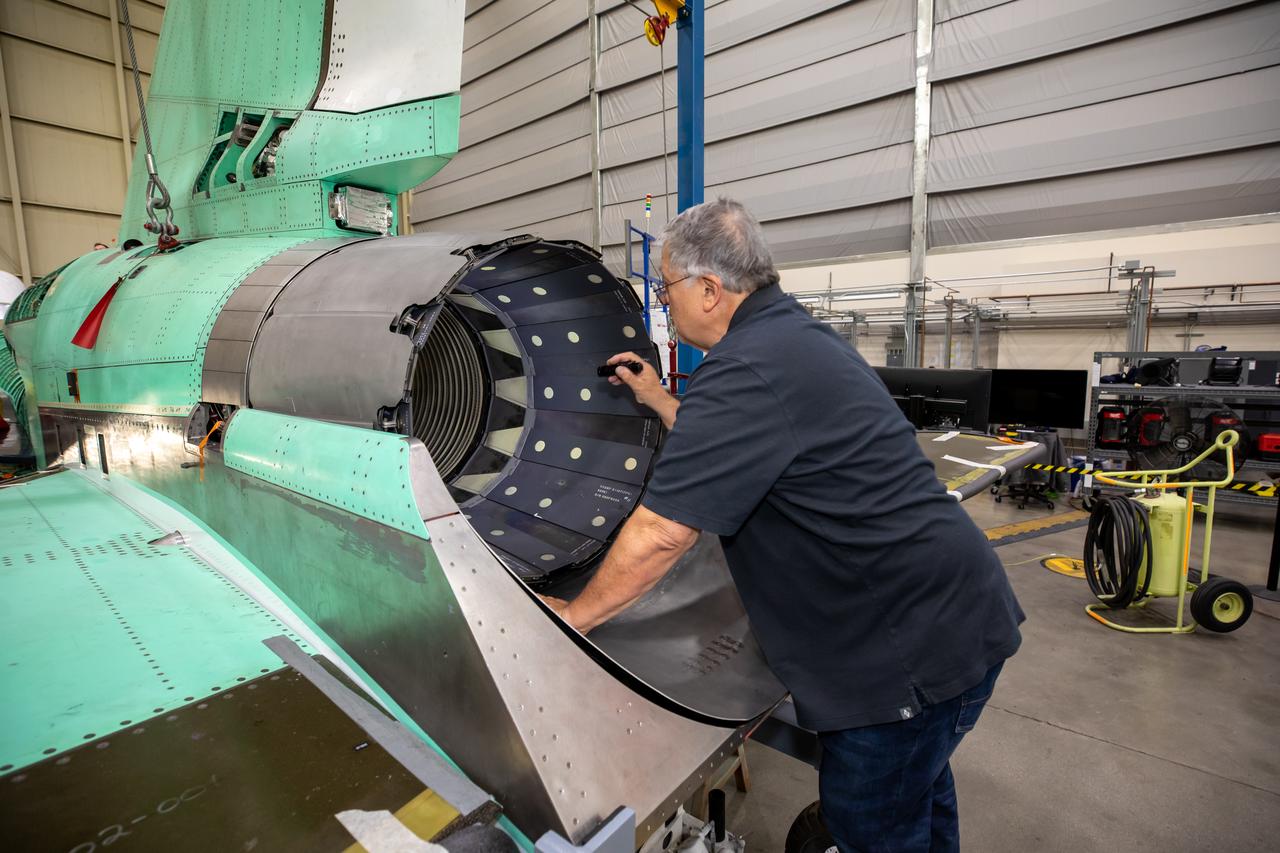
A look at the X-59’s engine nozzle, where the thrust -the force that moves the aircraft- will exit.  Once complete, the X-59 is designed to fly supersonic while reducing the loud sonic boom. The Quesst mission could help change the rules for commercial supersonic air travel over land.
Engine Nozzle of NASA’s X-59
 Here is an image of the X-59’s 13-foot General Electric F414 engine as the team prepares for a fit check. Making sure components, like the aircraft’s hydraulic lines, which help control functions like brakes or landing gear, and wiring of the engine, fit properly is essential to the aircraft’s safety.  Once complete, the X-59 aircraft will demonstrate the ability to fly supersonic while reducing the loud sonic boom to a quiet sonic thump and help enable commercial supersonic air travel over land.
Engine Test Fit Install
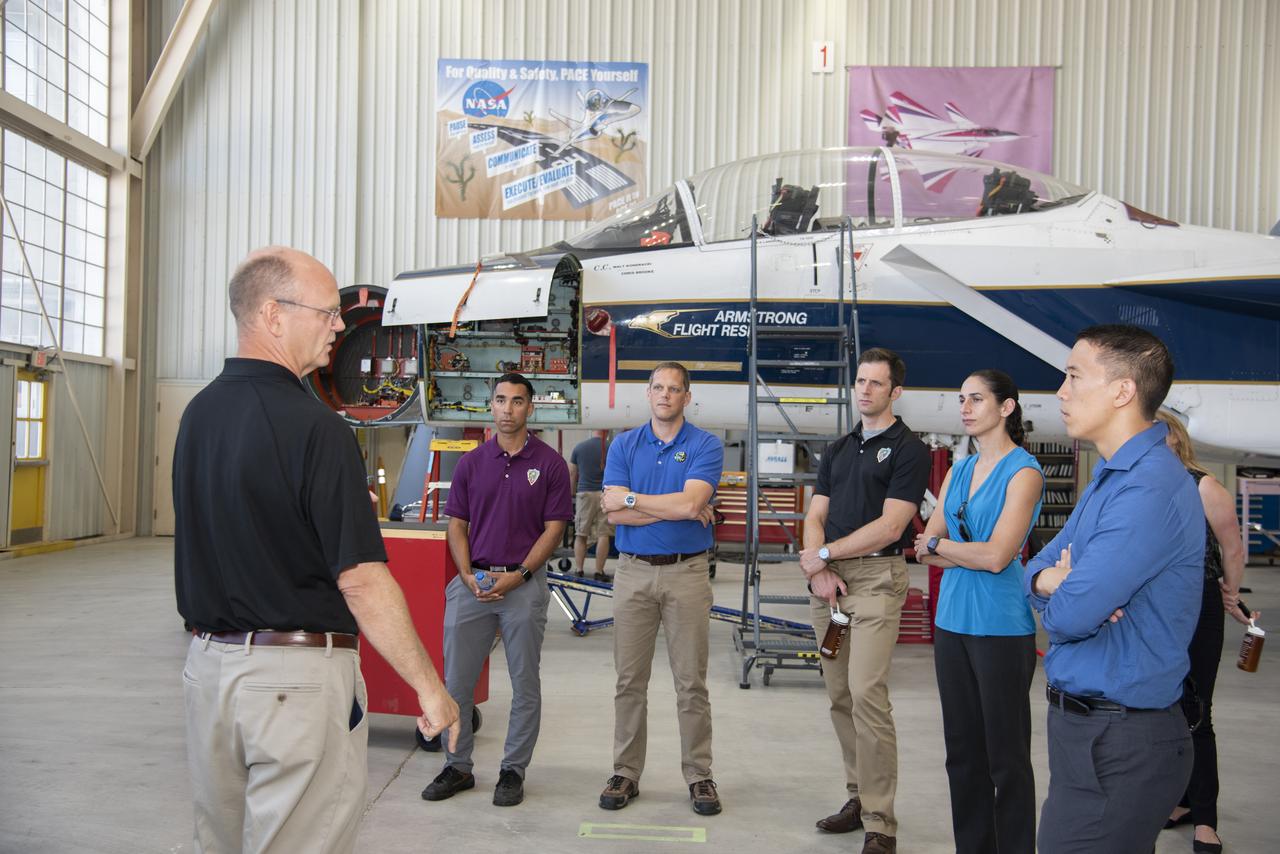
NASA’s 2017 astronaut candidates (L to R) Raja Chari, Bob Hines, Joshua Kutryk, Jasmin Moghbeli, Jonny Kim, and Jessica Watkins toured aircraft hangar at Armstrong Flight Research Center, in Southern California. On the left, NASA’s, X-59 pilot, briefs them on use of F-15 for studying sonic booms during the development of the low-boom X-59 aircraft that is planned to fly supersonically over land.  Low-level supersonic flight is not allowed at this time because of the loud noise levels generated when flying beyond the speed of sound.
Astronauts Tour Aircraft Hangar at Armstrong Flight Research Center
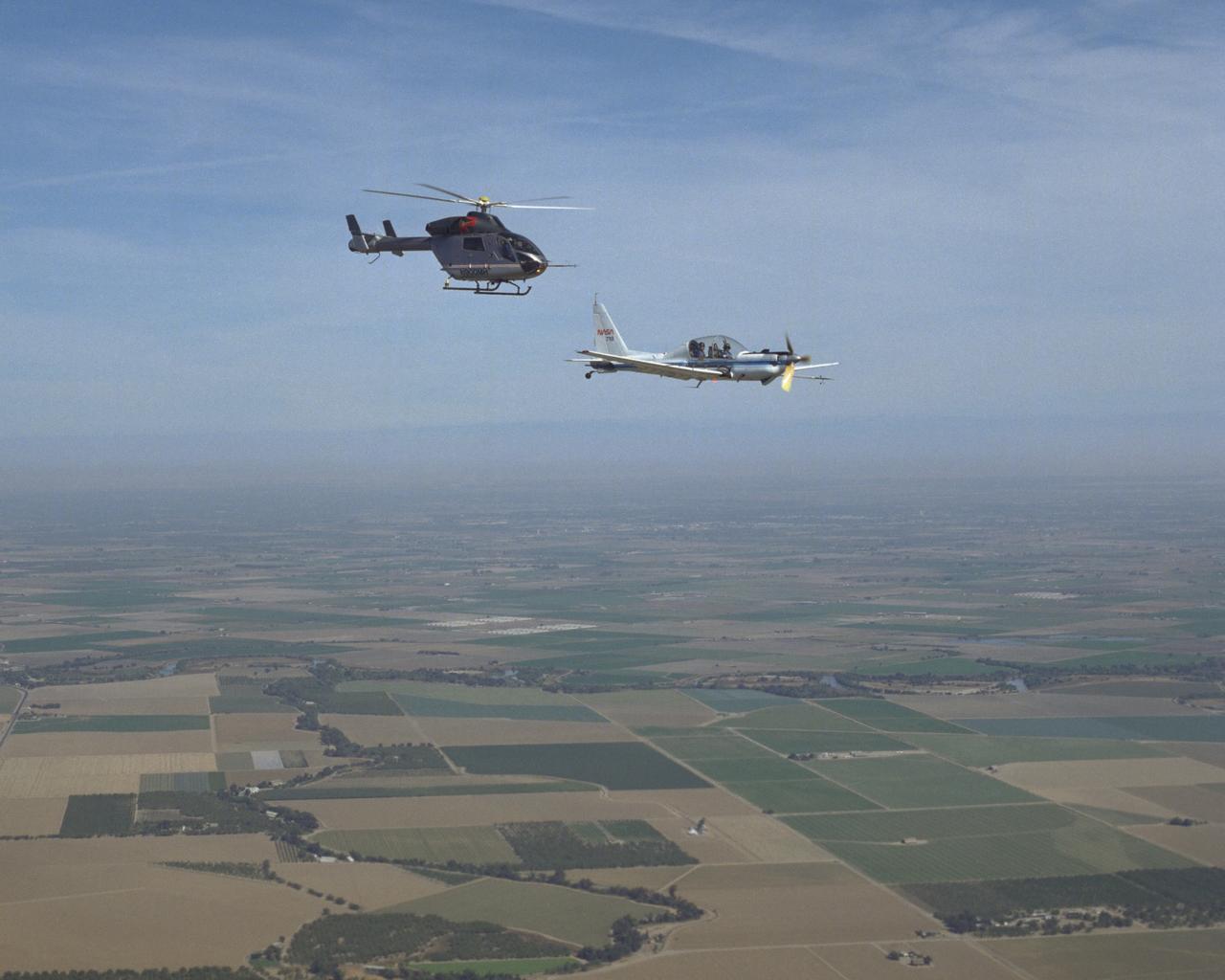
YO-3A (NASA-718) & MD-900 AIR TO AIR OVER MODESTO/CROWS LANDING.
ARC-1996-AC96-0354-5
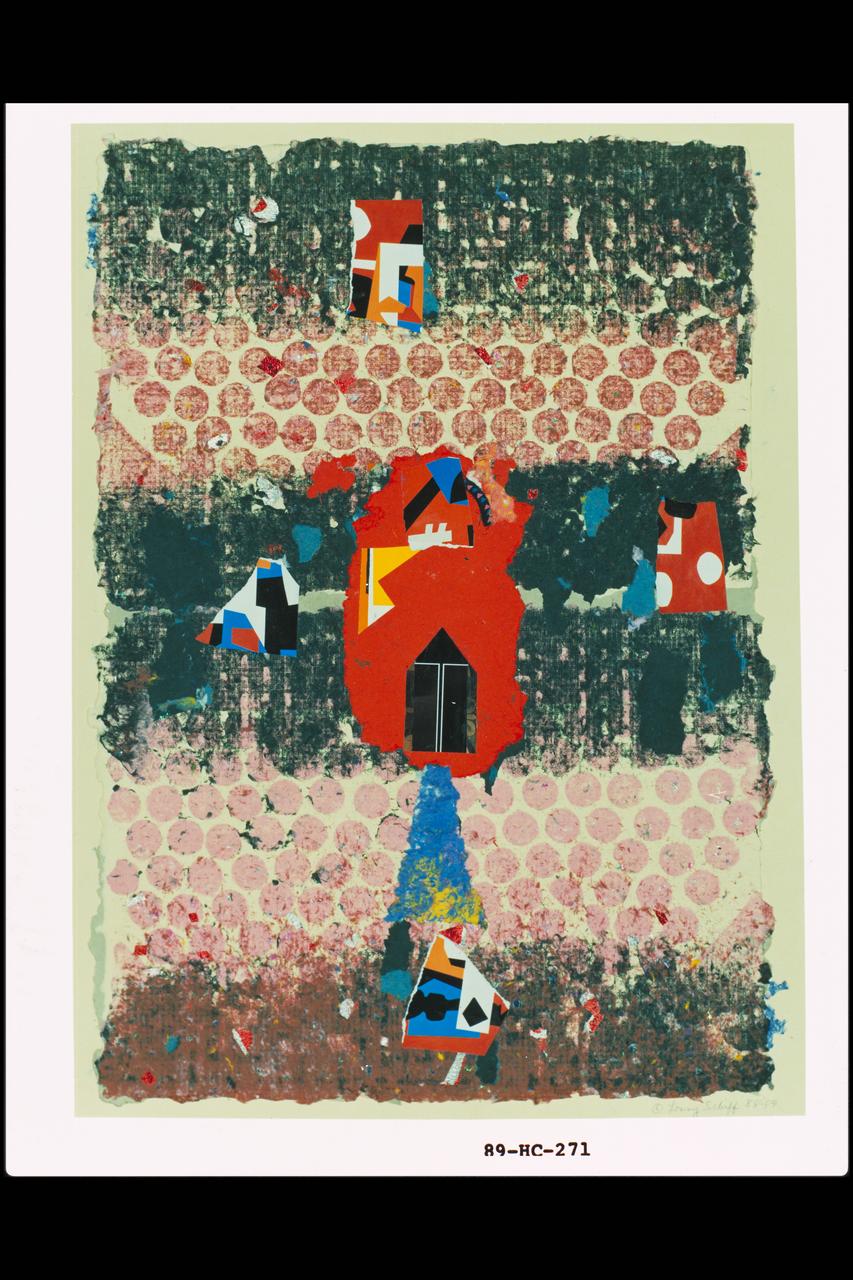
A paper collage interpreting the craters and ridged planes of Mars and the Viking 2 as it passed over Mar's surface on 2 November 1982, prior to landing.
ARC-2000-89-HC-271
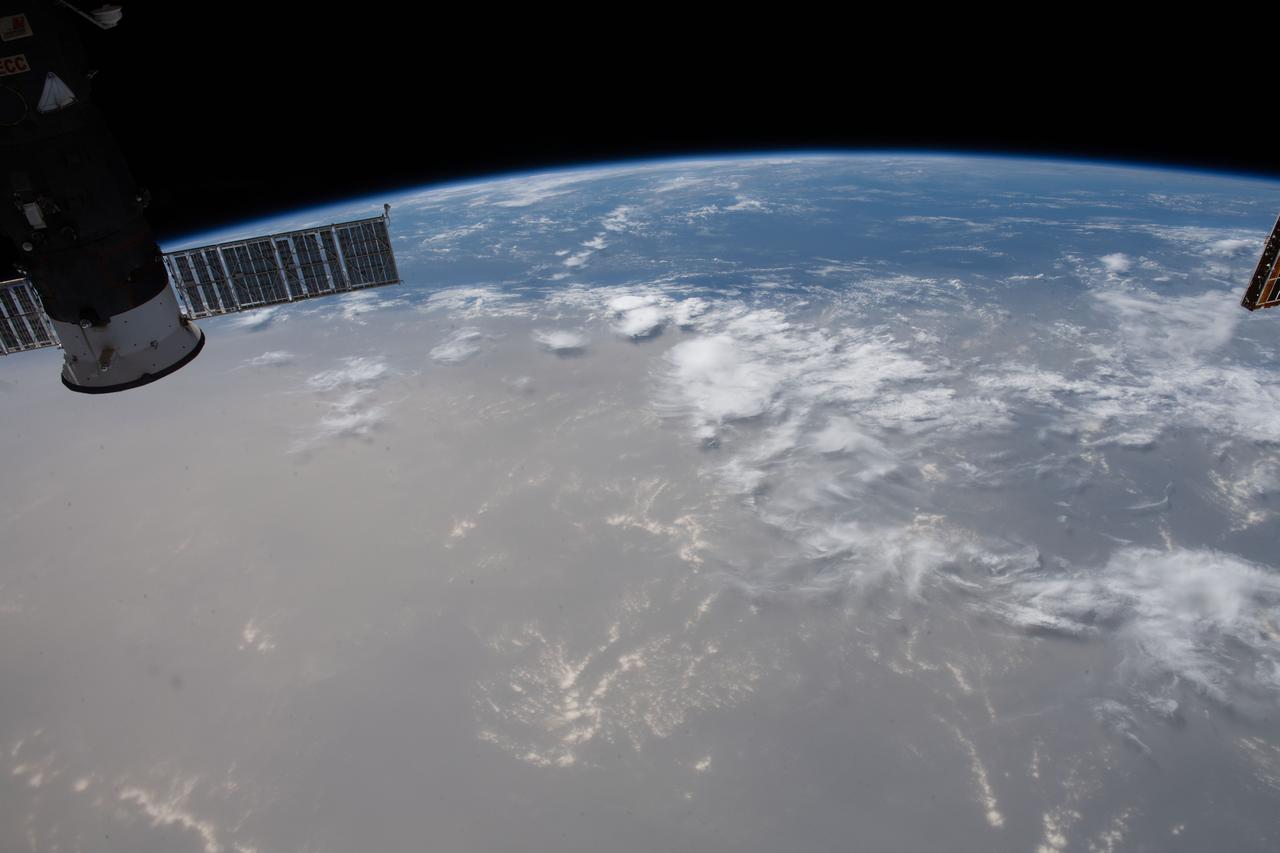
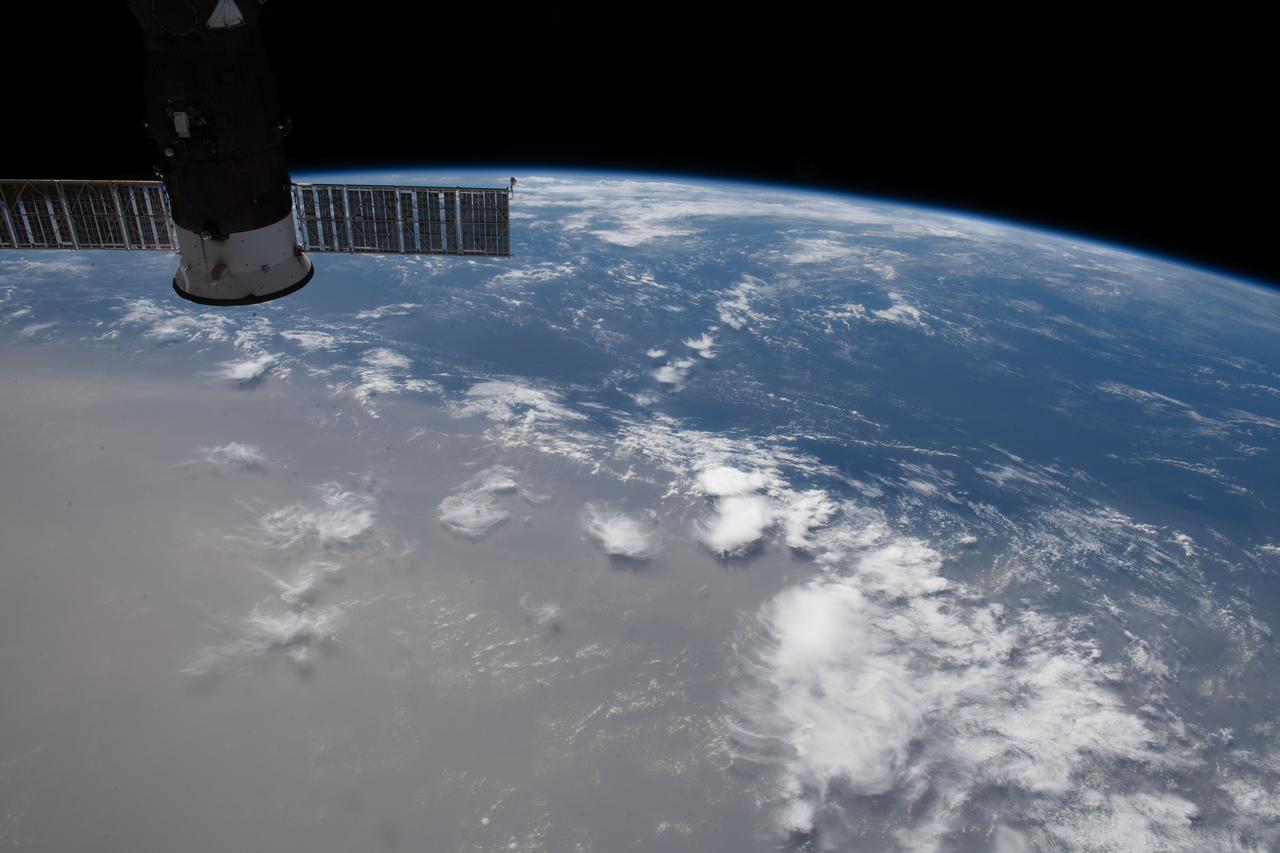
iss063e032020 (June 21, 2020) --- What looks like land is actually a Saharan dust cloud that has blown over the Atlantic Ocean and is nearing the Caribbean Sea.
iss063e032020
iss063e032007 (June 21, 2020) --- What looks like land is actually a Saharan dust cloud that has blown over the Atlantic Ocean and is nearing the Caribbean Sea.
iss063e032007
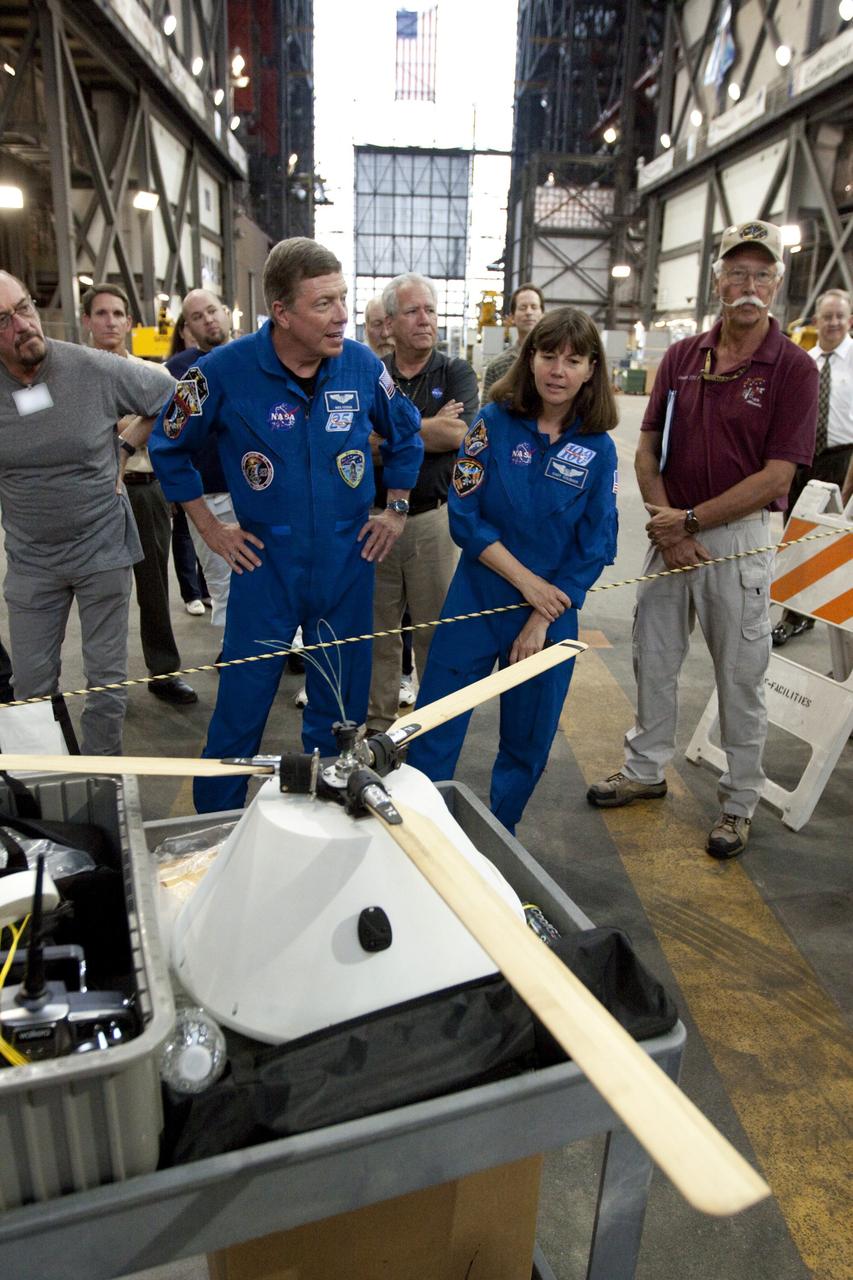
CAPE CANAVERAL, Fla. - Astronauts Mike Fossum and Cady Coleman look over a model capsule fit with rotor blades ahead of tests inside the Vehicle Assembly Building at NASA's Kennedy Space Center in Florida. The design would give a capsule the stability and control of a helicopter, but would not be powered. Instead, the wind passing over the rotors as the capsule descends would make the blades turn, a process called auto-rotation. The intent is to give real spacecraft a soft landing with enough control that they could touch down anywhere in the world, whether it be a runway or parking lot. In other words, wherever a helicopter could land, a spacecraft could land, too. Photo credit: NASA/Kim Shiflett
KSC-2012-5576
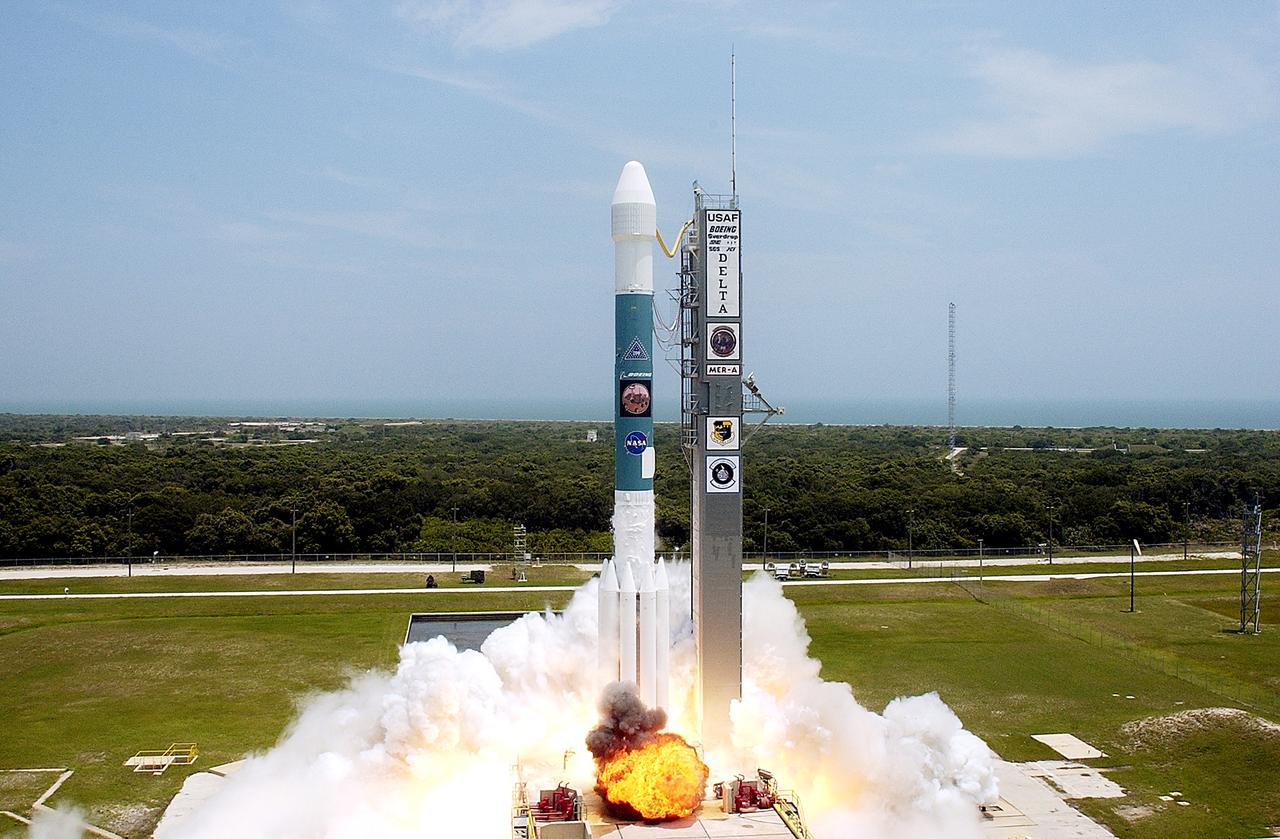
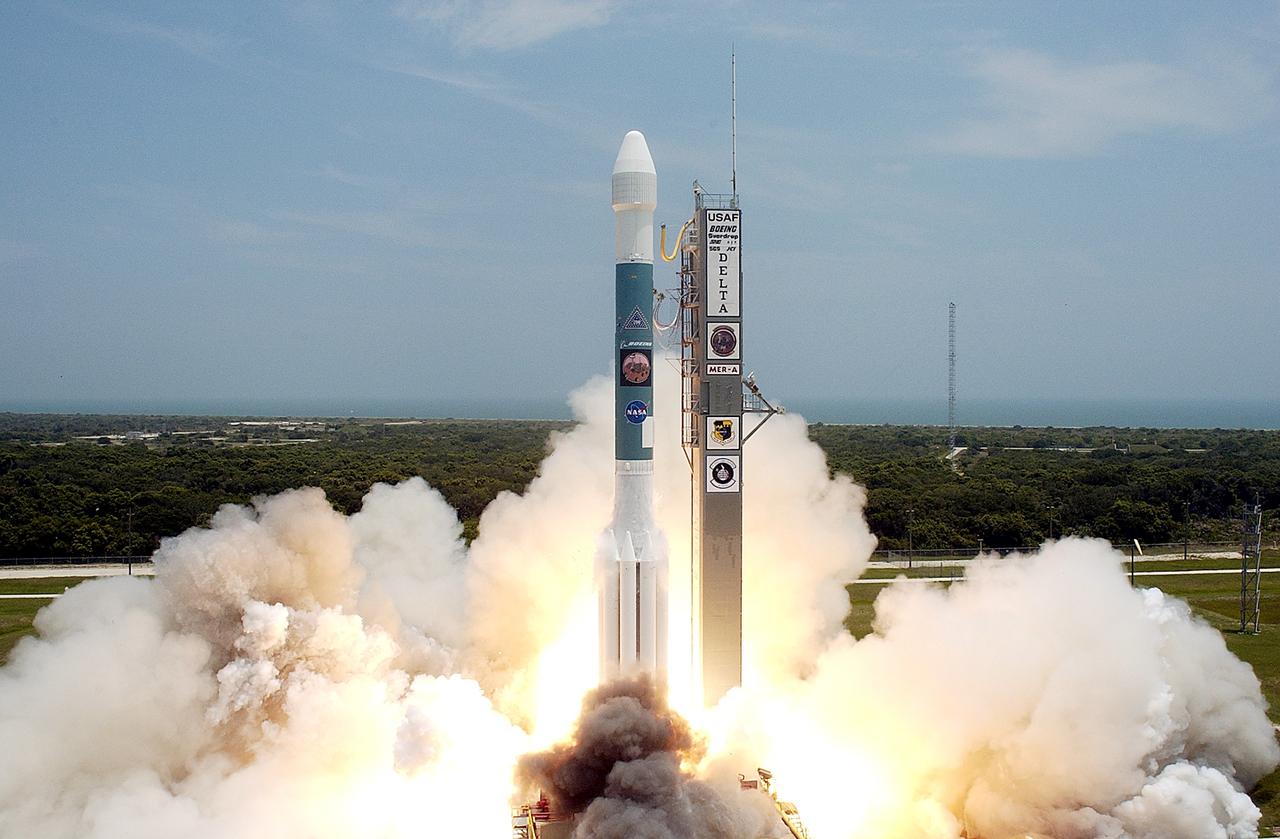
KENNEDY SPACE CENTER, FLA. -  With a glimpse of the Atlantic Ocean over the horizon, the Delta II rocket with its Mars Exploration Rover (MER-A) payload leaps off the launch pad into the blue sky to begin its journey to Mars.  Liftoff occurred on time at 1:58 p.m. EDT from Launch Complex 17-A, Cape Canaveral Air Force Station.  MER-A, known as "Spirit," is the first of two rovers being launched to Mars. When the two rovers arrive at the red planet in 2004, they will bounce to airbag-cushioned landings at sites offering a balance of favorable conditions for safe landings and interesting science. The rovers see sharper images, can explore farther and examine rocks better than anything that has ever landed on Mars. The designated site for the MER-A mission is Gusev Crater, which appears to have been a crater lake. The second rover, MER-B, is scheduled to launch June 25.
KENNEDY SPACE CENTER, FLA. - With a glimpse of the Atlantic Ocean over the horizon, the Delta II rocket with its Mars Exploration Rover (MER-A) payload leaps off the launch pad into the blue sky to begin its journey to Mars. Liftoff occurred on time at 1:58 p.m. EDT from Launch Complex 17-A, Cape Canaveral Air Force Station. MER-A, known as "Spirit," is the first of two rovers being launched to Mars. When the two rovers arrive at the red planet in 2004, they will bounce to airbag-cushioned landings at sites offering a balance of favorable conditions for safe landings and interesting science. The rovers see sharper images, can explore farther and examine rocks better than anything that has ever landed on Mars. The designated site for the MER-A mission is Gusev Crater, which appears to have been a crater lake. The second rover, MER-B, is scheduled to launch June 25.
KENNEDY SPACE CENTER, FLA. -   With a glimpse of the Atlantic Ocean over the horizon, the Delta II rocket with its Mars Exploration Rover (MER-A) payload leaps off the launch pad into the blue sky to begin its journey to Mars.  Liftoff occurred on time at 1:58 p.m. EDT from Launch Complex 17-A, Cape Canaveral Air Force Station.  MER-A, known as "Spirit," is the first of two rovers being launched to Mars. When the two rovers arrive at the red planet in 2004, they will bounce to airbag-cushioned landings at sites offering a balance of favorable conditions for safe landings and interesting science. The rovers see sharper images, can explore farther and examine rocks better than anything that has ever landed on Mars. The designated site for the MER-A mission is Gusev Crater, which appears to have been a crater lake. The second rover, MER-B, is scheduled to launch June 25
KENNEDY SPACE CENTER, FLA. - With a glimpse of the Atlantic Ocean over the horizon, the Delta II rocket with its Mars Exploration Rover (MER-A) payload leaps off the launch pad into the blue sky to begin its journey to Mars. Liftoff occurred on time at 1:58 p.m. EDT from Launch Complex 17-A, Cape Canaveral Air Force Station. MER-A, known as "Spirit," is the first of two rovers being launched to Mars. When the two rovers arrive at the red planet in 2004, they will bounce to airbag-cushioned landings at sites offering a balance of favorable conditions for safe landings and interesting science. The rovers see sharper images, can explore farther and examine rocks better than anything that has ever landed on Mars. The designated site for the MER-A mission is Gusev Crater, which appears to have been a crater lake. The second rover, MER-B, is scheduled to launch June 25
STS058-107-083 (18 Oct.-1 Nov. 1993) --- A near-nadir view of the mouth of the Amazon River, that shows all signs of being a relatively healthy system, breathing and exhaling. The well-developed cumulus field over the forested areas on both the north and south sides of the river (the view is slightly to the west) shows that good evapotranspiration is underway. The change in the cloud field from the moisture influx from the Atlantic (the cloud fields over the ocean are parallel to the wind direction) to perpendicular cloud fields over the land surface are normal. This change in direction is caused by the increased surface roughness over the land area. The plume of the river, although turbid, is no more or less turbid than it has been reported since the Portuguese first rounded Brasil's coast at the end of the 15th Century.
Mouth of the Amazon River as seen from STS-58
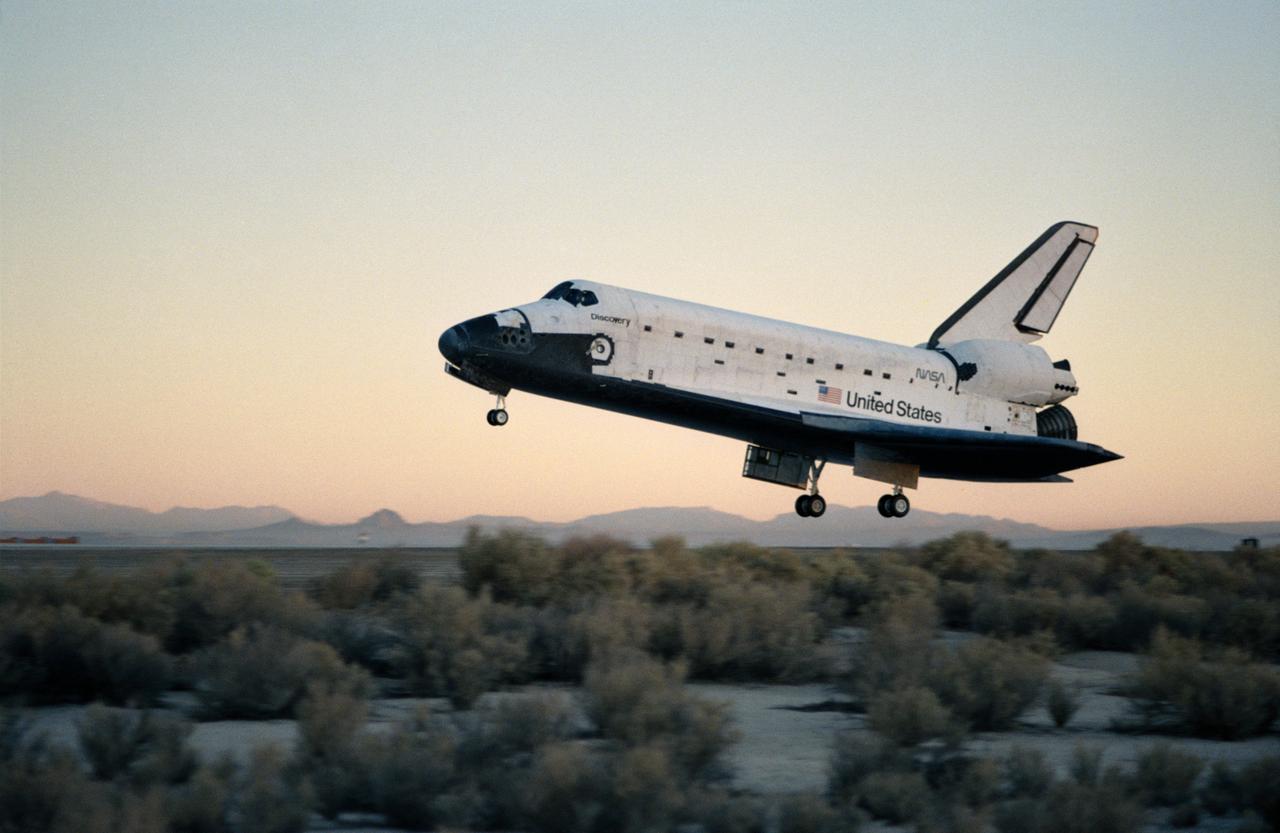
STS-41 Discovery, Orbiter Vehicle (OV) 103, with nose landing gear (NLG) and main landing gear (MLG) deployed, glides over concrete runway 22 at Edwards Air Force Base (EAFB), California, prior to touchdown.
STS-41 Discovery, OV-103, glides over concrete runway 22 at EAFB, California
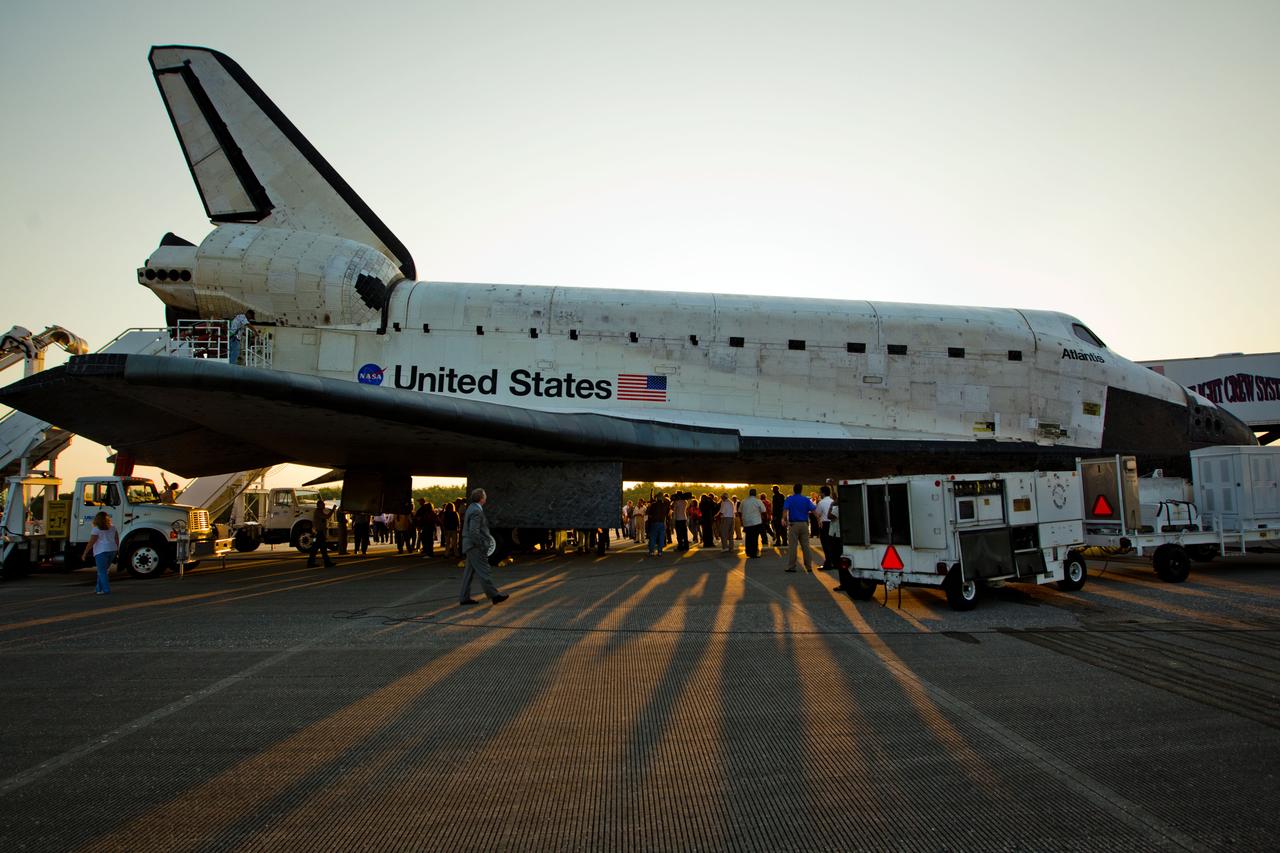
JSC2011-E-067975 (21 July 2011) --- The sun rises over the space shuttle Atlantis after landing July 21 at the Kennedy Space Center in Florida. The landing completed STS-135, the final mission of the NASA Space Shuttle Program. Photo credit: NASA Photo/Houston Chronicle, Smiley N. Pool
STS_135_Landing
STS-41 Discovery, Orbiter Vehicle (OV) 103, with nose landing gear (NLG) and main landing gear (MLG) deployed, glides over concrete runway 22 at Edwards Air Force Base (EAFB), California, prior to touchdown.
STS-41 Discovery, OV-103, glides over concrete runway 22 at EAFB, California
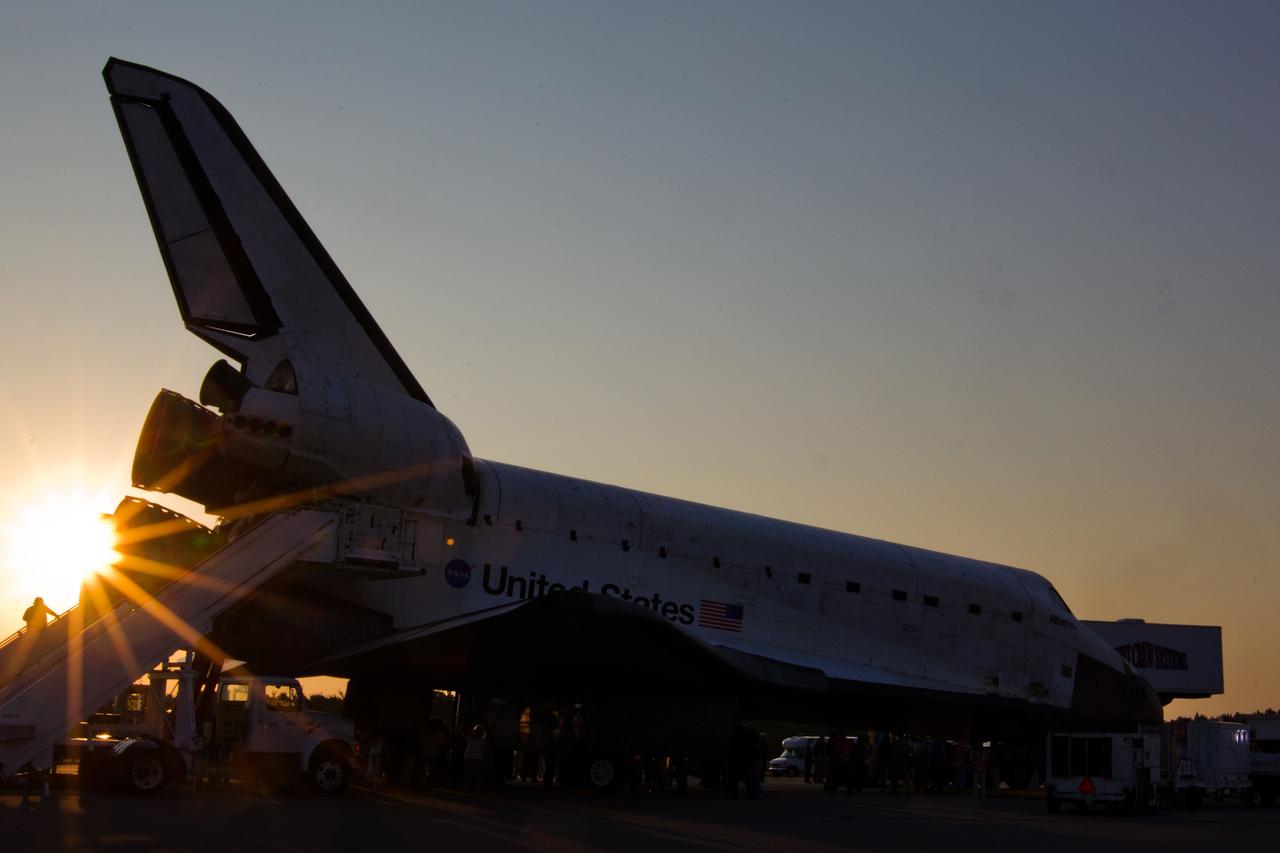
JSC2011-E-067976 (21 July 2011) --- The sun rises over the space shuttle Atlantis after landing July 21 at the Kennedy Space Center in Florida. The landing completed STS-135, the final mission of the NASA Space Shuttle Program. Photo credit: NASA Photo/Houston Chronicle, Smiley N. Pool
STS_135_Landing
KENNEDY SPACE CENTER, FLA. --  Low clouds blur the top of the Vehicle Assembly Building as they hang over the Shuttle Landing Facility.  The low cloud cover and other unfavorable weather conditions resulted in the wave off of two landing opportunities for Endeavour, returning from mission STS-111
KSC-02pd1022
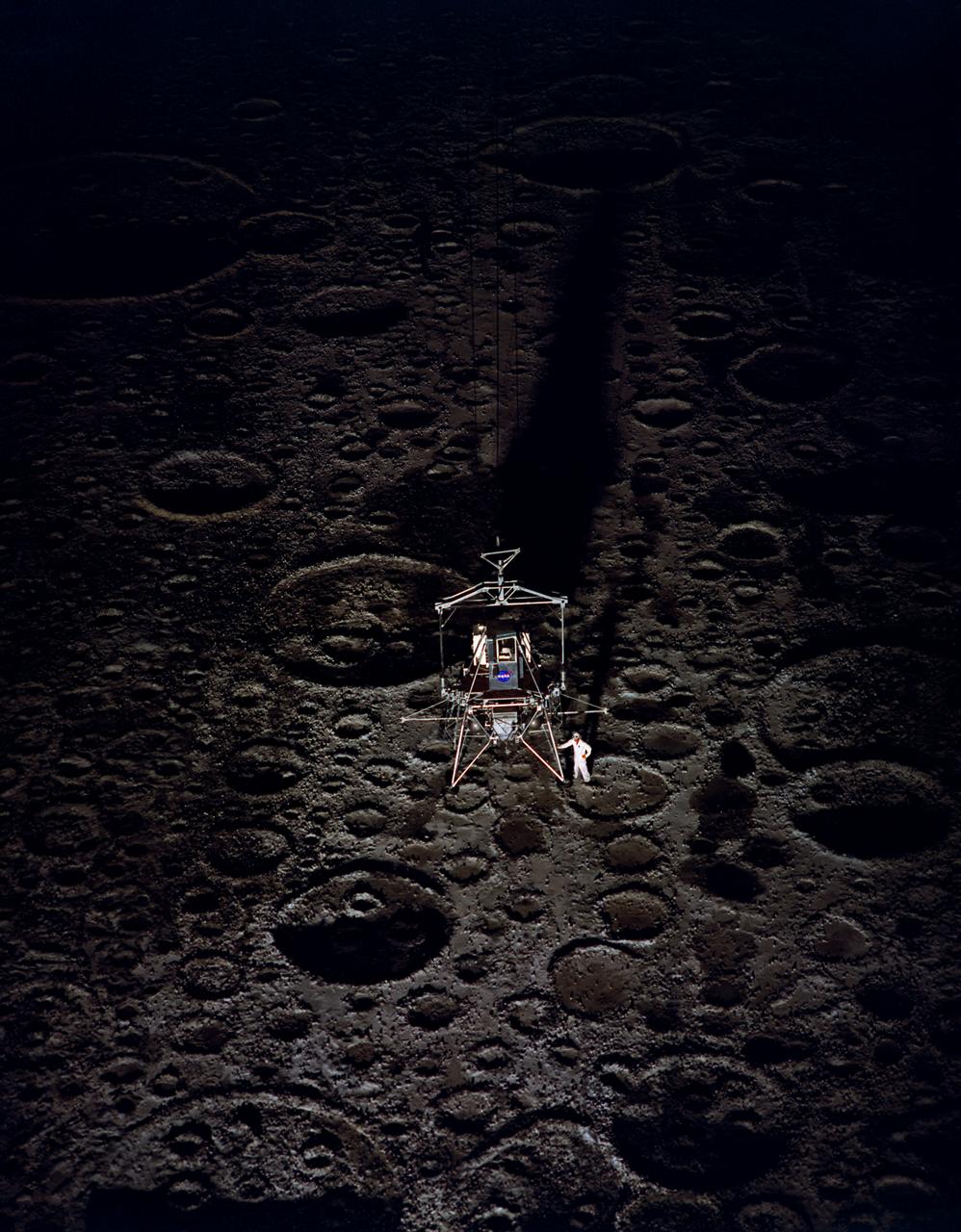
Lunar Landing Module photographed at night at the Lunar Landing Research Facility. Gantry facility 1297.  Upright cockpit design lander over  moonscape  pavement at LLRF. 69-4872 was published in Winds of Change, 75th Anniversary Publication of NASA, P.88, by James Schultz.
Lunar Landing Research Facility and Model at Night
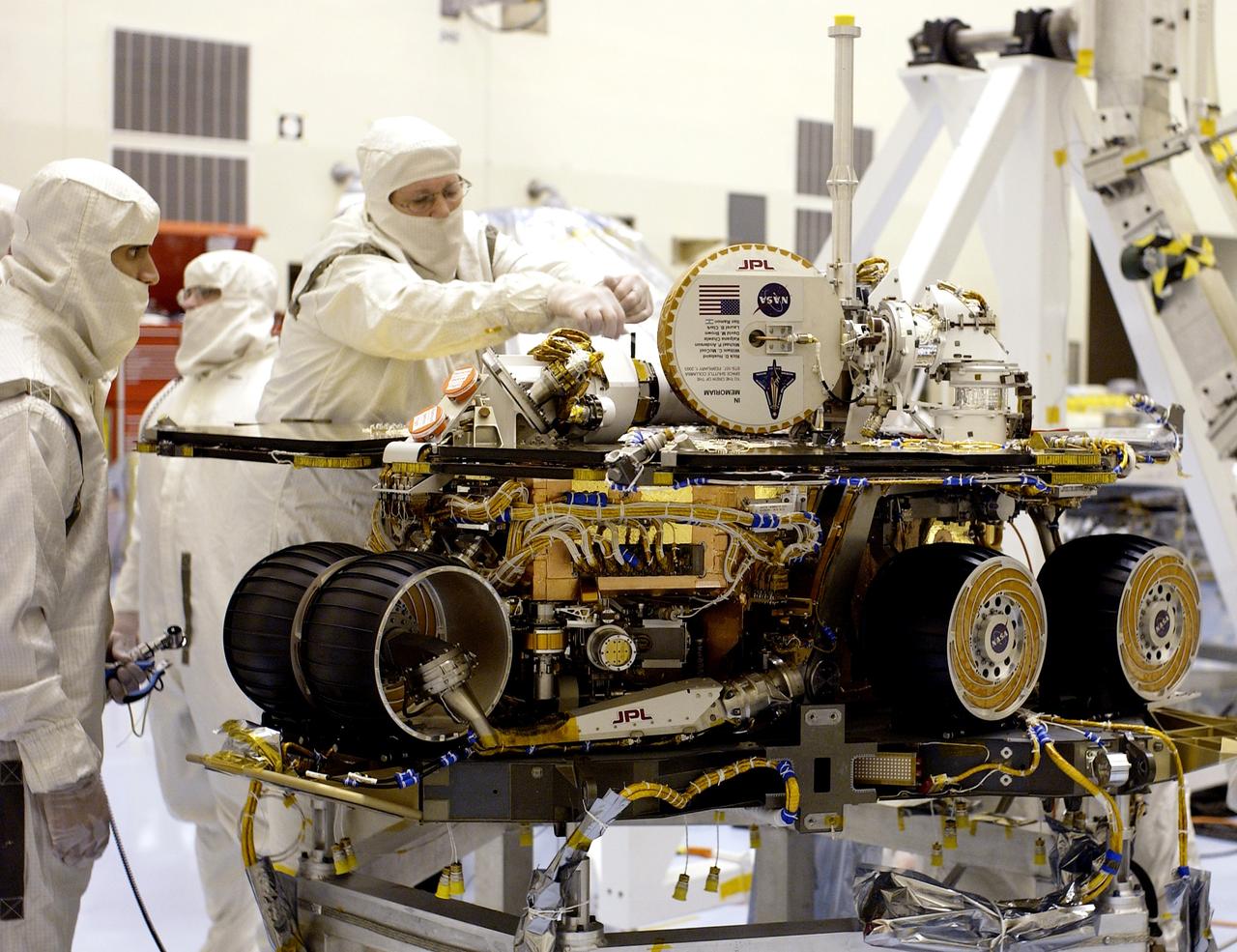
KENNEDY SPACE CENTER, FLA. -- This plaque commemorating the STS-107 Space Shuttle Columbia crew now looks over the Mars landscape after the successful landing and deployment of the Mars Exploration Rover “Spirit” Jan. 4 onto the red planet.  The plaque, mounted on the high-gain antenna, is shown while the rover underwent final checkout March 28, 2003, in the Payload Hazardous Servicing Facility at KSC.
KENNEDY SPACE CENTER, FLA. -- This plaque commemorating the STS-107 Space Shuttle Columbia crew now looks over the Mars landscape after the successful landing and deployment of the Mars Exploration Rover “Spirit” Jan. 4 onto the red planet. The plaque, mounted on the high-gain antenna, is shown while the rover underwent final checkout March 28, 2003, in the Payload Hazardous Servicing Facility at KSC.
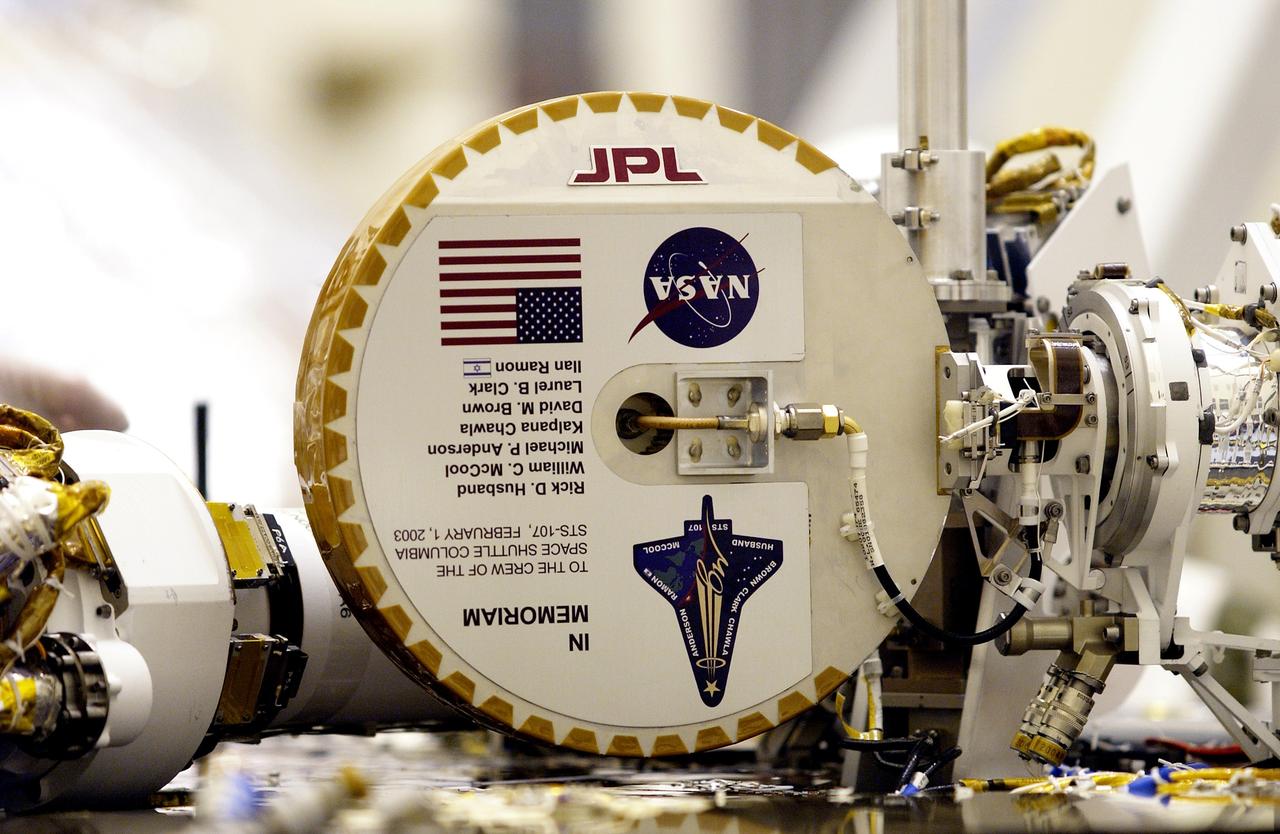
KENNEDY SPACE CENTER, FLA. --Shown upside down to read the names, this plaque commemorating the STS-107 Space Shuttle Columbia crew now looks over the Mars landscape after the successful landing and deployment of the Mars Exploration Rover “Spirit” Jan. 4 onto the red planet.  The plaque, mounted on the high-gain antenna, is shown while the rover underwent final checkout March 28, 2003, in the Payload Hazardous Servicing Facility at KSC.
KENNEDY SPACE CENTER, FLA. --Shown upside down to read the names, this plaque commemorating the STS-107 Space Shuttle Columbia crew now looks over the Mars landscape after the successful landing and deployment of the Mars Exploration Rover “Spirit” Jan. 4 onto the red planet. The plaque, mounted on the high-gain antenna, is shown while the rover underwent final checkout March 28, 2003, in the Payload Hazardous Servicing Facility at KSC.
KENNEDY SPACE CENTER, FLA. -  STS-79 Commander William F. Readdy arrives at KSC's Shuttle Landing Facility with five fellow astronauts, ready to participate in the Terminal Countdown Demonstration Test (TCDT).  The TCDT is a dress rehearsal for launch for the flight crew and launch team.  Over the next several days, the astronauts will take part in training exercises at the launch pad that will culminate in a simulated launch countdown.  The Space Shuttle Atlantis is being prepared for liftoff on STS-79 around Sept. 12.
KENNEDY SPACE CENTER, FLA. - STS-79 Commander William F. Readdy arrives at KSC's Shuttle Landing Facility with five fellow astronauts, ready to participate in the Terminal Countdown Demonstration Test (TCDT). The TCDT is a dress rehearsal for launch for the flight crew and launch team. Over the next several days, the astronauts will take part in training exercises at the launch pad that will culminate in a simulated launch countdown. The Space Shuttle Atlantis is being prepared for liftoff on STS-79 around Sept. 12.
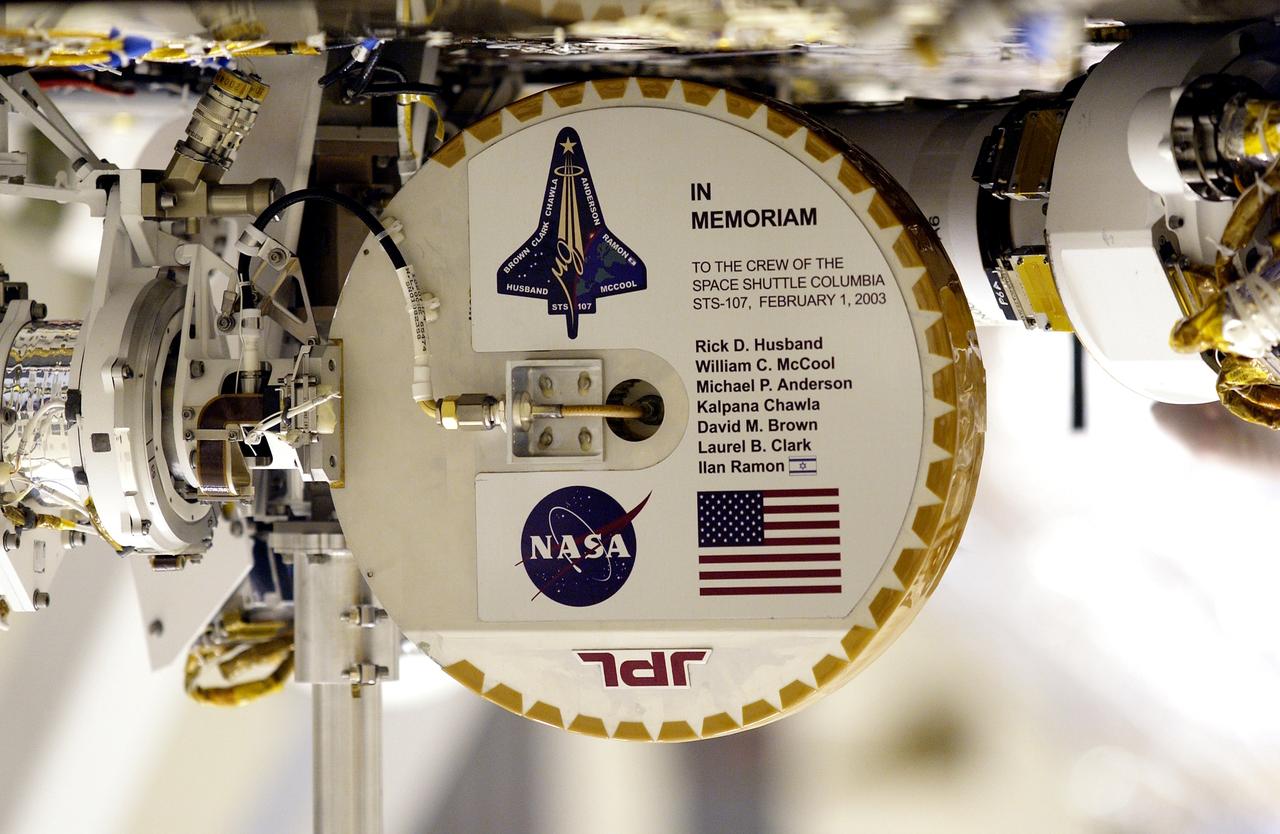
KENNEDY SPACE CENTER, FLA. -- This plaque commemorating the STS-107 Space Shuttle Columbia crew now looks over the Mars landscape after the successful landing and deployment of the Mars Exploration Rover “Spirit” Jan. 4 onto the red planet.  The plaque, mounted on the high-gain antenna, is shown while the rover underwent final checkout March 28, 2003, in the Payload Hazardous Servicing Facility at KSC.
KENNEDY SPACE CENTER, FLA. -- This plaque commemorating the STS-107 Space Shuttle Columbia crew now looks over the Mars landscape after the successful landing and deployment of the Mars Exploration Rover “Spirit” Jan. 4 onto the red planet. The plaque, mounted on the high-gain antenna, is shown while the rover underwent final checkout March 28, 2003, in the Payload Hazardous Servicing Facility at KSC.
Huge sediment loads from the interior of the country flow through the Mouths of the Amazon River, Brazil (0.5S, 50.0W). The river current carries hundreds of tons of sediment through the multiple outlets of the great river over 100 miles from shore before it is carried northward by oceanic currents. The characteristic "fair weather cumulus" pattern of low clouds over the land but not over water may be observed in this scene.
Mouths of the Amazon River, Brazil, South America
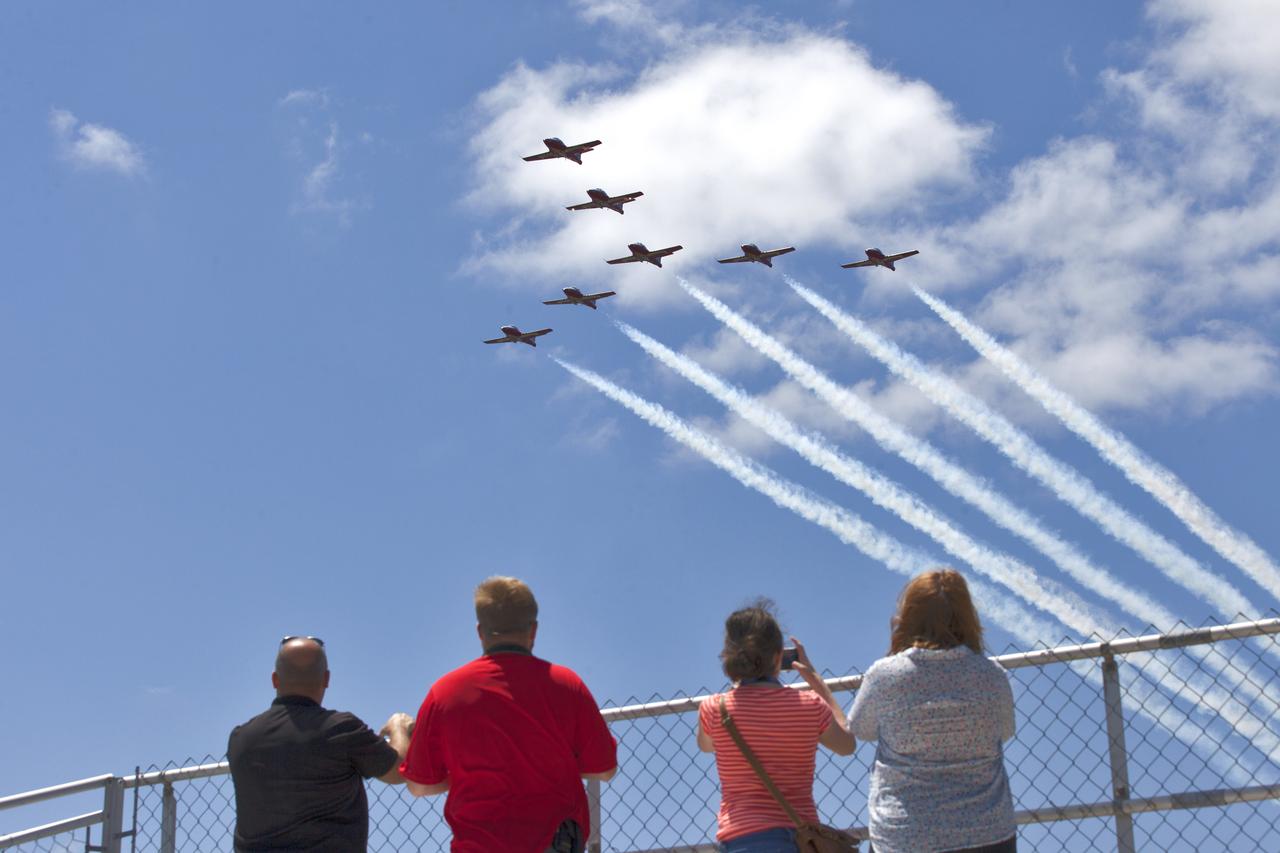
Workers watch as the Canadian Forces Snowbirds fly in formation over the Shuttle Landing Facility at NASA's Kennedy Space Center in Florida, during a practice flight on May 9, 2018, between their scheduled U.S. air shows.
NASA and Canadian Snowbirds Aircrafts
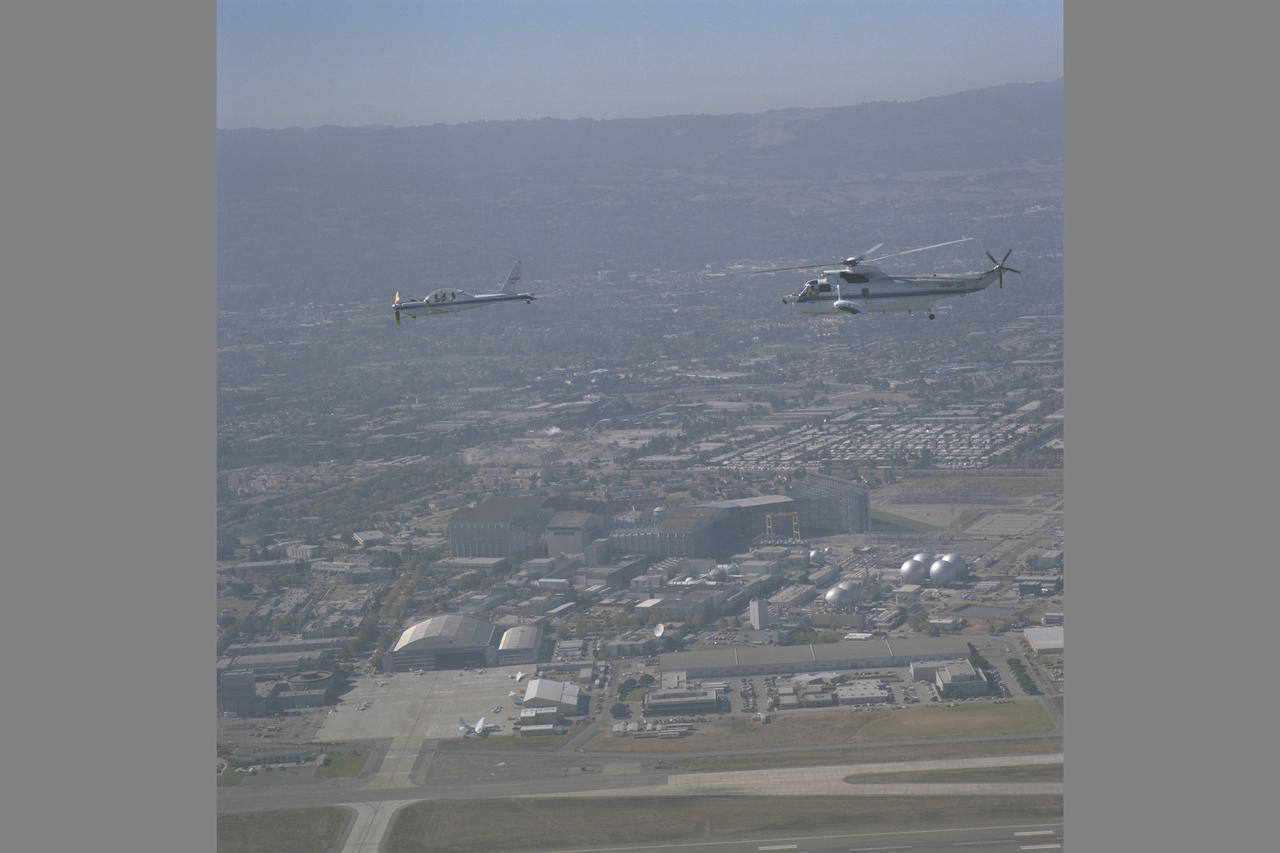
YO-3A (NASA-718) and SH-3G (NASA-735) in flight over Ames on way to Crows Landing during Helicopter Airborne Laser Positioning System flight tests
ARC-1990-AC90-0652-5
The natural color image below, acquired on April 25 by the Advanced Land Imager on NASA’s Earth Observing-1 satellite, shows Calbuco’s plume rising above the cloud deck over Chile.
Calbuco’s plume over Chile
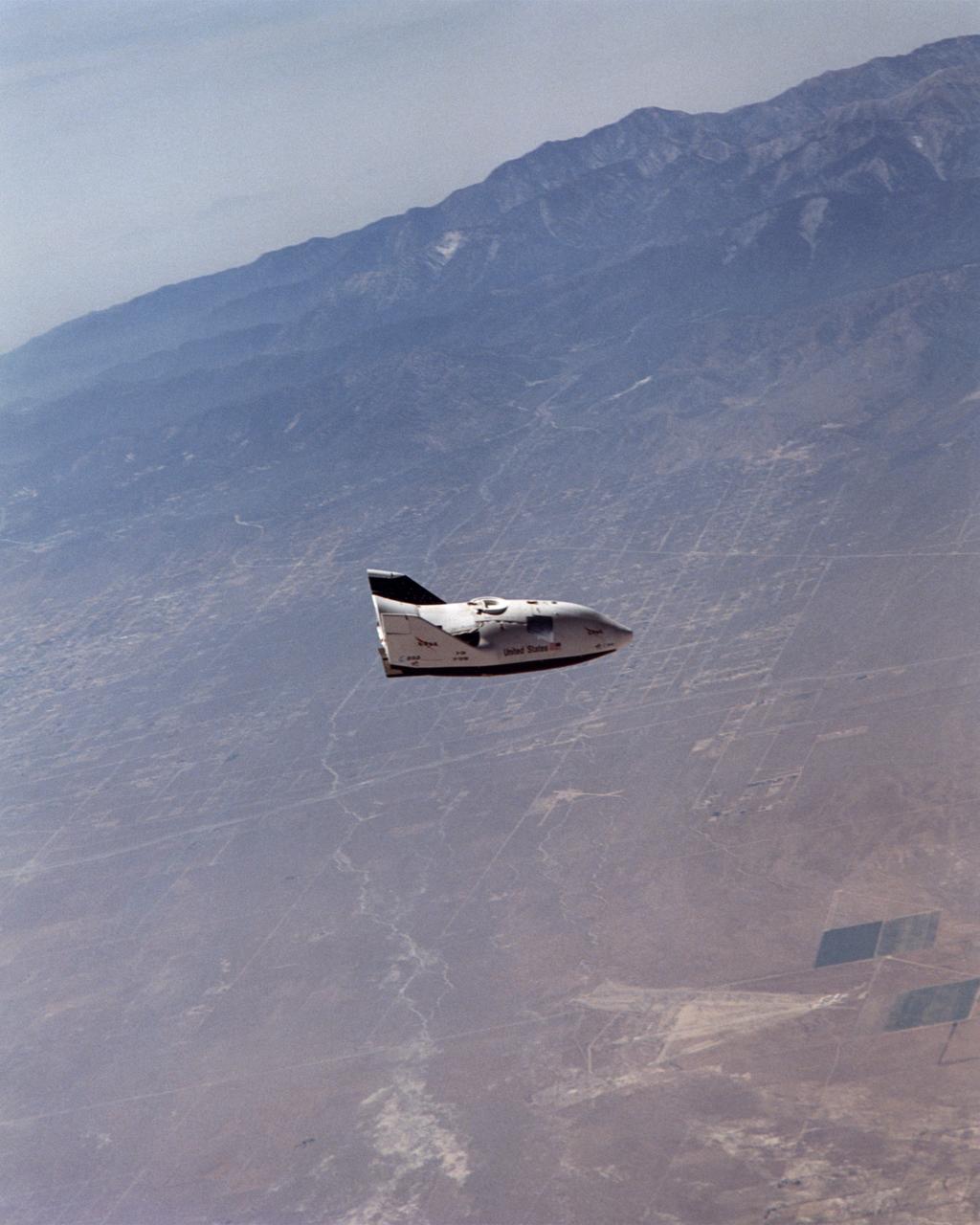
NASA's X-38 glided high over California desert test ranges as it descended from 37,500 feet to land on Rogers Dry Lake for the seventh free flight of the program July 10, 2001.
X-38 over the Mojave Desert, July 10, 2001
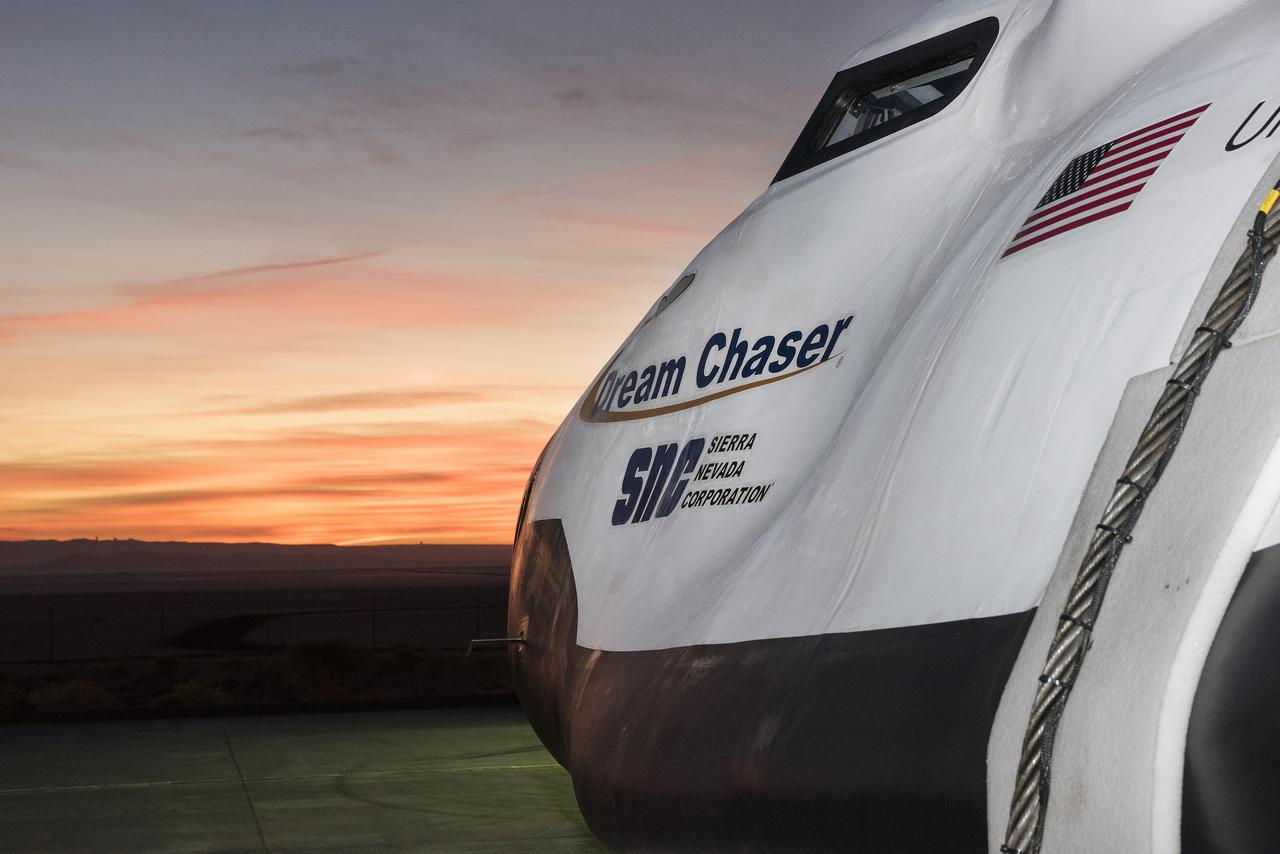
Sierra Nevada Corp’s Dream Chaser facing sunrise over Rogers Dry Lake by NASA Armstrong Flight Research Center in California where it was being prepared for a successful approach and landing test Nov. 11, 2017.
Dream Chaser ALT-2 Free Flight
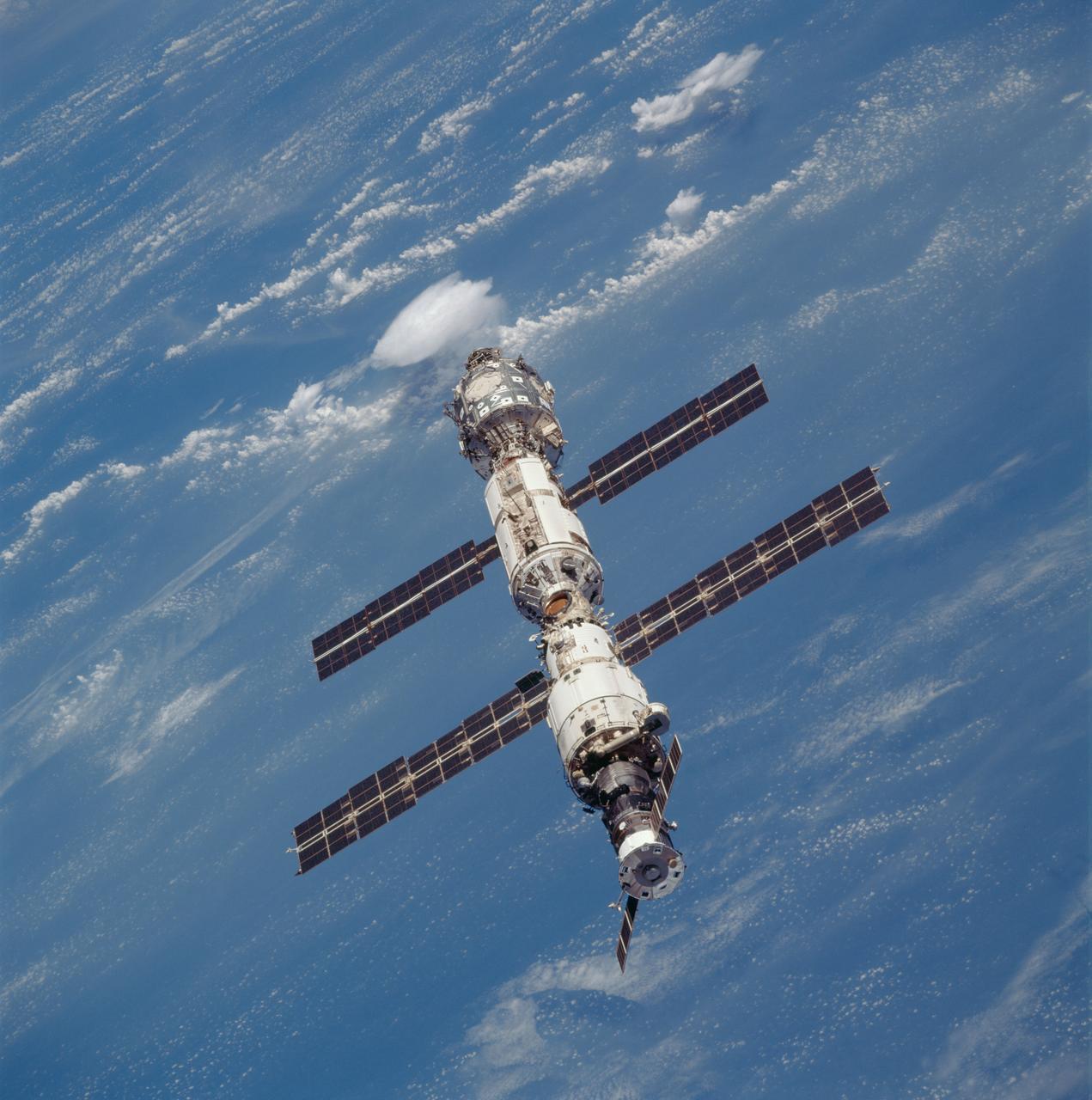
STS106-709-091 (8-20 September 2000) --- The International Space Station as photographed against clouds over a land mass on Earth during a fly-around by the Space Shuttle Atlantis.
Views of the ISS taken from Atlantis during STS-106
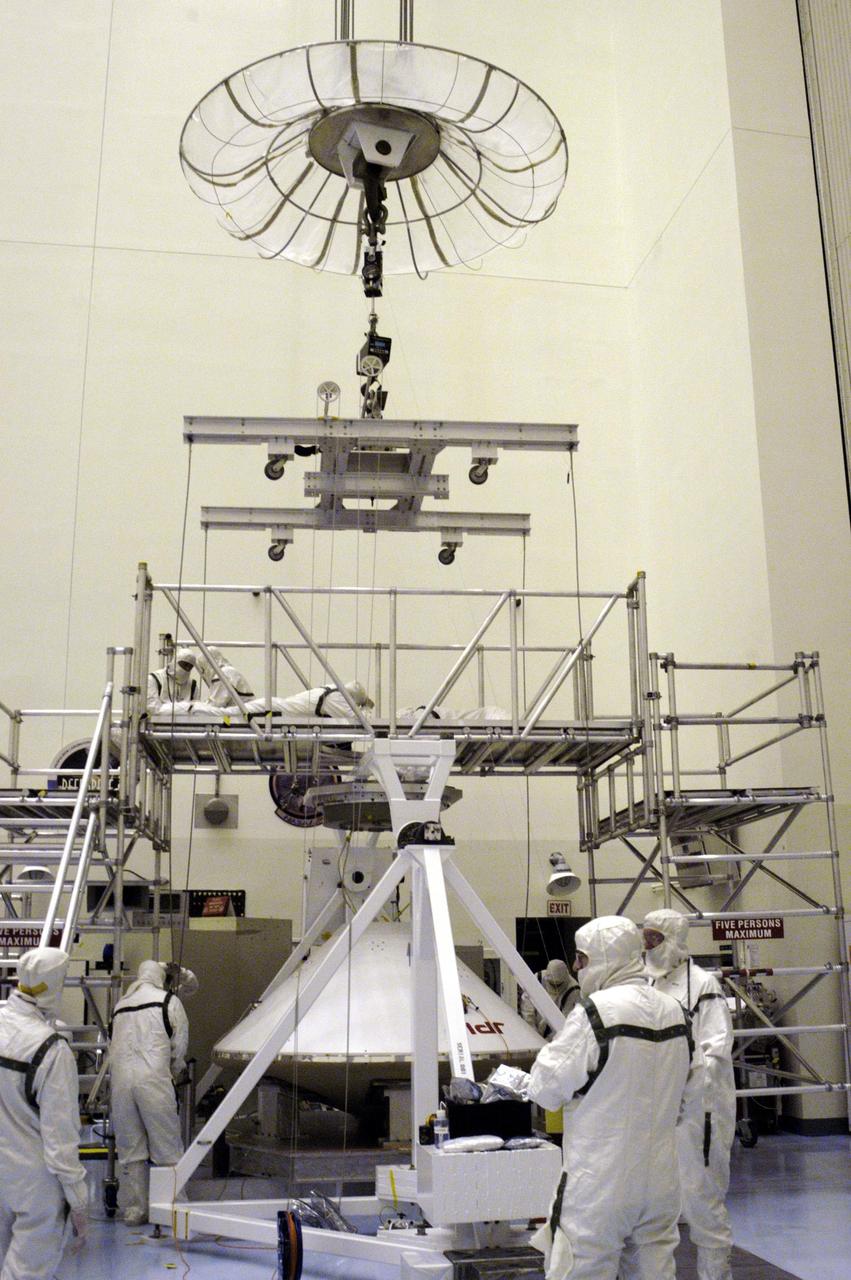
KENNEDY SPACE CENTER, FLA. - Workers in the Payload Hazardous Servicing Facility position an overhead crane over the aeroshell enclosing Mars Exploration Rover 2 and lander.  The descent and landing vehicle will be moved to a rotation table for a spin stabilization test.  There are two identical rovers that will land at different regions of Mars and are designed to cover roughly 110 yards each Martian day over various terrain. Each rover will carry five scientific instruments that will allow it to search for evidence of liquid water that may have been present in the planet's past.  The first rover, MER-A, is scheduled to launch June 5 from Cape Canaveral Air Force Station.  The second is scheduled for launch June 25.
KSC-03pd1365
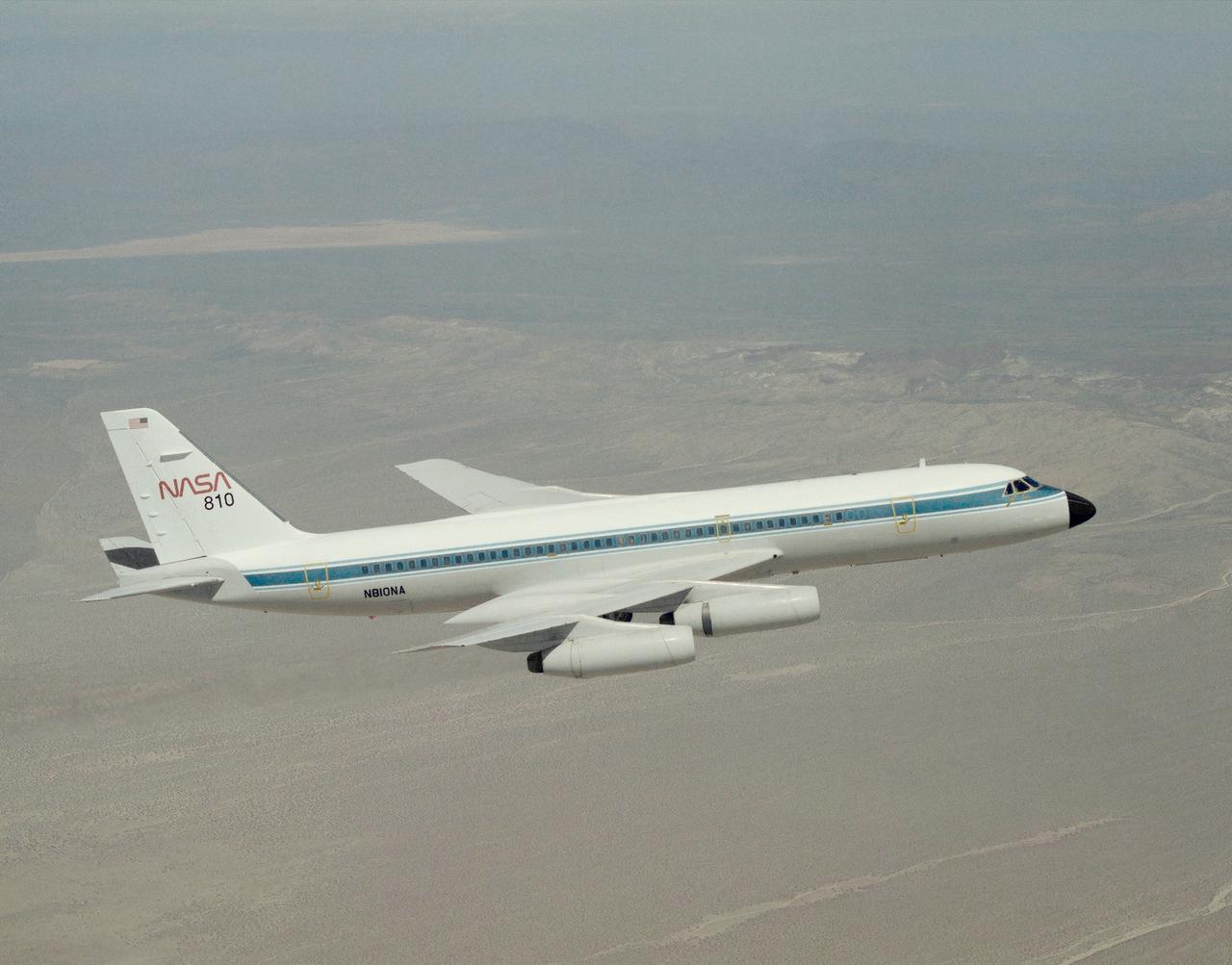
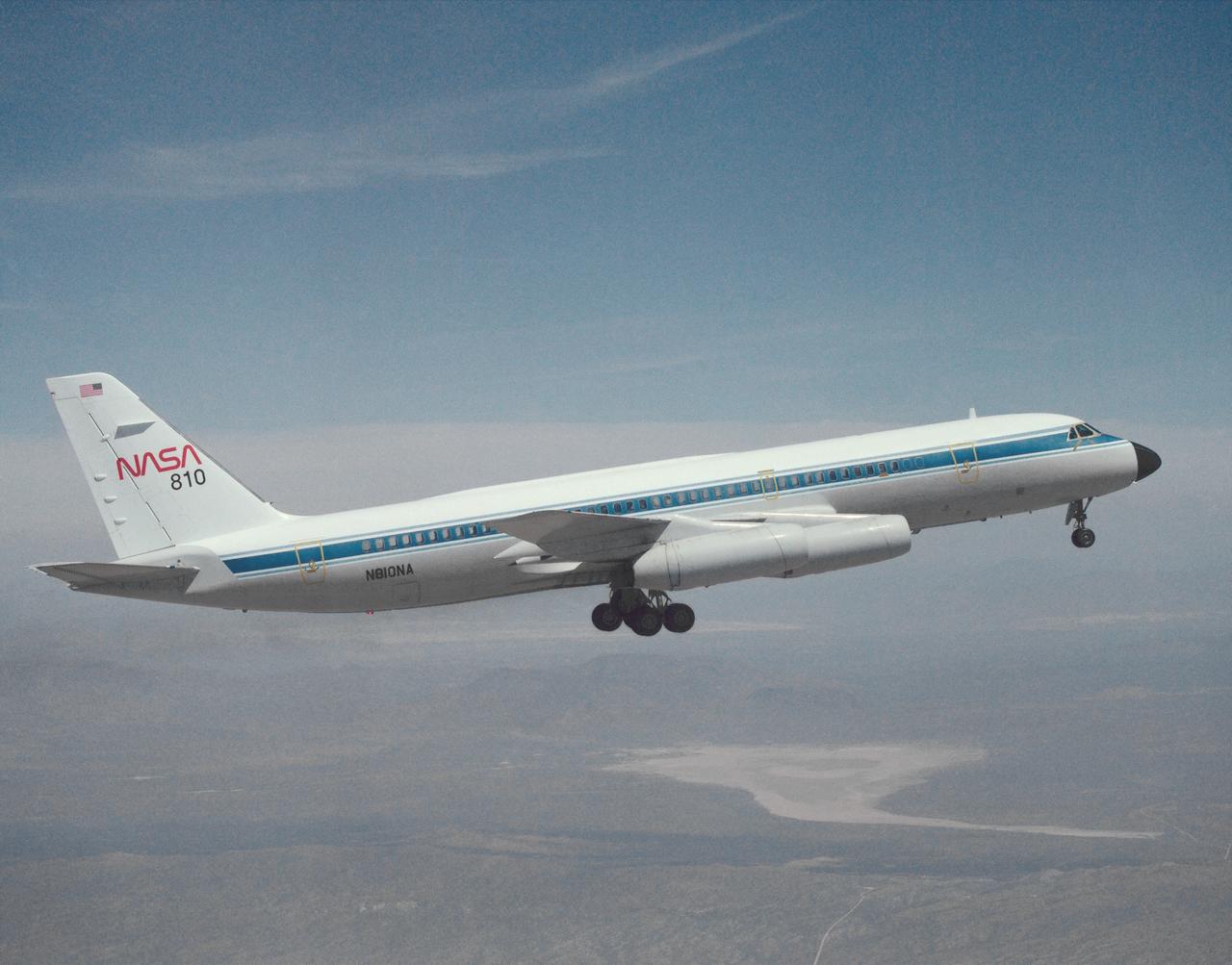
A NASA CV-990, modified as a Landing Systems Research Aircraft (LSRA), in flight over NASA's Dryden Flight Research Center, Edwards, California, for a test of the space shuttle landing gear system. The space shuttle landing gear test unit, operated by a high-pressure hydraulic system, allowed engineers to assess and document the performance of space shuttle main and nose landing gear systems, tires and wheel assemblies, plus braking and nose wheel steering performance. The series of 155 test missions for the space shuttle program provided extensive data about the life and endurance of the shuttle tire systems and helped raise the shuttle crosswind landing limits at Kennedy.
LSRA
A NASA CV-990, modified as a Landing Systems Research Aircraft (LSRA), in flight over NASA's Dryden Flight Research Center, Edwards, California, for a test of the space shuttle landing gear system. The space shuttle landing gear test unit, operated by a high-pressure hydraulic system, allowed engineers to assess and document the performance of space shuttle main and nose landing gear systems, tires and wheel assemblies, plus braking and nose wheel steering performance. The series of 155 test missions for the space shuttle program provided extensive data about the life and endurance of the shuttle tire systems and helped raise the shuttle crosswind landing limits at Kennedy.
LSRA in flight
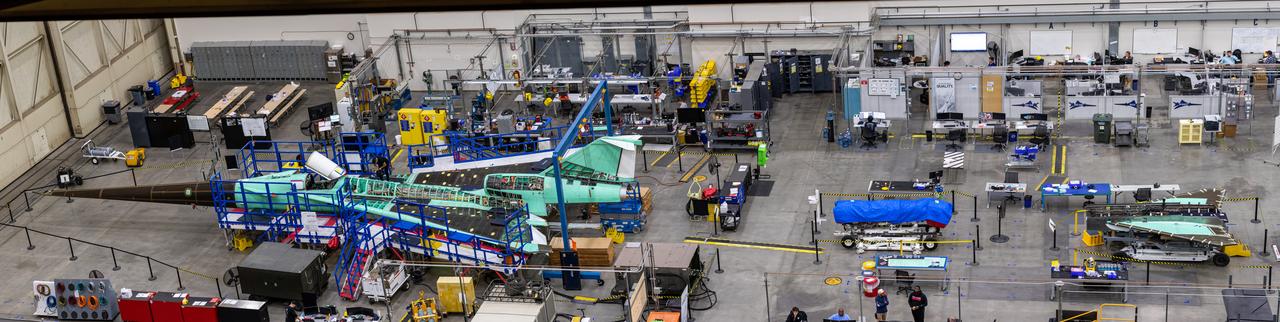
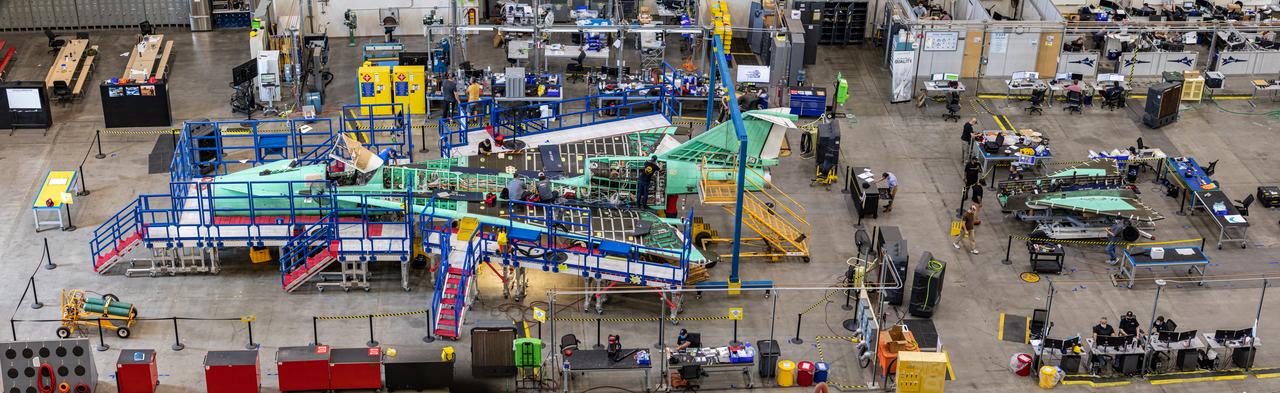
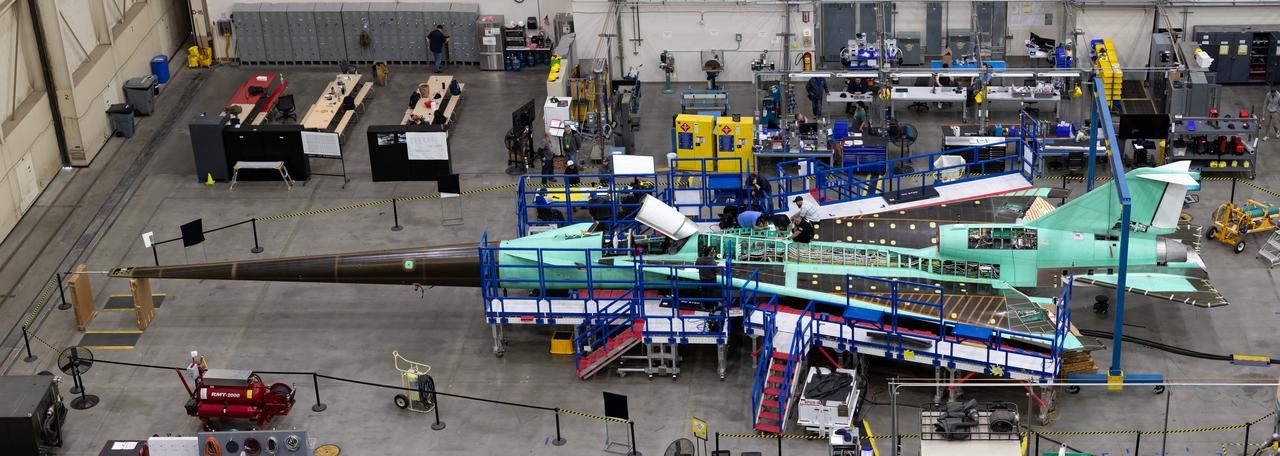
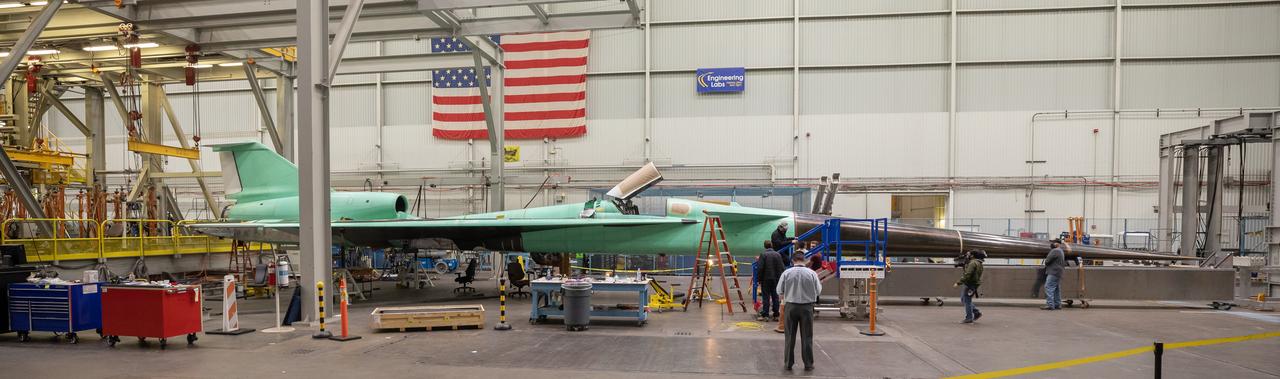
An overhead view of the X-59 during assembly in spring 2023. Assembly took place at Lockheed Martin’s Skunk Works facility in Palmdale, California.  Once complete, the X-59 is designed to fly supersonic while reducing the loud sonic boom. The Quesst mission could help change the rules for commercial supersonic air travel over land.
Overhead Image of NASA’s X-59 in Construction
A quality inspector inspects the GE F-414 engine nozzle after installation at Lockheed Martin’s Skunk Works facility in Palmdale, California. Once the aircraft and ground testing are complete, the X-59 will undergo flight testing, which will demonstrate the plane’s ability to fly supersonic - faster than the speed of sound - while reducing the loud sonic boom. This could enable commercial supersonic air travel over land.
Quality Inspection of NASA’s X-59 Engine
This image shows the X-59’s engine inlet from the aft view, which is the rear of the airplane, looking forward. Once the aircraft and ground testing are complete, the X-59 will undergo flight testing, which will demonstrate the plane’s ability to fly supersonic - faster than the speed of sound - while reducing the loud sonic boom. This could enable commercial supersonic air travel over land again.
Quesst Mission | X-59 Engine Inlet
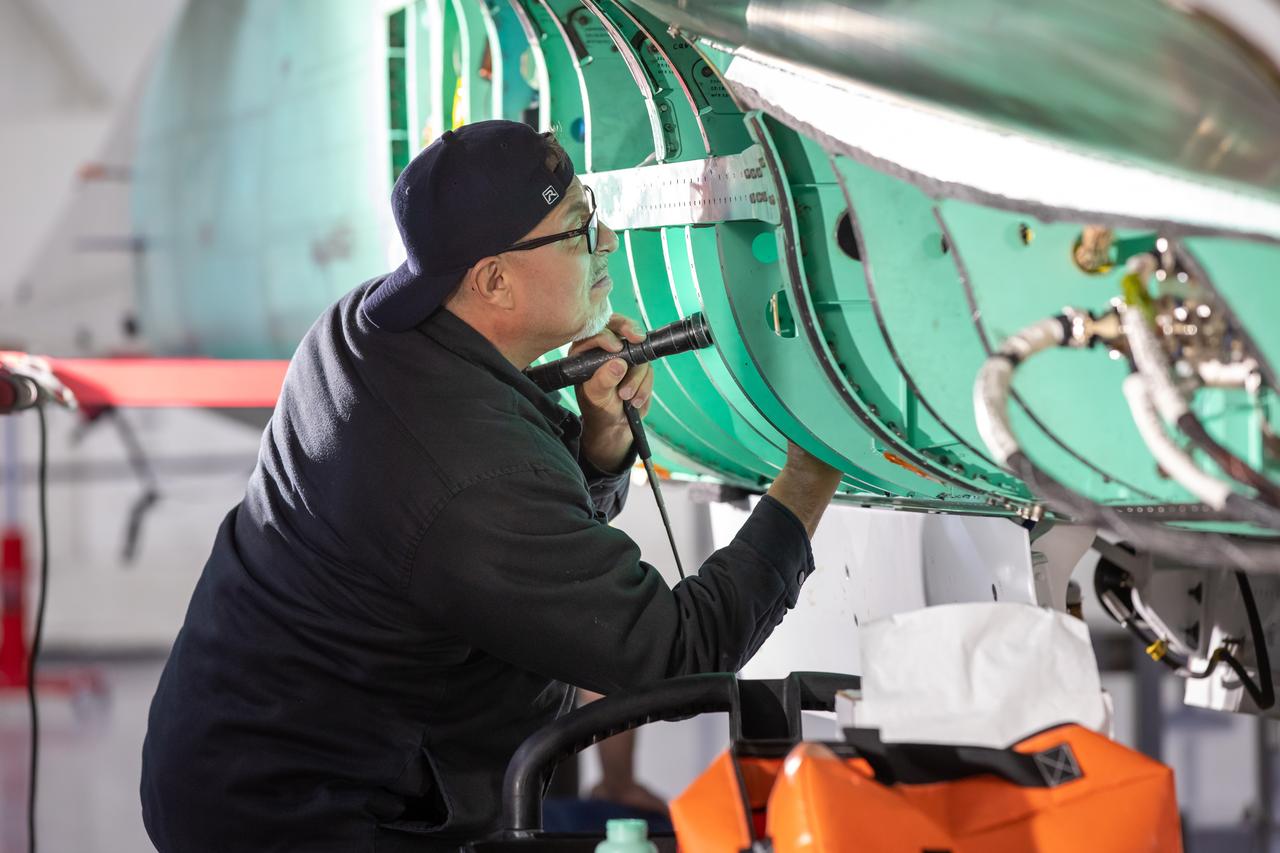
A quality inspector checks NASA’s X-59 aircraft during the construction phase. The X-59 was built in Lockheed Martin’s Skunk Works facility in Palmdale, California.  Once the aircraft and ground testing are complete, the X-59 will undergo flight testing, which will demonstrate the plane’s ability to fly supersonic - faster than the speed of sound - while reducing the loud sonic boom. This could enable commercial supersonic air travel over land.
Quality Inspection on X-59
The X-59 team at Lockheed Martin Skunk Works in Palmdale, California, load the lower empennage - the tail section - into place. The surfaces used to control the tilt of the airplane are called stabilators and are connected to the lower empennage. The X-59 is the centerpiece of NASA’s Quesst mission, which could help enable commercial supersonic air travel over land.
Lower Empennage Test Fit Install
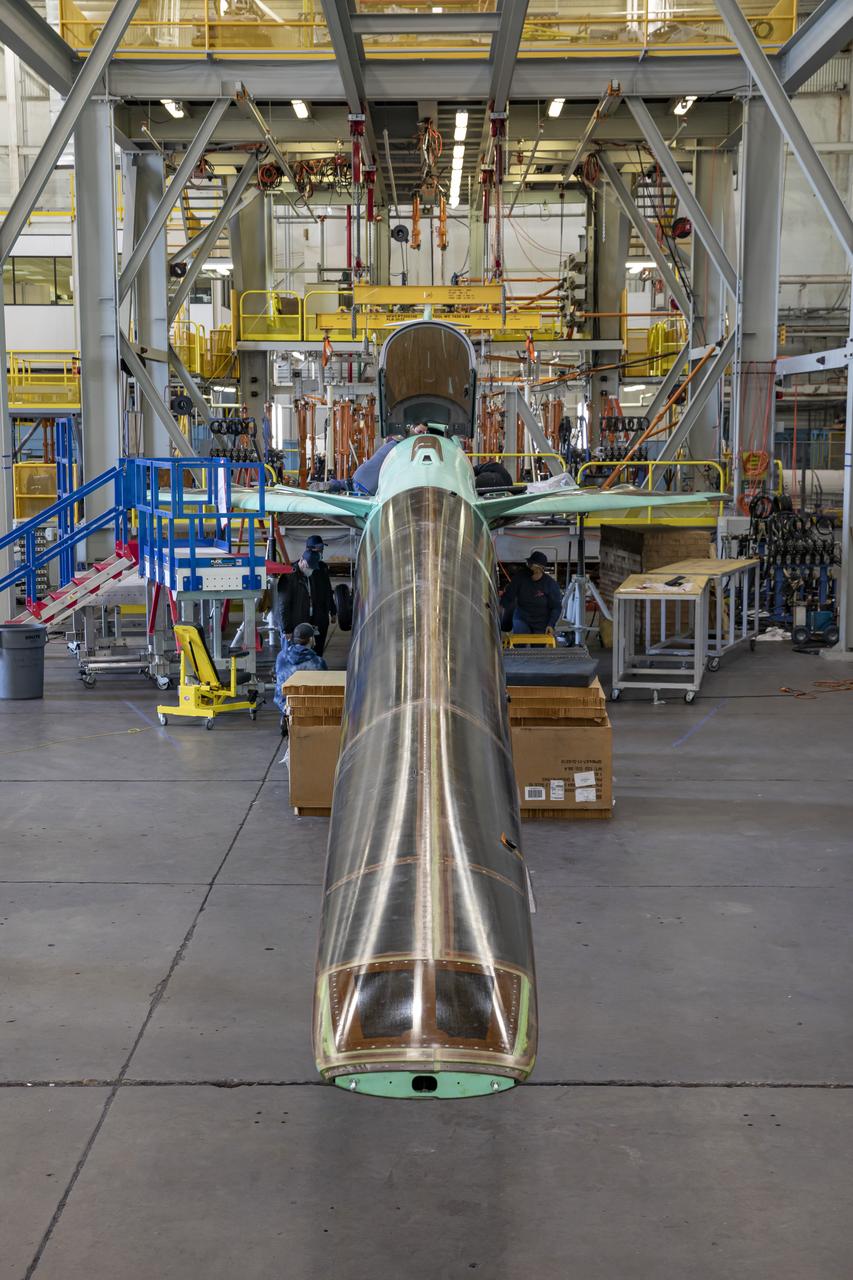
This overhead view of the X-59 shows the aircraft at Lockheed Martin Skunk Works in Palmdale, California. During the assembly of this experimental aircraft, the team often has to remove components to effectively and safely assemble other sections of the aircraft. In this image, the nose is not attached and the horizontal stabilators are shown behind the tail. The X-59 is the centerpiece of NASA’s Quesst mission which plans to produce data that will help enable commercial supersonic air travel over land.
FTIS Sensors and From Above
NASA’s X-59 undergoes a structural stress test at Lockheed Martin’s facility at Fort Worth, Texas. The X-59 is a one-of-a-kind airplane designed to fly at supersonic speeds without making a startling sonic boom sound for the communities below. This is part of NASA’s Quesst mission, which plans to help enable supersonic air travel over land.
X-59 - Various Angles in Test Fixture
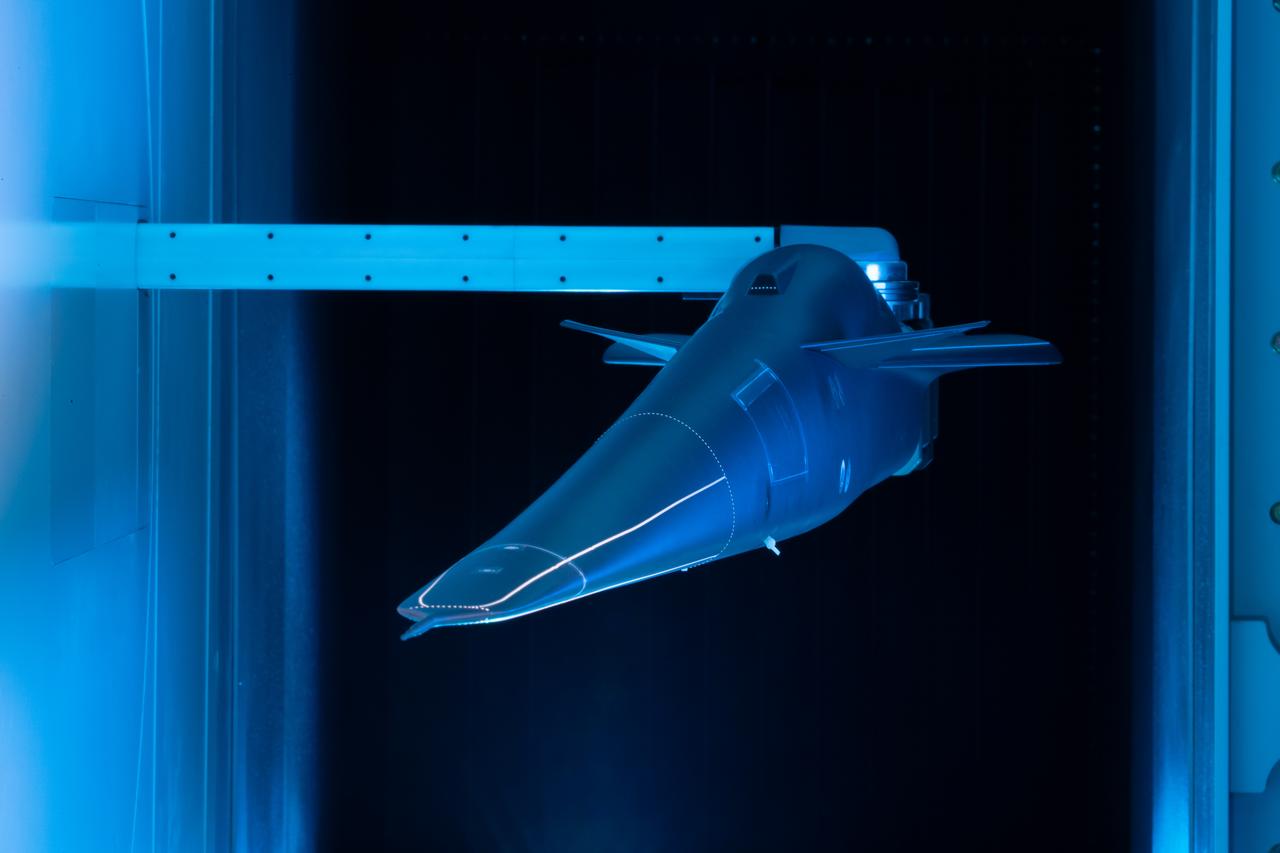
Event: Forebody and Nose - Windtunnel Testing A model of the X-59 forebody is shown in the Lockheed Martin Skunk Works’ wind tunnel in Palmdale, California. These tests gave the team measurements of wind flow angle around the aircraft’s nose and confirmed computer predictions made using computational fluid dynamics (CFD) software tools. The data will be fed into the aircraft flight control system to tell the pilot the aircraft’s altitude, speed and angle. This is part of NASA’s Quesst mission which plans to help enable supersonic air travel over land.
Forebody and Nose - Windtunnel Testing
Here is an overhead view of the X-59 aircraft (left) prior to the installation of the General Electric F414 engine (center, located under the blue cover). After the engine is installed, the lower empennage (right), the last remaining major aircraft component, will be installed in preparation for integrated system checkouts. The X-59 is the centerpiece of the Quesst mission which plans to help enable commercial supersonic air travel over land.
From Above With Nose Installed
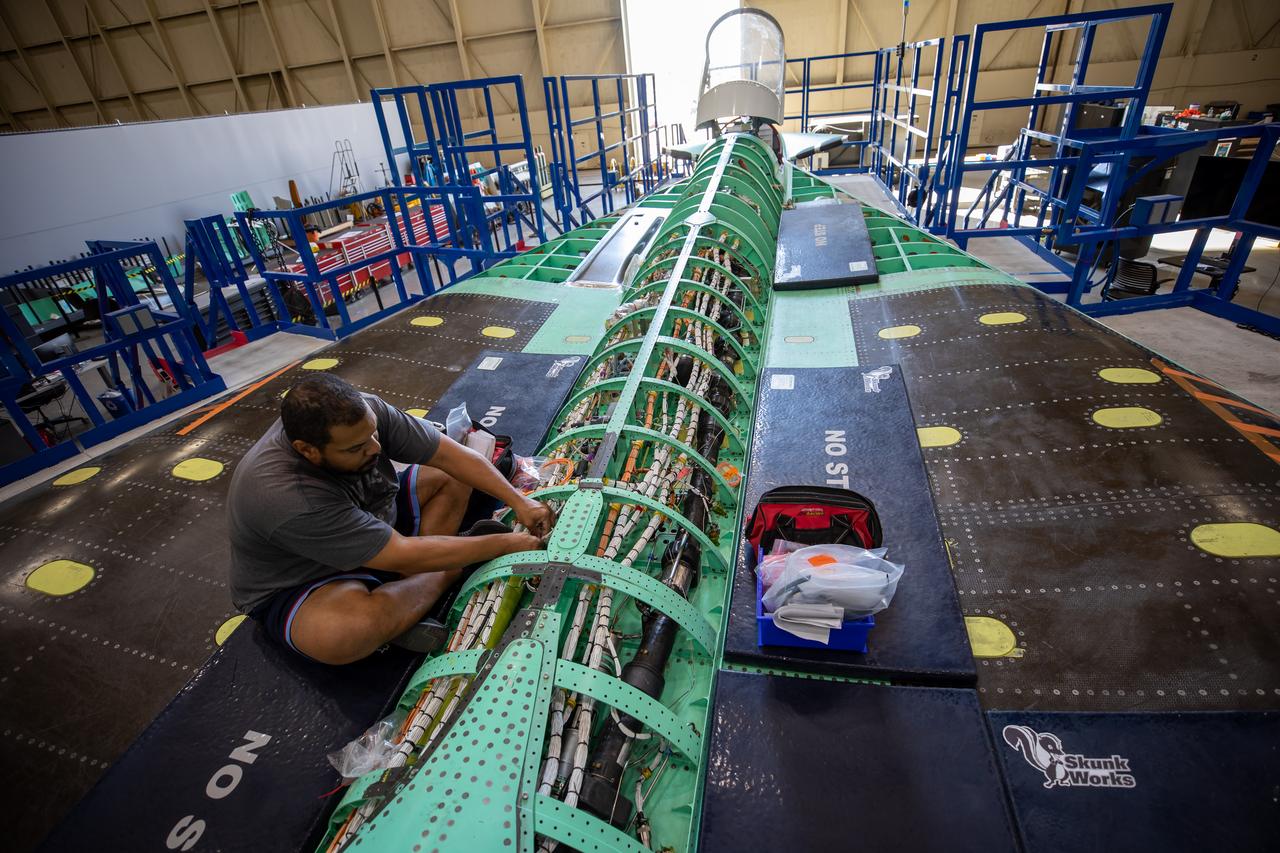
A Lockheed Martin Skunk Works technician works to complete wiring on the X-59 aircraft in preparation for the power-on system checkouts.  Once complete, the X-59 aircraft will demonstrate the ability to fly supersonic while reducing the loud sonic boom to a quiet sonic thump and help enable commercial supersonic air travel over land. This aircraft is the centerpiece of NASA’s Quesst mission.
Cockpit Lights SCO - Right Tomahawk Skin
This overhead view of the X-59 shows the aircraft at Lockheed Martin Skunk Works in Palmdale, California. During the assembly of this experimental aircraft, the team often has to remove components to effectively and safely assemble other sections of the aircraft. In this image, the nose is not attached and the horizontal stabilators are shown behind the tail. The X-59 is the centerpiece of NASA’s Quesst mission which plans to produce data that will help enable commercial supersonic air travel over land.
FTIS Sensors and From Above
Event: Forebody and Nose - Windtunnel Testing A model of the X-59 forebody is shown in the Lockheed Martin Skunk Works’ wind tunnel in Palmdale, California. These tests gave the team measurements of wind flow angle around the aircraft’s nose and confirmed computer predictions made using computational fluid dynamics (CFD) software tools. The data will be fed into the aircraft flight control system to tell the pilot the aircraft’s altitude, speed and angle. This is part of NASA’s Quesst mission which plans to help enable supersonic air travel over land.
Forebody and Nose - Windtunnel Testing
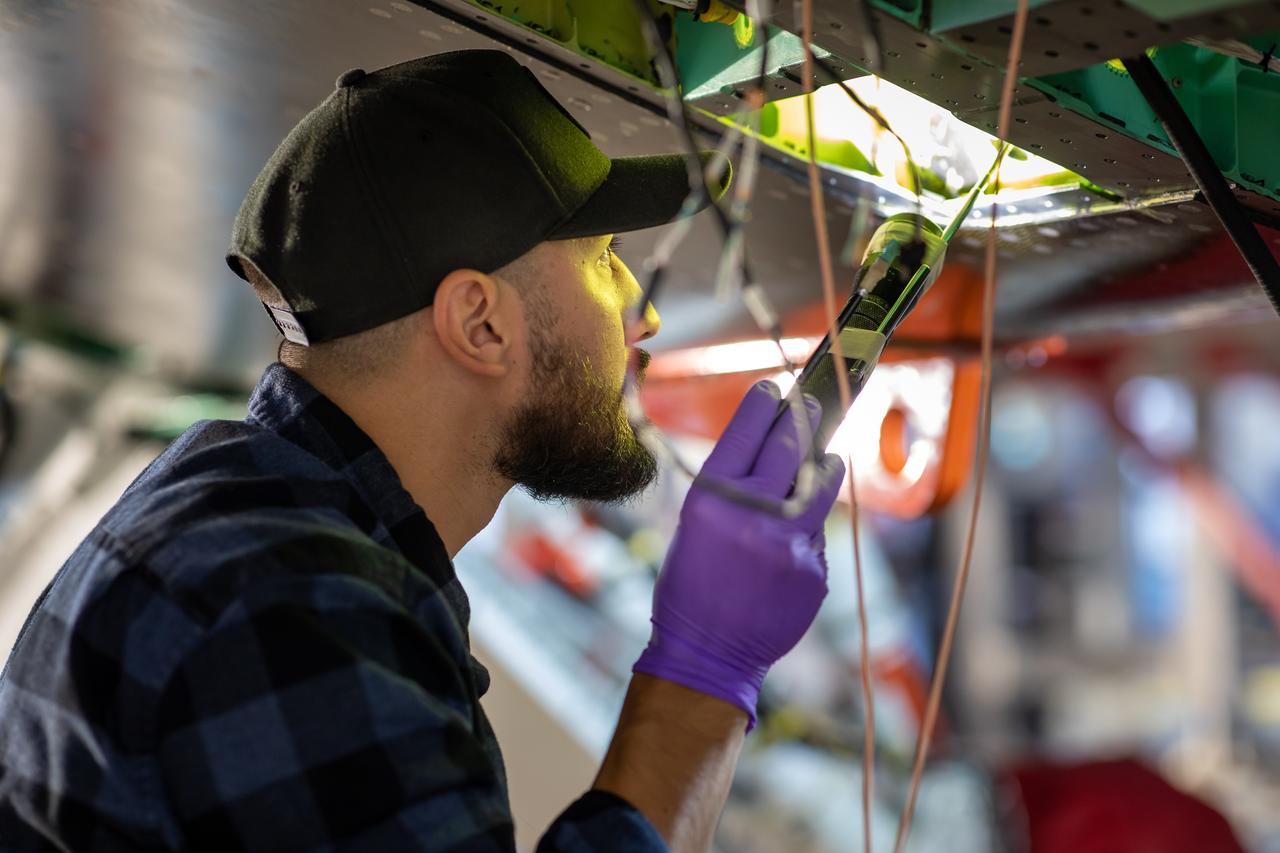
A Lockheed Martin Skunk Works technician inspects some of the wiring and sensors on the X-59 aircraft in preparation for the first power-on system checkouts.  Once complete, the X-59 aircraft will demonstrate the ability to fly supersonic while reducing the loud sonic boom to a quiet sonic thump and help enable commercial supersonic air travel over land. This aircraft is the centerpiece of NASA’s Quesst mission.
First Power-On SCO
The upper empennage, or tail section of the plane, and engine bay is surrounded by a blue gantry that is used to assist with ground installation and removal of the X-59’s lower empennage and engine. Once fully assembled, the X-59 aircraft will demonstrate the ability to fly supersonic while reducing the loud sonic boom to a quiet sonic thump and help enable commercial supersonic air travel over land. This aircraft is the centerpiece of NASA’s Quesst mission.
LRC-2022-H1_P_X-59-45
NASA’s X-59 is lowered into the test fixture as it prepares to undergo structural stress tests at  Lockheed Martin in Fort Worth, Texas. The X-59 is a one-of-a-kind airplane designed to fly at supersonic speeds without making a startling sonic boom sound for the communities below. This is part of NASA’s Quesst mission which plans to help  enable supersonic air travel over land.
Test Fixture Installation
NASA’s X-59 undergoes a structural stress test at Lockheed Martin’s facility  in Fort Worth, Texas. The X-59’s nose makes up one third of the aircraft, at 38-feet in length. The X-59 is a one-of-a-kind airplane designed to fly at supersonic speeds without making a startling sonic boom sound for the communities below. This is part of NASA’s Quesst mission, which plans to help  enable supersonic air travel over land
X-59 - Various Angles in Test Fixture
This is an up-close view of the X-59’s engine inlet  –  fresh after being painted. The 13-foot F414-GE-100 engine will be placed inside the inlet bringing the X-59 aircraft one step closer to completion. Once fully assembled, the X-59 aircraft will begin flight operations, working toward demonstration of the ability to fly supersonic while reducing the loud sonic boom to a quiet sonic thump, helping to enable commercial supersonic air travel over land.
LRC-2022-H1_P_X-59-42
A Lockheed Martin technician works to complete wiring on the X-59 aircraft in preparation for the power-on system checkouts.  Once complete, the X-59 aircraft will demonstrate the ability to fly supersonic while reducing the loud sonic boom to a quiet sonic thump and help enable commercial supersonic air travel over land. This aircraft is the centerpiece of NASA’s Quesst mission.
LRC-2022-H1_P_X-59-43