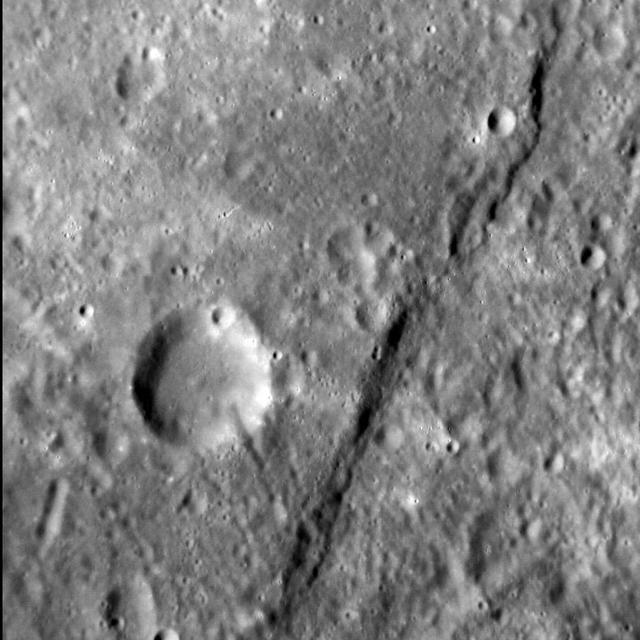
The cliff-like feature crossing this image from NASA MESSENGER spacecraft from top to bottom is one of Mercury famed lobate scarps, and is called Pourquoi-Pas Rupes.
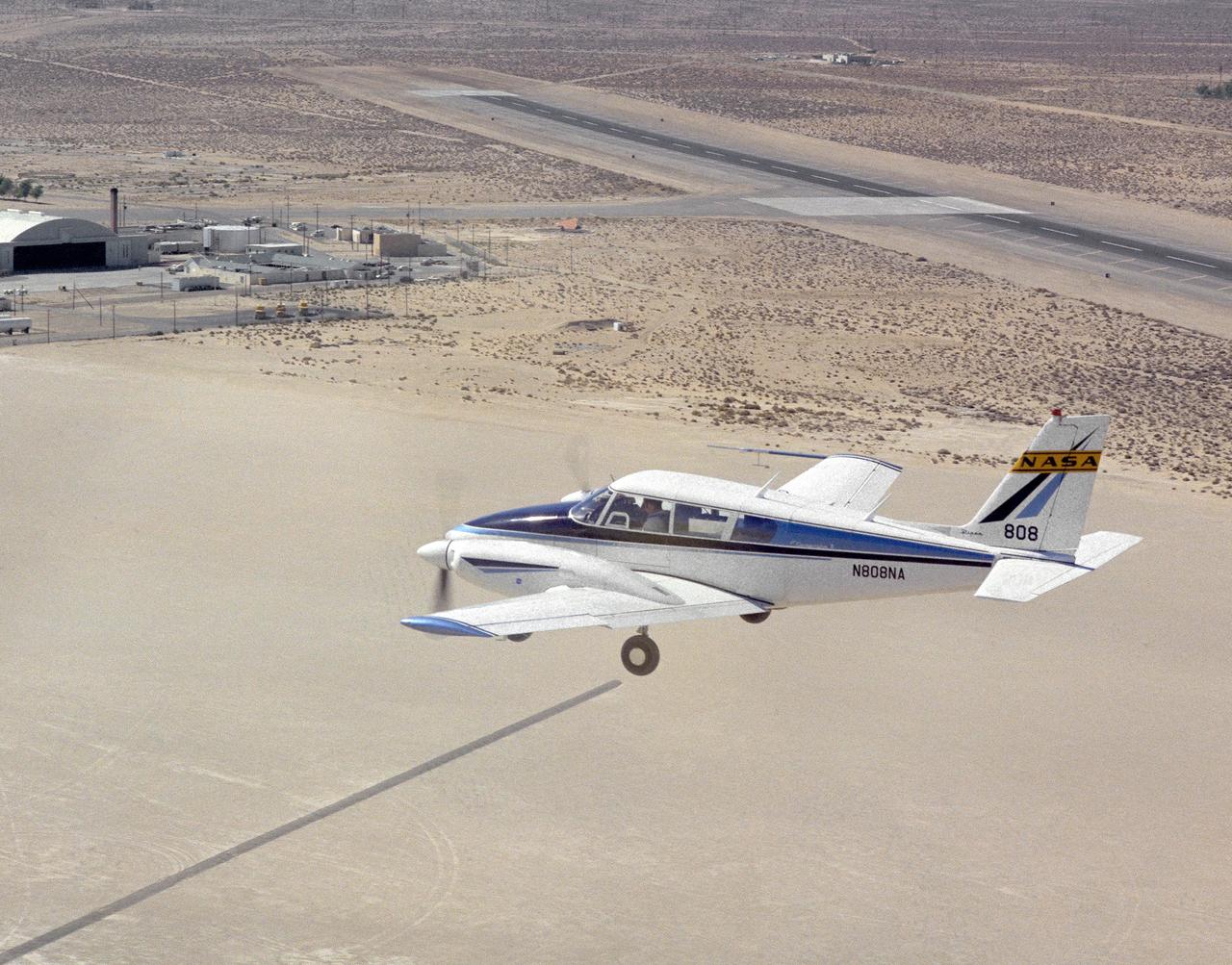
Dryden Flight Research Center's Piper PA-30 Twin Commanche, which helped validate the RPRV concept, descends to a remotely controlled landing on Rogers Dry Lake, unassisted by the onboard pilot. A Piper PA-30 Twin Commanche, known as NASA 808, was used at the NASA Dryden Flight Research Center as a rugged workhorse in a variety of research projects associated with both general aviation and military projects. In the early 1970s, the PA-30, serial number 301498, was used to test a flight technique used to fly Remotely Piloted Research Vehicles (RPRV's). The technique was first tested with the cockpit windows of the light aircraft blacked out while the pilot flew the aircraft utilizing a television monitor which gave him a "pilot's eye" view ahead of the aircraft. Later pilots flew the aircraft from a ground cockpit, a procedure used with all RPRV's. TV and two-way telemetry allow the pilot to be in constant control of the aircraft. The apparatus mounted over the cockpit is a special fish eye lens camera, used to obtain images that are transmitted to the ground based cockpit. This project paved the way for sophisticated, highly successful research programs involving high risk spin, stall, and flight control conditions, such as the HiMAT and the subscale F-15 remotely piloted vehicles. Over the years, NASA 808 has also been used for spin and stall research related to general aviation aircraft and also research to alleviate wake vortices behind large jetliners.
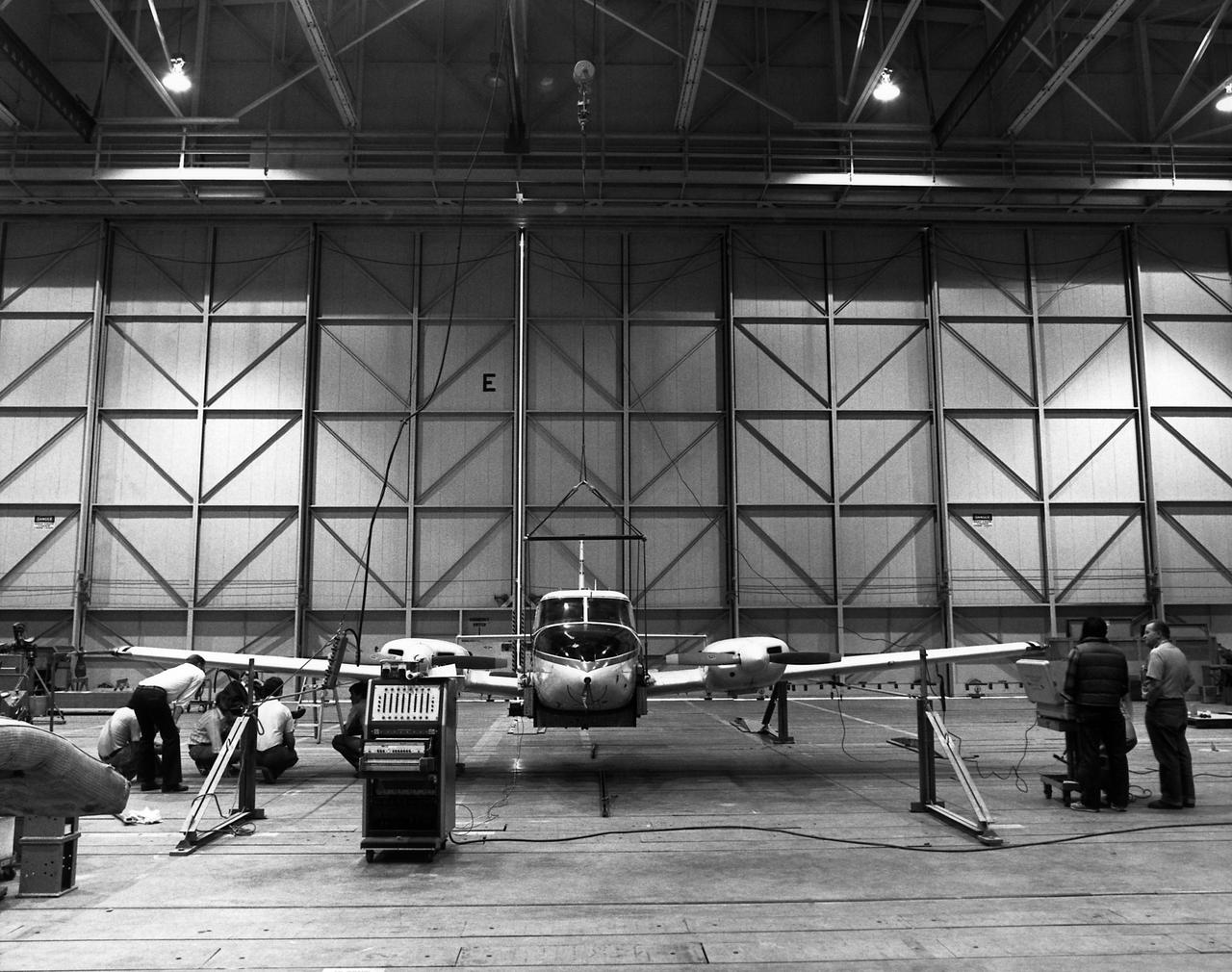
Technicians check instrumentation and systems on NASA 808, a PA-30 aircraft, prior to a research flight. The aircraft was used as the testbed in development of control systems for remotely piloted vehicles that were "flown" from the ground. The concept led to highly successful programs such as the HiMAT and the subscale F-15 remotely piloted vehicles. Over the years, NASA 808 has also been used for spin and stall research related to general aviation aircraft and also research to alleviate wake vortices behind large jetliners. This 1980 photograph taken inside a hangar shows technicians measuring moment of inertia.
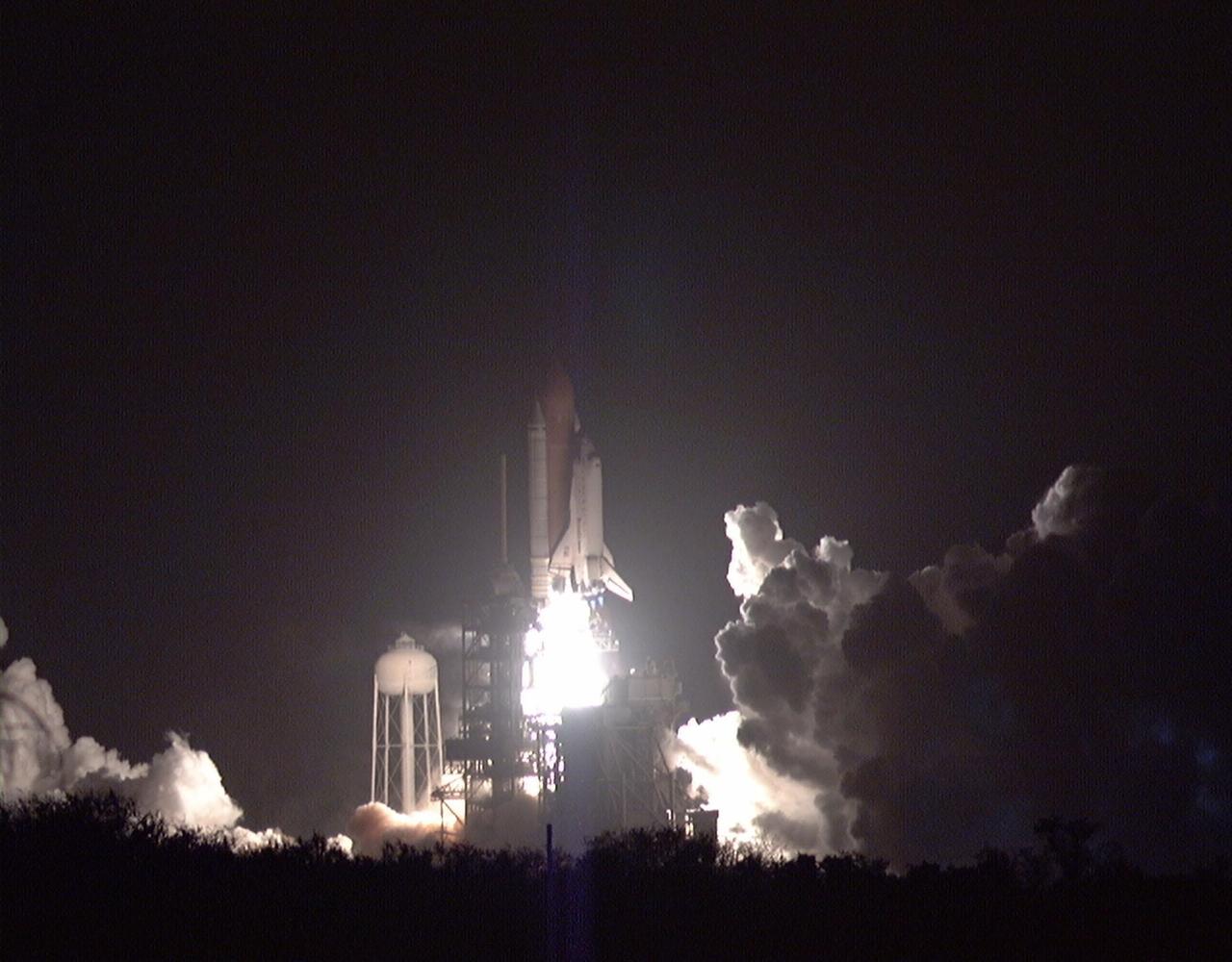
The Space Shuttle Endeavour cuts a bright swath through the dark sky as it blazes a trail toward the Russian Space Station Mir. Endeavour lifted off successfully at its scheduled time of 9:48:15 p.m. EST on Jan. 22 from Pad 39A. STS-89 is the eighth docking with the Russian Space Station Mir, the first Mir docking for Endeavour (all previous dockings were made by Atlantis), and the first launch of 1998. After docking with Mir, Mission Specialist Andrew Thomas, Ph.D., will transfer to the space station, succeeding David Wolf, M.D., who will return to Earth aboard Endeavour. Dr. Thomas will live and work on Mir until June
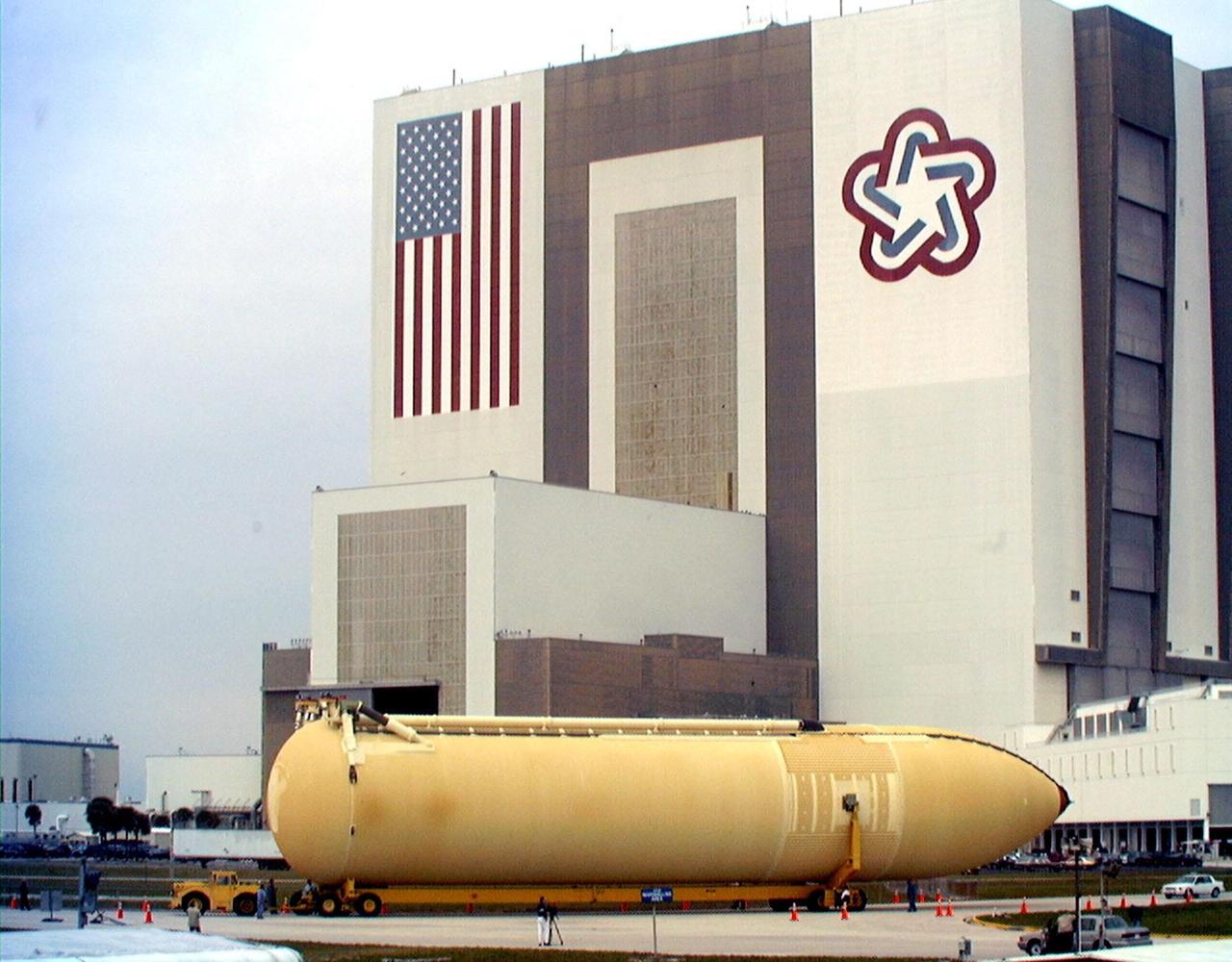
The Space Shuttle's first super lightweight external tank is on its way to Kennedy Space Center's Vehicle Assembly Building for processing. The tank, which is scheduled for flight on STS-91 in late May, arrived Feb. 3 in Port Canaveral, where it remained until Feb. 6 due to high winds. The improved tank is 7,500 pounds lighter than its predecessors and was developed to increase the Shuttle payload capacity on International Space Station assembly flights. Major changes to the lighter tank include the use of new materials and a revised internal design. The new liquid oxygen and liquid hydrogen tanks are constructed of aluminum lithium a lighter, stronger material than the metal alloy currently used. The redesigned walls of the liquid hydrogen tank were machined to provide additional strength and stability as well

The Space Shuttle's first super lightweight external tank is on its way to Kennedy Space Center's Vehicle Assembly Building for processing. The tank, which is scheduled for flight on STS-91 in late May, arrived Feb. 3 in Port Canaveral, where it remained until Feb. 6 due to high winds. The improved tank is 7,500 pounds lighter than its predecessors and was developed to increase the Shuttle payload capacity on International Space Station assembly flights. Major changes to the lighter tank include the use of new materials and a revised internal design. The new liquid oxygen and liquid hydrogen tanks are constructed of aluminum lithium a lighter, stronger material than the metal alloy currently used. The redesigned walls of the liquid hydrogen tank were machined to provide additional strength and stability as well
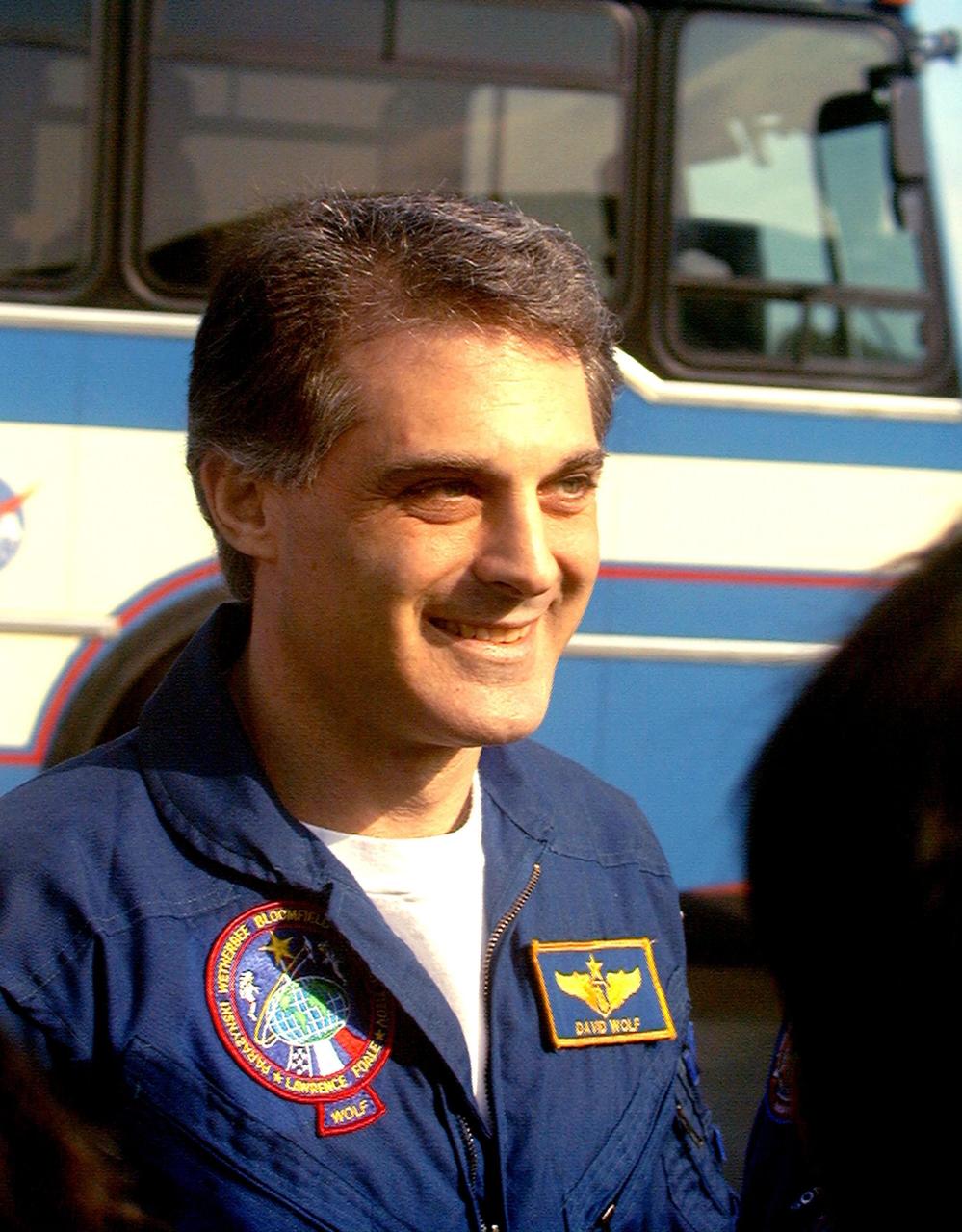
NASA astronaut and Mir 24 crew member David Wolf, M.D., enjoys a moment with the media at the Skid Strip at Cape Canaveral Air Station on Feb. 1 moments before his departure for Johnson Space Center. The STS-89 crew that brought Dr. Wolf back to Earth arrived at KSC aboard the orbiter Endeavour Jan. 31, concluding the eighth Shuttle-Mir docking mission. STS-89 Mission Specialist Andrew Thomas, Ph.D., succeeded Dr. Wolf on Mir and is scheduled to remain on the Russian space station until the STS-91 Shuttle mission returns in June 1998. In addition to the docking and crew exchange, STS-89 included the transfer of science, logistical equipment and supplies between the two orbiting spacecrafts
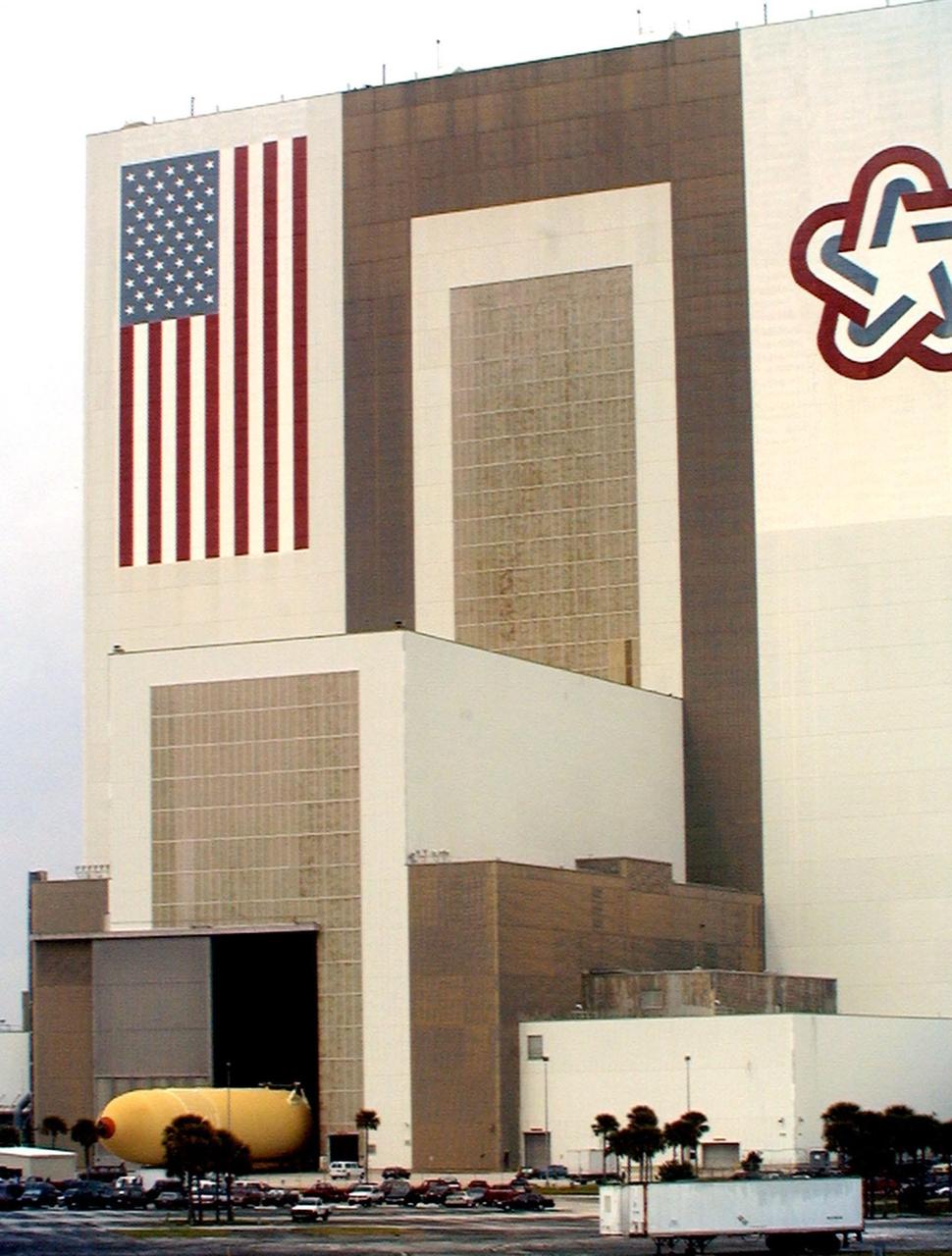
The Space Shuttle's first super lightweight external tank is on its way to Kennedy Space Center's Vehicle Assembly Building for processing. The tank, which is scheduled for flight on STS-91 in late May, arrived Feb. 3 in Port Canaveral, where it remained until Feb. 6 due to high winds. The improved tank is 7,500 pounds lighter than its predecessors and was developed to increase the Shuttle payload capacity on International Space Station assembly flights. Major changes to the lighter tank include the use of new materials and a revised internal design. The new liquid oxygen and liquid hydrogen tanks are constructed of aluminum lithium a lighter, stronger material than the metal alloy currently used. The redesigned walls of the liquid hydrogen tank were machined to provide additional strength and stability as well
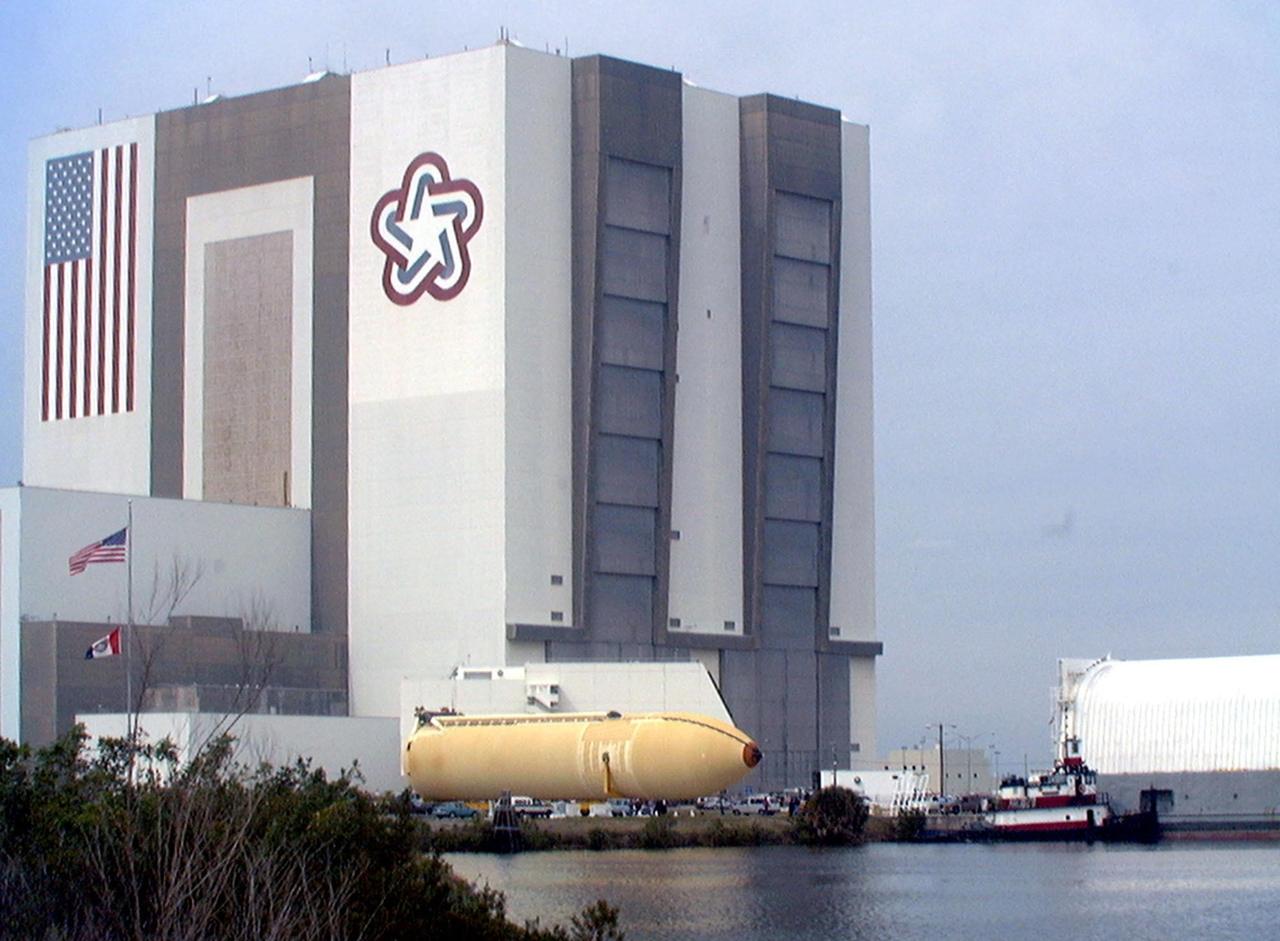
The Space Shuttle's first super lightweight external tank is on its way to Kennedy Space Center's Vehicle Assembly Building for processing. The tank, which is scheduled for flight on STS-91 in late May, arrived Feb. 3 in Port Canaveral, where it remained until Feb. 6 due to high winds. The improved tank is 7,500 pounds lighter than its predecessors and was developed to increase the Shuttle payload capacity on International Space Station assembly flights. Major changes to the lighter tank include the use of new materials and a revised internal design. The new liquid oxygen and liquid hydrogen tanks are constructed of aluminum lithium a lighter, stronger material than the metal alloy currently used. The redesigned walls of the liquid hydrogen tank were machined to provide additional strength and stability as well
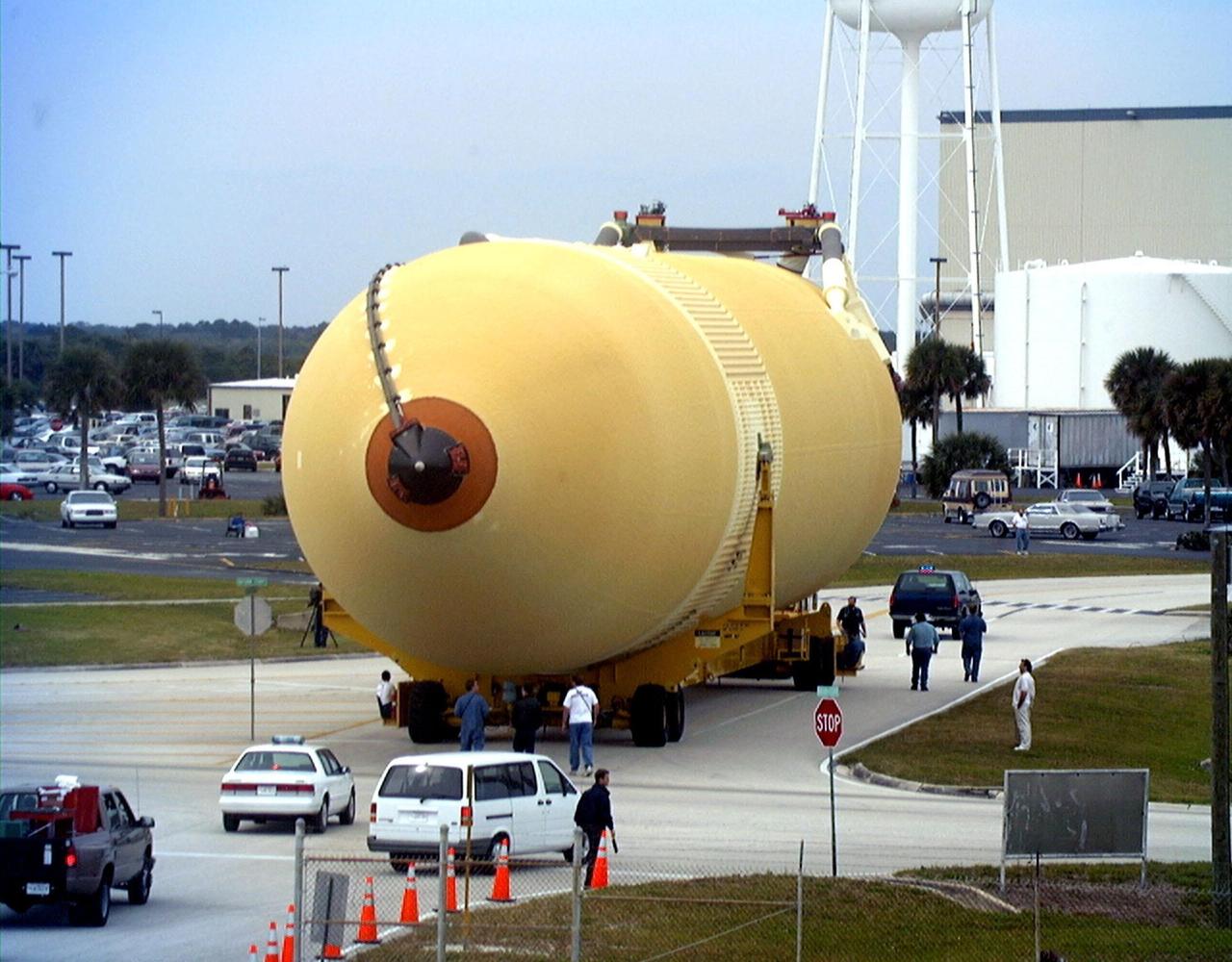
The Space Shuttle's first super lightweight external tank is on its way to Kennedy Space Center's Vehicle Assembly Building for processing. The tank, which is scheduled for flight on STS-91 in late May, arrived Feb. 3 in Port Canaveral, where it remained until Feb. 6 due to high winds. The improved tank is 7,500 pounds lighter than its predecessors and was developed to increase the Shuttle payload capacity on International Space Station assembly flights. Major changes to the lighter tank include the use of new materials and a revised internal design. The new liquid oxygen and liquid hydrogen tanks are constructed of aluminum lithium a lighter, stronger material than the metal alloy currently used. The redesigned walls of the liquid hydrogen tank were machined to provide additional strength and stability as well
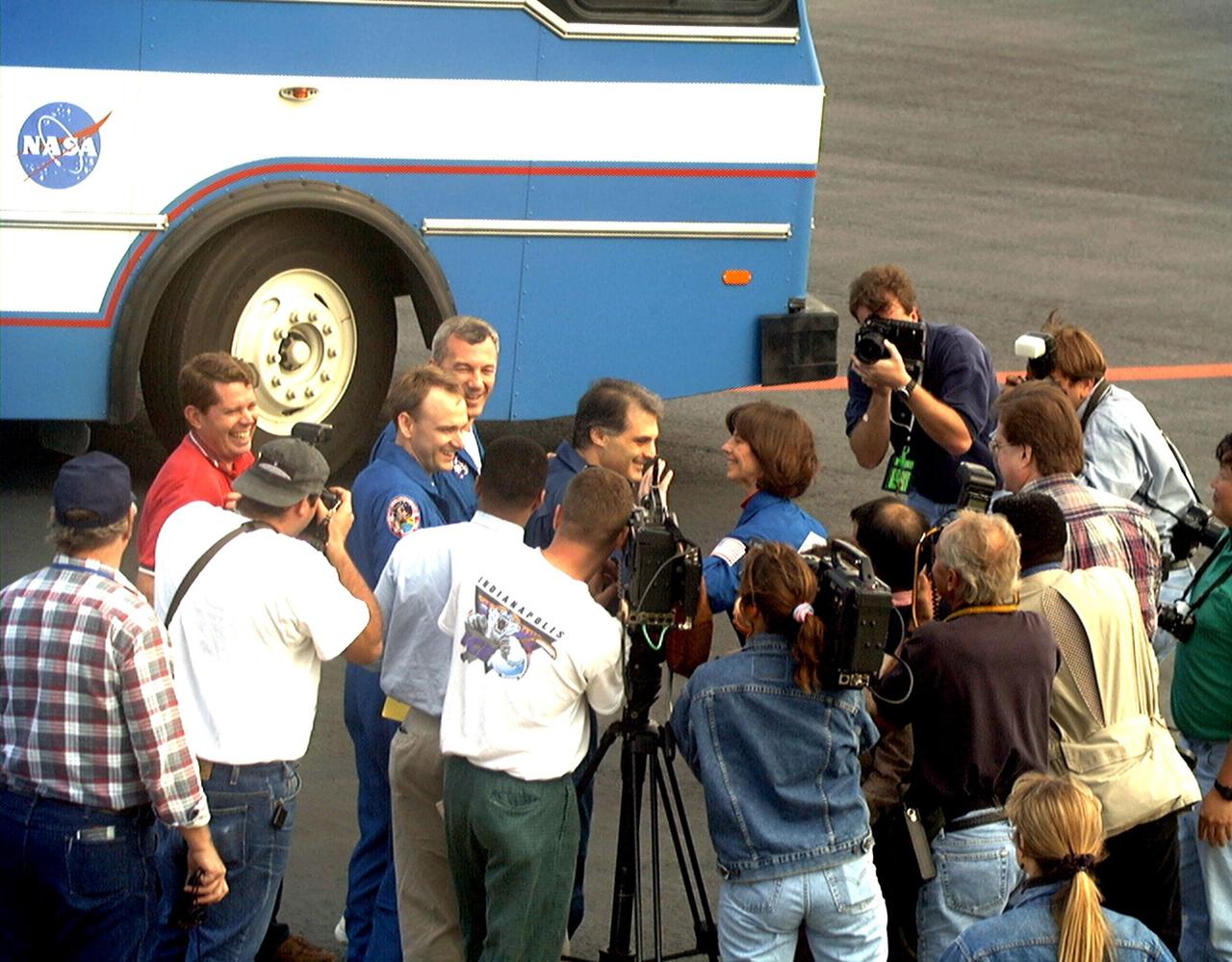
NASA astronaut and Mir 24 crew member David Wolf, M.D., enjoys a moment with the media at the Skid Strip at Cape Canaveral Air Station on Feb. 1 moments before his departure for Johnson Space Center. Other STS-89 crew members surrounding Dr. Wolf include, left to right, Pilot Joe Edwards Jr.; Commander Terrence Wilcutt; and Mission Specialist Bonnie Dunbar, Ph.D. In the red shirt behind Edwards is JSC Director of Flight Crew Operations David Leestma. The STS-89 crew that brought Dr. Wolf back to Earth arrived at KSC aboard the orbiter Endeavour Jan. 31, concluding the eighth Shuttle-Mir docking mission. STS-89 Mission Specialist Andrew Thomas, Ph.D., succeeded Dr. Wolf on Mir and is scheduled to remain on the Russian space station until the STS-91 Shuttle mission returns in June 1998. In addition to the docking and crew exchange, STS-89 included the transfer of science, logistical equipment and supplies between the two orbiting spacecrafts
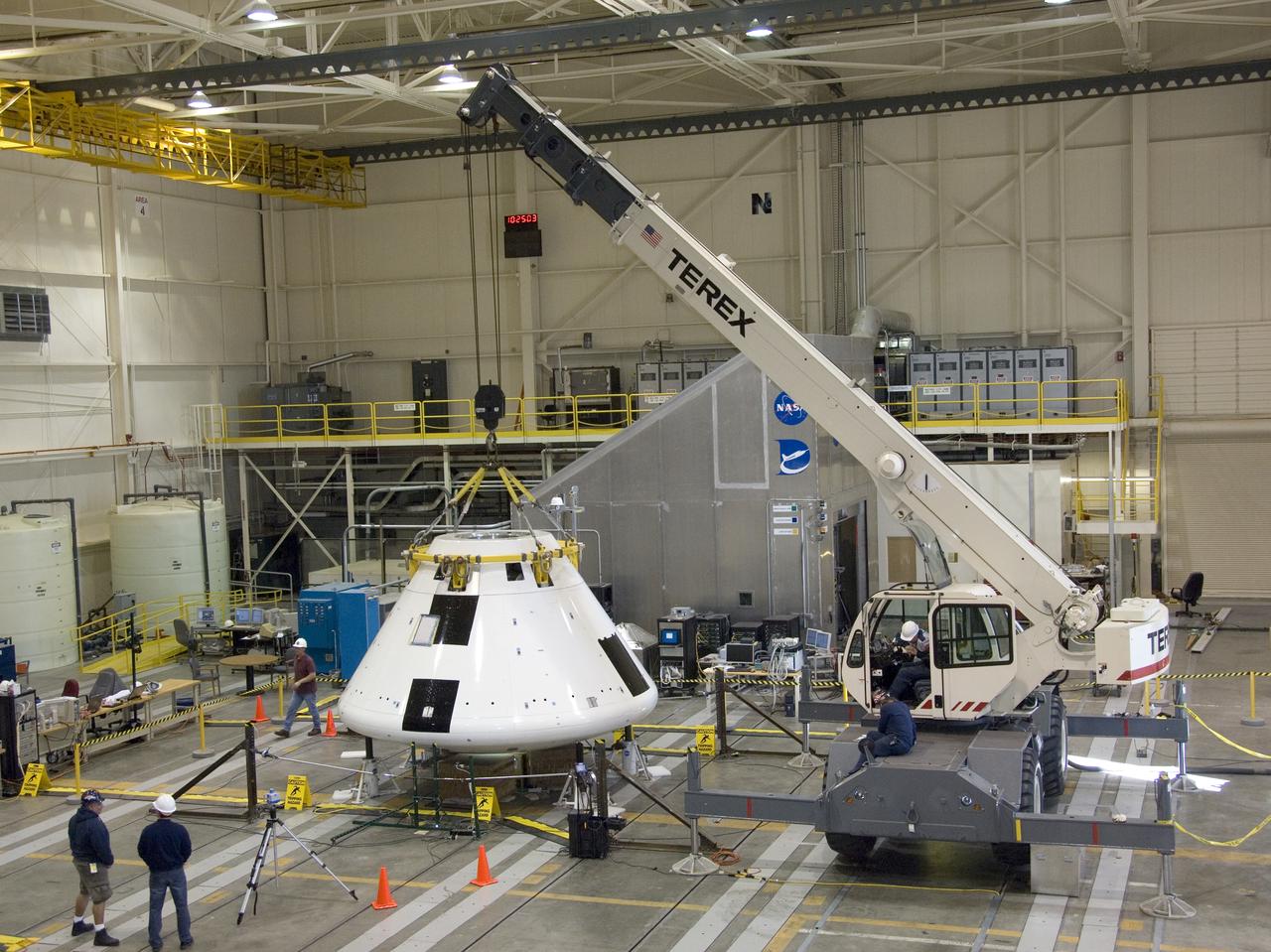
Under the watchful eyes of technicians, a crane positions the Orion PA-1 Abort Flight Test module for mass properties testing in NASA Dryden's Flight Loads Lab.
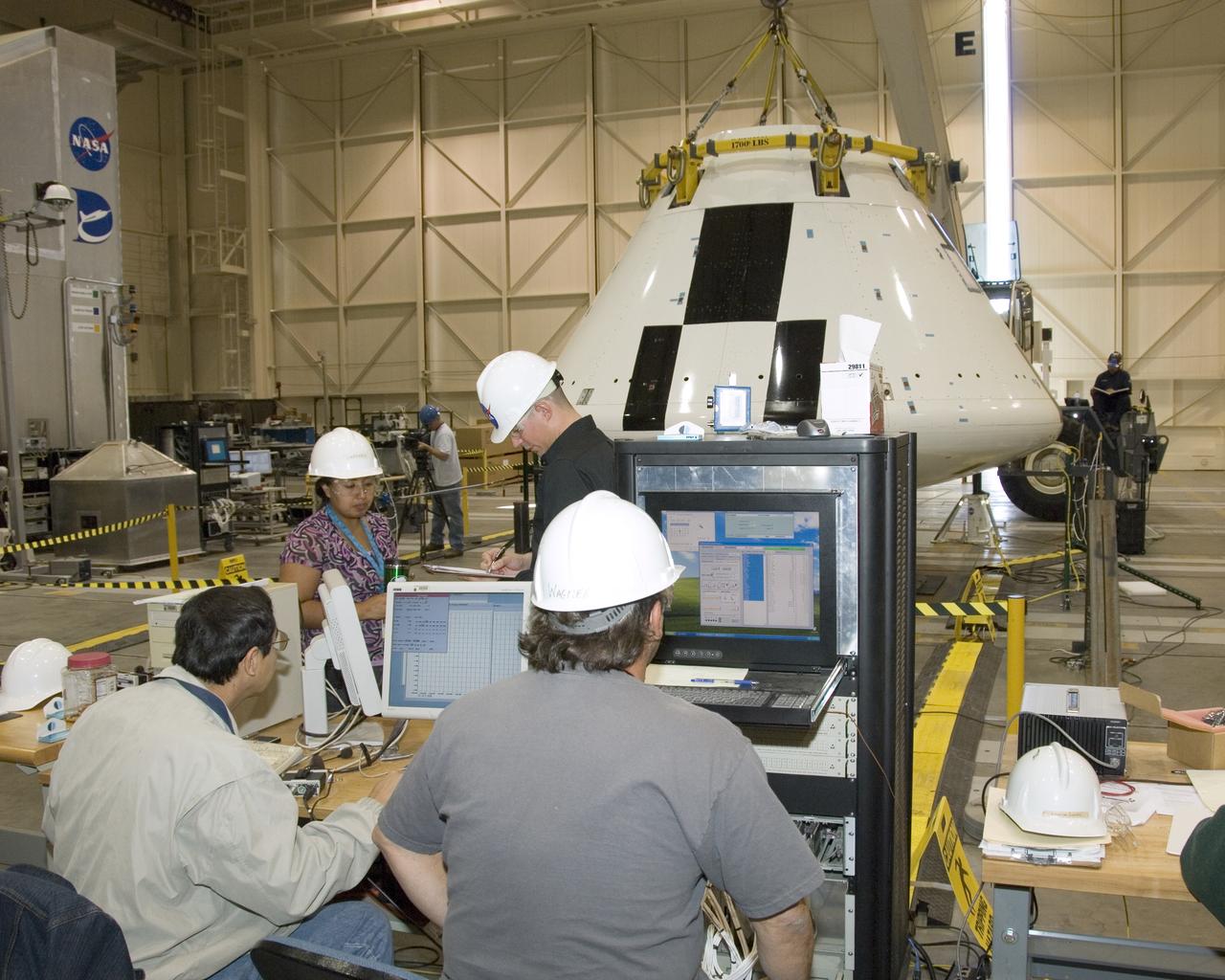
Engineers and technicians pore over data during moment-of-inertia testing on the Orion PA-1 Abort Flight Test module in the NASA Dryden Flight Loads Laboratory.
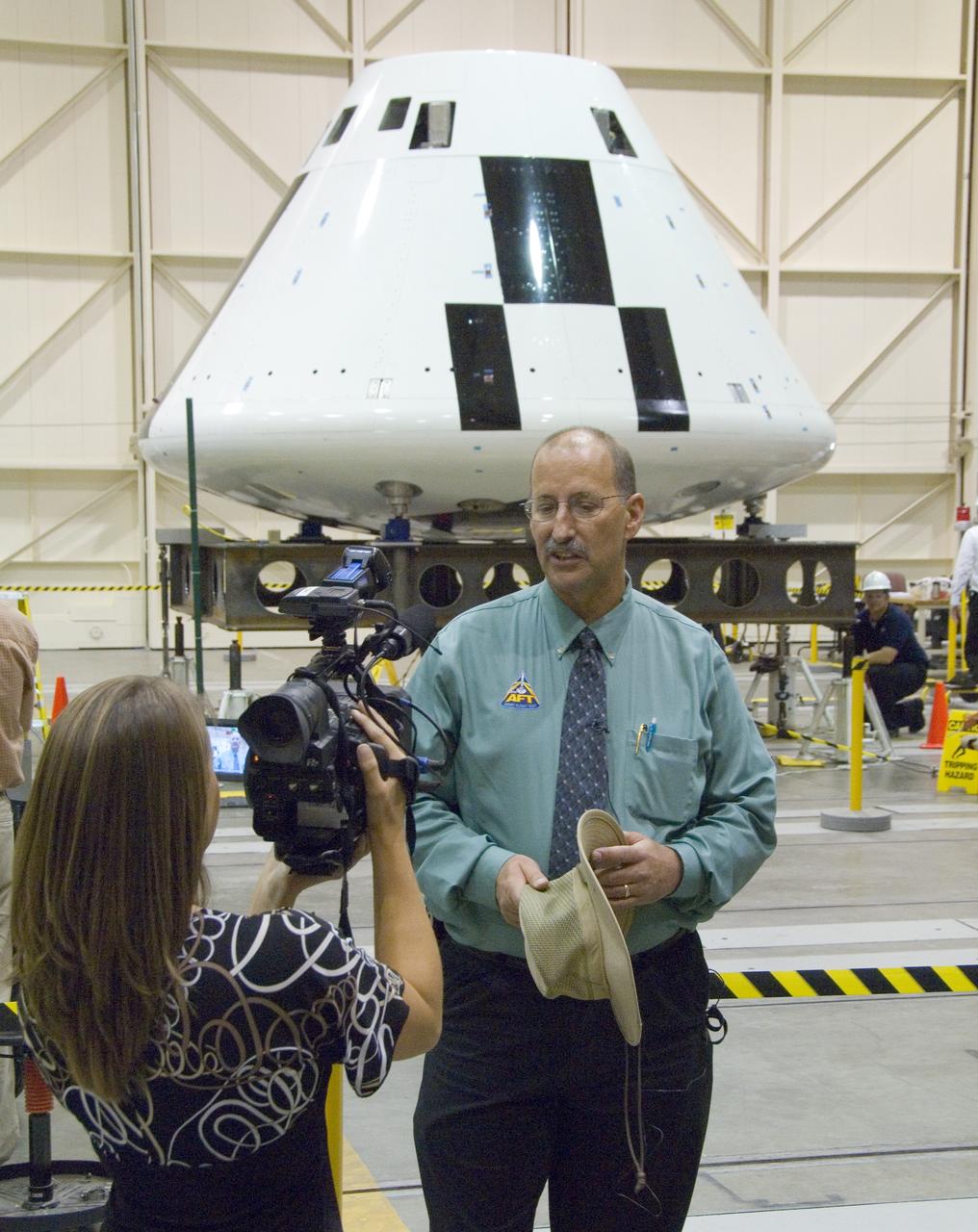
Reporter Julie Flannery of KERO-TV, Bakersfield, interviews NASA Dryden's Orion Abort Flight Test project manager Gary Martin in front of the Orion PA-1 crew module.
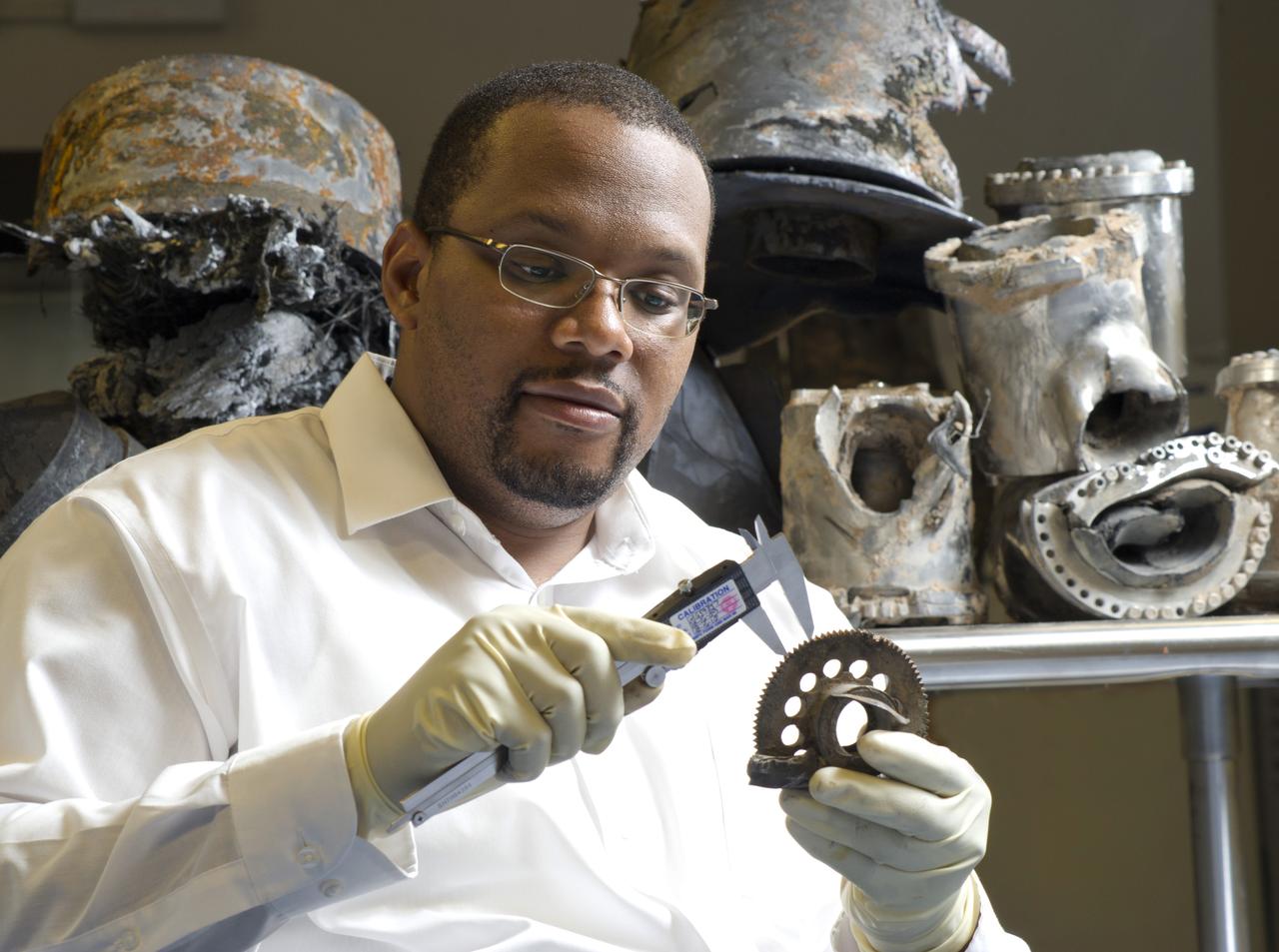
MARVIN BARNES, NASA MSFC ER52 SOLID PROPULSION, SEPARATION AND MANEUVERING SYSTEMS BRANCH, INSPECTS POST-FLIGHT ORION LAUNCH ABORT SYSTEM (LAS) PAD ABORT 1 (PA-1) HARDWARE
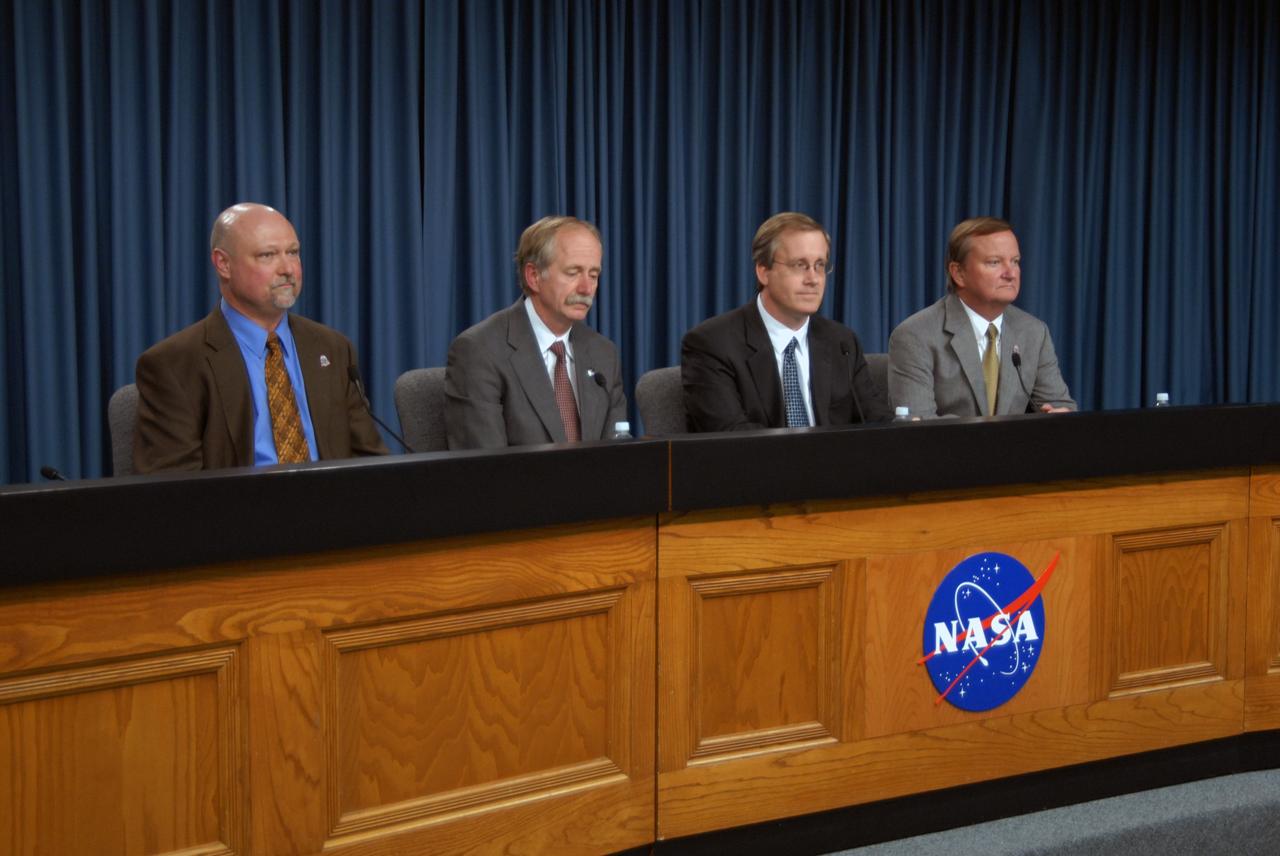
CAPE CANAVERAL, Fla. – Mike Curie (far left), with NASA Public Affairs, moderates the flight readiness review news conference for space shuttle Discovery's STS-119 mission. On the panel are (from left) Associate Administrator for Space Operations Bill Gerstenmaier, Space Shuttle Program Manager John Shannon and Space Shuttle Launch Director Mike Leinbach. During a thorough review of Discovery's readiness for flight, NASA managers decided Feb. 20 more data and possible testing are required before proceeding to launch. Engineering teams have been working to identify what caused damage to a flow control valve on shuttle Endeavour during its November 2008 flight. A new launch date has not been determined. NASA managers decided Feb. 20 more data and possible testing are required before proceeding to launch. Engineering teams have been working to identify what caused damage to a flow control valve on shuttle Endeavour during its November 2008 flight. A new launch date has not been determined. Photo credit: NASA/Glenn Benson
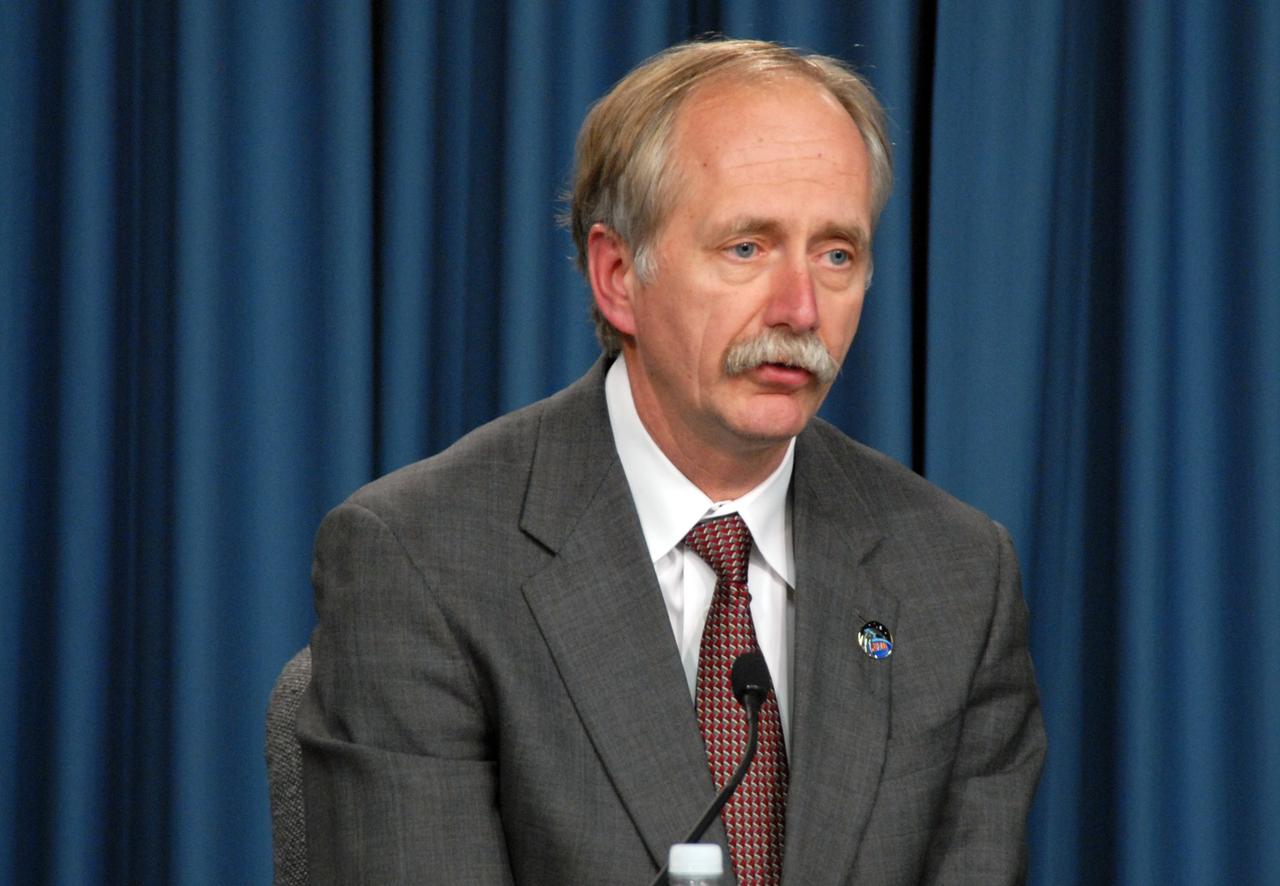
CAPE CANAVERAL, Fla. – At the flight readiness review news conference for space shuttle Discovery's STS-119 mission, Associate Administrator for Space Operations Bill Gerstenmaier talks about the review by mission managers of Discovery's readiness for flight. NASA managers decided Feb. 20 more data and possible testing are required before proceeding to launch. Engineering teams have been working to identify what caused damage to a flow control valve on shuttle Endeavour during its November 2008 flight. A new launch date has not been determined. Photo credit: NASA/Glenn Benson
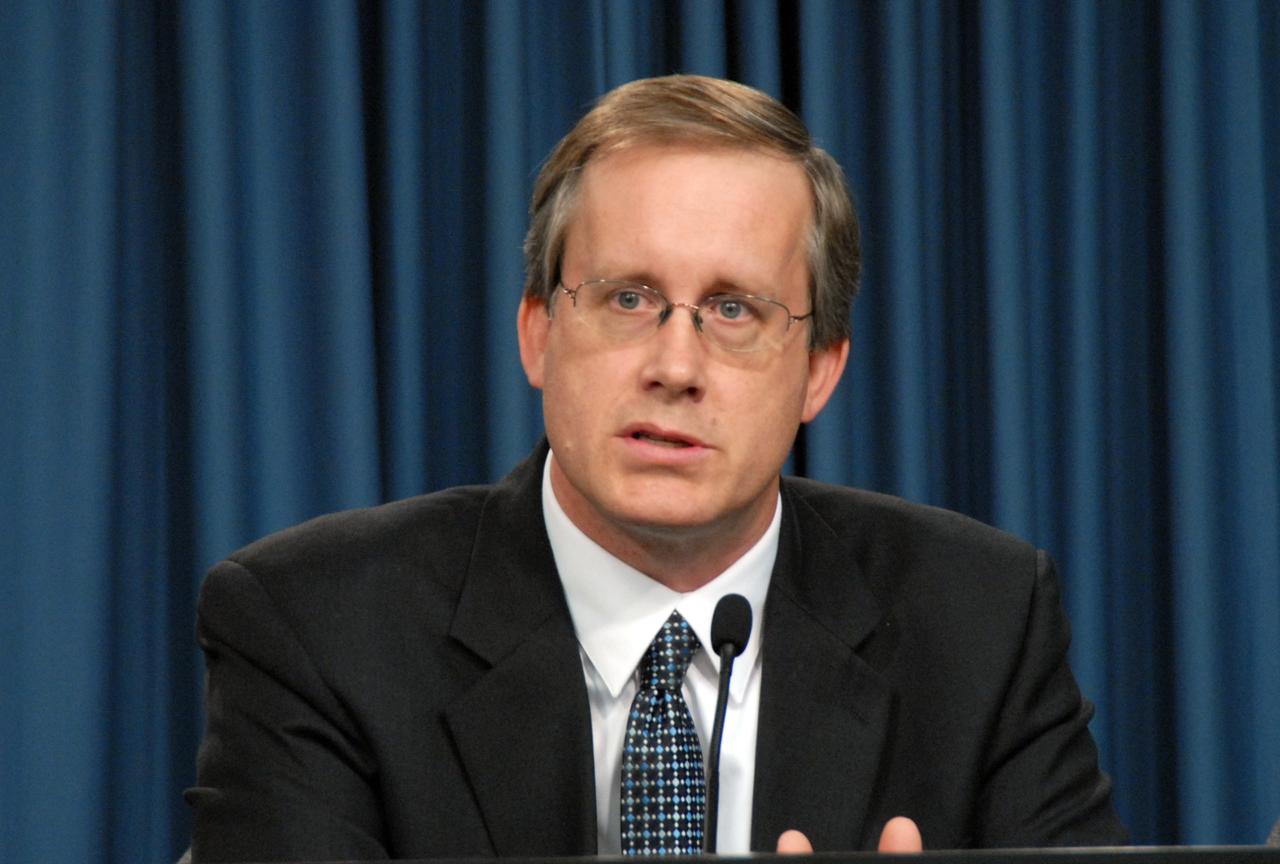
CAPE CANAVERAL, Fla. – At the flight readiness review news conference for space shuttle Discovery's STS-119 mission, Space Shuttle Program Manager John Shannon talks about the discussion surrounding Discovery's readiness for flight. NASA managers decided Feb. 20 more data and possible testing are required before proceeding to launch. Engineering teams have been working to identify what caused damage to a flow control valve on shuttle Endeavour during its November 2008 flight. A new launch date has not been determined. Photo credit: NASA/Glenn Benson
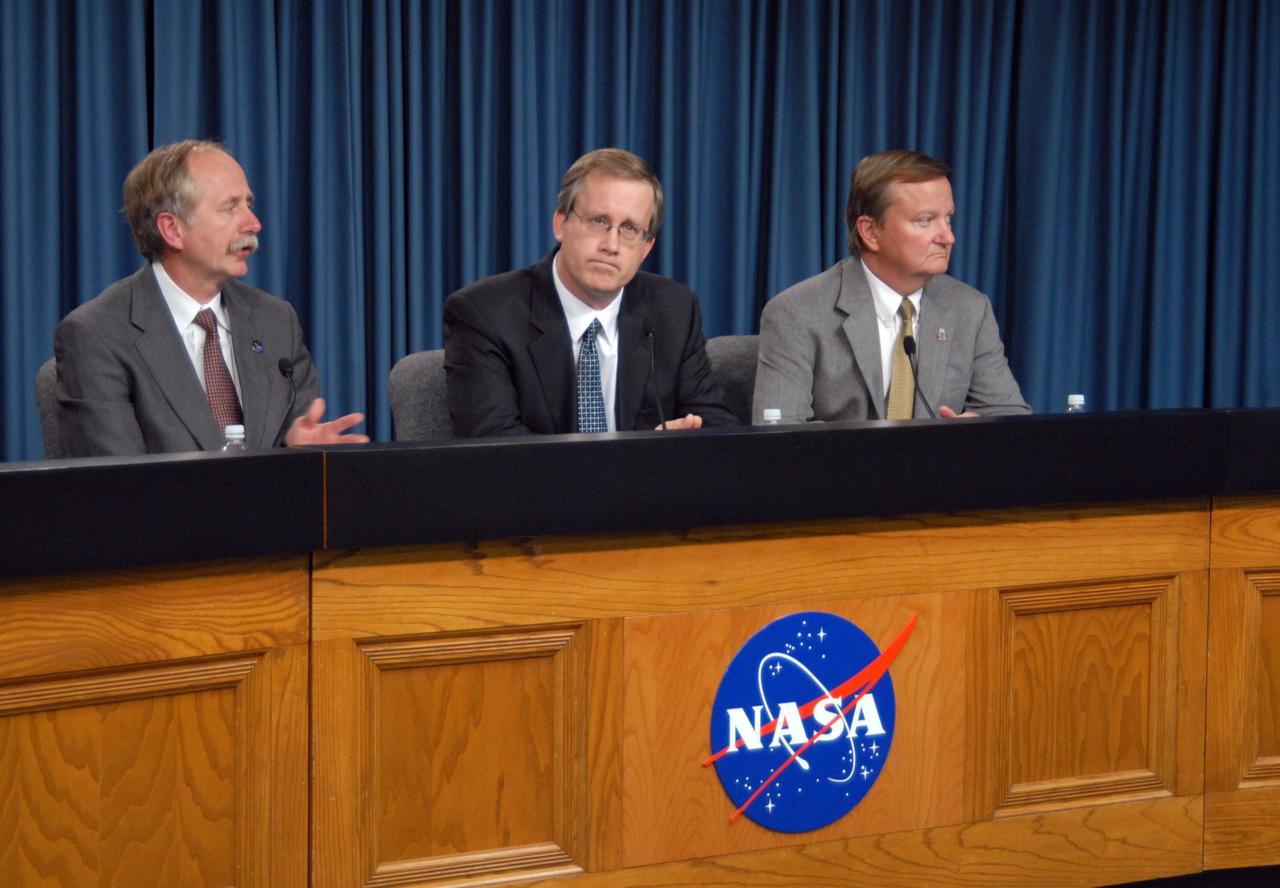
CAPE CANAVERAL, Fla. – Associate Administrator for Space Operations Bill Gerstenmaier, Space Shuttle Program Manager John Shannon and Space Shuttle Launch Director Mike Leinbach respond to media questions about the flight readiness review news conference for space shuttle Discovery's STS-119 mission. NASA managers decided Feb. 20 more data and possible testing are required before proceeding to launch. Engineering teams have been working to identify what caused damage to a flow control valve on shuttle Endeavour during its November 2008 flight. A new launch date has not been determined. Photo credit: NASA/Glenn Benson
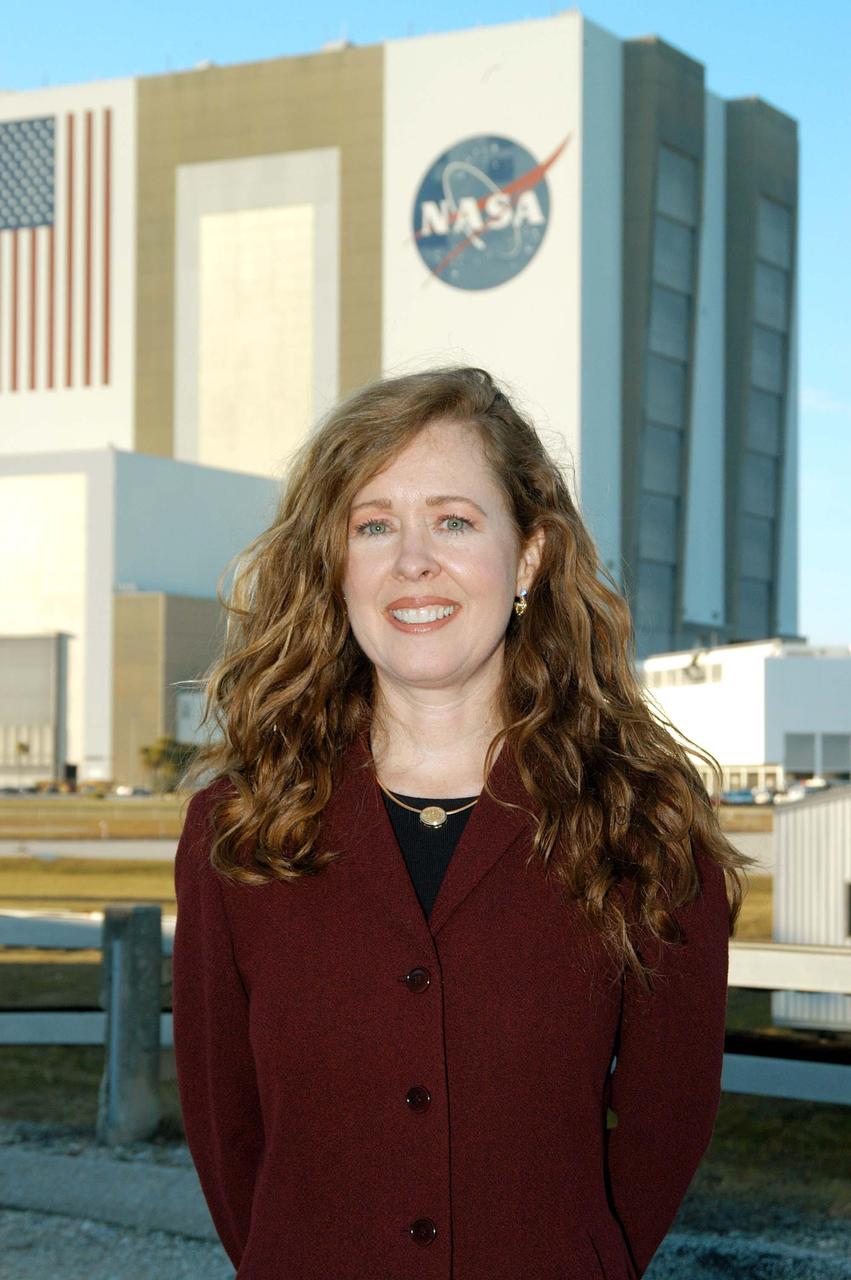
KENNEDY SPACE CENTER, FLA. - Lisa A. Malone was named director of NASA-KSC External Relations and Business Development on Jan. 22, 2004.
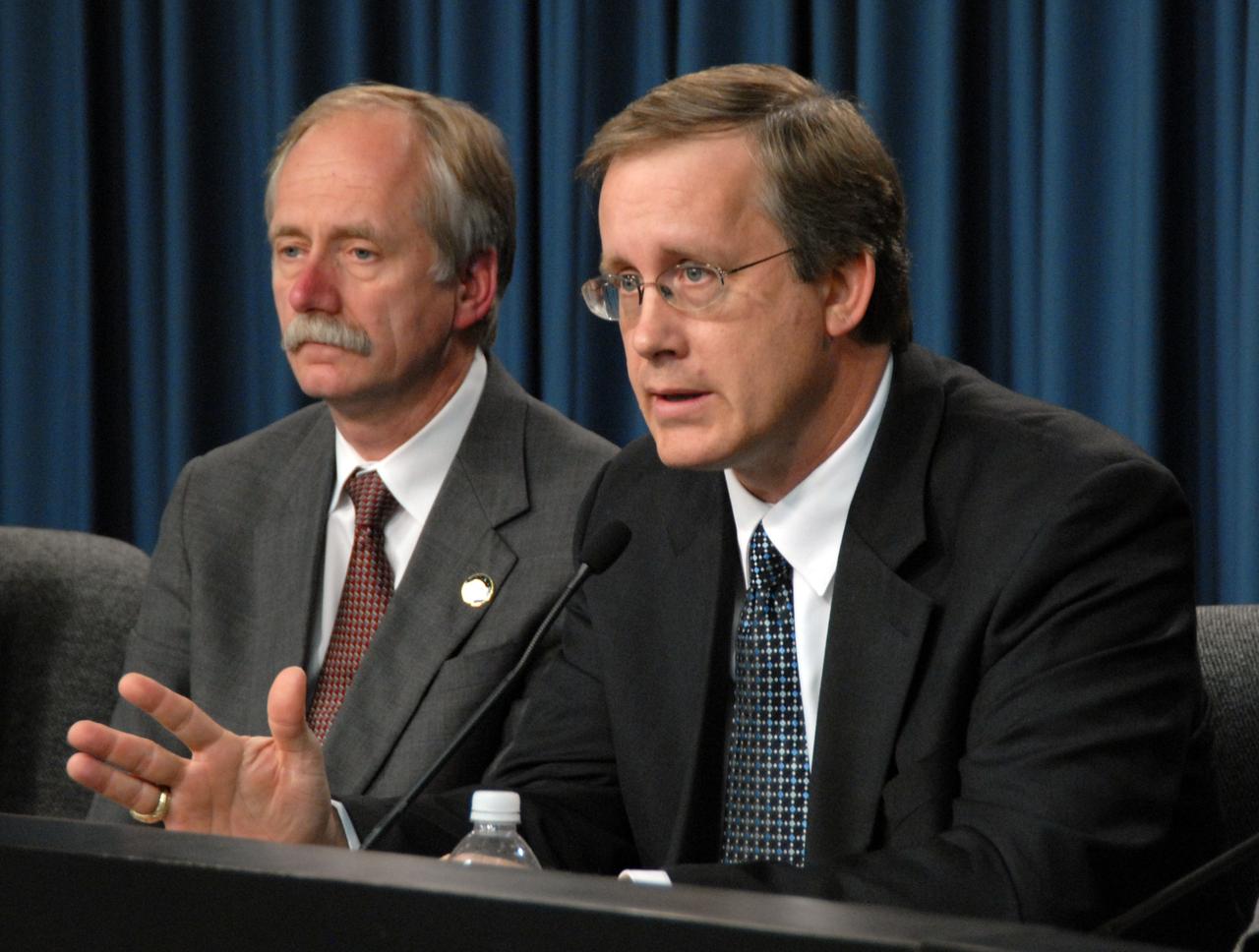
CAPE CANAVERAL, Fla. – At the flight readiness review news conference for space shuttle Discovery's STS-119 mission, Space Shuttle Program Manager John Shannon (right) talks about the discussion surrounding Discovery's readiness for flight. At left is Associate Administrator for Space Operations Bill Gerstenmaier. NASA managers decided Feb. 20 more data and possible testing are required before proceeding to launch. Engineering teams have been working to identify what caused damage to a flow control valve on shuttle Endeavour during its November 2008 flight. A new launch date has not been determined. Photo credit: NASA/Glenn Benson
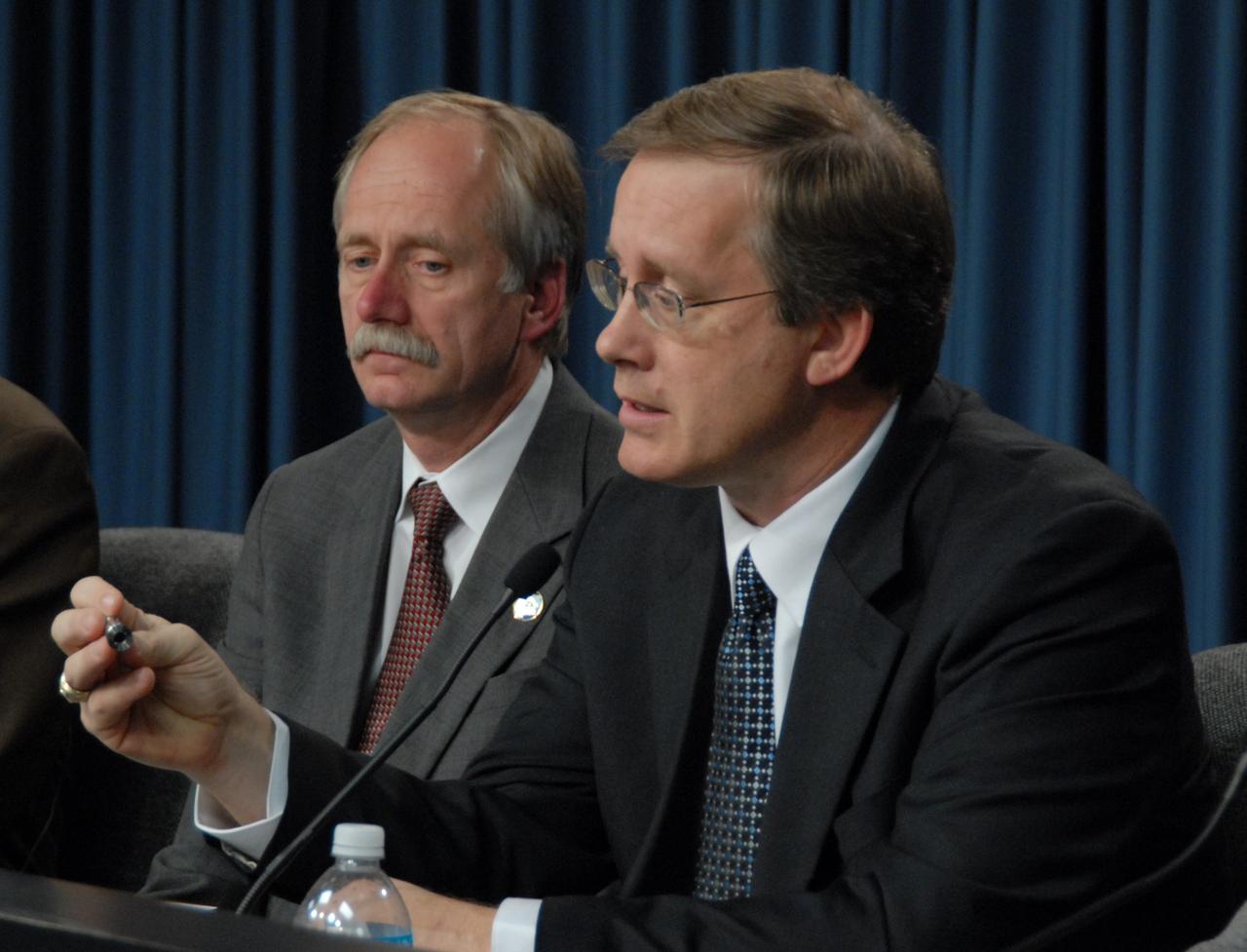
CAPE CANAVERAL, Fla. – At the flight readiness review news conference for space shuttle Discovery's STS-119 mission, Space Shuttle Program Manager John Shannon (right) talks about the discussion surrounding Discovery's readiness for flight. At left is Associate Administrator for Space Operations Bill Gerstenmaier. Shannon is holding a flow control valve that is under review and testing. Engineering teams have been working to identify what caused damage to a flow control valve on shuttle Endeavour during its November 2008 flight. A new launch date has not been determined. Photo credit: NASA/Glenn Benson

KENNEDY SPACE CENTER, FLA. -- Official portrait of Mike Rein, Division Chief, Media Services, External Relations and Business Development Directorate.
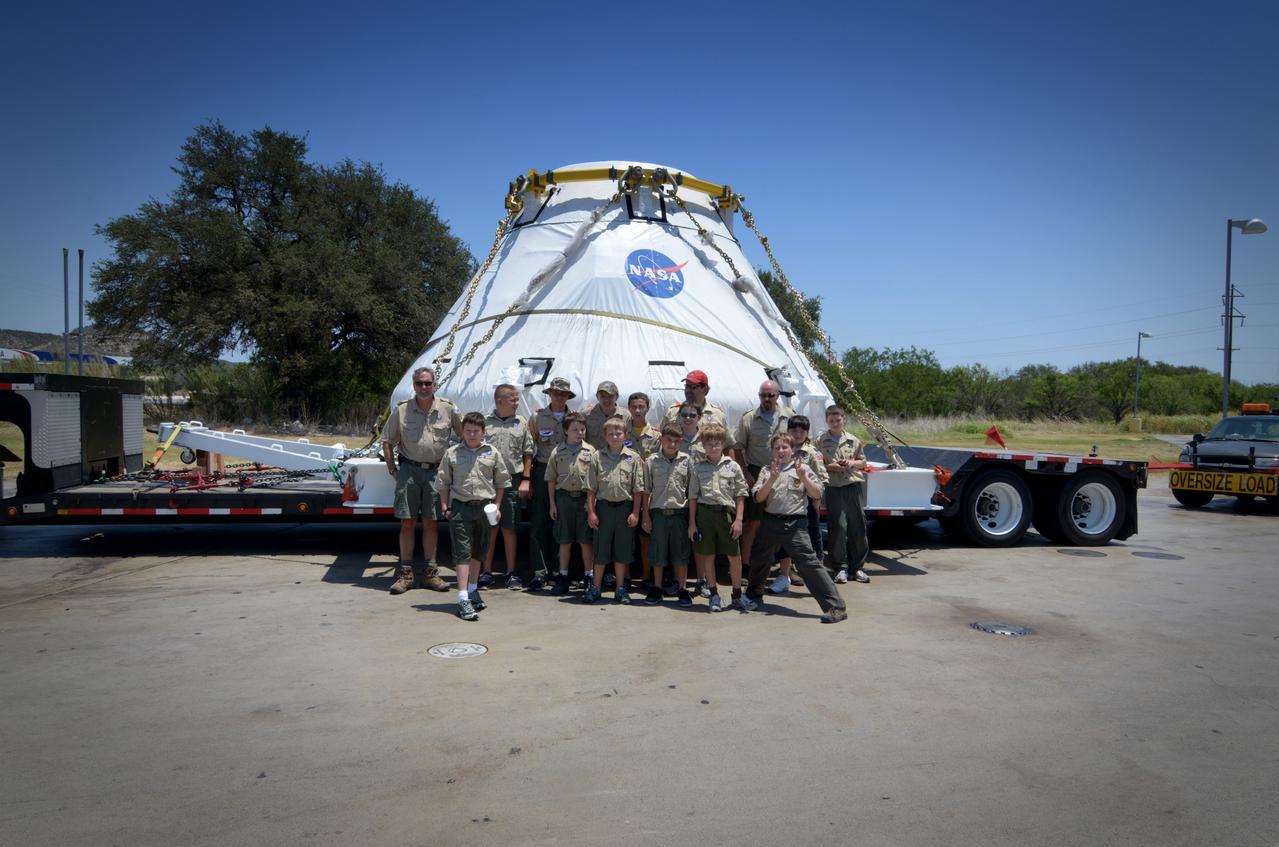
Travelers take a photo with the Orion crew module flown on NASA’s Pad Abort-1 (PA-1) flight test on the road on June 15, 2011. Part of Batch image transfer from Flickr.
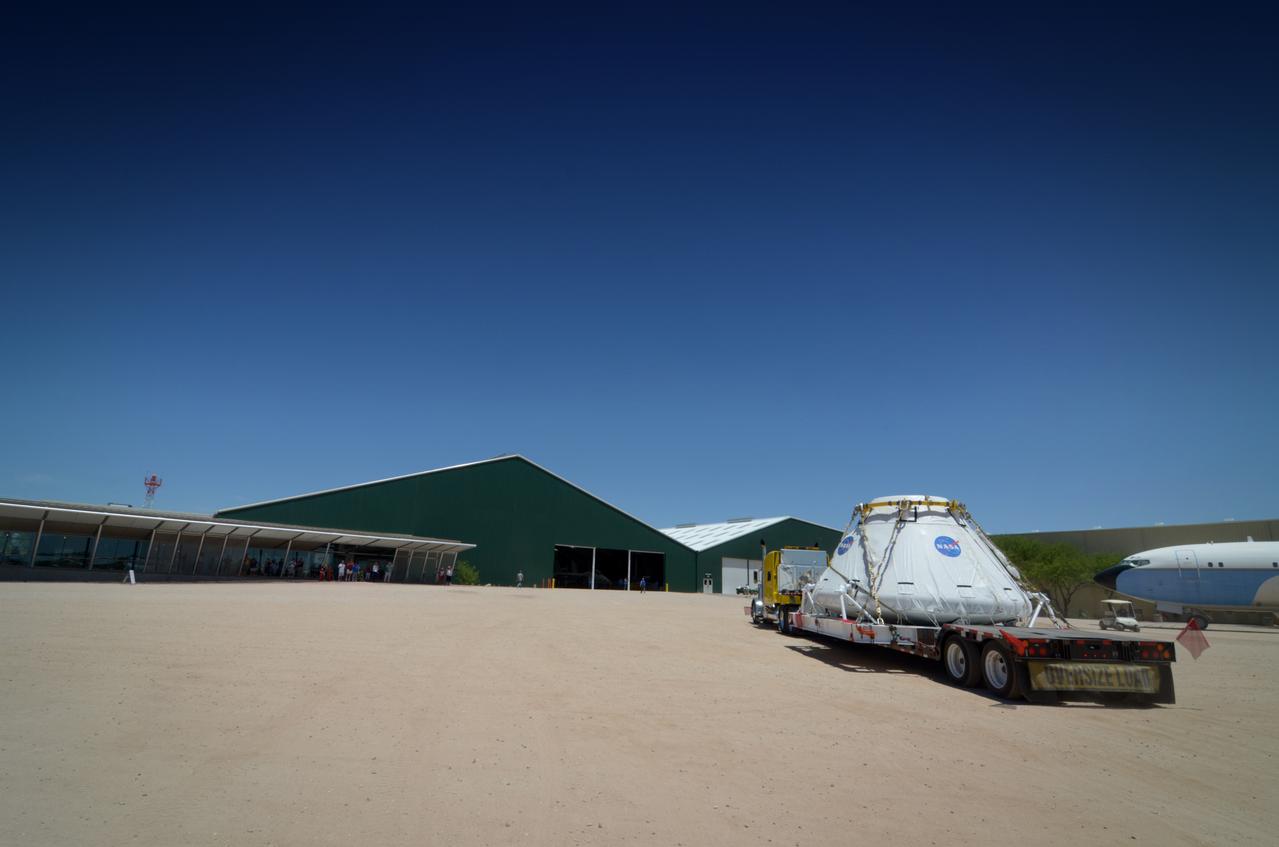
Travelers take a photo with the Orion crew module flown on NASA’s Pad Abort-1 (PA-1) flight test on the road on June 15, 2011. Part of Batch image transfer from Flickr.
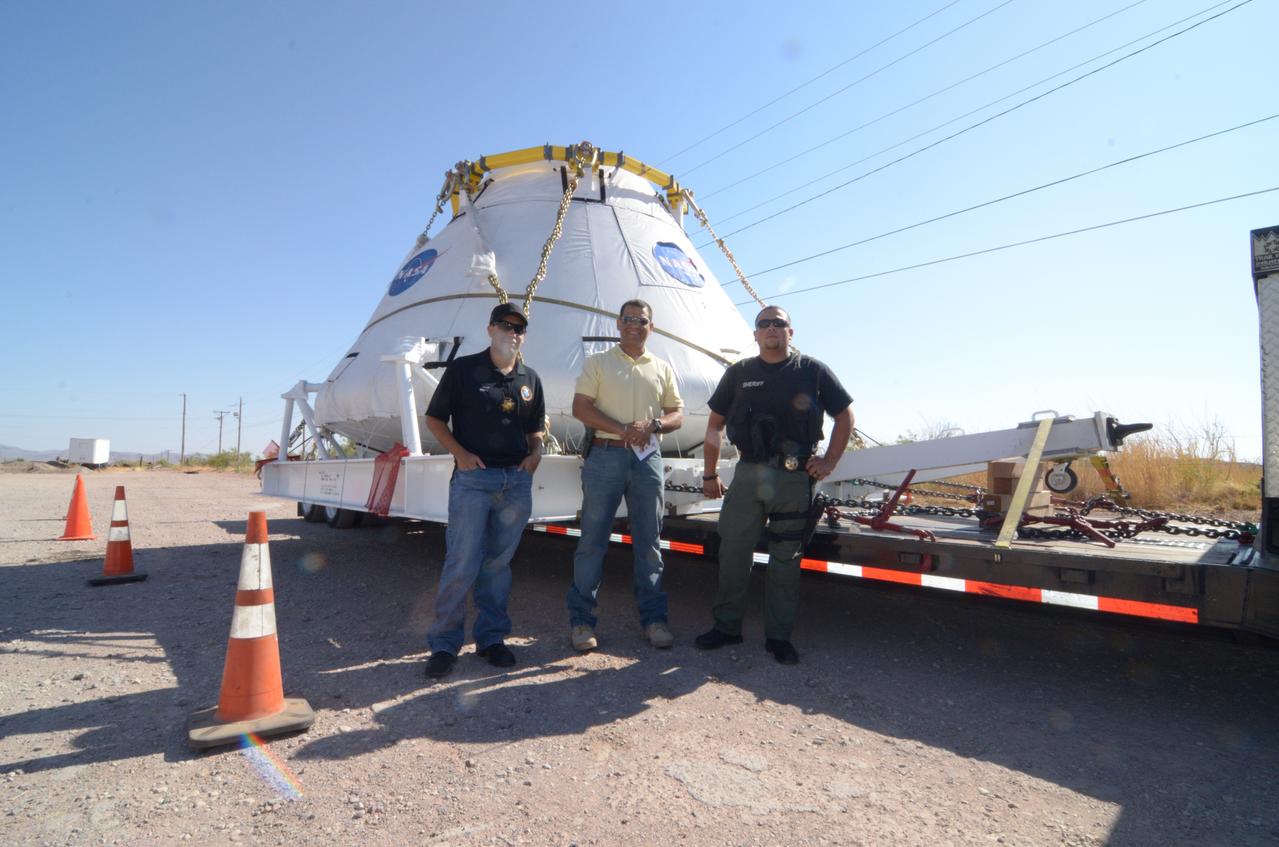
Travelers take a photo with the Orion crew module flown on NASA’s Pad Abort-1 (PA-1) flight test on the road on June 17, 2011. Part of Batch image transfer from Flickr.
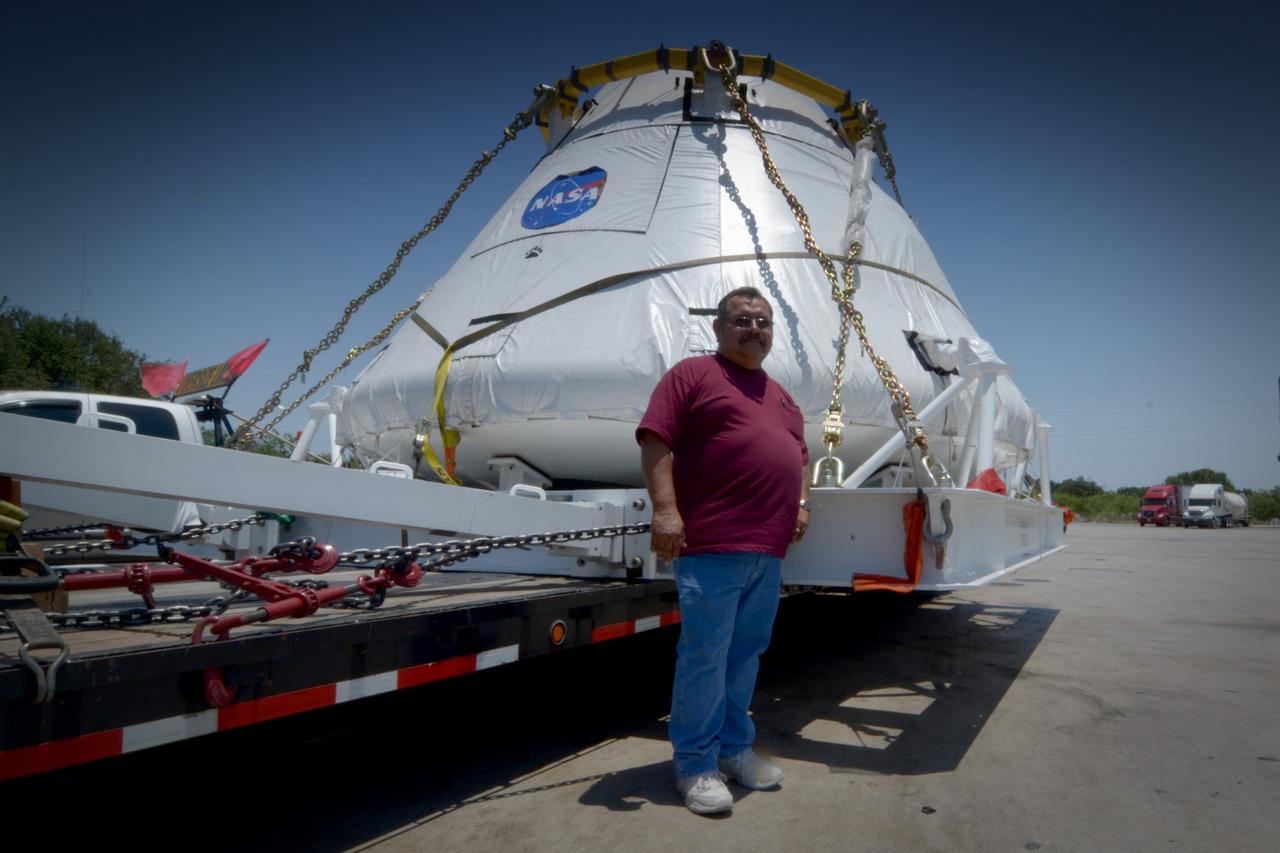
Travelers take a photo with the Orion crew module flown on NASA’s Pad Abort-1 (PA-1) flight test on the road on June 15, 2011. Part of Batch image transfer from Flickr.
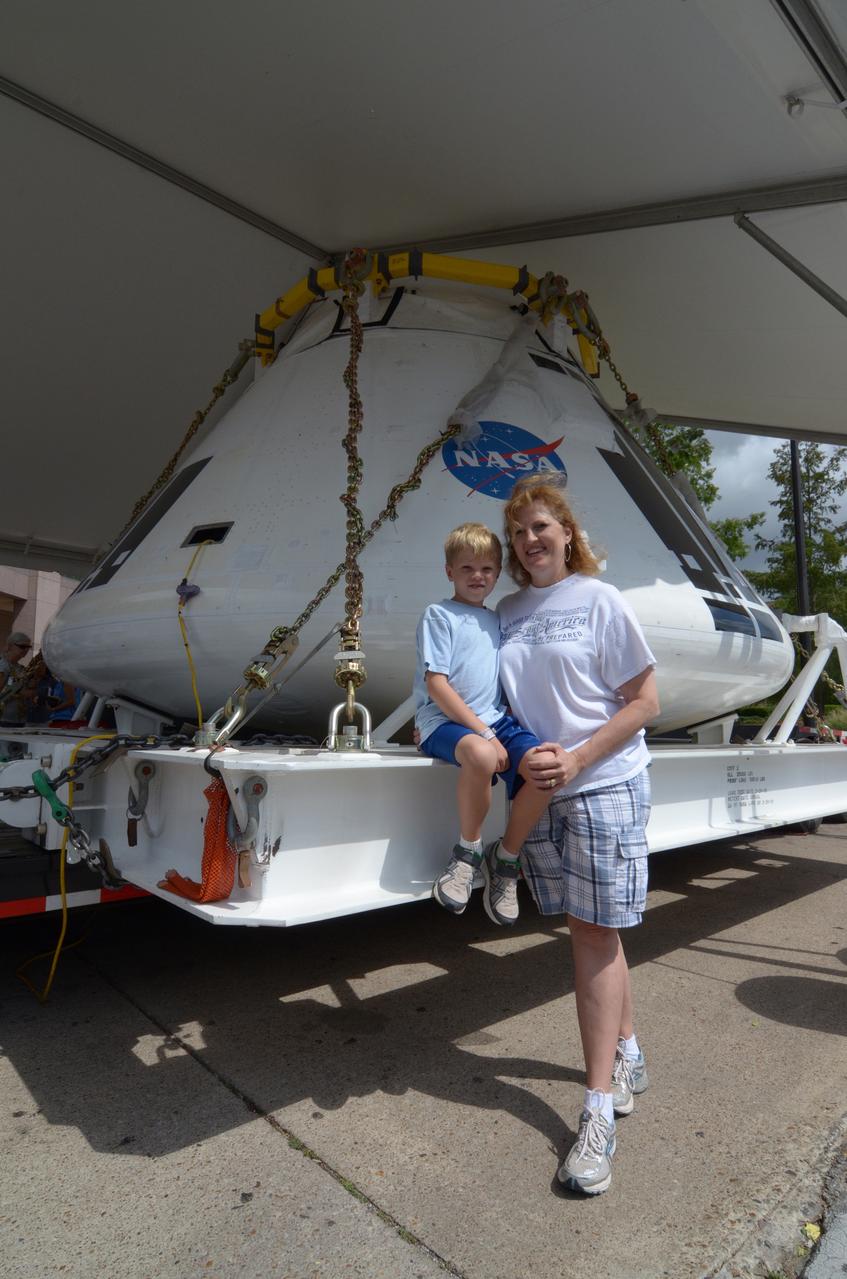
Travelers take a photo with the Orion crew module flown on NASA’s Pad Abort-1 (PA-1) flight test on the road on June 18, 2011. Part of Batch image transfer from Flickr.
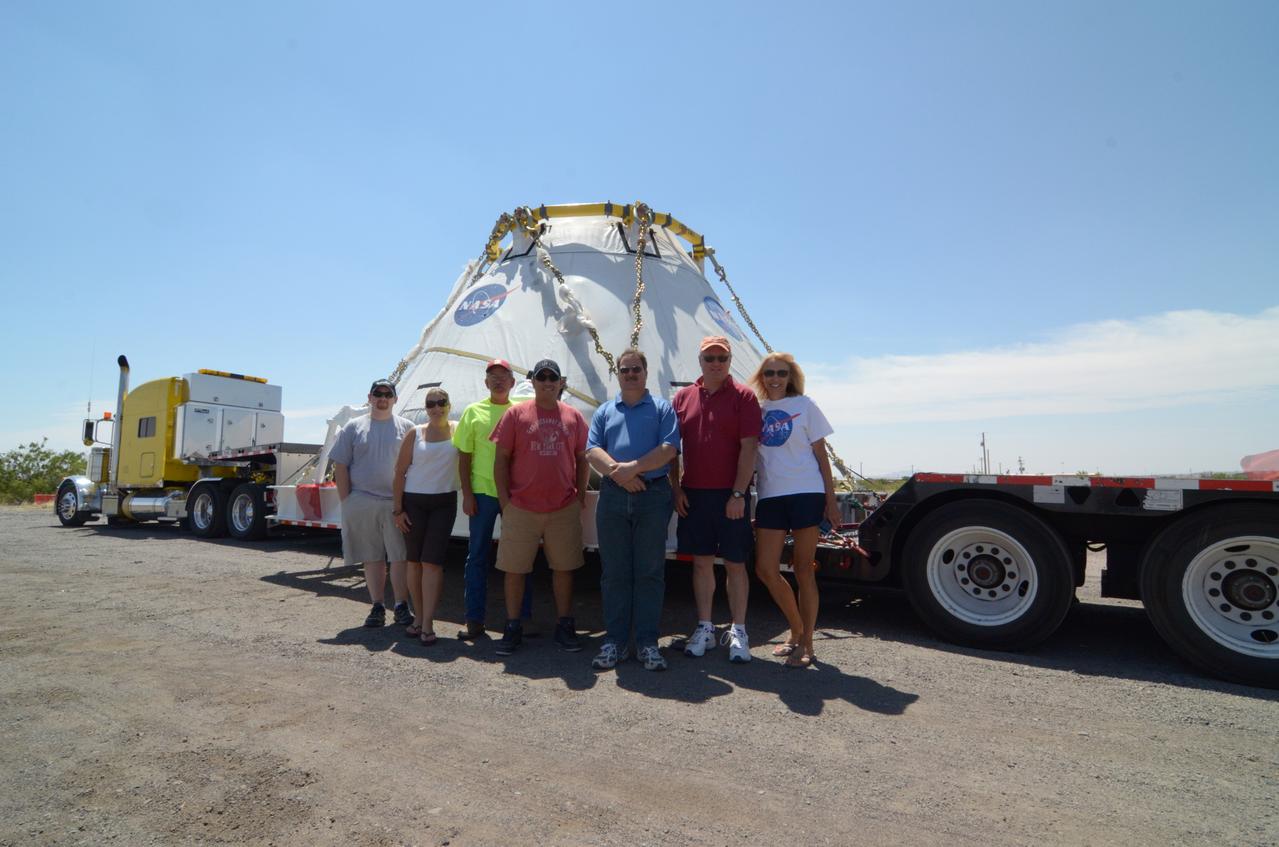
Travelers take a photo with the Orion crew module flown on NASA’s Pad Abort-1 (PA-1) flight test on the road on June 17, 2011. Part of Batch image transfer from Flickr.
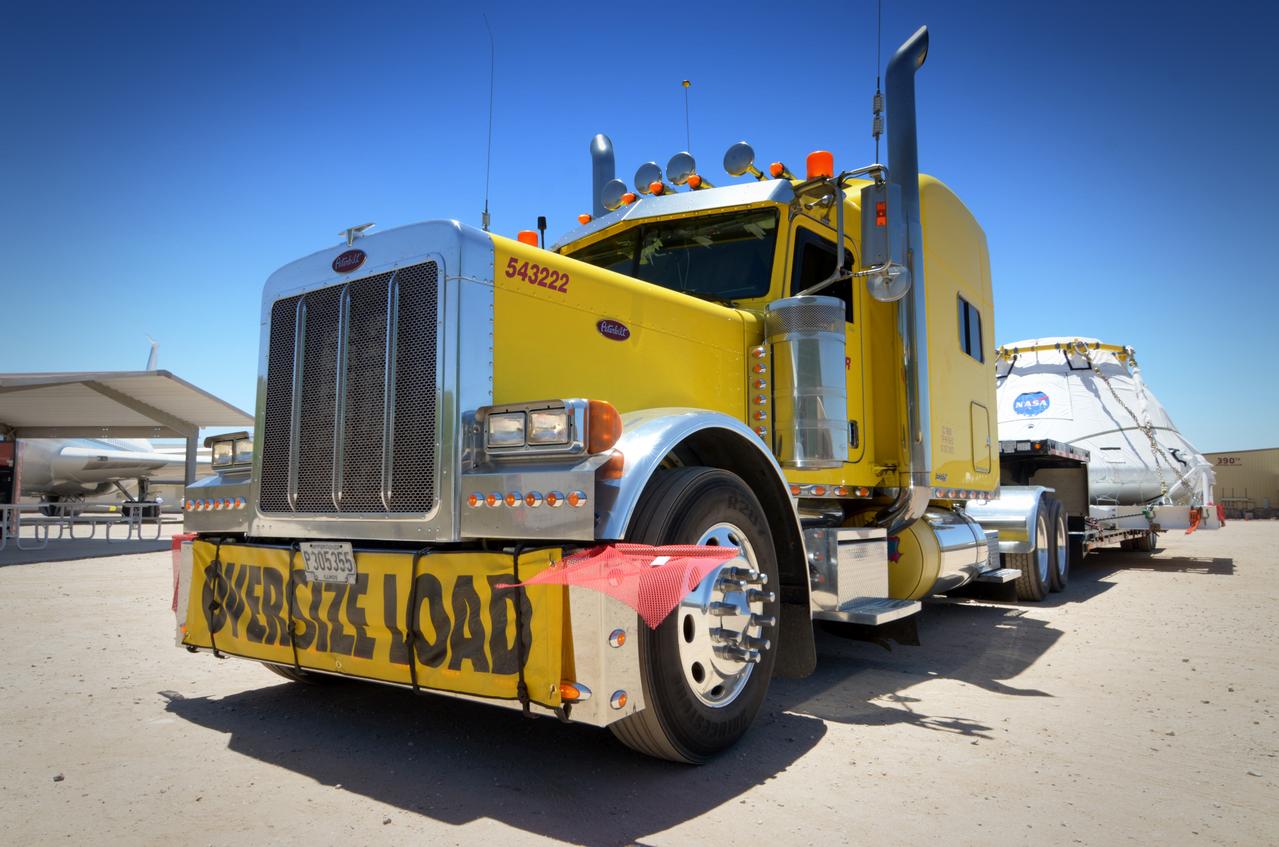
Travelers take a photo with the Orion crew module flown on NASA’s Pad Abort-1 (PA-1) flight test on the road on June 15, 2011. Part of Batch image transfer from Flickr.
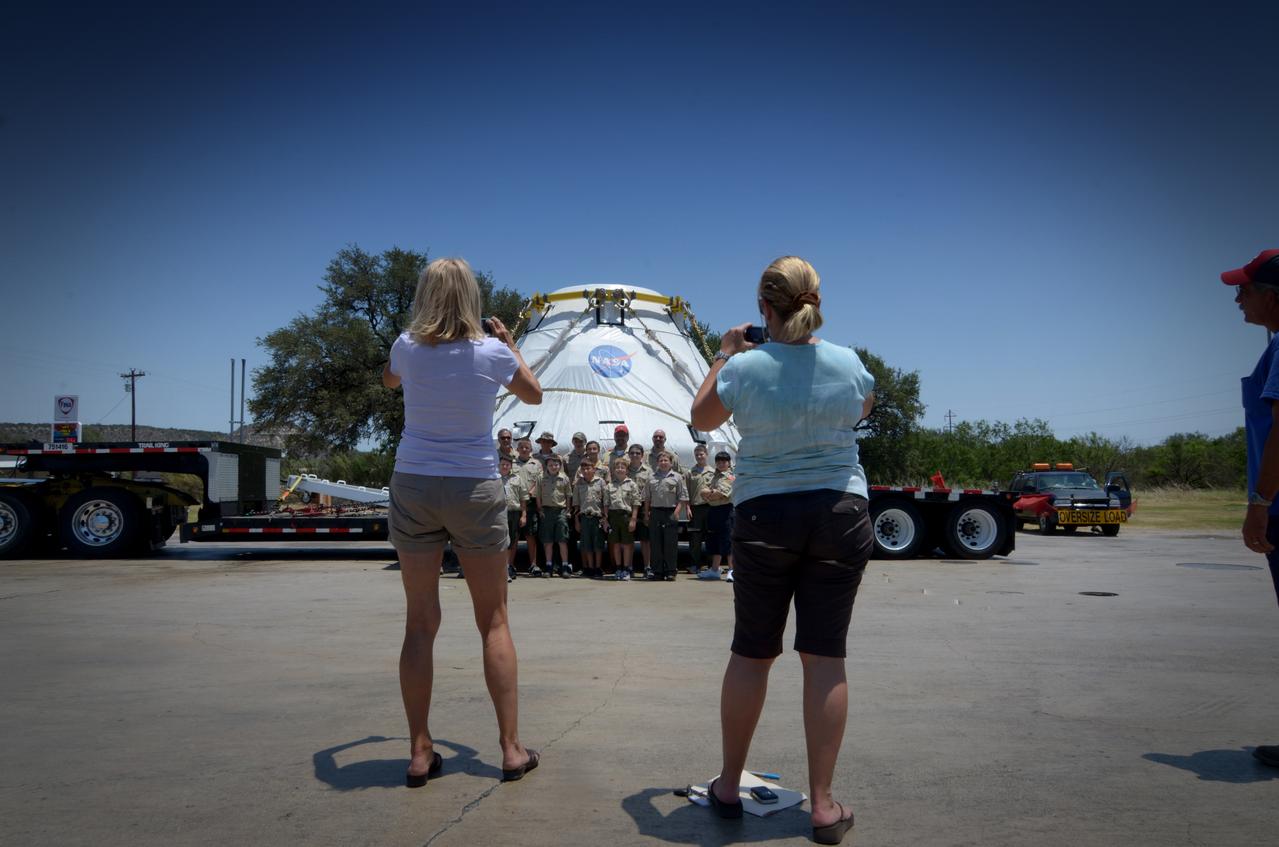
Travelers take a photo with the Orion crew module flown on NASA’s Pad Abort-1 (PA-1) flight test on the road on June 15, 2011. Part of Batch image transfer from Flickr.

The Orion Pad Abort-1 (PA-1) crew module exits the tent at the press site at the Kennedy Space Center in Florida on July 11, 2011. Part of Batch image transfer from Flickr.
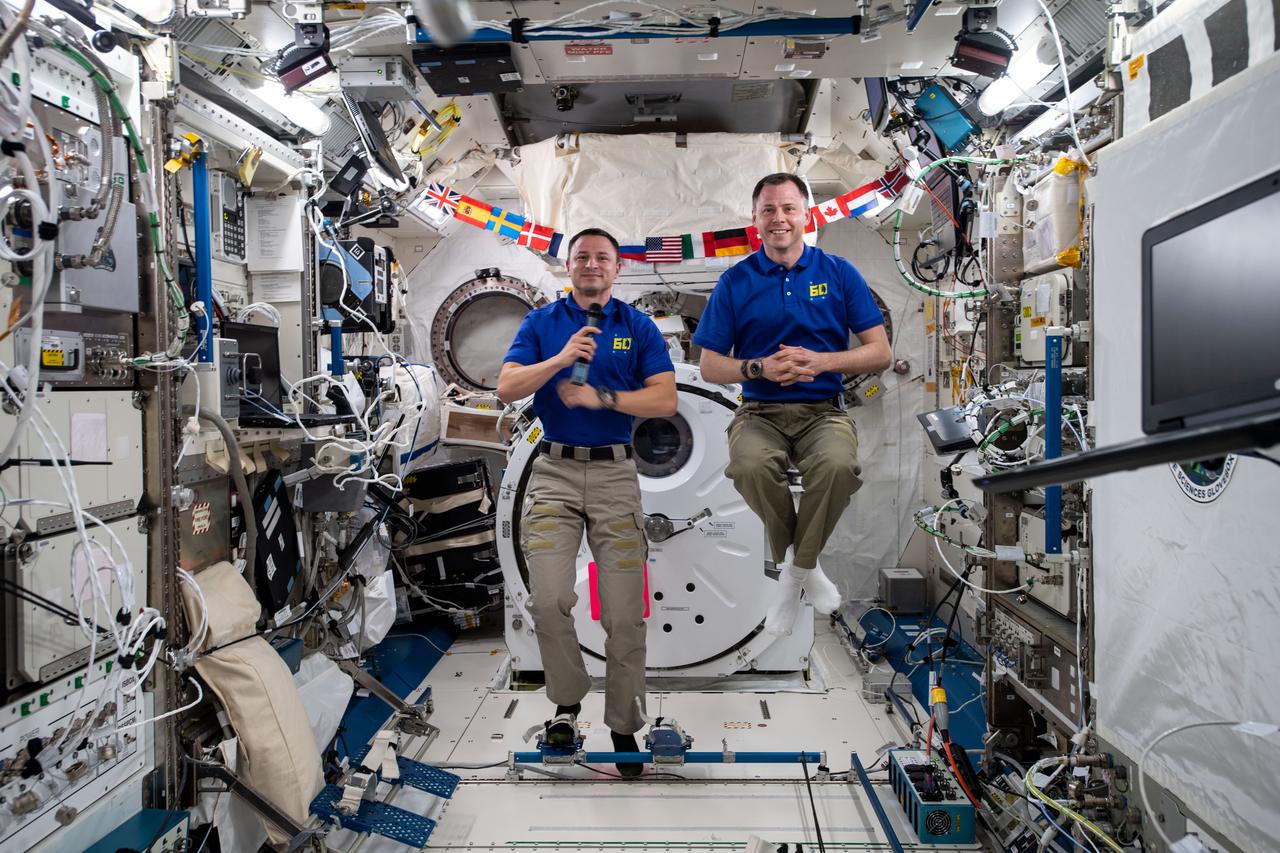
iss060e054187 -- Expedition 60 flight engineers Andrew Morgan and Nick Hague of NASA conduct in-flight interviews with television stations located in Pittsburgh, PA where they discuss what it's like living and working on the International Space Station.
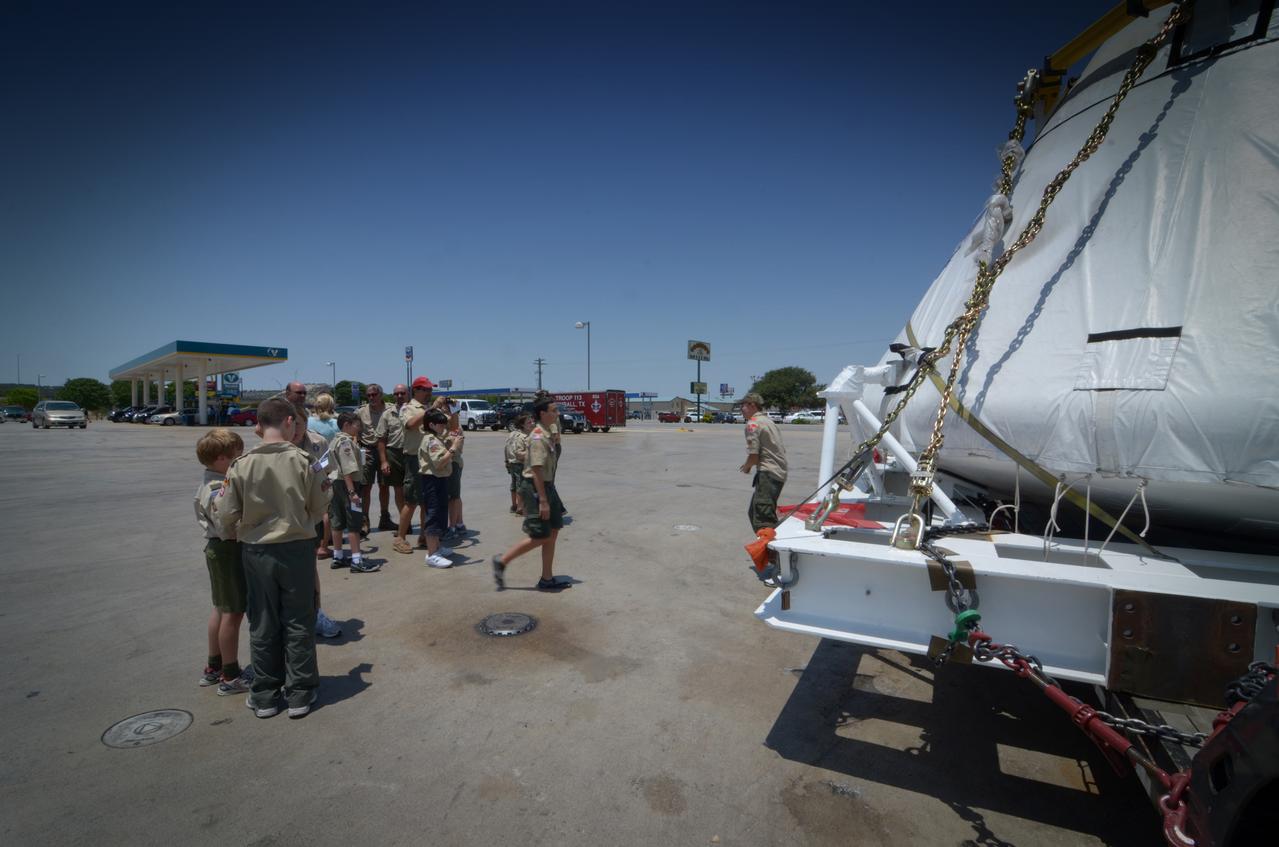
Travelers take a photo with the Orion crew module flown on NASA’s Pad Abort-1 (PA-1) flight test on the road on June 15, 2011. Part of Batch image transfer from Flickr.
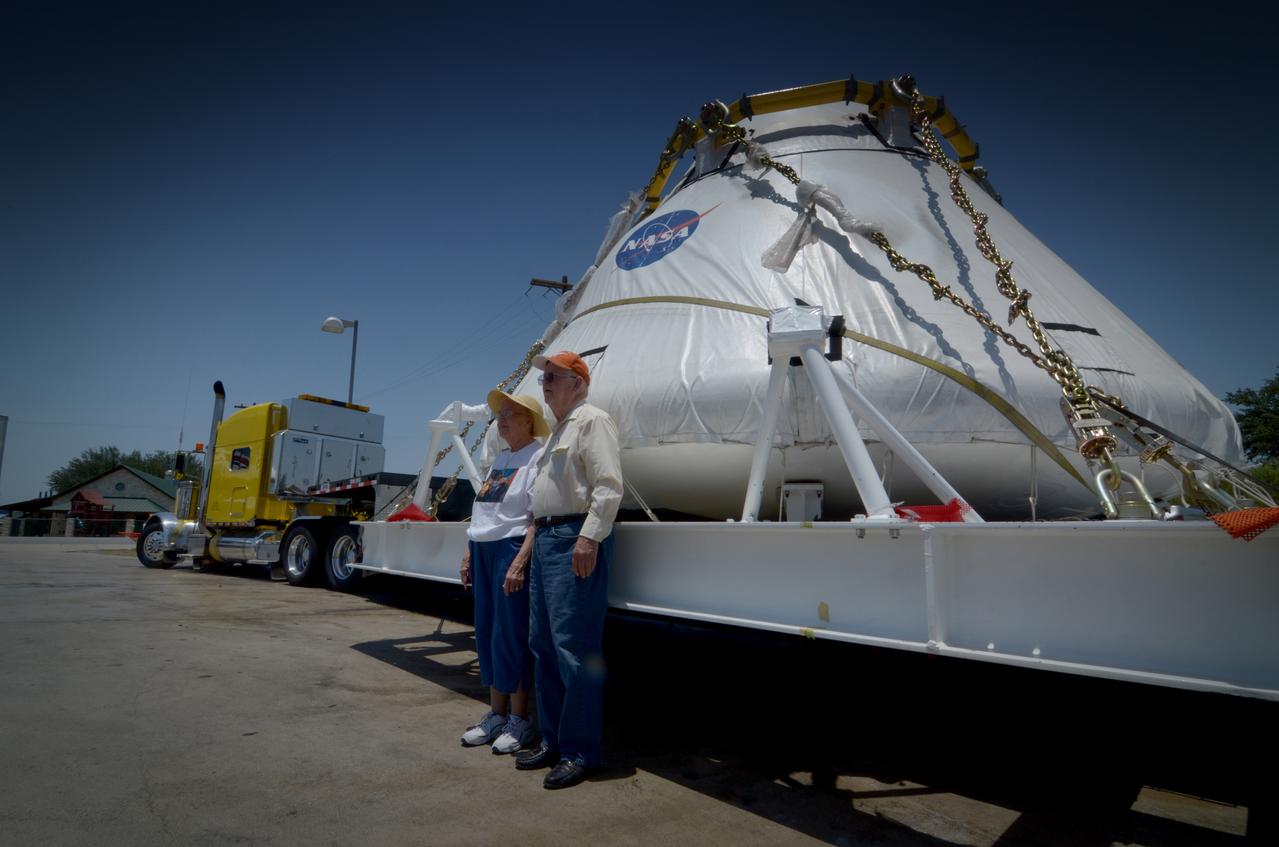
Travelers take a photo with the Orion crew module flown on NASA’s Pad Abort-1 (PA-1) flight test on the road on June 15, 2011. Part of Batch image transfer from Flickr.
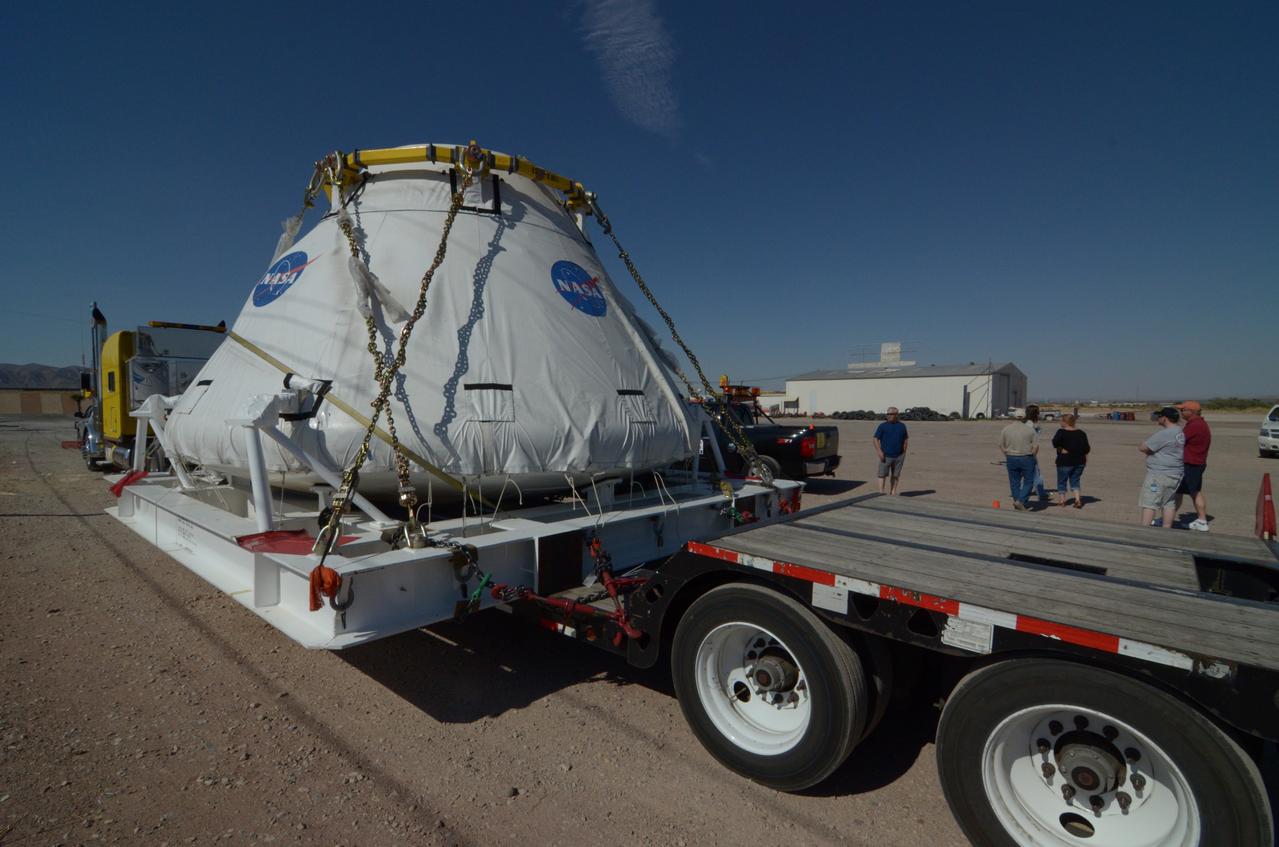
Travelers take a photo with the Orion crew module flown on NASA’s Pad Abort-1 (PA-1) flight test on the road on June 15, 2011. Part of Batch image transfer from Flickr.
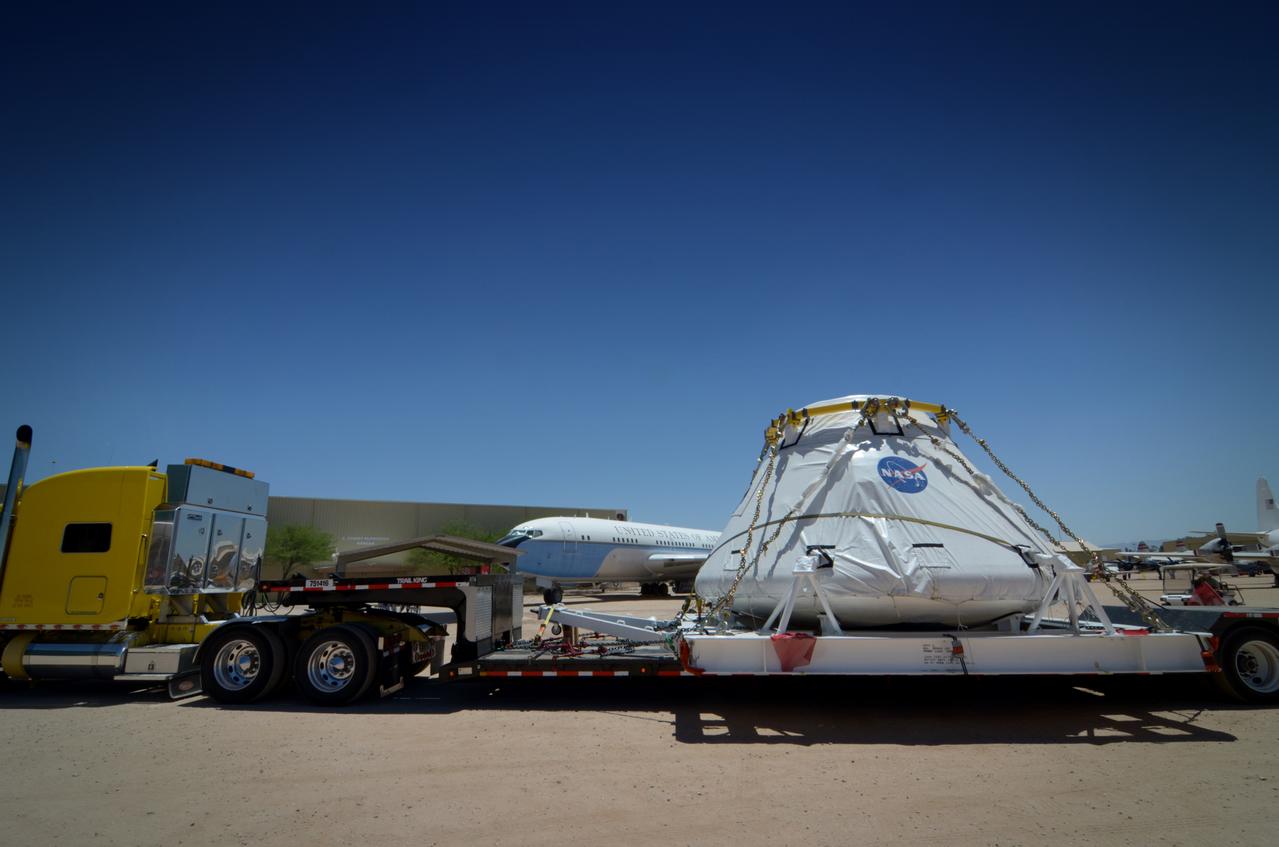
Travelers take a photo with the Orion crew module flown on NASA’s Pad Abort-1 (PA-1) flight test on the road on June 15, 2011. Part of Batch image transfer from Flickr.
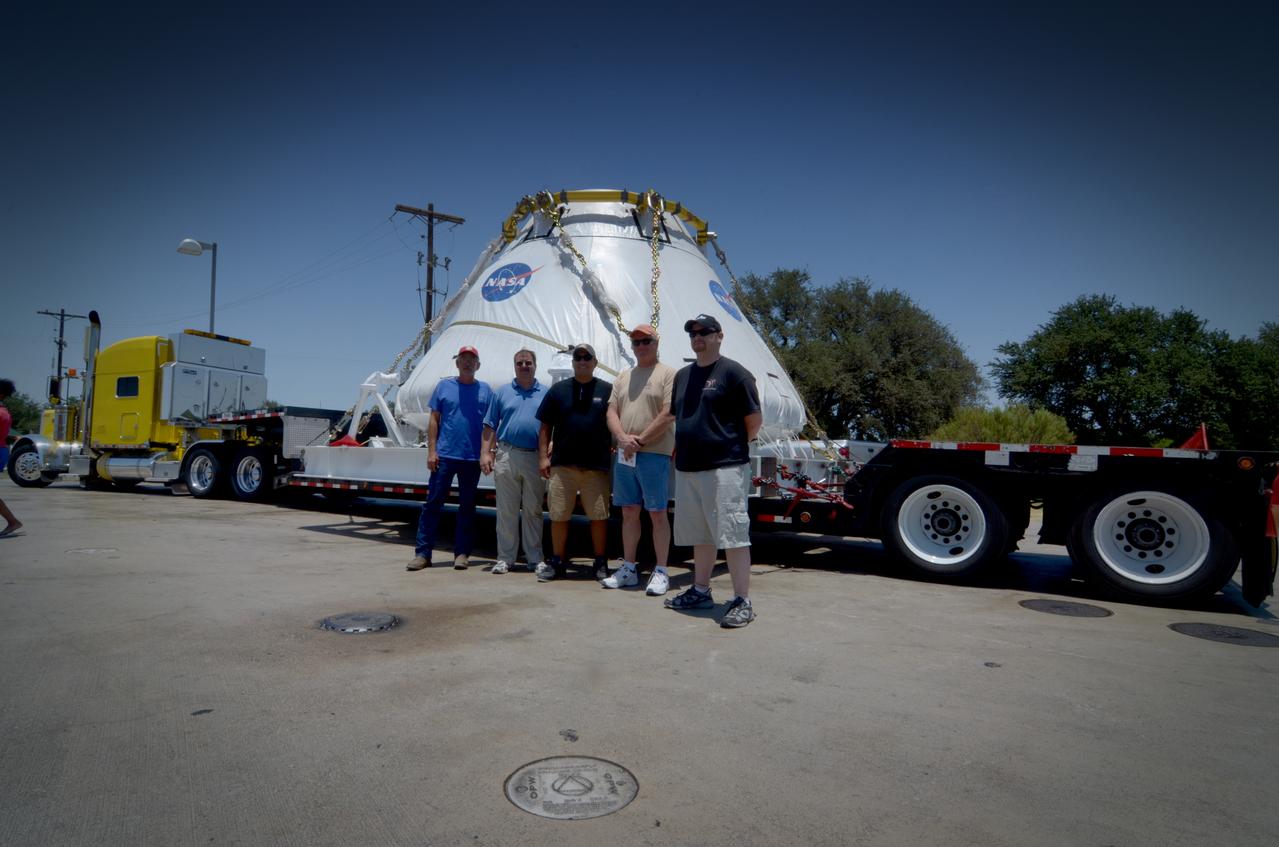
Travelers take a photo with the Orion crew module flown on NASA’s Pad Abort-1 (PA-1) flight test on the road on June 15, 2011. Part of Batch image transfer from Flickr.
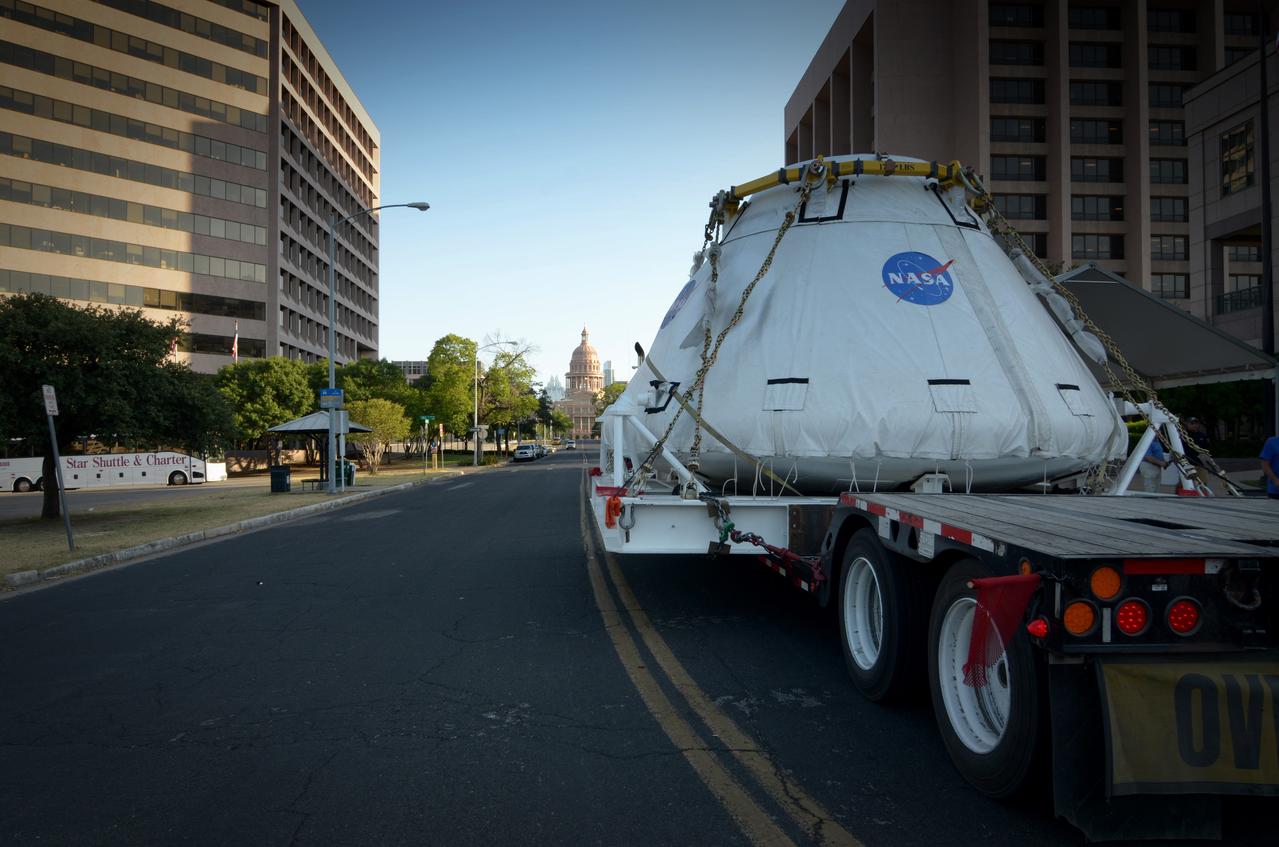
Travelers take a photo with the Orion crew module flown on NASA’s Pad Abort-1 (PA-1) flight test on the road on June 15, 2011. Part of Batch image transfer from Flickr.
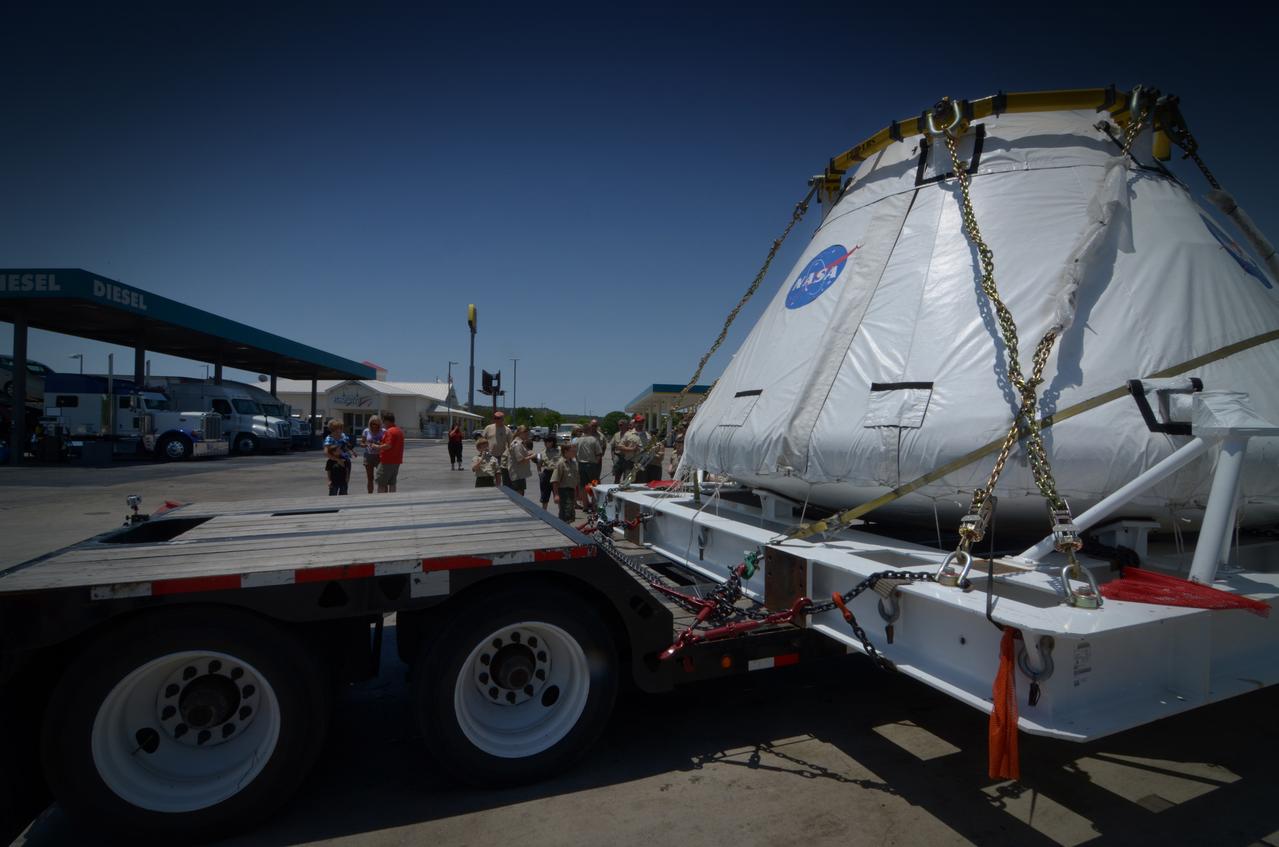
Travelers take a photo with the Orion crew module flown on NASA’s Pad Abort-1 (PA-1) flight test on the road on June 18, 2011. Part of Batch image transfer from Flickr.
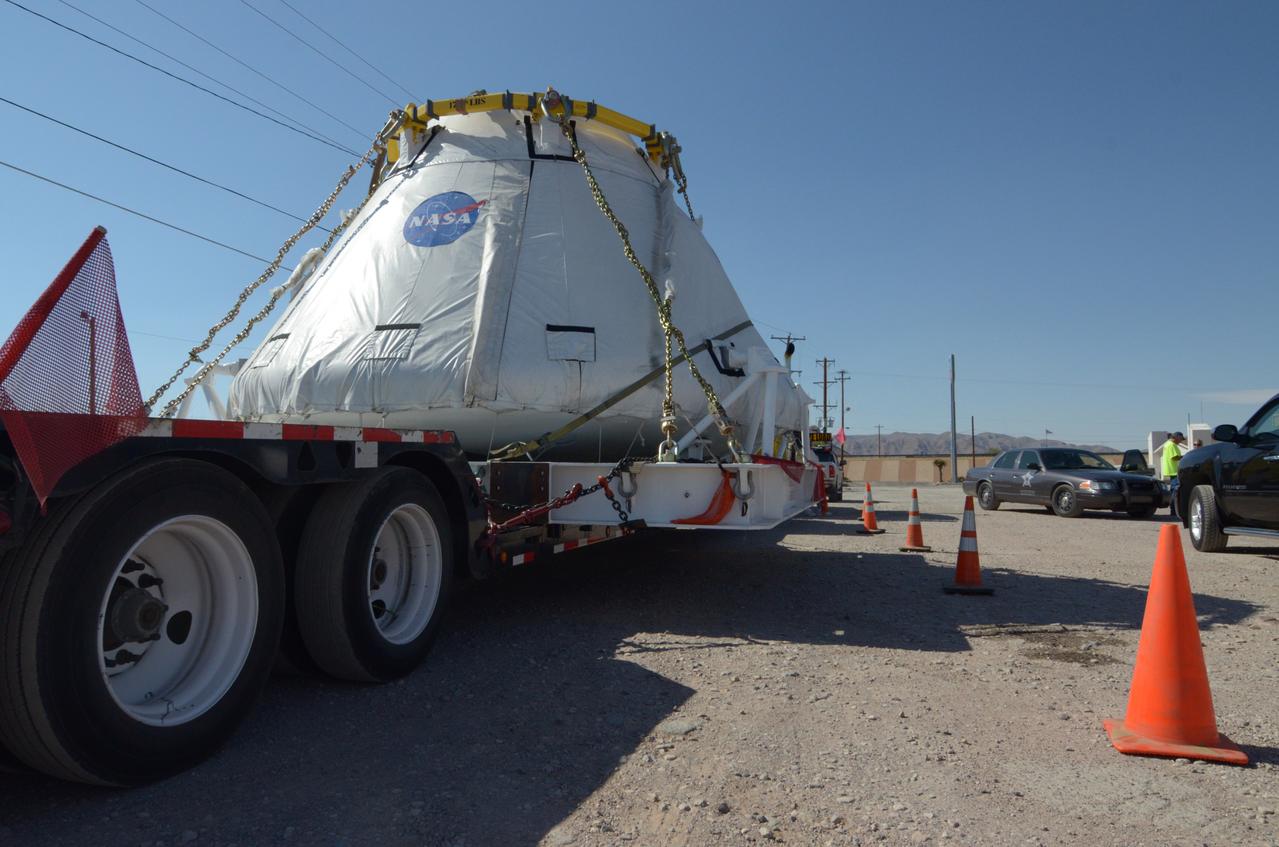
Travelers take a photo with the Orion crew module flown on NASA’s Pad Abort-1 (PA-1) flight test on the road on June 15, 2011. Part of Batch image transfer from Flickr.
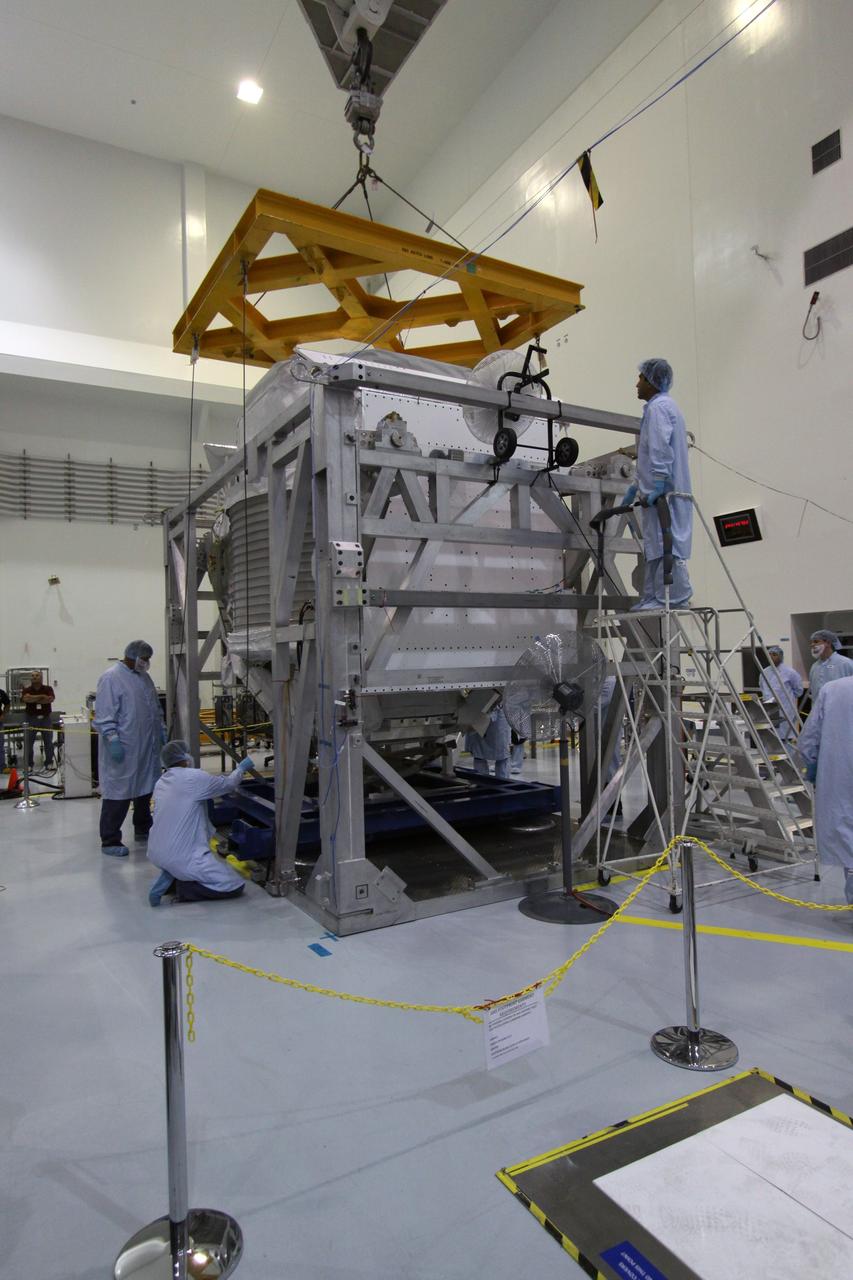
CAPE CANAVERAL, Fla. -- Technicians in the Space Station Processing Facility at NASA's Kennedy Space Center in Florida, monitor the guide wires of the overhead crane as it lifts the Payload Attach System, or PAS, up to the Alpha Magnetic Spectrometer, or AMS, for installation. The PAS provides a method of securely connecting the payload to the International Space Station. AMS, a state-of-the-art particle physics detector, is designed to operate as an external module on the International Space Station. It will use the unique environment of space to study the universe and its origin by searching for dark matter. AMS will fly to the station aboard space shuttle Endeavour's STS-134 mission targeted to launch Feb. 26, 2011. Photo credit: NASA/Jack Pfaller
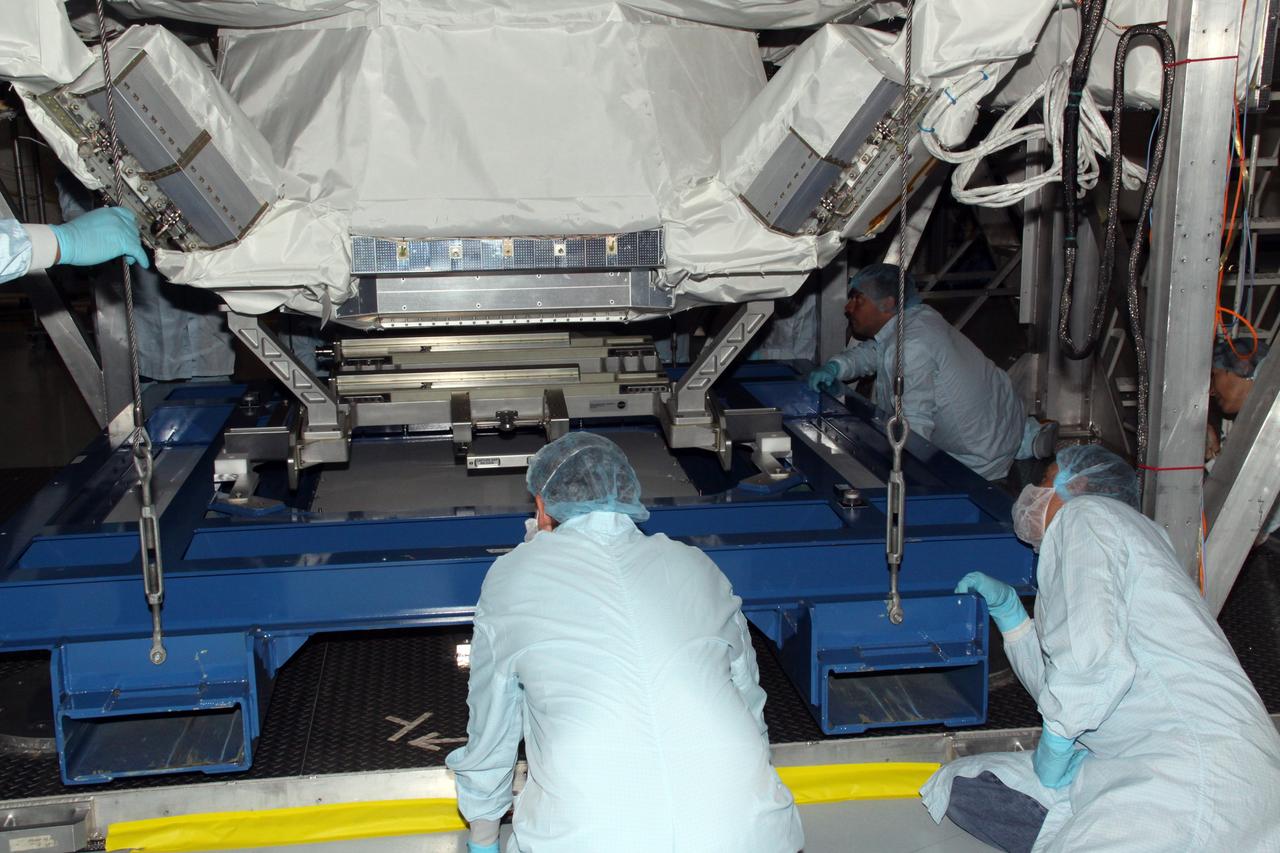
CAPE CANAVERAL, Fla. -- Technicians in the Space Station Processing Facility at NASA's Kennedy Space Center in Florida, check the progress of the Payload Attach System, or PAS, as it is lifted up to the Alpha Magnetic Spectrometer, where it will be attached to the bottom of the AMS. The PAS provides a method of securely connecting the payload to the International Space Station. AMS, a state-of-the-art particle physics detector, is designed to operate as an external module on the International Space Station. It will use the unique environment of space to study the universe and its origin by searching for dark matter. AMS will fly to the station aboard space shuttle Endeavour's STS-134 mission targeted to launch Feb. 26, 2011. Photo credit: NASA/Jack Pfaller
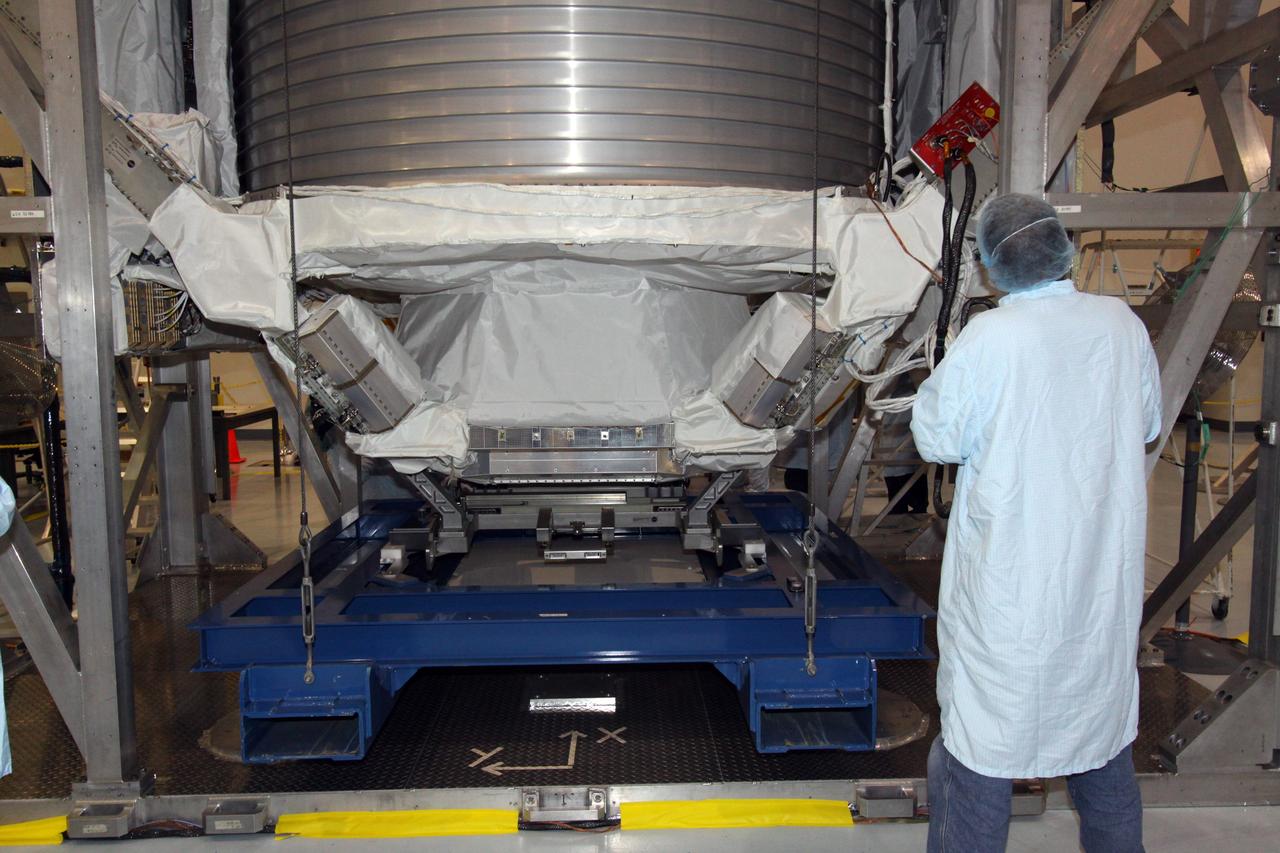
CAPE CANAVERAL, Fla. -- In the Space Station Processing Facility at NASA's Kennedy Space Center in Florida, a technician monitors the progress of the Payload Attach System, or PAS, as it is lifted up to the Alpha Magnetic Spectrometer, or AMS, where it will be attached to the bottom of the AMS. The PAS provides a method of securely connecting the payload to the International Space Station. AMS, a state-of-the-art particle physics detector, is designed to operate as an external module on the International Space Station. It will use the unique environment of space to study the universe and its origin by searching for dark matter. AMS will fly to the station aboard space shuttle Endeavour's STS-134 mission targeted to launch Feb. 26, 2011. Photo credit: NASA/Jack Pfaller
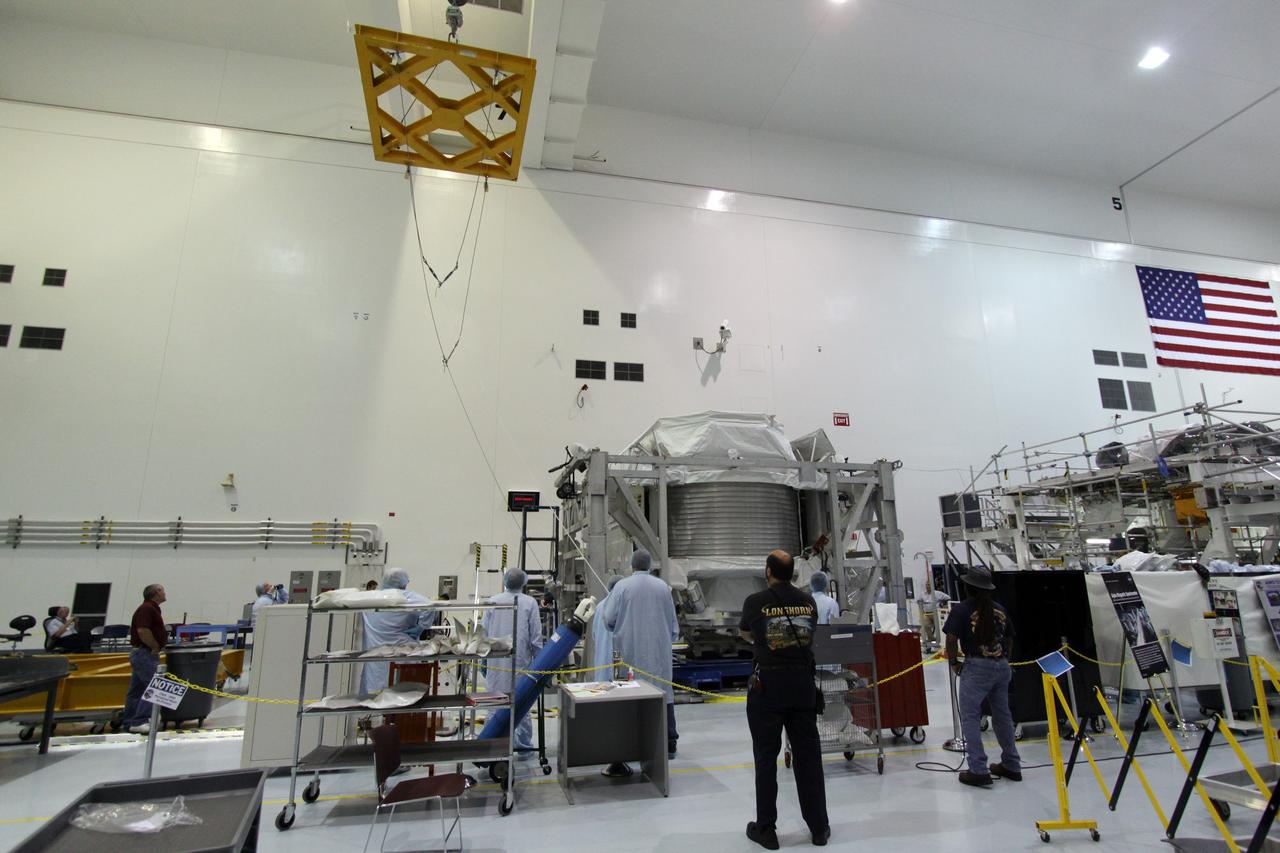
CAPE CANAVERAL, Fla. -- In the Space Station Processing Facility at NASA's Kennedy Space Center in Florida, an overhead crane is poised over the Alpha Magnetic Spectrometer, or AMS, to lift the Payload Attach System, or PAS, up to the AMS. The PAS provides a method of securely connecting the payload to the International Space Station. AMS, a state-of-the-art particle physics detector, is designed to operate as an external module on the International Space Station. It will use the unique environment of space to study the universe and its origin by searching for dark matter. AMS will fly to the station aboard space shuttle Endeavour's STS-134 mission targeted to launch Feb. 26, 2011. Photo credit: NASA/Jack Pfaller
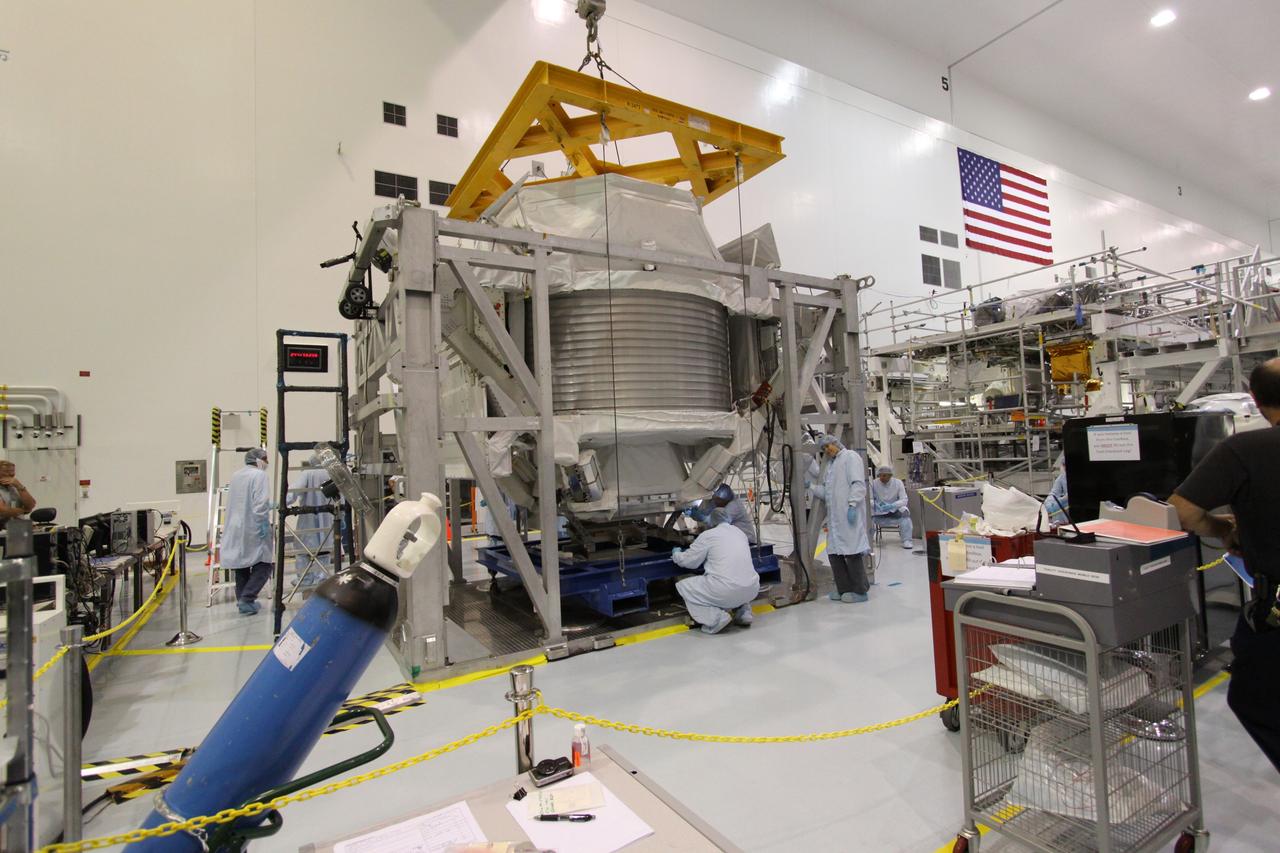
CAPE CANAVERAL, Fla. -- Technicians in the Space Station Processing Facility at NASA's Kennedy Space Center in Florida, check the progress of the Payload Attach System, or PAS, as it is lifted up to the Alpha Magnetic Spectrometer, where it will be attached to the bottom of the AMS. The PAS provides a method of securely connecting the payload to the International Space Station. AMS, a state-of-the-art particle physics detector, is designed to operate as an external module on the International Space Station. It will use the unique environment of space to study the universe and its origin by searching for dark matter. AMS will fly to the station aboard space shuttle Endeavour's STS-134 mission targeted to launch Feb. 26, 2011. Photo credit: NASA/Jack Pfaller
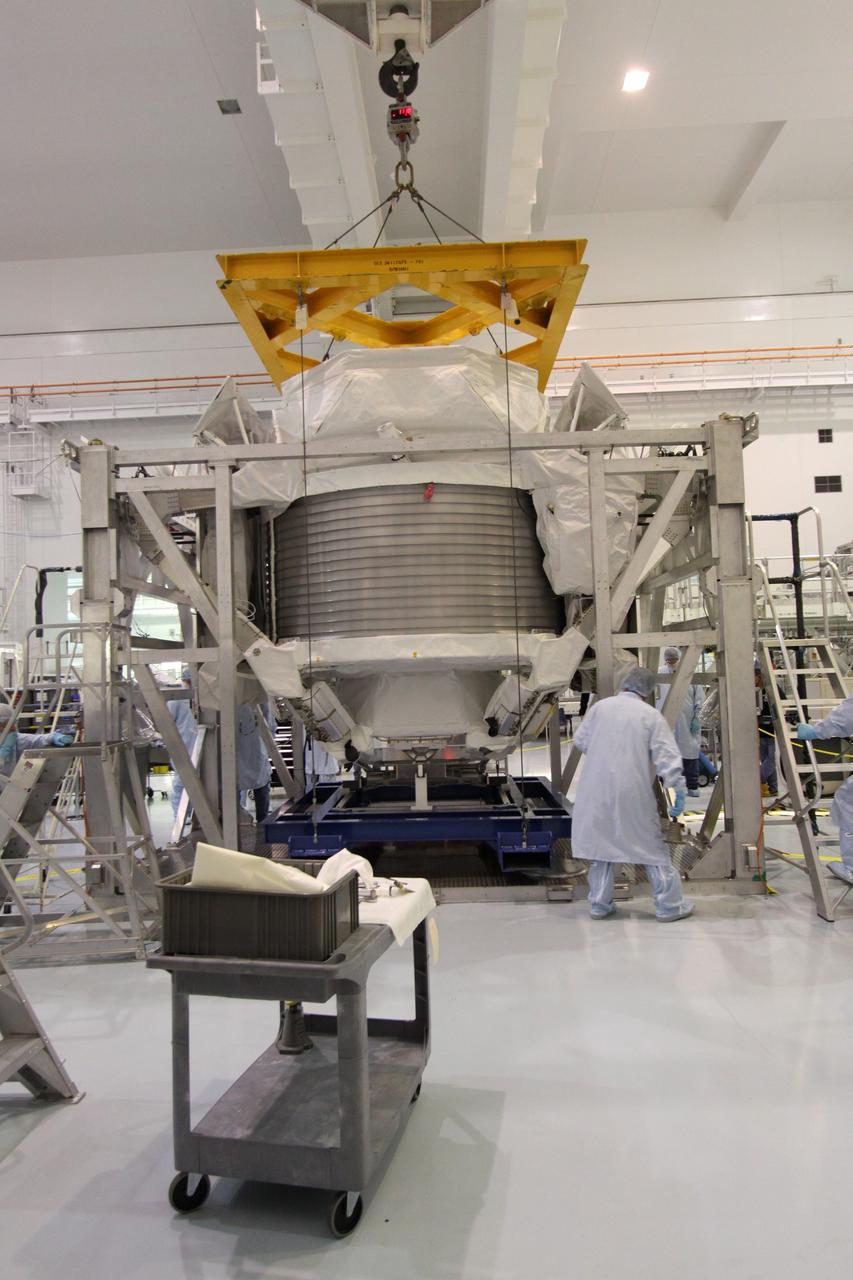
CAPE CANAVERAL, Fla. -- A technicians in the Space Station Processing Facility at NASA's Kennedy Space Center in Florida, check the progress of the Payload Attach System, or PAS, as it is lifted up to the Alpha Magnetic Spectrometer, or AMS, where it will be attached to the bottom of the AMS. The PAS provides a method of securely connecting the payload to the International Space Station. AMS, a state-of-the-art particle physics detector, is designed to operate as an external module on the International Space Station. It will use the unique environment of space to study the universe and its origin by searching for dark matter. AMS will fly to the station aboard space shuttle Endeavour's STS-134 mission targeted to launch Feb. 26, 2011. Photo credit: NASA/Jack Pfaller
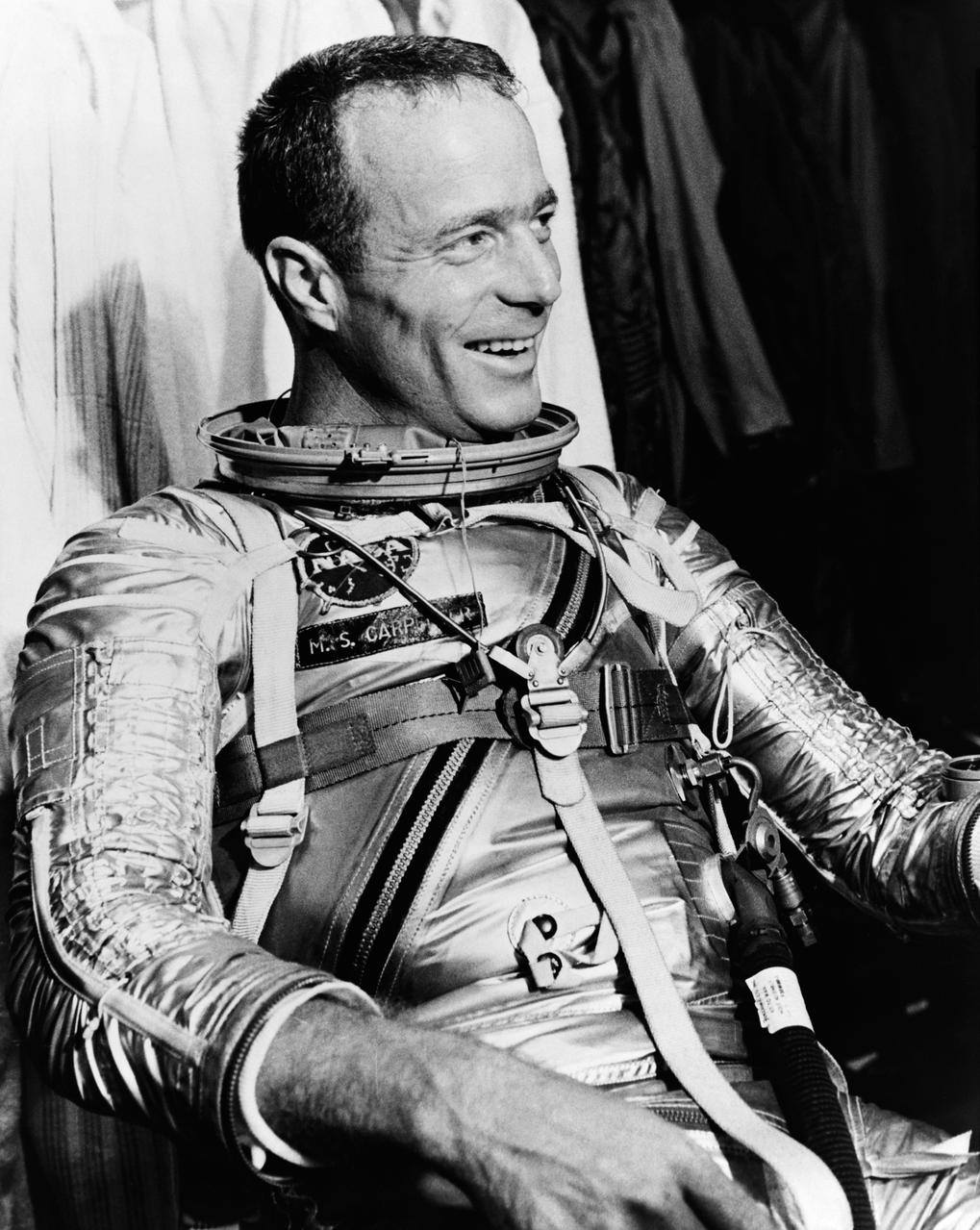
S61-03510 (1961) --- Project Mercury astronaut M. Scott Carpenter smiles, in his pressure suit, prior to participating in a simulated mission run at Cape Canaveral, Florida. Astronaut Carpenter has been selected as the prime pilot on the United States second attempt to put a man into orbit around Earth. Photo credit: NASA
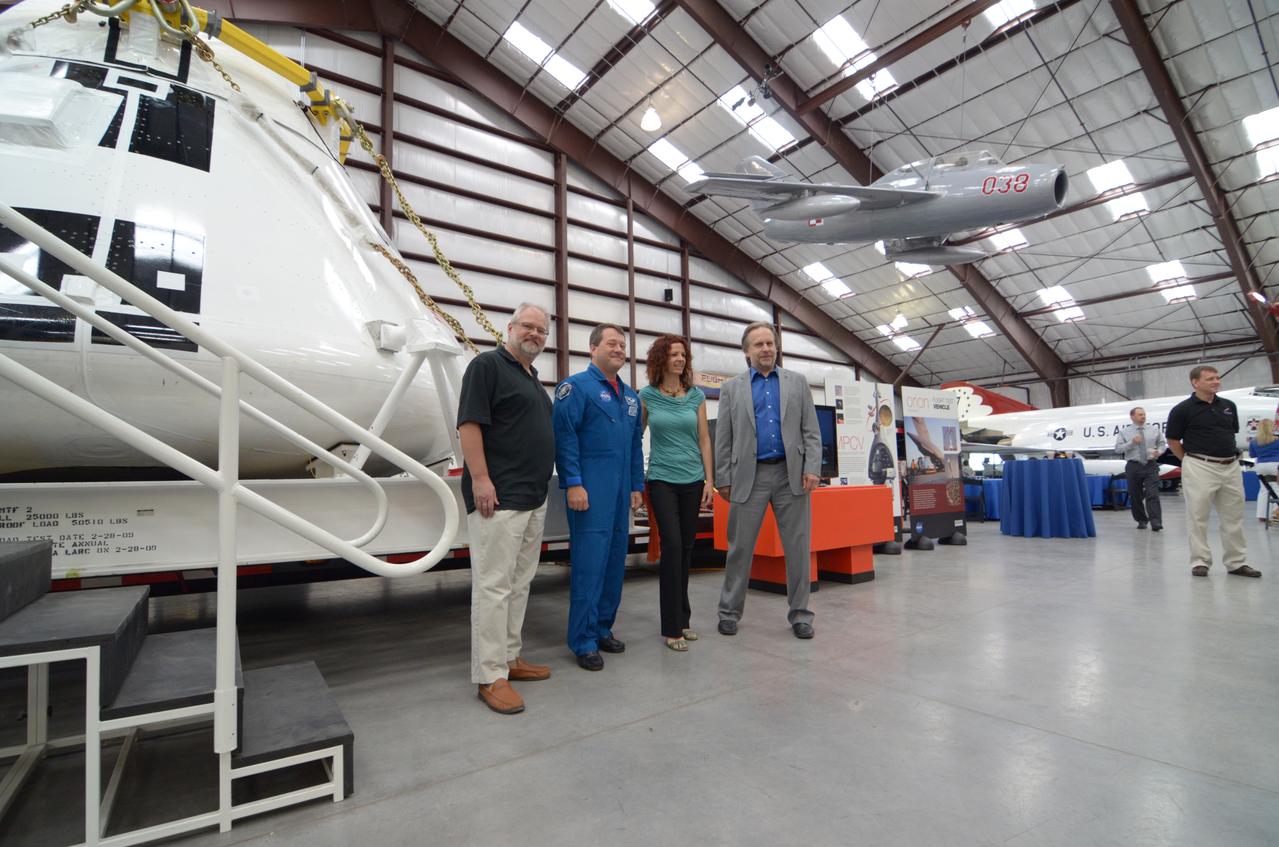
The Orion crew module flown on NASA’s Pad Abort-1 (PA-1) flight test is shown on display and NASA Astronaut Nicholas Patrick speaks at an event at the Pima Air and Space Museum in Tucson, Arizona, on June 16, 2011. Part of Batch image transfer from Flickr.
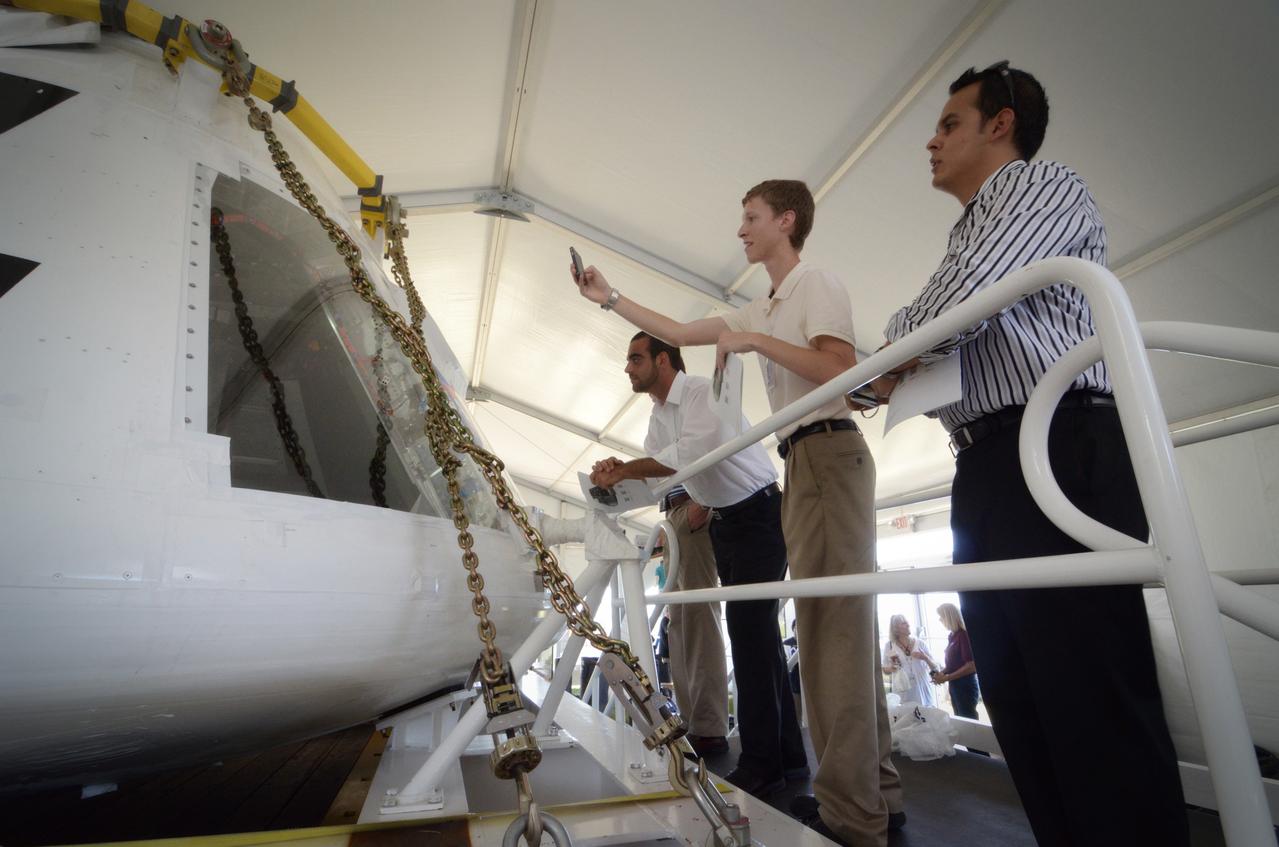
The Orion crew module flown on NASA’s Pad Abort-1 (PA-1) flight test is shown on display at an event at Kennedy Space Center in Florida on July 5, 2011 before moving into the Operations & Checkout (O&C) Building. Part of Batch image transfer from Flickr.
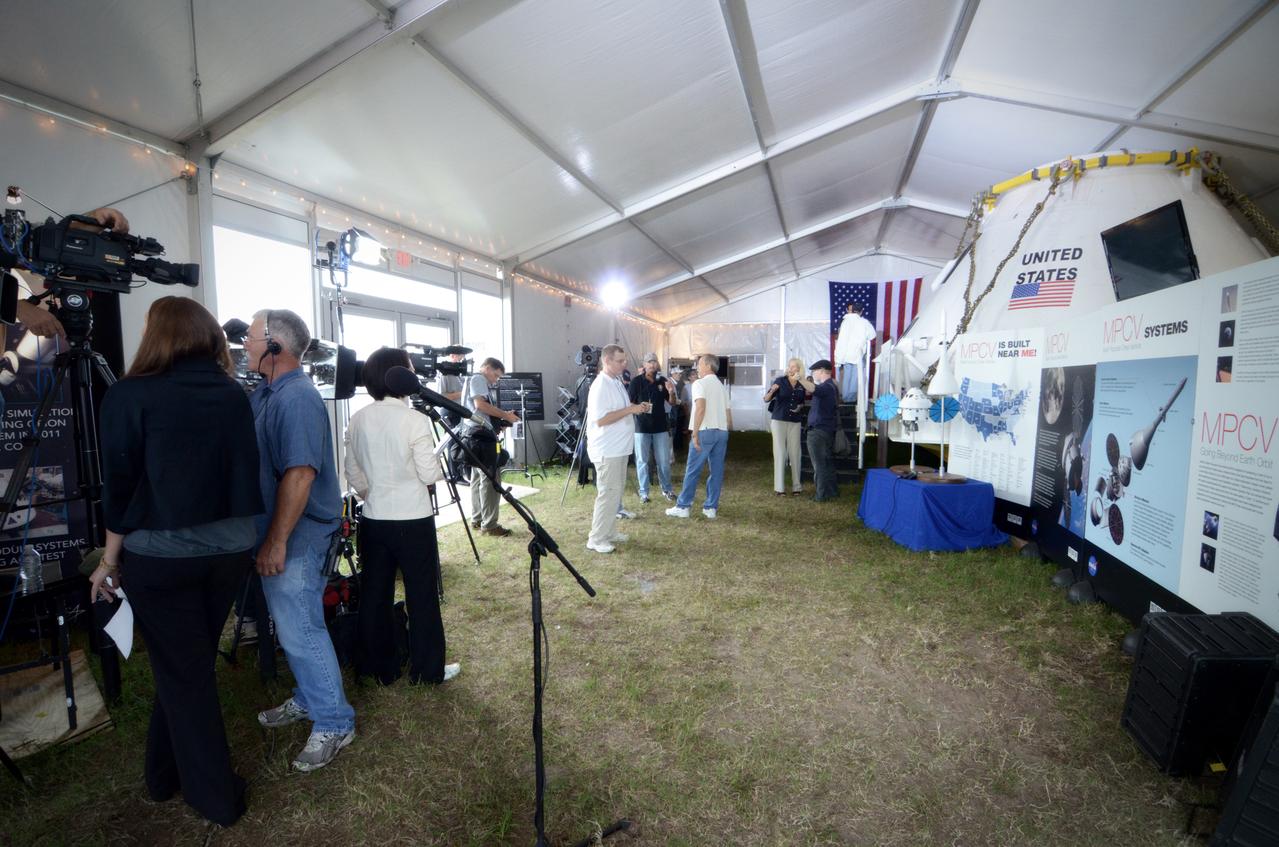
The Orion crew module flown on NASA’s Pad Abort-1 (PA-1) flight test is shown on display at an event at Kennedy Space Center in Florida on July 7, 2011 before moving into the Operations & Checkout (O&C) Building. Part of Batch image transfer from Flickr.

The Orion crew module flown on NASA’s Pad Abort-1 (PA-1) flight test is shown on display at an event at Kennedy Space Center in Florida on July 9, 2011 before moving into the Operations & Checkout (O&C) Building. Part of Batch image transfer from Flickr.
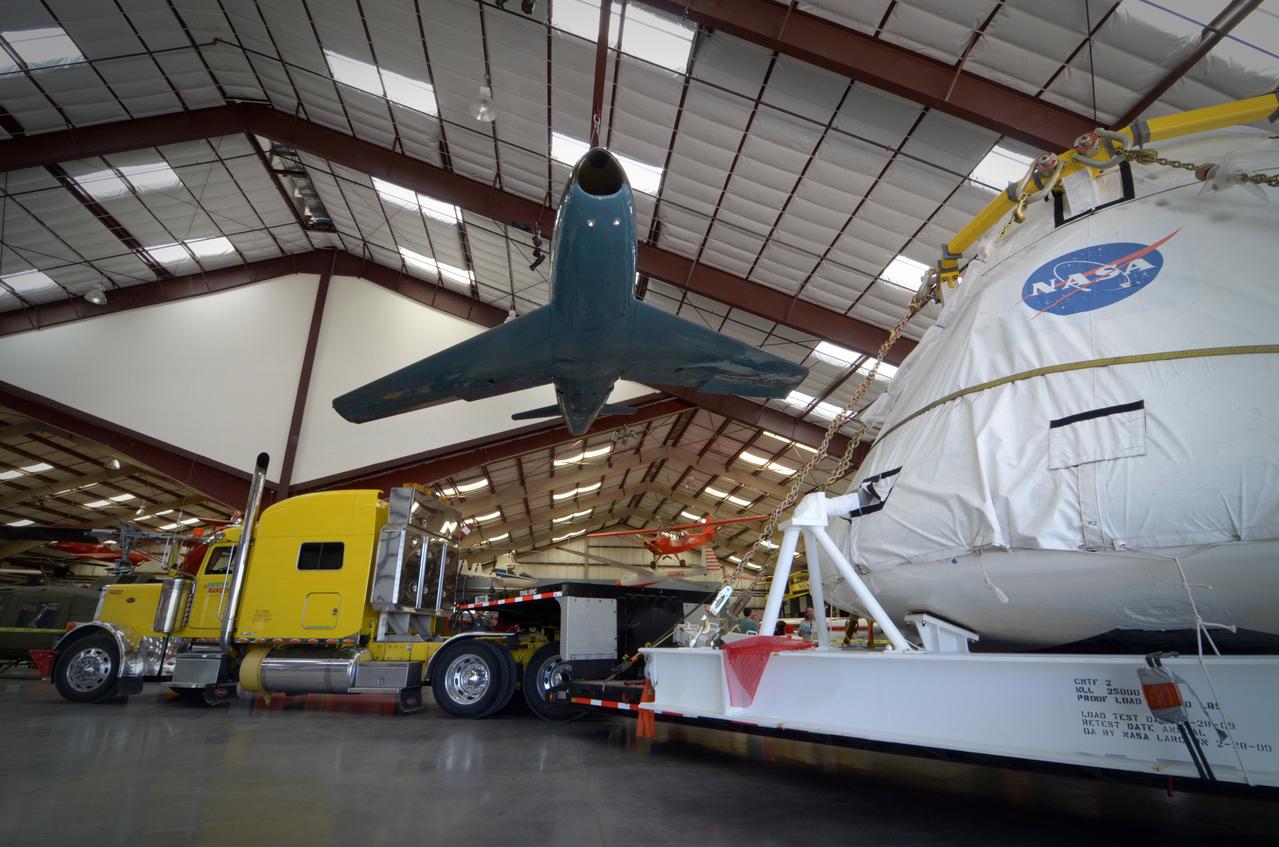
The Orion crew module flown on NASA’s Pad Abort-1 (PA-1) flight test is shown on display during an event at the Pima Air and Space Museum in Tucson, Arizona, on June 16, 2011. Part of Batch image transfer from Flickr.
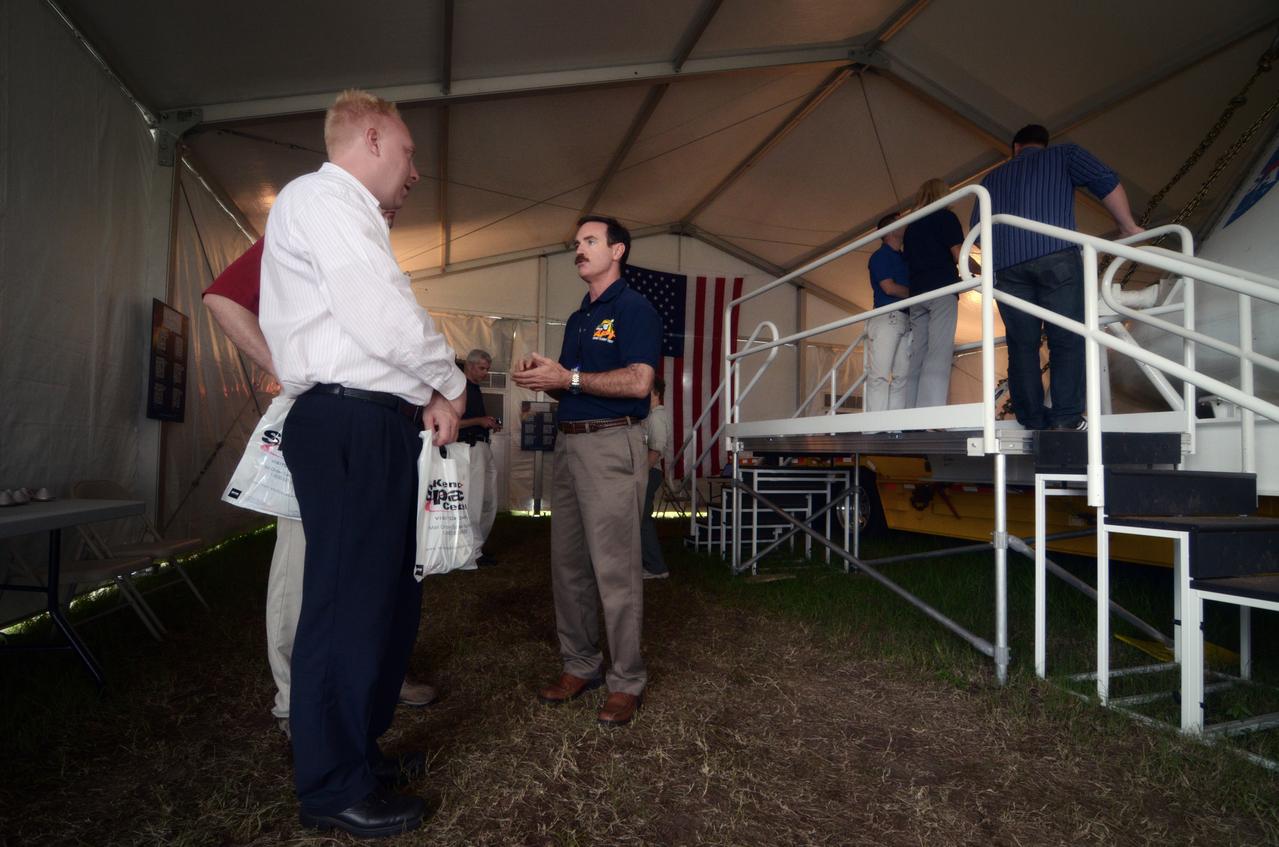
The Orion crew module flown on NASA’s Pad Abort-1 (PA-1) flight test is shown on display at an event at Kennedy Space Center in Florida on July 9, 2011 before moving into the Operations & Checkout (O&C) Building. Part of Batch image transfer from Flickr.
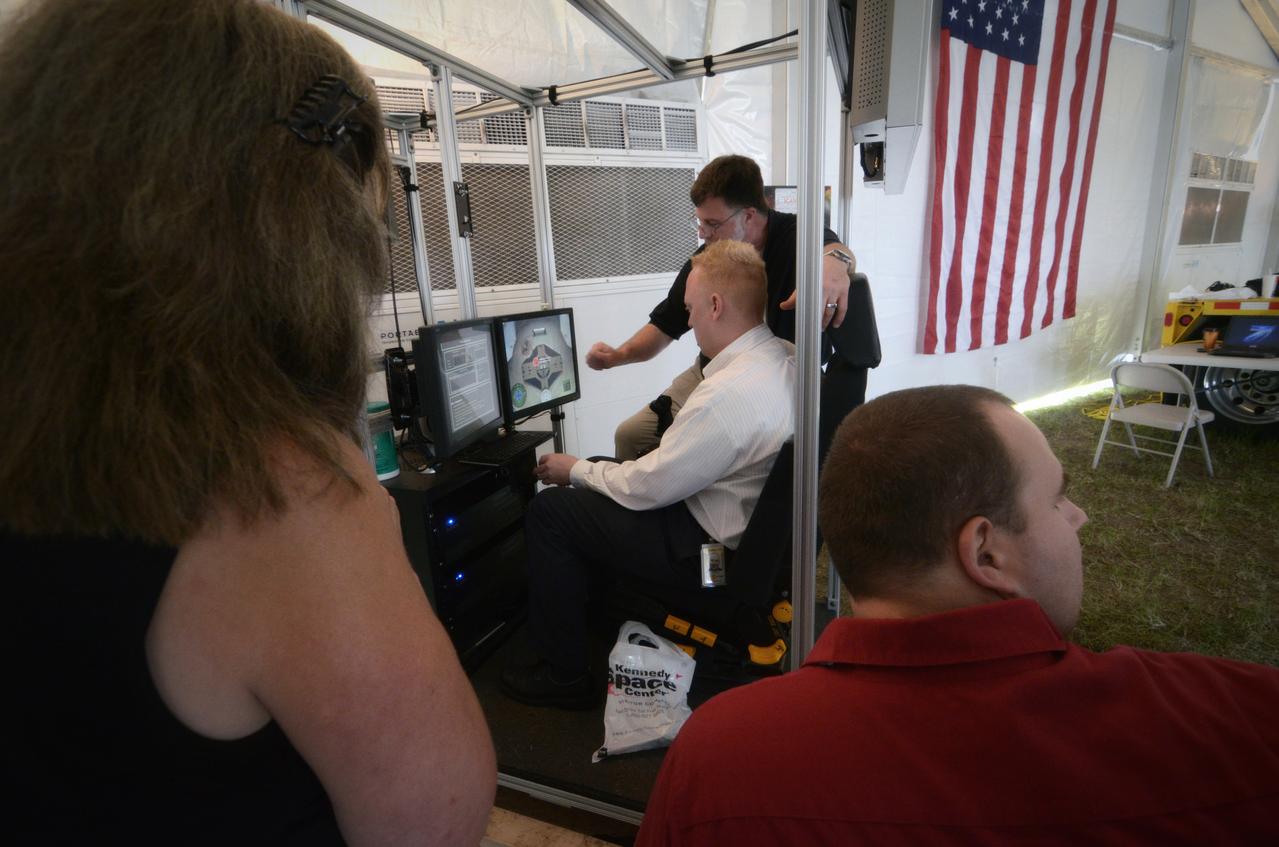
The Orion crew module flown on NASA’s Pad Abort-1 (PA-1) flight test is shown on display at an event at Kennedy Space Center in Florida on July 9, 2011 before moving into the Operations & Checkout (O&C) Building. Part of Batch image transfer from Flickr.
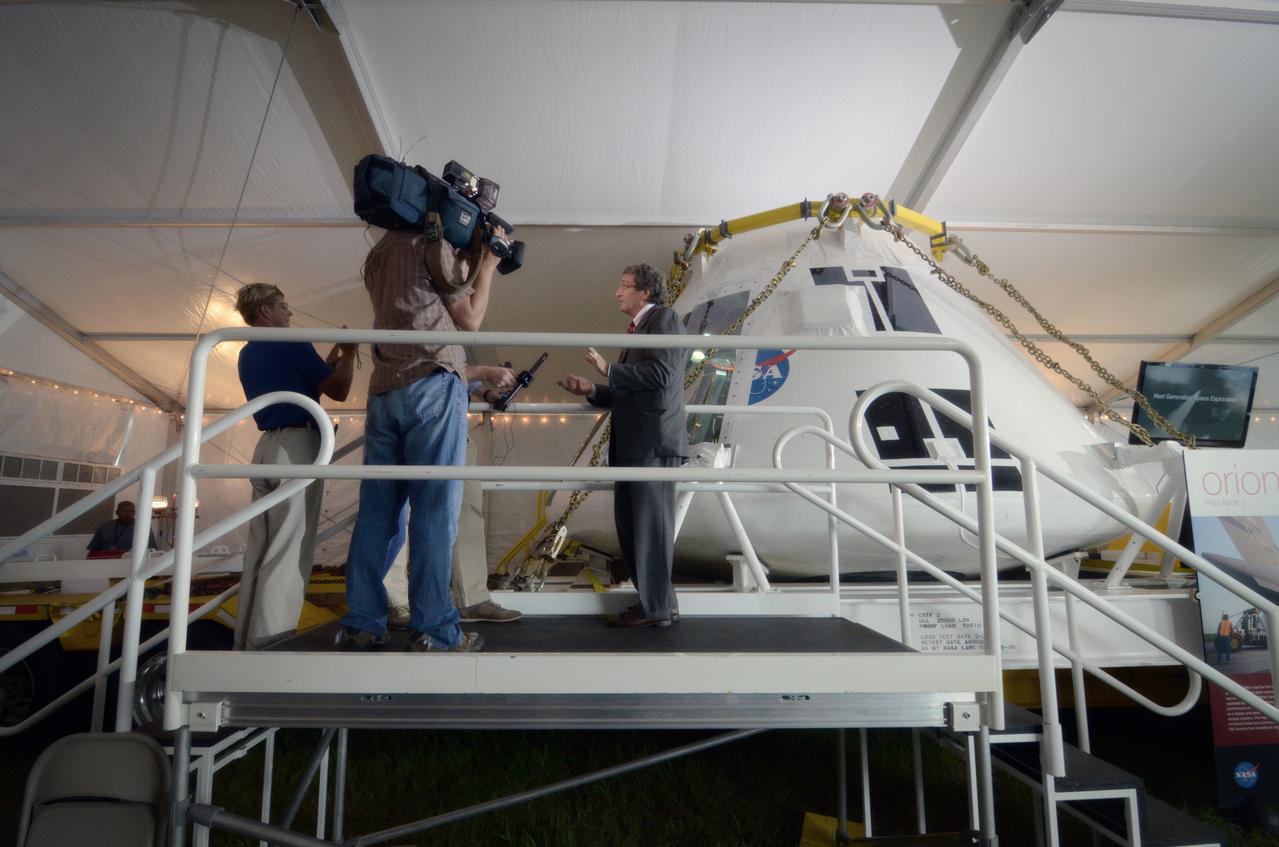
The Orion crew module flown on NASA’s Pad Abort-1 (PA-1) flight test is shown on display at an event at Kennedy Space Center in Florida on July 7, 2011 before moving into the Operations & Checkout (O&C) Building. Part of Batch image transfer from Flickr.

The Orion crew module flown on NASA’s Pad Abort-1 (PA-1) flight test is shown on display and NASA Astronaut Nicholas Patrick speaks at an event at the Pima Air and Space Museum in Tucson, Arizona, on June 16, 2011. Part of Batch image transfer from Flickr.
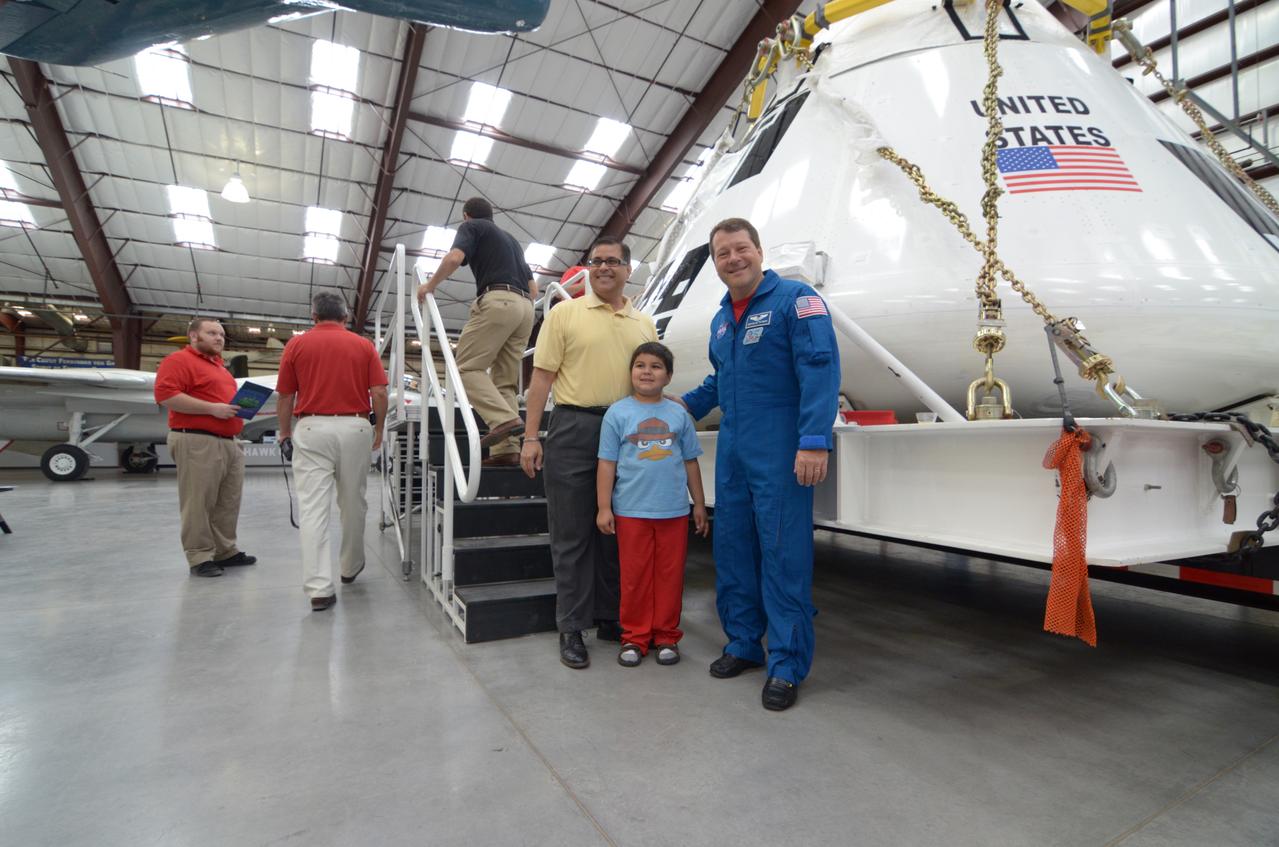
The Orion crew module flown on NASA’s Pad Abort-1 (PA-1) flight test is shown on display and NASA Astronaut Nicholas Patrick speaks at an event at the Pima Air and Space Museum in Tucson, Arizona, on June 16, 2011. Part of Batch image transfer from Flickr.
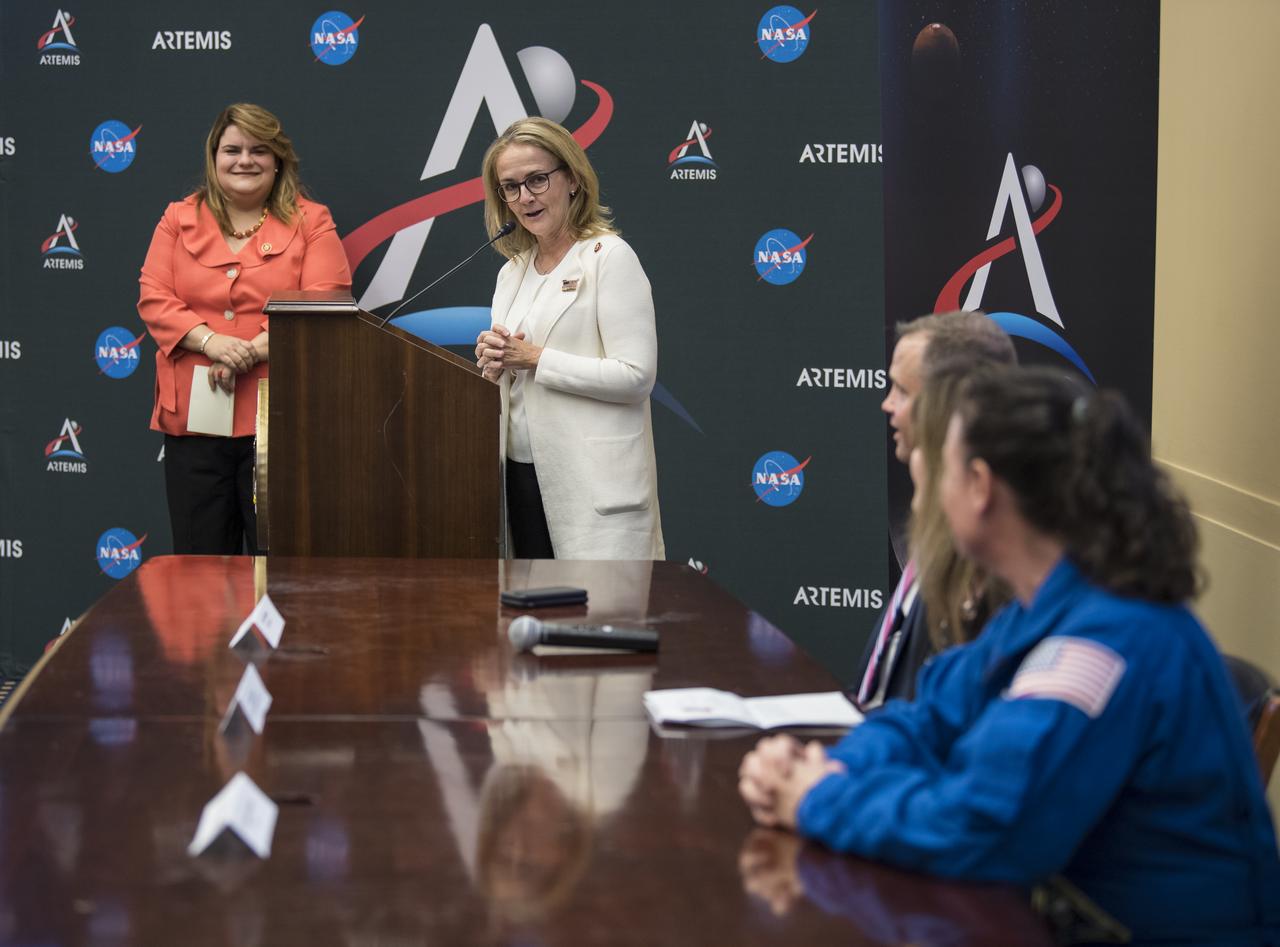
U.S. Representative Madeleine Dean, D-Pa. speaks at a bipartisan Congressional Caucus for Women’s Issues briefing on NASA’s Artemis lunar exploration program, Wednesday, September 11, 2019 at the Rayburn House Office Building in Washington. Photo Credit: (NASA/Aubrey Gemignani)
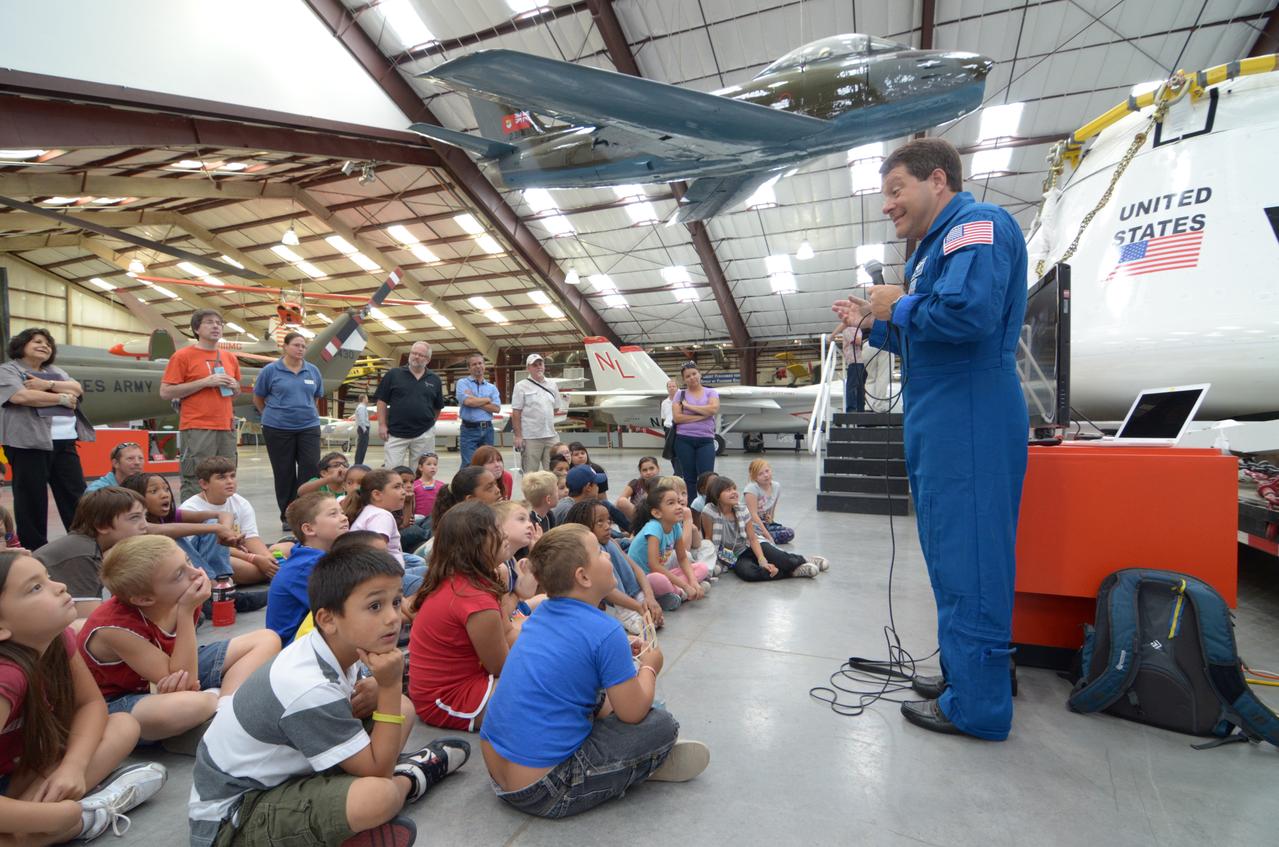
The Orion crew module flown on NASA’s Pad Abort-1 (PA-1) flight test is shown on display and NASA Astronaut Nicholas Patrick speaks at an event at the Pima Air and Space Museum in Tucson, Arizona, on June 16, 2011. Part of Batch image transfer from Flickr.

The Orion crew module flown on NASA’s Pad Abort-1 (PA-1) flight test is shown on display at an event at Kennedy Space Center in Florida on July 7, 2011 before moving into the Operations & Checkout (O&C) Building. Part of Batch image transfer from Flickr.
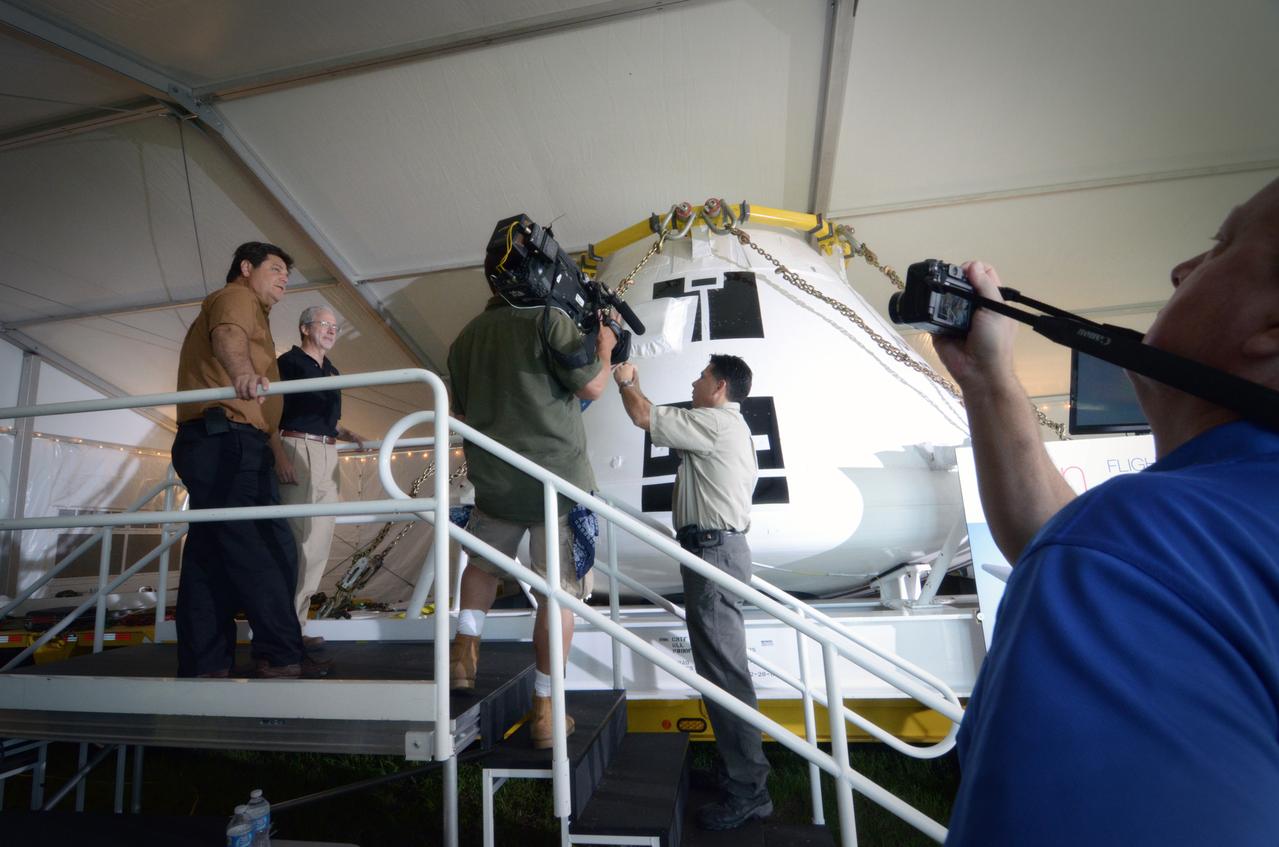
The Orion crew module flown on NASA’s Pad Abort-1 (PA-1) flight test is shown on display at an event at Kennedy Space Center in Florida on July 6, 2011 before moving into the Operations & Checkout (O&C) Building. Part of Batch image transfer from Flickr.
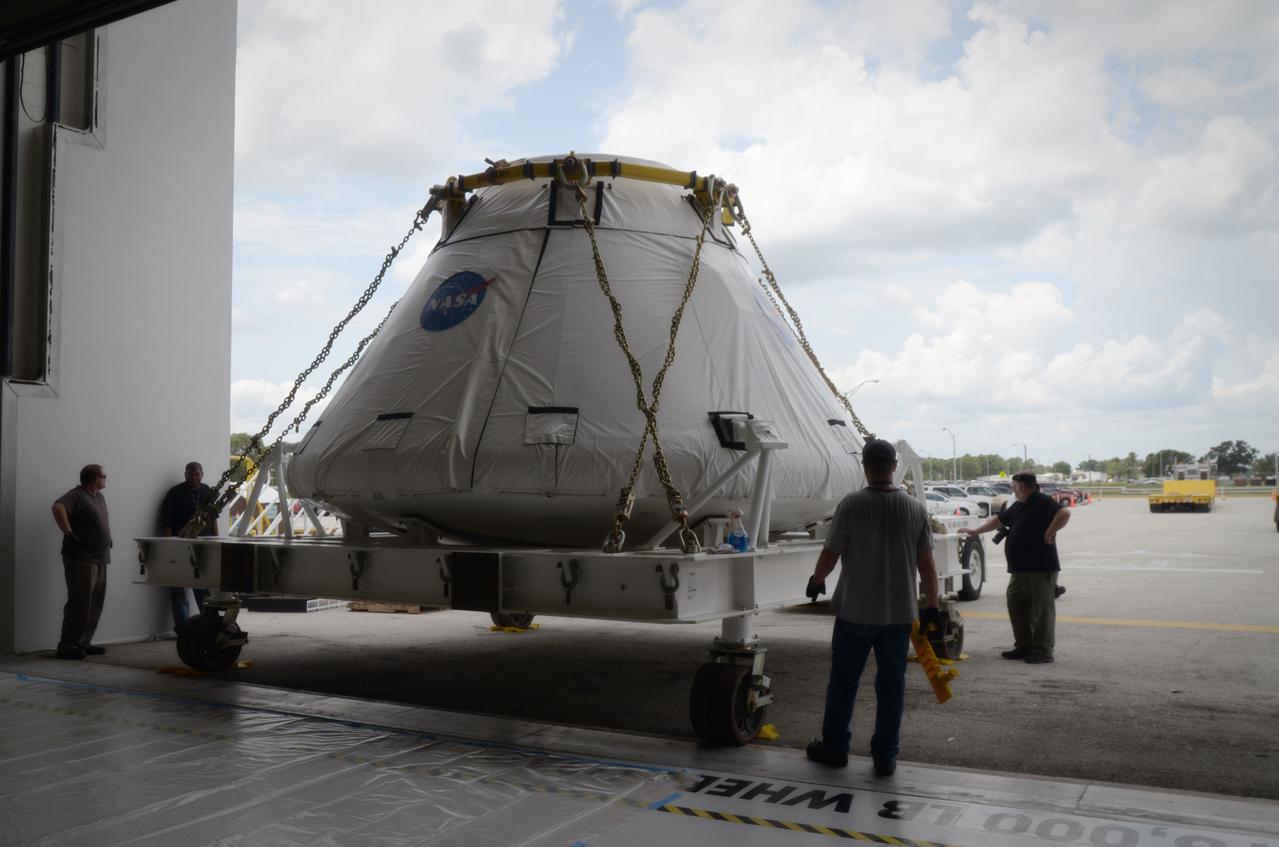
The Orion Pad Abort-1 (PA-1) crew module is pushed into the airlock at the Operations & Checkout (O&C) Building at Kennedy Space Center in Florida on July 11, 2011. Part of Batch image transfer from Flickr.
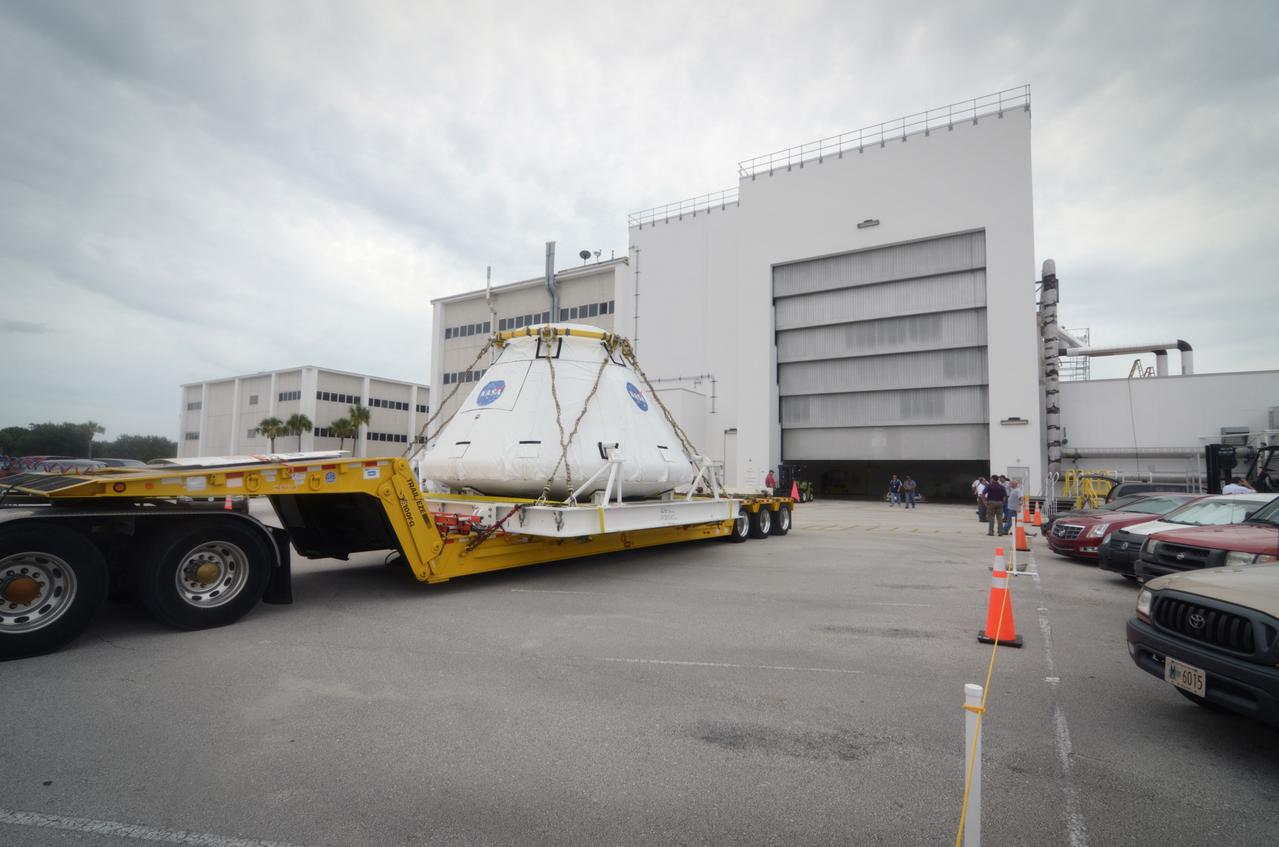
The Orion Pad Abort-1 (PA-1) crew module arrives at the Operations & Checkout (O&C) Building at Kennedy Space Center in Florida on July 11, 2011. Part of Batch image transfer from Flickr.
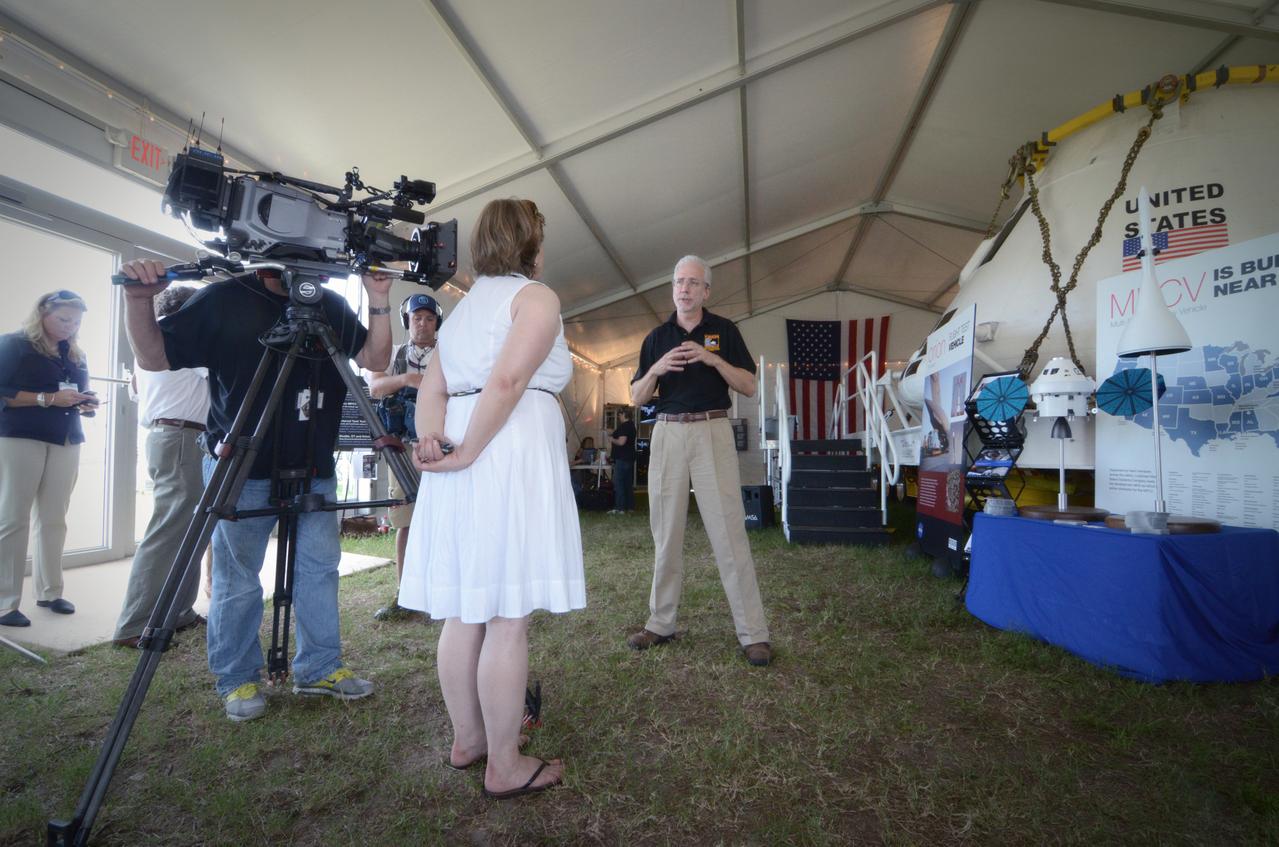
The Orion crew module flown on NASA’s Pad Abort-1 (PA-1) flight test is shown on display at an event at Kennedy Space Center in Florida on July 6, 2011 before moving into the Operations & Checkout (O&C) Building. Part of Batch image transfer from Flickr.
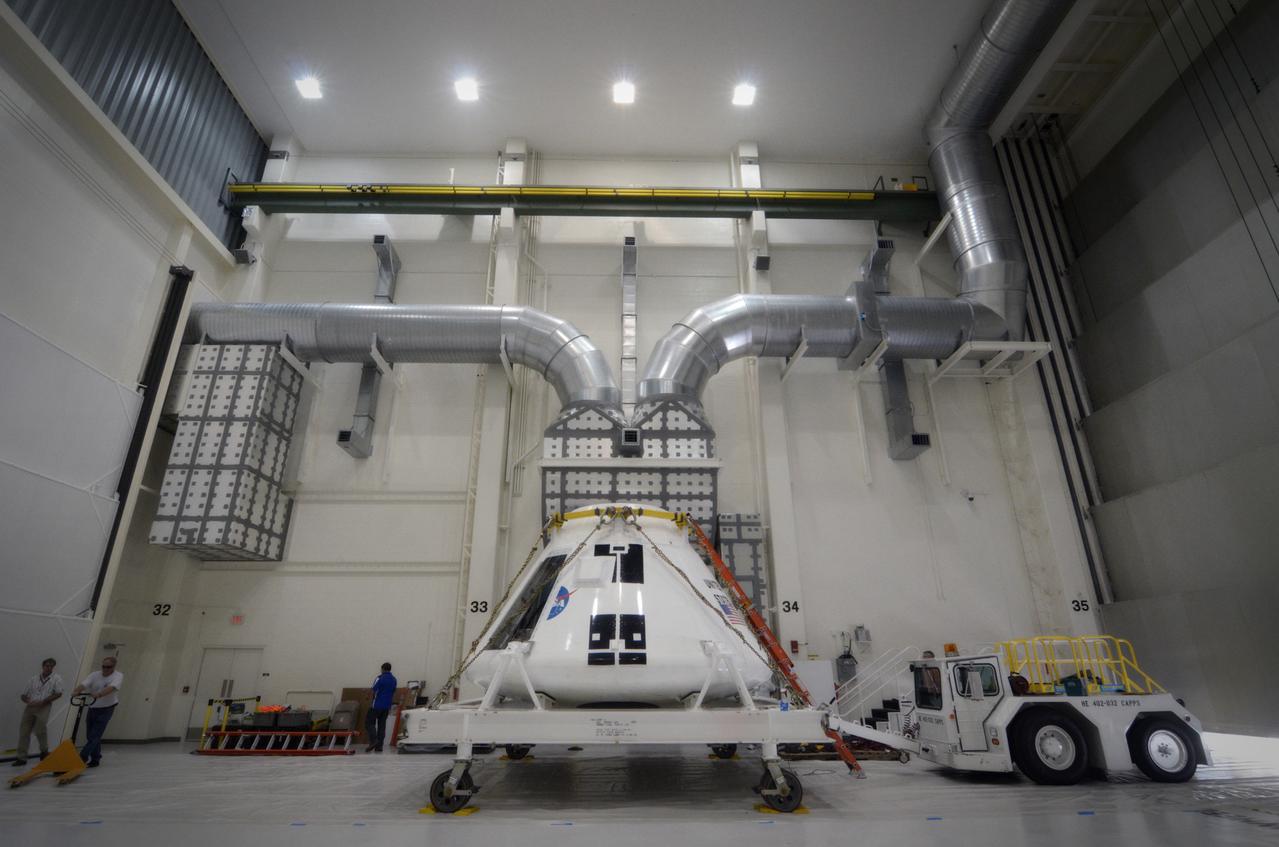
The Orion Pad Abort-1 (PA-1) crew module inside the airlock at the Operations & Checkout (O&C) Building at Kennedy Space Center in Florida on July 11, 2011. Part of Batch image transfer from Flickr.
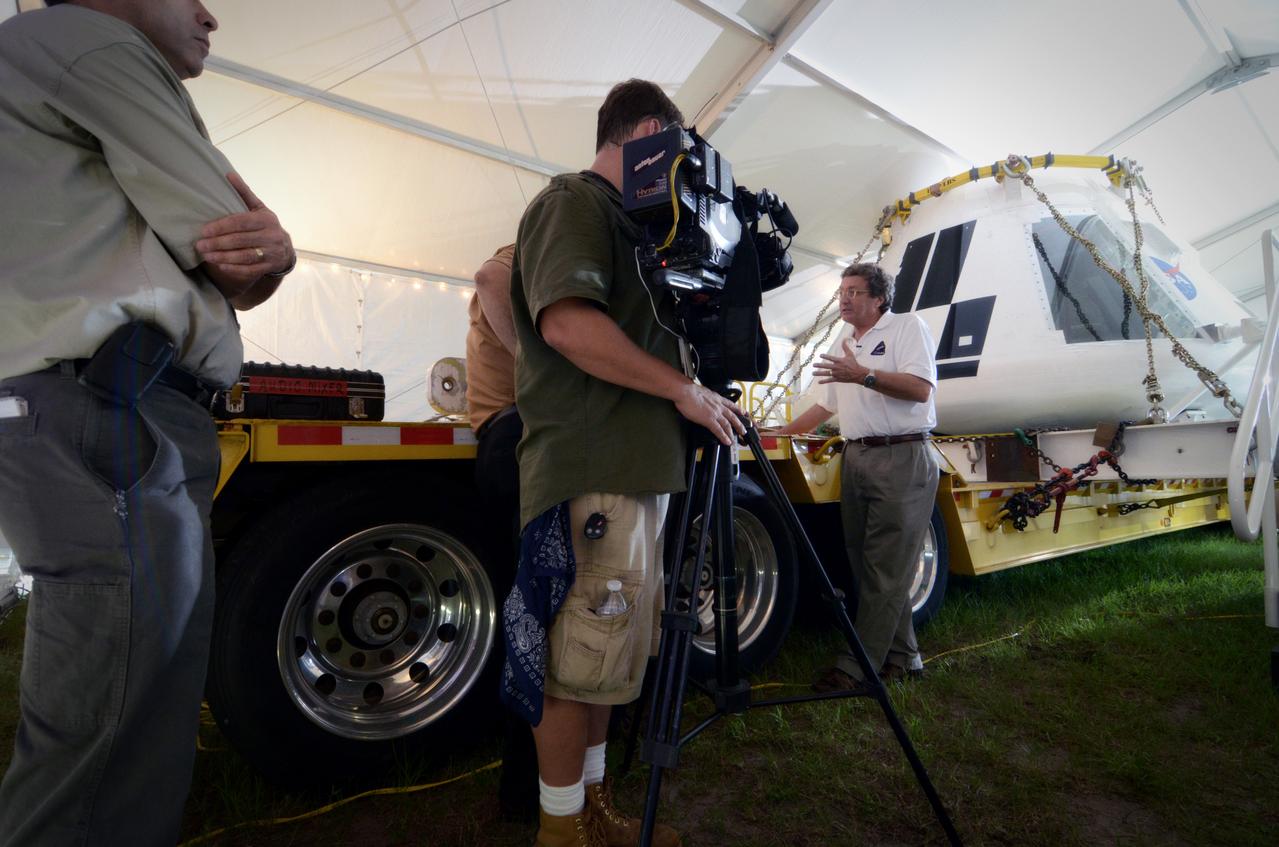
The Orion crew module flown on NASA’s Pad Abort-1 (PA-1) flight test is shown on display at an event at Kennedy Space Center in Florida on July 6, 2011 before moving into the Operations & Checkout (O&C) Building. Part of Batch image transfer from Flickr.

The Orion crew module flown on NASA’s Pad Abort-1 (PA-1) flight test is shown on display and NASA Astronaut Nicholas Patrick speaks at an event at the Pima Air and Space Museum in Tucson, Arizona, on June 16, 2011. Part of Batch image transfer from Flickr.
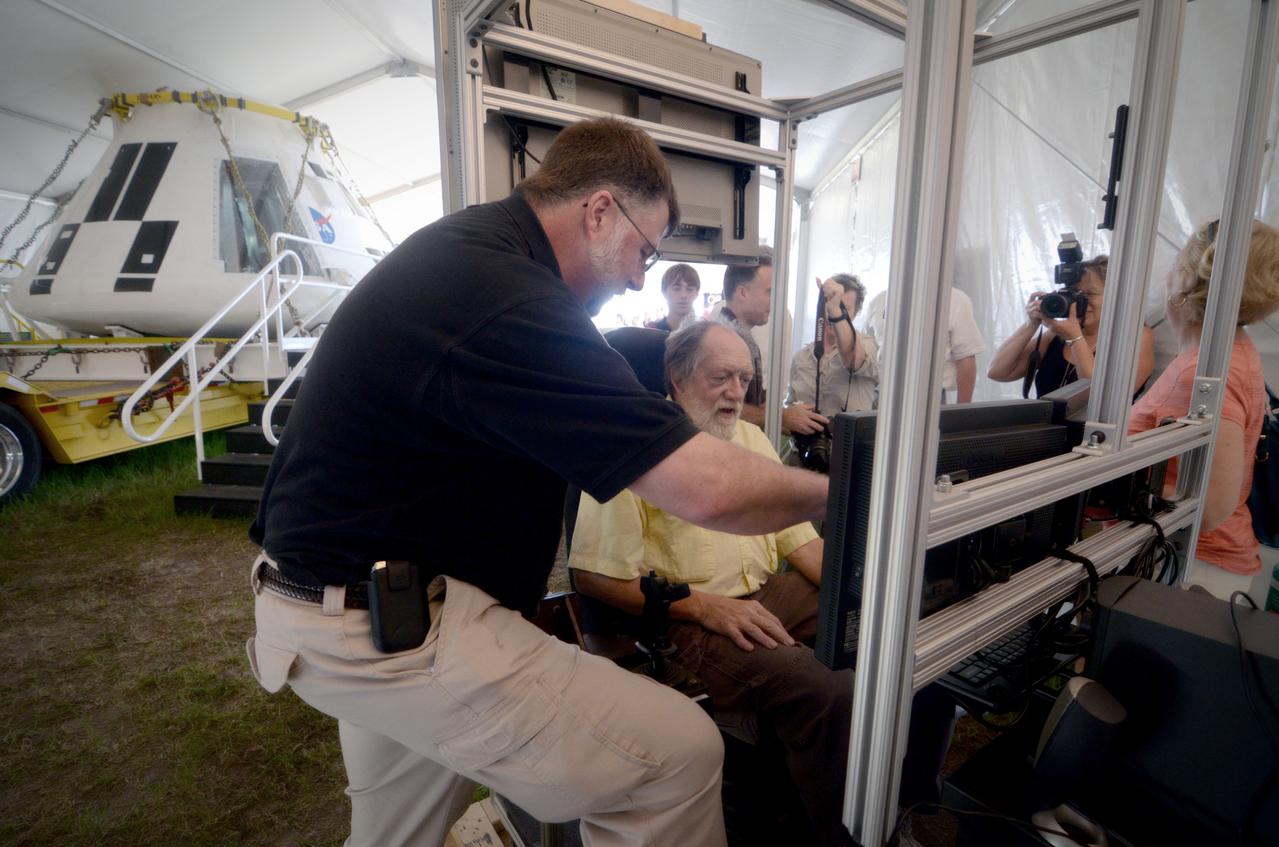
The Orion crew module flown on NASA’s Pad Abort-1 (PA-1) flight test is shown on display at an event at Kennedy Space Center in Florida on July 9, 2011 before moving into the Operations & Checkout (O&C) Building. Part of Batch image transfer from Flickr.
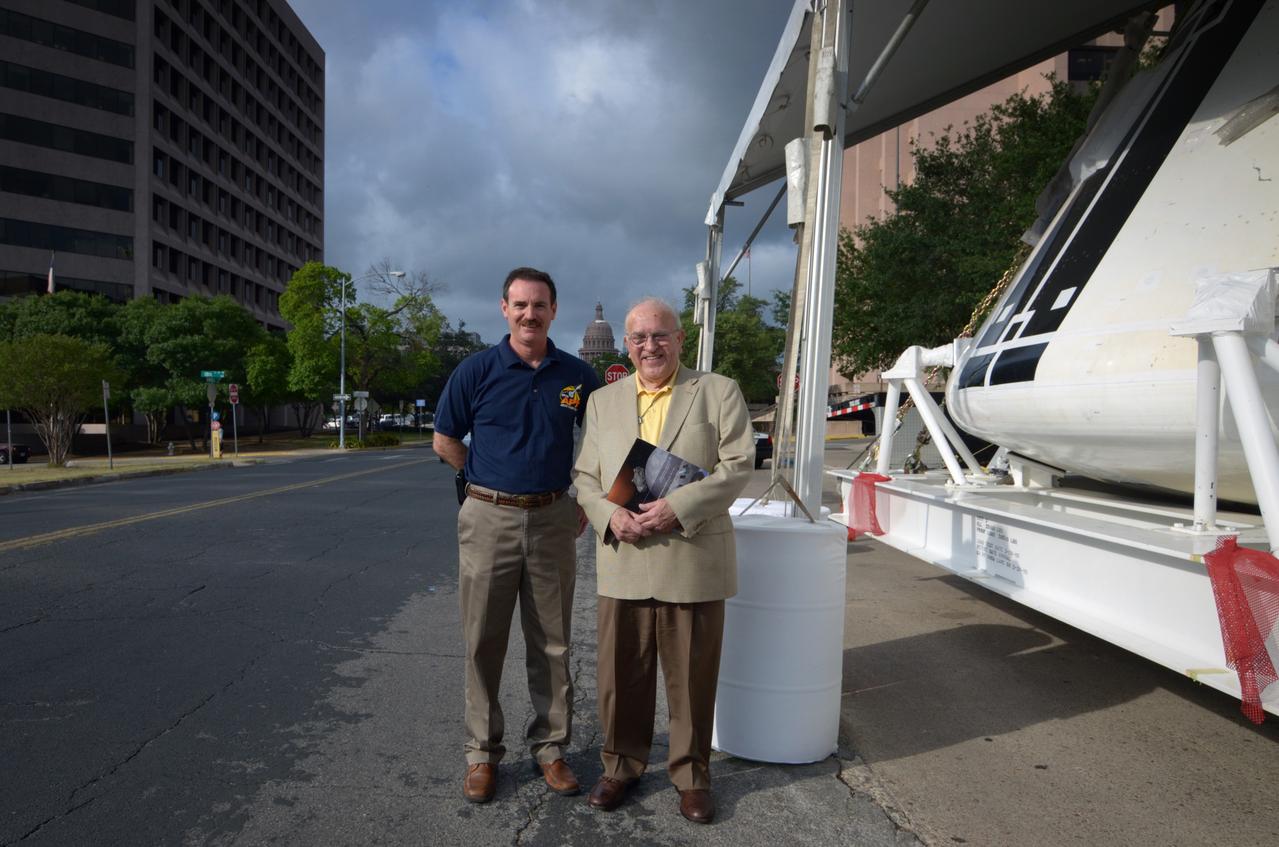
Visitors prepare to view the Orion crew module flown on NASA’s Pad Abort-1 (PA-1) flight test, which is on display at an event at the Bullock Texas State History Museum in Austin, Texas on June 20, 2011. Part of Batch image transfer from Flickr.
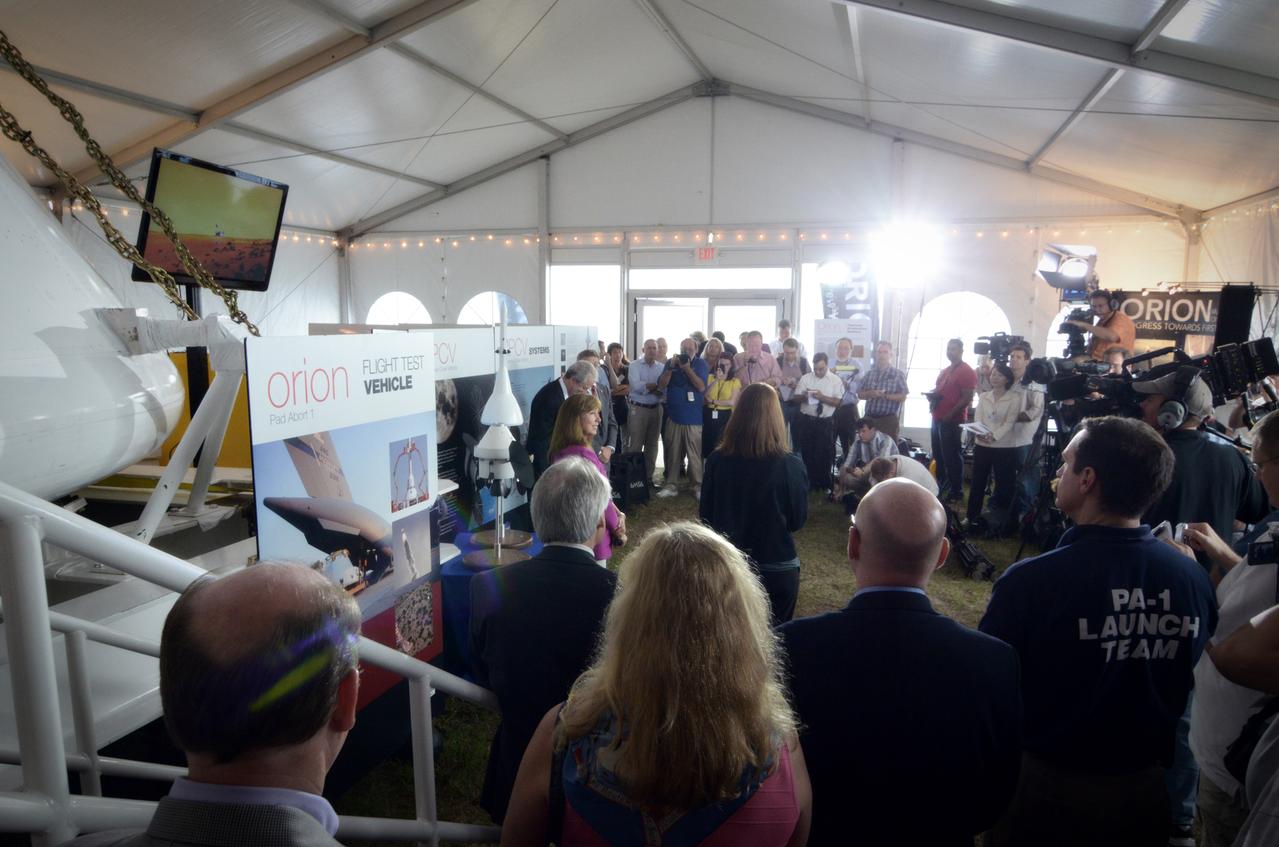
The Orion crew module flown on NASA’s Pad Abort-1 (PA-1) flight test is shown on display at an event at Kennedy Space Center in Florida on July 7, 2011 before moving into the Operations & Checkout (O&C) Building. Part of Batch image transfer from Flickr.

The Orion crew module flown on NASA’s Pad Abort-1 (PA-1) flight test is shown on display and NASA Astronaut Nicholas Patrick speaks at an event at the Pima Air and Space Museum in Tucson, Arizona, on June 16, 2011. Part of Batch image transfer from Flickr.
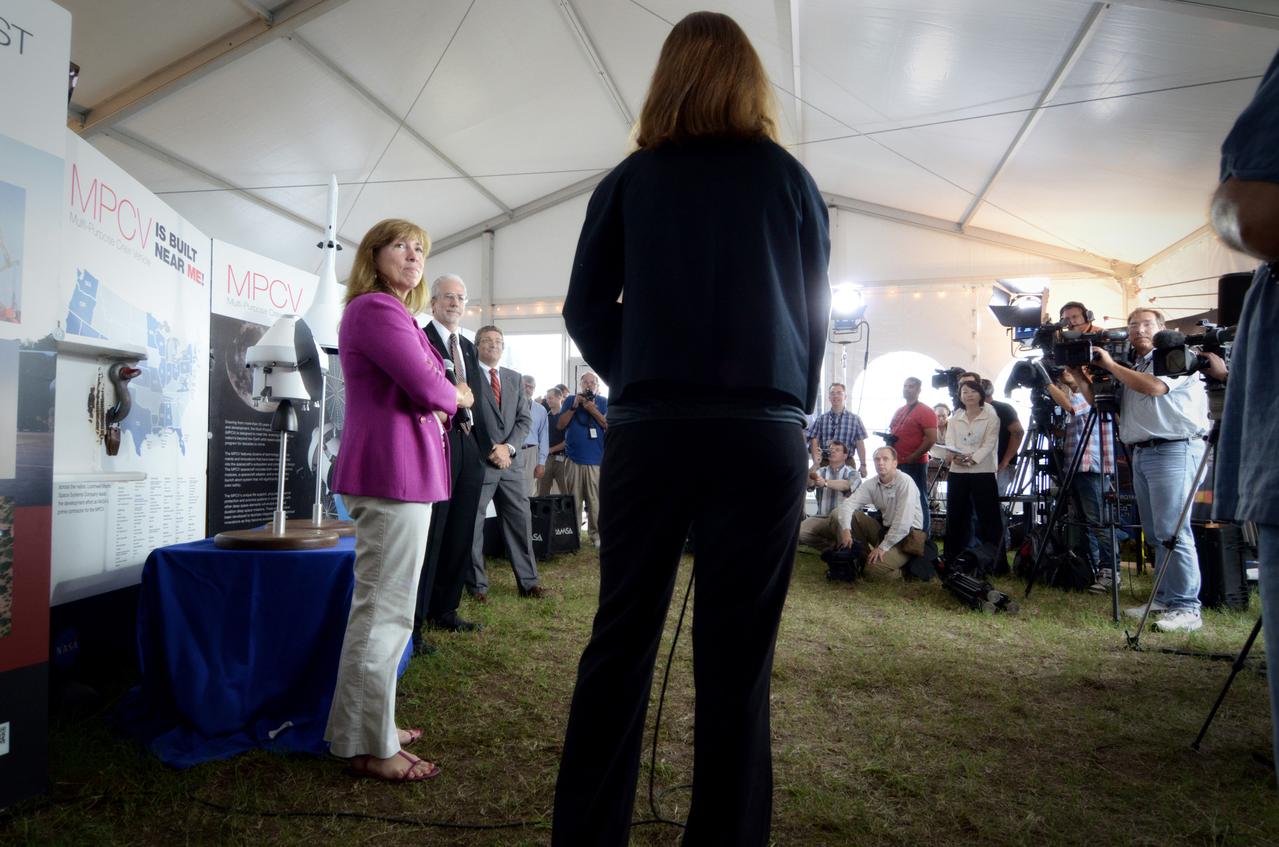
The Orion crew module flown on NASA’s Pad Abort-1 (PA-1) flight test is shown on display at an event at Kennedy Space Center in Florida on July 7, 2011 before moving into the Operations & Checkout (O&C) Building. Part of Batch image transfer from Flickr.
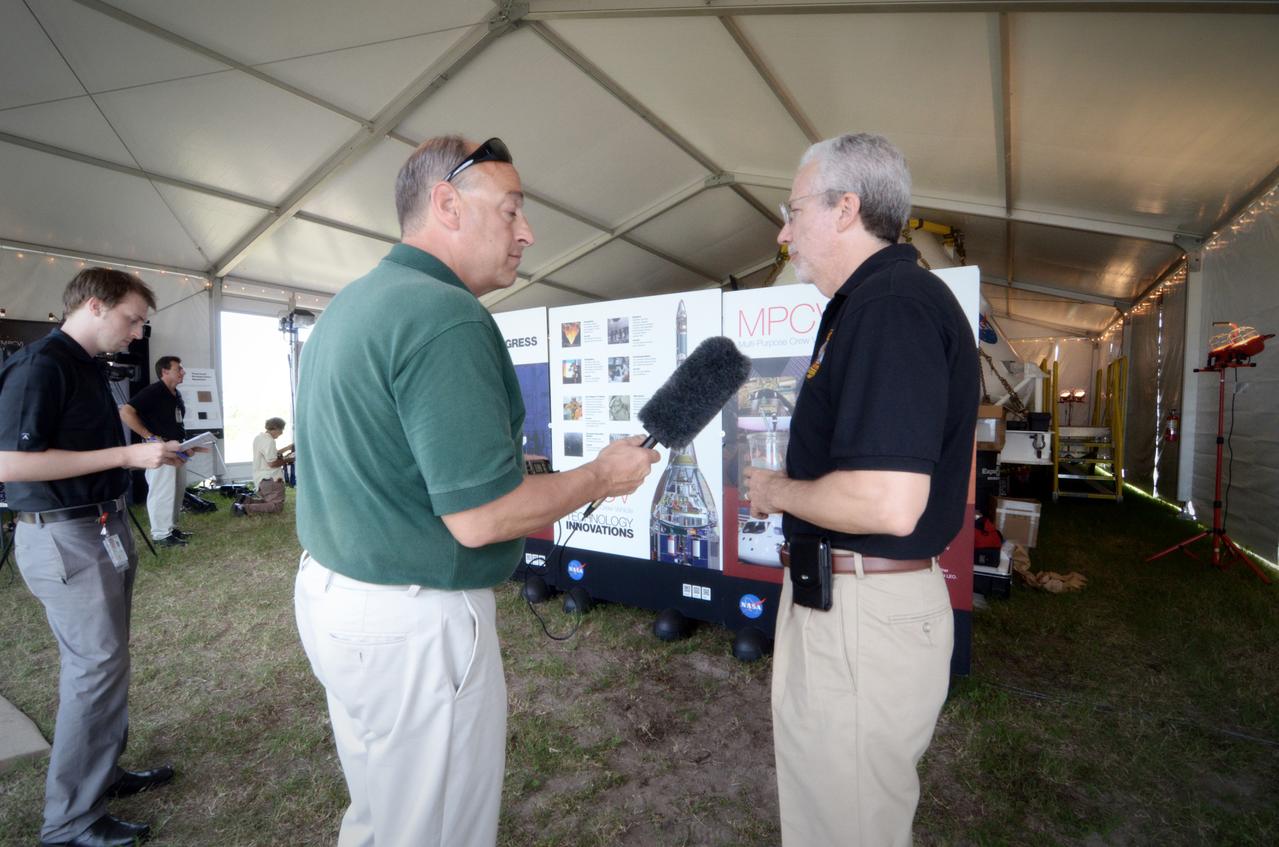
The Orion crew module flown on NASA’s Pad Abort-1 (PA-1) flight test is shown on display at an event at Kennedy Space Center in Florida on July 6, 2011 before moving into the Operations & Checkout (O&C) Building. Part of Batch image transfer from Flickr.
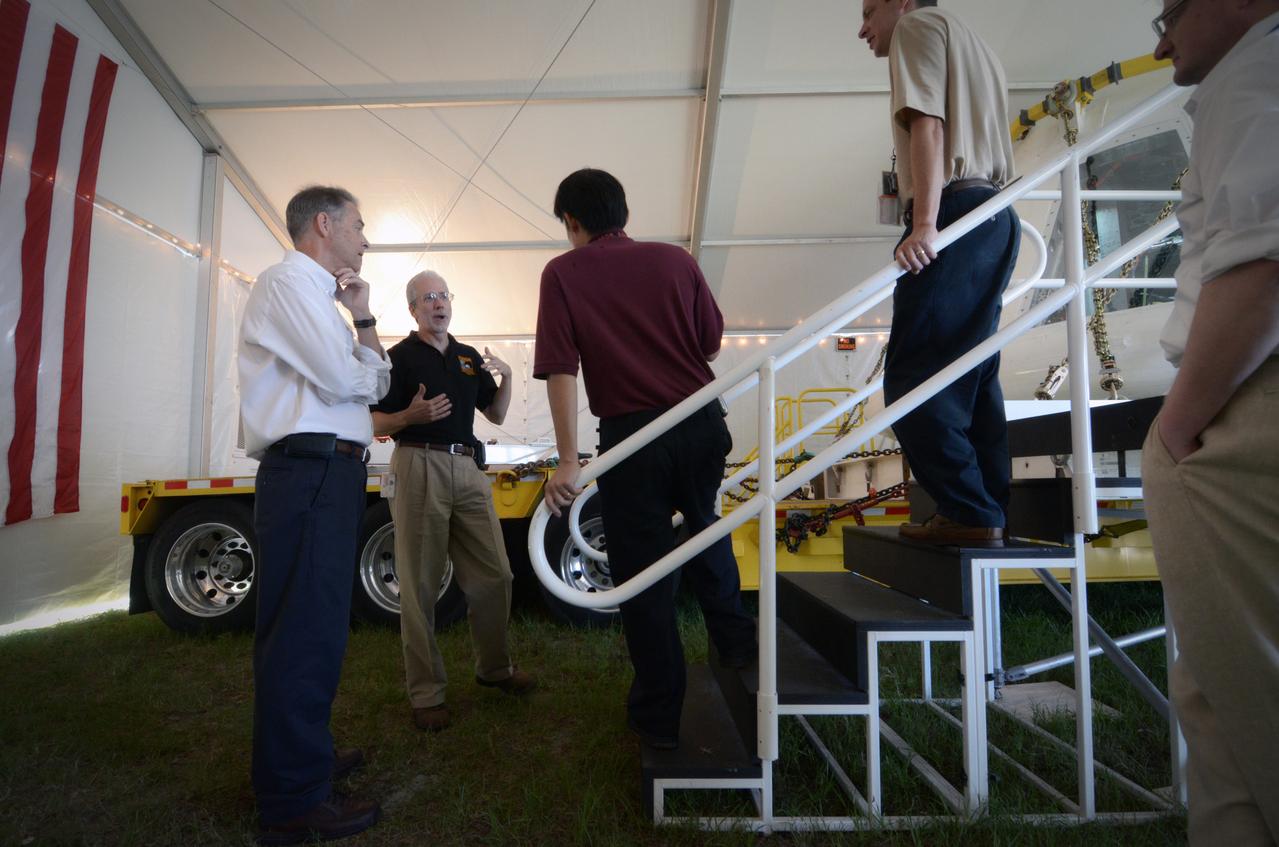
The Orion crew module flown on NASA’s Pad Abort-1 (PA-1) flight test is shown on display at an event at Kennedy Space Center in Florida on July 6, 2011 before moving into the Operations & Checkout (O&C) Building. Part of Batch image transfer from Flickr.
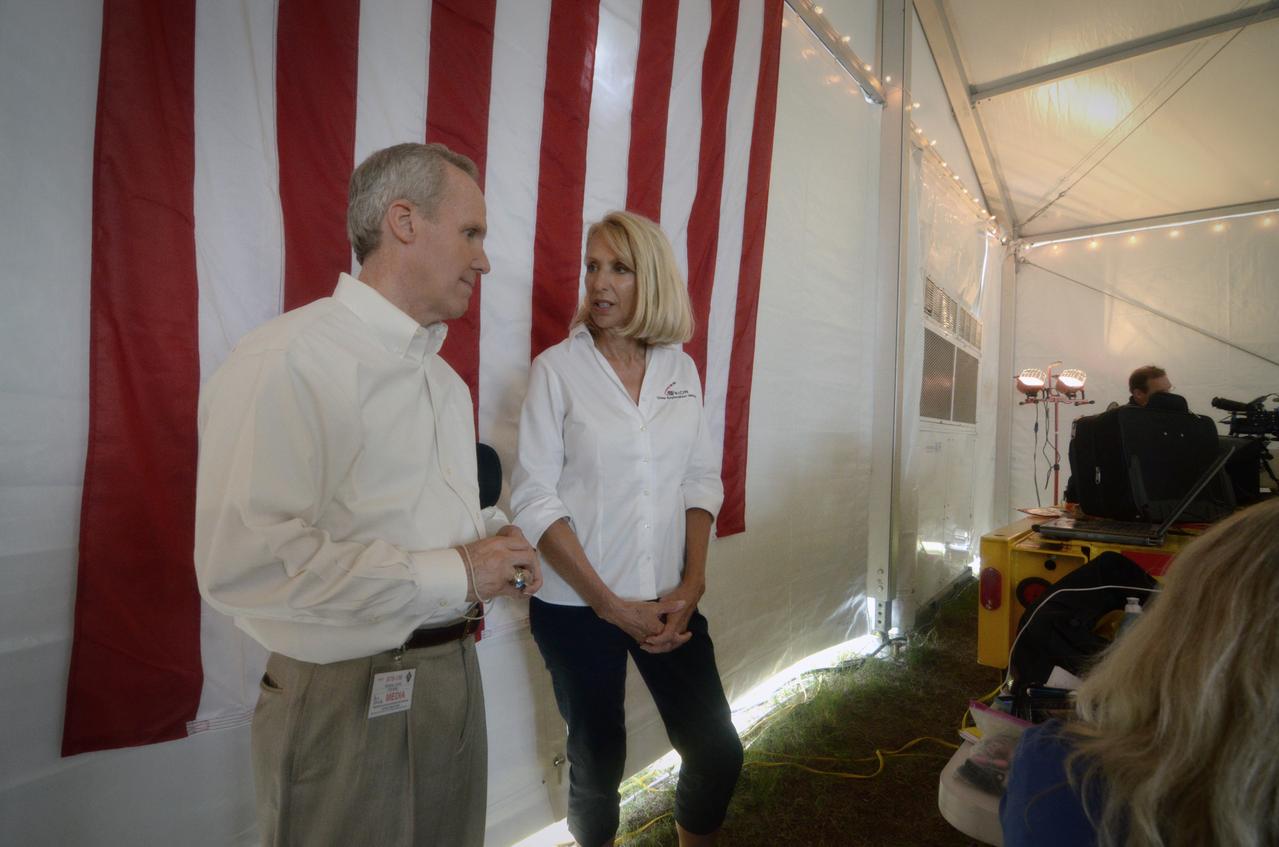
The Orion crew module flown on NASA’s Pad Abort-1 (PA-1) flight test is shown on display at an event at Kennedy Space Center in Florida on July 8, 2011 before moving into the Operations & Checkout (O&C) Building. Part of Batch image transfer from Flickr.
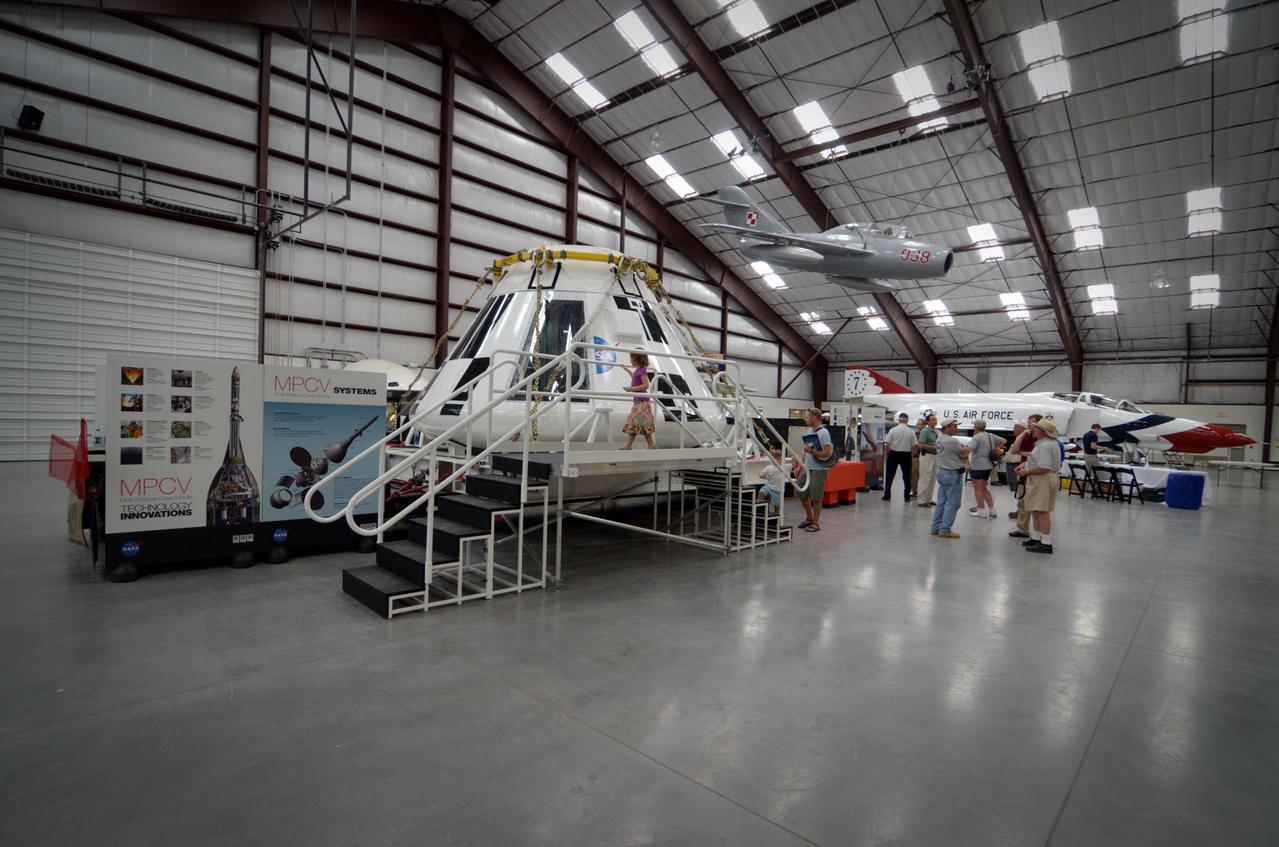
The Orion crew module flown on NASA’s Pad Abort-1 (PA-1) flight test is shown on display and NASA Astronaut Nicholas Patrick speaks at an event at the Pima Air and Space Museum in Tucson, Arizona, on June 16, 2011. Part of Batch image transfer from Flickr.
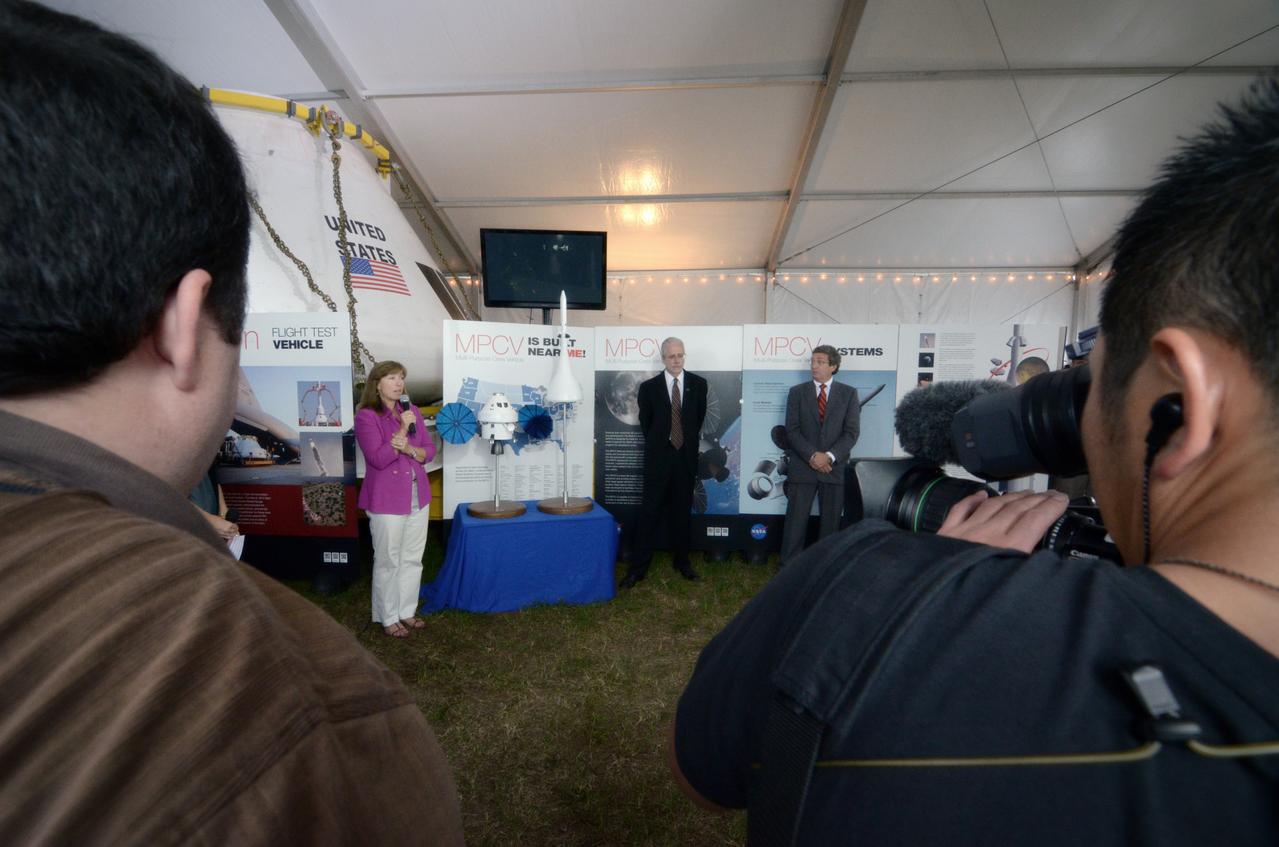
The Orion crew module flown on NASA’s Pad Abort-1 (PA-1) flight test is shown on display at an event at Kennedy Space Center in Florida on July 7, 2011 before moving into the Operations & Checkout (O&C) Building. Part of Batch image transfer from Flickr.
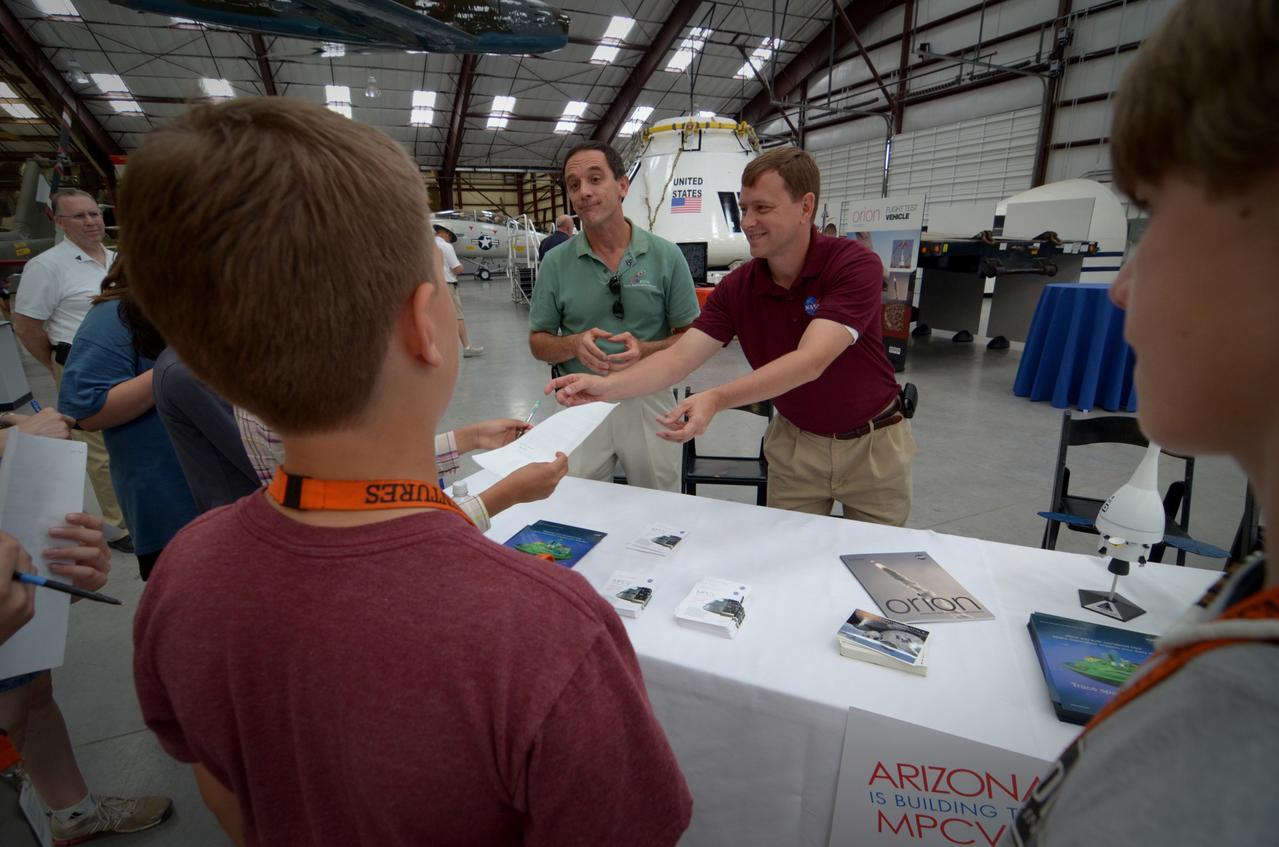
The Orion crew module flown on NASA’s Pad Abort-1 (PA-1) flight test is shown on display and NASA Astronaut Nicholas Patrick speaks at an event at the Pima Air and Space Museum in Tucson, Arizona, on June 16, 2011. Part of Batch image transfer from Flickr.
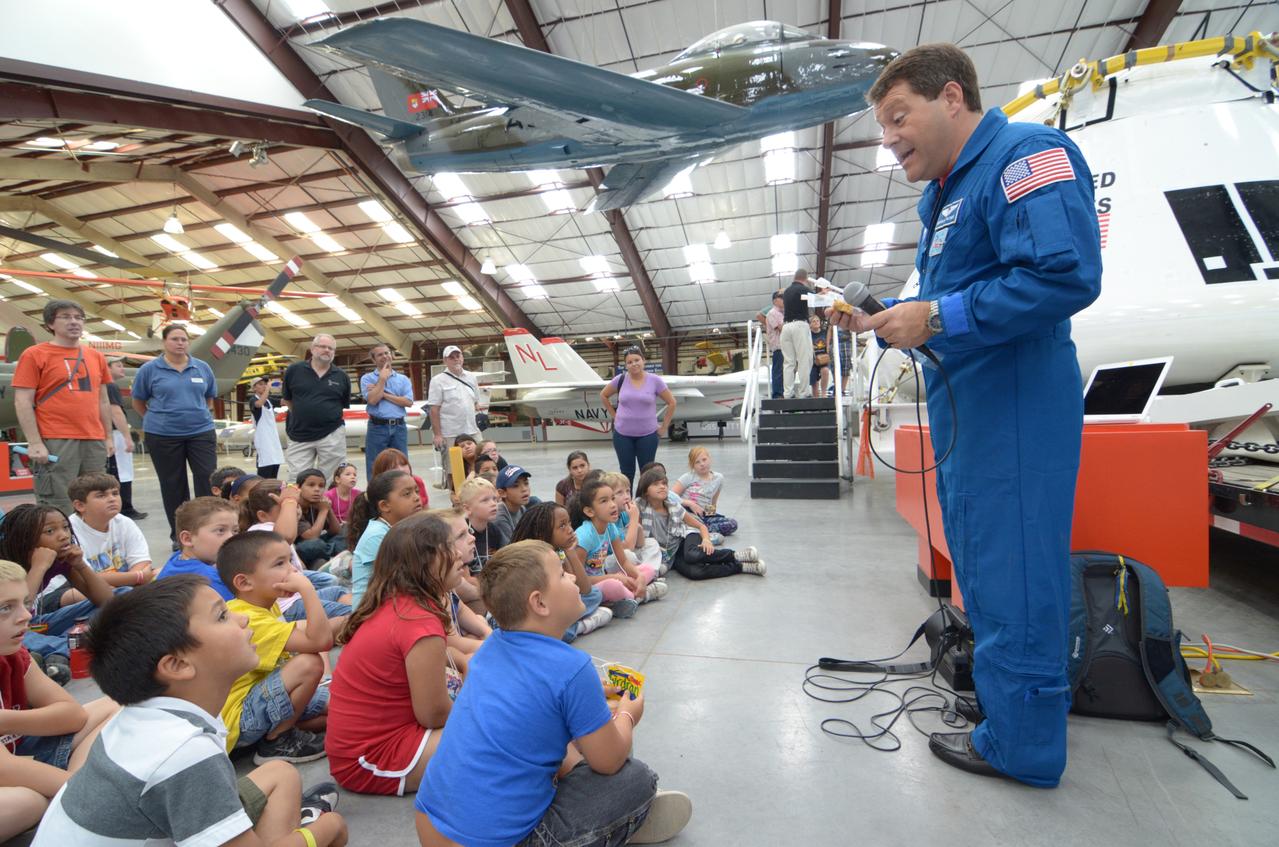
The Orion crew module flown on NASA’s Pad Abort-1 (PA-1) flight test is shown on display and NASA Astronaut Nicholas Patrick speaks at an event at the Pima Air and Space Museum in Tucson, Arizona, on June 16, 2011. Part of Batch image transfer from Flickr.
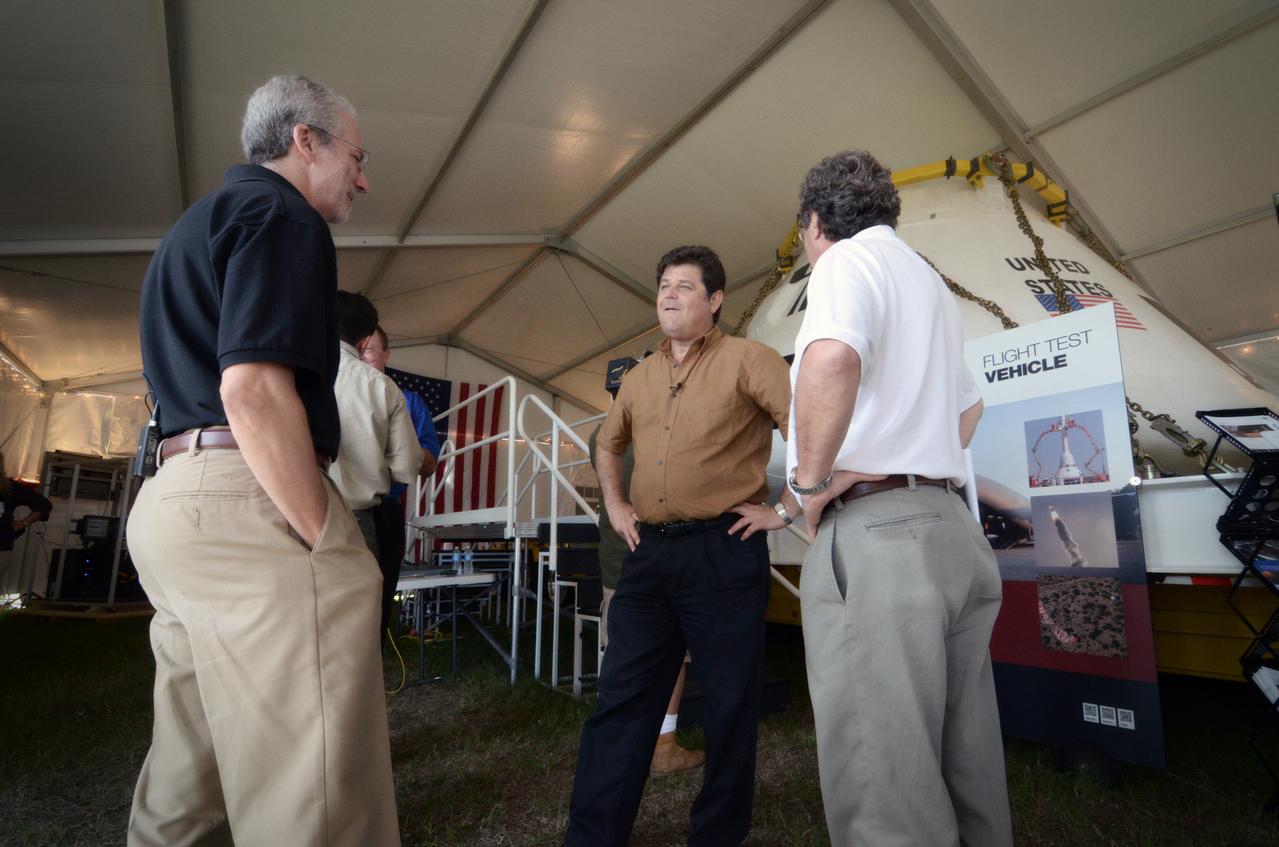
The Orion crew module flown on NASA’s Pad Abort-1 (PA-1) flight test is shown on display at an event at Kennedy Space Center in Florida on July 6, 2011 before moving into the Operations & Checkout (O&C) Building. Part of Batch image transfer from Flickr.
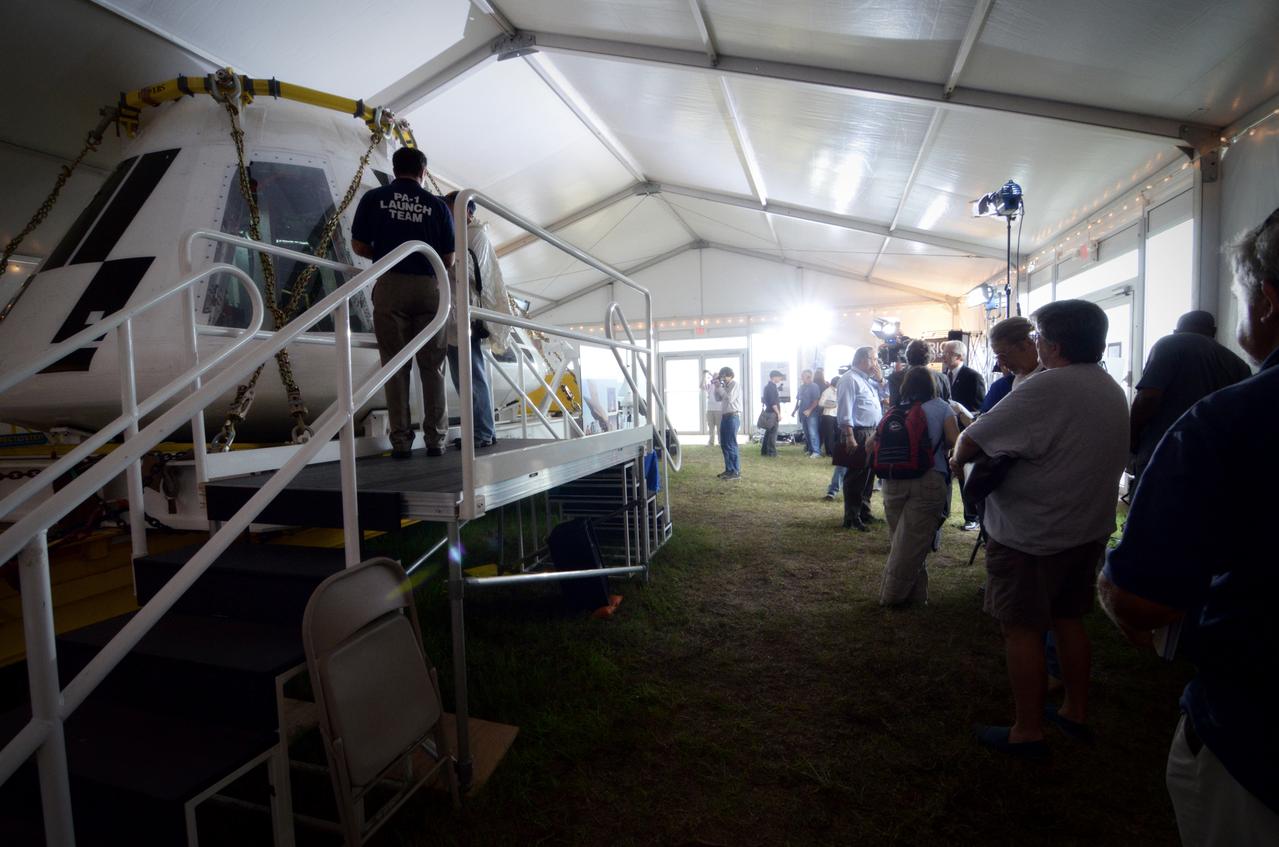
The Orion crew module flown on NASA’s Pad Abort-1 (PA-1) flight test is shown on display at an event at Kennedy Space Center in Florida on July 7, 2011 before moving into the Operations & Checkout (O&C) Building. Part of Batch image transfer from Flickr.
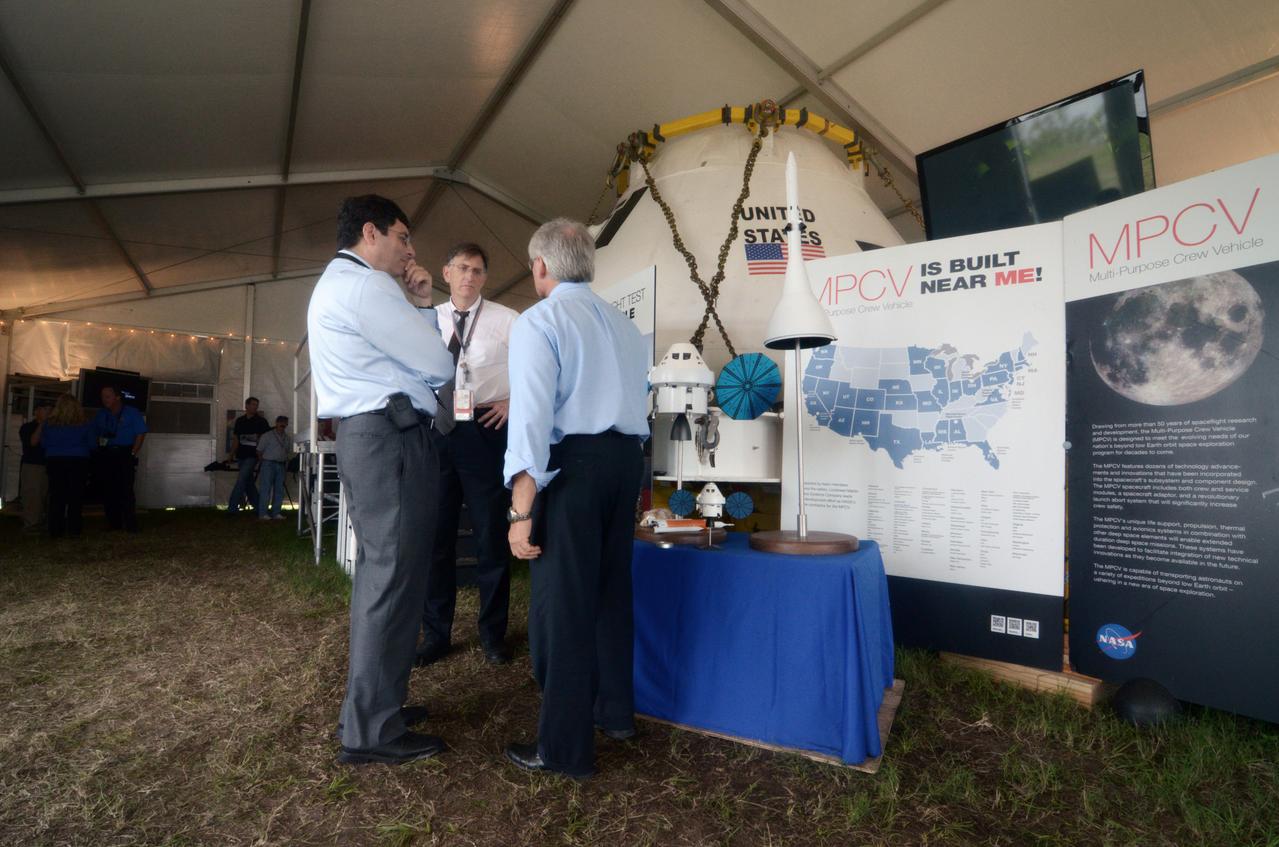
The Orion crew module flown on NASA’s Pad Abort-1 (PA-1) flight test is shown on display at an event at Kennedy Space Center in Florida on July 8, 2011 before moving into the Operations & Checkout (O&C) Building. Part of Batch image transfer from Flickr.
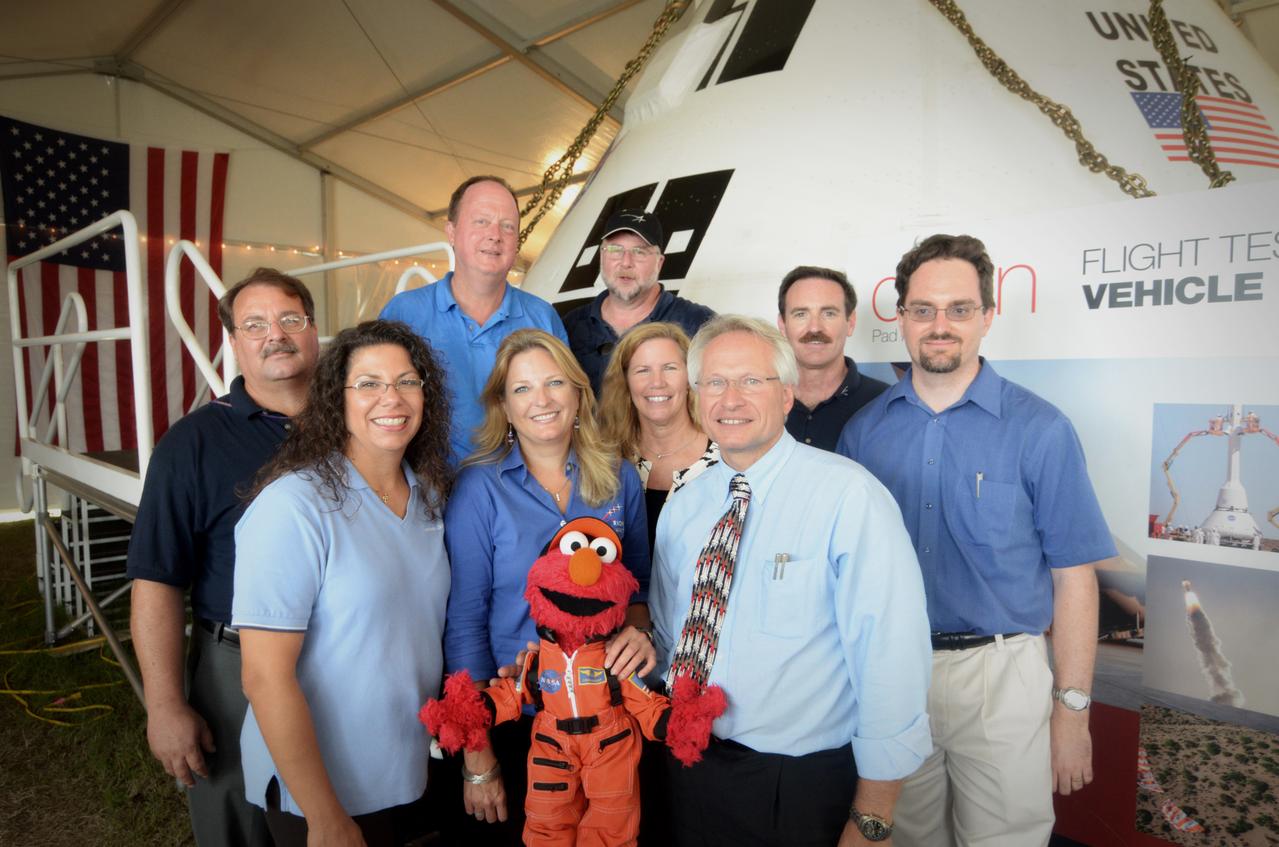
The Orion crew module flown on NASA’s Pad Abort-1 (PA-1) flight test is shown on display at an event at Kennedy Space Center in Florida on July 8, 2011 before moving into the Operations & Checkout (O&C) Building. Part of Batch image transfer from Flickr.
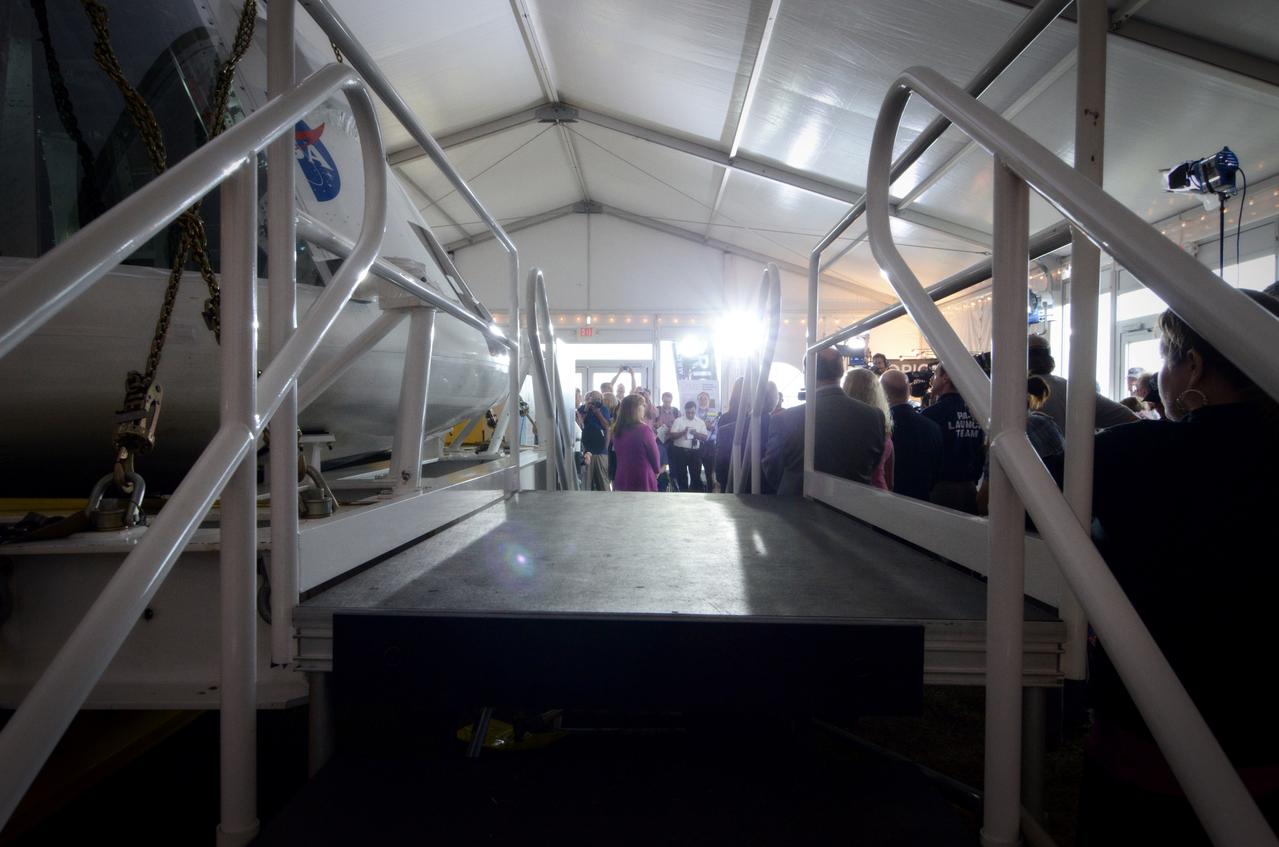
The Orion crew module flown on NASA’s Pad Abort-1 (PA-1) flight test is shown on display at an event at Kennedy Space Center in Florida on July 7, 2011 before moving into the Operations & Checkout (O&C) Building. Part of Batch image transfer from Flickr.
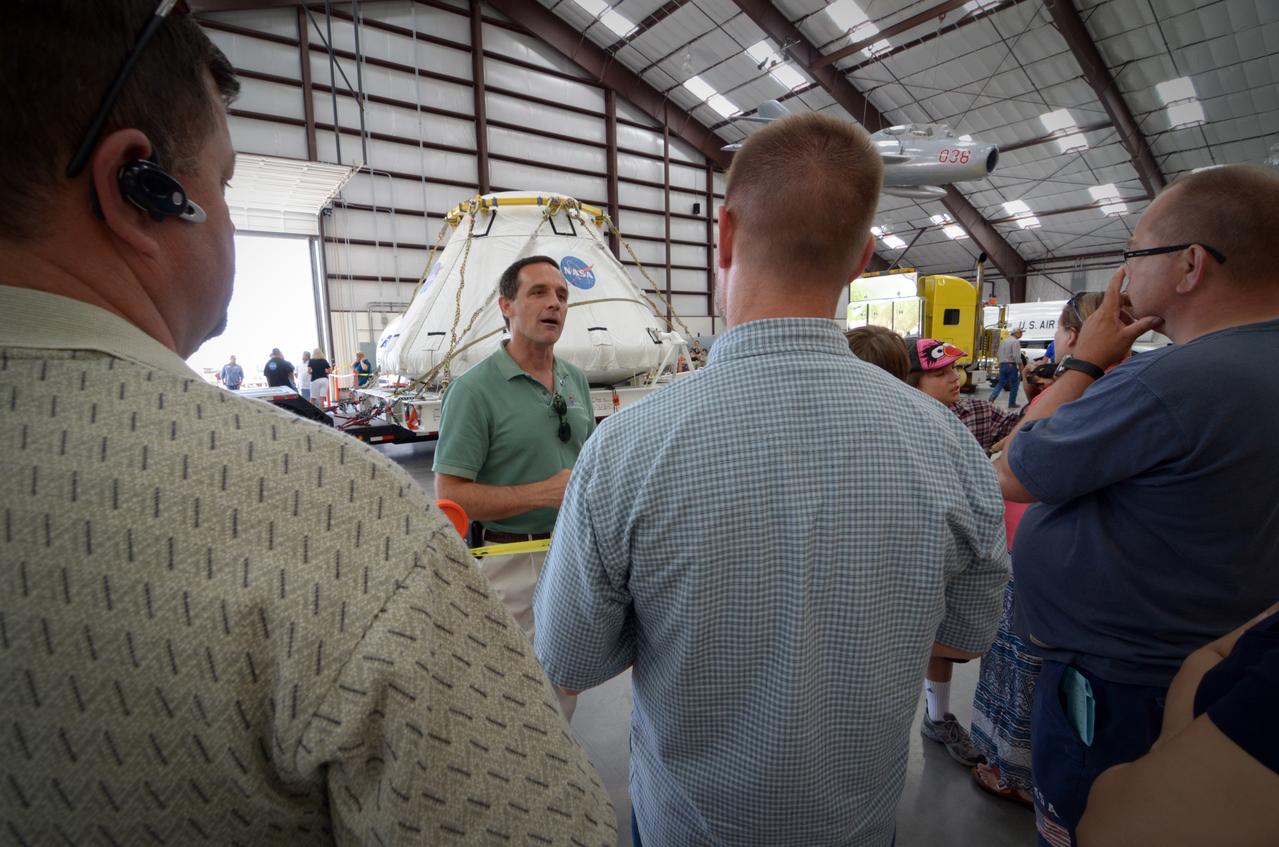
The Orion crew module flown on NASA’s Pad Abort-1 (PA-1) flight test is shown on display and NASA Astronaut Nicholas Patrick speaks at an event at the Pima Air and Space Museum in Tucson, Arizona, on June 16, 2011. Part of Batch image transfer from Flickr.
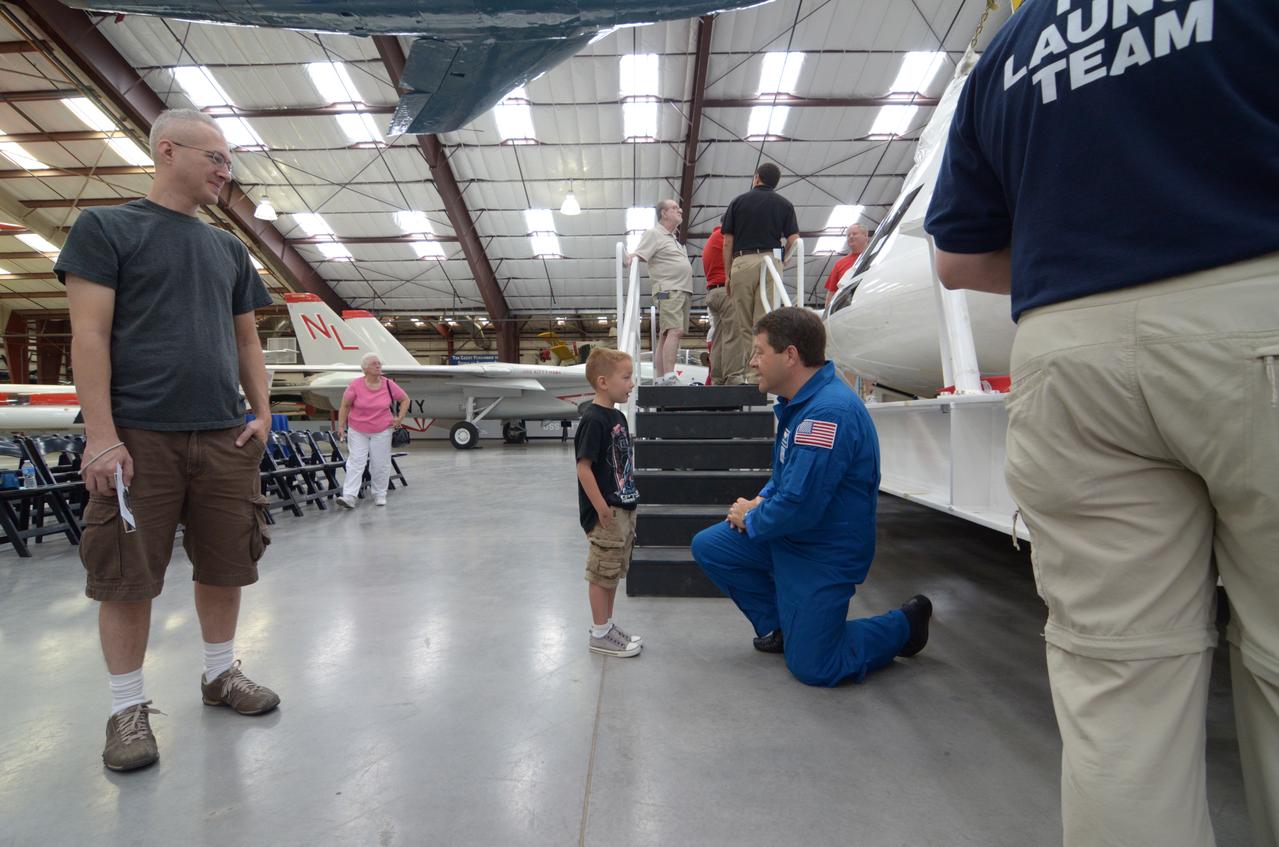
The Orion crew module flown on NASA’s Pad Abort-1 (PA-1) flight test is shown on display and NASA Astronaut Nicholas Patrick speaks at an event at the Pima Air and Space Museum in Tucson, Arizona, on June 16, 2011. Part of Batch image transfer from Flickr.

The Orion crew module flown on NASA’s Pad Abort-1 (PA-1) flight test is shown on display at an event at Kennedy Space Center in Florida on July 8, 2011 before moving into the Operations & Checkout (O&C) Building. Part of Batch image transfer from Flickr.
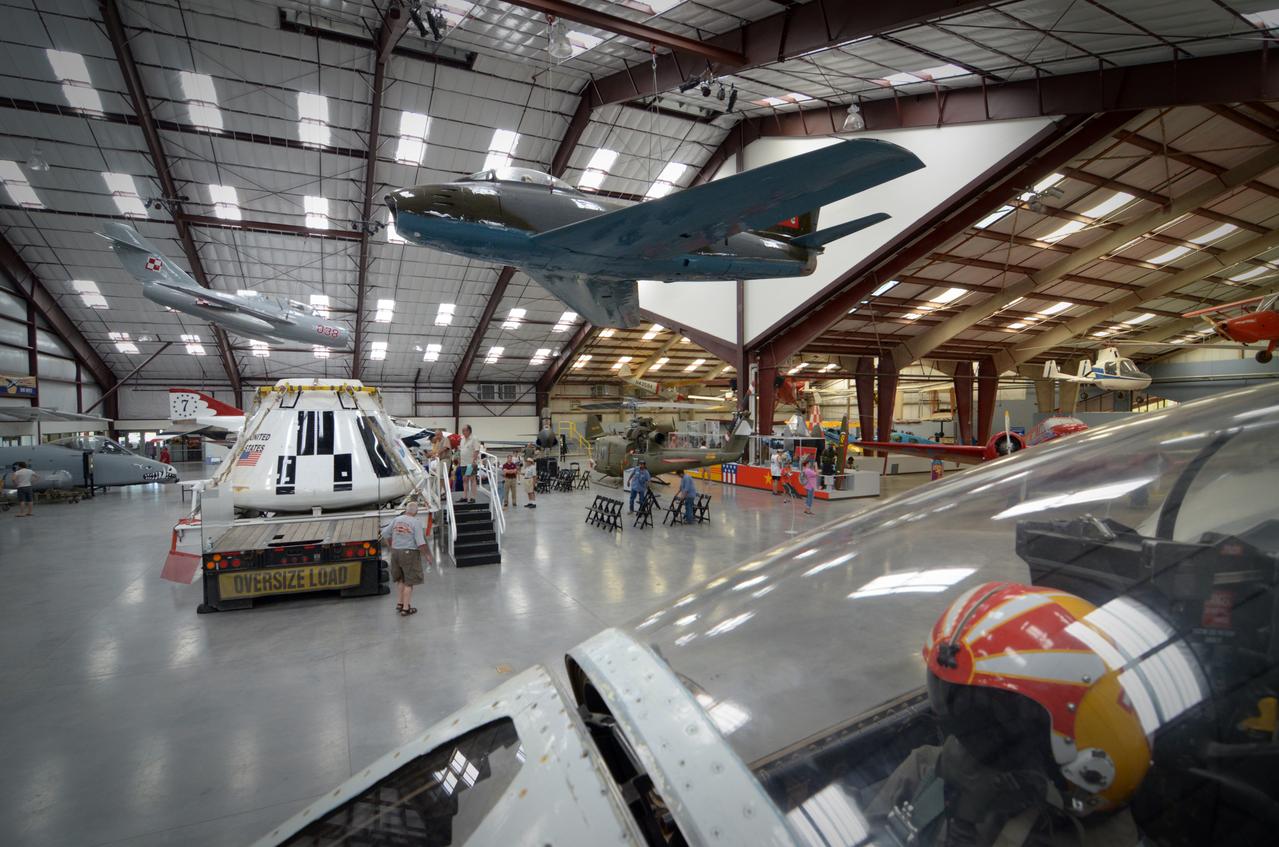
The Orion crew module flown on NASA’s Pad Abort-1 (PA-1) flight test is shown on display and NASA Astronaut Nicholas Patrick speaks at an event at the Pima Air and Space Museum in Tucson, Arizona, on June 16, 2011. Part of Batch image transfer from Flickr.
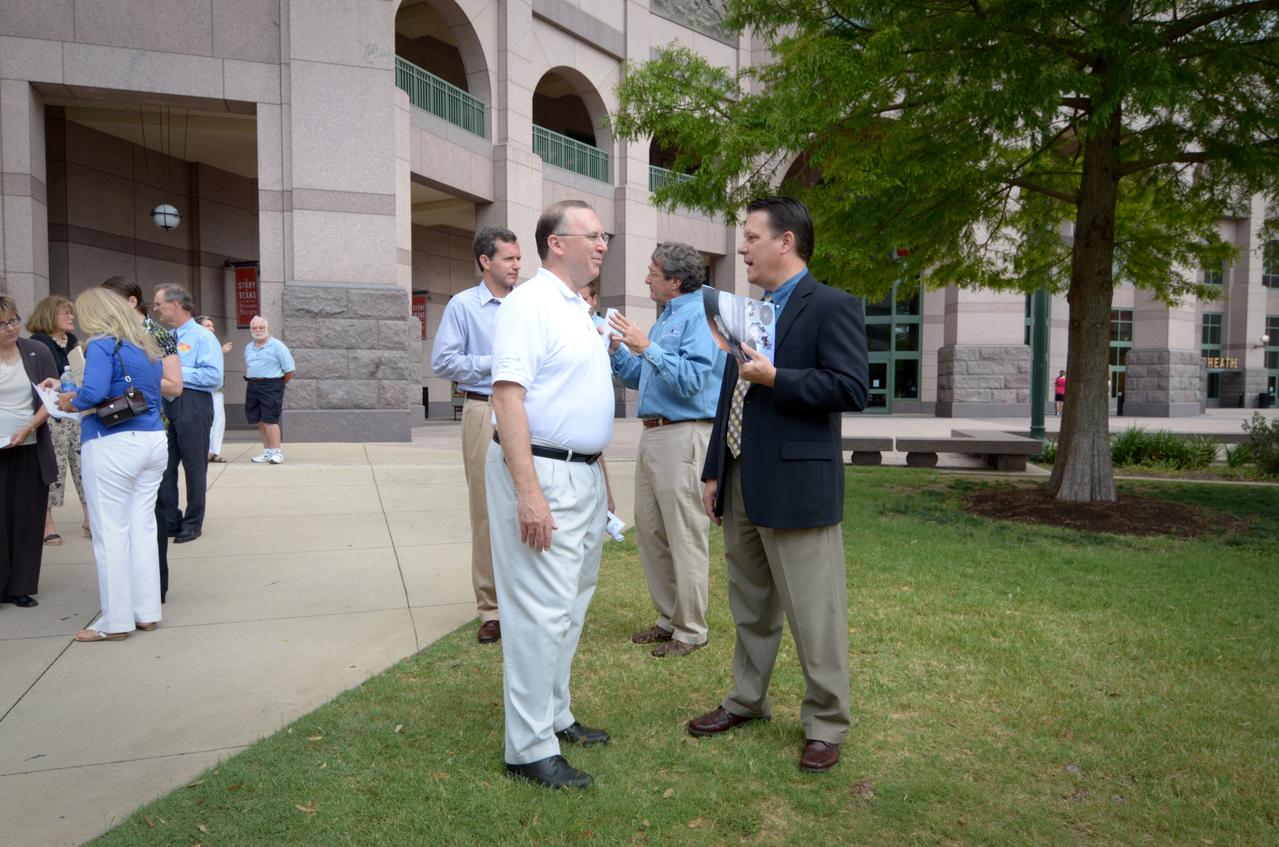
Visitors prepare to view the Orion crew module flown on NASA’s Pad Abort-1 (PA-1) flight test, which is on display at an event at the Bullock Texas State History Museum in Austin, Texas on June 20, 2011. Part of Batch image transfer from Flickr.
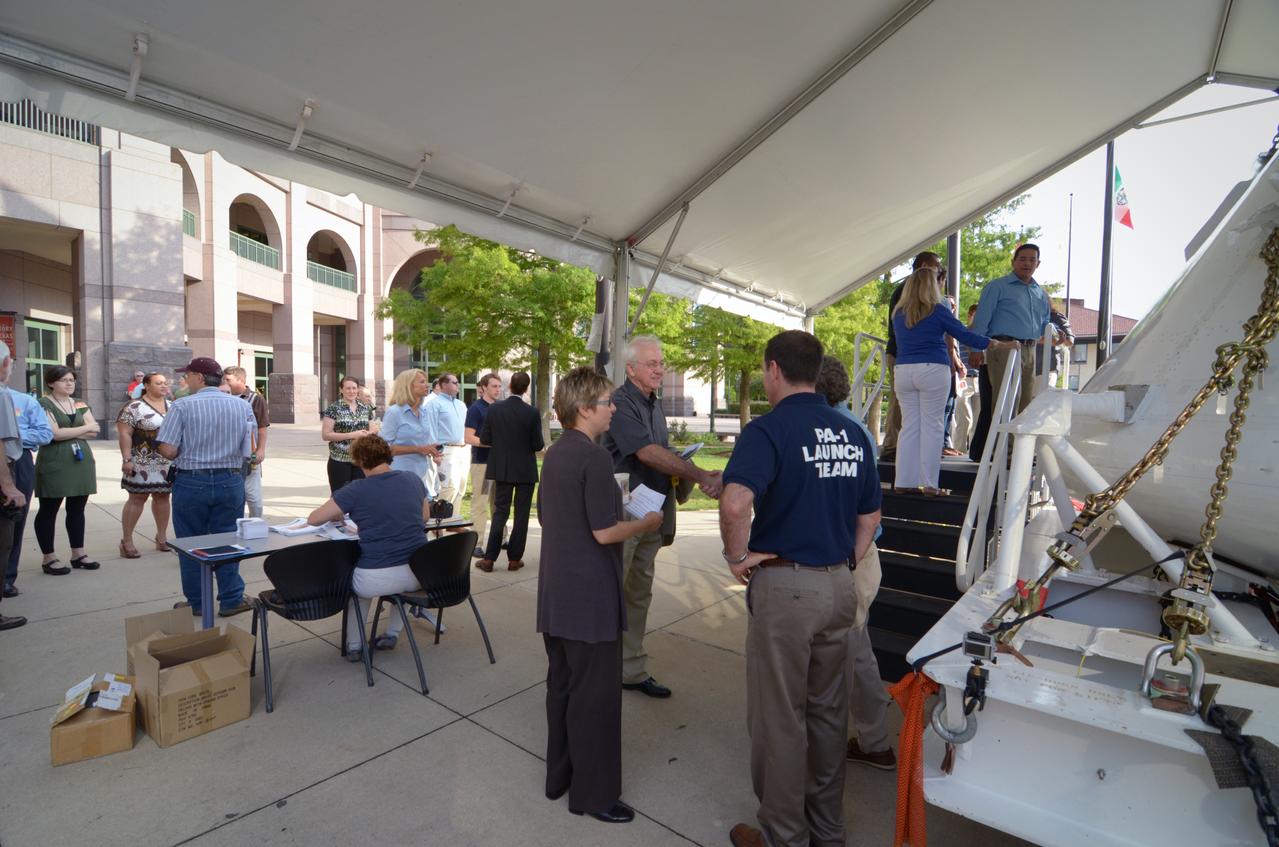
Visitors prepare to view the Orion crew module flown on NASA’s Pad Abort-1 (PA-1) flight test, which is on display at an event at the Bullock Texas State History Museum in Austin, Texas on June 20, 2011. Part of Batch image transfer from Flickr.
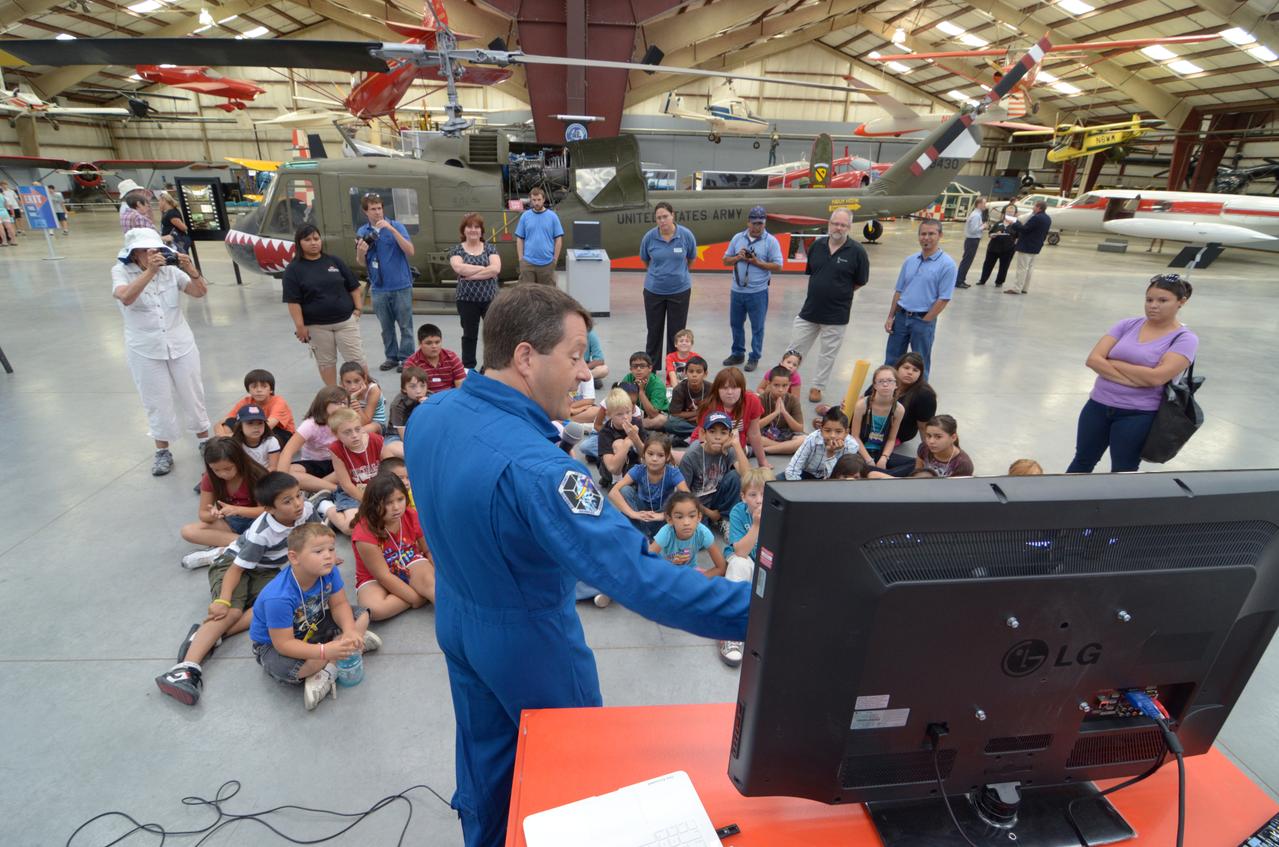
The Orion crew module flown on NASA’s Pad Abort-1 (PA-1) flight test is shown on display and NASA Astronaut Nicholas Patrick speaks at an event at the Pima Air and Space Museum in Tucson, Arizona, on June 16, 2011. Part of Batch image transfer from Flickr.
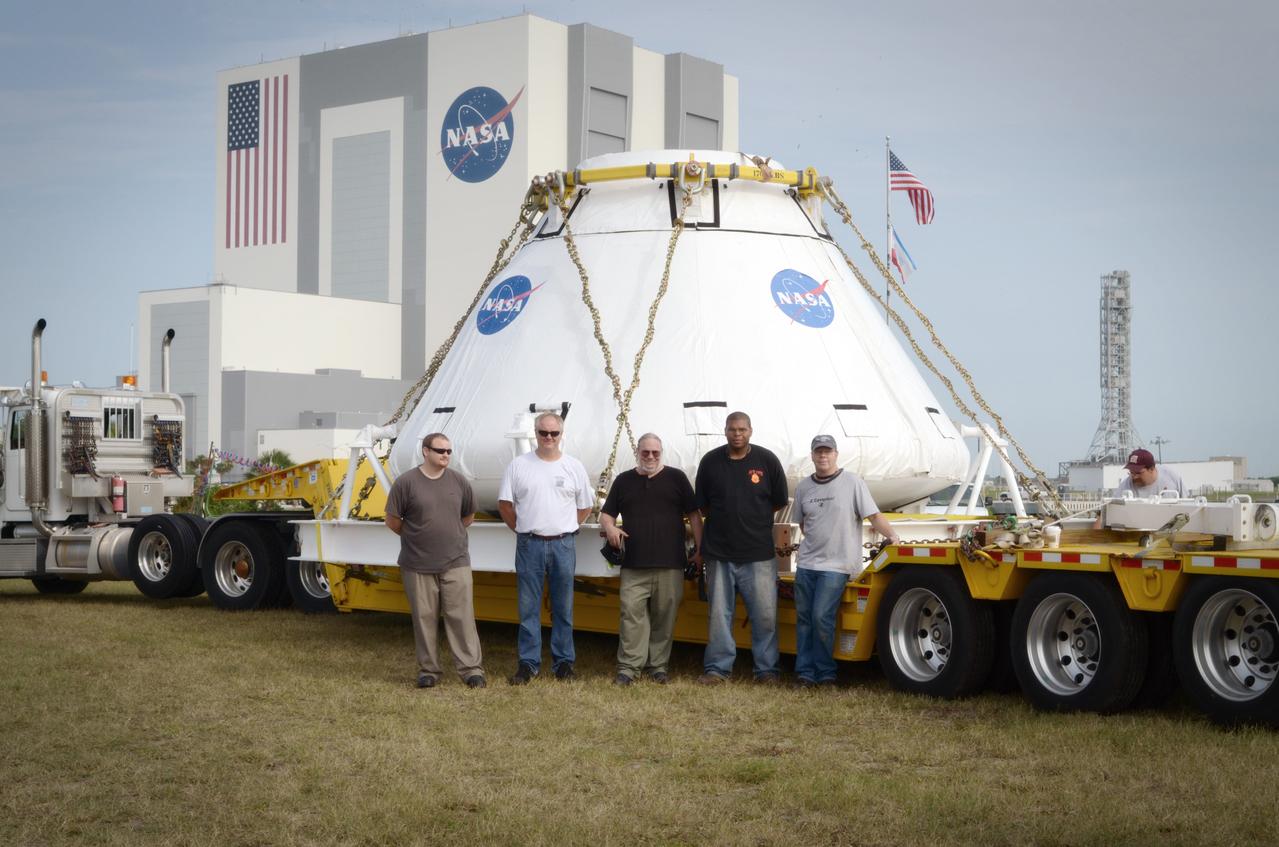
The Orion Pad Abort-1 (PA-1) crew module operations team poses with the crew module prior to its move to the Operations & Checkout (O&C) Building at Kennedy Space Center in Florida on July 11, 2011. Part of Batch image transfer from Flickr.
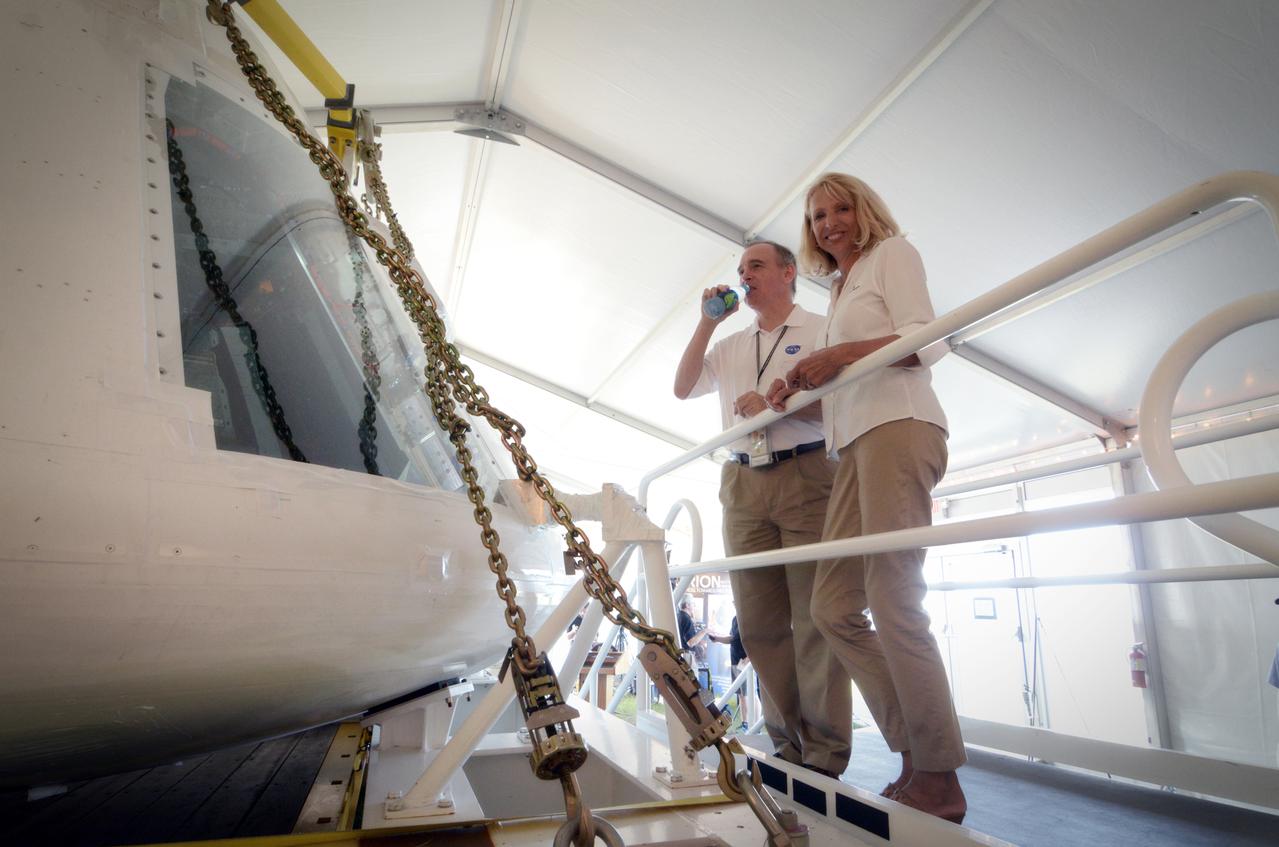
The Orion crew module flown on NASA’s Pad Abort-1 (PA-1) flight test is shown on display at an event at Kennedy Space Center in Florida on July 6, 2011 before moving into the Operations & Checkout (O&C) Building. Part of Batch image transfer from Flickr.
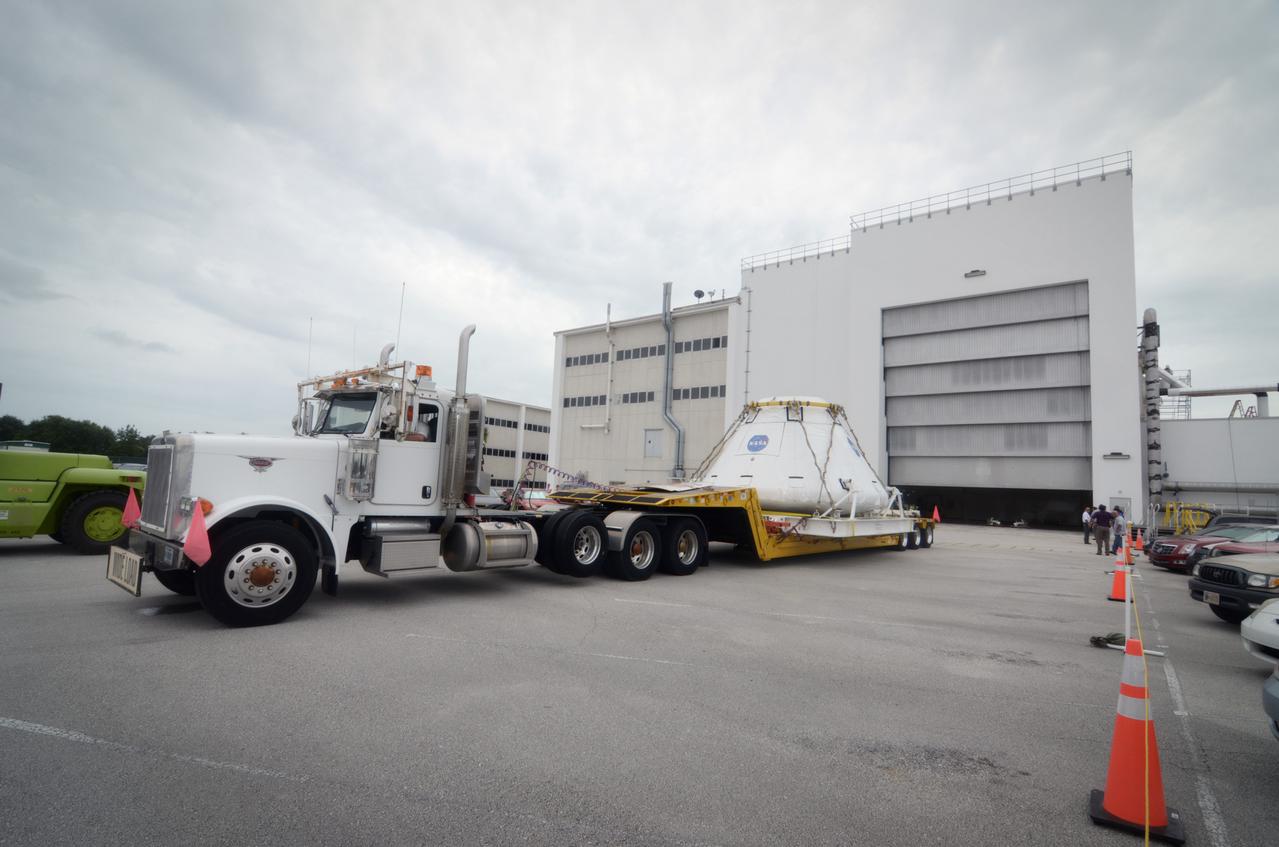
The Orion Pad Abort-1 (PA-1) crew module arrives at the Operations & Checkout (O&C) Building at Kennedy Space Center in Florida on July 11, 2011. Part of Batch image transfer from Flickr.
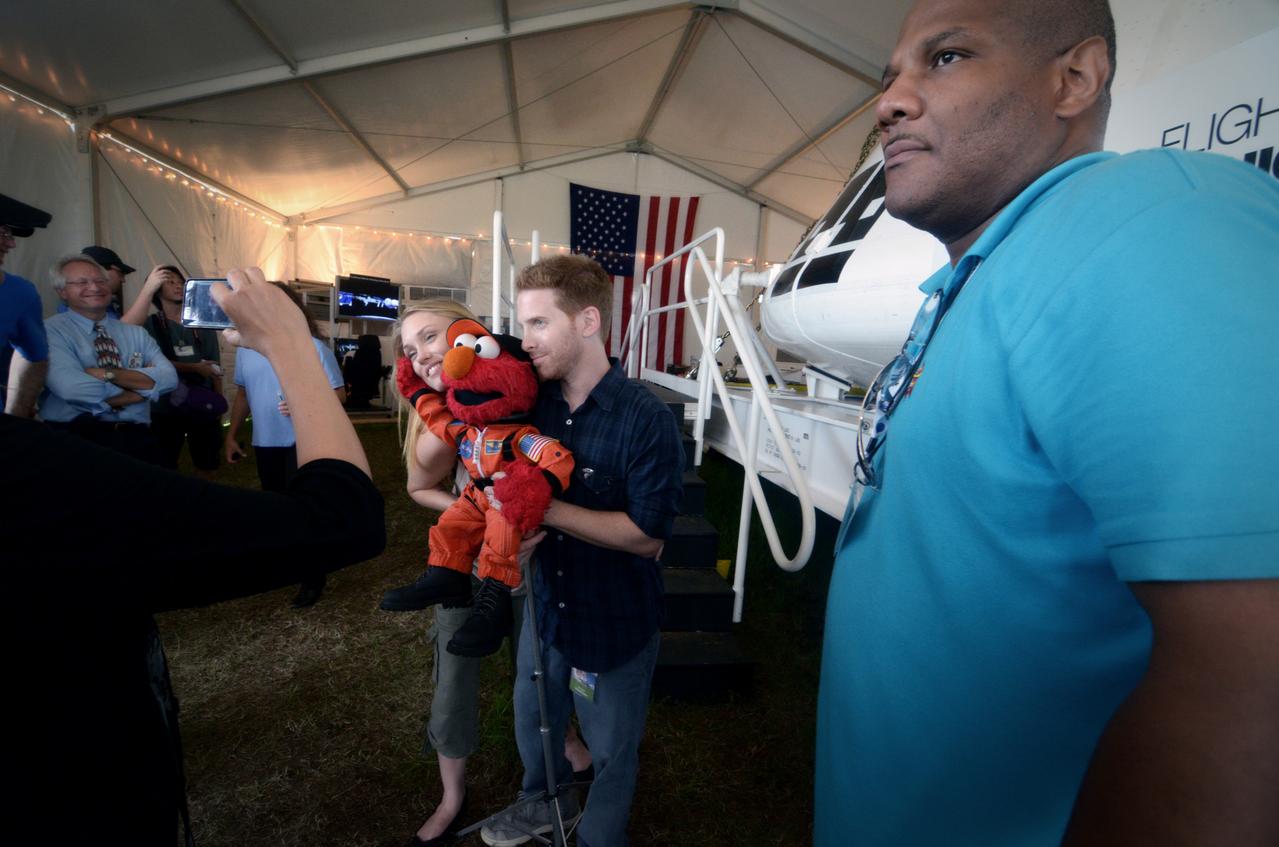
The Orion crew module flown on NASA’s Pad Abort-1 (PA-1) flight test is shown on display at an event at Kennedy Space Center in Florida on July 8, 2011 before moving into the Operations & Checkout (O&C) Building. Part of Batch image transfer from Flickr.
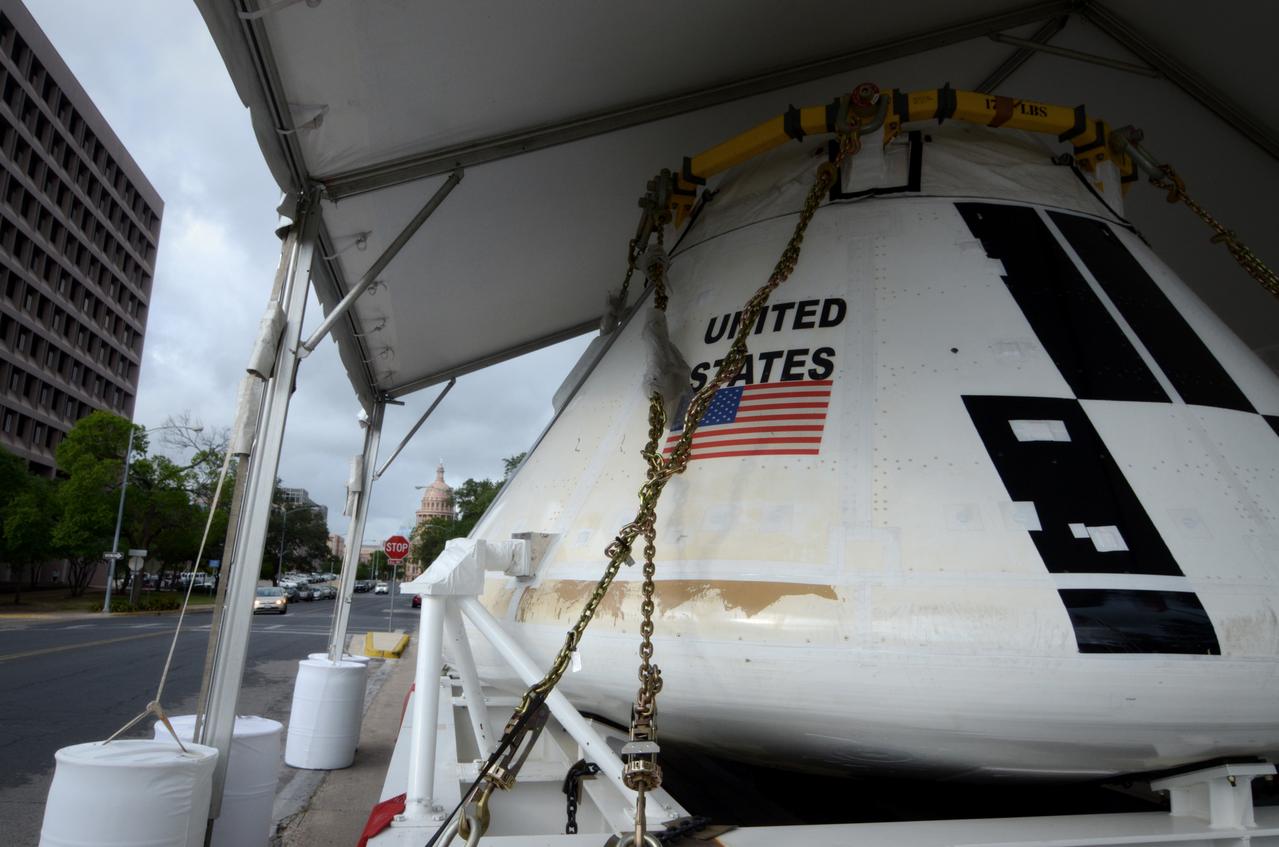
Visitors prepare to view the Orion crew module flown on NASA’s Pad Abort-1 (PA-1) flight test, which is on display at an event at the Bullock Texas State History Museum in Austin, Texas on June 20, 2011. Part of Batch image transfer from Flickr.
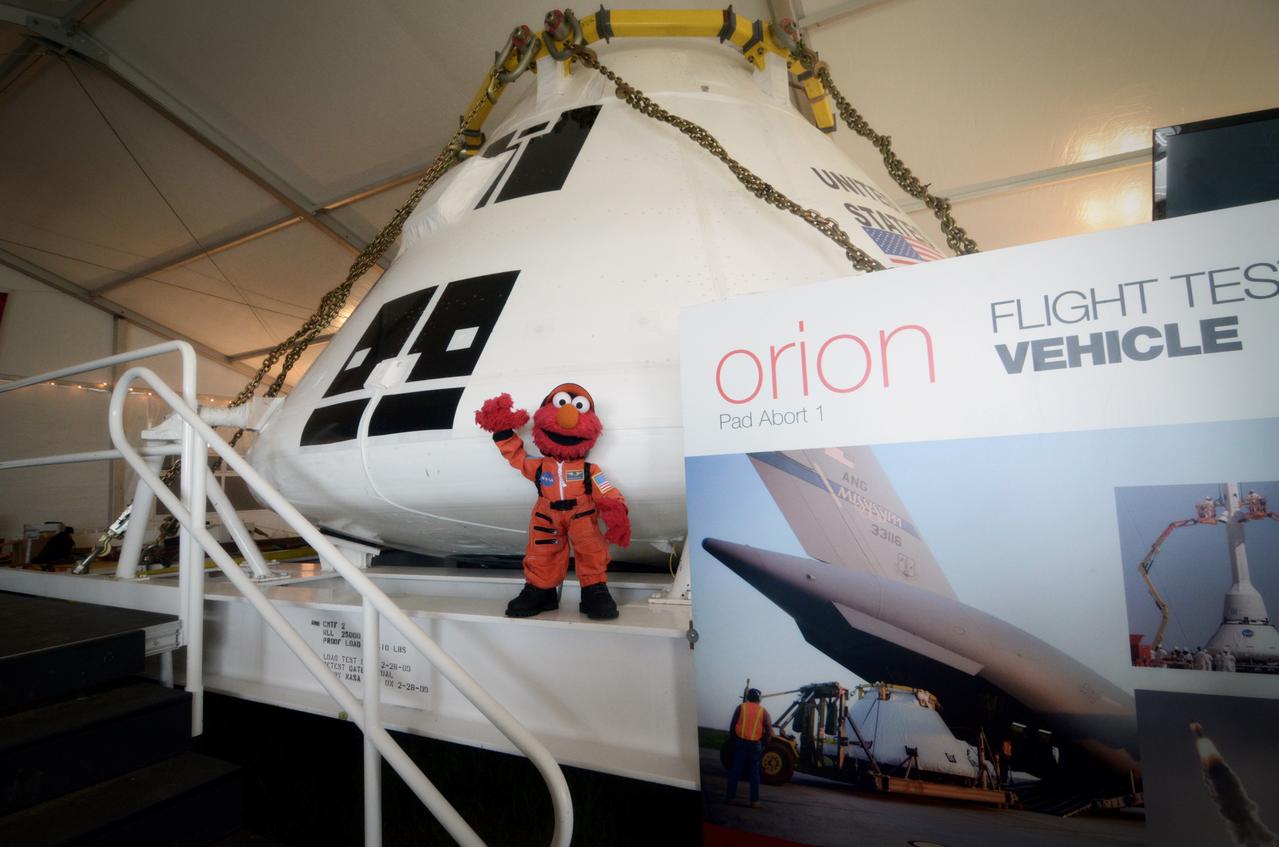
The Orion crew module flown on NASA’s Pad Abort-1 (PA-1) flight test is shown on display at an event at Kennedy Space Center in Florida on July 8, 2011 before moving into the Operations & Checkout (O&C) Building. Part of Batch image transfer from Flickr.
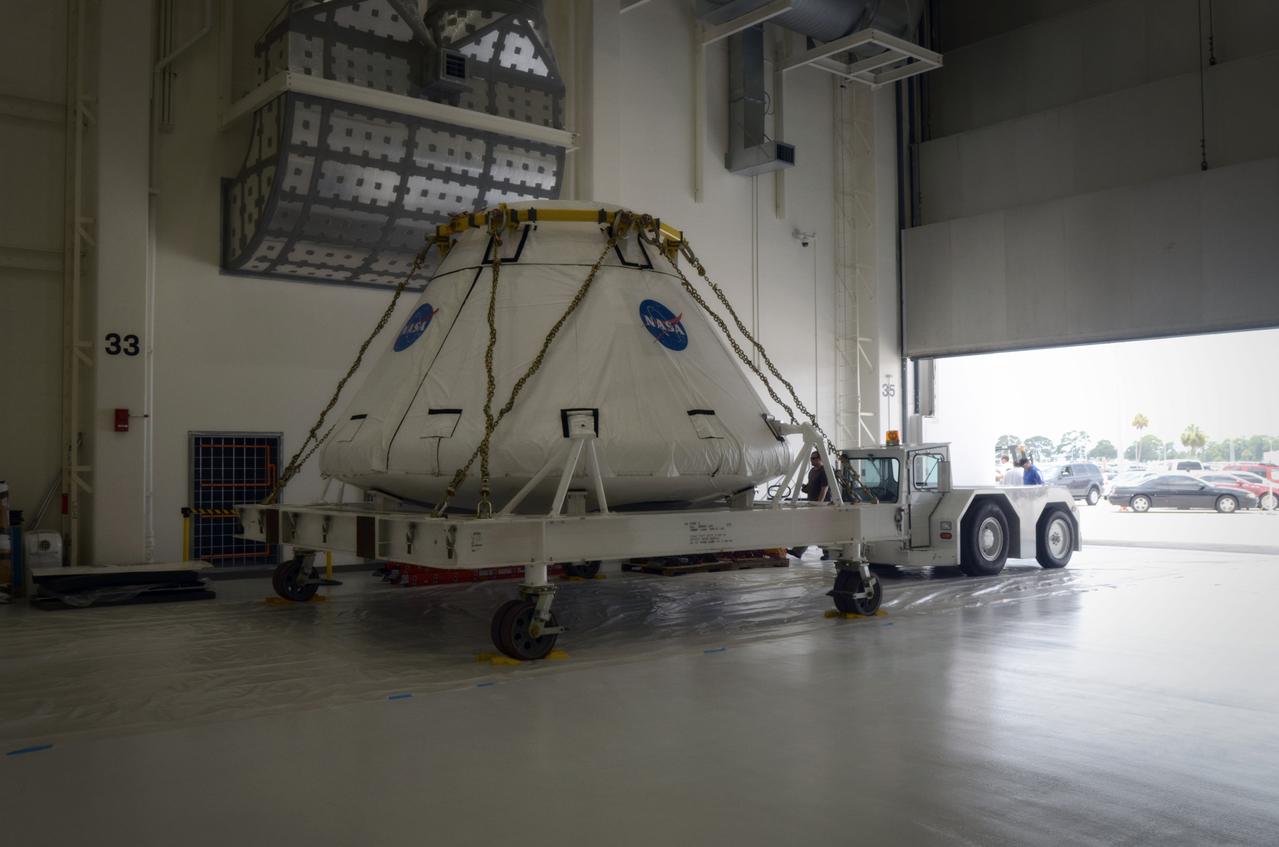
The Orion Pad Abort-1 (PA-1) crew module is pushed into the airlock at the Operations & Checkout (O&C) Building at Kennedy Space Center in Florida on July 11, 2011. Part of Batch image transfer from Flickr.
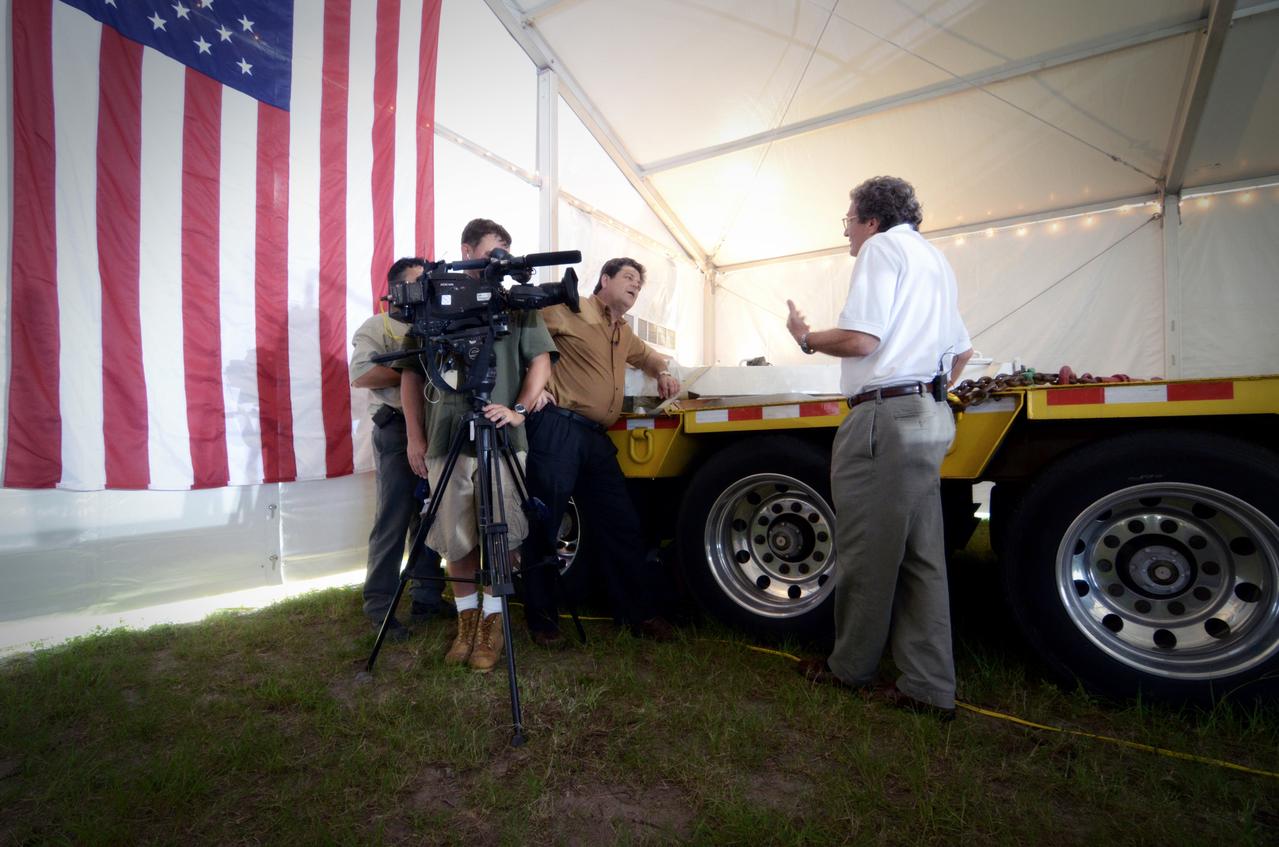
The Orion crew module flown on NASA’s Pad Abort-1 (PA-1) flight test is shown on display at an event at Kennedy Space Center in Florida on July 6, 2011 before moving into the Operations & Checkout (O&C) Building. Part of Batch image transfer from Flickr.