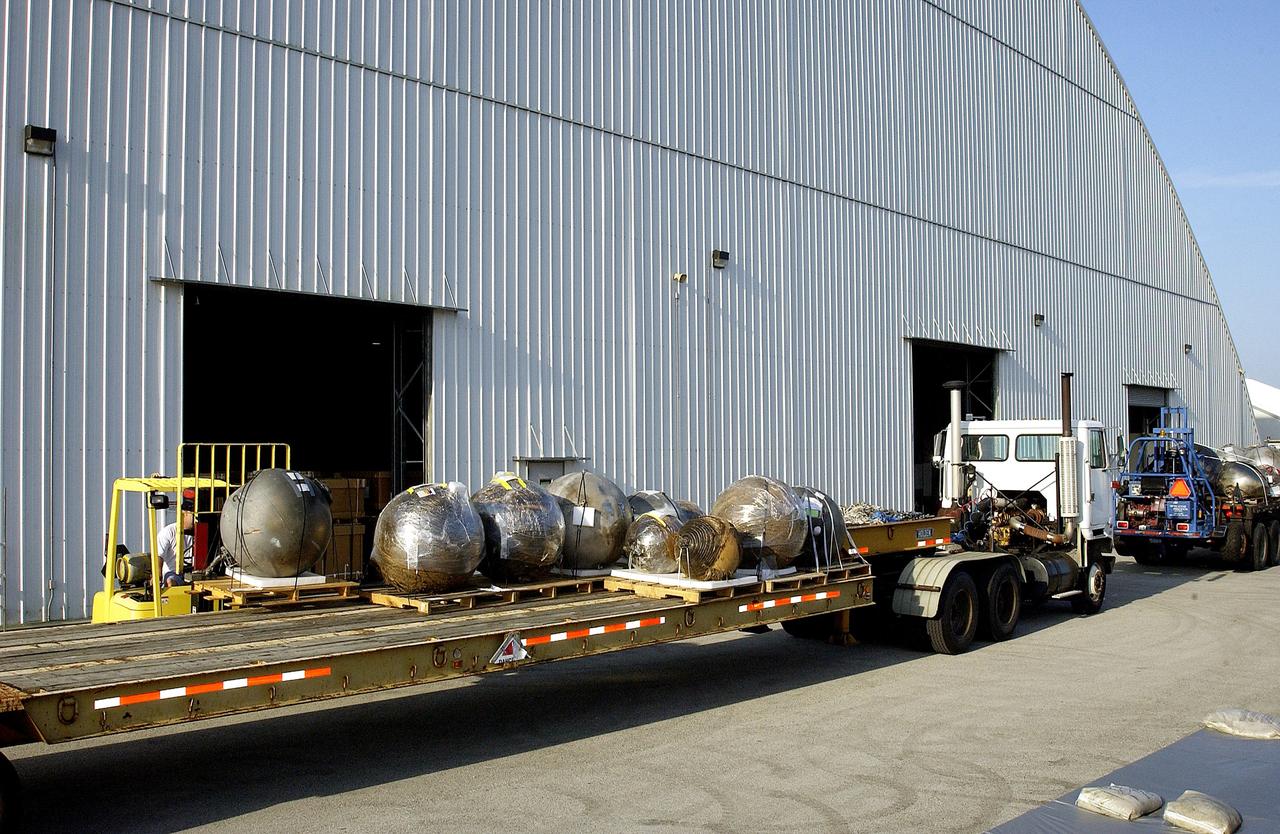
KENNEDY SPACE CENTER, FLA. -  At the Columbia Debris Hangar, some of the debris of Space Shuttle Columbia is moved onto a flatbed truck for transfer to the Vehicle Assembly Building for permanent storage.  More than 83,000 pieces of debris were shipped to KSC during search and recovery efforts in East Texas. That represents about 38 percent of the dry weight of Columbia, equaling almost 85,000 pounds.
KENNEDY SPACE CENTER, FLA. - At the Columbia Debris Hangar, some of the debris of Space Shuttle Columbia is moved onto a flatbed truck for transfer to the Vehicle Assembly Building for permanent storage. More than 83,000 pieces of debris were shipped to KSC during search and recovery efforts in East Texas. That represents about 38 percent of the dry weight of Columbia, equaling almost 85,000 pounds.
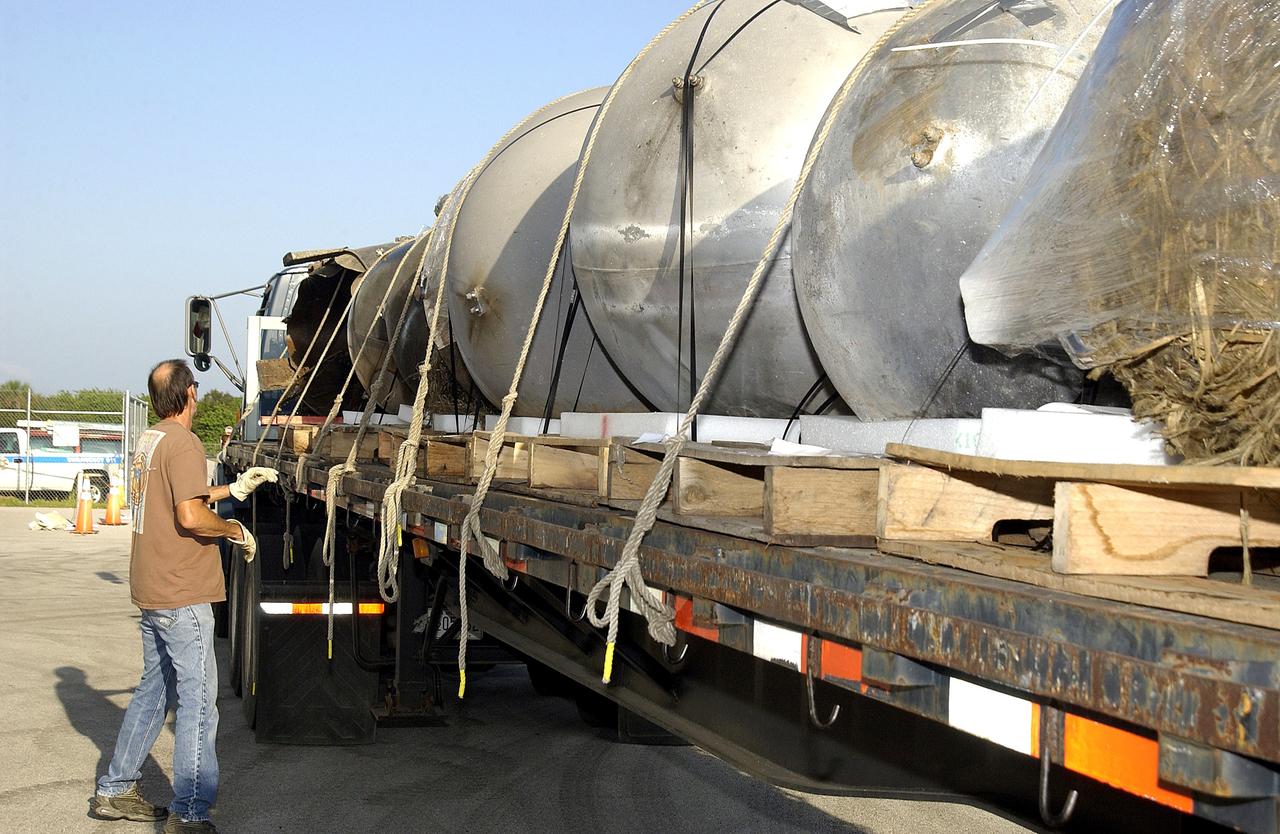
KENNEDY SPACE CENTER, FLA. -  At the Columbia Debris Hangar, some of the debris of Space Shuttle Columbia is secured onto a flatbed truck for transfer to the Vehicle Assembly Building for permanent storage.  More than 83,000  pieces of debris were shipped to KSC during search and recovery efforts in East Texas. That represents about 38 percent of the dry weight of Columbia, equaling almost 85,000 pounds.
KENNEDY SPACE CENTER, FLA. - At the Columbia Debris Hangar, some of the debris of Space Shuttle Columbia is secured onto a flatbed truck for transfer to the Vehicle Assembly Building for permanent storage. More than 83,000 pieces of debris were shipped to KSC during search and recovery efforts in East Texas. That represents about 38 percent of the dry weight of Columbia, equaling almost 85,000 pounds.
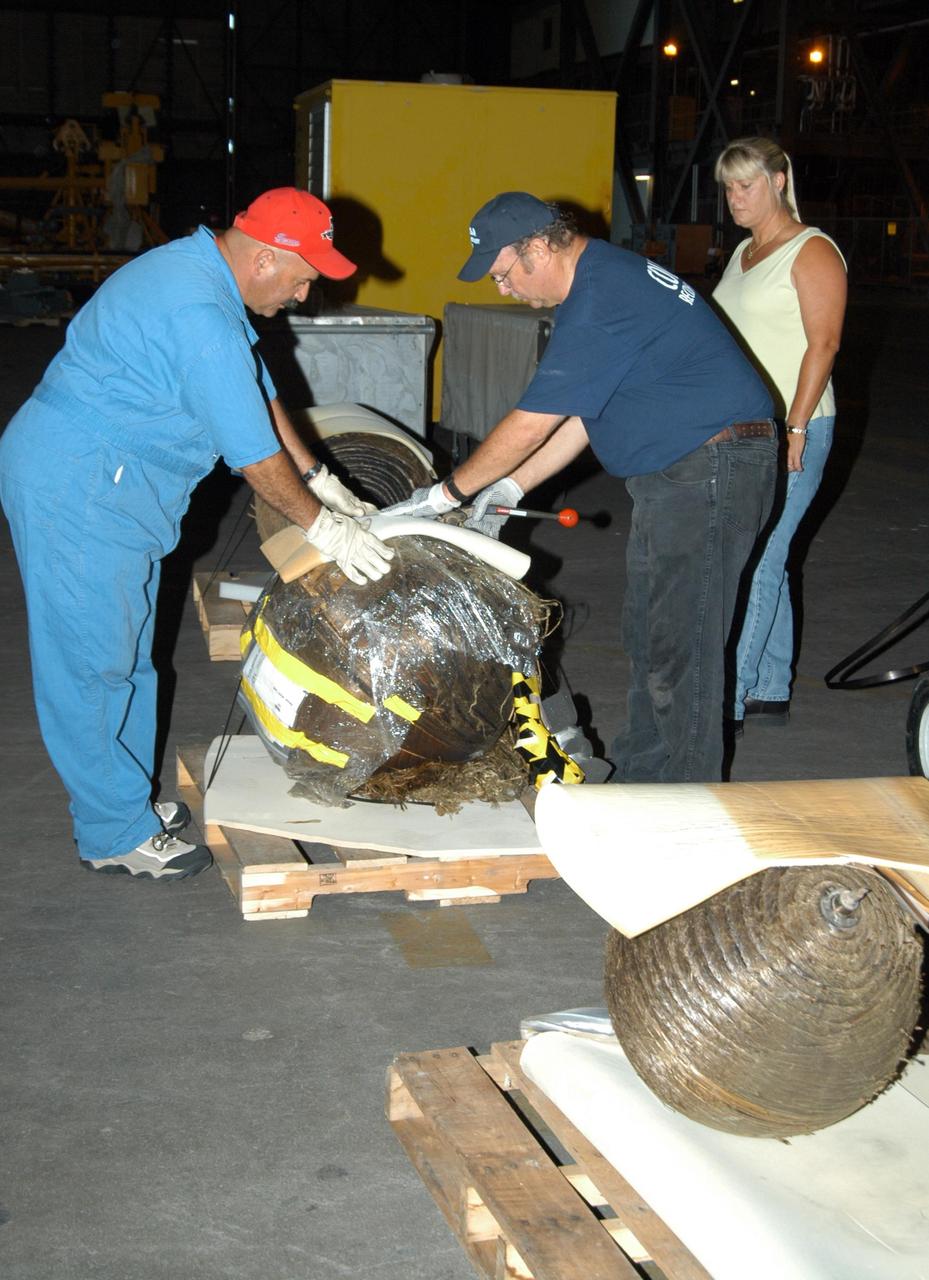
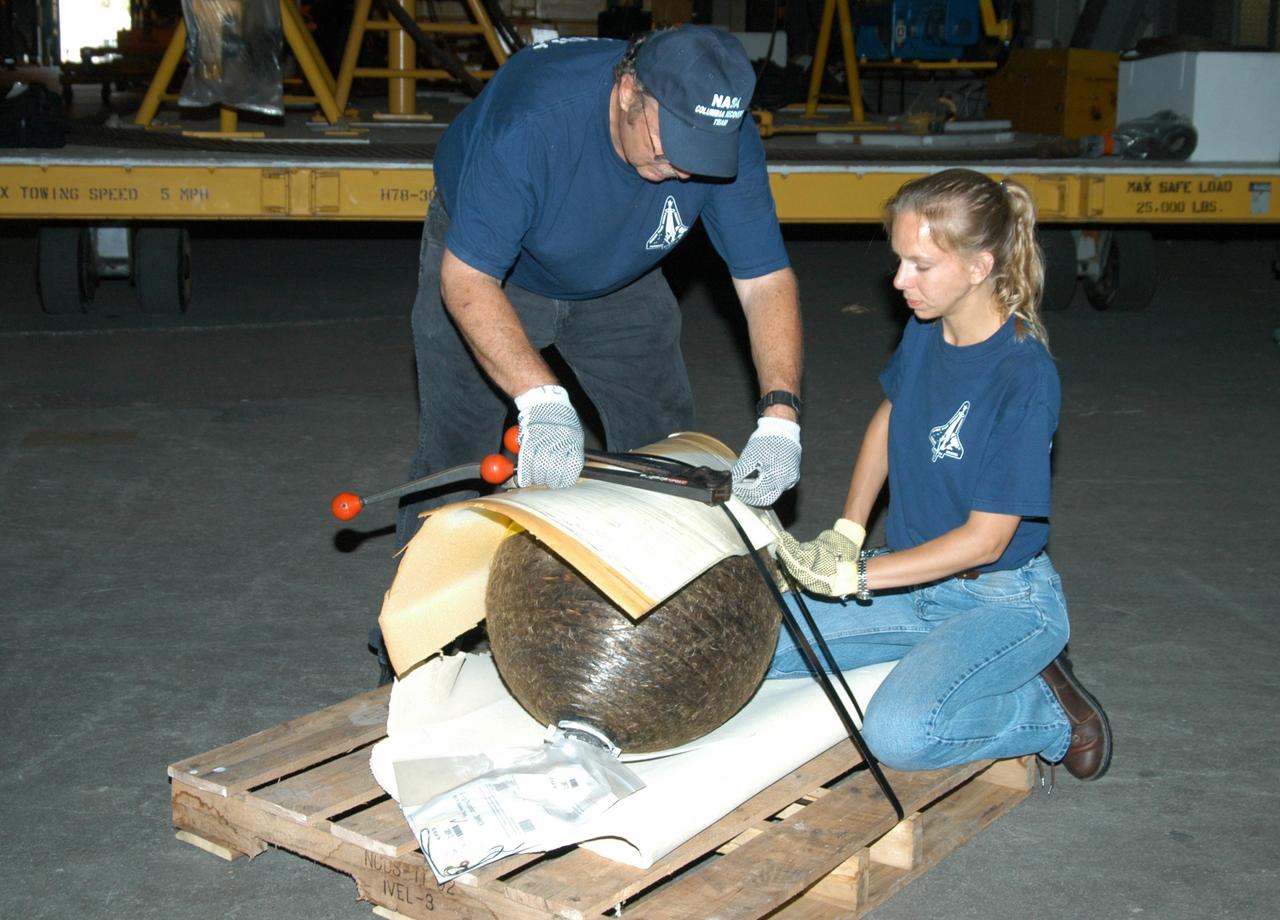
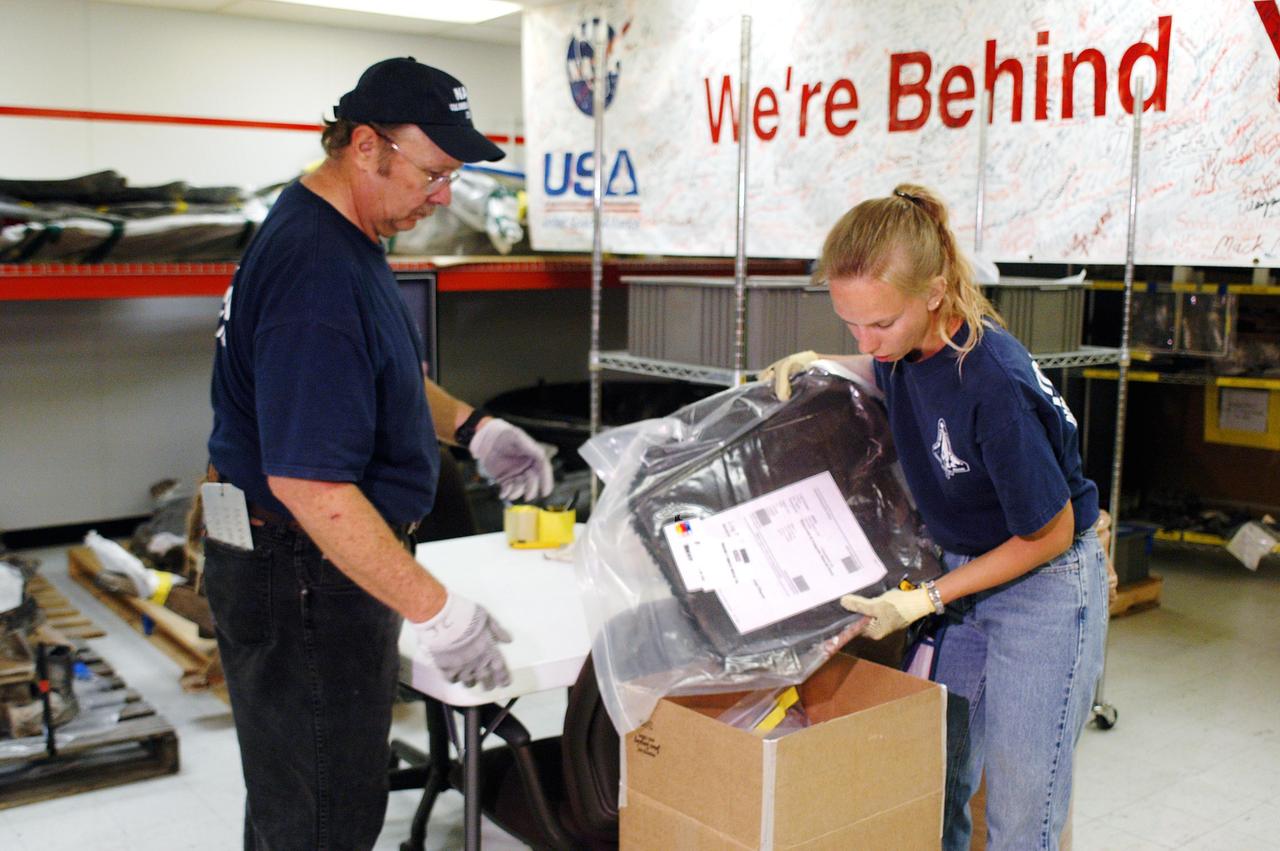
KENNEDY SPACE CENTER, FLA.  -  United Space Alliance workers begin packing pieces of Columbia debris for shipment to The Aerospace Corporation in El Segundo, Calif.   The pieces have been released for loan to the non-governmental agency for testing and research.   The Aerospace Corporation requested and will receive graphite/epoxy honeycomb skins from an Orbital Maneuvering System pod, Main Propulsion System Helium tanks, a Reaction Control System Helium tank and a Power Reactant Storage Distribution system tank. The company will use the parts to study re-entry effects on composite materials. NASA notified the Columbia crew’s families about the loan before releasing the items for study.  Researchers believe the testing will show how materials are expected to respond to various heating and loads' environments. The findings will help calibrate tools and models used to predict hazards to people and property from reentering hardware. The Aerospace Corporation will have the debris for one year to perform analyses to estimate maximum temperatures during reentry based upon the geometry and mass of the recovered composite.  Columbia’s debris is stored in the VAB.
KSC-04pd1234
KENNEDY SPACE CENTER, FLA.  -  United Space Alliance workers J.C. Harrison (left) and Amy Mangiacapra (right) pack up pieces of Columbia debris for shipment to The Aerospace Corporation in El Segundo, Calif.   The pieces have been released for loan to the non-governmental agency for testing and research.   The Aerospace Corporation requested and will receive graphite/epoxy honeycomb skins from an Orbital Maneuvering System pod, Main Propulsion System Helium tanks, a Reaction Control System Helium tank and a Power Reactant Storage Distribution system tank. The company will use the parts to study re-entry effects on composite materials. NASA notified the Columbia crew’s families about the loan before releasing the items for study.  Researchers believe the testing will show how materials are expected to respond to various heating and loads' environments. The findings will help calibrate tools and models used to predict hazards to people and property from reentering hardware. The Aerospace Corporation will have the debris for one year to perform analyses to estimate maximum temperatures during reentry based upon the geometry and mass of the recovered composite.  Columbia’s debris is stored in the VAB.
KSC-04pd1233
KENNEDY SPACE CENTER, FLA.  -  United Space Alliance workers J.C. Harrison (left) and Amy Mangiacapra pack pieces of Columbia debris for transfer to the shipping facility for travel to The Aerospace Corporation in El Segundo, Calif.  The pieces have been released for loan to the non-governmental agency for testing and research. The Aerospace Corporation requested and will receive graphite/epoxy honeycomb skins from an Orbital Maneuvering System pod, Main Propulsion System Helium tanks, a Reaction Control System Helium tank and a Power Reactant Storage Distribution system tank. The company will use the parts to study re-entry effects on composite materials. NASA notified the Columbia crew’s families about the loan before releasing the items for study.  Researchers believe the testing will show how materials are expected to respond to various heating and loads' environments. The findings will help calibrate tools and models used to predict hazards to people and property from reentering hardware. The Aerospace Corporation will have the debris for one year to perform analyses to estimate maximum temperatures during reentry based upon the geometry and mass of the recovered composite.  Columbia’s debris is stored in the VAB.
KSC-04pd1235