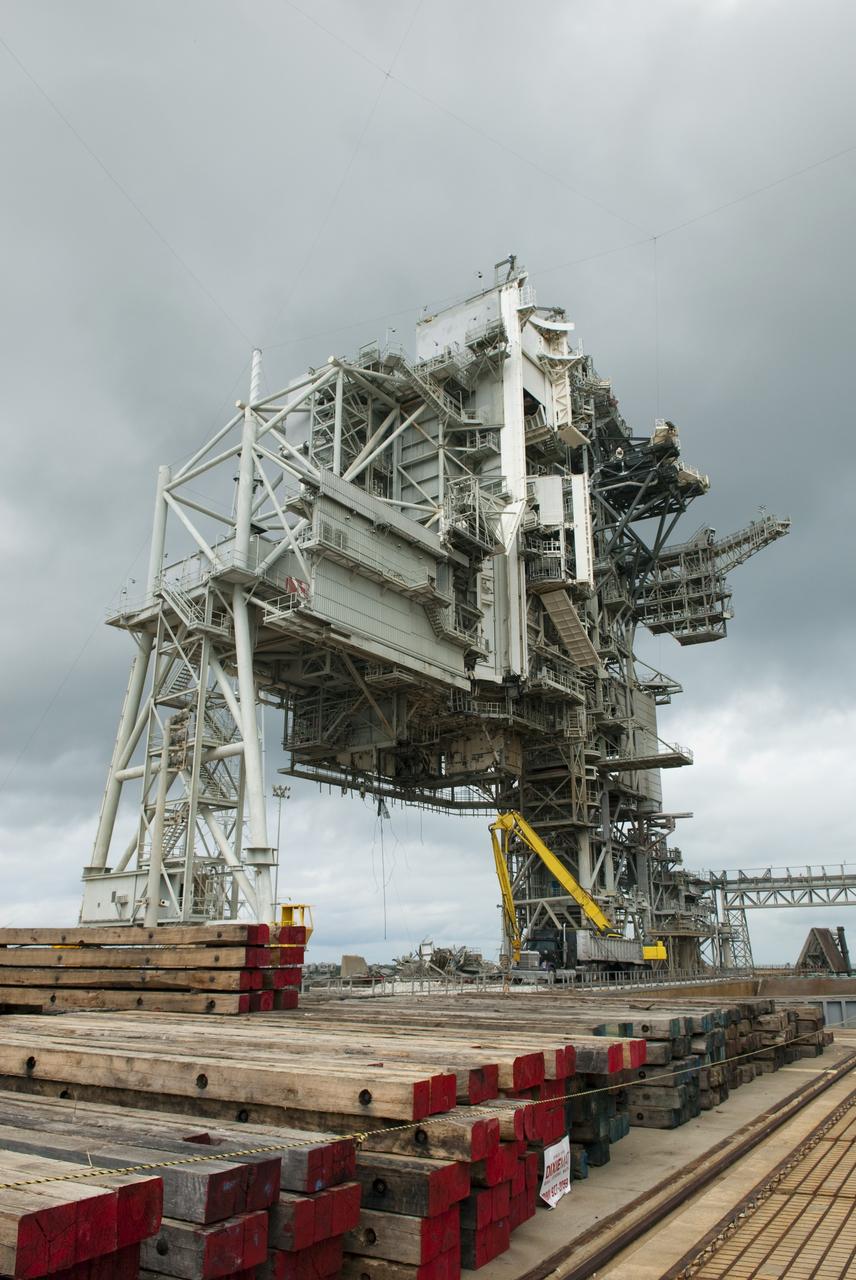
CAPE CANAVERAL, Fla. -- At NASA's Kennedy Space Center in Florida, crews are dismantling the rotating service structure (RSS) on Launch Pad 39B. Sand, reinforcing steel and large wooden mats were put down under the RSS to protect the structure's concrete from falling debris during deconstruction. Starting in 2009, the structure at the pad was no longer needed for NASA's Space Shuttle Program, so it is being restructured for future use. The new design will feature a "clean pad" for rockets to come with their own launcher, making it more versatile for a number of vehicles. The new lightning protection system, consisting of three lightning towers and a wire catenary system will remain. Photo credit: NASA/Jim Grossmann
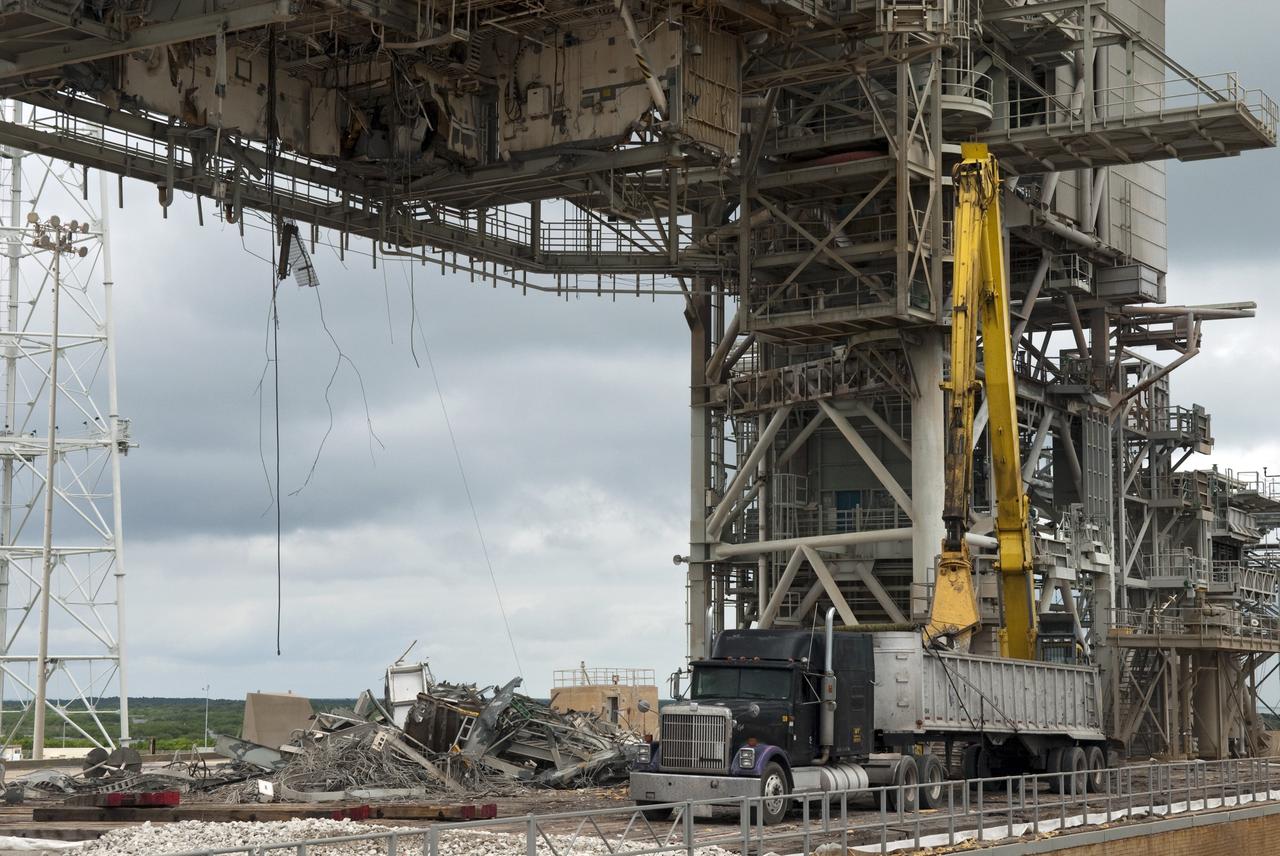
CAPE CANAVERAL, Fla. -- At NASA's Kennedy Space Center in Florida, the rotating service structure (RSS) on Launch Pad 39B is being dismantled. Sand, reinforcing steel and large wooden mats were put down under the RSS to protect the structure's concrete from falling debris during deconstruction. Starting in 2009, the structure at the pad was no longer needed for NASA's Space Shuttle Program, so it is being restructured for future use. The new design will feature a "clean pad" for rockets to come with their own launcher, making it more versatile for a number of vehicles. The new lightning protection system, consisting of three lightning towers and a wire catenary system will remain. Photo credit: NASA/Jim Grossmann
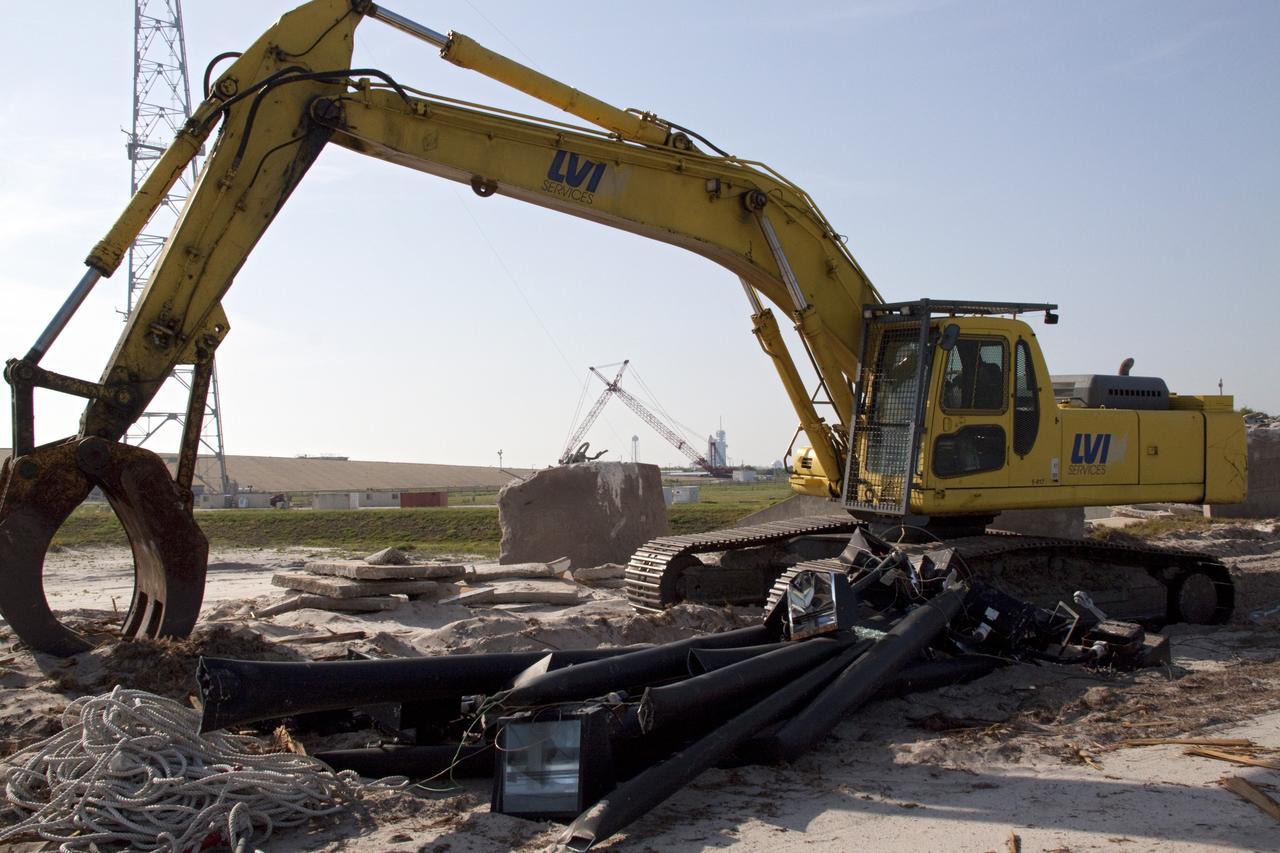
Cape Canaveral, Fla. -- At NASA's Kennedy Space Center in Florida, the emergency egress system that was part of Launch Pad 39B included seven baskets suspended from seven slidewires that extended from the pad to a landing zone 1,200 feet west of the pad. The system and the bunkers at the base also are being dismantled. In 2009, the pad was no longer needed for the shuttle program, so it is being restructured for future use. Its new design will feature a "clean pad" for rockets to come with their own launcher, making it more versatile for a number of vehicles. The new lightning protection system, which was in place for the October 2009 launch of Ares I-X, will remain. For information on NASA's future plans, visit www.nasa.gov. Photo credit: NASA/Jack Pfaller
Cape Canaveral, Fla. -- At NASA's Kennedy Space Center in Florida, the emergency egress system that was part of Launch Pad 39B included seven baskets suspended from seven slidewires that extended from the pad to a landing zone 1,200 feet west of the pad. The system and the bunkers at the base also are being dismantled. In 2009, the pad was no longer needed for the shuttle program, so it is being restructured for future use. Its new design will feature a "clean pad" for rockets to come with their own launcher, making it more versatile for a number of vehicles. The new lightning protection system, which was in place for the October 2009 launch of Ares I-X, will remain. For information on NASA's future plans, visit www.nasa.gov. Photo credit: NASA/Jack Pfaller
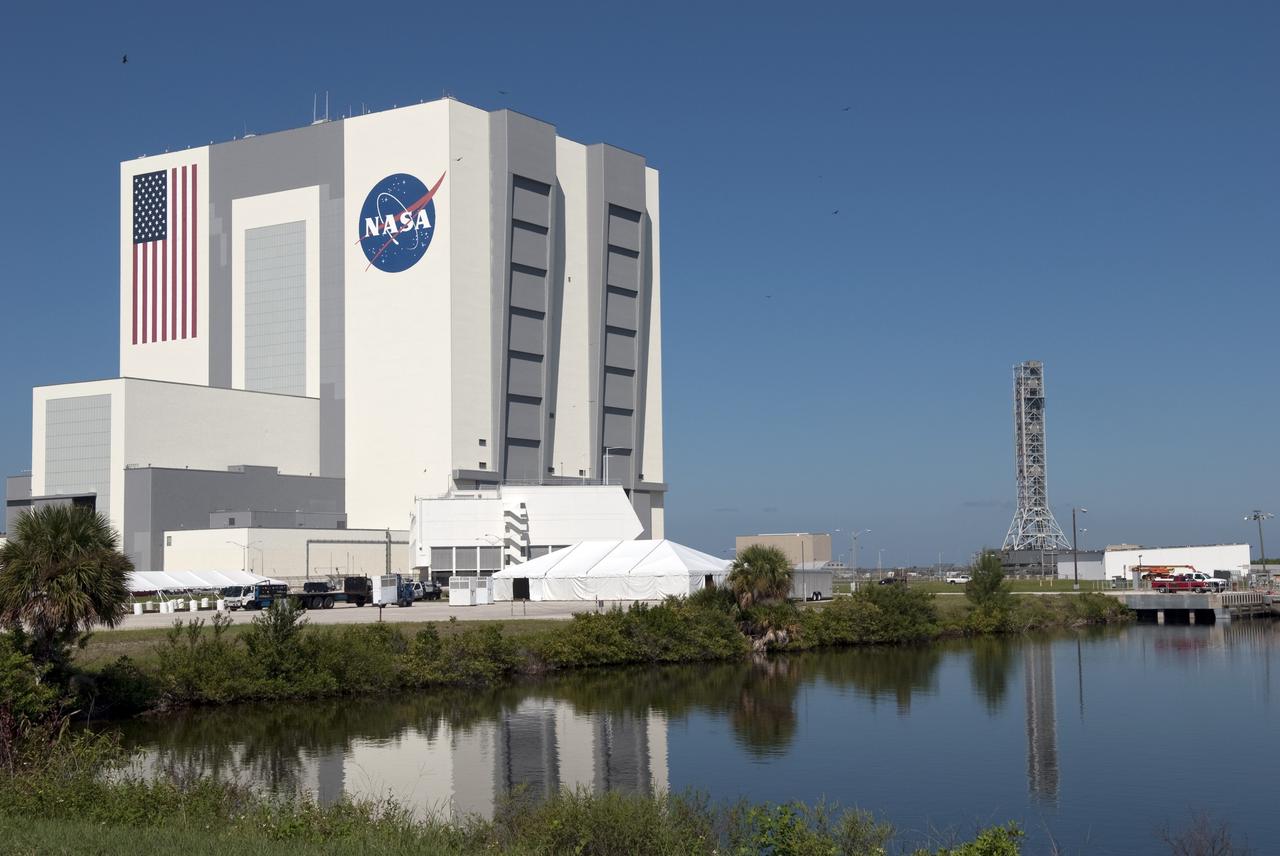
CAPE CANAVERAL, Fla. -- At NASA's Kennedy Space Center in Florida, a crawler-transporter moves NASA's new mobile launcher (ML) support structure from a construction site, north of the Vehicle Assembly Building (left), to the Mobile Launcher east park site. The base of the launcher is lighter than space shuttle mobile launcher platforms so the crawler-transporter can pick up the heavier load of the tower and a taller rocket. Once there, the ML can be outfitted with ground support equipment, such as umbilicals and access arms, for future rocket launches. It took about two years to construct the 355-foot-tall structure, which will support NASA's future human spaceflight program. Photo credit: NASA/Jim Grossmann

CAPE CANAVERAL, Fla. -- At NASA's Kennedy Space Center in Florida, the rotating service structure (RSS) on Launch Pad 39B is being dismantled. Sand, reinforcing steel and large wooden mats were put down under the RSS to protect the structure's concrete from falling debris during deconstruction. Starting in 2009, the structure at the pad was no longer needed for NASA's Space Shuttle Program, so it is being restructured for future use. The new design will feature a "clean pad" for rockets to come with their own launcher, making it more versatile for a number of vehicles. The new lightning protection system, consisting of three lightning towers and a wire catenary system will remain. Photo credit: NASA/Jim Grossmann
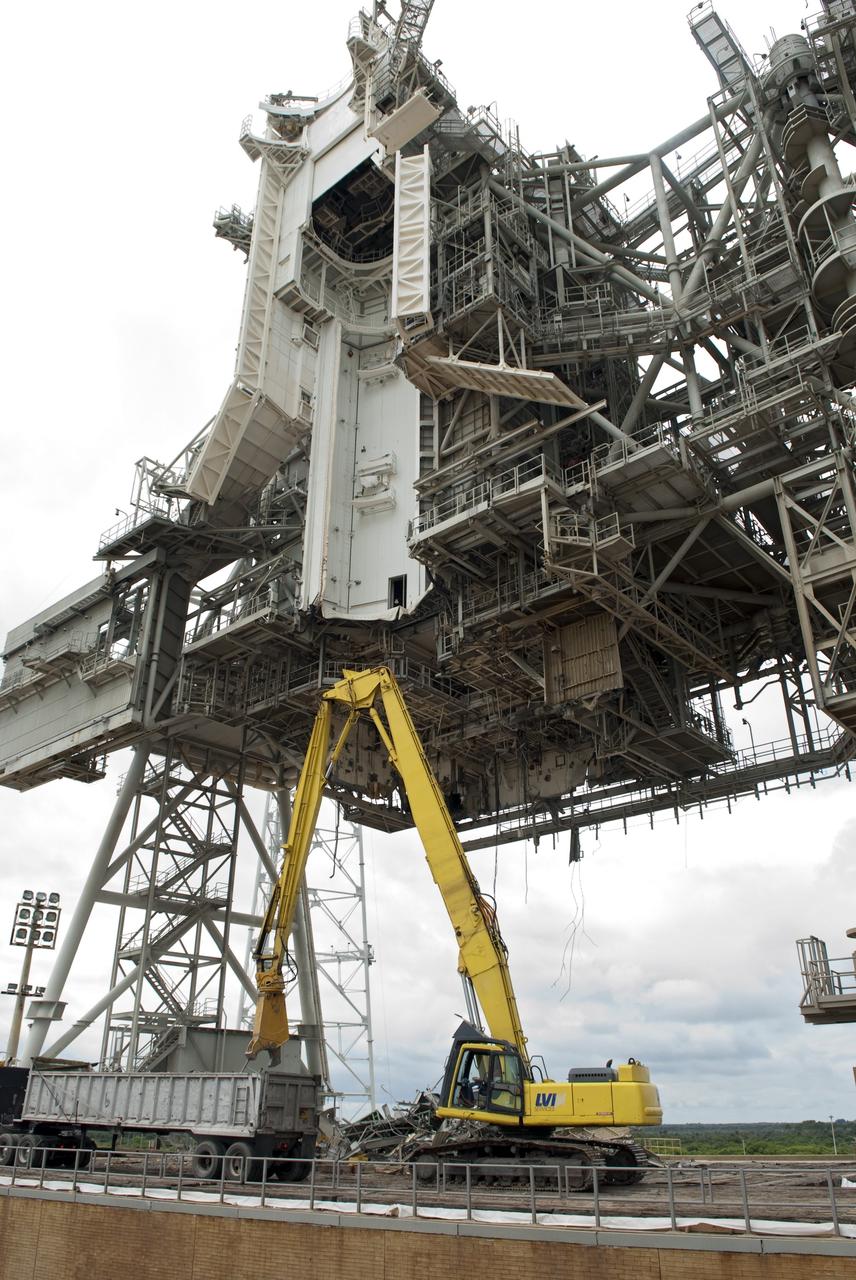
CAPE CANAVERAL, Fla. -- At NASA's Kennedy Space Center in Florida, crews are dismantling the rotating service structure (RSS) on Launch Pad 39B. Sand, reinforcing steel and large wooden mats were put down under the RSS to protect the structure's concrete from falling debris during deconstruction. Starting in 2009, the structure at the pad was no longer needed for NASA's Space Shuttle Program, so it is being restructured for future use. The new design will feature a "clean pad" for rockets to come with their own launcher, making it more versatile for a number of vehicles. The new lightning protection system, consisting of three lightning towers and a wire catenary system will remain. Photo credit: NASA/Jim Grossmann
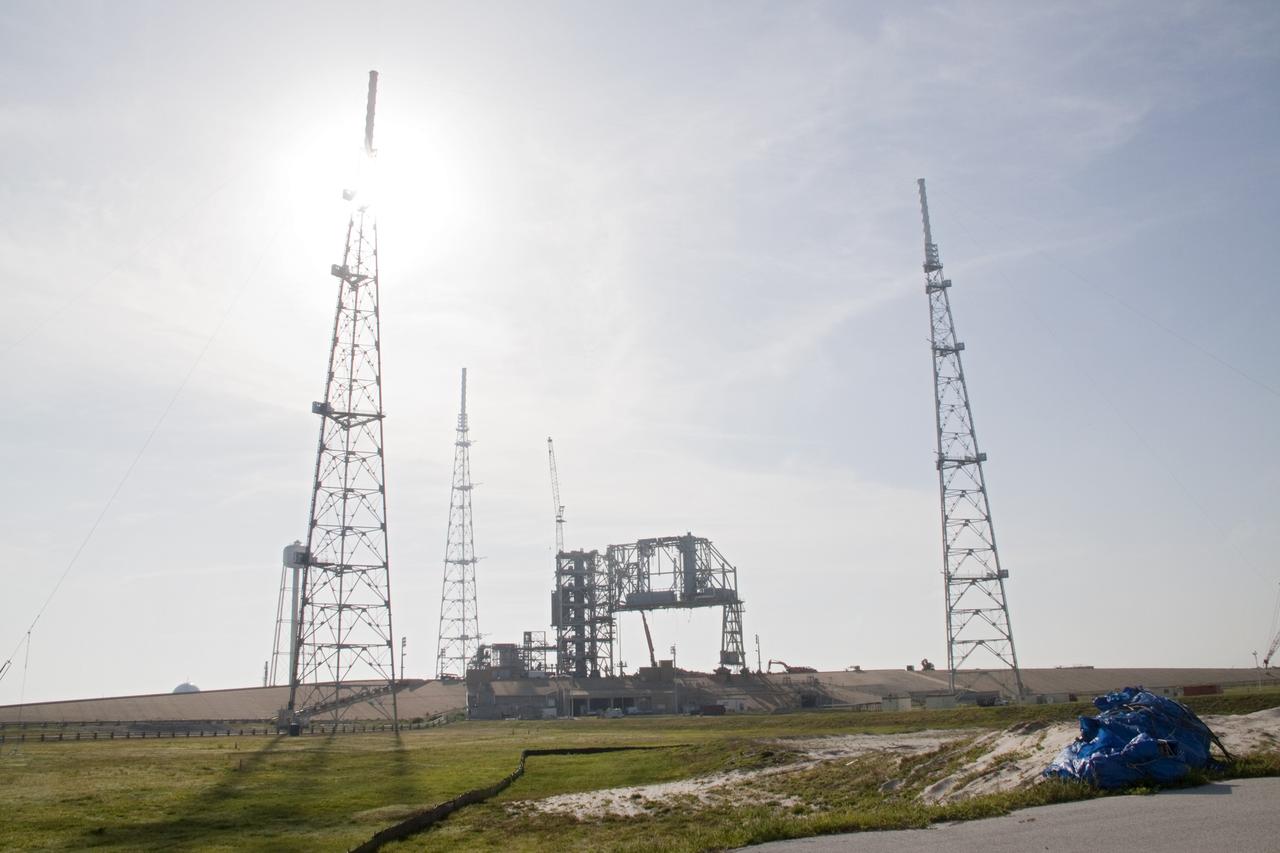
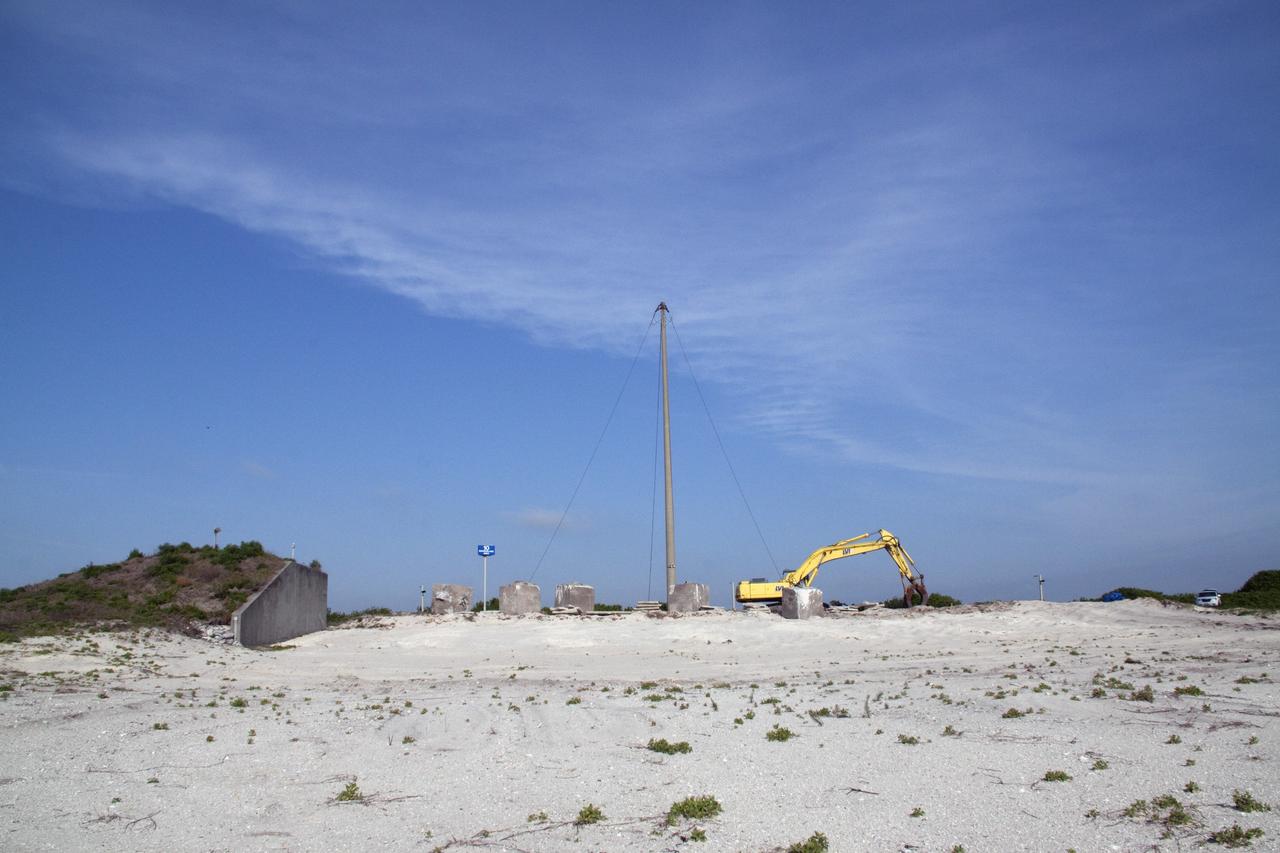
Cape Canaveral, Fla. -- Photographed from the base of the former emergency egress system at NASA's Kennedy Space Center in Florida, is the skeleton of steel that once was Launch Pad 39B after significant deconstruction. The system included seven baskets suspended from seven slidewires that extended from the pad to a landing zone 1,200 feet west of the pad. The bunkers at the base also are being dismantled. In 2009, the pad was no longer needed for the shuttle program, so it is being restructured for future use. Its new design will feature a "clean pad" for rockets to come with their own launcher, making it more versatile for a number of vehicles. The new lightning protection system, which was in place for the October 2009 launch of Ares I-X, will remain. For information on NASA's future plans, visit www.nasa.gov. Photo credit: NASA/Jack Pfaller
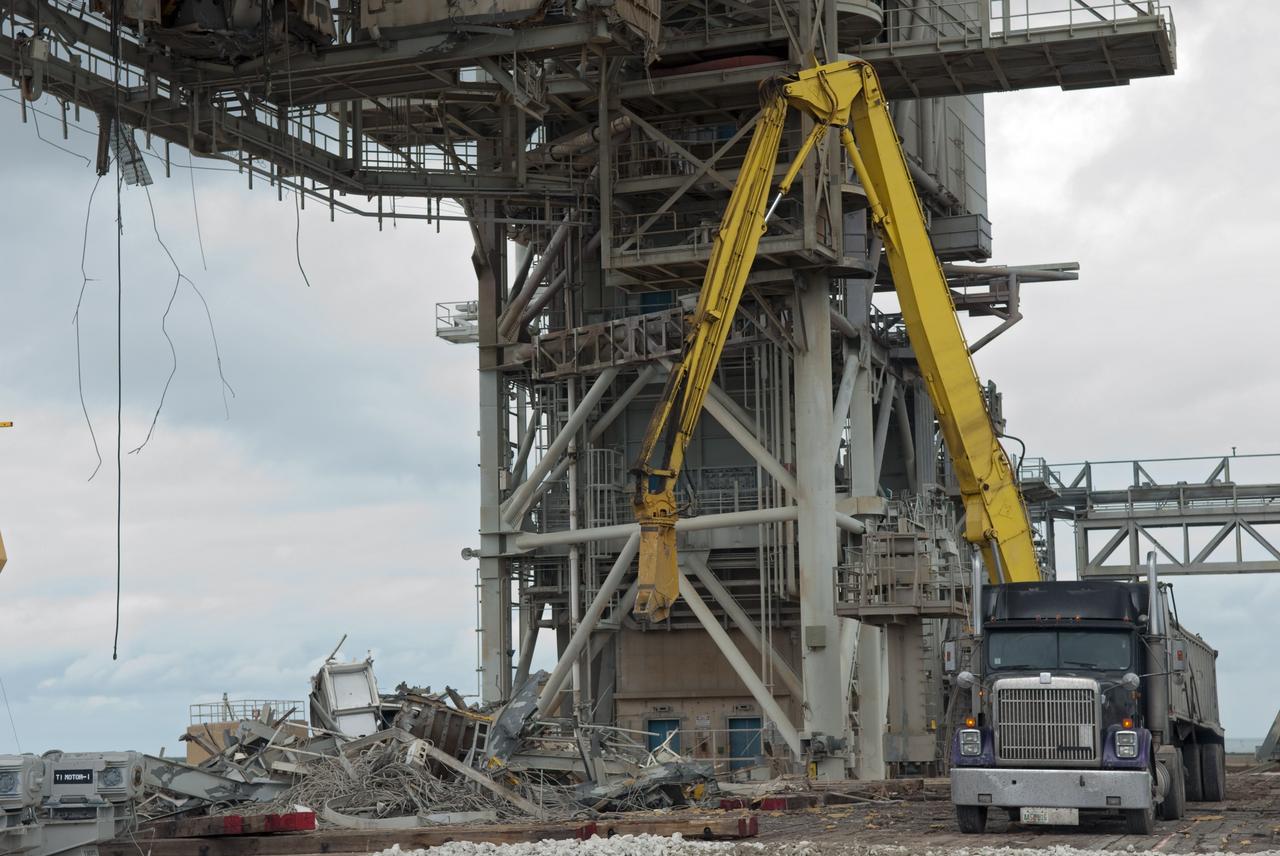
CAPE CANAVERAL, Fla. -- At NASA's Kennedy Space Center in Florida, the rotating service structure (RSS) on Launch Pad 39B is being dismantled. Sand, reinforcing steel and large wooden mats were put down under the RSS to protect the structure's concrete from falling debris during deconstruction. Starting in 2009, the structure at the pad was no longer needed for NASA's Space Shuttle Program, so it is being restructured for future use. The new design will feature a "clean pad" for rockets to come with their own launcher, making it more versatile for a number of vehicles. The new lightning protection system, consisting of three lightning towers and a wire catenary system will remain. Photo credit: NASA/Jim Grossmann
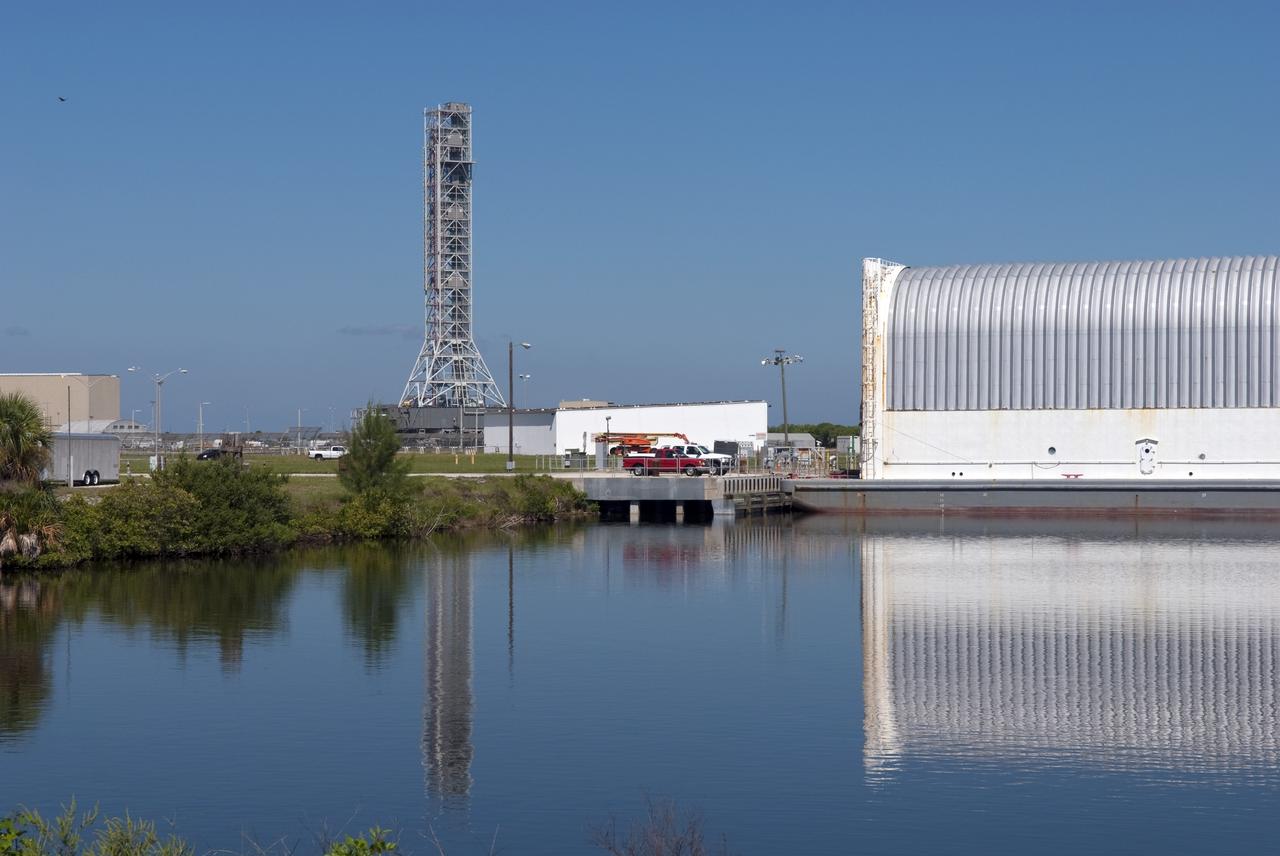
CAPE CANAVERAL, Fla. -- At NASA's Kennedy Space Center in Florida, a crawler-transporter moves NASA's new mobile launcher (ML) support structure from a construction site, north of the Vehicle Assembly Building, to the Mobile Launcher east park site. The base of the launcher is lighter than space shuttle mobile launcher platforms so the crawler-transporter can pick up the heavier load of the tower and a taller rocket. Once there, the ML can be outfitted with ground support equipment, such as umbilicals and access arms, for future rocket launches. It took about two years to construct the 355-foot-tall structure, which will support NASA's future human spaceflight program. Photo credit: NASA/Jim Grossmann
Cape Canaveral, Fla. -- At NASA's Kennedy Space Center in Florida, the emergency egress system that was part of Launch Pad 39B included seven baskets suspended from seven slidewires that extended from the pad to a landing zone 1,200 feet west of the pad. The system and the bunkers at the base also are being dismantled. In 2009, the pad was no longer needed for the shuttle program, so it is being restructured for future use. Its new design will feature a "clean pad" for rockets to come with their own launcher, making it more versatile for a number of vehicles. The new lightning protection system, which was in place for the October 2009 launch of Ares I-X, will remain. For information on NASA's future plans, visit www.nasa.gov. Photo credit: NASA/Jack Pfaller
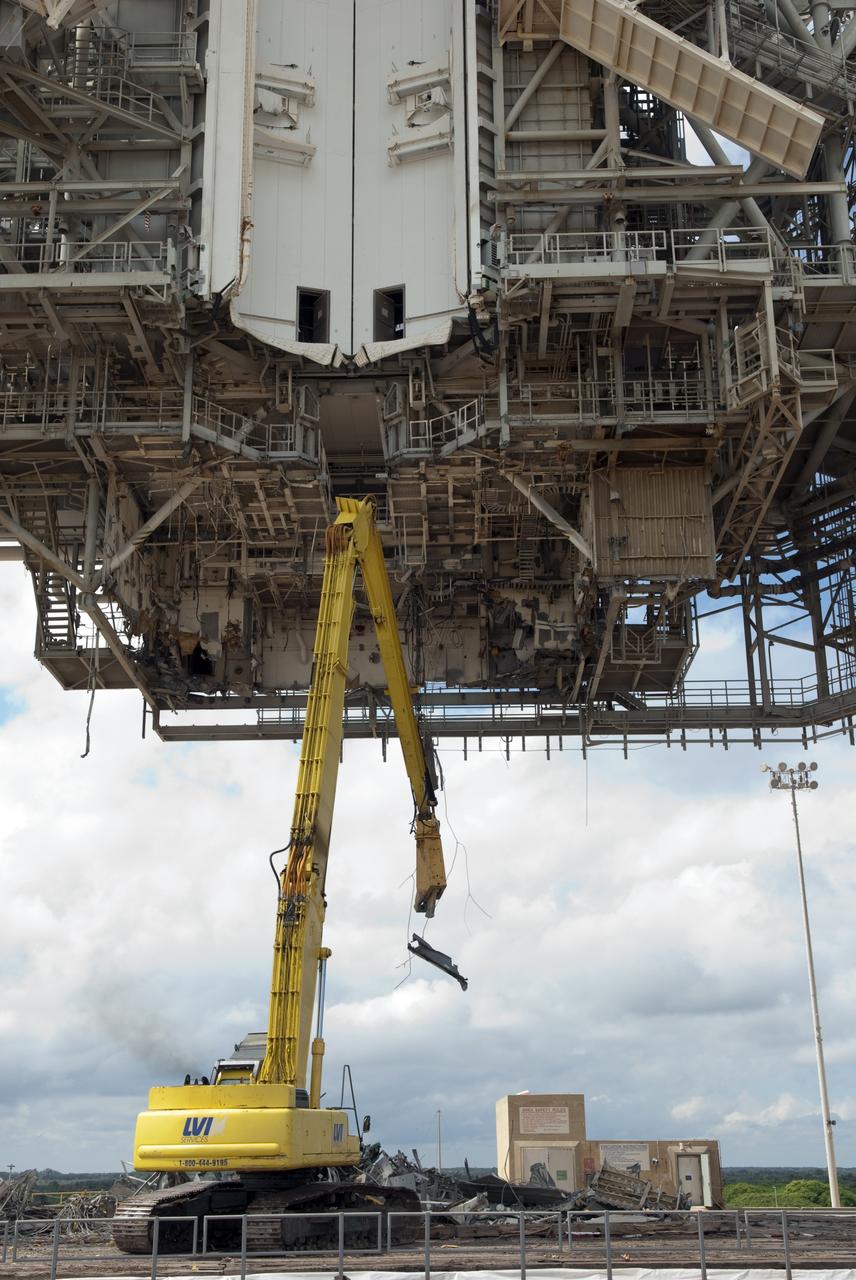
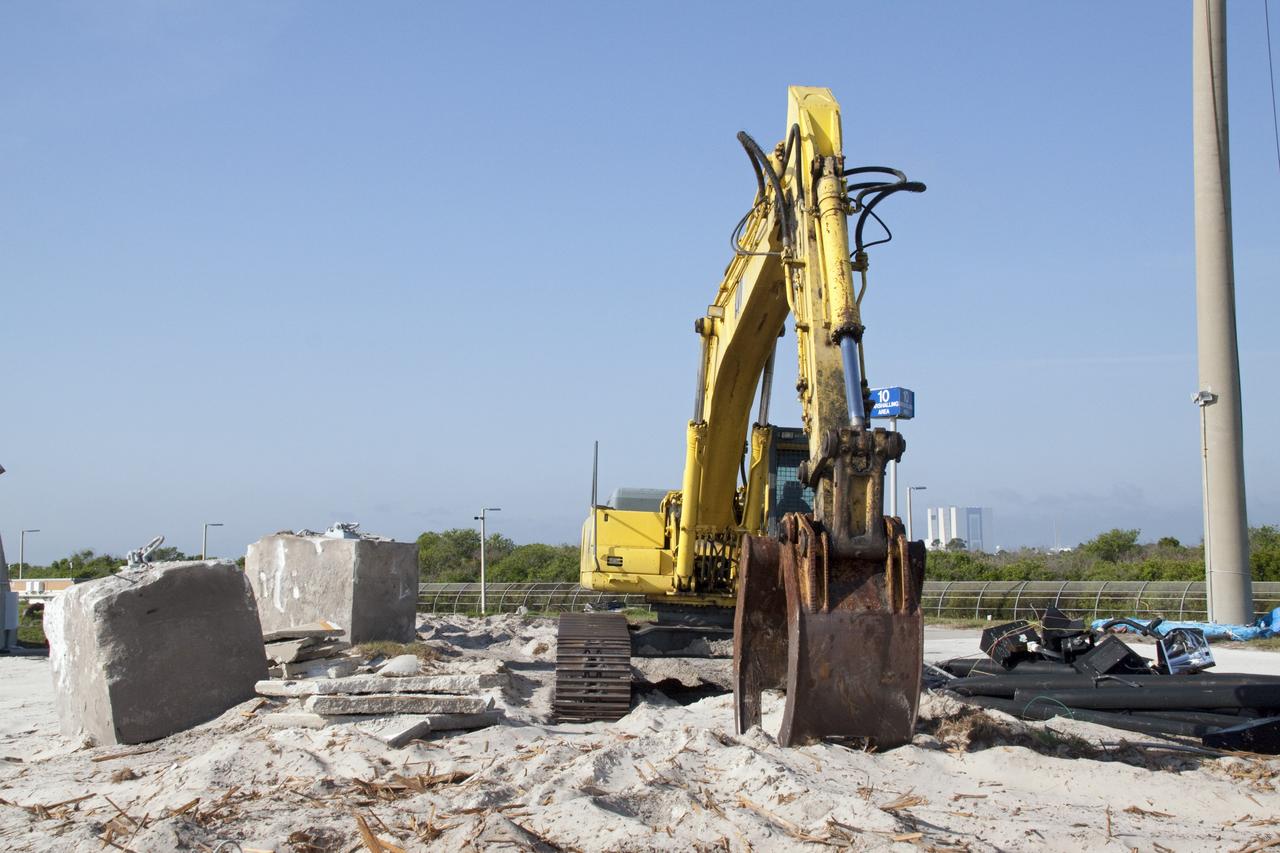
CAPE CANAVERAL, Fla. -- At NASA's Kennedy Space Center in Florida, crews are dismantling the rotating service structure (RSS) on Launch Pad 39B. Sand, reinforcing steel and large wooden mats were put down under the RSS to protect the structure's concrete from falling debris during deconstruction. Starting in 2009, the structure at the pad was no longer needed for NASA's Space Shuttle Program, so it is being restructured for future use. The new design will feature a "clean pad" for rockets to come with their own launcher, making it more versatile for a number of vehicles. The new lightning protection system, consisting of three lightning towers and a wire catenary system will remain. Photo credit: NASA/Jim Grossmann
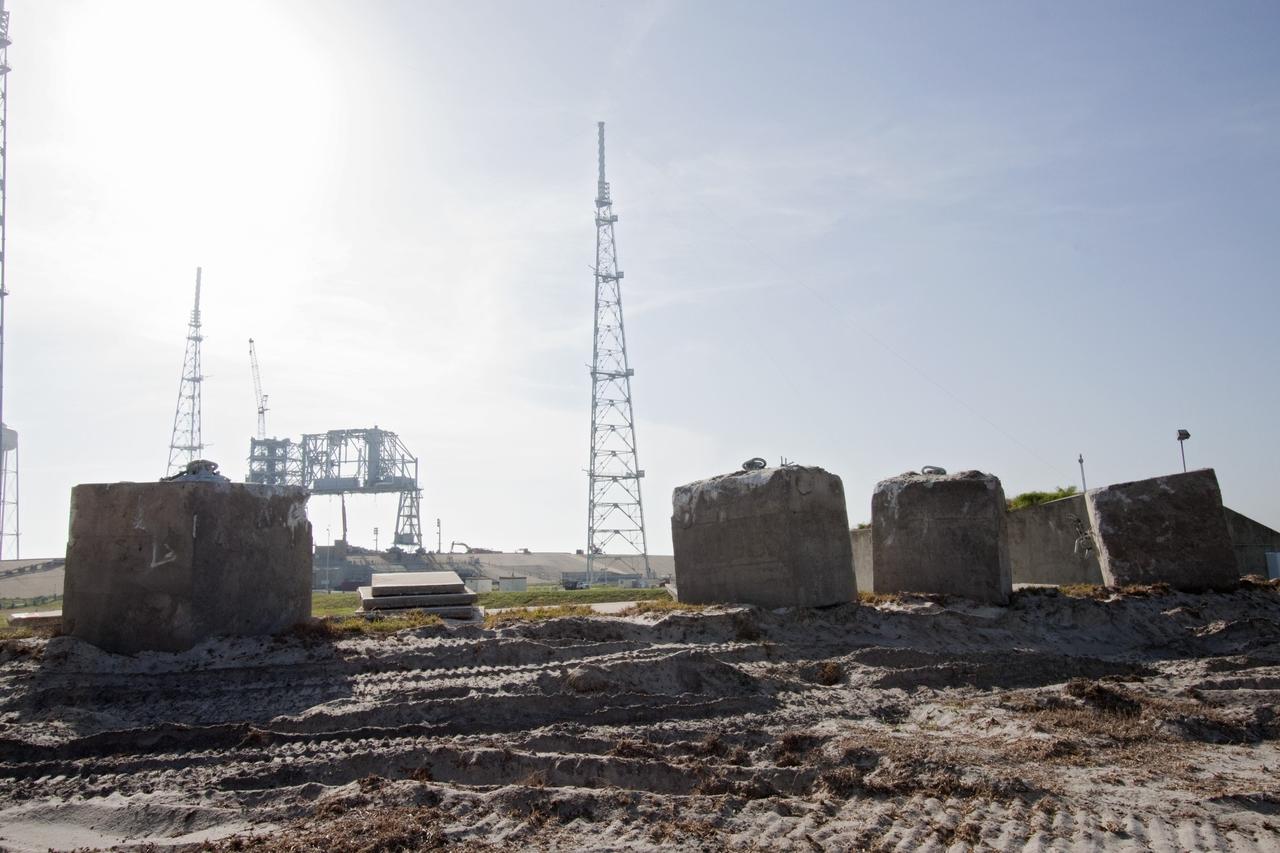
Cape Canaveral, Fla. -- Photographed from the base of the former emergency egress system at NASA's Kennedy Space Center in Florida, is the skeleton of steel that once was Launch Pad 39B after significant deconstruction. The system included seven baskets suspended from seven slidewires that extended from the pad to a landing zone 1,200 feet west of the pad. The bunkers at the base also are being dismantled. In 2009, the pad was no longer needed for the shuttle program, so it is being restructured for future use. Its new design will feature a "clean pad" for rockets to come with their own launcher, making it more versatile for a number of vehicles. The new lightning protection system, which was in place for the October 2009 launch of Ares I-X, will remain. For information on NASA's future plans, visit www.nasa.gov. Photo credit: NASA/Jack Pfaller
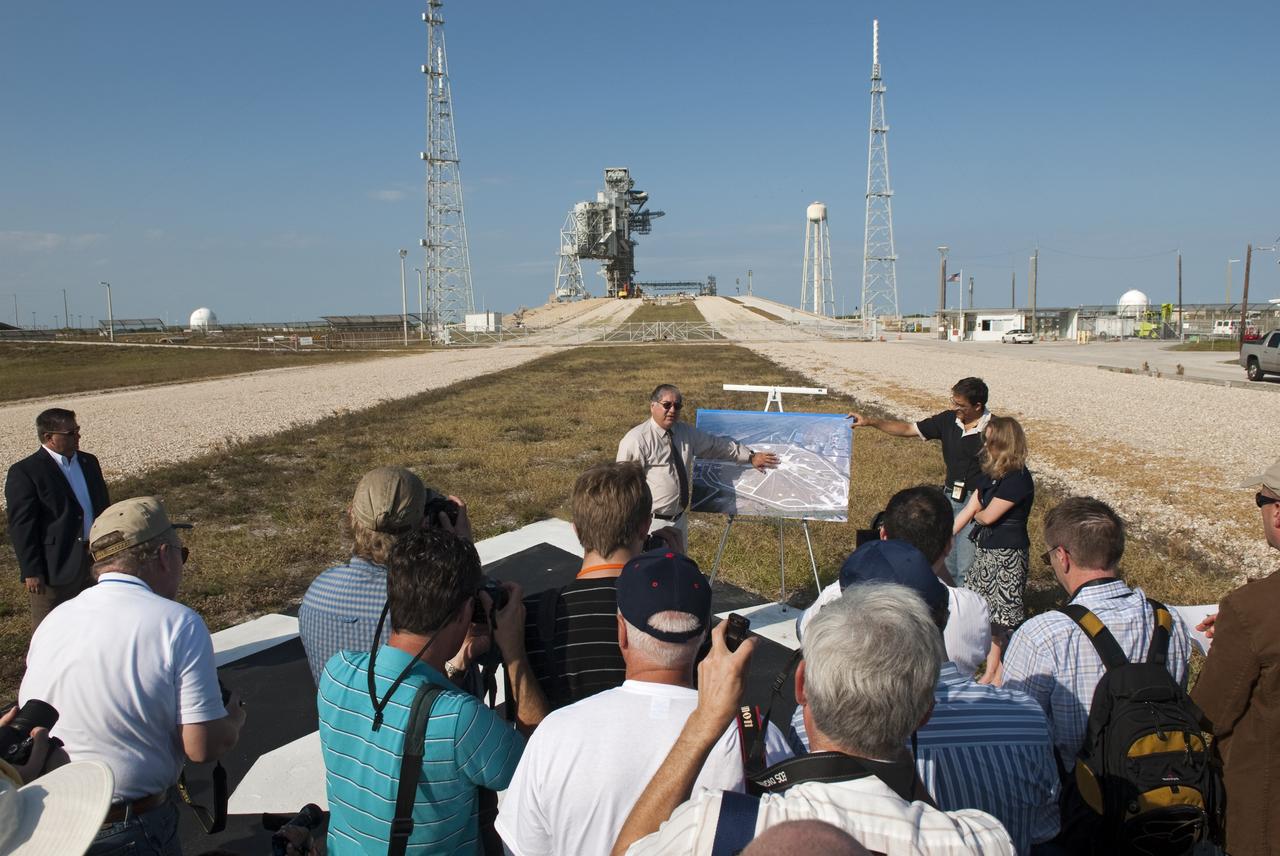
CAPE CANAVERAL, Fla. -- At NASA's Kennedy Space Center in Florida, media learn about the transformation of Launch Pad 39B from Jose Perez-Morales, NASA's Launch Pad 39B senior manager. Starting in 2009, the structure at the pad was no longer needed for NASA's Space Shuttle Program, so it is being restructured for future use. The new design will feature a "clean pad" for rockets to come with their own launcher, making it more versatile for a number of vehicles. The transformation includes the removal of the rotating service structure (RSS) and fixed service structure (FSS), refurbishment of the liquid oxygen and liquid hydrogen tanks, and the upgrade of about 1.3 million feet of cable. The new lightning protection system, which was in place for the October 2009 launch of Ares I-X, will remain. For information on NASA's future plans, visit www.nasa.gov. Photo credit: NASA/Jim Grossmann
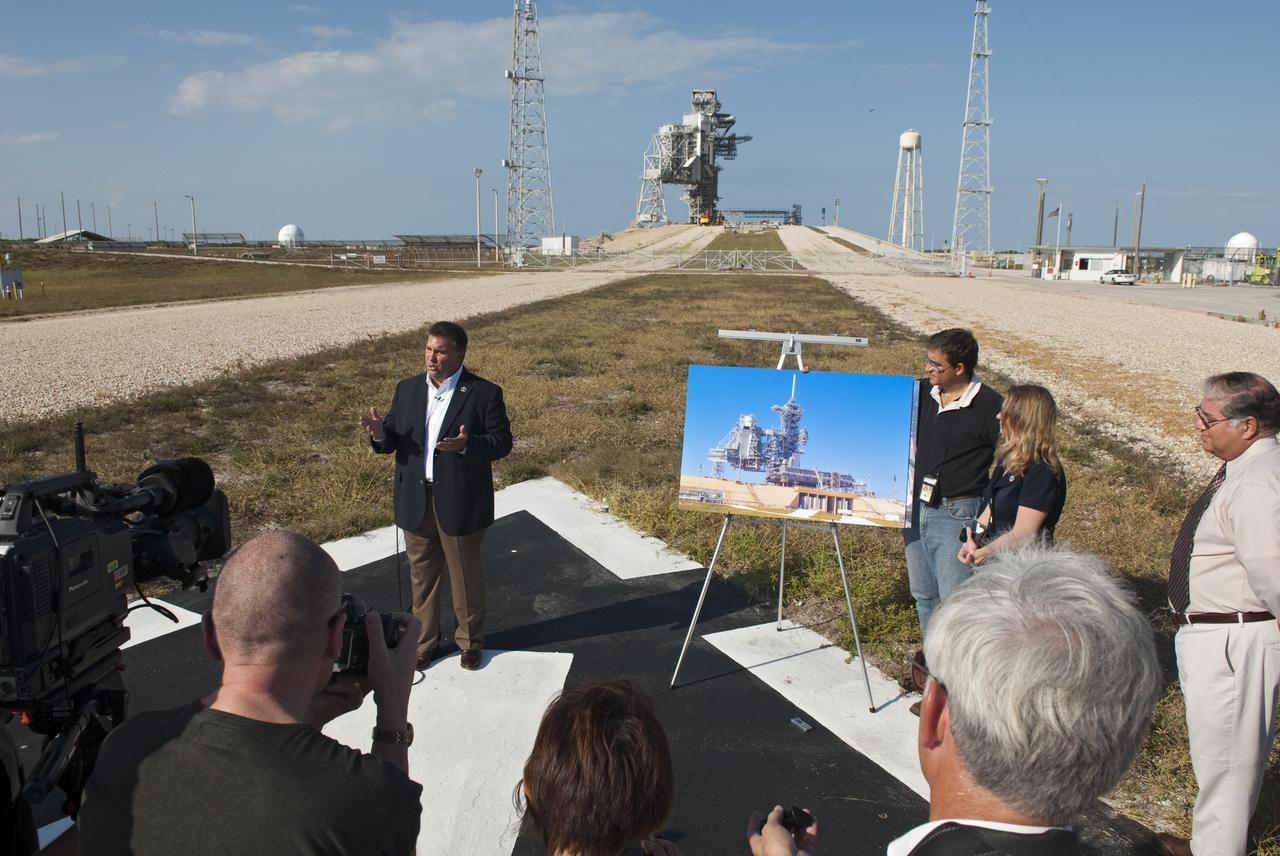
CAPE CANAVERAL, Fla. -- At NASA's Kennedy Space Center in Florida, media learn about the future plans for Launch Pad 39B from Ed Mango, NASA's Space Transportation Planning Office director. If appropriations are provided for NASA's current Authorization Act, those plans would include a robust commercial space program with multiple customers, multiple providers and multiple systems that take Americans to the International Space Station and other low-Earth orbit destinations. For information on NASA's future plans, visit www.nasa.gov. Photo credit: NASA/Jim Grossmann
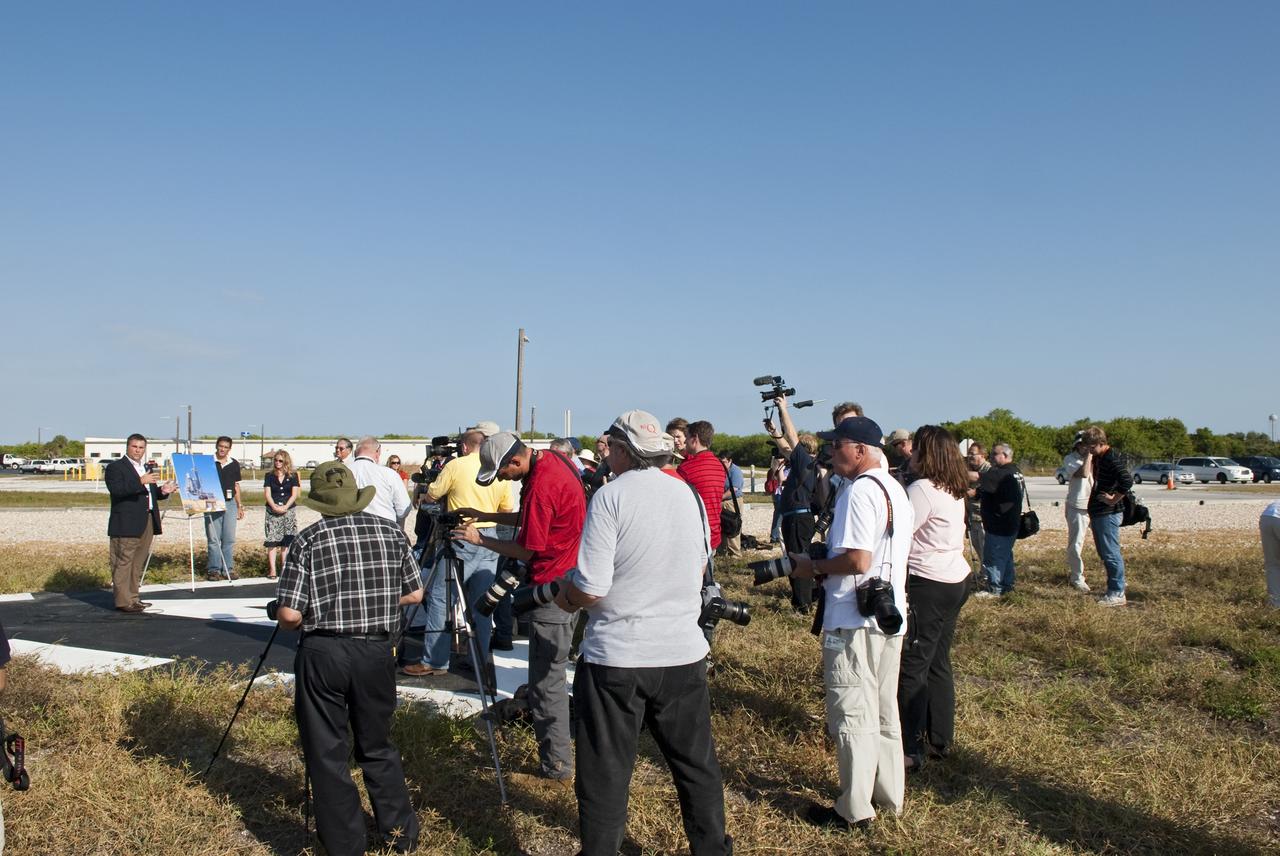
CAPE CANAVERAL, Fla. -- At NASA's Kennedy Space Center in Florida, media learn about the future plans for Launch Pad 39B from Ed Mango, NASA's Space Transportation Planning Office director. If appropriations are provided for NASA's current Authorization Act, those plans would include a robust commercial space program with multiple customers, multiple providers and multiple systems that take Americans to the International Space Station and other low-Earth orbit destinations. For information on NASA's future plans, visit www.nasa.gov. Photo credit: NASA/Jim Grossmann
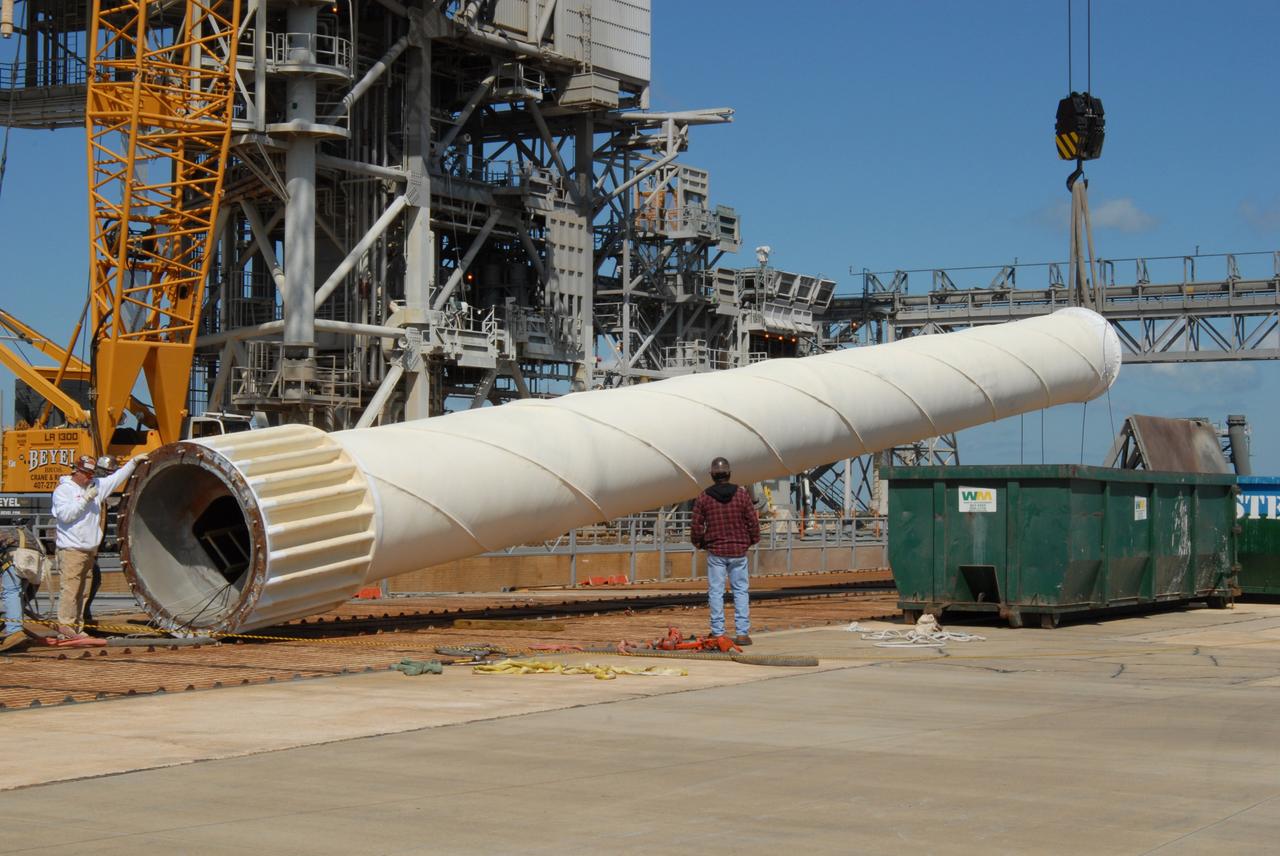
CAPE CANAVERAL, Fla. – On Launch Pad 39B at NASA's Kennedy Space Center in Florida, the 80-foot lightning mast removed from the top of the fixed service structure (behind it) is lowered onto the pad surface. The mast is no longer needed with the erection of the three lightning towers around the pad. Pad 39B will be the site of the first Ares vehicle launch, including the Ares I-X test flight that is targeted for July 2009. The three new lightning towers are 500 feet tall with an additional 100-foot fiberglass mast atop supporting a wire catenary system. This improved lightning protection system allows for the taller height of the Ares I rocket compared to the space shuttle. Photo credit: NASA/Amanda Diller
CAPE CANAVERAL, Fla. – On Launch Pad 39B at NASA's Kennedy Space Center in Florida, the 80-foot lightning mast removed from the top of the fixed service structure (center) rests on the pad surface. The mast is no longer needed with the erection of the three lightning towers around the pad. Pad 39B will be the site of the first Ares vehicle launch, including the Ares I-X test flight that is targeted for July 2009. The three new lightning towers are 500 feet tall with an additional 100-foot fiberglass mast atop supporting a wire catenary system. This improved lightning protection system allows for the taller height of the Ares I rocket compared to the space shuttle. Photo credit: NASA/Amanda Diller
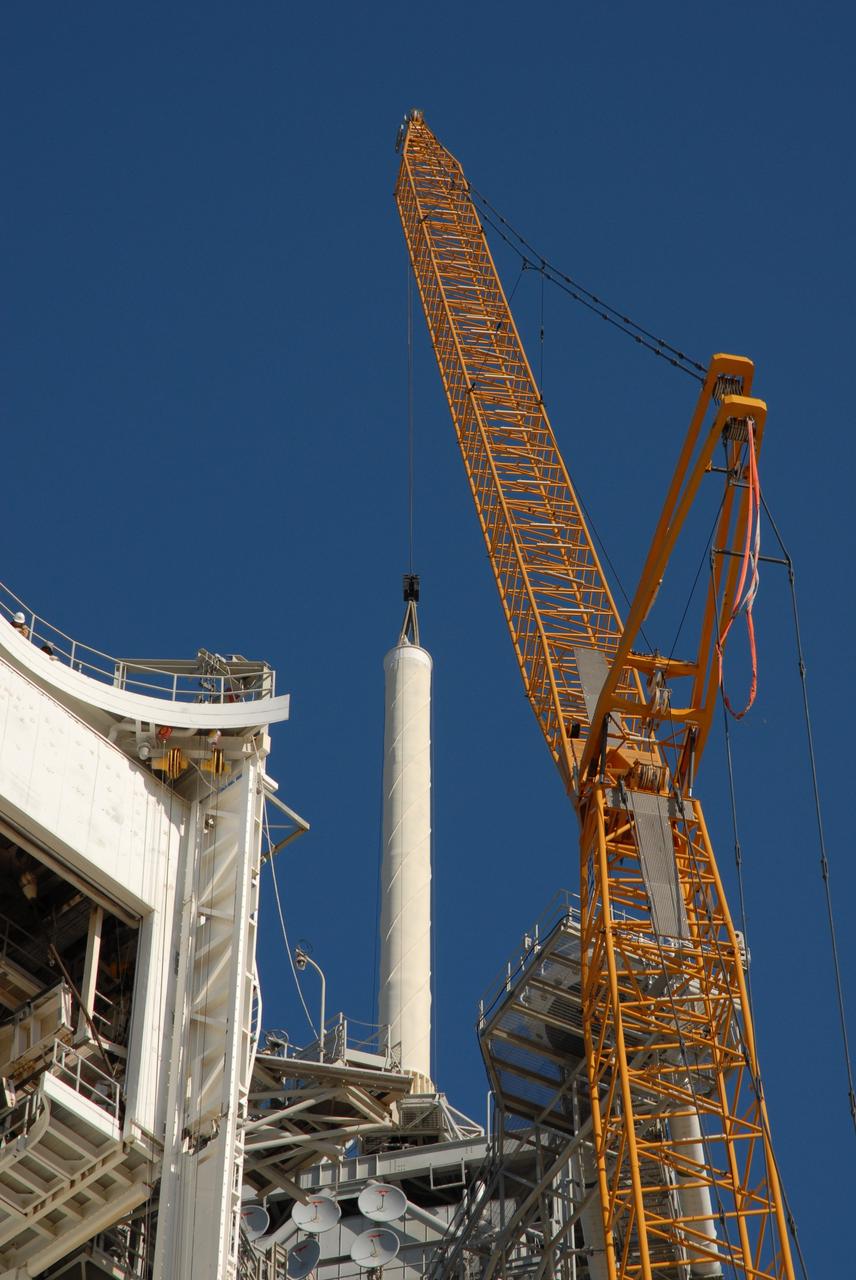
CAPE CANAVERAL, Fla. – On Launch Pad 39B at NASA's Kennedy Space Center in Florida, a crane is being used to remove the 80-foot lightning mast from the top of the fixed service structure. The mast is no longer needed with the erection of the three lightning towers around the pad. Pad 39B will be the site of the first Ares vehicle launch, including the Ares I-X test flight that is targeted for July 2009. The three new lightning towers are 500 feet tall with an additional 100-foot fiberglass mast atop supporting a wire catenary system. This improved lightning protection system allows for the taller height of the Ares I rocket compared to the space shuttle. Photo credit: NASA/Amanda Diller
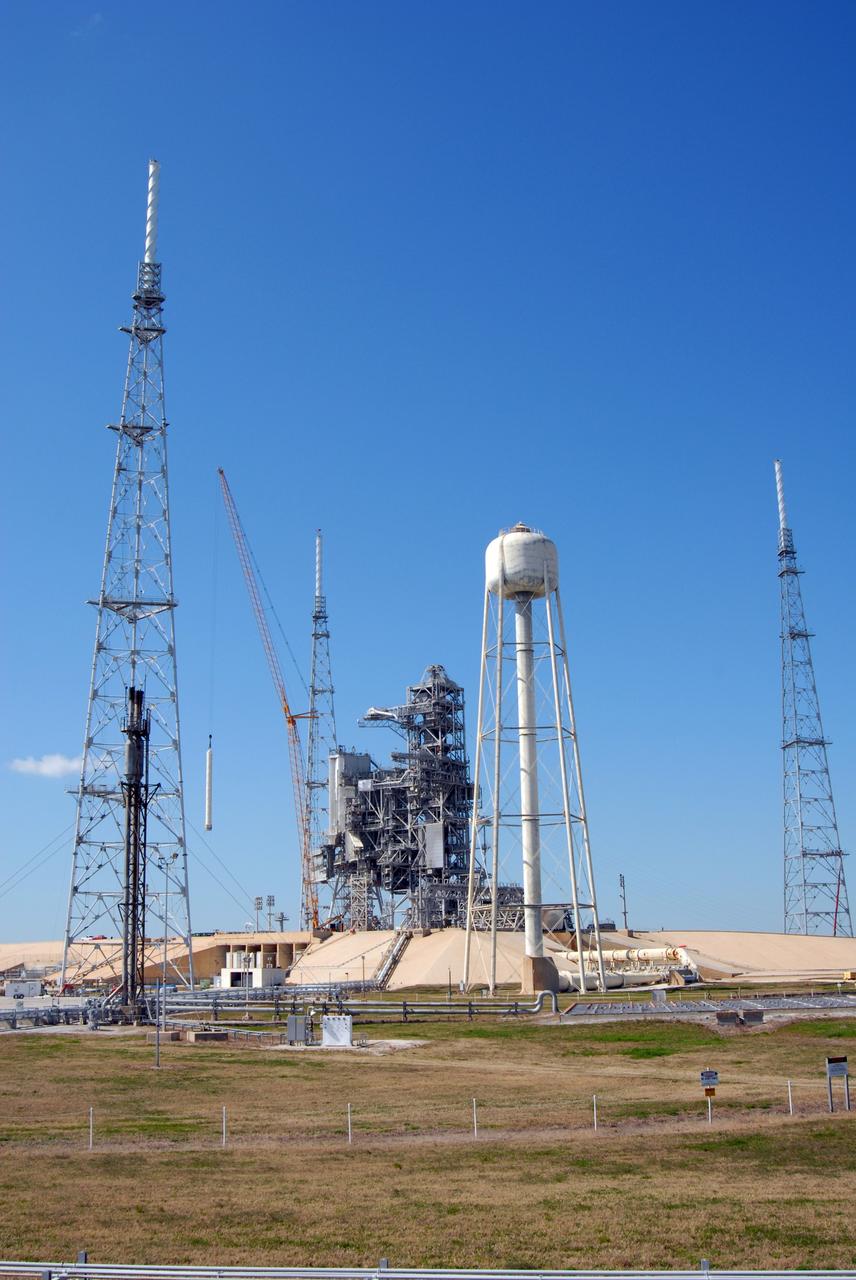
CAPE CANAVERAL, Fla. – On Launch Pad 39B at NASA's Kennedy Space Center in Florida, a crane has removed the 80-foot lightning mast from the top of the fixed service structure. The mast is no longer needed with the erection of the three lightning towers around the pad. Pad 39B will be the site of the first Ares vehicle launch, including the Ares I-X test flight that is targeted for July 2009. The three new lightning towers are 500 feet tall with an additional 100-foot fiberglass mast atop supporting a wire catenary system. This improved lightning protection system allows for the taller height of the Ares I rocket compared to the space shuttle. Photo credit: NASA/Amanda Diller
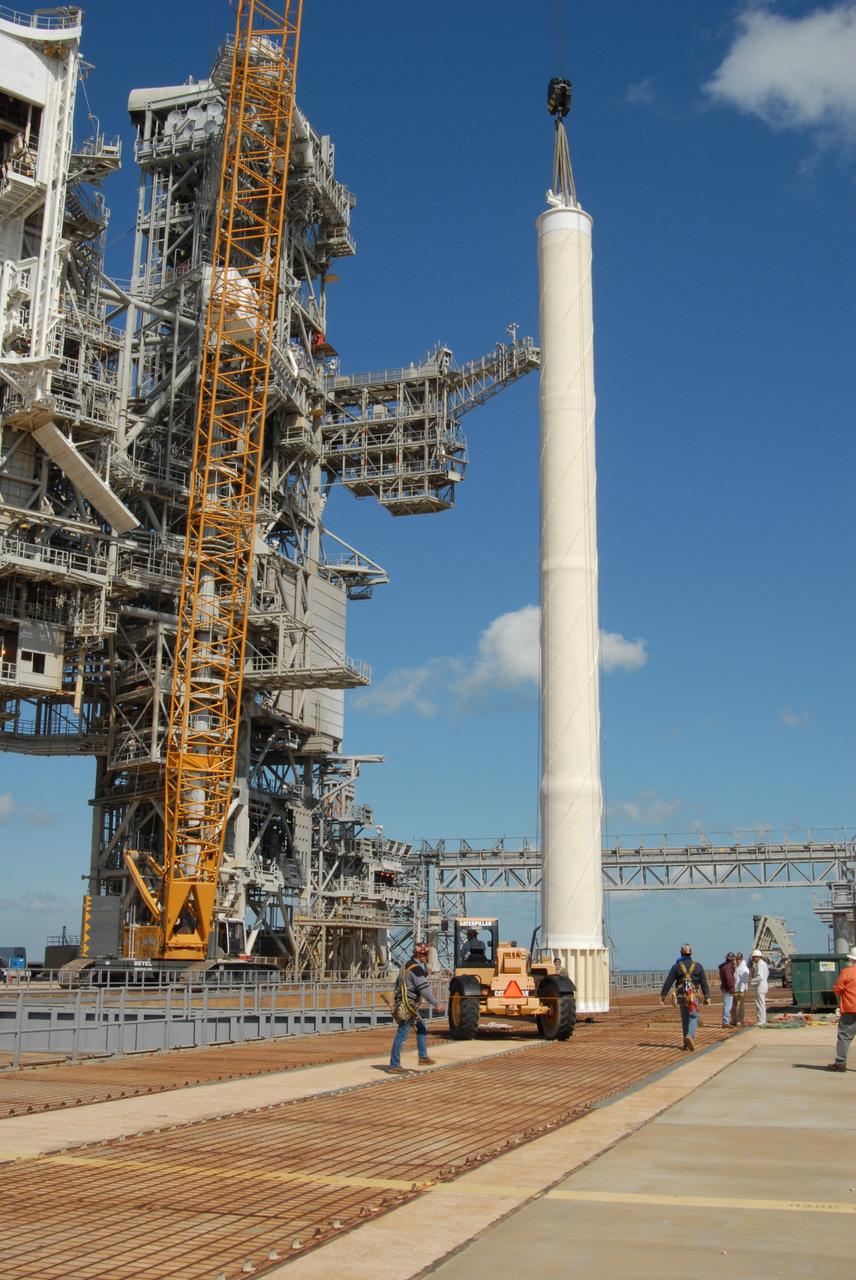
CAPE CANAVERAL, Fla. – On Launch Pad 39B at NASA's Kennedy Space Center in Florida, a crane lowers the 80-foot lightning mast removed from the top of the fixed service structure (left) onto the pad surface. The mast is no longer needed with the erection of the three lightning towers around the pad. Pad 39B will be the site of the first Ares vehicle launch, including the Ares I-X test flight that is targeted for July 2009. The three new lightning towers are 500 feet tall with an additional 100-foot fiberglass mast atop supporting a wire catenary system. This improved lightning protection system allows for the taller height of the Ares I rocket compared to the space shuttle. Photo credit: NASA/Amanda Diller
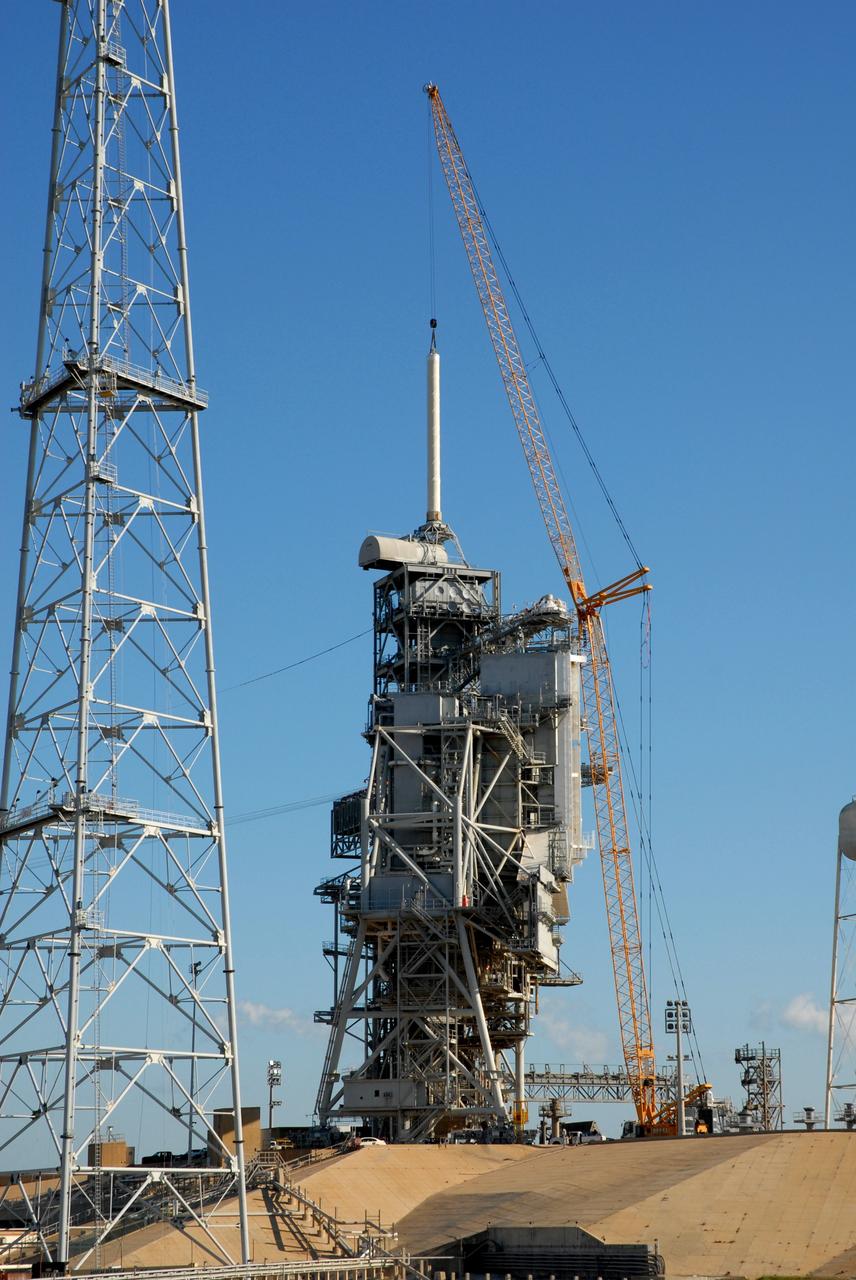
CAPE CANAVERAL, Fla. – On Launch Pad 39B at NASA's Kennedy Space Center in Florida, a crane is being used to remove the 80-foot lightning mast from the top of the fixed service structure. The mast is no longer needed with the erection of the three lightning towers around the pad. Pad 39B will be the site of the first Ares vehicle launch, including the Ares I-X test flight that is targeted for July 2009. The three new lightning towers are 500 feet tall with an additional 100-foot fiberglass mast atop supporting a wire catenary system. This improved lightning protection system allows for the taller height of the Ares I rocket compared to the space shuttle. Photo credit: NASA/Amanda Diller
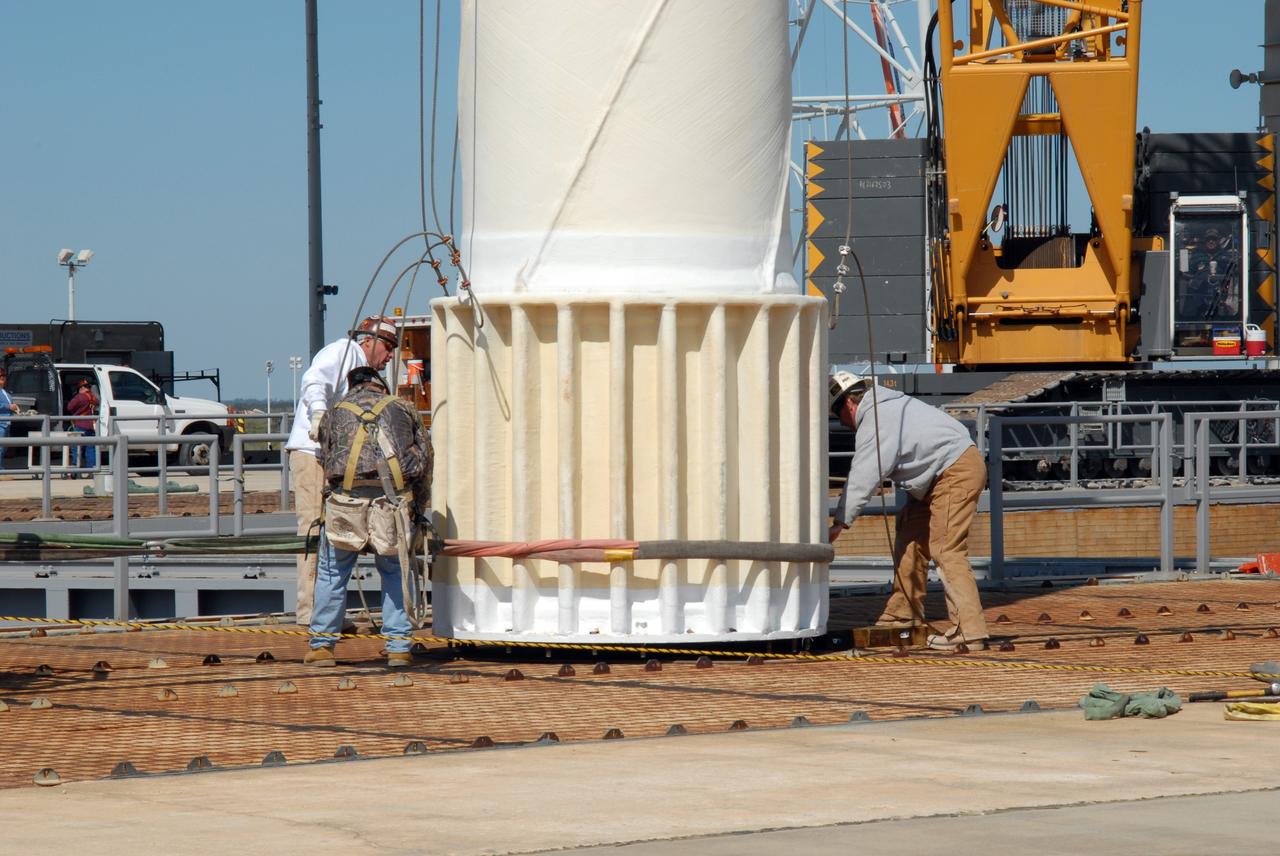
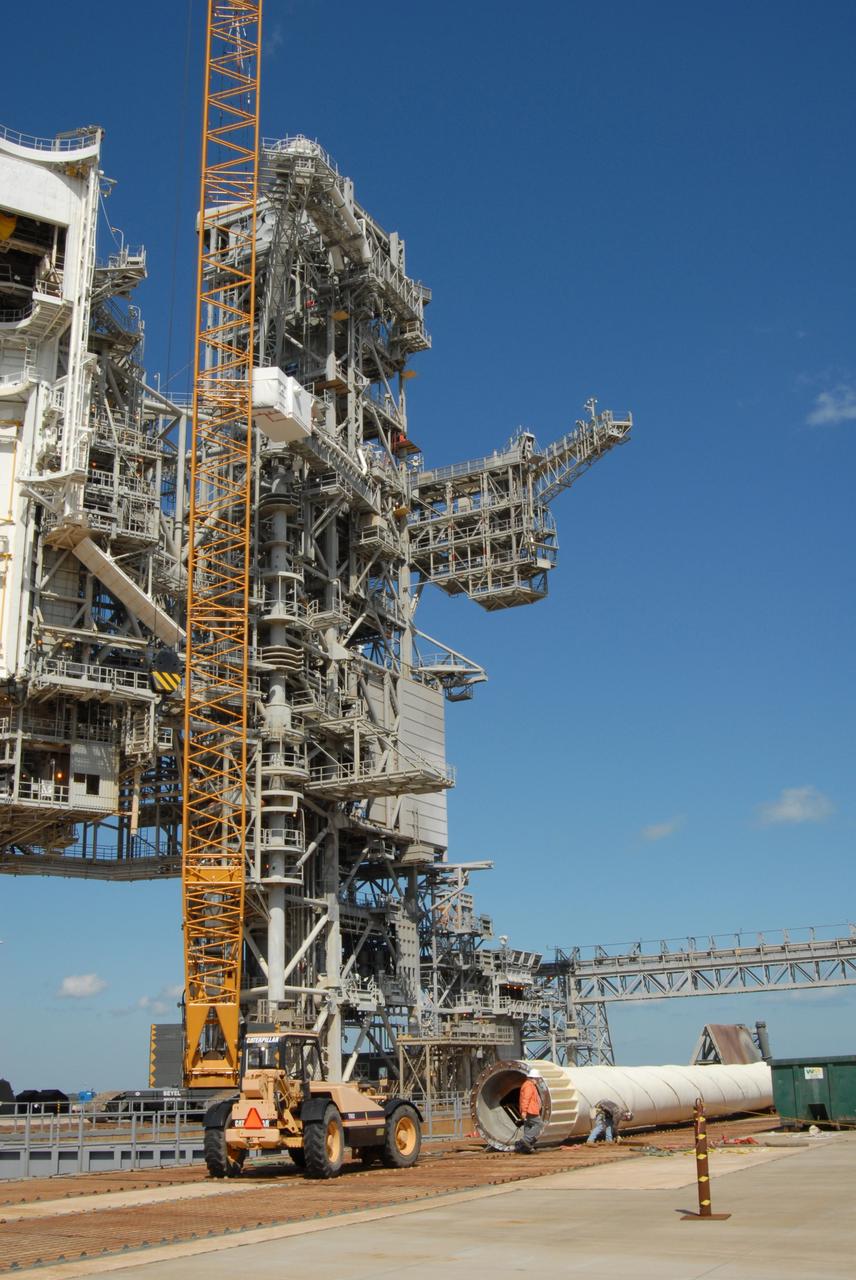
CAPE CANAVERAL, Fla. – On Launch Pad 39B at NASA's Kennedy Space Center in Florida, workers attach more cables to the 80-foot lightning mast removed from the top of the fixed service structure. The mast will be lowered to horizontal for transport from the pad. The mast is no longer needed with the erection of the three lightning towers around the pad. Pad 39B will be the site of the first Ares vehicle launch, including the Ares I-X test flight that is targeted for July 2009. The three new lightning towers are 500 feet tall with an additional 100-foot fiberglass mast atop supporting a wire catenary system. This improved lightning protection system allows for the taller height of the Ares I rocket compared to the space shuttle. Photo credit: NASA/Amanda Diller
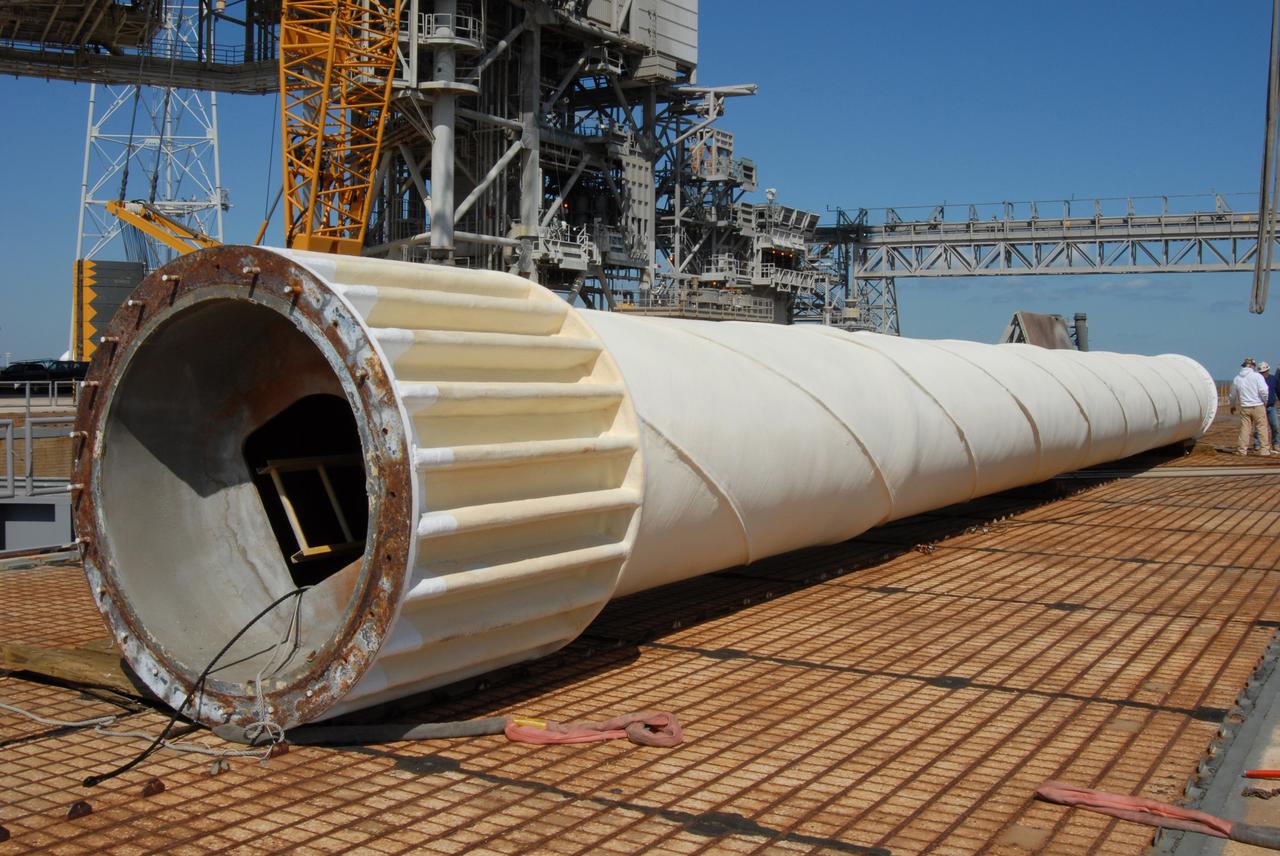
CAPE CANAVERAL, Fla. – On Launch Pad 39B at NASA's Kennedy Space Center in Florida, the 80-foot lightning mast removed from the top of the fixed service structure (left) rests on the pad surface. The mast is no longer needed with the erection of the three lightning towers around the pad. Pad 39B will be the site of the first Ares vehicle launch, including the Ares I-X test flight that is targeted for July 2009. The three new lightning towers are 500 feet tall with an additional 100-foot fiberglass mast atop supporting a wire catenary system. This improved lightning protection system allows for the taller height of the Ares I rocket compared to the space shuttle. Photo credit: NASA/Amanda Diller
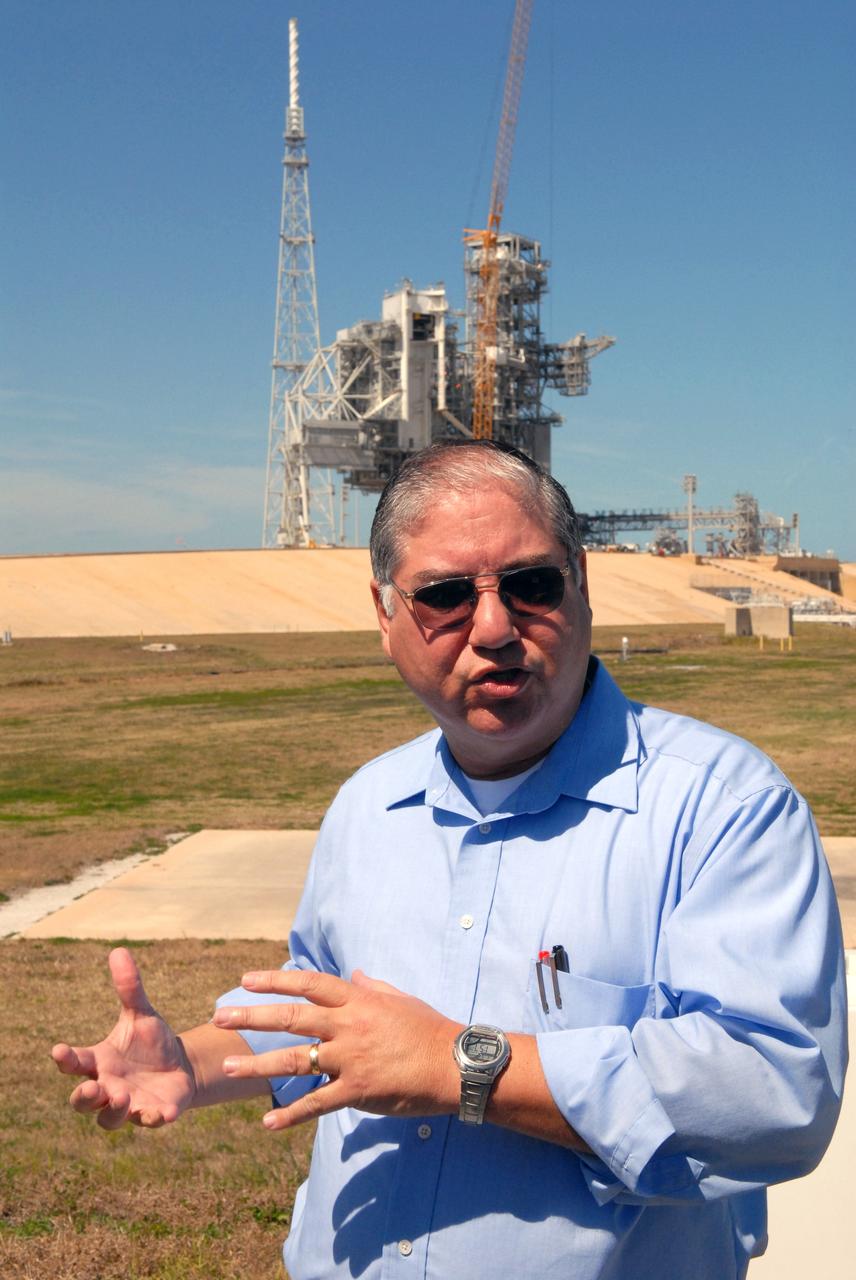
CAPE CANAVERAL, Fla. – Near Launch Pad 39B at NASA's Kennedy Space Center in Florida, Jose Perez-Morales explains use of the launch pad for the Ares rockets in the Constellation Program. Perez-Morales is Constellation senior pad project manager. Pad 39B will be used for the Ares I-X flight test, targeted for July 2009. The I-X flight will provide NASA an early opportunity to test and prove hardware, facilities and ground operations associated with Ares I, part of the Constellation Program to return men to the moon and beyond. Ares I is the essential core of a safe, reliable, cost-effective space transportation system that eventually will carry crewed missions back to the moon, on to Mars and out into the solar system. Photo credit: NASA/Jack Pfaller
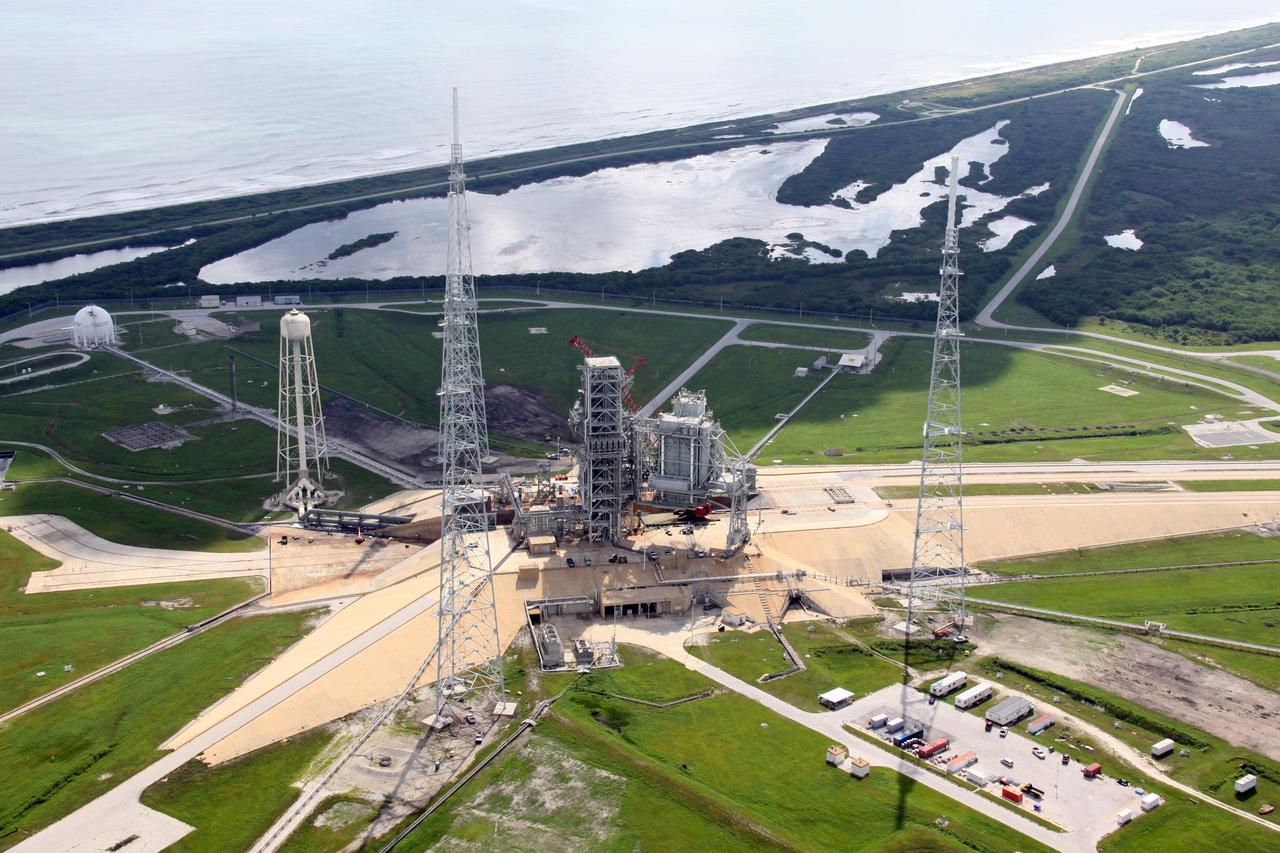
CAPE CANAVERAL, Fla. – An aerial view of NASA Kennedy Space Center's Launch Pad 39B. The pad is surrounded by lightning towers erected for NASA's Constellation Program, which will use the pad for Ares rocket launches. At the top is the Atlantic Ocean. Photo credit: NASA/Troy Cryder
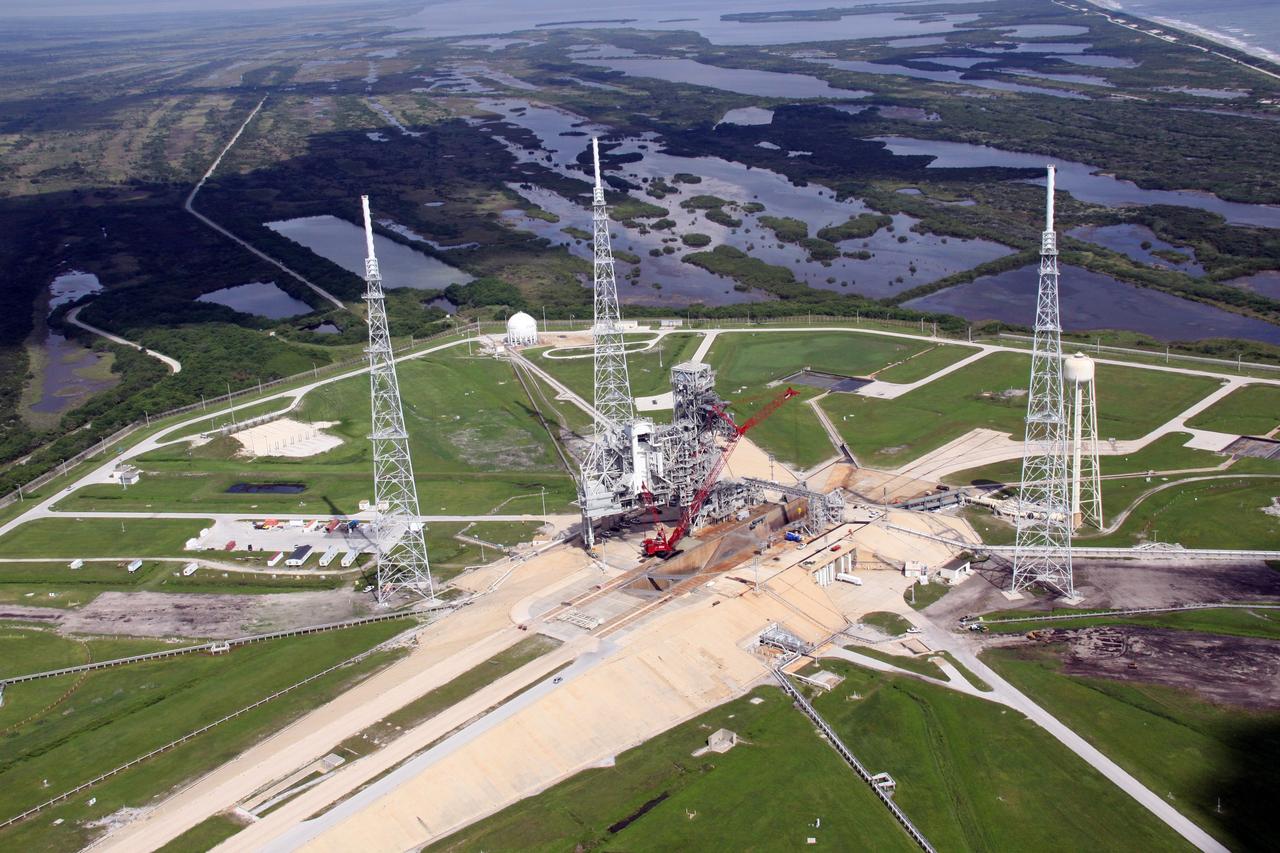
CAPE CANAVERAL, Fla. – An aerial view of NASA Kennedy Space Center's Launch Pad 39B. The pad is surrounded by lightning towers erected for NASA's Constellation Program, which will use the pad for Ares rocket launches. Photo credit: NASA/Troy Cryder
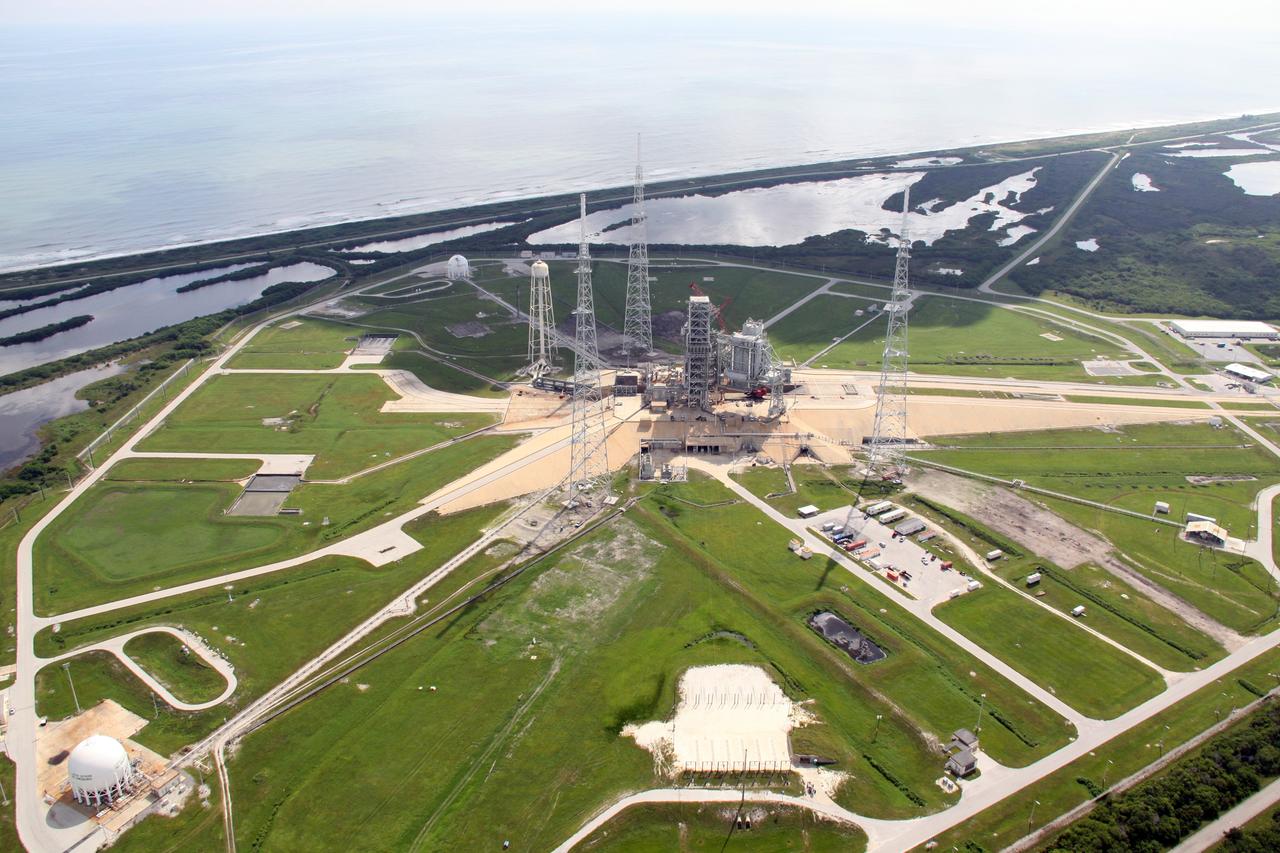
CAPE CANAVERAL, Fla. – An aerial view of NASA Kennedy Space Center's Launch Pad 39B. The pad is surrounded by lightning towers erected for NASA's Constellation Program, which will use the pad for Ares rocket launches. At the top is the Atlantic Ocean. Photo credit: NASA/Troy Cryder
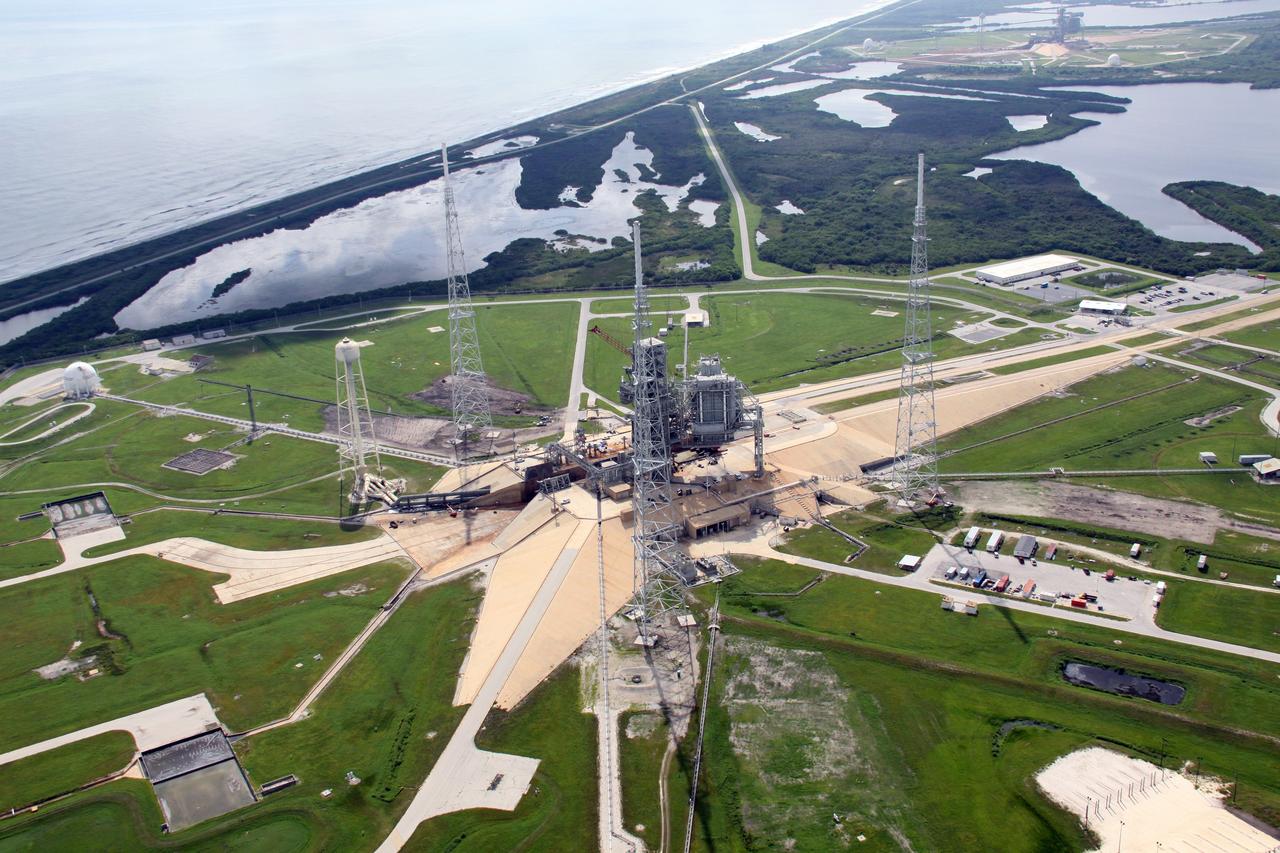
CAPE CANAVERAL, Fla. – An aerial view of NASA Kennedy Space Center's Launch Pad 39B. The pad is surrounded by lightning towers erected for NASA's Constellation Program, which will use the pad for Ares rocket launches. At the top is the Atlantic Ocean. Photo credit: NASA/Troy Cryder
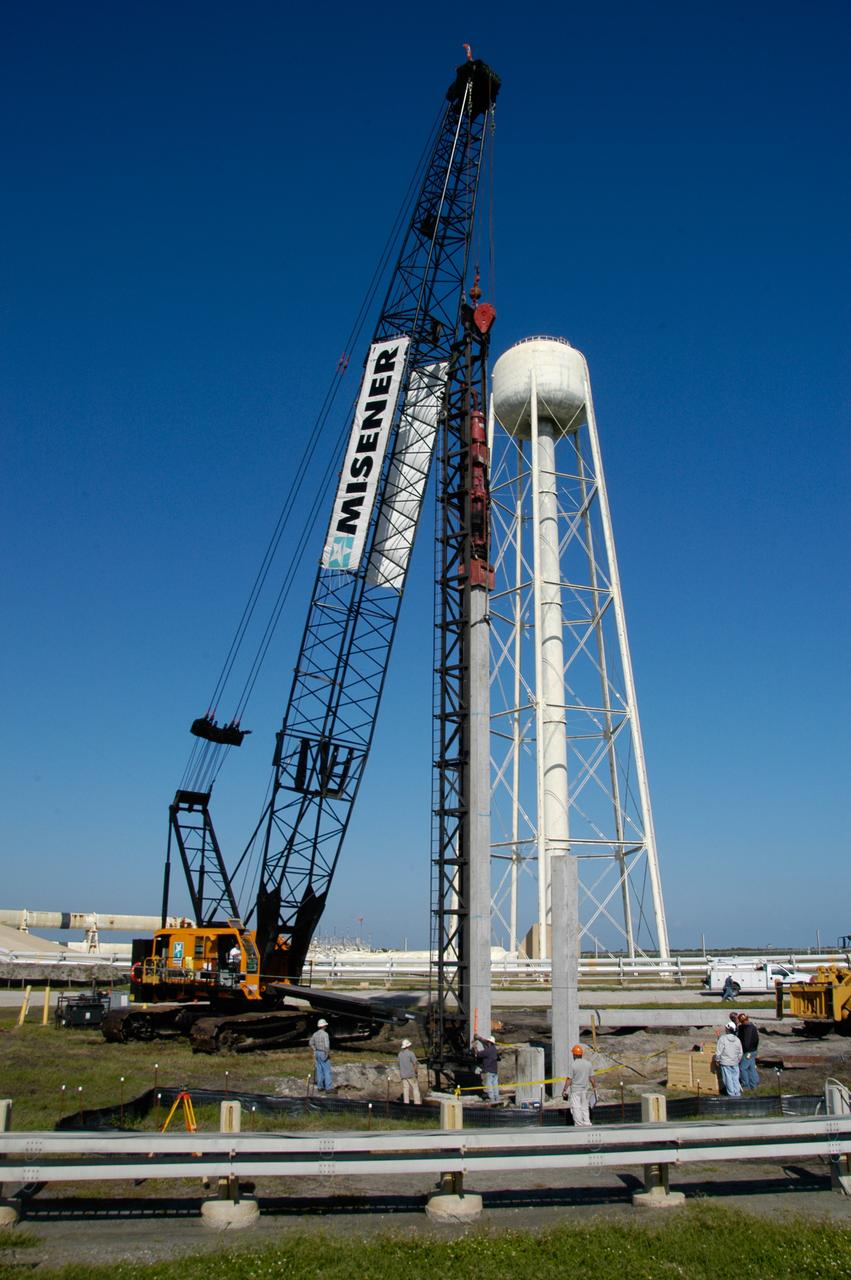
On Launch Pad 39B at NASA's Kennedy Space Center, the crane crawler puts a piling into place to be pounded into the ground to help construct lightning towers for the Constellation Program and Ares/Orion launches. Pad B will be the site of the first Ares vehicle launch, including Ares I-X which is scheduled for April 2009.

On Launch Pad 39B at NASA's Kennedy Space Center, the crane crawler lifts a piling off a truck. The piling will be pounded into the ground to help construct lightning towers for the Constellation Program and Ares/Orion launches. Pad B will be the site of the first Ares vehicle launch, including Ares I-X which is scheduled for April 2009.
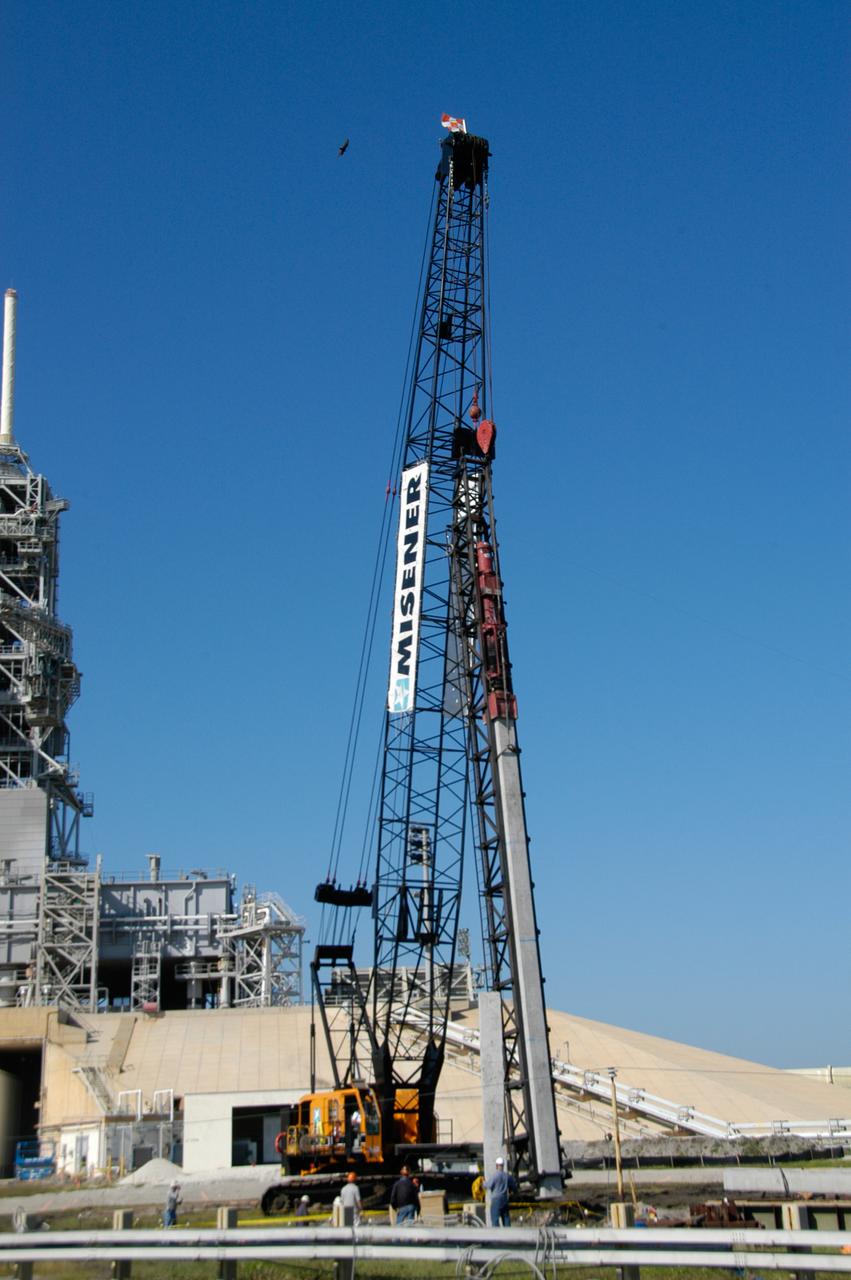
On Launch Pad 39B at NASA's Kennedy Space Center, the crane crawler lifts a piling into place to be pounded into the ground to help construct lightning towers for the Constellation Program and Ares/Orion launches. Pad B will be the site of the first Ares vehicle launch, including Ares I-X which is scheduled for April 2009.
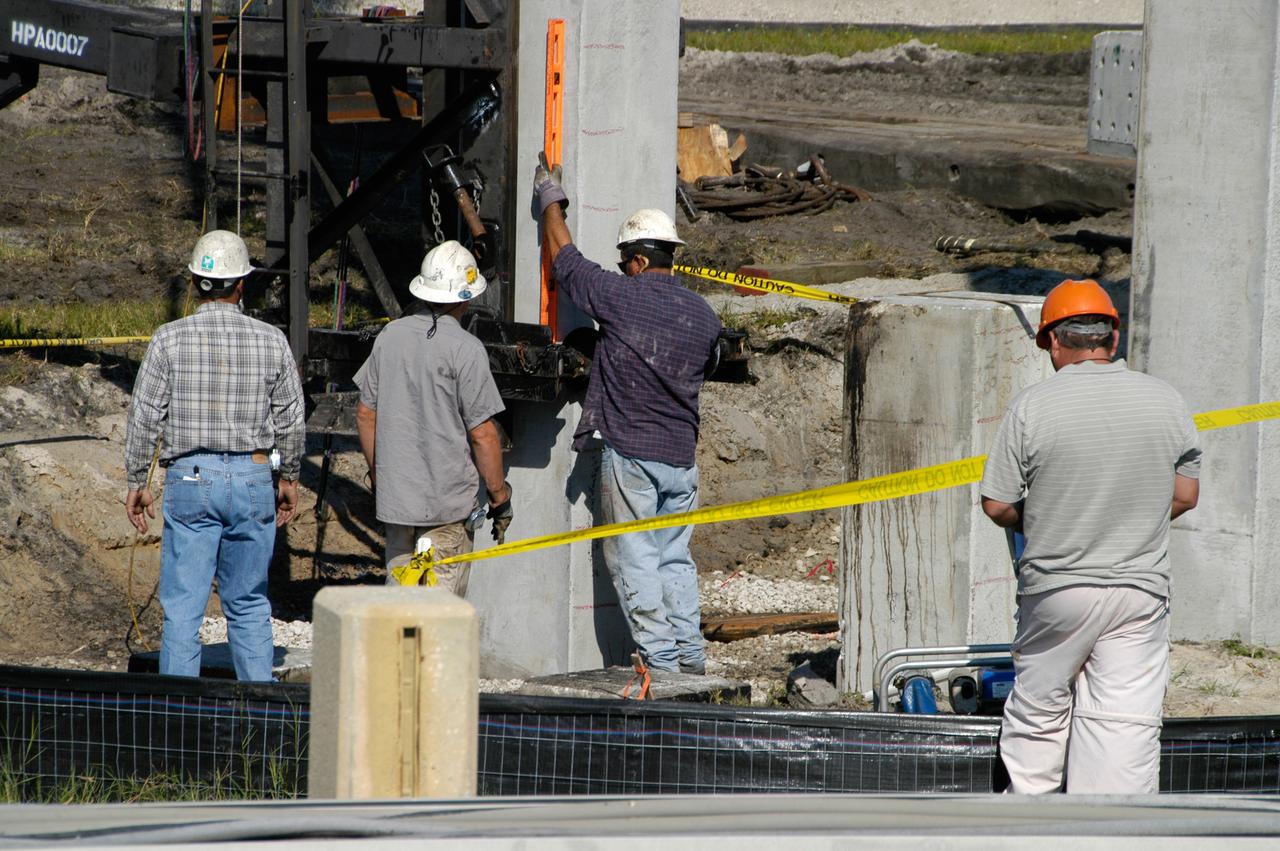
On Launch Pad 39B at NASA's Kennedy Space Center, workers measure the piling being pounded into the ground to help construct lightning towers for the Constellation Program and Ares/Orion launches. Pad B will be the site of the first Ares vehicle launch, including Ares I-X which is scheduled for April 2009.
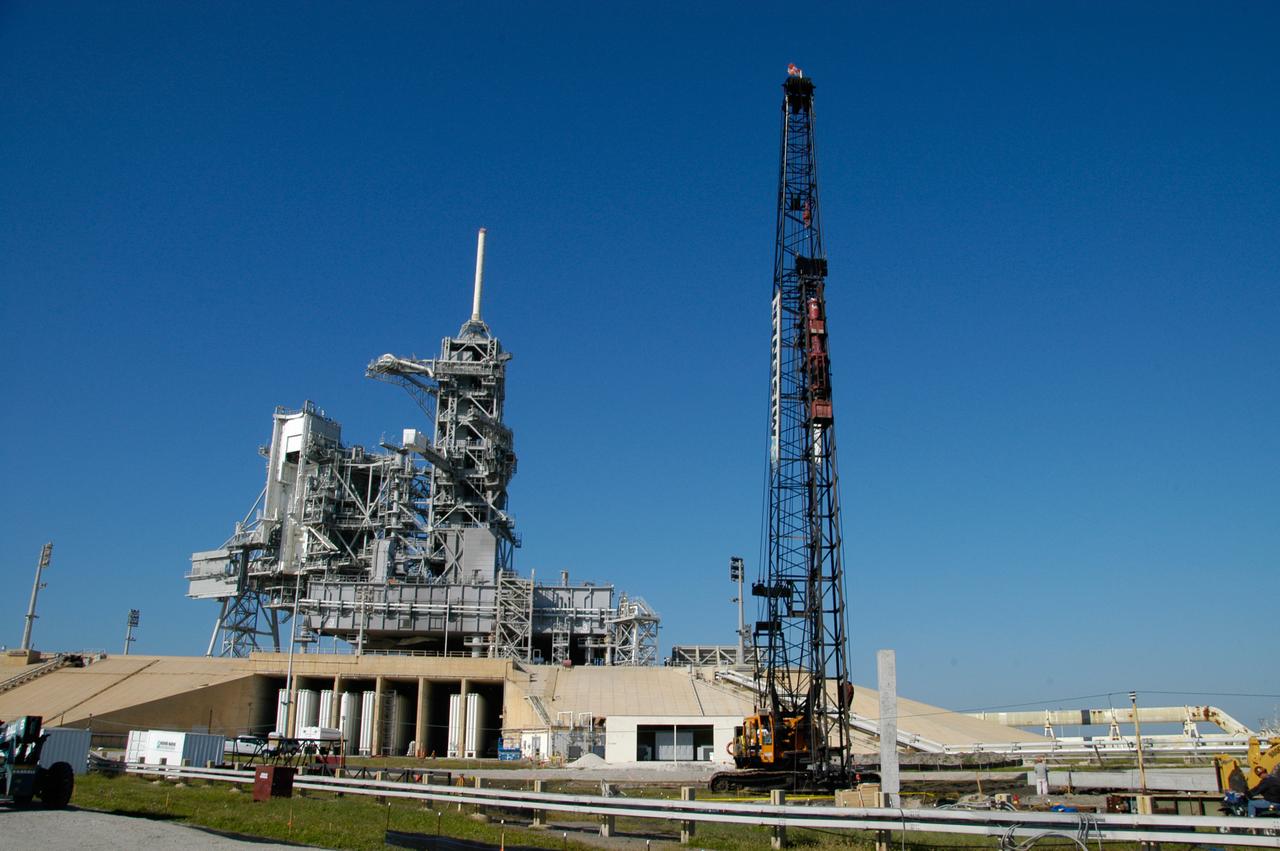
On Launch Pad 39B at NASA's Kennedy Space Center, pilings are being pounded into the ground to help construct lightning towers for the Constellation Program and Ares/Orion launches. Pad B will be the site of the first Ares vehicle launch, including Ares I-X which is scheduled for April 2009.
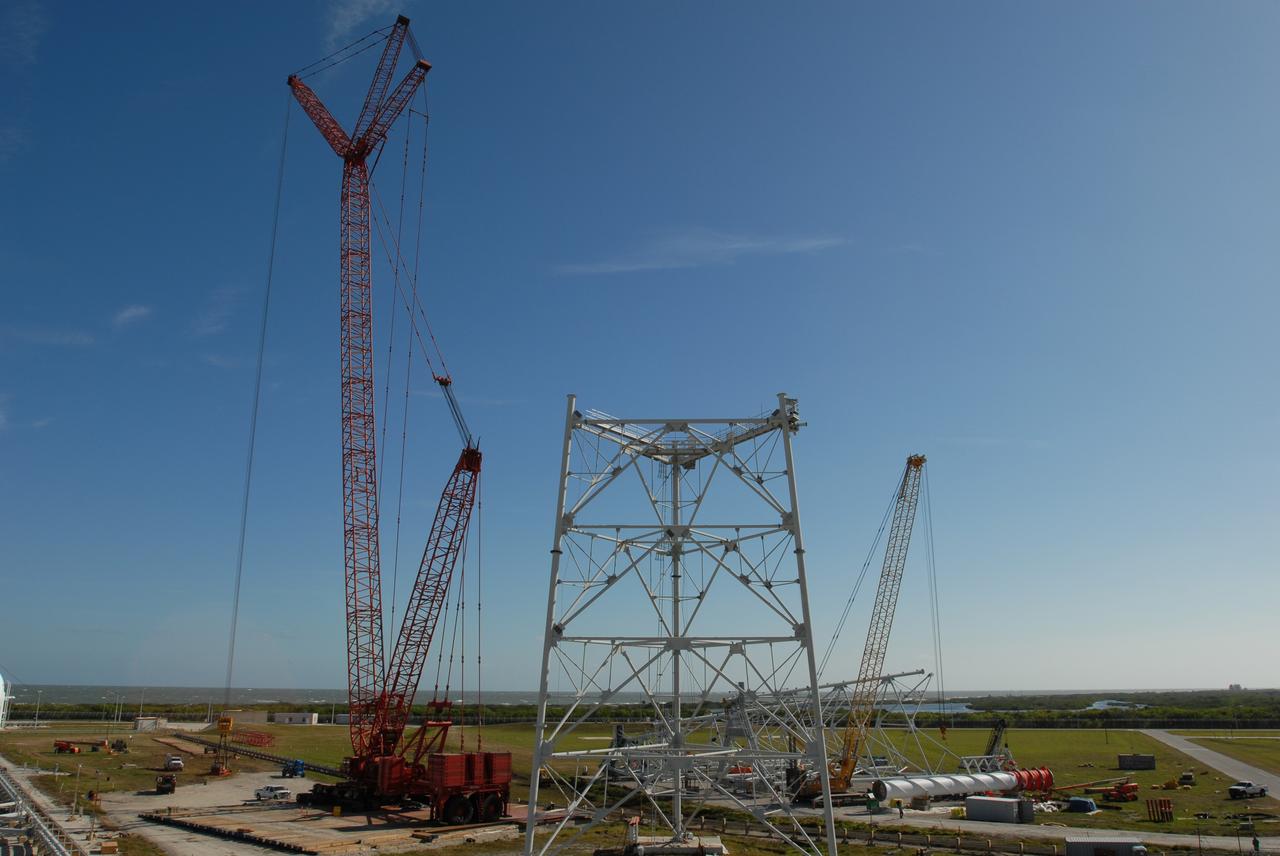
CAPE CANAVERAL, Fla. -- On Launch Pad 39B at NASA's Kennedy Space Center in Florida, a load test is conducted on a giant crane. The crane will aid in construction of lightning towers that will hold catenary wires as part of the new lightning protection system for the Constellation Program and Ares/Orion launches. One of the towers under construction is in the foreground. Pad 39B will be the site of the first Ares vehicle launch, including the Ares I-X test flight that is targeted for July 2009. Photo credit: NASA/Jim Grossmann
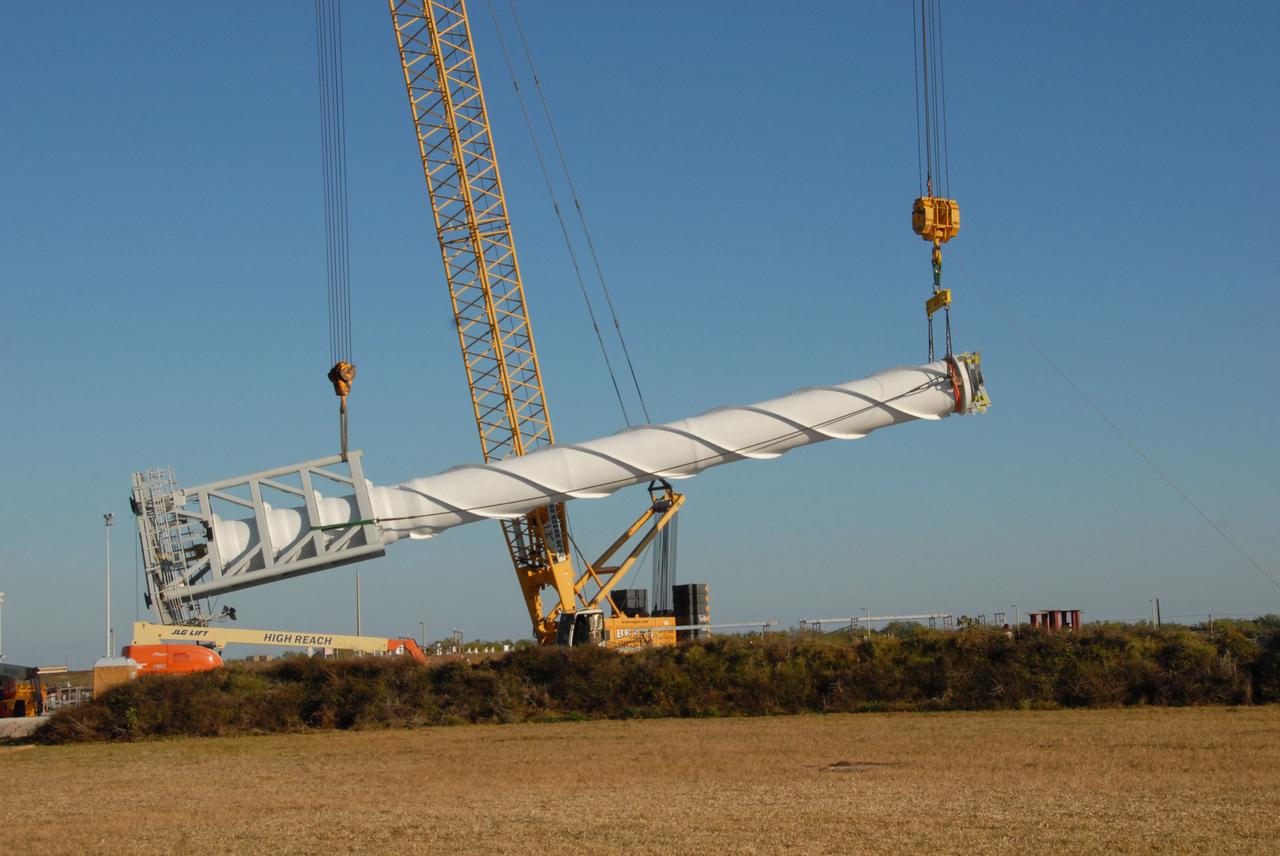
CAPE CANAVERAL, Fla. – On Launch Pad 39B at NASA's Kennedy Space Center in Florida, a crane lifts a 100-foot fiberglass lightning mast that will be placed on top of one of the 500-foot towers being constructed for the Constellation Program and Ares/Orion launches. This improved lightning protection system allows for the taller height of the Ares I rocket compared to the space shuttle. Pad 39B will be the site of the first Ares vehicle launch, including the Ares I-X test flight that is targeted for July 2009.
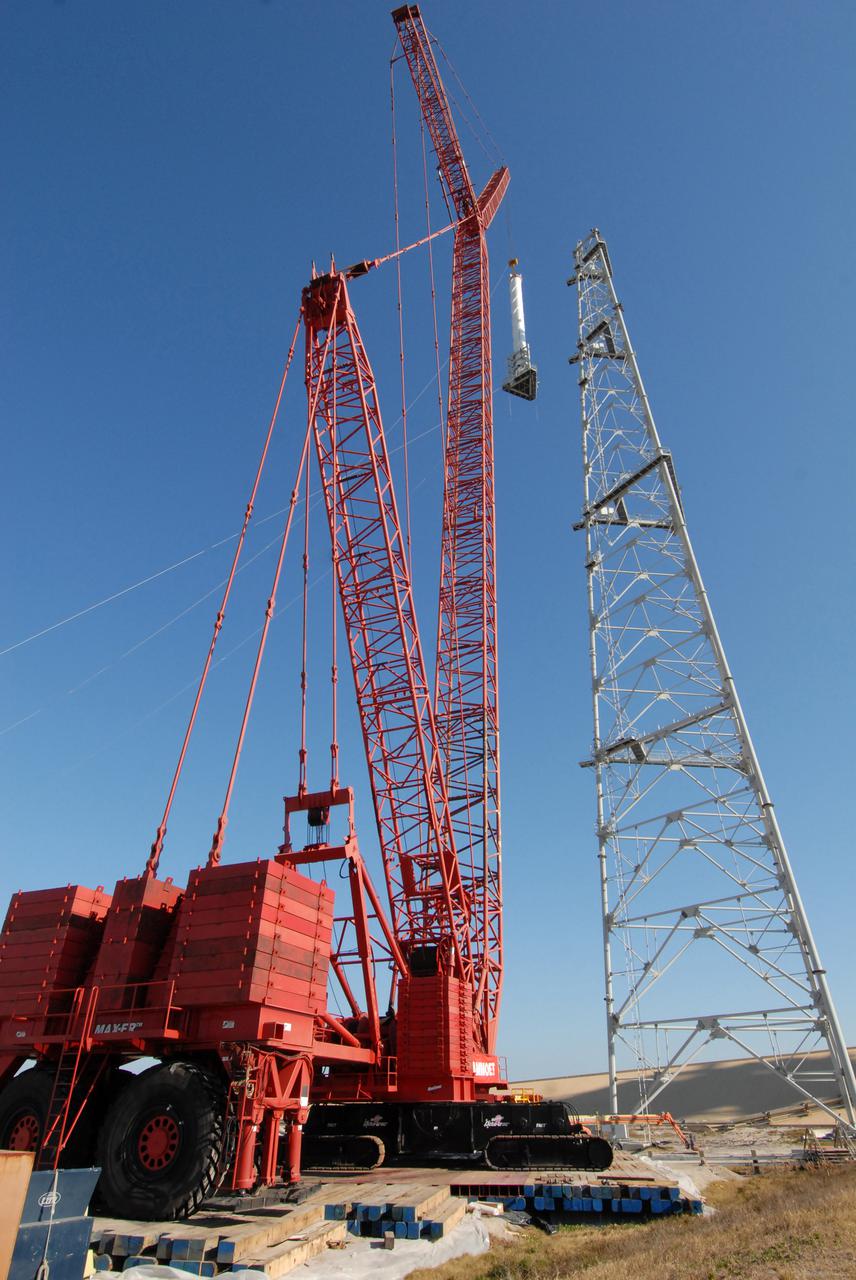
CAPE CANAVERAL, Fla. – On Launch Pad 39B at NASA's Kennedy Space Center in Florida, a crane lifts a 100-foot fiberglass lightning mast alongside the 500-foot tower where it will be installed. The tower is one of three being constructed for the Constellation Program and Ares_Orion launches. This improved lightning protection system allows for the taller height of the Ares I rocket compared to the space shuttle. Pad 39B will be the site of the first Ares vehicle launch, including the Ares I-X test flight that is targeted for July 2009.
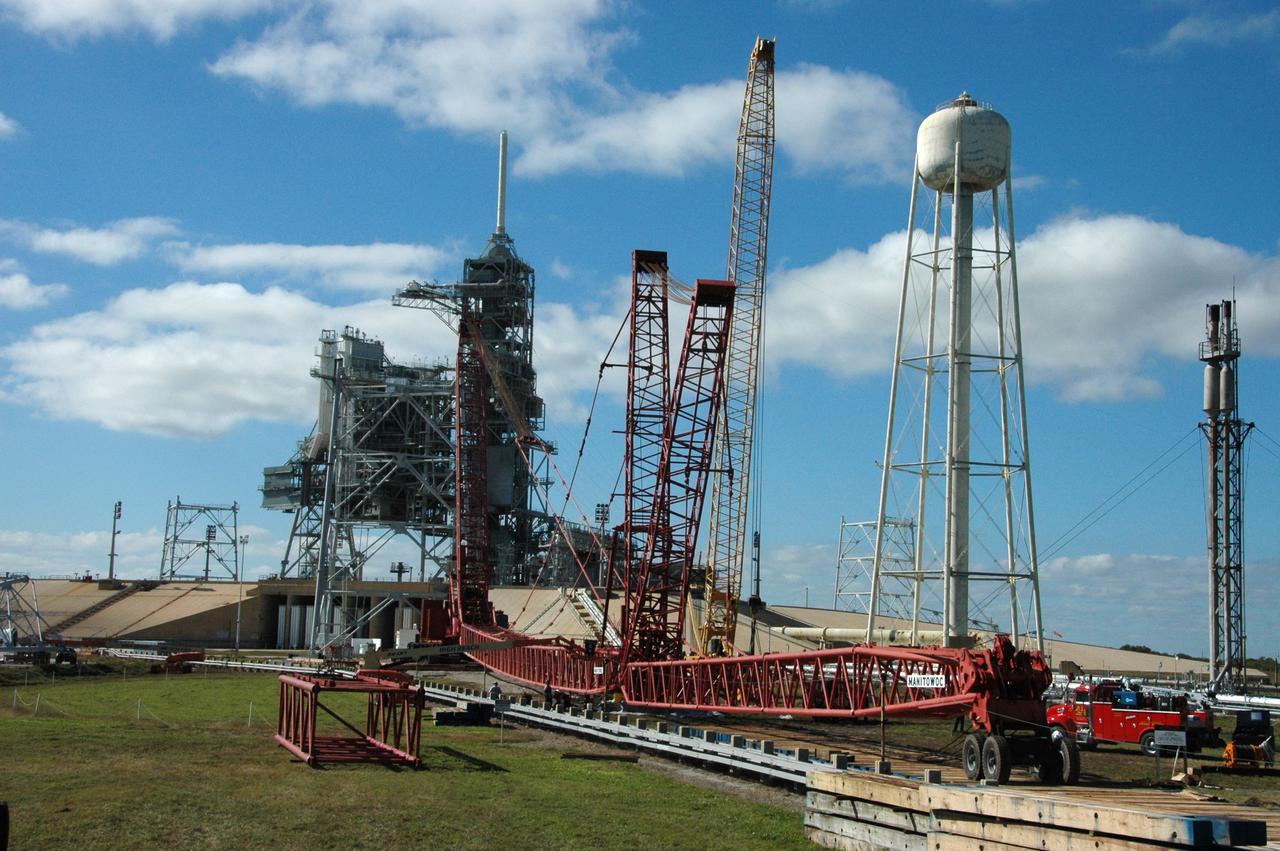
CAPE CANAVERAL, Fla. -- Very large cranes are being constructed on Launch Pad 39B at NASA's Kennedy Space Center in Florida to aid in erecting the lightning towers to hold catenary wires as part of the new lightning protection system for the Constellation Program and Ares/Orion launches. Pad 39B will be the site of the first Ares vehicle launch, including Ares I-X test flight that is targeted for July 2009. Photo credit: NASA/Tim Jacobs
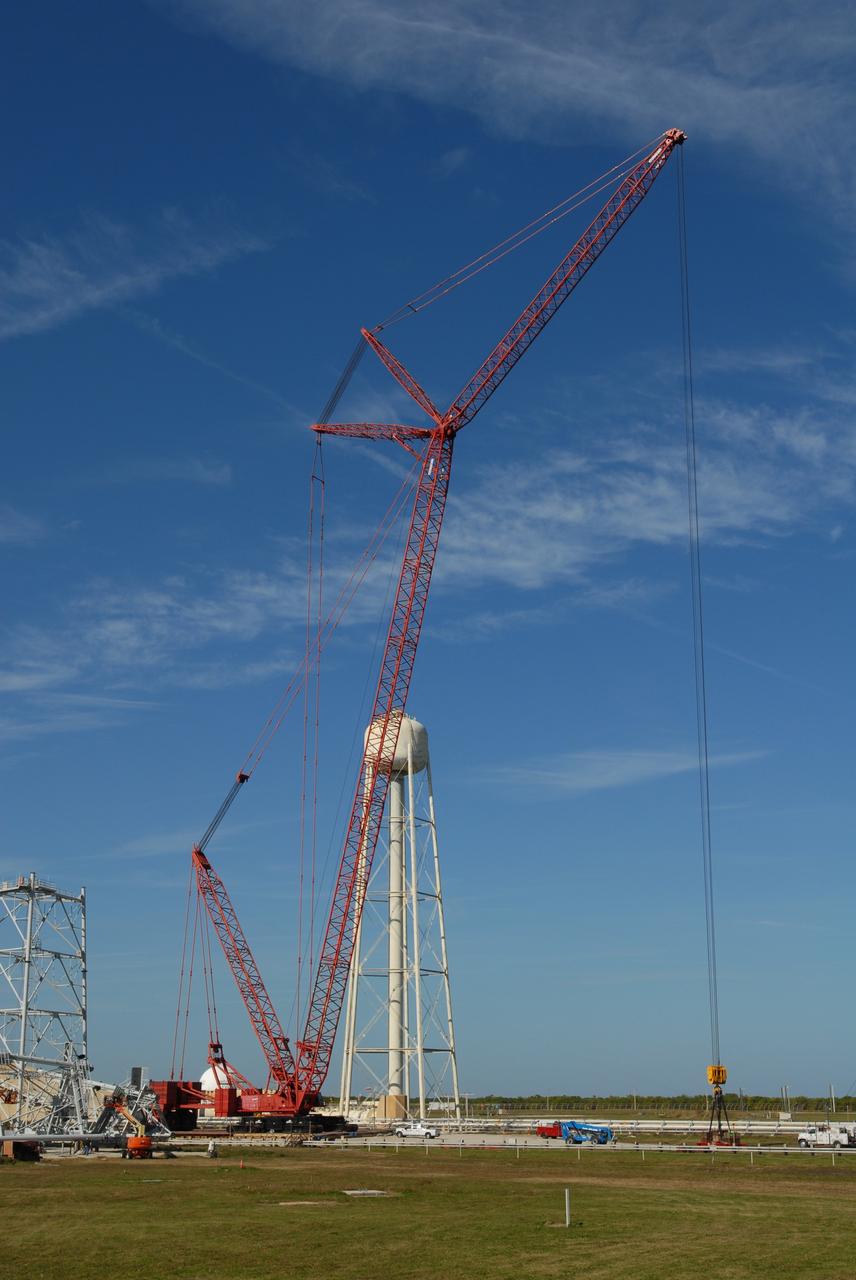
CAPE CANAVERAL, Fla. -- On Launch Pad 39B at NASA's Kennedy Space Center in Florida, a load test is conducted on a giant crane. The crane will aid in construction of lightning towers that will hold catenary wires as part of the new lightning protection system for the Constellation Program and Ares/Orion launches. One of the towers under construction is at far left. Pad 39B will be the site of the first Ares vehicle launch, including the Ares I-X test flight that is targeted for July 2009. Photo credit: NASA/Jim Grossmann
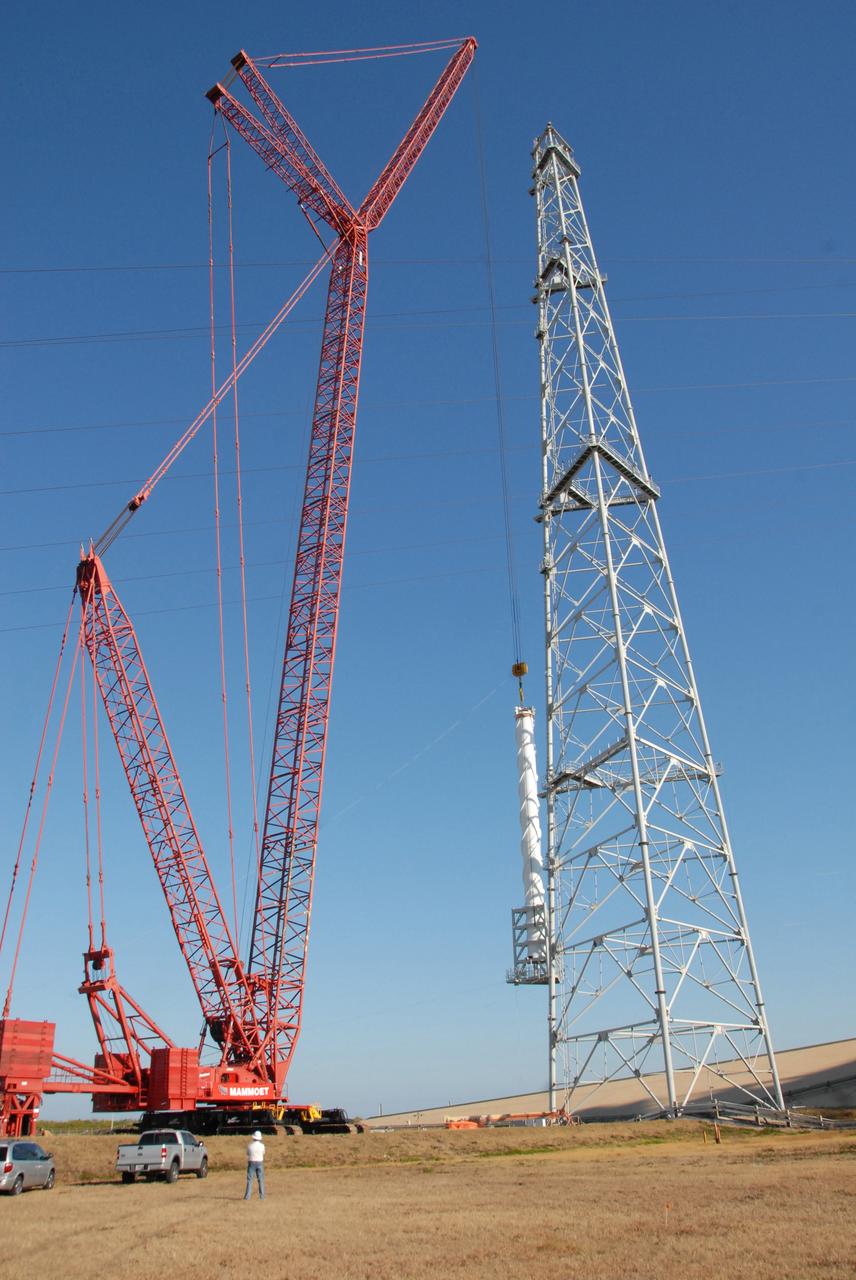
CAPE CANAVERAL, Fla. – On Launch Pad 39B at NASA's Kennedy Space Center in Florida, a crane begins lifting a 100-foot fiberglass lightning mast to place it on top of one of the 500-foot towers being constructed for the Constellation Program and Ares/Orion launches. This improved lightning protection system allows for the taller height of the Ares I rocket compared to the space shuttle. Pad 39B will be the site of the first Ares vehicle launch, including the Ares I-X test flight that is targeted for July 2009.
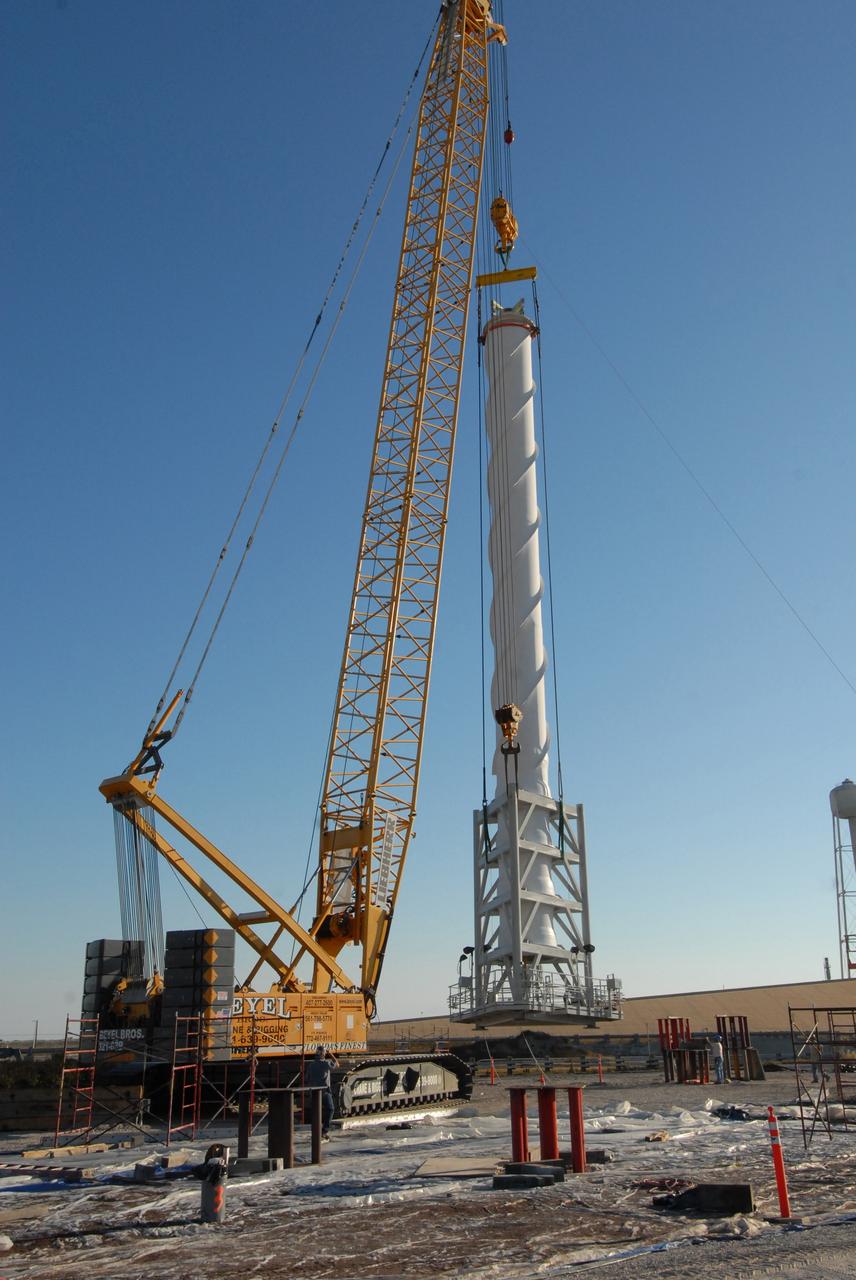
CAPE CANAVERAL, Fla. – On Launch Pad 39B at NASA's Kennedy Space Center in Florida, a crane holds a 100-foot fiberglass lightning mast that will be placed on top of one of the 500-foot towers being constructed for the Constellation Program and Ares/Orion launches. This improved lightning protection system allows for the taller height of the Ares I rocket compared to the space shuttle. Pad 39B will be the site of the first Ares vehicle launch, including the Ares I-X test flight that is targeted for July 2009.
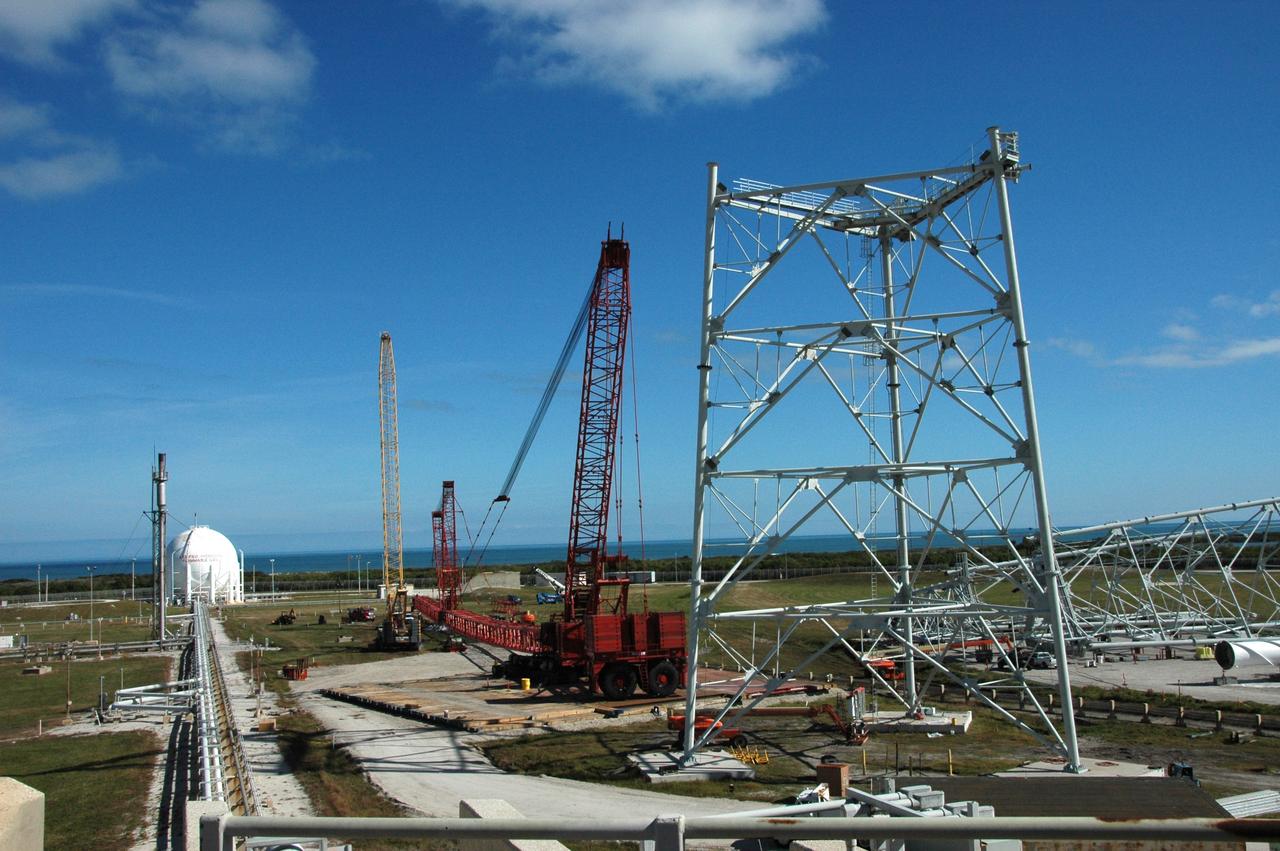
CAPE CANAVERAL, Fla. -- Very large cranes are being constructed on Launch Pad 39B at NASA's Kennedy Space Center in Florida to aid in erecting the lightning towers to hold catenary wires as part of the new lightning protection system for the Constellation Program and Ares/Orion launches. Pad 39B will be the site of the first Ares vehicle launch, including Ares I-X test flight that is targeted for July 2009. Photo credit: NASA/Tim Jacobs
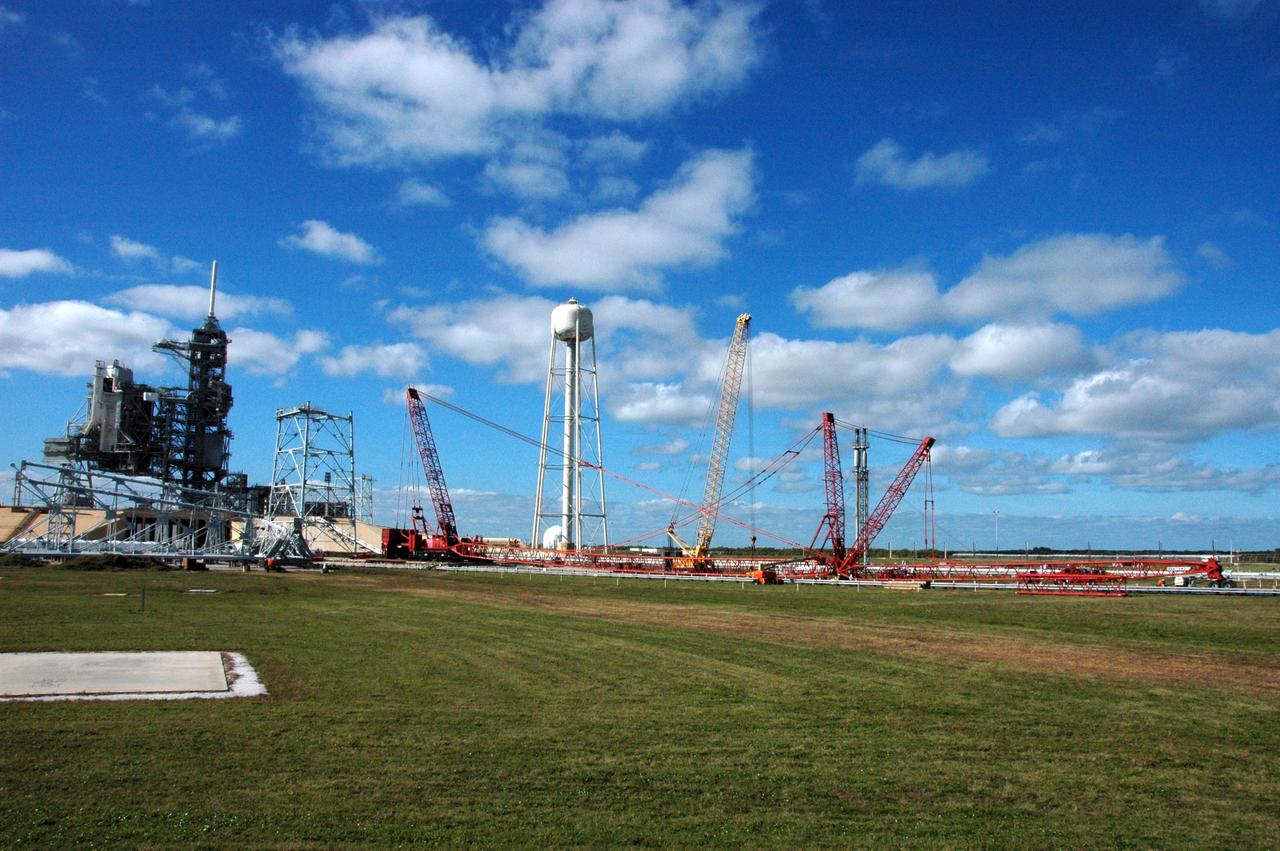
CAPE CANAVERAL, Fla. -- Very large cranes are being constructed on Launch Pad 39B at NASA's Kennedy Space Center in Florida to aid in erecting the lightning towers to hold catenary wires as part of the new lightning protection system for the Constellation Program and Ares/Orion launches. Pad 39B will be the site of the first Ares vehicle launch, including Ares I-X test flight that is targeted for July 2009. Photo credit: NASA/Tim Jacobs
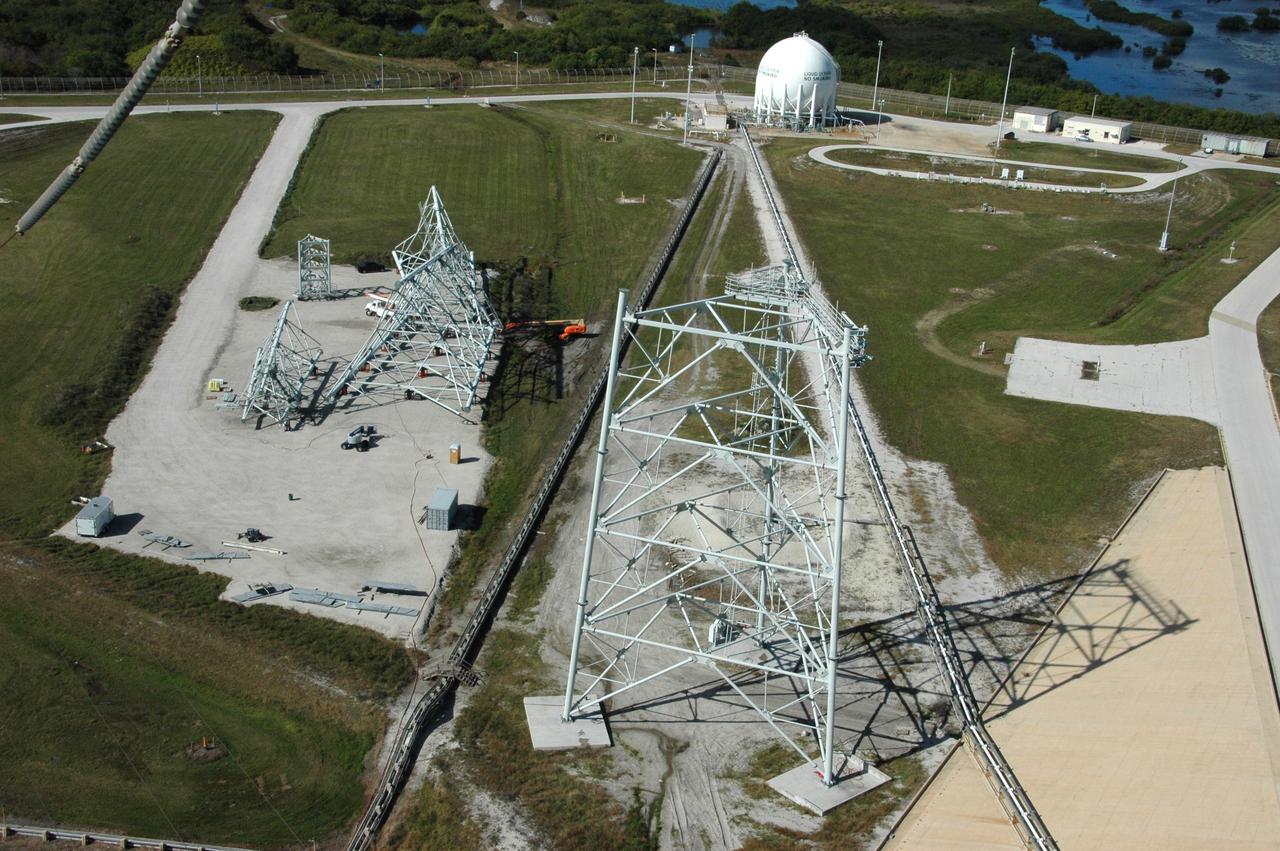
CAPE CANAVERAL, Fla. -- On Launch Pad 39B at NASA's Kennedy Space Center in Florida, one of the new lightning towers is under construction. The towers will hold catenary wires as part of the new lightning protection system for the Constellation Program and Ares/Orion launches. Pad 39B will be the site of the first Ares vehicle launch, including Ares I-X test flight that is targeted for July 2009. Photo credit: NASA/Tim Jacobs
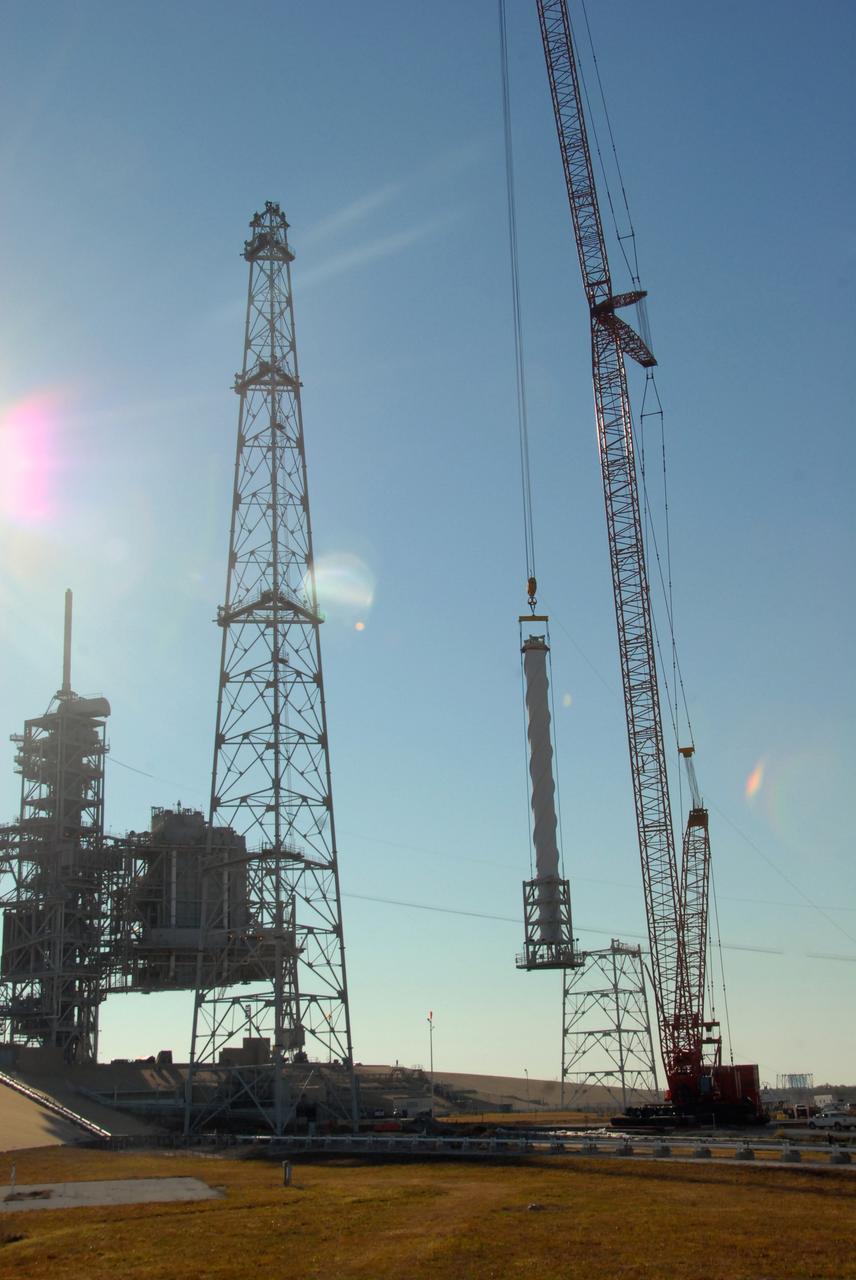
CAPE CANAVERAL, Fla. – On Launch Pad 39B at NASA's Kennedy Space Center in Florida, a crane begins lifting a 100-foot fiberglass lightning mast to place it on top of one of the 500-foot towers being constructed for the Constellation Program and Ares/Orion launches. This improved lightning protection system allows for the taller height of the Ares I rocket compared to the space shuttle. Pad 39B will be the site of the first Ares vehicle launch, including the Ares I-X test flight that is targeted for July 2009.
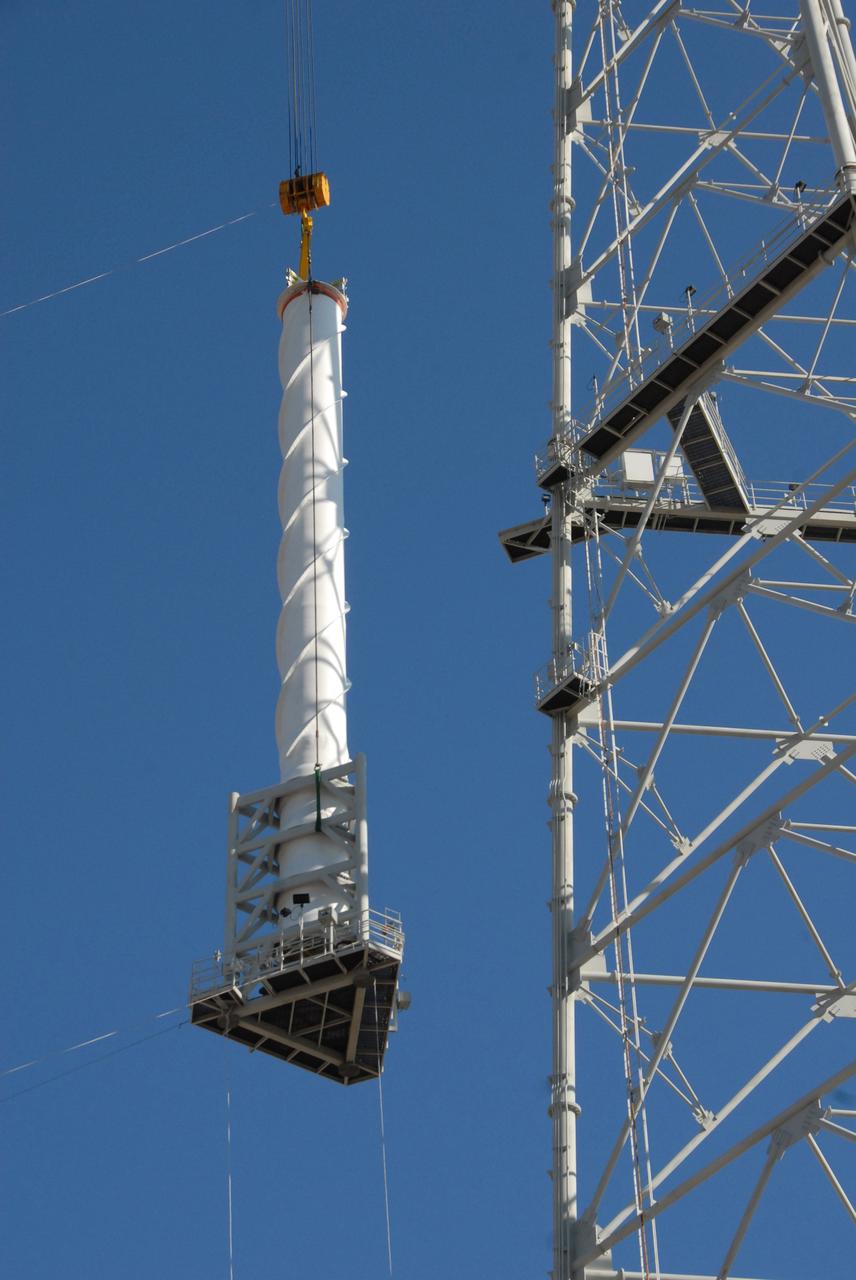
CAPE CANAVERAL, Fla. – On Launch Pad 39B at NASA's Kennedy Space Center in Florida, a crane lifts a 100-foot fiberglass lightning mast alongside the 500-foot tower where it will be installed. The tower is one of three being constructed for the Constellation Program and Ares/Orion launches. This improved lightning protection system allows for the taller height of the Ares I rocket compared to the space shuttle. Pad 39B will be the site of the first Ares vehicle launch, including the Ares I-X test flight that is targeted for July 2009.
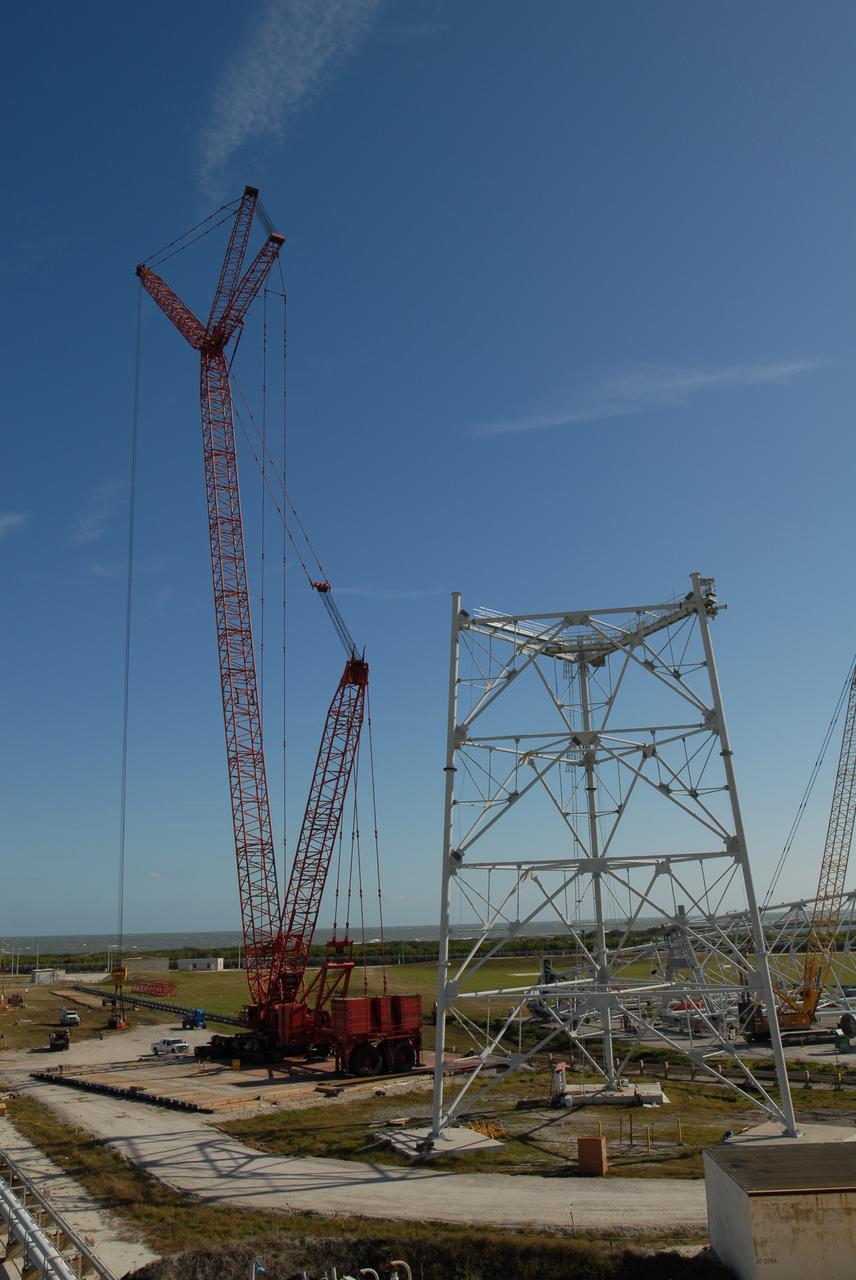
CAPE CANAVERAL, Fla. -- On Launch Pad 39B at NASA's Kennedy Space Center in Florida, a load test is conducted on a giant crane. The crane will aid in construction of lightning towers that will hold catenary wires as part of the new lightning protection system for the Constellation Program and Ares/Orion launches. One of the towers under construction is at right. Pad 39B will be the site of the first Ares vehicle launch, including the Ares I-X test flight that is targeted for July 2009. Photo credit: NASA/Jim Grossmann
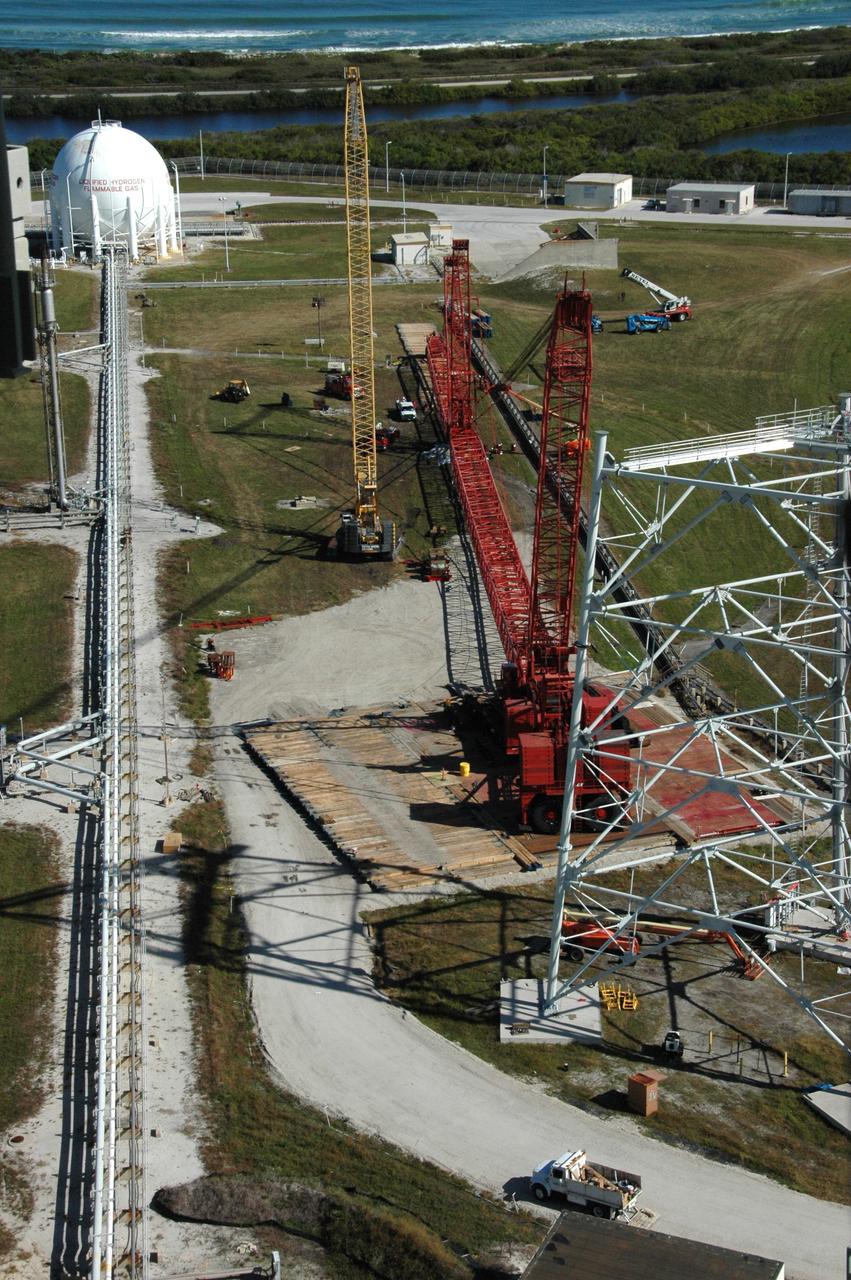
CAPE CANAVERAL, Fla. -- Very large cranes are being constructed on Launch Pad 39B at NASA's Kennedy Space Center in Florida to aid in erecting the lightning towers to hold catenary wires as part of the new lightning protection system for the Constellation Program and Ares/Orion launches. Pad 39B will be the site of the first Ares vehicle launch, including Ares I-X test flight that is targeted for July 2009. Photo credit: NASA/Tim Jacobs
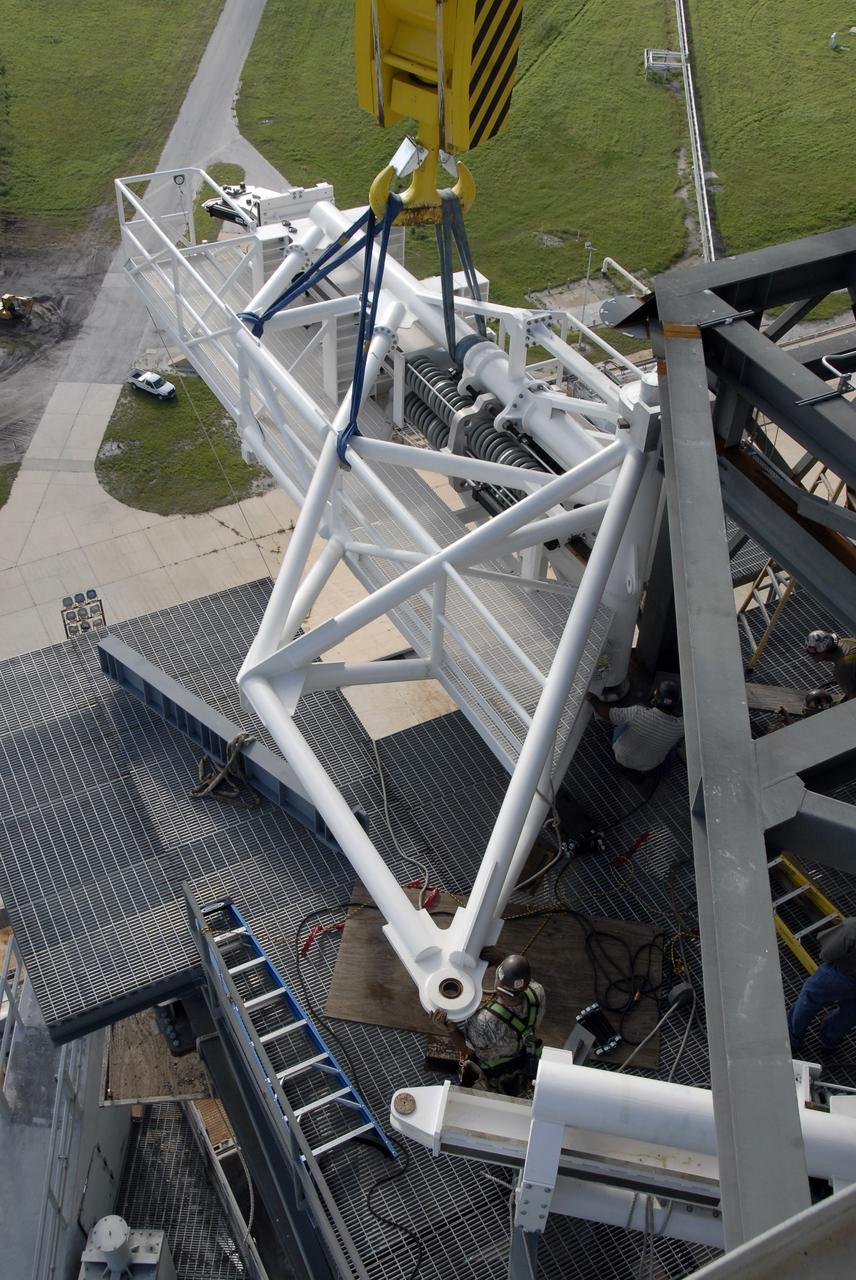
CAPE CANAVERAL, Fla. – On NASA Kennedy Space Center's Launch Pad 39B, the stabilizing arm is moved into place on the fixed service structure for attachment. The arm will be used in the Ares I-X rocket launch, targeted for Oct. 31. Ares I-X is part of NASA's Constellation Program. Photo credit: NASA/Kim Shiflett
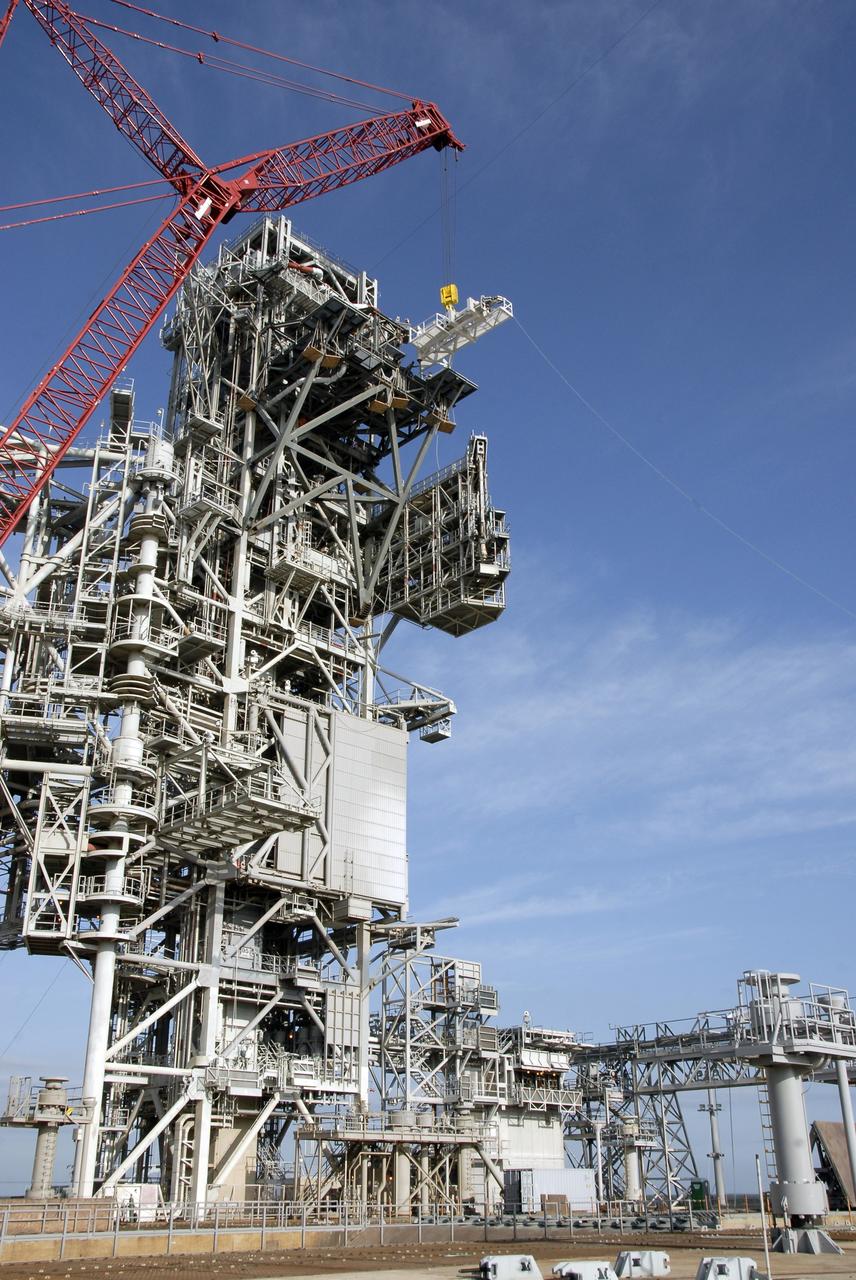
CAPE CANAVERAL, Fla. – On NASA Kennedy Space Center's Launch Pad 39B, the stabilizing arm is moved into place on the fixed service structure for attachment. The arm will be used in the Ares I-X rocket launch, targeted for Oct. 31. Ares I-X is part of NASA's Constellation Program. Photo credit: NASA/Kim Shiflett
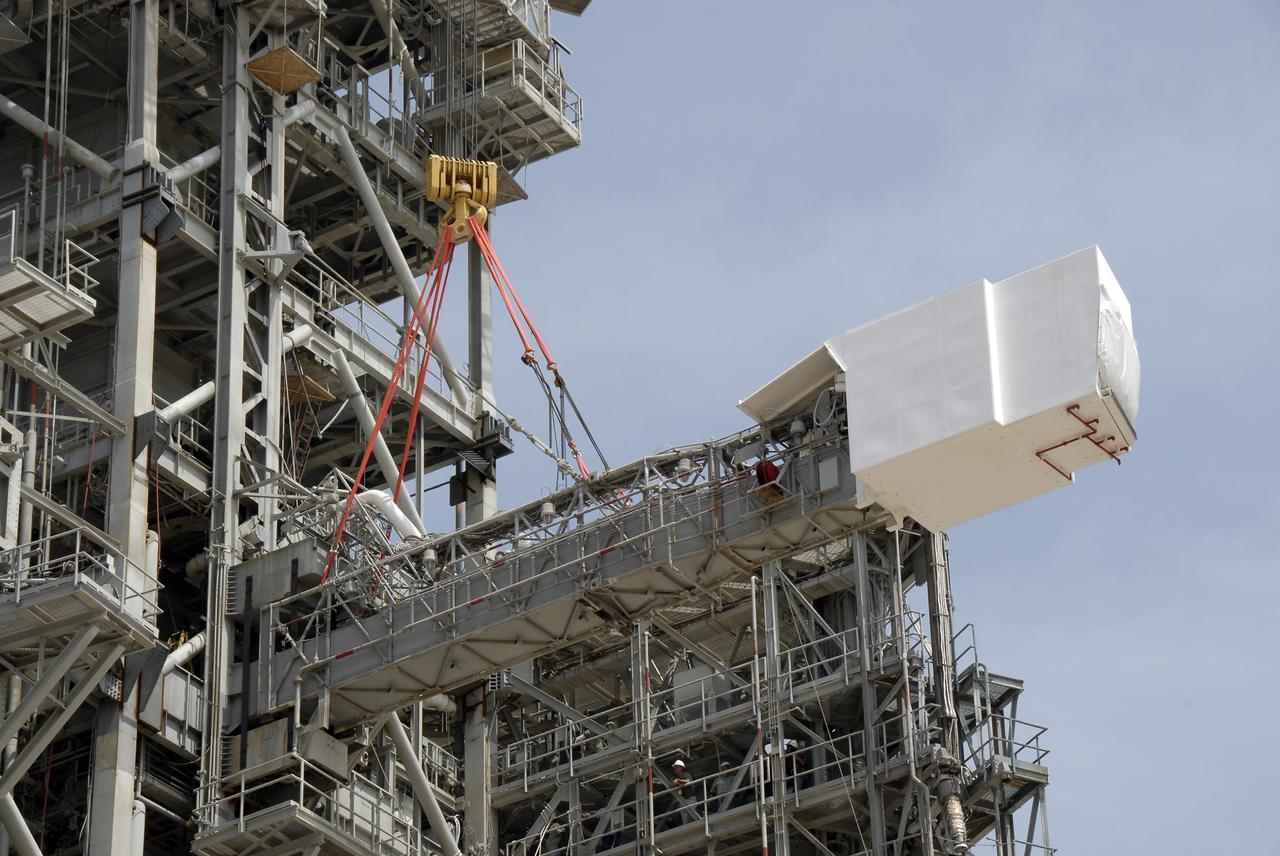
CAPE CANAVERAL, Fla. – The slings from a large crane are in place on the orbiter access arm, which ends in the White Room, that is part of the fixed service structure, or FSS, on Launch Pad 39B at NASA's Kennedy Space Center in Florida. The White Room provided entry into space shuttles that were on the pad. The arm is being removed from the FSS for the pad's conversion as launch site for the Constellation Program's Ares I-X. The launch of the Ares I-X flight test is targeted for August 2009. Photo credit: NASA/Kim Shiflett
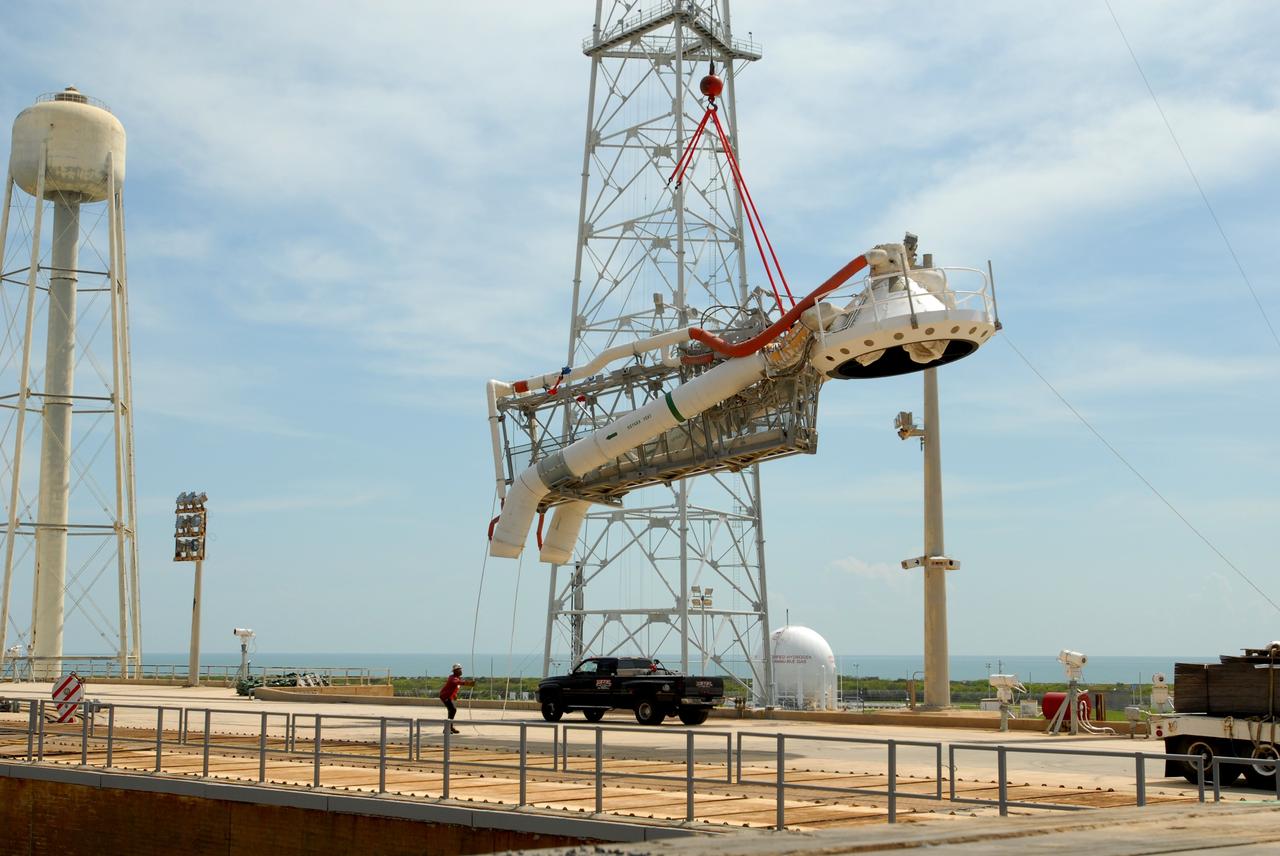
CAPE CANAVERAL, Fla. – On Launch Pad 39B at NASA's Kennedy Space Center in Florida, a crane lowers the oxygen vent hood, called the "beanie cap," and the gaseous oxygen vent arm onto the pad. A portion of the service structure is being removed for the pad's conversion as launch site for the Constellation Program's Ares I-X. The launch of the Ares I-X flight test is targeted for August 2009. Photo credit: NASA/Jim Grossmann
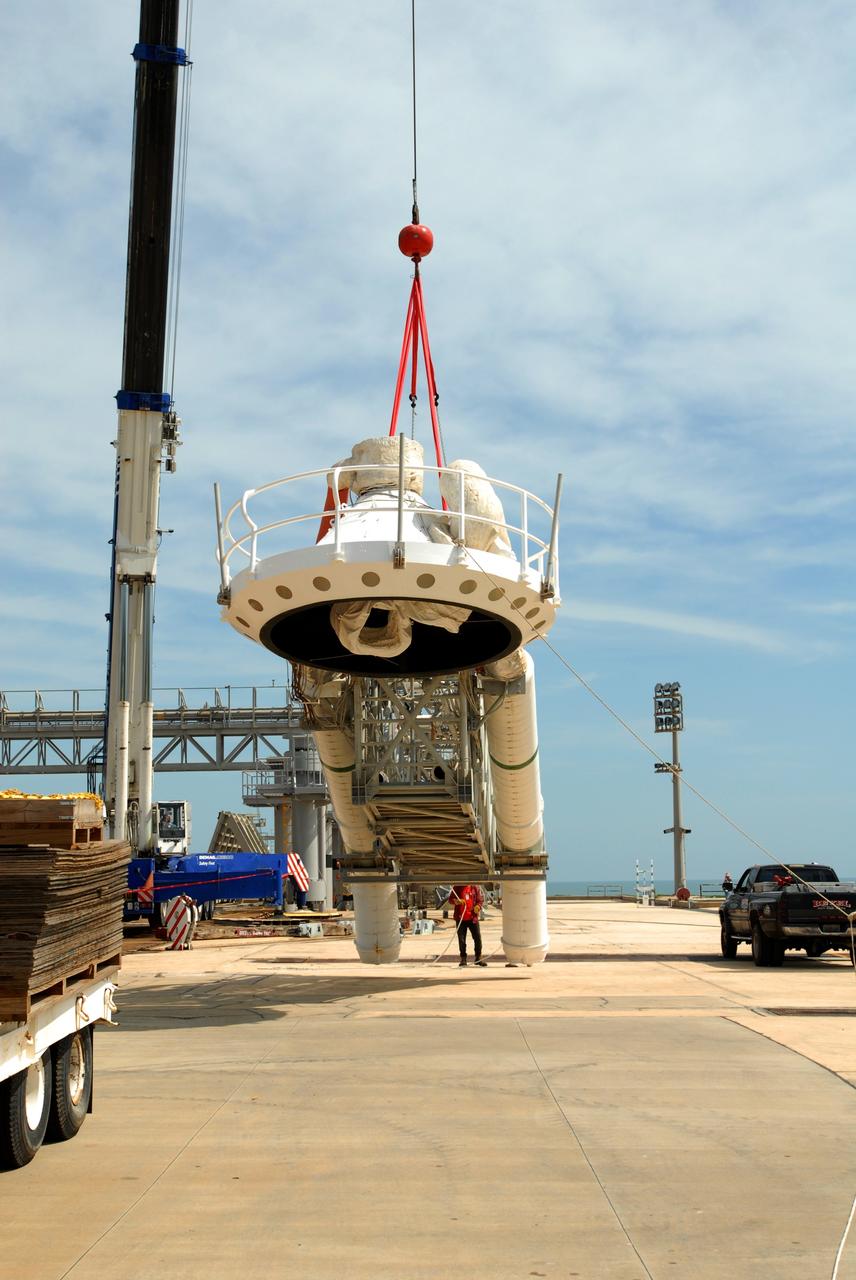
CAPE CANAVERAL, Fla. – On Launch Pad 39B at NASA's Kennedy Space Center in Florida, a crane lowers the oxygen vent hood, called the "beanie cap," and the gaseous oxygen vent arm onto the pad. A portion of the service structure is being removed for the pad's conversion as launch site for the Constellation Program's Ares I-X. The launch of the Ares I-X flight test is targeted for August 2009. Photo credit: NASA/Jim Grossmann
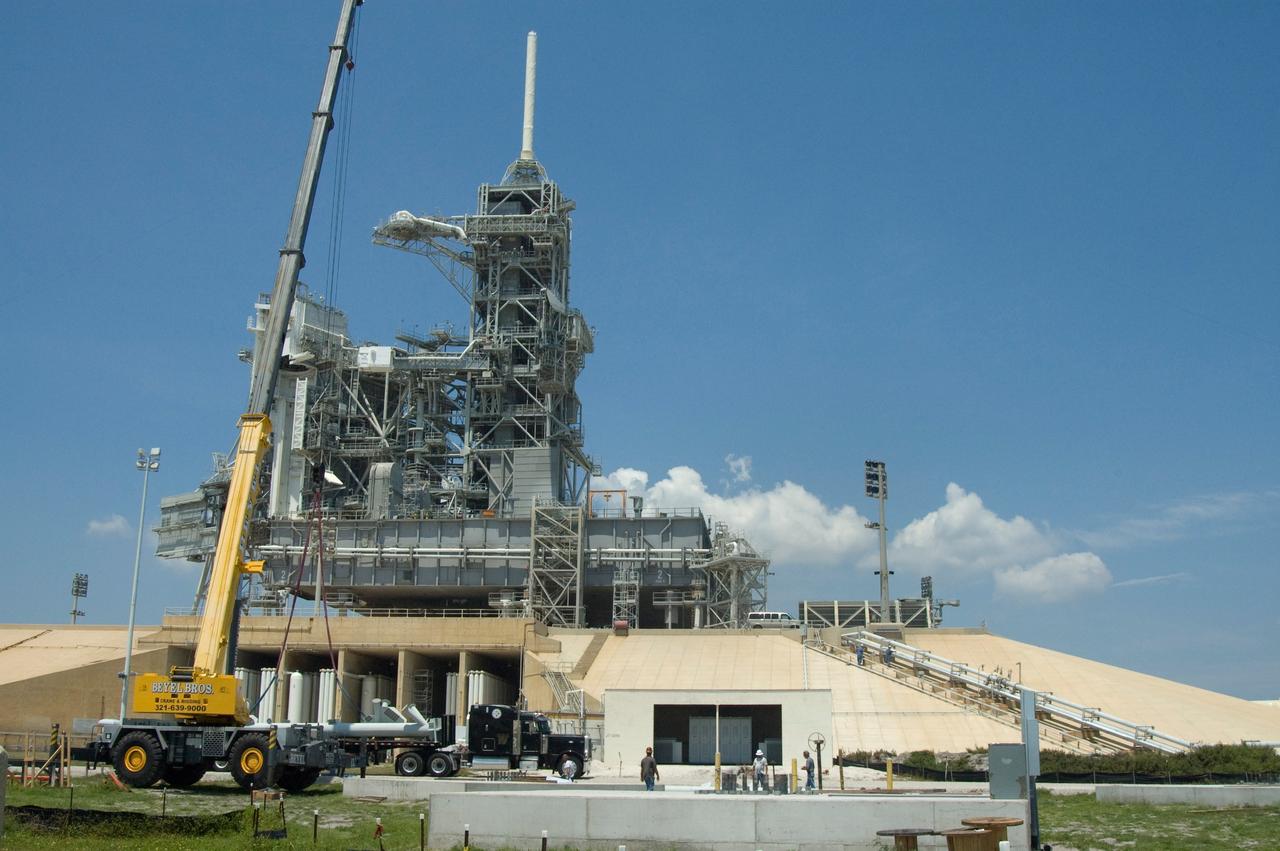
CAPE CANAVERAL, Fla. -- On Launch Pad 39B at NASA's Kennedy Space Center, a crane is removing parts of the lightning mast to be erected on towers being built for the Constellation Program and Ares/Orion launches. Behind it are the fixed and rotating service structures on top of the pad. An 80-foot lightning mast is on top of the fixed service structure as part of the former lightning protection system. Pad B will be the site of the first Ares vehicle launch, including Ares I-X which is scheduled for April 2009. Photo credit: NASA/Jim Grossmann
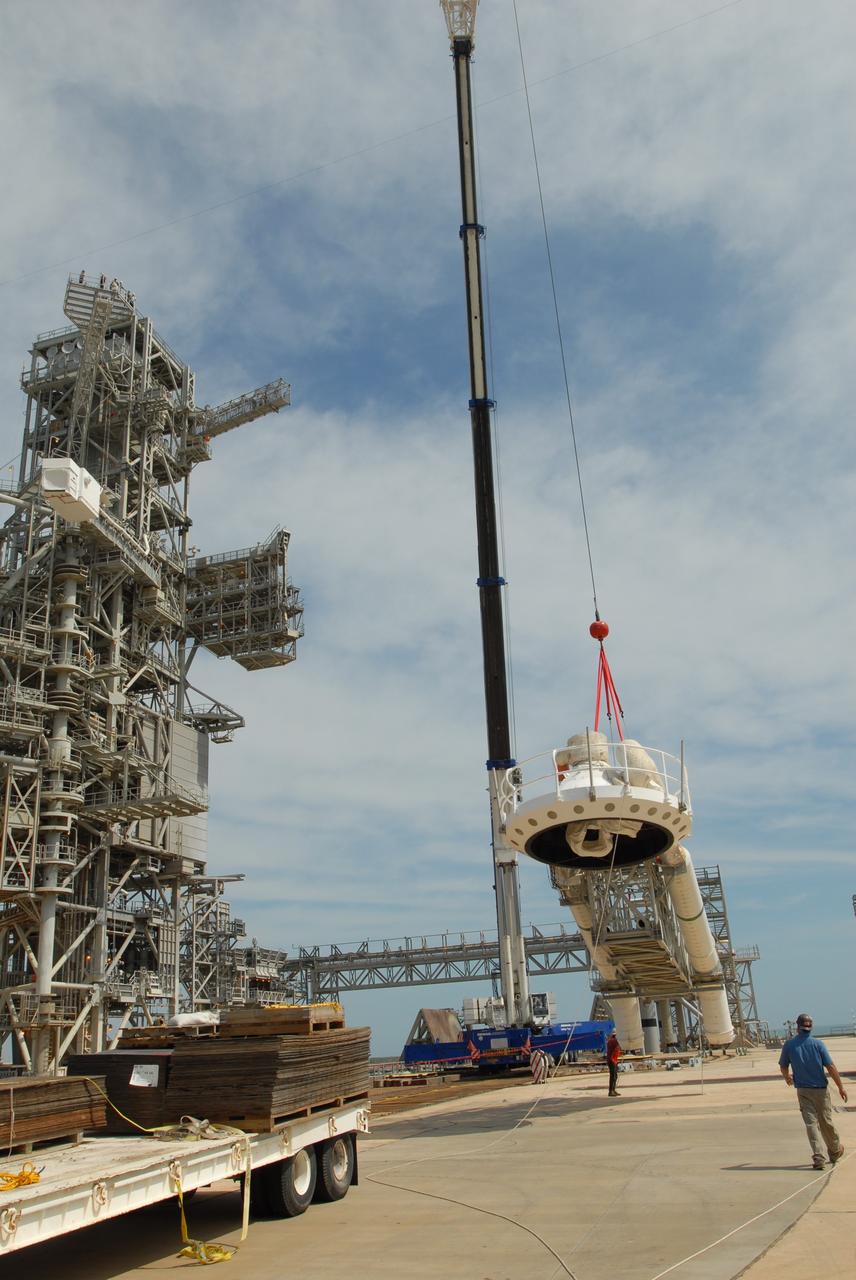
CAPE CANAVERAL, Fla. – On Launch Pad 39B at NASA's Kennedy Space Center in Florida, a crane lowers the oxygen vent hood, called the "beanie cap," and the gaseous oxygen vent arm onto the pad. A portion of the service structure is being removed for the pad's conversion as launch site for the Constellation Program's Ares I-X. The launch of the Ares I-X flight test is targeted for August 2009. Photo credit: NASA/Jim Grossmann
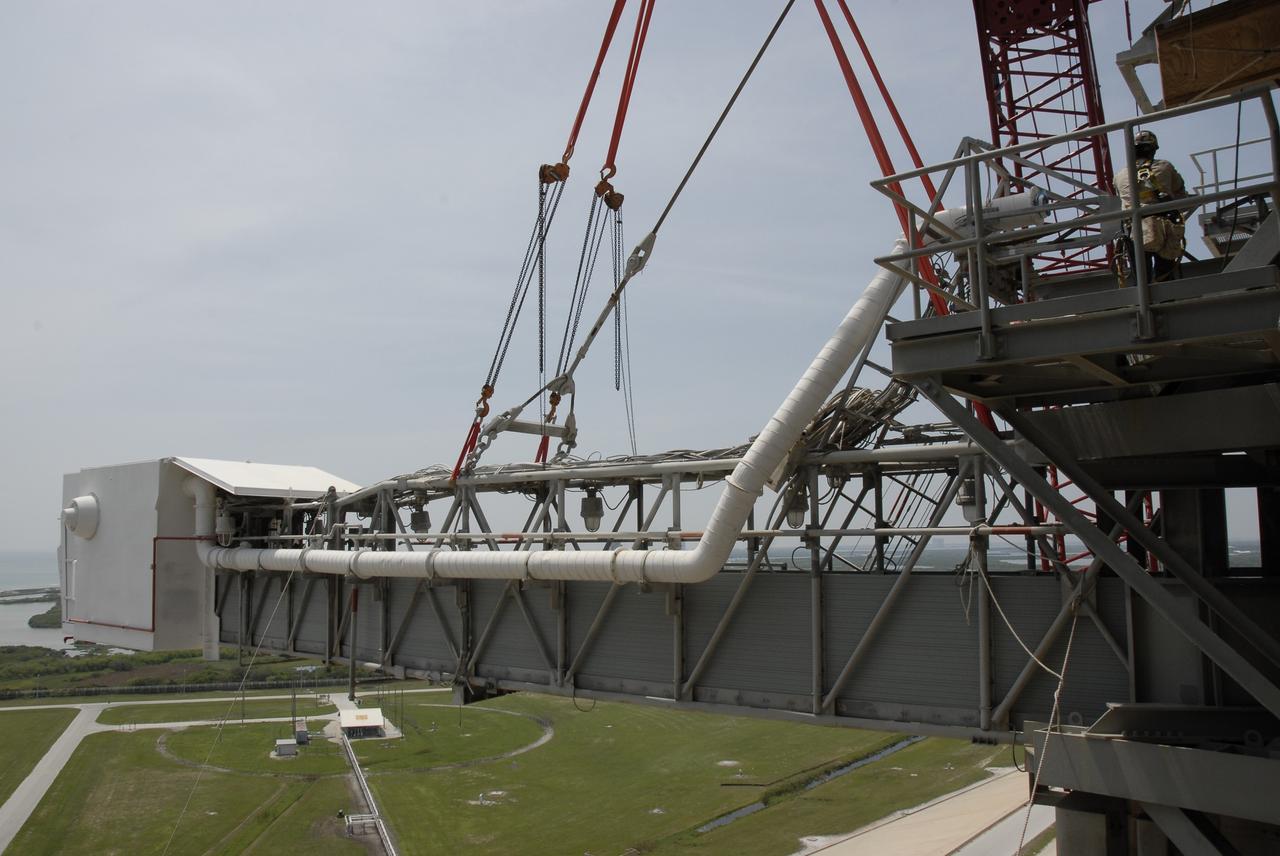
CAPE CANAVERAL, Fla. – The slings from a large crane are in place on the orbiter access arm, which ends in the White Room, that is part of the fixed service structure, or FSS, on Launch Pad 39B at NASA's Kennedy Space Center in Florida. The White Room provided entry into space shuttles that were on the pad. The arm is being removed from the FSS for the pad's conversion as launch site for the Constellation Program's Ares I-X. The launch of the Ares I-X flight test is targeted for August 2009. Photo credit: NASA/Kim Shiflett
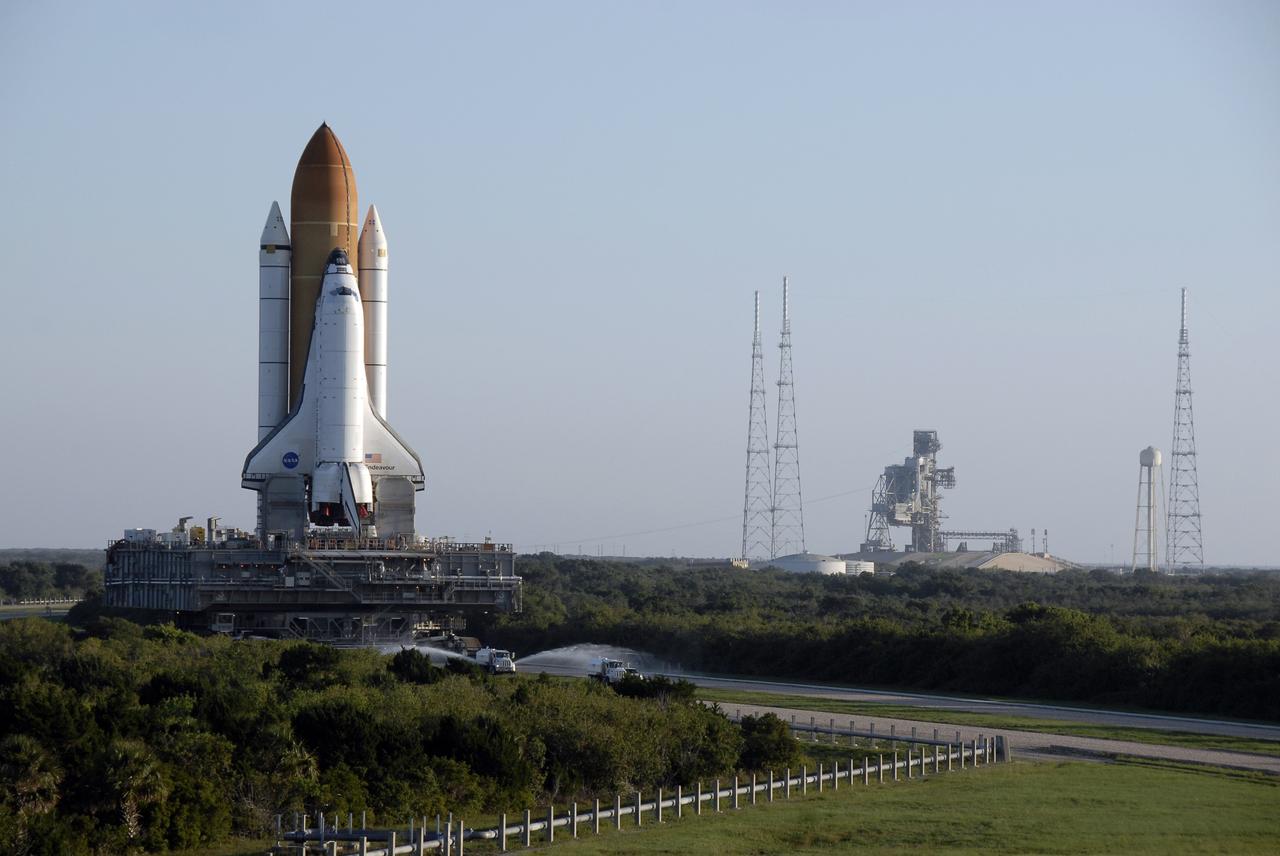
CAPE CANAVERAL, Fla. – Early morning at NASA's Kennedy Space Center in Florida finds space shuttle Endeavour departing Launch Pad 39B on its 3.4-mile rollaround to Launch Pad 39A. First motion was at 3:16 a.m. EDT. Three lightning towers have been erected already on Pad 39B, at right, to support the new launch vehicles in NASA's Constellation Program. Endeavour was on standby on Pad 39B to be used in the unlikely event that a rescue mission was necessary during space shuttle Atlantis' STS-125 mission to NASA's Hubble Space Telescope. The payload on the STS-127 mission includes the Japan Aerospace Exploration Agency's Kibo Exposed Facility and the Experiment Logistics Module Exposed Section of the International Space Station. They will be installed on the Kibo laboratory already on the station. Launch of STS-127 is targeted for June 13. Photo credit: NASA/Kim Shiflett
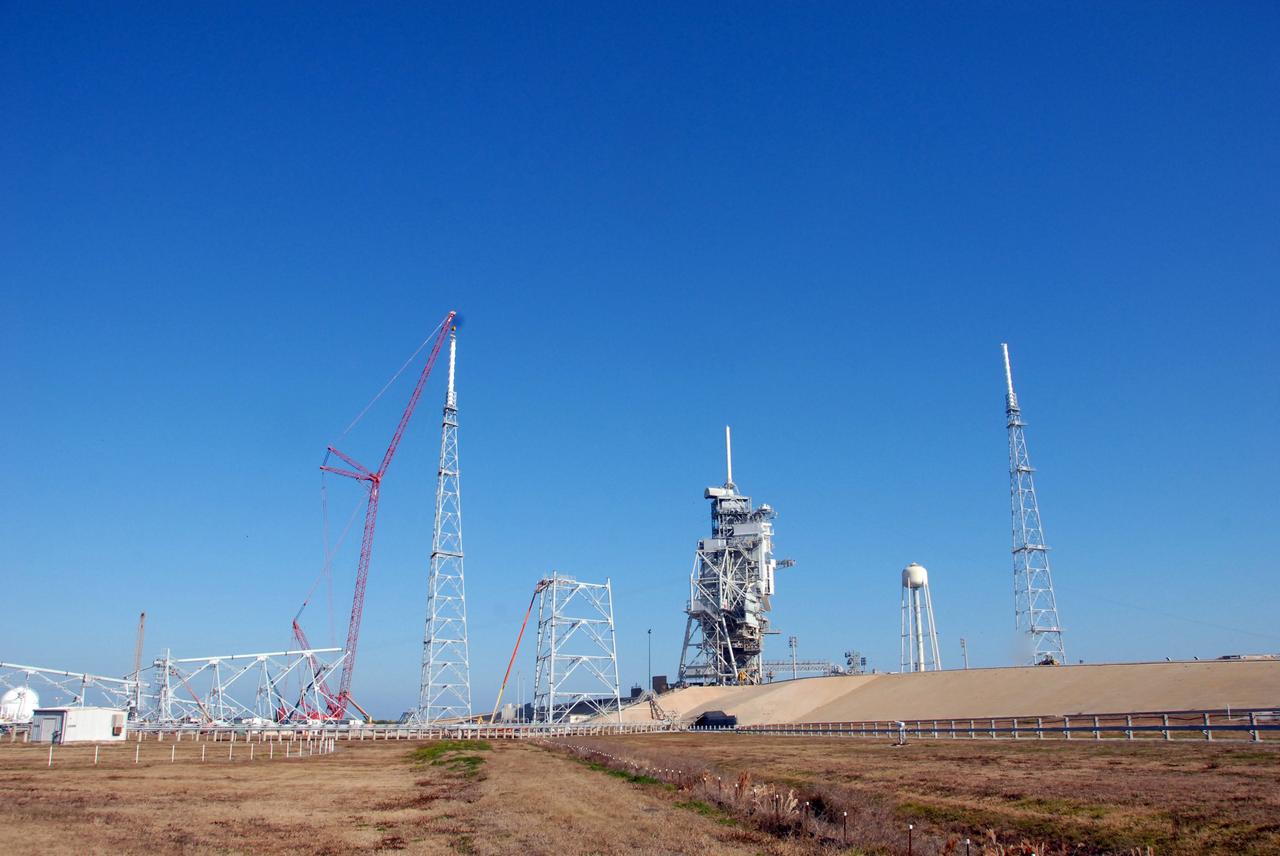
CAPE CANAVERAL, Fla. – On Launch Pad 39B at NASA's Kennedy Space Center in Florida, a crane places a 100-foot fiberglass lightning mast on top of the 500-foot tower. The tower is one of three being constructed for the Constellation Program and Ares/Orion launches. Another tower is seen at right. This improved lightning protection system allows for the taller height of the Ares I rocket compared to the space shuttle. Pad 39B will be the site of the first Ares vehicle launch, including the Ares I-X test flight that is targeted for July 2009. Photo credit: NASA/Jack Pfaller
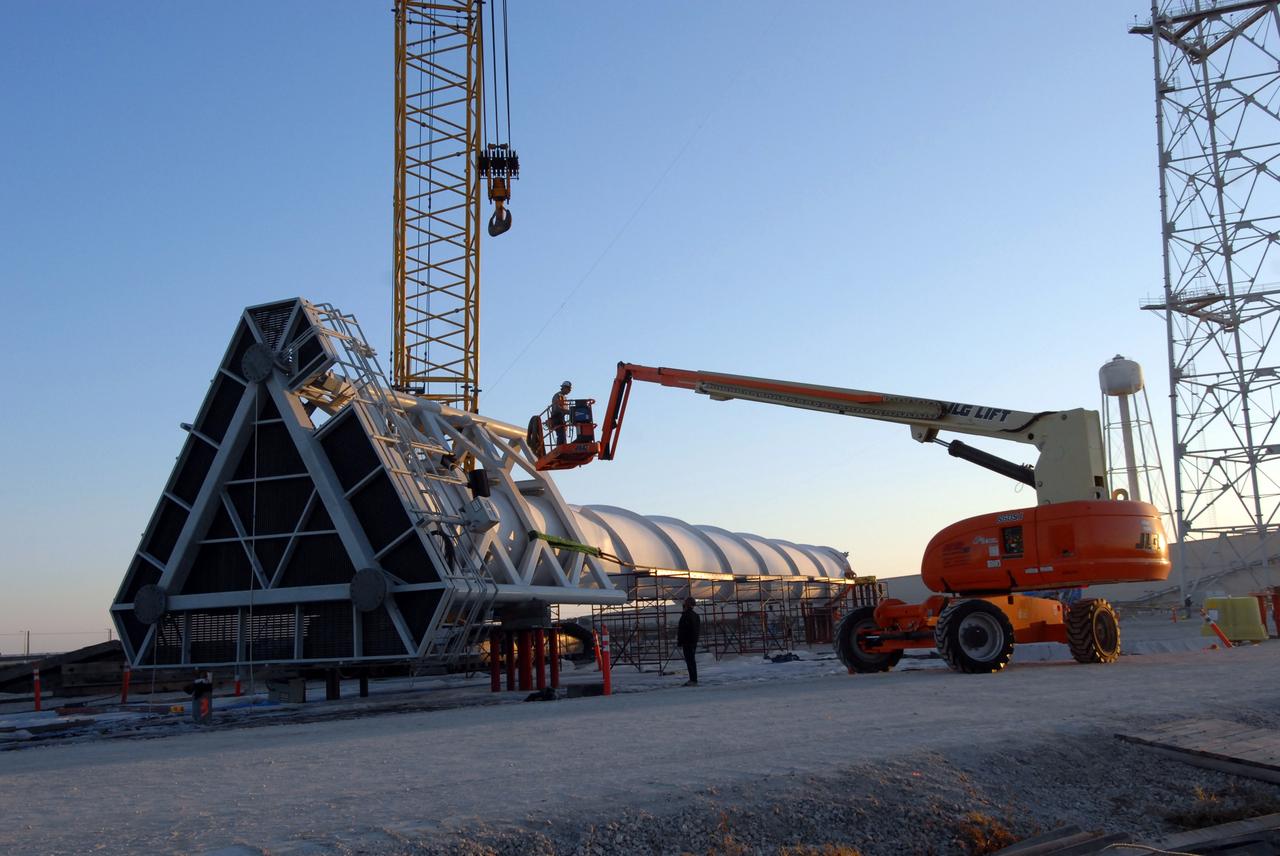
CAPE CANAVERAL, Fla. – Construction of the towers on Launch Pad 39B at NASA's Kennedy Space Center in Florida continues on the new lightning protection system for the Constellation Program and Ares/Orion launches. Here, a 100-foot fiberglass lightning mast is being prepared to be lifted on top of one of the 500-foot towers. The mast will support a wire catenary system. This improved lightning protection system allows for the taller height of the Ares I rocket compared to the space shuttle. Pad 39B will be the site of the first Ares vehicle launch, including the Ares I-X test flight that is targeted for July 2009.
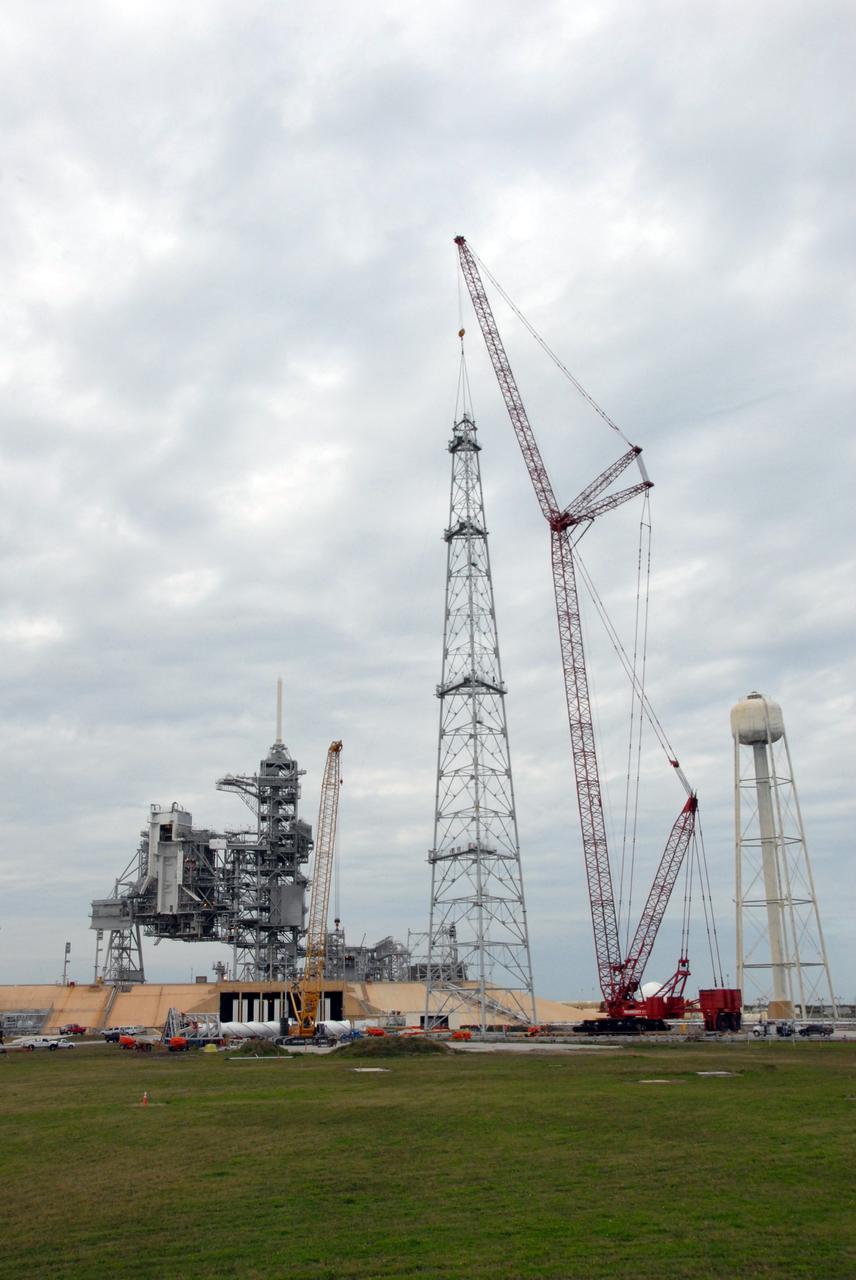
CAPE CANAVERAL, Fla. – On Launch Pad 39B at NASA's Kennedy Space Center in Florida, a crane completes construction of one of the towers in the new lightning protection system for the Constellation Program and Ares/Orion launches. Each of the three new lightning towers will be 500 feet tall with an additional 100-foot fiberglass mast atop supporting a wire catenary system. This improved lightning protection system allows for the taller height of the Ares I rocket compared to the space shuttle. Pad 39B will be the site of the first Ares vehicle launch, including the Ares I-X test flight that is targeted for July 2009. Photo credit: NASA/Troy Cryder
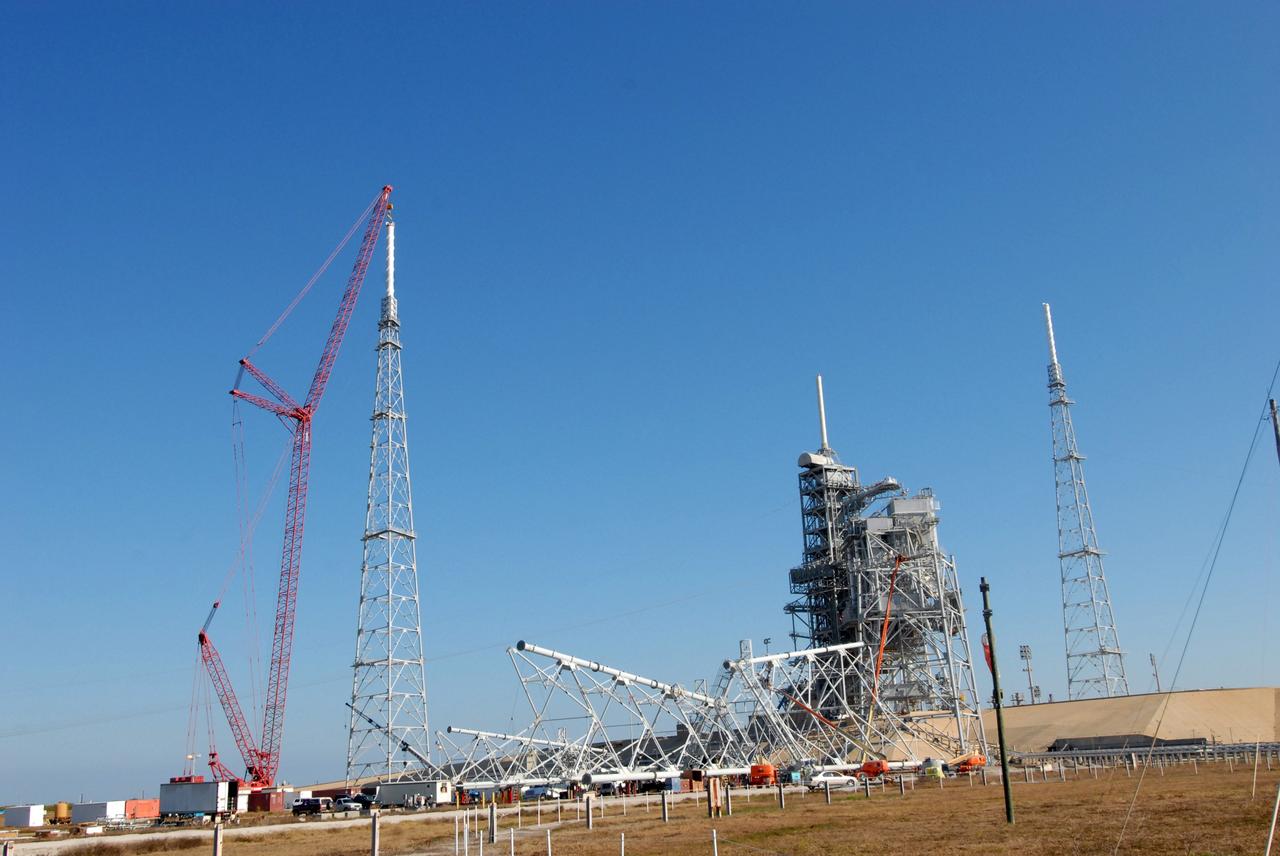
CAPE CANAVERAL, Fla. – On Launch Pad 39B at NASA's Kennedy Space Center in Florida, a crane places a 100-foot fiberglass lightning mast on top of the 500-foot tower. The tower is one of three being constructed for the Constellation Program and Ares/Orion launches. Another tower is seen at right. This improved lightning protection system allows for the taller height of the Ares I rocket compared to the space shuttle. Pad 39B will be the site of the first Ares vehicle launch, including the Ares I-X test flight that is targeted for July 2009.
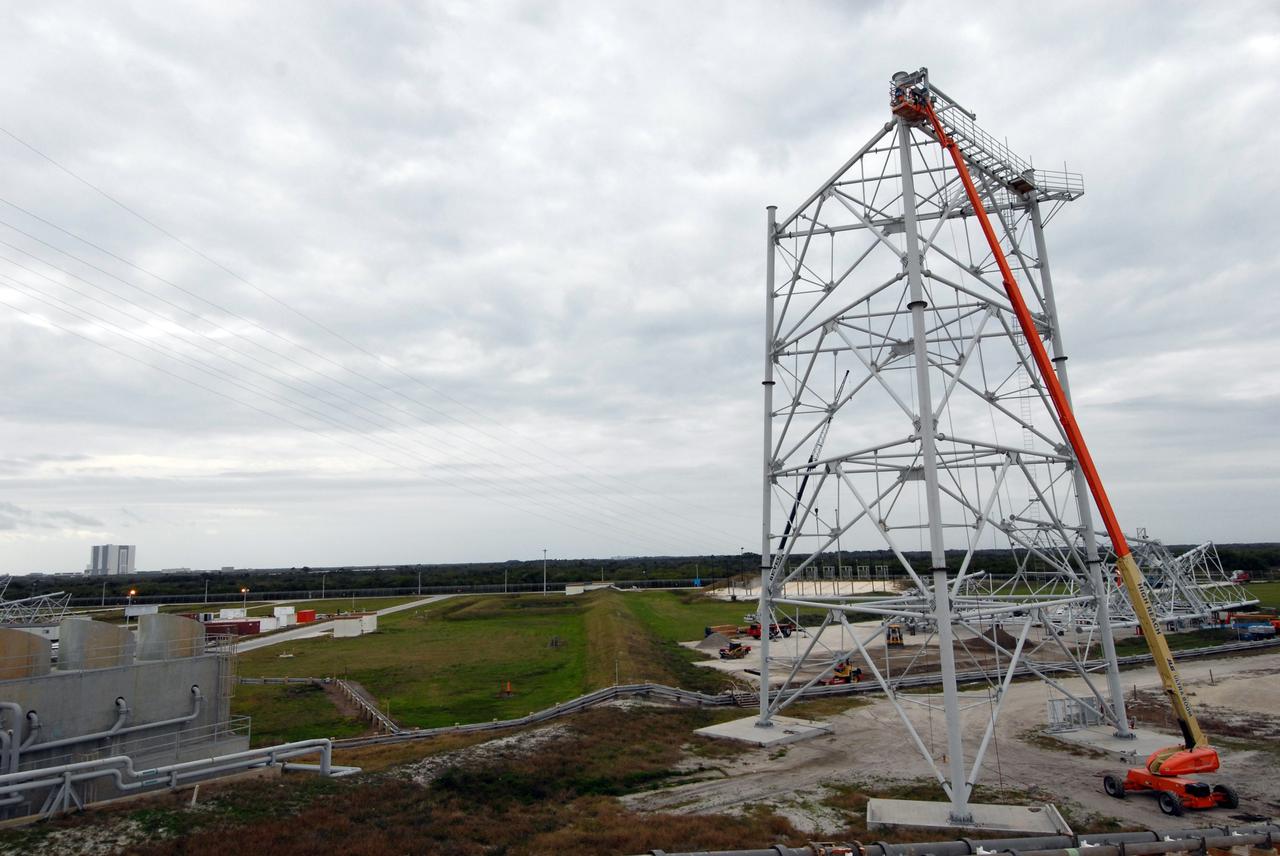
CAPE CANAVERAL, Fla. – CAPE CANAVERAL, Fla. -- On Launch Pad 39B at NASA's Kennedy Space Center in Florida, another lightning tower is being constructed as part of the new lightning protection system for the Constellation Program and Ares/Orion launches. Each of the three new lightning towers will be 500 feet tall with an additional 100-foot fiberglass mast atop supporting a wire catenary system. This improved lightning protection system allows for the taller height of the Ares I rocket compared to the space shuttle. Pad 39B will be the site of the first Ares vehicle launch, including the Ares I-X test flight that is targeted for July 2009. Photo credit: NASA/Troy Cryder
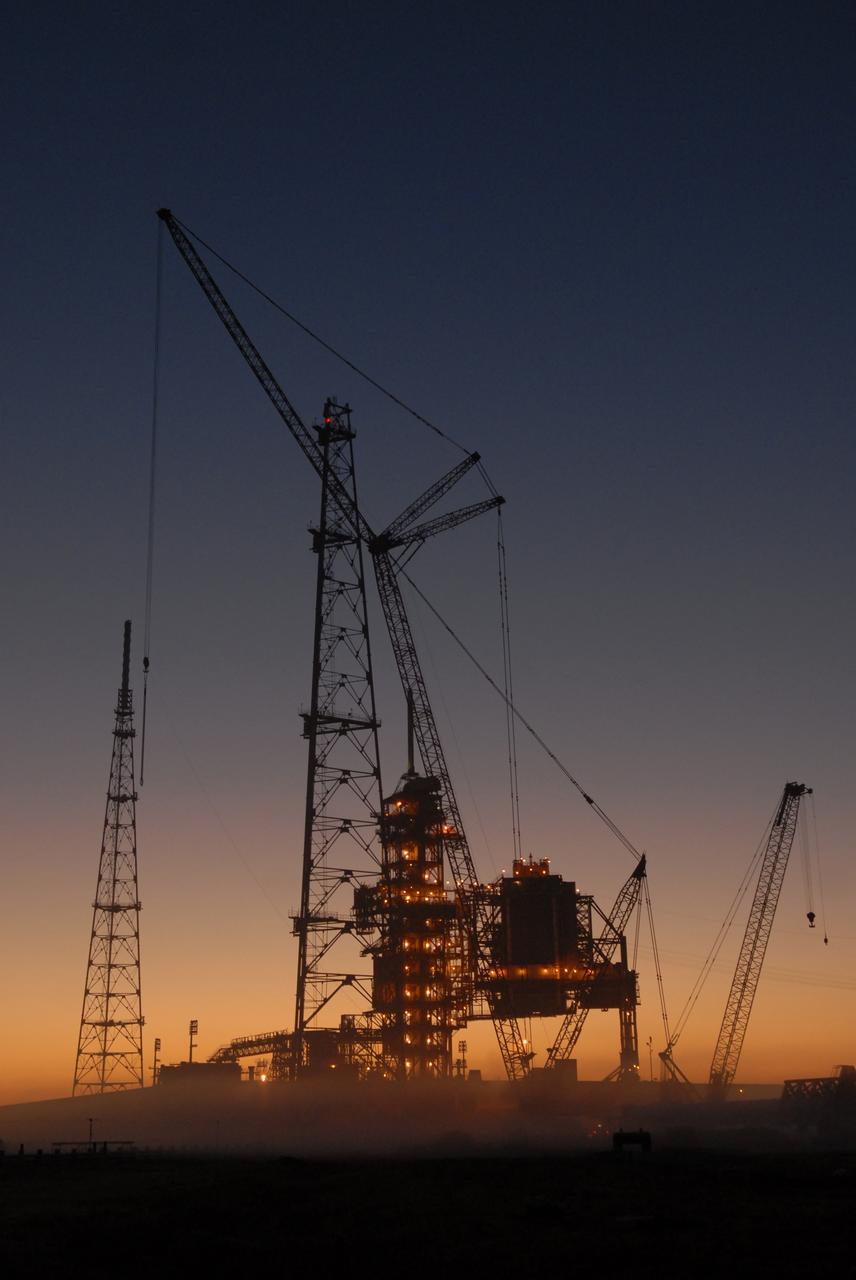
CAPE CANAVERAL, Fla. – In the rosy dawn light, construction of the towers on Launch Pad 39B at NASA's Kennedy Space Center in Florida continues on the new lightning protection system for the Constellation Program and Ares/Orion launches. Each of the three new lightning towers will be 500 feet tall with an additional 100-foot fiberglass mast atop supporting a wire catenary system. This improved lightning protection system allows for the taller height of the Ares I rocket compared to the space shuttle. Pad 39B will be the site of the first Ares vehicle launch, including the Ares I-X test flight that is targeted for July 2009.
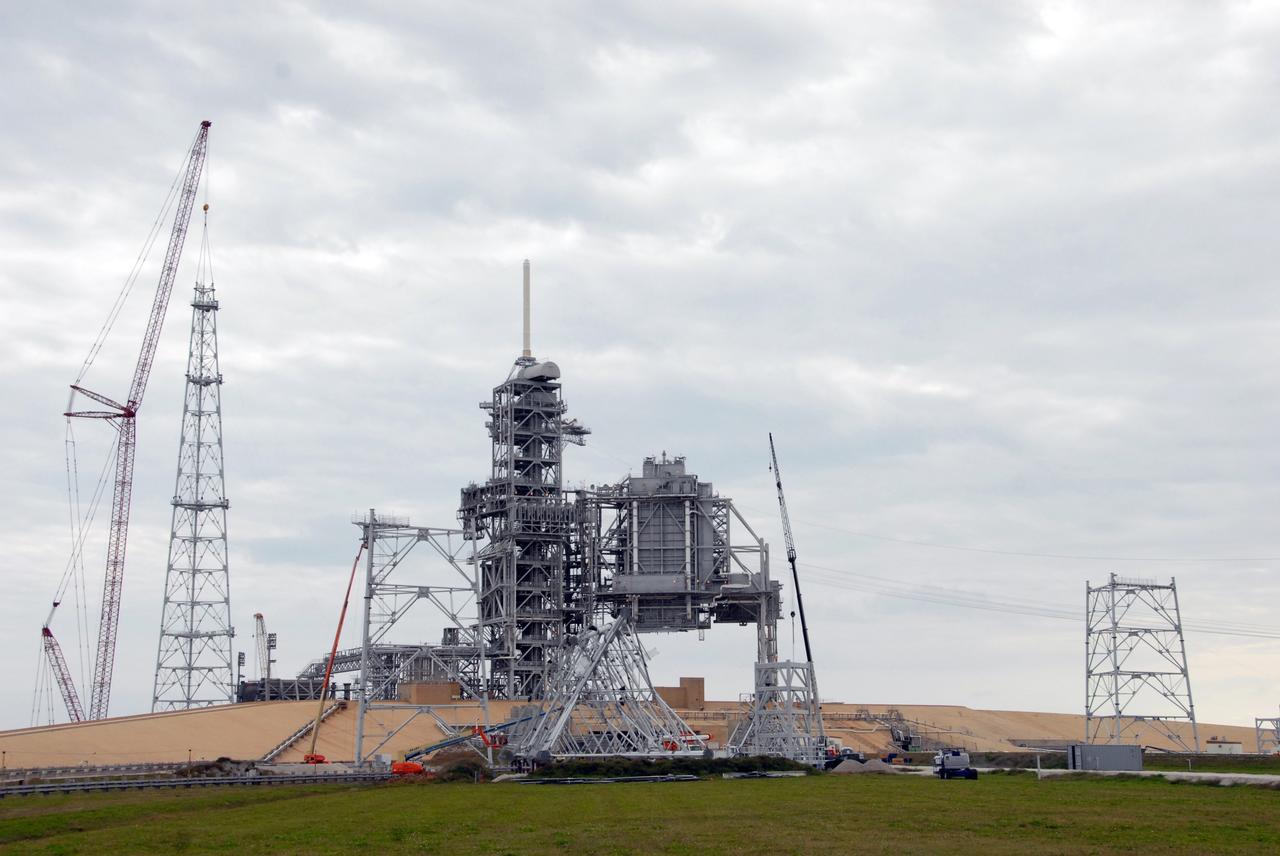
CAPE CANAVERAL, Fla. – On Launch Pad 39B at NASA's Kennedy Space Center in Florida, a crane (at left) completes construction of one of the towers in the new lightning protection system for the Constellation Program and Ares/Orion launches. At right, another tower is being constructed. Each of the three new lightning towers will be 500 feet tall with an additional 100-foot fiberglass mast atop supporting a wire catenary system. This improved lightning protection system allows for the taller height of the Ares I rocket compared to the space shuttle. Pad 39B will be the site of the first Ares vehicle launch, including the Ares I-X test flight that is targeted for July 2009. Photo credit: NASA/Troy Cryder
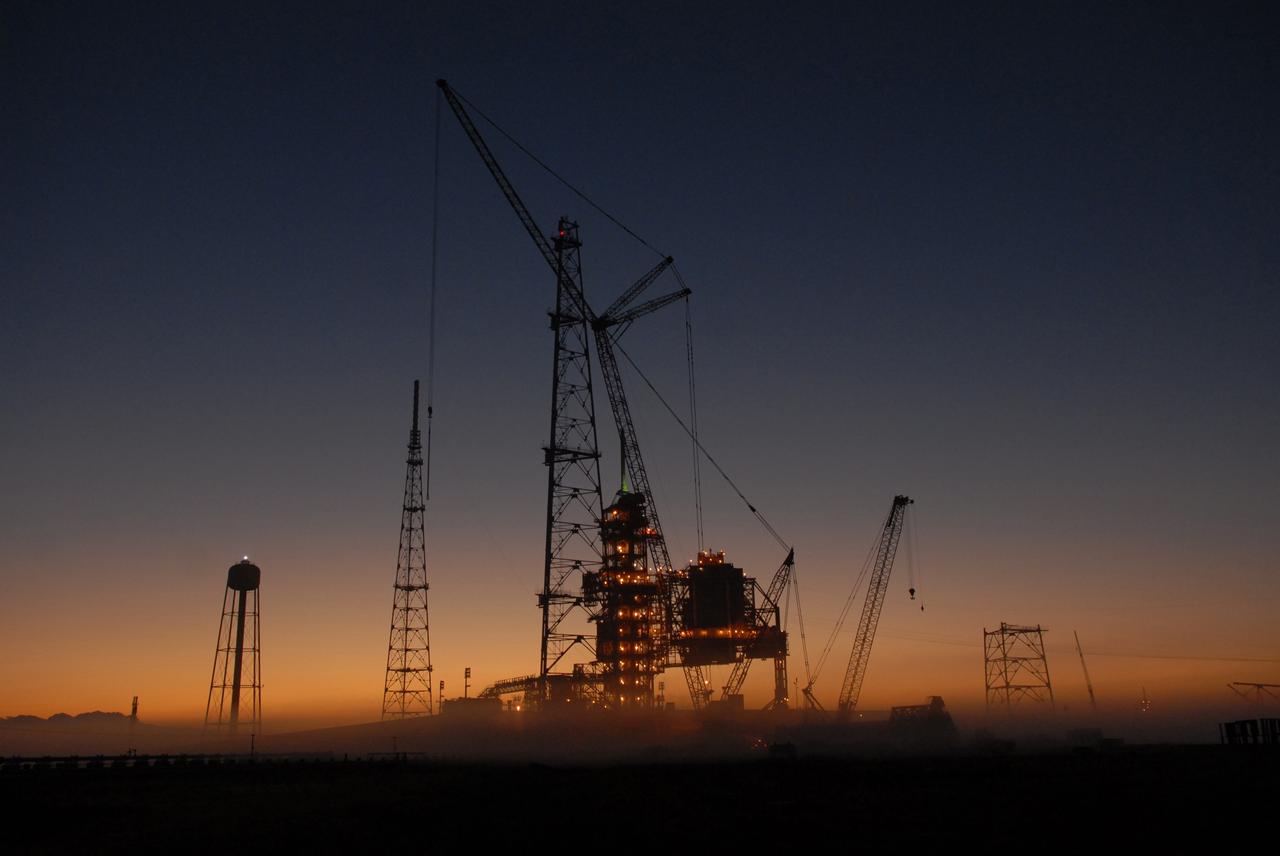
CAPE CANAVERAL, Fla. – In the rosy dawn light, construction of the towers on Launch Pad 39B at NASA's Kennedy Space Center in Florida continues on the new lightning protection system for the Constellation Program and Ares/Orion launches. Each of the three new lightning towers will be 500 feet tall with an additional 100-foot fiberglass mast atop supporting a wire catenary system. This improved lightning protection system allows for the taller height of the Ares I rocket compared to the space shuttle. Pad 39B will be the site of the first Ares vehicle launch, including the Ares I-X test flight that is targeted for July 2009.
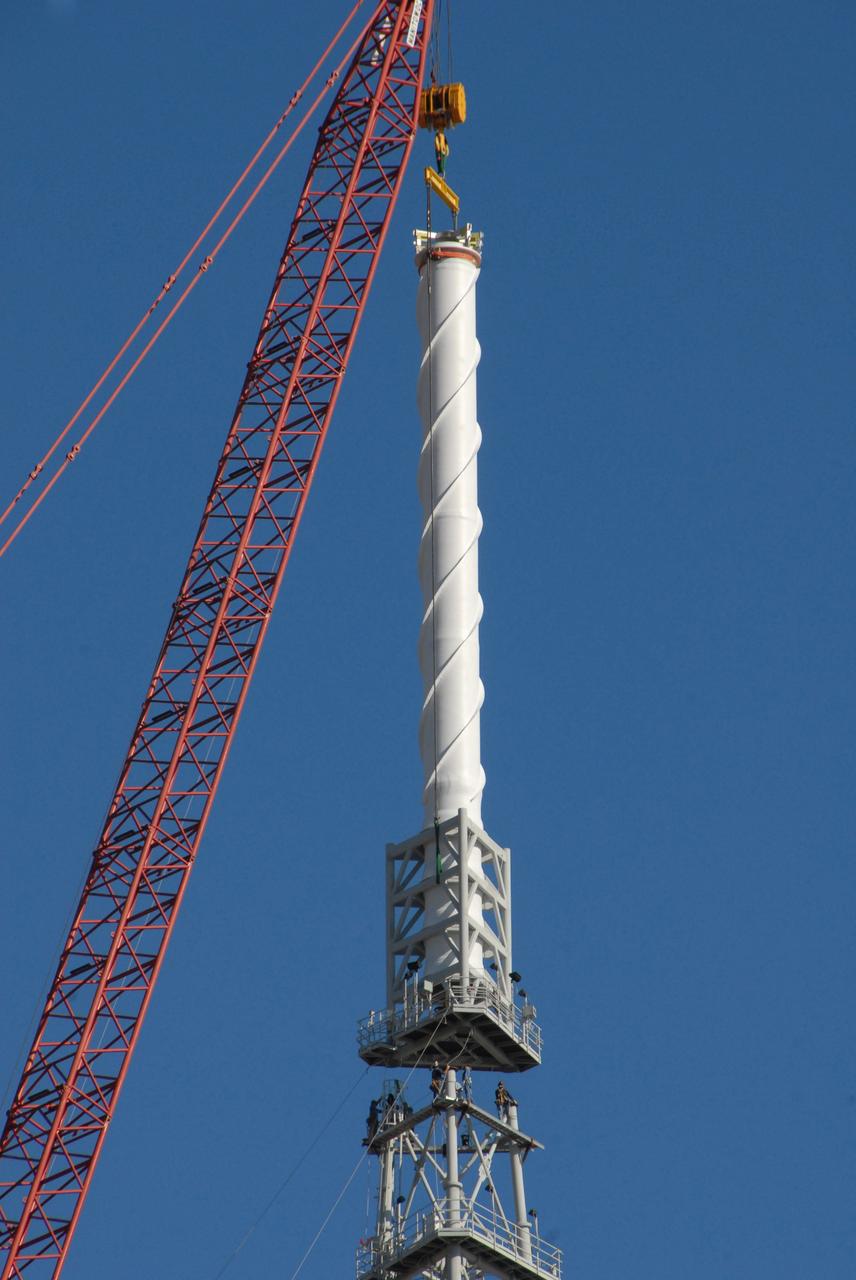
CAPE CANAVERAL, Fla. – On Launch Pad 39B at NASA's Kennedy Space Center in Florida, a crane places a 100-foot fiberglass lightning mast on top of the 500-foot tower. The tower is one of three being constructed for the Constellation Program and Ares/Orion launches. This improved lightning protection system allows for the taller height of the Ares I rocket compared to the space shuttle. Pad 39B will be the site of the first Ares vehicle launch, including the Ares I-X test flight that is targeted for July 2009. Photo credit: NASA/Jack Pfaller
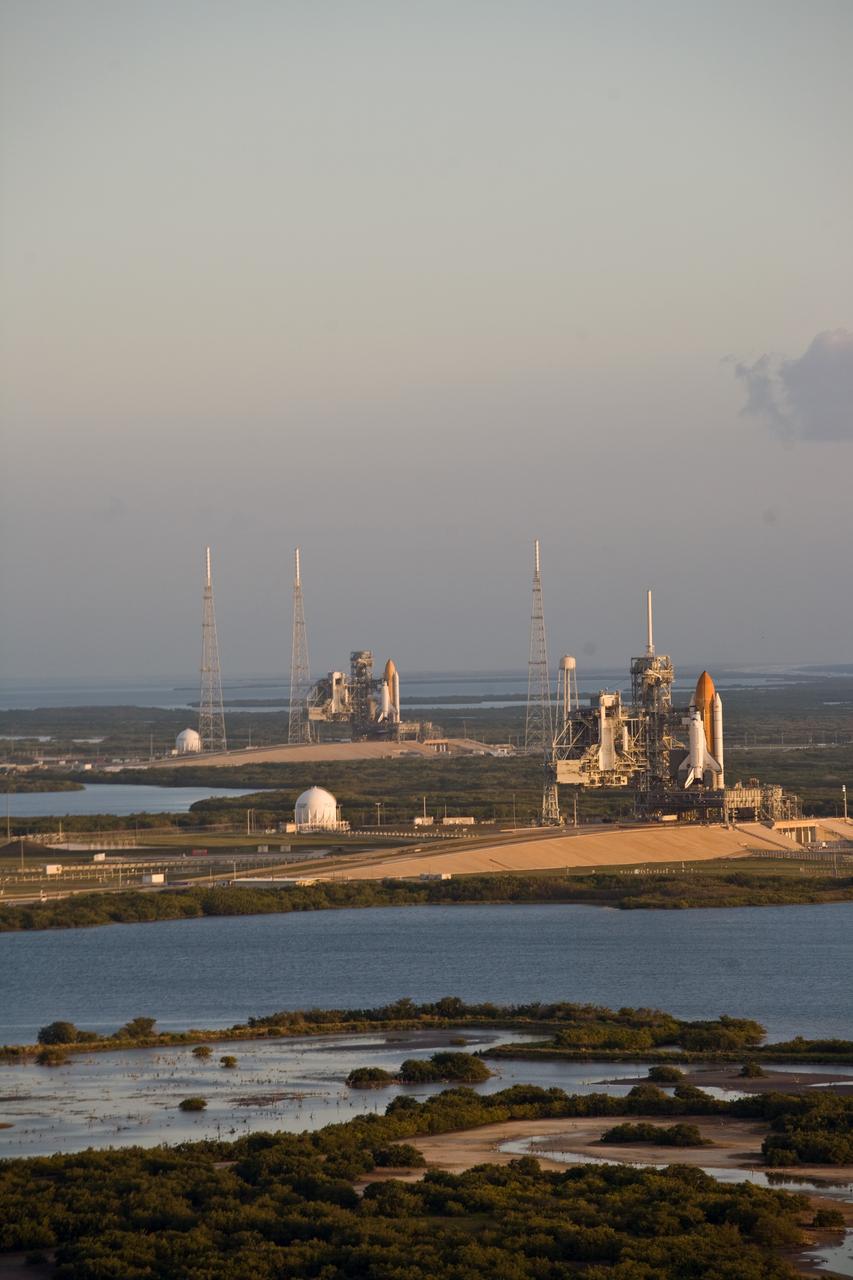
CAPE CANAVERAL, Fla. –– On Launch Pad 39B (left) at NASA's Kennedy Space Center in Florida, space shuttle Endeavour has joined space shuttle Atlantis on Launch Pad 39A (right). This is probably the final time two shuttles will be on launch pads at the same time with the space shuttle fleet set for retirement in 2010. Surrounding pad 39B are the lightning towers erected for NASA's Constellation Program, which will use the pad for Ares rocket launches. Endeavour will be prepared on the pad for liftoff in the unlikely event that a rescue mission is necessary following space shuttle Atlantis' launch on the STS-125 mission to service NASA's Hubble Space Telescope. After Atlantis is cleared to land, Endeavour will move to Launch Pad 39A for its upcoming STS-127 mission to the International Space Station, targeted to launch June 13. Photo credit: NASA/Dimitri Gerondidakis
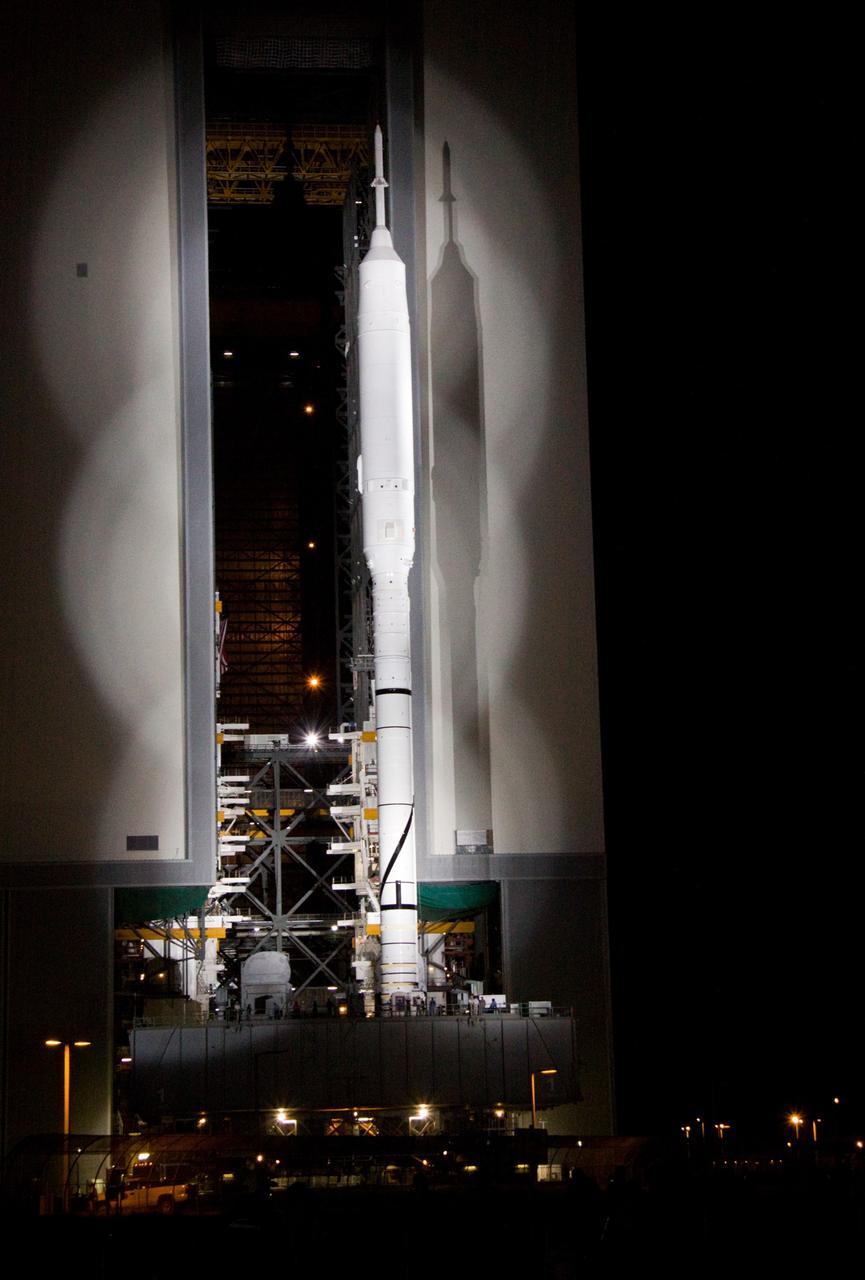
CAPE CANAVERAL, Fla. – The 327-foot-tall Ares I-X rocket clears the door of the Vehicle Assembly Building at NASA's Kennedy Space Center in Florida, on its way to Launch Pad 39B. The move to the launch pad, known as "rollout," began at 1:39 a.m. EDT. The transfer of the pad from the Space Shuttle Program to the Constellation Program took place May 31. Modifications made to the pad include the removal of shuttle unique subsystems, such as the orbiter access arm and a section of the gaseous oxygen vent arm, along with the installation of three 600-foot lightning towers, access platforms, environmental control systems and a vehicle stabilization system. Part of the Constellation Program, the Ares I-X is the test vehicle for the Ares I. The Ares I-X flight test is targeted for Oct. 27. For information on the Ares I-X vehicle and flight test, visit http://www.nasa.gov/aresIX. Photo credit: NASA/Jack Pfaller
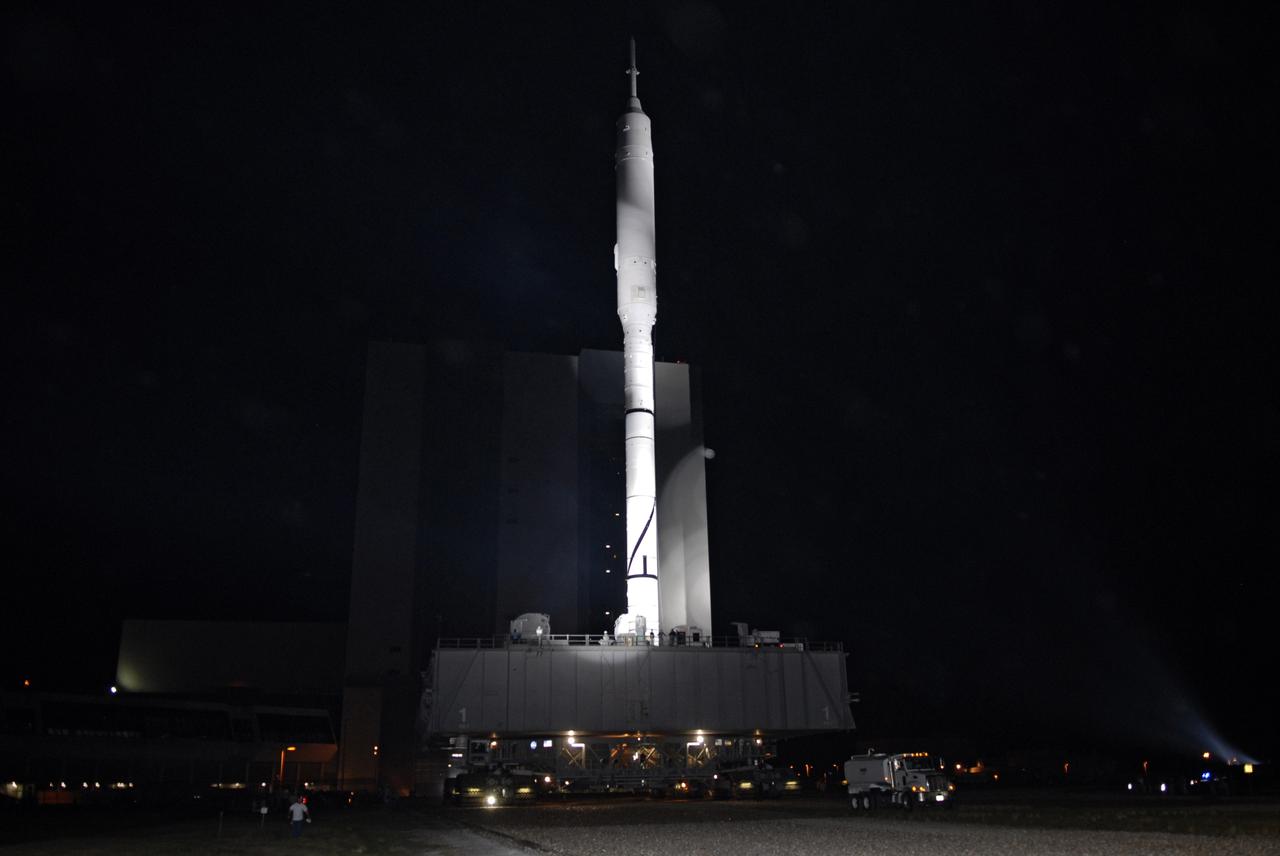
CAPE CANAVERAL, Fla. - The Ares I-X rocket heads toward Launch Pad 39B at NASA's Kennedy Space Center in Florida, riding atop a crawler-transporter. The 4.2-mile trip to the pad from the massive Vehicle Assembly Building began at 1:39 a.m. EDT. The transfer of the pad from the Space Shuttle Program to the Constellation Program took place May 31. Modifications made to the pad include the removal of shuttle unique subsystems, such as the orbiter access arm and a section of the gaseous oxygen vent arm, along with the installation of three 600-foot lightning towers, access platforms, environmental control systems and a vehicle stabilization system. Part of the Constellation Program, the Ares I-X is the test vehicle for the Ares I. The Ares I-X flight test is targeted for Oct. 27. For information on the Ares I-X vehicle and flight test, visit http://www.nasa.gov/aresIX. Photo credit: NASA/Kim Shiflett
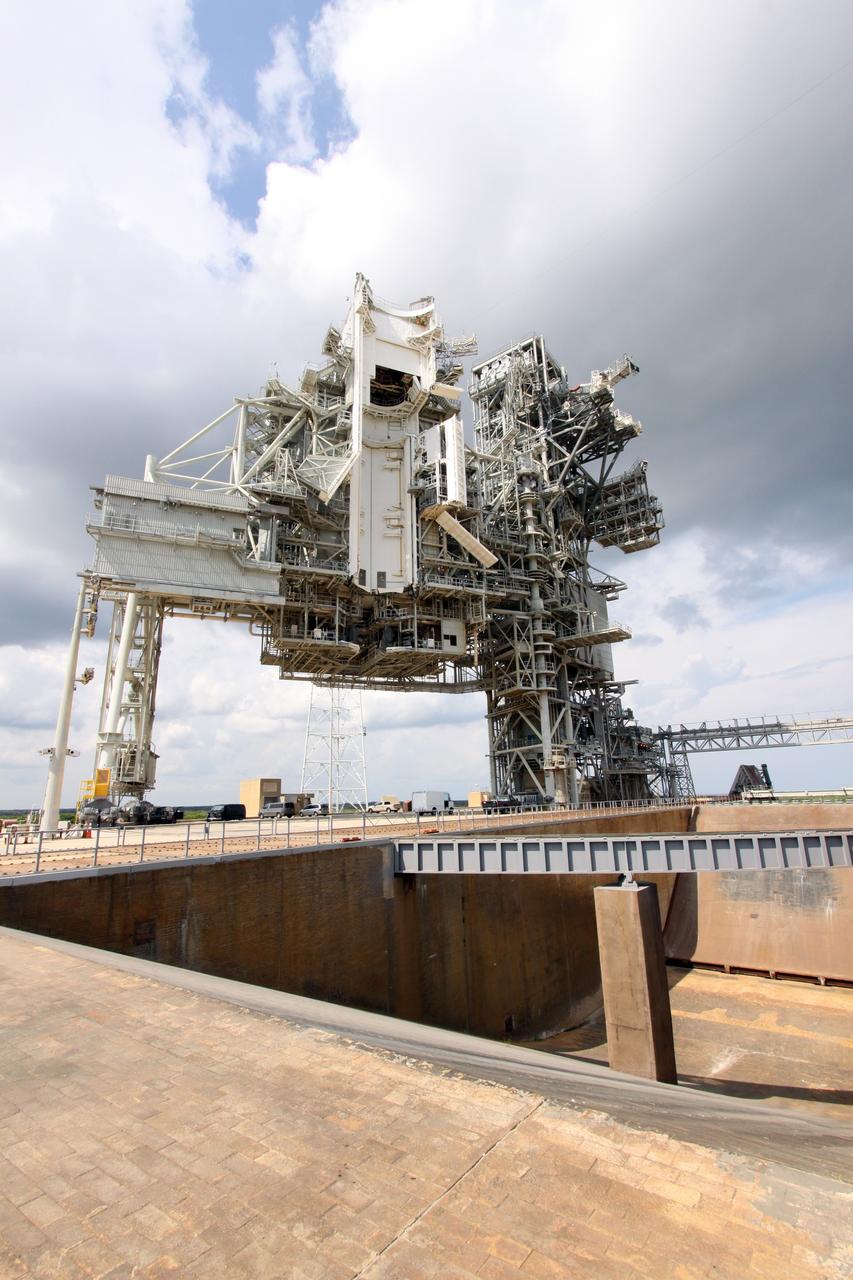
CAPE CANAVERAL, Fla. – At NASA's Kennedy Space Center in Florida, modifications to Launch Pad 39B are complete, and the pad is ready to support the Ares I-X rocket. The transfer of the pad from the Space Shuttle Program to the Constellation Program took place May 31. Modifications made to the pad include the removal of shuttle unique subsystems, such as the orbiter access arm and a section of the gaseous oxygen vent arm, along with the installation of three 600-foot lightning towers, access platforms, environmental control systems and a vehicle stabilization system. Part of the Constellation Program, the Ares I-X is the test vehicle for the Ares I, which is the essential core of a space transportation system designed to carry crewed missions back to the moon, on to Mars and out into the solar system. The Ares I-X flight test is targeted for Oct. 27. For information on the Ares I-X vehicle and flight test, visit http://www.nasa.gov/aresIX. Photo credit: NASA/Jack Pfaller
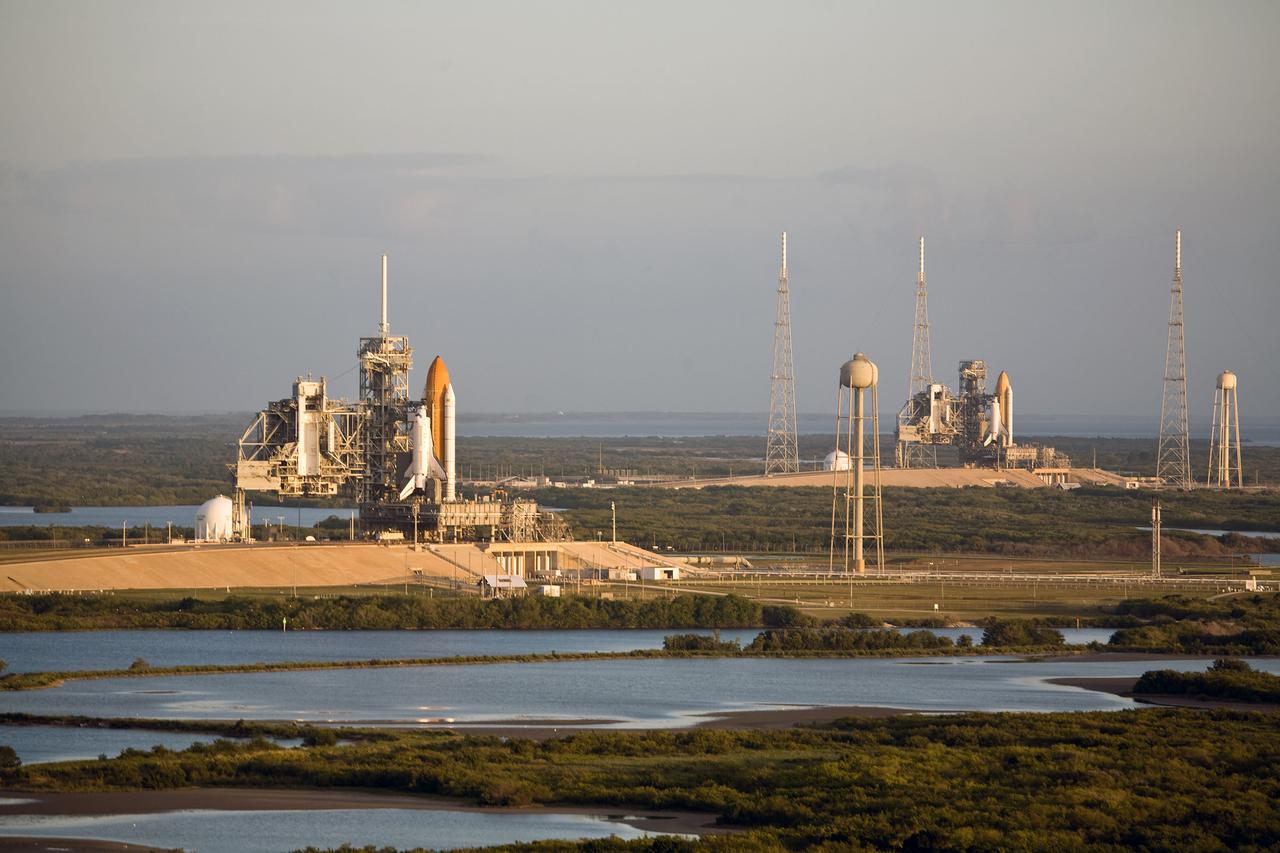
Space shuttle Atlantis (left) and space shuttle Endeavour are seen on Launch Pads 39A and 39B, respectively, at NASA's Kennedy Space Center in Florida. This is probably the final time two shuttles will be on launch pads at the same time with the space shuttle fleet set for retirement in 2010. Surrounding pad 39B are the lightning towers erected for NASA's Constellation Program, which will use the pad for Ares rocket launches. Endeavour will be prepared on the pad for liftoff in the unlikely event that a rescue mission is necessary following space shuttle Atlantis' launch on the STS-125 mission to service NASA's Hubble Space Telescope. After Atlantis is cleared to land, Endeavour will move to Launch Pad 39A for its upcoming STS-127 mission to the International Space Station, targeted to launch June 13. Original photo number is KSC-2009-2771.

CAPE CANAVERAL, Fla. –– Space shuttle Atlantis (left) and space shuttle Endeavour are seen on Launch Pads 39A and 39B, respectively, at NASA's Kennedy Space Center in Florida. This is probably the final time two shuttles will be on launch pads at the same time with the space shuttle fleet set for retirement in 2010. Surrounding pad 39B are the lightning towers erected for NASA's Constellation Program, which will use the pad for Ares rocket launches. Endeavour will be prepared on the pad for liftoff in the unlikely event that a rescue mission is necessary following space shuttle Atlantis' launch on the STS-125 mission to service NASA's Hubble Space Telescope. After Atlantis is cleared to land, Endeavour will move to Launch Pad 39A for its upcoming STS-127 mission to the International Space Station, targeted to launch June 13. Photo credit: NASA/Dimitri Gerondidakis
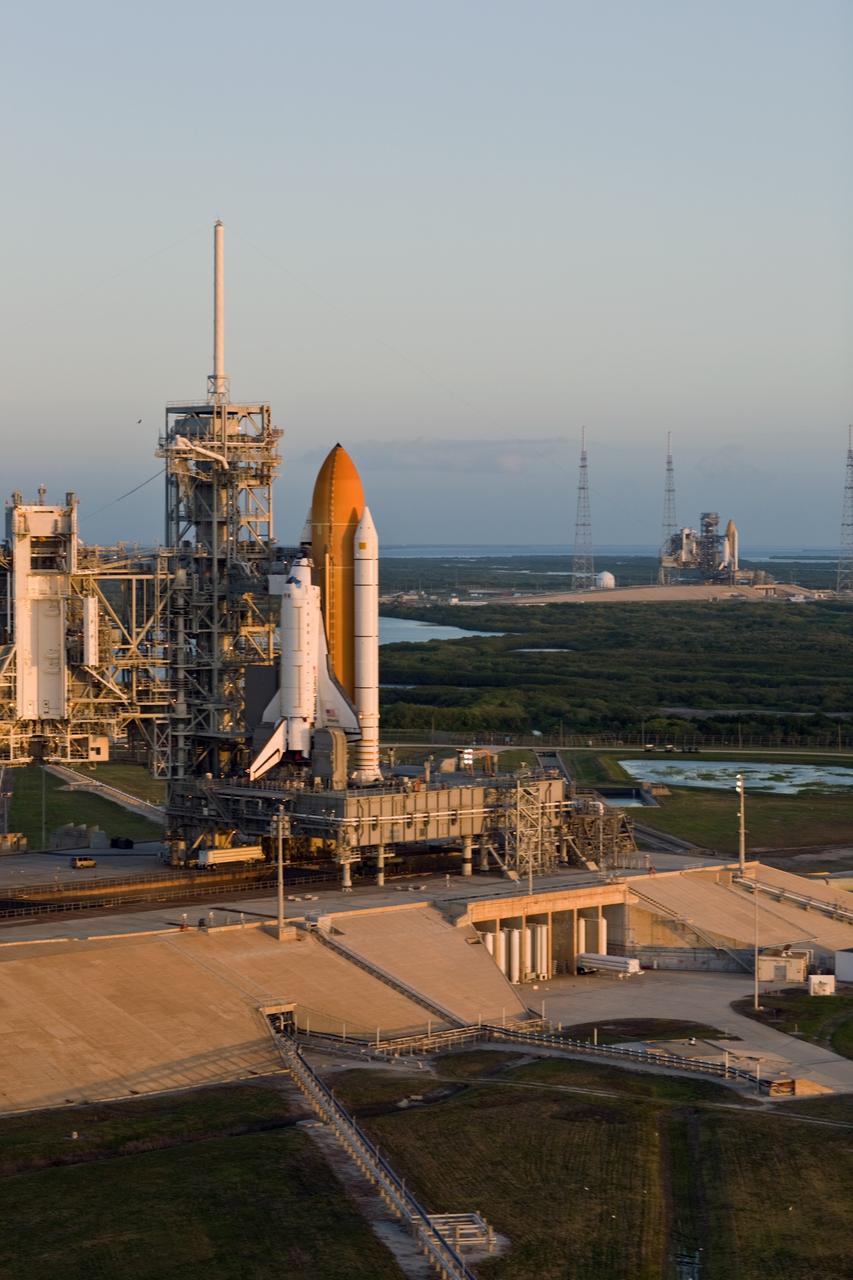
CAPE CANAVERAL, Fla. –– Space shuttle Atlantis (left) and space shuttle Endeavour are seen on Launch Pads 39A and 39B, respectively, at NASA's Kennedy Space Center in Florida. This is probably the final time two shuttles will be on launch pads at the same time with the space shuttle fleet set for retirement in 2010. Surrounding pad 39B are the lightning towers erected for NASA's Constellation Program, which will use the pad for Ares rocket launches. Endeavour will be prepared on the pad for liftoff in the unlikely event that a rescue mission is necessary following space shuttle Atlantis' launch on the STS-125 mission to service NASA's Hubble Space Telescope. After Atlantis is cleared to land, Endeavour will move to Launch Pad 39A for its upcoming STS-127 mission to the International Space Station, targeted to launch June 13. Photo credit: NASA/Dimitri Gerondidakis
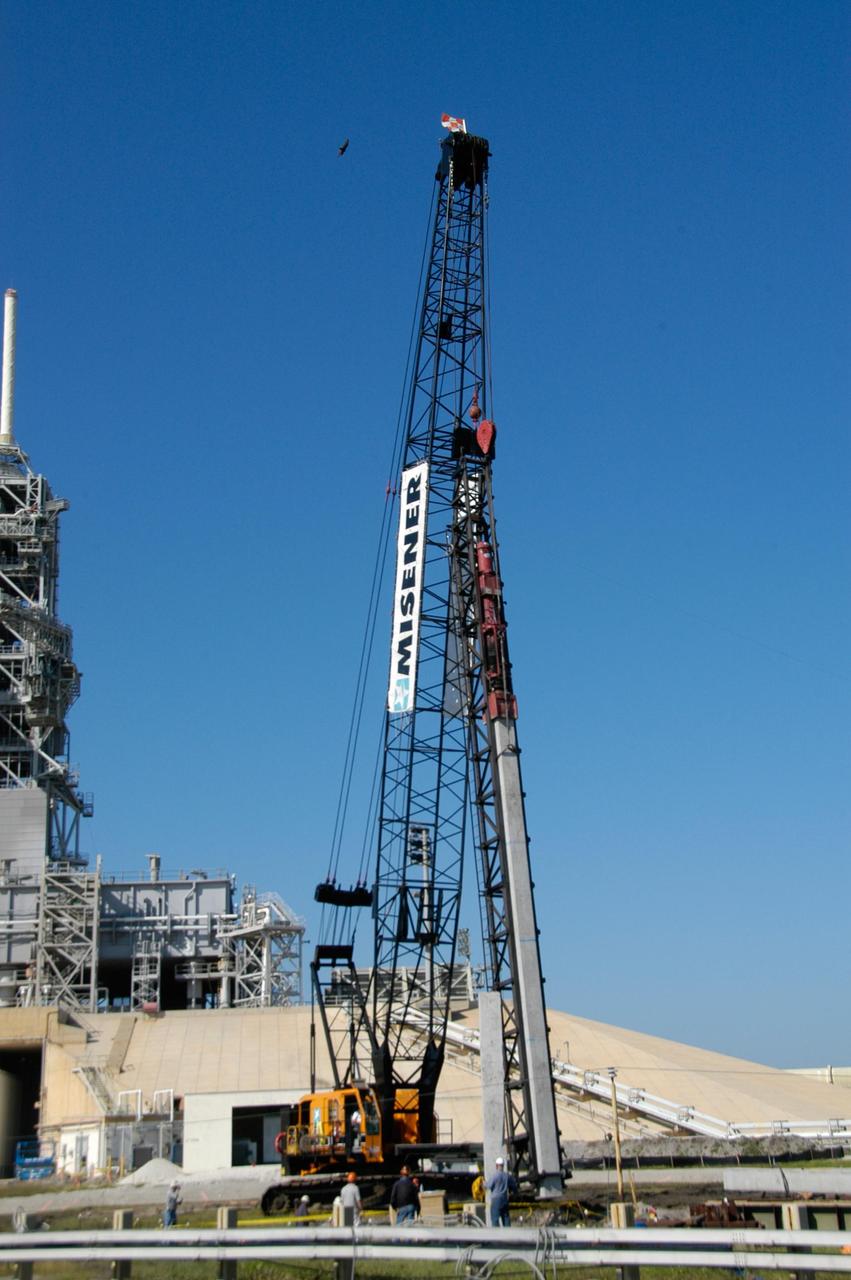
KENNEDY SPACE CENTER, FLA. -- On Launch Pad 39B at NASA's Kennedy Space Center, the crane crawler lifts a piling into place to be pounded into the ground to help construct lightning towers for the Constellation Program and Ares/Orion launches. Pad B will be the site of the first Ares vehicle launch, including Ares I-X which is scheduled for April 2009. Photo credit: NASA/George Shelton
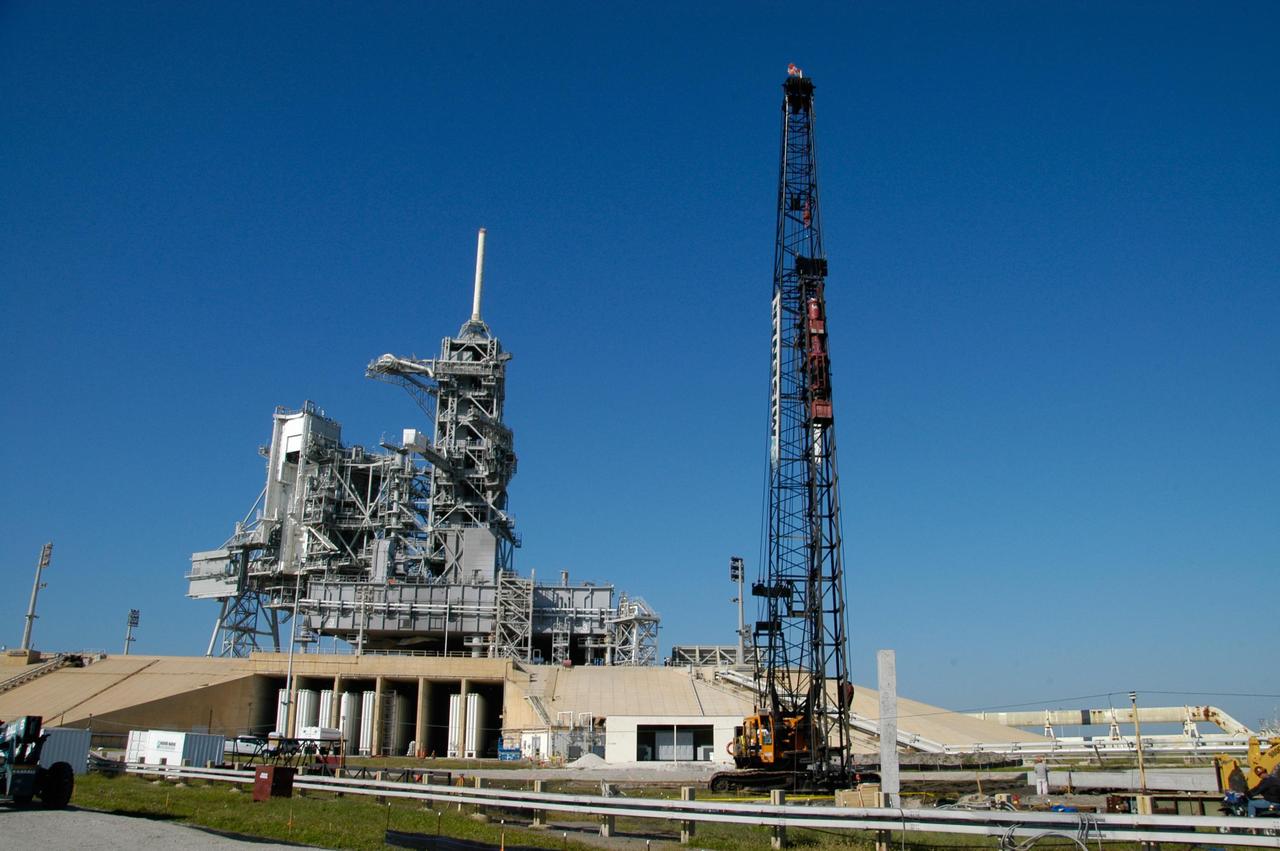
KENNEDY SPACE CENTER, FLA. -- On Launch Pad 39B at NASA's Kennedy Space Center, pilings are being pounded into the ground to help construct lightning towers for the Constellation Program and Ares/Orion launches. Pad B will be the site of the first Ares vehicle launch, including Ares I-X which is scheduled for April 2009. Photo credit: NASA/George Shelton
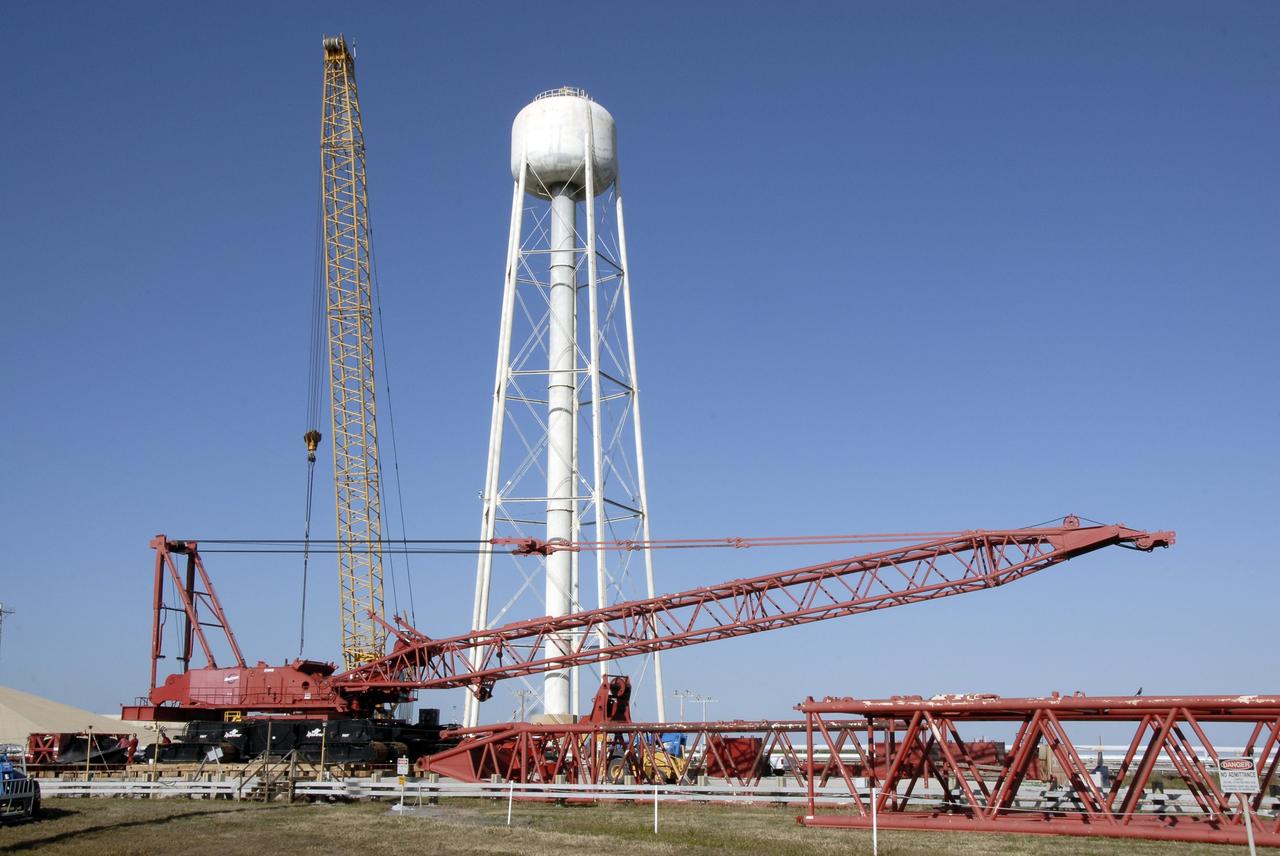
CAPE CANAVERAL, Fla. -- On Launch Pad 39B at NASA's Kennedy Space Center in Florida, segments are being added to the crane (foreground) that will be used to finish erecting the lightning towers on the pad. Lightning towers are being constructed to hold centenary wires as part of the new lightning protection system for the Constellation Program and Ares/Orion launches. Photo credit: NASA/Kim Shiflett
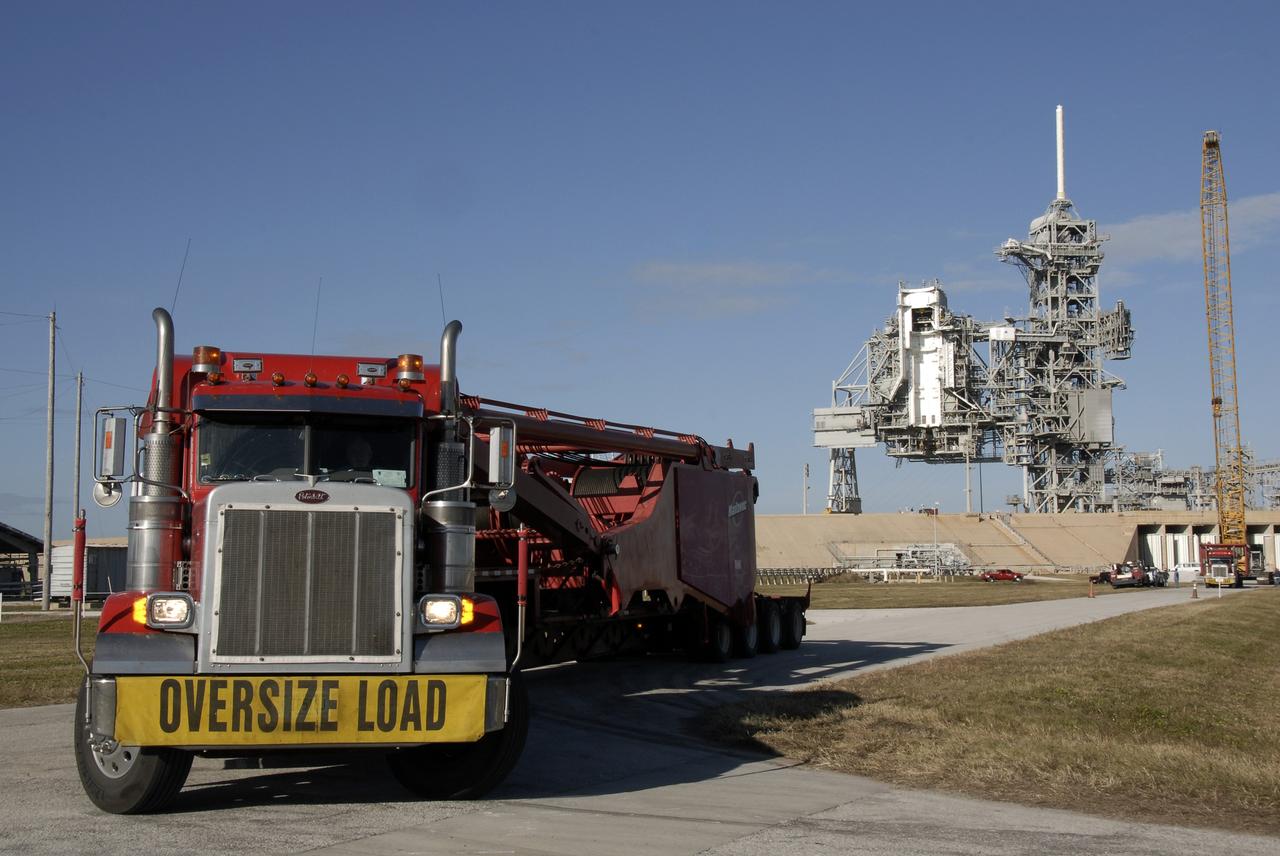
CAPE CANAVERAL, Fla. – Segments of a giant crane arrive by truck to Launch Pad 39B at NASA's Kennedy Space Center in Florida. The crane will be constructed and used to finish erecting the lightning towers on the pad. The crane segments arrived on 125 trucks. Lightning towers are being constructed to hold catenary wires as part of the new lightning protection system for the Constellation Program and Ares/Orion launches. Photo credit: NASA/Kim Shiflett
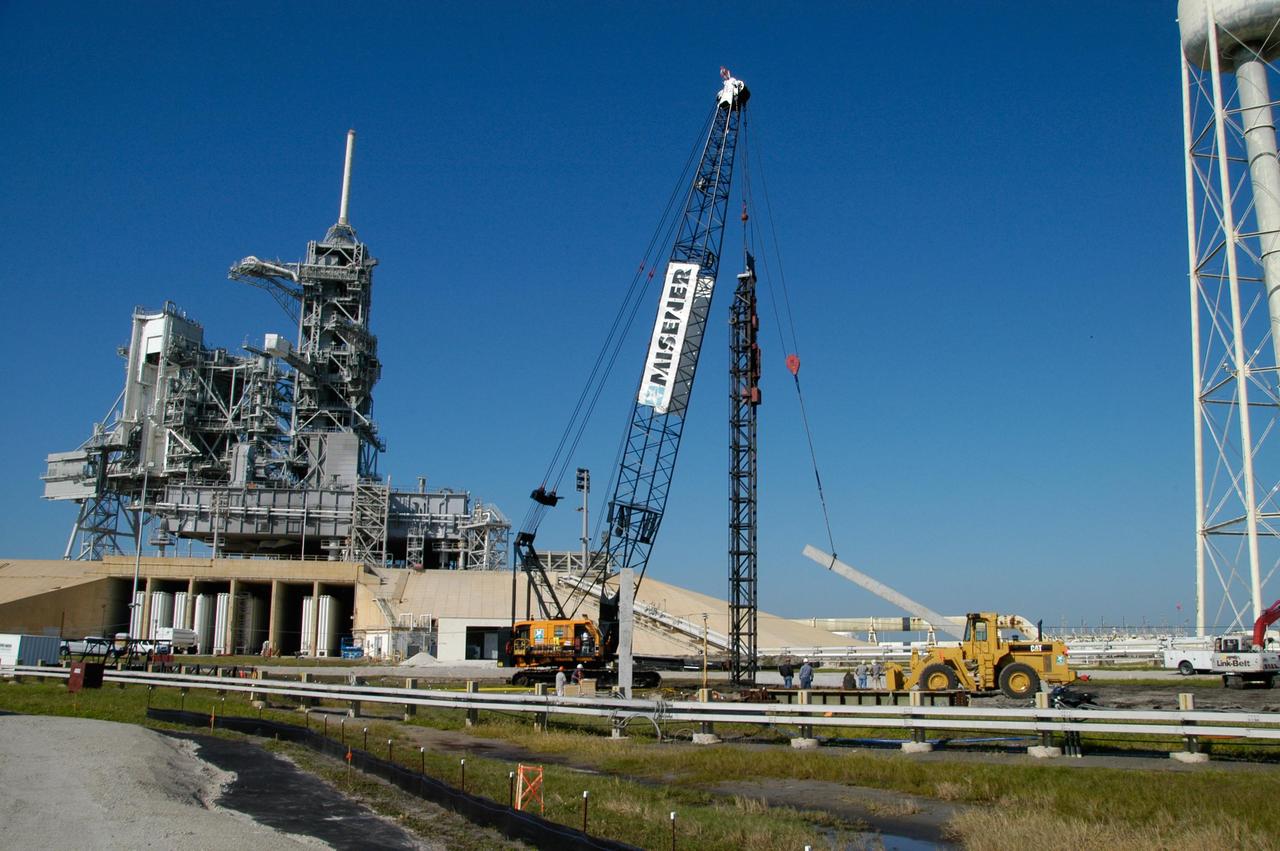
KENNEDY SPACE CENTER, FLA. -- On Launch Pad 39B at NASA's Kennedy Space Center, the crane crawler lifts a piling off a truck. The piling will be pounded into the ground to help construct lightning towers for the Constellation Program and Ares/Orion launches. Pad B will be the site of the first Ares vehicle launch, including Ares I-X which is scheduled for April 2009. Photo credit: NASA/George Shelton
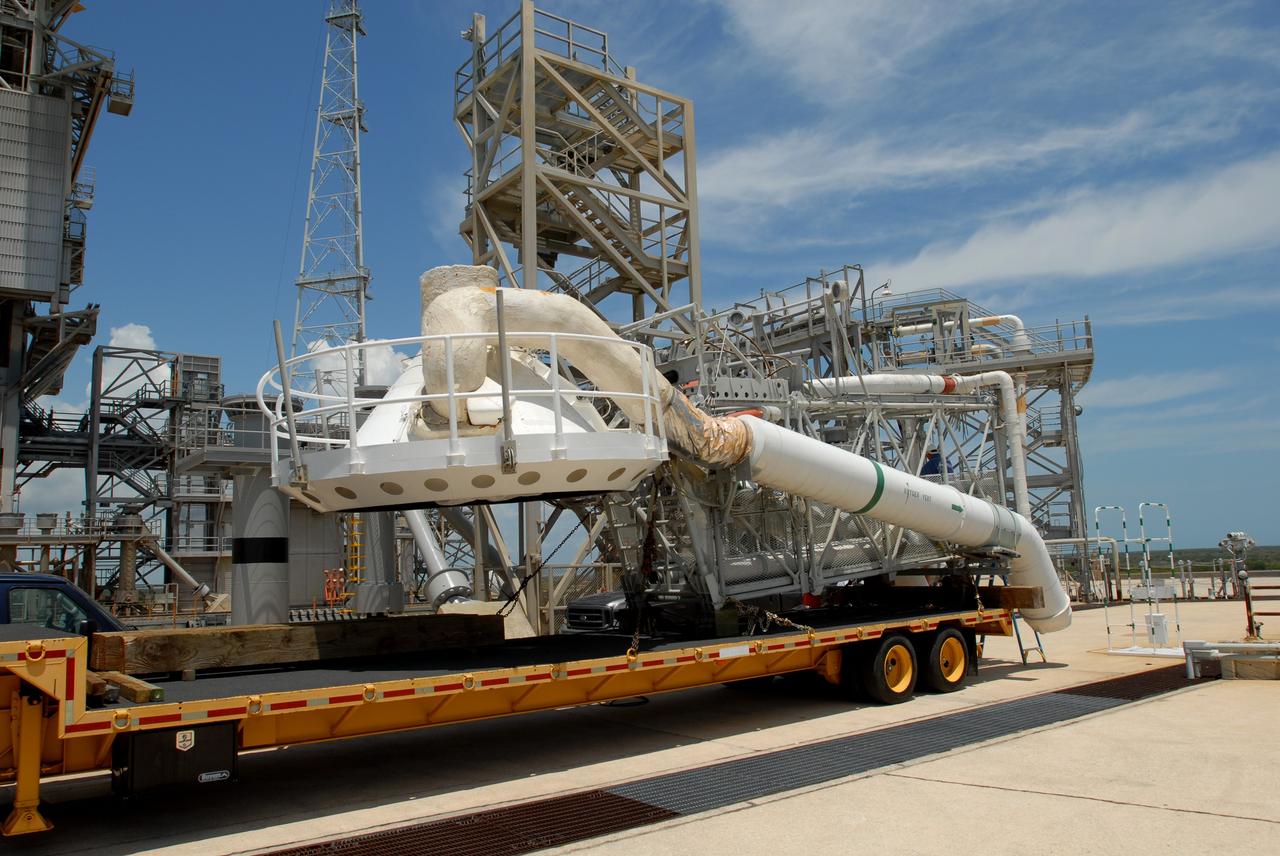
CAPE CANAVERAL, Fla. – At NASA's Kennedy Space Center in Florida, the oxygen vent hood, called the "beanie cap," and the gaseous oxygen vent arm removed from Launch Pad 39B's fixed service structure are lowered onto a transporter. A portion of the service structure is being removed for the pad's conversion as launch site for the Constellation Program's Ares I-X. The launch of the Ares I-X flight test is targeted for August 2009. Photo credit: NASA/Jim Grossmann
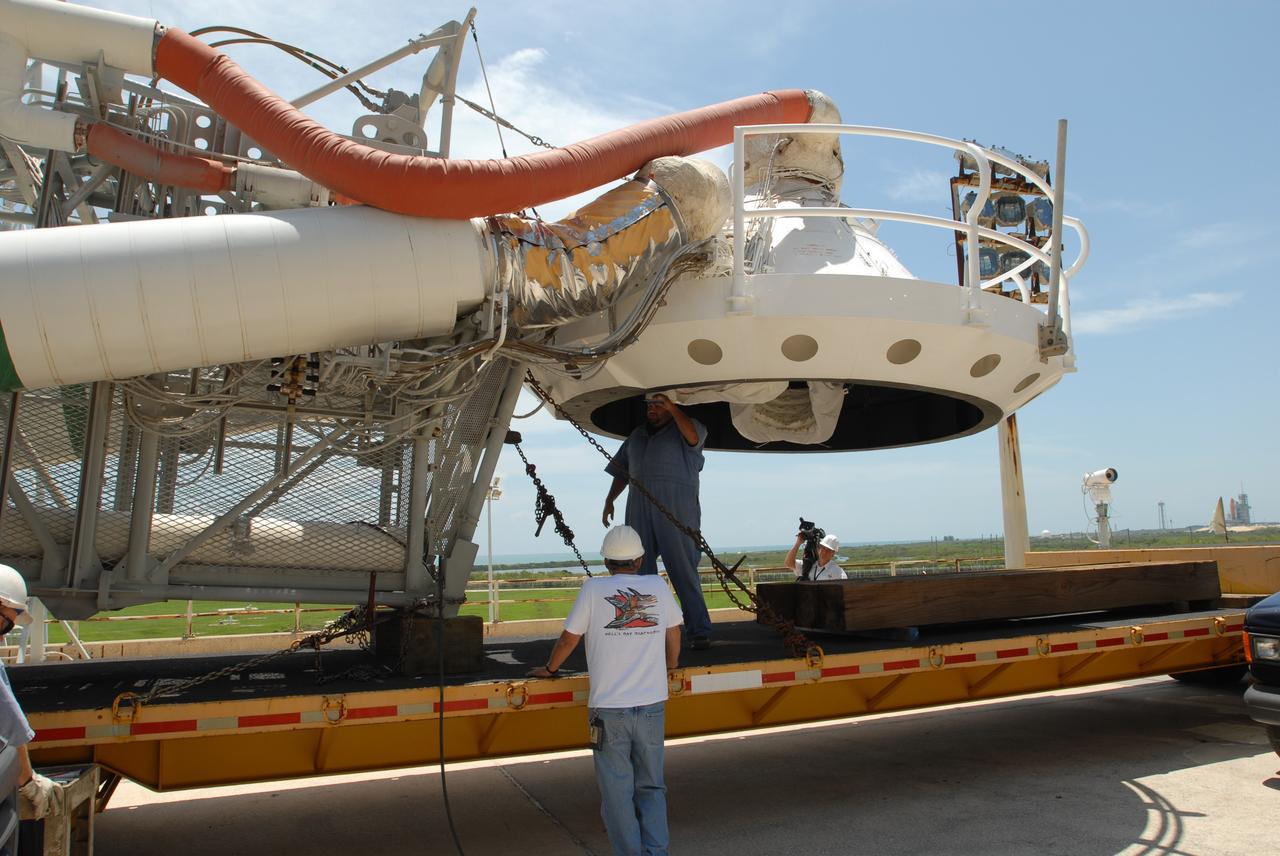
CAPE CANAVERAL, Fla. – At NASA's Kennedy Space Center in Florida, workers check the "beanie cap" and the gaseous oxygen vent arm removed from Launch Pad 39B's fixed service structure. A portion of the service structure is being removed for the pad's conversion as launch site for the Constellation Program's Ares I-X. The launch of the Ares I-X flight test is targeted for August 2009. Photo credit: NASA/Jim Grossmann
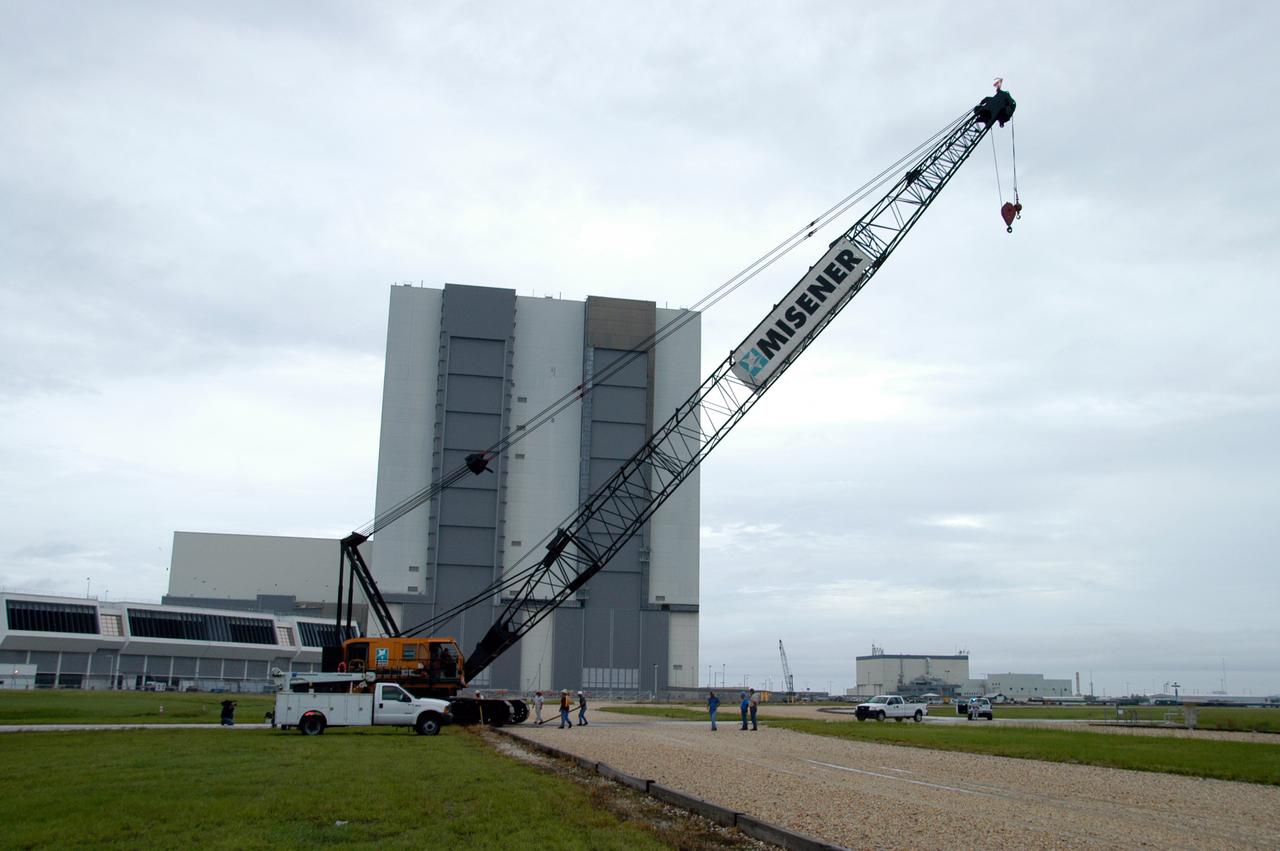
A large crawler crane moves past the Vehicle Assembly Building on its way to Launch Pad 39B. The crane with its 70-foot boom will be used to construct a new lightning protection system for the Constellation Program and Ares/Orion launches. Pad B will be the site of the first Ares vehicle launch, including Ares I-X which is scheduled for April 2009.
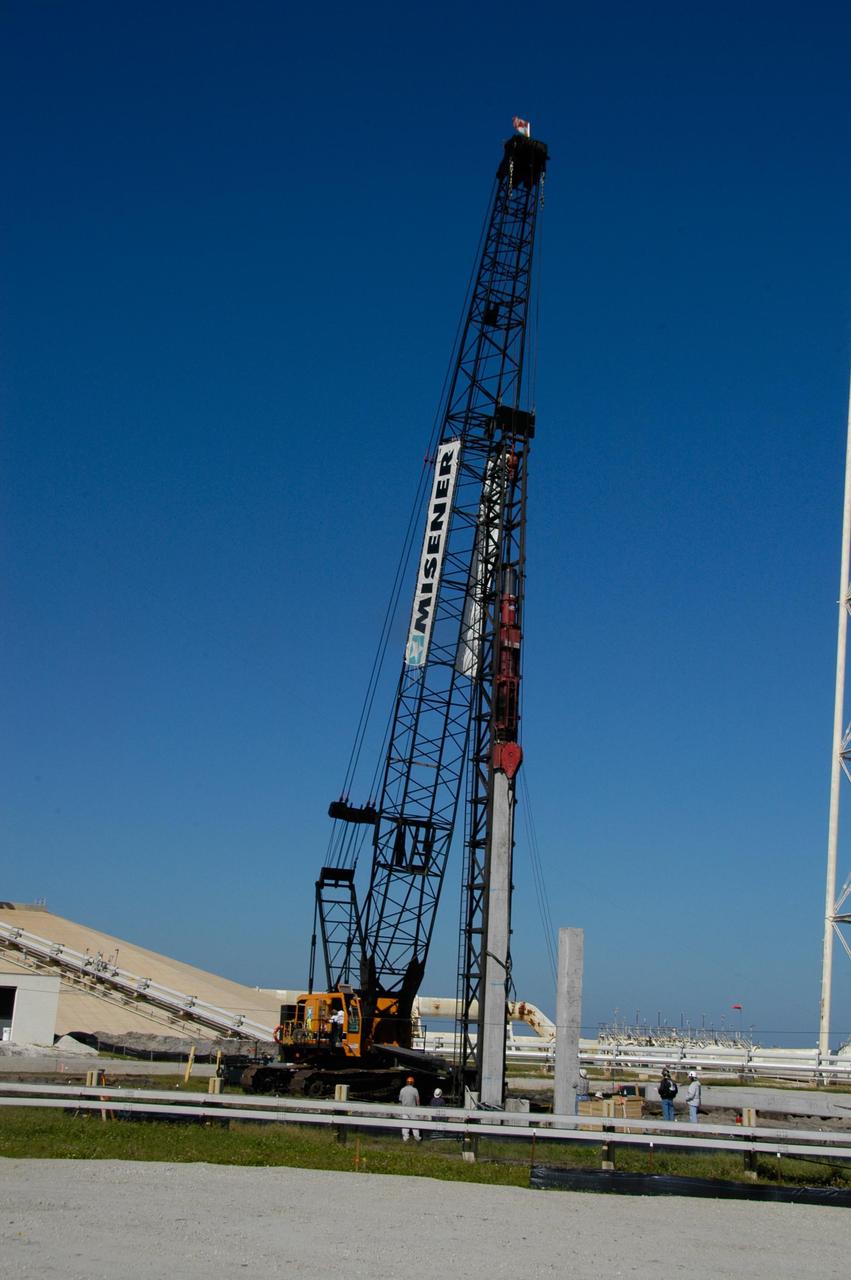
KENNEDY SPACE CENTER, FLA. -- On Launch Pad 39B at NASA's Kennedy Space Center, the crane crawler continues pounding a piling into the ground to help construct lightning towers for the Constellation Program and Ares/Orion launches. Pad B will be the site of the first Ares vehicle launch, including Ares I-X which is scheduled for April 2009. Photo credit: NASA/George Shelton

CAPE CANAVERAL, Fla. -- On Launch Pad 39B at NASA's Kennedy Space Center, workers maneuver the lightning mast onto the ground. It is part of the lightning protection system being built for the Constellation Program and Ares/Orion launches. Pad B will be the site of the first Ares vehicle launch, including Ares I-X which is scheduled for April 2009. Photo credit: NASA/Jim Grossmann
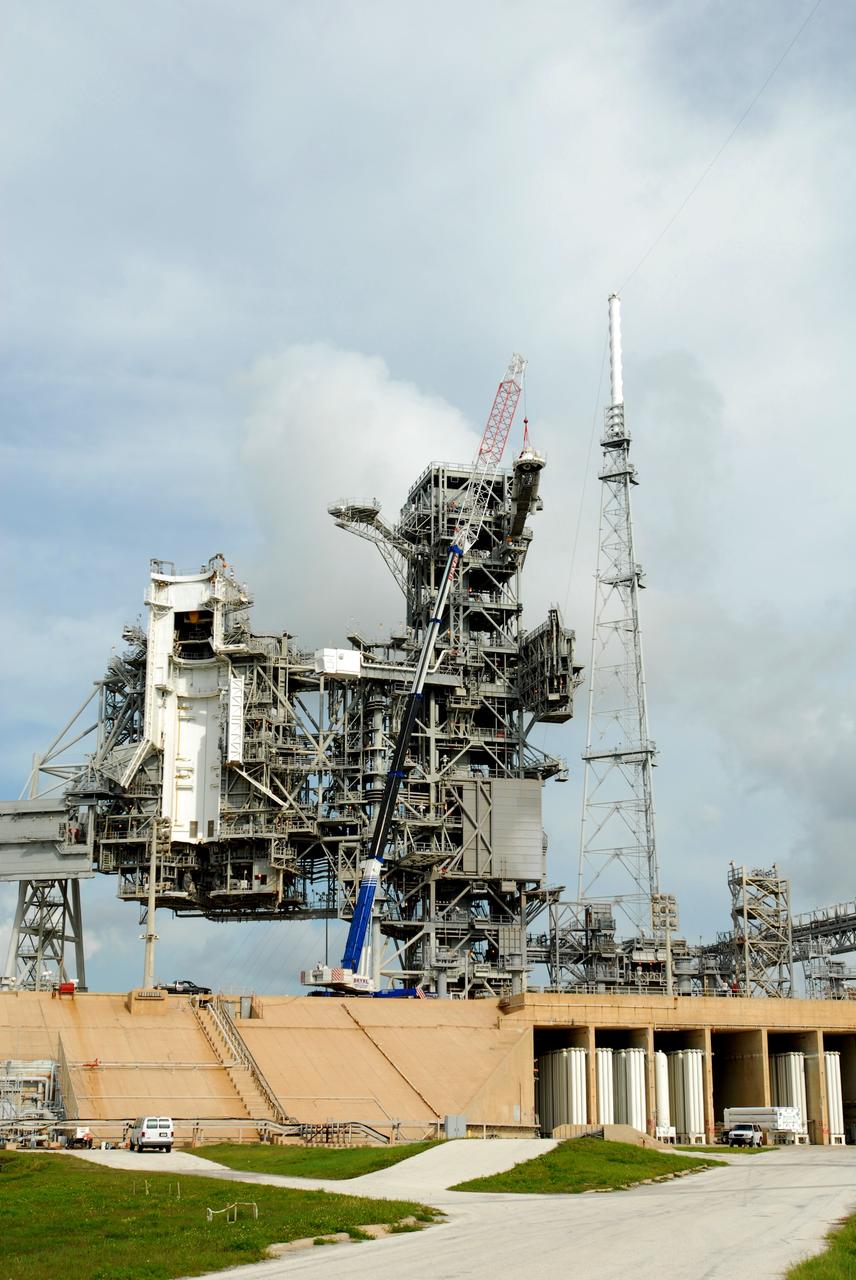
CAPE CANAVERAL, Fla. – On Launch Pad 39B at NASA's Kennedy Space Center in Florida, a portion of the service structure is being removed for the pad's conversion as launch site for the Constellation Program's Ares I-X. Here, a crane is attached to the oxygen vent hood, called the "beanie cap," on the gaseous oxygen vent arm. The launch of the Ares I-X flight test is targeted for August 2009. Photo credit: NASA/Jim Grossmann
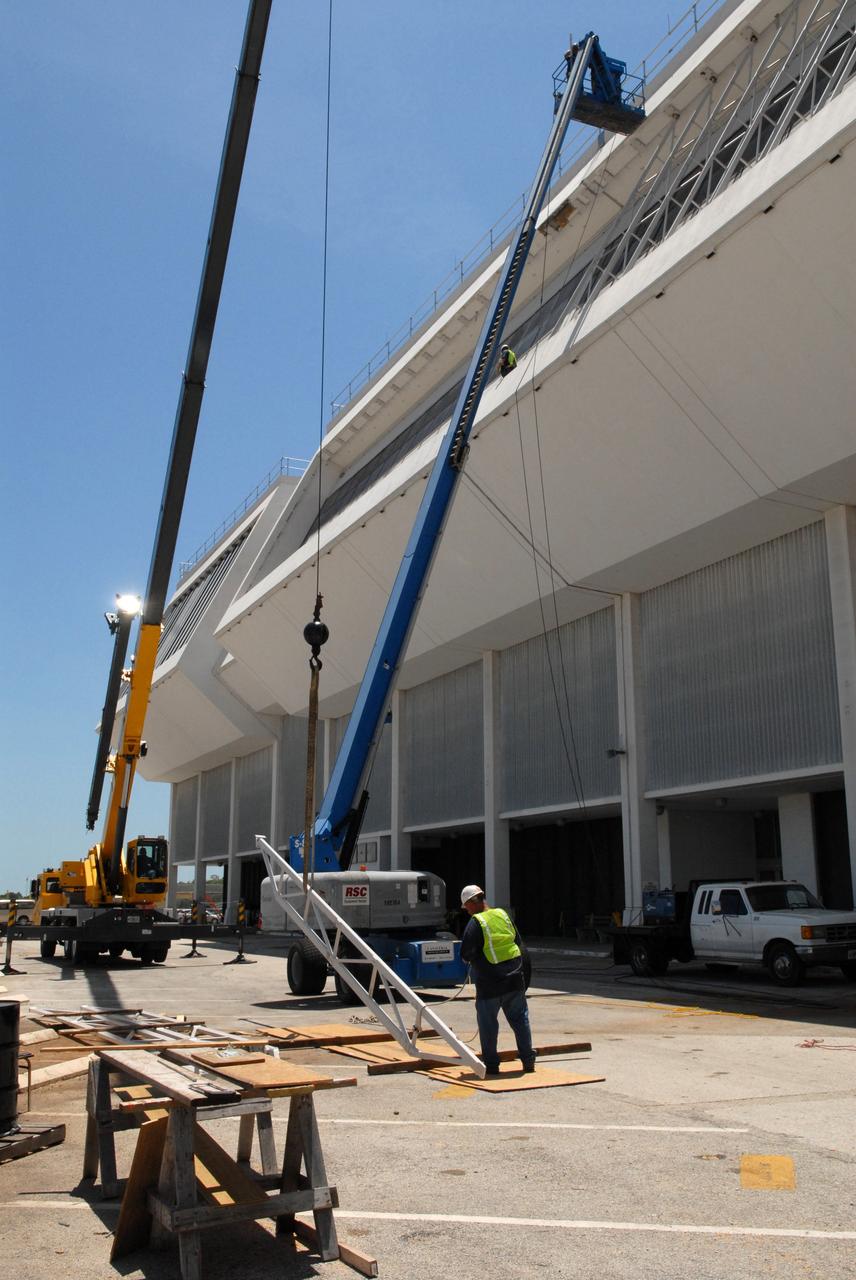
CAPE CANAVERAL, Fla. – New windows are installed in the Launch Control Center's Firing Room 1 at NASA's Kennedy Space Center in Florida. The firing room will support the future Ares rocket launches as part of NASA's Constellation Program. Future astronauts will ride to orbit on Ares I, launched from Kennedy's Launch Pad 39B. The Launch Control Center firing rooms face the launch pads. Photo credit: NASA/Jack Pfaller

KENNEDY SPACE CENTER, FLA. -- On Launch Pad 39B at NASA's Kennedy Space Center, workers measure the piling being pounded into the ground to help construct lightning towers for the Constellation Program and Ares/Orion launches. Pad B will be the site of the first Ares vehicle launch, including Ares I-X which is scheduled for April 2009. Photo credit: NASA/George Shelton
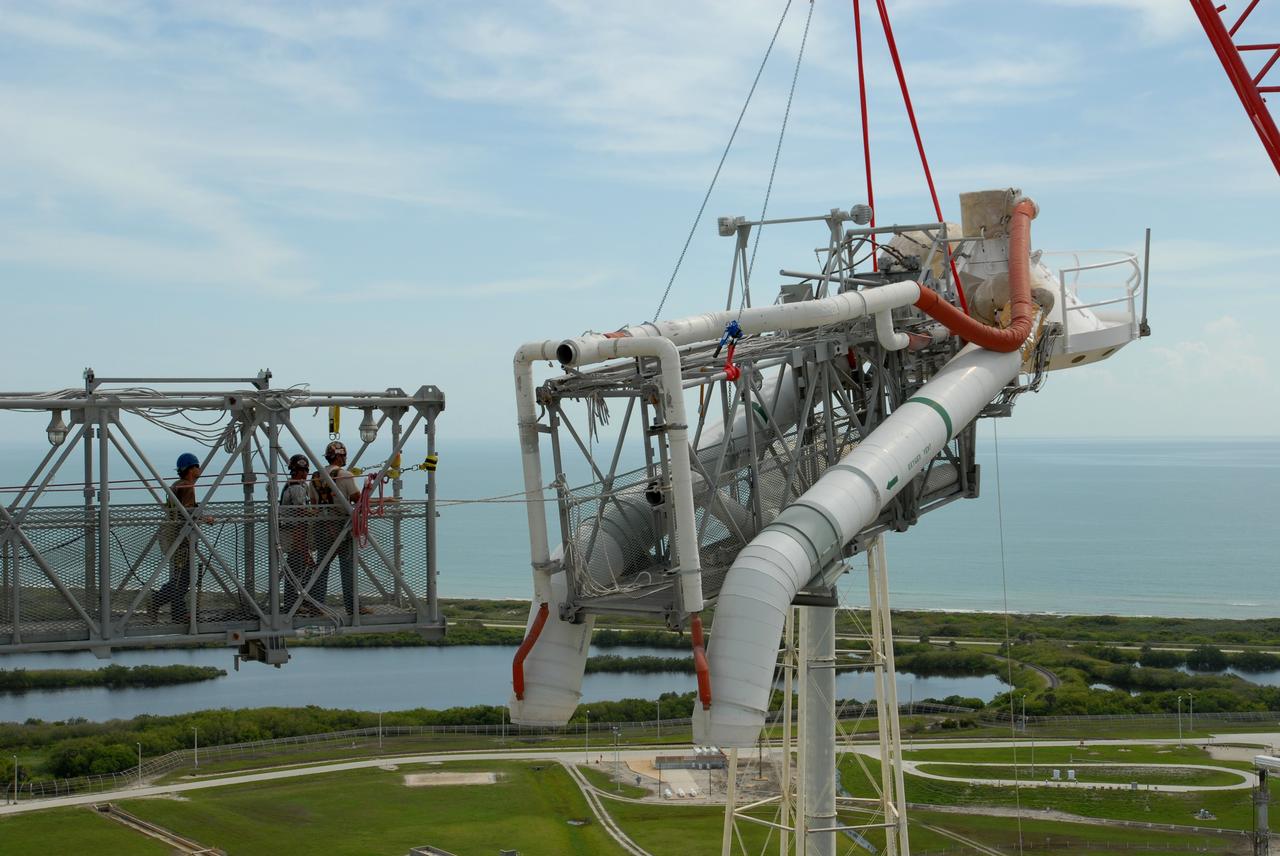
CAPE CANAVERAL, Fla. – On Launch Pad 39B at NASA's Kennedy Space Center in Florida, a crane removes the oxygen vent hood, called the "beanie cap," and the gaseous oxygen vent arm from the fixed service structure. A portion of the service structure is being removed for the pad's conversion as launch site for the Constellation Program's Ares I-X. The launch of the Ares I-X flight test is targeted for August 2009. Photo credit: NASA/Jim Grossmann
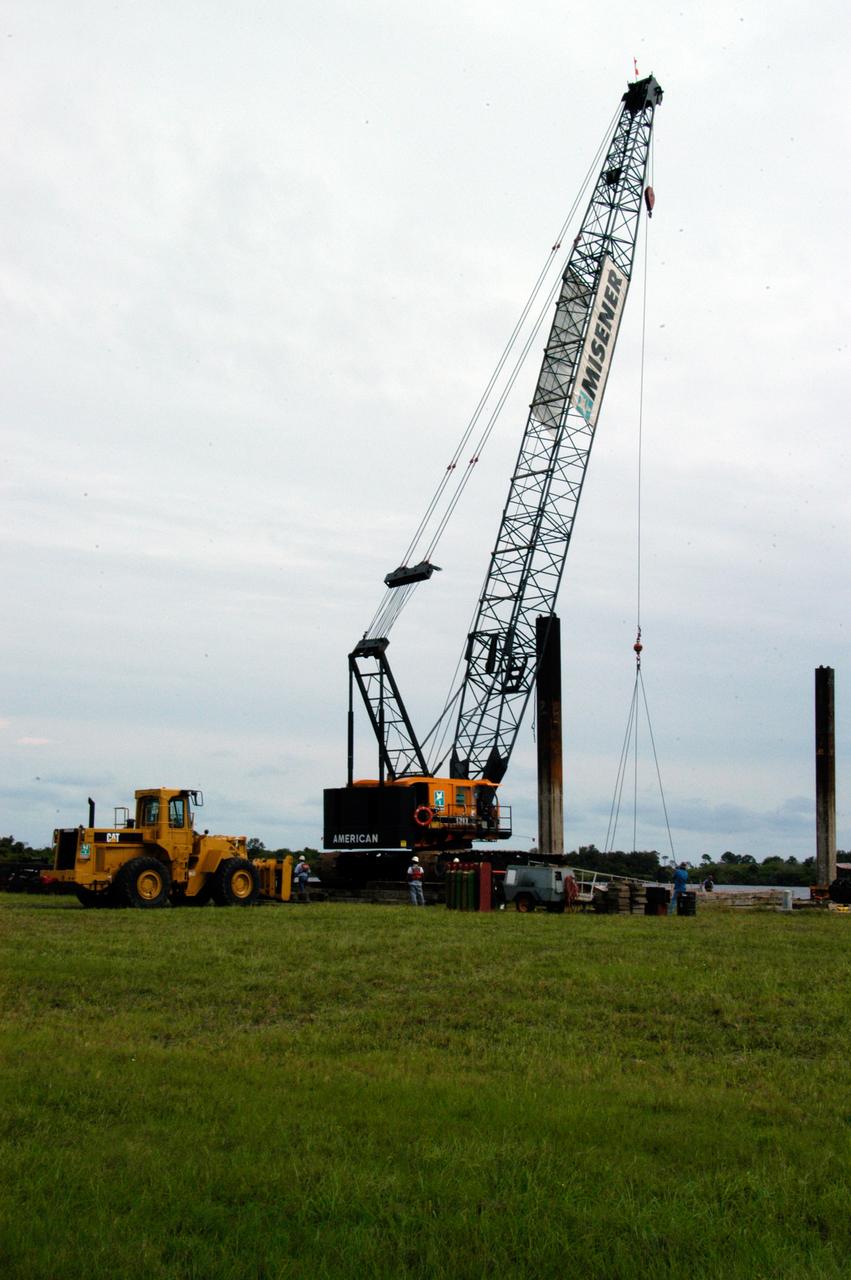
A large crawler crane arrives at the turn basin at the Launch Complex 39 Area on NASA's Kennedy Space Center. The crane with its 70-foot boom will be moved to Launch Pad 39B and used to construct a new lightning protection system for the Constellation Program and Ares/Orion launches. Pad B will be the site of the first Ares vehicle launch, including Ares I-X which is scheduled for April 2009.
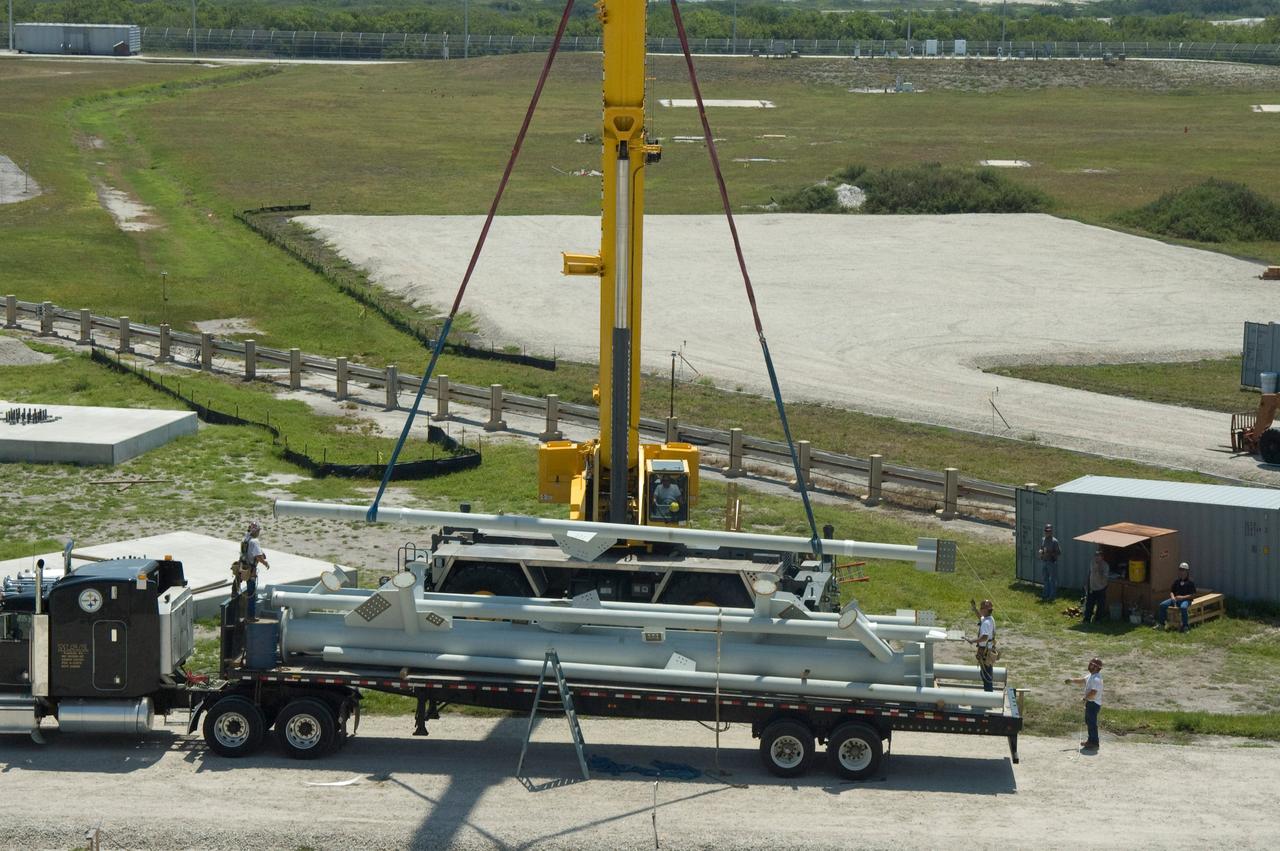
CAPE CANAVERAL, Fla. -- On Launch Pad 39B at NASA's Kennedy Space Center, a crane lifts part of the lightning mast to be erected on towers being built for the Constellation Program and Ares/Orion launches. Pad B will be the site of the first Ares vehicle launch, including Ares I-X which is scheduled for April 2009. Photo credit: NASA/Jim Grossmann
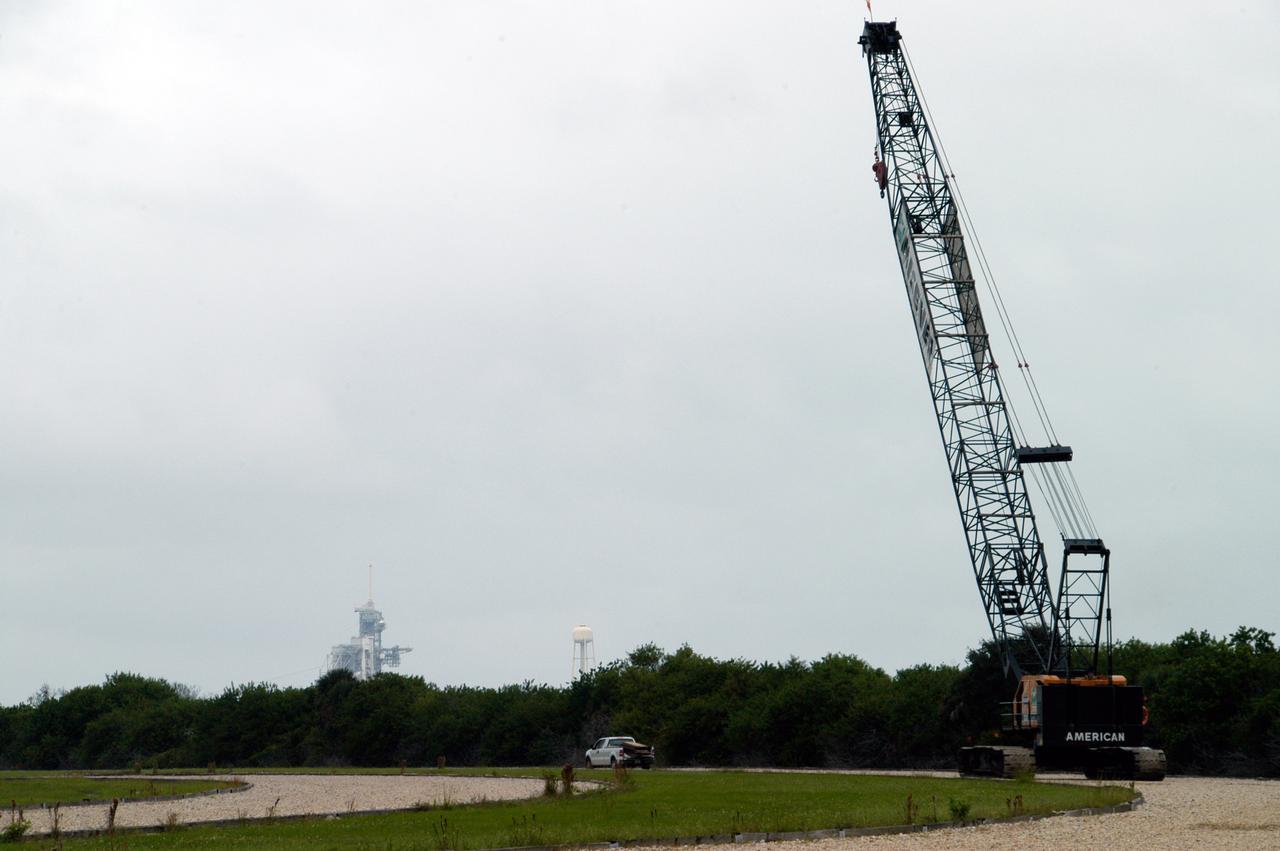
A large crawler crane traveling long one of the crawlerway tracks makes the turn toward Launch Pad 39B. The crane with its 70-foot boom will be used to construct a new lightning protection system for the Constellation Program and Ares/Orion launches. Pad B will be the site of the first Ares vehicle launch, including Ares I-X which is scheduled for April 2009.
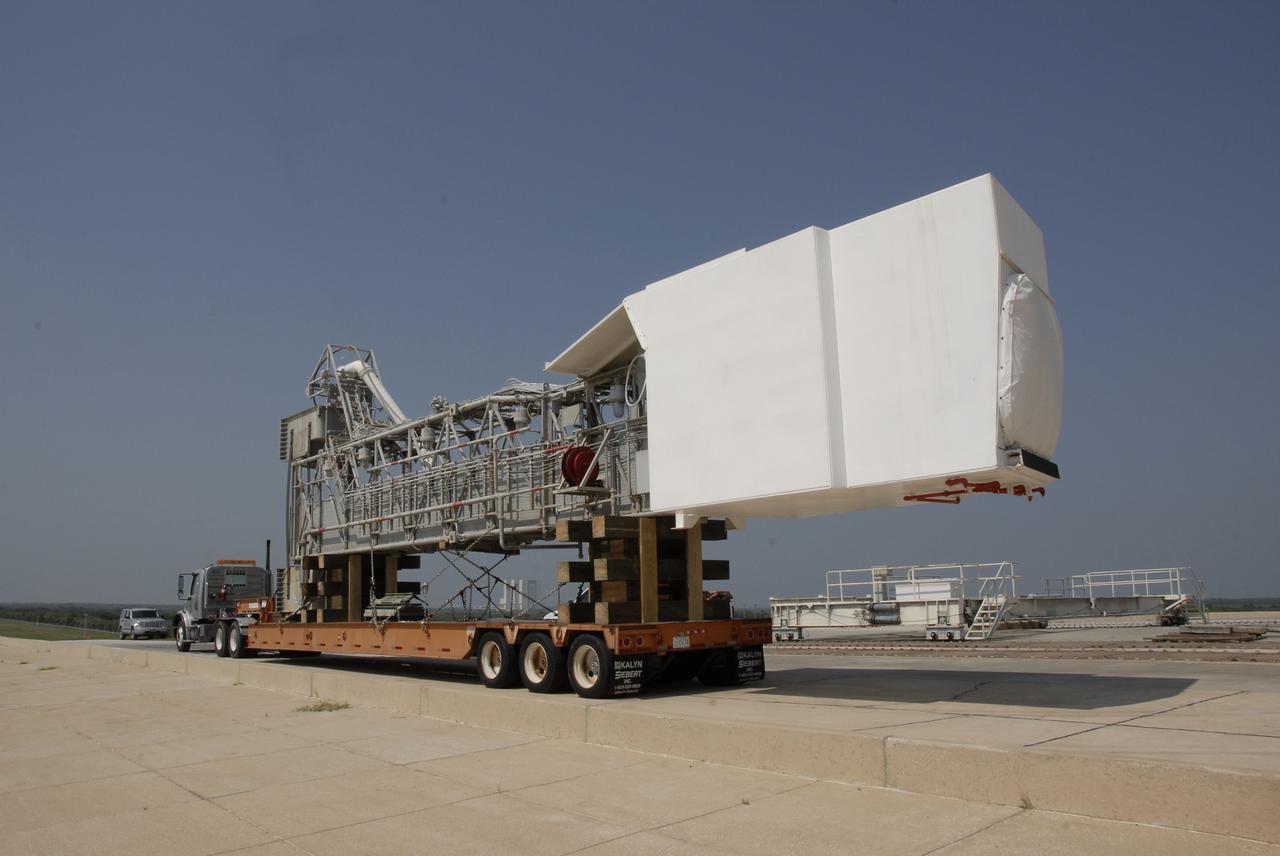
CAPE CANAVERAL, Fla. – The orbiter access arm, with the White Room on the end, leaves Launch Pad 39B on a trailer at NASA's Kennedy Space Center in Florida. The arm was removed from the fixed service structure for the pad's conversion as launch site for the Constellation Program's Ares I-X. The launch of the Ares I-X flight test is targeted for August 2009. Photo credit: NASA/Kim Shiflett
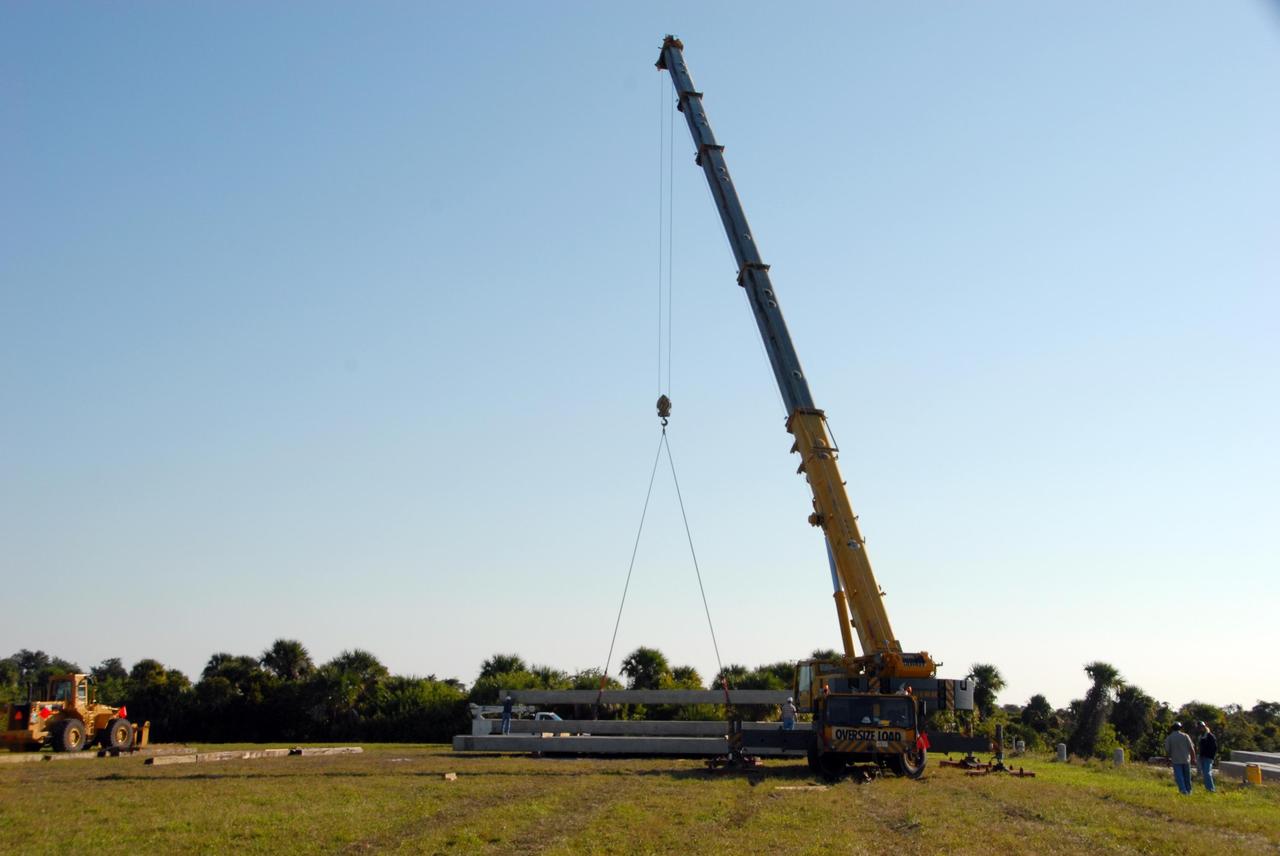
KENNEDY SPACE CENTER, FLA. -- In the Launch Complex 39 Area turn basin at NASA's Kennedy Space Center, the crane crawler moves pilings it lifted from the barge. The pilings will be used to help construct new lightning towers on Launch Pad 39B for the Constellation Program and Ares/Orion launches. Pad B will be the site of the first Ares vehicle launch, including Ares I-X which is scheduled for April 2009. Photo credit: NASA/George Shelton
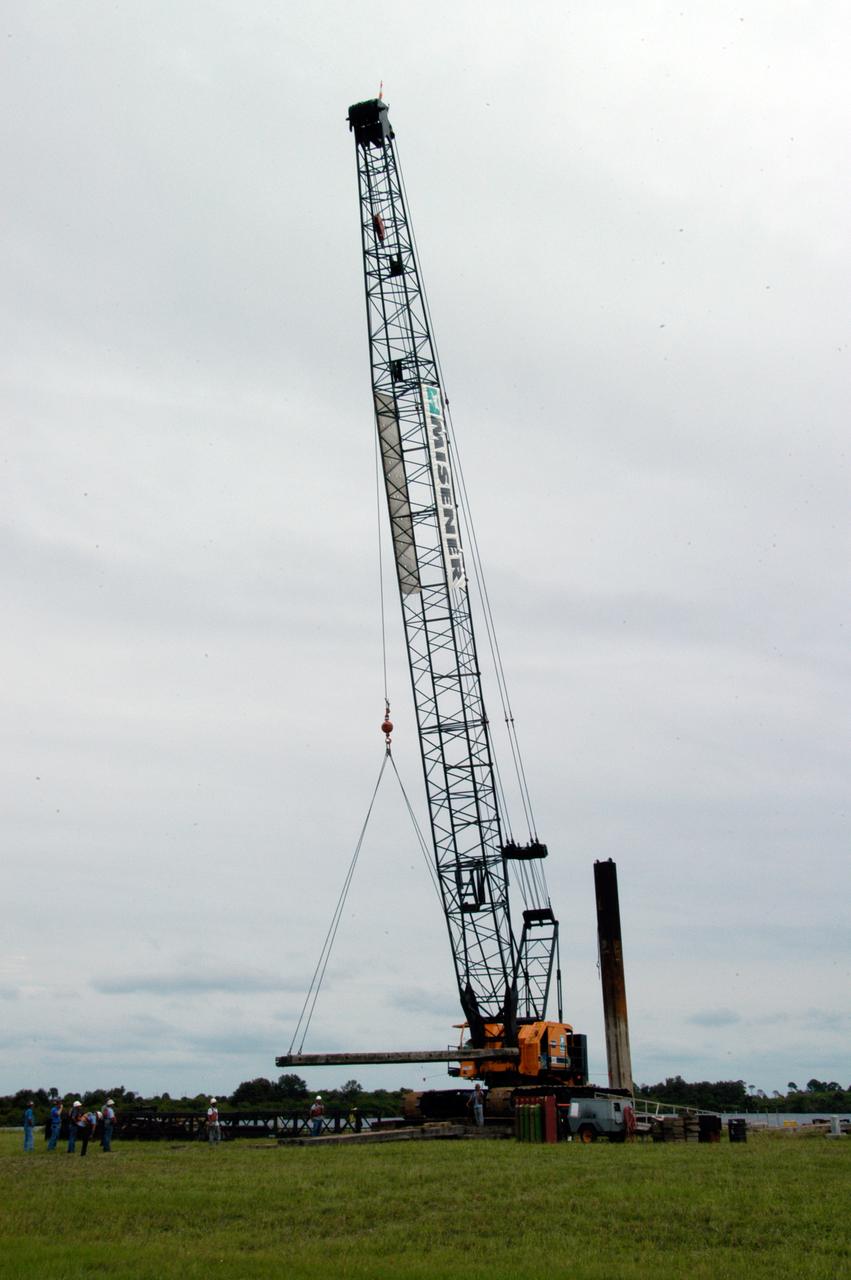
A large crawler crane arrives at the turn basin at the Launch Complex 39 Area on NASA's Kennedy Space Center. The crane with its 70-foot boom will be moved to Launch Pad 39B and used to construct a new lightning protection system for the Constellation Program and Ares/Orion launches. Pad B will be the site of the first Ares vehicle launch, including Ares I-X which is scheduled for April 2009.
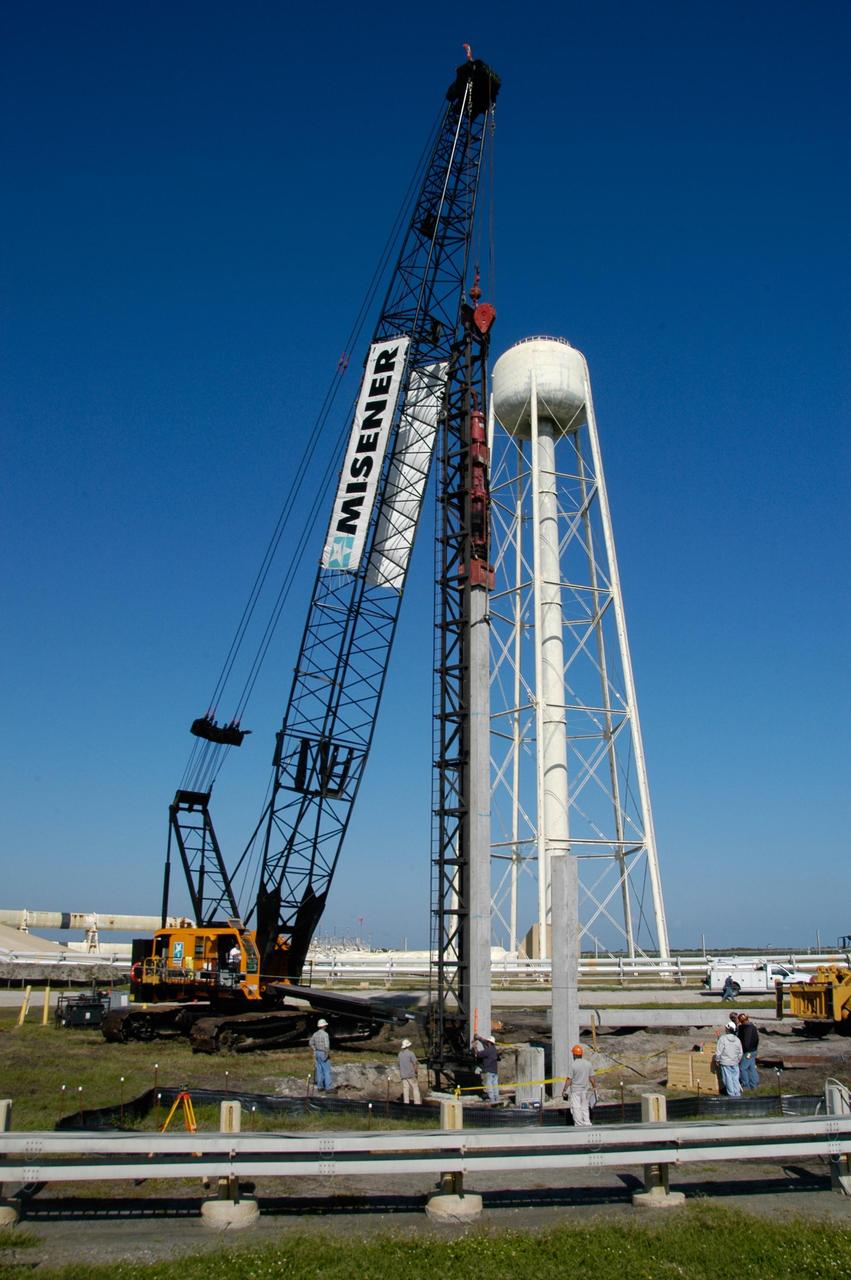
KENNEDY SPACE CENTER, FLA. -- On Launch Pad 39B at NASA's Kennedy Space Center, the crane crawler puts a piling into place to be pounded into the ground to help construct lightning towers for the Constellation Program and Ares/Orion launches. Pad B will be the site of the first Ares vehicle launch, including Ares I-X which is scheduled for April 2009. Photo credit: NASA/George Shelton
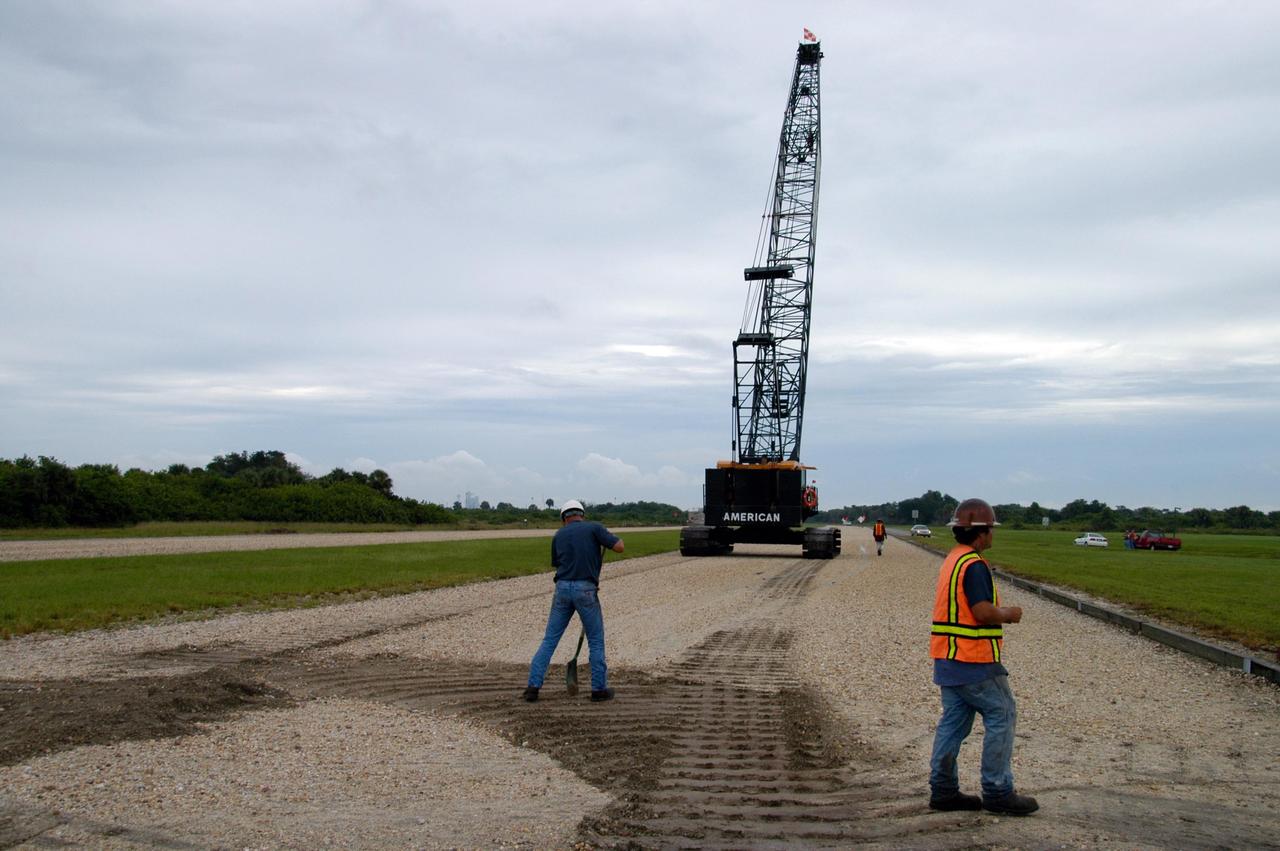
KENNEDY SPACE CENTER, FLA. -- A large crawler crane travels along one of the crawlerway tracks on its way to Launch Pad 39B. The crane with its 70-foot boom will be used to construct a new lightning protection system for the Constellation Program and Ares/Orion launches. Pad B will be the site of the first Ares vehicle launch, including Ares I-X which is scheduled for April 2009. Photo credit: NASA/George Shelton

CAPE CANAVERAL, Fla. -- On Launch Pad 39B at NASA's Kennedy Space Center, a crane lifts another part of the lightning mast to be erected on towers being built for the Constellation Program and Ares/Orion launches. Pad B will be the site of the first Ares vehicle launch, including Ares I-X which is scheduled for April 2009. Photo credit: NASA/Jim Grossmann
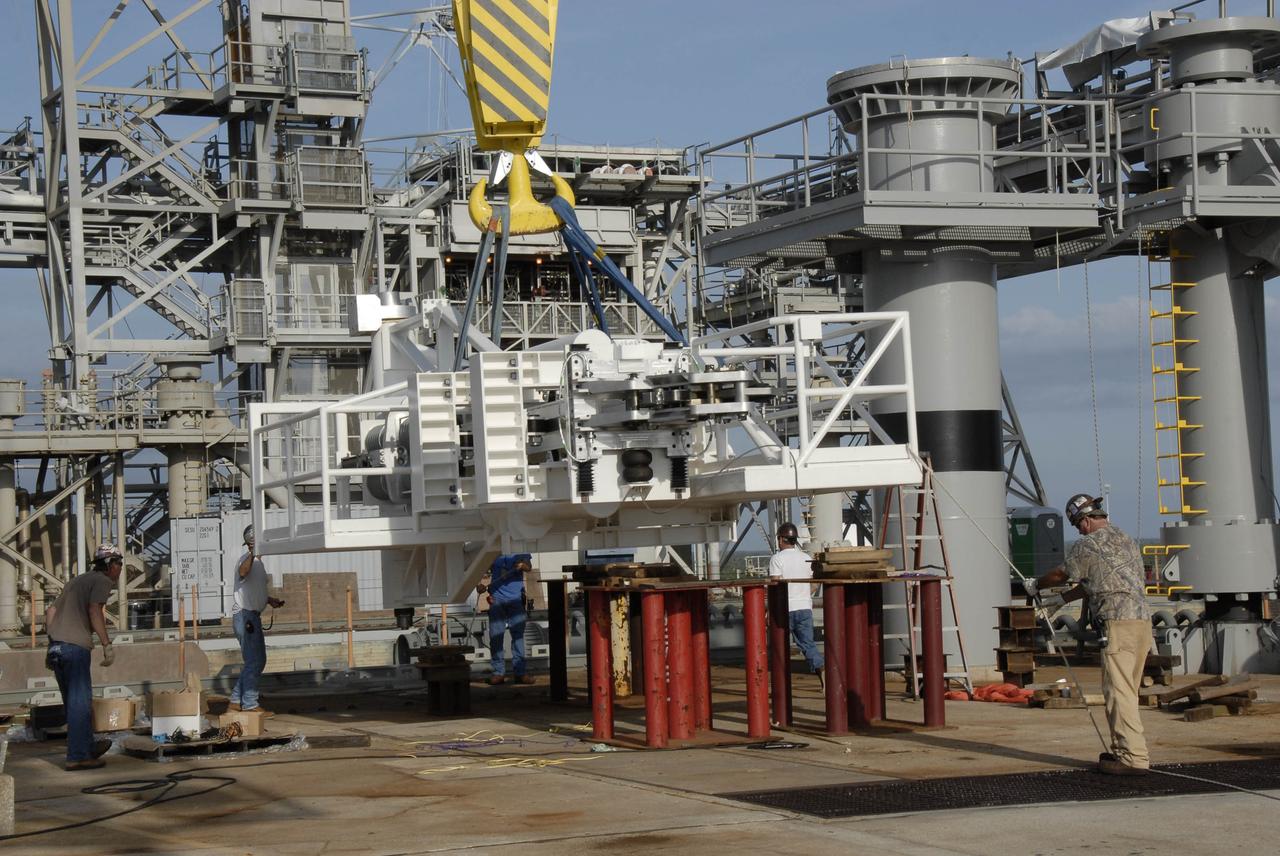
CAPE CANAVERAL, Fla. – On NASA Kennedy Space Center's Launch Pad 39B, the stabilizing arm is lifted from the pad surface. It will be attached to the fixed service structure for use in the Ares I-X rocket launch, targeted for Oct. 31. Ares I-X is part of NASA's Constellation Program. Photo credit: NASA/Kim Shiflett
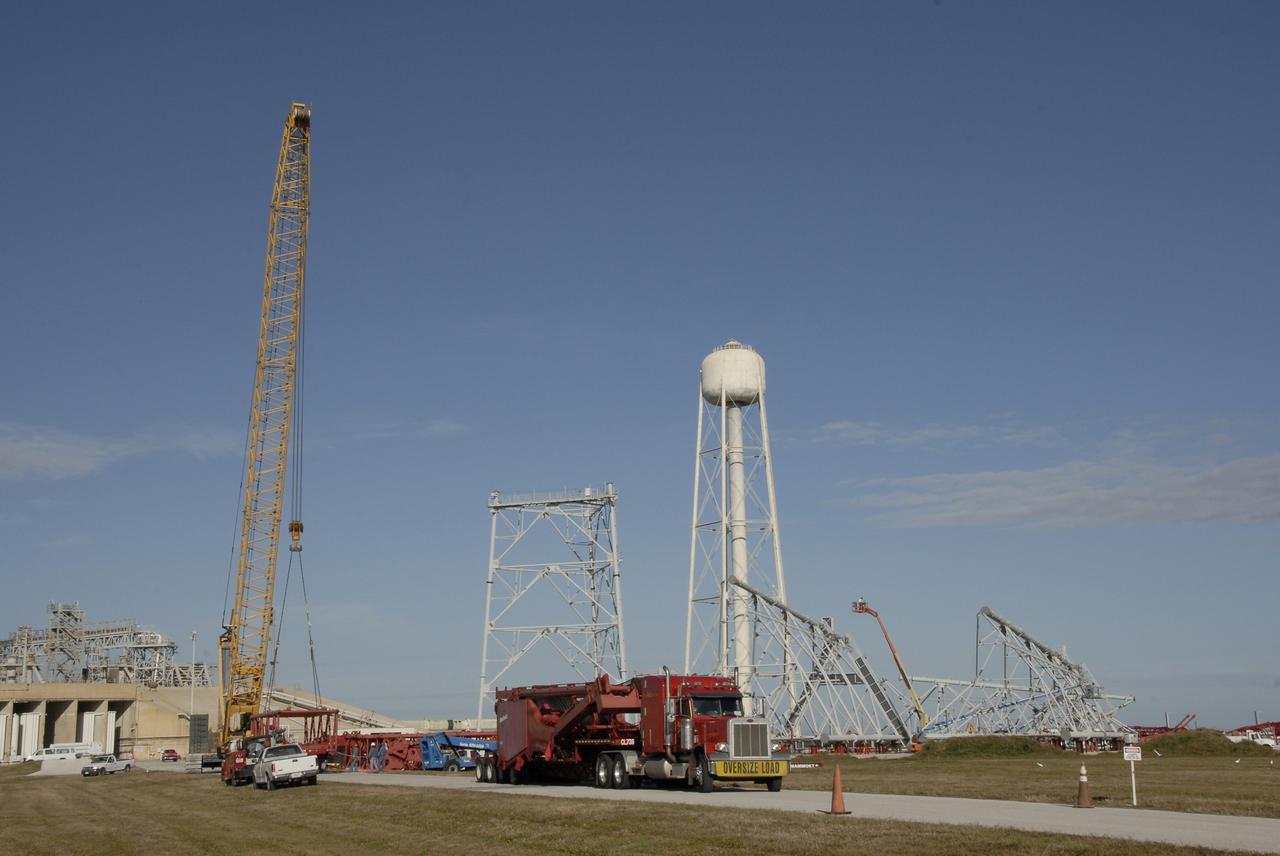
CAPE CANAVERAL, Fla. – On Launch Pad 39B at NASA's Kennedy Space Center in Florida, a giant crane is under construction to help finish erecting the lightning towers on the pad. The crane segments arrived on 125 trucks. Lightning towers are being constructed to hold catenary wires as part of the new lightning protection system for the Constellation Program and Ares/Orion launches. Photo credit: NASA/Kim Shiflett
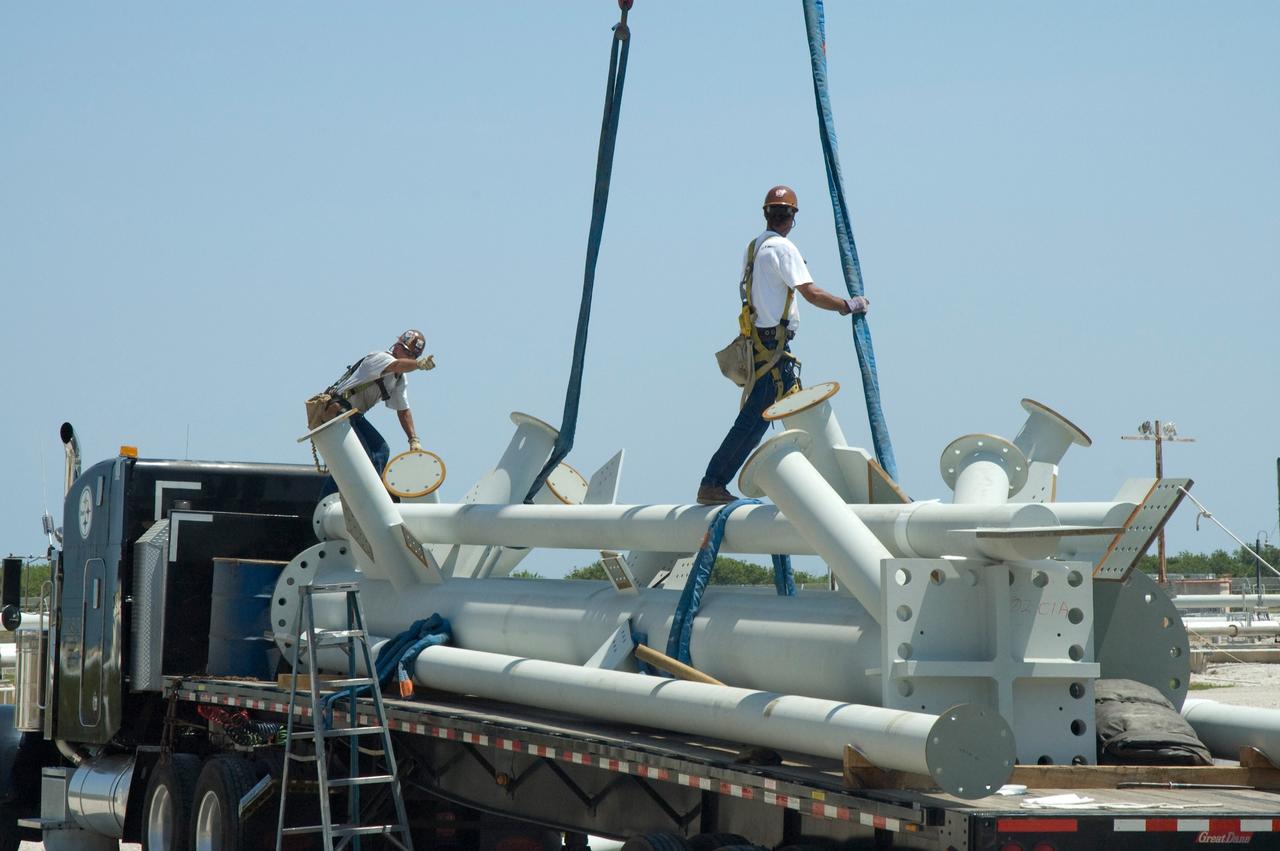
CAPE CANAVERAL, Fla. -- On Launch Pad 39B at NASA's Kennedy Space Center, workers secure straps around the lightning mast to be erected on towers being built for the Constellation Program and Ares/Orion launches. Pad B will be the site of the first Ares vehicle launch, including Ares I-X which is scheduled for April 2009. Photo credit: NASA/Jim Grossmann

CAPE CANAVERAL, Fla. – On Launch Pad 39B at NASA's Kennedy Space Center, lightning towers are being constructed to hold centenary wires as part of the new lightning protection system for the Constellation Program and Ares/Orion launches. Pad B will be the site of the first Ares vehicle launch, including Ares I-X which is scheduled for April 2009. Photo credit: NASA/Jim Grossmann