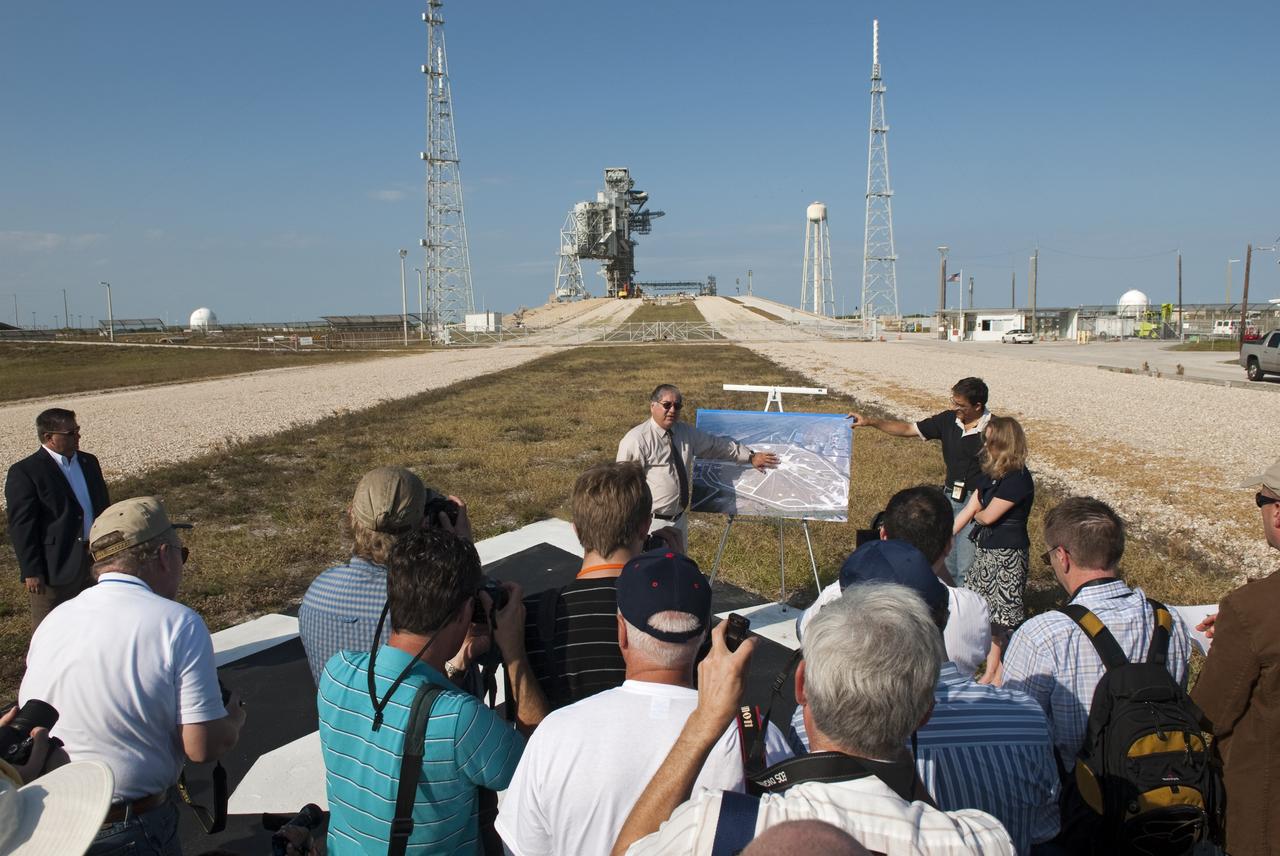
CAPE CANAVERAL, Fla. -- At NASA's Kennedy Space Center in Florida, media learn about the transformation of Launch Pad 39B from Jose Perez-Morales, NASA's Launch Pad 39B senior manager. Starting in 2009, the structure at the pad was no longer needed for NASA's Space Shuttle Program, so it is being restructured for future use. The new design will feature a "clean pad" for rockets to come with their own launcher, making it more versatile for a number of vehicles. The transformation includes the removal of the rotating service structure (RSS) and fixed service structure (FSS), refurbishment of the liquid oxygen and liquid hydrogen tanks, and the upgrade of about 1.3 million feet of cable. The new lightning protection system, which was in place for the October 2009 launch of Ares I-X, will remain. For information on NASA's future plans, visit www.nasa.gov. Photo credit: NASA/Jim Grossmann
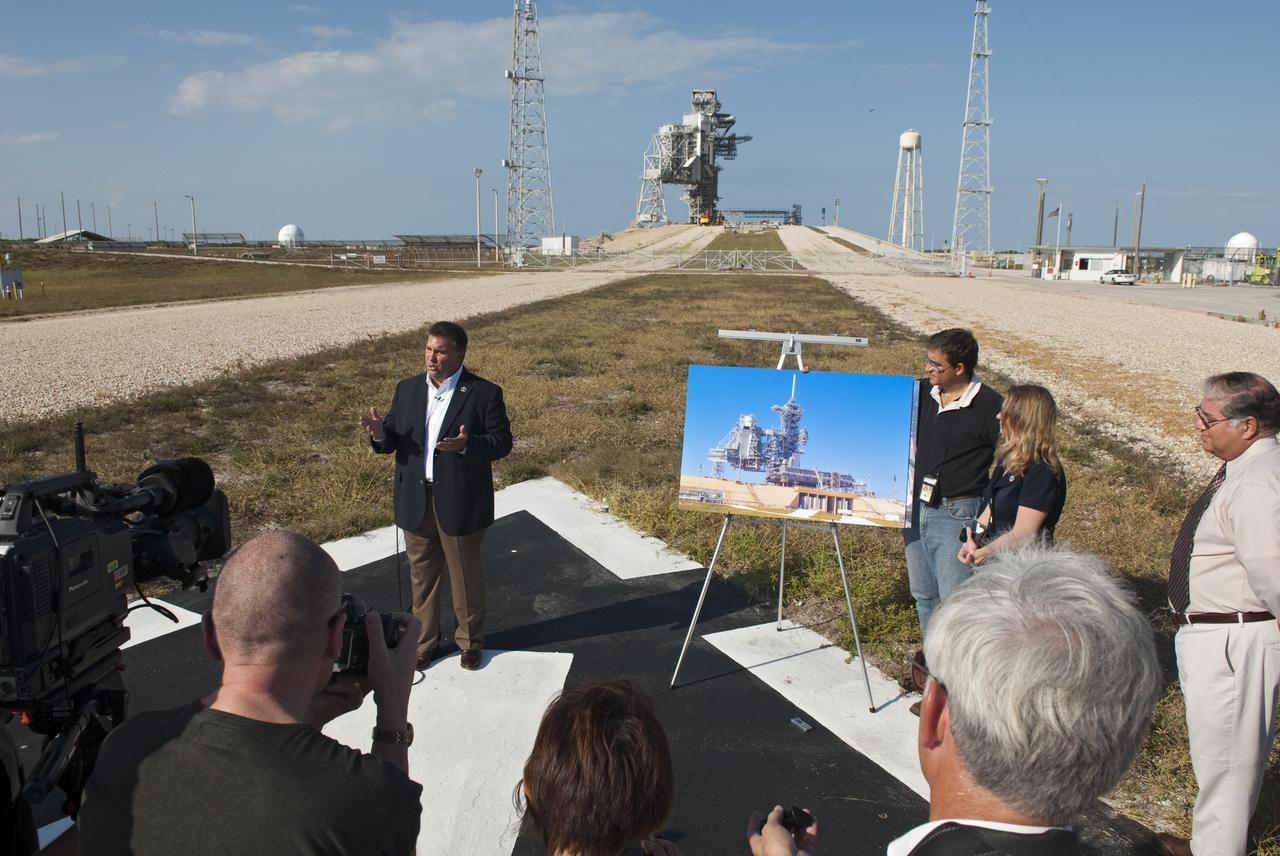
CAPE CANAVERAL, Fla. -- At NASA's Kennedy Space Center in Florida, media learn about the future plans for Launch Pad 39B from Ed Mango, NASA's Space Transportation Planning Office director. If appropriations are provided for NASA's current Authorization Act, those plans would include a robust commercial space program with multiple customers, multiple providers and multiple systems that take Americans to the International Space Station and other low-Earth orbit destinations. For information on NASA's future plans, visit www.nasa.gov. Photo credit: NASA/Jim Grossmann
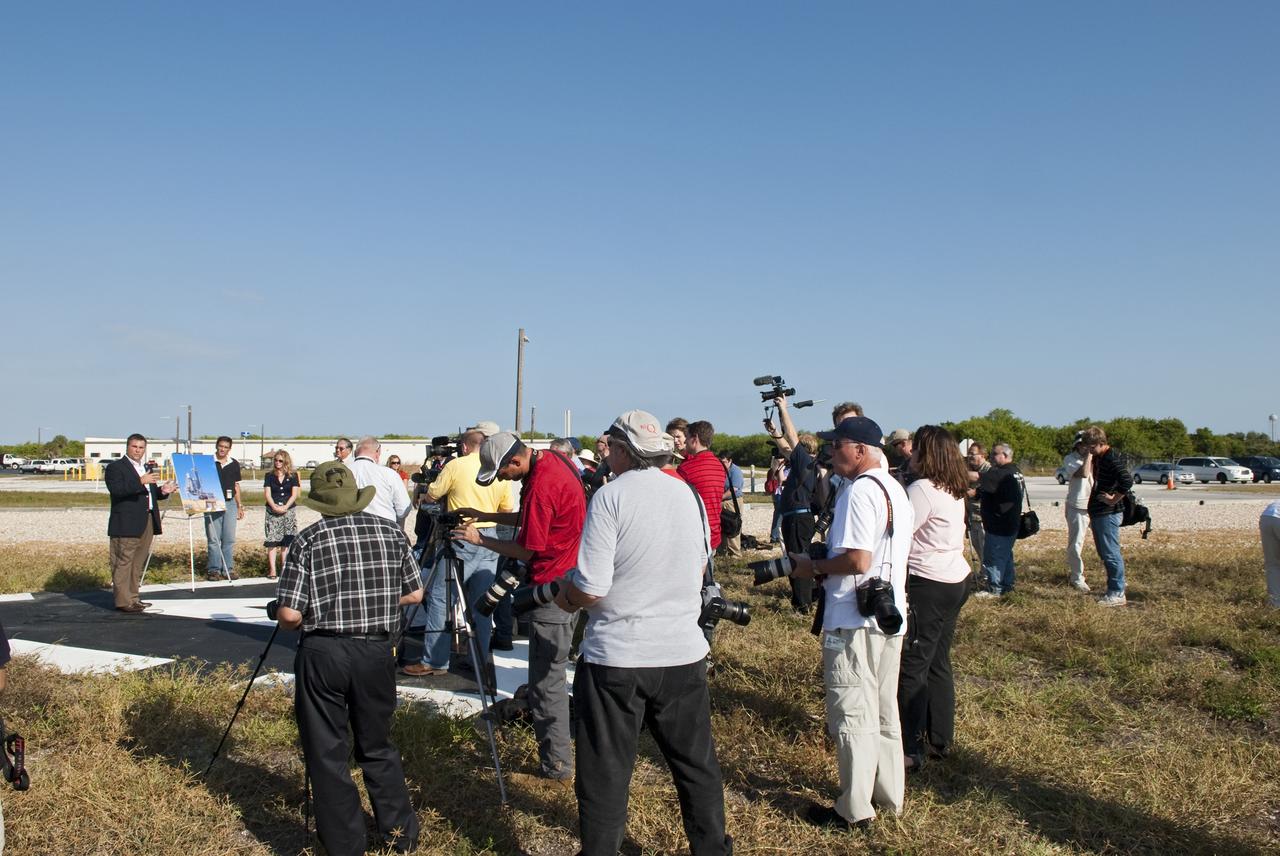
CAPE CANAVERAL, Fla. -- At NASA's Kennedy Space Center in Florida, media learn about the future plans for Launch Pad 39B from Ed Mango, NASA's Space Transportation Planning Office director. If appropriations are provided for NASA's current Authorization Act, those plans would include a robust commercial space program with multiple customers, multiple providers and multiple systems that take Americans to the International Space Station and other low-Earth orbit destinations. For information on NASA's future plans, visit www.nasa.gov. Photo credit: NASA/Jim Grossmann