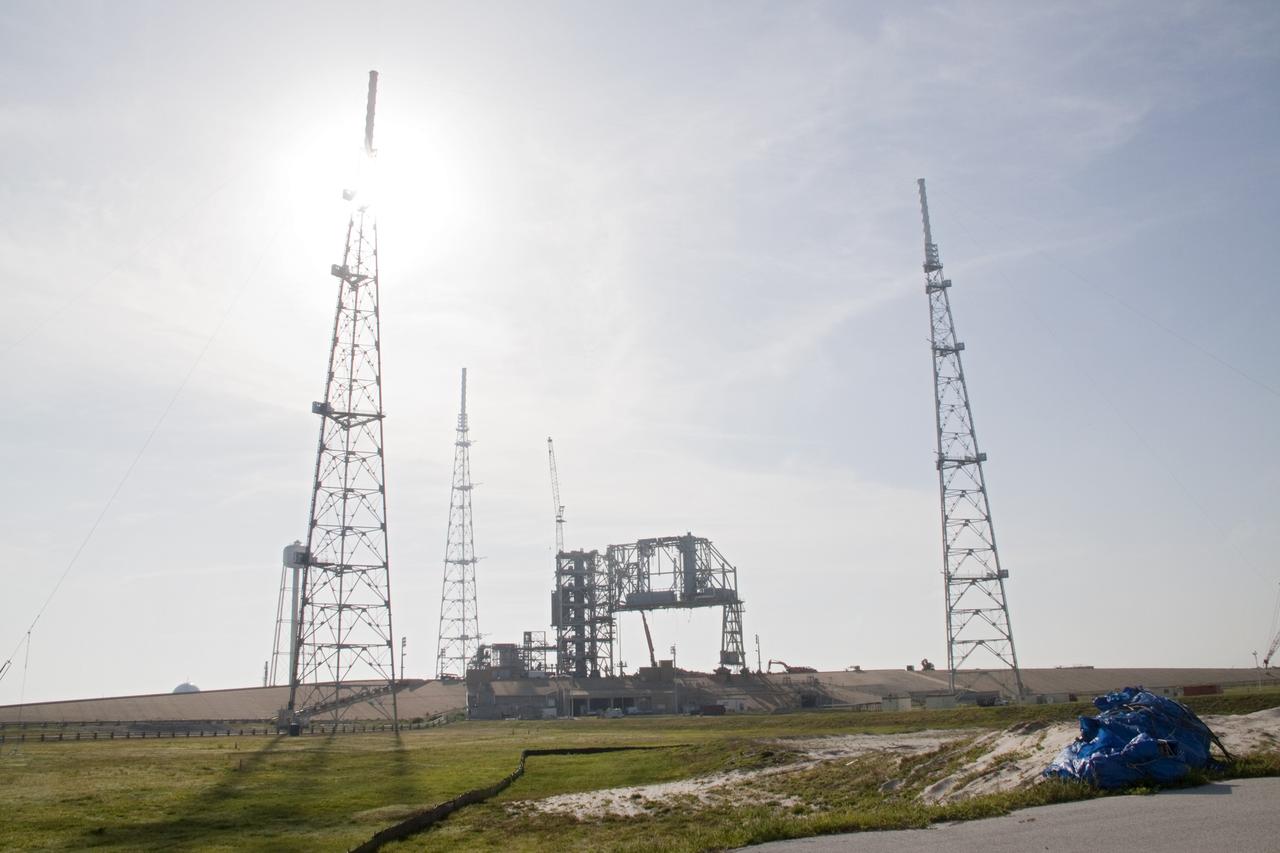
Cape Canaveral, Fla. -- Photographed from the base of the former emergency egress system at NASA's Kennedy Space Center in Florida, is the skeleton of steel that once was Launch Pad 39B after significant deconstruction. The system included seven baskets suspended from seven slidewires that extended from the pad to a landing zone 1,200 feet west of the pad. The bunkers at the base also are being dismantled. In 2009, the pad was no longer needed for the shuttle program, so it is being restructured for future use. Its new design will feature a "clean pad" for rockets to come with their own launcher, making it more versatile for a number of vehicles. The new lightning protection system, which was in place for the October 2009 launch of Ares I-X, will remain. For information on NASA's future plans, visit www.nasa.gov. Photo credit: NASA/Jack Pfaller
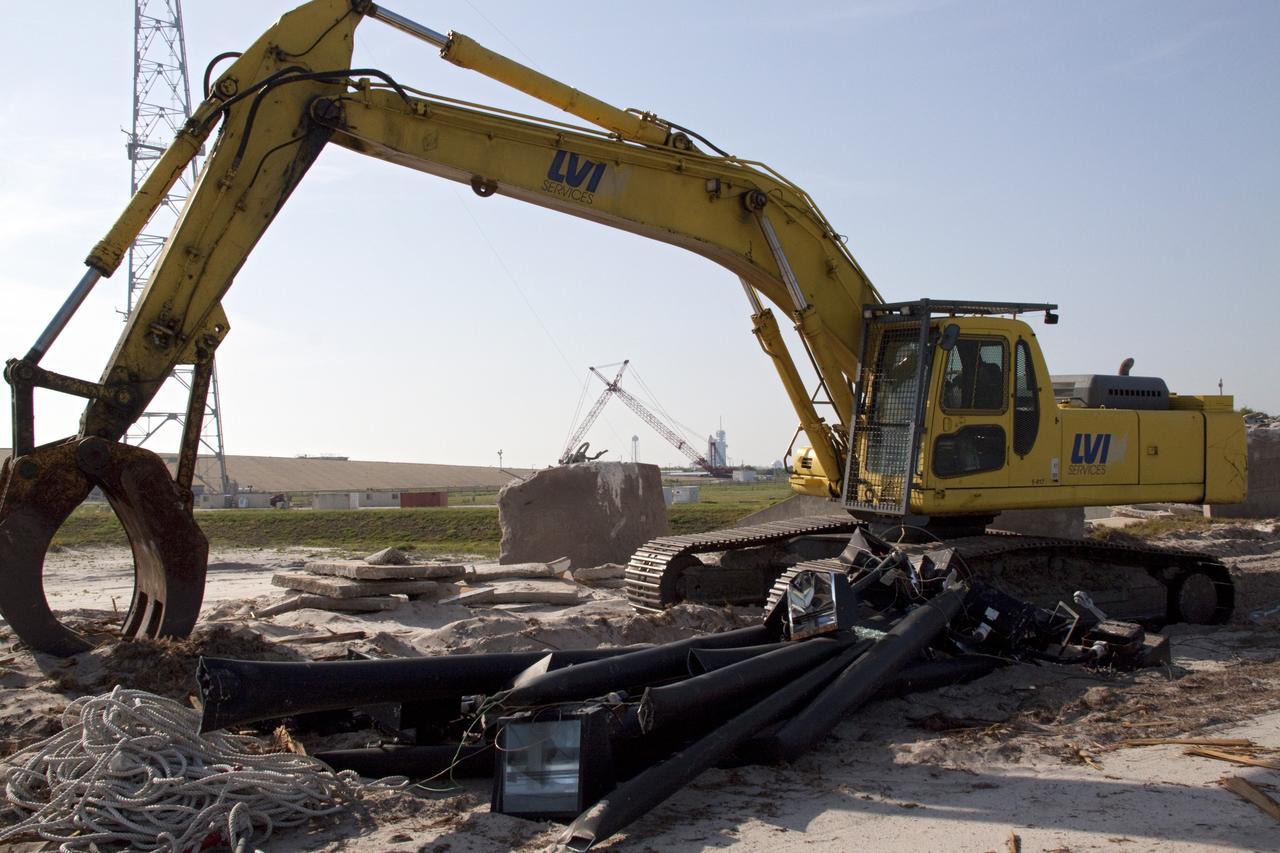
Cape Canaveral, Fla. -- At NASA's Kennedy Space Center in Florida, the emergency egress system that was part of Launch Pad 39B included seven baskets suspended from seven slidewires that extended from the pad to a landing zone 1,200 feet west of the pad. The system and the bunkers at the base also are being dismantled. In 2009, the pad was no longer needed for the shuttle program, so it is being restructured for future use. Its new design will feature a "clean pad" for rockets to come with their own launcher, making it more versatile for a number of vehicles. The new lightning protection system, which was in place for the October 2009 launch of Ares I-X, will remain. For information on NASA's future plans, visit www.nasa.gov. Photo credit: NASA/Jack Pfaller
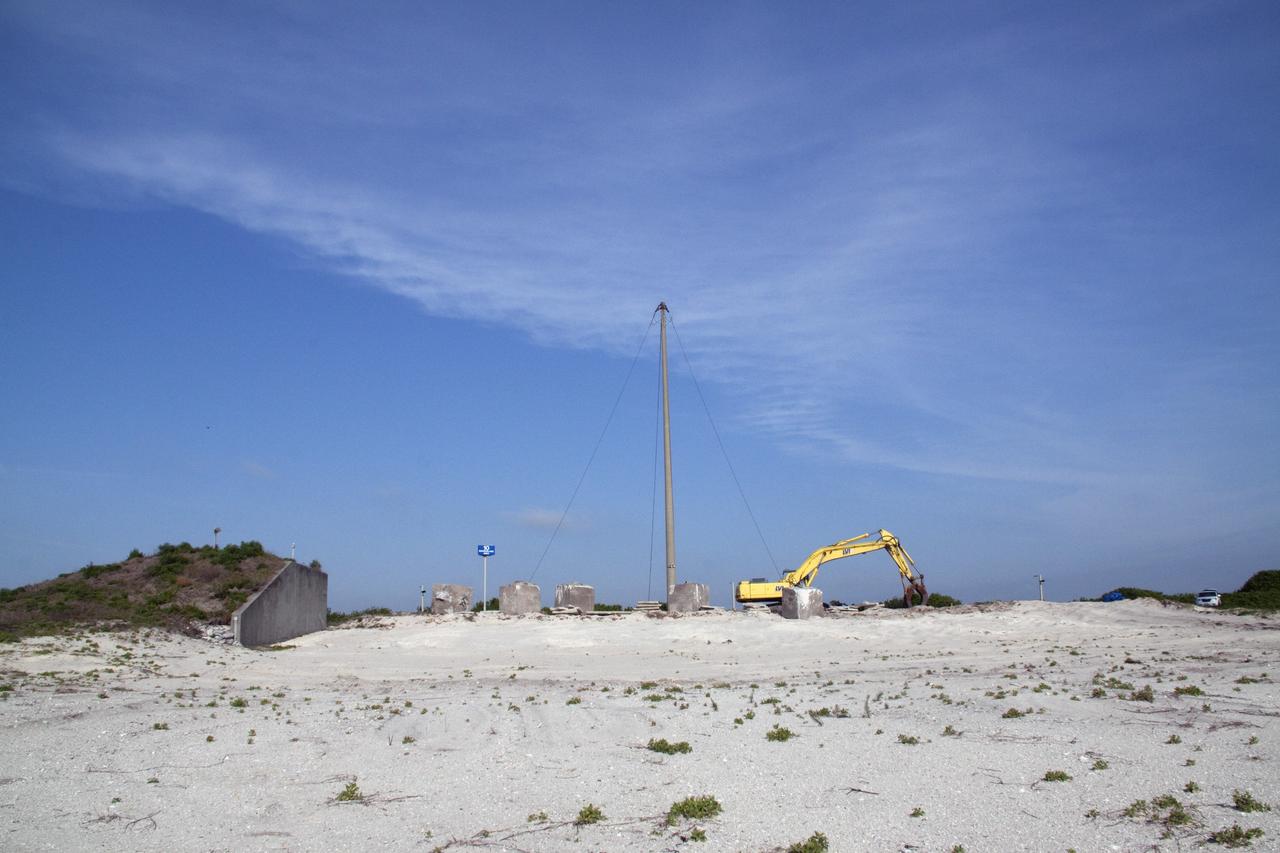
Cape Canaveral, Fla. -- At NASA's Kennedy Space Center in Florida, the emergency egress system that was part of Launch Pad 39B included seven baskets suspended from seven slidewires that extended from the pad to a landing zone 1,200 feet west of the pad. The system and the bunkers at the base also are being dismantled. In 2009, the pad was no longer needed for the shuttle program, so it is being restructured for future use. Its new design will feature a "clean pad" for rockets to come with their own launcher, making it more versatile for a number of vehicles. The new lightning protection system, which was in place for the October 2009 launch of Ares I-X, will remain. For information on NASA's future plans, visit www.nasa.gov. Photo credit: NASA/Jack Pfaller
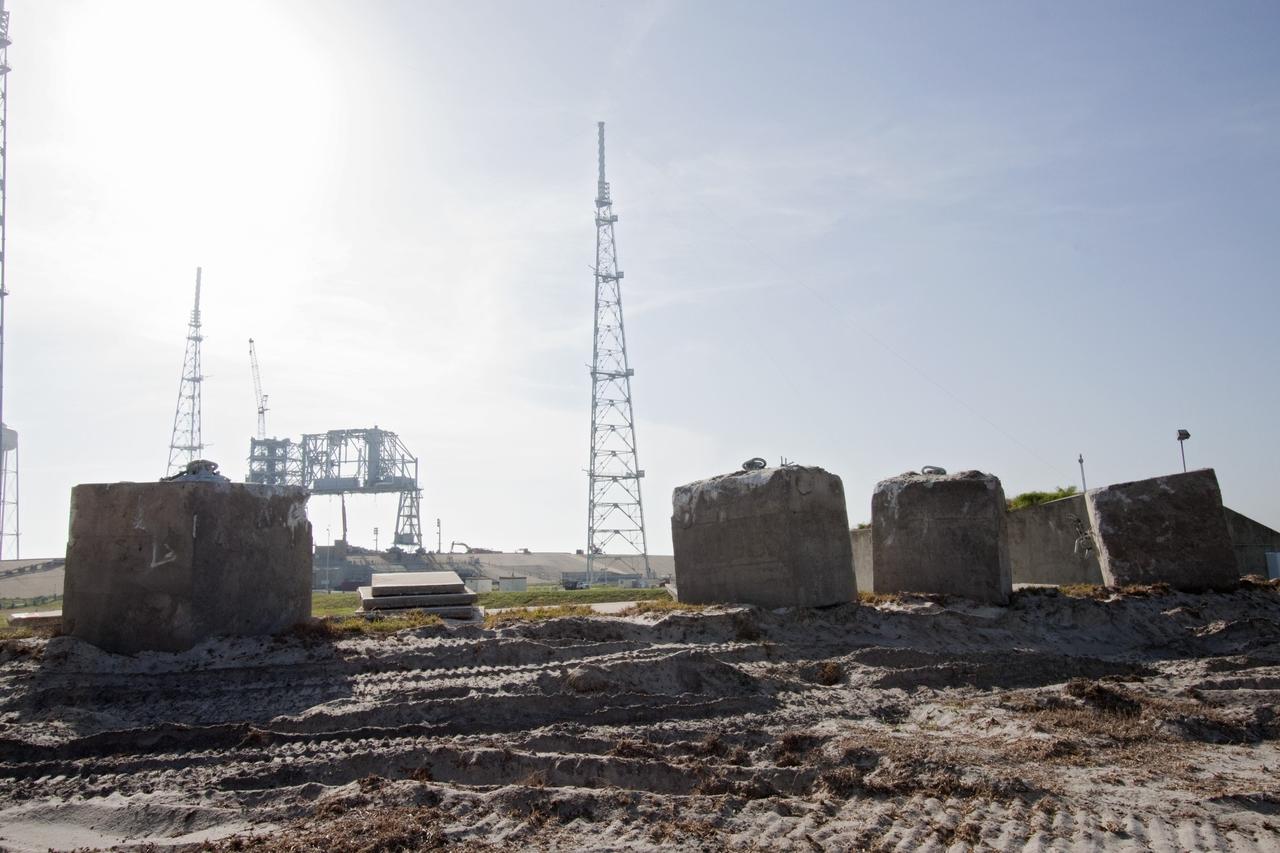
Cape Canaveral, Fla. -- Photographed from the base of the former emergency egress system at NASA's Kennedy Space Center in Florida, is the skeleton of steel that once was Launch Pad 39B after significant deconstruction. The system included seven baskets suspended from seven slidewires that extended from the pad to a landing zone 1,200 feet west of the pad. The bunkers at the base also are being dismantled. In 2009, the pad was no longer needed for the shuttle program, so it is being restructured for future use. Its new design will feature a "clean pad" for rockets to come with their own launcher, making it more versatile for a number of vehicles. The new lightning protection system, which was in place for the October 2009 launch of Ares I-X, will remain. For information on NASA's future plans, visit www.nasa.gov. Photo credit: NASA/Jack Pfaller
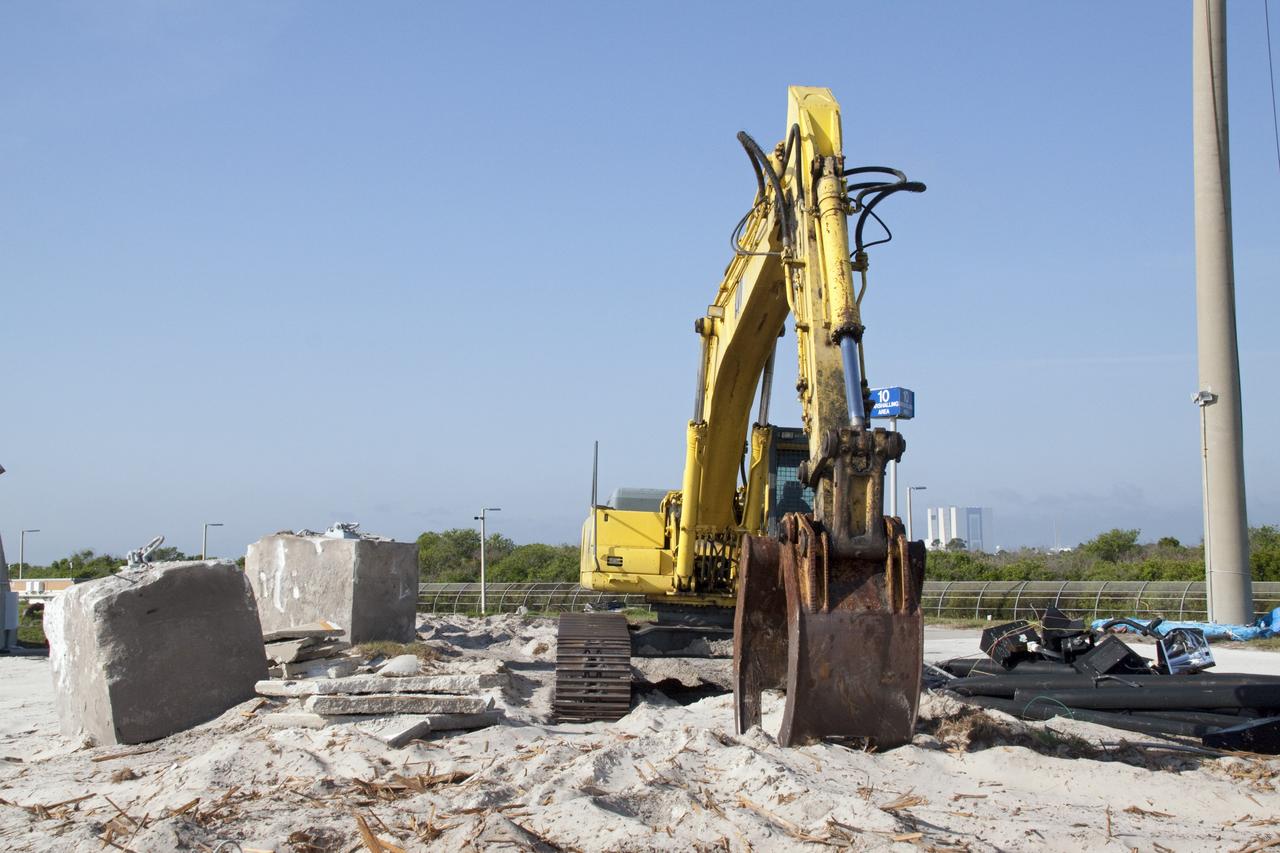
Cape Canaveral, Fla. -- At NASA's Kennedy Space Center in Florida, the emergency egress system that was part of Launch Pad 39B included seven baskets suspended from seven slidewires that extended from the pad to a landing zone 1,200 feet west of the pad. The system and the bunkers at the base also are being dismantled. In 2009, the pad was no longer needed for the shuttle program, so it is being restructured for future use. Its new design will feature a "clean pad" for rockets to come with their own launcher, making it more versatile for a number of vehicles. The new lightning protection system, which was in place for the October 2009 launch of Ares I-X, will remain. For information on NASA's future plans, visit www.nasa.gov. Photo credit: NASA/Jack Pfaller
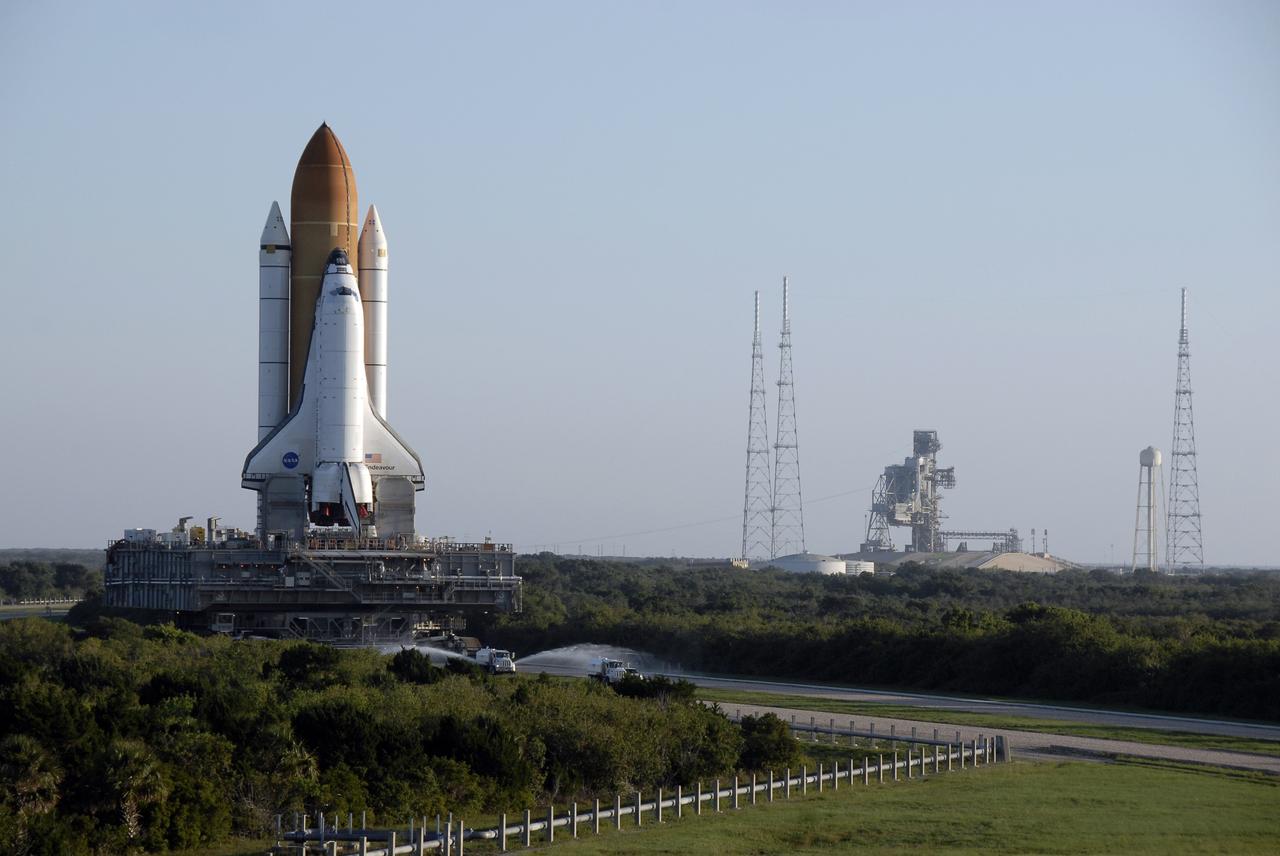
CAPE CANAVERAL, Fla. – Early morning at NASA's Kennedy Space Center in Florida finds space shuttle Endeavour departing Launch Pad 39B on its 3.4-mile rollaround to Launch Pad 39A. First motion was at 3:16 a.m. EDT. Three lightning towers have been erected already on Pad 39B, at right, to support the new launch vehicles in NASA's Constellation Program. Endeavour was on standby on Pad 39B to be used in the unlikely event that a rescue mission was necessary during space shuttle Atlantis' STS-125 mission to NASA's Hubble Space Telescope. The payload on the STS-127 mission includes the Japan Aerospace Exploration Agency's Kibo Exposed Facility and the Experiment Logistics Module Exposed Section of the International Space Station. They will be installed on the Kibo laboratory already on the station. Launch of STS-127 is targeted for June 13. Photo credit: NASA/Kim Shiflett
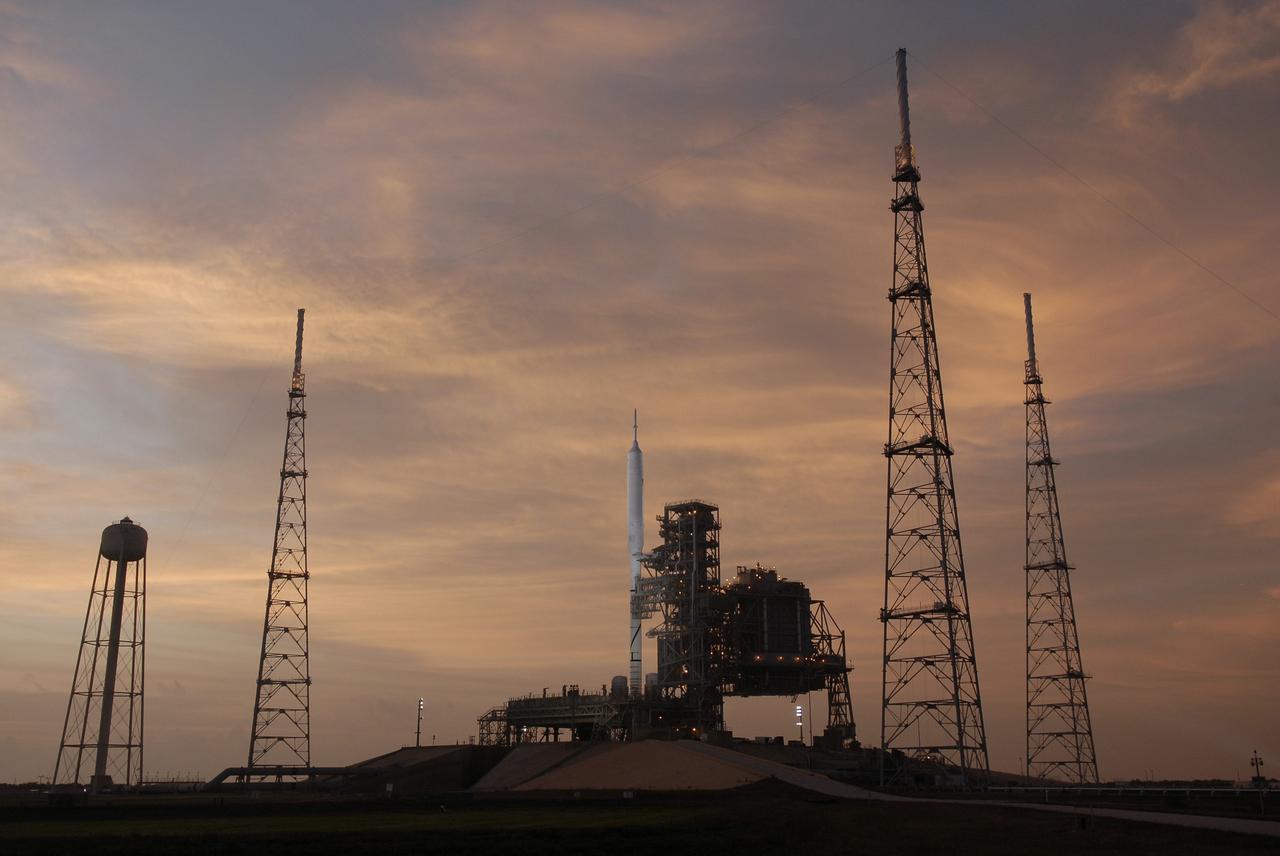
CAPE CANAVERAL, Fla. – Daybreak at Launch Pad 39B at NASA's Kennedy Space Center in Florida reveals the rotating service structure rolled back from around the Constellation Program's 327-foot-tall Ares I-X rocket for launch. The transfer of the pad from the Space Shuttle Program to the Constellation Program took place May 31. Modifications made to the pad include the removal of shuttle unique subsystems, such as the orbiter access arm and a section of the gaseous oxygen vent arm, and the installation of three 600-foot lightning towers, access platforms, environmental control systems and a vehicle stabilization system. The data returned from more than 700 sensors throughout the rocket will be used to refine the design of future launch vehicles and bring NASA one step closer to reaching its exploration goals. The Ares I-X flight test is targeted for Oct. 27. For information on the Ares I-X vehicle and flight test, visit http://www.nasa.gov/aresIX. Photo credit: NASA/Kim Shiflett
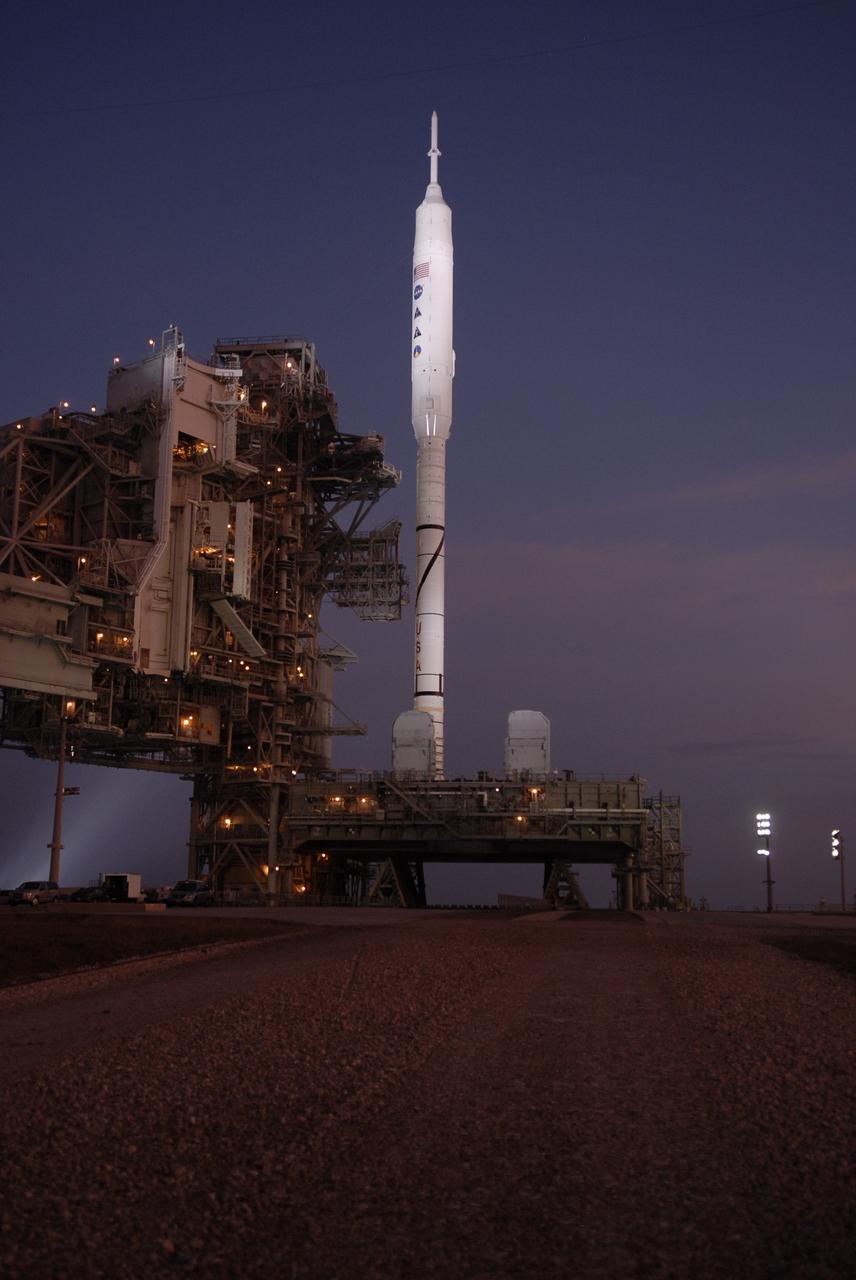
CAPE CANAVERAL, Fla. – Sunrise at Launch Pad 39B at NASA's Kennedy Space Center in Florida reveals the rotating service structure and the arms of the vehicle stabilization system have been retracted from around the Constellation Program's 327-foot-tall Ares I-X rocket for launch. The transfer of the pad from the Space Shuttle Program to the Constellation Program took place May 31. Modifications made to the pad include the removal of shuttle unique subsystems, such as the orbiter access arm and a section of the gaseous oxygen vent arm, and the installation of three 600-foot lightning towers, access platforms, environmental control systems and a vehicle stabilization system. The data returned from more than 700 sensors throughout the rocket will be used to refine the design of future launch vehicles and bring NASA one step closer to reaching its exploration goals. The Ares I-X flight test is targeted for Oct. 27. For information on the Ares I-X vehicle and flight test, visit http://www.nasa.gov/aresIX. Photo credit: NASA/Kim Shiflett
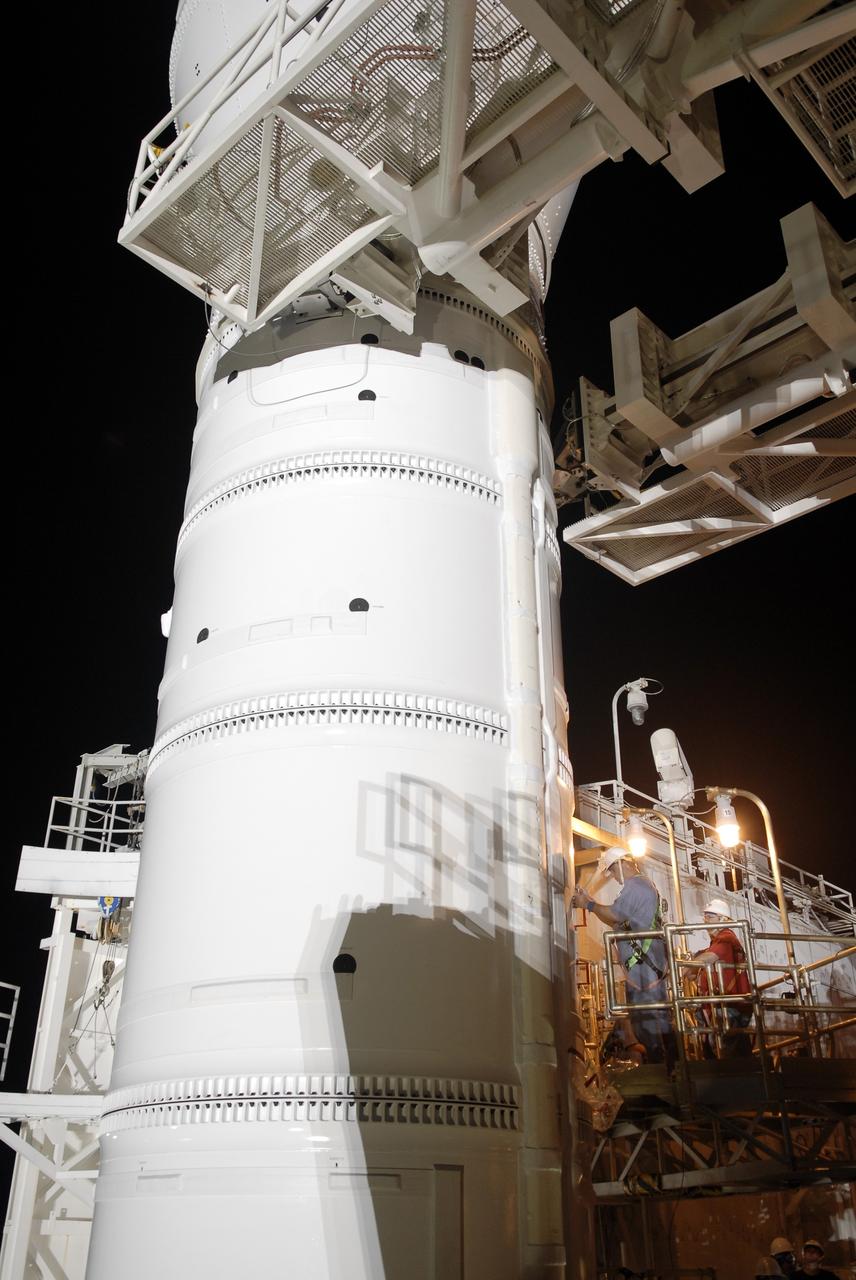
CAPE CANAVERAL, Fla. – Workers on Launch Pad 39B at NASA's Kennedy Space Center in Florida prepare the Constellation Program's 327-foot-tall Ares I-X rocket for launch. The rotating service structure and the arms of the vehicle stabilization system will be moved from around the rocket for liftoff. The transfer of the pad from the Space Shuttle Program to the Constellation Program took place May 31. Modifications made to the pad include the removal of shuttle unique subsystems, such as the orbiter access arm and a section of the gaseous oxygen vent arm, and the installation of three 600-foot lightning towers, access platforms, environmental control systems and a vehicle stabilization system. The data returned from more than 700 sensors throughout the rocket will be used to refine the design of future launch vehicles and bring NASA one step closer to reaching its exploration goals. The Ares I-X flight test is targeted for Oct. 27. For information on the Ares I-X vehicle and flight test, visit http://www.nasa.gov/aresIX. Photo credit: NASA/Kim Shiflett
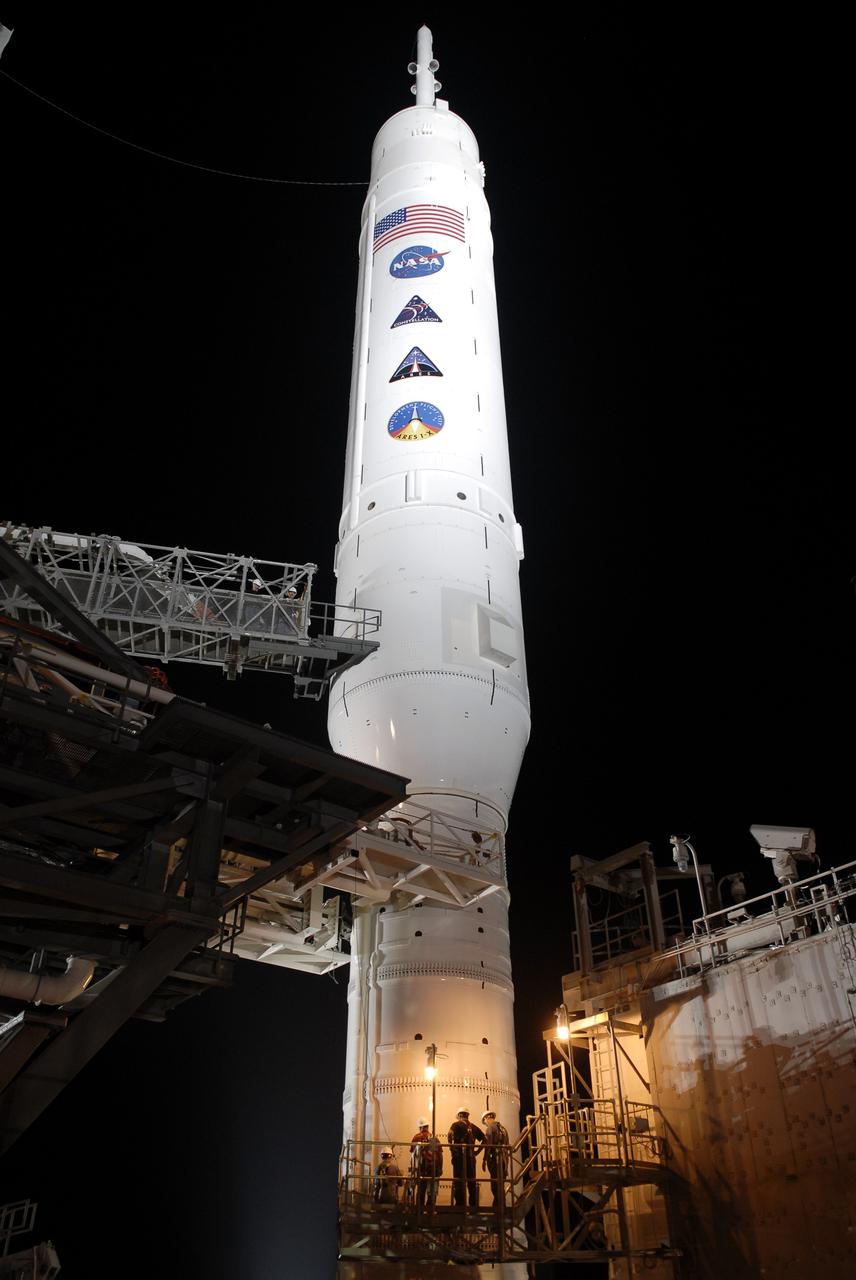
CAPE CANAVERAL, Fla. - Workers on Launch Pad 39B at NASA's Kennedy Space Center in Florida make final preparations for launch of the Constellation Program's 327-foot-tall Ares I-X rocket. The rotating service structure and the arms of the vehicle stabilization system will be moved from around the rocket for liftoff. The transfer of the pad from the Space Shuttle Program to the Constellation Program took place May 31. Modifications made to the pad include the removal of shuttle unique subsystems, such as the orbiter access arm and a section of the gaseous oxygen vent arm, and the installation of three 600-foot lightning towers, access platforms, environmental control systems and a vehicle stabilization system. The data returned from more than 700 sensors throughout the rocket will be used to refine the design of future launch vehicles and bring NASA one step closer to reaching its exploration goals. The Ares I-X flight test is targeted for Oct. 27. For information on the Ares I-X vehicle and flight test, visit http://www.nasa.gov/aresIX. Photo credit: NASA/Kim Shiflett
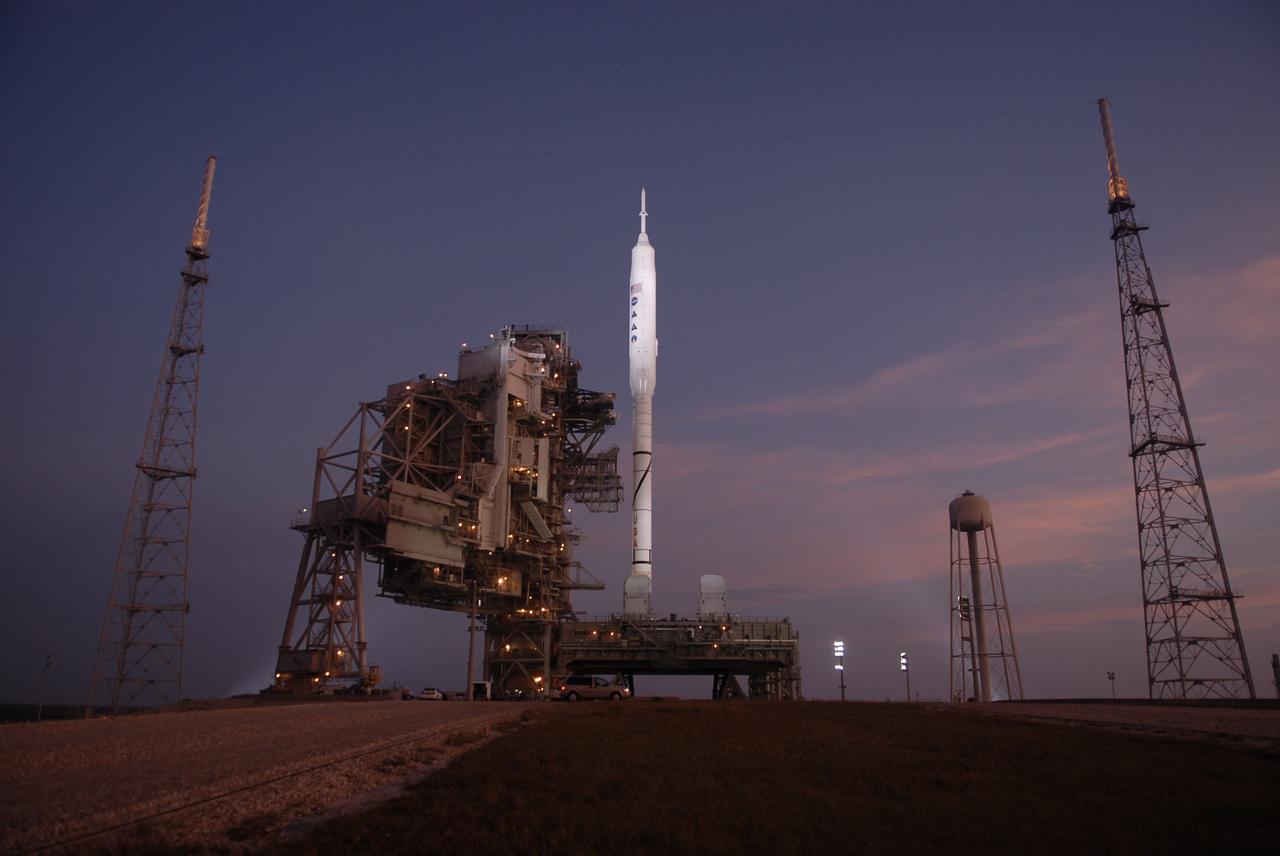
CAPE CANAVERAL, Fla. – As the sun rises over Launch Pad 39B at NASA's Kennedy Space Center in Florida, the rotating service structure and the arms of the vehicle stabilization system have been retracted from around the Constellation Program's 327-foot-tall Ares I-X rocket, resting atop its mobile launcher platform, for launch. The transfer of the pad from the Space Shuttle Program to the Constellation Program took place May 31. Modifications made to the pad include the removal of shuttle unique subsystems, such as the orbiter access arm and a section of the gaseous oxygen vent arm, and the installation of three 600-foot lightning towers, access platforms, environmental control systems and a vehicle stabilization system. The data returned from more than 700 sensors throughout the rocket will be used to refine the design of future launch vehicles and bring NASA one step closer to reaching its exploration goals. The Ares I-X flight test is targeted for Oct. 27. For information on the Ares I-X vehicle and flight test, visit http://www.nasa.gov/aresIX. Photo credit: NASA/Kim Shiflett
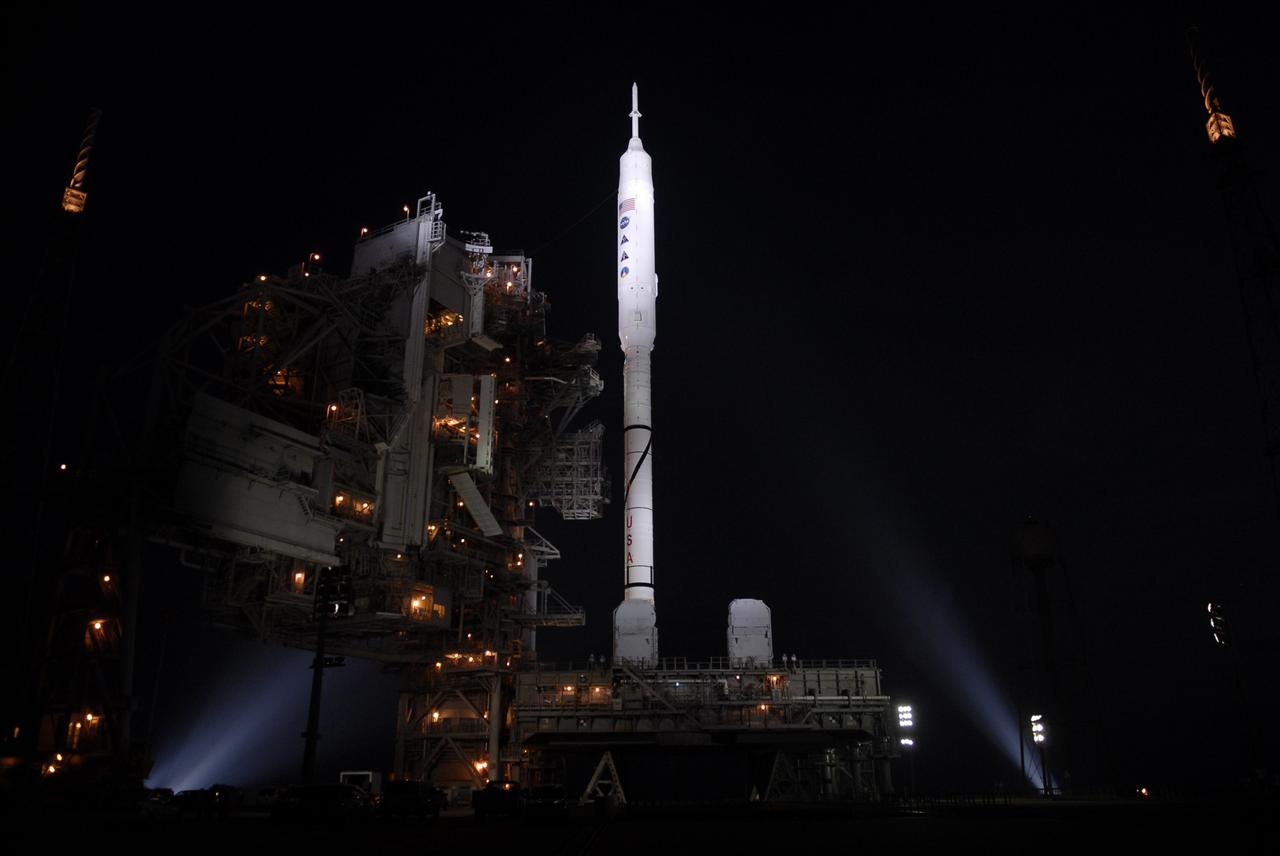
CAPE CANAVERAL, Fla. – At Launch Pad 39B at NASA's Kennedy Space Center in Florida, xenon lights illuminate the Constellation Program's 327-foot-tall Ares I-X rocket after the rotating service structure, has been retracted from around it for launch. The transfer of the pad from the Space Shuttle Program to the Constellation Program took place May 31. Modifications made to the pad include the removal of shuttle unique subsystems, such as the orbiter access arm and a section of the gaseous oxygen vent arm, and the installation of three 600-foot lightning towers, access platforms, environmental control systems and a vehicle stabilization system. The data returned from more than 700 sensors throughout the rocket will be used to refine the design of future launch vehicles and bring NASA one step closer to reaching its exploration goals. The Ares I-X flight test is targeted for Oct. 27. For information on the Ares I-X vehicle and flight test, visit http://www.nasa.gov/aresIX. Photo credit: NASA/Kim Shiflett
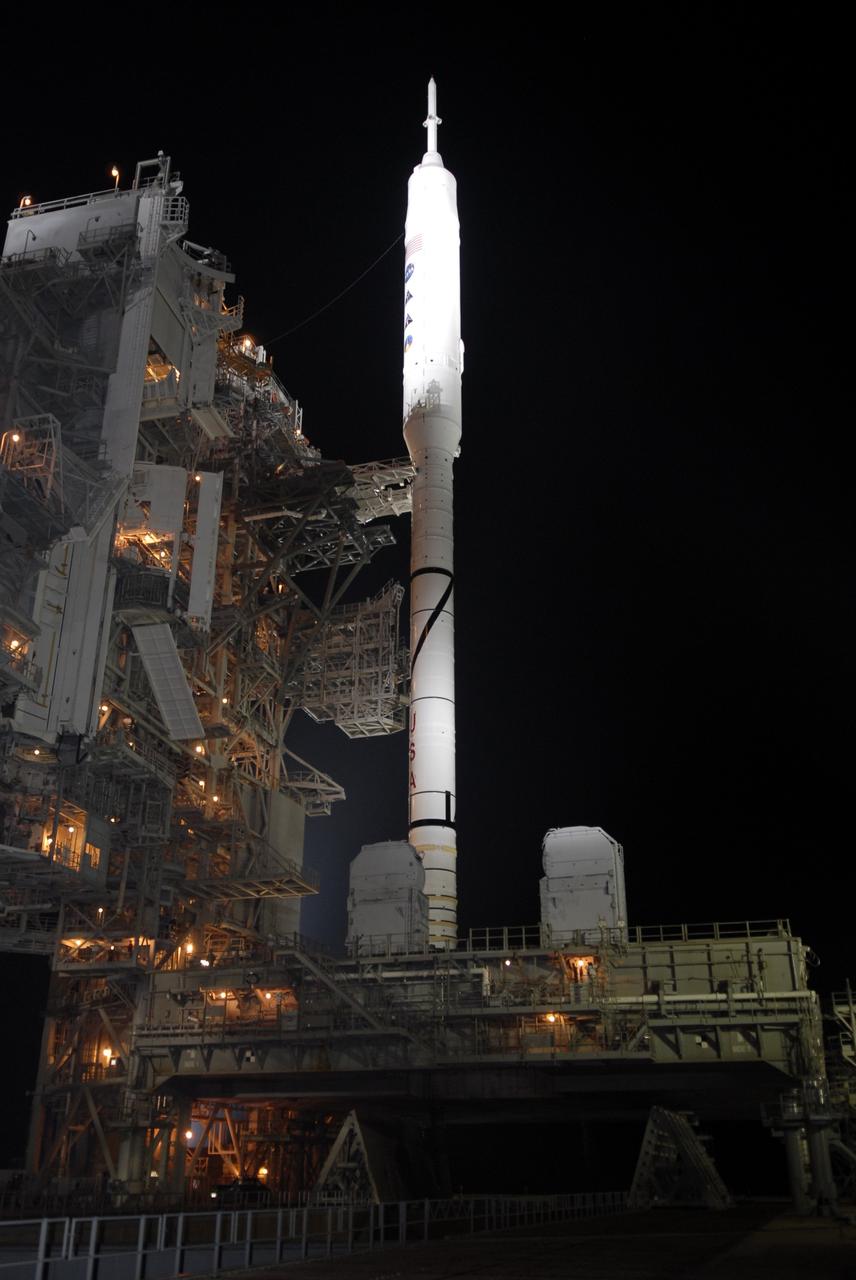
CAPE CANAVERAL, Fla. – At Launch Pad 39B at NASA's Kennedy Space Center in Florida, the rotating service structure has been rolled back from the Constellation Program's 327-foot-tall Ares I-X rocket, sitting atop its mobile launcher platform, during preparations for launch. The transfer of the pad from the Space Shuttle Program to the Constellation Program took place May 31. Modifications made to the pad include the removal of shuttle unique subsystems, such as the orbiter access arm and a section of the gaseous oxygen vent arm, and the installation of three 600-foot lightning towers, access platforms, environmental control systems and a vehicle stabilization system. The data returned from more than 700 sensors throughout the rocket will be used to refine the design of future launch vehicles and bring NASA one step closer to reaching its exploration goals. The Ares I-X flight test is targeted for Oct. 27. For information on the Ares I-X vehicle and flight test, visit http://www.nasa.gov/aresIX. Photo credit: NASA/Kim Shiflett
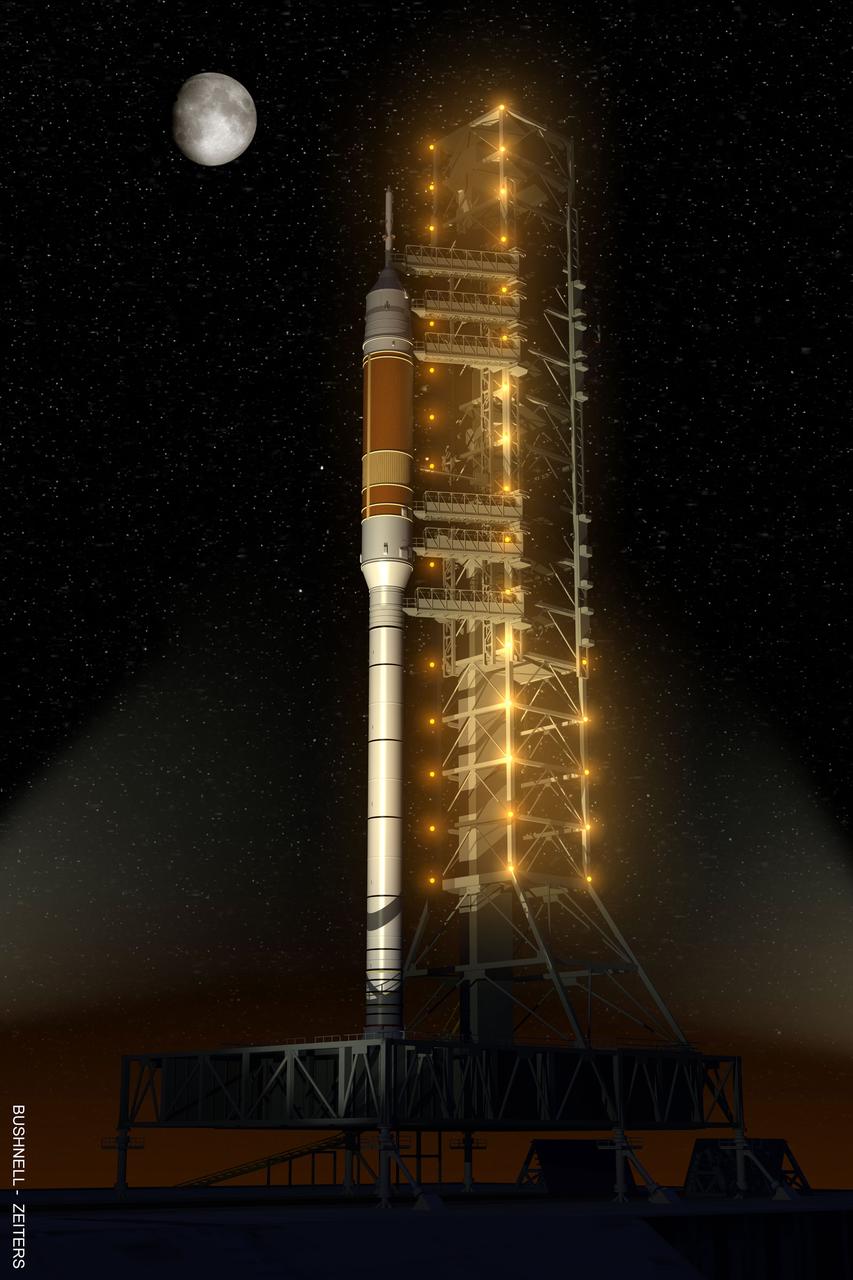
Under the goals of the Vision for Space Exploration, Ares I is a chief component of the cost-effective space transportation infrastructure being developed by NASA's Constellation Program. This transportation system will safely and reliably carry human explorers back to the moon, and then onward to Mars and other destinations in the solar system. Launch Pad 39B of the Kennedy Space Flight Center (KSC), currently used for Space Shuttle launches, will be revised to host the Ares launch vehicles. The fixed and rotating service structures standing at the pad will be dismantled sometime after the Ares I-X test flight. A new launch tower for Ares I will be built onto a new mobile launch platform. The gantry for the shuttle doesn't reach much higher than the top of the four segments of the solid rocket booster. Pad access above the current shuttle launch pad structure will not be required for Ares I-X because the stages above the solid rocket booster are inert. For the test scheduled in 2012 or for the crewed flights, workers and astronauts will need access to the highest levels of the rocket and capsule. When the Ares I rocket rolls out to the launch pad on the back of the same crawler-transporters used now, its launch gantry will be with it. The mobile launchers will nestle under three lightning protection towers to be erected around the pad area. Ares time at the launch pad will be significantly less than the three weeks or more the shuttle requires. This “clean pad” approach minimizes equipment and servicing at the launch pad. It is the same plan NASA used with the Saturn V rockets and industry employs it with more modern launchers. The launch pad will also get a new emergency escape system for astronauts, one that looks very much like a roller coaster. Cars riding on a rail will replace the familiar baskets hanging from steel cables. This artist's concept illustrates the Ares I on launch pad 39B.
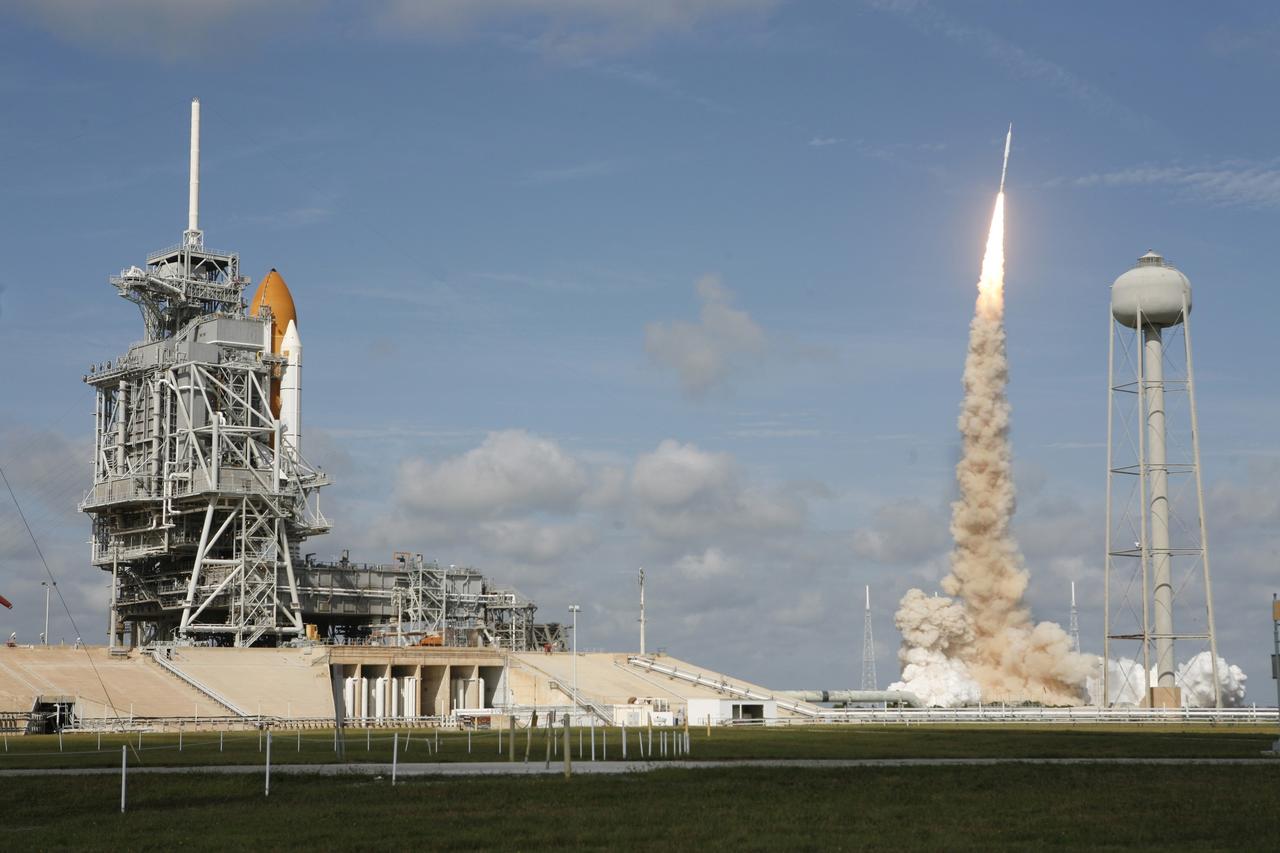
CAPE CANAVERAL, Fla. - With more than 12 times the thrust produced by a Boeing 747 jet aircraft, the Constellation Program's Ares I-X test rocket roars off Launch Pad 39B at NASA's Kennedy Space Center in Florida. The rocket produces 2.96 million pounds of thrust at liftoff and goes supersonic in 39 seconds. At left is space shuttle Atlantis, poised on Launch Pad 39A for liftoff, targeted for Nov. 16. Liftoff of the 6-minute flight test was at 11:30 a.m. EDT Oct. 28. This was the first launch from Kennedy's pads of a vehicle other than the space shuttle since the Apollo Program's Saturn rockets were retired. The parts used to make the Ares I-X booster flew on 30 different shuttle missions ranging from STS-29 in 1989 to STS-106 in 2000. The data returned from more than 700 sensors throughout the rocket will be used to refine the design of future launch vehicles and bring NASA one step closer to reaching its exploration goals. For information on the Ares I-X vehicle and flight test, visit http://www.nasa.gov/aresIX. Photo courtesy of Scott Andrews
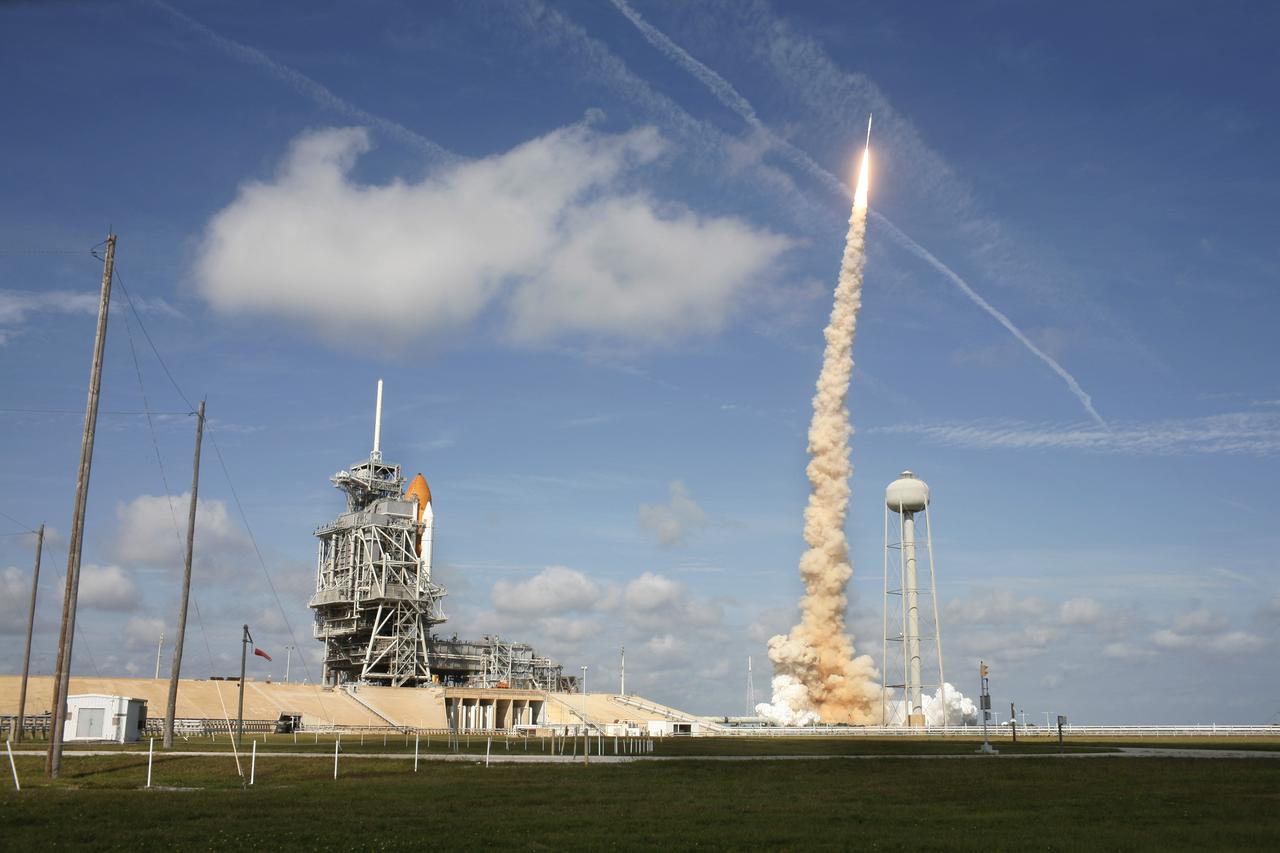
CAPE CANAVERAL, Fla. - With more than 12 times the thrust produced by a Boeing 747 jet aircraft, the Constellation Program's Ares I-X test rocket roars off Launch Pad 39B at NASA's Kennedy Space Center in Florida. The rocket produces 2.96 million pounds of thrust at liftoff and goes supersonic in 39 seconds. At left is space shuttle Atlantis, poised on Launch Pad 39A for liftoff, targeted for Nov. 16. Liftoff of the 6-minute flight test was at 11:30 a.m. EDT Oct. 28. This was the first launch from Kennedy's pads of a vehicle other than the space shuttle since the Apollo Program's Saturn rockets were retired. The parts used to make the Ares I-X booster flew on 30 different shuttle missions ranging from STS-29 in 1989 to STS-106 in 2000. The data returned from more than 700 sensors throughout the rocket will be used to refine the design of future launch vehicles and bring NASA one step closer to reaching its exploration goals. For information on the Ares I-X vehicle and flight test, visit http://www.nasa.gov/aresIX. Photo courtesy of Scott Andrews
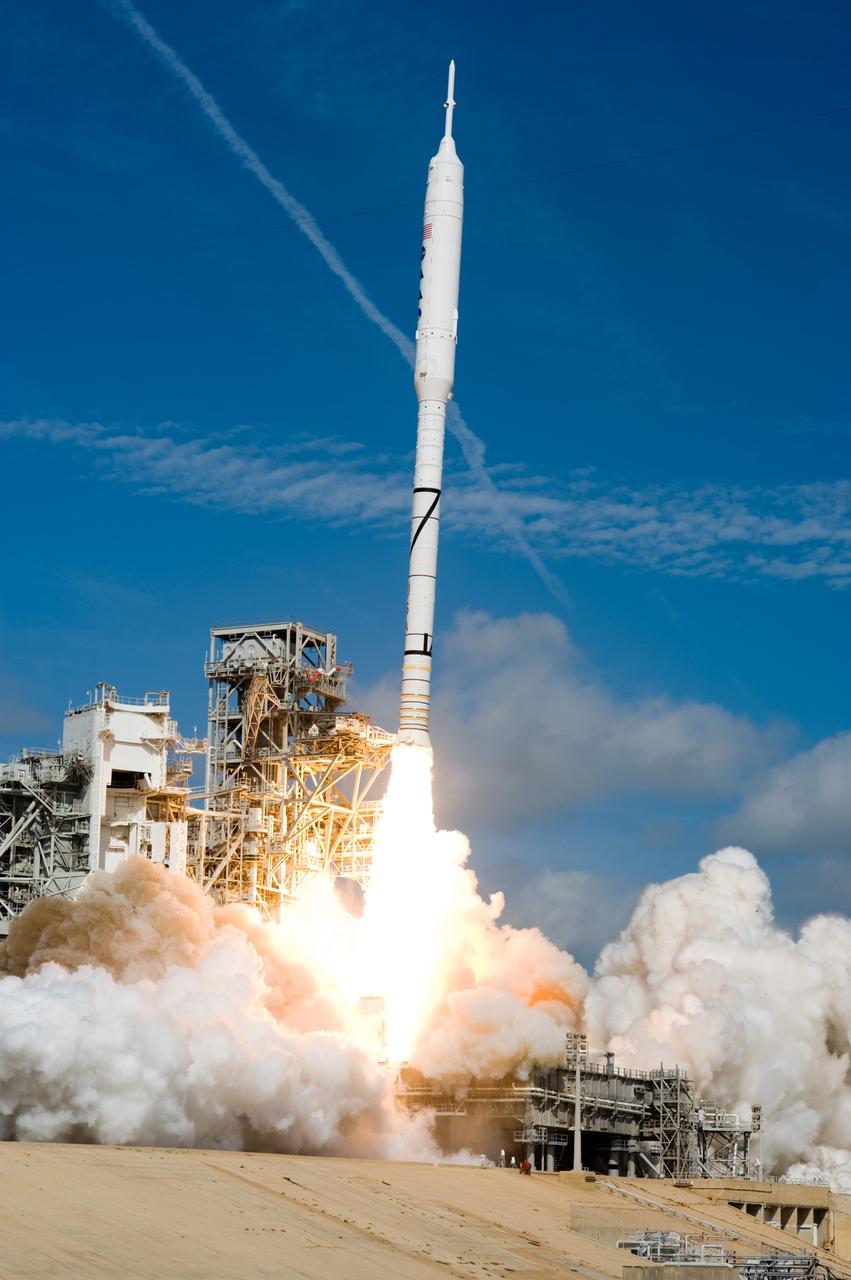
CAPE CANAVERAL, Fla. – Billowing clouds of smoke and steam rise as the Ares I-X test rocket launches from Launch Pad 39B at NASA's Kennedy Space Center in Florida at 11:30 a.m. EDT Oct. 28. NASA’s Constellation Program's 327-foot-tall rocket produces 2.96 million pounds of thrust at liftoff and reaches a speed of 100 mph in eight seconds. This was the first launch from Kennedy's pads of a vehicle other than the space shuttle since the Apollo Program's Saturn rockets were retired. The parts used to make the Ares I-X booster flew on 30 different shuttle missions ranging from STS-29 in 1989 to STS-106 in 2000. The data returned from more than 700 sensors throughout the rocket will be used to refine the design of future launch vehicles and bring NASA one step closer to reaching its exploration goals. For information on the Ares I-X vehicle and flight test, visit http://www.nasa.gov/aresIX. A Delta II rocket appears to erupt from the undulating clouds of smoke below Photo credit: NASA/Tony Gray and Tom Farrar
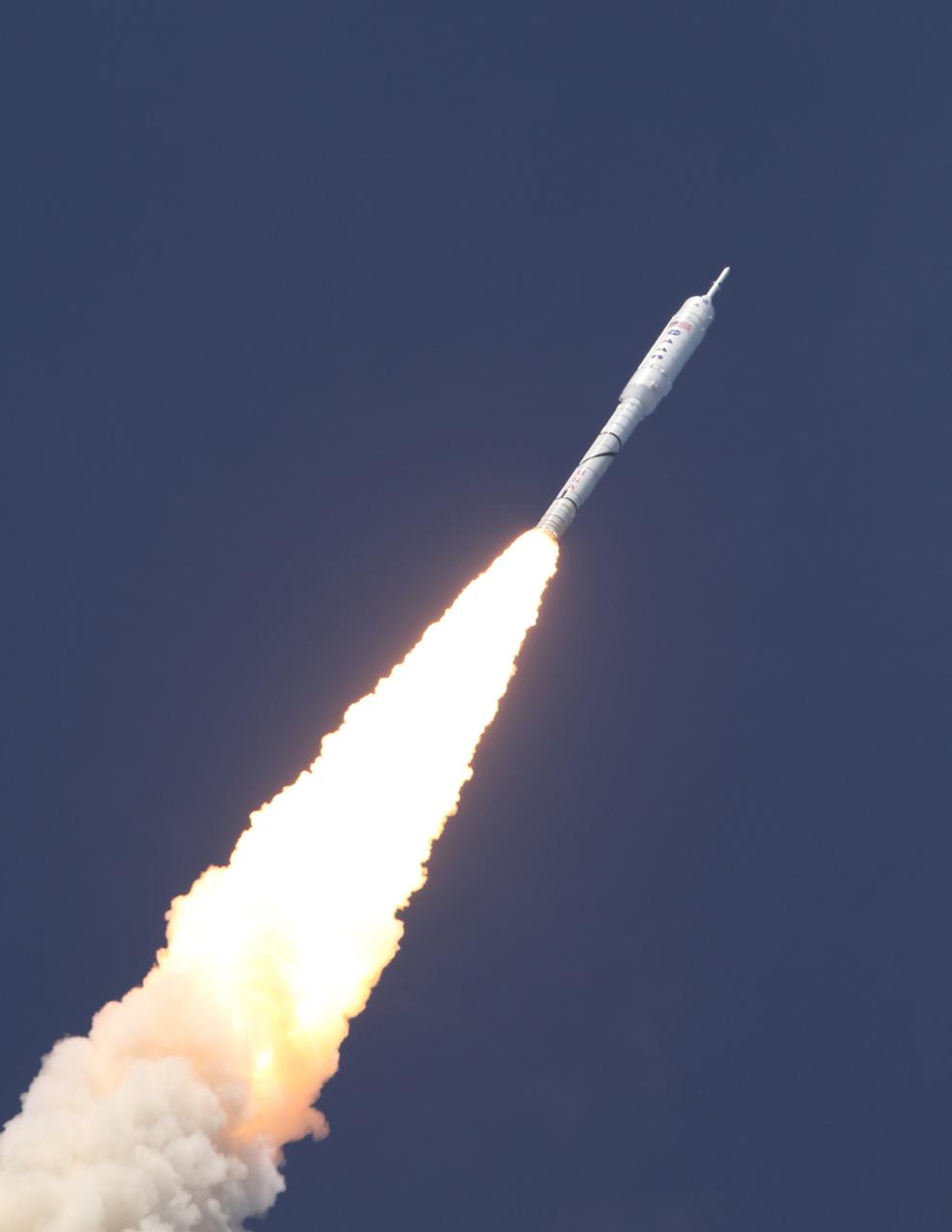
CAPE CANAVERAL, Fla. – A fiery blaze trails the Ares I-X test rocket as it takes off from Launch Pad 39B at NASA's Kennedy Space Center in Florida at 11:30 a.m. EDT Oct. 28. Constellation Program's 327-foot-tall rocket produces 2.96 million pounds of thrust at liftoff and reaches a speed of 100 mph in eight seconds. This was the first launch from Kennedy's pads of a vehicle other than the space shuttle since the Apollo Program's Saturn rockets were retired. The parts used to make the Ares I-X booster flew on 30 different shuttle missions ranging from STS-29 in 1989 to STS-106 in 2000. The data returned from more than 700 sensors throughout the rocket will be used to refine the design of future launch vehicles and bring NASA one step closer to reaching its exploration goals. For information on the Ares I-X vehicle and flight test, visit http://www.nasa.gov/aresIX. Photo credit: NASA/ Kenny Allen
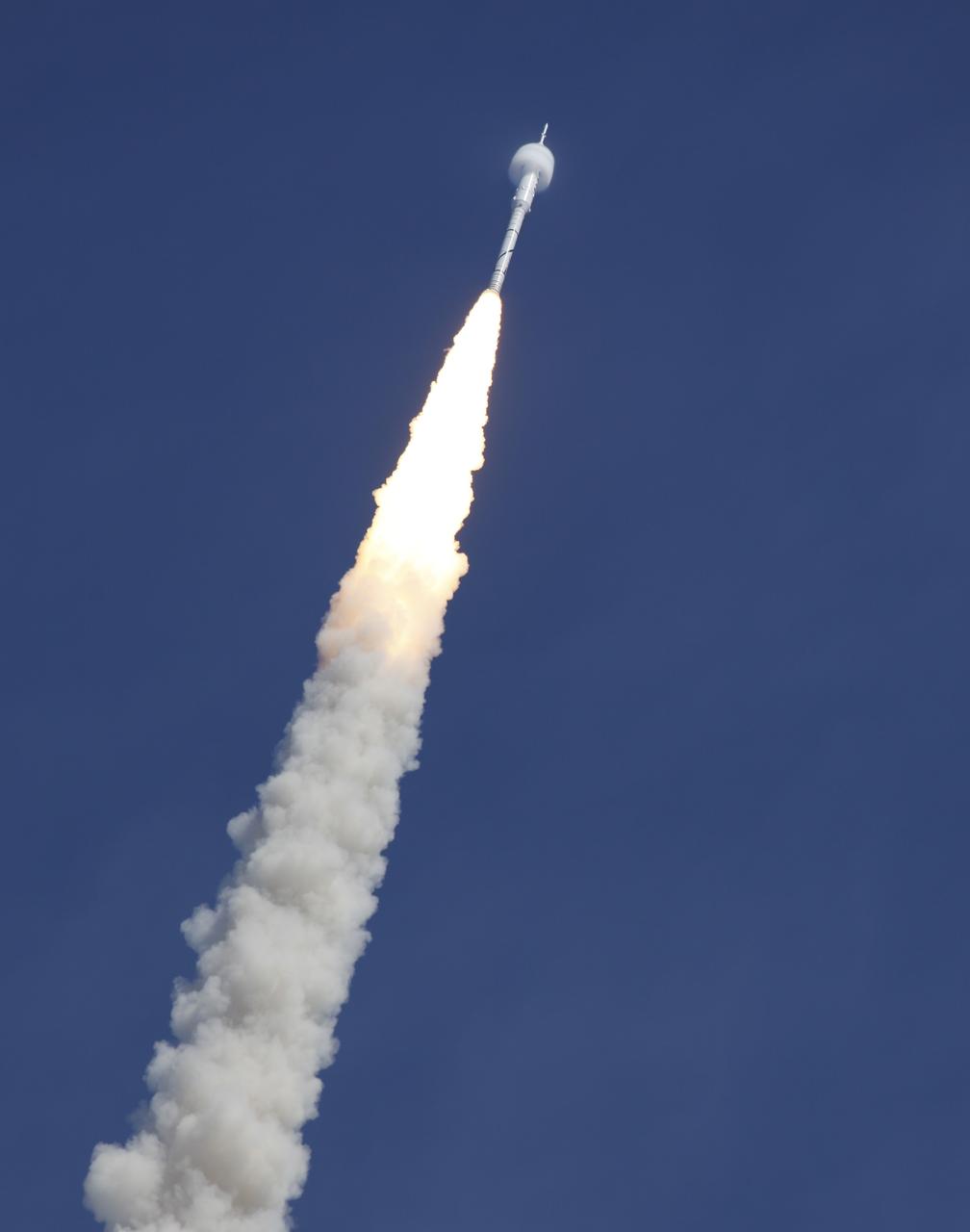
CAPE CANAVERAL, Fla. - A bow shock forms around the Constellation Program's 327-foot-tall Ares I-X test rocket traveling at supersonic speed. The rocket produces 2.96 million pounds of thrust at liftoff and goes supersonic in 39 seconds. Liftoff of the 6-minute flight test from Launch Pad 39B at NASA's Kennedy Space Center in Florida was at 11:30 a.m. EDT Oct. 28. This was the first launch from Kennedy's pads of a vehicle other than the space shuttle since the Apollo Program's Saturn rockets were retired. The parts used to make the Ares I-X booster flew on 30 different shuttle missions ranging from STS-29 in 1989 to STS-106 in 2000. The data returned from more than 700 sensors throughout the rocket will be used to refine the design of future launch vehicles and bring NASA one step closer to reaching its exploration goals. For information on the Ares I-X vehicle and flight test, visit http://www.nasa.gov/aresIX. Photo courtesy of Scott Andrews
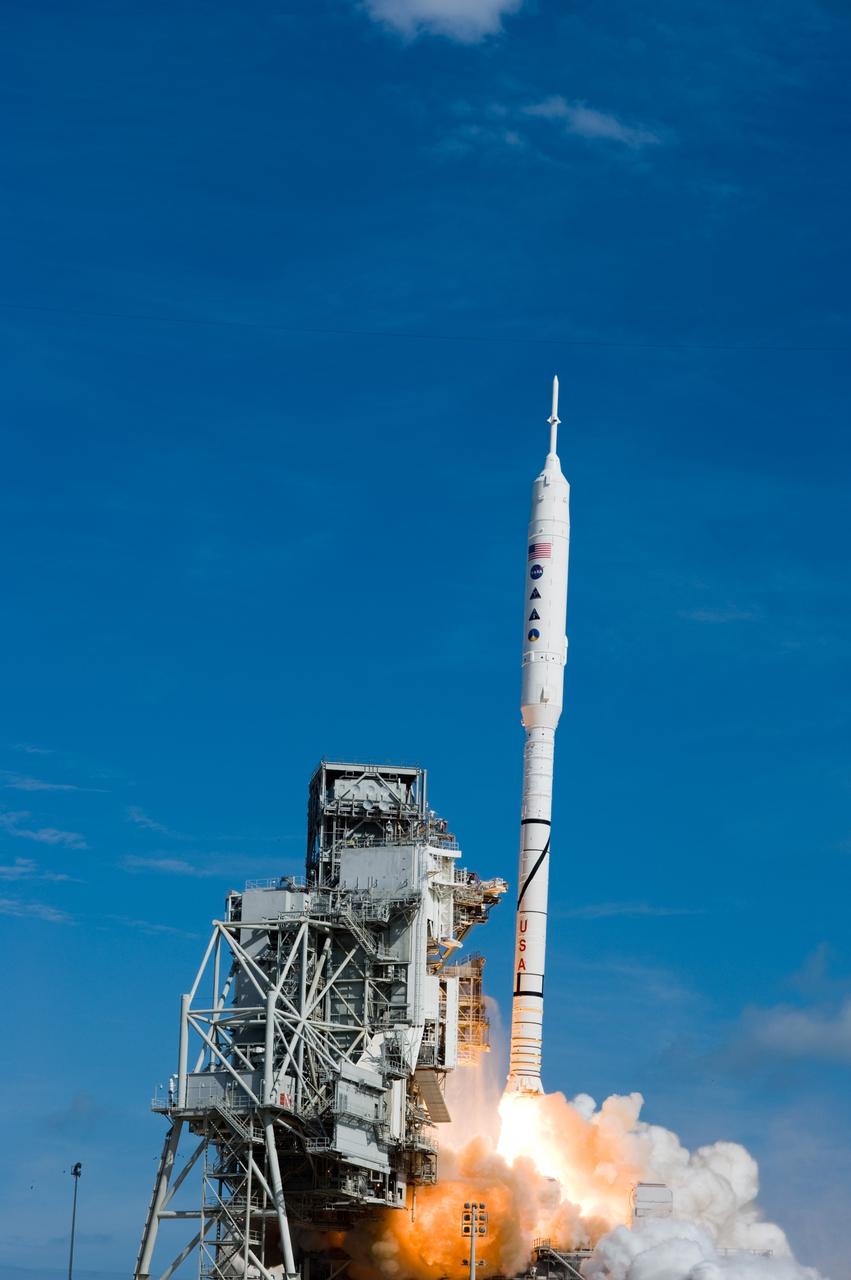
CAPE CANAVERAL, Fla. – NASA’s Constellation Program's 327-foot-tall Ares I-X test rocket takes off from Launch Pad 39B at NASA's Kennedy Space Center in Florida at 11:30 a.m. EDT Oct. 28. The rocket produces 2.96 million pounds of thrust at liftoff and reaches a speed of 100 mph in eight seconds. This was the first launch from Kennedy's pads of a vehicle other than the space shuttle since the Apollo Program's Saturn rockets were retired. The parts used to make the Ares I-X booster flew on 30 different shuttle missions ranging from STS-29 in 1989 to STS-106 in 2000. The data returned from more than 700 sensors throughout the rocket will be used to refine the design of future launch vehicles and bring NASA one step closer to reaching its exploration goals. For information on the Ares I-X vehicle and flight test, visit http://www.nasa.gov/aresIX. Photo credit: NASA/ Sandra Joseph and Kevin O'Connell
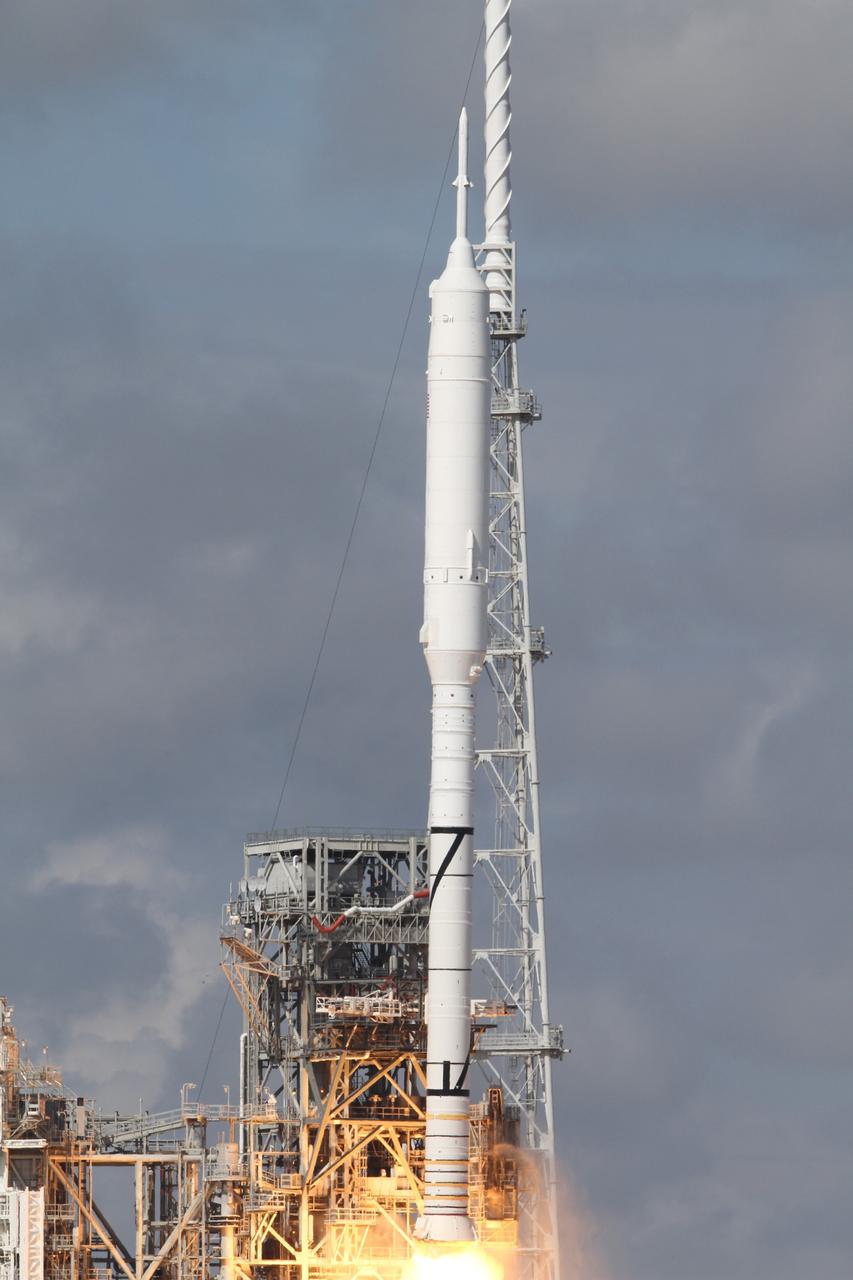
CAPE CANAVERAL, Fla. - NASA’s Constellation Program's 327-foot-tall Ares I-X test rocket takes off from Launch Pad 39B at NASA's Kennedy Space Center in Florida at 11:30 a.m. EDT Oct. 28. The rocket produces 2.96 million pounds of thrust at liftoff and reaches a speed of 100 mph in eight seconds. This was the first launch from Kennedy's pads of a vehicle other than the space shuttle since the Apollo Program's Saturn rockets were retired. The parts used to make the Ares I-X booster flew on 30 different shuttle missions ranging from STS-29 in 1989 to STS-106 in 2000. The data returned from more than 700 sensors throughout the rocket will be used to refine the design of future launch vehicles and bring NASA one step closer to reaching its exploration goals. For information on the Ares I-X vehicle and flight test, visit http://www.nasa.gov/aresIX. Photo credit: NASA/Kenny Allen
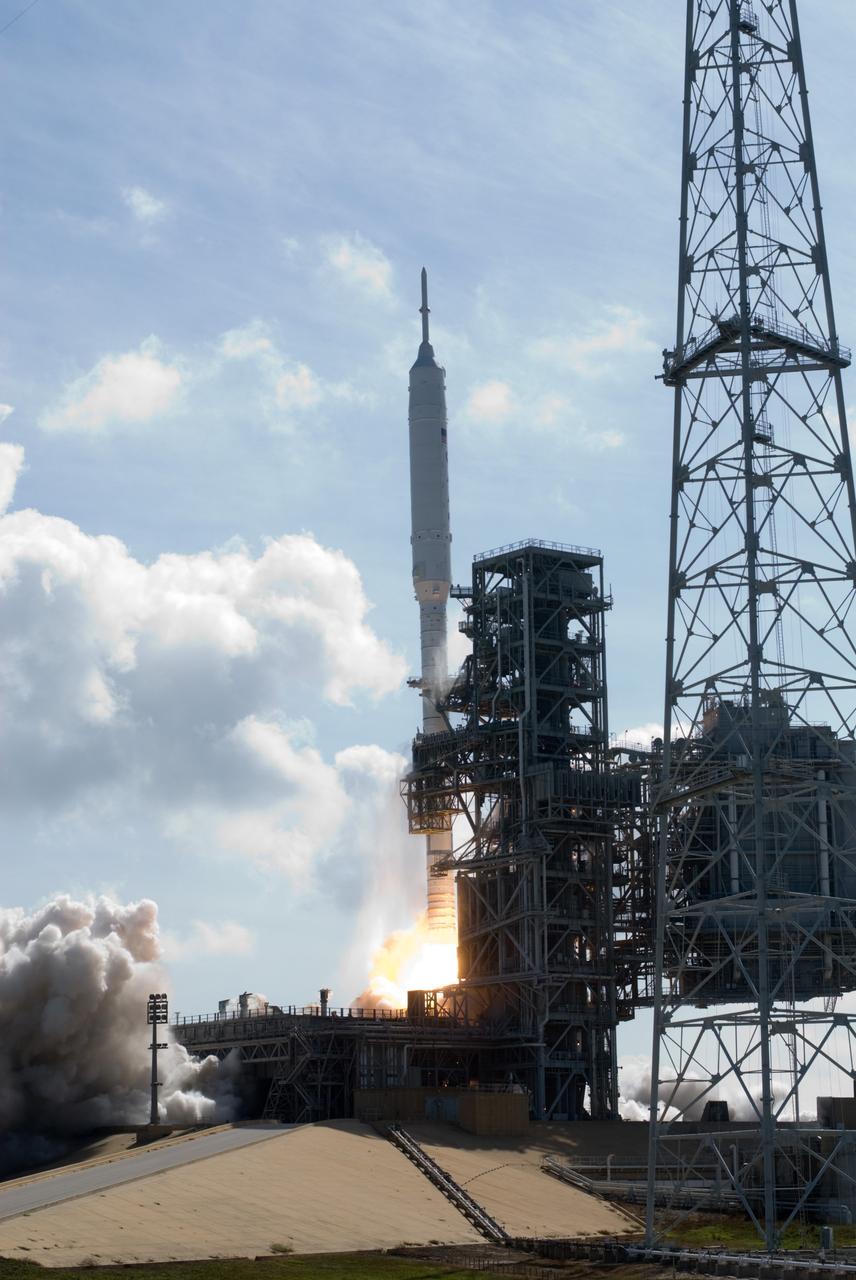
CAPE CANAVERAL, Fla. – NASA's Ares I-X test rocket ignites its first stage at Launch Pad 39B at NASA's Kennedy Space Center in Florida at 11:30 a.m. EDT on Oct. 28. The Constellation Program's 327-foot-tall rocket produces 2.96 million pounds of thrust at liftoff and reaches a speed of 100 mph in eight seconds. This was the first launch from Kennedy's pads of a vehicle other than the space shuttle since the Apollo Program's Saturn rockets were retired. The parts used to make the Ares I-X booster flew on 30 different shuttle missions ranging from STS-29 in 1989 to STS-106 in 2000. The data returned from more than 700 sensors throughout the rocket will be used to refine the design of future launch vehicles and bring NASA one step closer to reaching its exploration goals. For information on the Ares I-X vehicle and flight test, visit http://www.nasa.gov/aresIX. Photo credit: NASA/ George Roberts and Tony Gray
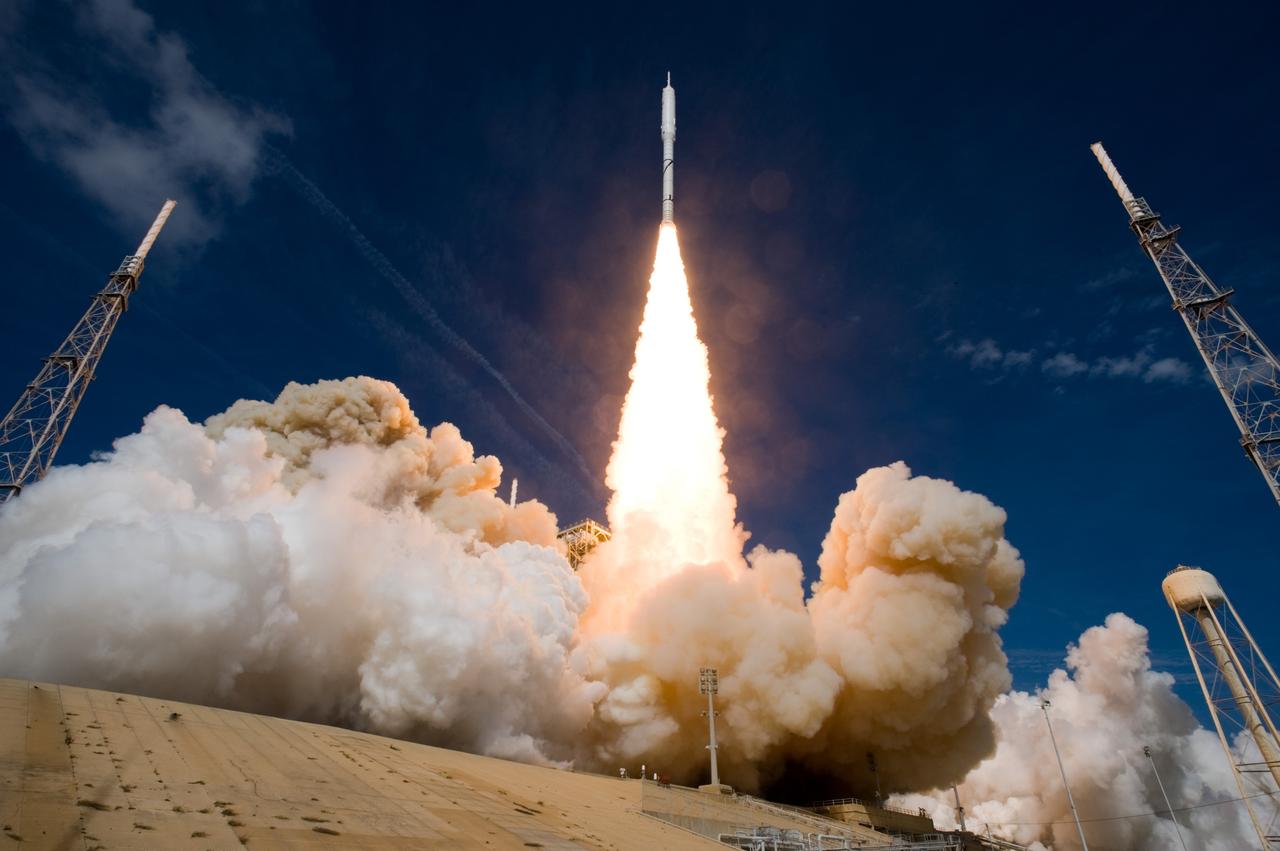
CAPE CANAVERAL, Fla. – Smoke engulfs Launch Pad 39B as the Ares I-X test rocket as it takes off from NASA's Kennedy Space Center in Florida at 11:30 a.m. EDT Oct. 28. NASA’s Constellation Program's 327-foot-tall rocket produces 2.96 million pounds of thrust at liftoff and reaches a speed of 100 mph in eight seconds. This was the first launch from Kennedy's pads of a vehicle other than the space shuttle since the Apollo Program's Saturn rockets were retired. The parts used to make the Ares I-X booster flew on 30 different shuttle missions ranging from STS-29 in 1989 to STS-106 in 2000. The data returned from more than 700 sensors throughout the rocket will be used to refine the design of future launch vehicles and bring NASA one step closer to reaching its exploration goals. For information on the Ares I-X vehicle and flight test, visit http://www.nasa.gov/aresIX.Photo credit: NASA/ Sandra Joseph and Kevin O'Connell
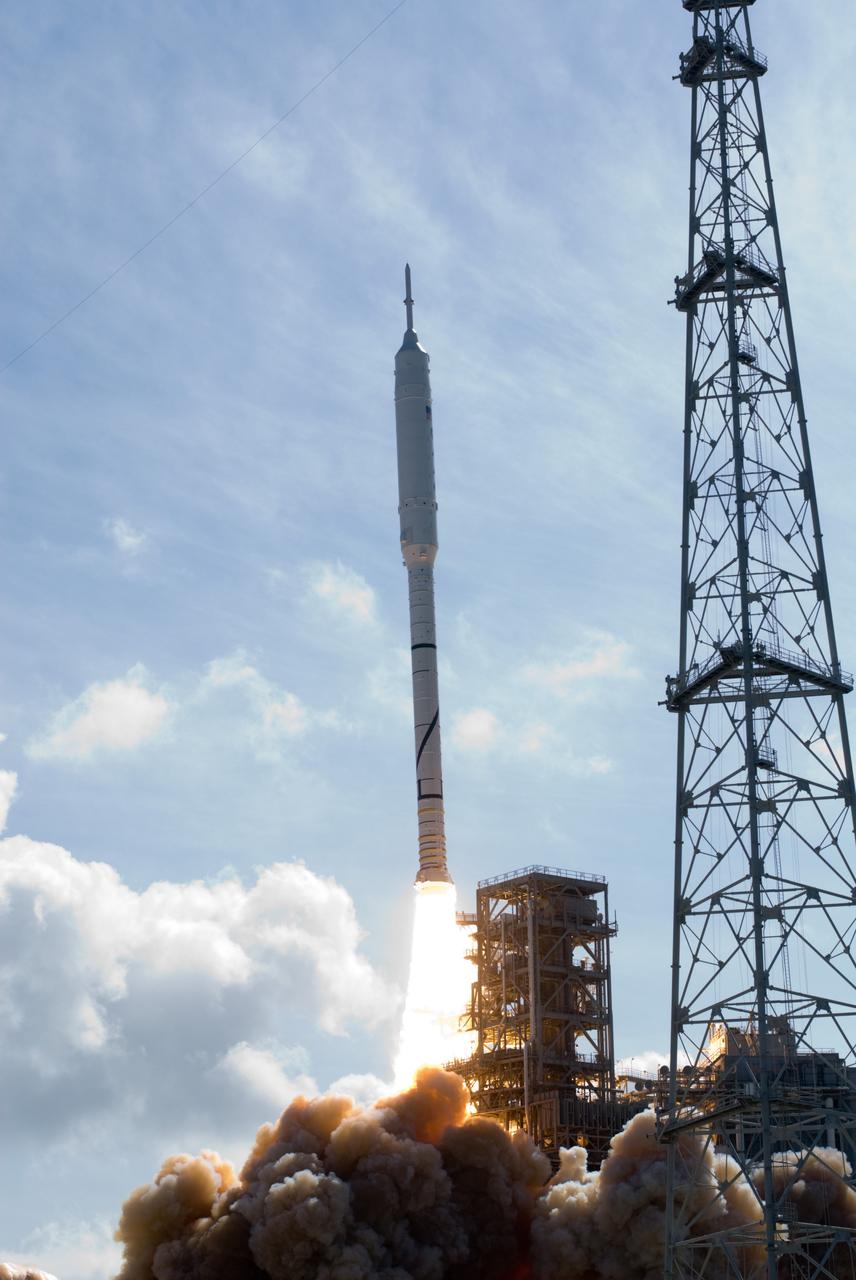
CAPE CANAVERAL, Fla. – NASA's Ares I-X rocket climbs above Launch Pad 39B at NASA's Kennedy Space Center in Florida at 11:30 a.m. EDT on Oct. 28. The rocket, part of NASA's Constellation Program, produces 2.96 million pounds of thrust at liftoff and reaches a speed of 100 mph in eight seconds. This was the first launch from Kennedy's pads of a vehicle other than the space shuttle since the Apollo Program's Saturn rockets were retired. The parts used to make the Ares I-X booster flew on 30 different shuttle missions ranging from STS-29 in 1989 to STS-106 in 2000. The data returned from more than 700 sensors throughout the rocket will be used to refine the design of future launch vehicles and bring NASA one step closer to reaching its exploration goals. For information on the Ares I-X vehicle and flight test, visit http://www.nasa.gov/aresIX. Photo credit: NASA/ George Roberts and Tony Gray
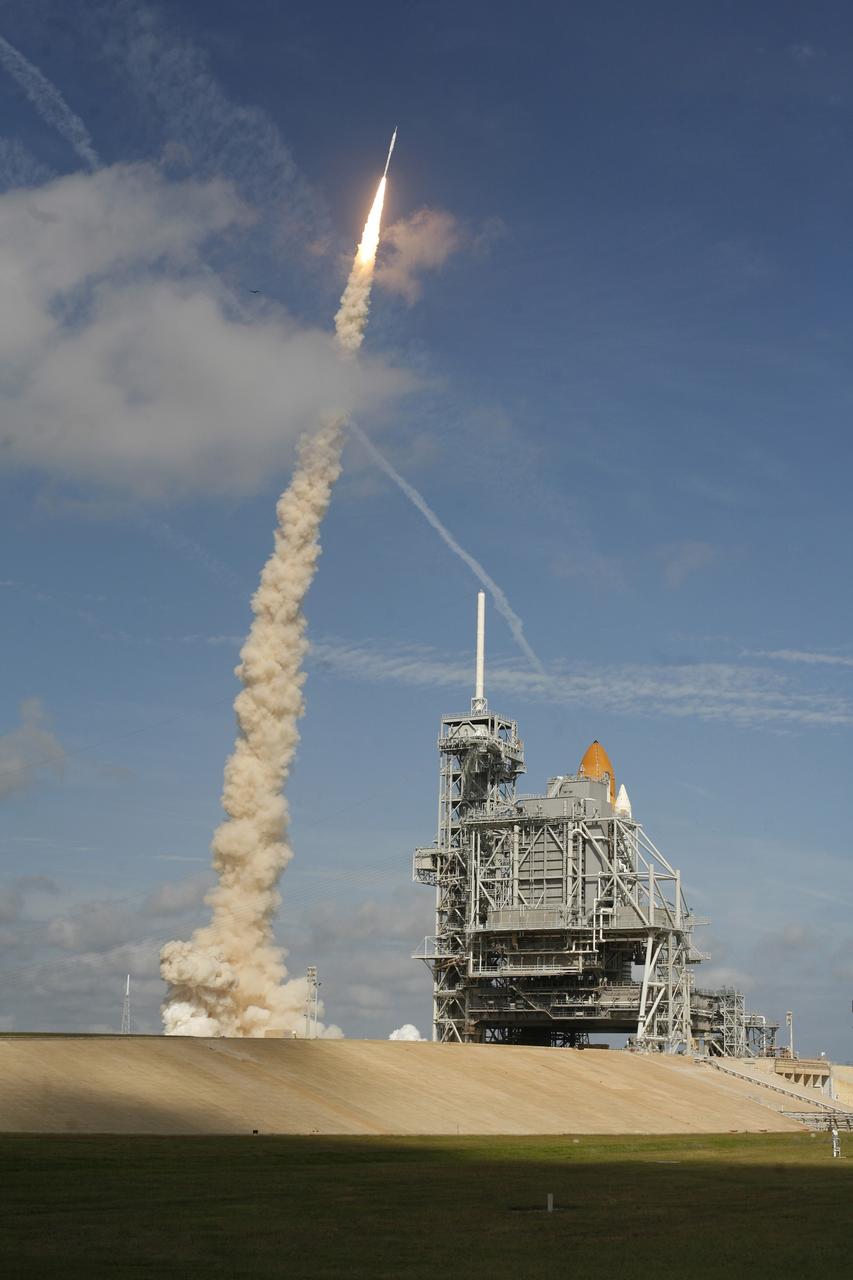
CAPE CANAVERAL, Fla. - With more than 23 times the power output of the Hoover Dam, the Constellation Program's Ares I-X test rocket zooms off Launch Complex 39B at NASA's Kennedy Space Center in Florida. The rocket produces 2.96 million pounds of thrust at liftoff and reaches a speed of 100 mph in eight seconds. At right is space shuttle Atlantis, poised on Launch Pad 39A for liftoff, targeted for Nov. 16. Liftoff of the 6-minute flight test was at 11:30 a.m. EDT Oct. 28. This was the first launch from Kennedy's pads of a vehicle other than the space shuttle since the Apollo Program's Saturn rockets were retired. The parts used to make the Ares I-X booster flew on 30 different shuttle missions ranging from STS-29 in 1989 to STS-106 in 2000. The data returned from more than 700 sensors throughout the rocket will be used to refine the design of future launch vehicles and bring NASA one step closer to reaching its exploration goals. For information on the Ares I-X vehicle and flight test, visit http://www.nasa.gov/aresIX. Photo courtesy of Scott Andrews
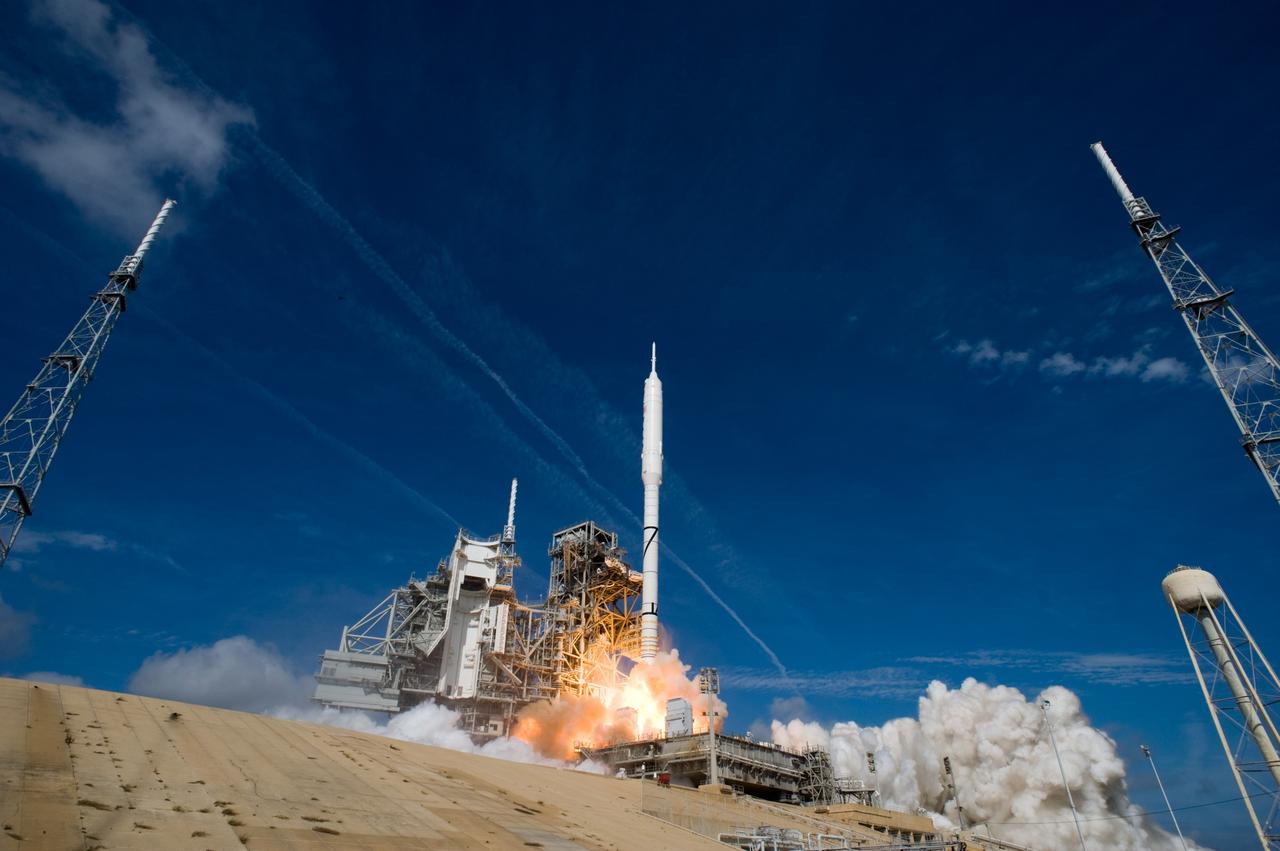
CAPE CANAVERAL, Fla. – Two of the lightning towers frame the Ares I-X test rocket as it takes off from Launch Pad 39B at NASA's Kennedy Space Center in Florida at 11:30 a.m. EDT Oct. 28. NASA’s Constellation Program's 327-foot-tall rocket produces 2.96 million pounds of thrust at liftoff and reaches a speed of 100 mph in eight seconds. This was the first launch from Kennedy's pads of a vehicle other than the space shuttle since the Apollo Program's Saturn rockets were retired. The parts used to make the Ares I-X booster flew on 30 different shuttle missions ranging from STS-29 in 1989 to STS-106 in 2000. The data returned from more than 700 sensors throughout the rocket will be used to refine the design of future launch vehicles and bring NASA one step closer to reaching its exploration goals. For information on the Ares I-X vehicle and flight test, visit http://www.nasa.gov/aresIX. Photo credit: NASA/ Sandra Joseph and Kevin O'Connell
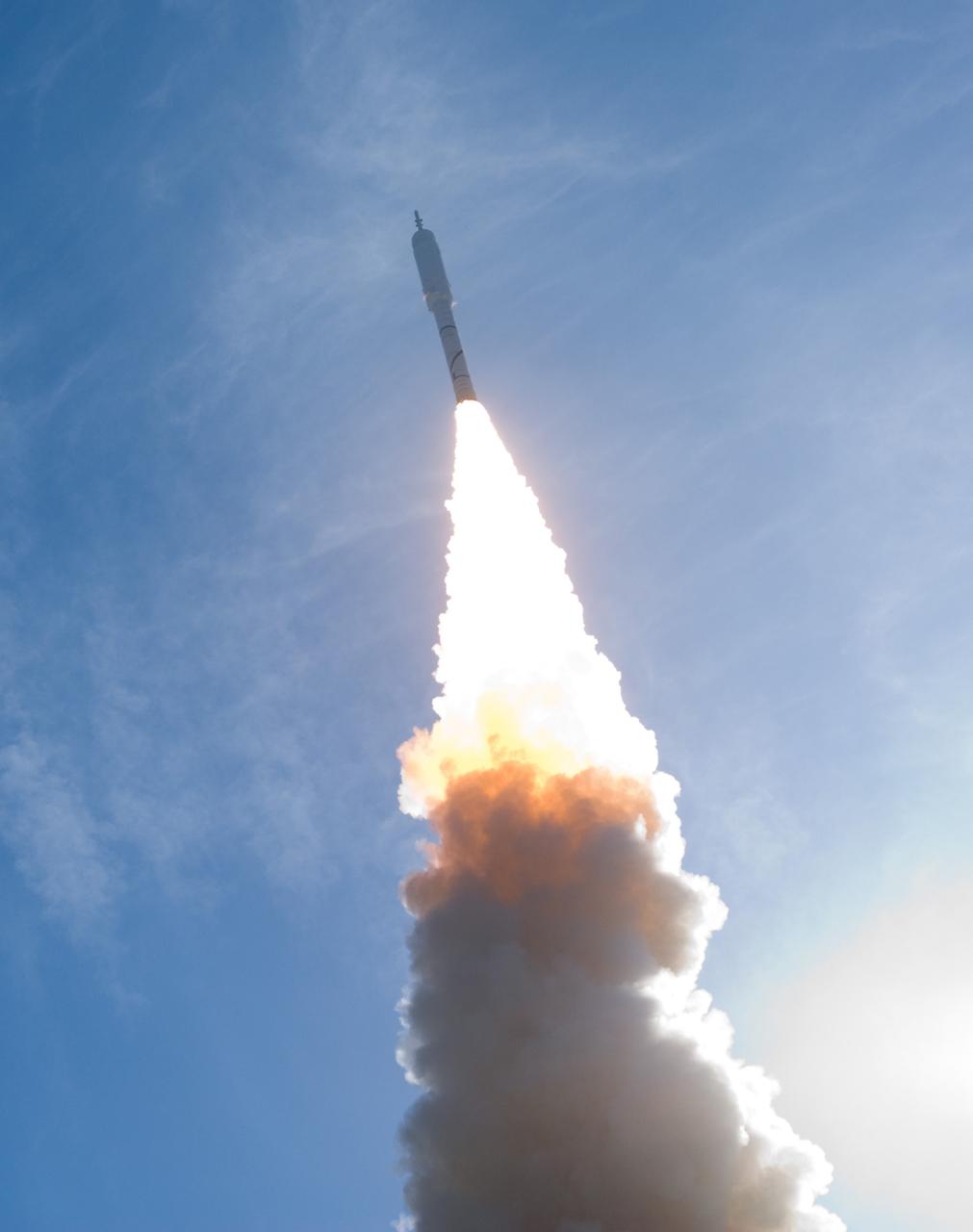
CAPE CANAVERAL, Fla. – NASA's Ares I-X test rocket climbs into the skies above Launch Pad 39B at NASA's Kennedy Space Center in Florida at 11:30 a.m. EDT on Oct. 28. NASA’s Constellation Program's 327-foot-tall rocket produces 2.96 million pounds of thrust at liftoff and reaches a speed of 100 mph in eight seconds. This was the first launch from Kennedy's pads of a vehicle other than the space shuttle since the Apollo Program's Saturn rockets were retired. The parts used to make the Ares I-X booster flew on 30 different shuttle missions ranging from STS-29 in 1989 to STS-106 in 2000. The data returned from more than 700 sensors throughout the rocket will be used to refine the design of future launch vehicles and bring NASA one step closer to reaching its exploration goals. For information on the Ares I-X vehicle and flight test, visit http://www.nasa.gov/aresIX. Photo credit: NASA/ George Roberts and Tony Gray
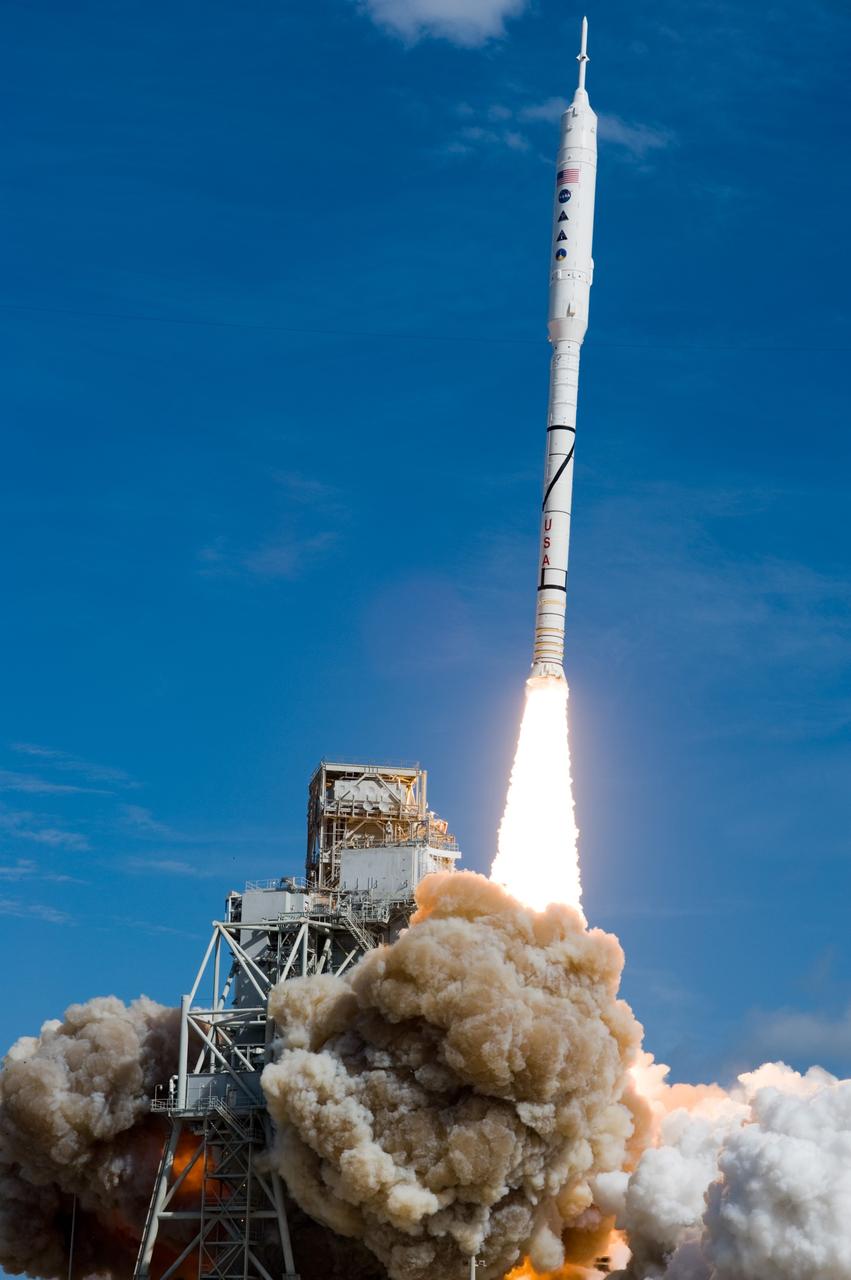
CAPE CANAVERAL, Fla. – Smoke and steam shoot from Launch Pad 39B at NASA's Kennedy Space Center in Florida as NASA’s Constellation Program's 327-foot-tall Ares I-X test rocket launches at 11:30 a.m. EDT Oct. 28. The rocket produces 2.96 million pounds of thrust at liftoff and reaches a speed of 100 mph in eight seconds. This was the first launch from Kennedy's pads of a vehicle other than the space shuttle since the Apollo Program's Saturn rockets were retired. The parts used to make the Ares I-X booster flew on 30 different shuttle missions ranging from STS-29 in 1989 to STS-106 in 2000. The data returned from more than 700 sensors throughout the rocket will be used to refine the design of future launch vehicles and bring NASA one step closer to reaching its exploration goals. For information on the Ares I-X vehicle and flight test, visit http://www.nasa.gov/aresIX. Photo credit: NASA/ Sandra Joseph and Kevin O'Connell
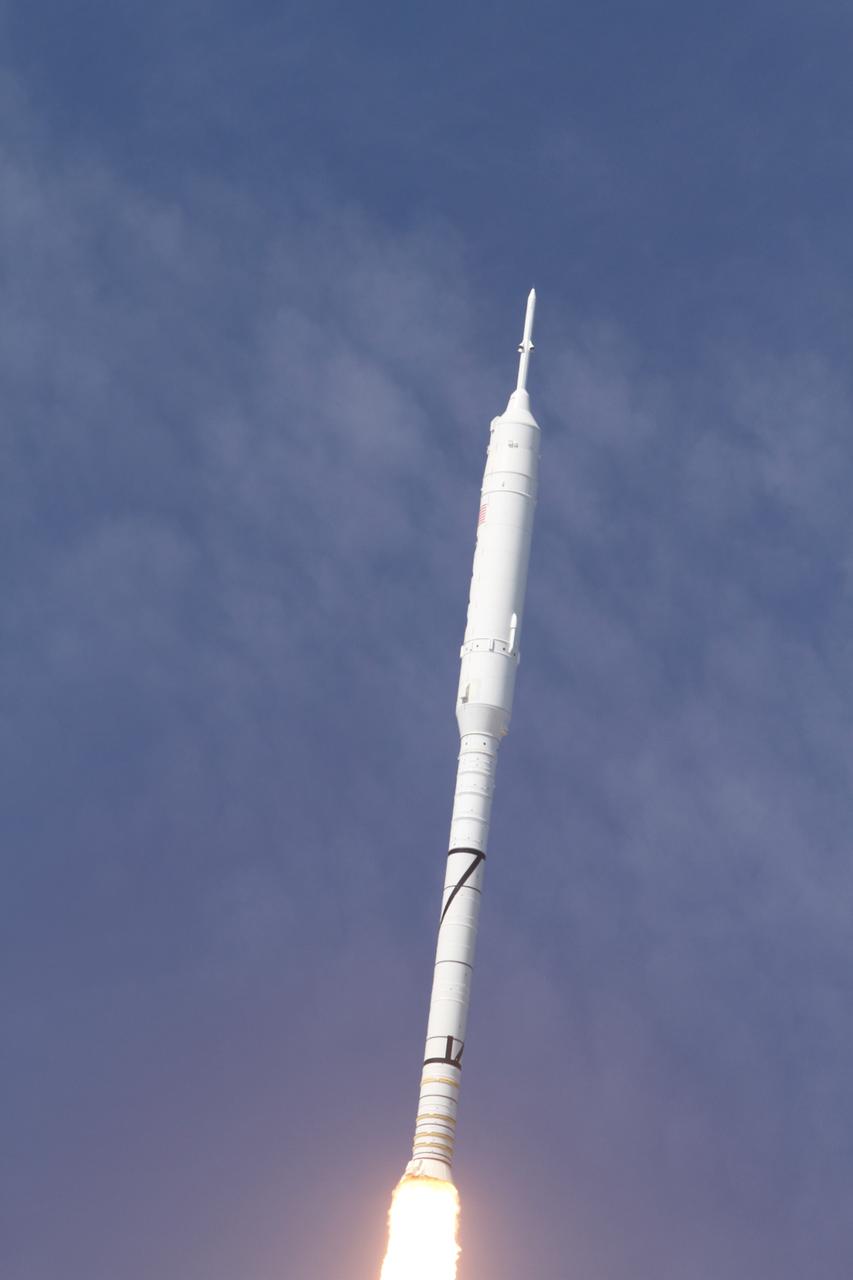
CAPE CANAVERAL, Fla. – The Ares I-X test rocket clears Launch Pad 39B at NASA's Kennedy Space Center in Florida at 11:30 a.m. EDT Oct. 28. Constellation Program's 327-foot-tall rocket produces 2.96 million pounds of thrust at liftoff and reaches a speed of 100 mph in eight seconds. This was the first launch from Kennedy's pads of a vehicle other than the space shuttle since the Apollo Program's Saturn rockets were retired. The parts used to make the Ares I-X booster flew on 30 different shuttle missions ranging from STS-29 in 1989 to STS-106 in 2000. The data returned from more than 700 sensors throughout the rocket will be used to refine the design of future launch vehicles and bring NASA one step closer to reaching its exploration goals. For information on the Ares I-X vehicle and flight test, visit http://www.nasa.gov/aresIX. Photo credit: NASA/ Kenny Allen
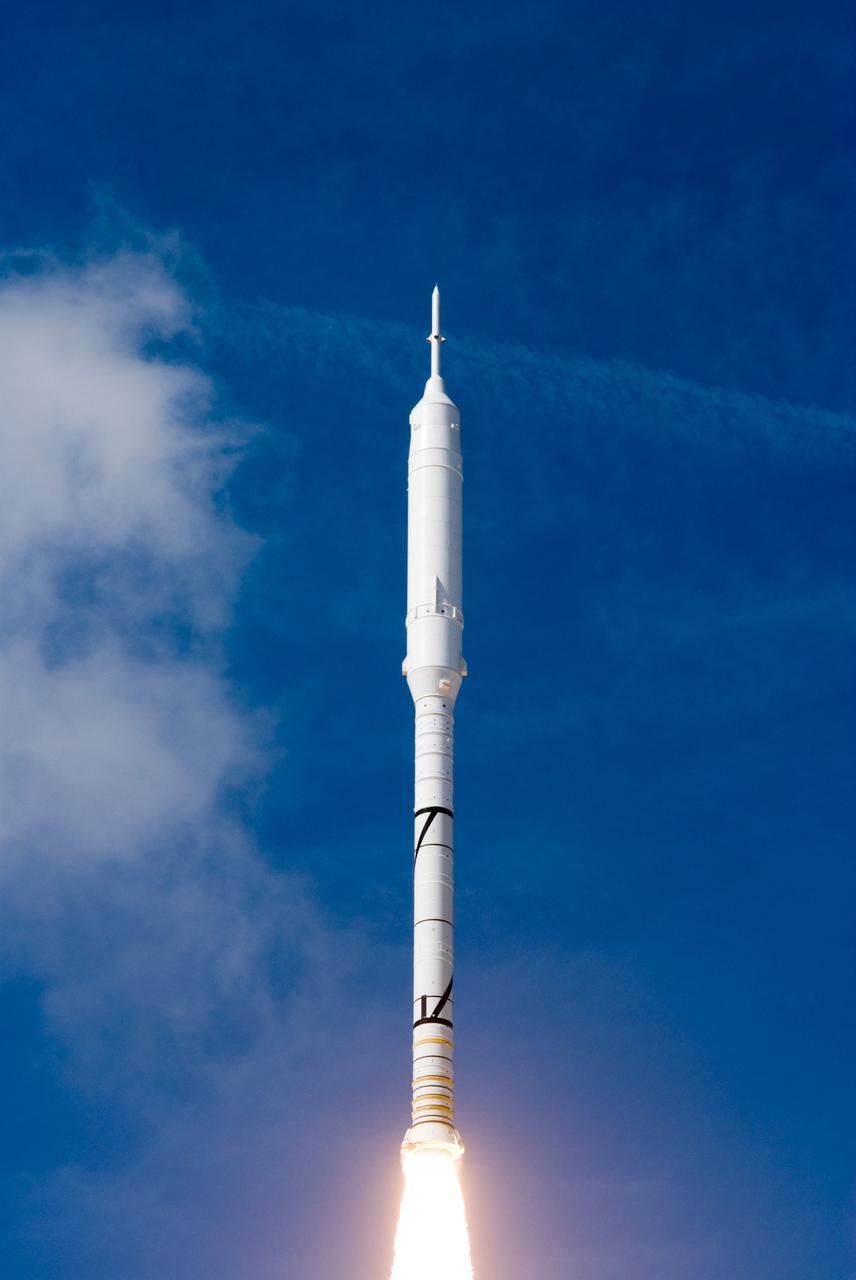
CAPE CANAVERAL, Fla. – NASA's Ares I-X test rocket flies high above Launch Pad 39B at Kennedy Space Center in Florida at 11:30 a.m. EDT on Oct. 28. NASA’s Constellation Program's 327-foot-tall rocket produces 2.96 million pounds of thrust at liftoff and reaches a speed of 100 mph in eight seconds. This was the first launch from Kennedy's pads of a vehicle other than the space shuttle since the Apollo Program's Saturn rockets were retired. The parts used to make the Ares I-X booster flew on 30 different shuttle missions ranging from STS-29 in 1989 to STS-106 in 2000. The data returned from more than 700 sensors throughout the rocket will be used to refine the design of future launch vehicles and bring NASA one step closer to reaching its exploration goals. For information on the Ares I-X vehicle and flight test, visit http://www.nasa.gov/aresIX.Photo credit: NASA/ George Roberts and Tom Farrar
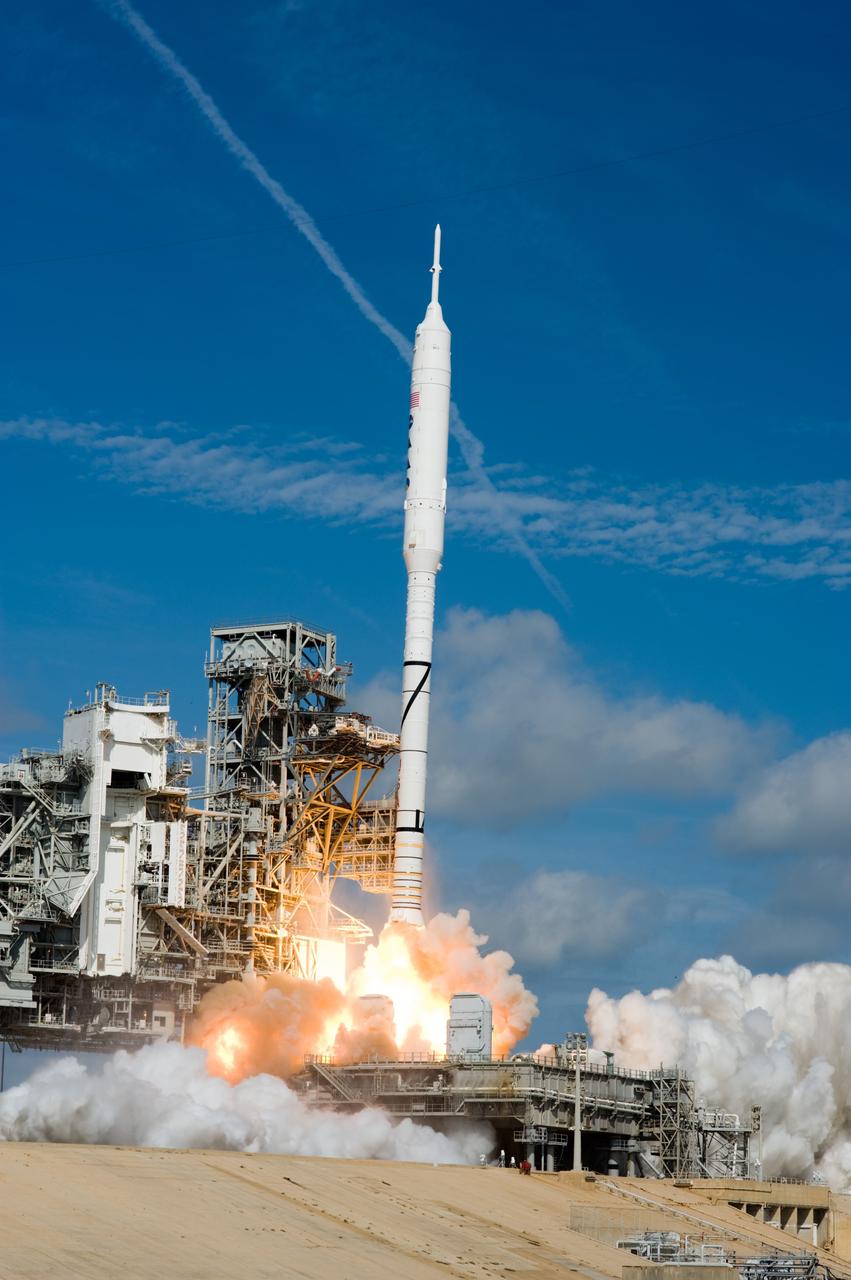
CAPE CANAVERAL, Fla. – The Ares I-X test rocket launches into a bright Florida sky from Launch Pad 39B at NASA's Kennedy Space Center in Florida at 11:30 a.m. EDT Oct. 28. NASA’s Constellation Program's 327-foot-tall rocket produces 2.96 million pounds of thrust at liftoff and reaches a speed of 100 mph in eight seconds. This was the first launch from Kennedy's pads of a vehicle other than the space shuttle since the Apollo Program's Saturn rockets were retired. The parts used to make the Ares I-X booster flew on 30 different shuttle missions ranging from STS-29 in 1989 to STS-106 in 2000. The data returned from more than 700 sensors throughout the rocket will be used to refine the design of future launch vehicles and bring NASA one step closer to reaching its exploration goals. For information on the Ares I-X vehicle and flight test, visit http://www.nasa.gov/aresIX. Photo credit: NASA/Tony Gray and Tom Farrar
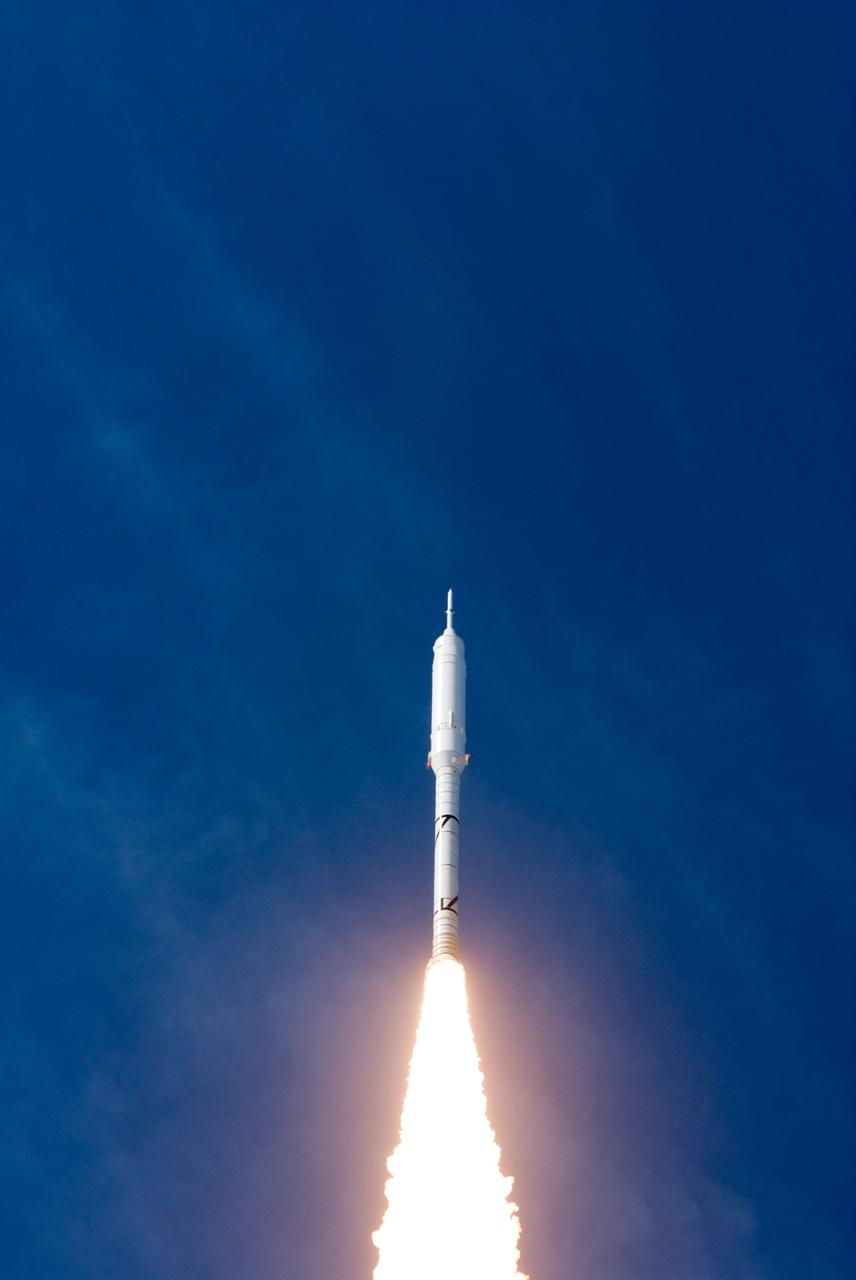
CAPE CANAVERAL, Fla. – The Ares I-X test rocket launches into a bright Florida sky from Launch Pad 39B at NASA's Kennedy Space Center in Florida at 11:30 a.m. EDT on Oct. 28. NASA’s Constellation Program's 327-foot-tall rocket produces 2.96 million pounds of thrust at liftoff and reaches a speed of 100 mph in eight seconds. This was the first launch from Kennedy's pads of a vehicle other than the space shuttle since the Apollo Program's Saturn rockets were retired. The parts used to make the Ares I-X booster flew on 30 different shuttle missions ranging from STS-29 in 1989 to STS-106 in 2000. The data returned from more than 700 sensors throughout the rocket will be used to refine the design of future launch vehicles and bring NASA one step closer to reaching its exploration goals. For information on the Ares I-X vehicle and flight test, visit http://www.nasa.gov/aresIX. Photo credit: NASA/George Roberts and Tom Farrar
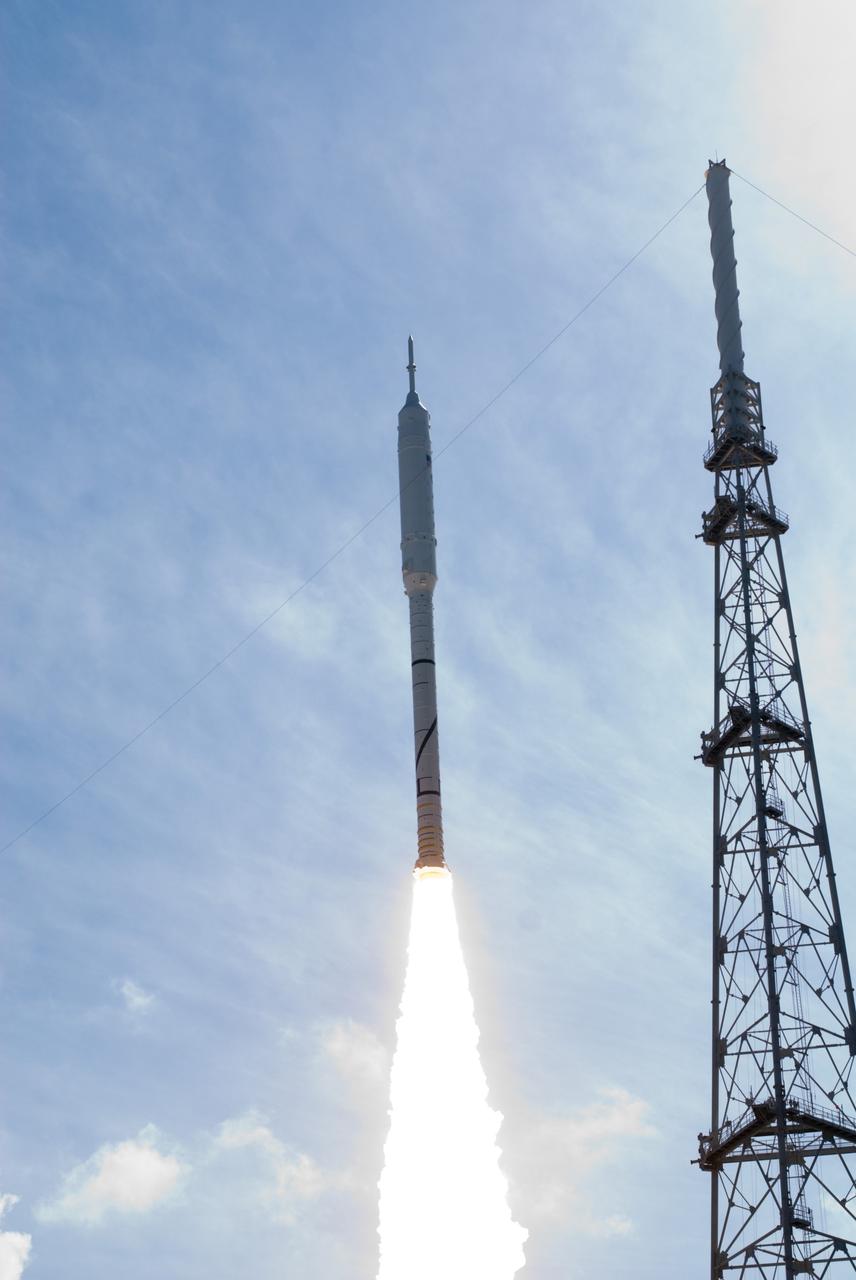
CAPE CANAVERAL, Fla. – NASA's Ares I-X test rocket soars above one of the nearby lightning protection masts at Launch pad 39B as the rocket launches at 11:30 a.m. EDT on Oct. 28. The rocket, part of NASA's Constellation Program, produces 2.96 million pounds of thrust at liftoff and reaches a speed of 100 mph in eight seconds. This was the first launch from Kennedy's pads of a vehicle other than the space shuttle since the Apollo Program's Saturn rockets were retired. The parts used to make the Ares I-X booster flew on 30 different shuttle missions ranging from STS-29 in 1989 to STS-106 in 2000. The data returned from more than 700 sensors throughout the rocket will be used to refine the design of future launch vehicles and bring NASA one step closer to reaching its exploration goals. For information on the Ares I-X vehicle and flight test, visit http://www.nasa.gov/aresIX. Photo credit: NASA/ George Roberts and Tony Gray
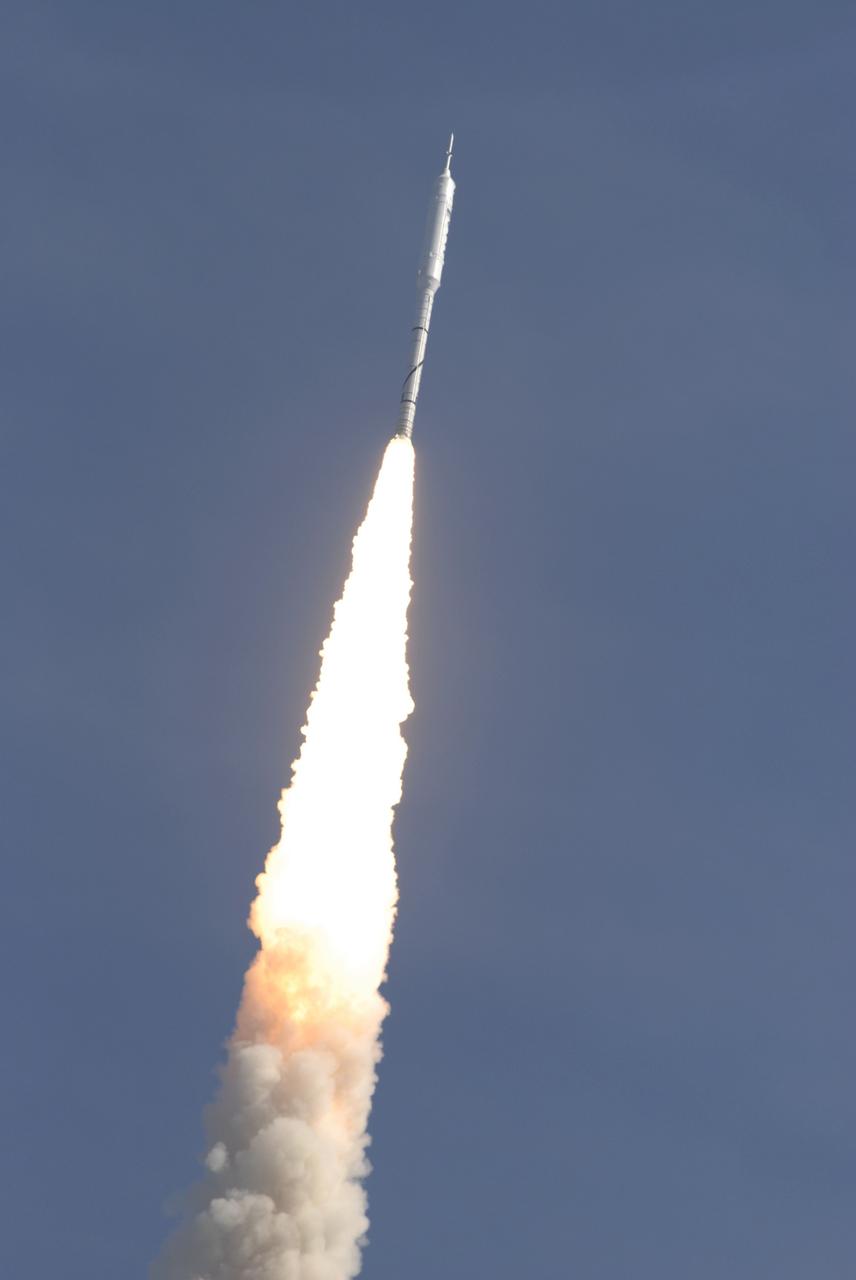
CAPE CANAVERAL, Fla. - With more than 23 times the power output of the Hoover Dam, the Constellation Program's Ares I-X test rocket zooms off Launch Complex 39B at NASA's Kennedy Space Center in Florida. The rocket produces 2.96 million pounds of thrust at liftoff and reaches a speed of 100 mph in eight seconds. Liftoff of the 6-minute flight test was at 11:30 a.m. EDT Oct. 28. This was the first launch from Kennedy's pads of a vehicle other than the space shuttle since the Apollo Program's Saturn rockets were retired. The parts used to make the Ares I-X booster flew on 30 different shuttle missions ranging from STS-29 in 1989 to STS-106 in 2000. The data returned from more than 700 sensors throughout the rocket will be used to refine the design of future launch vehicles and bring NASA one step closer to reaching its exploration goals. For information on the Ares I-X vehicle and flight test, visit http://www.nasa.gov/aresIX. Photo credit: NASA/Kim Shiflett

CAPE CANAVERAL, Fla. - With more than 23 times the power output of the Hoover Dam, the Constellation Program's Ares I-X test rocket zooms off Launch Complex 39B at NASA's Kennedy Space Center in Florida. The rocket produces 2.96 million pounds of thrust at liftoff and reaches a speed of 100 mph in eight seconds. Liftoff of the 6-minute flight test was at 11:30 a.m. EDT Oct. 28. This was the first launch from Kennedy's pads of a vehicle other than the space shuttle since the Apollo Program's Saturn rockets were retired. The parts used to make the Ares I-X booster flew on 30 different shuttle missions ranging from STS-29 in 1989 to STS-106 in 2000. The data returned from more than 700 sensors throughout the rocket will be used to refine the design of future launch vehicles and bring NASA one step closer to reaching its exploration goals. For information on the Ares I-X vehicle and flight test, visit http://www.nasa.gov/aresIX. Photo courtesy of Scott Andrews, Canon
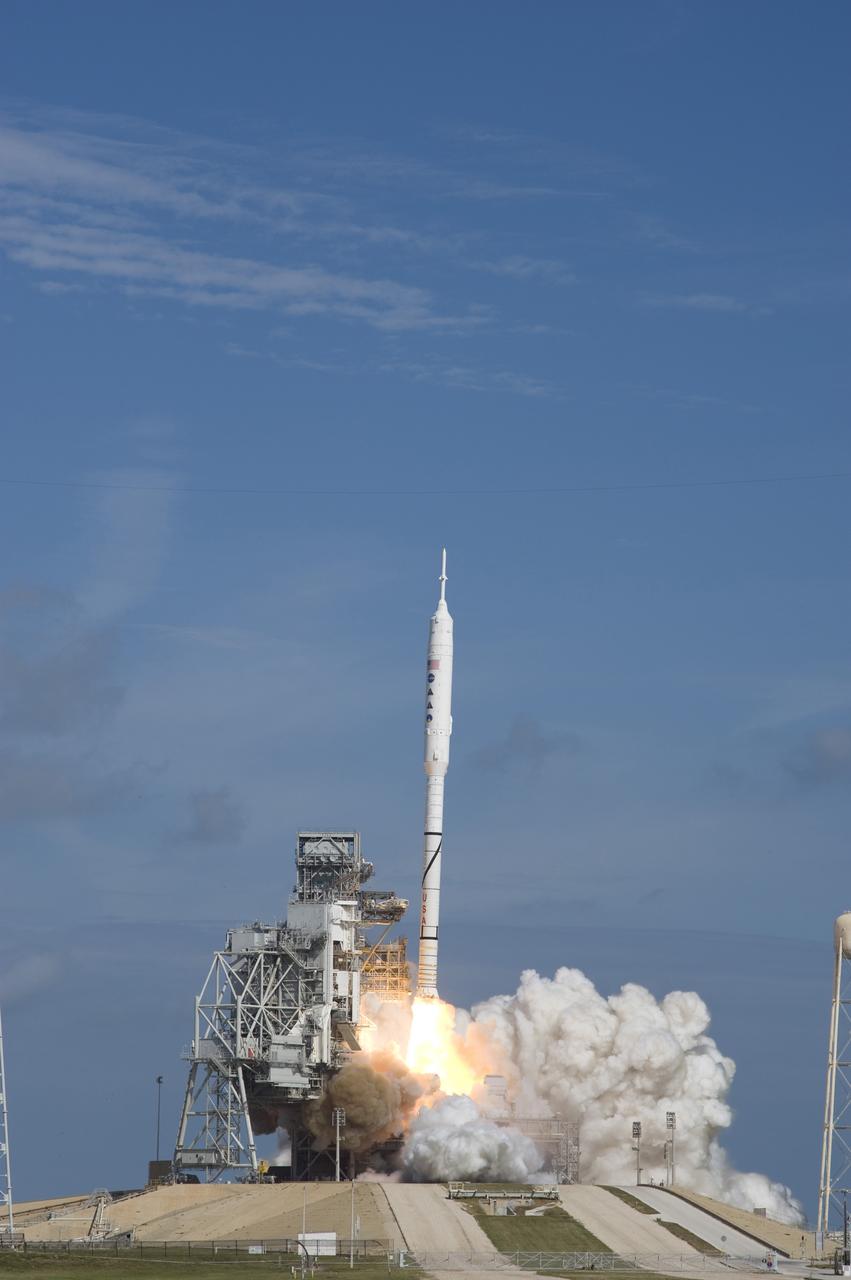
CAPE CANAVERAL, Fla. - Almost twice as tall as Disney's Cinderella Castle, the Constellation Program's 327-foot-tall Ares I-X test rocket races off Launch Complex 39B at NASA's Kennedy Space Center in Florida. The rocket produces 2.96 million pounds of thrust at liftoff and reaches a speed of 100 mph in eight seconds. Liftoff of the 6-minute flight test was at 11:30 a.m. EDT Oct. 28. This was the first launch from Kennedy's pads of a vehicle other than the space shuttle since the Apollo Program's Saturn rockets were retired. The parts used to make the Ares I-X booster flew on 30 different shuttle missions ranging from STS-29 in 1989 to STS-106 in 2000. The data returned from more than 700 sensors throughout the rocket will be used to refine the design of future launch vehicles and bring NASA one step closer to reaching its exploration goals. For information on the Ares I-X vehicle and flight test, visit http://www.nasa.gov/aresIX. Photo credit: NASA/Sandra Joseph and Kevin O'Connell
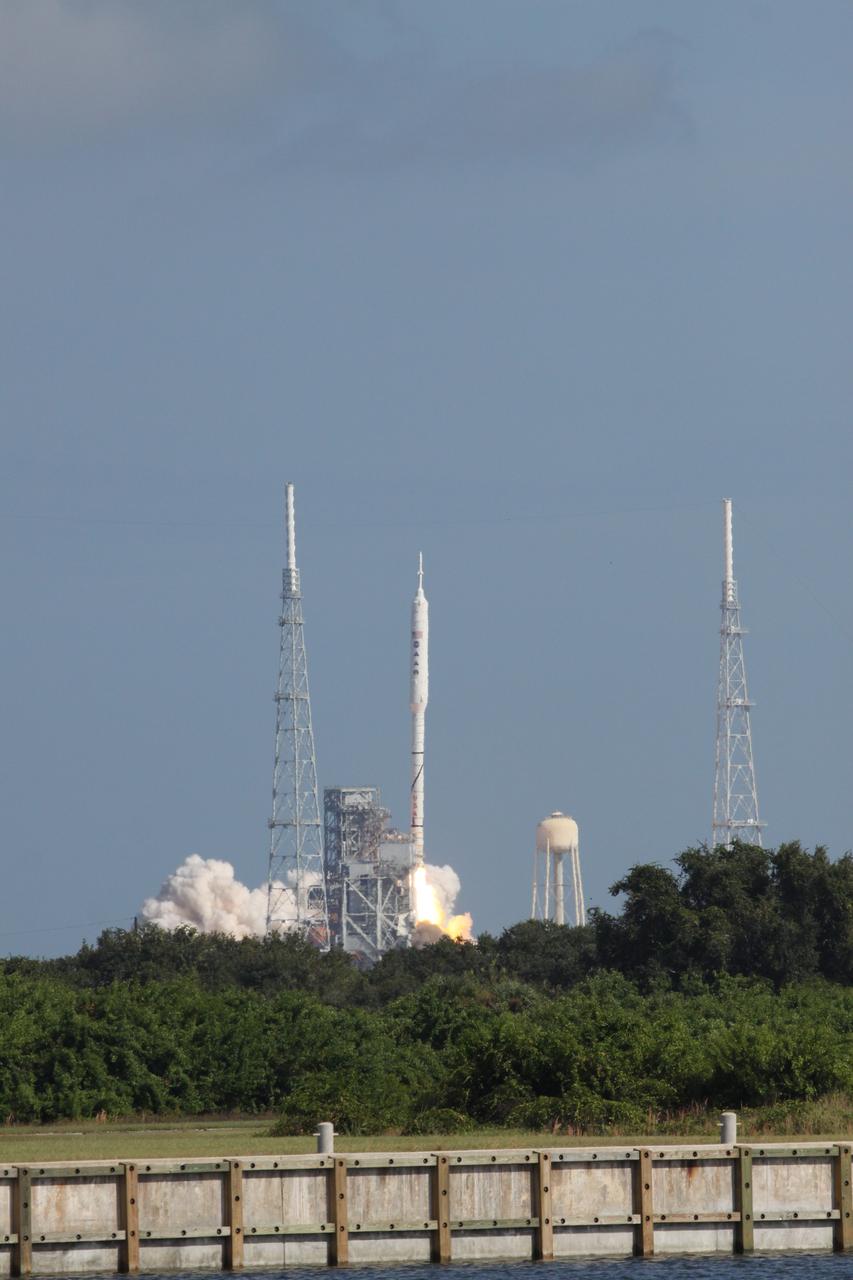
CAPE CANAVERAL, Fla. - Almost twice as tall as Disney's Cinderella Castle, the Constellation Program's 327-foot-tall Ares I-X test rocket lifts off from Launch Complex 39B at NASA's Kennedy Space Center in Florida. The rocket produces 2.96 million pounds of thrust at liftoff and reaches a speed of 100 mph in eight seconds. Liftoff of the 6-minute flight test was at 11:30 a.m. EDT Oct. 28. This was the first launch from Kennedy's pads of a vehicle other than the space shuttle since the Apollo Program's Saturn rockets were retired. The parts used to make the Ares I-X booster flew on 30 different shuttle missions ranging from STS-29 in 1989 to STS-106 in 2000. The data returned from more than 700 sensors throughout the rocket will be used to refine the design of future launch vehicles and bring NASA one step closer to reaching its exploration goals. For information on the Ares I-X vehicle and flight test, visit http://www.nasa.gov/aresIX. Photo credit: NASA/Jack Pfaller
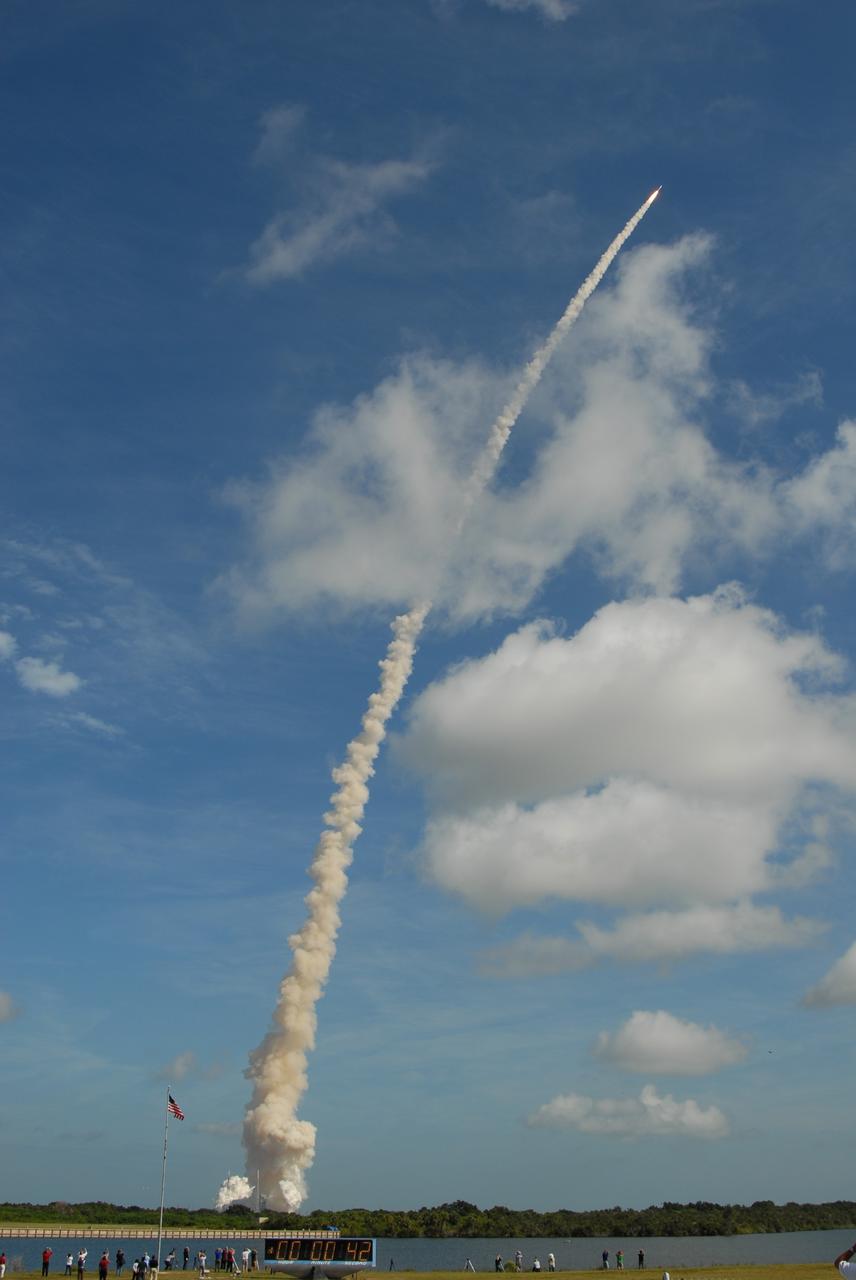
CAPE CANAVERAL, Fla. - With more than 12 times the thrust produced by a Boeing 747 jet aircraft, the Constellation Program's Ares I-X test rocket roars off Launch Complex 39B at NASA's Kennedy Space Center in Florida. The rocket produces 2.96 million pounds of thrust at liftoff and goes supersonic in 39 seconds. Liftoff of the 6-minute flight test was at 11:30 a.m. EDT Oct. 28. This was the first launch from Kennedy's pads of a vehicle other than the space shuttle since the Apollo Program's Saturn rockets were retired. The parts used to make the Ares I-X booster flew on 30 different shuttle missions ranging from STS-29 in 1989 to STS-106 in 2000. The data returned from more than 700 sensors throughout the rocket will be used to refine the design of future launch vehicles and bring NASA one step closer to reaching its exploration goals. For information on the Ares I-X vehicle and flight test, visit http://www.nasa.gov/aresIX. Photo credit: NASA/Jim Grossmann

CAPE CANAVERAL, Fla. - About the length of eight school buses stacked end to end, the Constellation Program's 327-foot-tall Ares I-X test rocket races off Launch Complex 39B at NASA's Kennedy Space Center in Florida. The rocket produces 2.96 million pounds of thrust at liftoff and reaches a speed of 100 mph in eight seconds. Liftoff of the 6-minute flight test was at 11:30 a.m. EDT Oct. 28. This was the first launch from Kennedy's pads of a vehicle other than the space shuttle since the Apollo Program's Saturn rockets were retired. The parts used to make the Ares I-X booster flew on 30 different shuttle missions ranging from STS-29 in 1989 to STS-106 in 2000. The data returned from more than 700 sensors throughout the rocket will be used to refine the design of future launch vehicles and bring NASA one step closer to reaching its exploration goals. For information on the Ares I-X vehicle and flight test, visit http://www.nasa.gov/aresIX. Photo courtesy of Scott Andrews
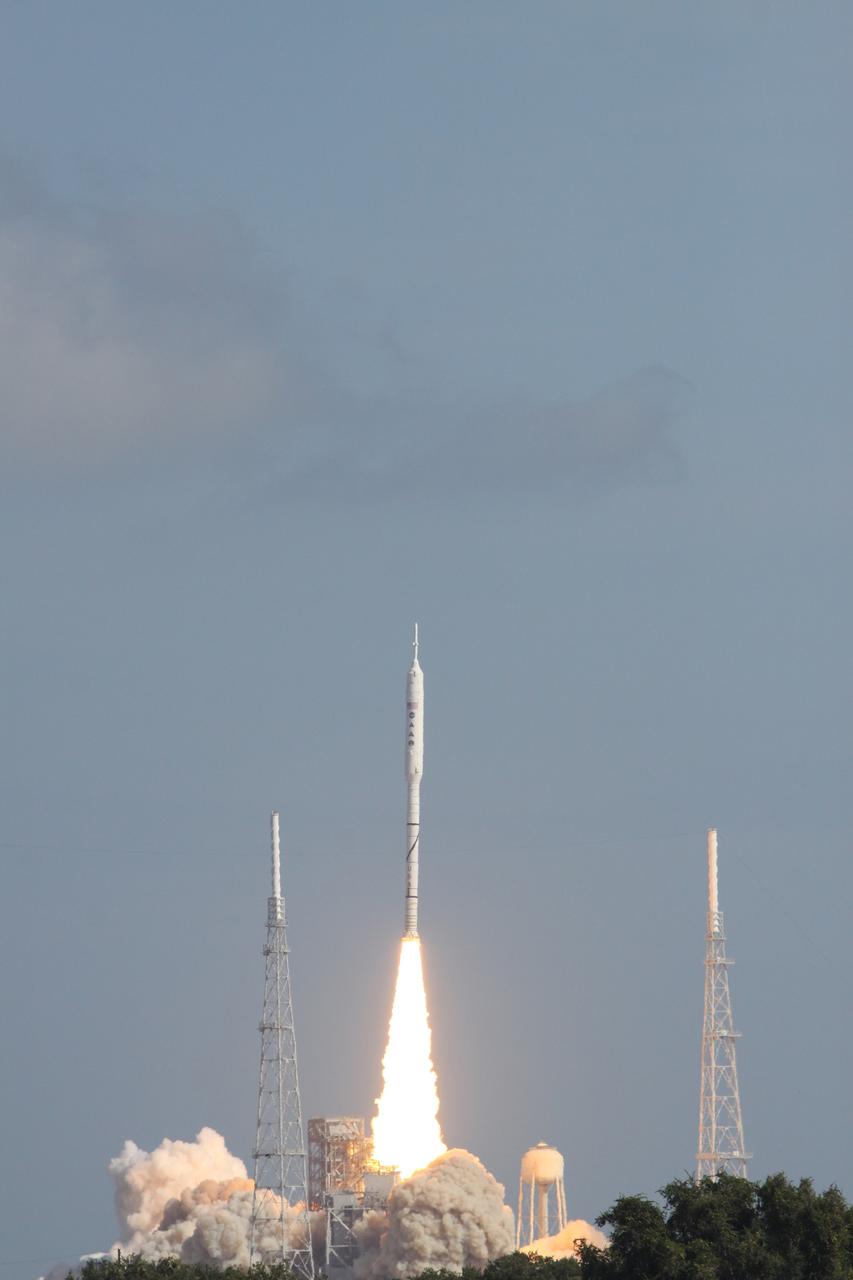
CAPE CANAVERAL, Fla. - With more than 23 times the power output of the Hoover Dam, the Constellation Program's Ares I-X test rocket zooms off Launch Complex 39B at NASA's Kennedy Space Center in Florida. The rocket produces 2.96 million pounds of thrust at liftoff and reaches a speed of 100 mph in eight seconds. Liftoff of the 6-minute flight test was at 11:30 a.m. EDT Oct. 28. This was the first launch from Kennedy's pads of a vehicle other than the space shuttle since the Apollo Program's Saturn rockets were retired. The parts used to make the Ares I-X booster flew on 30 different shuttle missions ranging from STS-29 in 1989 to STS-106 in 2000. The data returned from more than 700 sensors throughout the rocket will be used to refine the design of future launch vehicles and bring NASA one step closer to reaching its exploration goals. For information on the Ares I-X vehicle and flight test, visit http://www.nasa.gov/aresIX. Photo credit: NASA/Jack Pfaller
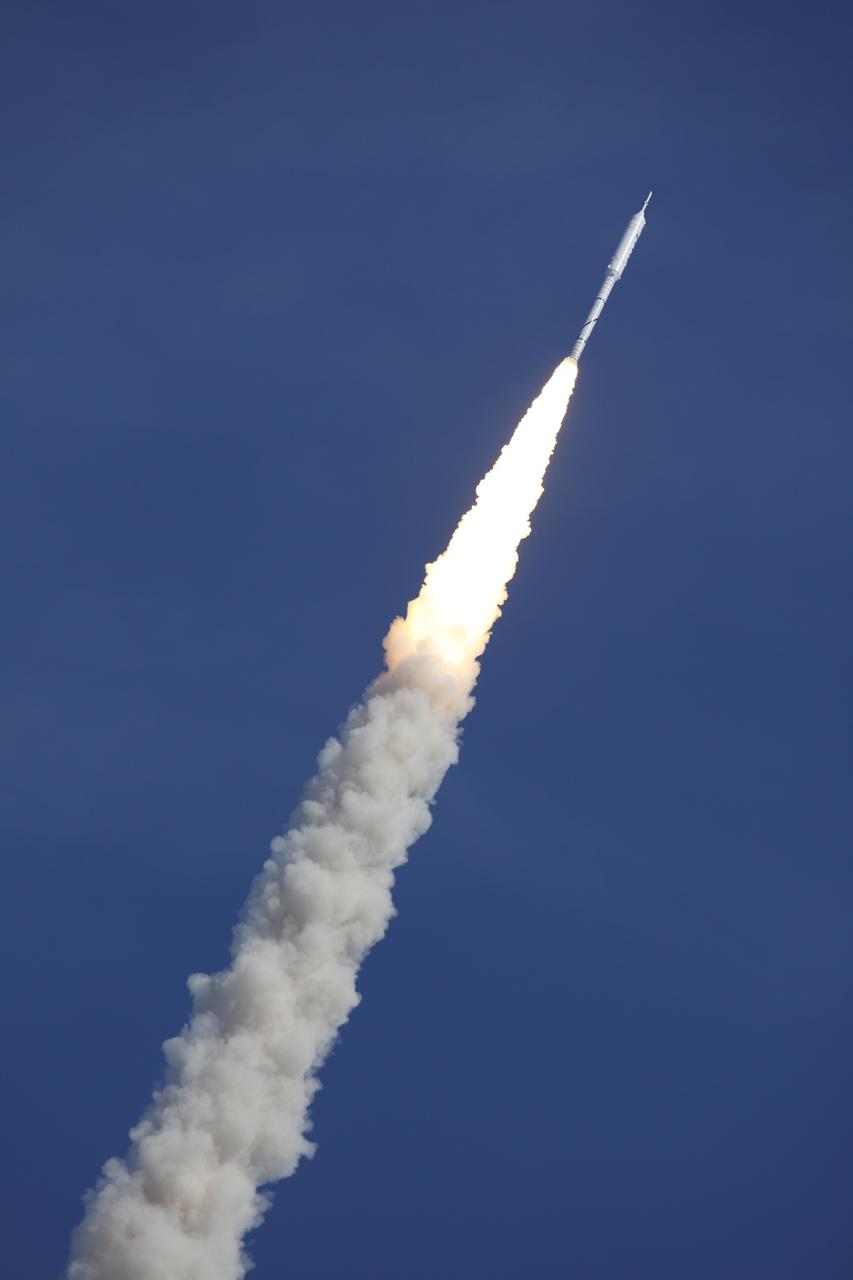
CAPE CANAVERAL, Fla. - Nearly twice as tall as the space shuttle, the Constellation Program's 327-foot-tall Ares I-X test rocket races off Launch Complex 39B at NASA's Kennedy Space Center in Florida. The rocket produces 2.96 million pounds of thrust at liftoff and reaches a speed of 100 mph in eight seconds. Liftoff of the 6-minute flight test was at 11:30 a.m. EDT Oct. 28. This was the first launch from Kennedy's pads of a vehicle other than the space shuttle since the Apollo Program's Saturn rockets were retired. The parts used to make the Ares I-X booster flew on 30 different shuttle missions ranging from STS-29 in 1989 to STS-106 in 2000. The data returned from more than 700 sensors throughout the rocket will be used to refine the design of future launch vehicles and bring NASA one step closer to reaching its exploration goals. For information on the Ares I-X vehicle and flight test, visit http://www.nasa.gov/aresIX. Photo courtesy of Scott Andrews
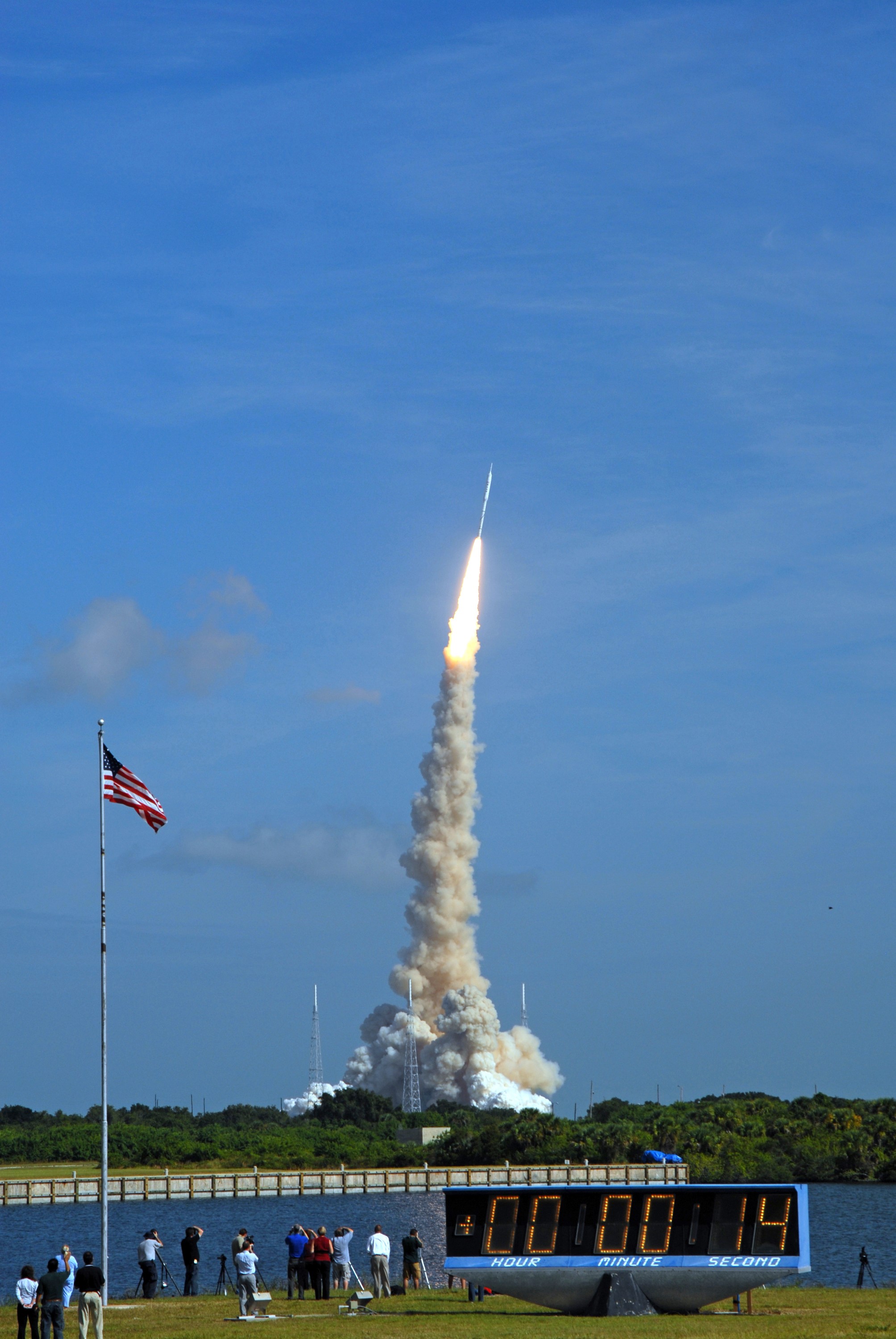
CAPE CANAVERAL, Fla. - At NASA's Kennedy Space Center in Florida, the Press Site countdown clock, so long a familiar a backdrop for space shuttle launches, counts off the seconds since liftoff from Launch Complex 39B of a new vehicle, the Constellation Program's Ares I-X test rocket. The rocket produces 2.96 million pounds of thrust at liftoff and reaches a speed of 100 mph in eight seconds. Liftoff of the 6-minute flight test was at 11:30 a.m. EDT Oct. 28. This was the first launch from Kennedy's pads of a vehicle other than the space shuttle since the Apollo Program's Saturn rockets were retired. The parts used to make the Ares I-X booster flew on 30 different shuttle missions ranging from STS-29 in 1989 to STS-106 in 2000. The data returned from more than 700 sensors throughout the rocket will be used to refine the design of future launch vehicles and bring NASA one step closer to reaching its exploration goals. For information on the Ares I-X vehicle and flight test, visit http://www.nasa.gov/aresIX. Photo credit: NASA/Jim Grossmann
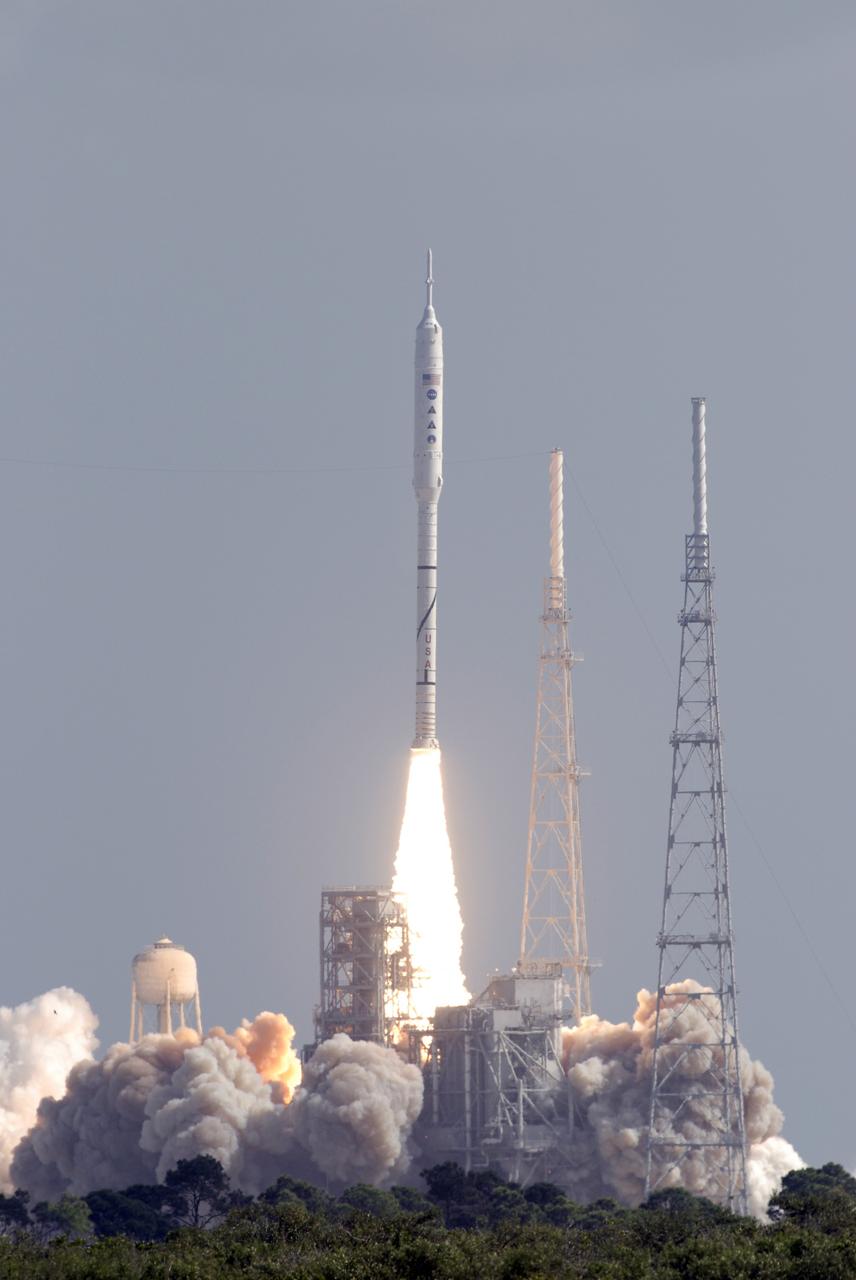
CAPE CANAVERAL, Fla. - Almost twice as tall as Disney's Cinderella Castle, the Constellation Program's 327-foot-tall Ares I-X test rocket races off Launch Complex 39B at NASA's Kennedy Space Center in Florida. The rocket produces 2.96 million pounds of thrust at liftoff and reaches a speed of 100 mph in eight seconds. Liftoff of the 6-minute flight test was at 11:30 a.m. EDT Oct. 28. This was the first launch from Kennedy's pads of a vehicle other than the space shuttle since the Apollo Program's Saturn rockets were retired. The parts used to make the Ares I-X booster flew on 30 different shuttle missions ranging from STS-29 in 1989 to STS-106 in 2000. The data returned from more than 700 sensors throughout the rocket will be used to refine the design of future launch vehicles and bring NASA one step closer to reaching its exploration goals. For information on the Ares I-X vehicle and flight test, visit http://www.nasa.gov/aresIX. Photo credit: NASA/Kim Shiflett
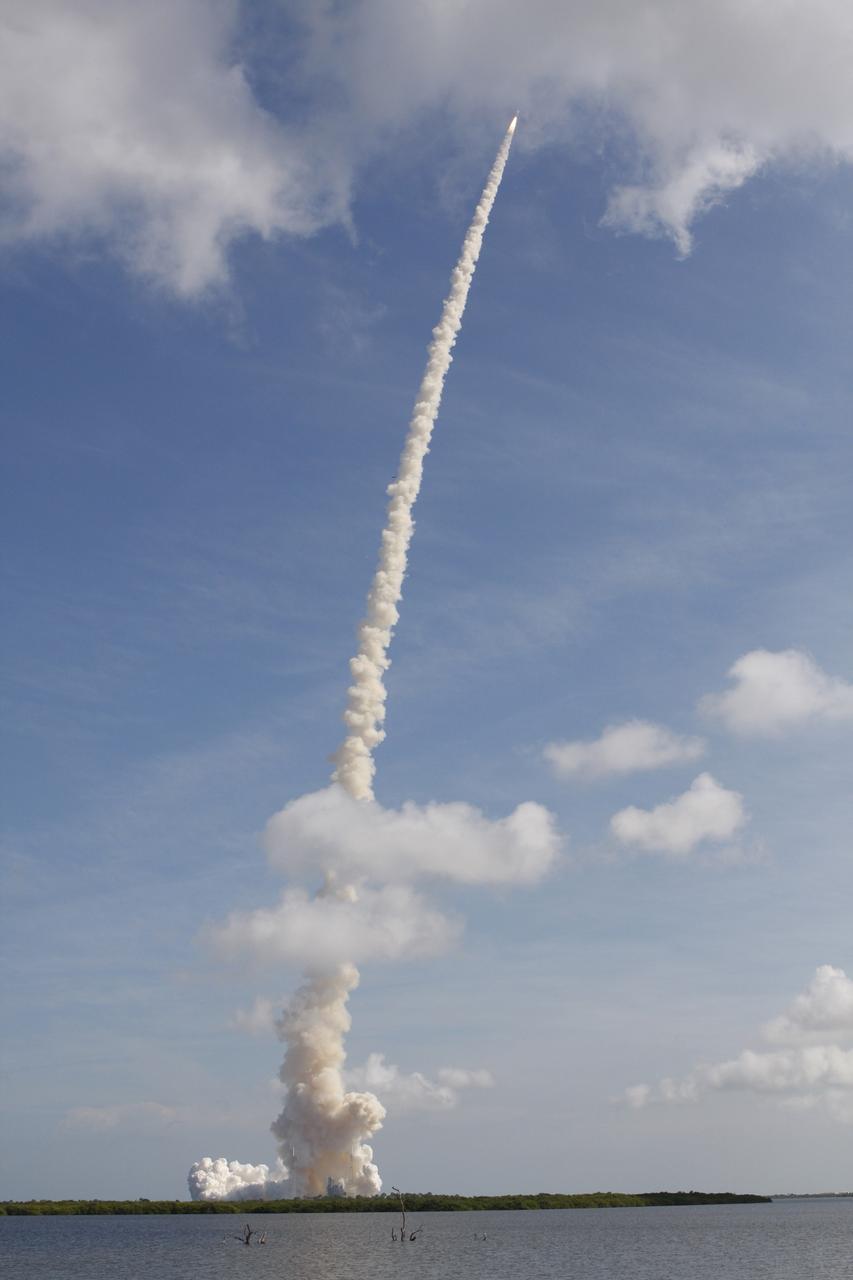
CAPE CANAVERAL, Fla. - With more than 12 times the thrust produced by a Boeing 747 jet aircraft, the Constellation Program's Ares I-X test rocket roars off Launch Complex 39B at NASA's Kennedy Space Center in Florida. The rocket produces 2.96 million pounds of thrust at liftoff and goes supersonic in 39 seconds. Liftoff of the 6-minute flight test was at 11:30 a.m. EDT Oct. 28. This was the first launch from Kennedy's pads of a vehicle other than the space shuttle since the Apollo Program's Saturn rockets were retired. The parts used to make the Ares I-X booster flew on 30 different shuttle missions ranging from STS-29 in 1989 to STS-106 in 2000. The data returned from more than 700 sensors throughout the rocket will be used to refine the design of future launch vehicles and bring NASA one step closer to reaching its exploration goals. For information on the Ares I-X vehicle and flight test, visit http://www.nasa.gov/aresIX. Photo credit: NASA/Kim Shiflett
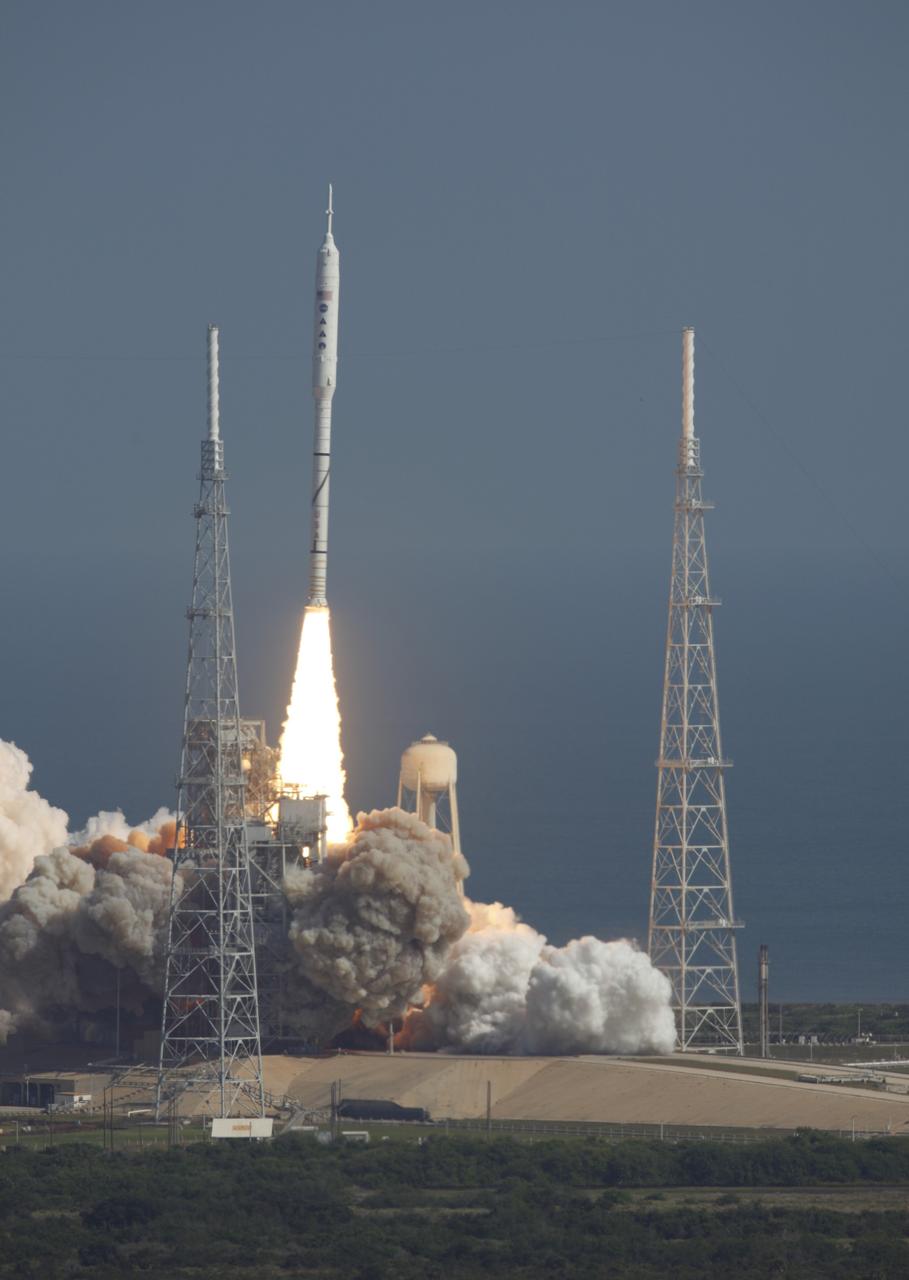
CAPE CANAVERAL, Fla. - Almost twice as tall as Disney's Cinderella Castle, the Constellation Program's 327-foot-tall Ares I-X test rocket races off Launch Complex 39B at NASA's Kennedy Space Center in Florida. The rocket produces 2.96 million pounds of thrust at liftoff and reaches a speed of 100 mph in eight seconds. Liftoff of the 6-minute flight test was at 11:30 a.m. EDT Oct. 28. This was the first launch from Kennedy's pads of a vehicle other than the space shuttle since the Apollo Program's Saturn rockets were retired. The parts used to make the Ares I-X booster flew on 30 different shuttle missions ranging from STS-29 in 1989 to STS-106 in 2000. The data returned from more than 700 sensors throughout the rocket will be used to refine the design of future launch vehicles and bring NASA one step closer to reaching its exploration goals. For information on the Ares I-X vehicle and flight test, visit http://www.nasa.gov/aresIX. Photo courtesy of Scott Andrews
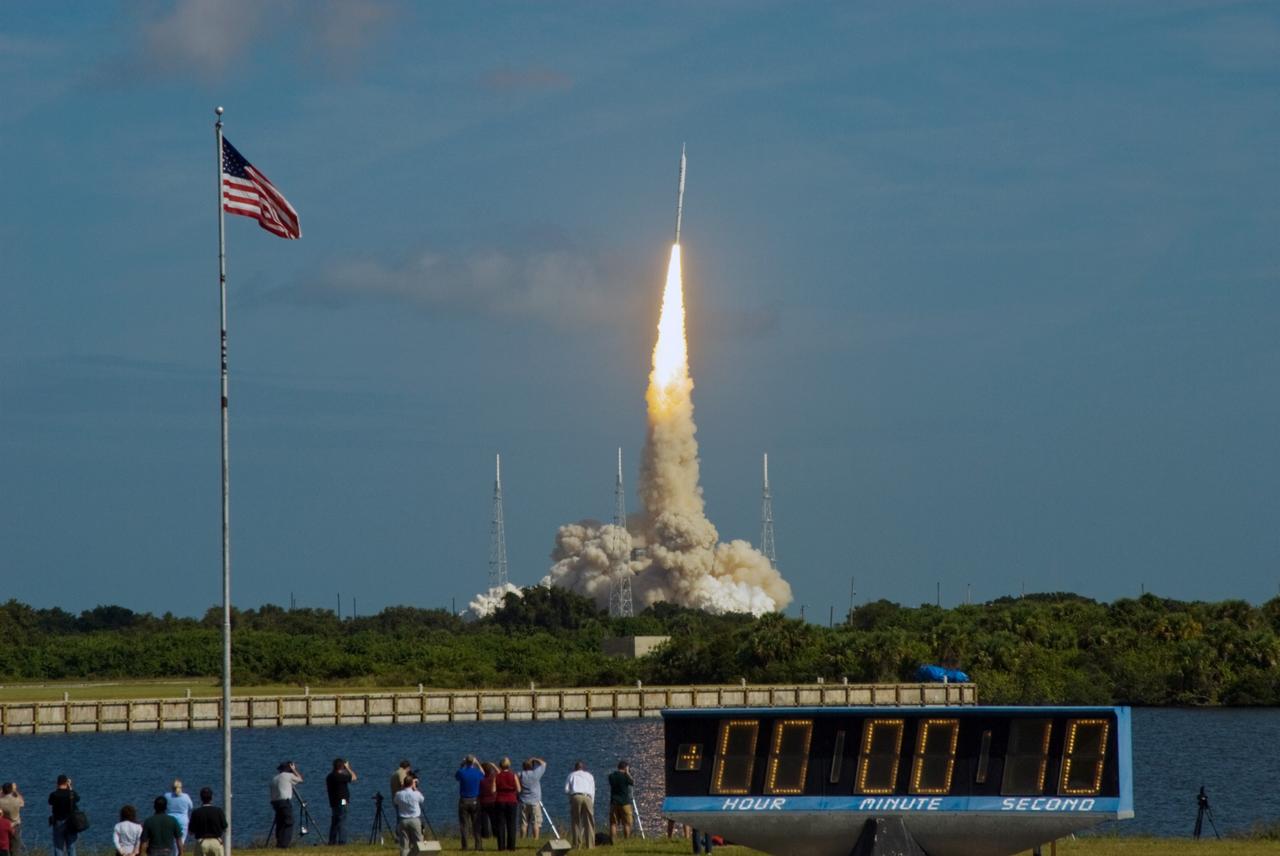
CAPE CANAVERAL, Fla. - The stars and stripes on the American flag reflect NASA's commitment to teamwork as the Constellation Program's Ares I-X test rocket roars off Launch Complex 39B at NASA's Kennedy Space Center in Florida. The rocket produces 2.96 million pounds of thrust at liftoff and reaches a speed of 100 mph in eight seconds. Liftoff of the 6-minute flight test was at 11:30 a.m. EDT Oct. 28. This was the first launch from Kennedy's pads of a vehicle other than the space shuttle since the Apollo Program's Saturn rockets were retired. The parts used to make the Ares I-X booster flew on 30 different shuttle missions ranging from STS-29 in 1989 to STS-106 in 2000. The data returned from more than 700 sensors throughout the rocket will be used to refine the design of future launch vehicles and bring NASA one step closer to reaching its exploration goals. For information on the Ares I-X vehicle and flight test, visit http://www.nasa.gov/aresIX. Photo credit: NASA/Jim Grossmann
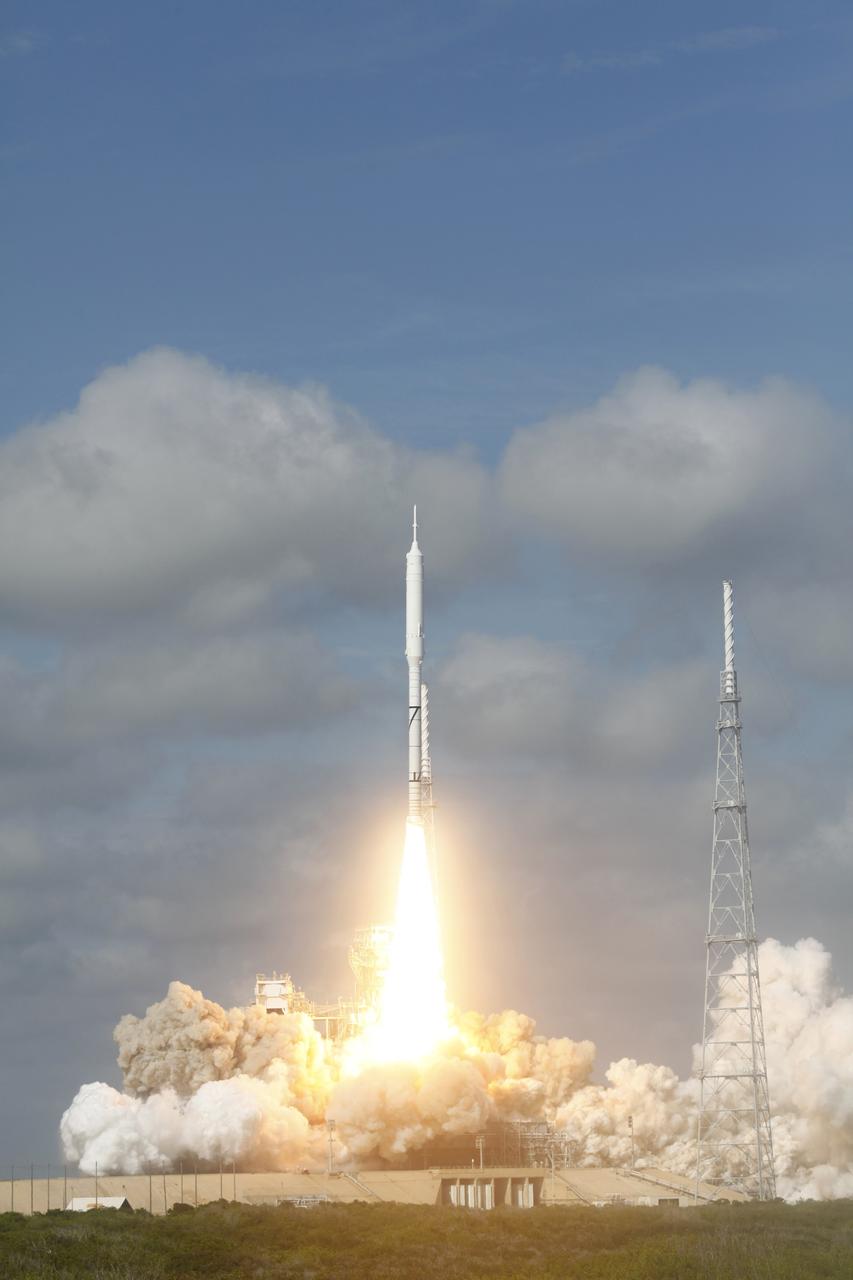
CAPE CANAVERAL, Fla. - With more than 12 times the thrust produced by a Boeing 747 jet aircraft, the Constellation Program's Ares I-X test rocket roars off Launch Complex 39B at NASA's Kennedy Space Center in Florida. The rocket produces 2.96 million pounds of thrust at liftoff and goes supersonic in 39 seconds. Liftoff of the 6-minute flight test was at 11:30 a.m. EDT Oct. 28. This was the first launch from Kennedy's pads of a vehicle other than the space shuttle since the Apollo Program's Saturn rockets were retired. The parts used to make the Ares I-X booster flew on 30 different shuttle missions ranging from STS-29 in 1989 to STS-106 in 2000. The data returned from more than 700 sensors throughout the rocket will be used to refine the design of future launch vehicles and bring NASA one step closer to reaching its exploration goals. For information on the Ares I-X vehicle and flight test, visit http://www.nasa.gov/aresIX. Photo courtesy of Scott Andrews, Canon
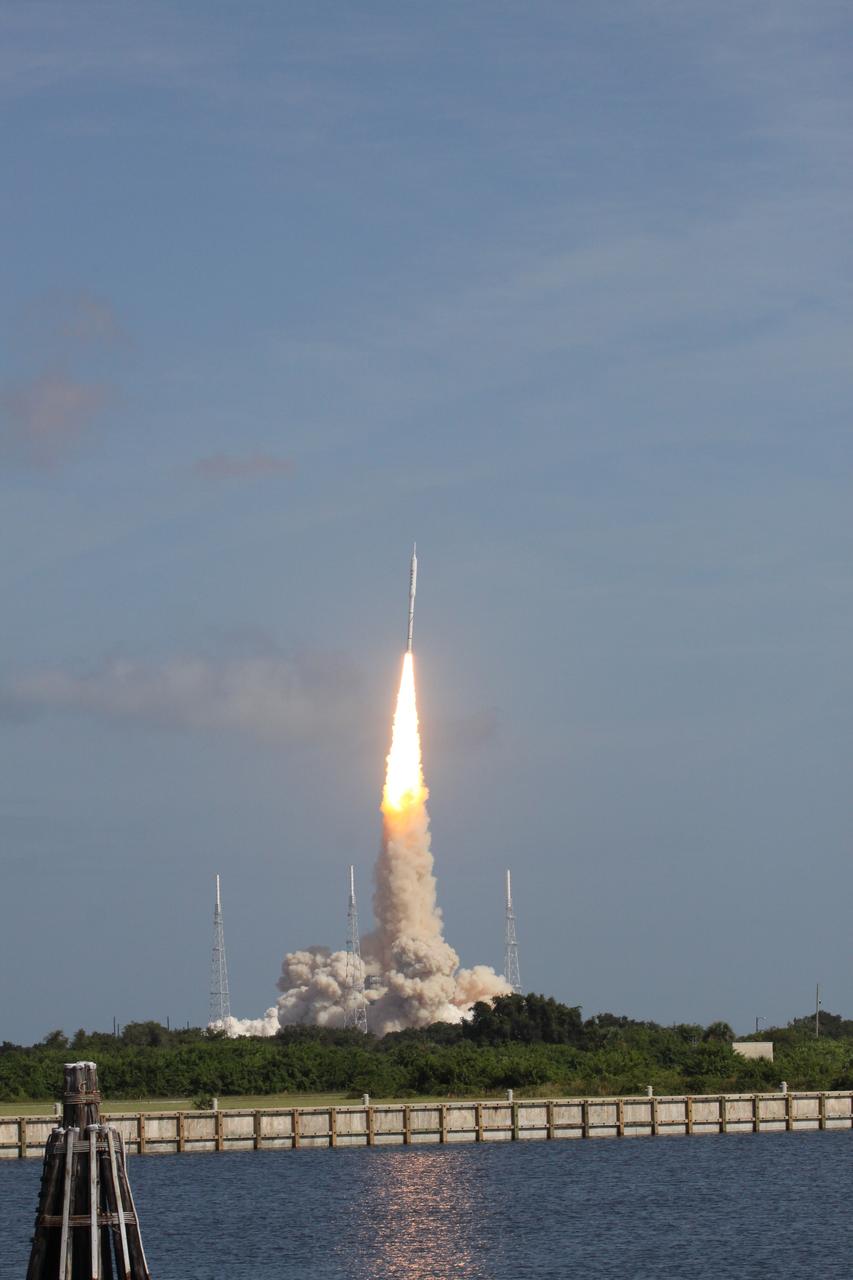
CAPE CANAVERAL, Fla. - With more than 12 times the thrust produced by a Boeing 747 jet aircraft, the Constellation Program's Ares I-X test rocket roars off Launch Complex 39B at NASA's Kennedy Space Center in Florida. The rocket produces 2.96 million pounds of thrust at liftoff and goes supersonic in 39 seconds. Liftoff of the 6-minute flight test was at 11:30 a.m. EDT Oct. 28. This was the first launch from Kennedy's pads of a vehicle other than the space shuttle since the Apollo Program's Saturn rockets were retired. The parts used to make the Ares I-X booster flew on 30 different shuttle missions ranging from STS-29 in 1989 to STS-106 in 2000. The data returned from more than 700 sensors throughout the rocket will be used to refine the design of future launch vehicles and bring NASA one step closer to reaching its exploration goals. For information on the Ares I-X vehicle and flight test, visit http://www.nasa.gov/aresIX. Photo credit: NASA/Jack Pfaller

CAPE CANAVERAL, Fla. - With more than 12 times the thrust produced by a Boeing 747 jet aircraft, the Constellation Program's Ares I-X test rocket roars off Launch Complex 39B at NASA's Kennedy Space Center in Florida. The rocket produces 2.96 million pounds of thrust at liftoff and goes supersonic in 39 seconds. Liftoff of the 6-minute flight test was at 11:30 a.m. EDT Oct. 28. This was the first launch from Kennedy's pads of a vehicle other than the space shuttle since the Apollo Program's Saturn rockets were retired. The parts used to make the Ares I-X booster flew on 30 different shuttle missions ranging from STS-29 in 1989 to STS-106 in 2000. The data returned from more than 700 sensors throughout the rocket will be used to refine the design of future launch vehicles and bring NASA one step closer to reaching its exploration goals. For information on the Ares I-X vehicle and flight test, visit http://www.nasa.gov/aresIX. Photo credit: NASA/Sandra Joseph and Kevin O'Connell
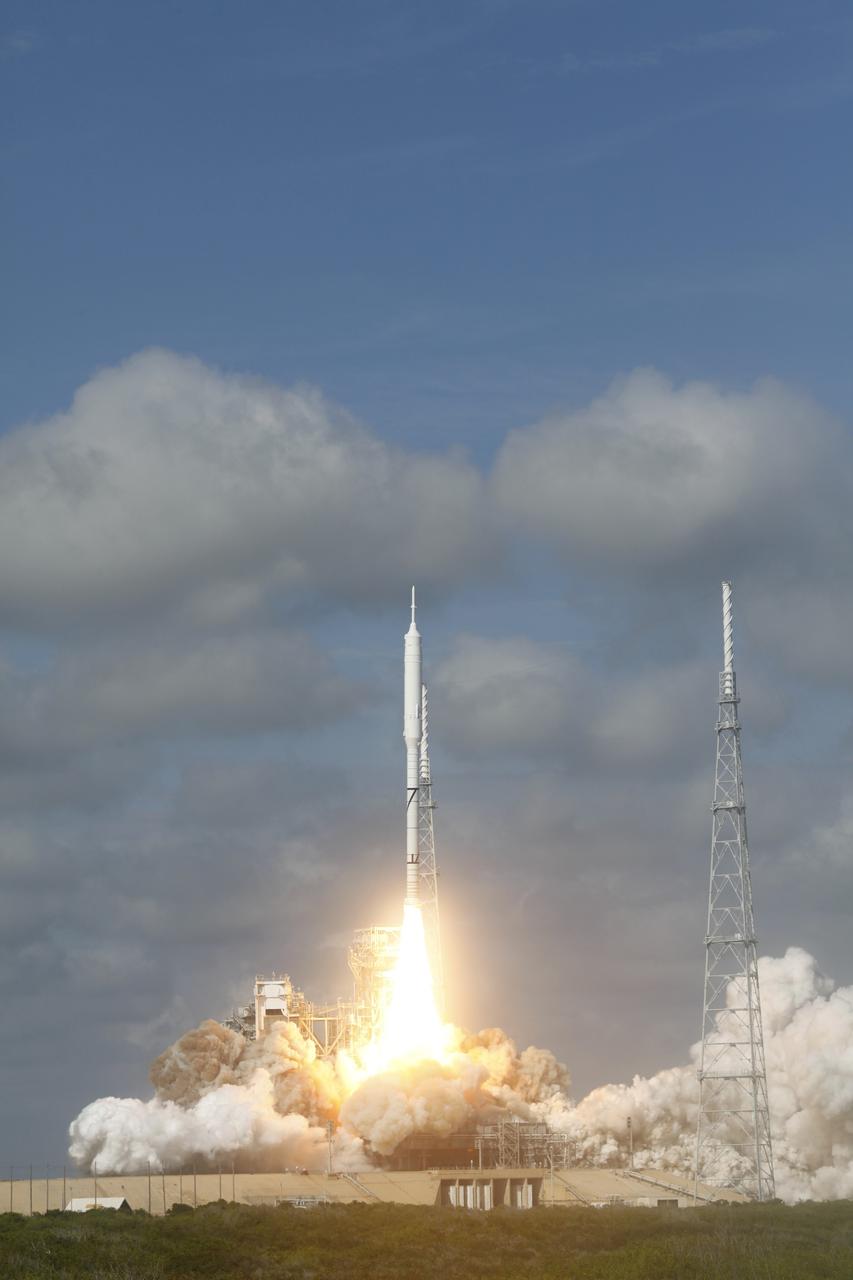
CAPE CANAVERAL, Fla. - Almost twice as tall as Disney's Cinderella Castle, the Constellation Program's 327-foot-tall Ares I-X test rocket lifts off from Launch Complex 39B at NASA's Kennedy Space Center in Florida. The rocket produces 2.96 million pounds of thrust at liftoff and reaches a speed of 100 mph in eight seconds. Liftoff of the 6-minute flight test was at 11:30 a.m. EDT Oct. 28. This was the first launch from Kennedy's pads of a vehicle other than the space shuttle since the Apollo Program's Saturn rockets were retired. The parts used to make the Ares I-X booster flew on 30 different shuttle missions ranging from STS-29 in 1989 to STS-106 in 2000. The data returned from more than 700 sensors throughout the rocket will be used to refine the design of future launch vehicles and bring NASA one step closer to reaching its exploration goals. For information on the Ares I-X vehicle and flight test, visit http://www.nasa.gov/aresIX. Photo courtesy of Scott Andrews, Canon