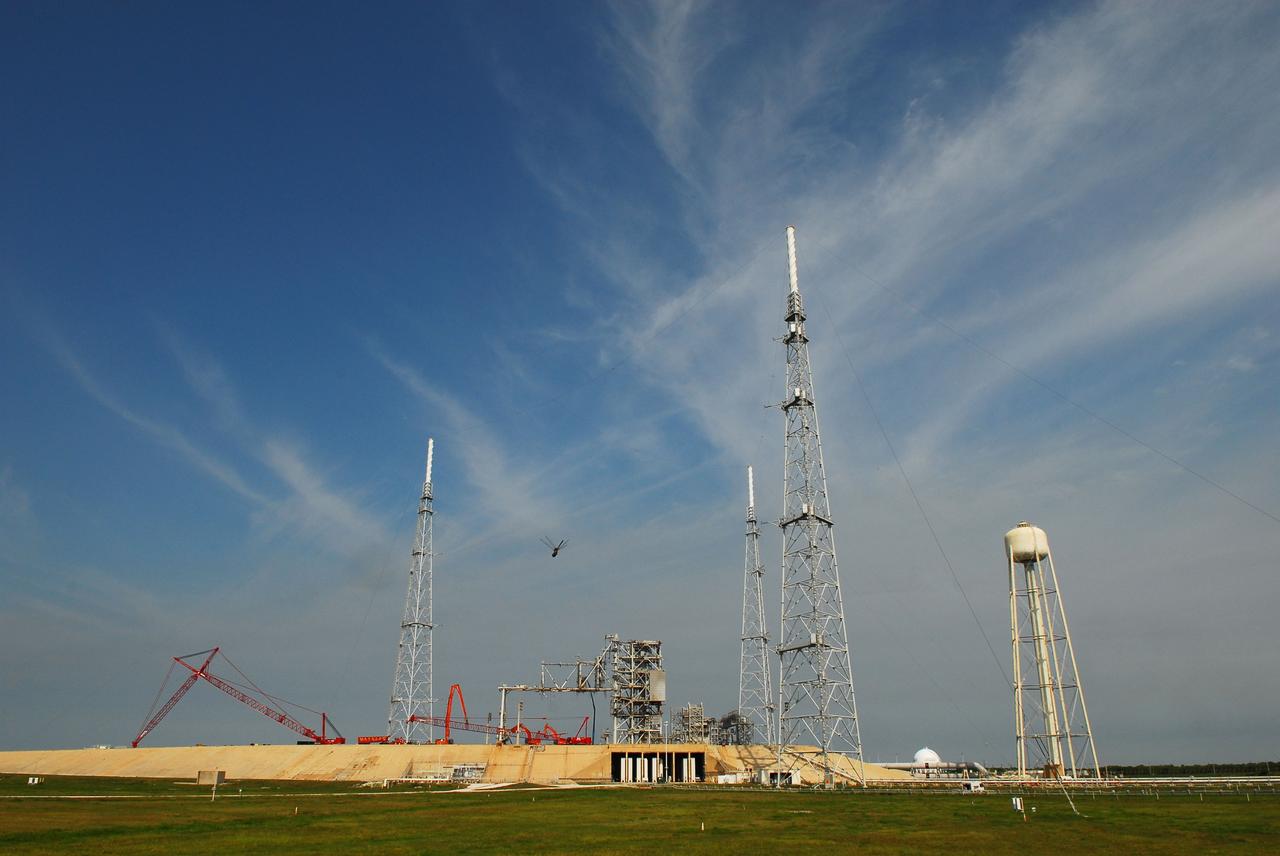
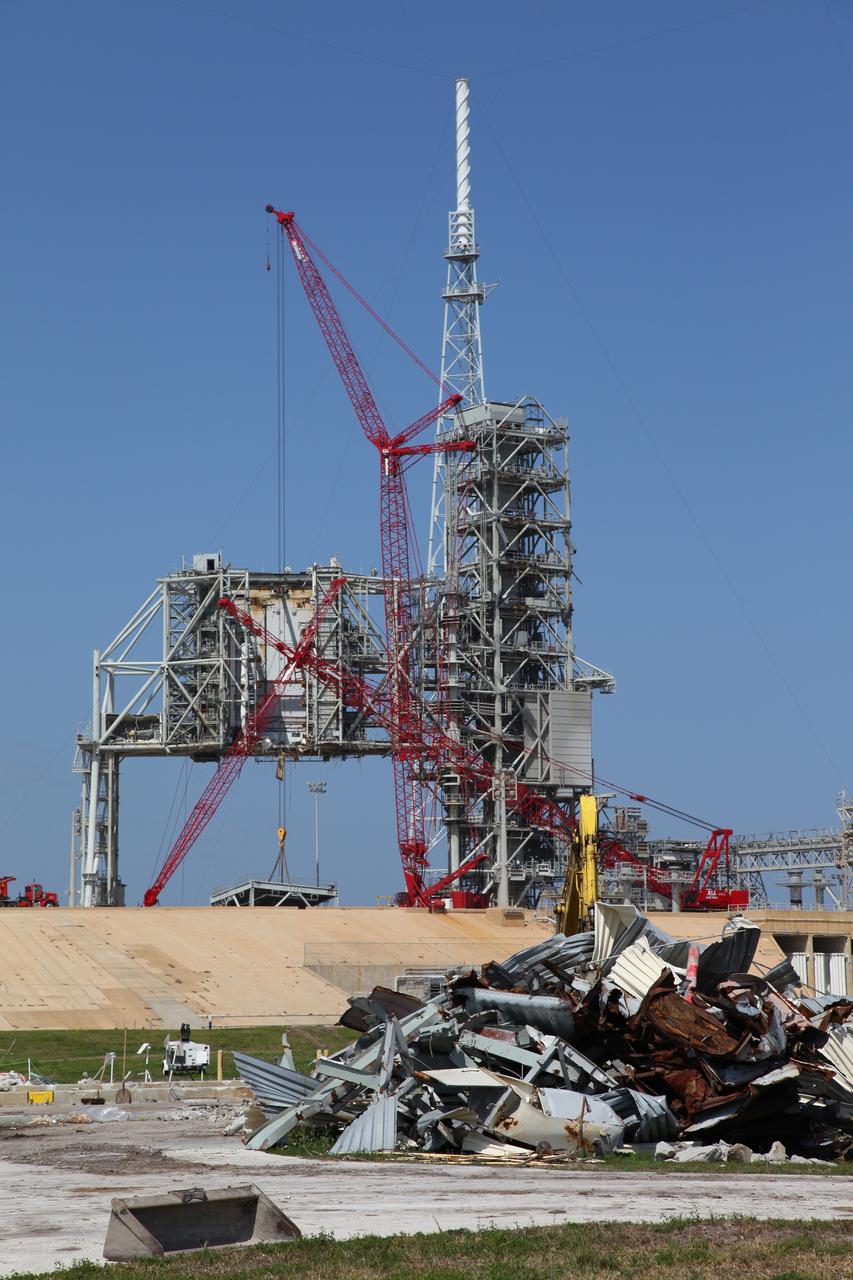
Cape Canaveral, Fla. -- Workers using a large crane dismantle the final sections of the rotating service structure on Launch Pad 39B at NASA's Kennedy Space Center in Florida. A dragonfly passing across the camera lens (center) pays no attention to the pad's deconstruction in progress. In 2009, the pad was no longer needed for the shuttle program, so it is being restructured for future use. Its new design will feature a "clean pad" for rockets to come with their own launcher, making it more versatile for a number of vehicles. The new lightning protection system, which was in place for the October 2009 launch of Ares I-X, will remain. For information on NASA's future plans, visit www.nasa.gov. Photo credit: NASA/Jim Grossmann
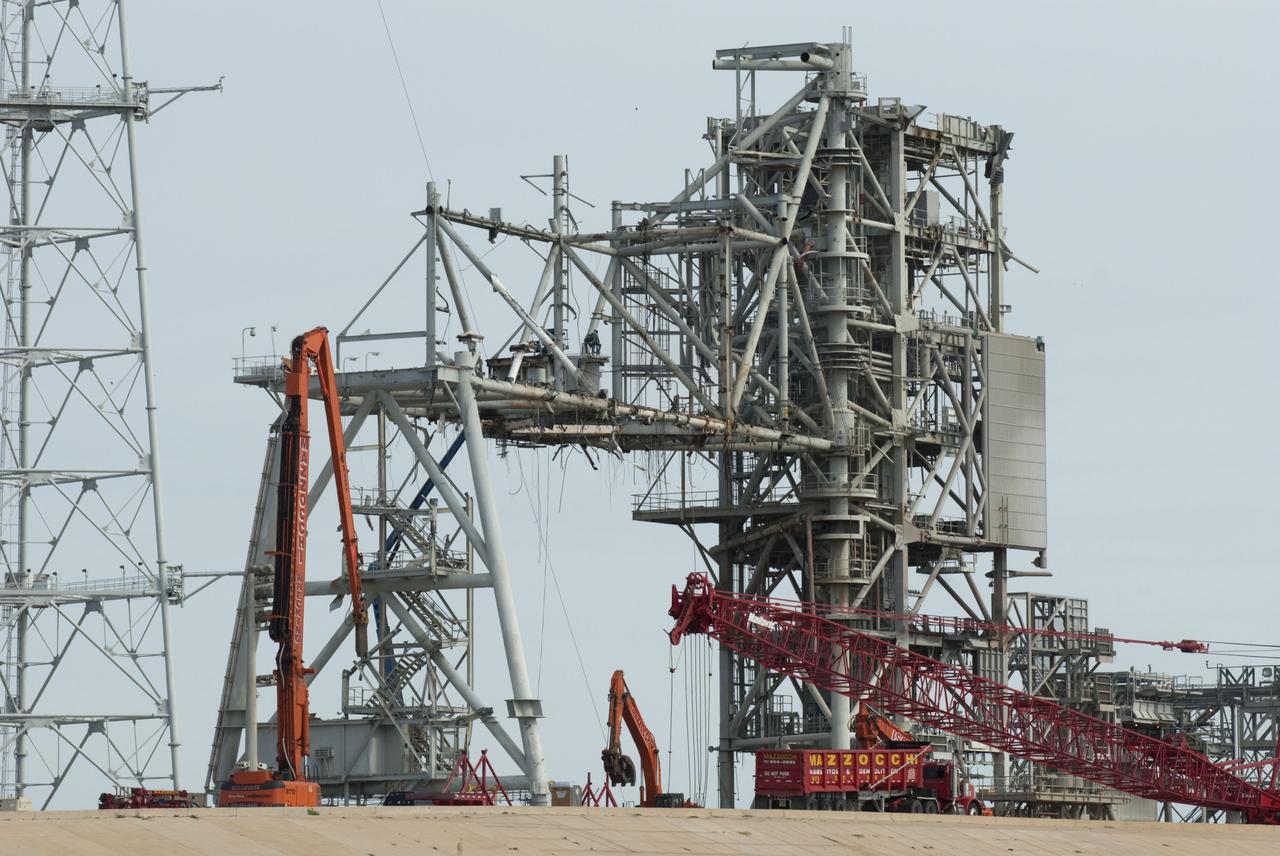
Cape Canaveral, Fla. -- Workers using a large crane dismantle the final sections of the rotating service structure on Launch Pad 39B at NASA's Kennedy Space Center in Florida. In 2009, the pad was no longer needed for the shuttle program, so it is being restructured for future use. Its new design will feature a "clean pad" for rockets to come with their own launcher, making it more versatile for a number of vehicles. The new lightning protection system, which was in place for the October 2009 launch of Ares I-X, will remain. For information on NASA's future plans, visit www.nasa.gov. Photo credit: NASA/Jim Grossmann
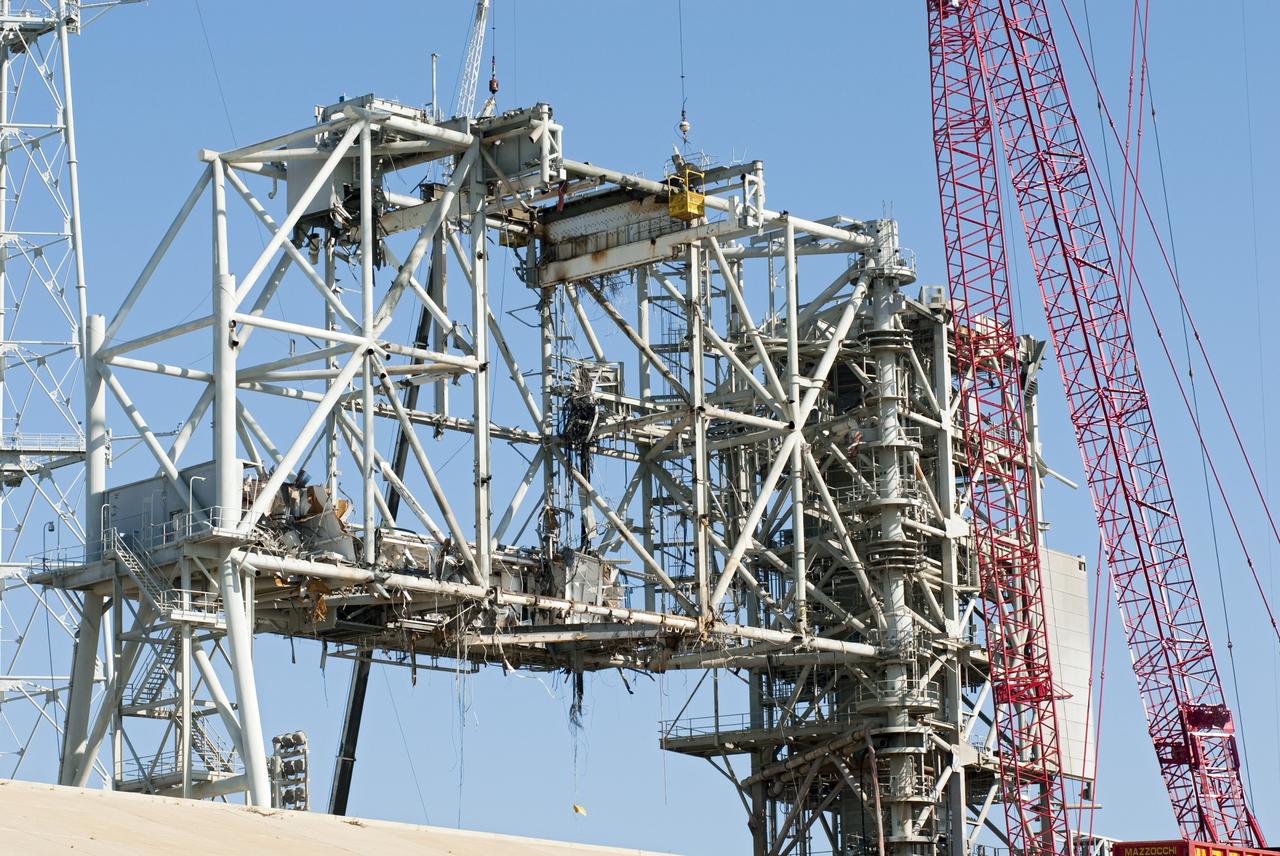
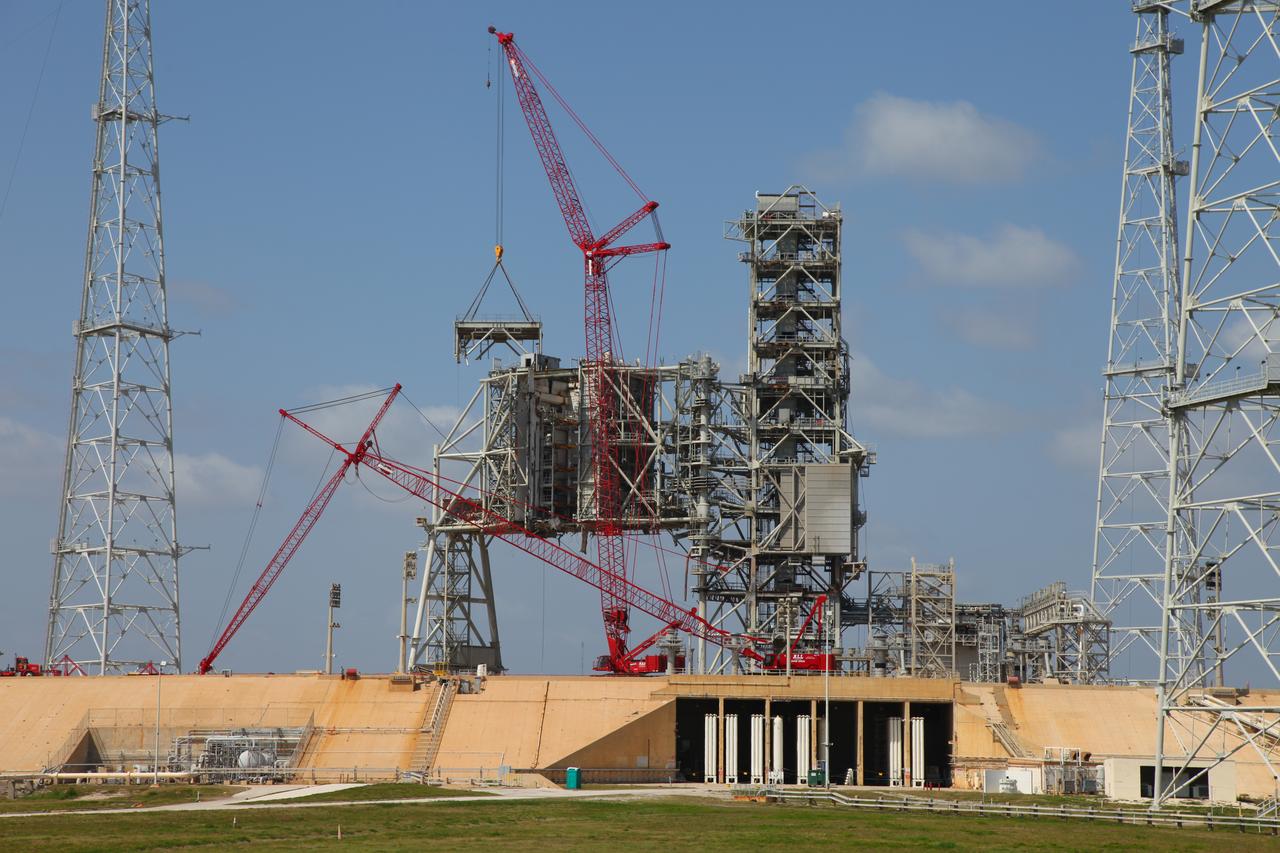
CAPE CANAVERAL, Fla. -- A large crane suspends a basket where a worker is dismantling a section of the rotating service structure on Launch Pad 39B at NASA's Kennedy Space Center in Florida. In 2009, the pad was no longer needed for the shuttle program, so it is being restructured for future use. Its new design will feature a "clean pad" for rockets to come with their own launcher, making it more versatile for a number of vehicles. The new lightning protection system, which was in place for the October 2009 launch of Ares I-X, will remain. For information on NASA's future plans, visit www.nasa.gov. Photo credit: NASA/Jim Grossmann
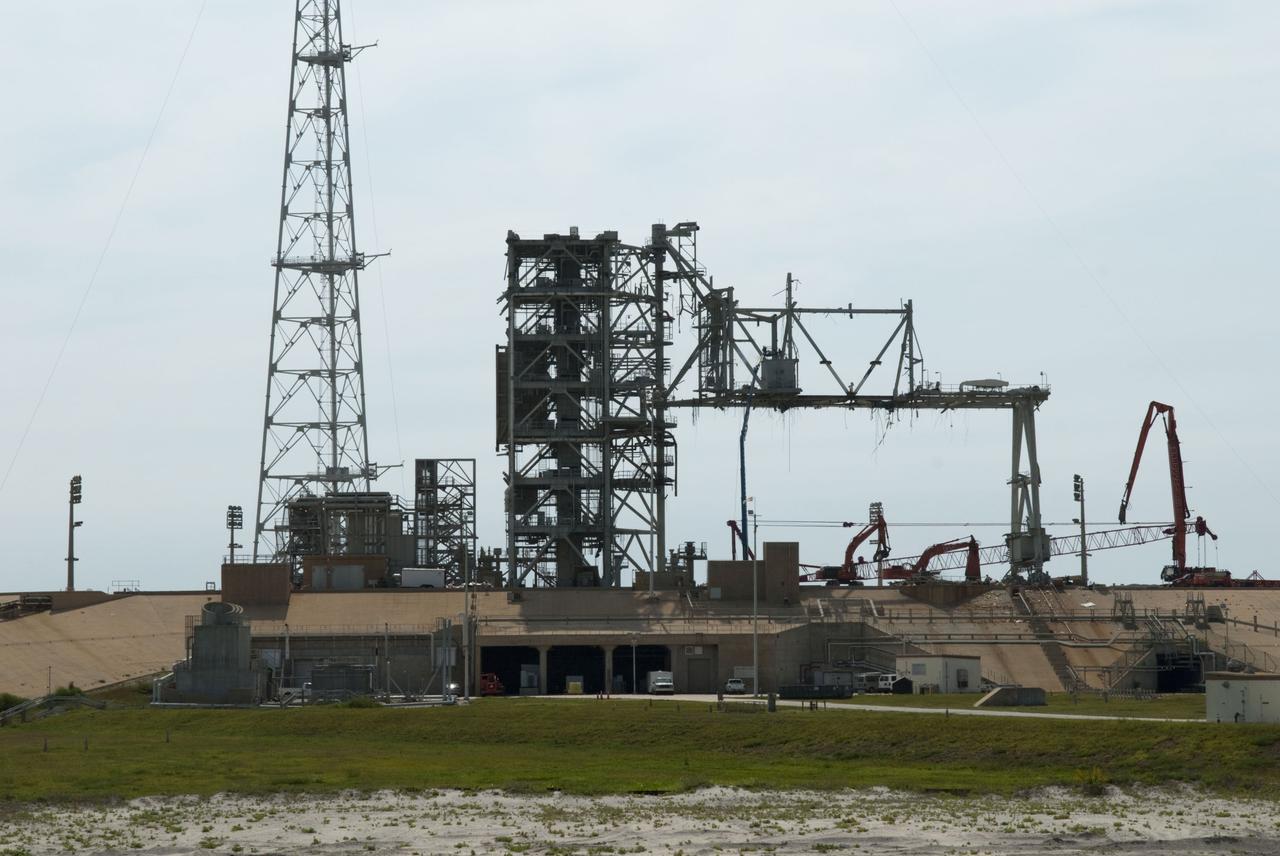
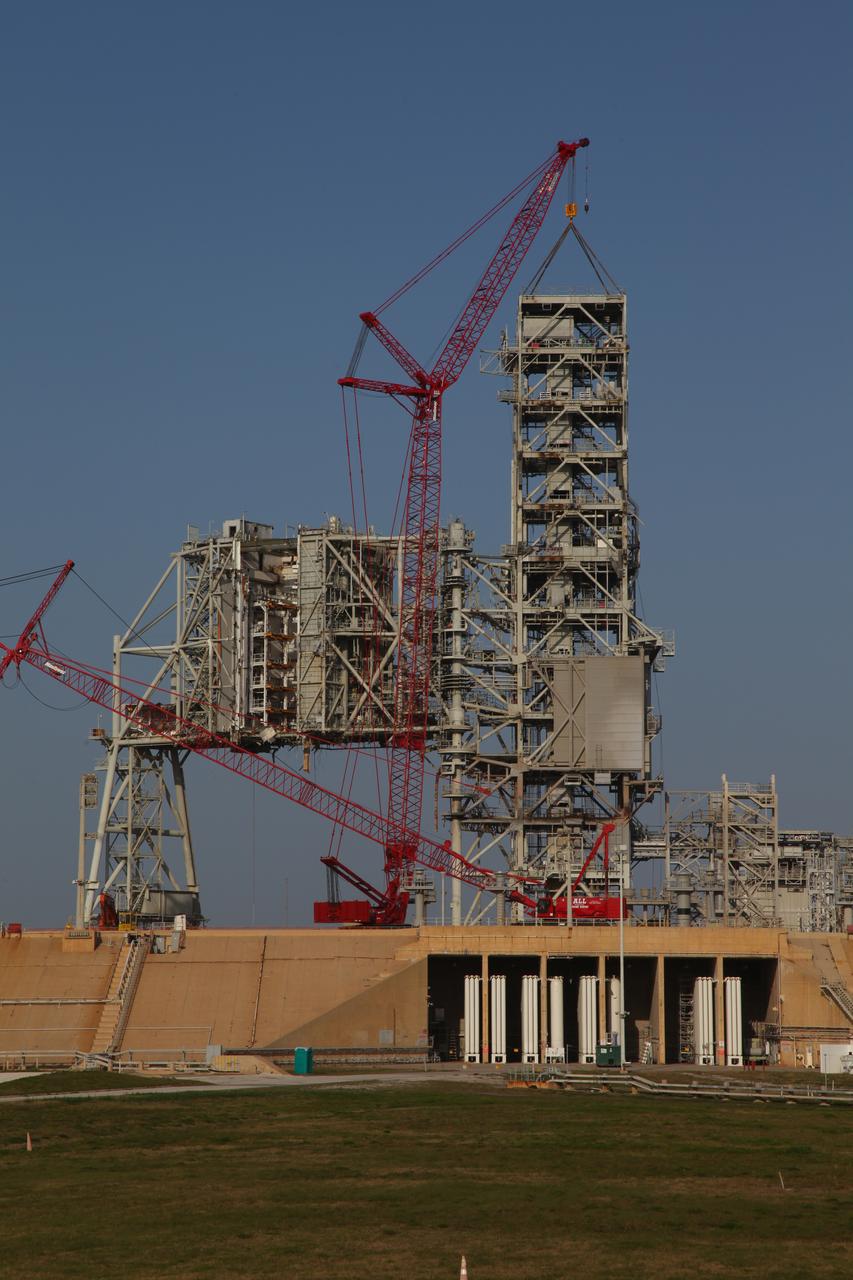
Cape Canaveral, Fla. -- Workers using a large crane dismantle the final sections of the rotating service structure on Launch Pad 39B at NASA's Kennedy Space Center in Florida. In 2009, the pad was no longer needed for the shuttle program, so it is being restructured for future use. Its new design will feature a "clean pad" for rockets to come with their own launcher, making it more versatile for a number of vehicles. The new lightning protection system, which was in place for the October 2009 launch of Ares I-X, will remain. For information on NASA's future plans, visit www.nasa.gov. Photo credit: NASA/Jim Grossmann
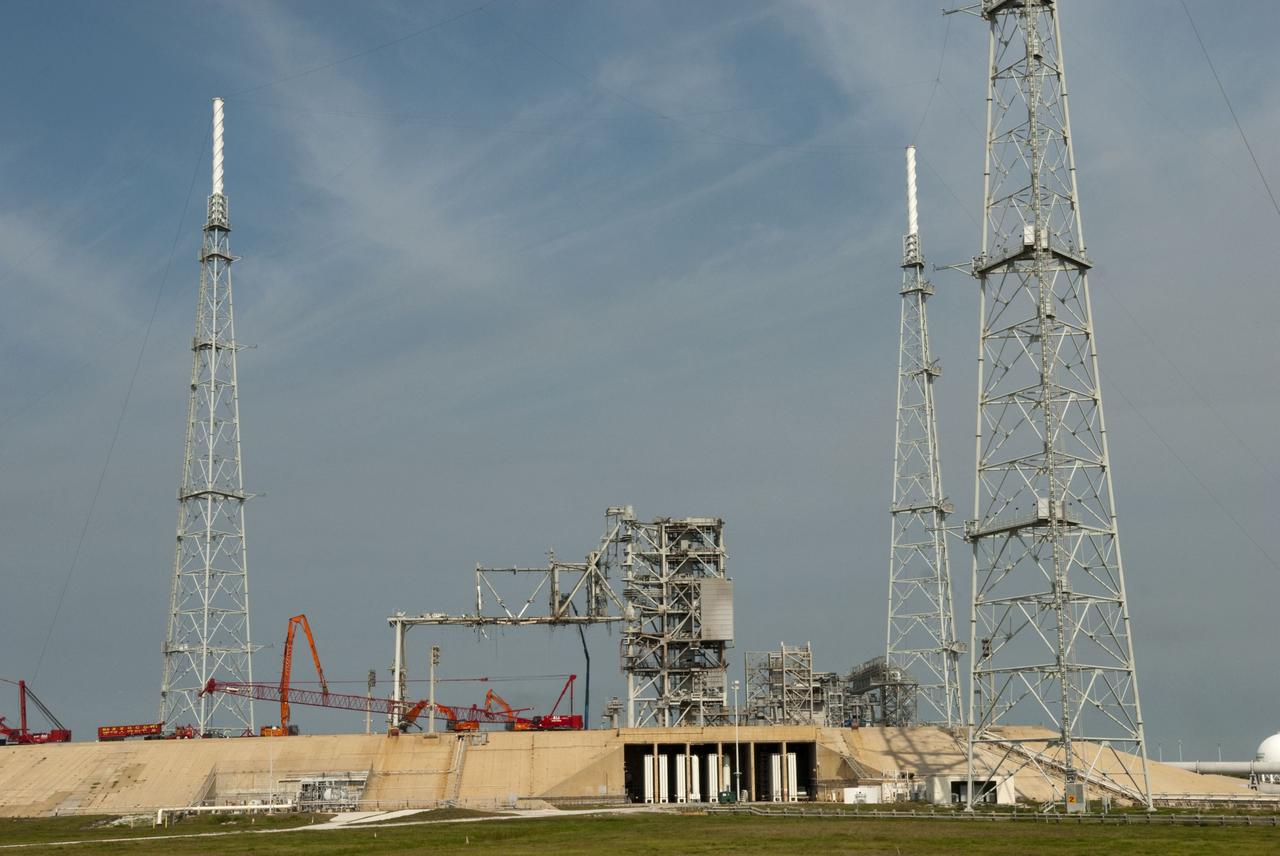
Cape Canaveral, Fla. -- Workers using a large crane dismantle the final sections of the rotating service structure on Launch Pad 39B at NASA's Kennedy Space Center in Florida. In 2009, the pad was no longer needed for the shuttle program, so it is being restructured for future use. Its new design will feature a "clean pad" for rockets to come with their own launcher, making it more versatile for a number of vehicles. The new lightning protection system, which was in place for the October 2009 launch of Ares I-X, will remain. For information on NASA's future plans, visit www.nasa.gov. Photo credit: NASA/Jim Grossmann
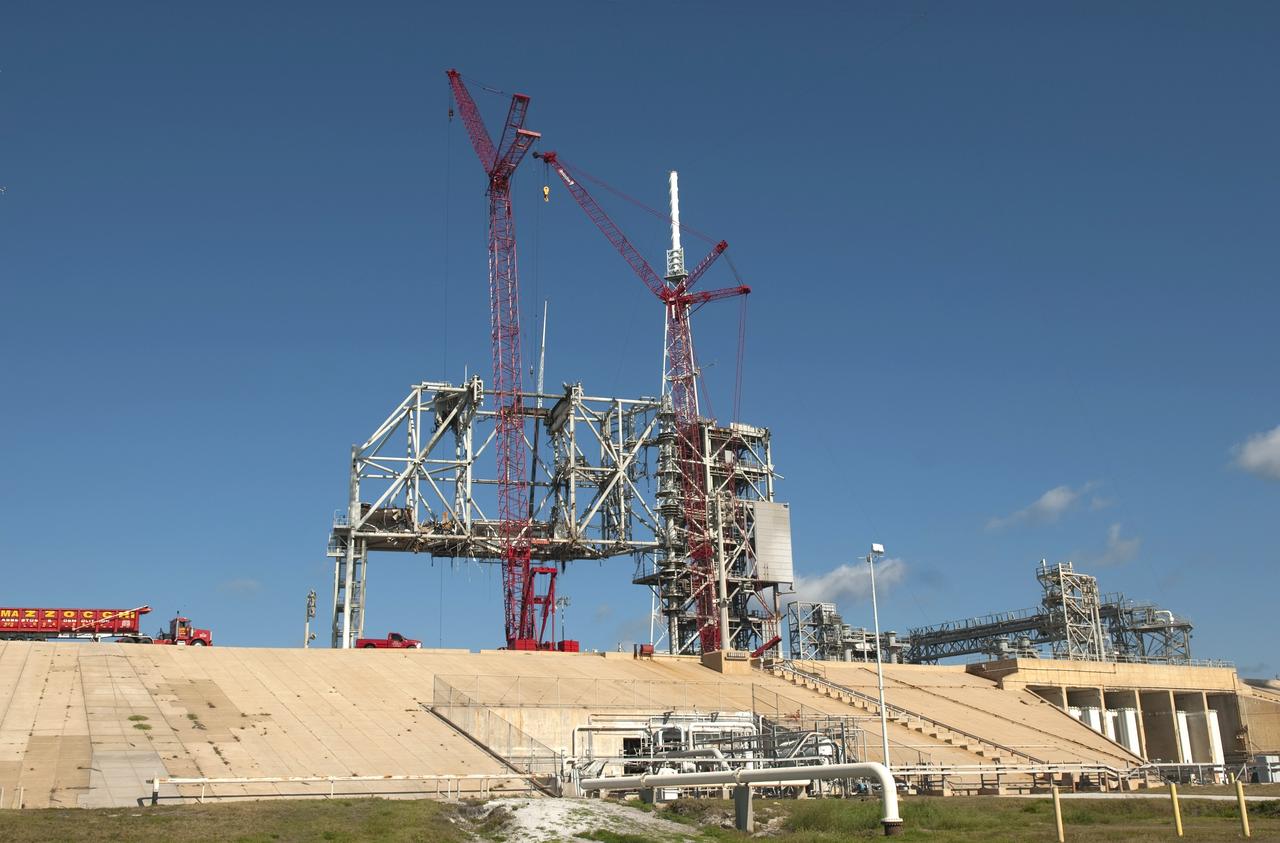
CAPE CANAVERAL, Fla. -- A large crane lowers to the ground a section of the dismantled rotating service structure on Launch Pad 39B at NASA's Kennedy Space Center in Florida. In 2009, the pad was no longer needed for the shuttle program, so it is being restructured for future use. Its new design will feature a "clean pad" for rockets to come with their own launcher, making it more versatile for a number of vehicles. The new lightning protection system, which was in place for the October 2009 launch of Ares I-X, will remain. For information on NASA's future plans, visit www.nasa.gov. Photo credit: NASA/Jim Grossmann
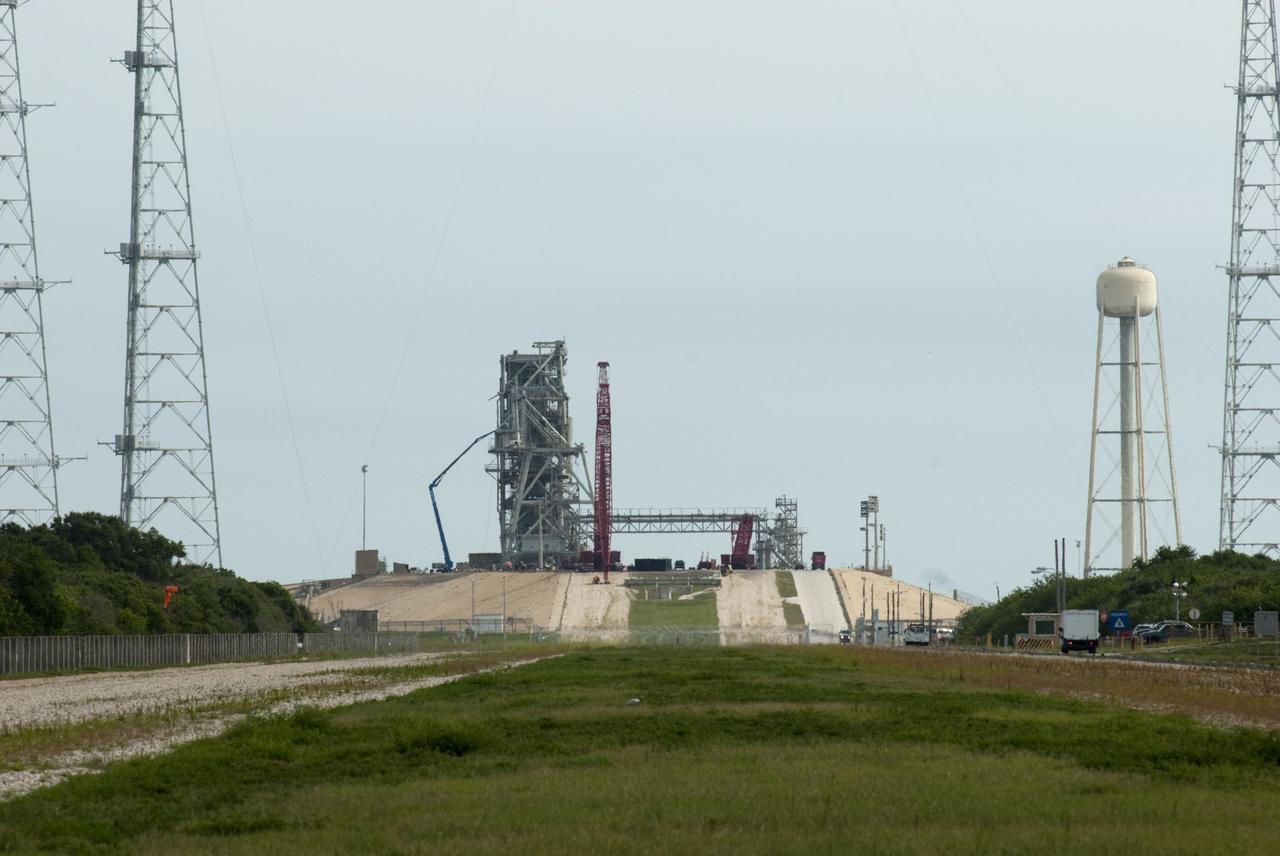
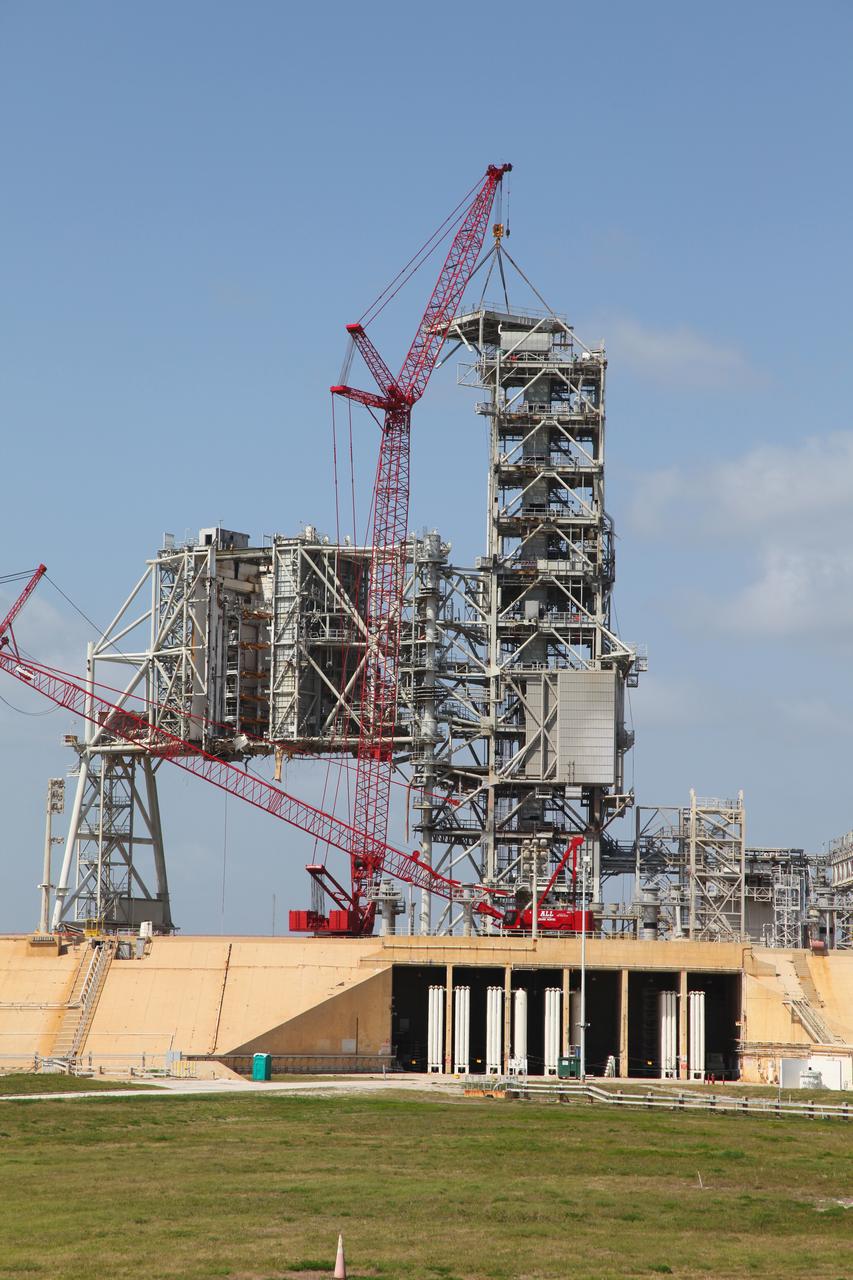
Cape Canaveral, Fla. -- Workers using a large crane dismantle the final sections of the rotating service structure on Launch Pad 39B at NASA's Kennedy Space Center in Florida. In 2009, the pad was no longer needed for the shuttle program, so it is being restructured for future use. Its new design will feature a "clean pad" for rockets to come with their own launcher, making it more versatile for a number of vehicles. The new lightning protection system, which was in place for the October 2009 launch of Ares I-X, will remain. For information on NASA's future plans, visit www.nasa.gov. Photo credit: NASA/Jim Grossmann
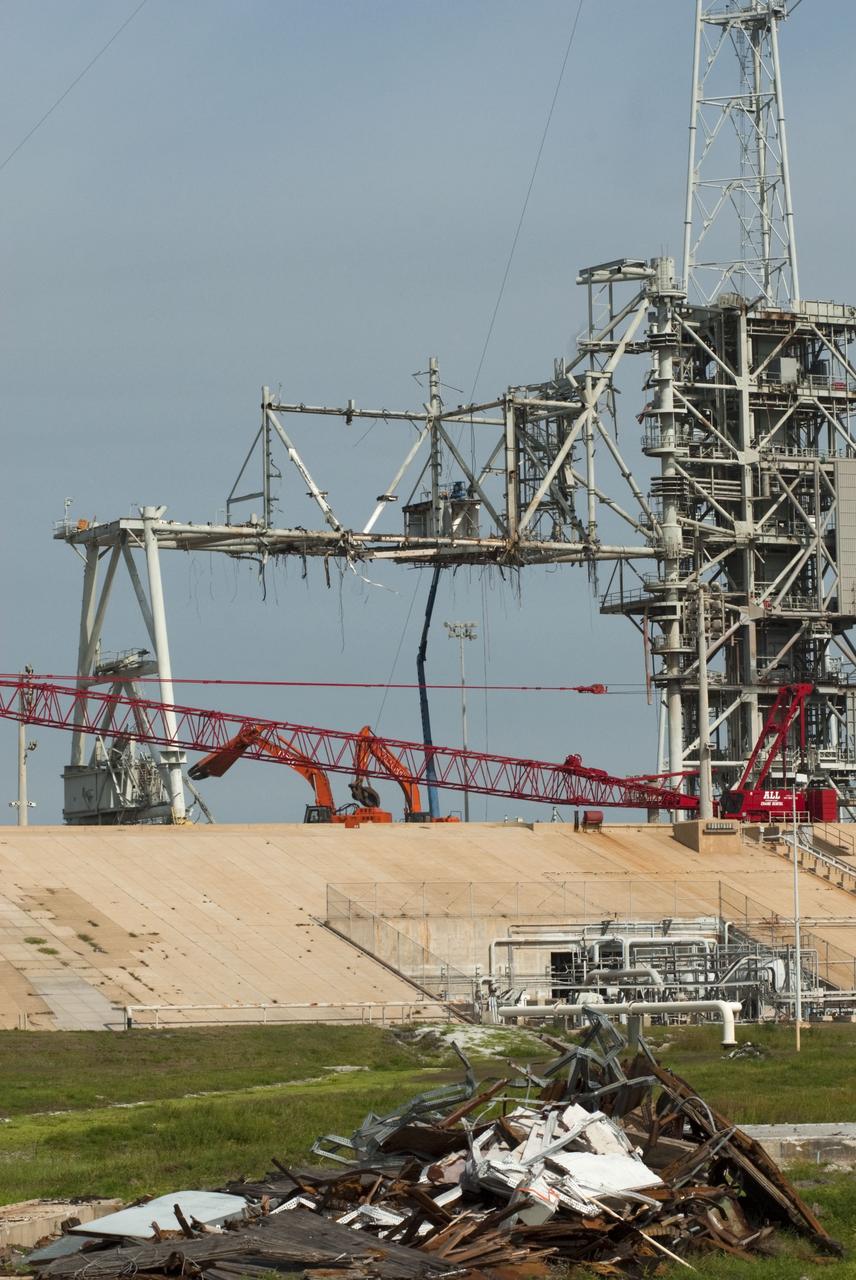
Cape Canaveral, Fla. -- Workers using a large crane dismantle the final sections of the rotating service structure on Launch Pad 39B at NASA's Kennedy Space Center in Florida. In 2009, the pad was no longer needed for the shuttle program, so it is being restructured for future use. Its new design will feature a "clean pad" for rockets to come with their own launcher, making it more versatile for a number of vehicles. The new lightning protection system, which was in place for the October 2009 launch of Ares I-X, will remain. For information on NASA's future plans, visit www.nasa.gov. Photo credit: NASA/Jim Grossmann
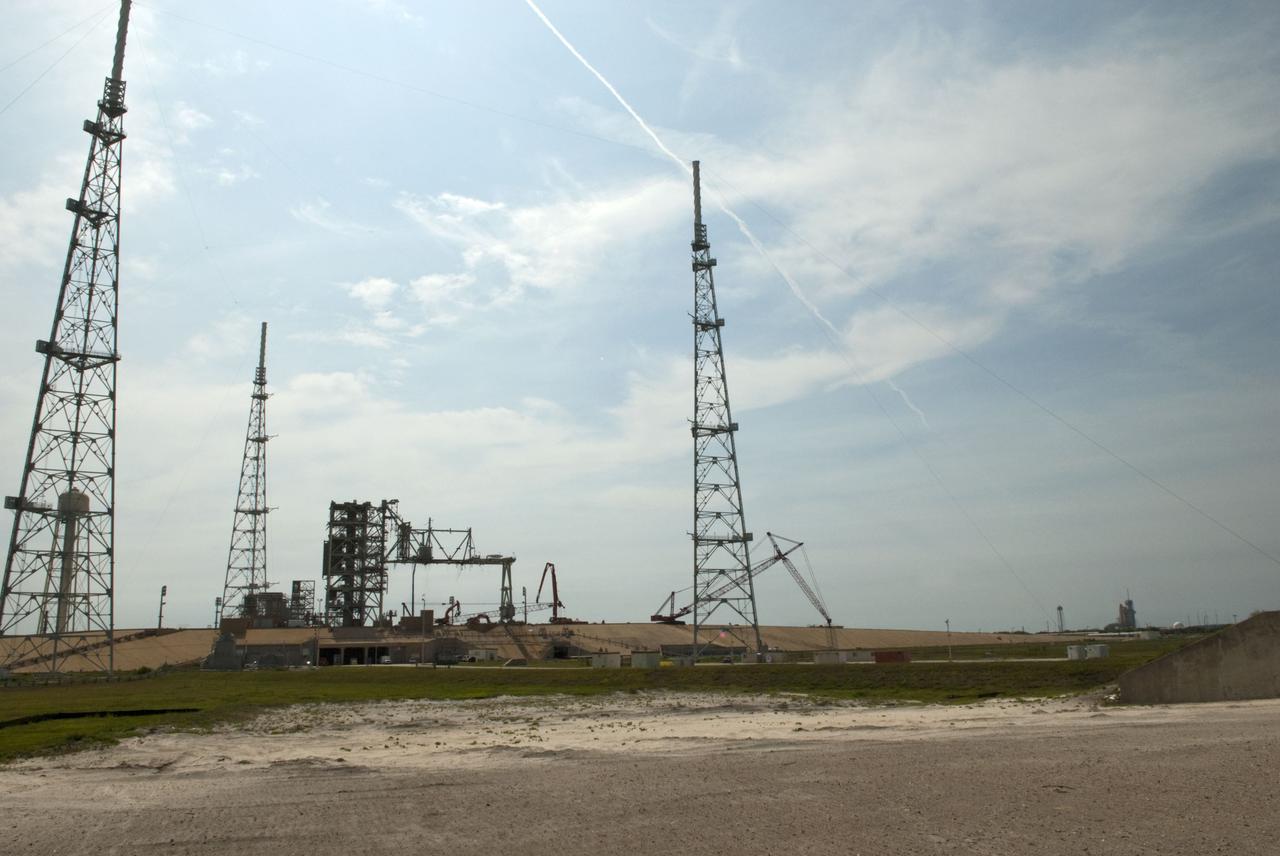
Cape Canaveral, Fla. -- Workers using a large crane dismantle the final sections of the rotating service structure on Launch Pad 39B at NASA's Kennedy Space Center in Florida. Space shuttle Atlantis can be seen on Launch Pad 39A (far right background) as it is being prepared for the final space shuttle mission, STS-135. In 2009, the pad was no longer needed for the shuttle program, so it is being restructured for future use. Its new design will feature a "clean pad" for rockets to come with their own launcher, making it more versatile for a number of vehicles. The new lightning protection system, which was in place for the October 2009 launch of Ares I-X, will remain. For information on NASA's future plans, visit www.nasa.gov. Photo credit: NASA/Jim Grossmann
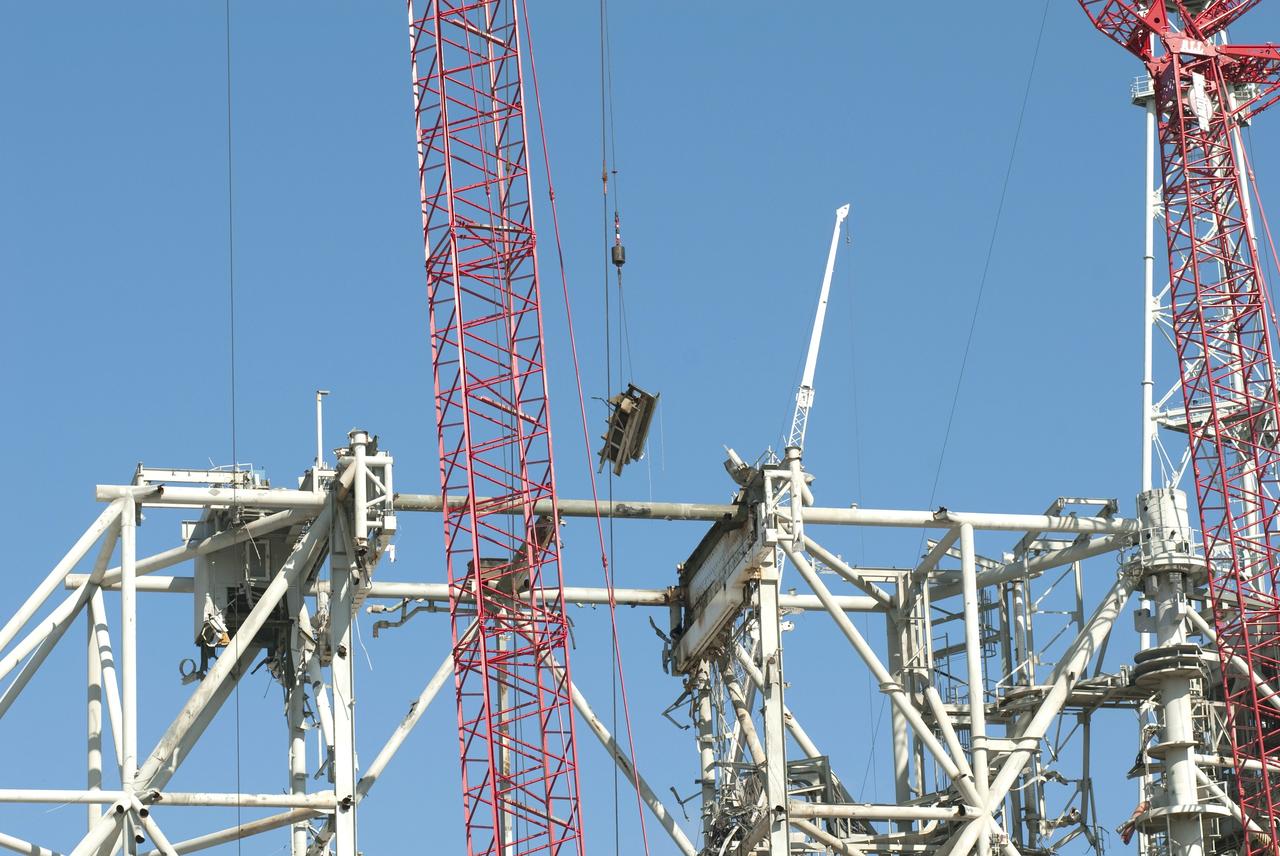
CAPE CANAVERAL, Fla. -- A large crane lowers to the ground a section of the dismantled rotating service structure on Launch Pad 39B at NASA's Kennedy Space Center in Florida. In 2009, the pad was no longer needed for the shuttle program, so it is being restructured for future use. Its new design will feature a "clean pad" for rockets to come with their own launcher, making it more versatile for a number of vehicles. The new lightning protection system, which was in place for the October 2009 launch of Ares I-X, will remain. For information on NASA's future plans, visit www.nasa.gov. Photo credit: NASA/Jim Grossmann
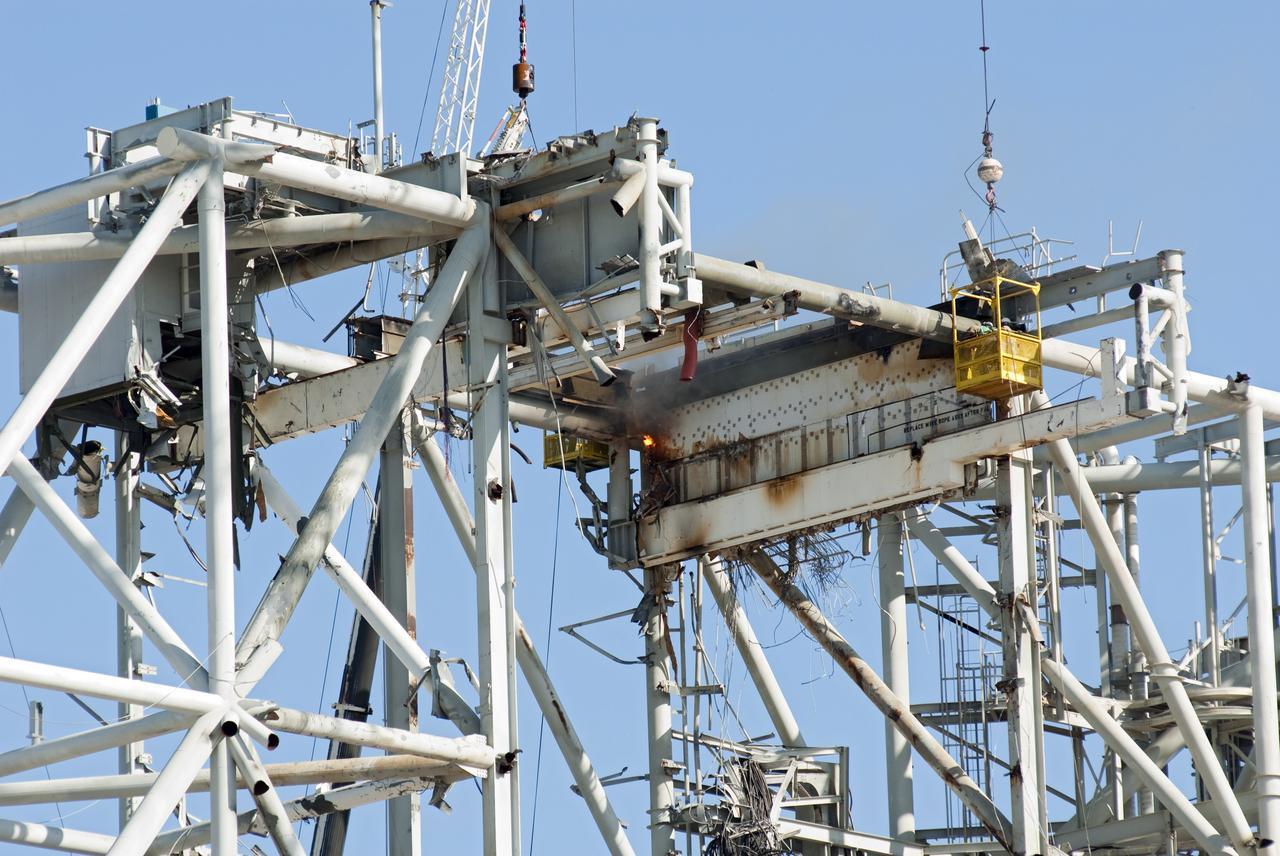
CAPE CANAVERAL, Fla. -- A large crane suspends a basket where a worker is dismantling a section of the rotating service structure on Launch Pad 39B at NASA's Kennedy Space Center in Florida. In 2009, the pad was no longer needed for the shuttle program, so it is being restructured for future use. Its new design will feature a "clean pad" for rockets to come with their own launcher, making it more versatile for a number of vehicles. The new lightning protection system, which was in place for the October 2009 launch of Ares I-X, will remain. For information on NASA's future plans, visit www.nasa.gov. Photo credit: NASA/Jim Grossmann
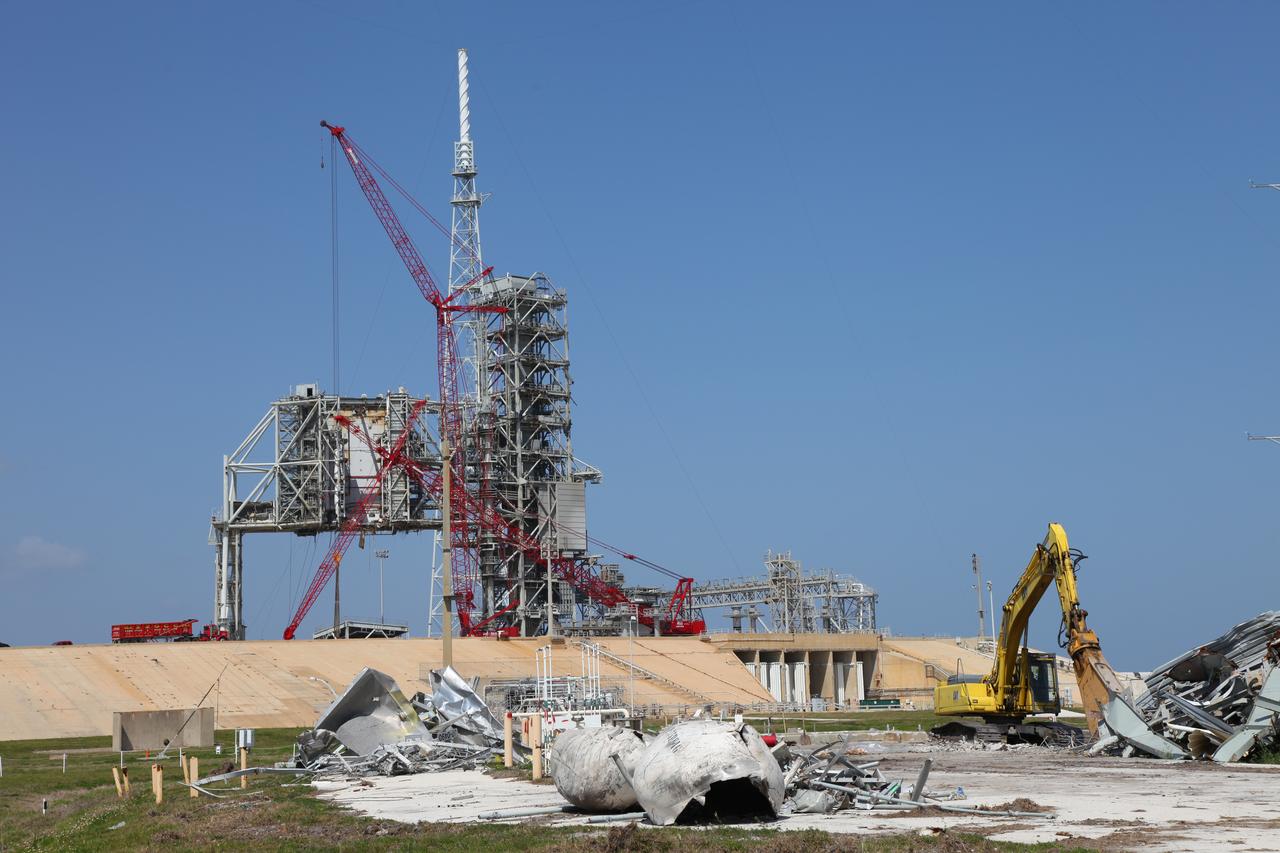
EXPLORATION - Pad 39B Deconstruction
EXPLORATION - Pad 39B Deconstruction
EXPLORATION - Pad 39B Deconstruction
EXPLORATION - Pad 39B Deconstruction
EXPLORATION - Pad 39B Deconstruction
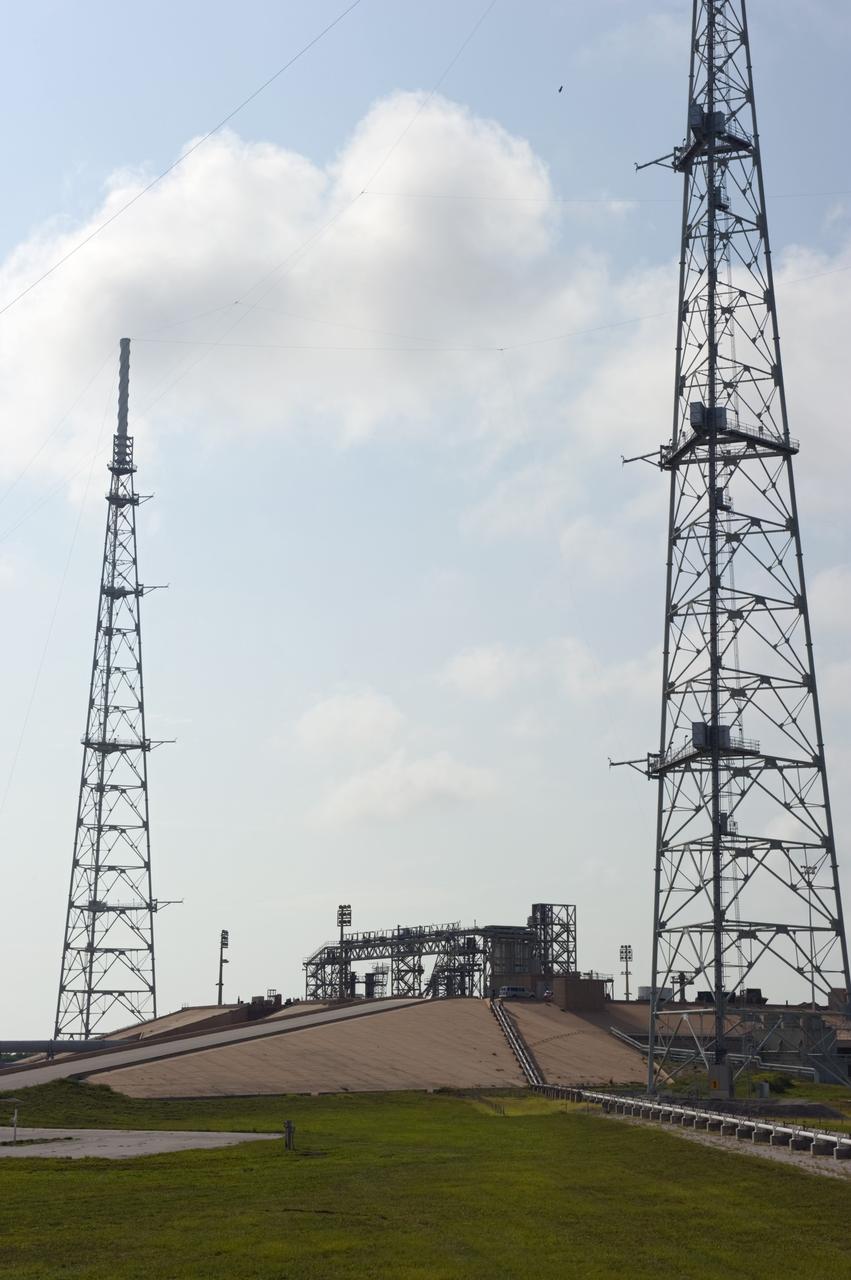
CAPE CANAVERAL, Fla. -- At NASA's Kennedy Space Center in Florida, only remnants of the support structures remain on Launch Pad 39B after the pad's deconstruction. In 2009, the structure at the pad was no longer needed for NASA's Space Shuttle Program, so it is being restructured for future use. The new design will feature a "clean pad" for rockets to come with their own launcher, making it more versatile for a number of vehicles. For information on NASA's future plans, visit http://www.nasa.gov/exploration. Photo credit: NASA/Kim Shiflett
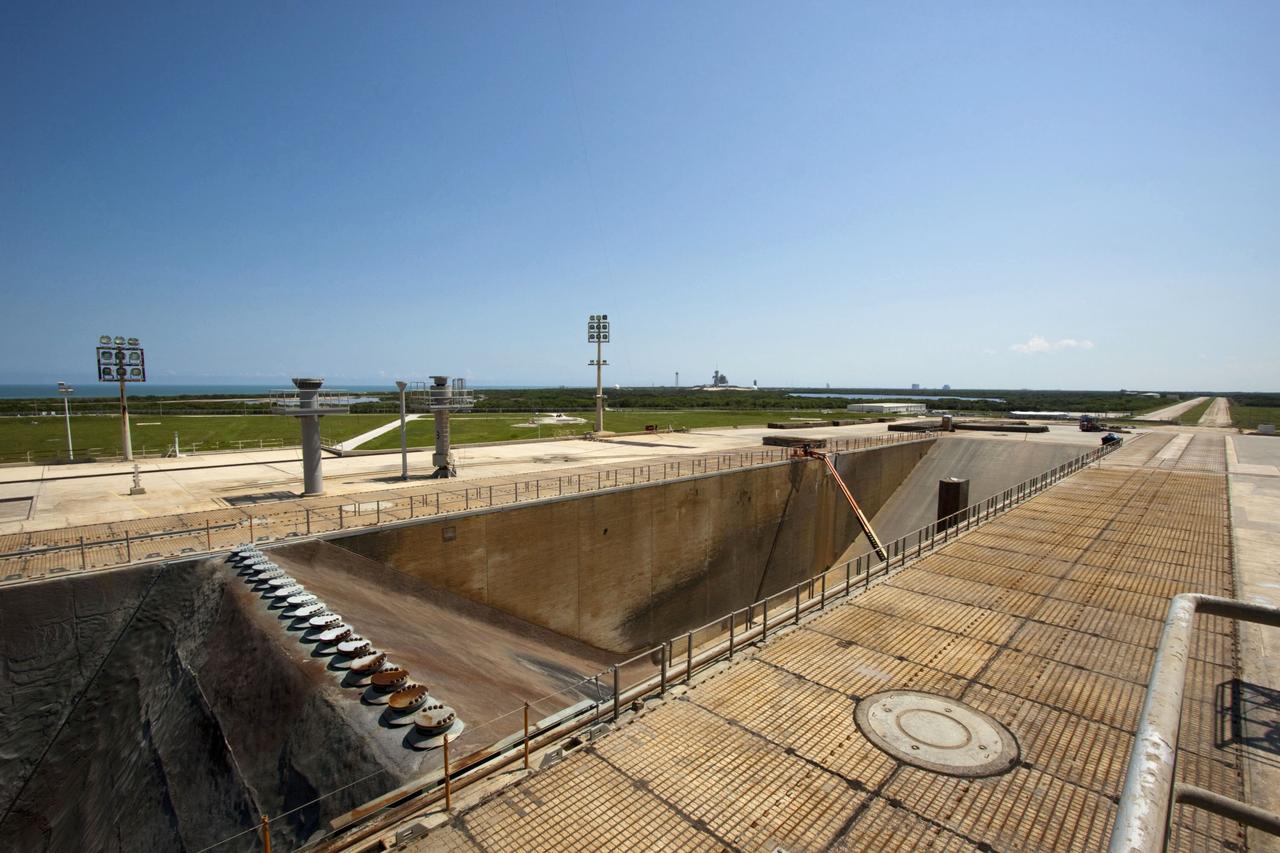
CAPE CANAVERAL, Fla. – The deconstruction of Launch Pad 39B at NASA’s Kennedy Space Center in Florida is complete. Still remaining is the flame trench. Launch Pad 39A can be seen in the distance. In 2009, the structure at the pad was no longer needed for NASA's Space Shuttle Program, so it is being restructured for future use. The new design will feature a "clean pad" for rockets to come with their own launcher, making it more versatile for a number of vehicles. For information on NASA's future plans, visit http://www.nasa.gov/exploration. Photo credit: NASA/Jim Grossmann

CAPE CANAVERAL, Fla. -- At NASA's Kennedy Space Center in Florida, only remnants of the fixed and rotating service structures remain on Launch Pad 39B after the pad's deconstruction. In 2009, the structure at the pad was no longer needed for NASA's Space Shuttle Program, so it is being restructured for future use. The new design will feature a "clean pad" for rockets to come with their own launcher, making it more versatile for a number of vehicles. For information on NASA's future plans, visit http://www.nasa.gov/exploration. Photo credit: NASA/Kim Shiflett
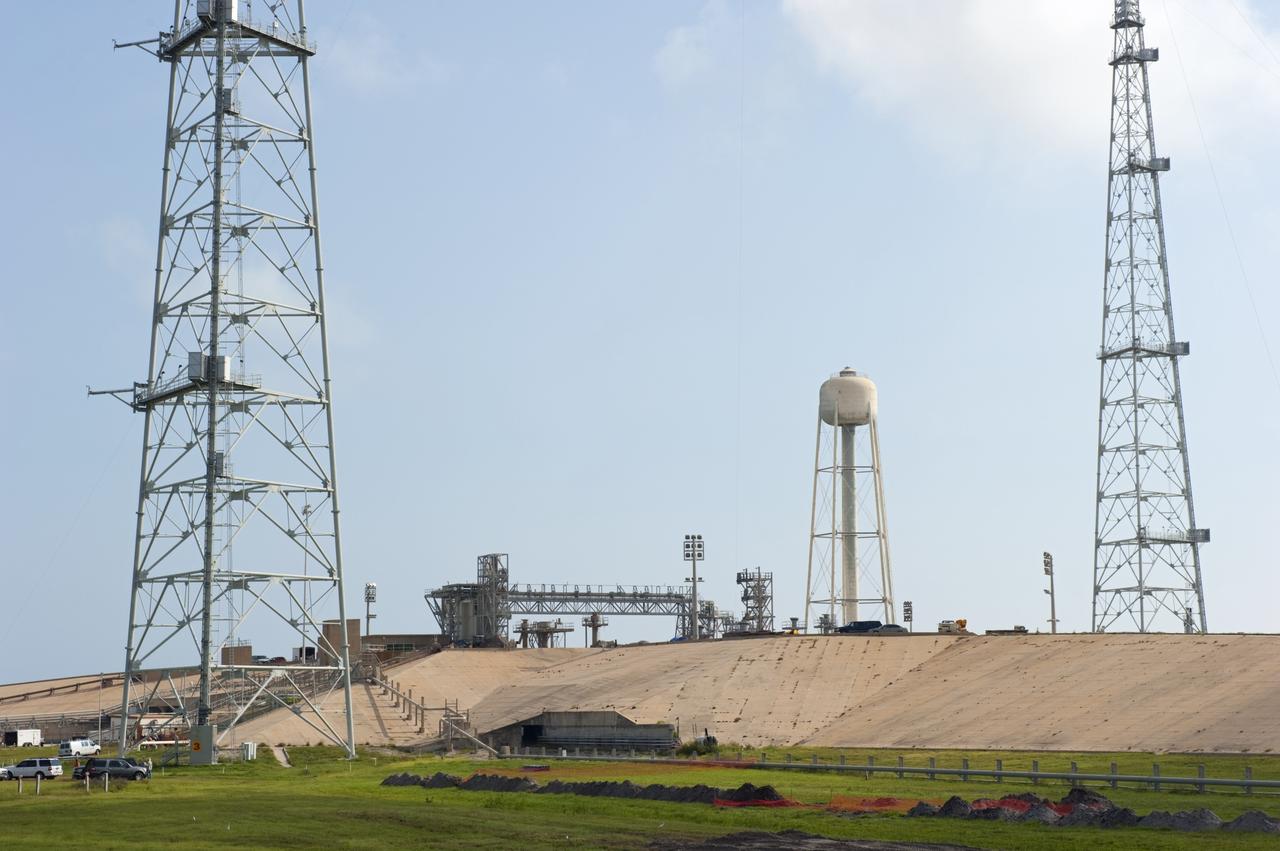
CAPE CANAVERAL, Fla. -- At NASA's Kennedy Space Center in Florida, only remnants of the fixed and rotating service structures remain on Launch Pad 39B after the pad's deconstruction. In 2009, the structure at the pad was no longer needed for NASA's Space Shuttle Program, so it is being restructured for future use. The new design will feature a "clean pad" for rockets to come with their own launcher, making it more versatile for a number of vehicles. For information on NASA's future plans, visit http://www.nasa.gov/exploration. Photo credit: NASA/Kim Shiflett
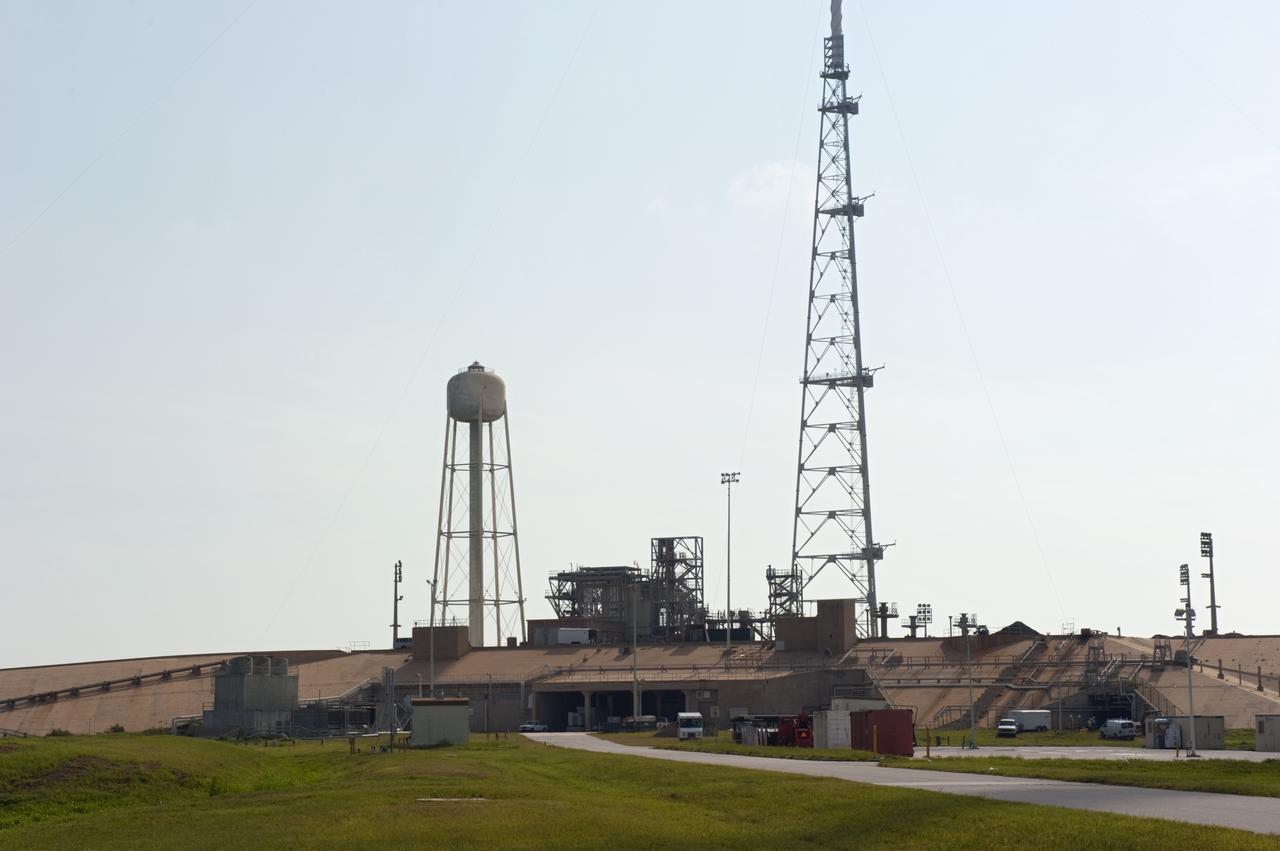
CAPE CANAVERAL, Fla. -- At NASA's Kennedy Space Center in Florida, the infrastructure under Launch Pad 39B remains after the pad's deconstruction. In 2009, the structure at the pad was no longer needed for NASA's Space Shuttle Program, so it is being restructured for future use. The new design will feature a "clean pad" for rockets to come with their own launcher, making it more versatile for a number of vehicles. For information on NASA's future plans, visit http://www.nasa.gov/exploration. Photo credit: NASA/Kim Shiflett
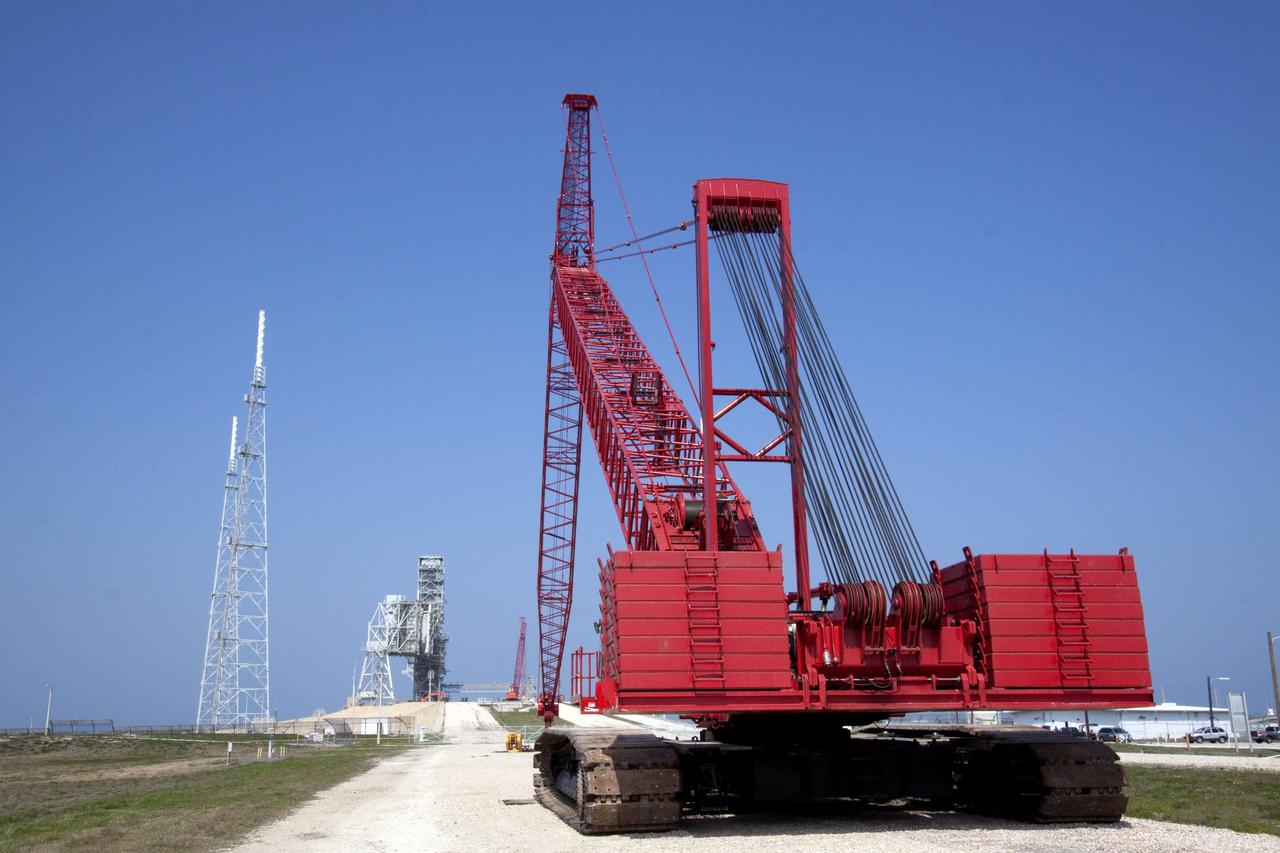
CAPE CANAVERAL, Fla. -- At NASA's Kennedy Space Center in Florida, a heavy-duty crane is slowly making its way to Launch Pad 39B, to continue deconstruction of the pad which is being restructured for future use. The new design will feature a "clean pad" for rockets to come with their own launcher, making it more versatile for a number of vehicles. For information on NASA's future plans, visit www.nasa.gov. Photo credit: NASA/Jack Pfaller
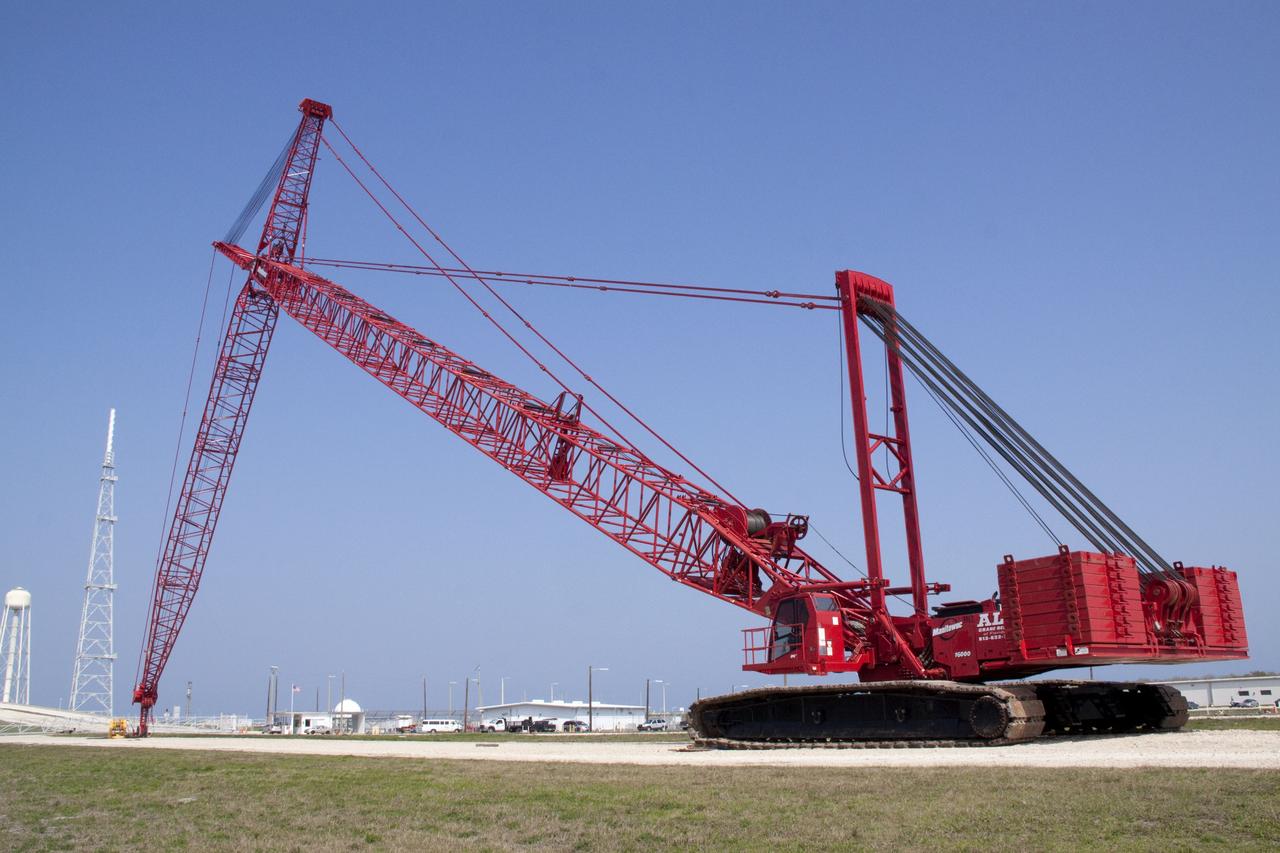
CAPE CANAVERAL, Fla. -- At NASA's Kennedy Space Center in Florida, a heavy-duty crane is slowly making its way to Launch Pad 39B, to continue deconstruction of the pad which is being restructured for future use. The new design will feature a "clean pad" for rockets to come with their own launcher, making it more versatile for a number of vehicles. For information on NASA's future plans, visit www.nasa.gov. Photo credit: NASA/Jack Pfaller
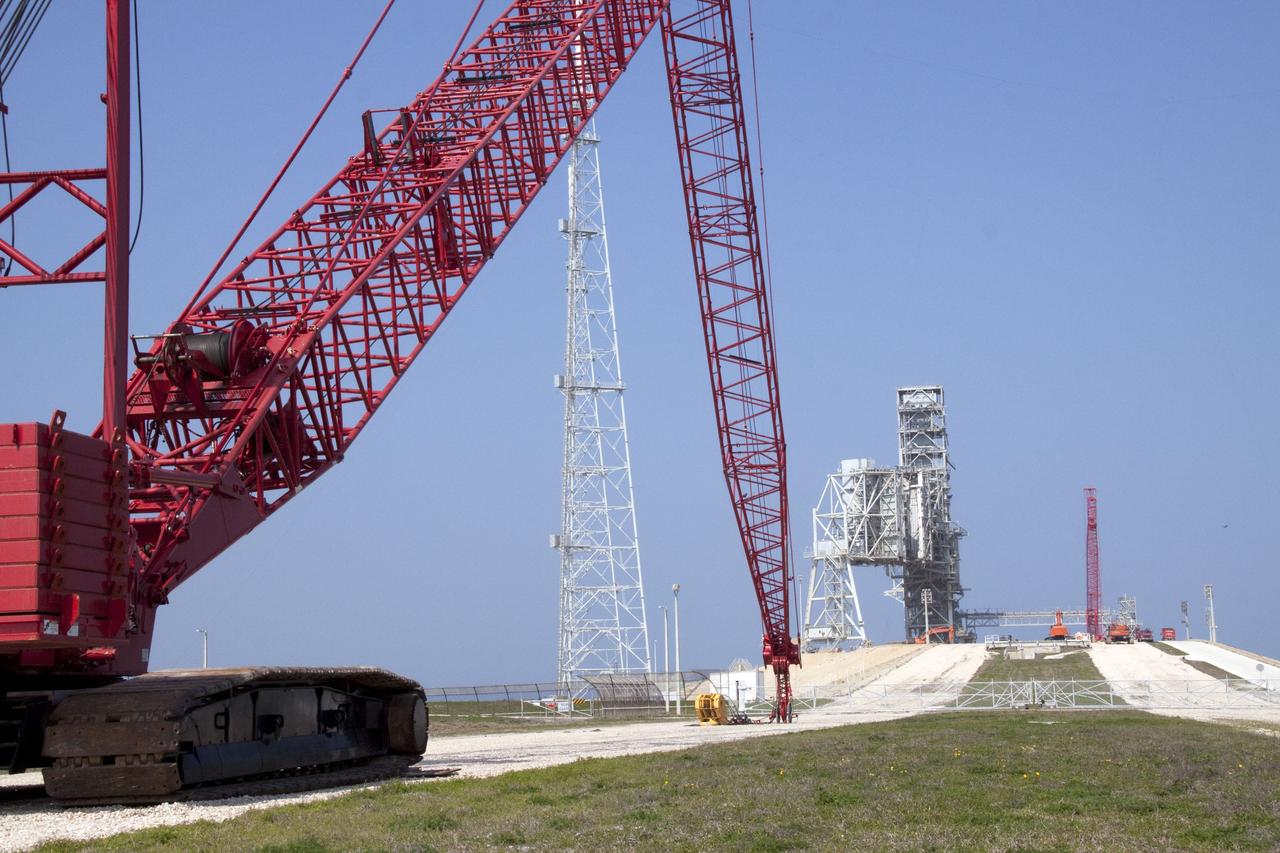
CAPE CANAVERAL, Fla. -- At NASA's Kennedy Space Center in Florida, a heavy-duty crane is slowly making its way to Launch Pad 39B, to continue deconstruction of the pad which is being restructured for future use. The new design will feature a "clean pad" for rockets to come with their own launcher, making it more versatile for a number of vehicles. For information on NASA's future plans, visit www.nasa.gov. Photo credit: NASA/Jack Pfaller
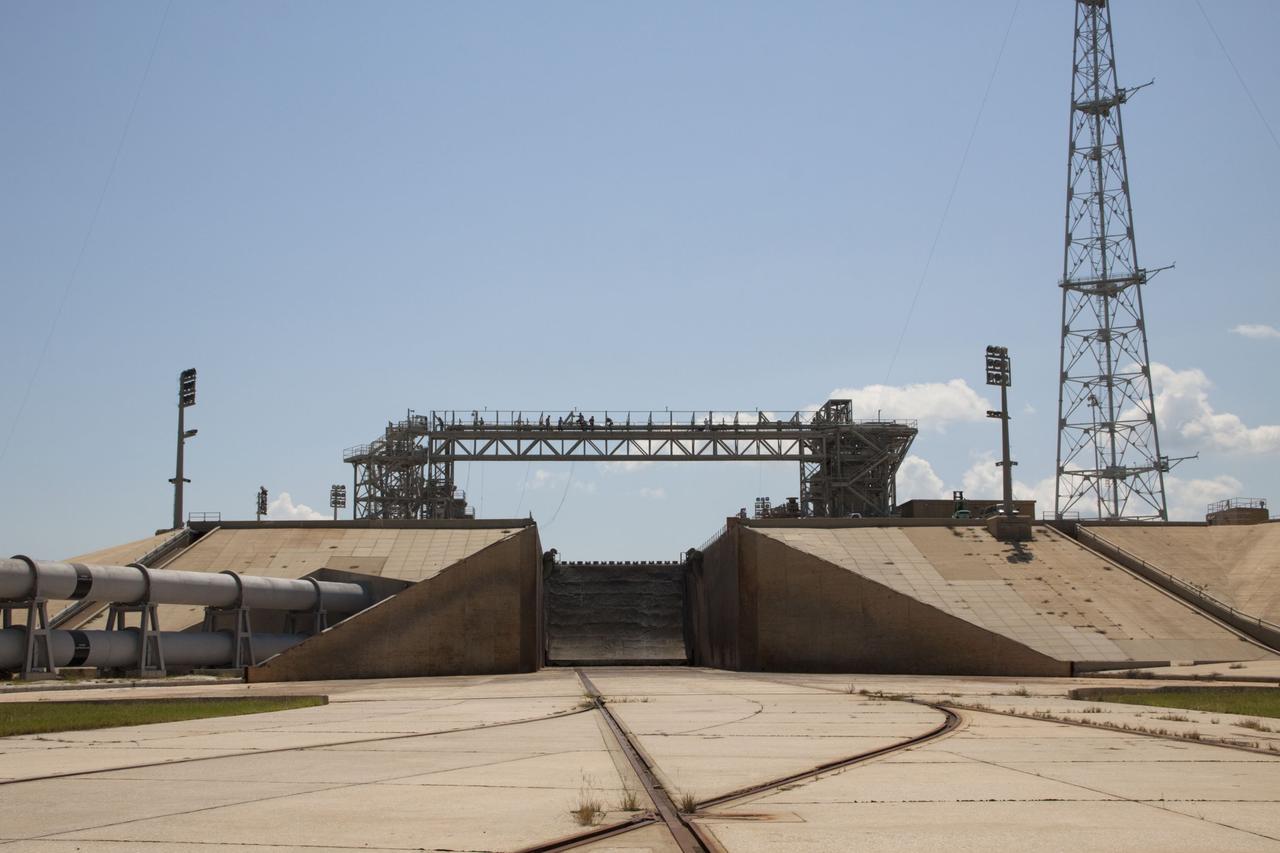
CAPE CANAVERAL, Fla. – The deconstruction of Launch Pad 39B at NASA’s Kennedy Space Center in Florida is complete. Only remnants of the fixed service structure remain standing over the flame trench. In 2009, the structure at the pad was no longer needed for NASA's Space Shuttle Program, so it is being restructured for future use. The new design will feature a "clean pad" for rockets to come with their own launcher, making it more versatile for a number of vehicles. For information on NASA's future plans, visit http://www.nasa.gov/exploration. Photo credit: NASA/Jim Grossmann

CAPE CANAVERAL, Fla. – The deconstruction of Launch Pad 39B at NASA’s Kennedy Space Center in Florida is complete. Only remnants of the fixed service structure remain standing over the flame trench. In 2009, the structure at the pad was no longer needed for NASA's Space Shuttle Program, so it is being restructured for future use. The new design will feature a "clean pad" for rockets to come with their own launcher, making it more versatile for a number of vehicles. For information on NASA's future plans, visit http://www.nasa.gov/exploration. Photo credit: NASA/Jim Grossmann
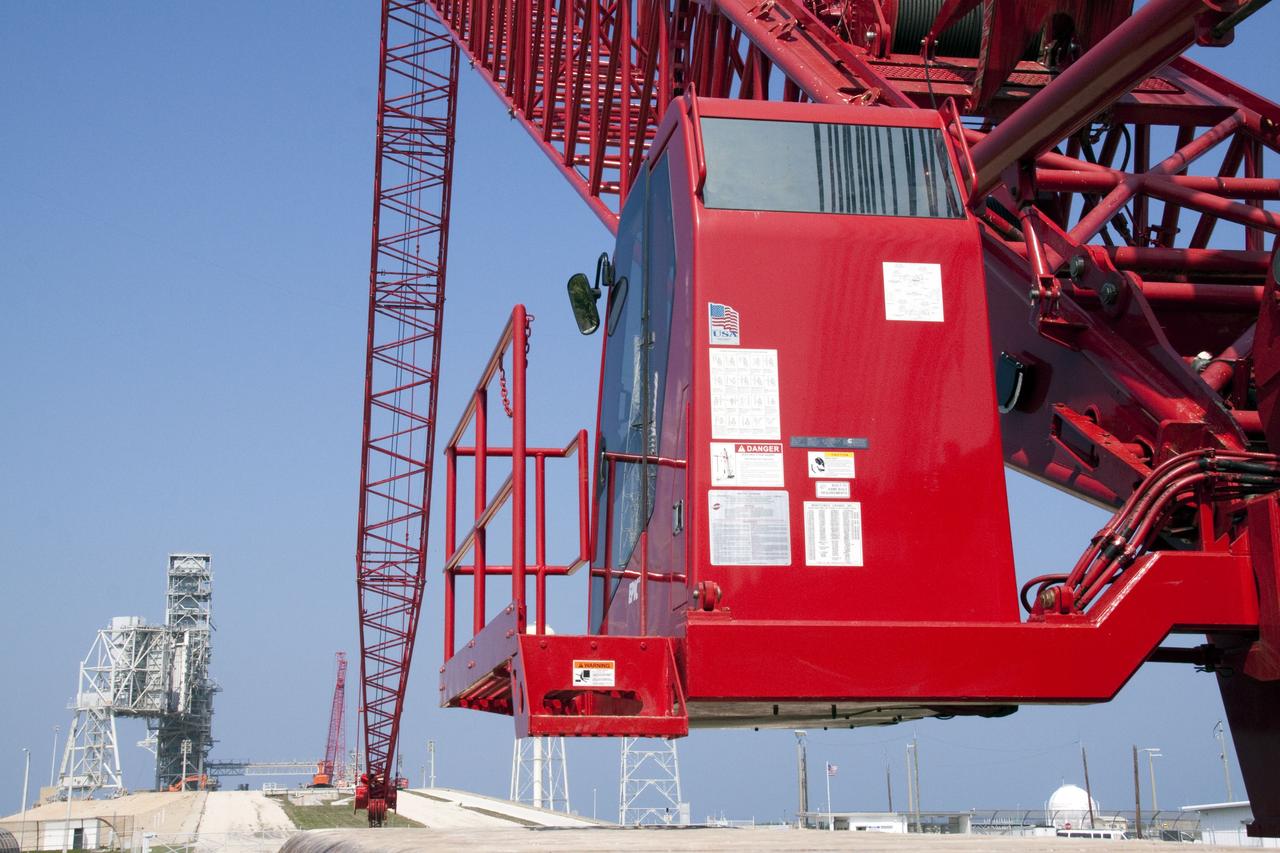
CAPE CANAVERAL, Fla. -- At NASA's Kennedy Space Center in Florida, a heavy-duty crane is slowly making its way to Launch Pad 39B, to continue deconstruction of the pad which is being restructured for future use. The new design will feature a "clean pad" for rockets to come with their own launcher, making it more versatile for a number of vehicles. For information on NASA's future plans, visit www.nasa.gov. Photo credit: NASA/Jack Pfaller
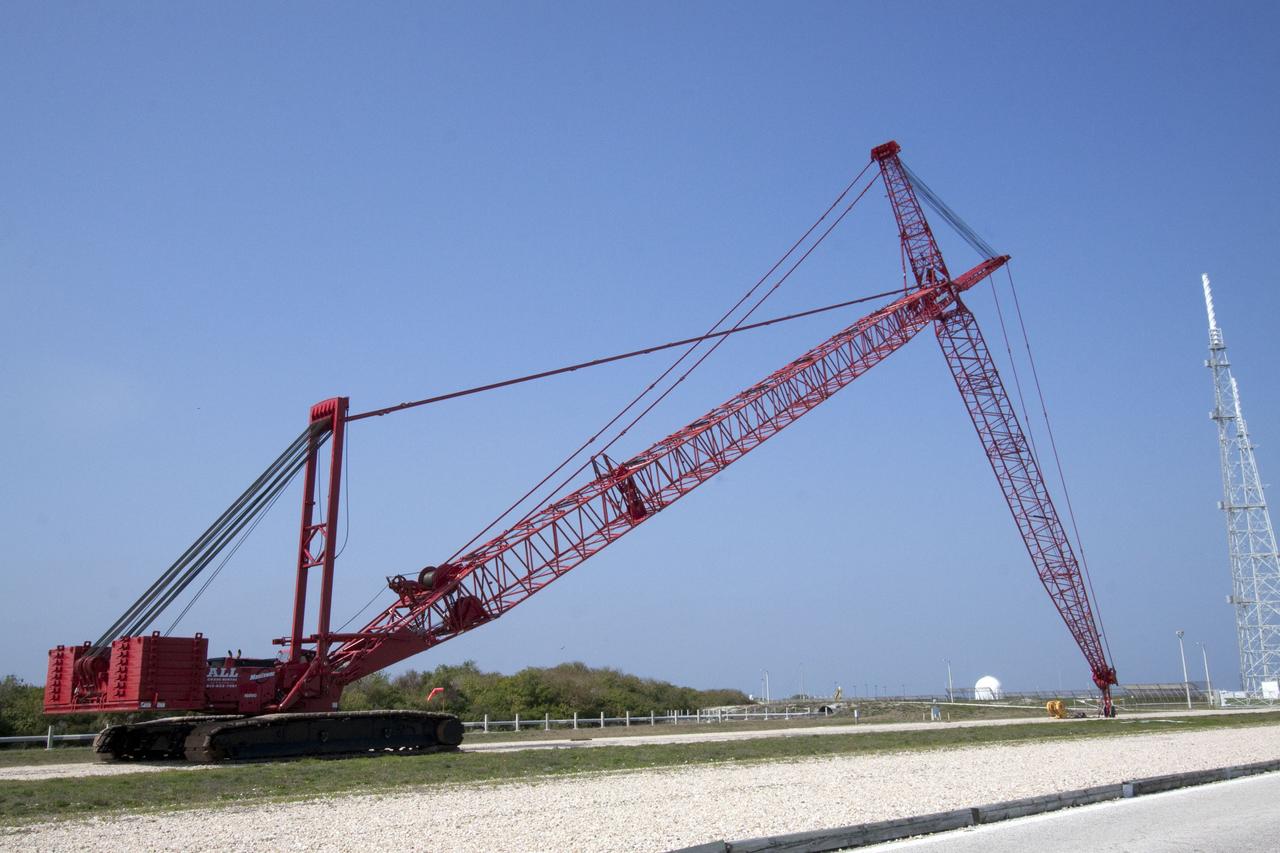
CAPE CANAVERAL, Fla. -- At NASA's Kennedy Space Center in Florida, a heavy-duty crane is slowly making its way to Launch Pad 39B, to continue deconstruction of the pad which is being restructured for future use. The new design will feature a "clean pad" for rockets to come with their own launcher, making it more versatile for a number of vehicles. For information on NASA's future plans, visit www.nasa.gov. Photo credit: NASA/Jack Pfaller
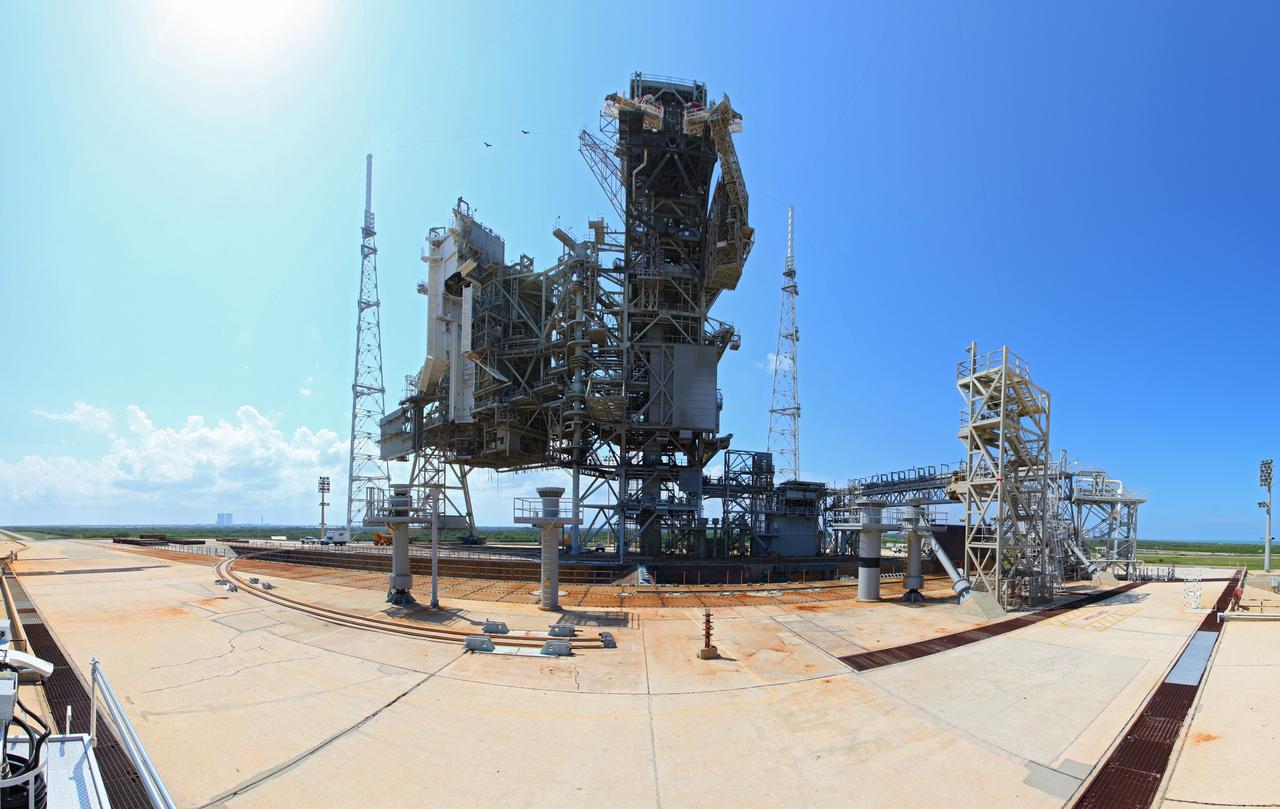
CAPE CANAVERAL, Fla. -- At NASA's Kennedy Space Center in Florida, this panoramic image shows Launch Pad 39B during deconstruction. Starting in 2009, the structure at Pad B was no longer needed for NASA's Space Shuttle Program, so it is being restructured for future use. The new design will feature a "clean pad" for rockets to come with their own launcher, making it more versatile for a number of vehicles. For information on NASA's future plans, visit www.nasa.gov. Photo credit: NASA/Frankie Martin
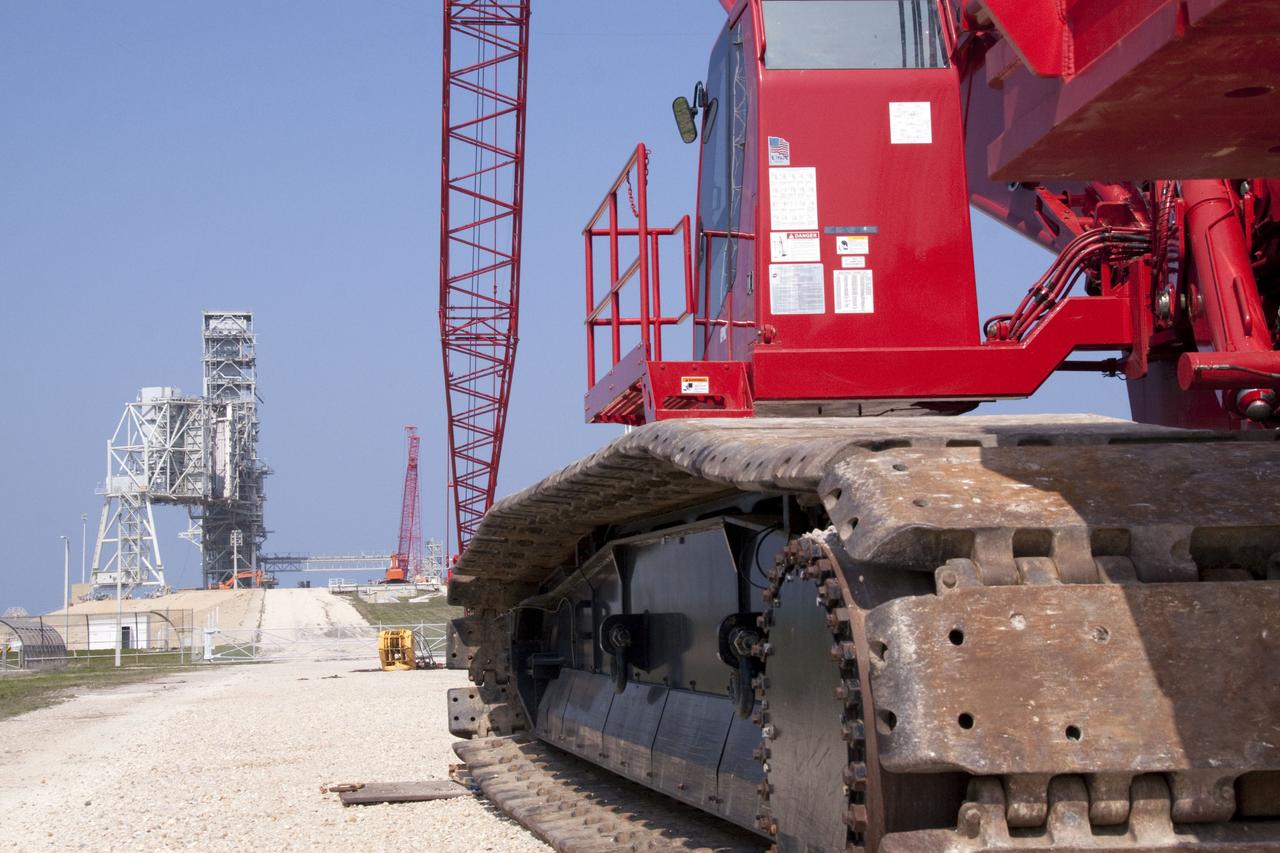
CAPE CANAVERAL, Fla. -- At NASA's Kennedy Space Center in Florida, a heavy-duty crane is slowly making its way to Launch Pad 39B, to continue deconstruction of the pad which is being restructured for future use. The new design will feature a "clean pad" for rockets to come with their own launcher, making it more versatile for a number of vehicles. For information on NASA's future plans, visit www.nasa.gov. Photo credit: NASA/Jack Pfaller
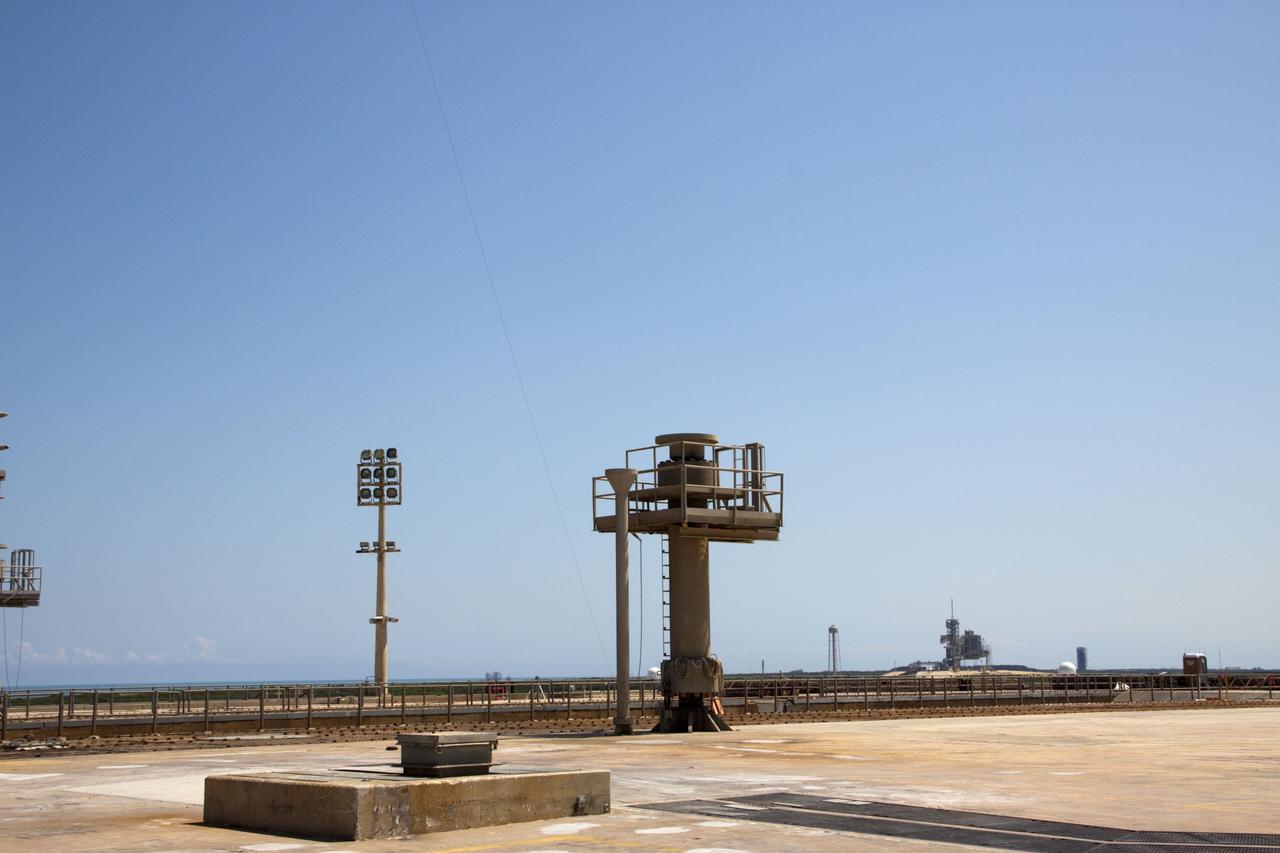
CAPE CANAVERAL, Fla. – The deconstruction of Launch Pad 39B at NASA’s Kennedy Space Center in Florida is complete. A pedestal remains standing at the pad where a distant view of Launch Pad 39A can be seen. In 2009, the structure at the pad was no longer needed for NASA's Space Shuttle Program, so it is being restructured for future use. The new design will feature a "clean pad" for rockets to come with their own launcher, making it more versatile for a number of vehicles. For information on NASA's future plans, visit http://www.nasa.gov/exploration. Photo credit: NASA/Jim Grossmann
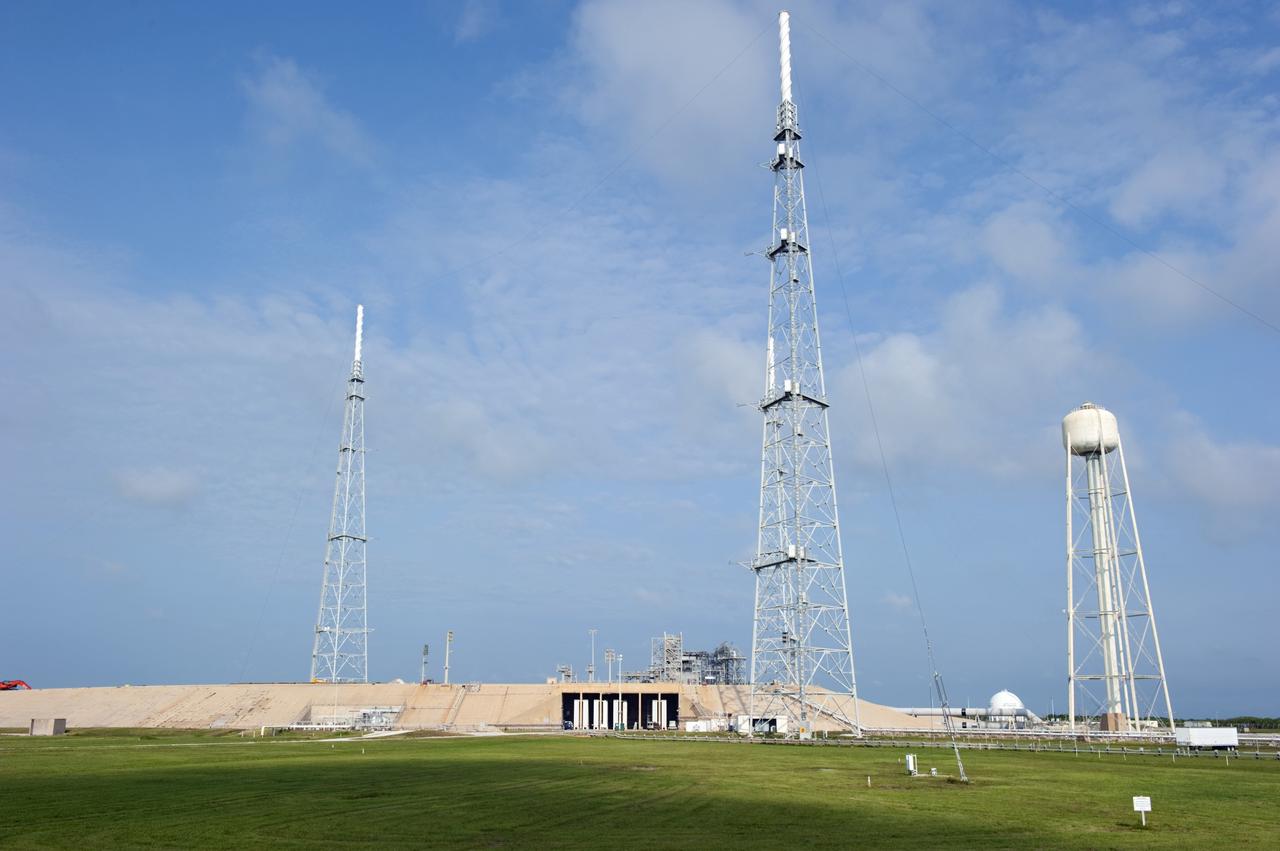
CAPE CANAVERAL, Fla. -- At NASA's Kennedy Space Center in Florida, the water tower (right) which supported the space shuttle's water deluge system still stands on Launch Pad 39B after the pad's deconstruction. In 2009, the structure at the pad was no longer needed for NASA's Space Shuttle Program, so it is being restructured for future use. The new design will feature a "clean pad" for rockets to come with their own launcher, making it more versatile for a number of vehicles. For information on NASA's future plans, visit http://www.nasa.gov/exploration. Photo credit: NASA/Kim Shiflett
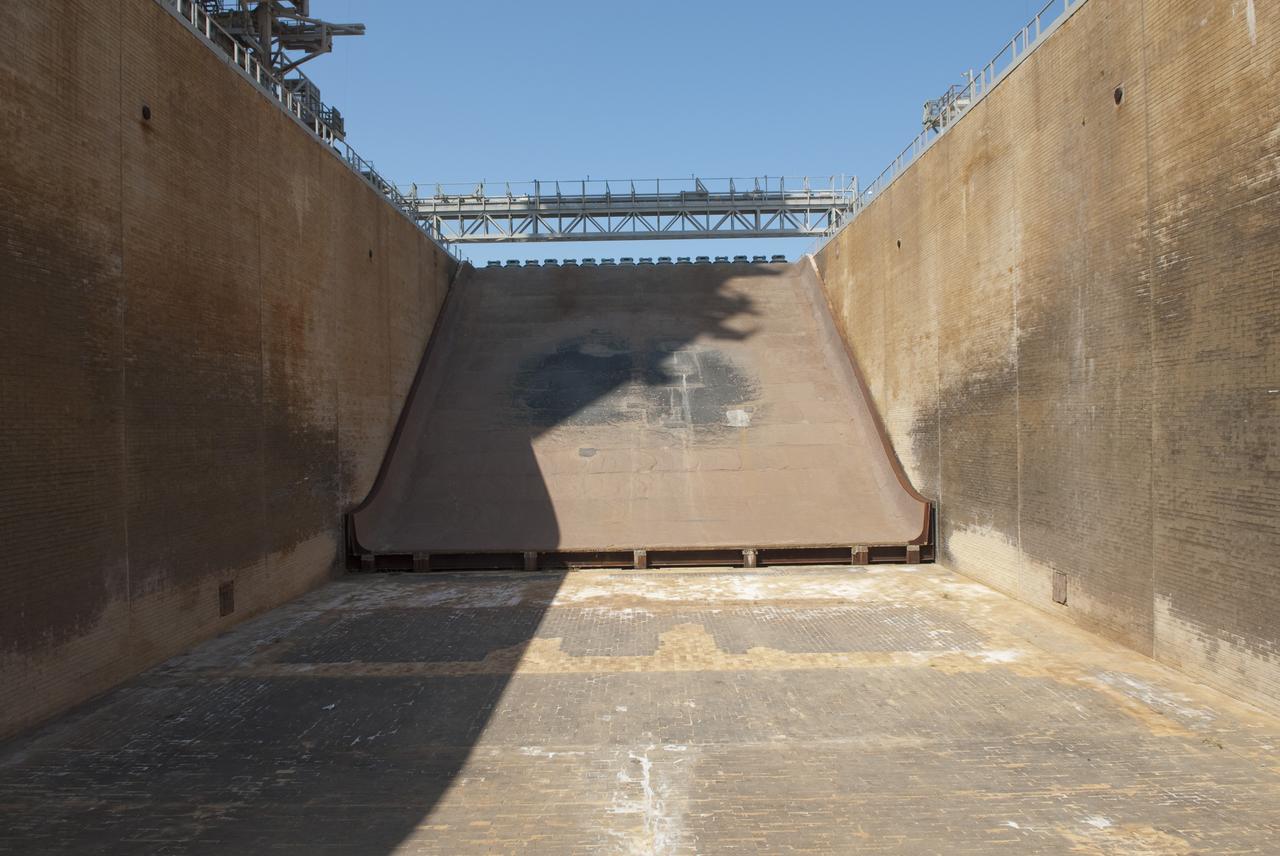
CAPE CANAVERAL, Fla. -- At NASA's Kennedy Space Center in Florida, the flame trench that serviced the launch of many space shuttles is seen from below after being cleared of all debris during deconstruction of Launch Pad 39B. The flame trench will remain as part of the new pad design for the future. Starting in 2009, the structure at Pad B was no longer needed for NASA's Space Shuttle Program, so it is being restructured for future use. The new design will feature a "clean pad" for rockets to come with their own launcher, making it more versatile for a number of vehicles. For information on NASA's future plans, visit www.nasa.gov. Photo credit: NASA/Jim Grossmann
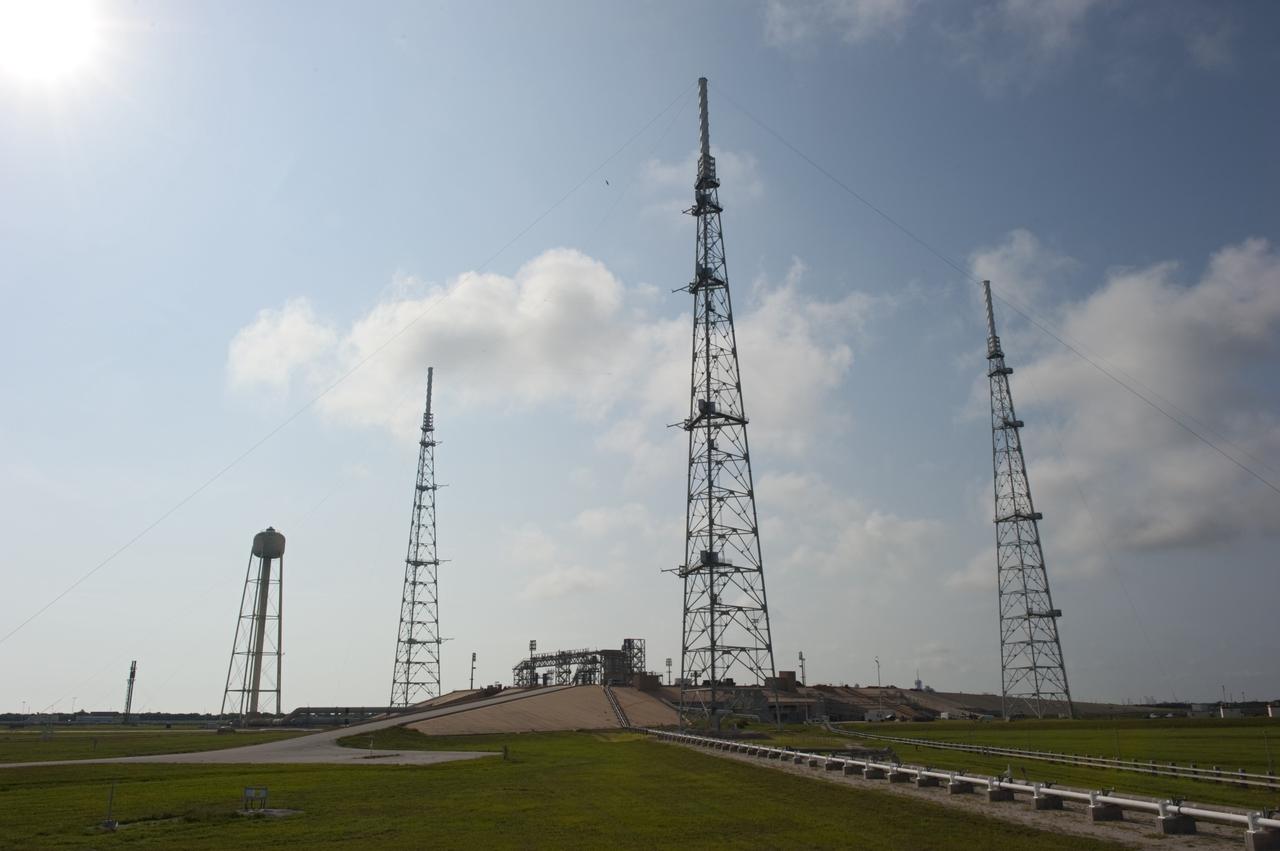
CAPE CANAVERAL, Fla. -- At NASA's Kennedy Space Center in Florida, the lightning protection system, consisting of three 600-foot-tall lightning towers, remains at Launch Pad 39B after the pad's deconstruction. Each tower is 500 feet tall and topped off with an additional 100-foot fiberglass mast which supports a wire catenary system. In 2009, the structure at the pad was no longer needed for NASA's Space Shuttle Program, so it is being restructured for future use. The new design will feature a "clean pad" for rockets to come with their own launcher, making it more versatile for a number of vehicles. For information on NASA's future plans, visit http://www.nasa.gov/exploration. Photo credit: NASA/Kim Shiflett
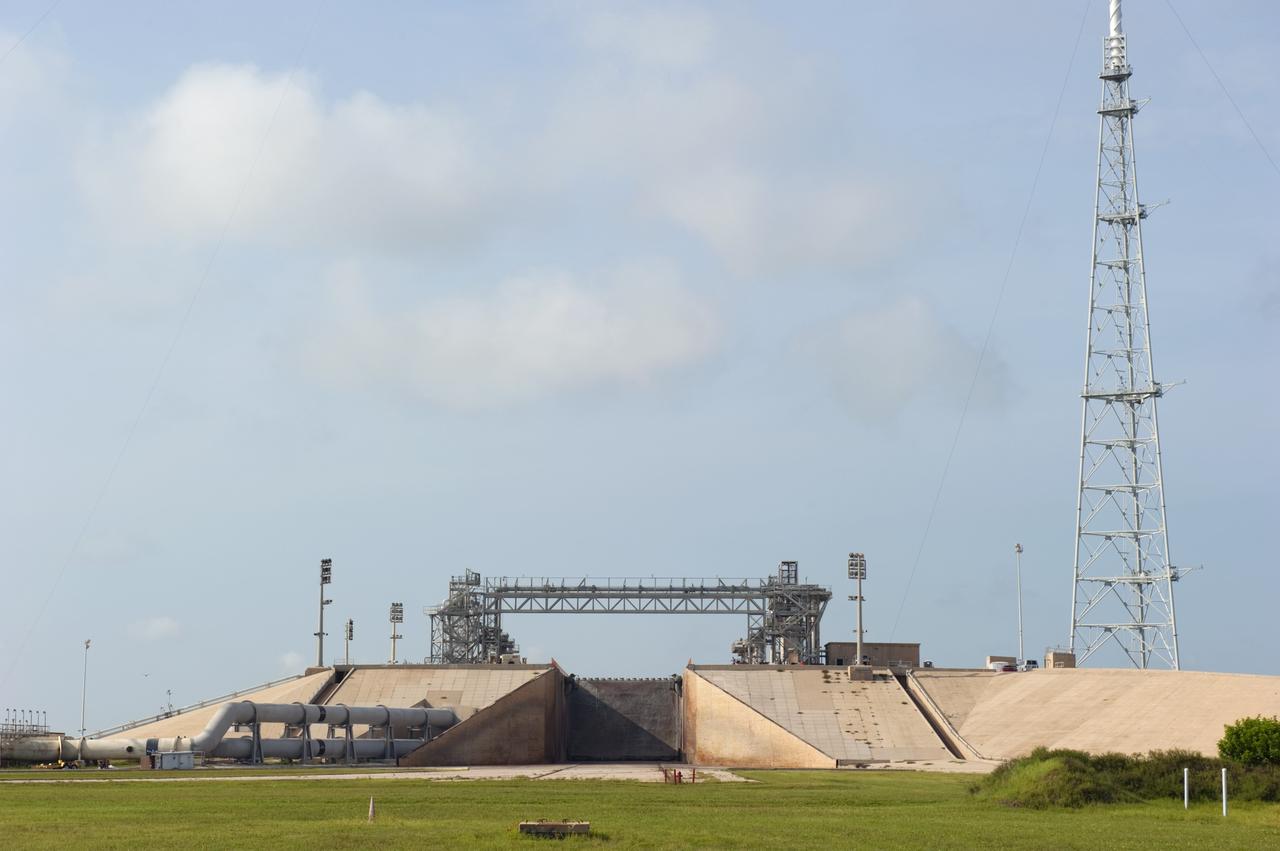
CAPE CANAVERAL, Fla. -- At NASA's Kennedy Space Center in Florida, the flame trench remains at Launch Pad 39B after the pad's deconstruction. The trench is 450 feet long, 58 feet wide and 42 feet deep with an inner inverted V-shaped steel flame deflector. In 2009, the structure at the pad was no longer needed for NASA's Space Shuttle Program, so it is being restructured for future use. The new design will feature a "clean pad" for rockets to come with their own launcher, making it more versatile for a number of vehicles. For information on NASA's future plans, visit http://www.nasa.gov/exploration. Photo credit: NASA/Kim Shiflett
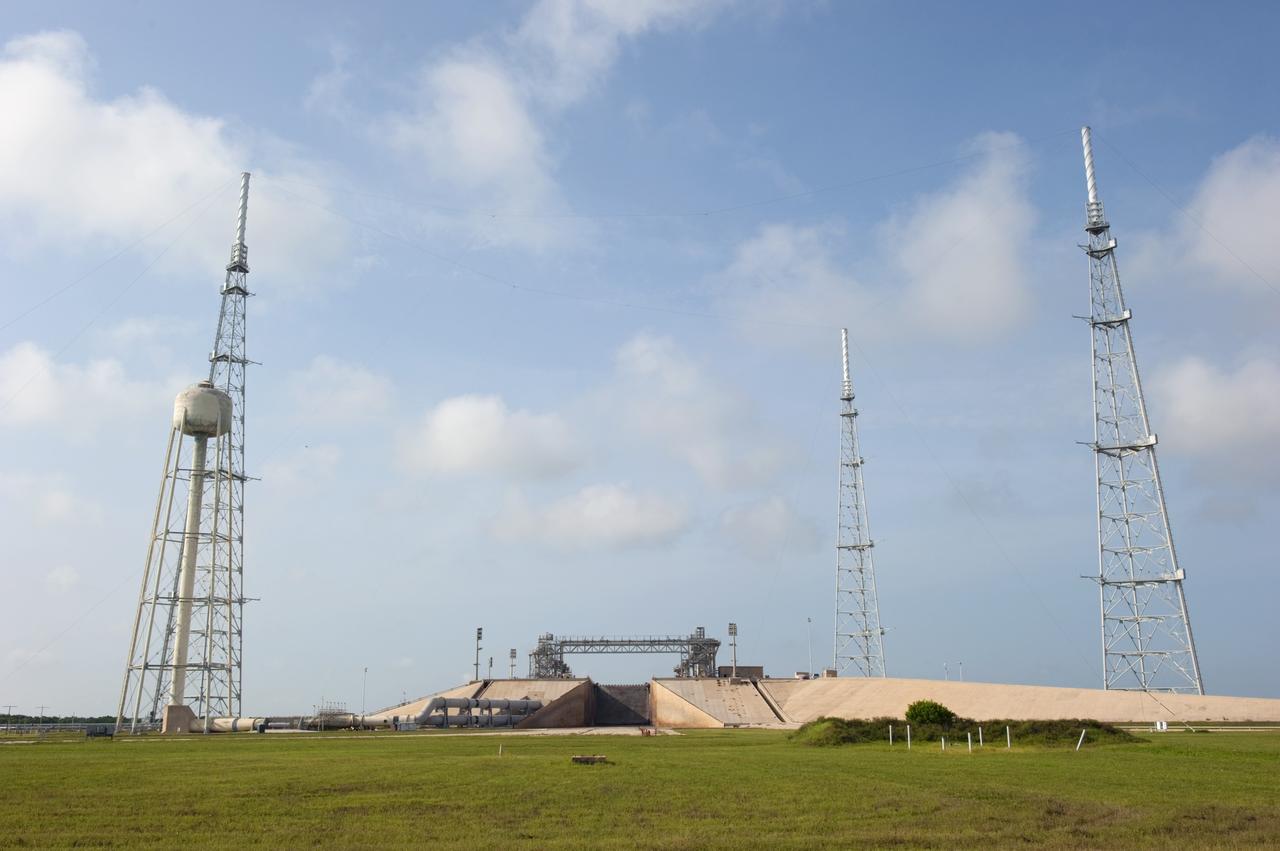
CAPE CANAVERAL, Fla. -- At NASA's Kennedy Space Center in Florida, the flame trench remains at Launch Pad 39B after the pad's deconstruction. The trench is 450 feet long, 58 feet wide and 42 feet deep with an inner inverted V-shaped steel flame deflector. In 2009, the structure at the pad was no longer needed for NASA's Space Shuttle Program, so it is being restructured for future use. The new design will feature a "clean pad" for rockets to come with their own launcher, making it more versatile for a number of vehicles. For information on NASA's future plans, visit http://www.nasa.gov/exploration. Photo credit: NASA/Kim Shiflett
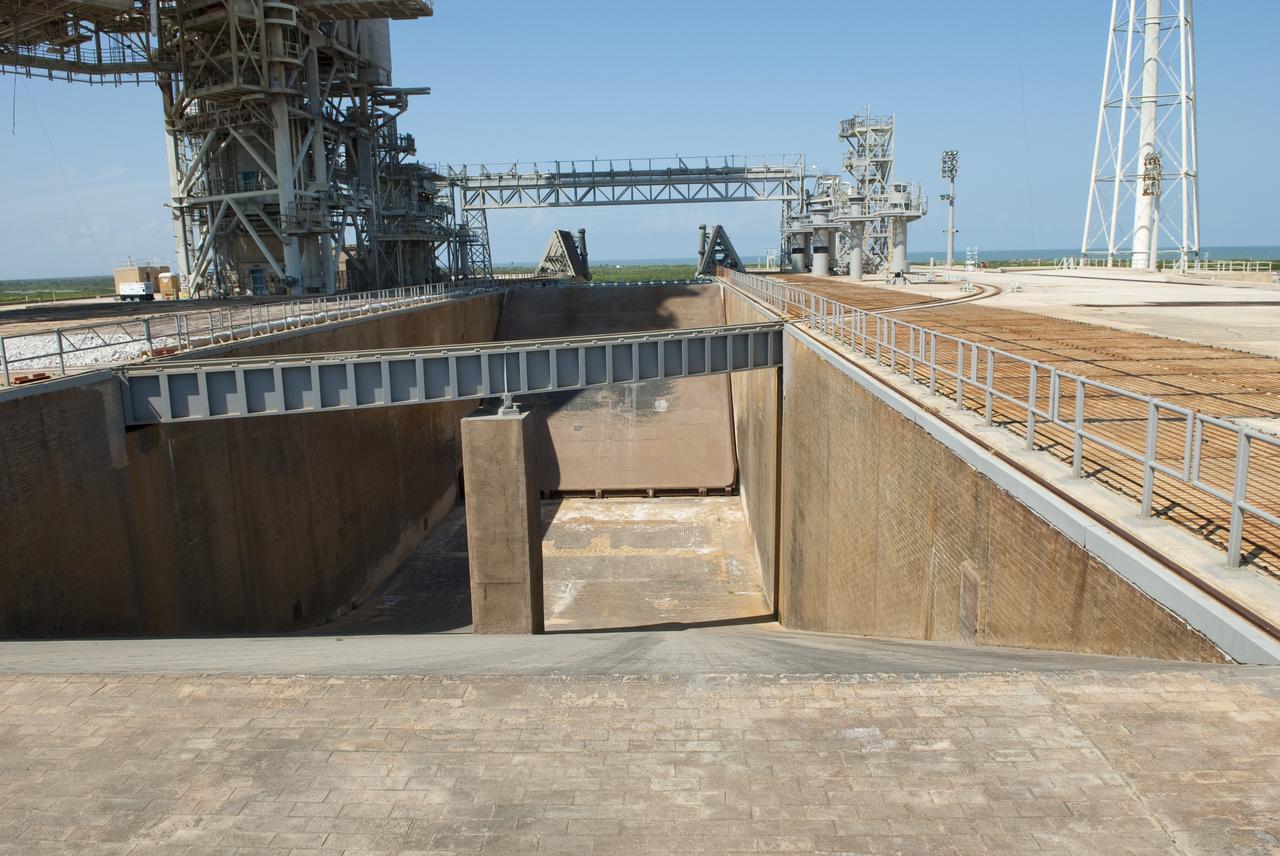
CAPE CANAVERAL, Fla. -- At NASA's Kennedy Space Center in Florida, the flame trench that serviced the launch of many space shuttles is seen cleared of all debris during deconstruction of Launch Pad 39B. The flame trench will remain as part of the new pad design for the future. Starting in 2009, the structure at Pad B was no longer needed for NASA's Space Shuttle Program, so it is being restructured for future use. The new design will feature a "clean pad" for rockets to come with their own launcher, making it more versatile for a number of vehicles. For information on NASA's future plans, visit www.nasa.gov. Photo credit: NASA/Jim Grossmann
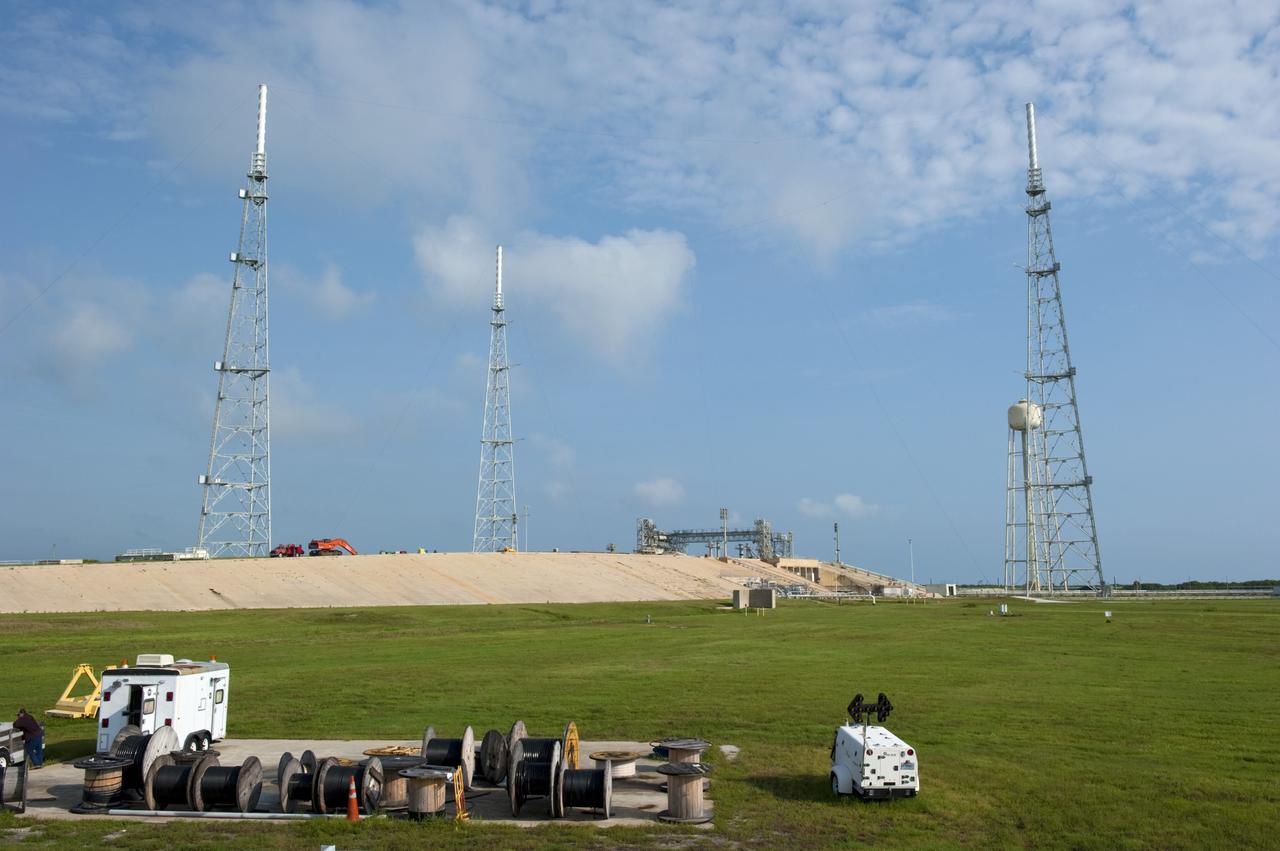
CAPE CANAVERAL, Fla. -- At NASA's Kennedy Space Center in Florida, cleanup of Launch Pad 39B is in progress. Sand, reinforcing steel and large wooden mats were placed over the pad's concrete surfaces during deconstruction to protect them from falling debris. In 2009, the structure at the pad was no longer needed for NASA's Space Shuttle Program, so it is being restructured for future use. The new design will feature a "clean pad" for rockets to come with their own launcher, making it more versatile for a number of vehicles. For information on NASA's future plans, visit http://www.nasa.gov/exploration. Photo credit: NASA/Kim Shiflett
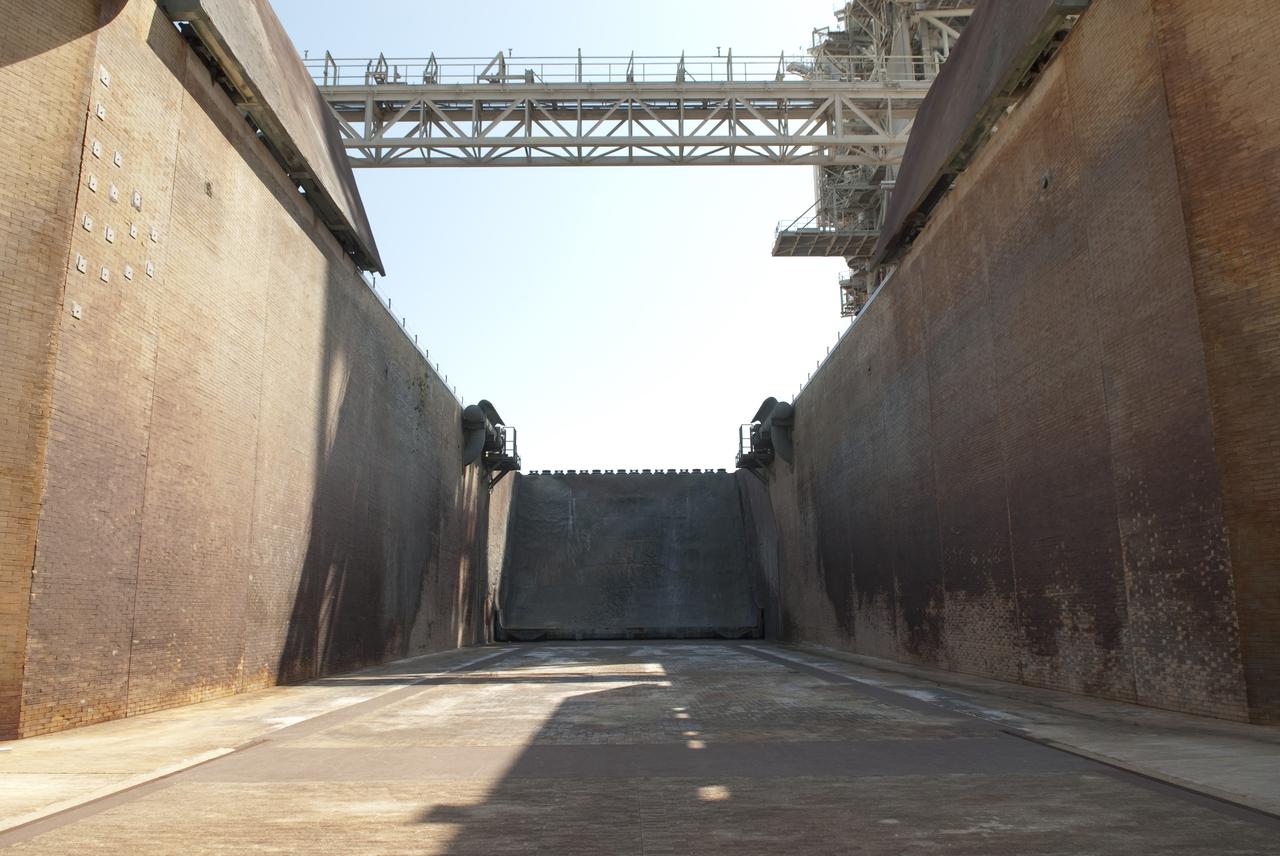
CAPE CANAVERAL, Fla. -- At NASA's Kennedy Space Center in Florida, the flame trench that serviced the launch of many space shuttles is viewed from deep inside after being cleared of all debris during deconstruction of Launch Pad 39B. The flame trench will remain as part of the new pad design for the future. Starting in 2009, the structure at Pad B was no longer needed for NASA's Space Shuttle Program, so it is being restructured for future use. The new design will feature a "clean pad" for rockets to come with their own launcher, making it more versatile for a number of vehicles. For information on NASA's future plans, visit www.nasa.gov. Photo credit: NASA/Jim Grossmann

CAPE CANAVERAL, Fla. -- At NASA's Kennedy Space Center in Florida, the rotating service structure (RSS) on Launch Pad 39B is being dismantled. Sand, reinforcing steel and large wooden mats were put down under the RSS to protect the structure's concrete from falling debris during deconstruction. Starting in 2009, the structure at the pad was no longer needed for NASA's Space Shuttle Program, so it is being restructured for future use. The new design will feature a "clean pad" for rockets to come with their own launcher, making it more versatile for a number of vehicles. The new lightning protection system, consisting of three lightning towers and a wire catenary system will remain. Photo credit: NASA/Jim Grossmann
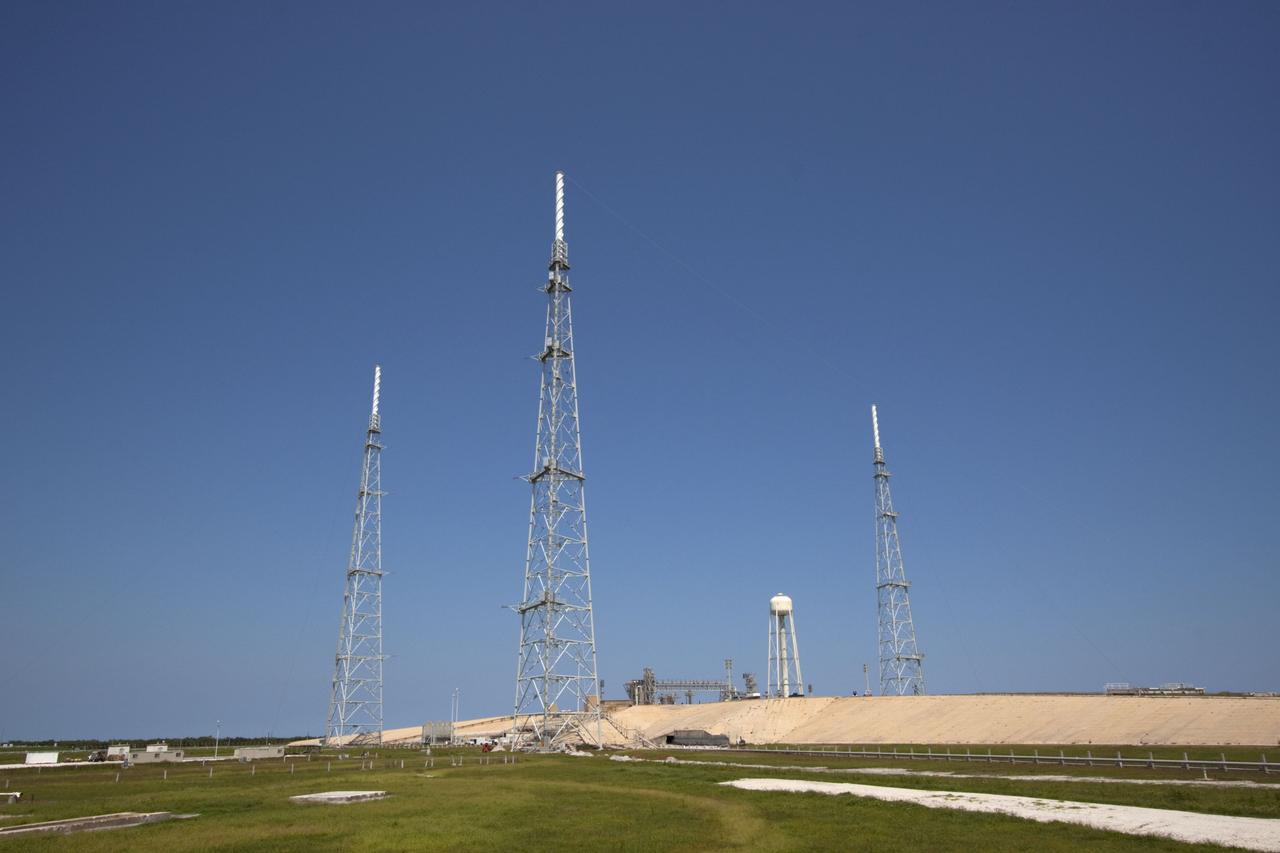
CAPE CANAVERAL, Fla. – The deconstruction of Launch Pad 39B at NASA’s Kennedy Space Center in Florida is complete. Still remaining and standing over the remnants of the fixed service structure are the three 600-foot-tall lightning protection towers and the water tower used for sound suppression. In 2009, the structure at the pad was no longer needed for NASA's Space Shuttle Program, so it is being restructured for future use. The new design will feature a "clean pad" for rockets to come with their own launcher, making it more versatile for a number of vehicles. For information on NASA's future plans, visit http://www.nasa.gov/exploration. Photo credit: NASA/Jim Grossmann
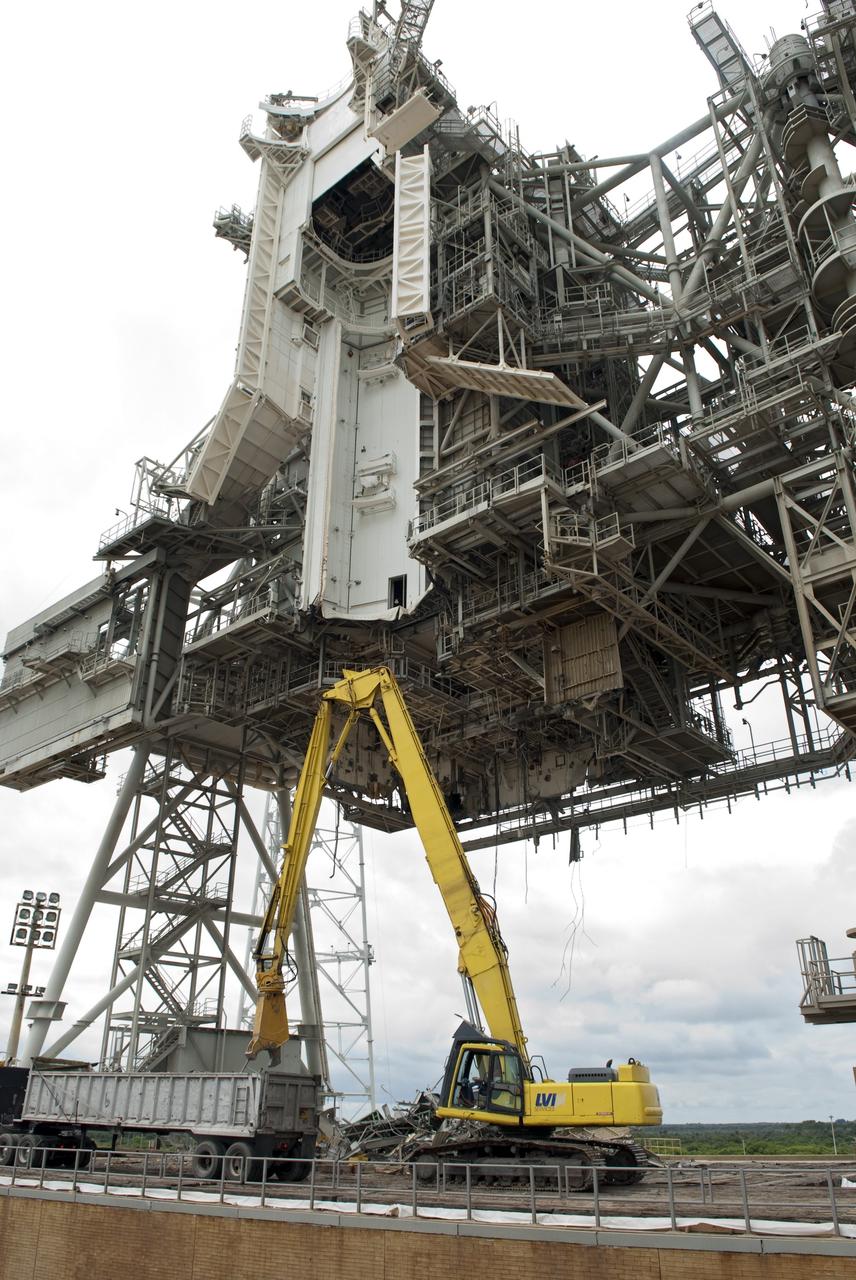
CAPE CANAVERAL, Fla. -- At NASA's Kennedy Space Center in Florida, crews are dismantling the rotating service structure (RSS) on Launch Pad 39B. Sand, reinforcing steel and large wooden mats were put down under the RSS to protect the structure's concrete from falling debris during deconstruction. Starting in 2009, the structure at the pad was no longer needed for NASA's Space Shuttle Program, so it is being restructured for future use. The new design will feature a "clean pad" for rockets to come with their own launcher, making it more versatile for a number of vehicles. The new lightning protection system, consisting of three lightning towers and a wire catenary system will remain. Photo credit: NASA/Jim Grossmann
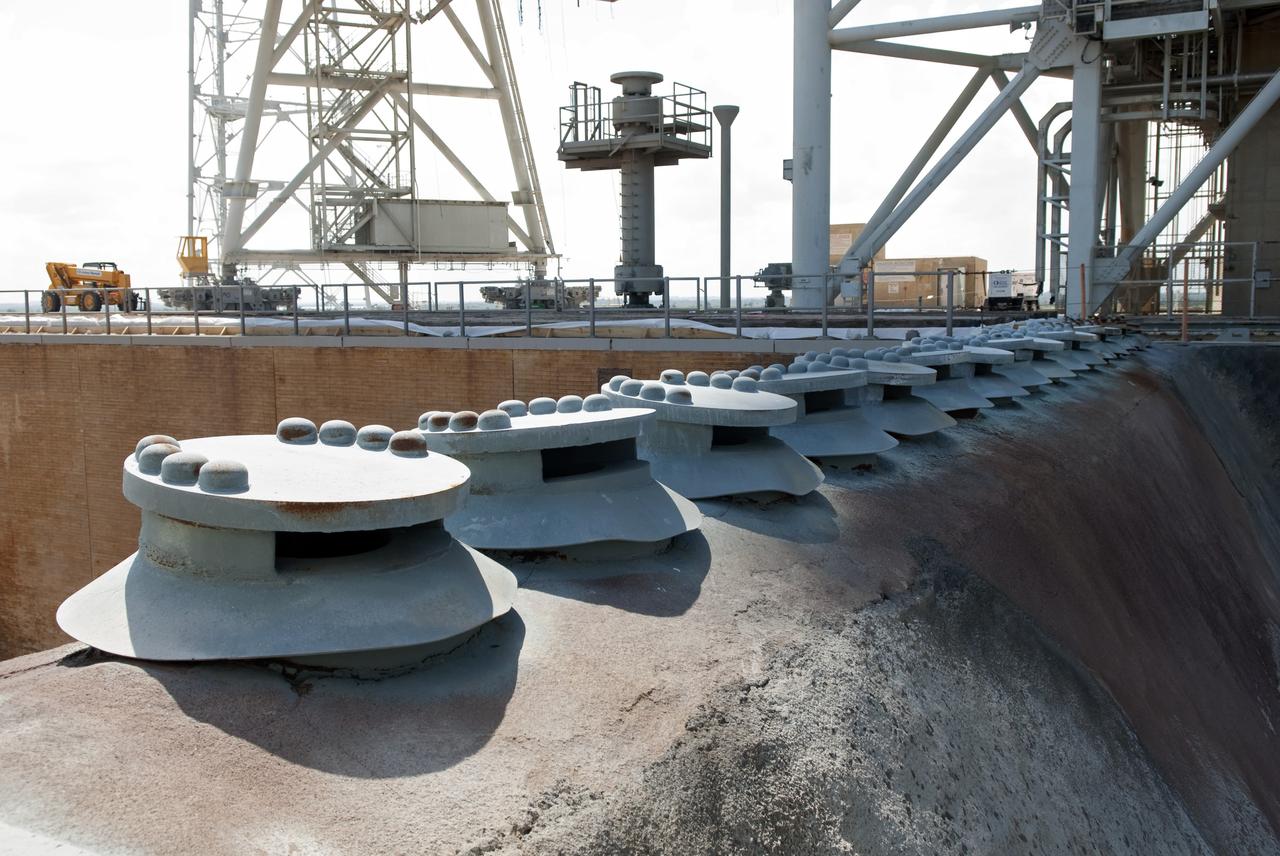
CAPE CANAVERAL, Fla. -- At NASA's Kennedy Space Center in Florida, caps from the fuel tanks that serviced the shuttle's external fuel tank are seen in this image above the flame trench during deconstruction of Launch Pad 39B. Starting in 2009, the structure at Pad B was no longer needed for NASA's Space Shuttle Program, so it is being restructured for future use. The new design will feature a "clean pad" for rockets to come with their own launcher, making it more versatile for a number of vehicles. For information on NASA's future plans, visit www.nasa.gov. Photo credit: NASA/Jim Grossmann
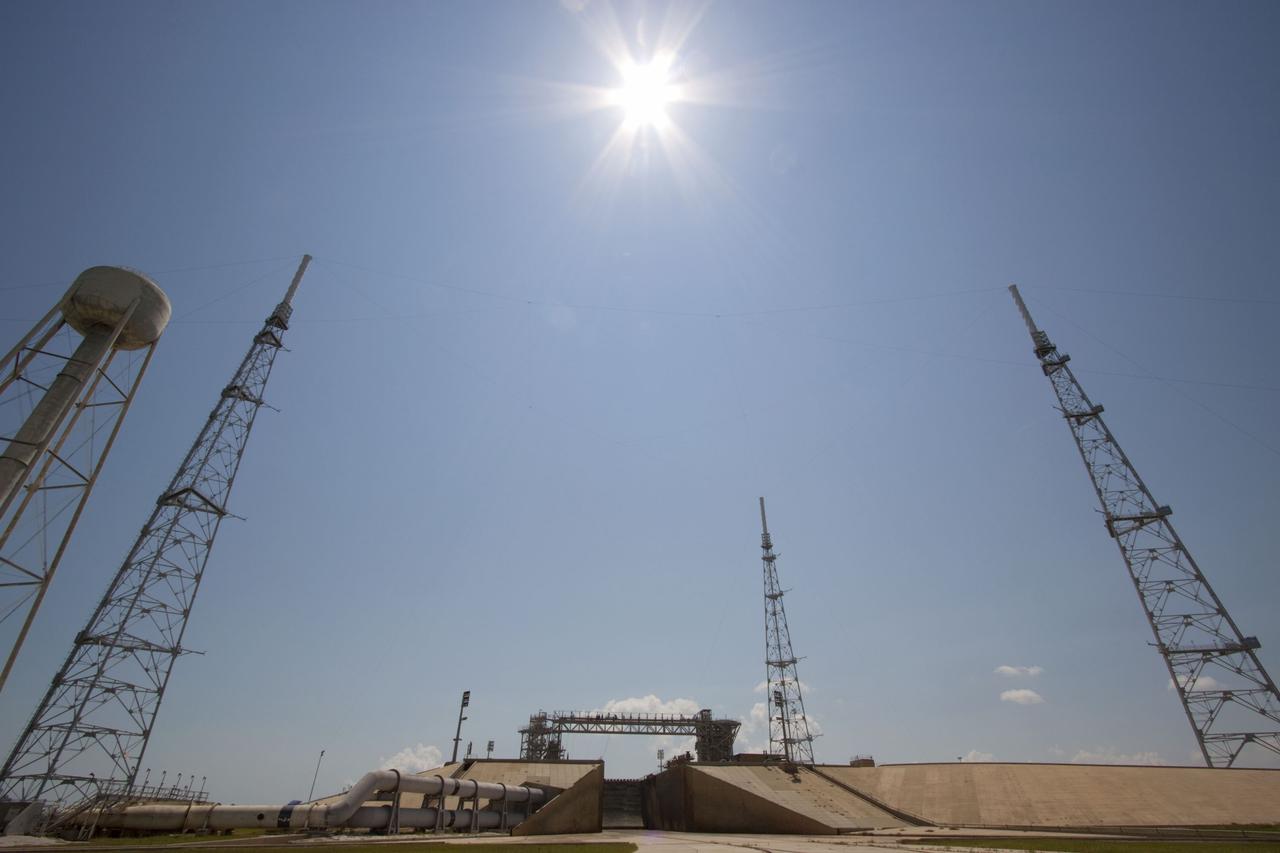
CAPE CANAVERAL, Fla. – The deconstruction of Launch Pad 39B at NASA’s Kennedy Space Center in Florida is complete. Still remaining and standing over the remnants of the fixed service structure are the 600-foot-tall lightning protection towers and the water tower used for sound suppression. In 2009, the structure at the pad was no longer needed for NASA's Space Shuttle Program, so it is being restructured for future use. The new design will feature a "clean pad" for rockets to come with their own launcher, making it more versatile for a number of vehicles. For information on NASA's future plans, visit http://www.nasa.gov/exploration. Photo credit: NASA/Jim Grossmann
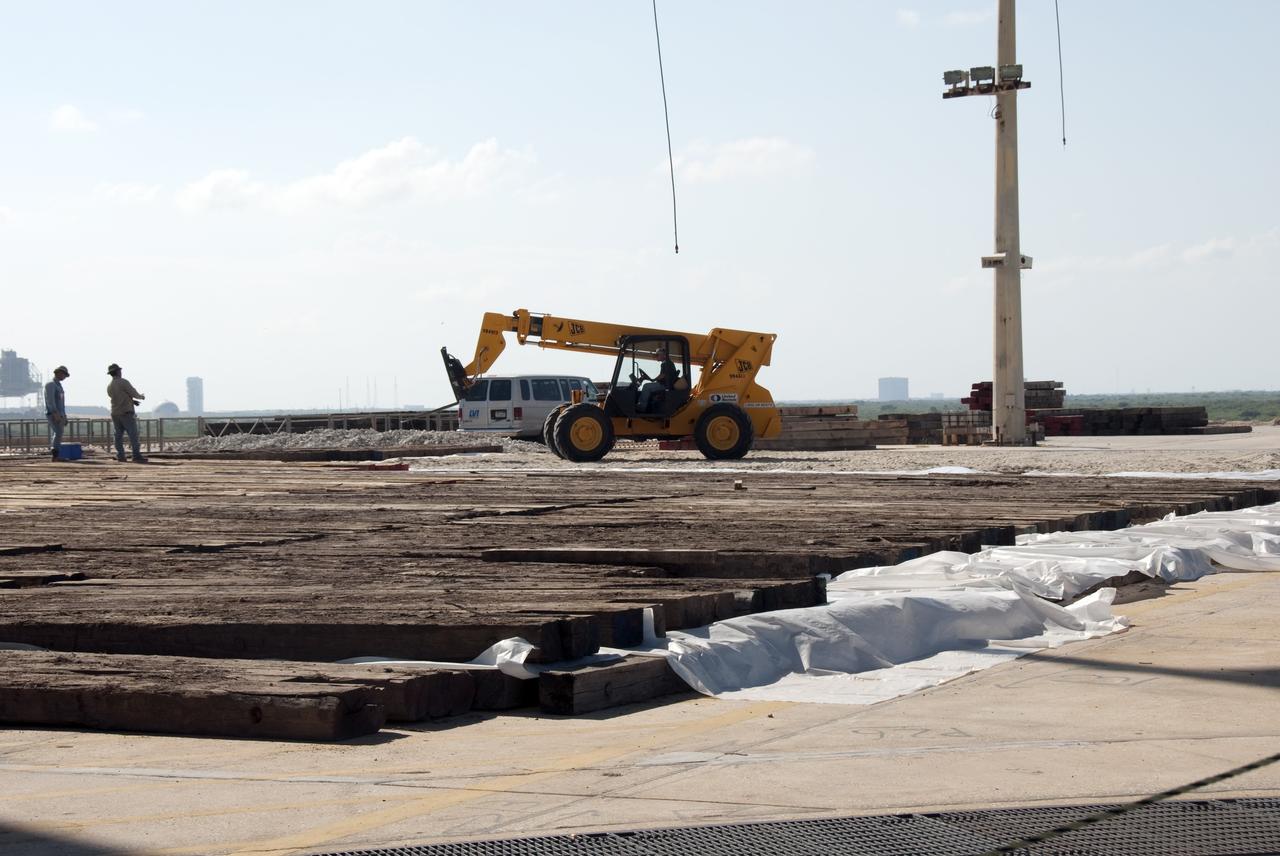
CAPE CANAVERAL, Fla. -- At NASA's Kennedy Space Center in Florida, construction crews lay large wooden mats on top of sand and reinforcing steel to protect the concrete under the rotating service structure (RSS) of Launch Pad 39B during deconstruction. Starting in 2009, the structure at Pad B was no longer needed for NASA's Space Shuttle Program, so it is being restructured for future use. The new design will feature a "clean pad" for rockets to come with their own launcher, making it more versatile for a number of vehicles. For information on NASA's future plans, visit www.nasa.gov. Photo credit: NASA/Jim Grossmann
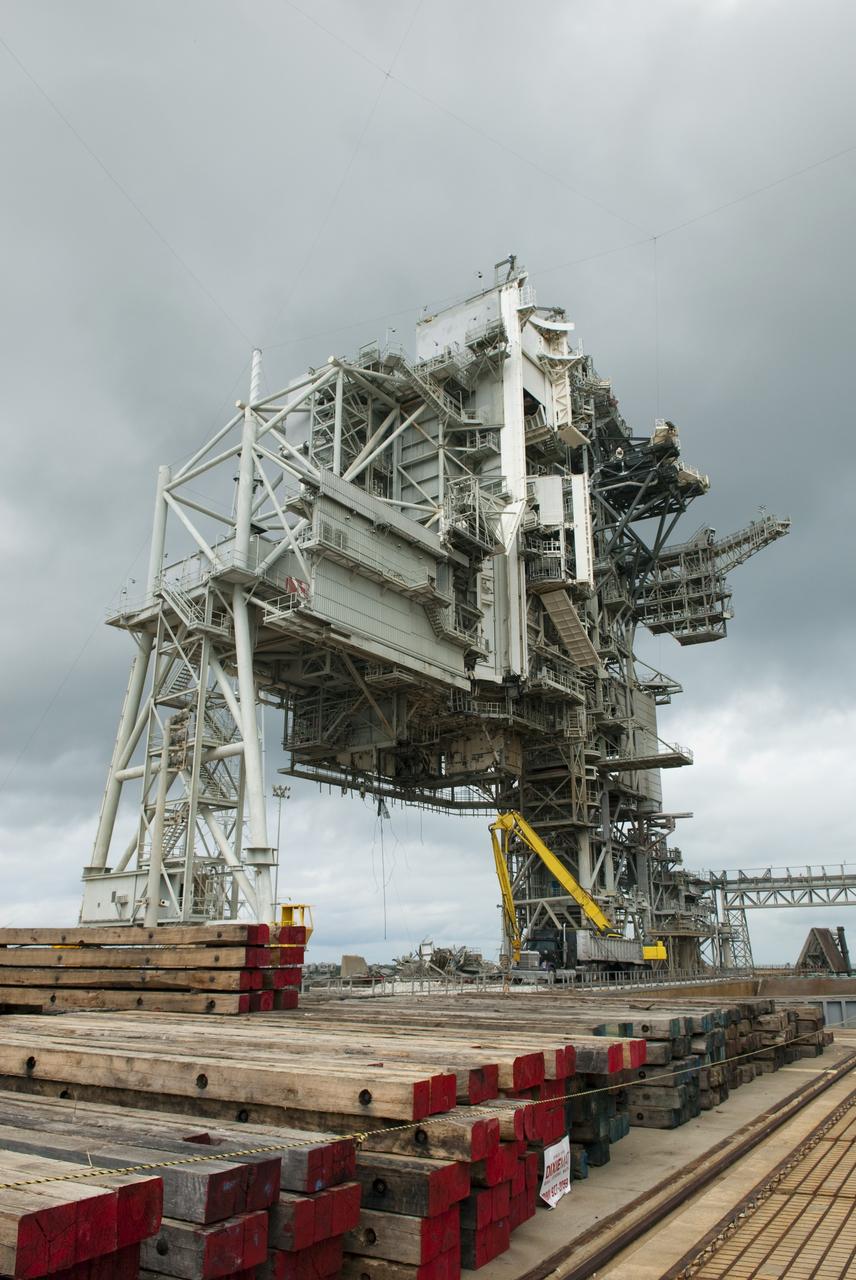
CAPE CANAVERAL, Fla. -- At NASA's Kennedy Space Center in Florida, crews are dismantling the rotating service structure (RSS) on Launch Pad 39B. Sand, reinforcing steel and large wooden mats were put down under the RSS to protect the structure's concrete from falling debris during deconstruction. Starting in 2009, the structure at the pad was no longer needed for NASA's Space Shuttle Program, so it is being restructured for future use. The new design will feature a "clean pad" for rockets to come with their own launcher, making it more versatile for a number of vehicles. The new lightning protection system, consisting of three lightning towers and a wire catenary system will remain. Photo credit: NASA/Jim Grossmann
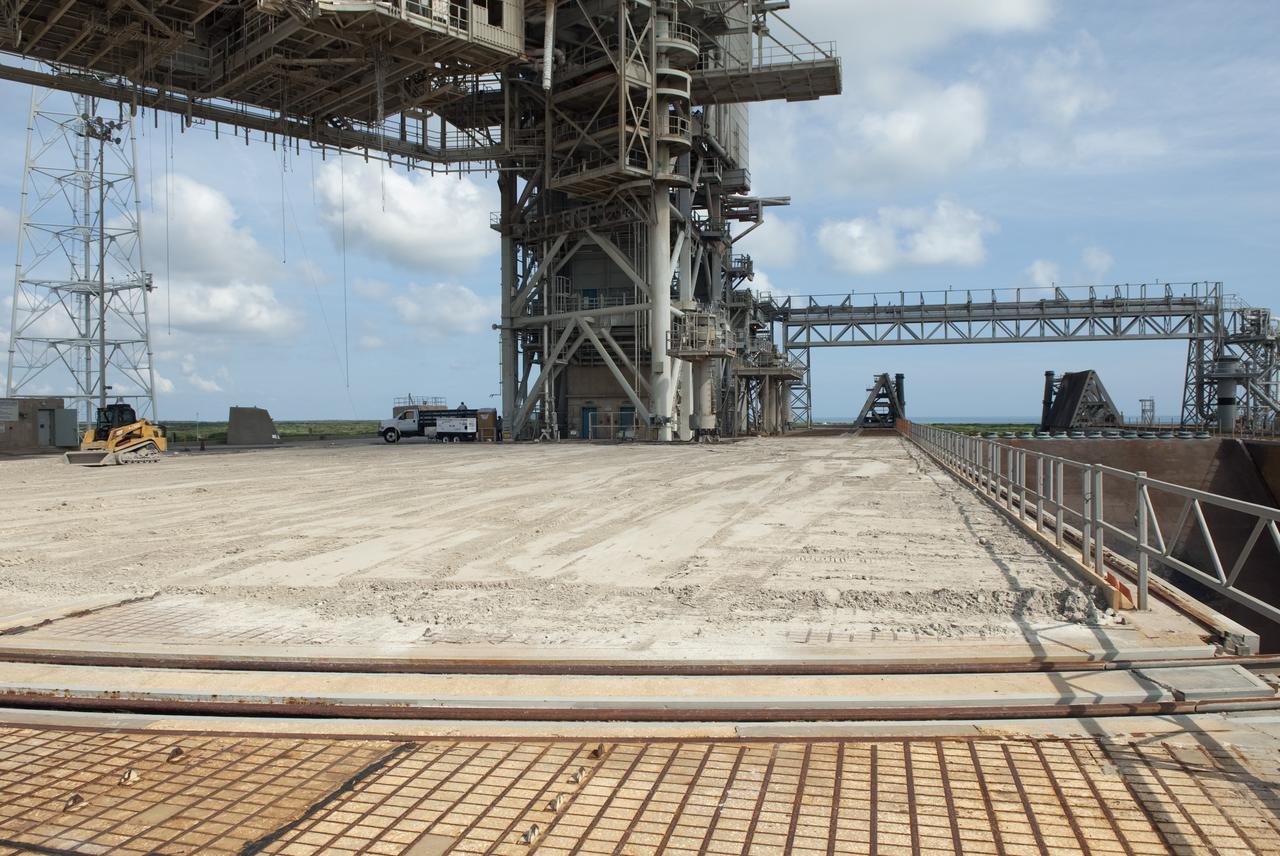
CAPE CANAVERAL, Fla. -- At NASA's Kennedy Space Center in Florida, construction crews lay sand, reinforcing steel and large wooden mats under the rotating service structure (RSS) of Launch Pad 39B to protect the structure's concrete from falling debris during deconstruction. Starting in 2009, the structure at the pad was no longer needed for NASA's Space Shuttle Program, so it is being restructured for future use. The new design will feature a "clean pad" for rockets to come with their own launcher, making it more versatile for a number of vehicles. For information on NASA's future plans, visit www.nasa.gov. Photo credit: NASA/Jim Grossmann
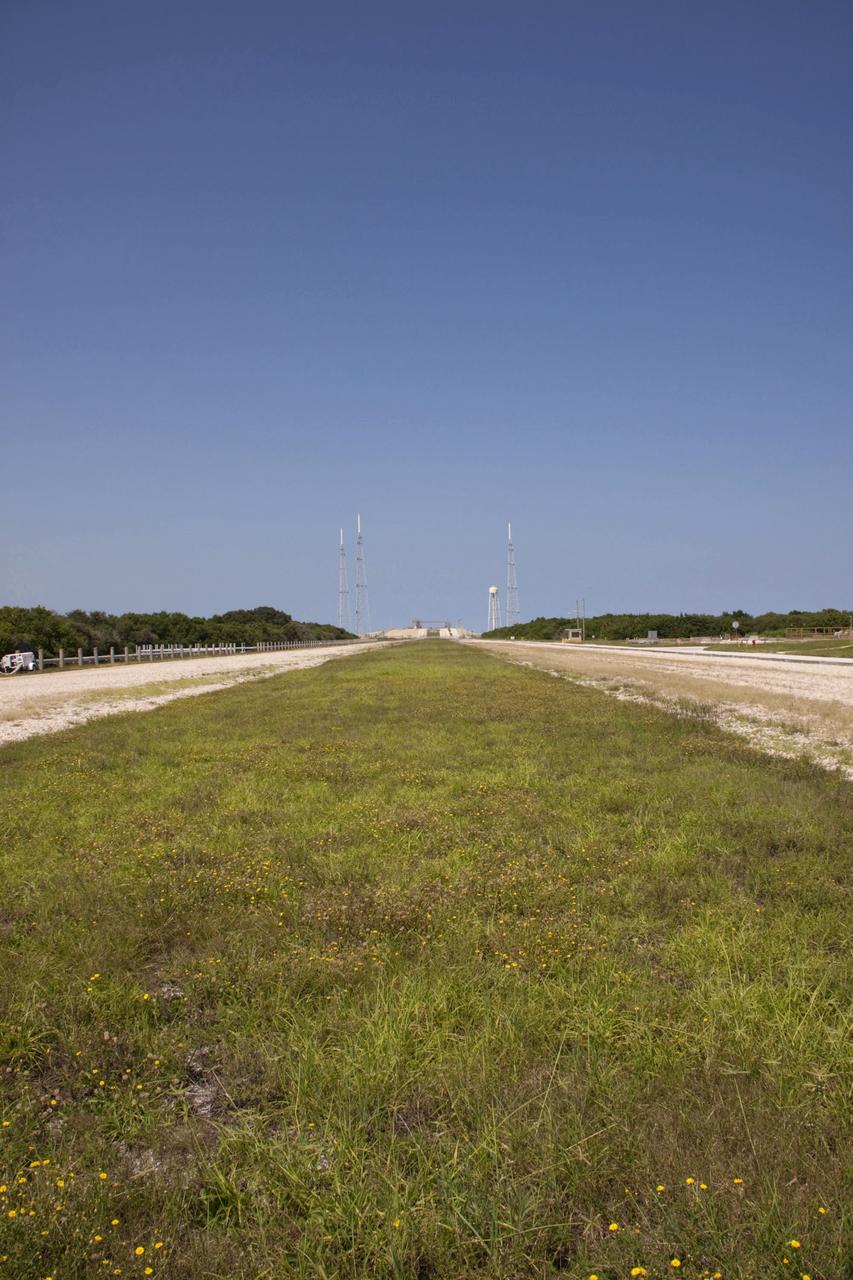
CAPE CANAVERAL, Fla. – The deconstruction of Launch Pad 39B at NASA’s Kennedy Space Center in Florida is complete. With a view from the two-track crawlerway, the three 600-foot-tall lightning protection towers and the water tower used for sound suppression stand over the remnants of the fixed service structure. In 2009, the structure at the pad was no longer needed for NASA's Space Shuttle Program, so it is being restructured for future use. The new design will feature a "clean pad" for rockets to come with their own launcher, making it more versatile for a number of vehicles. For information on NASA's future plans, visit http://www.nasa.gov/exploration. Photo credit: NASA/Jim Grossmann
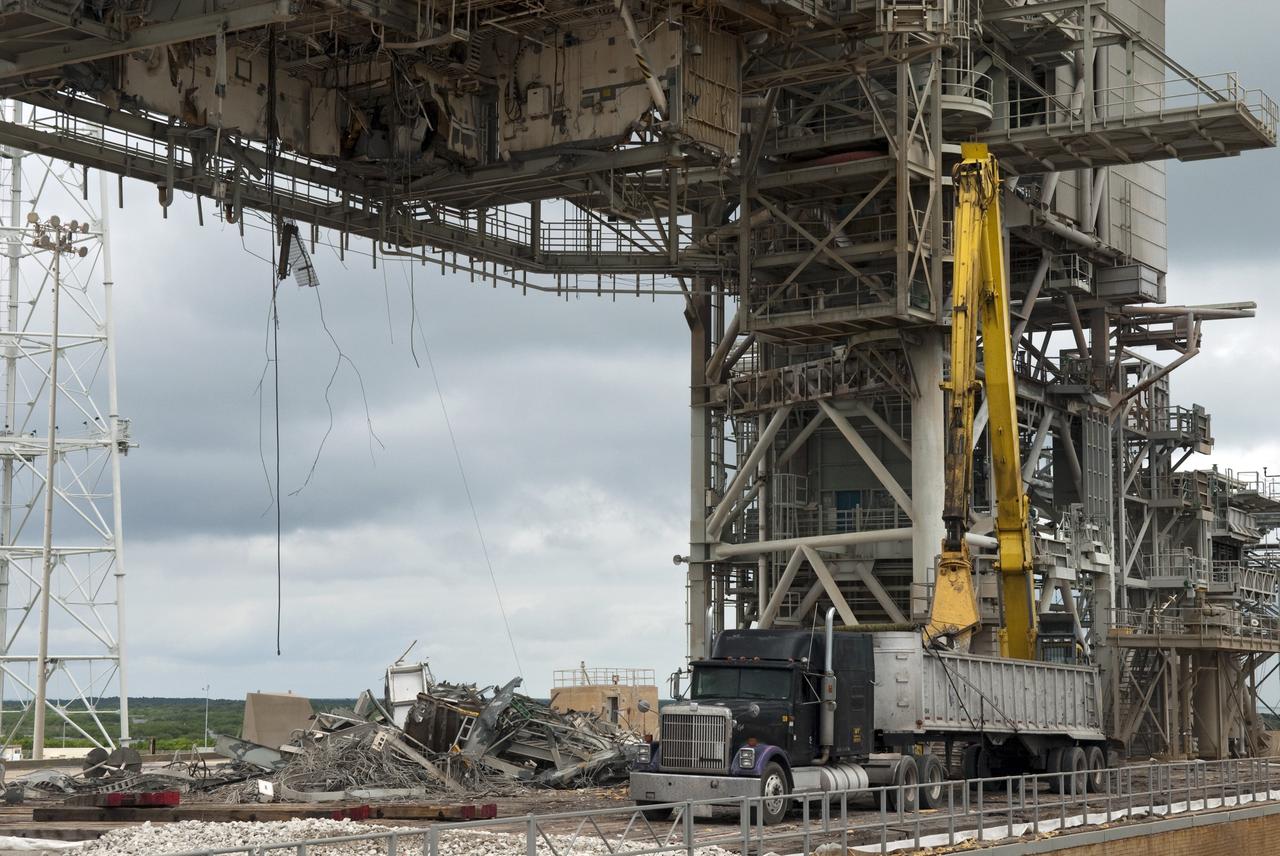
CAPE CANAVERAL, Fla. -- At NASA's Kennedy Space Center in Florida, the rotating service structure (RSS) on Launch Pad 39B is being dismantled. Sand, reinforcing steel and large wooden mats were put down under the RSS to protect the structure's concrete from falling debris during deconstruction. Starting in 2009, the structure at the pad was no longer needed for NASA's Space Shuttle Program, so it is being restructured for future use. The new design will feature a "clean pad" for rockets to come with their own launcher, making it more versatile for a number of vehicles. The new lightning protection system, consisting of three lightning towers and a wire catenary system will remain. Photo credit: NASA/Jim Grossmann
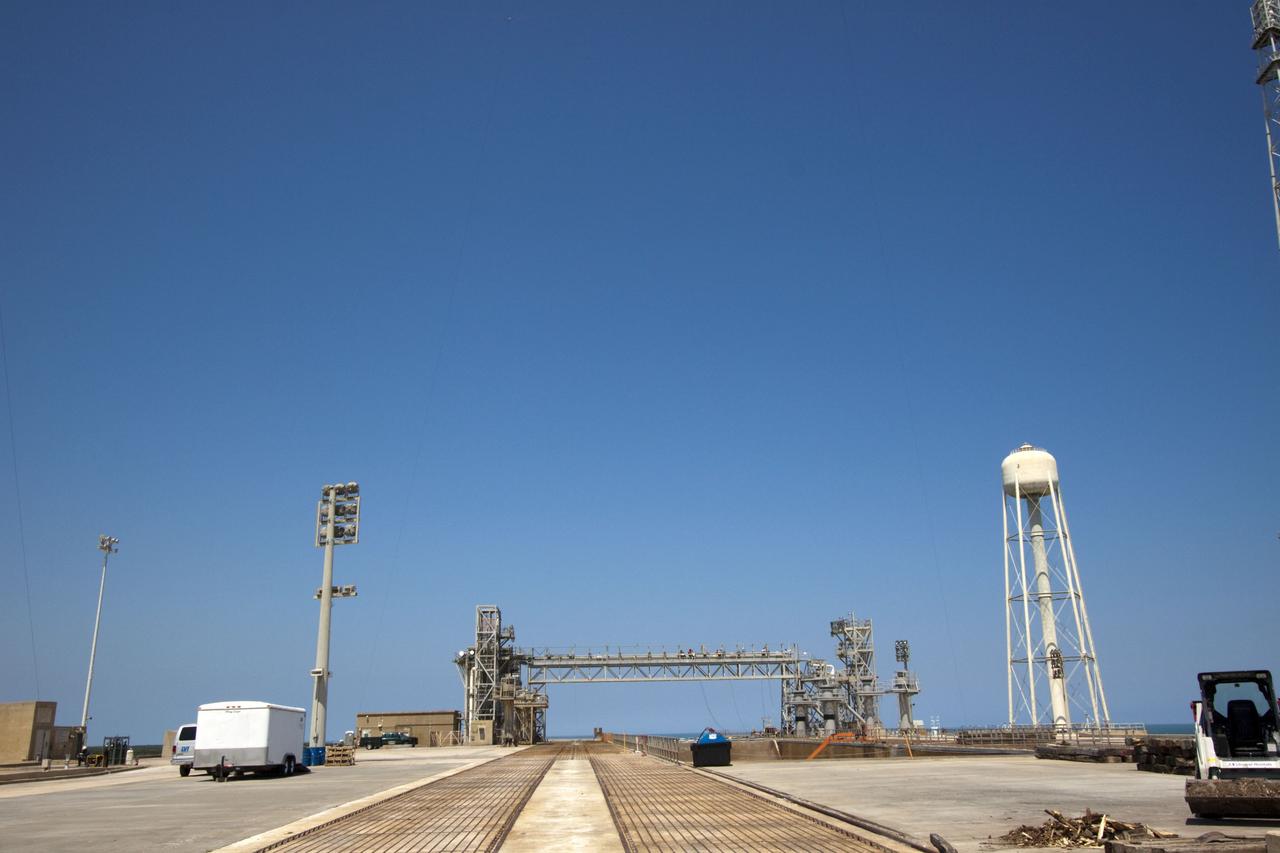
CAPE CANAVERAL, Fla. – The deconstruction of Launch Pad 39B at NASA’s Kennedy Space Center in Florida is complete. Still remaining are remnants of the fixed service structure and the water tower used for sound suppression. In 2009, the structure at the pad was no longer needed for NASA's Space Shuttle Program, so it is being restructured for future use. The new design will feature a "clean pad" for rockets to come with their own launcher, making it more versatile for a number of vehicles. For information on NASA's future plans, visit http://www.nasa.gov/exploration. Photo credit: NASA/Jim Grossmann
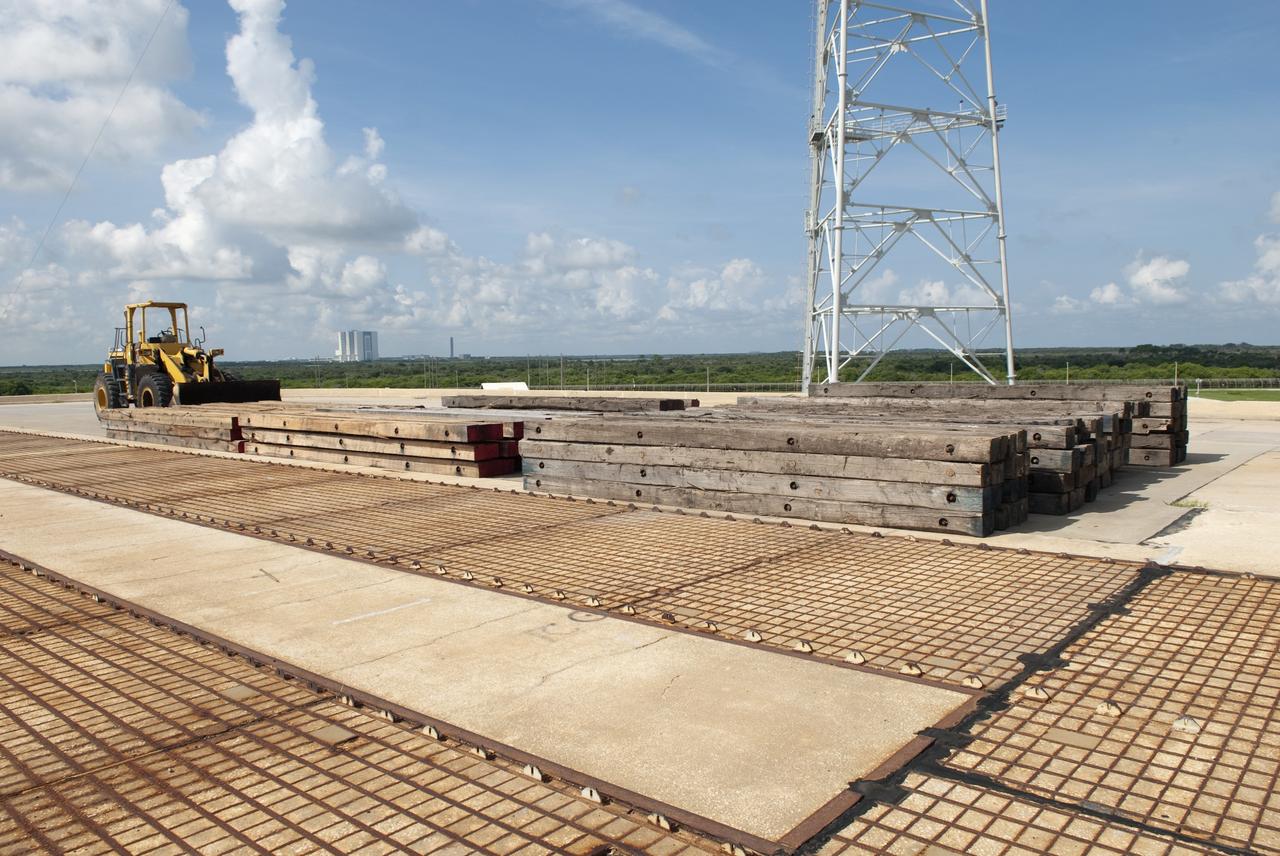
CAPE CANAVERAL, Fla. -- At NASA's Kennedy Space Center in Florida, construction crews lay sand, reinforcing steel and large wooden mats under the rotating service structure (RSS) of Launch Pad 39B to protect the structure's concrete from falling debris during deconstruction. Starting in 2009, the structure at the pad was no longer needed for NASA's Space Shuttle Program, so it is being restructured for future use. The new design will feature a "clean pad" for rockets to come with their own launcher, making it more versatile for a number of vehicles. For information on NASA's future plans, visit www.nasa.gov. Photo credit: NASA/Jim Grossmann
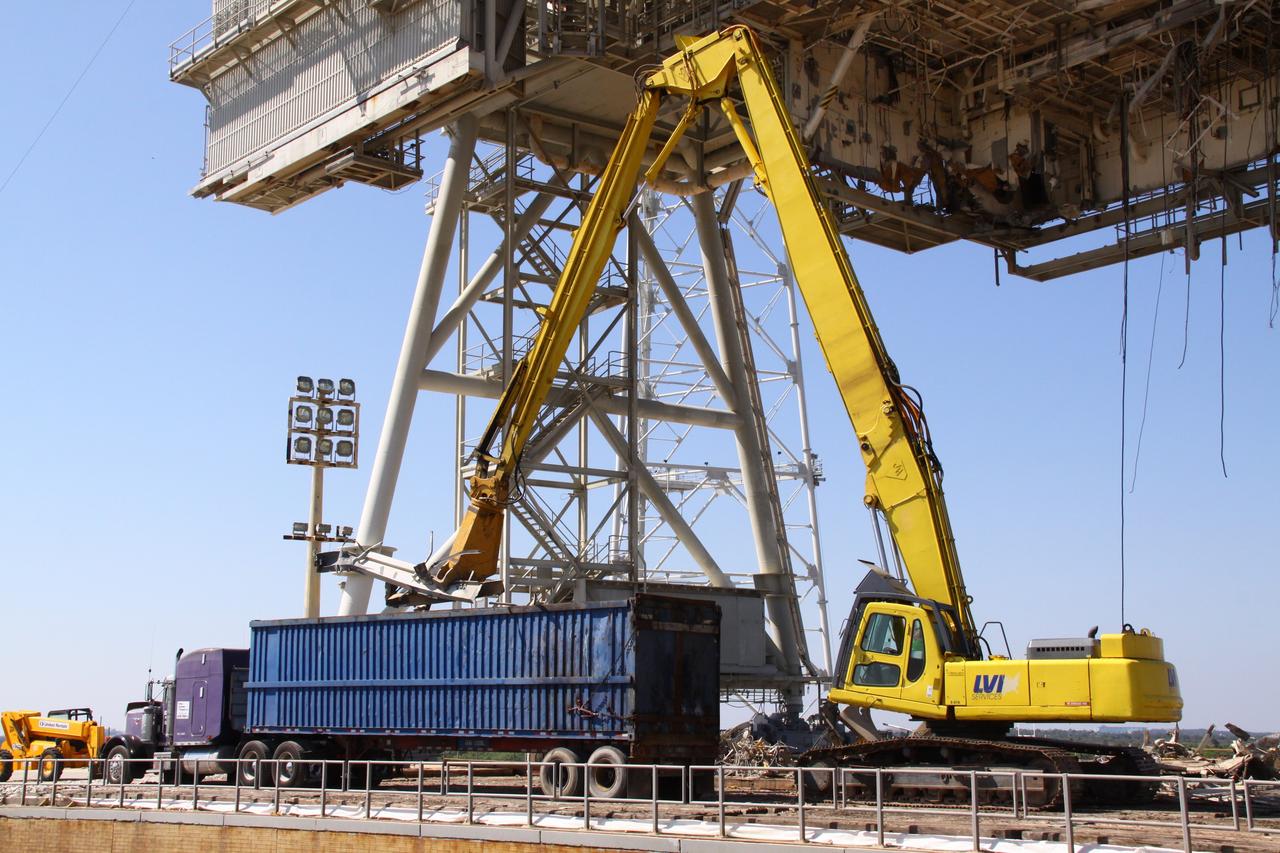
CAPE CANAVERAL, Fla. -- At NASA's Kennedy Space Center in Florida, crews continue dismantling the rotating service structure (RSS) on Launch Pad 39B. Sand, reinforcing steel and large wooden mats were put down under the RSS to protect the structure's concrete from falling debris during deconstruction. Starting in 2009, the structure at the pad was no longer needed for NASA's Space Shuttle Program, so it is being restructured for future use. The new design will feature a "clean pad" for rockets to come with their own launcher, making it more versatile for a number of vehicles. The new lightning protection system, consisting of three lightning towers and a wire catenary system will remain. Photo credit: NASA/Jack Pfaller
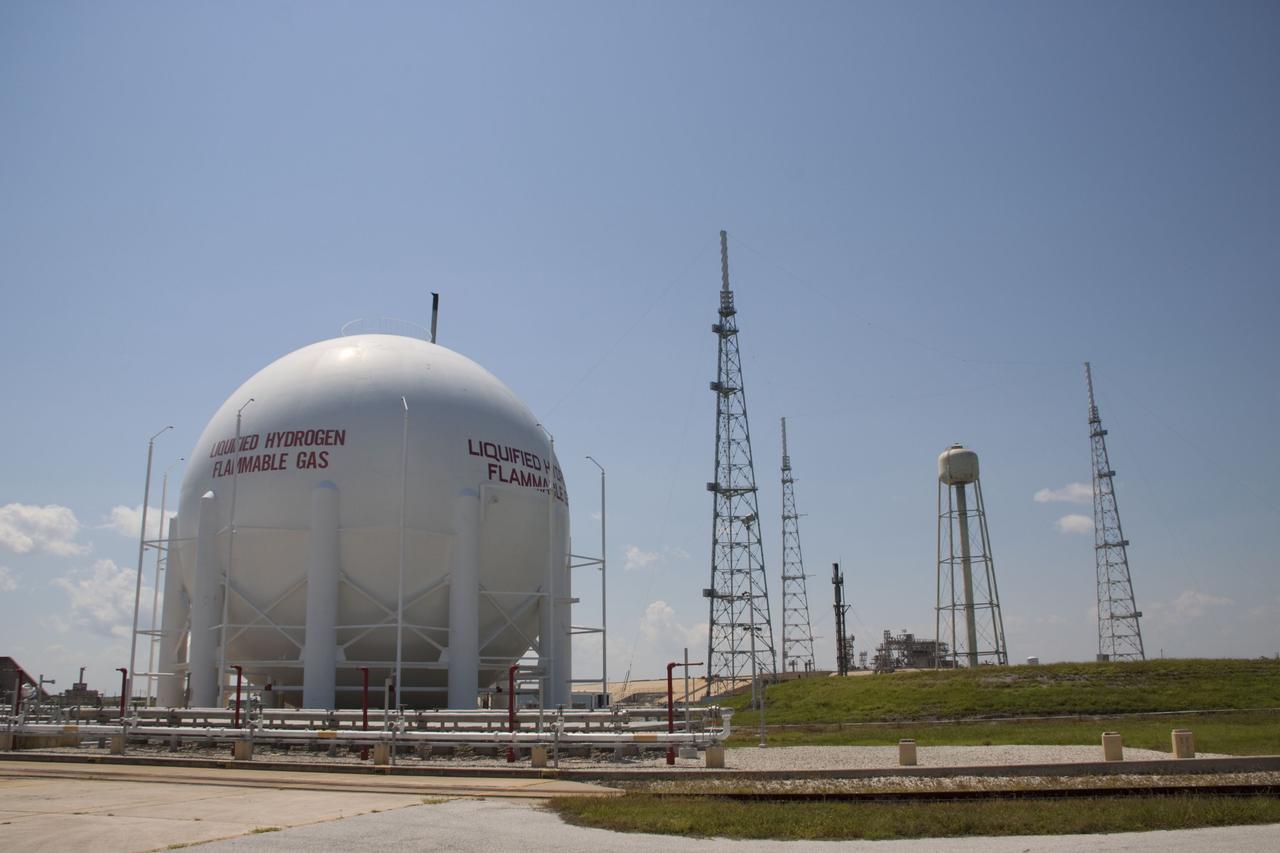
CAPE CANAVERAL, Fla. – The deconstruction of Launch Pad 39B at NASA’s Kennedy Space Center in Florida is complete. Still remaining and standing over the remnants of the fixed service structure are the 600-foot-tall lightning protection towers and the water tower used for sound suppression. In 2009, the structure at the pad was no longer needed for NASA's Space Shuttle Program, so it is being restructured for future use. The new design will feature a "clean pad" for rockets to come with their own launcher, making it more versatile for a number of vehicles. For information on NASA's future plans, visit http://www.nasa.gov/exploration. Photo credit: NASA/Jim Grossmann
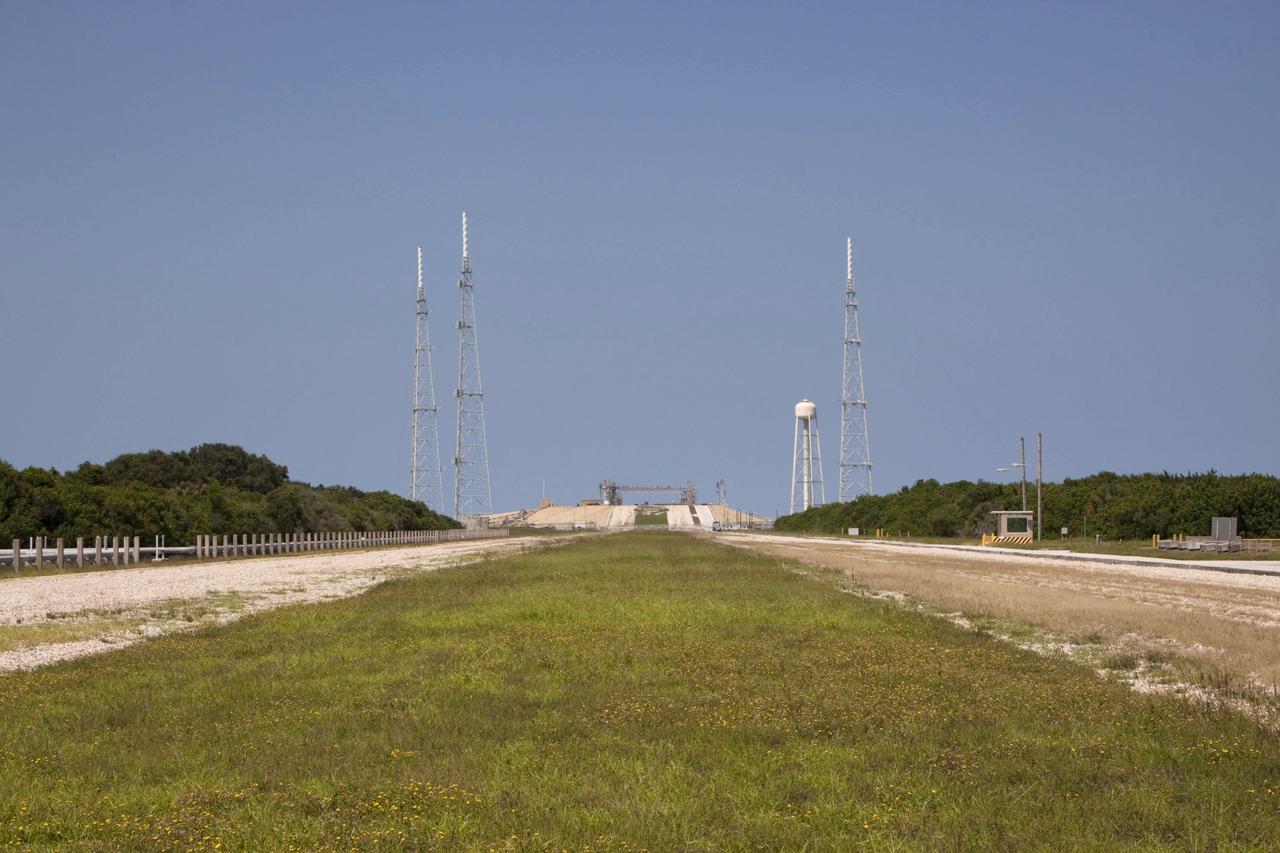
CAPE CANAVERAL, Fla. – The deconstruction of Launch Pad 39B at NASA’s Kennedy Space Center in Florida is complete. With a view from the two-track crawlerway, the three 600-foot-tall lightning protection towers and the water tower used for sound suppression stand over the remnants of the fixed service structure. In 2009, the structure at the pad was no longer needed for NASA's Space Shuttle Program, so it is being restructured for future use. The new design will feature a "clean pad" for rockets to come with their own launcher, making it more versatile for a number of vehicles. For information on NASA's future plans, visit http://www.nasa.gov/exploration. Photo credit: NASA/Jim Grossmann
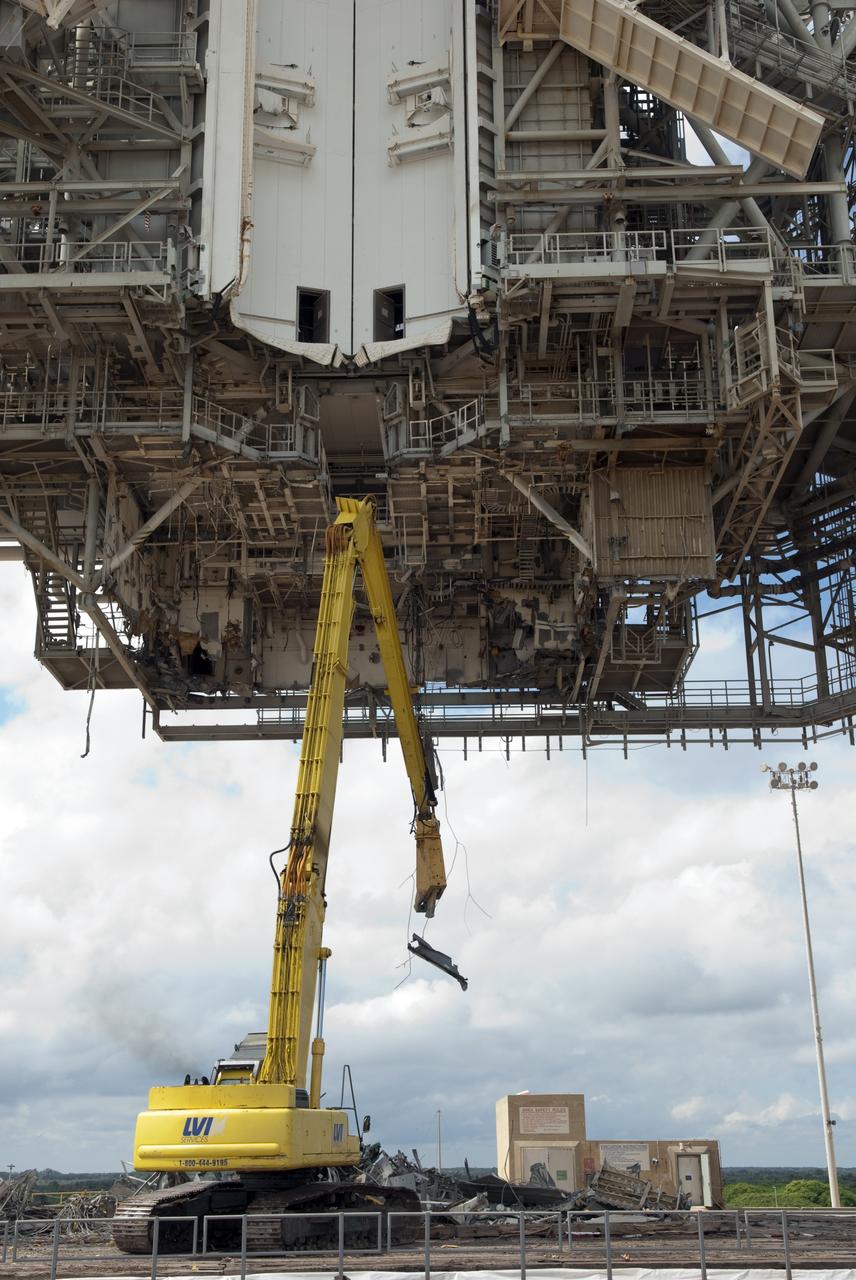
CAPE CANAVERAL, Fla. -- At NASA's Kennedy Space Center in Florida, crews are dismantling the rotating service structure (RSS) on Launch Pad 39B. Sand, reinforcing steel and large wooden mats were put down under the RSS to protect the structure's concrete from falling debris during deconstruction. Starting in 2009, the structure at the pad was no longer needed for NASA's Space Shuttle Program, so it is being restructured for future use. The new design will feature a "clean pad" for rockets to come with their own launcher, making it more versatile for a number of vehicles. The new lightning protection system, consisting of three lightning towers and a wire catenary system will remain. Photo credit: NASA/Jim Grossmann
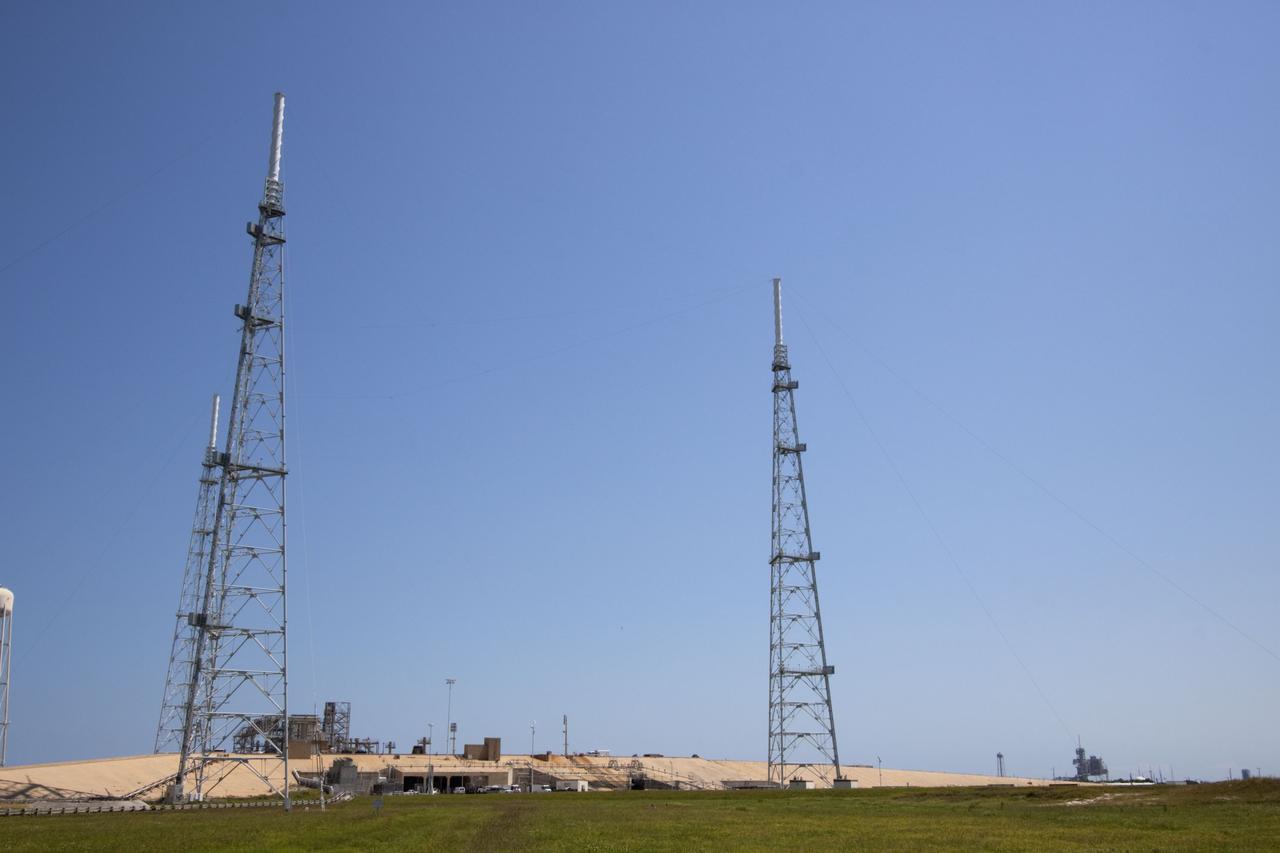
CAPE CANAVERAL, Fla. – The deconstruction of Launch Pad 39B at NASA’s Kennedy Space Center in Florida is complete. Still remaining and standing over the remnants of the fixed service structure are the 600-foot-tall lightning protection towers. In 2009, the structure at the pad was no longer needed for NASA's Space Shuttle Program, so it is being restructured for future use. The new design will feature a "clean pad" for rockets to come with their own launcher, making it more versatile for a number of vehicles. For information on NASA's future plans, visit http://www.nasa.gov/exploration. Photo credit: NASA/Jim Grossmann
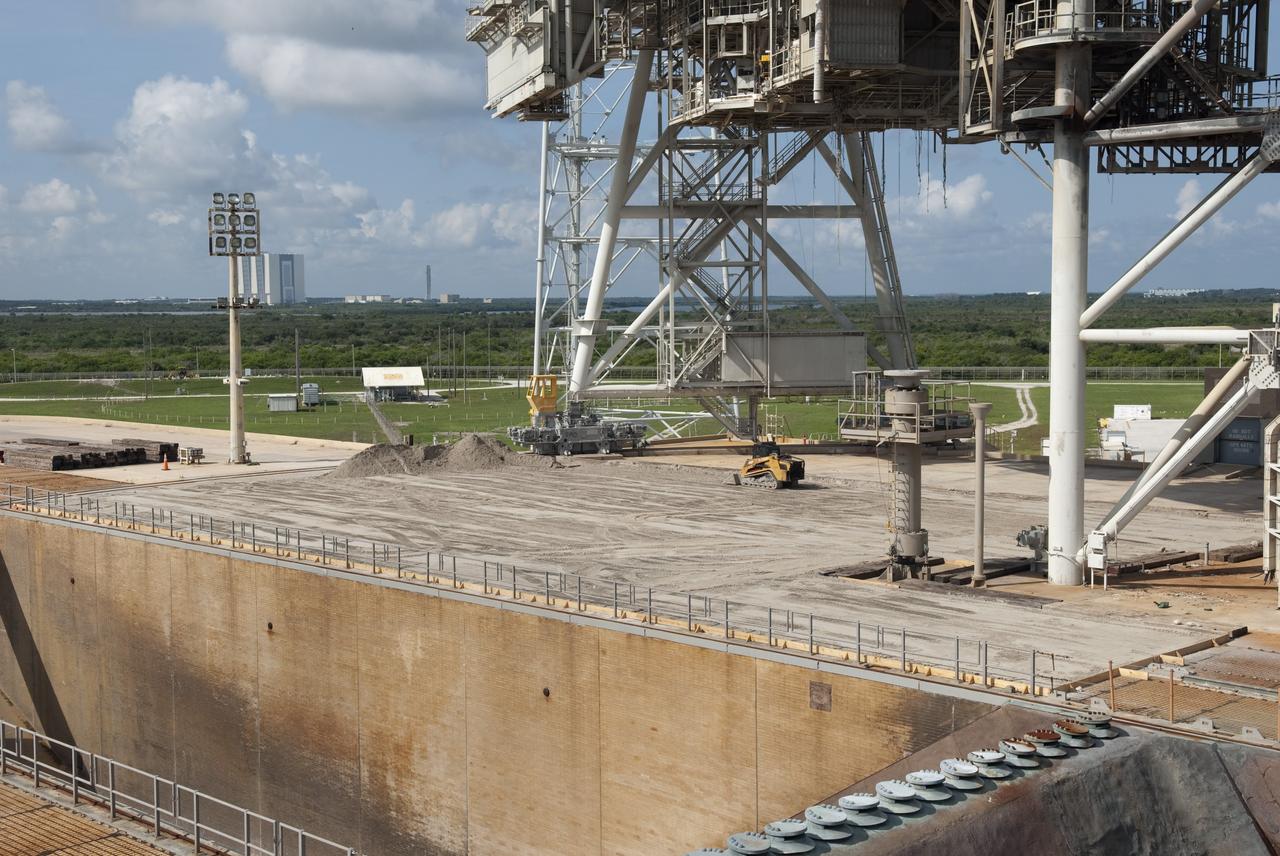
CAPE CANAVERAL, Fla. -- At NASA's Kennedy Space Center in Florida, construction crews lay sand, reinforcing steel and large wooden mats under the rotating service structure (RSS) of Launch Pad 39B to protect the structure's concrete from falling debris during deconstruction. Starting in 2009, the structure at the pad was no longer needed for NASA's Space Shuttle Program, so it is being restructured for future use. The new design will feature a "clean pad" for rockets to come with their own launcher, making it more versatile for a number of vehicles. For information on NASA's future plans, visit www.nasa.gov. Photo credit: NASA/Jim Grossmann
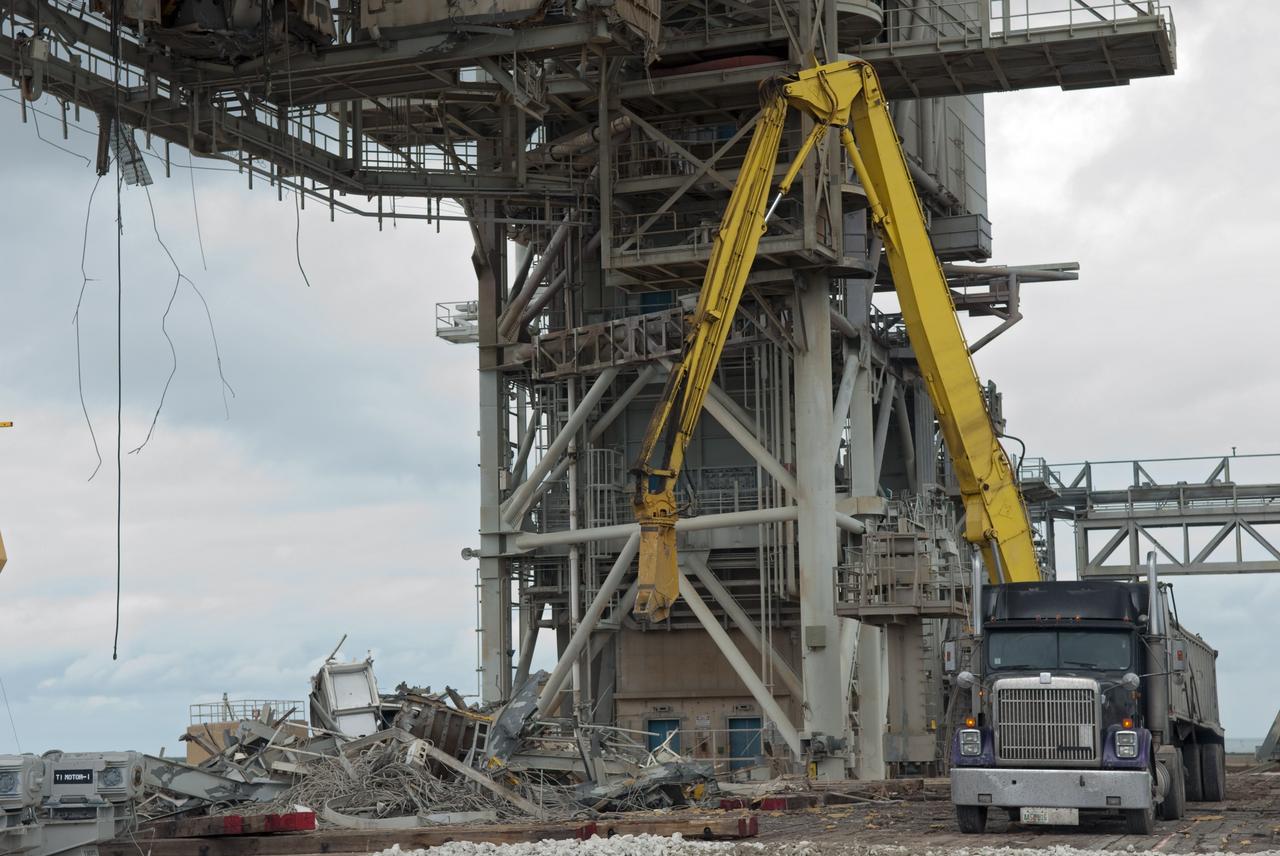
CAPE CANAVERAL, Fla. -- At NASA's Kennedy Space Center in Florida, the rotating service structure (RSS) on Launch Pad 39B is being dismantled. Sand, reinforcing steel and large wooden mats were put down under the RSS to protect the structure's concrete from falling debris during deconstruction. Starting in 2009, the structure at the pad was no longer needed for NASA's Space Shuttle Program, so it is being restructured for future use. The new design will feature a "clean pad" for rockets to come with their own launcher, making it more versatile for a number of vehicles. The new lightning protection system, consisting of three lightning towers and a wire catenary system will remain. Photo credit: NASA/Jim Grossmann
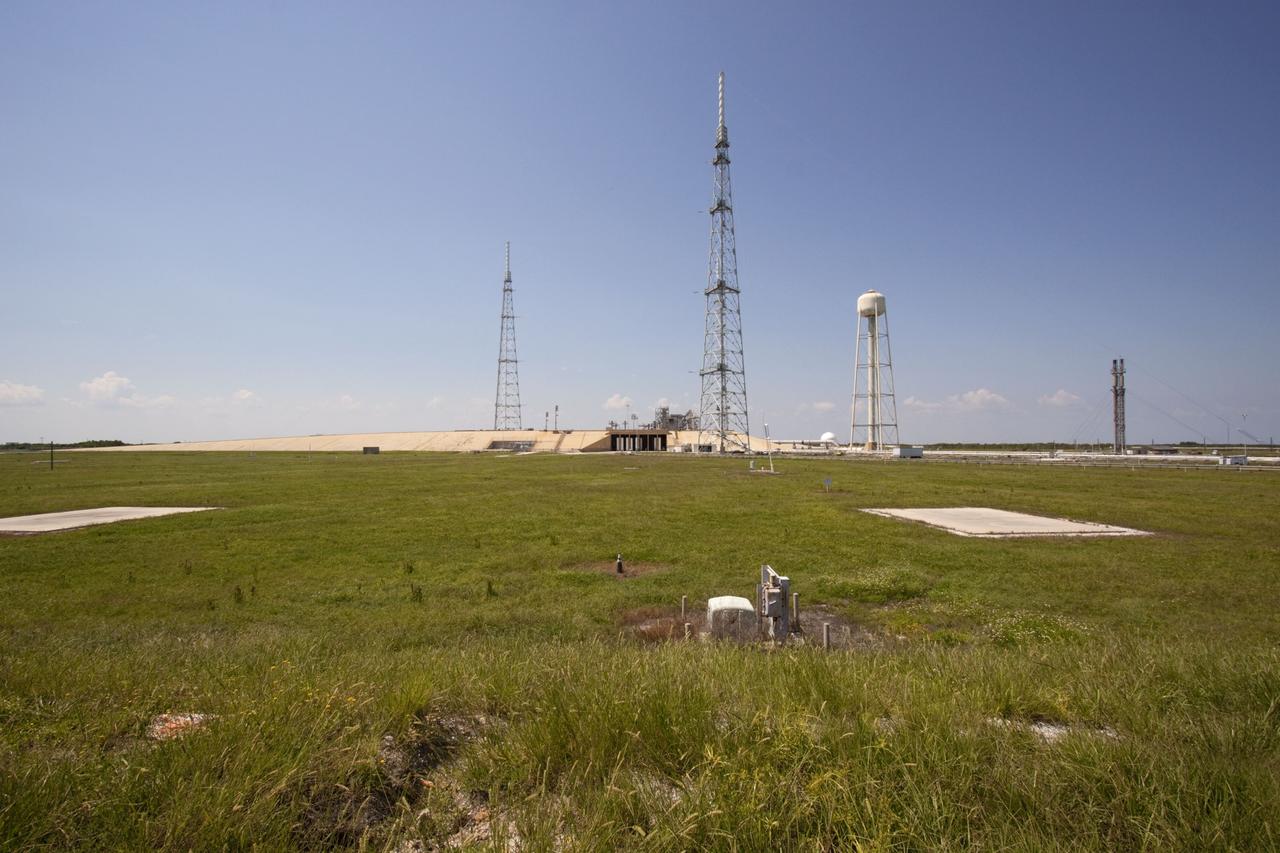
CAPE CANAVERAL, Fla. – The deconstruction of Launch Pad 39B at NASA’s Kennedy Space Center in Florida is complete. Still remaining and standing over the remnants of the fixed service structure are the 600-foot-tall lightning protection towers and the water tower used for sound suppression. In 2009, the structure at the pad was no longer needed for NASA's Space Shuttle Program, so it is being restructured for future use. The new design will feature a "clean pad" for rockets to come with their own launcher, making it more versatile for a number of vehicles. For information on NASA's future plans, visit http://www.nasa.gov/exploration. Photo credit: NASA/Jim Grossmann
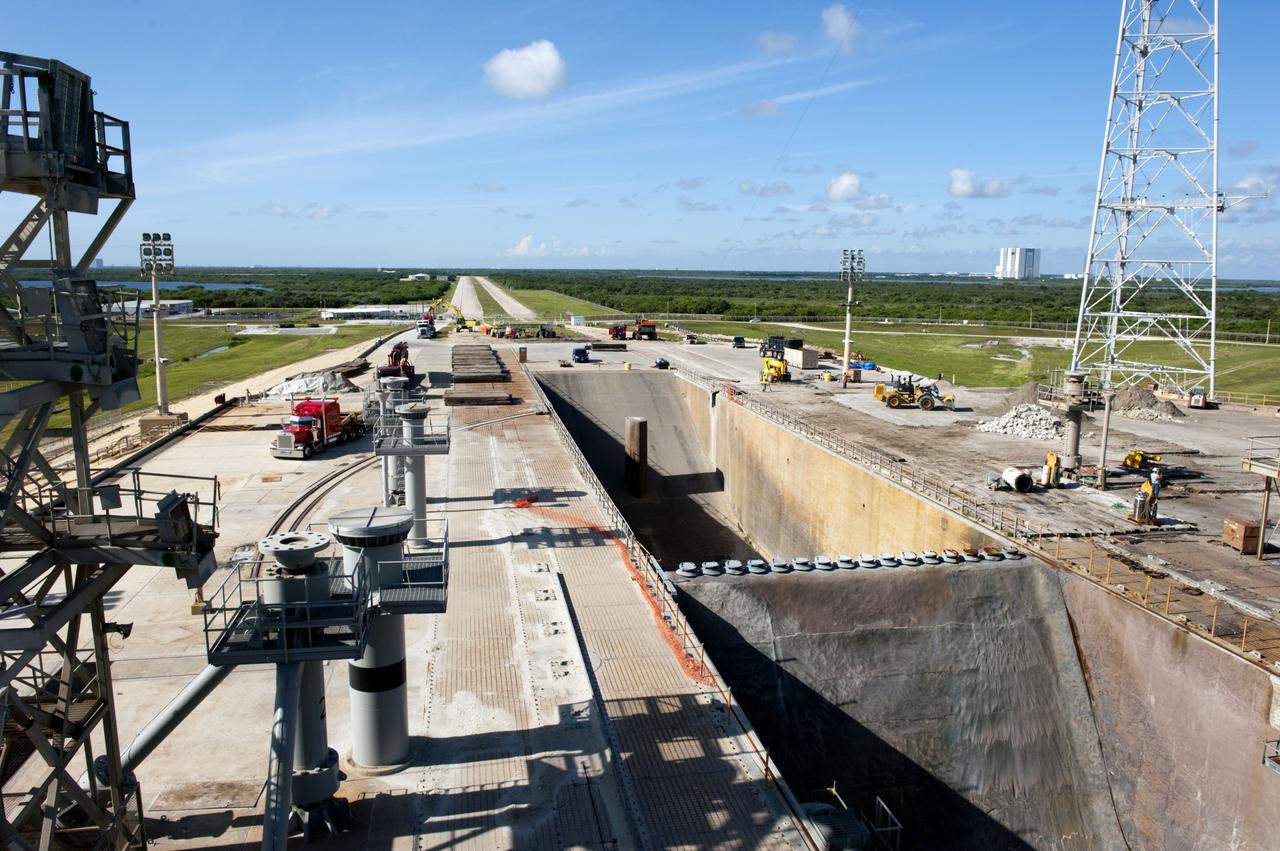
CAPE CANAVERAL, Fla. -- At NASA's Kennedy Space Center in Florida, cleanup of Launch Pad 39B is in progress beside the pad's flame trench. The trench is 450 feet long, 58 feet wide and 42 feet deep with an inner inverted V-shaped steel flame deflector. Sand, reinforcing steel and large wooden mats were placed over the pad's concrete surfaces during deconstruction to protect them from falling debris. In the distance is the 525-foot-tall Vehicle Assembly Building. In 2009, the structure at the pad was no longer needed for NASA's Space Shuttle Program, so it is being restructured for future use. The new design will feature a "clean pad" for rockets to come with their own launcher, making it more versatile for a number of rockets and spacecraft. The lightning protection system, consisting of three lightning towers and a wire catenary system, will remain. For information on NASA's future plans, visit http://www.nasa.gov/exploration. Photo credit: NASA/Kim Shiflett
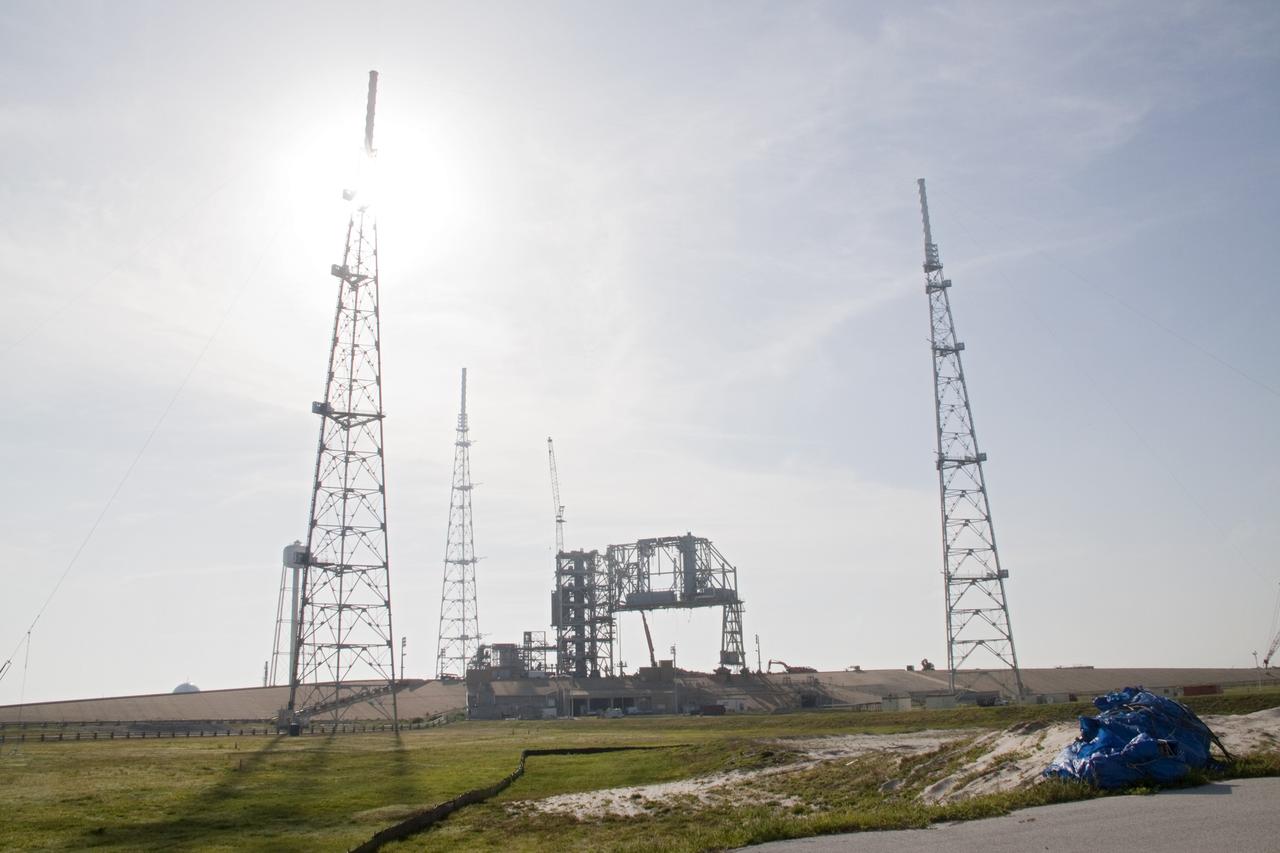
Cape Canaveral, Fla. -- Photographed from the base of the former emergency egress system at NASA's Kennedy Space Center in Florida, is the skeleton of steel that once was Launch Pad 39B after significant deconstruction. The system included seven baskets suspended from seven slidewires that extended from the pad to a landing zone 1,200 feet west of the pad. The bunkers at the base also are being dismantled. In 2009, the pad was no longer needed for the shuttle program, so it is being restructured for future use. Its new design will feature a "clean pad" for rockets to come with their own launcher, making it more versatile for a number of vehicles. The new lightning protection system, which was in place for the October 2009 launch of Ares I-X, will remain. For information on NASA's future plans, visit www.nasa.gov. Photo credit: NASA/Jack Pfaller
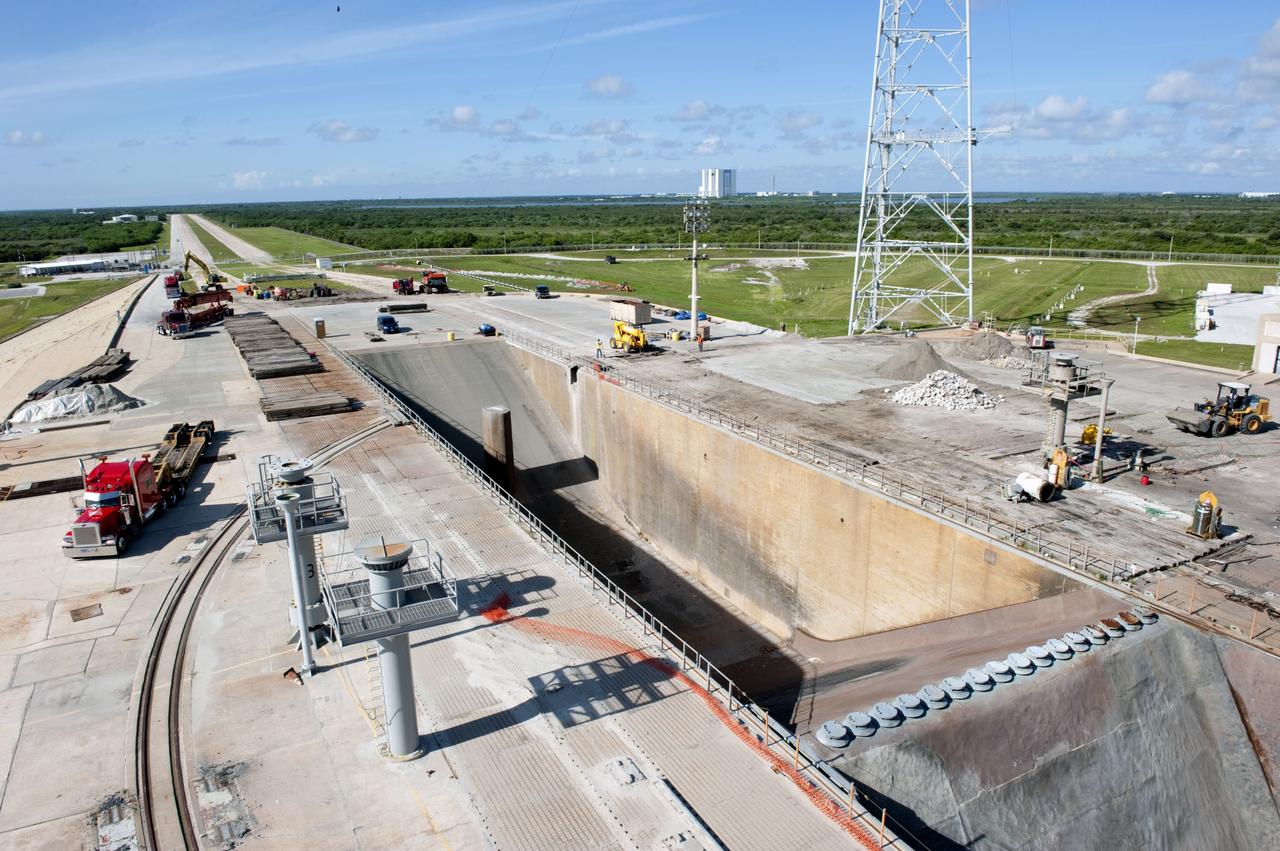
CAPE CANAVERAL, Fla. -- At NASA's Kennedy Space Center in Florida, cleanup of Launch Pad 39B is in progress beside the pad's flame trench. The trench is 450 feet long, 58 feet wide and 42 feet deep with an inner inverted V-shaped steel flame deflector. Sand, reinforcing steel and large wooden mats were placed over the pad's concrete surfaces during deconstruction to protect them from falling debris. In the distance is the 525-foot-tall Vehicle Assembly Building. In 2009, the structure at the pad was no longer needed for NASA's Space Shuttle Program, so it is being restructured for future use. The new design will feature a "clean pad" for rockets to come with their own launcher, making it more versatile for a number of rockets and spacecraft. The lightning protection system, consisting of three lightning towers and a wire catenary system, will remain. For information on NASA's future plans, visit http://www.nasa.gov/exploration. Photo credit: NASA/Kim Shiflett
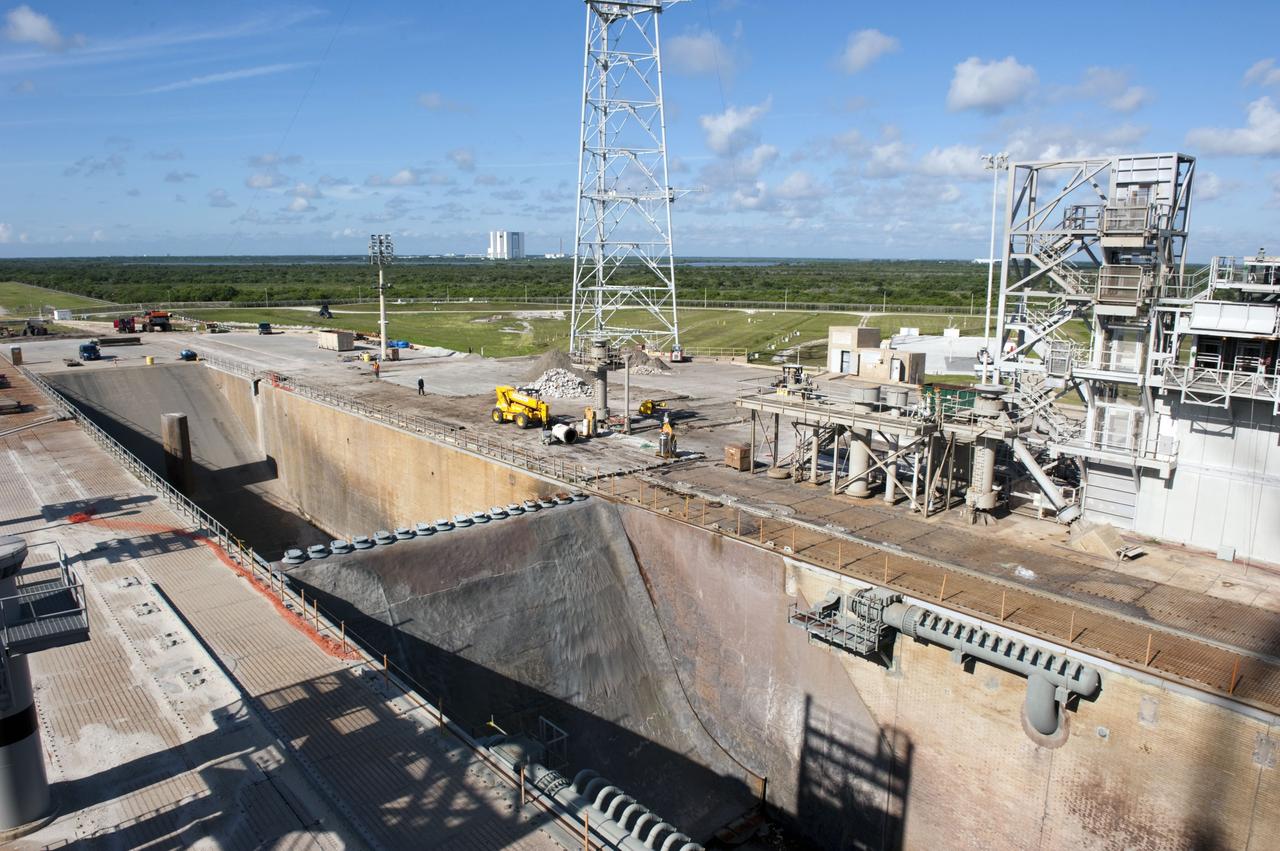
CAPE CANAVERAL, Fla. -- At NASA's Kennedy Space Center in Florida, cleanup of Launch Pad 39B is in progress beside the pad's flame trench. The trench is 450 feet long, 58 feet wide and 42 feet deep with an inner inverted V-shaped steel flame deflector. Sand, reinforcing steel and large wooden mats were placed over the pad's concrete surfaces during deconstruction to protect them from falling debris. In the distance is the 525-foot-tall Vehicle Assembly Building. In 2009, the structure at the pad was no longer needed for NASA's Space Shuttle Program, so it is being restructured for future use. The new design will feature a "clean pad" for rockets to come with their own launcher, making it more versatile for a number of rockets and spacecraft. The lightning protection system, consisting of three lightning towers and a wire catenary system, will remain. For information on NASA's future plans, visit http://www.nasa.gov/exploration. Photo credit: NASA/Kim Shiflett
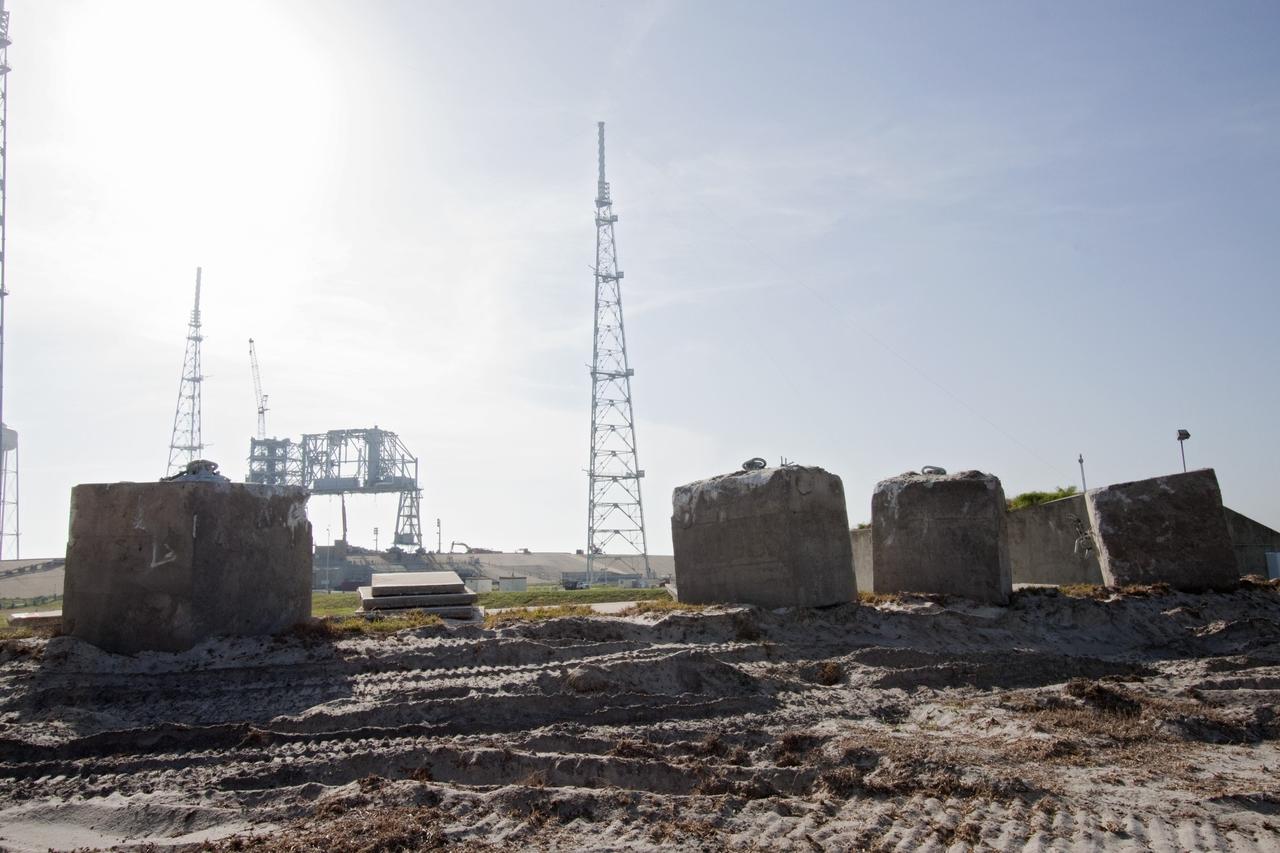
Cape Canaveral, Fla. -- Photographed from the base of the former emergency egress system at NASA's Kennedy Space Center in Florida, is the skeleton of steel that once was Launch Pad 39B after significant deconstruction. The system included seven baskets suspended from seven slidewires that extended from the pad to a landing zone 1,200 feet west of the pad. The bunkers at the base also are being dismantled. In 2009, the pad was no longer needed for the shuttle program, so it is being restructured for future use. Its new design will feature a "clean pad" for rockets to come with their own launcher, making it more versatile for a number of vehicles. The new lightning protection system, which was in place for the October 2009 launch of Ares I-X, will remain. For information on NASA's future plans, visit www.nasa.gov. Photo credit: NASA/Jack Pfaller
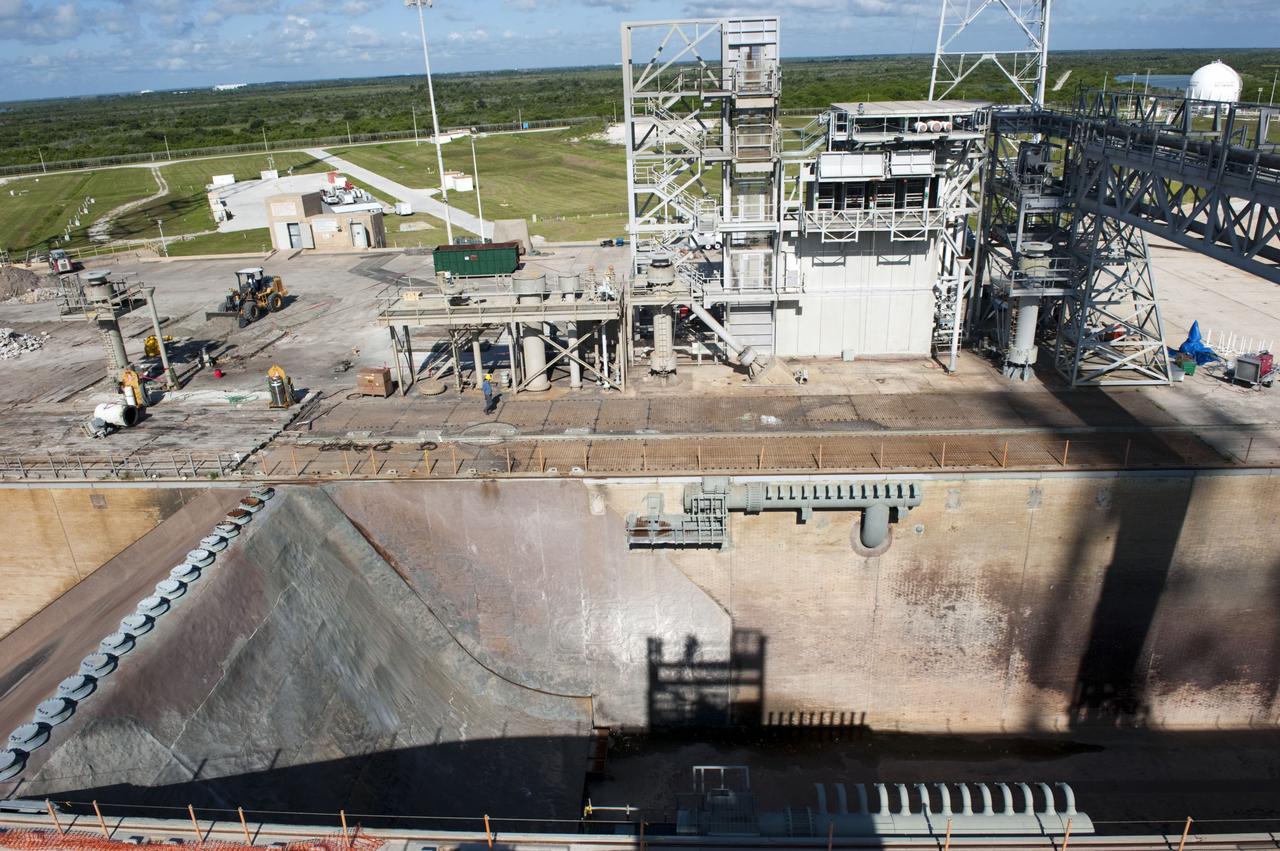
CAPE CANAVERAL, Fla. -- At NASA's Kennedy Space Center in Florida, cleanup of Launch Pad 39B is in progress beside the pad's flame trench. The trench is 450 feet long, 58 feet wide and 42 feet deep with an inner inverted V-shaped steel flame deflector. Sand, reinforcing steel and large wooden mats were placed over the pad's concrete surfaces during deconstruction to protect them from falling debris. In 2009, the structure at the pad was no longer needed for NASA's Space Shuttle Program, so it is being restructured for future use. The new design will feature a "clean pad" for rockets to come with their own launcher, making it more versatile for a number of rockets and spacecraft. The lightning protection system, consisting of three lightning towers and a wire catenary system, will remain. For information on NASA's future plans, visit http://www.nasa.gov/exploration. Photo credit: NASA/Kim Shiflett
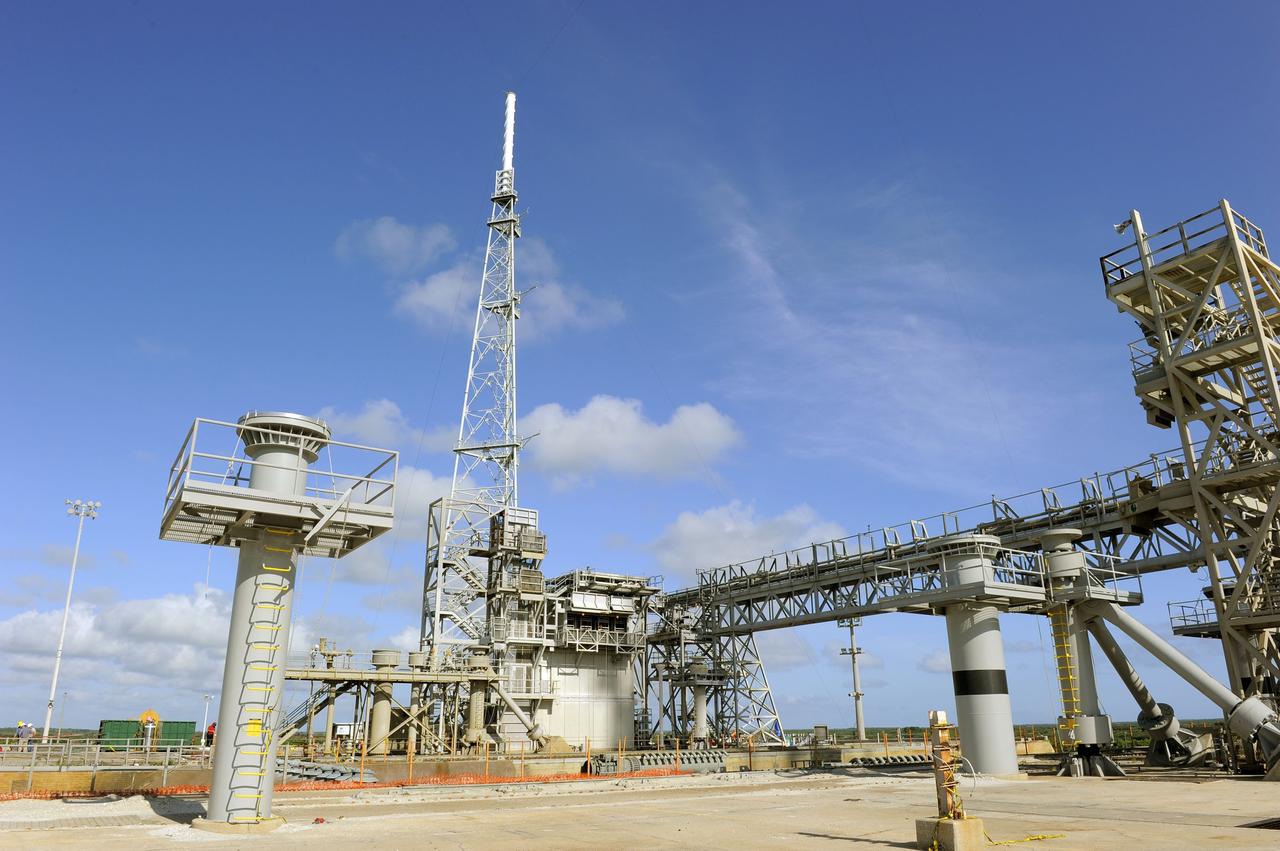
CAPE CANAVERAL, Fla. -- At NASA's Kennedy Space Center in Florida, the launch pedestals remain in place on Launch Pad 39B following deconstruction of the towers. Cleanup is under way of the sand, reinforcing steel and large wooden mats which were placed over the pad's concrete surfaces to protect them from falling debris. In 2009, the structure at the pad was no longer needed for NASA's Space Shuttle Program, so it is being restructured for future use. The new design will feature a "clean pad" for rockets to come with their own launcher, making it more versatile for a number of rockets and spacecraft. The lightning protection system, consisting of three lightning towers and a wire catenary system, will remain. For information on NASA's future plans, visit http://www.nasa.gov/exploration. Photo credit: NASA/Kim Shiflett
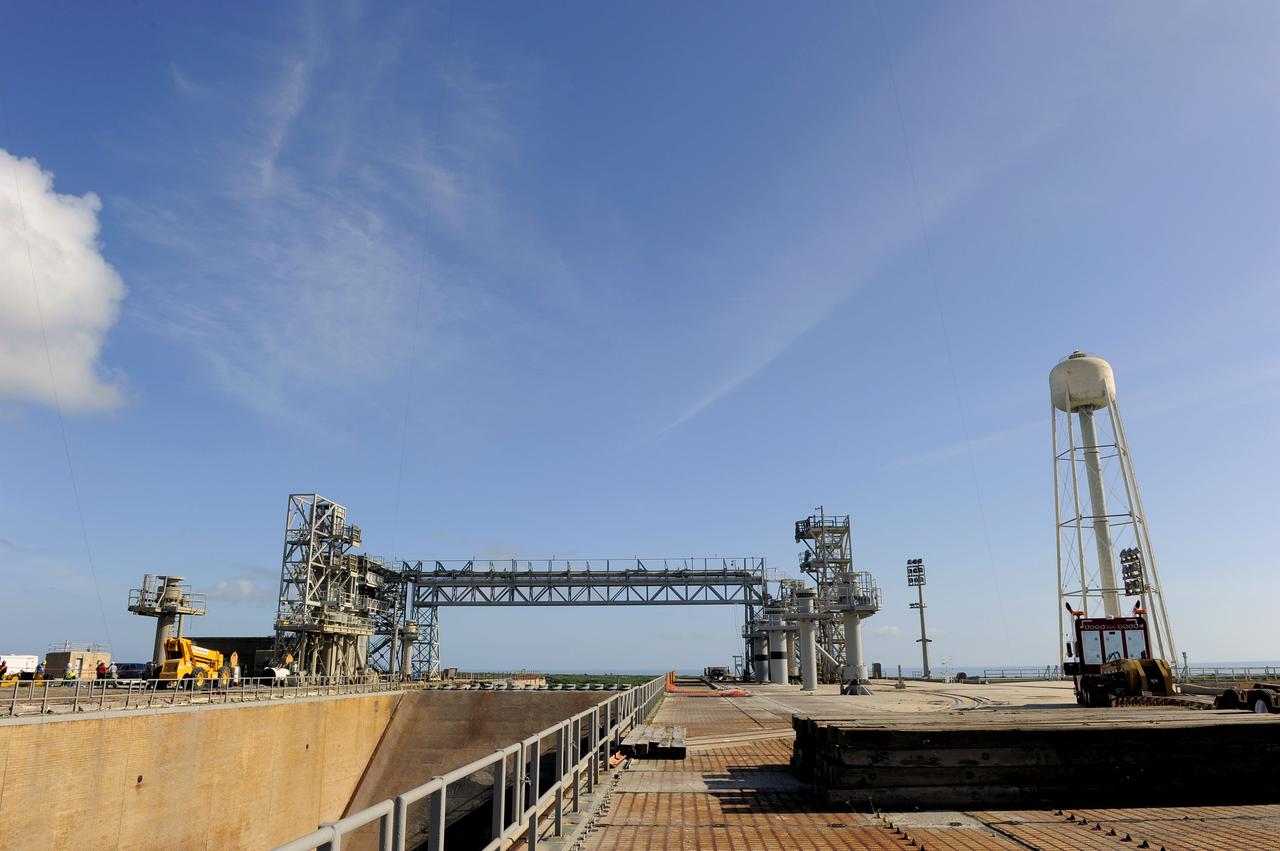
CAPE CANAVERAL, Fla. -- At NASA's Kennedy Space Center in Florida, cleanup of Launch Pad 39B is in progress. Sand, reinforcing steel and large wooden mats were placed over the pad's concrete surfaces during deconstruction to protect them from falling debris. In 2009, the structure at the pad was no longer needed for NASA's Space Shuttle Program, so it is being restructured for future use. The new design will feature a "clean pad" for rockets to come with their own launcher, making it more versatile for a number of rockets and spacecraft. The lightning protection system, consisting of three lightning towers and a wire catenary system, will remain. For information on NASA's future plans, visit http://www.nasa.gov/exploration. Photo credit: NASA/Kim Shiflett
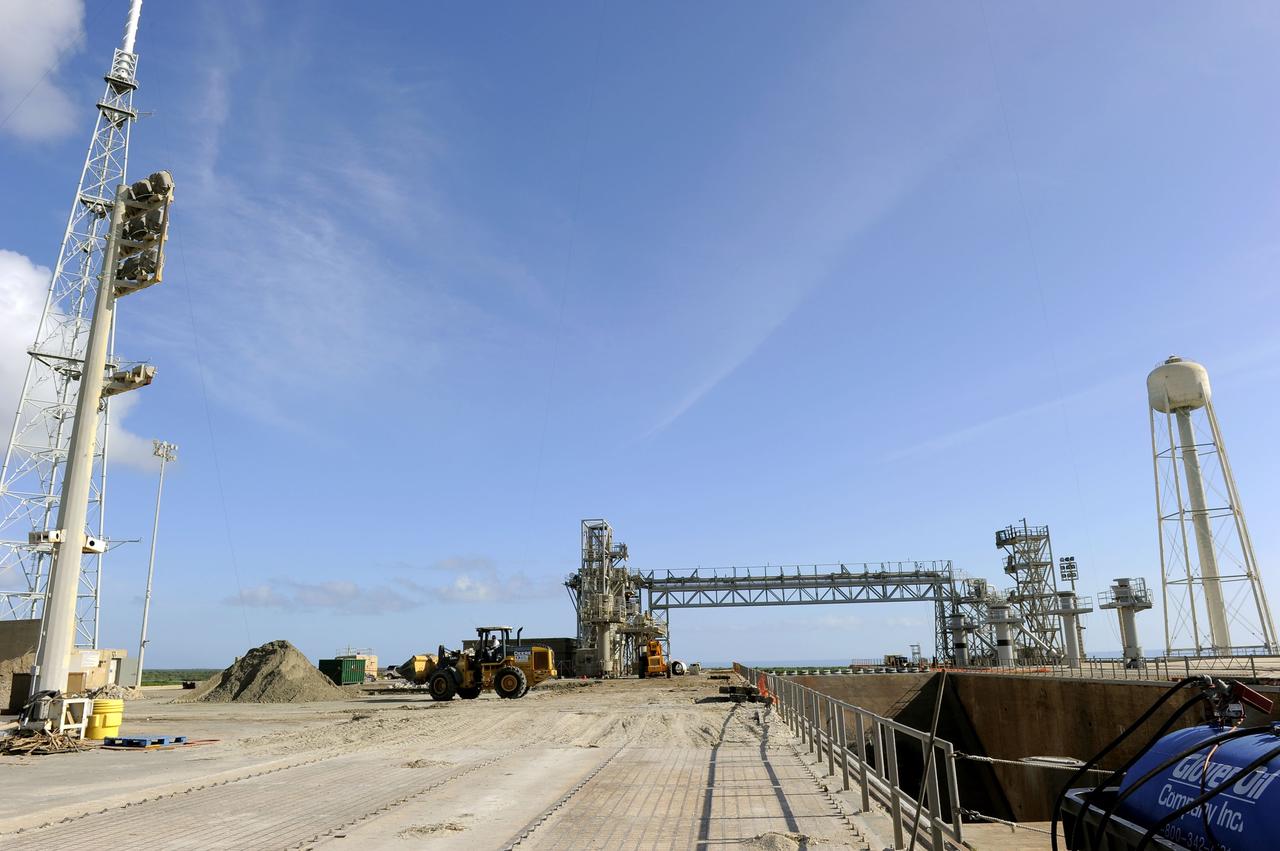
CAPE CANAVERAL, Fla. -- At NASA's Kennedy Space Center in Florida, a bulldozer is enlisted in the cleanup of Launch Pad 39B. Sand, reinforcing steel and large wooden mats were placed over the pad's concrete surfaces during deconstruction to protect them from falling debris. In 2009, the structure at the pad was no longer needed for NASA's Space Shuttle Program, so it is being restructured for future use. The new design will feature a "clean pad" for rockets to come with their own launcher, making it more versatile for a number of rockets and spacecraft. The lightning protection system, consisting of three lightning towers and a wire catenary system, will remain. For information on NASA's future plans, visit http://www.nasa.gov/exploration. Photo credit: NASA/Kim Shiflett
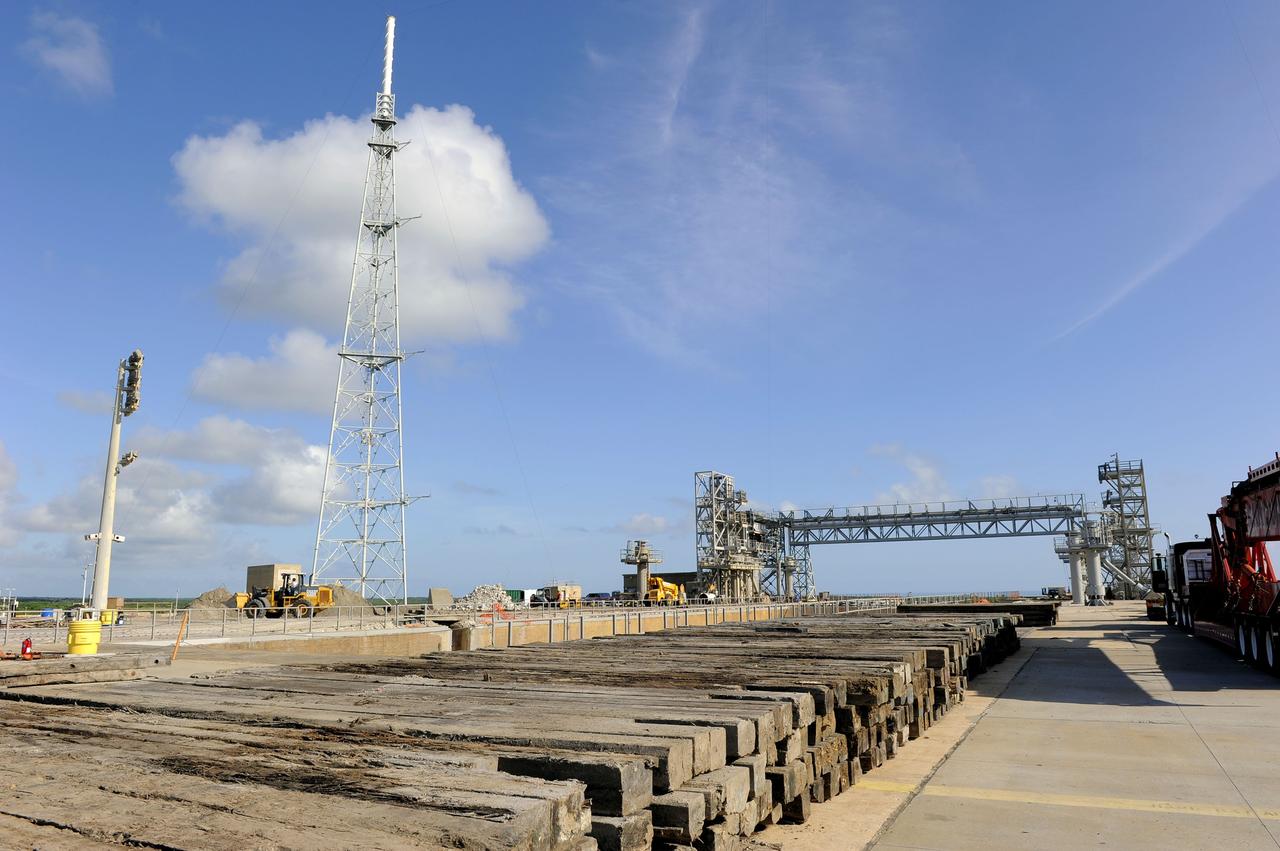
CAPE CANAVERAL, Fla. -- At NASA's Kennedy Space Center in Florida, cleanup of Launch Pad 39B gets under way. Sand, reinforcing steel and large wooden mats were placed over the pad's concrete surfaces during deconstruction to protect them from falling debris. In 2009, the structure at the pad was no longer needed for NASA's Space Shuttle Program, so it is being restructured for future use. The new design will feature a "clean pad" for rockets to come with their own launcher, making it more versatile for a number of rockets and spacecraft. The lightning protection system, consisting of three lightning towers and a wire catenary system, will remain. For information on NASA's future plans, visit http://www.nasa.gov/exploration. Photo credit: NASA/Kim Shiflett
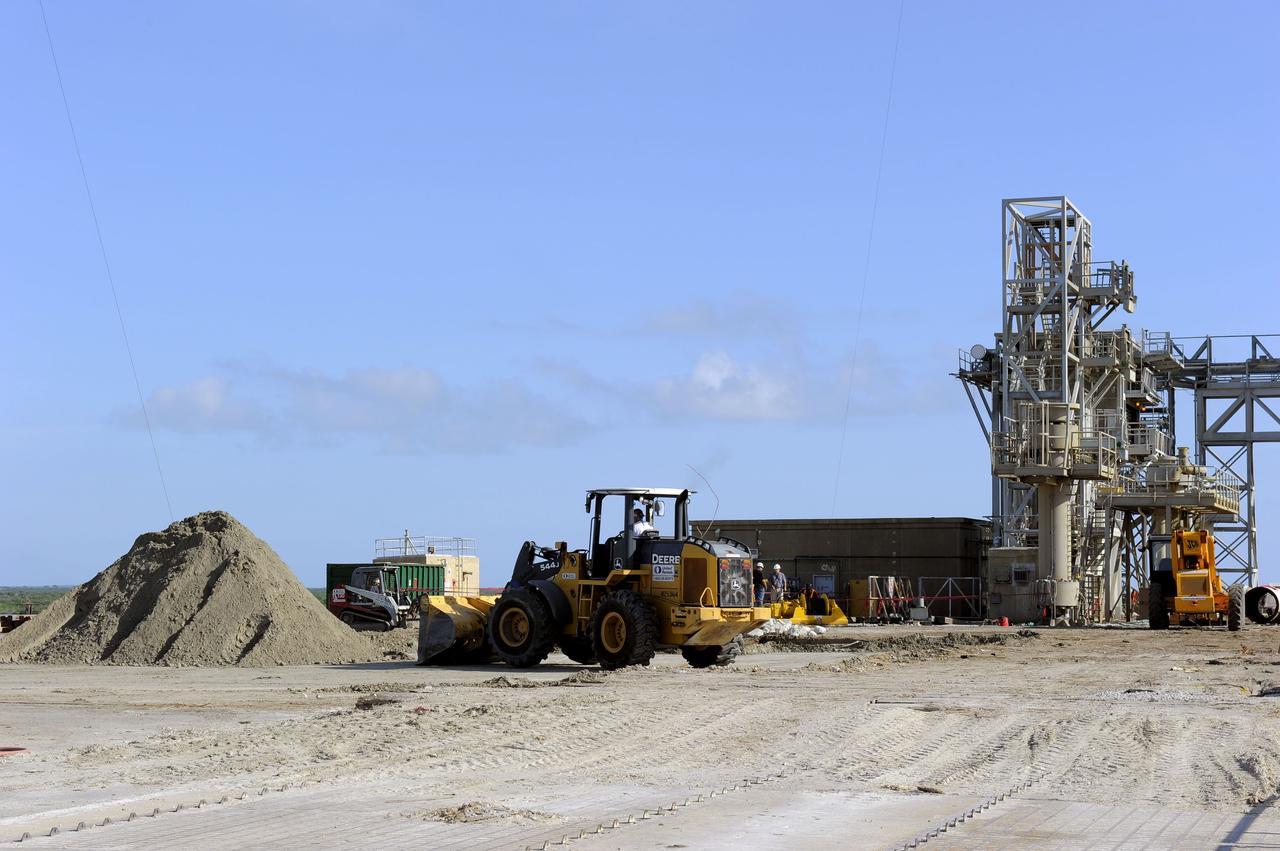
CAPE CANAVERAL, Fla. -- At NASA's Kennedy Space Center in Florida, a bulldozer is enlisted in the cleanup of Launch Pad 39B. Sand, reinforcing steel and large wooden mats were placed over the pad's concrete surfaces during deconstruction to protect them from falling debris. In 2009, the structure at the pad was no longer needed for NASA's Space Shuttle Program, so it is being restructured for future use. The new design will feature a "clean pad" for rockets to come with their own launcher, making it more versatile for a number of rockets and spacecraft. The lightning protection system, consisting of three lightning towers and a wire catenary system, will remain. For information on NASA's future plans, visit http://www.nasa.gov/exploration. Photo credit: NASA/Kim Shiflett

CAPE CANAVERAL, Fla. -- At NASA's Kennedy Space Center in Florida, construction crews lay large wooden mats on top of sand and reinforcing steel to protect the concrete under the rotating service structure (RSS) of Launch Pad 39B during deconstruction. In the background, space shuttle Discovery stands tall on Launch Pad 39A, awaiting its STS-133 mission to the International Space Station. Starting in 2009, the structure at Pad B was no longer needed for NASA's Space Shuttle Program, so it is being restructured for future use. The new design will feature a "clean pad" for rockets to come with their own launcher, making it more versatile for a number of vehicles. For information on NASA's future plans, visit www.nasa.gov. Photo credit: NASA/Jim Grossmann
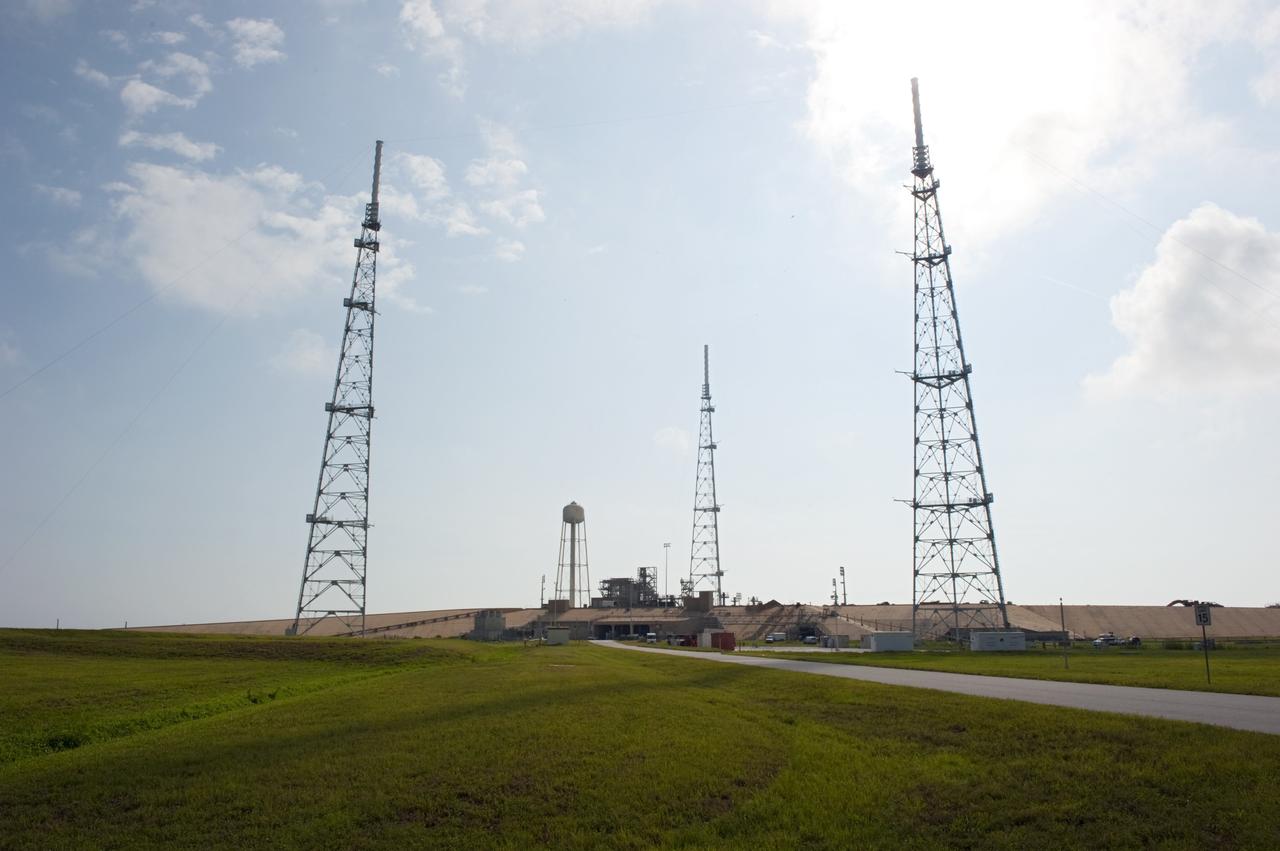
CAPE CANAVERAL, Fla. -- At NASA's Kennedy Space Center in Florida, the water tower and lightning protection system, consisting of three 600-foot-tall lightning towers, remain at Launch Pad 39B after the pad's deconstruction. Each lightning tower is 500 feet tall and topped off with an additional 100-foot fiberglass mast which supports a wire catenary system. In 2009, the structure at the pad was no longer needed for NASA's Space Shuttle Program, so it is being restructured for future use. The new design will feature a "clean pad" for rockets to come with their own launcher, making it more versatile for a number of vehicles. For information on NASA's future plans, visit http://www.nasa.gov/exploration. Photo credit: NASA/Kim Shiflett

CAPE CANAVERAL, Fla. -- At NASA's Kennedy Space Center in Florida, this image shows the progress of the rotating service structure (RSS) on Launch Pad 39B as it is being dismantled. Sand, reinforcing steel and large wooden mats were put down under the RSS to protect the structure's concrete from falling debris during deconstruction. Starting in 2009, the structure at the pad was no longer needed for NASA's Space Shuttle Program, so it is being restructured for future use. The new design will feature a "clean pad" for rockets to come with their own launcher, making it more versatile for a number of vehicles. The new lightning protection system, consisting of three lightning towers and a wire catenary system will remain. Photo credit: NASA/Jack Pfaller
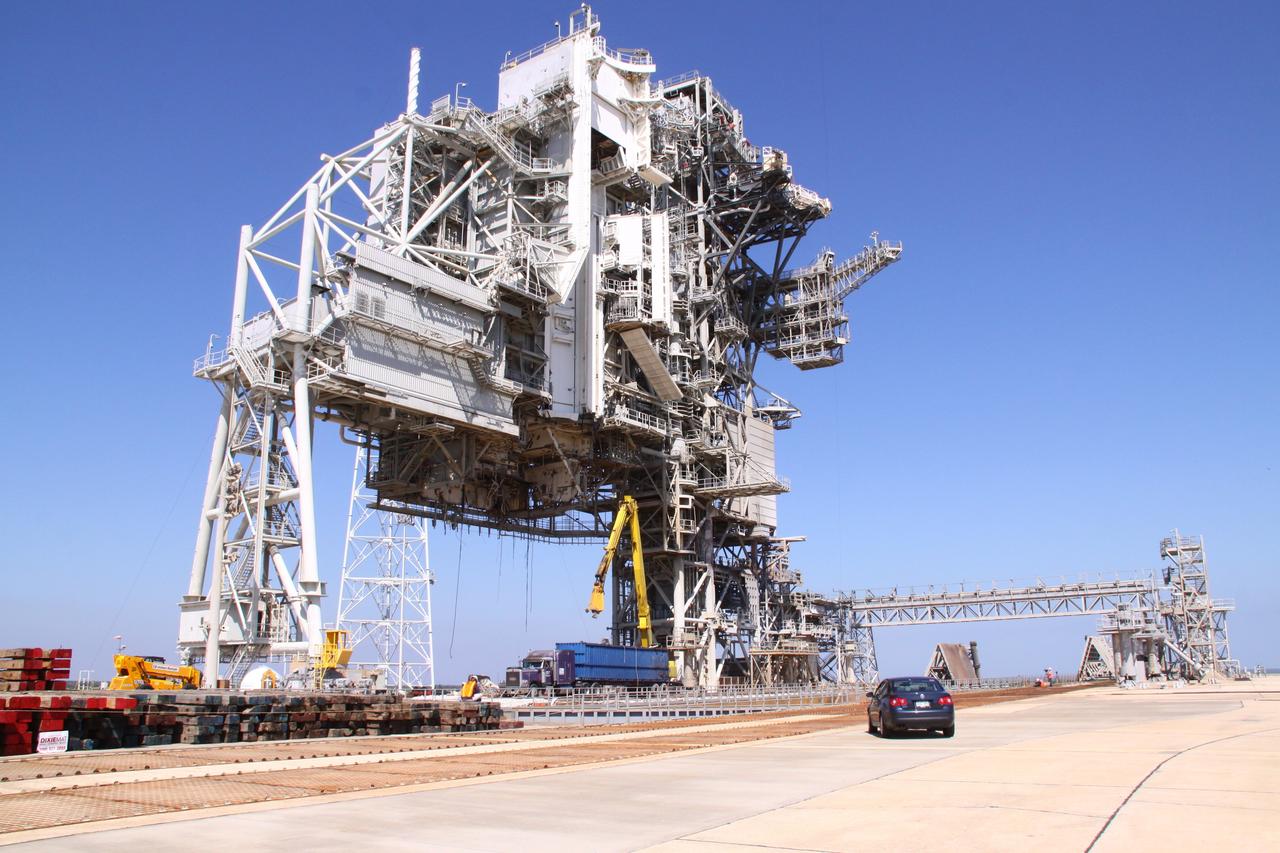
CAPE CANAVERAL, Fla. -- At NASA's Kennedy Space Center in Florida, this long range view shows the progress of the rotating service structure (RSS) on Launch Pad 39B as it is being dismantled. Sand, reinforcing steel and large wooden mats were put down under the RSS to protect the structure's concrete from falling debris during deconstruction. Starting in 2009, the structure at the pad was no longer needed for NASA's Space Shuttle Program, so it is being restructured for future use. The new design will feature a "clean pad" for rockets to come with their own launcher, making it more versatile for a number of vehicles. The new lightning protection system, consisting of three lightning towers and a wire catenary system will remain. Photo credit: NASA/Jack Pfaller
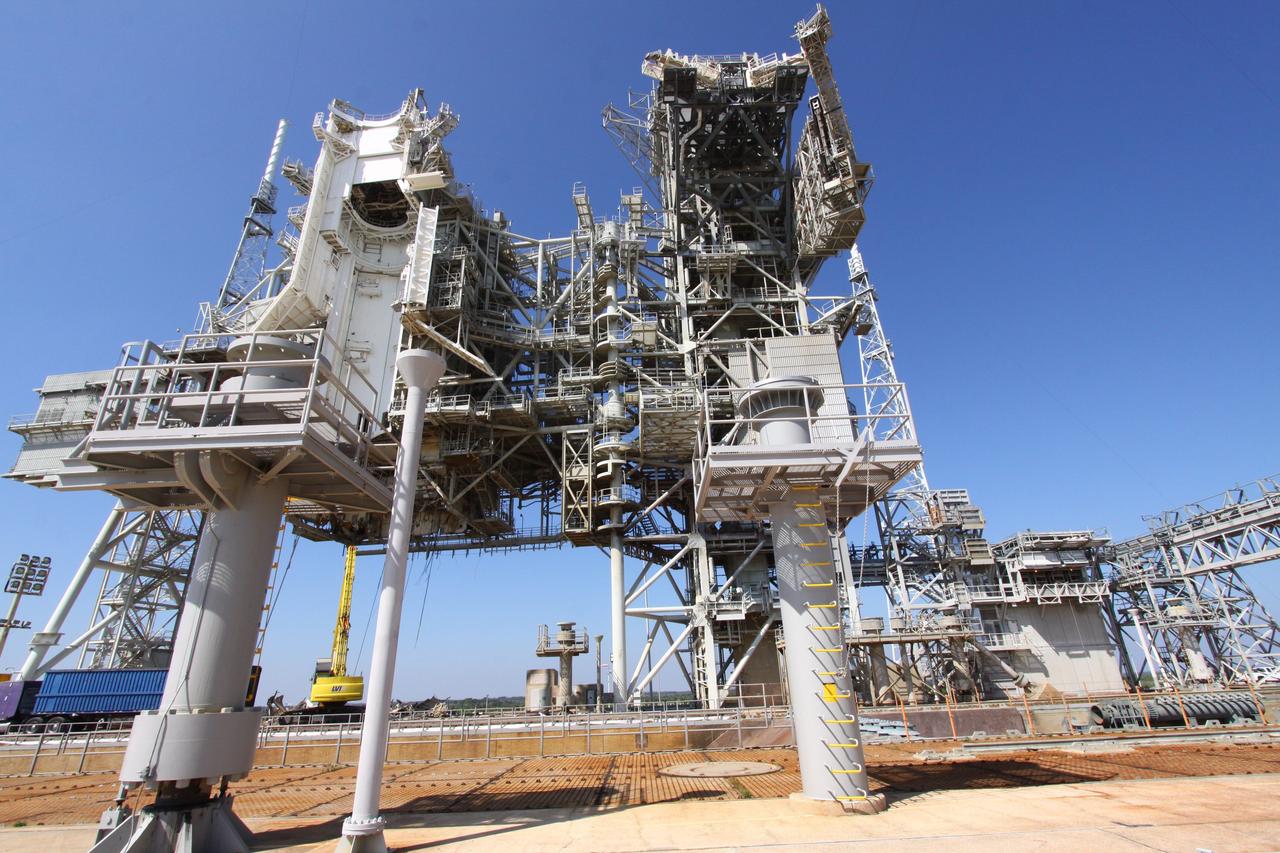
CAPE CANAVERAL, Fla. -- At NASA's Kennedy Space Center in Florida, this image shows the progress of the rotating service structure (RSS) on Launch Pad 39B as it is being dismantled. Sand, reinforcing steel and large wooden mats were put down under the RSS to protect the structure's concrete from falling debris during deconstruction. Starting in 2009, the structure at the pad was no longer needed for NASA's Space Shuttle Program, so it is being restructured for future use. The new design will feature a "clean pad" for rockets to come with their own launcher, making it more versatile for a number of vehicles. The new lightning protection system, consisting of three lightning towers and a wire catenary system will remain. Photo credit: NASA/Jack Pfaller