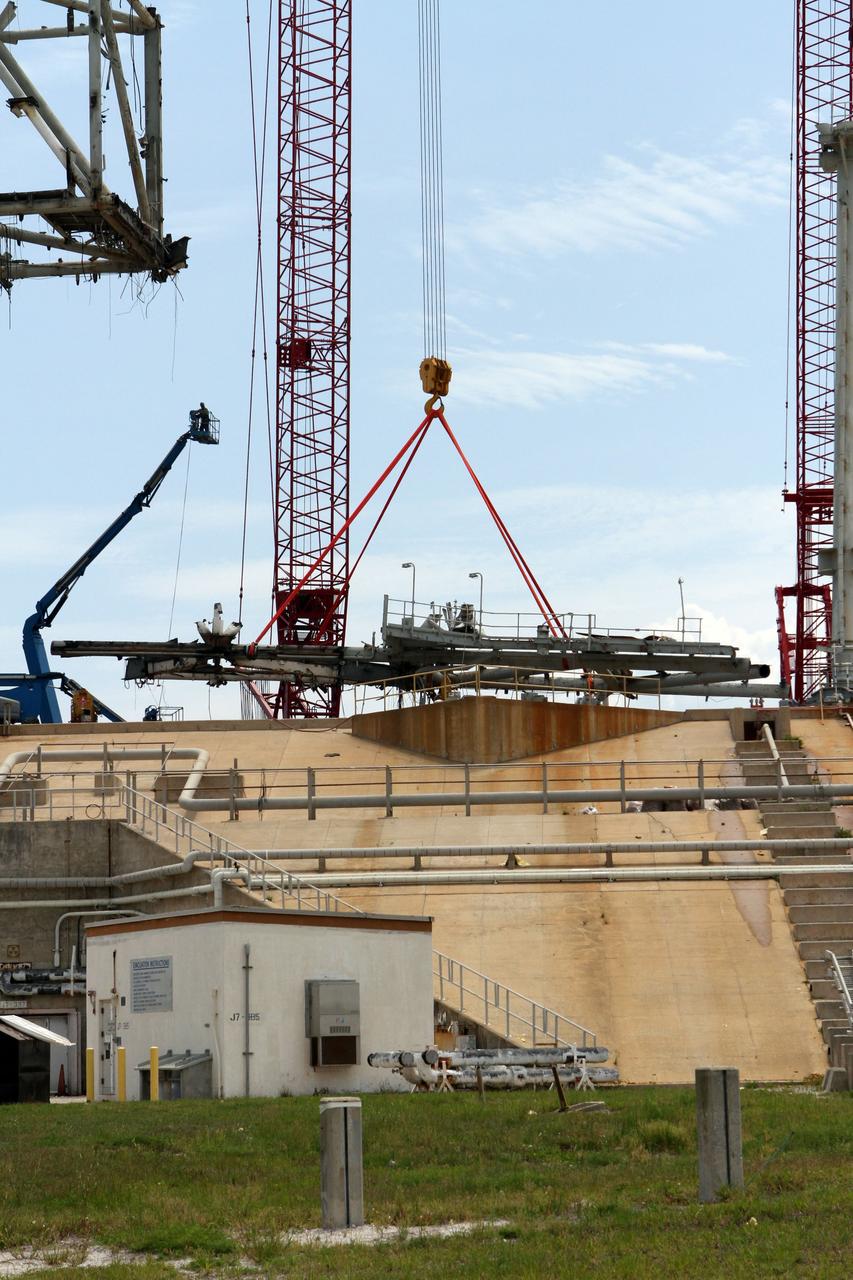
Cape Canaveral, Fla. -- Workers using a large crane remove the access arm section of the rotating service structure on Launch Pad 39B at NASA's Kennedy Space Center in Florida. In 2009, the pad was no longer needed for the shuttle program, so it is being restructured for future use. Its new design will feature a "clean pad" for rockets to come with their own launcher, making it more versatile for a number of vehicles. The new lightning protection system, which was in place for the October 2009 launch of Ares I-X, will remain. For information on NASA's future plans, visit www.nasa.gov. Photo credit: NASA/Cory Huston
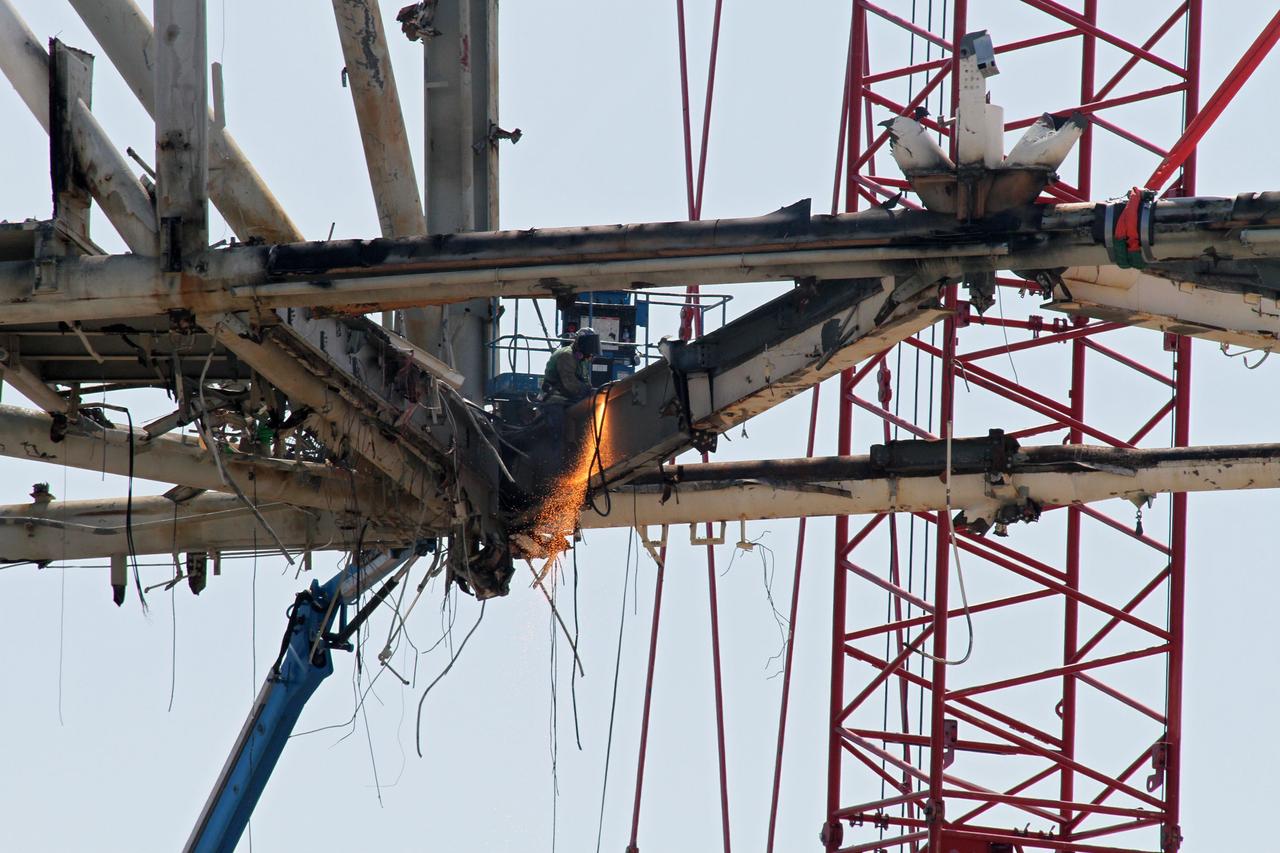
Cape Canaveral, Fla. -- Workers using a large crane remove the access arm section of the rotating service structure on Launch Pad 39B at NASA's Kennedy Space Center in Florida. In 2009, the pad was no longer needed for the shuttle program, so it is being restructured for future use. Its new design will feature a "clean pad" for rockets to come with their own launcher, making it more versatile for a number of vehicles. The new lightning protection system, which was in place for the October 2009 launch of Ares I-X, will remain. For information on NASA's future plans, visit www.nasa.gov. Photo credit: NASA/Cory Huston

Cape Canaveral, Fla. -- Workers using a large crane remove the access arm section of the rotating service structure on Launch Pad 39B at NASA's Kennedy Space Center in Florida. In 2009, the pad was no longer needed for the shuttle program, so it is being restructured for future use. Its new design will feature a "clean pad" for rockets to come with their own launcher, making it more versatile for a number of vehicles. The new lightning protection system, which was in place for the October 2009 launch of Ares I-X, will remain. For information on NASA's future plans, visit www.nasa.gov. Photo credit: NASA/Cory Huston
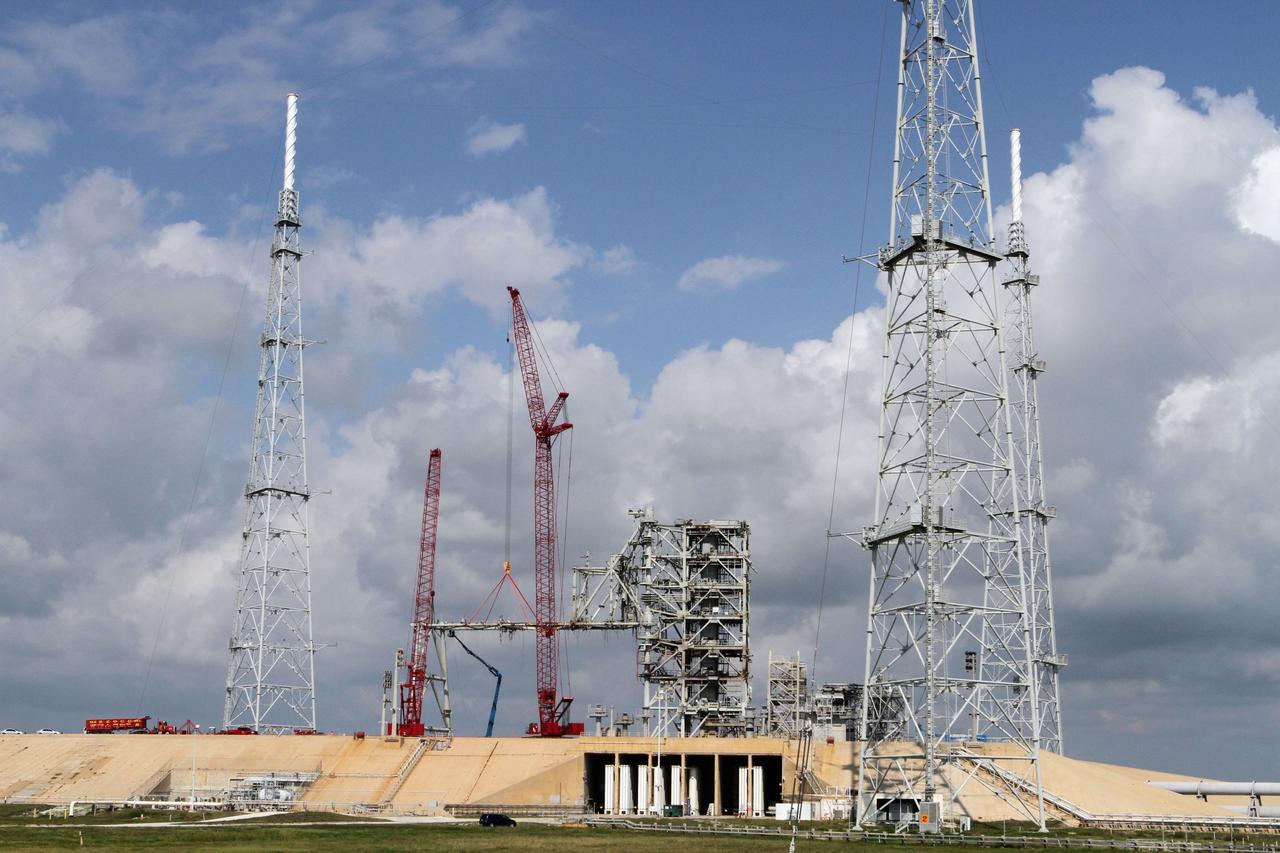
Cape Canaveral, Fla. -- Workers using a large crane remove the access arm section of the rotating service structure on Launch Pad 39B at NASA's Kennedy Space Center in Florida. In 2009, the pad was no longer needed for the shuttle program, so it is being restructured for future use. Its new design will feature a "clean pad" for rockets to come with their own launcher, making it more versatile for a number of vehicles. The new lightning protection system, which was in place for the October 2009 launch of Ares I-X, will remain. For information on NASA's future plans, visit www.nasa.gov. Photo credit: NASA/Cory Huston
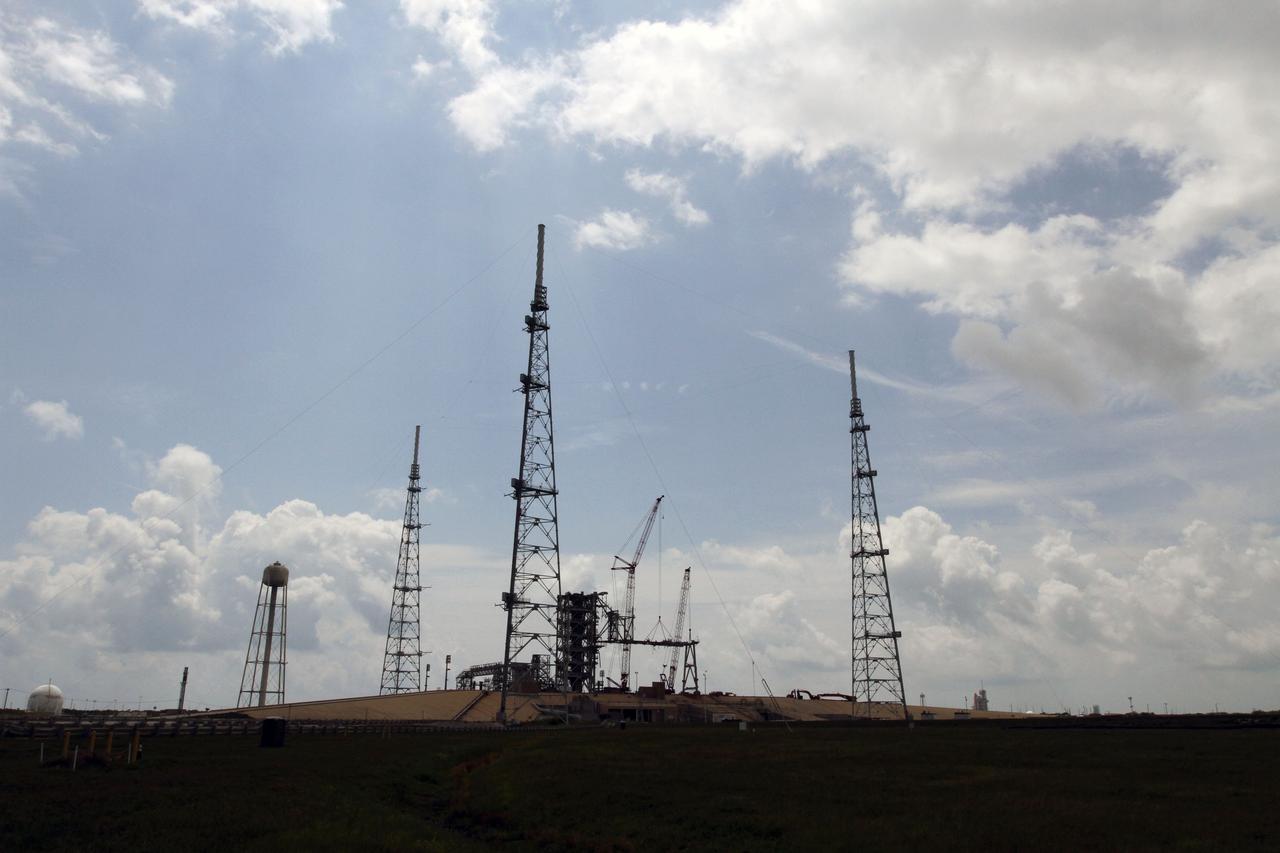
Cape Canaveral, Fla. -- Workers using a large crane remove the access arm section of the rotating service structure on Launch Pad 39B at NASA's Kennedy Space Center in Florida. Space shuttle Atlantis can be seen on Launch Pad 39A (far right background) as it is being prepared for the final space shuttle mission, STS-135. In 2009, the pad was no longer needed for the shuttle program, so it is being restructured for future use. Its new design will feature a "clean pad" for rockets to come with their own launcher, making it more versatile for a number of vehicles. The new lightning protection system, which was in place for the October 2009 launch of Ares I-X, will remain. For information on NASA's future plans, visit www.nasa.gov. Photo credit: NASA/Cory Huston
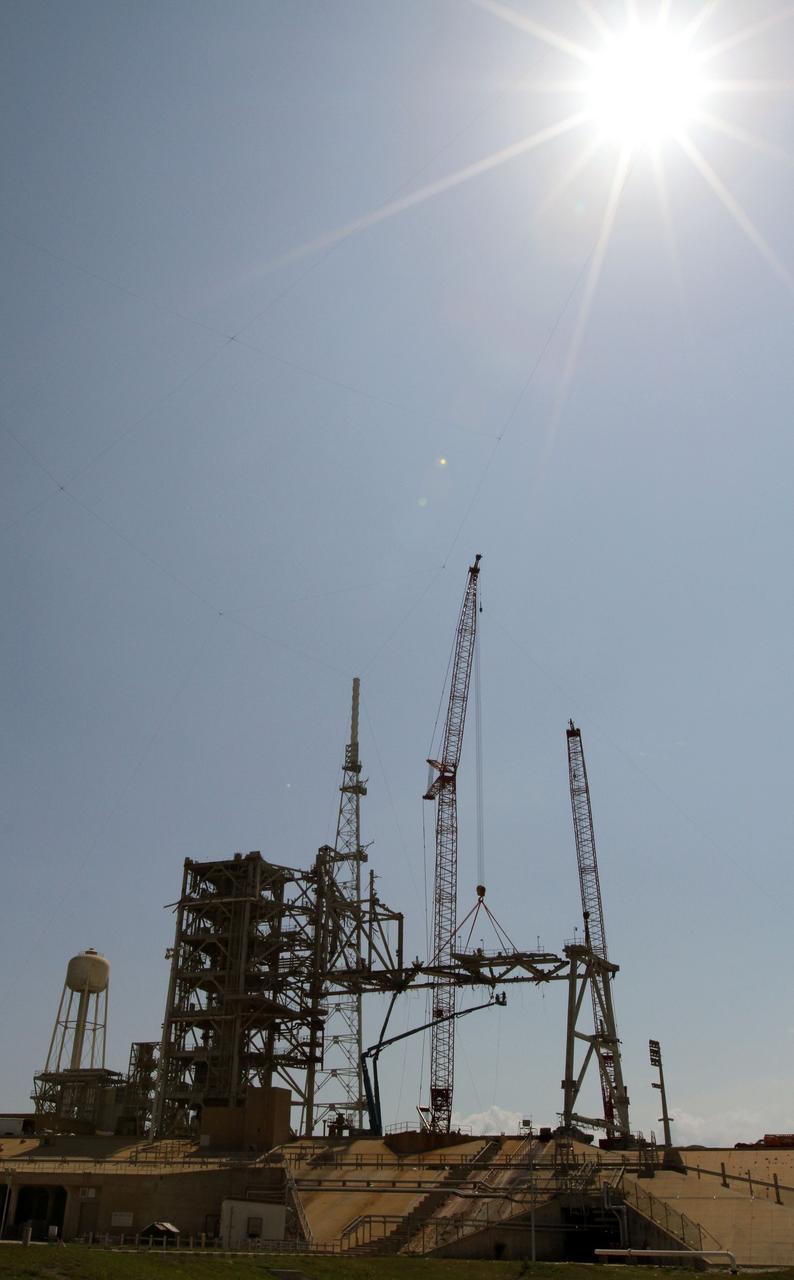
Cape Canaveral, Fla. -- Workers using a large crane remove the access arm section of the rotating service structure on Launch Pad 39B at NASA's Kennedy Space Center in Florida. In 2009, the pad was no longer needed for the shuttle program, so it is being restructured for future use. Its new design will feature a "clean pad" for rockets to come with their own launcher, making it more versatile for a number of vehicles. The new lightning protection system, which was in place for the October 2009 launch of Ares I-X, will remain. For information on NASA's future plans, visit www.nasa.gov. Photo credit: NASA/Cory Huston
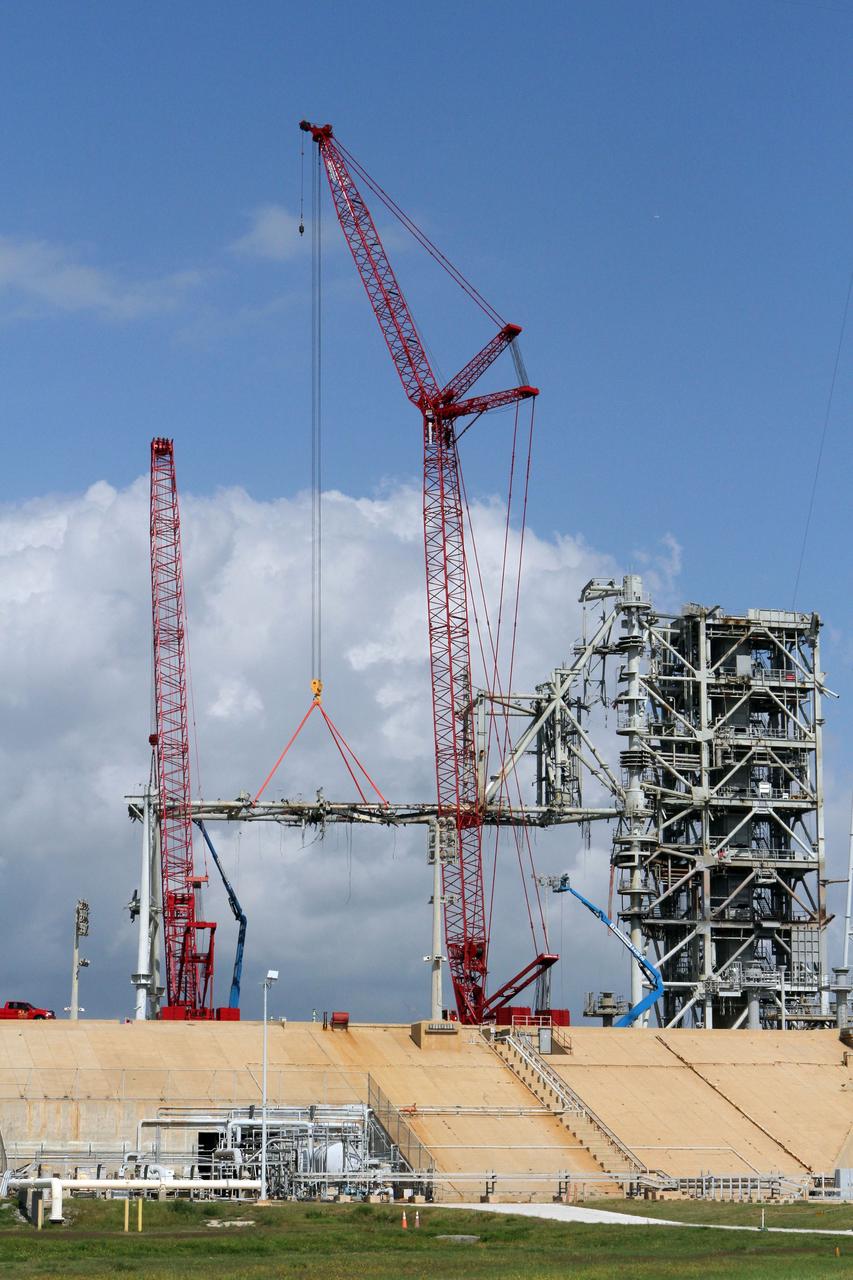
Cape Canaveral, Fla. -- Workers using a large crane remove the access arm section of the rotating service structure on Launch Pad 39B at NASA's Kennedy Space Center in Florida. In 2009, the pad was no longer needed for the shuttle program, so it is being restructured for future use. Its new design will feature a "clean pad" for rockets to come with their own launcher, making it more versatile for a number of vehicles. The new lightning protection system, which was in place for the October 2009 launch of Ares I-X, will remain. For information on NASA's future plans, visit www.nasa.gov. Photo credit: NASA/Cory Huston
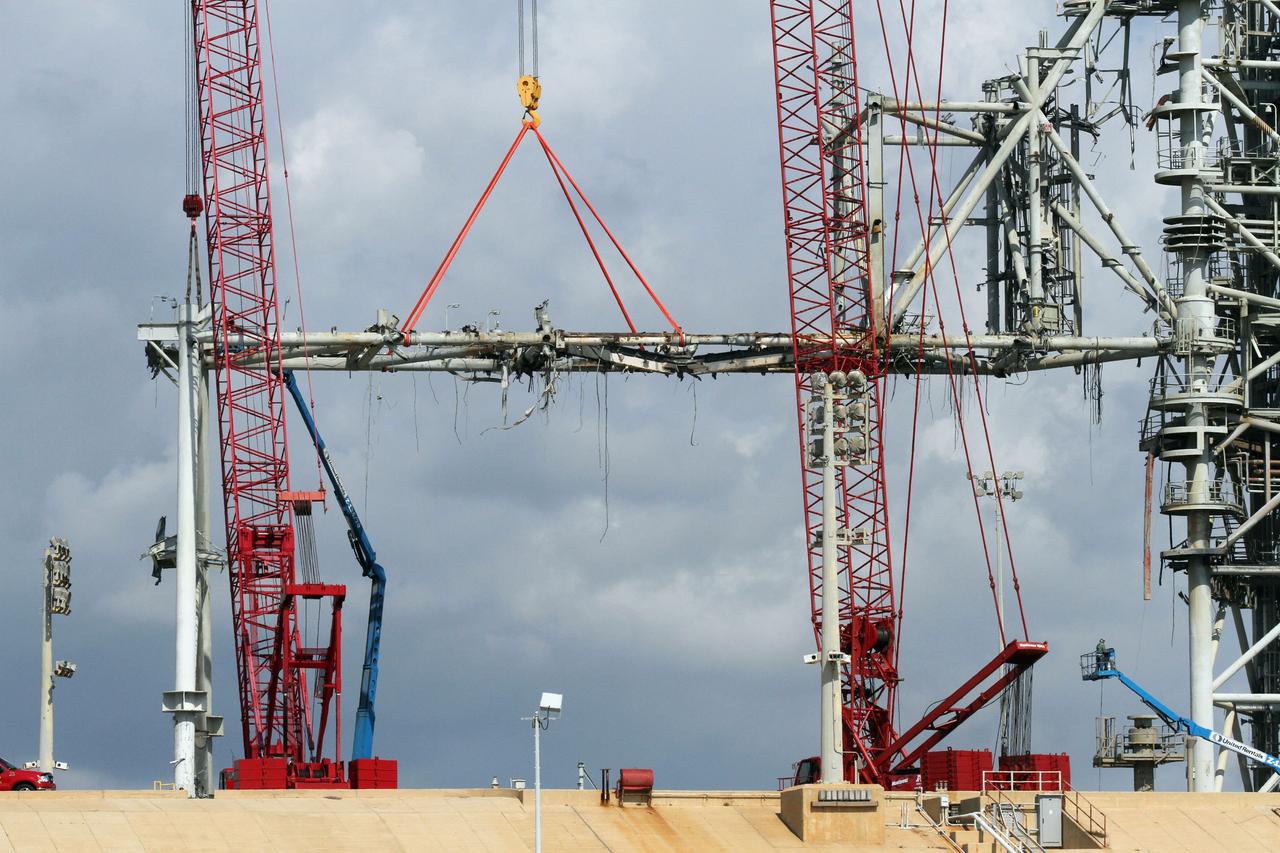
Cape Canaveral, Fla. -- Workers using a large crane remove the access arm section of the rotating service structure on Launch Pad 39B at NASA's Kennedy Space Center in Florida. In 2009, the pad was no longer needed for the shuttle program, so it is being restructured for future use. Its new design will feature a "clean pad" for rockets to come with their own launcher, making it more versatile for a number of vehicles. The new lightning protection system, which was in place for the October 2009 launch of Ares I-X, will remain. For information on NASA's future plans, visit www.nasa.gov. Photo credit: NASA/Cory Huston
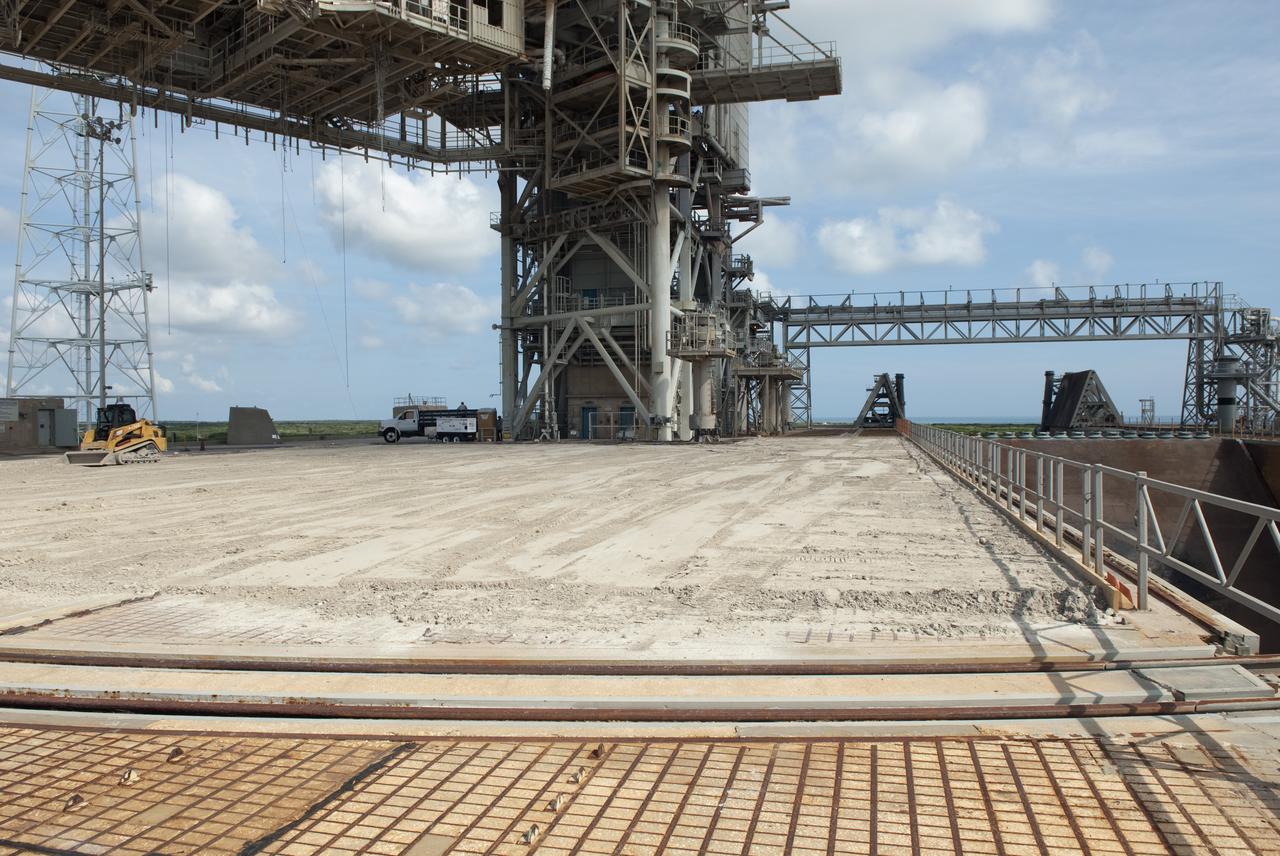
PAD 39B DEMOLITION OPS - SAND BEING LOADED UNDER RSS TO PROTECT CONCRETE DURING DEMOLITION
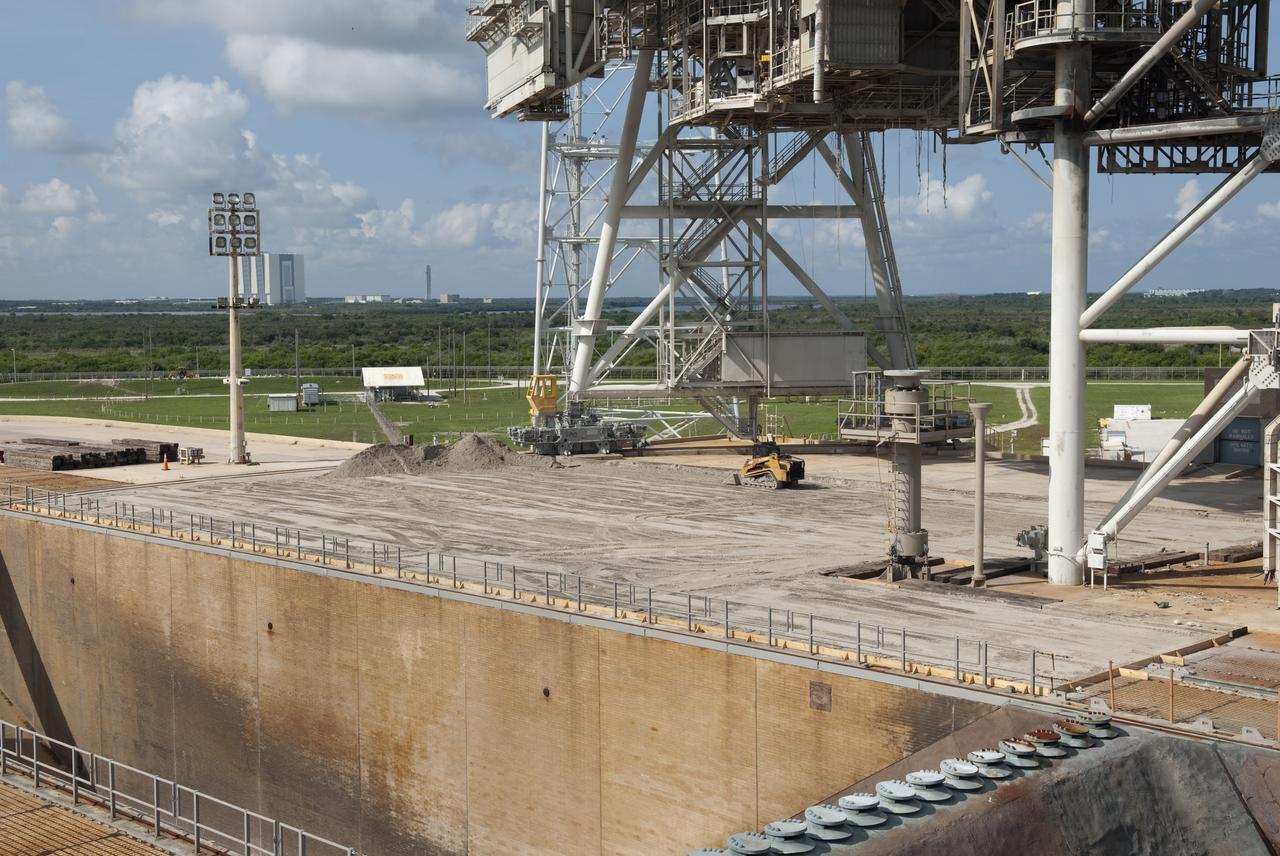
PAD 39B DEMOLITION OPS - SAND BEING LOADED UNDER RSS TO PROTECT CONCRETE DURING DEMOLITION