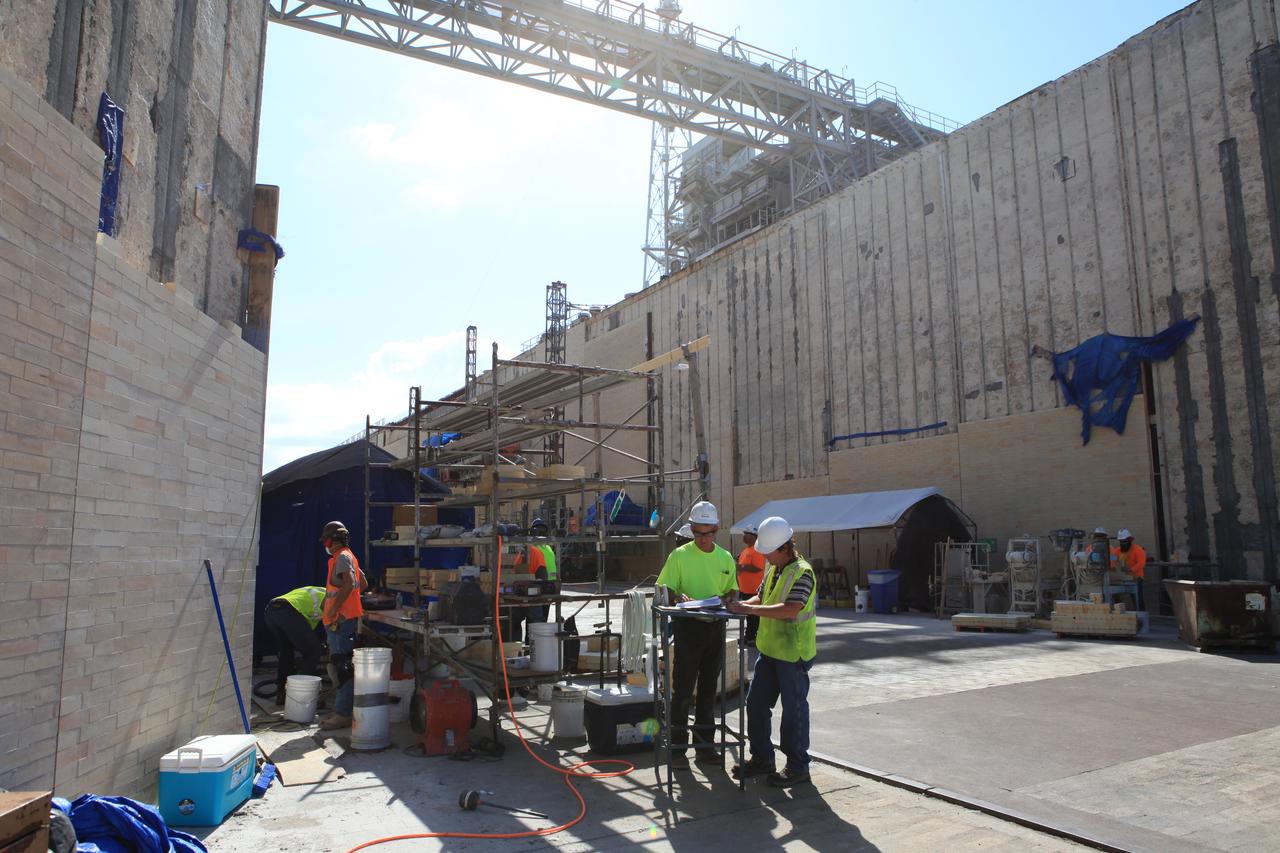
Progress continues on the new flame trench at Launch Pad 39B at NASA's Kennedy Space Center in Florida. Construction workers with J.P. Donovan of Rockledge, Florida, prepare new heat-resistant bricks for installation on the north side of the flame trench. The Pad B flame trench is being refurbished to support the launch of NASA’s Space Launch System rocket. The Ground Systems Development and Operations (GSDO) Program at Kennedy is helping transform the space center into a multi-user spaceport and prepare for Exploration Mission 1, deep space missions, and NASA's Journey to Mars. For more information about GSDO, visit: http://www.nasa.gov/groundsystems.
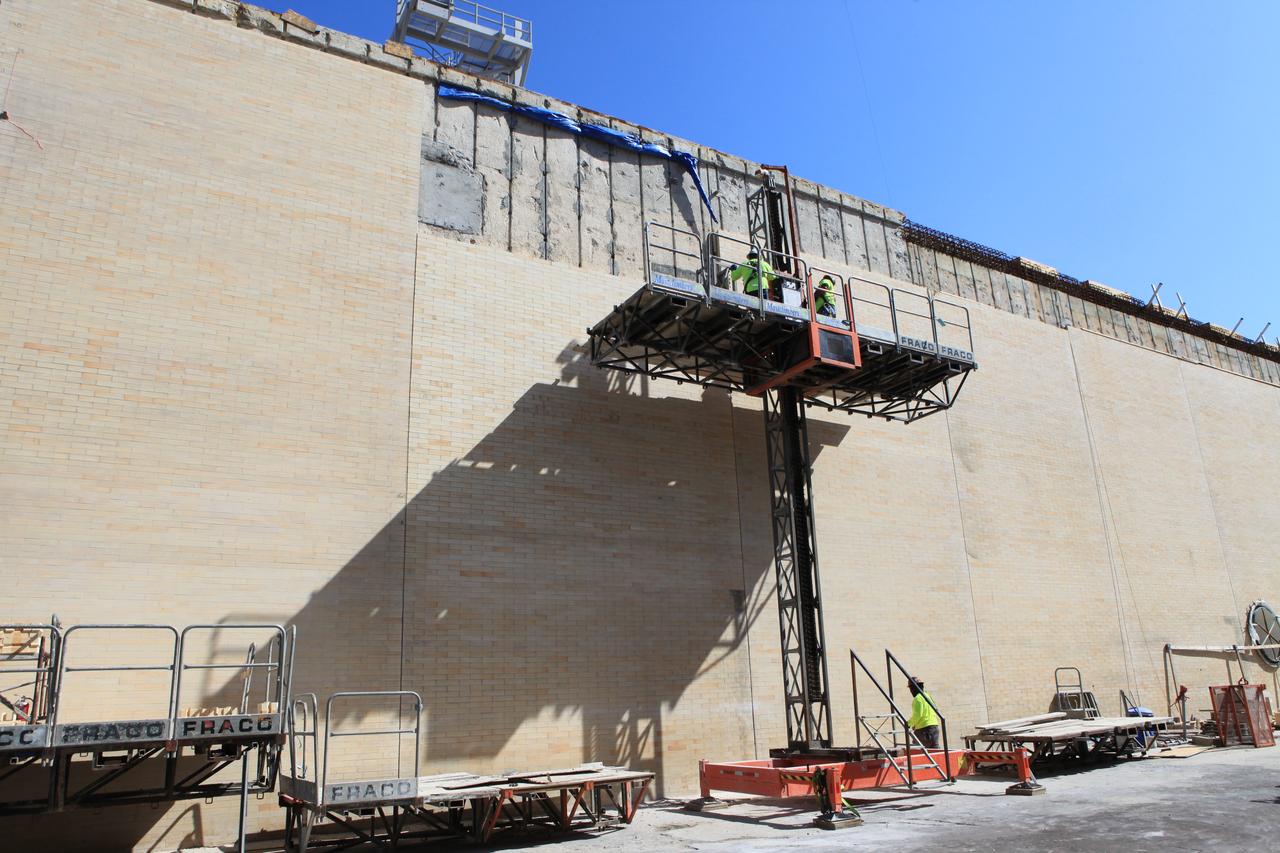
Progress continues on the new flame trench at Launch Pad 39B at NASA's Kennedy Space Center in Florida. Construction workers with J.P. Donovan of Rockledge, Florida, are on an elevated work stand to install new heat-resistant bricks on the north side of the flame trench. The Pad B flame trench is being refurbished to support the launch of NASA’s Space Launch System rocket. The Ground Systems Development and Operations (GSDO) Program at Kennedy is helping transform the space center into a multi-user spaceport and prepare for Exploration Mission 1, deep space missions, and NASA's Journey to Mars. For more information about GSDO, visit: http://www.nasa.gov/groundsystems.
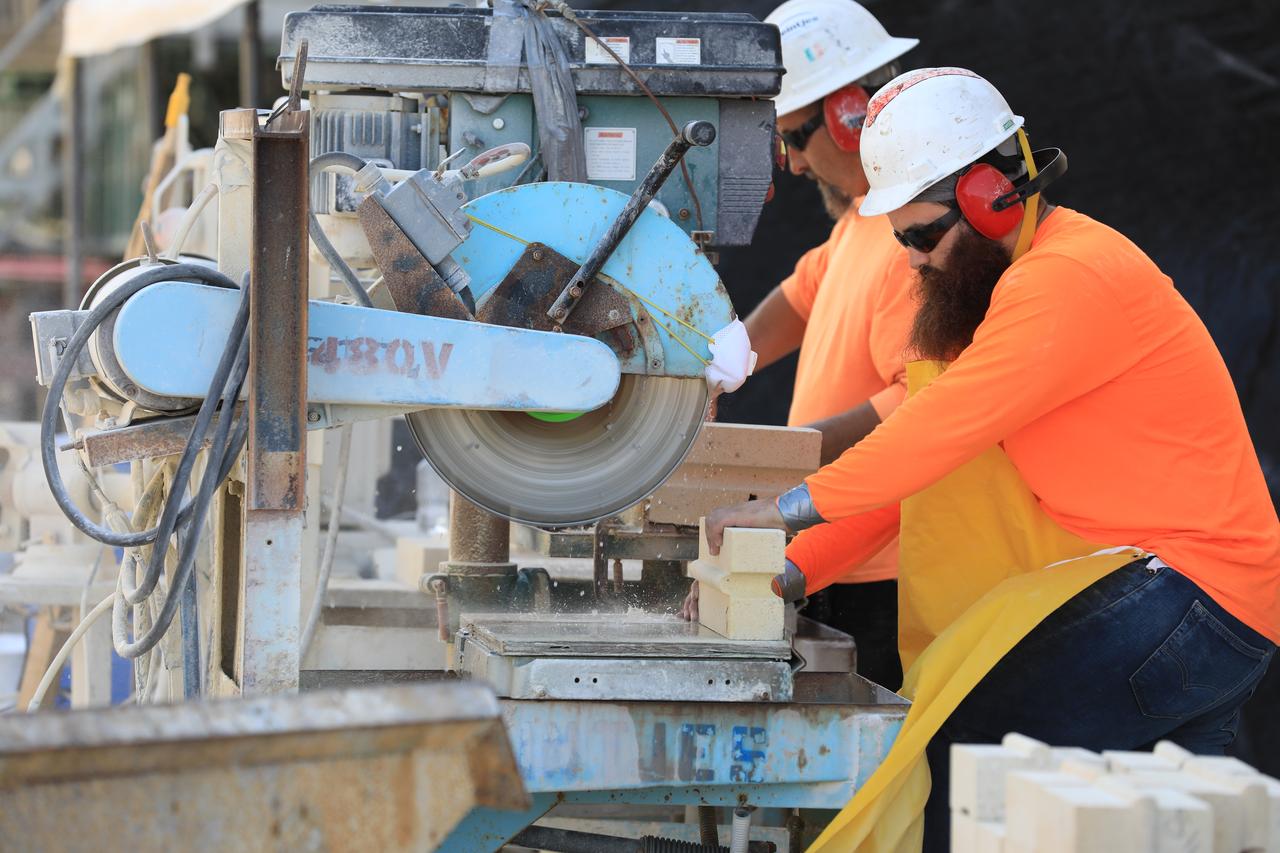
Construction workers with J.P. Donovan of Rockledge, Florida, cut new heat-resistant bricks to size for the concrete walls of the flame trench at Launch Pad 39B at NASA’s Kennedy Space Center in Florida. New heat-resistant bricks are being attached with epoxy mortar to the flame trench walls. The Pad B flame trench is being refurbished to support the launch of NASA’s Space Launch System rocket. The Ground Systems Development and Operations (GSDO) Program at Kennedy is helping transform the space center into a multi-user spaceport and prepare for Exploration Mission 1, deep space missions, and NASA's Journey to Mars. For more information about GSDO, visit: http://www.nasa.gov/groundsystems.
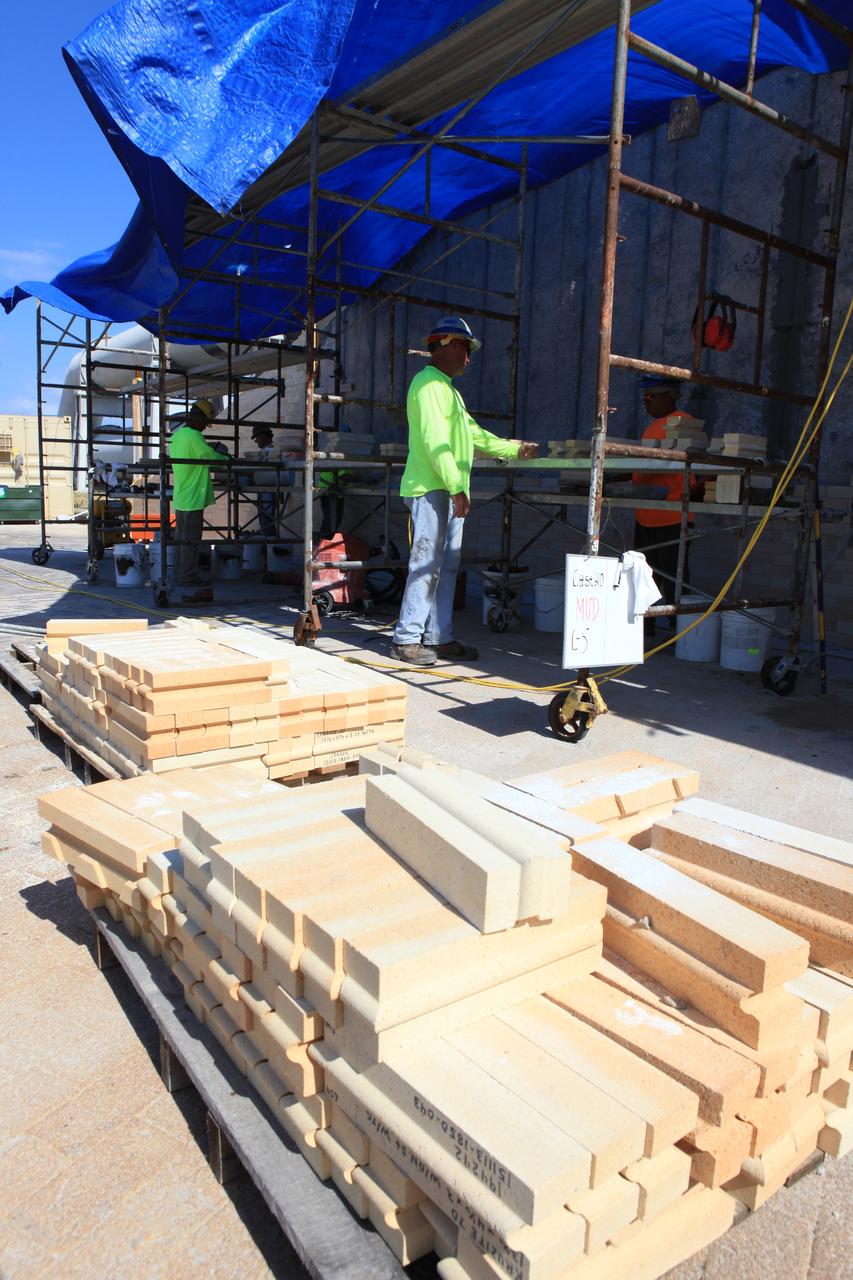
Progress continues on the new flame trench at Launch Pad 39B at NASA's Kennedy Space Center in Florida. Construction workers with J.P. Donovan of Rockledge, Florida, prepare new heat-resistant bricks for installation on the north side of the flame trench. The Pad B flame trench is being refurbished to support the launch of NASA’s Space Launch System rocket. The Ground Systems Development and Operations (GSDO) Program at Kennedy is helping transform the space center into a multi-user spaceport and prepare for Exploration Mission 1, deep space missions, and NASA's Journey to Mars. For more information about GSDO, visit: http://www.nasa.gov/groundsystems.
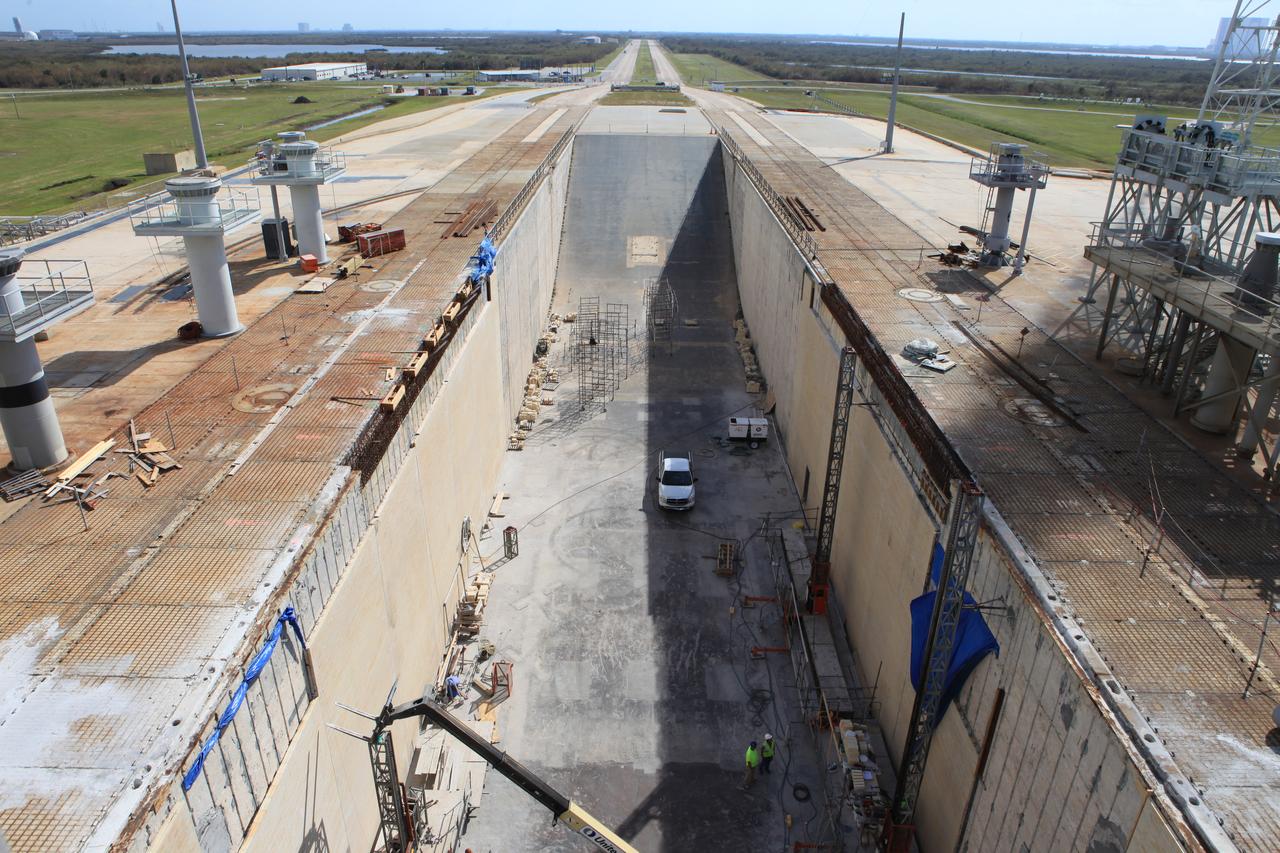
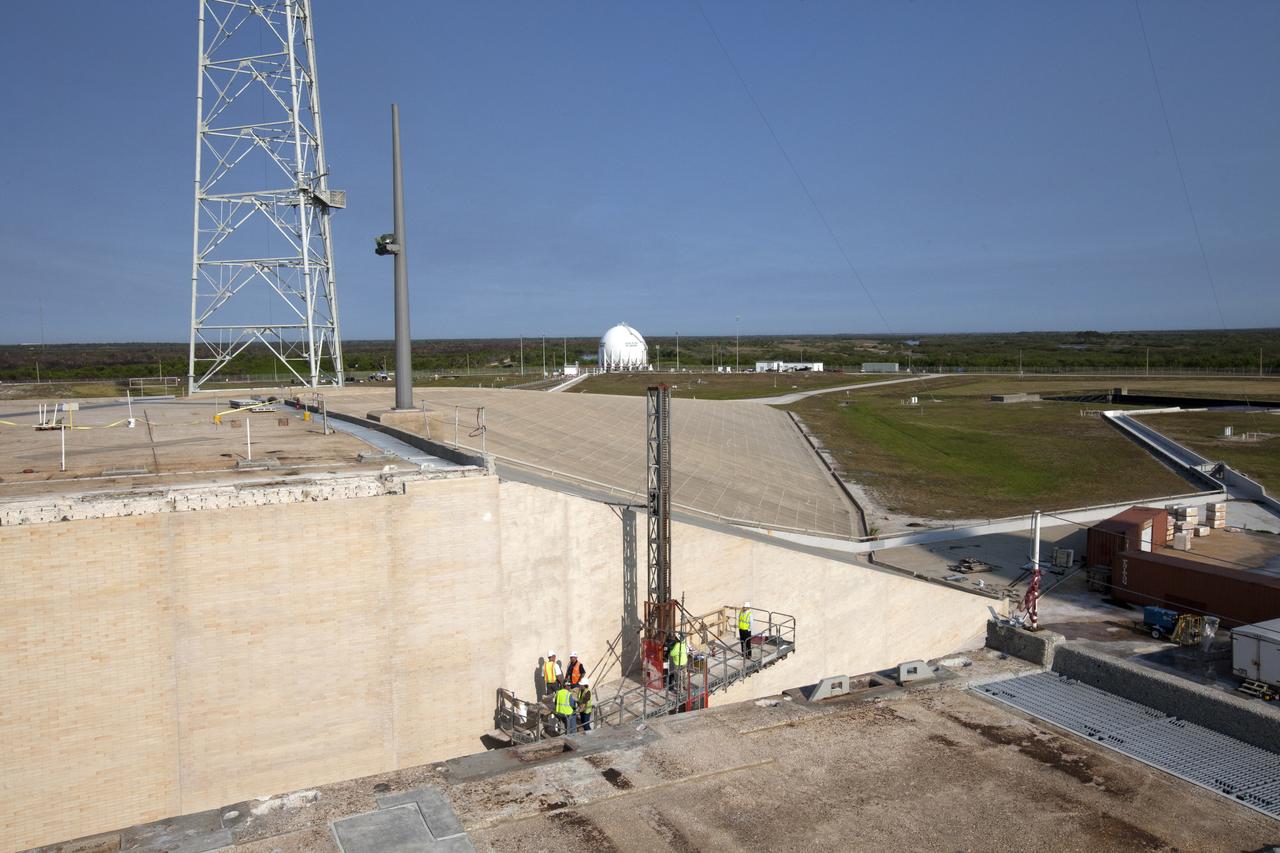
Progress on the new brick walls of the north side of the flame trench at Launch Pad 39B is seen in a view from the top of the pad at NASA’s Kennedy Space Center in Florida. Construction workers with J.P. Donovan of Rockledge, Florida, continue to install new heat-resistant bricks on the concrete walls. The Pad B flame trench is being refurbished to support the launch of NASA’s Space Launch System rocket. The Ground Systems Development and Operations (GSDO) Program at Kennedy is helping transform the space center into a multi-user spaceport and prepare for Exploration Mission 1, deep-space missions, and the journey to Mars. For more information about GSDO, visit: http://www.nasa.gov/groundsystems.
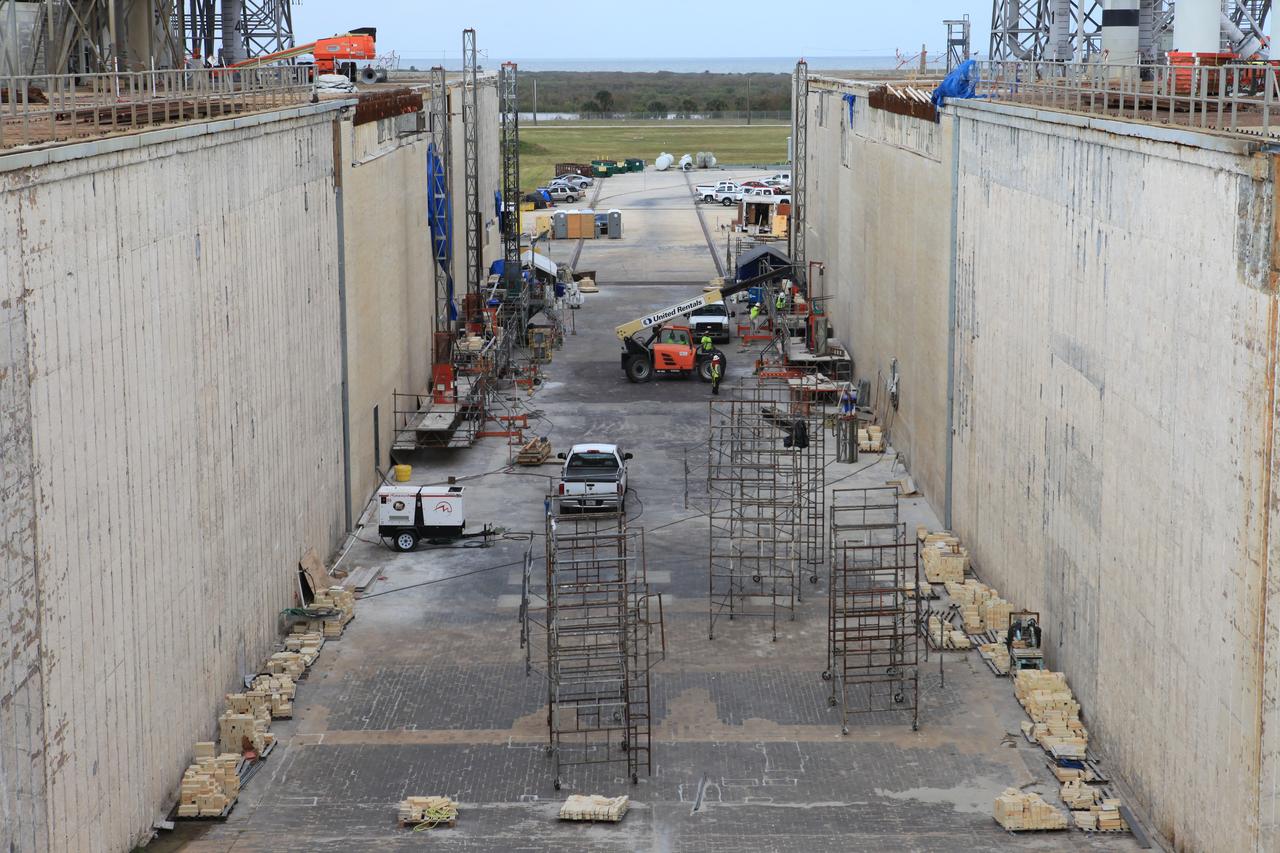
Progress on the new brick walls of the north side of the flame trench at Launch Pad 39B is seen in a view from the top of the pad at NASA’s Kennedy Space Center in Florida. Construction workers with J.P. Donovan of Rockledge, Florida, continue to install new heat-resistant bricks on the concrete walls. The Pad B flame trench is being refurbished to support the launch of NASA’s Space Launch System rocket. The Ground Systems Development and Operations (GSDO) Program at Kennedy is helping transform the space center into a multi-user spaceport and prepare for Exploration Mission 1, deep-space missions, and the journey to Mars. For more information about GSDO, visit: http://www.nasa.gov/groundsystems.
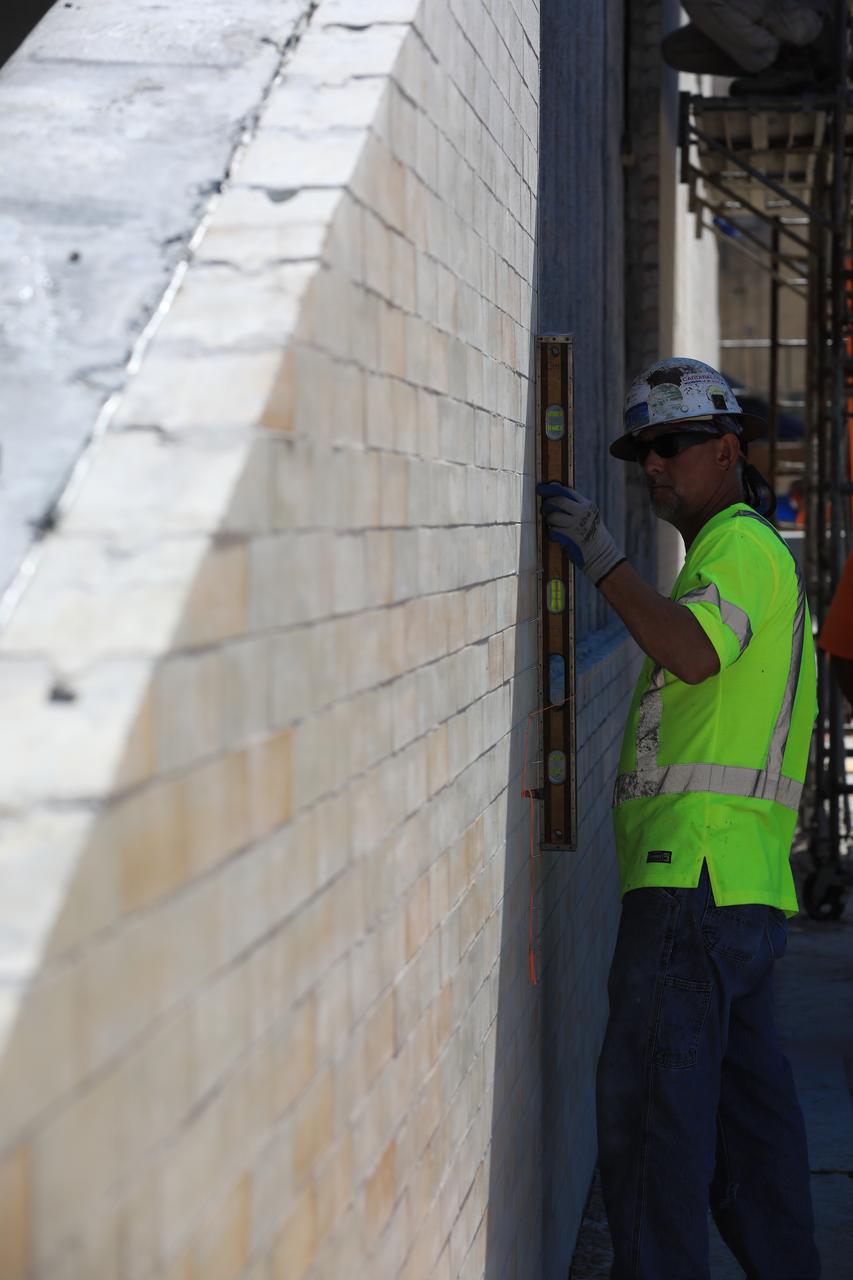
A construction worker with J.P. Donovan of Rockledge, Florida, checks to make sure new heat-resistant bricks attached to the north side of the flame trench are level at Launch Pad 39B at NASA’s Kennedy Space Center in Florida. The Pad B flame trench is being refurbished to support the launch of NASA’s Space Launch System rocket. The Ground Systems Development and Operations (GSDO) Program at Kennedy is helping transform the space center into a multi-user spaceport and prepare for Exploration Mission 1, deep space missions, and NASA's Journey to Mars. For more information about GSDO, visit: http://www.nasa.gov/groundsystems.
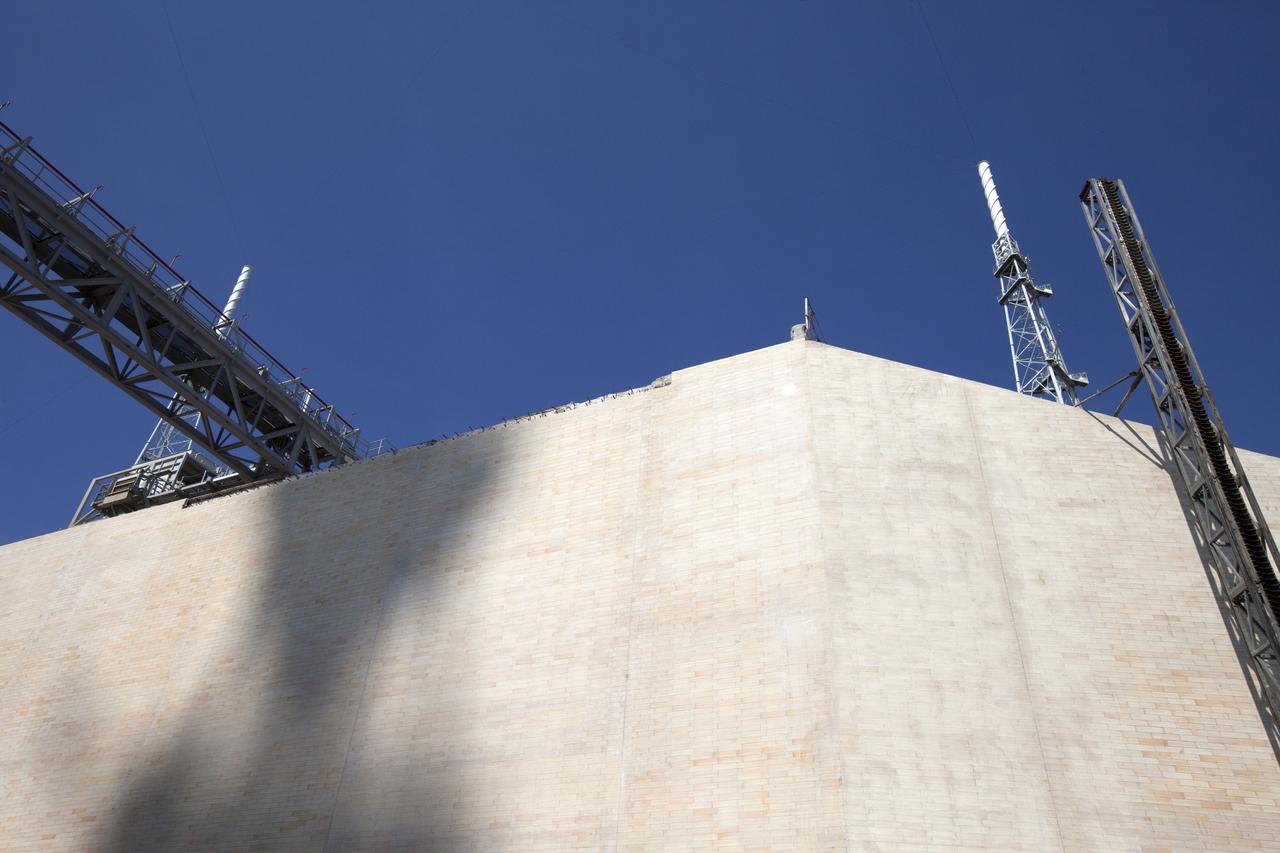
A view looking up from the north side of the flame trench beneath the pad at Launch Complex 39B at NASA's Kennedy Space Center in Florida. The walls of the flame trench are being upgraded to withstand the intense heat and fire at launch of NASA's Space Launch System rocket with Orion atop. About 96,000 heat-resistant bricks, in three different sizes, were secured to the walls using bonding mortar in combination with adhesive anchors. The Ground Systems Development and Operations Program is overseeing upgrades and modifications to Pad 39B to support the launch of the SLS and Orion spacecraft for Exploration Mission-1 and NASA’s journey to Mars.
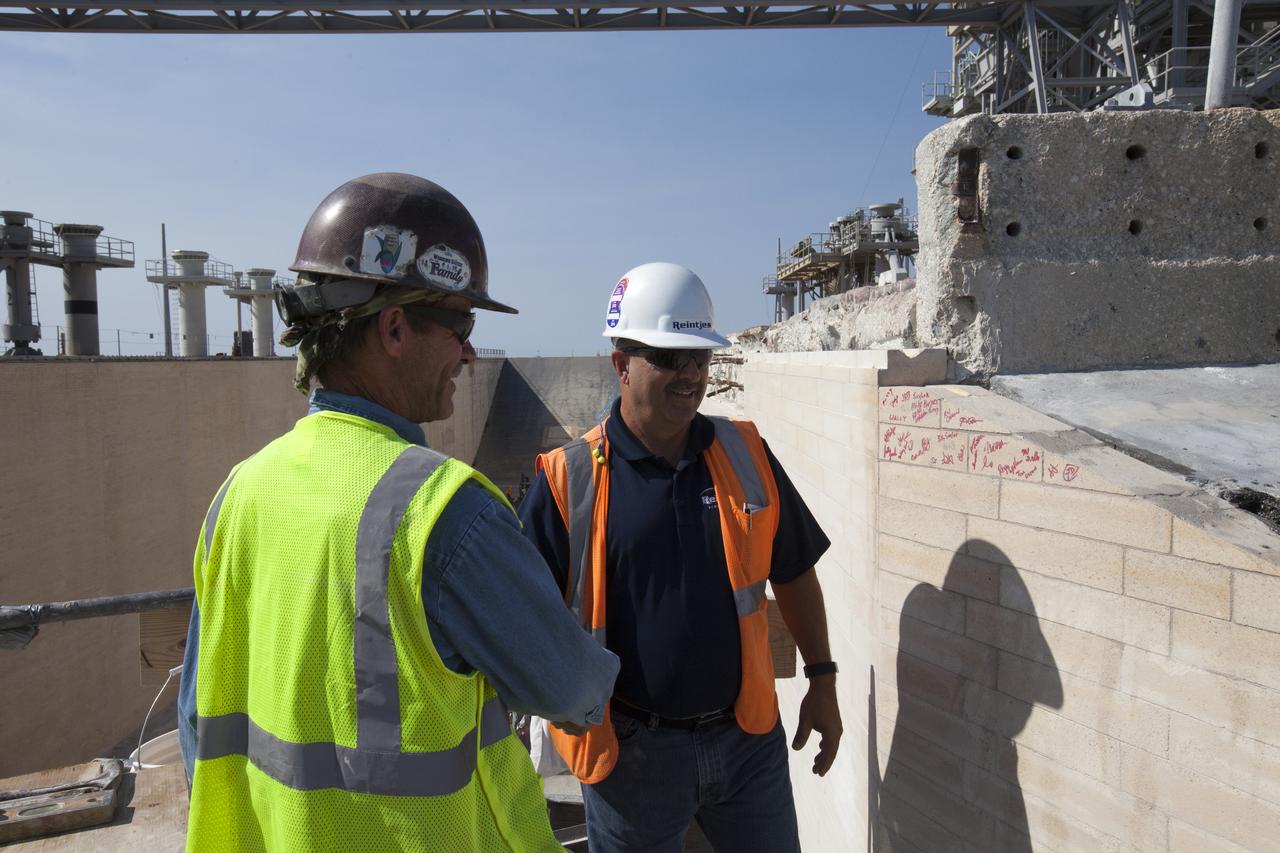
Construction workers sign the final bricks after they were installed on the north side of the flame trench at Launch Complex 39B at NASA’s Kennedy Space Center in Florida. The walls of the flame trench are being upgraded to withstand the intense heat and fire at launch of NASA's Space Launch System rocket with Orion atop. About 96,000 heat-resistant bricks, in three different sizes, were secured to the walls using bonding mortar in combination with adhesive anchors. The Ground Systems Development and Operations Program is overseeing upgrades and modifications to Pad 39B to support the launch of the SLS and Orion spacecraft for Exploration Mission-1 and NASA’s journey to Mars.
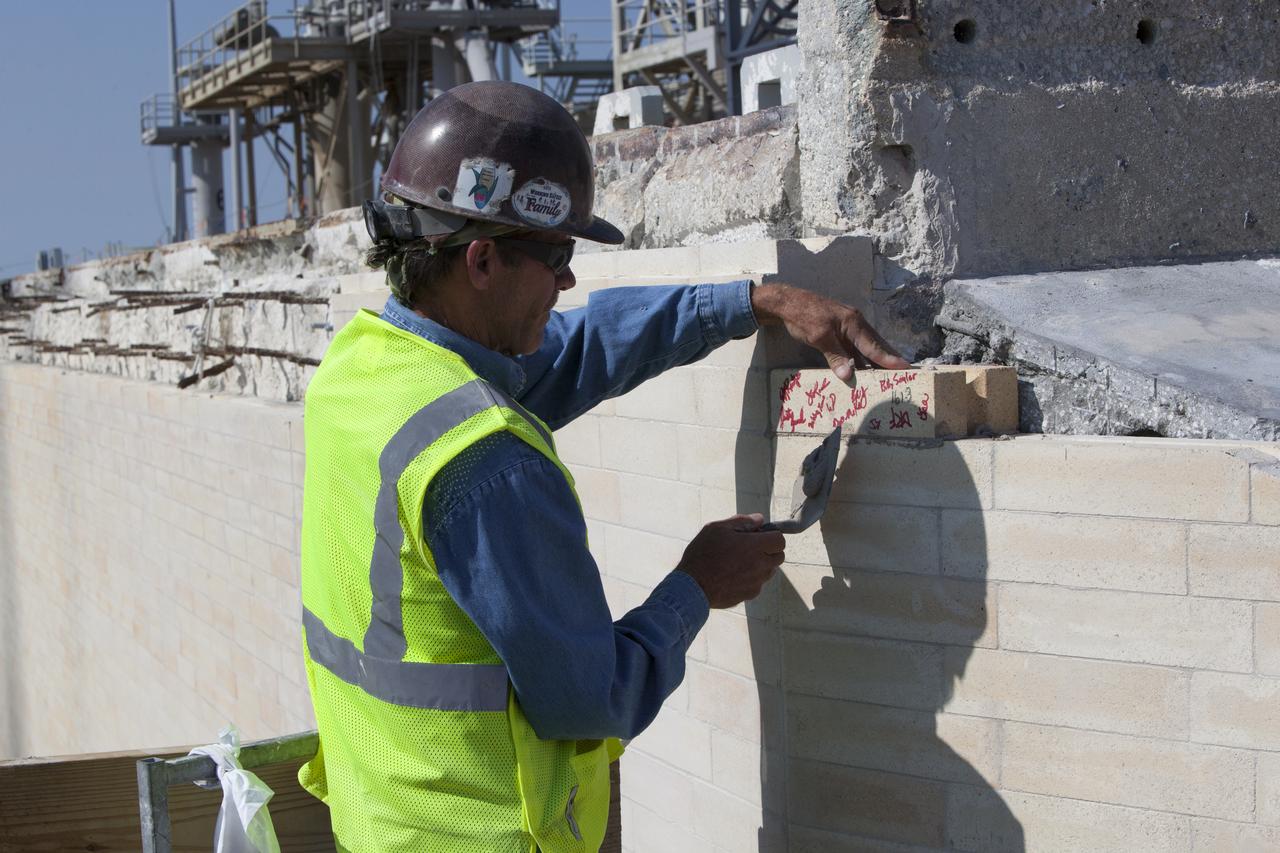
A construction worker installs one of the final bricks on the north side of the flame trench at Launch Complex 39B at NASA's Kennedy Space Center in Florida. The walls of the flame trench are being upgraded to withstand the intense heat and fire at launch of NASA's Space Launch System rocket with Orion atop. About 96,000 heat-resistant bricks, in three different sizes, were secured to the walls using bonding mortar in combination with adhesive anchors. The Ground Systems Development and Operations Program is overseeing upgrades and modifications to Pad 39B to support the launch of the SLS and Orion spacecraft for Exploration Mission-1 and NASA’s journey to Mars.
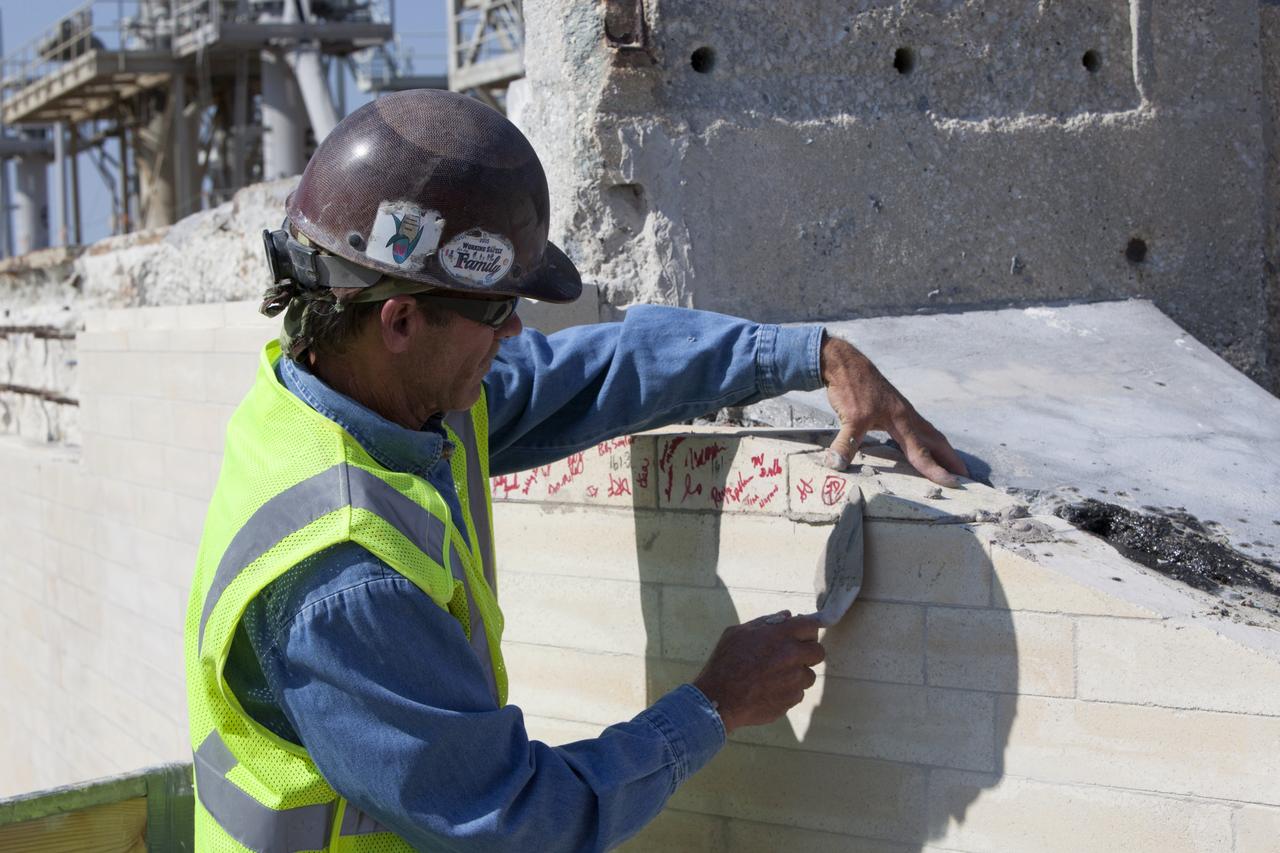
A construction worker installs the final brick on the north side of the flame trench at Launch Complex 39B at NASA's Kennedy Space Center in Florida. The walls of the flame trench are being upgraded to withstand the intense heat and fire at launch of NASA's Space Launch System rocket with Orion atop. About 96,000 heat-resistant bricks, in three different sizes, were secured to the walls using bonding mortar in combination with adhesive anchors. The Ground Systems Development and Operations Program is overseeing upgrades and modifications to Pad 39B to support the launch of the SLS and Orion spacecraft for Exploration Mission-1 and NASA’s journey to Mars.

The final brick was installed on the north side of the flame trench at Launch Complex 39B at NASA’s Kennedy Space Center in Florida. The walls of the flame trench are being upgraded to withstand the intense heat and fire at launch of NASA's Space Launch System rocket with Orion atop. About 96,000 heat-resistant bricks, in three different sizes, were secured to the walls using bonding mortar in combination with adhesive anchors. The Ground Systems Development and Operations Program is overseeing upgrades and modifications to Pad 39B to support the launch of the SLS and Orion spacecraft for Exploration Mission-1 and NASA’s journey to Mars.
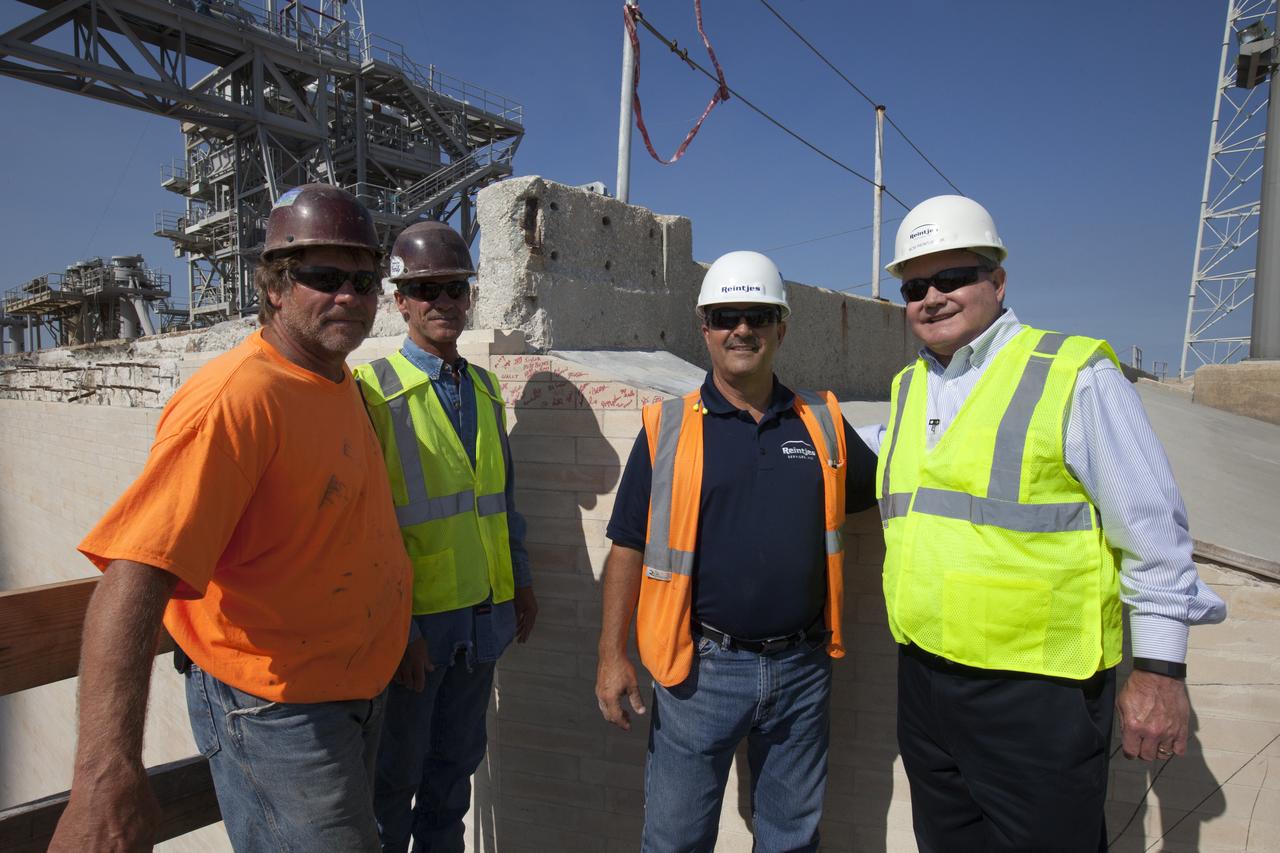
Construction workers sign the final bricks after they were installed on the north side of the flame trench at Launch Complex 39B at NASA’s Kennedy Space Center in Florida. The walls of the flame trench are being upgraded to withstand the intense heat and fire at launch of NASA's Space Launch System rocket with Orion atop. About 96,000 heat-resistant bricks, in three different sizes, were secured to the walls using bonding mortar in combination with adhesive anchors. The Ground Systems Development and Operations Program is overseeing upgrades and modifications to Pad 39B to support the launch of the SLS and Orion spacecraft for Exploration Mission-1 and NASA’s journey to Mars.
Preparations are underway to install the final brick on the north side of the flame trench at Launch Complex 39B at NASA's Kennedy Space Center in Florida. The walls of the flame trench are being upgraded to withstand the intense heat and fire at launch of NASA's Space Launch System rocket with Orion atop. About 96,000 heat-resistant bricks, in three different sizes, were secured to the walls using bonding mortar in combination with adhesive anchors. The Ground Systems Development and Operations Program is overseeing upgrades and modifications to Pad 39B to support the launch of the SLS and Orion spacecraft for Exploration Mission-1 and NASA’s journey to Mars.
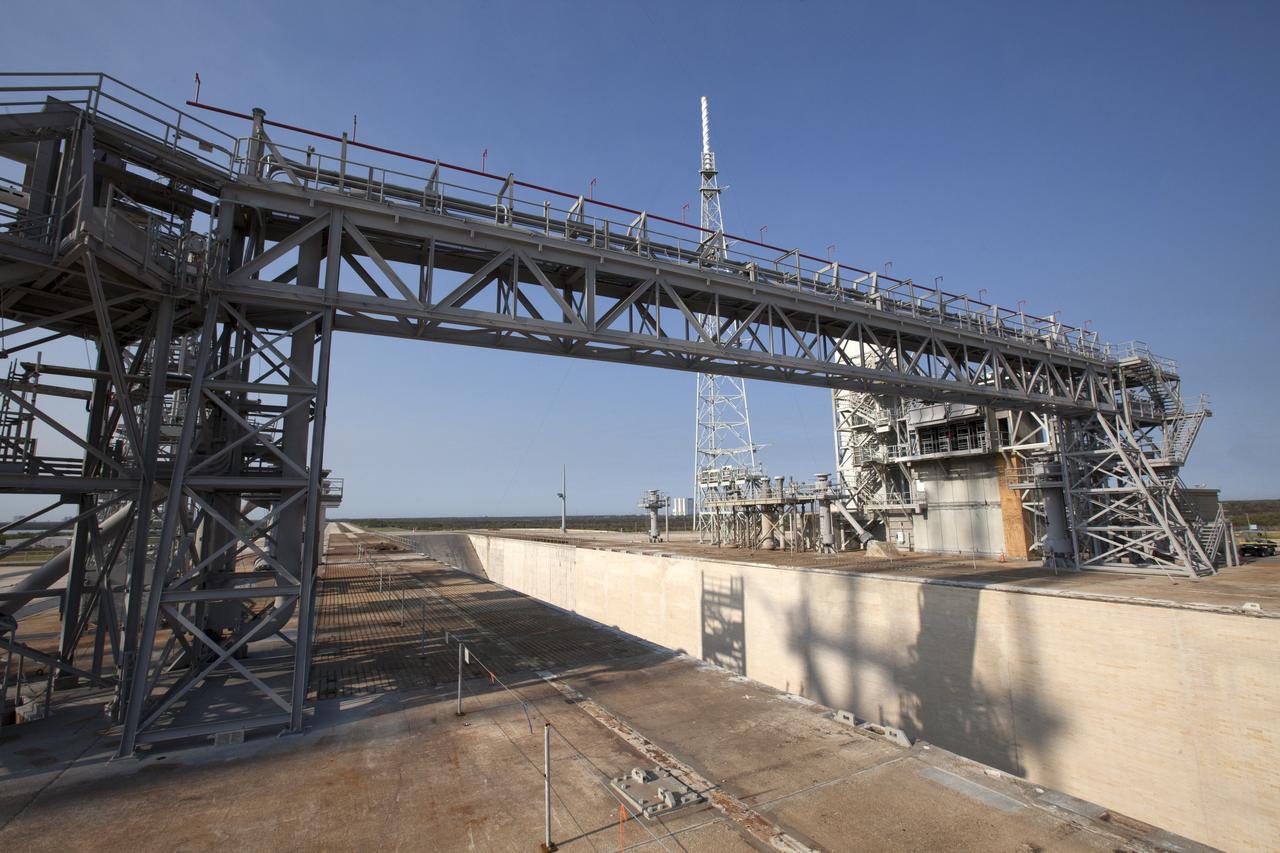
A view of the north side of the flame trench at Launch Complex 39B at NASA's Kennedy Space Center in Florida. The final brick was installed in the flame trench, completing about a year's worth of work to upgrade the walls to withstand the intense heat and fire at launch of NASA's Space Launch System rocket with Orion atop. About 96,000 heat-resistant bricks, in three different sizes, were secured to the walls using bonding mortar in combination with adhesive anchors. The Ground Systems Development and Operations Program is overseeing upgrades and modifications to Pad 39B to support the launch of the SLS and Orion spacecraft for Exploration Mission-1 and NASA’s journey to Mars.
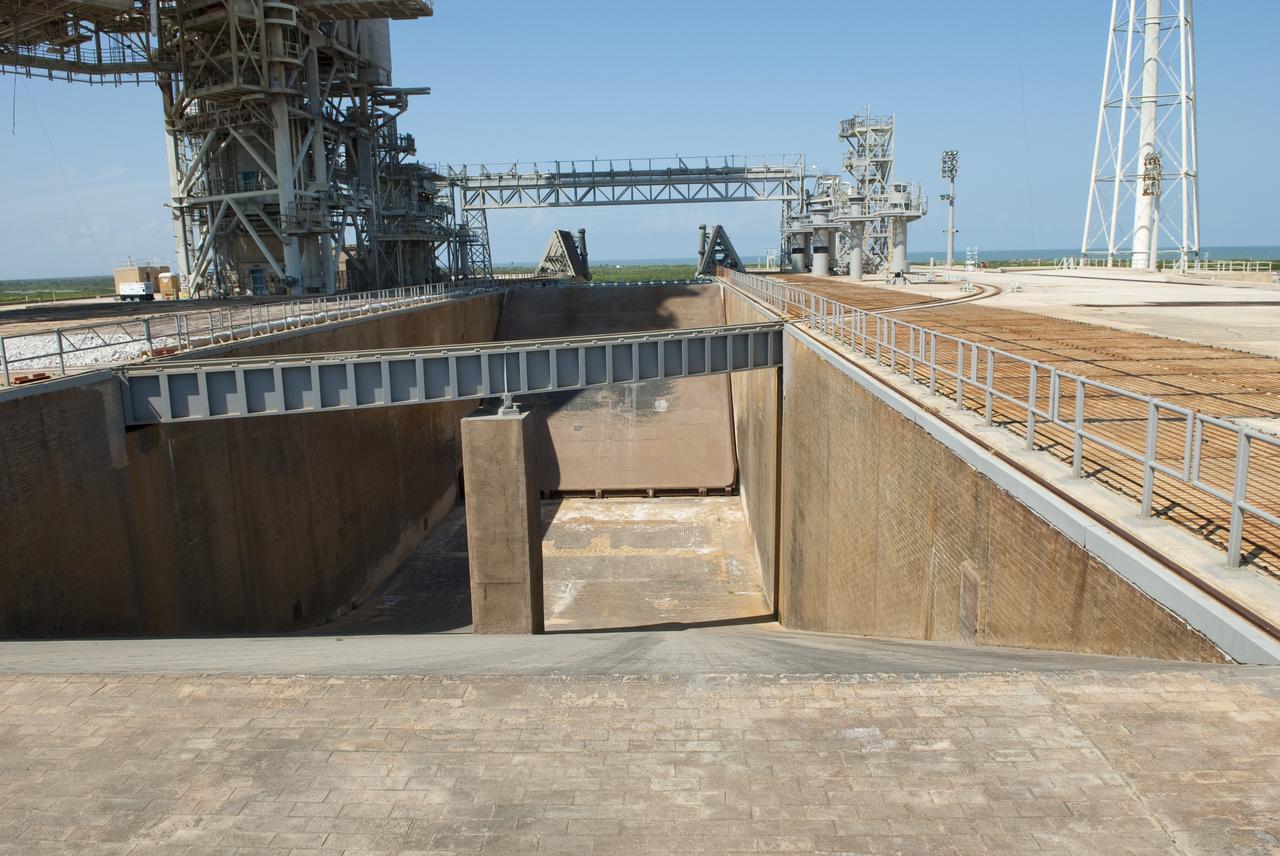
CAPE CANAVERAL, Fla. -- At NASA's Kennedy Space Center in Florida, the flame trench that serviced the launch of many space shuttles is seen cleared of all debris during deconstruction of Launch Pad 39B. The flame trench will remain as part of the new pad design for the future. Starting in 2009, the structure at Pad B was no longer needed for NASA's Space Shuttle Program, so it is being restructured for future use. The new design will feature a "clean pad" for rockets to come with their own launcher, making it more versatile for a number of vehicles. For information on NASA's future plans, visit www.nasa.gov. Photo credit: NASA/Jim Grossmann
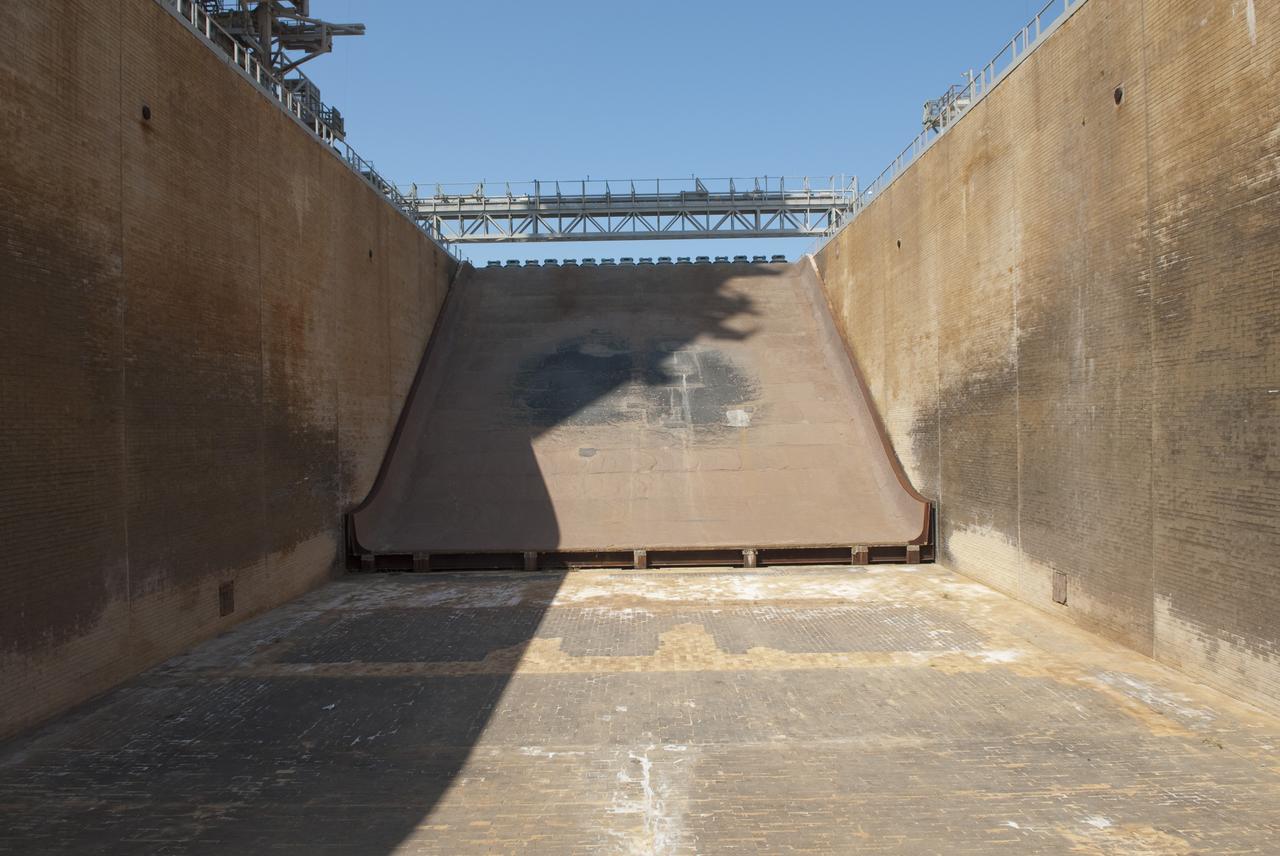
CAPE CANAVERAL, Fla. -- At NASA's Kennedy Space Center in Florida, the flame trench that serviced the launch of many space shuttles is seen from below after being cleared of all debris during deconstruction of Launch Pad 39B. The flame trench will remain as part of the new pad design for the future. Starting in 2009, the structure at Pad B was no longer needed for NASA's Space Shuttle Program, so it is being restructured for future use. The new design will feature a "clean pad" for rockets to come with their own launcher, making it more versatile for a number of vehicles. For information on NASA's future plans, visit www.nasa.gov. Photo credit: NASA/Jim Grossmann
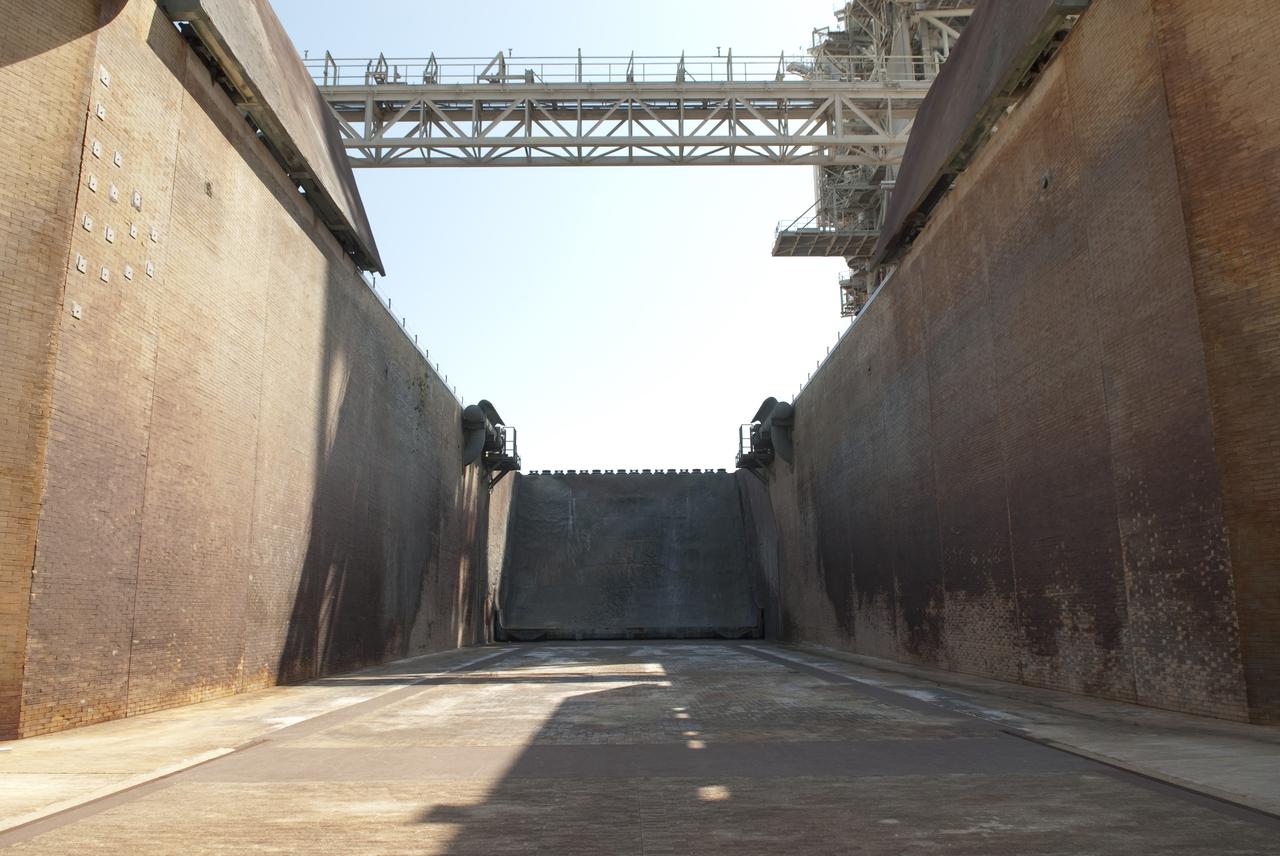
CAPE CANAVERAL, Fla. -- At NASA's Kennedy Space Center in Florida, the flame trench that serviced the launch of many space shuttles is viewed from deep inside after being cleared of all debris during deconstruction of Launch Pad 39B. The flame trench will remain as part of the new pad design for the future. Starting in 2009, the structure at Pad B was no longer needed for NASA's Space Shuttle Program, so it is being restructured for future use. The new design will feature a "clean pad" for rockets to come with their own launcher, making it more versatile for a number of vehicles. For information on NASA's future plans, visit www.nasa.gov. Photo credit: NASA/Jim Grossmann
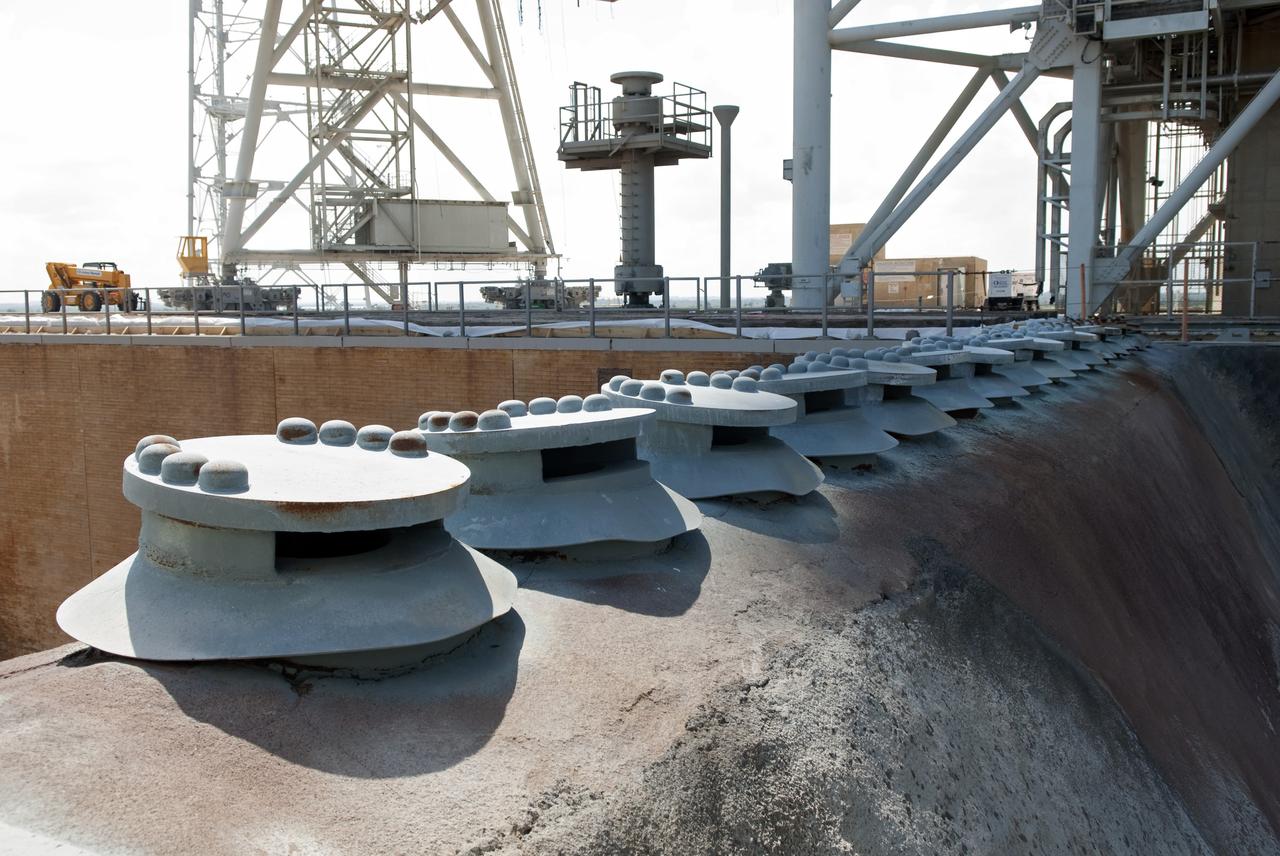
CAPE CANAVERAL, Fla. -- At NASA's Kennedy Space Center in Florida, caps from the fuel tanks that serviced the shuttle's external fuel tank are seen in this image above the flame trench during deconstruction of Launch Pad 39B. Starting in 2009, the structure at Pad B was no longer needed for NASA's Space Shuttle Program, so it is being restructured for future use. The new design will feature a "clean pad" for rockets to come with their own launcher, making it more versatile for a number of vehicles. For information on NASA's future plans, visit www.nasa.gov. Photo credit: NASA/Jim Grossmann
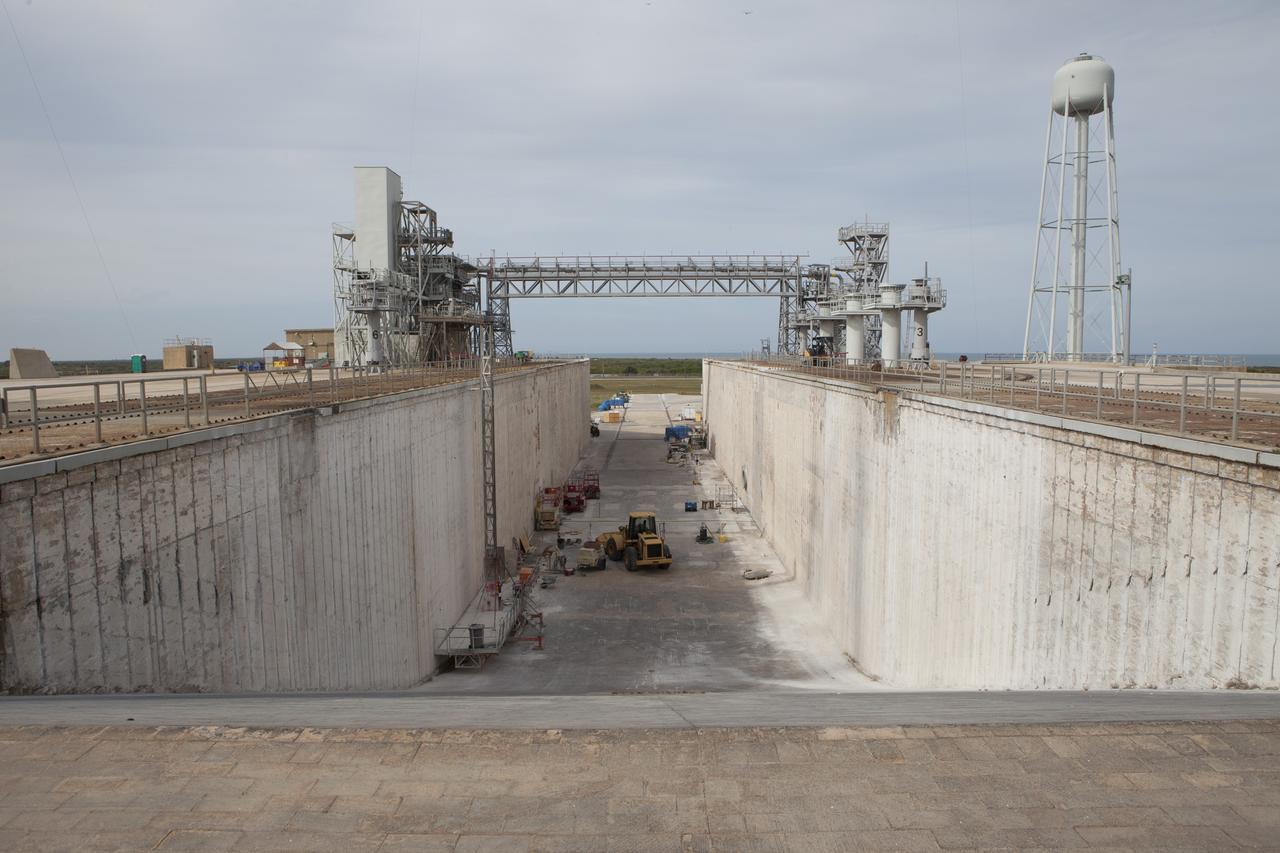
Upgrades and modifications continue to the flame trench at Launch Pad 39B at NASA’s Kennedy Space Center in Florida. Pad B is being refurbished to support the launch of NASA’s Space Launch System rocket. The Ground Systems Development and Operations (GSDO) Program at Kennedy is helping transform the space center into a multi-user spaceport and prepare for Exploration Mission-1, deep-space missions, and the journey to Mars.
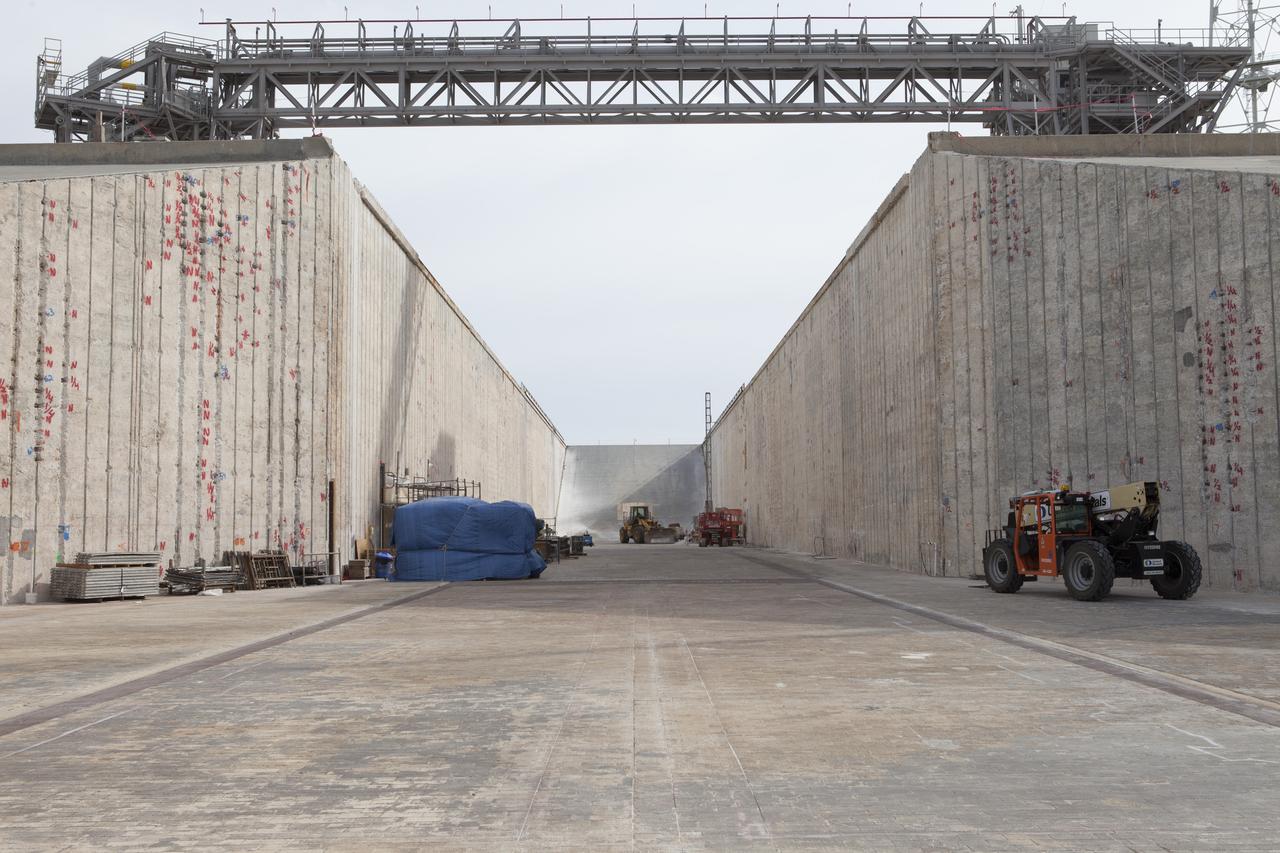
Upgrades and modifications continue to the flame trench at Launch Pad 39B at NASA’s Kennedy Space Center in Florida. Pad B is being refurbished to support the launch of NASA’s Space Launch System rocket. The Ground Systems Development and Operations (GSDO) Program at Kennedy is helping transform the space center into a multi-user spaceport and prepare for Exploration Mission-1, deep-space missions, and the journey to Mars.
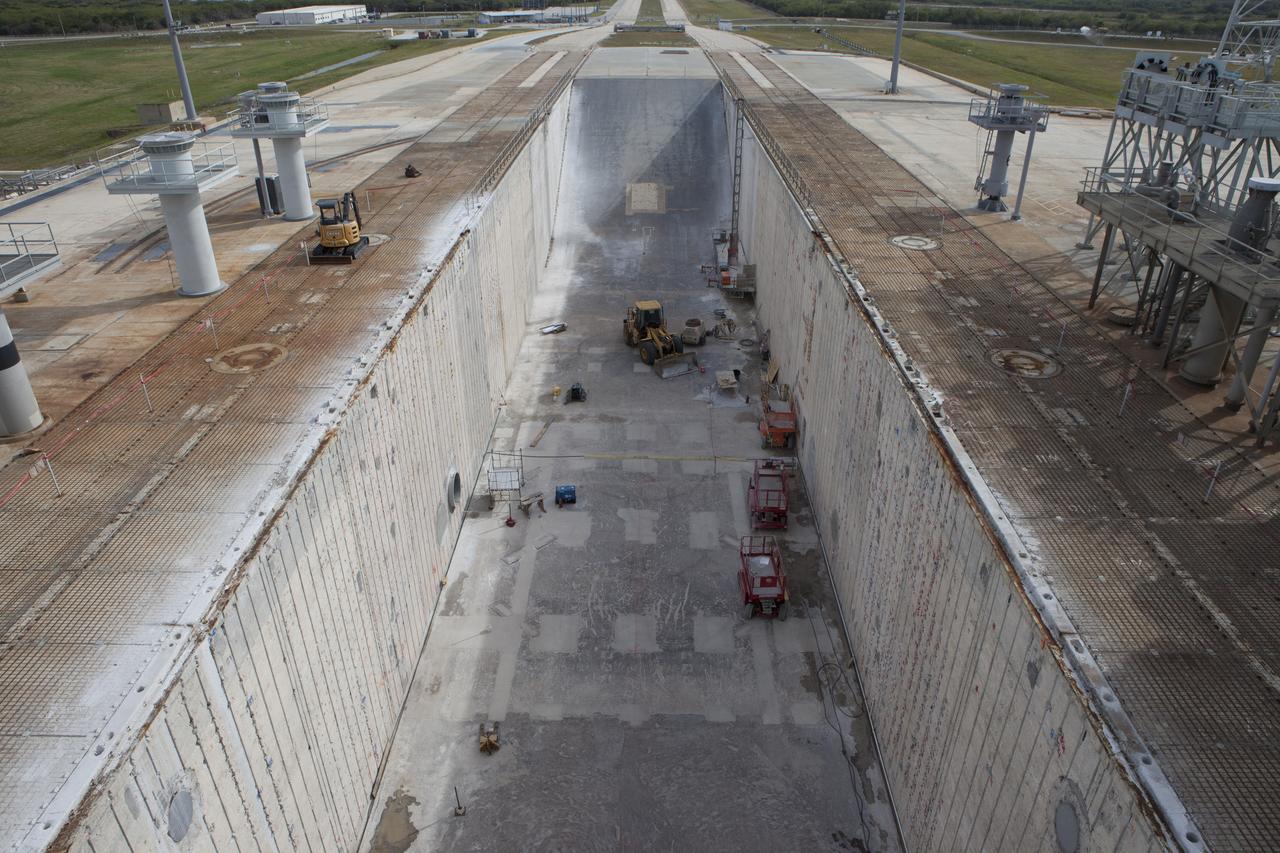
Upgrades and modifications continue to the flame trench at Launch Pad 39B at NASA’s Kennedy Space Center in Florida. Pad B is being refurbished to support the launch of NASA’s Space Launch System rocket. The Ground Systems Development and Operations (GSDO) Program at Kennedy is helping transform the space center into a multi-user spaceport and prepare for Exploration Mission-1, deep-space missions, and the journey to Mars.
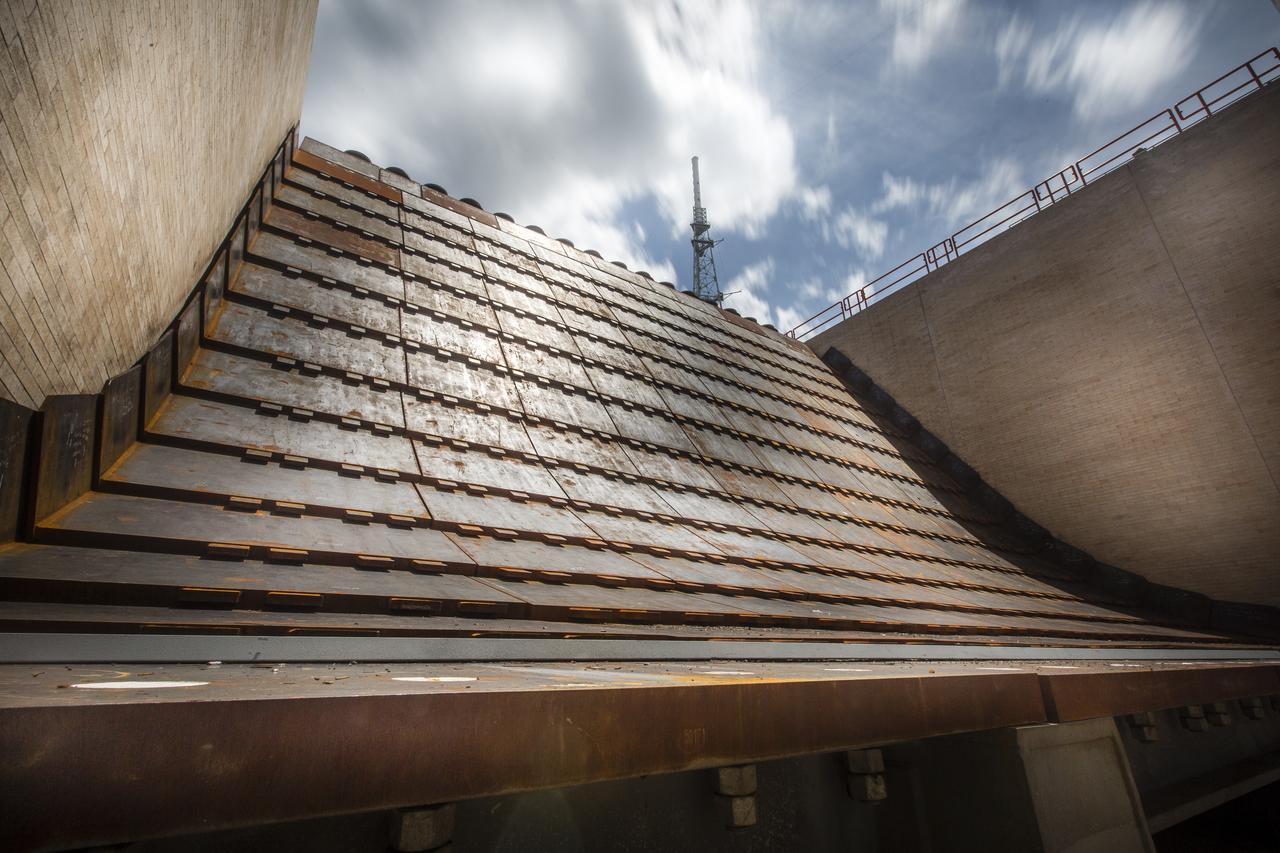
A close-up view of the flame trench and flame deflector at Launch Pad 39B at NASA's Kennedy Space Center in Florida on July 26, 2018. The launch pad has undergone upgrades and modifications to accommodate NASA's Space Launch System and Orion spacecraft for Exploration Mission-1 and other deep space missions. New heat-resistant bricks have been installed on the walls and a new flame deflector is in place. The clean pad concept is designed to support NASA and commercial launch providers at the multi-user spaceport.
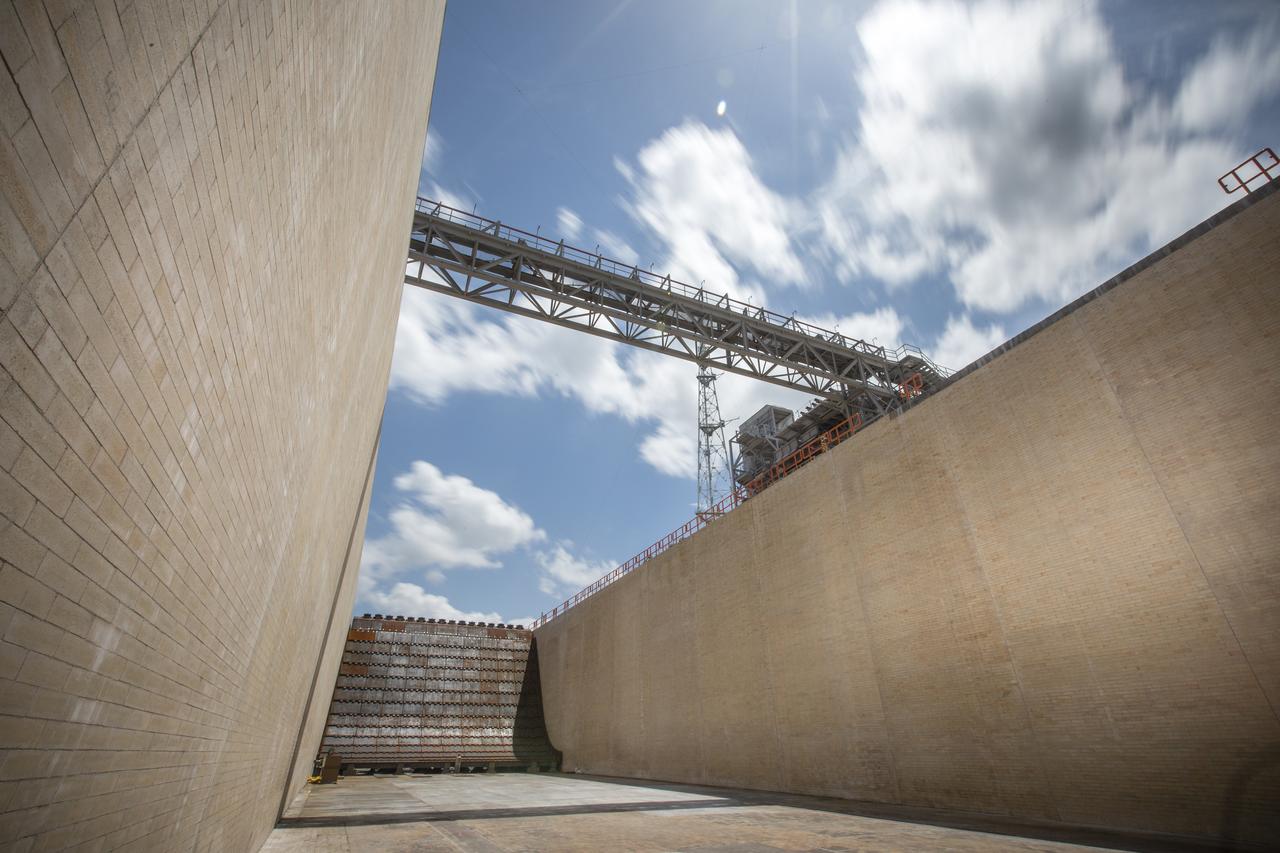
A close-up view of the flame trench and flame deflector at Launch Pad 39B at NASA's Kennedy Space Center in Florida on July 26, 2018. The launch pad has undergone upgrades and modifications to accommodate NASA's Space Launch System and Orion spacecraft for Exploration Mission-1 and other deep space missions. New heat-resistant bricks have been installed on the walls and a new flame deflector is in place. The clean pad concept is designed to support NASA and commercial launch providers at the multi-user spaceport.
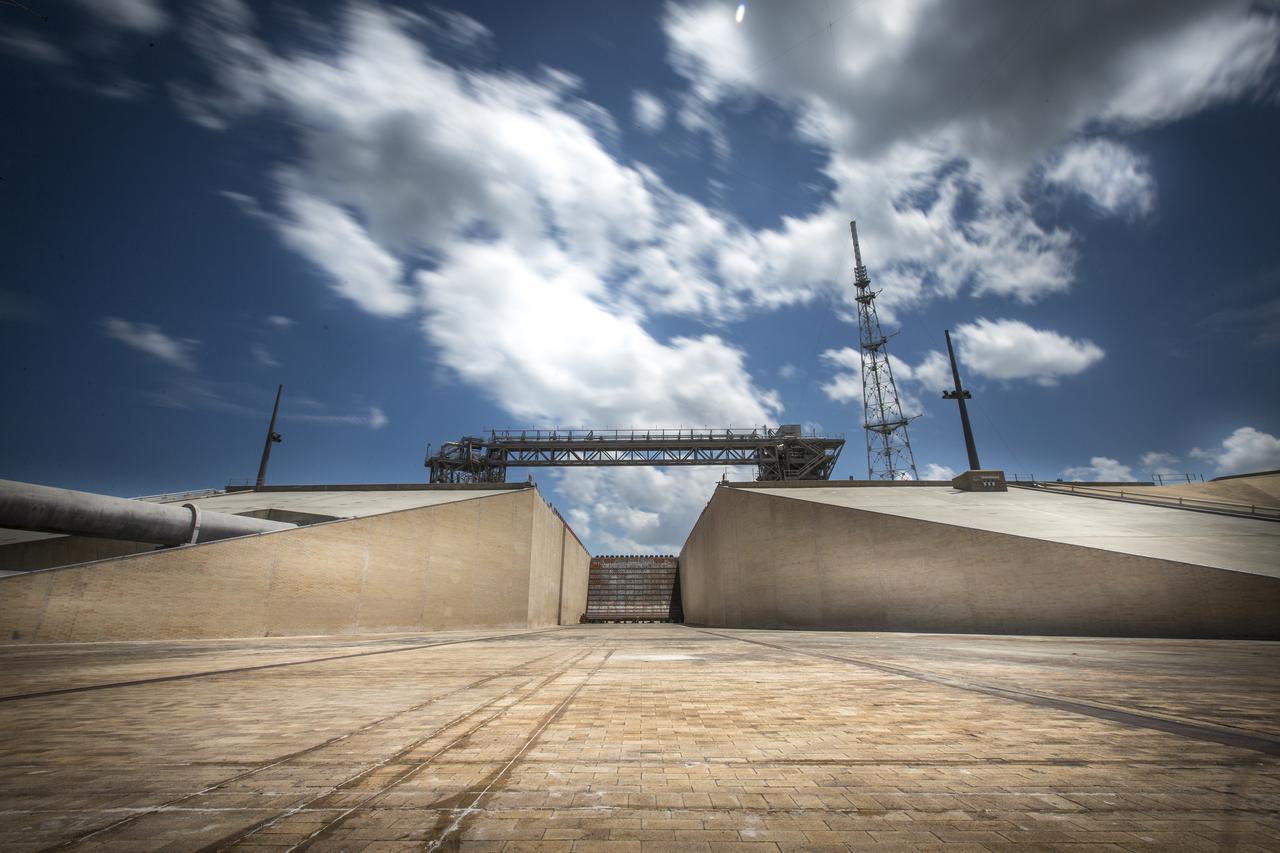
The flame trench and flame deflector are in view at Launch Pad 39B at NASA's Kennedy Space Center in Florida on July 26, 2018. The launch pad has undergone upgrades and modifications to accommodate NASA's Space Launch System and Orion spacecraft for Exploration Mission-1 and other deep space missions. New heat-resistant bricks have been installed on the walls and a new flame deflector is in place. The clean pad concept is designed to support NASA and commercial launch providers at the multi-user spaceport.
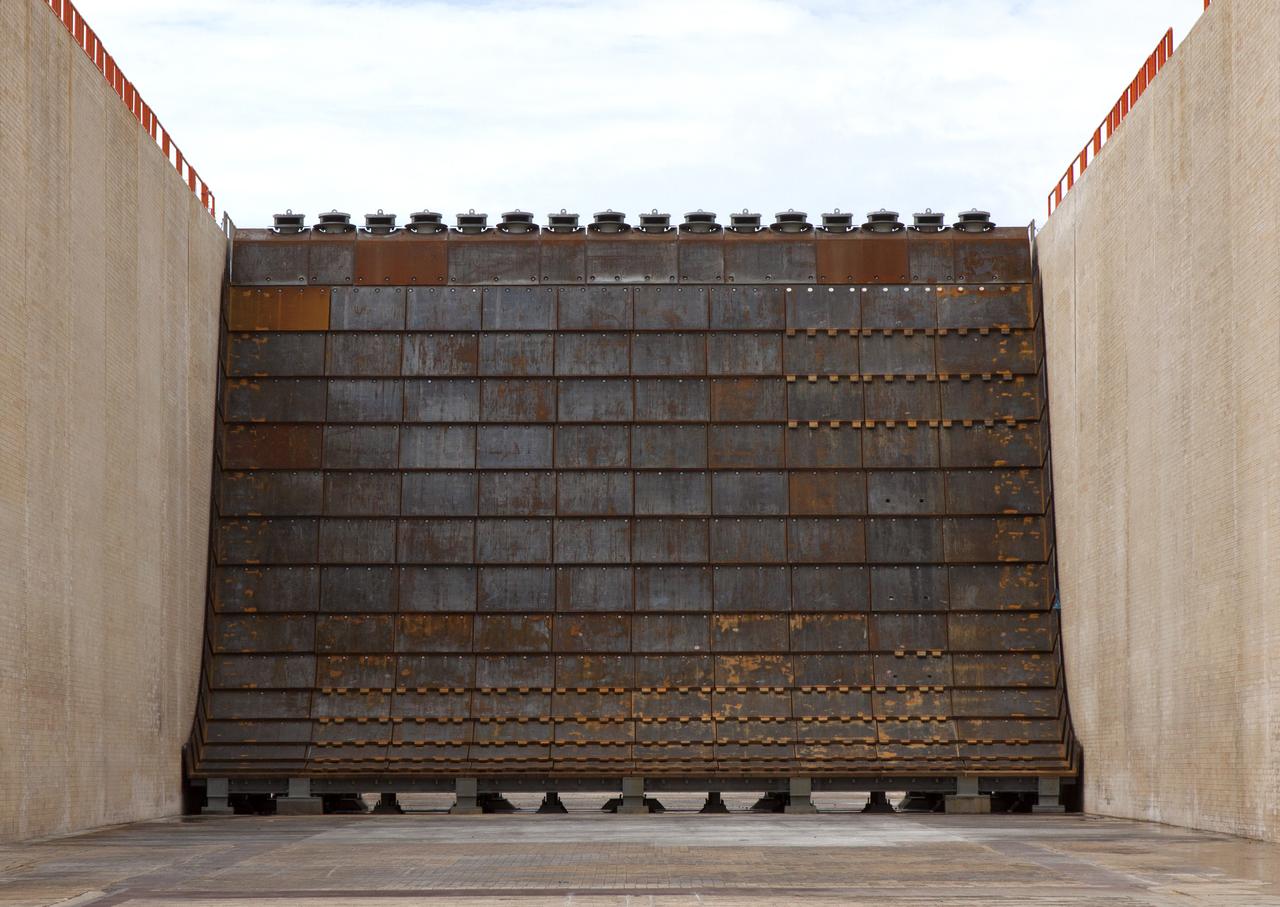
Construction is complete on the main flame deflector in the flame trench at Launch Complex 39B at NASA's Kennedy Space Center in Florida. The flame deflector will safely deflect the plume exhaust from NASA's Space Launch System rocket during launch. It will divert the rocket's exhaust, pressure and intense heat to the north at liftoff. The Exploration Ground Systems Program at Kennedy is refurbishing the pad to support the launch of the SLS rocket and Orion on Exploration Mission-1, and helping to transform the space center into a multi-user spaceport.
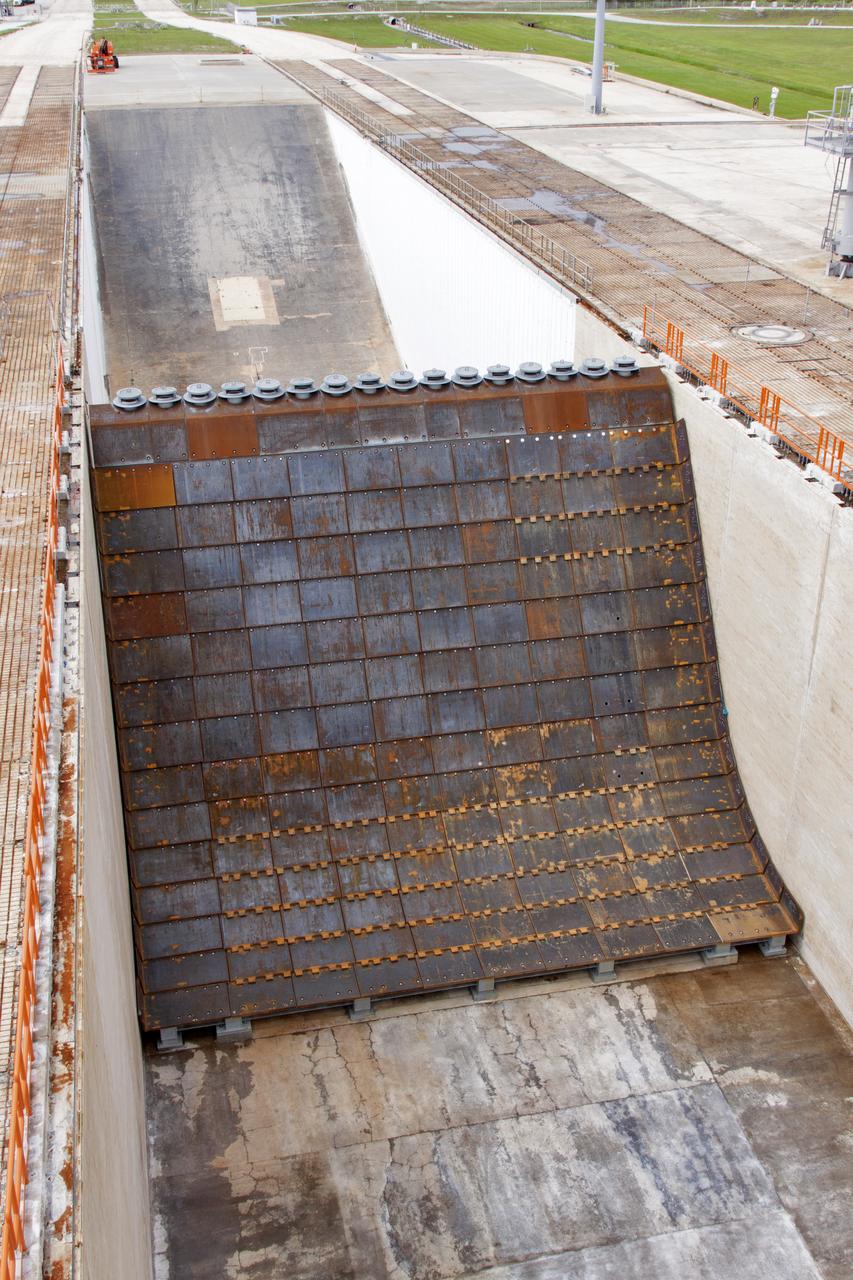
Construction is complete on the main flame deflector in the flame trench at Launch Complex 39B at NASA's Kennedy Space Center in Florida. The flame deflector will safely deflect the plume exhaust from NASA's Space Launch System rocket during launch. It will divert the rocket's exhaust, pressure and intense heat to the north at liftoff. The Exploration Ground Systems Program at Kennedy is refurbishing the pad to support the launch of the SLS rocket and Orion on Exploration Mission-1, and helping to transform the space center into a multi-user spaceport.
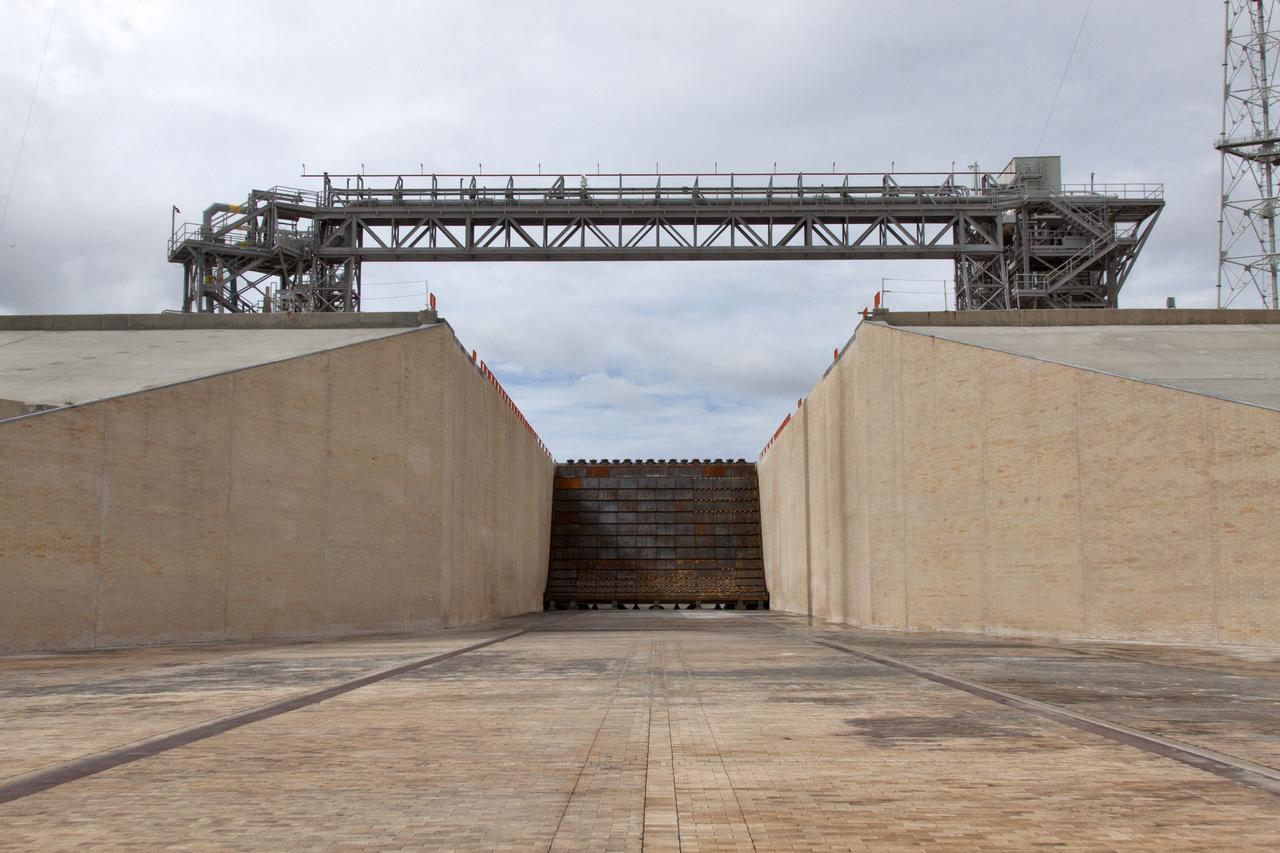
Construction is complete on the main flame deflector in the flame trench at Launch Complex 39B at NASA's Kennedy Space Center in Florida. The flame deflector will safely deflect the plume exhaust from NASA's Space Launch System rocket during launch. It will divert the rocket's exhaust, pressure and intense heat to the north at liftoff. The Exploration Ground Systems Program at Kennedy is refurbishing the pad to support the launch of the SLS rocket and Orion on Exploration Mission-1, and helping to transform the space center into a multi-user spaceport.

To continue his work, a construction worker secures clamps on a section of metal on the surface of Launch Pad 39B at NASA's Kennedy Space Center in Florida on July 26, 2018. The launch pad has undergone upgrades and modifications to accommodate NASA's Space Launch System and Orion spacecraft for Exploration Mission-1 and subsequent missions. Upgrades include new heat-resistant bricks on the walls of the flame trench and installation of a new flame deflector. All of the upgrades have been managed by Exploration Ground Systems.
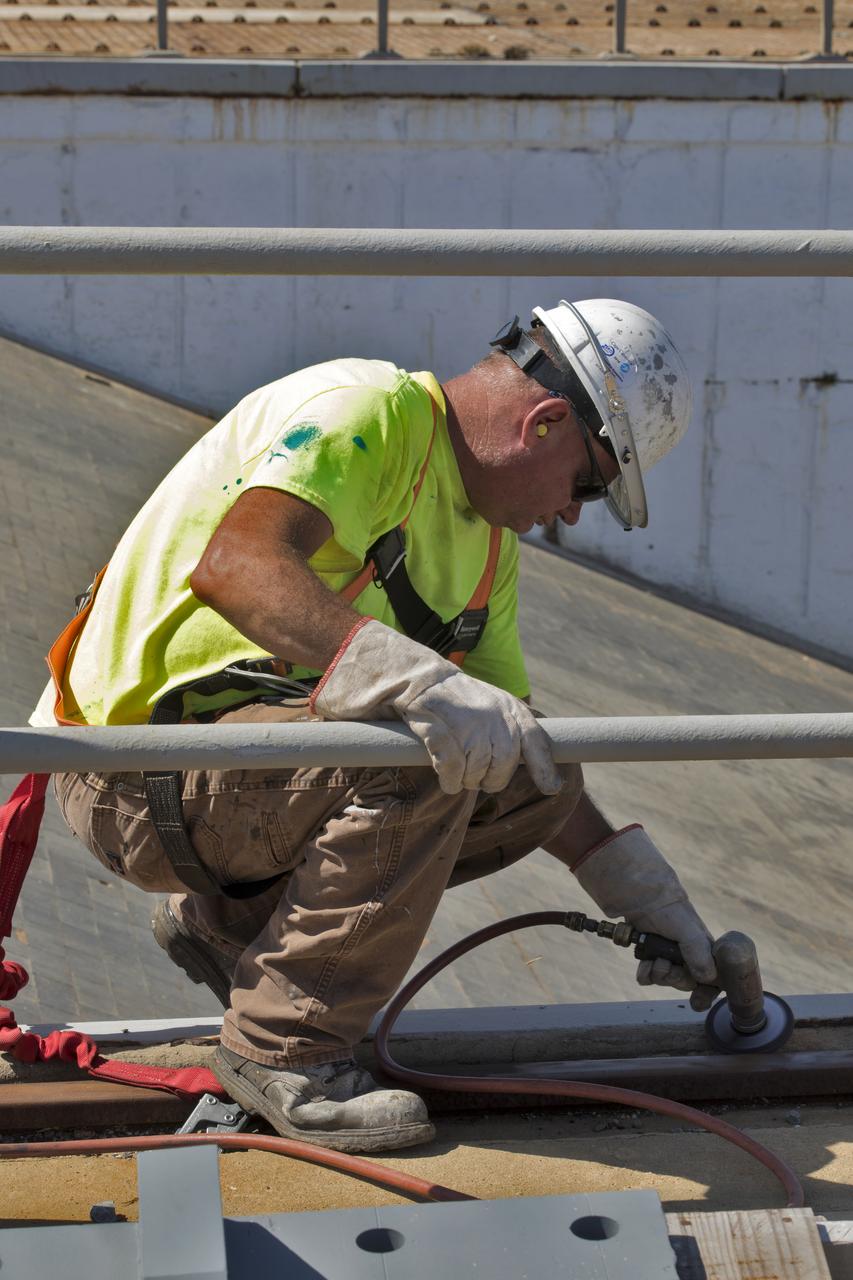
A construction worker sands a section of a wood beam on the surface of Launch Pad 39B at NASA’s Kennedy Space Center in Florida on Feb. 22, 2019. The launch pad has undergone upgrades and modifications to accommodate NASA's Space Launch System and Orion spacecraft for Exploration Mission-1 and subsequent missions. Upgrades include new heat-resistant bricks on the walls of the flame trench and installation of a new flame deflector. All of the upgrades have been managed by Exploration Ground Systems.
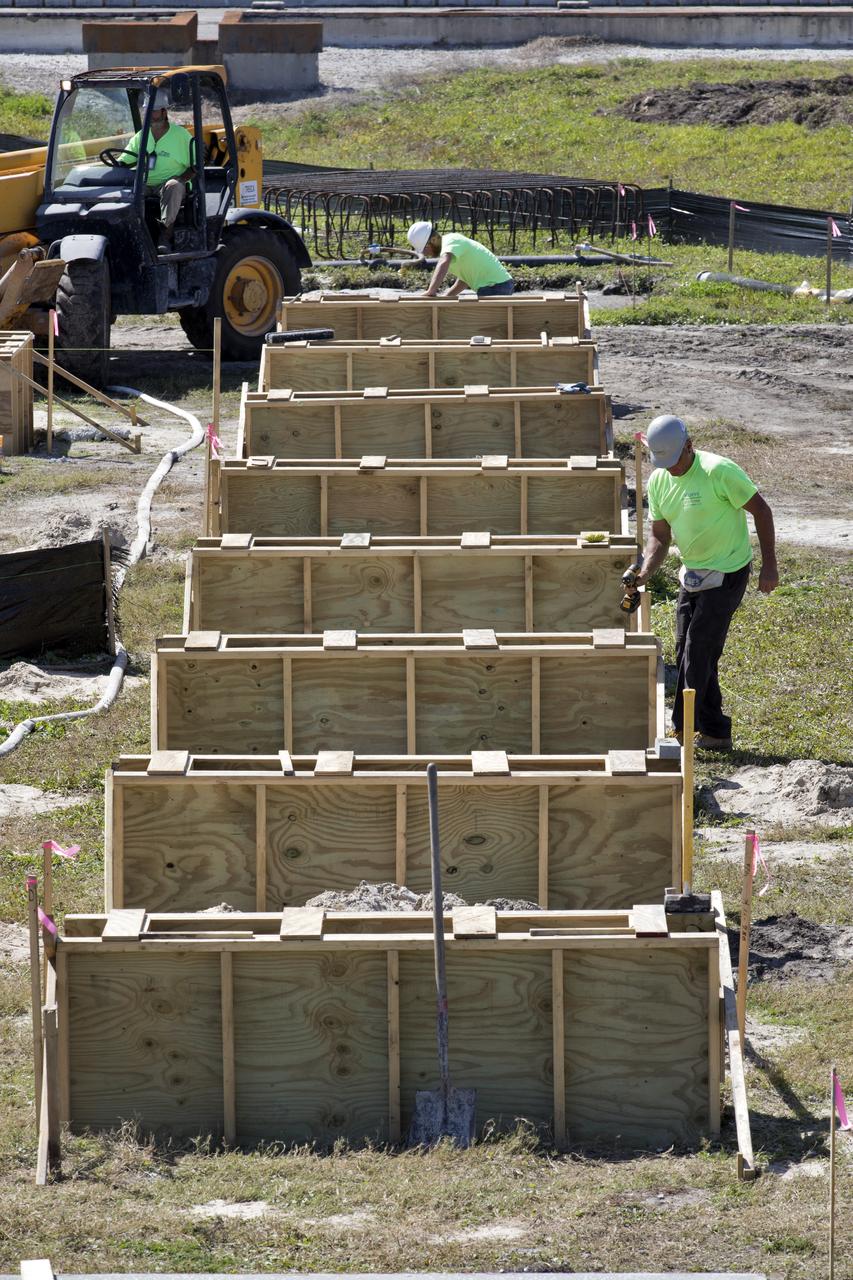
Construction workers stage parts and equipment nearby Launch Pad 39B at NASA’s Kennedy Space Center in Florida on Feb. 22, 2019. The launch pad has undergone upgrades and modifications to accommodate NASA's Space Launch System and Orion spacecraft for Exploration Mission-1 and subsequent missions. Upgrades include new heat-resistant bricks on the walls of the flame trench and installation of a new flame deflector. All of the upgrades have been managed by Exploration Ground Systems.
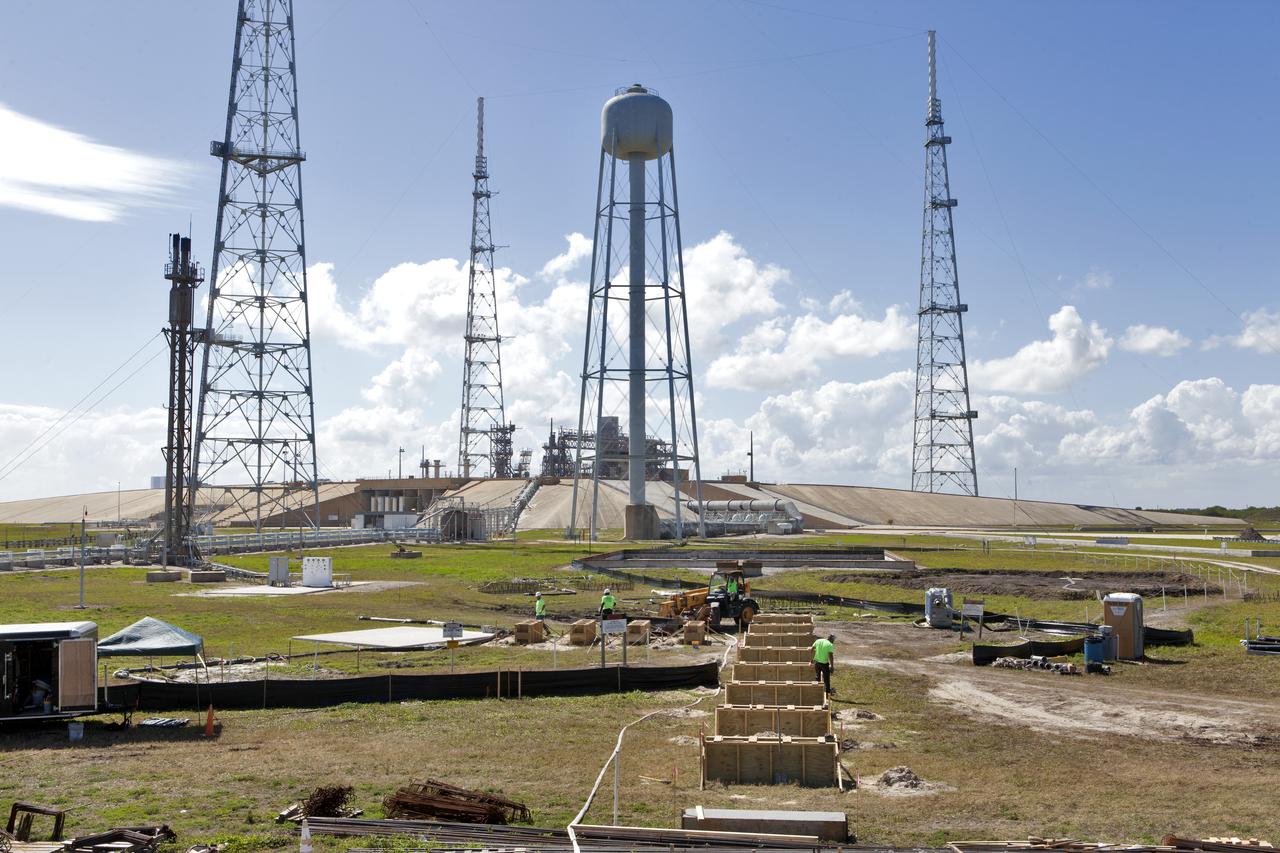
Construction workers stage parts and equipment nearby Launch Pad 39B at NASA’s Kennedy Space Center in Florida on Feb. 22, 2019. The launch pad has undergone upgrades and modifications to accommodate NASA's Space Launch System and Orion spacecraft for Exploration Mission-1 and subsequent missions. Upgrades include new heat-resistant bricks on the walls of the flame trench and installation of a new flame deflector. All of the upgrades have been managed by Exploration Ground Systems.
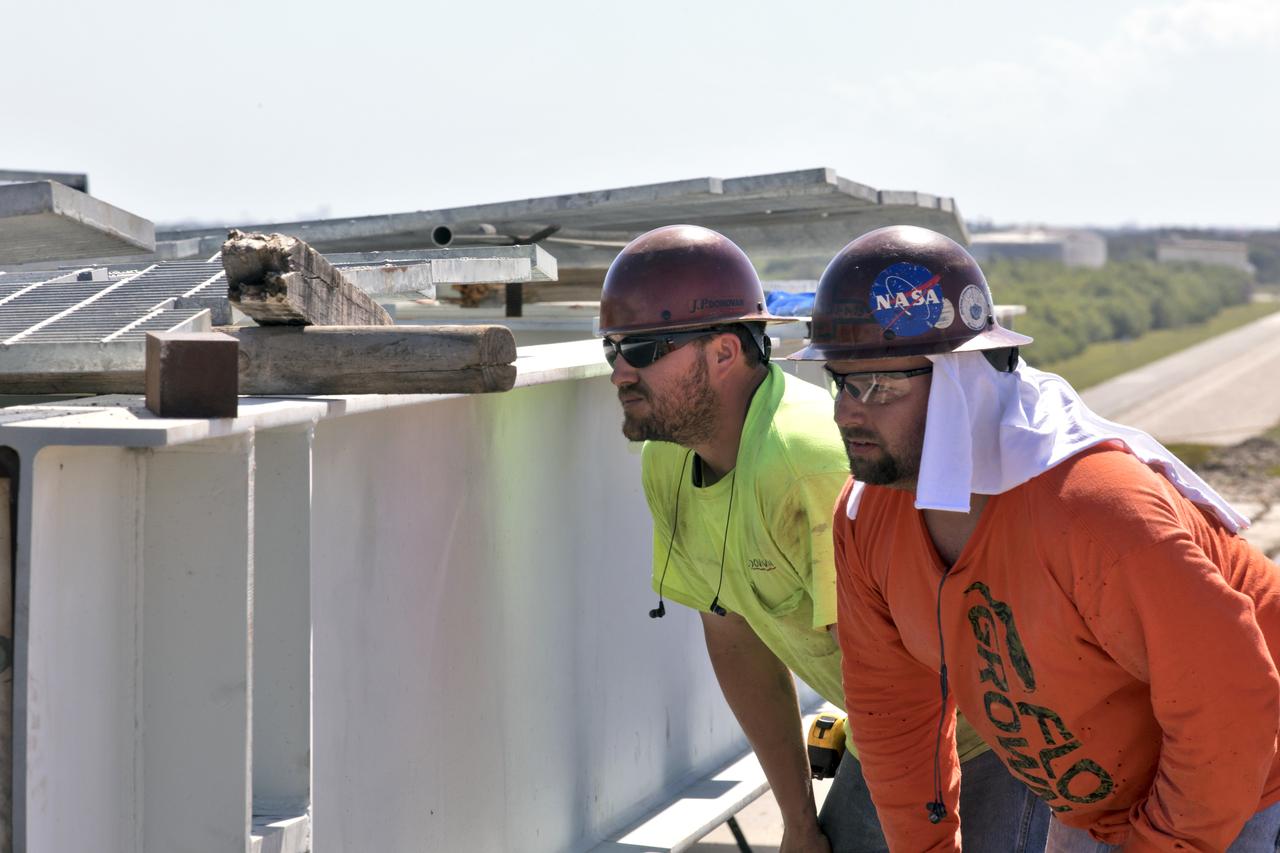
Construction workers assess the repairs needed on the surface of Launch Pad 39B at NASA’s Kennedy Space Center in Florida on Feb. 22, 2019. The launch pad has undergone upgrades and modifications to accommodate NASA's Space Launch System and Orion spacecraft for Exploration Mission-1 and subsequent missions. Upgrades include new heat-resistant bricks on the walls of the flame trench and installation of a new flame deflector. All of the upgrades have been managed by Exploration Ground Systems.
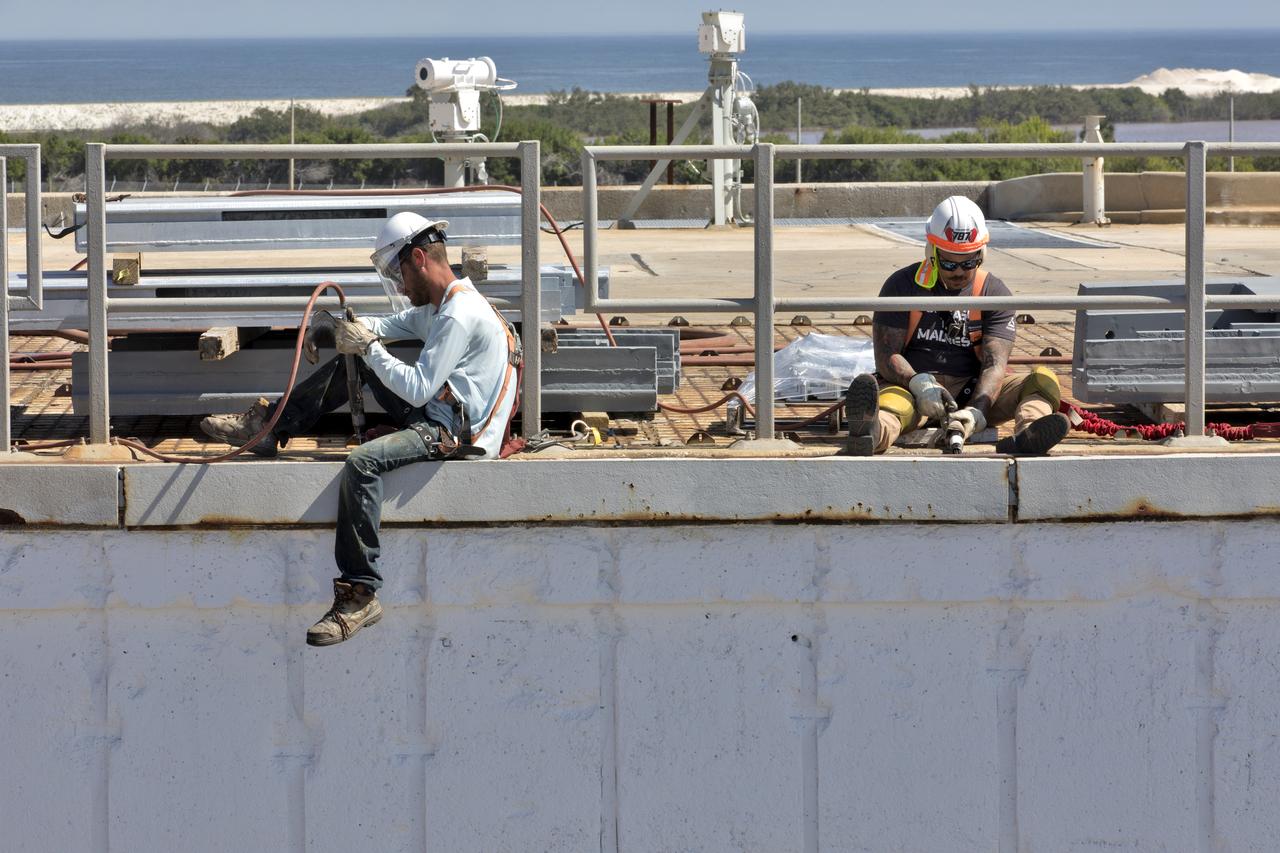
Constructions workers are busy repairing the concrete on the surface of Launch Pad 39B at NASA’s Kennedy Space Center in Florida on Feb. 22, 2019. The launch pad has undergone upgrades and modifications to accommodate NASA's Space Launch System and Orion spacecraft for Exploration Mission-1 and subsequent missions. Upgrades include new heat-resistant bricks on the walls of the flame trench and installation of a new flame deflector. All of the upgrades have been managed by Exploration Ground Systems.
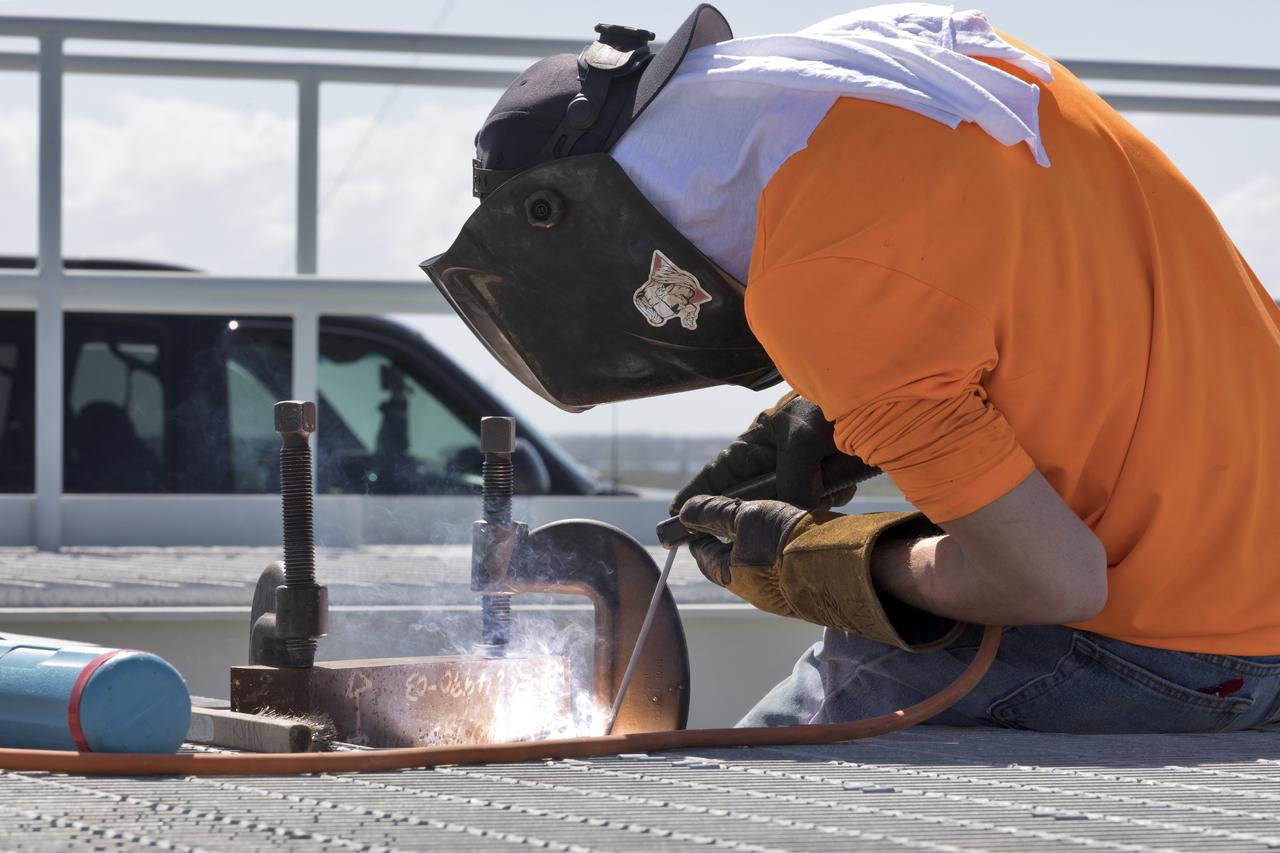
A construction worker welds a section of metal on the surface of Launch Pad 39B at NASA’s Kennedy Space Center in Florida on Feb. 22, 2019. The launch pad has undergone upgrades and modifications to accommodate NASA's Space Launch System and Orion spacecraft for Exploration Mission-1 and subsequent missions. Upgrades include new heat-resistant bricks on the walls of the flame trench and installation of a new flame deflector. All of the upgrades have been managed by Exploration Ground Systems.
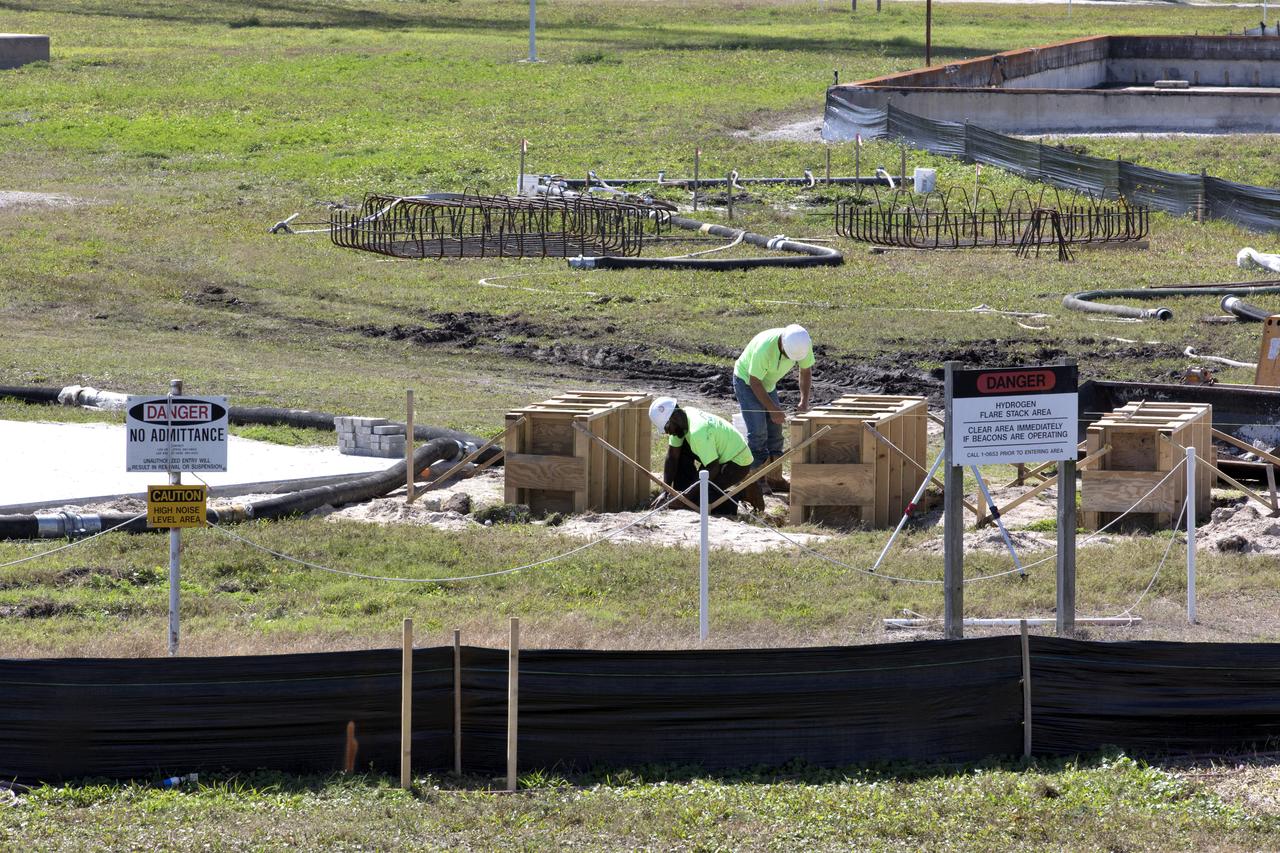
Construction workers stage parts and equipment nearby Launch Pad 39B at NASA’s Kennedy Space Center in Florida on Feb. 22, 2019. The launch pad has undergone upgrades and modifications to accommodate NASA's Space Launch System and Orion spacecraft for Exploration Mission-1 and subsequent missions. Upgrades include new heat-resistant bricks on the walls of the flame trench and installation of a new flame deflector. All of the upgrades have been managed by Exploration Ground Systems.
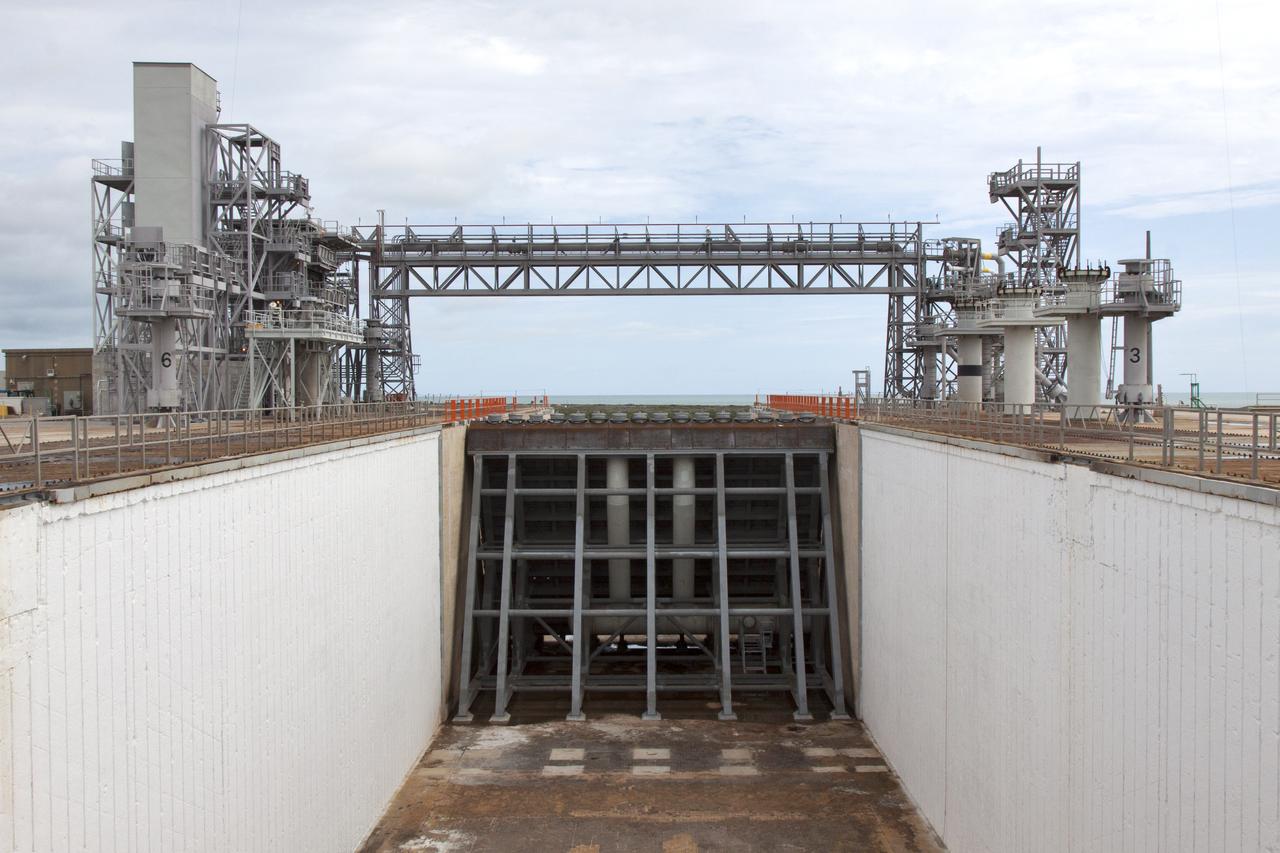
Construction is complete on the main flame deflector in the flame trench at Launch Complex 39B at NASA's Kennedy Space Center in Florida. The flame deflector will safely deflect the plume exhaust from NASA's Space Launch System rocket during launch. It will divert the rocket's exhaust, pressure and intense heat to the north at liftoff. In view is the south side of the main flame deflector. The Exploration Ground Systems Program at Kennedy is refurbishing the pad to support the launch of the SLS rocket and Orion on Exploration Mission-1, and helping to transform the space center into a multi-user spaceport.
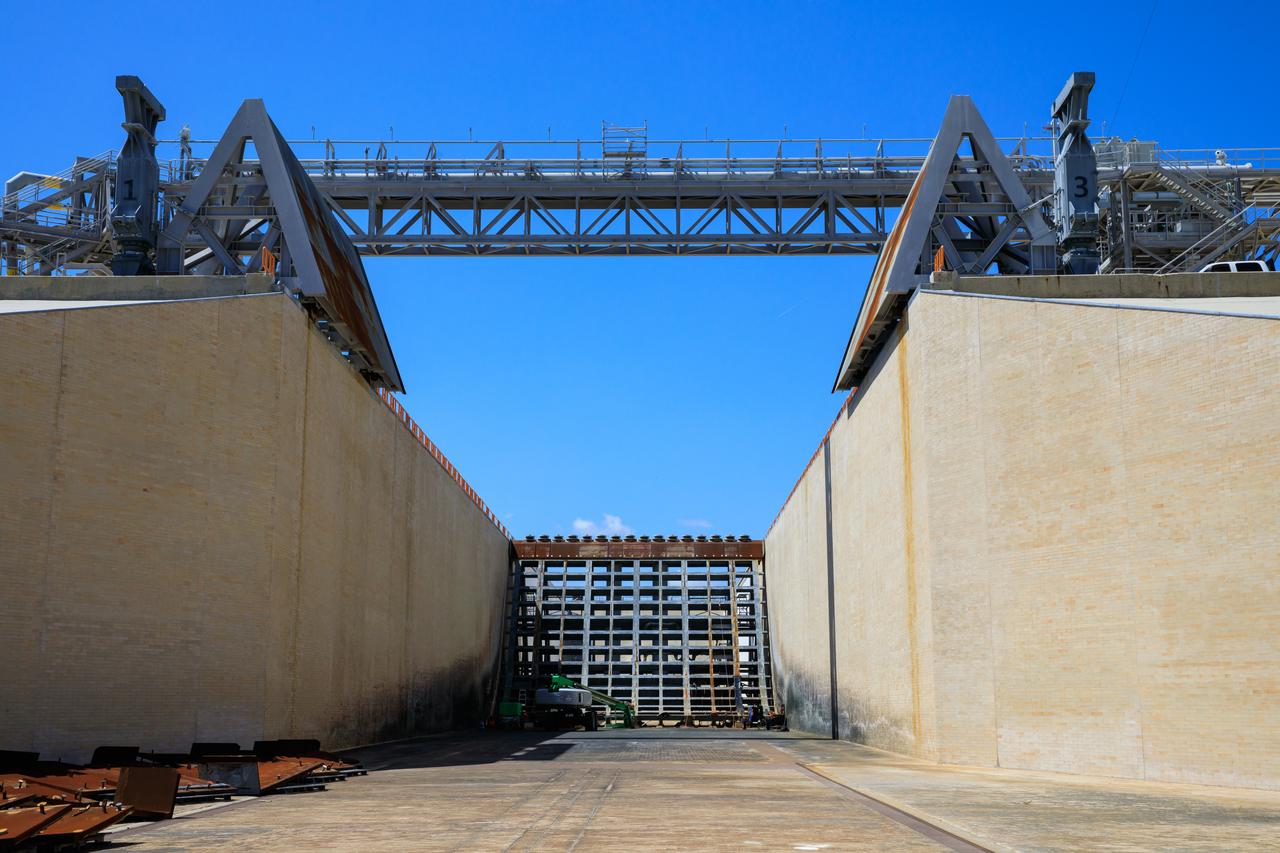
Teams with Exploration Ground Systems at NASA’s Kennedy Space Center in Florida continue to work the upgrades and repairs on mobile launcher 1 and Launch Pad 39B on June 13, 2023, ahead of the first critical ground testing for Artemis II. Teams are re-designing the panels on the flame deflector in the flame trench that withstood damage observed after launch of Artemis I. Artemis II will be the first Artemis mission flying crew aboard Orion.
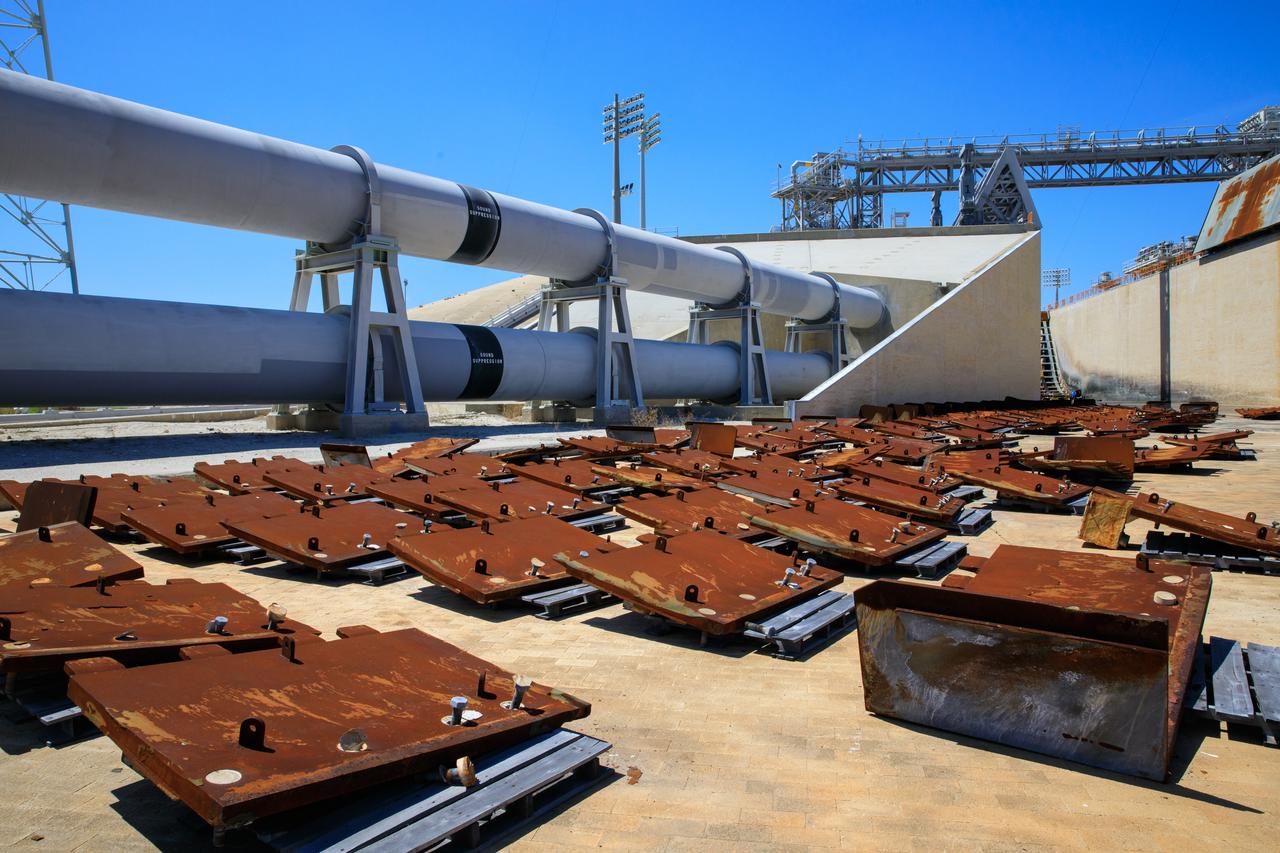
Teams with Exploration Ground Systems at NASA’s Kennedy Space Center in Florida continue to work the upgrades and repairs on mobile launcher 1 and Launch Pad 39B on June 13, 2023, ahead of the first critical ground testing for Artemis II. Teams are re-designing the panels on the flame deflector in the flame trench that withstood damage observed after launch of Artemis I. Artemis II will be the first Artemis mission flying crew aboard Orion.

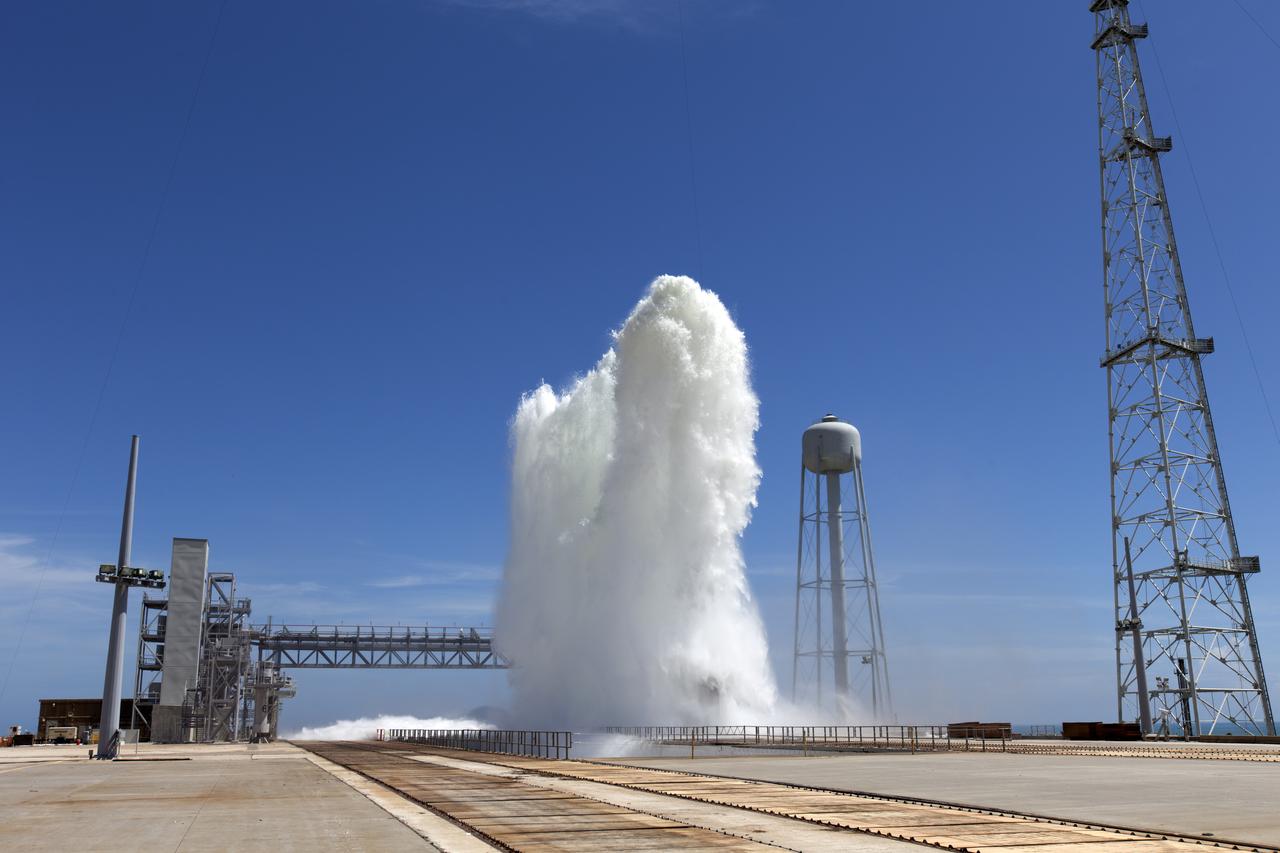
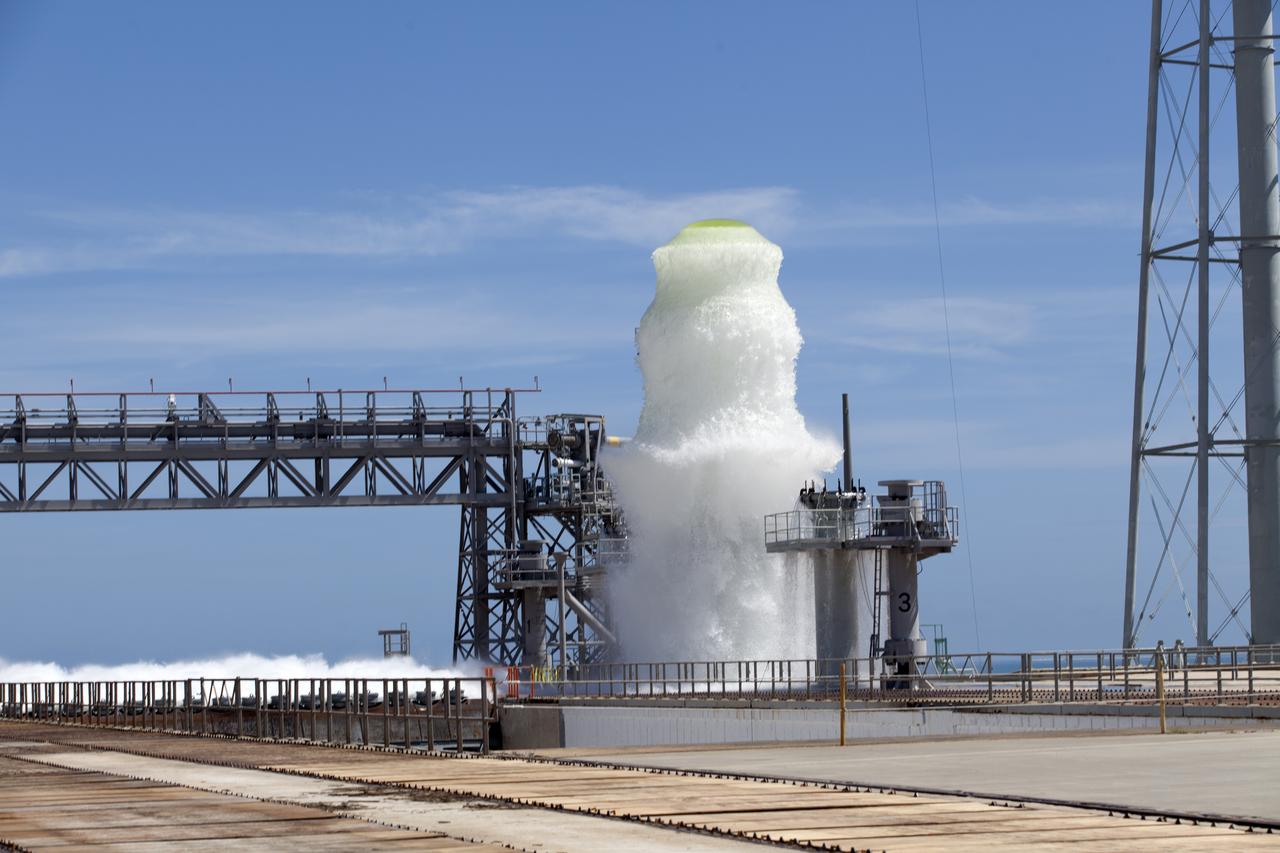
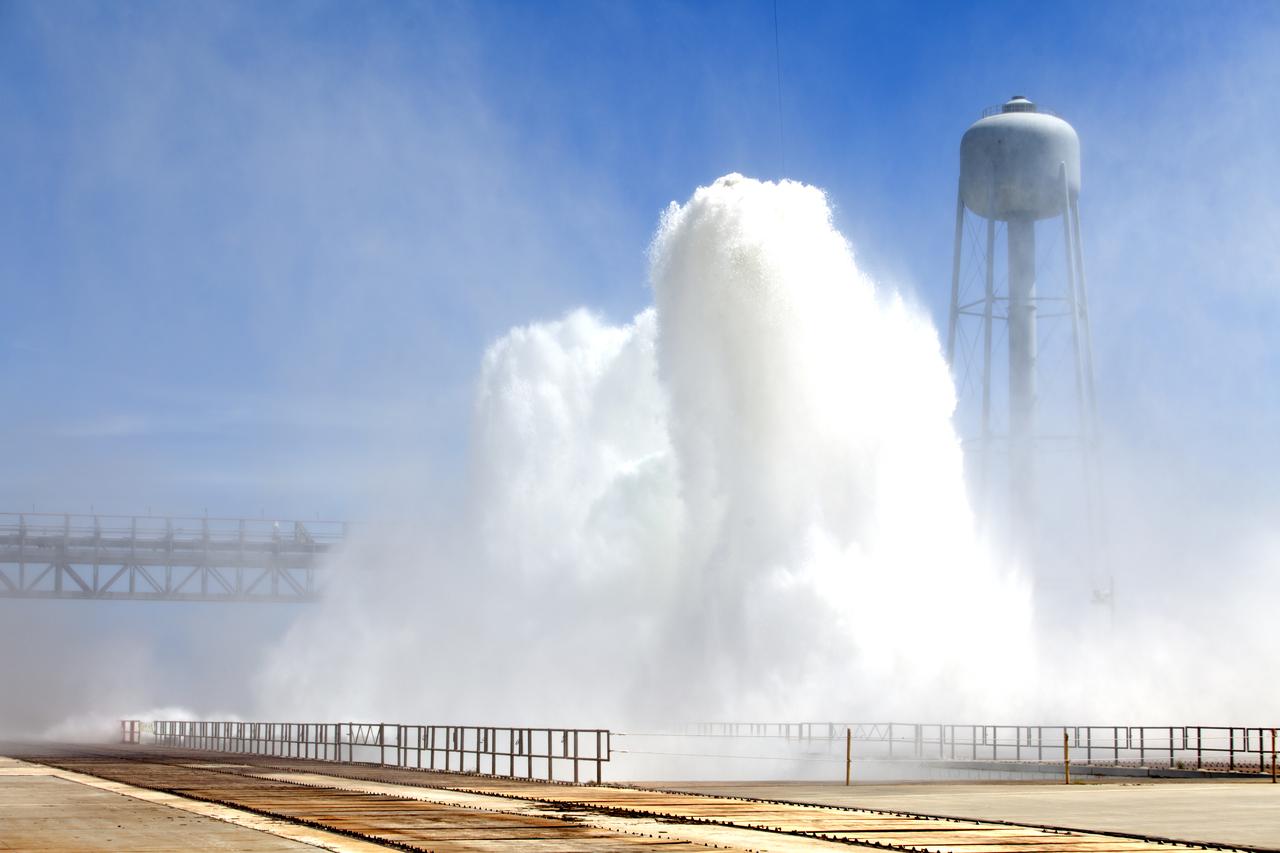
About 450,000 gallons of water flow at high speed from a holding tank through new and modified piping and valves, the flame trench, flame deflector nozzles and mobile launcher interface risers during a wet flow test on May 24, 2018, at Launch Pad 39B at NASA's Kennedy Space Center in Florida. At peak flow, the water reached about 100 feet in the air above the pad surface. The test was performed by Exploration Ground Systems to confirm the performance of the Ignition Overpressure/Sound Suppression system. During launch of NASA's Space Launch System rocket and Orion spacecraft, the high-speed water flow will help protect the vehicle from the extreme acoustic and temperature environment during ignition and liftoff.
About 450,000 gallons of water flow at high speed from a holding tank through new and modified piping and valves, the flame trench, flame deflector nozzles and mobile launcher interface risers during a wet flow test on May 24, 2018, at Launch Pad 39B at NASA's Kennedy Space Center in Florida. At peak flow, the water reached about 100 feet in the air above the pad surface. The test was performed by Exploration Ground Systems to confirm the performance of the Ignition Overpressure/Sound Suppression system. During launch of NASA's Space Launch System rocket and Orion spacecraft, the high-speed water flow will help protect the vehicle from the extreme acoustic and temperature environment during ignition and liftoff.
About 450,000 gallons of water flow at high speed from a holding tank through new and modified piping and valves, the flame trench, flame deflector nozzles and mobile launcher interface risers during a wet flow test on May 24, 2018, at Launch Pad 39B at NASA's Kennedy Space Center in Florida. At peak flow, the water reached about 100 feet in the air above the pad surface. The test was performed by Exploration Ground Systems to confirm the performance of the Ignition Overpressure/Sound Suppression system. During launch of NASA's Space Launch System rocket and Orion spacecraft, the high-speed water flow will help protect the vehicle from the extreme acoustic and temperature environment during ignition and liftoff.
About 450,000 gallons of water flow at high speed from a holding tank through new and modified piping and valves, the flame trench, flame deflector nozzles and mobile launcher interface risers during a wet flow test on May 24, 2018, at Launch Pad 39B at NASA's Kennedy Space Center in Florida. At peak flow, the water reached about 100 feet in the air above the pad surface. The test was performed by Exploration Ground Systems to confirm the performance of the Ignition Overpressure/Sound Suppression system. During launch of NASA's Space Launch System rocket and Orion spacecraft, the high-speed water flow will help protect the vehicle from the extreme acoustic and temperature environment during ignition and liftoff.
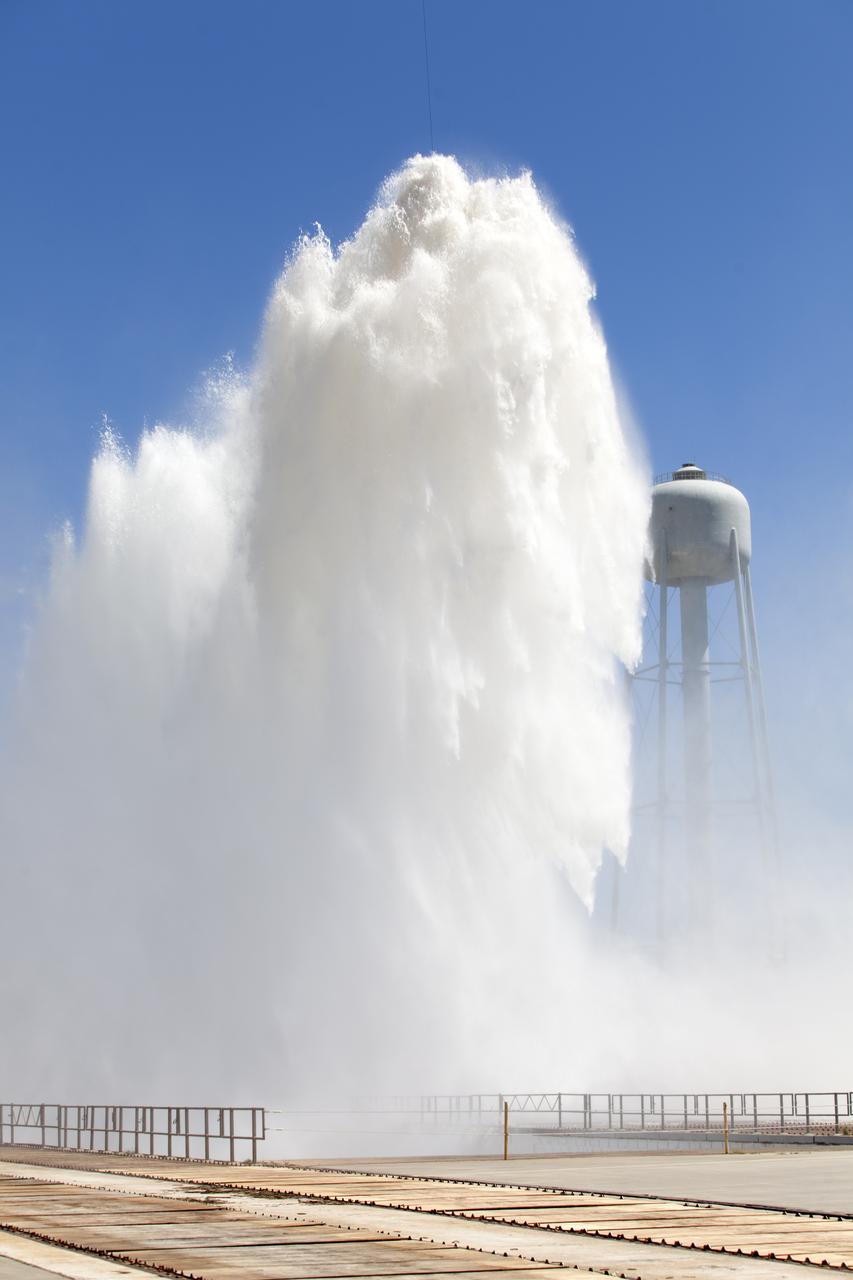
About 450,000 gallons of water flow at high speed from a holding tank through new and modified piping and valves, the flame trench, flame deflector nozzles and mobile launcher interface risers during a wet flow test on May 24, 2018, at Launch Pad 39B at NASA's Kennedy Space Center in Florida. At peak flow, the water reached about 100 feet in the air above the pad surface. The test was performed by Exploration Ground Systems to confirm the performance of the Ignition Overpressure/Sound Suppression system. During launch of NASA's Space Launch System rocket and Orion spacecraft, the high-speed water flow will help protect the vehicle from the extreme acoustic and temperature environment during ignition and liftoff.
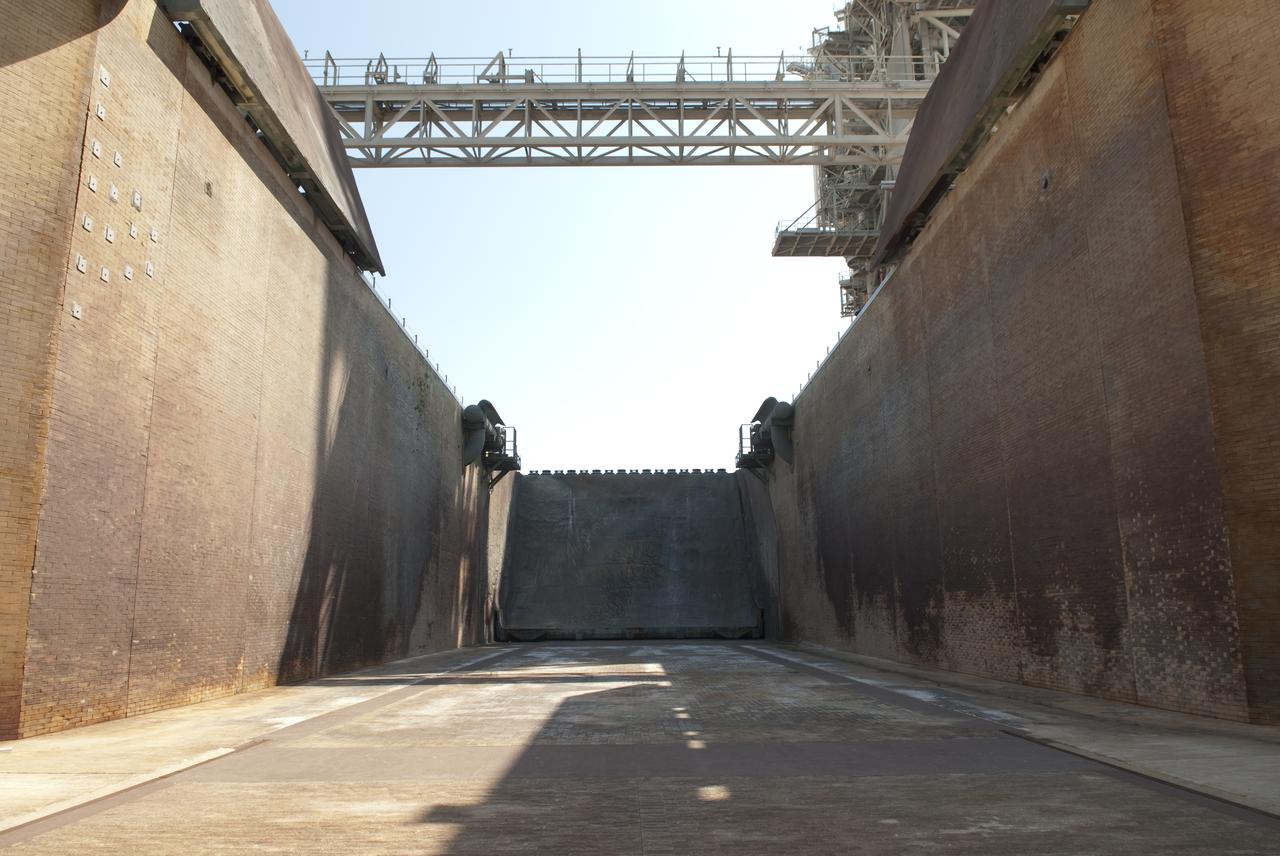
PAD 39B DEMO OPS - FLAME TRENCH AREA
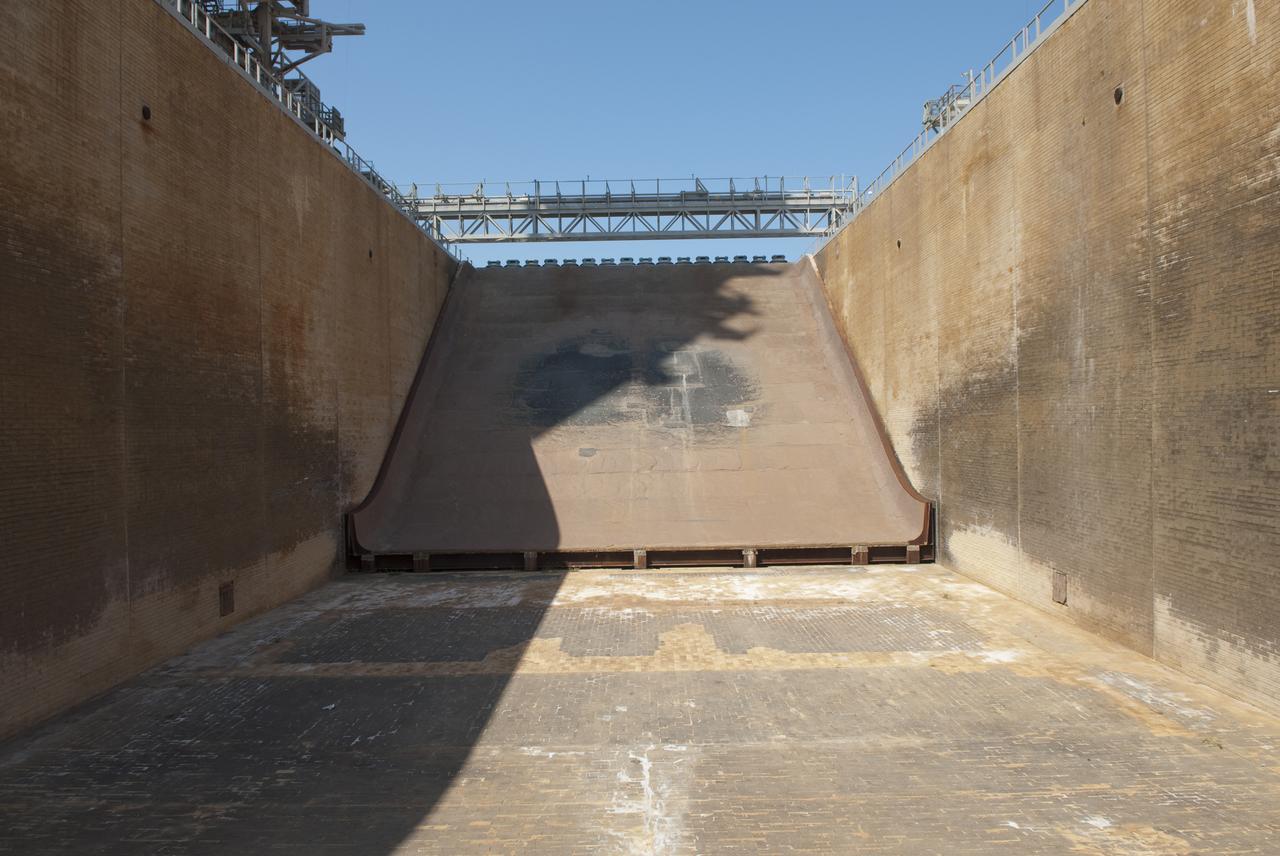
PAD 39B DEMO OPS - FLAME TRENCH AREA
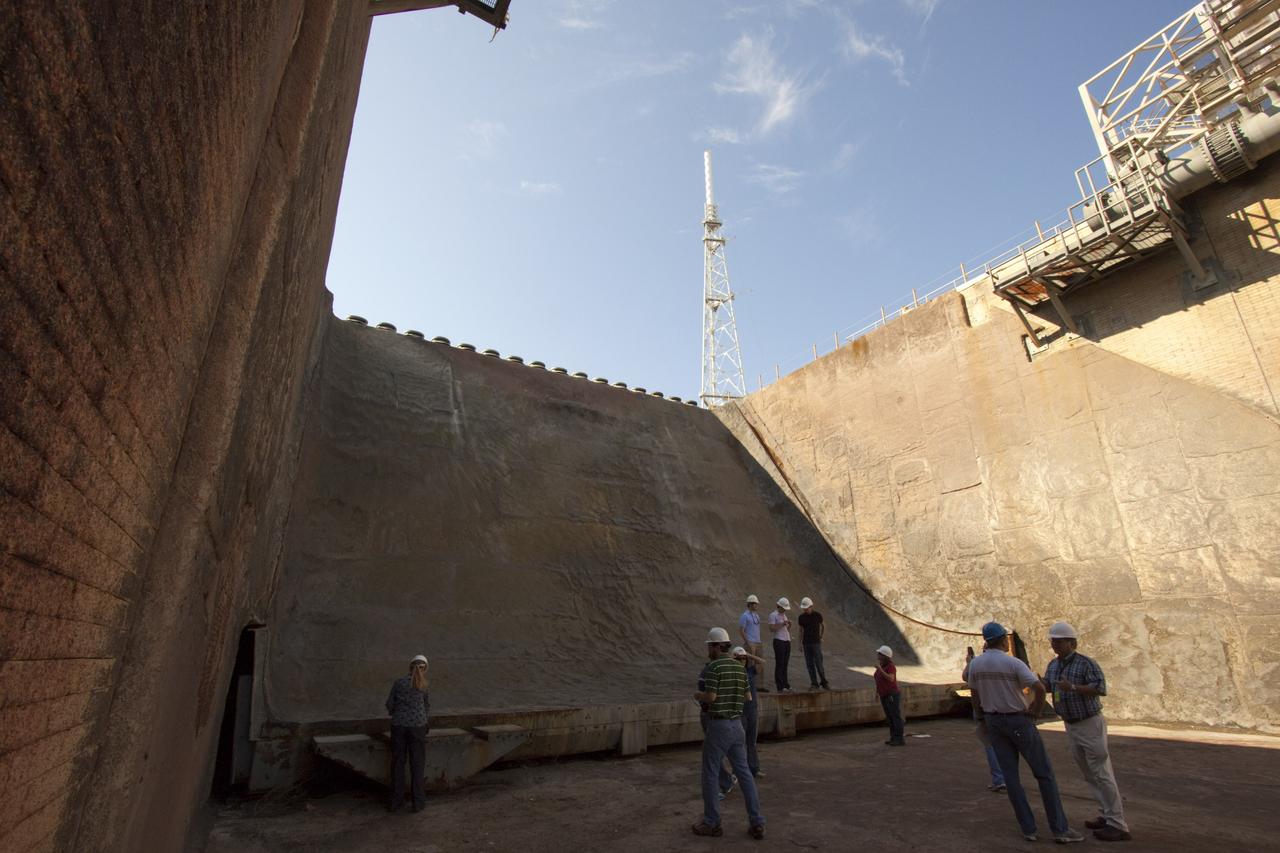
CAPE CANAVERAL, Fla. – Mechanical engineering students from Louisiana State University joined engineers and scientists at Launch Pad 39B at NASA's Kennedy Space Center in Florida as the students toured the facility to have a look at the flame trench. The students, taking pictures of the flame deflector that divides the trench, signed up to help designers looking for new, flame and vibration-resistant materials to line the trench. The students are to build a scaled-down version of the flame trench that Kennedy's scientists can use to try out sample materials for the trench. If the samples work in the lab, they can be tried out in the real flame trenches at Launch Pad 39A and 39B. The launch pad has been refurbished extensively and work is continuing to modify the pad to support a variety of launch vehicles in the future. Photo credit: NASA/Jim Grossmann
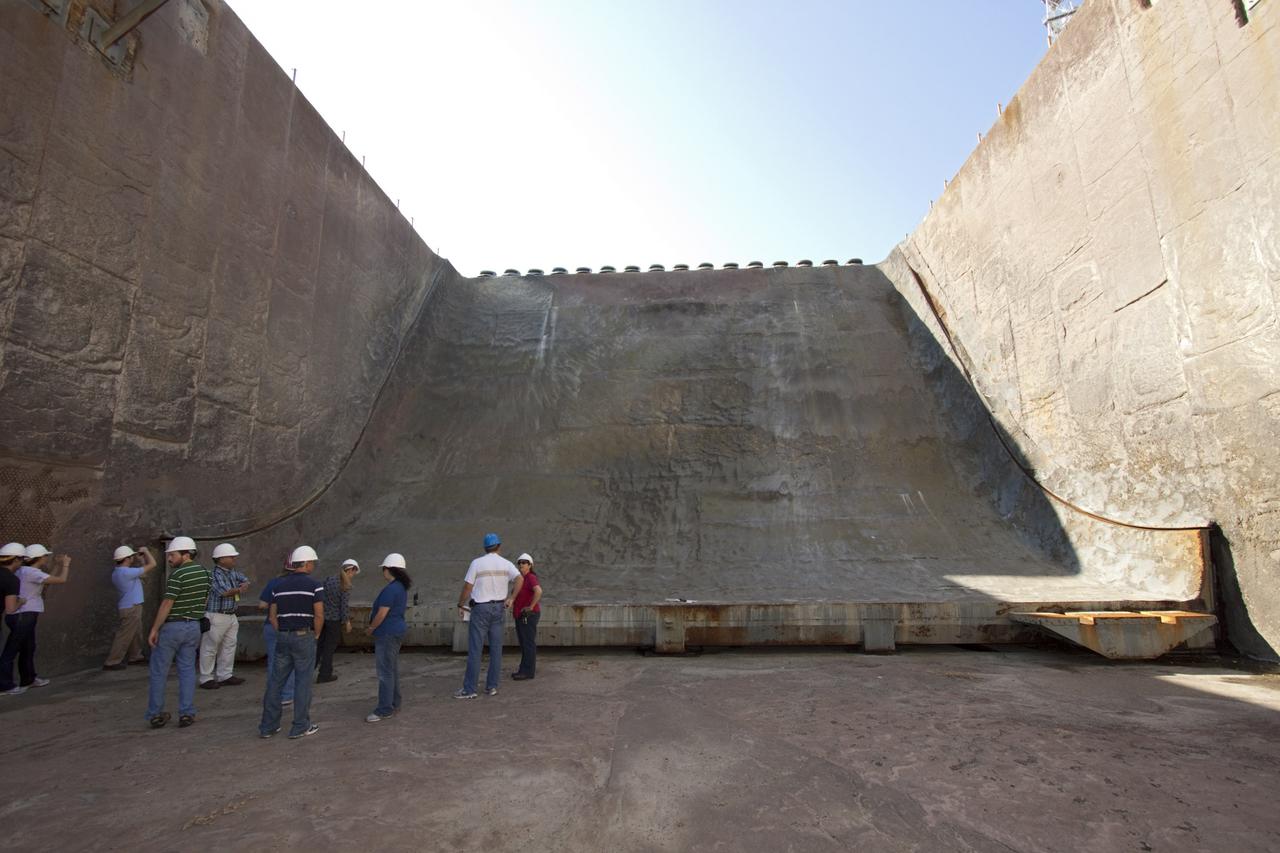
CAPE CANAVERAL, Fla. – Mechanical engineering students from Louisiana State University joined engineers and scientists at Launch Pad 39B at NASA's Kennedy Space Center in Florida as the students toured the facility to have a look at the flame trench. The students, standing on the flame deflector that divides the trench, signed up to help designers looking for new, flame and vibration-resistant materials to line the trench. The students are to build a scaled-down version of the flame trench that Kennedy's scientists can use to try out sample materials for the trench. If the samples work in the lab, they can be tried out in the real flame trenches at Launch Pad 39A and 39B. The launch pad has been refurbished extensively and work is continuing to modify the pad to support a variety of launch vehicles in the future. Photo credit: NASA/Jim Grossmann
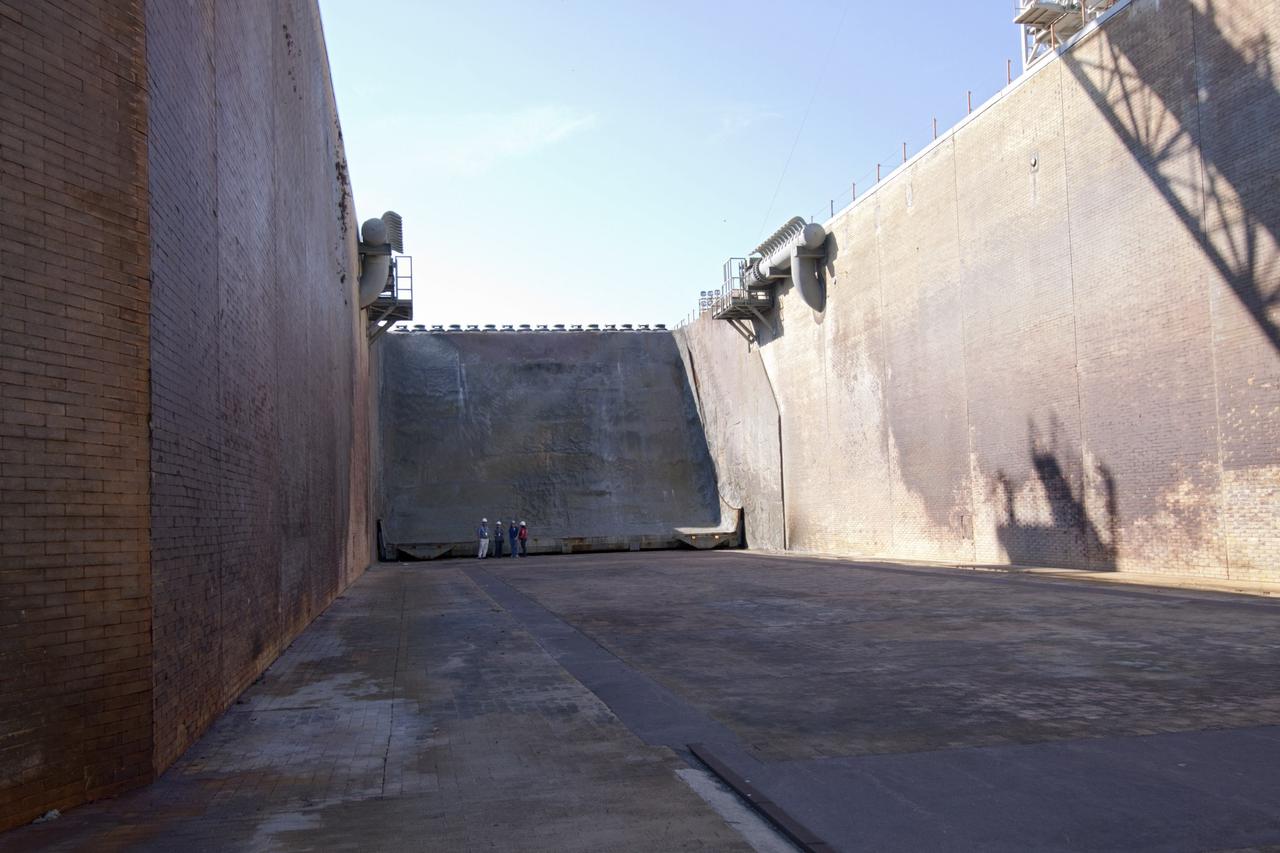
CAPE CANAVERAL, Fla. – The flame trench at Launch Pad 39B at NASA's Kennedy Space Center in Florida endured significant flames, vibrations and other stresses during the space shuttle era. Heading into the future, designers are looking for new, flame and vibration-resistant materials to line the trench. To help in the search, a team of mechanical engineering students at Louisiana State University are to build a scaled-down version of the flame trench that Kennedy's scientists can use to try out sample materials for the trench. If the samples work in the lab, they can be tried out in the real flame trenches at Launch Pad 39A and 39B. The launch pad has been refurbished extensively and work is continuing to modify the pad to support a variety of launch vehicles in the future. Photo credit: NASA/Jim Grossmann
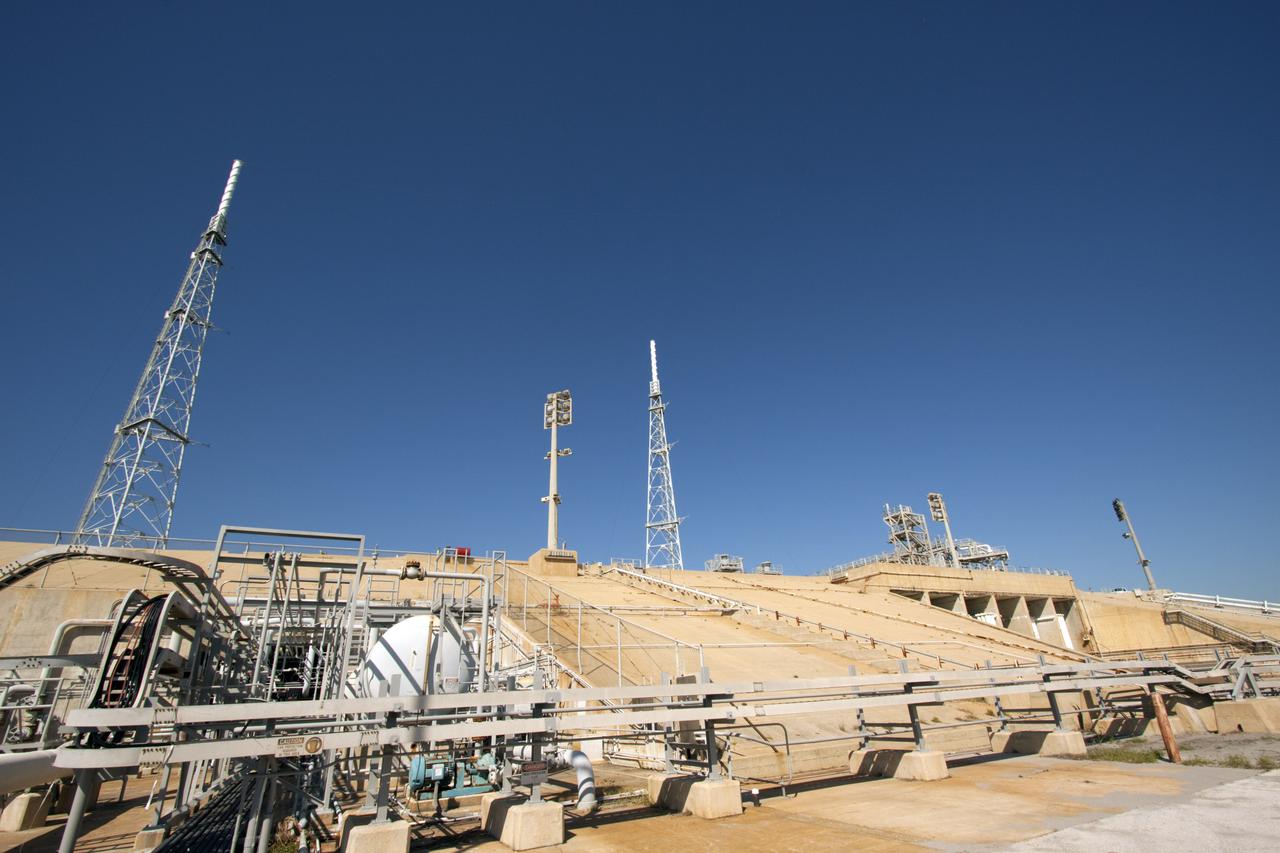
CAPE CANAVERAL, Fla. – Launch Pad 39B at NASA's Kennedy Space Center in Florida has been refurbished extensively and work is continuing to modify the pad to support a variety of launch vehicles in the future. Designers are looking for new, flame and vibration-resistant materials to line the trench. To help in the search, a team of mechanical engineering students at Louisiana State University are to build a scaled-down version of the flame trench that Kennedy's scientists can use to try out sample materials for the trench. If the samples work in the lab, they can be tried out in the real flame trenches at Launch Pad 39A and 39B. Photo credit: NASA_Jim Grossmann
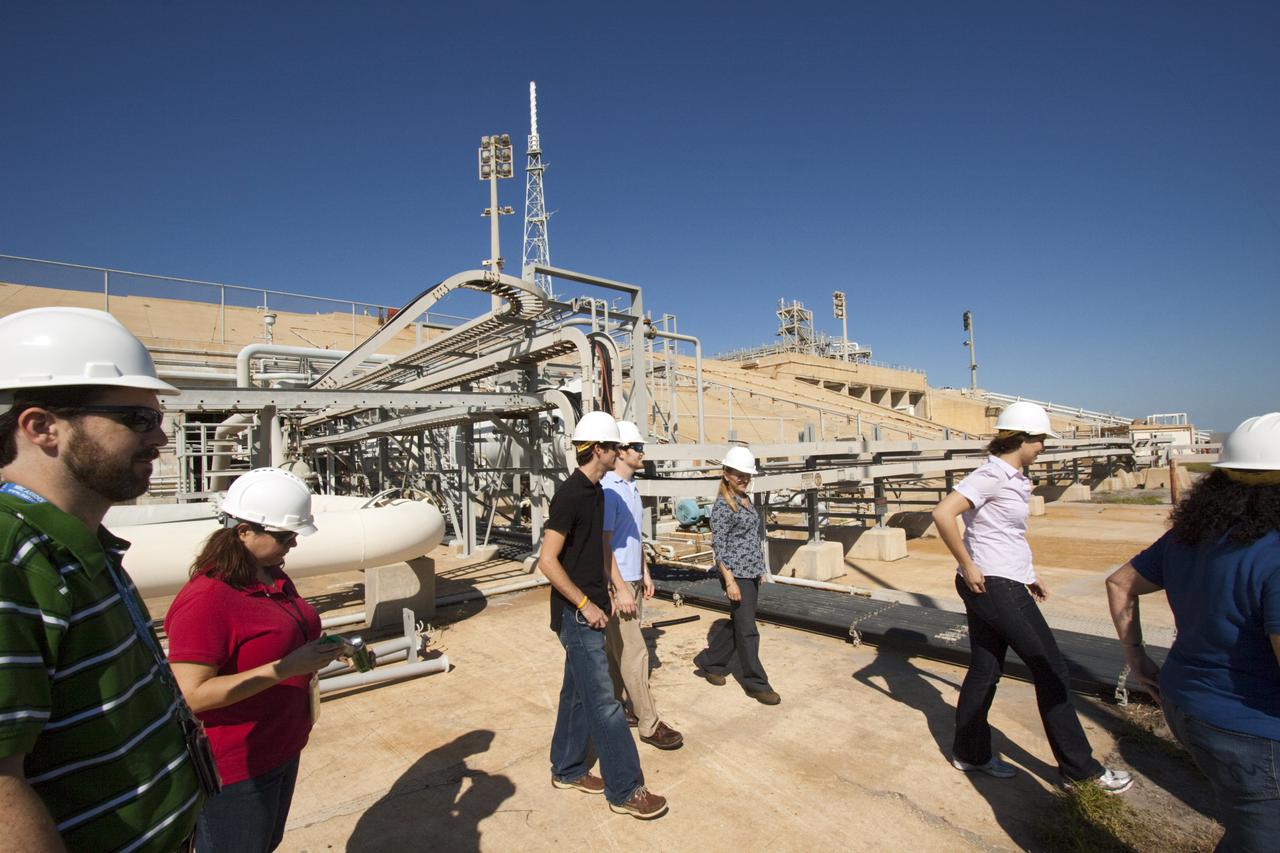
CAPE CANAVERAL, Fla. – Mechanical engineering students from Louisiana State University Christine Woodfield, right, in white shirt, Kevin Schenker, in light blue shirt, and Jacob Koch, in black shirt, joined engineers and scientists at Launch Pad 39B at NASA's Kennedy Space Center in Florida as the students toured the facility to have a look at the flame trench. They went inside the pad structure as part of their insight. The students signed up to help designers looking for new, flame and vibration-resistant materials to line the trench. The students are to build a scaled-down version of the flame trench that Kennedy's scientists can use to try out sample materials for the trench. If the samples work in the lab, they can be tried out in the real flame trenches at Launch Pad 39A and 39B. The launch pad has been refurbished extensively and work is continuing to modify the pad to support a variety of launch vehicles in the future. Photo credit: NASA_Jim Grossmann
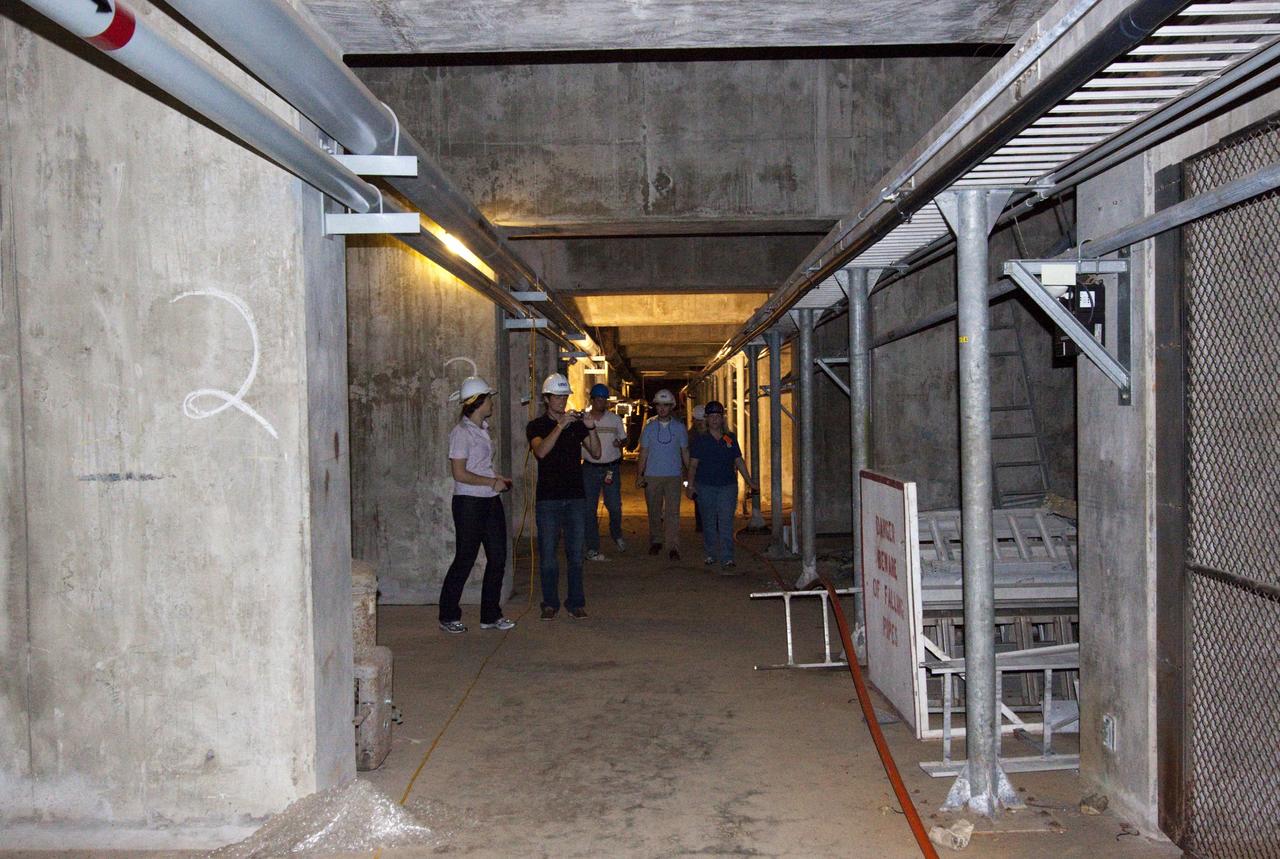
CAPE CANAVERAL, Fla. – Mechanical engineering students from Louisiana State University joined engineers and scientists at Launch Pad 39B at NASA's Kennedy Space Center in Florida as the students toured the facility to have a look at the flame trench. They went inside the pad structure as part of their insight. The students signed up to help designers looking for new, flame and vibration-resistant materials to line the trench. The students are to build a scaled-down version of the flame trench that Kennedy's scientists can use to try out sample materials for the trench. If the samples work in the lab, they can be tried out in the real flame trenches at Launch Pad 39A and 39B. The launch pad has been refurbished extensively and work is continuing to modify the pad to support a variety of launch vehicles in the future. Photo credit: NASA/Jim Grossmann
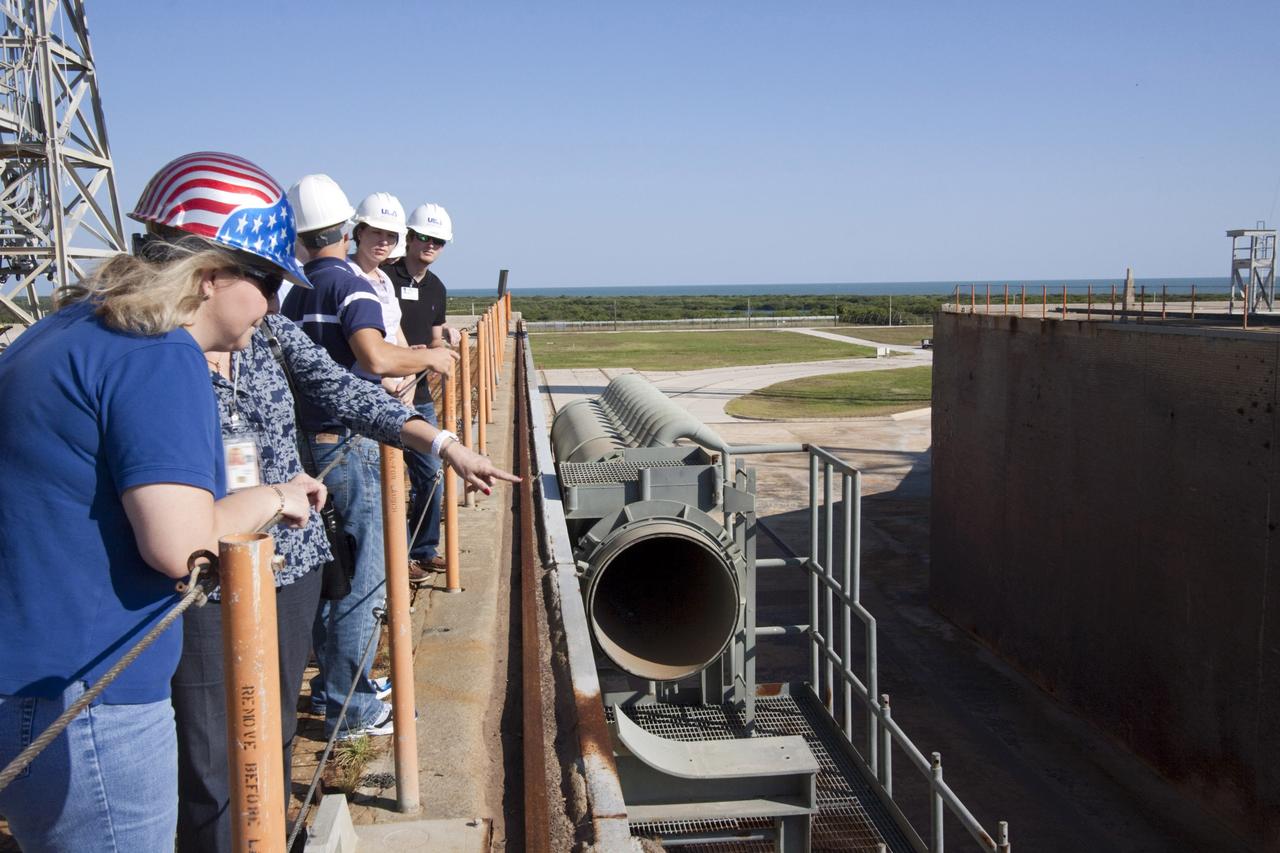
CAPE CANAVERAL, Fla. – Mechanical engineering students from Louisiana State University joined engineers and scientists at Launch Pad 39B at NASA's Kennedy Space Center in Florida as the students toured the facility to have a look at the flame trench. Designers are looking for new, flame and vibration-resistant materials to line the trench. To help in the search, a team of mechanical engineering students at Louisiana State University are to build a scaled-down version of the flame trench that Kennedy's scientists can use to try out sample materials for the trench. If the samples work in the lab, they can be tried out in the real flame trenches at Launch Pad 39A and 39B. The launch pad has been refurbished extensively and work is continuing to modify the pad to support a variety of launch vehicles in the future. Photo credit: NASA/Jim Grossmann
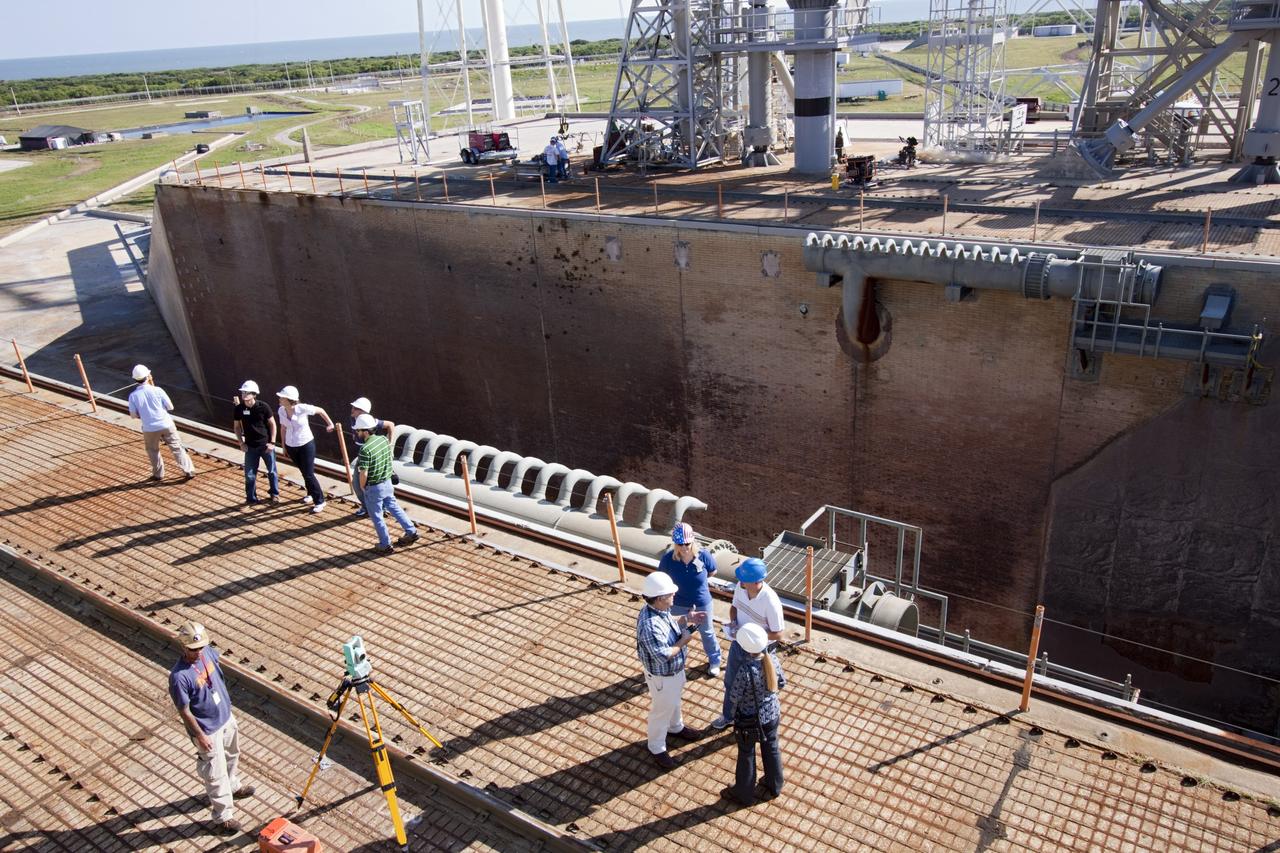
CAPE CANAVERAL, Fla. – Mechanical engineering students from Louisiana State University, the group on the left, joined engineers and scientists at Launch Pad 39B at NASA's Kennedy Space Center in Florida as the students toured the facility to have a look at the flame trench. Designers are looking for new, flame and vibration-resistant materials to line the trench. To help in the search, a team of mechanical engineering students at Louisiana State University are to build a scaled-down version of the flame trench that Kennedy's scientists can use to try out sample materials for the trench. If the samples work in the lab, they can be tried out in the real flame trenches at Launch Pad 39A and 39B. The launch pad has been refurbished extensively and work is continuing to modify the pad to support a variety of launch vehicles in the future. Photo credit: NASA/Jim Grossmann
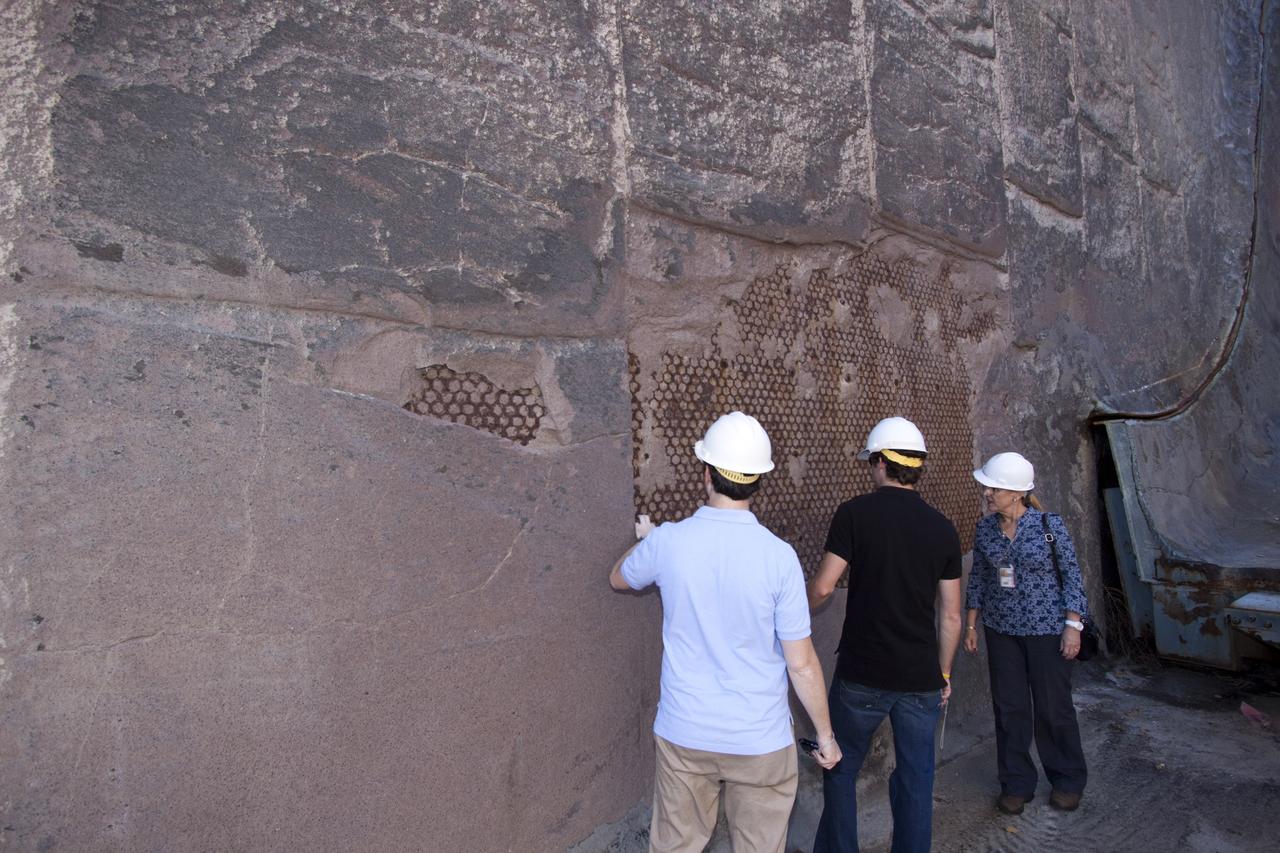
CAPE CANAVERAL, Fla. – Louisiana State University mechanical engineering students Kevin Schenker, from left, and Jacob Koch join Luz Marina Calle, a scientist at NASA's Kennedy Space in Florida, as they examine a portion of the wall of the flame trench at Launch Pad 39B. Designers are looking for new, flame and vibration-resistant materials to line the trench. To help in the search, a team of mechanical engineering students at Louisiana State University are to build a scaled-down version of the flame trench that Kennedy's scientists can use to try out sample materials for the trench. If the samples work in the lab, they can be tried out in the real flame trenches at Launch Pad 39A and 39B. The launch pad has been refurbished extensively and work is continuing to modify the pad to support a variety of launch vehicles in the future. Photo credit: NASA/Jim Grossmann
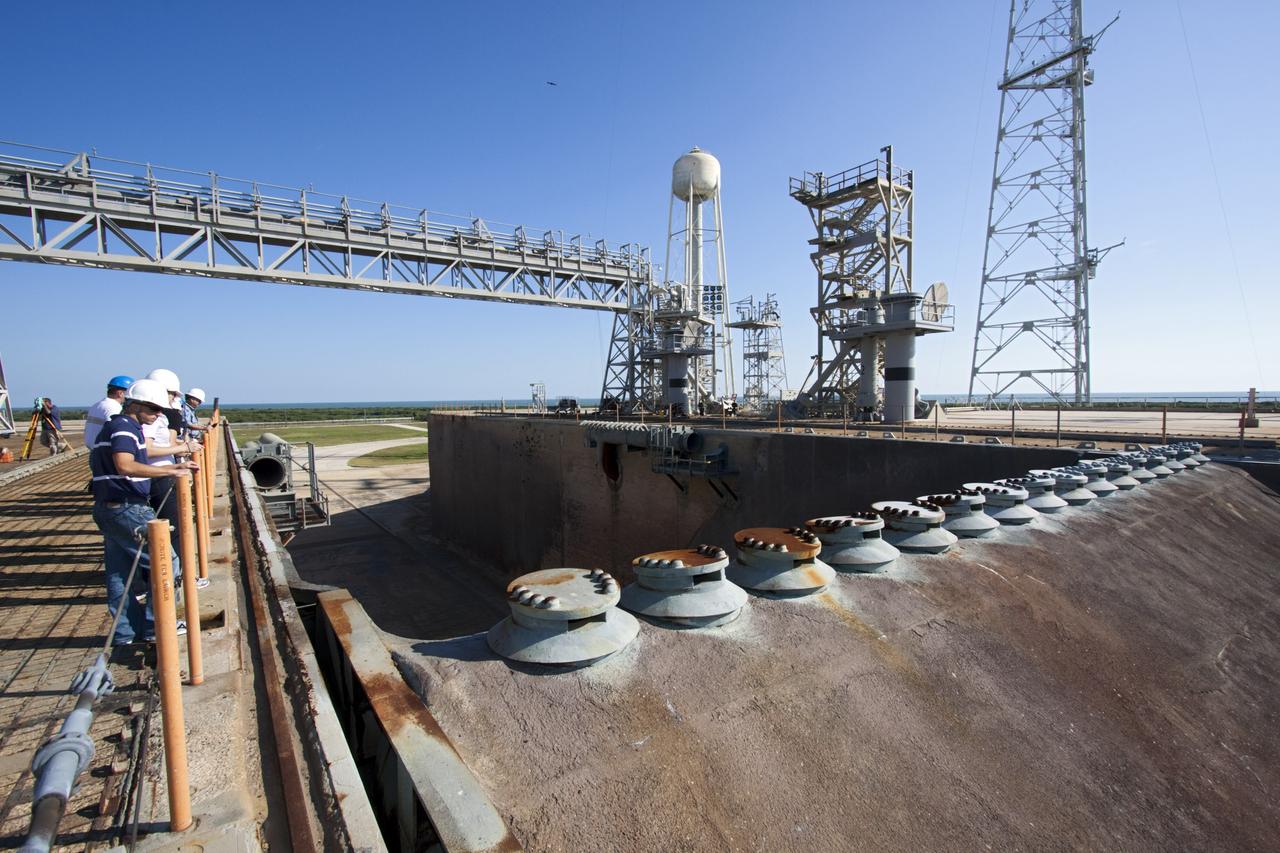
CAPE CANAVERAL, Fla. – Mechanical engineering students from Louisiana State University joined engineers and scientists at Launch Pad 39B at NASA's Kennedy Space Center in Florida as the students toured the facility to have a look at the flame trench. Designers are looking for new, flame and vibration-resistant materials to line the trench. To help in the search, a team of mechanical engineering students at Louisiana State University are to build a scaled-down version of the flame trench that Kennedy's scientists can use to try out sample materials for the trench. If the samples work in the lab, they can be tried out in the real flame trenches at Launch Pad 39A and 39B. The launch pad has been refurbished extensively and work is continuing to modify the pad to support a variety of launch vehicles in the future. Photo credit: NASA/Jim Grossmann
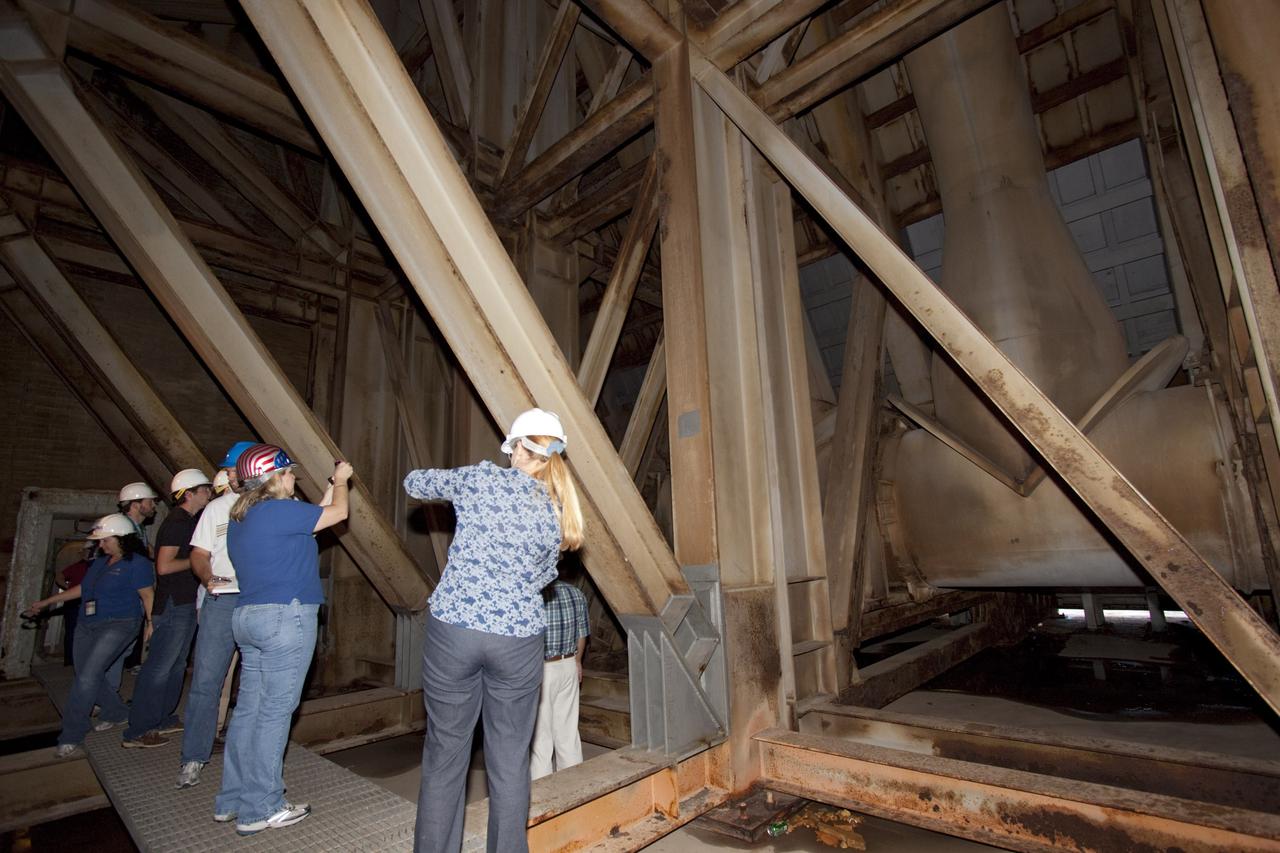
CAPE CANAVERAL, Fla. – Mechanical engineering students from Louisiana State University joined engineers and scientists at Launch Pad 39B at NASA's Kennedy Space Center in Florida as the students toured the facility to have a look at the flame trench. They went inside the pad structure to the area inside the flame deflector which divides the flame trench and funnels exhaust away from a shuttle at liftoff. The flame deflector, which is about 40-feet tall, is essentially hollow inside and braced by steel beams. The students signed up to help designers looking for new, flame and vibration-resistant materials to line the trench. The students are to build a scaled-down version of the flame trench that Kennedy's scientists can use to try out sample materials for the trench. If the samples work in the lab, they can be tried out in the real flame trenches at Launch Pad 39A and 39B. The launch pad has been refurbished extensively and work is continuing to modify the pad to support a variety of launch vehicles in the future. Photo credit: NASA/Jim Grossmann

CAPE CANAVERAL, Fla. – The flame trench at Launch Pad 39A at NASA's Kennedy Space Center in Florida endured significant flames, vibrations and other stresses during the space shuttle era. Heading into the future, designers are looking for new, flame and vibration-resistant materials to line the trench. To help in the search, a team of mechanical engineering students at Louisiana State University are to build a scaled-down version of the flame trench that Kennedy's scientists can use to try out sample materials for the trench. If the samples work in the lab, they can be tried out in the real flame trenches at Launch Pad 39A and 39B. The launch pad has been refurbished extensively and work is continuing to modify the pad to support a variety of launch vehicles in the future. Photo credit: NASA/Jim Grossmann
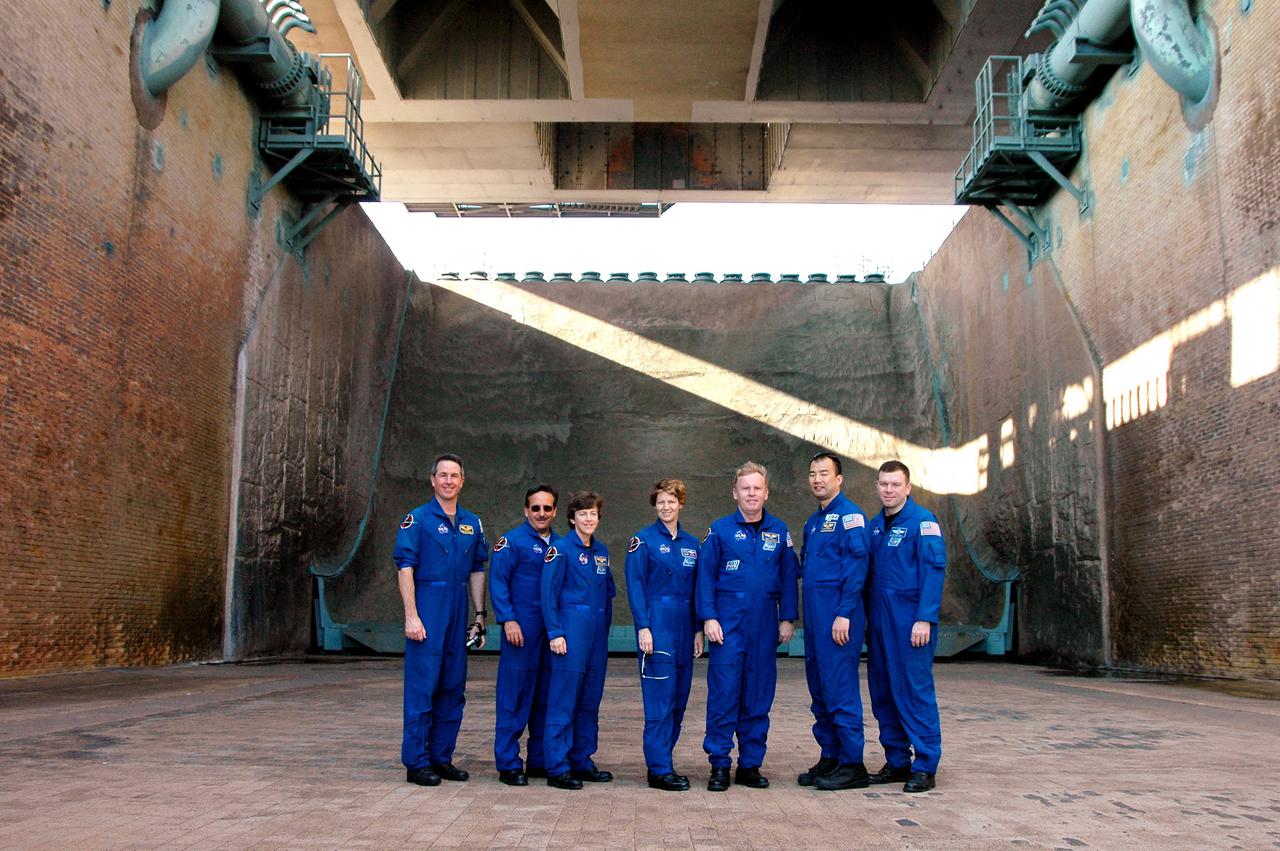
KENNEDY SPACE CENTER, FLA. - During a walkdown of Launch Pad 39B, the STS-114 crew pauses for a photograph in the flame trench underneath the pad. The flame trench, built with concrete and refractory brick, bisects the pad at ground level. It is 490 feet long, 58 feet wide and 42 feet deep. The flame deflector system includes an inverted, V-shaped steel structure covered with a high-temperature concrete material five inches thick that extends across the center of the flame trench. One side of the “V” receives and deflects the flames from the Orbiter main engines; the opposite side deflects the flames from the Solid Rocket Boosters. There are also two movable deflectors at the top of the trench to provide additional protection to Shuttle hardware from the Solid Rocket Booster flames. STS-114 is designated the first Return to Flight mission, with a launch window extending from July 13 to July 31. The crew is at KSC for Terminal Countdown Demonstration Test (TCDT) activities. The TCDT is held at KSC prior to each Space Shuttle flight. It provides the crew of each mission an opportunity to participate in simulated countdown activities. The test ends with a mock launch countdown culminating in a simulated main engine cutoff. The crew also spends time undergoing emergency egress training exercises at the launch pad.
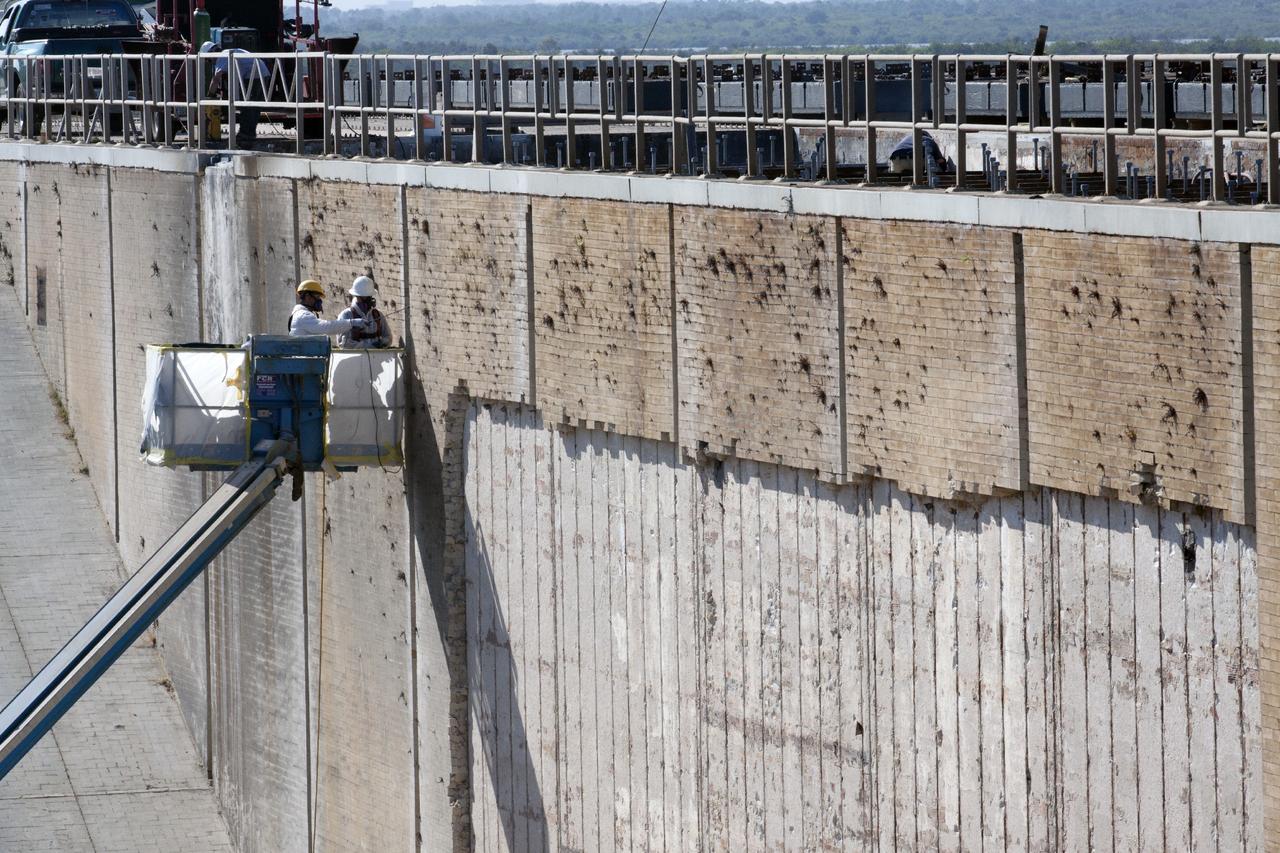
CAPE CANAVERAL, Fla. -- At Launch Pad 39B at NASA’s Kennedy Space Center in Florida, construction workers continue to remove the bricks from the flame trench walls that are below and between the left and right crawlerway tracks. The space shuttle-era flame trench deflector has been completely removed. Launch Pad 39B is being refurbished to support NASA’s Space Launch System and other launch vehicles. The Ground Systems Development and Operations, or GSDO, Program office at Kennedy is leading the center’s transformation to safely handle a variety of rockets and spacecraft. For more information about GSDO, visit: http://go.nasa.gov/groundsystems. Photo credit: NASA/Kim Shiflett
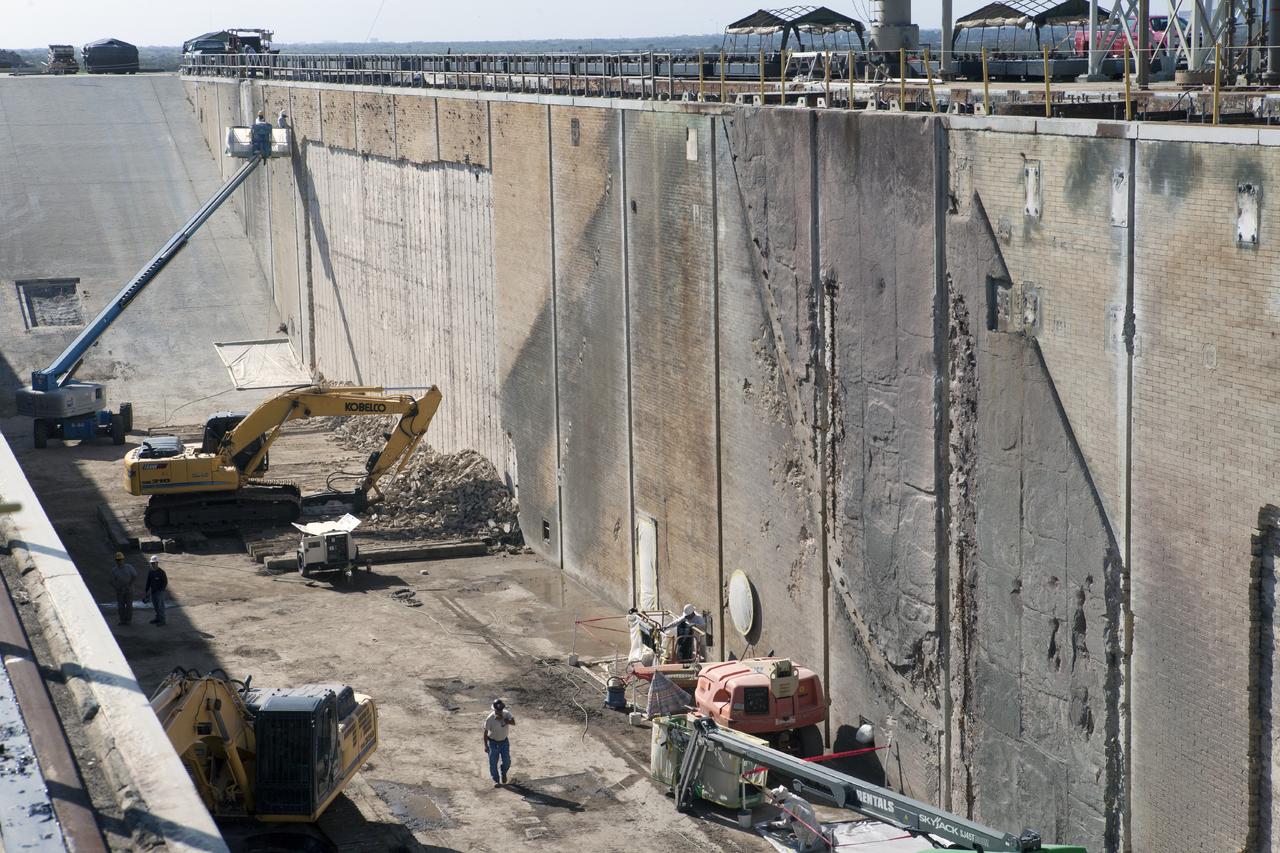
CAPE CANAVERAL, Fla. -- At Launch Pad 39B at NASA’s Kennedy Space Center in Florida, construction workers continue to remove the bricks from the flame trench walls that are below and between the left and right crawlerway tracks. New crawler track panels will be installed. The space shuttle-era flame trench deflector has been completely removed. Launch Pad 39B is being refurbished to support NASA’s Space Launch System and other launch vehicles. The Ground Systems Development and Operations, or GSDO, Program office at Kennedy is leading the center’s transformation to safely handle a variety of rockets and spacecraft. For more information about GSDO, visit: http://go.nasa.gov/groundsystems. Photo credit: NASA/Kim Shiflett
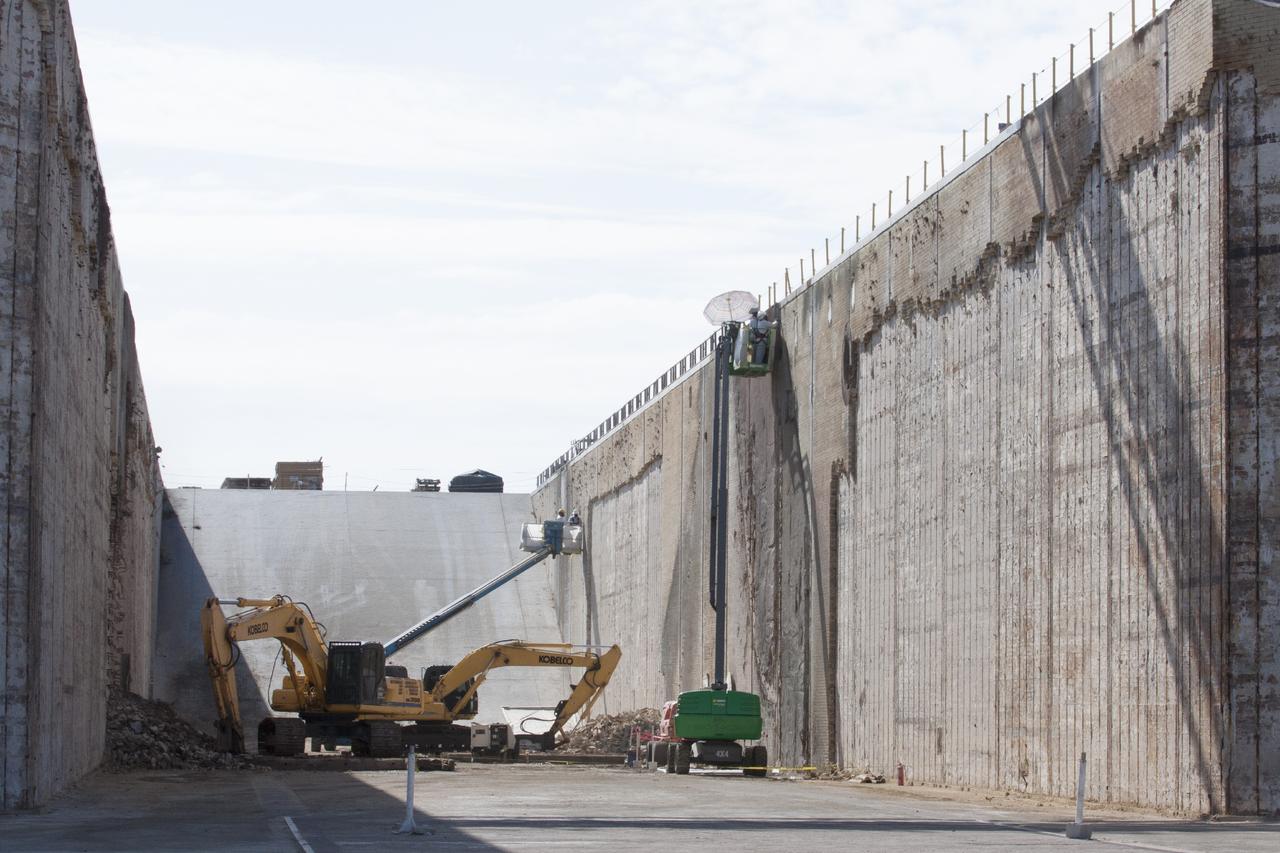
CAPE CANAVERAL, Fla. -- At Launch Pad 39B at NASA’s Kennedy Space Center in Florida, construction workers continue to remove the bricks from the flame trench walls that are below and between the left and right crawlerway tracks. The space shuttle-era flame trench deflector has been completely removed. Launch Pad 39B is being refurbished to support NASA’s Space Launch System and other launch vehicles. The Ground Systems Development and Operations, or GSDO, Program office at Kennedy is leading the center’s transformation to safely handle a variety of rockets and spacecraft. For more information about GSDO, visit: http://go.nasa.gov/groundsystems. Photo credit: NASA/Kim Shiflett
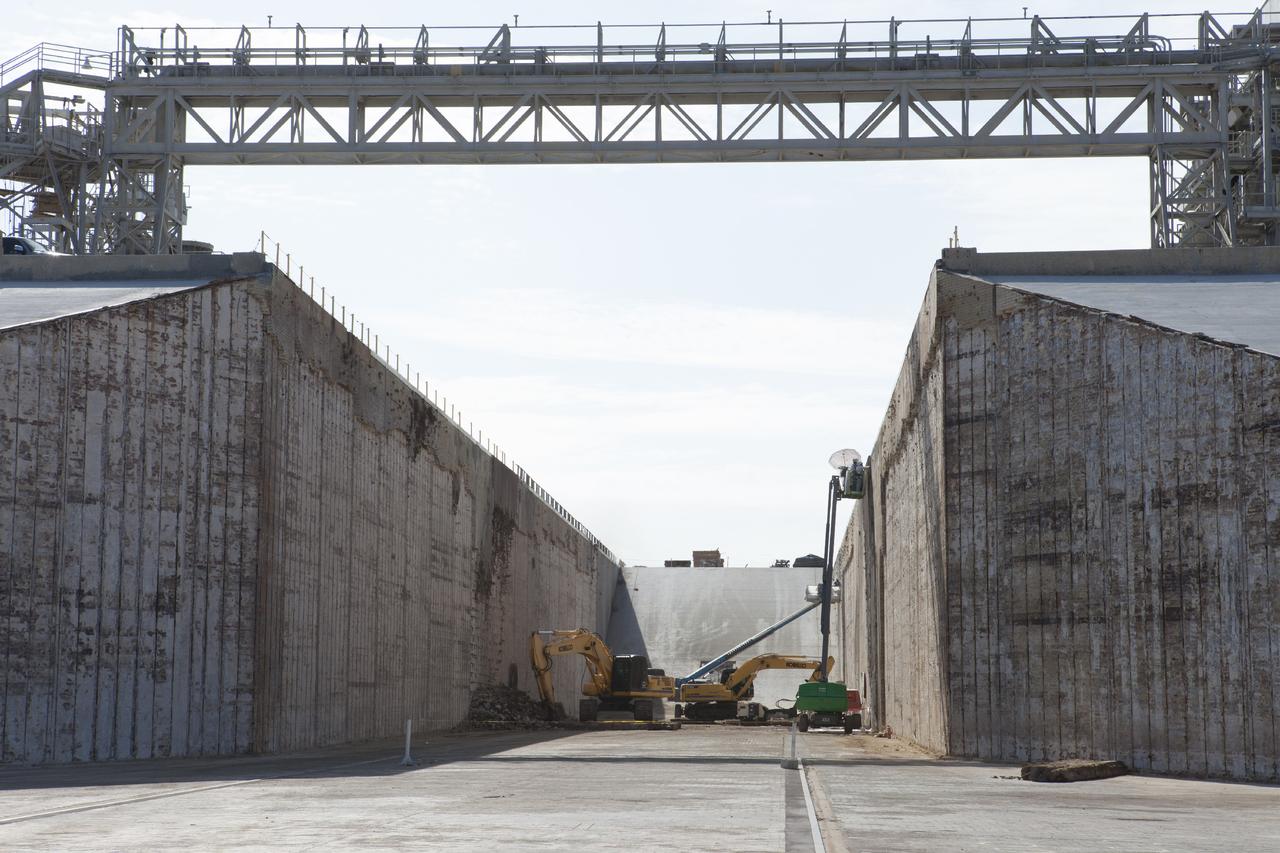
CAPE CANAVERAL, Fla. -- At Launch Pad 39B at NASA’s Kennedy Space Center in Florida, construction workers continue to remove the bricks from the flame trench walls that are below and between the left and right crawlerway tracks. The space shuttle-era flame trench deflector has been completely removed. Launch Pad 39B is being refurbished to support NASA’s Space Launch System and other launch vehicles. The Ground Systems Development and Operations, or GSDO, Program office at Kennedy is leading the center’s transformation to safely handle a variety of rockets and spacecraft. For more information about GSDO, visit: http://go.nasa.gov/groundsystems. Photo credit: NASA/Kim Shiflett
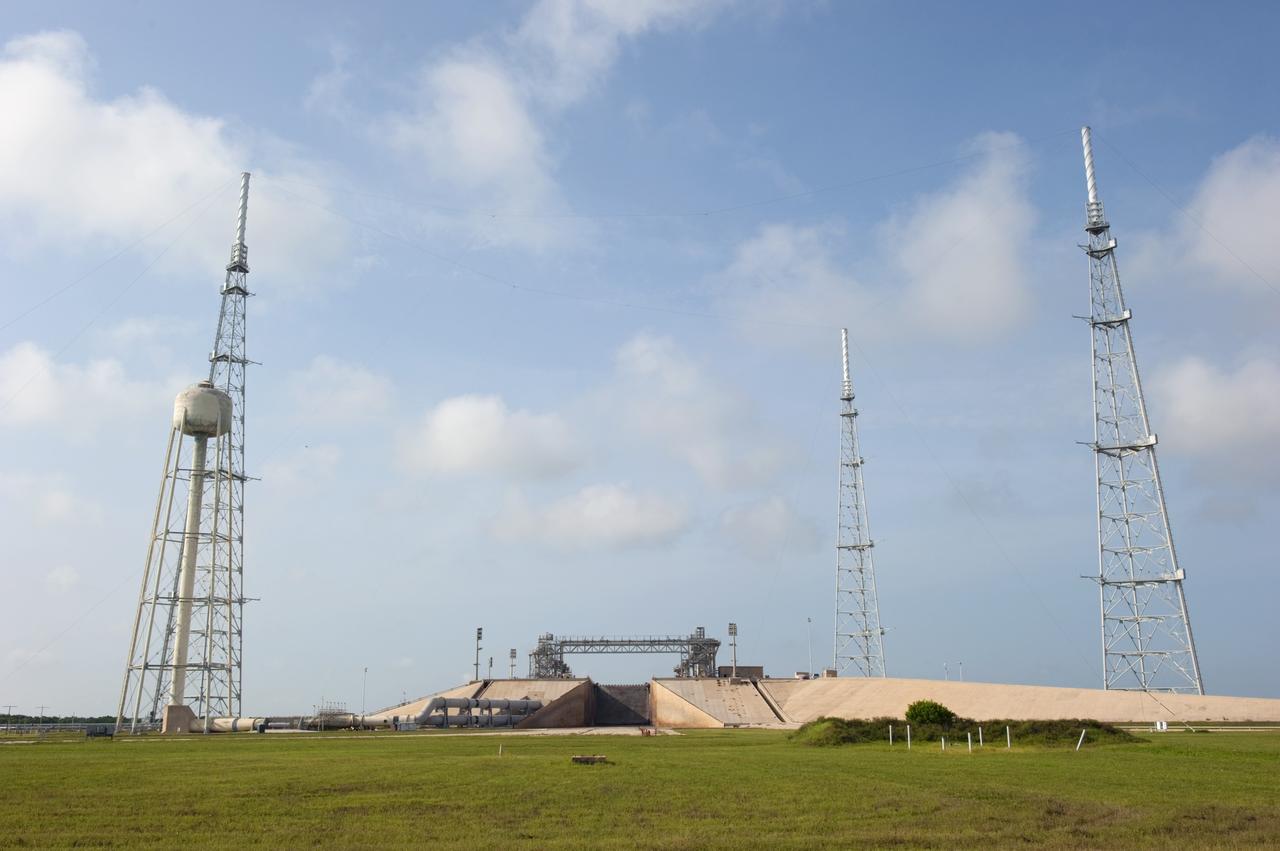
CAPE CANAVERAL, Fla. -- At NASA's Kennedy Space Center in Florida, the flame trench remains at Launch Pad 39B after the pad's deconstruction. The trench is 450 feet long, 58 feet wide and 42 feet deep with an inner inverted V-shaped steel flame deflector. In 2009, the structure at the pad was no longer needed for NASA's Space Shuttle Program, so it is being restructured for future use. The new design will feature a "clean pad" for rockets to come with their own launcher, making it more versatile for a number of vehicles. For information on NASA's future plans, visit http://www.nasa.gov/exploration. Photo credit: NASA/Kim Shiflett
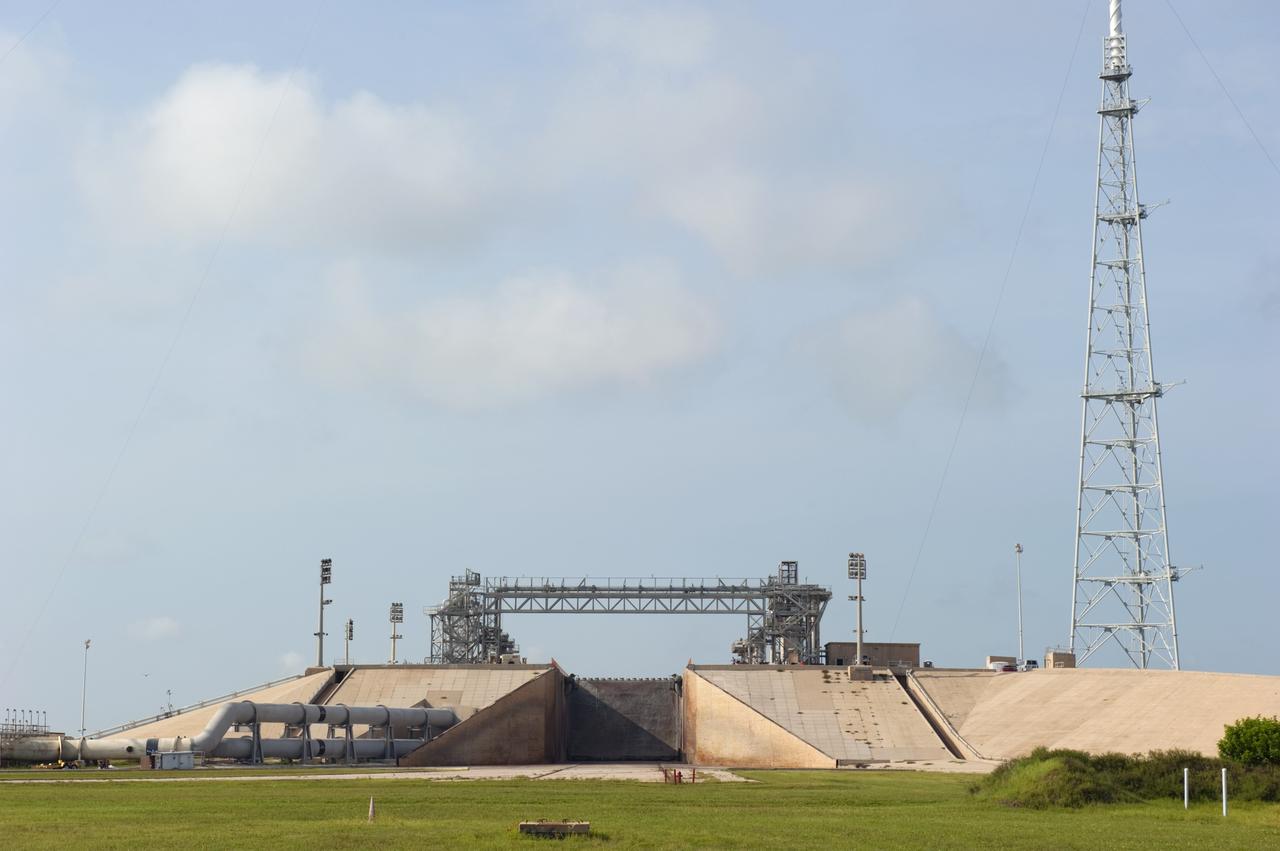
CAPE CANAVERAL, Fla. -- At NASA's Kennedy Space Center in Florida, the flame trench remains at Launch Pad 39B after the pad's deconstruction. The trench is 450 feet long, 58 feet wide and 42 feet deep with an inner inverted V-shaped steel flame deflector. In 2009, the structure at the pad was no longer needed for NASA's Space Shuttle Program, so it is being restructured for future use. The new design will feature a "clean pad" for rockets to come with their own launcher, making it more versatile for a number of vehicles. For information on NASA's future plans, visit http://www.nasa.gov/exploration. Photo credit: NASA/Kim Shiflett
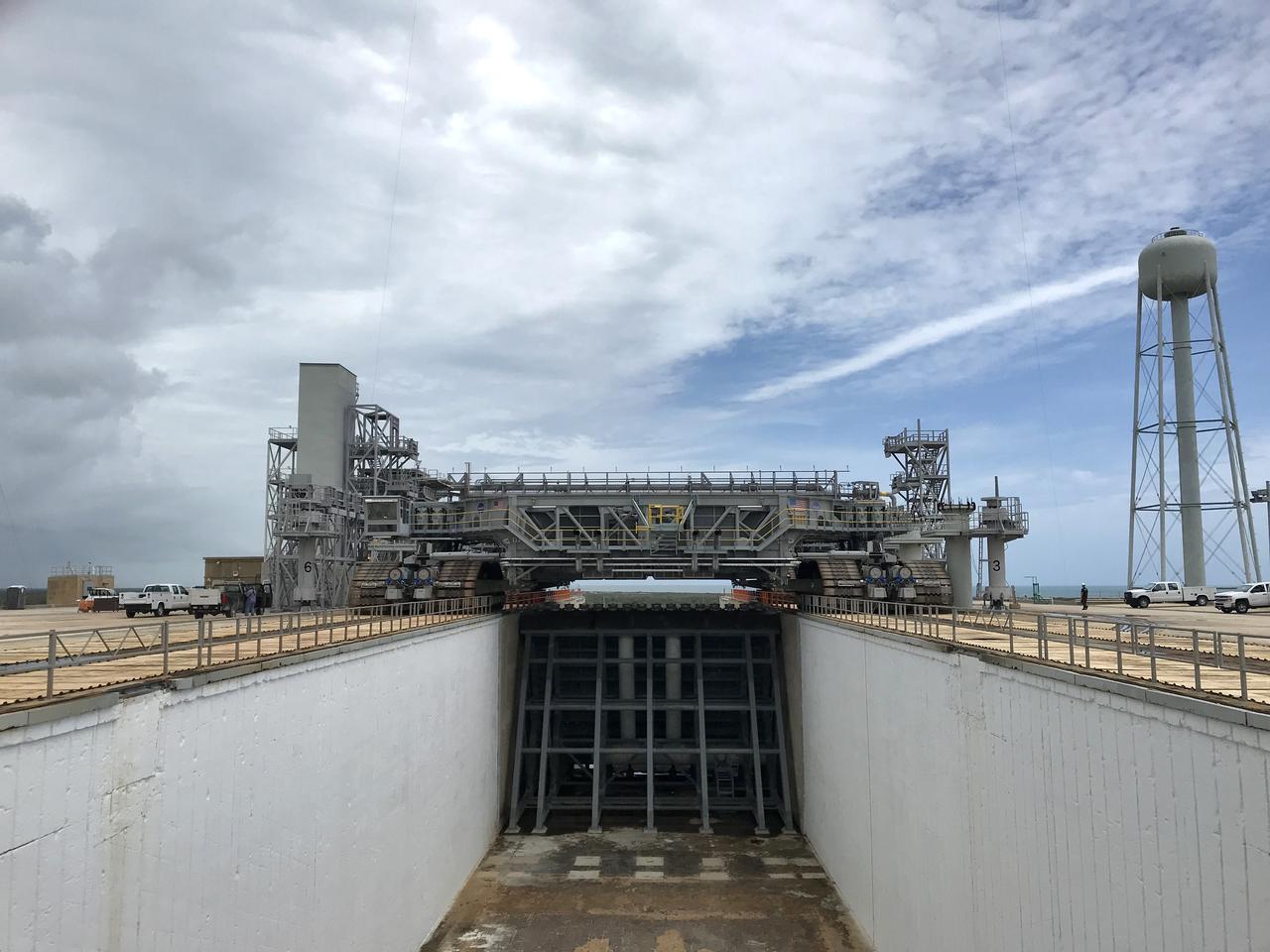
Crawler-transporter 2 (CT-2) arrives on the surface of Launch Pad 39B for a fit check on May 22, 2018, at NASA's Kennedy Space Center in Florida. The test drive to the pad confirms that all of the recent modifications to CT-2 and Pad 39B are operational to support the launch of the agency's Space Launch System rocket and Orion spacecraft on Exploration Mission-1. In view is the south side of the flame trench and the south side of the recently installed new main flame deflector. Exploration Ground Systems managed the modifications and upgrades to CT-2 and Pad 39B to prepare for EM-1 and deep space exploration missions.
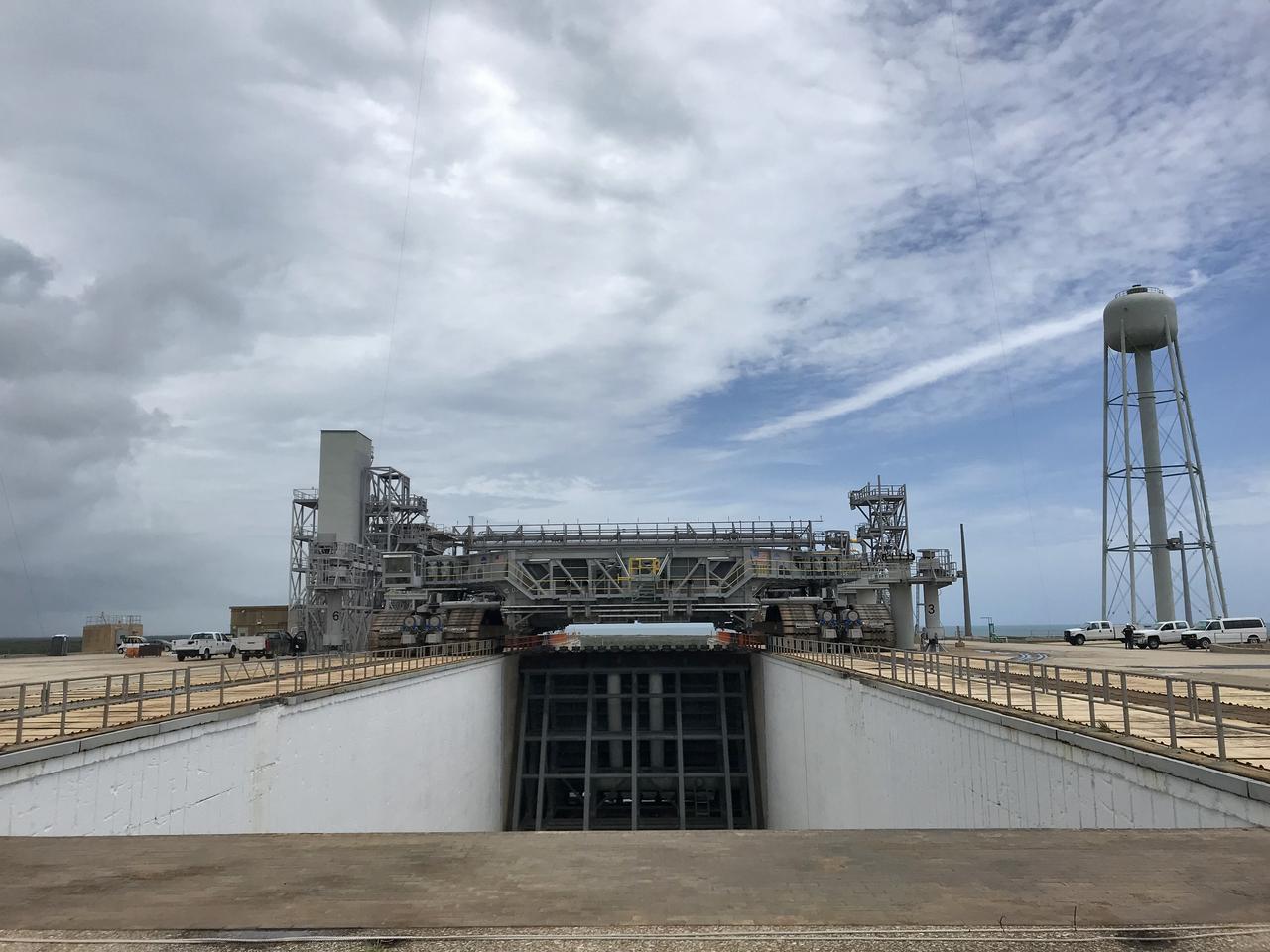
Crawler-transporter 2 (CT-2) arrives on the surface of Launch Pad 39B for a fit check on May 22, 2018, at NASA's Kennedy Space Center in Florida. The test drive to the pad confirms that all of the recent modifications to CT-2 and Pad 39B are operational to support the launch of the agency's Space Launch System rocket and Orion spacecraft on Exploration Mission-1. In view is the south side of the flame trench and the south side of the recently installed new main flame deflector. Exploration Ground Systems managed the modifications and upgrades to CT-2 and Pad 39B to prepare for EM-1 and deep space exploration missions.
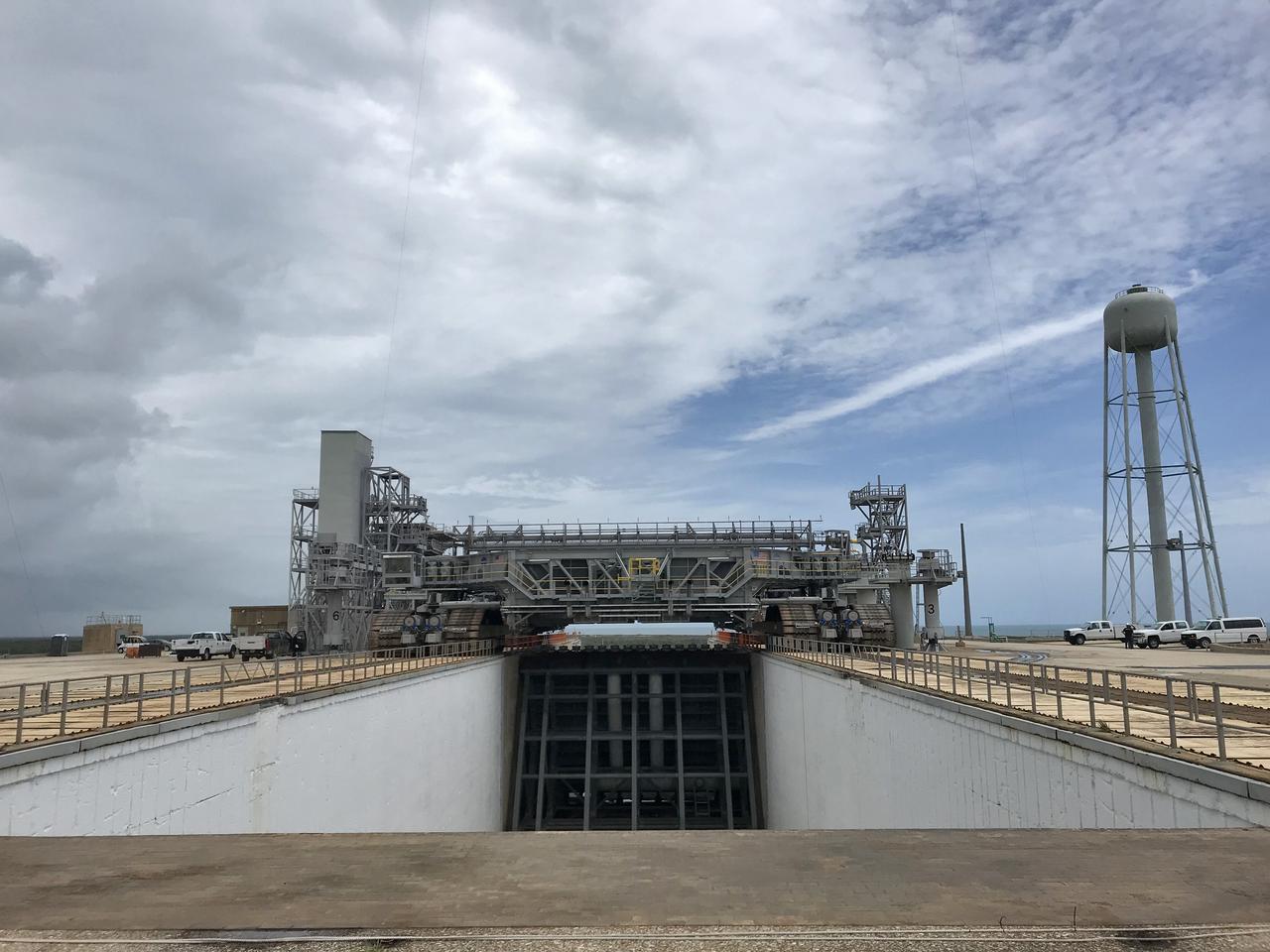
Crawler-transporter 2 (CT-2) arrives on the surface of Launch Pad 39B for a fit check on May 22, 2018, at NASA's Kennedy Space Center in Florida. The test drive to the pad confirms that all of the recent modifications to CT-2 and Pad 39B are operational to support the launch of the agency's Space Launch System rocket and Orion spacecraft on Exploration Mission-1. In view is the south side of the flame trench and the south side of the recently installed new main flame deflector. Exploration Ground Systems managed the modifications and upgrades to CT-2 and Pad 39B to prepare for EM-1 and deep space exploration missions.
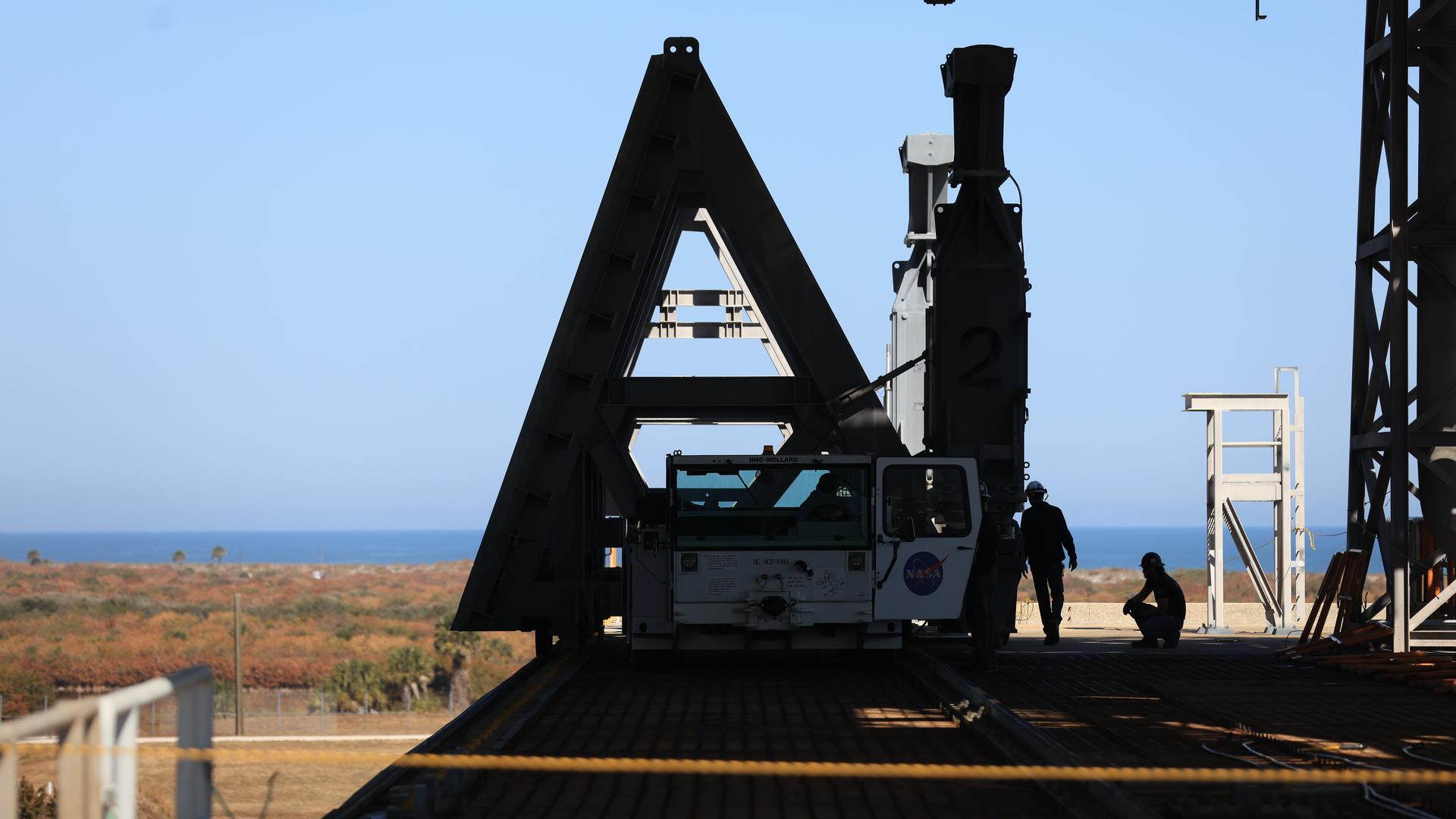
Technicians are shown at NASA’s Launch Pad 39B at Kennedy Space Center in Florida in Florida on Tuesday, Feb. 10, 2026, with one of two side flame deflectors that will be used to support NASA’s Artemis II launch. Each side flame deflector has two pillar-like extensible columns which are jacked into place to help support mobile launcher 1 when the vehicle is being fueled. During liftoff, the flame deflectors help contain the plume of the SLS (Space Launch System) rocket down into the flame trench.
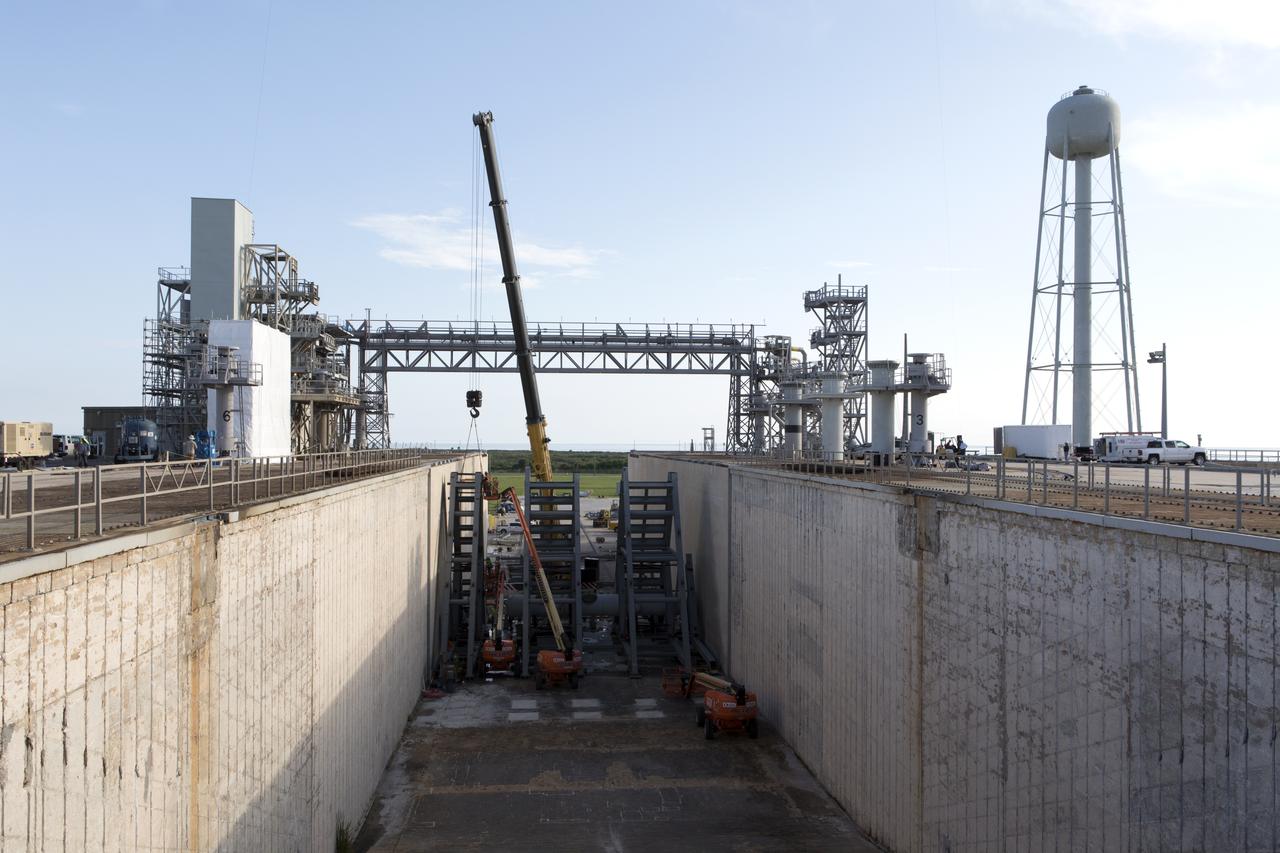
At Launch Pad 39B at NASA's Kennedy Space Center in Florida, cranes lower large segments of the support hardware for a new flame deflector into place in the flame trench. Construction workers weld the structures together. The new flame deflector will be positioned about six feet south of the shuttle-era flame deflector’s position. During liftoff of NASA’s Space Launch System, the rocket’s flame and energy will be diverted to the north side of the flame trench. The north side of the deflector will be protected by a NASA standard coating. The south side of the deflector will not be slanted and will have no lining. The new design will provide easier access for inspection, maintenance and repair. The Ground Systems Development and Operations (GSDO) Program at Kennedy is managing the installation of the flame deflector for Exploration Mission 1, deep space missions, and NASA's Journey to Mars.
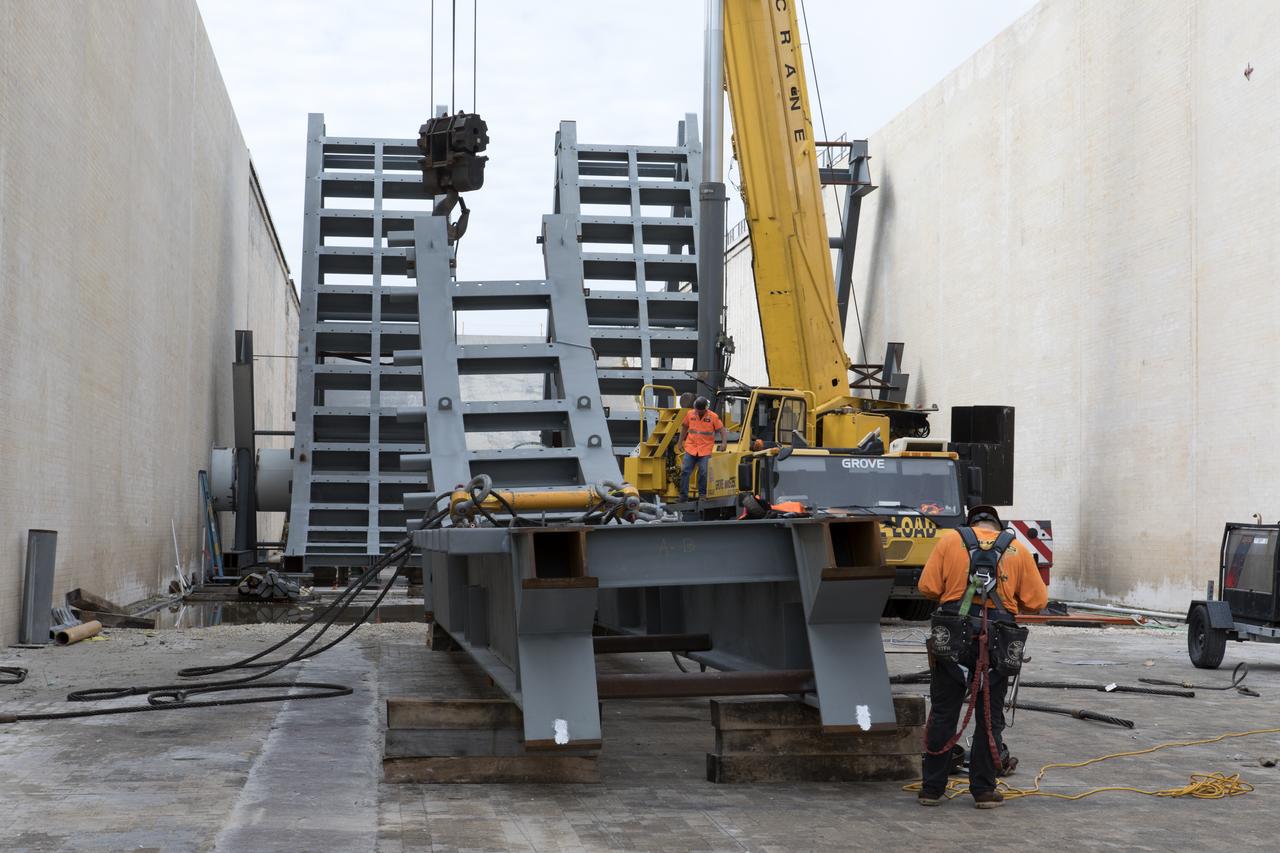
At Launch Pad 39B at NASA's Kennedy Space Center in Florida, construction workers position large segments of the support hardware for a new flame deflector in the flame trench. The new flame deflector will be positioned about six feet south of the shuttle-era flame deflector’s position. During liftoff of NASA’s Space Launch System, the rocket’s flame and energy will be diverted to the north side of the flame trench. The north side of the deflector will be protected by a NASA standard coating. The south side of the deflector will not be slanted and will have no lining. The new design will provide easier access for inspection, maintenance and repair. The Ground Systems Development and Operations (GSDO) Program at Kennedy is managing the installation of the flame deflector for Exploration Mission 1, deep space missions, and NASA's Journey to Mars.

At Launch Pad 39B at NASA's Kennedy Space Center in Florida, construction workers position large segments of the support hardware for a new flame deflector in the flame trench. The new flame deflector will be positioned about six feet south of the shuttle-era flame deflector’s position. During liftoff of NASA’s Space Launch System, the rocket’s flame and energy will be diverted to the north side of the flame trench. The north side of the deflector will be protected by a NASA standard coating. The south side of the deflector will not be slanted and will have no lining. The new design will provide easier access for inspection, maintenance and repair. The Ground Systems Development and Operations (GSDO) Program at Kennedy is managing the installation of the flame deflector for Exploration Mission 1, deep space missions, and NASA's Journey to Mars.
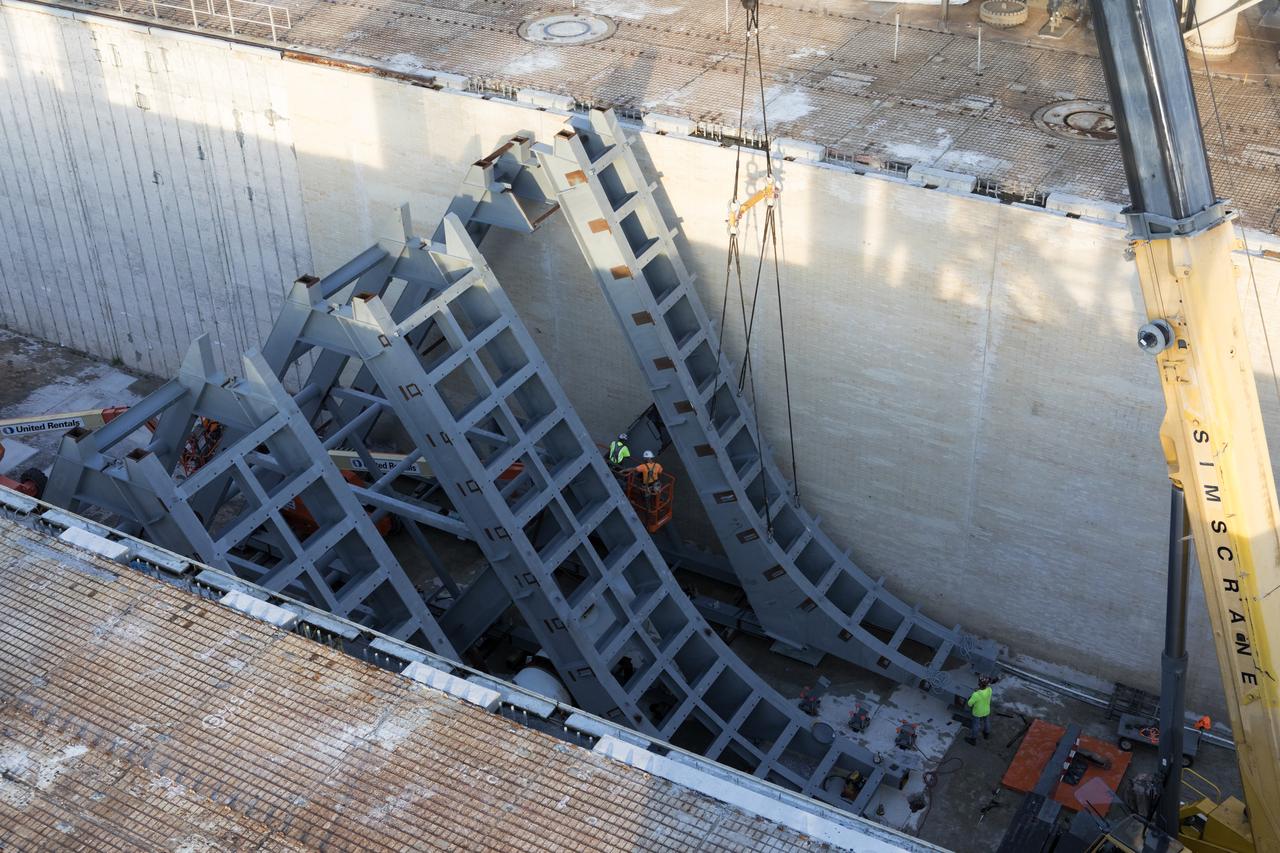
At Launch Pad 39B at NASA's Kennedy Space Center in Florida, large segments of the support hardware for a new flame deflector have been lowered into position in the flame trench. The new flame deflector will be positioned about six feet south of the shuttle-era flame deflector’s position. During liftoff of NASA’s Space Launch System, the rocket’s flame and energy will be diverted to the north side of the flame trench. The north side of the deflector will be protected by a NASA standard coating. The south side of the deflector will not be slanted and will have no lining. The new design will provide easier access for inspection, maintenance and repair. The Ground Systems Development and Operations (GSDO) Program at Kennedy is managing the installation of the flame deflector for Exploration Mission 1, deep space missions, and NASA's Journey to Mars.
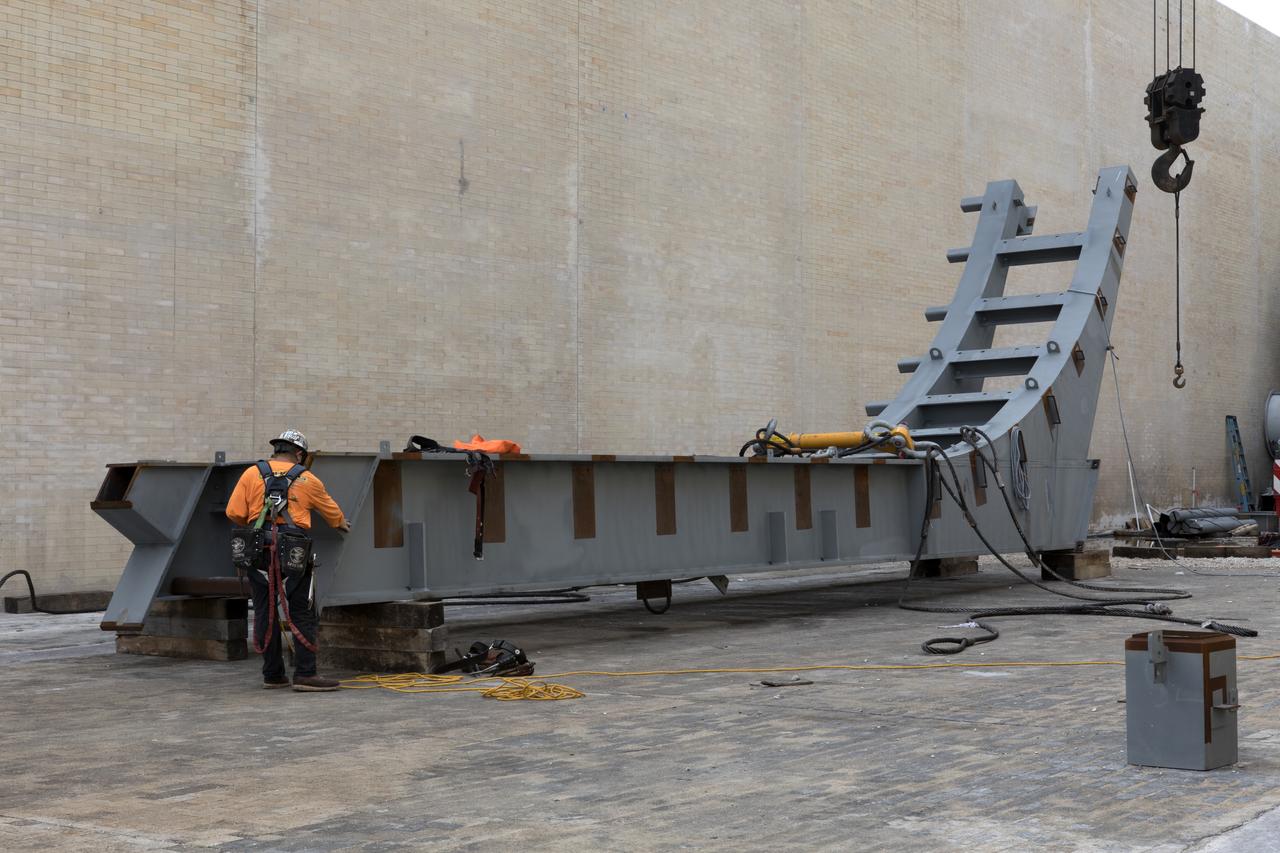
At Launch Pad 39B at NASA's Kennedy Space Center in Florida, a construction worker prepares a large segments of the support hardware for a new flame deflector to be lifted into place in the flame trench. The new flame deflector will be positioned about six feet south of the shuttle-era flame deflector’s position. During liftoff of NASA’s Space Launch System, the rocket’s flame and energy will be diverted to the north side of the flame trench. The north side of the deflector will be protected by a NASA standard coating. The south side of the deflector will not be slanted and will have no lining. The new design will provide easier access for inspection, maintenance and repair. The Ground Systems Development and Operations (GSDO) Program at Kennedy is managing the installation of the flame deflector for Exploration Mission 1, deep space missions, and NASA's Journey to Mars.
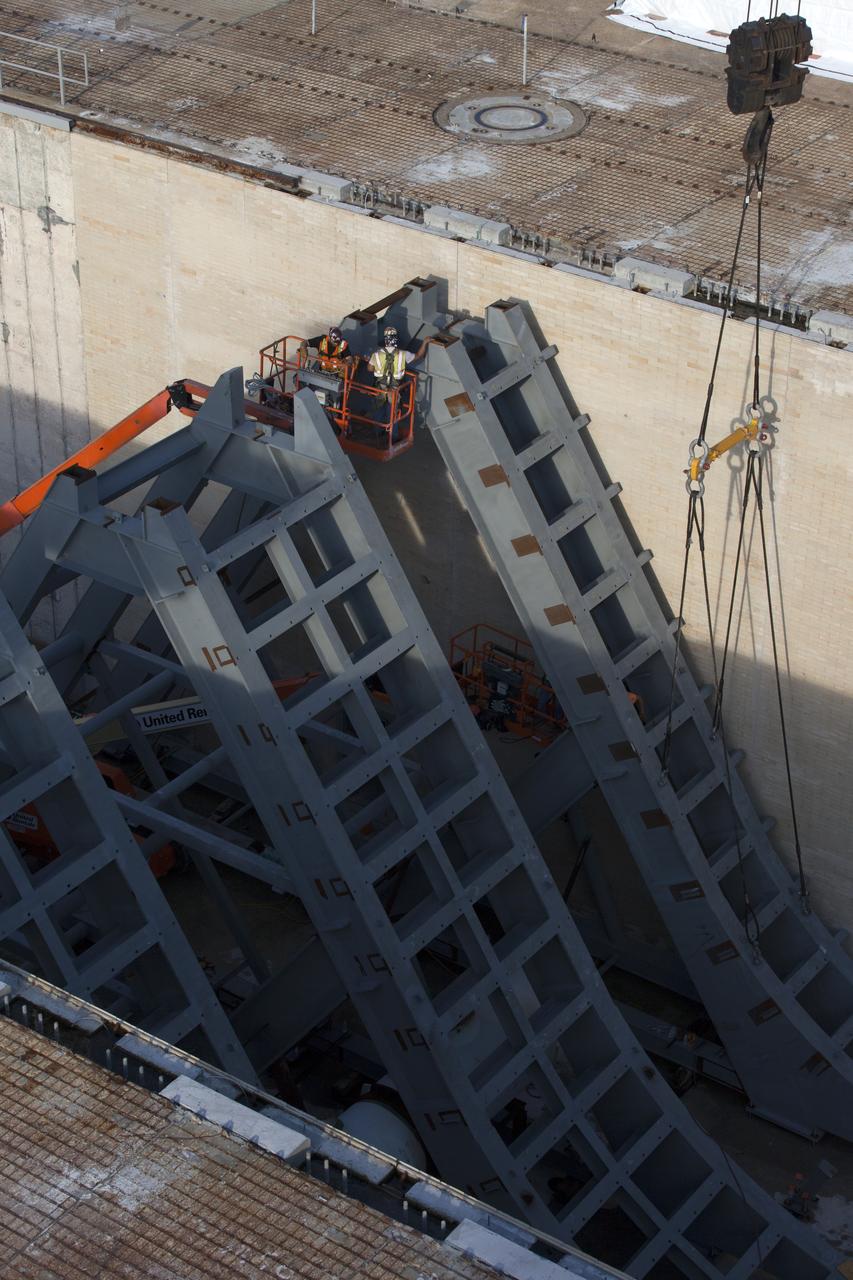
At Launch Pad 39B at NASA's Kennedy Space Center in Florida, construction workers prepare to weld together large segments of the support hardware for a new flame deflector in the flame trench. The new flame deflector will be positioned about six feet south of the shuttle-era flame deflector’s position. During liftoff of NASA’s Space Launch System, the rocket’s flame and energy will be diverted to the north side of the flame trench. The north side of the deflector will be protected by a NASA standard coating. The south side of the deflector will not be slanted and will have no lining. The new design will provide easier access for inspection, maintenance and repair. The Ground Systems Development and Operations (GSDO) Program at Kennedy is managing the installation of the flame deflector for Exploration Mission 1, deep space missions, and NASA's Journey to Mars.

At Launch Pad 39B at NASA's Kennedy Space Center in Florida, cranes lower large segments of the support hardware for a new flame deflector into place in the flame trench. Construction workers weld the structures together. The new flame deflector will be positioned about six feet south of the shuttle-era flame deflector’s position. During liftoff of NASA’s Space Launch System, the rocket’s flame and energy will be diverted to the north side of the flame trench. The north side of the deflector will be protected by a NASA standard coating. The south side of the deflector will not be slanted and will have no lining. The new design will provide easier access for inspection, maintenance and repair. The Ground Systems Development and Operations (GSDO) Program at Kennedy is managing the installation of the flame deflector for Exploration Mission 1, deep space missions, and NASA's Journey to Mars.
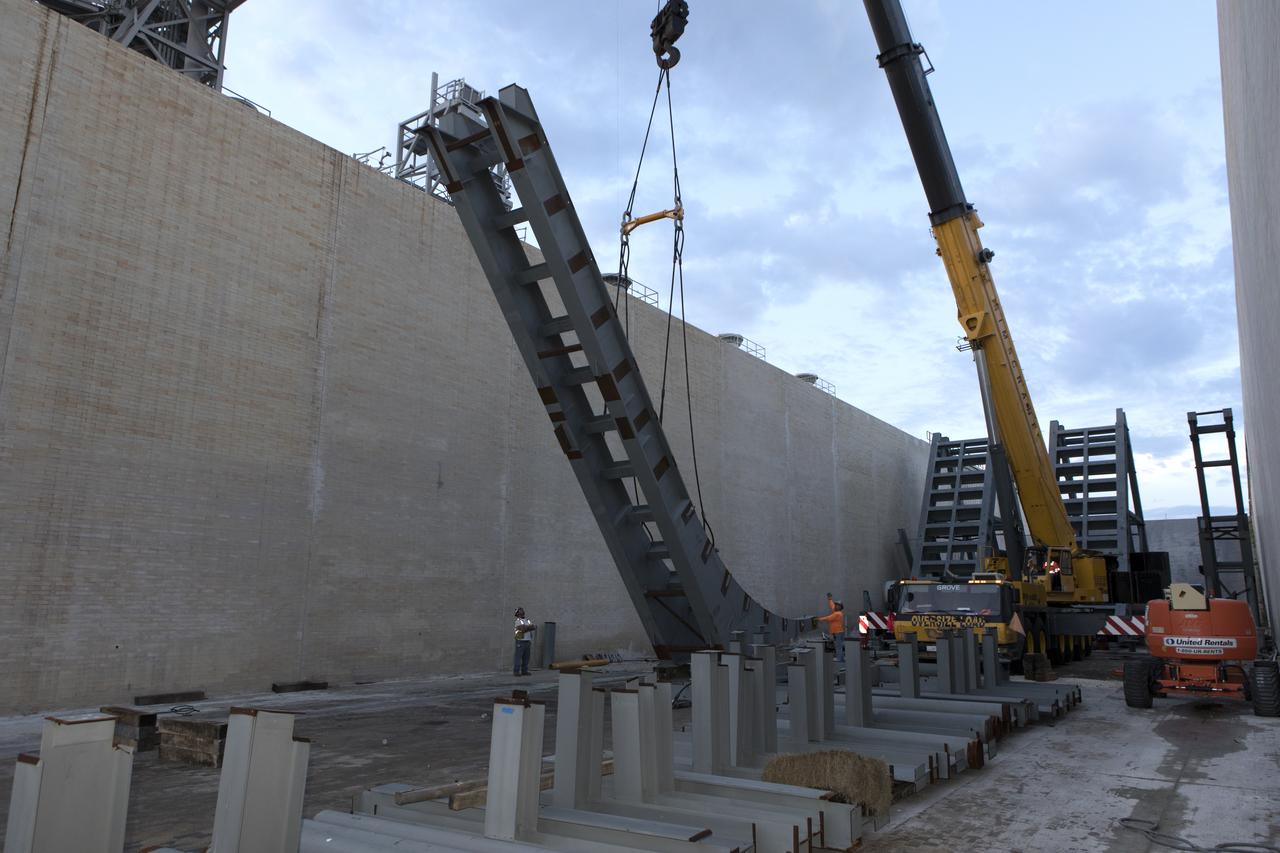
At Launch Pad 39B at NASA's Kennedy Space Center in Florida, a crane is used to move one of the large segments of the support hardware for a new flame deflector and position it in the flame trench. The new flame deflector will be positioned about six feet south of the shuttle-era flame deflector’s position. During liftoff of NASA’s Space Launch System, the rocket’s flame and energy will be diverted to the north side of the flame trench. The north side of the deflector will be protected by a NASA standard coating. The south side of the deflector will not be slanted and will have no lining. The new design will provide easier access for inspection, maintenance and repair. The Ground Systems Development and Operations (GSDO) Program at Kennedy is managing the installation of the flame deflector for Exploration Mission 1, deep space missions, and NASA's Journey to Mars.
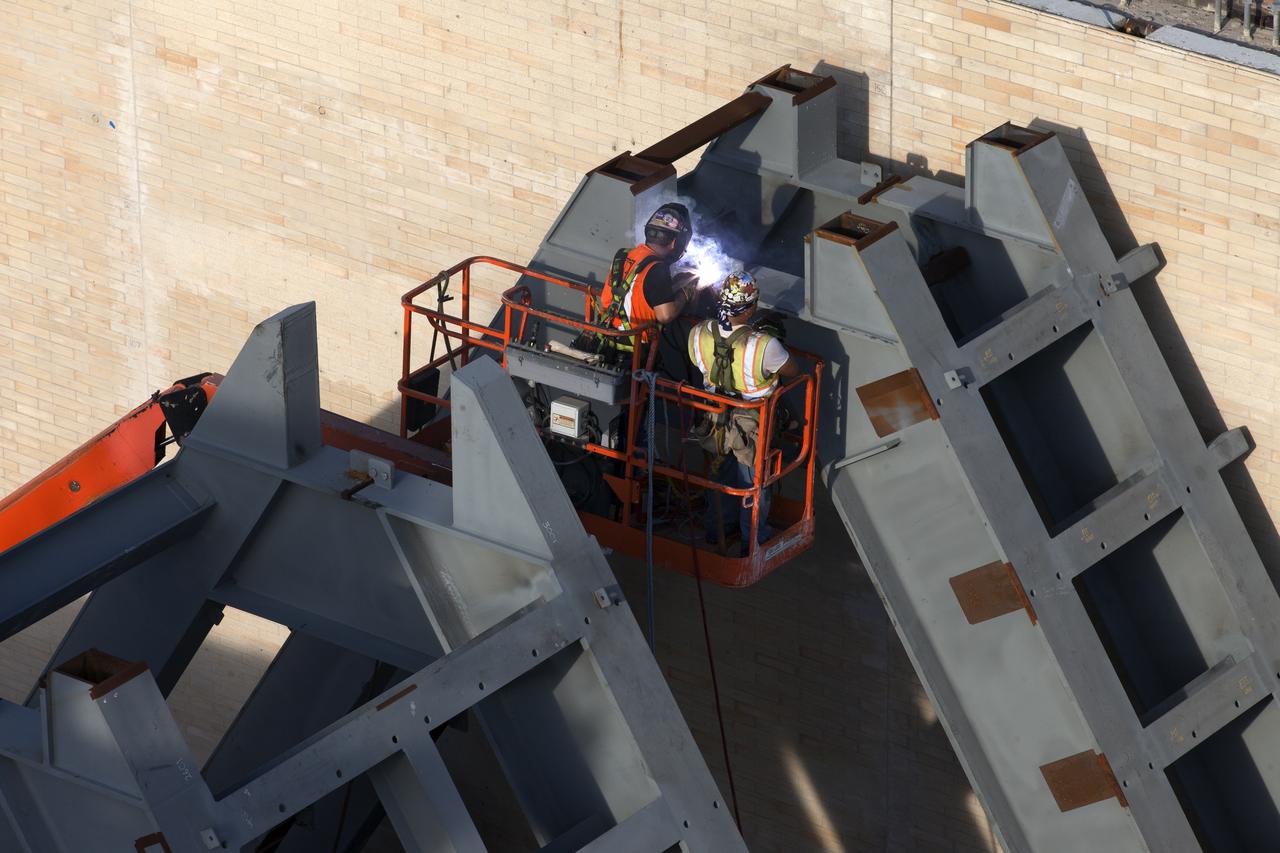
At Launch Pad 39B at NASA's Kennedy Space Center in Florida, construction workers weld together large segments of the support hardware for a new flame deflector in the flame trench. The new flame deflector will be positioned about six feet south of the shuttle-era flame deflector’s position. During liftoff of NASA’s Space Launch System, the rocket’s flame and energy will be diverted to the north side of the flame trench. The north side of the deflector will be protected by a NASA standard coating. The south side of the deflector will not be slanted and will have no lining. The new design will provide easier access for inspection, maintenance and repair. The Ground Systems Development and Operations (GSDO) Program at Kennedy is managing the installation of the flame deflector for Exploration Mission 1, deep space missions, and NASA's Journey to Mars.
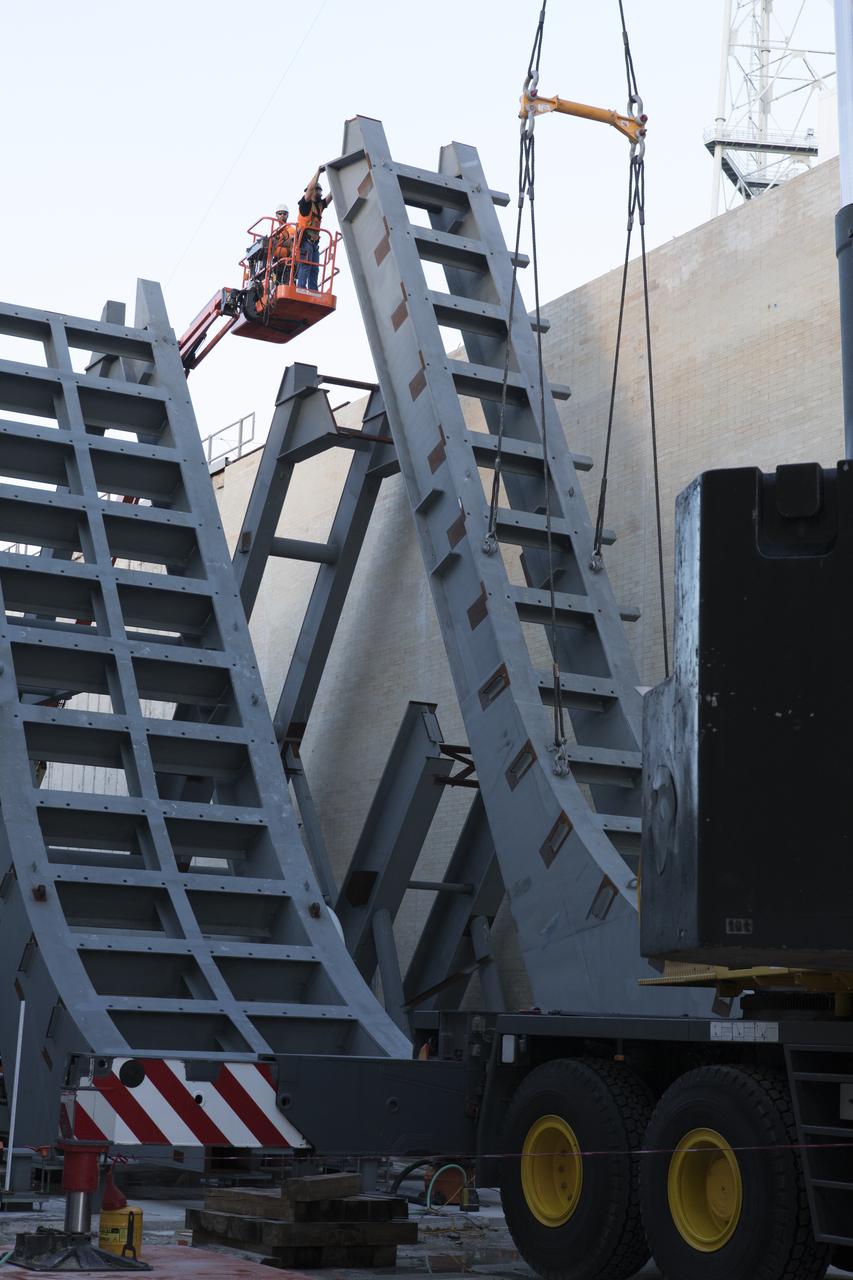
At Launch Pad 39B at NASA's Kennedy Space Center in Florida, construction workers assist as a large segment of the support hardware for a new flame deflector is positioned in the flame trench. The new flame deflector will be positioned about six feet south of the shuttle-era flame deflector’s position. During liftoff of NASA’s Space Launch System, the rocket’s flame and energy will be diverted to the north side of the flame trench. The north side of the deflector will be protected by a NASA standard coating. The south side of the deflector will not be slanted and will have no lining. The new design will provide easier access for inspection, maintenance and repair. The Ground Systems Development and Operations (GSDO) Program at Kennedy is managing the installation of the flame deflector for Exploration Mission 1, deep space missions, and NASA's Journey to Mars.
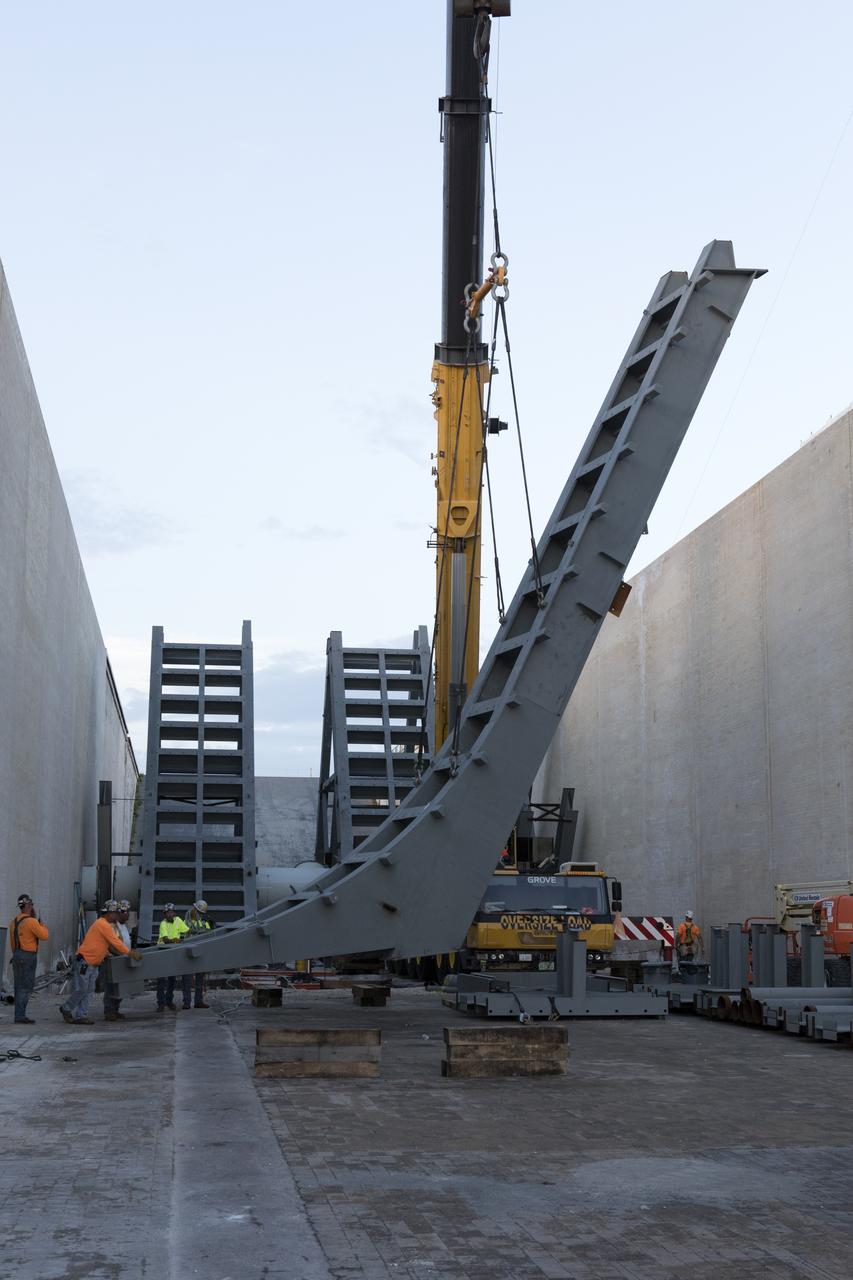
At Launch Pad 39B at NASA's Kennedy Space Center in Florida, a crane is used to move one of the large segments of the support hardware for a new flame deflector and position it in the flame trench. The new flame deflector will be positioned about six feet south of the shuttle-era flame deflector’s position. During liftoff of NASA’s Space Launch System, the rocket’s flame and energy will be diverted to the north side of the flame trench. The north side of the deflector will be protected by a NASA standard coating. The south side of the deflector will not be slanted and will have no lining. The new design will provide easier access for inspection, maintenance and repair. The Ground Systems Development and Operations (GSDO) Program at Kennedy is managing the installation of the flame deflector for Exploration Mission 1, deep space missions, and NASA's Journey to Mars.
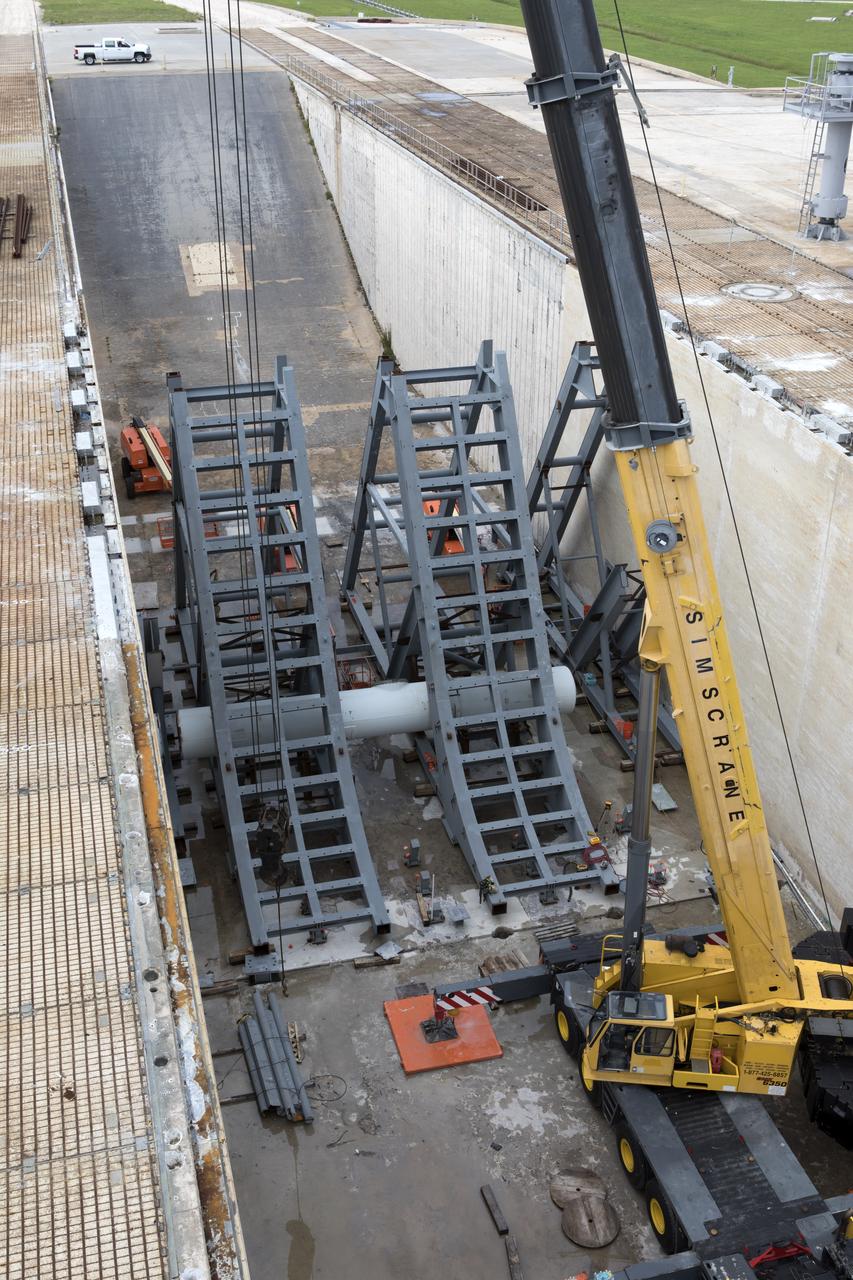
In a view from above at Launch Pad 39B at NASA's Kennedy Space Center in Florida, construction workers position large segments of the support hardware for a new flame deflector in the flame trench. The new flame deflector will be positioned about six feet south of the shuttle-era flame deflector’s position. During liftoff of NASA’s Space Launch System, the rocket’s flame and energy will be diverted to the north side of the flame trench. The north side of the deflector will be protected by a NASA standard coating. The south side of the deflector will not be slanted and will have no lining. The new design will provide easier access for inspection, maintenance and repair. The Ground Systems Development and Operations (GSDO) Program at Kennedy is managing the installation of the flame deflector for Exploration Mission 1, deep space missions, and NASA's Journey to Mars.
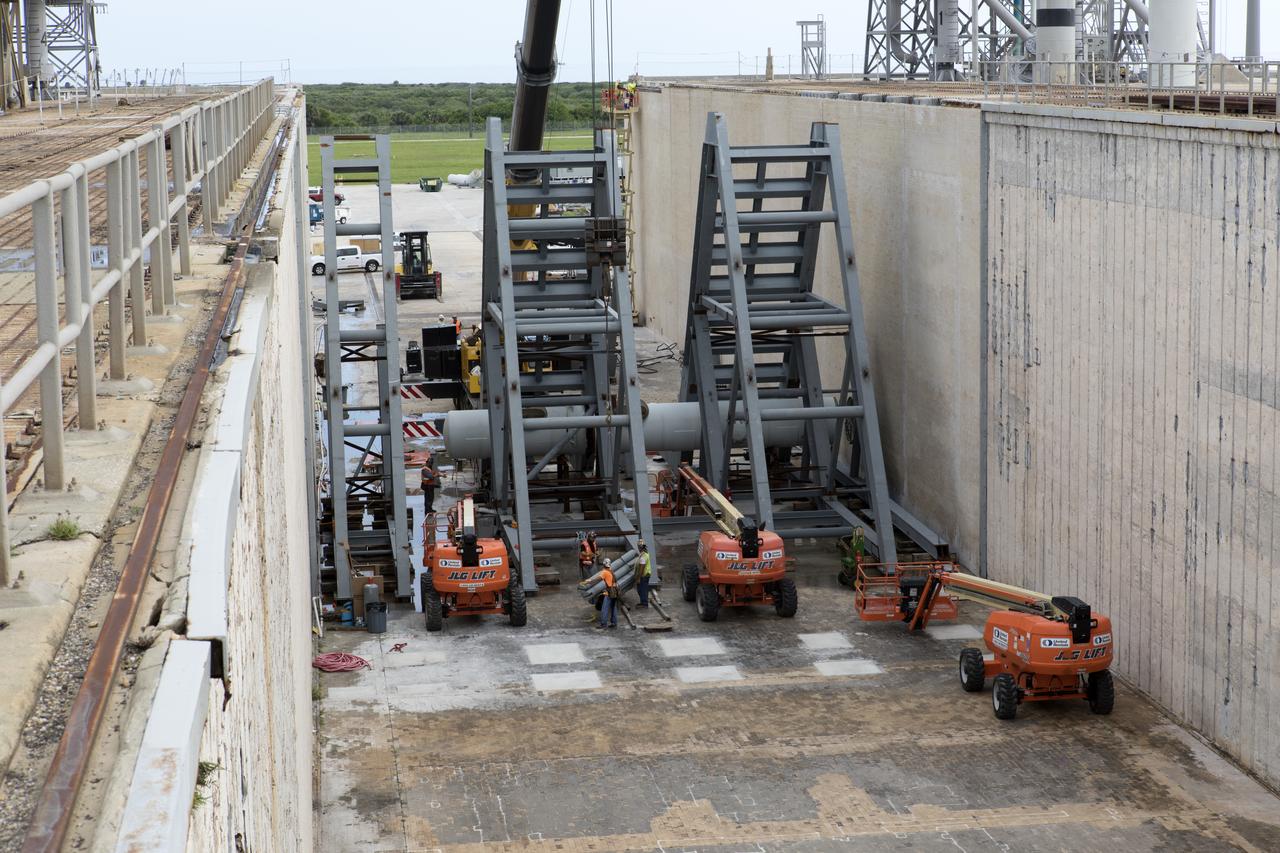
At Launch Pad 39B at NASA's Kennedy Space Center in Florida, construction workers position large segments of the support hardware for a new flame deflector in the flame trench. The new flame deflector will be positioned about six feet south of the shuttle-era flame deflector’s position. During liftoff of NASA’s Space Launch System, the rocket’s flame and energy will be diverted to the north side of the flame trench. The north side of the deflector will be protected by a NASA standard coating. The south side of the deflector will not be slanted and will have no lining. The new design will provide easier access for inspection, maintenance and repair. The Ground Systems Development and Operations (GSDO) Program at Kennedy is managing the installation of the flame deflector for Exploration Mission 1, deep space missions, and NASA's Journey to Mars.
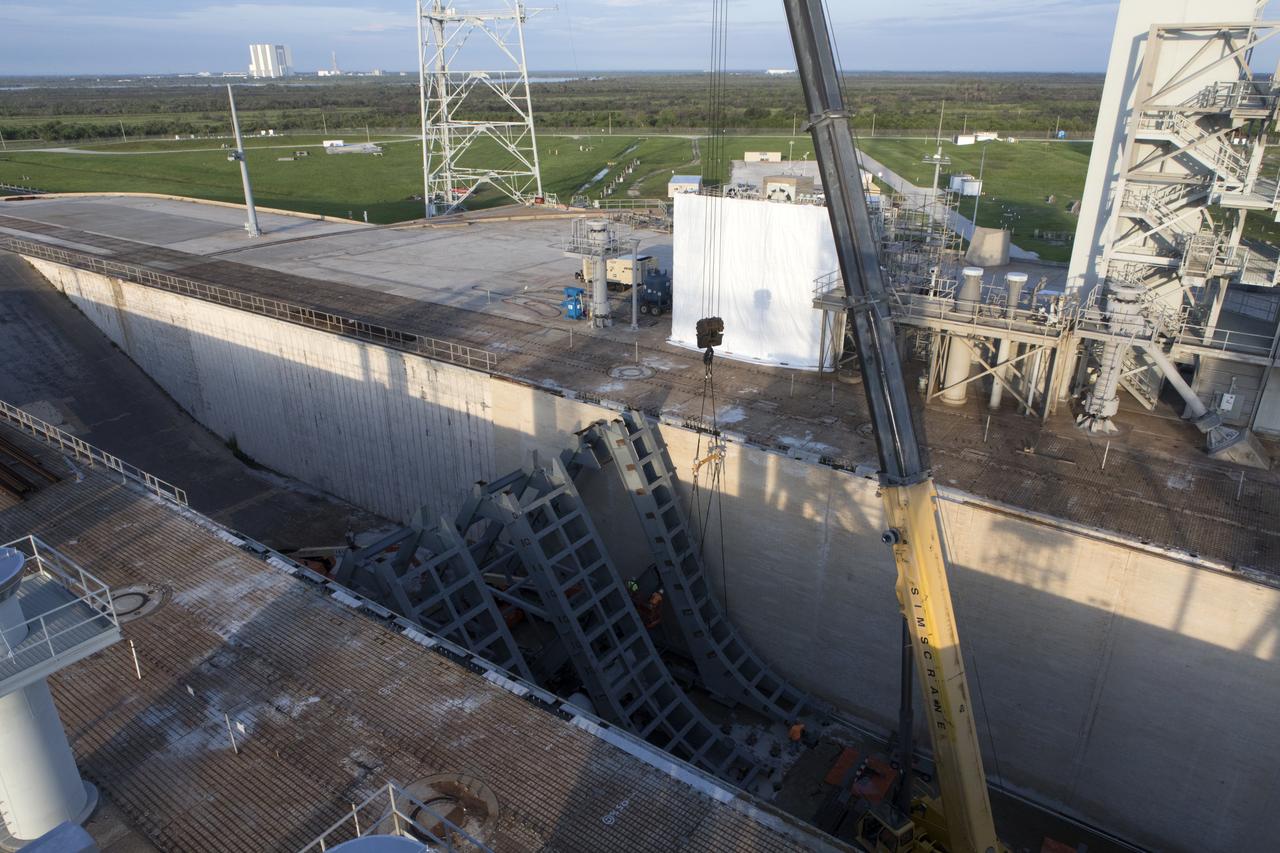
At Launch Pad 39B at NASA's Kennedy Space Center in Florida, large segments of the support hardware for a new flame deflector have been lowered into position in the flame trench. The new flame deflector will be positioned about six feet south of the shuttle-era flame deflector’s position. During liftoff of NASA’s Space Launch System, the rocket’s flame and energy will be diverted to the north side of the flame trench. The north side of the deflector will be protected by a NASA standard coating. The south side of the deflector will not be slanted and will have no lining. The new design will provide easier access for inspection, maintenance and repair. The Ground Systems Development and Operations (GSDO) Program at Kennedy is managing the installation of the flame deflector for Exploration Mission 1, deep space missions, and NASA's Journey to Mars.
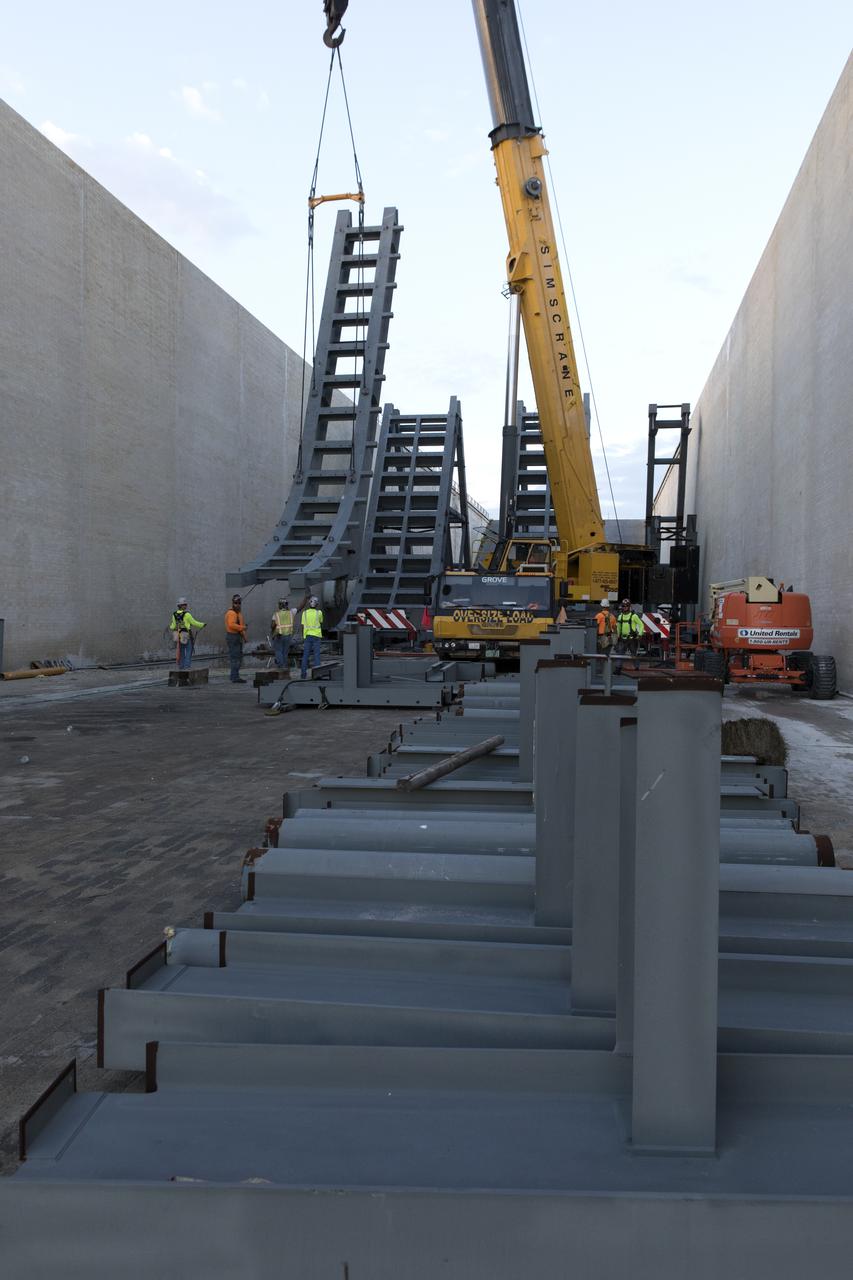
At Launch Pad 39B at NASA's Kennedy Space Center in Florida, a crane is used to move one of the large segments of the support hardware for a new flame deflector and position it in the flame trench. The new flame deflector will be positioned about six feet south of the shuttle-era flame deflector’s position. During liftoff of NASA’s Space Launch System, the rocket’s flame and energy will be diverted to the north side of the flame trench. The north side of the deflector will be protected by a NASA standard coating. The south side of the deflector will not be slanted and will have no lining. The new design will provide easier access for inspection, maintenance and repair. The Ground Systems Development and Operations (GSDO) Program at Kennedy is managing the installation of the flame deflector for Exploration Mission 1, deep space missions, and NASA's Journey to Mars.
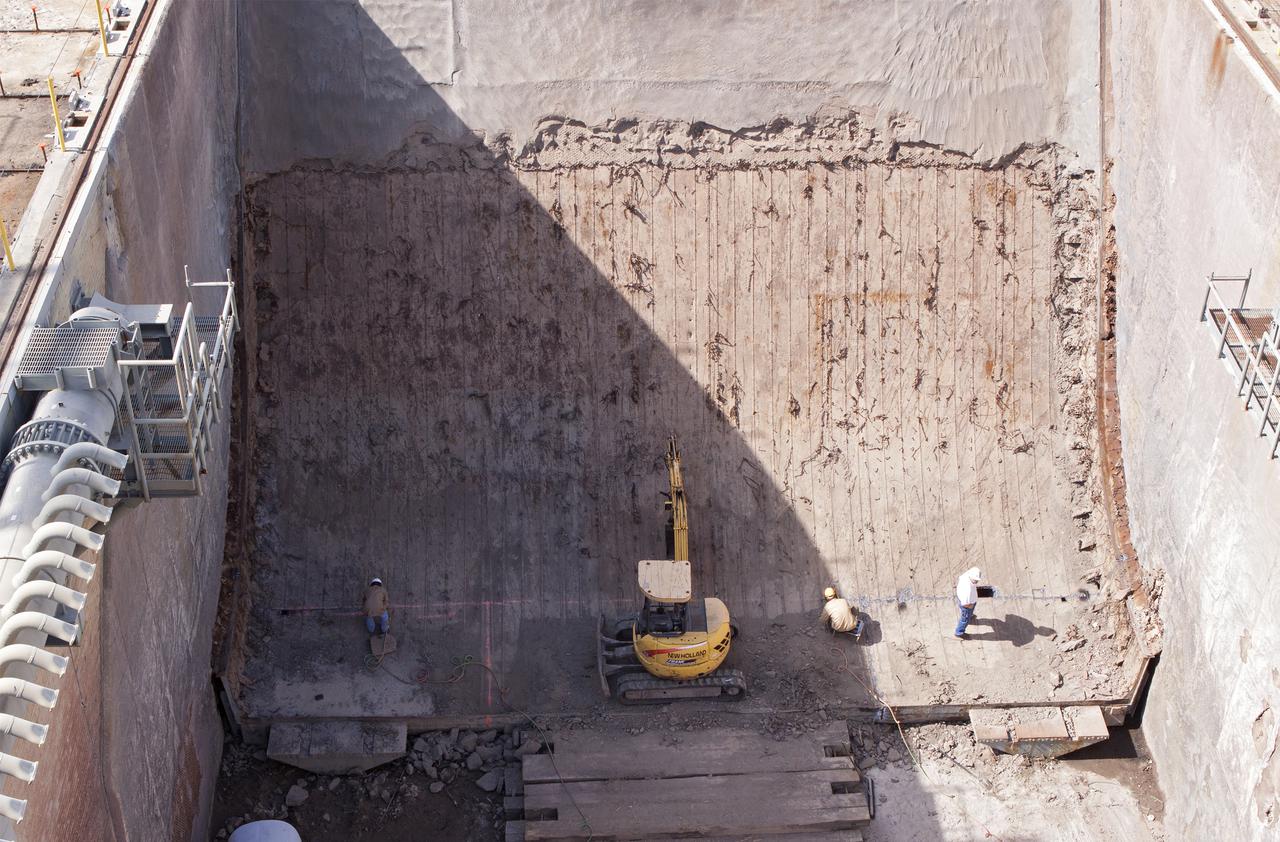
CAPE CANAVERAL, Fla. -- At Launch Pad 39B at NASA’s Kennedy Space Center in Florida, workers are removing the flame trench deflector that sits below and between the left and right crawler track panels. Launch Pad 39B is being refurbished to support NASA’s Space Launch System and other launch vehicles. The Ground Systems Development and Operations, or GSDO, Program office at Kennedy is leading the center’s transformation to safely handle a variety of rockets and spacecraft. For more information about GSDO, visit: http:__go.nasa.gov_groundsystems. Photo credit: NASA_Jim Grossman
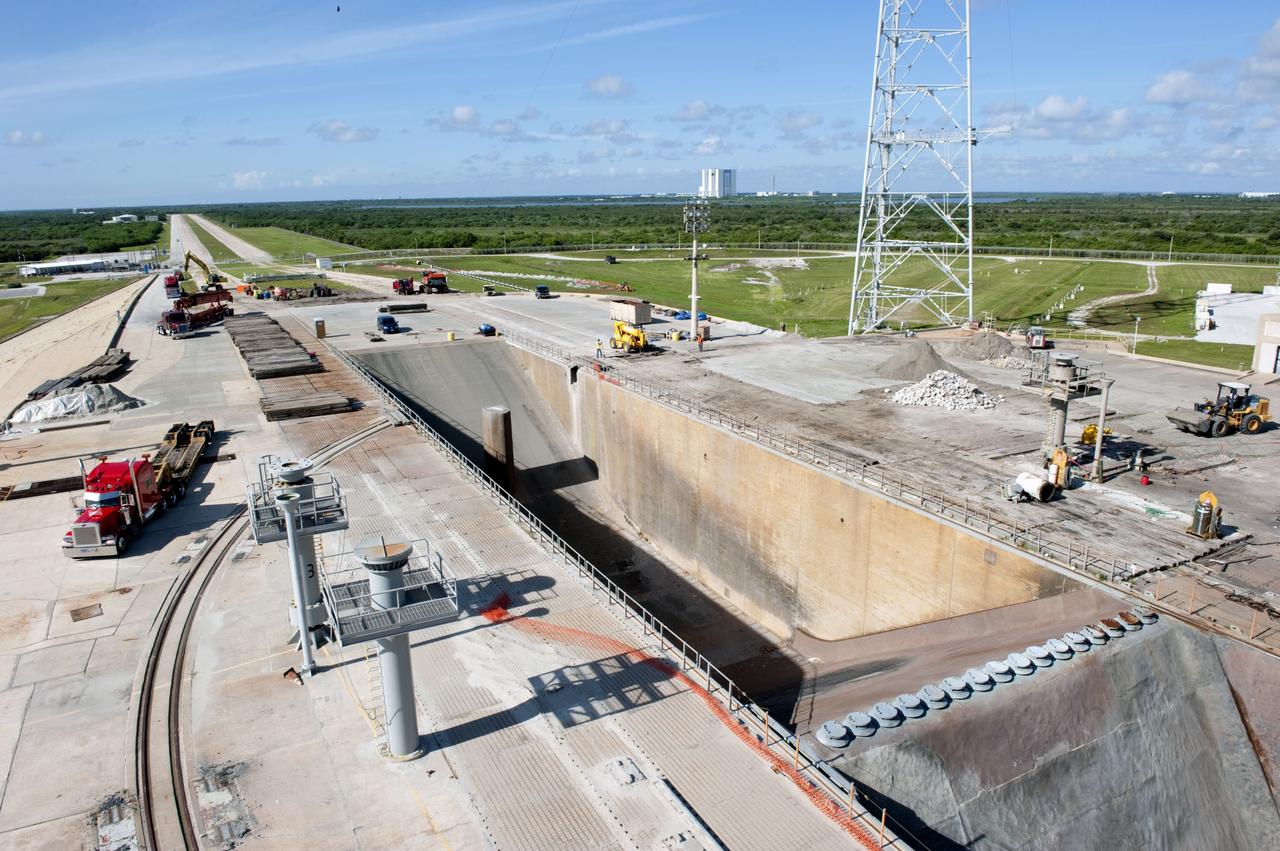
CAPE CANAVERAL, Fla. -- At NASA's Kennedy Space Center in Florida, cleanup of Launch Pad 39B is in progress beside the pad's flame trench. The trench is 450 feet long, 58 feet wide and 42 feet deep with an inner inverted V-shaped steel flame deflector. Sand, reinforcing steel and large wooden mats were placed over the pad's concrete surfaces during deconstruction to protect them from falling debris. In the distance is the 525-foot-tall Vehicle Assembly Building. In 2009, the structure at the pad was no longer needed for NASA's Space Shuttle Program, so it is being restructured for future use. The new design will feature a "clean pad" for rockets to come with their own launcher, making it more versatile for a number of rockets and spacecraft. The lightning protection system, consisting of three lightning towers and a wire catenary system, will remain. For information on NASA's future plans, visit http://www.nasa.gov/exploration. Photo credit: NASA/Kim Shiflett
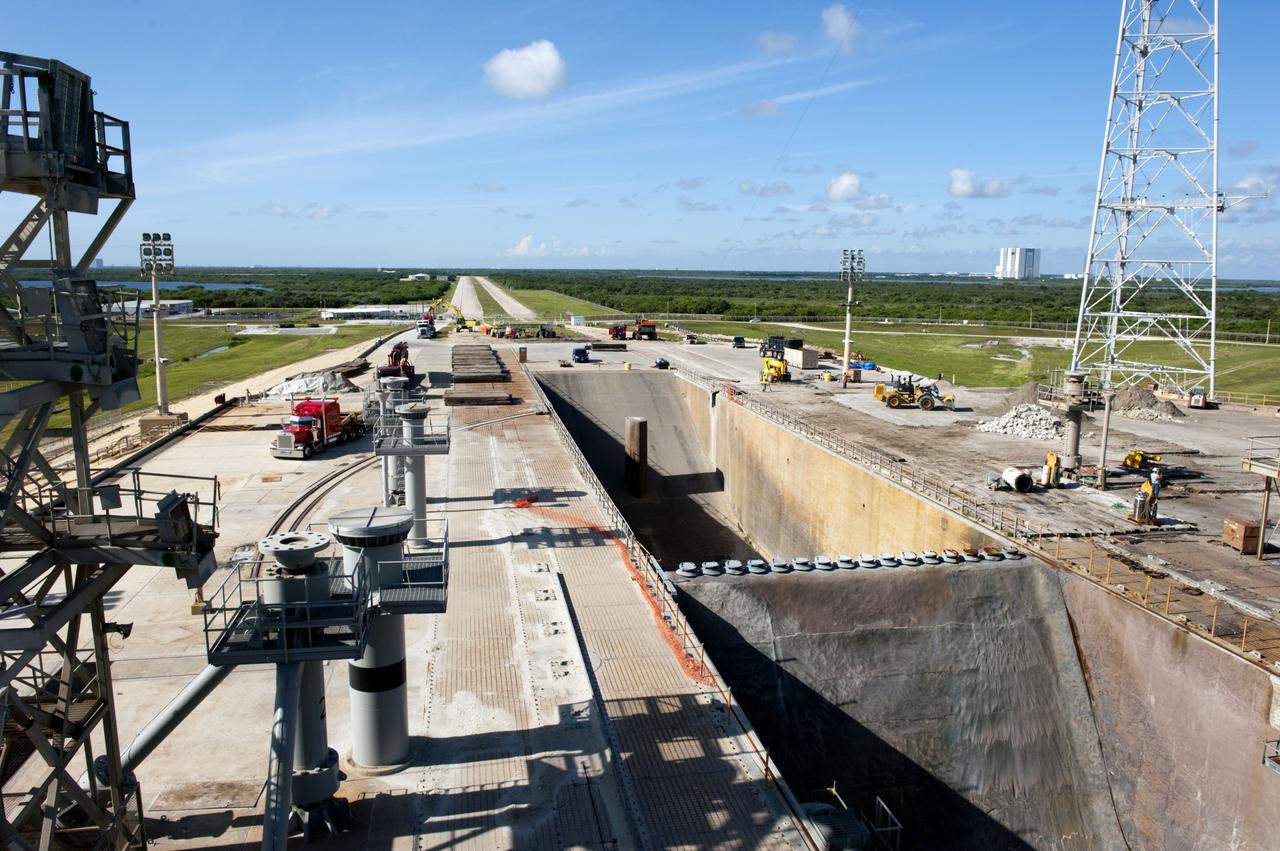
CAPE CANAVERAL, Fla. -- At NASA's Kennedy Space Center in Florida, cleanup of Launch Pad 39B is in progress beside the pad's flame trench. The trench is 450 feet long, 58 feet wide and 42 feet deep with an inner inverted V-shaped steel flame deflector. Sand, reinforcing steel and large wooden mats were placed over the pad's concrete surfaces during deconstruction to protect them from falling debris. In the distance is the 525-foot-tall Vehicle Assembly Building. In 2009, the structure at the pad was no longer needed for NASA's Space Shuttle Program, so it is being restructured for future use. The new design will feature a "clean pad" for rockets to come with their own launcher, making it more versatile for a number of rockets and spacecraft. The lightning protection system, consisting of three lightning towers and a wire catenary system, will remain. For information on NASA's future plans, visit http://www.nasa.gov/exploration. Photo credit: NASA/Kim Shiflett
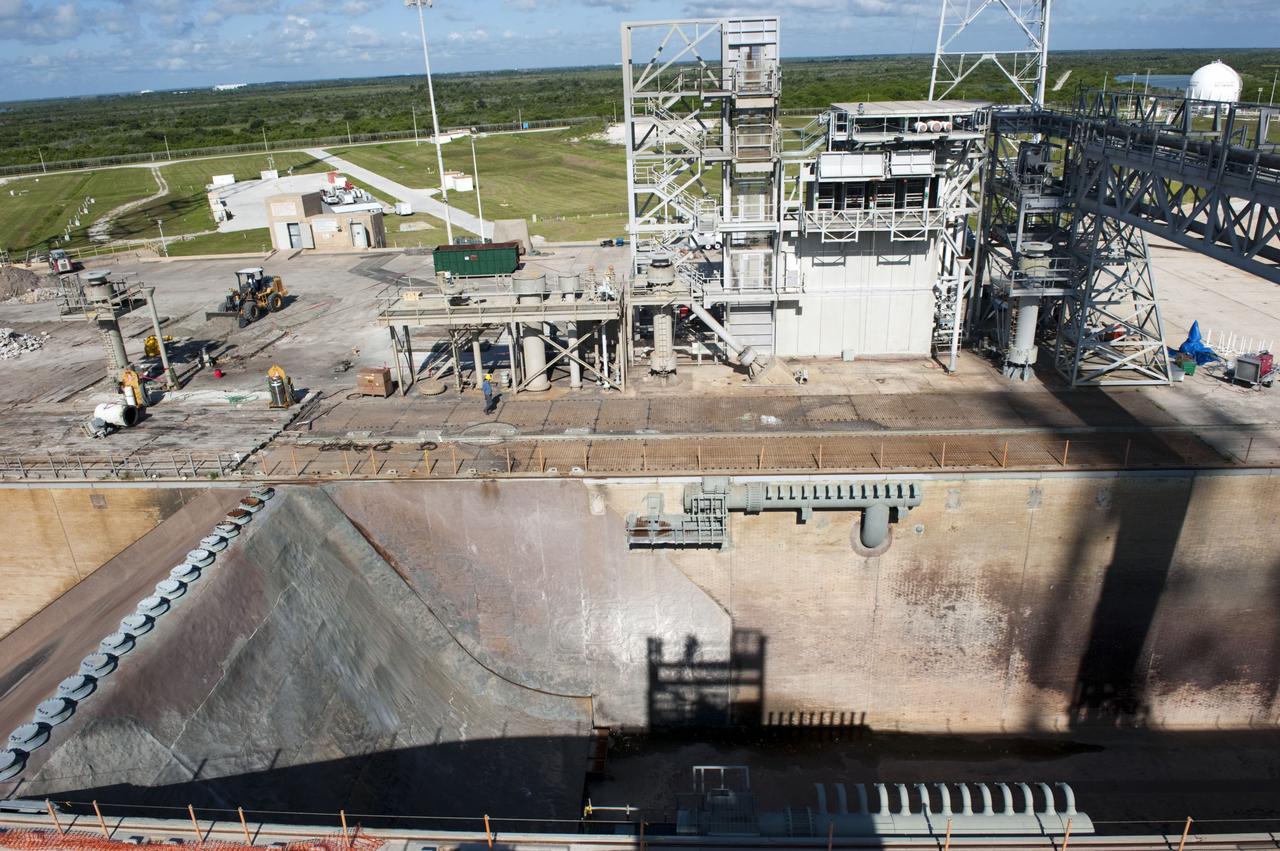
CAPE CANAVERAL, Fla. -- At NASA's Kennedy Space Center in Florida, cleanup of Launch Pad 39B is in progress beside the pad's flame trench. The trench is 450 feet long, 58 feet wide and 42 feet deep with an inner inverted V-shaped steel flame deflector. Sand, reinforcing steel and large wooden mats were placed over the pad's concrete surfaces during deconstruction to protect them from falling debris. In 2009, the structure at the pad was no longer needed for NASA's Space Shuttle Program, so it is being restructured for future use. The new design will feature a "clean pad" for rockets to come with their own launcher, making it more versatile for a number of rockets and spacecraft. The lightning protection system, consisting of three lightning towers and a wire catenary system, will remain. For information on NASA's future plans, visit http://www.nasa.gov/exploration. Photo credit: NASA/Kim Shiflett
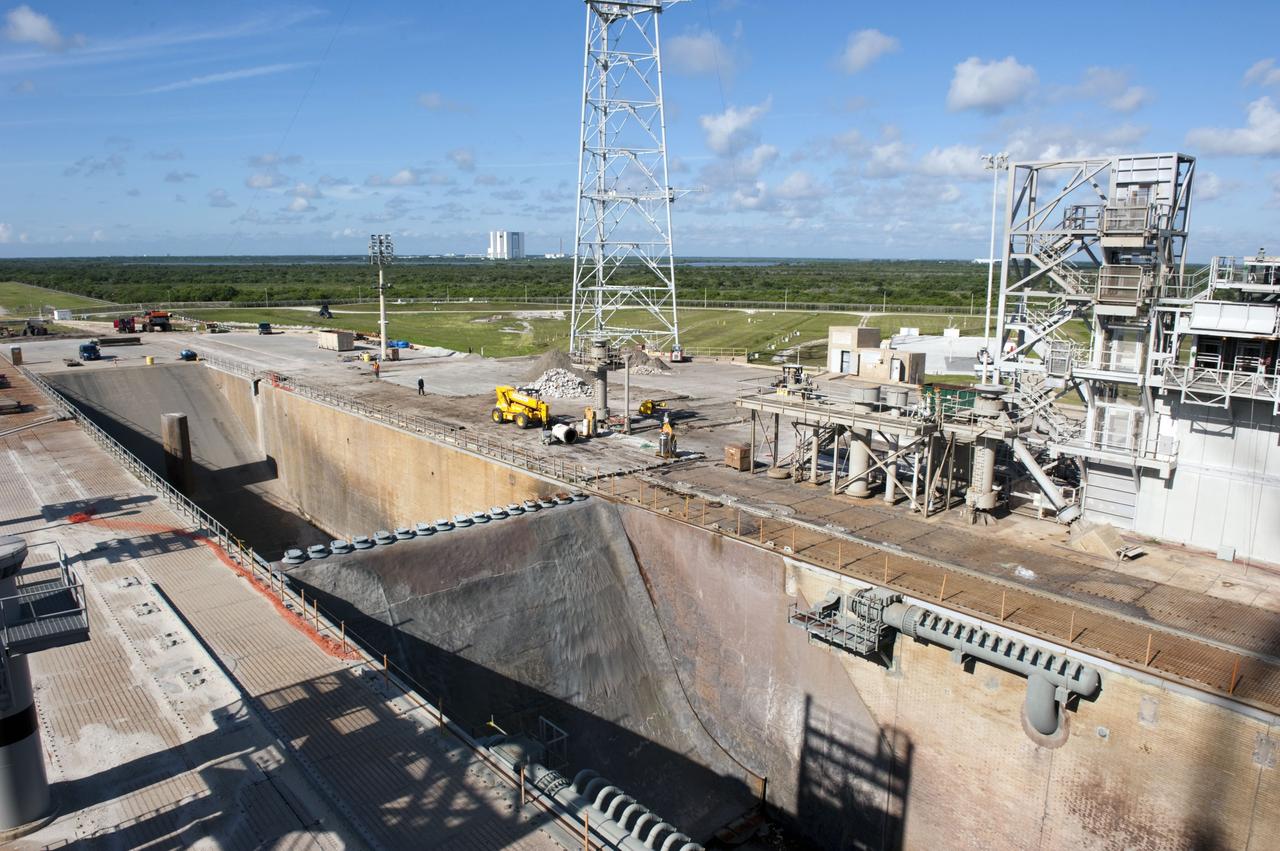
CAPE CANAVERAL, Fla. -- At NASA's Kennedy Space Center in Florida, cleanup of Launch Pad 39B is in progress beside the pad's flame trench. The trench is 450 feet long, 58 feet wide and 42 feet deep with an inner inverted V-shaped steel flame deflector. Sand, reinforcing steel and large wooden mats were placed over the pad's concrete surfaces during deconstruction to protect them from falling debris. In the distance is the 525-foot-tall Vehicle Assembly Building. In 2009, the structure at the pad was no longer needed for NASA's Space Shuttle Program, so it is being restructured for future use. The new design will feature a "clean pad" for rockets to come with their own launcher, making it more versatile for a number of rockets and spacecraft. The lightning protection system, consisting of three lightning towers and a wire catenary system, will remain. For information on NASA's future plans, visit http://www.nasa.gov/exploration. Photo credit: NASA/Kim Shiflett
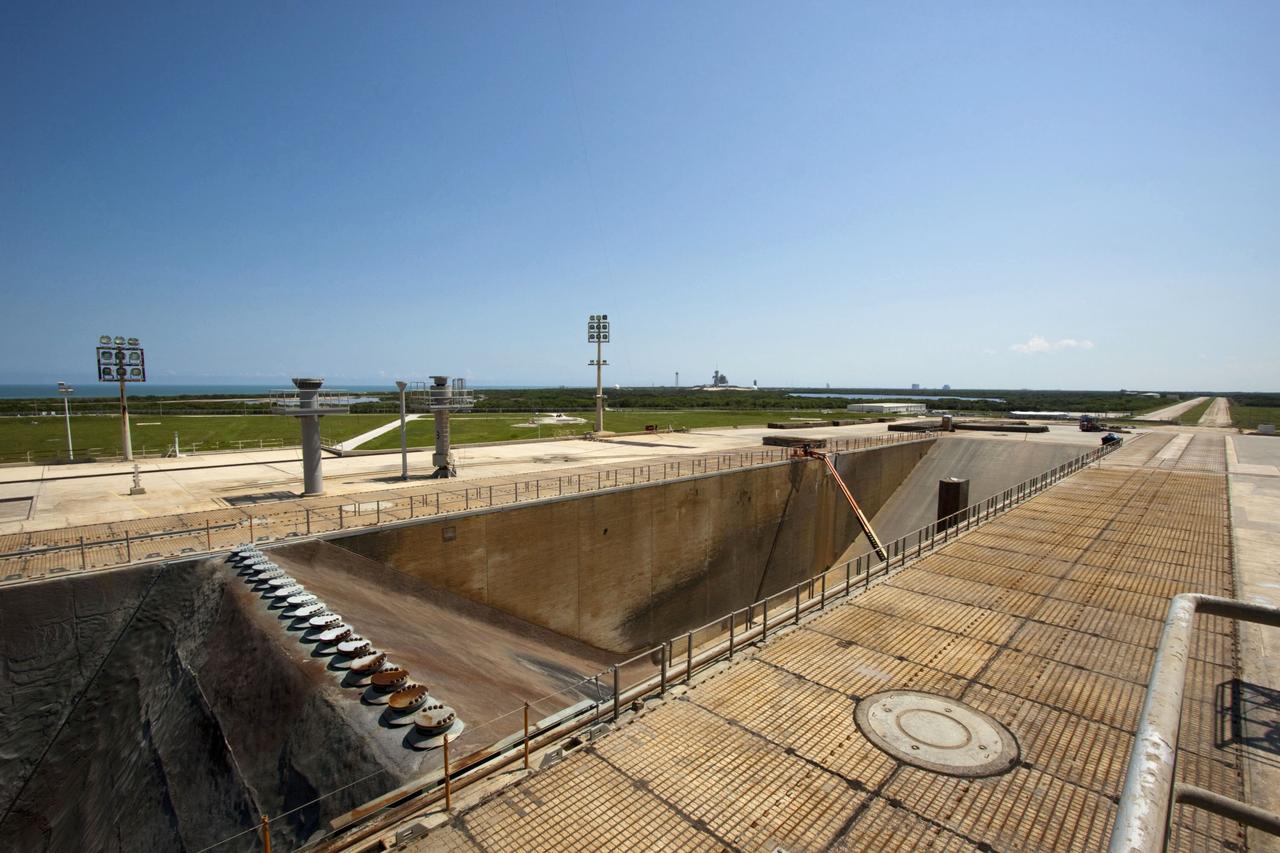
CAPE CANAVERAL, Fla. – The deconstruction of Launch Pad 39B at NASA’s Kennedy Space Center in Florida is complete. Still remaining is the flame trench. Launch Pad 39A can be seen in the distance. In 2009, the structure at the pad was no longer needed for NASA's Space Shuttle Program, so it is being restructured for future use. The new design will feature a "clean pad" for rockets to come with their own launcher, making it more versatile for a number of vehicles. For information on NASA's future plans, visit http://www.nasa.gov/exploration. Photo credit: NASA/Jim Grossmann
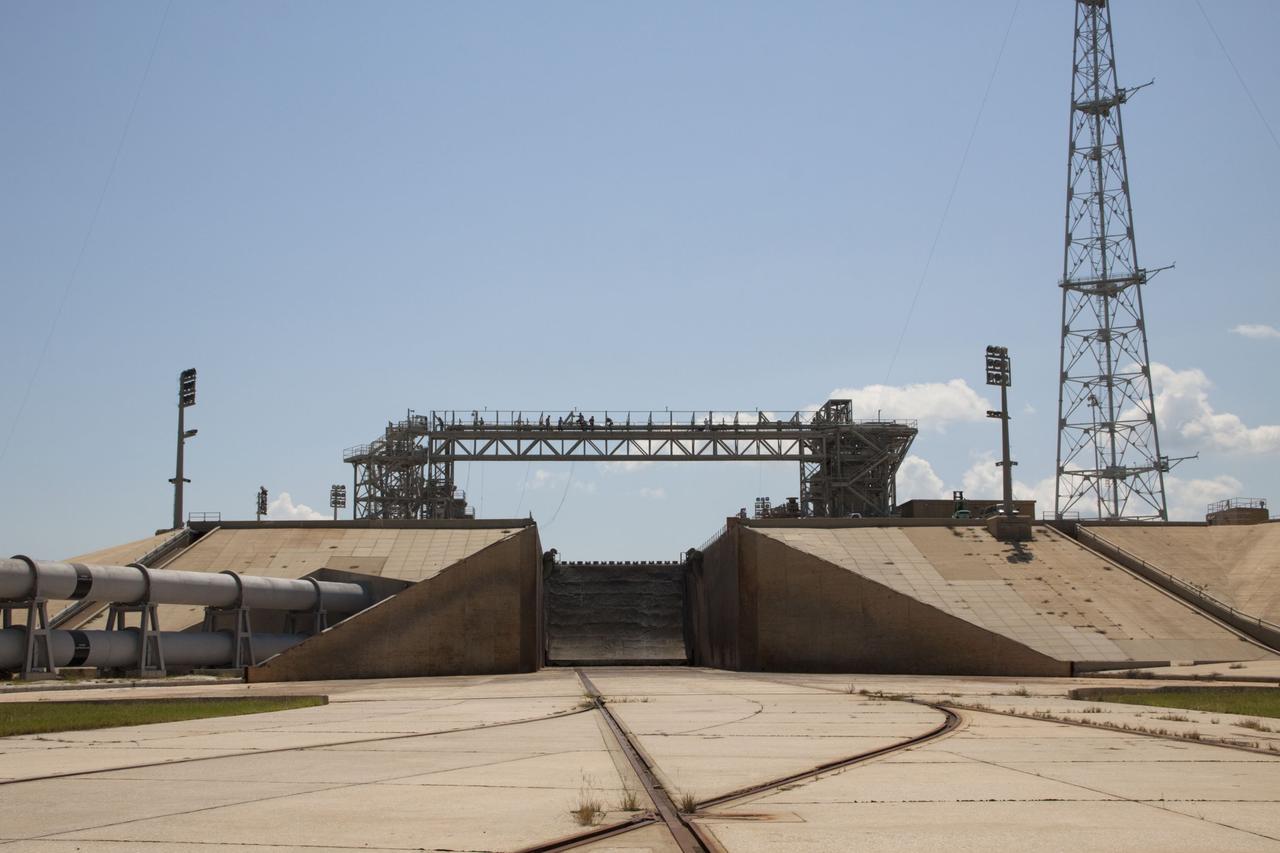
CAPE CANAVERAL, Fla. – The deconstruction of Launch Pad 39B at NASA’s Kennedy Space Center in Florida is complete. Only remnants of the fixed service structure remain standing over the flame trench. In 2009, the structure at the pad was no longer needed for NASA's Space Shuttle Program, so it is being restructured for future use. The new design will feature a "clean pad" for rockets to come with their own launcher, making it more versatile for a number of vehicles. For information on NASA's future plans, visit http://www.nasa.gov/exploration. Photo credit: NASA/Jim Grossmann

CAPE CANAVERAL, Fla. – The deconstruction of Launch Pad 39B at NASA’s Kennedy Space Center in Florida is complete. Only remnants of the fixed service structure remain standing over the flame trench. In 2009, the structure at the pad was no longer needed for NASA's Space Shuttle Program, so it is being restructured for future use. The new design will feature a "clean pad" for rockets to come with their own launcher, making it more versatile for a number of vehicles. For information on NASA's future plans, visit http://www.nasa.gov/exploration. Photo credit: NASA/Jim Grossmann

About 450,000 gallons of water flowed at high speed from a holding tank through new and modified piping and valves, the flame trench, flame deflector nozzles and mobile launcher interface risers during a wet flow test at Launch Pad 39B at NASA's Kennedy Space Center in Florida. At peak flow, the water reached about 100 feet in the air above the pad surface. The test was a milestone to confirm and baseline the performance of the Ignition Overpressure/Sound Suppression system. During launch of NASA's Space Launch System rocket and Orion spacecraft, the high-speed water flow will help protect the vehicle from the extreme acoustic and temperature environment during ignition and liftoff.
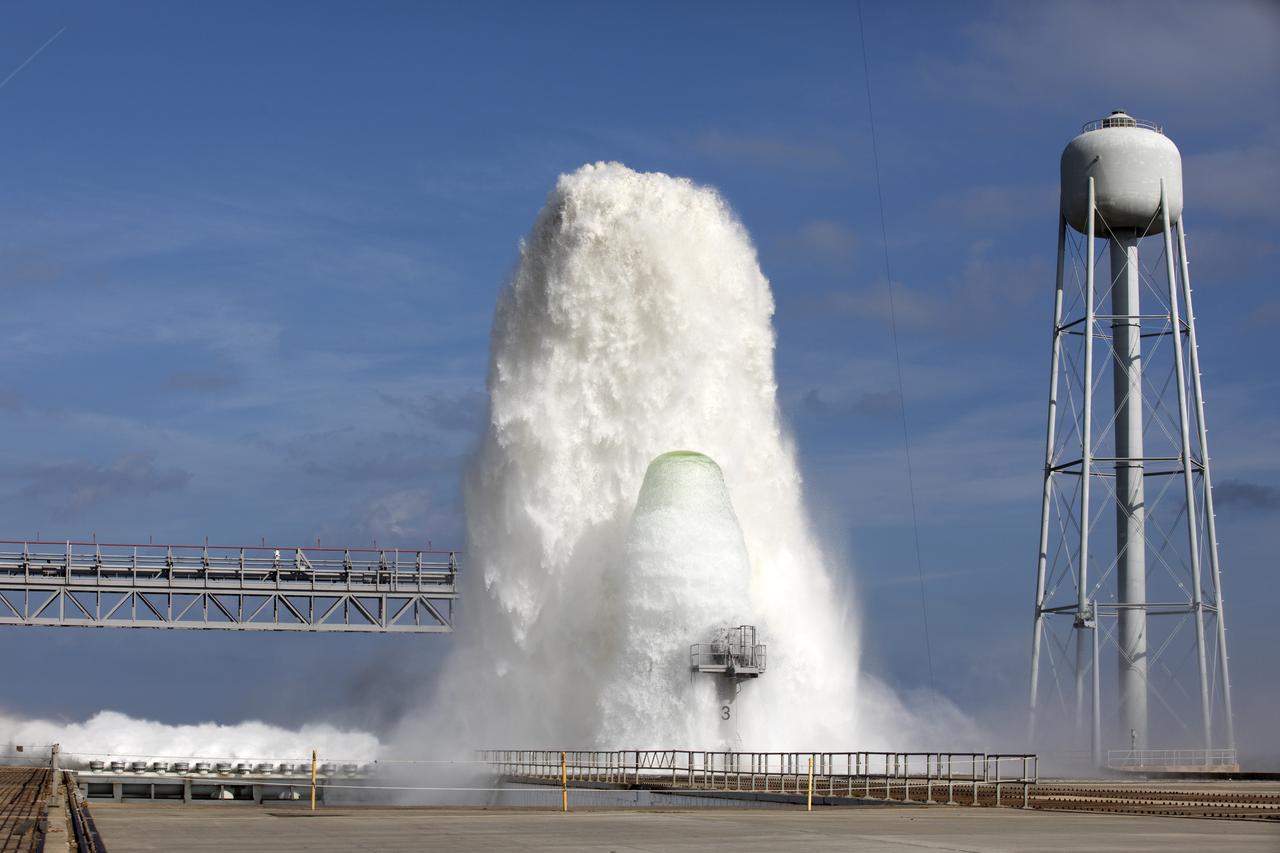
About 450,000 gallons of water flowed at high speed from a holding tank through new and modified piping and valves, the flame trench, flame deflector nozzles and mobile launcher interface risers during a wet flow test at Launch Pad 39B at NASA's Kennedy Space Center in Florida. At peak flow, the water reached about 100 feet in the air above the pad surface. The test was a milestone to confirm and baseline the performance of the Ignition Overpressure/Sound Suppression system. During launch of NASA's Space Launch System rocket and Orion spacecraft, the high-speed water flow will help protect the vehicle from the extreme acoustic and temperature environment during ignition and liftoff.

About 450,000 gallons of water flowed at high speed from a holding tank through new and modified piping and valves, the flame trench, flame deflector nozzles and mobile launcher interface risers during a wet flow test at Launch Pad 39B at NASA's Kennedy Space Center in Florida. At peak flow, the water reached about 100 feet in the air above the pad surface. The test was a milestone to confirm and baseline the performance of the Ignition Overpressure/Sound Suppression system. During launch of NASA's Space Launch System rocket and Orion spacecraft, the high-speed water flow will help protect the vehicle from the extreme acoustic and temperature environment during ignition and liftoff.
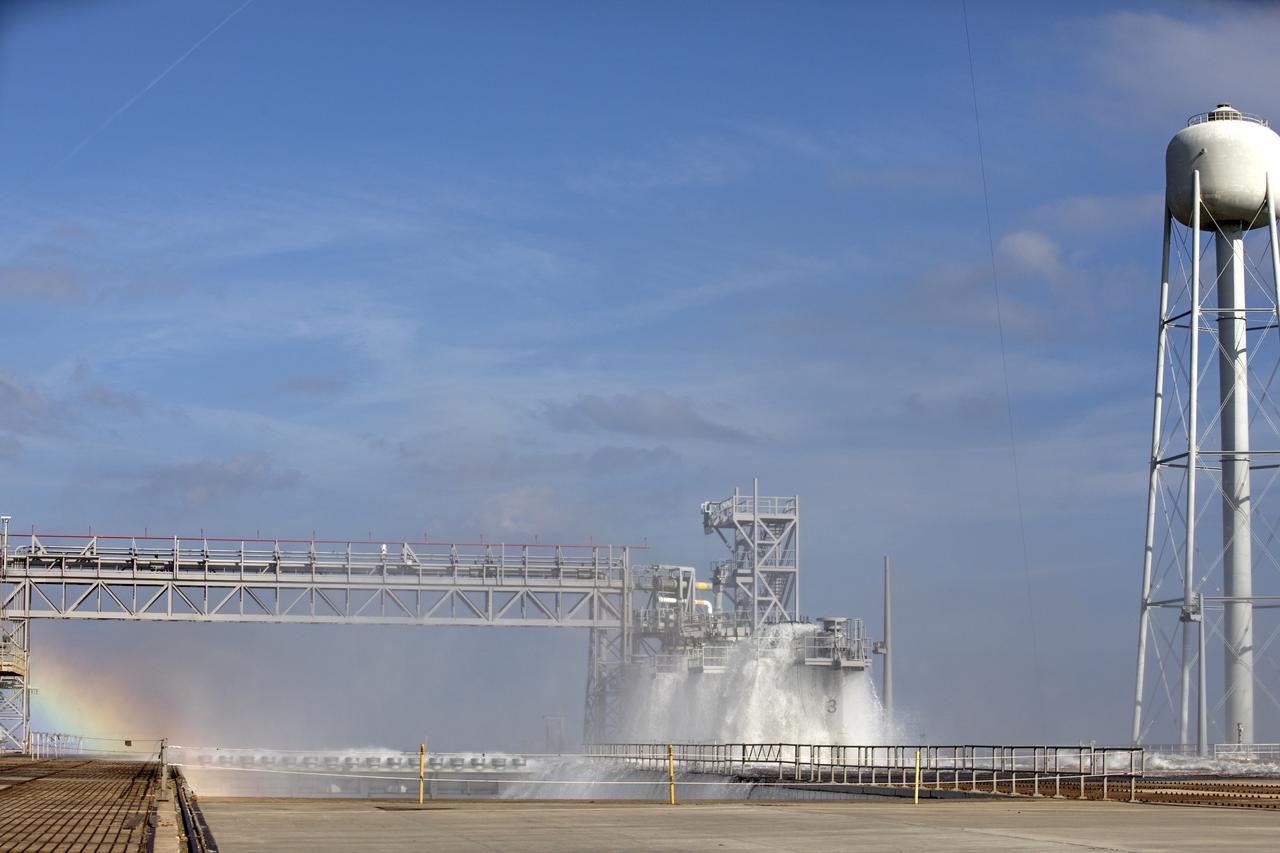
About 450,000 gallons of water flowed at high speed from a holding tank through new and modified piping and valves, the flame trench, flame deflector nozzles and mobile launcher interface risers during a wet flow test at Launch Pad 39B at NASA's Kennedy Space Center in Florida. At peak flow, the water reached about 100 feet in the air above the pad surface. The test was a milestone to confirm and baseline the performance of the Ignition Overpressure/Sound Suppression system. During launch of NASA's Space Launch System rocket and Orion spacecraft, the high-speed water flow will help protect the vehicle from the extreme acoustic and temperature environment during ignition and liftoff.
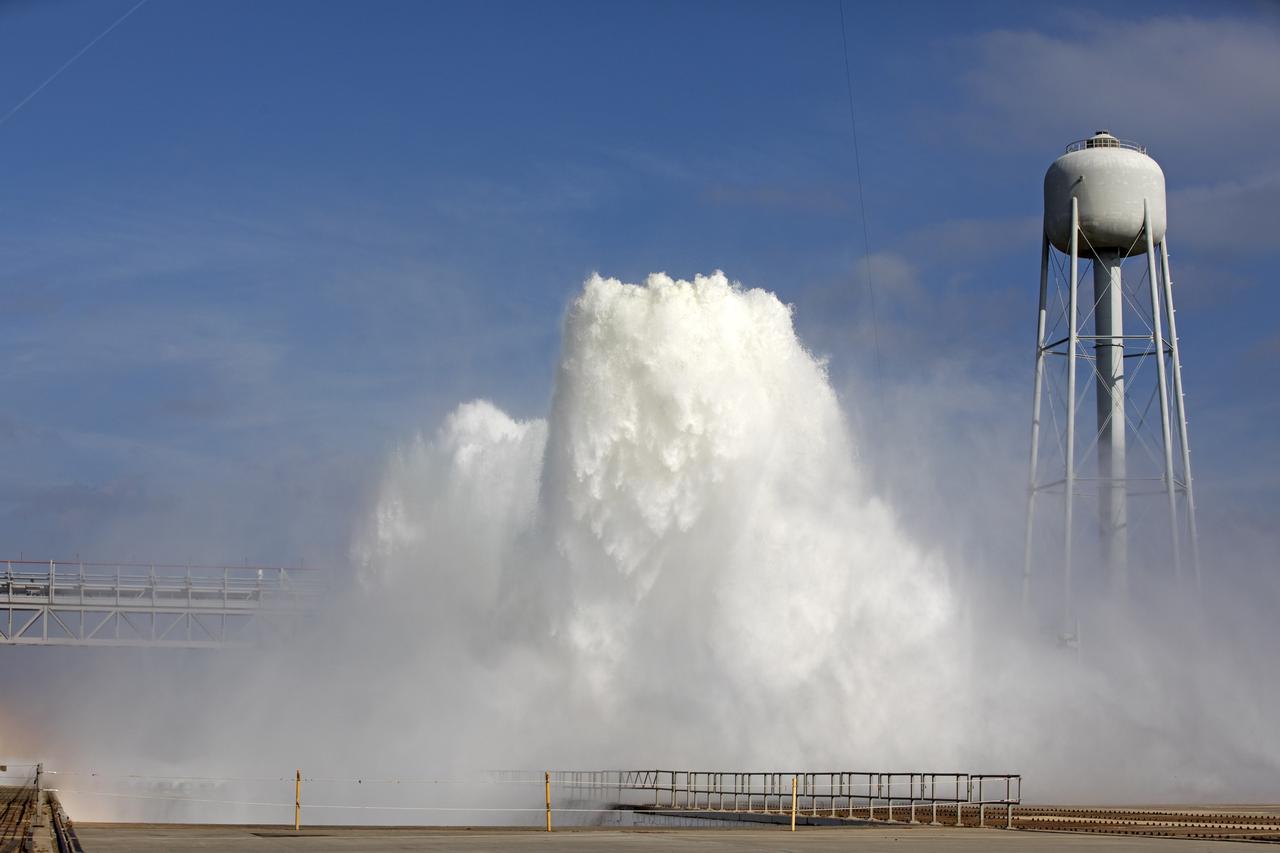
About 450,000 gallons of water flowed at high speed from a holding tank through new and modified piping and valves, the flame trench, flame deflector nozzles and mobile launcher interface risers during a wet flow test at Launch Pad 39B at NASA's Kennedy Space Center in Florida. At peak flow, the water reached about 100 feet in the air above the pad surface. The test was a milestone to confirm and baseline the performance of the Ignition Overpressure/Sound Suppression system. During launch of NASA's Space Launch System rocket and Orion spacecraft, the high-speed water flow will help protect the vehicle from the extreme acoustic and temperature environment during ignition and liftoff.
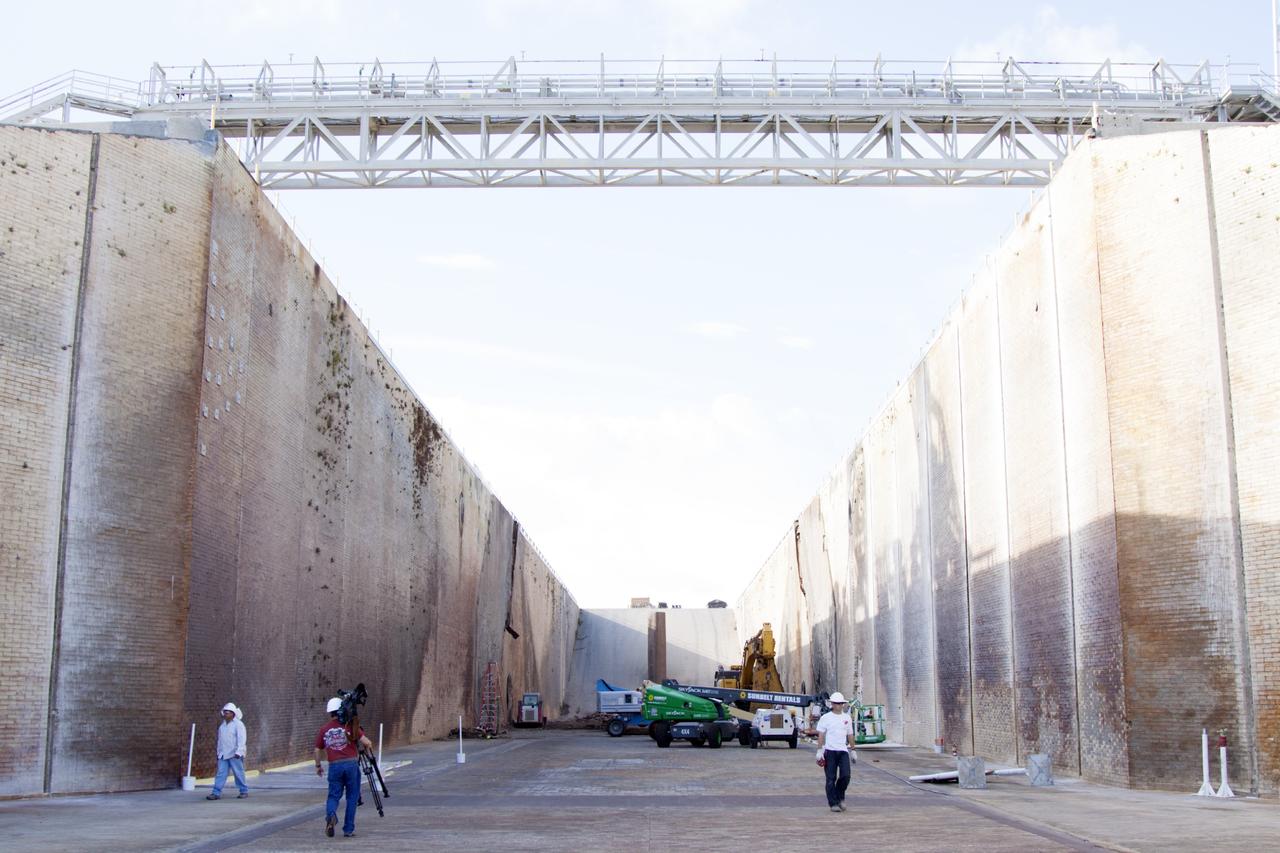
CAPE CANAVERAL, Fla. – At Launch Pad 39B at NASA’s Kennedy Space Center in Florida, the flame trench deflector that was located below and between the left and right crawlerway tracks has been removed. Pad B is being refurbished to support NASA’s Space Launch System and other launch vehicles. The Ground Systems Development and Operations, or GSDO, Program at Kennedy is leading the center’s transformation to safely handle a variety of rockets and spacecraft. For more information about GSDO, visit: http://go.nasa.gov/groundsystems. Photo credit: NASA/Jim Grossman
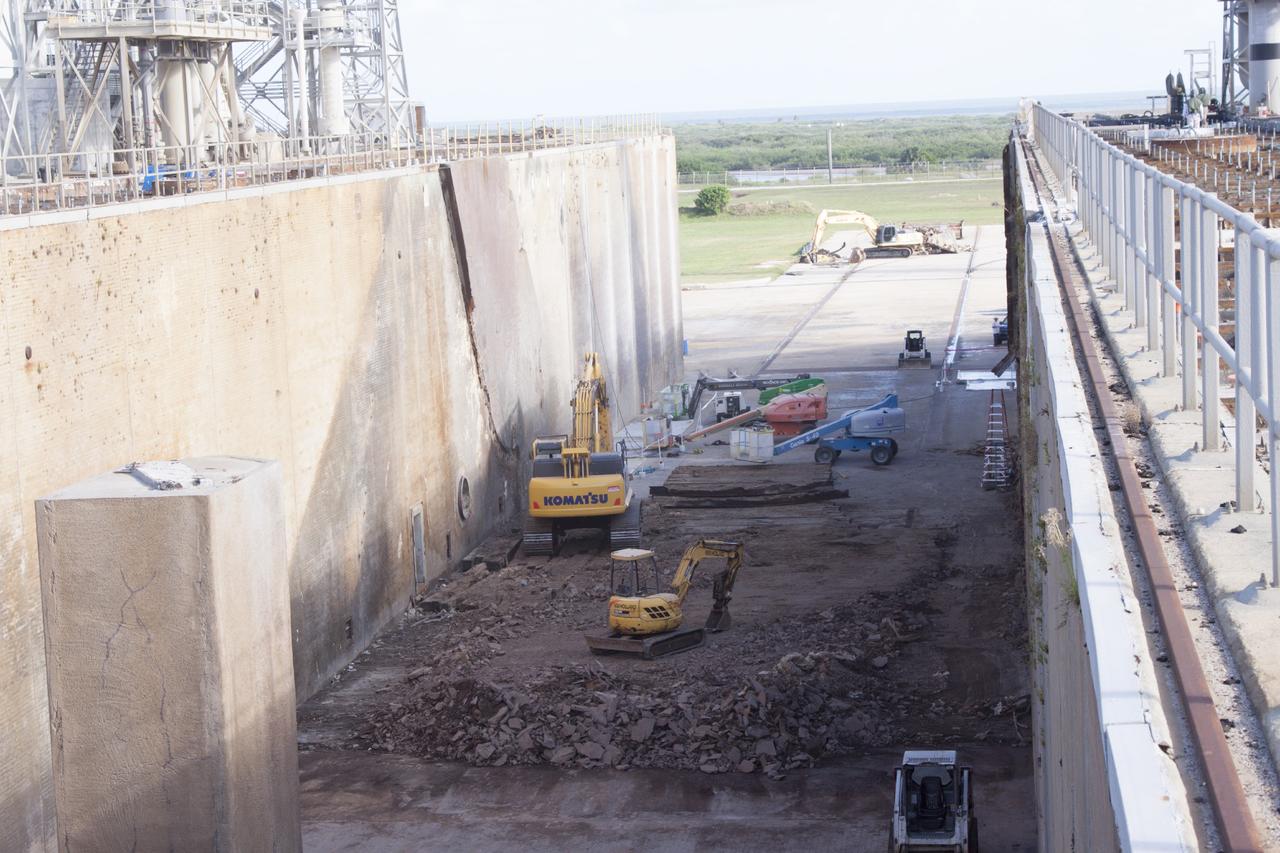
CAPE CANAVERAL, Fla. – At Launch Pad 39B at NASA’s Kennedy Space Center in Florida, the flame trench deflector that was located below and between the left and right crawlerway tracks has been removed. Pad B is being refurbished to support NASA’s Space Launch System and other launch vehicles. The Ground Systems Development and Operations, or GSDO, Program at Kennedy is leading the center’s transformation to safely handle a variety of rockets and spacecraft. For more information about GSDO, visit: http://go.nasa.gov/groundsystems. Photo credit: NASA/Jim Grossman
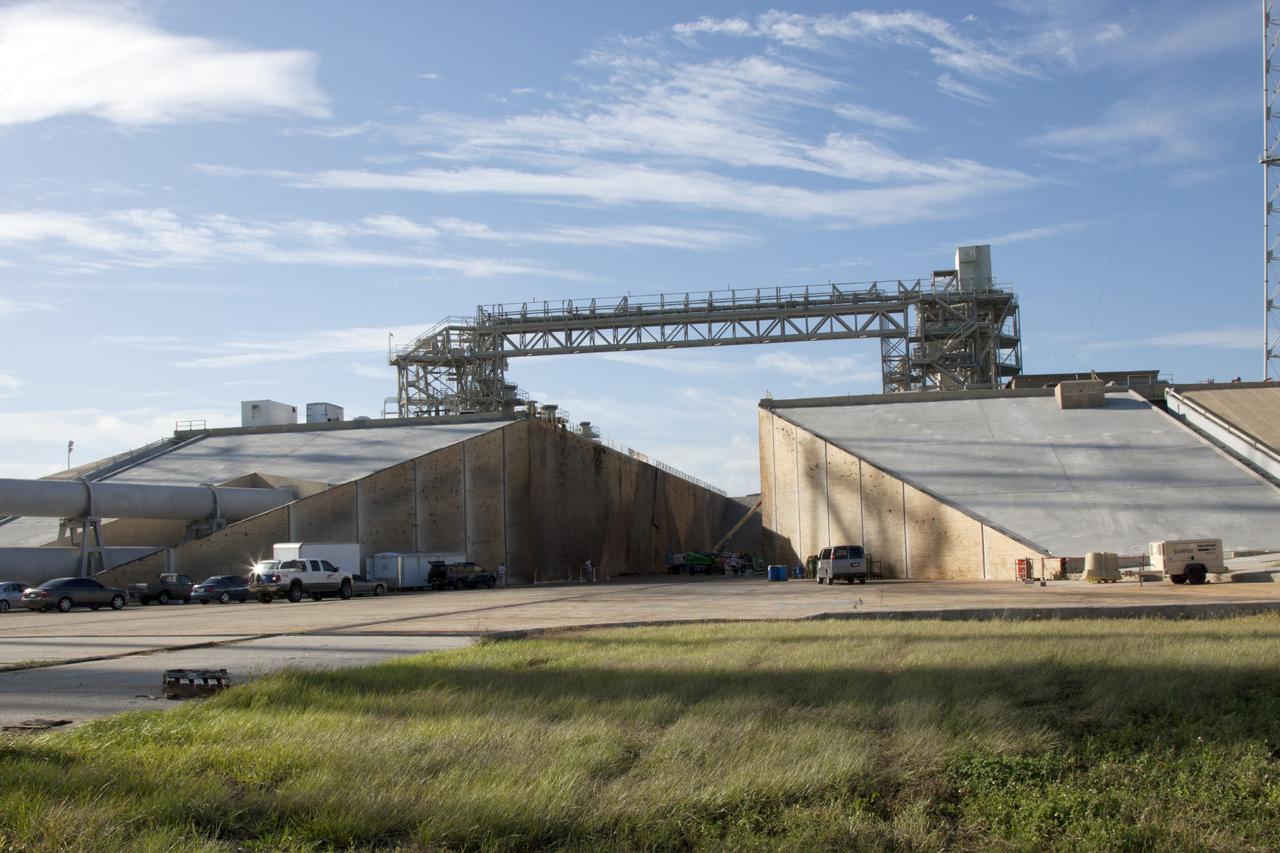
CAPE CANAVERAL, Fla. – At Launch Pad 39B at NASA’s Kennedy Space Center in Florida, the flame trench deflector located below and between the left and right crawlerway tracks has been removed. Pad B is being refurbished to support NASA’s Space Launch System and other launch vehicles. The Ground Systems Development and Operations, or GSDO, Program at Kennedy is leading the center’s transformation to safely handle a variety of rockets and spacecraft. For more information about GSDO, visit: http://go.nasa.gov/groundsystems. Photo credit: NASA/Jim Grossman