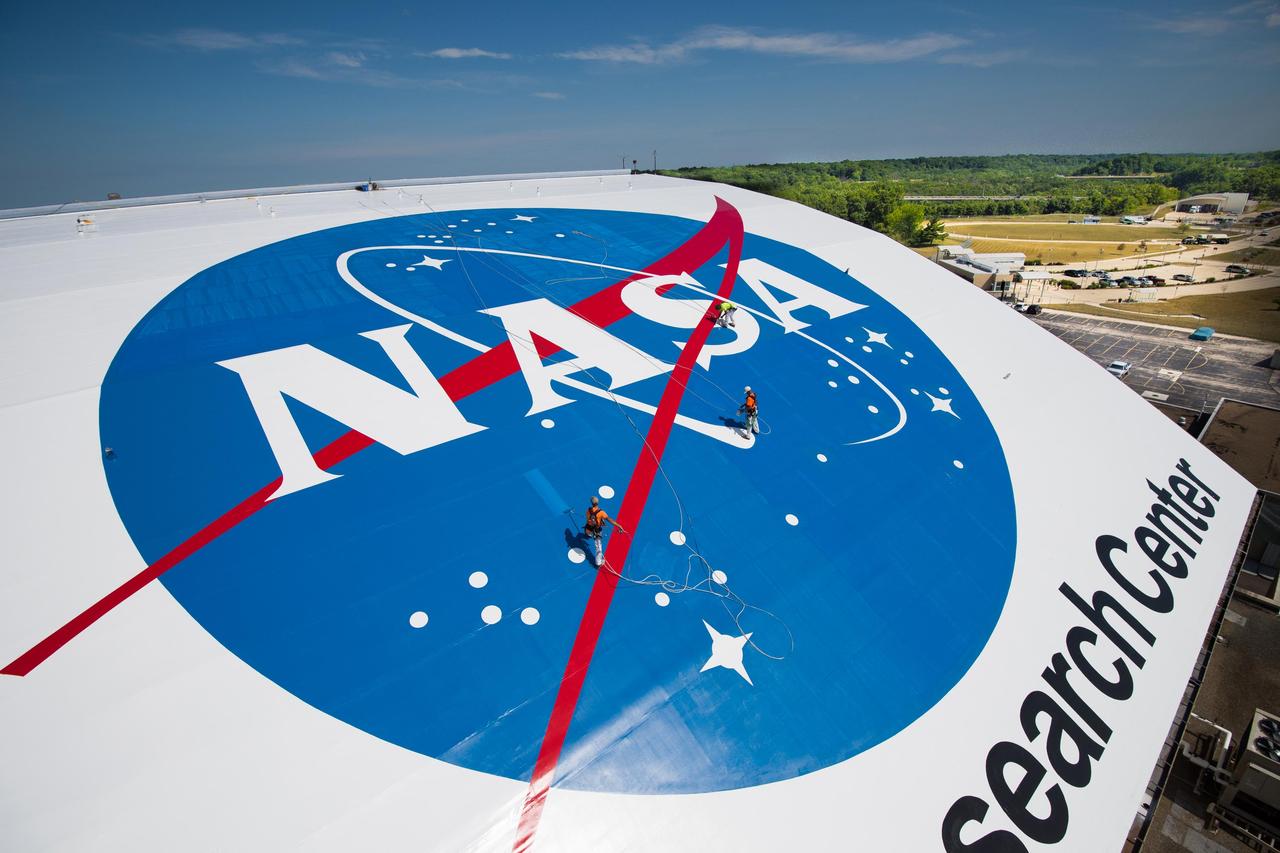
Workers complete the newly painted NASA Insignia on the Hangar roof at NASA Glenn Research Center.
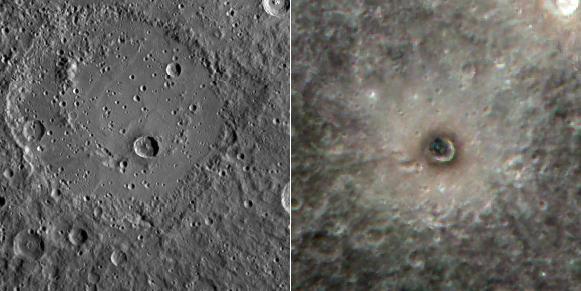
Paint It Black
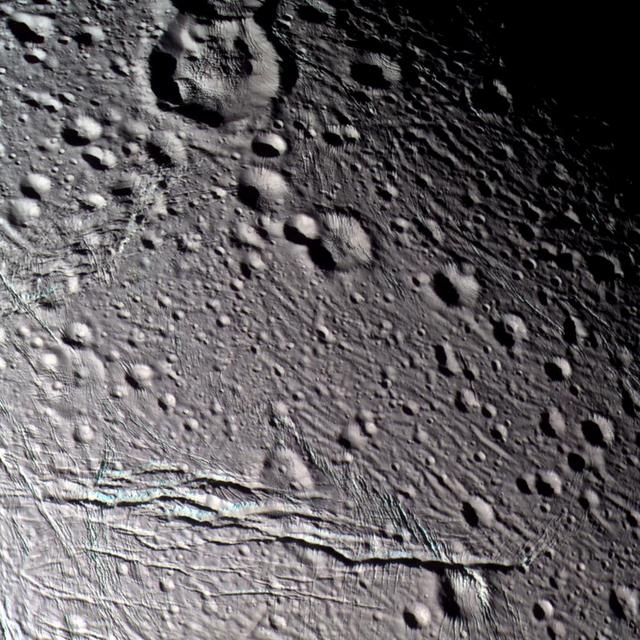
Painting on the Walls
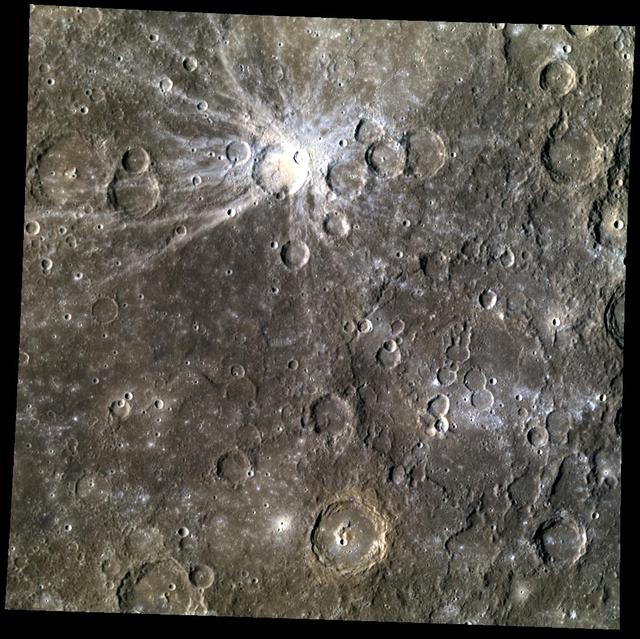
Painting Mercury
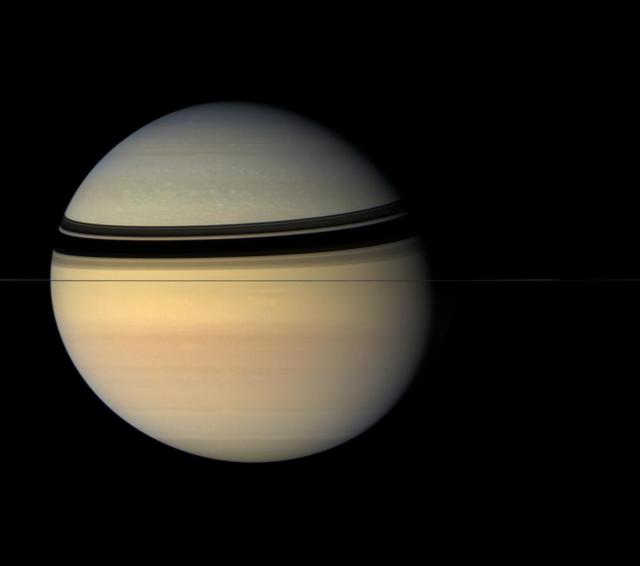
The Painted Globe
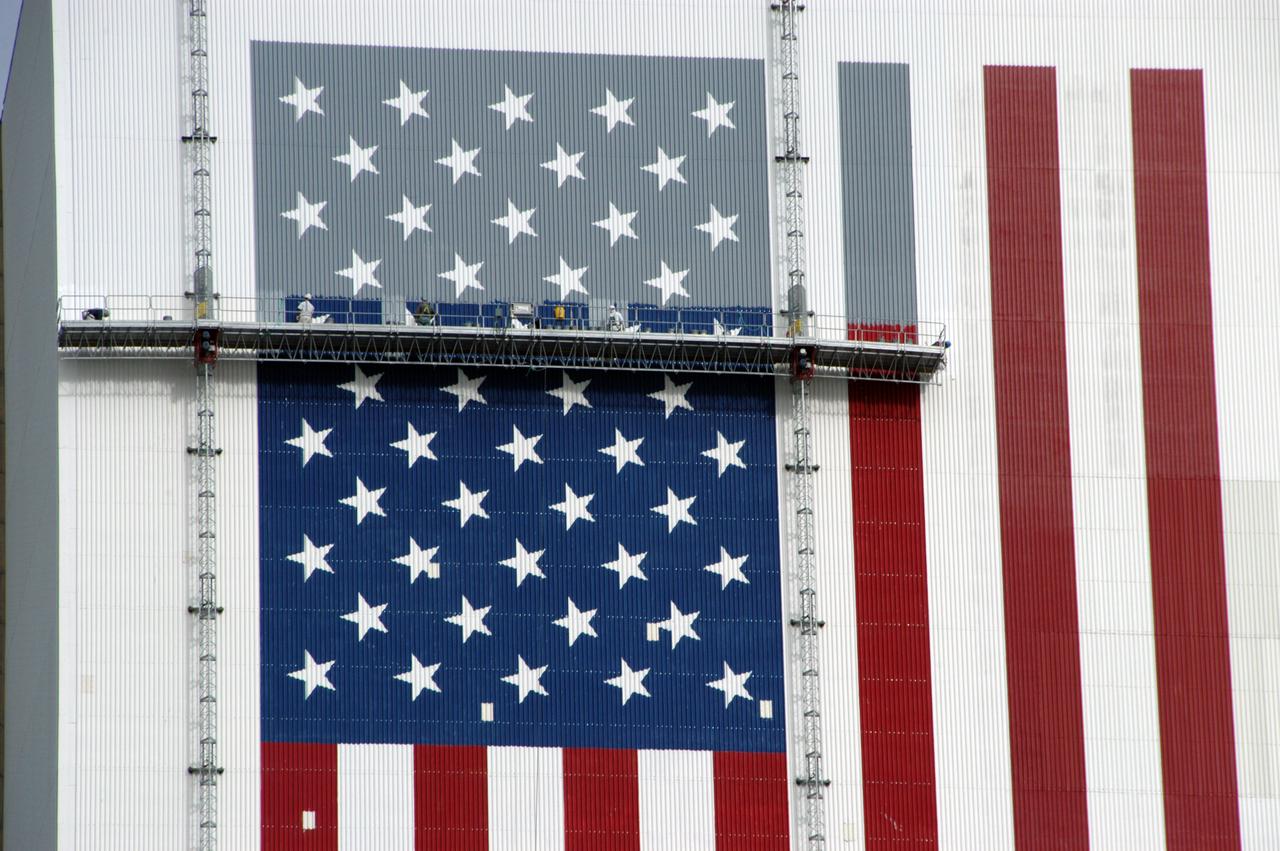
Workers painting the Flag and Meatball on the VAB.
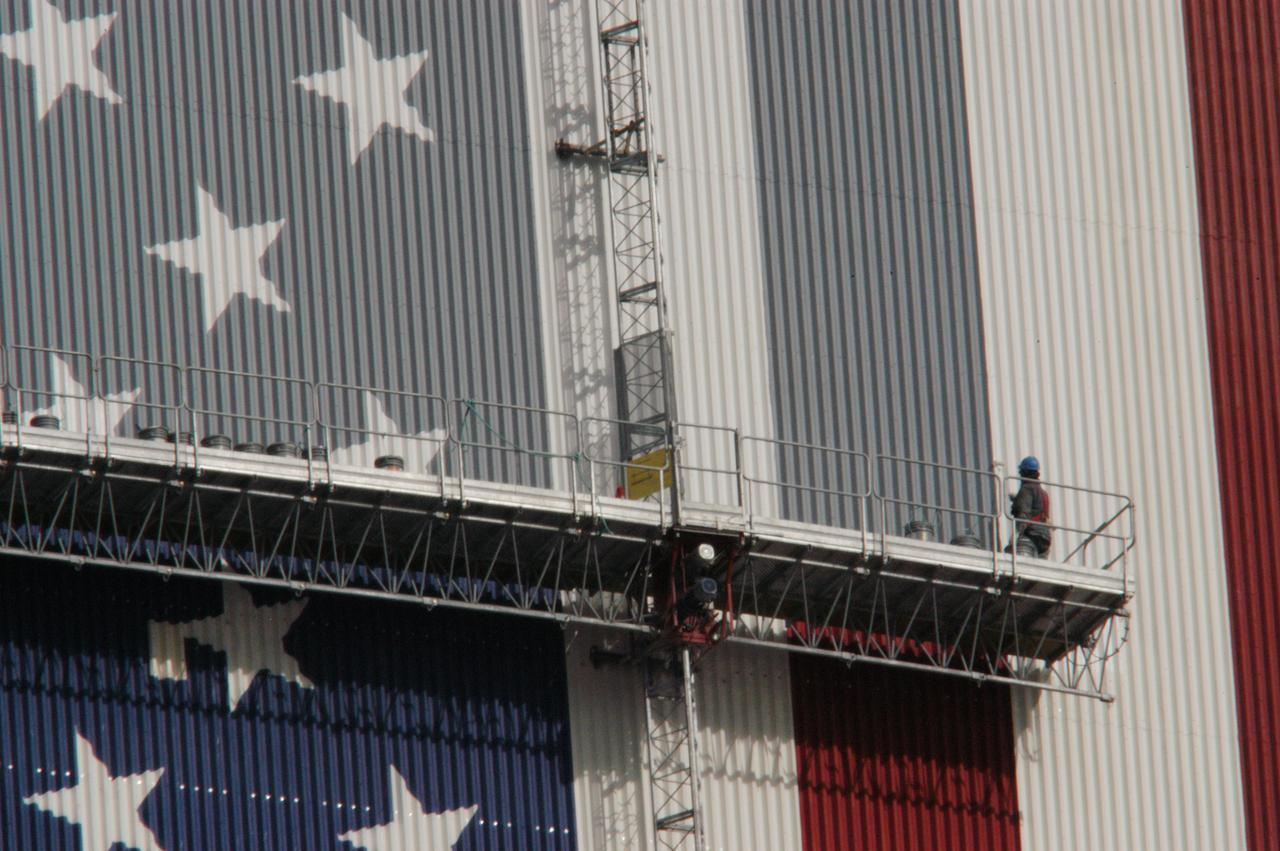
Workers painting the Flag and Meatball on the VAB.
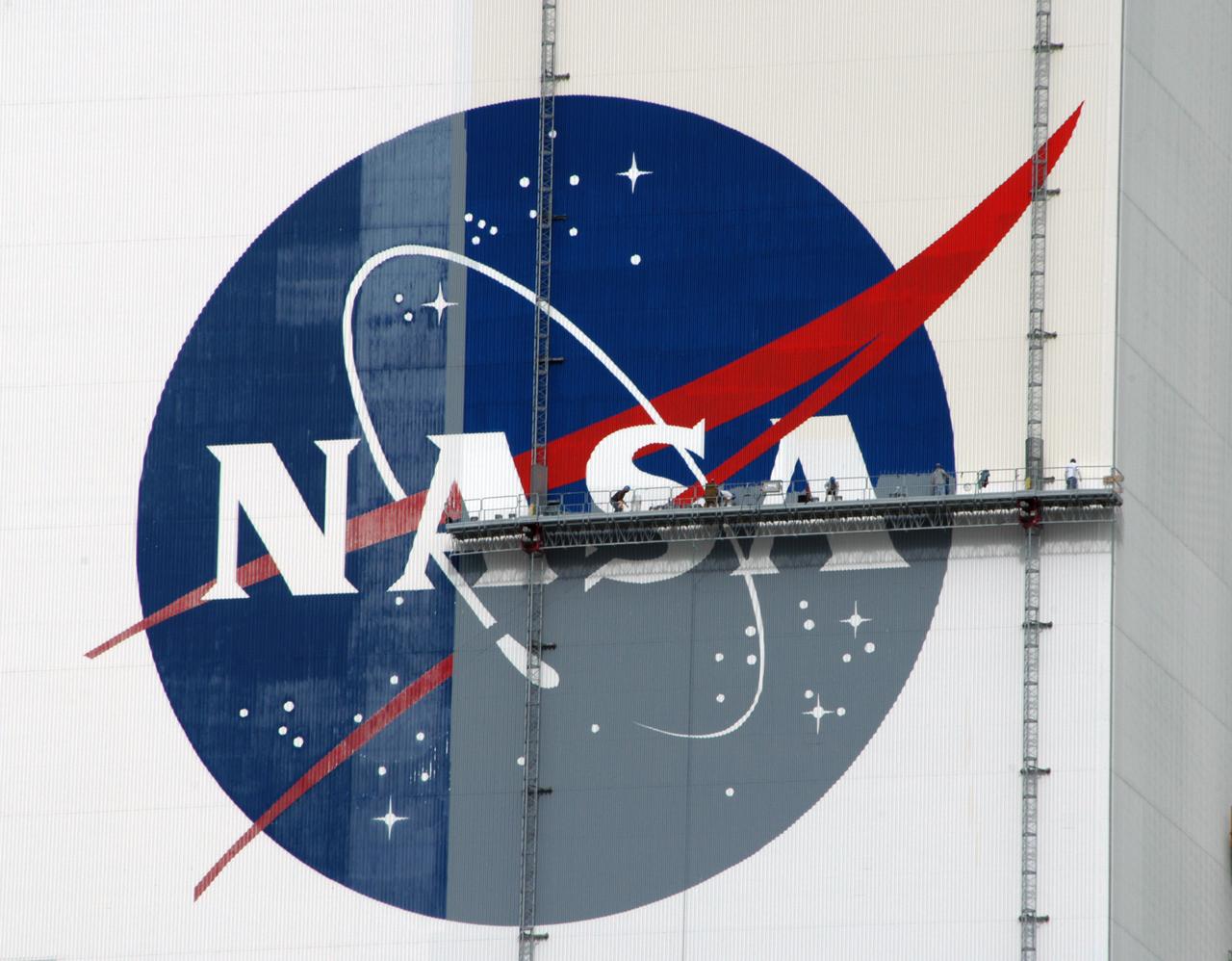
Workers painting the Flag and Meatball on the VAB.
Workers painting the Flag and Meatball on the VAB.
Workers painting the Flag and Meatball on the VAB.

Workers painting the Flag and Meatball on the VAB.
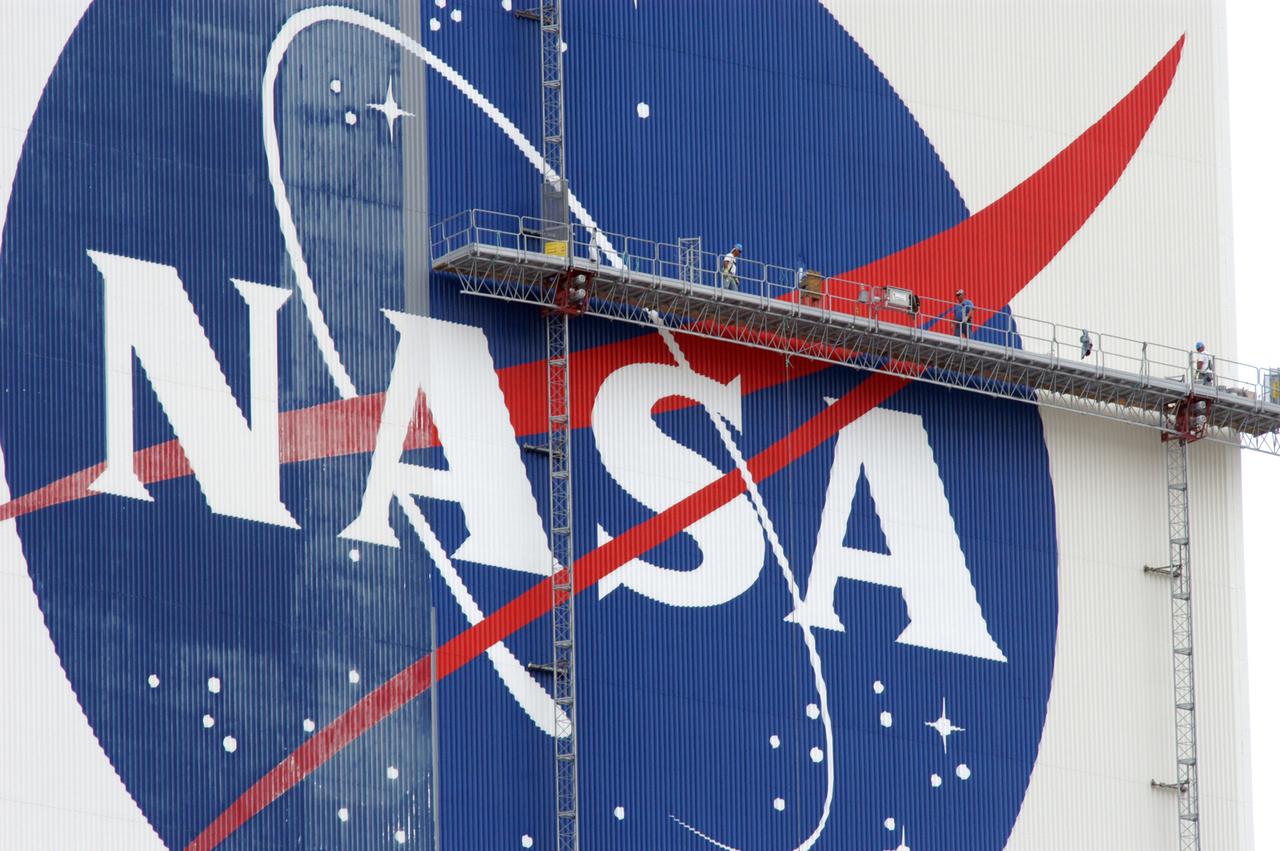
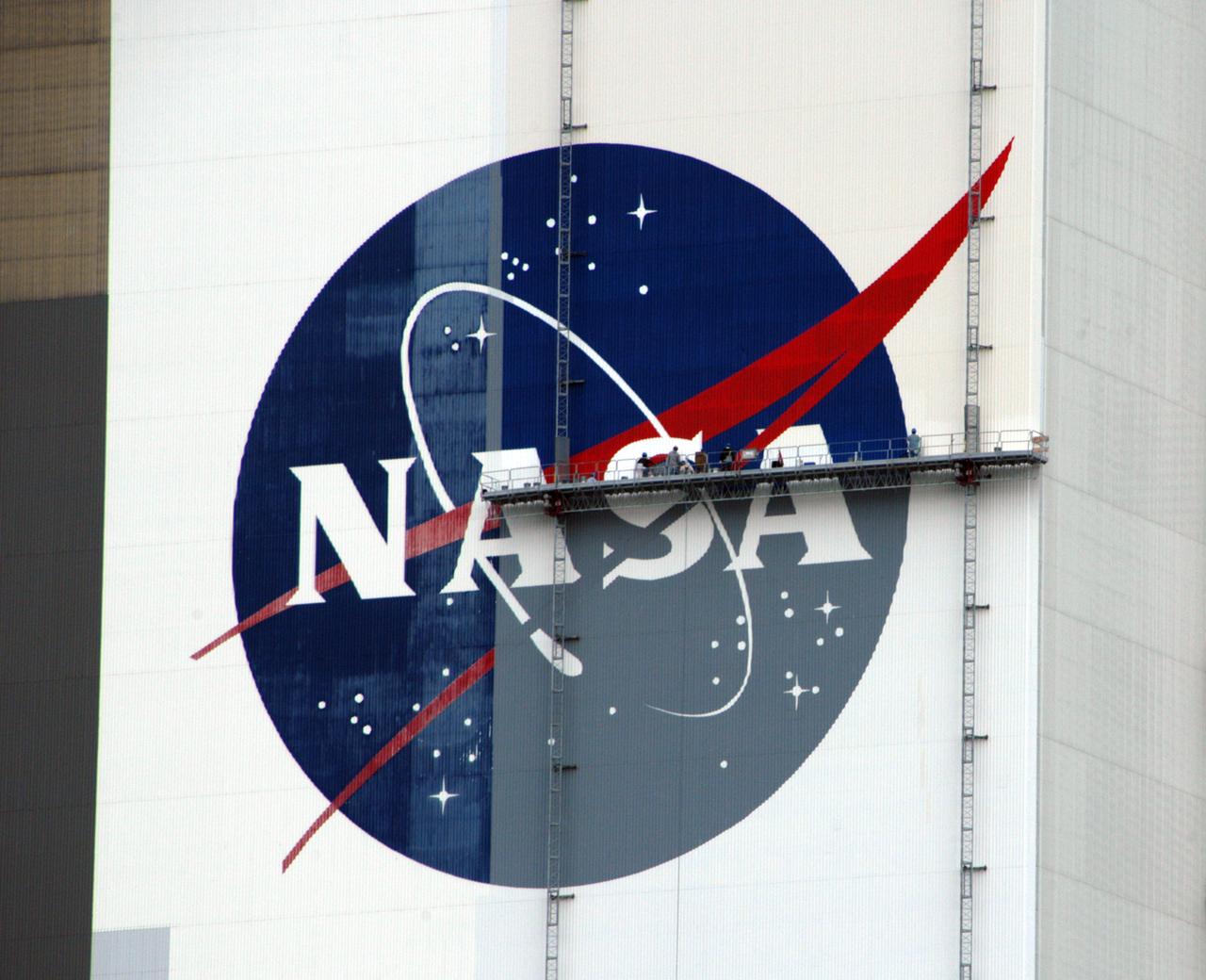
On platforms suspended from the top of the 525-foot-high VAB, workers use rollers and brushes to repaint the U.S. flag on the southwest side of the Vehicle Assembly Building. The flag spans an area 209 feet by 110 feet, or about 23, 437 square feet. Each stripe is 9 feet wide and each star is 6 feet in diameter. The logo is also being painted. Known as the "meatball," the logo measures 110 feet by 132 feet, or about 12,300 square feet. The flag and logo were last painted in 1998, honoring NASA's 40th anniversary.
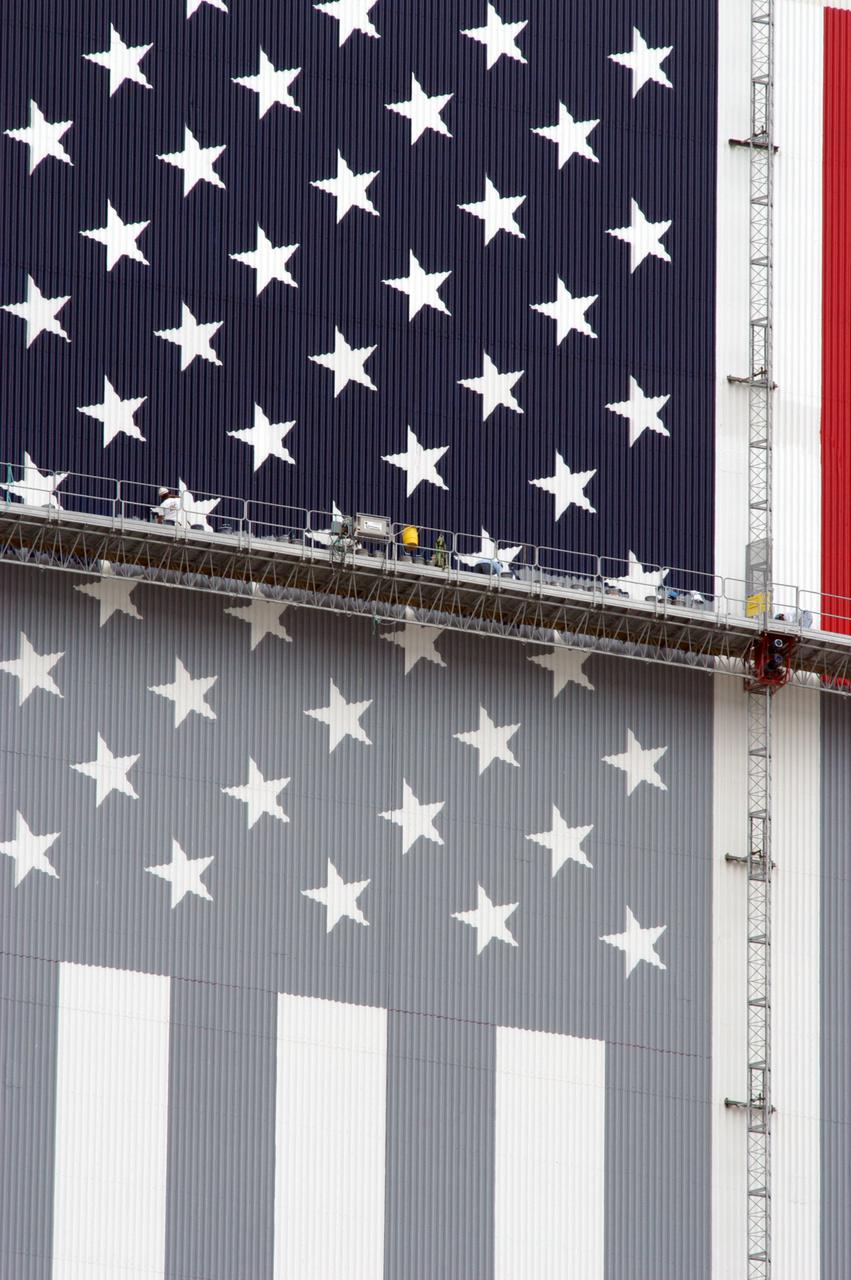
On platforms suspended from the top of the 525-foot-high VAB, workers use rollers and brushes to repaint the U.S. flag on the southwest side of the Vehicle Assembly Building. The flag spans an area 209 feet by 110 feet, or about 23, 437 square feet. Each stripe is 9 feet wide and each star is 6 feet in diameter. The logo is also being painted. Known as the "meatball," the logo measures 110 feet by 132 feet, or about 12,300 square feet. The flag and logo were last painted in 1998, honoring NASA's 40th anniversary.
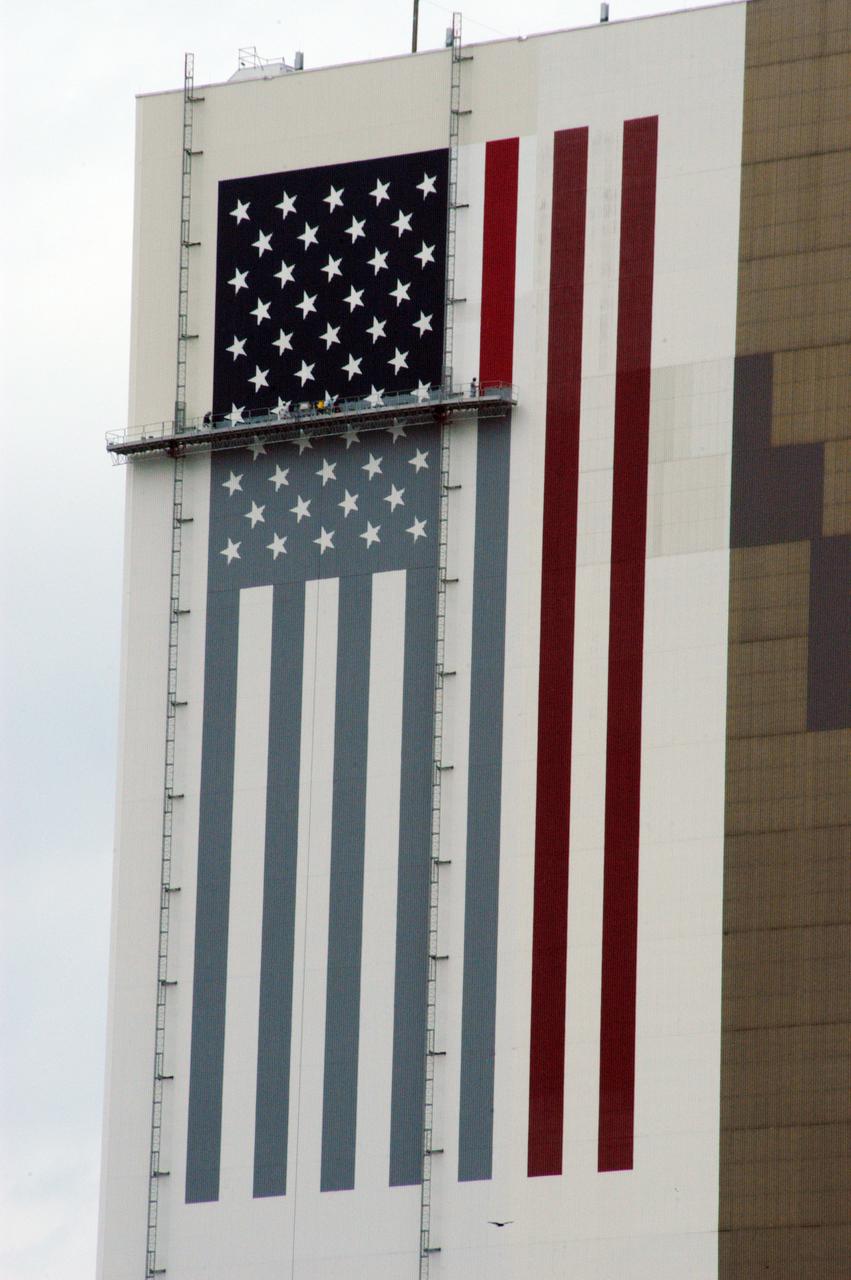
On platforms suspended from the top of the 525-foot-high VAB, workers use rollers and brushes to repaint the U.S. flag on the southwest side of the Vehicle Assembly Building. The flag spans an area 209 feet by 110 feet, or about 23, 437 square feet. Each stripe is 9 feet wide and each star is 6 feet in diameter. The logo is also being painted. Known as the "meatball," the logo measures 110 feet by 132 feet, or about 12,300 square feet. The flag and logo were last painted in 1998, honoring NASA's 40th anniversary.

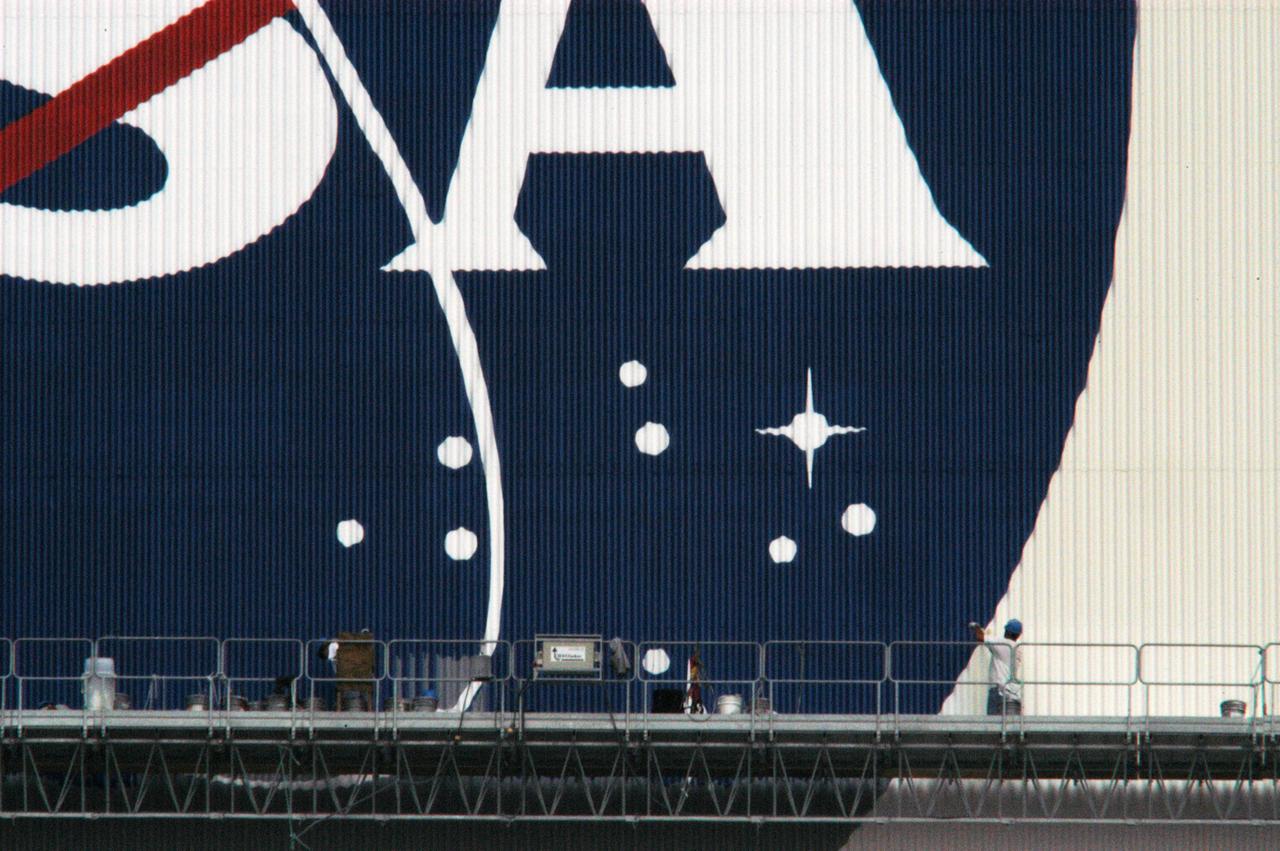
Painting of the NASA logo, also called the meatball, continues on the 525-foot-tall Vehicle Assembly Building (VAB) at the agency’s Kennedy Space Center in Florida on June 23, 2020. HM2 and H.I.S. Painting of Titusville, Florida, are repainting the meatball and the American Flag on the iconic building. The VAB was last painted in 2007 when the repairs were completed after 2004 Hurricanes Frances and Jeanne tore 845 panels off the building. It will take over 500 gallons of paint to paint the 209 X 110-foot flag and the 110’ X 132’ meatball.

Painting of the NASA logo, also called the meatball, continues on the 525-foot-tall Vehicle Assembly Building (VAB) at the agency’s Kennedy Space Center in Florida on June 23, 2020. HM2 and H.I.S. Painting of Titusville, Florida, are repainting the meatball and the American Flag on the iconic building. The VAB was last painted in 2007 when the repairs were completed after 2004 Hurricanes Frances and Jeanne tore 845 panels off the building. It will take over 500 gallons of paint to paint the 209 X 110-foot flag and the 110’ X 132’ meatball.

Painting of the NASA logo, also called the meatball, continues on the 525-foot-tall Vehicle Assembly Building (VAB) at the agency’s Kennedy Space Center in Florida on June 23, 2020. HM2 and H.I.S. Painting of Titusville, Florida, are repainting the meatball and the American Flag on the iconic building. The VAB was last painted in 2007 when the repairs were completed after 2004 Hurricanes Frances and Jeanne tore 845 panels off the building. It will take over 500 gallons of paint to paint the 209 X 110-foot flag and the 110’ X 132’ meatball.

Painting of the NASA logo, also called the meatball, continues on the 525-foot-tall Vehicle Assembly Building (VAB) at the agency’s Kennedy Space Center in Florida on June 23, 2020. HM2 and H.I.S. Painting of Titusville, Florida, are repainting the meatball and the American Flag on the iconic building. The VAB was last painted in 2007 when the repairs were completed after 2004 Hurricanes Frances and Jeanne tore 845 panels off the building. It will take over 500 gallons of paint to paint the 209 X 110-foot flag and the 110’ X 132’ meatball.

Painting of the NASA logo, also called the meatball, continues on the 525-foot-tall Vehicle Assembly Building (VAB) at the agency’s Kennedy Space Center in Florida on June 23, 2020. HM2 and H.I.S. Painting of Titusville, Florida, are repainting the meatball and the American Flag on the iconic building. The VAB was last painted in 2007 when the repairs were completed after 2004 Hurricanes Frances and Jeanne tore 845 panels off the building. It will take over 500 gallons of paint to paint the 209 X 110-foot flag and the 110’ X 132’ meatball.

Painting of the NASA logo, also called the meatball, continues on the 525-foot-tall Vehicle Assembly Building (VAB) at the agency’s Kennedy Space Center in Florida on June 23, 2020. HM2 and H.I.S. Painting of Titusville, Florida, are repainting the meatball and the American Flag on the iconic building. The VAB was last painted in 2007 when the repairs were completed after 2004 Hurricanes Frances and Jeanne tore 845 panels off the building. It will take over 500 gallons of paint to paint the 209 X 110-foot flag and the 110’ X 132’ meatball.
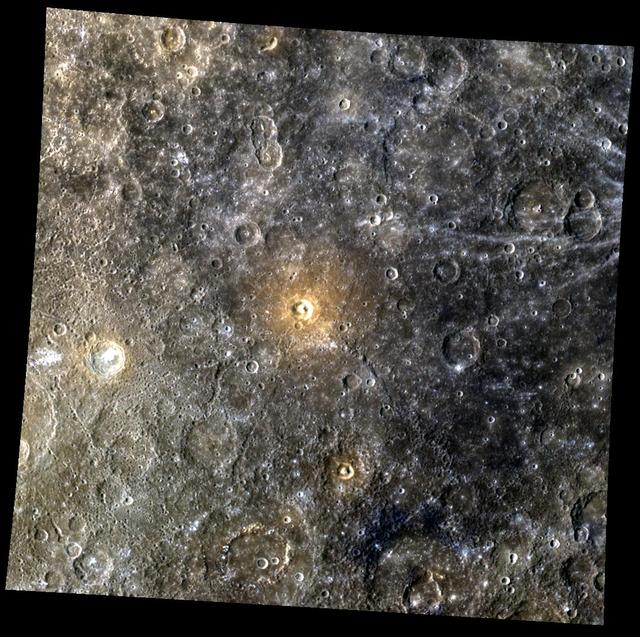
She Paints Words in Red
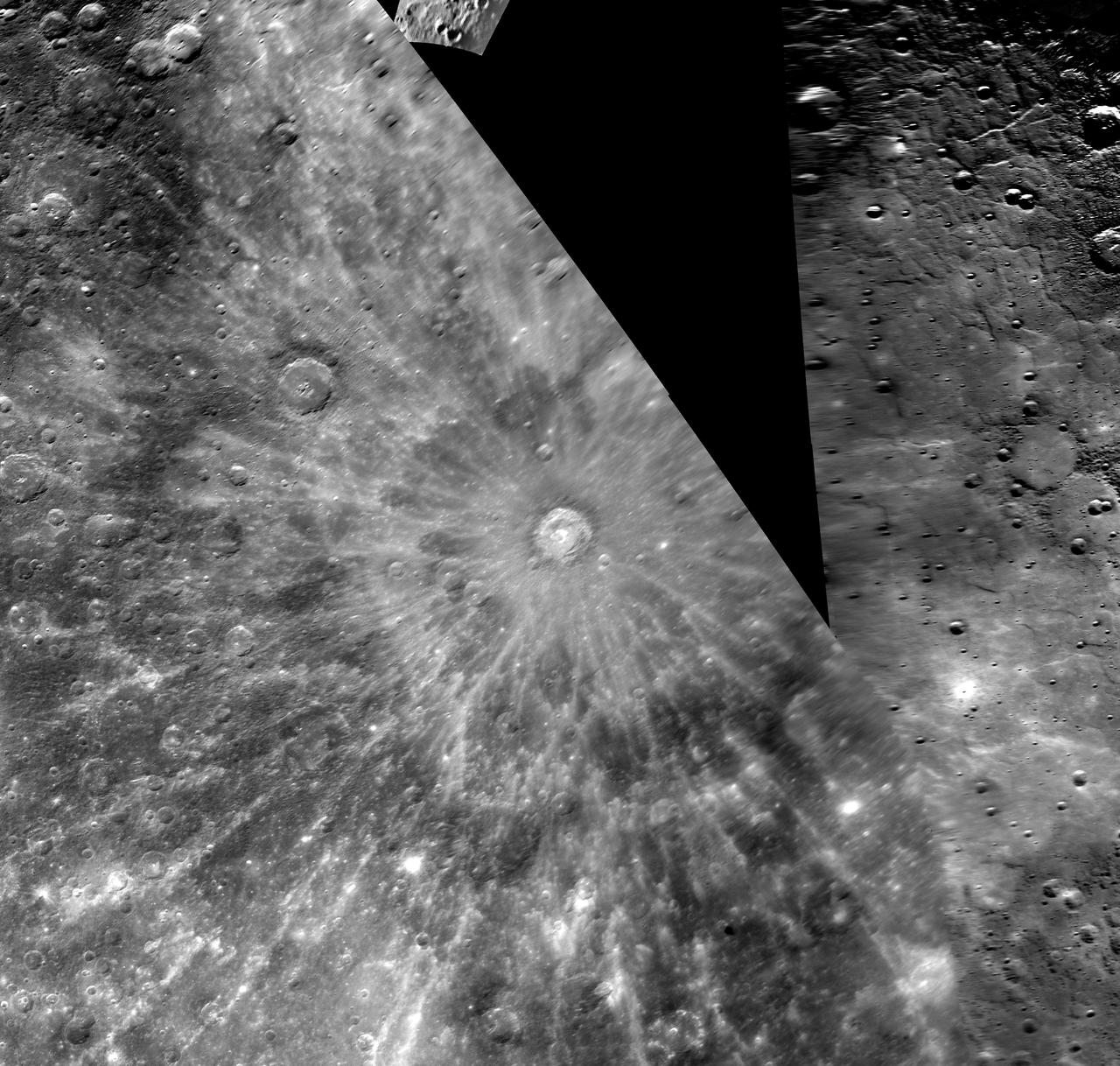
Hokusai Paints a Wave of Rays
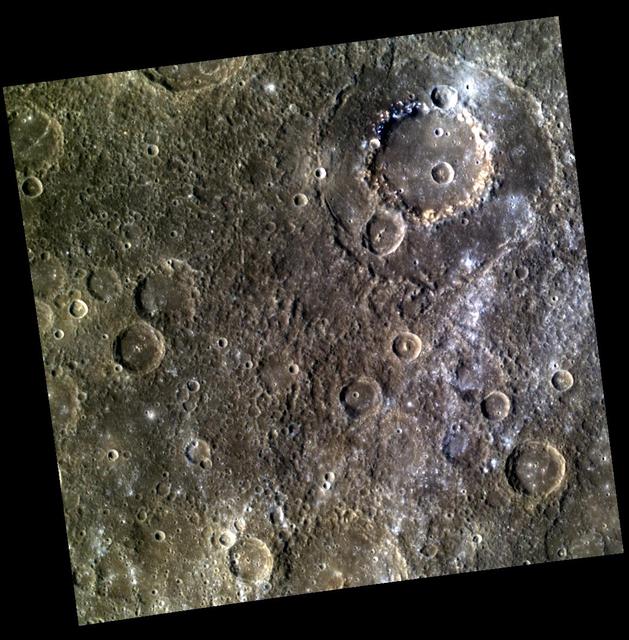
Wang Meng Paints the Canvas
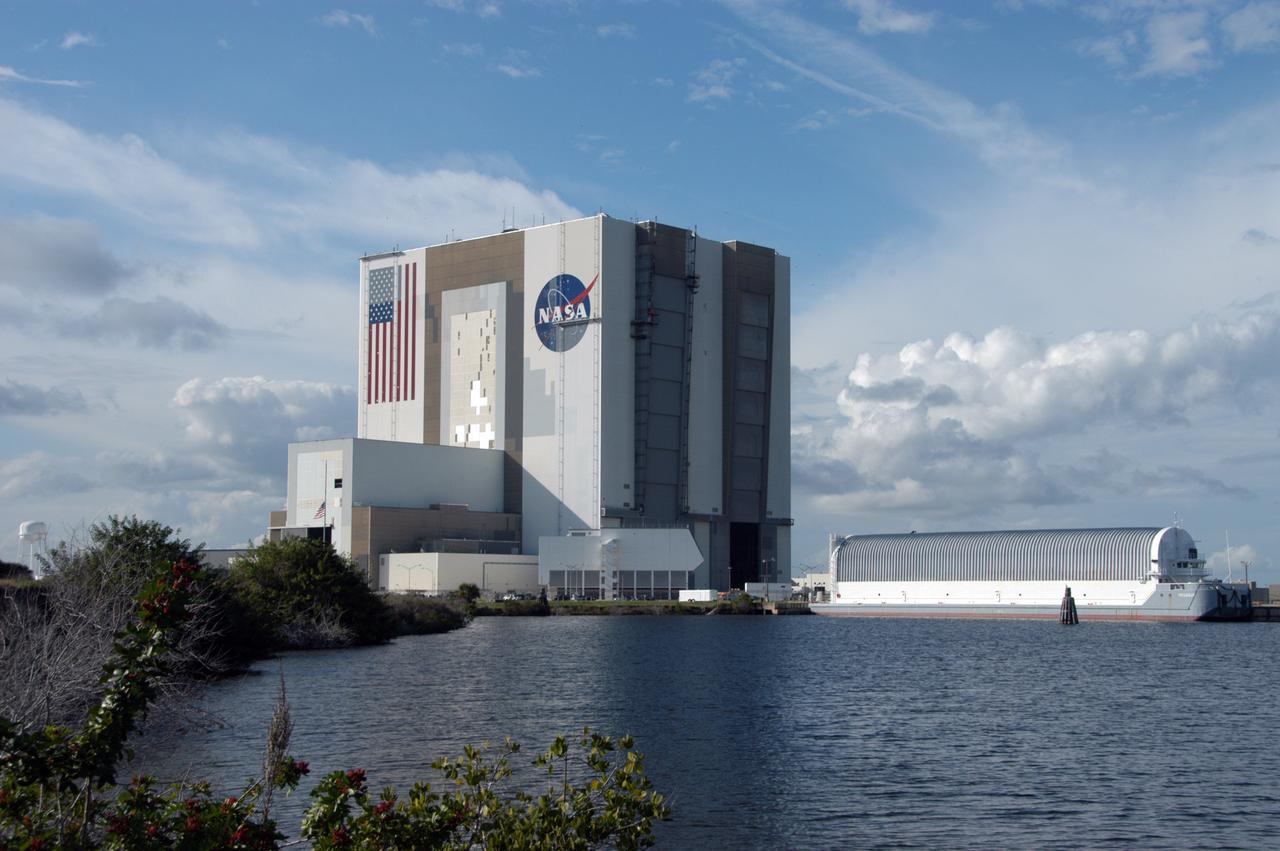
Elevated platforms are seen hanging on the side of Kennedy Space Center's Vehicle Assembly Building in a view looking across from the turn basin. To the right is the large external tank barge. Workers, suspended on the platforms from the top of the 525-foot-high VAB, use rollers and brushes to do the painting. The flag and logo were last painted in 1998, honoring NASA's 40th anniversary. The flag spans an area 209 feet by 110 feet, or about 23, 437 square feet. Each stripe is 9 feet wide and each star is 6 feet in diameter. The logo, also known as the "meatball," measures 110 feet by 132 feet, or about 12,300 square feet.
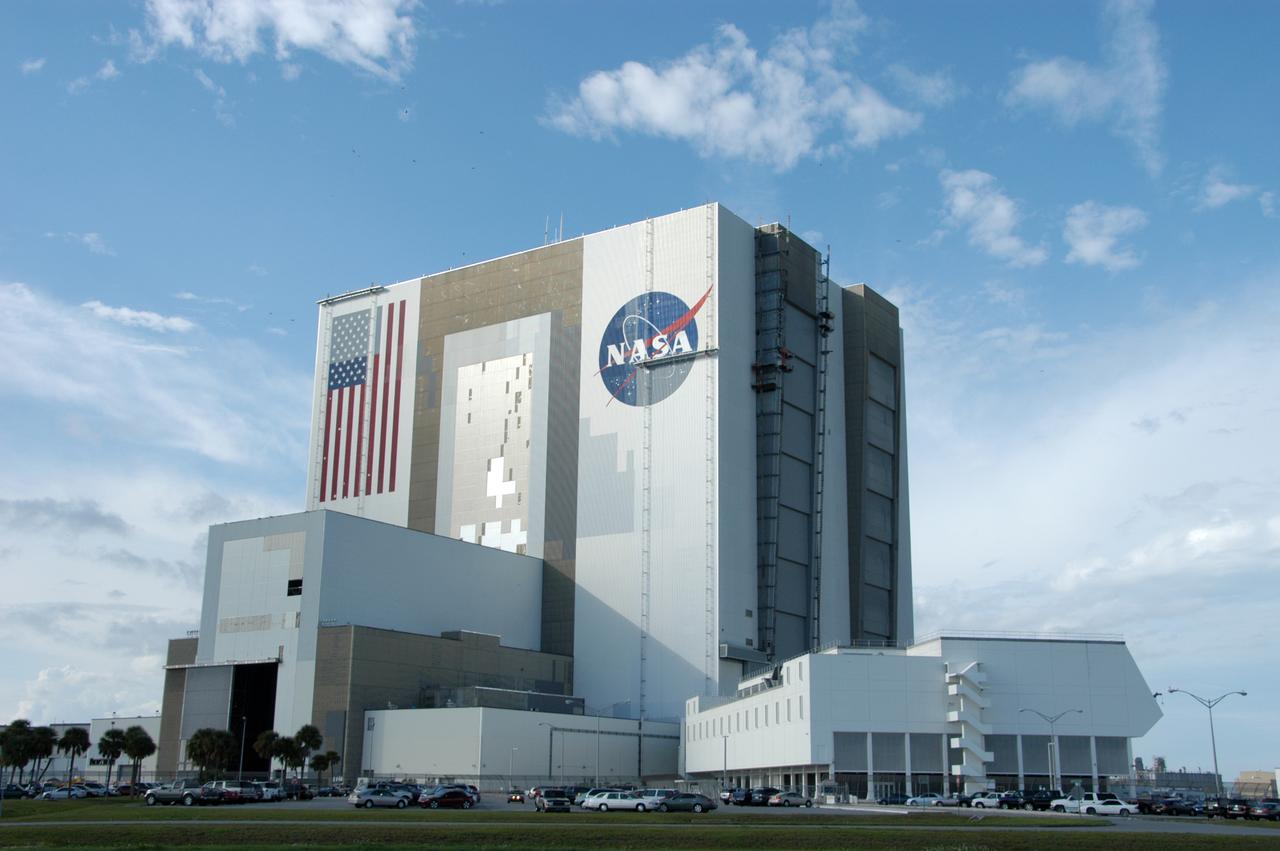
Elevated platforms are seen hanging in front of the NASA Logo on the side of Kennedy Space Center's Vehicle Assembly Building. Also in view on the east side of the building are platforms on the facility's large vertical doors. Workers, suspended on the platforms from the top of the 525-foot-high VAB, use rollers and brushes to do the painting. The flag and logo were last painted in 1998, honoring NASA's 40th anniversary. The flag spans an area 209 feet by 110 feet, or about 23, 437 square feet. Each stripe is 9 feet wide and each star is 6 feet in diameter. The logo, also known as the "meatball," measures 110 feet by 132 feet, or about 12,300 square feet.
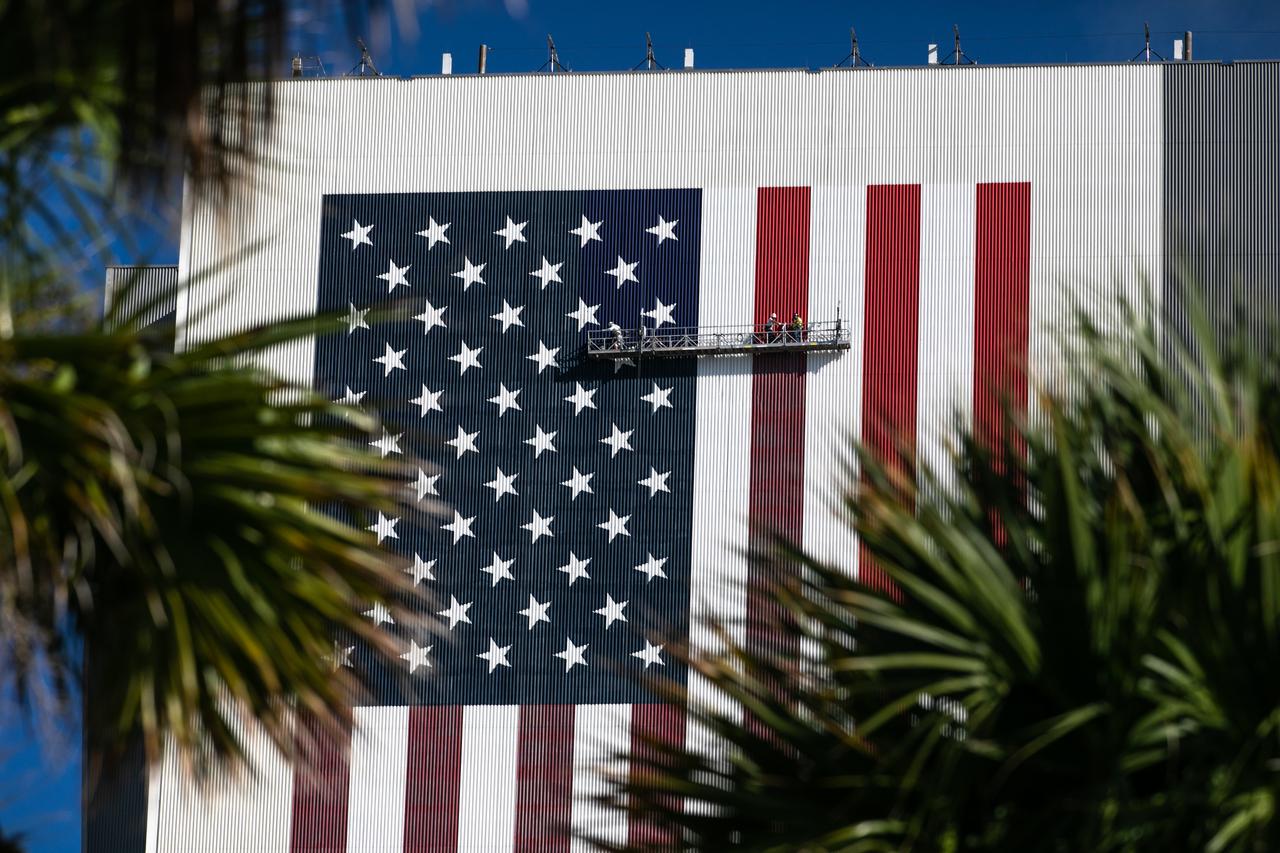
Painting of the U.S. flag continues on the 525-foot-tall Vehicle Assembly Building (VAB) at NASA’s Kennedy Space Center in Florida on Sept. 17, 2020. HM2 and H.I.S. Painting of Titusville, Florida, are repainting the American Flag on the iconic building. The flag is 209 feet long by 110 feet wide. Each star is more than six feet in diameter, and each stripe is nine feet wide. Exploration Ground Systems is overseeing upgrades to the VAB to support the launch of the Space Launch System and Orion for Artemis missions. Under the Artemis program, NASA will send the first woman and next man to the Moon.
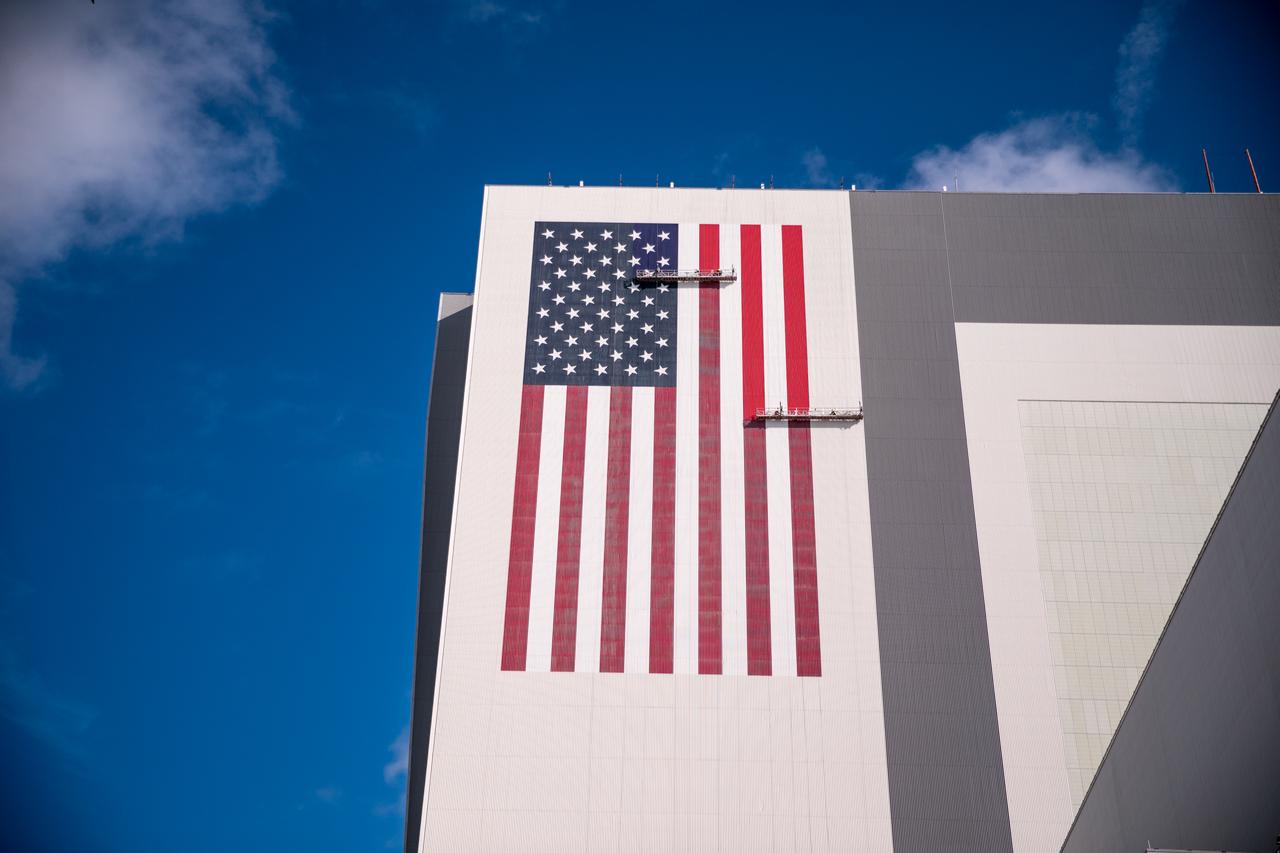
Painting of the U.S. flag continues on the 525-foot-tall Vehicle Assembly Building (VAB) at NASA’s Kennedy Space Center in Florida on Sept. 17, 2020. HM2 and H.I.S. Painting of Titusville, Florida, are repainting the American Flag on the iconic building. The flag is 209 feet long by 110 feet wide. Each star is more than six feet in diameter, and each stripe is nine feet wide. Exploration Ground Systems is overseeing upgrades to the VAB to support the launch of the Space Launch System and Orion for Artemis missions. Under the Artemis program, NASA will send the first woman and next man to the Moon.
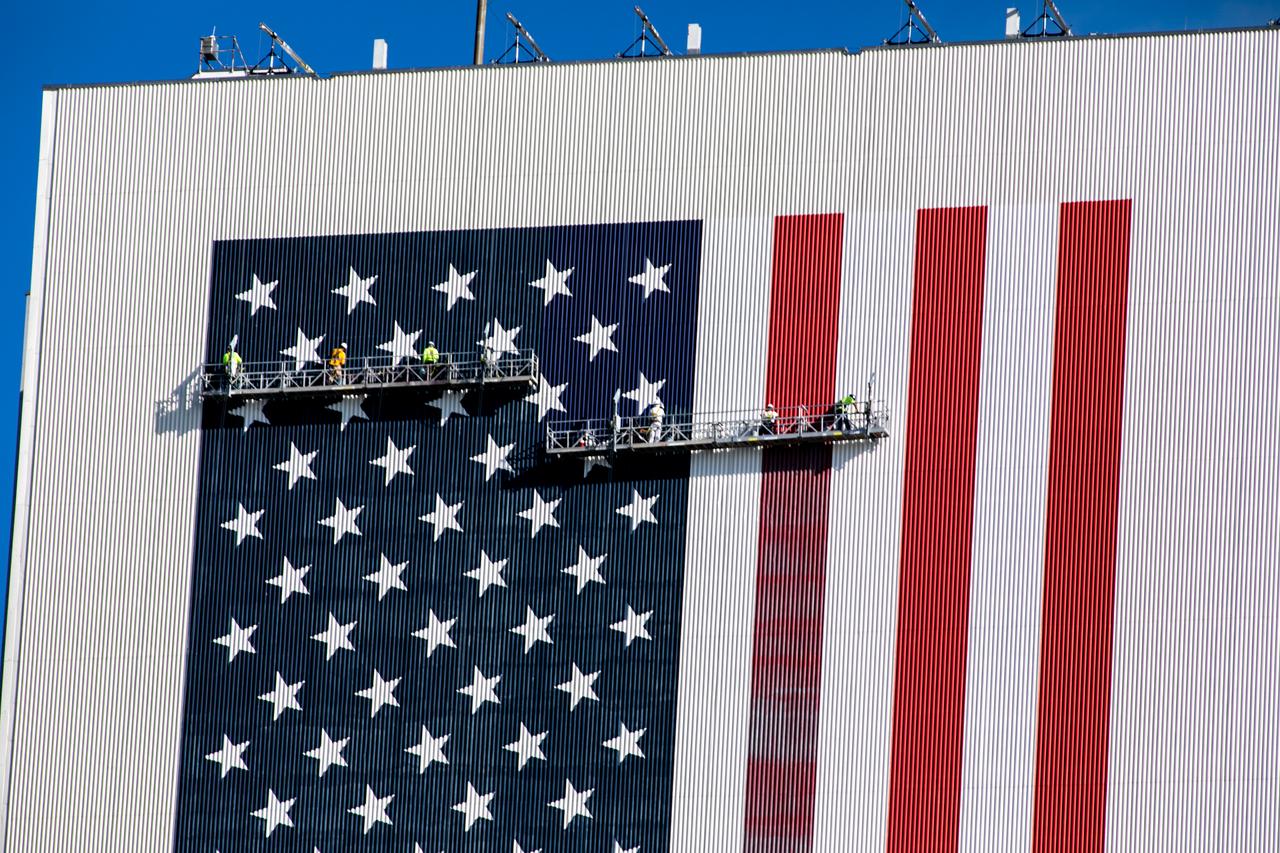
Painting of the U.S. flag continues on the 525-foot-tall Vehicle Assembly Building (VAB) at NASA’s Kennedy Space Center in Florida on Sept. 17, 2020. HM2 and H.I.S. Painting of Titusville, Florida, are repainting the American Flag on the iconic building. The flag is 209 feet long by 110 feet wide. Each star is more than six feet in diameter, and each stripe is nine feet wide. Exploration Ground Systems is overseeing upgrades to the VAB to support the launch of the Space Launch System and Orion for Artemis missions. Under the Artemis program, NASA will send the first woman and next man to the Moon.
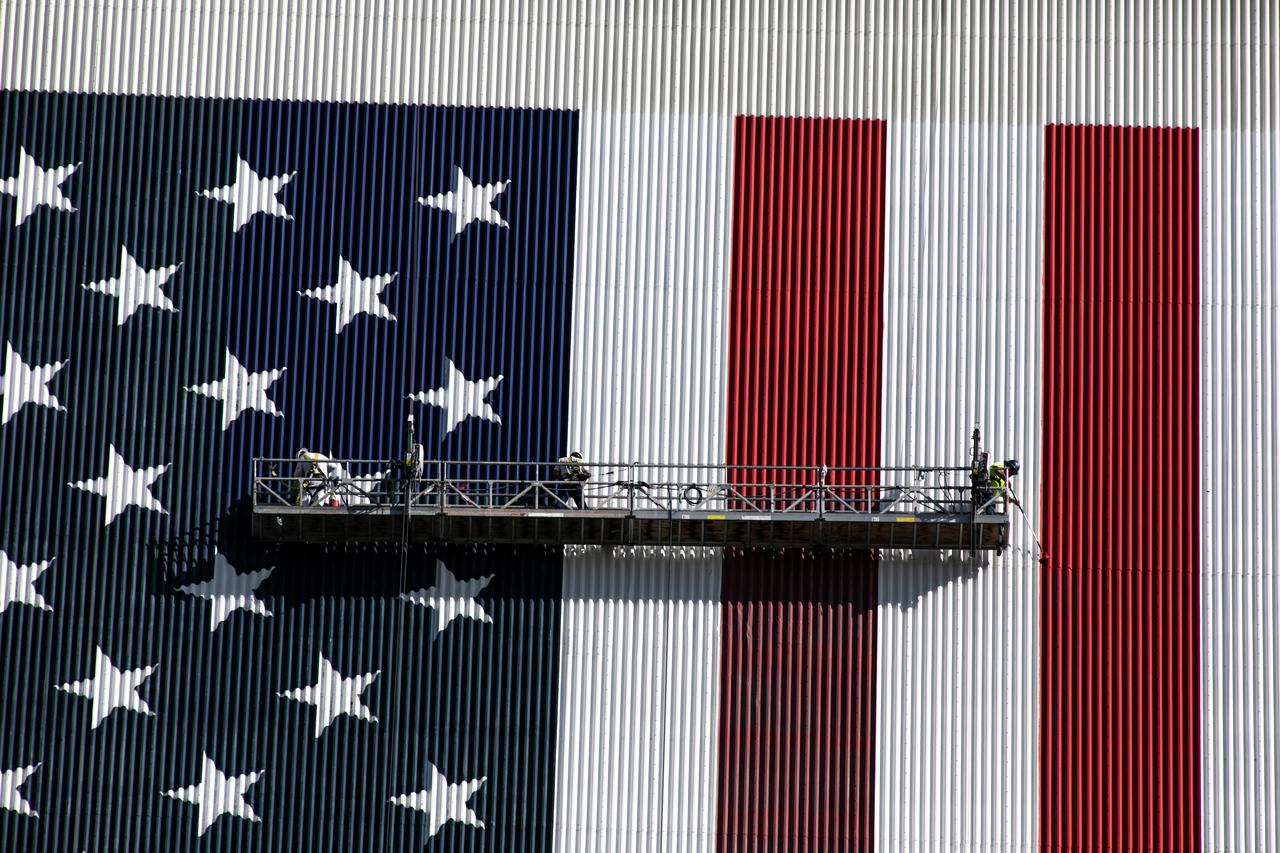
Painting of the U.S. flag continues on the 525-foot-tall Vehicle Assembly Building (VAB) in this close-up view at NASA’s Kennedy Space Center in Florida on Sept. 17, 2020. HM2 and H.I.S. Painting of Titusville, Florida, are repainting the American Flag on the iconic building. The flag is 209 feet long by 110 feet wide. Each star is more than six feet in diameter, and each stripe is nine feet wide. Exploration Ground Systems is overseeing upgrades to the VAB to support the launch of the Space Launch System and Orion for Artemis missions. Under the Artemis program, NASA will send the first woman and next man to the Moon.
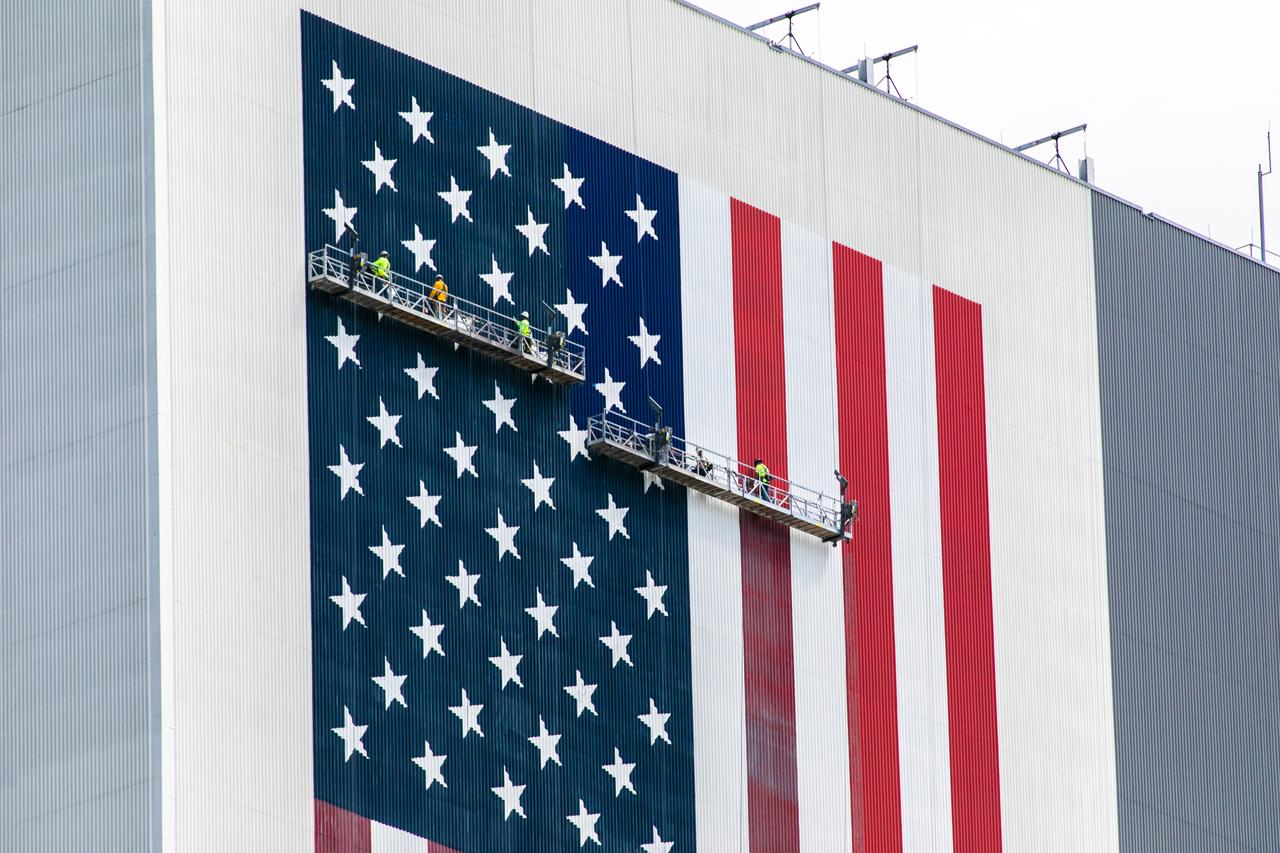
Painting of the U.S. flag continues on the 525-foot-tall Vehicle Assembly Building (VAB) in this close-up view at NASA’s Kennedy Space Center in Florida on Sept. 17, 2020. HM2 and H.I.S. Painting of Titusville, Florida, are repainting the American Flag on the iconic building. The flag is 209 feet long by 110 feet wide. Each star is more than six feet in diameter, and each stripe is nine feet wide. Exploration Ground Systems is overseeing upgrades to the VAB to support the launch of the Space Launch System and Orion for Artemis missions. Under the Artemis program, NASA will send the first woman and next man to the Moon.
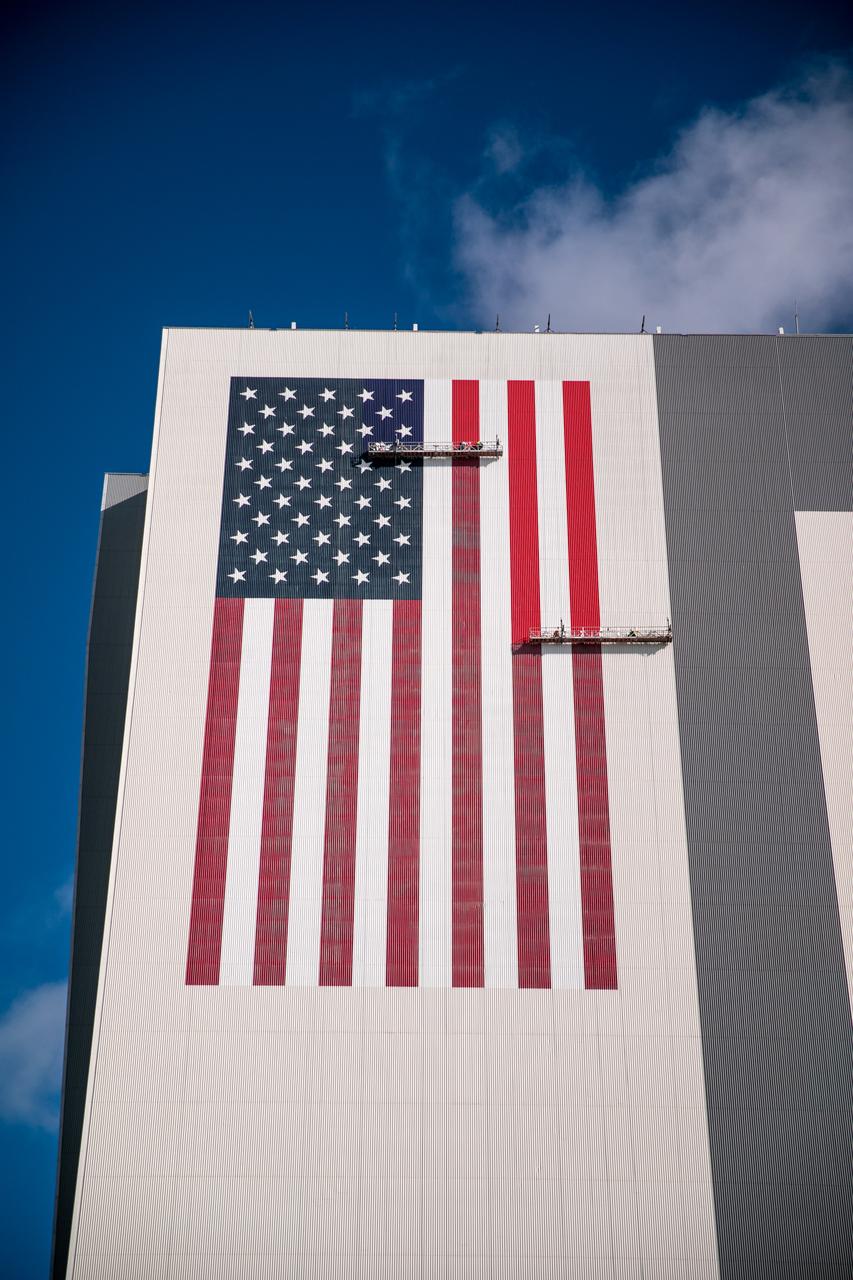
Painting of the U.S. flag continues on the 525-foot-tall Vehicle Assembly Building (VAB) at NASA’s Kennedy Space Center in Florida on Sept. 17, 2020. HM2 and H.I.S. Painting of Titusville, Florida, are repainting the American Flag on the iconic building. The flag is 209 feet long by 110 feet wide. Each star is more than six feet in diameter, and each stripe is nine feet wide. Exploration Ground Systems is overseeing upgrades to the VAB to support the launch of the Space Launch System and Orion for Artemis missions. Under the Artemis program, NASA will send the first woman and next man to the Moon.
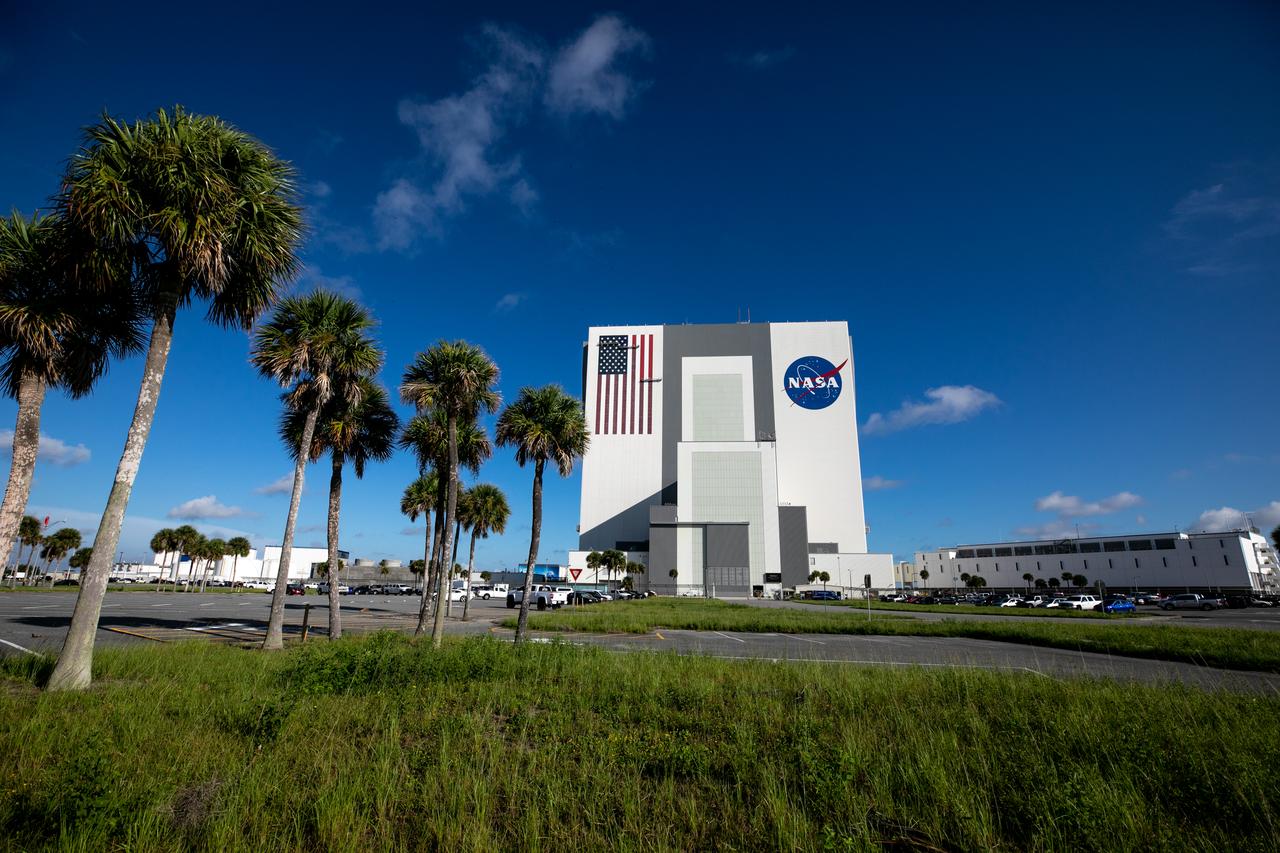
A view of the 525-foot-tall Vehicle Assembly Building (VAB) at NASA’s Kennedy Space Center in Florida, as painting of the U.S. flag continues on the iconic building on Sept. 17, 2020. HM2 and H.I.S. Painting of Titusville, Florida, are repainting the American Flag on the building. The flag is 209 feet long by 110 feet wide. Each star is more than six feet in diameter, and each stripe is nine feet wide. Exploration Ground Systems is overseeing upgrades to the VAB to support the launch of the Space Launch System and Orion for Artemis missions. Under the Artemis program, NASA will send the first woman and next man to the Moon.
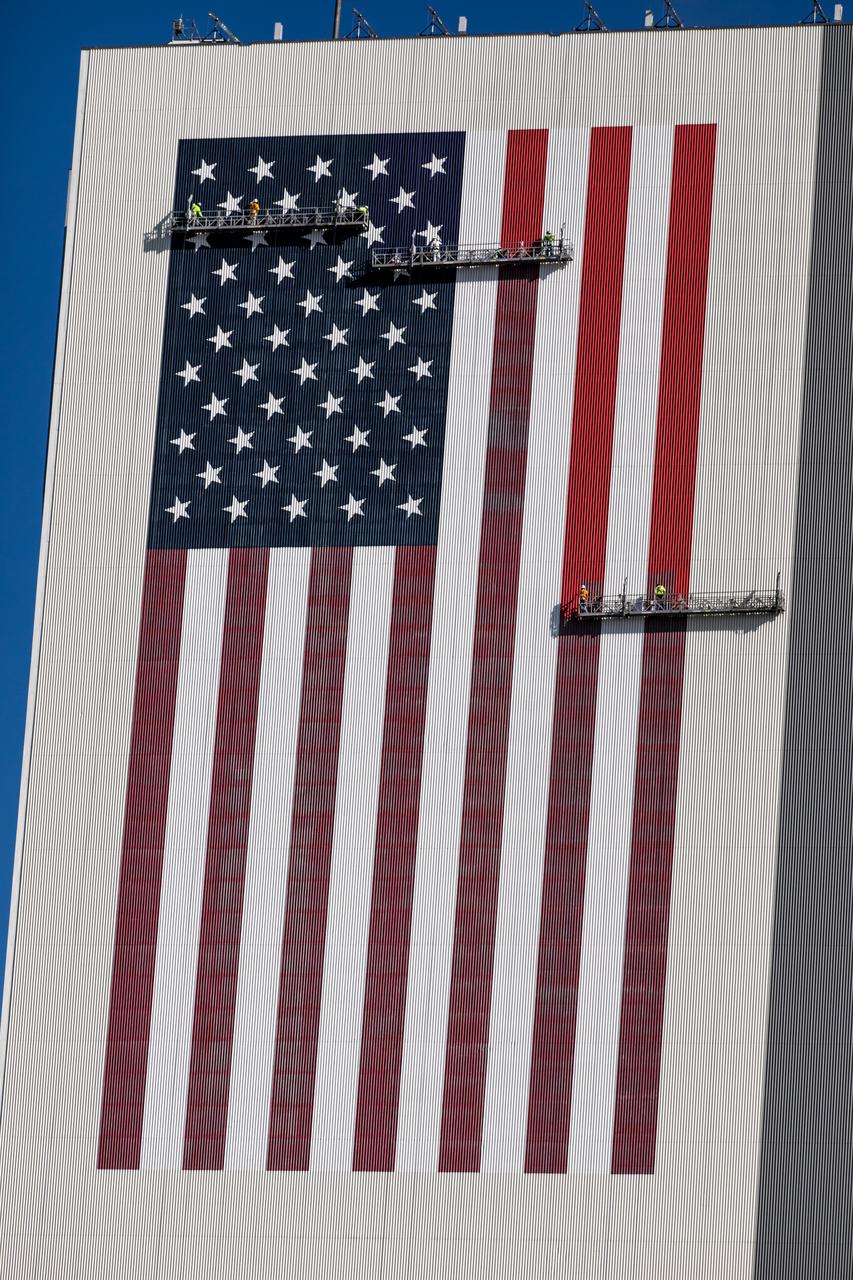
Painting of the U.S. flag continues on the 525-foot-tall Vehicle Assembly Building (VAB) at NASA’s Kennedy Space Center in Florida on Sept. 17, 2020. HM2 and H.I.S. Painting of Titusville, Florida, are repainting the American Flag on the iconic building. The flag is 209 feet long by 110 feet wide. Each star is more than six feet in diameter, and each stripe is nine feet wide. Exploration Ground Systems is overseeing upgrades to the VAB to support the launch of the Space Launch System and Orion for Artemis missions. Under the Artemis program, NASA will send the first woman and next man to the Moon.
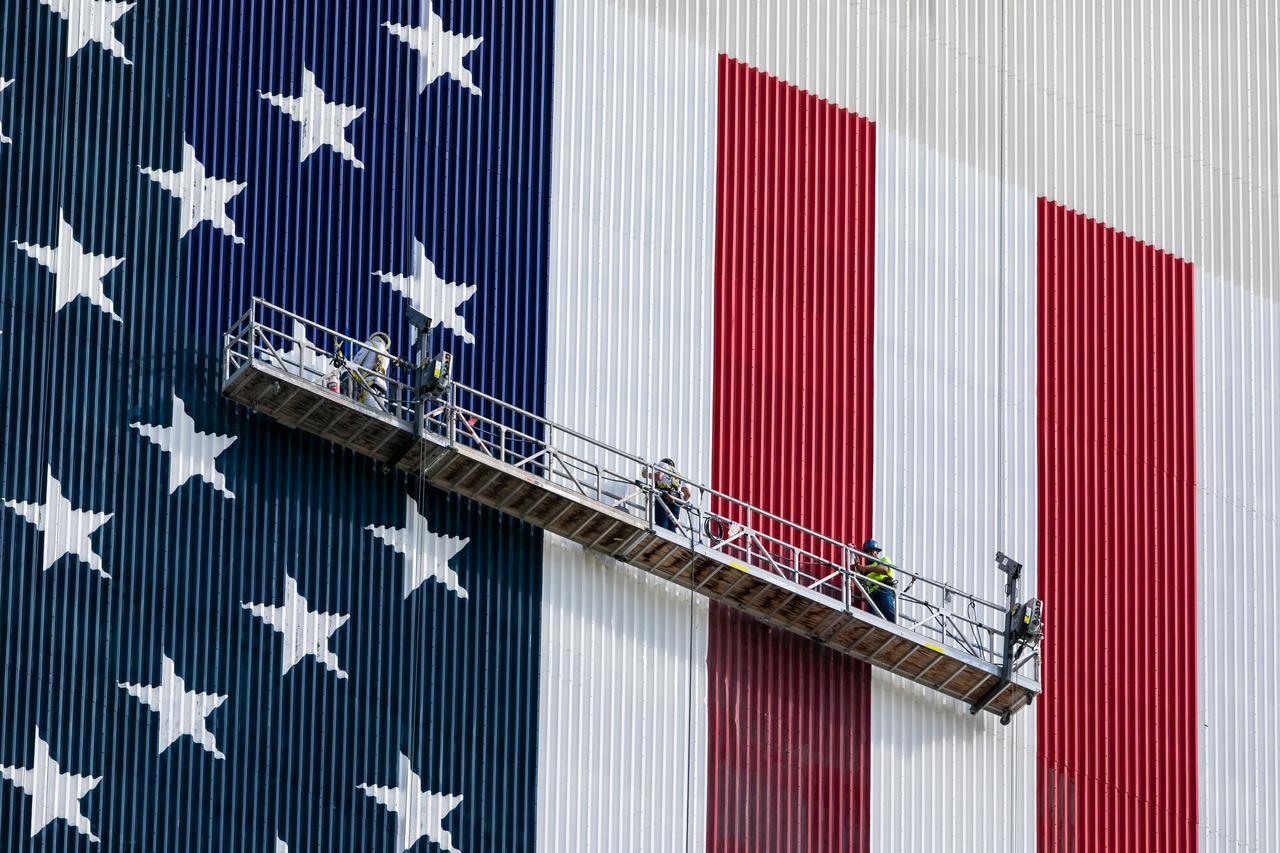
Painting of the U.S. flag continues on the 525-foot-tall Vehicle Assembly Building (VAB) in this close-up view at NASA’s Kennedy Space Center in Florida on Sept. 17, 2020. HM2 and H.I.S. Painting of Titusville, Florida, are repainting the American Flag on the iconic building. The flag is 209 feet long by 110 feet wide. Each star is more than six feet in diameter, and each stripe is nine feet wide. Exploration Ground Systems is overseeing upgrades to the VAB to support the launch of the Space Launch System and Orion for Artemis missions. Under the Artemis program, NASA will send the first woman and next man to the Moon.
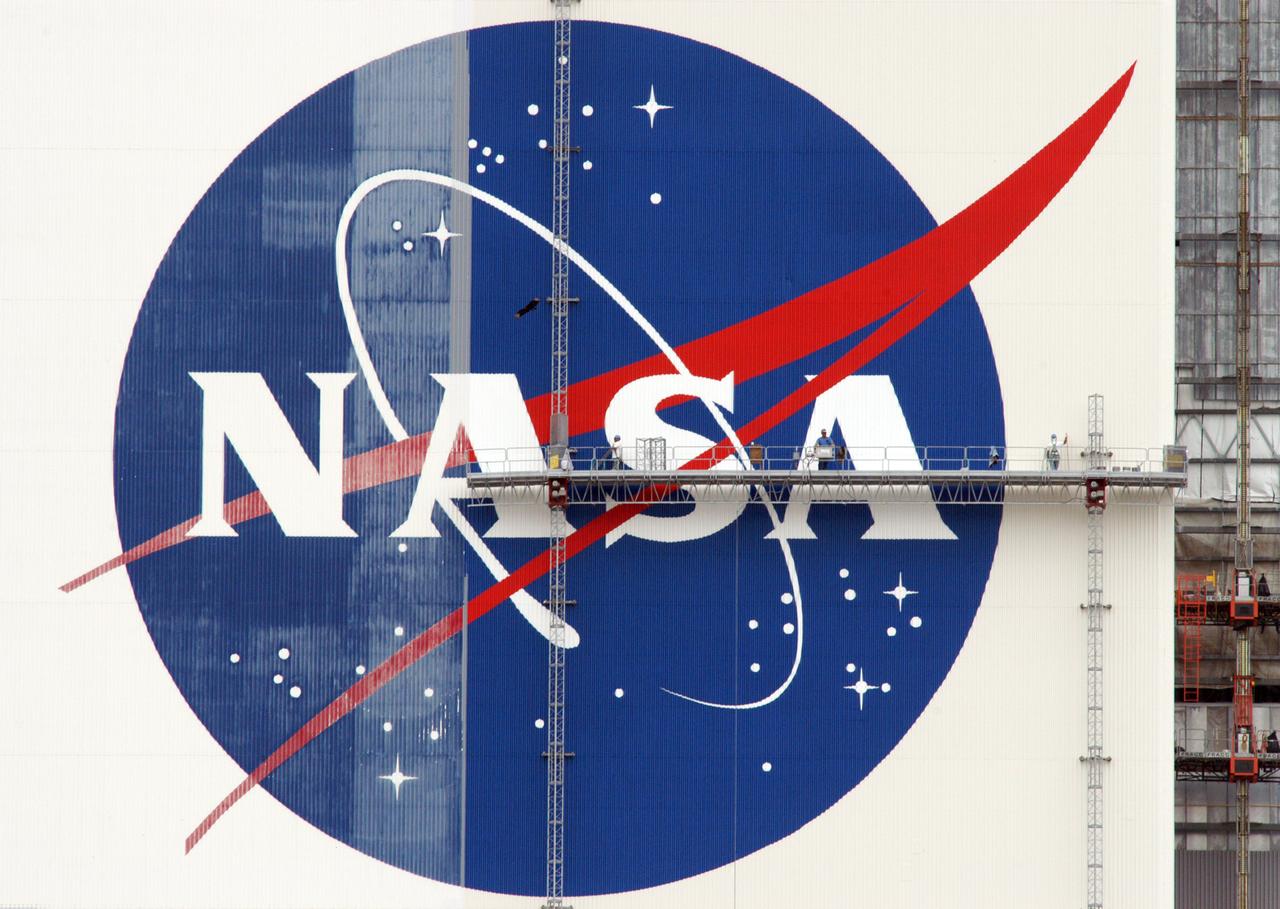
On platforms suspended from the top of the 525-foot-high VAB, workers use rollers and brushes to repaint the NASA logo on the southeast side of the Vehicle Assembly Building. Known as the "meatball," the logo measures 110 feet by 132 feet, or about 12,300 square feet. The U.S. flag is also being repainted. The flag spans an area 209 feet by 110 feet, or about 23, 437 square feet. Each stripe is 9 feet wide and each star is 6 feet in diameter. The flag and logo were last painted in 1998, honoring NASA's 40th anniversary.
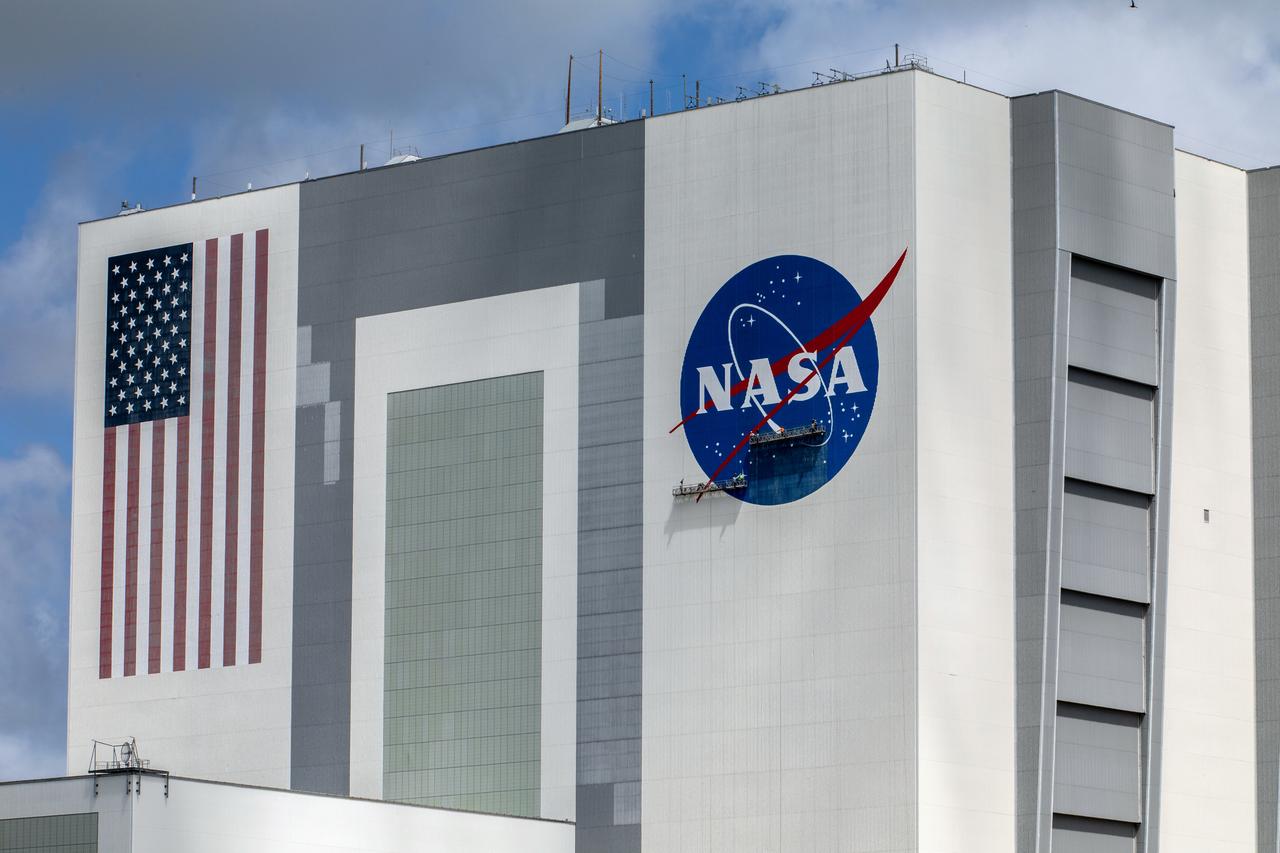
Painting of the NASA logo, also called the meatball, continues on the 525-foot-tall Vehicle Assembly Building (VAB) at the agency’s Kennedy Space Center in Florida on May 29 2020. HM2 and H.I.S. Painting of Titusville, Florida, are repainting the meatball and the American Flag on the iconic building. High Bay 3 inside the VAB has been upgraded with 10 new levels of work platforms that will surround and provide access for service and processing of NASA's Space Launch System (SLS) rocket and Orion spacecraft. Exploration Ground Systems is overseeing upgrades to the VAB to support the launch of the SLS and Orion for Artemis missions. Under the Artemis program, NASA will send the first woman and next man to the Moon.
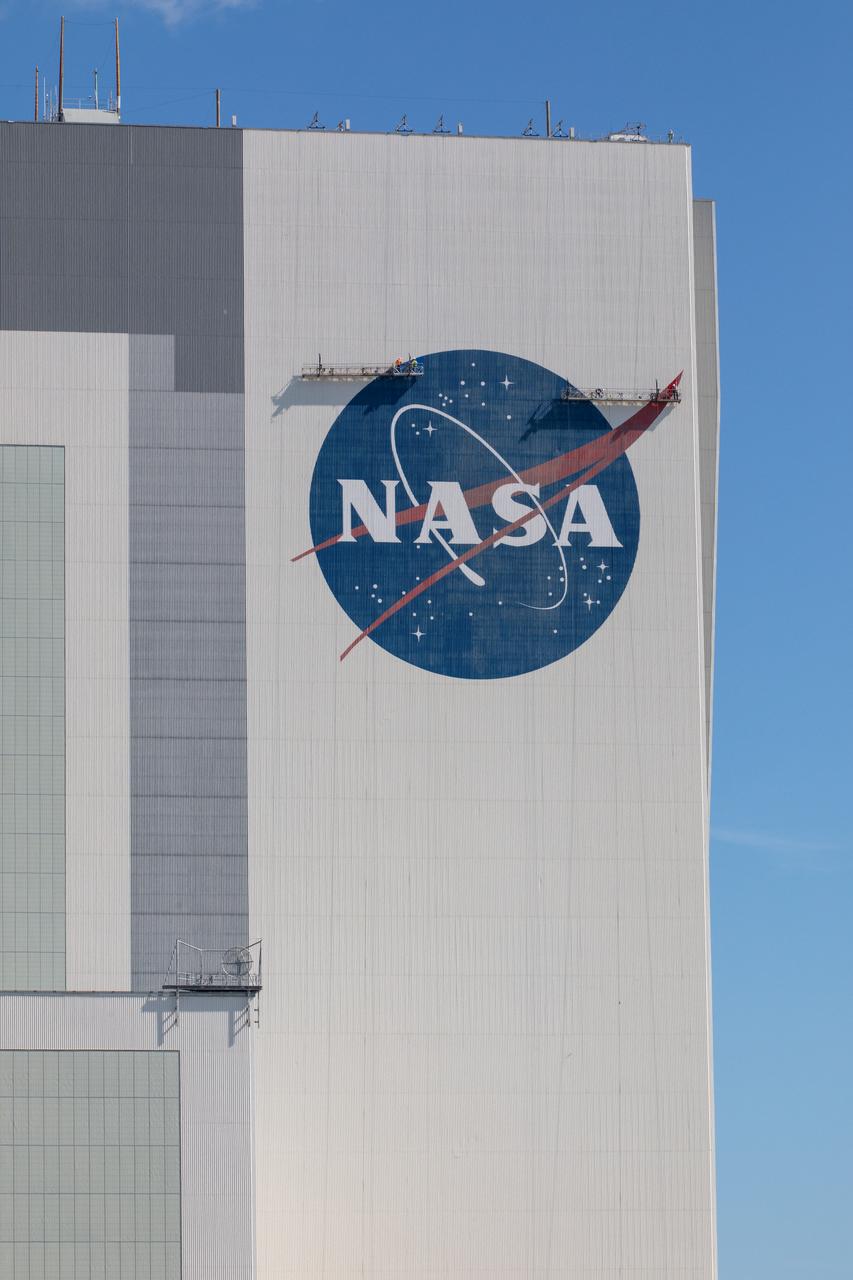
Painting of the NASA logo, also called the meatball, is underway on the 525-foot-tall Vehicle Assembly Building (VAB) at the agency’s Kennedy Space Center in Florida on May 8, 2020. HM2 and H.I.S. Painting of Titusville, Florida, are repainting the meatball and the American Flag on the iconic building. High Bay 3 inside the VAB has been upgraded with 10 new levels of work platforms that will surround and provide access for service and processing of NASA's Space Launch System (SLS) rocket and Orion spacecraft. Exploration Ground Systems is overseeing upgrades to the VAB to support the launch of the SLS and Orion for Artemis missions. Under the Artemis program, NASA will send the first woman and next man to the Moon.
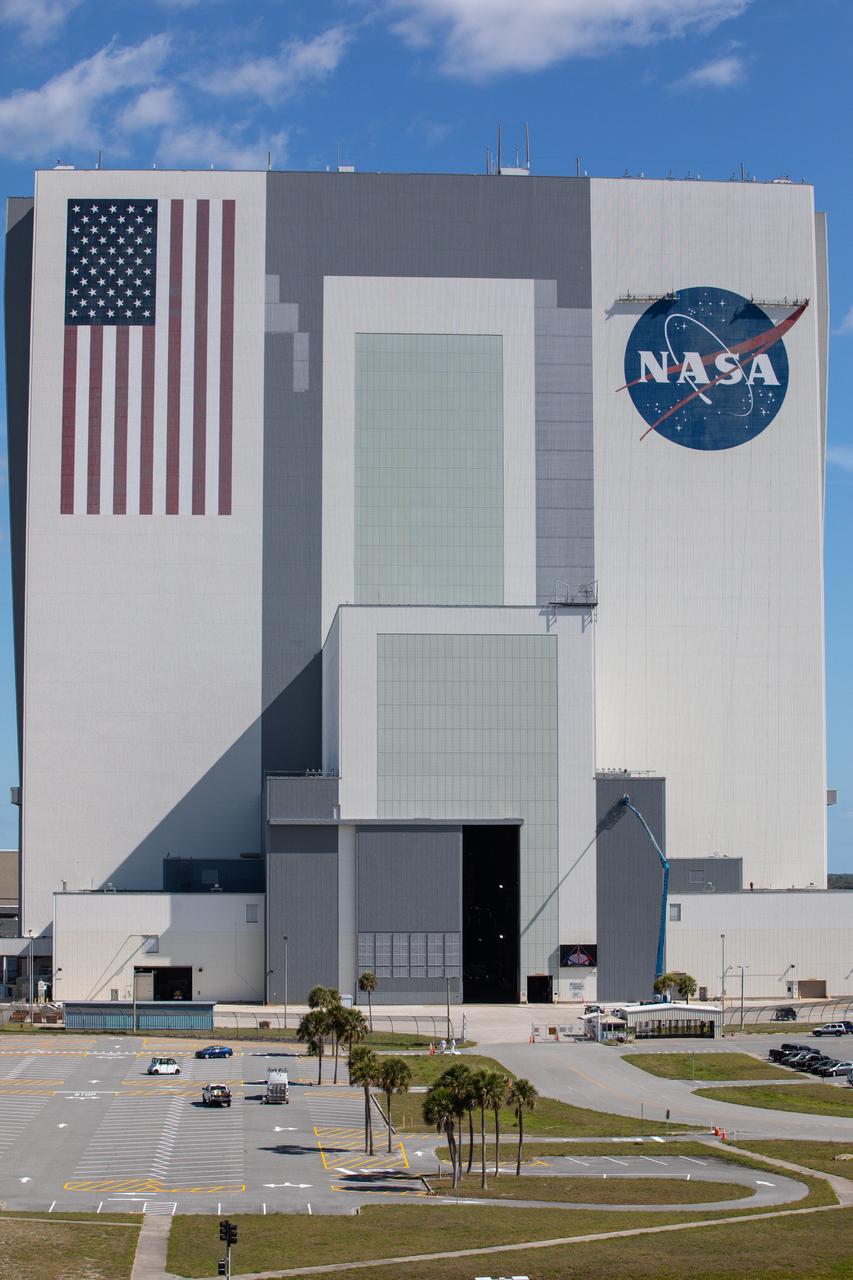
Painting of the NASA logo, also called the meatball, is underway on the 525-foot-tall Vehicle Assembly Building (VAB) at the agency’s Kennedy Space Center in Florida on May 8, 2020. HM2 and H.I.S. Painting of Titusville, Florida, are repainting the meatball and the American Flag on the iconic building. High Bay 3 inside the VAB has been upgraded with 10 new levels of work platforms that will surround and provide access for service and processing of NASA's Space Launch System (SLS) rocket and Orion spacecraft. Exploration Ground Systems is overseeing upgrades to the VAB to support the launch of the SLS and Orion for Artemis missions. Under the Artemis program, NASA will send the first woman and next man to the Moon.
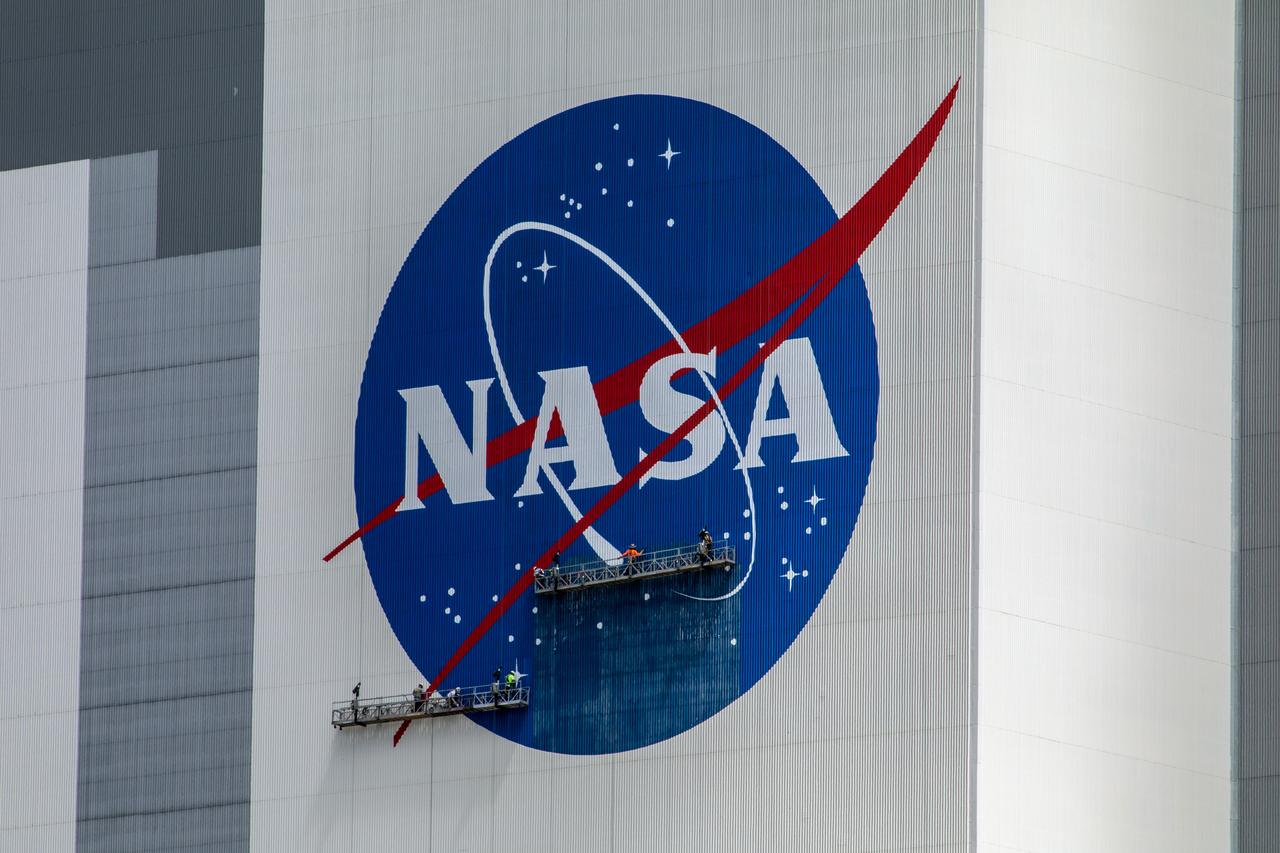
Painting of the NASA logo, also called the meatball, continues on the 525-foot-tall Vehicle Assembly Building (VAB) at the agency’s Kennedy Space Center in Florida on May 29 2020. HM2 and H.I.S. Painting of Titusville, Florida, are repainting the meatball and the American Flag on the iconic building. High Bay 3 inside the VAB has been upgraded with 10 new levels of work platforms that will surround and provide access for service and processing of NASA's Space Launch System (SLS) rocket and Orion spacecraft. Exploration Ground Systems is overseeing upgrades to the VAB to support the launch of the SLS and Orion for Artemis missions. Under the Artemis program, NASA will send the first woman and next man to the Moon.
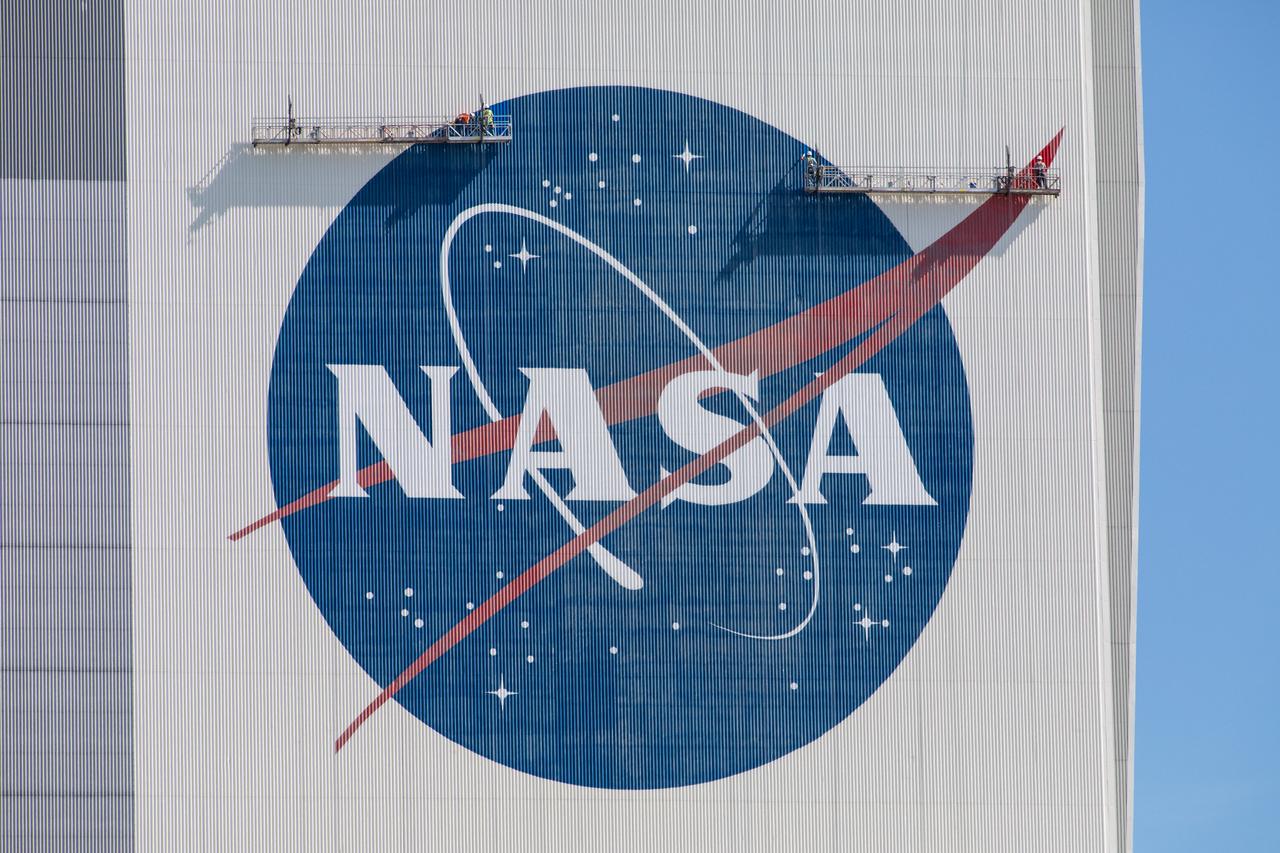
Painting of the NASA logo, also called the meatball, is underway on the 525-foot-tall Vehicle Assembly Building (VAB) at the agency’s Kennedy Space Center in Florida on May 8, 2020. HM2 and H.I.S. Painting of Titusville, Florida, are repainting the meatball and the American Flag on the iconic building. High Bay 3 inside the VAB has been upgraded with 10 new levels of work platforms that will surround and provide access for service and processing of NASA's Space Launch System (SLS) rocket and Orion spacecraft. Exploration Ground Systems is overseeing upgrades to the VAB to support the launch of the SLS and Orion for Artemis missions. Under the Artemis program, NASA will send the first woman and next man to the Moon.
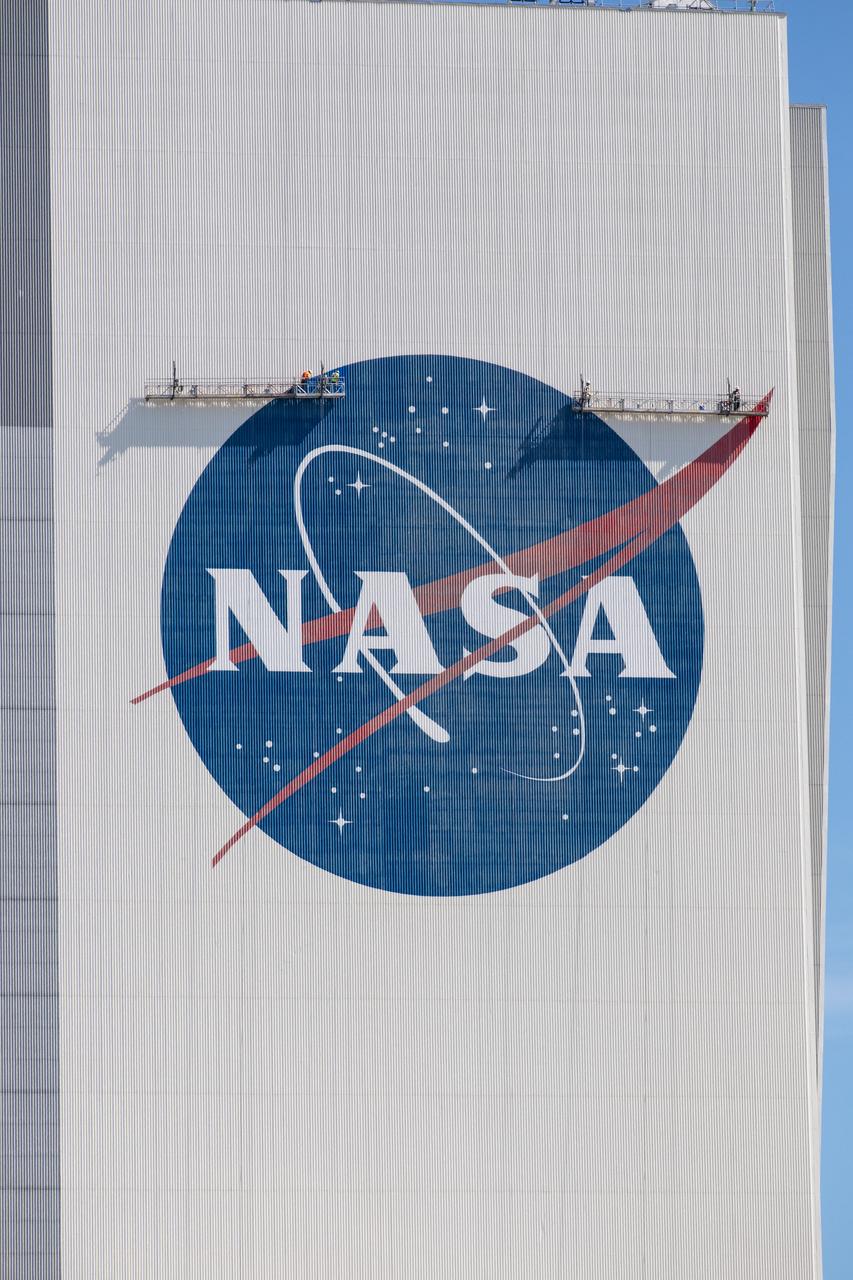
Painting of the NASA logo, also called the meatball, is underway on the 525-foot-tall Vehicle Assembly Building (VAB) at the agency’s Kennedy Space Center in Florida on May 8, 2020. HM2 and H.I.S. Painting of Titusville, Florida, are repainting the meatball and the American Flag on the iconic building. High Bay 3 inside the VAB has been upgraded with 10 new levels of work platforms that will surround and provide access for service and processing of NASA's Space Launch System (SLS) rocket and Orion spacecraft. Exploration Ground Systems is overseeing upgrades to the VAB to support the launch of the SLS and Orion for Artemis missions. Under the Artemis program, NASA will send the first woman and next man to the Moon.
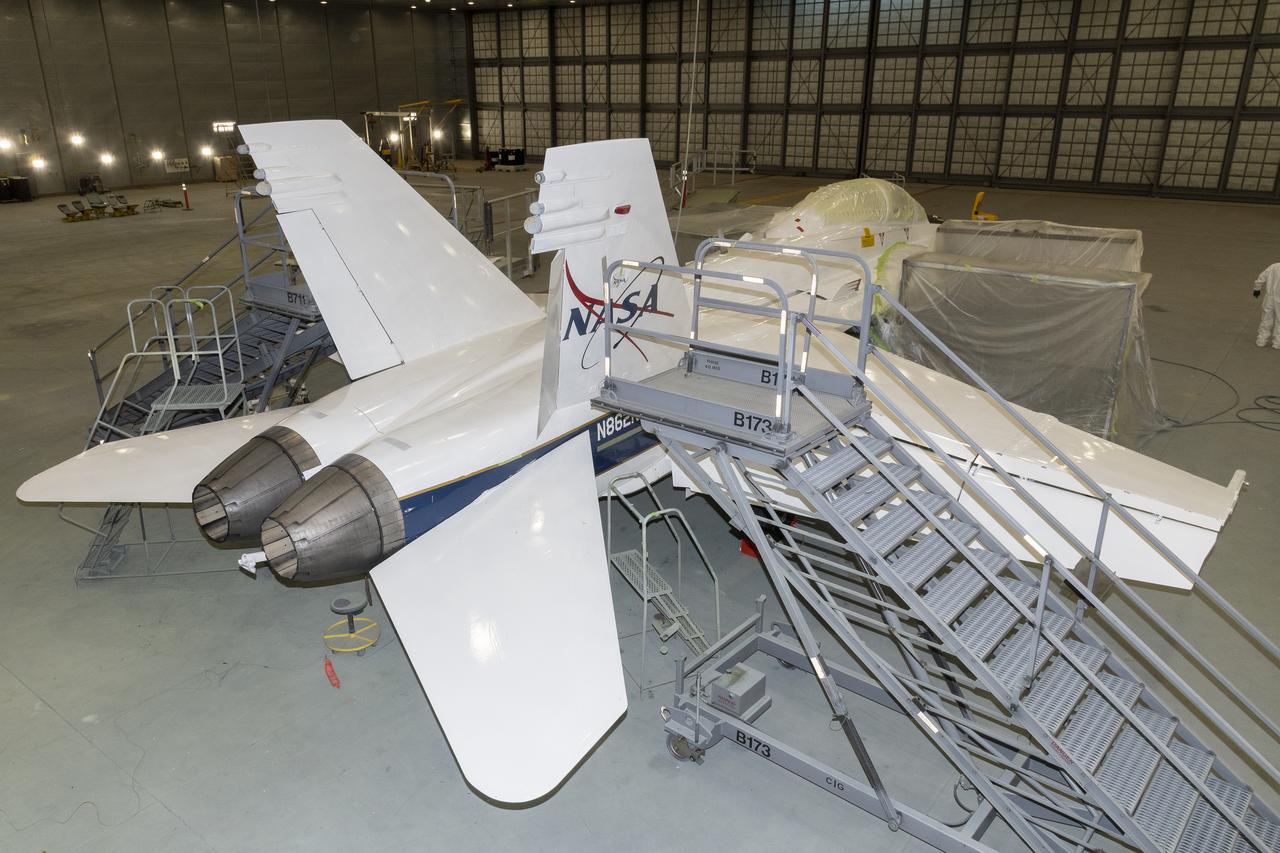
U.S. Air Force Corrosion Control Facility nears the end of stencils and painting of NASA 862, which is an F/A-18D based at NASA’s Armstrong Flight Research Center in Edwards, California. The corrosion control facility is located on Edwards Air Force Base and is also known as the Paint Barn.
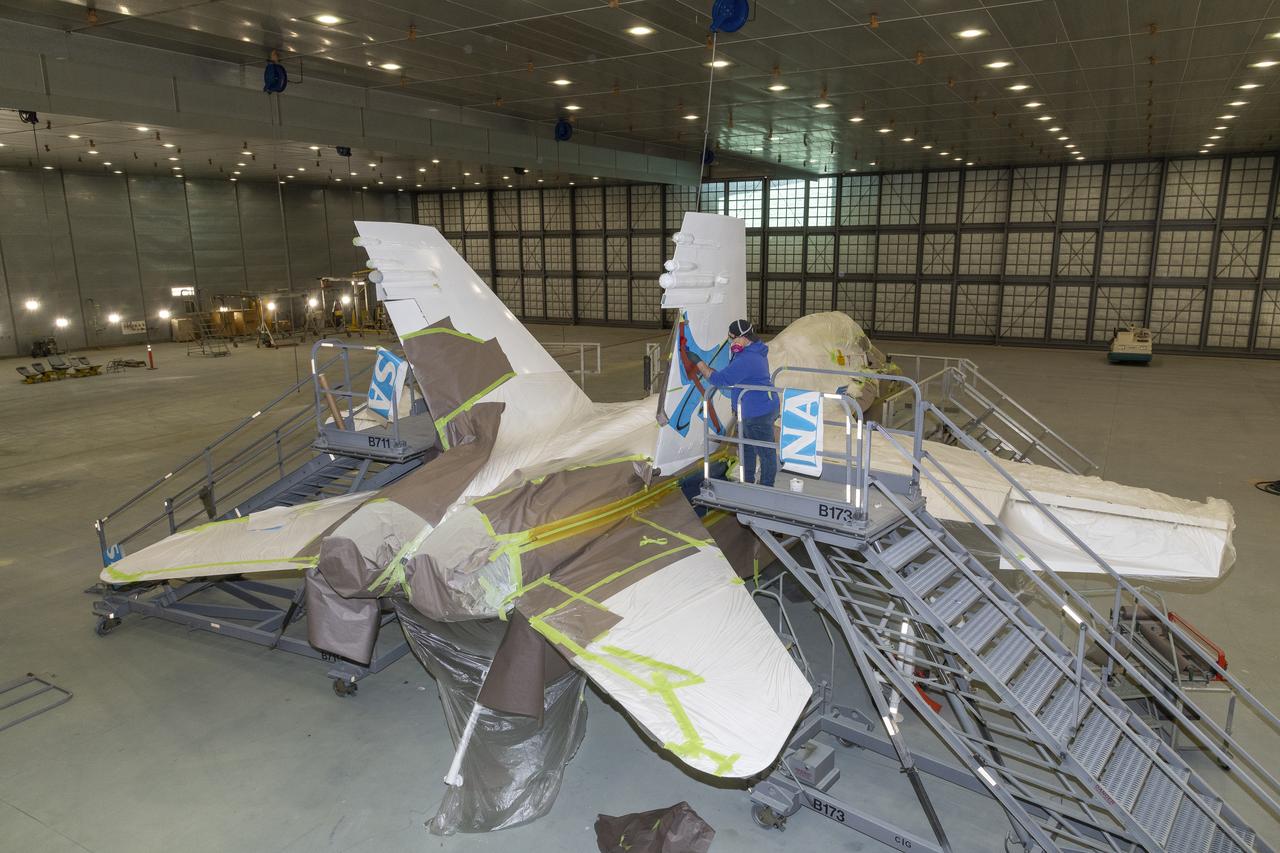
U.S. Air Force Corrosion Control Facility’s Shelby Youngo paints tail art on to NASA 862, which is an F/A-18D based at NASA’s Armstrong Flight Research Center in Edwards, California. The corrosion control facility is located on Edwards Air Force Base and is also known as the Paint Barn.
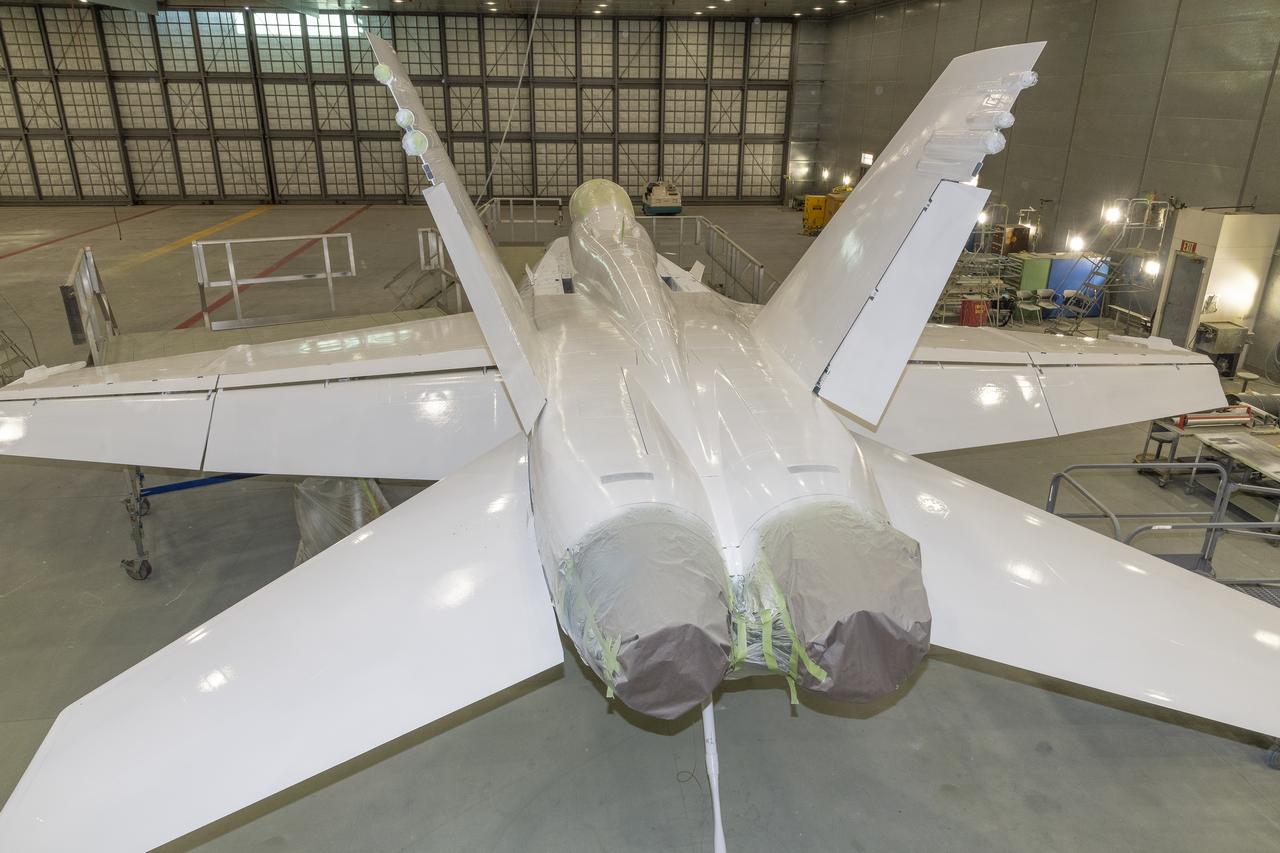
NASA 862, which is an F/A-18D based at NASA’s Armstrong Flight Research Center in Edwards, California, has paint applied at the U.S. Air Force Corrosion Control Facility. The facility is located on Edwards Air Force Base and is also known as the Paint Barn.
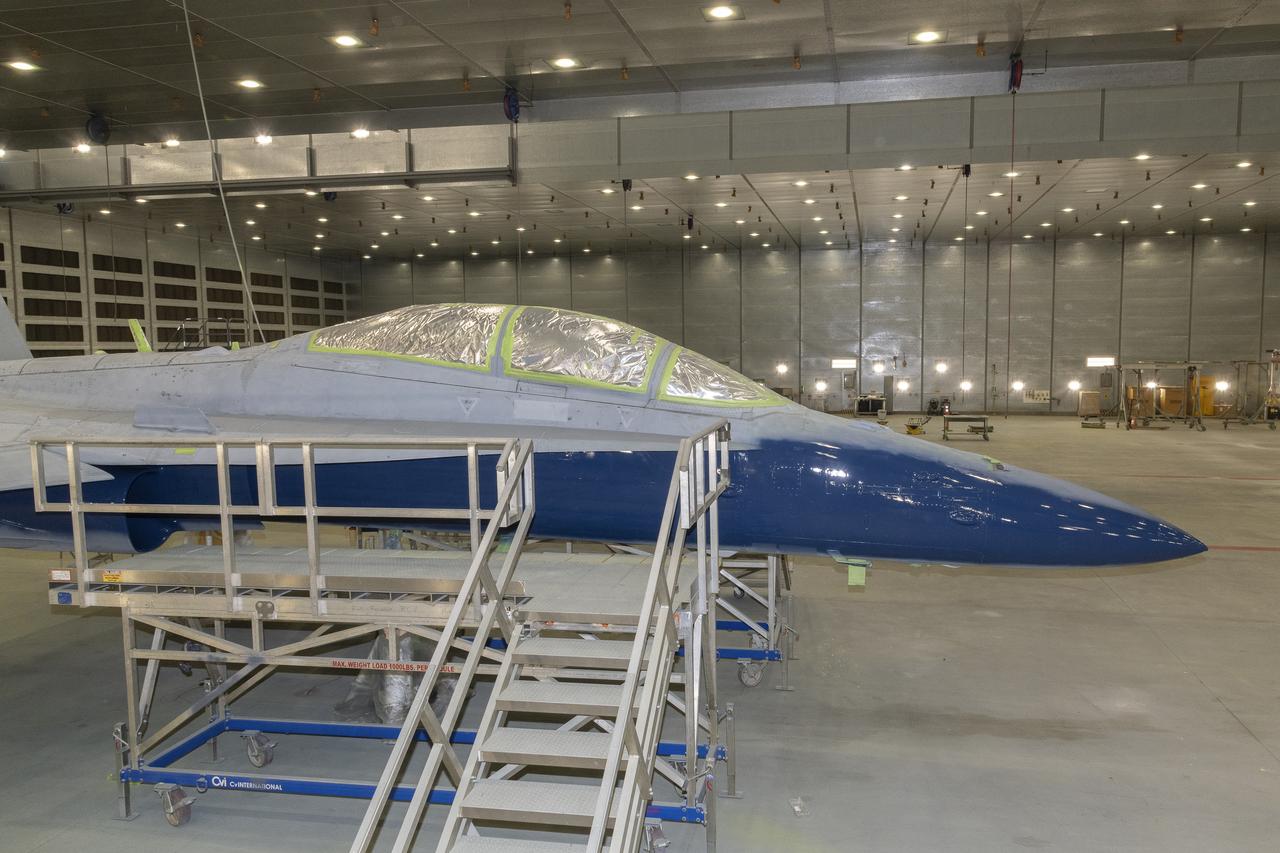
NASA 862, which is an F/A-18D based at NASA’s Armstrong Flight Research Center in Edwards, California, has paint applied at the U.S. Air Force Corrosion Control Facility. The facility is located on Edwards Air Force Base and is also known as the Paint Barn.
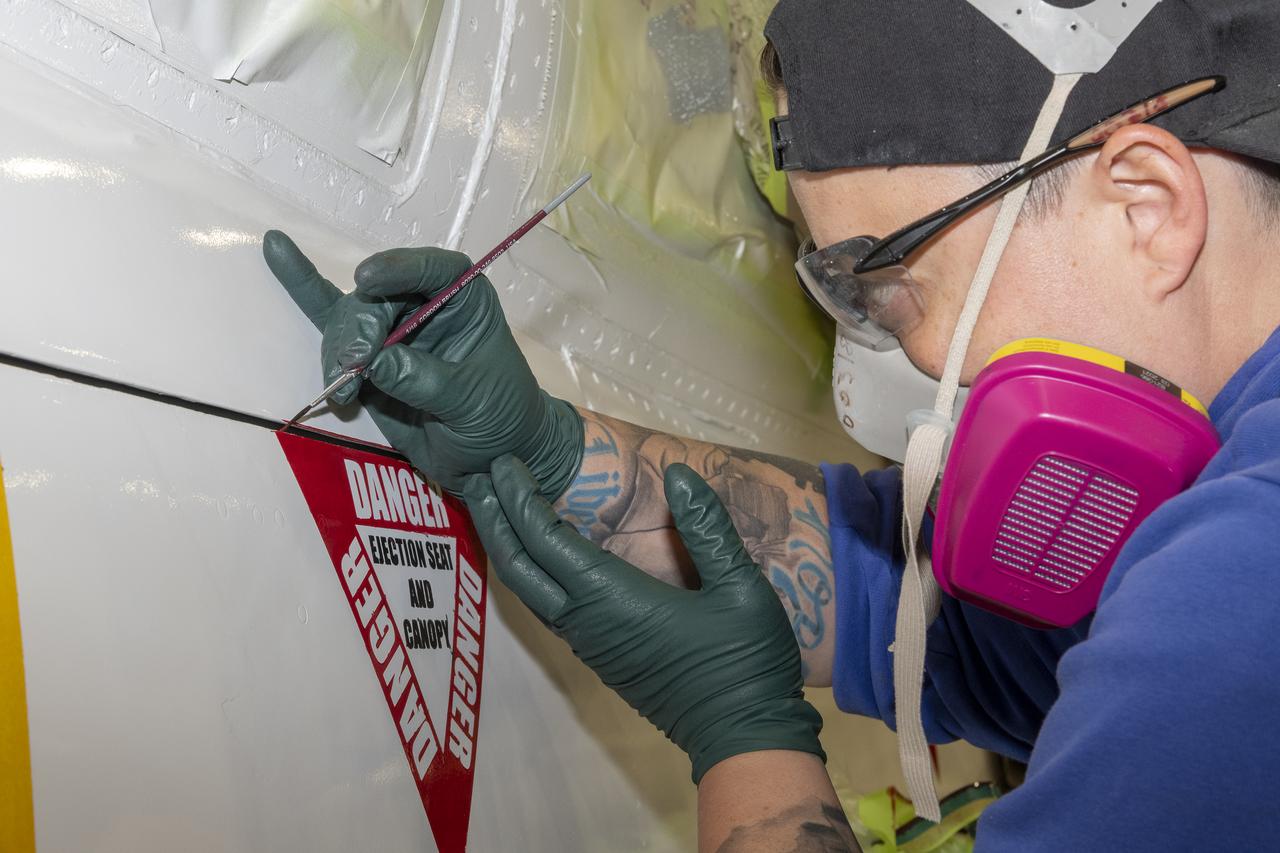
U.S. Air Force Corrosion Control Facility’s Shelby Youngo completes painting a danger warning on NASA 862, which is an F/A-18D based at NASA’s Armstrong Flight Research Center in Edwards, California. The corrosion control facility is located on Edwards Air Force Base and is also known as the Paint Barn.
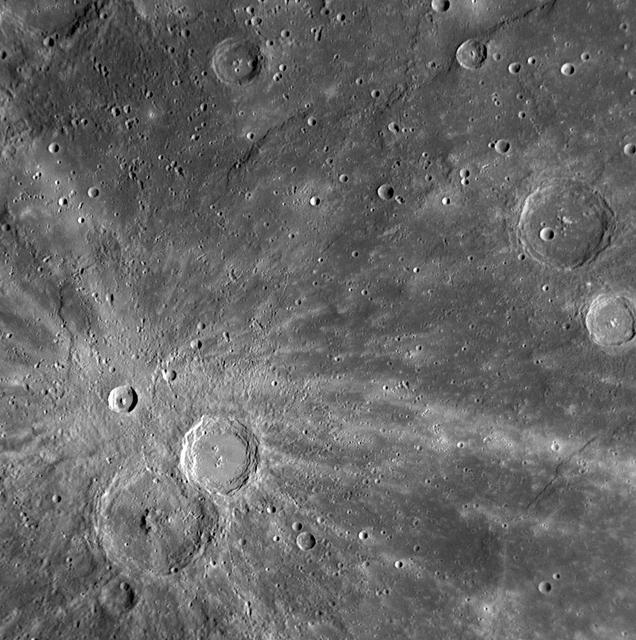
Xiao Zhao Rays Paint Mercury Surface
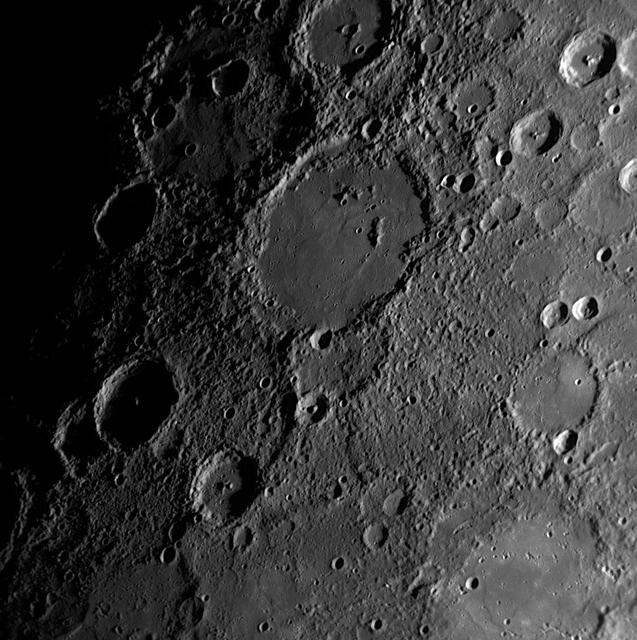
Munk?csy Inner Ring Painted Over
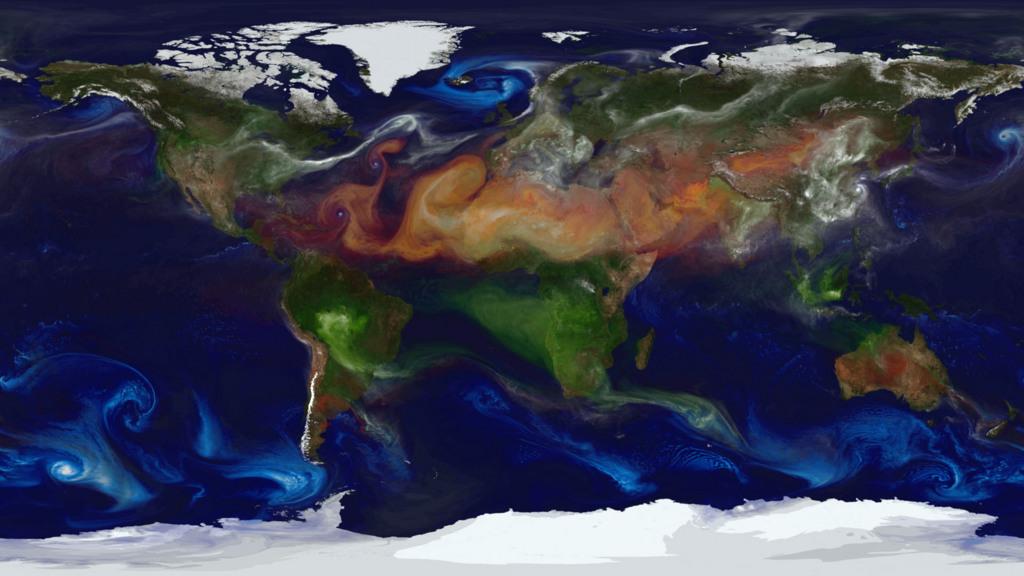
NASA models and supercomputing have created a colorful new view of aerosol movement. Satellites, balloon-borne instruments and ground-based devices make 30 million observations of the atmosphere each day. Yet these measurements still give an incomplete picture of the complex interactions within the membrane surrounding Earth. Enter climate models. Through mathematical experiments, modelers can move Earth forward or backward in time to create a dynamic portrait of the planet. Researchers from NASA Goddard’s Global Modeling and Assimilation Office recently ran a simulation of the atmosphere that captured how winds whip aerosols around the world. Such simulations allow scientists to better understand how these tiny particulates travel in the atmosphere and influence weather and climate. In the visualization below, covering August 2006 to April 2007, watch as dust and sea salt swirl inside cyclones, carbon bursts from fires, sulfate streams from volcanoes—and see how these aerosols paint the modeled world. Credit: NASA/Goddard Space Flight Center

Oil painting depicting the storms of Jupiter, the satellite Io and the Great Red Spot
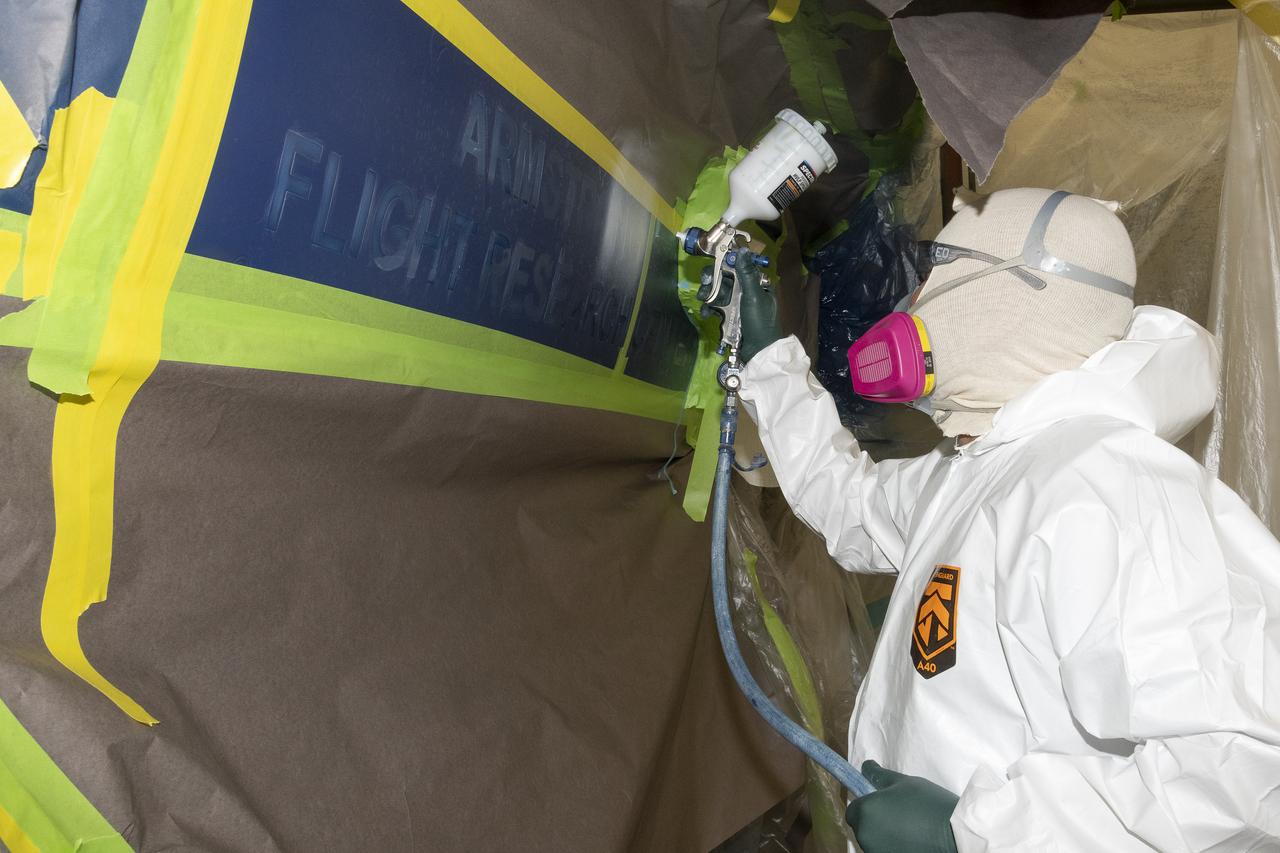
Eric Miranda, who works at the U.S. Air Force Corrosion Control Facility, paints areas in a stencil for adding some finishing touches to NASA 862, which is an F/A-18D based at NASA’s Armstrong Flight Research Center in Edwards, California. The corrosion control facility is located on Edwards Air Force Base and is also known as the Paint Barn.
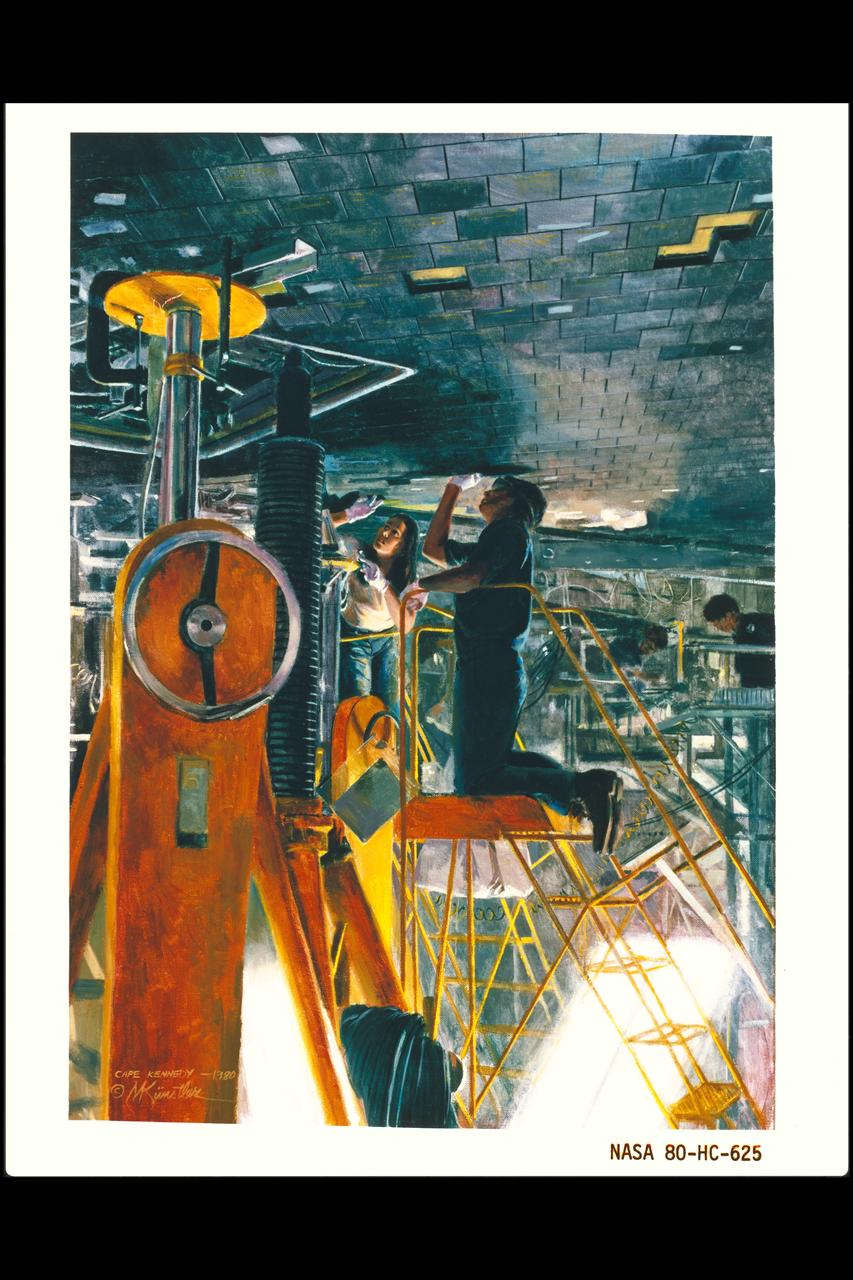
Oil Painting of the tile team at work, in 1980, in the orbiter processing facility at Kennedy Space Center.
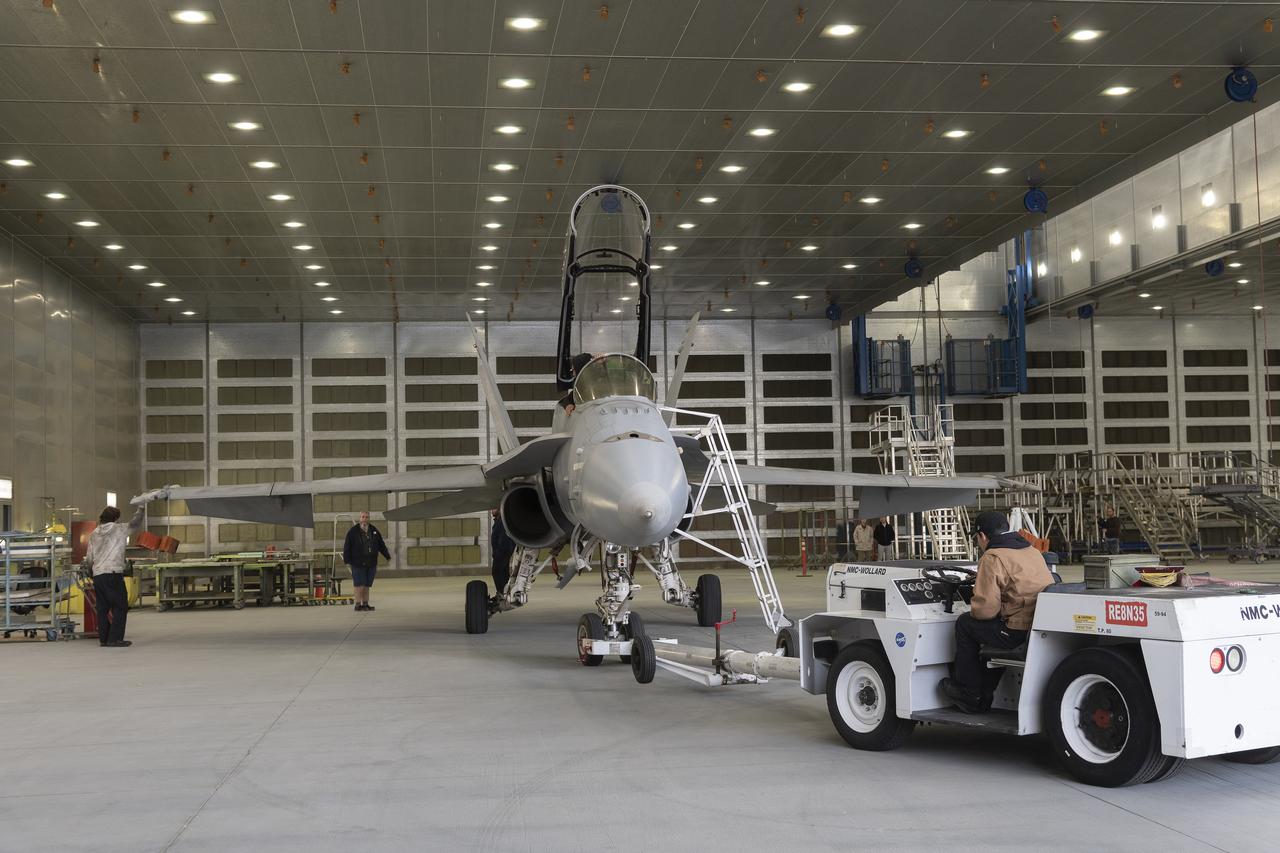
NASA 862, which is an F/A-18D based at NASA’s Armstrong Flight Research Center in Edwards, California, is positioned in the U.S. Air Force Corrosion Control Facility. The facility is also known as the Paint Barn.
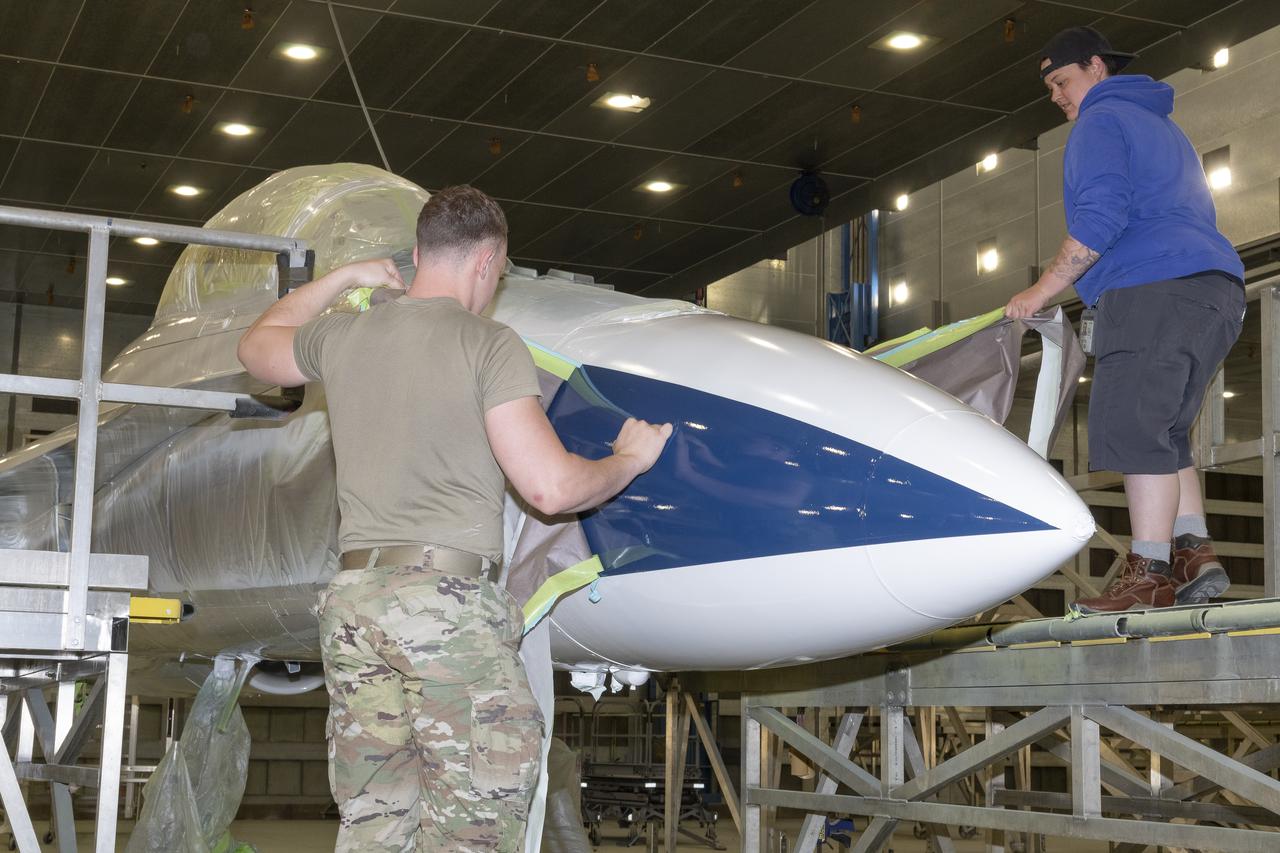
U.S. Air Force Corrosion Control Facility personnel Kristian Snoots and Shelby Youngo remove masking from NASA 862, which is an F/A-18D based at NASA’s Armstrong Flight Research Center in Edwards, California. The corrosion control facility is located on Edwards Air Force Base and is also known as the Paint Barn.
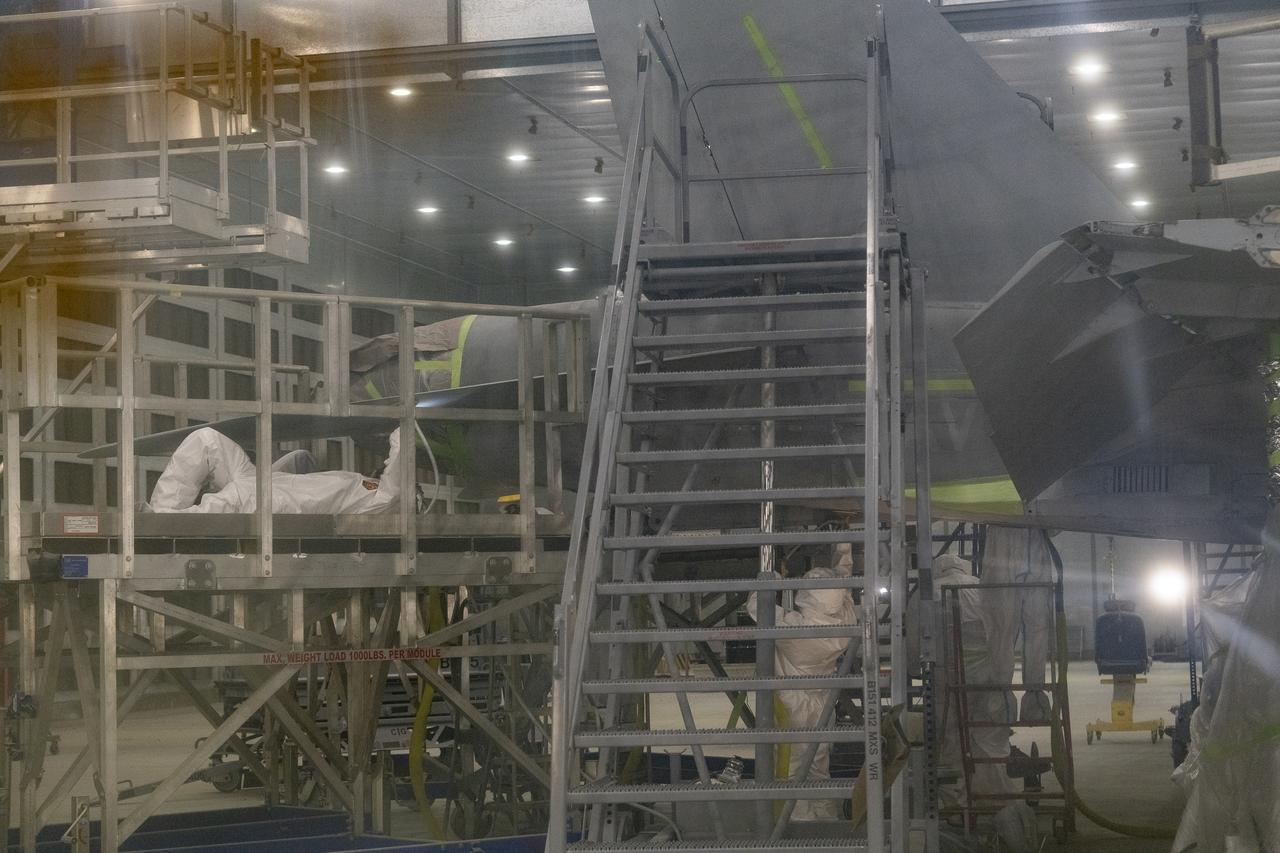
U.S. Air Force Corrosion Control Facility personnel work to sand NASA 862, which is an F/A-18D based at NASA’s Armstrong Flight Research Center in Edwards, California. The facility is located on Edwards Air Force Base and is also known as the Paint Barn.
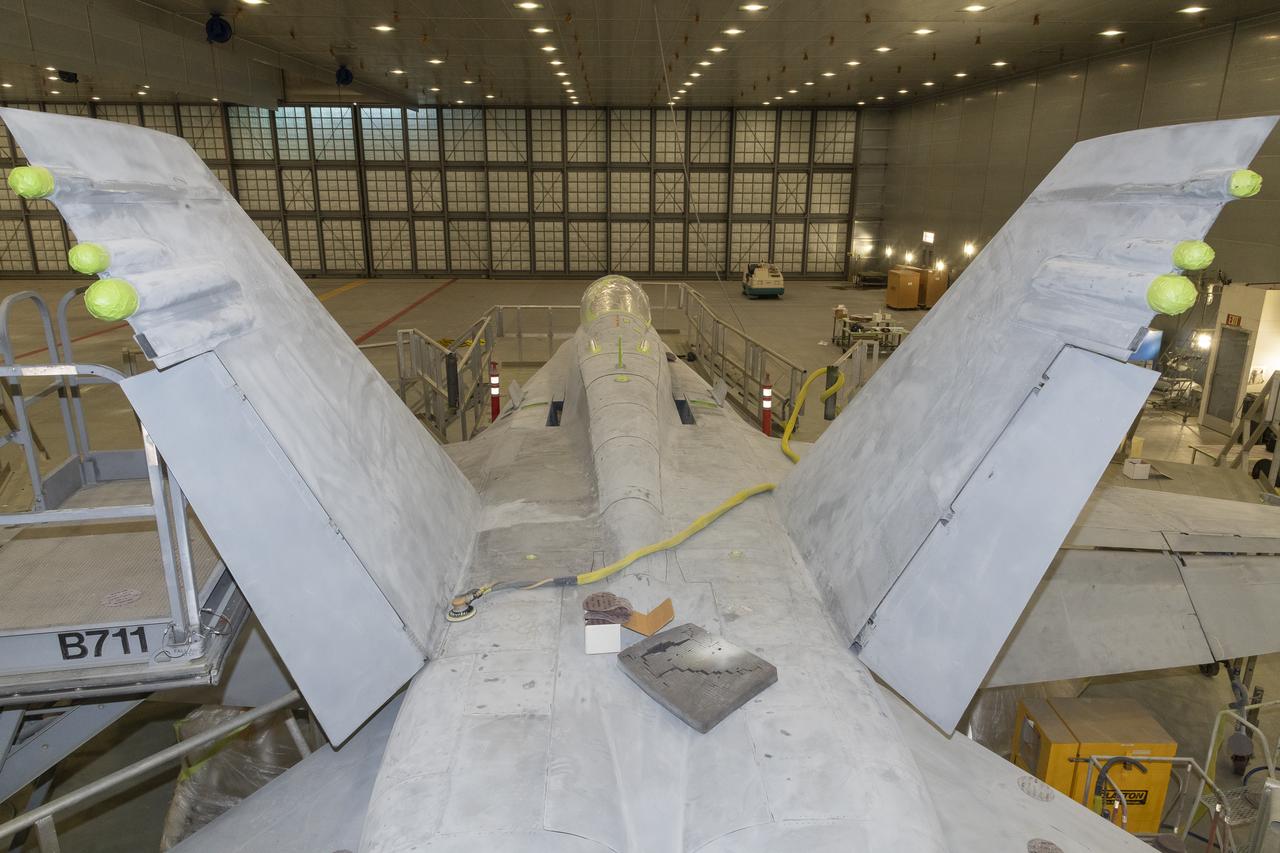
This view of NASA 862, which is an F/A-18D based at NASA’s Armstrong Flight Research Center in Edwards, California, shows the sanding work is about complete at the U.S. Air Force Corrosion Control Facility. The facility is located on Edwards Air Force Base and is also known as the Paint Barn.
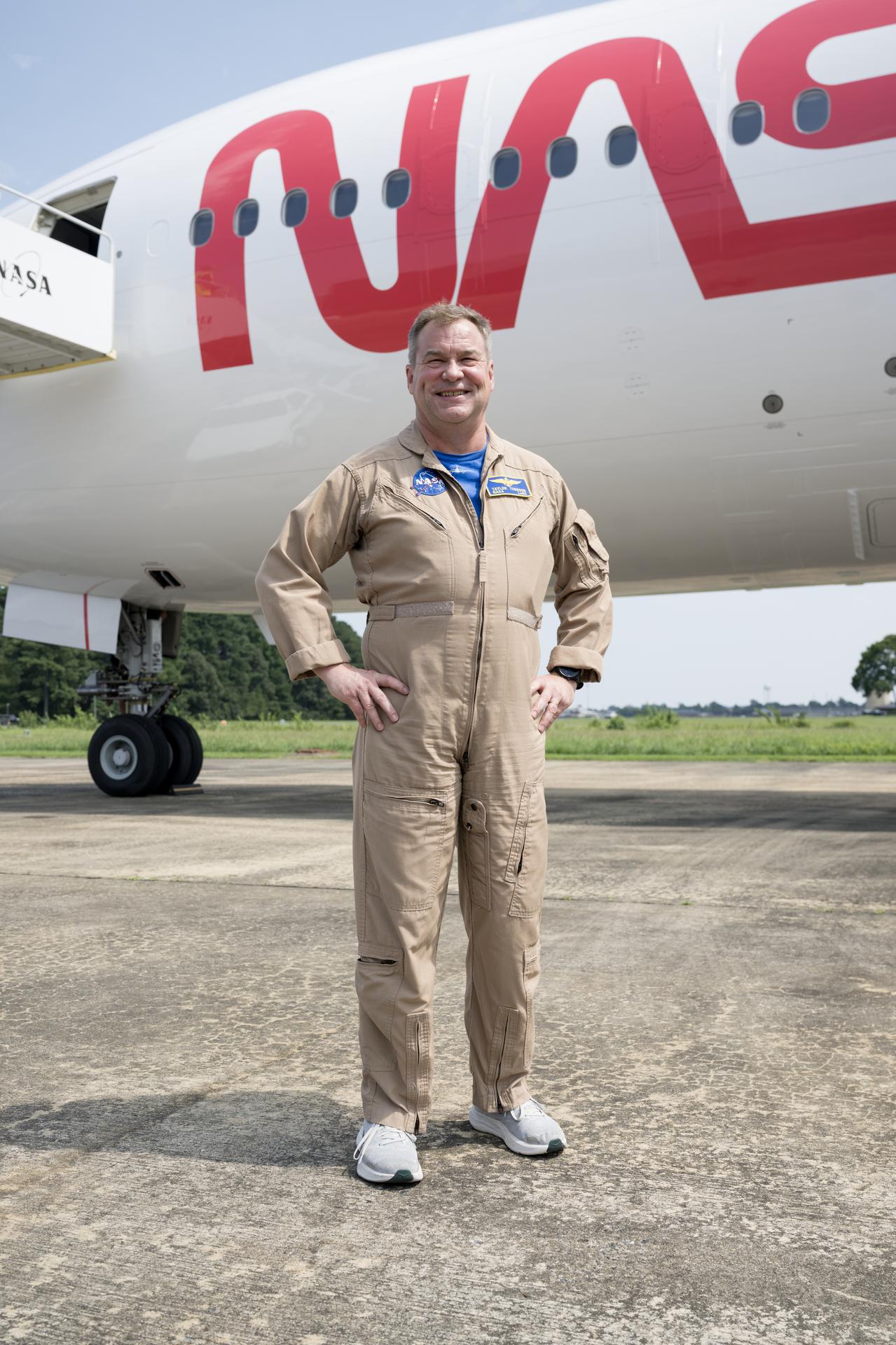
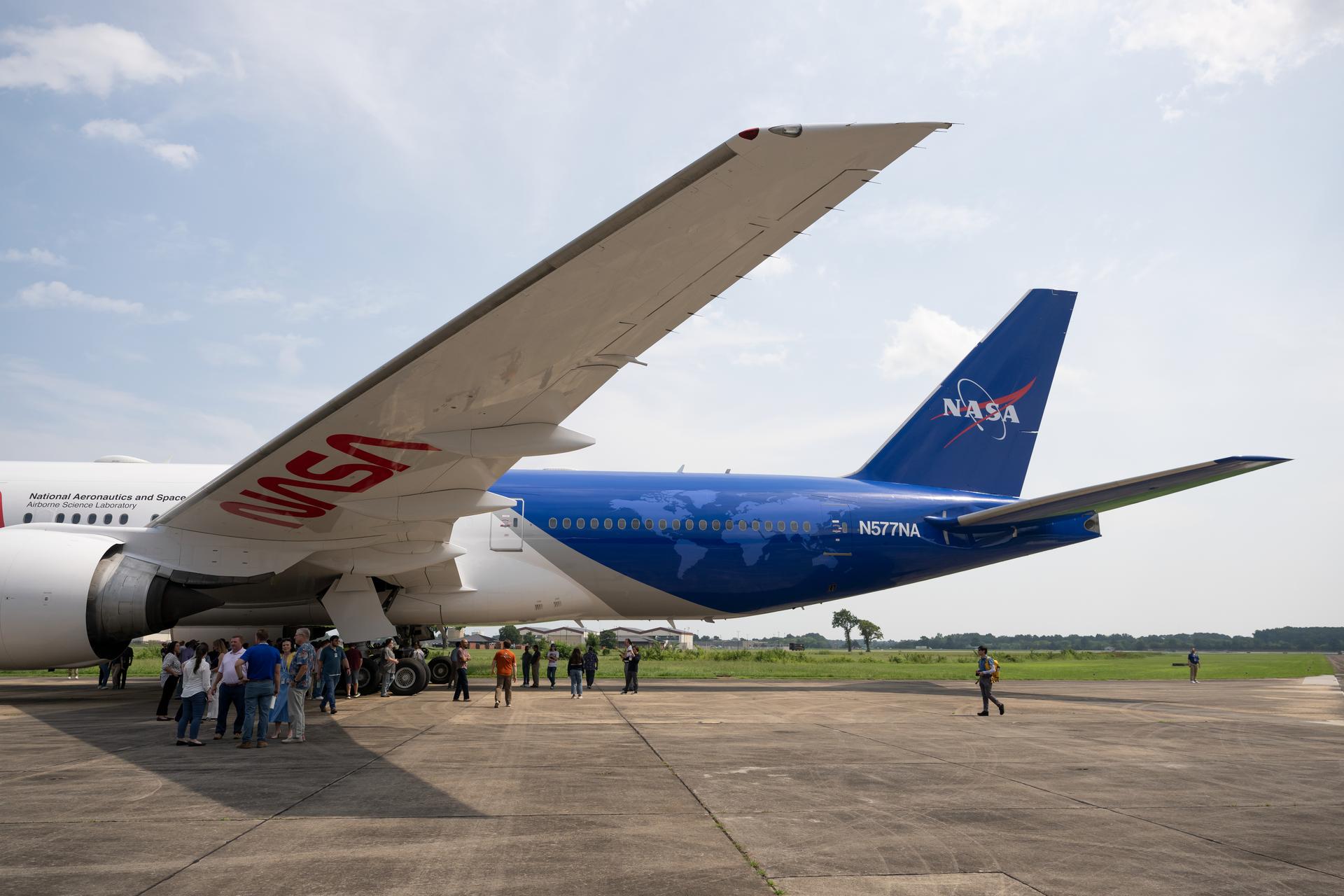
NASA B777-200ER (N577NA) arrived at Langley Research Center’s Hangar with new paint livery Aug 12. It was flown by NASA pilot Taylor Thorson, as this marks his final flight. Photo Credit NASA/ Mark Knopp
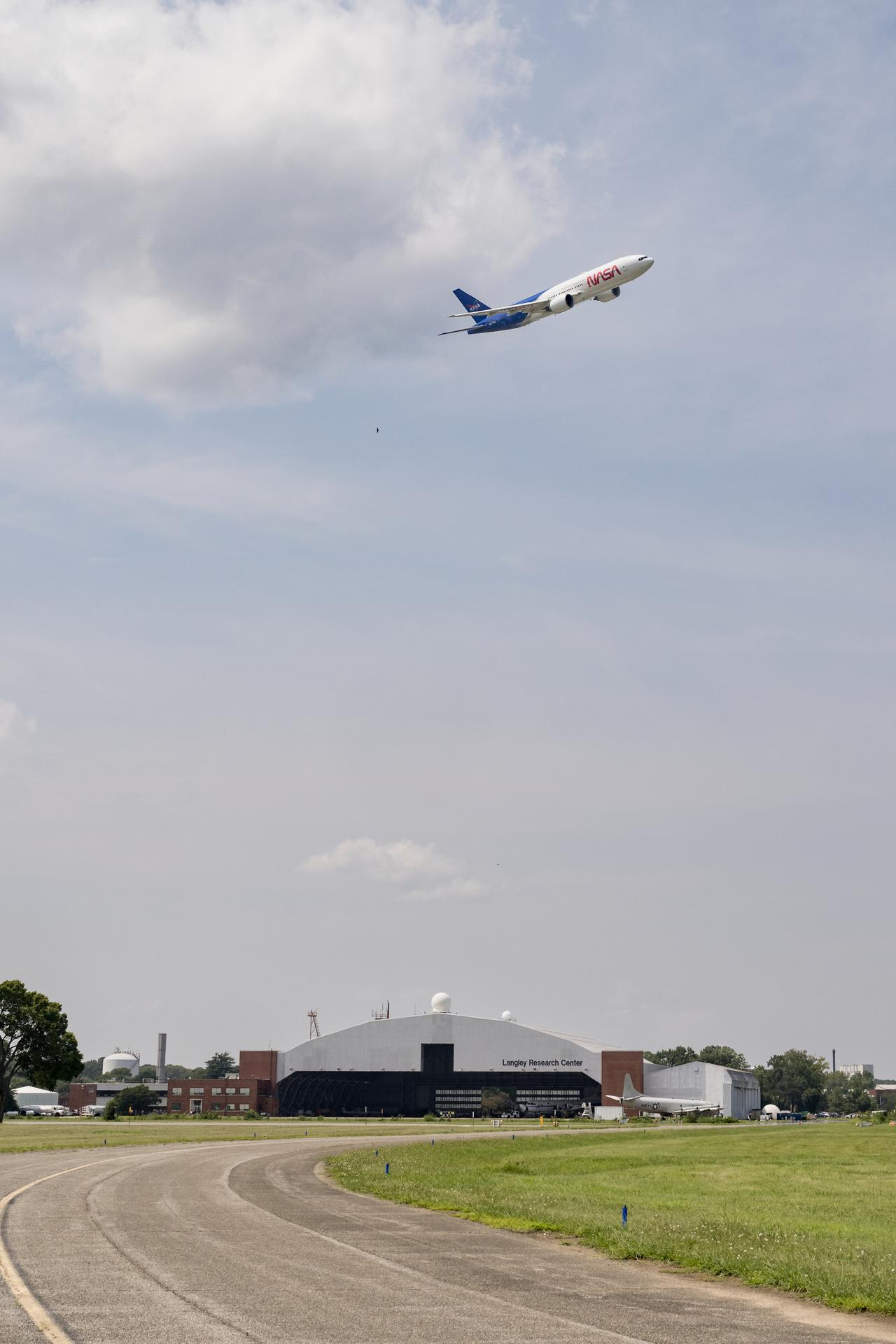
NASA B777-200ER (N577NA) arrived at Langley Research Center’s Hangar with new paint livery Aug 12. It was flown by NASA pilot Taylor Thorson, as this marks his final flight. Photo Credit NASA/ Mark Knopp
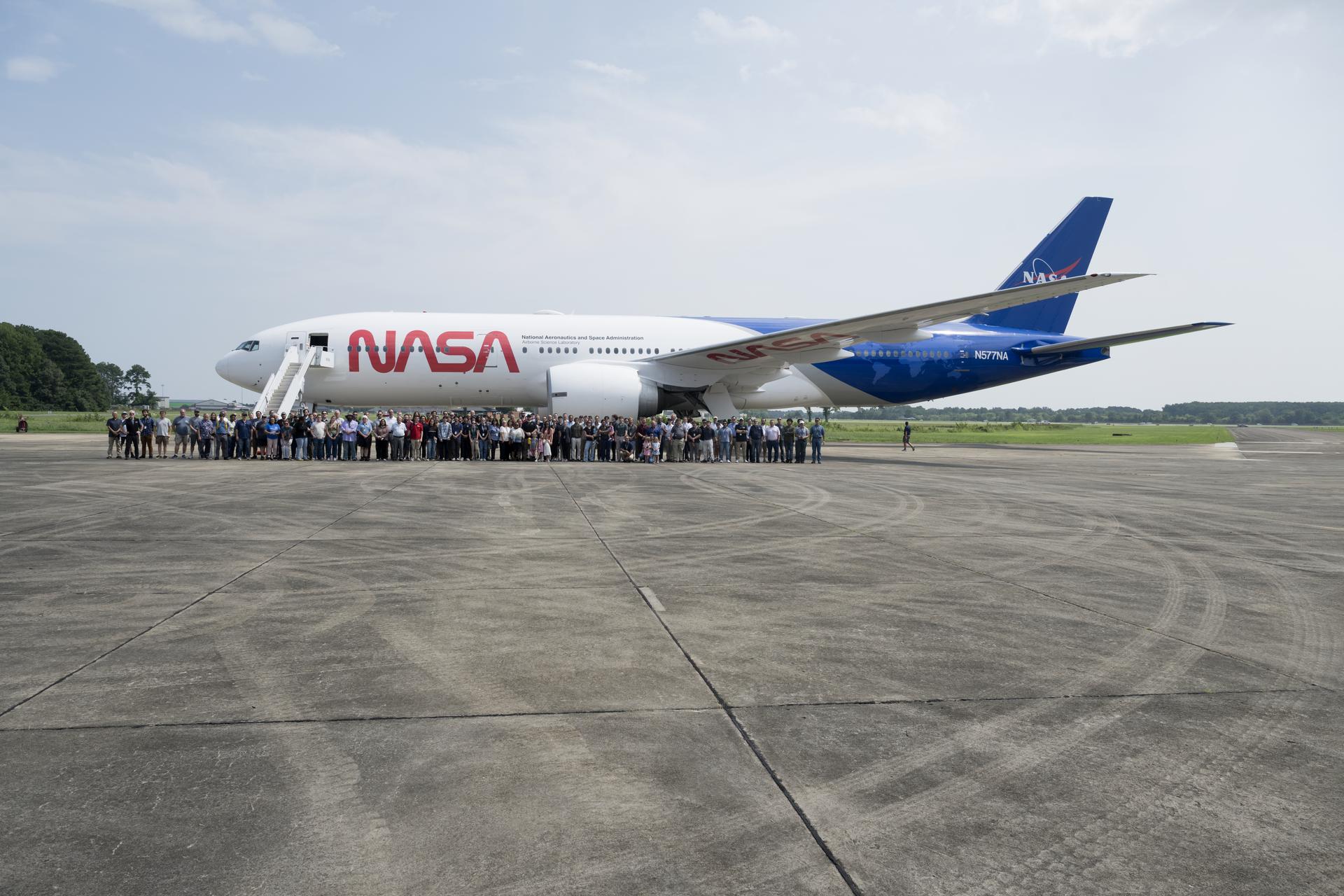
NASA B777-200ER (N577NA) arrived at Langley Research Center’s Hangar with new paint livery Aug 12. It was flown by NASA pilot Taylor Thorson, as this marks his final flight. Photo Credit NASA/ Mark Knopp
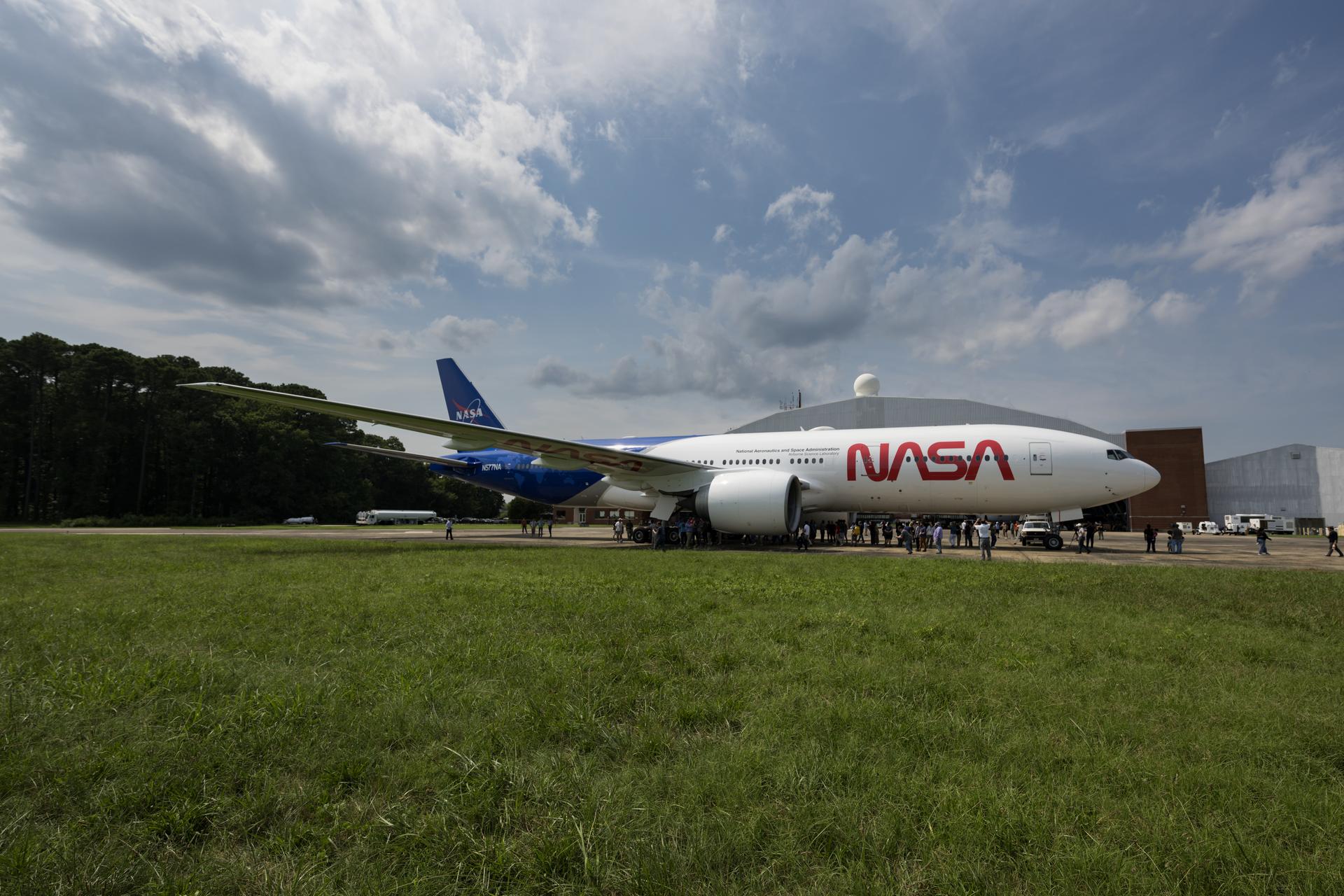
NASA B777-200ER (N577NA) arrived at Langley Research Center’s Hangar with new paint livery Aug 12. It was flown by NASA pilot Taylor Thorson, as this marks his final flight. Photo Credit NASA/ Mark Knopp
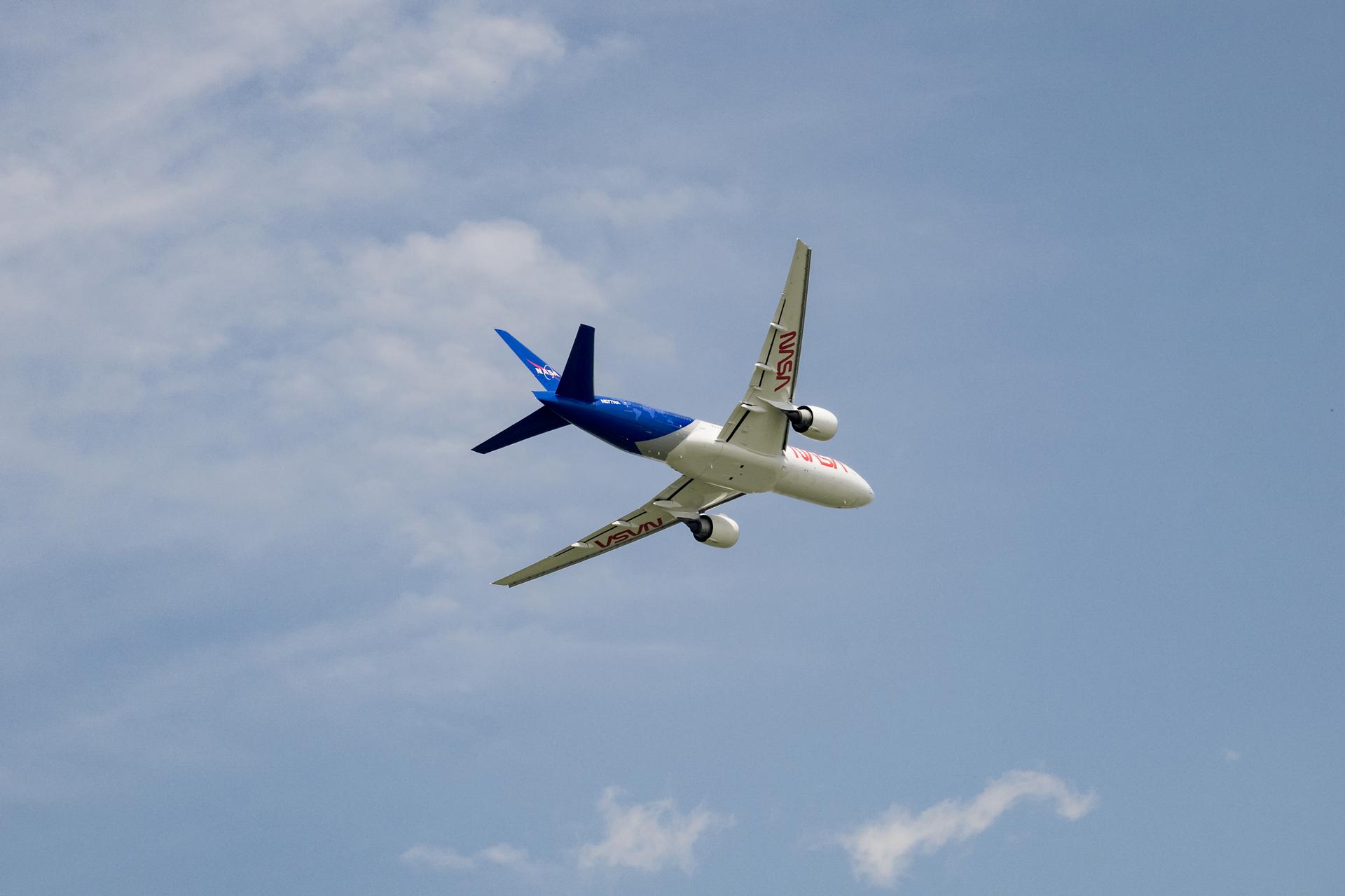
NASA B777-200ER (N577NA) arrived at Langley Research Center’s Hangar with new paint livery Aug 12. It was flown by NASA pilot Taylor Thorson, as this marks his final flight. Photo Credit NASA/ Mark Knopp
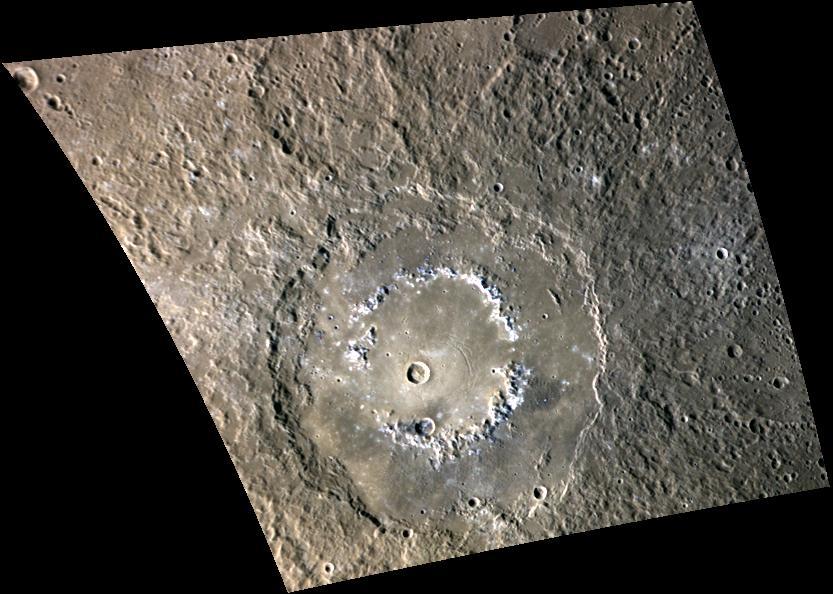
Paint Me a Picture. This color view from NASA MESSENGER spacecraft of Raditladi crater gives us a fresh view of the peak-ring basin.
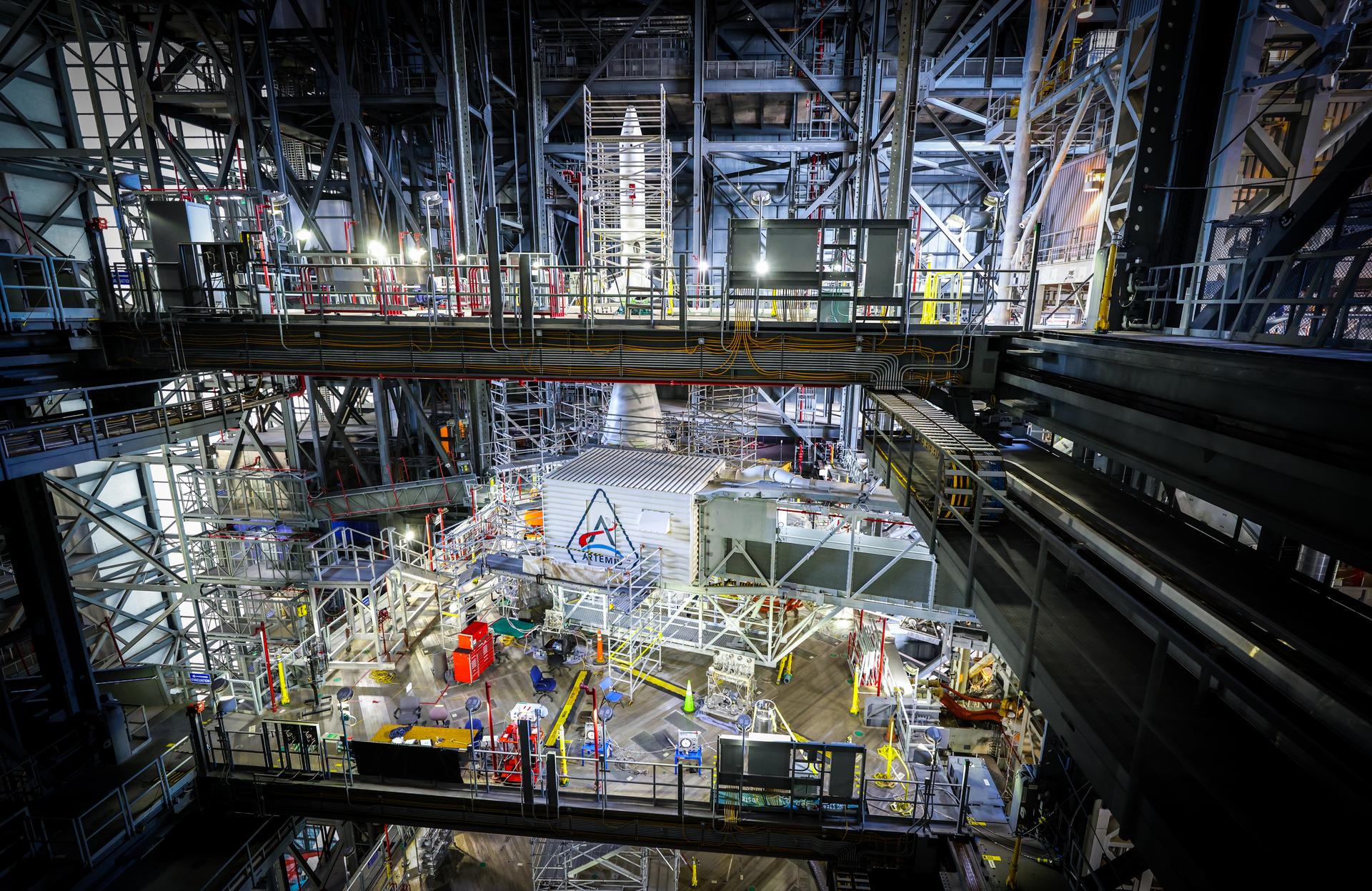
A freshly painted NASA’s Artemis logo is unveiled on the White Room connected to the crew access arm and mobile launcher inside the Vehicle Assembly Building at NASA’s Kennedy Space Center in Florida on Thursday, Dec. 4, 2025. The White Room is the area where the Artemis II crew Reid Wiseman, Victor Glover, Christina Koch, and CSA (Canadian Space Agency) astronaut Jeremy Hansen will enter the Orion spacecraft ahead of launch from Launch Complex 39B at NASA Kennedy in early 2026.
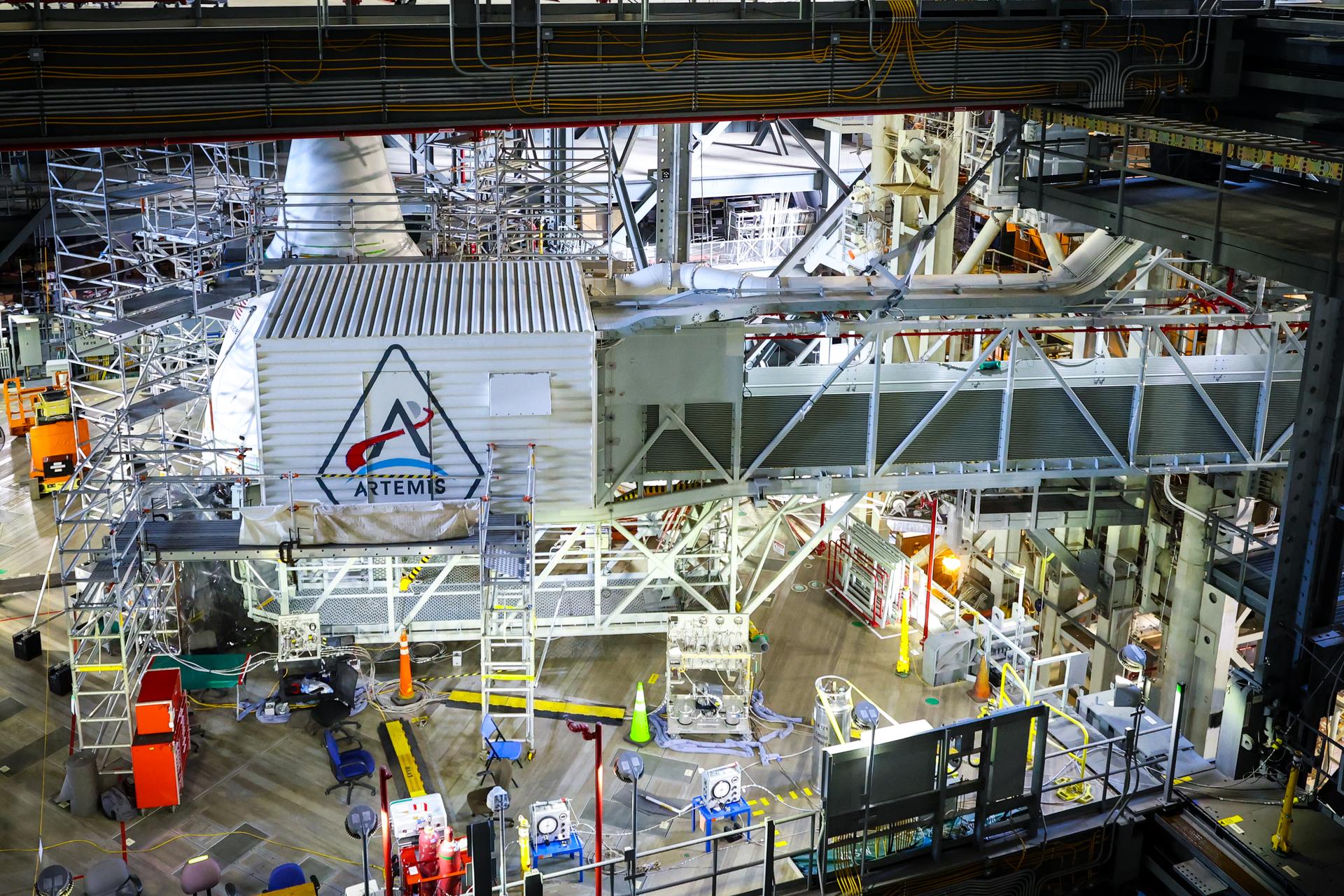
A freshly painted NASA’s Artemis logo is unveiled on the White Room connected to the crew access arm and mobile launcher inside the Vehicle Assembly Building at NASA’s Kennedy Space Center in Florida on Thursday, Dec. 4, 2025. The White Room is the area where the Artemis II crew Reid Wiseman, Victor Glover, Christina Koch, and CSA (Canadian Space Agency) astronaut Jeremy Hansen will enter the Orion spacecraft ahead of launch from Launch Complex 39B at NASA Kennedy in early 2026.
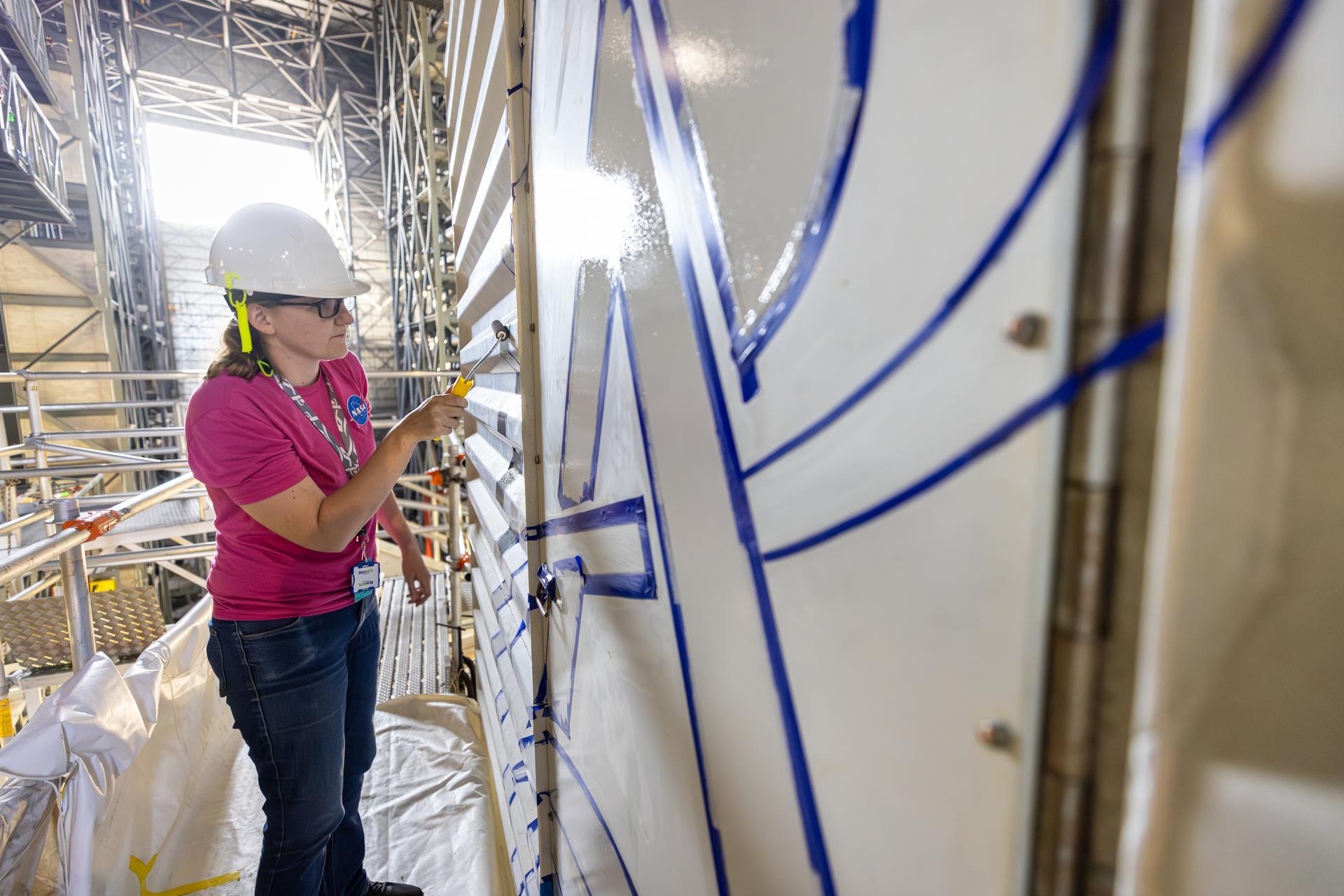
Katie Mortensen, mechanical engineering technician, paints NASA’s Artemis logo on the White Room connected to the crew access arm and mobile launcher inside the Vehicle Assembly Building at NASA’s Kennedy Space Center in Florida on Thursday, Dec. 4, 2025. The White Room is the area where the Artemis II crew Reid Wiseman, Victor Glover, Christina Koch, and CSA (Canadian Space Agency) astronaut Jeremy Hansen will enter the Orion spacecraft ahead of launch from Launch Complex 39B at NASA Kennedy in early 2026.
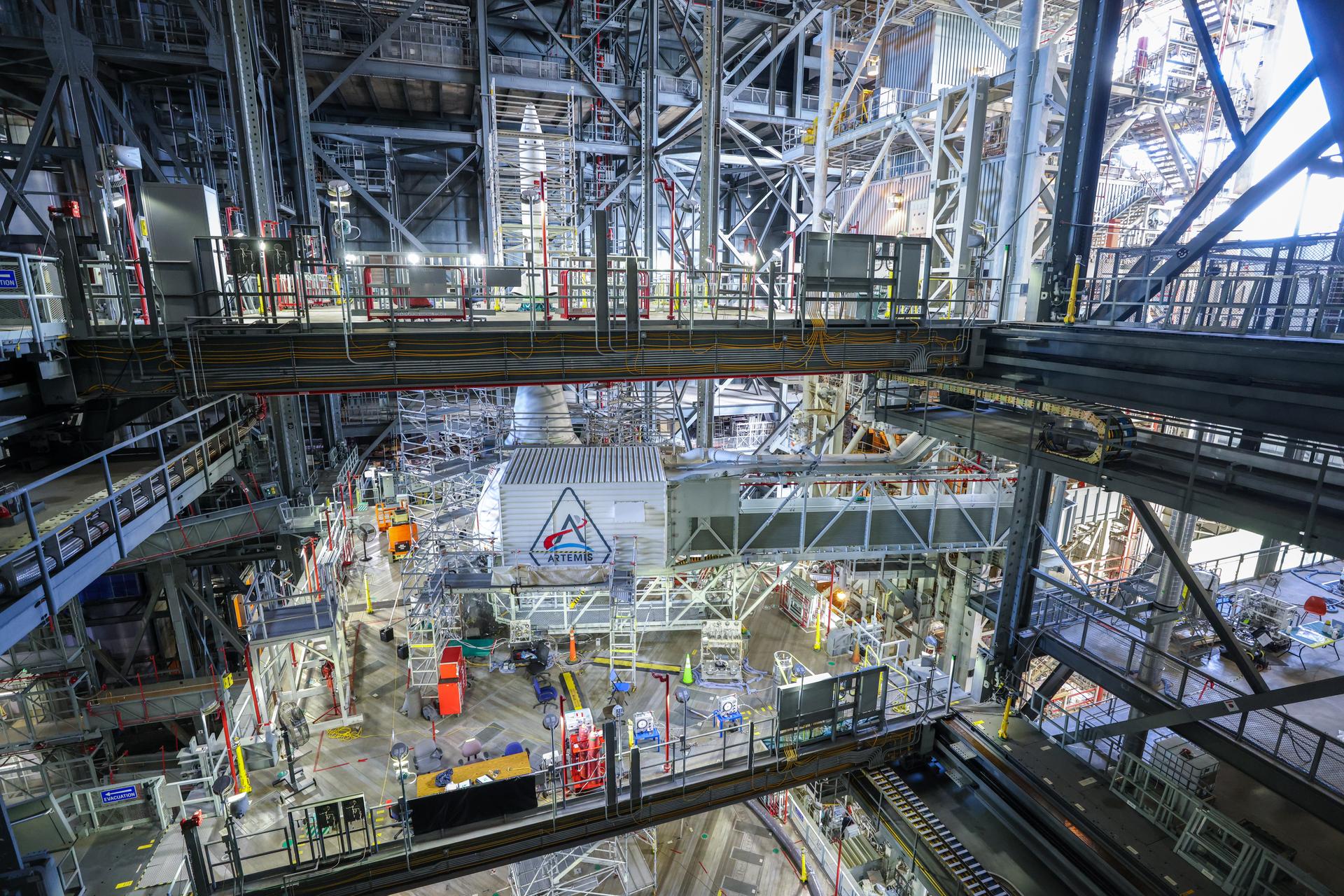
A freshly painted NASA’s Artemis logo is unveiled on the White Room connected to the crew access arm and mobile launcher inside the Vehicle Assembly Building at NASA’s Kennedy Space Center in Florida on Thursday, Dec. 4, 2025. The White Room is the area where the Artemis II crew Reid Wiseman, Victor Glover, Christina Koch, and CSA (Canadian Space Agency) astronaut Jeremy Hansen will enter the Orion spacecraft ahead of launch from Launch Complex 39B at NASA Kennedy in early 2026.
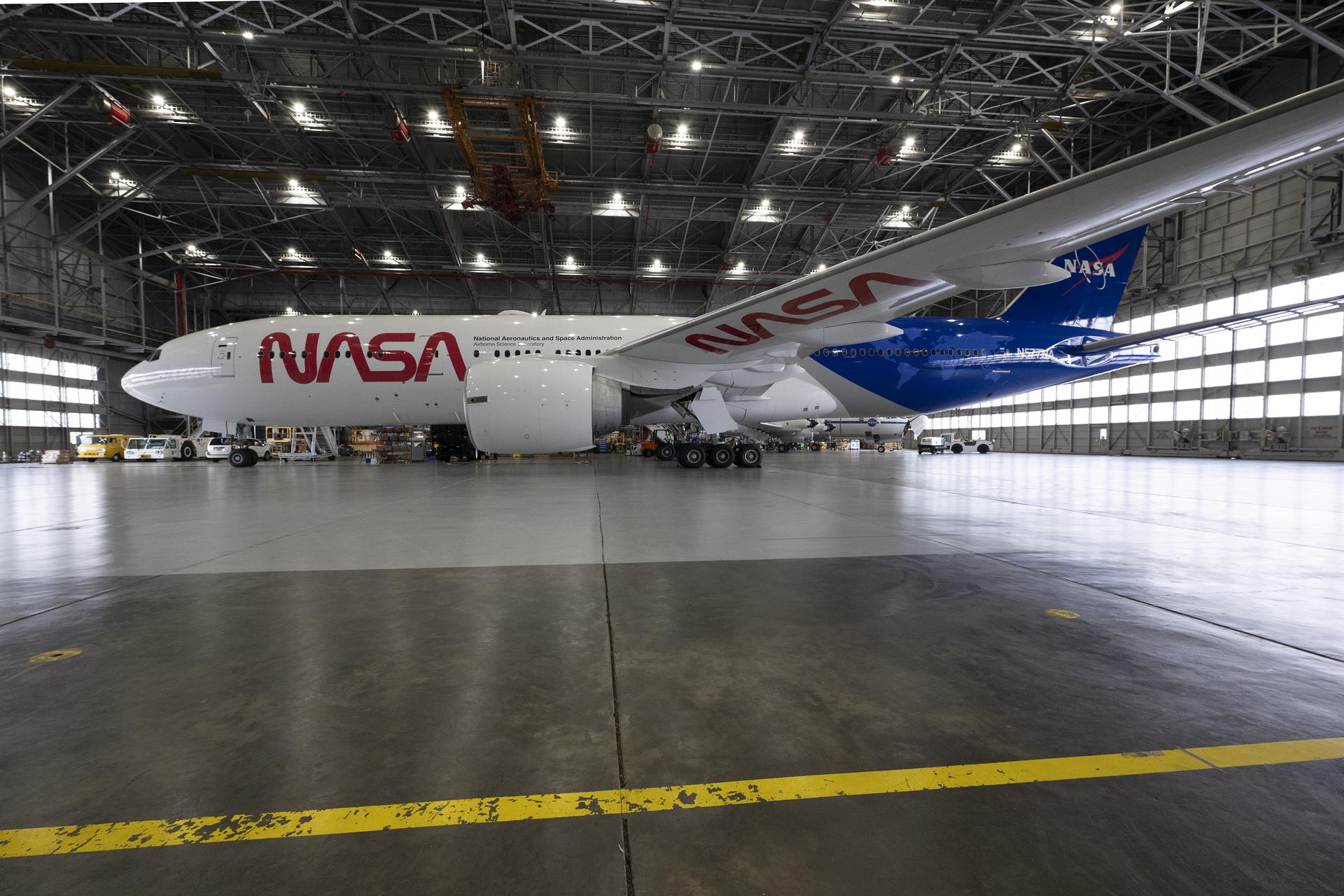
NASA's B777 aircraft returned to NASA Langley Research Center in Hampton, Virginia on Aug 12th with its new livery or paint job. It will now continue its maintenance and instrument integration schedule to prepare for its initial airborne science flights in 2027. Photo Credit NASA/Ryan Hill
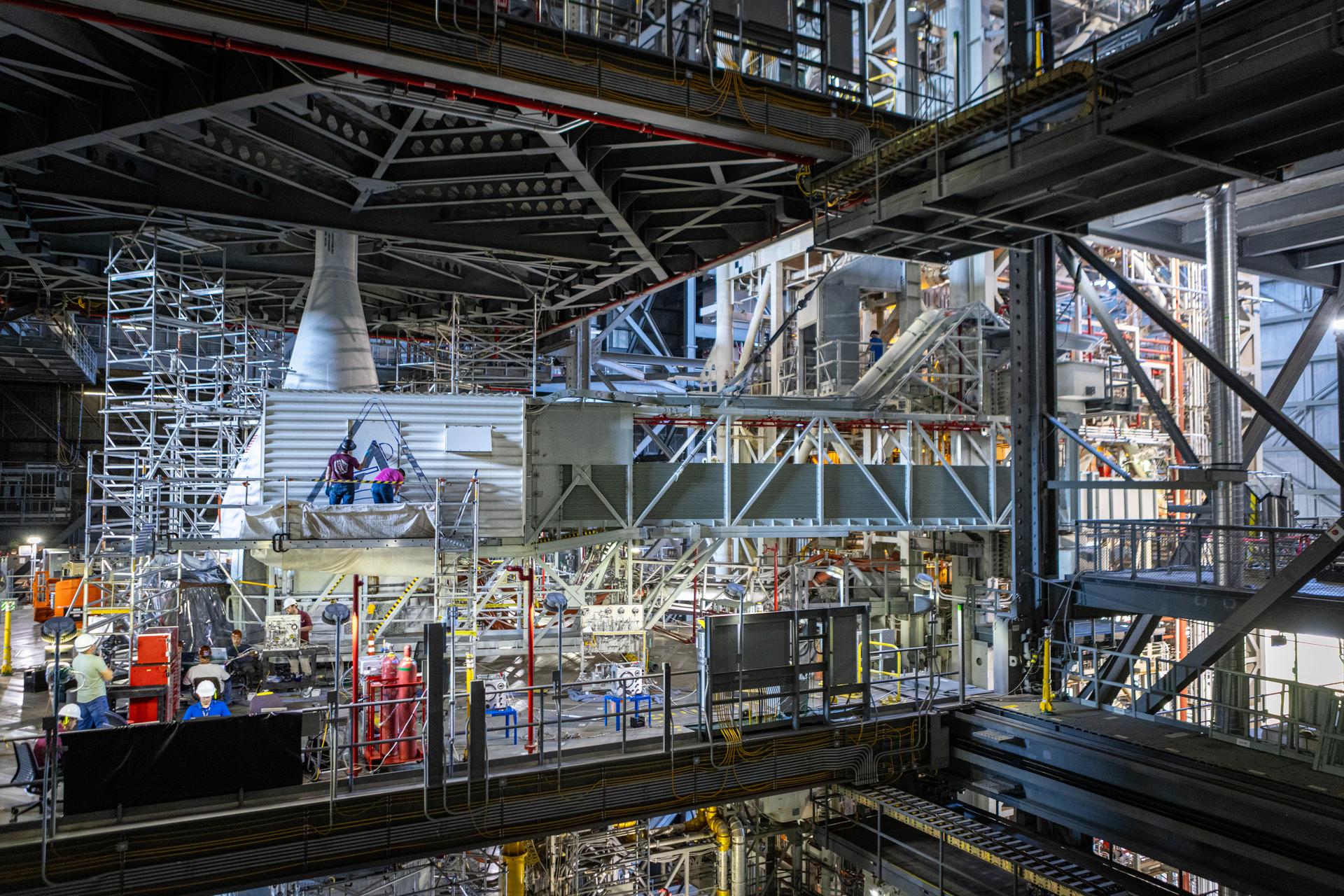
From left, Sean McCrary and Katie Mortensen, mechanical engineering technicians, paint NASA’s Artemis logo on the White Room connected to the crew access arm and mobile launcher inside the Vehicle Assembly Building at NASA’s Kennedy Space Center in Florida on Thursday, Dec. 4, 2025. The White Room is the area where the Artemis II crew Reid Wiseman, Victor Glover, Christina Koch, and CSA (Canadian Space Agency) astronaut Jeremy Hansen will enter the Orion spacecraft ahead of launch from Launch Complex 39B at NASA Kennedy in early 2026.
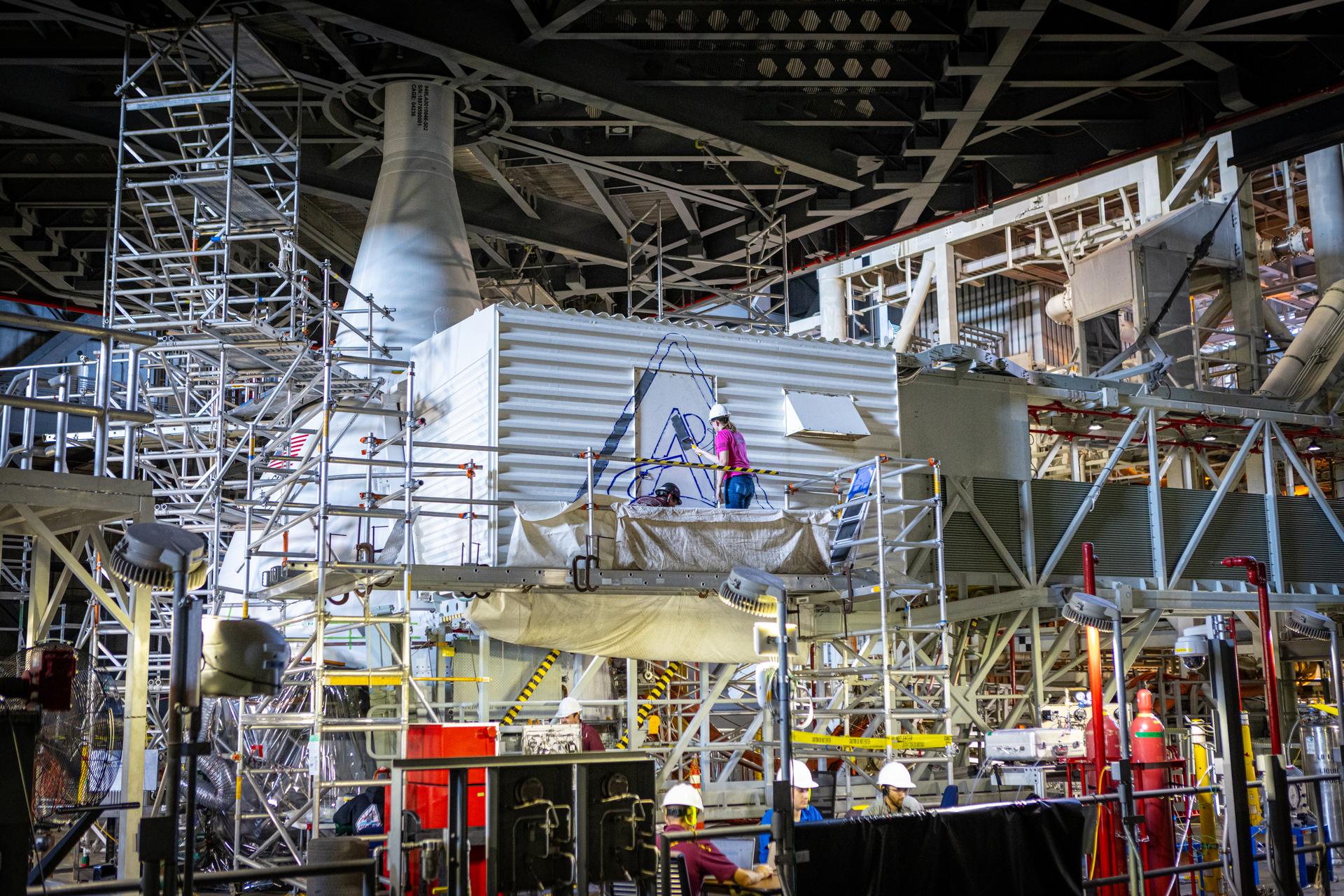
From left, Sean McCrary and Katie Mortensen, mechanical engineering technicians, paint NASA’s Artemis logo on the White Room connected to the crew access arm and mobile launcher inside the Vehicle Assembly Building at NASA’s Kennedy Space Center in Florida on Thursday, Dec. 4, 2025. The White Room is the area where the Artemis II crew Reid Wiseman, Victor Glover, Christina Koch, and CSA (Canadian Space Agency) astronaut Jeremy Hansen will enter the Orion spacecraft ahead of launch from Launch Complex 39B at NASA Kennedy in early 2026.
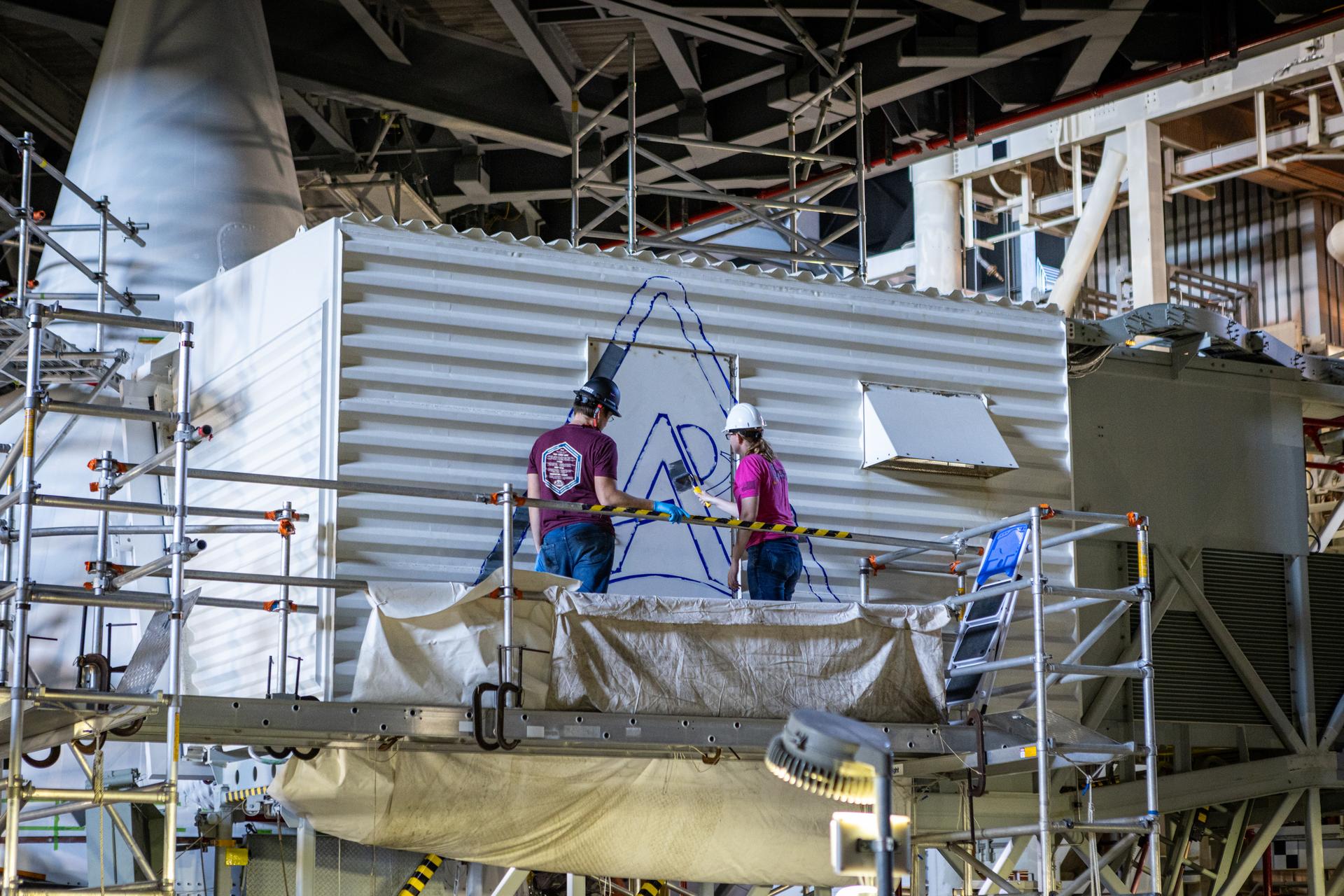
From left, Sean McCrary and Katie Mortensen, mechanical engineering technicians, paint NASA’s Artemis logo on the White Room connected to the crew access arm and mobile launcher inside the Vehicle Assembly Building at NASA’s Kennedy Space Center in Florida on Thursday, Dec. 4, 2025. The White Room is the area where the Artemis II crew Reid Wiseman, Victor Glover, Christina Koch, and CSA (Canadian Space Agency) astronaut Jeremy Hansen will enter the Orion spacecraft ahead of launch from Launch Complex 39B at NASA Kennedy in early 2026.
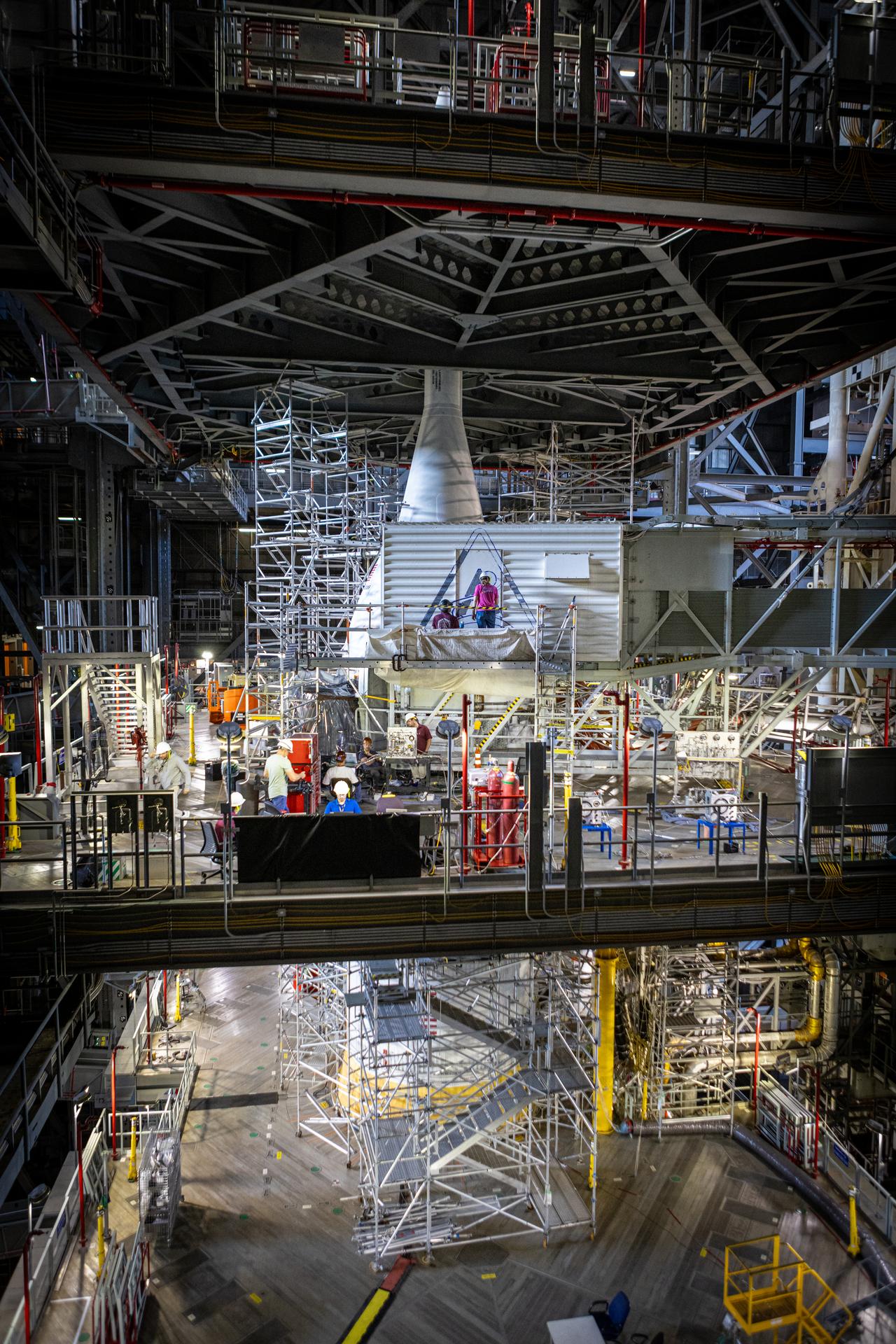
From left, Sean McCrary and Katie Mortensen, mechanical engineering technicians, paint NASA’s Artemis logo on the White Room connected to the crew access arm and mobile launcher inside the Vehicle Assembly Building at NASA’s Kennedy Space Center in Florida on Thursday, Dec. 4, 2025. The White Room is the area where the Artemis II crew Reid Wiseman, Victor Glover, Christina Koch, and CSA (Canadian Space Agency) astronaut Jeremy Hansen will enter the Orion spacecraft ahead of launch from Launch Complex 39B at NASA Kennedy in early 2026.
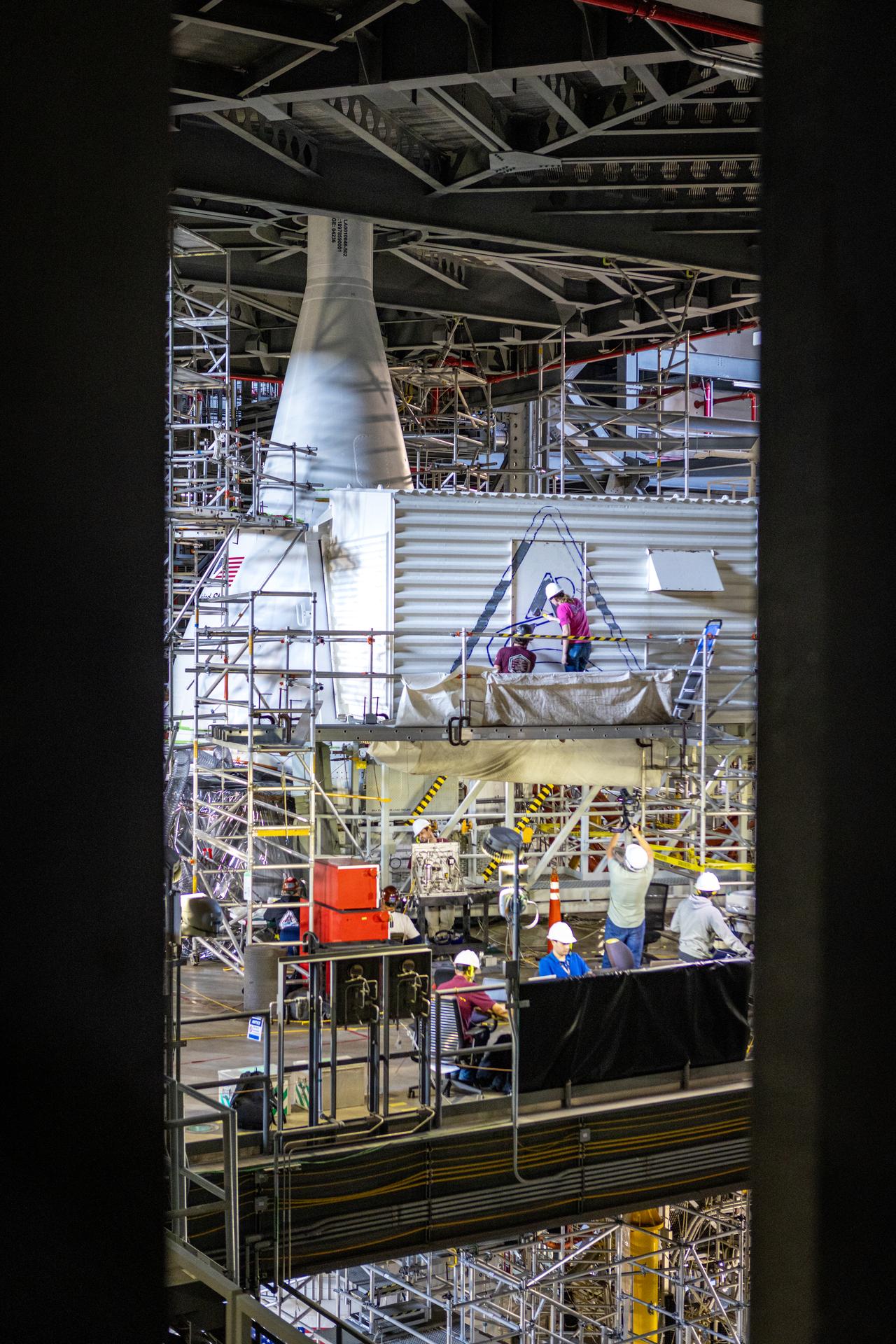
From left, Sean McCrary and Katie Mortensen, mechanical engineering technicians, paint NASA’s Artemis logo on the White Room connected to the crew access arm and mobile launcher inside the Vehicle Assembly Building at NASA’s Kennedy Space Center in Florida on Thursday, Dec. 4, 2025. The White Room is the area where the Artemis II crew Reid Wiseman, Victor Glover, Christina Koch, and CSA (Canadian Space Agency) astronaut Jeremy Hansen will enter the Orion spacecraft ahead of launch from Launch Complex 39B at NASA Kennedy in early 2026.
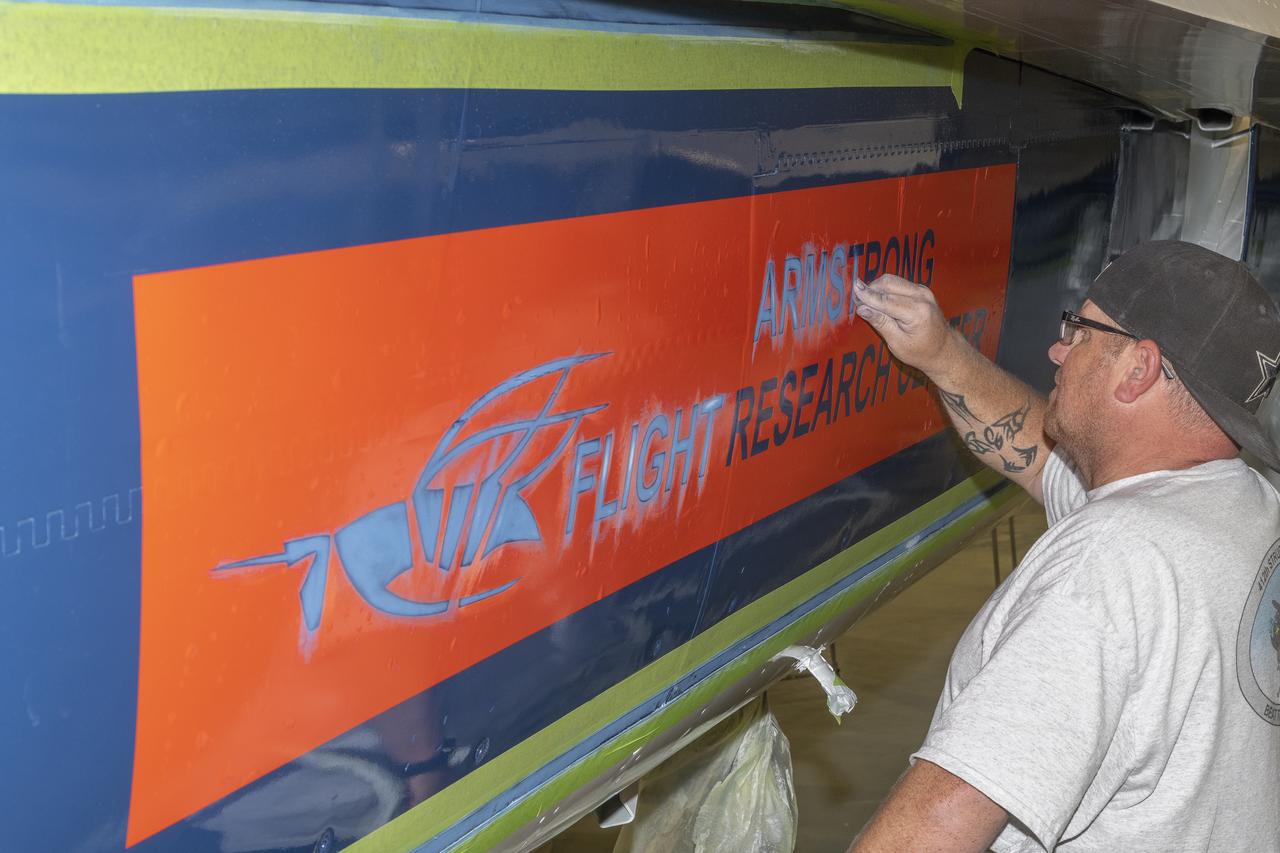
John Bishop, who works at the U.S. Air Force Corrosion Control Facility, sands areas in a stencil for adding some finishing touches to NASA 862, which is an F/A-18D based at NASA’s Armstrong Flight Research Center in Edwards, California. The corrosion control facility is located on Edwards Air Force Base and is also known as the Paint Barn.

Painting of the NASA logo, also called the meatball, continues on the 525-foot-tall Vehicle Assembly Building (VAB) at the agency’s Kennedy Space Center in Florida on June 22, 2020. HM2 and H.I.S. Painting of Titusville, Florida, are repainting the meatball and the American Flag on the iconic building. The VAB was last painted in 2007, when repairs were completed after the 2004 Hurricanes Frances and Jeanne tore 845 panels off the building. It will take over 500 gallons of paint to paint the 209-by-110-foot flag and the 110-by-132-foot meatball. Exploration Ground Systems is overseeing upgrades to the VAB to support the launch of the SLS and Orion for Artemis missions. Under the Artemis program, NASA will send the first woman and next man to the Moon.

Painting of the NASA logo, also called the meatball, continues on the 525-foot-tall Vehicle Assembly Building (VAB) at the agency’s Kennedy Space Center in Florida on June 22, 2020. HM2 and H.I.S. Painting of Titusville, Florida, are repainting the meatball and the American Flag on the iconic building. The VAB was last painted in 2007, when repairs were completed after the 2004 Hurricanes Frances and Jeanne tore 845 panels off the building. It will take over 500 gallons of paint to paint the 209-by-110-foot flag and the 110-by-132-foot meatball. Exploration Ground Systems is overseeing upgrades to the VAB to support the launch of the SLS and Orion for Artemis missions. Under the Artemis program, NASA will send the first woman and next man to the Moon.

A scrub jay perches on a branch near the Vehicle Assembly Building (VAB) at NASA’s Kennedy Space Center in Florida on June 22, 2020. Painting of the NASA logo, also called the meatball, continues on the 525-foot-tall building. HM2 and H.I.S. Painting of Titusville, Florida, are repainting the meatball and the American Flag on the iconic building. The VAB was last painted in 2007, when repairs were completed after the 2004 Hurricanes Frances and Jeanne tore 845 panels off the building. It will take over 500 gallons of paint to paint the 209-by-110-foot flag and the 110-by-132-foot meatball. Exploration Ground Systems is overseeing upgrades to the VAB to support the launch of the SLS and Orion for Artemis missions. Under the Artemis program, NASA will send the first woman and next man to the Moon.

Painting of the NASA logo, also called the meatball, continues on the 525-foot-tall Vehicle Assembly Building (VAB) at the agency’s Kennedy Space Center in Florida on June 22, 2020. HM2 and H.I.S. Painting of Titusville, Florida, are repainting the meatball and the American Flag on the iconic building. The VAB was last painted in 2007, when repairs were completed after the 2004 Hurricanes Frances and Jeanne tore 845 panels off the building. It will take over 500 gallons of paint to paint the 209-by-110-foot flag and the 110-by-132-foot meatball. Exploration Ground Systems is overseeing upgrades to the VAB to support the launch of the SLS and Orion for Artemis missions. Under the Artemis program, NASA will send the first woman and next man to the Moon.

A view of the Vehicle Assembly Building (VAB) at NASA’s Kennedy Space Center in Florida on June 22, 2020. Painting of the NASA logo, also called the meatball, continues on the 525-foot-tall building. HM2 and H.I.S. Painting of Titusville, Florida, are repainting the meatball and the American Flag on the iconic building. The VAB was last painted in 2007, when repairs were completed after the 2004 Hurricanes Frances and Jeanne tore 845 panels off the building. It will take over 500 gallons of paint to paint the 209-by-110-foot flag and the 110-by-132-foot meatball. Exploration Ground Systems is overseeing upgrades to the VAB to support the launch of the SLS and Orion for Artemis missions. Under the Artemis program, NASA will send the first woman and next man to the Moon.

A close-up view of the Vehicle Assembly Building (VAB) at NASA’s Kennedy Space Center in Florida on June 22, 2020. Painting of the NASA logo, also called the meatball, continues on the 525-foot-tall building. HM2 and H.I.S. Painting of Titusville, Florida, are repainting the meatball and the American Flag on the iconic building. The VAB was last painted in 2007, when repairs were completed after the 2004 Hurricanes Frances and Jeanne tore 845 panels off the building. It will take over 500 gallons of paint to paint the 209-by-110-foot flag and the 110-by-132-foot meatball. Exploration Ground Systems is overseeing upgrades to the VAB to support the launch of the SLS and Orion for Artemis missions. Under the Artemis program, NASA will send the first woman and next man to the Moon.

A view of the Vehicle Assembly Building (VAB) and a waterway at NASA’s Kennedy Space Center in Florida on June 22, 2020. Painting of the NASA logo, also called the meatball, continues on the 525-foot-tall building. HM2 and H.I.S. Painting of Titusville, Florida, are repainting the meatball and the American Flag on the iconic building. The VAB was last painted in 2007, when repairs were completed after the 2004 Hurricanes Frances and Jeanne tore 845 panels off the building. It will take over 500 gallons of paint to paint the 209-by-110-foot flag and the 110-by-132-foot meatball. Exploration Ground Systems is overseeing upgrades to the VAB to support the launch of the SLS and Orion for Artemis missions. Under the Artemis program, NASA will send the first woman and next man to the Moon.

A view of the Vehicle Assembly Building (VAB) and a waterway at NASA’s Kennedy Space Center in Florida on June 22, 2020. Painting of the NASA logo, also called the meatball, continues on the 525-foot-tall building. HM2 and H.I.S. Painting of Titusville, Florida, are repainting the meatball and the American Flag on the iconic building. The VAB was last painted in 2007, when repairs were completed after the 2004 Hurricanes Frances and Jeanne tore 845 panels off the building. It will take over 500 gallons of paint to paint the 209-by-110-foot flag and the 110-by-132-foot meatball. Exploration Ground Systems is overseeing upgrades to the VAB to support the launch of the SLS and Orion for Artemis missions. Under the Artemis program, NASA will send the first woman and next man to the Moon.

Painting of the NASA logo, also called the meatball, continues on the 525-foot-tall Vehicle Assembly Building (VAB) at the agency’s Kennedy Space Center in Florida on June 22, 2020. HM2 and H.I.S. Painting of Titusville, Florida, are repainting the meatball and the American Flag on the iconic building. The VAB was last painted in 2007, when repairs were completed after the 2004 Hurricanes Frances and Jeanne tore 845 panels off the building. It will take over 500 gallons of paint to paint the 209-by-110-foot flag and the 110-by-132-foot meatball. Exploration Ground Systems is overseeing upgrades to the VAB to support the launch of the SLS and Orion for Artemis missions. Under the Artemis program, NASA will send the first woman and next man to the Moon.

A view of the Vehicle Assembly Building (VAB) at NASA’s Kennedy Space Center in Florida on June 22, 2020. Painting of the NASA logo, also called the meatball, continues on the 525-foot-tall building. HM2 and H.I.S. Painting of Titusville, Florida, are repainting the meatball and the American Flag on the iconic building. The VAB was last painted in 2007, when repairs were completed after the 2004 Hurricanes Frances and Jeanne tore 845 panels off the building. It will take over 500 gallons of paint to paint the 209-by-110-foot flag and the 110-by-132-foot meatball. Exploration Ground Systems is overseeing upgrades to the VAB to support the launch of the SLS and Orion for Artemis missions. Under the Artemis program, NASA will send the first woman and next man to the Moon.

A view of the Vehicle Assembly Building (VAB) and a waterway at NASA’s Kennedy Space Center in Florida on June 22, 2020. Painting of the NASA logo, also called the meatball, continues on the 525-foot-tall building. HM2 and H.I.S. Painting of Titusville, Florida, are repainting the meatball and the American Flag on the iconic building. The VAB was last painted in 2007, when repairs were completed after the 2004 Hurricanes Frances and Jeanne tore 845 panels off the building. It will take over 500 gallons of paint to paint the 209-by-110-foot flag and the 110-by-132-foot meatball. Exploration Ground Systems is overseeing upgrades to the VAB to support the launch of the SLS and Orion for Artemis missions. Under the Artemis program, NASA will send the first woman and next man to the Moon.

A view of the Vehicle Assembly Building (VAB) at NASA’s Kennedy Space Center in Florida on June 22, 2020. Painting of the NASA logo, also called the meatball, continues on the 525-foot-tall building. HM2 and H.I.S. Painting of Titusville, Florida, are repainting the meatball and the American Flag on the iconic building. The VAB was last painted in 2007, when repairs were completed after the 2004 Hurricanes Frances and Jeanne tore 845 panels off the building. It will take over 500 gallons of paint to paint the 209-by-110-foot flag and the 110-by-132-foot meatball. Exploration Ground Systems is overseeing upgrades to the VAB to support the launch of the SLS and Orion for Artemis missions. Under the Artemis program, NASA will send the first woman and next man to the Moon.
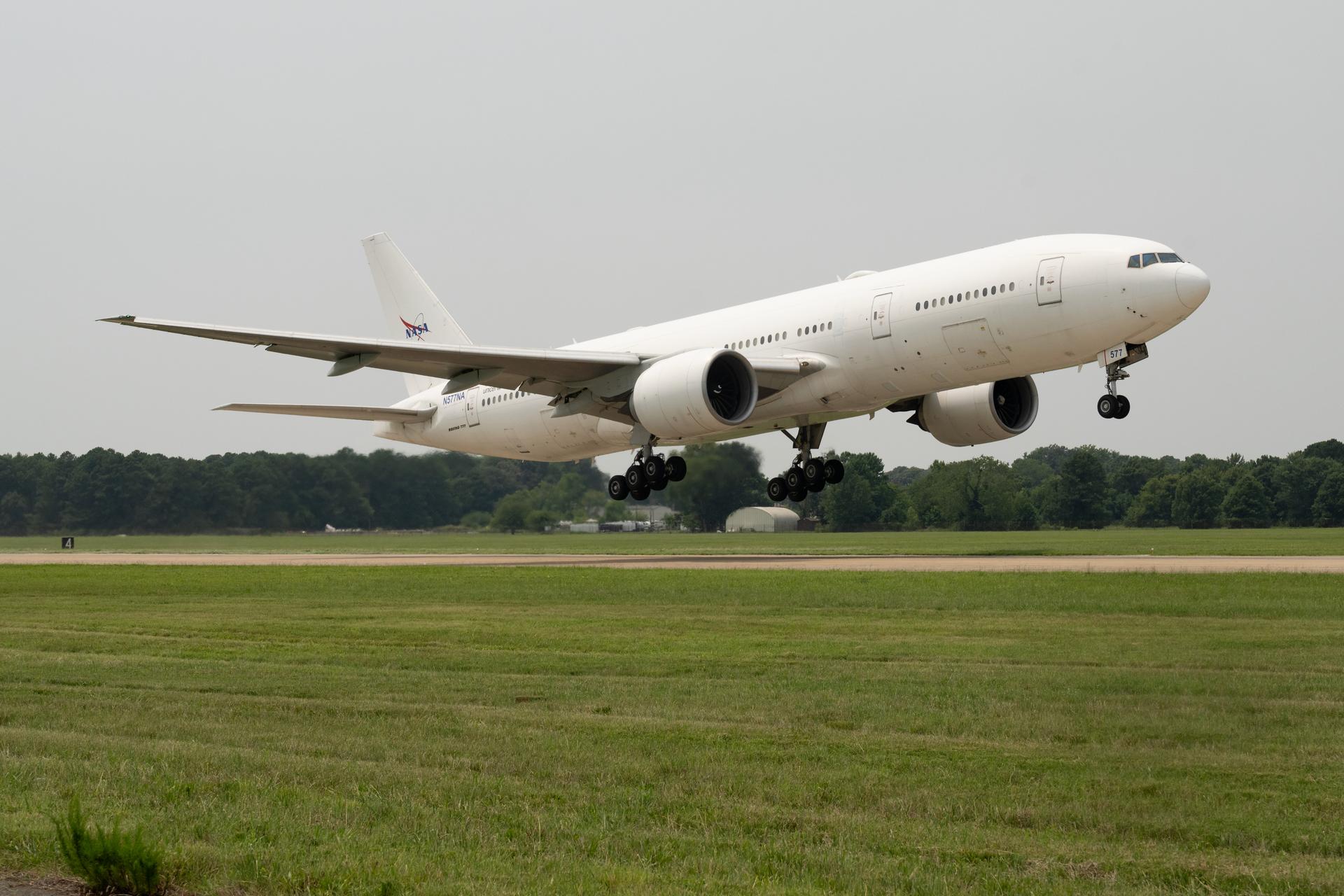
NASA Langley's B777 aircraft before it departs Langley Research Center to receive its new livery (paint job), prior to its departure on July 16th, it received ground maintenance in the center’s hangar. (Photo Credit NASA/ Mark Knopp)
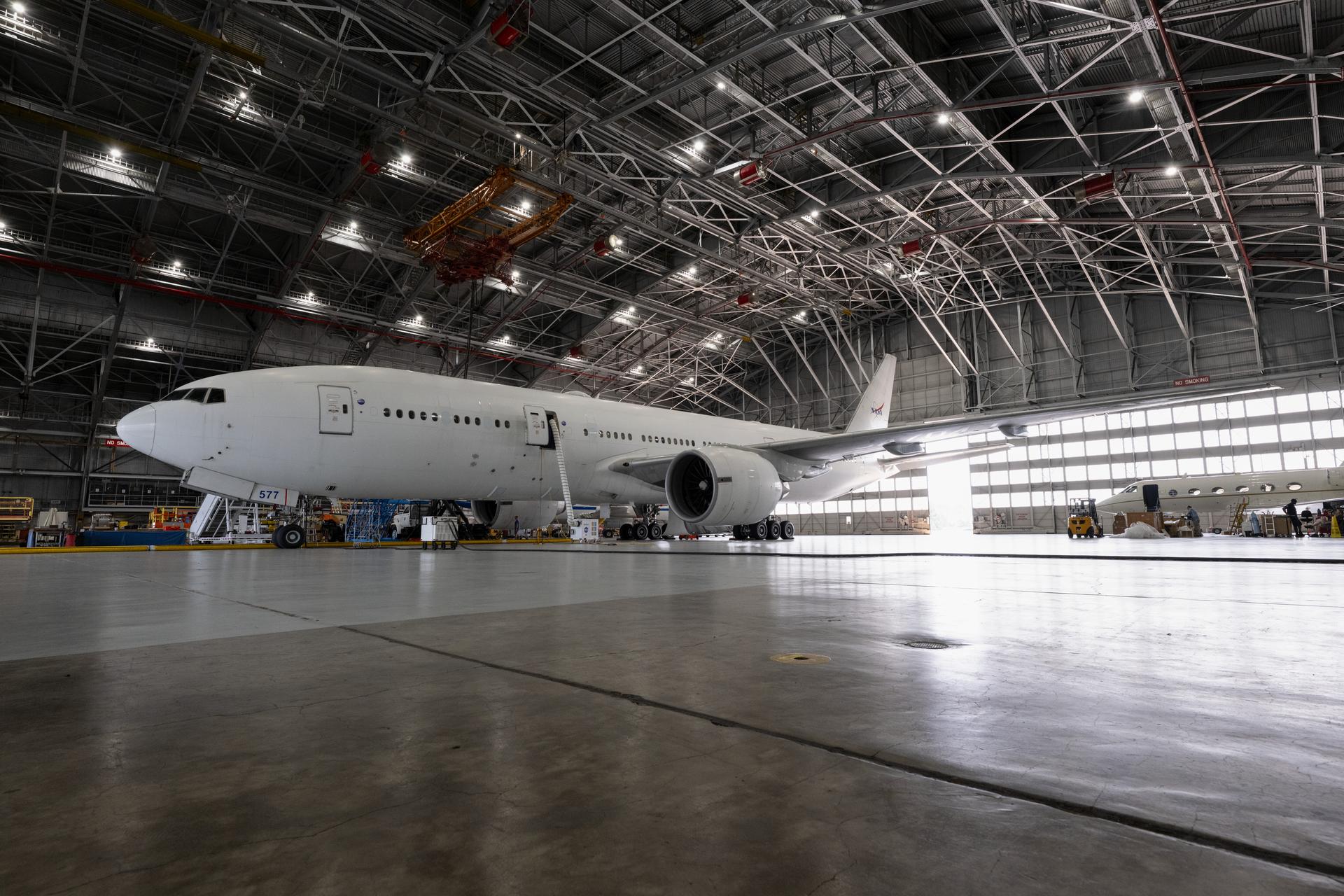
NASA Langley's B777 aircraft before it departs Langley Research Center to receive its new livery (paint job), prior to its departure on July 16th, it received ground maintenance in the center’s hangar. (Photo Credit NASA/ Ryan Hill)
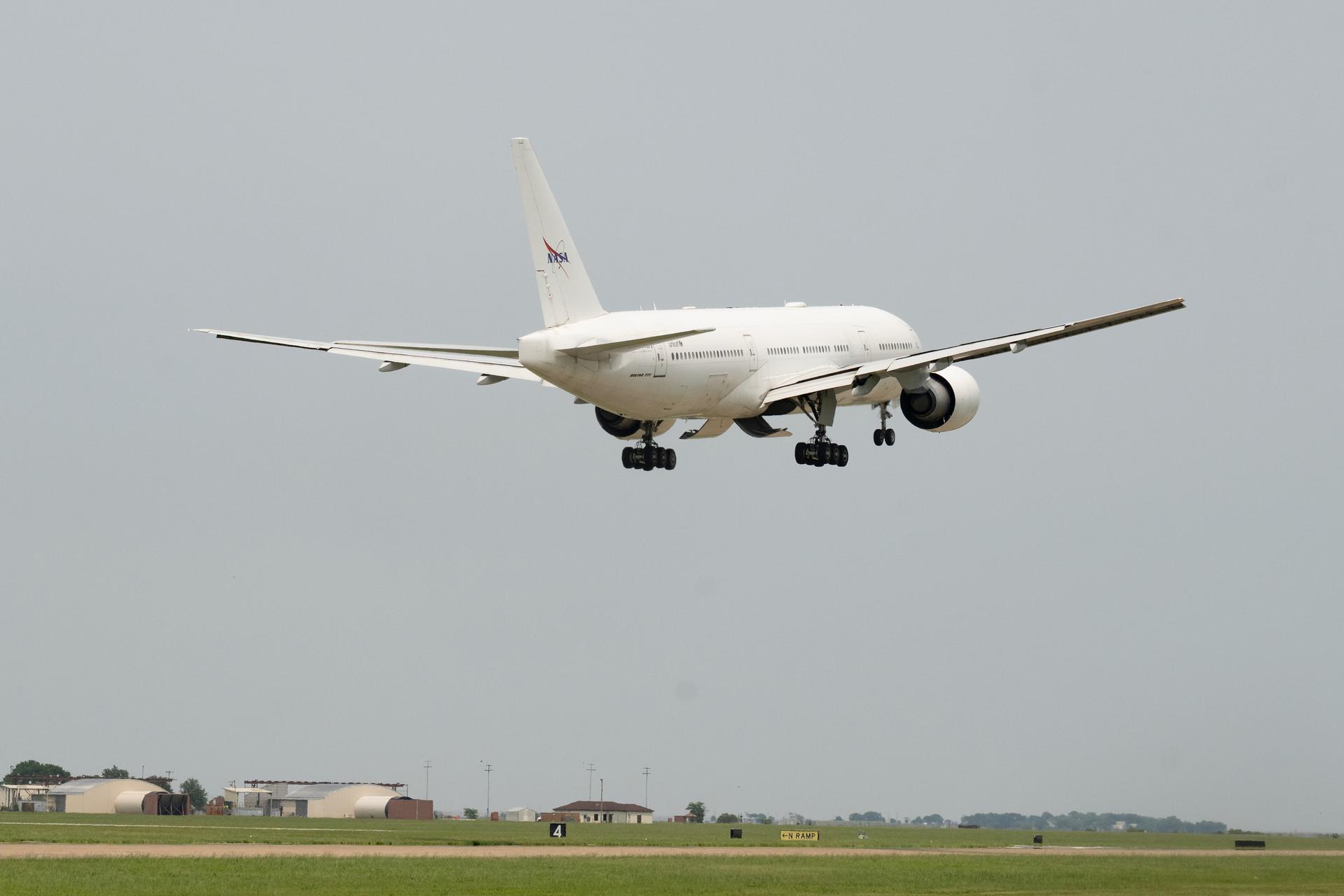
NASA Langley's B777 aircraft before it departs Langley Research Center to receive its new livery (paint job), prior to its departure on July 16th, it received ground maintenance in the center’s hangar. (Photo Credit NASA/ Mark Knopp)
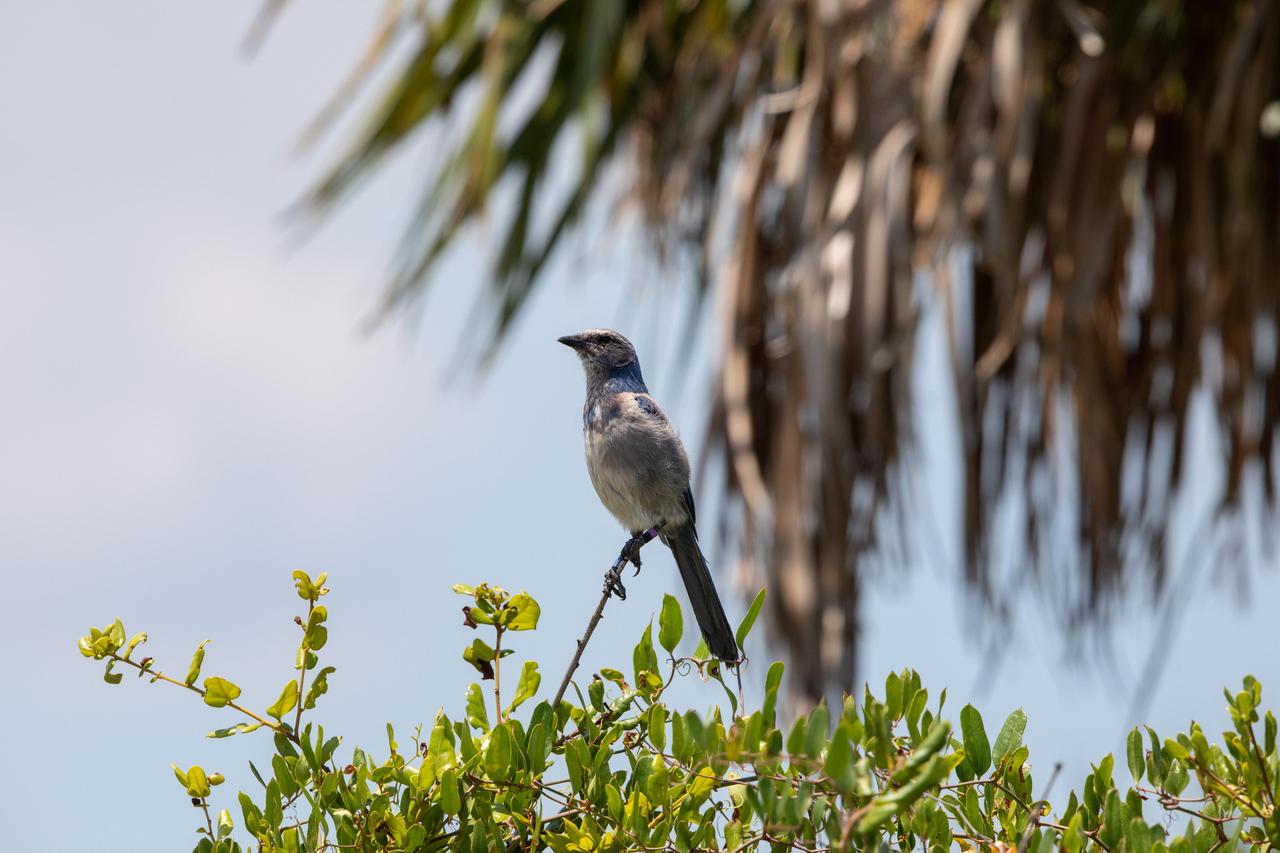
A scrub jay perches on a branch near the Vehicle Assembly Building (VAB) at NASA’s Kennedy Space Center in Florida on June 22, 2020. Painting of the NASA logo, also called the meatball, continues on the 525-foot-tall building. HM2 and H.I.S. Painting of Titusville, Florida, are repainting the meatball and the American Flag on the iconic building. The VAB was last painted in 2007, when repairs were completed after the 2004 Hurricanes Frances and Jeanne tore 845 panels off the building. It will take over 500 gallons of paint to paint the 209-by-110-foot flag and the 110-by-132-foot meatball. High Bay 3 inside the VAB has been upgraded with 10 new levels of work platforms that will surround and provide access for service and processing of NASA's Space Launch System (SLS) rocket and Orion spacecraft. Exploration Ground Systems is overseeing upgrades to the VAB to support the launch of the SLS and Orion for Artemis missions. Under the Artemis program, NASA will send the first woman and next man to the Moon.
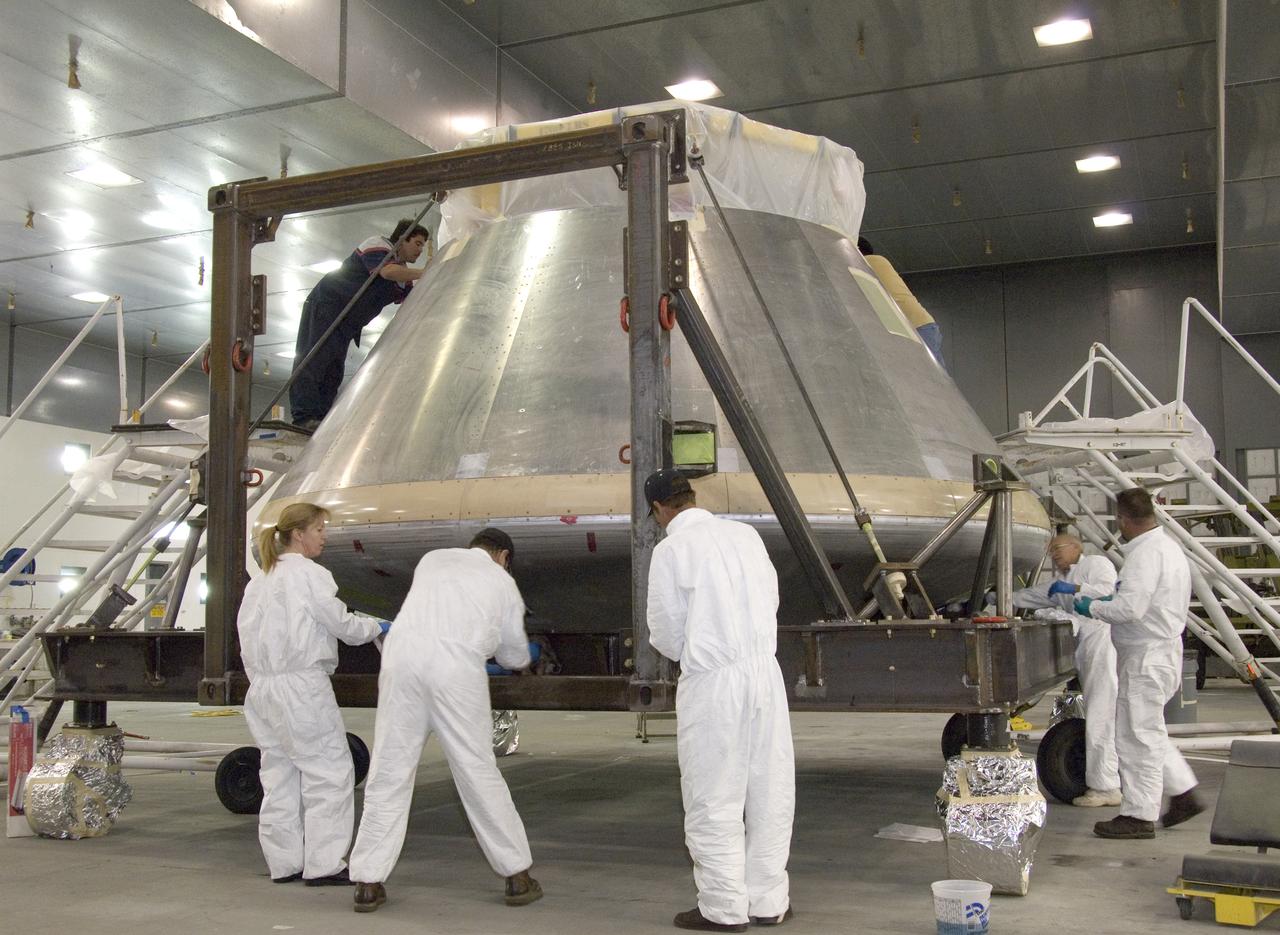
A full-scale flight-test mockup of the Constellation program's Orion crew vehicle arrived at NASA's Dryden Flight Research Center in late March 2008 to undergo preparations for the first short-range flight test of the spacecraft's astronaut escape system later that year. Engineers and technicians at NASA's Langley Research Center fabricated the structure, which precisely represents the size, outer shape and mass characteristics of the Orion space capsule. The Orion crew module mockup was ferried to NASA Dryden on an Air Force C-17. After painting in the Edwards Air Force Base paint hangar, the conical capsule was taken to Dryden for installation of flight computers, instrumentation and other electronics prior to being sent to the U.S. Army's White Sands Missile Range in New Mexico for integration with the escape system and the first abort flight test in late 2008. The tests were designed to ensure a safe, reliable method of escape for astronauts in case of an emergency.
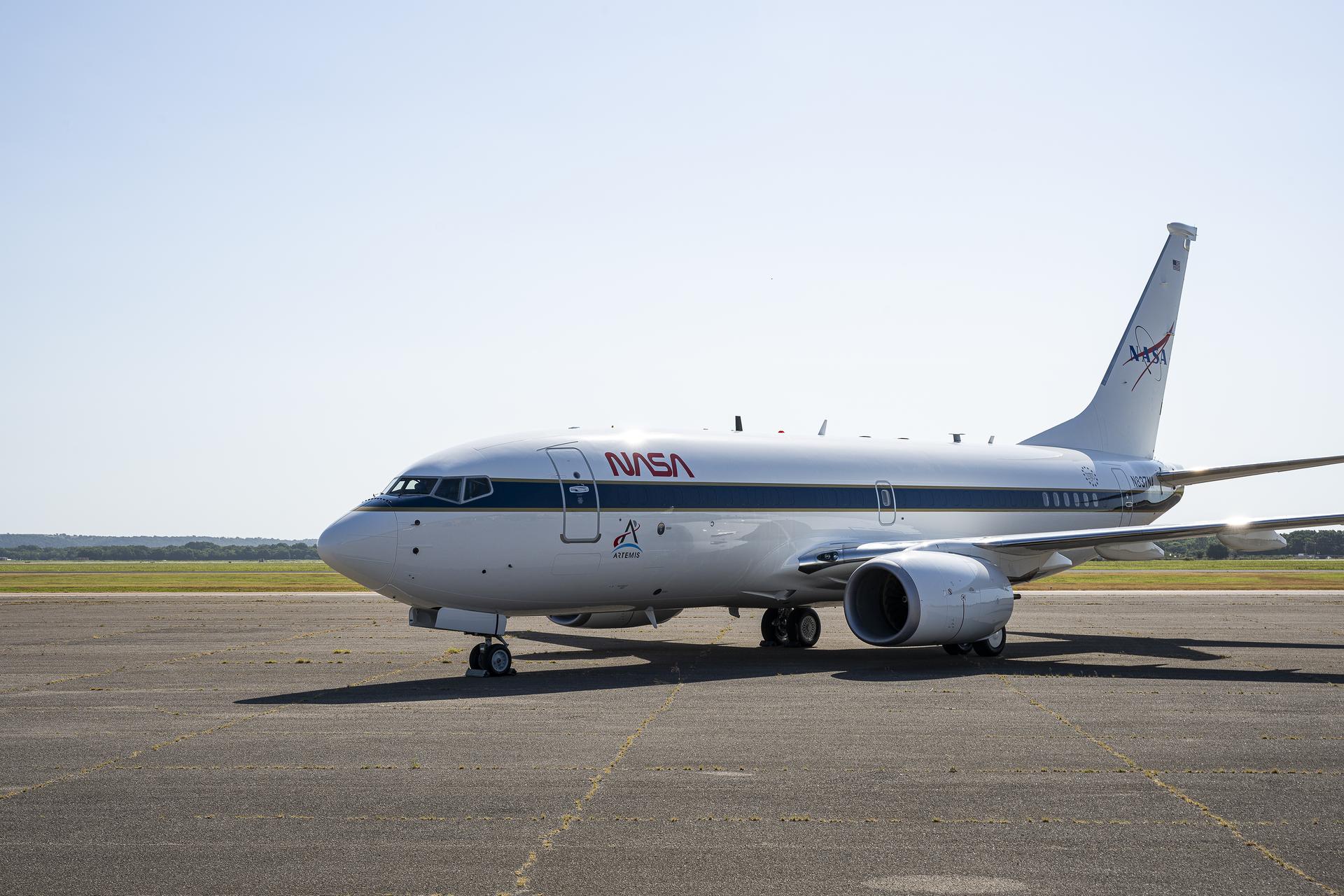
A newly painted NASA 737 aircraft sits on a ramp in Oklahoma on Thursday, Aug. 13, 2026. After modifications, this aircraft will perform lunar-gravity parabolic flights to validate astronaut lunar suits and associated crew systems required to support Artemis mission objectives. Flight testing will happen at NASA’s Johnson Space Center in Houston for reduced-gravity operations, with oversight by NASA’s Armstrong Flight Research Center in Edwards, California. In addition, the aircraft will serve as a key asset for systems‑integration research for flight testing autonomy, sensors, and other digital systems.
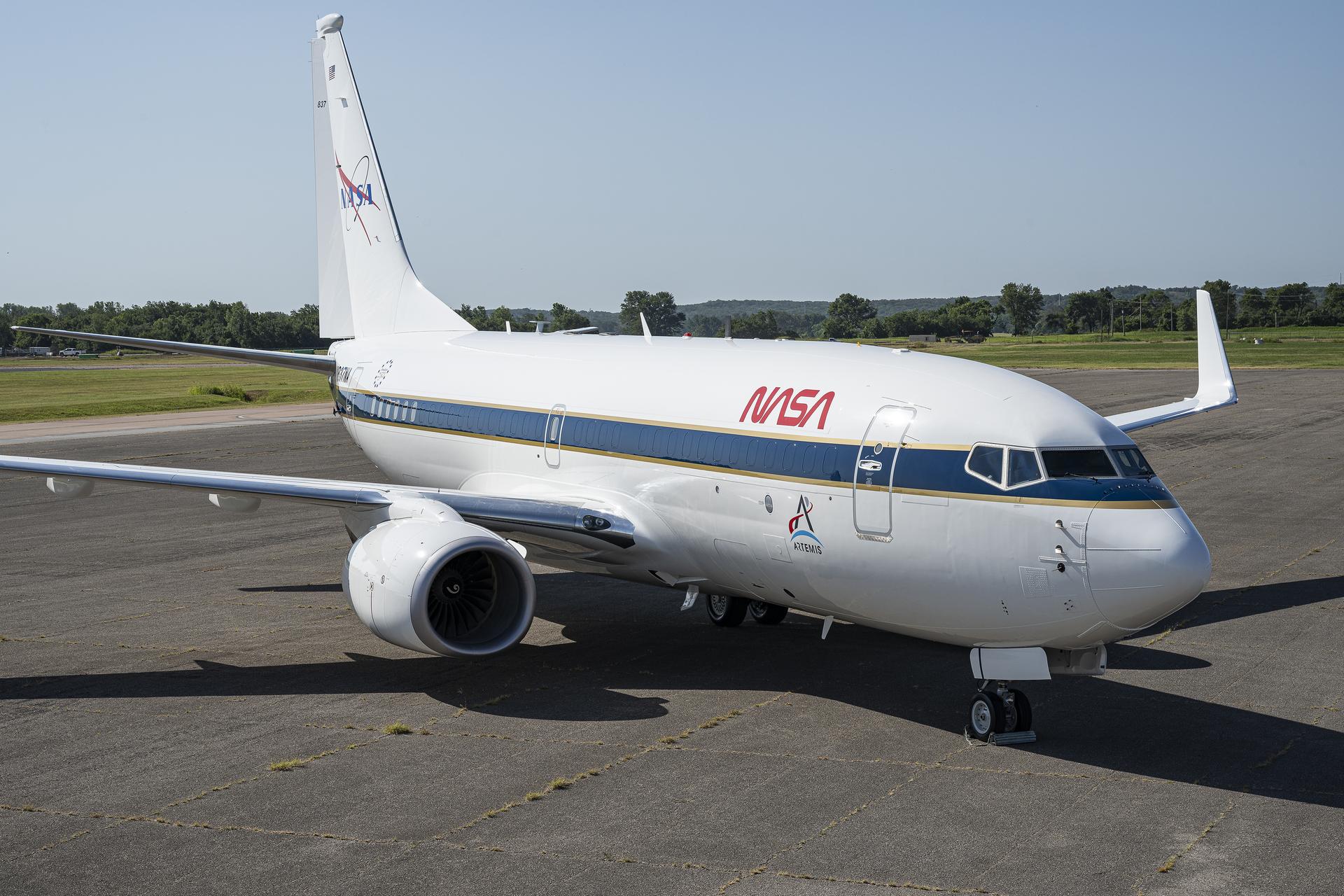
A newly painted NASA 737 aircraft sits on a ramp in Oklahoma on Thursday, Aug. 13, 2026. After modifications, this aircraft will perform lunar-gravity parabolic flights to validate astronaut lunar suits and associated crew systems required to support Artemis mission objectives. Flight testing will happen at NASA’s Johnson Space Center in Houston for reduced-gravity operations, with oversight by NASA’s Armstrong Flight Research Center in Edwards, California. In addition, the aircraft will serve as a key asset for systems‑integration research for flight testing autonomy, sensors, and other digital systems.
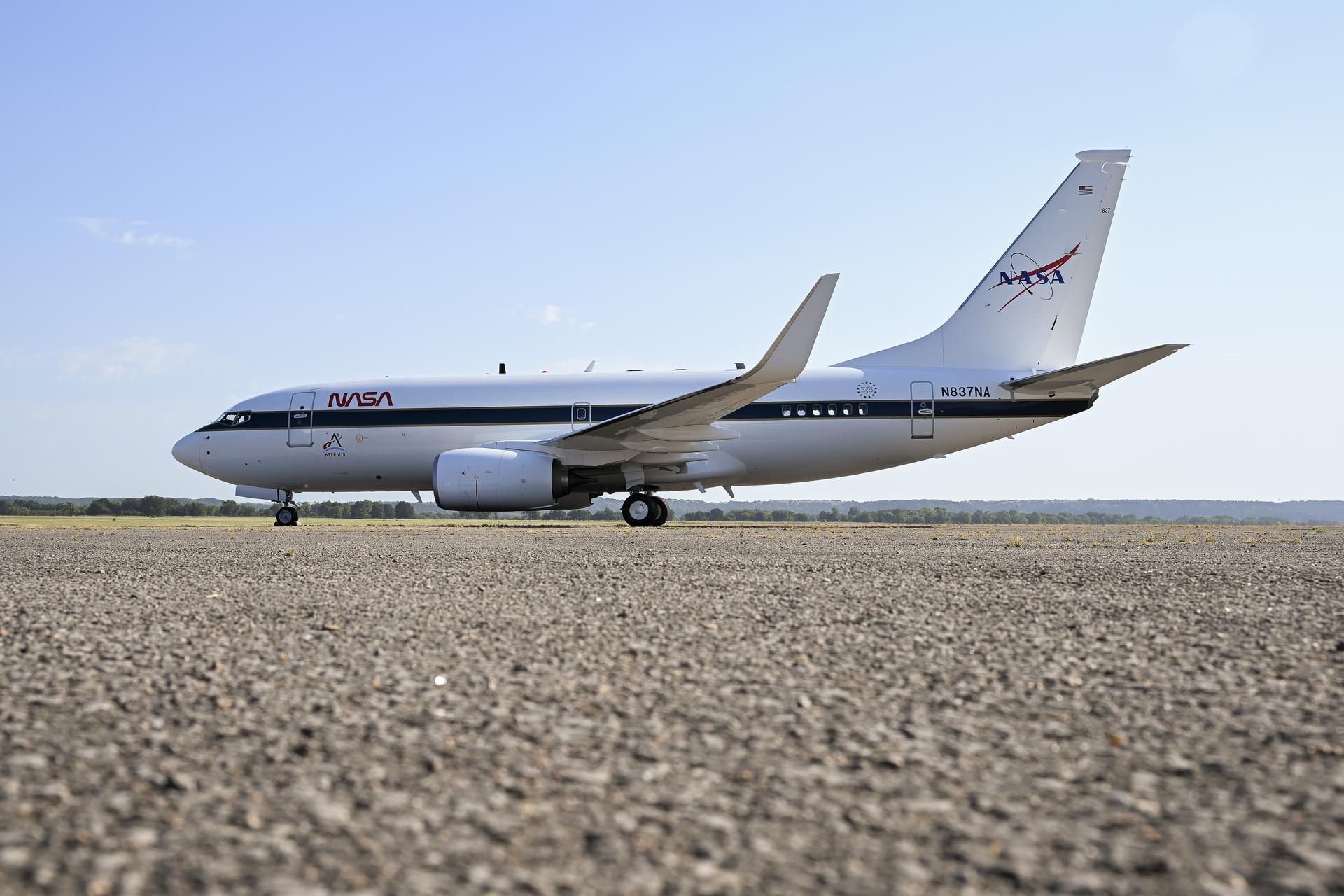
A newly painted NASA 737 aircraft sits on a ramp in Oklahoma on Thursday, Aug. 13, 2026. After modifications, this aircraft will perform lunar-gravity parabolic flights to validate astronaut lunar suits and associated crew systems required to support Artemis mission objectives. Flight testing will happen at NASA’s Johnson Space Center in Houston for reduced-gravity operations, with oversight by NASA’s Armstrong Flight Research Center in Edwards, California. In addition, the aircraft will serve as a key asset for systems‑integration research for flight testing autonomy, sensors, and other digital systems.
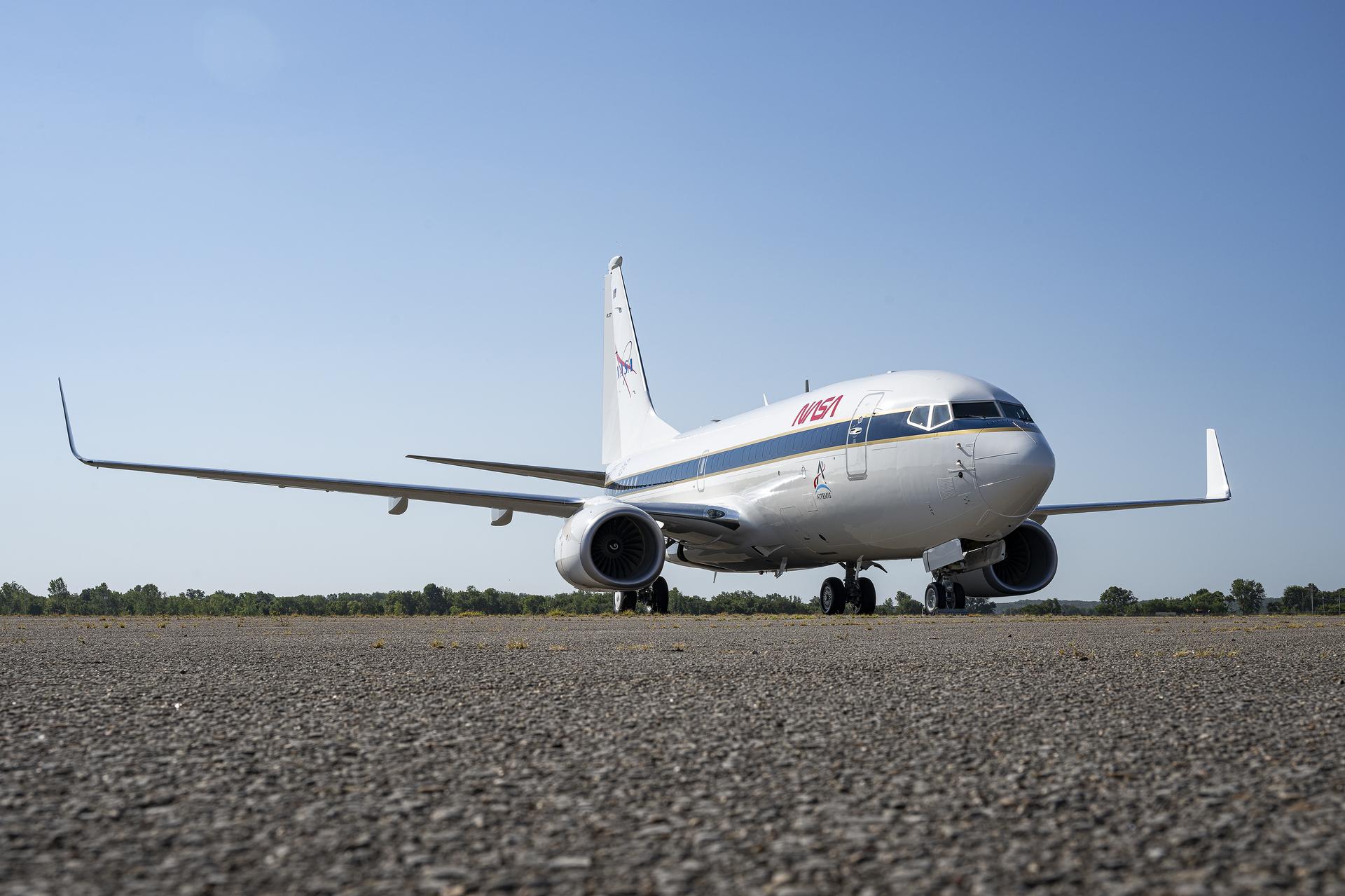
A newly painted NASA 737 aircraft sits on a ramp in Oklahoma on Thursday, Aug. 13, 2026. After modifications, this aircraft will perform lunar-gravity parabolic flights to validate astronaut lunar suits and associated crew systems required to support Artemis mission objectives. Flight testing will happen at NASA’s Johnson Space Center in Houston for reduced-gravity operations, with oversight by NASA’s Armstrong Flight Research Center in Edwards, California. In addition, the aircraft will serve as a key asset for systems‑integration research for flight testing autonomy, sensors, and other digital systems.
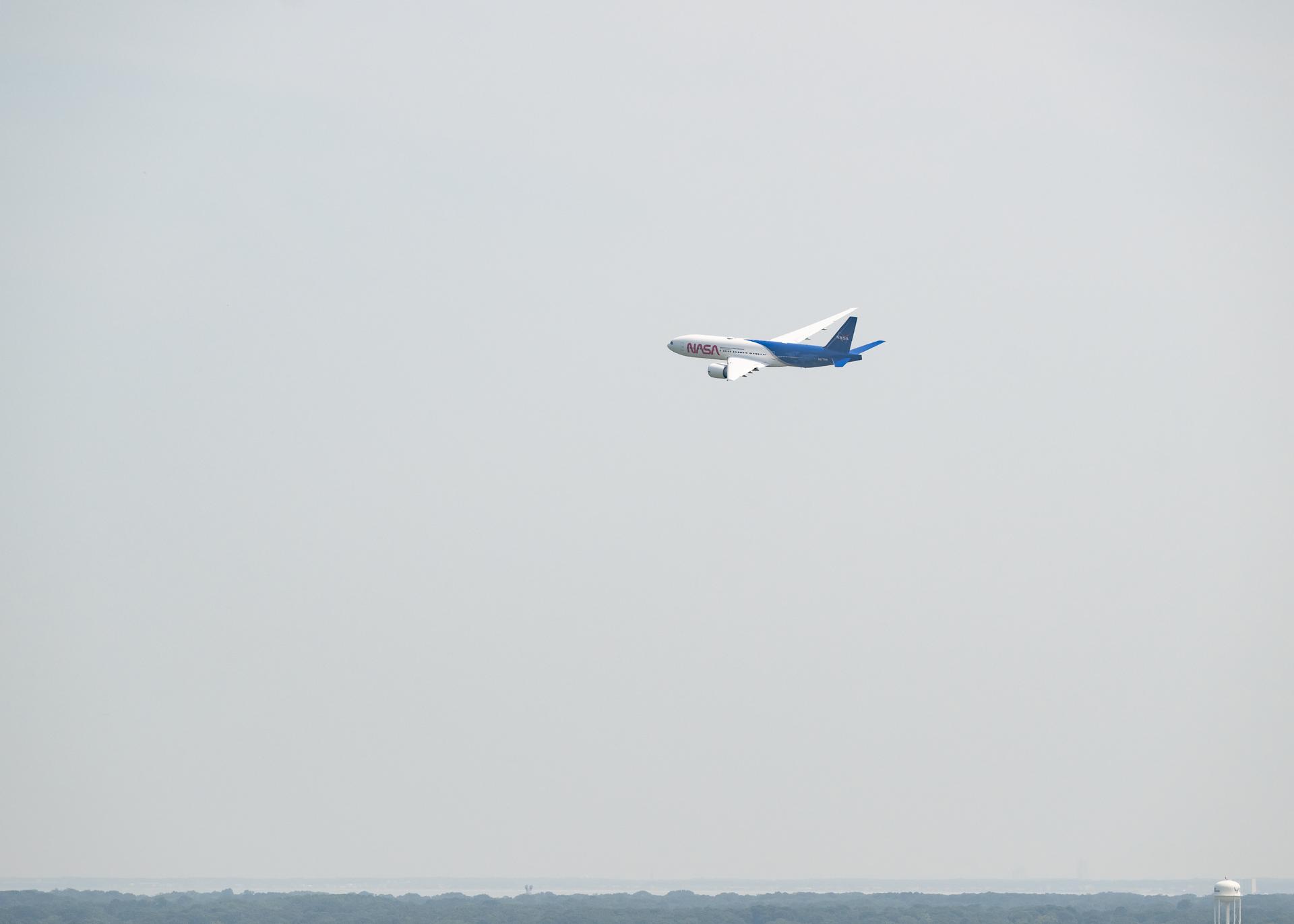
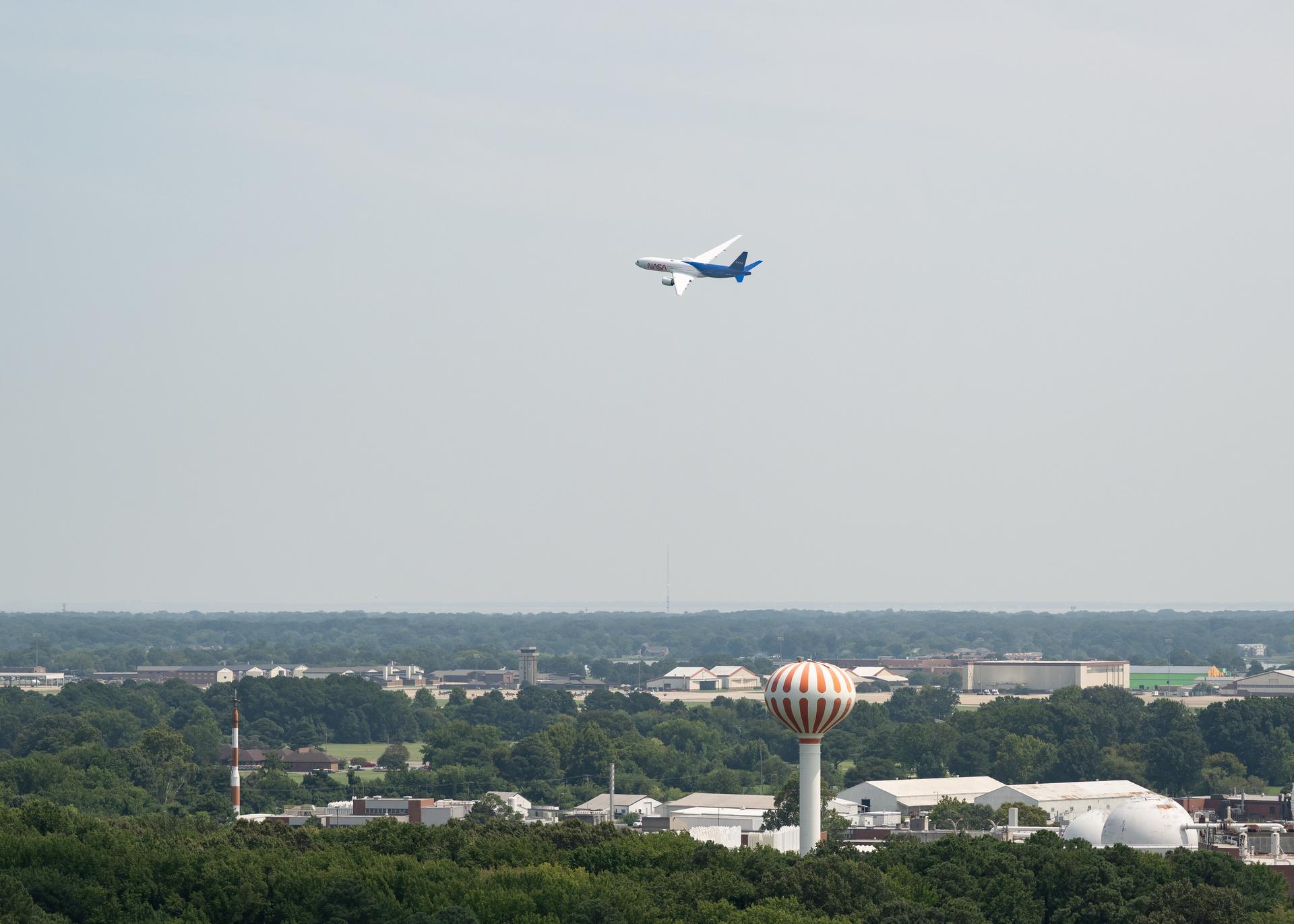
NASA's B777 aircraft returning to NASA Langley Research Center the 31st of July in Hampton, Virginia after a new paint job. It will now continue its maintenance and instrument integration schedule to prepare for its initial airborne science flights in 2027. (Photo Credit NASA/ Ryan Hill)
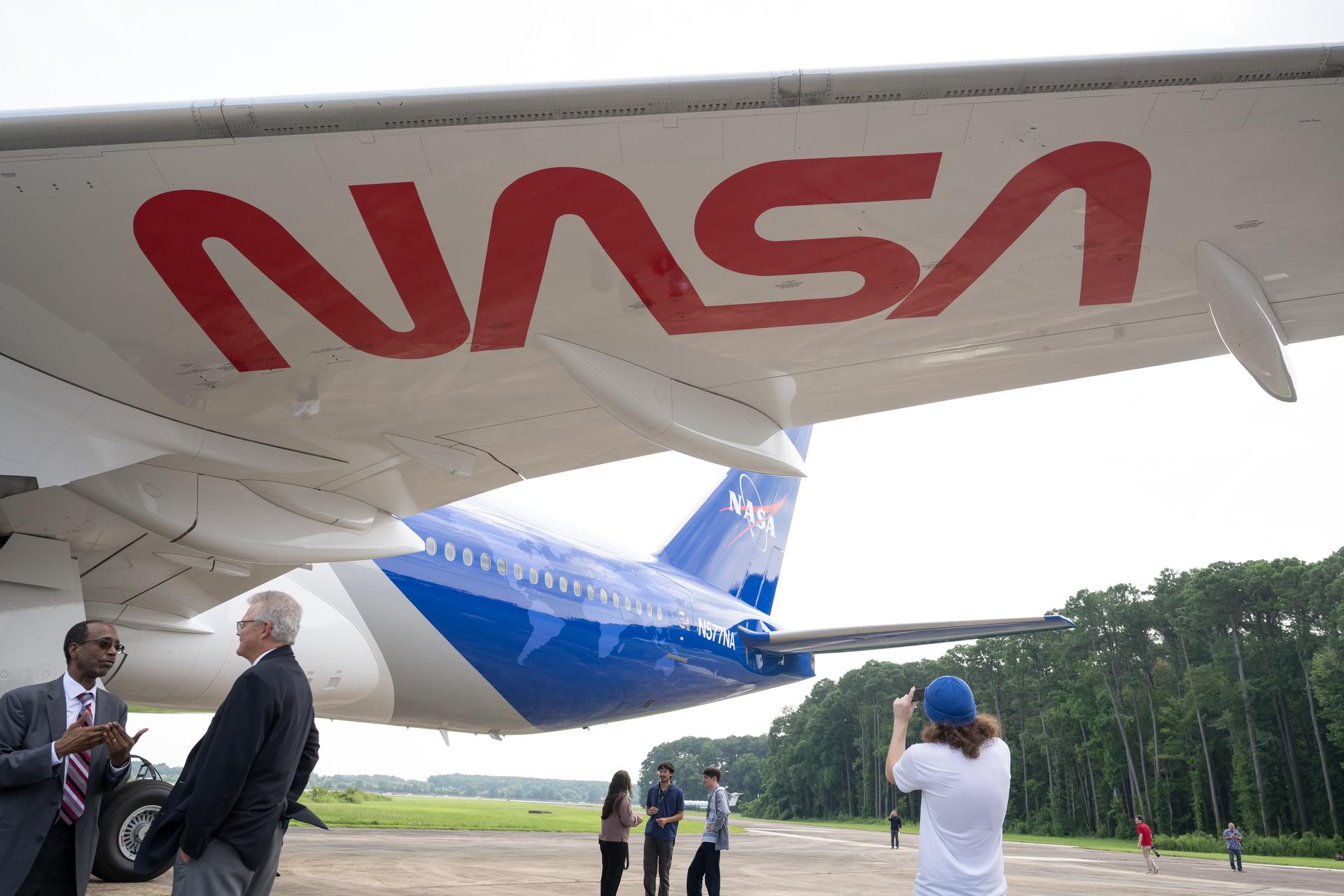
NASA's B777 aircraft returning to NASA Langley Research Center the 31st of July in Hampton, Virginia after a new paint job. It will now continue its maintenance and instrument integration schedule to prepare for its initial airborne science flights in 2027. Photo Credit NASA/ Ryan Hill)
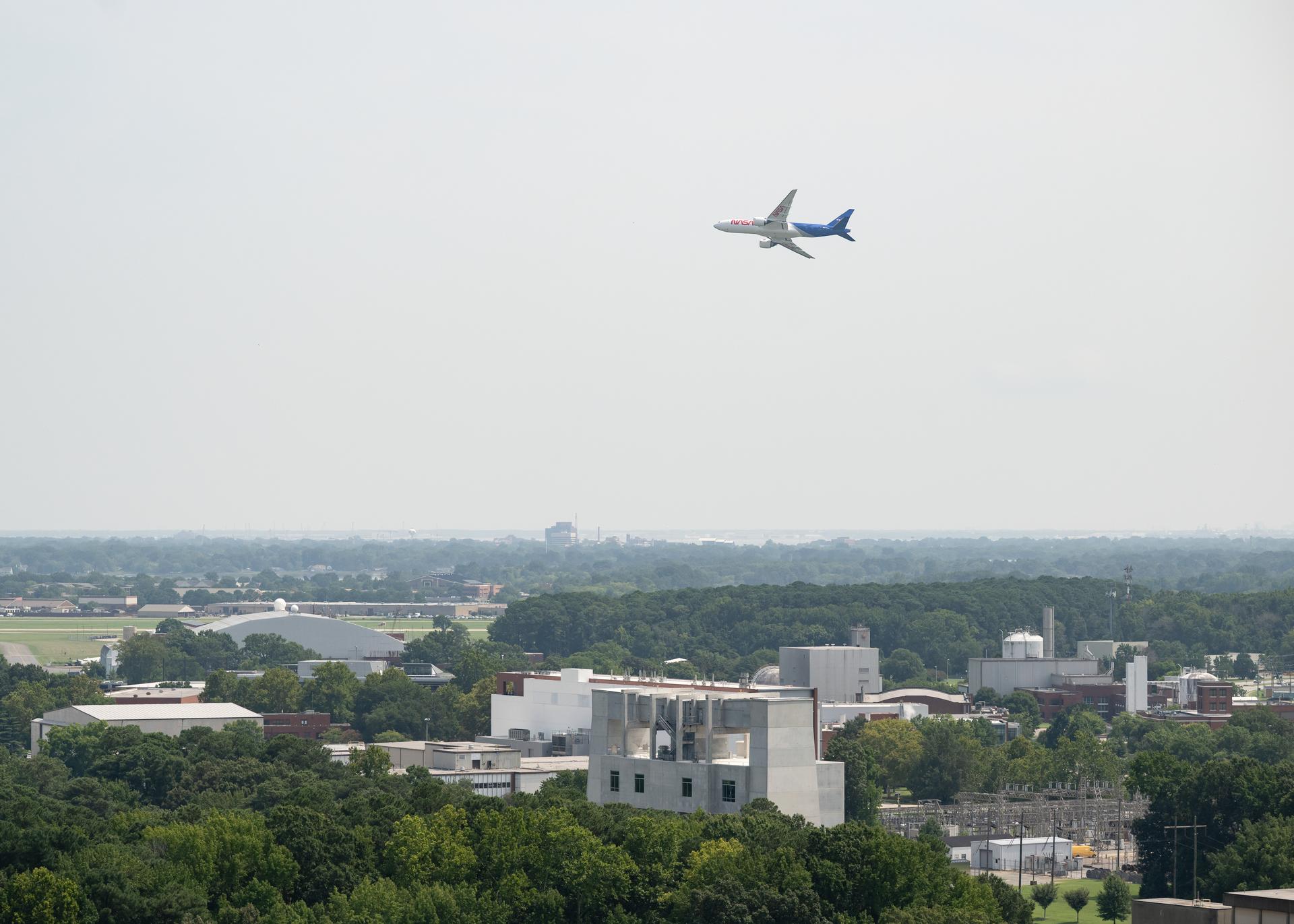
NASA's B777 aircraft returning to NASA Langley Research Center the 31st of July in Hampton, Virginia after a new paint job. It will now continue its maintenance and instrument integration schedule to prepare for its initial airborne science flights in 2027. (Photo Credit NASA/ Ryan Hill)
NASA's B777 aircraft returning to NASA Langley Research Center the 31st of July in Hampton, Virginia after a new paint job. It will now continue its maintenance and instrument integration schedule to prepare for its initial airborne science flights in 2027. Photo Credit NASA/ Ryan Hill)
NASA's B777 aircraft returning to NASA Langley Research Center the 31st of July in Hampton, Virginia after a new paint job. It will now continue its maintenance and instrument integration schedule to prepare for its initial airborne science flights in 2027. Photo Credit NASA/ Ryan Hill)
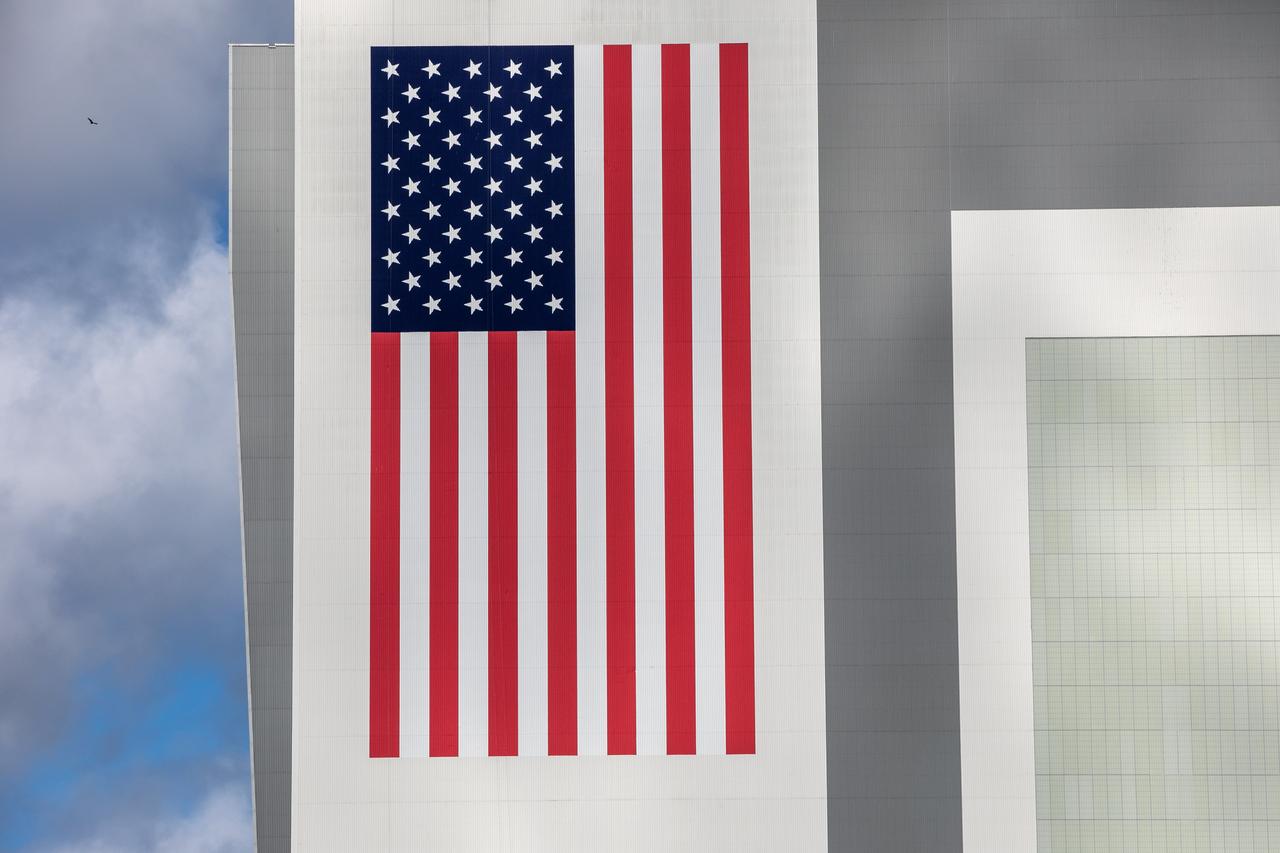
A freshly painted American Flag on the Vehicle Assembly Building (VAB) at NASA’s Kennedy Space Center in Florida is photographed on Oct. 27, 2020. HM2 and H.I.S. Painting of Titusville, Florida, began repainting the NASA logo, referred to as the meatball, and flag on the iconic facility in May. The flag measures 209 feet long by 110 feet wide; each star is more than six feet in diameter, and each stripe is nine feet wide. It took over 500 gallons of paint to repaint the flag and the 110’ X 132’ meatball.