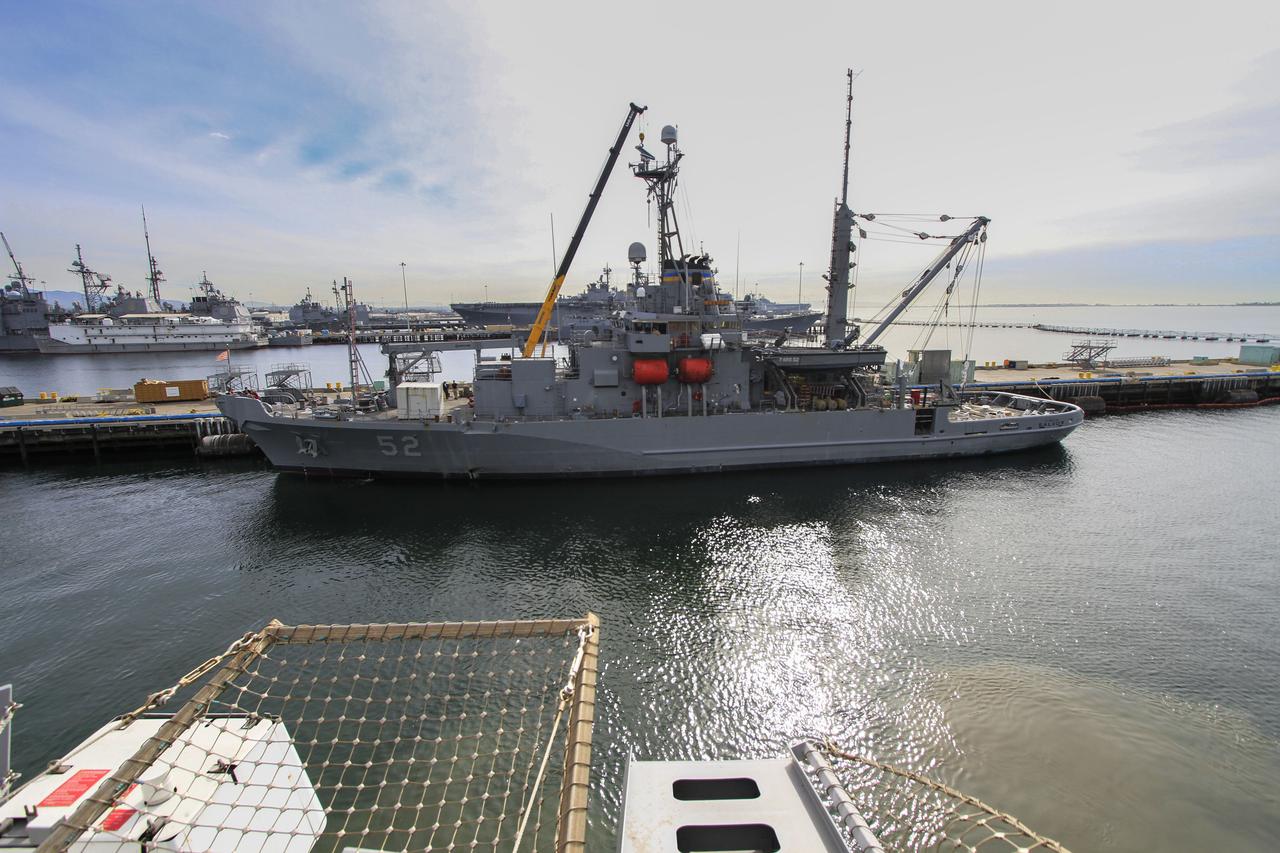
The USNS Salvor, a safeguard-class rescue and salvage ship, is docked at Naval Base San Diego in California. The ship will head out to sea along with the USS Anchorage ahead of Orion's first flight test. NASA and U.S. Navy personnel are making preparations ahead of Orion's flight test for recovery of the crew module, forward bay cover and parachutes on its return from space and splashdown in the Pacific Ocean. If needed, the Salvor would be used for an alternate recovery method. Ground Systems Development and Operations Program is leading the recovery efforts.
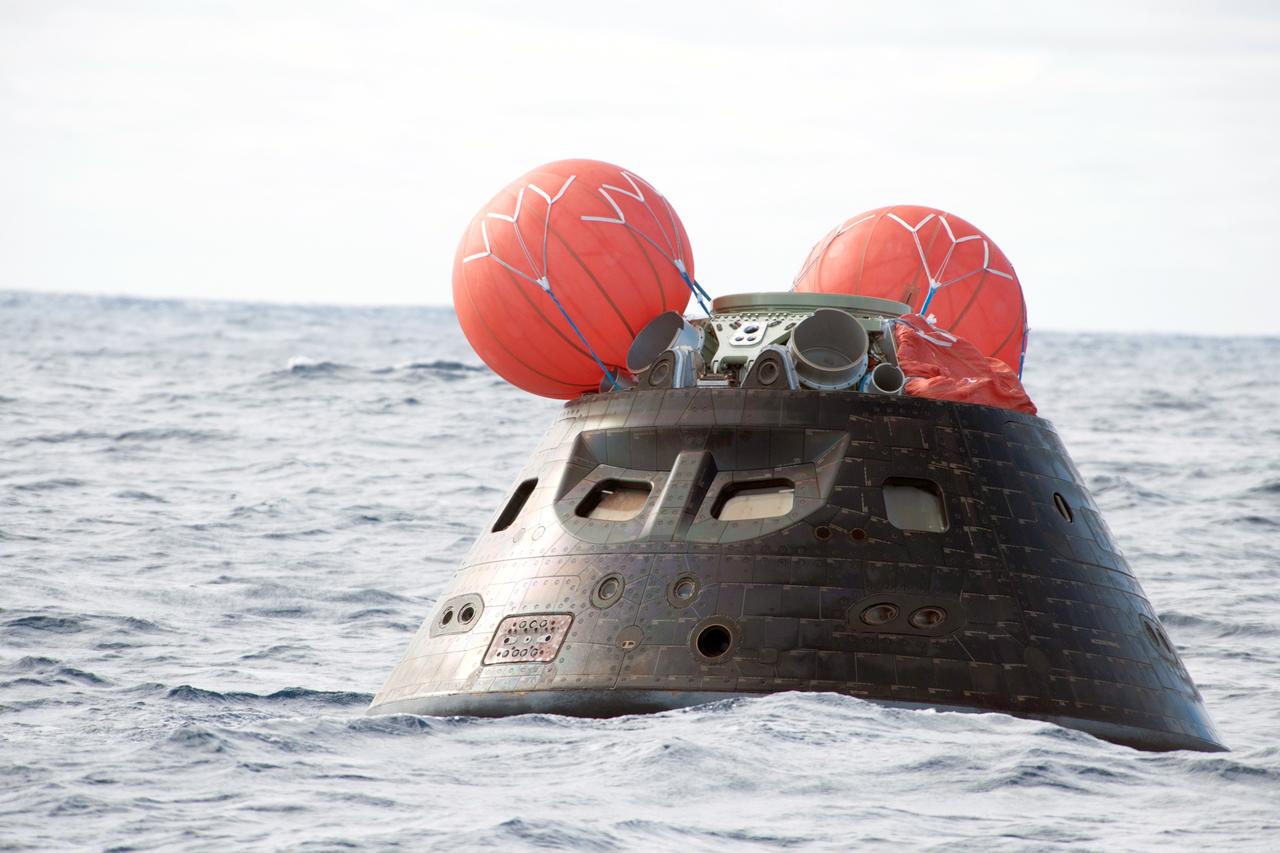
SAN DIEGO, Calif. -- NASA's Orion spacecraft floats in the Pacific Ocean after splashdown from its first flight test in Earth orbit. The spacecraft completed a two-orbit, four-and-a-half-hour mission in Earth orbit. NASA, the U.S. Navy and Lockheed Martin are coordinating efforts to recover Orion, the forward bay cover and main parachutes. Orion will be towed in and secure in the well deck of the nearby USS Anchorage. Orion's mission tested systems critical to crew safety, including the launch abort system, the heat shield and the parachute system. The Ground Systems Development and Operations Program is leading the recovery efforts. For more information, visit www.nasa.gov/orion Photo credit: NASA/Tony Gray
NASA's Orion spacecraft floats in the Pacific Ocean after splashdown from its first flight test in Earth orbit. The spacecraft completed a two-orbit, four-and-a-half-hour mission in Earth orbit. NASA, the U.S. Navy and Lockheed Martin are coordinating efforts to recover Orion, the forward bay cover and main parachutes. Orion will be towed in and secure in the well deck of the nearby USS Anchorage. Orion's mission tested systems critical to crew safety, including the launch abort system, the heat shield and the parachute system. The Ground Systems Development and Operations Program is leading the recovery efforts.
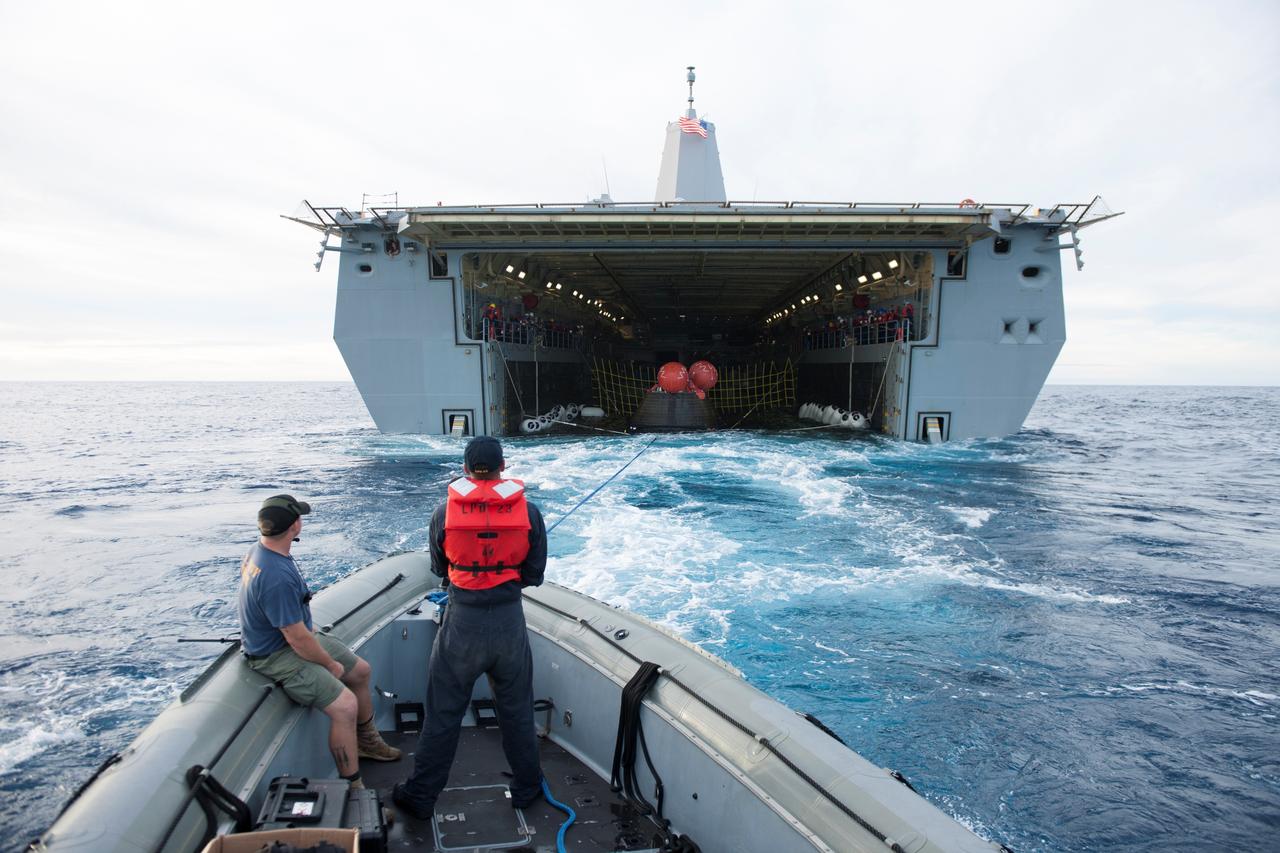
U.S. Navy personnel aboard a rigid hull inflatable boat help recover NASA's Orion spacecraft following its splashdown in the Pacific Ocean after its first flight test in Earth orbit. Orion is towed into the flooded well deck of the USS Anchorage. NASA, the U.S. Navy and Lockheed Martin coordinated efforts to recover Orion, the forward bay cover and main parachutes. Orion completed a two-orbit, four-and-a-half hour mission, to test systems critical to crew safety, including the launch abort system, the heat shield and the parachute system. The Ground Systems Development and Operations Program is leading the recovery efforts.
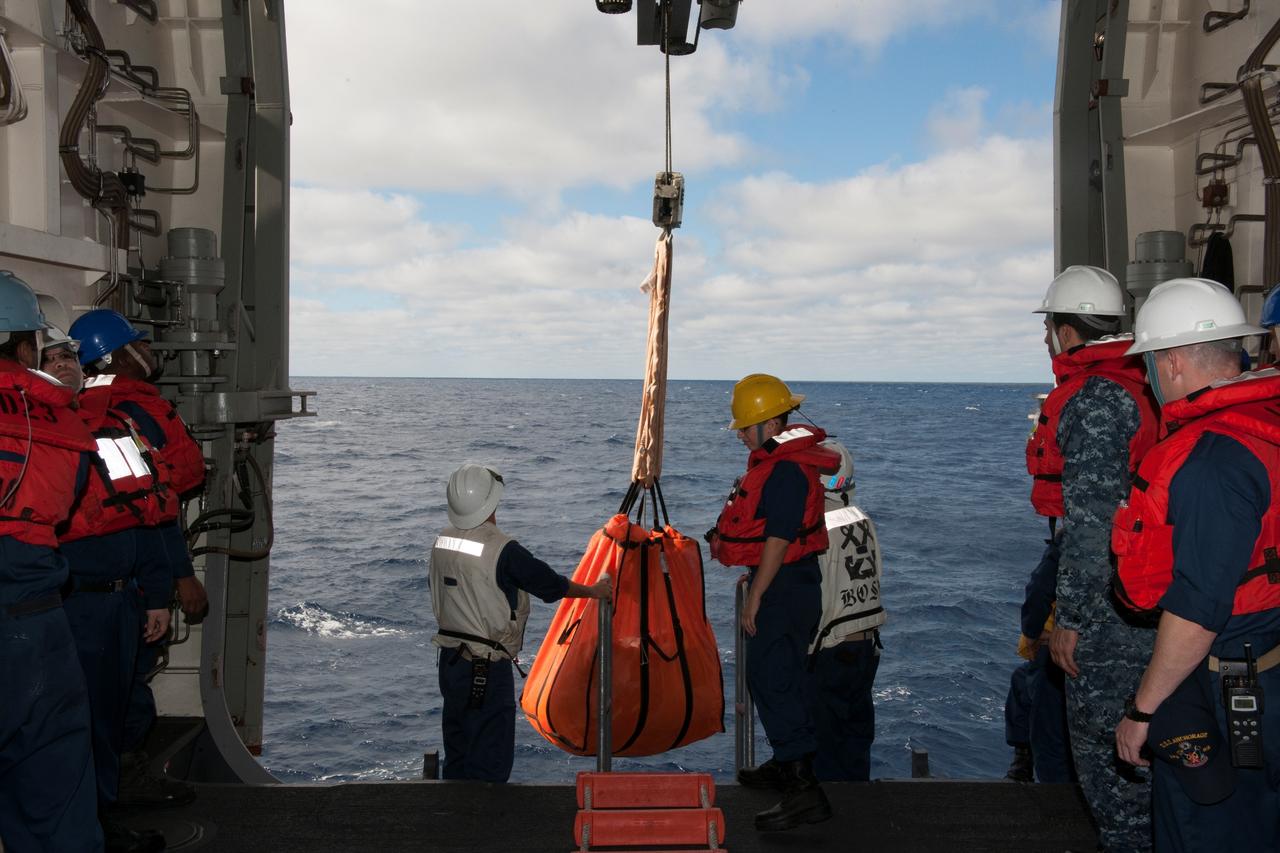
U.S. Navy personnel aboard the USS Anchorage prepare for recovery of NASA's Orion spacecraft from the Pacific Ocean about 600 miles off the coast of San Diego, California. Orion splashed down after its first flight test in Earth orbit. NASA, the U.S. Navy and Lockheed Martin are coordinating efforts to recover Orion and secure the spacecraft in the well deck of the USS Anchorage. Orion completed a two-orbit, four-and-a-half hour mission, to test systems critical to crew safety, including the launch abort system, the heat shield and the parachute system. The Ground Systems Development and Operations Program is leading the recovery efforts.

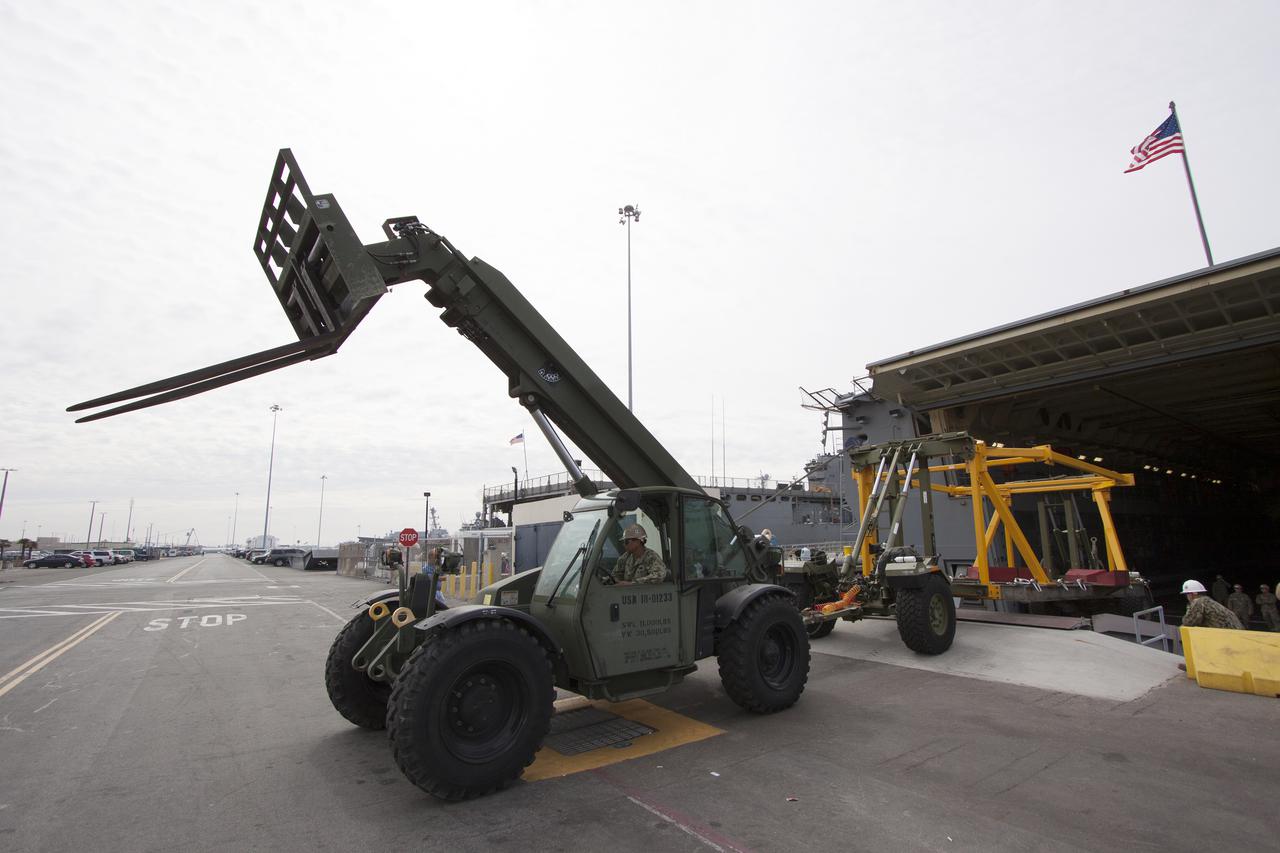
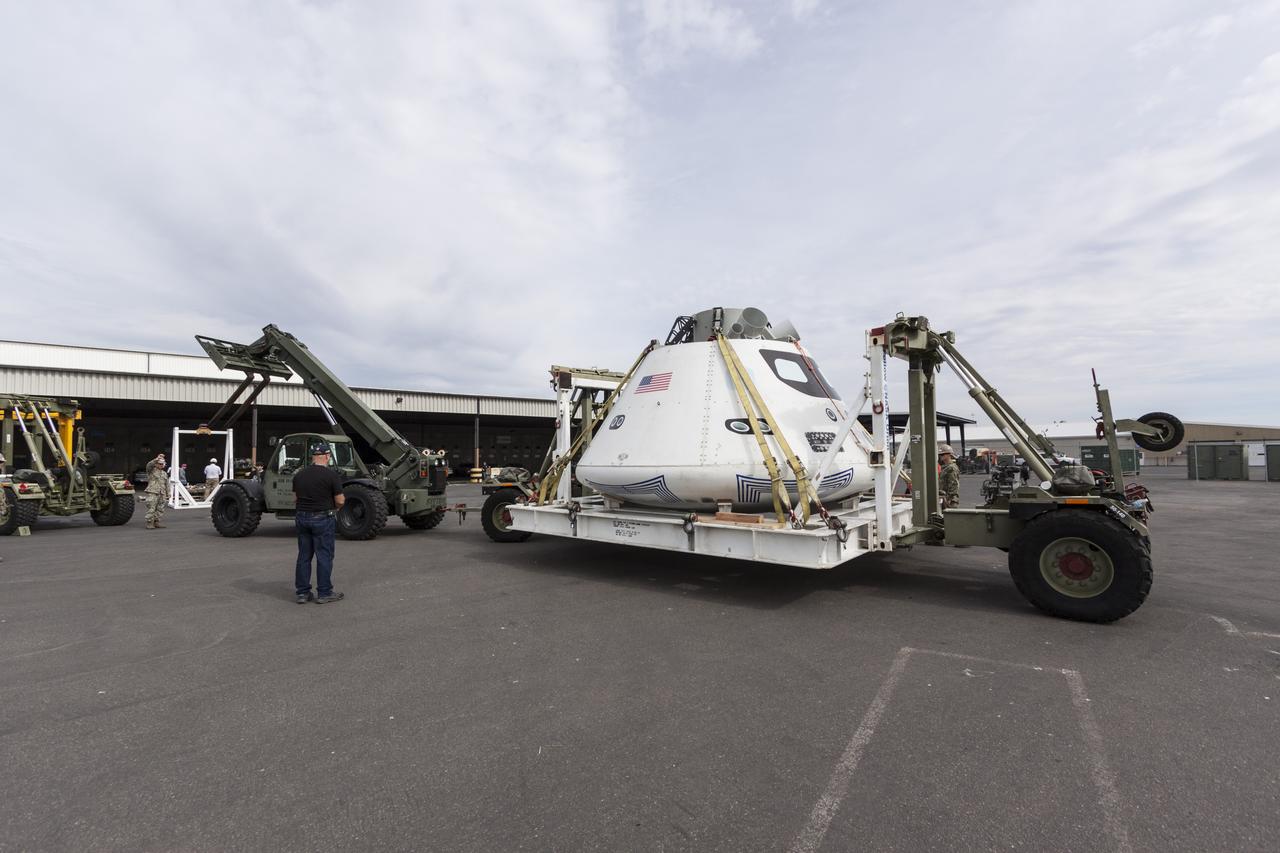
At the U.S. Naval Base San Diego in California, the Orion boilerplate test vehicle and support hardware are being prepared to be loaded in the well deck of the USS Anchorage for Underway Recovery Test 2 on Aug. 1, 2014. NASA, Lockheed Martin and the U.S. Navy will conduct tests in the Pacific Ocean to prepare for recovery of the Orion crew module, forward bay cover and parachutes on its return from a deep space mission. The second underway recovery test will allow the teams to demonstrate and evaluate the recovery processes, procedures, new hardware and personnel in open waters. The Ground Systems Development and Operations Program conducted the underway recovery tests. Orion is the exploration spacecraft designed to carry astronauts to destinations not yet explored by humans, including an asteroid and Mars. It will have emergency abort capability, sustain the crew during space travel and provide safe re-entry from deep space return velocities.

At the U.S. Naval Base San Diego in California, the Orion boilerplate test vehicle and support hardware are being prepared to be loaded in the well deck of the USS Anchorage for Underway Recovery Test 2 on Aug. 1, 2014. NASA, Lockheed Martin and the U.S. Navy will conduct tests in the Pacific Ocean to prepare for recovery of the Orion crew module, forward bay cover and parachutes on its return from a deep space mission. The second underway recovery test will allow the teams to demonstrate and evaluate the recovery processes, procedures, new hardware and personnel in open waters. The Ground Systems Development and Operations Program conducted the underway recovery tests. Orion is the exploration spacecraft designed to carry astronauts to destinations not yet explored by humans, including an asteroid and Mars. It will have emergency abort capability, sustain the crew during space travel and provide safe re-entry from deep space return velocities.

At the U.S. Naval Base San Diego in California, the Orion boilerplate test vehicle and support hardware are being prepared to be loaded in the well deck of the USS Anchorage for Underway Recovery Test 2 on Aug. 1, 2014. NASA, Lockheed Martin and the U.S. Navy will conduct tests in the Pacific Ocean to prepare for recovery of the Orion crew module, forward bay cover and parachutes on its return from a deep space mission. The second underway recovery test will allow the teams to demonstrate and evaluate the recovery processes, procedures, new hardware and personnel in open waters. The Ground Systems Development and Operations Program conducted the underway recovery tests. Orion is the exploration spacecraft designed to carry astronauts to destinations not yet explored by humans, including an asteroid and Mars. It will have emergency abort capability, sustain the crew during space travel and provide safe re-entry from deep space return velocities.

At the U.S. Naval Base San Diego in California, the Orion boilerplate test vehicle and support hardware are being prepared to be loaded in the well deck of the USS Anchorage for Underway Recovery Test 2 on Aug. 1, 2014. NASA, Lockheed Martin and the U.S. Navy will conduct tests in the Pacific Ocean to prepare for recovery of the Orion crew module, forward bay cover and parachutes on its return from a deep space mission. The second underway recovery test will allow the teams to demonstrate and evaluate the recovery processes, procedures, new hardware and personnel in open waters. The Ground Systems Development and Operations Program conducted the underway recovery tests. Orion is the exploration spacecraft designed to carry astronauts to destinations not yet explored by humans, including an asteroid and Mars. It will have emergency abort capability, sustain the crew during space travel and provide safe re-entry from deep space return velocities.
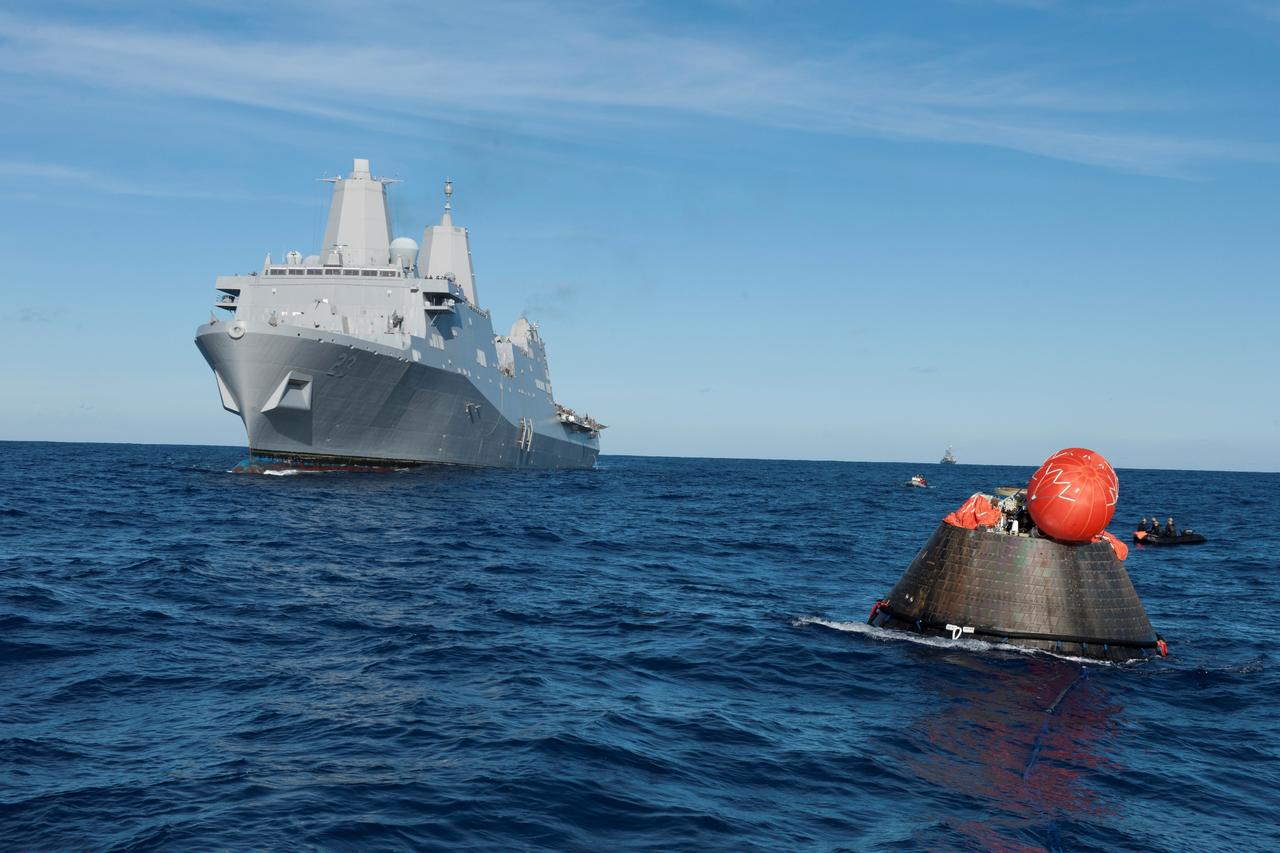
NASA's Orion spacecraft floats in the Pacific Ocean after splashdown from its first flight test in Earth orbit. The USS Anchorage is nearby. NASA, the U.S. Navy and Lockheed Martin are coordinating efforts to recover Orion and secure the spacecraft in the well deck of the USS Anchorage. Orion completed a two-orbit, four-and-a-half hour mission, to test systems critical to crew safety, including the launch abort system, the heat shield and the parachute system. The Ground Systems Development and Operations Program is leading the recovery efforts.
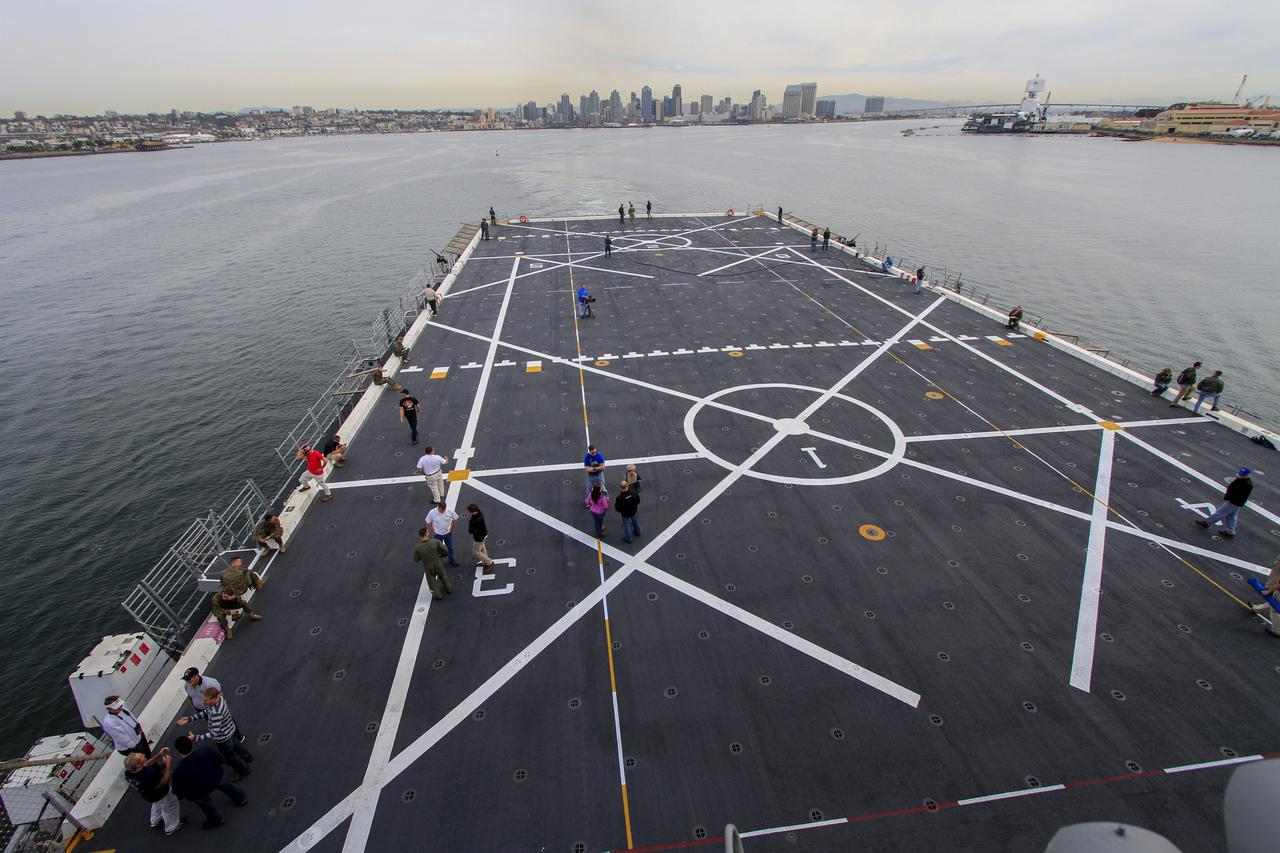
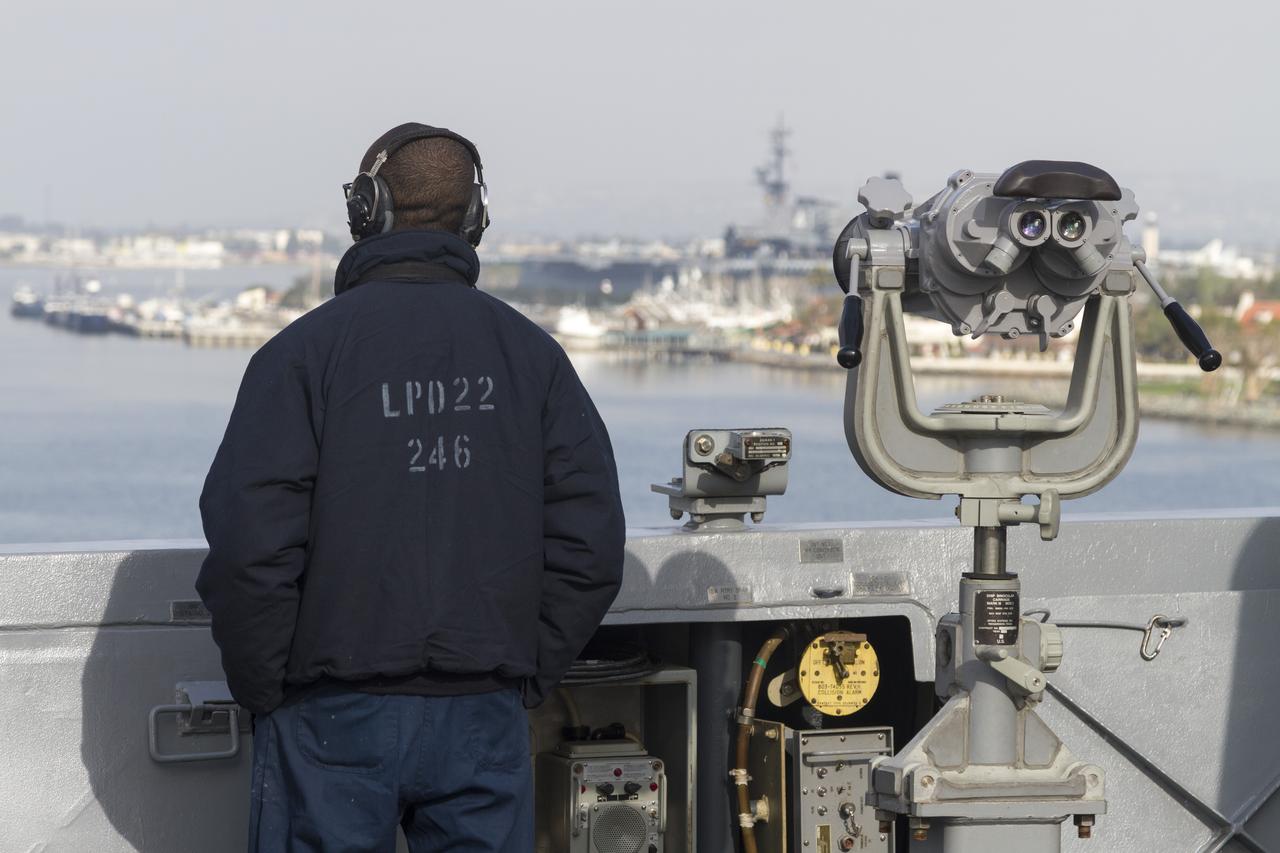
NASA and U.S. Navy personnel are on the deck of the USS Anchorage as the ship departs Naval Base San Diego and heads out to sea in the Pacific Ocean. NASA and the U.S. Navy are making preparations ahead of Orion's flight test for recovery of the crew module, forward bay cover and parachutes on its return from space and splashdown in the Pacific Ocean. The Ground Systems Development and Operations Program is leading the recovery efforts.
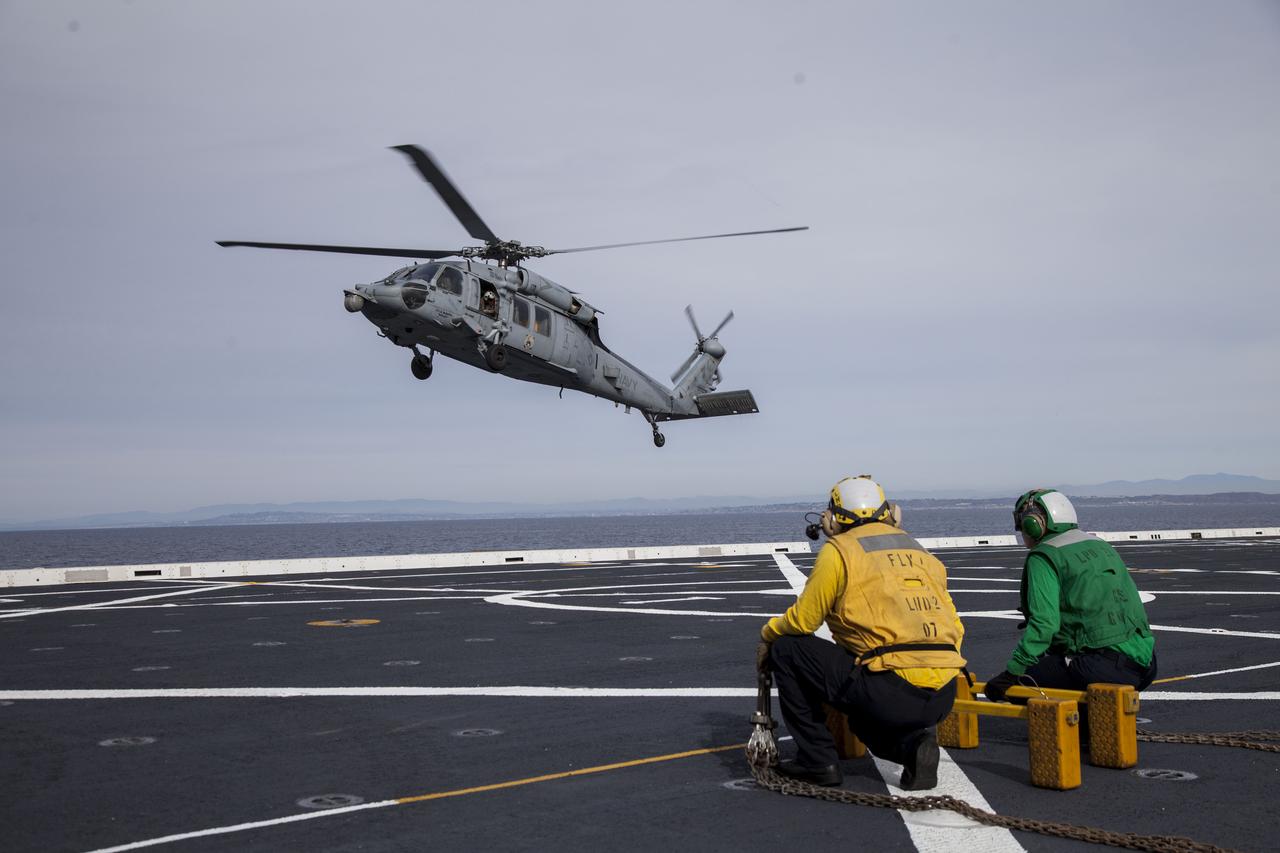
An H60-S Seahawk helicopter lands on the deck of the USS Anchorage in the Pacific Ocean off the coast of California. NASA and the U.S. Navy are heading out to sea ahead of Orion's flight test to prepare for recovery of the crew module, forward bay cover and parachutes on its return from space and splashdown in the Pacific Ocean. The Ground Systems Development and Operations Program is leading the recovery efforts.
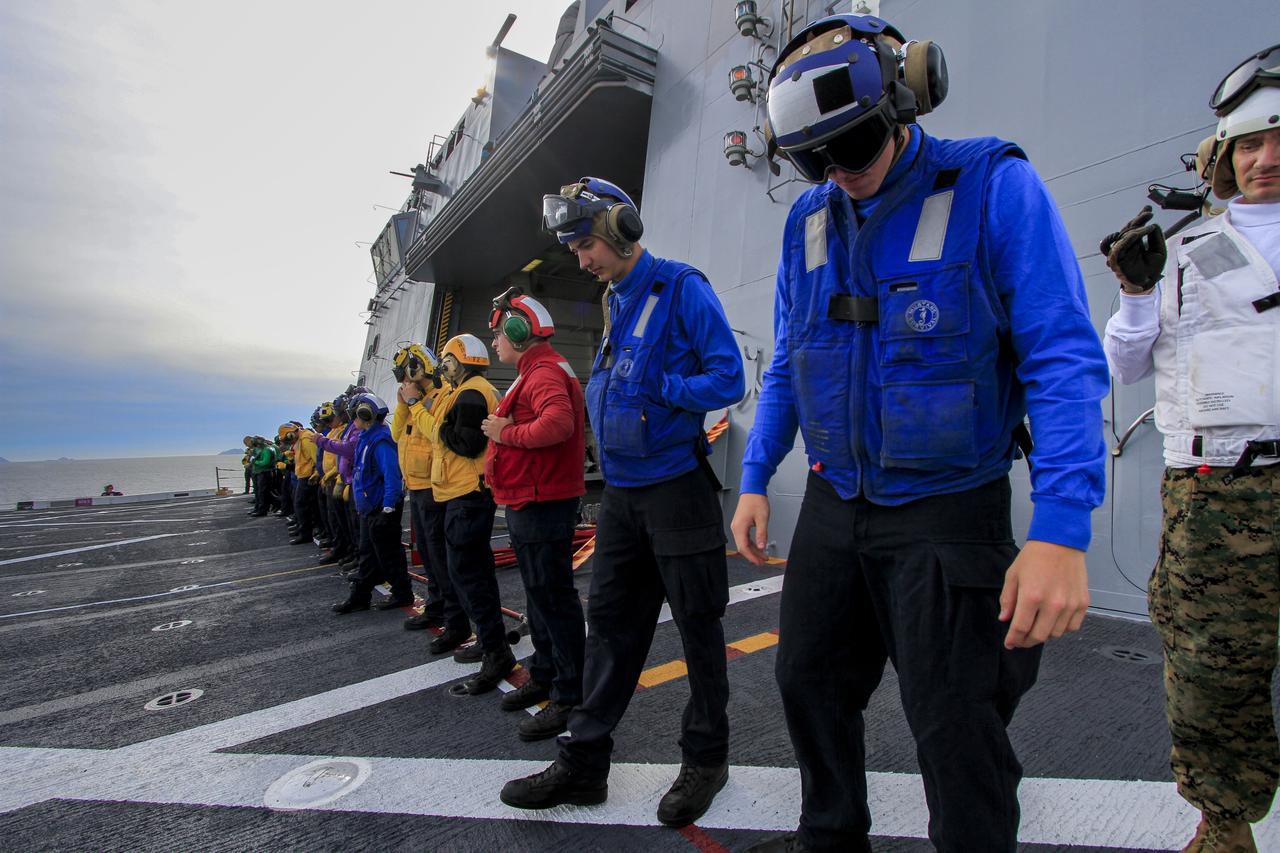
Helicopter Sea Combat Squadron 8 personnel review procedures on the deck of the USS Anchorage as the ship departs Naval Base San Diego in California for the open waters of the Pacific Ocean. NASA and the U.S. Navy are making preparations ahead of Orion's flight test for recovery of the crew module, forward bay cover and parachutes on its return from space and splashdown in the Pacific Ocean. The Ground Systems Development and Operations Program is leading the recovery efforts.
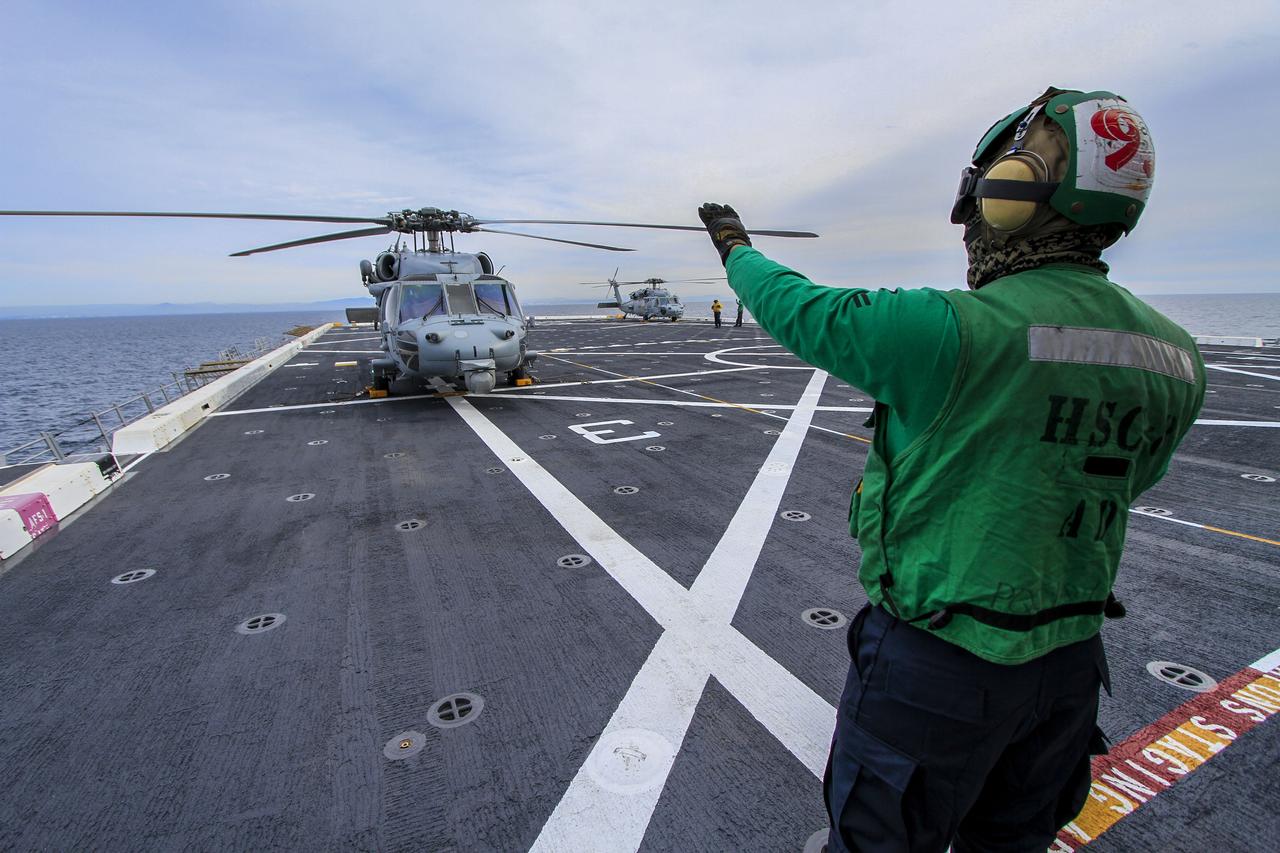
A member of the Helicopter Sea Combat Squadron 8 signals to the pilot in an H60-S Seahawk helicopter on the deck of the USS Anchorage as the ship departs Naval Base San Diego in California for the open waters of the Pacific Ocean. NASA and the U.S. Navy are making preparations ahead of Orion's flight test for recovery of the crew module, forward bay cover and parachutes on its return from space and splashdown in the Pacific Ocean. The Ground Systems Development and Operations Program is leading the recovery efforts.
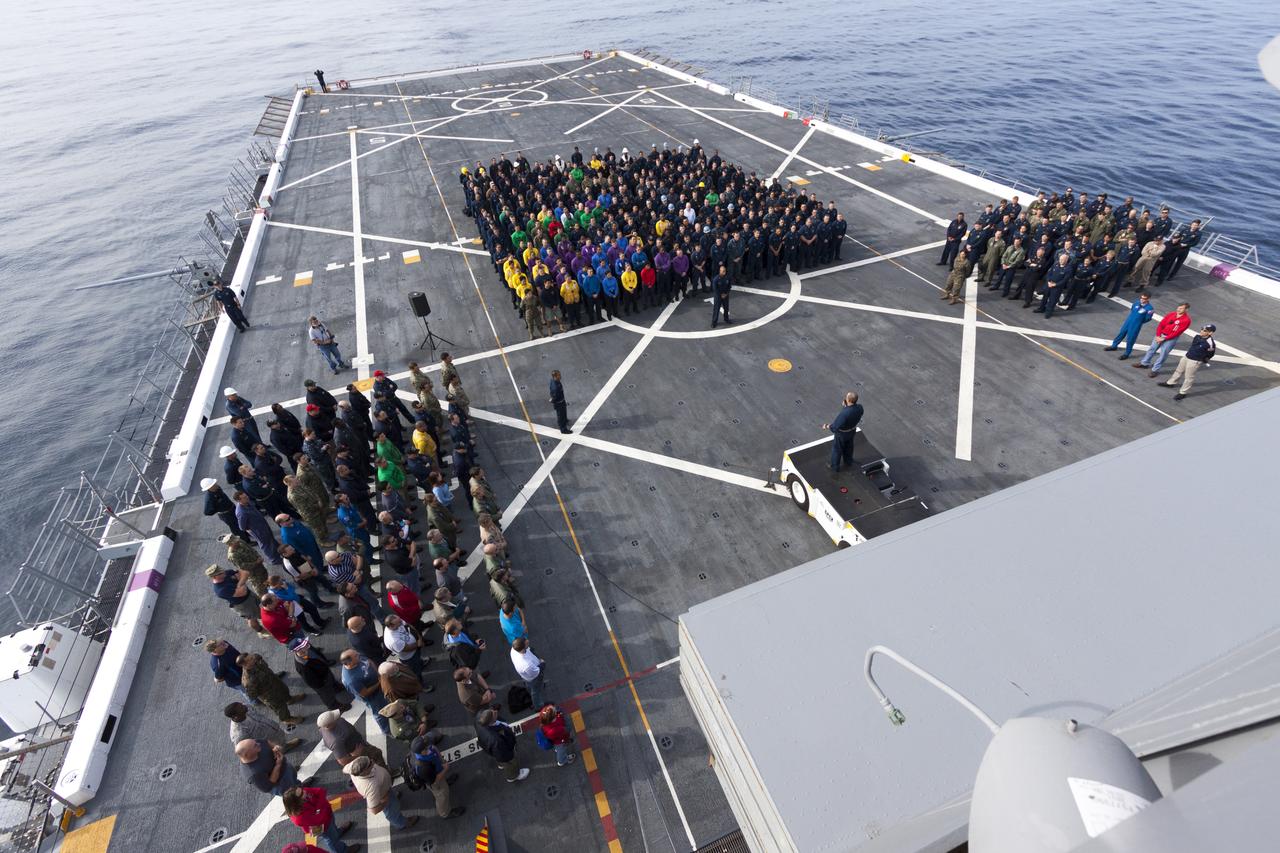
SAN DIEGO, Calif. – On the top deck of the USS San Diego, NASA and U.S. Navy personnel gather after the Orion underway recovery test. The Orion boilerplate test vehicle and other hardware were transported about 100 miles offshore for the recovery test. NASA and the U.S. Navy conducted tests to prepare for recovery of the Orion crew module, forward bay cover and parachutes on its return from a deep space mission. The underway recovery test will allow the teams to demonstrate and evaluate the recovery processes, procedures, hardware and personnel in open waters. During the testing, the tether lines were unable to support the tension caused by crew module motion that was driven by wave turbulence in the well deck of the ship. NASA and the U.S. Navy are reviewing the testing data collected to evaluate the next steps. The Ground Systems Development and Operations Program conducted the underway recovery tests. Orion is the exploration spacecraft designed to carry astronauts to destinations not yet explored by humans, including an asteroid and Mars. It will have emergency abort capability, sustain the crew during space travel and provide safe re-entry from deep space return velocities. The first unpiloted test flight of the Orion is scheduled to launch in 2014 atop a Delta IV rocket and in 2017 on NASA’s Space Launch System rocket. For more information, visit http://www.nasa.gov/orion. Photo credit: NASA/Cory Huston
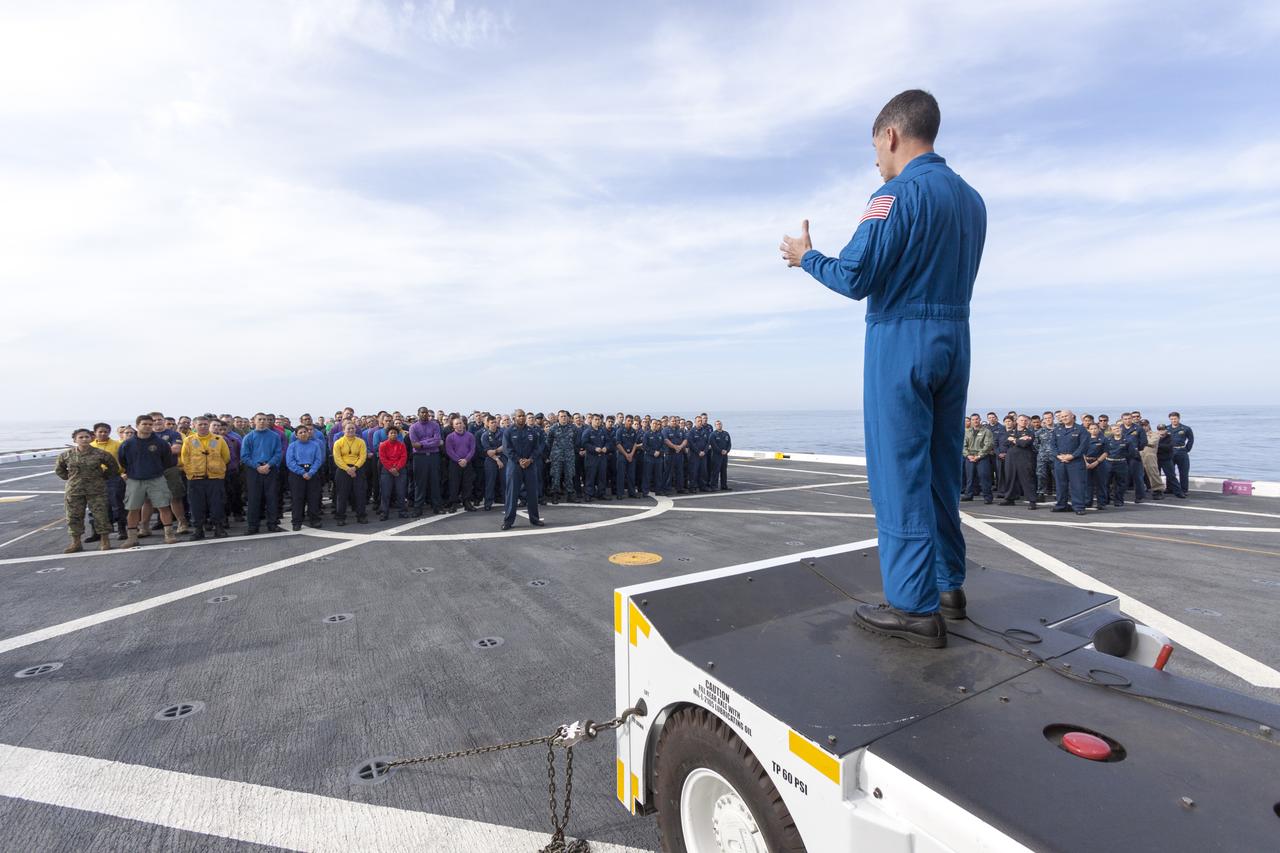
SAN DIEGO, Calif. – On the top deck of the USS San Diego, NASA and U.S. Navy personnel gather after the Orion underway recovery test. The Orion boilerplate test vehicle and other hardware were transported about 100 miles offshore for the recovery test. NASA and the U.S. Navy conducted tests to prepare for recovery of the Orion crew module, forward bay cover and parachutes on its return from a deep space mission. The underway recovery test will allow the teams to demonstrate and evaluate the recovery processes, procedures, hardware and personnel in open waters. During the testing, the tether lines were unable to support the tension caused by crew module motion that was driven by wave turbulence in the well deck of the ship. NASA and the U.S. Navy are reviewing the testing data collected to evaluate the next steps. The Ground Systems Development and Operations Program conducted the underway recovery tests. Orion is the exploration spacecraft designed to carry astronauts to destinations not yet explored by humans, including an asteroid and Mars. It will have emergency abort capability, sustain the crew during space travel and provide safe re-entry from deep space return velocities. The first unpiloted test flight of the Orion is scheduled to launch in 2014 atop a Delta IV rocket and in 2017 on NASA’s Space Launch System rocket. For more information, visit http://www.nasa.gov/orion. Photo credit: NASA/Cory Huston
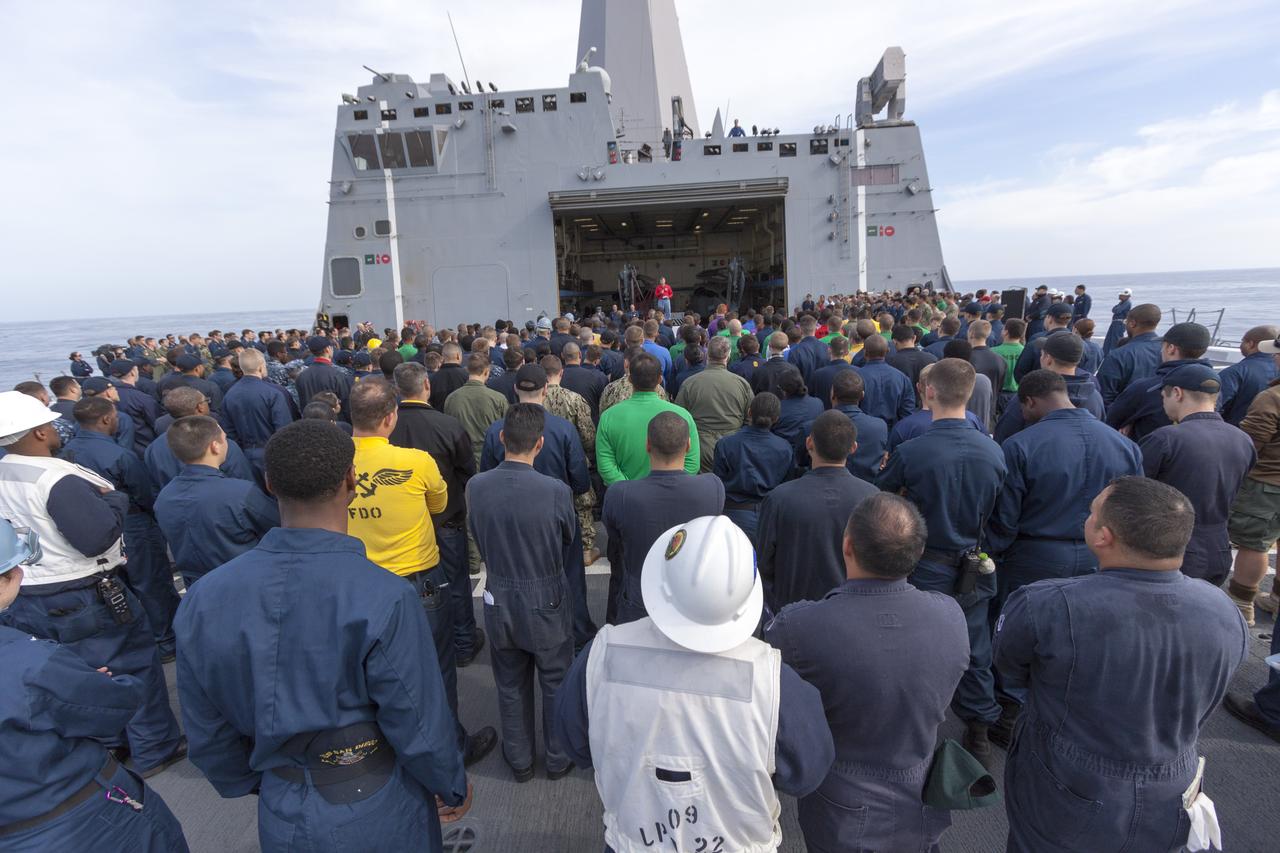
SAN DIEGO, Calif. – On the top deck of the USS San Diego, NASA and U.S. Navy personnel gather after the Orion underway recovery test. The Orion boilerplate test vehicle and other hardware were transported about 100 miles offshore for the recovery test. NASA and the U.S. Navy conducted tests to prepare for recovery of the Orion crew module, forward bay cover and parachutes on its return from a deep space mission. The underway recovery test will allow the teams to demonstrate and evaluate the recovery processes, procedures, hardware and personnel in open waters. During the testing, the tether lines were unable to support the tension caused by crew module motion that was driven by wave turbulence in the well deck of the ship. NASA and the U.S. Navy are reviewing the testing data collected to evaluate the next steps. The Ground Systems Development and Operations Program conducted the underway recovery tests. Orion is the exploration spacecraft designed to carry astronauts to destinations not yet explored by humans, including an asteroid and Mars. It will have emergency abort capability, sustain the crew during space travel and provide safe re-entry from deep space return velocities. The first unpiloted test flight of the Orion is scheduled to launch in 2014 atop a Delta IV rocket and in 2017 on NASA’s Space Launch System rocket. For more information, visit http://www.nasa.gov/orion. Photo credit: NASA/Cory Huston
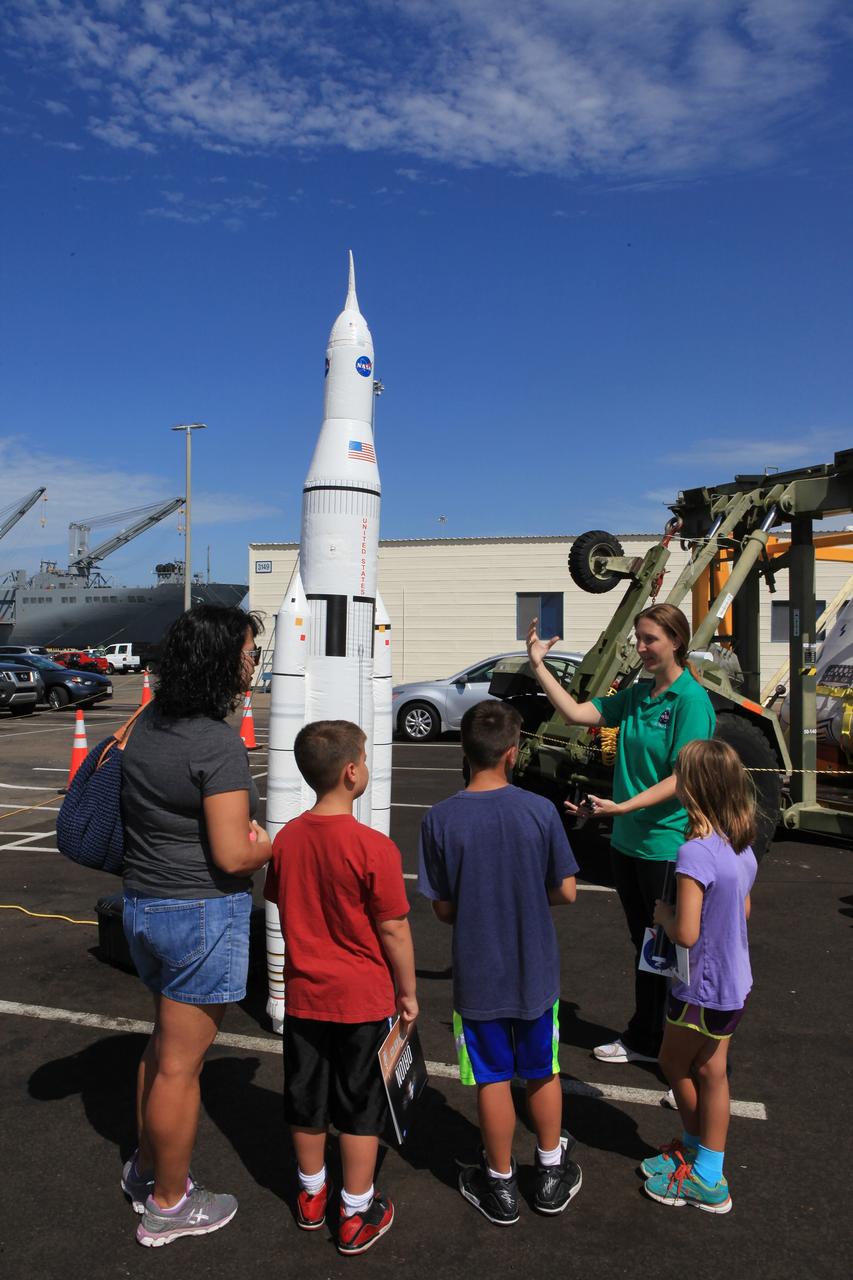
SAN DIEGO, Calif. – At the U.S. Naval Base San Diego in California, NASA Public Affairs Officer Amber Philman describes the Space Launch System and Orion spacecraft to visitors during an outreach event at the naval base. The USS Anchorage is being prepared for the Orion Underway Recovery Test 2. The Orion boilerplate test vehicle and other hardware will be loaded into the well deck of the ship and head out to sea in the Pacific Ocean off the coast of San Diego. NASA, Lockheed Martin and the U.S. Navy will conduct the test to prepare for recovery of the Orion crew module, forward bay cover and parachutes on its return from a deep space mission. The underway recovery test will allow the teams to demonstrate and evaluate the recovery processes, procedures, new support hardware and personnel in open waters. The Ground Systems Development and Operations Program will conduct the underway recovery tests. Orion is the exploration spacecraft designed to carry astronauts to destinations not yet explored by humans, including an asteroid and Mars. It will have emergency abort capability, sustain the crew during space travel and provide safe re-entry from deep space return velocities. The first unpiloted test flight of the Orion is scheduled to launch in 2014 atop a Delta IV rocket and in 2017 on NASA’s Space Launch System rocket. For more information, visit http://www.nasa.gov/orion. Photo credit: NASA/Kim Shiflett
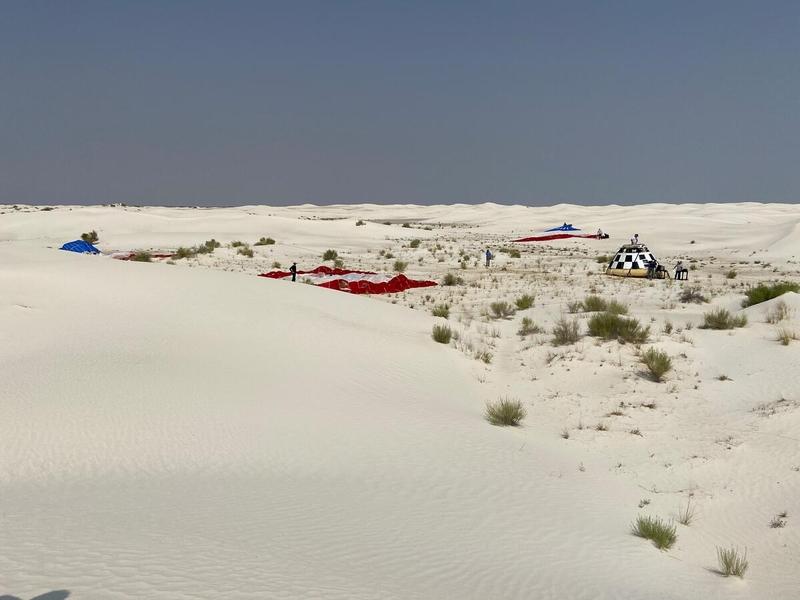
Recovery teams gather at the landing site of Boeing’s CST-100 Starliner test article used in the spacecraft's final parachute reliability test at White Sands Space Harbor, New Mexico, on Sept. 19, 2020. The test is part of a reliability campaign that will help strengthen the spacecraft’s landing system ahead of crewed flights to and from the International Space Station as part of NASA’s Commercial Crew Program.
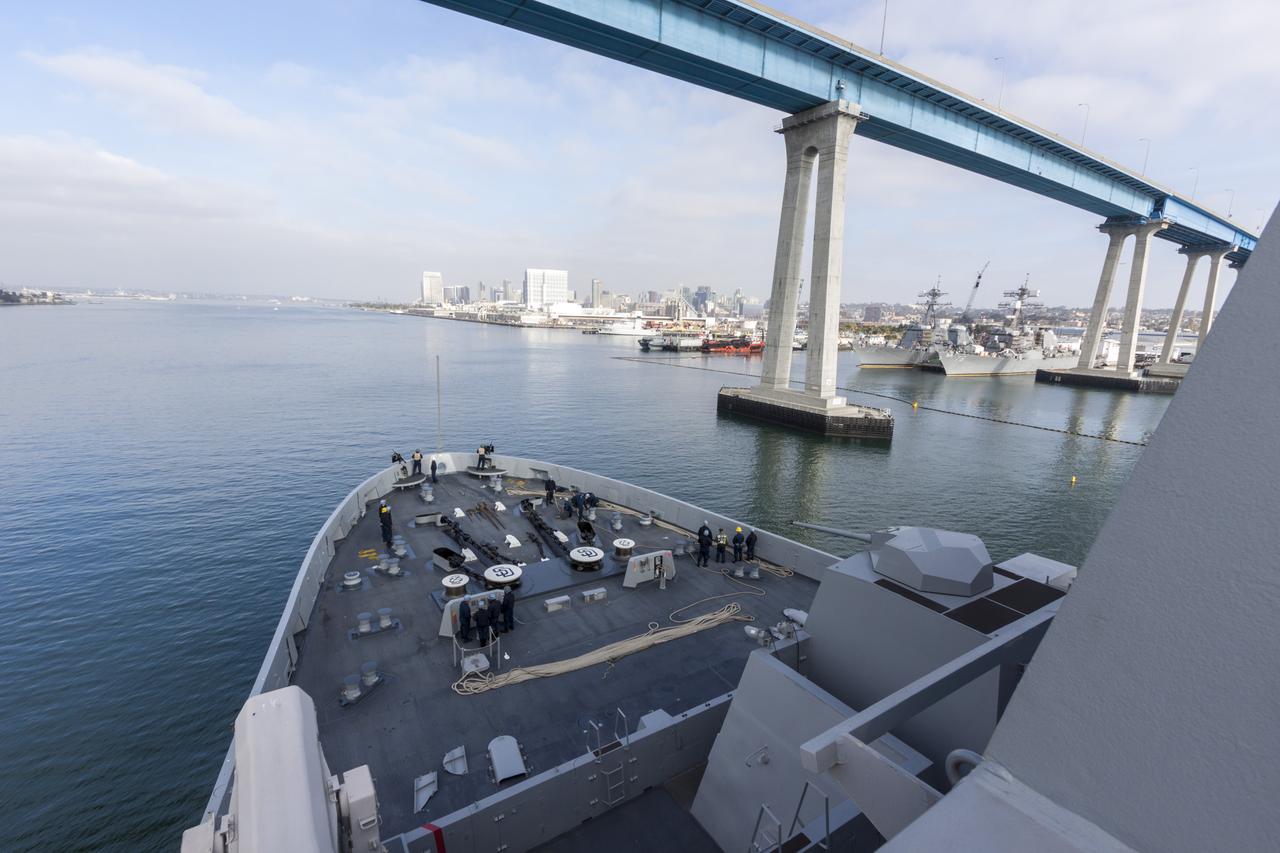
SAN DIEGO, Calif. – At the U.S. Naval Base San Diego in California, the USS San Diego heads out to sea with the Orion boilerplate test vehicle and other hardware in its well deck for an underway recovery test. About 100 miles offshore, NASA and the U.S. Navy conducted tests to prepare for recovery of the Orion crew module, forward bay cover and parachutes on its return from a deep space mission. The underway recovery test will allow the teams to demonstrate and evaluate the recovery processes, procedures, hardware and personnel in open waters. During the testing, the tether lines were unable to support the tension caused by crew module motion that was driven by wave turbulence in the well deck of the ship. NASA and the U.S. Navy are reviewing the testing data collected to evaluate the next steps. The Ground Systems Development and Operations Program conducted the underway recovery tests. Orion is the exploration spacecraft designed to carry astronauts to destinations not yet explored by humans, including an asteroid and Mars. It will have emergency abort capability, sustain the crew during space travel and provide safe re-entry from deep space return velocities. The first unpiloted test flight of the Orion is scheduled to launch in 2014 atop a Delta IV rocket and in 2017 on NASA’s Space Launch System rocket. For more information, visit http://www.nasa.gov/orion. Photo credit: NASA/Cory Huston
SAN DIEGO, Calif. – Preparations are underway to offload the Orion boilerplate test vehicle from the USS San Diego at the U.S. Naval Base San Diego in California. Orion was transported in the ship’s well deck about 100 miles offshore for an underway recovery test. NASA and the U.S. Navy conducted tests to prepare for recovery of the Orion crew module, forward bay cover and parachutes on its return from a deep space mission. The underway recovery test allowed the teams to demonstrate and evaluate the recovery processes, procedures, hardware and personnel in open waters. During the testing, the tether lines were unable to support the tension caused by crew module motion that was driven by wave turbulence in the well deck of the ship. NASA and the U.S. Navy are reviewing the testing data collected to evaluate the next steps. The Ground Systems Development and Operations Program was conducting the recovery tests. Orion is the exploration spacecraft designed to carry astronauts to destinations not yet explored by humans, including an asteroid and Mars. It will have emergency abort capability, sustain the crew during space travel and provide safe re-entry from deep space return velocities. The first unpiloted test flight of the Orion is scheduled to launch in 2014 atop a Delta IV rocket and in 2017 on NASA’s Space Launch System rocket. For more information, visit http:__www.nasa.gov_orion. Photo credit: NASA_Cory Huston
SAN DIEGO, Calif. – At the U.S. Naval Base San Diego in California, the USS San Diego heads out to sea with the Orion boilerplate test vehicle and other hardware in its well deck for an underway recovery test. About 100 miles offshore, NASA and the U.S. Navy conducted tests to prepare for recovery of the Orion crew module, forward bay cover and parachutes on its return from a deep space mission. The underway recovery test will allow the teams to demonstrate and evaluate the recovery processes, procedures, hardware and personnel in open waters. During the testing, the tether lines were unable to support the tension caused by crew module motion that was driven by wave turbulence in the well deck of the ship. NASA and the U.S. Navy are reviewing the testing data collected to evaluate the next steps. The Ground Systems Development and Operations Program conducted the underway recovery tests. Orion is the exploration spacecraft designed to carry astronauts to destinations not yet explored by humans, including an asteroid and Mars. It will have emergency abort capability, sustain the crew during space travel and provide safe re-entry from deep space return velocities. The first unpiloted test flight of the Orion is scheduled to launch in 2014 atop a Delta IV rocket and in 2017 on NASA’s Space Launch System rocket. For more information, visit http://www.nasa.gov/orion. Photo credit: NASA/Cory Huston
SAN DIEGO, Calif. – The Orion boilerplate test vehicle was offloaded from the USS San Diego at the U.S. Naval Base San Diego in California. Orion was transported in the ship’s well deck about 100 miles offshore for an underway recovery test. NASA and the U.S. Navy conducted tests to prepare for recovery of the Orion crew module, forward bay cover and parachutes on its return from a deep space mission. The underway recovery test allowed the teams to demonstrate and evaluate the recovery processes, procedures, hardware and personnel in open waters. During the testing, the tether lines were unable to support the tension caused by crew module motion that was driven by wave turbulence in the well deck of the ship. NASA and the U.S. Navy are reviewing the testing data collected to evaluate the next steps. The Ground Systems Development and Operations Program was conducting the recovery tests. Orion is the exploration spacecraft designed to carry astronauts to destinations not yet explored by humans, including an asteroid and Mars. It will have emergency abort capability, sustain the crew during space travel and provide safe re-entry from deep space return velocities. The first unpiloted test flight of the Orion is scheduled to launch in 2014 atop a Delta IV rocket and in 2017 on NASA’s Space Launch System rocket. For more information, visit http://www.nasa.gov/orion. Photo credit: NASA/Cory Huston
SAN DIEGO, Calif. – The Orion boilerplate test vehicle is being offloaded from the USS San Diego at the U.S. Naval Base San Diego in California. Orion was transported in the ship’s well deck about 100 miles offshore for an underway recovery test. NASA and the U.S. Navy conducted tests to prepare for recovery of the Orion crew module, forward bay cover and parachutes on its return from a deep space mission. The underway recovery test allowed the teams to demonstrate and evaluate the recovery processes, procedures, hardware and personnel in open waters. During the testing, the tether lines were unable to support the tension caused by crew module motion that was driven by wave turbulence in the well deck of the ship. NASA and the U.S. Navy are reviewing the testing data collected to evaluate the next steps. The Ground Systems Development and Operations Program was conducting the recovery tests. Orion is the exploration spacecraft designed to carry astronauts to destinations not yet explored by humans, including an asteroid and Mars. It will have emergency abort capability, sustain the crew during space travel and provide safe re-entry from deep space return velocities. The first unpiloted test flight of the Orion is scheduled to launch in 2014 atop a Delta IV rocket and in 2017 on NASA’s Space Launch System rocket. For more information, visit http://www.nasa.gov/orion. Photo credit: NASA/Cory Huston
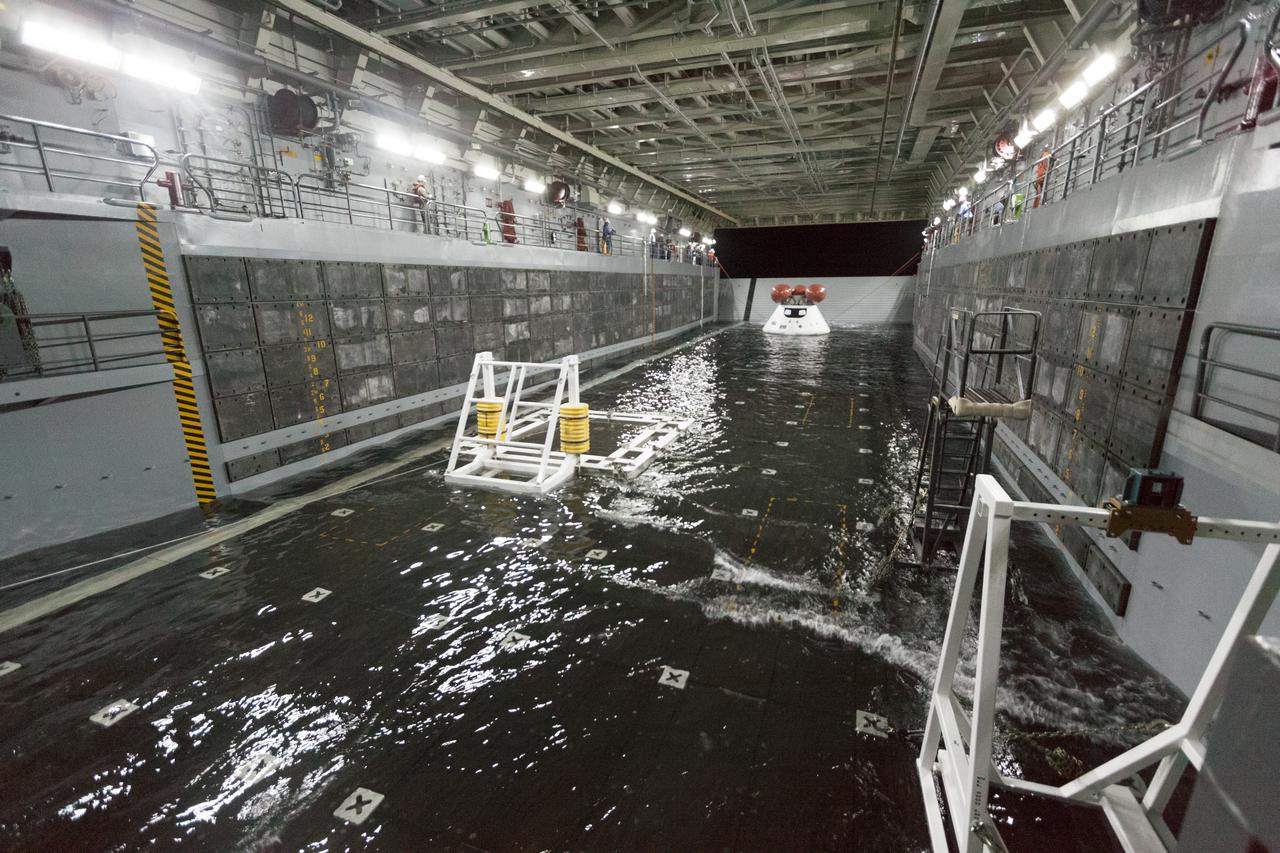
SAN DIEGO, Calif. – The well deck of the USS San Diego fills with water and surrounds the Orion boilerplate test article and other hardware as the underway recovery test begins in the Pacific Ocean, about 100 miles off the coast of San Diego, California. NASA and the U.S. Navy conducted tests to prepare for the recovery of the Orion crew module, forward bay cover and parachutes on its return from a deep space mission. The underway recovery test will allow the teams to demonstrate and evaluate the recovery processes, procedures, hardware and personnel in open waters. During the testing, the tether lines were unable to support the tension caused by crew module motion that was driven by wave turbulence in the well deck of the ship. NASA and the U.S. Navy are reviewing the testing data collected to evaluate the next steps. The Ground Systems Development and Operations Program conducted the underway recovery tests. Orion is the exploration spacecraft designed to carry astronauts to destinations not yet explored by humans, including an asteroid and Mars. It will have emergency abort capability, sustain the crew during space travel and provide safe re-entry from deep space return velocities. The first unpiloted test flight of the Orion is scheduled to launch in 2014 atop a Delta IV rocket and in 2017 on NASA’s Space Launch System rocket. For more information, visit http://www.nasa.gov/orion. Photo credit: NASA/Cory Huston
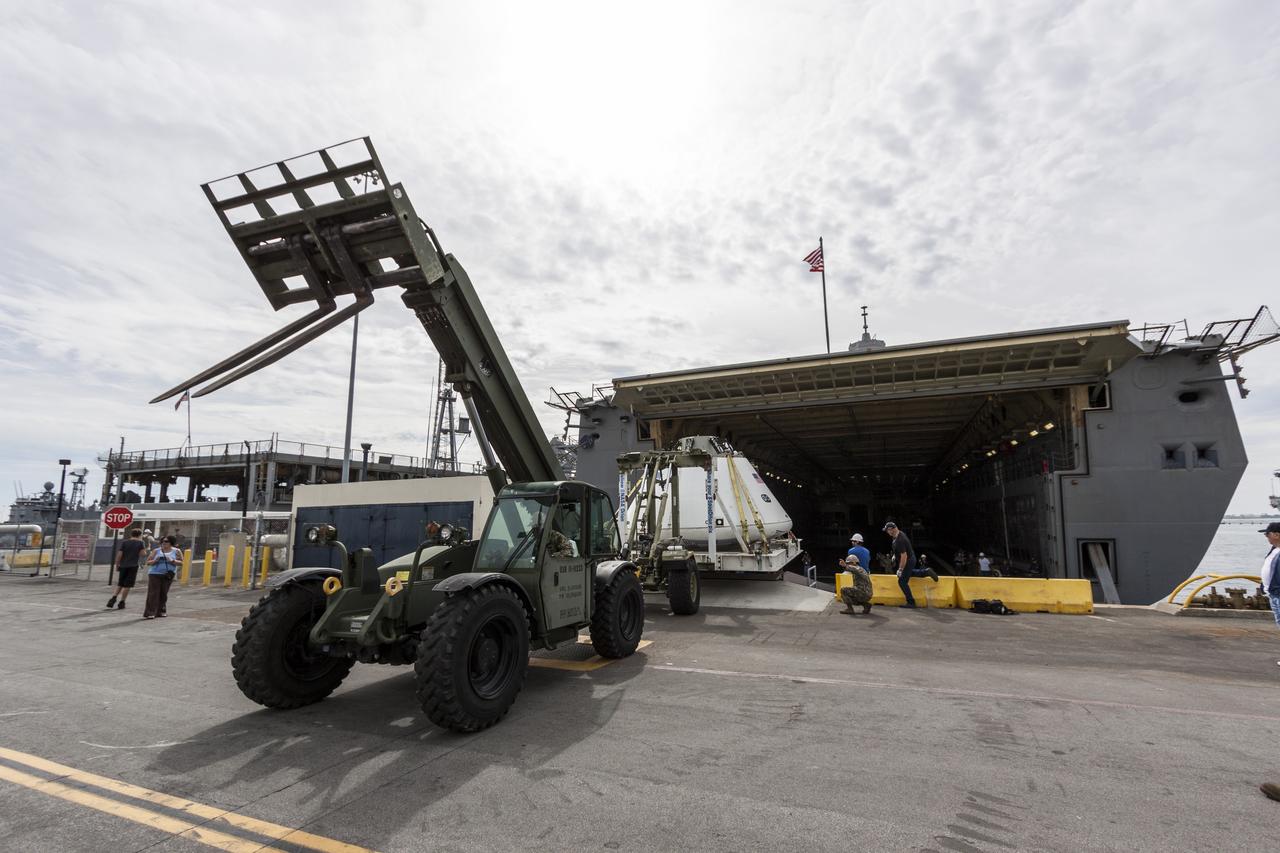
SAN DIEGO, Calif. – The Orion boilerplate test vehicle is being offloaded from the USS San Diego at the U.S. Naval Base San Diego in California. Orion was transported in the ship’s well deck about 100 miles offshore for an underway recovery test. NASA and the U.S. Navy conducted tests to prepare for recovery of the Orion crew module, forward bay cover and parachutes on its return from a deep space mission. The underway recovery test allowed the teams to demonstrate and evaluate the recovery processes, procedures, hardware and personnel in open waters. During the testing, the tether lines were unable to support the tension caused by crew module motion that was driven by wave turbulence in the well deck of the ship. NASA and the U.S. Navy are reviewing the testing data collected to evaluate the next steps. The Ground Systems Development and Operations Program was conducting the recovery tests. Orion is the exploration spacecraft designed to carry astronauts to destinations not yet explored by humans, including an asteroid and Mars. It will have emergency abort capability, sustain the crew during space travel and provide safe re-entry from deep space return velocities. The first unpiloted test flight of the Orion is scheduled to launch in 2014 atop a Delta IV rocket and in 2017 on NASA’s Space Launch System rocket. For more information, visit http://www.nasa.gov/orion. Photo credit: NASA/Cory Huston
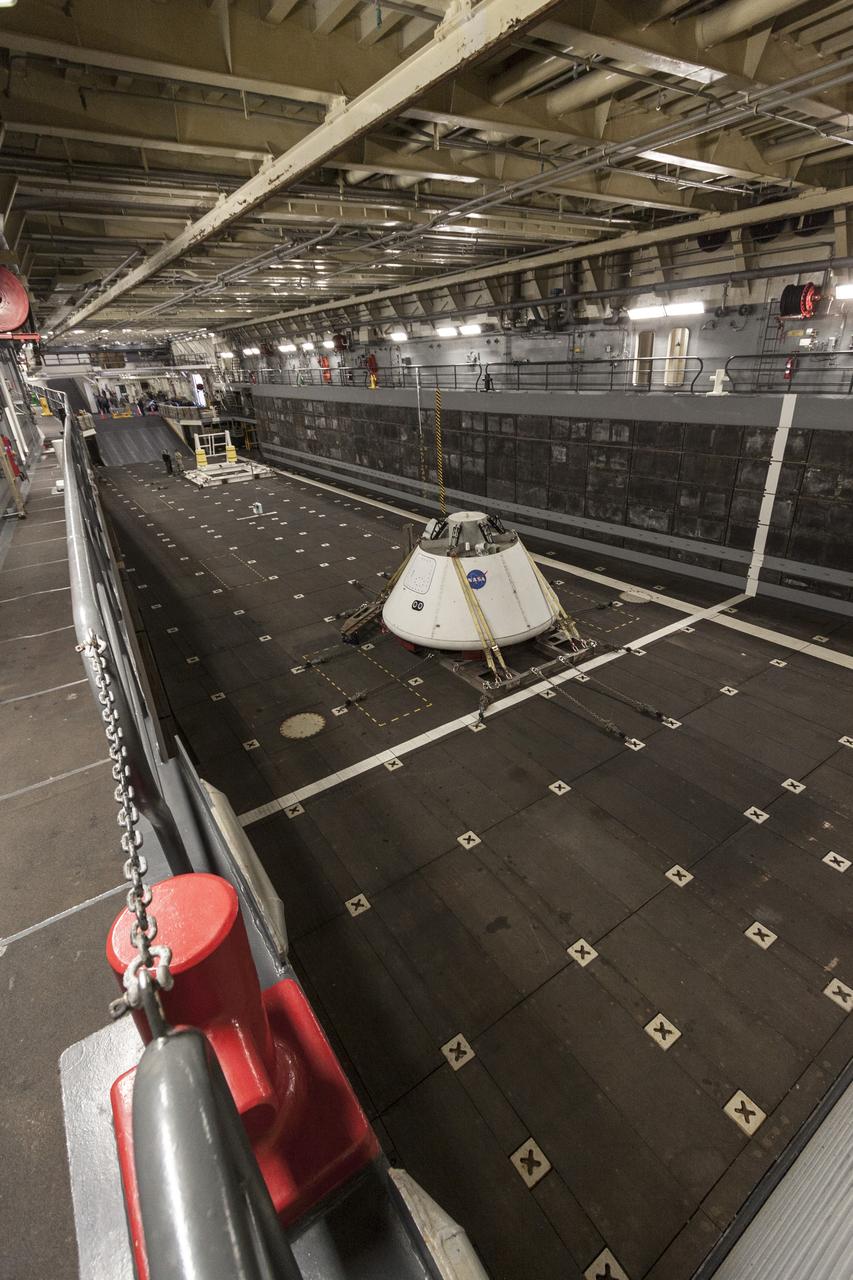
SAN DIEGO, Calif. – The Orion boilerplate test vehicle is secured in the well deck of the USS San Diego at the U.S. Naval Base San Diego in California. Orion was transported about 100 miles offshore for an underway recovery test. NASA and the U.S. Navy conducted tests to prepare for recovery of the Orion crew module, forward bay cover and parachutes on its return from a deep space mission. The underway recovery test will allow the teams to demonstrate and evaluate the recovery processes, procedures, hardware and personnel in open waters. During the testing, the tether lines were unable to support the tension caused by crew module motion that was driven by wave turbulence in the well deck of the ship. NASA and the U.S. Navy are reviewing the testing data collected to evaluate the next steps. The Ground Systems Development and Operations Program conducted the underway recovery tests. Orion is the exploration spacecraft designed to carry astronauts to destinations not yet explored by humans, including an asteroid and Mars. It will have emergency abort capability, sustain the crew during space travel and provide safe re-entry from deep space return velocities. The first unpiloted test flight of the Orion is scheduled to launch in 2014 atop a Delta IV rocket and in 2017 on NASA’s Space Launch System rocket. For more information, visit http://www.nasa.gov/orion. Photo credit: NASA/Cory Huston
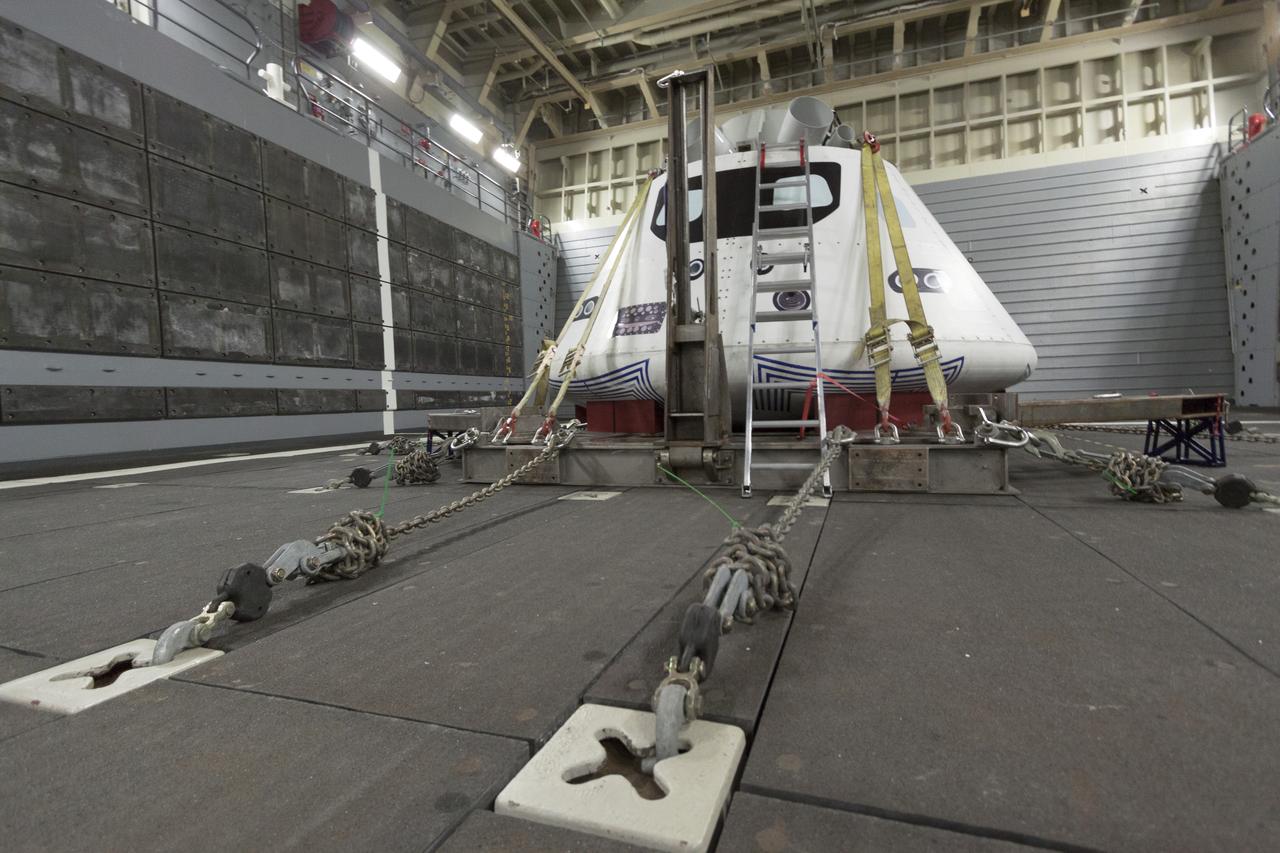
SAN DIEGO, Calif. – The Orion boilerplate test vehicle is secured in the well deck of the USS San Diego at the U.S. Naval Base San Diego in California. Orion was transported about 100 miles offshore for an underway recovery test. NASA and the U.S. Navy conducted tests to prepare for recovery of the Orion crew module, forward bay cover and parachutes on its return from a deep space mission. The underway recovery test will allow the teams to demonstrate and evaluate the recovery processes, procedures, hardware and personnel in open waters. During the testing, the tether lines were unable to support the tension caused by crew module motion that was driven by wave turbulence in the well deck of the ship. NASA and the U.S. Navy are reviewing the testing data collected to evaluate the next steps. The Ground Systems Development and Operations Program conducted the underway recovery tests. Orion is the exploration spacecraft designed to carry astronauts to destinations not yet explored by humans, including an asteroid and Mars. It will have emergency abort capability, sustain the crew during space travel and provide safe re-entry from deep space return velocities. The first unpiloted test flight of the Orion is scheduled to launch in 2014 atop a Delta IV rocket and in 2017 on NASA’s Space Launch System rocket. For more information, visit http://www.nasa.gov/orion. Photo credit: NASA/Cory Huston
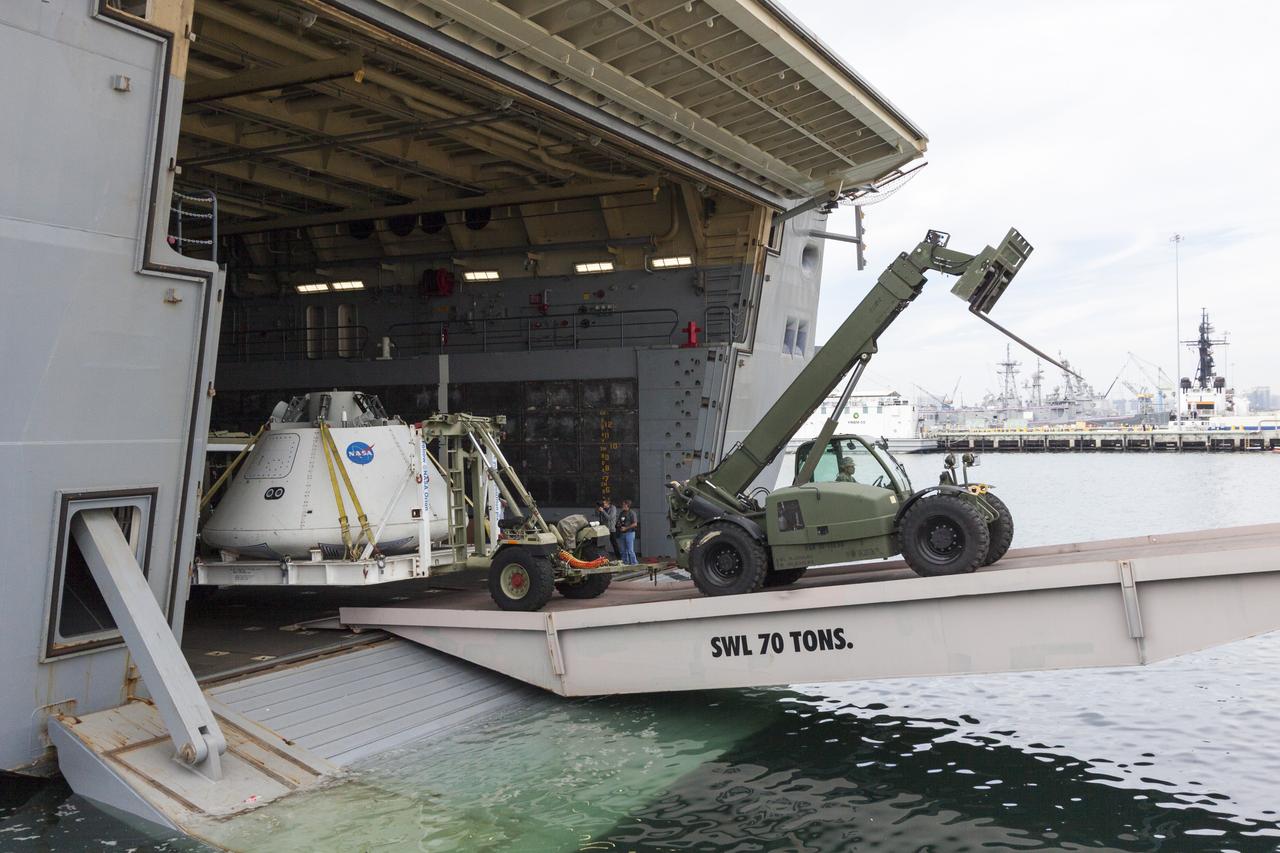
SAN DIEGO, Calif. – The Orion boilerplate test vehicle is being offloaded from the USS San Diego at the U.S. Naval Base San Diego in California. Orion was transported in the ship’s well deck about 100 miles offshore for an underway recovery test. NASA and the U.S. Navy conducted tests to prepare for recovery of the Orion crew module, forward bay cover and parachutes on its return from a deep space mission. The underway recovery test allowed the teams to demonstrate and evaluate the recovery processes, procedures, hardware and personnel in open waters. During the testing, the tether lines were unable to support the tension caused by crew module motion that was driven by wave turbulence in the well deck of the ship. NASA and the U.S. Navy are reviewing the testing data collected to evaluate the next steps. The Ground Systems Development and Operations Program was conducting the recovery tests. Orion is the exploration spacecraft designed to carry astronauts to destinations not yet explored by humans, including an asteroid and Mars. It will have emergency abort capability, sustain the crew during space travel and provide safe re-entry from deep space return velocities. The first unpiloted test flight of the Orion is scheduled to launch in 2014 atop a Delta IV rocket and in 2017 on NASA’s Space Launch System rocket. For more information, visit http://www.nasa.gov/orion. Photo credit: NASA/Cory Huston
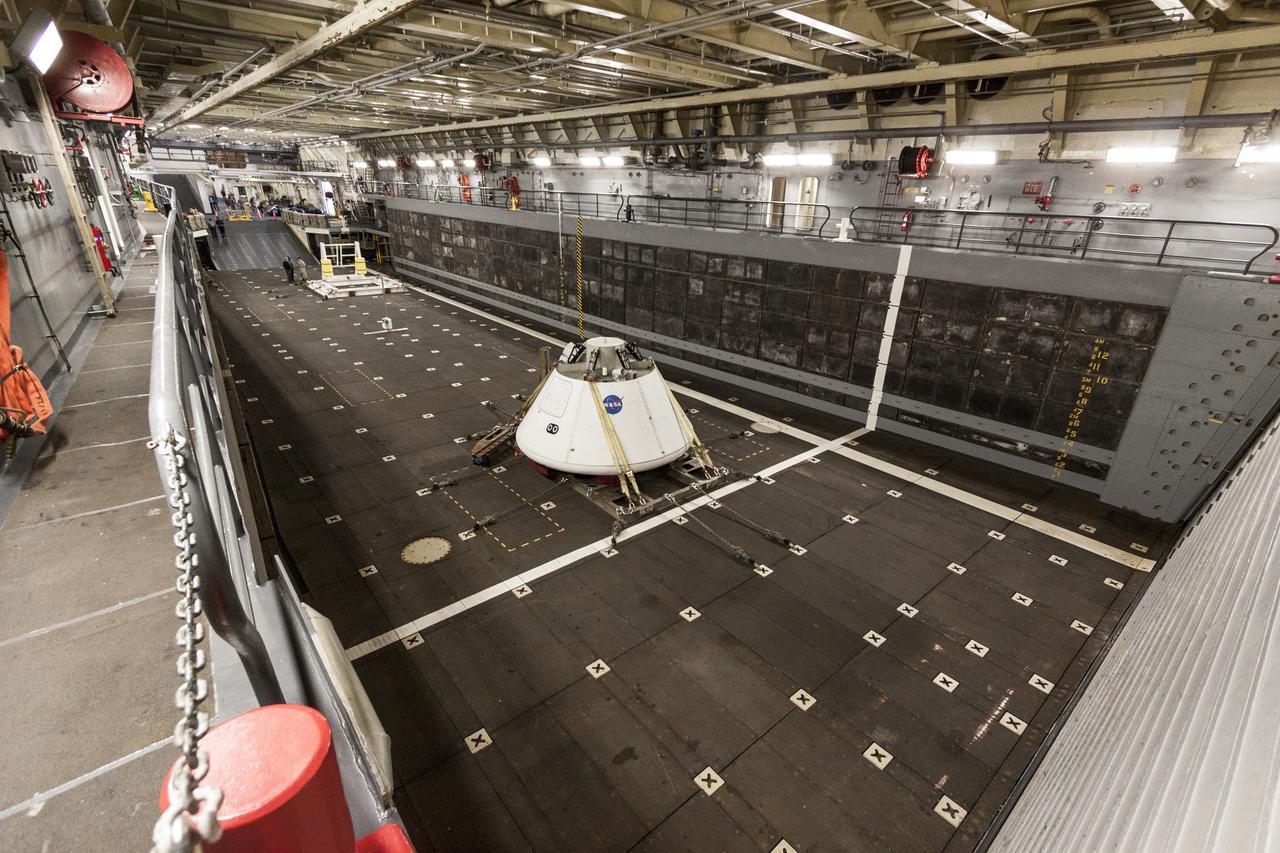
SAN DIEGO, Calif. – The Orion boilerplate test vehicle is secured in the well deck of the USS San Diego at the U.S. Naval Base San Diego in California. Orion was transported about 100 miles offshore for an underway recovery test. NASA and the U.S. Navy conducted tests to prepare for recovery of the Orion crew module, forward bay cover and parachutes on its return from a deep space mission. The underway recovery test will allow the teams to demonstrate and evaluate the recovery processes, procedures, hardware and personnel in open waters. During the testing, the tether lines were unable to support the tension caused by crew module motion that was driven by wave turbulence in the well deck of the ship. NASA and the U.S. Navy are reviewing the testing data collected to evaluate the next steps. The Ground Systems Development and Operations Program conducted the underway recovery tests. Orion is the exploration spacecraft designed to carry astronauts to destinations not yet explored by humans, including an asteroid and Mars. It will have emergency abort capability, sustain the crew during space travel and provide safe re-entry from deep space return velocities. The first unpiloted test flight of the Orion is scheduled to launch in 2014 atop a Delta IV rocket and in 2017 on NASA’s Space Launch System rocket. For more information, visit http://www.nasa.gov/orion. Photo credit: NASA/Cory Huston
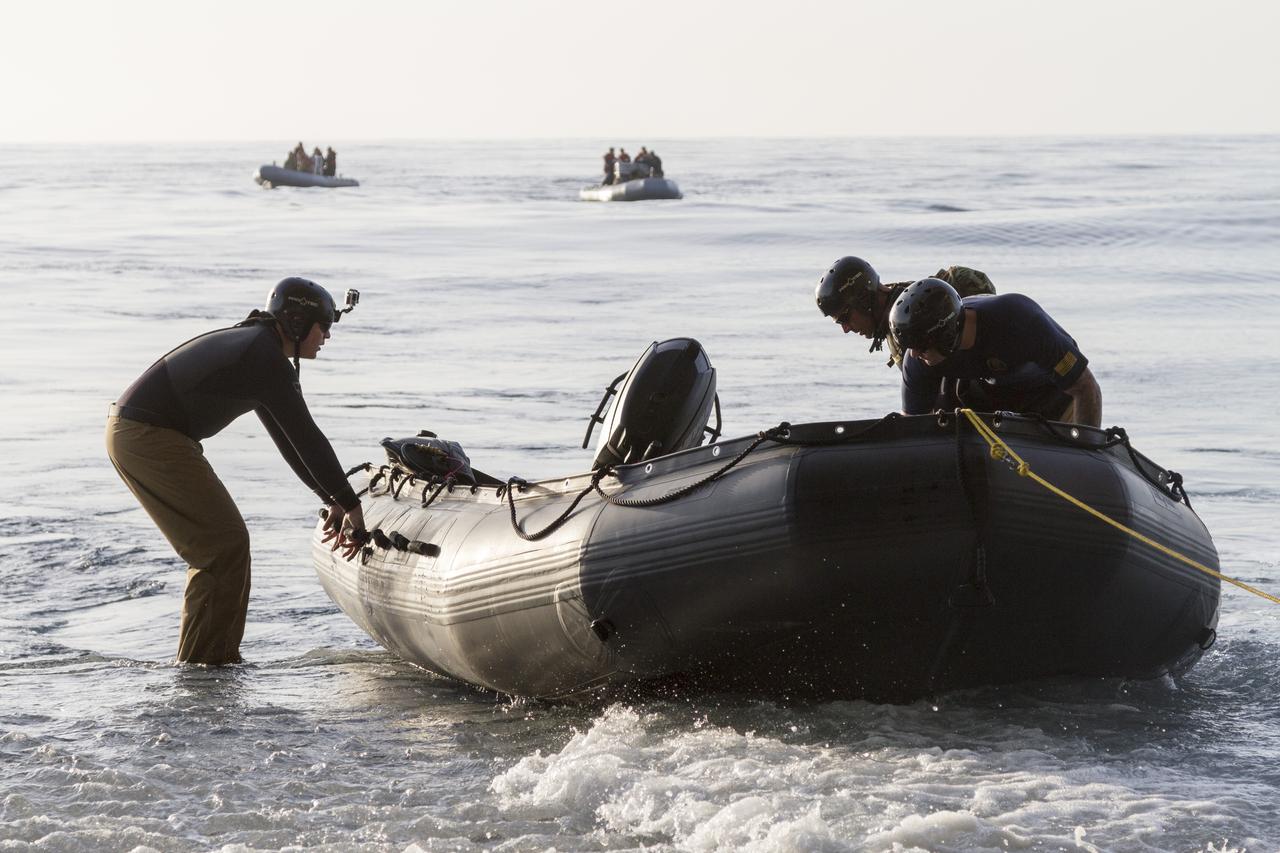
SAN DIEGO, Calif. – U.S. Navy personnel board a rigid hull inflatable boat near the USS San Diego to conduct an Orion underway recovery test with the Orion boilerplate test vehicle and other hardware. Earlier in the week, NASA and the U.S. Navy conducted tests about 100 miles offshore to prepare for recovery of the Orion crew module, forward bay cover and parachutes on its return from a deep space mission. The underway recovery test allowed the teams to demonstrate and evaluate the recovery processes, procedures, hardware and personnel in open waters. During the testing, the tether lines were unable to support the tension caused by crew module motion that was driven by wave turbulence in the well deck of the ship. NASA and the U.S. Navy are reviewing the testing data collected to evaluate the next steps. The Ground Systems Development and Operations Program conducted the underway recovery tests. Orion is the exploration spacecraft designed to carry astronauts to destinations not yet explored by humans, including an asteroid and Mars. It will have emergency abort capability, sustain the crew during space travel and provide safe re-entry from deep space return velocities. The first unpiloted test flight of the Orion is scheduled to launch in 2014 atop a Delta IV rocket and in 2017 on NASA’s Space Launch System rocket. For more information, visit http://www.nasa.gov/orion. Photo credit: NASA/Cory Huston
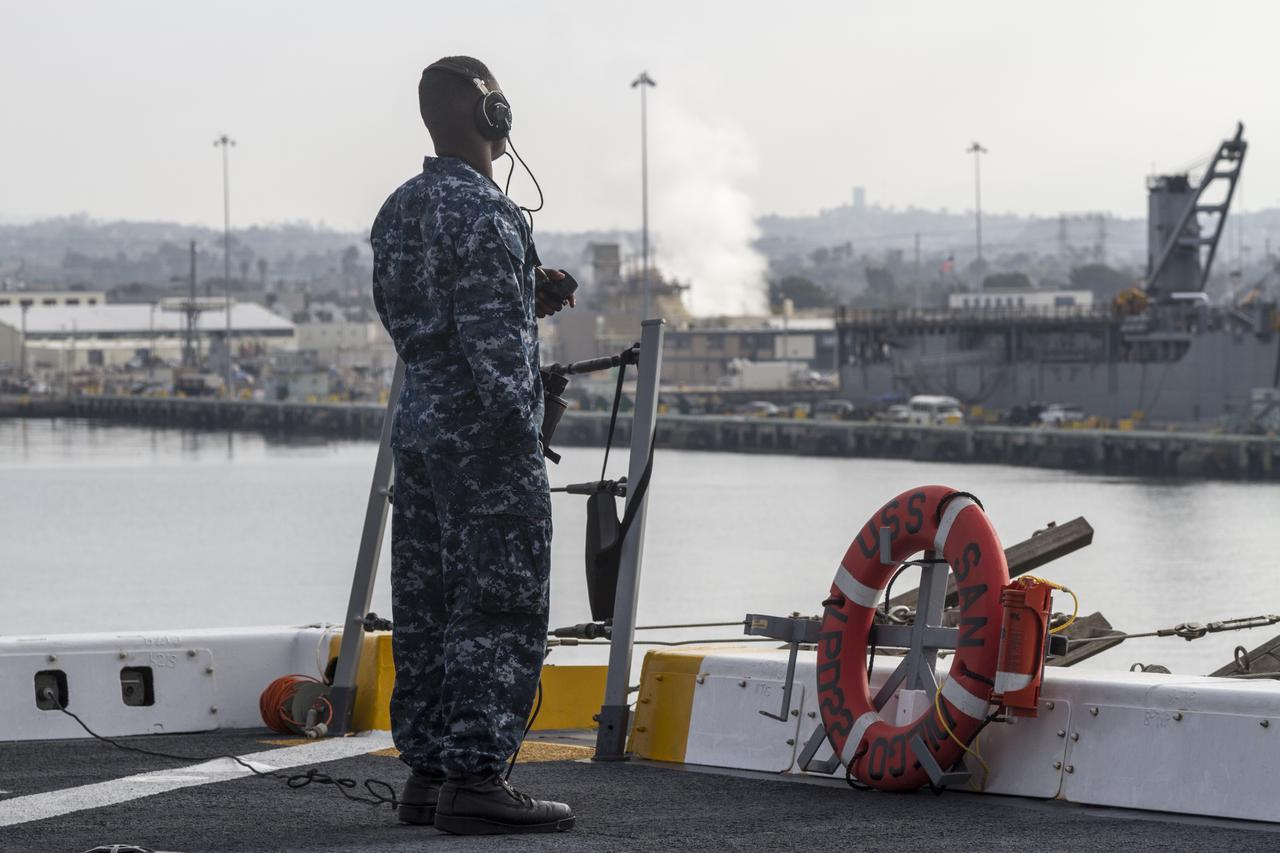
SAN DIEGO, Calif. – At the U.S. Naval Base San Diego in California, the USS San Diego heads out to sea with the Orion boilerplate test vehicle and other hardware in its well deck for an underway recovery test. About 100 miles offshore, NASA and the U.S. Navy conducted tests to prepare for recovery of the Orion crew module, forward bay cover and parachutes on its return from a deep space mission. The underway recovery test will allow the teams to demonstrate and evaluate the recovery processes, procedures, hardware and personnel in open waters. During the testing, the tether lines were unable to support the tension caused by crew module motion that was driven by wave turbulence in the well deck of the ship. NASA and the U.S. Navy are reviewing the testing data collected to evaluate the next steps. The Ground Systems Development and Operations Program conducted the underway recovery tests. Orion is the exploration spacecraft designed to carry astronauts to destinations not yet explored by humans, including an asteroid and Mars. It will have emergency abort capability, sustain the crew during space travel and provide safe re-entry from deep space return velocities. The first unpiloted test flight of the Orion is scheduled to launch in 2014 atop a Delta IV rocket and in 2017 on NASA’s Space Launch System rocket. For more information, visit http://www.nasa.gov/orion. Photo credit: NASA/Cory Huston
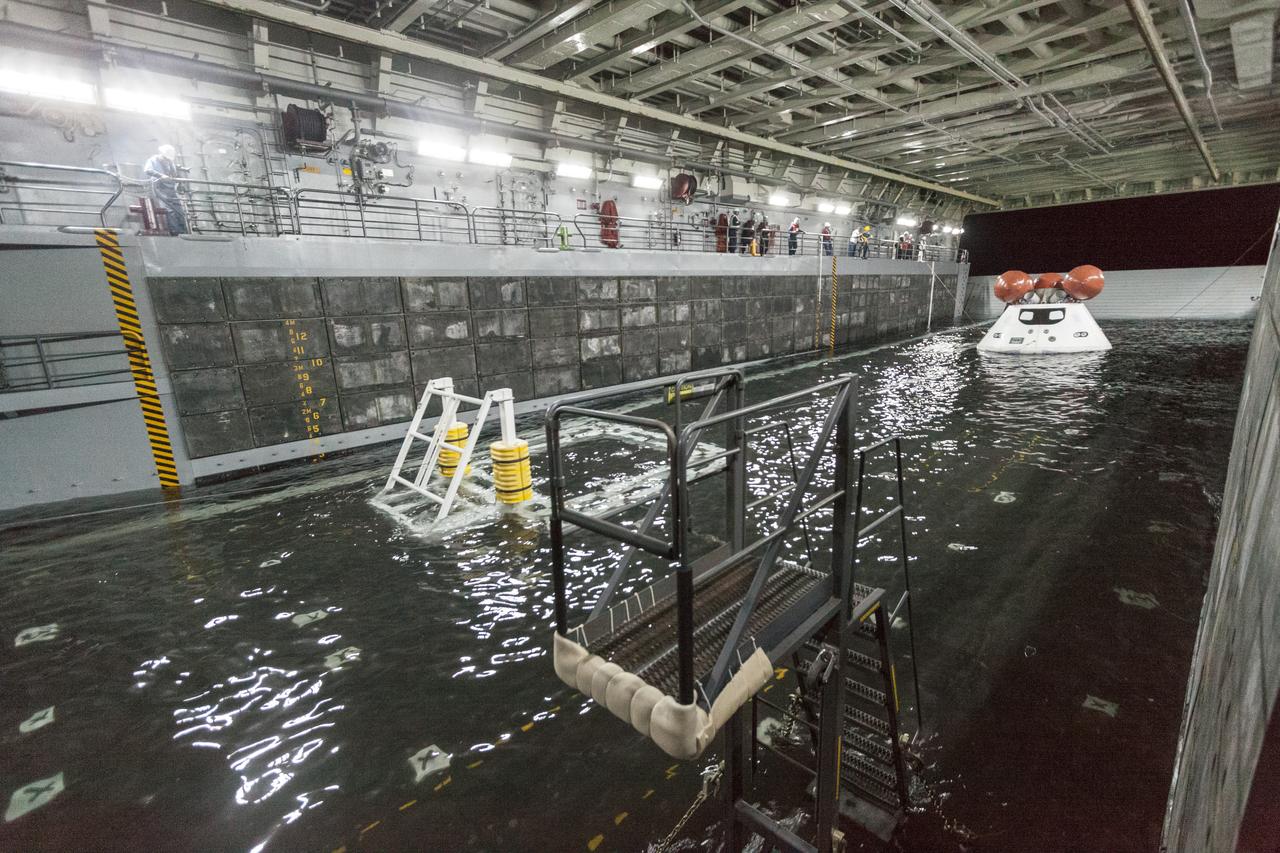
SAN DIEGO, Calif. – The well deck of the USS San Diego fills with water and surrounds the Orion boilerplate test article and other hardware as the underway recovery test begins in the Pacific Ocean, about 100 miles off the coast of San Diego, California. NASA and the U.S. Navy conducted tests to prepare for the recovery of the Orion crew module, forward bay cover and parachutes on its return from a deep space mission. The underway recovery test will allow the teams to demonstrate and evaluate the recovery processes, procedures, hardware and personnel in open waters. During the testing, the tether lines were unable to support the tension caused by crew module motion that was driven by wave turbulence in the well deck of the ship. NASA and the U.S. Navy are reviewing the testing data collected to evaluate the next steps. The Ground Systems Development and Operations Program conducted the underway recovery tests. Orion is the exploration spacecraft designed to carry astronauts to destinations not yet explored by humans, including an asteroid and Mars. It will have emergency abort capability, sustain the crew during space travel and provide safe re-entry from deep space return velocities. The first unpiloted test flight of the Orion is scheduled to launch in 2014 atop a Delta IV rocket and in 2017 on NASA’s Space Launch System rocket. For more information, visit http://www.nasa.gov/orion. Photo credit: NASA/Cory Huston
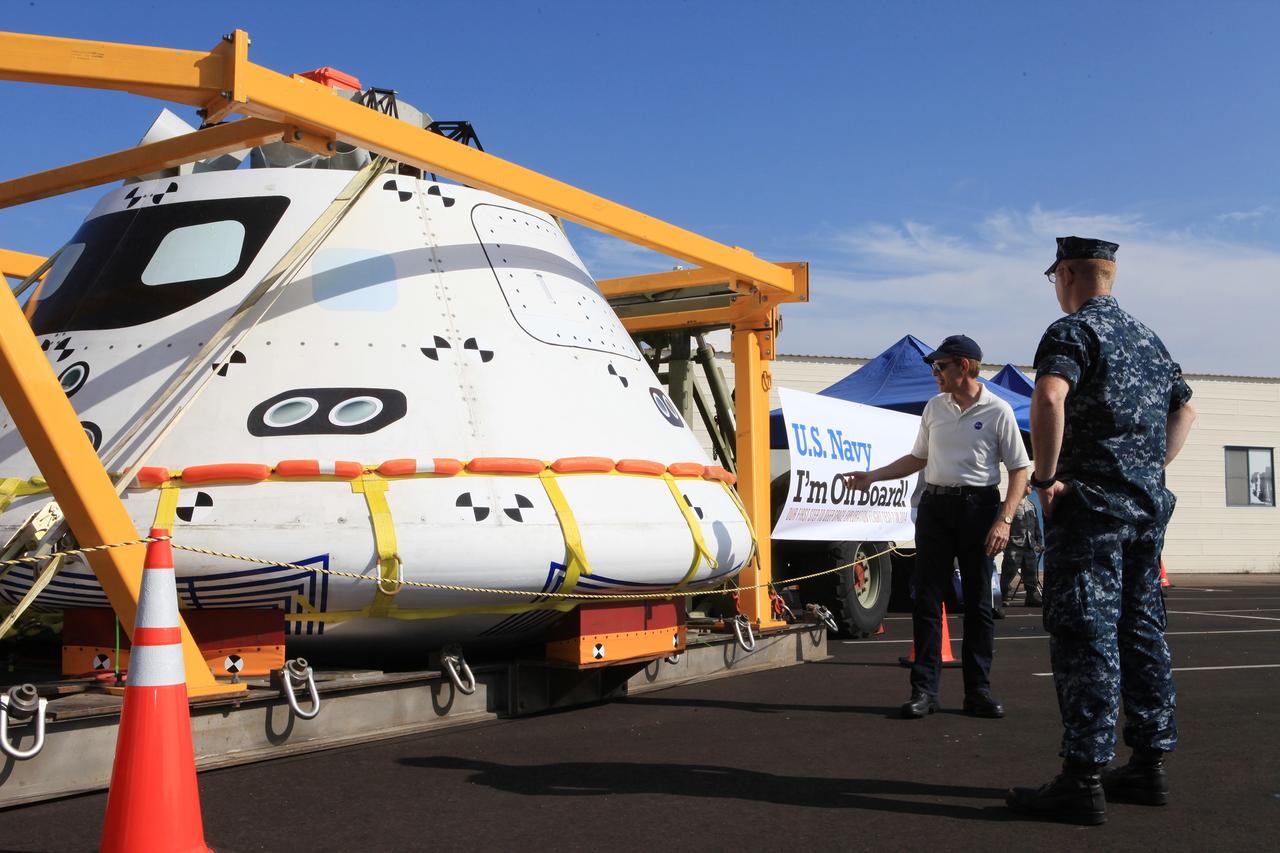
SAN DIEGO, Calif. – At the U.S. Naval Base San Diego in California, NASA's Orion boilerplate test vehicle is on display during an outreach event at the naval base. The USS Anchorage is being prepared for the Orion Underway Recovery Test 2. The Orion boilerplate test vehicle and other hardware will be loaded into the well deck of the ship and head out to sea in the Pacific Ocean off the coast of San Diego. NASA, Lockheed Martin and the U.S. Navy will conduct the test to prepare for recovery of the Orion crew module, forward bay cover and parachutes on its return from a deep space mission. The underway recovery test will allow the teams to demonstrate and evaluate the recovery processes, procedures, new support hardware and personnel in open waters. The Ground Systems Development and Operations Program will conduct the underway recovery tests. Orion is the exploration spacecraft designed to carry astronauts to destinations not yet explored by humans, including an asteroid and Mars. It will have emergency abort capability, sustain the crew during space travel and provide safe re-entry from deep space return velocities. The first unpiloted test flight of the Orion is scheduled to launch in 2014 atop a Delta IV rocket and in 2017 on NASA’s Space Launch System rocket. For more information, visit http://www.nasa.gov/orion. Photo credit: NASA/Kim Shiflett
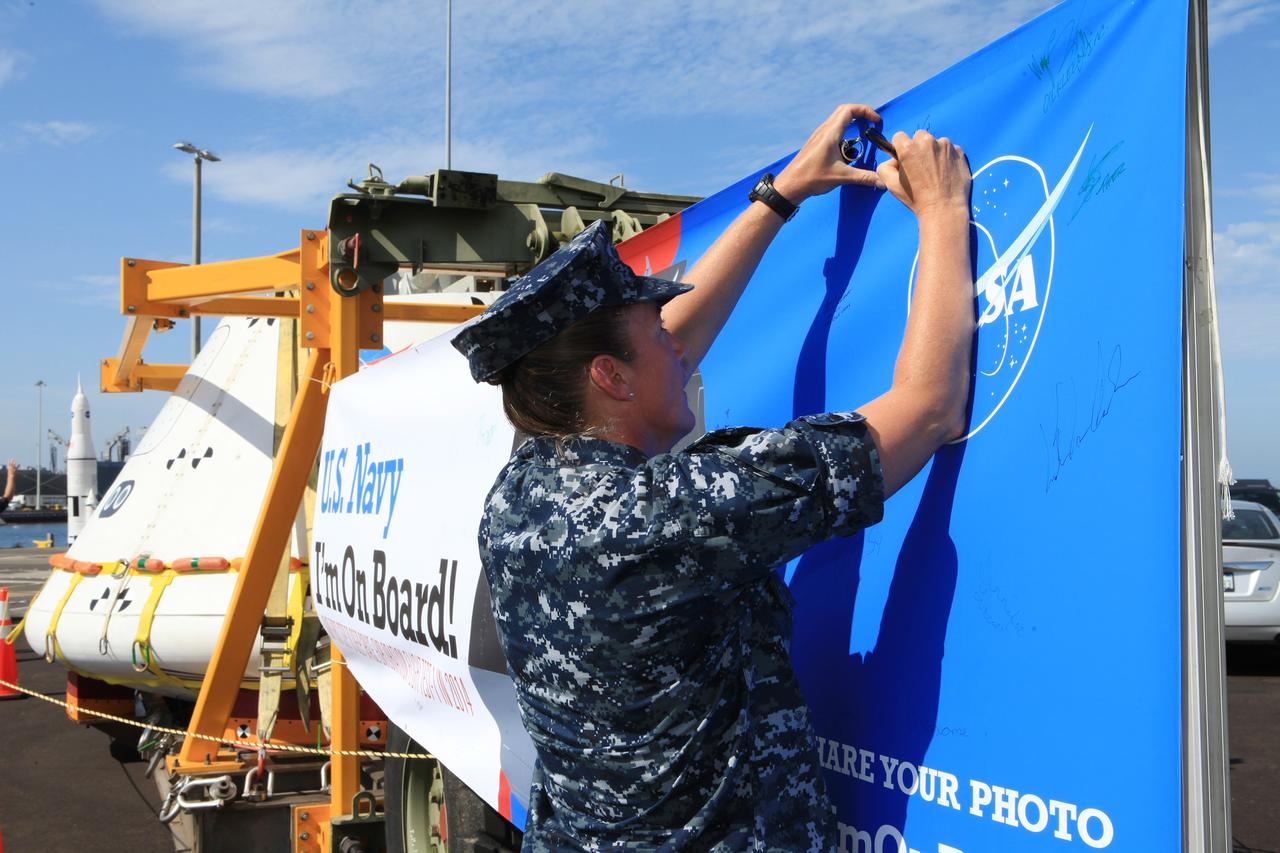
SAN DIEGO, Calif. – At the U.S. Naval Base San Diego in California, former NASA astronaut Heidi Piper signs the banner near the Orion boilerplate test vehicle during an outreach event at the naval base. The USS Anchorage is being prepared for the Orion Underway Recovery Test 2. The test vehicle and other hardware will be loaded into the well deck of the ship and head out to sea in the Pacific Ocean off the coast of San Diego. NASA, Lockheed Martin and the U.S. Navy will conduct the test to prepare for recovery of the Orion crew module, forward bay cover and parachutes on its return from a deep space mission. The underway recovery test will allow the teams to demonstrate and evaluate the recovery processes, procedures, new support hardware and personnel in open waters. The Ground Systems Development and Operations Program will conduct the underway recovery tests. Orion is the exploration spacecraft designed to carry astronauts to destinations not yet explored by humans, including an asteroid and Mars. It will have emergency abort capability, sustain the crew during space travel and provide safe re-entry from deep space return velocities. The first unpiloted test flight of the Orion is scheduled to launch in 2014 atop a Delta IV rocket and in 2017 on NASA’s Space Launch System rocket. For more information, visit http://www.nasa.gov/orion. Photo credit: NASA/Kim Shiflett
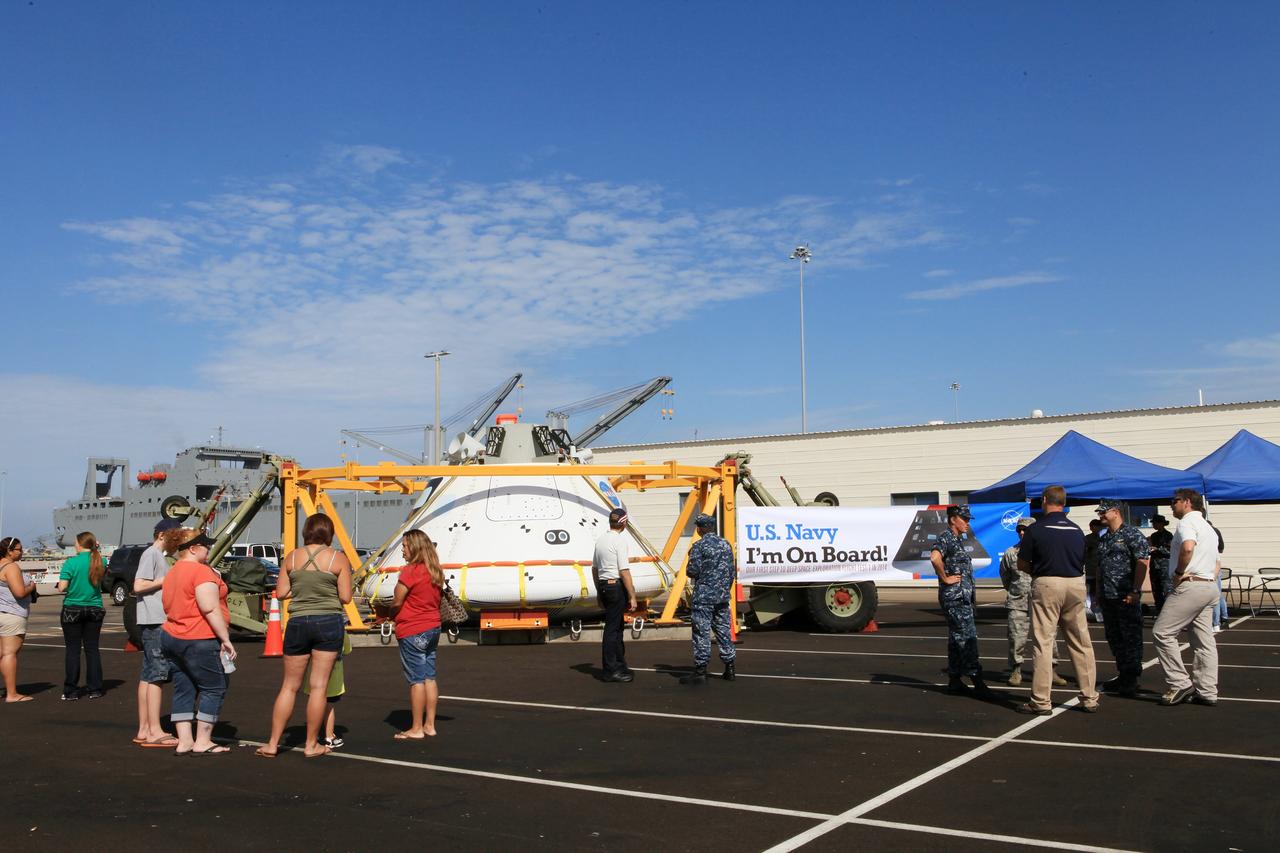
SAN DIEGO, Calif. – At the U.S. Naval Base San Diego in California, visitors talk with U.S. Navy personnel and view the Orion boilerplate test vehicle during an outreach event at the naval base. The USS Anchorage is being prepared for the Orion Underway Recovery Test 2. The test vehicle and other hardware will be loaded into the well deck of the ship and head out to sea in the Pacific Ocean off the coast of San Diego. NASA, Lockheed Martin and the U.S. Navy will conduct the test to prepare for recovery of the Orion crew module, forward bay cover and parachutes on its return from a deep space mission. The underway recovery test will allow the teams to demonstrate and evaluate the recovery processes, procedures, new support hardware and personnel in open waters. The Ground Systems Development and Operations Program will conduct the underway recovery tests. Orion is the exploration spacecraft designed to carry astronauts to destinations not yet explored by humans, including an asteroid and Mars. It will have emergency abort capability, sustain the crew during space travel and provide safe re-entry from deep space return velocities. The first unpiloted test flight of the Orion is scheduled to launch in 2014 atop a Delta IV rocket and in 2017 on NASA’s Space Launch System rocket. For more information, visit http://www.nasa.gov/orion. Photo credit: NASA/Kim Shiflett
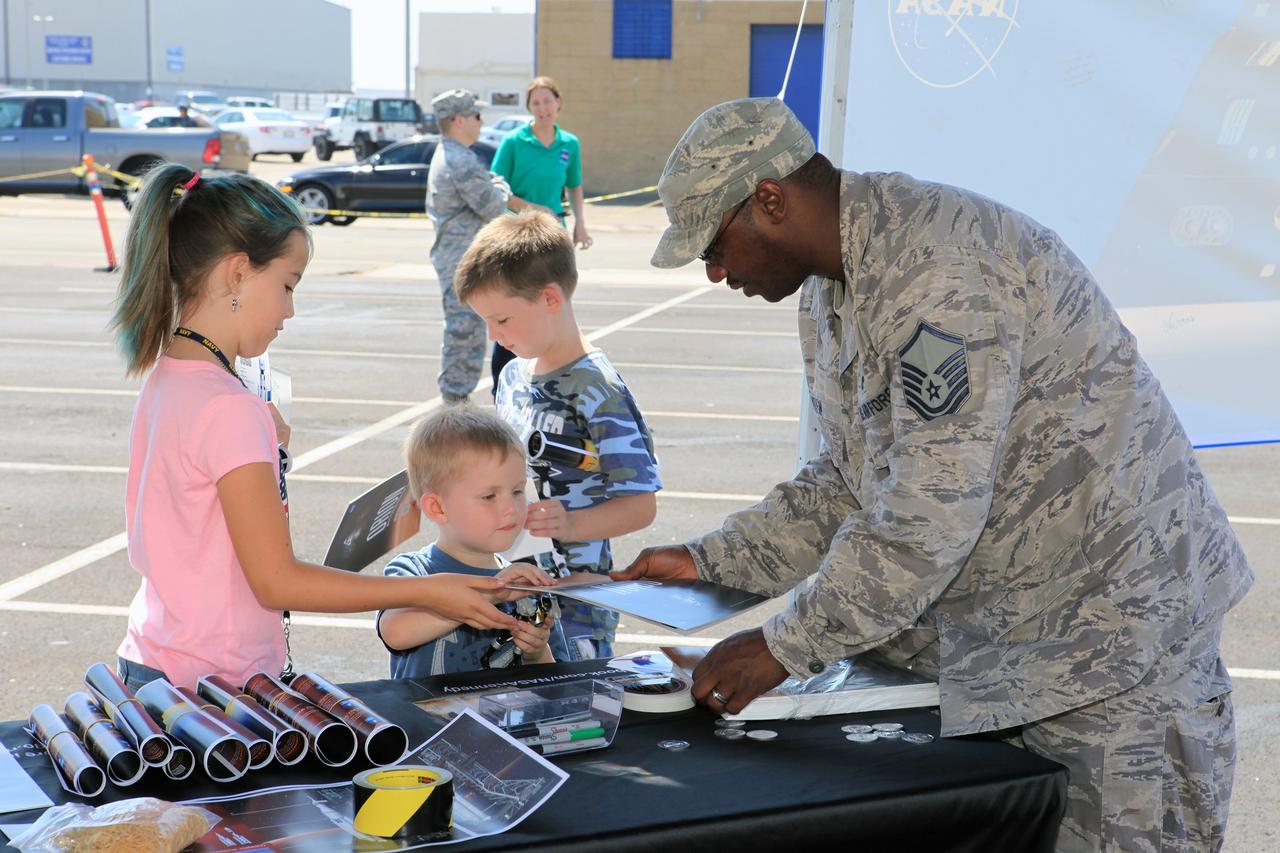
SAN DIEGO, Calif. – At the U.S. Naval Base San Diego in California, children pick up Orion posters from U.S. Navy personnel during an outreach event at the naval base. The Orion boilerplate test vehicle is on display. The USS Anchorage is being prepared for the Orion Underway Recovery Test 2. The test vehicle and other hardware will be loaded into the well deck of the ship and head out to sea in the Pacific Ocean off the coast of San Diego. NASA, Lockheed Martin and the U.S. Navy will conduct the test to prepare for recovery of the Orion crew module, forward bay cover and parachutes on its return from a deep space mission. The underway recovery test will allow the teams to demonstrate and evaluate the recovery processes, procedures, new support hardware and personnel in open waters. The Ground Systems Development and Operations Program will conduct the underway recovery tests. Orion is the exploration spacecraft designed to carry astronauts to destinations not yet explored by humans, including an asteroid and Mars. It will have emergency abort capability, sustain the crew during space travel and provide safe re-entry from deep space return velocities. The first unpiloted test flight of the Orion is scheduled to launch in 2014 atop a Delta IV rocket and in 2017 on NASA’s Space Launch System rocket. For more information, visit http://www.nasa.gov/orion. Photo credit: NASA/Kim Shiflett
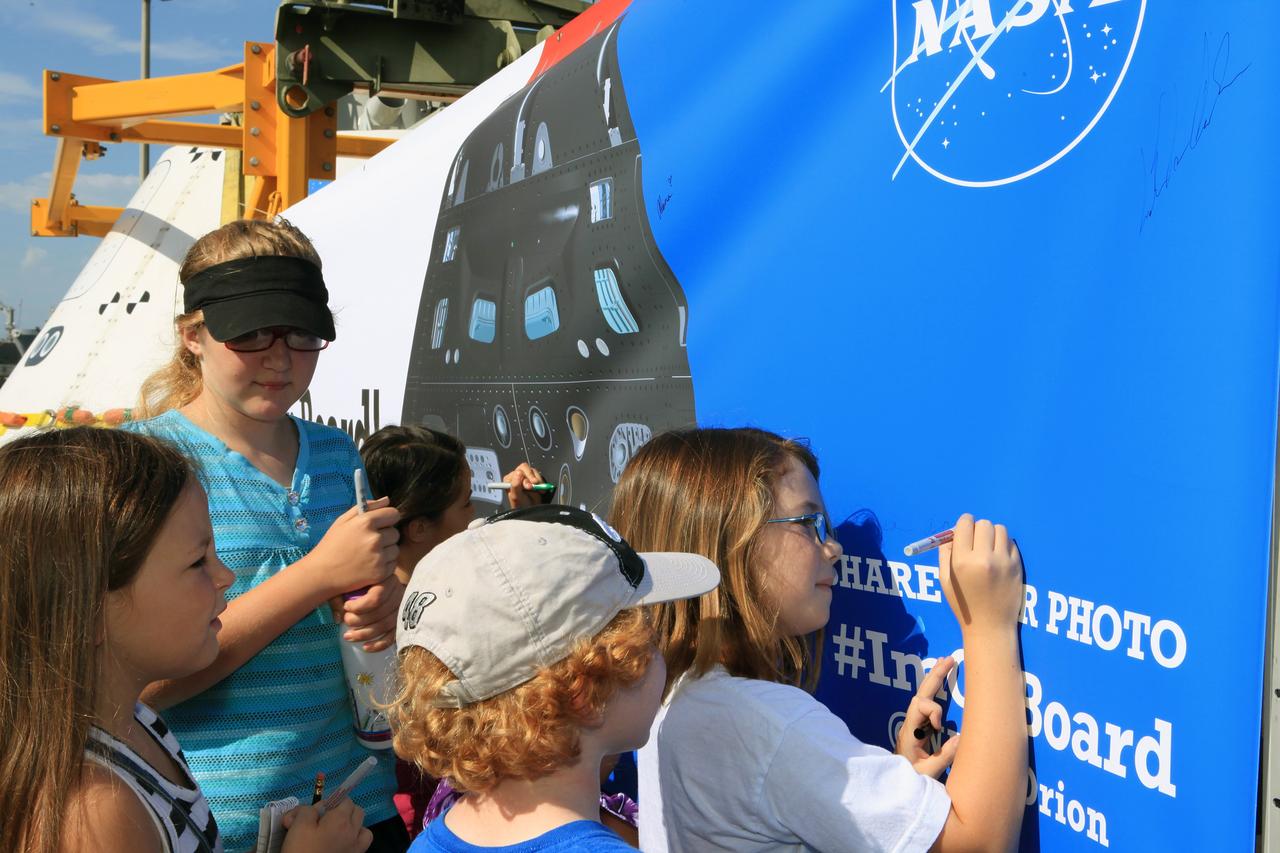
SAN DIEGO, Calif. – At the U.S. Naval Base San Diego in California, children sign a banner near the Orion boilerplate test vehicle during an outreach event at the naval base. The USS Anchorage is being prepared for the Orion Underway Recovery Test 2. The test vehicle and other hardware will be loaded into the well deck of the ship and head out to sea in the Pacific Ocean off the coast of San Diego. NASA, Lockheed Martin and the U.S. Navy will conduct the test to prepare for recovery of the Orion crew module, forward bay cover and parachutes on its return from a deep space mission. The underway recovery test will allow the teams to demonstrate and evaluate the recovery processes, procedures, new support hardware and personnel in open waters. The Ground Systems Development and Operations Program will conduct the underway recovery tests. Orion is the exploration spacecraft designed to carry astronauts to destinations not yet explored by humans, including an asteroid and Mars. It will have emergency abort capability, sustain the crew during space travel and provide safe re-entry from deep space return velocities. The first unpiloted test flight of the Orion is scheduled to launch in 2014 atop a Delta IV rocket and in 2017 on NASA’s Space Launch System rocket. For more information, visit http://www.nasa.gov/orion. Photo credit: NASA/Kim Shiflett
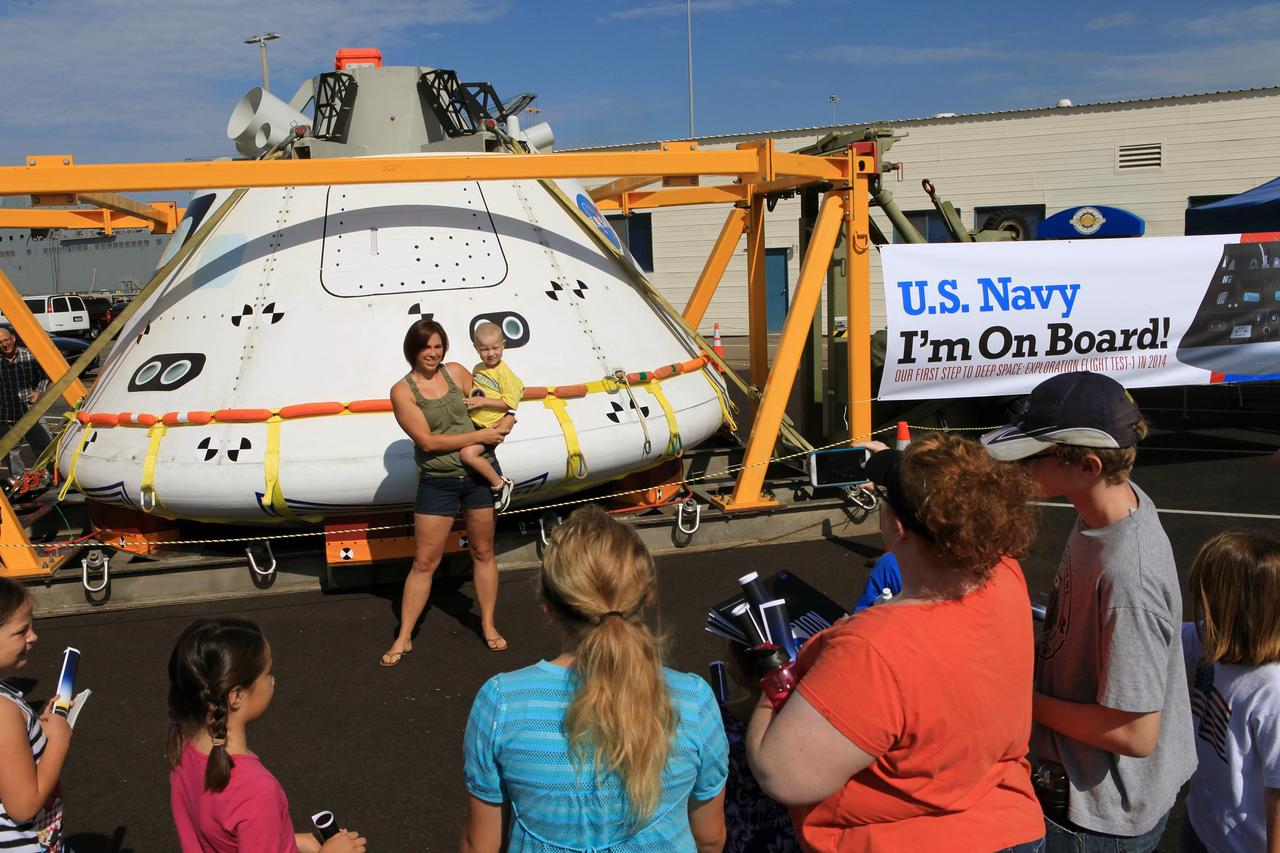
SAN DIEGO, Calif. – At the U.S. Naval Base San Diego in California, visitors take photographs in front of the Orion boilerplate test vehicle during an outreach event at the naval base. The USS Anchorage is being prepared for the Orion Underway Recovery Test 2. The test vehicle and other hardware will be loaded into the well deck of the ship and head out to sea in the Pacific Ocean off the coast of San Diego. NASA, Lockheed Martin and the U.S. Navy will conduct the test to prepare for recovery of the Orion crew module, forward bay cover and parachutes on its return from a deep space mission. The underway recovery test will allow the teams to demonstrate and evaluate the recovery processes, procedures, new support hardware and personnel in open waters. The Ground Systems Development and Operations Program will conduct the underway recovery tests. Orion is the exploration spacecraft designed to carry astronauts to destinations not yet explored by humans, including an asteroid and Mars. It will have emergency abort capability, sustain the crew during space travel and provide safe re-entry from deep space return velocities. The first unpiloted test flight of the Orion is scheduled to launch in 2014 atop a Delta IV rocket and in 2017 on NASA’s Space Launch System rocket. For more information, visit http://www.nasa.gov/orion. Photo credit: NASA/Kim Shiflett
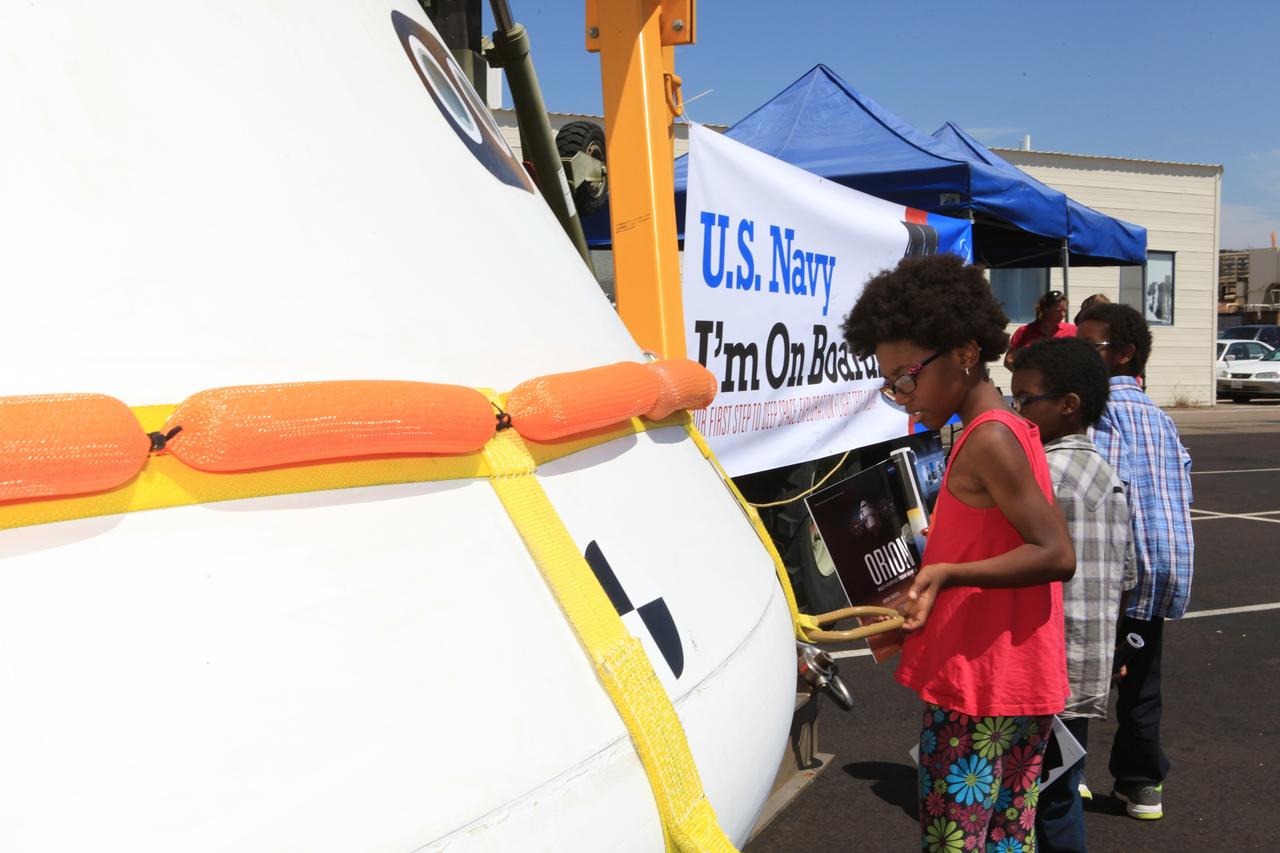
SAN DIEGO, Calif. – At the U.S. Naval Base San Diego in California, children sign a banner and view the Orion boilerplate test vehicle during an outreach event at the naval base. The USS Anchorage is being prepared for the Orion Underway Recovery Test 2. The test vehicle and other hardware will be loaded into the well deck of the ship and head out to sea in the Pacific Ocean off the coast of San Diego. NASA, Lockheed Martin and the U.S. Navy will conduct the test to prepare for recovery of the Orion crew module, forward bay cover and parachutes on its return from a deep space mission. The underway recovery test will allow the teams to demonstrate and evaluate the recovery processes, procedures, new support hardware and personnel in open waters. The Ground Systems Development and Operations Program will conduct the underway recovery tests. Orion is the exploration spacecraft designed to carry astronauts to destinations not yet explored by humans, including an asteroid and Mars. It will have emergency abort capability, sustain the crew during space travel and provide safe re-entry from deep space return velocities. The first unpiloted test flight of the Orion is scheduled to launch in 2014 atop a Delta IV rocket and in 2017 on NASA’s Space Launch System rocket. For more information, visit http://www.nasa.gov/orion. Photo credit: NASA/Kim Shiflett
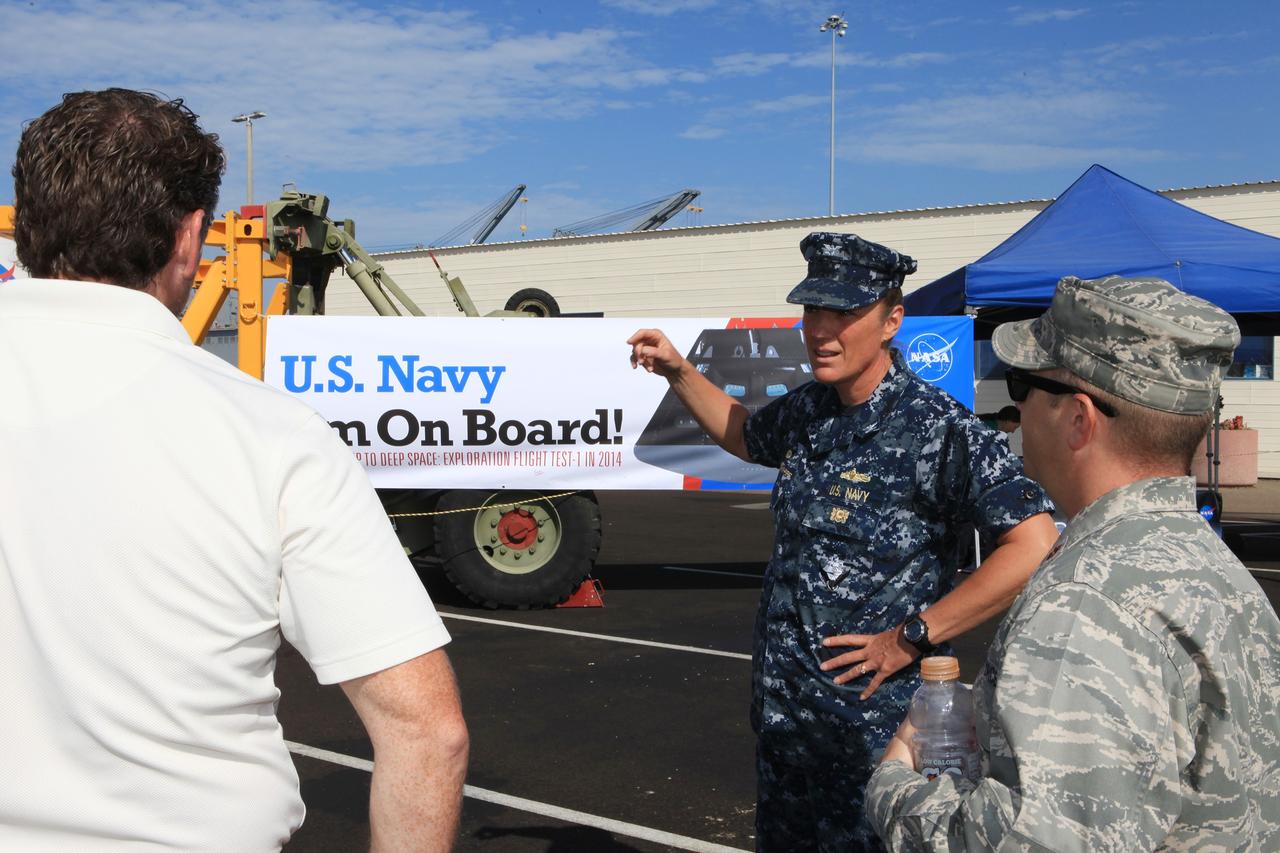
SAN DIEGO, Calif. – At the U.S. Naval Base San Diego in California, former NASA astronaut Heidi Piper talks with visitors about Exploration Flight Test-1 during an outreach event at the naval base. The USS Anchorage is being prepared for the Orion Underway Recovery Test 2. The Orion boilerplate test vehicle and other hardware will be loaded into the well deck of the ship and head out to sea in the Pacific Ocean off the coast of San Diego. NASA, Lockheed Martin and the U.S. Navy will conduct the test to prepare for recovery of the Orion crew module, forward bay cover and parachutes on its return from a deep space mission. The underway recovery test will allow the teams to demonstrate and evaluate the recovery processes, procedures, new support hardware and personnel in open waters. The Ground Systems Development and Operations Program will conduct the underway recovery tests. Orion is the exploration spacecraft designed to carry astronauts to destinations not yet explored by humans, including an asteroid and Mars. It will have emergency abort capability, sustain the crew during space travel and provide safe re-entry from deep space return velocities. The first unpiloted test flight of the Orion is scheduled to launch in 2014 atop a Delta IV rocket and in 2017 on NASA’s Space Launch System rocket. For more information, visit http://www.nasa.gov/orion. Photo credit: NASA/Kim Shiflett
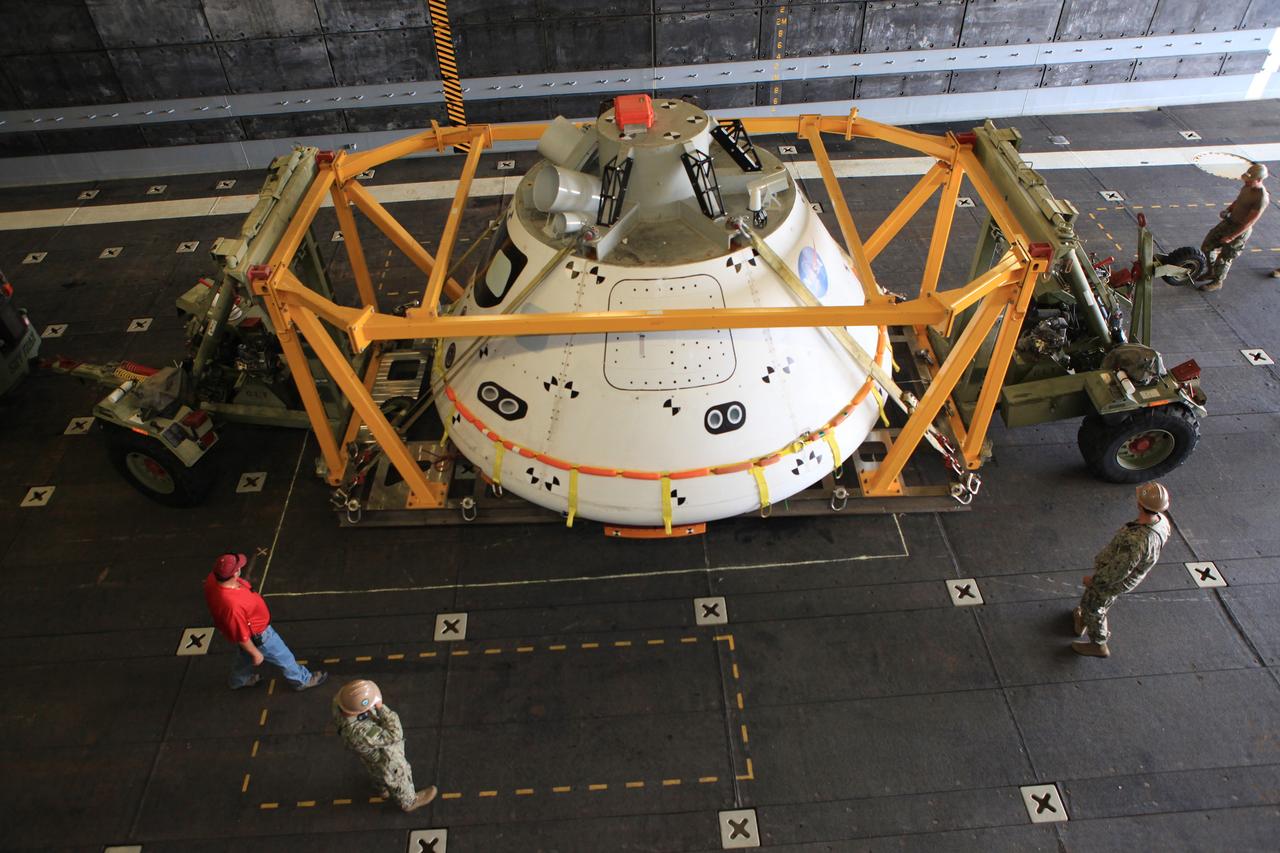
SAN DIEGO, Calif. – At the U.S. Naval Base San Diego in California, NASA and U.S. Navy personnel make sure that the Orion boilerplate test vehicle and support hardware are secured in the well deck of the USS Anchorage for Underway Recovery Test 2. NASA, Lockheed Martin and the U.S. Navy will conduct tests in the Pacific Ocean to prepare for recovery of the Orion crew module, forward bay cover and parachutes on its return from a deep space mission. The second underway recovery test will allow the teams to demonstrate and evaluate the recovery processes, procedures, new hardware and personnel in open waters. The Ground Systems Development and Operations Program is conducting the underway recovery tests. Orion is the exploration spacecraft designed to carry astronauts to destinations not yet explored by humans, including an asteroid and Mars. It will have emergency abort capability, sustain the crew during space travel and provide safe re-entry from deep space return velocities. The first unpiloted test flight of the Orion is scheduled to launch in 2014 atop a Delta IV rocket and in 2017 on NASA’s Space Launch System rocket. For more information, visit http://www.nasa.gov/orion. Photo credit: NASA/Kim Shiflett

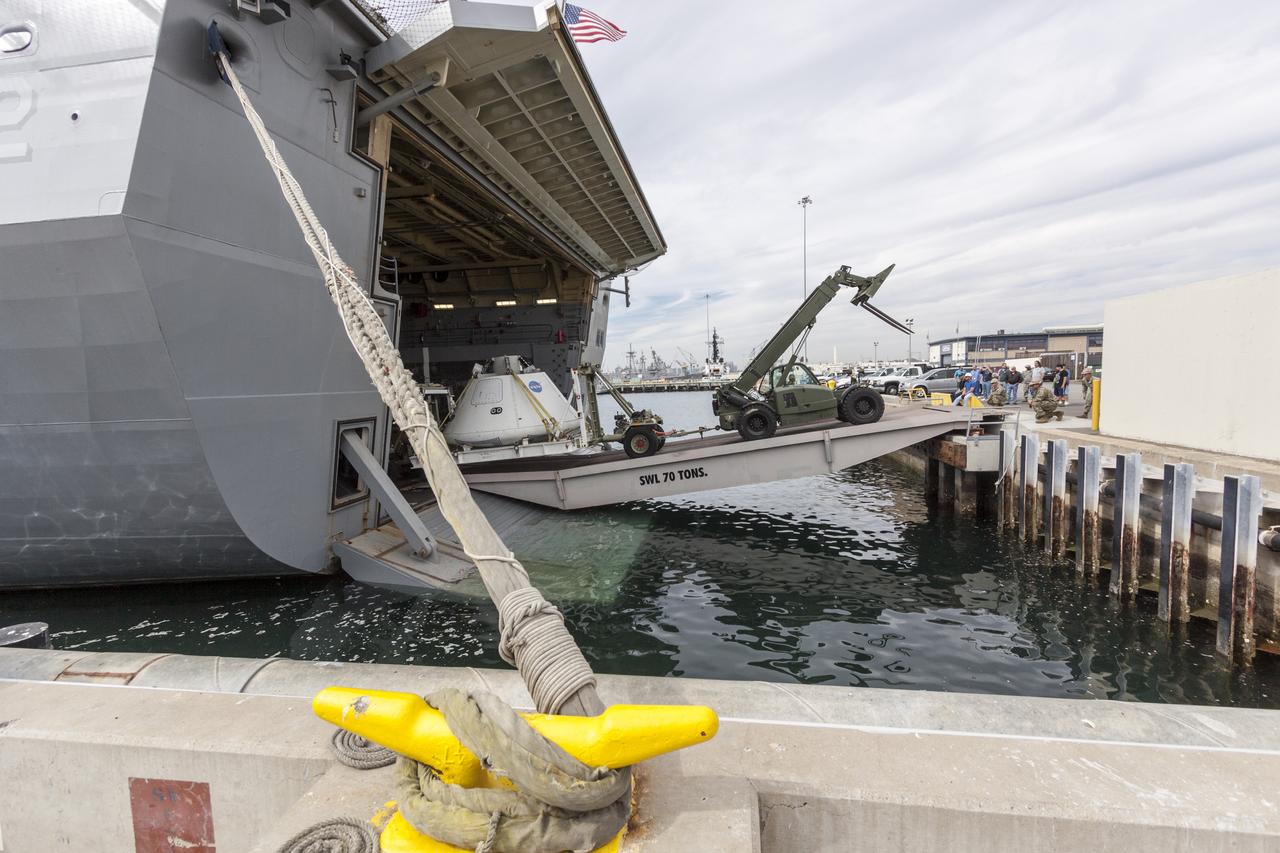
SAN DIEGO, Calif. – At the U.S. Naval Base San Diego in California, the Orion boilerplate test vehicle and support hardware are being loaded in the well deck of the USS Anchorage for Underway Recovery Test 2. NASA, Lockheed Martin and the U.S. Navy will conduct tests in the Pacific Ocean to prepare for recovery of the Orion crew module, forward bay cover and parachutes on its return from a deep space mission. The second underway recovery test will allow the teams to demonstrate and evaluate the recovery processes, procedures, new hardware and personnel in open waters. The Ground Systems Development and Operations Program is conducting the underway recovery tests. Orion is the exploration spacecraft designed to carry astronauts to destinations not yet explored by humans, including an asteroid and Mars. It will have emergency abort capability, sustain the crew during space travel and provide safe re-entry from deep space return velocities. The first unpiloted test flight of the Orion is scheduled to launch in 2014 atop a Delta IV rocket and in 2017 on NASA’s Space Launch System rocket. For more information, visit http://www.nasa.gov/orion. Photo credit: NASA/Kim Shiflett

SAN DIEGO, Calif. – At the U.S. Naval Base San Diego in California, support hardware for the Orion boilerplate test vehicle is be loaded in the well deck of the USS Anchorage for Underway Recovery Test 2. NASA, Lockheed Martin and the U.S. Navy will conduct tests in the Pacific Ocean to prepare for recovery of the Orion crew module, forward bay cover and parachutes on its return from a deep space mission. The second underway recovery test will allow the teams to demonstrate and evaluate the recovery processes, procedures, new hardware and personnel in open waters. The Ground Systems Development and Operations Program is conducting the underway recovery tests. Orion is the exploration spacecraft designed to carry astronauts to destinations not yet explored by humans, including an asteroid and Mars. It will have emergency abort capability, sustain the crew during space travel and provide safe re-entry from deep space return velocities. The first unpiloted test flight of the Orion is scheduled to launch in 2014 atop a Delta IV rocket and in 2017 on NASA’s Space Launch System rocket. For more information, visit http://www.nasa.gov/orion. Photo credit: NASA/Kim Shiflett

SAN DIEGO, Calif. – At the U.S. Naval Base San Diego in California, the Orion boilerplate test vehicle and support hardware are loaded in the well deck of the USS Anchorage for Underway Recovery Test 2. NASA, Lockheed Martin and the U.S. Navy will conduct tests in the Pacific Ocean to prepare for recovery of the Orion crew module, forward bay cover and parachutes on its return from a deep space mission. The second underway recovery test will allow the teams to demonstrate and evaluate the recovery processes, procedures, new hardware and personnel in open waters. The Ground Systems Development and Operations Program is conducting the underway recovery tests. Orion is the exploration spacecraft designed to carry astronauts to destinations not yet explored by humans, including an asteroid and Mars. It will have emergency abort capability, sustain the crew during space travel and provide safe re-entry from deep space return velocities. The first unpiloted test flight of the Orion is scheduled to launch in 2014 atop a Delta IV rocket and in 2017 on NASA’s Space Launch System rocket. For more information, visit http://www.nasa.gov/orion. Photo credit: NASA/Kim Shiflett

SAN DIEGO, Calif. – At the U.S. Naval Base San Diego in California, the Orion boilerplate test vehicle and support hardware are being prepared to be loaded in the well deck of the USS Anchorage for Underway Recovery Test 2. NASA, Lockheed Martin and the U.S. Navy will conduct tests in the Pacific Ocean to prepare for recovery of the Orion crew module, forward bay cover and parachutes on its return from a deep space mission. The second underway recovery test will allow the teams to demonstrate and evaluate the recovery processes, procedures, new hardware and personnel in open waters. The Ground Systems Development and Operations Program is conducting the underway recovery tests. Orion is the exploration spacecraft designed to carry astronauts to destinations not yet explored by humans, including an asteroid and Mars. It will have emergency abort capability, sustain the crew during space travel and provide safe re-entry from deep space return velocities. The first unpiloted test flight of the Orion is scheduled to launch in 2014 atop a Delta IV rocket and in 2017 on NASA’s Space Launch System rocket. For more information, visit http://www.nasa.gov/orion. Photo credit: NASA/Kim Shiflett

SAN DIEGO, Calif. – At the U.S. Naval Base San Diego in California, NASA and U.S. Navy personnel make sure that the Orion boilerplate test vehicle and support hardware are secured in the well deck of the USS Anchorage for Underway Recovery Test 2. NASA, Lockheed Martin and the U.S. Navy will conduct tests in the Pacific Ocean to prepare for recovery of the Orion crew module, forward bay cover and parachutes on its return from a deep space mission. The second underway recovery test will allow the teams to demonstrate and evaluate the recovery processes, procedures, new hardware and personnel in open waters. The Ground Systems Development and Operations Program is conducting the underway recovery tests. Orion is the exploration spacecraft designed to carry astronauts to destinations not yet explored by humans, including an asteroid and Mars. It will have emergency abort capability, sustain the crew during space travel and provide safe re-entry from deep space return velocities. The first unpiloted test flight of the Orion is scheduled to launch in 2014 atop a Delta IV rocket and in 2017 on NASA’s Space Launch System rocket. For more information, visit http://www.nasa.gov/orion. Photo credit: NASA/Kim Shiflett
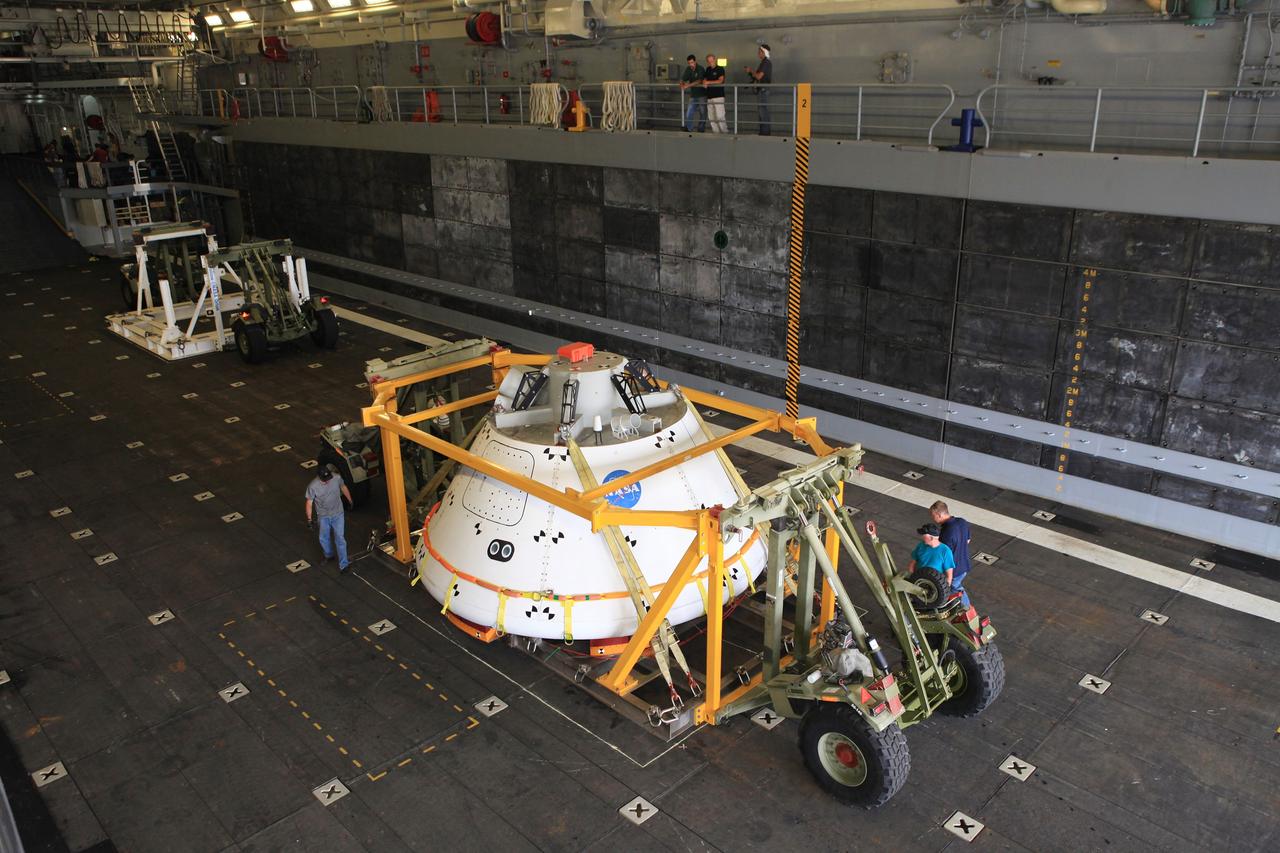
SAN DIEGO, Calif. – At the U.S. Naval Base San Diego in California, the Orion boilerplate test vehicle and support hardware are secured in the well deck of the USS Anchorage for Underway Recovery Test 2. NASA, Lockheed Martin and the U.S. Navy will conduct tests in the Pacific Ocean to prepare for recovery of the Orion crew module, forward bay cover and parachutes on its return from a deep space mission. The second underway recovery test will allow the teams to demonstrate and evaluate the recovery processes, procedures, new hardware and personnel in open waters. The Ground Systems Development and Operations Program is conducting the underway recovery tests. Orion is the exploration spacecraft designed to carry astronauts to destinations not yet explored by humans, including an asteroid and Mars. It will have emergency abort capability, sustain the crew during space travel and provide safe re-entry from deep space return velocities. The first unpiloted test flight of the Orion is scheduled to launch in 2014 atop a Delta IV rocket and in 2017 on NASA’s Space Launch System rocket. For more information, visit http://www.nasa.gov/orion. Photo credit: NASA/Kim Shiflett

SAN DIEGO, Calif. – At the U.S. Naval Base San Diego in California, the Orion boilerplate test vehicle and support hardware are being prepared to be loaded in the well deck of the USS Anchorage for Underway Recovery Test 2. NASA, Lockheed Martin and the U.S. Navy will conduct tests in the Pacific Ocean to prepare for recovery of the Orion crew module, forward bay cover and parachutes on its return from a deep space mission. The second underway recovery test will allow the teams to demonstrate and evaluate the recovery processes, procedures, new hardware and personnel in open waters. The Ground Systems Development and Operations Program is conducting the underway recovery tests. Orion is the exploration spacecraft designed to carry astronauts to destinations not yet explored by humans, including an asteroid and Mars. It will have emergency abort capability, sustain the crew during space travel and provide safe re-entry from deep space return velocities. The first unpiloted test flight of the Orion is scheduled to launch in 2014 atop a Delta IV rocket and in 2017 on NASA’s Space Launch System rocket. For more information, visit http://www.nasa.gov/orion. Photo credit: NASA/Kim Shiflett

SAN DIEGO, Calif. – At the U.S. Naval Base San Diego in California, the Orion boilerplate test vehicle and support hardware are being prepared to be loaded in the well deck of the USS Anchorage for Underway Recovery Test 2. NASA, Lockheed Martin and the U.S. Navy will conduct tests in the Pacific Ocean to prepare for recovery of the Orion crew module, forward bay cover and parachutes on its return from a deep space mission. The second underway recovery test will allow the teams to demonstrate and evaluate the recovery processes, procedures, new hardware and personnel in open waters. The Ground Systems Development and Operations Program is conducting the underway recovery tests. Orion is the exploration spacecraft designed to carry astronauts to destinations not yet explored by humans, including an asteroid and Mars. It will have emergency abort capability, sustain the crew during space travel and provide safe re-entry from deep space return velocities. The first unpiloted test flight of the Orion is scheduled to launch in 2014 atop a Delta IV rocket and in 2017 on NASA’s Space Launch System rocket. For more information, visit http://www.nasa.gov/orion. Photo credit: NASA/Kim Shiflett
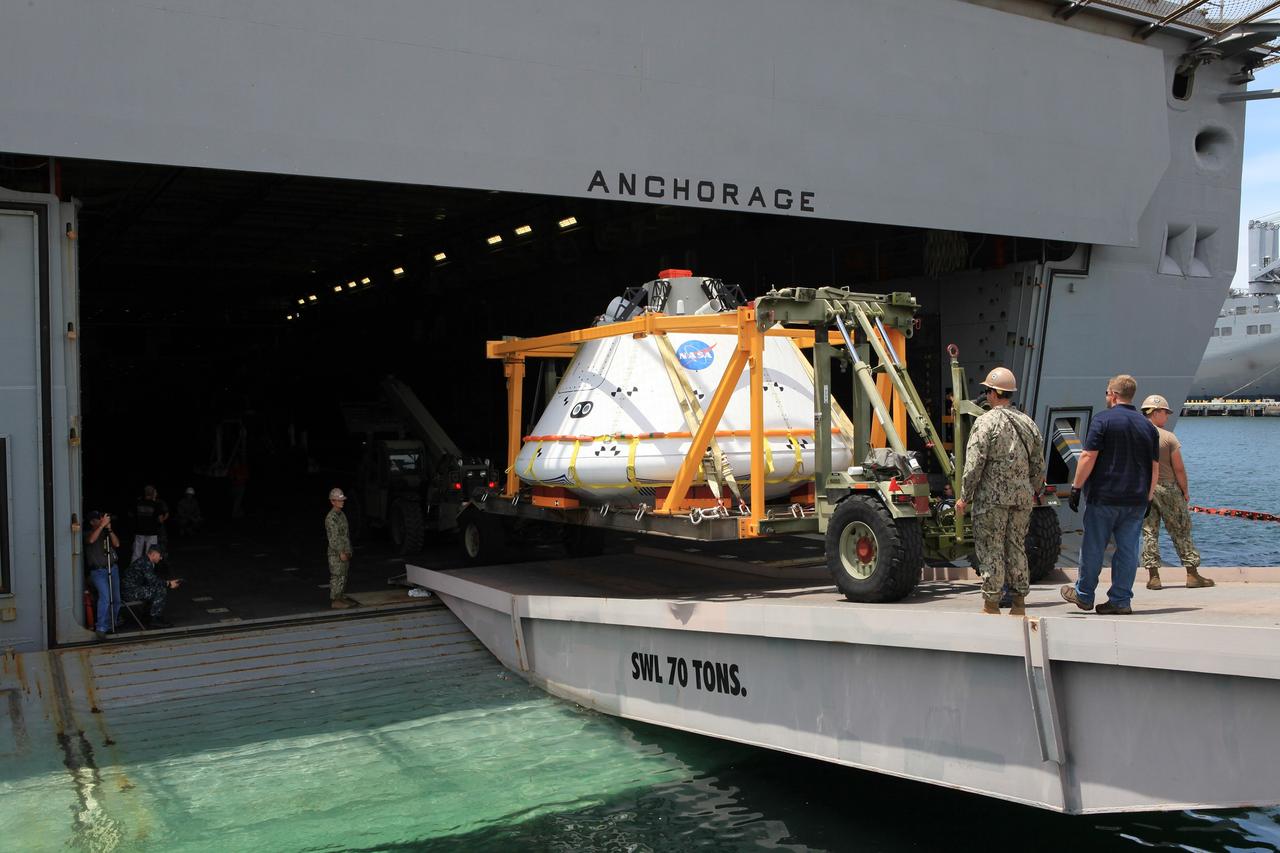
SAN DIEGO, Calif. – At the U.S. Naval Base San Diego in California, the Orion boilerplate test vehicle and support hardware are loaded in the well deck of the USS Anchorage for Underway Recovery Test 2. NASA, Lockheed Martin and the U.S. Navy will conduct tests in the Pacific Ocean to prepare for recovery of the Orion crew module, forward bay cover and parachutes on its return from a deep space mission. The second underway recovery test will allow the teams to demonstrate and evaluate the recovery processes, procedures, new hardware and personnel in open waters. The Ground Systems Development and Operations Program is conducting the underway recovery tests. Orion is the exploration spacecraft designed to carry astronauts to destinations not yet explored by humans, including an asteroid and Mars. It will have emergency abort capability, sustain the crew during space travel and provide safe re-entry from deep space return velocities. The first unpiloted test flight of the Orion is scheduled to launch in 2014 atop a Delta IV rocket and in 2017 on NASA’s Space Launch System rocket. For more information, visit http://www.nasa.gov/orion. Photo credit: NASA/Kim Shiflett

SAN DIEGO, Calif. – At the U.S. Naval Base San Diego in California, the USS Anchorage is being prepared for the Orion Underway Recovery Test 2. The Orion boilerplate test vehicle and other hardware will be loaded into the well deck of the ship and head out to sea in the Pacific Ocean off the coast of San Diego. NASA, Lockheed Martin and the U.S. Navy will conduct the test to prepare for recovery of the Orion crew module, forward bay cover and parachutes on its return from a deep space mission. The underway recovery test will allow the teams to demonstrate and evaluate the recovery processes, procedures, new support hardware and personnel in open waters. The Ground Systems Development and Operations Program will conduct the underway recovery tests. Orion is the exploration spacecraft designed to carry astronauts to destinations not yet explored by humans, including an asteroid and Mars. It will have emergency abort capability, sustain the crew during space travel and provide safe re-entry from deep space return velocities. The first unpiloted test flight of the Orion is scheduled to launch in 2014 atop a Delta IV rocket and in 2017 on NASA’s Space Launch System rocket. For more information, visit http://www.nasa.gov/orion. Photo credit: NASA/Kim Shiflett
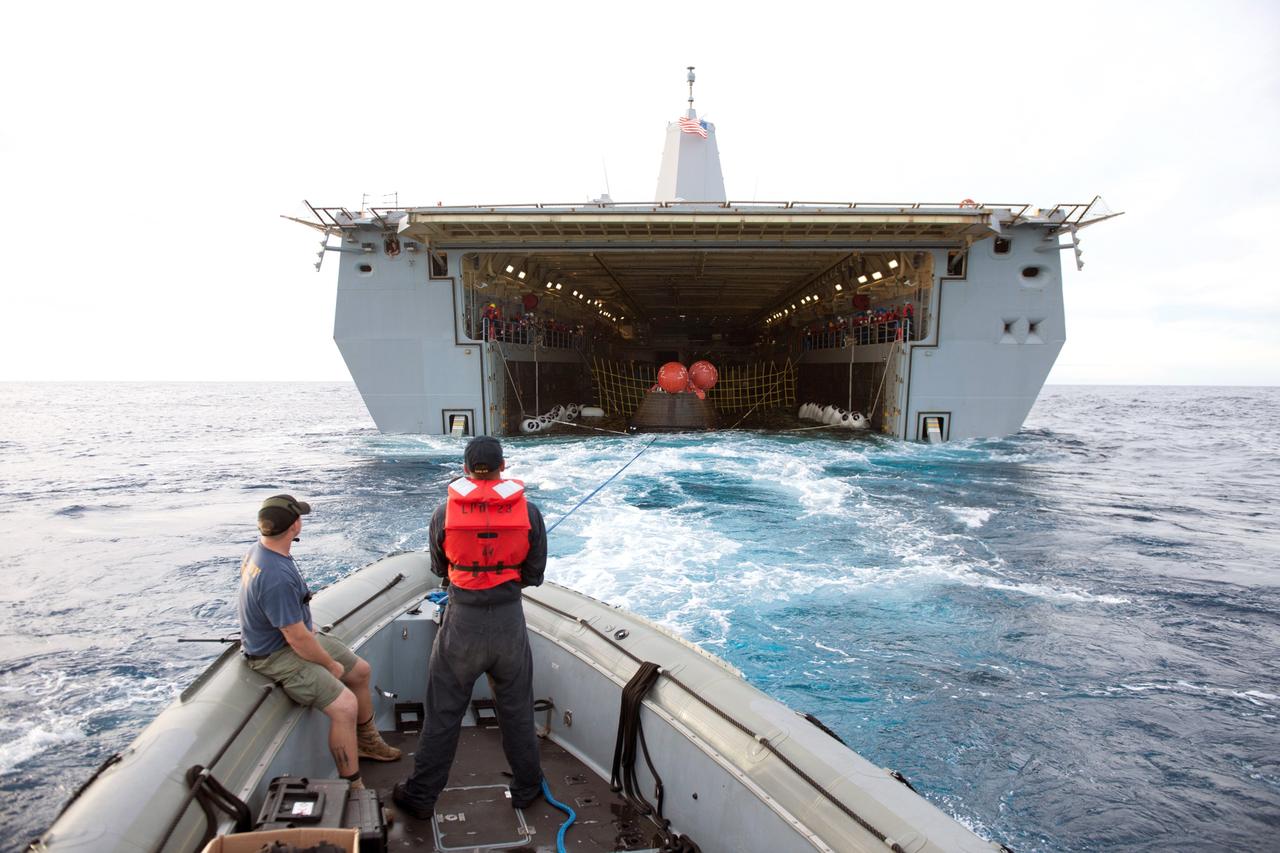
SAN DIEGO, Calif. -- U.S. Navy personnel aboard a rigid hull inflatable boat help recover NASA's Orion spacecraft following its splashdown in the Pacific Ocean after its first flight test in Earth orbit. Orion is towed into the flooded well deck of the USS Anchorage. NASA, the U.S. Navy and Lockheed Martin coordinated efforts to recover Orion, the forward bay cover and main parachutes. Orion completed a two-orbit, four-and-a-half hour mission, to test systems critical to crew safety, including the launch abort system, the heat shield and the parachute system. The Ground Systems Development and Operations Program is leading the recovery efforts. For more information, visit www.nasa.gov/orion Photo credit: NASA/Tony Gray
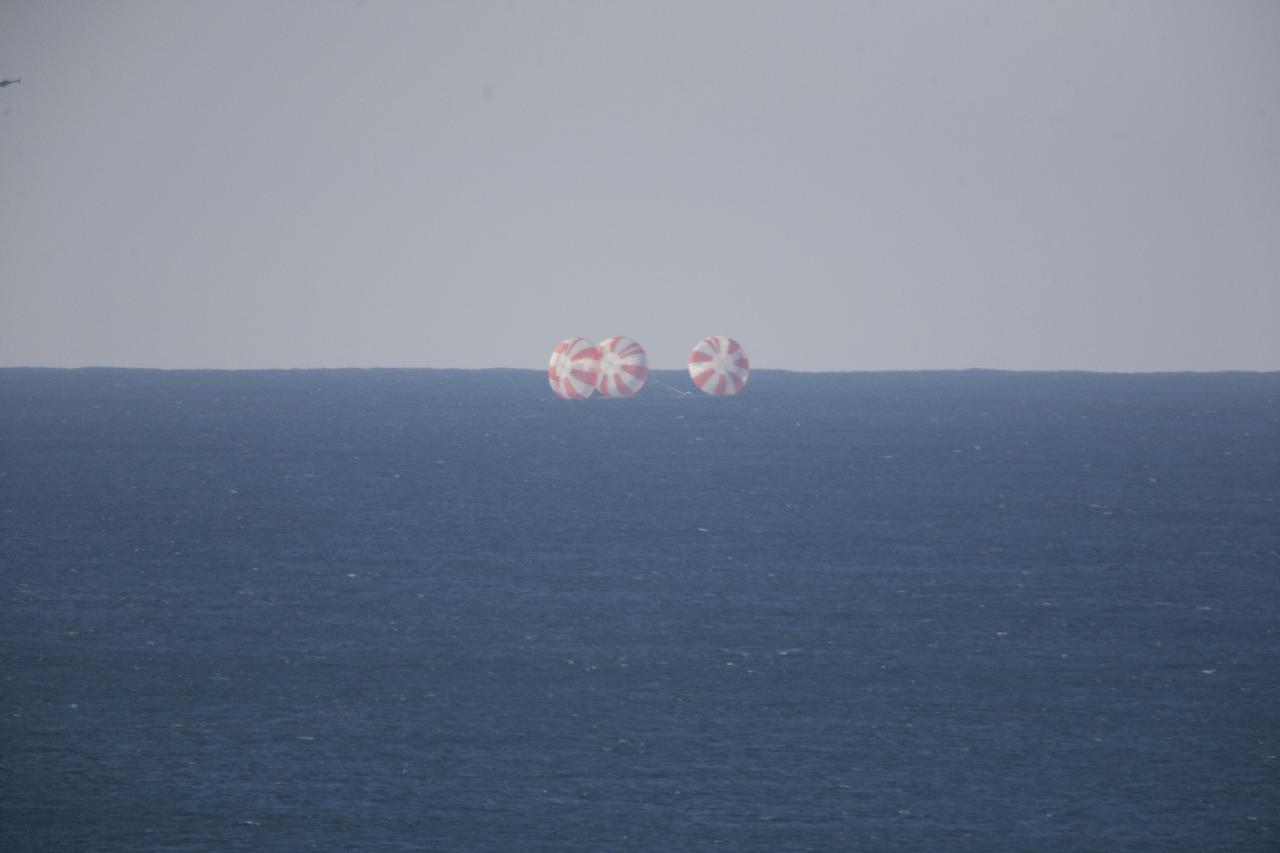
MORRO BAY, Calif. – The SpaceX Dragon test article awaits recovery from the Pacific Ocean, off the coast of Morro Bay, Calif following splash down. The test enabled SpaceX engineers to evaluate the spacecraft's parachute deployment system as part of a milestone under its Commercial Crew Integrated Capability agreement with NASA's Commercial Crew Program. Photo credit: NASA/Kim Shiflett

SAN DIEGO, Calif. – NASA, Lockheed Martin and U.S. Navy personnel review recovery procedures on the USS Anchorage in the Pacific Ocean near the Orion recovery site ahead of the first flight test. The team is preparing for recovery of the crew module, forward bay cover and parachutes on its return from space and splashdown in the Pacific Ocean. The Ground Systems Development and Operations Program is leading the recovery efforts. The first unpiloted flight test of Orion is scheduled to launch this week atop a United Launch Alliance Delta IV Heavy rocket. During its two-orbit, 4.5-hour flight, Orion will venture 3,600 miles in altitude and travel nearly 60,000 miles before returning to Earth for a splashdown in the Pacific Ocean. For more information, visit http://www.nasa.gov/orion. Photo credit: NASA/Cory Huston
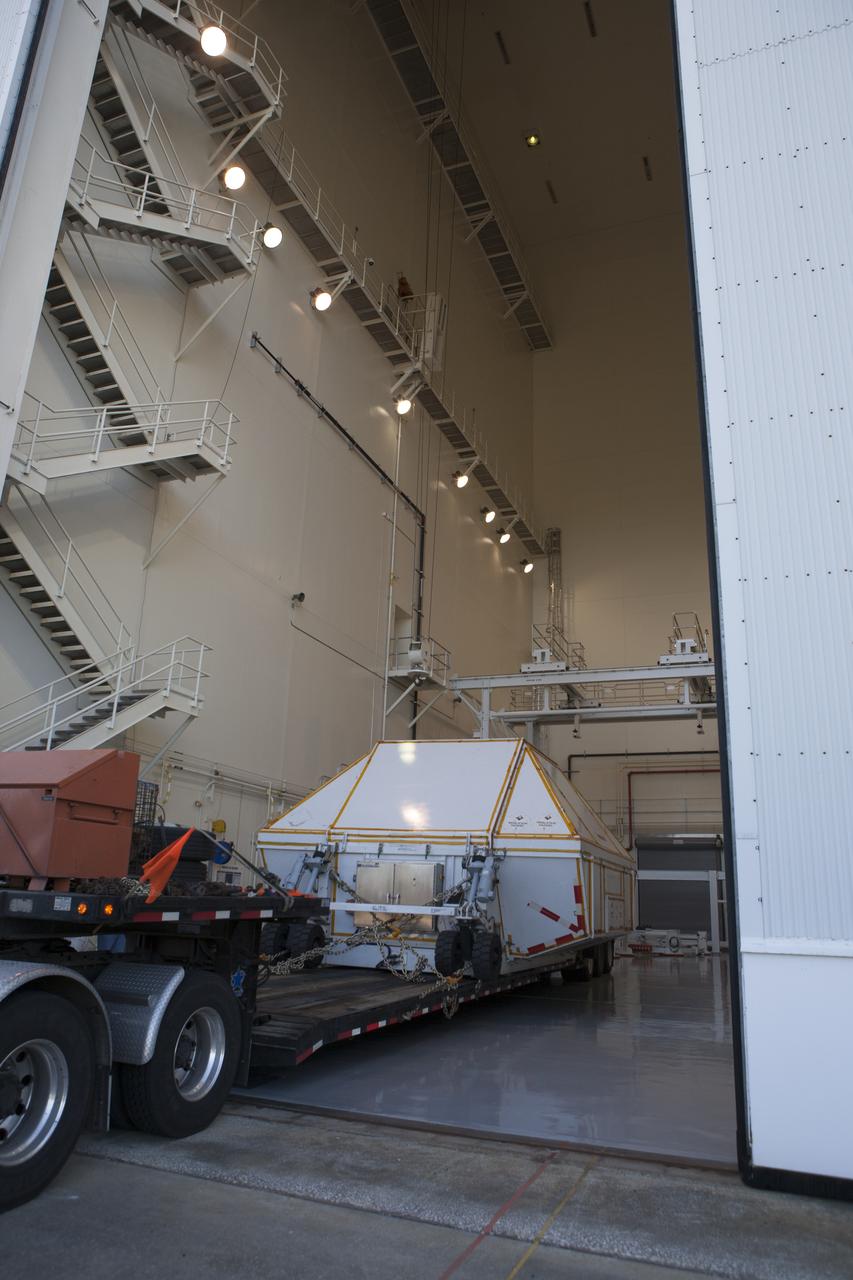
NASA's Orion spacecraft arrives at the Launch Abort System Facility at Kennedy Space Center in Florida. The spacecraft was transported 2,700 miles overland from Naval Base San Diego in California, on a flatbed truck secured in its crew module transportation fixture for the trip. During its first flight test, Orion completed a two-orbit, four-and-a-half hour mission Dec. 5 to test systems critical to crew safety, including the launch abort system, the heat shield and the parachute system. The Ground Systems Development and Operations Program led the recovery, offload and transportation efforts.
CAPE CANAVERAL, Fla. -- NASA's Orion spacecraft arrives at the Launch Abort System Facility at Kennedy Space Center in Florida. The spacecraft was transported 2,700 miles overland from Naval Base San Diego in California, on a flatbed truck secured in its crew module transportation fixture for the trip. During its first flight test, Orion completed a two-orbit, four-and-a-half hour mission Dec. 5 to test systems critical to crew safety, including the launch abort system, the heat shield and the parachute system. The Ground Systems Development and Operations Program led the recovery, offload and transportation efforts. For more information, visit www.nasa.gov/orion. Photo credit: NASA/Kim Shiflett
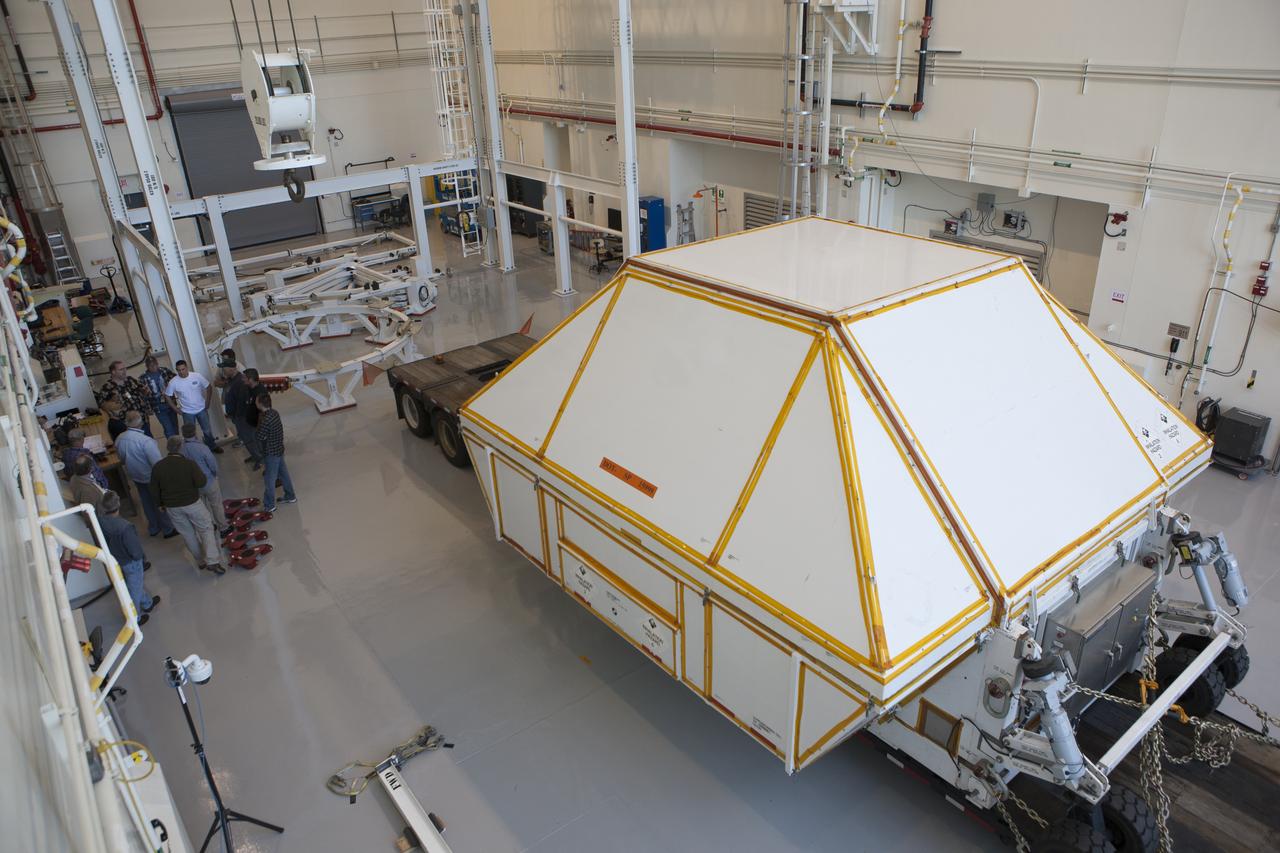
NASA's Orion spacecraft arrives inside the Launch Abort System Facility at Kennedy Space Center in Florida. The spacecraft was transported 2,700 miles overland from Naval Base San Diego in California, on a flatbed truck secured in its crew module transportation fixture for the trip. During its first flight test, Orion completed a two-orbit, four-and-a-half hour mission Dec. 5 to test systems critical to crew safety, including the launch abort system, the heat shield and the parachute system. The Ground Systems Development and Operations Program led the recovery, offload and transportation efforts.
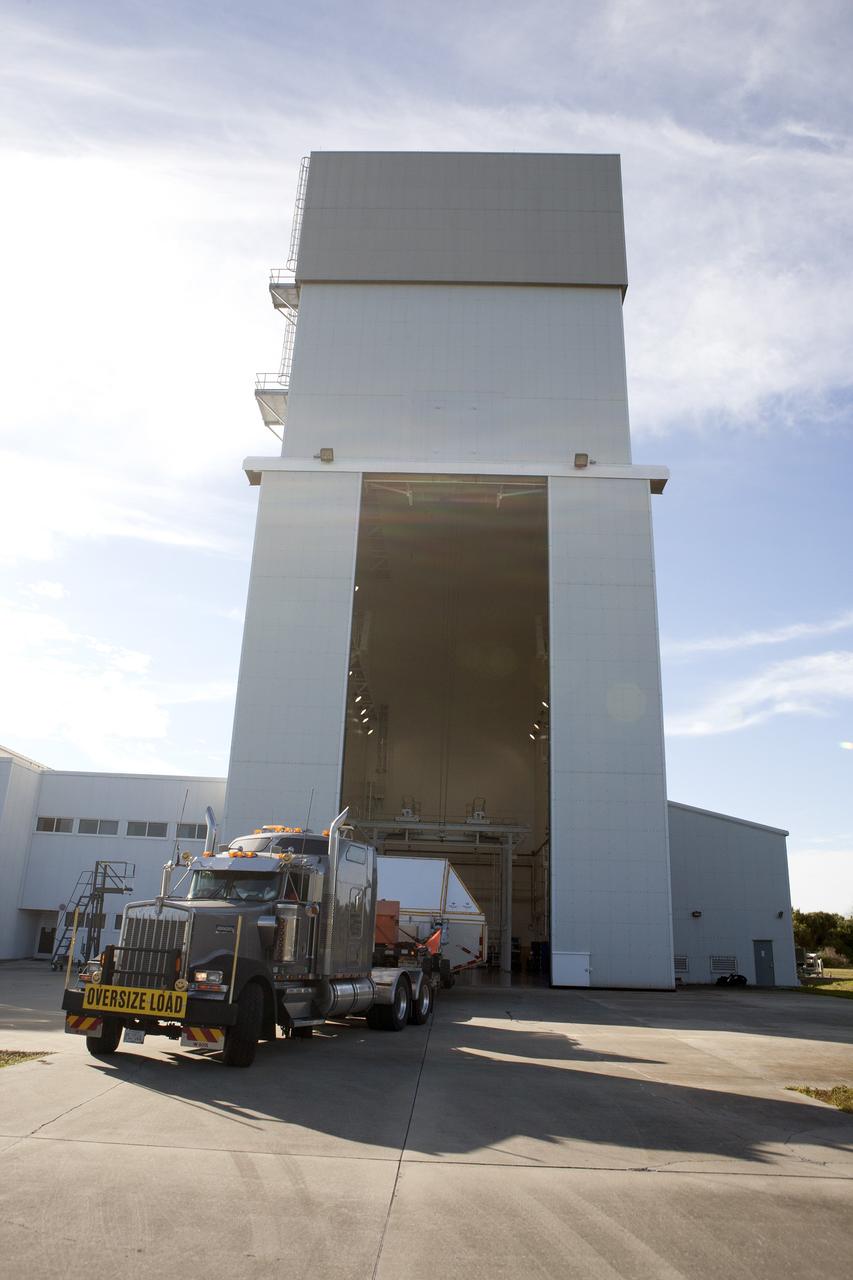
CAPE CANAVERAL, Fla. -- NASA's Orion spacecraft arrives at the Launch Abort System Facility at Kennedy Space Center in Florida. The spacecraft was transported 2,700 miles overland from Naval Base San Diego in California, on a flatbed truck secured in its crew module transportation fixture for the trip. During its first flight test, Orion completed a two-orbit, four-and-a-half hour mission Dec. 5 to test systems critical to crew safety, including the launch abort system, the heat shield and the parachute system. The Ground Systems Development and Operations Program led the recovery, offload and transportation efforts. For more information, visit www.nasa.gov/orion. Photo credit: NASA/Kim Shiflett
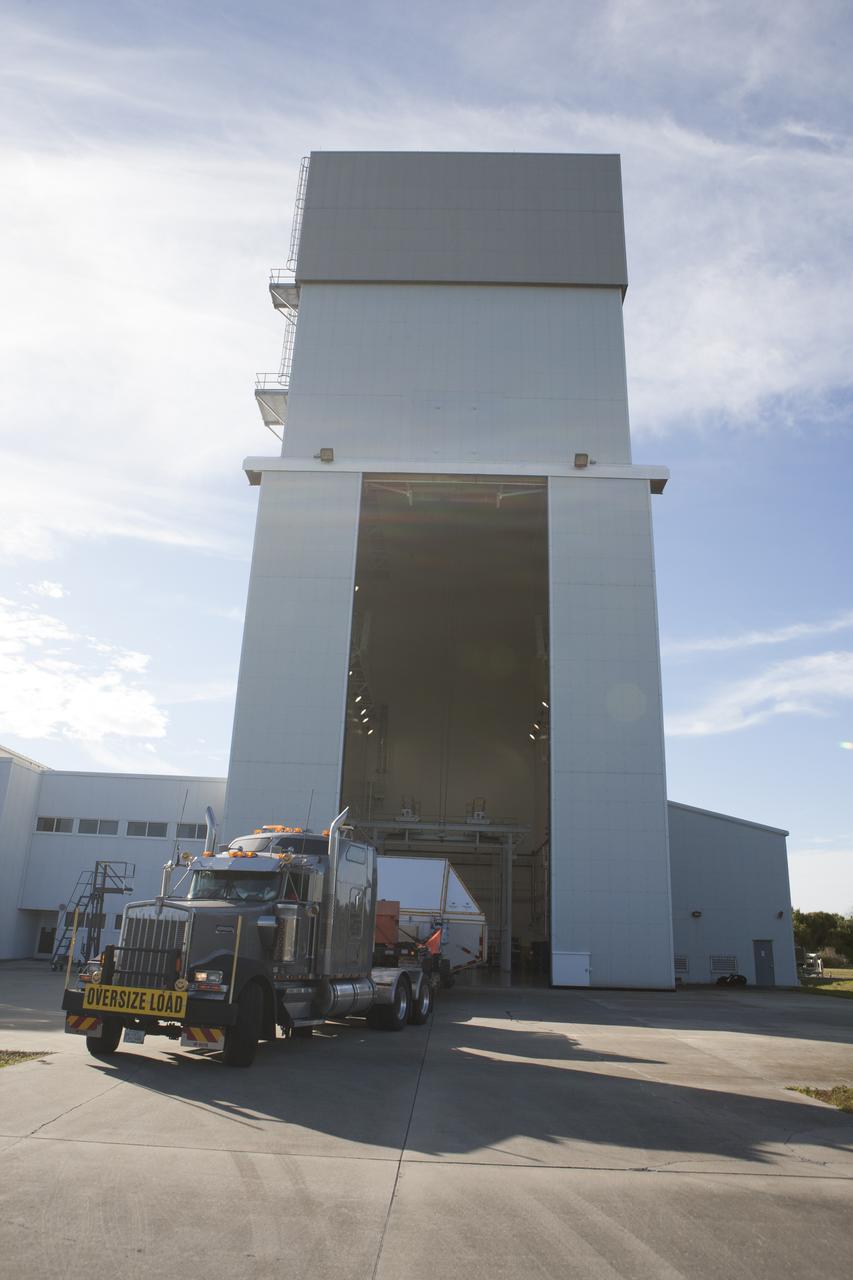
NASA's Orion spacecraft arrives at the Launch Abort System Facility at Kennedy Space Center in Florida. The spacecraft was transported 2,700 miles overland from Naval Base San Diego in California, on a flatbed truck secured in its crew module transportation fixture for the trip. During its first flight test, Orion completed a two-orbit, four-and-a-half hour mission Dec. 5 to test systems critical to crew safety, including the launch abort system, the heat shield and the parachute system. The Ground Systems Development and Operations Program led the recovery, offload and transportation efforts.
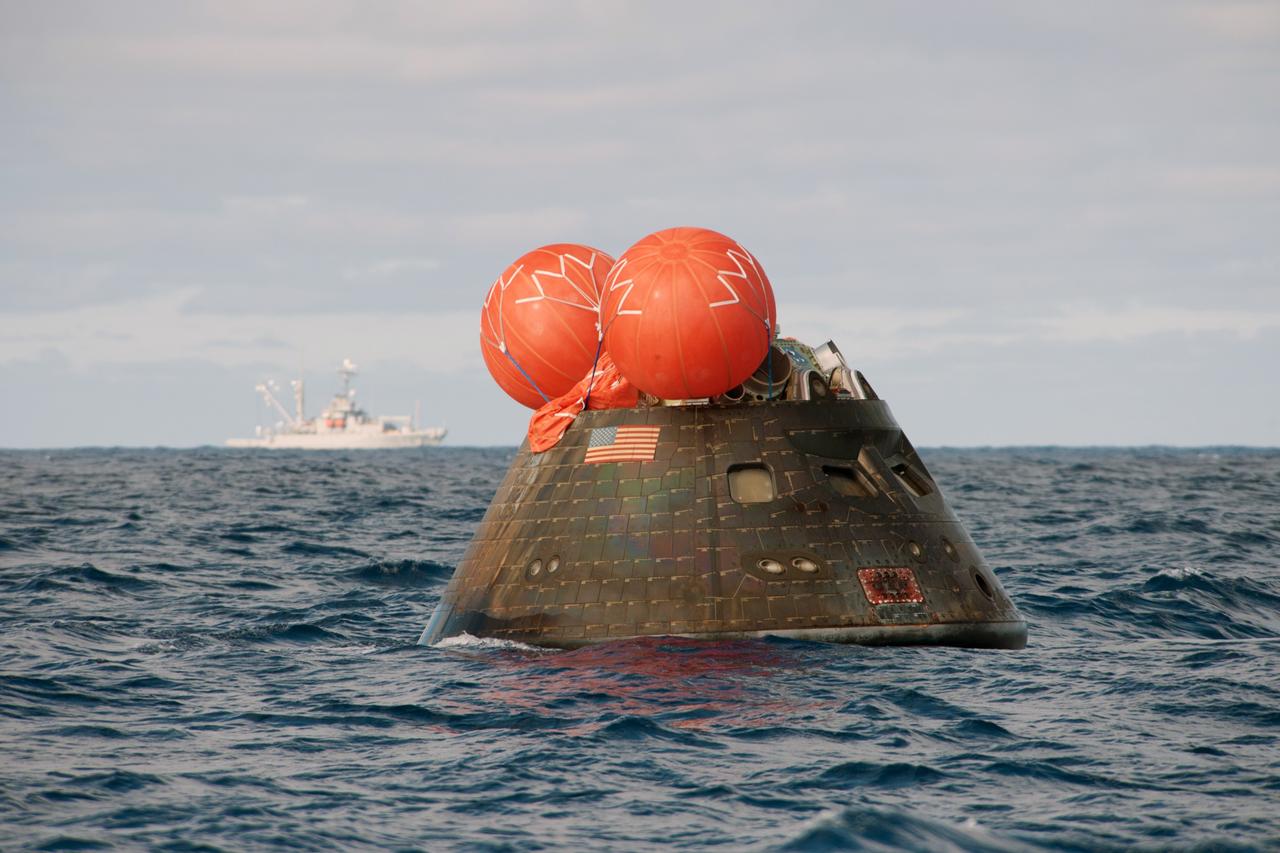
SAN DIEGO, Calif. -- NASA's Orion spacecraft floats in the Pacific Ocean after splashdown from its first flight test in Earth orbit. In the background is the USNS Salvor. This U.S. Navy salvage ship was there as a backup in case it was needed. NASA, the U.S. Navy and Lockheed Martin are coordinating efforts to recover Orion and secure the spacecraft in the well deck of the USS Anchorage. Orion completed a two-orbit, four-and-a-half hour mission, to test systems critical to crew safety, including the launch abort system, the heat shield and the parachute system. The Ground Systems Development and Operations Program is leading the recovery efforts. For more information, visit www.nasa.gov/orion Photo credit: NASA/Tony Gray
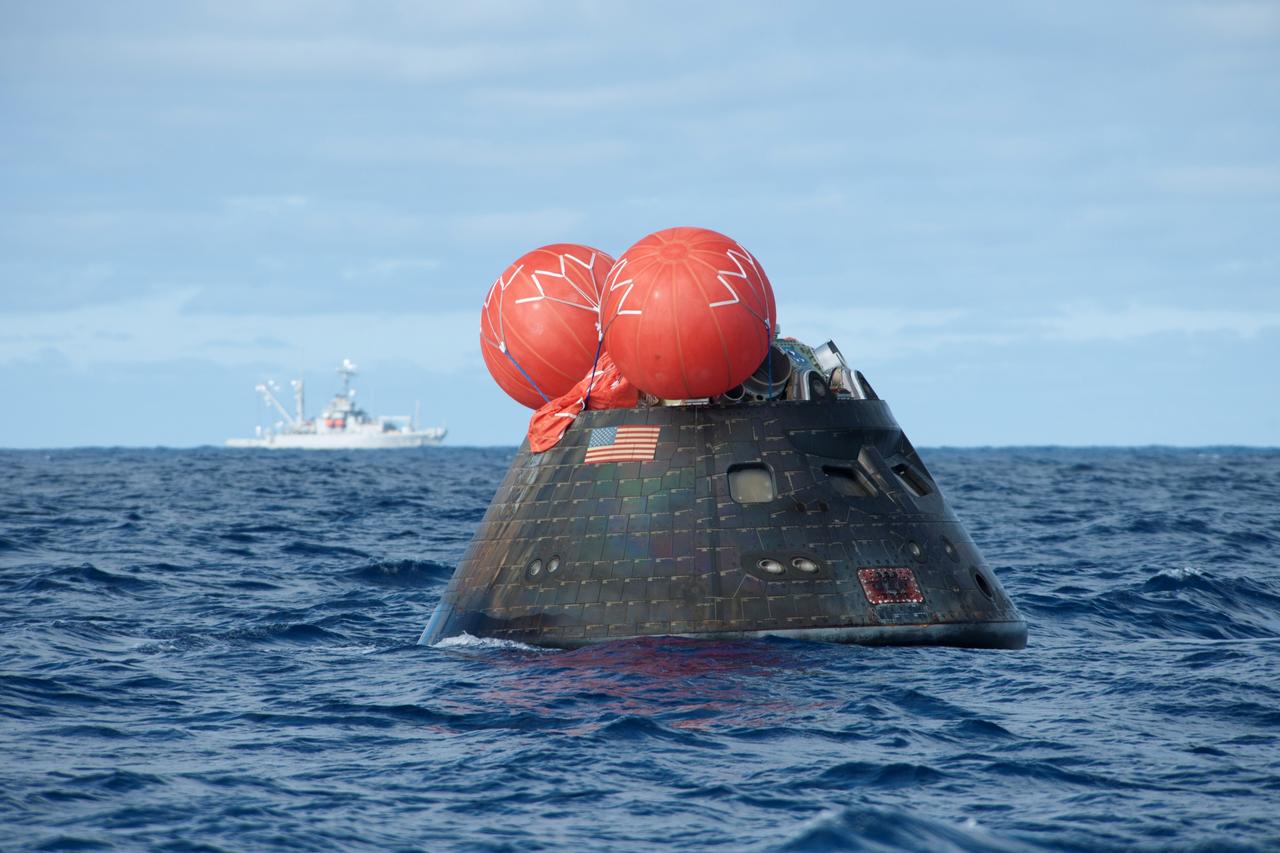
NASA's Orion spacecraft floats in the Pacific Ocean after splashdown from its first flight test in Earth orbit. In the background is the USNS Salvor. This U.S. Navy salvage ship was there as a backup in case it was needed. NASA, the U.S. Navy and Lockheed Martin are coordinating efforts to recover Orion and secure the spacecraft in the well deck of the USS Anchorage. Orion completed a two-orbit, four-and-a-half hour mission, to test systems critical to crew safety, including the launch abort system, the heat shield and the parachute system. The Ground Systems Development and Operations Program is leading the recovery efforts.
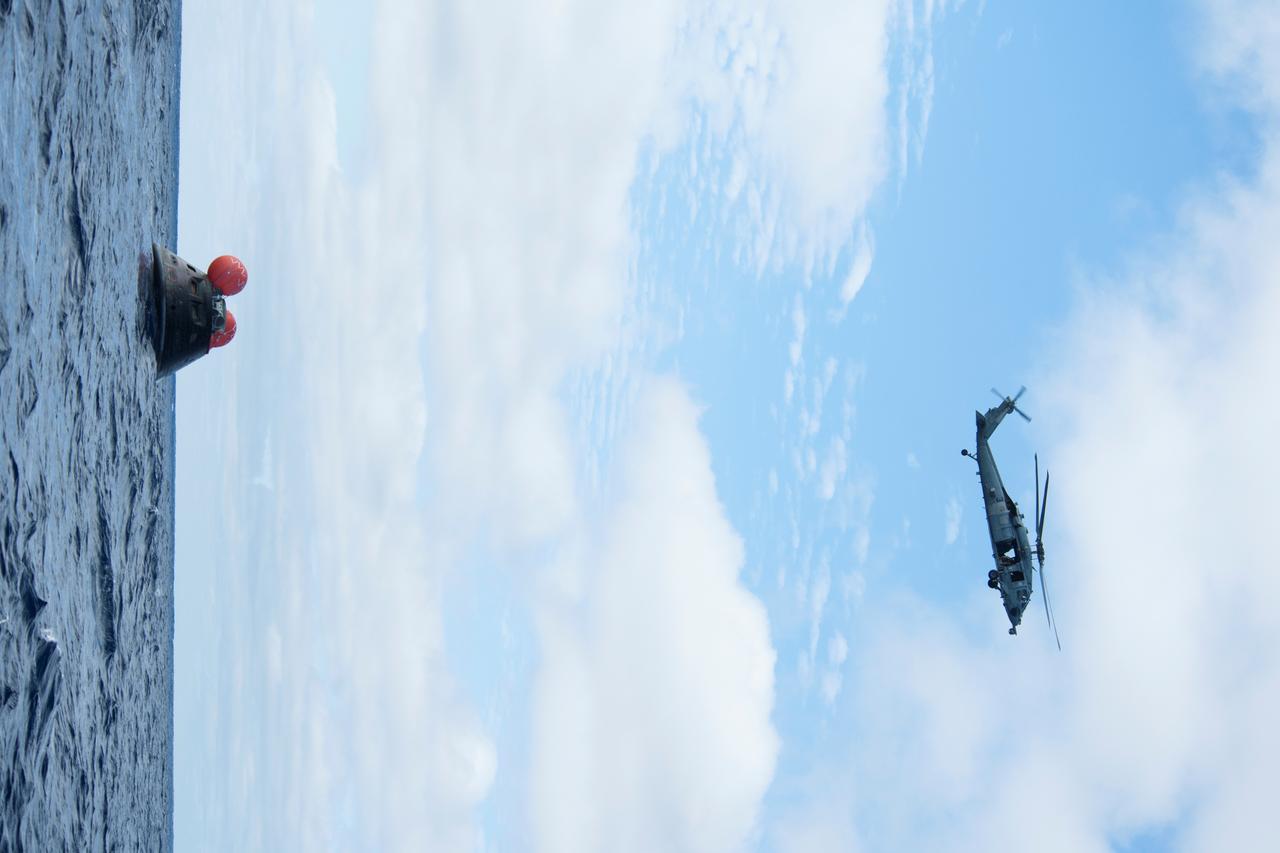
NASA's Orion spacecraft floats in the Pacific Ocean after splashdown from its first flight test in Earth orbit. An H60-S Seahawk helicopter hovers above to communicate the spacecraft's location back to the USS Anchorage. NASA, the U.S. Navy and Lockheed Martin are coordinating efforts to recover Orion and secure the spacecraft in the well deck of the USS Anchorage. Orion completed a two-orbit, four-and-a-half hour mission, to test systems critical to crew safety, including the launch abort system, the heat shield and the parachute system. The Ground Systems Development and Operations Program is leading the recovery efforts.
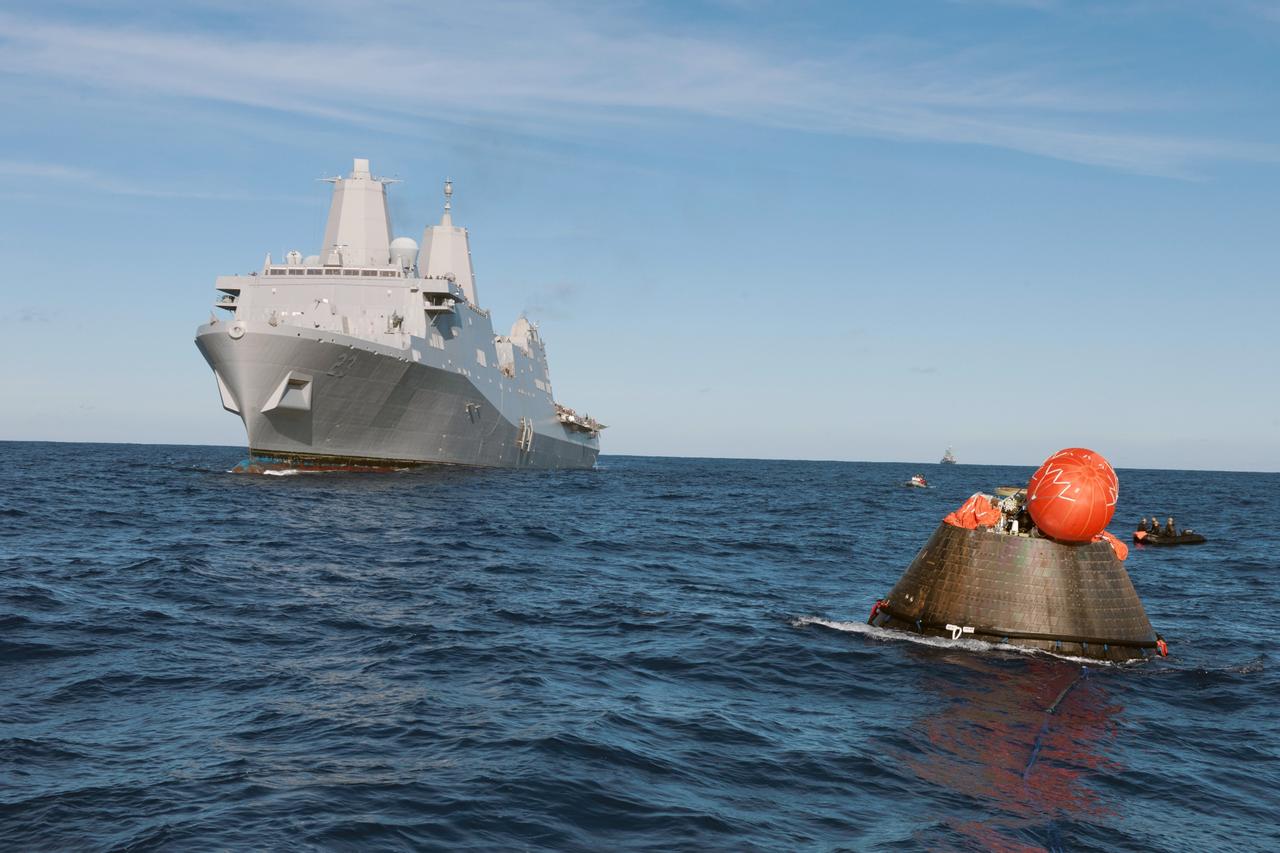
SAN DIEGO, Calif. -- NASA's Orion spacecraft floats in the Pacific Ocean after splashdown from its first flight test in Earth orbit. The USS Anchorage is nearby. NASA, the U.S. Navy and Lockheed Martin are coordinating efforts to recover Orion and secure the spacecraft in the well deck of the USS Anchorage. Orion completed a two-orbit, four-and-a-half hour mission, to test systems critical to crew safety, including the launch abort system, the heat shield and the parachute system. The Ground Systems Development and Operations Program is leading the recovery efforts. For more information, visit www.nasa.gov/orion Photo credit: NASA/Tony Gray
NASA's Orion spacecraft floats in the Pacific Ocean after splashdown from its first flight test in Earth orbit. An H60-S Seahawk helicopter hovers above to communicate the spacecraft's location back to the USS Anchorage. NASA, the U.S. Navy and Lockheed Martin are coordinating efforts to recover Orion and secure the spacecraft in the well deck of the USS Anchorage. Orion completed a two-orbit, four-and-a-half hour mission, to test systems critical to crew safety, including the launch abort system, the heat shield and the parachute system. The Ground Systems Development and Operations Program is leading the recovery efforts.
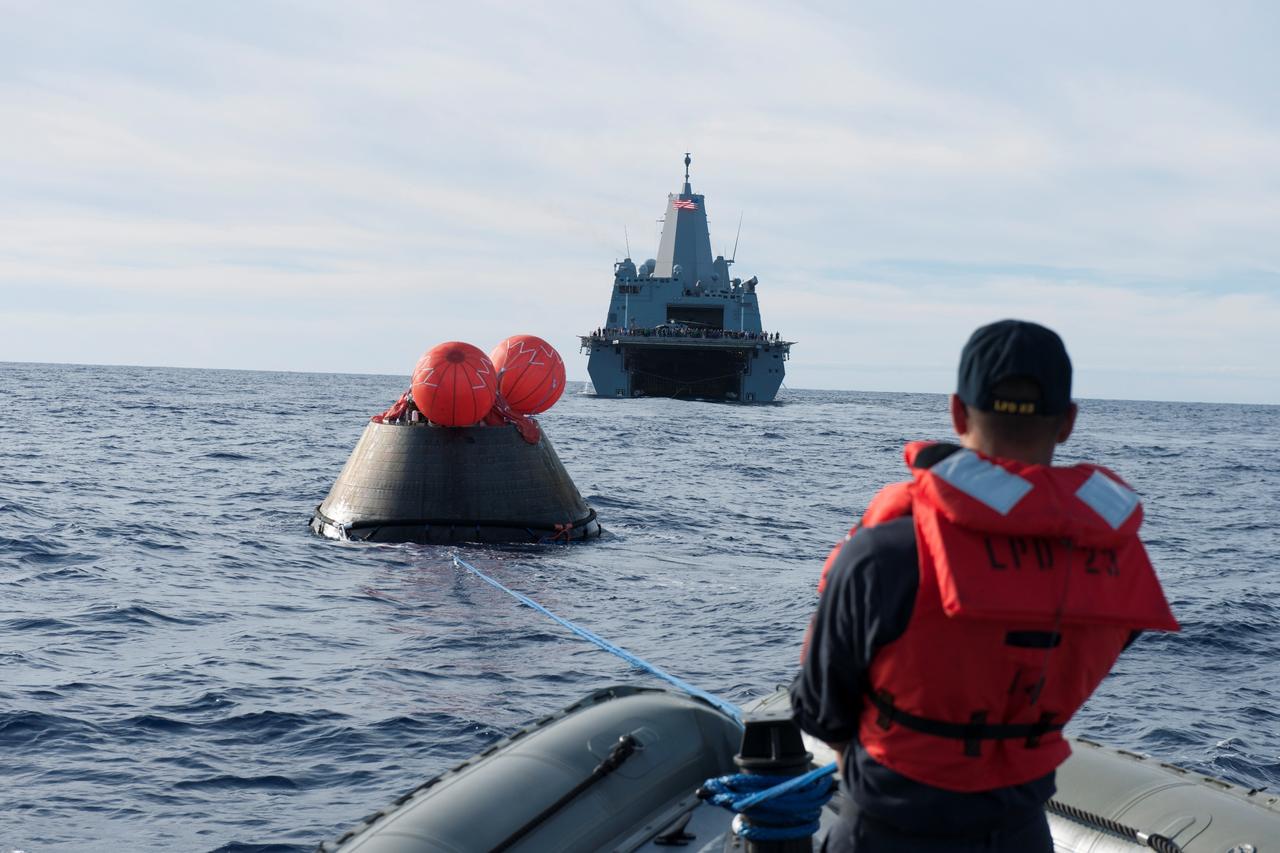
U.S. Navy personnel aboard a rigid hull inflatable boat help recover NASA's Orion spacecraft following its splashdown in the Pacific Ocean after its first flight test in Earth orbit. The USS Anchorage is in the background. NASA, the U.S. Navy and Lockheed Martin are coordinating efforts to recover Orion and secure the spacecraft in the well deck of the USS Anchorage. Orion completed a two-orbit, four-and-a-half hour mission, to test systems critical to crew safety, including the launch abort system, the heat shield and the parachute system. The Ground Systems Development and Operations Program is leading the recovery efforts.
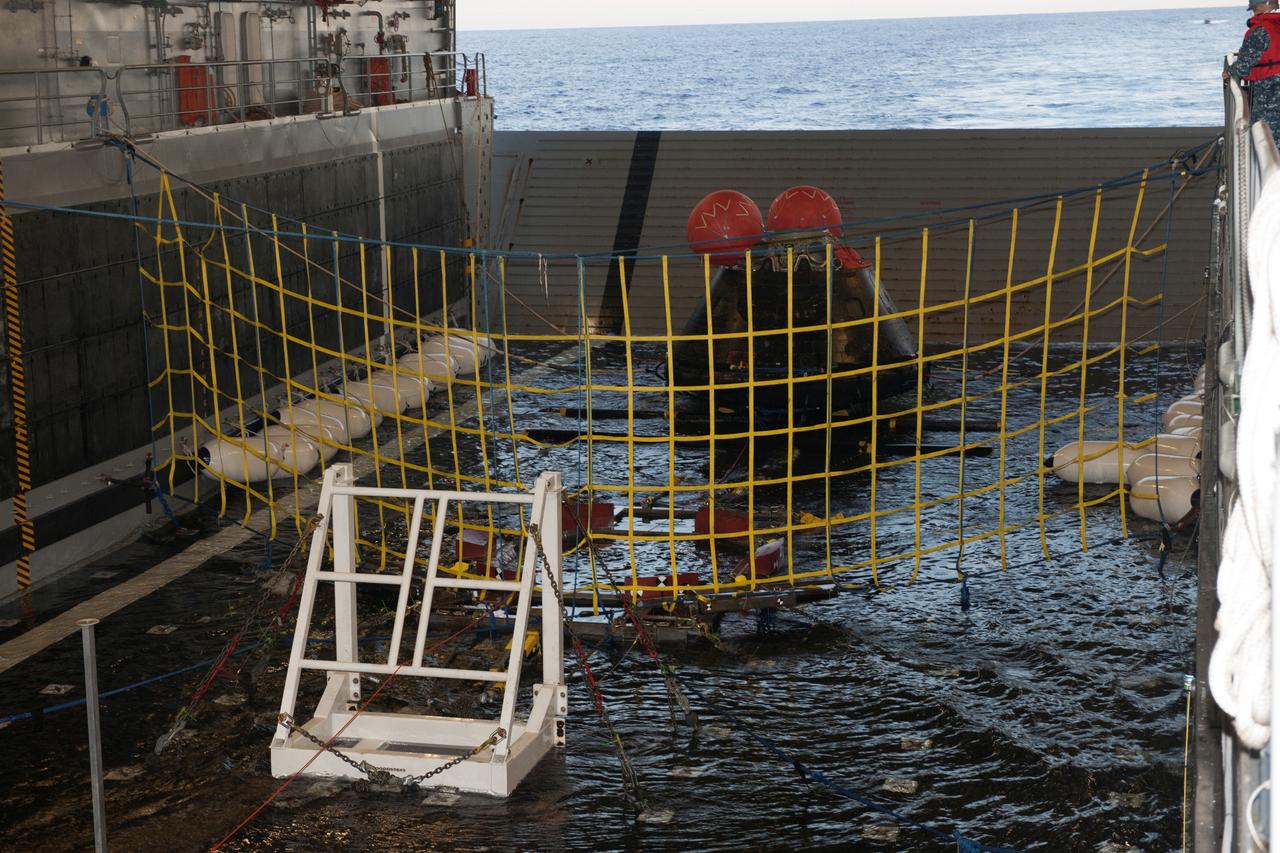
NASA's Orion spacecraft is on rubber bumpers in the flooded well deck of the USS Anchorage in the Pacific Ocean about 600 miles off the coast of San Diego, California. Orion splashed down after its first flight test in Earth orbit. NASA, the U.S. Navy and Lockheed Martin are coordinating efforts to recover Orion and secure the spacecraft in the well deck of the USS Anchorage. Orion completed a two-orbit, four-and-a-half hour mission, to test systems critical to crew safety, including the launch abort system, the heat shield and the parachute system. The Ground Systems Development and Operations Program is leading the recovery efforts.
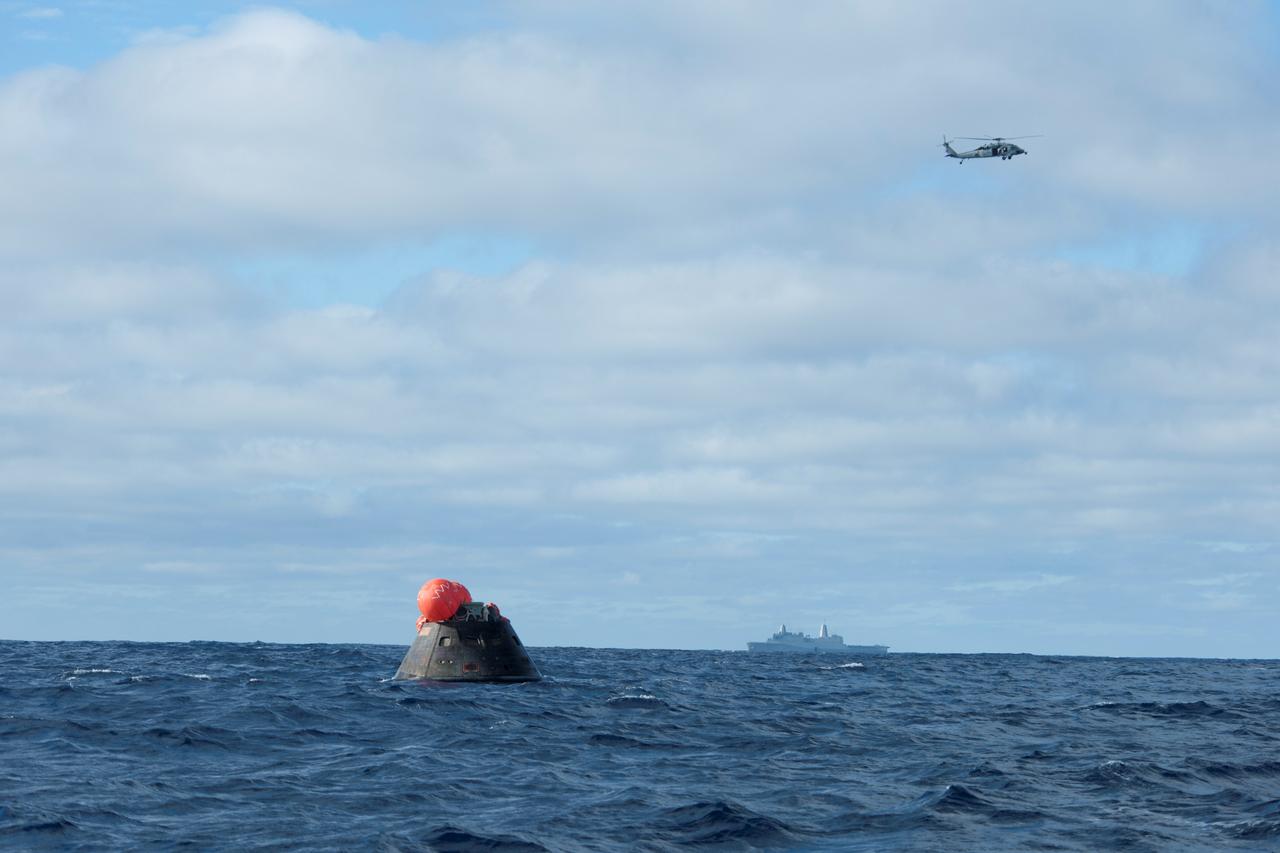
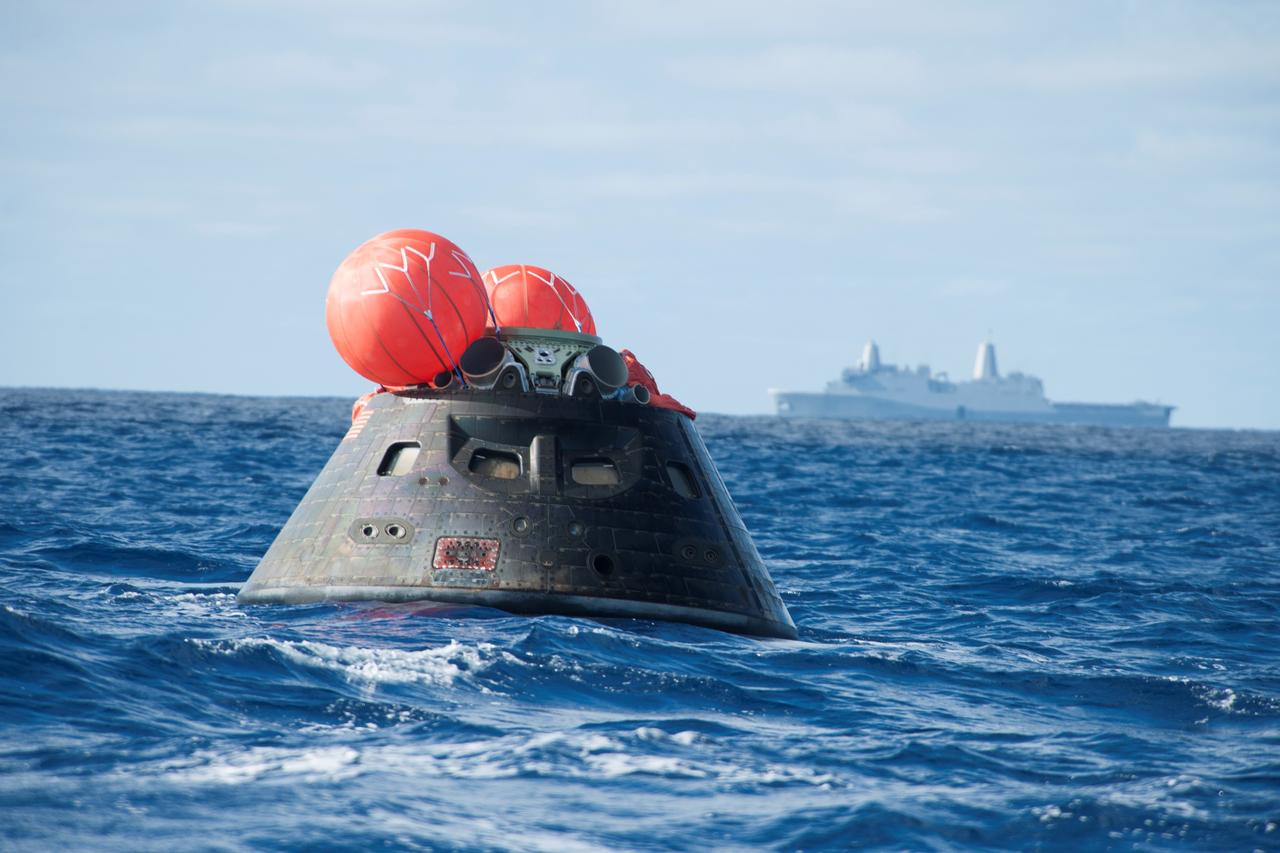
NASA's Orion spacecraft floats in the Pacific Ocean after splashdown from its first flight test in Earth orbit. An H60-S Seahawk helicopter hovers above to communicate the spacecraft's location back to the USS Anchorage, in the distance. NASA, the U.S. Navy and Lockheed Martin are coordinating efforts to recover Orion and secure the spacecraft in the well deck of the USS Anchorage. Orion completed a two-orbit, four-and-a-half hour mission, to test systems critical to crew safety, including the launch abort system, the heat shield and the parachute system. The Ground Systems Development and Operations Program is leading the recovery efforts.
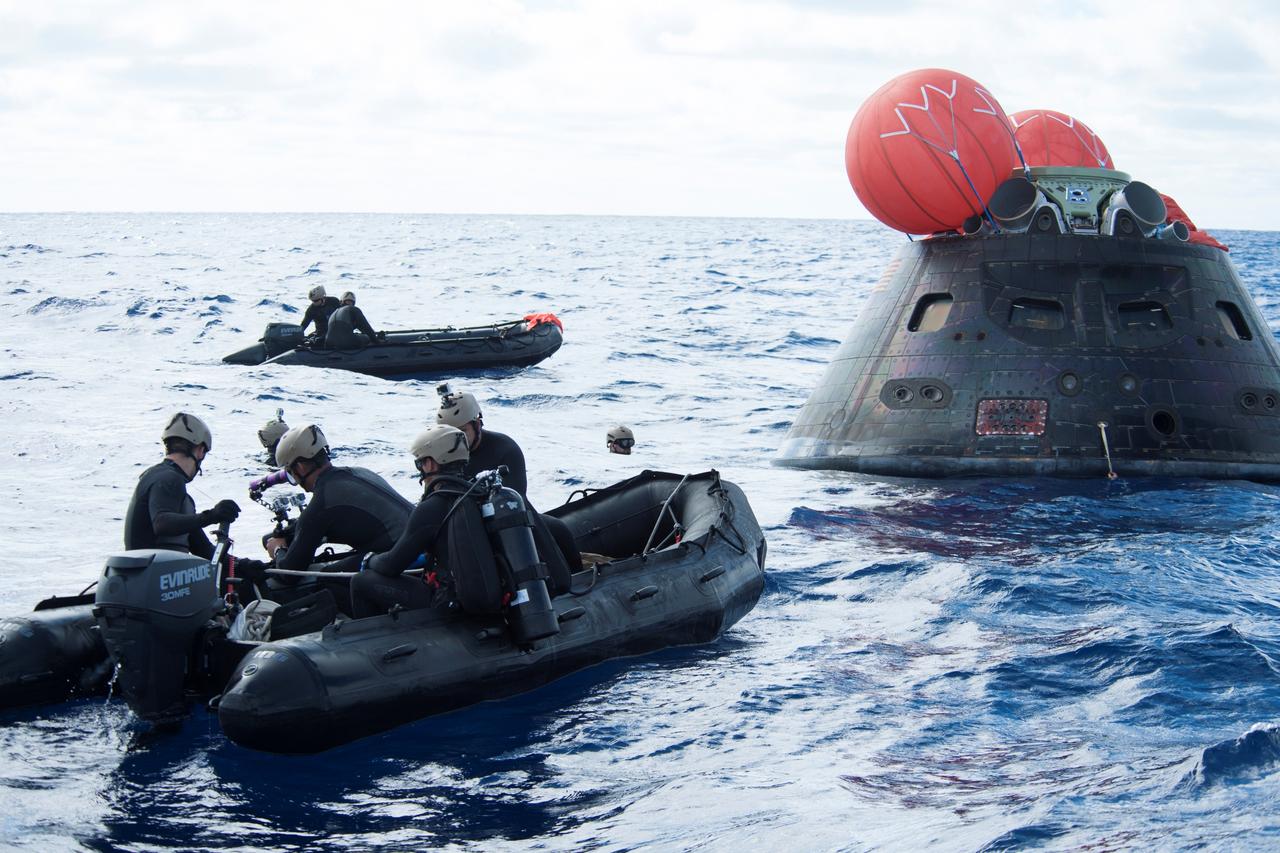
NASA's Orion spacecraft splashed down in the Pacific Ocean after its first flight test atop a Delta IV Heavy rocket from Space Launch Complex 37 at Cape Canaveral Air Force Station in Florida. U.S. Navy divers in Zodiac boats prepare to recover Orion and tow her in to the well deck of the USS Anchorage. NASA's Orion spacecraft completed a two-orbit, four-and-a-half hour mission to test systems critical to crew safety, including the launch abort system, the heat shield and the parachute system. The Ground Systems Development and Operations Program is leading the recovery efforts.
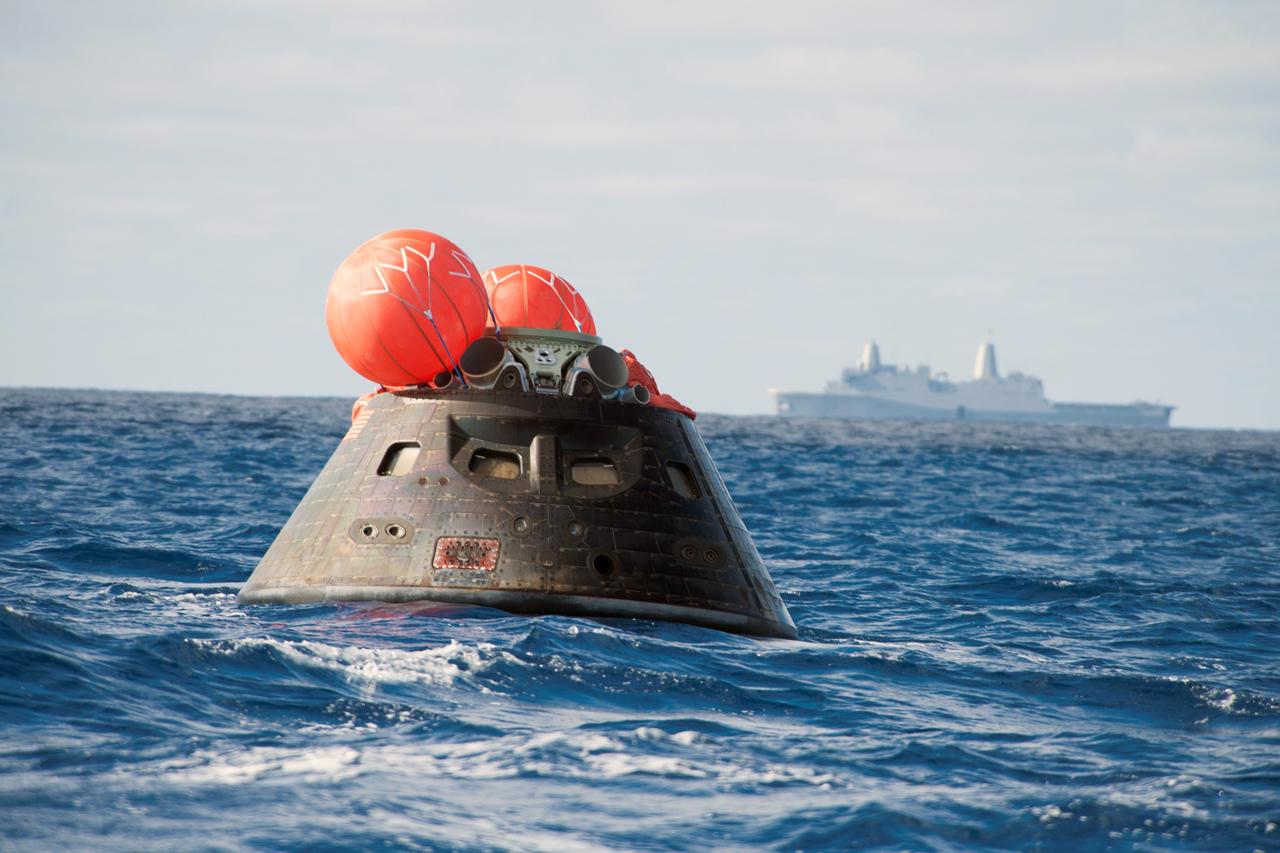
SAN DIEGO, Calif. -- NASA's Orion spacecraft floats in the Pacific Ocean after splashdown from its first flight test in Earth orbit. The USS Anchorage is in the background. NASA, the U.S. Navy and Lockheed Martin are coordinating efforts to recover Orion and secure the spacecraft in the well deck of the USS Anchorage. Orion completed a two-orbit, four-and-a-half hour mission, to test systems critical to crew safety, including the launch abort system, the heat shield and the parachute system. The Ground Systems Development and Operations Program is leading the recovery efforts. For more information, visit www.nasa.gov/orion Photo credit: NASA/Tony Gray
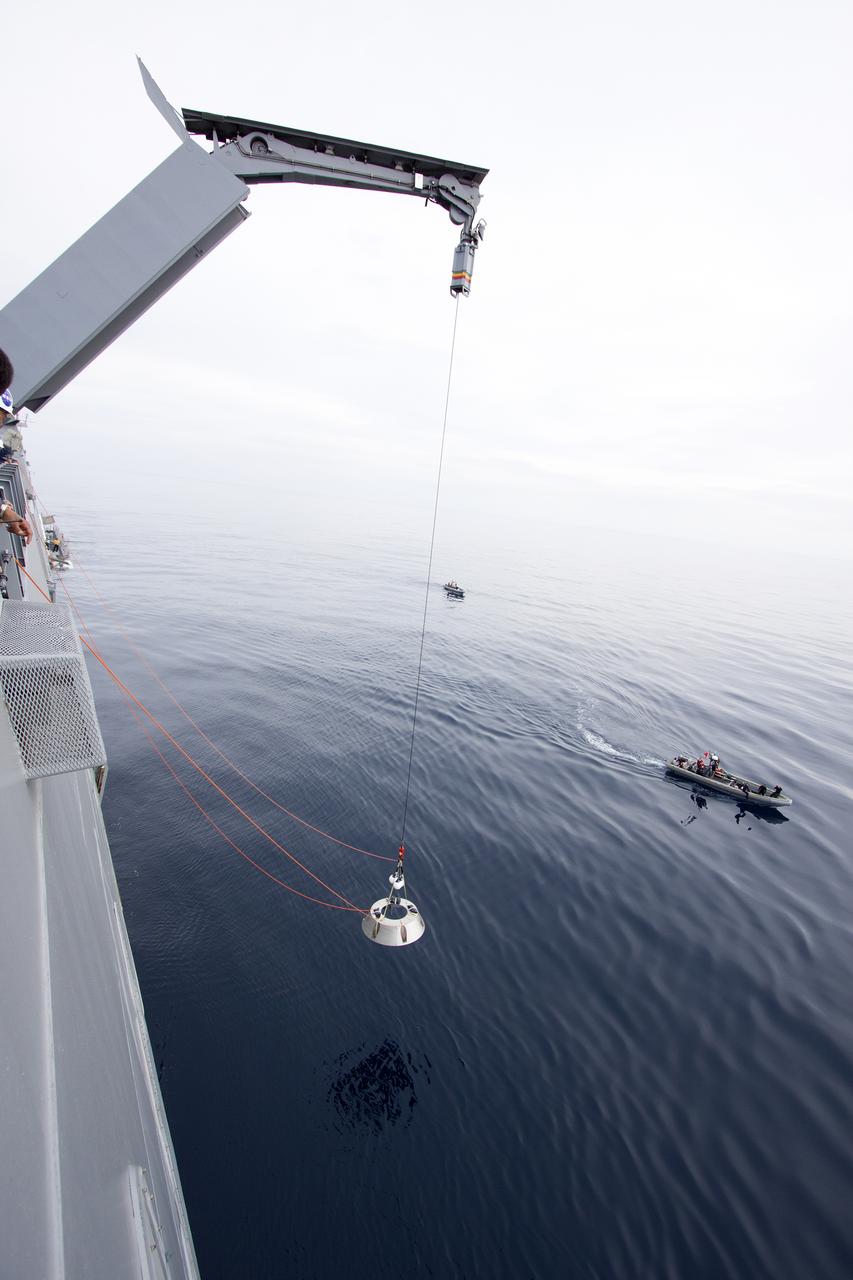
On the deck of the USS San Diego, NASA and U.S. Navy personnel monitor the process as a crane is used to lower the forward bay cover into the Pacific Ocean as part of the Orion underway recovery test on March 6, 2014. The Orion boilerplate test vehicle and other hardware are secured in the well deck of the ship in preparation for the test about 100 miles off the coast of San Diego, California. NASA and the U.S. Navy conducted tests to prepare for the recovery of the Orion crew module, forward bay cover and parachutes on its return from a deep space mission. The underway recovery test will allow the teams to demonstrate and evaluate the recovery processes, procedures, hardware and personnel in open waters. During the testing, the tether lines were unable to support the tension caused by crew module motion that was driven by wave turbulence in the well deck of the ship. NASA and the U.S. Navy are reviewing the testing data collected to evaluate the next steps. The Ground Systems Development and Operations Program conducted the underway recovery tests. Orion is the exploration spacecraft designed to carry astronauts to destinations not yet explored by humans, including an asteroid and Mars. It will have emergency abort capability, sustain the crew during space travel and provide safe re-entry from deep space return velocities.
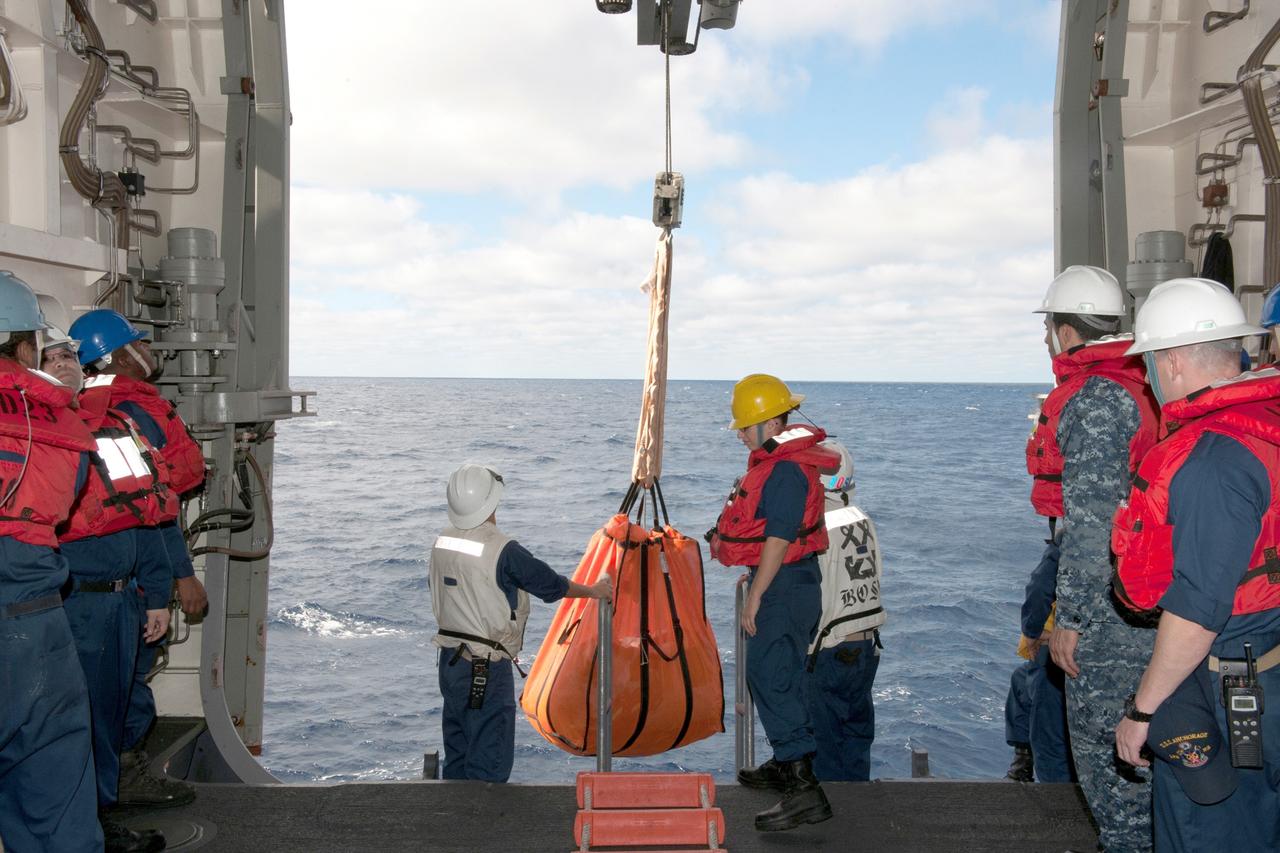
SAN DIEGO, Calif. -- U.S. Navy personnel aboard the USS Anchorage prepare for recovery of NASA's Orion spacecraft from the Pacific Ocean about 600 miles off the coast of San Diego, California. Orion splashed down after its first flight test in Earth orbit. NASA, the U.S. Navy and Lockheed Martin are coordinating efforts to recover Orion and secure the spacecraft in the well deck of the USS Anchorage. Orion completed a two-orbit, four-and-a-half hour mission, to test systems critical to crew safety, including the launch abort system, the heat shield and the parachute system. The Ground Systems Development and Operations Program is leading the recovery efforts. For more information, visit www.nasa.gov/orion Photo credit: NASA/Kenny Allen
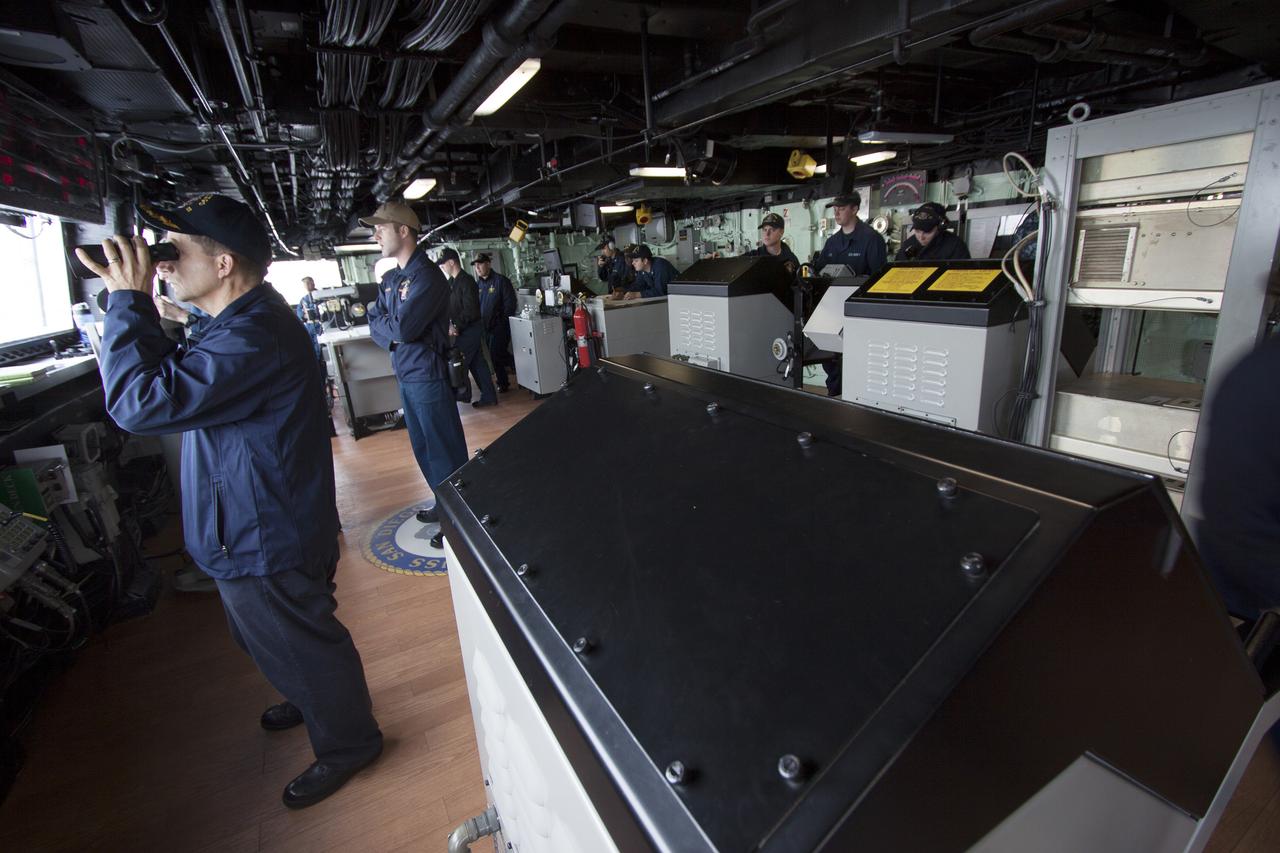
At the U.S. Naval Base San Diego in California, the USS San Diego heads out to sea with the Orion boilerplate test vehicle and other hardware in its well deck for an underway recovery test on March 6, 2014. U.S. Navy personnel monitor conditions as the ship leaves port. About 100 miles offshore, NASA and the U.S. Navy conducted tests to prepare for recovery of the Orion crew module, forward bay cover and parachutes on its return from a deep space mission. The underway recovery test will allow the teams to demonstrate and evaluate the recovery processes, procedures, hardware and personnel in open waters. During the testing, the tether lines were unable to support the tension caused by crew module motion that was driven by wave turbulence in the well deck of the ship. NASA and the U.S. Navy are reviewing the testing data collected to evaluate the next steps. The Ground Systems Development and Operations Program conducted the underway recovery tests. Orion is the exploration spacecraft designed to carry astronauts to destinations not yet explored by humans, including an asteroid and Mars. It will have emergency abort capability, sustain the crew during space travel and provide safe re-entry from deep space return velocities.

In the well deck of the USS San Diego, NASA and U.S. Navy personnel gather near the Orion boilerplate test article and other hardware before the underway recovery test begins in the Pacific Ocean, about 100 miles off the coast of San Diego, California on March 20, 2014. NASA and the U.S. Navy conducted tests to prepare for the recovery of the Orion crew module, forward bay cover and parachutes on its return from a deep space mission. The underway recovery test will allow the teams to demonstrate and evaluate the recovery processes, procedures, hardware and personnel in open waters. During the testing, the tether lines were unable to support the tension caused by crew module motion that was driven by wave turbulence in the well deck of the ship. NASA and the U.S. Navy are reviewing the testing data collected to evaluate the next steps. The Ground Systems Development and Operations Program conducted the underway recovery tests. Orion is the exploration spacecraft designed to carry astronauts to destinations not yet explored by humans, including an asteroid and Mars. It will have emergency abort capability, sustain the crew during space travel and provide safe re-entry from deep space return velocities.
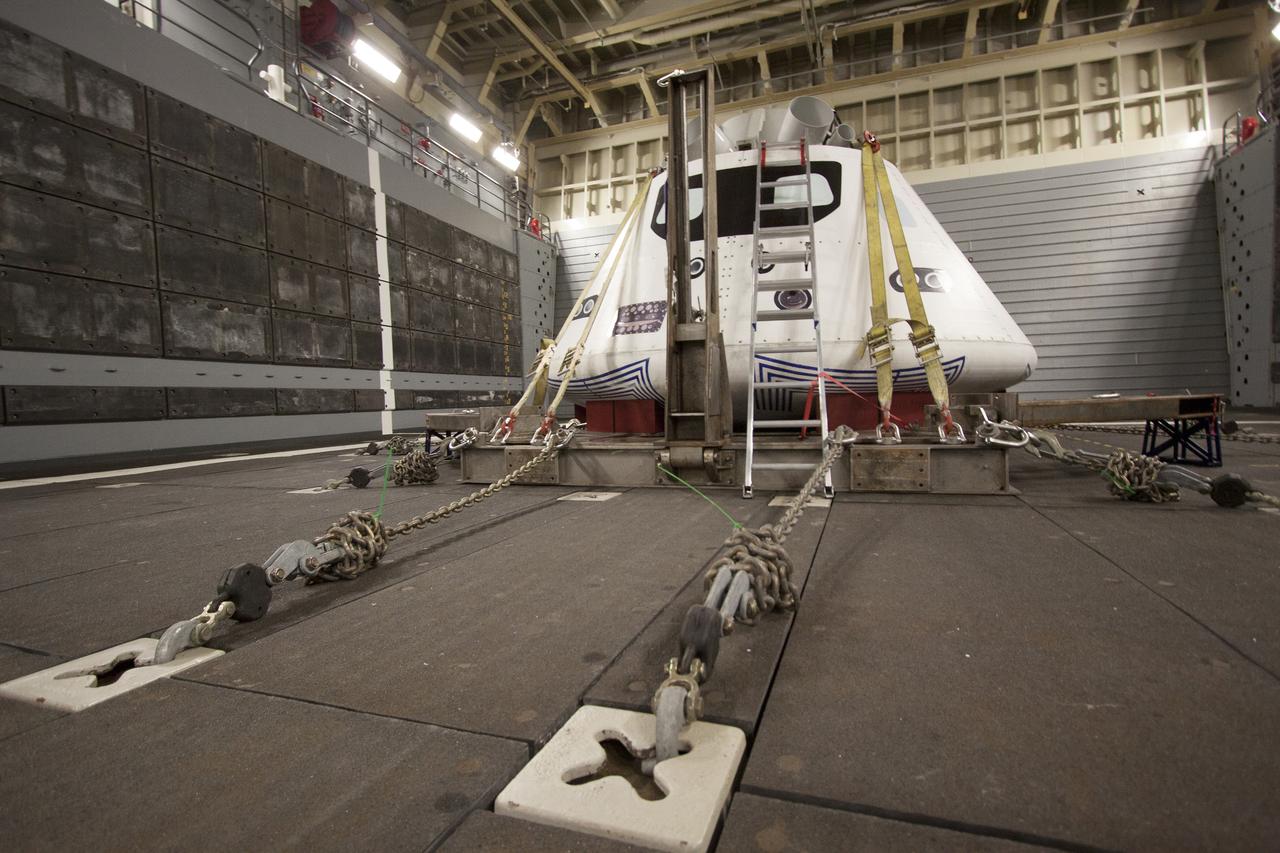
The Orion boilerplate test vehicle is secured in the well deck of the USS San Diego at the U.S. Naval Base San Diego in California on Feb. 18, 2014. Orion was transported about 100 miles offshore for an underway recovery test. NASA and the U.S. Navy conducted tests to prepare for recovery of the Orion crew module, forward bay cover and parachutes on its return from a deep space mission. The underway recovery test will allow the teams to demonstrate and evaluate the recovery processes, procedures, hardware and personnel in open waters. During the testing, the tether lines were unable to support the tension caused by crew module motion that was driven by wave turbulence in the well deck of the ship. NASA and the U.S. Navy are reviewing the testing data collected to evaluate the next steps. The Ground Systems Development and Operations Program conducted the underway recovery tests. Orion is the exploration spacecraft designed to carry astronauts to destinations not yet explored by humans, including an asteroid and Mars. It will have emergency abort capability, sustain the crew during space travel and provide safe re-entry from deep space return velocities.
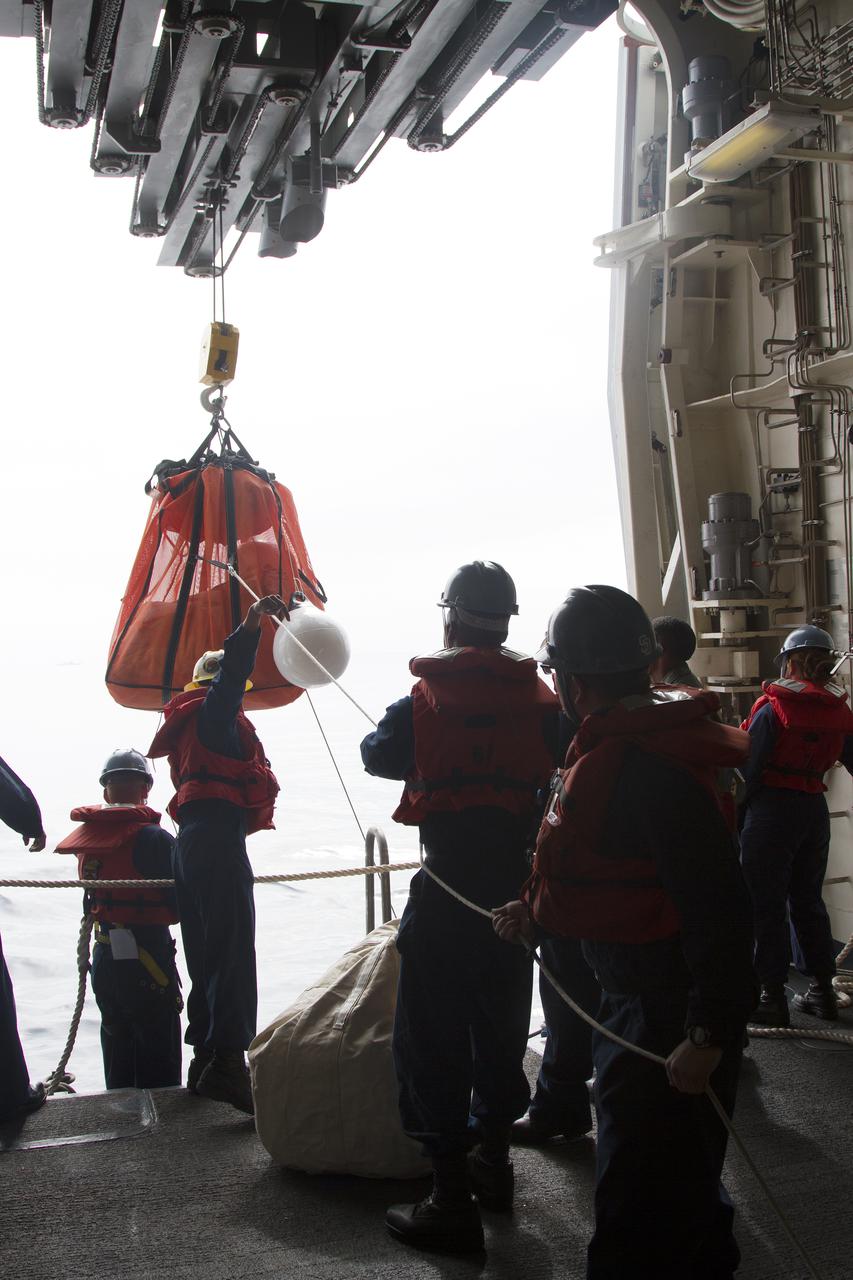
SAN DIEGO, Calif. – On the USS San Diego, NASA and U.S. Navy personnel use a crane to lower a parachute into a rigid hull inflatable boat as part of the Orion underway recovery test. The Orion boilerplate test vehicle and other hardware are secured in the well deck of the ship in preparation for the test about 100 miles off the coast of San Diego, California. NASA and the U.S. Navy conducted tests to prepare for the recovery of the Orion crew module, forward bay cover and parachutes on its return from a deep space mission. The underway recovery test will allow the teams to demonstrate and evaluate the recovery processes, procedures, hardware and personnel in open waters. During the testing, the tether lines were unable to support the tension caused by crew module motion that was driven by wave turbulence in the well deck of the ship. NASA and the U.S. Navy are reviewing the testing data collected to evaluate the next steps. The Ground Systems Development and Operations Program conducted the underway recovery tests. Orion is the exploration spacecraft designed to carry astronauts to destinations not yet explored by humans, including an asteroid and Mars. It will have emergency abort capability, sustain the crew during space travel and provide safe re-entry from deep space return velocities. The first unpiloted test flight of the Orion is scheduled to launch in 2014 atop a Delta IV rocket and in 2017 on NASA’s Space Launch System rocket. For more information, visit http:__www.nasa.gov_orion. Photo credit: NASA_Cory Huston
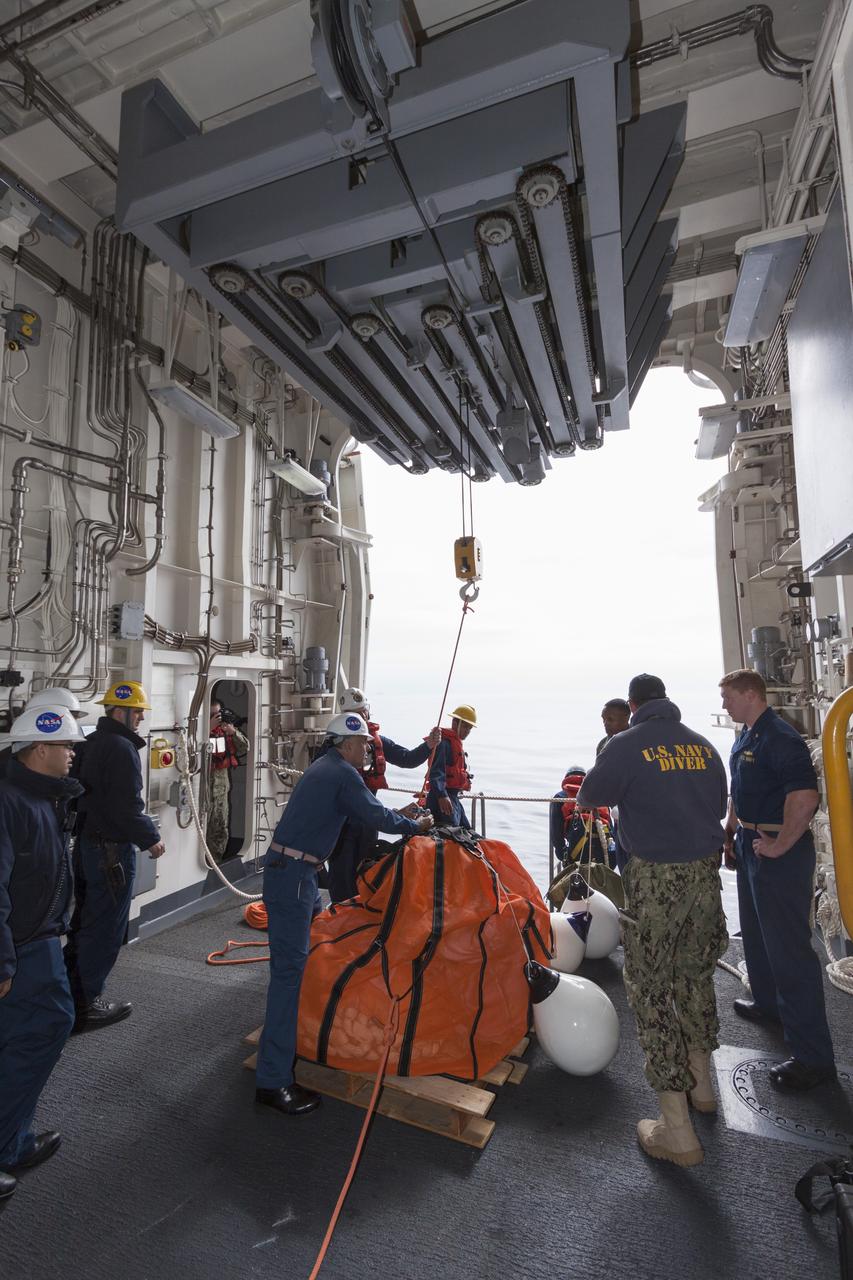
SAN DIEGO, Calif. – In the well deck of the USS San Diego, NASA and U.S. Navy personnel prepare a parachute for transfer into the water as part of the Orion underway recovery test. The Orion boilerplate test vehicle and other hardware are secured in the well deck of the ship in preparation for the test about 100 miles off the coast of San Diego, California. NASA and the U.S. Navy conducted tests to prepare for the recovery of the Orion crew module, forward bay cover and parachutes on its return from a deep space mission. The underway recovery test will allow the teams to demonstrate and evaluate the recovery processes, procedures, hardware and personnel in open waters. During the testing, the tether lines were unable to support the tension caused by crew module motion that was driven by wave turbulence in the well deck of the ship. NASA and the U.S. Navy are reviewing the testing data collected to evaluate the next steps. The Ground Systems Development and Operations Program conducted the underway recovery tests. Orion is the exploration spacecraft designed to carry astronauts to destinations not yet explored by humans, including an asteroid and Mars. It will have emergency abort capability, sustain the crew during space travel and provide safe re-entry from deep space return velocities. The first unpiloted test flight of the Orion is scheduled to launch in 2014 atop a Delta IV rocket and in 2017 on NASA’s Space Launch System rocket. For more information, visit http://www.nasa.gov/orion. Photo credit: NASA/Cory Huston
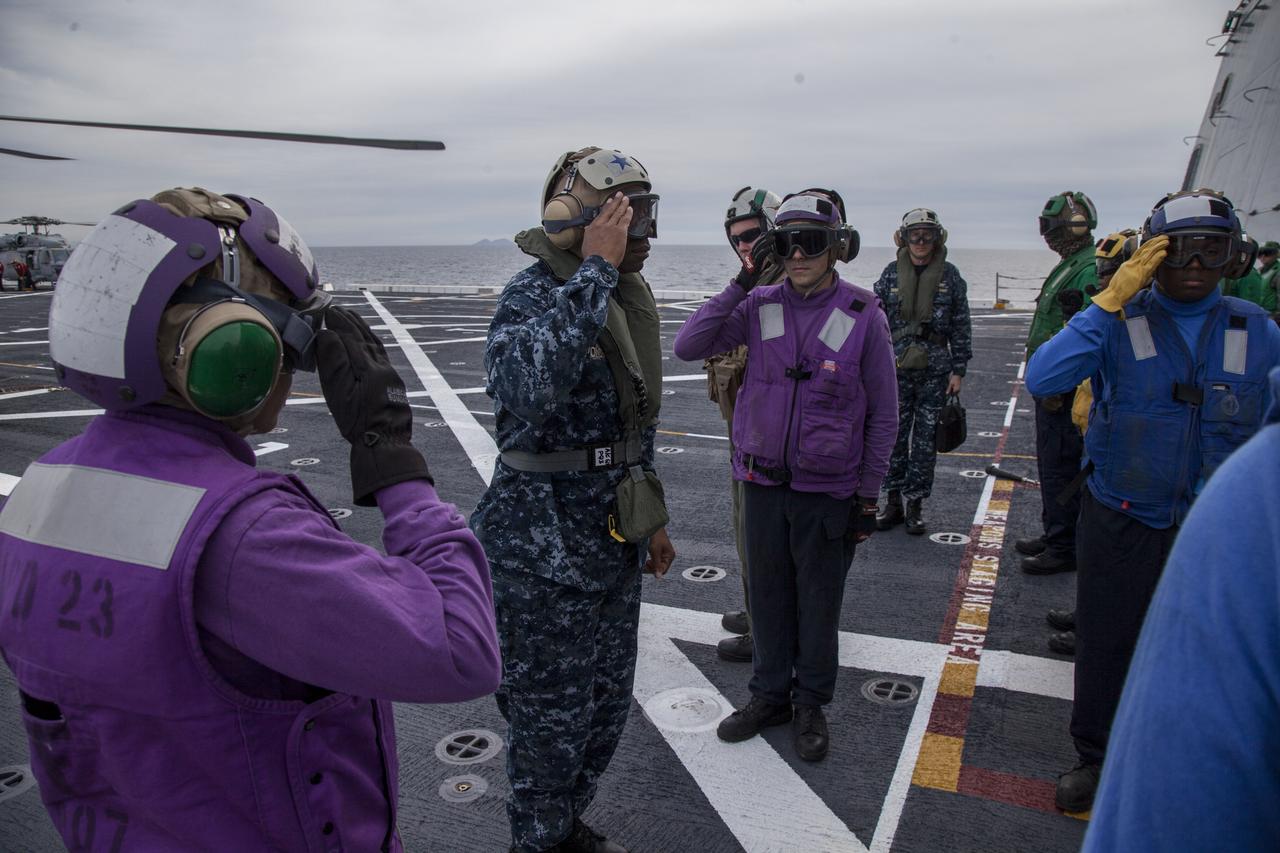
U.S. Navy and Helicopter Sea Combat Squadron 8 salute Rear Admiral Fernandez L. "Frank" Ponds, Commander, Expeditionary Strike Group 3 during his visit on the deck of the USS Anchorage near Naval Base San Diego in California. The ship is heading out to sea in the Pacific Ocean. NASA and the U.S. Navy are making preparations ahead of Orion's flight test for recovery of the crew module, forward bay cover and parachutes on its return from space and splashdown in the Pacific Ocean. The Ground Systems Development and Operations Program is leading the recovery efforts.
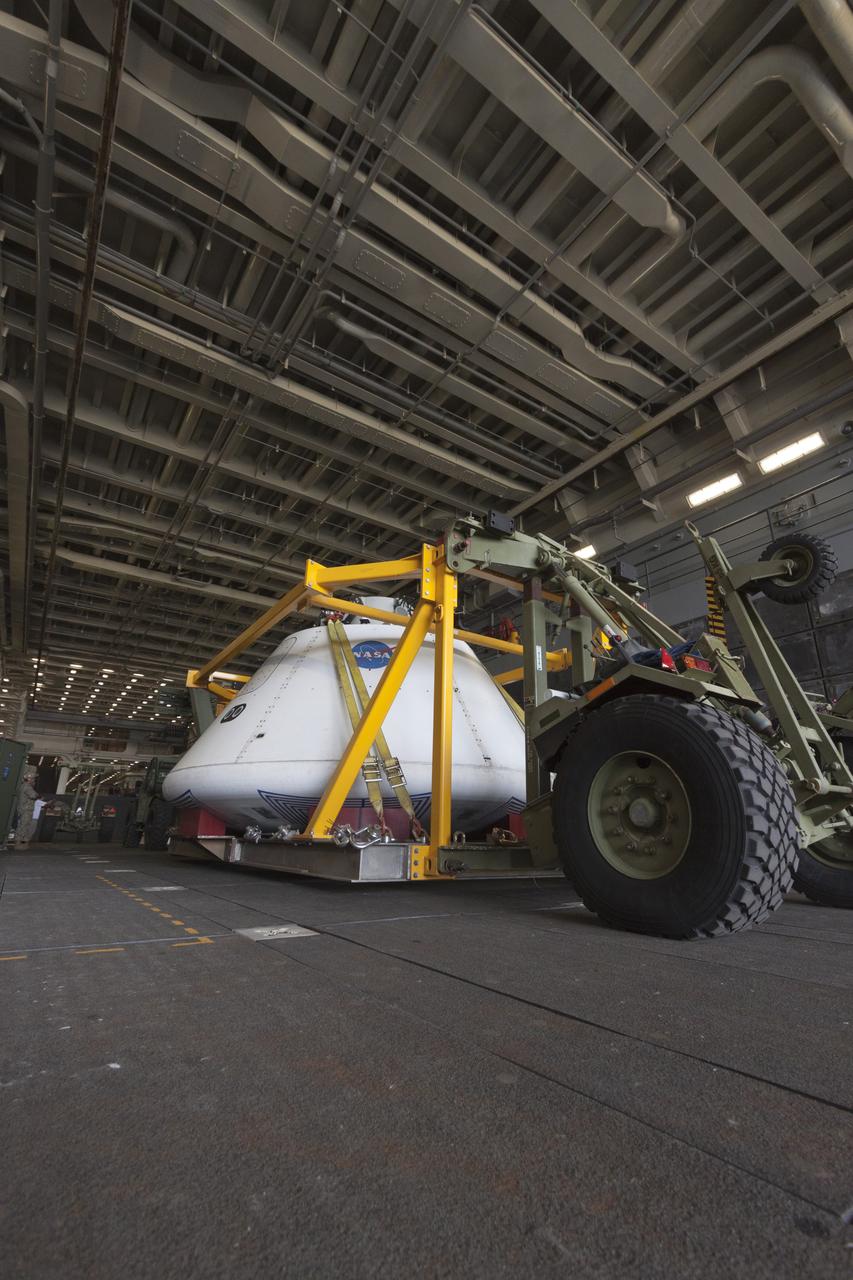
SAN DIEGO, Calif. – The Orion boilerplate test vehicle arrived at the U.S. Naval Base San Diego in California, and is loaded aboard the USS San Diego. Orion was transported in the ship’s well deck about 100 miles offshore for an underway recovery test. NASA and the U.S. Navy are conducting tests to prepare for recovery of the Orion crew module, forward bay cover and parachutes on its return from a deep space mission. The underway recovery test will allow the teams to demonstrate and evaluate the recovery processes, procedures, hardware and personnel in open waters. The Ground Systems Development and Operations Program Orion is the exploration spacecraft designed to carry astronauts to destinations not yet explored by humans, including an asteroid and Mars. It will have emergency abort capability, sustain the crew during space travel and provide safe re-entry from deep space return velocities. The first unpiloted test flight of the Orion is scheduled to launch in 2014 atop a Delta IV rocket and in 2017 on NASA’s Space Launch System rocket. For more information, visit http://www.nasa.gov/orion. Photo credit: NASA/Cory Huston

SAN DIEGO, Calif. – The Orion boilerplate test vehicle arrived at the U.S. Naval Base San Diego in California, and is being loaded aboard the USS San Diego. Orion was transported in the ship’s well deck about 100 miles offshore for an underway recovery test. NASA and the U.S. Navy are conducting tests to prepare for recovery of the Orion crew module, forward bay cover and parachutes on its return from a deep space mission. The underway recovery test will allow the teams to demonstrate and evaluate the recovery processes, procedures, hardware and personnel in open waters. The Ground Systems Development and Operations Program Orion is the exploration spacecraft designed to carry astronauts to destinations not yet explored by humans, including an asteroid and Mars. It will have emergency abort capability, sustain the crew during space travel and provide safe re-entry from deep space return velocities. The first unpiloted test flight of the Orion is scheduled to launch in 2014 atop a Delta IV rocket and in 2017 on NASA’s Space Launch System rocket. For more information, visit http:__www.nasa.gov_orion. Photo credit: NASA_Cory Huston
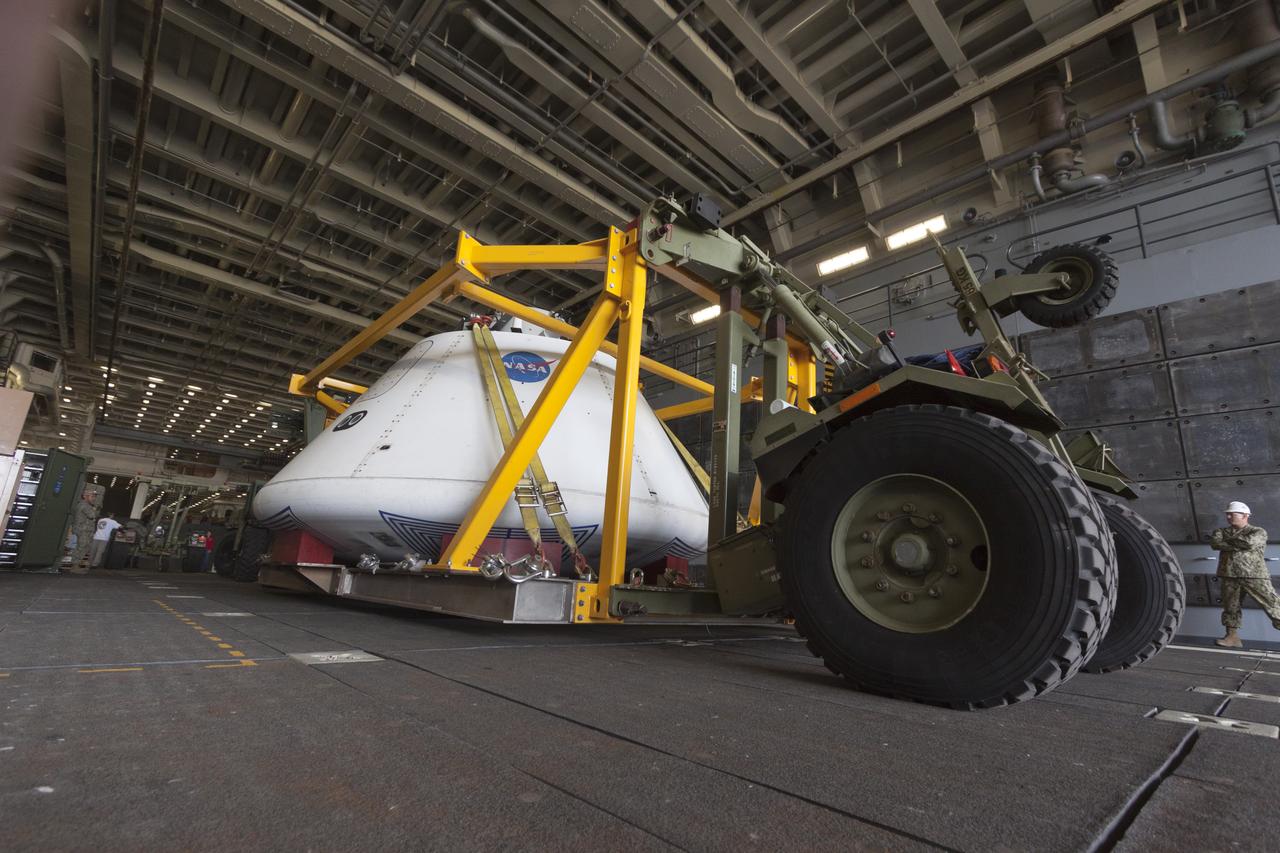
SAN DIEGO, Calif. – The Orion boilerplate test vehicle arrived at the U.S. Naval Base San Diego in California, and was loaded aboard the USS San Diego. Orion was transported in the ship’s well deck about 100 miles offshore for an underway recovery test. NASA and the U.S. Navy are conducting tests to prepare for recovery of the Orion crew module, forward bay cover and parachutes on its return from a deep space mission. The underway recovery test will allow the teams to demonstrate and evaluate the recovery processes, procedures, hardware and personnel in open waters. The Ground Systems Development and Operations Program Orion is the exploration spacecraft designed to carry astronauts to destinations not yet explored by humans, including an asteroid and Mars. It will have emergency abort capability, sustain the crew during space travel and provide safe re-entry from deep space return velocities. The first unpiloted test flight of the Orion is scheduled to launch in 2014 atop a Delta IV rocket and in 2017 on NASA’s Space Launch System rocket. For more information, visit http://www.nasa.gov/orion. Photo credit: NASA/Cory Huston
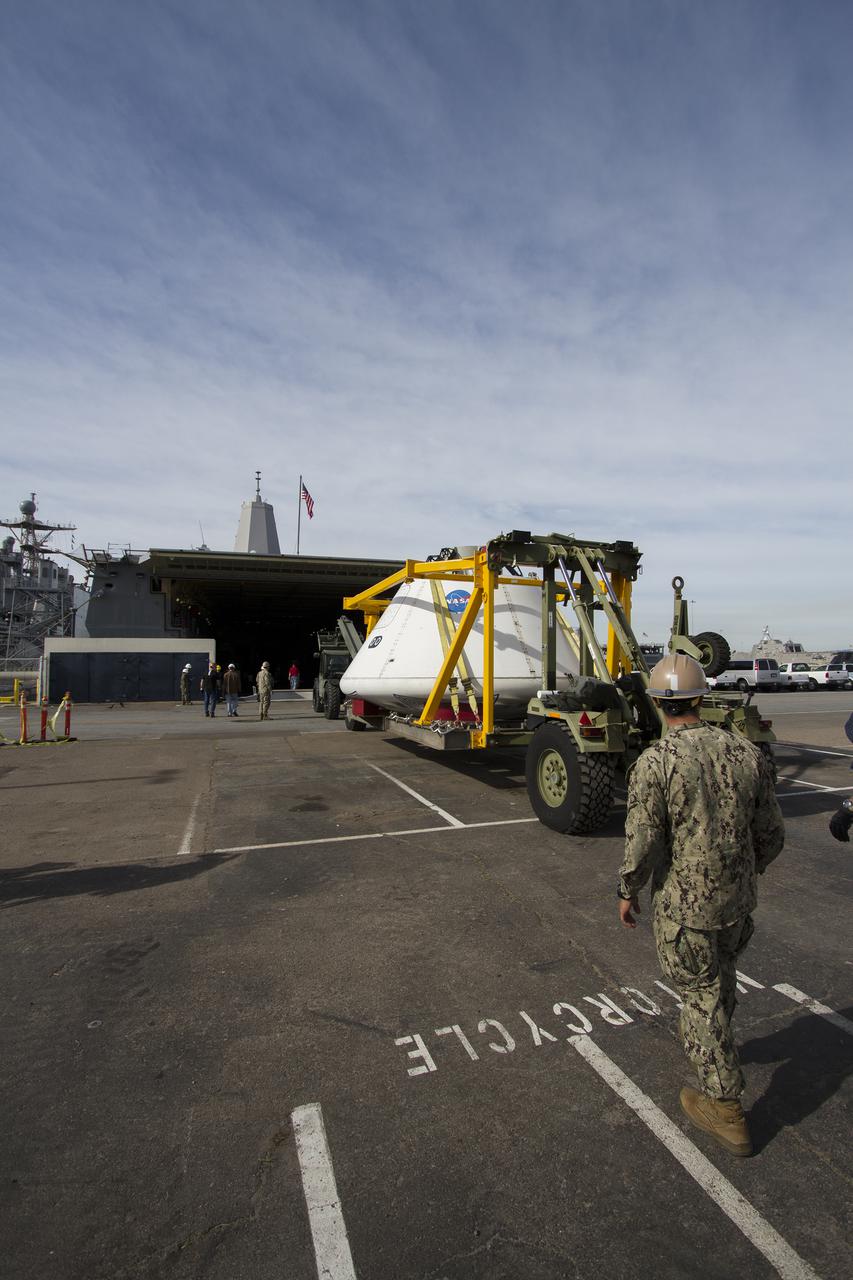
SAN DIEGO, Calif. – The Orion boilerplate test vehicle arrived at the U.S. Naval Base San Diego in California, and is being prepared to be loaded aboard the USS San Diego. Orion was transported in the ship’s well deck about 100 miles offshore for an underway recovery test. NASA and the U.S. Navy are conducting tests to prepare for recovery of the Orion crew module, forward bay cover and parachutes on its return from a deep space mission. The underway recovery test will allow the teams to demonstrate and evaluate the recovery processes, procedures, hardware and personnel in open waters. The Ground Systems Development and Operations Program Orion is the exploration spacecraft designed to carry astronauts to destinations not yet explored by humans, including an asteroid and Mars. It will have emergency abort capability, sustain the crew during space travel and provide safe re-entry from deep space return velocities. The first unpiloted test flight of the Orion is scheduled to launch in 2014 atop a Delta IV rocket and in 2017 on NASA’s Space Launch System rocket. For more information, visit http:__www.nasa.gov_orion. Photo credit: NASA_Cory Huston
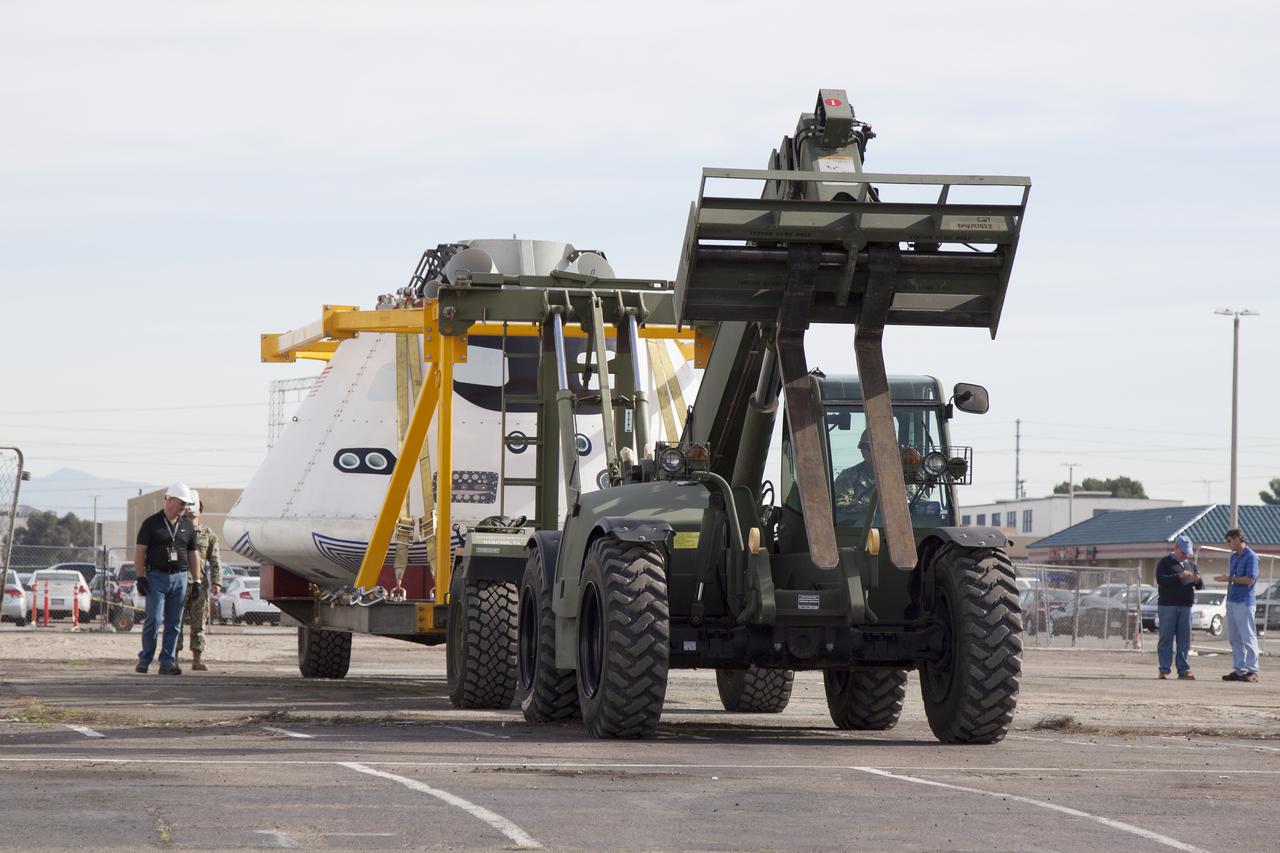
SAN DIEGO, Calif. – The Orion boilerplate test vehicle arrived at the U.S. Naval Base San Diego in California, and is being prepared to be loaded aboard the USS San Diego. Orion was transported in the ship’s well deck about 100 miles offshore for an underway recovery test. NASA and the U.S. Navy are conducting tests to prepare for recovery of the Orion crew module, forward bay cover and parachutes on its return from a deep space mission. The underway recovery test will allow the teams to demonstrate and evaluate the recovery processes, procedures, hardware and personnel in open waters. The Ground Systems Development and Operations Program Orion is the exploration spacecraft designed to carry astronauts to destinations not yet explored by humans, including an asteroid and Mars. It will have emergency abort capability, sustain the crew during space travel and provide safe re-entry from deep space return velocities. The first unpiloted test flight of the Orion is scheduled to launch in 2014 atop a Delta IV rocket and in 2017 on NASA’s Space Launch System rocket. For more information, visit http:__www.nasa.gov_orion. Photo credit: NASA_Cory Huston
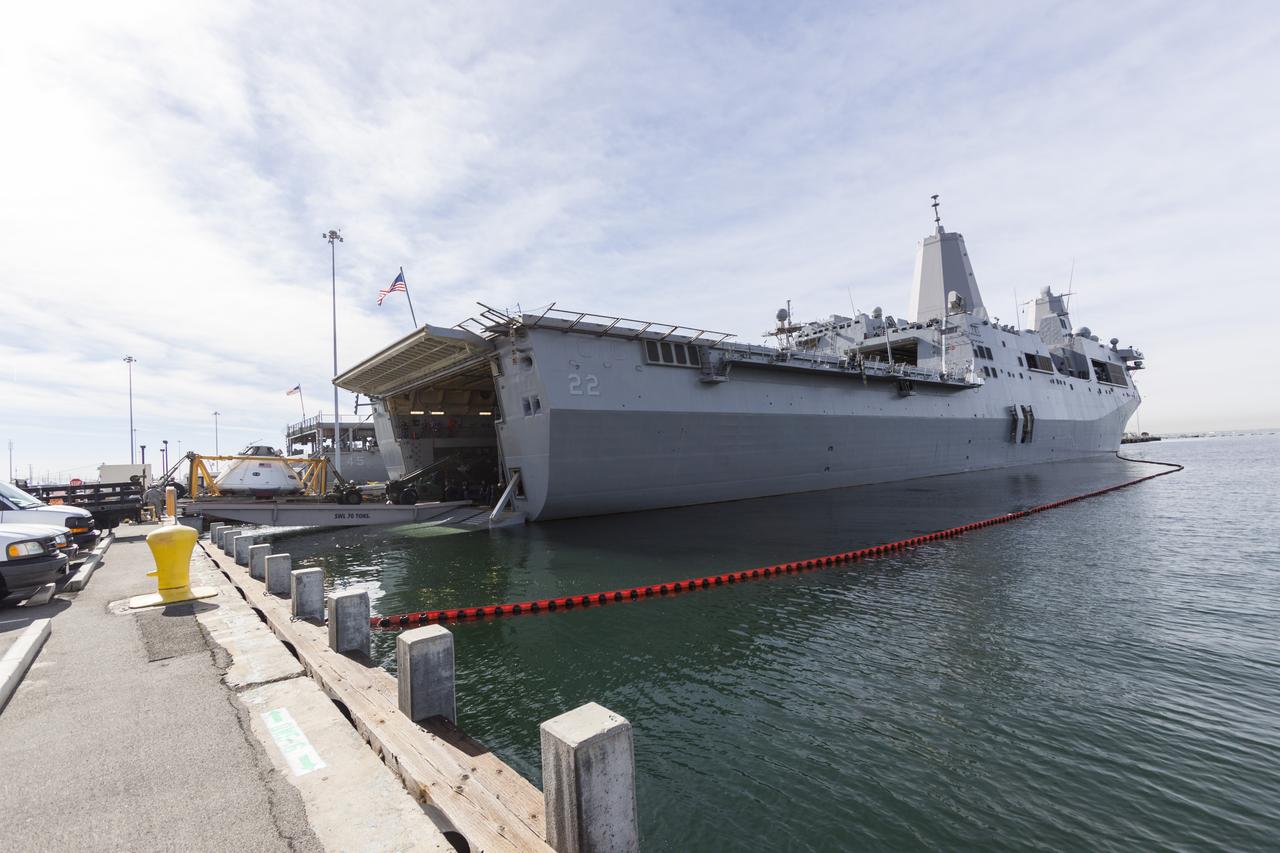
SAN DIEGO, Calif. – The Orion boilerplate test vehicle arrived at the U.S. Naval Base San Diego in California, and is being loaded aboard the USS San Diego. Orion was transported in the ship’s well deck about 100 miles offshore for an underway recovery test. NASA and the U.S. Navy are conducting tests to prepare for recovery of the Orion crew module, forward bay cover and parachutes on its return from a deep space mission. The underway recovery test will allow the teams to demonstrate and evaluate the recovery processes, procedures, hardware and personnel in open waters. The Ground Systems Development and Operations Program Orion is the exploration spacecraft designed to carry astronauts to destinations not yet explored by humans, including an asteroid and Mars. It will have emergency abort capability, sustain the crew during space travel and provide safe re-entry from deep space return velocities. The first unpiloted test flight of the Orion is scheduled to launch in 2014 atop a Delta IV rocket and in 2017 on NASA’s Space Launch System rocket. For more information, visit http://www.nasa.gov/orion. Photo credit: NASA/Cory Huston
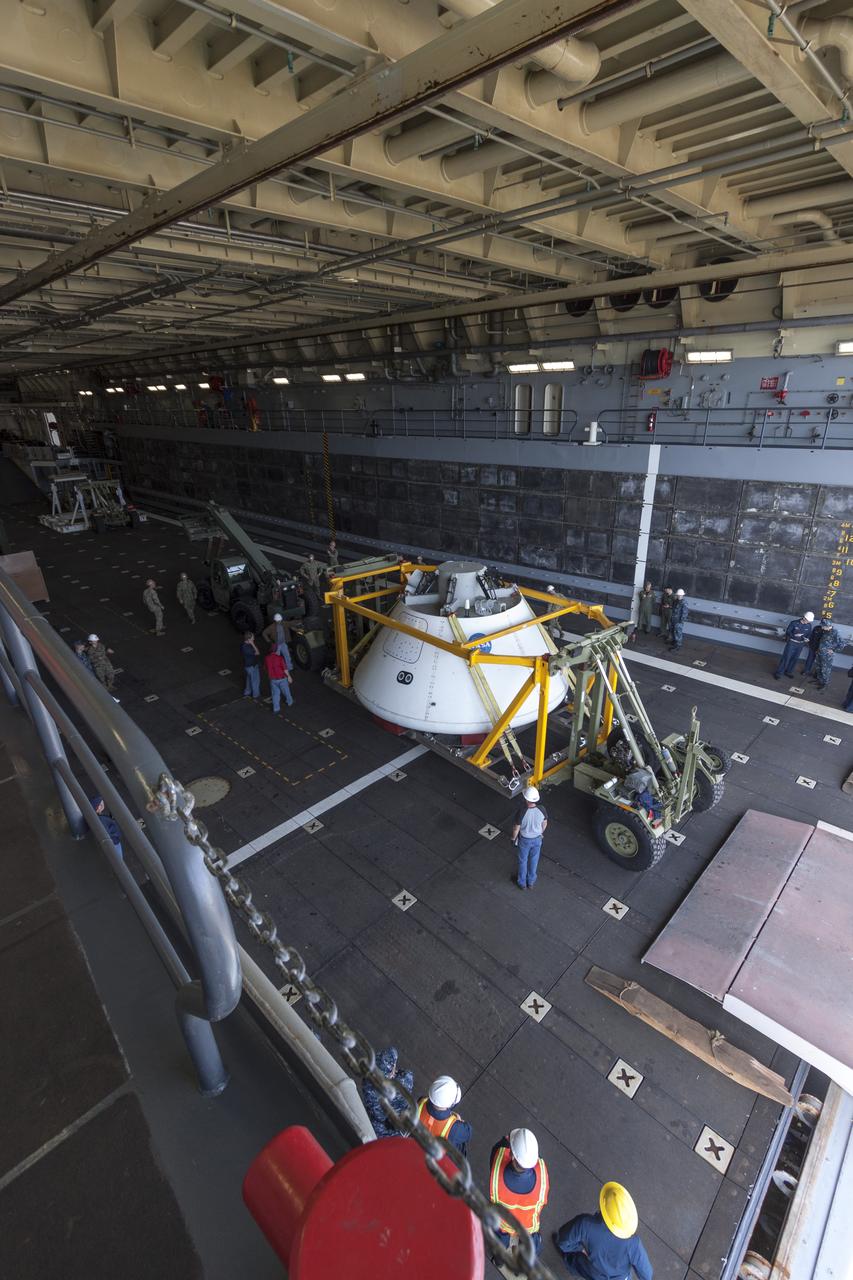
SAN DIEGO, Calif. – The Orion boilerplate test vehicle arrived at the U.S. Naval Base San Diego in California, and was loaded aboard the USS San Diego. Orion was transported in the ship’s well deck about 100 miles offshore for an underway recovery test. NASA and the U.S. Navy are conducting tests to prepare for recovery of the Orion crew module, forward bay cover and parachutes on its return from a deep space mission. The underway recovery test will allow the teams to demonstrate and evaluate the recovery processes, procedures, hardware and personnel in open waters. The Ground Systems Development and Operations Program Orion is the exploration spacecraft designed to carry astronauts to destinations not yet explored by humans, including an asteroid and Mars. It will have emergency abort capability, sustain the crew during space travel and provide safe re-entry from deep space return velocities. The first unpiloted test flight of the Orion is scheduled to launch in 2014 atop a Delta IV rocket and in 2017 on NASA’s Space Launch System rocket. For more information, visit http://www.nasa.gov/orion. Photo credit: NASA/Cory Huston
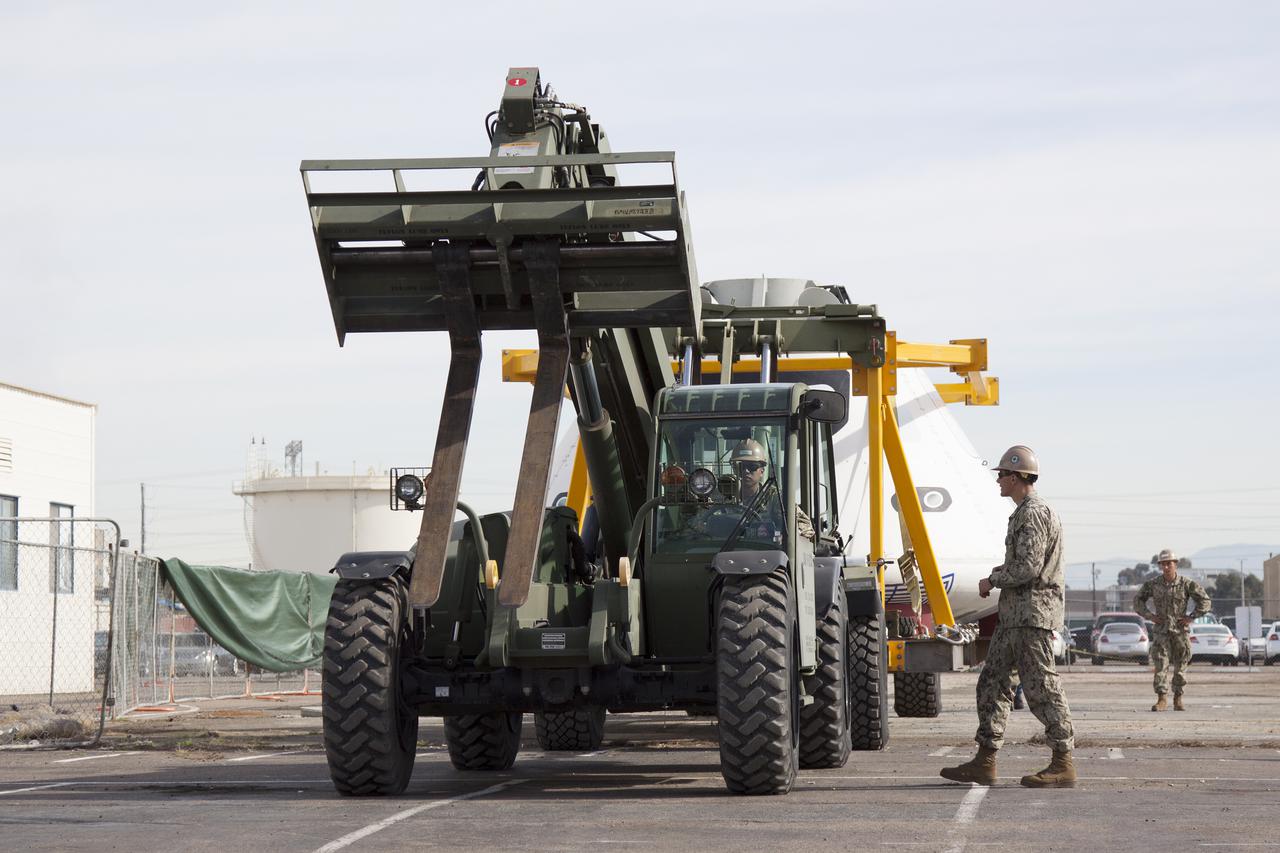
SAN DIEGO, Calif. – The Orion boilerplate test vehicle arrived at the U.S. Naval Base San Diego in California, and is being prepared to be loaded aboard the USS San Diego. Orion was transported in the ship’s well deck about 100 miles offshore for an underway recovery test. NASA and the U.S. Navy are conducting tests to prepare for recovery of the Orion crew module, forward bay cover and parachutes on its return from a deep space mission. The underway recovery test will allow the teams to demonstrate and evaluate the recovery processes, procedures, hardware and personnel in open waters. The Ground Systems Development and Operations Program Orion is the exploration spacecraft designed to carry astronauts to destinations not yet explored by humans, including an asteroid and Mars. It will have emergency abort capability, sustain the crew during space travel and provide safe re-entry from deep space return velocities. The first unpiloted test flight of the Orion is scheduled to launch in 2014 atop a Delta IV rocket and in 2017 on NASA’s Space Launch System rocket. For more information, visit http:__www.nasa.gov_orion. Photo credit: NASA_Cory Huston
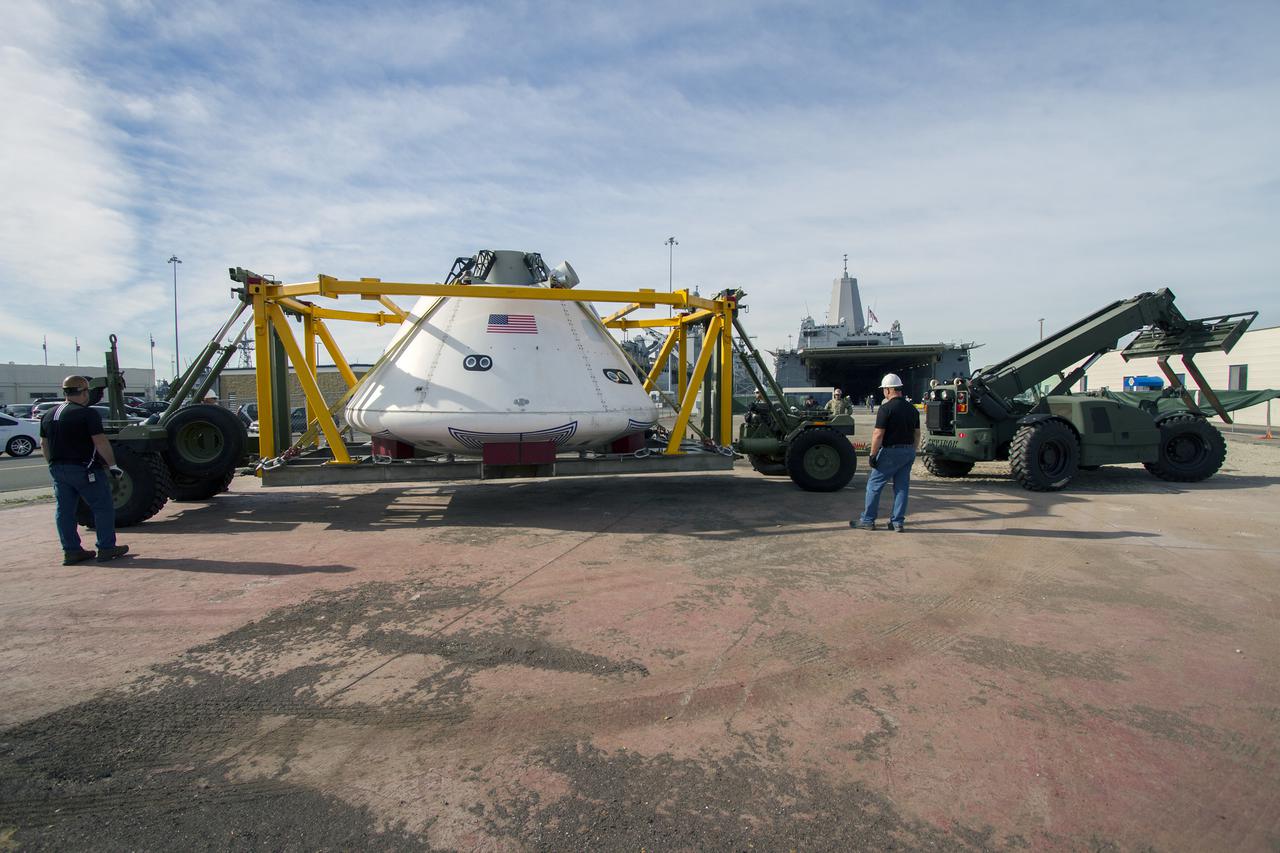
SAN DIEGO, Calif. – The Orion boilerplate test vehicle arrived at the U.S. Naval Base San Diego in California, and was prepared for loading aboard the USS San Diego. Orion was transported in the ship’s well deck about 100 miles offshore for an underway recovery test. NASA and the U.S. Navy are conducting tests to prepare for recovery of the Orion crew module, forward bay cover and parachutes on its return from a deep space mission. The underway recovery test will allow the teams to demonstrate and evaluate the recovery processes, procedures, hardware and personnel in open waters. The Ground Systems Development and Operations Program Orion is the exploration spacecraft designed to carry astronauts to destinations not yet explored by humans, including an asteroid and Mars. It will have emergency abort capability, sustain the crew during space travel and provide safe re-entry from deep space return velocities. The first unpiloted test flight of the Orion is scheduled to launch in 2014 atop a Delta IV rocket and in 2017 on NASA’s Space Launch System rocket. For more information, visit http:__www.nasa.gov_orion. Photo credit: NASA_Cory Huston
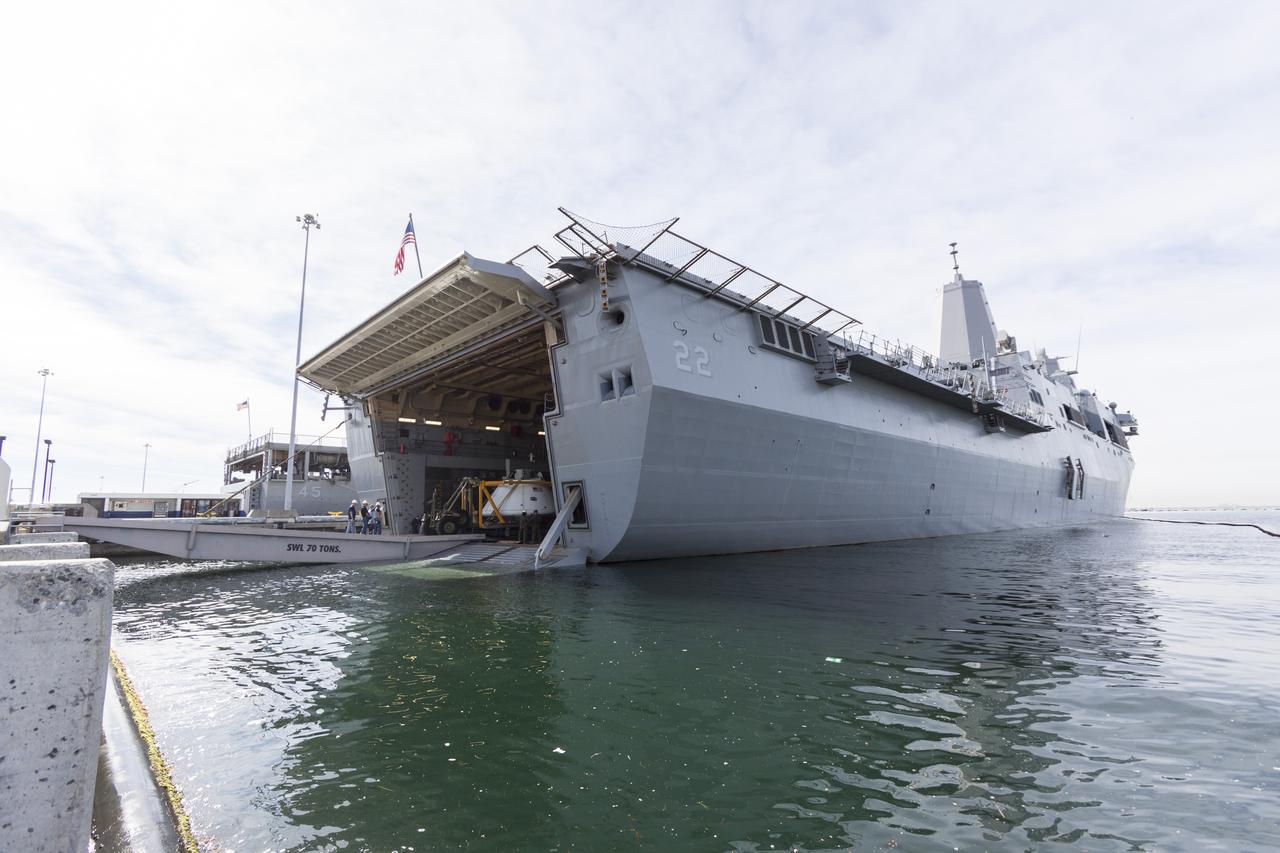
SAN DIEGO, Calif. – The Orion boilerplate test vehicle arrived at the U.S. Naval Base San Diego in California, and is loaded aboard the USS San Diego. Orion was transported in the ship’s well deck about 100 miles offshore for an underway recovery test. NASA and the U.S. Navy are conducting tests to prepare for recovery of the Orion crew module, forward bay cover and parachutes on its return from a deep space mission. The underway recovery test will allow the teams to demonstrate and evaluate the recovery processes, procedures, hardware and personnel in open waters. The Ground Systems Development and Operations Program Orion is the exploration spacecraft designed to carry astronauts to destinations not yet explored by humans, including an asteroid and Mars. It will have emergency abort capability, sustain the crew during space travel and provide safe re-entry from deep space return velocities. The first unpiloted test flight of the Orion is scheduled to launch in 2014 atop a Delta IV rocket and in 2017 on NASA’s Space Launch System rocket. For more information, visit http://www.nasa.gov/orion. Photo credit: NASA/Cory Huston
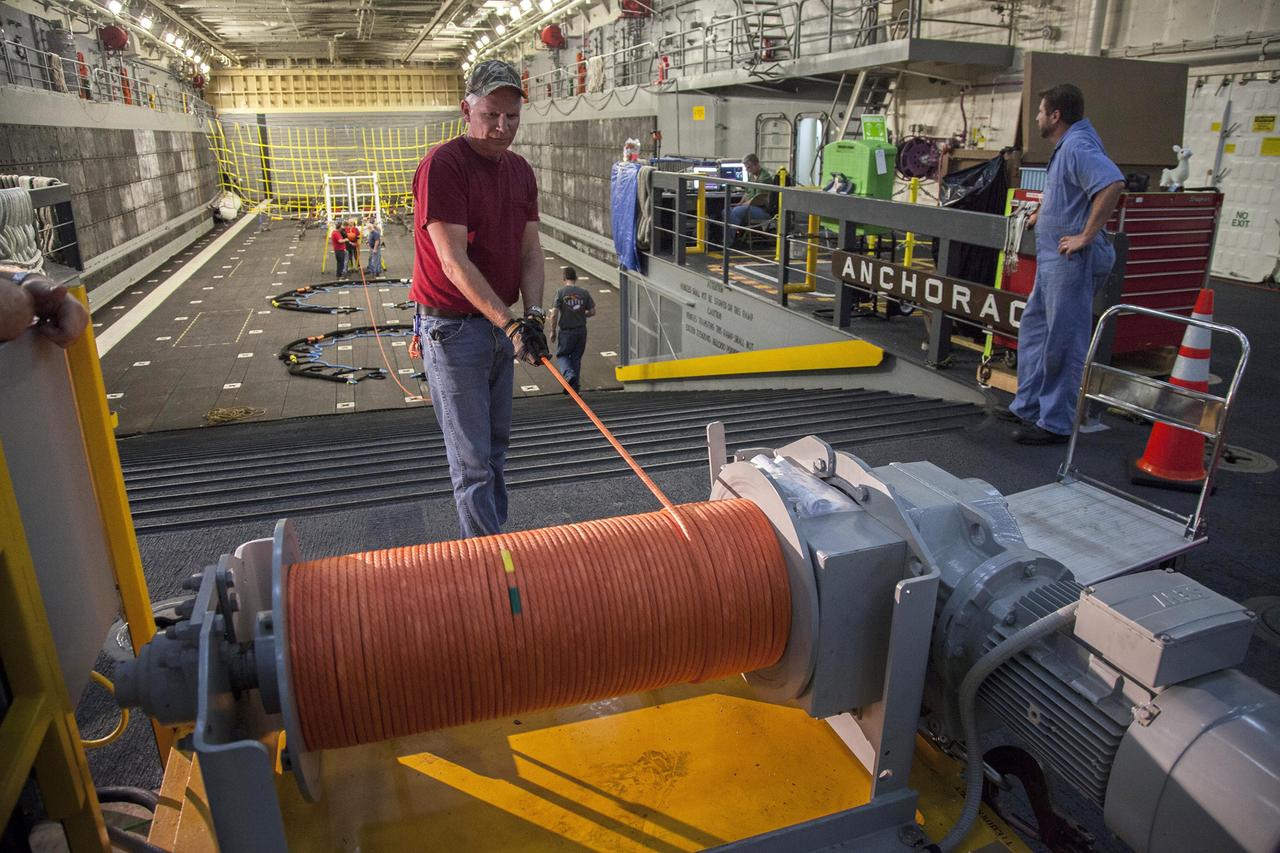
SAN DIEGO, Calif. – NASA, Lockheed Martin and U.S. Navy personnel are preparing the well deck of the USS Anchorage in the Pacific Ocean near the Orion recovery site ahead of the first flight test. The team is preparing for recovery of the crew module, forward bay cover and parachutes on its return from space and splashdown in the Pacific Ocean. The Ground Systems Development and Operations Program is leading the recovery efforts. The first unpiloted flight test of Orion is scheduled to launch this week atop a United Launch Alliance Delta IV Heavy rocket. During its two-orbit, 4.5-hour flight, Orion will venture 3,600 miles in altitude and travel nearly 60,000 miles before returning to Earth for a splashdown in the Pacific Ocean. For more information, visit http://www.nasa.gov/orion. Photo credit: NASA/Cory Huston
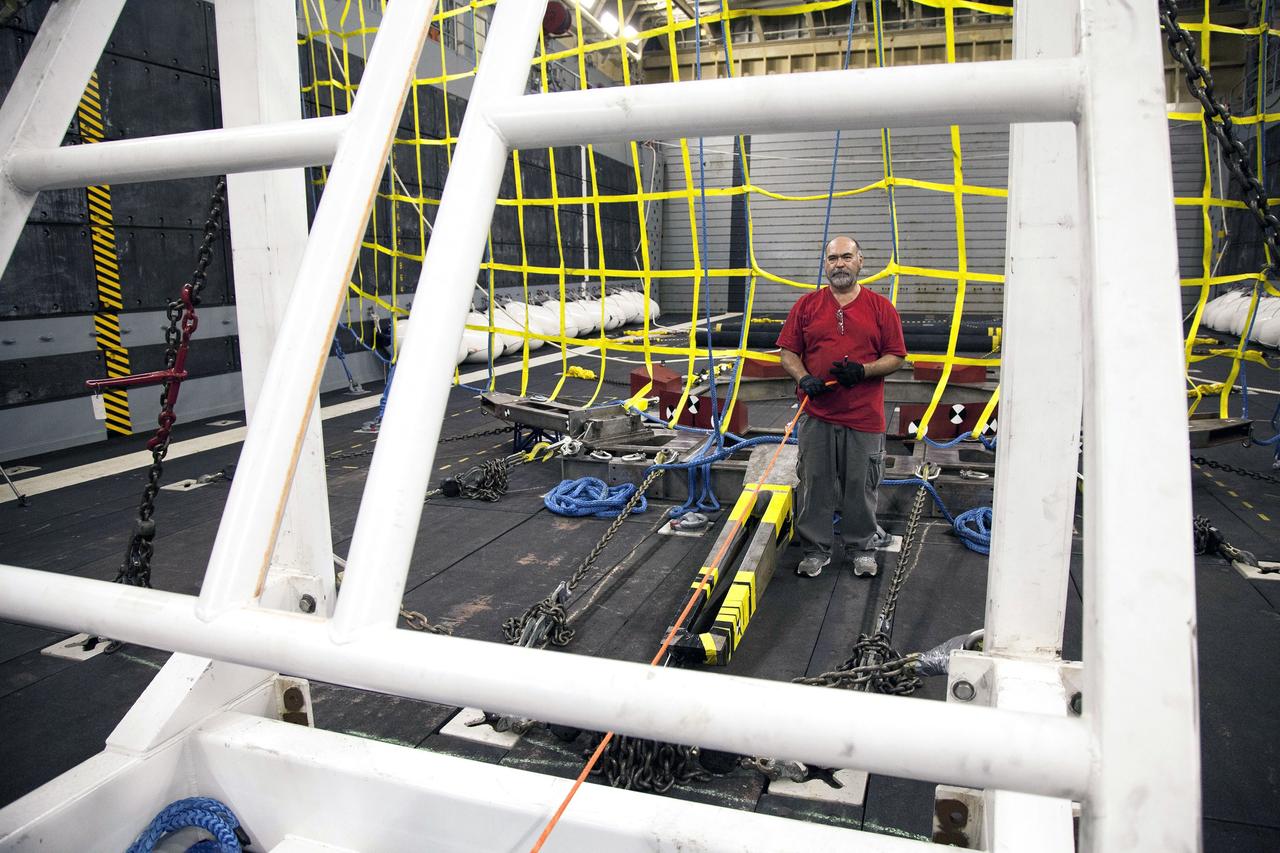
SAN DIEGO, Calif. – NASA, Lockheed Martin and U.S. Navy personnel are preparing the well deck of the USS Anchorage in the Pacific Ocean near the Orion recovery site ahead of the first flight test. The team is preparing for recovery of the crew module, forward bay cover and parachutes on its return from space and splashdown in the Pacific Ocean. The Ground Systems Development and Operations Program is leading the recovery efforts. The first unpiloted flight test of Orion is scheduled to launch this week atop a United Launch Alliance Delta IV Heavy rocket. During its two-orbit, 4.5-hour flight, Orion will venture 3,600 miles in altitude and travel nearly 60,000 miles before returning to Earth for a splashdown in the Pacific Ocean. For more information, visit http://www.nasa.gov/orion. Photo credit: NASA/Cory Huston
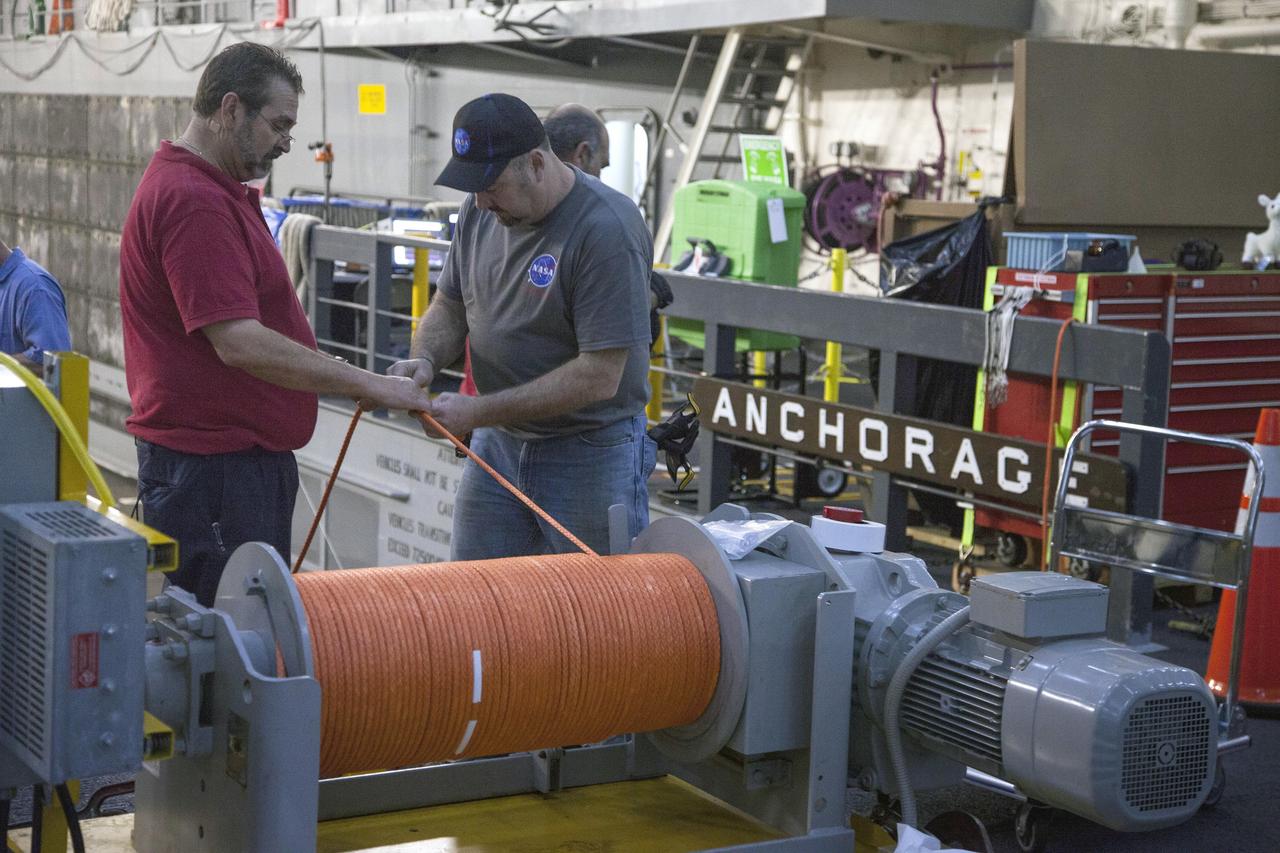
SAN DIEGO, Calif. – NASA, Lockheed Martin and U.S. Navy personnel are preparing the well deck of the USS Anchorage in the Pacific Ocean near the Orion recovery site ahead of the first flight test. The team is preparing for recovery of the crew module, forward bay cover and parachutes on its return from space and splashdown in the Pacific Ocean. The Ground Systems Development and Operations Program is leading the recovery efforts. The first unpiloted flight test of Orion is scheduled to launch this week atop a United Launch Alliance Delta IV Heavy rocket. During its two-orbit, 4.5-hour flight, Orion will venture 3,600 miles in altitude and travel nearly 60,000 miles before returning to Earth for a splashdown in the Pacific Ocean. For more information, visit http://www.nasa.gov/orion. Photo credit: NASA/Cory Huston
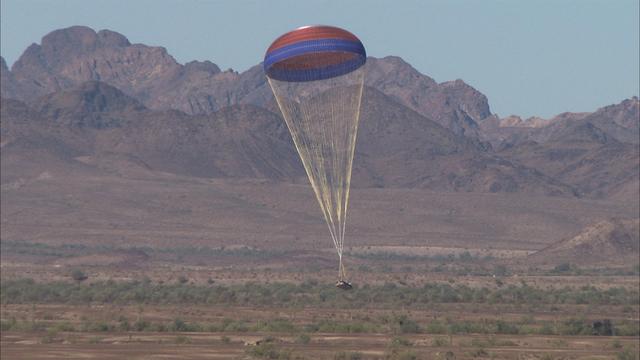
Under the goals of the Vision for Space Exploration, Ares I is a chief component of the cost-effective space transportation infrastructure being developed by NASA's Constellation Program. This transportation system will safely and reliably carry human explorers back to the moon, and then onward to Mars and other destinations in the solar system. The Ares I effort includes multiple project element teams at NASA centers and contract organizations around the nation, and is managed by the Exploration Launch Projects Office at NASA's Marshall Space Flight Center (MFSC). ATK Launch Systems near Brigham City, Utah, is the prime contractor for the first stage booster. ATK's subcontractor, United Space Alliance of Houston, is designing, developing and testing the parachutes at its facilities at NASA's Kennedy Space Center in Florida. NASA's Johnson Space Center in Houston hosts the Constellation Program and Orion Crew Capsule Project Office and provides test instrumentation and support personnel. Together, these teams are developing vehicle hardware, evolving proven technologies, and testing components and systems. Their work builds on powerful, reliable space shuttle propulsion elements and nearly a half-century of NASA space flight experience and technological advances. Ares I is an inline, two-stage rocket configuration topped by the Crew Exploration Vehicle, its service module, and a launch abort system. In this HD video image, the first stage reentry parachute drop test is conducted at the Yuma, Arizona proving ground. The parachute tests demonstrated a three-stage deployment sequence that included the use of an Orbiter drag chute to properly stage the unfurling of the main chute. The parachute recovery system for Orion will be similar to the system used for Apollo command module landings and include two drogue, three pilot, and three main parachutes. (Highest resolution available)
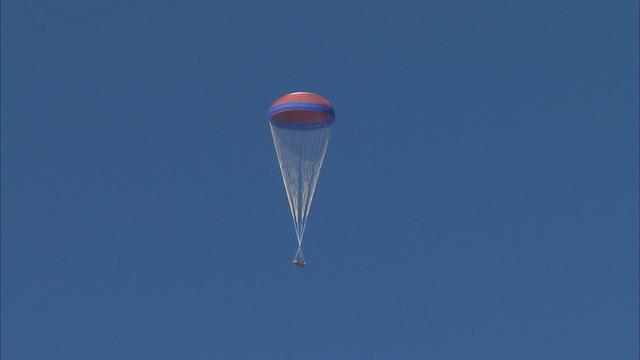
Under the goals of the Vision for Space Exploration, Ares I is a chief component of the cost-effective space transportation infrastructure being developed by NASA's Constellation Program. This transportation system will safely and reliably carry human explorers back to the moon, and then onward to Mars and other destinations in the solar system. The Ares I effort includes multiple project element teams at NASA centers and contract organizations around the nation, and is managed by the Exploration Launch Projects Office at NASA's Marshall Space Flight Center (MFSC). ATK Launch Systems near Brigham City, Utah, is the prime contractor for the first stage booster. ATK's subcontractor, United Space Alliance of Houston, is designing, developing and testing the parachutes at its facilities at NASA's Kennedy Space Center in Florida. NASA's Johnson Space Center in Houston hosts the Constellation Program and Orion Crew Capsule Project Office and provides test instrumentation and support personnel. Together, these teams are developing vehicle hardware, evolving proven technologies, and testing components and systems. Their work builds on powerful, reliable space shuttle propulsion elements and nearly a half-century of NASA space flight experience and technological advances. Ares I is an inline, two-stage rocket configuration topped by the Crew Exploration Vehicle, its service module, and a launch abort system. In this HD video image, the first stage reentry parachute drop test is conducted at the Yuma, Arizona proving ground. The parachute tests demonstrated a three-stage deployment sequence that included the use of an Orbiter drag chute to properly stage the unfurling of the main chute. The parachute recovery system for Orion will be similar to the system used for Apollo command module landings and include two drogue, three pilot, and three main parachutes. (Highest resolution available)
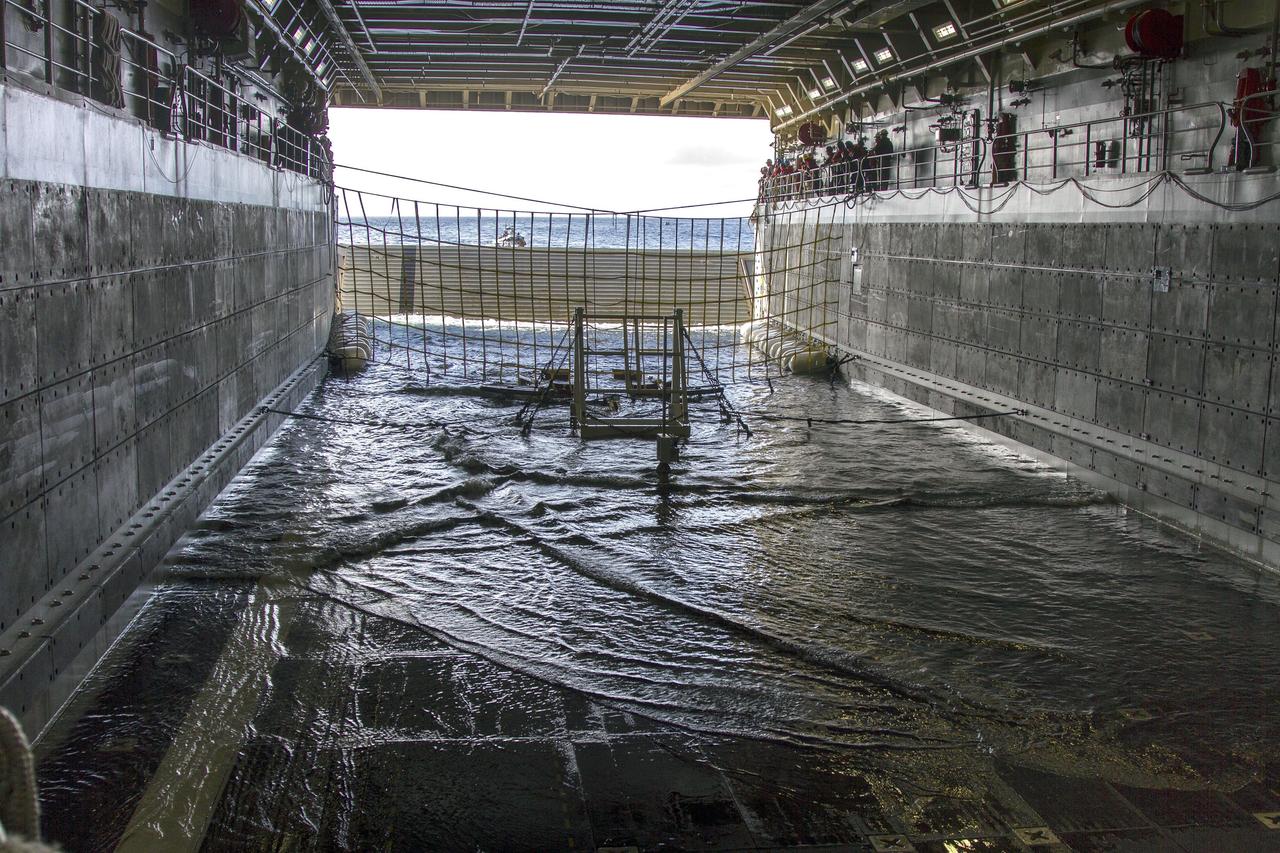
SAN DIEGO, Calif. – On the third day of preparations for recovery of Orion after its splashdown in the Pacific Ocean, the well deck of the USS Anchorage has been filled with water and recovery hardware is in place. The ship is about 600 miles off the coast of Baja, California. NASA, Lockheed Martin and U.S. Navy personnel are preparing for recovery of the crew module, forward bay cover and parachutes on its return from space and splashdown in the Pacific Ocean. The Ground Systems Development and Operations Program is leading the recovery efforts. The first unpiloted flight test of Orion is scheduled to launch Dec. 4 atop a United Launch Alliance Delta IV Heavy rocket. During its two-orbit, 4.5-hour flight, Orion will venture 3,600 miles in altitude and travel nearly 60,000 miles before returning to Earth for a splashdown in the Pacific Ocean. For more information, visit http://www.nasa.gov/orion. Photo credit: NASA/Cory Huston
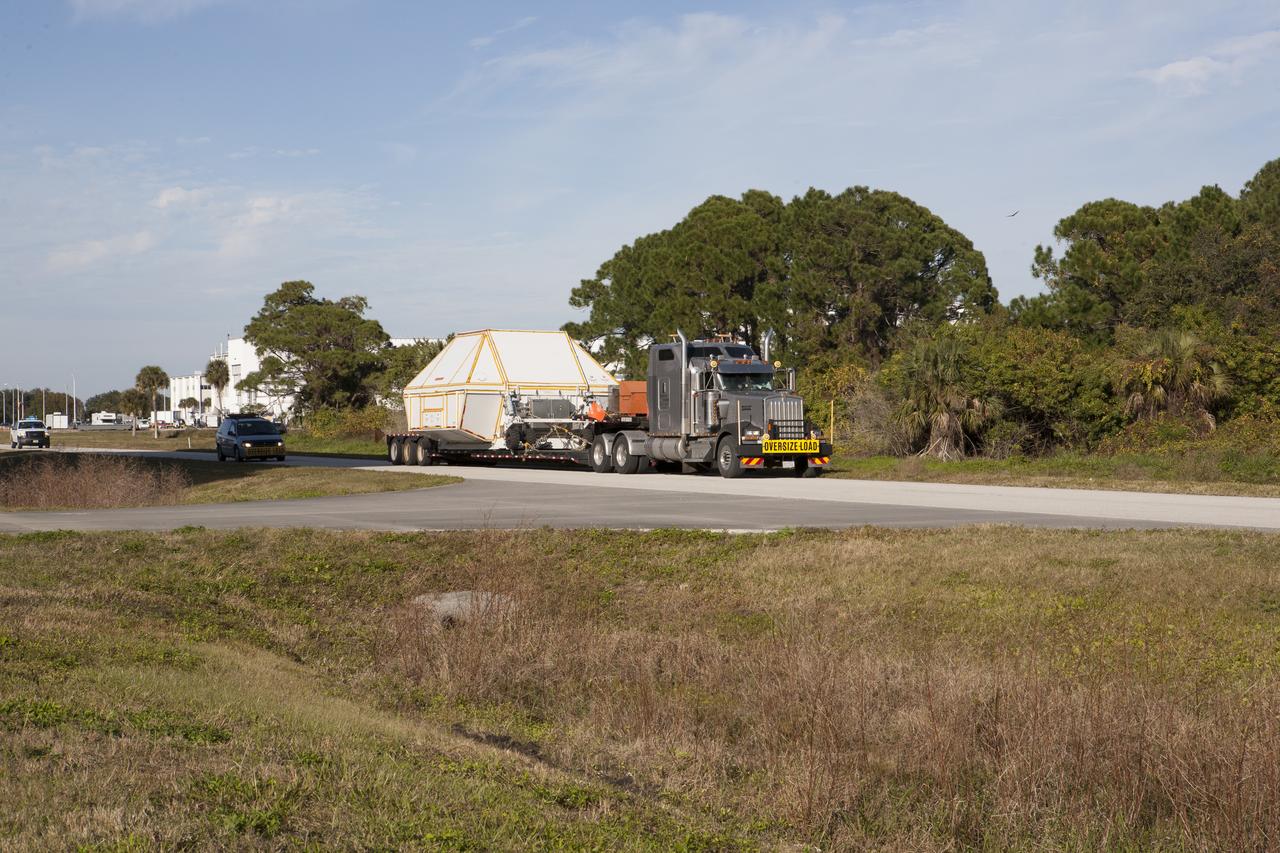
NASA's Orion crew module, enclosed in its crew module transportation fixture and secured on a flatbed truck, leaves the Multi-Operation Support Building and is being transported to the Launch Abort System Facility at NASA's Kennedy Space Center in Florida. Orion was transported 2,700 miles overland from Naval Base San Diego in California. Orion was recovered from the Pacific Ocean after completing a two-orbit, four-and-a-half hour mission Dec. 5 to test systems critical to crew safety, including the launch abort system, the heat shield and the parachute system. The Ground Systems Development and Operations Program led the recovery, offload and transportation efforts.
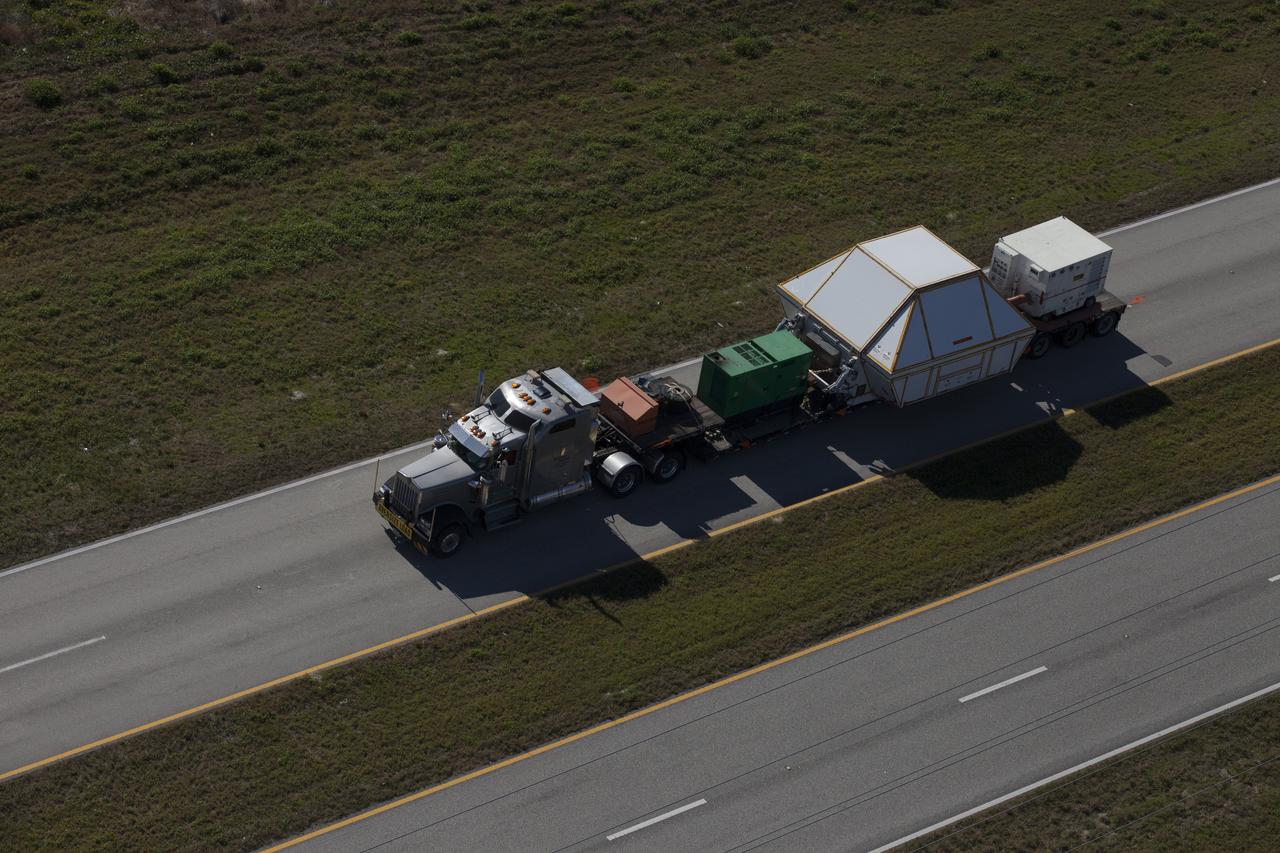
An aerial view near NASA's Kennedy Space Center Visitor Complex reveals the Orion crew module, enclosed in its crew module transportation fixture and secured on a flatbed truck that is proceeding along the NASA Causeway to the entrance gate to Kennedy Space Center in Florida. Orion made the 2,700 mile overland trip from Naval Base San Diego in California. The spacecraft was recovered from the Pacific Ocean after completing a two-orbit, four-and-a-half hour mission Dec. 5 to test systems critical to crew safety, including the launch abort system, the heat shield and the parachute system. The Ground Systems Development and Operations Program led the recovery, offload and transportation efforts.
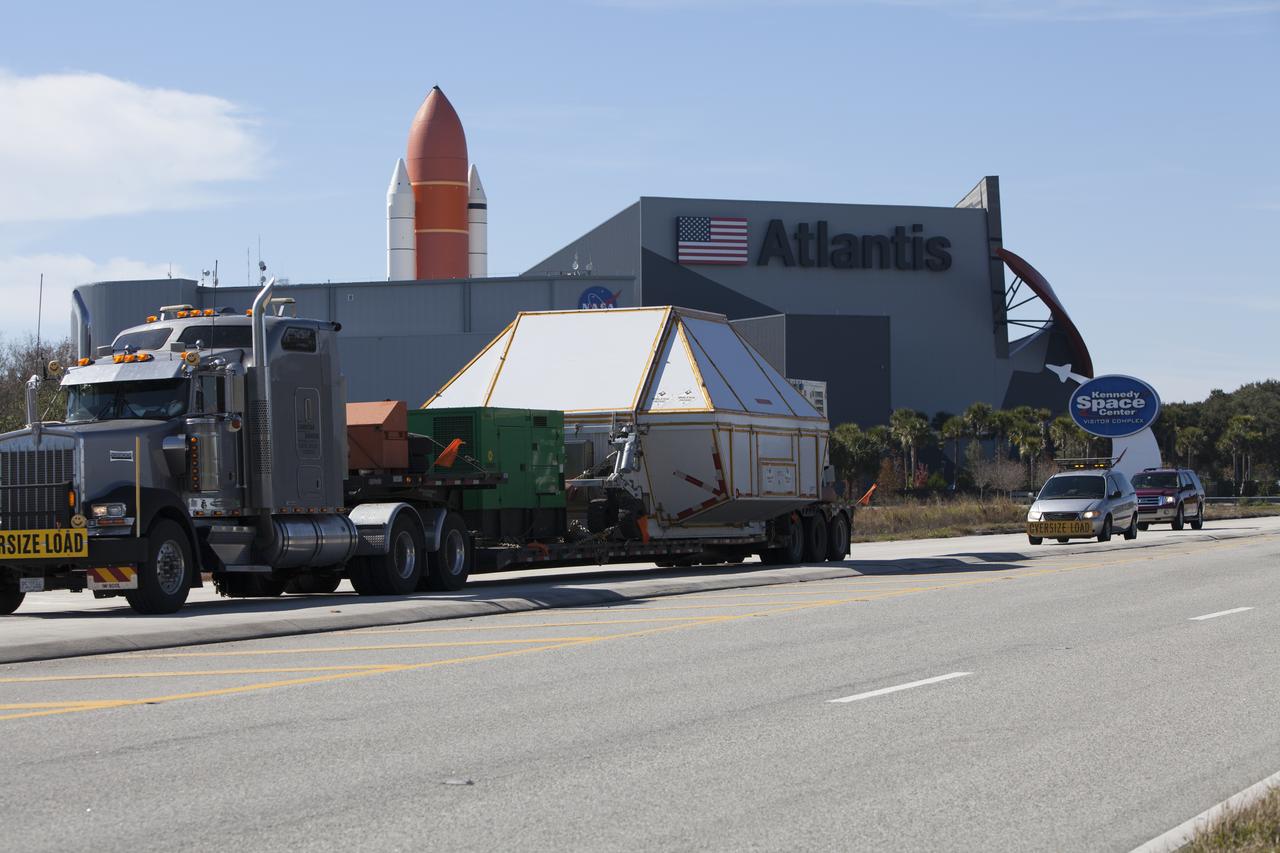
NASA's Orion crew module, enclosed in its crew module transportation fixture and secured on a flatbed truck passes by the Space Shuttle Atlantis building at the Kennedy Space Center Visitor Complex on its way to the entrance gate to Kennedy Space Center in Florida. Orion made the overland trip from Naval Base San Diego in California. Orion was recovered from the Pacific Ocean after completing a two-orbit, four-and-a-half hour mission Dec. 5 to test systems critical to crew safety, including the launch abort system, the heat shield and the parachute system. The Ground Systems Development and Operations Program led the recovery, offload and transportation efforts.
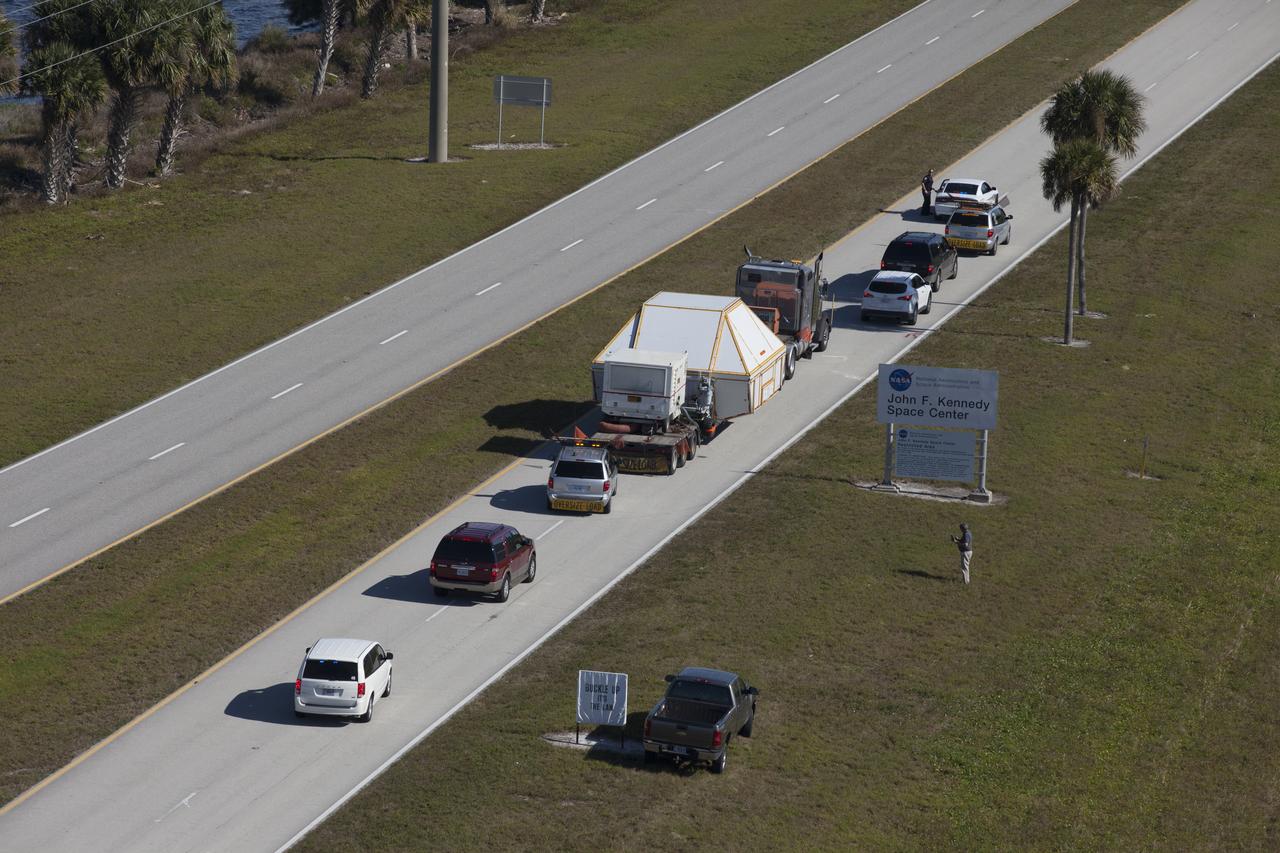
An aerial view near NASA's Kennedy Space Center Visitor Complex reveals the Orion crew module, enclosed in its crew module transportation fixture and secured on a flatbed truck on the NASA Causeway that leads to the entrance gate to Kennedy Space Center in Florida. Orion made the 2,700 mile overland trip from Naval Base San Diego in California. The spacecraft was recovered from the Pacific Ocean after completing a two-orbit, four-and-a-half hour mission Dec. 5 to test systems critical to crew safety, including the launch abort system, the heat shield and the parachute system. The Ground Systems Development and Operations Program led the recovery, offload and transportation efforts.
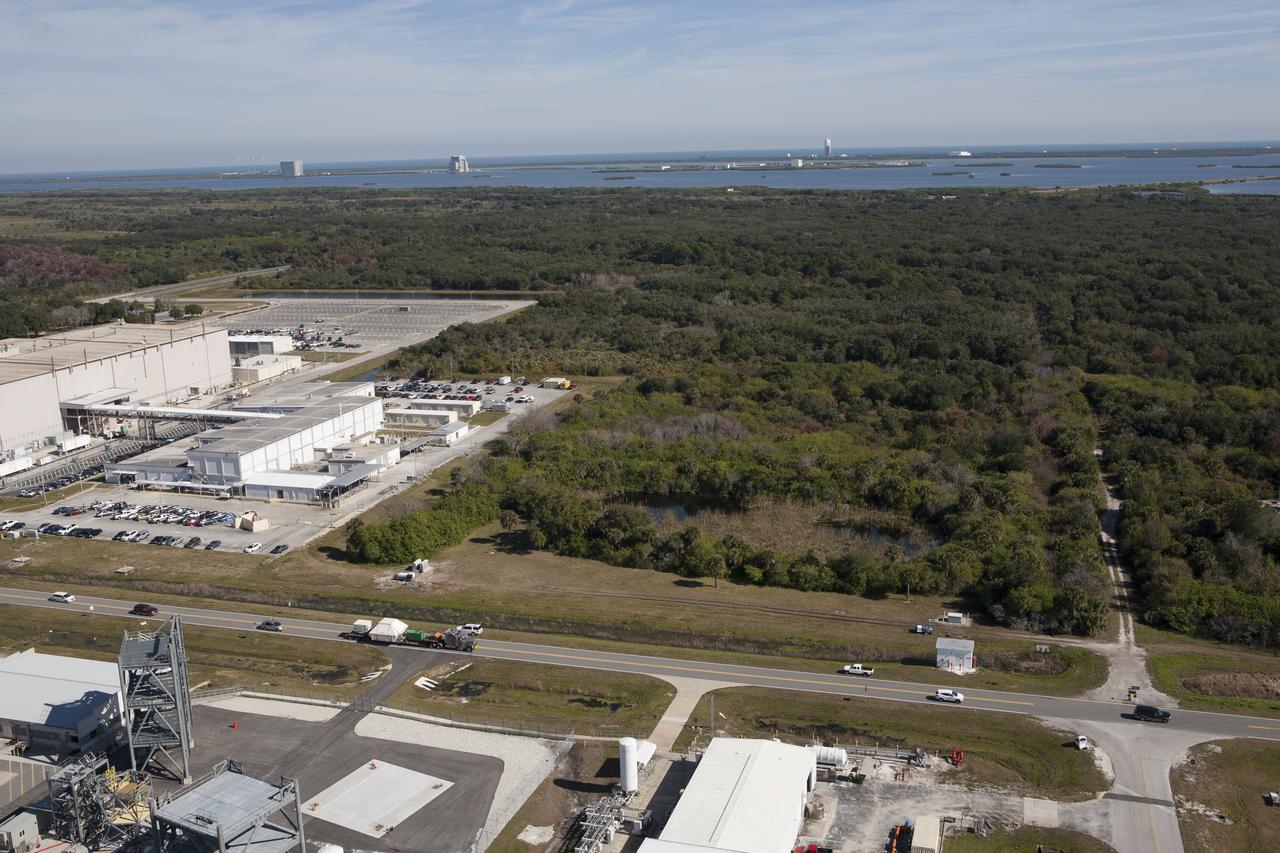
An aerial view reveals the Orion crew module, enclosed in its crew module transportation fixture and secured on a flatbed truck is passing the Space Station Processing Facility at Kennedy Space Center in Florida on its way to the Multi-Operation Support Building. Orion made the 2,700 mile overland trip from Naval Base San Diego in California. The spacecraft was recovered from the Pacific Ocean after completing a two-orbit, four-and-a-half hour mission Dec. 5 to test systems critical to crew safety, including the launch abort system, the heat shield and the parachute system. The Ground Systems Development and Operations Program led the recovery, offload and transportation efforts.
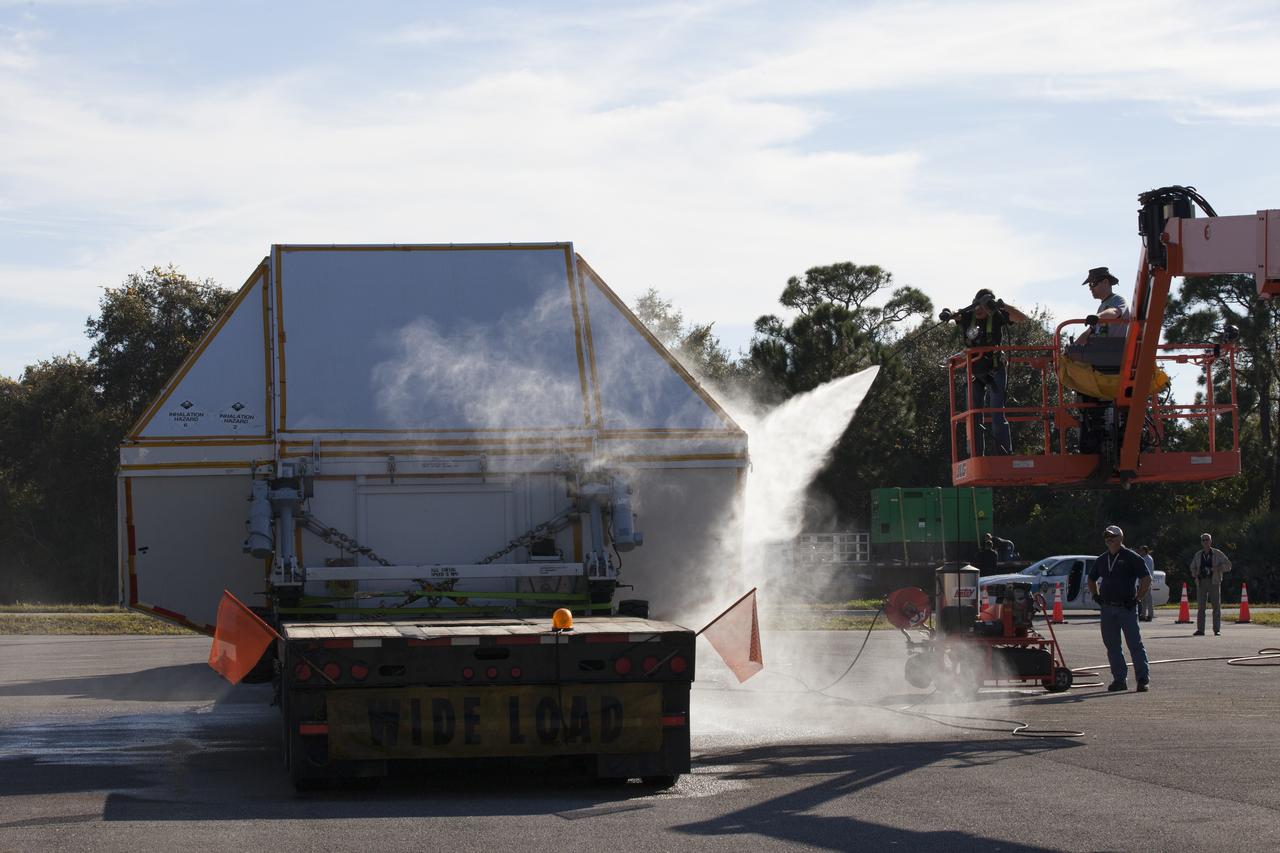
Technicians wash down the crew module transportation fixture containing the Orion crew module on the back of a flatbed truck at the Multi-Operation Support Building at NASA's Kennedy Space Center in Florida. Orion was transported 2,700 miles overland from Naval Base San Diego in California. Orion was recovered from the Pacific Ocean after completing a two-orbit, four-and-a-half hour mission Dec. 5 to test systems critical to crew safety, including the launch abort system, the heat shield and the parachute system. The Ground Systems Development and Operations Program led the recovery, offload and transportation efforts.