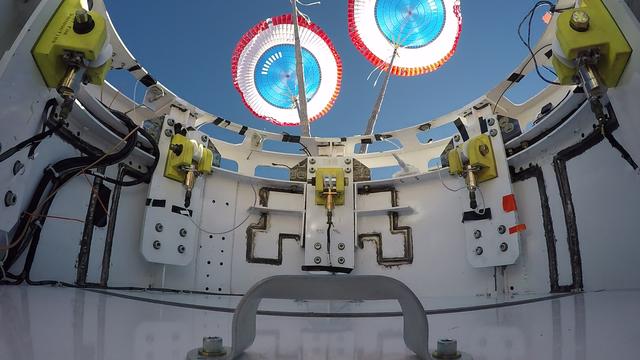
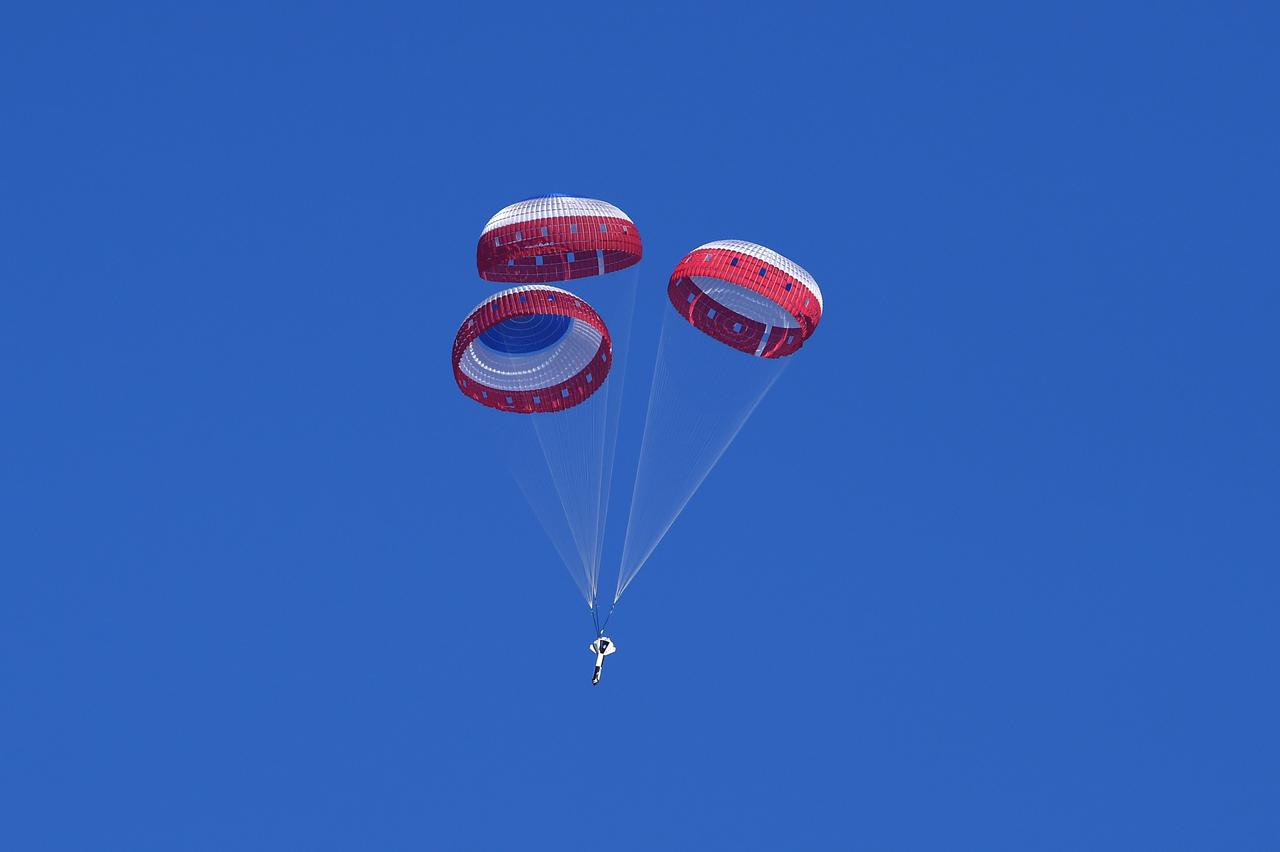
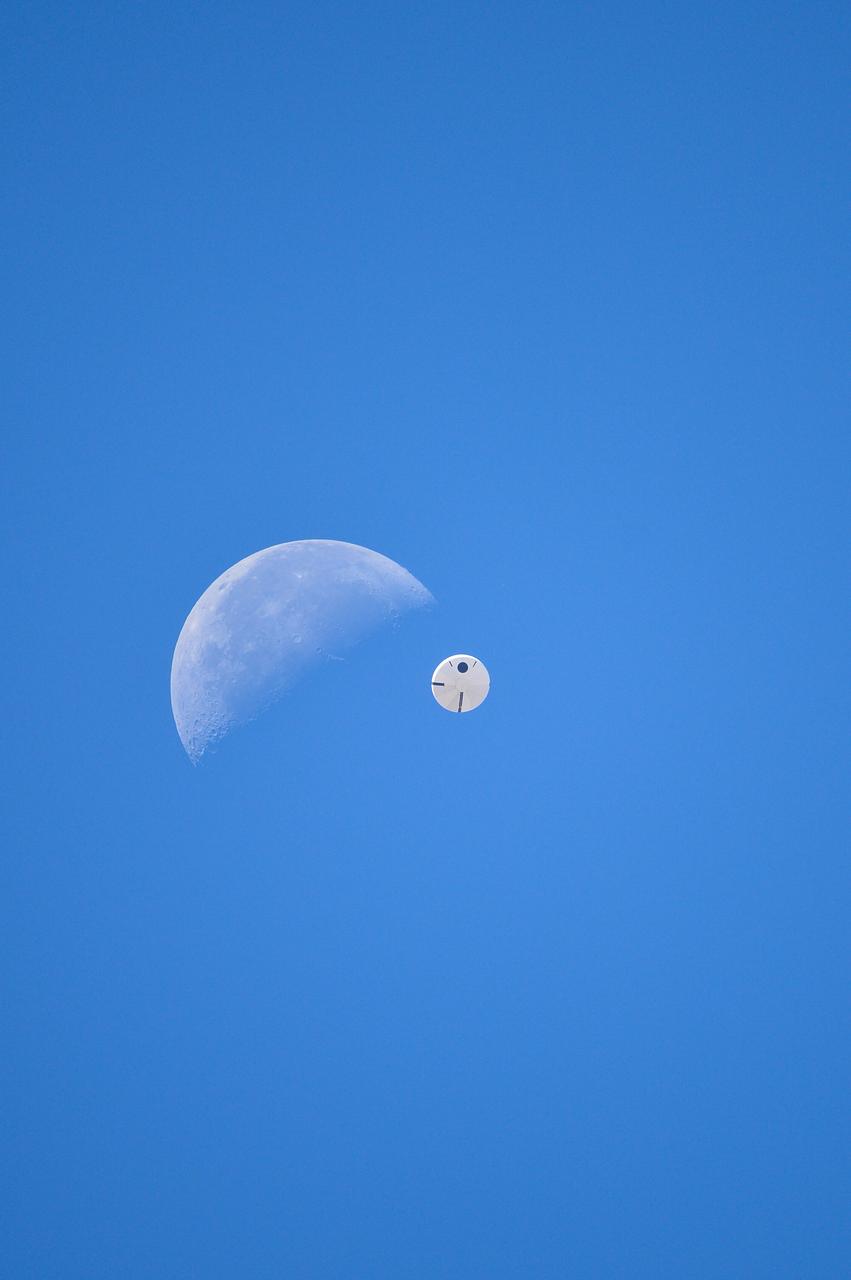
The parachute deployment is seen from the top hatch of a boilerplate CST-100 Starliner during a drop test of the Starliner's parachute system. Boeing, which is building the Starliner, conducted the test in White Sands, New Mexico, as part of the testing campaign for certification by NASA's Commercial Crew Program. Photo credit: Boeing
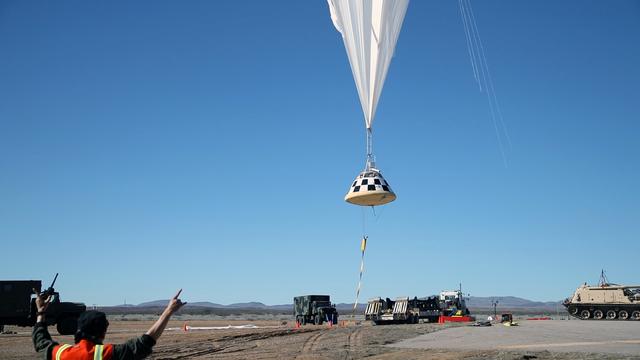
A boilerplate CST-100 Starliner is lifted skyward by a balloon for a drop test of the Starliner's parachute system. Boeing, which is building the Starliner, conducted the test in White Sands, New Mexico, as part of the testing campaign for certification by NASA's Commercial Crew Program. Photo credit: Boeing
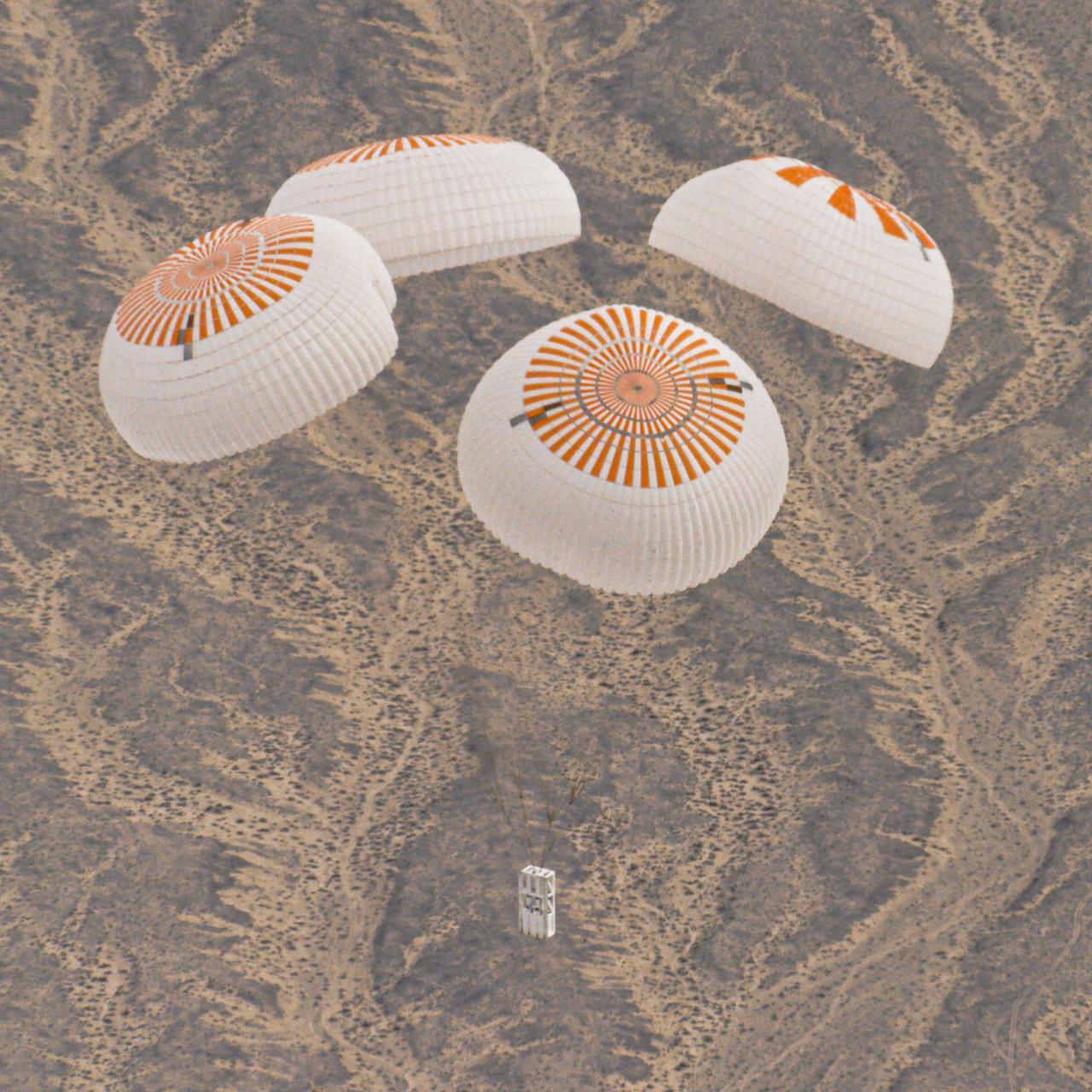
SpaceX completed the 7th successful system test of the Crew Dragon spacecraft’s upgraded Mark 3 parachutes in the western U.S. in December 2019. The parachutes will provide a safe landing on Earth for astronauts returning from the International Space Station in partnership with NASA’s Commercial Crew Program.
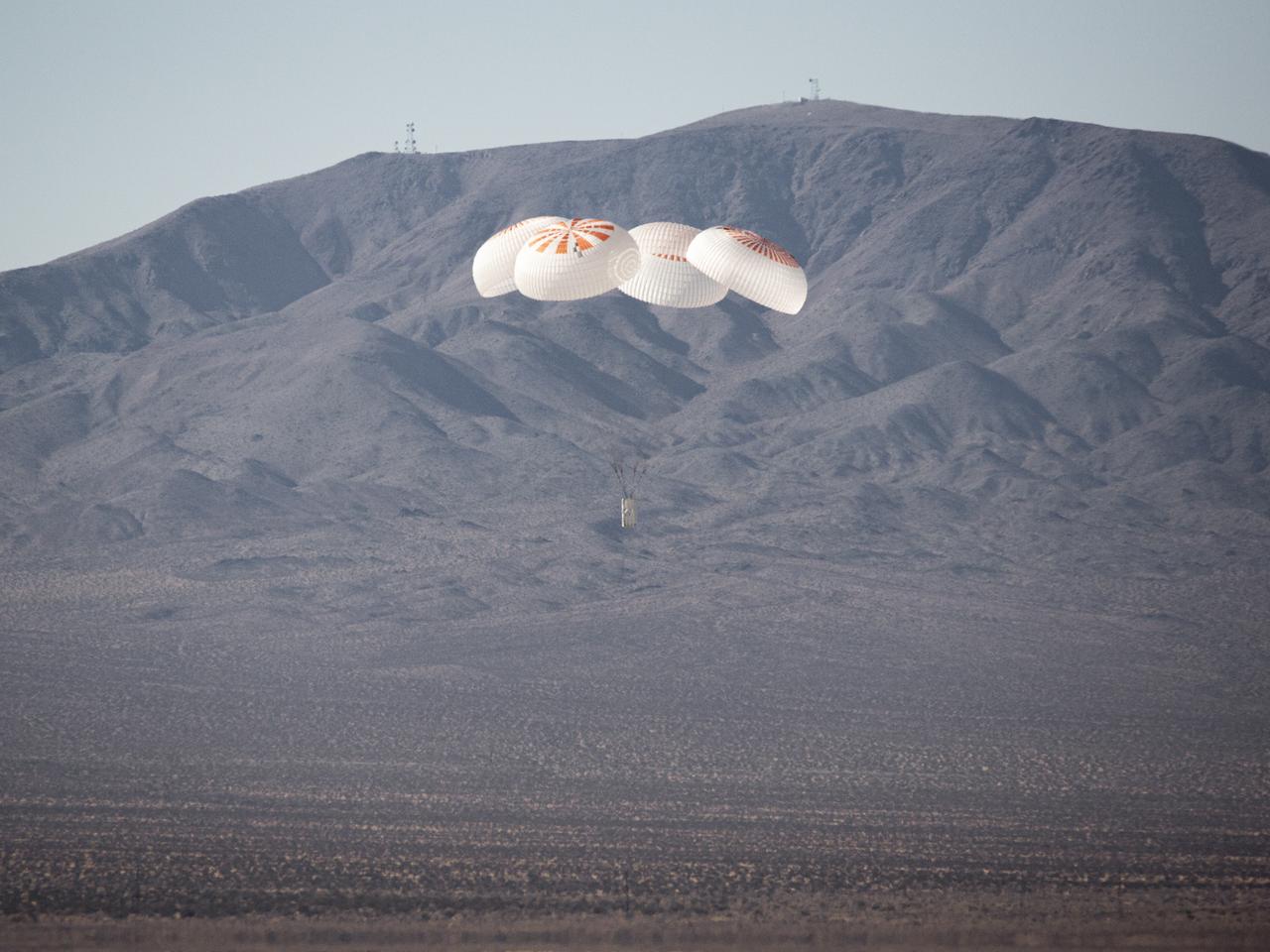
SpaceX completed the 7th successful system test of the Crew Dragon spacecraft’s upgraded Mark 3 parachutes in the western U.S. in December 2019. The parachutes will provide a safe landing on Earth for astronauts returning from the International Space Station in partnership with NASA’s Commercial Crew Program.
Boeing conducted the first in a series of reliability tests of its CST-100 Starliner flight drogue and main parachute system by releasing a long, dart-shaped test vehicle from a C-17 aircraft over Yuma, Arizona. Two more tests are planned using the dart module, as well as three similar reliability tests using a high fidelity capsule simulator designed to simulate the CST-100 Starliner capsule’s exact shape and mass. In both the dart and capsule simulator tests, the test spacecraft are released at various altitudes to test the parachute system at different deployment speeds, aerodynamic loads, and or weight demands. Data collected from each test is fed into computer models to more accurately predict parachute performance and to verify consistency from test to test.
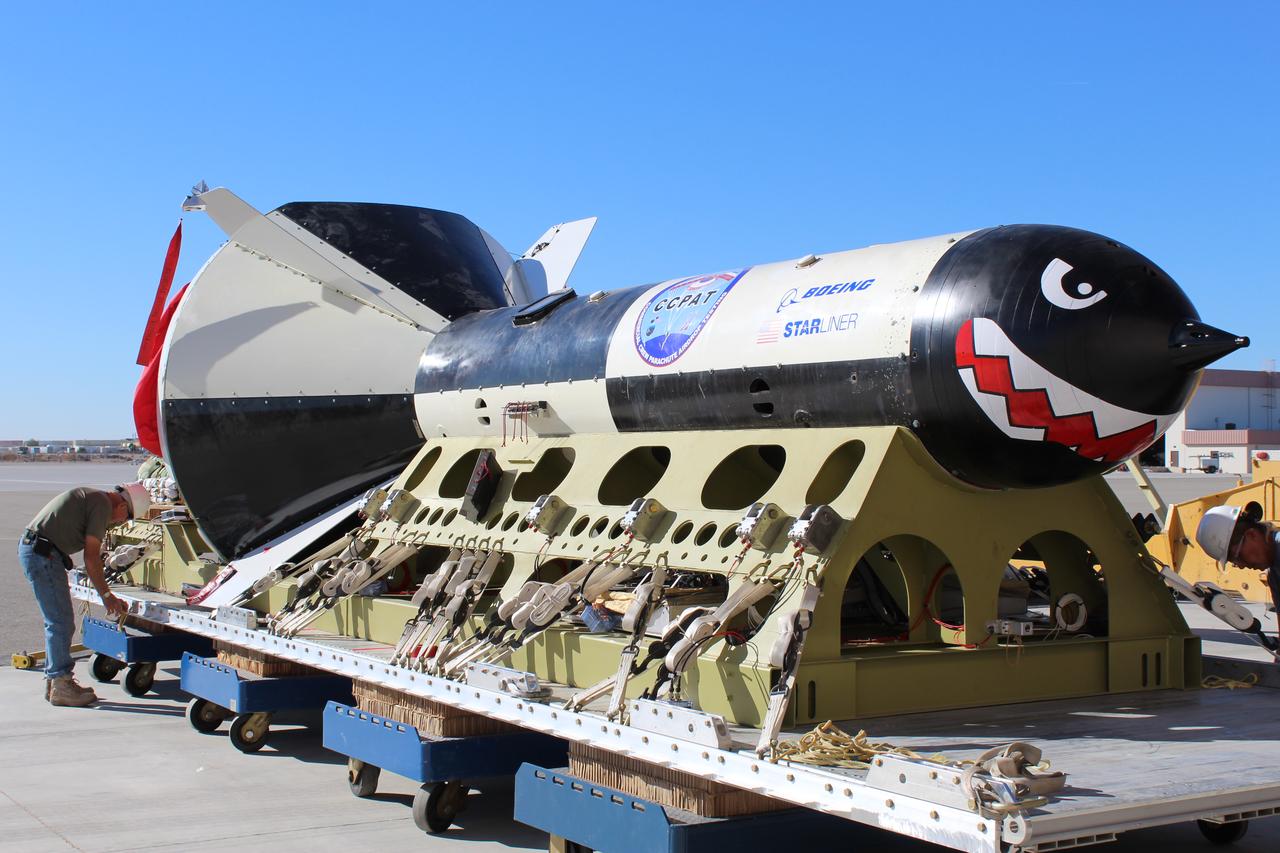
Boeing conducted the first in a series of reliability tests of its CST-100 Starliner flight drogue and main parachute system by releasing a long, dart-shaped test vehicle from a C-17 aircraft over Yuma, Arizona. Two more tests are planned using the dart module, as well as three similar reliability tests using a high fidelity capsule simulator designed to simulate the CST-100 Starliner capsule’s exact shape and mass. In both the dart and capsule simulator tests, the test spacecraft are released at various altitudes to test the parachute system at different deployment speeds, aerodynamic loads, and or weight demands. Data collected from each test is fed into computer models to more accurately predict parachute performance and to verify consistency from test to test.
Boeing conducted the first in a series of reliability tests of its CST-100 Starliner flight drogue and main parachute system by releasing a long, dart-shaped test vehicle from a C-17 aircraft over Yuma, Arizona. Two more tests are planned using the dart module, as well as three similar reliability tests using a high fidelity capsule simulator designed to simulate the CST-100 Starliner capsule’s exact shape and mass. In both the dart and capsule simulator tests, the test spacecraft are released at various altitudes to test the parachute system at different deployment speeds, aerodynamic loads, and or weight demands. Data collected from each test is fed into computer models to more accurately predict parachute performance and to verify consistency from test to test.
Boeing conducted the first in a series of reliability tests of its CST-100 Starliner flight drogue and main parachute system by releasing a long, dart-shaped test vehicle from a C-17 aircraft over Yuma, Arizona. Two more tests are planned using the dart module, as well as three similar reliability tests using a high fidelity capsule simulator designed to simulate the CST-100 Starliner capsule’s exact shape and mass. In both the dart and capsule simulator tests, the test spacecraft are released at various altitudes to test the parachute system at different deployment speeds, aerodynamic loads, and or weight demands. Data collected from each test is fed into computer models to more accurately predict parachute performance and to verify consistency from test to test.
Boeing conducted the first in a series of reliability tests of its CST-100 Starliner flight drogue and main parachute system by releasing a long, dart-shaped test vehicle from a C-17 aircraft over Yuma, Arizona. Two more tests are planned using the dart module, as well as three similar reliability tests using a high fidelity capsule simulator designed to simulate the CST-100 Starliner capsule’s exact shape and mass. In both the dart and capsule simulator tests, the test spacecraft are released at various altitudes to test the parachute system at different deployment speeds, aerodynamic loads, and or weight demands. Data collected from each test is fed into computer models to more accurately predict parachute performance and to verify consistency from test to test.
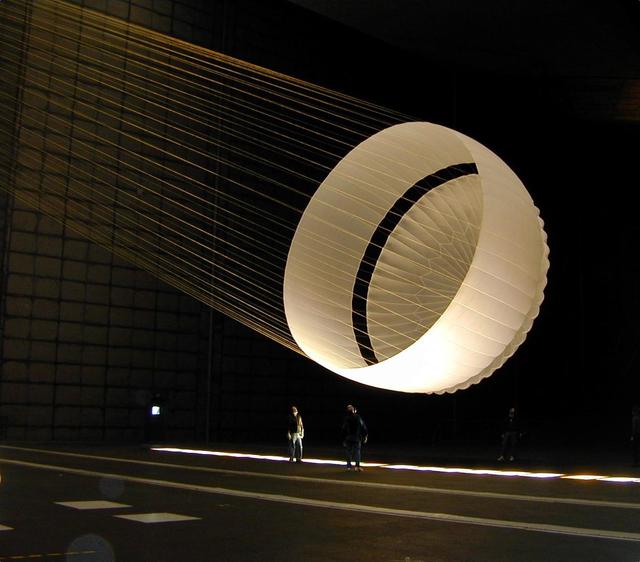
NASA Mars Exploration Rover parachute deployment testing in the world largest wind tunnel at NASA Ames Research Center, Moffet Field, Calif.
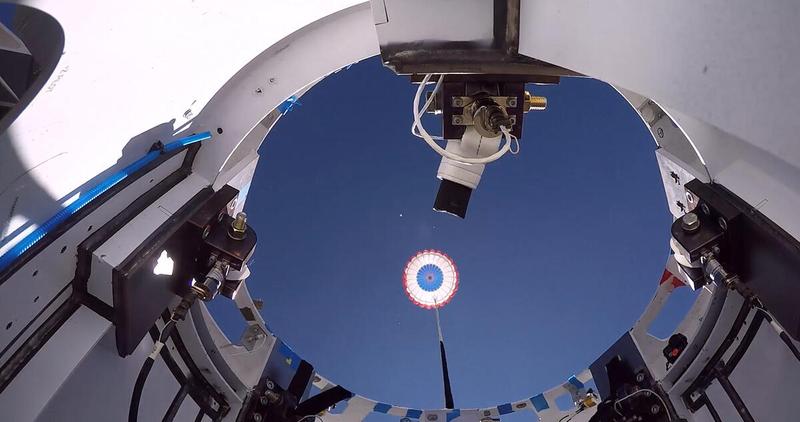
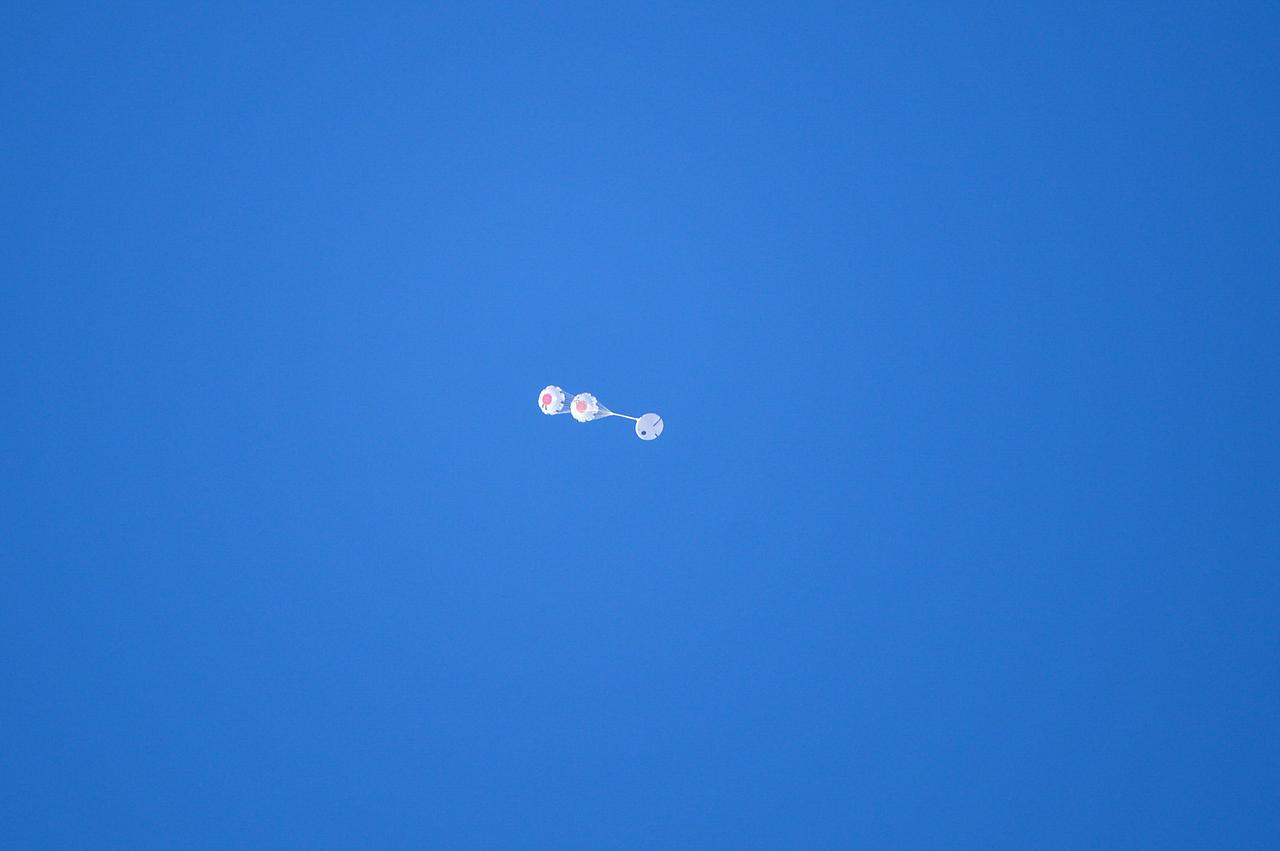
A reused drogue parachute deploys from Boeing’s CST-100 Starliner test article during the final balloon drop parachute test above White Sands, New Mexico, on Sept. 19, 2020. The test is part of a reliability campaign that will help strengthen the spacecraft’s landing system ahead of crewed flights to and from the International Space Station as part of NASA’s Commercial Crew Program.
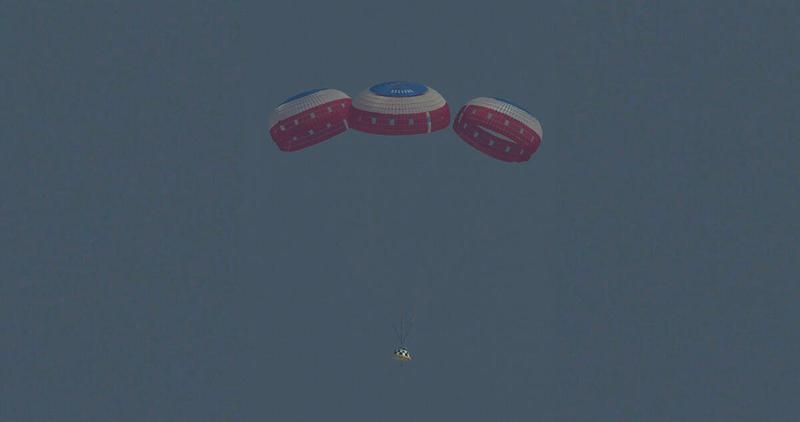
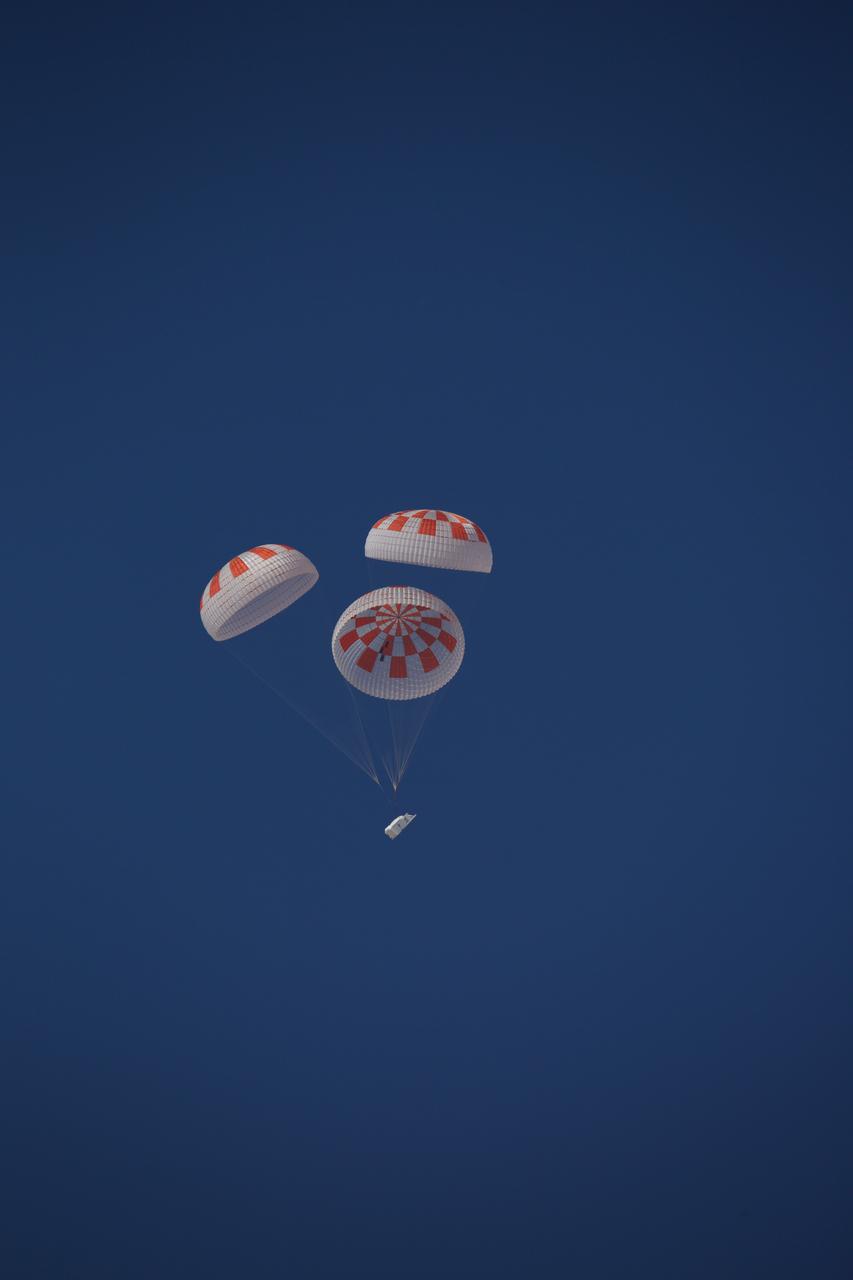
Boeing’s CST-100 Starliner's three main parachutes slow the test article to a safe and soft landing during the final balloon drop parachute test Sept. 19, 2020, at White Sands, New Mexico. The test is part of a reliability campaign that will help strengthen the spacecraft’s landing system ahead of crewed flights to and from the International Space Station as part of NASA’s Commercial Crew Program.
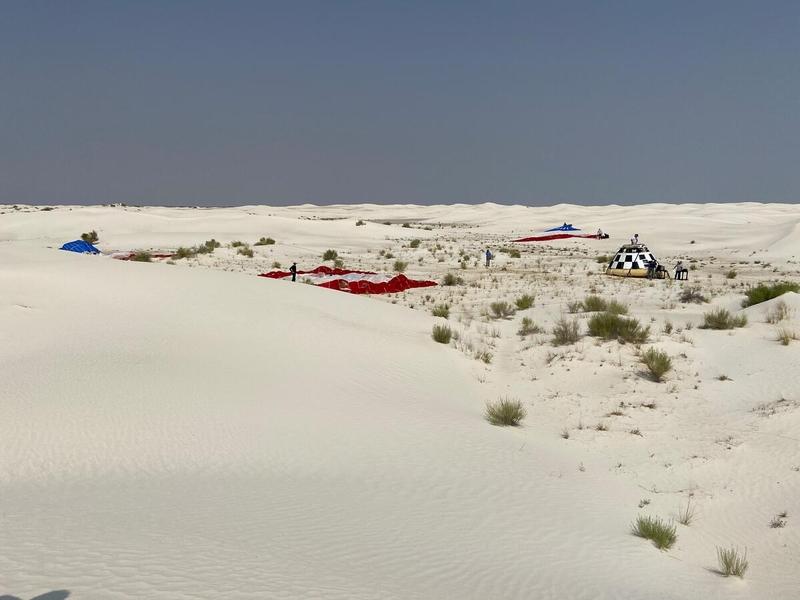
Recovery teams gather at the landing site of Boeing’s CST-100 Starliner test article used in the spacecraft's final parachute reliability test at White Sands Space Harbor, New Mexico, on Sept. 19, 2020. The test is part of a reliability campaign that will help strengthen the spacecraft’s landing system ahead of crewed flights to and from the International Space Station as part of NASA’s Commercial Crew Program.
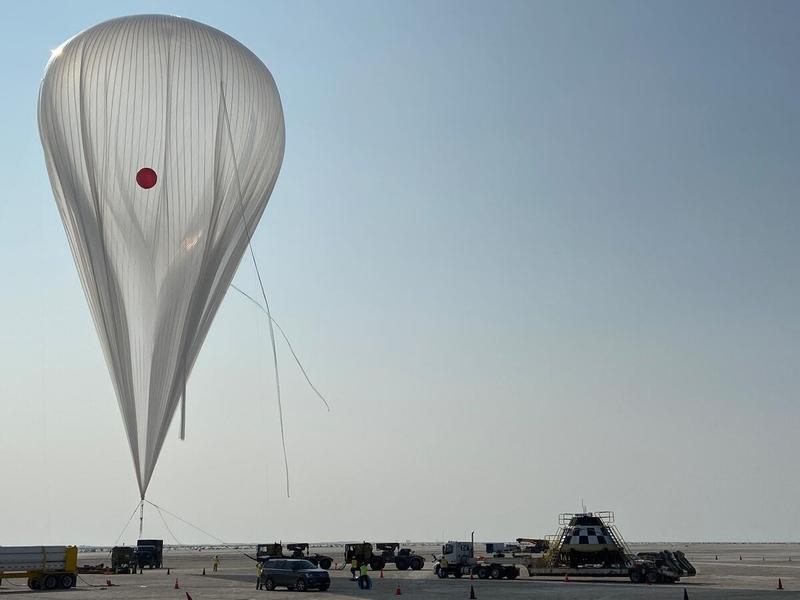
A Boeing CST-100 Starliner test article prepares to mate with a high altitude balloon ahead of its final parachute reliability drop test at White Sands, New Mexico, on Sept. 19, 2020. The test is part of a reliability campaign that will help strengthen the spacecraft’s landing system ahead of crewed flights to and from the International Space Station as part of NASA’s Commercial Crew Program.
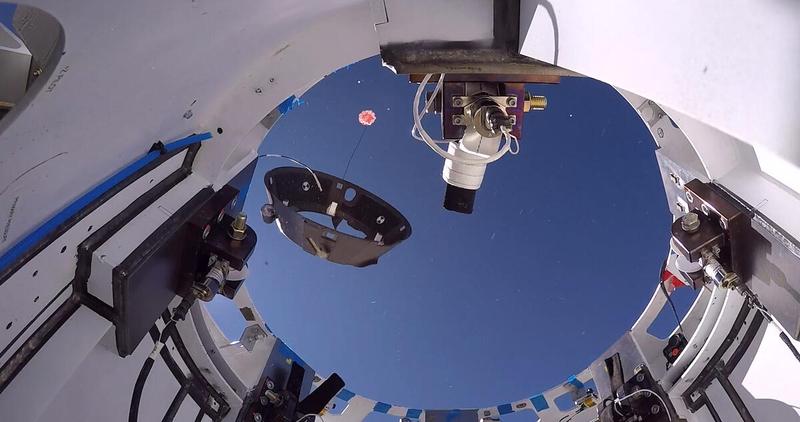
Boeing CST-100 Starliner’s forward heat shield jettisons from a test article during the vehicle’s final balloon drop parachute test at White Sands, New Mexico, on Sept 19, 2020. The test is part of a reliability campaign that will help strengthen the spacecraft’s landing system ahead of crewed flights to and from the International Space Station as part of NASA’s Commercial Crew Program.
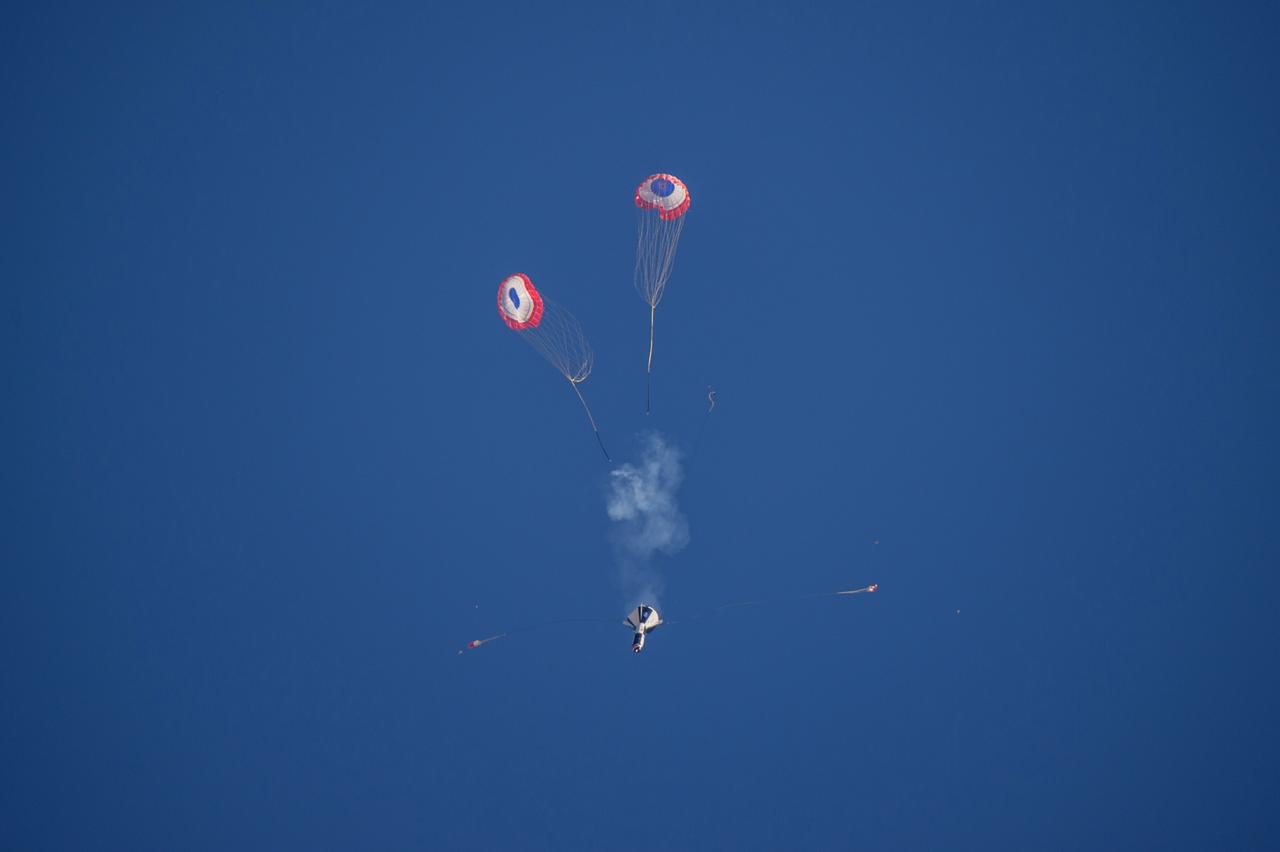
SpaceX performed its fourteenth overall parachute test supporting Crew Dragon development. This most recent exercise was the first of several planned parachute system qualification tests ahead of the spacecraft’s first crewed flight and resulted in the successful touchdown of Crew Dragon’s parachute system. During this test, a C-130 aircraft transported the parachute test vehicle, designed to achieve the maximum speeds that Crew Dragon could experience on re-entry, over the Mojave Desert in Southern California and dropped the vehicle from an altitude of 25,000 feet. The test demonstrated an off-nominal situation, deploying only one of the two drogue chutes and intentionally skipping a reefing stage on one of the four main parachutes, proving a safe landing in such a contingency scenario.
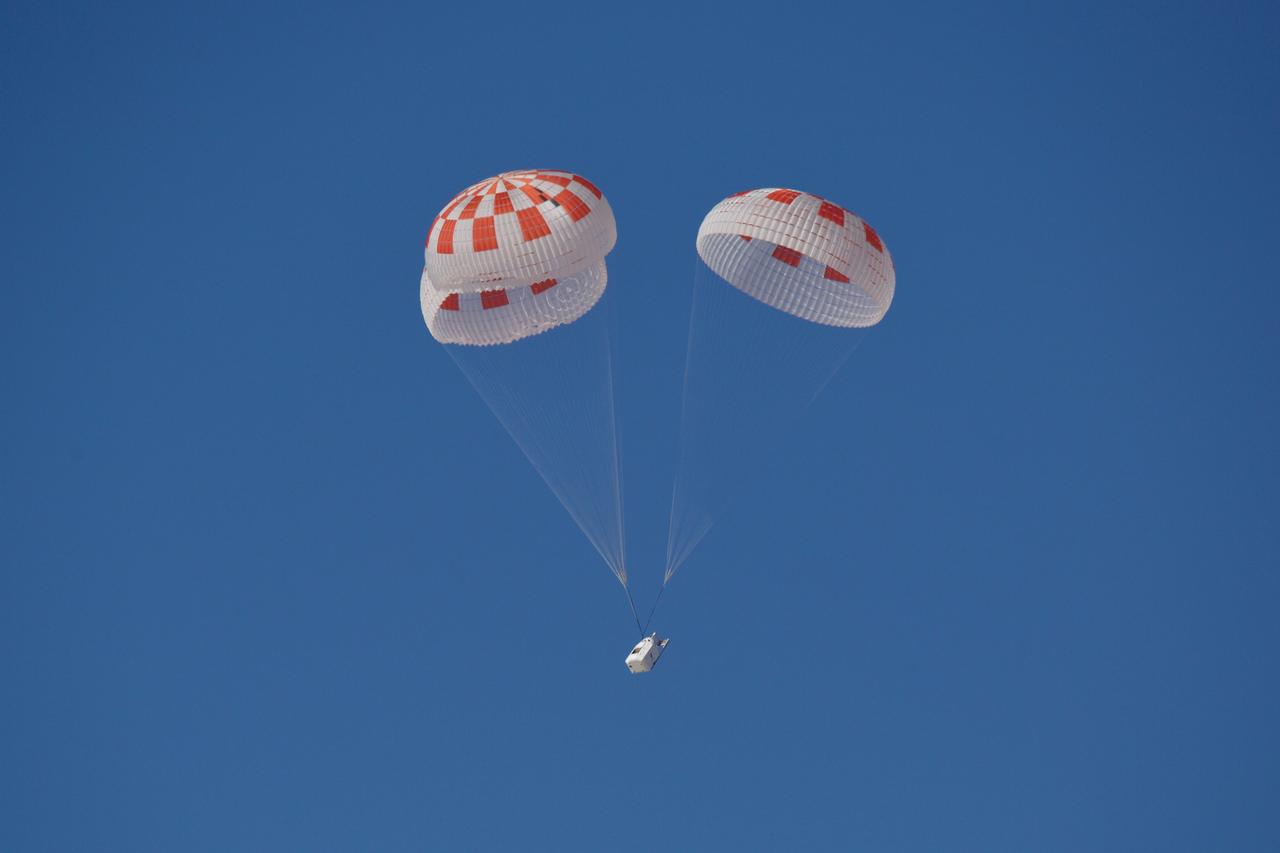
SpaceX performed its fourteenth overall parachute test supporting Crew Dragon development. This most recent exercise was the first of several planned parachute system qualification tests ahead of the spacecraft’s first crewed flight and resulted in the successful touchdown of Crew Dragon’s parachute system. During this test, a C-130 aircraft transported the parachute test vehicle, designed to achieve the maximum speeds that Crew Dragon could experience on re-entry, over the Mojave Desert in Southern California and dropped the vehicle from an altitude of 25,000 feet. The test demonstrated an off-nominal situation, deploying only one of the two drogue chutes and intentionally skipping a reefing stage on one of the four main parachutes, proving a safe landing in such a contingency scenario.
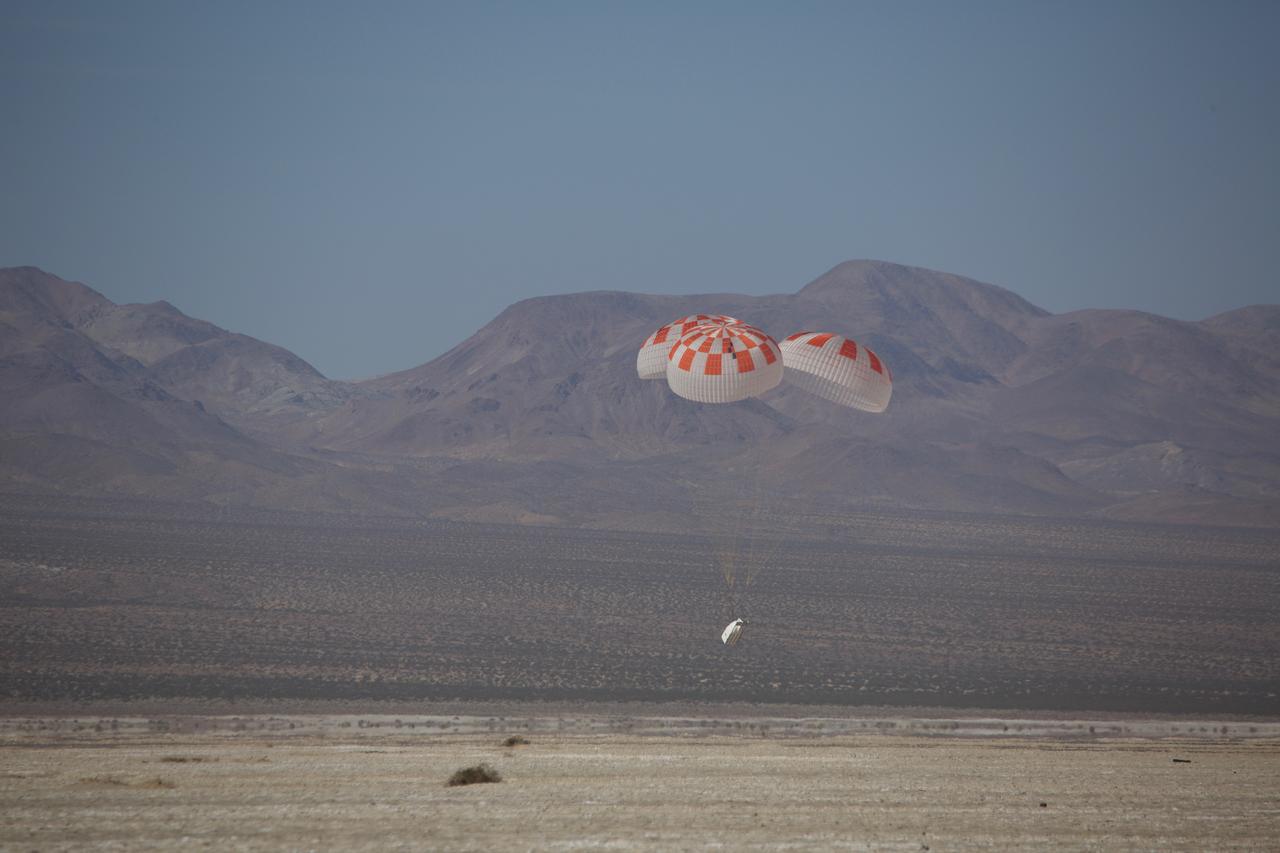
SpaceX performed its fourteenth overall parachute test supporting Crew Dragon development. This most recent exercise was the first of several planned parachute system qualification tests ahead of the spacecraft’s first crewed flight and resulted in the successful touchdown of Crew Dragon’s parachute system. During this test, a C-130 aircraft transported the parachute test vehicle, designed to achieve the maximum speeds that Crew Dragon could experience on re-entry, over the Mojave Desert in Southern California and dropped the vehicle from an altitude of 25,000 feet. The test demonstrated an off-nominal situation, deploying only one of the two drogue chutes and intentionally skipping a reefing stage on one of the four main parachutes, proving a safe landing in such a contingency scenario.
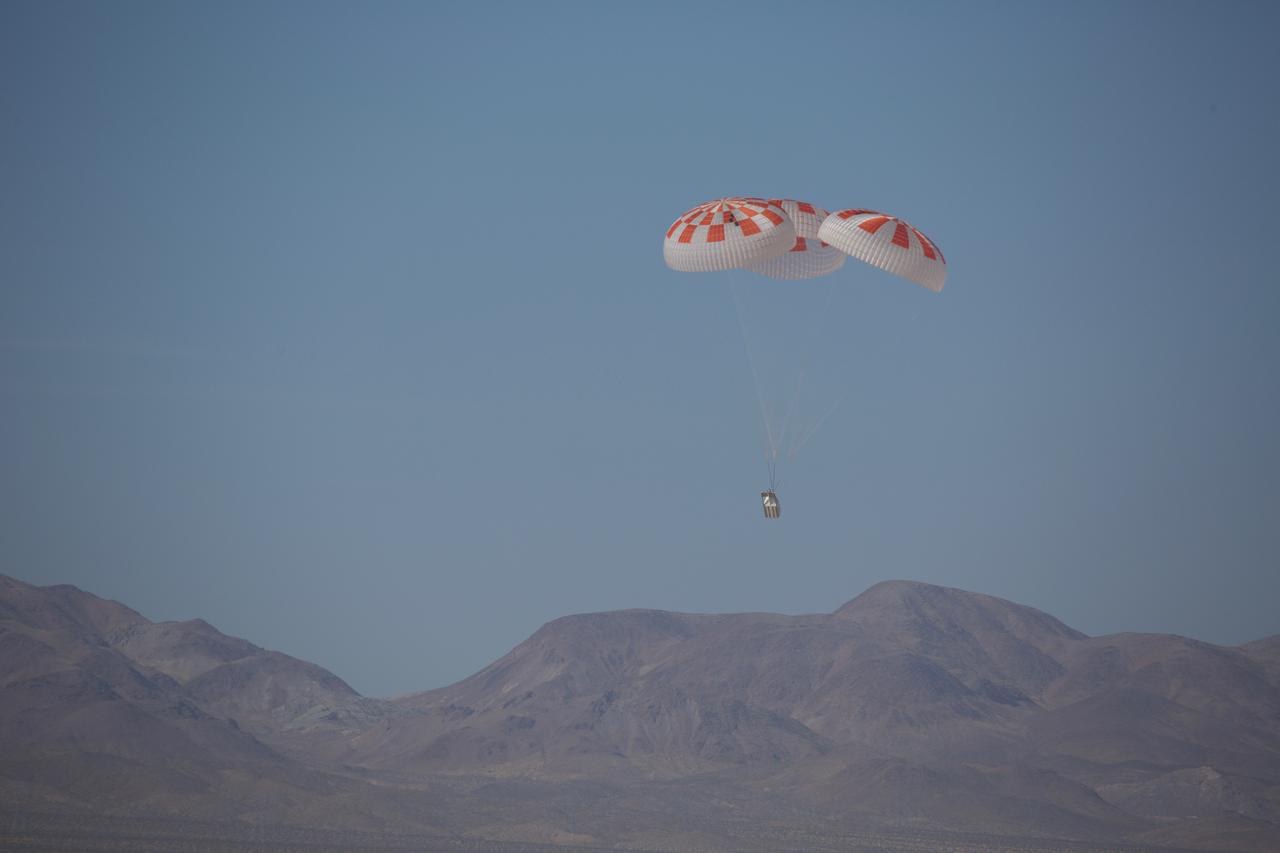
SpaceX performed its fourteenth overall parachute test supporting Crew Dragon development. This most recent exercise was the first of several planned parachute system qualification tests ahead of the spacecraft’s first crewed flight and resulted in the successful touchdown of Crew Dragon’s parachute system. During this test, a C-130 aircraft transported the parachute test vehicle, designed to achieve the maximum speeds that Crew Dragon could experience on re-entry, over the Mojave Desert in Southern California and dropped the vehicle from an altitude of 25,000 feet. The test demonstrated an off-nominal situation, deploying only one of the two drogue chutes and intentionally skipping a reefing stage on one of the four main parachutes, proving a safe landing in such a contingency scenario.
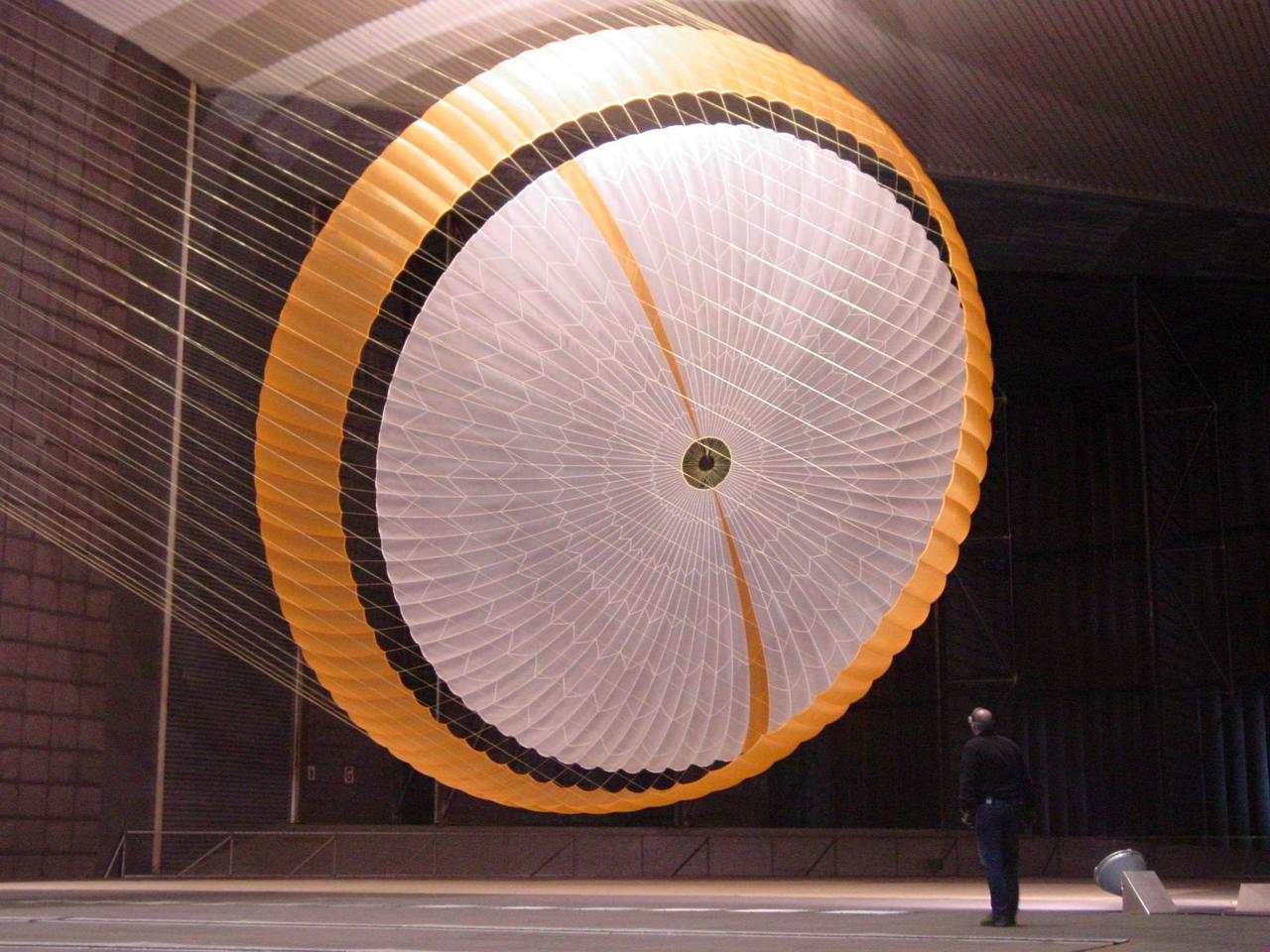
The team developing the landing system for NASA Mars Science Laboratory tested the deployment of an early parachute design in mid-October 2007 inside the world largest wind tunnel, at NASA Ames Research Center, Moffett Field, California.

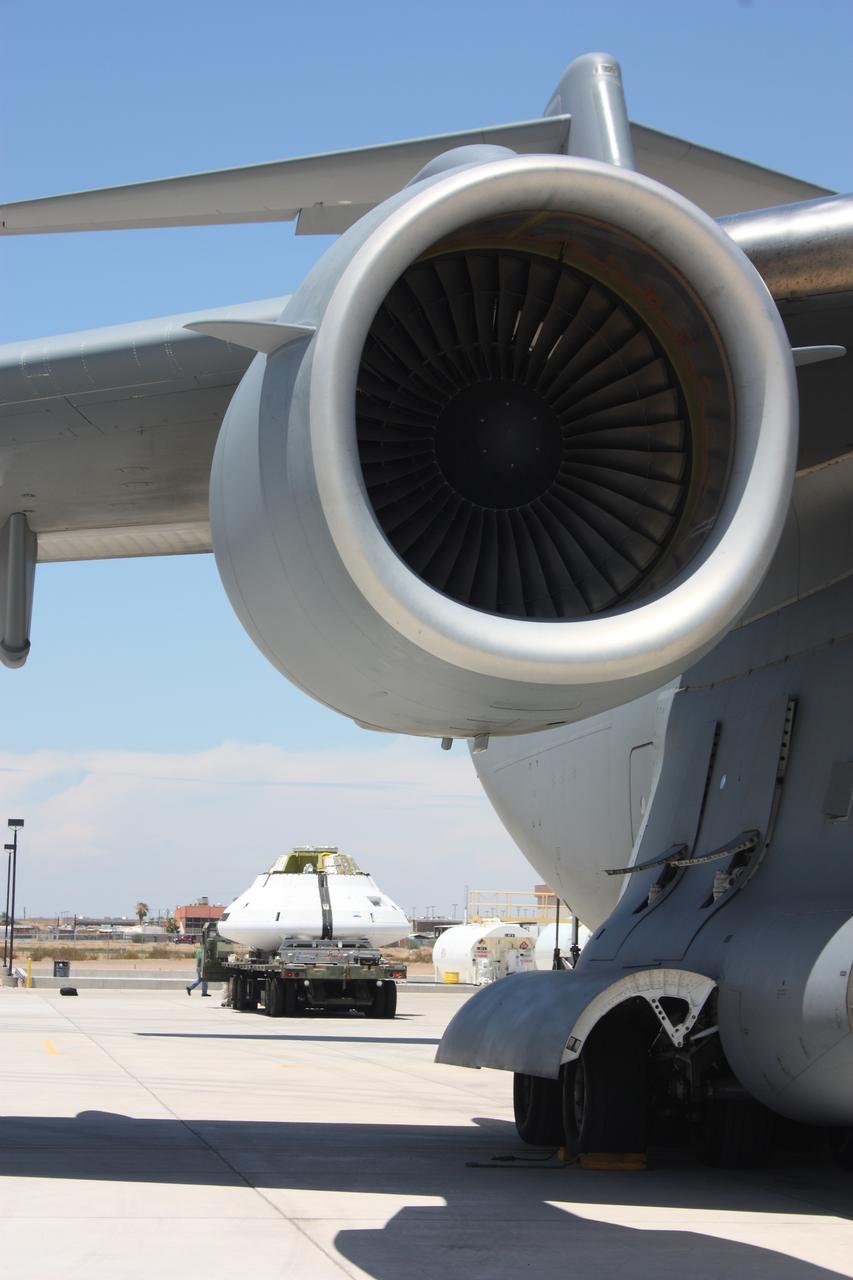
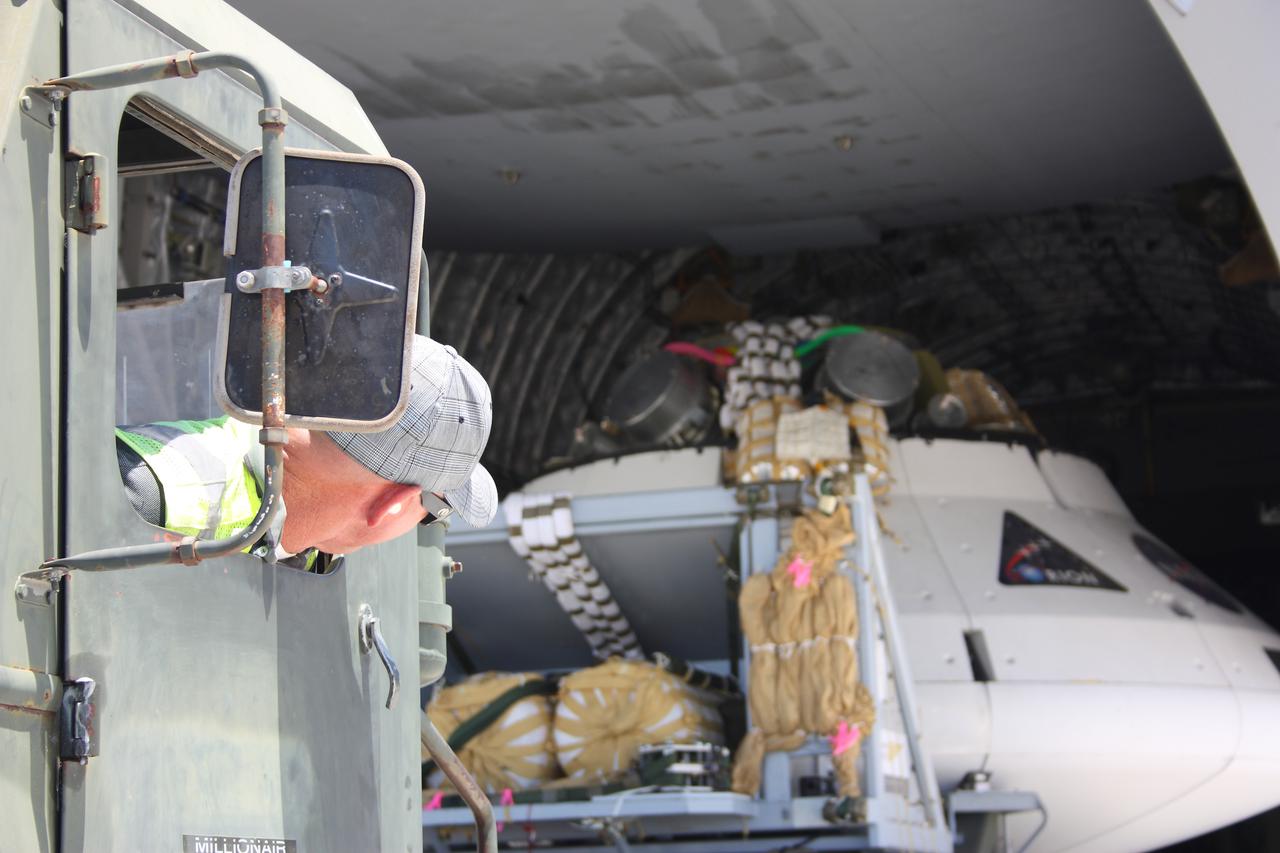
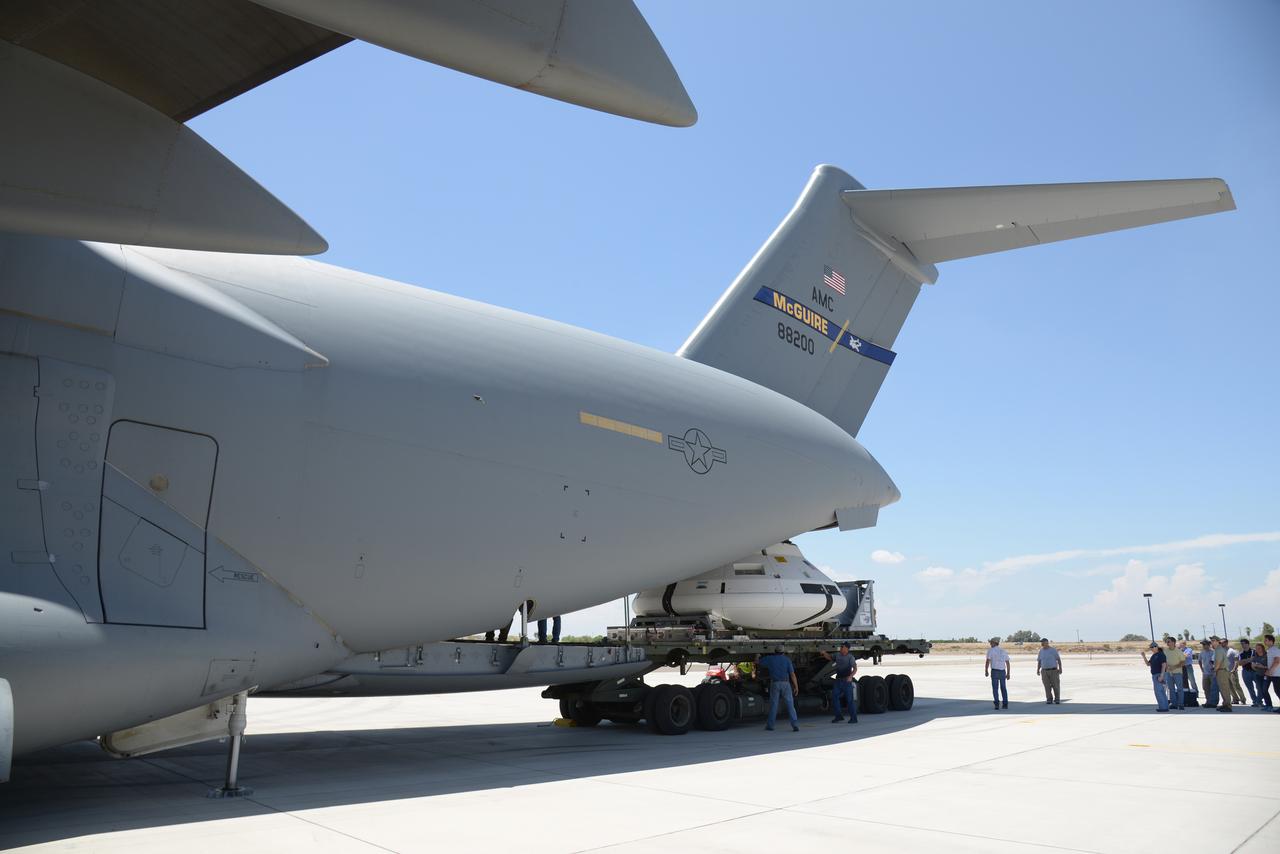
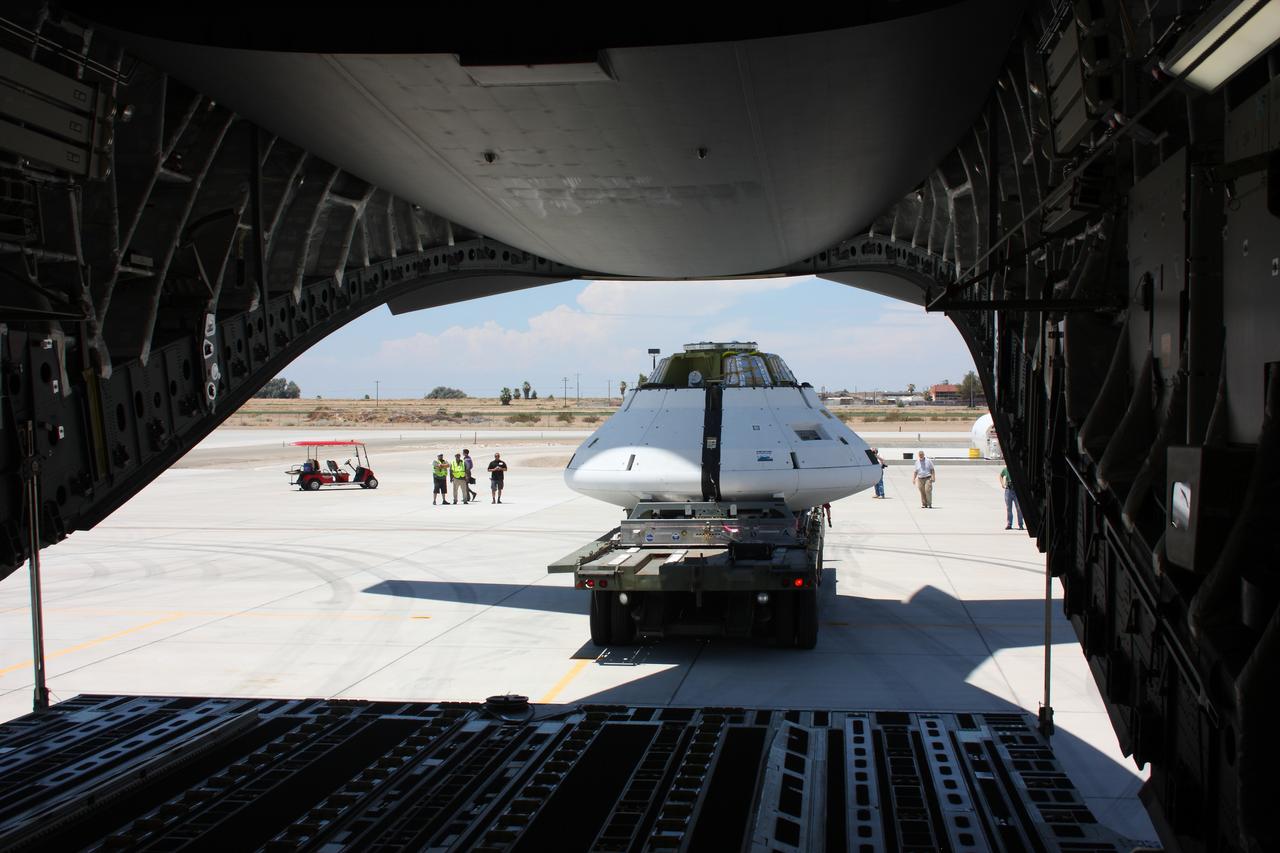
Teams peform Orion Parachute Test Vehicle (PTV) loading operations on July 22, 2013 in preparation for the July 24 parachute drop test at the U.S. Army Yuma Proving Ground in Arizona. Part of Batch image transfer from Flickr.
Teams peform Orion Parachute Test Vehicle (PTV) loading operations on July 22, 2013 in preparation for the July 24 parachute drop test at the U.S. Army Yuma Proving Ground in Arizona. Part of Batch image transfer from Flickr.

Teams peform Orion Parachute Test Vehicle (PTV) loading operations on July 22, 2013 in preparation for the July 24 parachute drop test at the U.S. Army Yuma Proving Ground in Arizona. Part of Batch image transfer from Flickr.
Teams peform Orion Parachute Test Vehicle (PTV) loading operations on July 22, 2013 in preparation for the July 24 parachute drop test at the U.S. Army Yuma Proving Ground in Arizona. Part of Batch image transfer from Flickr.
Teams peform Orion Parachute Test Vehicle (PTV) loading operations on July 22, 2013 in preparation for the July 24 parachute drop test at the U.S. Army Yuma Proving Ground in Arizona. Part of Batch image transfer from Flickr.
Teams peform Orion Parachute Test Vehicle (PTV) loading operations on July 22, 2013 in preparation for the July 24 parachute drop test at the U.S. Army Yuma Proving Ground in Arizona. Part of Batch image transfer from Flickr.

Teams peform Orion Parachute Test Vehicle (PTV) loading operations on July 22, 2013 in preparation for the July 24 parachute drop test at the U.S. Army Yuma Proving Ground in Arizona. Part of Batch image transfer from Flickr.
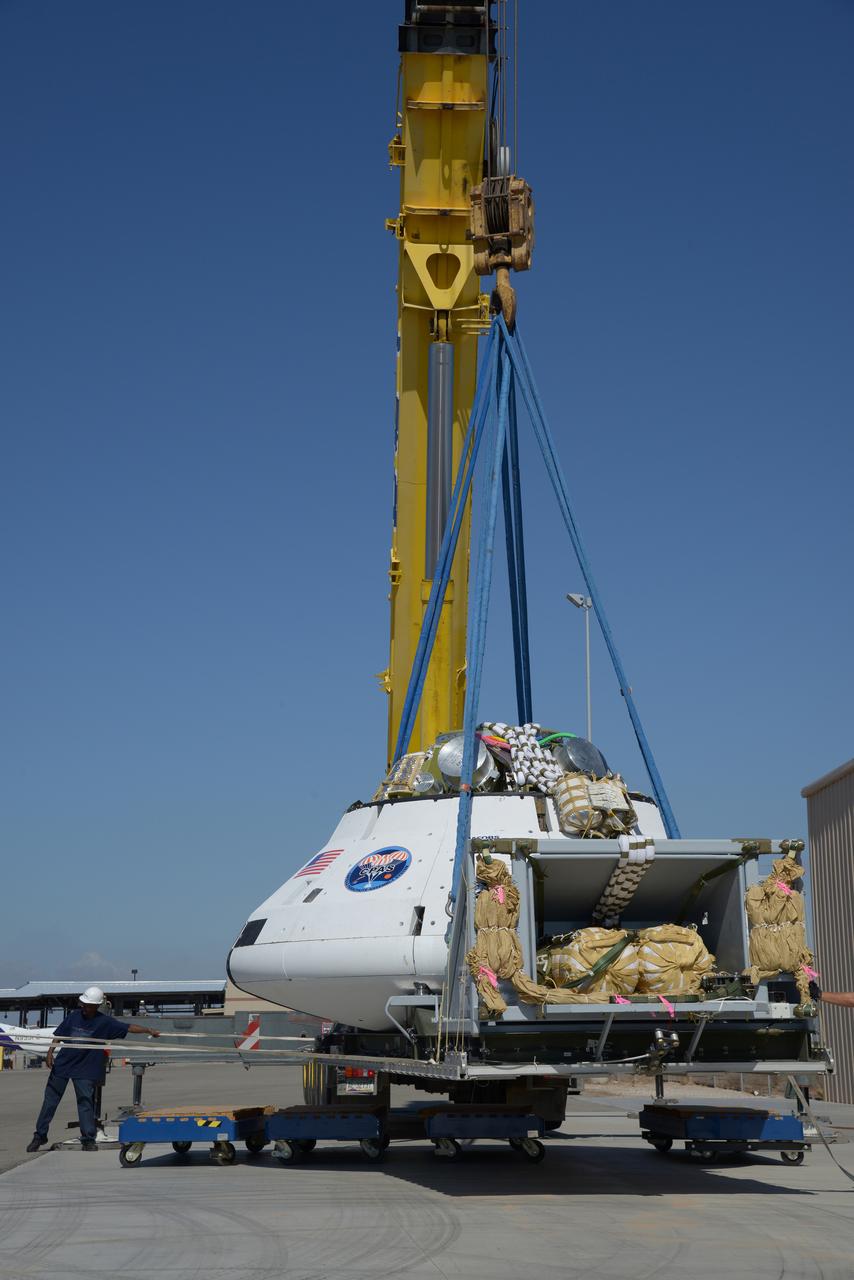
Teams peform Orion Parachute Test Vehicle (PTV) loading operations on July 22, 2013 in preparation for the July 24 parachute drop test at the U.S. Army Yuma Proving Ground in Arizona. Part of Batch image transfer from Flickr.
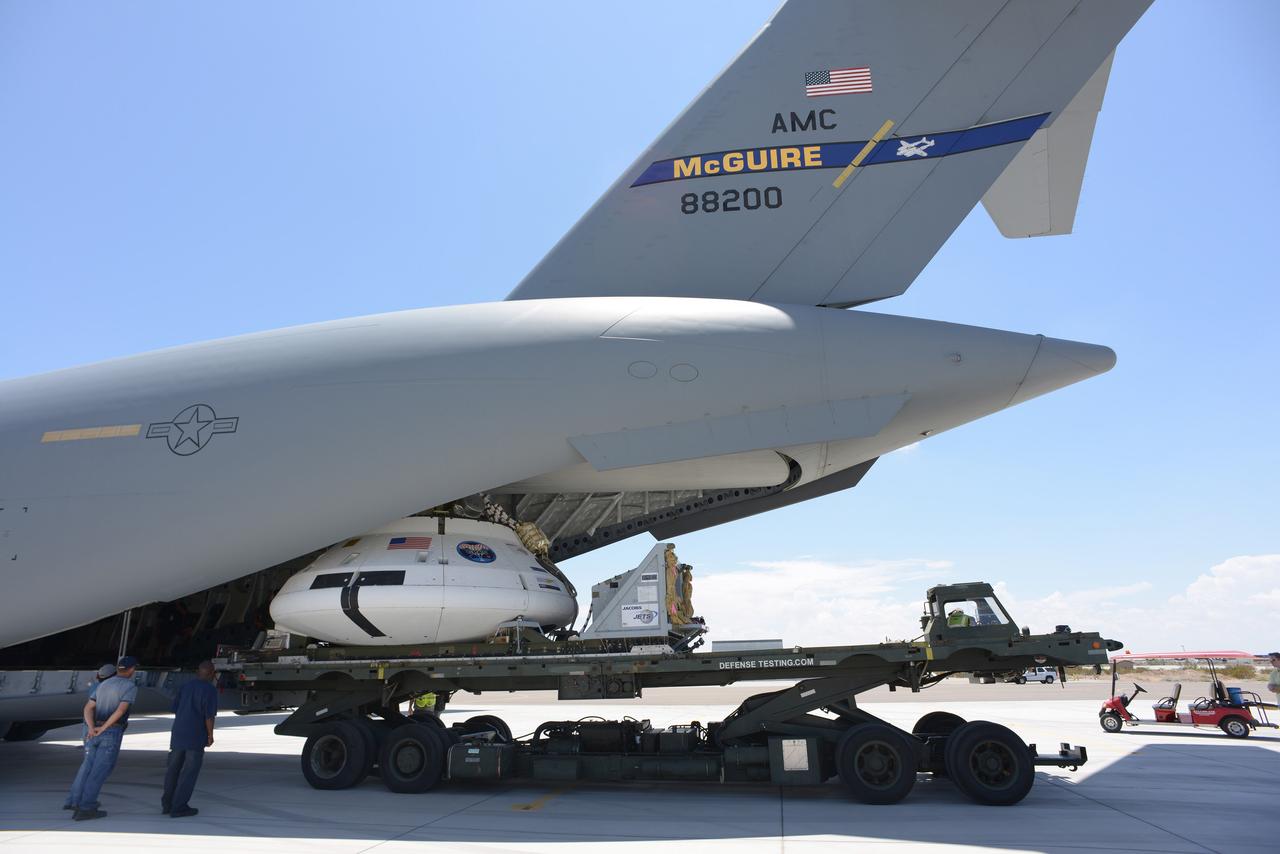
Teams peform Orion Parachute Test Vehicle (PTV) loading operations on July 22, 2013 in preparation for the July 24 parachute drop test at the U.S. Army Yuma Proving Ground in Arizona. Part of Batch image transfer from Flickr.

Teams peform Orion Parachute Test Vehicle (PTV) loading operations on July 22, 2013 in preparation for the July 24 parachute drop test at the U.S. Army Yuma Proving Ground in Arizona. Part of Batch image transfer from Flickr.
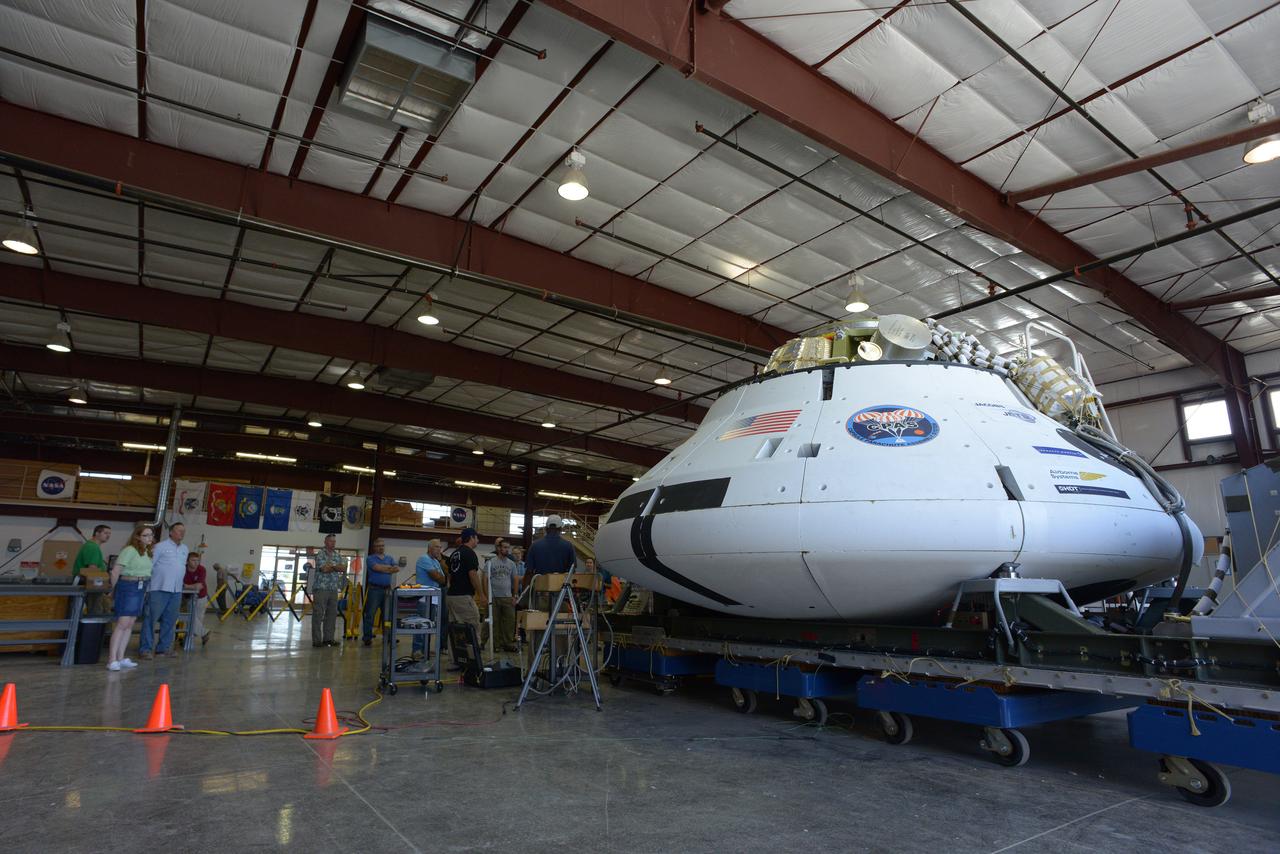
Teams peform Orion Parachute Test Vehicle (PTV) loading operations on July 22, 2013 in preparation for the July 24 parachute drop test at the U.S. Army Yuma Proving Ground in Arizona. Part of Batch image transfer from Flickr.

Teams peform Orion Parachute Test Vehicle (PTV) loading operations on July 22, 2013 in preparation for the July 24 parachute drop test at the U.S. Army Yuma Proving Ground in Arizona. Part of Batch image transfer from Flickr.
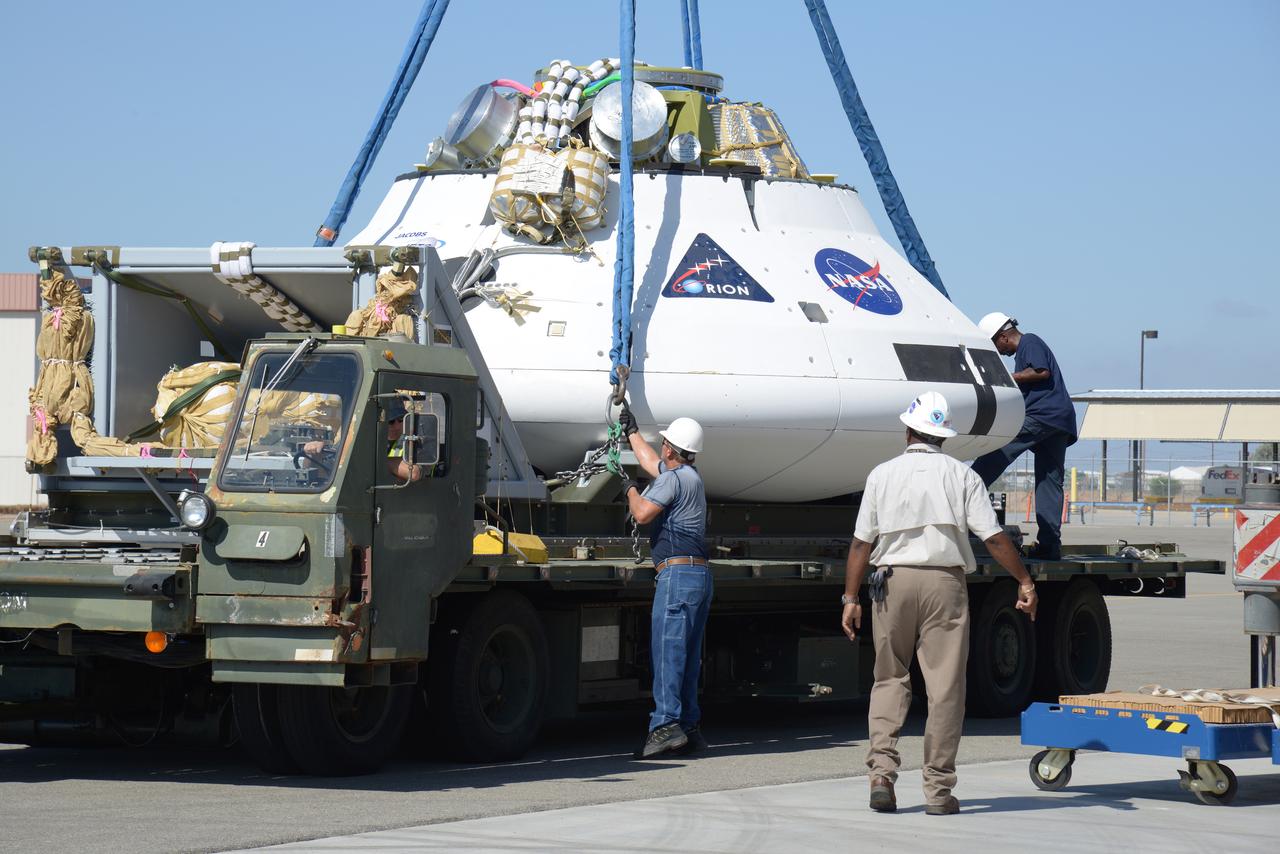
Teams peform Orion Parachute Test Vehicle (PTV) loading operations on July 22, 2013 in preparation for the July 24 parachute drop test at the U.S. Army Yuma Proving Ground in Arizona. Part of Batch image transfer from Flickr.
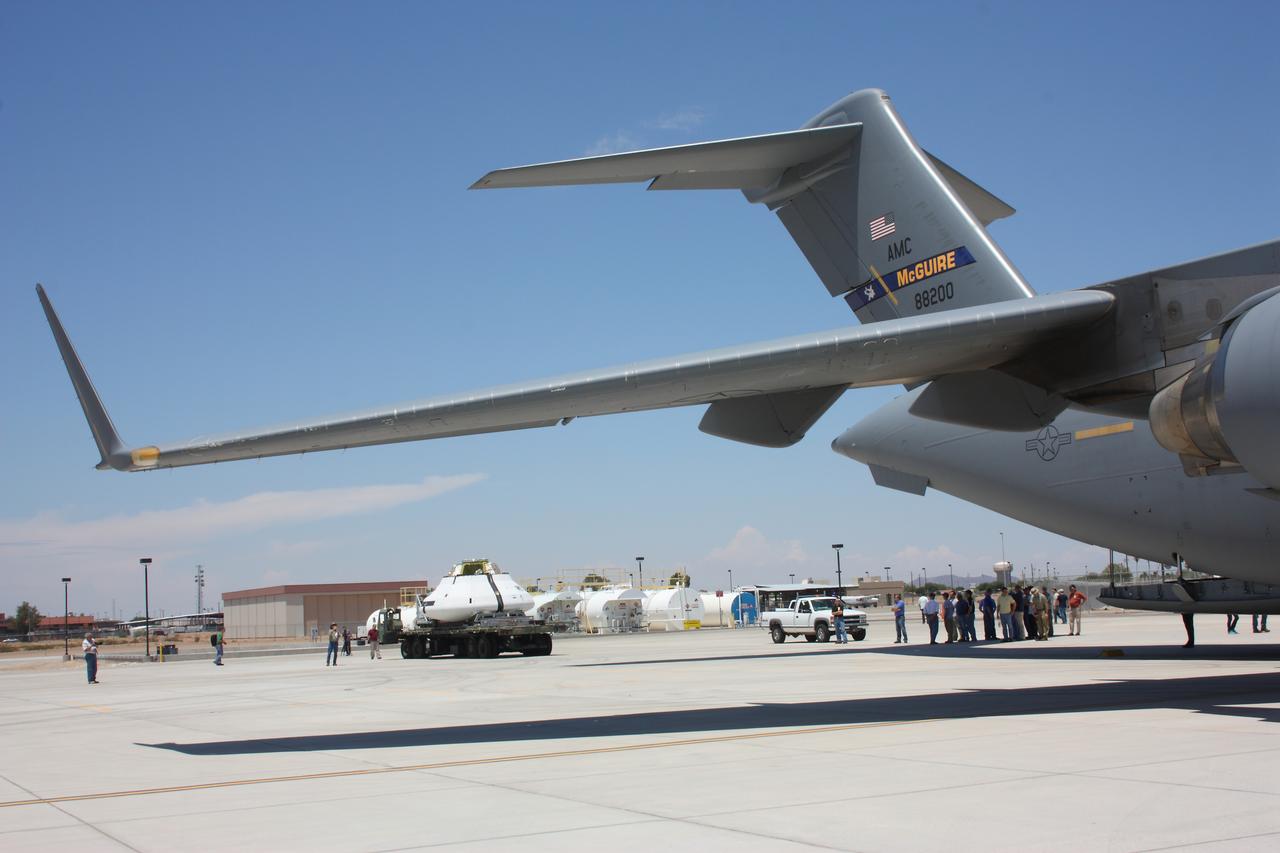
Teams peform Orion Parachute Test Vehicle (PTV) loading operations on July 22, 2013 in preparation for the July 24 parachute drop test at the U.S. Army Yuma Proving Ground in Arizona. Part of Batch image transfer from Flickr.

Teams peform Orion Parachute Test Vehicle (PTV) loading operations on July 22, 2013 in preparation for the July 24 parachute drop test at the U.S. Army Yuma Proving Ground in Arizona. Part of Batch image transfer from Flickr.
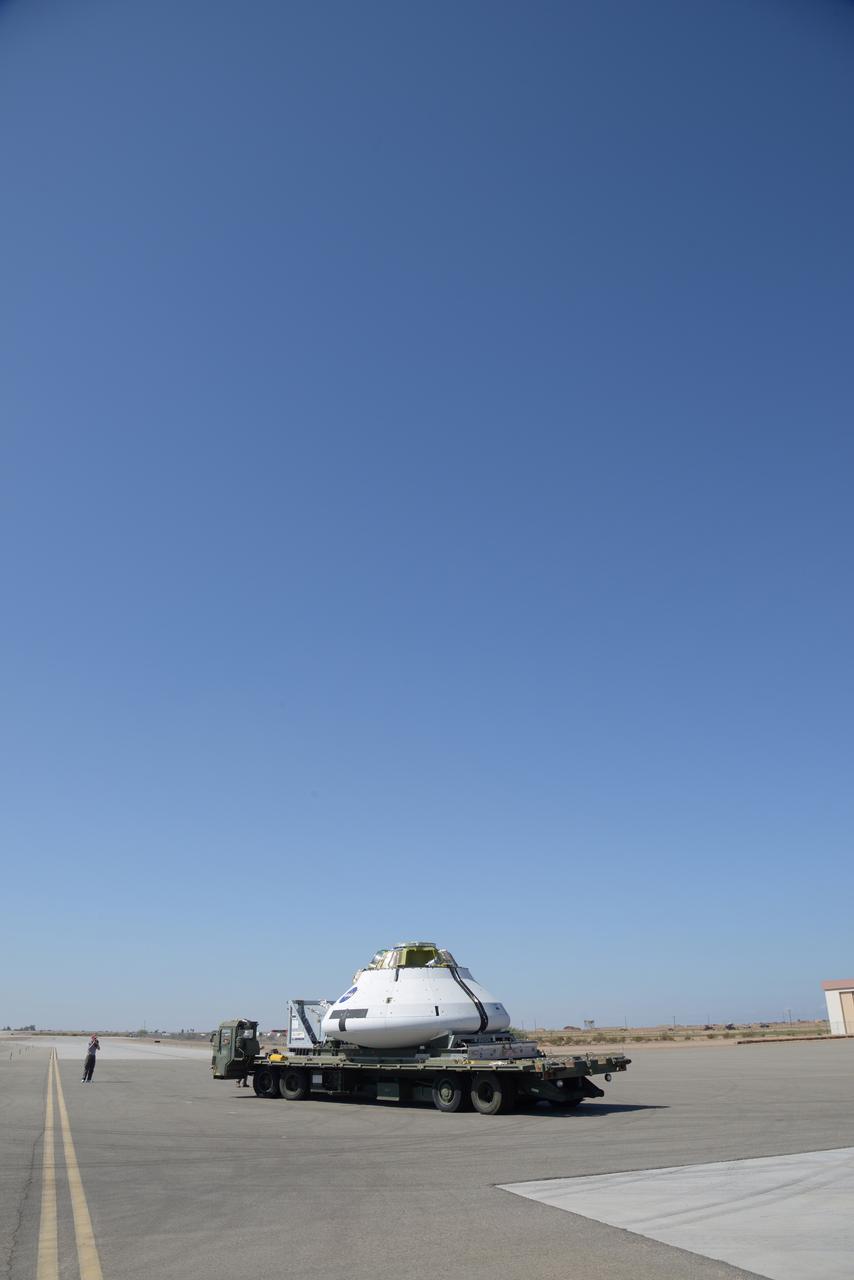
Teams peform Orion Parachute Test Vehicle (PTV) loading operations on July 22, 2013 in preparation for the July 24 parachute drop test at the U.S. Army Yuma Proving Ground in Arizona. Part of Batch image transfer from Flickr.
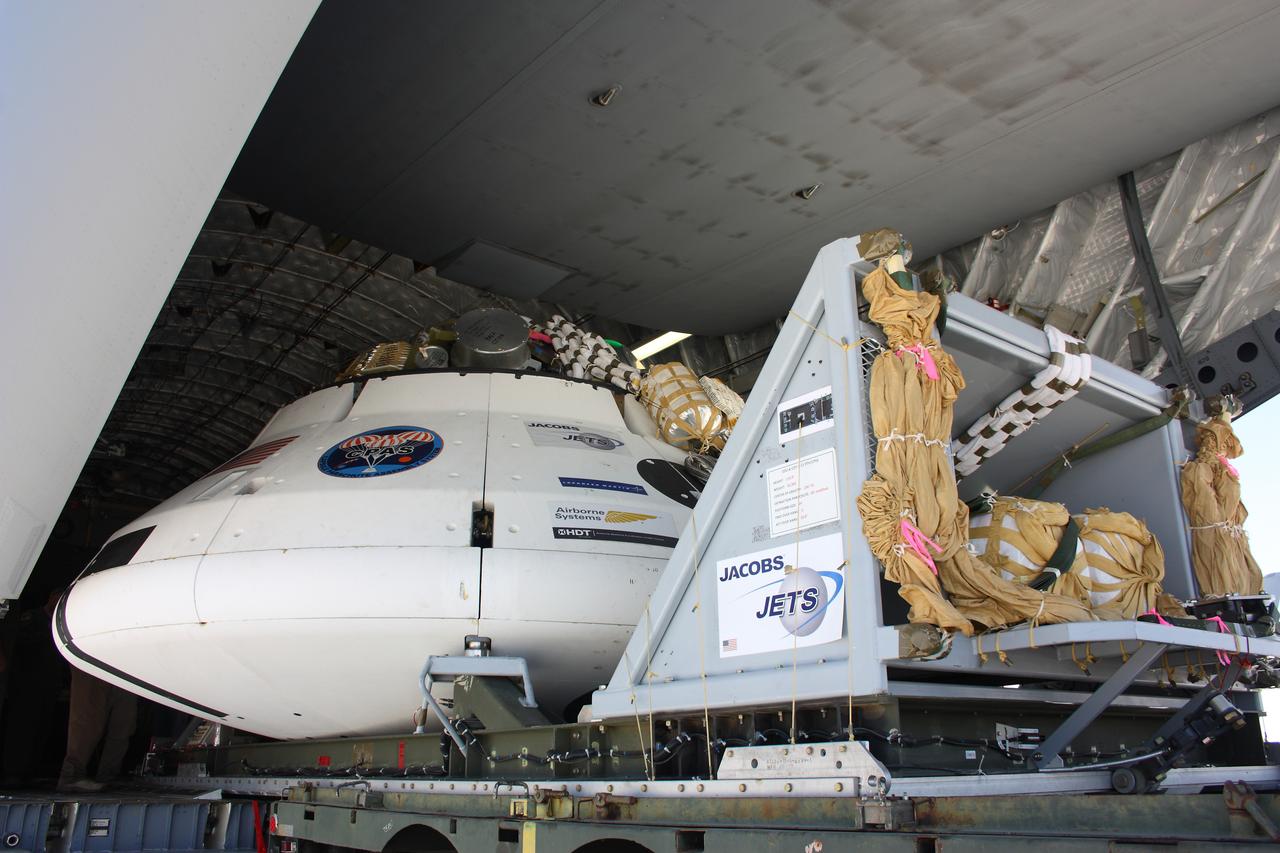
Teams peform Orion Parachute Test Vehicle (PTV) loading operations on July 22, 2013 in preparation for the July 24 parachute drop test at the U.S. Army Yuma Proving Ground in Arizona. Part of Batch image transfer from Flickr.
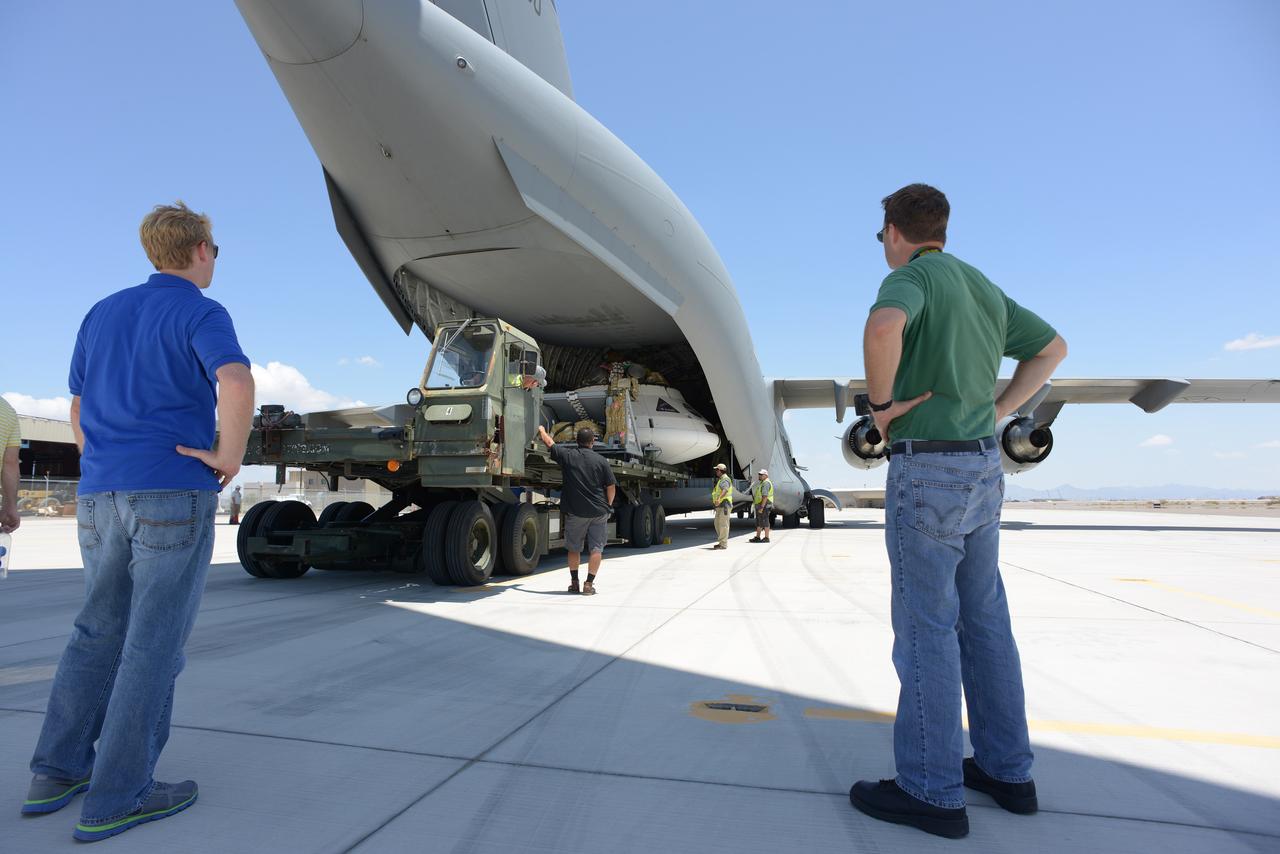
Teams peform Orion Parachute Test Vehicle (PTV) loading operations on July 22, 2013 in preparation for the July 24 parachute drop test at the U.S. Army Yuma Proving Ground in Arizona. Part of Batch image transfer from Flickr.
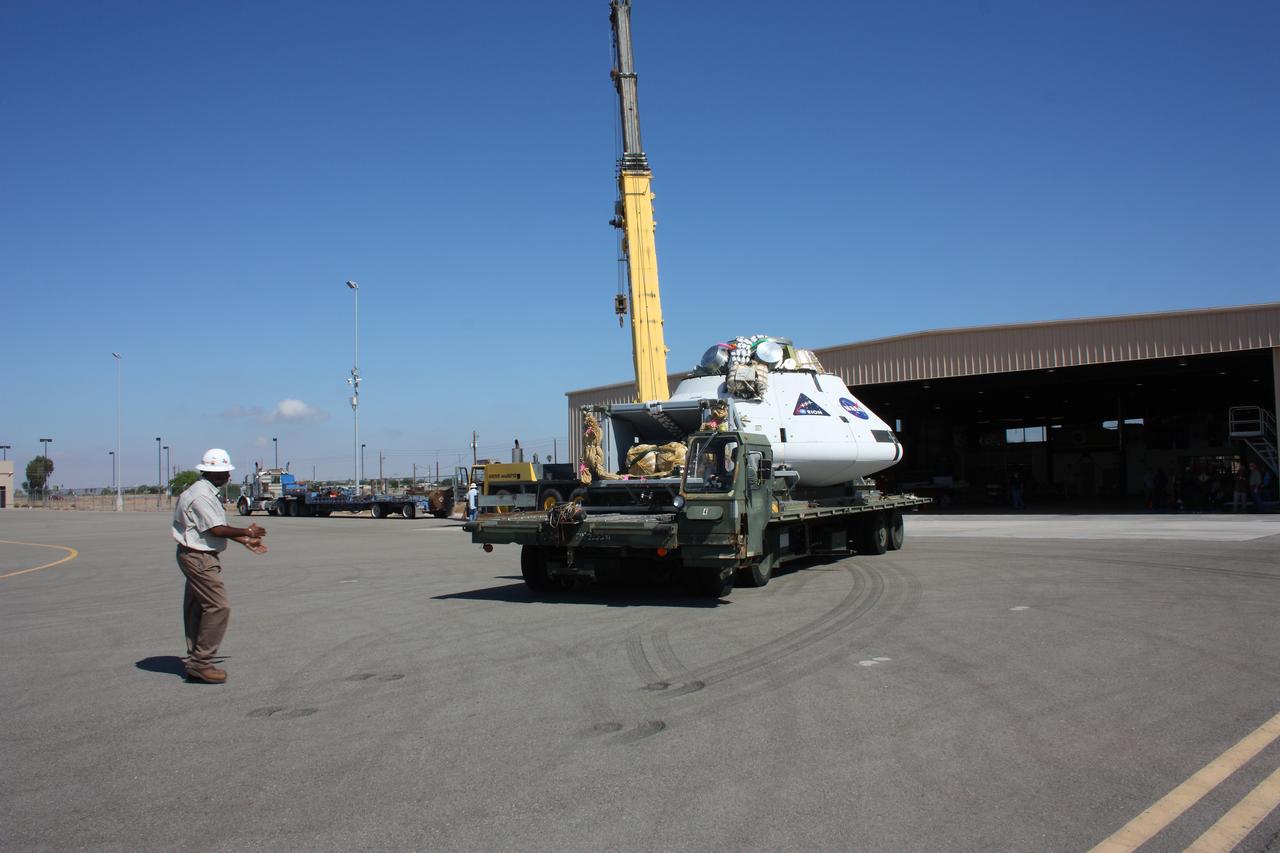
Teams peform Orion Parachute Test Vehicle (PTV) loading operations on July 22, 2013 in preparation for the July 24 parachute drop test at the U.S. Army Yuma Proving Ground in Arizona. Part of Batch image transfer from Flickr.

Teams peform Orion Parachute Test Vehicle (PTV) loading operations on July 22, 2013 in preparation for the July 24 parachute drop test at the U.S. Army Yuma Proving Ground in Arizona. Part of Batch image transfer from Flickr.
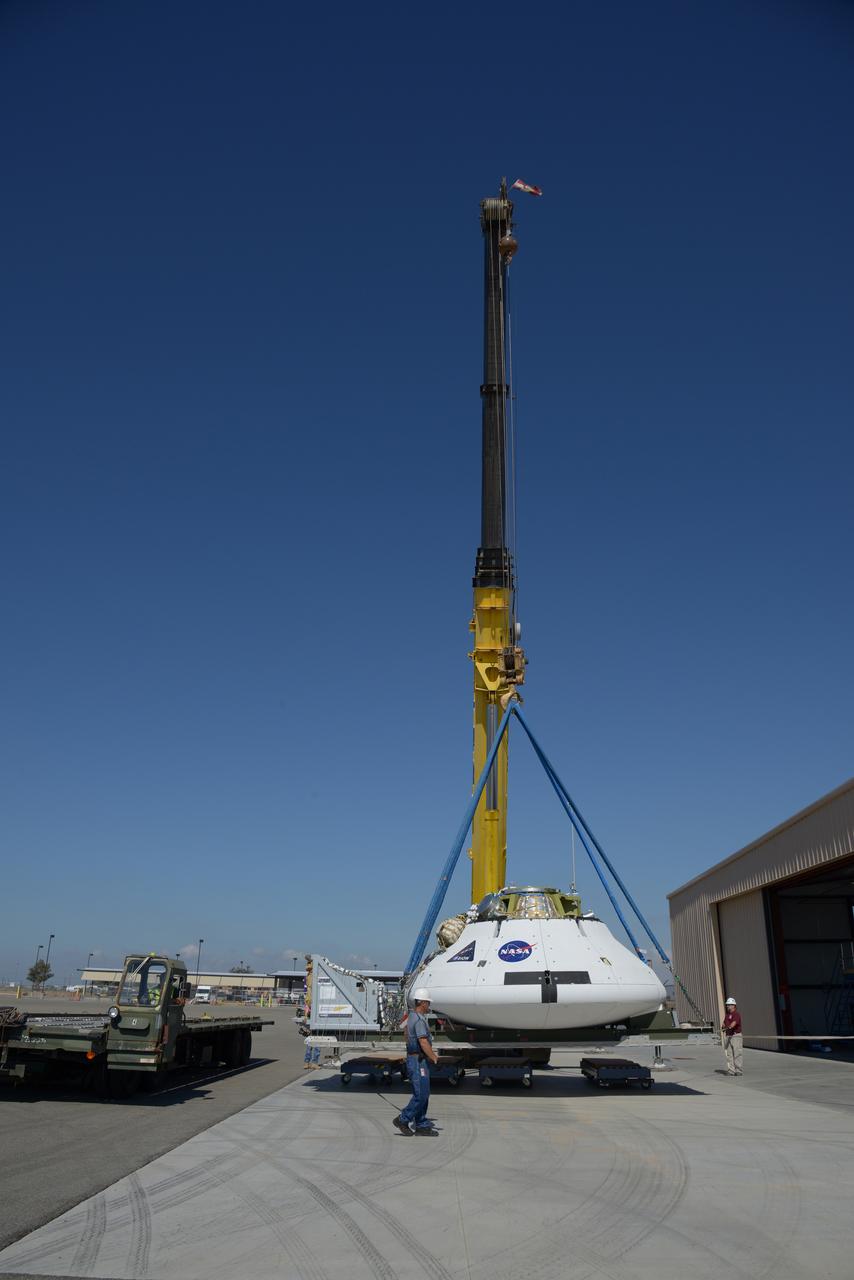
Teams peform Orion Parachute Test Vehicle (PTV) loading operations on July 22, 2013 in preparation for the July 24 parachute drop test at the U.S. Army Yuma Proving Ground in Arizona. Part of Batch image transfer from Flickr.

Teams peform Orion Parachute Test Vehicle (PTV) loading operations on July 22, 2013 in preparation for the July 24 parachute drop test at the U.S. Army Yuma Proving Ground in Arizona. Part of Batch image transfer from Flickr.
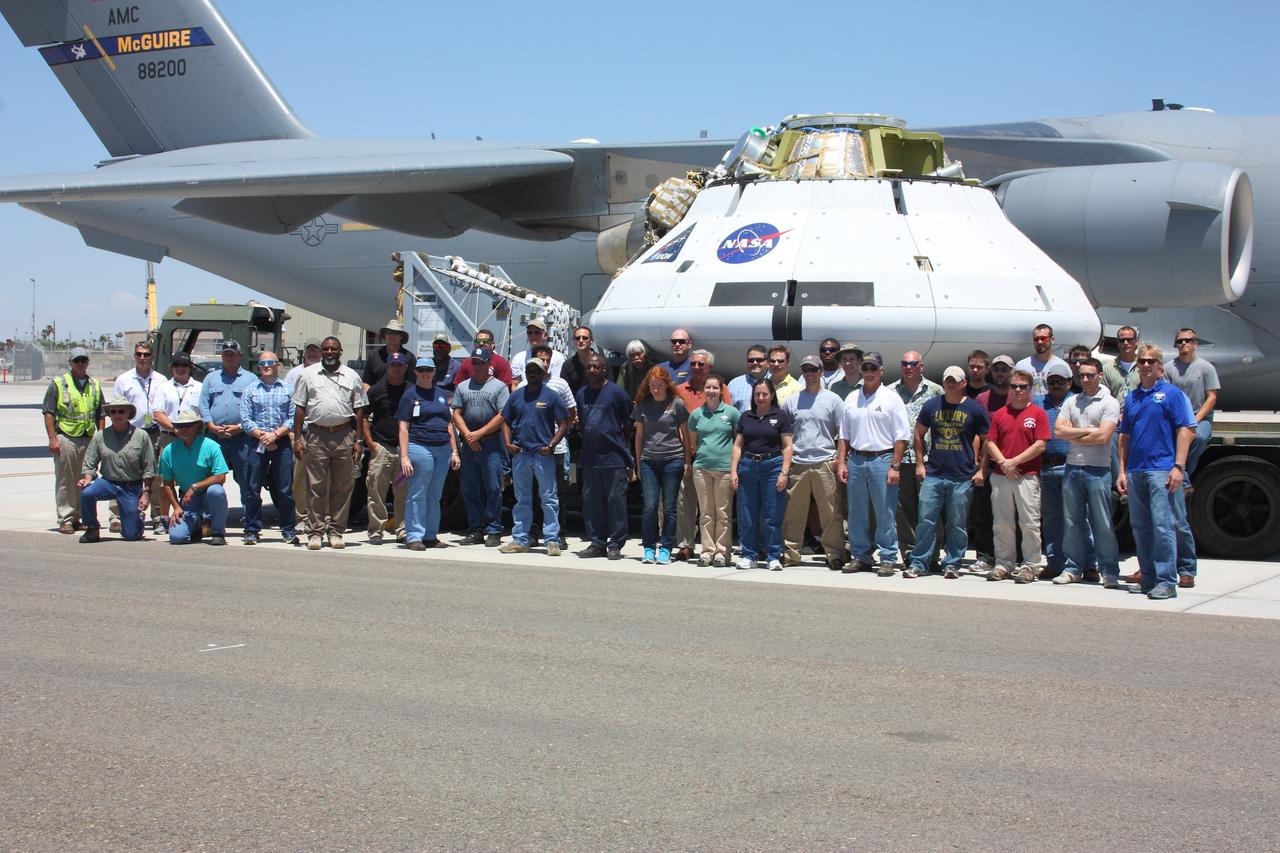
Teams peform Orion Parachute Test Vehicle (PTV) loading operations on July 22, 2013 in preparation for the July 24 parachute drop test at the U.S. Army Yuma Proving Ground in Arizona. Part of Batch image transfer from Flickr.

Teams peform Orion Parachute Test Vehicle (PTV) loading operations on July 22, 2013 in preparation for the July 24 parachute drop test at the U.S. Army Yuma Proving Ground in Arizona. Part of Batch image transfer from Flickr.
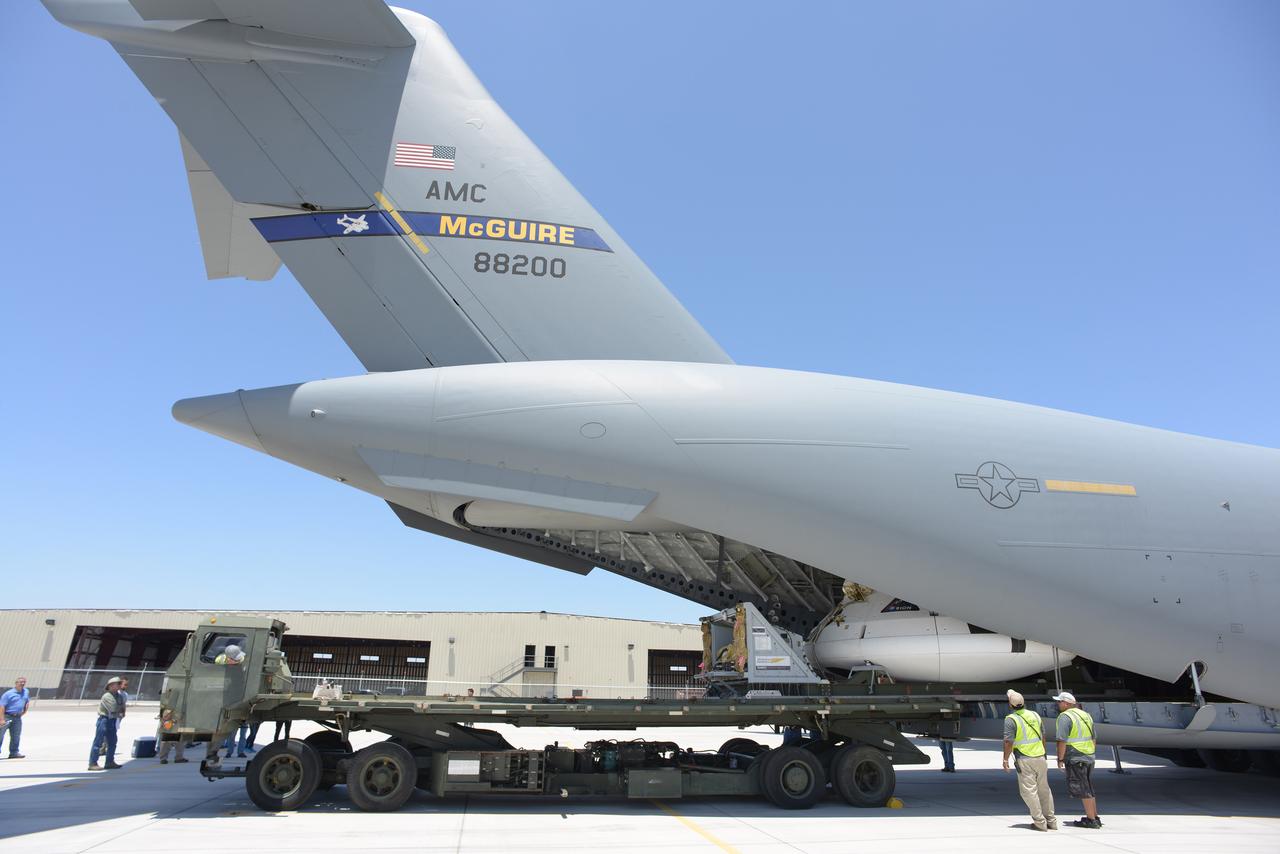
Teams peform Orion Parachute Test Vehicle (PTV) loading operations on July 22, 2013 in preparation for the July 24 parachute drop test at the U.S. Army Yuma Proving Ground in Arizona. Part of Batch image transfer from Flickr.
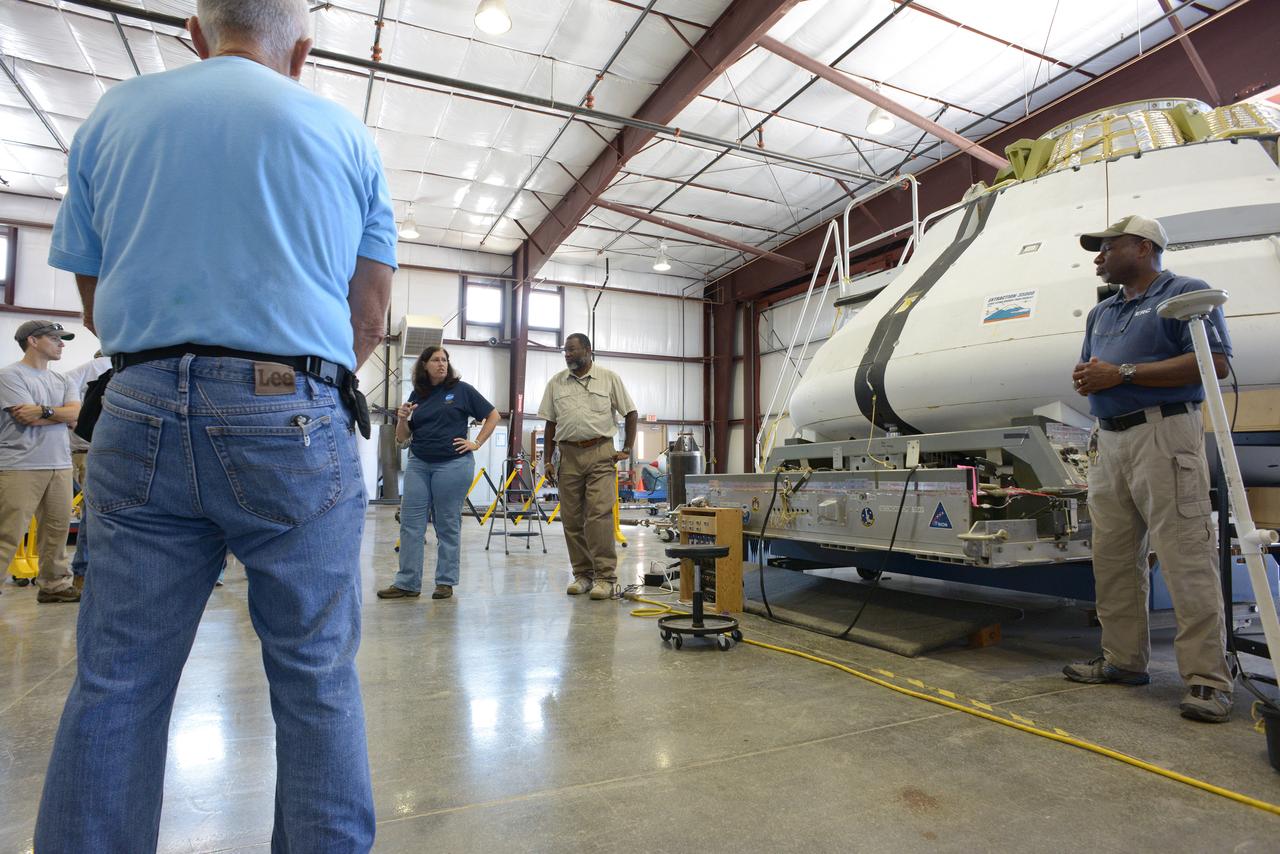
Teams peform Orion Parachute Test Vehicle (PTV) loading operations on July 22, 2013 in preparation for the July 24 parachute drop test at the U.S. Army Yuma Proving Ground in Arizona. Part of Batch image transfer from Flickr.
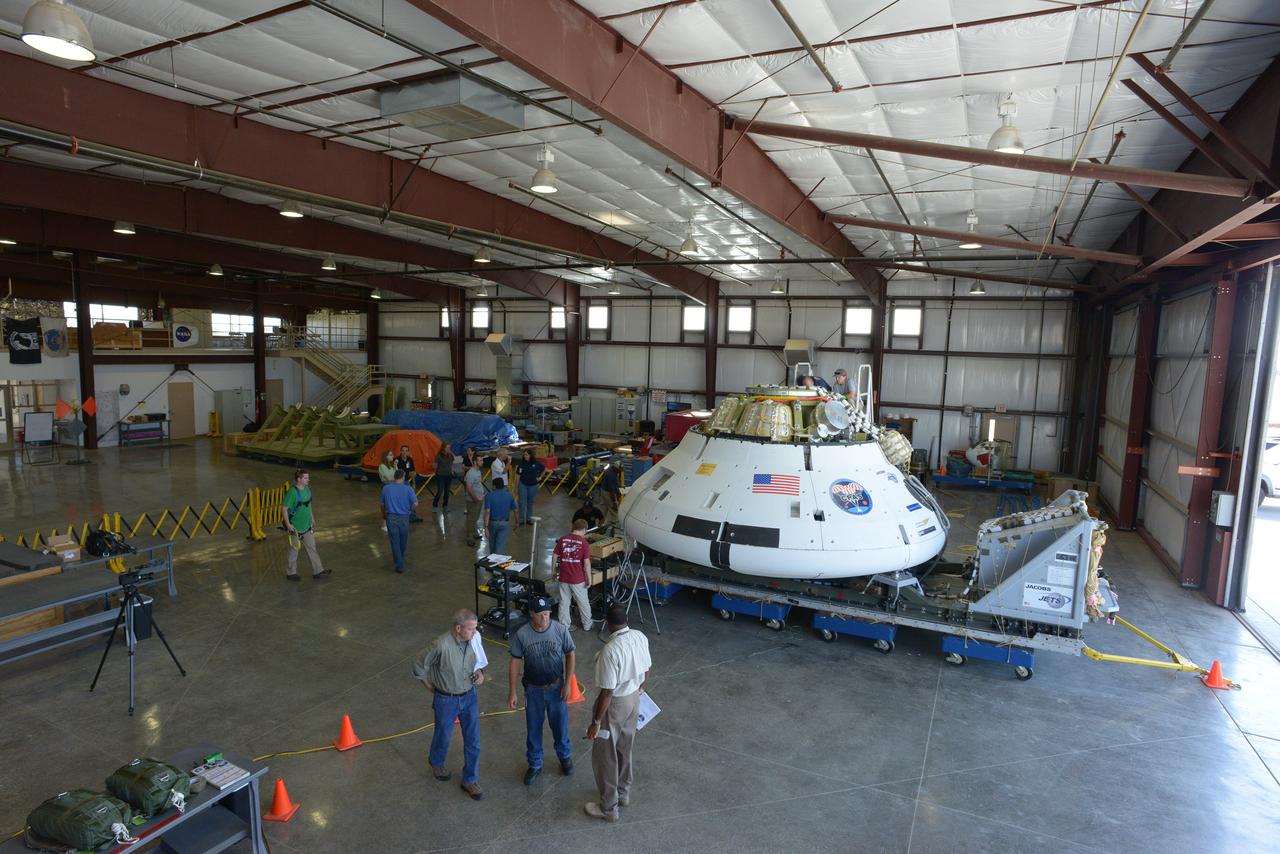
Teams peform Orion Parachute Test Vehicle (PTV) loading operations on July 22, 2013 in preparation for the July 24 parachute drop test at the U.S. Army Yuma Proving Ground in Arizona. Part of Batch image transfer from Flickr.
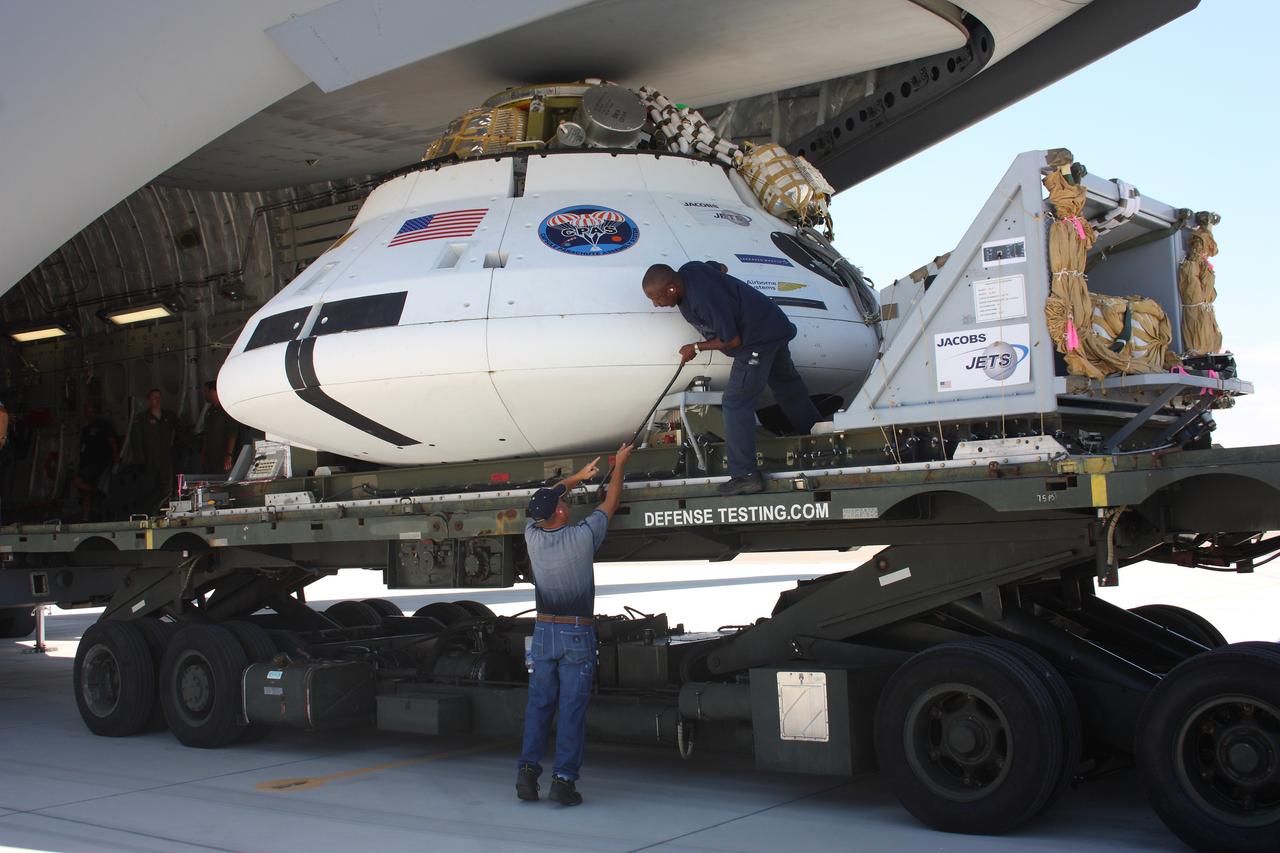
Teams peform Orion Parachute Test Vehicle (PTV) loading operations on July 22, 2013 in preparation for the July 24 parachute drop test at the U.S. Army Yuma Proving Ground in Arizona. Part of Batch image transfer from Flickr.
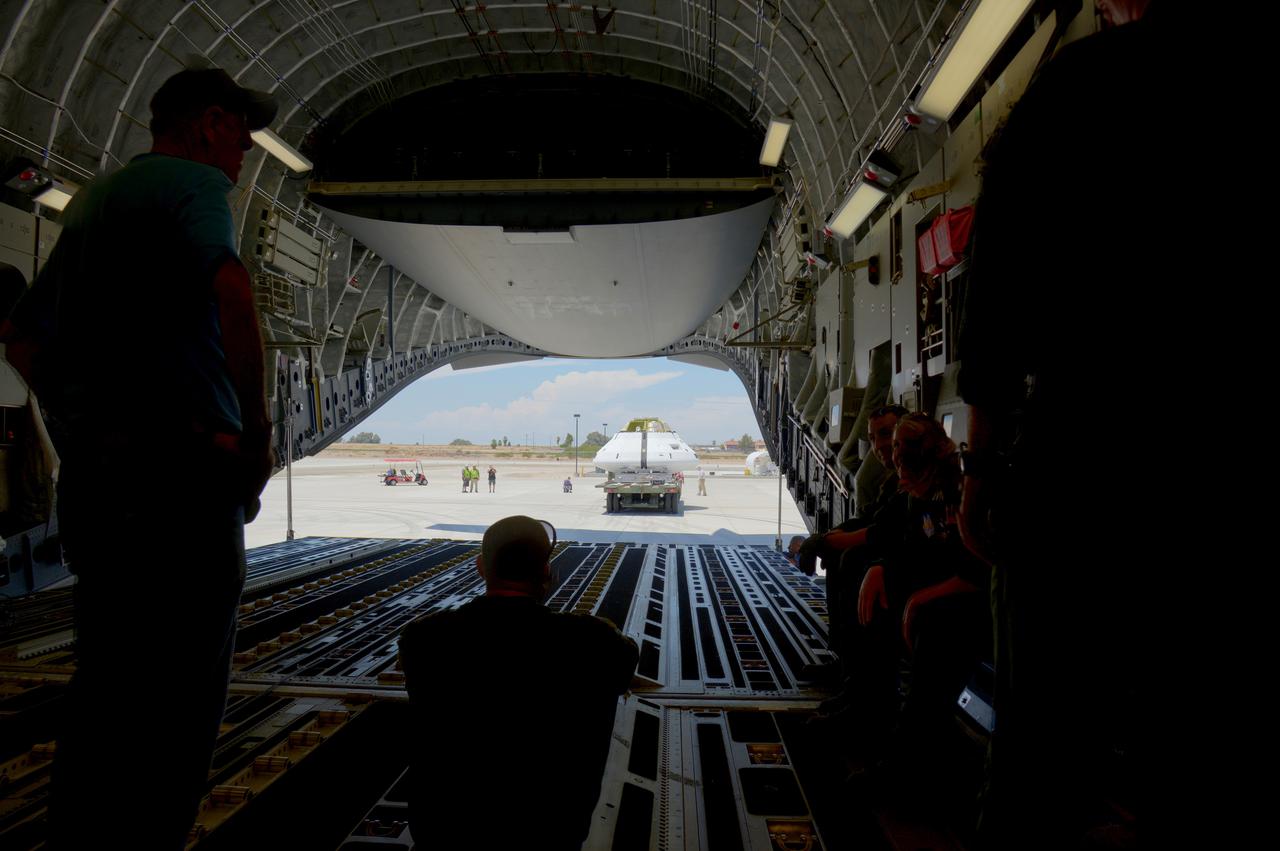
Teams peform Orion Parachute Test Vehicle (PTV) loading operations on July 22, 2013 in preparation for the July 24 parachute drop test at the U.S. Army Yuma Proving Ground in Arizona. Part of Batch image transfer from Flickr.
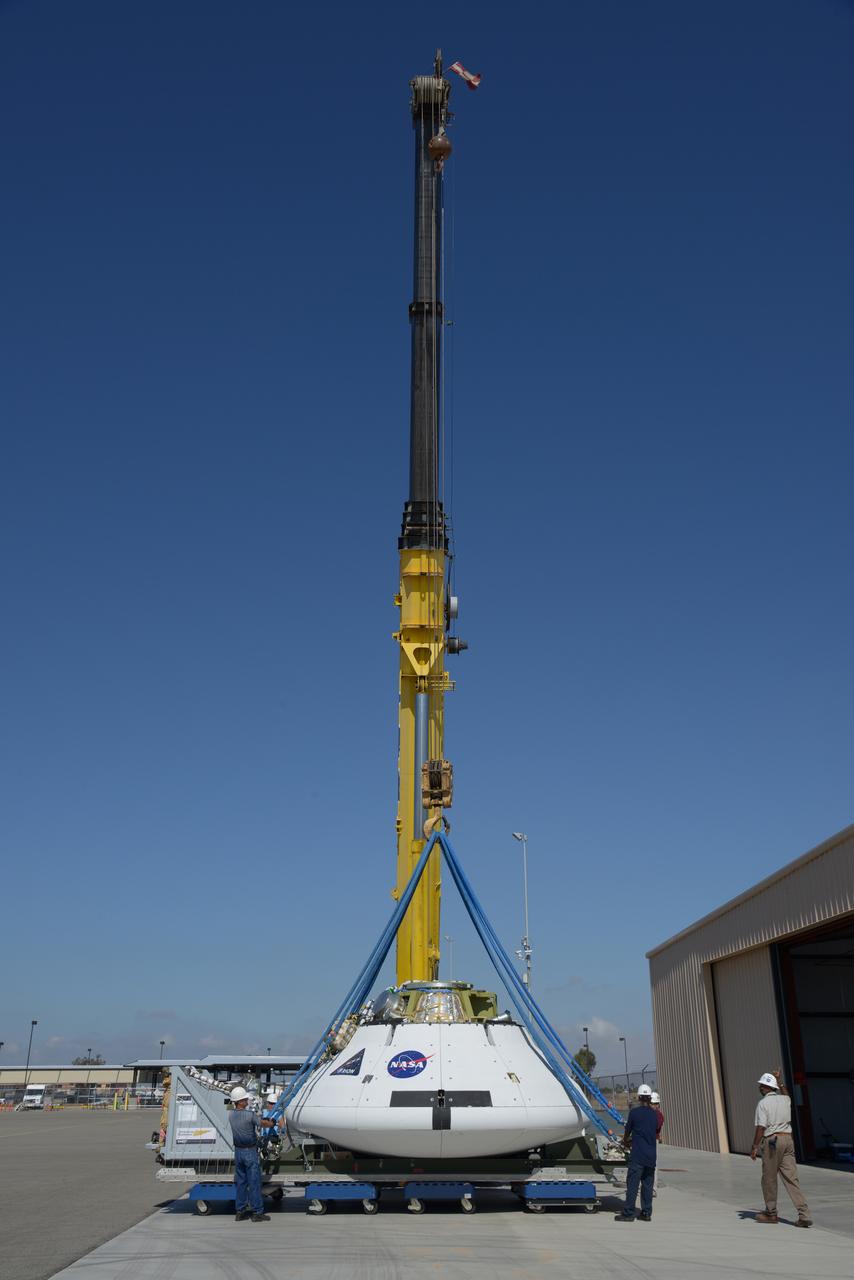
Teams peform Orion Parachute Test Vehicle (PTV) loading operations on July 22, 2013 in preparation for the July 24 parachute drop test at the U.S. Army Yuma Proving Ground in Arizona. Part of Batch image transfer from Flickr.
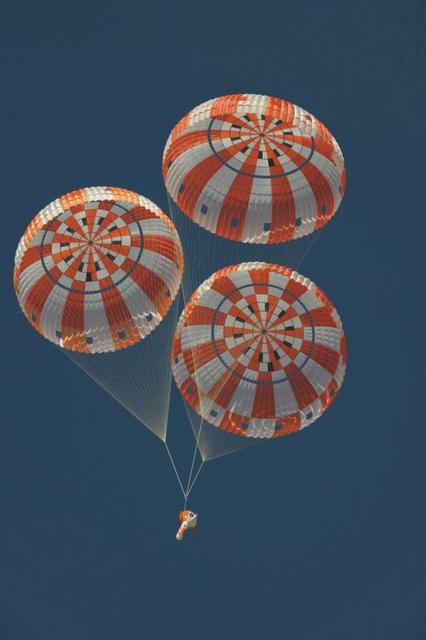
The Orion team performed the first of a series of parachute development tests at U.S. Army Yuma Proving Ground in Yuma, Arizona, on Sept. 27, 2011. The photo shows the test article after it landed on the desert floor and the parachutes have been removed. Part of Batch image transfer from Flickr.

Teams peform Orion Parachute Test Vehicle (PTV) loading operations on July 22, 2013 in preparation for the July 24 parachute drop test at the U.S. Army Yuma Proving Ground in Arizona. Part of Batch image transfer from Flickr.
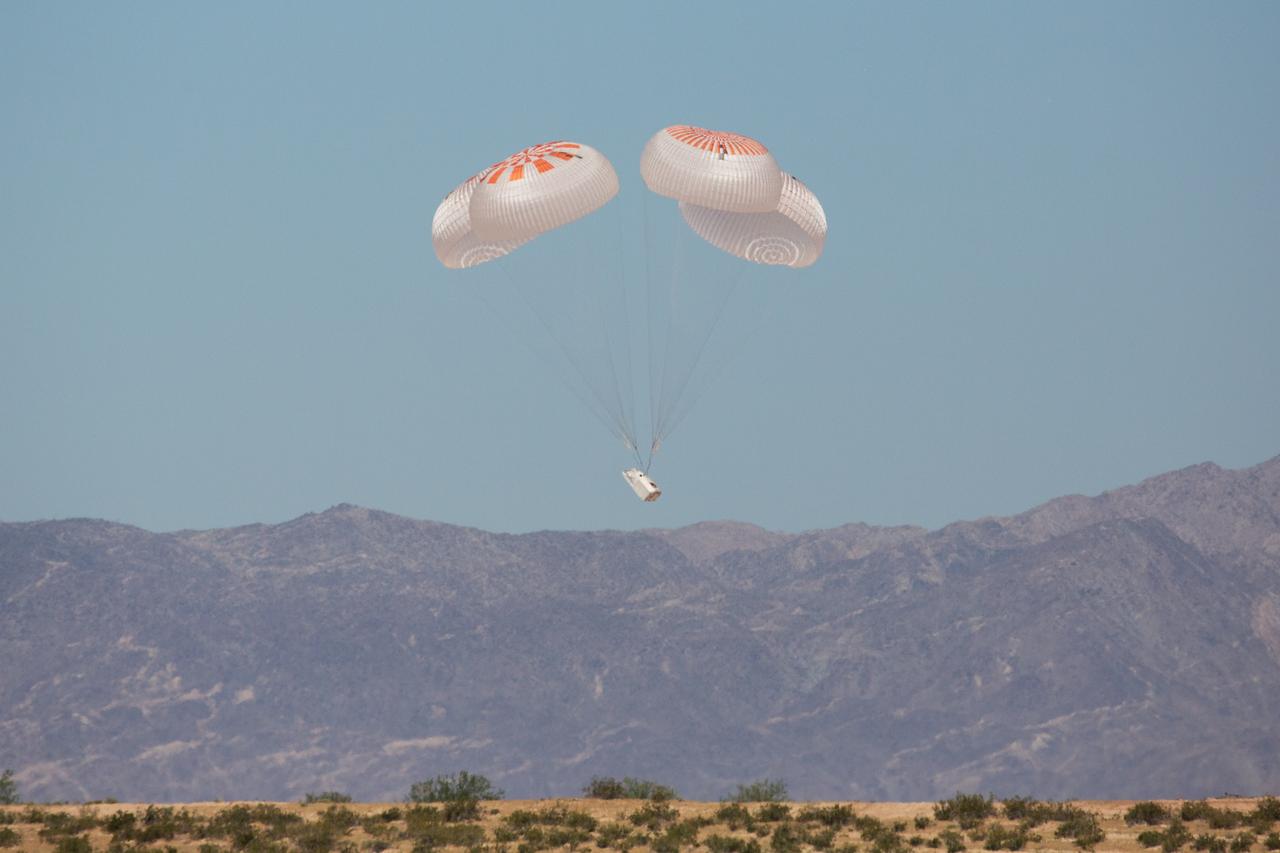
SpaceX completed its 27th and final test of Crew Dragon’s Mark 3 parachute system on Friday, May 1, 2020, that will be used during the Demo-2 mission to safely land the spacecraft carrying NASA astronauts Robert Behnken and Douglas Hurley back from the International Space Station for NASA’s Commercial Crew Program. Crew Dragon will carry Behnken and Hurley atop a Falcon 9 rocket, returning crew launches to the space station from U.S. soil for the first time since the Space Shuttle Program ended in 2011.
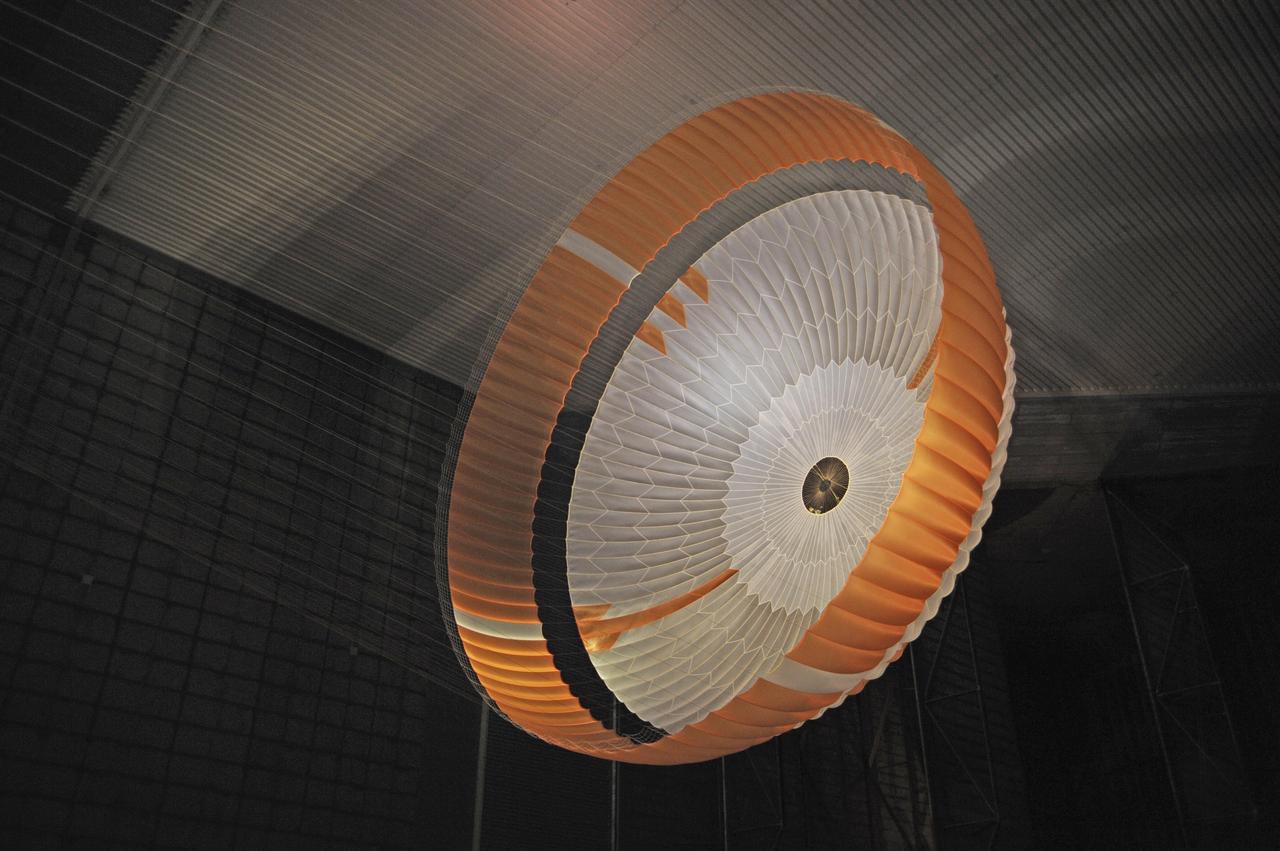
Testing during March and April 2009 inside the world largest wind tunnel, at NASA Ames Research Center, Moffett Field, Calif., qualified the parachute for NASA next Mars rover. The parachute for NASA's Mars Science Laboratory mission, to be launched in 2011 and land on Mars in 2012, is the largest ever built to fly on an extraterrestrial mission. This image shows the qualification-test parachute beginning to open a few seconds after it was launched from a mortar into an 80-mile-per-hour (36-meter-per-second) wind. The parachute uses a configuration called disk-gap-band. It has 80 suspension lines, measures more than 50 meters (165 feet) in length, and opens to a diameter of nearly 16 meters (51 feet). Most of the orange and white fabric is nylon, though a small disk of heavier polyester is used near the vent in the apex of the canopy due to higher stresses there. http://photojournal.jpl.nasa.gov/catalog/PIA11993
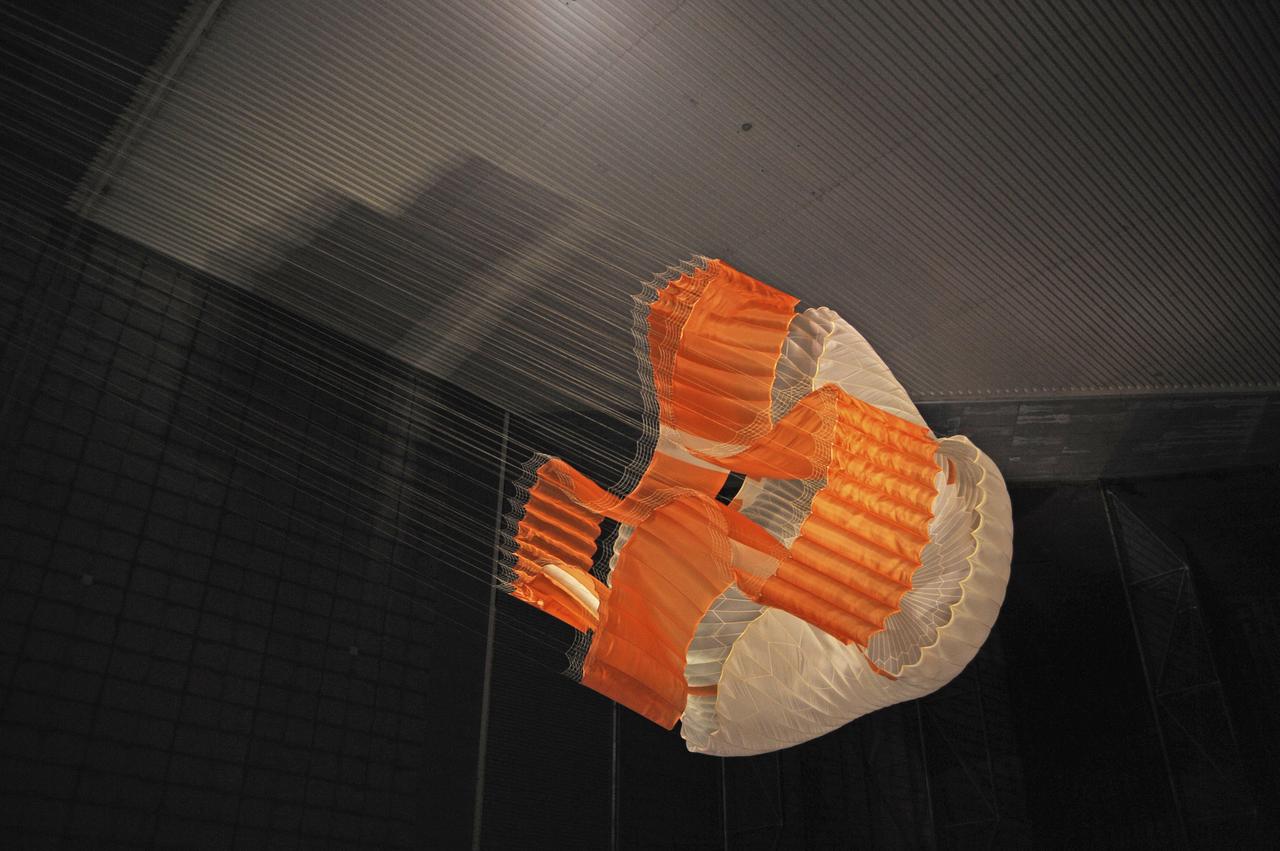
Testing during March and April 2009 inside the world largest wind tunnel, at NASA Ames Research Center, Moffett Field, Calif., qualified the parachute for NASA next Mars rover. The parachute for NASA's Mars Science Laboratory mission, to be launched in 2011 and land on Mars in 2012, is the largest ever built to fly on an extraterrestrial mission. This image shows the qualification-test parachute beginning to open a few seconds after it was launched from a mortar into an 80-mile-per-hour (36-meter-per-second) wind. The parachute uses a configuration called disk-gap-band. It has 80 suspension lines, measures more than 50 meters (165 feet) in length, and opens to a diameter of nearly 16 meters (51 feet). Most of the orange and white fabric is nylon, though a small disk of heavier polyester is used near the vent in the apex of the canopy due to higher stresses there. http://photojournal.jpl.nasa.gov/catalog/PIA11992
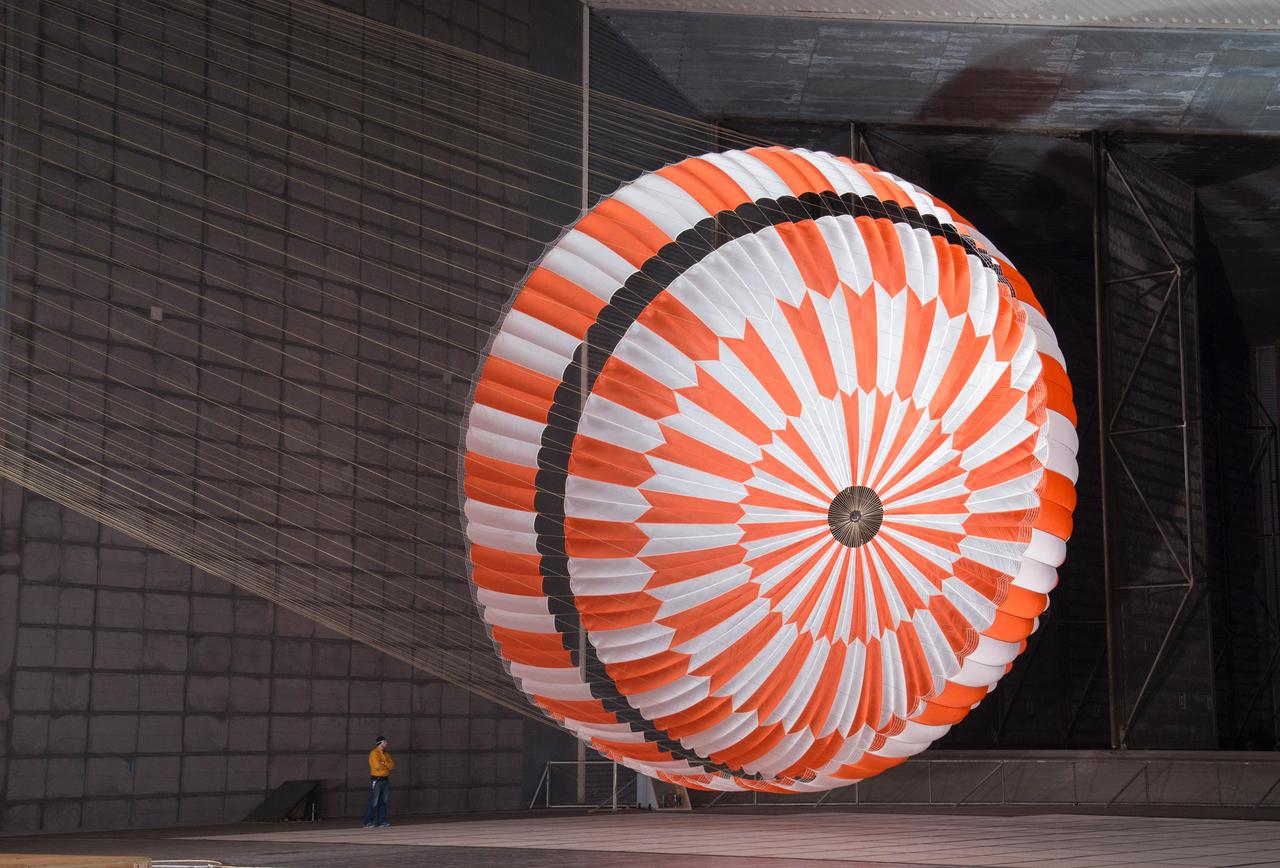
In this June 2017 photo, the supersonic parachute design that will land NASA's Perseverance rover on Mars on Feb. 18, 2021, undergoes testing in a wind tunnel at NASA's Ames Research Center in California's Silicon Valley. https://photojournal.jpl.nasa.gov/catalog/PIA23916
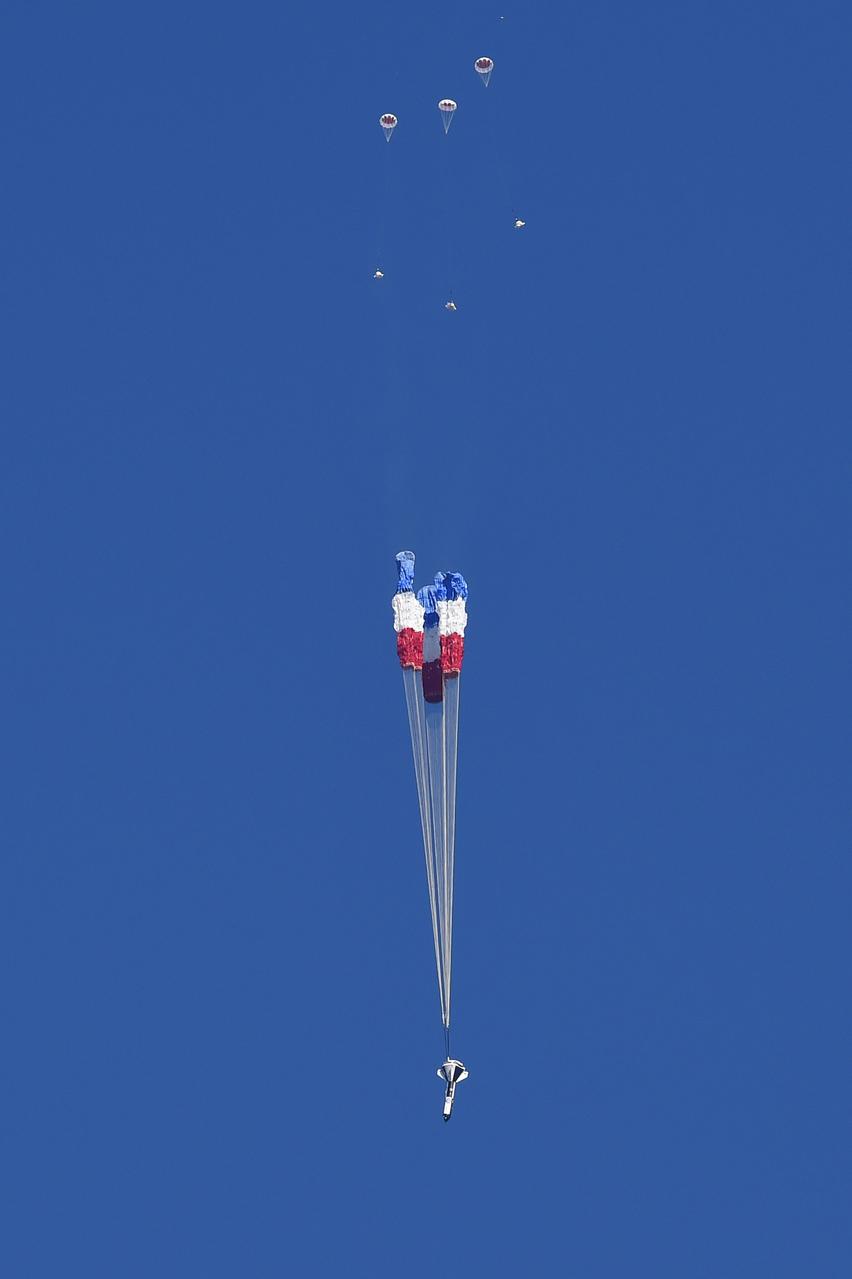
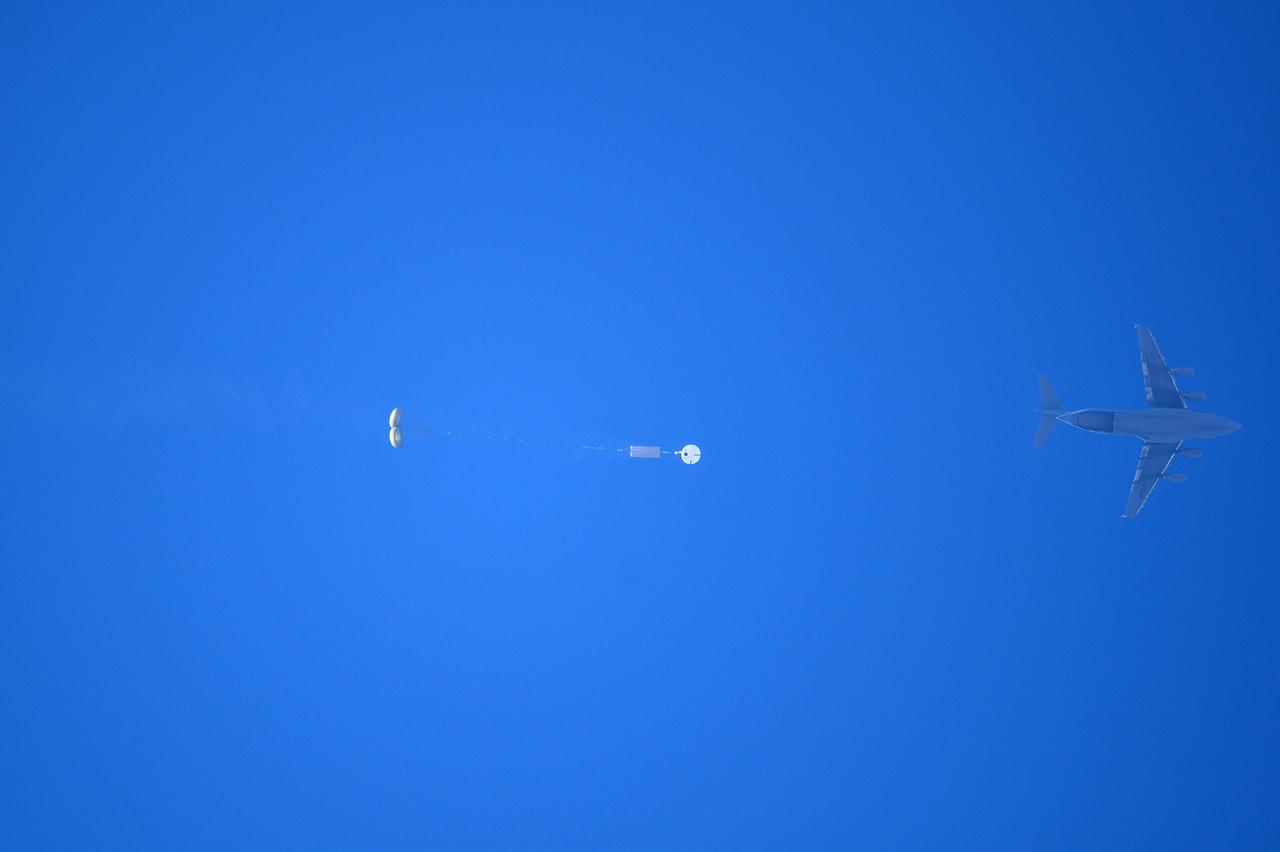
Engineers successfully evaluated a failure scenario of Orion’s parachute system in which only two of the system’s three orange and white main parachutes deploy after several other parachutes in the system used to slow and stabilize Orion endure high aerodynamic stresses ahead of a safe landing. The test occurred Dec. 15, 2017 at the U.S. Army Proving Ground in Yuma, Arizona. A mock capsule was dropped from a C-17 aircraft at 35,000 feet in altitude to enable the right conditions for the test. It was the fifth of eight tests to qualify Orion’s parachute system for flights with astronauts beginning with Artemis II.

Engineers successfully evaluated a failure scenario of Orion’s parachute system in which only two of the system’s three orange and white main parachutes deploy after several other parachutes in the system used to slow and stabilize Orion endure high aerodynamic stresses ahead of a safe landing. The test occurred Dec. 15, 2017 at the U.S. Army Proving Ground in Yuma, Arizona. A mock capsule was dropped from a C-17 aircraft at 35,000 feet in altitude to enable the right conditions for the test. It was the fifth of eight tests to qualify Orion’s parachute system for flights with astronauts beginning with Artemis II.

Engineers successfully evaluated a failure scenario of Orion’s parachute system in which only two of the system’s three orange and white main parachutes deploy after several other parachutes in the system used to slow and stabilize Orion endure high aerodynamic stresses ahead of a safe landing. The test occurred Dec. 15, 2017 at the U.S. Army Proving Ground in Yuma, Arizona. A mock capsule was dropped from a C-17 aircraft at 35,000 feet in altitude to enable the right conditions for the test. It was the fifth of eight tests to qualify Orion’s parachute system for flights with astronauts beginning with Artemis II.

Engineers successfully evaluated a failure scenario of Orion’s parachute system in which only two of the system’s three orange and white main parachutes deploy after several other parachutes in the system used to slow and stabilize Orion endure high aerodynamic stresses ahead of a safe landing. The test occurred Dec. 15, 2017 at the U.S. Army Proving Ground in Yuma, Arizona. A mock capsule was dropped from a C-17 aircraft at 35,000 feet in altitude to enable the right conditions for the test. It was the fifth of eight tests to qualify Orion’s parachute system for flights with astronauts beginning with Artemis II.
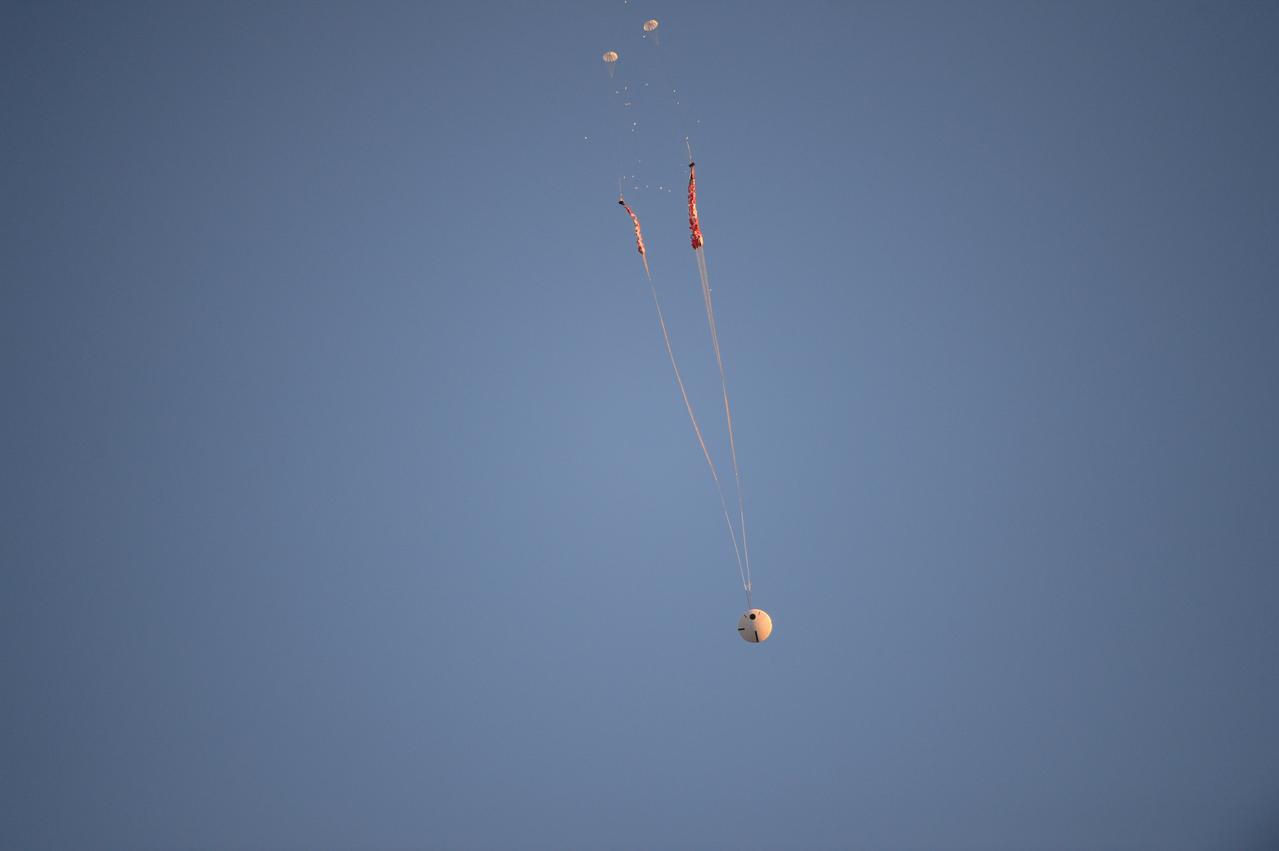
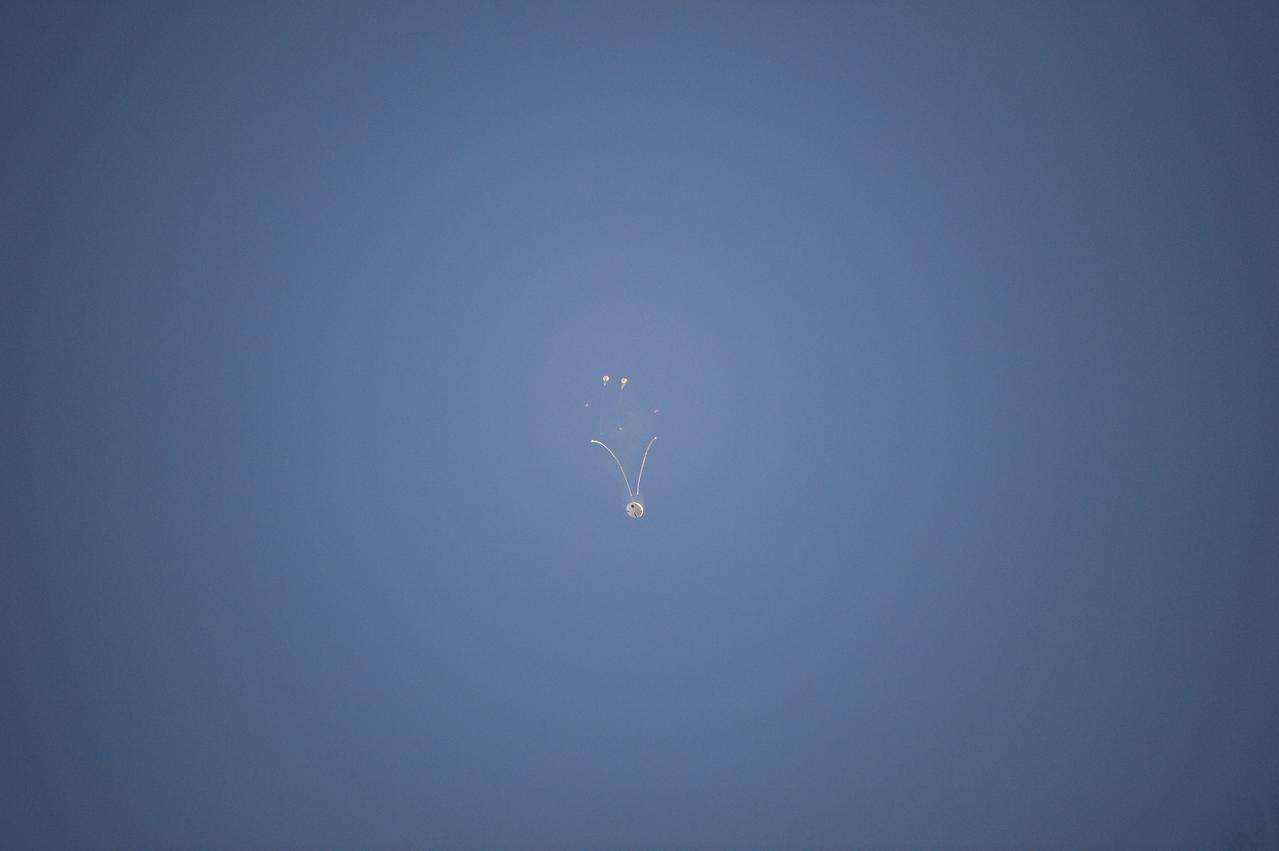
Engineers successfully evaluated a failure scenario of Orion’s parachute system in which only two of the system’s three orange and white main parachutes deploy after several other parachutes in the system used to slow and stabilize Orion endure high aerodynamic stresses ahead of a safe landing. The test occurred Dec. 15, 2017 at the U.S. Army Proving Ground in Yuma, Arizona. A mock capsule was dropped from a C-17 aircraft at 35,000 feet in altitude to enable the right conditions for the test. It was the fifth of eight tests to qualify Orion’s parachute system for flights with astronauts beginning with Artemis II.
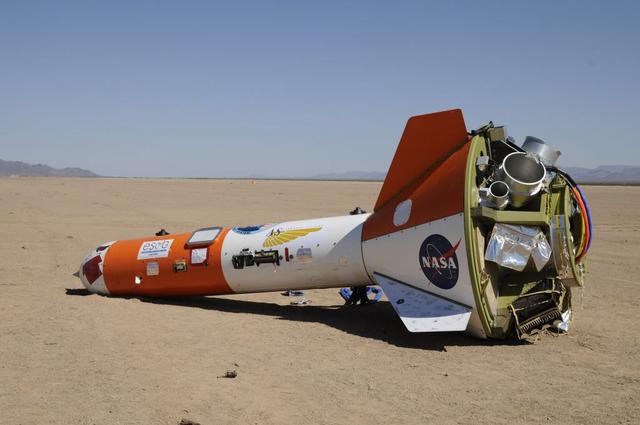
The Orion team performed the first of a series of development tests at U.S. Army Yuma Proving Grounds on Sept. 27, 2011. The photo shows the test article after it landed on the desert floor and the parachutes have been removed.
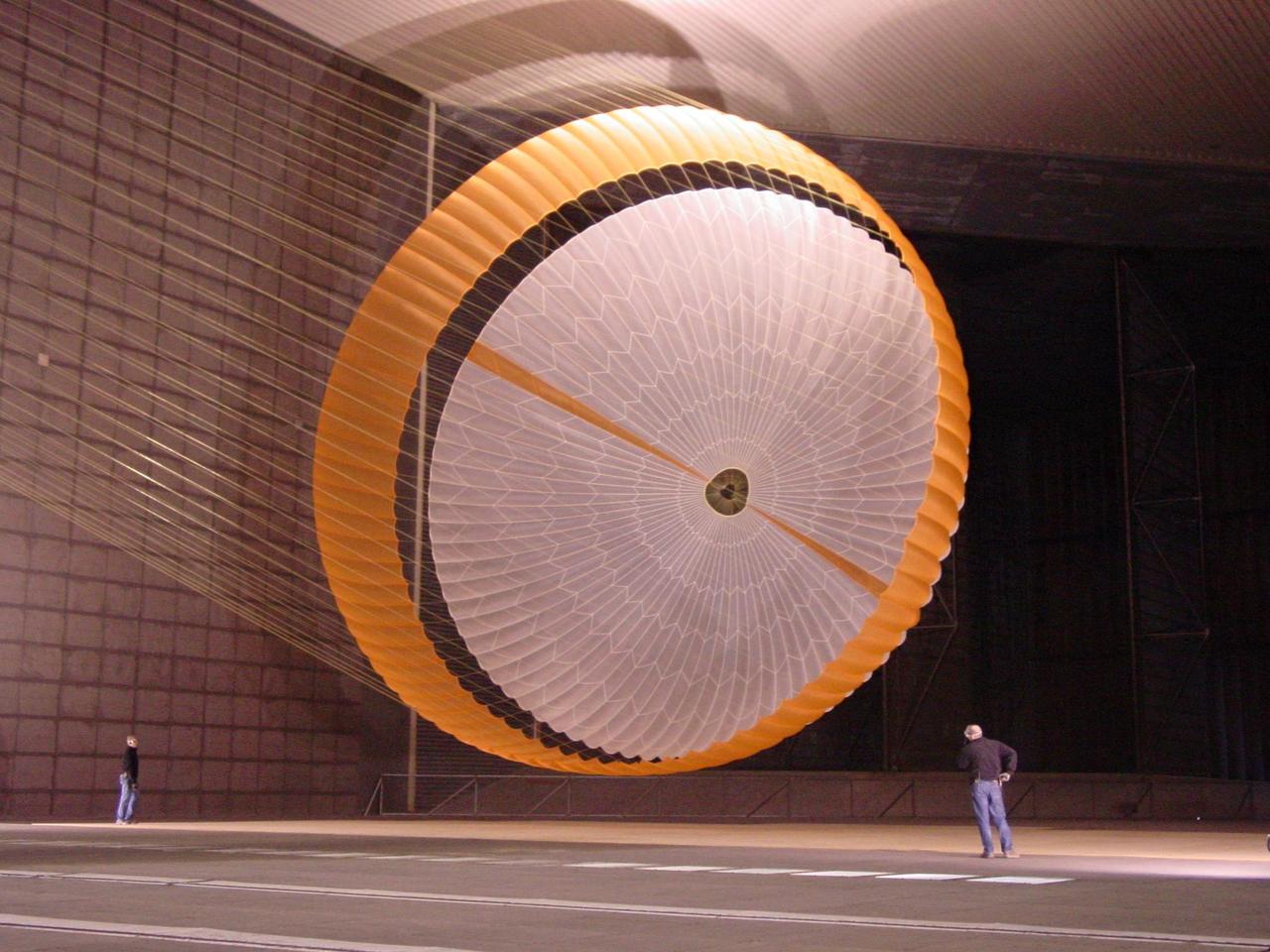
The team developing the landing system for NASA Mars Science Laboratory tested the deployment of an early parachute design in mid-October 2007 inside the world largest wind tunnel, at NASA Ames Research Center, Moffett Field, California.
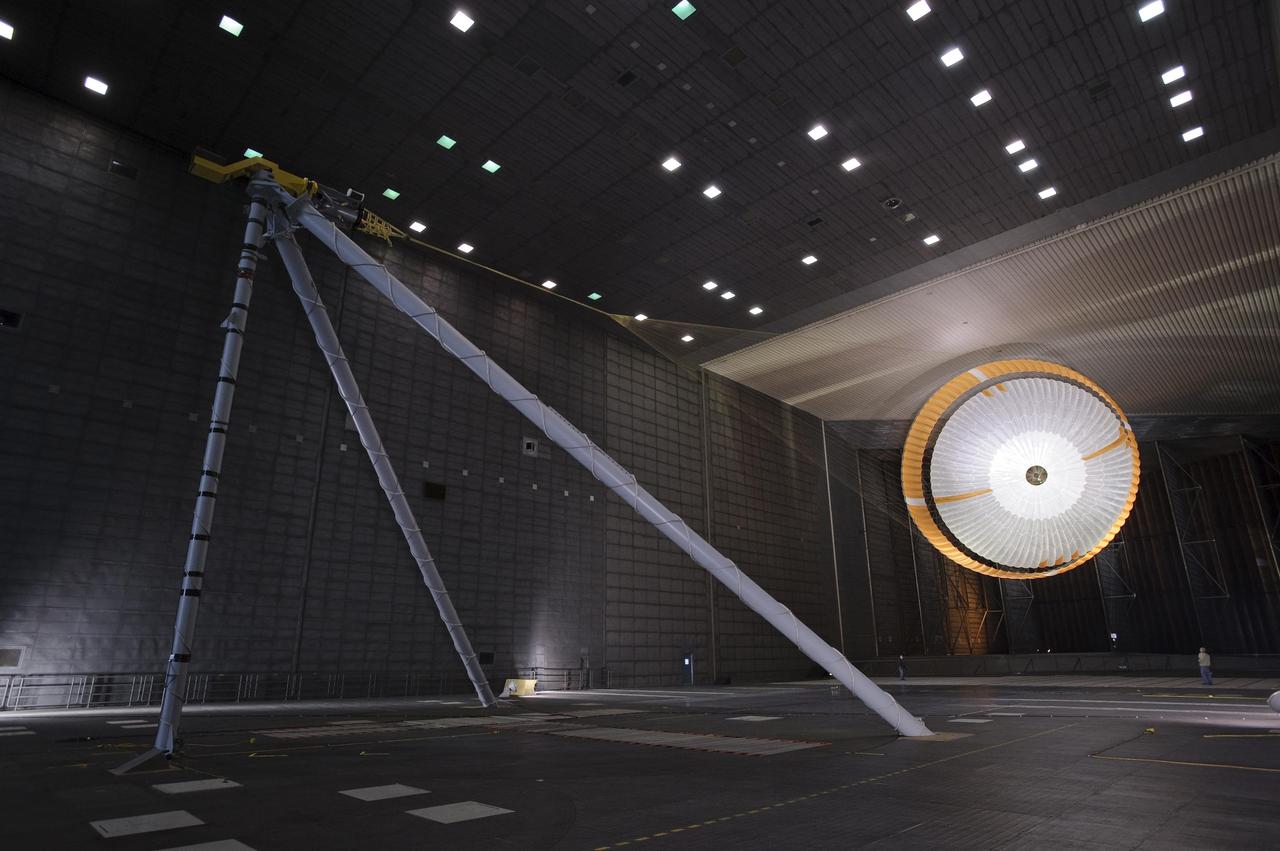
The parachute for NASA Mars Science Laboratory passed flight-qualification testing in March and April 2009 inside the world largest wind tunnel, at NASA Ames Research Center, Moffett Field, Calif.

NASA Phoenix Mars Lander parachuted for nearly three minutes as it descended through the Martian atmosphere on May 25, 2008. Extensive preparations for that crucial period included this drop test near Boise, Idaho, in October 2006.
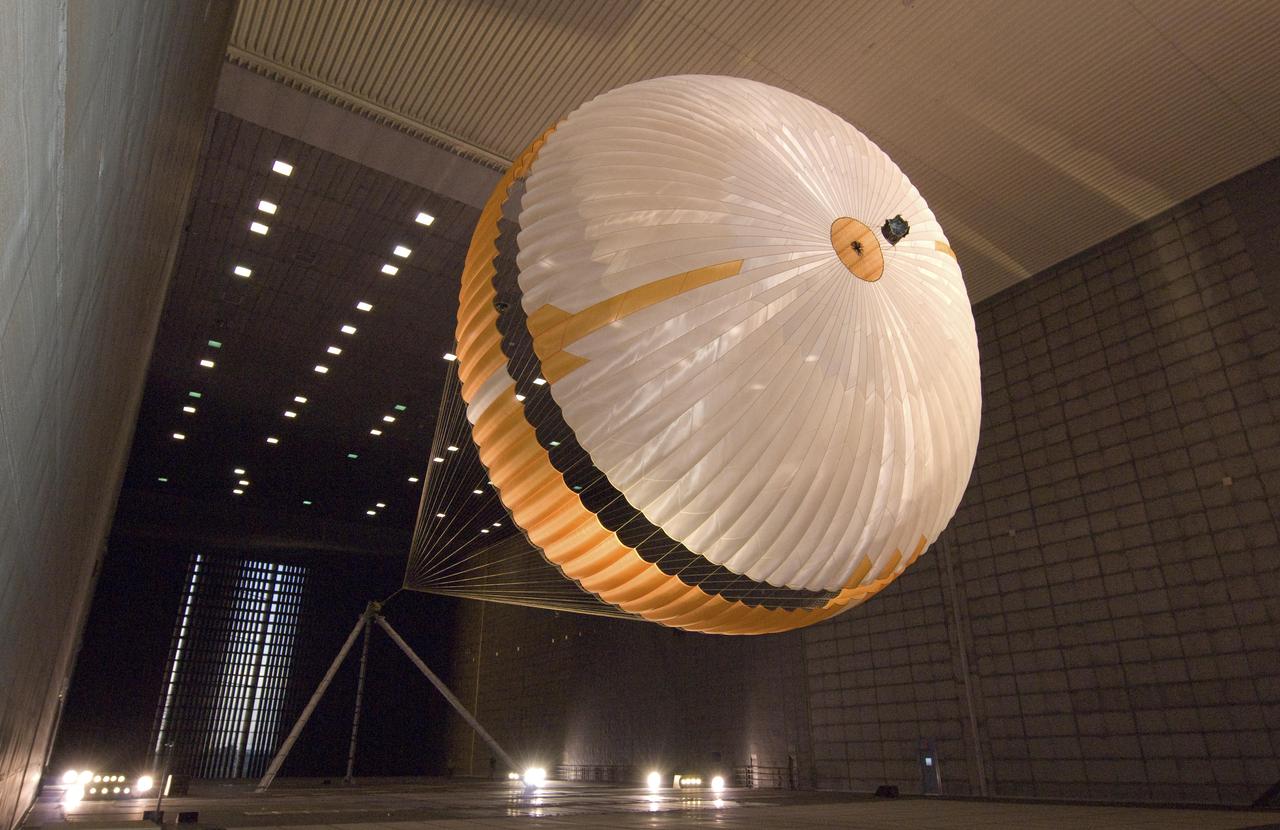
The parachute for NASA next mission to Mars passed flight-qualification testing in March and April 2009 inside the world largest wind tunnel, at NASA Ames Research Center, Moffett Field, Calif. NASA's Mars Science Laboratory mission, to be launched in 2011 and land on Mars in 2012, will use the largest parachute ever built to fly on an extraterrestrial mission. This image shows a duplicate qualification-test parachute inflated in an 80-mile-per-hour (36-meter-per-second) wind inside the test facility. The parachute uses a configuration called disk-gap-band. It has 80 suspension lines, measures more than 50 meters (165 feet) in length, and opens to a diameter of nearly 16 meters (51 feet). Most of the orange and white fabric is nylon, though a small disk of heavier polyester is used near the vent in the apex of the canopy due to higher stresses there. It is designed to survive deployment at Mach 2.2 in the Martian atmosphere, where it will generate up to 65,000 pounds of drag force. The wind tunnel is 24 meters (80 feet) tall and 37 meters (120 feet) wide, big enough to house a Boeing 737. It is part of the National Full-Scale Aerodynamics Complex, operated by the Arnold Engineering Development Center of the U.S. Air Force. http://photojournal.jpl.nasa.gov/catalog/PIA11995
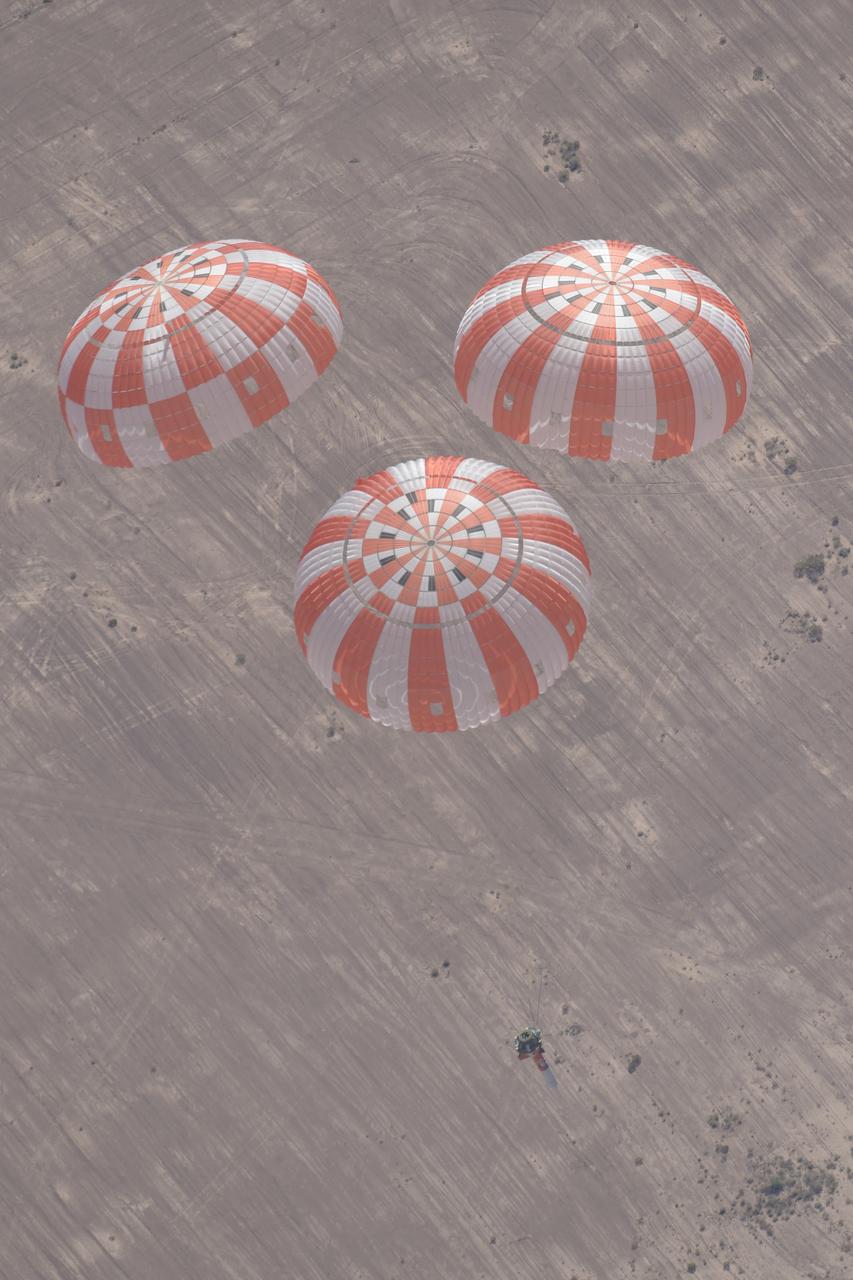
An Orion parachute test to qualify for mission with crew takes place at the U.S. Army Yuma Proving Ground in Yuma, Arizona on Sept. 30, 2016. Part of Batch image transfer from Flickr.

An Orion parachute test to qualify for mission with crew takes place at the U.S. Army Yuma Proving Ground in Yuma, Arizona on Sept. 30, 2016. Part of Batch image transfer from Flickr.

An Orion parachute test to qualify for mission with crew takes place at the U.S. Army Yuma Proving Ground in Yuma, Arizona on Sept. 30, 2016. Part of Batch image transfer from Flickr.
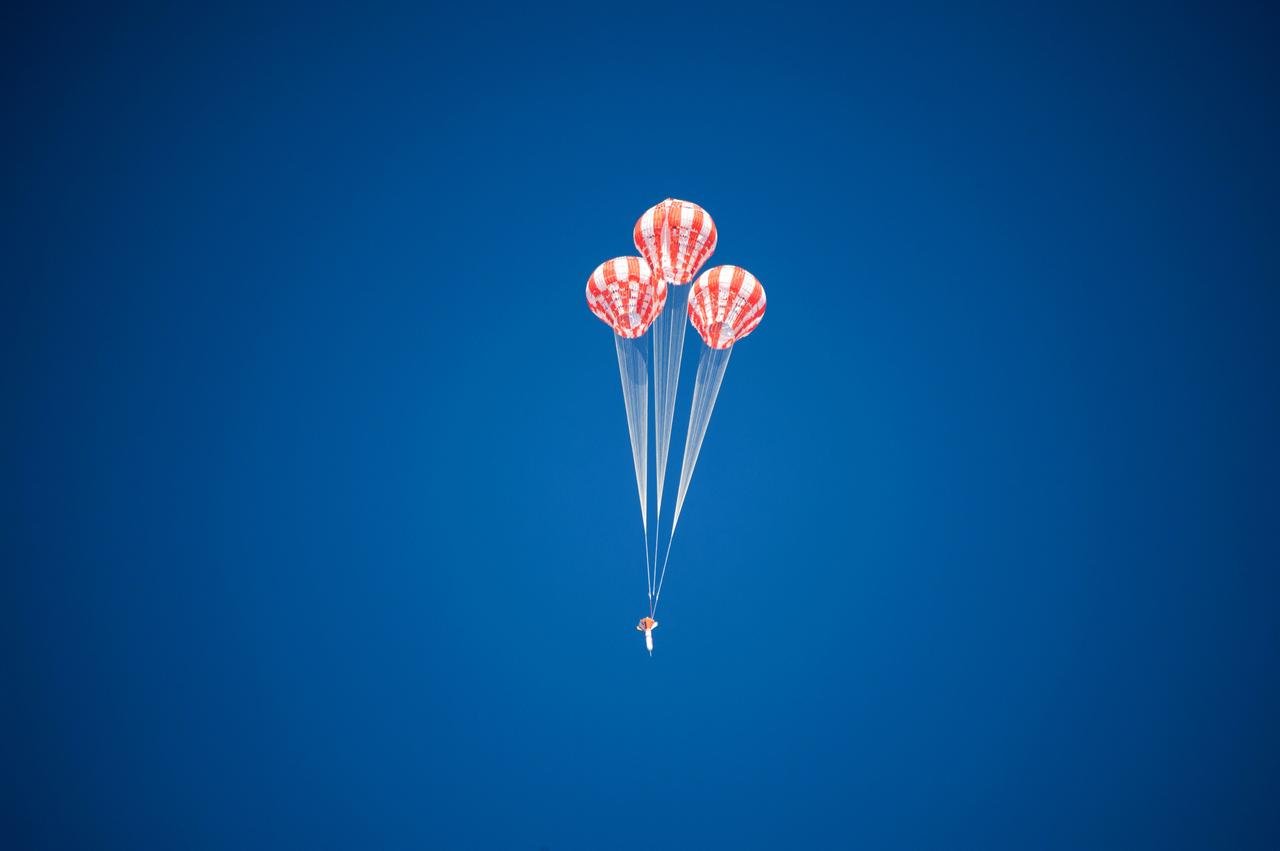
An Orion parachute test to qualify for mission with crew takes place at the U.S. Army Yuma Proving Ground in Yuma, Arizona on Sept. 30, 2016. Part of Batch image transfer from Flickr.
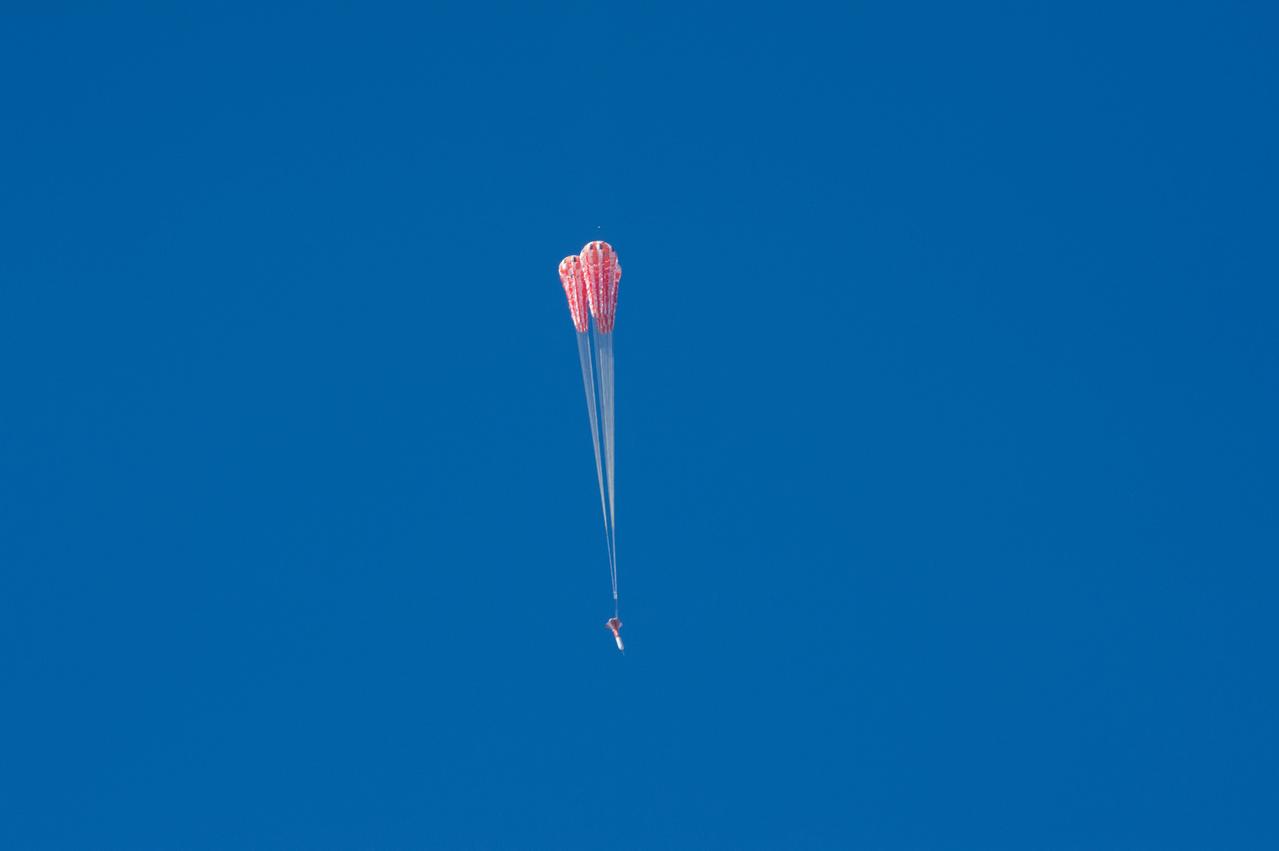
An Orion parachute test to qualify for mission with crew takes place at the U.S. Army Yuma Proving Ground in Yuma, Arizona on Sept. 30, 2016. Part of Batch image transfer from Flickr.

A successful Orion parachute test takes place at U.S. Army Yuma Proving ground in Arizona on March 8, 2017. This is the second test in a series of eight that will certify Orion's parachutes for human space flight.

A successful Orion parachute test takes place at U.S. Army Yuma Proving ground in Arizona on March 8, 2017. This is the second test in a series of eight that will certify Orion's parachutes for human space flight.
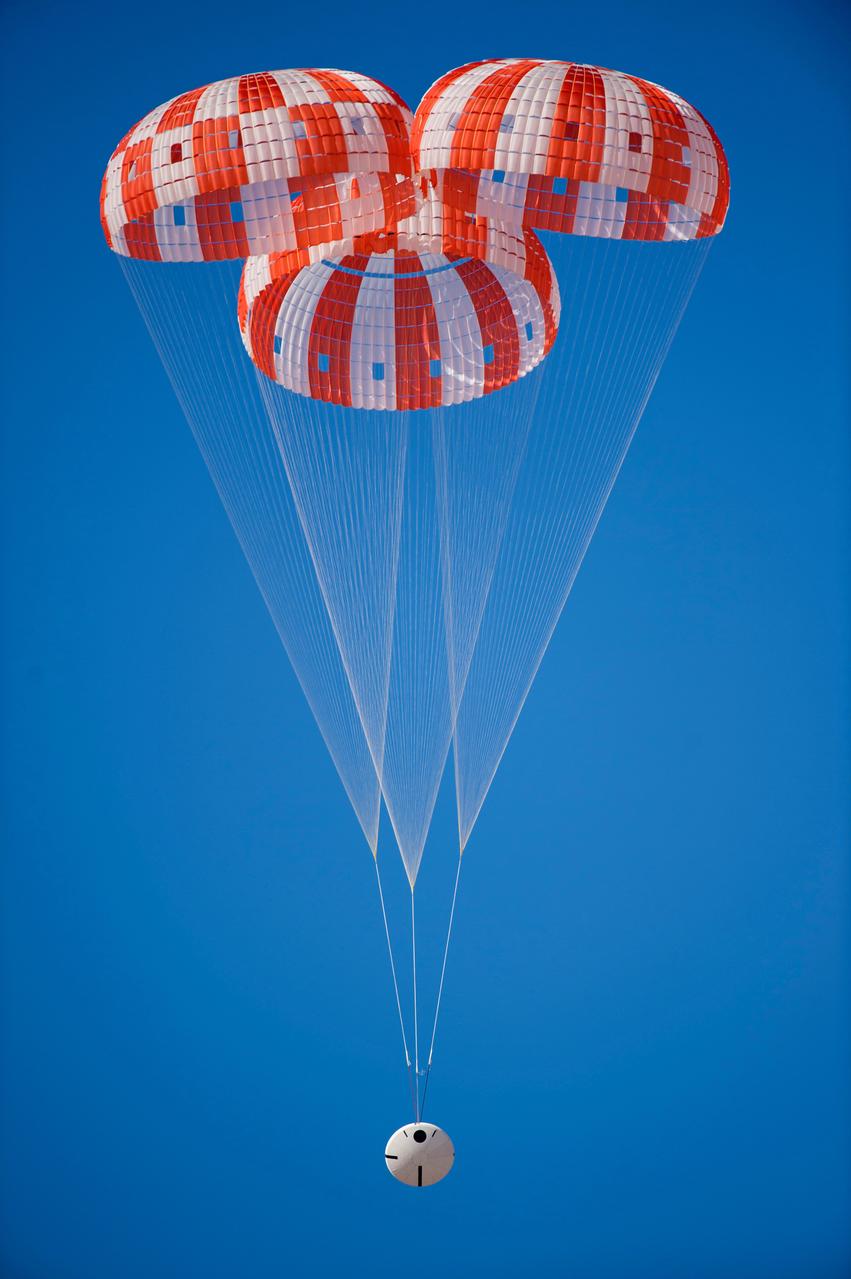
A successful Orion parachute test takes place at U.S. Army Yuma Proving ground in Arizona on March 8, 2017. This is the second test in a series of eight that will certify Orion's parachutes for human space flight.
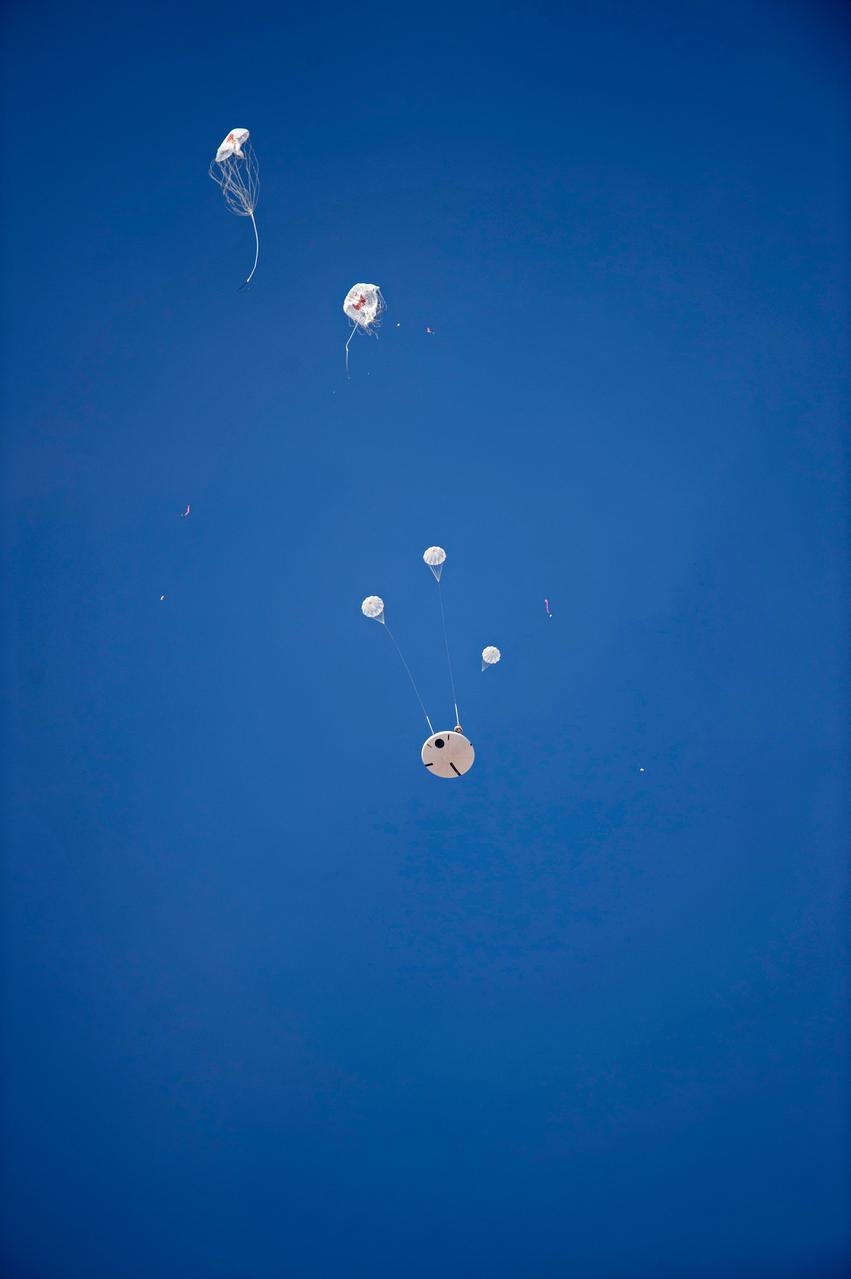
A successful Orion parachute test takes place at U.S. Army Yuma Proving ground in Arizona on March 8, 2017. This is the second test in a series of eight that will certify Orion's parachutes for human space flight.
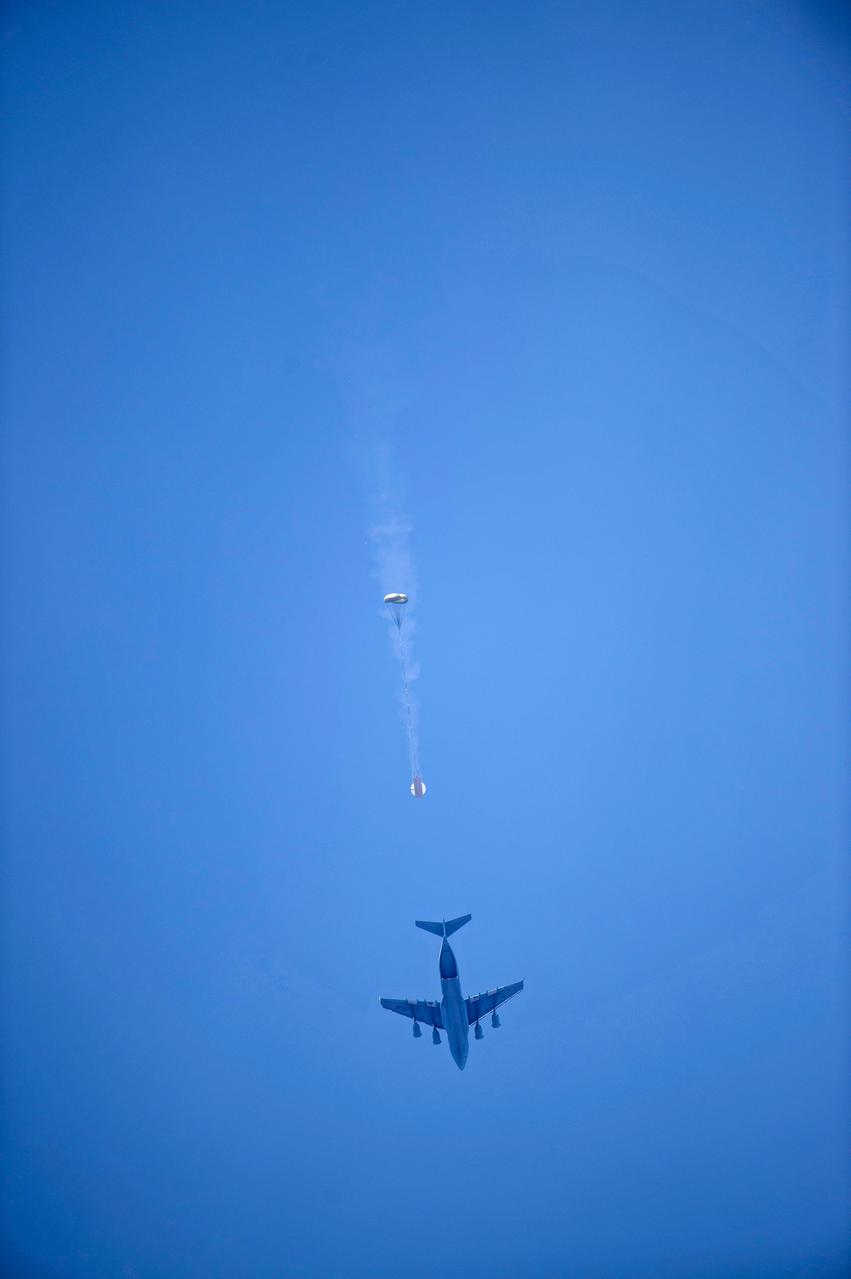
A successful Orion parachute test takes place at U.S. Army Yuma Proving ground in Arizona on March 8, 2017. This is the second test in a series of eight that will certify Orion's parachutes for human space flight.

A successful Orion parachute test takes place at U.S. Army Yuma Proving ground in Arizona on March 8, 2017. This is the second test in a series of eight that will certify Orion's parachutes for human space flight.

A successful Orion parachute test takes place at U.S. Army Yuma Proving ground in Arizona on March 8, 2017. This is the second test in a series of eight that will certify Orion's parachutes for human space flight.
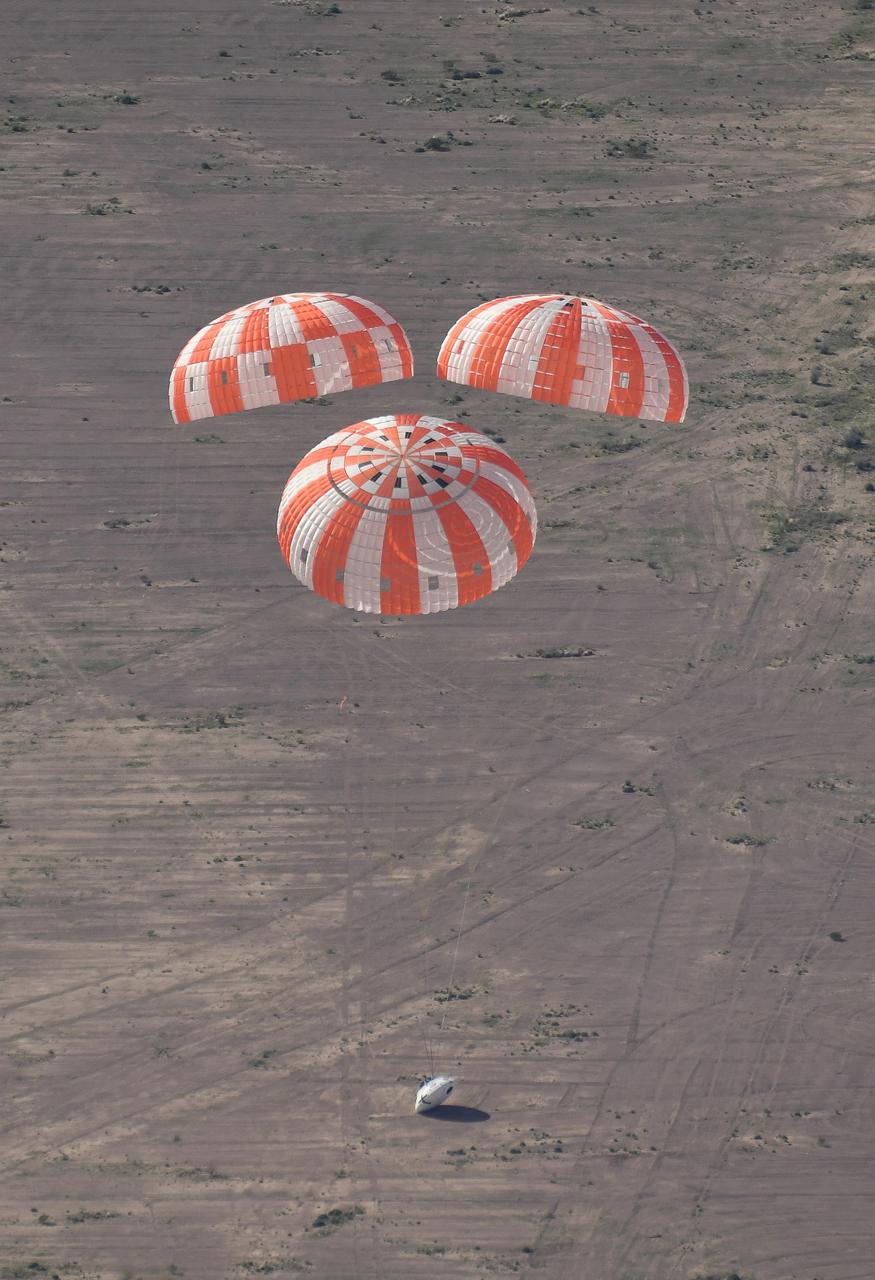
A successful Orion parachute test takes place at U.S. Army Yuma Proving ground in Arizona on March 8, 2017. This is the second test in a series of eight that will certify Orion's parachutes for human space flight.
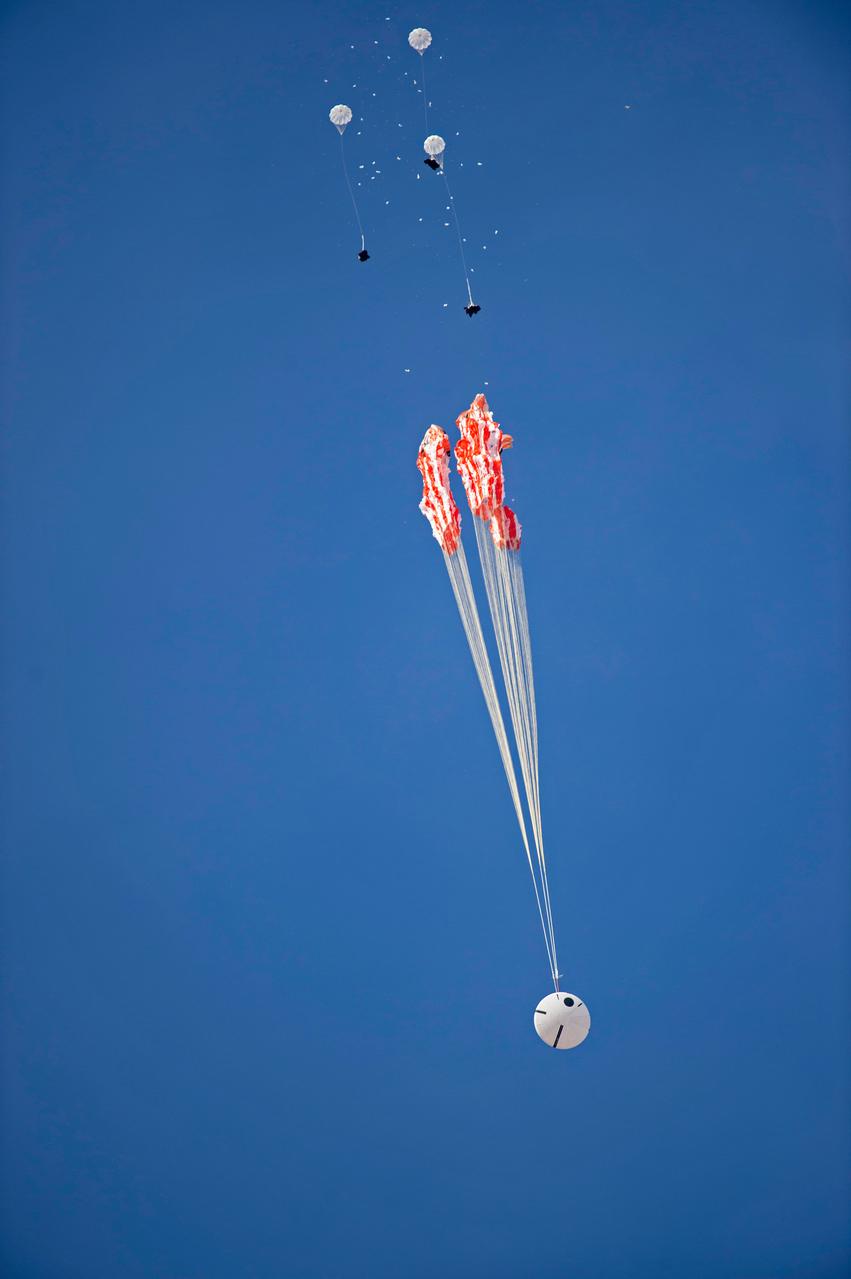
A successful Orion parachute test takes place at U.S. Army Yuma Proving ground in Arizona on March 8, 2017. This is the second test in a series of eight that will certify Orion's parachutes for human space flight.

NASA successfully tested the Orion spacecraft’s parachute system on March 16, 2018 at the U.S. Army Proving Ground in Yuma, Arizona. It was the first time engineers intentionally failed one of the system’s three Forward Bay Cover parachutes. The Forward Bay Cover protects the upper part of Orion throughout its mission, but must be jettisoned during landing so the rest of Orion’s parachutes can deploy. Engineers are nearing completion of the series of tests to qualify the parachute system for flights with crew.
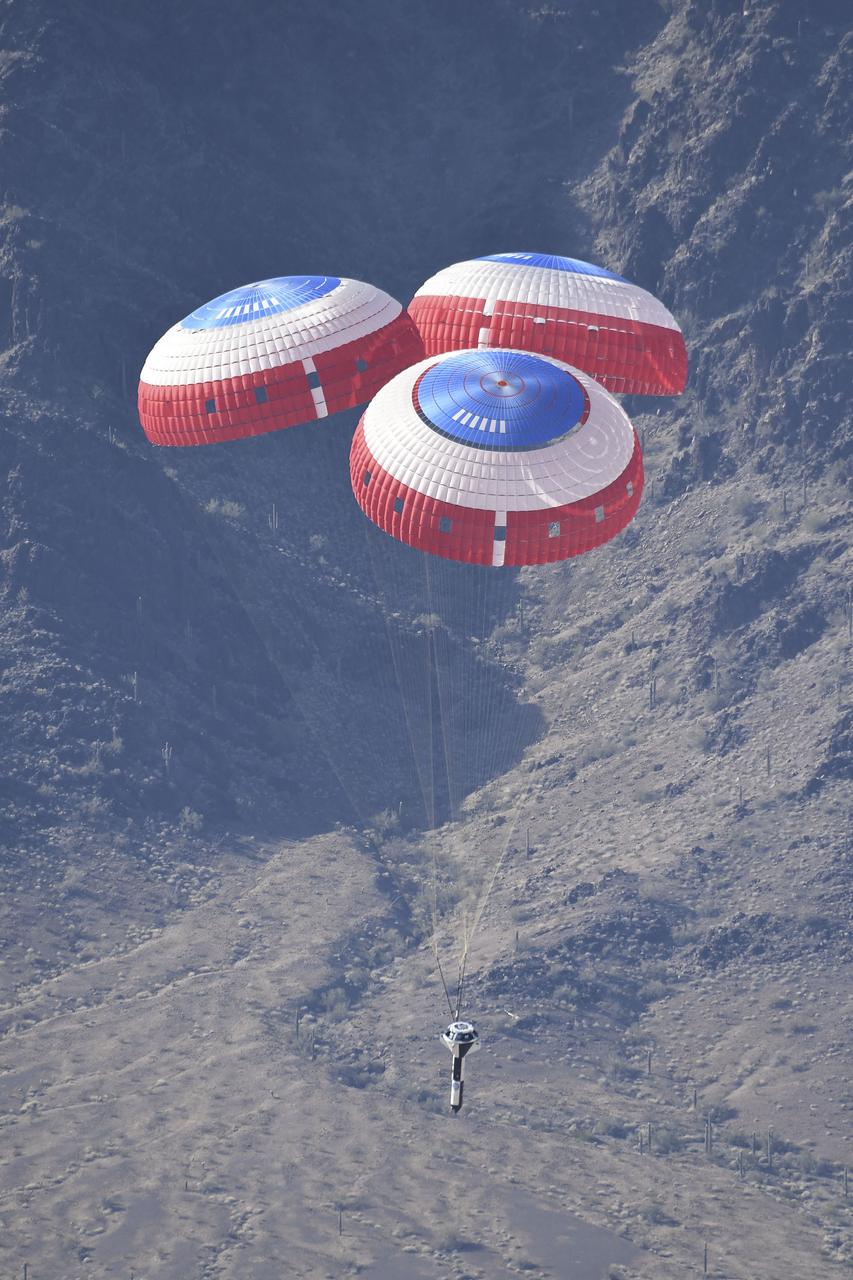
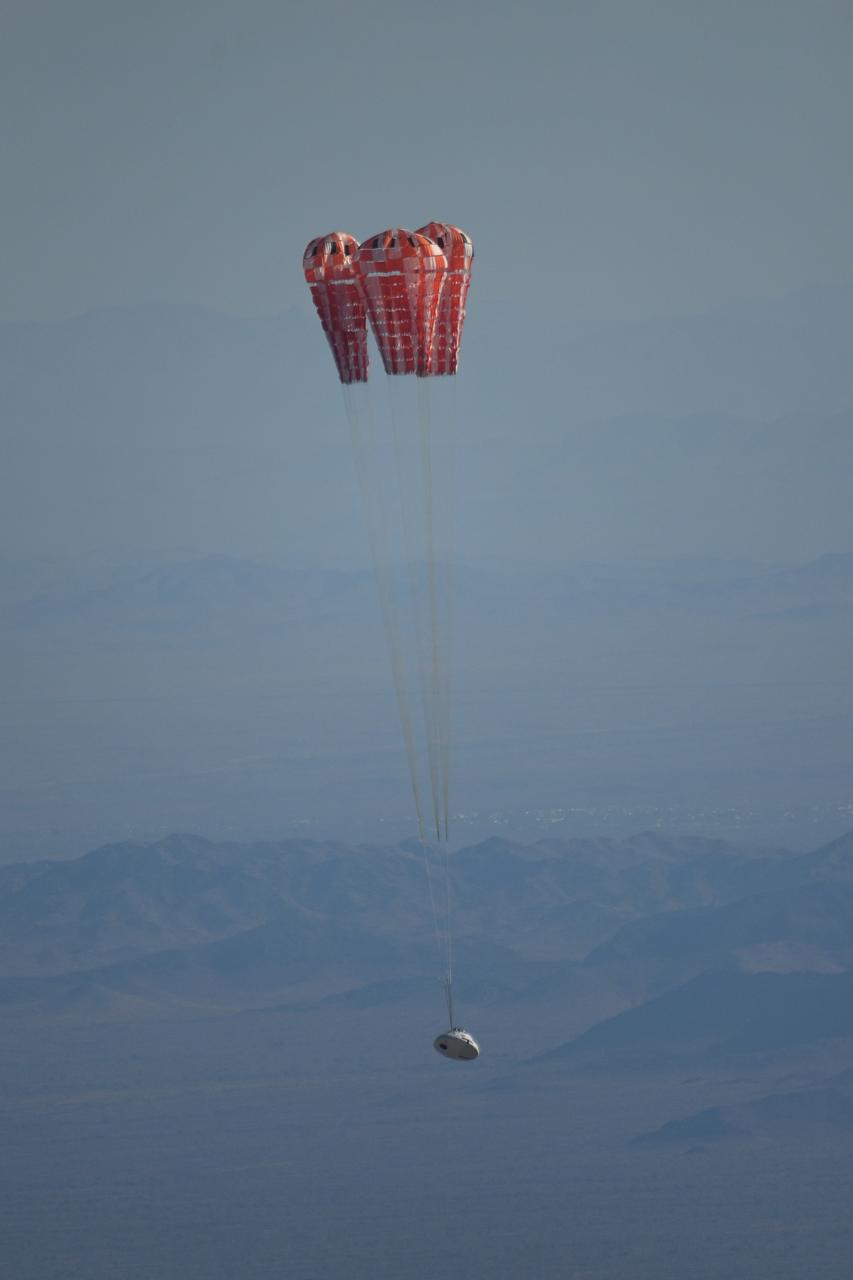
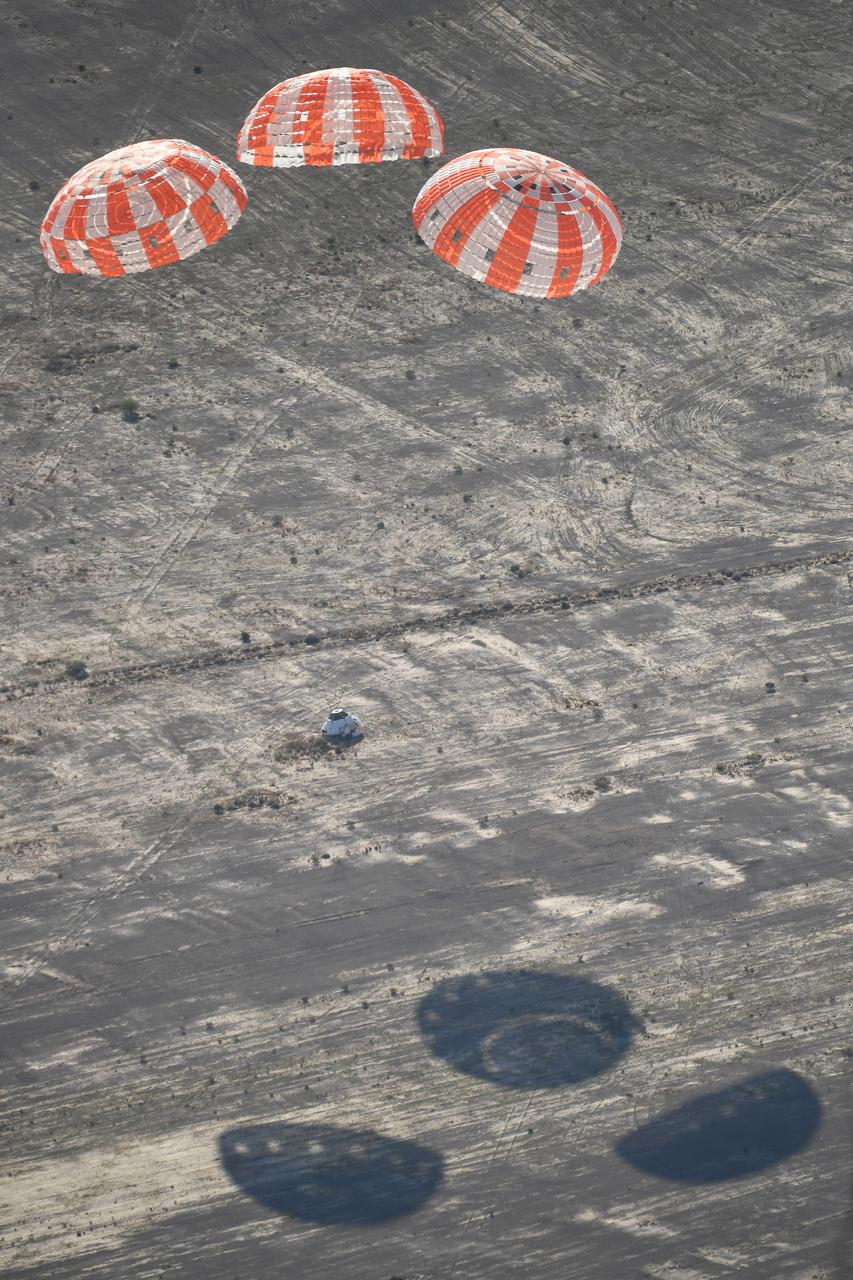
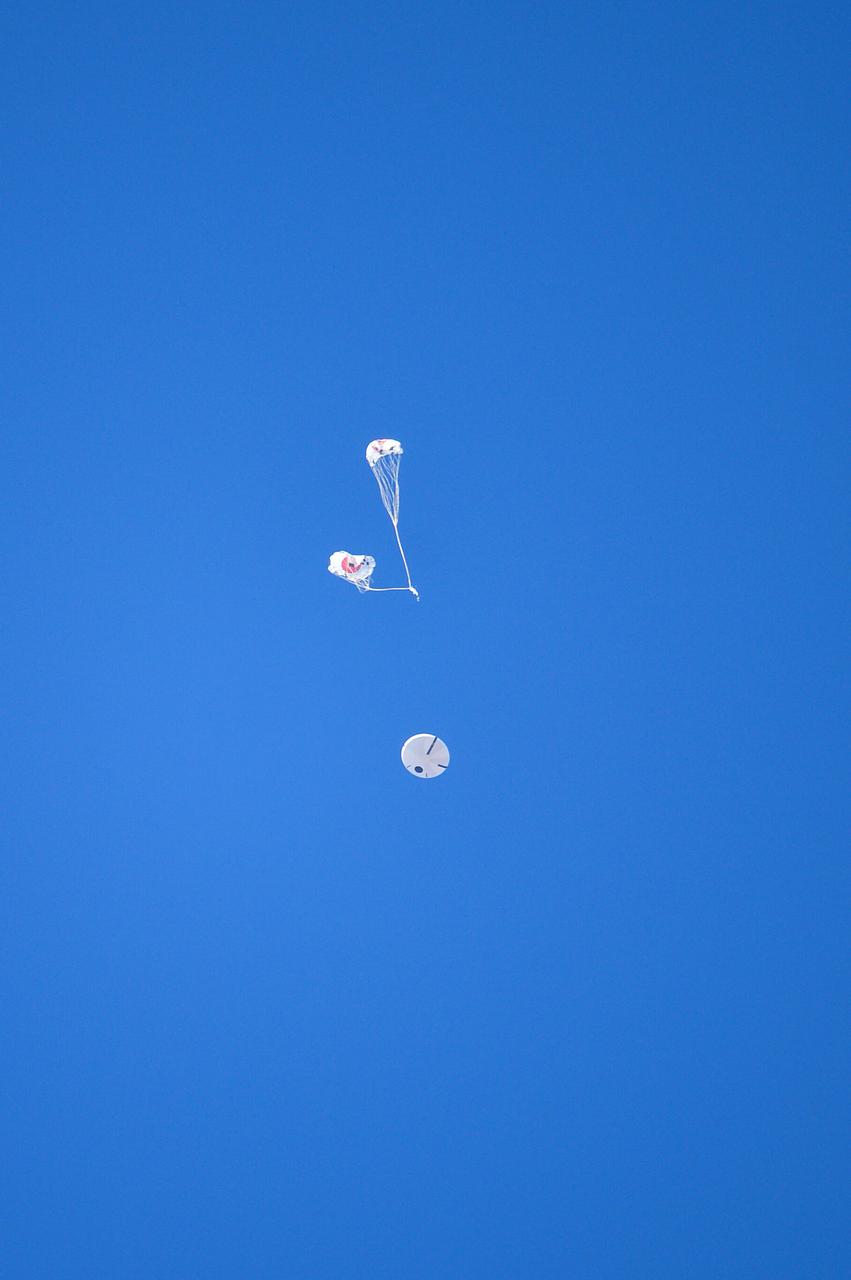
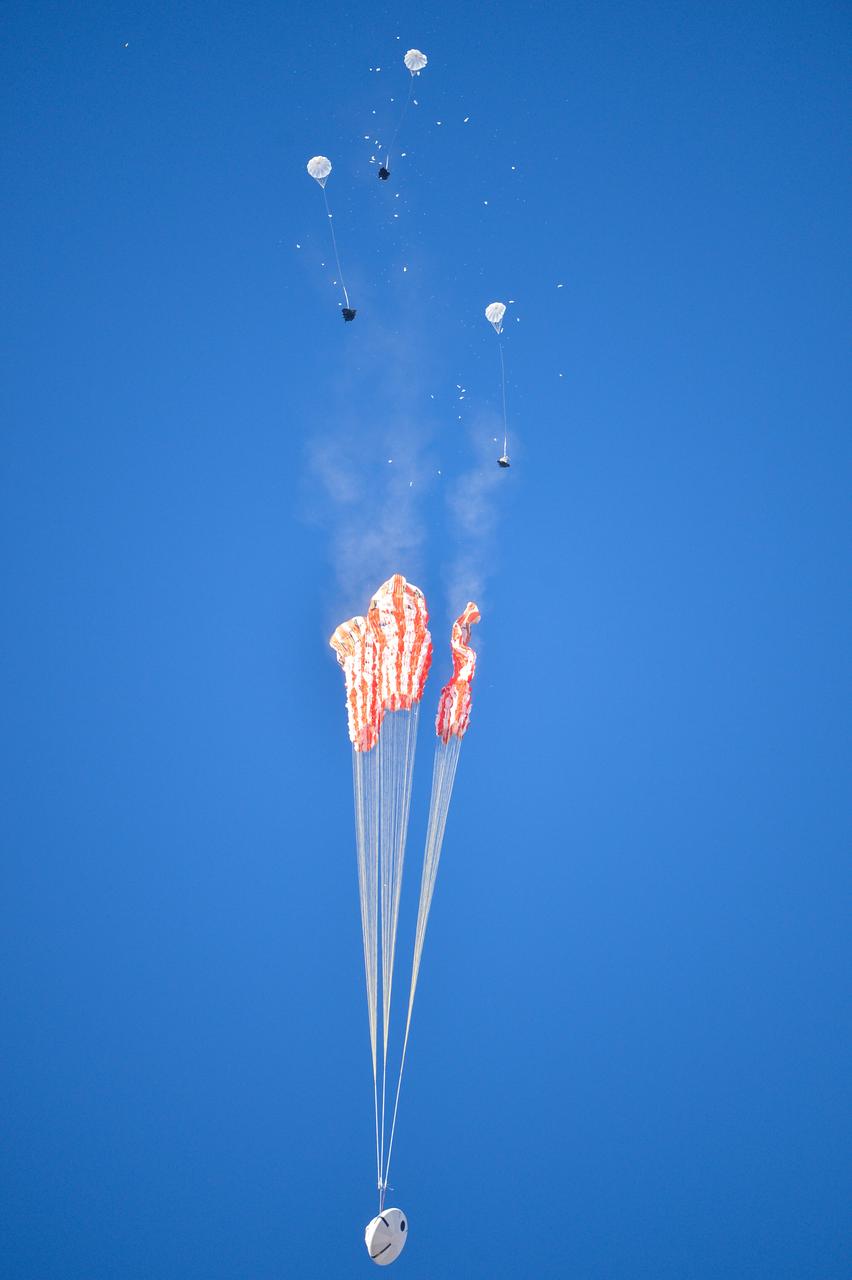
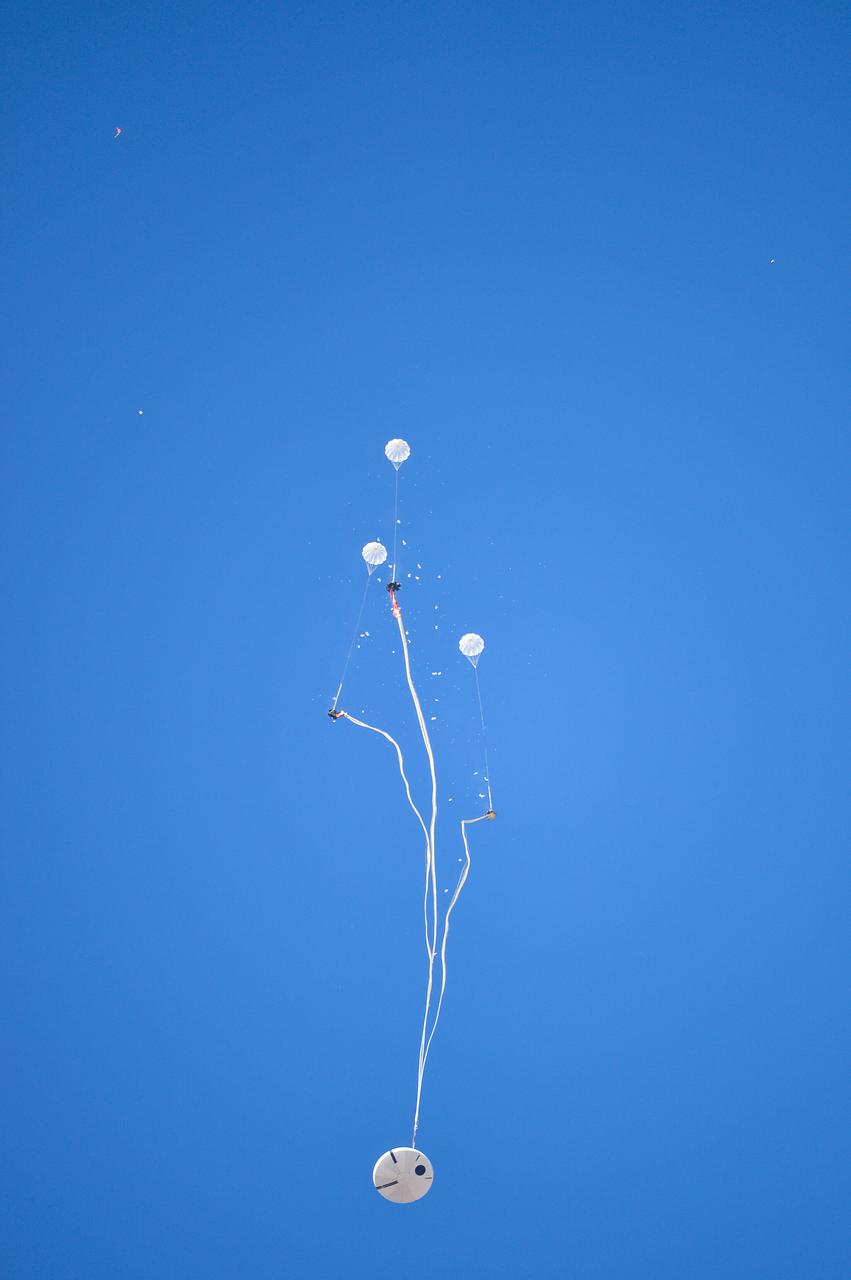
Orion’s three main orange and white parachutes help a representative model of the spacecraft descend through sky above Arizona, where NASA engineers tested the parachute system on Sept. 13, 2017 at the U.S. Army Proving Ground in Yuma. NASA is qualifying Orion’s parachutes for missions with astronauts.. .During this test, engineers replicated a situation in which Orion must abort off the Space Launch System rocket and bypasses part of its normal parachute deployment sequence that typically helps the spacecraft slow down during its descent to Earth after deep space missions. The capsule was dropped out of a C-17 aircraft at more than 4.7 miles in altitude and allowed to free fall for 20 seconds, longer than ever before, to produce high aerodynamic pressure before only its pilot and main parachutes were deployed, testing whether they could perform as expected under extreme loads. Orion’s full parachute system includes 11 total parachutes -- three forward bay cover parachutes and two drogue parachutes, along with three pilot parachutes that help pull out the spacecraft’s three mains.
Orion’s three main orange and white parachutes help a representative model of the spacecraft descend through sky above Arizona, where NASA engineers tested the parachute system on Sept. 13, 2017 at the U.S. Army Proving Ground in Yuma. NASA is qualifying Orion’s parachutes for missions with astronauts.. .During this test, engineers replicated a situation in which Orion must abort off the Space Launch System rocket and bypasses part of its normal parachute deployment sequence that typically helps the spacecraft slow down during its descent to Earth after deep space missions. The capsule was dropped out of a C-17 aircraft at more than 4.7 miles in altitude and allowed to free fall for 20 seconds, longer than ever before, to produce high aerodynamic pressure before only its pilot and main parachutes were deployed, testing whether they could perform as expected under extreme loads. Orion’s full parachute system includes 11 total parachutes -- three forward bay cover parachutes and two drogue parachutes, along with three pilot parachutes that help pull out the spacecraft’s three mains.

Orion’s three main orange and white parachutes help a representative model of the spacecraft descend through sky above Arizona, where NASA engineers tested the parachute system on Sept. 13, 2017 at the U.S. Army Proving Ground in Yuma. NASA is qualifying Orion’s parachutes for missions with astronauts.. .During this test, engineers replicated a situation in which Orion must abort off the Space Launch System rocket and bypasses part of its normal parachute deployment sequence that typically helps the spacecraft slow down during its descent to Earth after deep space missions. The capsule was dropped out of a C-17 aircraft at more than 4.7 miles in altitude and allowed to free fall for 20 seconds, longer than ever before, to produce high aerodynamic pressure before only its pilot and main parachutes were deployed, testing whether they could perform as expected under extreme loads. Orion’s full parachute system includes 11 total parachutes -- three forward bay cover parachutes and two drogue parachutes, along with three pilot parachutes that help pull out the spacecraft’s three mains.
Orion’s three main orange and white parachutes help a representative model of the spacecraft descend through sky above Arizona, where NASA engineers tested the parachute system on Sept. 13, 2017 at the U.S. Army Proving Ground in Yuma. NASA is qualifying Orion’s parachutes for missions with astronauts.. .During this test, engineers replicated a situation in which Orion must abort off the Space Launch System rocket and bypasses part of its normal parachute deployment sequence that typically helps the spacecraft slow down during its descent to Earth after deep space missions. The capsule was dropped out of a C-17 aircraft at more than 4.7 miles in altitude and allowed to free fall for 20 seconds, longer than ever before, to produce high aerodynamic pressure before only its pilot and main parachutes were deployed, testing whether they could perform as expected under extreme loads. Orion’s full parachute system includes 11 total parachutes -- three forward bay cover parachutes and two drogue parachutes, along with three pilot parachutes that help pull out the spacecraft’s three mains.
Orion’s three main orange and white parachutes help a representative model of the spacecraft descend through sky above Arizona, where NASA engineers tested the parachute system on Sept. 13, 2017 at the U.S. Army Proving Ground in Yuma. NASA is qualifying Orion’s parachutes for missions with astronauts.. .During this test, engineers replicated a situation in which Orion must abort off the Space Launch System rocket and bypasses part of its normal parachute deployment sequence that typically helps the spacecraft slow down during its descent to Earth after deep space missions. The capsule was dropped out of a C-17 aircraft at more than 4.7 miles in altitude and allowed to free fall for 20 seconds, longer than ever before, to produce high aerodynamic pressure before only its pilot and main parachutes were deployed, testing whether they could perform as expected under extreme loads. Orion’s full parachute system includes 11 total parachutes -- three forward bay cover parachutes and two drogue parachutes, along with three pilot parachutes that help pull out the spacecraft’s three mains.
Orion’s three main orange and white parachutes help a representative model of the spacecraft descend through sky above Arizona, where NASA engineers tested the parachute system on Sept. 13, 2017 at the U.S. Army Proving Ground in Yuma. NASA is qualifying Orion’s parachutes for missions with astronauts.. .During this test, engineers replicated a situation in which Orion must abort off the Space Launch System rocket and bypasses part of its normal parachute deployment sequence that typically helps the spacecraft slow down during its descent to Earth after deep space missions. The capsule was dropped out of a C-17 aircraft at more than 4.7 miles in altitude and allowed to free fall for 20 seconds, longer than ever before, to produce high aerodynamic pressure before only its pilot and main parachutes were deployed, testing whether they could perform as expected under extreme loads. Orion’s full parachute system includes 11 total parachutes -- three forward bay cover parachutes and two drogue parachutes, along with three pilot parachutes that help pull out the spacecraft’s three mains.
Orion’s three main orange and white parachutes help a representative model of the spacecraft descend through sky above Arizona, where NASA engineers tested the parachute system on Sept. 13, 2017 at the U.S. Army Proving Ground in Yuma. NASA is qualifying Orion’s parachutes for missions with astronauts.. .During this test, engineers replicated a situation in which Orion must abort off the Space Launch System rocket and bypasses part of its normal parachute deployment sequence that typically helps the spacecraft slow down during its descent to Earth after deep space missions. The capsule was dropped out of a C-17 aircraft at more than 4.7 miles in altitude and allowed to free fall for 20 seconds, longer than ever before, to produce high aerodynamic pressure before only its pilot and main parachutes were deployed, testing whether they could perform as expected under extreme loads. Orion’s full parachute system includes 11 total parachutes -- three forward bay cover parachutes and two drogue parachutes, along with three pilot parachutes that help pull out the spacecraft’s three mains.
Orion’s three main orange and white parachutes help a representative model of the spacecraft descend through sky above Arizona, where NASA engineers tested the parachute system on Sept. 13, 2017 at the U.S. Army Proving Ground in Yuma. NASA is qualifying Orion’s parachutes for missions with astronauts.. .During this test, engineers replicated a situation in which Orion must abort off the Space Launch System rocket and bypasses part of its normal parachute deployment sequence that typically helps the spacecraft slow down during its descent to Earth after deep space missions. The capsule was dropped out of a C-17 aircraft at more than 4.7 miles in altitude and allowed to free fall for 20 seconds, longer than ever before, to produce high aerodynamic pressure before only its pilot and main parachutes were deployed, testing whether they could perform as expected under extreme loads. Orion’s full parachute system includes 11 total parachutes -- three forward bay cover parachutes and two drogue parachutes, along with three pilot parachutes that help pull out the spacecraft’s three mains.
Orion’s three main orange and white parachutes help a representative model of the spacecraft descend through sky above Arizona, where NASA engineers tested the parachute system on Sept. 13, 2017 at the U.S. Army Proving Ground in Yuma. NASA is qualifying Orion’s parachutes for missions with astronauts.. .During this test, engineers replicated a situation in which Orion must abort off the Space Launch System rocket and bypasses part of its normal parachute deployment sequence that typically helps the spacecraft slow down during its descent to Earth after deep space missions. The capsule was dropped out of a C-17 aircraft at more than 4.7 miles in altitude and allowed to free fall for 20 seconds, longer than ever before, to produce high aerodynamic pressure before only its pilot and main parachutes were deployed, testing whether they could perform as expected under extreme loads. Orion’s full parachute system includes 11 total parachutes -- three forward bay cover parachutes and two drogue parachutes, along with three pilot parachutes that help pull out the spacecraft’s three mains.
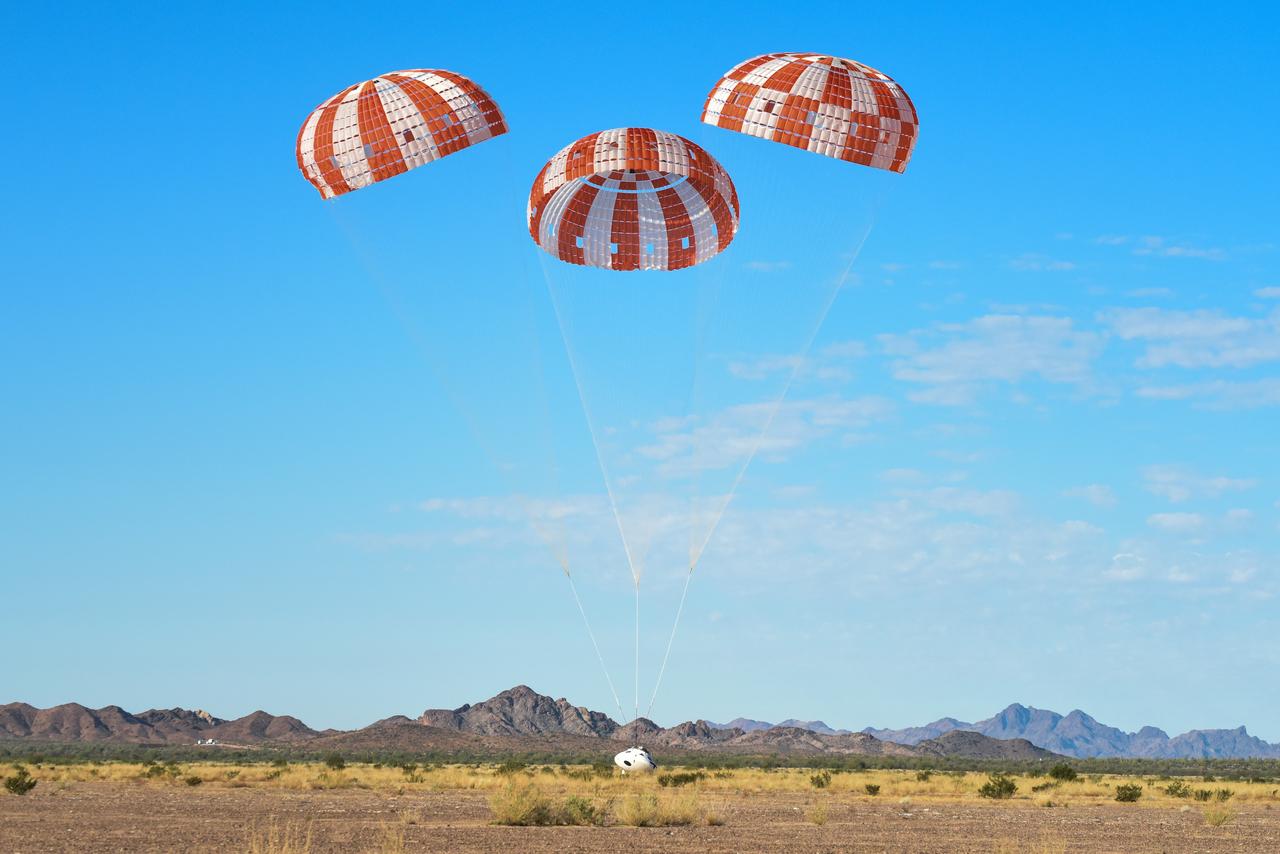
Orion’s three main orange and white parachutes help a representative model of the spacecraft descend through sky above Arizona, where NASA engineers tested the parachute system on Sept. 13, 2017 at the U.S. Army Proving Ground in Yuma. NASA is qualifying Orion’s parachutes for missions with astronauts.. .During this test, engineers replicated a situation in which Orion must abort off the Space Launch System rocket and bypasses part of its normal parachute deployment sequence that typically helps the spacecraft slow down during its descent to Earth after deep space missions. The capsule was dropped out of a C-17 aircraft at more than 4.7 miles in altitude and allowed to free fall for 20 seconds, longer than ever before, to produce high aerodynamic pressure before only its pilot and main parachutes were deployed, testing whether they could perform as expected under extreme loads. Orion’s full parachute system includes 11 total parachutes -- three forward bay cover parachutes and two drogue parachutes, along with three pilot parachutes that help pull out the spacecraft’s three mains.
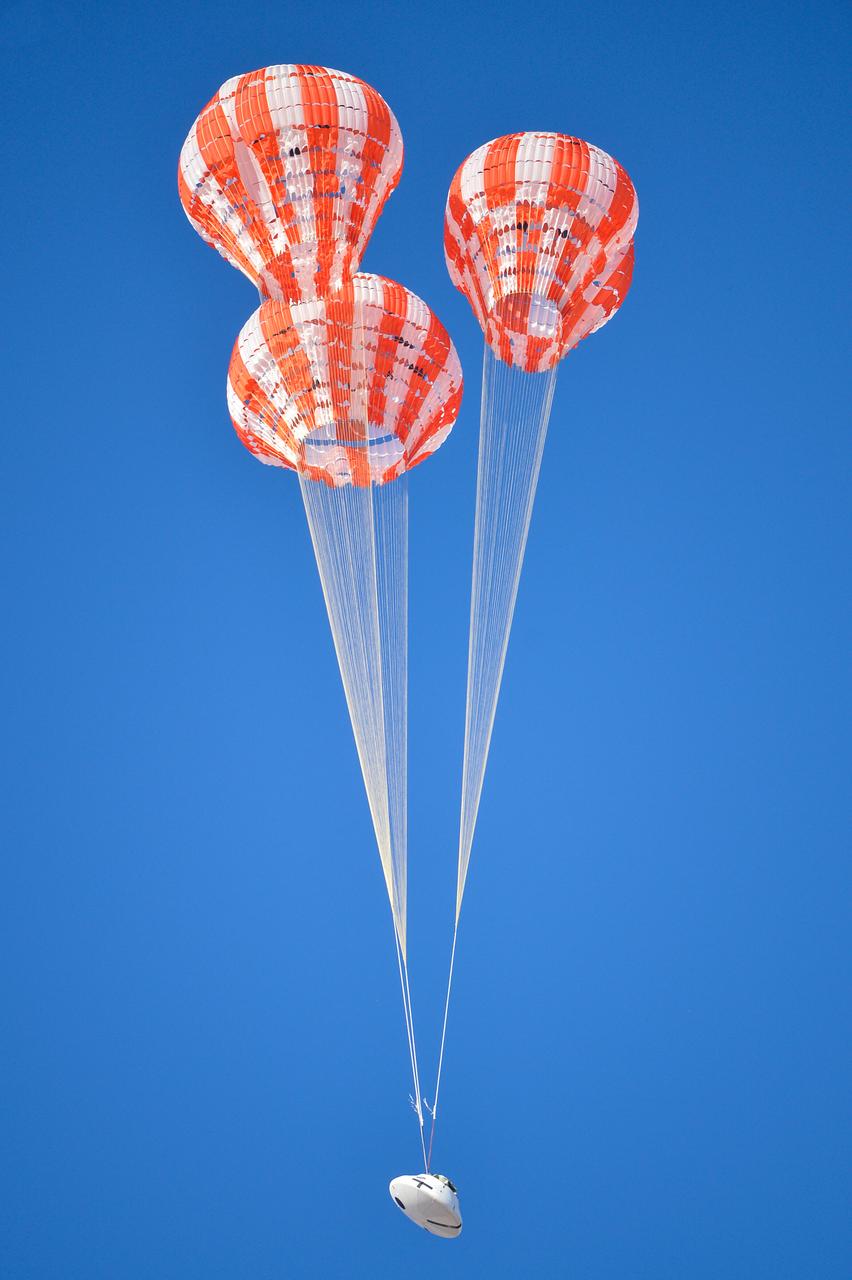
Orion’s three main orange and white parachutes help a representative model of the spacecraft descend through sky above Arizona, where NASA engineers tested the parachute system on Sept. 13, 2017 at the U.S. Army Proving Ground in Yuma. NASA is qualifying Orion’s parachutes for missions with astronauts.. .During this test, engineers replicated a situation in which Orion must abort off the Space Launch System rocket and bypasses part of its normal parachute deployment sequence that typically helps the spacecraft slow down during its descent to Earth after deep space missions. The capsule was dropped out of a C-17 aircraft at more than 4.7 miles in altitude and allowed to free fall for 20 seconds, longer than ever before, to produce high aerodynamic pressure before only its pilot and main parachutes were deployed, testing whether they could perform as expected under extreme loads. Orion’s full parachute system includes 11 total parachutes -- three forward bay cover parachutes and two drogue parachutes, along with three pilot parachutes that help pull out the spacecraft’s three mains.
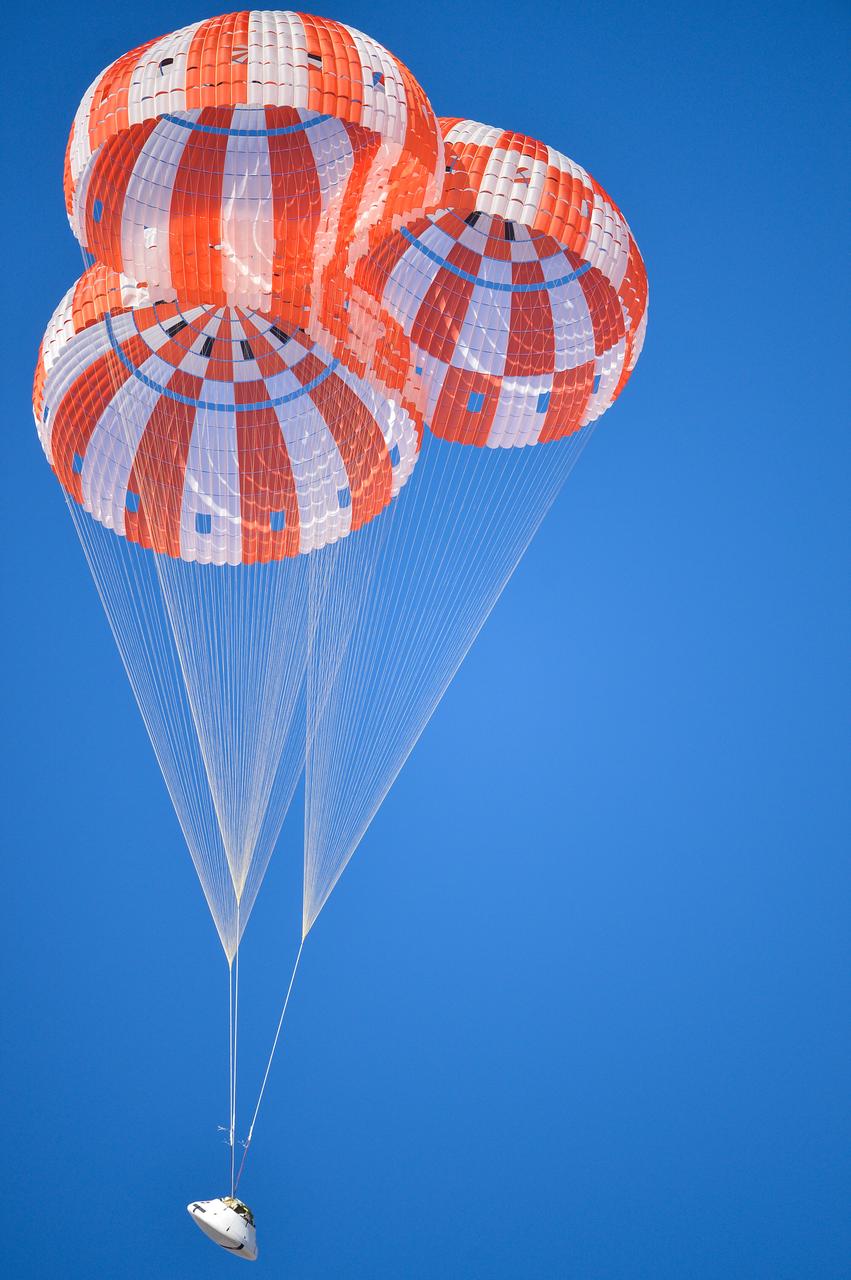
Orion’s three main orange and white parachutes help a representative model of the spacecraft descend through sky above Arizona, where NASA engineers tested the parachute system on Sept. 13, 2017 at the U.S. Army Proving Ground in Yuma. NASA is qualifying Orion’s parachutes for missions with astronauts.. .During this test, engineers replicated a situation in which Orion must abort off the Space Launch System rocket and bypasses part of its normal parachute deployment sequence that typically helps the spacecraft slow down during its descent to Earth after deep space missions. The capsule was dropped out of a C-17 aircraft at more than 4.7 miles in altitude and allowed to free fall for 20 seconds, longer than ever before, to produce high aerodynamic pressure before only its pilot and main parachutes were deployed, testing whether they could perform as expected under extreme loads. Orion’s full parachute system includes 11 total parachutes -- three forward bay cover parachutes and two drogue parachutes, along with three pilot parachutes that help pull out the spacecraft’s three mains.
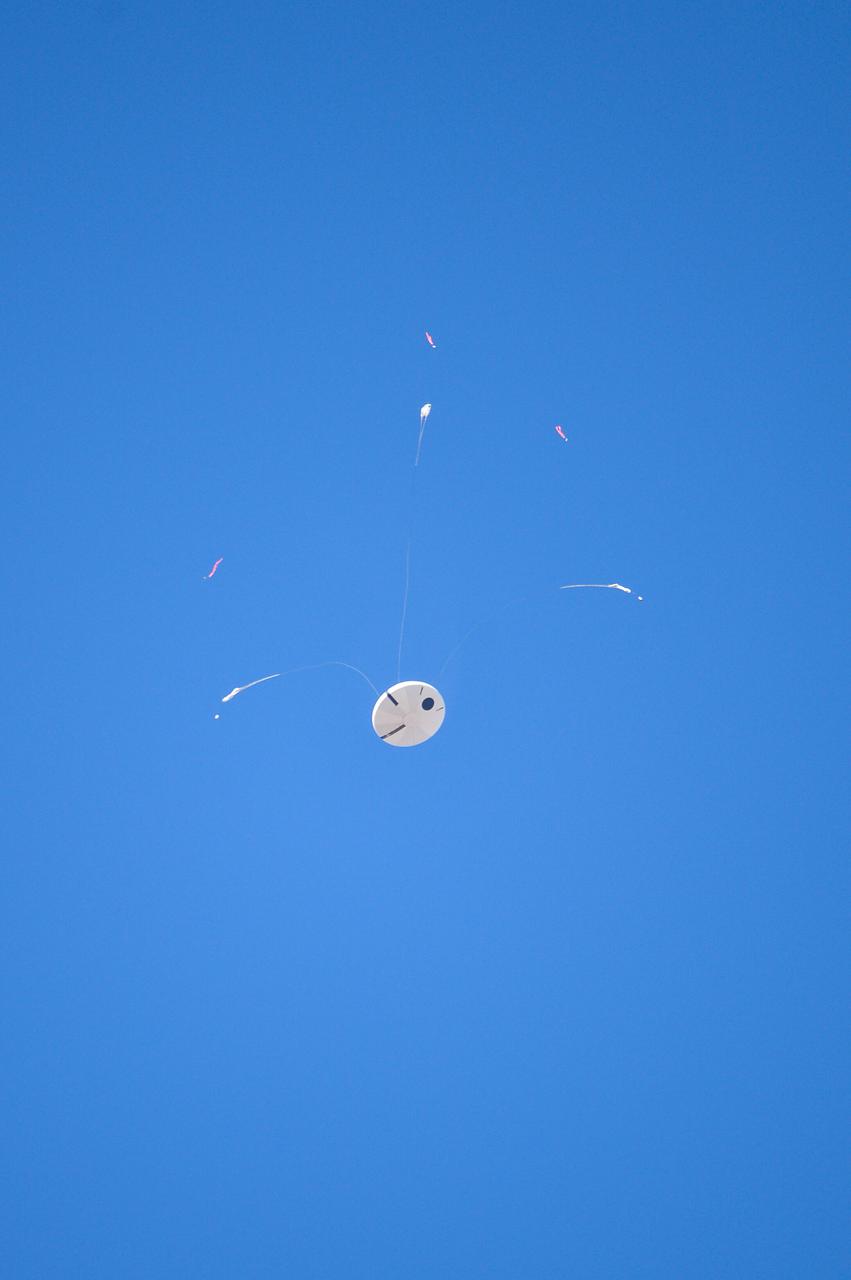
Orion’s three main orange and white parachutes help a representative model of the spacecraft descend through sky above Arizona, where NASA engineers tested the parachute system on Sept. 13, 2017 at the U.S. Army Proving Ground in Yuma. NASA is qualifying Orion’s parachutes for missions with astronauts.. .During this test, engineers replicated a situation in which Orion must abort off the Space Launch System rocket and bypasses part of its normal parachute deployment sequence that typically helps the spacecraft slow down during its descent to Earth after deep space missions. The capsule was dropped out of a C-17 aircraft at more than 4.7 miles in altitude and allowed to free fall for 20 seconds, longer than ever before, to produce high aerodynamic pressure before only its pilot and main parachutes were deployed, testing whether they could perform as expected under extreme loads. Orion’s full parachute system includes 11 total parachutes -- three forward bay cover parachutes and two drogue parachutes, along with three pilot parachutes that help pull out the spacecraft’s three mains.
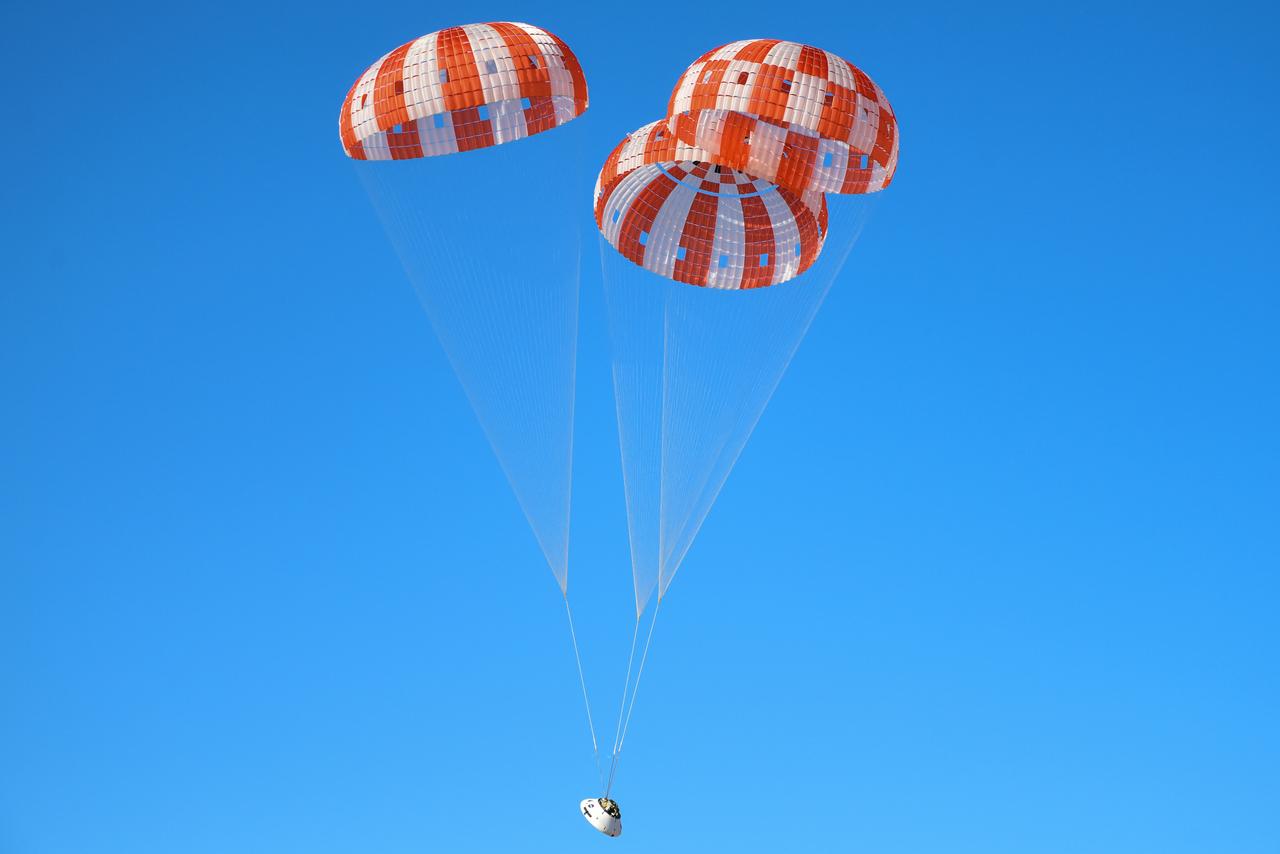
Orion’s three main orange and white parachutes help a representative model of the spacecraft descend through sky above Arizona, where NASA engineers tested the parachute system on Sept. 13, 2017 at the U.S. Army Proving Ground in Yuma. NASA is qualifying Orion’s parachutes for missions with astronauts.. .During this test, engineers replicated a situation in which Orion must abort off the Space Launch System rocket and bypasses part of its normal parachute deployment sequence that typically helps the spacecraft slow down during its descent to Earth after deep space missions. The capsule was dropped out of a C-17 aircraft at more than 4.7 miles in altitude and allowed to free fall for 20 seconds, longer than ever before, to produce high aerodynamic pressure before only its pilot and main parachutes were deployed, testing whether they could perform as expected under extreme loads. Orion’s full parachute system includes 11 total parachutes -- three forward bay cover parachutes and two drogue parachutes, along with three pilot parachutes that help pull out the spacecraft’s three mains.

Orion’s three main orange and white parachutes help a representative model of the spacecraft descend through sky above Arizona, where NASA engineers tested the parachute system on Sept. 13, 2017 at the U.S. Army Proving Ground in Yuma. NASA is qualifying Orion’s parachutes for missions with astronauts.. .During this test, engineers replicated a situation in which Orion must abort off the Space Launch System rocket and bypasses part of its normal parachute deployment sequence that typically helps the spacecraft slow down during its descent to Earth after deep space missions. The capsule was dropped out of a C-17 aircraft at more than 4.7 miles in altitude and allowed to free fall for 20 seconds, longer than ever before, to produce high aerodynamic pressure before only its pilot and main parachutes were deployed, testing whether they could perform as expected under extreme loads. Orion’s full parachute system includes 11 total parachutes -- three forward bay cover parachutes and two drogue parachutes, along with three pilot parachutes that help pull out the spacecraft’s three mains.
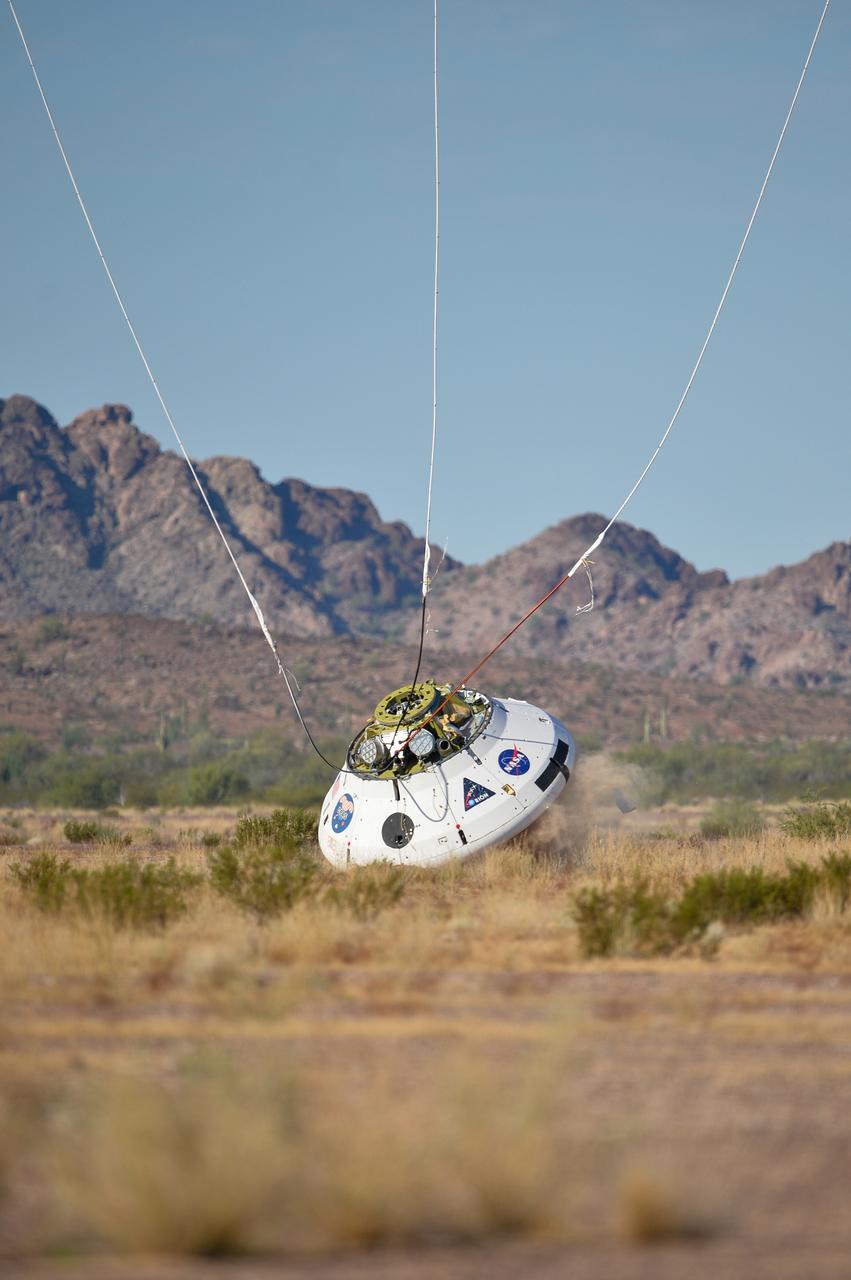
Engineers testing the parachute system for Orion during a Sept. 13, 2017 evaluation at the U.S. Army Proving Ground in Yuma.. .During this test, engineers replicated a situation in which Orion must abort off the Space Launch System rocket and bypasses part of its normal parachute deployment sequence that typically helps the spacecraft slow down during its descent to Earth after deep space missions. The capsule was dropped out of a C-17 aircraft at more than 4.7 miles in altitude and allowed to free fall for 20 seconds, longer than ever before, to produce high aerodynamic pressure before only its pilot and main parachutes were deployed, testing whether they could perform as expected under extreme loads. Orion’s full parachute system includes 11 total parachutes -- three forward bay cover parachutes and two drogue parachutes, along with three pilot parachutes that help pull out the spacecraft’s three mains.
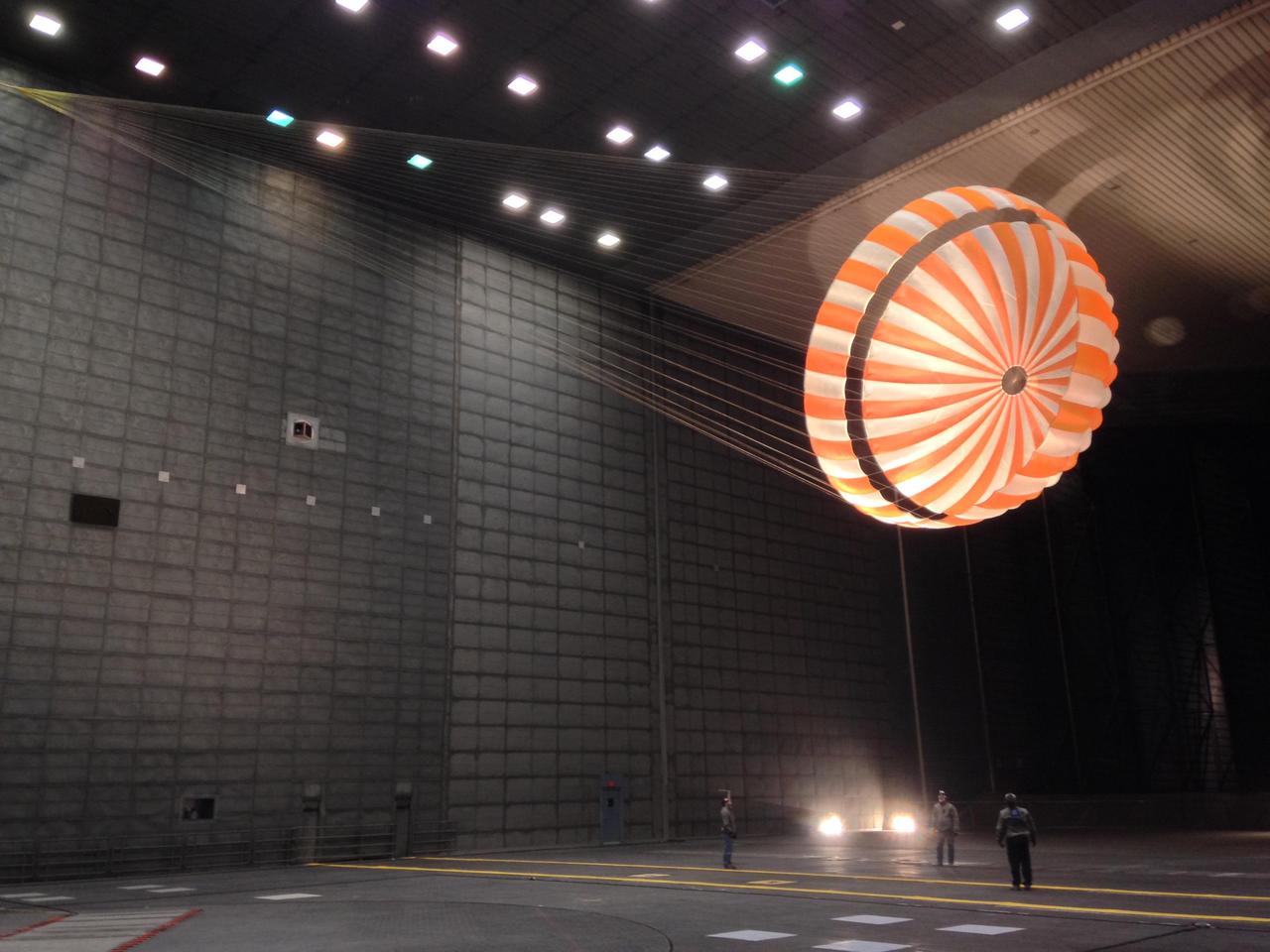
This parachute testing for NASA's InSight mission to Mars was conducted inside the world's largest wind tunnel, at NASA Ames Research Center, Moffett Field, California, in February 2015. The wind tunnel is 80 feet (24 meters) tall and 120 feet (37 meters) wide. It is part of the National Full-Scale Aerodynamics Complex, operated by the Arnold Engineering Development Center of the U.S. Air Force. Note: After thorough examination, NASA managers have decided to suspend the planned March 2016 launch of the Interior Exploration using Seismic Investigations Geodesy and Heat Transport (InSight) mission. The decision follows unsuccessful attempts to repair a leak in a section of the prime instrument in the science payload. http://photojournal.jpl.nasa.gov/catalog/PIA19405
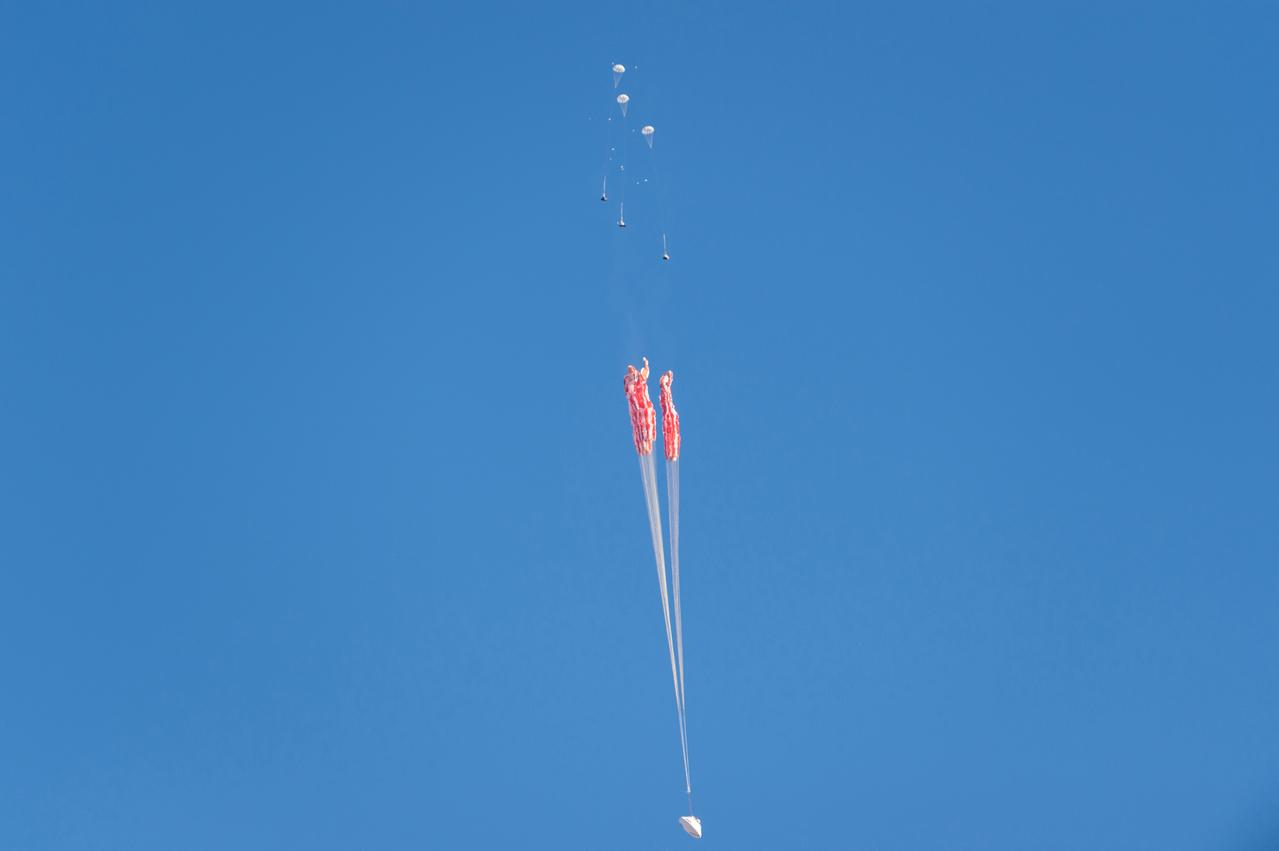
NASA has completes the final test to qualify Orion’s parachute system for flights with astronauts, checking off an important milestone on the path to send humans on missions to the Moon and beyond on Sept. 12, 2018...Over the course of eight tests at the U.S. Army’s Yuma Proving Ground in Arizona, engineers have evaluated the performance of Orion’s parachute system during normal landing sequences as well as several failure scenarios and a variety of potential aerodynamic conditions to ensure astronauts can return safely from deep space missions.
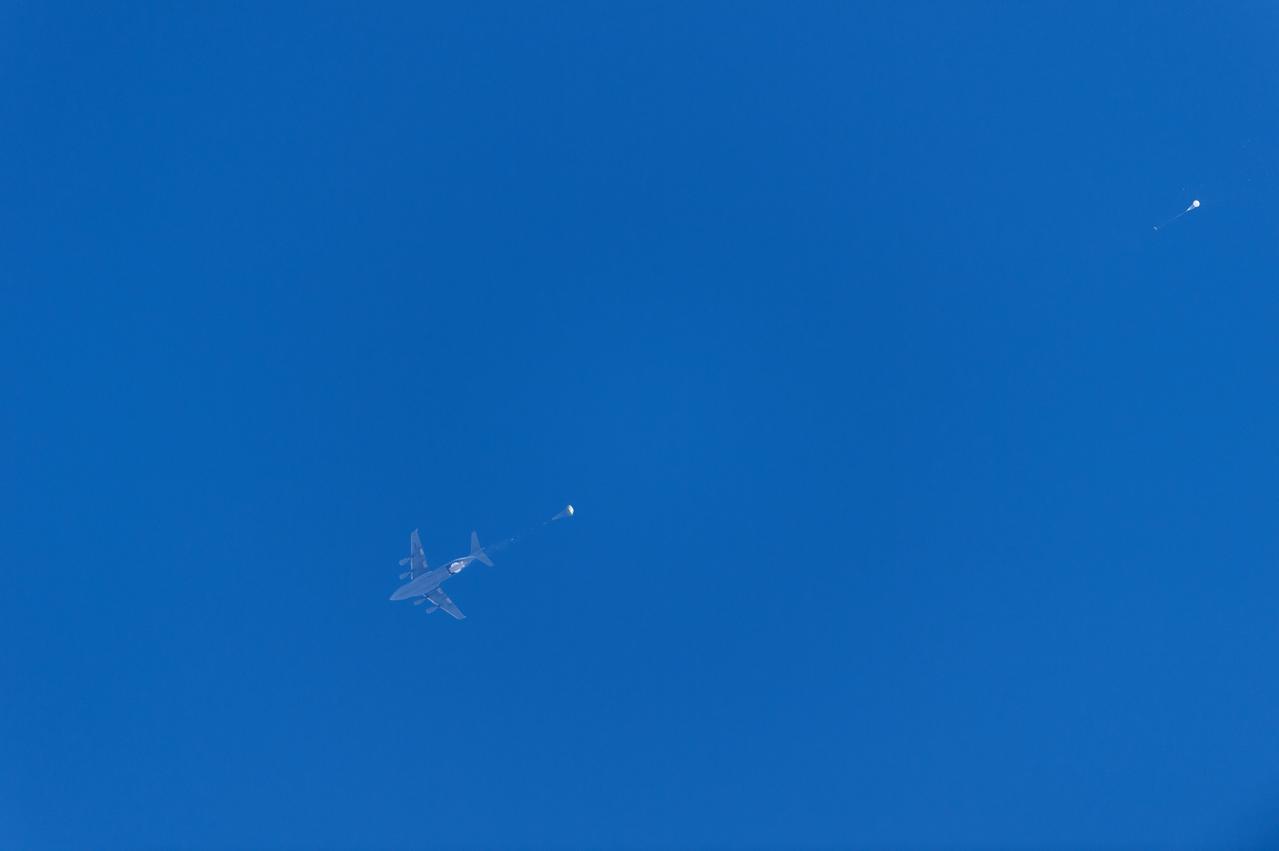
NASA has completes the final test to qualify Orion’s parachute system for flights with astronauts, checking off an important milestone on the path to send humans on missions to the Moon and beyond on Sept. 12, 2018...Over the course of eight tests at the U.S. Army’s Yuma Proving Ground in Arizona, engineers have evaluated the performance of Orion’s parachute system during normal landing sequences as well as several failure scenarios and a variety of potential aerodynamic conditions to ensure astronauts can return safely from deep space missions.