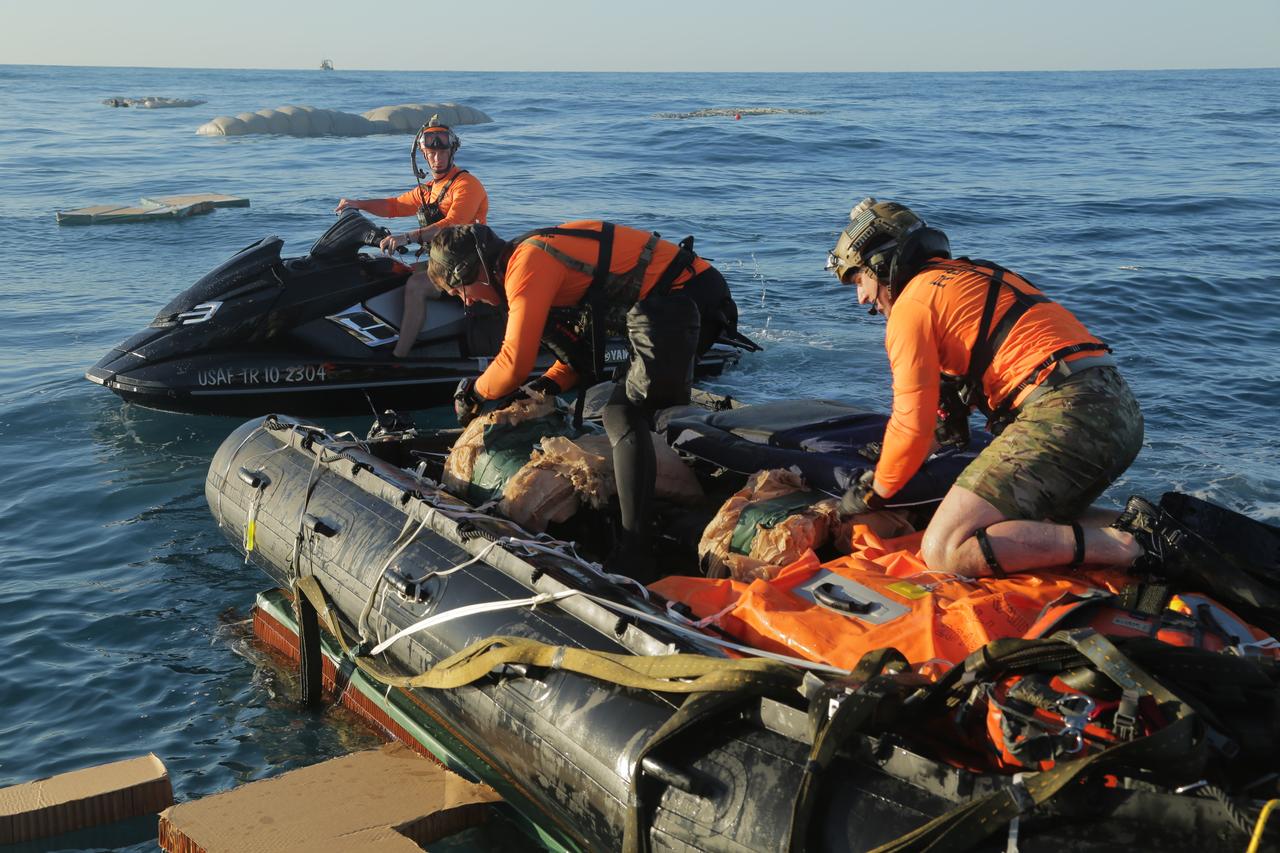
Pararescue specialists from the 304th Rescue Squadron, located in Portland, Oregon and supporting the 45th Operations Group’s Detachment 3, based out of Patrick Air Force Base, prepare equipment during an April astronaut rescue exercise with NASA’s Commercial Crew Program and SpaceX off of Florida’s eastern coast. The pararescue specialists, also known as “Guardian Angels,” jumped from military aircraft and simulated a rescue operation to demonstrate their ability to safely remove crew from the SpaceX Crew Dragon in the unlikely event of an emergency landing. The pararescue specialists are fully qualified paramedics able to perform field surgery, if necessary.
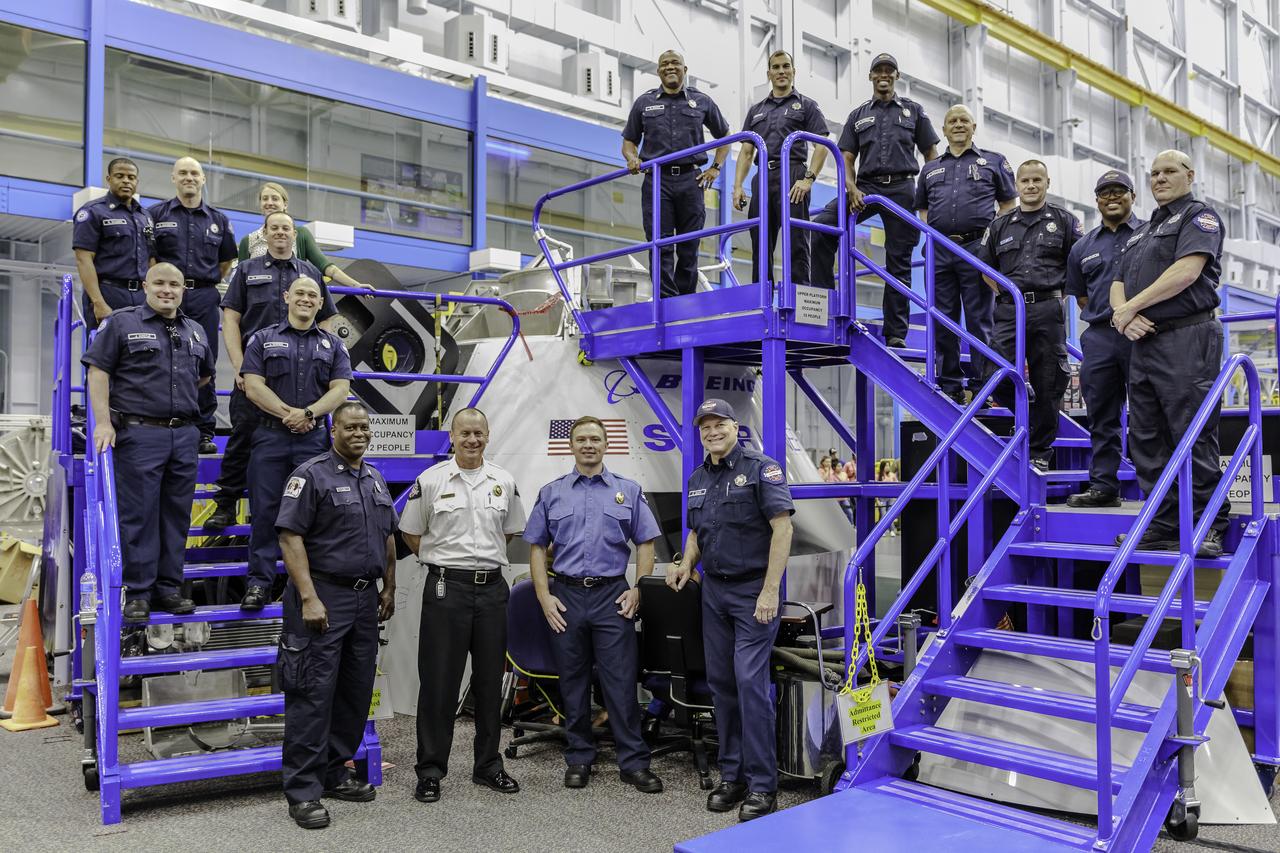
The Boeing extrication team train on the Boeing Mock-up Trainer from May 25 through May 28, 2018, at NASA's Johnson Space Center in Houston. The extrication team is comprised of firefighters from various U.S. Boeing sites. Each member of the team brings an expertise in Aerospace Confined Space Rescue, are Emergency Medical Technicians and have years of rescue experience. The team is highly motivated to getting the crew out quickly, safely and efficiently. The training at Johnson included suit training, side hatch egress, and Intravehicular Activity (IVA) rigging and egress. The week included a run for record on IVA egress for a testing requirement. Participants also included NASA Medical, the 45th Operations Group's Detachment 3, based at Patrick Air Force Base, and U.S. Air Force pararescue representation.
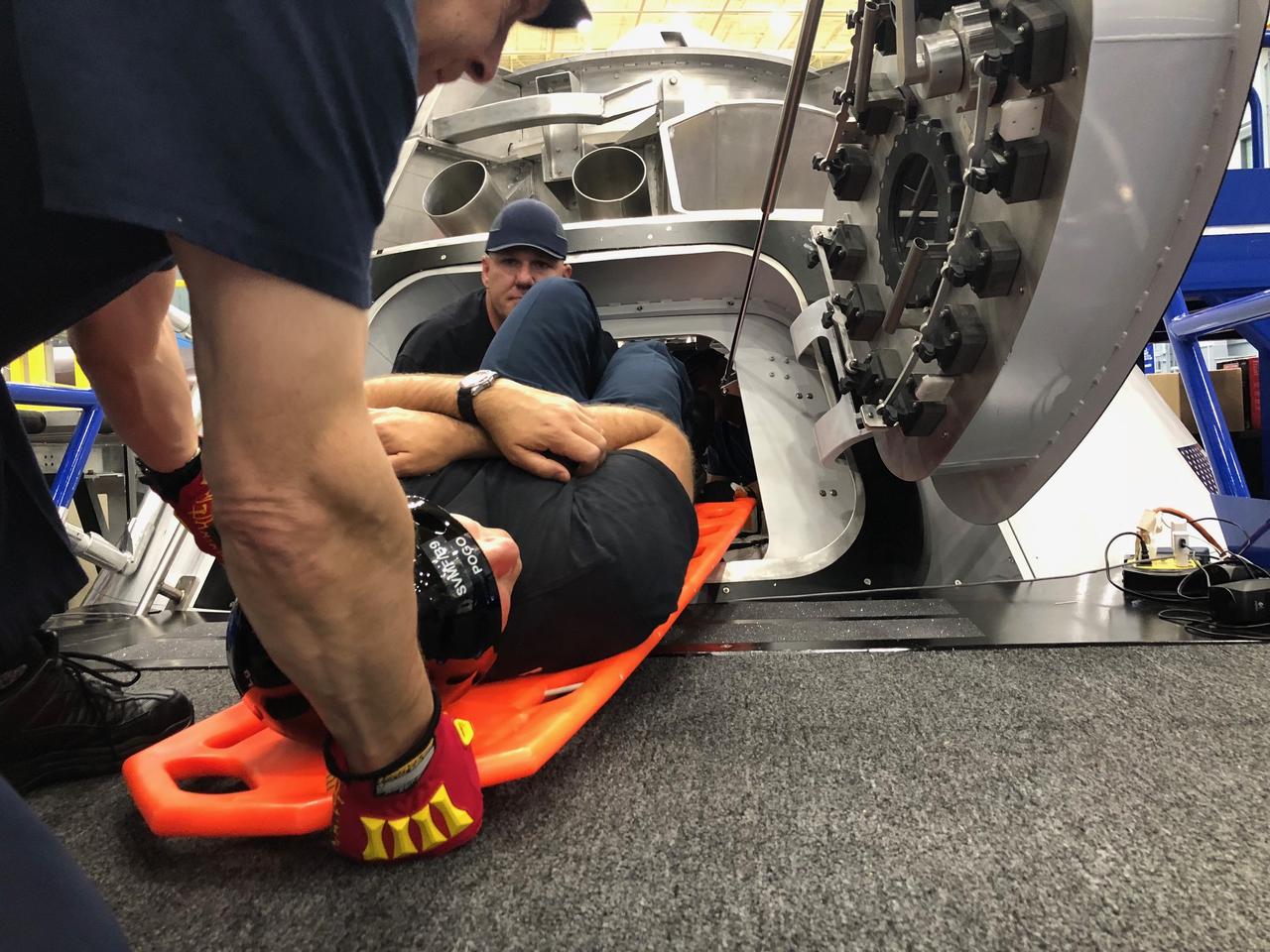
The Boeing extrication team train on the Boeing Mock-up Trainer from May 25 through May 28, 2018, at NASA's Johnson Space Center in Houston. The extrication team is comprised of firefighters from various U.S. Boeing sites. Each member of the team brings an expertise in Aerospace Confined Space Rescue, are Emergency Medical Technicians and have years of rescue experience. The team is highly motivated to getting the crew out quickly, safely and efficiently. The training at Johnson included suit training, side hatch egress, and Intravehicular Activity (IVA) rigging and egress. The week included a run for record on IVA egress for a testing requirement. Participants also included NASA Medical, the 45th Operations Group's Detachment 3, based at Patrick Air Force Base, and U.S. Air Force pararescue representation.
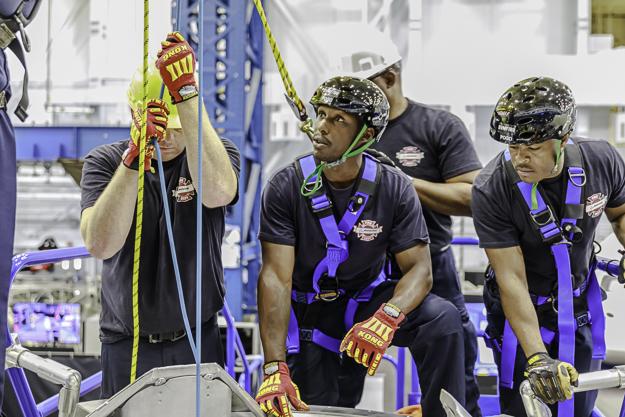
The Boeing extrication team train on the Boeing Mock-up Trainer from May 25 through May 28, 2018, at NASA's Johnson Space Center in Houston. The extrication team is comprised of firefighters from various U.S. Boeing sites. Each member of the team brings an expertise in Aerospace Confined Space Rescue, are Emergency Medical Technicians and have years of rescue experience. The team is highly motivated to getting the crew out quickly, safely and efficiently. The training at Johnson included suit training, side hatch egress, and Intravehicular Activity (IVA) rigging and egress. The week included a run for record on IVA egress for a testing requirement. Participants also included NASA Medical, the 45th Operations Group's Detachment 3, based at Patrick Air Force Base, and U.S. Air Force pararescue representation.
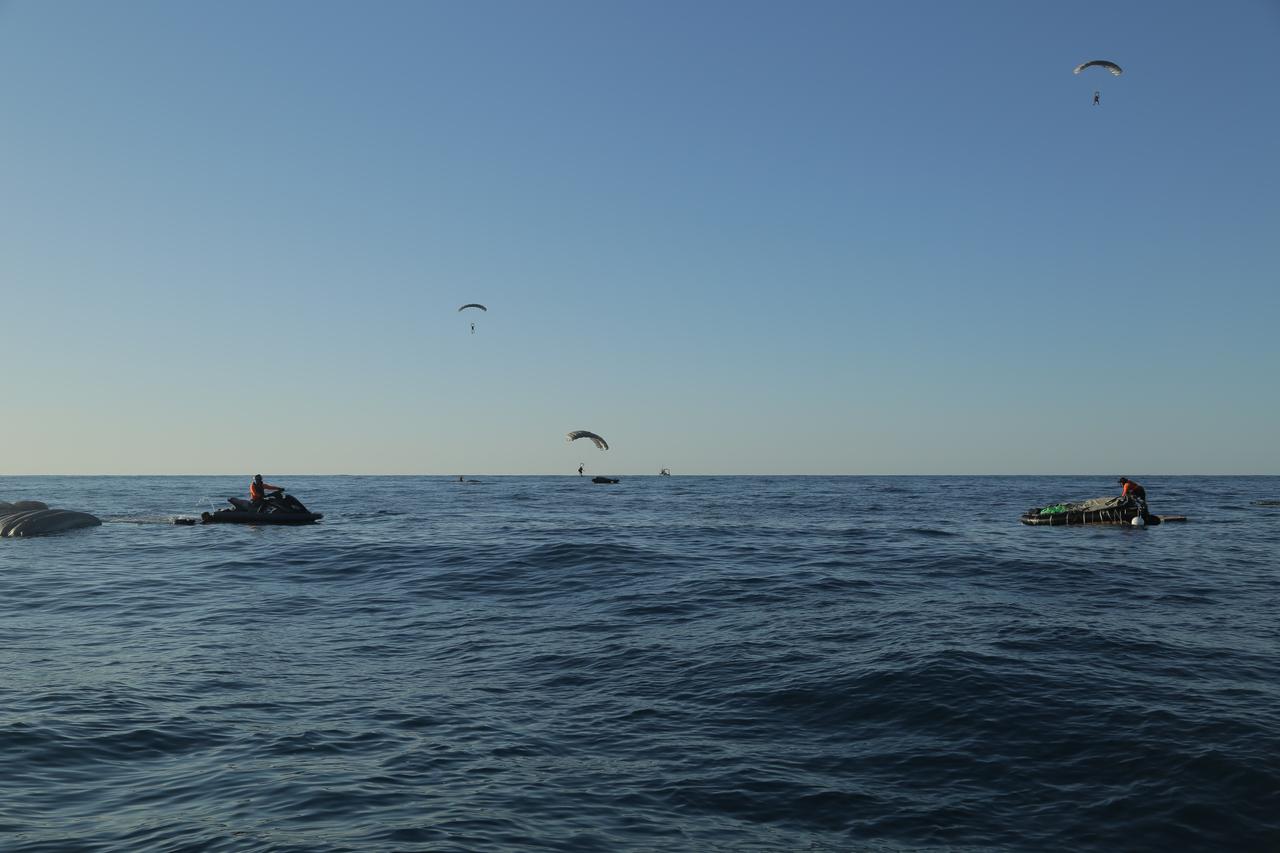
Pararescue specialists from the 304th Rescue Squadron, located in Portland, Oregon and supporting the 45th Operations Group’s Detachment 3, based out of Patrick Air Force Base, deploy their parachutes and prepare to touch down on the Atlantic Ocean surface during an April astronaut rescue exercise with NASA’s Commercial Crew Program and SpaceX off of Florida’s eastern coast. The pararescue specialists, also known as “Guardian Angels,” jumped from military aircraft and simulated a rescue operation to demonstrate their ability to safely remove crew from the SpaceX Crew Dragon in the unlikely event of an emergency landing.

A C-17 Globemaster aircraft from the Alaska Air National Guard’s 249th Airlift Squadron flies overhead as pararescue specialists from the 304th Rescue Squadron, located in Portland, Oregon complete an astronaut rescue training exercise inside a covered life raft on the Atlantic Ocean. The pararescue specialists, supporting the 45th Operations Group’s Detachment 3, based out of Patrick Air Force Base, conducted the exercise in April with NASA’s Commercial Crew Program and SpaceX off of Florida’s eastern coast. The specially designed 20-person life raft is equipped with enough food, water and medical supplies to sustain both rescuers and crew for up to three days, if necessary. In this situation, the Department of Defense (DOD) would complete the rescue by enlisting help from the US Coast Guard, a DOD ship, or a nearby commercial ship of opportunity to transport the crew to safety.
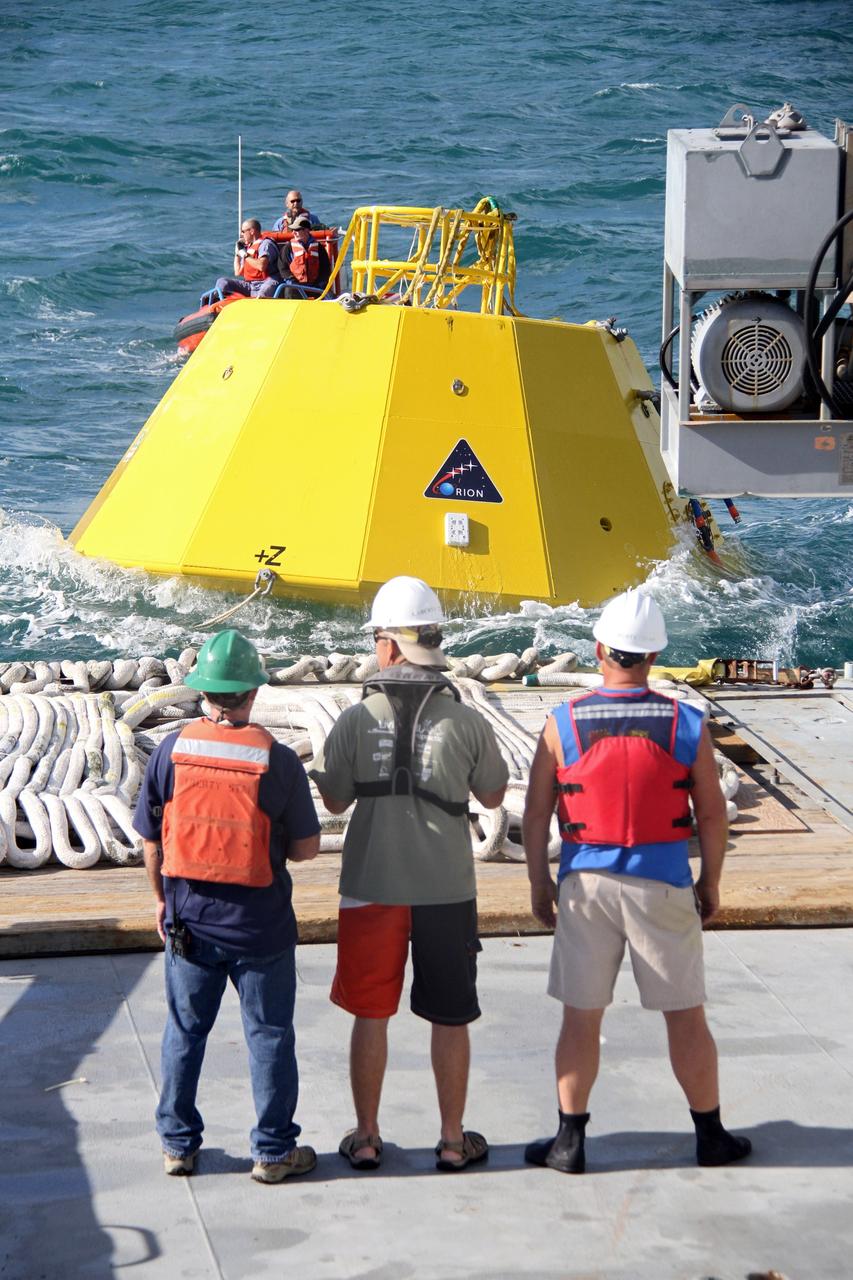
CAPE CANAVERAL, Fla. – Workers, on the deck of NASA's Liberty Star ship and in a boat in the Atlantic Ocean, prepare to begin testing of an Orion flight test capsule. The Crew Module Recovery Attach Fitting Test (CRAFT) on the capsule, which began at-sea operations Nov. 29, is under way. Multiple attach clips are being evaluated against the current recovery cleat configuration by U.S. Air Force pararescue jumpers (PJs) and a U.S. Navy diver. The 21st Century Ground Systems Program will use data collected from the tests to help develop ground operations support equipment that could be used to recover an uncrewed Orion flight test capsule after splashdown. The Orion Multi-Purpose Crew Vehicle is NASA's next-generation spacecraft being developed for deep space missions to asteroids, moons and other interplanetary destinations throughout the solar system. For more information, visit http://www.nasa.gov/orion. Photo credit: NASA/Cory Huston
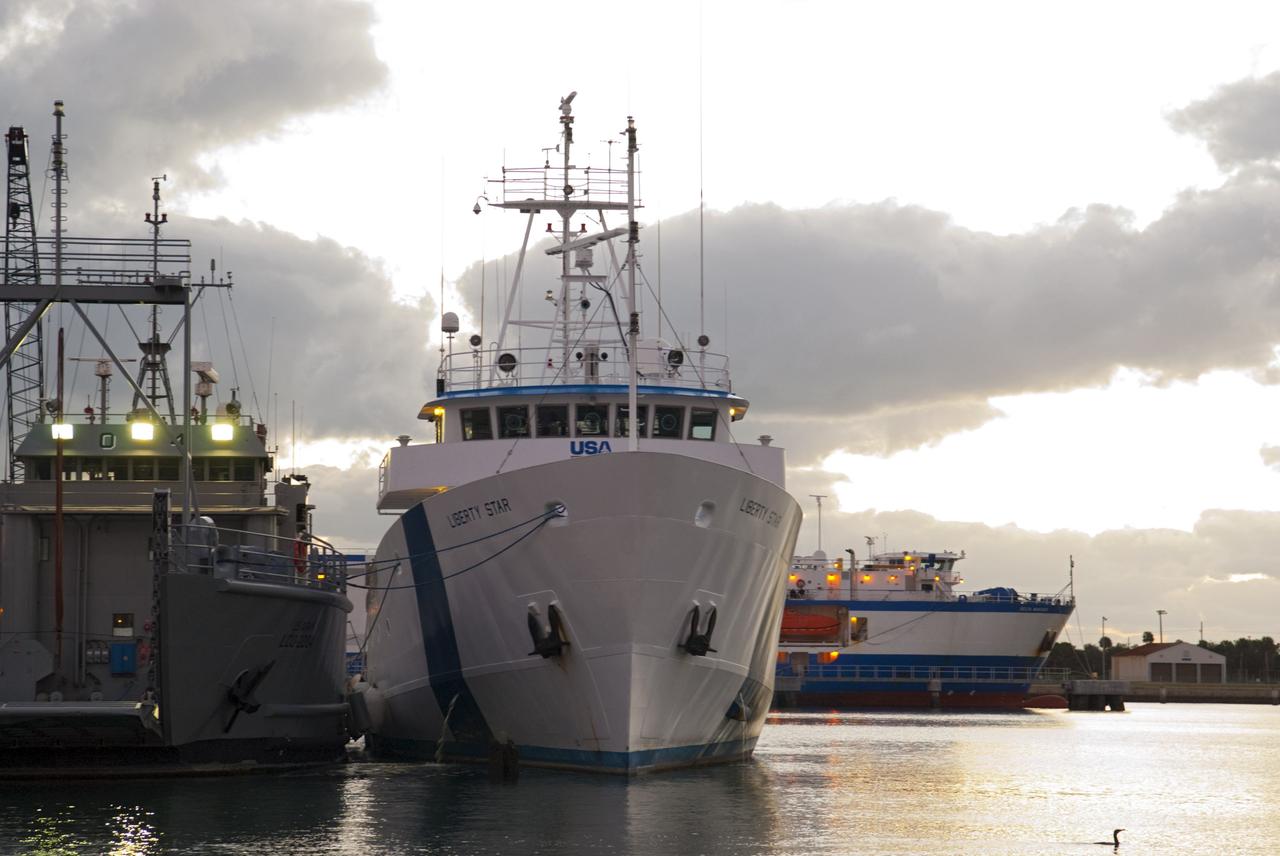
CAPE CANAVERAL, Fla. – Preparations are under way at Port Canaveral in Florida for the early-morning departure of NASA's Liberty Star ship. Liberty Star has been enlisted to support the Crew Module Recovery Attach Fitting Test (CRAFT) which began at-sea operations Nov. 29. Multiple attach clips are being evaluated against the current recovery cleat configuration by U.S. Air Force pararescue jumpers (PJs) and a U.S. Navy diver. The 21st Century Ground Systems Program will use data collected from the tests to help develop ground operations support equipment that could be used to recover an uncrewed Orion flight test capsule after splashdown. The Orion Multi-Purpose Crew Vehicle is NASA's next-generation spacecraft being developed for deep space missions to asteroids, moons and other interplanetary destinations throughout the solar system. For more information, visit http://www.nasa.gov/orion. Photo credit: NASA/Tim Jacobs
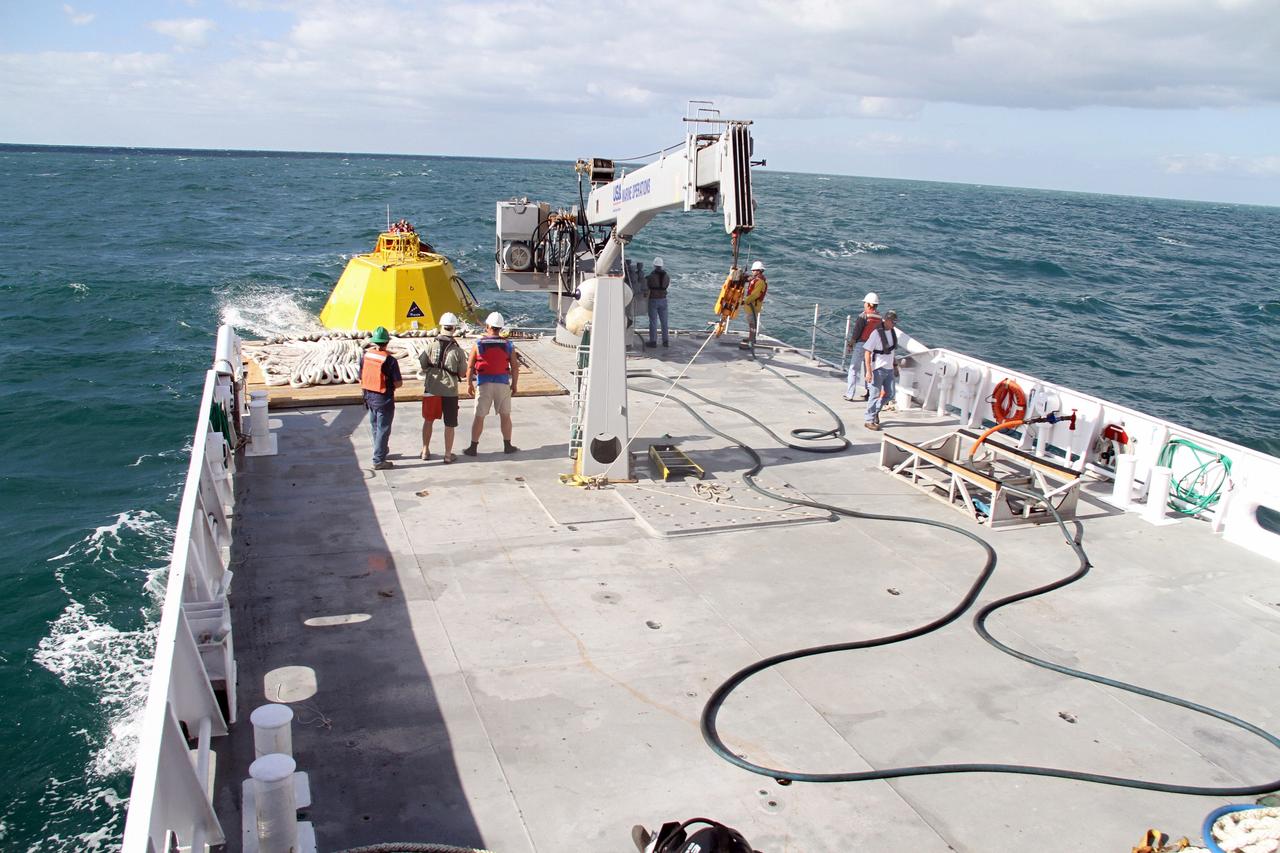
CAPE CANAVERAL, Fla. – Workers on the deck of NASA's Liberty Star ship prepare for testing in the Atlantic Ocean of an Orion flight test capsule to begin. The Crew Module Recovery Attach Fitting Test (CRAFT) on the capsule, which began at-sea operations Nov. 29, is under way. Multiple attach clips are being evaluated against the current recovery cleat configuration by U.S. Air Force pararescue jumpers (PJs) and a U.S. Navy diver. The 21st Century Ground Systems Program will use data collected from the tests to help develop ground operations support equipment that could be used to recover an uncrewed Orion flight test capsule after splashdown. The Orion Multi-Purpose Crew Vehicle is NASA's next-generation spacecraft being developed for deep space missions to asteroids, moons and other interplanetary destinations throughout the solar system. For more information, visit http://www.nasa.gov/orion. Photo credit: NASA/Cory Huston
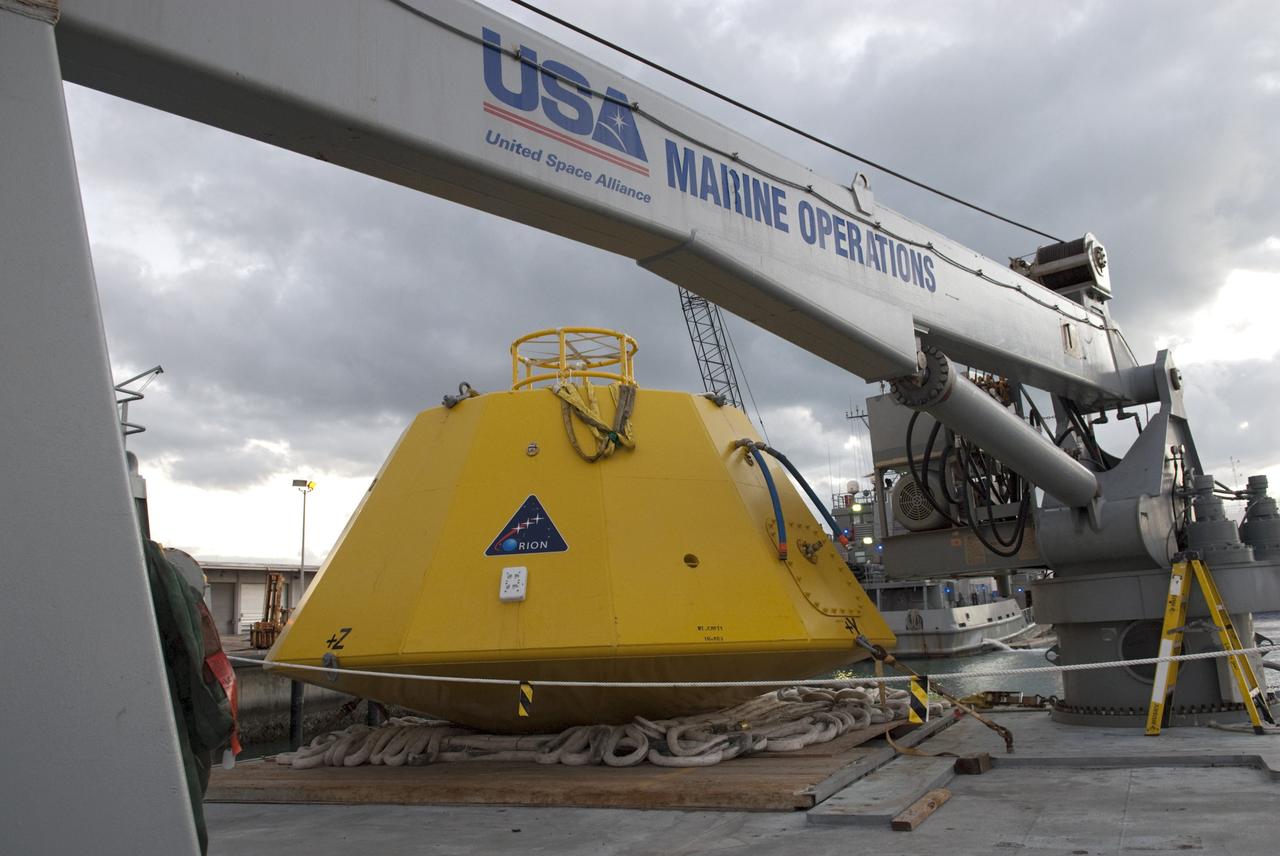
CAPE CANAVERAL, Fla. – At Port Canaveral in Florida, an Orion flight test capsule is secured to the deck of NASA's Liberty Star ship. Liberty Star has been enlisted to support the Crew Module Recovery Attach Fitting Test (CRAFT) which began at-sea operations Nov. 29. Multiple attach clips are being evaluated against the current recovery cleat configuration by U.S. Air Force pararescue jumpers (PJs) and a U.S. Navy diver. The 21st Century Ground Systems Program will use data collected from the tests to help develop ground operations support equipment that could be used to recover an uncrewed Orion flight test capsule after splashdown. The Orion Multi-Purpose Crew Vehicle is NASA's next-generation spacecraft being developed for deep space missions to asteroids, moons and other interplanetary destinations throughout the solar system. For more information, visit http://www.nasa.gov/orion. Photo credit: NASA/Tim Jacobs
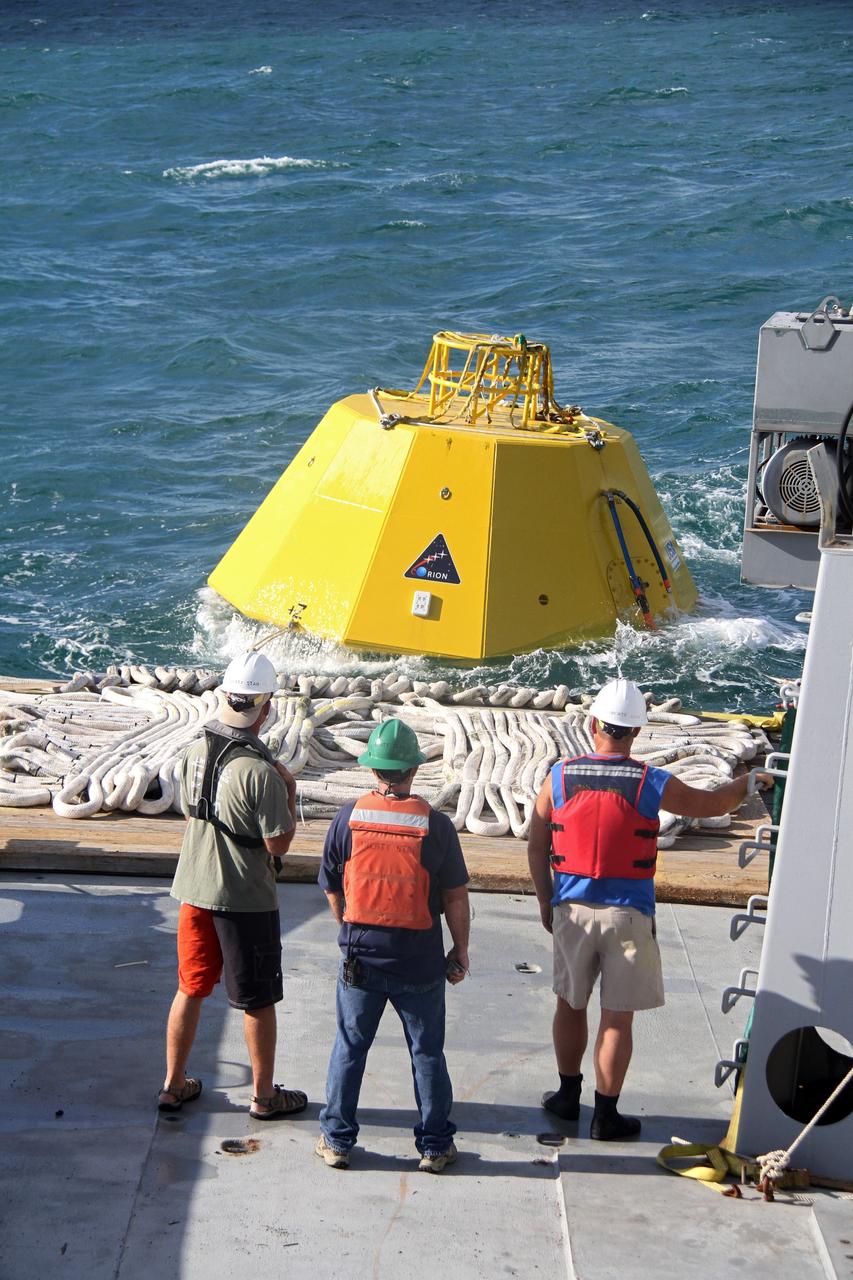
CAPE CANAVERAL, Fla. – Workers on the deck of NASA's Liberty Star ship prepare for testing in the Atlantic Ocean of an Orion flight test capsule to begin. The Crew Module Recovery Attach Fitting Test (CRAFT) on the capsule, which began at-sea operations Nov. 29, is under way. Multiple attach clips are being evaluated against the current recovery cleat configuration by U.S. Air Force pararescue jumpers (PJs) and a U.S. Navy diver. The 21st Century Ground Systems Program will use data collected from the tests to help develop ground operations support equipment that could be used to recover an uncrewed Orion flight test capsule after splashdown. The Orion Multi-Purpose Crew Vehicle is NASA's next-generation spacecraft being developed for deep space missions to asteroids, moons and other interplanetary destinations throughout the solar system. For more information, visit http://www.nasa.gov/orion. Photo credit: NASA/Cory Huston
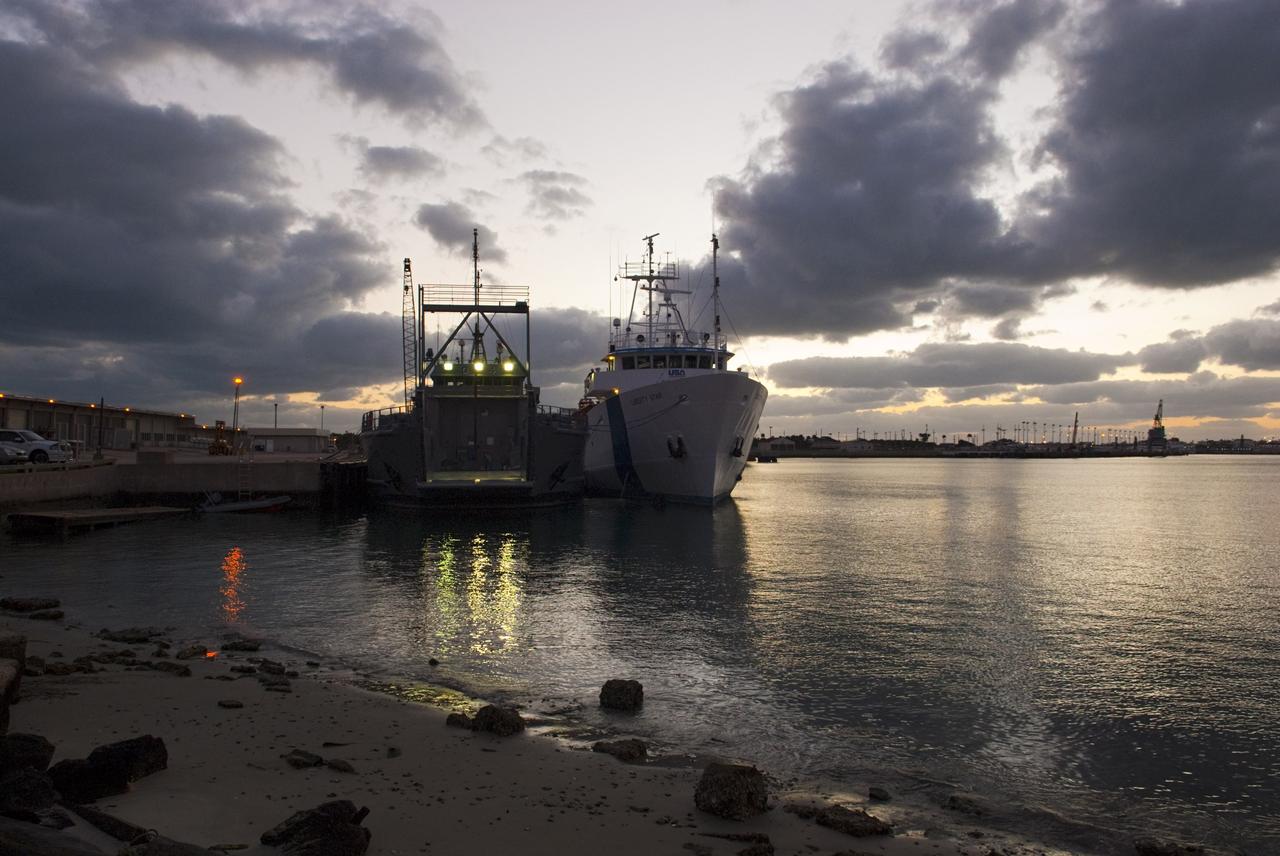
CAPE CANAVERAL, Fla. – Dawn at Port Canaveral in Florida finds preparations under way for the departure of NASA's Liberty Star ship. Liberty Star has been enlisted to support the Crew Module Recovery Attach Fitting Test (CRAFT) which began at-sea operations Nov. 29. Multiple attach clips are being evaluated against the current recovery cleat configuration by U.S. Air Force pararescue jumpers (PJs) and a U.S. Navy diver. The 21st Century Ground Systems Program will use data collected from the tests to help develop ground operations support equipment that could be used to recover an uncrewed Orion flight test capsule after splashdown. The Orion Multi-Purpose Crew Vehicle is NASA's next-generation spacecraft being developed for deep space missions to asteroids, moons and other interplanetary destinations throughout the solar system. For more information, visit http://www.nasa.gov/orion. Photo credit: NASA/Tim Jacobs
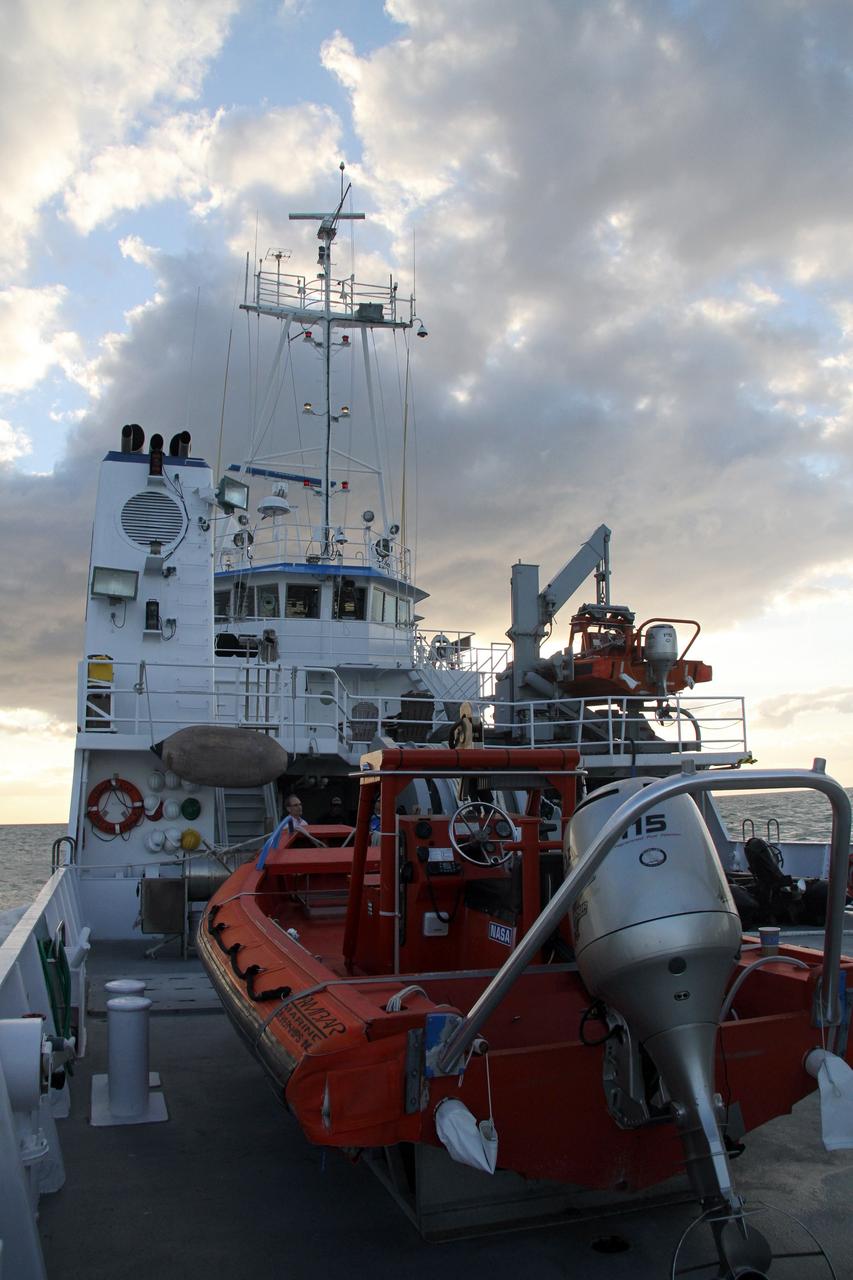
CAPE CANAVERAL, Fla. – NASA's Liberty Star ship heads into the Atlantic Ocean where tests will be performed on an Orion flight test capsule. The Crew Module Recovery Attach Fitting Test (CRAFT) on the capsule, which began at-sea operations Nov. 29, is under way. Multiple attach clips are being evaluated against the current recovery cleat configuration by U.S. Air Force pararescue jumpers (PJs) and a U.S. Navy diver. The 21st Century Ground Systems Program will use data collected from the tests to help develop ground operations support equipment that could be used to recover an uncrewed Orion flight test capsule after splashdown. The Orion Multi-Purpose Crew Vehicle is NASA's next-generation spacecraft being developed for deep space missions to asteroids, moons and other interplanetary destinations throughout the solar system. For more information, visit http://www.nasa.gov/orion. Photo credit: NASA/Cory Huston
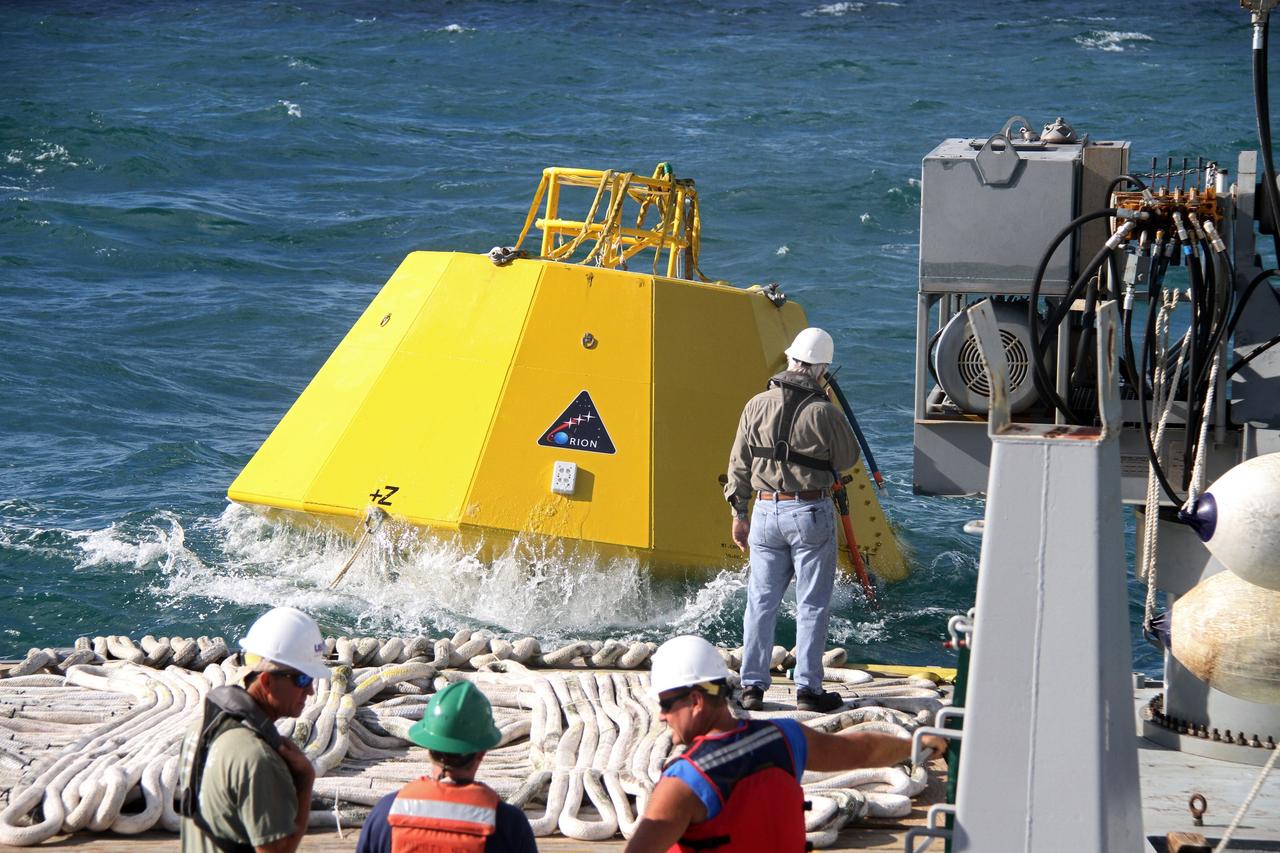
CAPE CANAVERAL, Fla. – An Orion flight test capsule makes a splash into the Atlantic Ocean as it slides from the deck of NASA's Liberty Star ship into the water. The Crew Module Recovery Attach Fitting Test (CRAFT) on the capsule, which began at-sea operations Nov. 29, is under way. Multiple attach clips are being evaluated against the current recovery cleat configuration by U.S. Air Force pararescue jumpers (PJs) and a U.S. Navy diver. The 21st Century Ground Systems Program will use data collected from the tests to help develop ground operations support equipment that could be used to recover an uncrewed Orion flight test capsule after splashdown. The Orion Multi-Purpose Crew Vehicle is NASA's next-generation spacecraft being developed for deep space missions to asteroids, moons and other interplanetary destinations throughout the solar system. For more information, visit http://www.nasa.gov/orion. Photo credit: NASA/Cory Huston
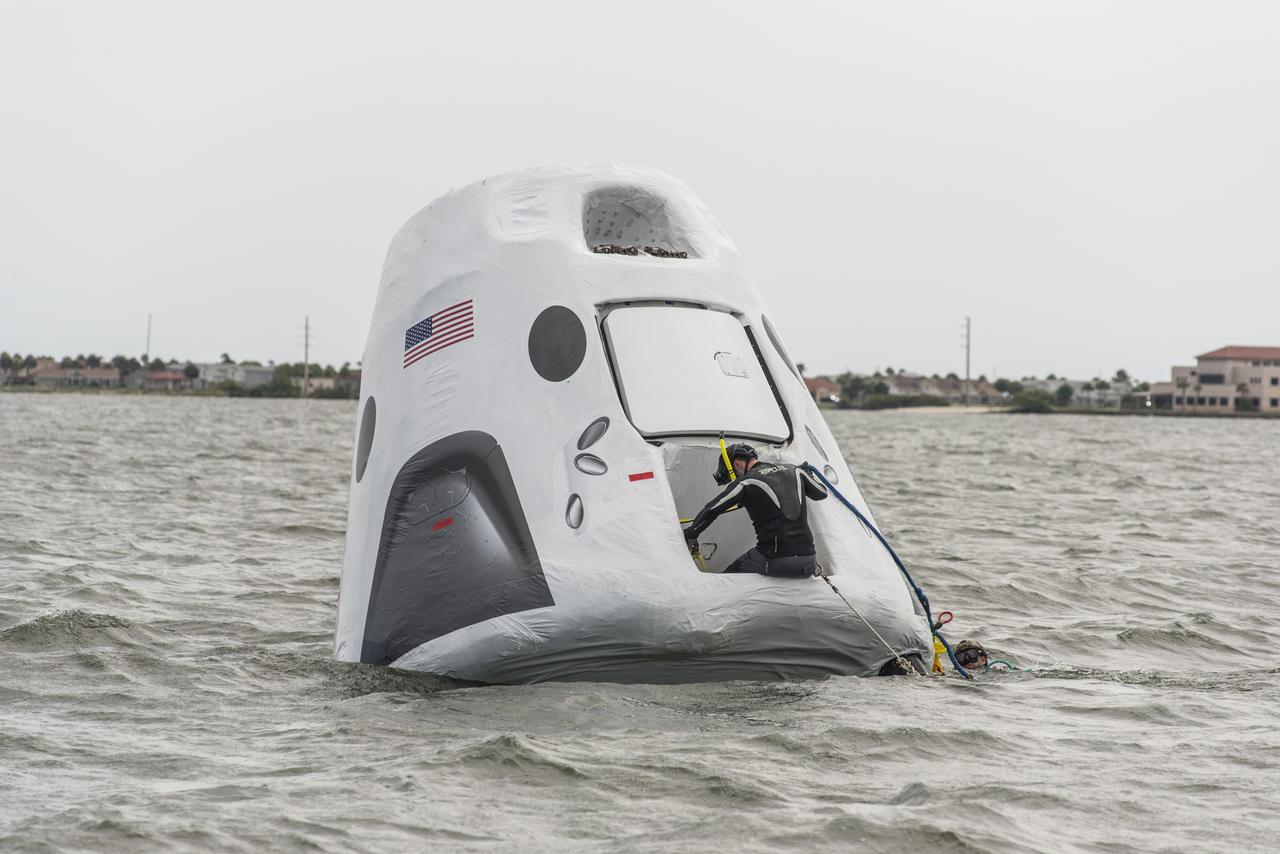
Personnel from NASA, SpaceX and the U.S. Air Force have begun practicing recovery operations for the SpaceX Crew Dragon. Using a full-size model of the spacecraft that will take astronauts to the International Space Station, Air Force parajumpers practice helping astronauts out of the SpaceX Crew Dragon following a mission. In certain unusual recovery situations, SpaceX may need to work with Air Force for parajumpers to recover astronauts from the capsule following a water landing. The recovery trainer was recently lowered into the Indian River Lagoon near NASA’s Kennedy Space Center allowing Air Force pararescue and others to refine recovery procedures. SpaceX is developing the Crew Dragon in partnership with NASA’s Commercial Crew Program to carry astronauts to and from the International Space Station.

Pararescue specialists from the 304th Rescue Squadron, located in Portland, Oregon and supporting the 45th Operations Group’s Detachment 3, based out of Patrick Air Force Base, secure a covered life raft as the sun sets during an astronaut rescue training exercise with NASA’s Commercial Crew Program and SpaceX off of Florida’s eastern coast in April. The specially designed 20-person life raft is equipped with enough food, water and medical supplies to sustain both rescuers and crew for up to three days, if necessary. In this situation, the Department of Defense (DOD) would complete the rescue by enlisting help from the US Coast Guard, a DOD ship, or a nearby commercial ship of opportunity to transport the crew to safety.
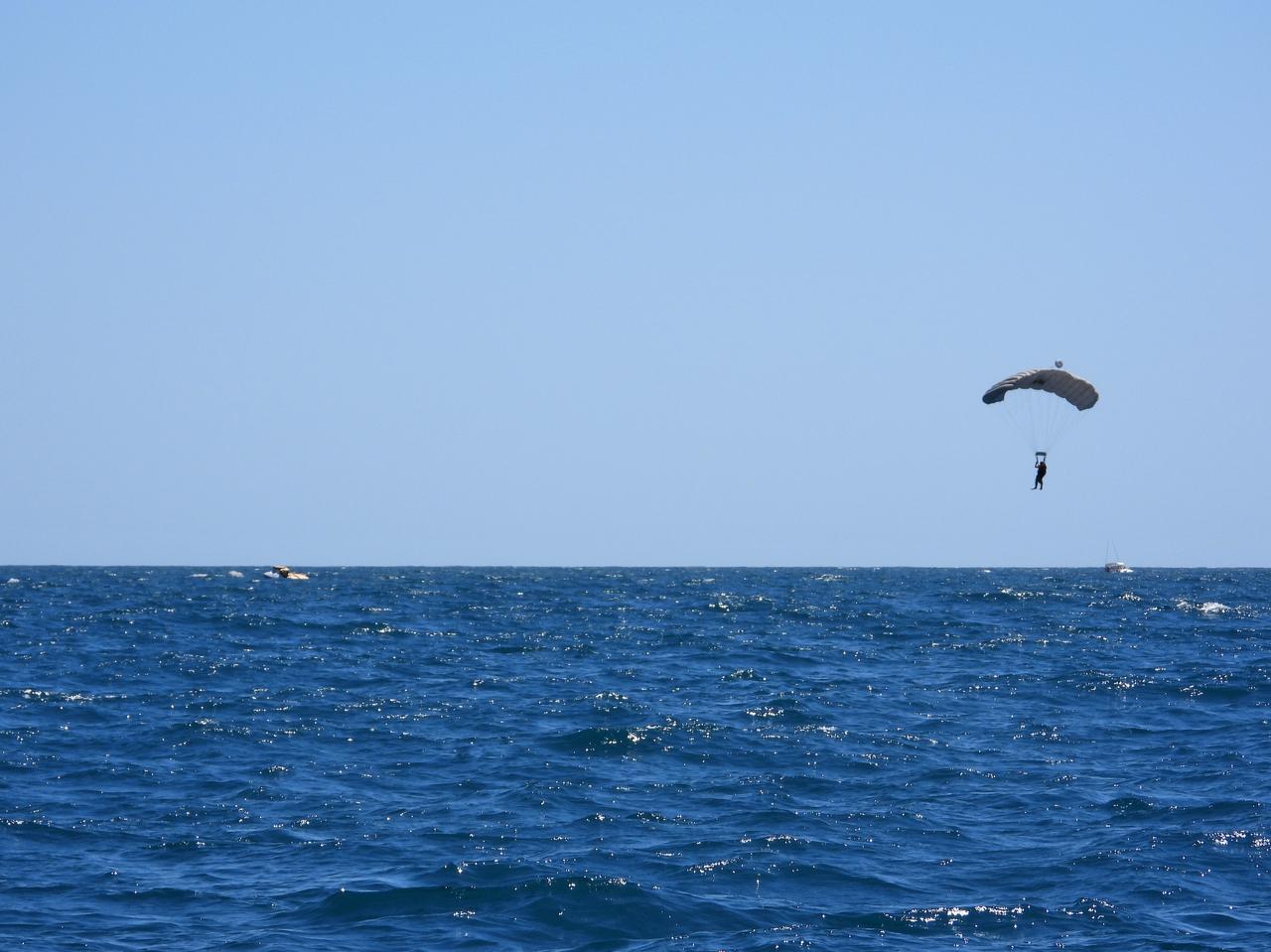
U.S. Air Force “Guardian Angel” Pararescue forces are airdropped into the Atlantic Ocean off the coast of Cape Canaveral near Kennedy Space Center in Florida to rehearse a full mission profile training exercise on April 27, 2019. The exercise included using a Boeing CST-100 Starliner training capsule to run through the necessary steps in the unlikely event of an emergency resulting in a splashdown. NASA and the Department of Defense (DoD) Human Space Flight Support Office Rescue Division conducted the training, which included rehearsing assisted egress, extracting DoD team members acting as astronauts, from the capsule and providing immediate medical treatment. This open-ocean exercise provides team members with the necessary training ahead of Boeing’s Crew Flight Test with astronauts targeted for later this year. During normal return scenarios, Boeing’s Starliner will land in a safe zone of about 15 square miles in the Western United States. Throughout the commercial crew development phases with NASA, Boeing has performed dozens of qualification tests on its parachute and airbag systems simulating conditions on land and in the water.
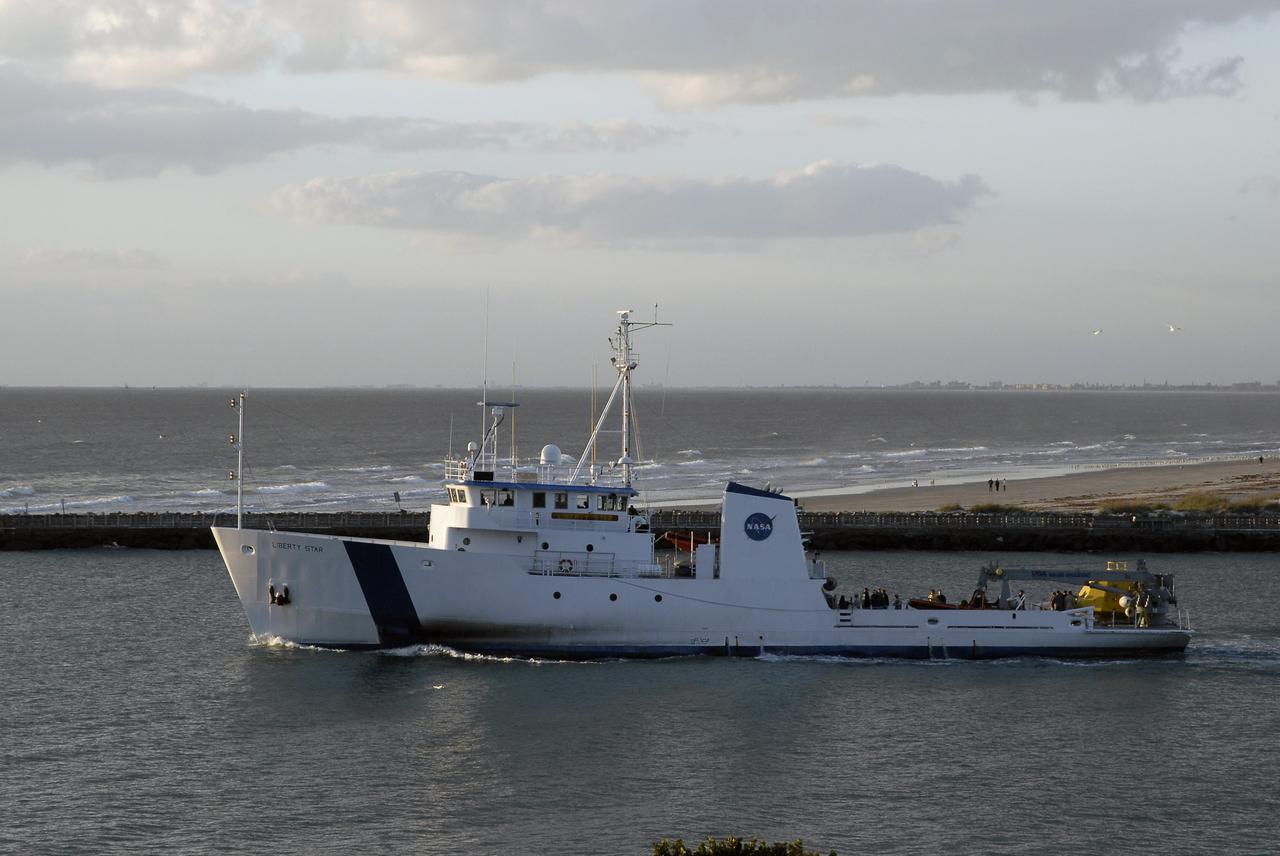
CAPE CANAVERAL, Fla. – At Port Canaveral in Florida, NASA's Liberty Star ship, with an Orion flight test capsule secured to its deck, passes the jetties as it heads toward the Atlantic Ocean. Liberty Star has been enlisted to support the Crew Module Recovery Attach Fitting Test (CRAFT) which began at-sea operations Nov. 29. Multiple attach clips are being evaluated against the current recovery cleat configuration by U.S. Air Force pararescue jumpers (PJs) and a U.S. Navy diver. The 21st Century Ground Systems Program will use data collected from the tests to help develop ground operations support equipment that could be used to recover an uncrewed Orion flight test capsule after splashdown. The Orion Multi-Purpose Crew Vehicle is NASA's next-generation spacecraft being developed for deep space missions to asteroids, moons and other interplanetary destinations throughout the solar system. For more information, visit http://www.nasa.gov/orion. Photo credit: NASA/Tim Jacobs
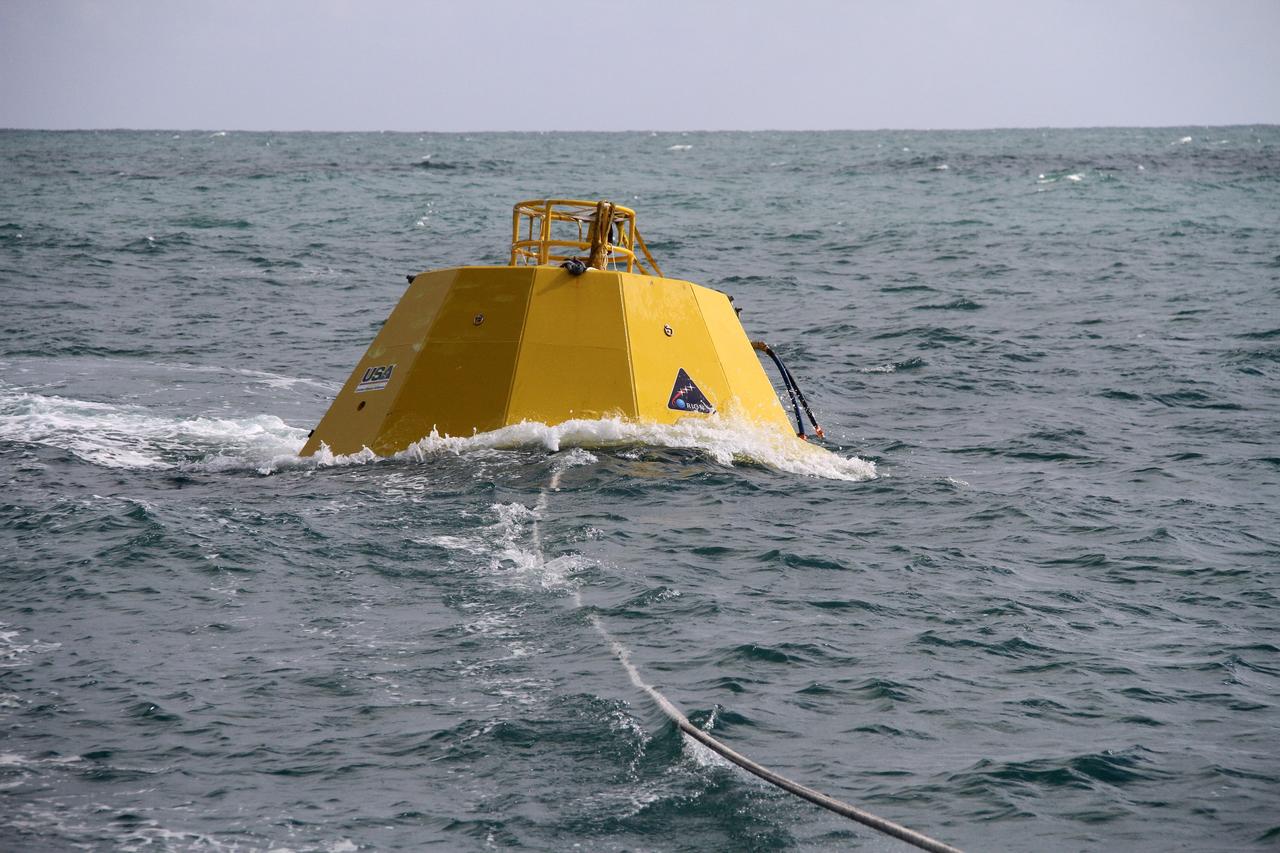
CAPE CANAVERAL, Fla. – Testing is under way on an Orion flight test capsule in the Atlantic Ocean. The tests are being monitored by workers aboard NASA's Liberty Star ship. The Crew Module Recovery Attach Fitting Test (CRAFT) on the capsule, which began at-sea operations Nov. 29, is under way. Multiple attach clips are being evaluated against the current recovery cleat configuration by U.S. Air Force pararescue jumpers (PJs) and a U.S. Navy diver. The 21st Century Ground Systems Program will use data collected from the tests to help develop ground operations support equipment that could be used to recover an uncrewed Orion flight test capsule after splashdown. The Orion Multi-Purpose Crew Vehicle is NASA's next-generation spacecraft being developed for deep space missions to asteroids, moons and other interplanetary destinations throughout the solar system. For more information, visit http://www.nasa.gov/orion. Photo credit: NASA/Cory Huston
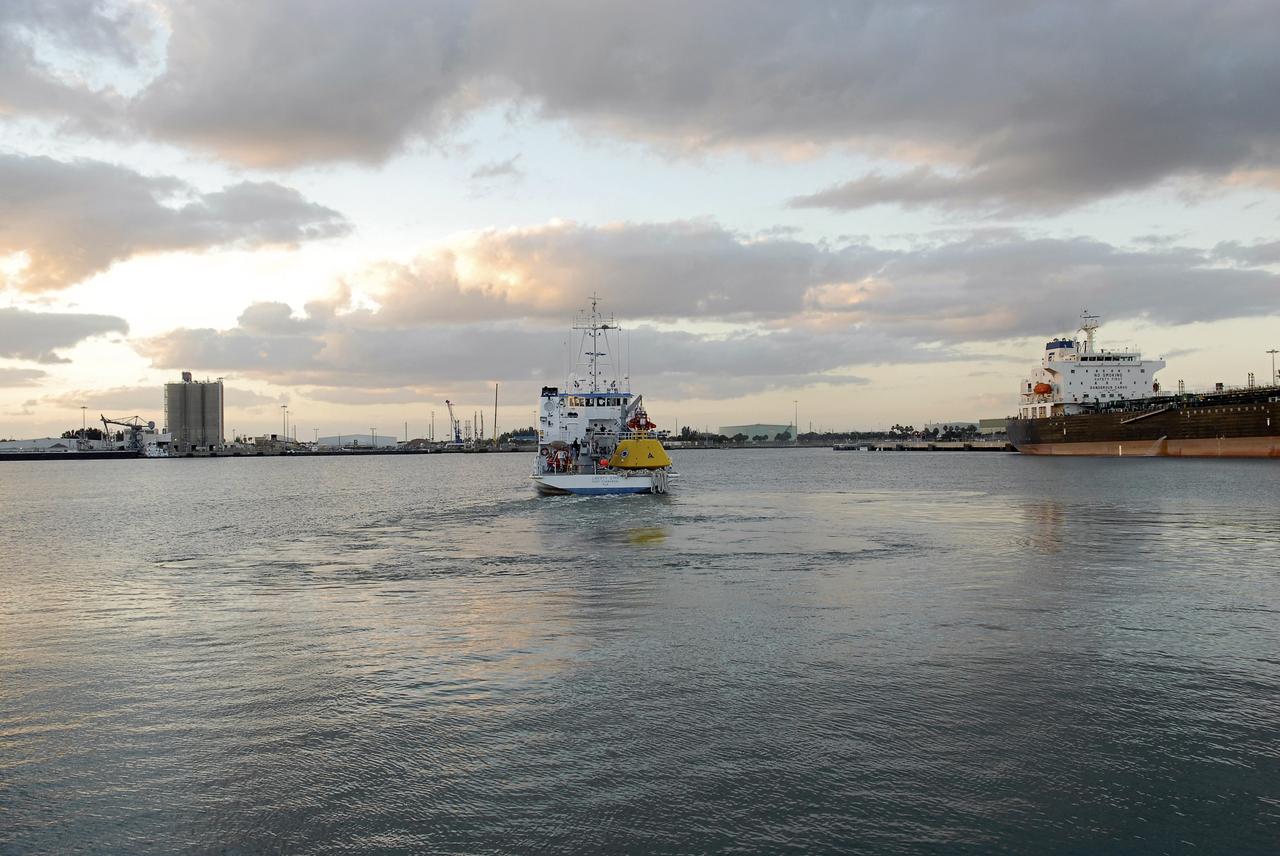
CAPE CANAVERAL, Fla. – At Port Canaveral in Florida, NASA's Liberty Star ship, with an Orion flight test capsule secured to its deck, heads out of port toward the Atlantic Ocean. Liberty Star has been enlisted to support the Crew Module Recovery Attach Fitting Test (CRAFT) which began at-sea operations Nov. 29. Multiple attach clips are being evaluated against the current recovery cleat configuration by U.S. Air Force pararescue jumpers (PJs) and a U.S. Navy diver. The 21st Century Ground Systems Program will use data collected from the tests to help develop ground operations support equipment that could be used to recover an uncrewed Orion flight test capsule after splashdown. The Orion Multi-Purpose Crew Vehicle is NASA's next-generation spacecraft being developed for deep space missions to asteroids, moons and other interplanetary destinations throughout the solar system. For more information, visit http://www.nasa.gov/orion. Photo credit: NASA/Tim Jacobs
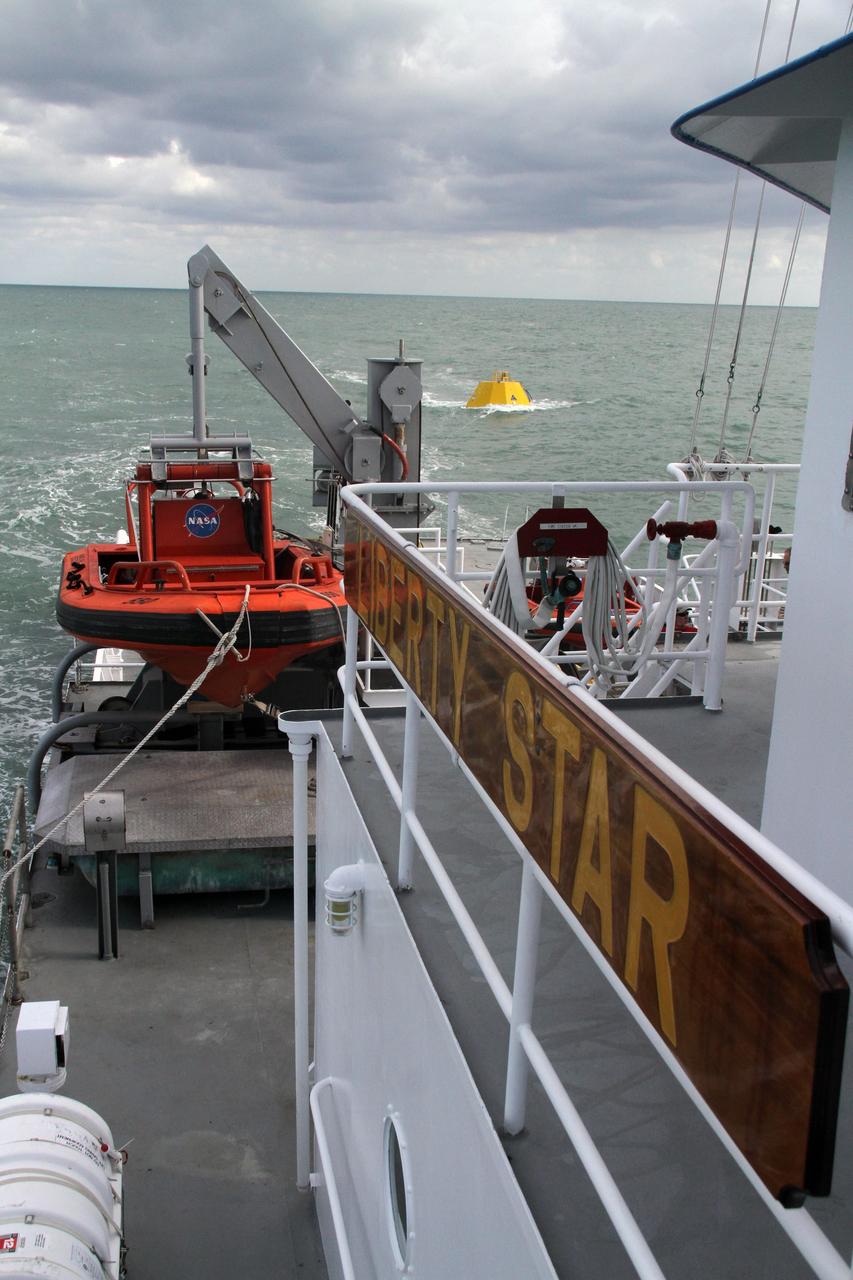
CAPE CANAVERAL, Fla. – Testing is under way on an Orion flight test capsule in the Atlantic Ocean. The tests are being monitored by workers aboard NASA's Liberty Star ship. The Crew Module Recovery Attach Fitting Test (CRAFT) on the capsule, which began at-sea operations Nov. 29, is under way. Multiple attach clips are being evaluated against the current recovery cleat configuration by U.S. Air Force pararescue jumpers (PJs) and a U.S. Navy diver. The 21st Century Ground Systems Program will use data collected from the tests to help develop ground operations support equipment that could be used to recover an uncrewed Orion flight test capsule after splashdown. The Orion Multi-Purpose Crew Vehicle is NASA's next-generation spacecraft being developed for deep space missions to asteroids, moons and other interplanetary destinations throughout the solar system. For more information, visit http://www.nasa.gov/orion. Photo credit: NASA/Cory Huston
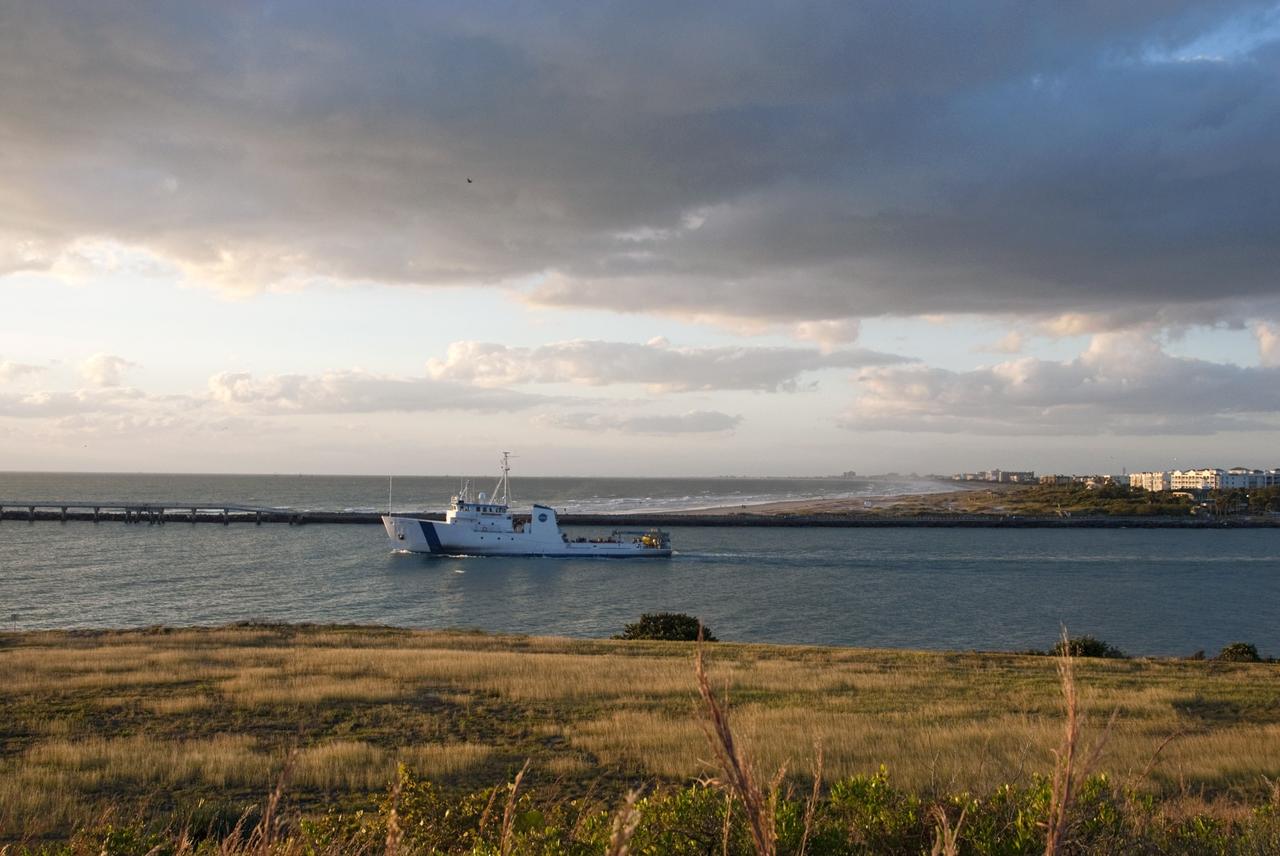
CAPE CANAVERAL, Fla. – NASA's Liberty Star ship, with an Orion flight test capsule secured to its deck, passes through the mouth of Port Canaveral in Florida on its way to the Atlantic Ocean. Liberty Star has been enlisted to support the Crew Module Recovery Attach Fitting Test (CRAFT) which began at-sea operations Nov. 29. Multiple attach clips are being evaluated against the current recovery cleat configuration by U.S. Air Force pararescue jumpers (PJs) and a U.S. Navy diver. The 21st Century Ground Systems Program will use data collected from the tests to help develop ground operations support equipment that could be used to recover an uncrewed Orion flight test capsule after splashdown. The Orion Multi-Purpose Crew Vehicle is NASA's next-generation spacecraft being developed for deep space missions to asteroids, moons and other interplanetary destinations throughout the solar system. For more information, visit http://www.nasa.gov/orion. Photo credit: NASA/Tim Jacobs
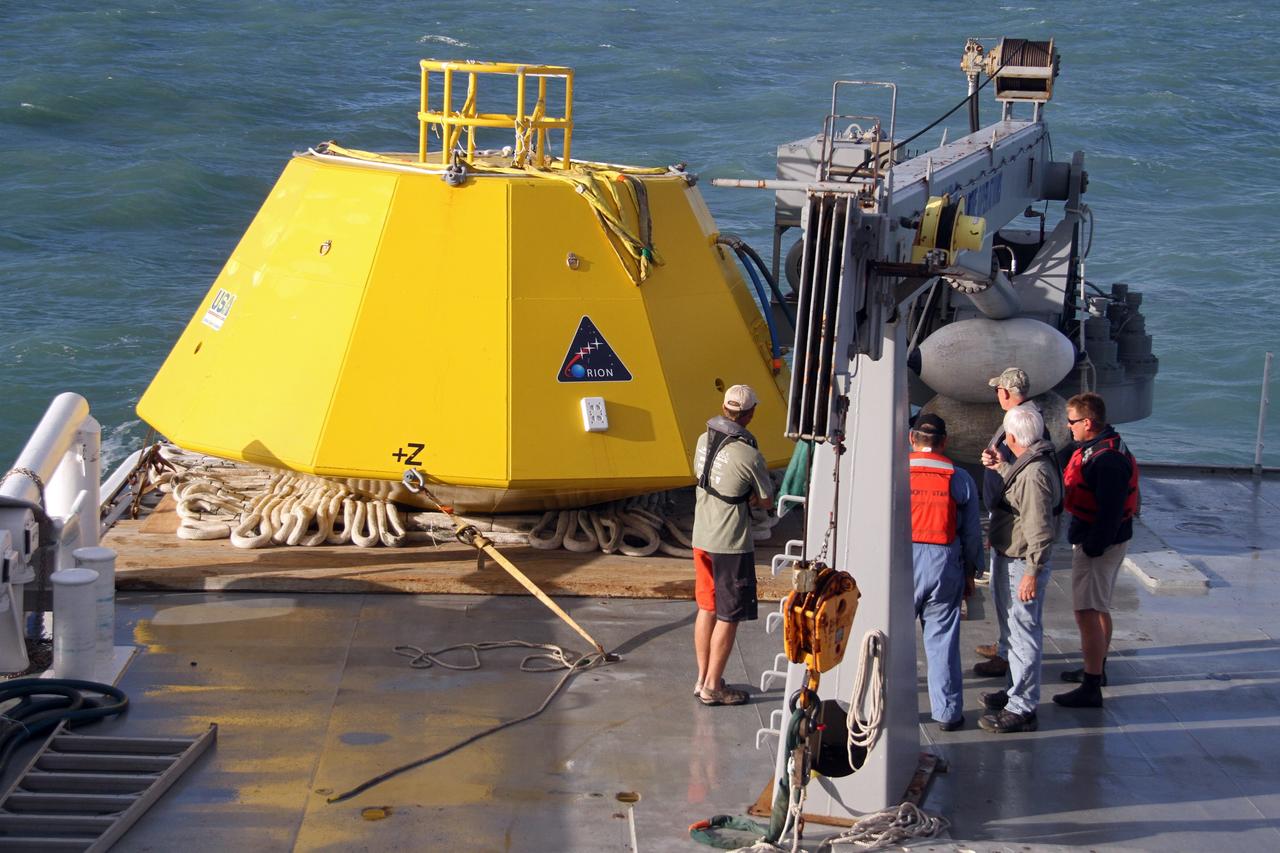
CAPE CANAVERAL, Fla. – An Orion flight test capsule aboard the deck of NASA's Liberty Star ship is moments away from being pulled overboard into the Atlantic Ocean. The Crew Module Recovery Attach Fitting Test (CRAFT) on the capsule, which began at-sea operations Nov. 29, is under way. Multiple attach clips are being evaluated against the current recovery cleat configuration by U.S. Air Force pararescue jumpers (PJs) and a U.S. Navy diver. The 21st Century Ground Systems Program will use data collected from the tests to help develop ground operations support equipment that could be used to recover an uncrewed Orion flight test capsule after splashdown. The Orion Multi-Purpose Crew Vehicle is NASA's next-generation spacecraft being developed for deep space missions to asteroids, moons and other interplanetary destinations throughout the solar system. For more information, visit http://www.nasa.gov/orion. Photo credit: NASA/Cory Huston
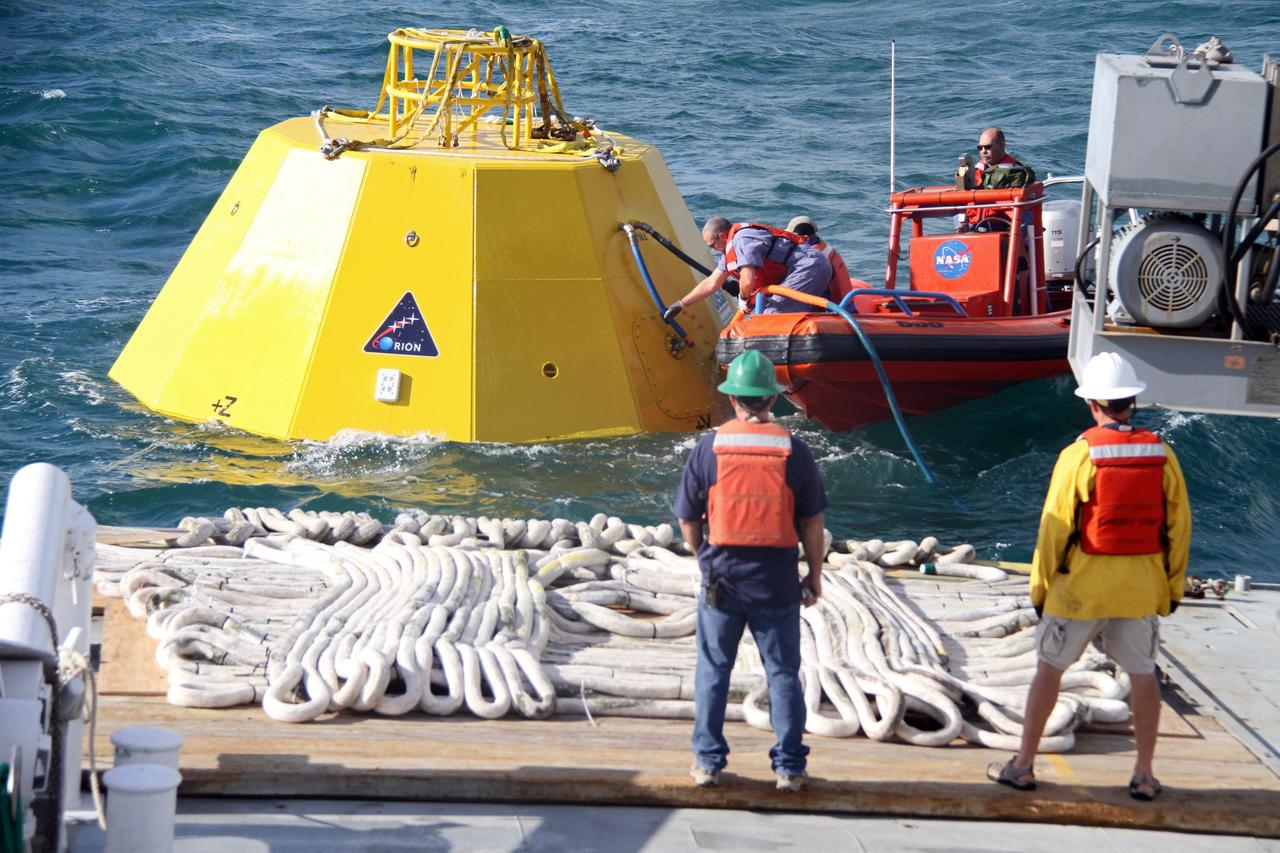
CAPE CANAVERAL, Fla. – From a boat in the Atlantic Ocean, workers secure lines to an Orion flight test capsule during preparations for testing the capsule as their colleagues look on from the deck of NASA's Liberty Star ship. The Crew Module Recovery Attach Fitting Test (CRAFT) on the capsule, which began at-sea operations Nov. 29, is under way. Multiple attach clips are being evaluated against the current recovery cleat configuration by U.S. Air Force pararescue jumpers (PJs) and a U.S. Navy diver. The 21st Century Ground Systems Program will use data collected from the tests to help develop ground operations support equipment that could be used to recover an uncrewed Orion flight test capsule after splashdown. The Orion Multi-Purpose Crew Vehicle is NASA's next-generation spacecraft being developed for deep space missions to asteroids, moons and other interplanetary destinations throughout the solar system. For more information, visit http://www.nasa.gov/orion. Photo credit: NASA/Cory Huston

U.S. Air Force “Guardian Angel” Pararescue forces are airdropped into the Atlantic Ocean off the coast of Cape Canaveral near Kennedy Space Center in Florida to rehearse a full mission profile training exercise on April 27, 2019. The exercise included using a Boeing CST-100 Starliner training capsule to run through the necessary steps in the unlikely event of an emergency resulting in a splashdown. NASA and the Department of Defense (DoD) Human Space Flight Support Office Rescue Division conducted the training, which included rehearsing assisted egress, extracting DoD team members acting as astronauts, from the capsule and providing immediate medical treatment. This open-ocean exercise provides team members with the necessary training ahead of Boeing’s Crew Flight Test with astronauts targeted for later this year. During normal return scenarios, Boeing’s Starliner will land in a safe zone of about 15 square miles in the Western United States. Throughout the commercial crew development phases with NASA, Boeing has performed dozens of qualification tests on its parachute and airbag systems simulating conditions on land and in the water.
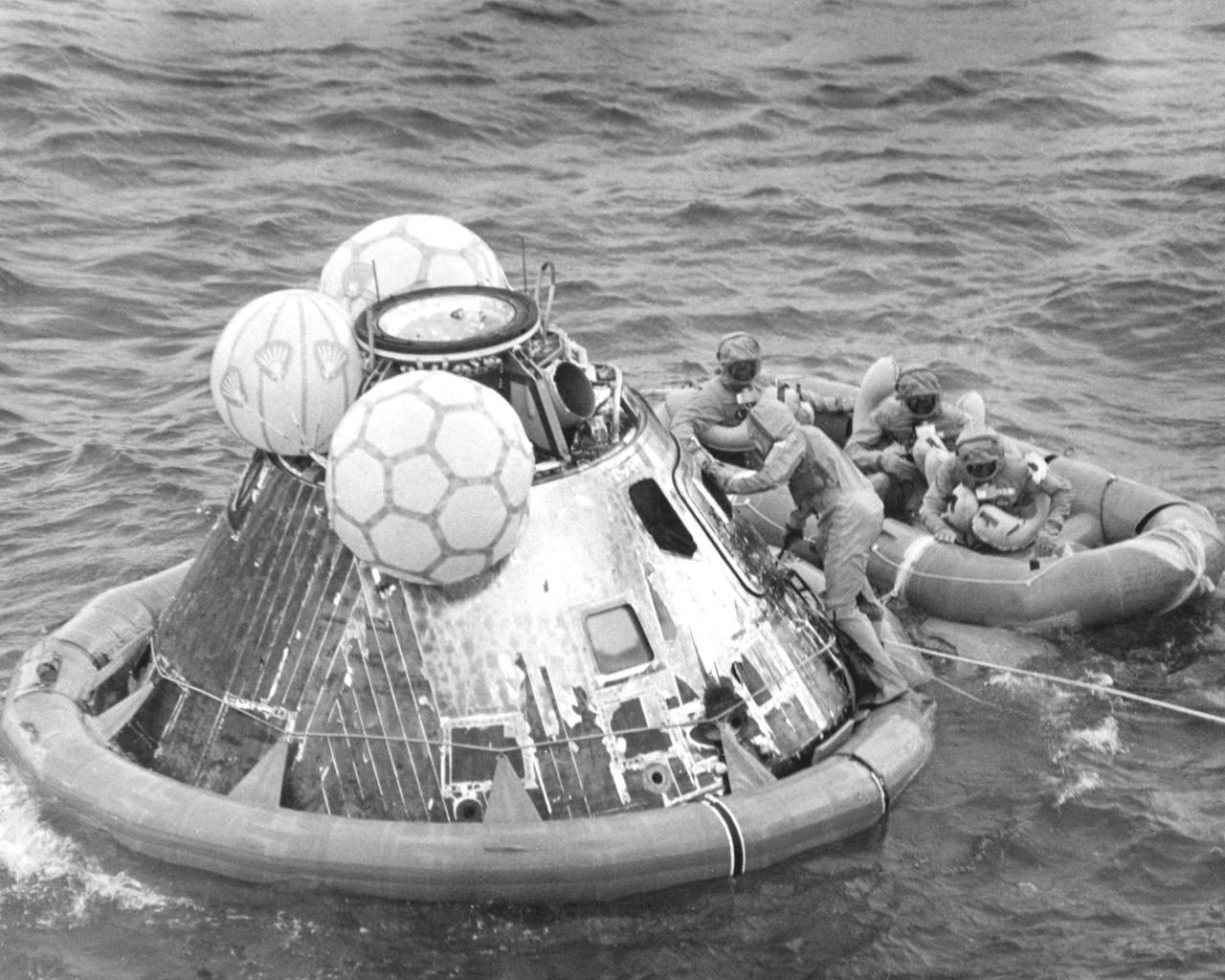
The Apollo 11 mission, the first manned lunar mission, launched from the Kennedy Space Center, Florida via the Saturn V launch vehicle on July 16, 1969 and safely returned to Earth on July 24, 1969. The Saturn V vehicle was developed by the Marshall Space Flight Center (MSFC) under the direction of Dr. Wernher von Braun. Aboard were astronauts Neil A. Armstrong, commander; Michael Collins, Command Module (CM) pilot; and Edwin E. Aldrin Jr., Lunar Module (LM) pilot. The CM, piloted by Michael Collins remained in a parking orbit around the Moon while the LM, named “Eagle’’, carrying astronauts Neil Armstrong and Edwin Aldrin, landed on the Moon. Armstrong was the first human to ever stand on the lunar surface, followed by Edwin (Buzz) Aldrin. During 2½ hours of surface exploration, the crew collected 47 pounds of lunar surface material for analysis back on Earth. Shown here is the recovery operation of the capsule in the Pacific Ocean after splashdown. The three astronauts wait in the life raft as a pararescue man closes and secures the capsule hatch. The crew was then air lifted to the prime recovery ship, the U.S.S. Hornet, where they were housed in a Mobile Quarantine Facility (MQF).
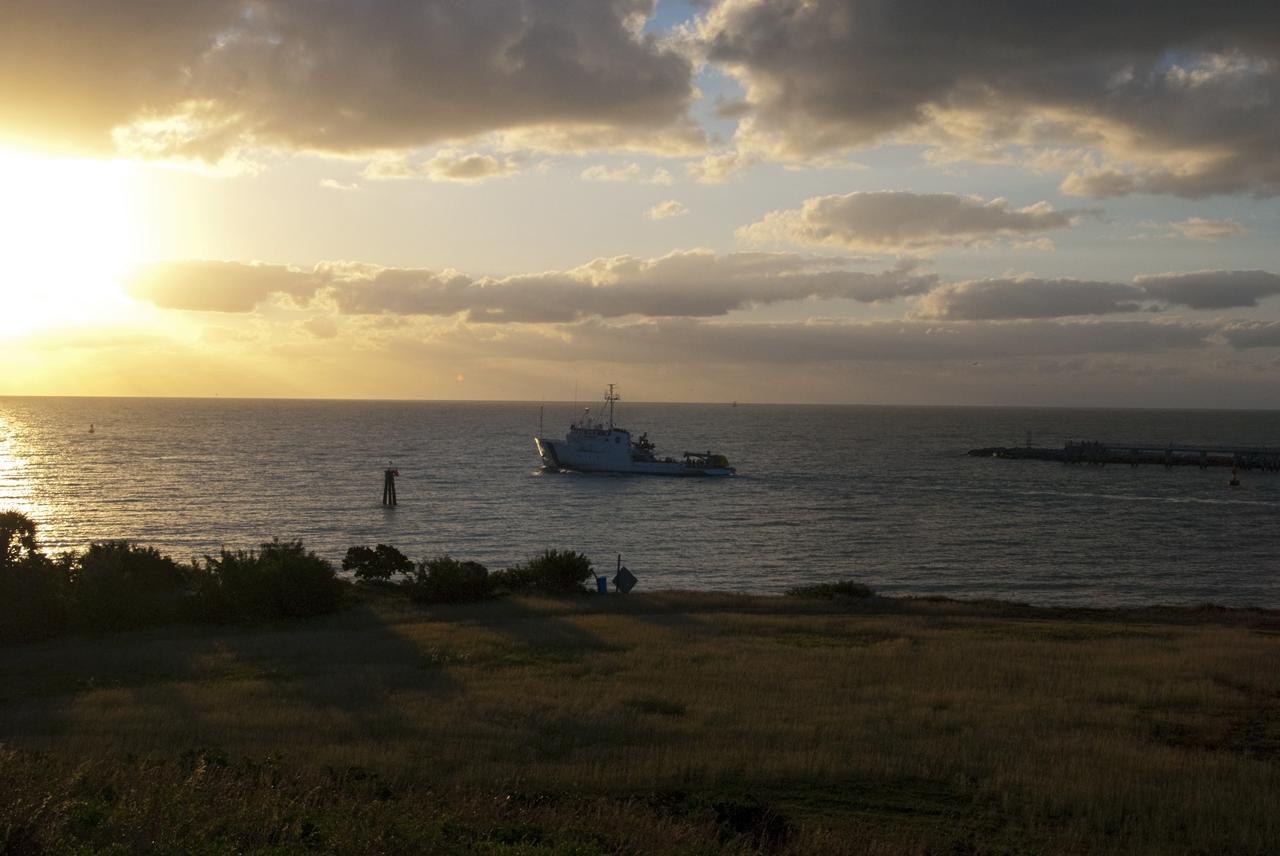
CAPE CANAVERAL, Fla. – NASA's Liberty Star ship, with an Orion flight test capsule secured to its deck, passes through the mouth of Port Canaveral in Florida into the Atlantic Ocean. Liberty Star has been enlisted to support the Crew Module Recovery Attach Fitting Test (CRAFT) which began at-sea operations Nov. 29. Multiple attach clips are being evaluated against the current recovery cleat configuration by U.S. Air Force pararescue jumpers (PJs) and a U.S. Navy diver. The 21st Century Ground Systems Program will use data collected from the tests to help develop ground operations support equipment that could be used to recover an uncrewed Orion flight test capsule after splashdown. The Orion Multi-Purpose Crew Vehicle is NASA's next-generation spacecraft being developed for deep space missions to asteroids, moons and other interplanetary destinations throughout the solar system. For more information, visit http://www.nasa.gov/orion. Photo credit: NASA/Tim Jacobs
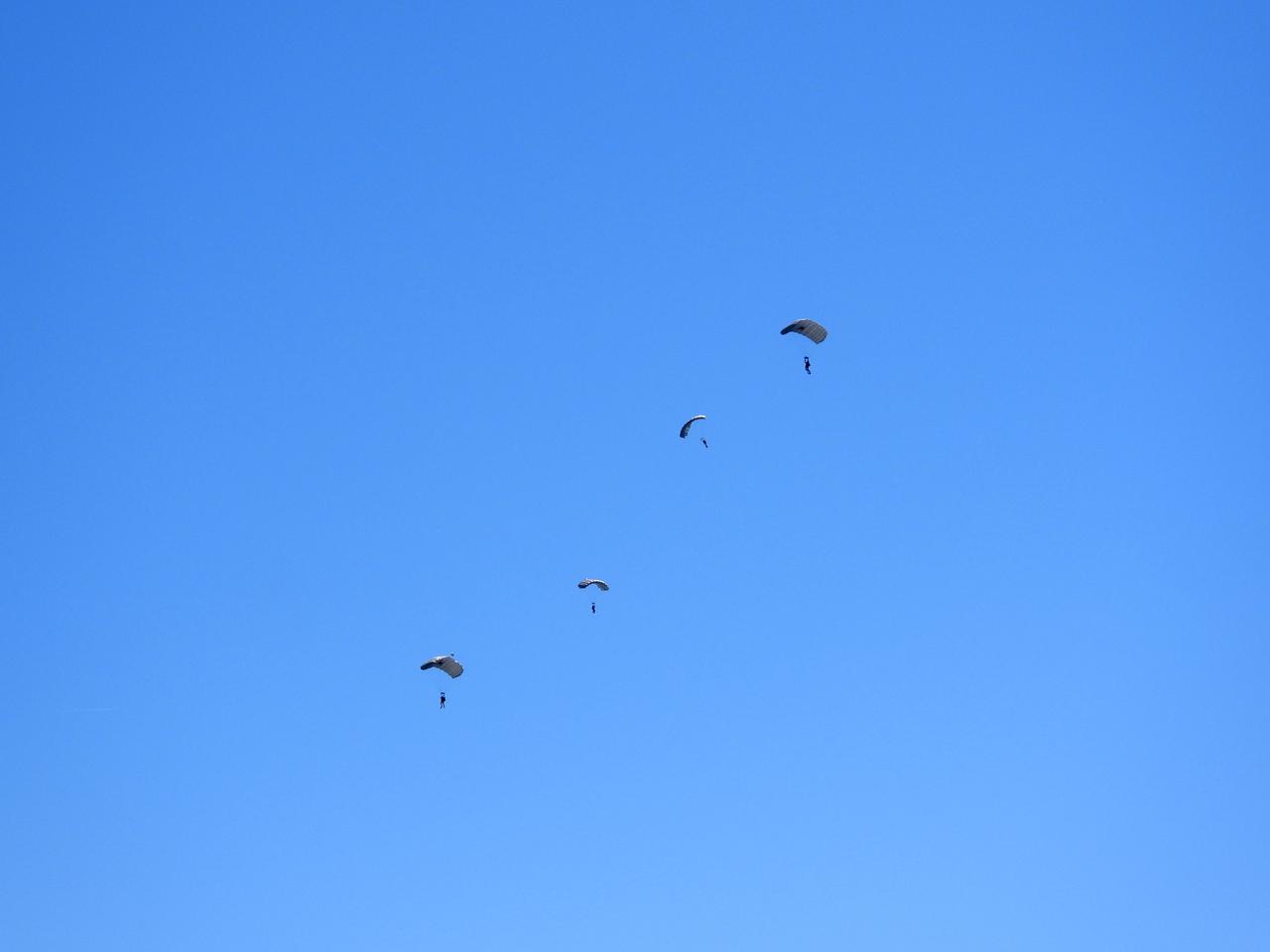
U.S. Air Force “Guardian Angel” Pararescue forces are airdropped into the Atlantic Ocean off the coast of Cape Canaveral near Kennedy Space Center in Florida to rehearse a full mission profile training exercise on April 27, 2019. The exercise included using a Boeing CST-100 Starliner training capsule to run through the necessary steps in the unlikely event of an emergency resulting in a splashdown. NASA and the Department of Defense (DoD) Human Space Flight Support Office Rescue Division conducted the training, which included rehearsing assisted egress, extracting DoD team members acting as astronauts, from the capsule and providing immediate medical treatment. This open-ocean exercise provides team members with the necessary training ahead of Boeing’s Crew Flight Test with astronauts targeted for later this year. During normal return scenarios, Boeing’s Starliner will land in a safe zone of about 15 square miles in the Western United States. Throughout the commercial crew development phases with NASA, Boeing has performed dozens of qualification tests on its parachute and airbag systems simulating conditions on land and in the water.
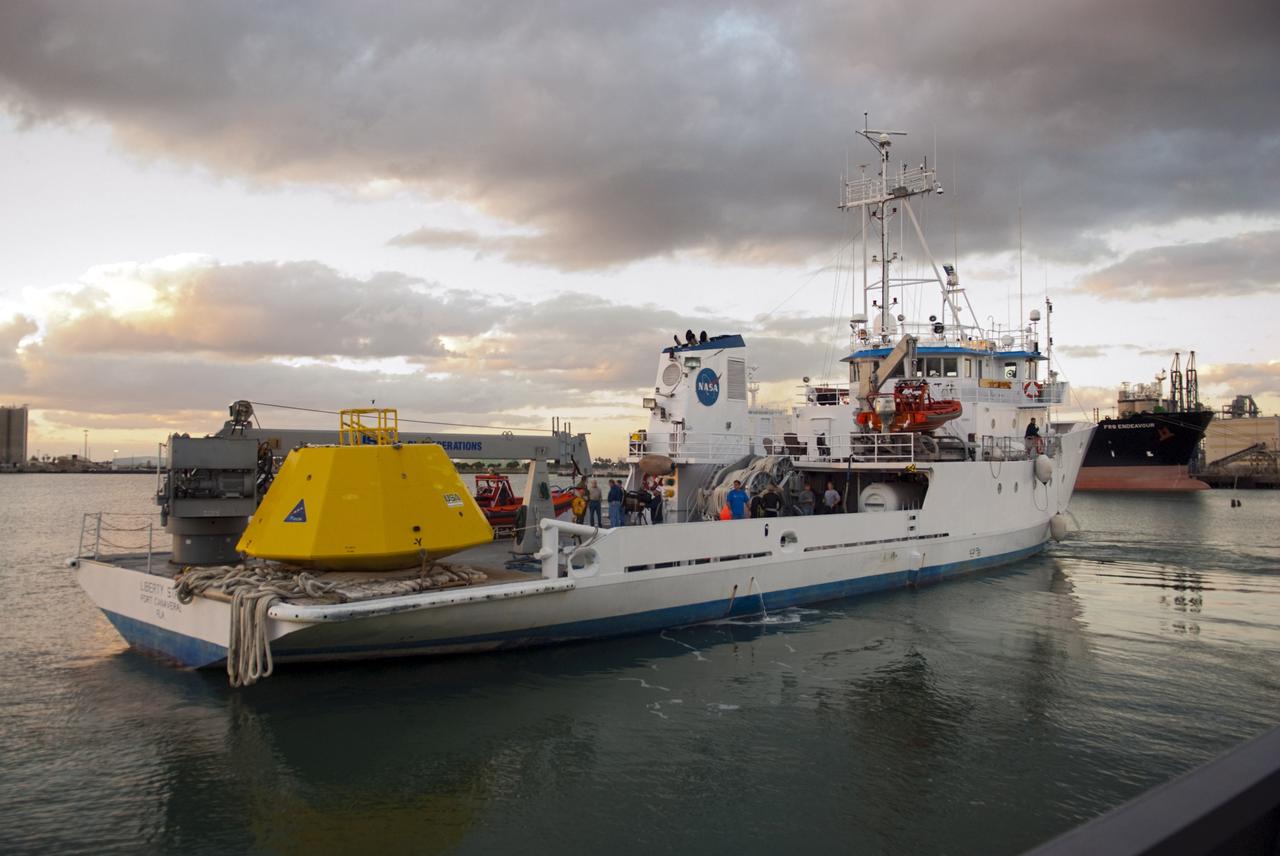
CAPE CANAVERAL, Fla. – NASA's Liberty Star ship departs Port Canaveral in Florida with an Orion flight test capsule secured to its deck. Liberty Star has been enlisted to support the Crew Module Recovery Attach Fitting Test (CRAFT) which began at-sea operations Nov. 29. Multiple attach clips are being evaluated against the current recovery cleat configuration by U.S. Air Force pararescue jumpers (PJs) and a U.S. Navy diver. The 21st Century Ground Systems Program will use data collected from the tests to help develop ground operations support equipment that could be used to recover an uncrewed Orion flight test capsule after splashdown. The Orion Multi-Purpose Crew Vehicle is NASA's next-generation spacecraft being developed for deep space missions to asteroids, moons and other interplanetary destinations throughout the solar system. For more information, visit http://www.nasa.gov/orion. Photo credit: NASA/Tim Jacobs
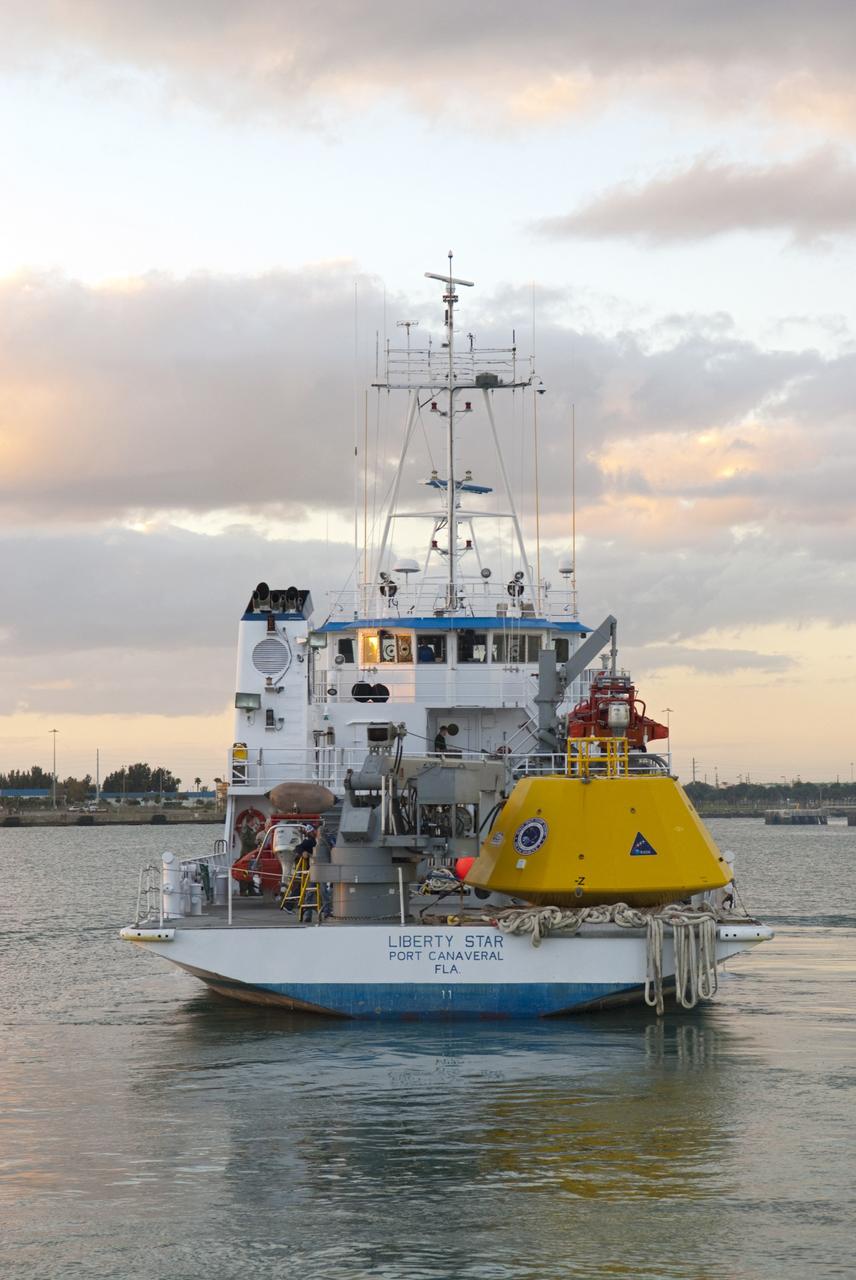
CAPE CANAVERAL, Fla. – NASA's Liberty Star ship departs Port Canaveral in Florida with an Orion flight test capsule secured to its deck. Liberty Star has been enlisted to support the Crew Module Recovery Attach Fitting Test (CRAFT) which began at-sea operations Nov. 29. Multiple attach clips are being evaluated against the current recovery cleat configuration by U.S. Air Force pararescue jumpers (PJs) and a U.S. Navy diver. The 21st Century Ground Systems Program will use data collected from the tests to help develop ground operations support equipment that could be used to recover an uncrewed Orion flight test capsule after splashdown. The Orion Multi-Purpose Crew Vehicle is NASA's next-generation spacecraft being developed for deep space missions to asteroids, moons and other interplanetary destinations throughout the solar system. For more information, visit http://www.nasa.gov/orion. Photo credit: NASA/Tim Jacobs