
Pathfinder Landers - In Test and On Mars
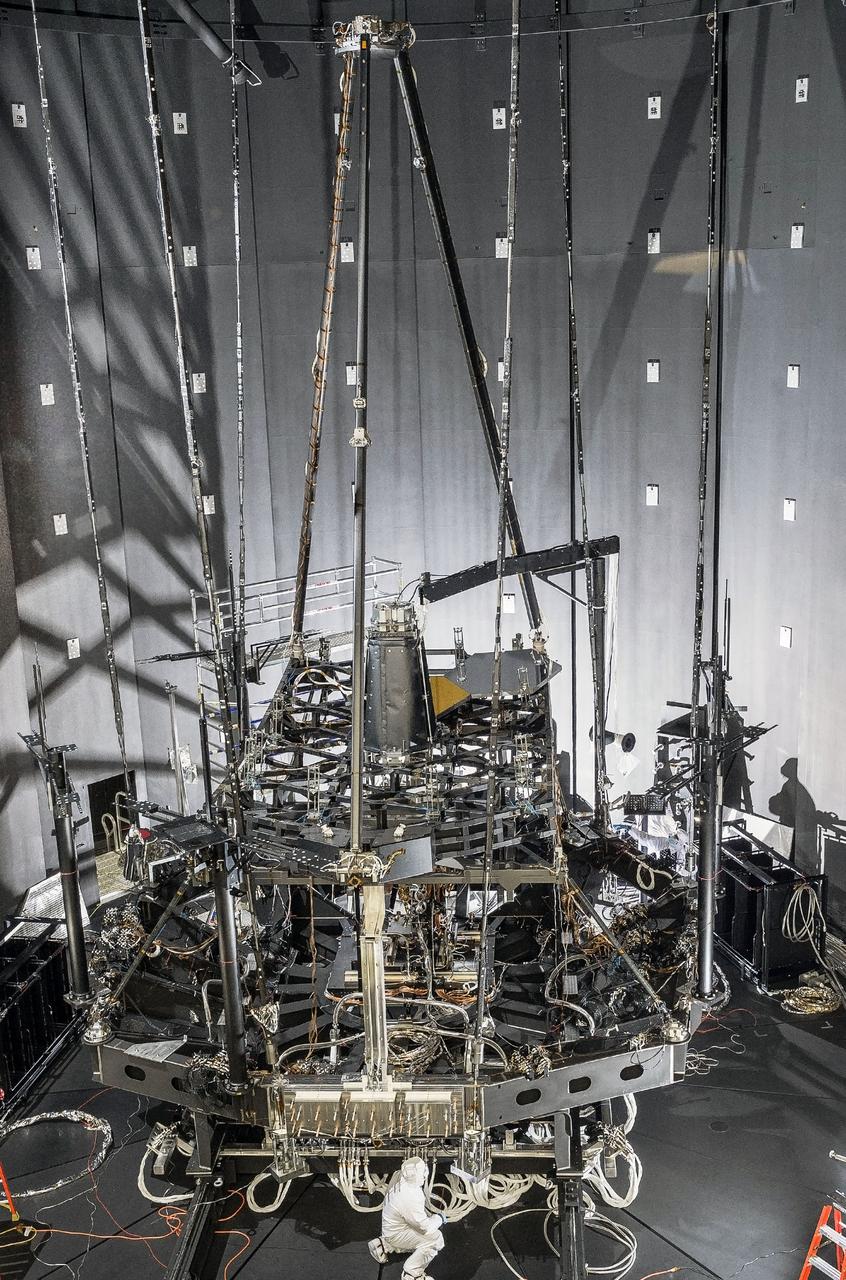
Testing is crucial part of NASA's success on Earth and in space. So, as the actual flight components of NASA's James Webb Space Telescope come together, engineers are testing the non-flight equipment to ensure that tests on the real Webb telescope later goes safely and according to plan. Recently, the "pathfinder telescope," or just “Pathfinder,” completed its first super-cold optical test that resulted in many first-of-a-kind demonstrations. "This test is the first dry-run of the equipment and procedures we will use to conduct an end-to-end optical test of the flight telescope and instruments," said Mark Clampin, Webb telescope Observatory Project Scientist at NASA's Goddard Space Flight Center in Greenbelt, Maryland. "It provides confidence that once the flight telescope is ready, we are fully prepared for a successful test of the flight hardware." The Pathfinder is a non-flight replica of the Webb telescope’s center section backplane, or “backbone,” that includes mirrors. The flight backplane comes in three segments, a center section and two wing-like parts, all of which will support large hexagonal mirrors on the Webb telescope. The pathfinder only consists of the center part of the backplane. However, during the test, it held two full size spare primary mirror segments and a full size spare secondary mirror to demonstrate the ability to optically test and align the telescope at the planned operating temperatures of -400 degrees Fahrenheit (-240 Celsius). Read more: <a href="http://www.nasa.gov/feature/goddard/nasas-webb-pathfinder-telescope-successfully-completes-first-super-cold-optical-test" rel="nofollow">www.nasa.gov/feature/goddard/nasas-webb-pathfinder-telesc...</a> Credit: NASA/Goddard/Chris Gunn <b><a href="http://www.nasa.gov/audience/formedia/features/MP_Photo_Guidelines.html" rel="nofollow">NASA image use policy.</a></b> <b><a href="http://www.nasa.gov/centers/goddard/home/index.html" rel="nofollow">NASA Goddard Space Flight Center</a></b> enables NASA’s mission through four scientific endeavors: Earth Science, Heliophysics, Solar System Exploration, and Astrophysics. Goddard plays a leading role in NASA’s accomplishments by contributing compelling scientific knowledge to advance the Agency’s mission. <b>Follow us on <a href="http://twitter.com/NASAGoddardPix" rel="nofollow">Twitter</a></b> <b>Like us on <a href="http://www.facebook.com/pages/Greenbelt-MD/NASA-Goddard/395013845897?ref=tsd" rel="nofollow">Facebook</a></b> <b>Find us on <a href="http://instagrid.me/nasagoddard/?vm=grid" rel="nofollow">Instagram</a></b>
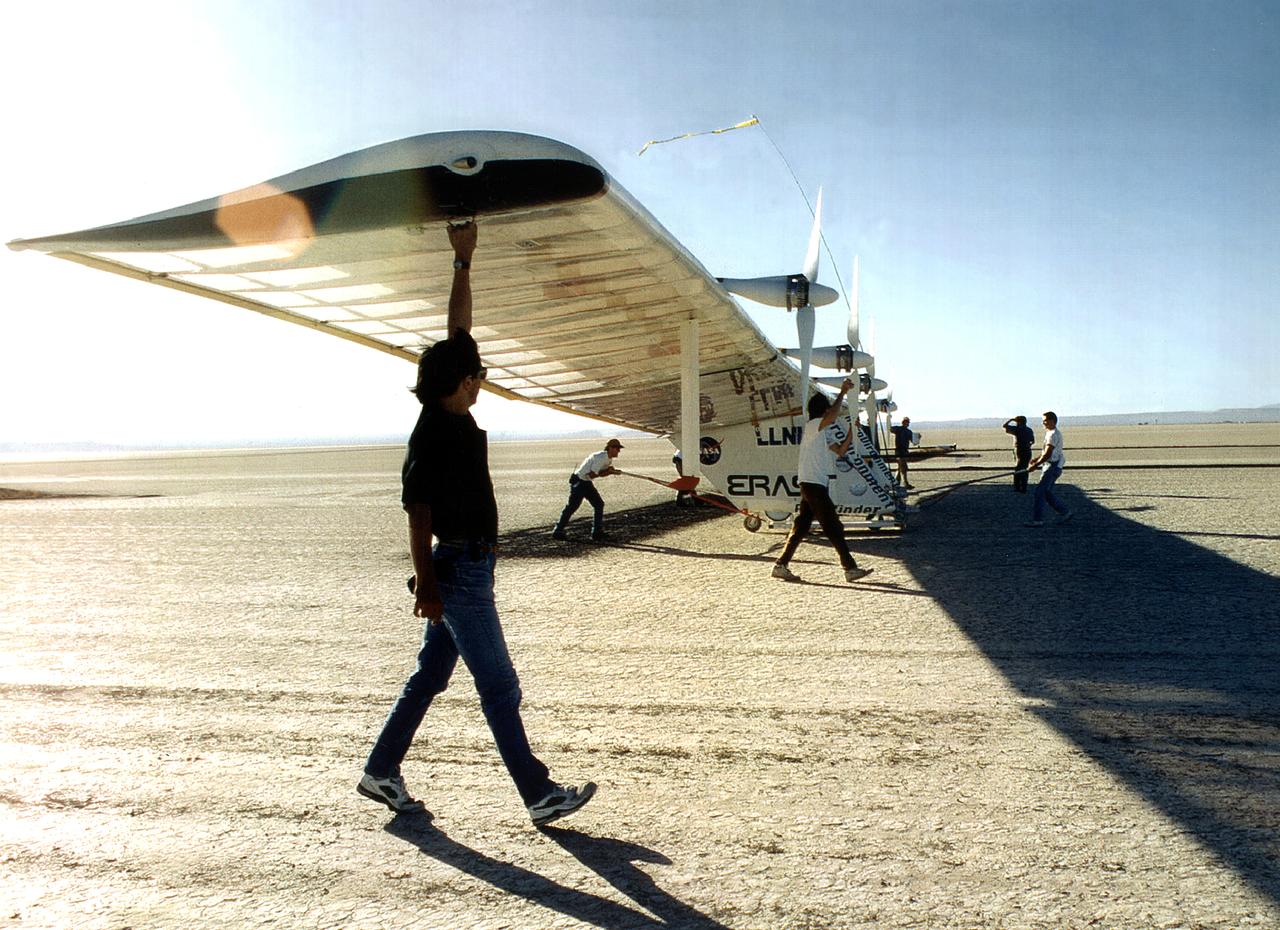
The Pathfinder research aircraft's wing structure is clearly defined in this photo as personnel from AeroVironment rolled it out onto the lakebed at NASA's Dryden Flight Research Center, Edwards, California, for another test flight.
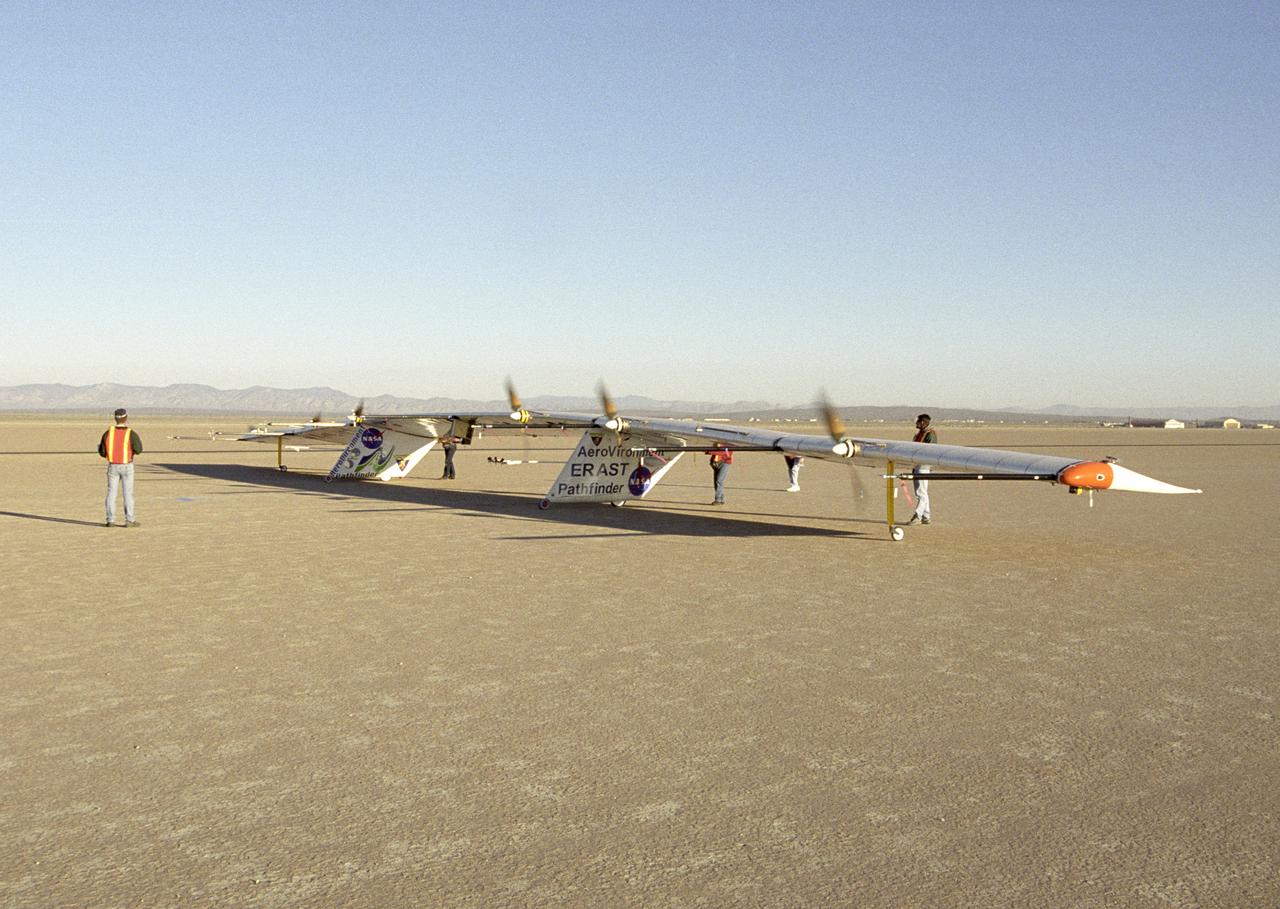
AeroVironment ground crew check out the operation of the Pathfinder-Plus solar aircraft's electric motors during combined systems tests on Rogers Dry Lake.
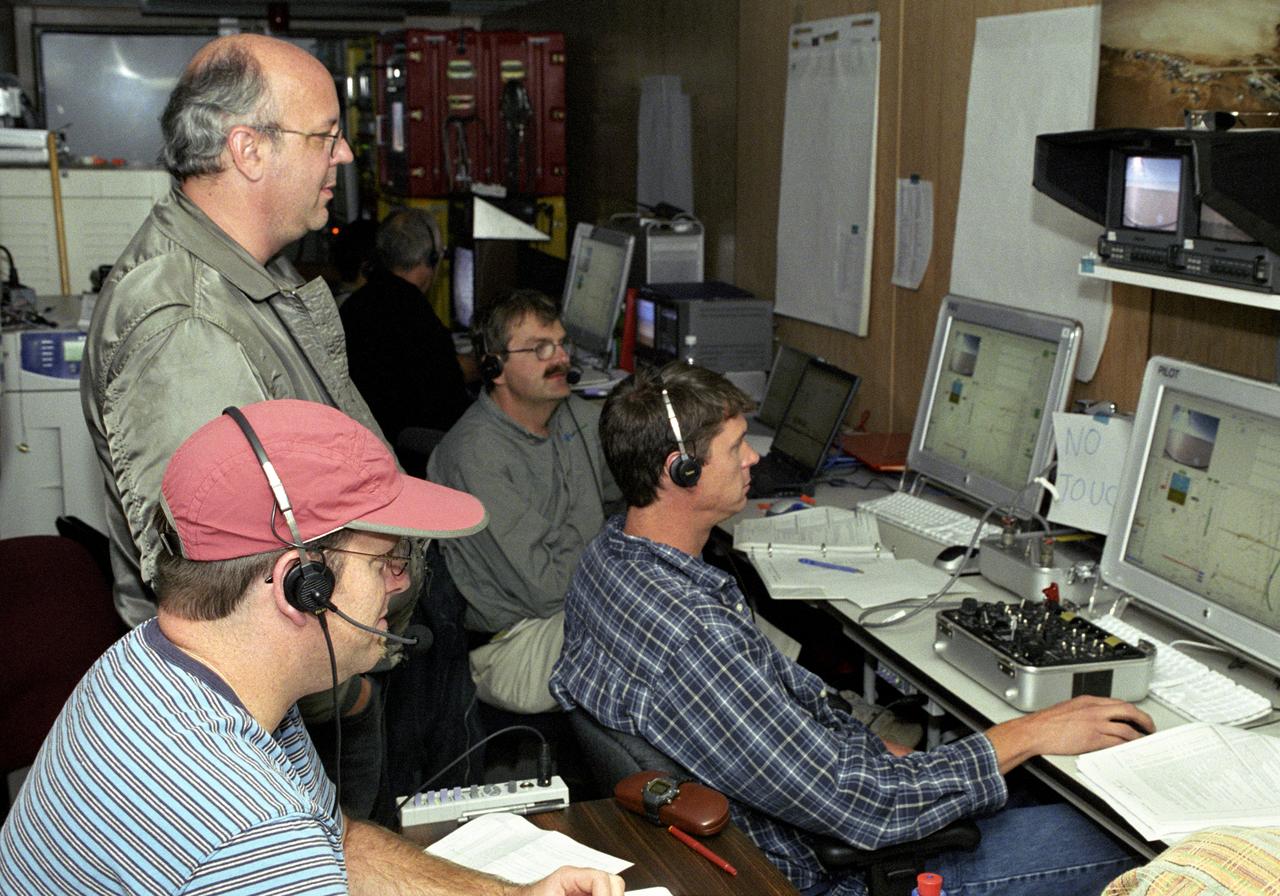
AeroVironment's test director Jim Daley, backup pilot Rik Meininger, stability and controls engineer Derek Lisoski and pilot Wyatt Sadler (clockwise from bottom left) closely monitor systems testing of the Pathfinder-Plus solar aircraft from the control station.
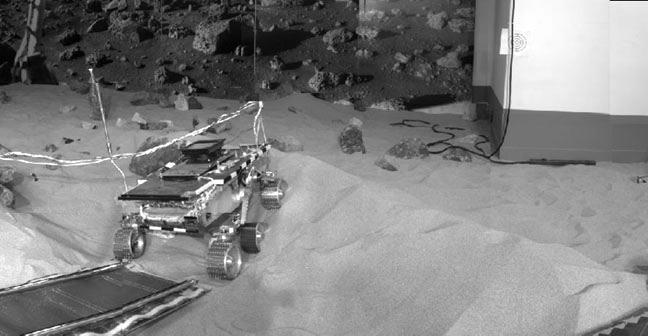
Marie Curie rover drives down the rear ramp during Operational Readiness Test ORT 4. NASA Pathfinder, a low-cost Discovery mission, is the first of a new fleet of spacecraft that are planned to explore Mars.
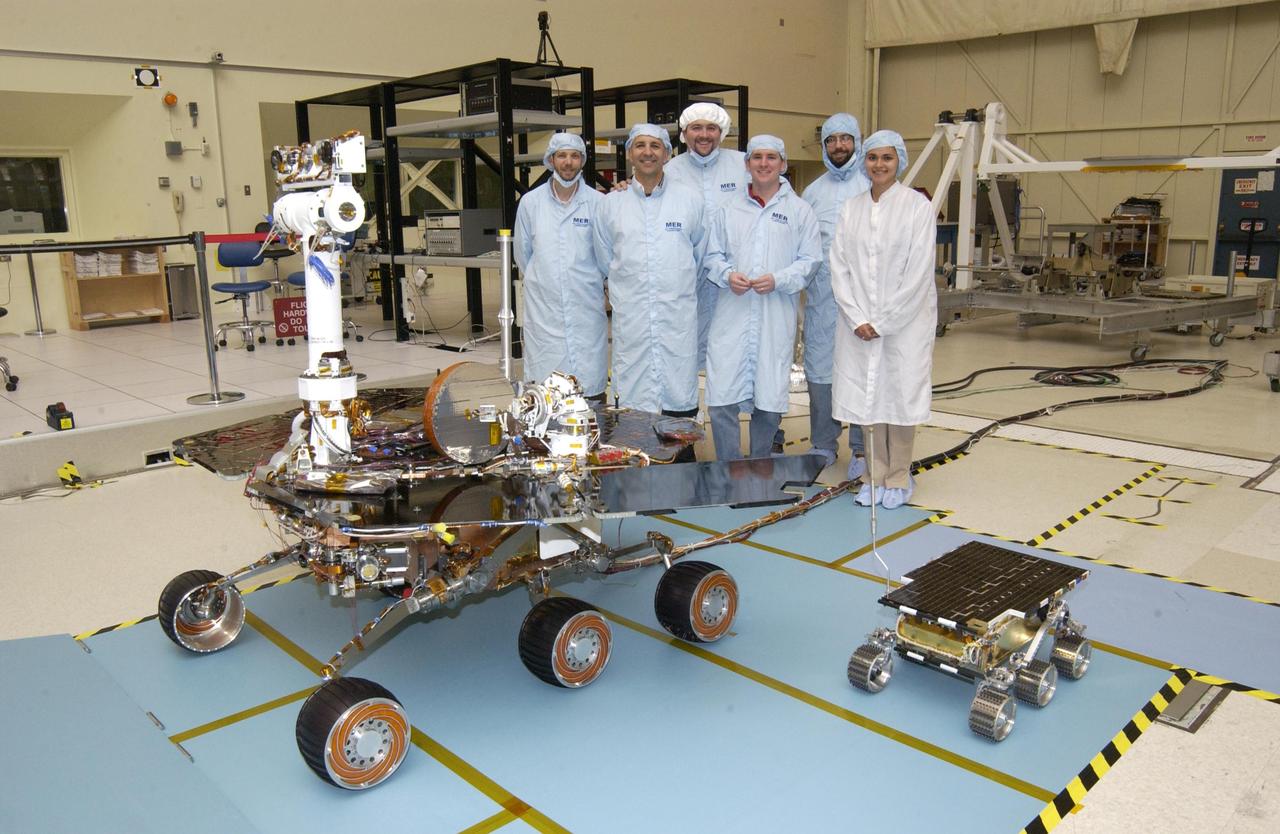
Members of the Mars Exploration Rovers Assembly, Test and Launch Operations team gather around NASA Rover 2 and its predecessor, a flight spare of the Pathfinder mission Sojourner rover, named Marie Curie.
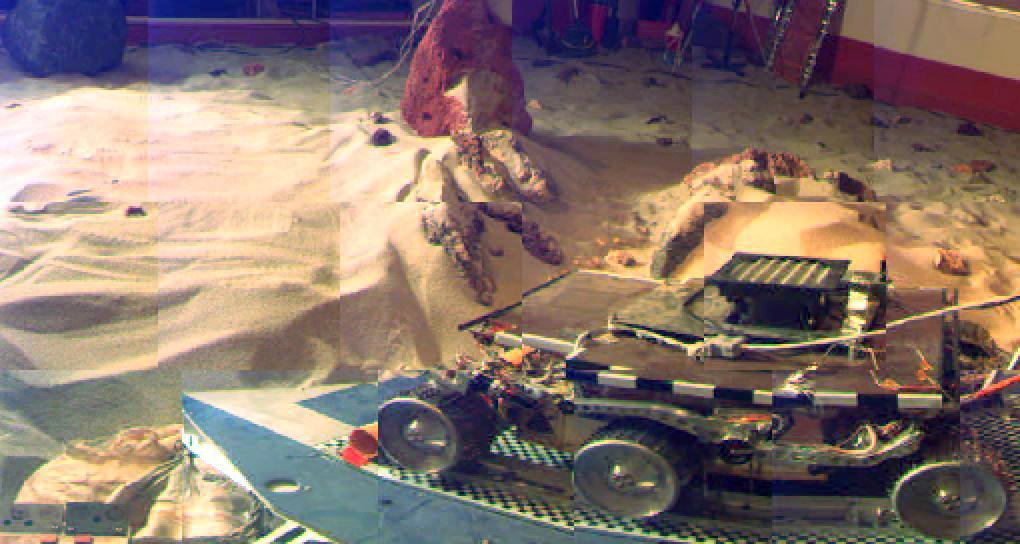
Marie Curie sits on the lander petal prior to deployment during the pre-launch Operations Readiness Test ORT 6. NASA Pathfinder, a low-cost Discovery mission, is the first of a new fleet of spacecraft that are planned to explore Mars.
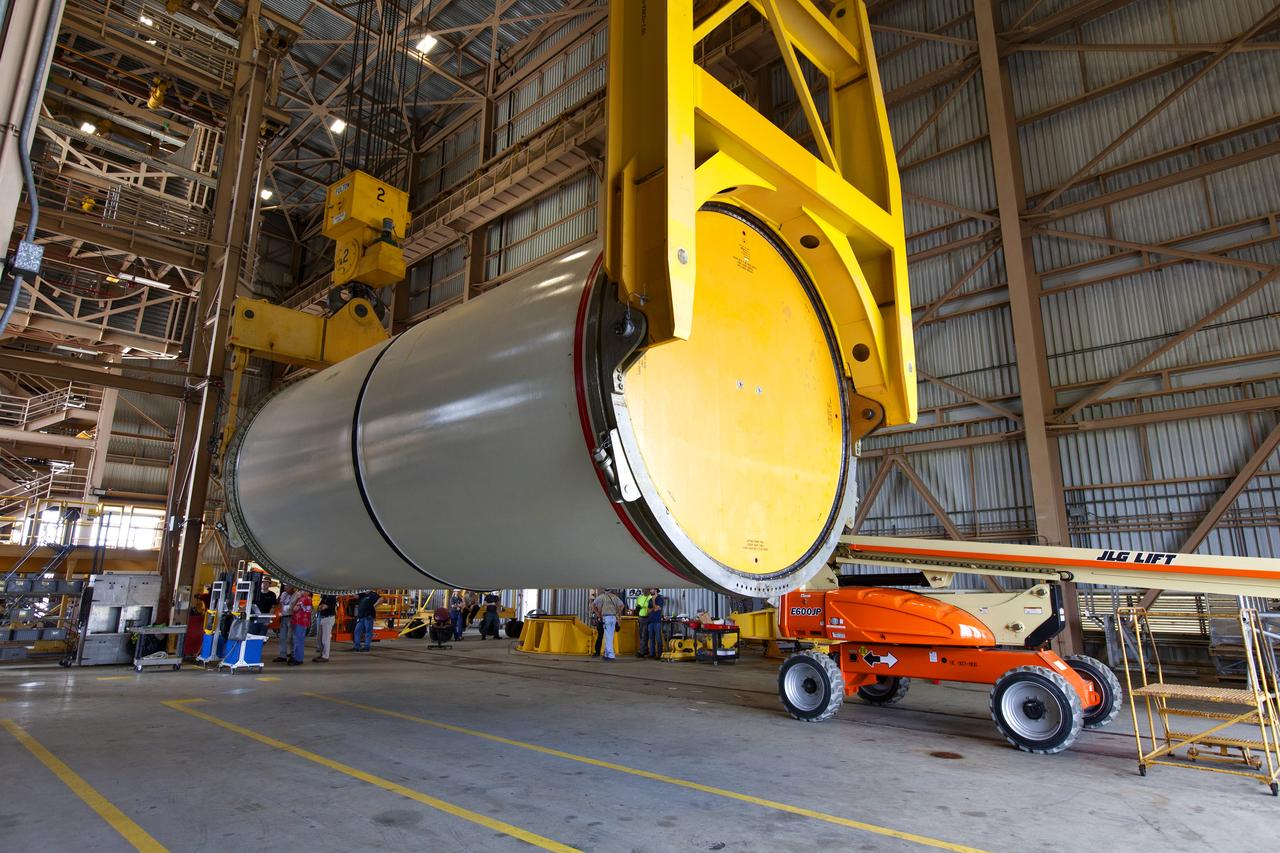
Jacobs technicians, on the Test and Operations Support Contract, practice crane operations with an inert booster rocket segment in the Rotation, Processing and Surge Facility on June 22, 2018, at NASA's Kennedy Space Center in Florida. Dual cranes were used to move the segment from vertical to horizontal, a maneuver known as a "breakover rotation." As part of routine processing operations for the agency's Space Launch System (SLS) rocket, the RPSF team will receive all of the solid rocket fuel segments for inspection and preparation prior to transporting them to the Vehicle Assembly Building for stacking on the mobile launcher. Many pathfinding operations are being done to prepare for launch of the SLS and Orion spacecraft on Exploration Mission-1 and deep space missions.
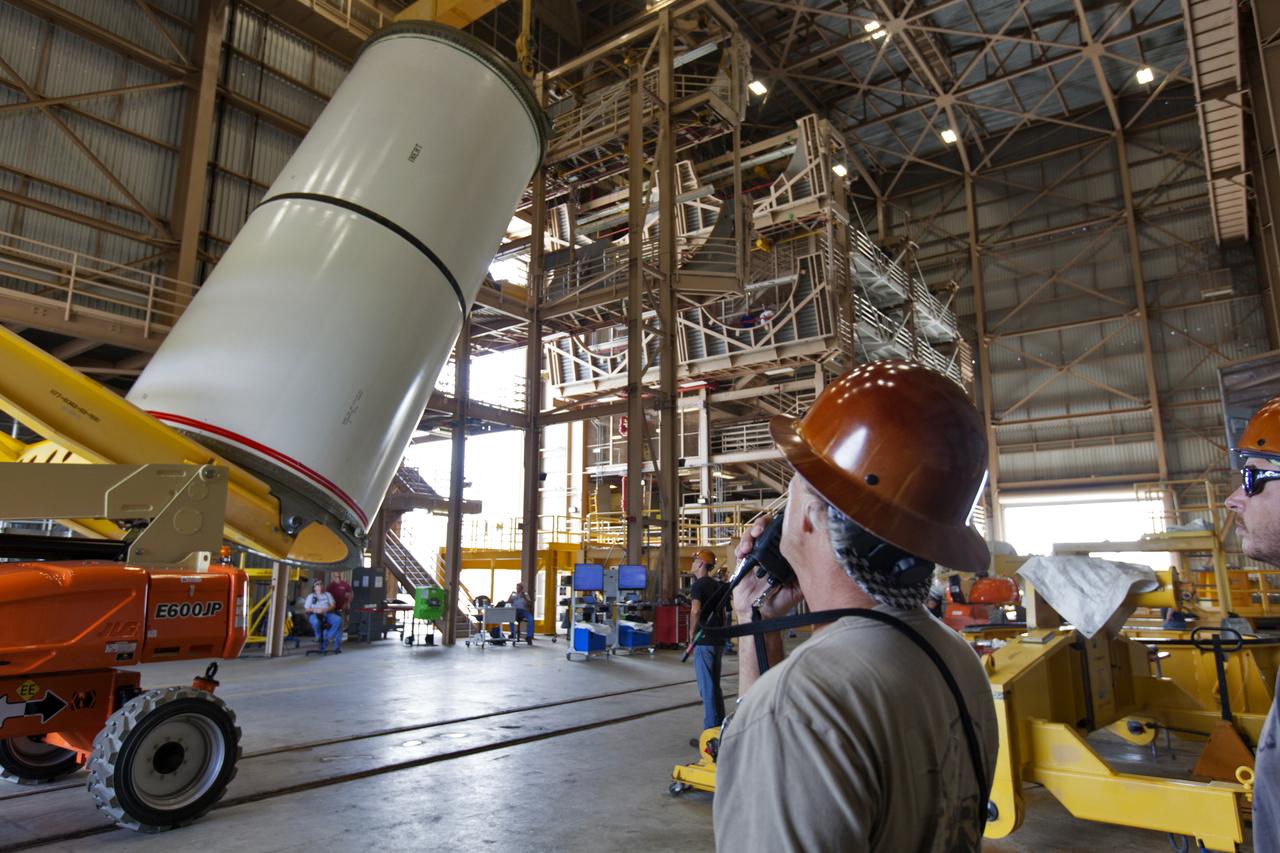
Jacobs technicians, on the Test and Operations Support Contract, practice crane operations with an inert booster rocket segment in the Rotation, Processing and Surge Facility on June 22, 2018, at NASA's Kennedy Space Center in Florida. Dual cranes are being used to move the segment from vertical to horizontal, a maneuver known as a "breakover rotation." As part of routine processing operations for the agency's Space Launch System (SLS) rocket, the RPSF team will receive all of the solid rocket fuel segments for inspection and preparation prior to transporting them to the Vehicle Assembly Building for stacking on the mobile launcher. Many pathfinding operations are being done to prepare for launch of the SLS and Orion spacecraft on Exploration Mission-1 and deep space missions.
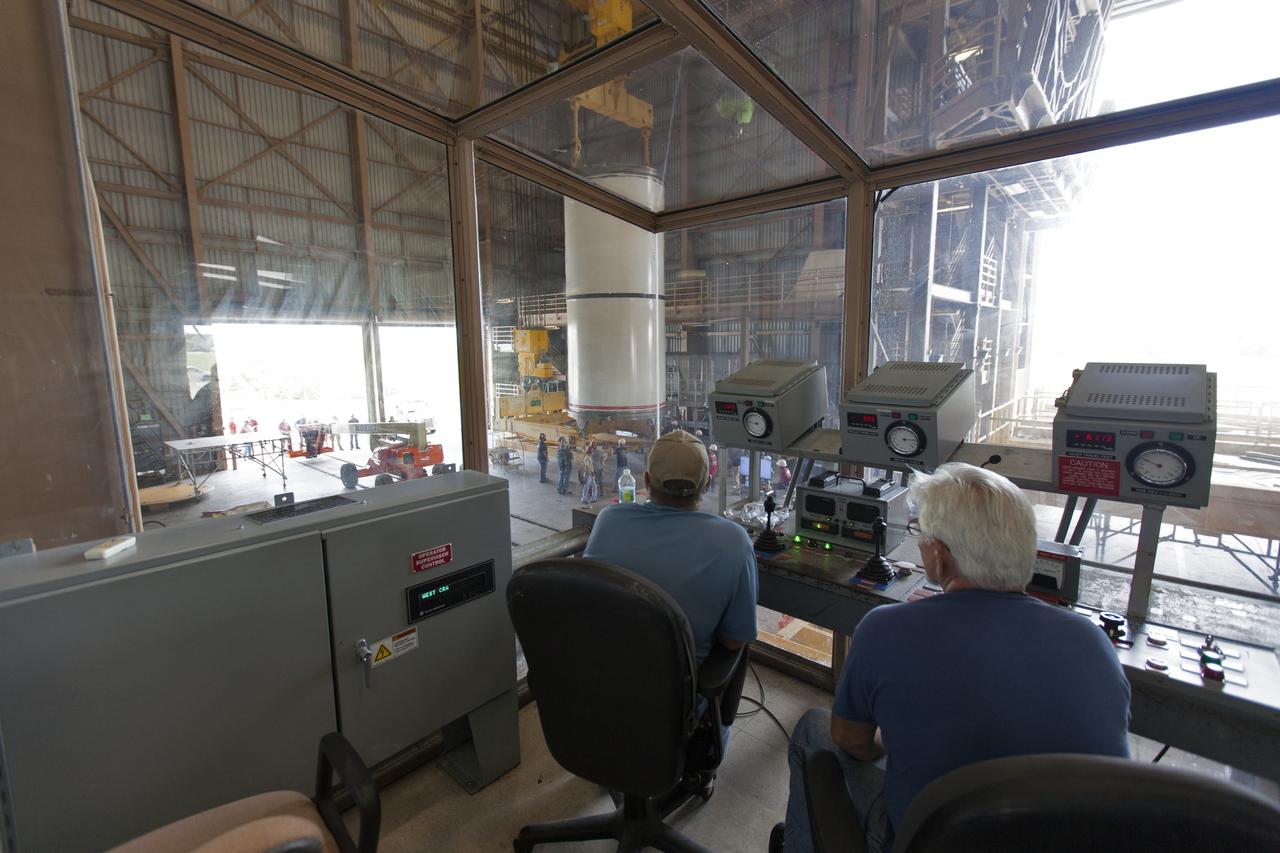
Jacobs technicians, on the Test and Operations Support Contract, practice crane operations with an inert booster rocket segment in the Rotation, Processing and Surge Facility on June 22, 2018, at NASA's Kennedy Space Center in Florida. Dual cranes are being used to move the segment from vertical to horizontal, a maneuver known as a "breakover rotation." As part of routine processing operations for the agency's Space Launch System (SLS) rocket, the RPSF team will receive all of the solid rocket fuel segments for inspection and preparation prior to transporting them to the Vehicle Assembly Building for stacking on the mobile launcher. Many pathfinding operations are being done to prepare for launch of the SLS and Orion spacecraft on Exploration Mission-1 and deep space missions.
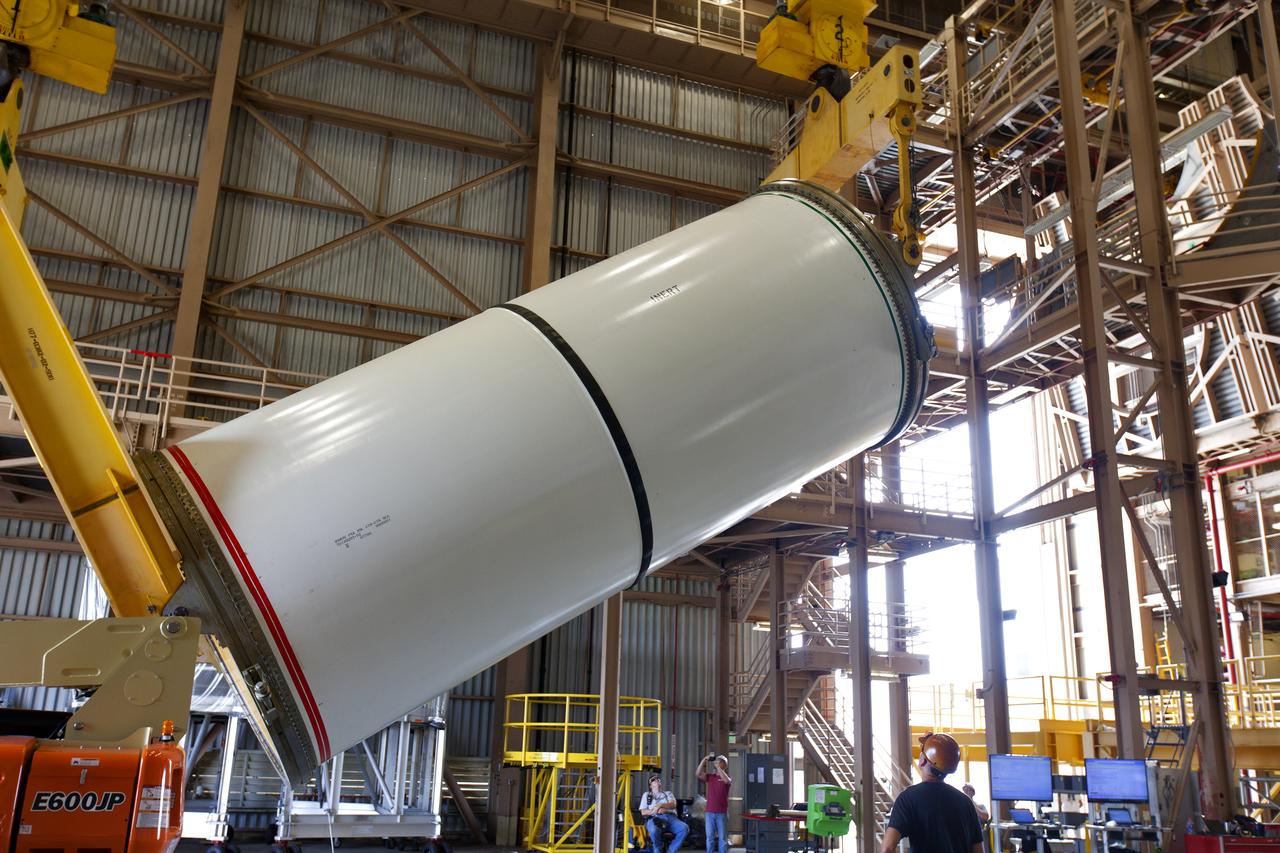
Jacobs technicians, on the Test and Operations Support Contract, practice crane operations with an inert booster rocket segment in the Rotation, Processing and Surge Facility on June 22, 2018, at NASA's Kennedy Space Center in Florida. Dual cranes are used to move the segment from vertical to horizontal, a maneuver known as a "breakover rotation." As part of routine processing operations for the agency's Space Launch System (SLS) rocket, the RPSF team will receive all of the solid rocket fuel segments for inspection and preparation prior to transporting them to the Vehicle Assembly Building for stacking on the mobile launcher. Many pathfinding operations are being done to prepare for launch of the SLS and Orion spacecraft on Exploration Mission-1 and deep space missions.
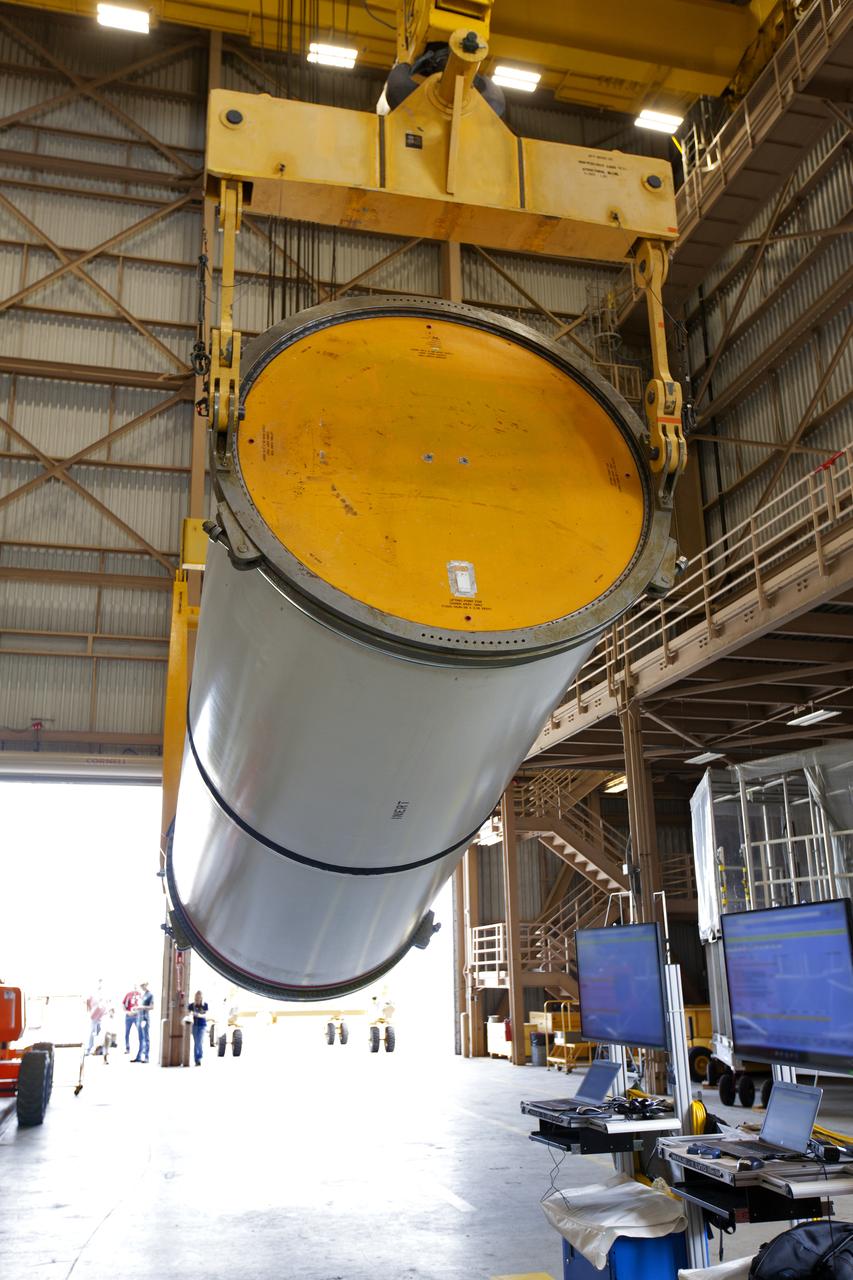
Jacobs technicians, on the Test and Operations Support Contract, practice crane operations with an inert booster rocket segment in the Rotation, Processing and Surge Facility on June 22, 2018, at NASA's Kennedy Space Center in Florida. Dual cranes are used to move the segment from vertical to horizontal, a maneuver known as a "breakover rotation." As part of routine processing operations for the agency's Space Launch System (SLS) rocket, the RPSF team will receive all of the solid rocket fuel segments for inspection and preparation prior to transporting them to the Vehicle Assembly Building for stacking on the mobile launcher. Many pathfinding operations are being done to prepare for launch of the SLS and Orion spacecraft on Exploration Mission-1 and deep space missions.
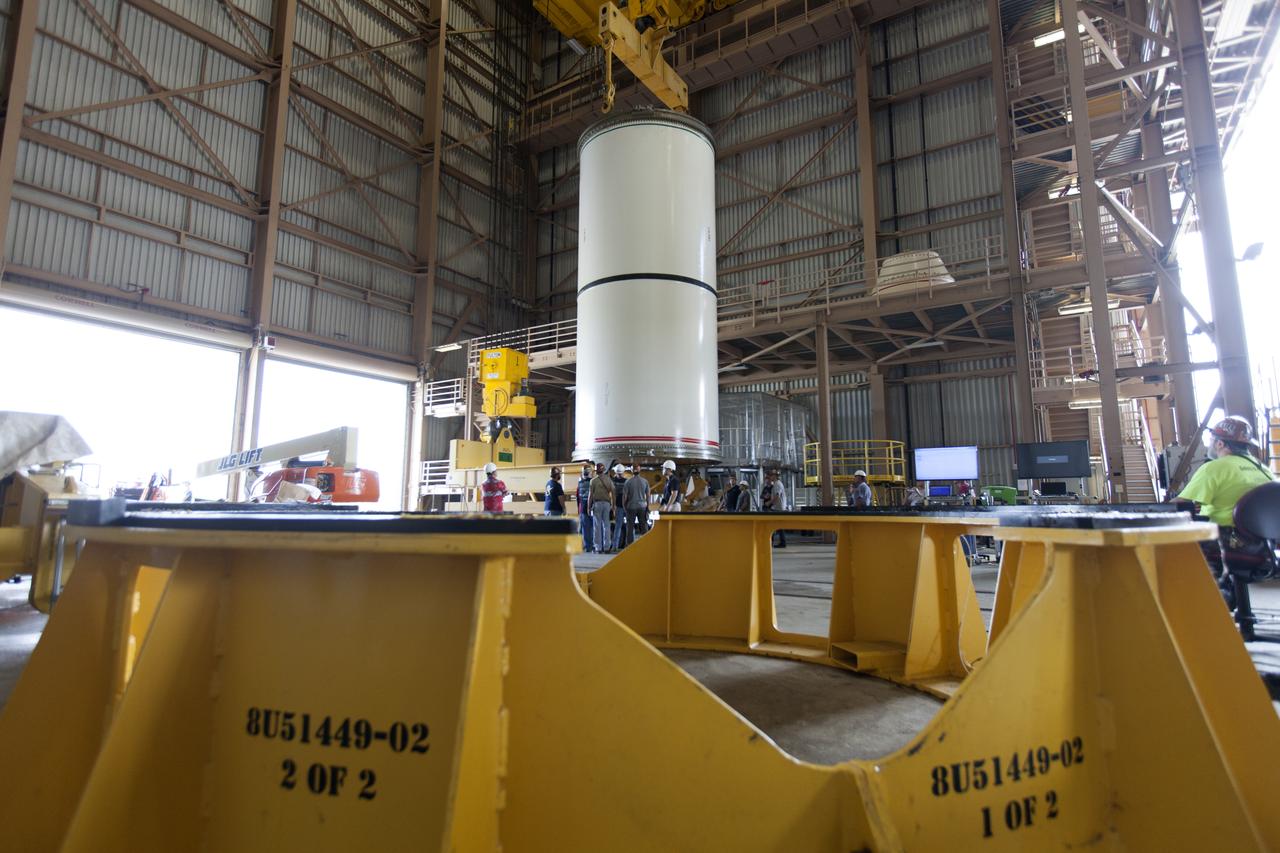
Jacobs technicians, on the Test and Operations Support Contract, practice crane operations with an inert booster rocket segment in the Rotation, Processing and Surge Facility on June 22, 2018, at NASA's Kennedy Space Center in Florida. Dual cranes are being used to move the segment from vertical to horizontal, a maneuver known as a "breakover rotation." As part of routine processing operations for the agency's Space Launch System (SLS) rocket, the RPSF team will receive all of the solid rocket fuel segments for inspection and preparation prior to transporting them to the Vehicle Assembly Building for stacking on the mobile launcher. Many pathfinding operations are being done to prepare for launch of the SLS and Orion spacecraft on Exploration Mission-1 and deep space missions.
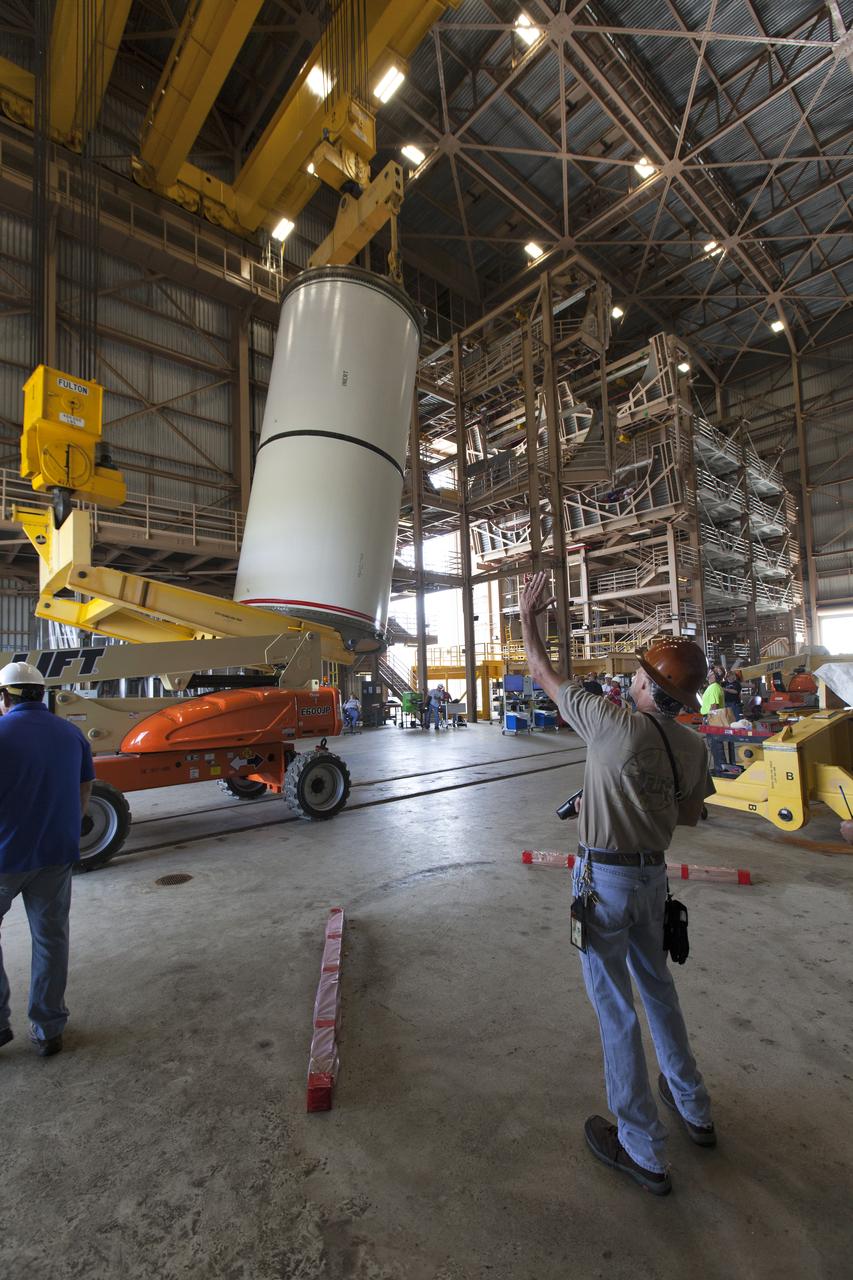
Jacobs technicians, on the Test and Operations Support Contract, practice crane operations with an inert booster rocket segment in the Rotation, Processing and Surge Facility on June 22, 2018, at NASA's Kennedy Space Center in Florida. Dual cranes are being used to move the segment from vertical to horizontal, a maneuver known as a "breakover rotation." As part of routine processing operations for the agency's Space Launch System (SLS) rocket, the RPSF team will receive all of the solid rocket fuel segments for inspection and preparation prior to transporting them to the Vehicle Assembly Building for stacking on the mobile launcher. Many pathfinding operations are being done to prepare for launch of the SLS and Orion spacecraft on Exploration Mission-1 and deep space missions.
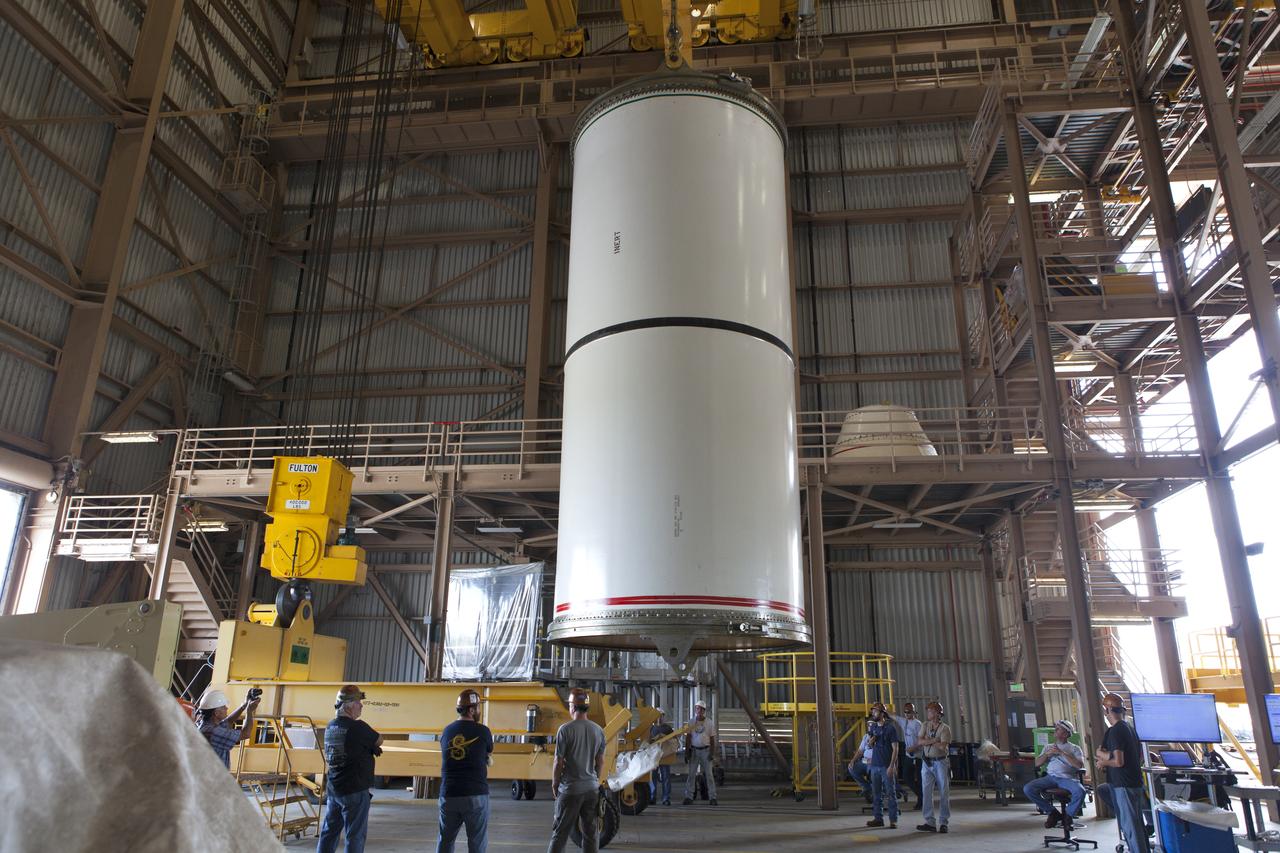
Jacobs technicians, on the Test and Operations Support Contract, practice crane operations with an inert booster rocket segment in the Rotation, Processing and Surge Facility on June 22, 2018, at NASA's Kennedy Space Center in Florida. Dual cranes are being used to move the segment from vertical to horizontal, a maneuver known as a "breakover rotation." As part of routine processing operations for the agency's Space Launch System (SLS) rocket, the RPSF team will receive all of the solid rocket fuel segments for inspection and preparation prior to transporting them to the Vehicle Assembly Building for stacking on the mobile launcher. Many pathfinding operations are being done to prepare for launch of the SLS and Orion spacecraft on Exploration Mission-1 and deep space missions.
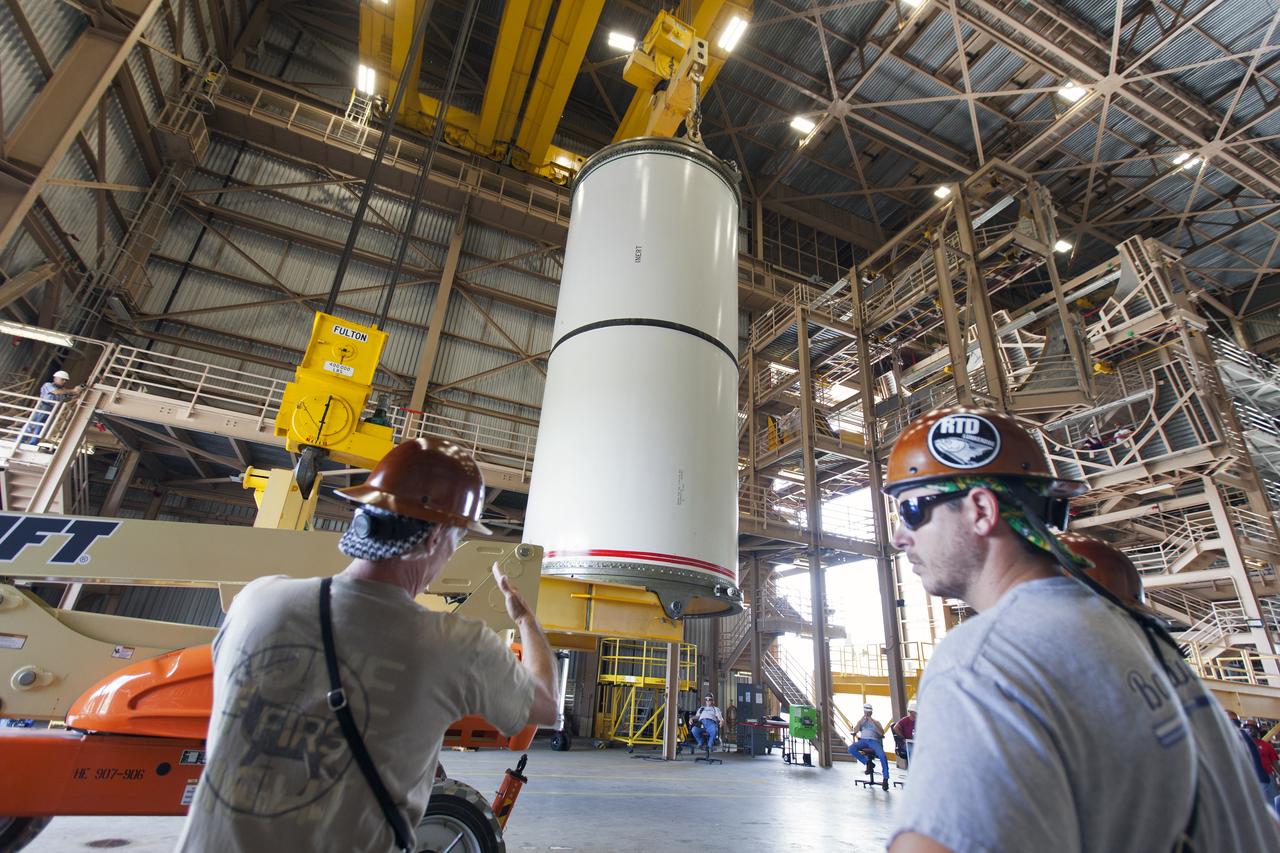
Jacobs technicians, on the Test and Operations Support Contract, practice crane operations with an inert booster rocket segment in the Rotation, Processing and Surge Facility on June 22, 2018, at NASA's Kennedy Space Center in Florida. Dual cranes are being used to move the segment from vertical to horizontal, a maneuver known as a "breakover rotation." As part of routine processing operations for the agency's Space Launch System (SLS) rocket, the RPSF team will receive all of the solid rocket fuel segments for inspection and preparation prior to transporting them to the Vehicle Assembly Building for stacking on the mobile launcher. Many pathfinding operations are being done to prepare for launch of the SLS and Orion spacecraft on Exploration Mission-1 and deep space missions.
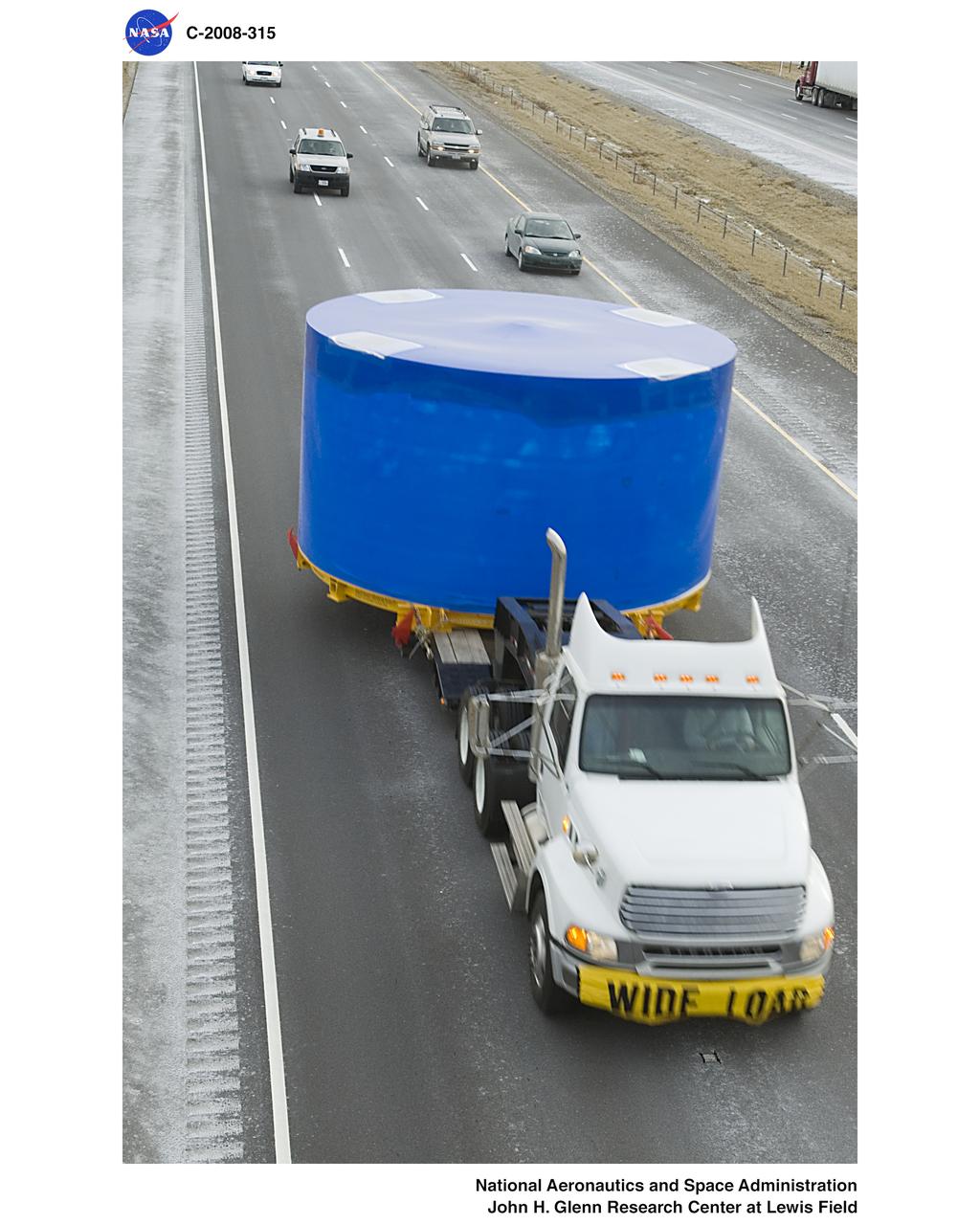
Ares Pathfinder test move
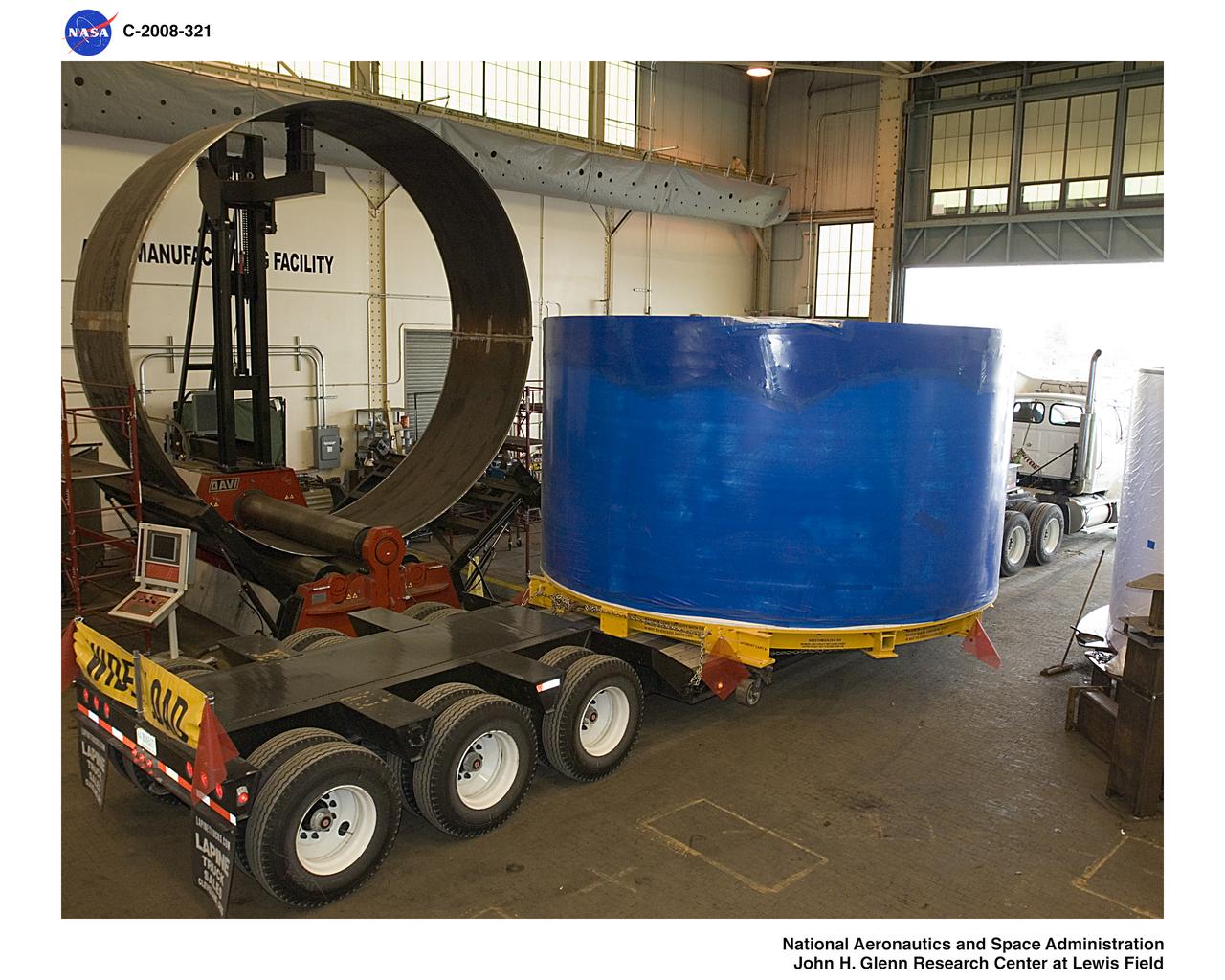
Ares Pathfinder test move
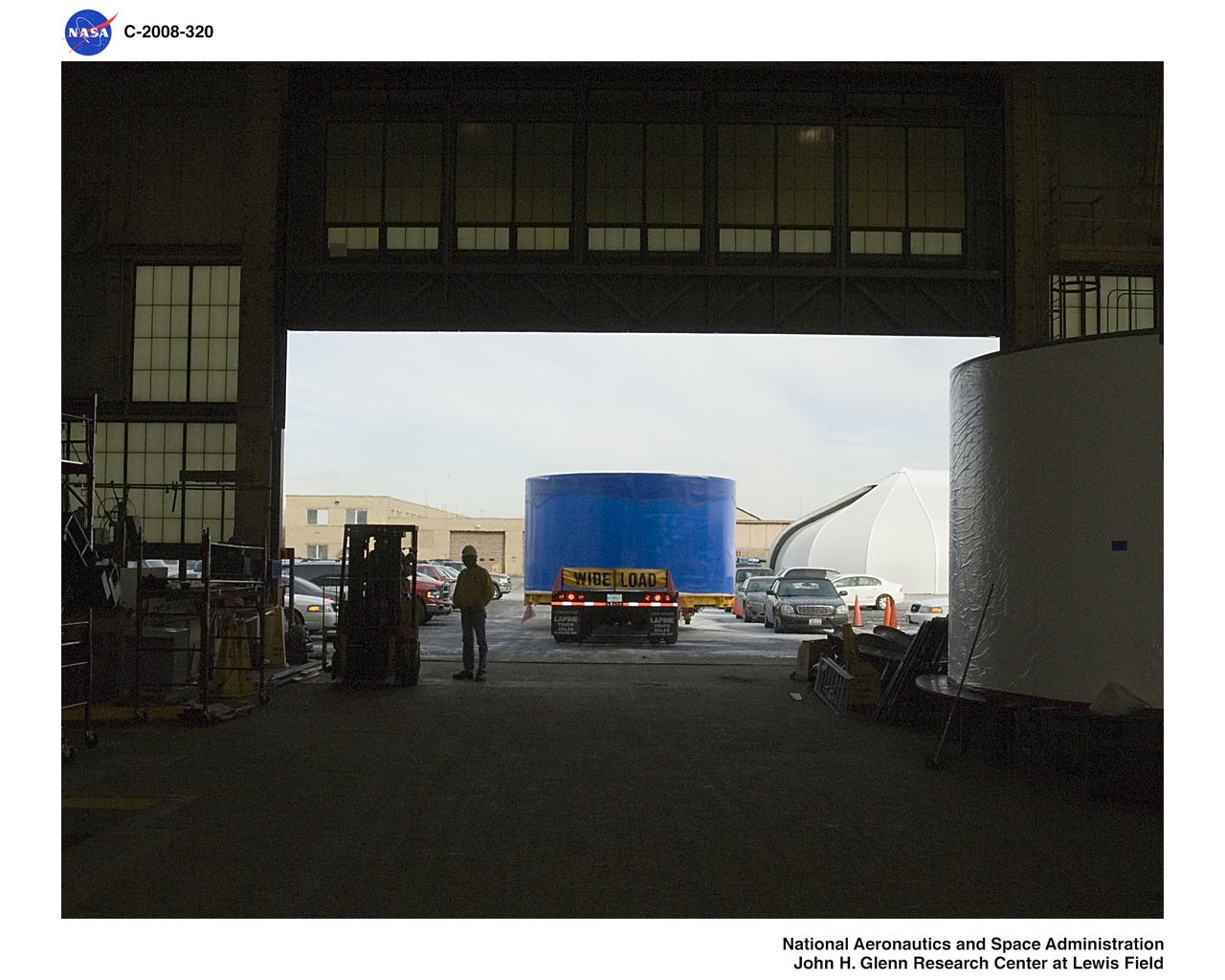
Ares Pathfinder test move
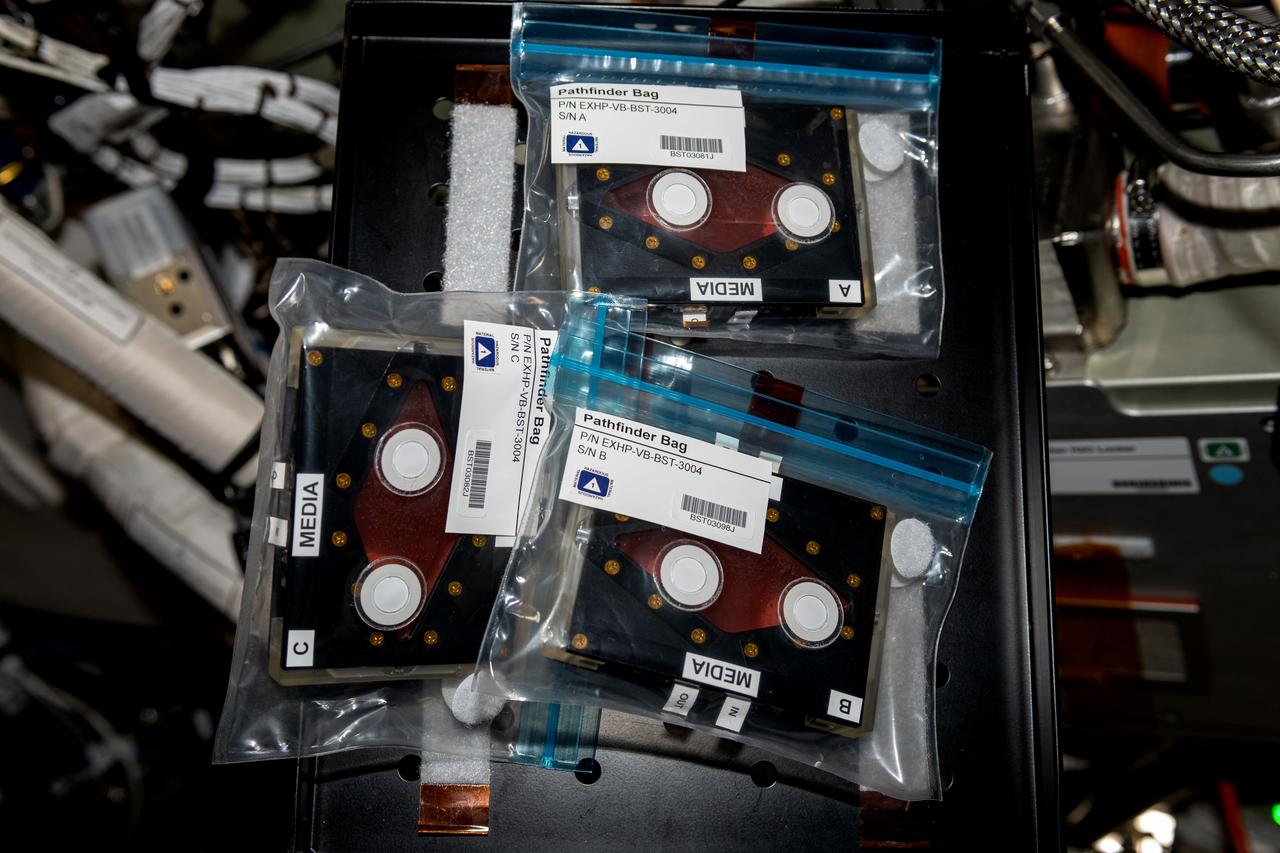
iss069e054973 (8/8/2023) --- A view of the StemCellEX-H Pathfinder sample cassettes aboard the International space Station (ISS). Hematopoietic Stem Cell Expansion in Space: Pathfinder Investigation (StemCellEX-H Pathfinder) tests methods for producing human hematopoietic stem cells in space.
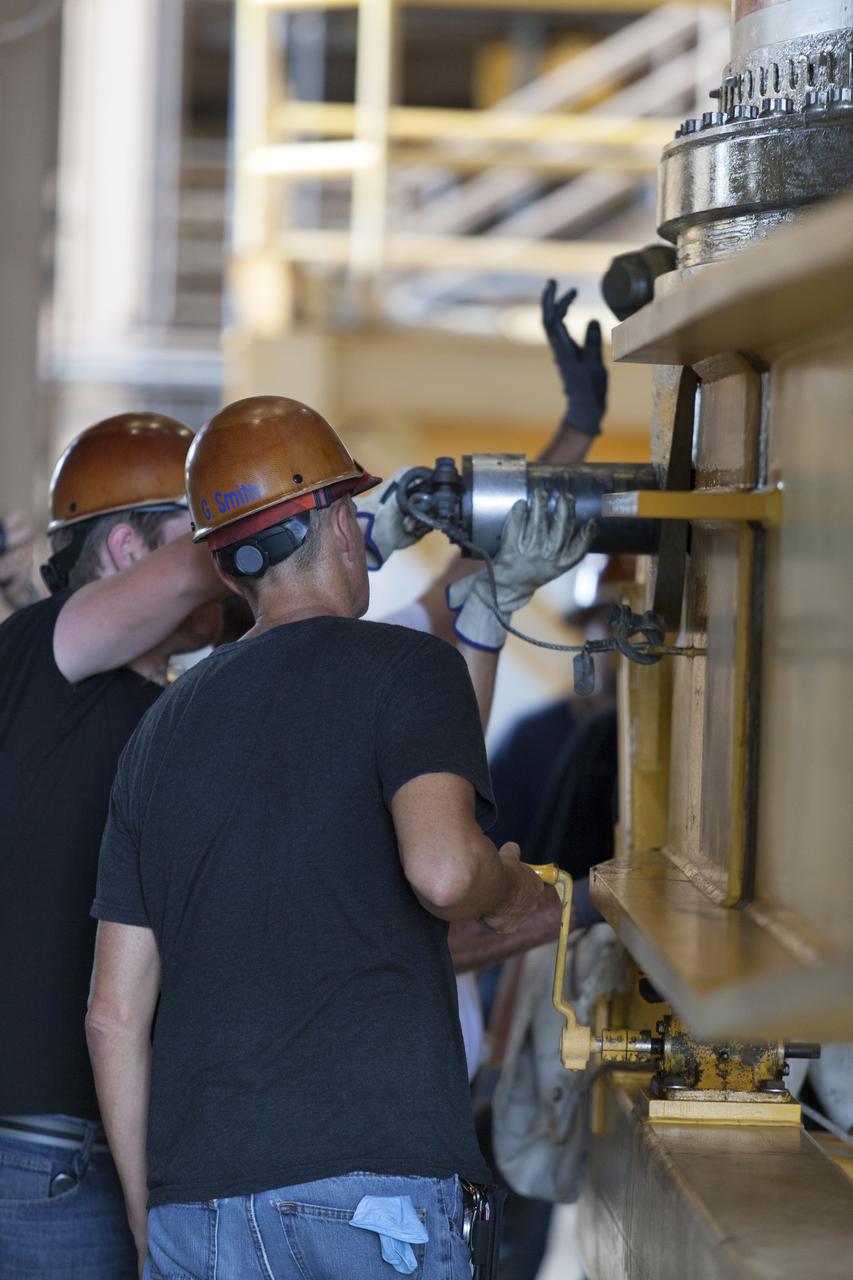
Jacobs technicians, on the Test and Operations Support Contract, check bolt fittings as they practice crane operations with an inert booster rocket segment in the Rotation, Processing and Surge Facility on June 22, 2018, at NASA's Kennedy Space Center in Florida. Dual cranes are being used to move the segment from vertical to horizontal, a maneuver known as a "breakover rotation." As part of routine processing operations for the agency's Space Launch System (SS) rocket, the RPSF team will receive all of the solid rocket fuel segments for inspection and preparation prior to transporting them to the Vehicle Assembly Building for stacking on the mobile launcher. Many pathfinding operations are being done to prepare for launch of the SLS and Orion spacecraft on Exploration Mission-1 and deep space missions.
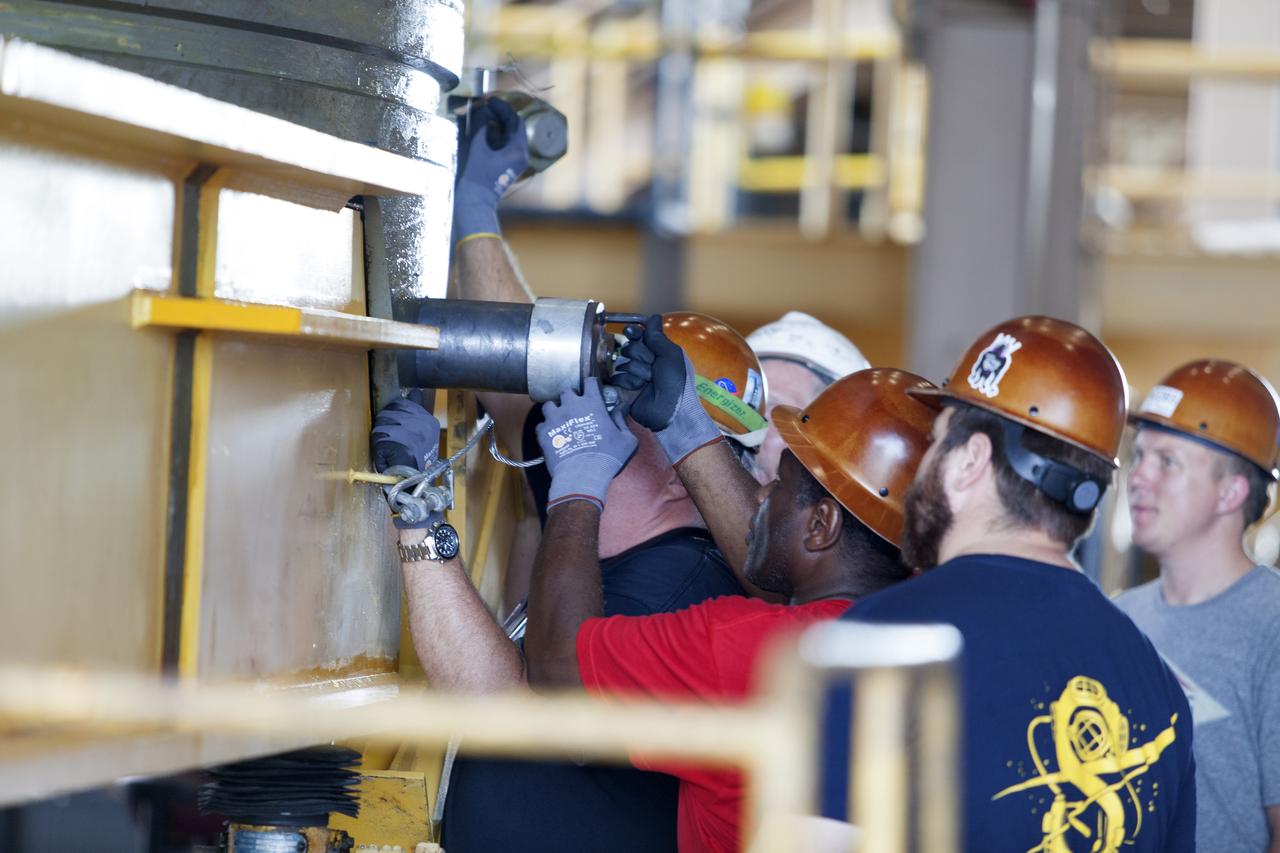
Jacobs technicians, on the Test and Operations Support Contract, check bolt fittings as they practice crane operations with an inert booster rocket segment in the Rotation, Processing and Surge Facility on June 22, 2018, at NASA's Kennedy Space Center in Florida. Dual cranes are being used to move the segment from vertical to horizontal, a maneuver known as a "breakover rotation." As part of routine processing operations for the agency's Space Launch System (SLS) rocket, the RPSF team will receive all of the solid rocket fuel segments for inspection and preparation prior to transporting them to the Vehicle Assembly Building for stacking on the mobile launcher. Many pathfinding operations are being done to prepare for launch of the SLS and Orion spacecraft on Exploration Mission-1 and deep space missions.
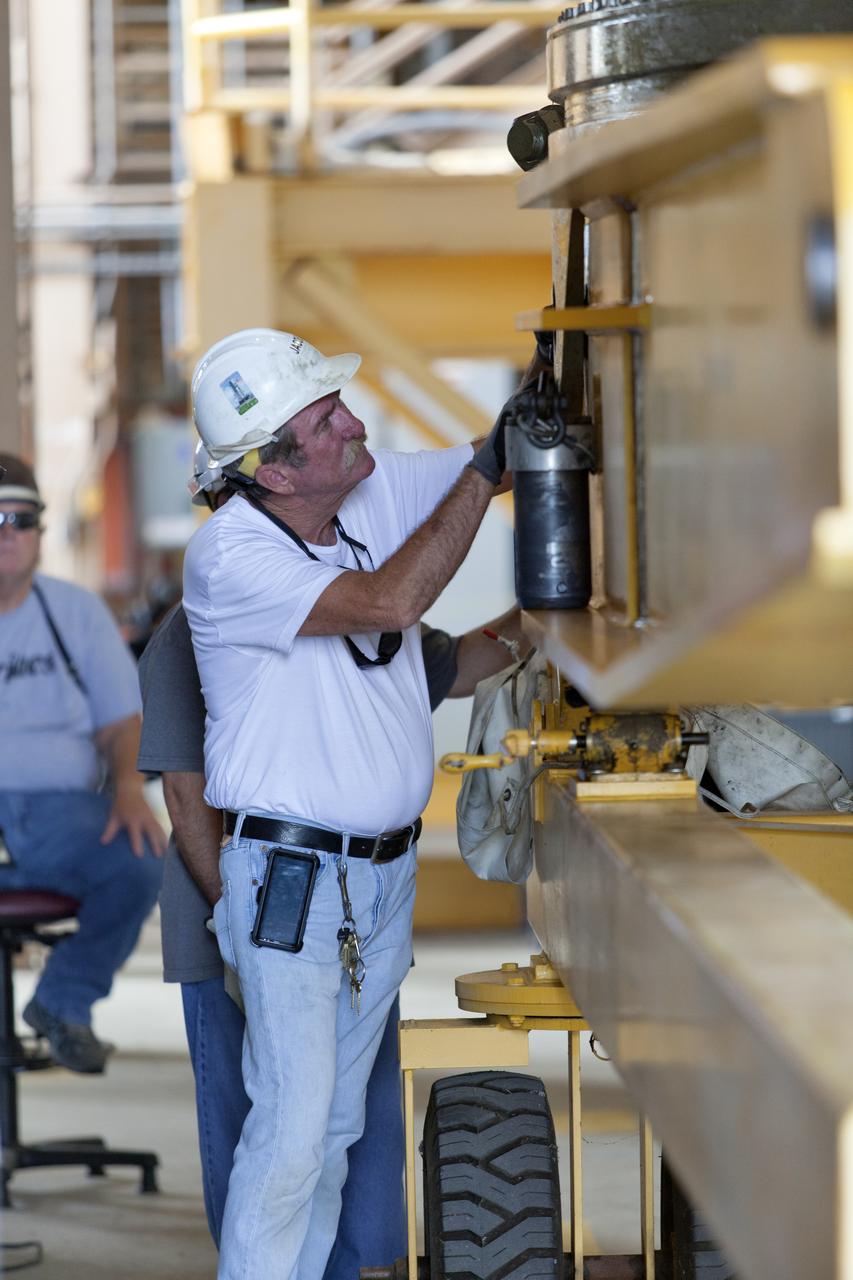
A Jacobs technician, on the Test and Operations Support Contract, checks bolt fittings during practice crane operations with an inert booster rocket segment in the Rotation, Processing and Surge Facility on June 22, 2018, at NASA's Kennedy Space Center in Florida. Dual cranes will be used to move the segment from vertical to horizontal, a maneuver known as a "breakover rotation." As part of routine processing operations for the agency's Space Launch System (SLS) rocket, the RPSF team will receive all of the solid rocket fuel segments for inspection and preparation prior to transporting them to the Vehicle Assembly Building for stacking on the mobile launcher. Many pathfinding operations are being done to prepare for launch of the SLS and Orion spacecraft on Exploration Mission-1 and deep space missions.

NASA’s CLARREO Pathfinder (Calibration Absolute Radiance and Refractivity Observatory Pathfinder) undergoes prelaunch processing while secured on a test stand inside the Space Systems Processing Facility at the agency’s Kennedy Space Center in Florida on Thursday, Feb. 26, 2026. CLARREO Pathfinder will launch to the International Space Station aboard SpaceX's 34th commercial resupply services mission for NASA, where it will demonstrate an ability to take highly accurate measurements of sunlight reflected by Earth and the Moon.

NASA’s CLARREO Pathfinder (Calibration Absolute Radiance and Refractivity Observatory Pathfinder) undergoes prelaunch processing while secured on a test stand inside the Space Systems Processing Facility at the agency’s Kennedy Space Center in Florida on Thursday, Feb. 26, 2026. CLARREO Pathfinder will launch to the International Space Station aboard SpaceX's 34th commercial resupply services mission for NASA, where it will demonstrate an ability to take highly accurate measurements of sunlight reflected by Earth and the Moon.

NASA’s CLARREO Pathfinder (Calibration Absolute Radiance and Refractivity Observatory Pathfinder) undergoes prelaunch processing while secured on a test stand inside the Space Systems Processing Facility at the agency’s Kennedy Space Center in Florida on Thursday, Feb. 26, 2026. CLARREO Pathfinder will launch to the International Space Station aboard SpaceX's 34th commercial resupply services mission for NASA, where it will demonstrate an ability to take highly accurate measurements of sunlight reflected by Earth and the Moon.

NASA’s CLARREO Pathfinder (Calibration Absolute Radiance and Refractivity Observatory Pathfinder) undergoes prelaunch processing while secured on a test stand inside the Space Systems Processing Facility at the agency’s Kennedy Space Center in Florida on Thursday, Feb. 26, 2026. CLARREO Pathfinder will launch to the International Space Station aboard SpaceX's 34th commercial resupply services mission for NASA, where it will demonstrate an ability to take highly accurate measurements of sunlight reflected by Earth and the Moon.

NASA’s CLARREO Pathfinder (Calibration Absolute Radiance and Refractivity Observatory Pathfinder) undergoes prelaunch processing while secured on a test stand inside the Space Systems Processing Facility at the agency’s Kennedy Space Center in Florida on Thursday, Feb. 26, 2026. CLARREO Pathfinder will launch to the International Space Station aboard SpaceX's 34th commercial resupply services mission for NASA, where it will demonstrate an ability to take highly accurate measurements of sunlight reflected by Earth and the Moon.

NASA’s CLARREO Pathfinder (Calibration Absolute Radiance and Refractivity Observatory Pathfinder) undergoes prelaunch processing while secured on a test stand inside the Space Systems Processing Facility at the agency’s Kennedy Space Center in Florida on Thursday, Feb. 26, 2026. CLARREO Pathfinder will launch to the International Space Station aboard SpaceX's 34th commercial resupply services mission for NASA, where it will demonstrate an ability to take highly accurate measurements of sunlight reflected by Earth and the Moon.

NASA’s CLARREO Pathfinder (Calibration Absolute Radiance and Refractivity Observatory Pathfinder) undergoes prelaunch processing while secured on a test stand inside the Space Systems Processing Facility at the agency’s Kennedy Space Center in Florida on Thursday, Feb. 26, 2026. CLARREO Pathfinder will launch to the International Space Station aboard SpaceX's 34th commercial resupply services mission for NASA, where it will demonstrate an ability to take highly accurate measurements of sunlight reflected by Earth and the Moon.
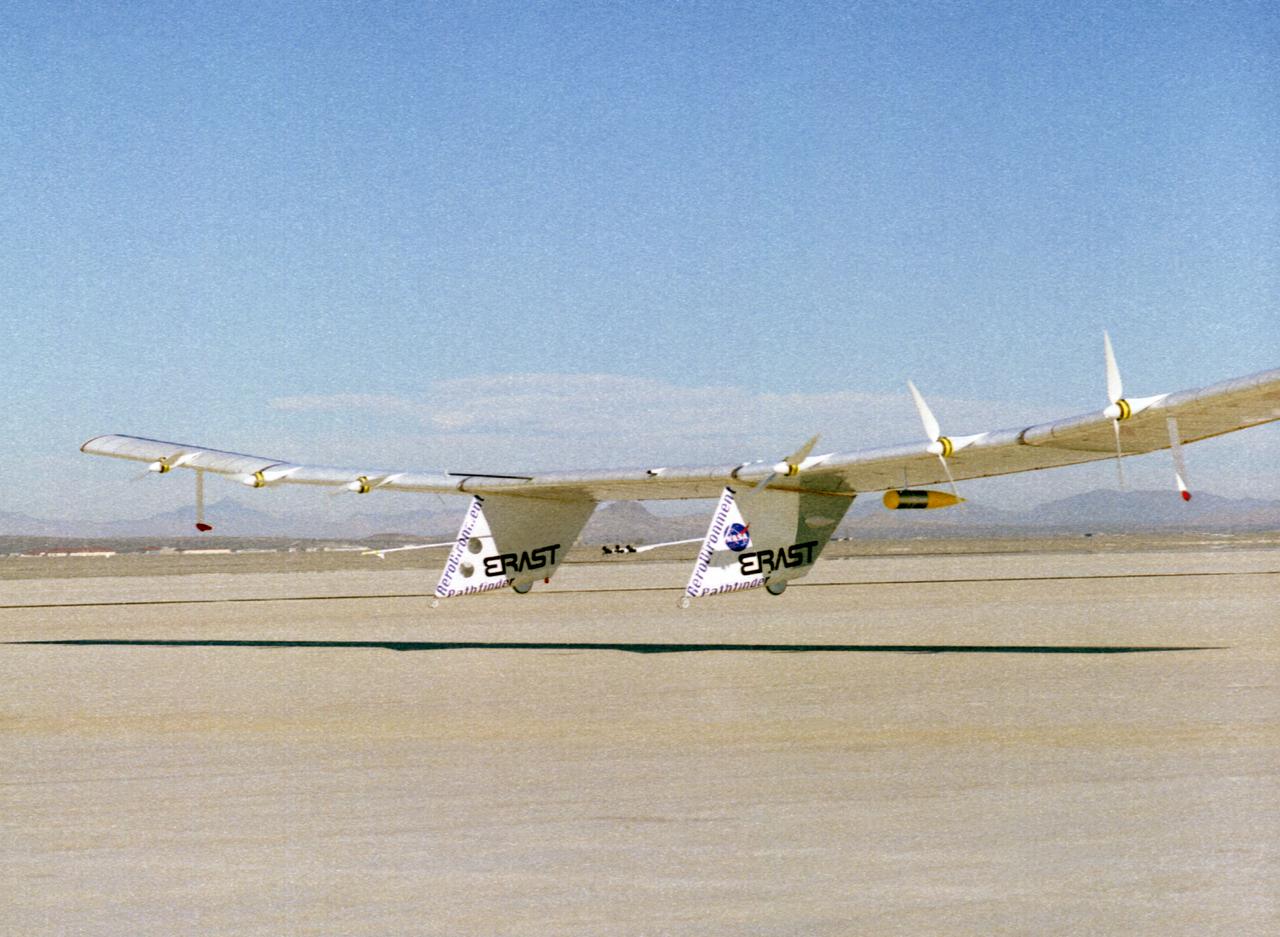
The Pathfinder solar-powered research aircraft settles in for landing on the bed of Rogers Dry Lake at the Dryden Flight Research Center, Edwards, California, after a successful test flight Nov. 19, 1996. The ultra-light craft flew a racetrack pattern at low altitudes over the flight test area for two hours while project engineers checked out various systems and sensors on the uninhabited aircraft. The Pathfinder was controlled by two pilots, one in a mobile control unit which followed the craft, the other in a stationary control station. Pathfinder, developed by AeroVironment, Inc., is one of several designs being evaluated under NASA's Environmental Research Aircraft and Sensor Technology (ERAST) program.
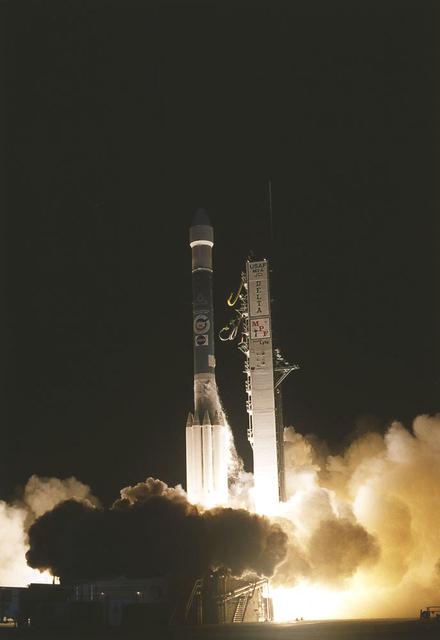
The Mars Pathfinder began the journey to Mars with liftoff atop a Delta II expendable launch vehicle from launch Complex 17B on Cape Canaveral Air Station. The Mars Pathfinder traveled on a direct trajectory to Mars, and arrived there in July 1997. Mars Pathfinder sent a lander and small robotic rover, Sojourner, to the surface of Mars. The primary objective of the mission was to demonstrate a low-cost way of delivering a science package to the surface of Mars using a direct entry, descent and landing with the aid of small rocket engines, a parachute, airbags and other techniques. In addition, landers and rovers of the future will share the heritage of Mars Pathfinder designs and technologies first tested in this mission. Pathfinder also collected invaluable data about the Martian surface.
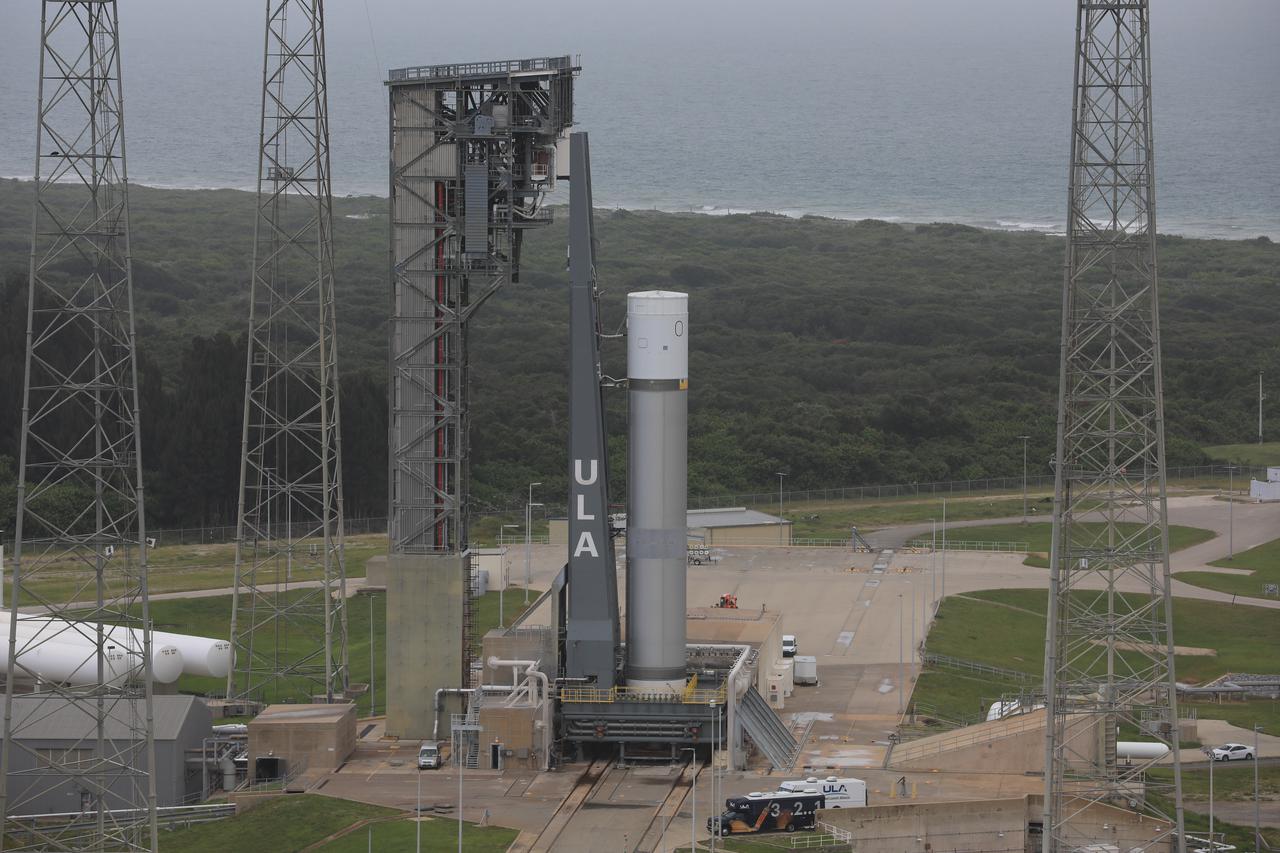
A pathfinder test article of United Launch Alliance’s (ULA) Vulcan Centaur rocket is seen at Space Launch Complex 41 at Cape Canaveral Space Force Station in Florida on Aug. 26, 2021. The pathfinder booster is undergoing a series of fueling tests to validate the infrastructure in place at the launch pad and allow the launch team to rehearse countdown operations before the Vulcan’s first flight.
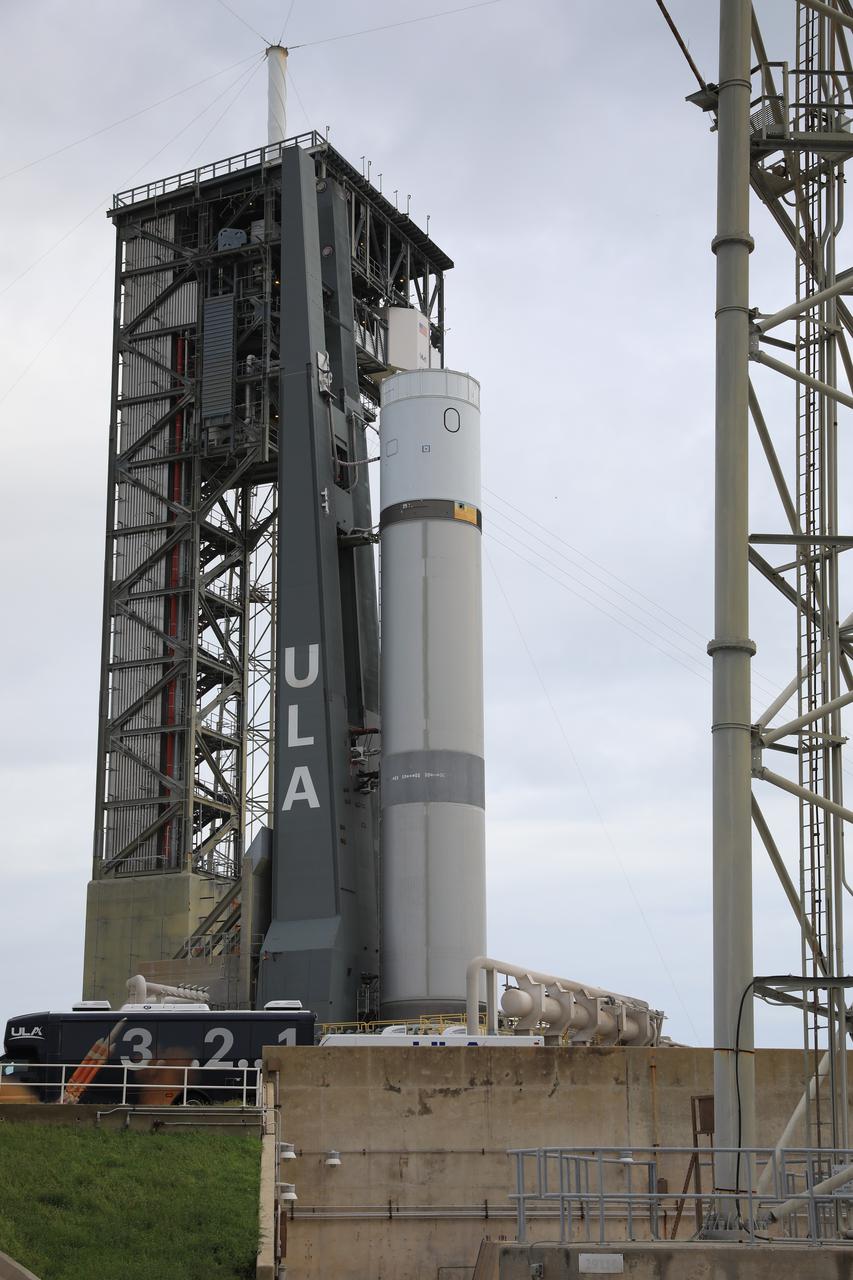
A pathfinder test article of United Launch Alliance’s (ULA) Vulcan Centaur rocket is seen at Space Launch Complex 41 at Cape Canaveral Space Force Station in Florida on Aug. 26, 2021. The pathfinder booster is undergoing a series of fueling tests to validate the infrastructure in place at the launch pad and allow the launch team to rehearse countdown operations before the Vulcan’s first flight.
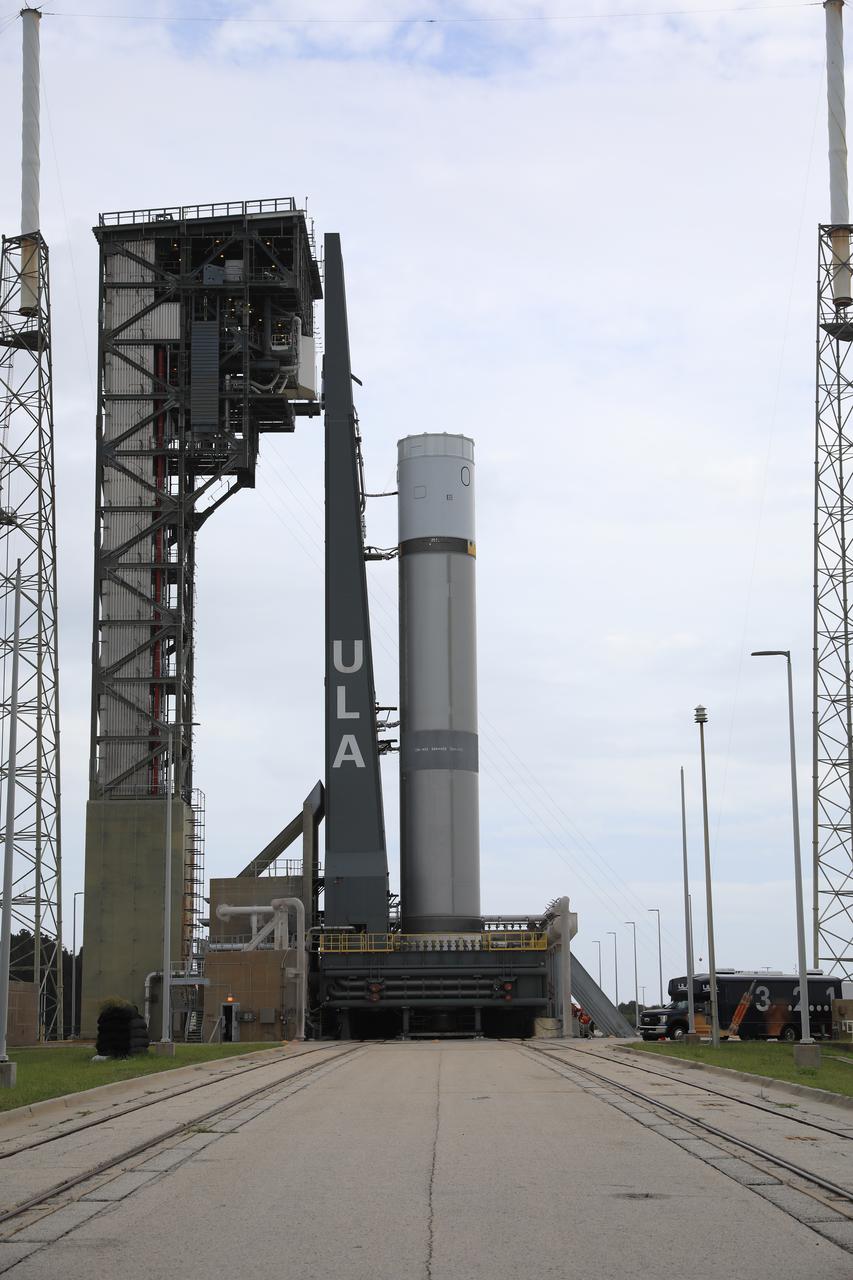
A pathfinder test article of United Launch Alliance’s (ULA) Vulcan Centaur rocket is seen at Space Launch Complex 41 at Cape Canaveral Space Force Station in Florida on Aug. 26, 2021. The pathfinder booster is undergoing a series of fueling tests to validate the infrastructure in place at the launch pad and allow the launch team to rehearse countdown operations before the Vulcan’s first flight.
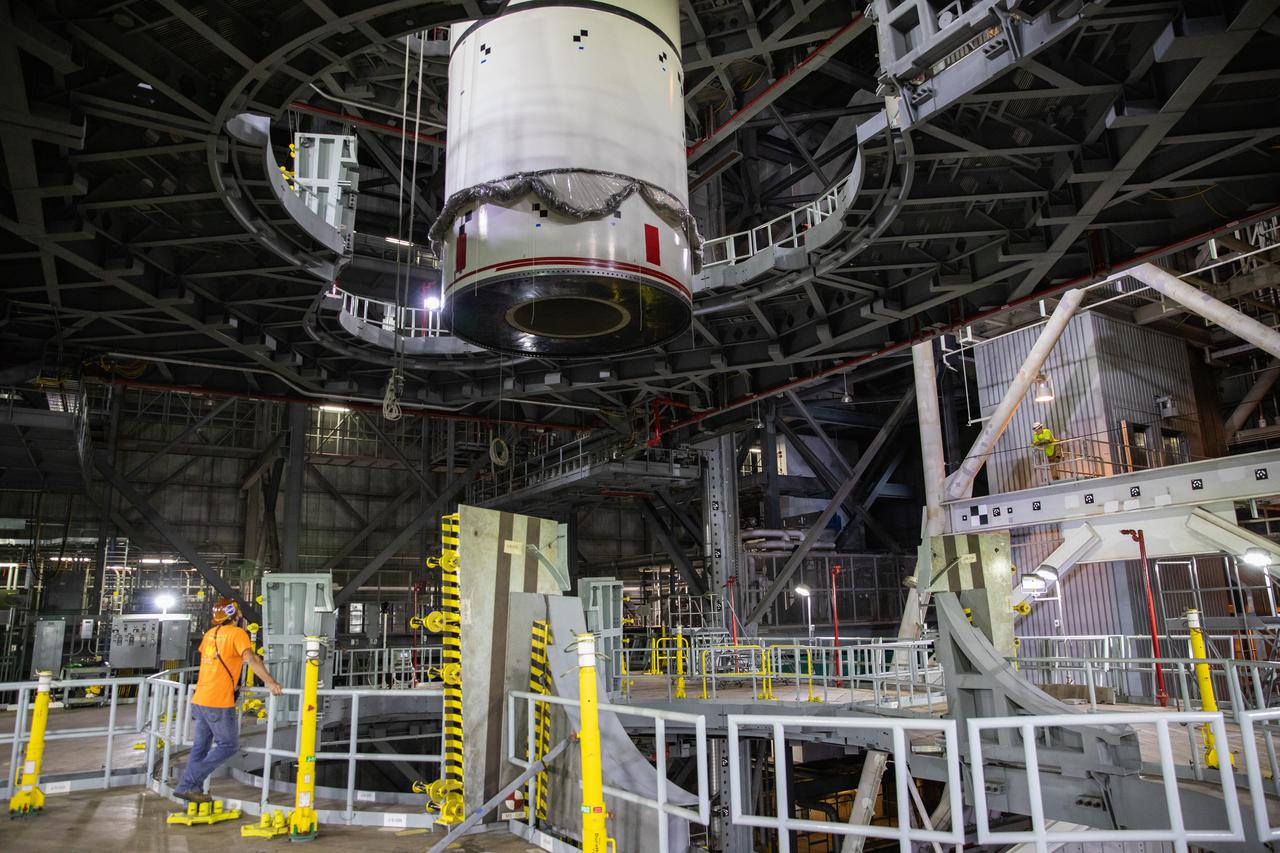
Technicians with NASA’s Exploration Ground Systems lower a mock-up, or pathfinder, of the Space Launch System’s (SLS) center booster segment onto an aft pathfinder segment inside the Vehicle Assembly Building (VAB) at the agency’s Kennedy Space Center in Florida on Sept. 14, 2020. Teams rehearsed stacking both pathfinder segments on top of the mobile launcher in High Bay 3 of the VAB in preparation for the Artemis I launch. Stacking of the actual SLS booster segments will occur later this year, when the rocket’s core stage arrives at Kennedy. Artemis I is the first in a series of increasingly complex missions that will test SLS and the Orion spacecraft as an integrated system prior to crewed flights to the Moon.
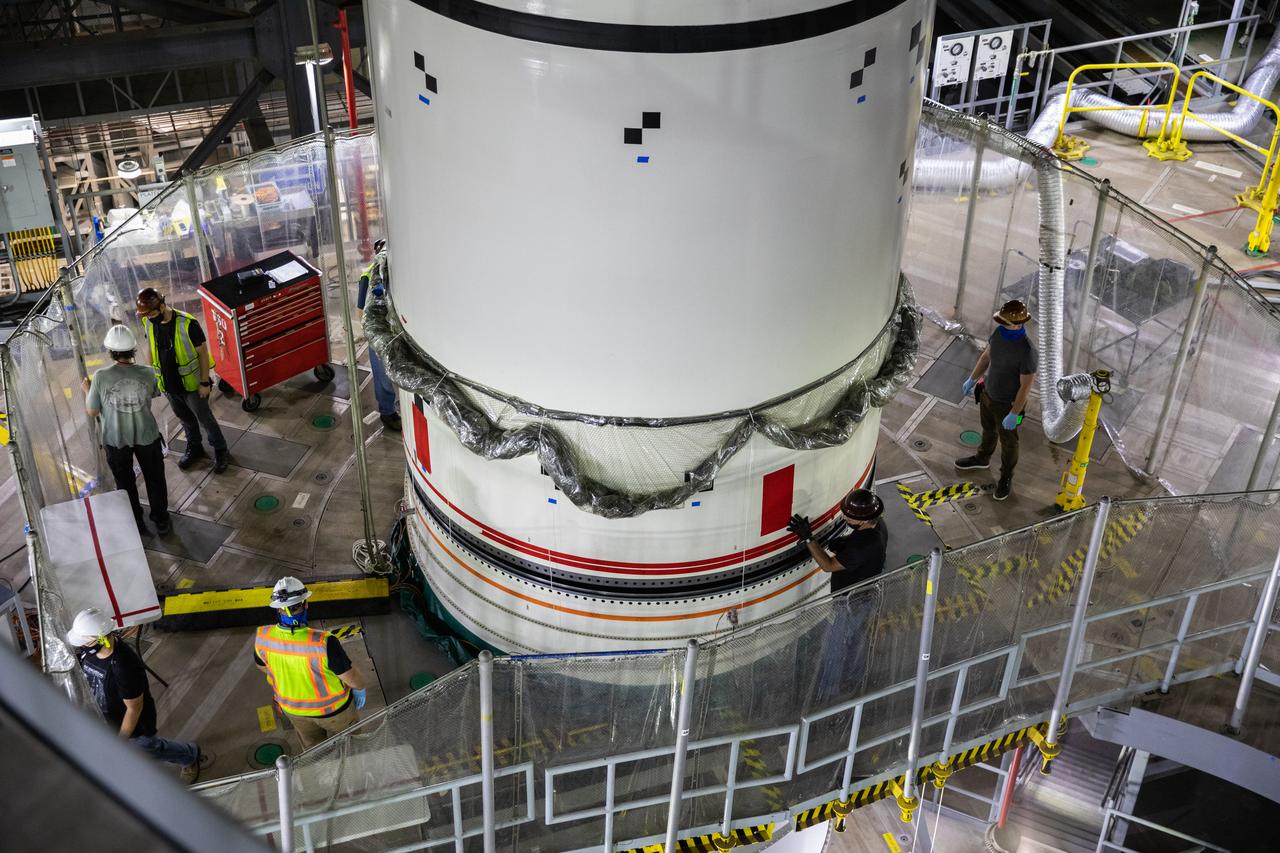
Technicians with NASA’s Exploration Ground Systems lower a mock-up, or pathfinder, of the Space Launch System’s (SLS) center booster segment onto an aft pathfinder segment inside the Vehicle Assembly Building (VAB) at the agency’s Kennedy Space Center in Florida on Sept. 14, 2020. Teams rehearsed stacking both pathfinder segments on top of the mobile launcher in High Bay 3 of the VAB in preparation for the Artemis I launch. Stacking of the actual SLS booster segments will occur later this year, when the rocket’s core stage arrives at Kennedy. Artemis I is the first in a series of increasingly complex missions that will test SLS and the Orion spacecraft as an integrated system prior to crewed flights to the Moon.
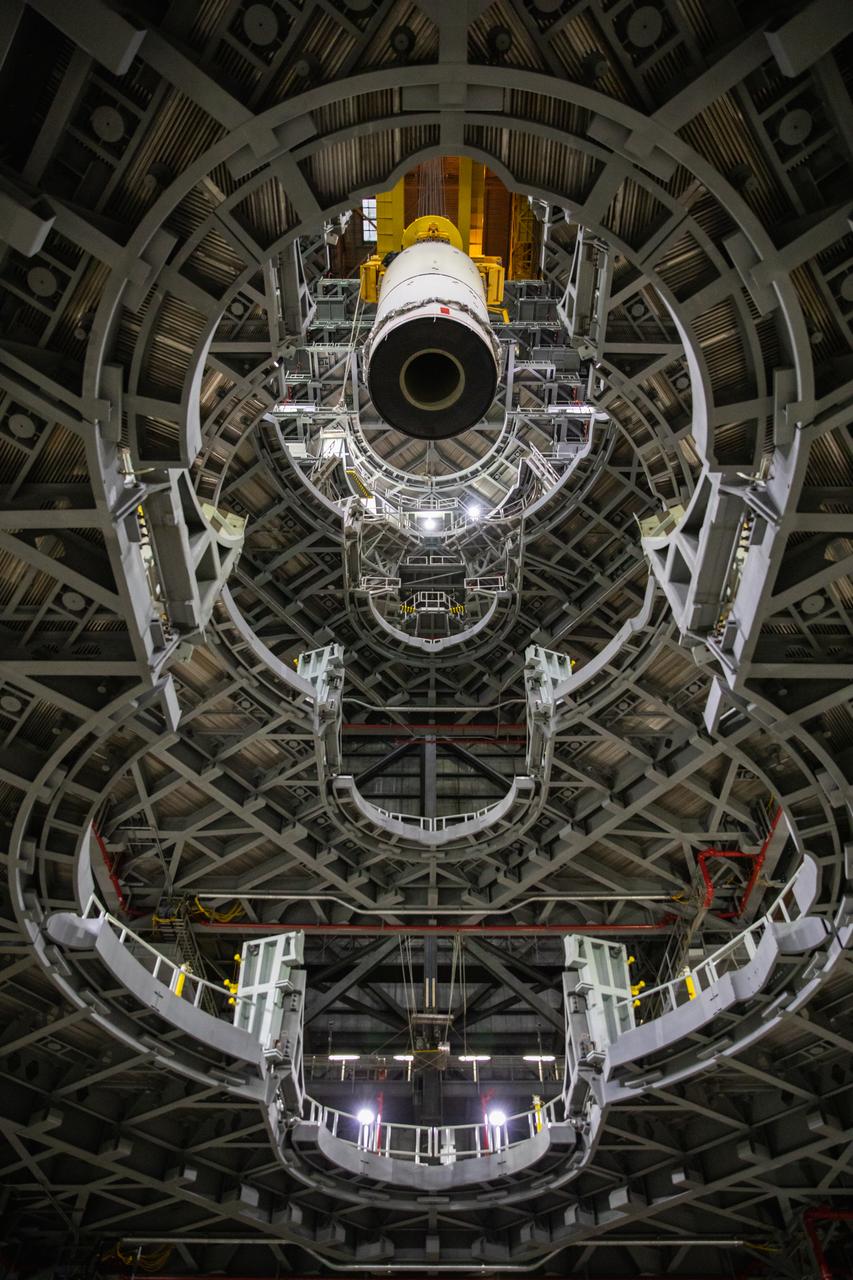
Technicians with NASA’s Exploration Ground Systems prepare to lower a mock-up, or pathfinder, of the Space Launch System’s (SLS) center booster segment onto an aft pathfinder segment inside the Vehicle Assembly Building (VAB) at the agency’s Kennedy Space Center in Florida on Sept. 14, 2020. Teams rehearsed stacking both pathfinder segments on top of the mobile launcher in High Bay 3 of the VAB in preparation for the Artemis I launch. Stacking of the actual SLS booster segments will occur later this year, when the rocket’s core stage arrives at Kennedy. Artemis I is the first in a series of increasingly complex missions that will test SLS and the Orion spacecraft as an integrated system prior to crewed flights to the Moon.
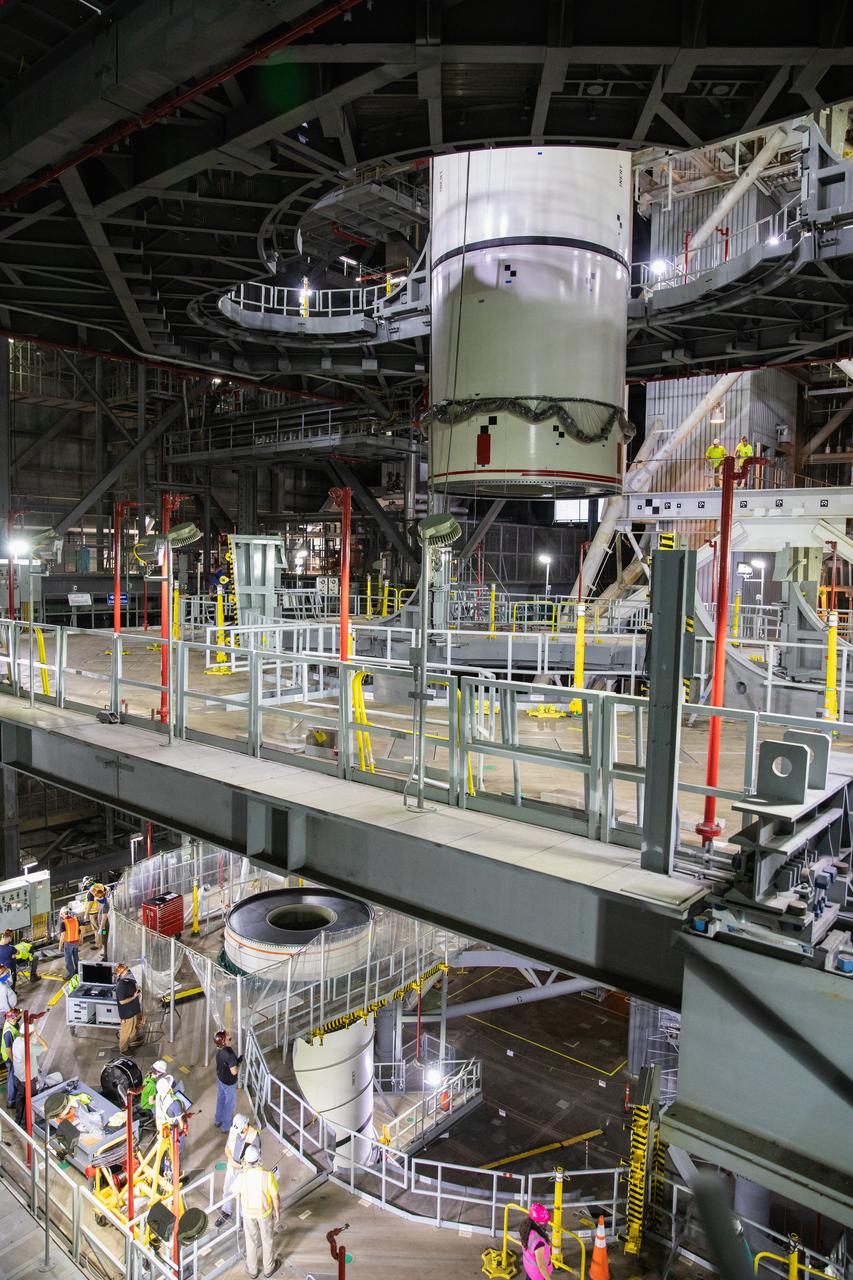
Technicians with NASA’s Exploration Ground Systems lower a mock-up, or pathfinder, of the Space Launch System’s (SLS) center booster segment onto an aft pathfinder segment inside the Vehicle Assembly Building (VAB) at the agency’s Kennedy Space Center in Florida on Sept. 14, 2020. Teams rehearsed stacking both pathfinder segments on top of the mobile launcher in High Bay 3 of the VAB in preparation for the Artemis I launch. Stacking of the actual SLS booster segments will occur later this year, when the rocket’s core stage arrives at Kennedy. Artemis I is the first in a series of increasingly complex missions that will test SLS and the Orion spacecraft as an integrated system prior to crewed flights to the Moon.
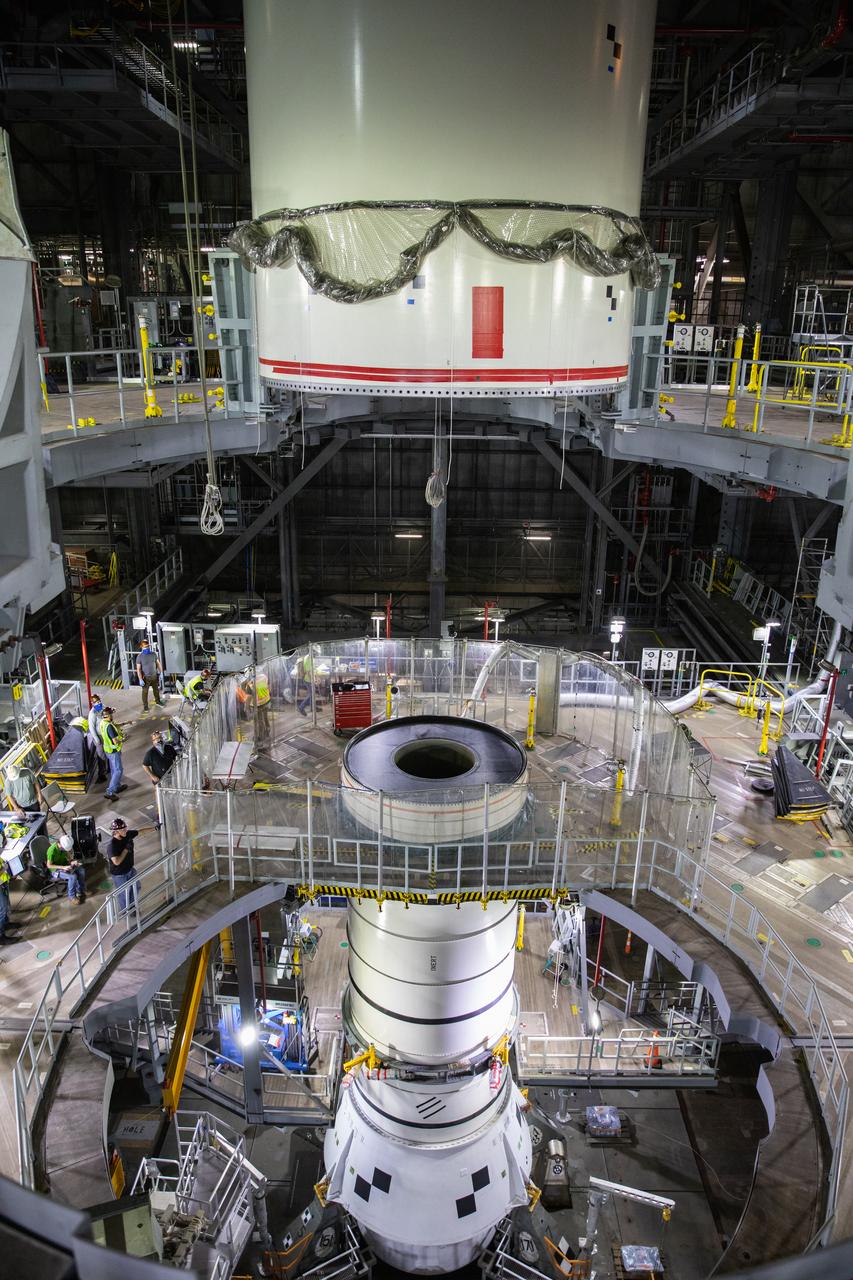
Technicians with NASA’s Exploration Ground Systems lower a mock-up, or pathfinder, of the Space Launch System’s (SLS) center booster segment onto an aft pathfinder segment inside the Vehicle Assembly Building (VAB) at the agency’s Kennedy Space Center in Florida on Sept. 14, 2020. Teams rehearsed stacking both pathfinder segments on top of the mobile launcher in High Bay 3 of the VAB in preparation for the Artemis I launch. Stacking of the actual SLS booster segments will occur later this year, when the rocket’s core stage arrives at Kennedy. Artemis I is the first in a series of increasingly complex missions that will test SLS and the Orion spacecraft as an integrated system prior to crewed flights to the Moon.

Technicians with NASA’s Exploration Ground Systems lower a mock-up, or pathfinder, of the Space Launch System’s (SLS) center booster segment onto an aft pathfinder segment inside the Vehicle Assembly Building (VAB) at the agency’s Kennedy Space Center in Florida on Sept. 14, 2020. Teams rehearsed stacking both pathfinder segments on top of the mobile launcher in High Bay 3 of the VAB in preparation for the Artemis I launch. Stacking of the actual SLS booster segments will occur later this year, when the rocket’s core stage arrives at Kennedy. Artemis I is the first in a series of increasingly complex missions that will test SLS and the Orion spacecraft as an integrated system prior to crewed flights to the Moon.
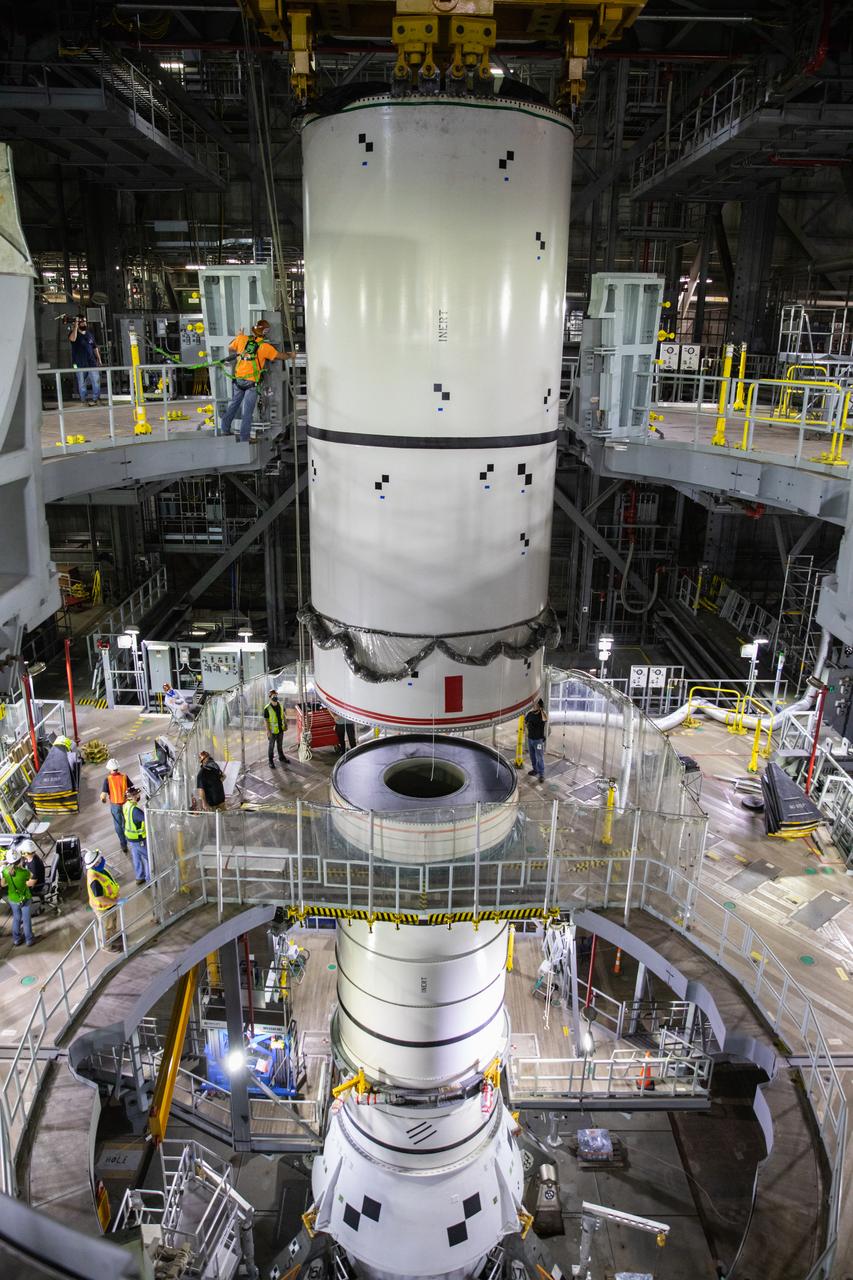
Technicians with NASA’s Exploration Ground Systems lower a mock-up, or pathfinder, of the Space Launch System’s (SLS) center booster segment onto an aft pathfinder segment inside the Vehicle Assembly Building (VAB) at the agency’s Kennedy Space Center in Florida on Sept. 14, 2020. Teams rehearsed stacking both pathfinder segments on top of the mobile launcher in High Bay 3 of the VAB in preparation for the Artemis I launch. Stacking of the actual SLS booster segments will occur later this year, when the rocket’s core stage arrives at Kennedy. Artemis I is the first in a series of increasingly complex missions that will test SLS and the Orion spacecraft as an integrated system prior to crewed flights to the Moon.
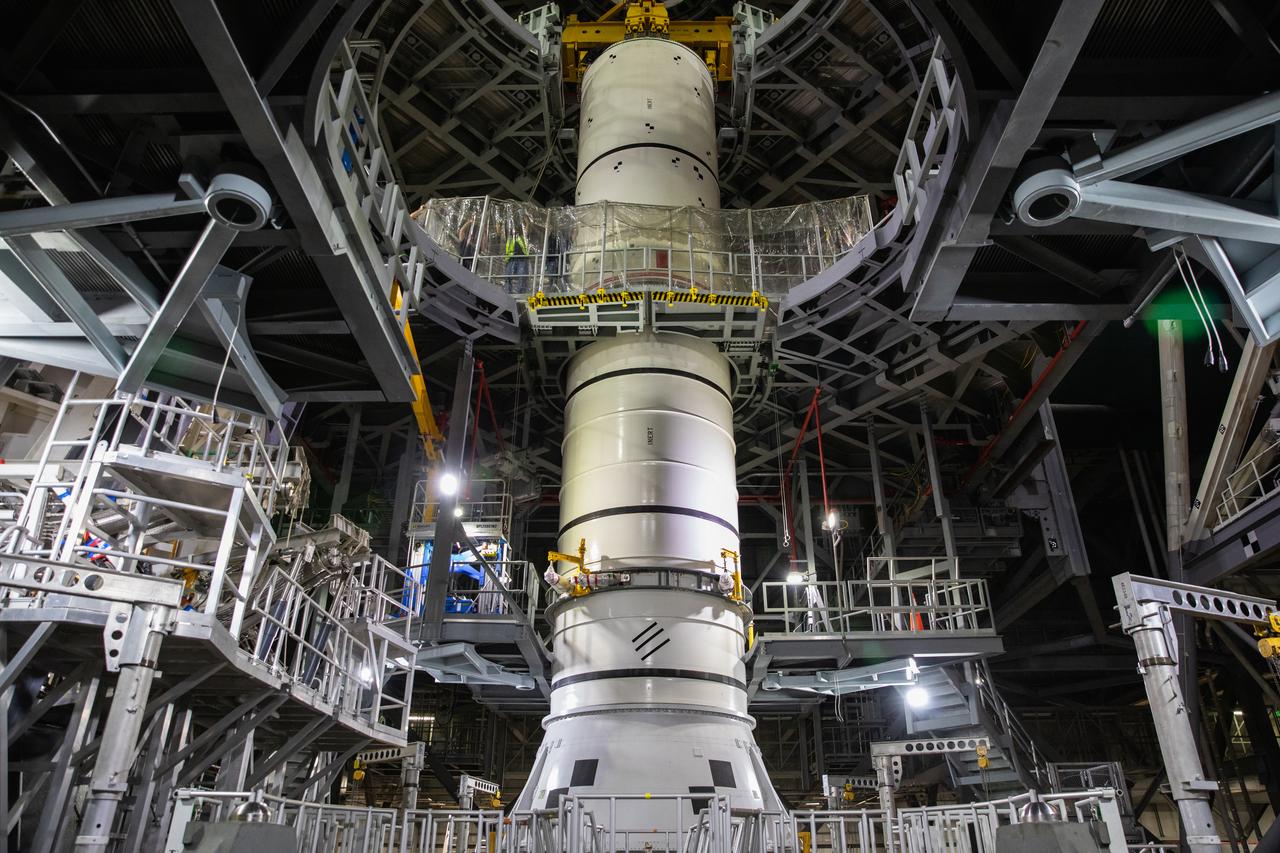
Technicians with NASA’s Exploration Ground Systems lower a mock-up, or pathfinder, of the Space Launch System’s (SLS) center booster segment onto an aft pathfinder segment inside the Vehicle Assembly Building (VAB) at the agency’s Kennedy Space Center in Florida on Sept. 14, 2020. Teams rehearsed stacking both pathfinder segments on top of the mobile launcher in High Bay 3 of the VAB in preparation for the Artemis I launch. Stacking of the actual SLS booster segments will occur later this year, when the rocket’s core stage arrives at Kennedy. Artemis I is the first in a series of increasingly complex missions that will test SLS and the Orion spacecraft as an integrated system prior to crewed flights to the Moon.
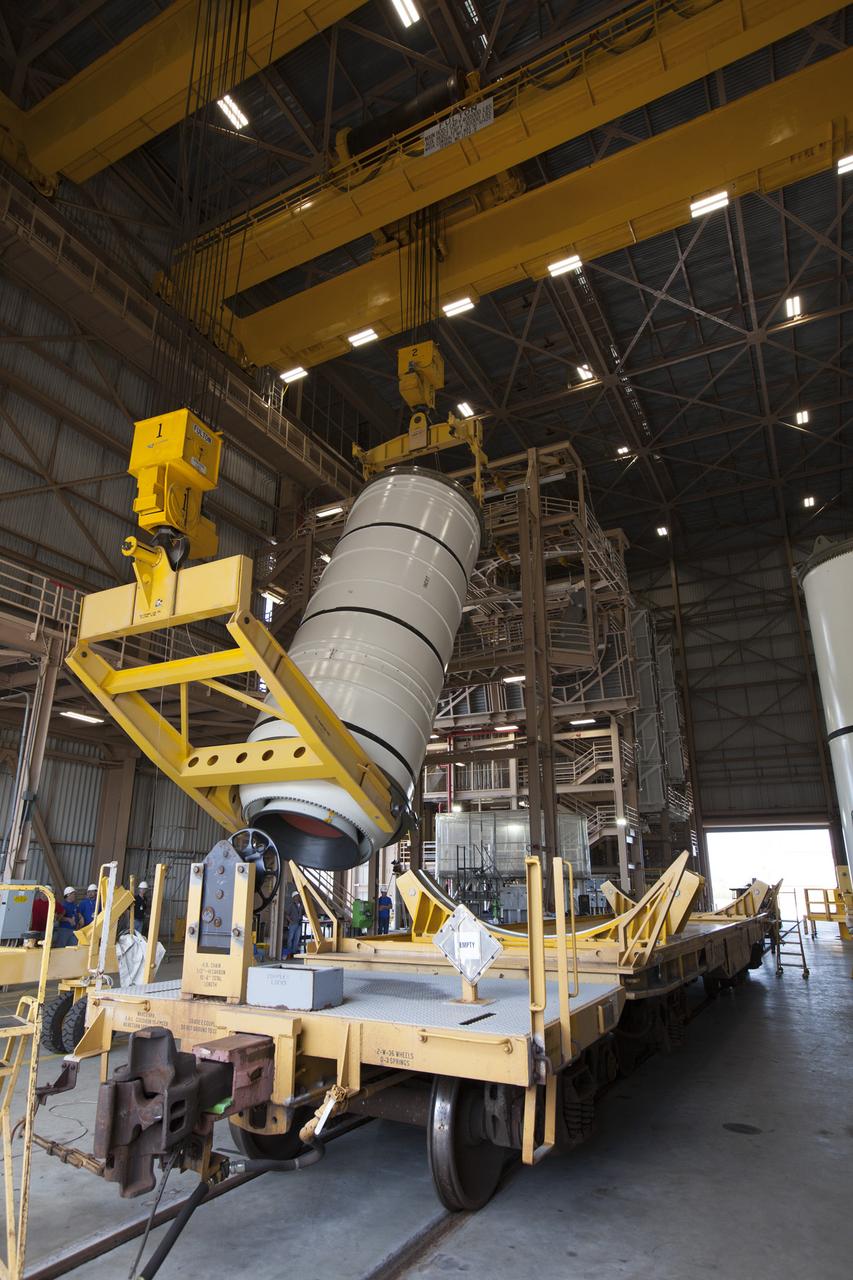
During a media tour of the Rotation, Processing and Surge Facility (RPSF) at NASA’s Kennedy Space Center in Florida, two cranes are used to lift one of two pathfinders, or test versions, of solid rocket booster segments for NASA’s Space Launch System rocket into the vertical position. The pathfinder booster segment will be moved to the other end of the RPSF and secured on a test stand. The Ground Systems Development and Operations Program and Jacobs Engineering, on the Test and Operations Support Contract, will prepare the booster segments, which are inert, for a series of lifts, moves and stacking operations to prepare for Exploration Mission-1, deep-space missions and the journey to Mars.
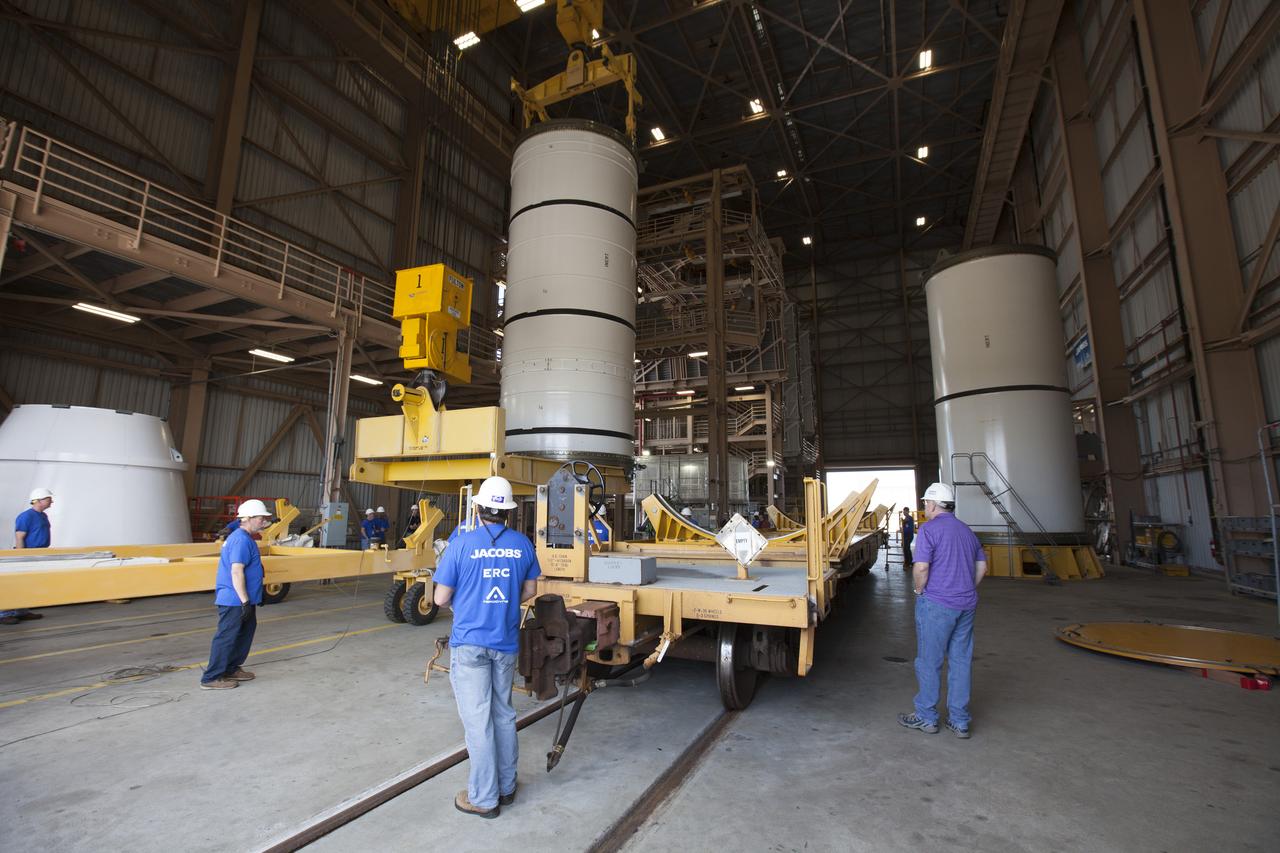
Engineers and technicians with Jacobs Engineering on the Test and Operations Contract monitor the progress as a crane is used to move one of two pathfinders, or test versions, of solid rocket booster segments for NASA’s Space Launch System (SLS) rocket. At far right, the first pathfinder booster segment has been secured in the vertical position on a test stand. Inside the RPSF, the Ground Systems Development and Operations Program and Jacobs will prepare the booster segments, which are inert, for a series of lifts, moves and stacking operations to prepare for Exploration Mission-1, deep-space missions and the journey to Mars.
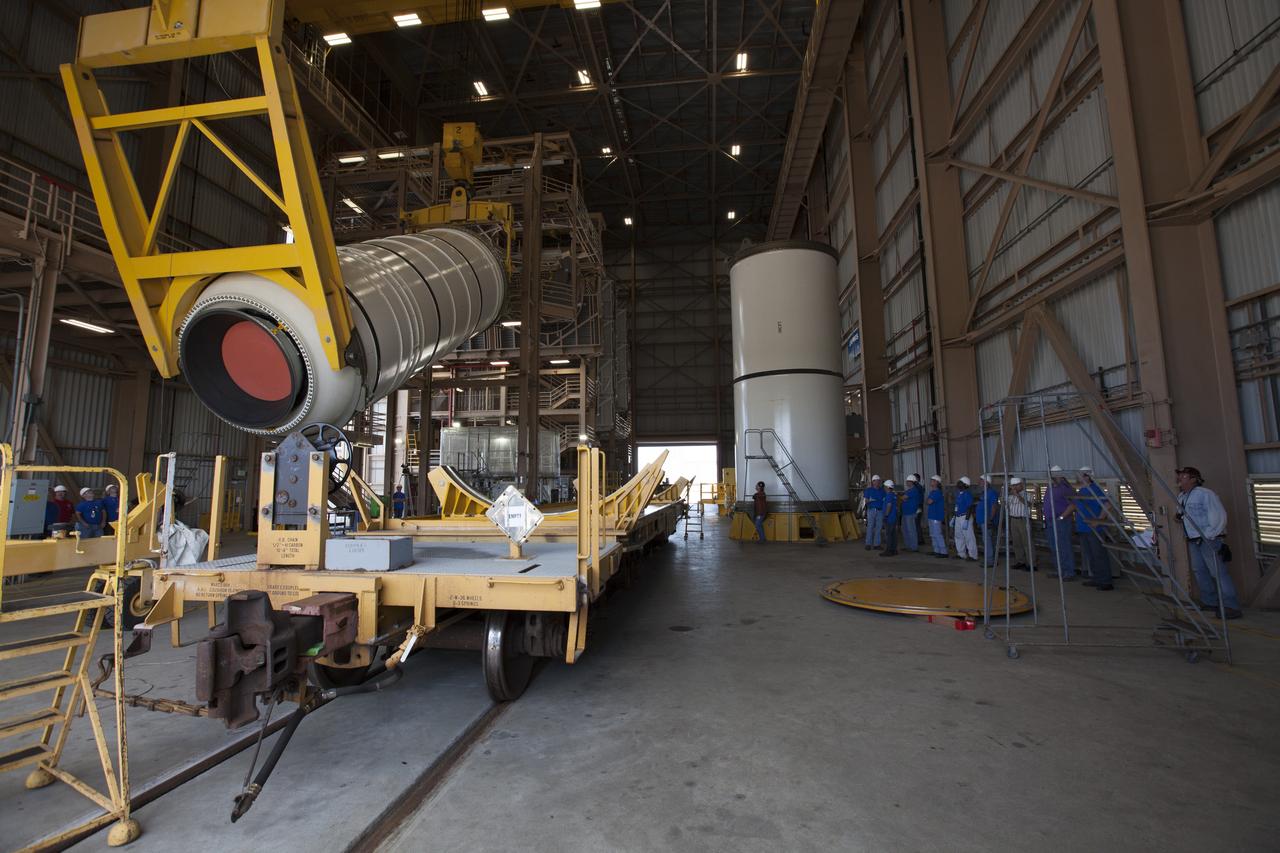
During a media tour of the Rotation, Processing and Surge Facility (RPSF) at NASA’s Kennedy Space Center in Florida, two cranes are used to lift one of two pathfinders, or test versions, of solid rocket booster segments for NASA’s Space Launch System rocket. At far right, the first pathfinder booster has been lifted into the vertical position and secured on a test stand. The Ground Systems Development and Operations Program and Jacobs Engineering, on the Test and Operations Support Contract, will prepare the booster segments, which are inert, for a series of lifts, moves and stacking operations to prepare for Exploration Mission-1, deep-space missions and the journey to Mars.
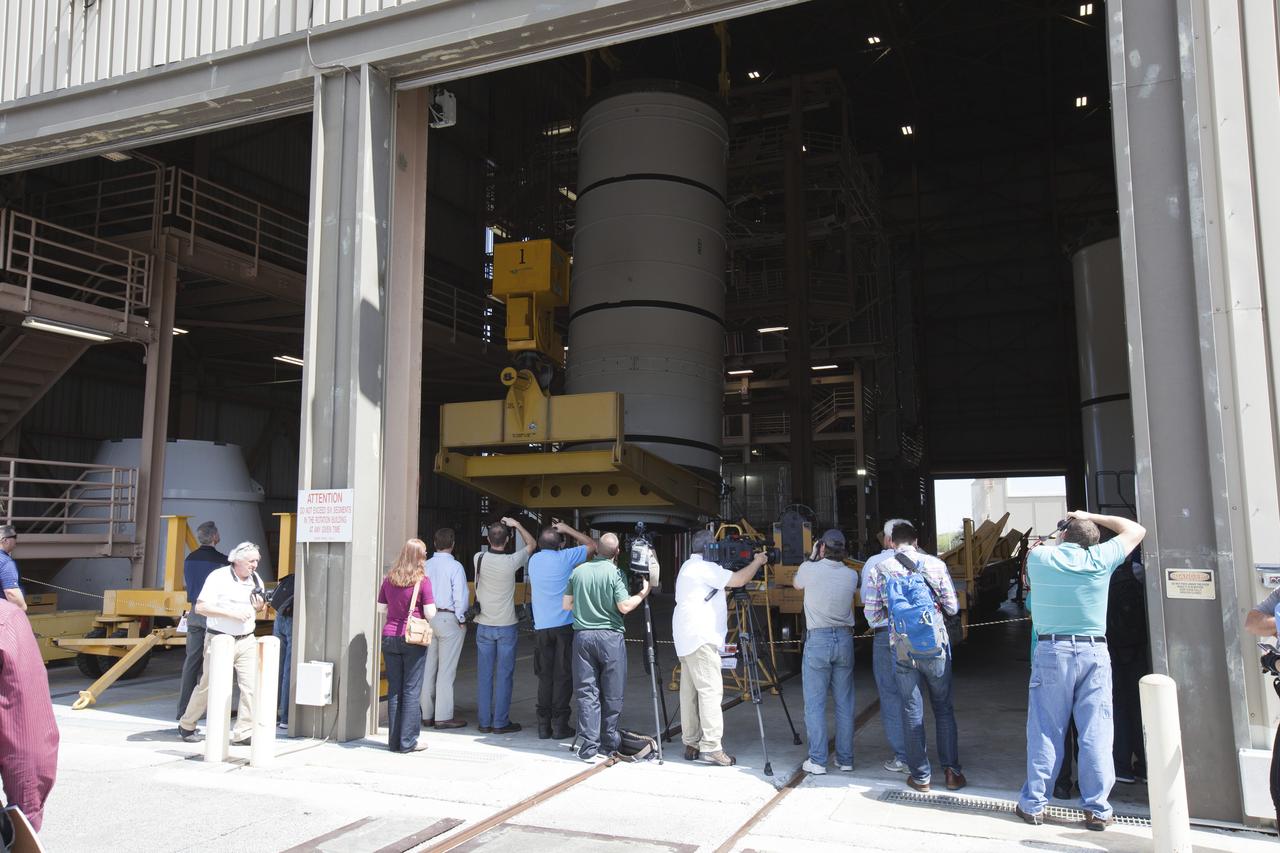
Members of the news media watch as two cranes are used to lift one of two pathfinders, or test versions, of solid rocket booster segments for NASA’s Space Launch System (SLS) rocket into the vertical position inside the Rotation, Processing and Surge Facility at NASA’s Kennedy Space Center in Florida. The pathfinder booster segment will be moved to the other end of the RPSF and secured on a test stand. The Ground Systems Development and Operations Program and Jacobs Engineering, on the Test and Operations Support Contract, will prepare the booster segments, which are inert, for a series of lifts, moves and stacking operations to prepare for Exploration Mission-1, deep-space missions and the journey to Mars.
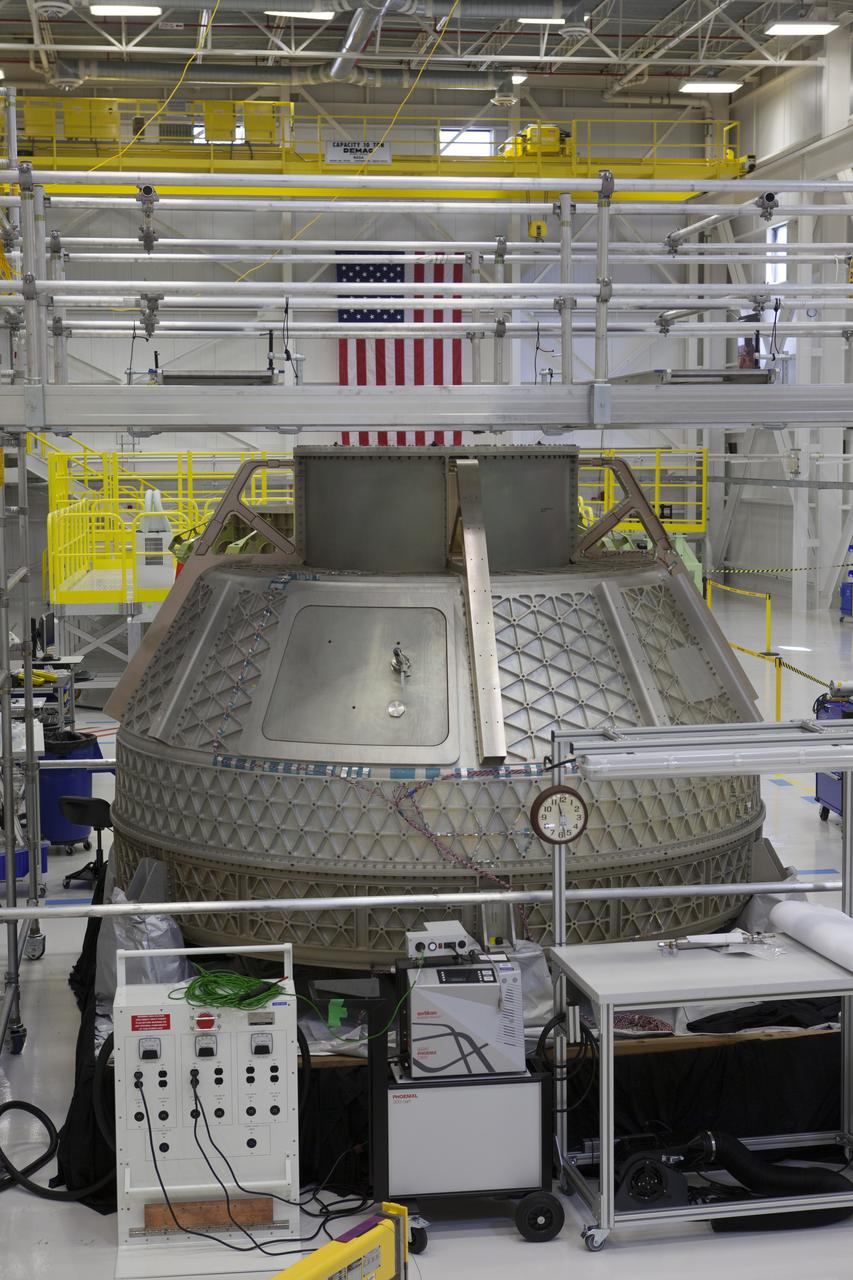
The Boeing CST-100 Structural Test Article awaits testing inside the Commercial Crew and Cargo Processing Facility, or C3PF, at NASA’s Kennedy Space Center in Florida. The test article will serve as a pathfinder for assembling and processing operational CST-100 spacecraft inside the revitalized facility, which for 20 years served as a shuttle processing hangar.
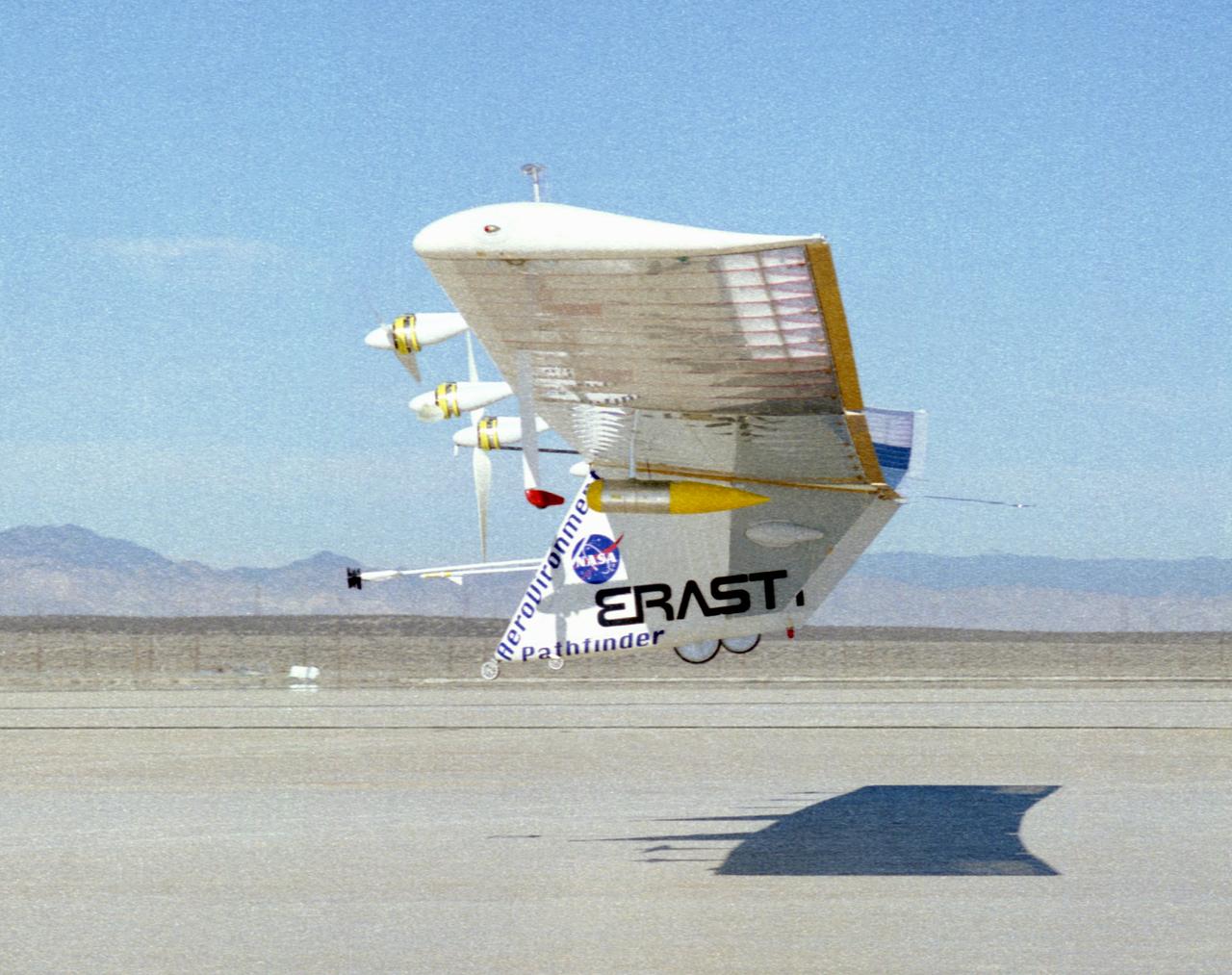
The Pathfinder solar-powered research aircraft heads for landing on the bed of Rogers Dry Lake at the Dryden Flight Research Center, Edwards, California, after a successful test flight Nov. 19, 1996.
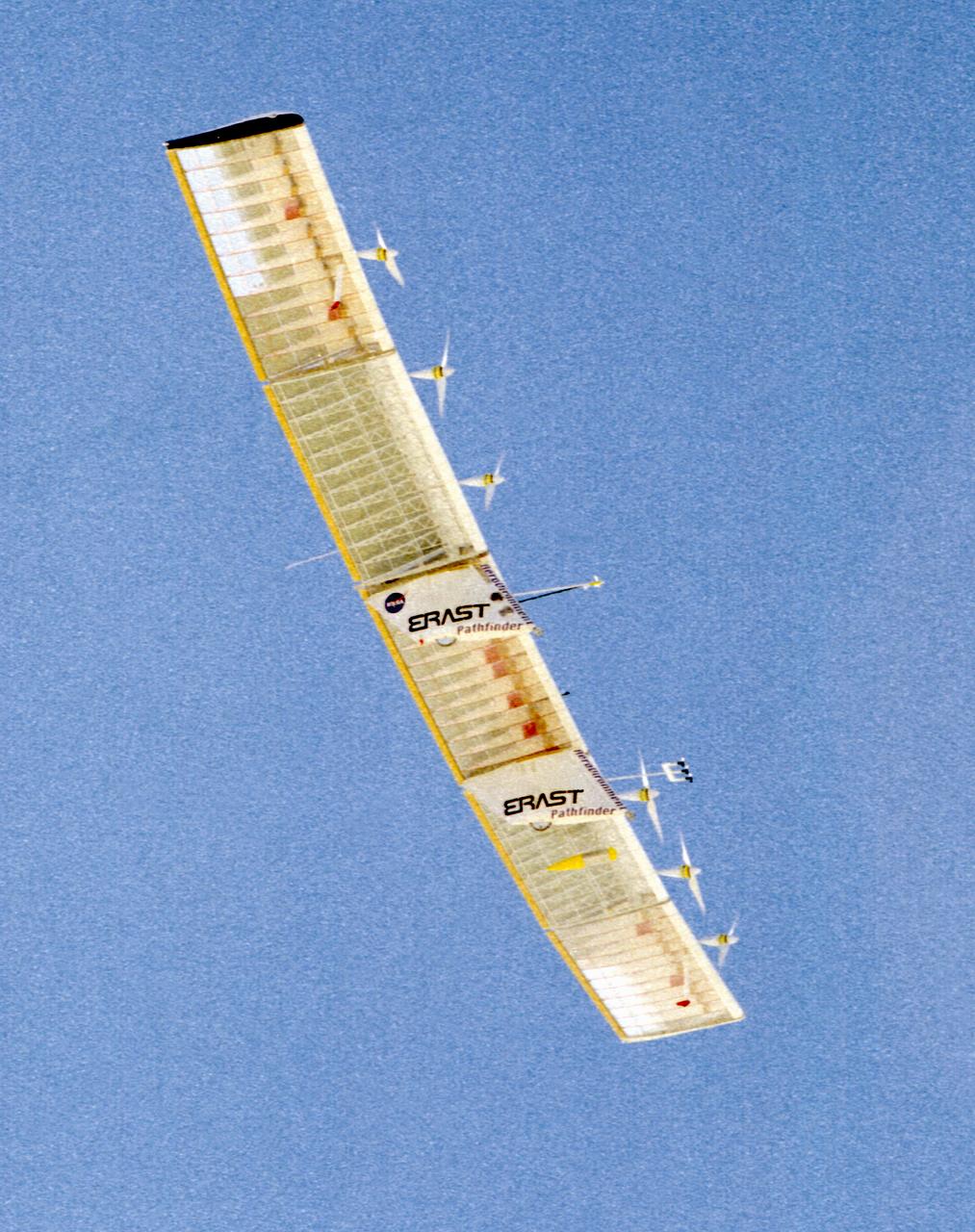
The Pathfinder research aircraft's wing structure is clearly defined as it soars under a clear blue sky during a test flight from Dryden Flight Research Center, Edwards, California, in November of 1996.
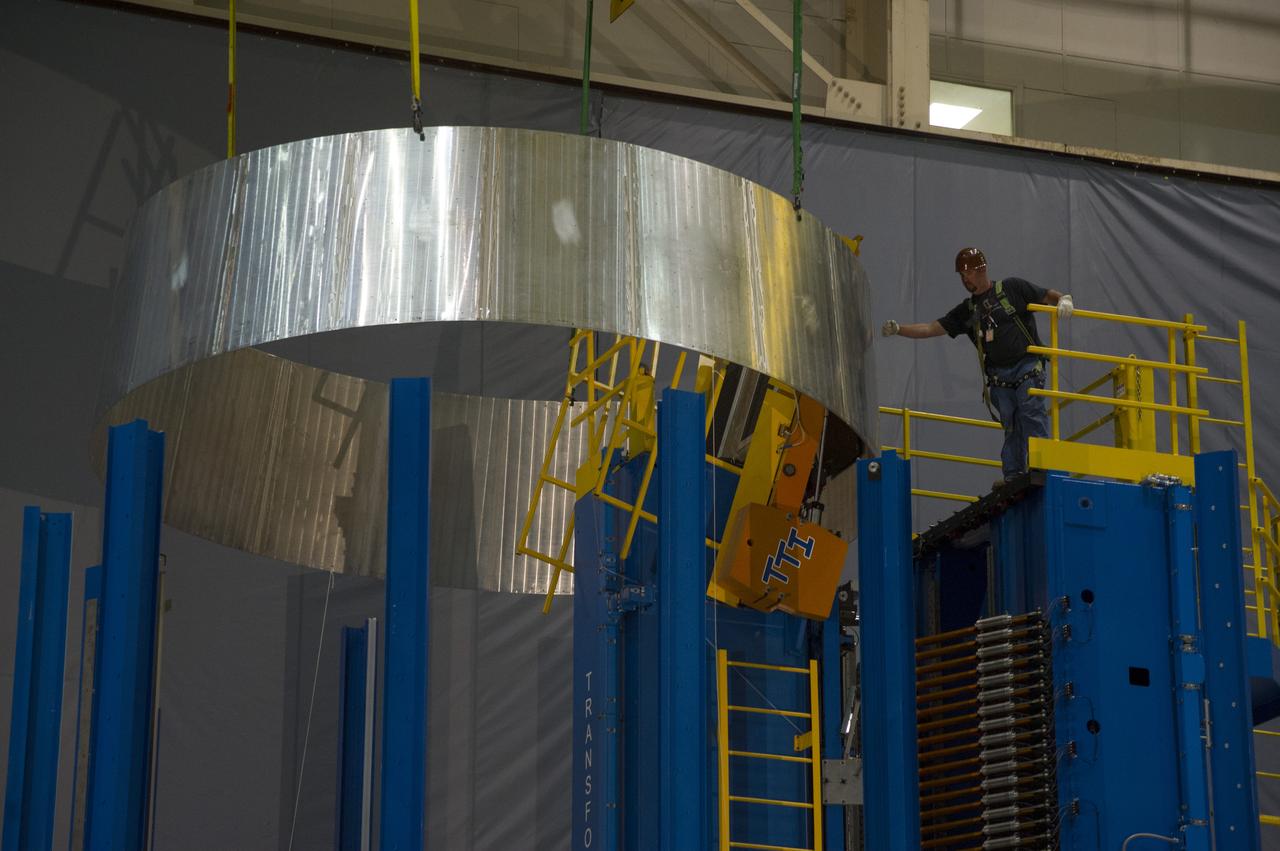
ENGINEERS USING A STATE-OF-THE-ART VERTICAL WELDING TOOL AT THE MARSHALL SPACE FLIGHT CENTER IN HUNTSVILLE, ALA., MOVE A "PATHFINDER" VERSION OF THE ADAPTER DESIGN THAT WILL BE USED ON TEST FLIGHTS OF THE ORION SPACECRAFT AND NASA'S SPACE LAUNCH SYSTEM
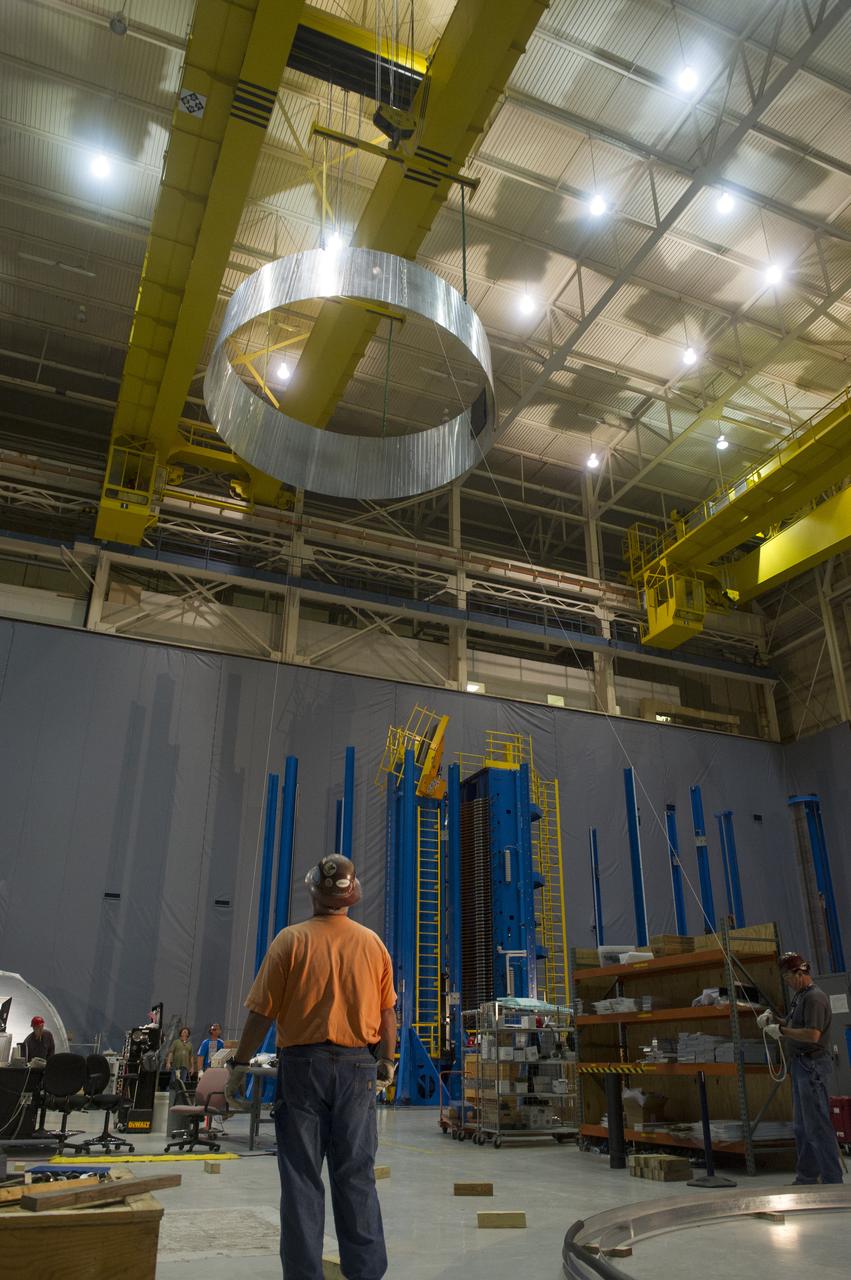
ENGINEERS USING A STATE-OF-THE-ART VERTICAL WELDING TOOL AT THE MARSHALL SPACE FLIGHT CENTER IN HUNTSVILLE, ALA., MOVE A "PATHFINDER" VERSION OF THE ADAPTER DESIGN THAT WILL BE USED ON TEST FLIGHTS OF THE ORION SPACECRAFT AND NASA'S SPACE LAUNCH SYSTEM
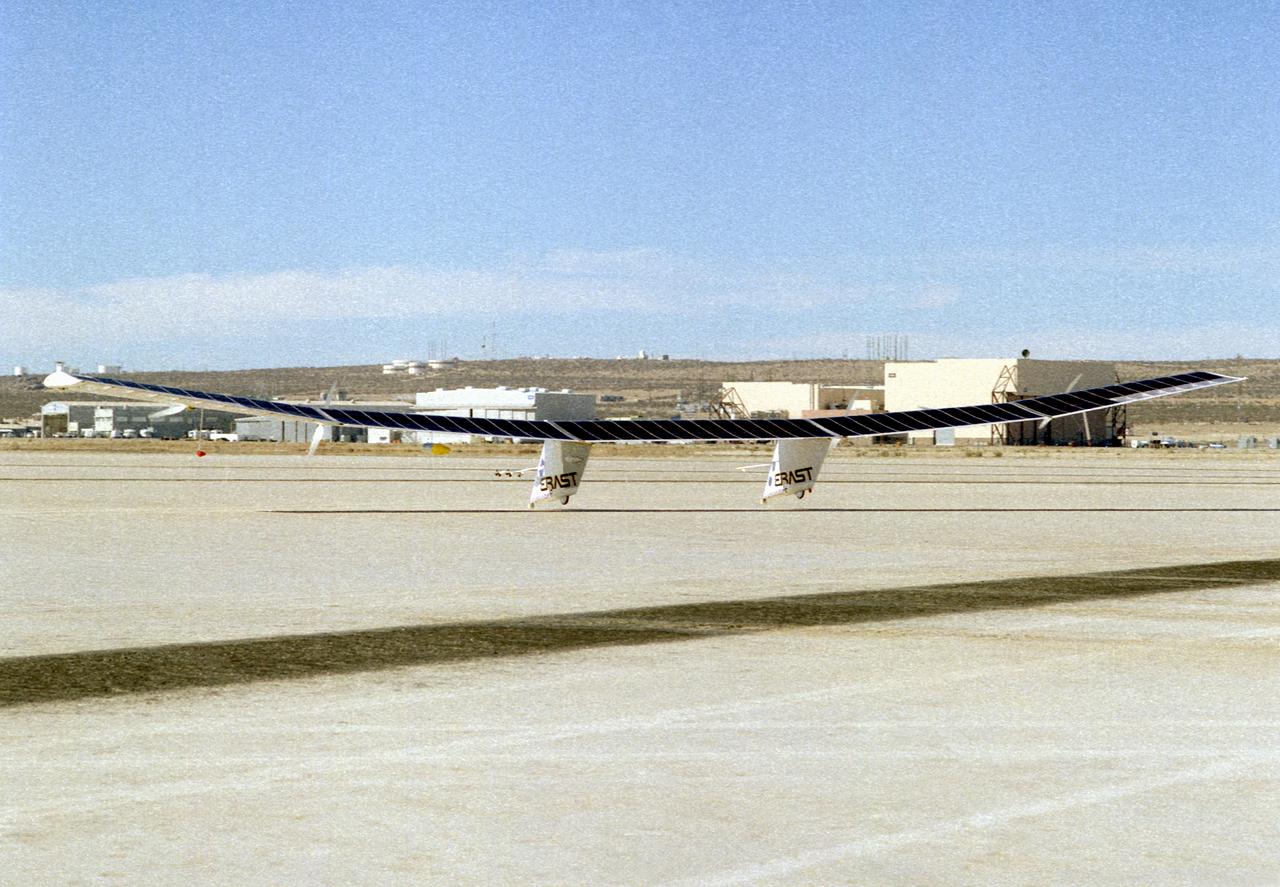
The Pathfinder research aircraft's solar cell arrays are prominently displayed as it touches down on the bed of Rogers Dry Lake at the Dryden Flight Research Center, Edwards, California, following a test flight. The solar arrays covered more than 75 percent of Pathfinder's upper wing surface, and provided electricity to power its six electric motors, flight controls, communications links and a host of scientific sensors.
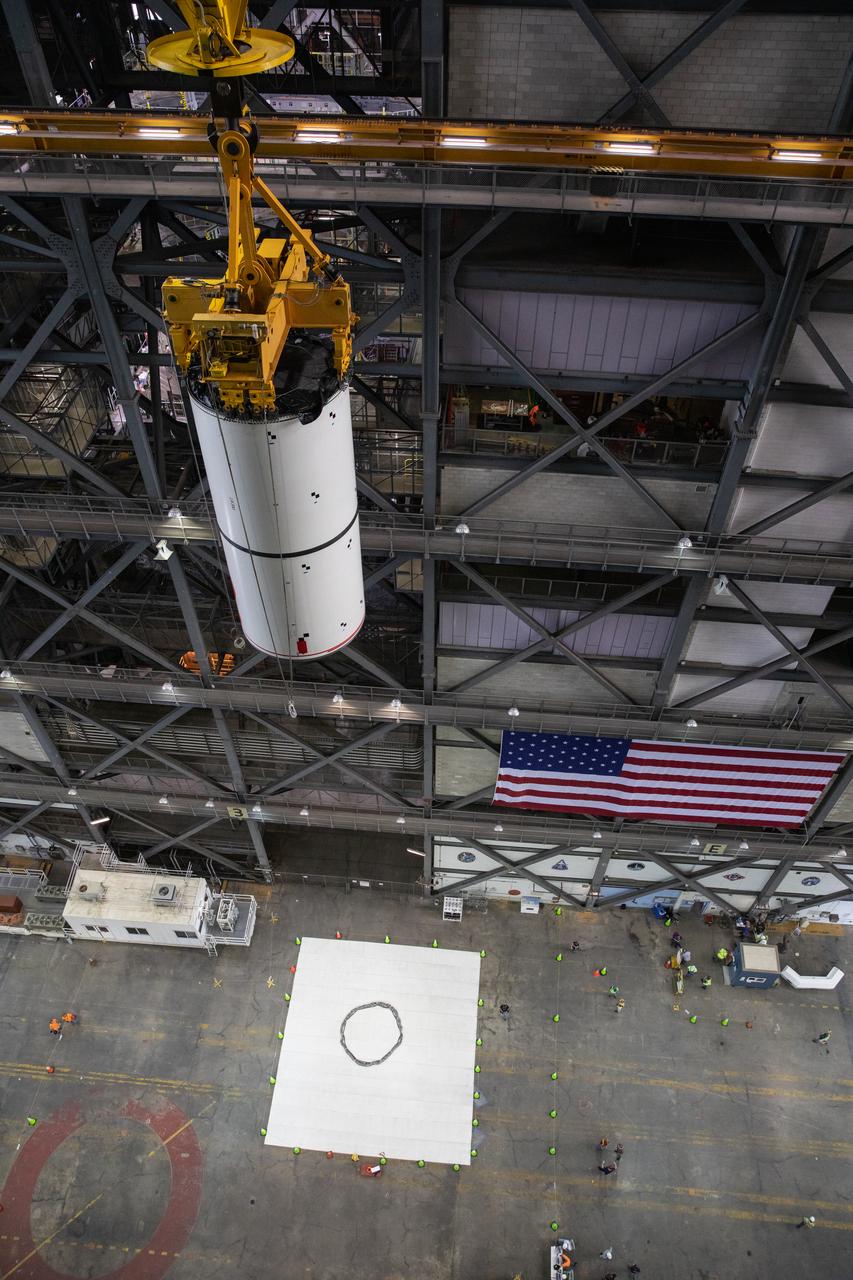
Technicians with NASA’s Exploration Ground Systems rehearse booster stacking operations inside the Vehicle Assembly Building (VAB) at the agency’s Kennedy Space Center in Florida on Sept. 14, 2020, in preparation for Artemis I. The exercise involved using booster segment mock-ups, referred to as pathfinders. During the rehearsal, an aft pathfinder segment was prepared in High Bay 4 of the VAB, after which a team of crane operators moved it over to High Bay 3, where it was placed on the mobile launcher. Careful measurements were then taken before the team added a center pathfinder to the stack. Stacking of the actual Space Launch System (SLS) booster segments will occur later this year, when the rocket’s core stage arrives at Kennedy. Artemis I is the first in a series of increasingly complex missions that will test SLS and the Orion spacecraft as an integrated system prior to crewed flights to the Moon.
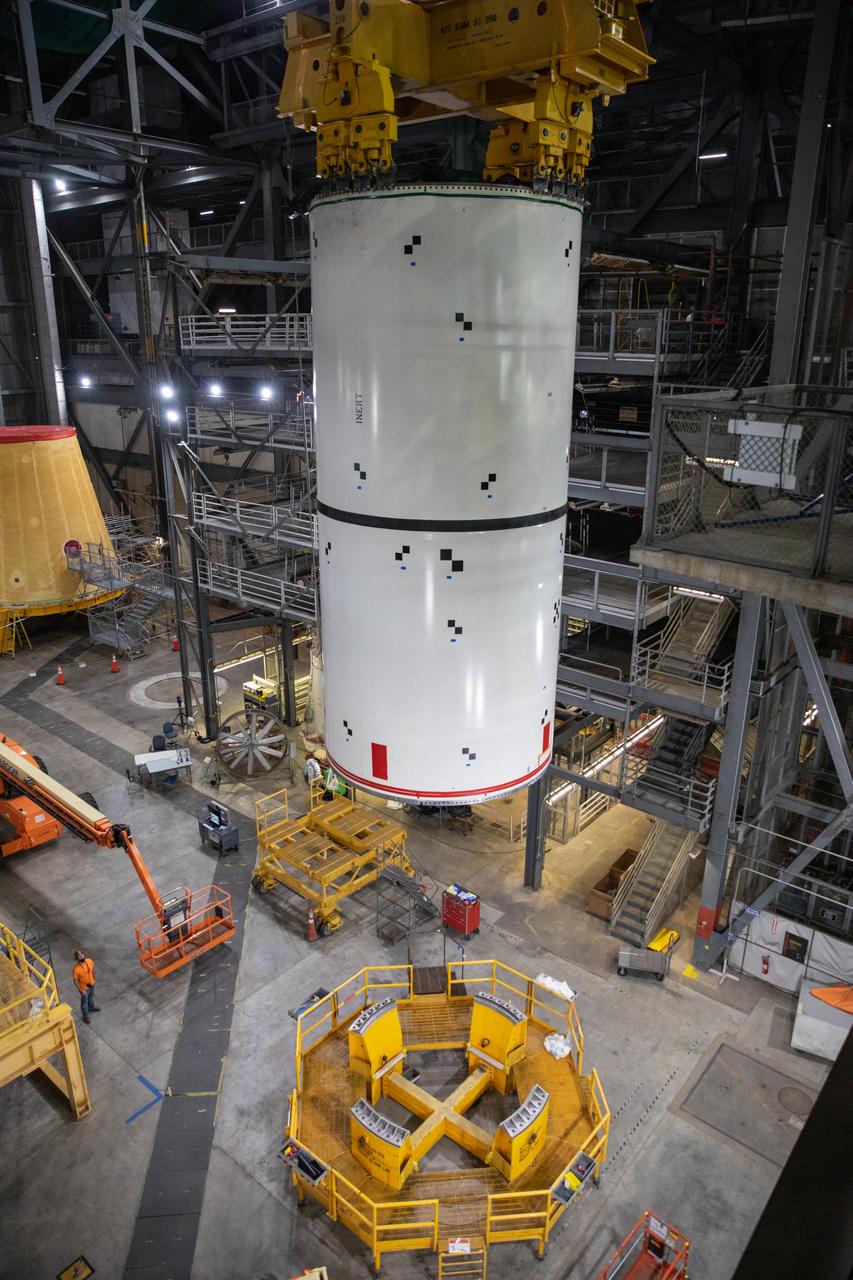
Technicians with NASA’s Exploration Ground Systems rehearse booster stacking operations inside the Vehicle Assembly Building (VAB) at the agency’s Kennedy Space Center in Florida on Sept. 14, 2020, in preparation for Artemis I. The exercise involved using booster segment mock-ups, referred to as pathfinders. During the rehearsal, an aft pathfinder segment was prepared in High Bay 4 of the VAB, after which a team of crane operators moved it over to High Bay 3, where it was placed on the mobile launcher. Careful measurements were then taken before the team added a center pathfinder to the stack. Stacking of the actual Space Launch System (SLS) booster segments will occur later this year, when the rocket’s core stage arrives at Kennedy. Artemis I is the first in a series of increasingly complex missions that will test SLS and the Orion spacecraft as an integrated system prior to crewed flights to the Moon.
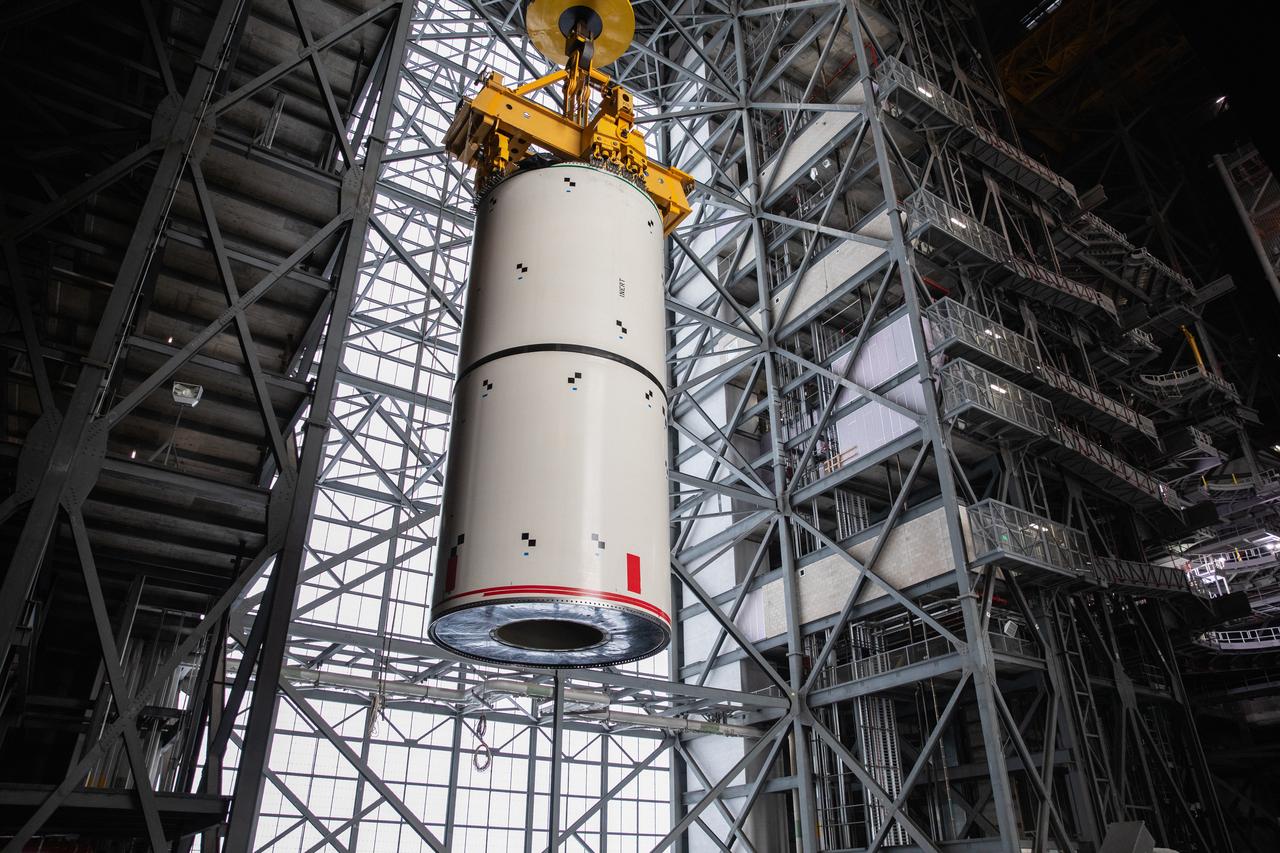
Technicians with NASA’s Exploration Ground Systems rehearse booster stacking operations inside the Vehicle Assembly Building (VAB) at the agency’s Kennedy Space Center in Florida on Sept. 14, 2020, in preparation for Artemis I. The exercise involved using booster segment mock-ups, referred to as pathfinders. During the rehearsal, an aft pathfinder segment was prepared in High Bay 4 of the VAB, after which a team of crane operators moved it over to High Bay 3, where it was placed on the mobile launcher. Careful measurements were then taken before the team added a center pathfinder to the stack. Stacking of the actual Space Launch System (SLS) booster segments will occur later this year, when the rocket’s core stage arrives at Kennedy. Artemis I is the first in a series of increasingly complex missions that will test SLS and the Orion spacecraft as an integrated system prior to crewed flights to the Moon.
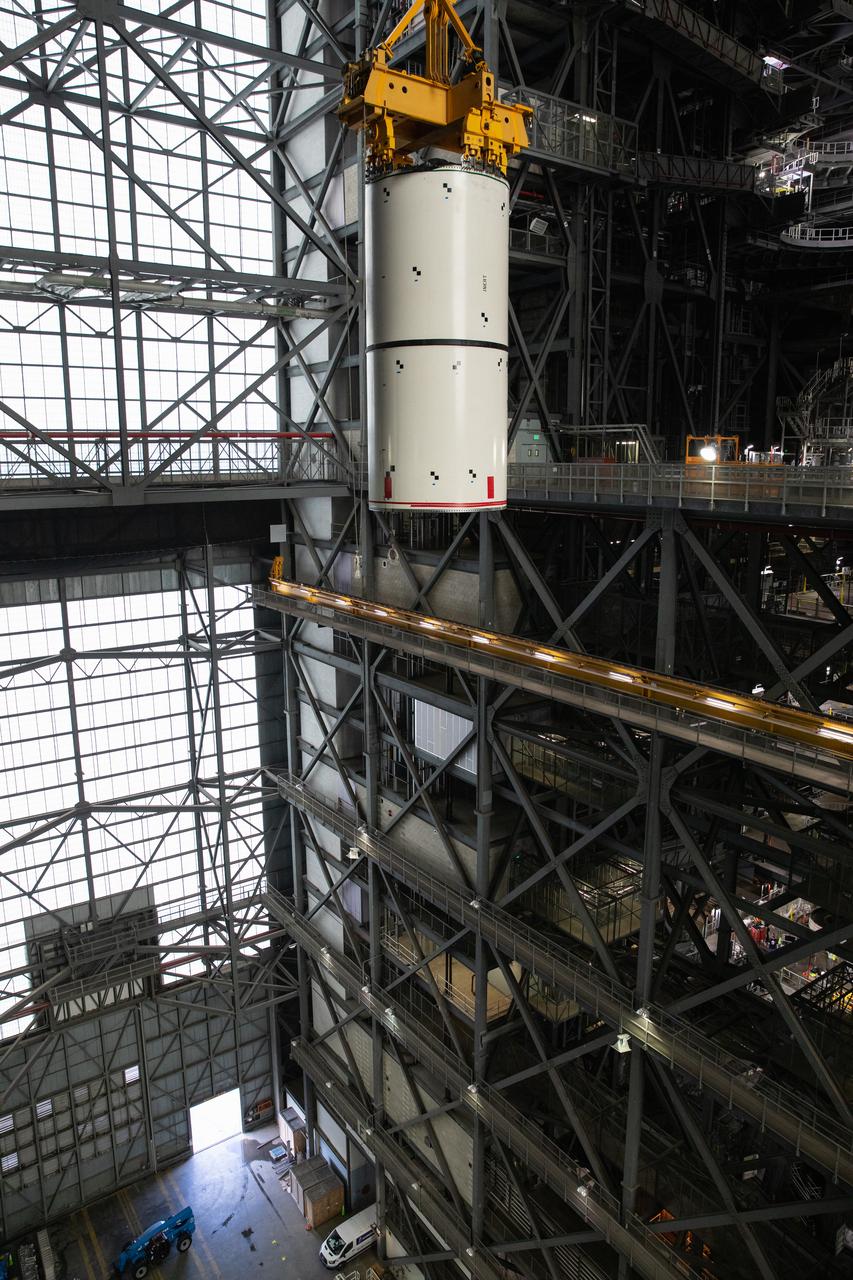
Technicians with NASA’s Exploration Ground Systems rehearse booster stacking operations inside the Vehicle Assembly Building (VAB) at the agency’s Kennedy Space Center in Florida on Sept. 14, 2020, in preparation for Artemis I. The exercise involved using booster segment mock-ups, referred to as pathfinders. During the rehearsal, an aft pathfinder segment was prepared in High Bay 4 of the VAB, after which a team of crane operators moved it over to High Bay 3, where it was placed on the mobile launcher. Careful measurements were then taken before the team added a center pathfinder to the stack. Stacking of the actual Space Launch System (SLS) booster segments will occur later this year, when the rocket’s core stage arrives at Kennedy. Artemis I is the first in a series of increasingly complex missions that will test SLS and the Orion spacecraft as an integrated system prior to crewed flights to the Moon.
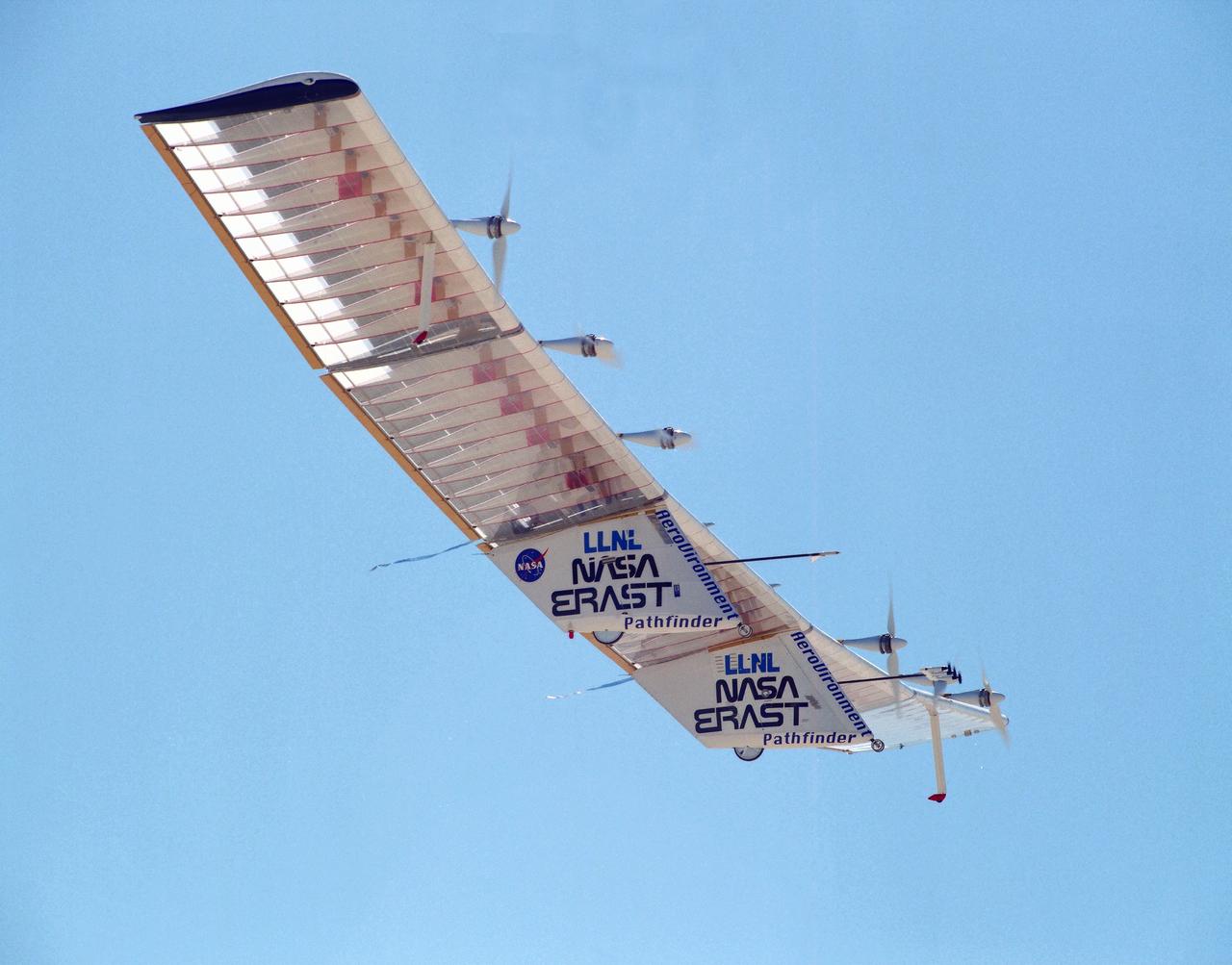
The Pathfinder research aircraft's wing structure was clearly defined as it soared under a clear blue sky during a test flight July 27, 1995, from Dryden Flight Research Center, Edwards, California. The center section and outer wing panels of the aircraft had ribs constructed of thin plastic foam, while the ribs in the inner wing panels are fabricated from lightweight composite material. Developed by AeroVironment, Inc., the Pathfinder was one of several unmanned aircraft being evaluated under NASA's Environmental Research Aircraft and Sensor Technology (ERAST) program.
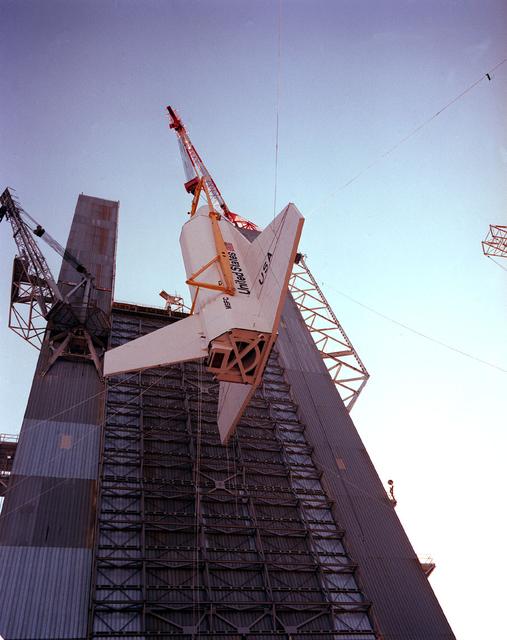
MSFC, Ala. -- The Space Shuttle Orbiter simulator is hoisted into the giant dynamics test stand at NASA's Marshall Space Flight Center, Huntsville, Ala. The simulator was built at the Marshall Center for use in pathfinder activities, such as checking roadway clearances, crane capabilities and fits within structures. It is the same size, shape and weight of an actual Orbiter.
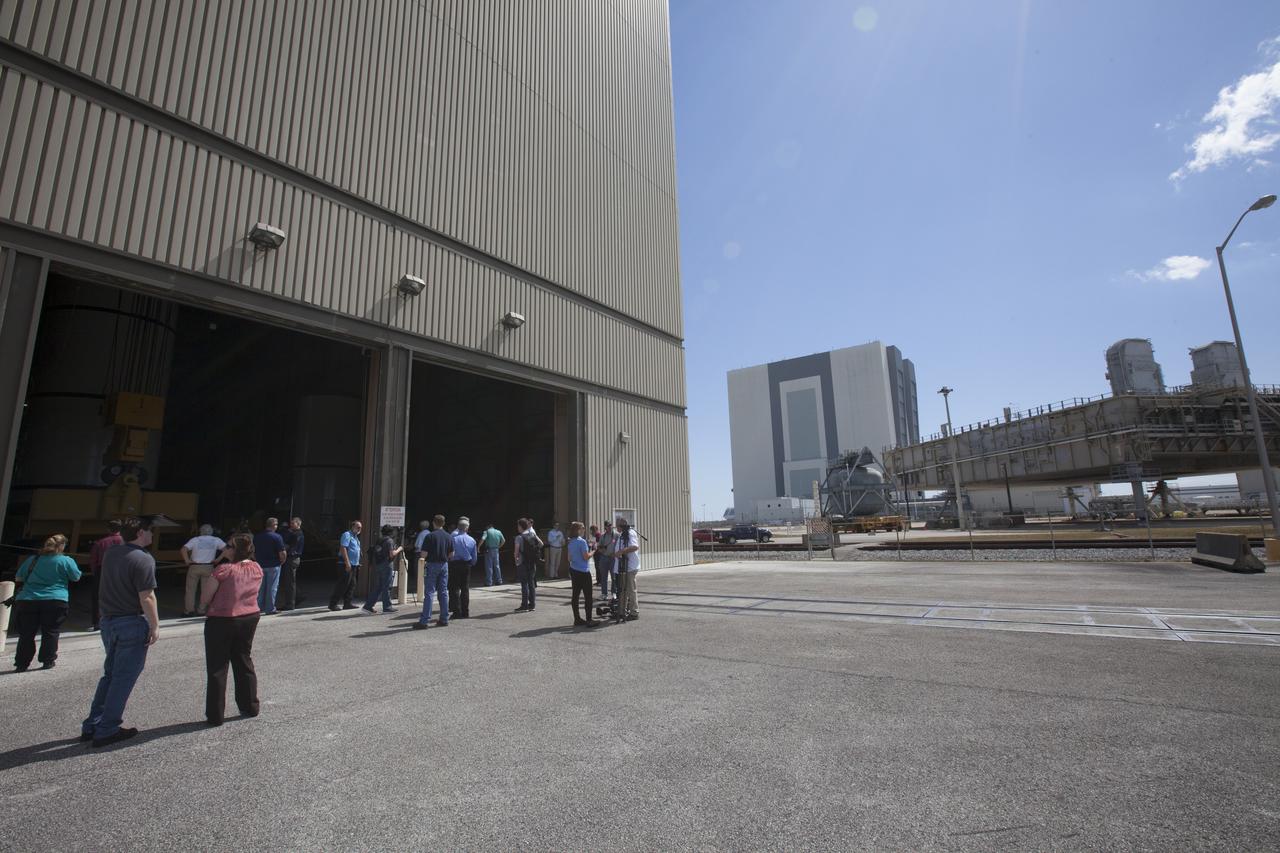
Members of the news media watch as a crane is used to move one of two pathfinders, or test versions, of solid rocket booster segments for NASA’s Space Launch System rocket to a test stand in the Rotation, Processing and Surge Facility at NASA’s Kennedy Space Center in Florida. Inside the RPSF, the Ground Systems Development and Operations Program and Jacobs Engineering, on the Test and Operations Support Contract, will prepare the booster segments, which are inert, for a series of lifts, moves and stacking operations to prepare for Exploration Mission-1, deep-space missions and the journey to Mars.
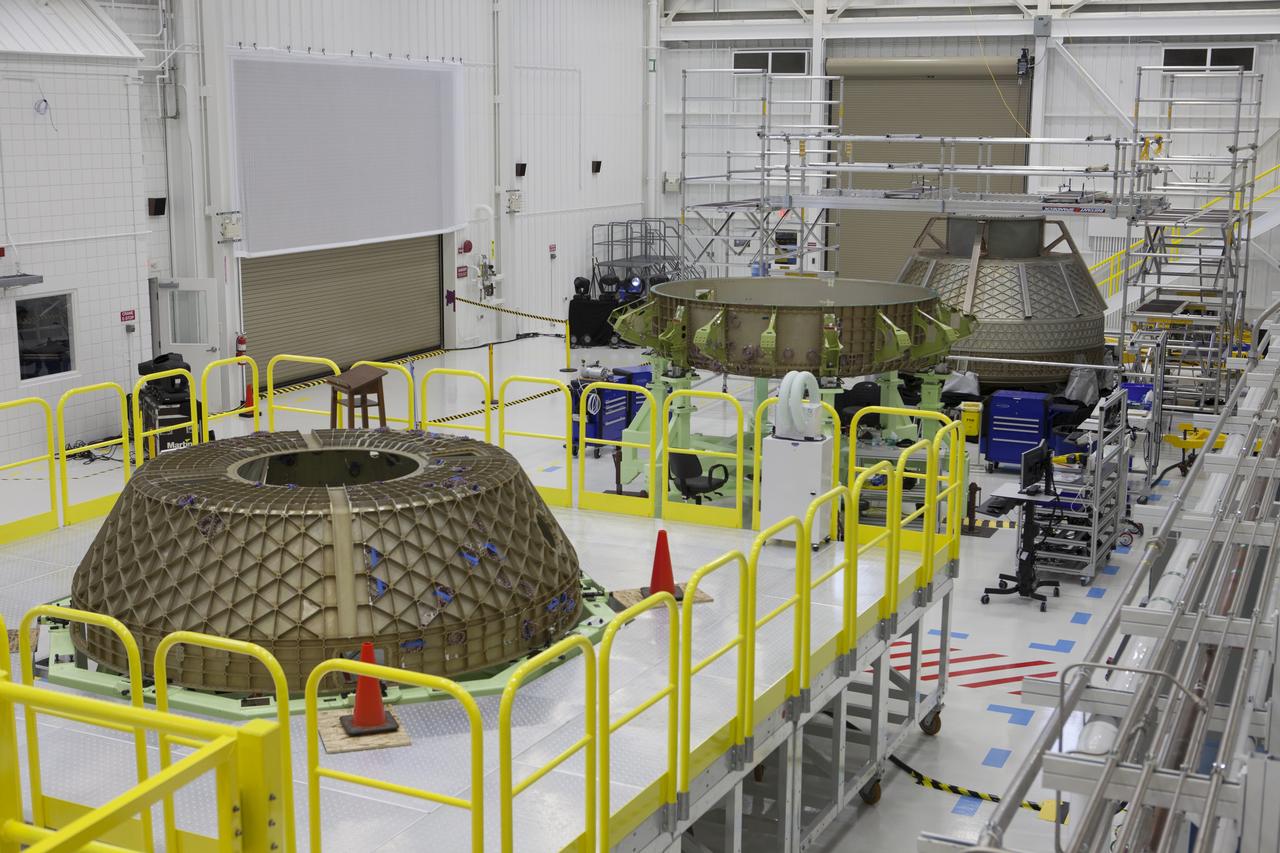
Parts of the Boeing CST-100 Structural Test Article rest on test stands inside the Commercial Crew and Cargo Processing Facility, or C3PF, at NASA’s Kennedy Space Center in Florida. The test article will serve as a pathfinder for assembling and processing operational CST-100 spacecraft inside the revitalized facility, which for 20 years served as a shuttle processing hangar.
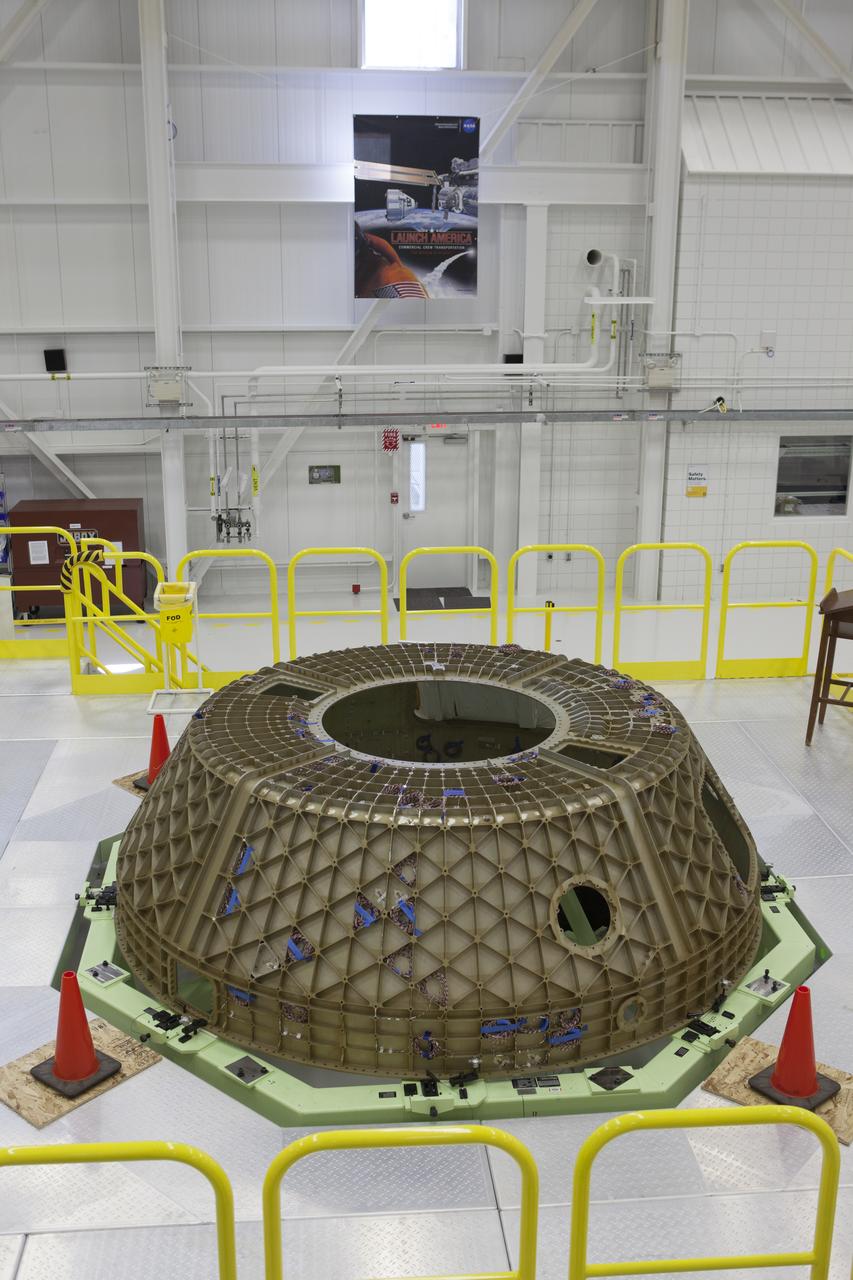
The upper dome of the Boeing CST-100 Structural Test Article awaits testing inside the Commercial Crew and Cargo Processing Facility, or C3PF, at NASA’s Kennedy Space Center in Florida. The test article will serve as a pathfinder for assembling and processing operational CST-100 spacecraft inside the revitalized facility, which for 20 years served as a shuttle processing hangar.
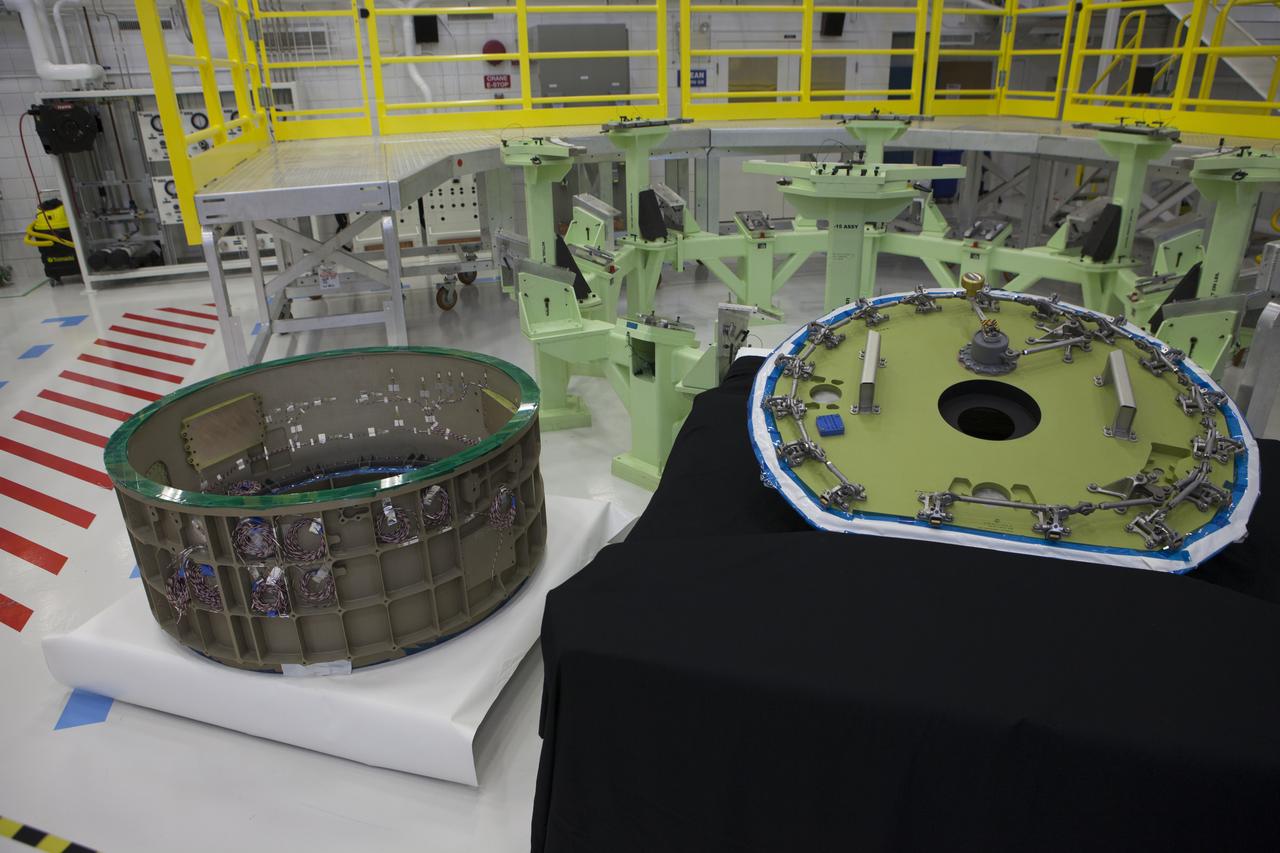
Parts of the Boeing CST-100 Structural Test Article await testing inside the Commercial Crew and Cargo Processing Facility, or C3PF, at NASA’s Kennedy Space Center in Florida. The test article will serve as a pathfinder for assembling and processing operational CST-100 spacecraft inside the revitalized facility, which for 20 years served as a shuttle processing hangar.
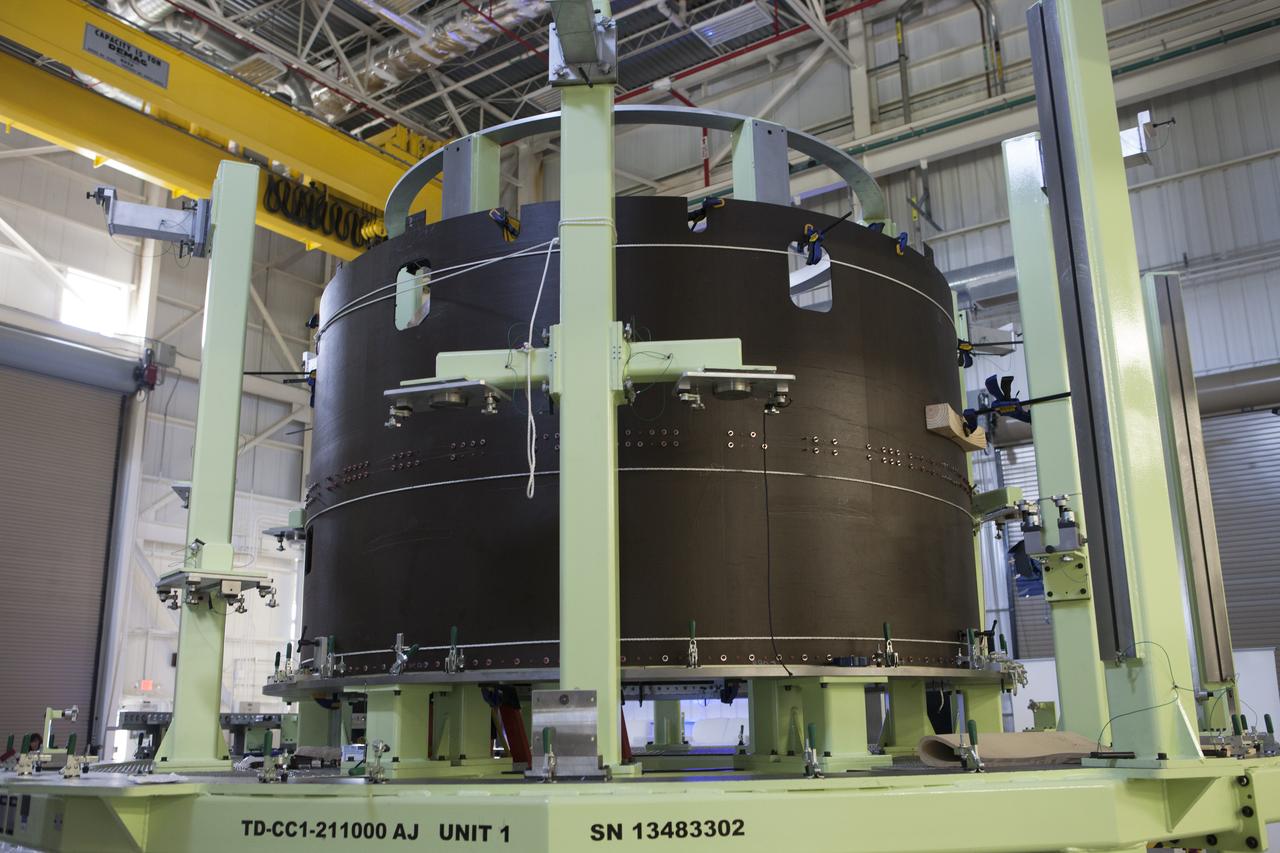
Part of the Boeing CST-100 Structural Test Article rests on a test stand inside the Commercial Crew and Cargo Processing Facility, or C3PF, at NASA’s Kennedy Space Center in Florida. The test article will serve as a pathfinder for assembling and processing operational CST-100 spacecraft inside the revitalized facility, which for 20 years served as a shuttle processing hangar.
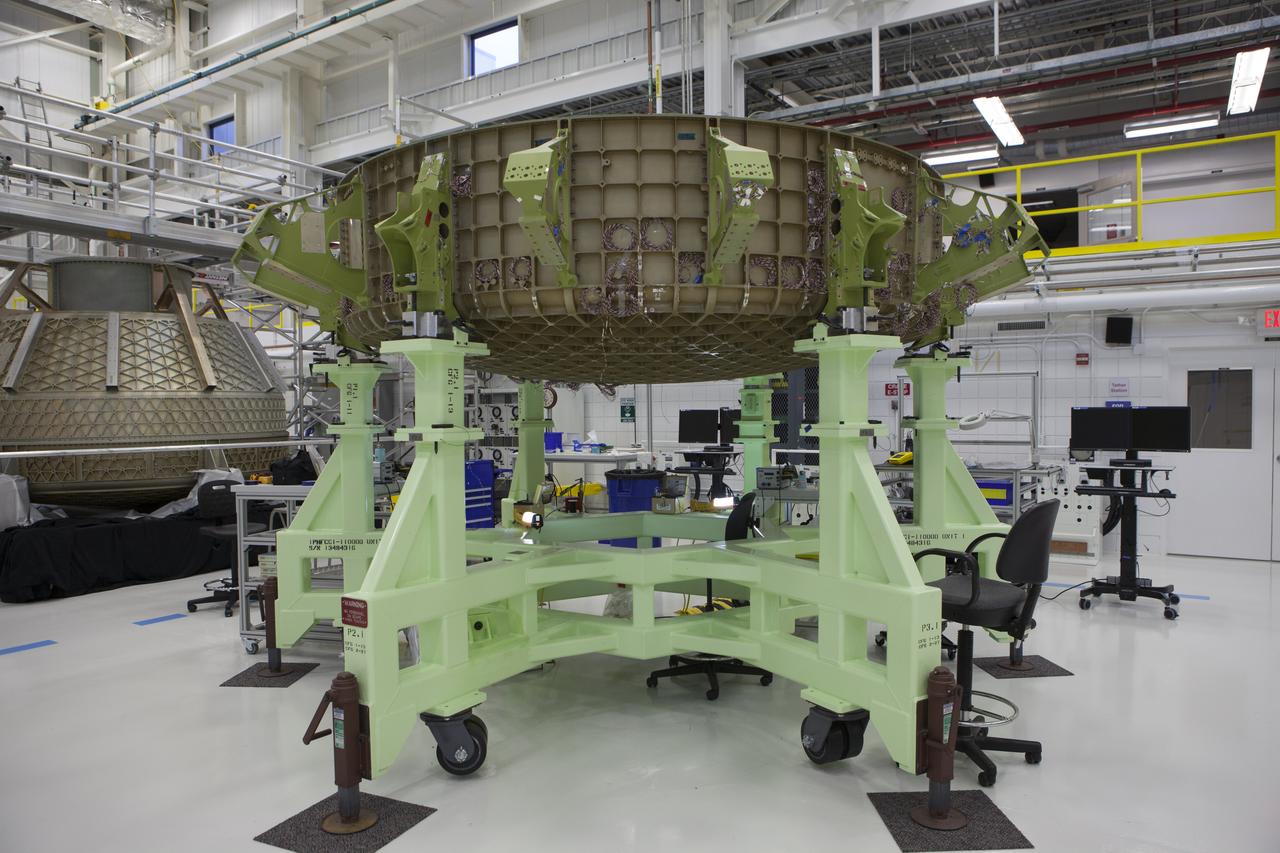
In the foreground, the lower dome of the Boeing CST-100 Structural Test Article rests on a test stand inside the Commercial Crew and Cargo Processing Facility, or C3PF, at NASA’s Kennedy Space Center in Florida. The test article will serve as a pathfinder for assembling and processing operational CST-100 spacecraft inside the revitalized facility, which for 20 years served as a shuttle processing hangar.
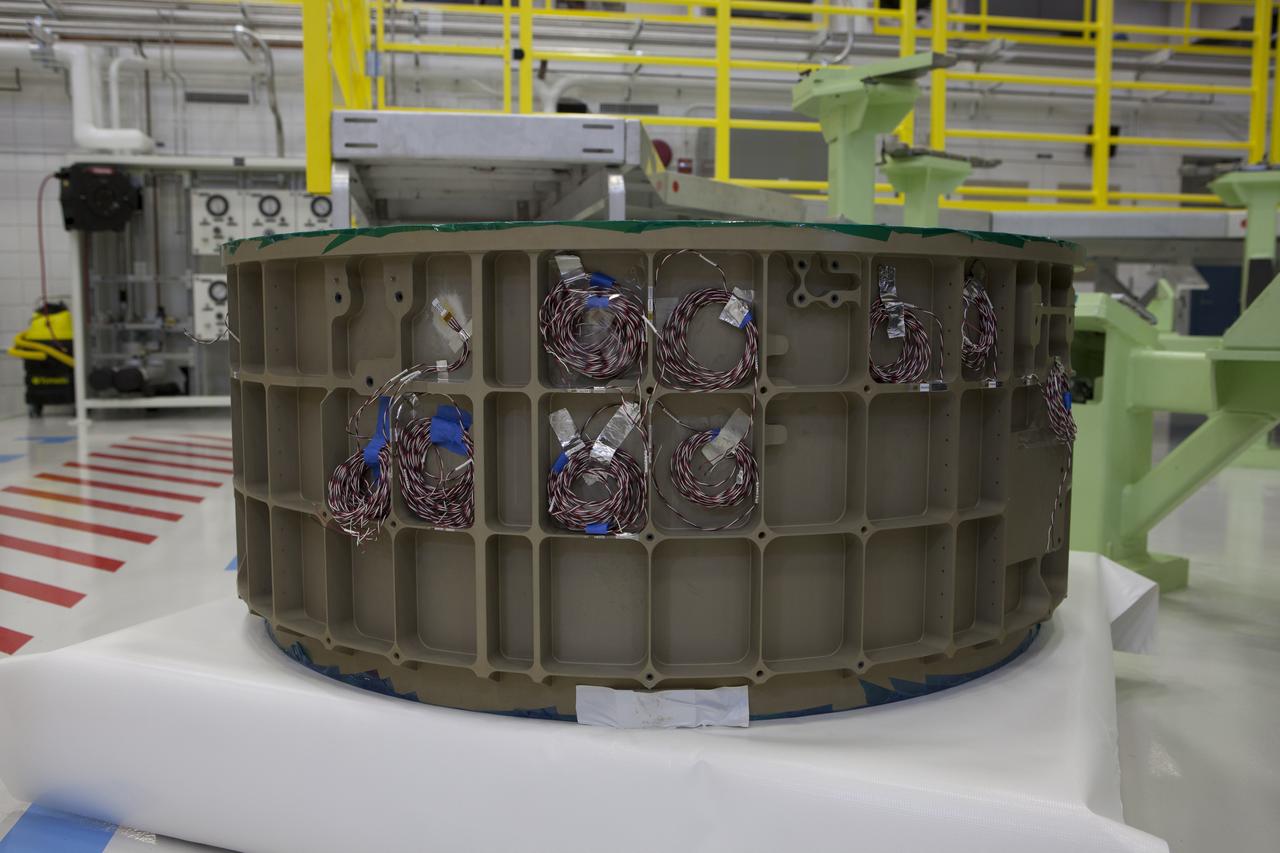
Part of the Boeing CST-100 Structural Test Article awaits testing inside the Commercial Crew and Cargo Processing Facility, or C3PF, at NASA’s Kennedy Space Center in Florida. The test article will serve as a pathfinder for assembling and processing operational CST-100 spacecraft inside the revitalized facility, which for 20 years served as a shuttle processing hangar.
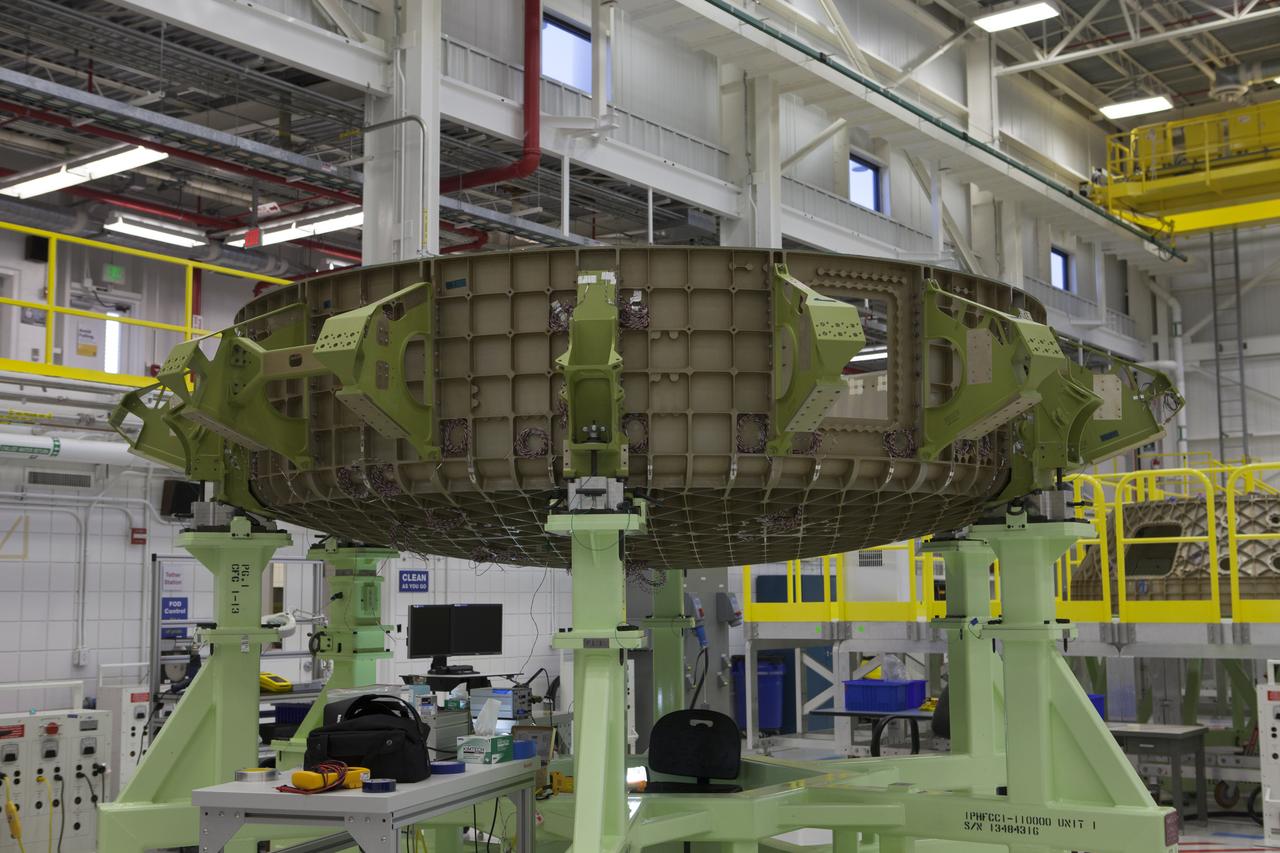
The lower dome of the Boeing CST-100 Structural Test Article awaits testing inside the Commercial Crew and Cargo Processing Facility, or C3PF, at NASA’s Kennedy Space Center in Florida. The test article will serve as a pathfinder for assembling and processing operational CST-100 spacecraft inside the revitalized facility, which for 20 years served as a shuttle processing hangar.
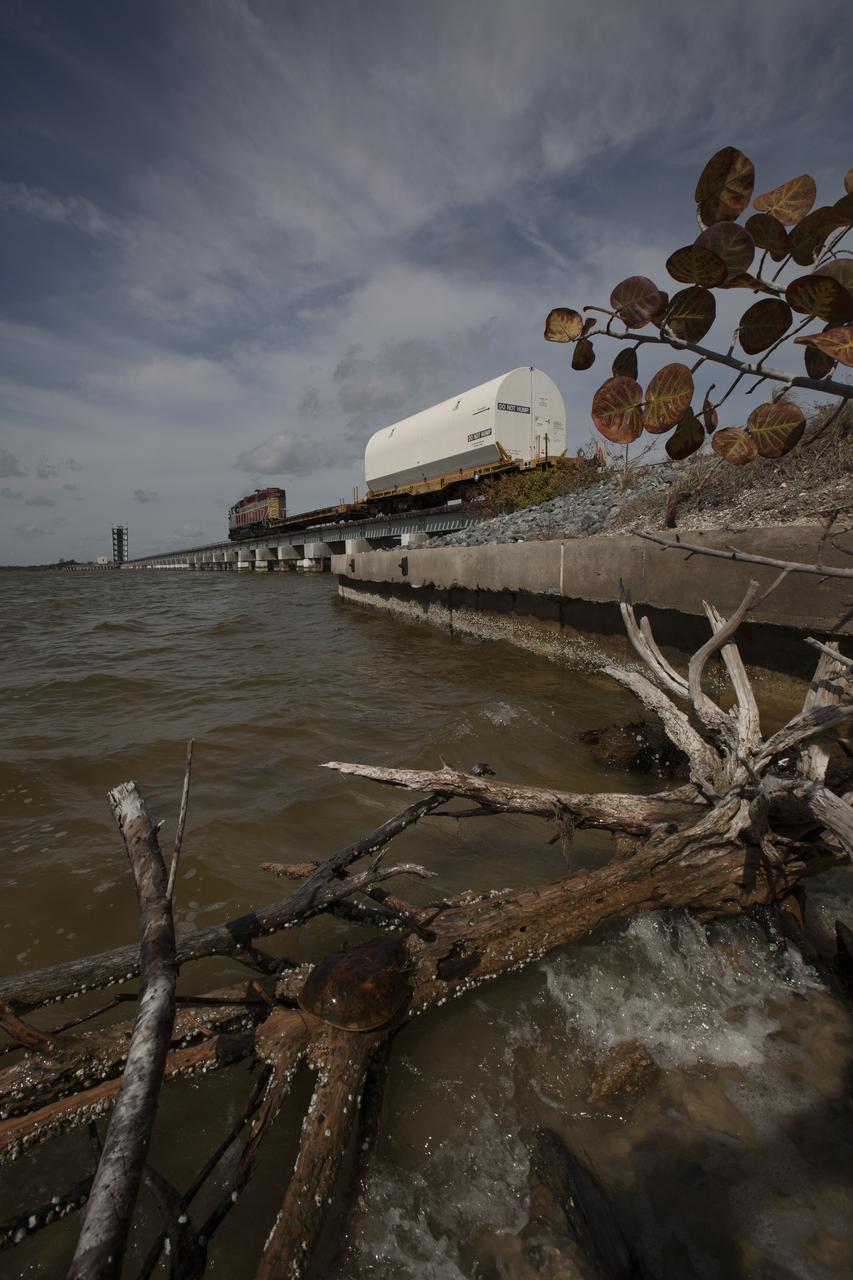
An Iowa Northern locomotive, contracted by Goodloe Transportation of Chicago, travels along the NASA railroad bridge over the Indian River north of Kennedy Space Center, carrying one of two containers on a railcar for transport to the NASA Jay Jay railroad yard. The containers held two pathfinders, or test versions, of solid rocket booster segments for NASA’s Space Launch System rocket that were delivered to the Rotation, Processing and Surge Facility (RPSF). Inside the RPSF, the Ground Systems Development and Operations Program and Jacobs Engineering, on the Test and Operations Support Contract, will conduct a series of lifts, moves and stacking operations using the booster segments, which are inert, to prepare for Exploration Mission-1, deep-space missions and the journey to Mars. The pathfinder booster segments are from Orbital ATK in Utah.
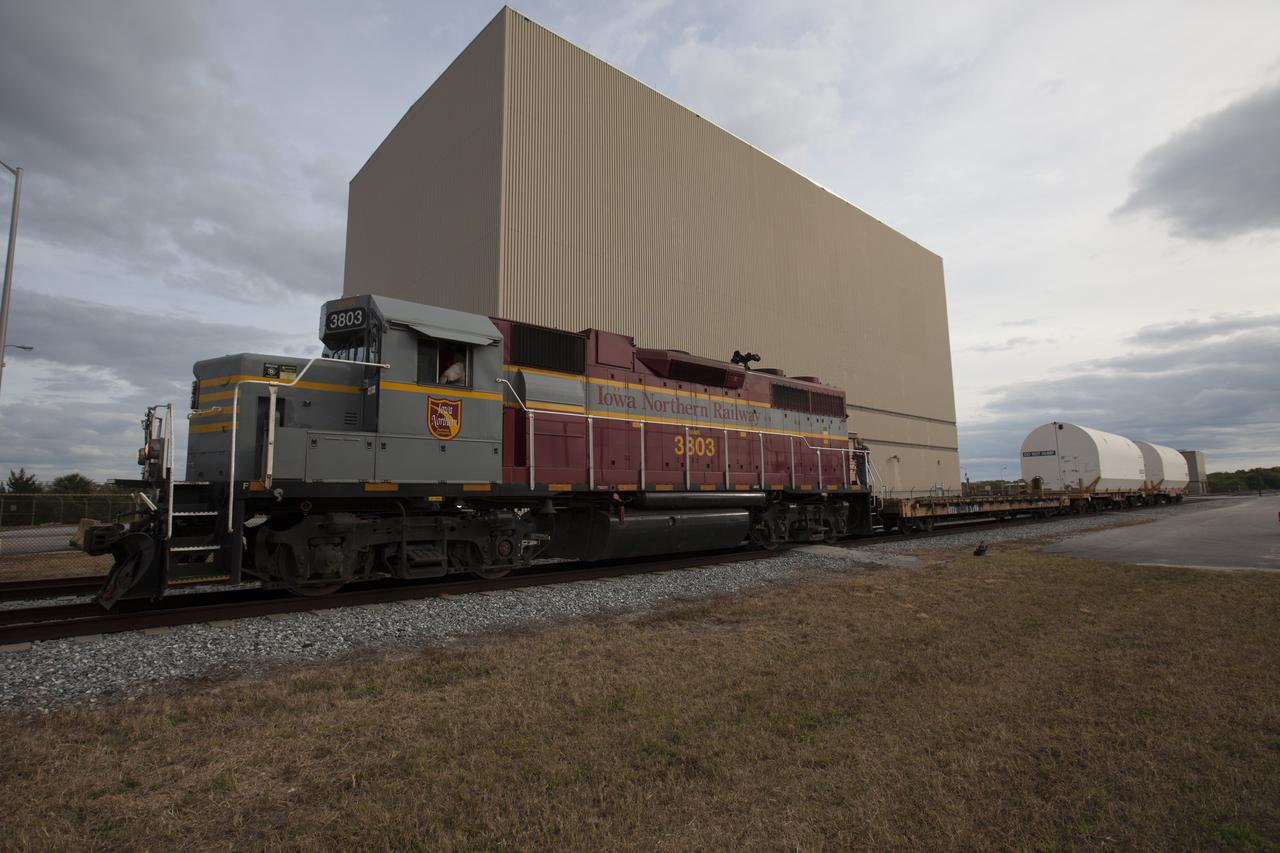
An Iowa Northern locomotive, contracted by Goodloe Transportation of Chicago, departs from the Rotation, Processing and Surge Facility (RPSF) at NASA’s Kennedy Space Center in Florida, with two containers on railcars for transport to the NASA Jay Jay railroad yard. The containers held two pathfinders, or test versions, of solid rocket booster segments for NASA’s Space Launch System rocket that were delivered to the RPSF. Inside the RPSF, the Ground Systems Development and Operations Program and Jacobs Engineering, on the Test and Operations Support Contract, will conduct a series of lifts, moves and stacking operations using the booster segments, which are inert, to prepare for Exploration Mission-1, deep-space missions and the journey to Mars. The pathfinder booster segments are from Orbital ATK in Utah.
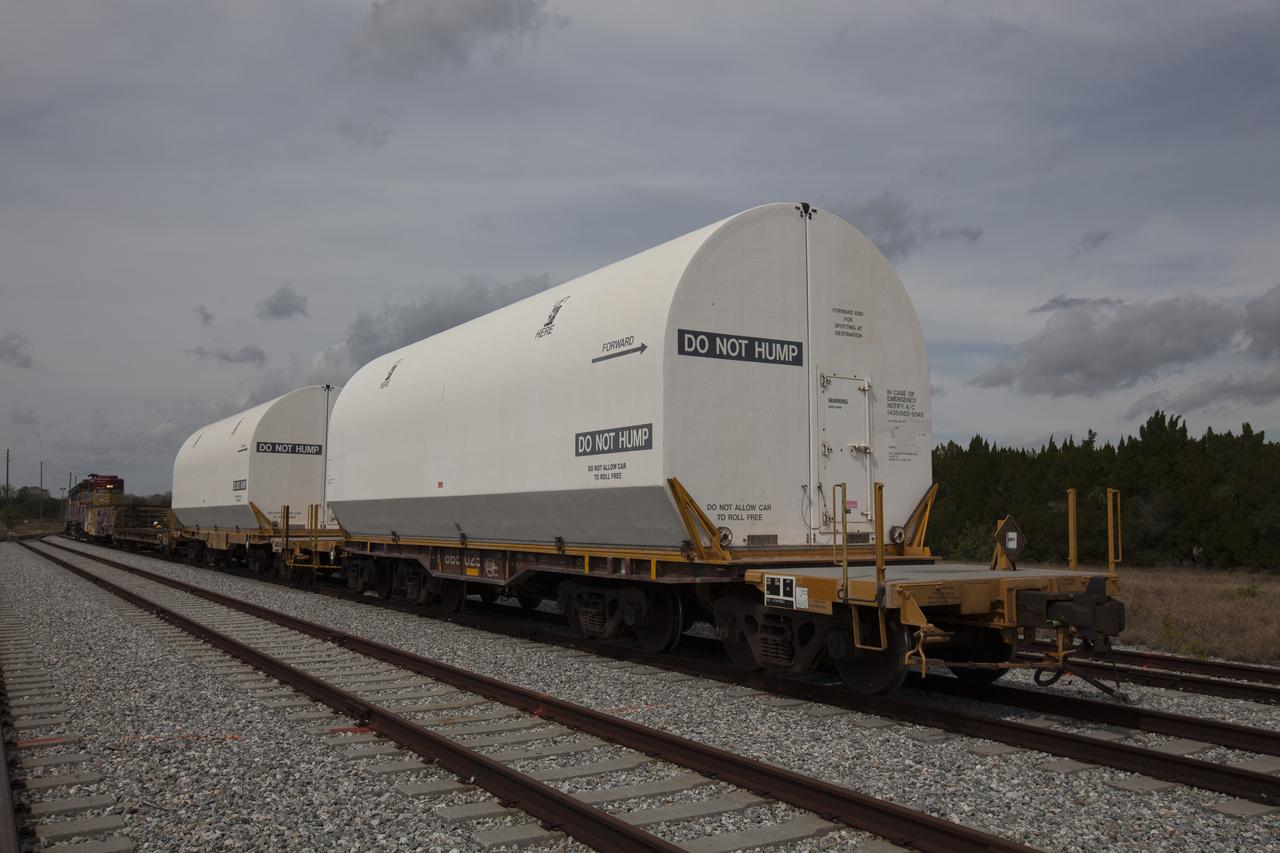
An Iowa Northern locomotive, contracted by Goodloe Transportation of Chicago, arrives at the NASA Jay Jay railroad yard from Kennedy Space Center in Florida, with two containers on railcars for storage. The containers held two pathfinders, or test versions, of solid rocket booster segments for NASA’s Space Launch System rocket that were delivered to the Rotation, Processing and Surge Facility (RPSF). Inside the RPSF, the Ground Systems Development and Operations Program and Jacobs Engineering, on the Test and Operations Support Contract, will conduct a series of lifts, moves and stacking operations using the booster segments, which are inert, to prepare for Exploration Mission-1, deep-space missions and the journey to Mars. The pathfinder booster segments are from Orbital ATK in Utah.
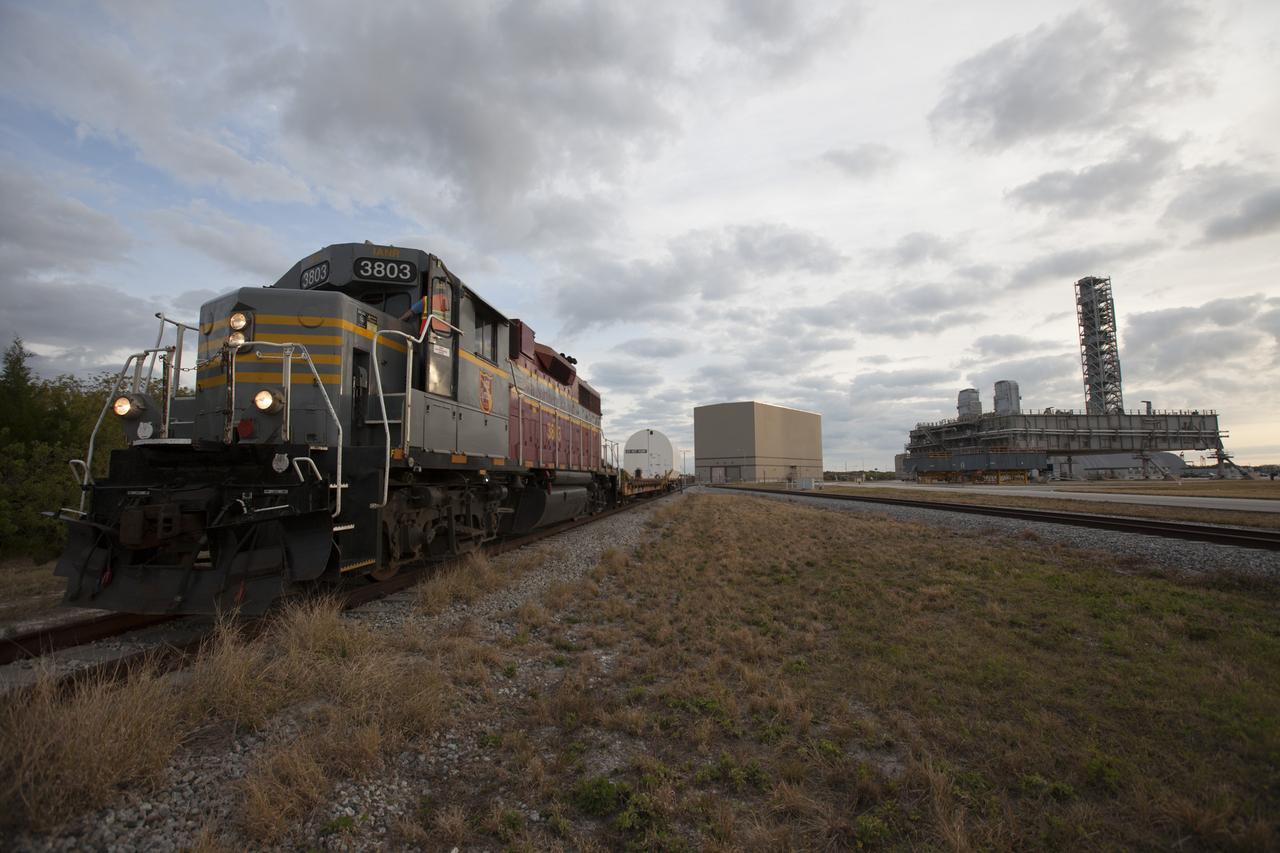
An Iowa Northern locomotive, contracted by Goodloe Transportation of Chicago, departs from NASA’s Kennedy Space Center in Florida, with two containers on railcars for transport to the Jay Jay railroad yard. The containers held two pathfinders, or test versions, of solid rocket booster segments for NASA’s Space Launch System rocket that were delivered to the Rotation, Processing and Surge Facility (RPSF). Inside the RPSF, the Ground Systems Development and Operations Program and Jacobs Engineering, on the Test and Operations Support Contract, will conduct a series of lifts, moves and stacking operations using the booster segments, which are inert, to prepare for Exploration Mission-1, deep-space missions and the journey to Mars. The pathfinder booster segments are from Orbital ATK in Utah.
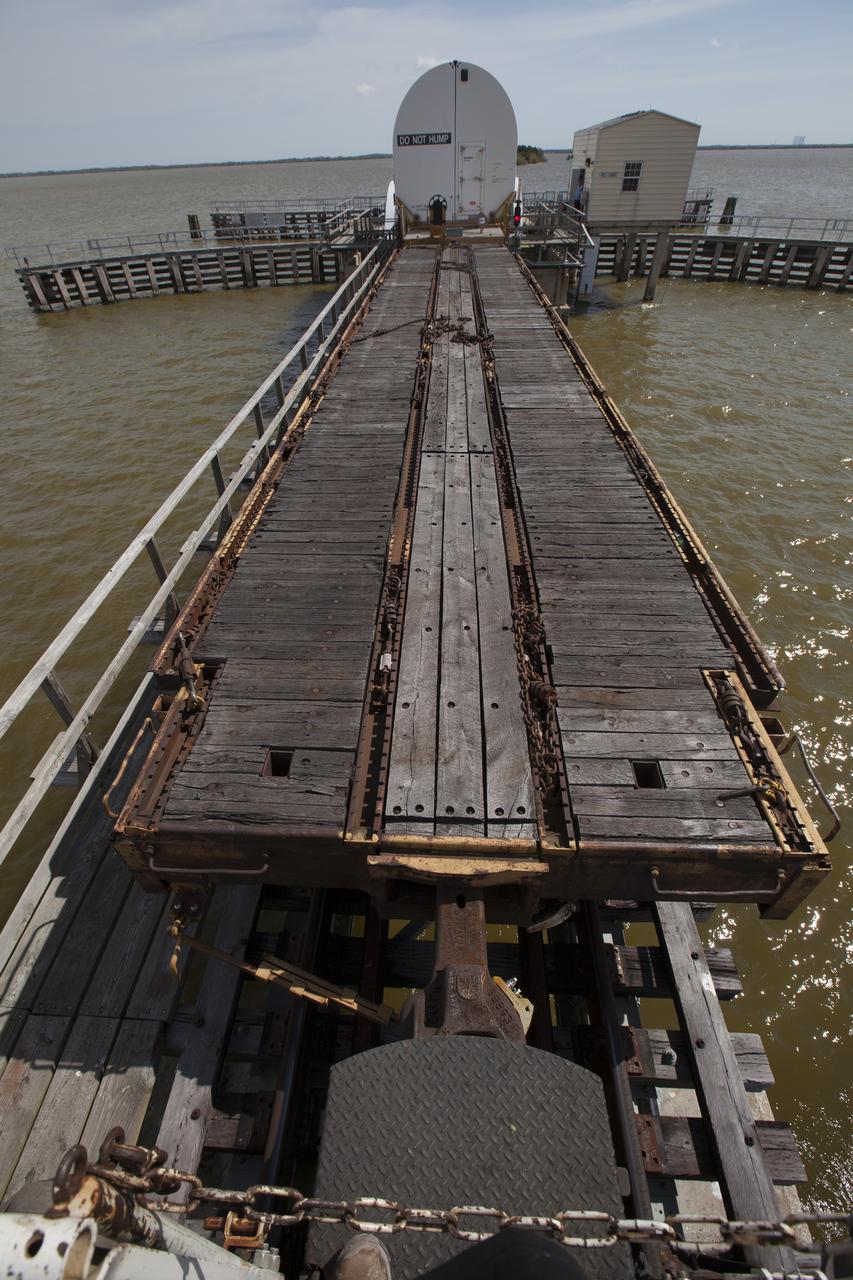
An Iowa Northern locomotive, contracted by Goodloe Transportation of Chicago, continues along the NASA railroad bridge over the Indian River north of Kennedy Space Center, carrying one of two containers on a railcar for transport to the NASA Jay Jay railroad yard. The containers held two pathfinders, or test versions, of solid rocket booster segments for NASA’s Space Launch System rocket that were delivered to the Rotation, Processing and Surge Facility (RPSF). Inside the RPSF, the Ground Systems Development and Operations Program and Jacobs Engineering, on the Test and Operations Support Contract, will conduct a series of lifts, moves and stacking operations using the booster segments, which are inert, to prepare for Exploration Mission-1, deep-space missions and the journey to Mars. The pathfinder booster segments are from Orbital ATK in Utah.
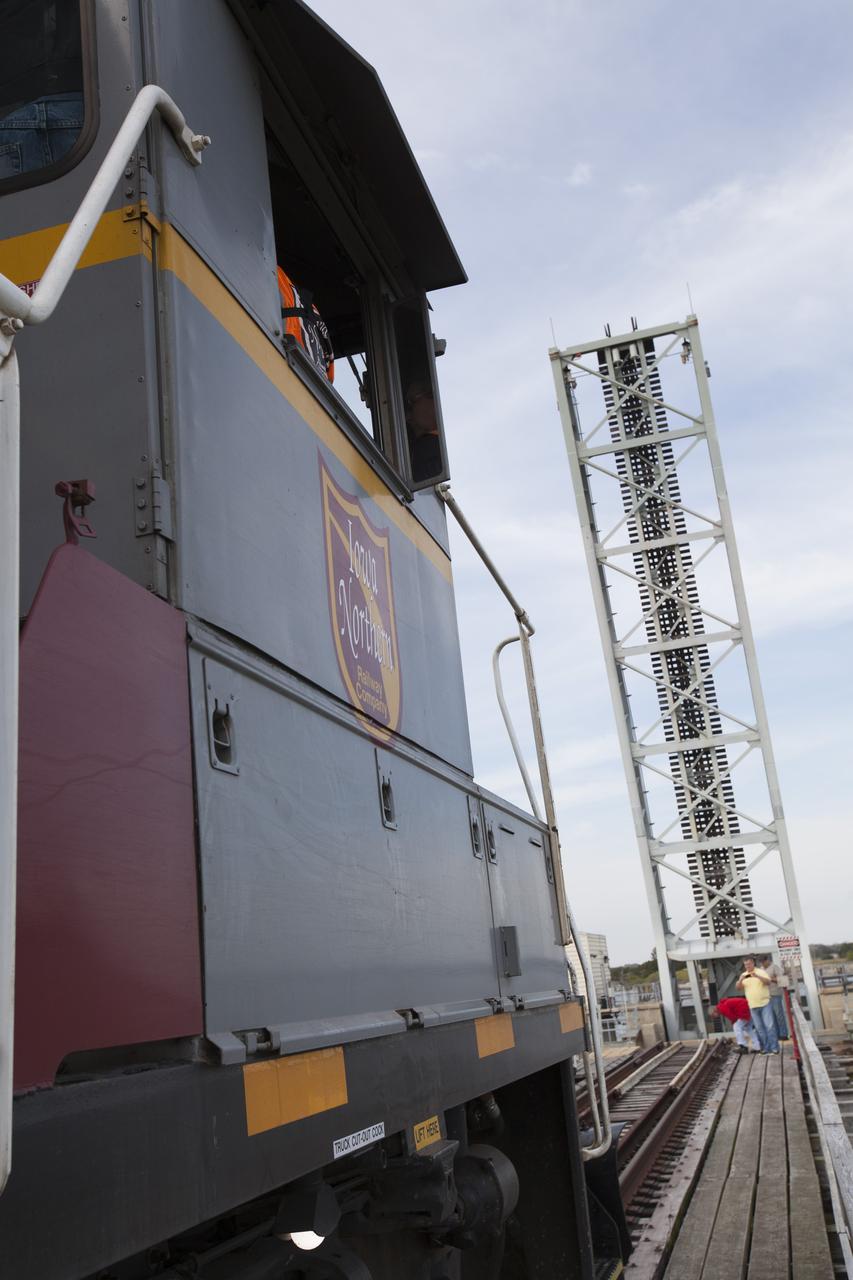
An Iowa Northern locomotive, contracted by Goodloe Transportation of Chicago, approaches the raised span of the NASA railroad bridge to continue over the Indian River north of Kennedy Space Center with two containers on railcars for storage at the NASA Jay Jay railroad yard. The containers held two pathfinders, or test versions, of solid rocket booster segments for NASA’s Space Launch System rocket that were delivered to the Rotation, Processing and Surge Facility (RPSF). Inside the RPSF, the Ground Systems Development and Operations Program and Jacobs Engineering, on the Test and Operations Support Contract, will conduct a series of lifts, moves and stacking operations using the booster segments, which are inert, to prepare for Exploration Mission-1, deep-space missions and the journey to Mars. The pathfinder booster segments are from Orbital ATK in Utah.
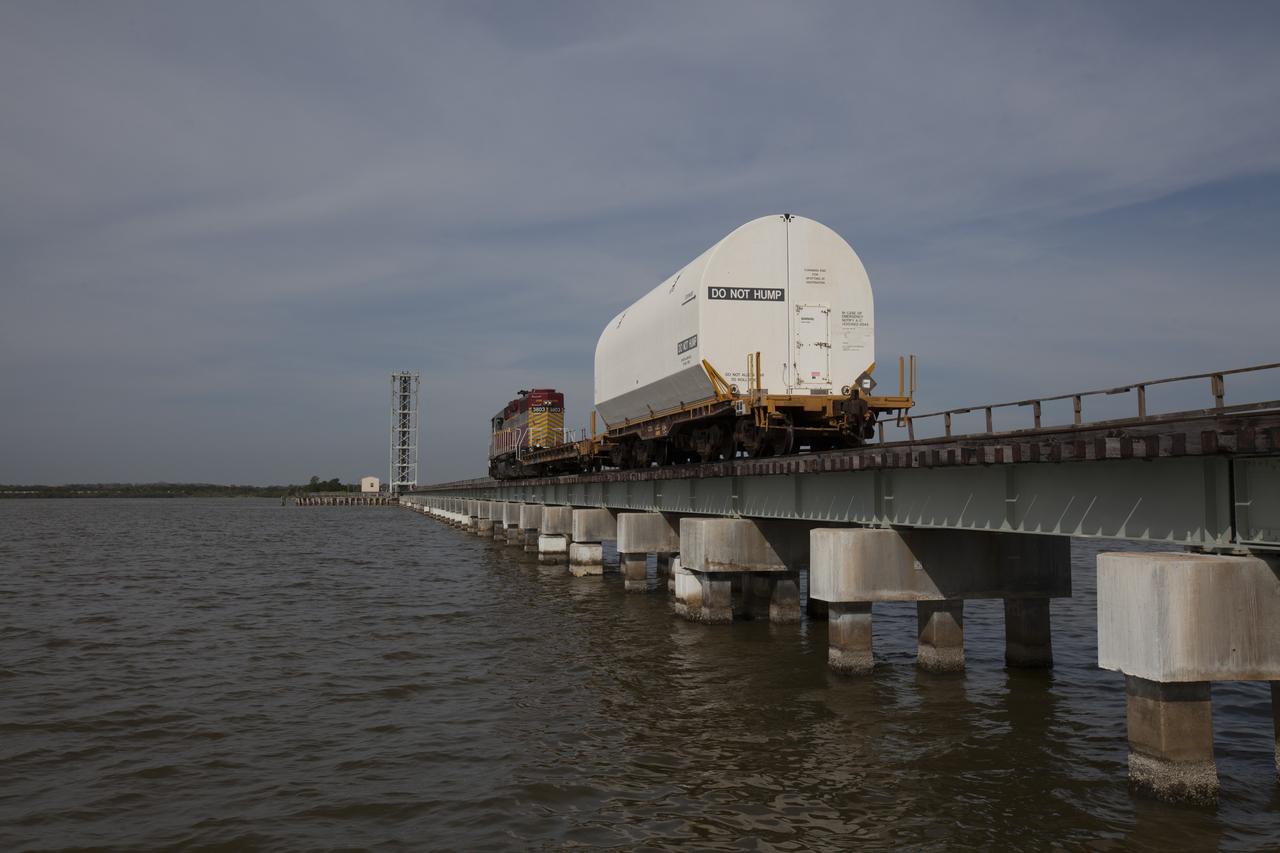
An Iowa Northern locomotive, conracted by Goodloe Transportation of Chicago, travels along the NASA railroad bridge over the Indian River north of Kennedy Space Center, with two containers on railcars for transport to the NASA Jay Jay railroad yard. The containers held two pathfinders, or test versions, of solid rocket booster segments for NASA’s Space Launch System rocket that were delivered to the Rotation, Processing and Surge Facility (RPSF). Inside the RPSF, the Ground Systems Development and Operations Program and Jacobs Engineering, on the Test and Operations Support Contract, will conduct a series of lifts, moves and stacking operations using the booster segments, which are inert, to prepare for Exploration Mission-1, deep-space missions and the journey to Mars. The pathfinder booster segments are from Orbital ATK in Utah.
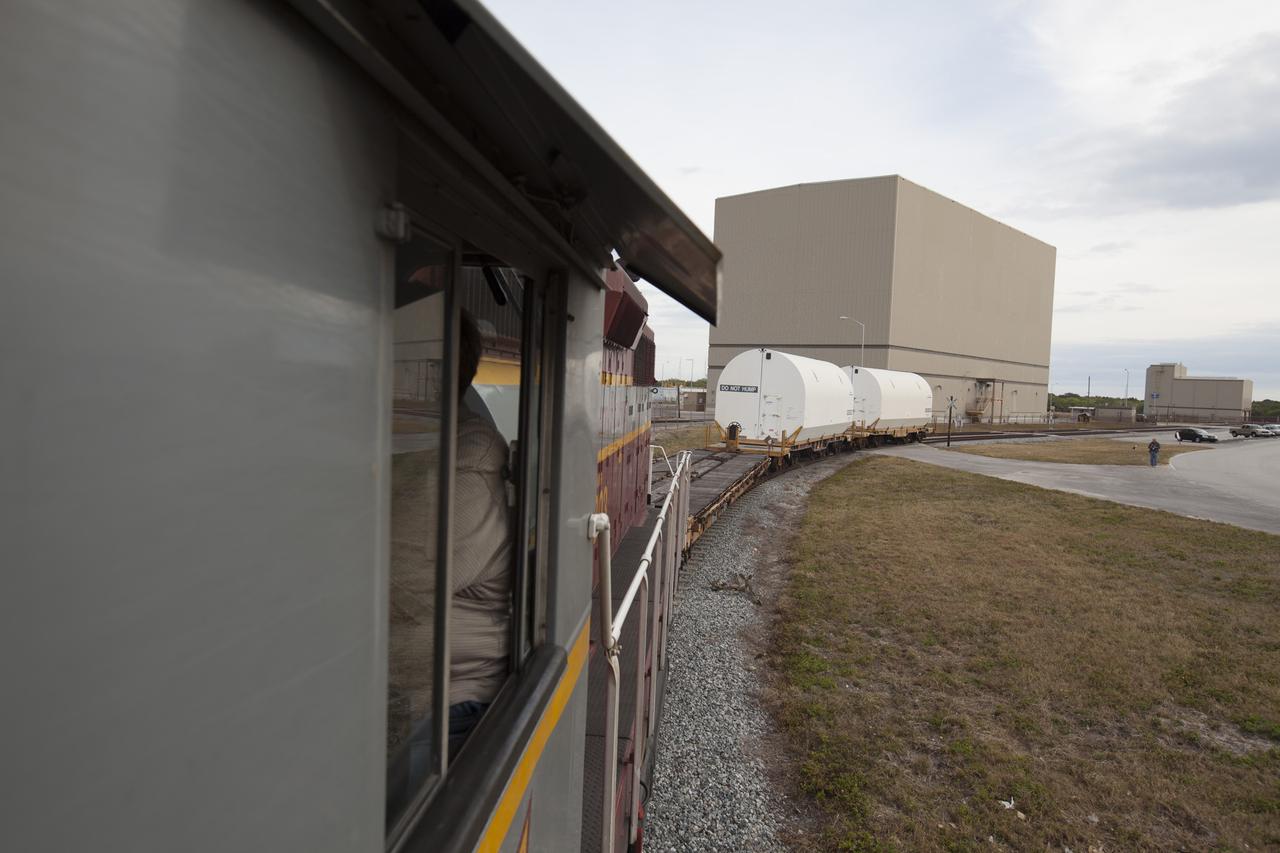
An Iowa Northern locomotive, contracted by Goodloe Transportation of Chicago, departs from the Rotation, Processing and Surge Facility (RPSF) at NASA’s Kennedy Space Center in Florida, with two containers on railcars for transport to the NASA Jay Jay railroad yard. The containers held two pathfinders, or test versions, of solid rocket booster segments for NASA’s Space Launch System rocket that were delivered to the RPSF. Inside the RPSF, the Ground Systems Development and Operations Program and Jacobs Engineering, on the Test and Operations Support Contract, will conduct a series of lifts, moves and stacking operations using the booster segments, which are inert, to prepare for Exploration Mission-1, deep-space missions and the journey to Mars. The pathfinder booster segments are from Orbital ATK in Utah.

An Iowa Northern locomotive, contracted by Goodloe Transportation of Chicago, travels along the NASA railroad bridge over the Indian River north of Kennedy Space Center, carrying one of two containers on a railcar for transport to the NASA Jay Jay railroad yard near the center. The containers held two pathfinders, or test versions, of solid rocket booster segments for NASA’s Space Launch System rocket that were delivered to the Rotation, Processing and Surge Facility (RPSF). Inside the RPSF, the Ground Systems Development and Operations Program and Jacobs Engineering, on the Test and Operations Support Contract, will conduct a series of lifts, moves and stacking operations using the booster segments, which are inert, to prepare for Exploration Mission-1, deep-space missions and the journey to Mars. The pathfinder booster segments are from Orbital ATK in Utah.
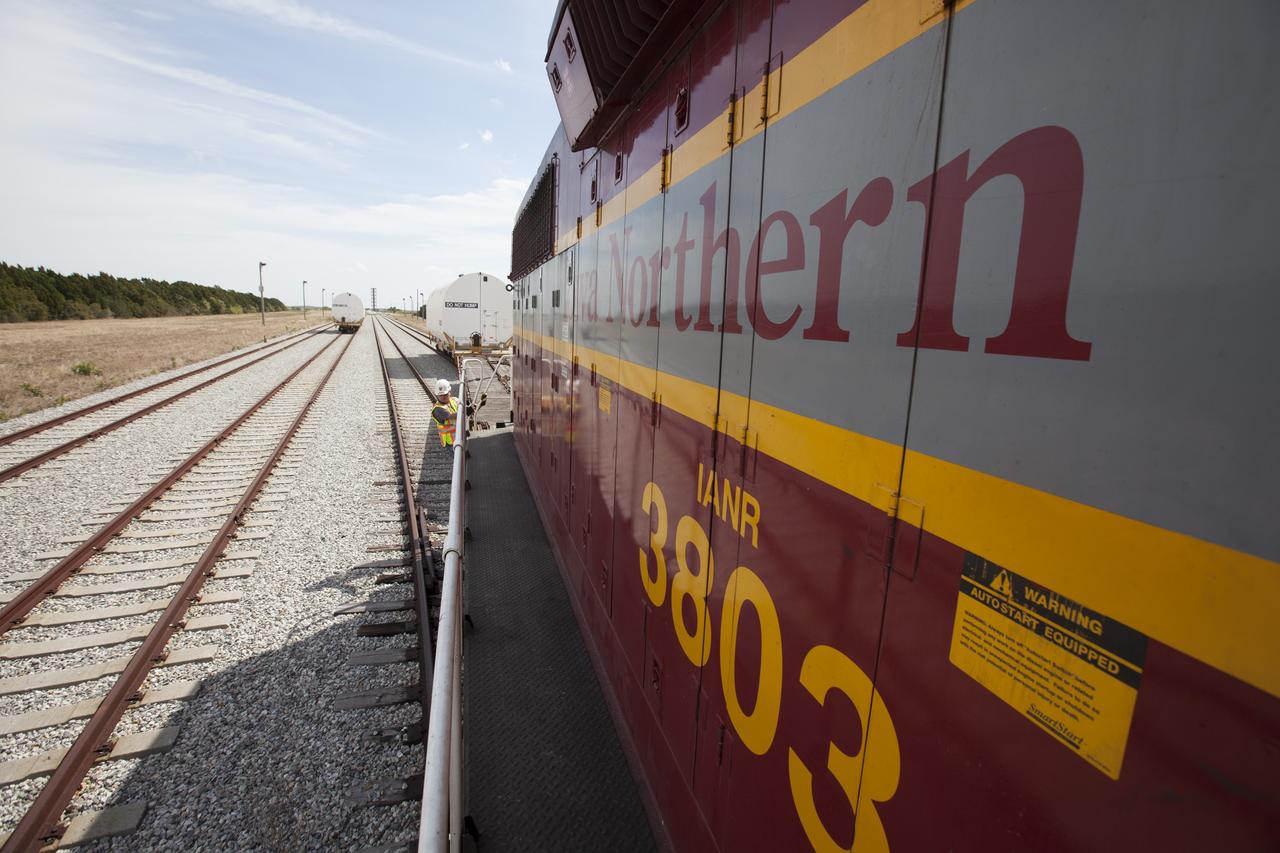
An Iowa Northern locomotive, contracted by Goodloe Transportation of Chicago, arrives at the NASA Jay Jay railroad yard from Kennedy Space Center in Florida, with the second of two containers on a railcar. The first container is at left. The containers held two pathfinders, or test versions, of solid rocket booster segments for NASA’s Space Launch System rocket that were delivered to the Rotation, Processing and Surge Facility (RPSF). Inside the RPSF, the Ground Systems Development and Operations Program and Jacobs Engineering, on the Test and Operations Support Contract, will conduct a series of lifts, moves and stacking operations using the booster segments, which are inert, to prepare for Exploration Mission-1, deep-space missions and the journey to Mars. The pathfinder booster segments are from Orbital ATK in Utah.
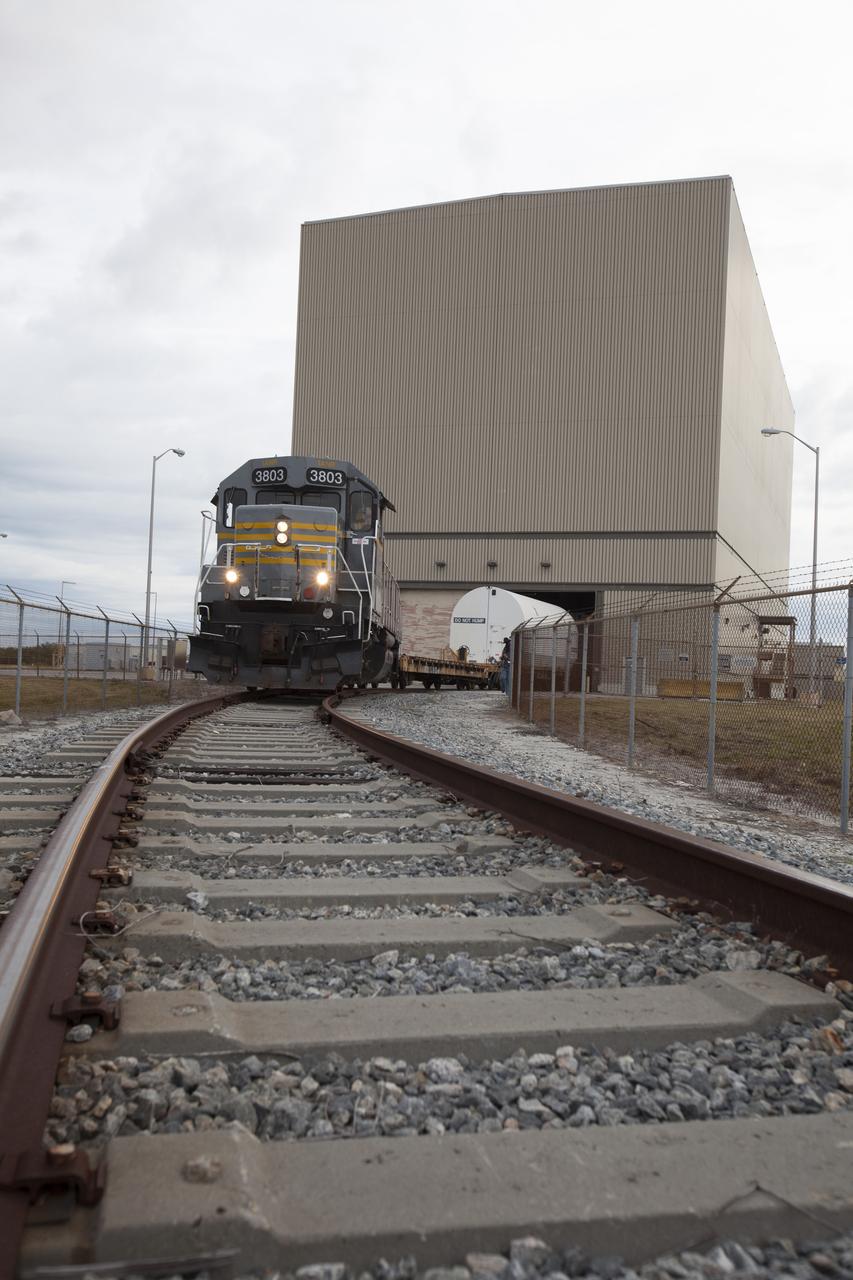
An Iowa Northern locomotive, contracted by Goodloe Transportation of Chicago, departs from the Rotation, Processing and Surge Facility (RPSF) at NASA’s Kennedy Space Center in Florida, with two containers on railcars for transport to the NASA Jay Jay railroad yard. The containers held two pathfinders, or test versions, of solid rocket booster segments for NASA’s Space Launch System rocket that were delivered to the RPSF. Inside the RPSF, the Ground Systems Development and Operations Program and Jacobs Engineering, on the Test and Operations Support Contract, will conduct a series of lifts, moves and stacking operations using the booster segments, which are inert, to prepare for Exploration Mission-1, deep-space missions and the journey to Mars. The pathfinder booster segments are from Orbital ATK in Utah.
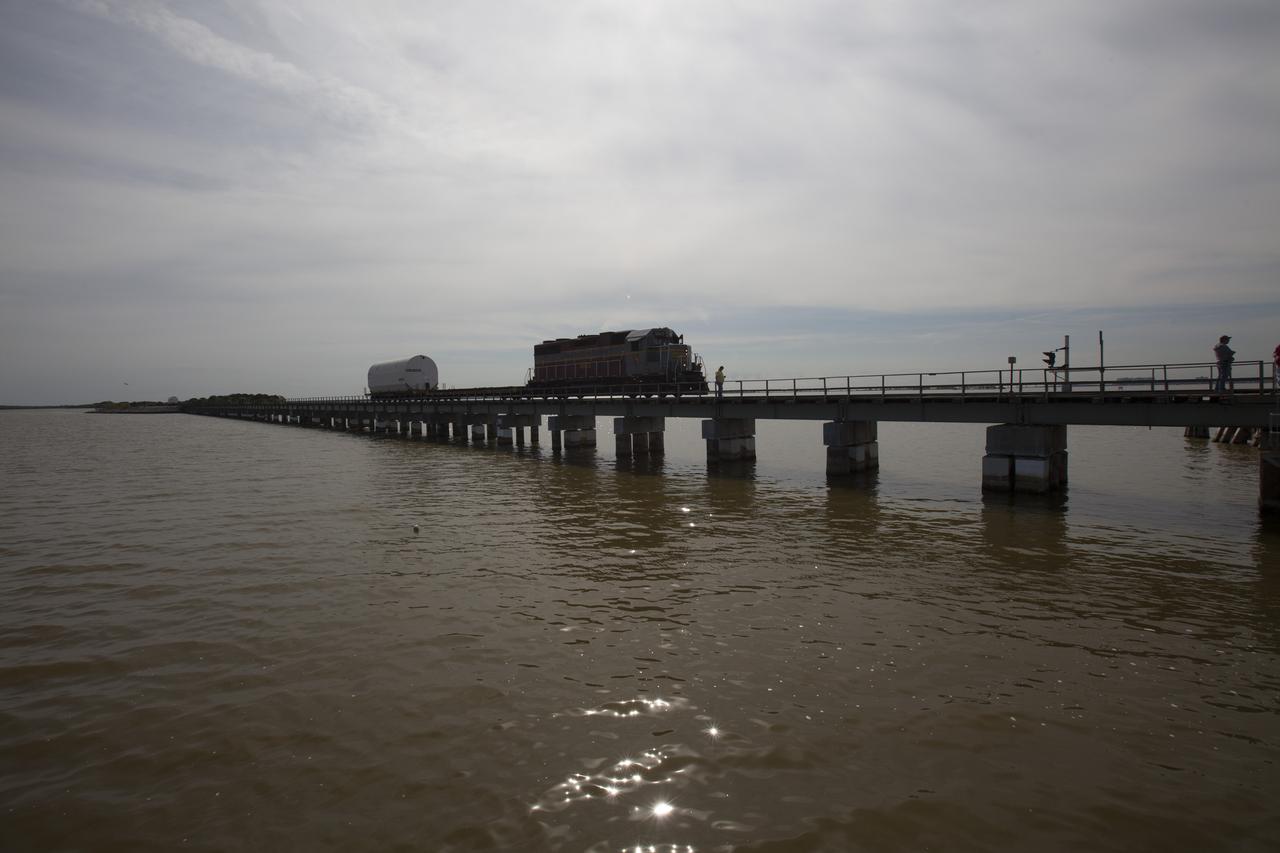
An Iowa Northern locomotive, contracted by Goodloe Transportation of Chicago, travels along the NASA railroad bridge over the Indian River north of Kennedy Space Center, carrying one of two containers on a railcar for transport to the NASA Jay Jay railroad yard. The containers held two pathfinders, or test versions, of solid rocket booster segments for NASA’s Space Launch System rocket that were delivered to the Rotation, Processing and Surge Facility (RPSF). Inside the RPSF, the Ground Systems Development and Operations Program and Jacobs Engineering, on the Test and Operations Support Contract, will conduct a series of lifts, moves and stacking operations using the booster segments, which are inert, to prepare for Exploration Mission-1, deep-space missions and the journey to Mars. The pathfinder booster segments are from Orbital ATK in Utah.
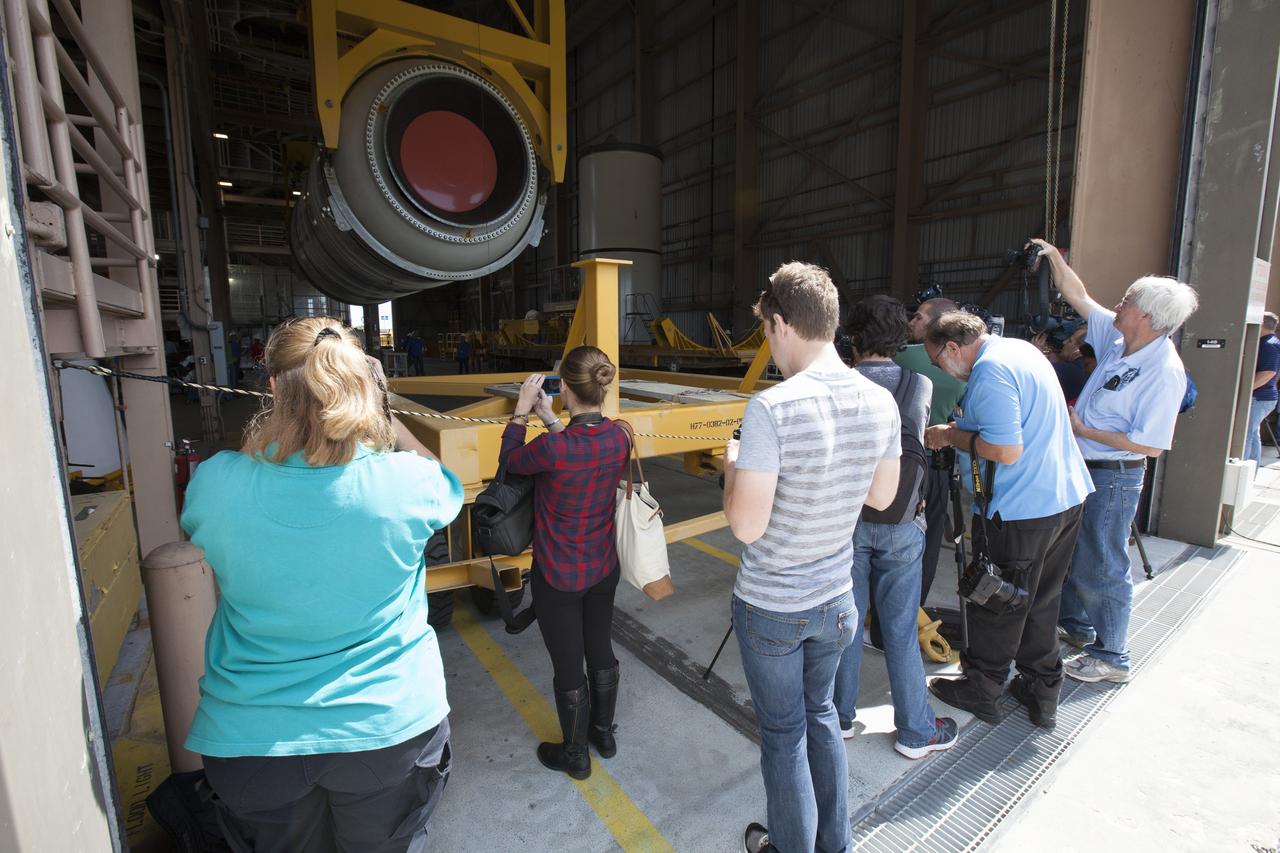
At the Rotation, Processing and Surge Facility (RPSF) at NASA’s Kennedy Space Center in Florida, members of the news media photograph the process as cranes are used to lift one of two pathfinders, or test versions, of solid rocket booster segments for NASA’s Space Launch System rocket. The Ground Systems Development and Operations Program and Jacobs Engineering, on the Test and Operations Support Contract, are preparing the booster segments, which are inert, for a series of lifts, moves and stacking operations to prepare for Exploration Mission-1, deep-space missions and the journey to Mars.
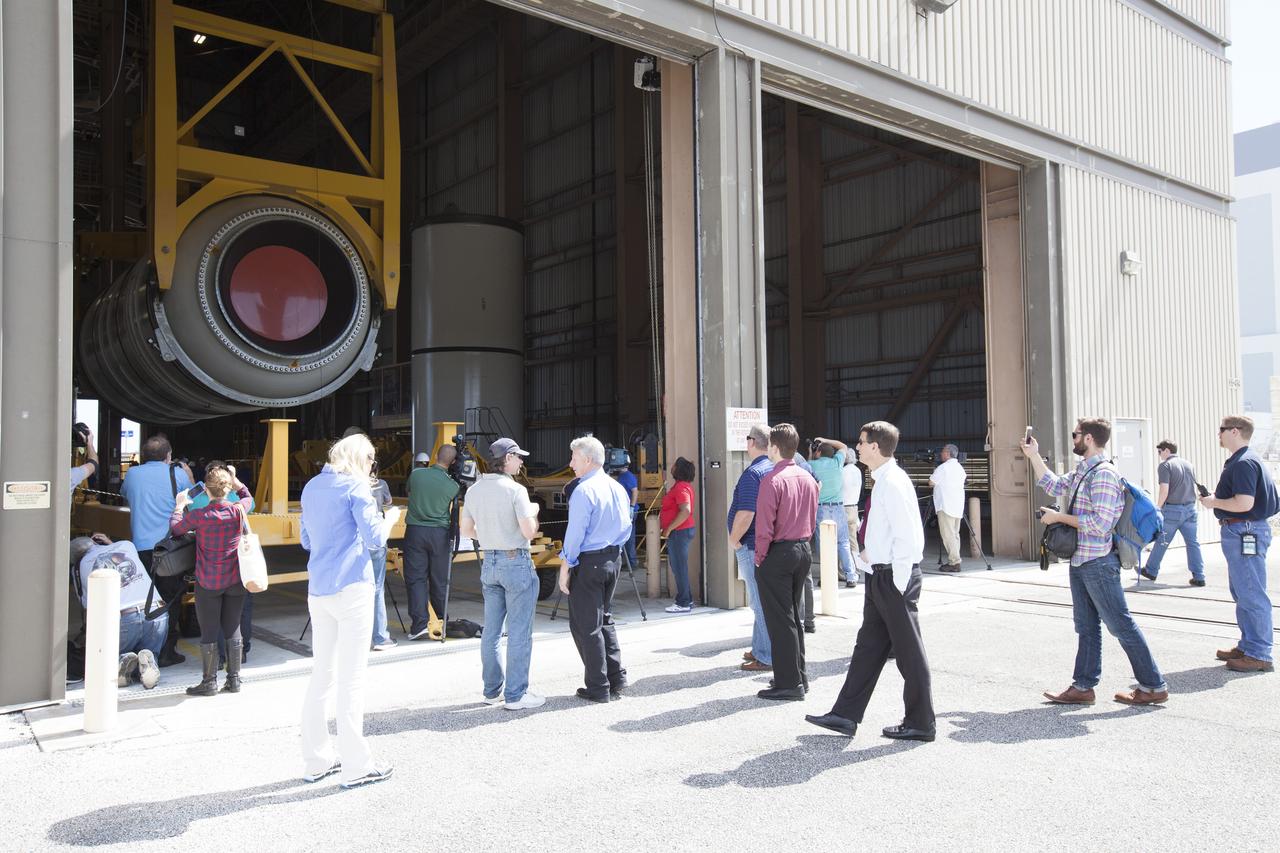
At the Rotation, Processing and Surge Facility (RPSF) at NASA’s Kennedy Space Center in Florida, members of the news media watch as cranes are used to lift one of two pathfinders, or test versions, of solid rocket booster segments for NASA’s Space Launch System rocket. The Ground Systems Development and Operations Program and Jacobs Engineering, on the Test and Operations Support Contract, are preparing the booster segments, which are inert, for a series of lifts, moves and stacking operations to prepare for Exploration Mission-1, deep-space missions and the journey to Mars.

During a training exercise, technicians with NASA’s Exploration Ground Systems lower a mock-up of the Space Launch System (SLS) aft booster segment, referred to as a pathfinder, onto the mobile launcher in Kennedy Space Center’s Vehicle Assembly Building (VAB) on Sept. 11, 2020. The rehearsal involved teams preparing the aft pathfinder segment in High Bay 4 of the VAB, lifting and moving it over to High Bay 3, and placing it on the mobile launcher in preparation for Artemis I. Stacking of the actual booster segments will occur later this year, before the SLS core stage arrives at the Florida spaceport. Artemis I is the first in a series of increasingly complex missions that will test SLS and the Orion spacecraft as an integrated system prior to crewed flights to the Moon.
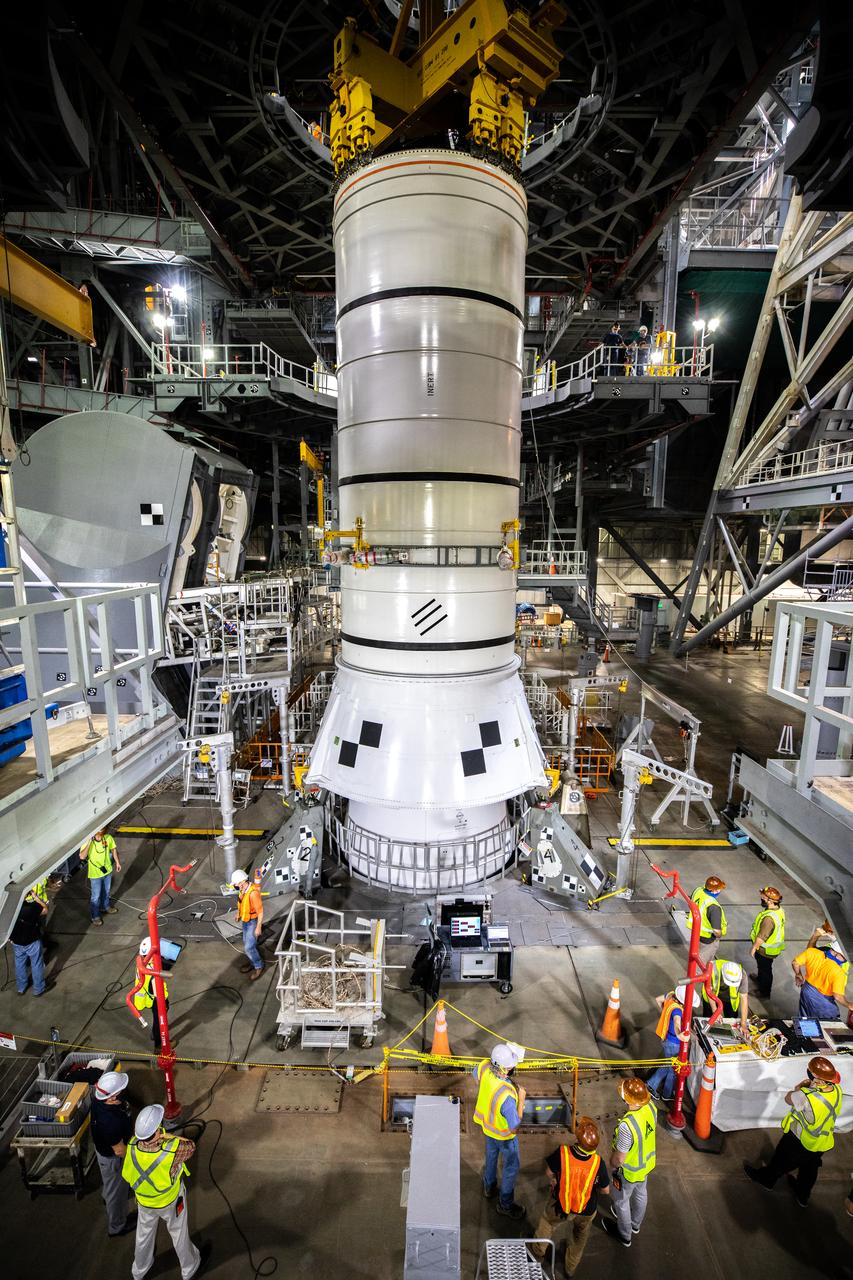
During a training exercise, technicians with NASA’s Exploration Ground Systems lower a mock-up of the Space Launch System (SLS) aft booster segment, referred to as a pathfinder, onto the mobile launcher in Kennedy Space Center’s Vehicle Assembly Building (VAB) on Sept. 11, 2020. The rehearsal involved teams preparing the aft pathfinder segment in High Bay 4 of the VAB, lifting and moving it over to High Bay 3, and placing it on the mobile launcher in preparation for Artemis I. Stacking of the actual booster segments will occur later this year, before the SLS core stage arrives at the Florida spaceport. Artemis I is the first in a series of increasingly complex missions that will test SLS and the Orion spacecraft as an integrated system prior to crewed flights to the Moon.
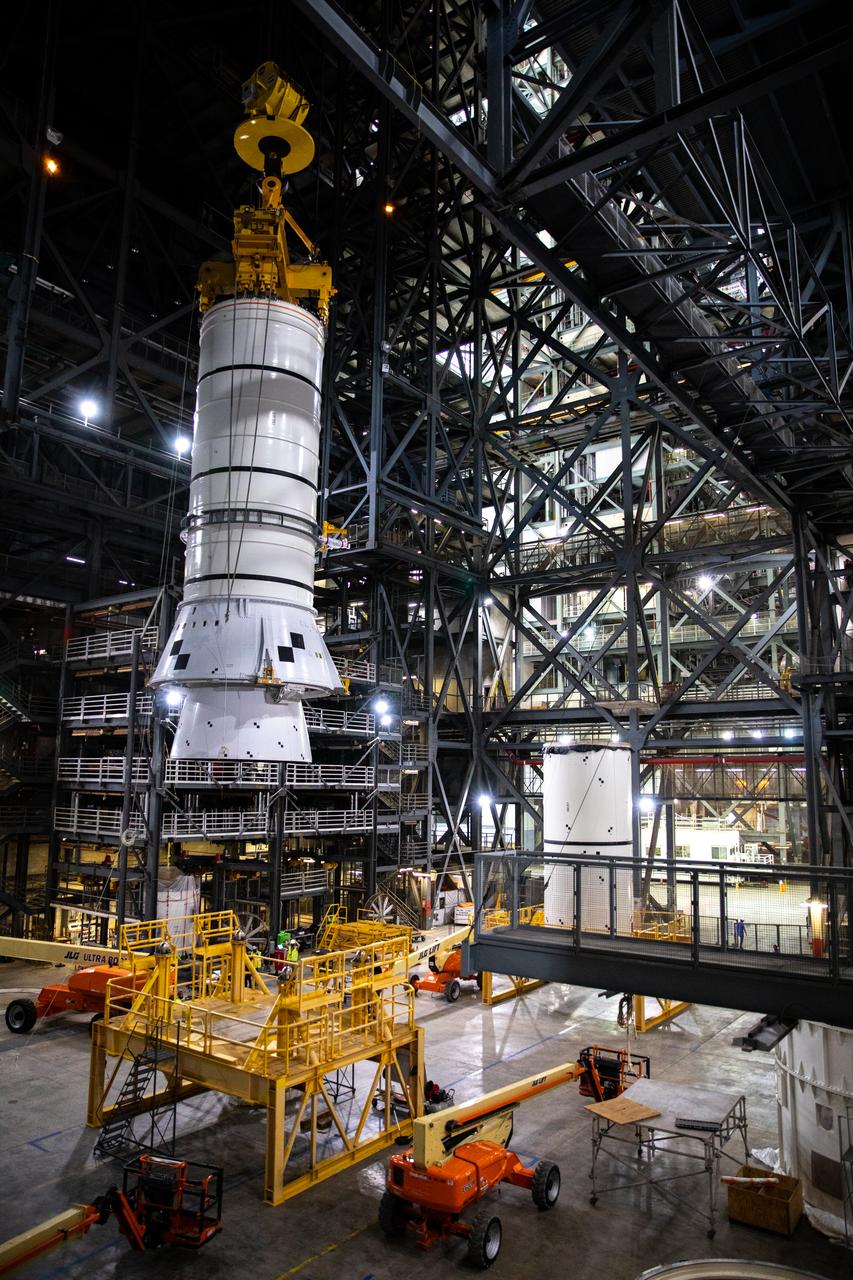
Technicians with NASA’s Exploration Ground Systems rehearse lifting operations using a mock-up of the Space Launch System (SLS) aft booster segment, referred to as a pathfinder, inside the Vehicle Assembly Building (VAB) at the agency’s Kennedy Space Center in Florida on Sept. 11, 2020, in preparation for Artemis I. The exercise involved preparing the aft pathfinder segment in High Bay 4 of the VAB and moving it over to High Bay 3, where it was placed on the mobile launcher. Stacking of the actual booster segments will occur later this year, before the SLS core stage arrives at Kennedy. Artemis I is the first in a series of increasingly complex missions that will test SLS and the Orion spacecraft as an integrated system prior to crewed flights to the Moon.
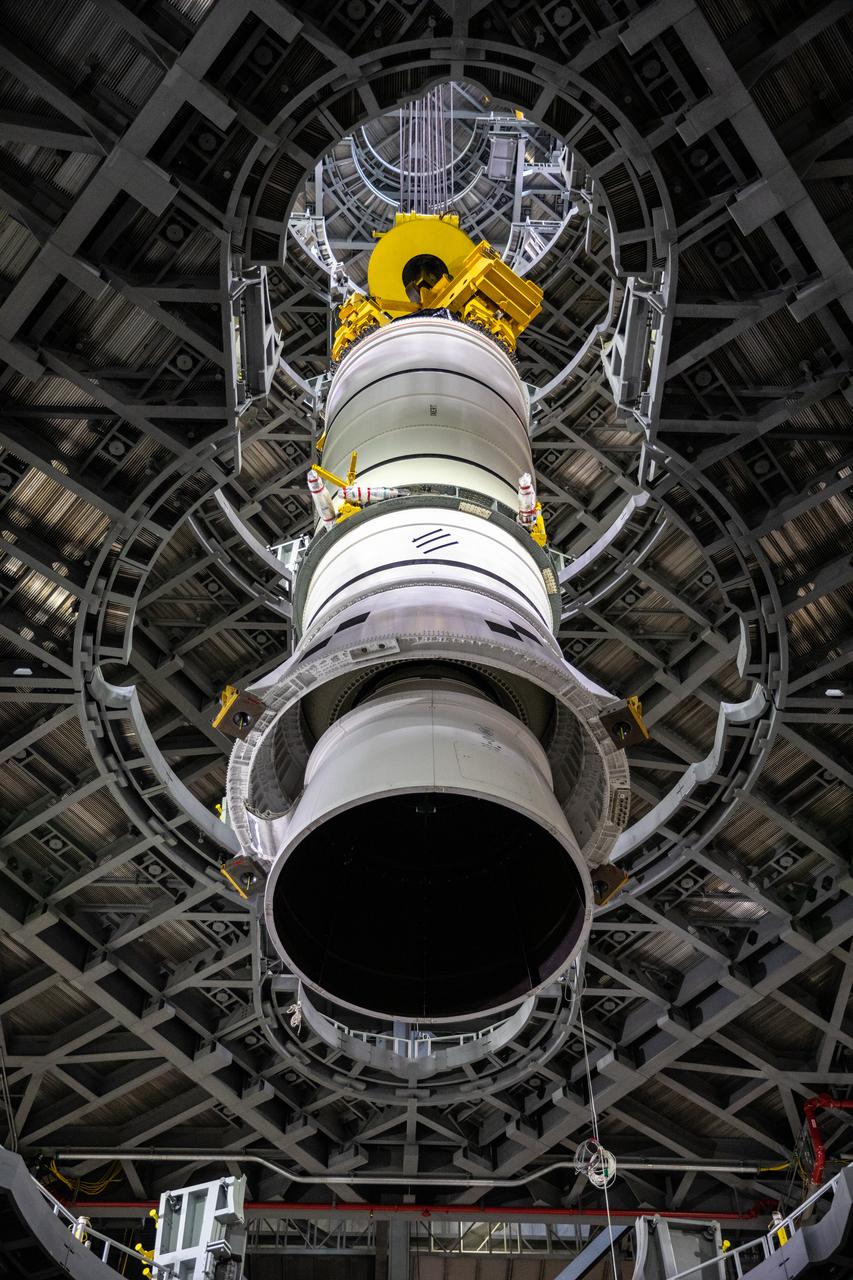
During a training exercise, technicians with NASA’s Exploration Ground Systems lower a mock-up of the Space Launch System (SLS) aft booster segment, referred to as a pathfinder, onto the mobile launcher in Kennedy Space Center’s Vehicle Assembly Building (VAB) on Sept. 11, 2020. The rehearsal involved teams preparing the aft pathfinder segment in High Bay 4 of the VAB, lifting and moving it over to High Bay 3, and placing it on the mobile launcher in preparation for Artemis I. Stacking of the actual booster segments will occur later this year, before the SLS core stage arrives at the Florida spaceport. Artemis I is the first in a series of increasingly complex missions that will test SLS and the Orion spacecraft as an integrated system prior to crewed flights to the Moon.
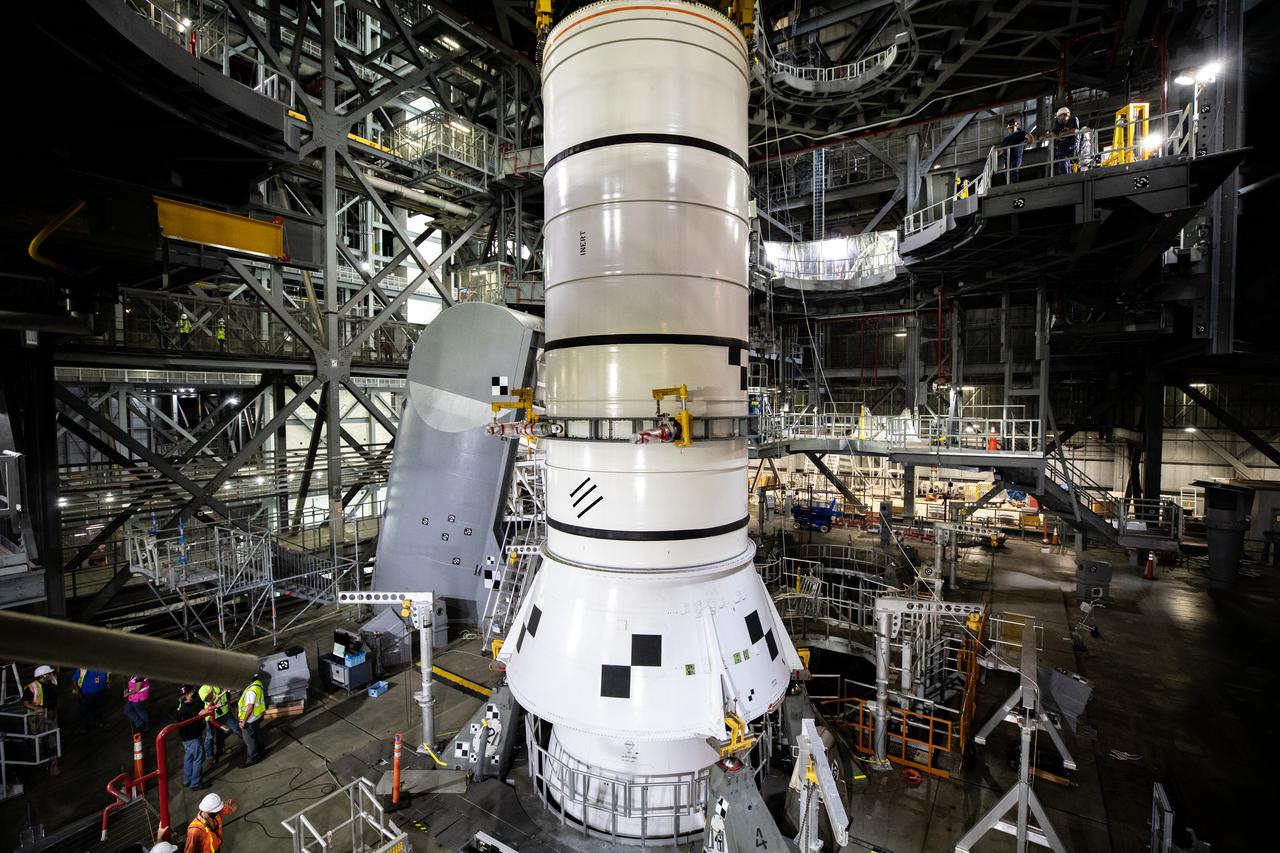
During a training exercise, technicians with NASA’s Exploration Ground Systems lower a mock-up of the Space Launch System (SLS) aft booster segment, referred to as a pathfinder, onto the mobile launcher in Kennedy Space Center’s Vehicle Assembly Building (VAB) on Sept. 11, 2020. The rehearsal involved teams preparing the aft pathfinder segment in High Bay 4 of the VAB, lifting and moving it over to High Bay 3, and placing it on the mobile launcher in preparation for Artemis I. Stacking of the actual booster segments will occur later this year, before the SLS core stage arrives at the Florida spaceport. Artemis I is the first in a series of increasingly complex missions that will test SLS and the Orion spacecraft as an integrated system prior to crewed flights to the Moon.
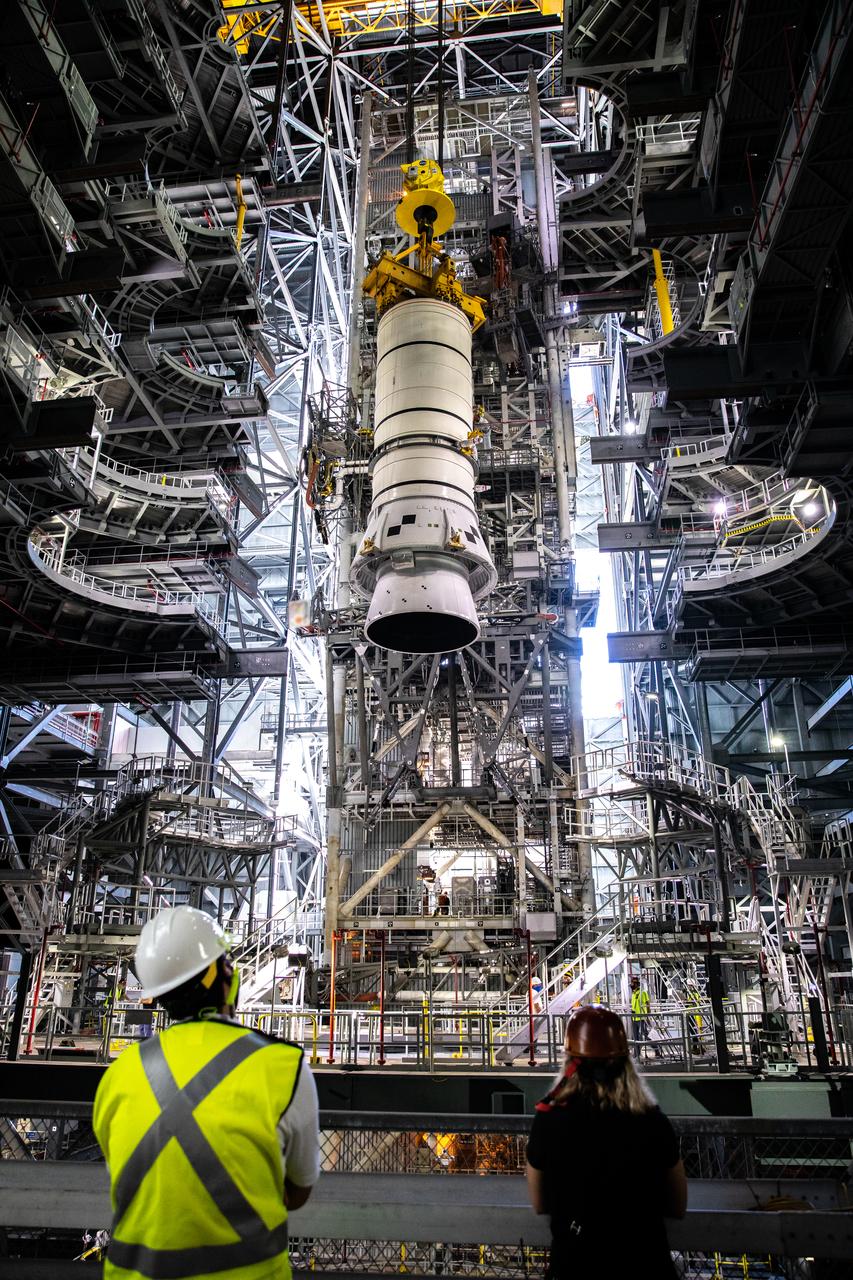
During a training exercise, technicians with NASA’s Exploration Ground Systems lower a mock-up of the Space Launch System (SLS) aft booster segment, referred to as a pathfinder, onto the mobile launcher in Kennedy Space Center’s Vehicle Assembly Building (VAB) on Sept. 11, 2020. The rehearsal involved teams preparing the aft pathfinder segment in High Bay 4 of the VAB, lifting and moving it over to High Bay 3, and placing it on the mobile launcher in preparation for Artemis I. Stacking of the actual booster segments will occur later this year, before the SLS core stage arrives at the Florida spaceport. Artemis I is the first in a series of increasingly complex missions that will test SLS and the Orion spacecraft as an integrated system prior to crewed flights to the Moon.
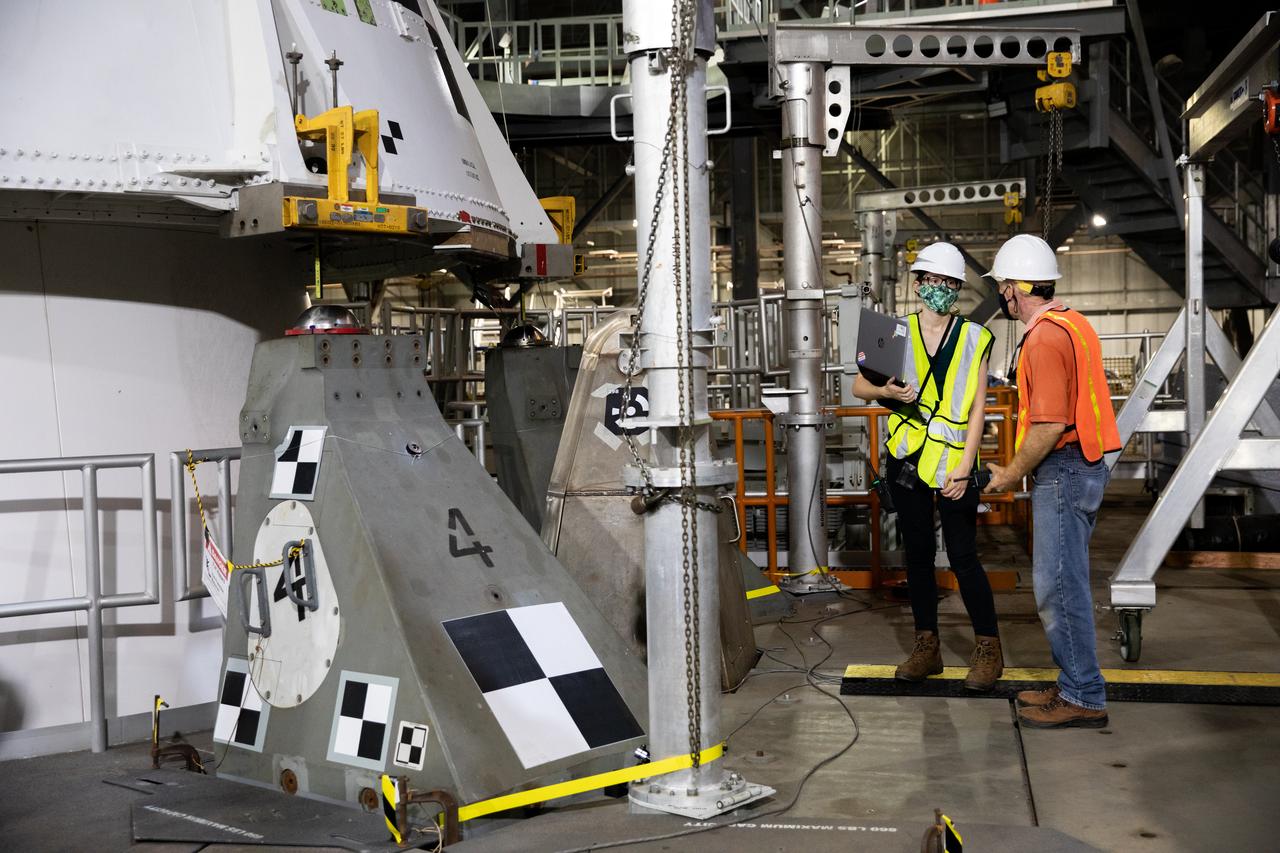
During a training exercise on Sept. 11, 2020, inside the Vehicle Assembly (VAB) at NASA’s Kennedy Space Center in Florida, technicians with the agency’s Exploration Ground Systems verify a mock-up of the Space Launch System (SLS) aft booster segment, referred to as a pathfinder, was placed on the mobile launcher correctly. The rehearsal involved teams preparing the aft pathfinder segment in High Bay 4 of the VAB, lifting and moving it over to High Bay 3, and lowering it onto the mobile launcher in preparation for Artemis I. Stacking of the actual booster segments will occur later this year, before the SLS core stage arrives at the Florida spaceport. Artemis I is the first in a series of increasingly complex missions that will test SLS and the Orion spacecraft as an integrated system prior to crewed flights to the Moon.
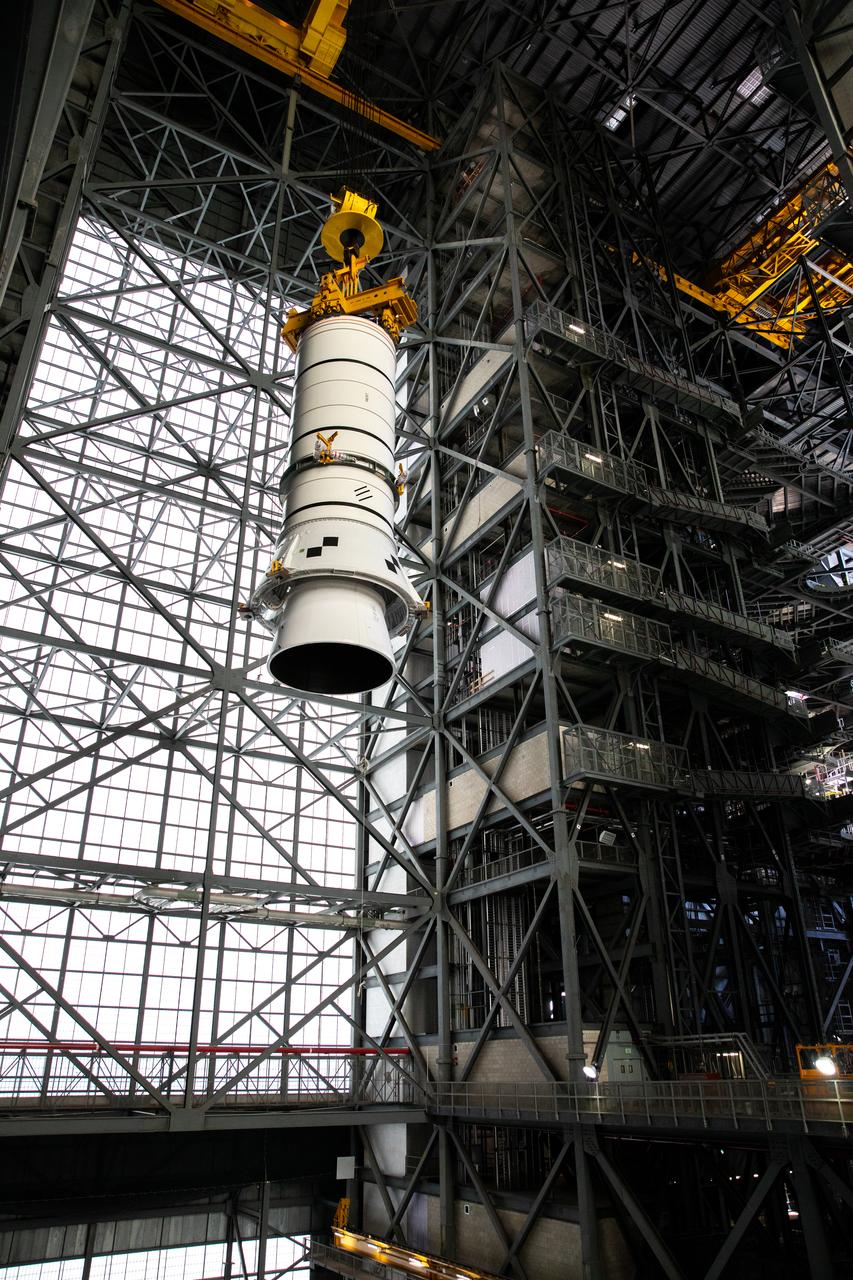
Technicians with NASA’s Exploration Ground Systems rehearse lifting operations using a mock-up of the Space Launch System (SLS) aft booster segment, referred to as a pathfinder, inside the Vehicle Assembly Building (VAB) at the agency’s Kennedy Space Center in Florida on Sept. 11, 2020, in preparation for Artemis I. The exercise involved preparing the aft pathfinder segment in High Bay 4 of the VAB and moving it over to High Bay 3, where it was placed on the mobile launcher. Stacking of the actual booster segments will occur later this year, before the SLS core stage arrives at Kennedy. Artemis I is the first in a series of increasingly complex missions that will test SLS and the Orion spacecraft as an integrated system prior to crewed flights to the Moon.
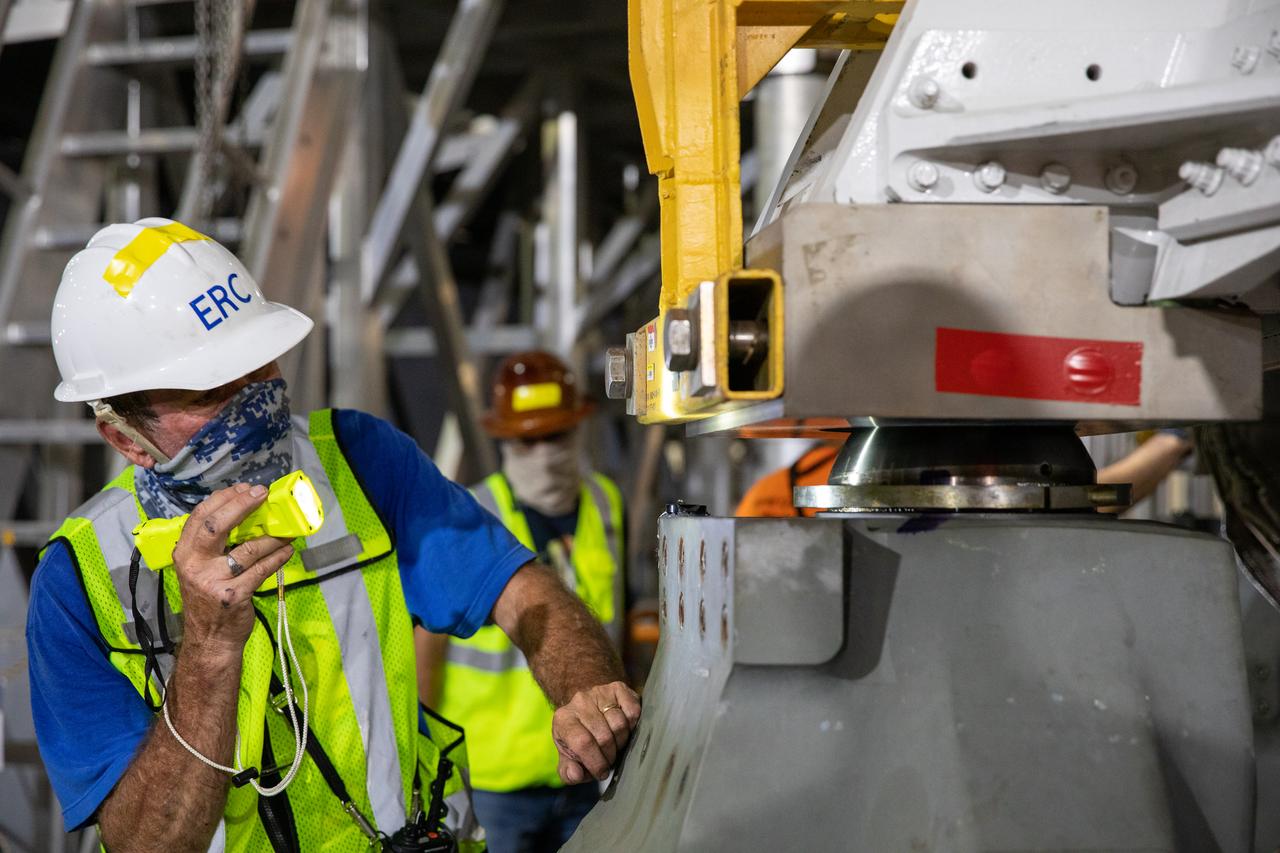
During a training exercise on Sept. 11, 2020, inside the Vehicle Assembly (VAB) at NASA’s Kennedy Space Center in Florida, a technician with the agency’s Exploration Ground Systems verifies a mock-up of the Space Launch System (SLS) aft booster segment, referred to as a pathfinder, was placed on the mobile launcher correctly. The rehearsal involved teams preparing the aft pathfinder segment in High Bay 4 of the VAB, lifting and moving it over to High Bay 3, and lowering it onto the mobile launcher in preparation for Artemis I. Stacking of the actual booster segments will occur later this year, before the SLS core stage arrives at the Florida spaceport. Artemis I is the first in a series of increasingly complex missions that will test SLS and the Orion spacecraft as an integrated system prior to crewed flights to the Moon.
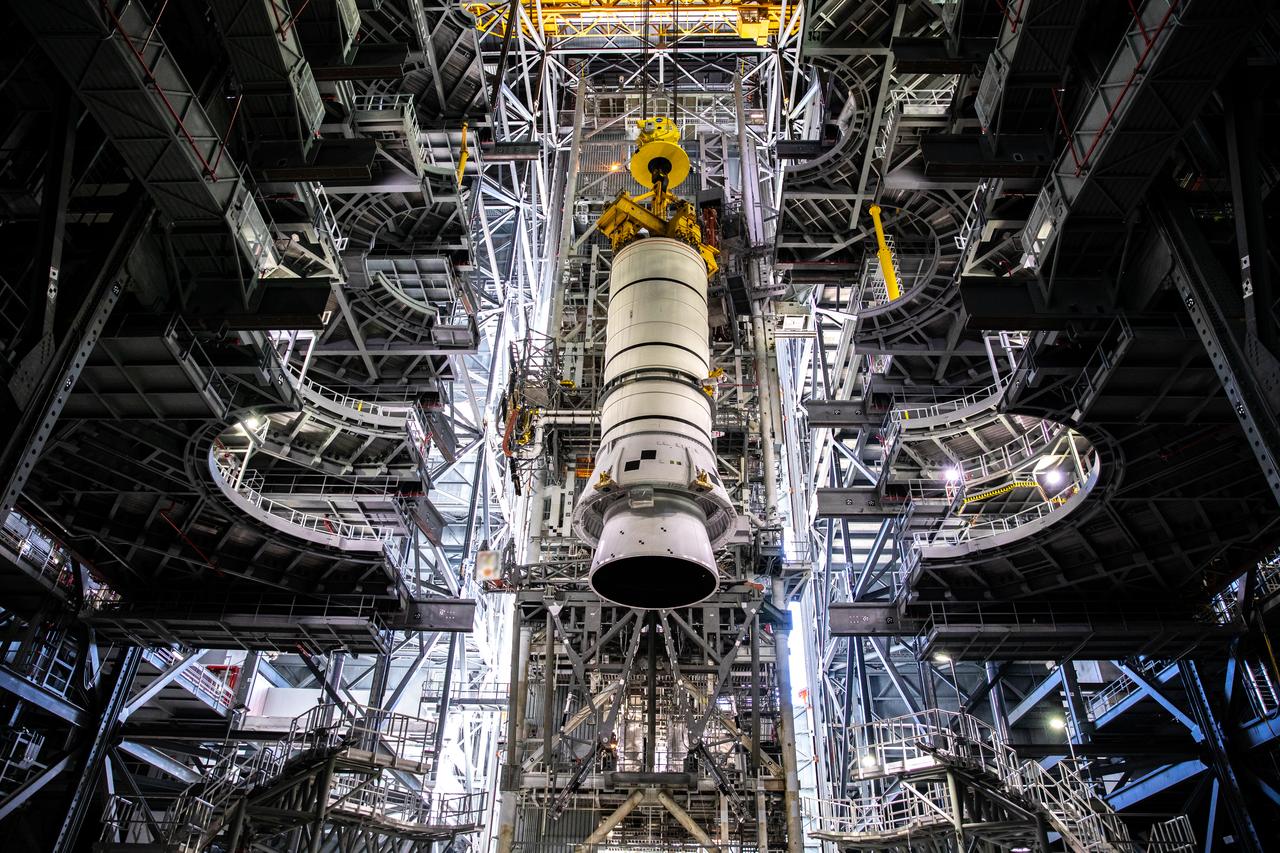
During a training exercise, technicians with NASA’s Exploration Ground Systems lower a mock-up of the Space Launch System (SLS) aft booster segment, referred to as a pathfinder, onto the mobile launcher in Kennedy Space Center’s Vehicle Assembly Building (VAB) on Sept. 11, 2020. The rehearsal involved teams preparing the aft pathfinder segment in High Bay 4 of the VAB, lifting and moving it over to High Bay 3, and placing it on the mobile launcher in preparation for Artemis I. Stacking of the actual booster segments will occur later this year, before the SLS core stage arrives at the Florida spaceport. Artemis I is the first in a series of increasingly complex missions that will test SLS and the Orion spacecraft as an integrated system prior to crewed flights to the Moon.
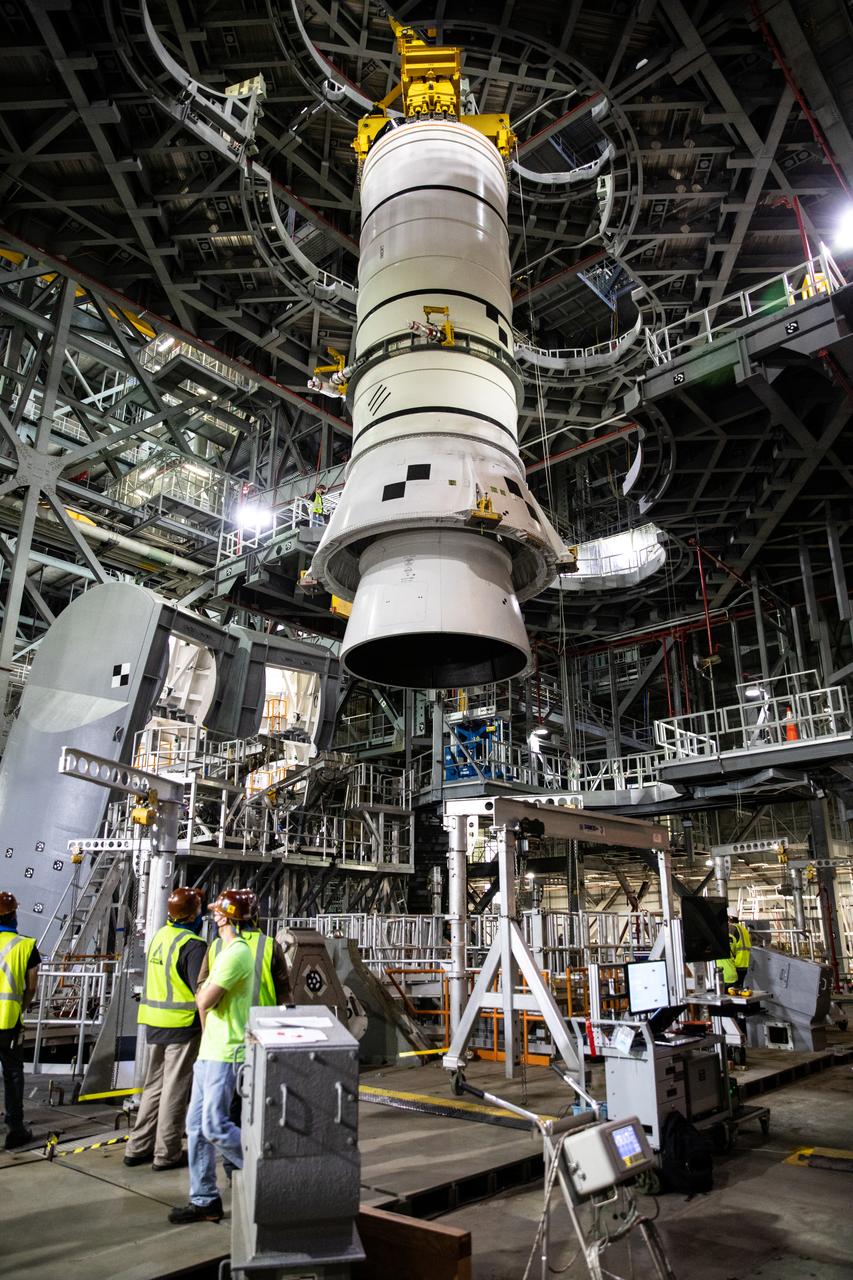
During a training exercise, technicians with NASA’s Exploration Ground Systems lower a mock-up of the Space Launch System (SLS) aft booster segment, referred to as a pathfinder, onto the mobile launcher in Kennedy Space Center’s Vehicle Assembly Building (VAB) on Sept. 11, 2020. The rehearsal involved teams preparing the aft pathfinder segment in High Bay 4 of the VAB, lifting and moving it over to High Bay 3, and placing it on the mobile launcher in preparation for Artemis I. Stacking of the actual booster segments will occur later this year, before the SLS core stage arrives at the Florida spaceport. Artemis I is the first in a series of increasingly complex missions that will test SLS and the Orion spacecraft as an integrated system prior to crewed flights to the Moon.
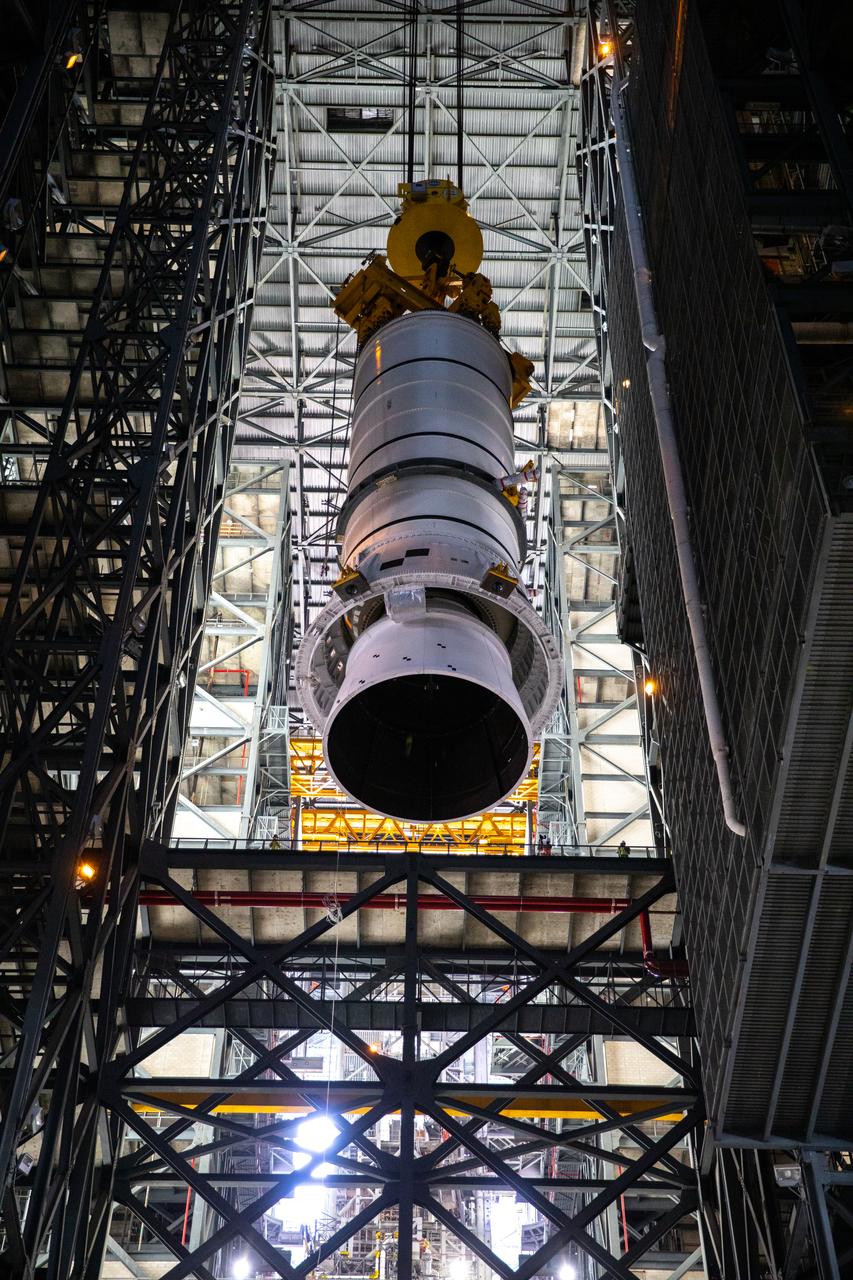
Technicians with NASA’s Exploration Ground Systems rehearse lifting operations using a mock-up of the Space Launch System (SLS) aft booster segment, referred to as a pathfinder, inside the Vehicle Assembly Building (VAB) at the agency’s Kennedy Space Center in Florida on Sept. 11, 2020, in preparation for Artemis I. The exercise involved preparing the aft pathfinder segment in High Bay 4 of the VAB and moving it over to High Bay 3, where it was placed on the mobile launcher. Stacking of the actual booster segments will occur later this year, before the SLS core stage arrives at Kennedy. Artemis I is the first in a series of increasingly complex missions that will test SLS and the Orion spacecraft as an integrated system prior to crewed flights to the Moon.
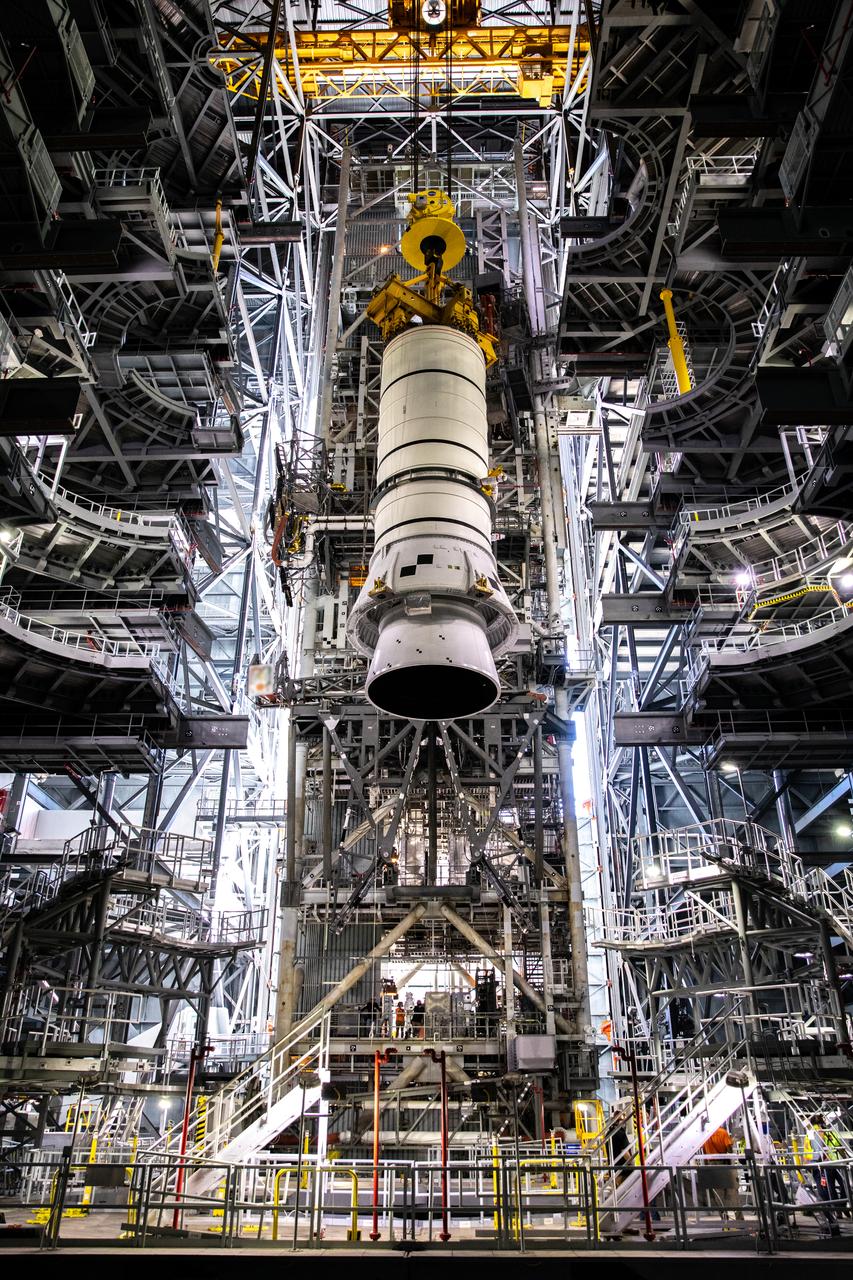
During a training exercise, technicians with NASA’s Exploration Ground Systems prepare to lower a mock-up of the Space Launch System (SLS) aft booster segment, referred to as a pathfinder, onto the mobile launcher in Kennedy Space Center’s Vehicle Assembly Building (VAB) on Sept. 11, 2020. The rehearsal involved teams preparing the aft pathfinder segment in High Bay 4 of the VAB, lifting and moving it over to High Bay 3, and placing it on the mobile launcher in preparation for Artemis I. Stacking of the actual booster segments will occur later this year, beforewhen the SLS core stage arrives at the Florida spaceport. Artemis I is the first in a series of increasingly complex missions that will test SLS and the Orion spacecraft as an integrated system prior to crewed flights to the Moon.
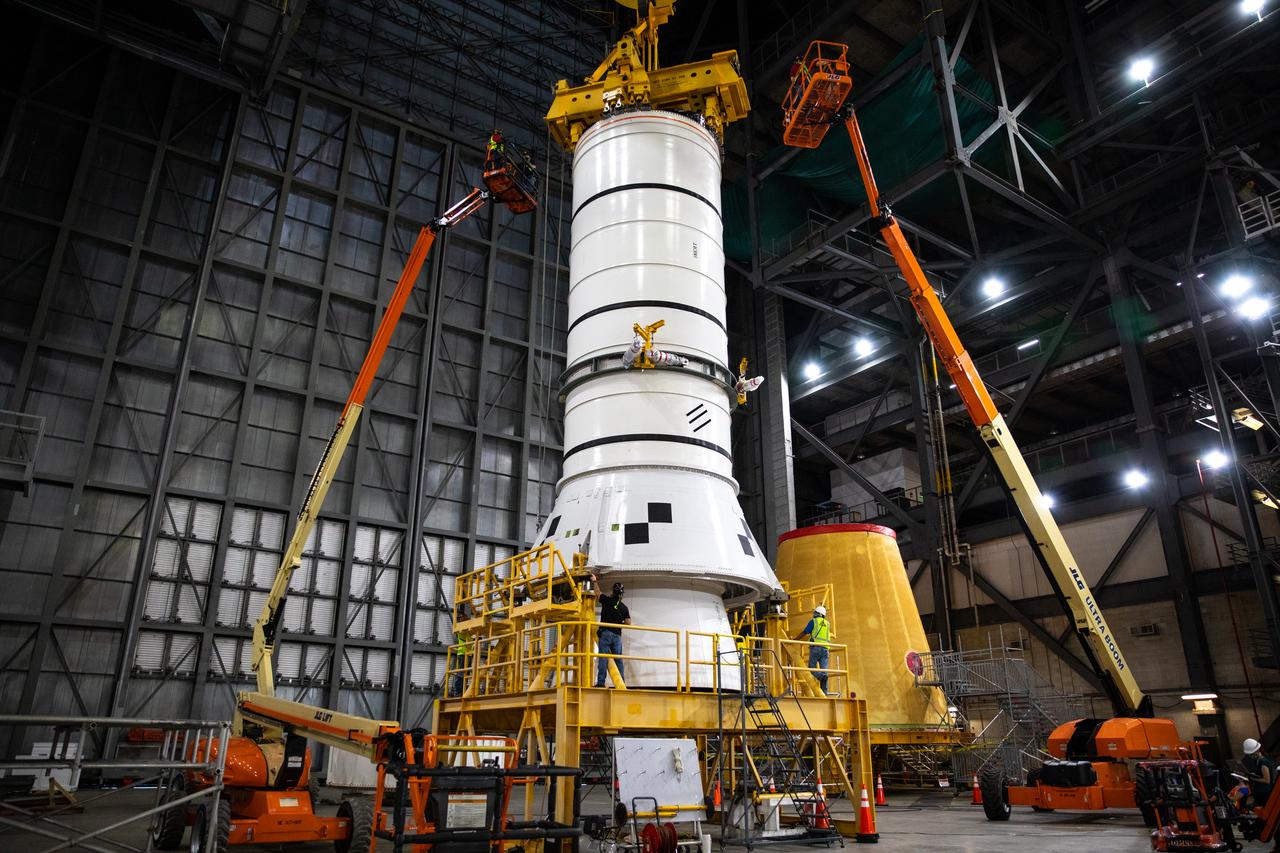
Technicians with NASA’s Exploration Ground Systems rehearse booster stacking operations inside the Vehicle Assembly Building (VAB) at the agency’s Kennedy Space Center in Florida on Sept. 11, 2020, in preparation for Artemis I. The exercise involved using booster segment mock-ups, referred to as pathfinders. During this rehearsal, an aft pathfinder segment was prepared in High Bay 4 of the VAB, after which a team of crane operators moved it over to High Bay 3, where it was placed on the mobile launcher. Stacking of the actual Space Launch System (SLS) booster segments will occur later this year, before the rocket’s core stage arrives at Kennedy. Artemis I is the first in a series of increasingly complex missions that will test SLS and the Orion spacecraft as an integrated system prior to crewed flights to the Moon.
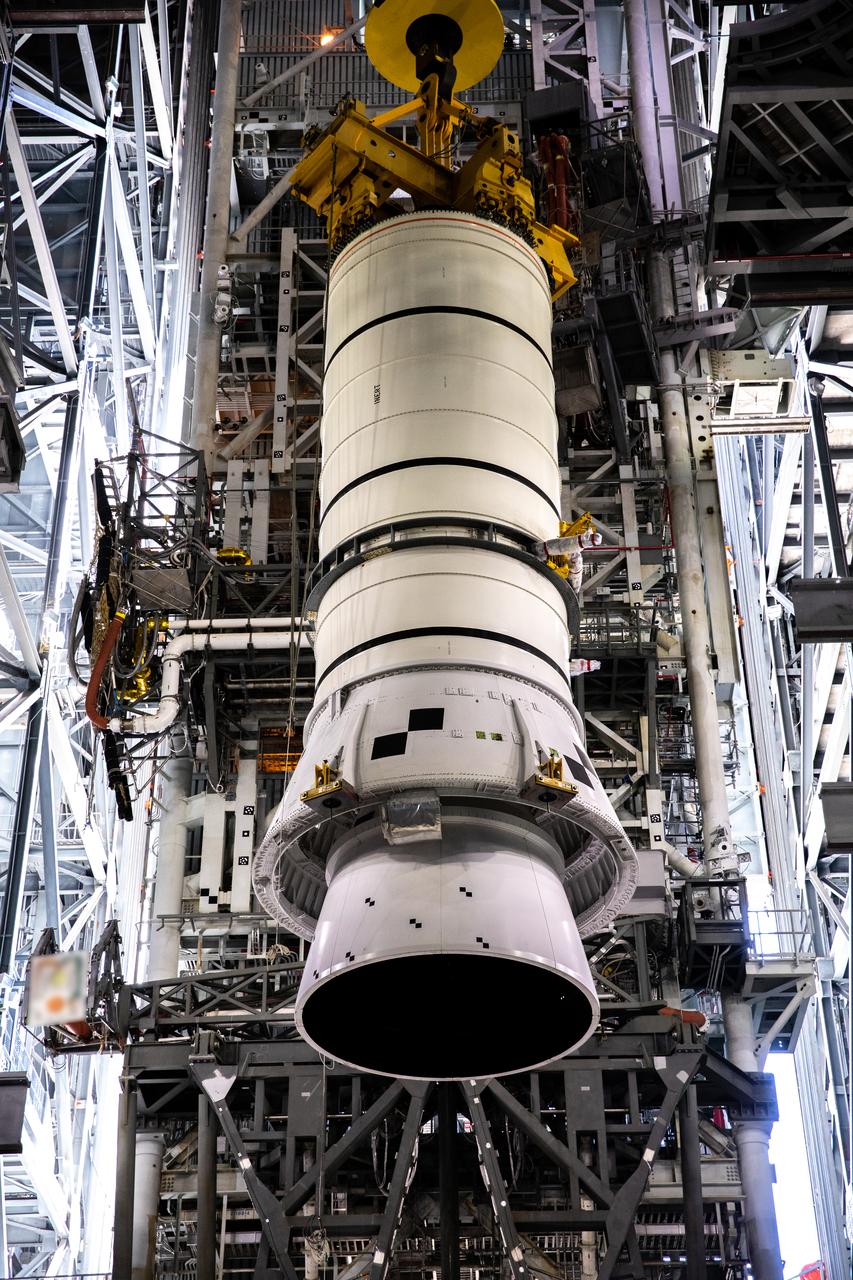
During a training exercise, technicians with NASA’s Exploration Ground Systems prepare to lower a mock-up of the Space Launch System (SLS) aft booster segment, referred to as a pathfinder, onto the mobile launcher in Kennedy Space Center’s Vehicle Assembly Building (VAB) on Sept. 11, 2020. The rehearsal involved teams preparing the aft pathfinder segment in High Bay 4 of the VAB, lifting and moving it over to High Bay 3, and placing it on the mobile launcher in preparation for Artemis I. Stacking of the actual booster segments will occur later this year, before the SLS core stage arrives at the Florida spaceport. Artemis I is the first in a series of increasingly complex missions that will test SLS and the Orion spacecraft as an integrated system prior to crewed flights to the Moon.
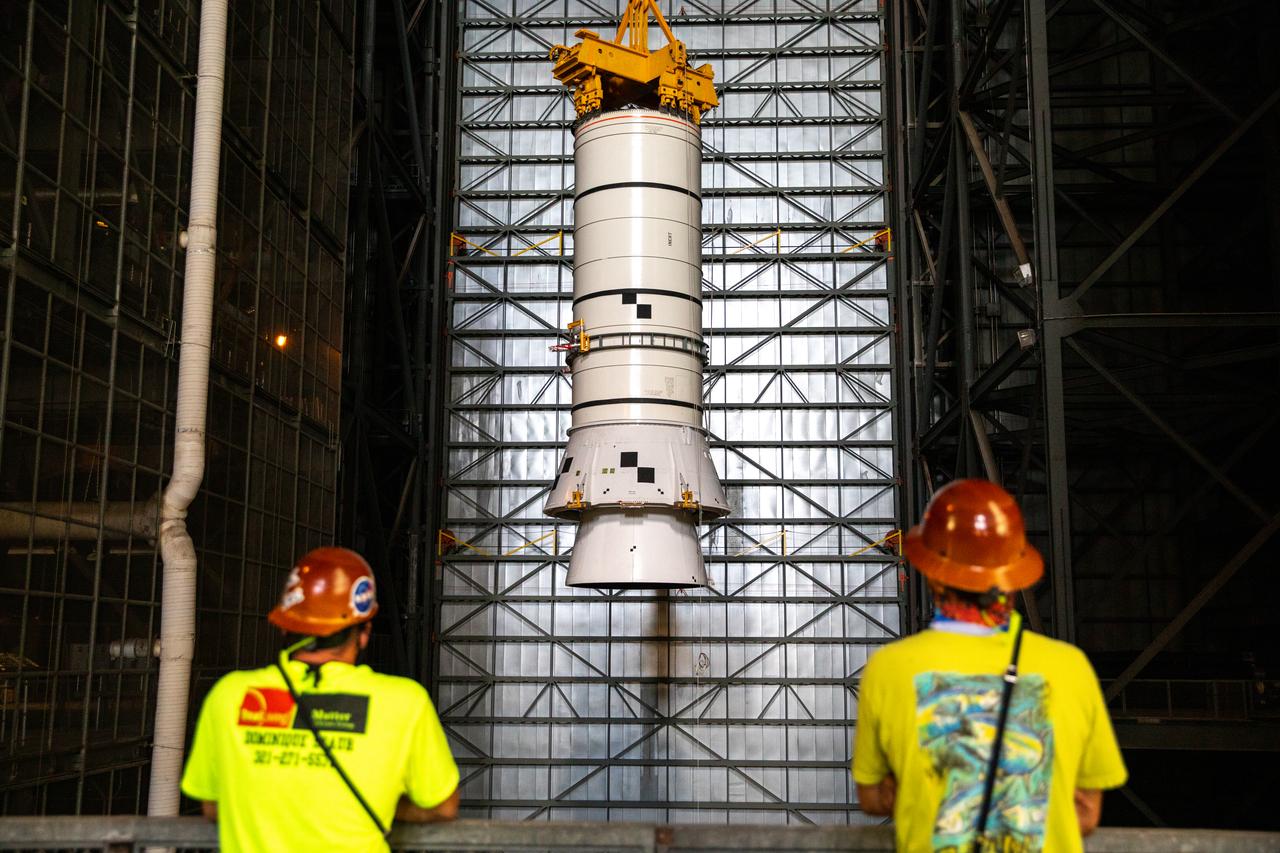
Technicians with NASA’s Exploration Ground Systems rehearse lifting operations using a mock-up of the Space Launch System (SLS) aft booster segment, referred to as a pathfinder, inside the Vehicle Assembly Building (VAB) at the agency’s Kennedy Space Center in Florida on Sept. 11, 2020, in preparation for Artemis I. The exercise involved preparing the aft pathfinder segment in High Bay 4 of the VAB and moving it over to High Bay 3, where it was placed on the mobile launcher. Stacking of the actual booster segments will occur later this year, before the SLS core stage arrives at Kennedy. Artemis I is the first in a series of increasingly complex missions that will test SLS and the Orion spacecraft as an integrated system prior to crewed flights to the Moon.
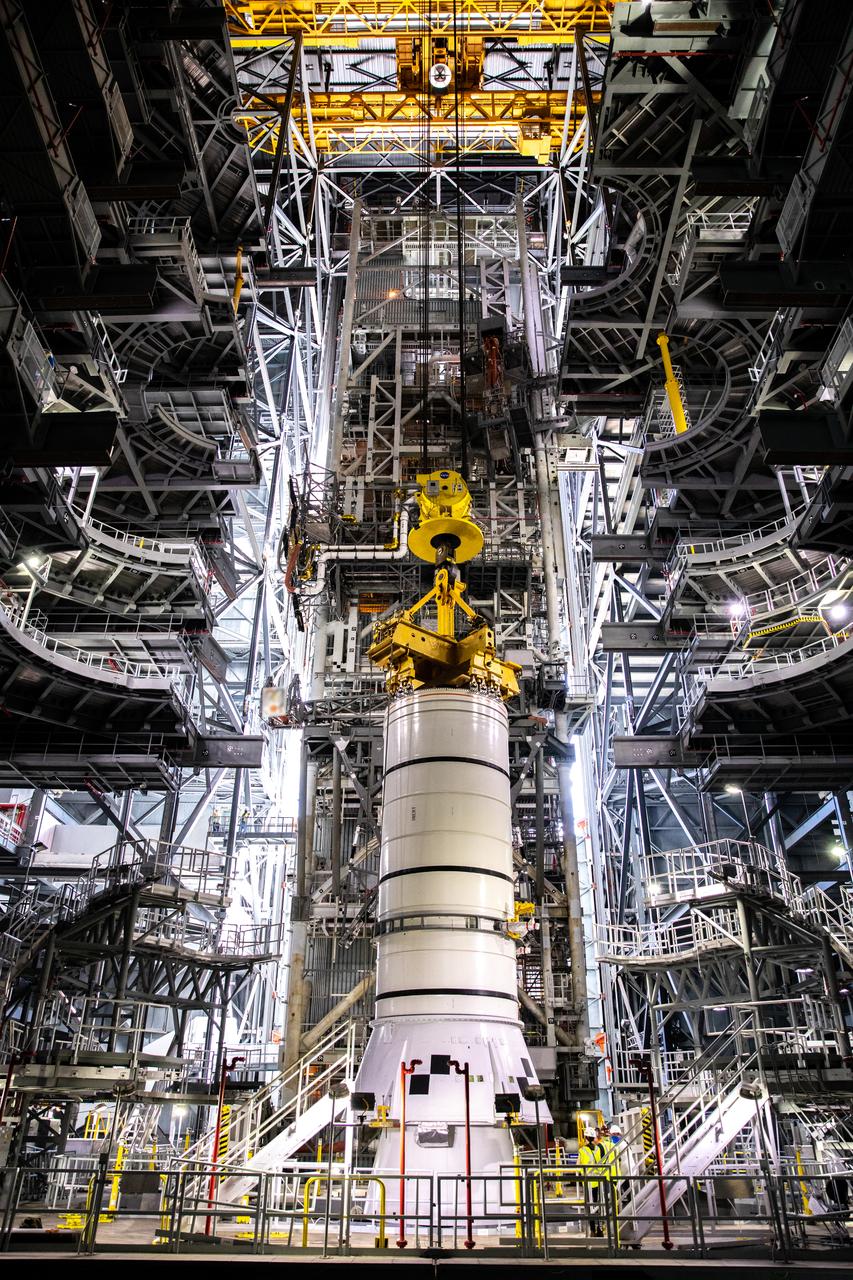
During a training exercise, technicians with NASA’s Exploration Ground Systems lower a mock-up of the Space Launch System (SLS) aft booster segment, referred to as a pathfinder, onto the mobile launcher in Kennedy Space Center’s Vehicle Assembly Building (VAB) on Sept. 11, 2020. The rehearsal involved teams preparing the aft pathfinder segment in High Bay 4 of the VAB, lifting and moving it over to High Bay 3, and placing it on the mobile launcher in preparation for Artemis I. Stacking of the actual booster segments will occur later this year, before the SLS core stage arrives at the Florida spaceport. Artemis I is the first in a series of increasingly complex missions that will test SLS and the Orion spacecraft as an integrated system prior to crewed flights to the Moon.

During a training exercise, technicians with NASA’s Exploration Ground Systems lower a mock-up of the Space Launch System (SLS) aft booster segment, referred to as a pathfinder, onto the mobile launcher in Kennedy Space Center’s Vehicle Assembly Building (VAB) on Sept. 11, 2020. The rehearsal involved teams preparing the aft pathfinder segment in High Bay 4 of the VAB, lifting and moving it over to High Bay 3, and placing it on the mobile launcher in preparation for Artemis I. Stacking of the actual booster segments will occur later this year, before the SLS core stage arrives at the Florida spaceport. Artemis I is the first in a series of increasingly complex missions that will test SLS and the Orion spacecraft as an integrated system prior to crewed flights to the Moon.