
Composite image of category 5 Hurricane Patricia, off the Pacific coast of Mexico, from 06:00 UTC on Friday, 23 October 2015. At 8 a.m. EDT on October 23, 2015, the National Hurricane Center said that Hurricane Patricia had grown into a monster hurricane. In fact, it is the strongest eastern north pacific hurricane on record. At 8 a.m. EDT (1200 UTC) on Oct. 23, the eye of Hurricane Patricia was located near latitude 17.3 North, longitude 105.6 West. That's about 145 miles (235 km) southwest of Manzanillo, Mexico and about 215 miles (345 km) south of Cabo Corrientes, Mexico. Patricia was moving toward the north-northwest near 12 mph (19 kph) and a turn toward the north is expected later this morning, followed by a turn toward the north-northeast this afternoon. On the forecast track, the core of Patricia will make landfall in the hurricane warning area today, October 23, 2015 during the afternoon or evening. Maximum sustained winds remain near 200 mph (325 kph) with higher gusts. The National Hurricane Center (NHC) said that Patricia is a category 5 hurricane on the Saffir-Simpson Hurricane Wind Scale. Some fluctuations in intensity are possible today, but Patricia is expected to remain an extremely dangerous category 5 hurricane through landfall. Hurricane force winds extend outward up to 30 miles (45 km) from the center and tropical storm force winds extend outward up to 175 miles (280 km). The estimated minimum central pressure is 880 millibars. Copyright: 2015 EUMETSAT. Infrared data from the geostationary satellites of EUMETSAT and NOAA overlays a computer-generated model of the Earth, containing NASA's Blue Marble Next Generation imagery <b><a href="http://www.nasa.gov/audience/formedia/features/MP_Photo_Guidelines.html" rel="nofollow">NASA image use policy.</a></b> <b><a href="http://www.nasa.gov/centers/goddard/home/index.html" rel="nofollow">NASA Goddard Space Flight Center</a></b> enables NASA’s mission through four scientific endeavors: Earth Science, Heliophysics, Solar System Exploration, and Astrophysics. Goddard plays a leading role in NASA’s accomplishments by contributing compelling scientific knowledge to advance the Agency’s mission. <b>Follow us on <a href="http://twitter.com/NASAGoddardPix" rel="nofollow">Twitter</a></b> <b>Like us on <a href="http://www.facebook.com/pages/Greenbelt-MD/NASA-Goddard/395013845897?ref=tsd" rel="nofollow">Facebook</a></b> <b>Find us on <a href="http://instagrid.me/nasagoddard/?vm=grid" rel="nofollow">Instagram</a></b>
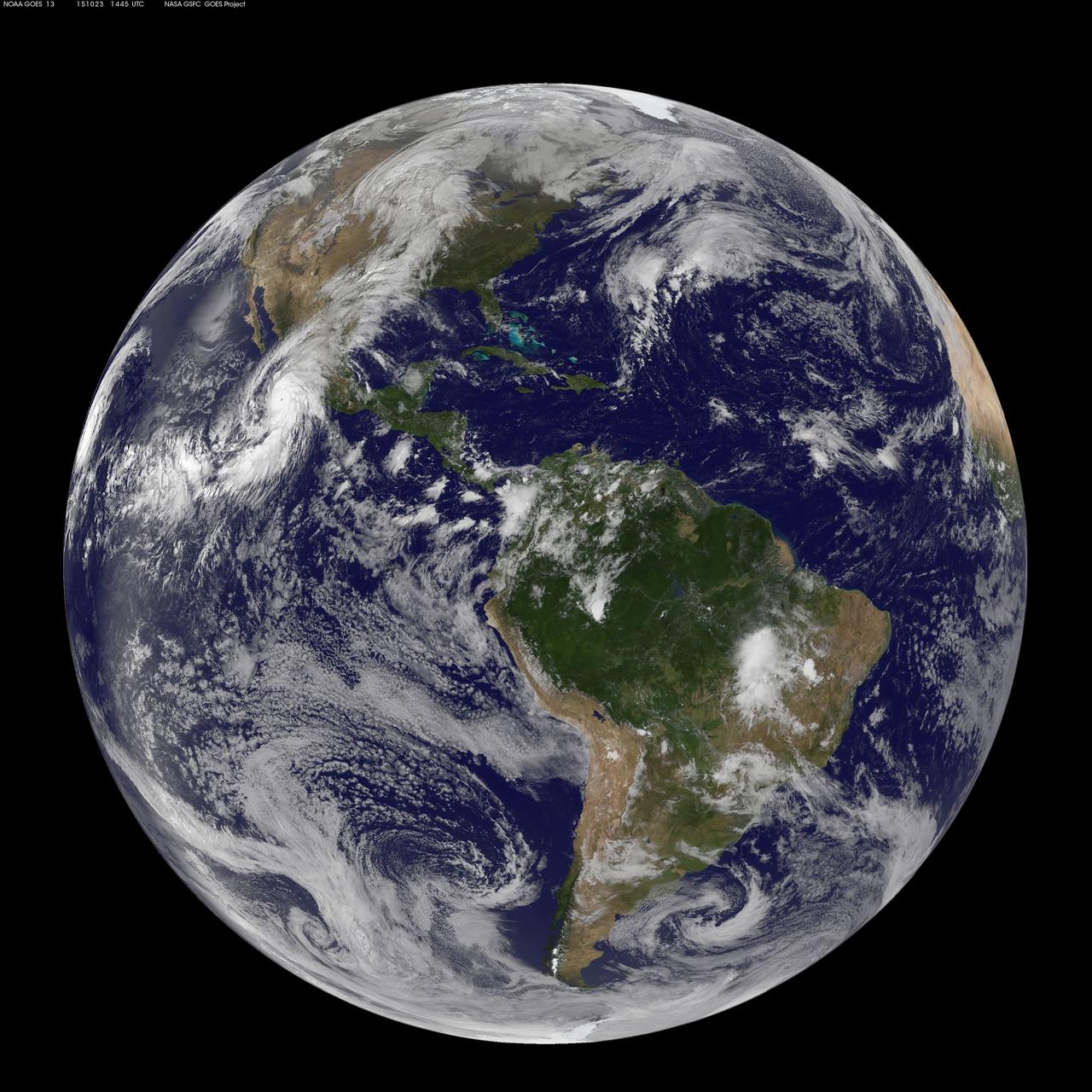
This full-disk image from NOAA’s GOES-13 satellite was captured at 14:45 UTC (10:45 a.m. EDT) and shows Hurricane Patricia off the coast of Mexico on September 23, 2015. At 8 a.m. EDT on October 23, 2015, the National Hurricane Center said that Hurricane Patricia had grown into a monster hurricane. In fact, it is the strongest eastern north pacific hurricane on record. At 8 a.m. EDT (1200 UTC) on Oct. 23, the eye of Hurricane Patricia was located near latitude 17.3 North, longitude 105.6 West. That's about 145 miles (235 km) southwest of Manzanillo, Mexico and about 215 miles (345 km) south of Cabo Corrientes, Mexico. Patricia was moving toward the north-northwest near 12 mph (19 kph) and a turn toward the north is expected later this morning, followed by a turn toward the north-northeast this afternoon. On the forecast track, the core of Patricia will make landfall in the hurricane warning area today, October 23, 2015 during the afternoon or evening. Maximum sustained winds remain near 200 mph (325 kph) with higher gusts. The National Hurricane Center (NHC) said that Patricia is a category 5 hurricane on the Saffir-Simpson Hurricane Wind Scale. Some fluctuations in intensity are possible today, but Patricia is expected to remain an extremely dangerous category 5 hurricane through landfall. Hurricane force winds extend outward up to 30 miles (45 km) from the center and tropical storm force winds extend outward up to 175 miles (280 km). The estimated minimum central pressure is 880 millibars. <b><a href="http://www.nasa.gov/audience/formedia/features/MP_Photo_Guidelines.html" rel="nofollow">NASA image use policy.</a></b> <b><a href="http://www.nasa.gov/centers/goddard/home/index.html" rel="nofollow">NASA Goddard Space Flight Center</a></b> enables NASA’s mission through four scientific endeavors: Earth Science, Heliophysics, Solar System Exploration, and Astrophysics. Goddard plays a leading role in NASA’s accomplishments by contributing compelling scientific knowledge to advance the Agency’s mission. <b>Follow us on <a href="http://twitter.com/NASAGoddardPix" rel="nofollow">Twitter</a></b> <b>Like us on <a href="http://www.facebook.com/pages/Greenbelt-MD/NASA-Goddard/395013845897?ref=tsd" rel="nofollow">Facebook</a></b> <b>Find us on <a href="http://instagrid.me/nasagoddard/?vm=grid" rel="nofollow">Instagram</a></b>
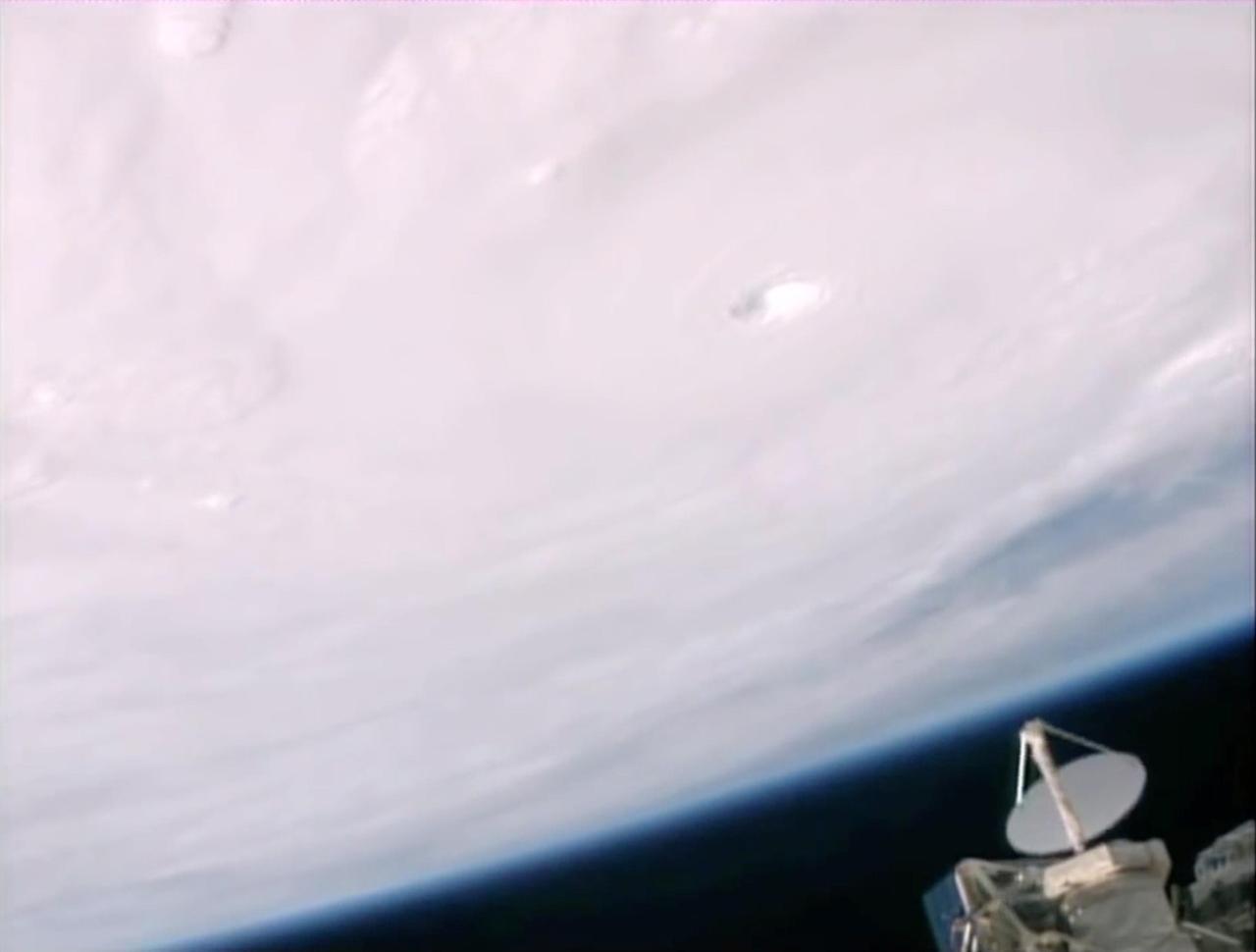
NASA's RapidScat's antenna, lower right, was pointed at Hurricane Patricia as the powerful storm approached Mexico on Oct. 23, 2015. Patricia was the strongest hurricane ever recorded in the Western Hemisphere, with maximum winds of 200 mph (320 kilometers per hour). When it first made landfall on the Pacific coast of Mexico on Oct. 23, it was a destructive Category 5 storm. The videos are from the International Space Station. RapidScat's spinning antenna, lower right, collects wind-speed data from Hurricane Patricia. http://photojournal.jpl.nasa.gov/catalog/PIA20049
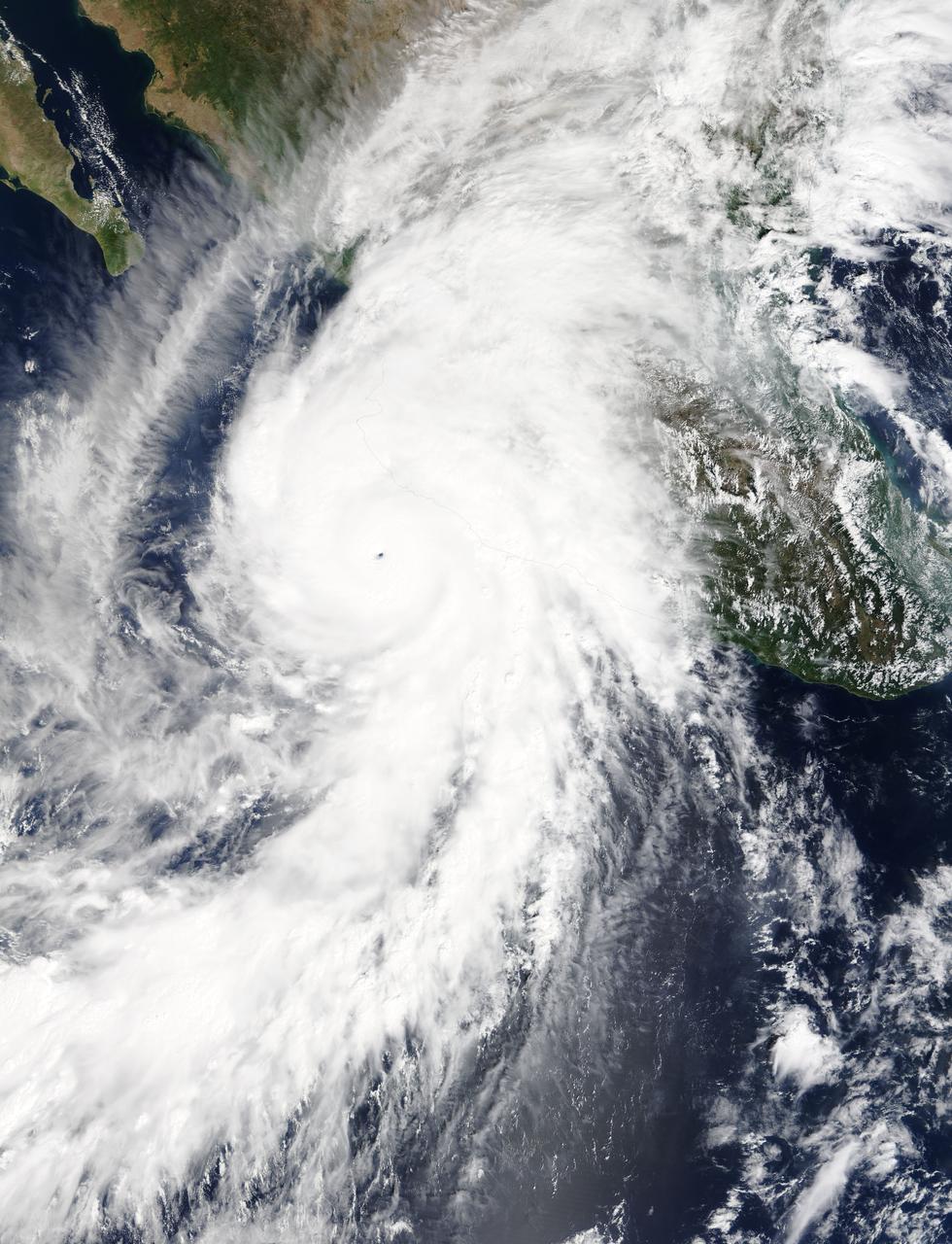
On Oct. 23 at 17:30 UTC (1:30 p.m. EDT) the MODIS instrument aboard NASA's Terra satellite saw Hurricane Patricia moving over Mexico. Credit: NASA/GSFC/Jeff Schmaltz/MODIS Land Rapid Response Team <b><a href="http://www.nasa.gov/audience/formedia/features/MP_Photo_Guidelines.html" rel="nofollow">NASA image use policy.</a></b> <b><a href="http://www.nasa.gov/centers/goddard/home/index.html" rel="nofollow">NASA Goddard Space Flight Center</a></b> enables NASA’s mission through four scientific endeavors: Earth Science, Heliophysics, Solar System Exploration, and Astrophysics. Goddard plays a leading role in NASA’s accomplishments by contributing compelling scientific knowledge to advance the Agency’s mission. <b>Follow us on <a href="http://twitter.com/NASAGoddardPix" rel="nofollow">Twitter</a></b> <b>Like us on <a href="http://www.facebook.com/pages/Greenbelt-MD/NASA-Goddard/395013845897?ref=tsd" rel="nofollow">Facebook</a></b> <b>Find us on <a href="http://instagrid.me/nasagoddard/?vm=grid" rel="nofollow">Instagram</a></b>
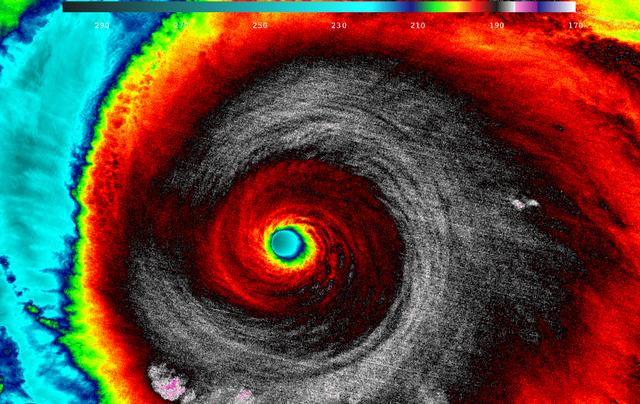
When NASA-NOAA's Suomi NPP satellite passed over Patricia on October 23 at 5:20 a.m. EDT the VIIRS instrument that flies aboard Suomi NPP looked at the storm in infrared light. Cloud top temperatures of thunderstorms around the eyewall were between 180K (-135.7F/ -93.1C) and 190 Kelvin (-117.7F/ -83.1C). Credit: UW/CIMSS/William Straka III Read more: <a href="http://www.nasa.gov/f…/goddard/patricia-eastern-pacific-2015" rel="nofollow">www.nasa.gov/f…/goddard/patricia-eastern-pacific-2015</a>
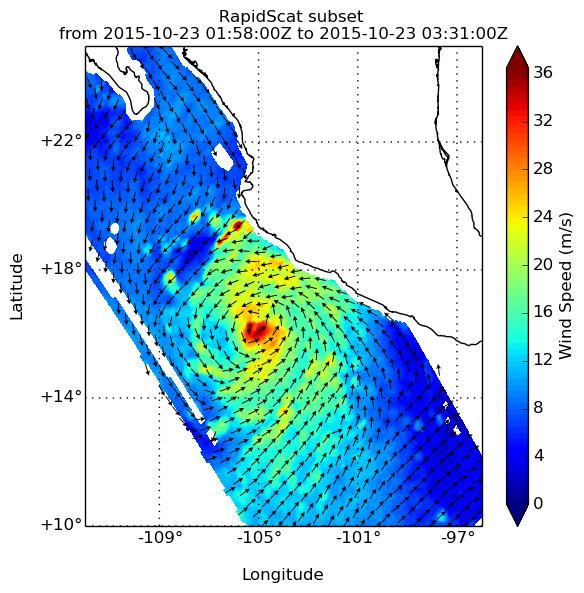
NASA's ISS-RapidScat passed over Hurricane Patricia at about 3:00 AM GMT on Oct. 23, 2015. A Hurricane Warning was in effect from San Blas to Punta San Telmo. A Hurricane Watch was in effect from east of Punta San Telmo to Lazaro Cardenas and a Tropical Storm Warning was in effect from east of Punta San Telmo to Lazaro Cardenas. Patricia was moving toward the north-northwest near 12 mph (19 kph) and a turn toward the north is expected later this morning, followed by a turn toward the north-northeast this afternoon. On the forecast track, the core of Patricia will make landfall in the hurricane warning area today, Oct. 23, 2015, during the afternoon or evening. http://photojournal.jpl.nasa.gov/catalog/PIA20031

The remnant moisture from what was once Hurricane Patricia and moisture from the Gulf of Mexico were being transported north by a trough of low pressure over Wisconsin. The clouds and moisture were streaming into the Eastern third of the U.S. on October 28, 2015. The hybrid system was generating windy conditions which were seen from NASA's RapidScat instrument, while NOAA's GOES-East satellite captured an image of the impressive and sizeable cloud cover. Read more: <a href="http://www.nasa.gov/feature/goddard/patricia-eastern-pacific-2015" rel="nofollow">www.nasa.gov/feature/goddard/patricia-eastern-pacific-2015</a> <b><a href="http://goes.gsfc.nasa.gov/" rel="nofollow">Credit: NOAA/NASA GOES Project</a></b> <b><a href="http://www.nasa.gov/audience/formedia/features/MP_Photo_Guidelines.html" rel="nofollow">NASA image use policy.</a></b> <b><a href="http://www.nasa.gov/centers/goddard/home/index.html" rel="nofollow">NASA Goddard Space Flight Center</a></b> enables NASA’s mission through four scientific endeavors: Earth Science, Heliophysics, Solar System Exploration, and Astrophysics. Goddard plays a leading role in NASA’s accomplishments by contributing compelling scientific knowledge to advance the Agency’s mission. <b>Follow us on <a href="http://twitter.com/NASAGoddardPix" rel="nofollow">Twitter</a></b> <b>Like us on <a href="http://www.facebook.com/pages/Greenbelt-MD/NASA-Goddard/395013845897?ref=tsd" rel="nofollow">Facebook</a></b> <b>Find us on <a href="http://instagrid.me/nasagoddard/?vm=grid" rel="nofollow">Instagram</a></b>

This image was taken by GOES East at 1445Z on October 23, 2015. Credit: NASA/NOAA via <b><a href="www.nnvl.noaa.gov/" rel="nofollow"> NOAA Environmental Visualization Laboratory</a></b> <b><a href="http://www.nasa.gov/audience/formedia/features/MP_Photo_Guidelines.html" rel="nofollow">NASA image use policy.</a></b> <b><a href="http://www.nasa.gov/centers/goddard/home/index.html" rel="nofollow">NASA Goddard Space Flight Center</a></b> enables NASA’s mission through four scientific endeavors: Earth Science, Heliophysics, Solar System Exploration, and Astrophysics. Goddard plays a leading role in NASA’s accomplishments by contributing compelling scientific knowledge to advance the Agency’s mission. <b>Follow us on <a href="http://twitter.com/NASAGoddardPix" rel="nofollow">Twitter</a></b> <b>Like us on <a href="http://www.facebook.com/pages/Greenbelt-MD/NASA-Goddard/395013845897?ref=tsd" rel="nofollow">Facebook</a></b> <b>Find us on <a href="http://instagrid.me/nasagoddard/?vm=grid" rel="nofollow">Instagram</a></b>
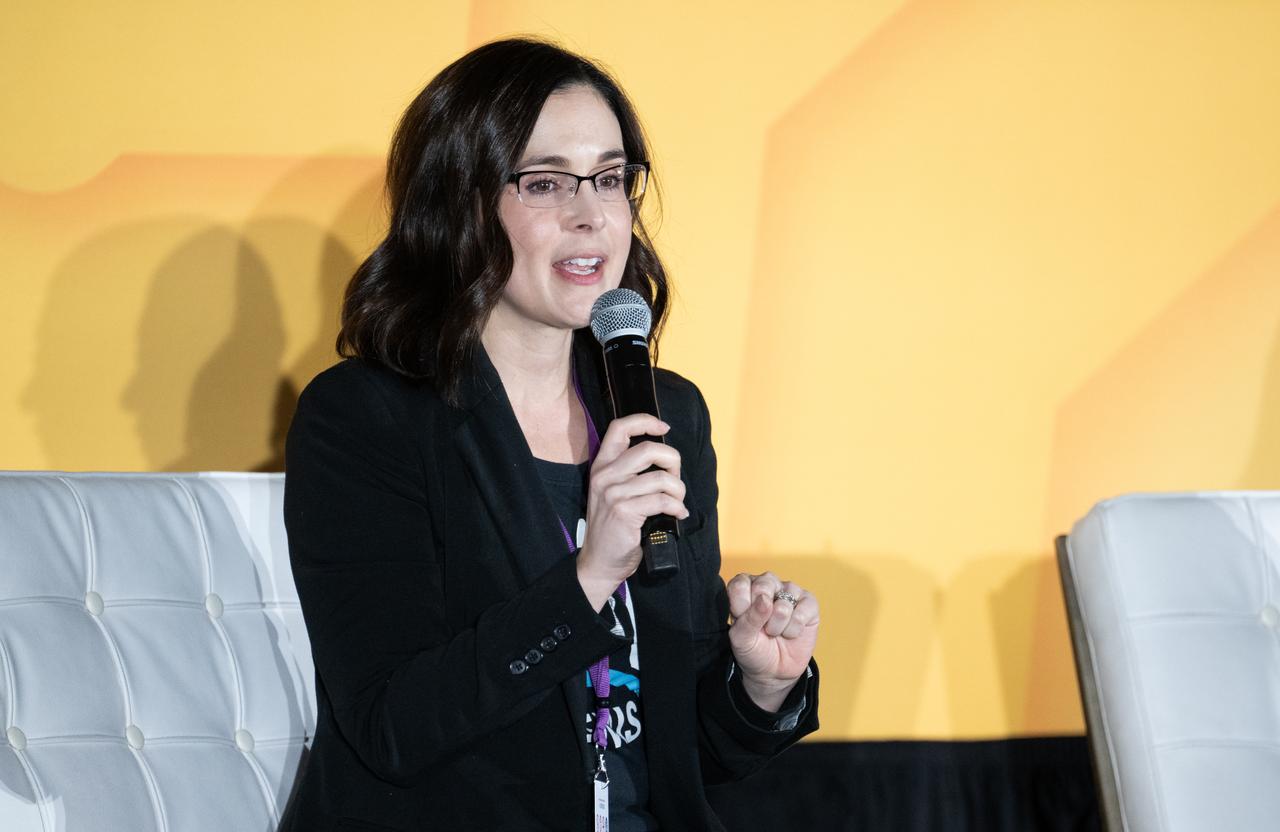
Patricia Moore, communications strategist for the Moon to Mars Program Office in NASA's Exploration Systems Development Mission Directorate, speaks to students about careers in STEM during a panel discussion at the Shell Eco-marathon Americas, Thursday, April 4, 2024, at the Indianapolis Motor Speedway in Indianapolis, Ind. Photo Credit: (NASA/Joel Kowsky)
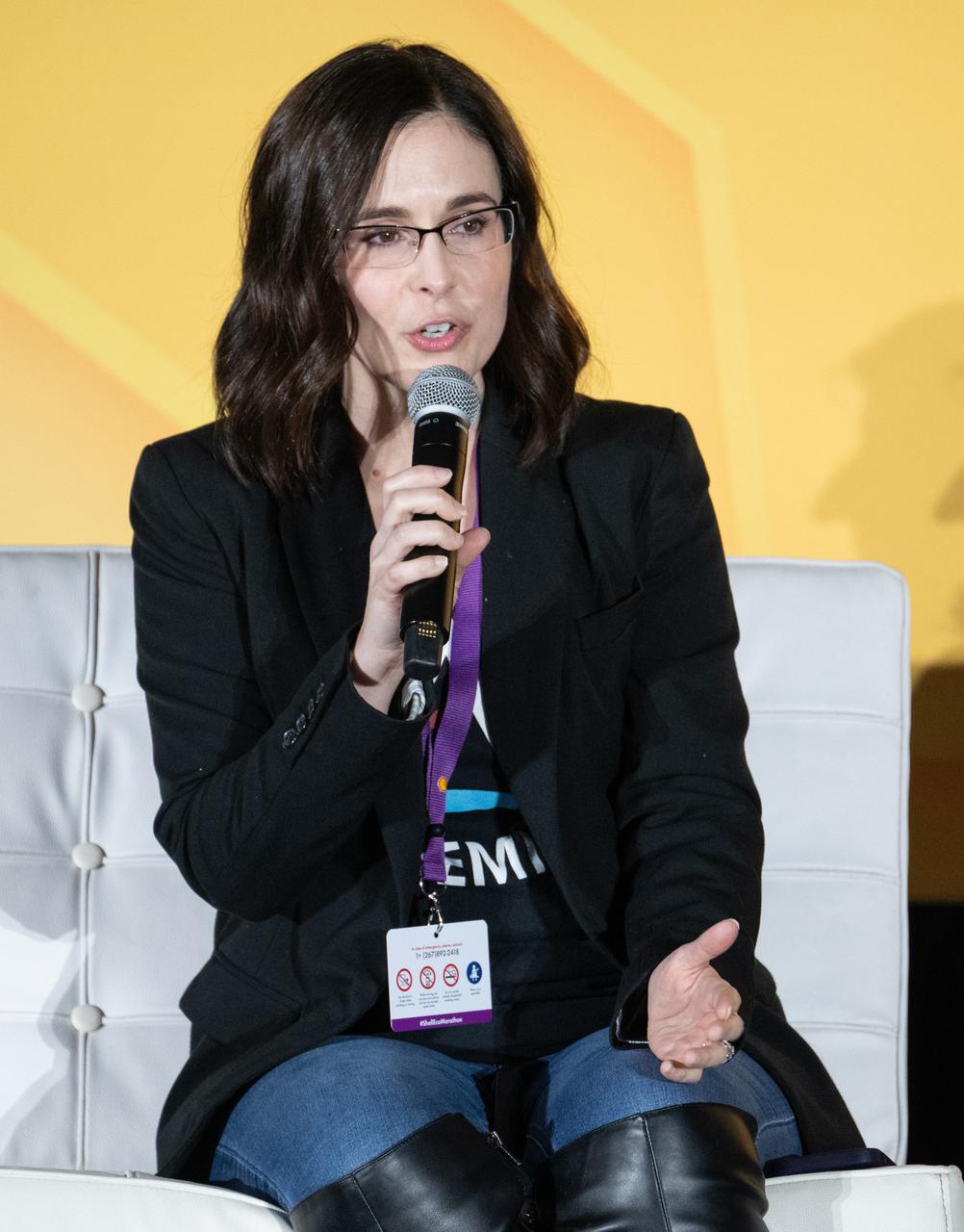
Patricia Moore, communications strategist for the Moon to Mars Program Office in NASA's Exploration Systems Development Mission Directorate, speaks to students about careers in STEM during a panel discussion at the Shell Eco-marathon Americas, Thursday, April 4, 2024, at the Indianapolis Motor Speedway in Indianapolis, Ind. Photo Credit: (NASA/Joel Kowsky)
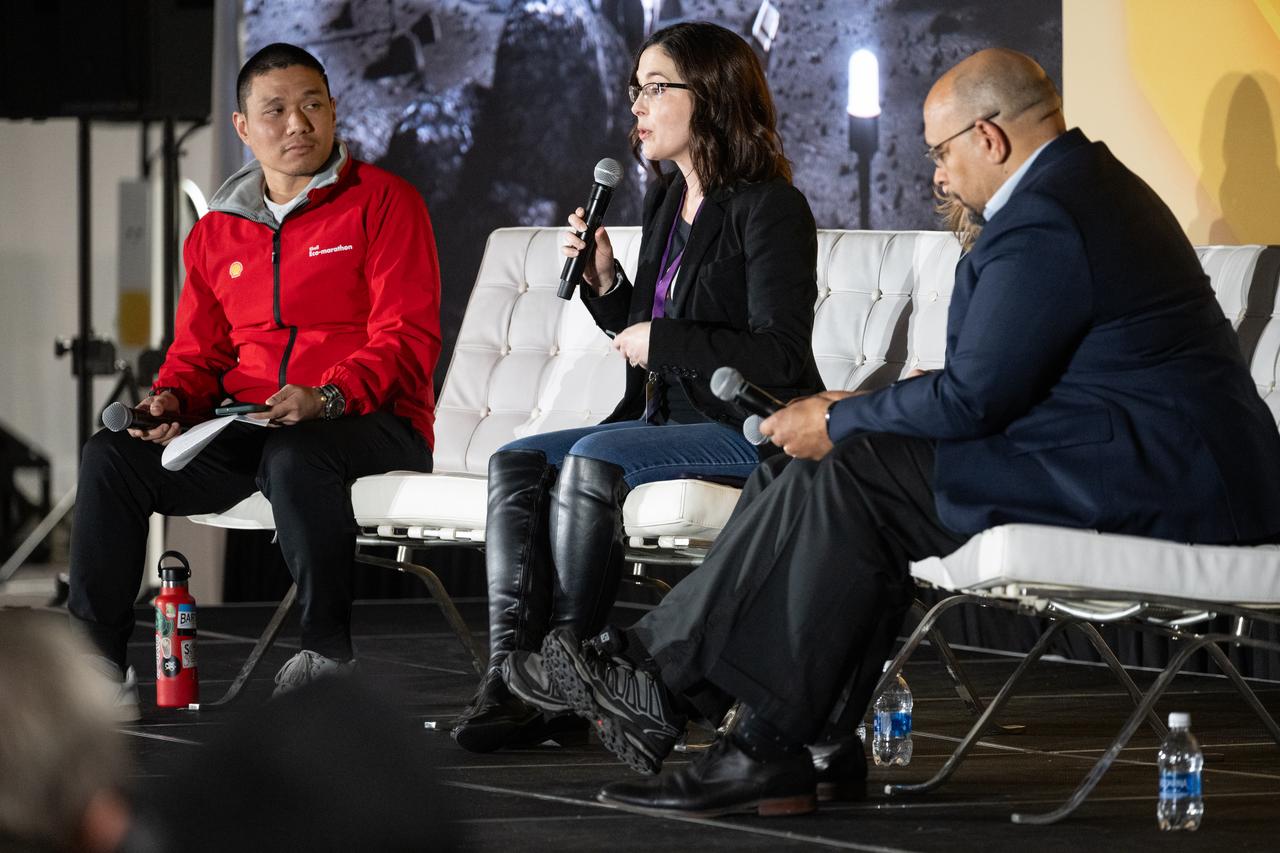
Patricia Moore, communications strategist for the Moon to Mars Program Office in NASA's Exploration Systems Development Mission Directorate, center, speak to students about careers in STEM during a panel discussion at the Shell Eco-marathon Americas along with Jason Cruz, with the Shell Eco-marathon, Andrea Mueller, engineer at Team Penske , and Torry Johnson, deputy associate administrator for STEM Engagement in NASA's Office of STEM Engagement, Thursday, April 4, 2024, at the Indianapolis Motor Speedway in Indianapolis, Ind. Photo Credit: (NASA/Joel Kowsky)
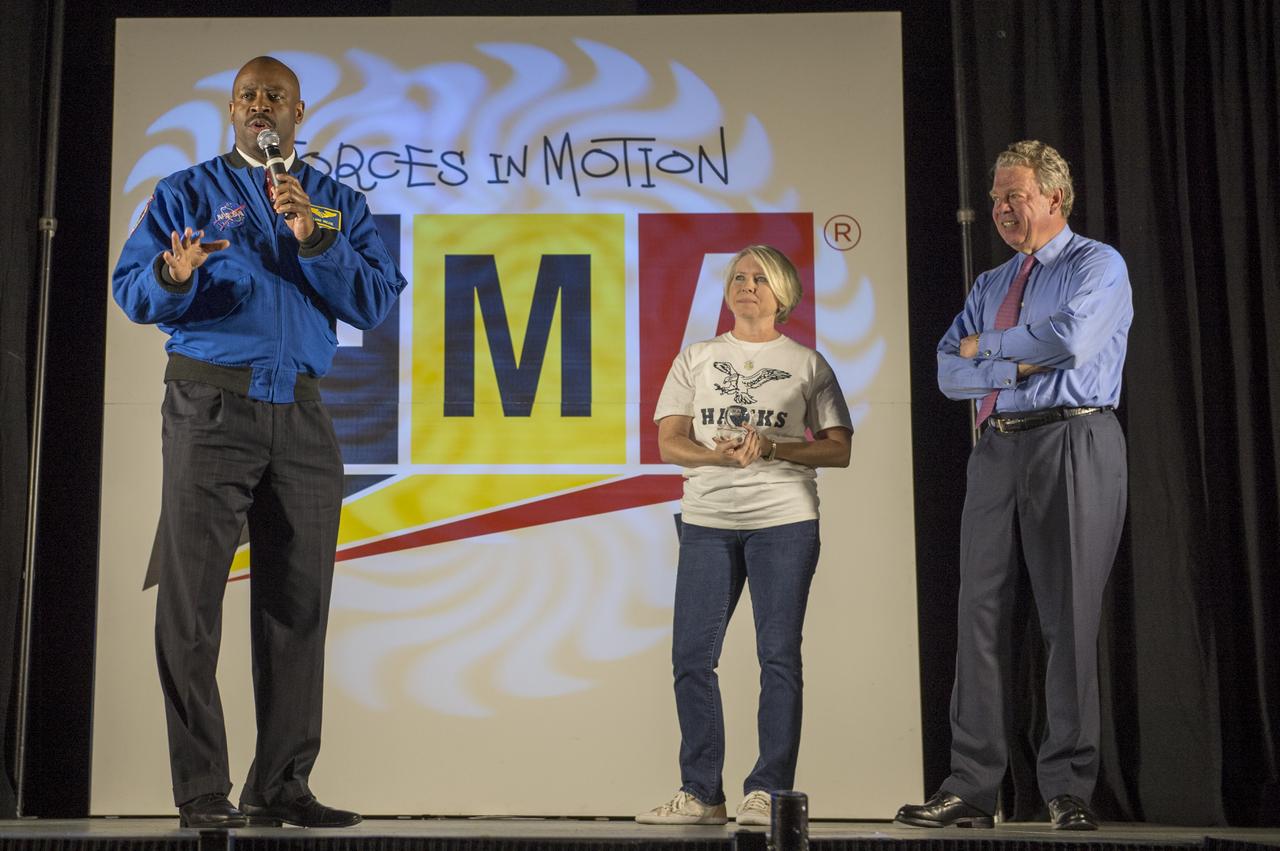
Leland Melvin, NASA Associate Administrator for Education and former 2x astronaut, Hardy Middle School Prinipal Patricia Pride, and Tom Buckmaster, President, Honeywell Hometown Solutions introduce "FMA Live!" at Hardy Middle School in Washington on Monday, Sept. 16th, 2013. "FMA Live!" is a program sponsored by NASA and Honeywell that teaches Newton's three laws of motion mixed with dance and music. The program travels across the country and has reached nearly 300,000 students.Photo Credit: (NASA/Jay Westcott)
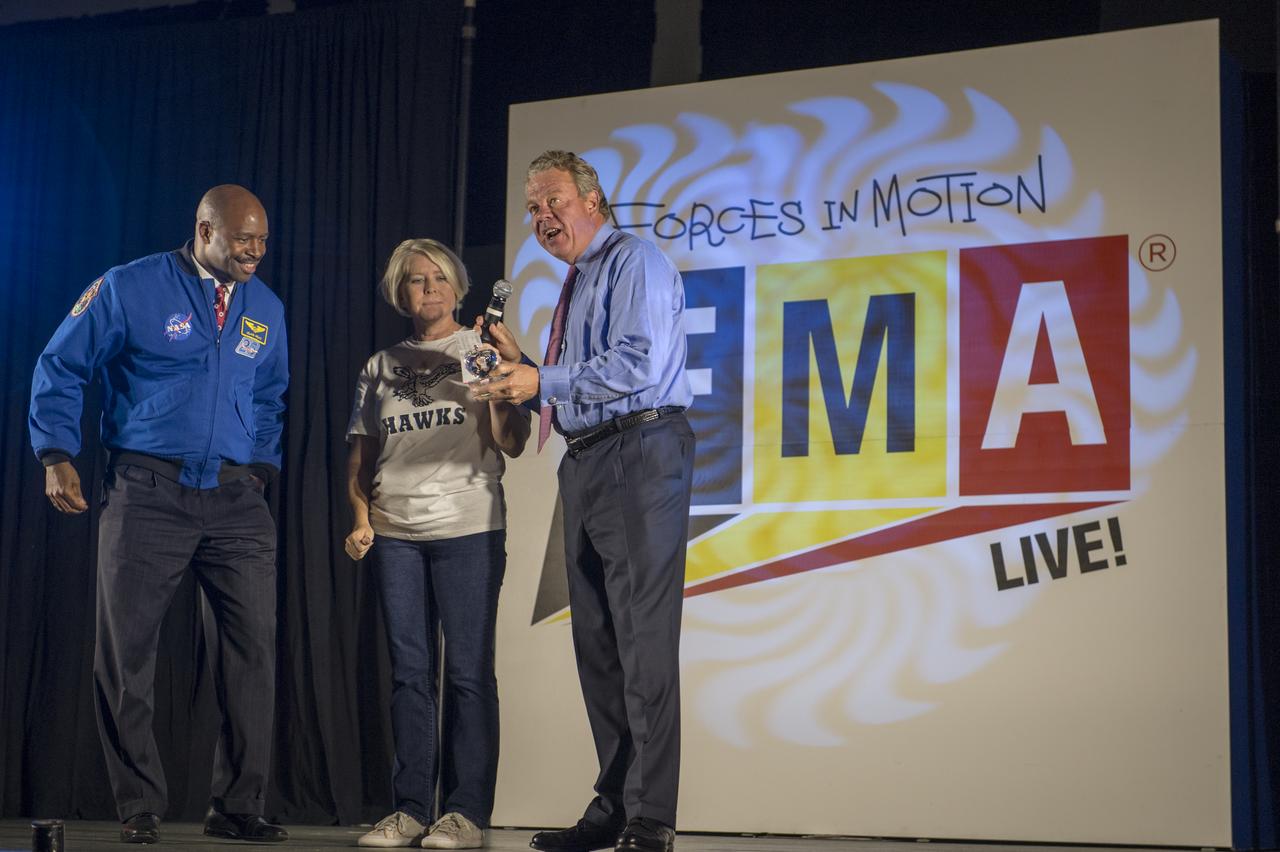
Leland Melvin, NASA Associate Administrator for Education and former 2x astronaut,Hardy Middle School Prinipal Patricia Pride, and Tom Buckmaster, President, Honeywell Hometown Solutions introduce "FMA Live!" at Hardy Middle School in Washington on Monday, Sept. 16th, 2013. "FMA Live!" is a program sponsored by NASA and Honeywell that teaches Newton's three laws of motion mixed with dance and music. The program travels across the country and has reached nearly 300,000 students.Photo Credit: (NASA/Jay Westcott)
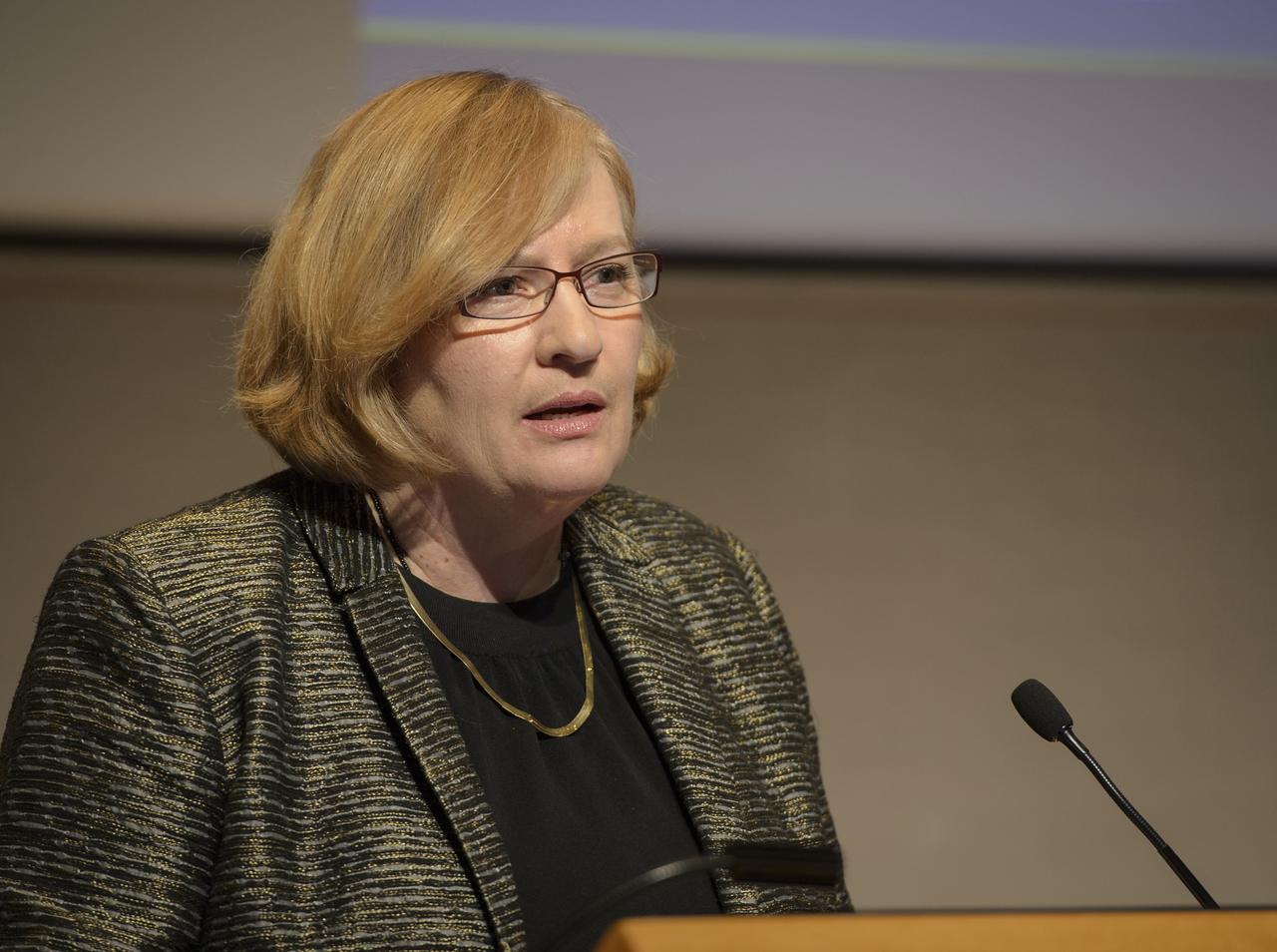
Patricia Falcone, Associate Director, National Security and International Affairs Division, White House Office of Science and Technology Policy, delivers remarks during a Fiscal Year 2014 budget briefing held at the American Association for the Advancement of Science (AAAS) on Wednesday, April 10, 2013 in Washington. Photo Credit: (NASA/Bill Ingalls)
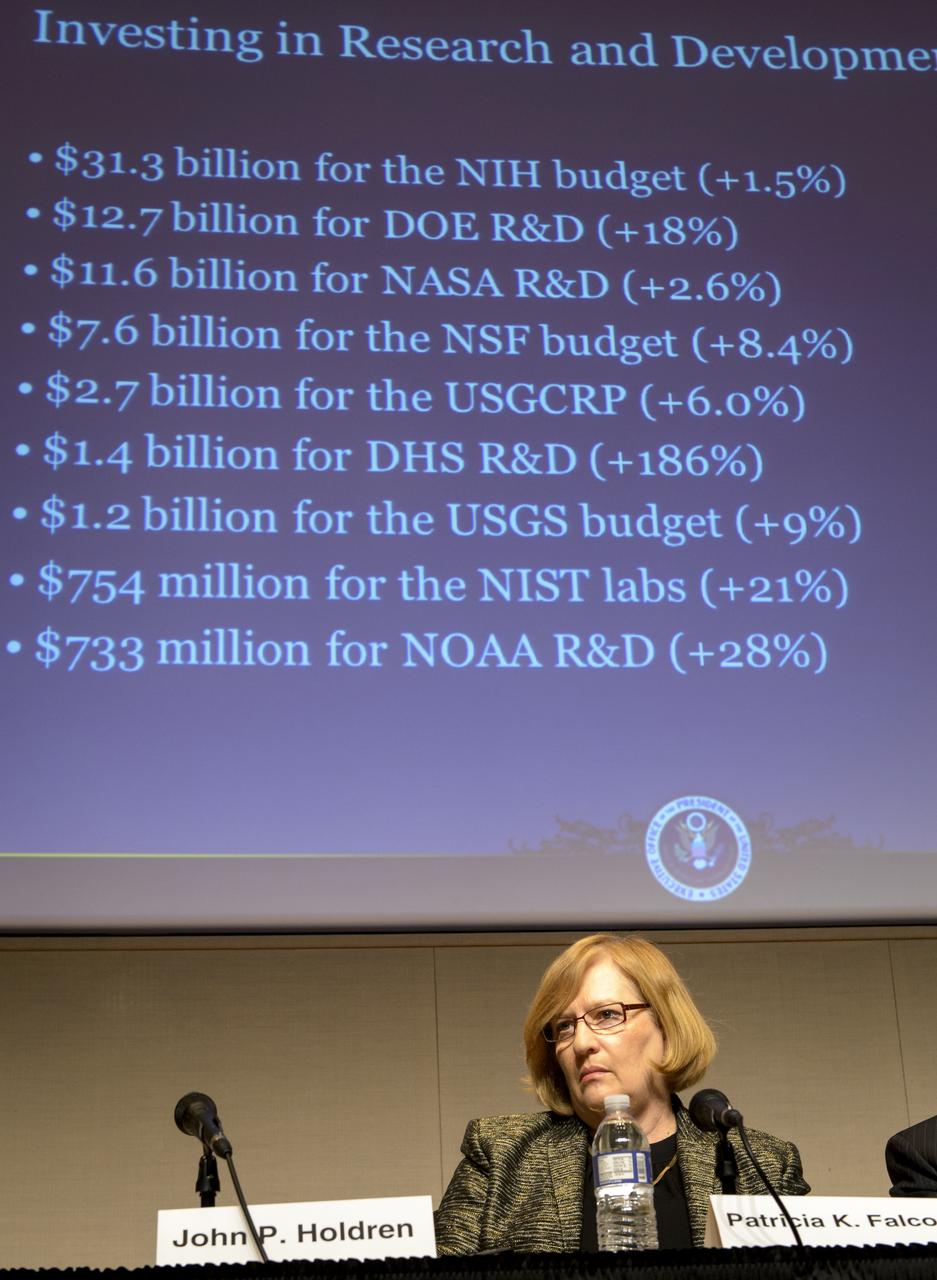
Patricia Falcone, Associate Director, National Security and International Affairs Division, White House Office of Science and Technology Policy, is seen during a Fiscal Year 2014 budget briefing held at the American Association for the Advancement of Science (AAAS) on Wednesday, April 10, 2013 in Washington. Photo Credit: (NASA/Bill Ingalls)
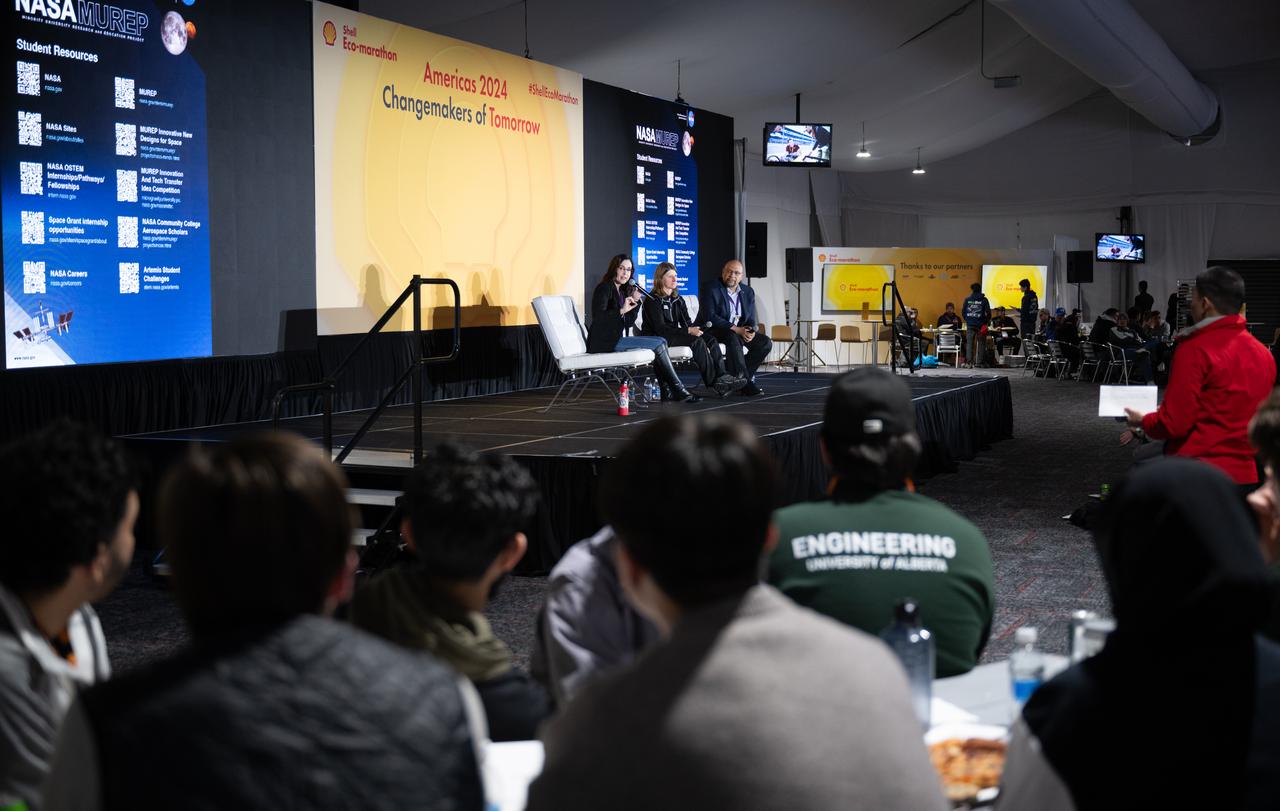
Patricia Moore, communications strategist for the Moon to Mars Program Office in NASA's Exploration Systems Development Mission Directorate, left, answers a question from a student alongside Andrea Mueller, engineer at Team Penske, second from right, and Torry Johnson, deputy associate administrator for STEM Engagement in NASA's Office of STEM Engagement, right, during a panel discussion about careers in STEM at the Shell Eco-marathon Americas, Thursday, April 4, 2024, at the Indianapolis Motor Speedway in Indianapolis, Ind. Photo Credit: (NASA/Joel Kowsky)
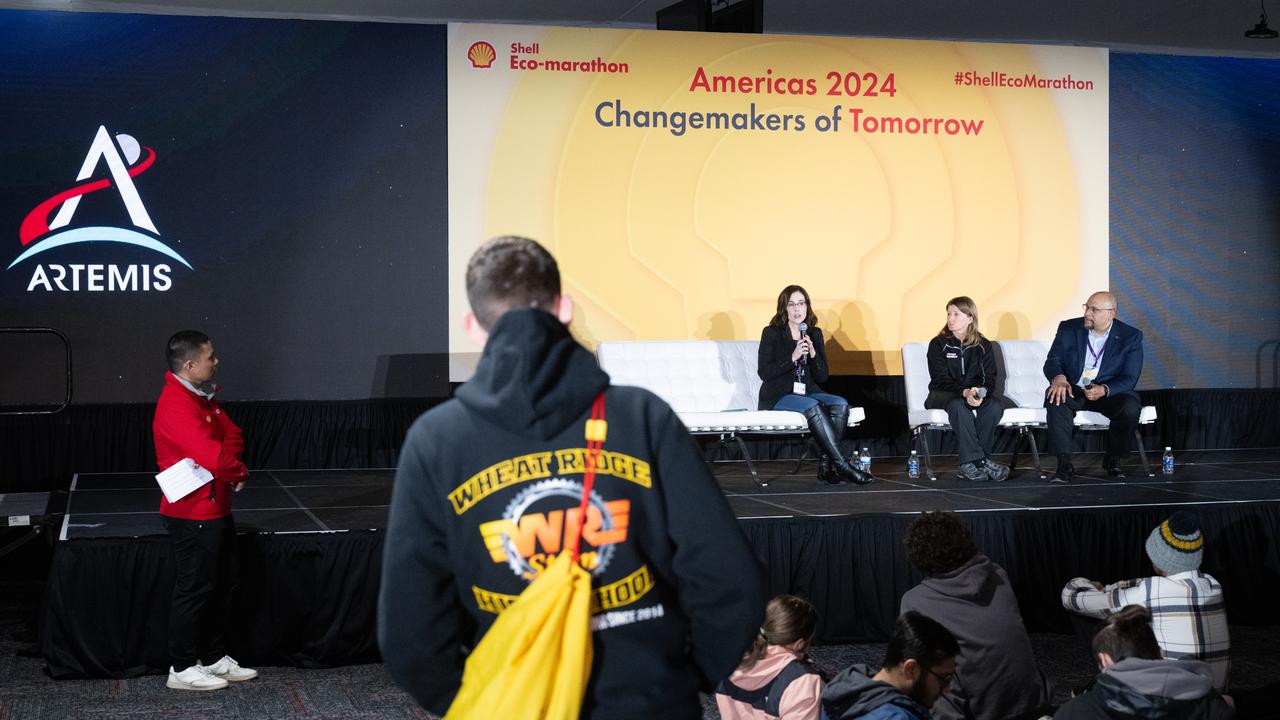
Patricia Moore, communications strategist for the Moon to Mars Program Office in NASA's Exploration Systems Development Mission Directorate, left, answers a question from a student alongside Andrea Mueller, engineer at Team Penske, second from right, and Torry Johnson, deputy associate administrator for STEM Engagement in NASA's Office of STEM Engagement, right, during a panel discussion about careers in STEM at the Shell Eco-marathon Americas, Thursday, April 4, 2024, at the Indianapolis Motor Speedway in Indianapolis, Ind. Photo Credit: (NASA/Joel Kowsky)
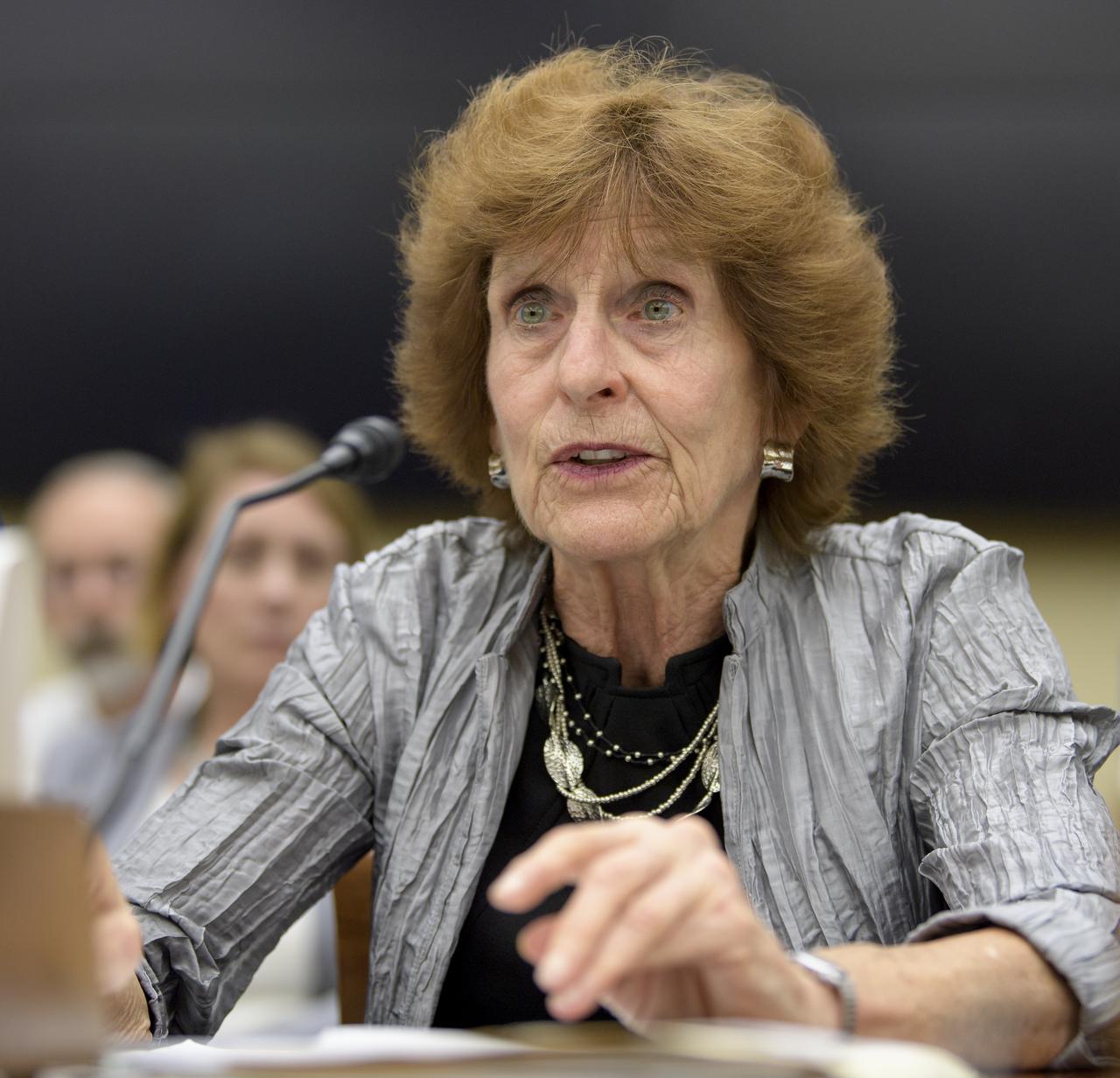
Dr. Patricia Sanders, Chair, Aerospace Safety Advisory Panel testifies during the House Subcommittee on Space and Aeronautics hearing titled "Keeping our sights on Mars: A Review of NASA's Deep Space Exploration Programs and Lunar Proposal", Wednesday, May 8, 2019 at the Rayburn House Office Building in Washington. Photo Credit: (NASA/Bill Ingalls)
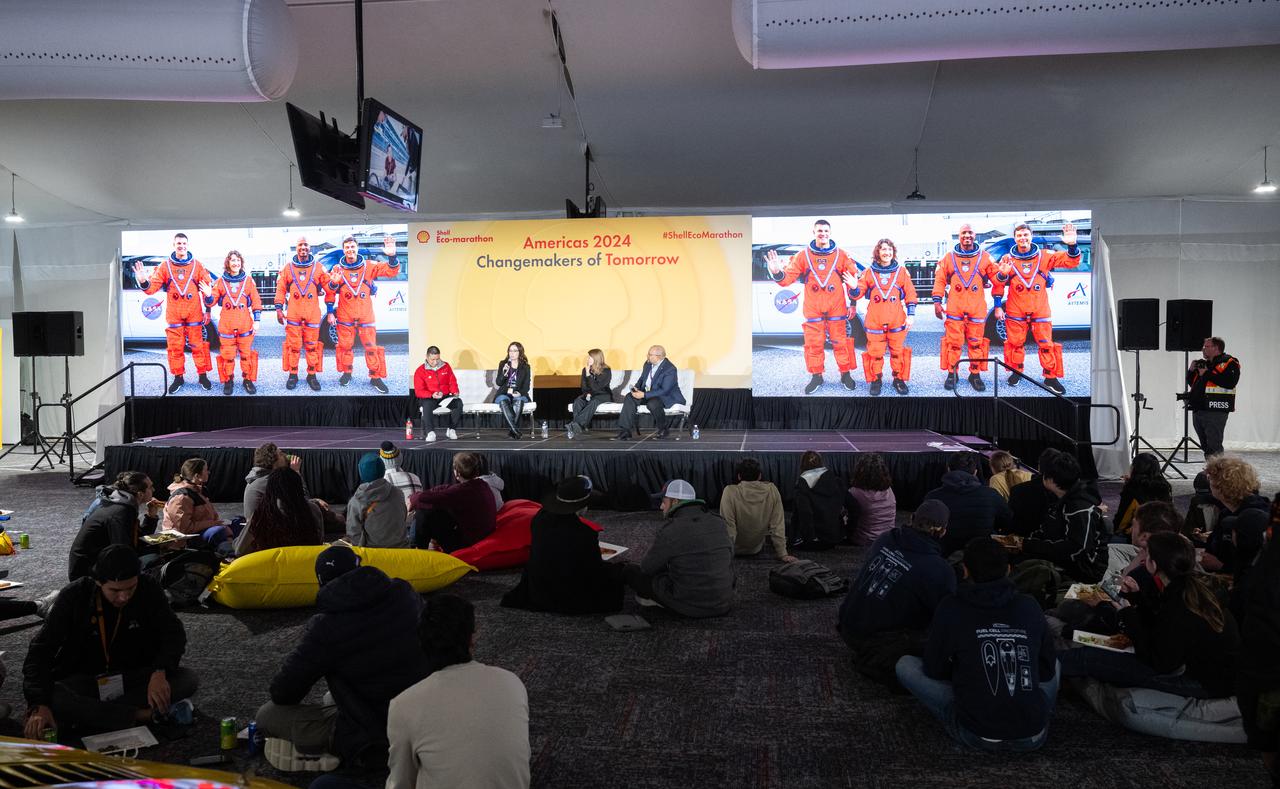
Jason Cruz, with the Shell Eco-marathon, left, Patricia Moore, communications strategist for the Moon to Mars Program Office in NASA's Exploration Systems Development Mission Directorate, second from left, Andrea Mueller, engineer at Team Penske, second from right, and Torry Johnson, deputy associate administrator for STEM Engagement in NASA's Office of STEM Engagement, right, are seen during a panel discussion about careers in STEM at the Shell Eco-marathon Americas, Thursday, April 4, 2024, at the Indianapolis Motor Speedway in Indianapolis, Ind. Photo Credit: (NASA/Joel Kowsky)
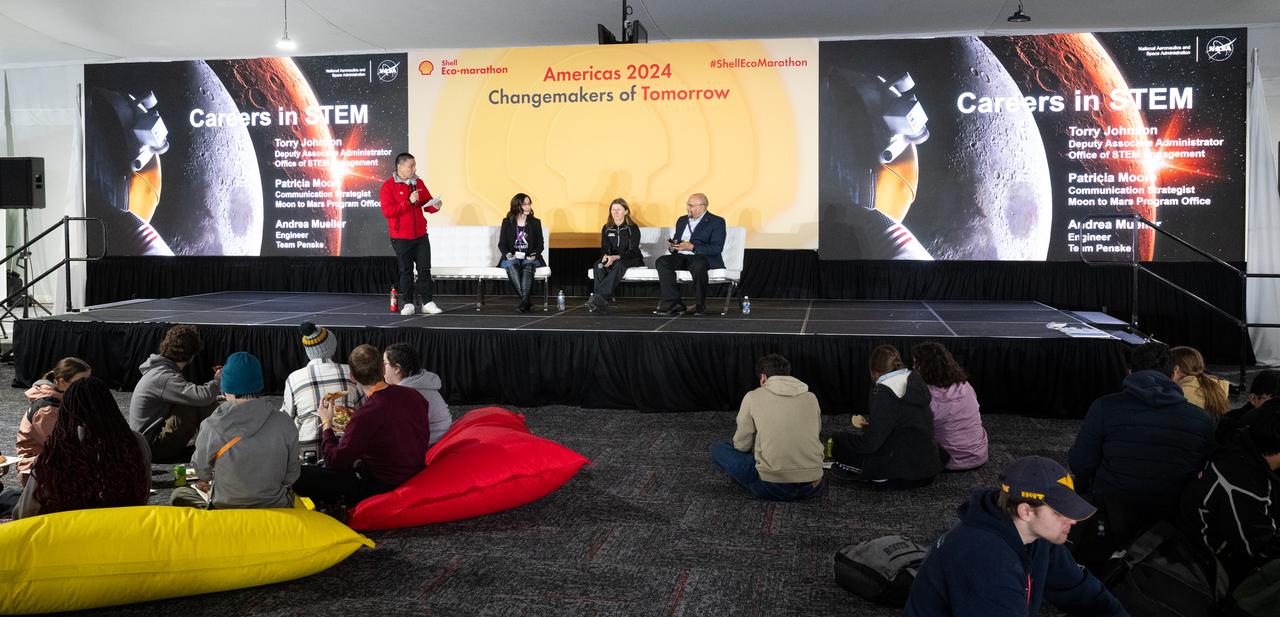
Jason Cruz, with the Shell Eco-marathon, left, introduces Patricia Moore, communications strategist for the Moon to Mars Program Office in NASA's Exploration Systems Development Mission Directorate, second from left, Andrea Mueller, engineer at Team Penske, second from right, and Torry Johnson, deputy associate administrator for STEM Engagement in NASA's Office of STEM Engagement, right, during a panel discussion about careers in STEM at the Shell Eco-marathon Americas, Thursday, April 4, 2024, at the Indianapolis Motor Speedway in Indianapolis, Ind. Photo Credit: (NASA/Joel Kowsky)
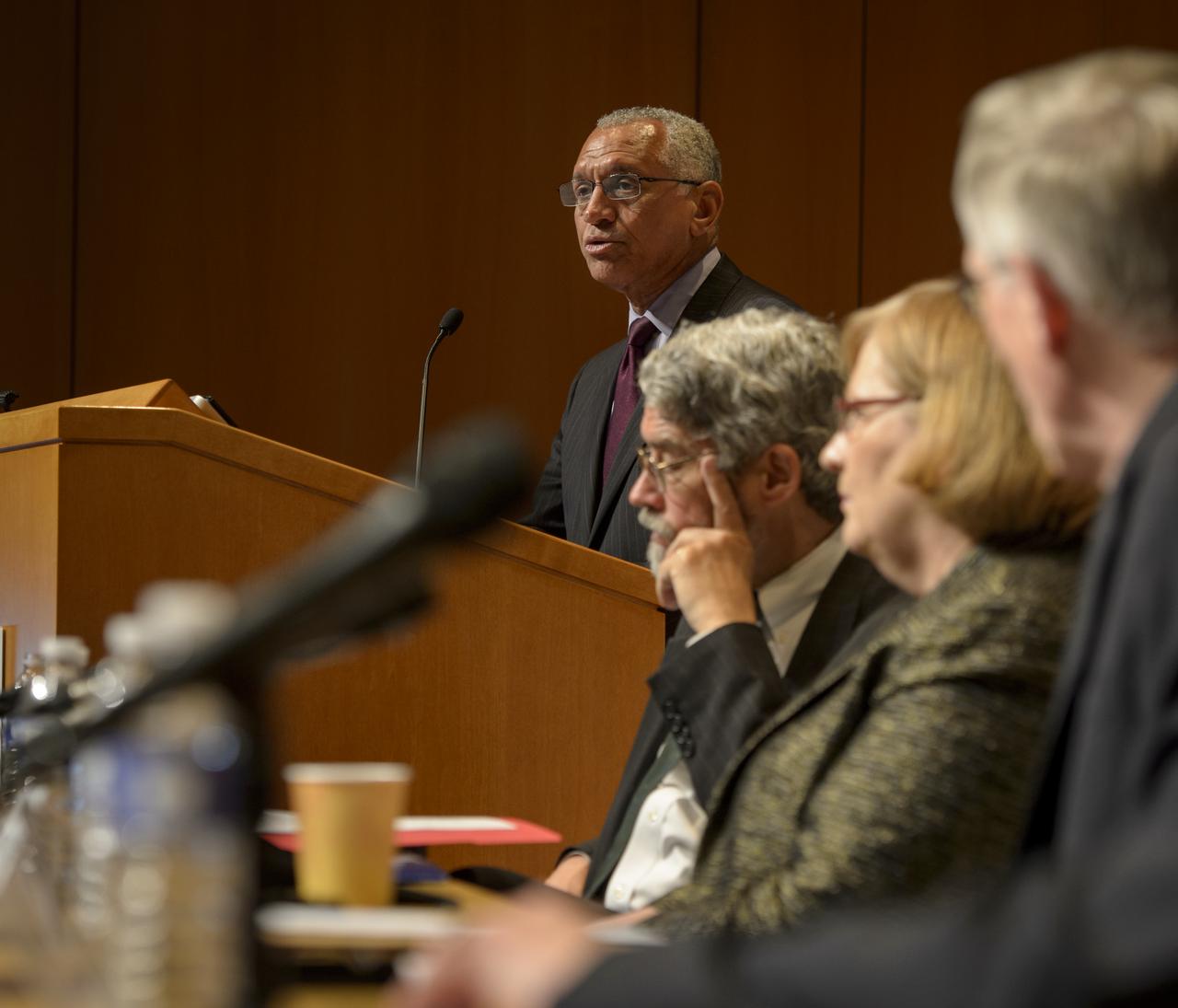
NASA Administrator Charlie Bolden, delivers remarks during a White House Office of Science and Technology Policy (OSTP) Fiscal Year 2014 budget briefing held with with Dr. John P. Holdren, Director of OSTP, Patricia Falcone of OSTP, Francis Collins from NIH, Cora Marrett from NSF, and Kathryn Sullivan from NOAA, at the American Association for the Advancement of Science (AAAS) on Wednesday, April 10, 2013 in Washington. Photo Credit: (NASA/Bill Ingalls)
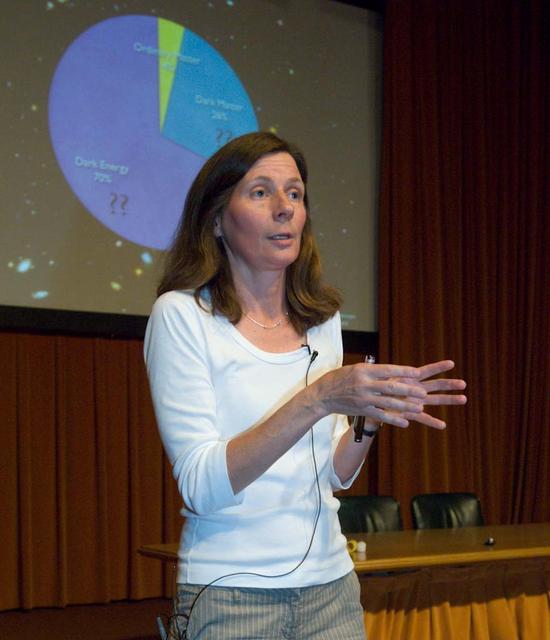
Professor Patricia Burchat, Chair of the Physics Department at Stanford University presents a Director's Colloquium entitled 'The Dark Side of the Universe'.
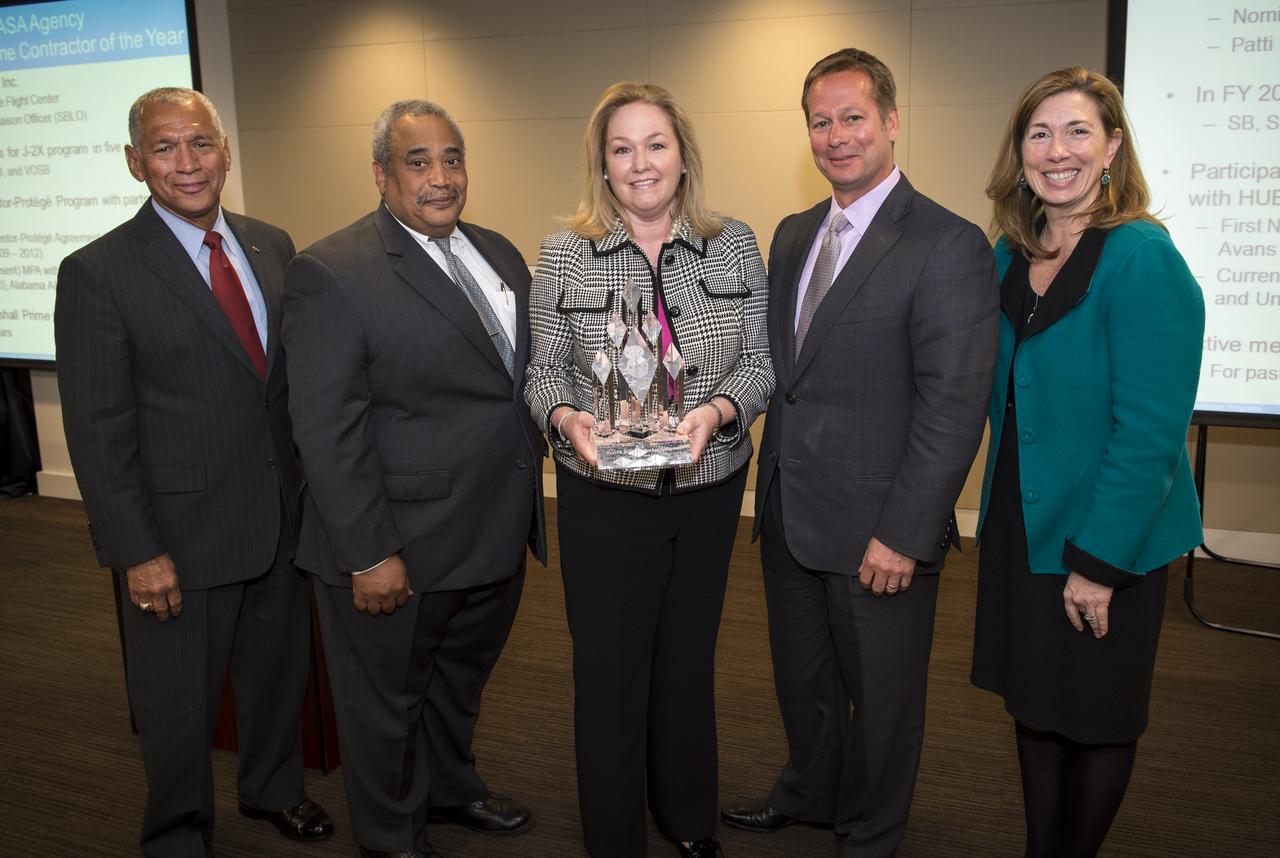
NASA Administrator Charles Bolden, left, NASA Associate Administrator for Small Business Programs Glenn A. Delgado, second from left, and NASA Deputy Administrator Lori Garver, right, pose for a photograph with Patricia Rice, Manager, Supplier Diversity, Small Business Liaison Officer & Supplier Development, Pratt & Whitney Rocketdyne, Inc. and Jim Maser, President of Pratt & Whitney Rocketdyne, Inc. of East Hartford, Connecticut after the company was awarded the Large Business Prime Contractor of the Year at NASA Headquarters, Tuesday, April 23, 2013 in Washington. Photo Credit: (NASA/Bill Ingalls)
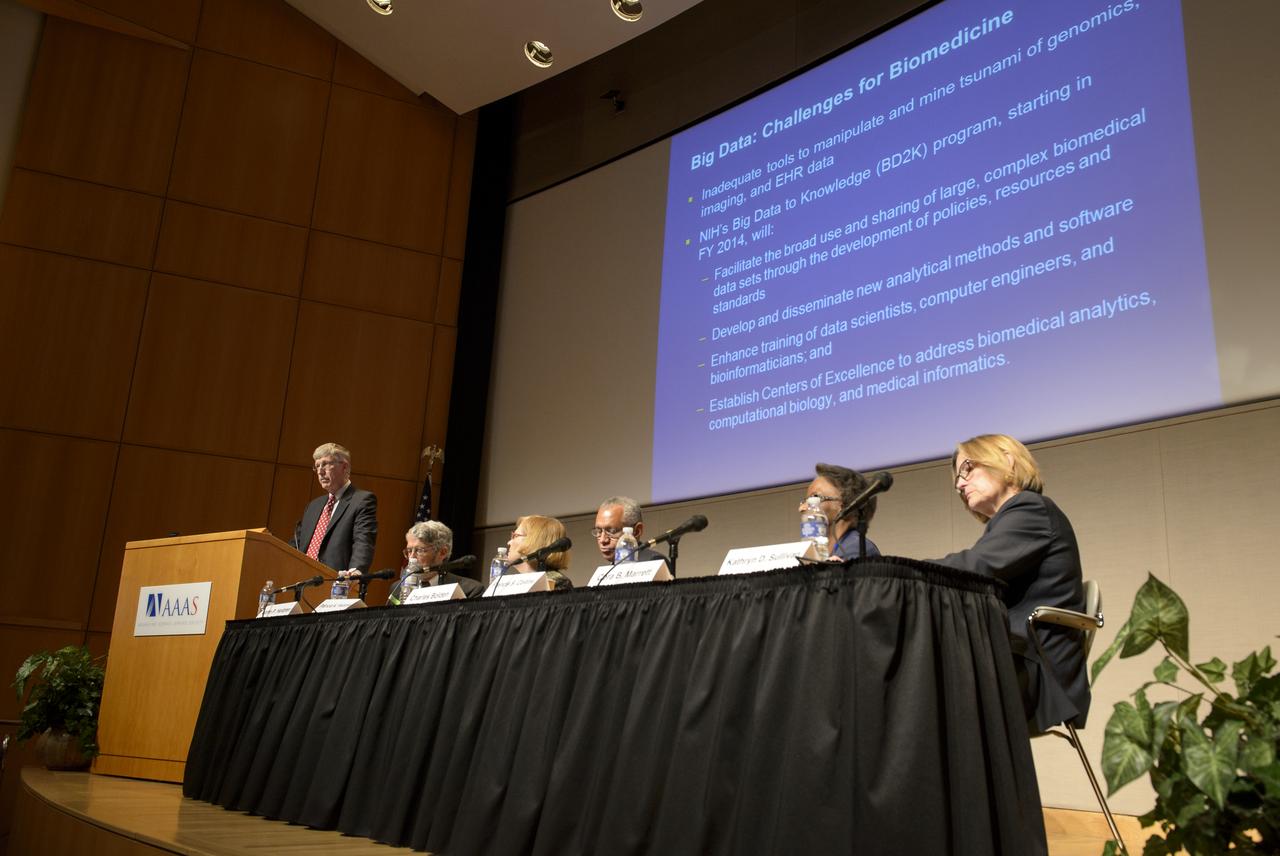
Director of the National Institutes of Health (NIH) Francis S. Collins, M.D., Ph.D., delivers remarks during a White House Office of Science and Technology Policy (OSTP) Fiscal Year 2014 budget briefing held with with Dr. John P. Holdren, Director of OSTP, Patricia Falcone of OSTP, Charlie Bolden from NASA, Cora Marrett from NSF, and Kathryn Sullivan from NOAA, at the American Association for the Advancement of Science (AAAS) on Wednesday, April 10, 2013 in Washington. Photo Credit: (NASA/Bill Ingalls)
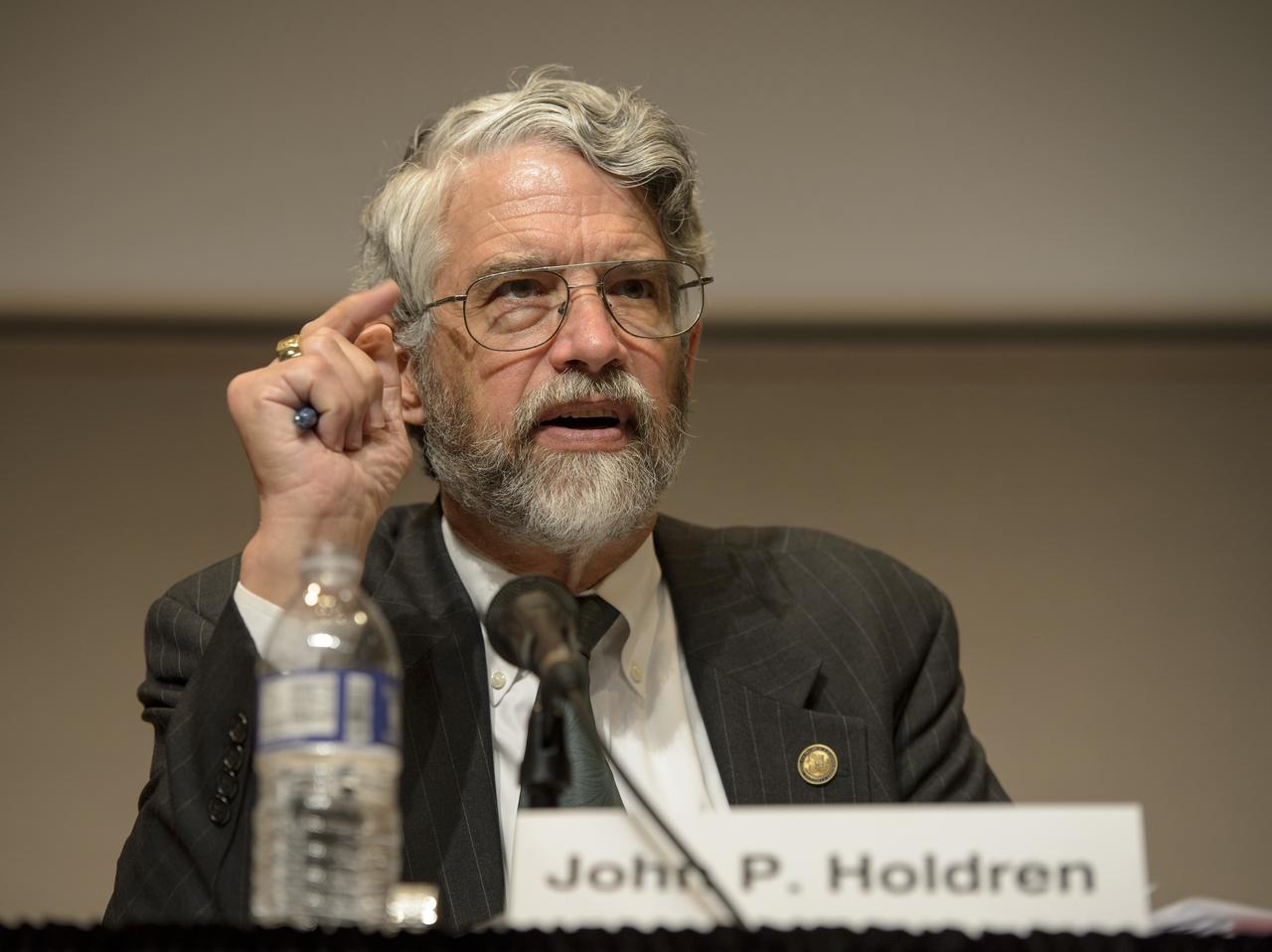
Dr. John P. Holdren, Assistant to the President for Science and Technology, Director of the White House Office of Science and Technology Policy, speaks during a Fiscal Year 2014 budget briefing held with Patricia Falcone of OSTP, Charlie Bolden from NASA, Francis Collins from NIH, Cora Marrett from NSF, and Kathryn Sullivan from NOAA, at the American Association for the Advancement of Science (AAAS) on Wednesday, April 10, 2013 in Washington. Photo Credit: (NASA/Bill Ingalls)
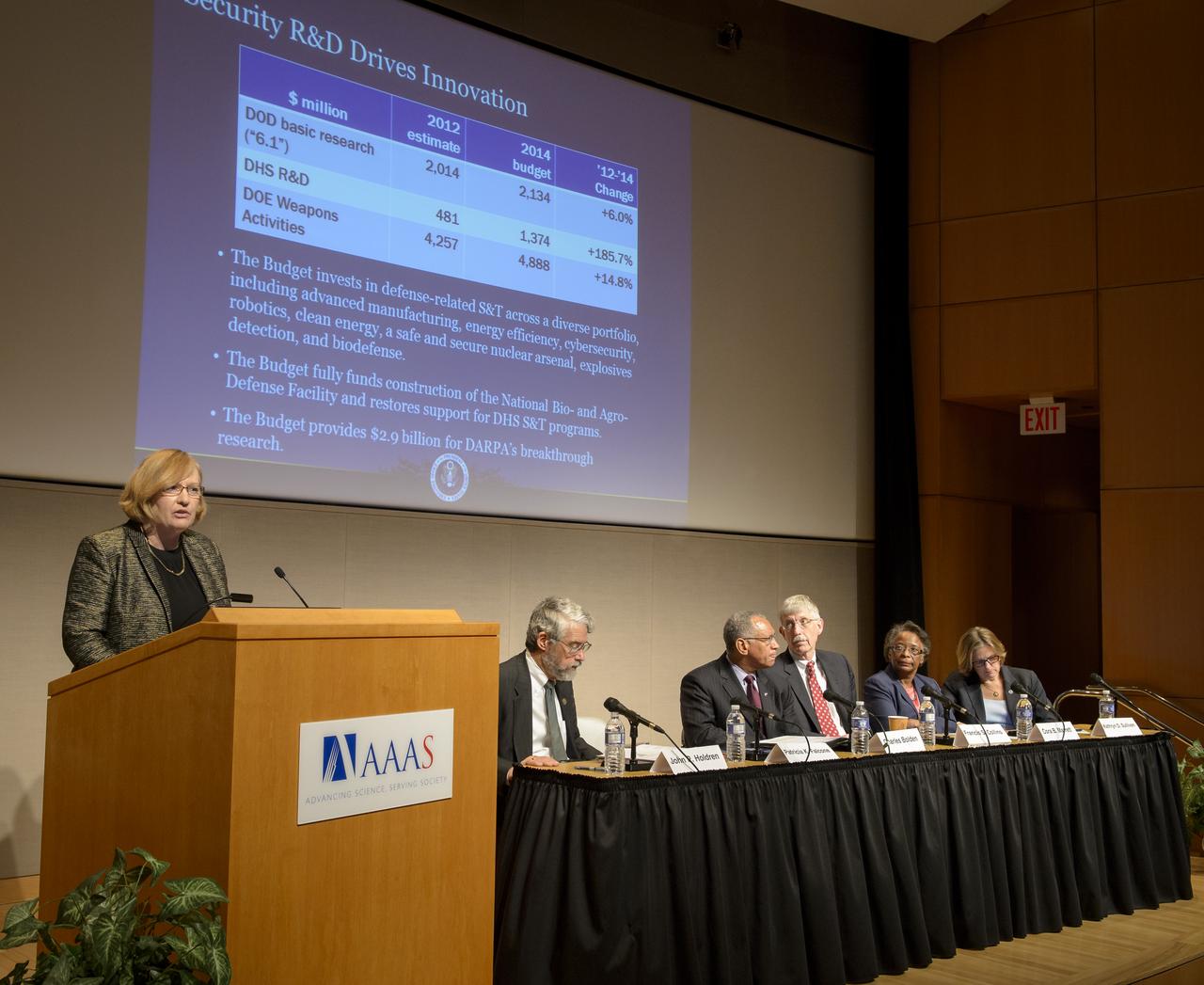
Patricia Falcone, Associate Director, National Security and International Affairs Division, White House Office of Science and Technology Policy, delivers remarks during a Fiscal Year 2014 budget briefing with Dr. John P. Holdren, Director of OSTP, Charlie Bolden from NASA, Francis Collins from NIH, Cora Marrett from NSF, and Kathryn Sullivan from NOAA, at the American Association for the Advancement of Science (AAAS) on Wednesday, April 10, 2013 in Washington. Photo Credit: (NASA/Bill Ingalls)
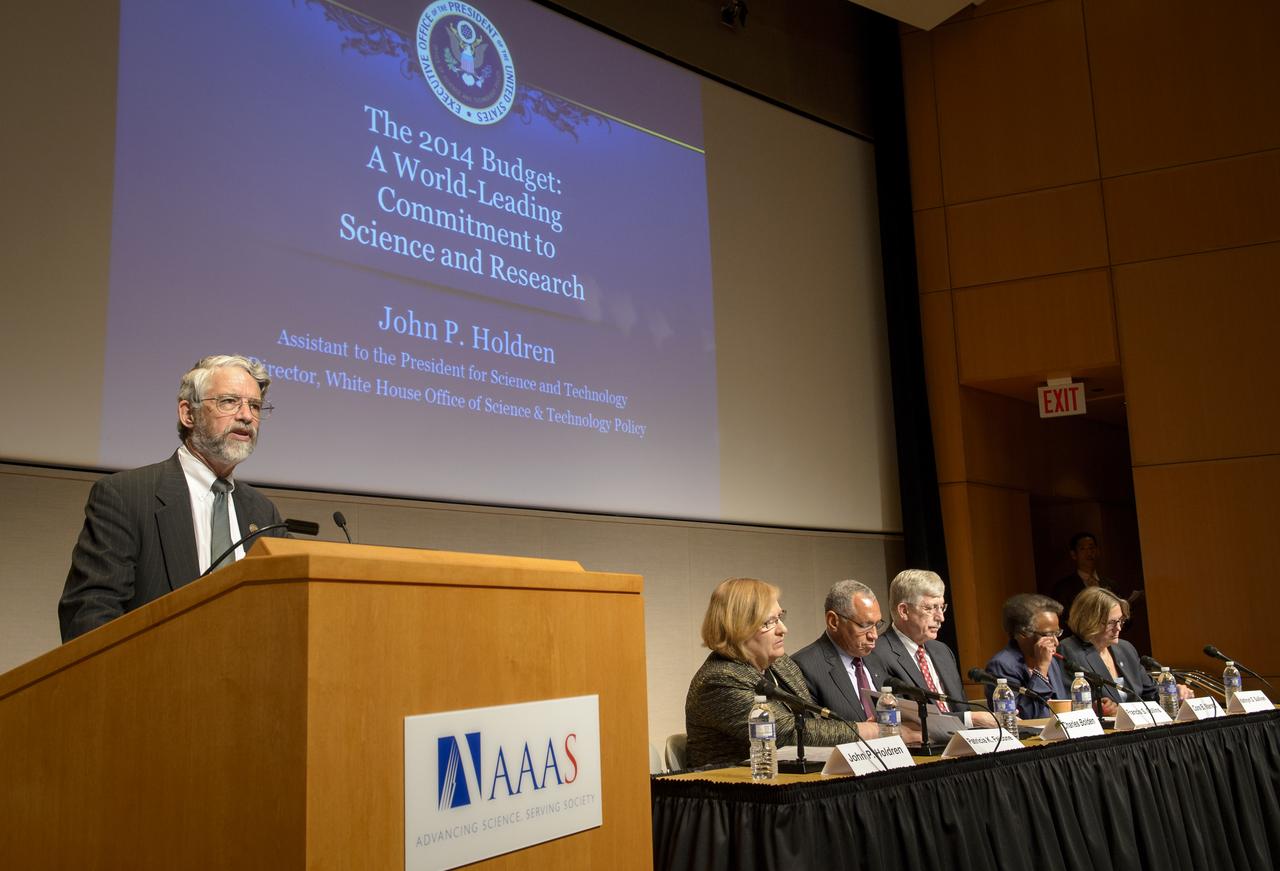
Dr. John P. Holdren, Assistant to the President for Science and Technology, Director of the White House Office of Science and Technology Policy, speaks during a Fiscal Year 2014 budget briefing held with Patricia Falcone of OSTP, Charlie Bolden from NASA, Francis Collins from NIH, Cora Marrett from NSF, and Kathryn Sullivan from NOAA, at the American Association for the Advancement of Science (AAAS) on Wednesday, April 10, 2013 in Washington. Photo Credit: (NASA/Bill Ingalls)
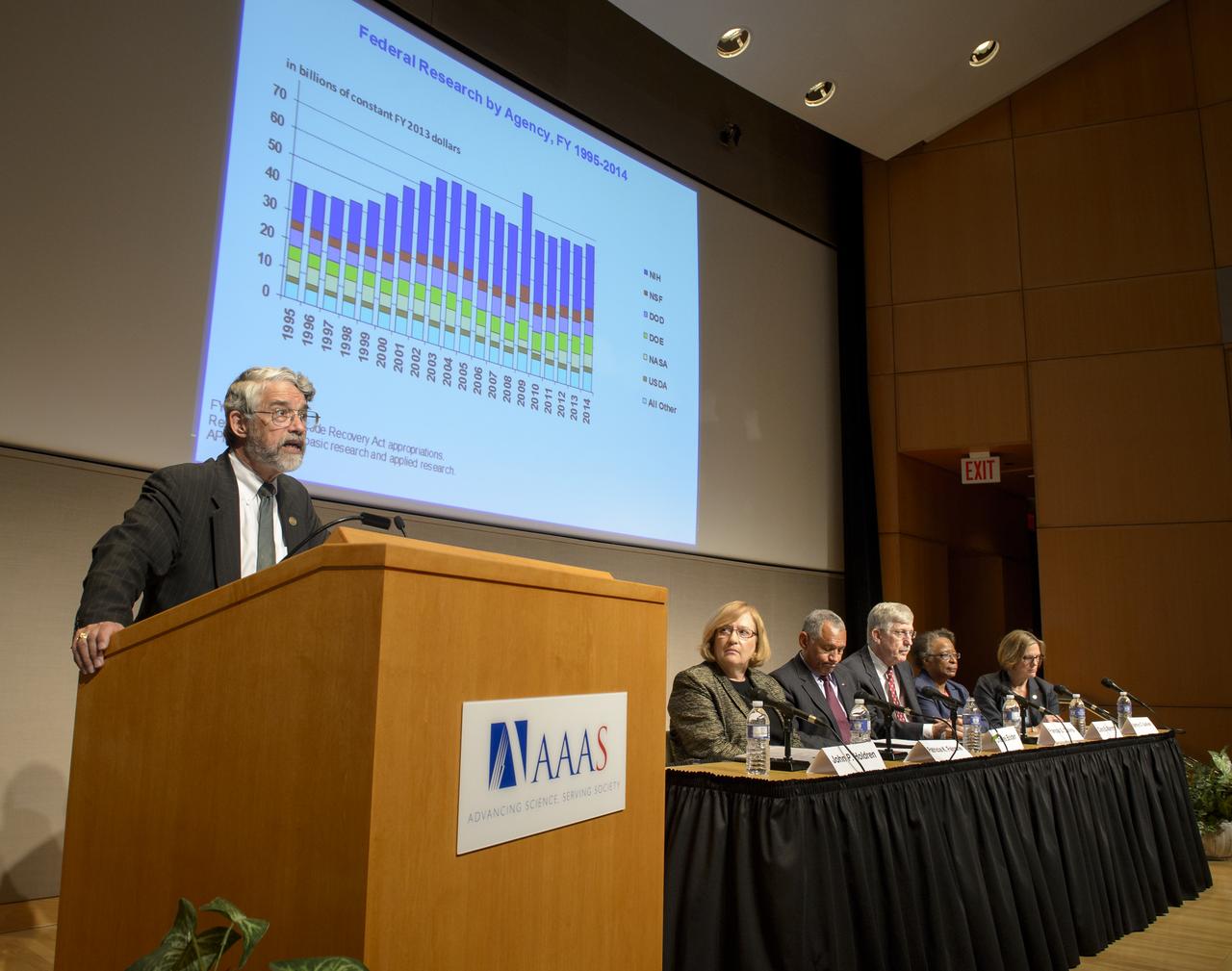
Dr. John P. Holdren, Assistant to the President for Science and Technology, Director of the White House Office of Science and Technology Policy, speaks during a Fiscal Year 2014 budget briefing held with Patricia Falcone of OSTP, Charlie Bolden from NASA, Francis Collins from NIH, Cora Marrett from NSF, and Kathryn Sullivan from NOAA, at the American Association for the Advancement of Science (AAAS) on Wednesday, April 10, 2013 in Washington. Photo Credit: (NASA/Bill Ingalls)
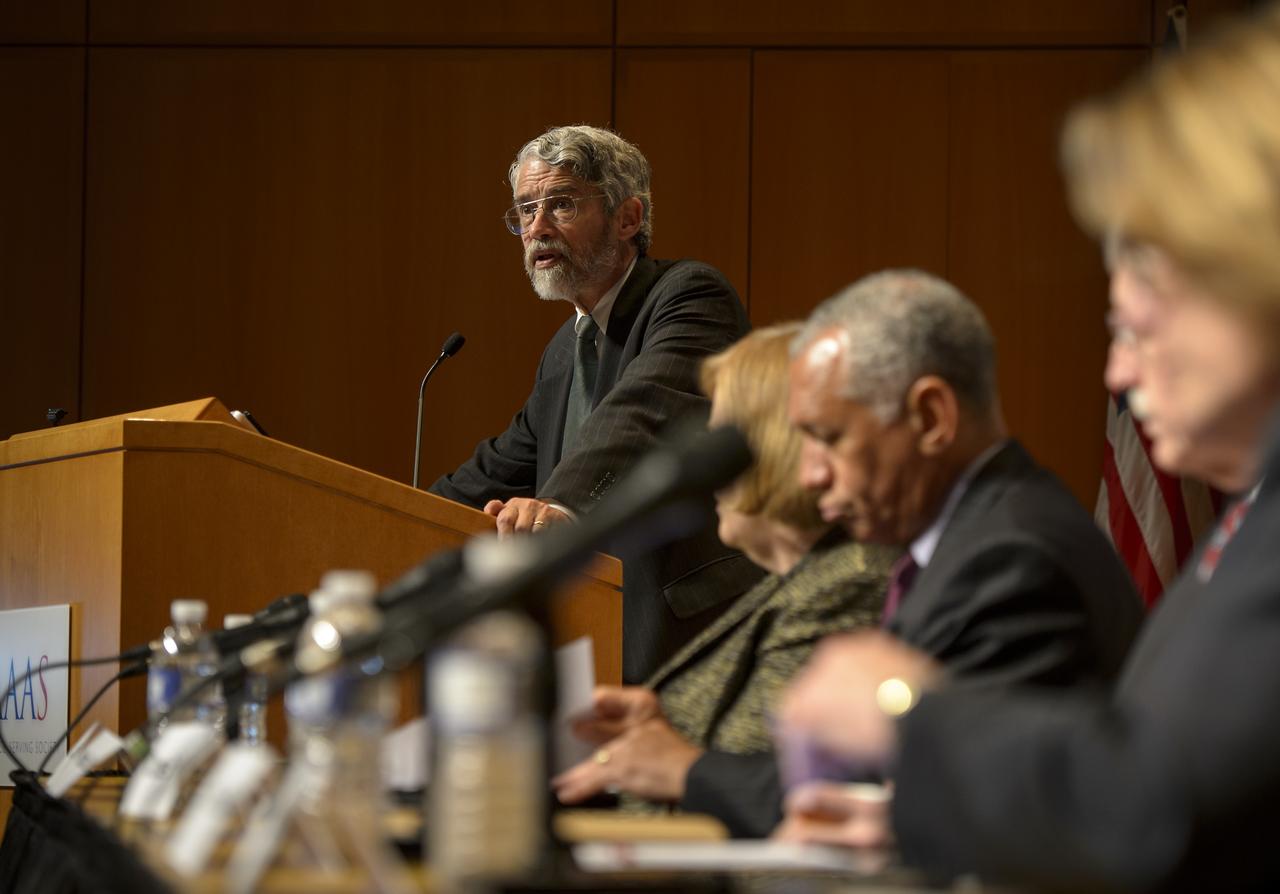
Dr. John P. Holdren, Assistant to the President for Science and Technology, Director of the White House Office of Science and Technology Policy, speaks during a Fiscal Year 2014 budget briefing held with Patricia Falcone of OSTP, Charlie Bolden from NASA, Francis Collins from NIH, Cora Marrett from NSF, and Kathryn Sullivan from NOAA, at the American Association for the Advancement of Science (AAAS) on Wednesday, April 10, 2013 in Washington. Photo Credit: (NASA/Bill Ingalls)

PORTRAIT: DR. PATRICIA COWINGS PROJECT MANAGER OF THE PSYCHOPHYSIOLOGICAL LAB, PRINCIPAL INVESTIGATOR OF THE AUTOGENIC FEEDBACK TRAINING EXPERIMENT STUDYING MOTION SICKNESS.
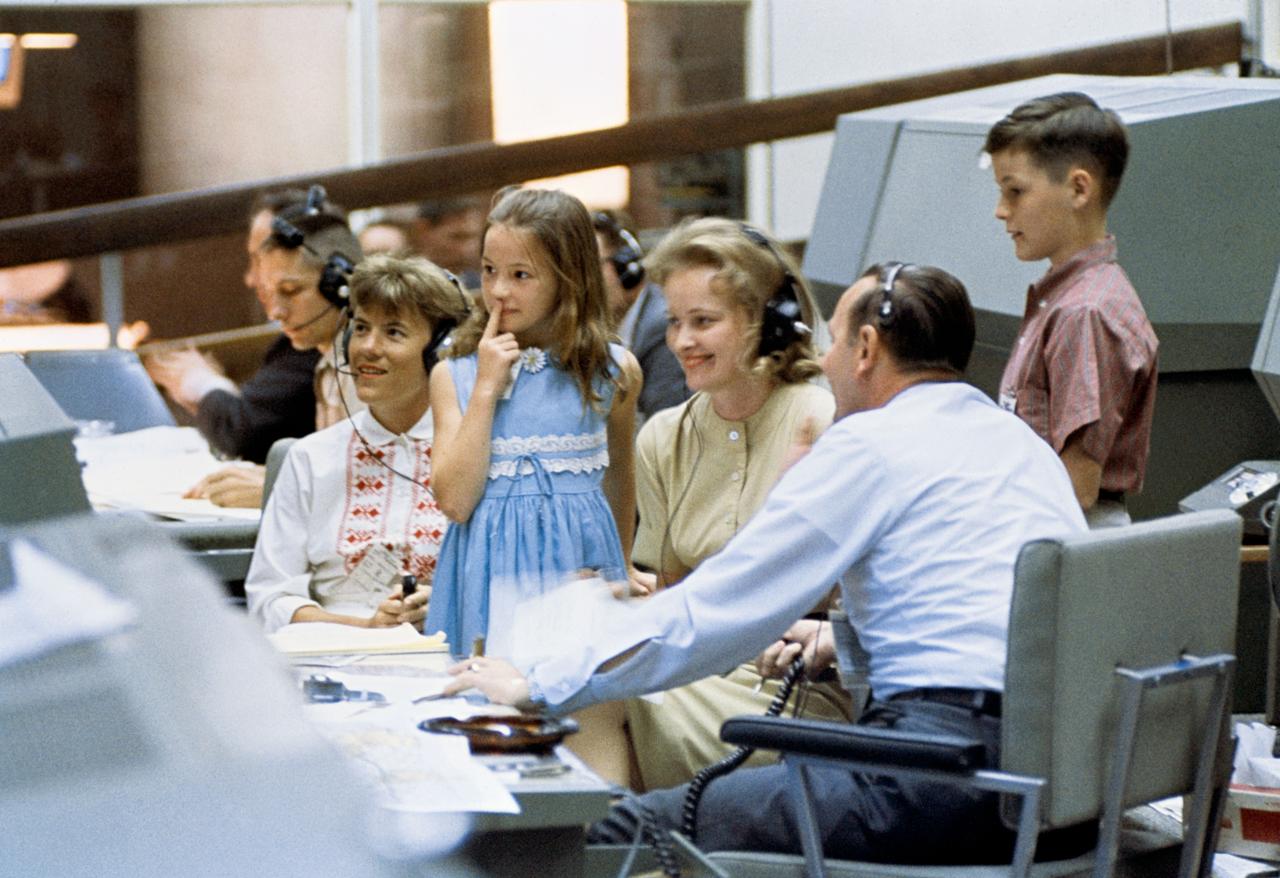
S65-30411 (9 June 1965) --- The families of Gemini 4 astronauts James A. McDivitt and Edward H. White II visited the Mission Control Center in Houston. In the foreground, left to right, are Mrs. Patricia McDivitt, daughter Bonnie White, Mrs. Patricia White, flight director Christopher C. Kraft Jr., and Edward White III. Each of the family members talked with the astronauts as they passed over the United States. Photo credit: NASA
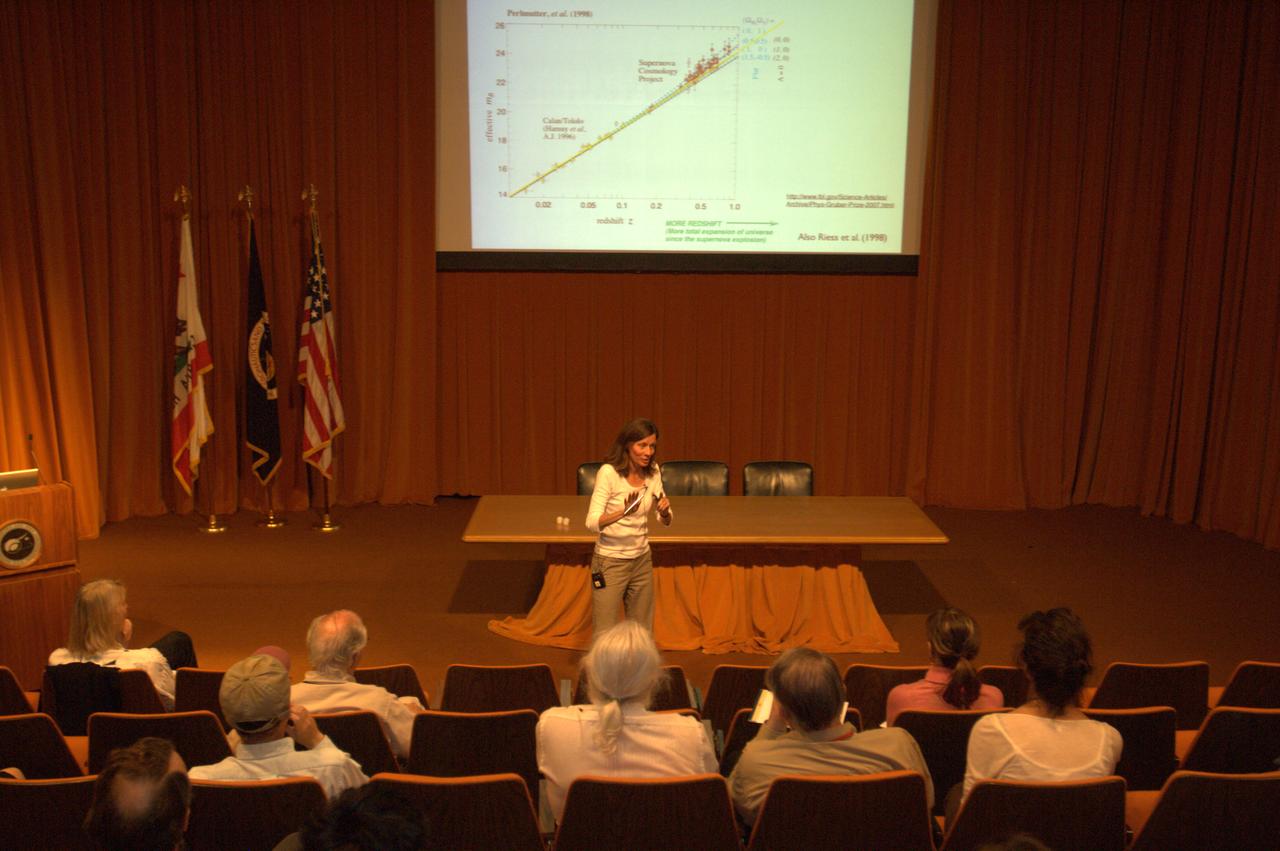
Professor Patricia Burchat, Chair of the Physics Department at Stanford University presents a Director's Colloquium entitled 'The Dark Side of the Universe'. A video of the presentation is currently available at the NASA Ames Library.
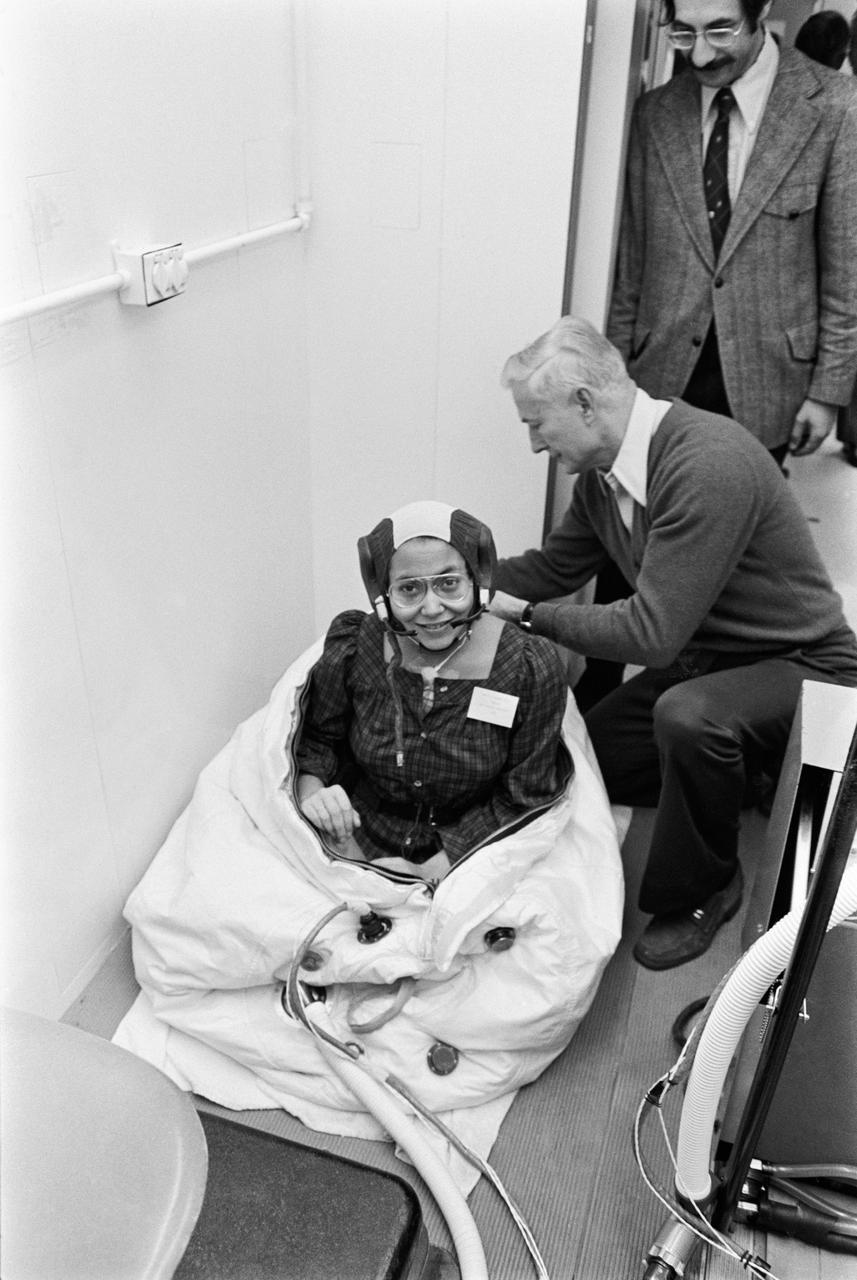
Spacelab simulations crew members during medical testing. Photo is of Patricia Cowings being zipped into the one-meter-diameter rescue ball during physical tests. Assisting her is Joe Schmitt, a suit technician.
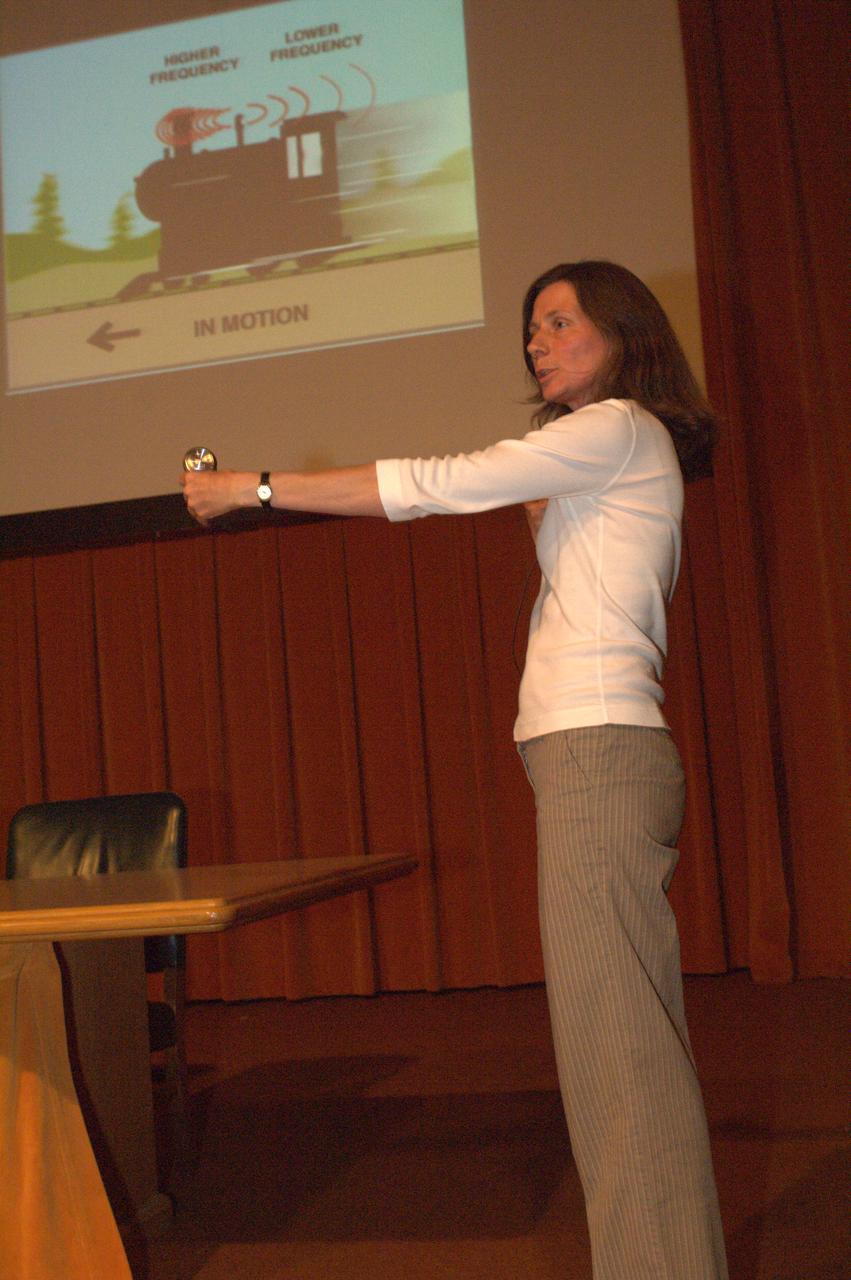
Professor Patricia Burchat, Chair of the Physics Department at Stanford University presents a Director's Colloquium entitled 'The Dark Side of the Universe'. A video of the presentation is currently available at the NASA Ames Library.
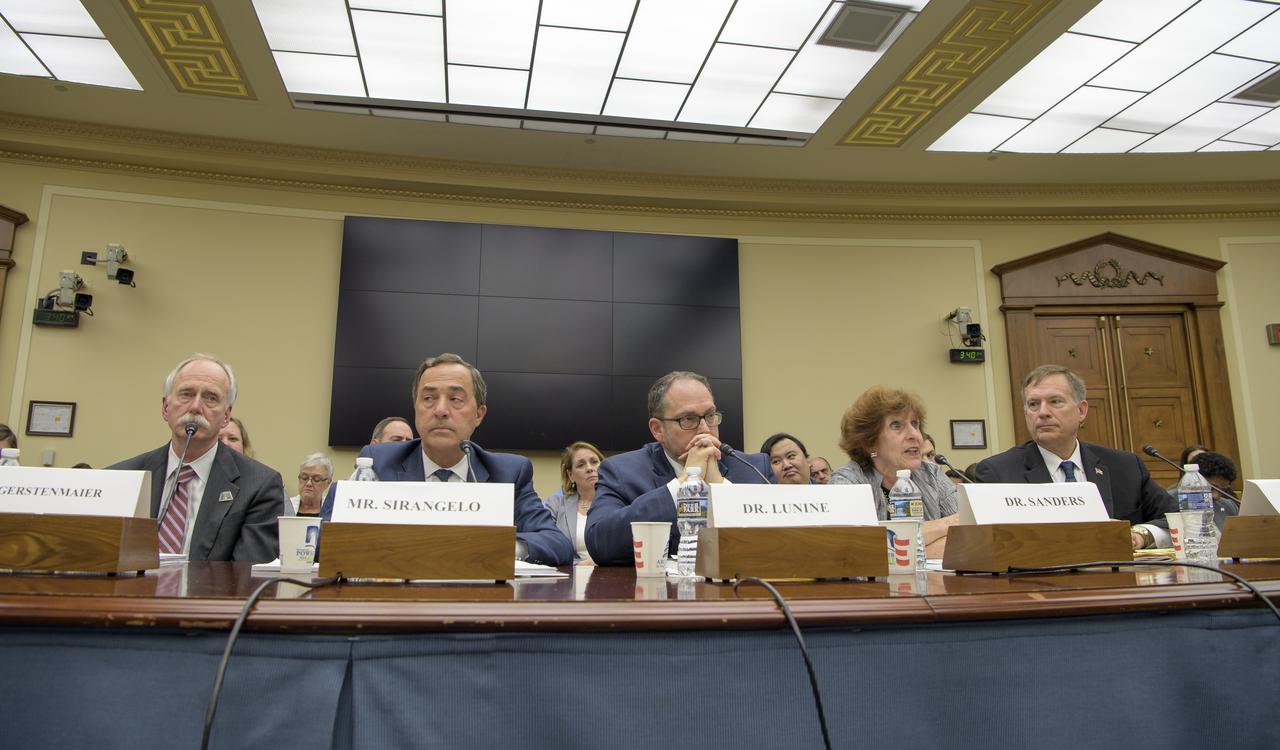
NASA Associate Administrator, Human Exploration and Operations William Gerstenmaier, left, NASA Special Assistant to the Administrator Mark Sirangelo, Director, Cornell Center for Astrophysics and Planetary Science, Co-Chair of the Former Committee on Human Spaceflight, National Academies of Sciences, Engineering, and Medicine Dr. Jonathan Lunine, Chair, Aerospace Safety Advisory Panel Dr. Patricia Sanders, and, President, Faulconer Consulting Group, LLC Mr. Walt Faulconer, right, are seen during a House Subcommittee on Space and Aeronautics hearing titled "Keeping our sights on Mars: A Review of NASA's Deep Space Exploration Programs and Lunar Proposal", Wednesday, May 8, 2019 at the Rayburn House Office Building in Washington. Photo Credit: (NASA/Bill Ingalls)
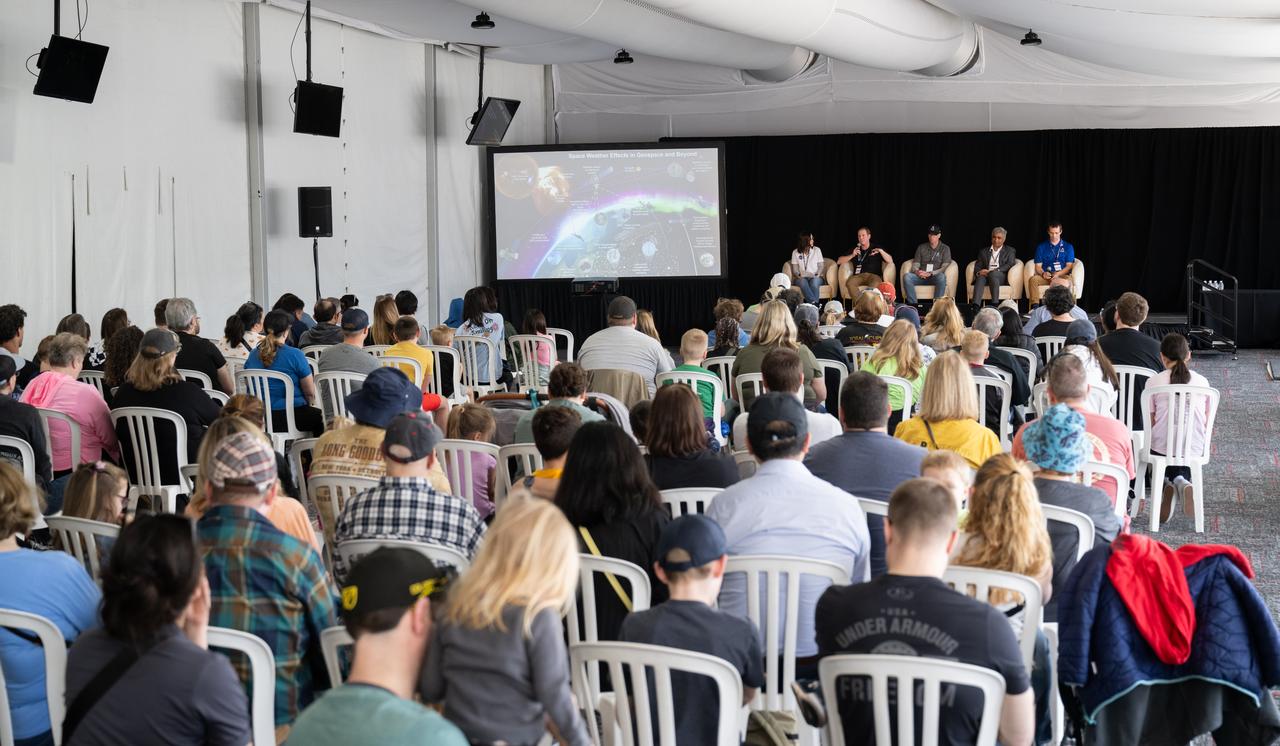
Patricia Moore, communications strategist for the Moon to Mars Program Office in NASA's Exploration Systems Development Mission Directorate, Bradley Williams, program executive in the Heliophysics Division of NASA's Science Mission Directorate, Matthew Roper, Crew Health and Medical Team Lead in NASA's Flight Operations Directorate, Arvind Raman, dean of the College of Engineering at Purdue University, and Logan Kennedy, surface lead for Human Landing System Programs in NASA's Exploration Systems Development Mission Directorate, are seen as they speaks to attendees at the Indianapolis Motor Speedway during a panel discussion about following your dreams to a career in STEM ahead of the total solar eclipse, Monday, April 8, 2024, in Indianapolis, Ind. A total solar eclipse swept across a narrow portion of the North American continent from Mexico’s Pacific coast to the Atlantic coast of Newfoundland, Canada. A partial solar eclipse was visible across the entire North American continent along with parts of Central America and Europe. Photo Credit: (NASA/Joel Kowsky)

ADVISORY COMMITTEE: The Federal Women’ s Program Advisory Committee has been established to assist in the implementation of the Federal Women’ s Program at the Center. In an effort to define the specific problems of women employees at Langley, the committee is preparing a self-evaluation and discrimination questionnaire which will soon be distributed to all female employees. Members of the committee are (from left): Lorraine F. Satchell, Carmen, E. Batten, Patricia D. Hurt, Jane s. Hess, Chairman, Sallie M. Harvey, Eloise McGeehee, Mary W. Jackson, and Eunice G. Smith. Absent when the photograph was taken was Jeanette W. George. Photo published in the Langley Researcher, May 11,1973 page 5.
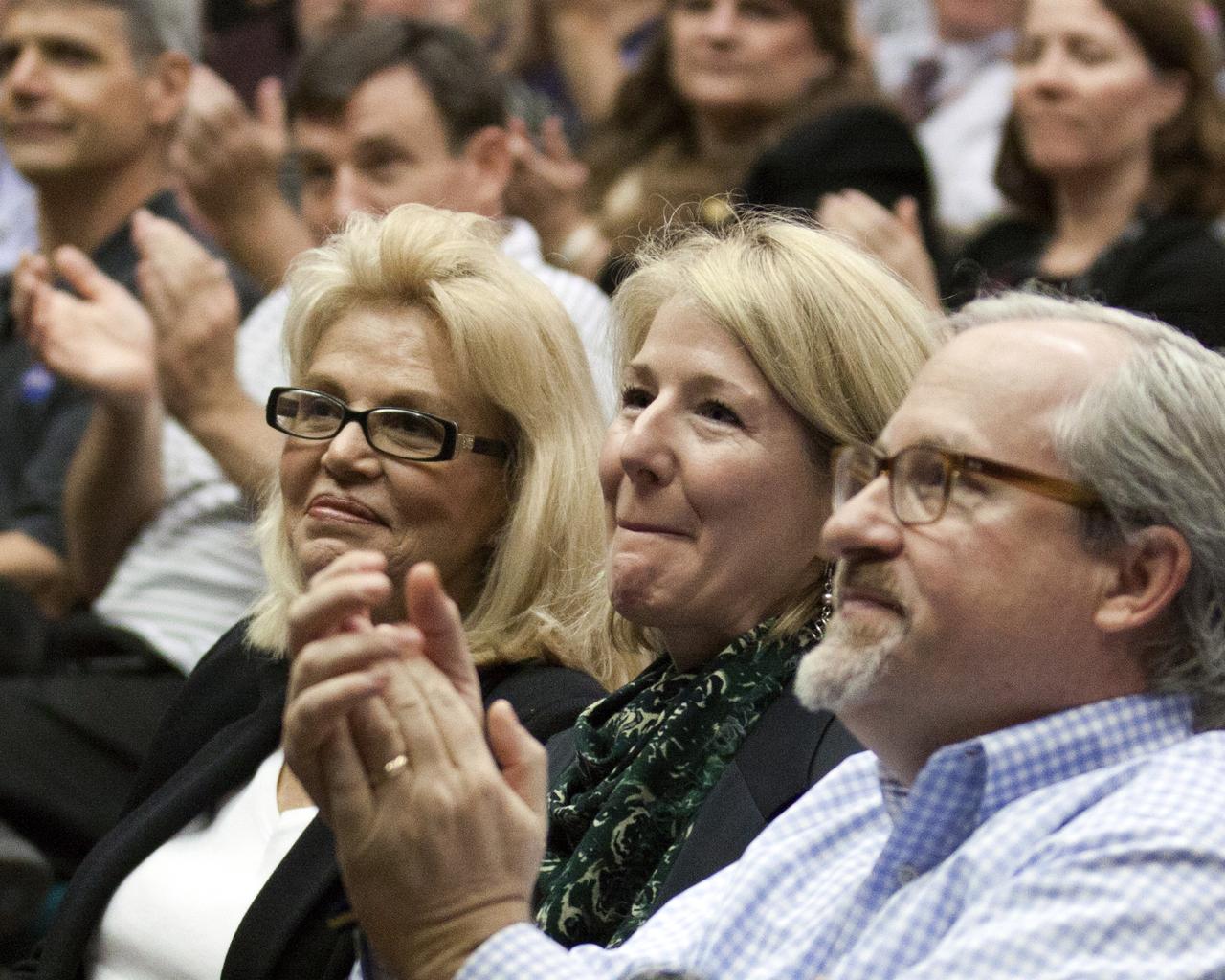
CAPE CANAVERAL, Fla. -- Mercury astronaut Scott Carpenter's wife, Patricia Carpenter, left, and children listen during the "50 Years of Americans in Orbit" presentation for employees at NASA's Kennedy Space Center in Florida. John Glenn and fellow Mercury astronaut Scott Carpenter were joined by NASA Administrator Charles Bolden and Center Director Bob Cabana on stage in Kennedy's training auditorium. This year marks 50 years since Glenn and Carpenter became the first two Americans to orbit Earth. Photo credit: NASA/Kim Shiflett
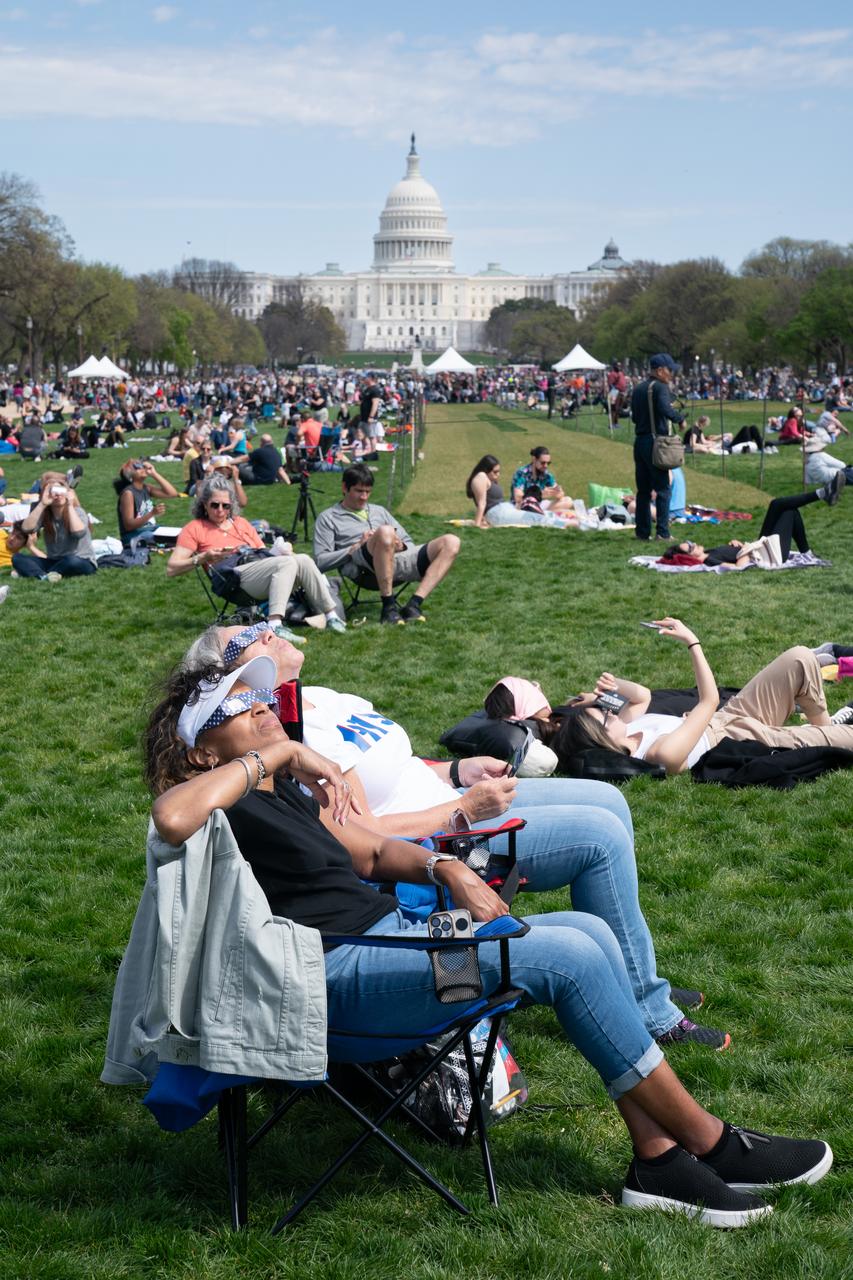
Patricia Jones (front) and Renee Chapman view a partial solar eclipse in Washington, DC, Monday, April 8, 2024. A total solar eclipse swept across a narrow portion of the North American continent from Mexico’s Pacific coast to the Atlantic coast of Newfoundland, Canada. A partial solar eclipse was visible across the entire North American continent along with parts of Central America and Europe. Photo Credit: (NASA/Denny Henry)
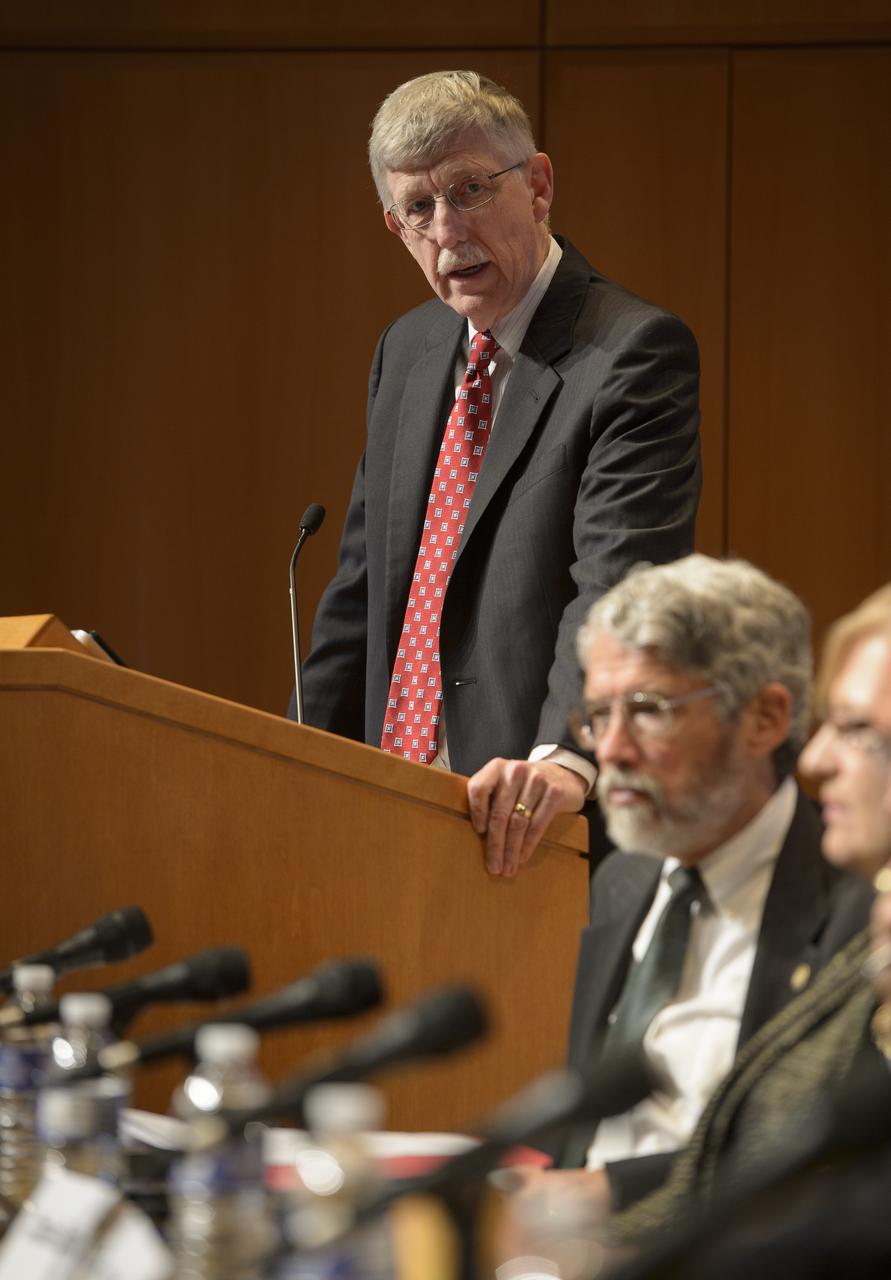
Director of the National Institutes of Health (NIH) Francis S. Collins, M.D., Ph.D., delivers remarks during a White House Office of Science and Technology Policy (OSTP) Fiscal Year 2014 budget briefing held with with Dr. John P. Holdren, Director of OSTP, Patricia Falcone of OSTP, Charlie Bolden from NASA, Cora Marrett from NSF, and Kathryn Sullivan from NOAA, at the American Association for the Advancement of Science (AAAS) on Wednesday, April 10, 2013 in Washington. Photo Credit: (NASA/Bill Ingalls)
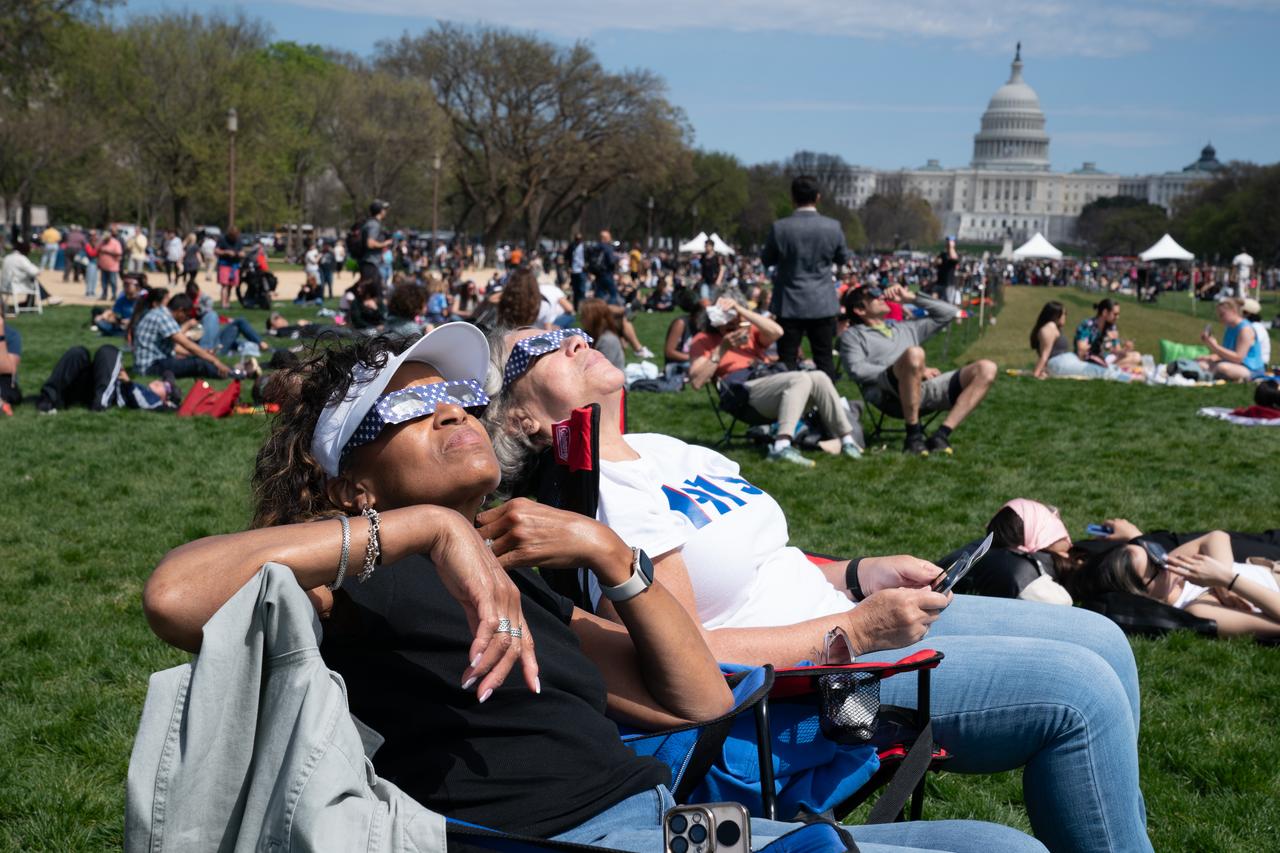
Patricia Jones (left) and Renee Chapman (right) view a partial solar eclipse in Washington, DC, Monday, April 8, 2024. A total solar eclipse swept across a narrow portion of the North American continent from Mexico’s Pacific coast to the Atlantic coast of Newfoundland, Canada. A partial solar eclipse was visible across the entire North American continent along with parts of Central America and Europe. Photo Credit: (NASA/Denny Henry)
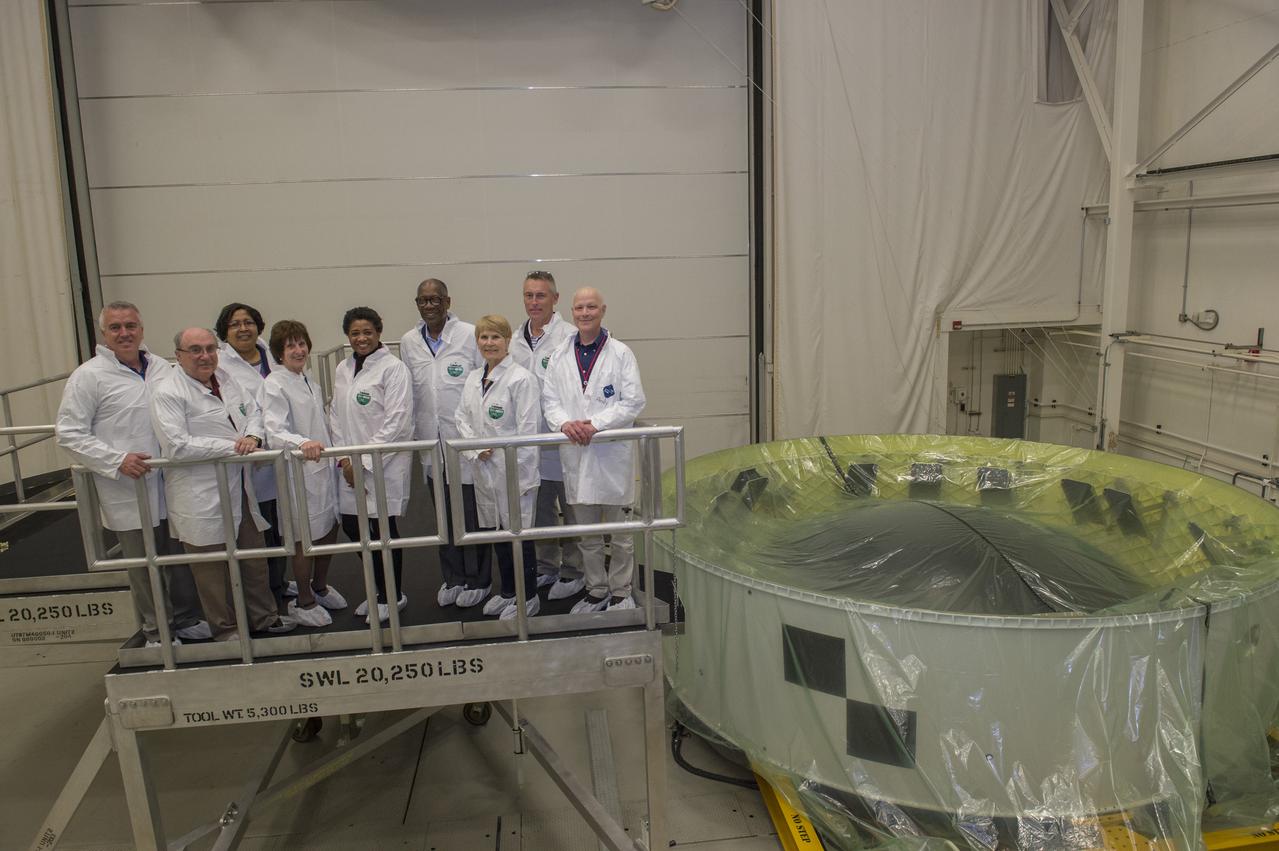
ASAP, (Aerospace Safety Advisory Panel), members, Dr. Sandra Magnus, Dr. Donald P. McErlean, Dr. George Nield, Captain Christopher Saindon, Mr. David West, Dr. Patricia Sanders, Ms. Carol Hamilton, Ms. Evette Whatley, Ms. Paula Frankel, view LVSA, (Launch Vehicle Stage Adapter), and Orion Stage Adapter. Members were escorted to buildings 4707 and 4708 by Andrew Schorr, Deputy Manager for Spacecraft/Payload Integration & Evolution Office (SPIE)
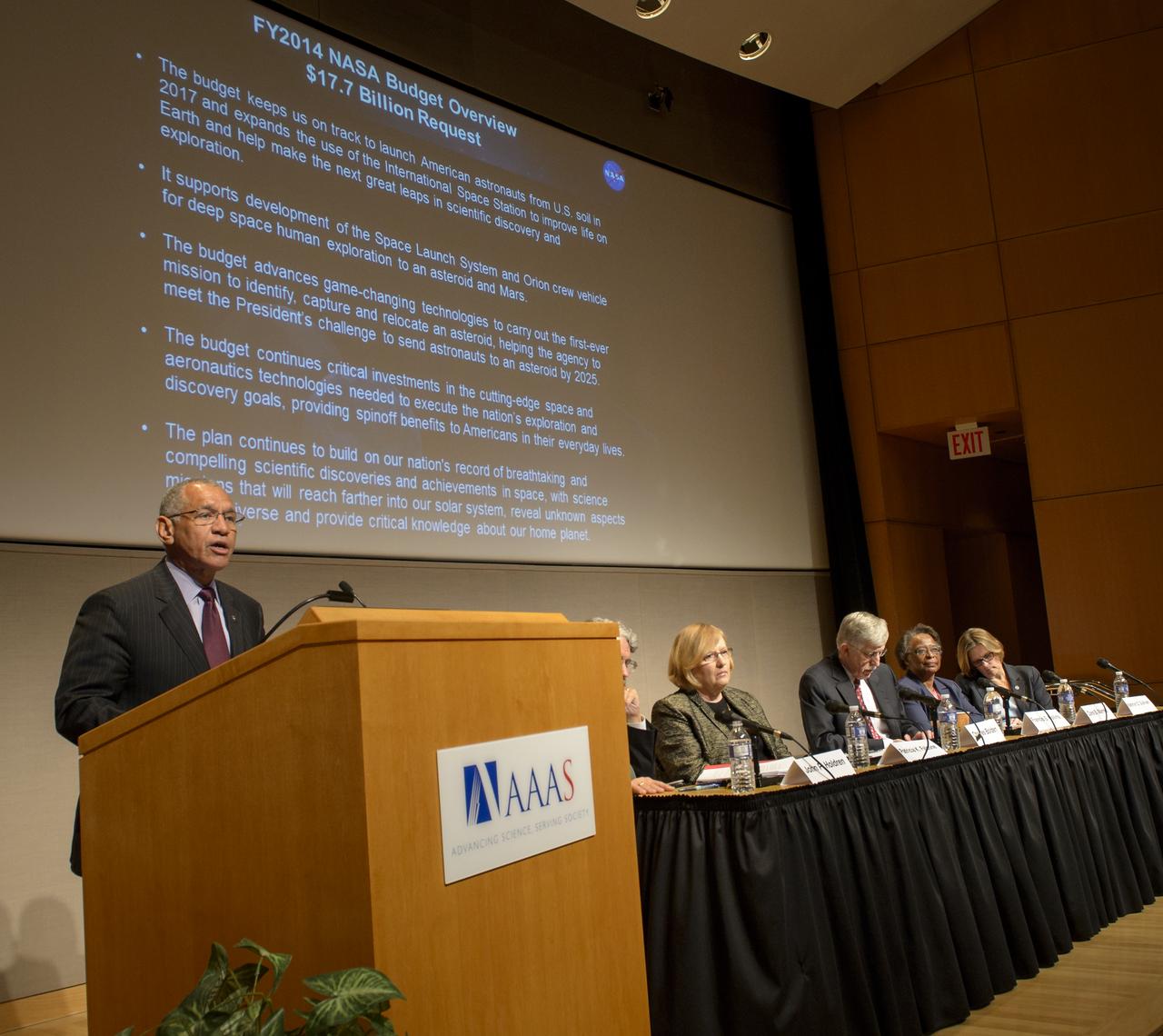
NASA Administrator Charlie Bolden, delivers remarks during a White House Office of Science and Technology Policy (OSTP) Fiscal Year 2014 budget briefing held with with Dr. John P. Holdren, Director of OSTP, Patricia Falcone of OSTP, Francis Collins from NIH, Cora Marrett from NSF, and Kathryn Sullivan from NOAA, at the American Association for the Advancement of Science (AAAS) on Wednesday, April 10, 2013 in Washington. Photo Credit: (NASA/Bill Ingalls)
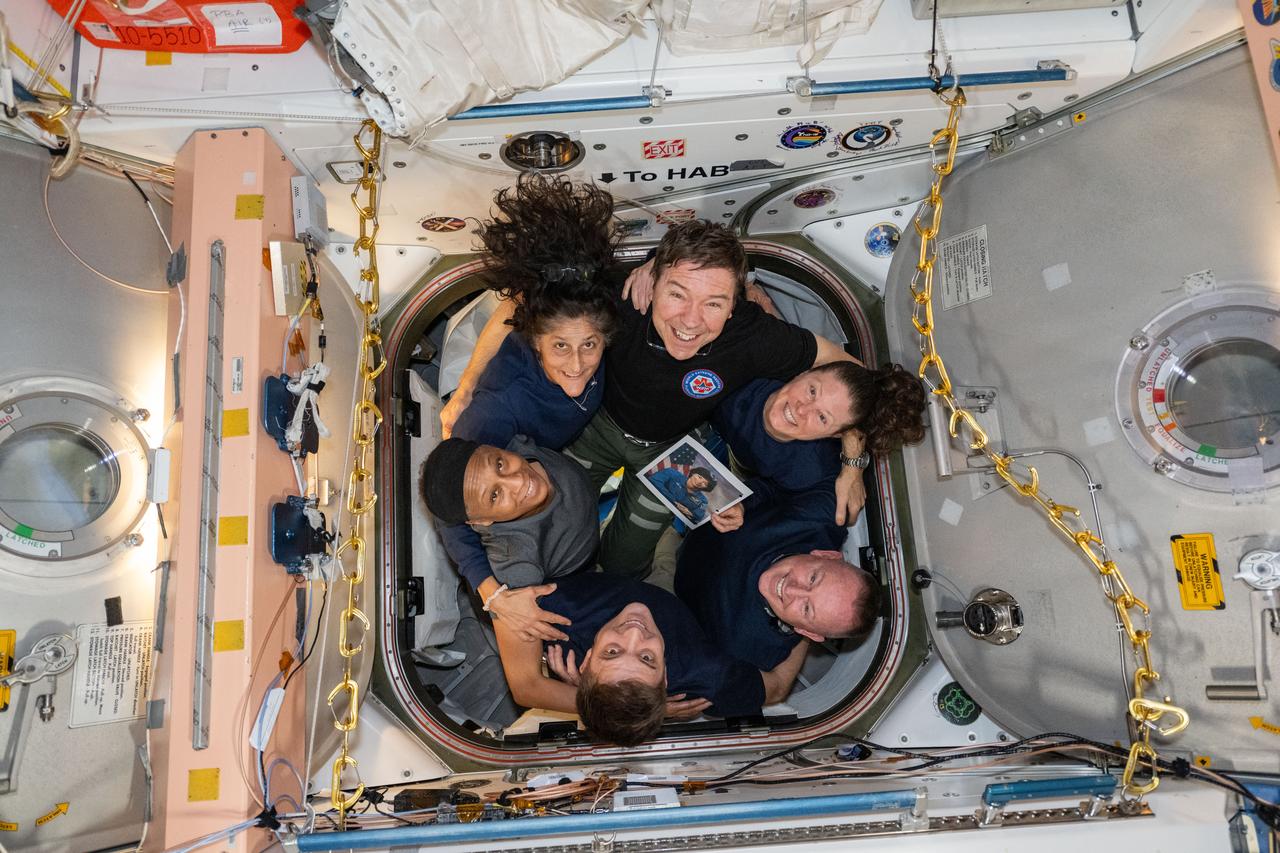
iss071e321342 (July 11, 2024) --- Clockwise from bottom, NASA astronauts Matthew Dominick, Jeanette Epps, Suni Williams, Mike Barratt, Tracy C. Dyson, and Butch Wilmore, pose for a team portrait inside the vestibule between the Unity module and the Cygnus space freighter from Northrop Grumman. Dyson holds a photograph of NASA astronaut Patrica Hilliard for whom the Cygnus spacecraft, S.S. Patricia “Patty” Hilliard Robertson, is named after.
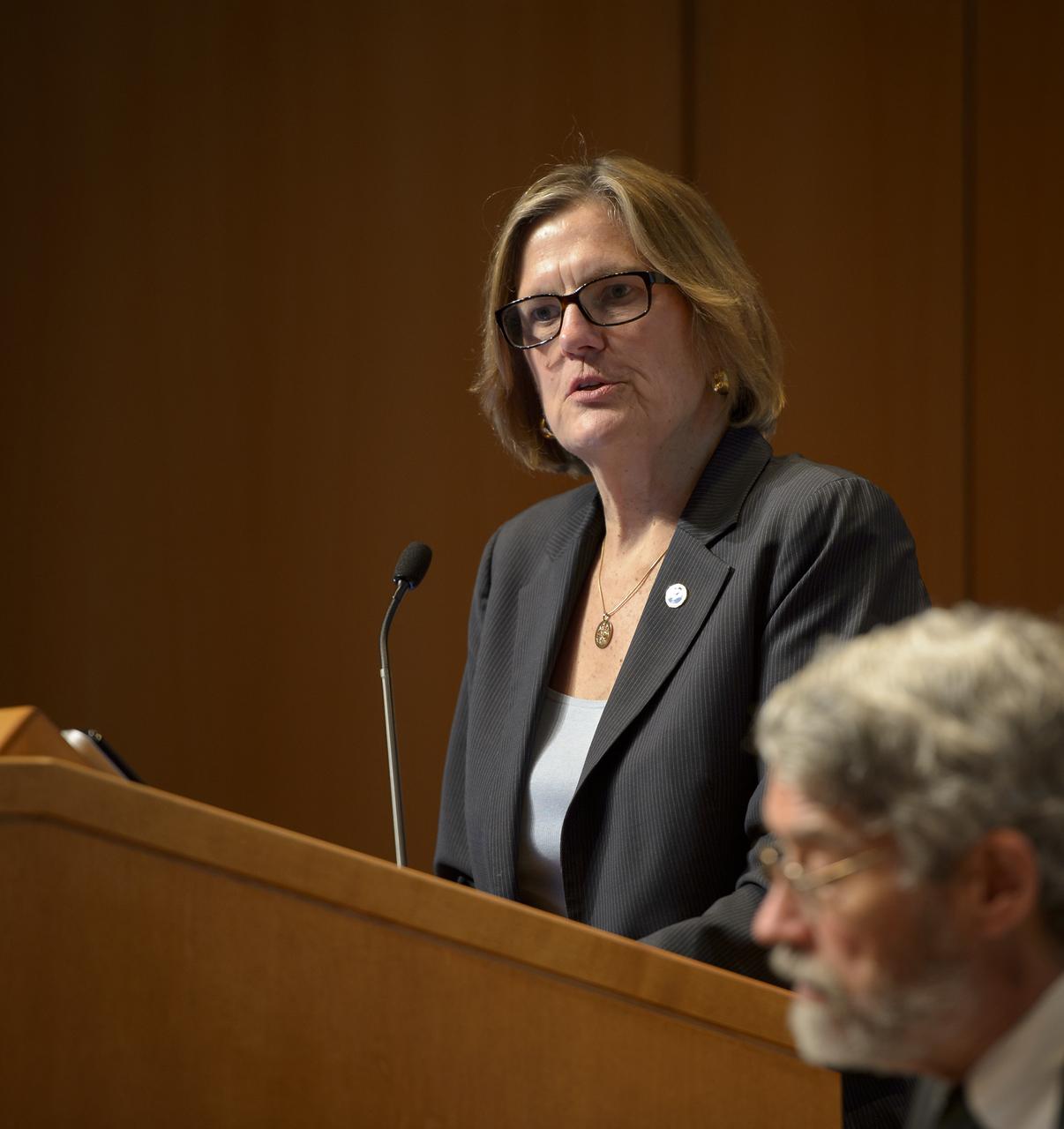
Dr. Kathryn D. Sullivan, Acting Under Secretary of Commerce for Oceans and Atmosphere and Acting NOAA Administrator, delivers remarks during a White House Office of Science and Technology Policy (OSTP) Fiscal Year 2014 budget briefing held with with Dr. John P. Holdren, Director of OSTP, Patricia Falcone of OSTP, Charlie Bolden from NASA, Francis Collins from NIH, and Cora Marrett from NSF, at the American Association for the Advancement of Science (AAAS) on Wednesday, April 10, 2013 in Washington. Photo Credit: (NASA/Bill Ingalls)
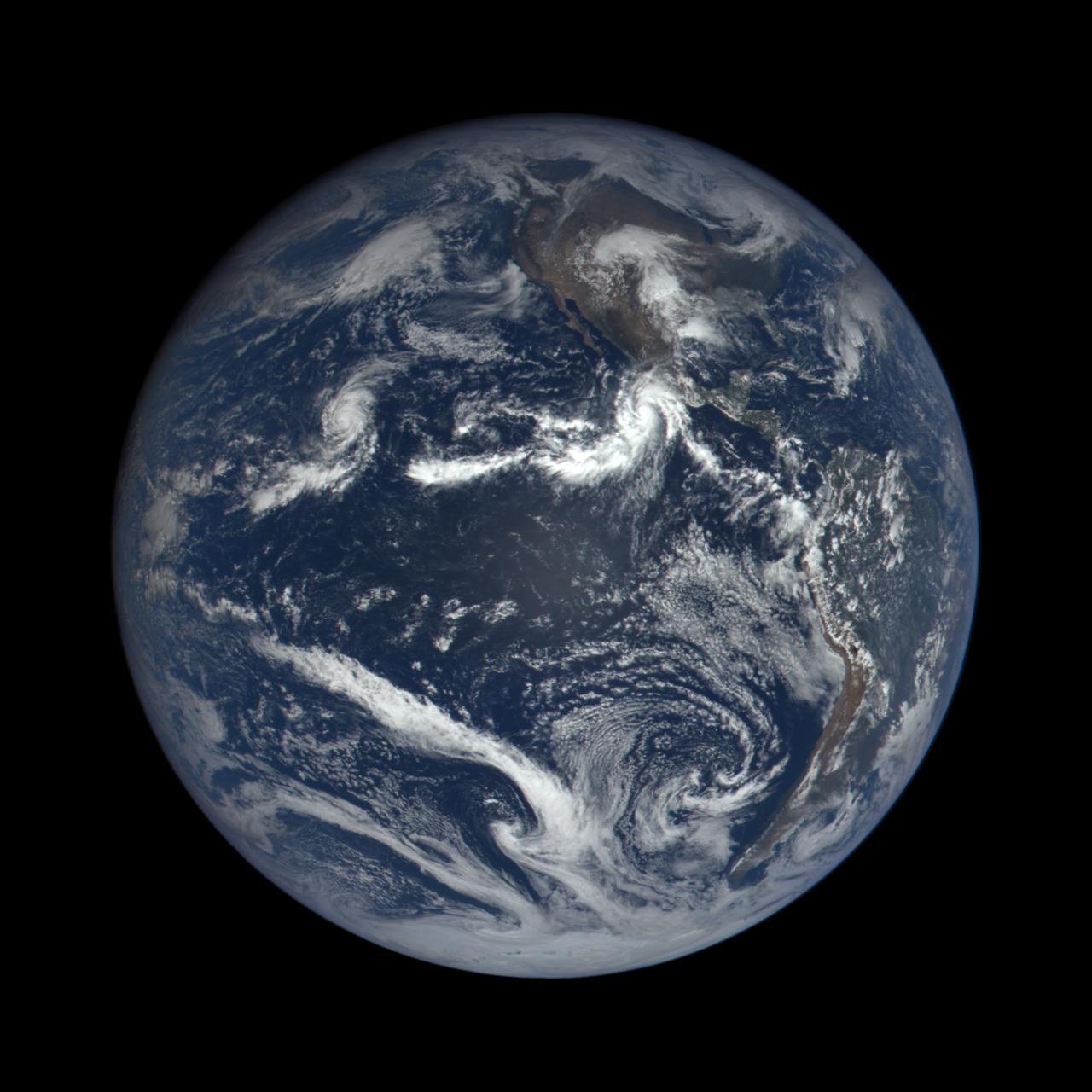
Hurricane Patricia captured by EPIC, the Earth Polychromatic Imaging Camera. The instrument flies on the Deep Space Climate Observatory (DSCOVR), a satellite built through a partnership between NASA, the National Oceanic and Atmospheric Administration (NOAA), and the U.S. Air Force. DSCOVR collects its images and measurements from a vantage point one million miles above the Earth and toward the Sun. This image was captured nearly 1 million miles from earth at 4:00 pm EDT (19:00:18 GMT), on September 22, 2015. Credit: NASA image from the DSCOVR EPIC team
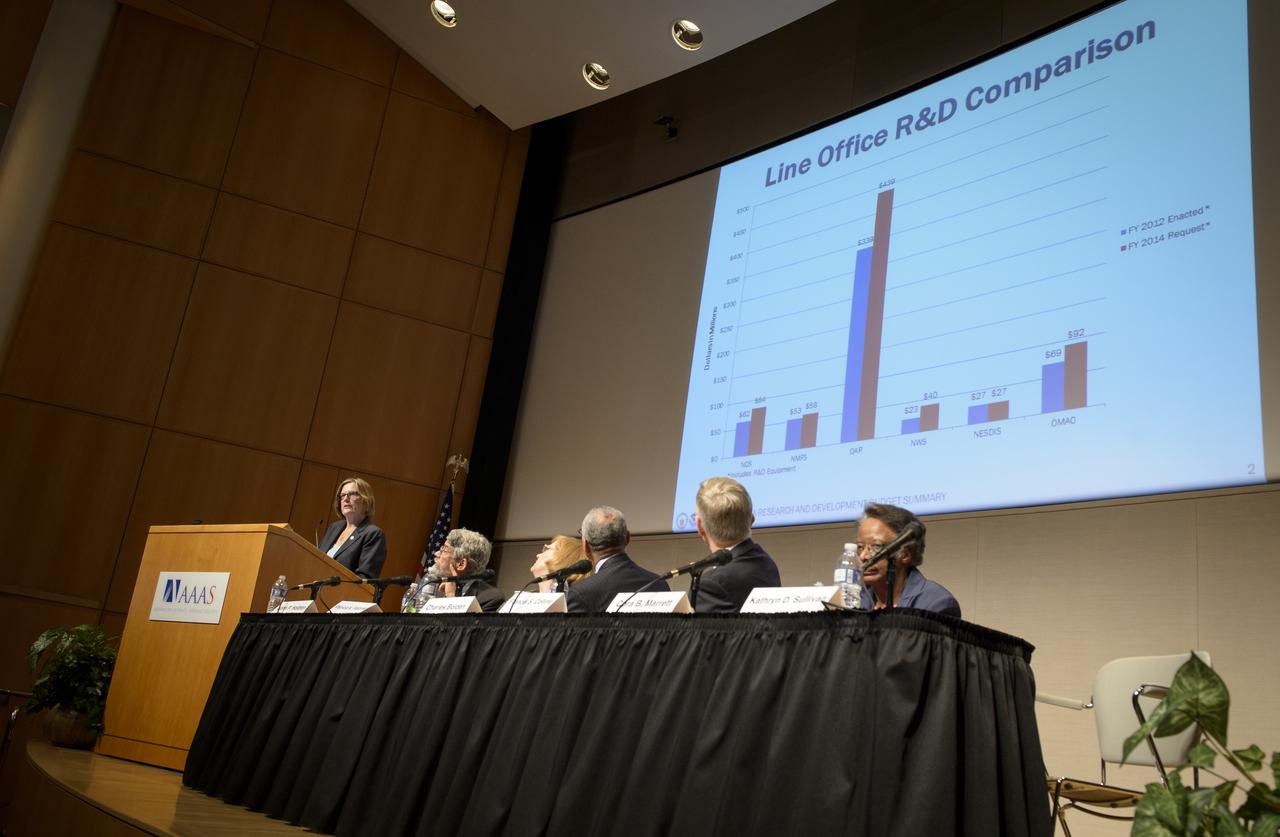
Dr. Kathryn D. Sullivan, Acting Under Secretary of Commerce for Oceans and Atmosphere and Acting NOAA Administrator, delivers remarks during a White House Office of Science and Technology Policy (OSTP) Fiscal Year 2014 budget briefing held with with Dr. John P. Holdren, Director of OSTP, Patricia Falcone of OSTP, Charlie Bolden from NASA, Francis Collins from NIH, and Cora Marrett from NSF, at the American Association for the Advancement of Science (AAAS) on Wednesday, April 10, 2013 in Washington. Photo Credit: (NASA/Bill Ingalls)

KENNEDY SPACE CENTER, FLA. - Patricia Slinger (left), a test engineer, and Monica Hagley, an avionics test engineer, look at a replacement orbiter point sensor chassis. Components are being tested to determine why one of the four liquid hydrogen tank low-level fuel cut-off sensors failed in a routine prelaunch check during the launch countdown July 13. The failure caused mission managers to scrub Discovery's first launch attempt. The sensor protects the Shuttle's main engines by triggering their shutdown in the event fuel runs unexpectedly low. The sensor is one of four inside the liquid hydrogen section of the External Tank (ET).
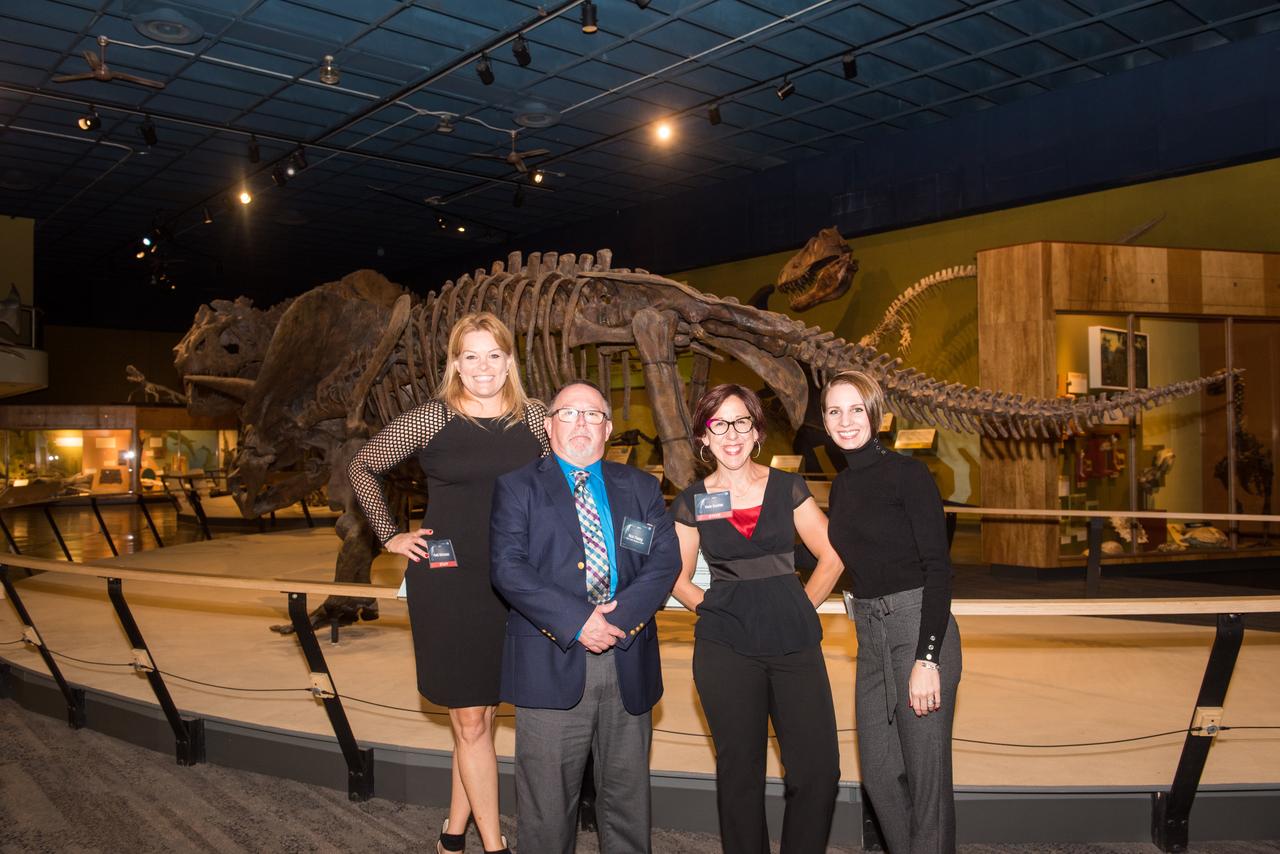
Evening With The Stars - 2019
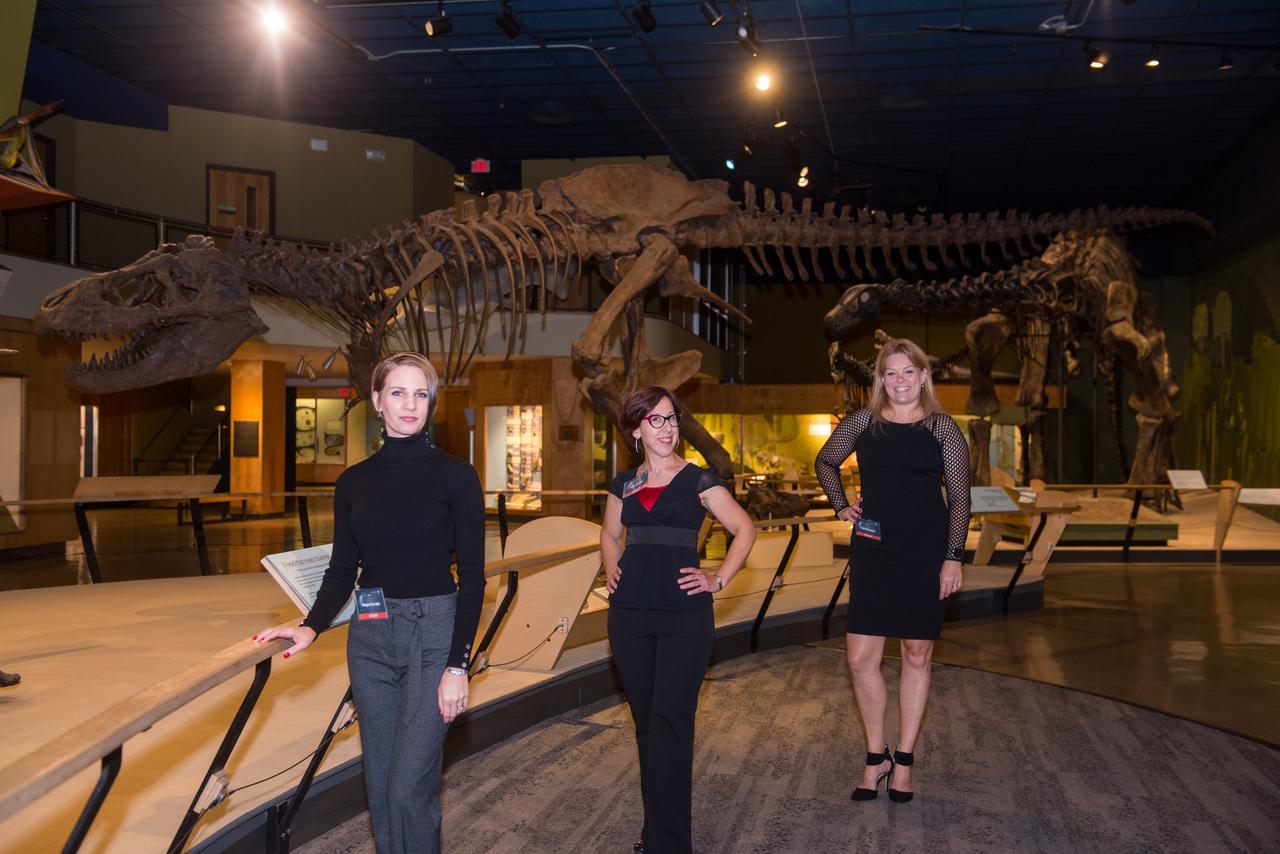
Evening With The Stars - 2019
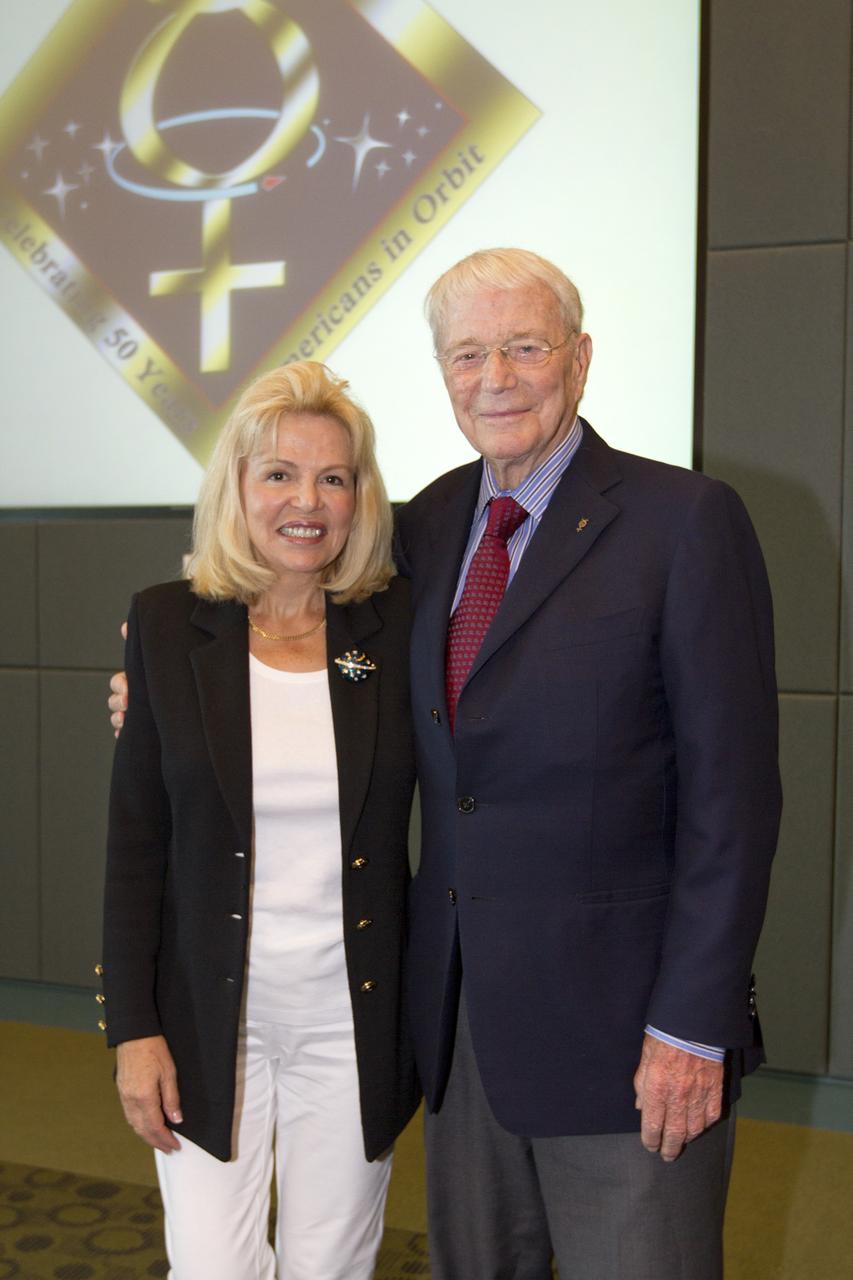
CAPE CANAVERAL, Fla. - Mercury astronaut Scott Carpenter and his wife, Patricia, pose during a luncheon Feb. 17, 2012, celebrating 50 years of Americans in orbit, an era which began with John Glenn's Mercury mission MA-6, on Feb. 20, 1962. Glenn's launch aboard an Atlas rocket took with it the hopes of an entire nation and ushered in a new era of space travel that eventually led to Americans walking on the moon by the end of the 1960s. Glenn soon was followed into orbit by Carpenter, Walter Schirra and Gordon Cooper. Their fellow Mercury astronauts Alan Shepard and Virgil "Gus" Grissom flew earlier suborbital flights. Deke Slayton, a member of NASA's original Mercury 7 astronauts, was grounded by a medical condition until the Apollo-Soyuz Test Project in 1975. Photo credit: NASA/Kim Shiflett
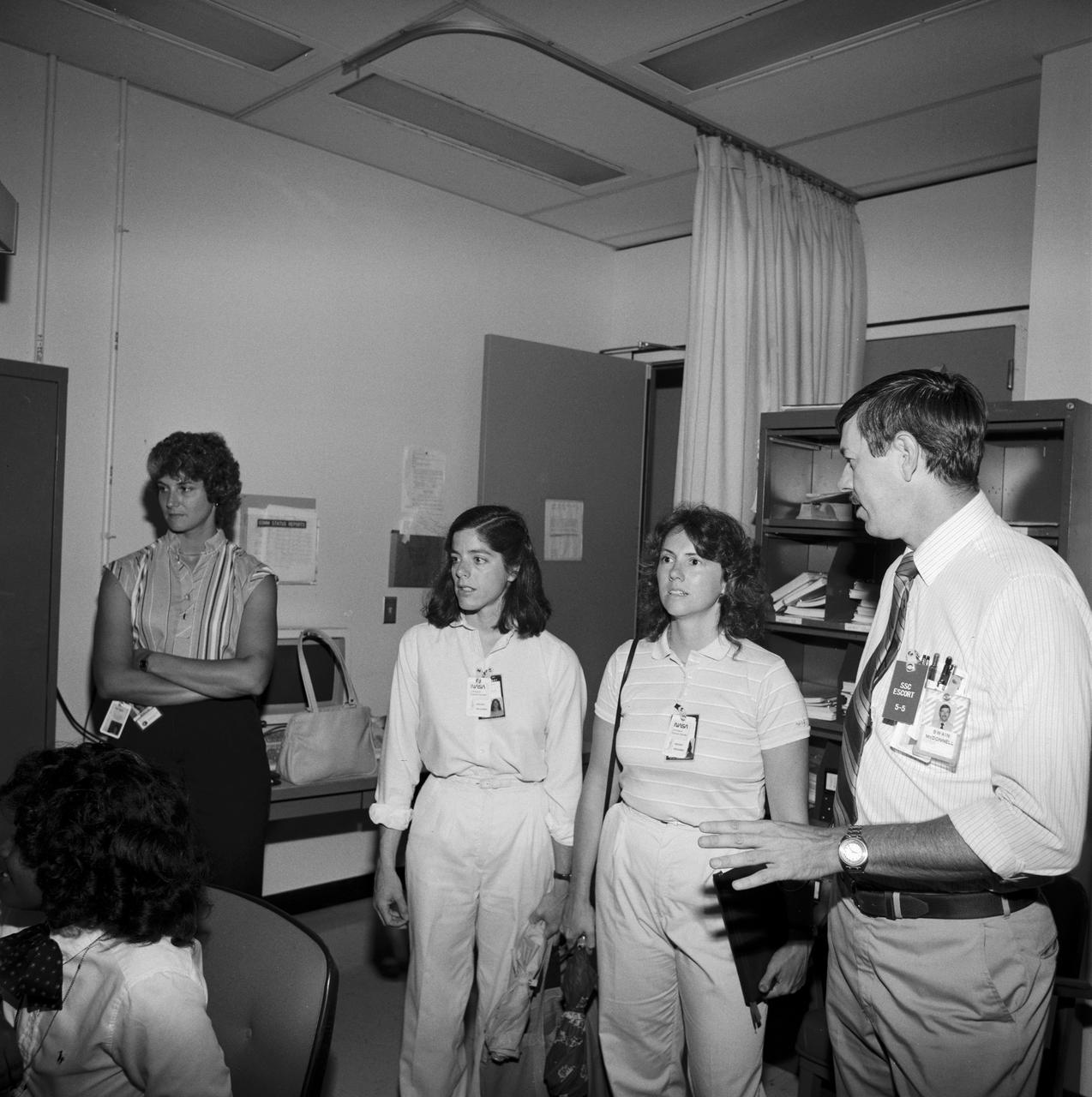
S85-40510 & S85-40511 (23 Sept. 1985) --- Two women representing the Teacher-in-Space Project undergo training in preparation for the 51-L mission in two photographs made in the Johnson Space Center’s mission simulation and training facility. In S85-40510, Sharon Christa McAuliffe (second right), prime crew member; and Barbara R. Morgan (second left), backup, are briefed in the shuttle mission simulator’s instruction station by Jerry Swain, right, instruction team leader. Others pictured are Michelle Brekke (far left) of the payload specialists’ office and Patricia A. Lawson (lower left foreground). Astronaut Ellison S. Onizuka, in S85-40511, assists Morgan with a head set as the two trainees are familiarized with launch and entry stations in the motion base shuttle mission simulator (SMS). The citizen observer (McAuliffe) is scheduled to be seated on the middeck. This picture, however, was taken at the mission specialists’ station on the flight deck. Photo credit: NASA
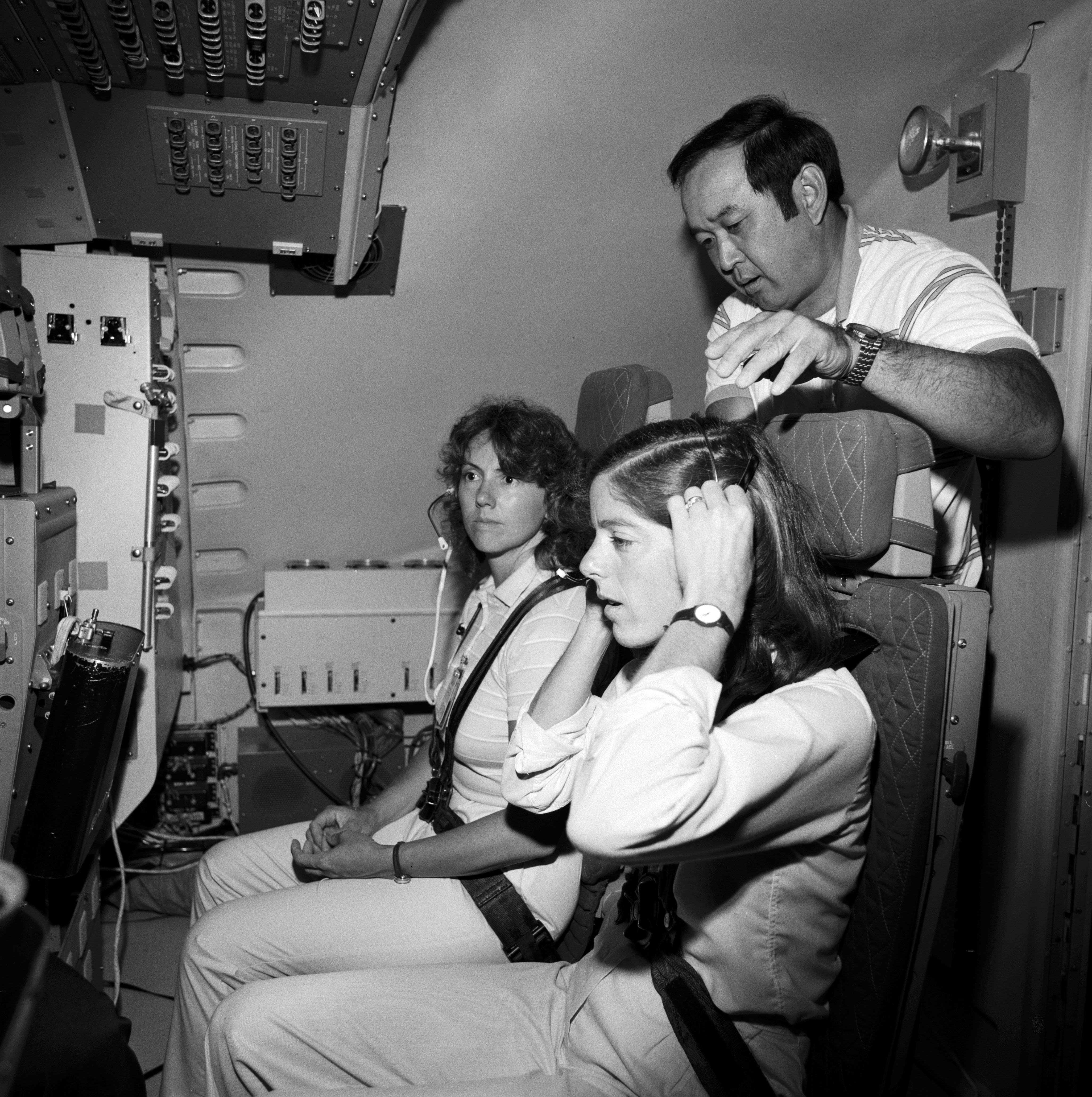
S85-40510 & S85-40511 (23 Sept. 1985) --- Two women representing the Teacher-in-Space Project undergo training in preparation for the 51-L mission in two photographs made in the Johnson Space Center’s mission simulation and training facility. In S85-40510, Sharon Christa McAuliffe (second right), prime crew member; and Barbara R. Morgan (second left), backup, are briefed in the shuttle mission simulator’s instruction station by Jerry Swain, right, instruction team leader. Others pictured are Michelle Brekke (far left) of the payload specialists’ office and Patricia A. Lawson (lower left foreground). Astronaut Ellison S. Onizuka, in S85-40511, assists Morgan with a head set as the two trainees are familiarized with launch and entry stations in the motion base shuttle mission simulator (SMS). The citizen observer (McAuliffe) is scheduled to be seated on the middeck. This picture, however, was taken at the mission specialists’ station on the flight deck. Photo credit: NASA
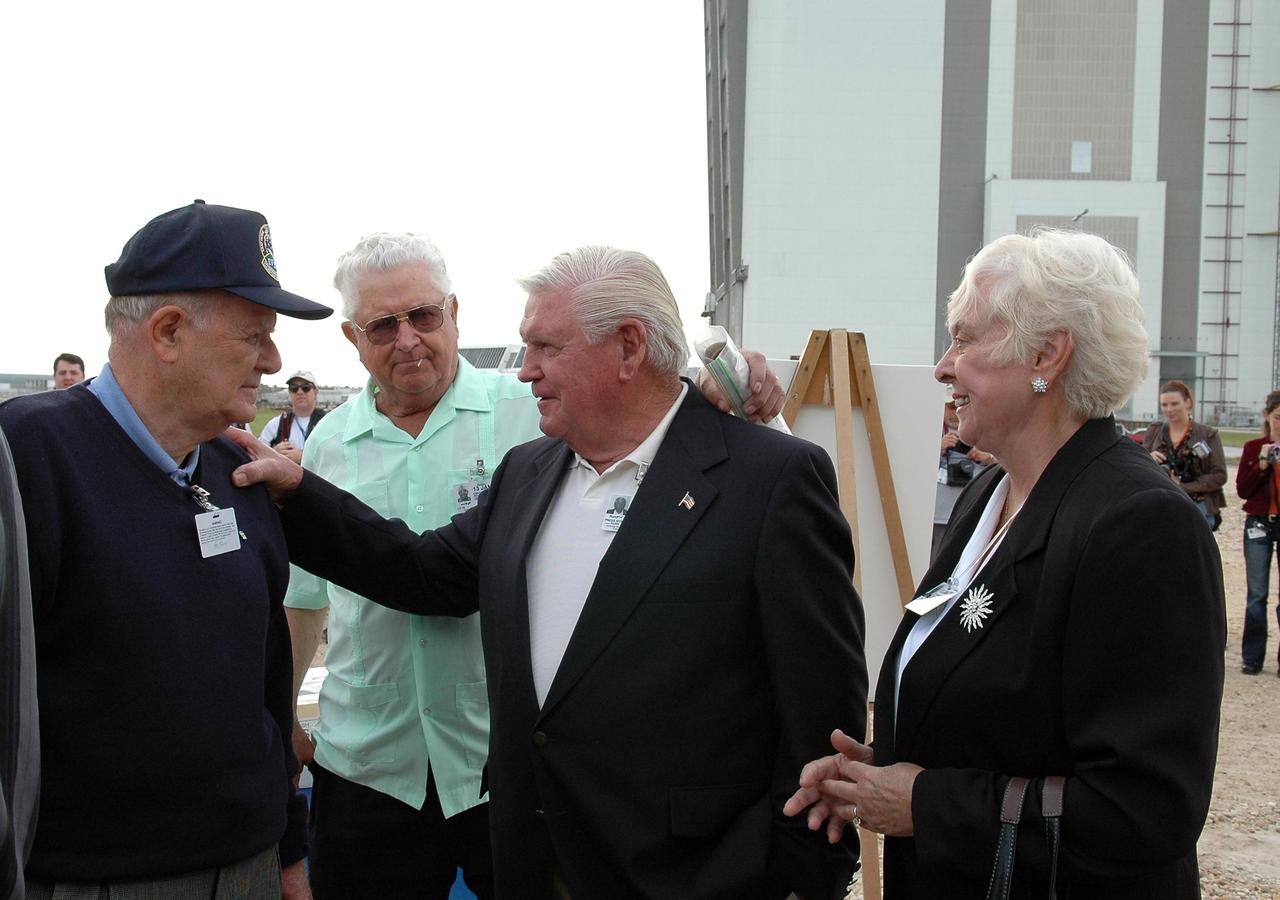
KENNEDY SPACE CENTER, FLA. - On the occasion of the 40th anniversary of the crawler transporter used for moving space shuttles to the NASA Kennedy Space Center’s launch pads, retired crawler workers meet for the celebration. At left is Bill Clemens talking with Fred Renaud and his wife, Patricia. Media representatives and invited guests had the opportunity to tour one of NASA's two crawlers. This included the driver cab and engine room. Guests included current drivers and operators, as well as drivers from the Apollo Program. In January 1966, the crawler completed its first successful move with a 10.6-million-pound launch umbilical tower. It moved three-quarters of a mile in about nine hours. Throughout 40 years of service, the two crawlers have moved more than 3,500 miles and carried seven vehicles.
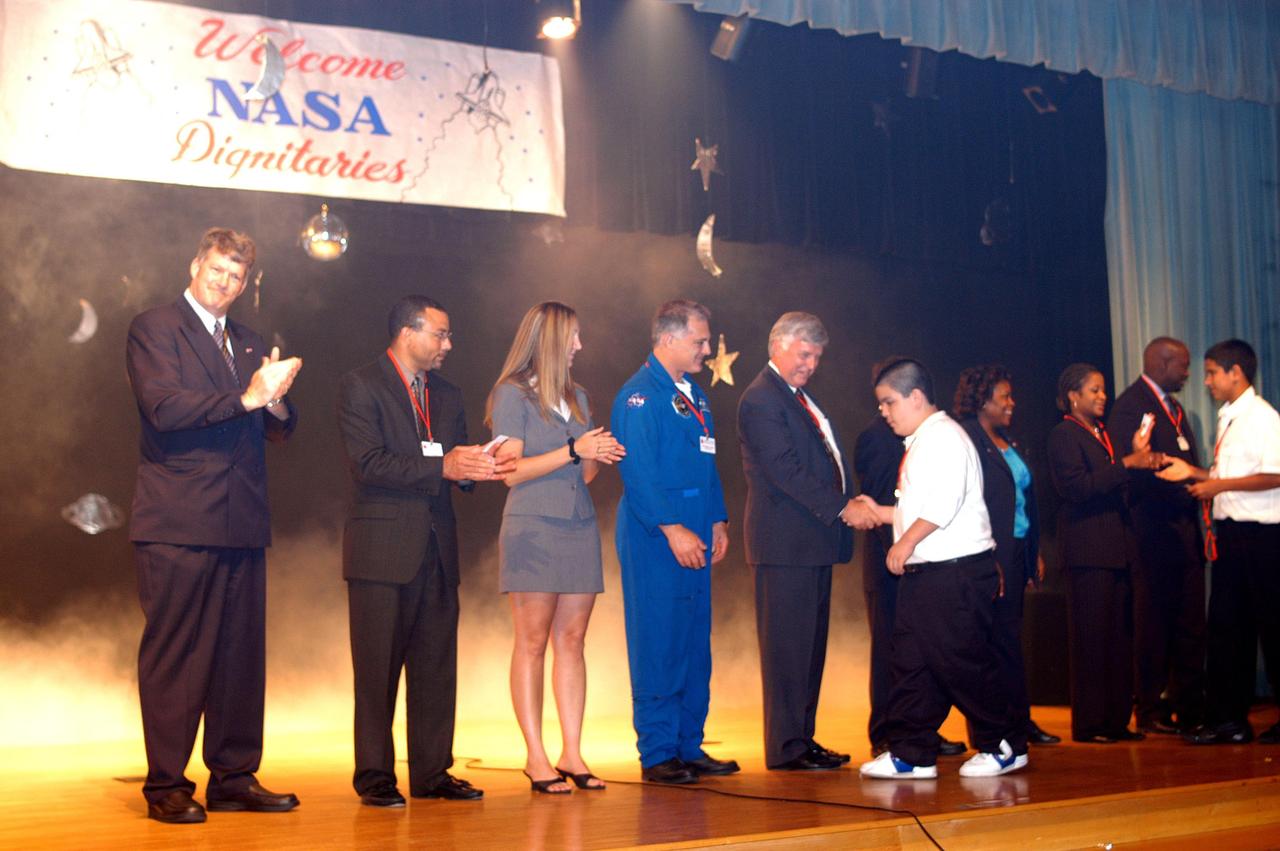
KENNEDY SPACE CENTER, FLA. -- During a visit to Howard A. Doolin Middle School, Miami, Fla., Center Director Jim Kennedy (shaking hands, center) and other NASA and KSC representatives are greeted by students on stage. With Kennedy on stage are (left to right), Jim Gerard, Aerospace Education Services Program (AESP) representative; Steve Lewis, assistant to Kennedy; Amber Marek, with KSC External Relations; David Wolf, astronaut; Kennedy; Les Gold, AESP representative; Burdette Brown; and Patricia Leonard and Clarence Bostic, Education Programs and University Research Division. Doolin Middle School is one of 100 to take part in the NASA Explorer Schools program. Kennedy is talking with students, the next generation of explorers, about our destiny as explorers, NASA’s stepping stone approach to exploring Earth, the Moon, Mars and beyond, how space impacts our lives, and how people and machines rely on each other in space.
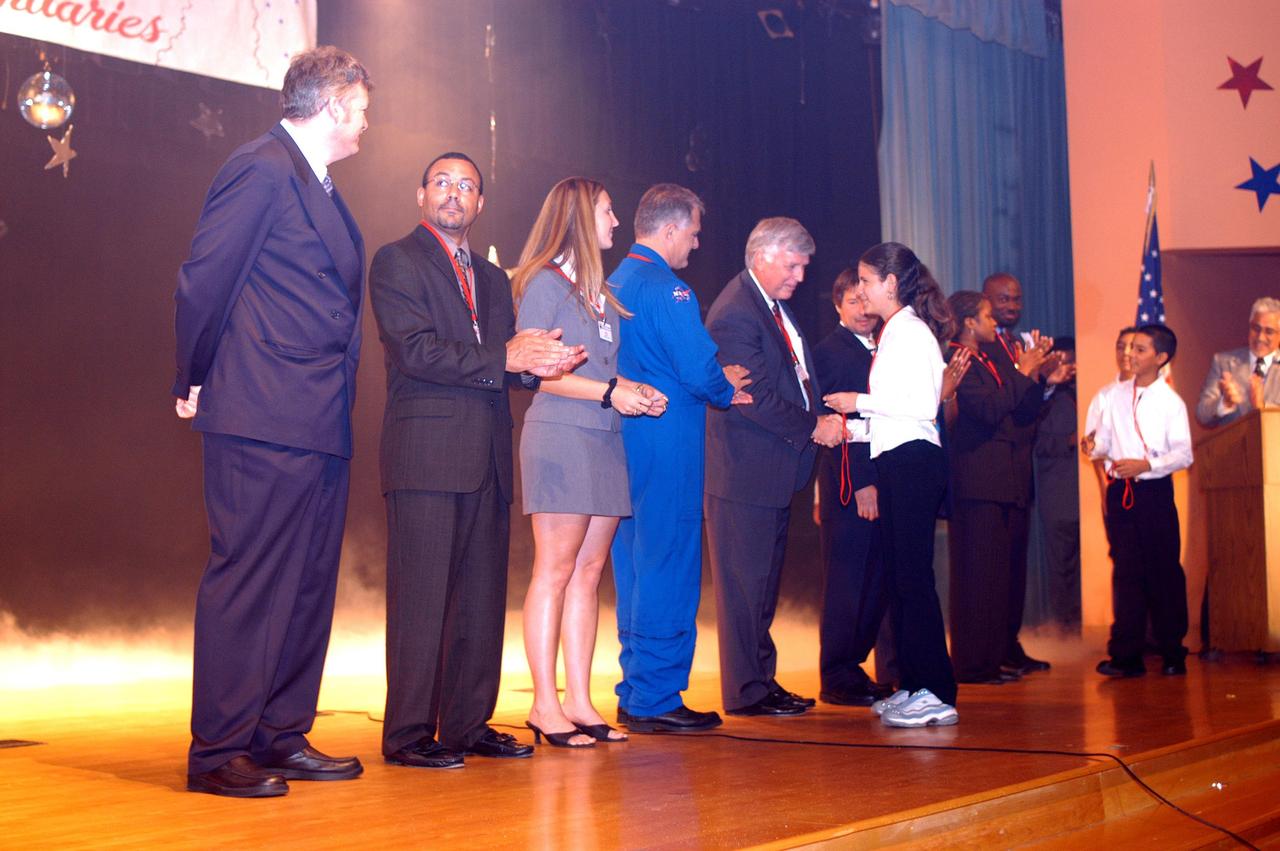
KENNEDY SPACE CENTER, FLA. -- During a visit to Howard A. Doolin Middle School, Miami, Fla., Center Director Jim Kennedy and other NASA and KSC representatives are greeted by students on stage. From left to right are Jim Gerard, Aerospace Education Services Program representative; Steve Lewis, assistant to Kennedy; Amber Marek, with KSC External Relations; David Wolf, astronaut; Kennedy; Les Gold, AESP representative; Burdette Brown; and Patricia Leonard and Clarence Bostic, Education Programs and University Research Division. Doolin Middle School is one of 100 to take part in the NASA Explorer Schools program. Kennedy is talking with students, the next generation of explorers, about our destiny as explorers, NASA’s stepping stone approach to exploring Earth, the Moon, Mars and beyond, how space impacts our lives, and how people and machines rely on each other in space.
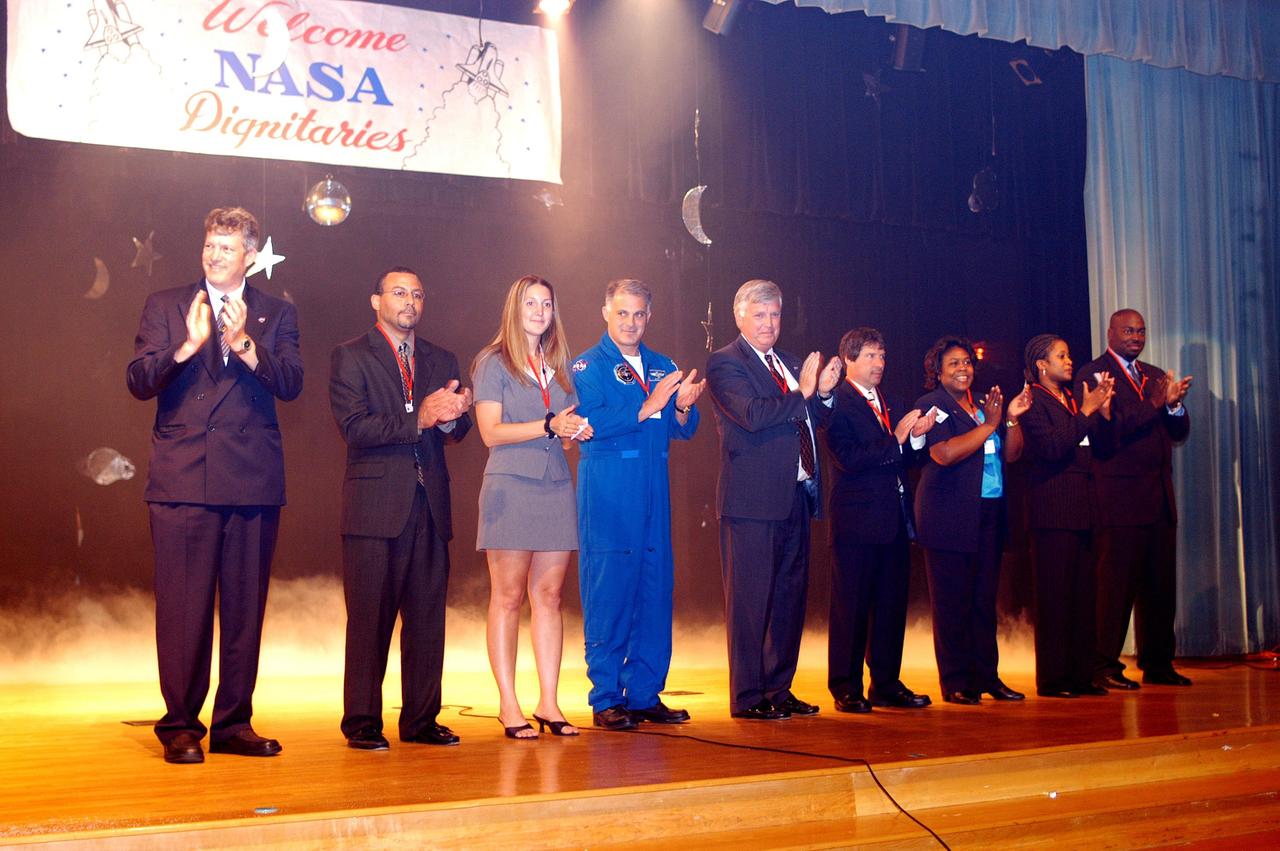
KENNEDY SPACE CENTER, FLA. -- During a visit to Howard A. Doolin Middle School, Miami, Fla., Center Director Jim Kennedy and other NASA and KSC representatives applaud faculty and students from the stage. From left to right are Jim Gerard, Aerospace Education Services Program (AESP) representative; Steve Lewis, assistant to Kennedy; Amber Marek, with KSC External Relations; David Wolf, astronaut; Kennedy; Les Gold, AESP representative; Burdette Brown; and Patricia Leonard and Clarence Bostic, Education Programs and University Research Division. Doolin Middle School is one of 100 to take part in the NASA Explorer Schools program. Kennedy is talking with students, the next generation of explorers, about our destiny as explorers, NASA’s stepping stone approach to exploring Earth, the Moon, Mars and beyond, how space impacts our lives, and how people and machines rely on each other in space.
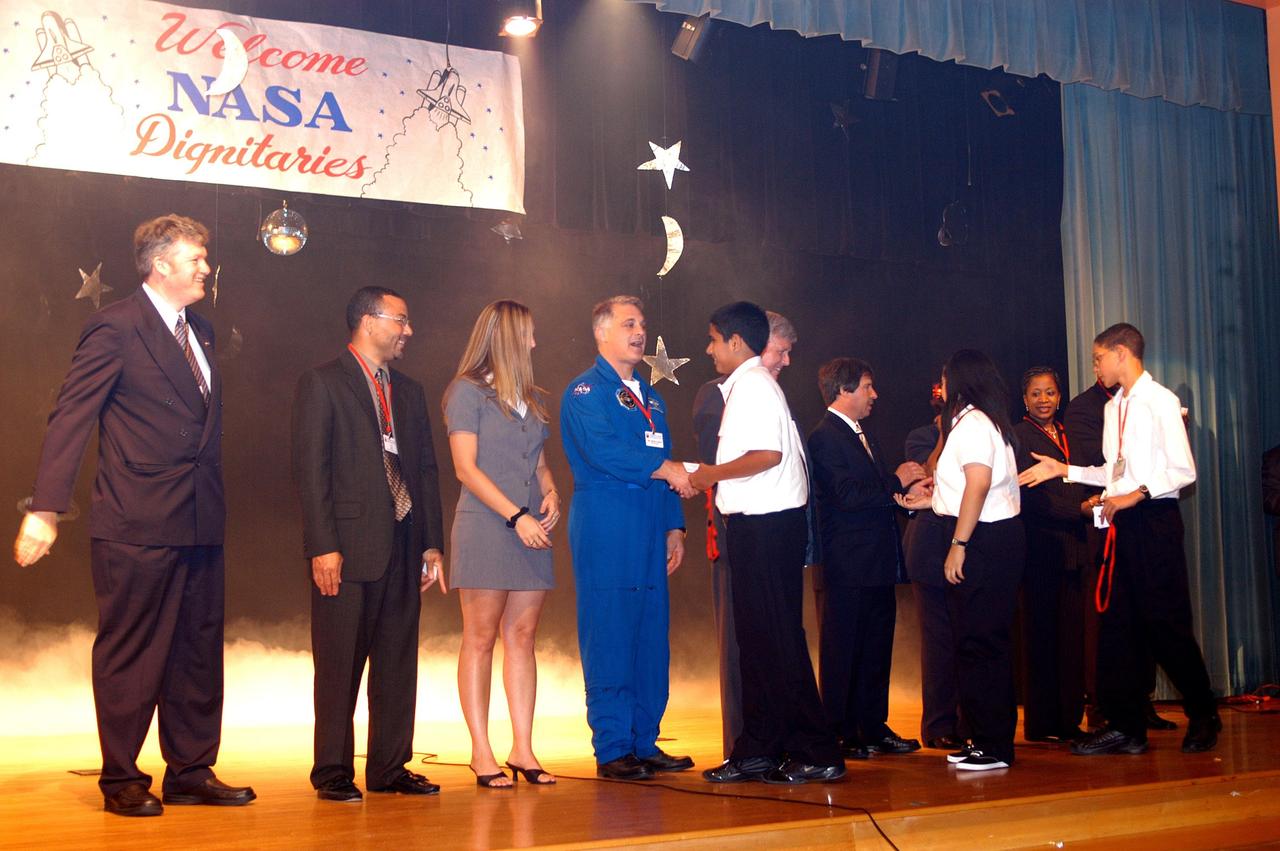
KENNEDY SPACE CENTER, FLA. -- During a visit to Howard A. Doolin Middle School, Miami, Fla., Center Director Jim Kennedy and other NASA and KSC representatives are greeted by students on stage. From left to right, are Jim Gerard, Aerospace Education Services Program (AESP) representative; Steve Lewis, assistant to Kennedy; Amber Marek, with KSC External Relations; David Wolf, astronaut; Kennedy; Les Gold, AESP representative; Burdette Brown; and Patricia Leonard and Clarence Bostic, Education Programs and University Research Division. Doolin Middle School is one of 100 to take part in the NASA Explorer Schools program. Kennedy is talking with students, the next generation of explorers, about our destiny as explorers, NASA’s stepping stone approach to exploring Earth, the Moon, Mars and beyond, how space impacts our lives, and how people and machines rely on each other in space.
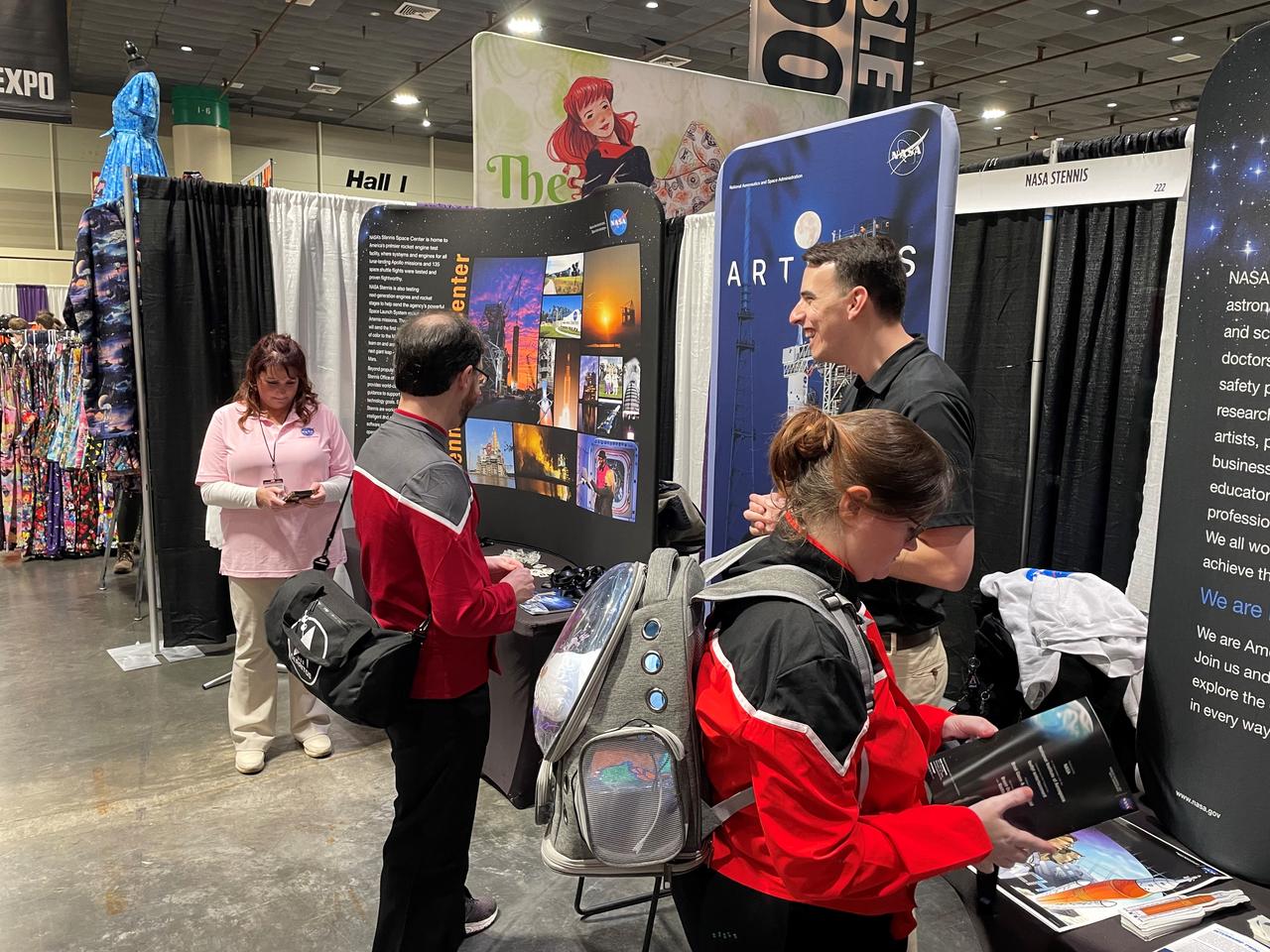
NASA reached out to inspire members of the Artemis Generation on Jan. 10-12, joining one of the largest comic con producers in the world to host an outreach booth at the 2025 FAN EXPO in New Orleans. Thousands of fans celebrating the best in pop culture such as movies, comics, and video gaming learned about NASA’s Stennis Space Center near Bay St. Louis, Mississippi, and its role to power space dreams.
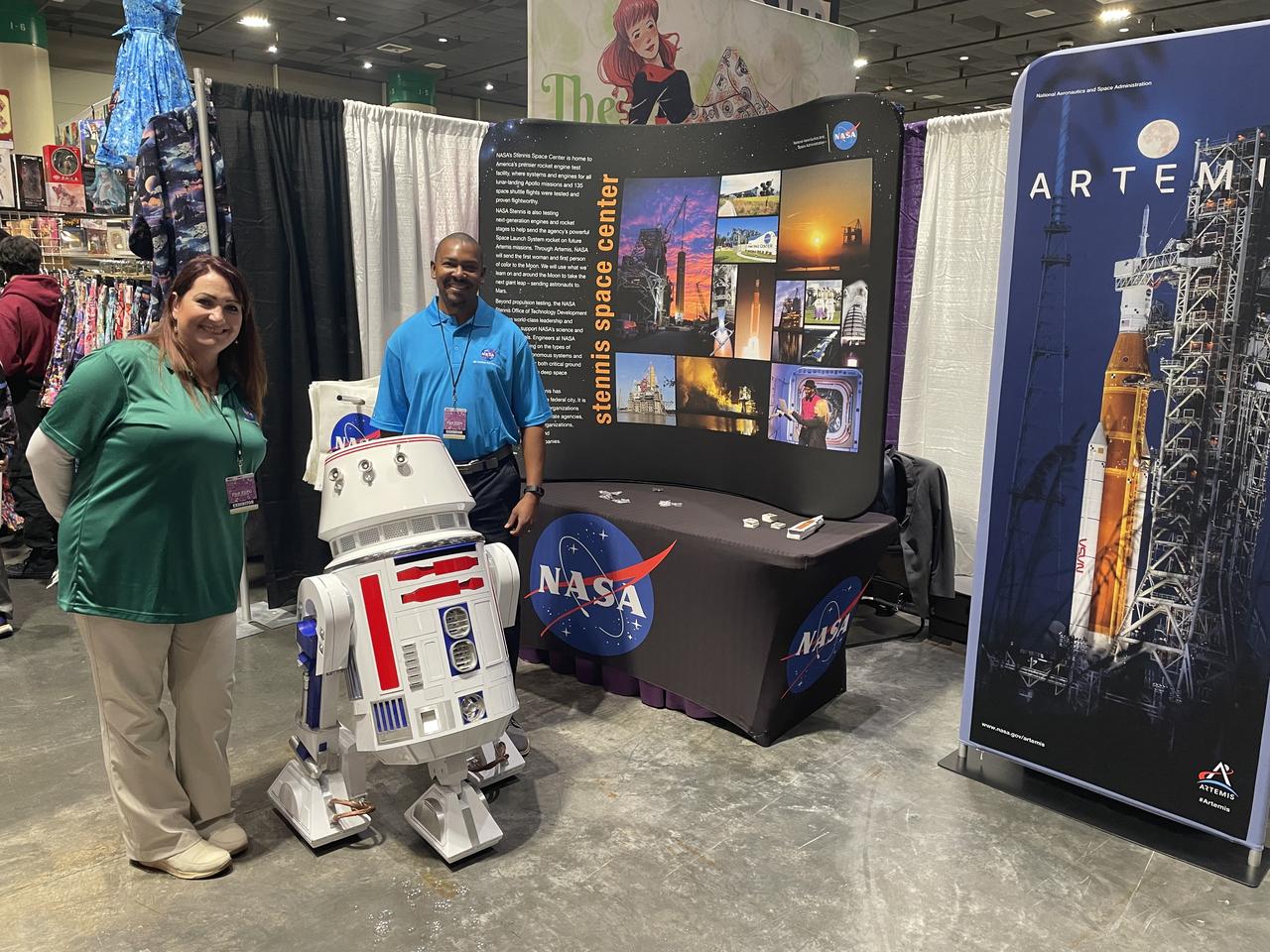
NASA reached out to inspire members of the Artemis Generation on Jan. 10-12, joining one of the largest comic con producers in the world to host an outreach booth at the 2025 FAN EXPO in New Orleans. Thousands of fans celebrating the best in pop culture such as movies, comics, and video gaming learned about NASA’s Stennis Space Center near Bay St. Louis, Mississippi, and its role to power space dreams.
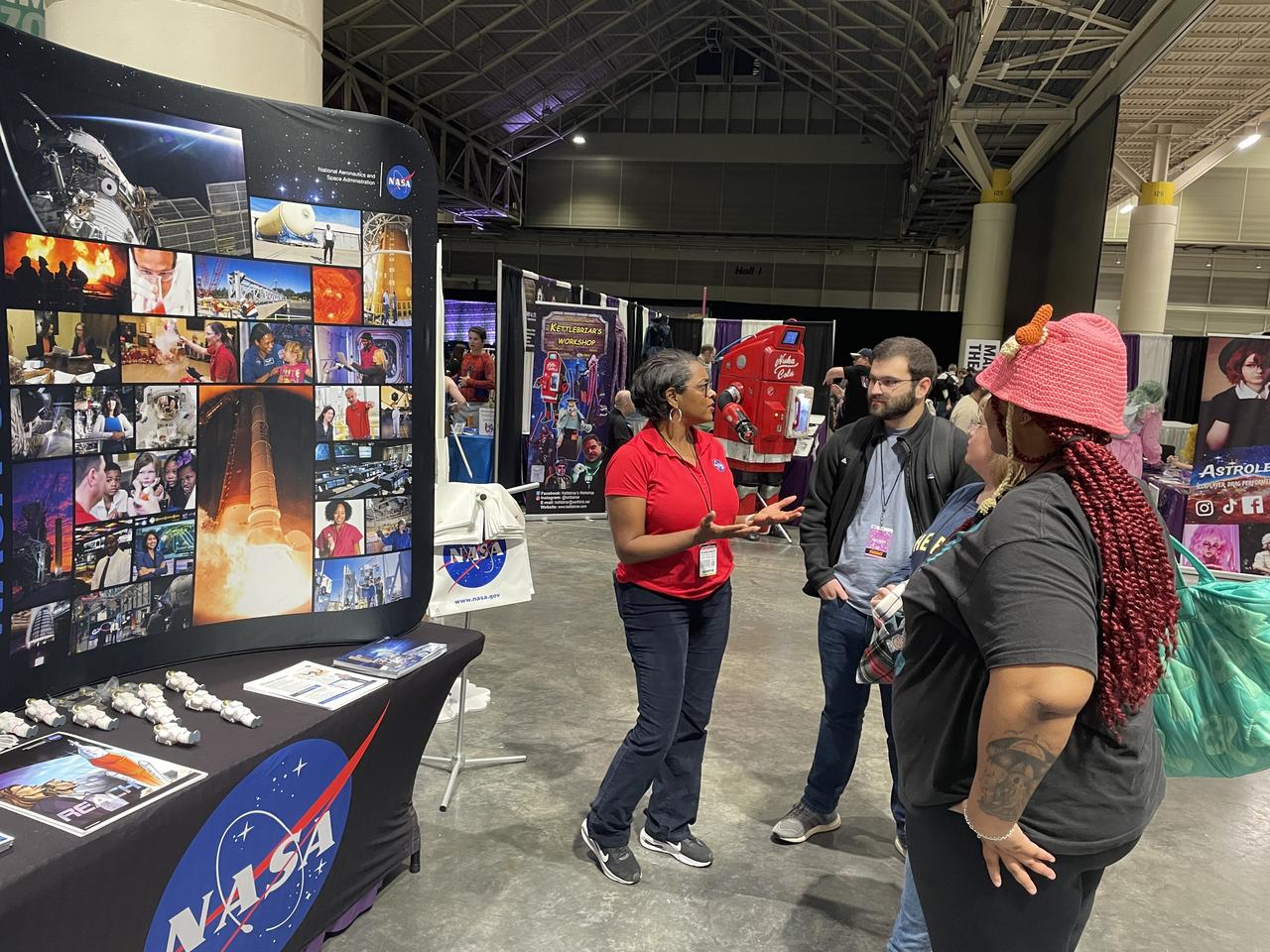
NASA reached out to inspire members of the Artemis Generation on Jan. 10-12, joining one of the largest comic con producers in the world to host an outreach booth at the 2025 FAN EXPO in New Orleans. Thousands of fans celebrating the best in pop culture such as movies, comics, and video gaming learned about NASA’s Stennis Space Center near Bay St. Louis, Mississippi, and its role to power space dreams.
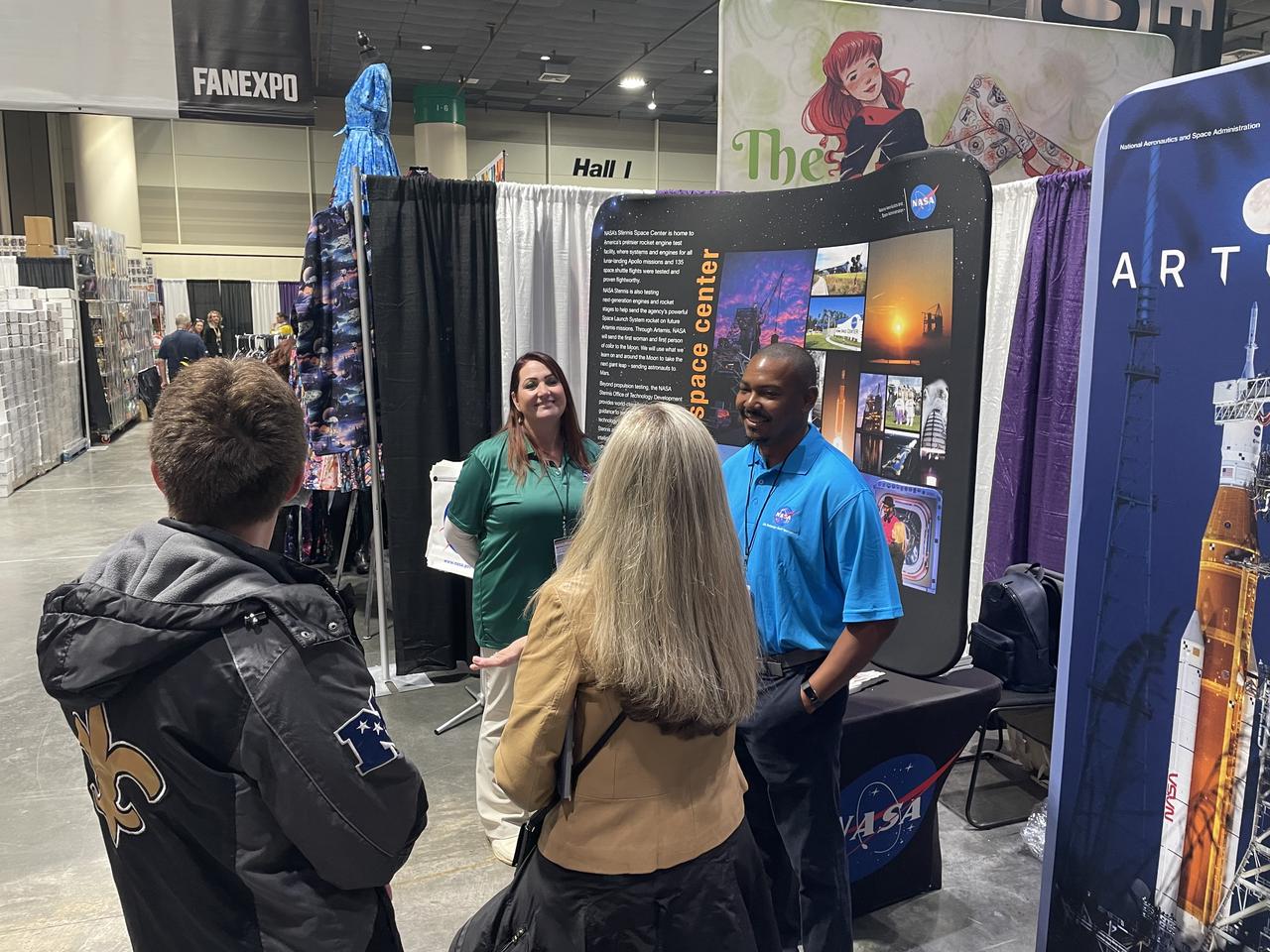
NASA reached out to inspire members of the Artemis Generation on Jan. 10-12, joining one of the largest comic con producers in the world to host an outreach booth at the 2025 FAN EXPO in New Orleans. Thousands of fans celebrating the best in pop culture such as movies, comics, and video gaming learned about NASA’s Stennis Space Center near Bay St. Louis, Mississippi, and its role to power space dreams.
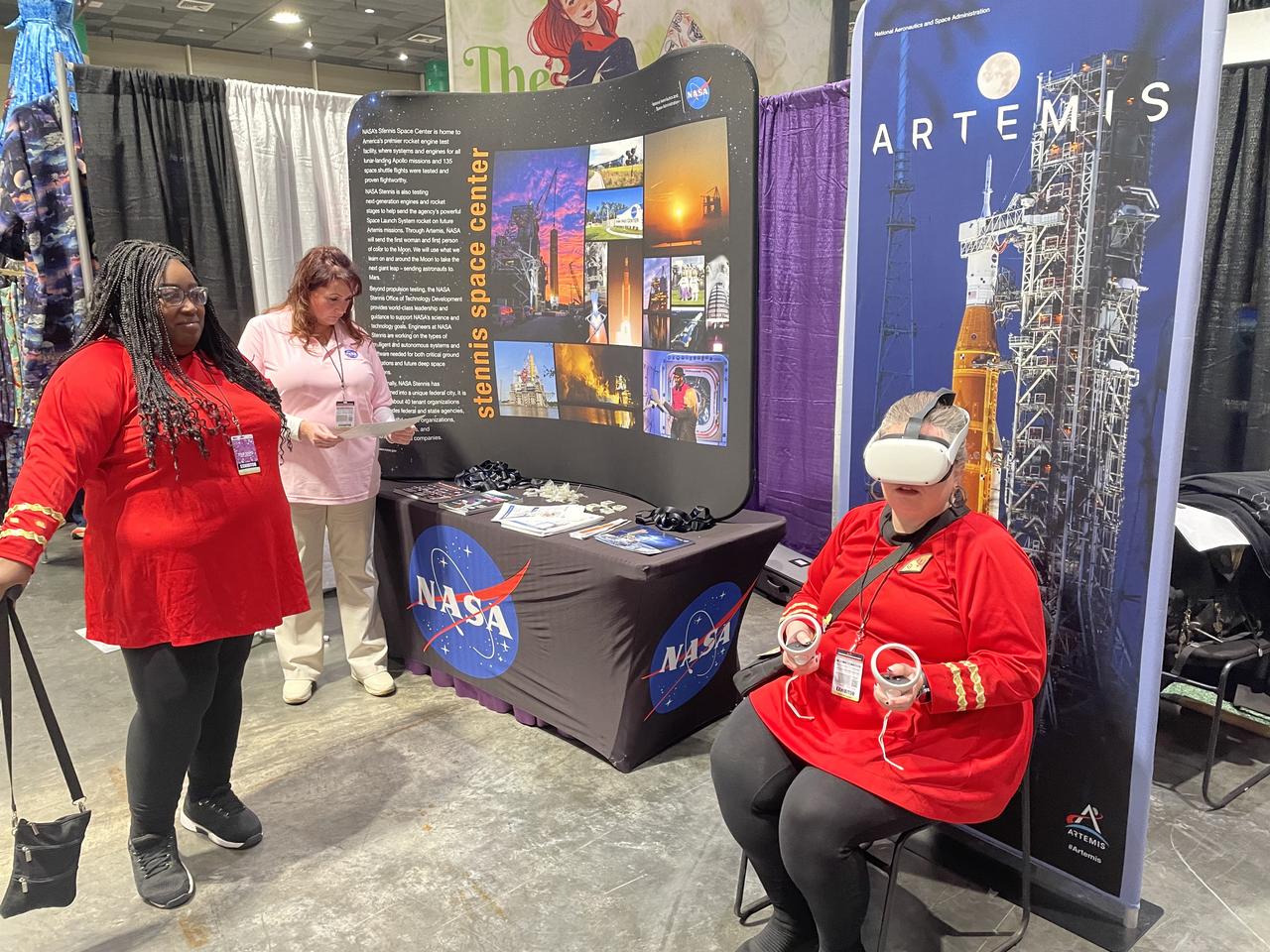
NASA reached out to inspire members of the Artemis Generation on Jan. 10-12, joining one of the largest comic con producers in the world to host an outreach booth at the 2025 FAN EXPO in New Orleans. Thousands of fans celebrating the best in pop culture such as movies, comics, and video gaming learned about NASA’s Stennis Space Center near Bay St. Louis, Mississippi, and its role to power space dreams.
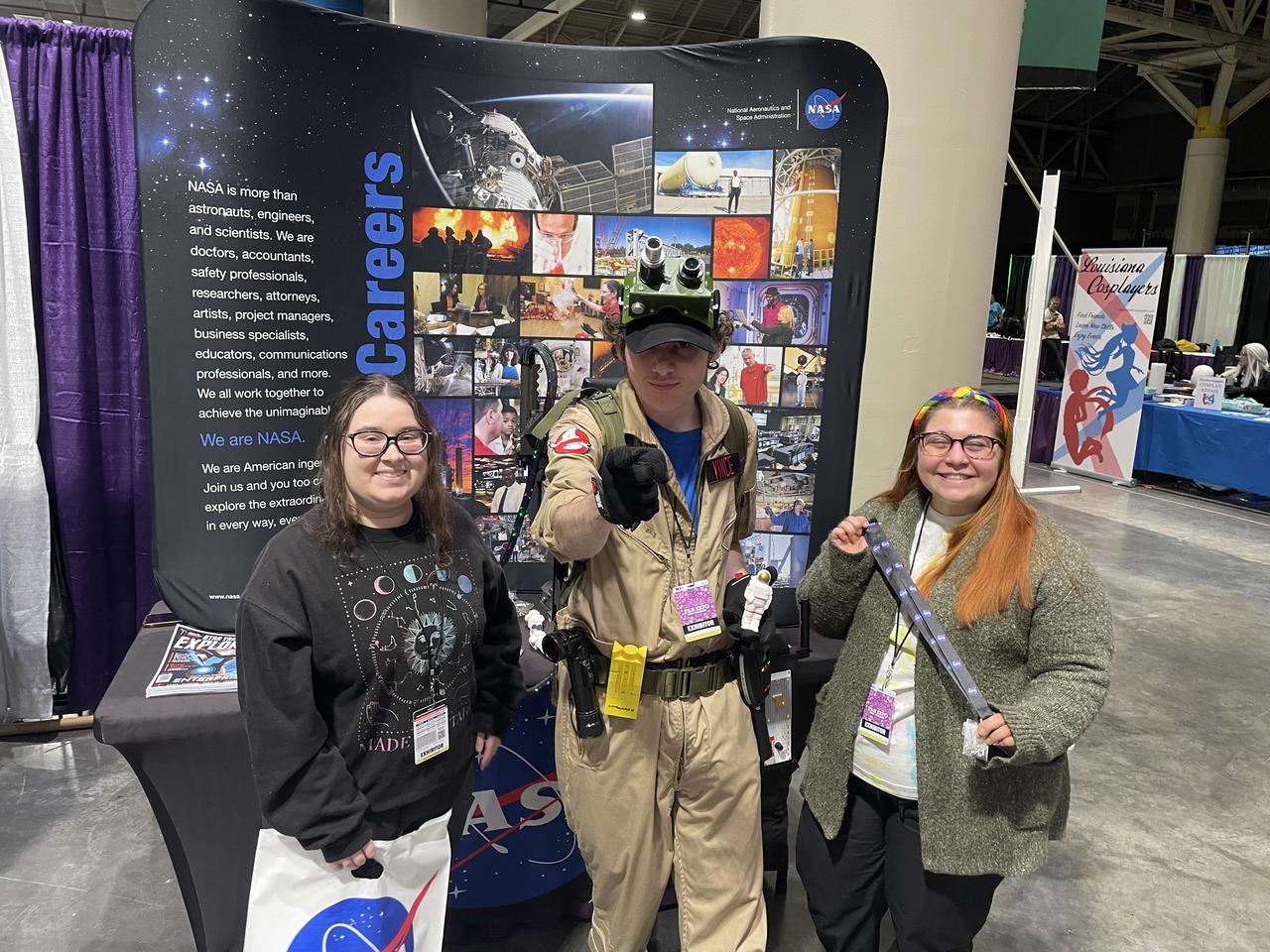
NASA reached out to inspire members of the Artemis Generation on Jan. 10-12, joining one of the largest comic con producers in the world to host an outreach booth at the 2025 FAN EXPO in New Orleans. Thousands of fans celebrating the best in pop culture such as movies, comics, and video gaming learned about NASA’s Stennis Space Center near Bay St. Louis, Mississippi, and its role to power space dreams.
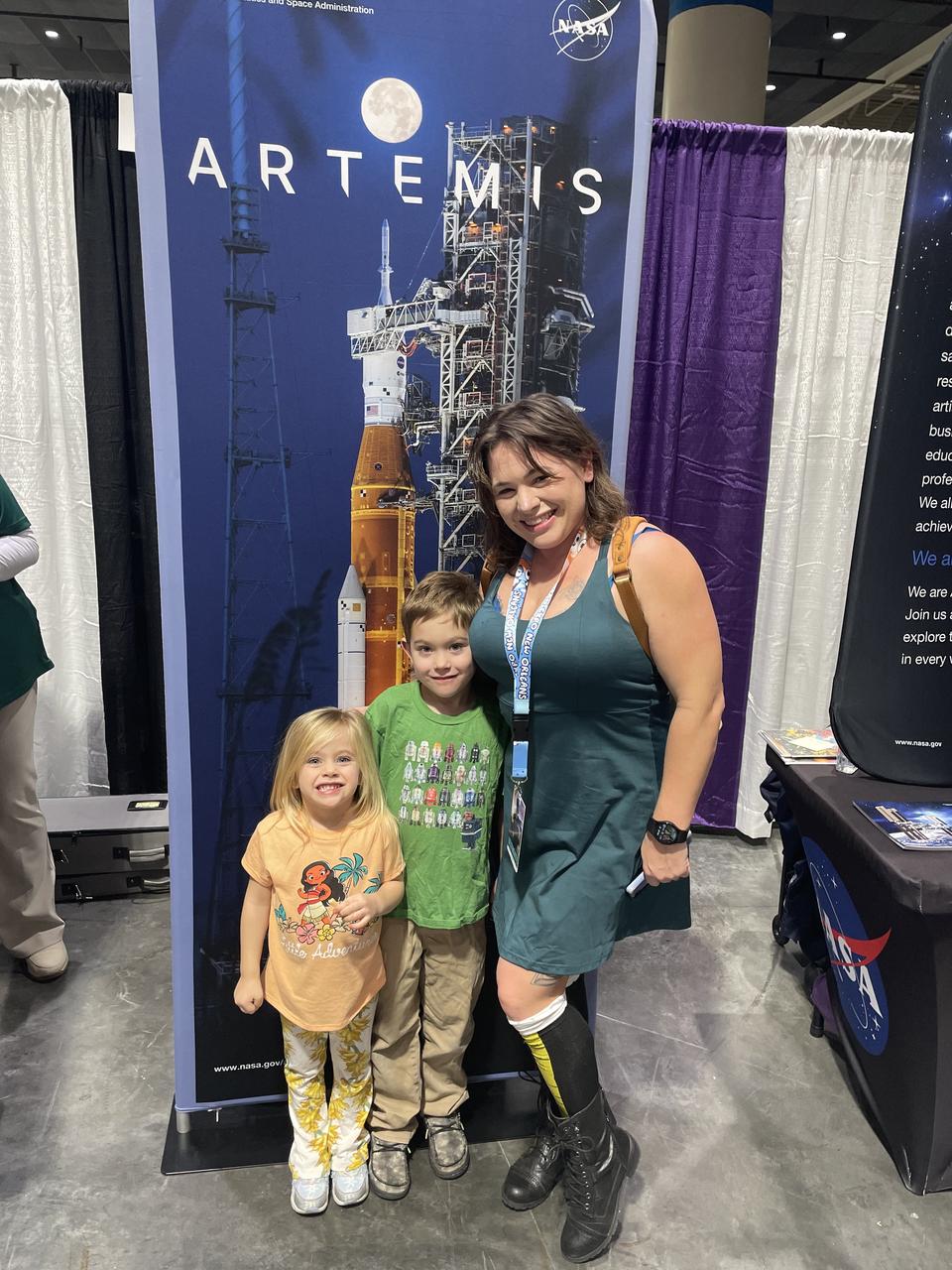
NASA reached out to inspire members of the Artemis Generation on Jan. 10-12, joining one of the largest comic con producers in the world to host an outreach booth at the 2025 FAN EXPO in New Orleans. Thousands of fans celebrating the best in pop culture such as movies, comics, and video gaming learned about NASA’s Stennis Space Center near Bay St. Louis, Mississippi, and its role to power space dreams.
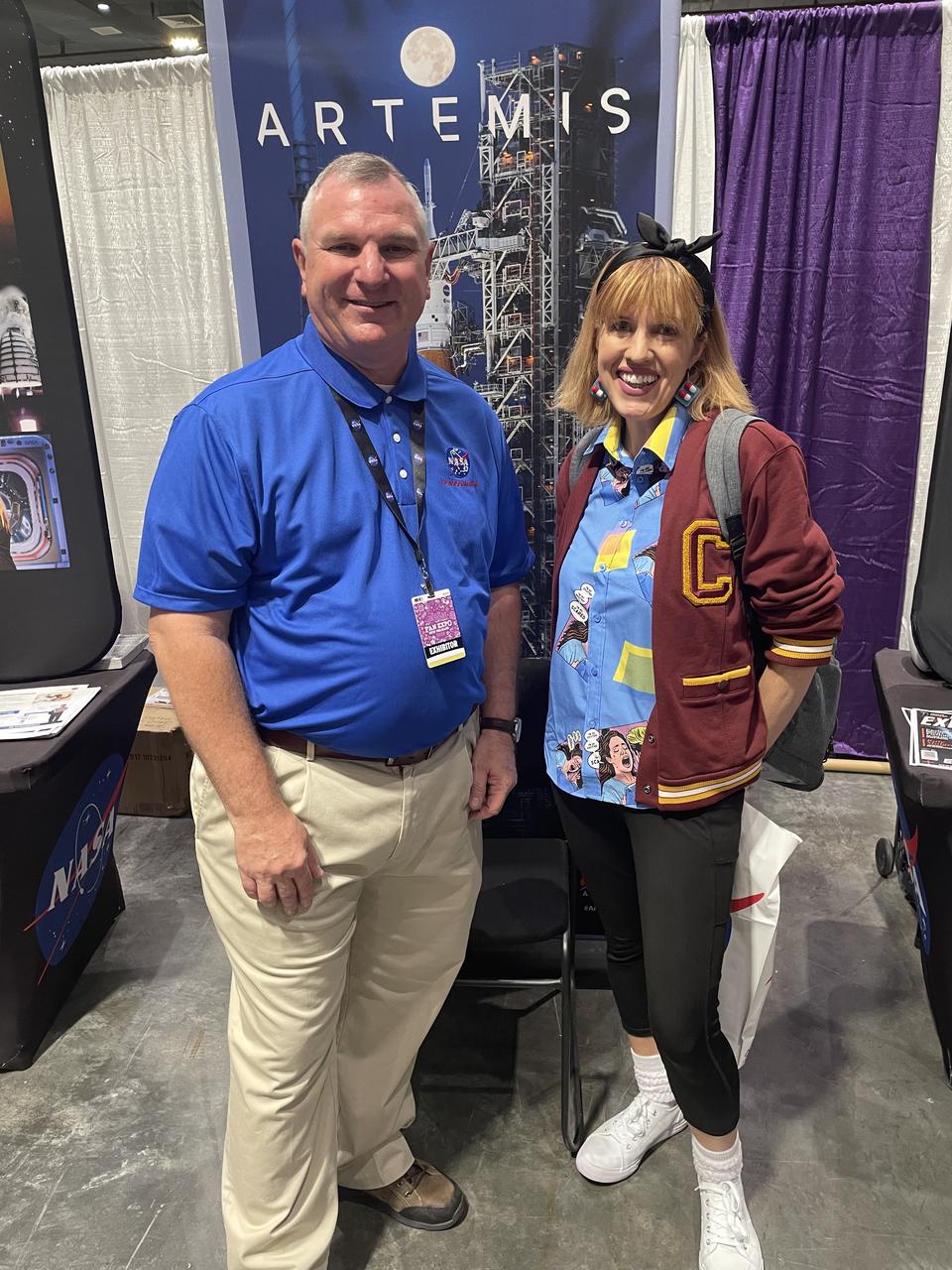
NASA reached out to inspire members of the Artemis Generation on Jan. 10-12, joining one of the largest comic con producers in the world to host an outreach booth at the 2025 FAN EXPO in New Orleans. Thousands of fans celebrating the best in pop culture such as movies, comics, and video gaming learned about NASA’s Stennis Space Center near Bay St. Louis, Mississippi, and its role to power space dreams.
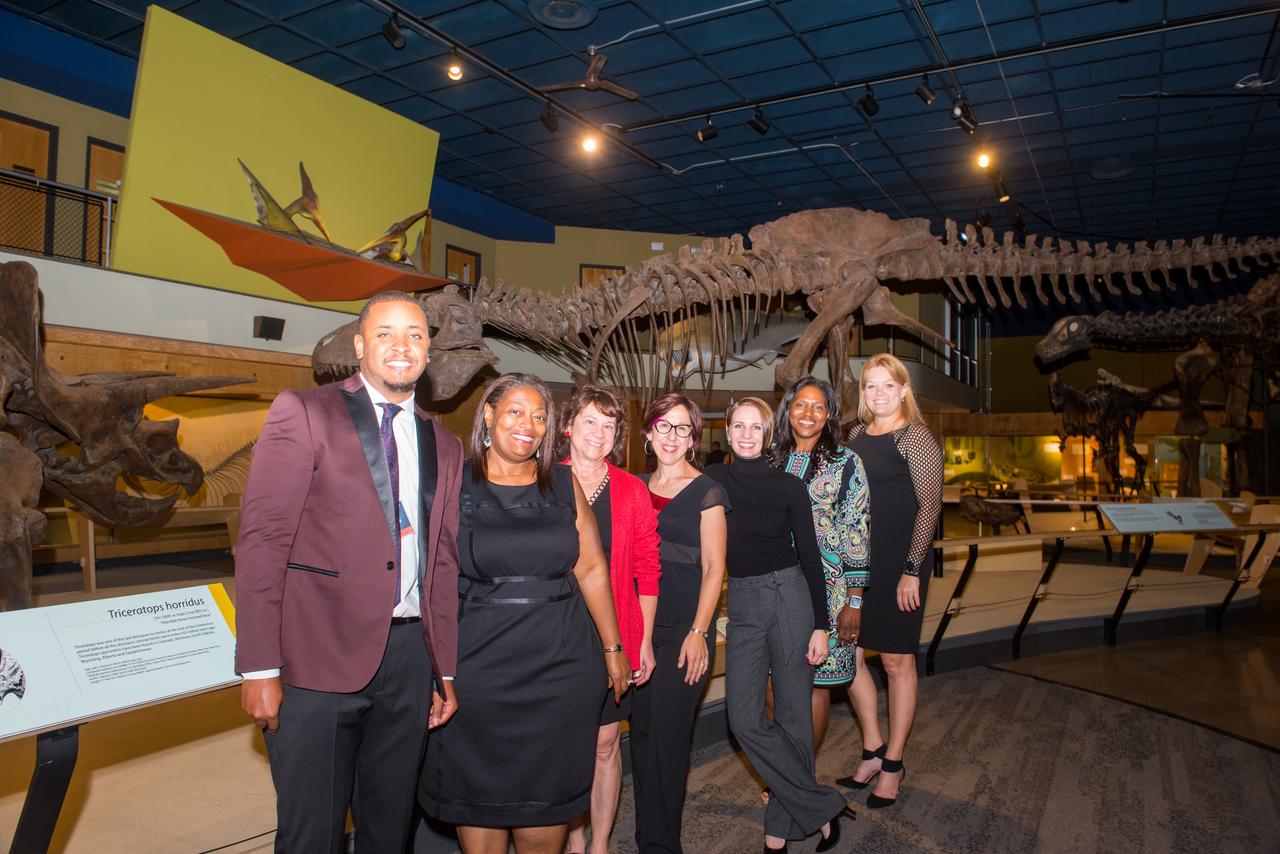
Evening With The Stars - 2019
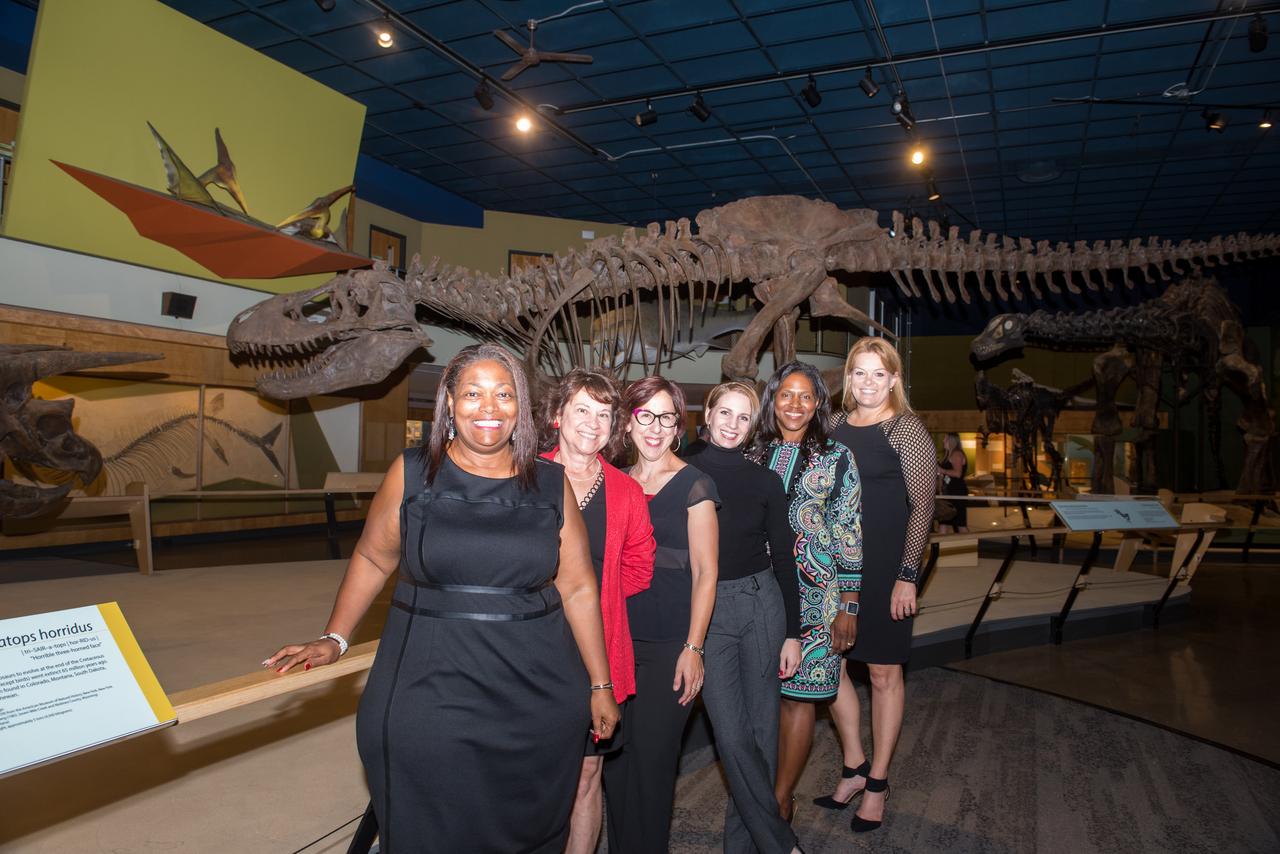
Evening With The Stars - 2019
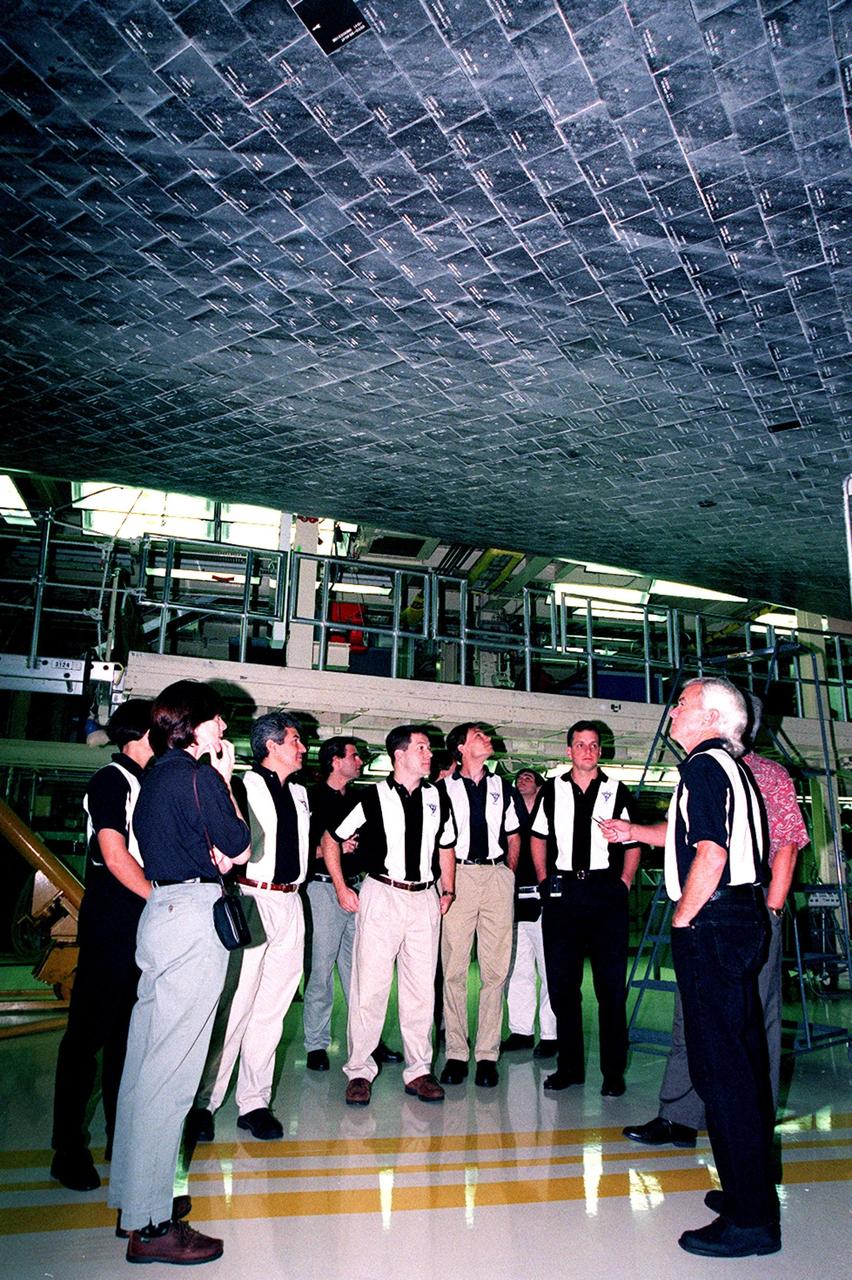
In the Orbiter Processing Facility bay 3, members of the 1998 astronaut candidate class (group 17) get a close-up view of the tiles, part of the thermal protection system, on the underside of the orbiter Atlantis overhead. The class is at KSC for training activities, including fire training and a flight awareness program, plus touring the OPF, SSME Processing Facility, VAB, SSPF, launch pads, SLF, Apollo/Saturn V Center and the crew headquarters. The U.S. candidates in the '98 class are Clayton C. Anderson, Lee J. Archambault, Tracy E. Caldwell (Ph.D.), Gregory E. Chamitoff (Ph.D.), Timothy J. Creamer, Christopher J. Ferguson, Michael J. Foreman, Michael E. Fossum, Kenneth T. Ham, Patricia C. Hilliard (M.D.), Gregory C. Johnson, Gregory H. Johnson, Stanley G. Love (Ph.D.), Leland D. Melvin, Barbara R. Morgan, William A. Oefelein, John D. Olivas (Ph.D.), Nicholas J.M. Patrick (Ph.D.), Alan G. Poindexter, Garrett E. Reisman (Ph.D.), Steven R. Swanson, Douglas H. Wheelock, Sunita L. Williams, Neil W. Woodward III, George D. Zamka; and the international candidates are Leopold Eyharts, Paolo Nespoli, Hans Schlegel, Roberto Vittori, Bjarni V. Tryggvason, and Marcos Pontes
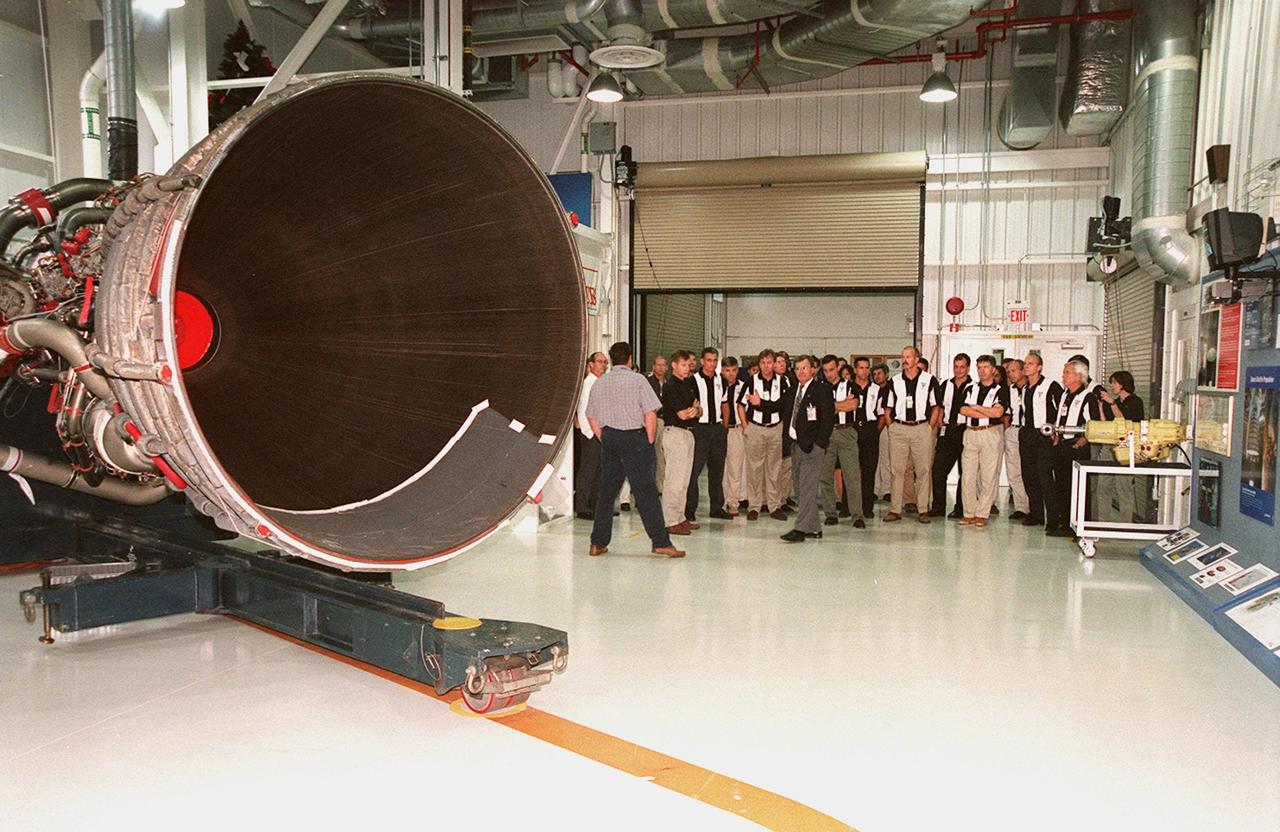
The 1998 astronaut candidate class (group 17) gather in the Space Shuttle Main Engine Processing (SSMEP) Facility. In the foreground is one of the main shuttle engines. The class is at KSC for training activities, including fire training and a flight awareness program, plus touring the OPF, SSME Processing Facility, VAB, SSPF, launch pads, SLF, Apollo/Saturn V Center and the crew headquarters. The U.S. candidates in the '98 class are Clayton C. Anderson, Lee J. Archambault, Tracy E. Caldwell (Ph.D.), Gregory E. Chamitoff (Ph.D.), Timothy J. Creamer, Christopher J. Ferguson, Michael J. Foreman, Michael E. Fossum, Kenneth T. Ham, Patricia C. Hilliard (M.D.), Gregory C. Johnson, Gregory H. Johnson, Stanley G. Love (Ph.D.), Leland D. Melvin, Barbara R. Morgan, William A. Oefelein, John D. Olivas (Ph.D.), Nicholas J.M. Patrick (Ph.D.), Alan G. Poindexter, Garrett E. Reisman (Ph.D.), Steven R. Swanson, Douglas H. Wheelock, Sunita L. Williams, Neil W. Woodward III, George D. Zamka; and the international candidates are Leopold Eyharts, Paolo Nespoli, Hans Schlegel, Roberto Vittori, Bjarni V. Tryggvason, and Marcos Pontes

KENNEDY SPACE CENTER, FLA. -- On the grounds of the Kennedy Space Center, members of the 1998 astronaut candidate class (Group 17) watch as candidate Sunita L. Williams practices using firefighting equipment during fire training. The class is at KSC for training activities, including a flight awareness program, plus touring the OPF, VAB, SSPF, SSME Processing Facility, launch pads, SLF, Apollo/Saturn V Center, and the crew quarters. The other U.S. candidates in the '98 class are Clayton C. Anderson, Lee J. Archambault, Tracy E. Caldwell (Ph.D.), Gregory E. Chamitoff (Ph.D.), Timothy J. Creamer, Christopher J. Ferguson, Michael J. Foreman, Michael E. Fossum, Kenneth T. Ham, Patricia C. Hilliard (M.D.), Gregory C. Johnson, Gregory H. Johnson, Stanley G. Love (Ph.D.), Leland D. Melvin, Barbara R. Morgan, William A. Oefelein, John D. Olivas (Ph.D.), Nicholas J.M. Patrick (Ph.D.), Alan G. Poindexter, Garrett E. Reisman (Ph.D.), Steven R. Swanson, Douglas H. Wheelock, Neil W. Woodward III, George D. Zamka; and the international candidates are Leopold Eyharts, Paolo Nespoli, Hans Schlegel, Roberto Vittori, Bjarni V. Tryggvason, and Marcos Pontes
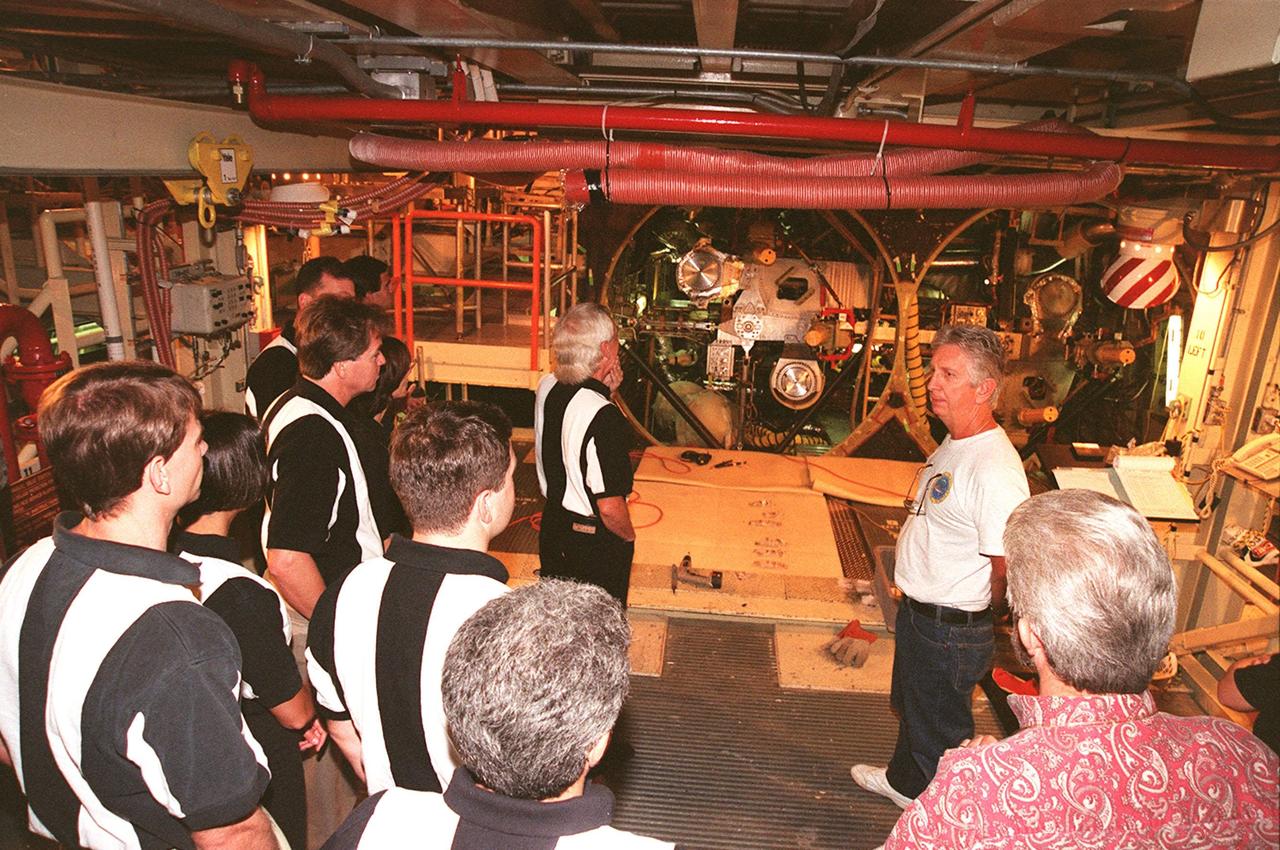
On a raised platform in the Orbiter Processing Facility bay 3, members of the 1998 astronaut candidate class (group 17) look at the aft fuselage of the orbiter Atlantis. The class is at KSC for training activities, including fire training and a flight awareness program, plus touring the OPF, SSME Processing Facility, VAB, SSPF, launch pads, SLF, Apollo/Saturn V Center and the crew headquarters. The U.S. candidates in the '98 class are Clayton C. Anderson, Lee J. Archambault, Tracy E. Caldwell (Ph.D.), Gregory E. Chamitoff (Ph.D.), Timothy J. Creamer, Christopher J. Ferguson, Michael J. Foreman, Michael E. Fossum, Kenneth T. Ham, Patricia C. Hilliard (M.D.), Gregory C. Johnson, Gregory H. Johnson, Stanley G. Love (Ph.D.), Leland D. Melvin, Barbara R. Morgan, William A. Oefelein, John D. Olivas (Ph.D.), Nicholas J.M. Patrick (Ph.D.), Alan G. Poindexter, Garrett E. Reisman (Ph.D.), Steven R. Swanson, Douglas H. Wheelock, Sunita L. Williams, Neil W. Woodward III, George D. Zamka; and the international candidates are Leopold Eyharts, Paolo Nespoli, Hans Schlegel, Roberto Vittori, Bjarni V. Tryggvason, and Marcos Pontes
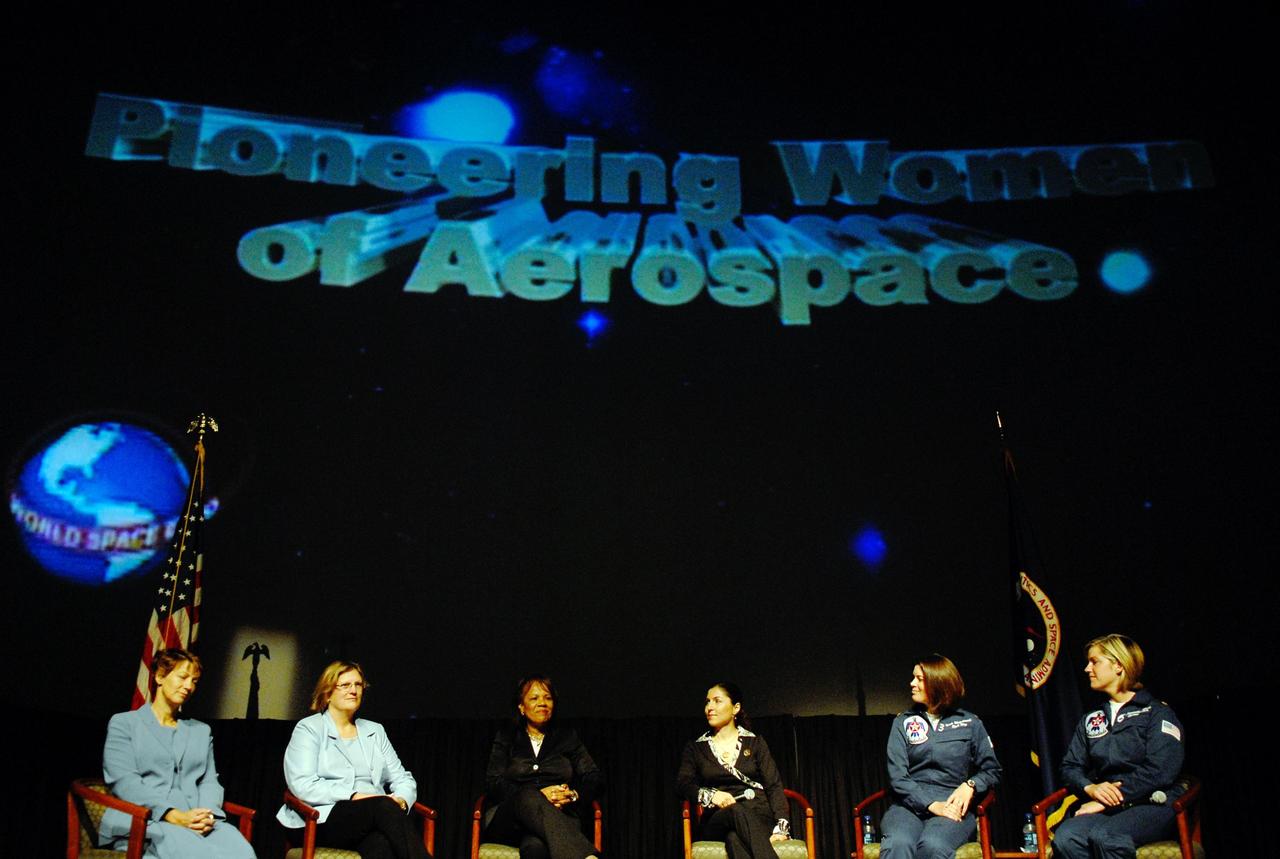
KENNEDY SPACE CENTER, FLA. — On stage for the World Space Expo's Pioneering Women of Aerospace forum are Ret. Colonel Eileen Collins, the first female shuttle commander; Dr. Kathryn D. Sullivan, the first American woman to spacewalk; Patricia Grace Smith, with the FAA, the first associate administrator of commercial space transportation; Dr. Anousheh Ansari, a spaceflight participant; Major Nicole Malachowski, the first female pilot with the U.S. Air Force Thunderbirds; and Major Samantha Weeks, the first female solo pilot with the U.S. Air Force Thunderbirds. The expo commemorates humanity's first 50 years in space while looking forward to returning people to the moon and exploring beyond. The expo showcased various panels, presentations and educational programs, as well as an aerial salute featuring the U.S. Air Force Thunderbirds, U.S. Air Force F-22 Raptor, U.S. Navy F-18 Super Hornet, U.S. Air Force F-15 Eagle, the P-51 Mustang Heritage Flight, and the U.S. Air Force 920th Rescue Wing, which was responsible for Mercury and Gemini capsule recovery. The U.S. Army Golden Knights also demonstrated precision skydiving. Photo credit: NASA/Kim Shiflett
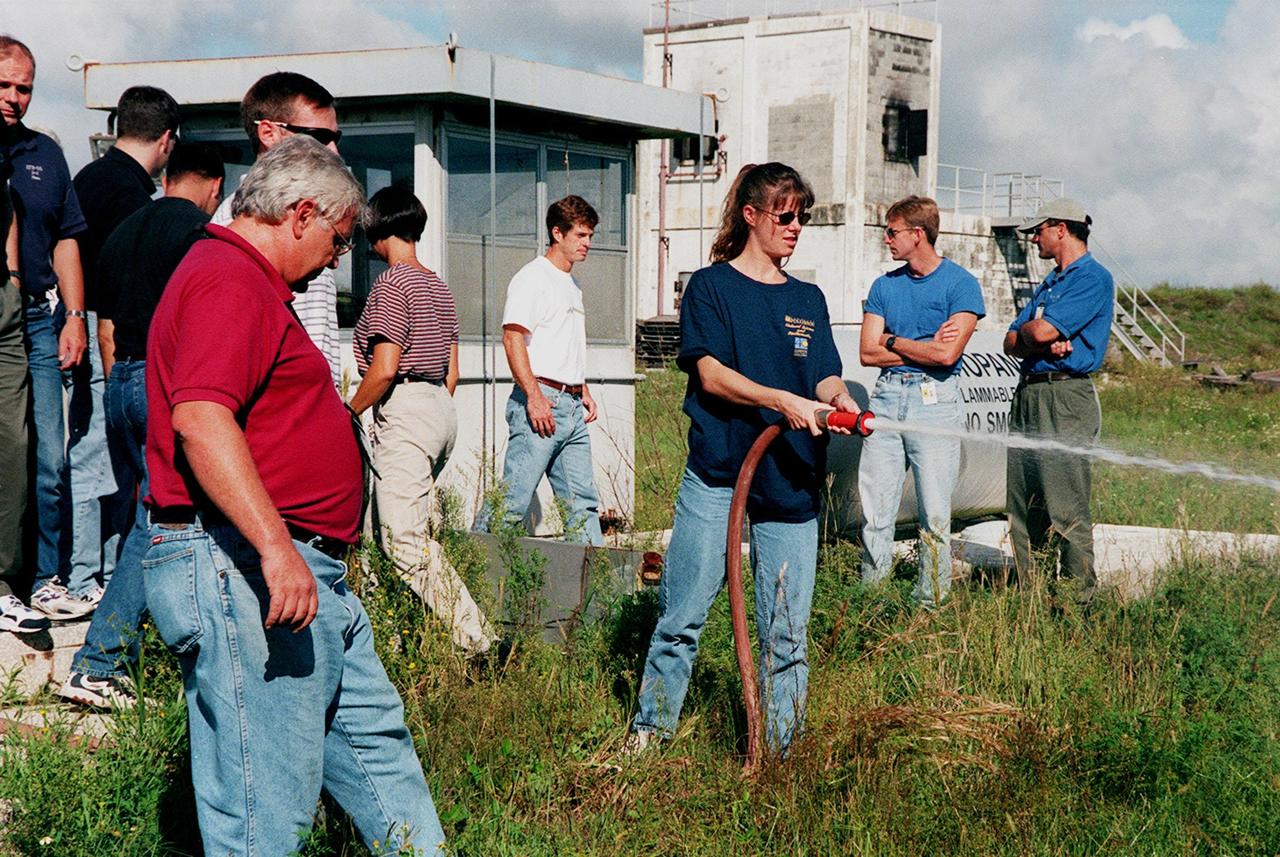
KENNEDY SPACE CENTER, FLA. -- On the grounds of the Kennedy Space Center, members of the 1998 astronaut candidate class (Group 17) watch as candidate Tracy E. Caldwell (Ph.D.) practices using firefighting equipment during fire training. The class is at KSC for training activities, including a flight awareness program, plus touring the OPF, VAB, SSPF, SSME Processing Facility, launch pads, SLF, Apollo/Saturn V Center, and the crew quarters. The other U.S. candidates in the '98 class are Clayton C. Anderson, Lee J. Archambault, Gregory E. Chamitoff (Ph.D.), Timothy J. Creamer, Christopher J. Ferguson, Michael J. Foreman, Michael E. Fossum, Kenneth T. Ham, Patricia C. Hilliard (M.D.), Gregory C. Johnson, Gregory H. Johnson, Stanley G. Love (Ph.D.), Leland D. Melvin, Barbara R. Morgan, William A. Oefelein, John D. Olivas (Ph.D.), Nicholas J.M. Patrick (Ph.D.), Alan G. Poindexter, Garrett E. Reisman (Ph.D.), Steven R. Swanson, Douglas H. Wheelock, Sunita L. Williams, Neil W. Woodward III, George D. Zamka; and the international candidates are Leopold Eyharts, Paolo Nespoli, Hans Schlegel, Roberto Vittori, Bjarni V. Tryggvason, and Marcos Pontes
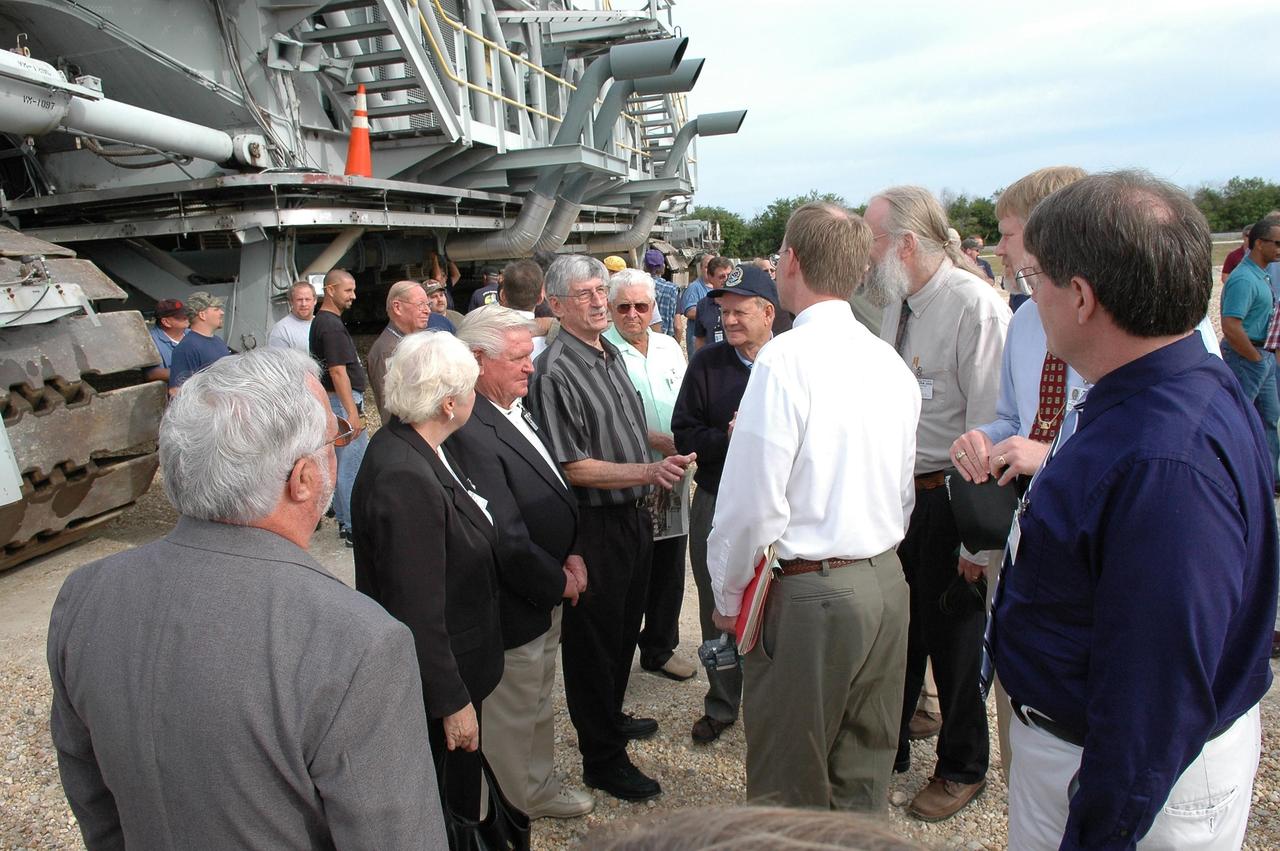
KENNEDY SPACE CENTER, FLA. - On the occasion of the 40th anniversary of the crawler transporter used for moving space shuttles to the NASA Kennedy Space Center’s launch pads, invited guests mingle in front of one of the crawlers still in use. From left are Sylvan “Skip” Montagna, Patricia and Fred Renaud, Fred Wallace and Bill Clemens. Philip Koehring and his brothers Doug(white shirt) and John (light blue shirt) and Rick Drollinger are on the right. Philip Koehring Sr. was project manager at the Marion Power Shovel Co. in Ohio where the crawlers were initially built in 1965. Drollinger’s father, Richard, was director of engineering at Marion. Media representatives and invited guests had the opportunity to tour one of NASA's two crawlers. This included the driver cab and engine room. Guests included current drivers and operators, as well as drivers from the Apollo Program. In January 1966, the crawler completed its first successful move with a 10.6-million-pound launch umbilical tower. It moved three-quarters of a mile in about nine hours. Throughout 40 years of service, the two crawlers have moved more than 3,500 miles and carried seven vehicles.
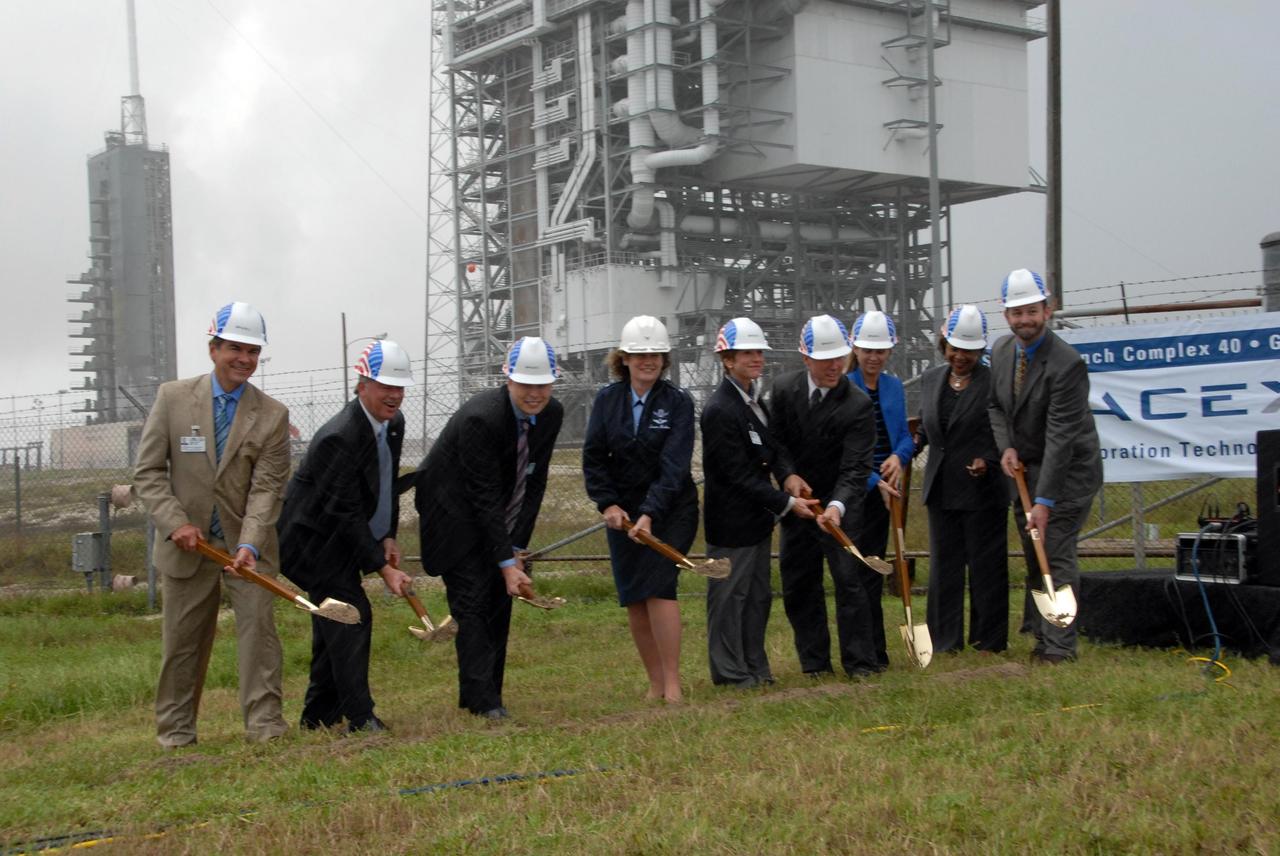
KENNEDY SPACE CENTER, FLA. -- Ready to put spades to work at ground-breaking ceremonies for SpaceX's new Falcon 9 rocket launch facilities at Space Launch Complex 40 at Cape Canaveral are (from left) Thad Altman, Florida State representative; Jeff Kottkamp, Florida State Lt. Governor; Elon Musk, founder and CEO of Space Exploration Technologies; Brig. Gen. Susan J. Helms, commander of the U.S. Air Force 45th Space Wing; Lynda Weatherman, Brevard County Economic Development Commission CEO and president; Steve Koehler, president of Space Florida; Janet Petro, deputy director of NASA Kennedy Space Center; Patricia Grace Smith, FAA associate administrator for Commercial Space Transportation; and Steve Cain, NASA Kennedy Space Center COTS project manager. As part of NASA’s Commercial Orbital Transportation Services, or COTS, competition, SpaceX will launch a Falcon 9 with a cargo-carrying payload on a series of three demonstration missions from Cape Canaveral to the International Space Station, culminating with the delivery of supplies to the $100 billion dollar orbiting laboratory. SpaceX intends to demonstrate its launch, maneuvering, berthing and return abilities by 2009 – a year before NASA has scheduled the conclusion of Space Shuttle operations. Photo credit: NASA/George Shelton
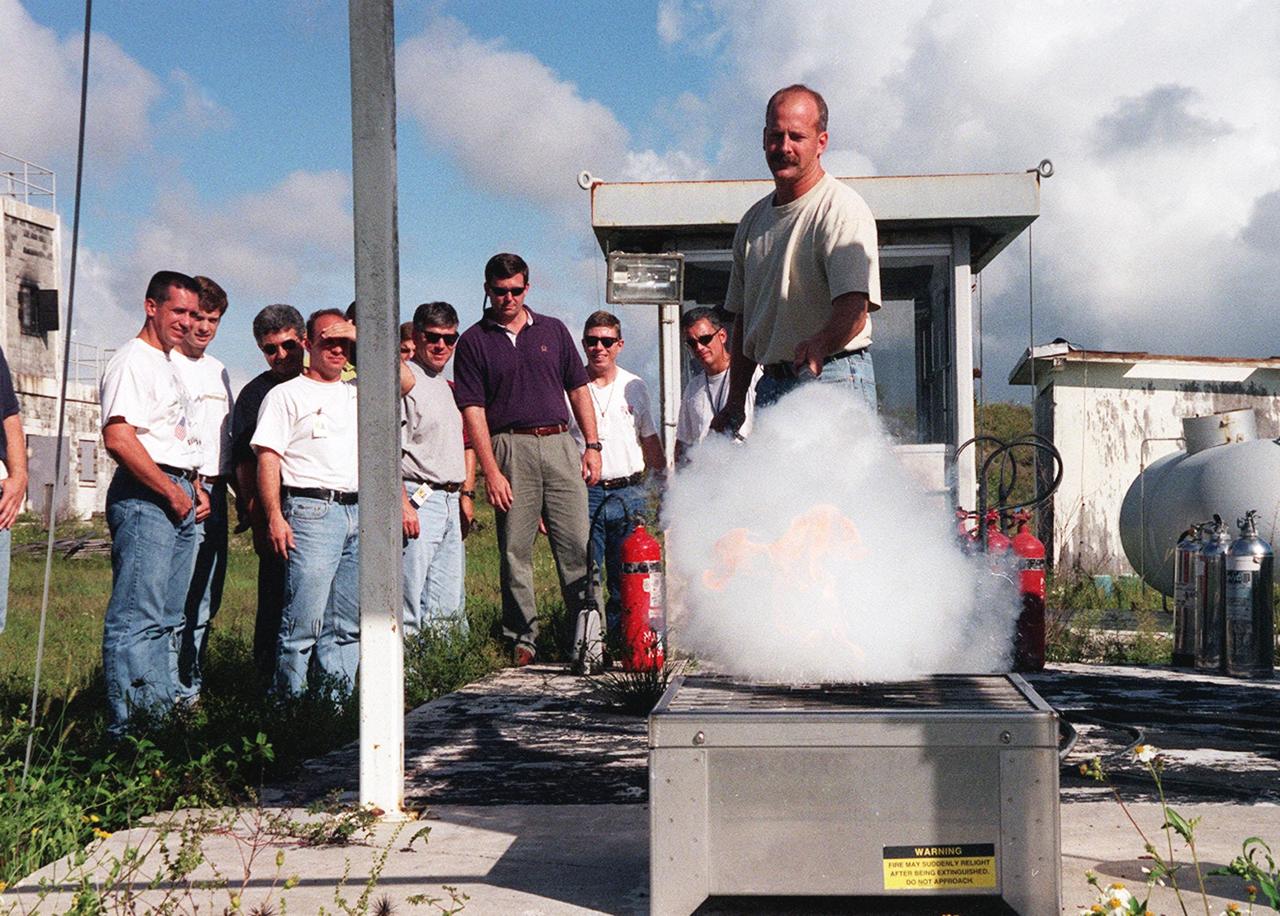
KENNEDY SPACE CENTER, FLA. -- On the grounds of the Kennedy Space Center, members of the 1998 astronaut candidate class (Group 17) watch as candidate Alan G. Poindexter practices using firefighting equipment during fire training. The class is at KSC for training activities, including a flight awareness program, plus touring the OPF, VAB, SSPF, SSME Processing Facility, launch pads, SLF, Apollo/Saturn V Center, and the crew quarters. The other U.S. candidates in the '98 class are Clayton C. Anderson, Lee J. Archambault, Tracy E. Caldwell (Ph.D.), Gregory E. Chamitoff (Ph.D.), Timothy J. Creamer, Christopher J. Ferguson, Michael J. Foreman, Michael E. Fossum, Kenneth T. Ham, Patricia C. Hilliard (M.D.), Gregory C. Johnson, Gregory H. Johnson, Stanley G. Love (Ph.D.), Leland D. Melvin, Barbara R. Morgan, William A. Oefelein, John D. Olivas (Ph.D.), Nicholas J.M. Patrick (Ph.D.), Garrett E. Reisman (Ph.D.), Steven R. Swanson, Douglas H. Wheelock, Sunita L. Williams, Neil W. Woodward III, George D. Zamka; and the international candidates are Leopold Eyharts, Paolo Nespoli, Hans Schlegel, Roberto Vittori, Bjarni V. Tryggvason, and Marcos Pontes
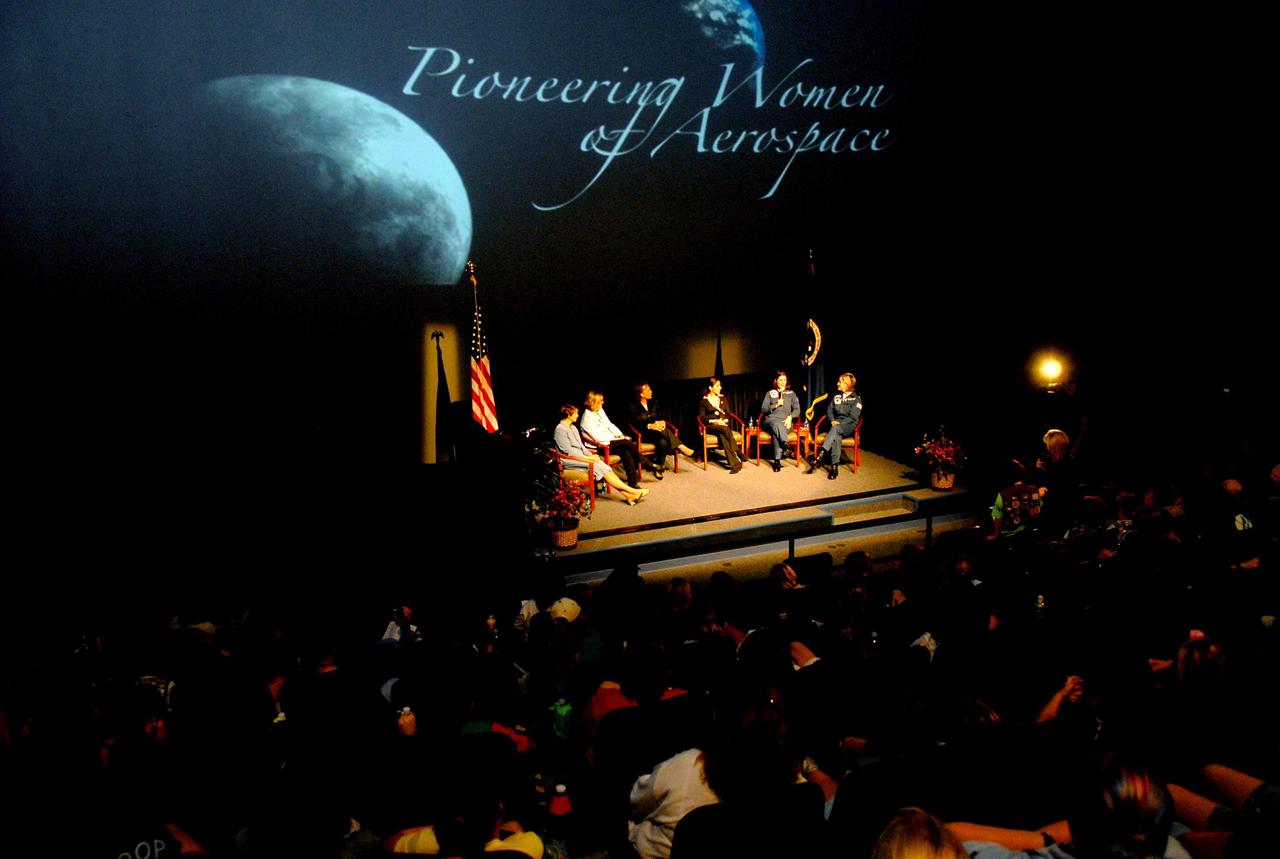
KENNEDY SPACE CENTER, FLA. — In the spotlight for the World Space Expo's Pioneering Women of Aerospace forum are Ret. Colonel Eileen Collins, the first female shuttle commander; Dr. Kathryn D. Sullivan, the first American woman to spacewalk; Patricia Grace Smith, with the FAA, the first associate administrator of commercial space transportation; Dr. Anousheh Ansari, a spaceflight participant; Major Nicole Malachowski, the first female pilot with the U.S. Air Force Thunderbirds; and Major Samantha Weeks, the first female solo pilot with the U.S. Air Force Thunderbirds. The expo commemorates humanity's first 50 years in space while looking forward to returning people to the moon and exploring beyond. The expo showcased various panels, presentations and educational programs, as well as an aerial salute featuring the U.S. Air Force Thunderbirds, U.S. Air Force F-22 Raptor, U.S. Navy F-18 Super Hornet, U.S. Air Force F-15 Eagle, the P-51 Mustang Heritage Flight, and the U.S. Air Force 920th Rescue Wing, which was responsible for Mercury and Gemini capsule recovery. The U.S. Army Golden Knights also demonstrated precision skydiving. Photo credit: NASA/Kim Shiflett
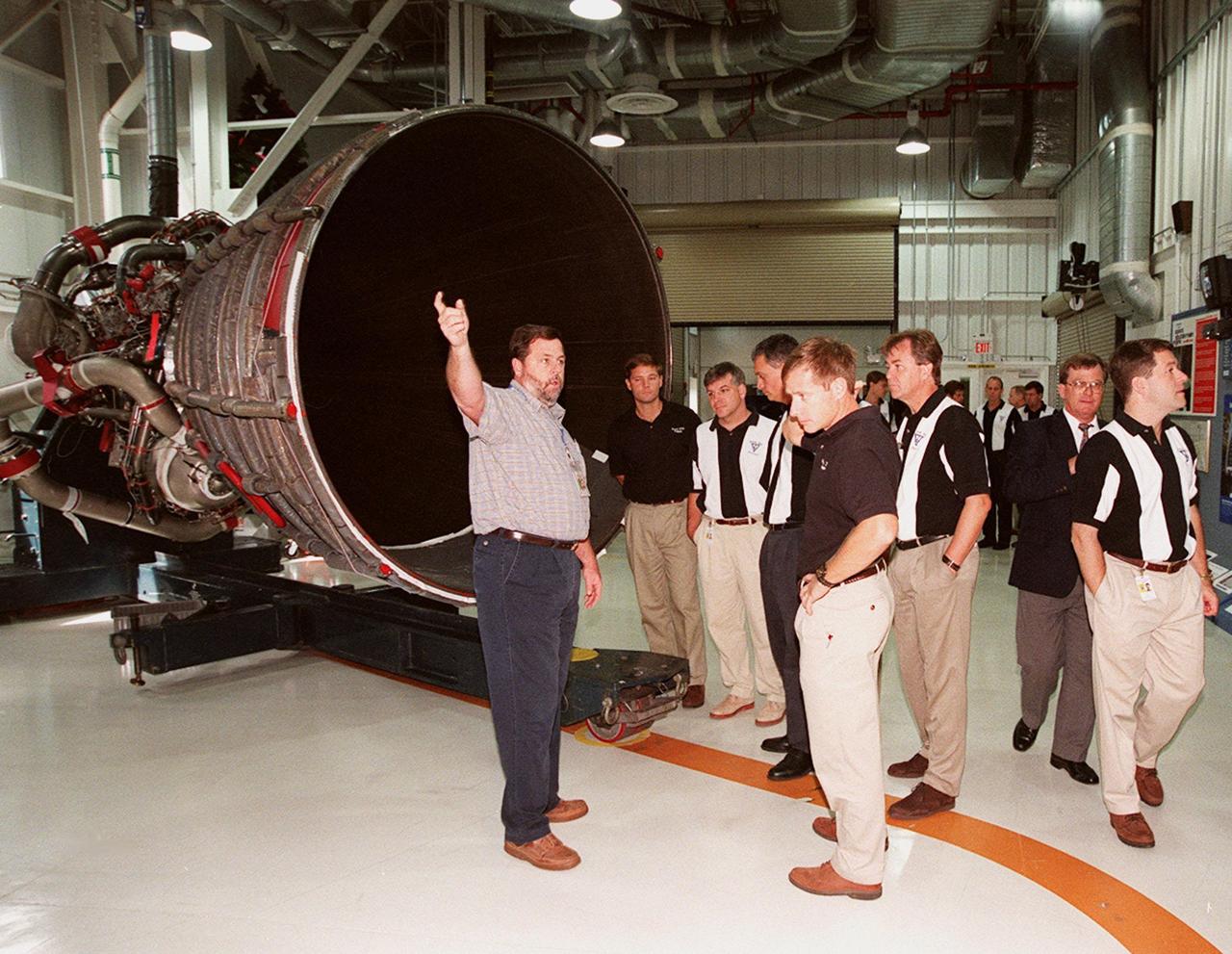
Members of the 1998 astronaut candidate class (group 17) learn about the use of the Space Shuttle Main Engine (SSME) Processing Facility. At left is one of the main shuttle engines. The class is at KSC for training activities, including fire training and a flight awareness program, plus touring the OPF, VAB, SSPF, launch pads, SLF, Apollo/Saturn V Center, the crew headquarters, as well as the SSME Processing Facility. The U.S. candidates in the '98 class are Clayton C. Anderson, Lee J. Archambault, Tracy E. Caldwell (Ph.D.), Gregory E. Chamitoff (Ph.D.), Timothy J. Creamer, Christopher J. Ferguson, Michael J. Foreman, Michael E. Fossum, Kenneth T. Ham, Patricia C. Hilliard (M.D.), Gregory C. Johnson, Gregory H. Johnson, Stanley G. Love (Ph.D.), Leland D. Melvin, Barbara R. Morgan, William A. Oefelein, John D. Olivas (Ph.D.), Nicholas J.M. Patrick (Ph.D.), Alan G. Poindexter, Garrett E. Reisman (Ph.D.), Steven R. Swanson, Douglas H. Wheelock, Sunita L. Williams, Neil W. Woodward III, George D. Zamka; and the international candidates are Leopold Eyharts, Paolo Nespoli, Hans Schlegel, Roberto Vittori, Bjarni V. Tryggvason, and Marcos Pontes
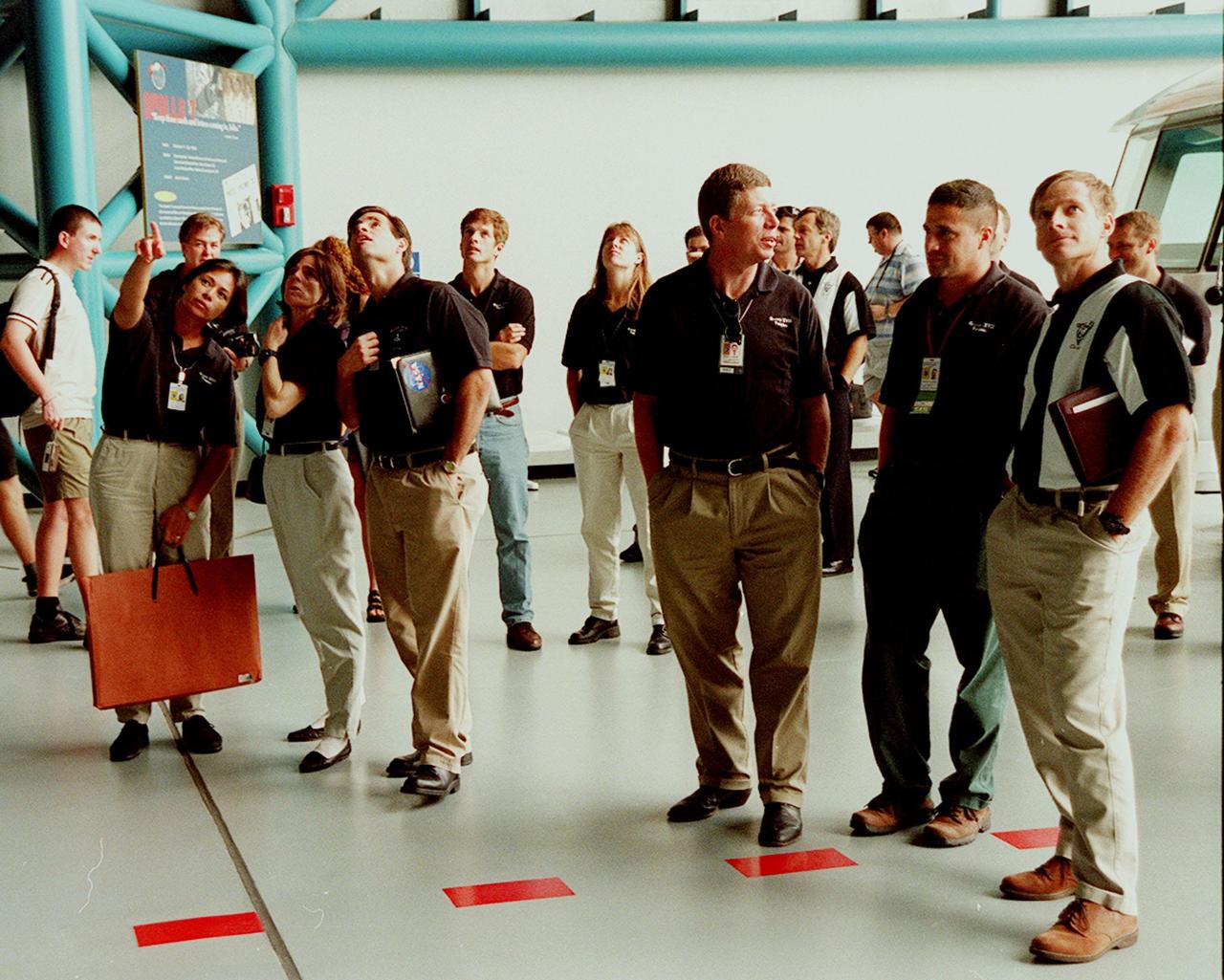
KENNEDY SPACE CENTER, FLA. -- At the Apollo/Saturn V Center, some of the 1998 astronaut candidate class (group 17) take a close look at the Saturn V rocket on display. The U.S. candidates include Clayton C. Anderson, Lee J. Archambault, Tracy E. Caldwell (Ph.D.), Gregory E. Chamitoff (Ph.D.), Timothy J. Creamer, Christopher J. Ferguson, Michael J. Foreman, Michael E. Fossum, Kenneth T. Ham, Patricia C. Hilliard (M.D.), Gregory C. Johnson, Gregory H. Johnson, Stanley G. Love (Ph.D.), Leland D. Melvin, Barbara R. Morgan, William A. Oefelein, John D. Olivas (Ph.D.), Nicholas J.M. Patrick (Ph.D.), Alan G. Poindexter, Garrett E. Reisman (Ph.D.), Steven R. Swanson, Douglas H. Wheelock, Sunita L. Williams, Neil W. Woodward III, George D. Zamka; and international candidates Leopold Eyharts, Paolo Nespoli, Hans Schlegel, Roberto Vittori, Bjarni V. Tryggvason, and Marcos Pontes. The class is at KSC for training activities, including fire training and a flight awareness program, plus touring the OPF, SSME Processing Facility, VAB, SSPF, launch pads, SLF, Apollo/Saturn V Center and the crew headquarters
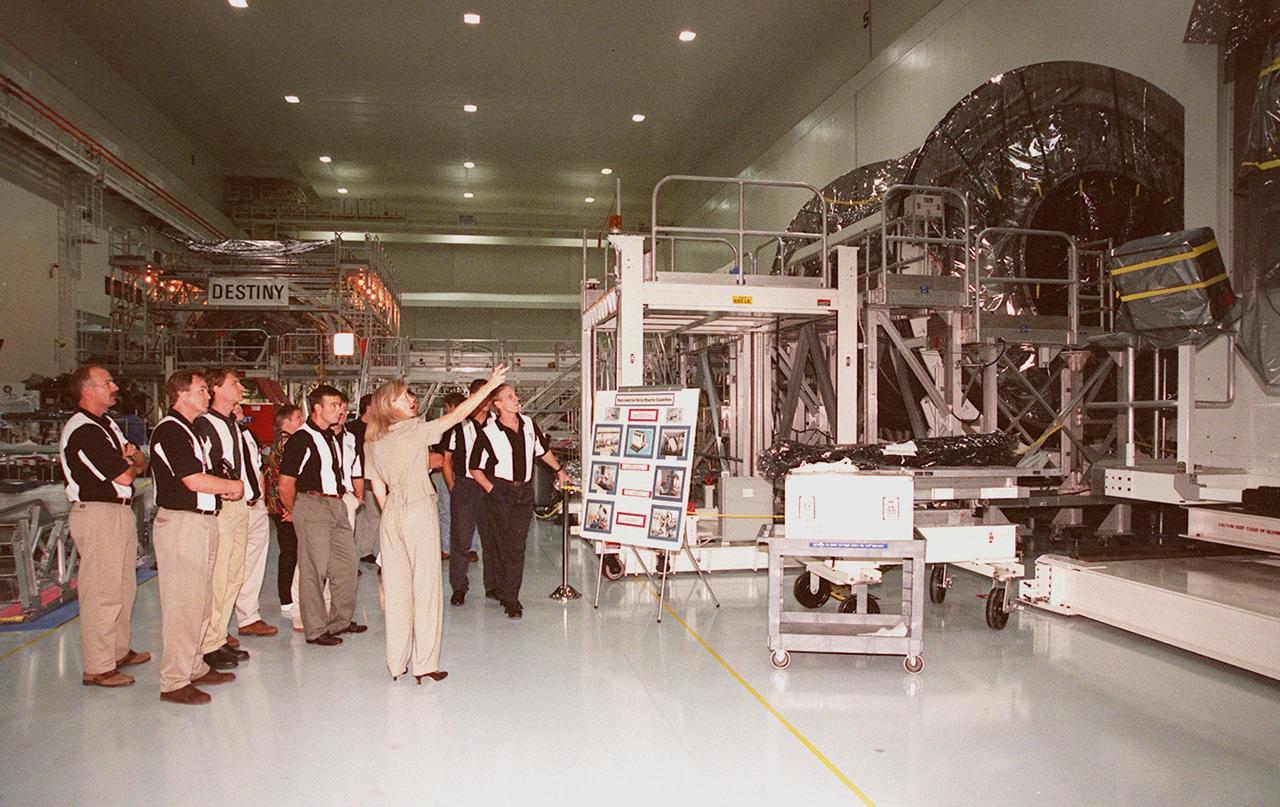
KENNEDY SPACE CENTER, FLA. -- In the Space Station Processing Facility (SSPF), members of the 1998 astronaut candidate class (group 17) are shown future components of the International Space Station, such as the Multi-Purpose Logistics Module at right. The class is taking part in training activities, including fire training and a flight awareness program, plus touring the OPF, VAB, SSME Processing Facility, launch pads, SLF, Apollo/Saturn V Center, the crew headquarters, as well as the SSPF. The U.S. candidates in the '98 class are Clayton C. Anderson, Lee J. Archambault, Tracy E. Caldwell (Ph.D.), Gregory E. Chamitoff (Ph.D.), Timothy J. Creamer, Christopher J. Ferguson, Michael J. Foreman, Michael E. Fossum, Kenneth T. Ham, Patricia C. Hilliard (M.D.), Gregory C. Johnson, Gregory H. Johnson, Stanley G. Love (Ph.D.), Leland D. Melvin, Barbara R. Morgan, William A. Oefelein, John D. Olivas (Ph.D.), Nicholas J.M. Patrick (Ph.D.), Alan G. Poindexter, Garrett E. Reisman (Ph.D.), Steven R. Swanson, Douglas H. Wheelock, Sunita L. Williams, Neil W. Woodward III, George D. Zamka; and the international candidates are Leopold Eyharts, Paolo Nespoli, Hans Schlegel, Roberto Vittori, Bjarni V. Tryggvason, and Marcos Pontes
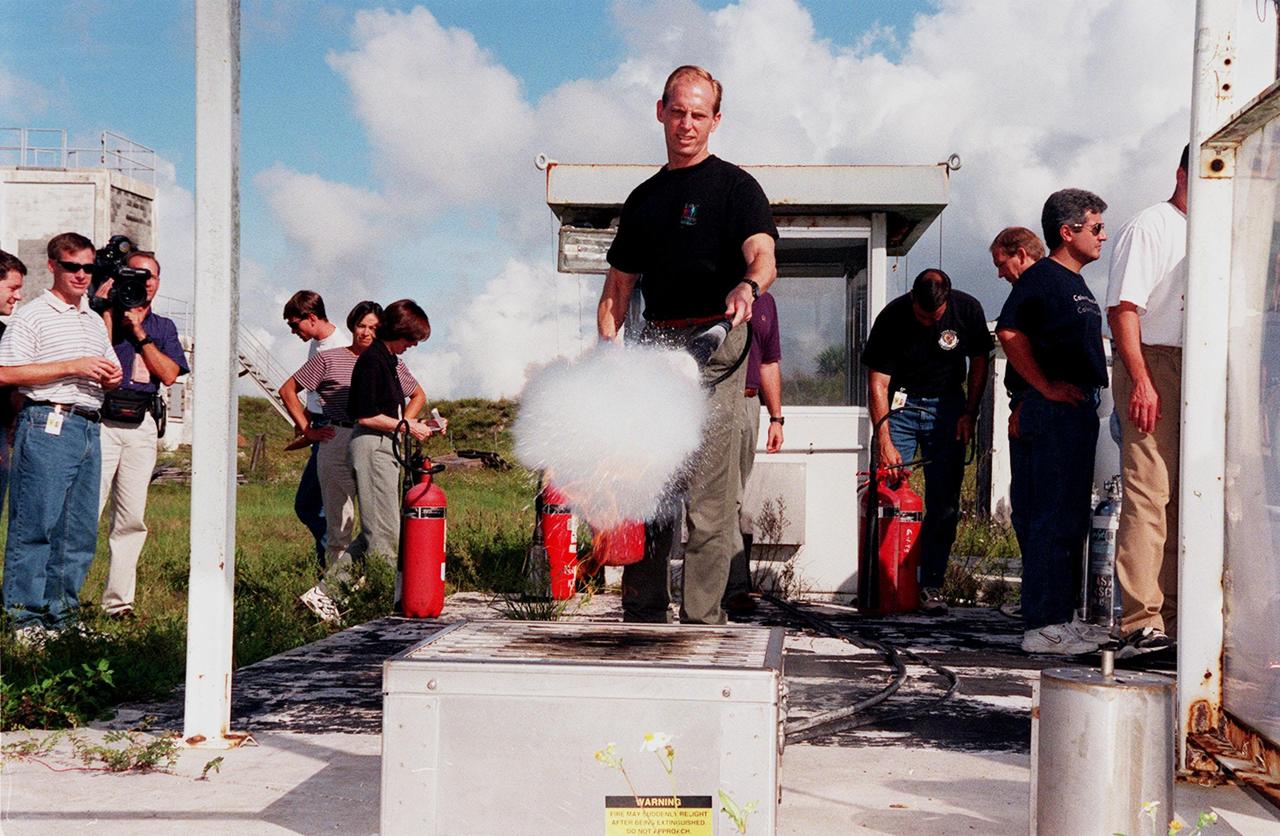
KENNEDY SPACE CENTER, FLA. -- On the grounds of the Kennedy Space Center, members of the 1998 astronaut candidate class (Group 17) watch as candidate Clayton C. Anderson practices using firefighting equipment during fire training. The class is at KSC for training activities, including a flight awareness program, plus touring the OPF, VAB, SSPF, SSME Processing Facility, launch pads, SLF, Apollo/Saturn V Center, and the crew quarters. The other U.S. candidates in the '98 class are Lee J. Archambault, Tracy E. Caldwell (Ph.D.), Gregory E. Chamitoff (Ph.D.), Timothy J. Creamer, Christopher J. Ferguson, Michael J. Foreman, Michael E. Fossum, Kenneth T. Ham, Patricia C. Hilliard (M.D.), Gregory C. Johnson, Gregory H. Johnson, Stanley G. Love (Ph.D.), Leland D. Melvin, Barbara R. Morgan, William A. Oefelein, John D. Olivas (Ph.D.), Nicholas J.M. Patrick (Ph.D.), Alan G. Poindexter, Garrett E. Reisman (Ph.D.), Steven R. Swanson, Douglas H. Wheelock, Sunita L. Williams, Neil W. Woodward III, George D. Zamka; and the international candidates are Leopold Eyharts, Paolo Nespoli, Hans Schlegel, Roberto Vittori, Bjarni V. Tryggvason, and Marcos Pontes
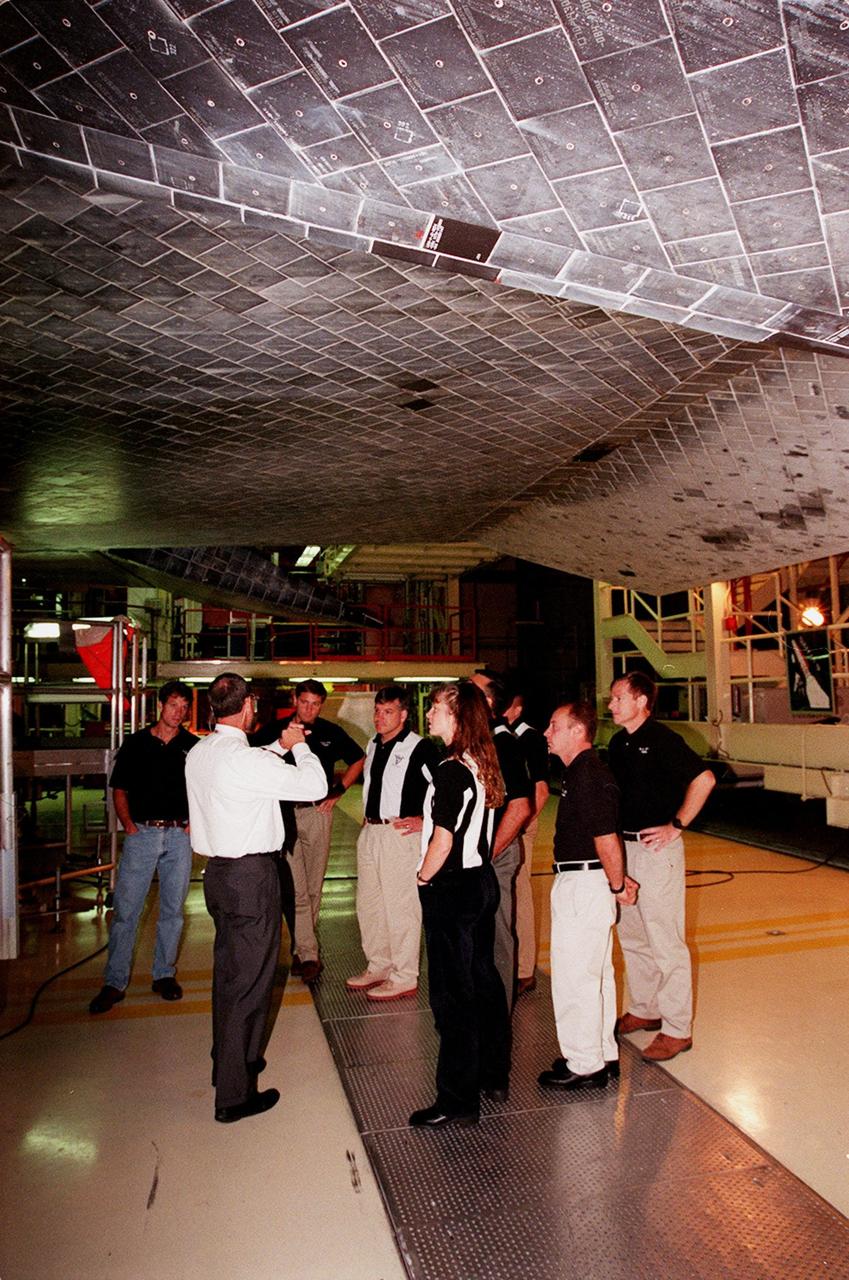
In the Orbiter Processing Facility, members of the 1998 astronaut candidate class (group 17) learn about the thermal protection system on the orbiters, such as Atlantis overhead. The class is at KSC for training activities, including fire training and a flight awareness program, plus touring the OPF, SSME Processing Facility, VAB, SSPF, launch pads, SLF, Apollo/Saturn V Center and the crew headquarters. The U.S. candidates in the '98 class are Clayton C. Anderson, Lee J. Archambault, Tracy E. Caldwell (Ph.D.), Gregory E. Chamitoff (Ph.D.), Timothy J. Creamer, Christopher J. Ferguson, Michael J. Foreman, Michael E. Fossum, Kenneth T. Ham, Patricia C. Hilliard (M.D.), Gregory C. Johnson, Gregory H. Johnson, Stanley G. Love (Ph.D.), Leland D. Melvin, Barbara R. Morgan, William A. Oefelein, John D. Olivas (Ph.D.), Nicholas J.M. Patrick (Ph.D.), Alan G. Poindexter, Garrett E. Reisman (Ph.D.), Steven R. Swanson, Douglas H. Wheelock, Sunita L. Williams, Neil W. Woodward III, George D. Zamka; and the international candidates are Leopold Eyharts, Paolo Nespoli, Hans Schlegel, Roberto Vittori, Bjarni V. Tryggvason, and Marcos Pontes
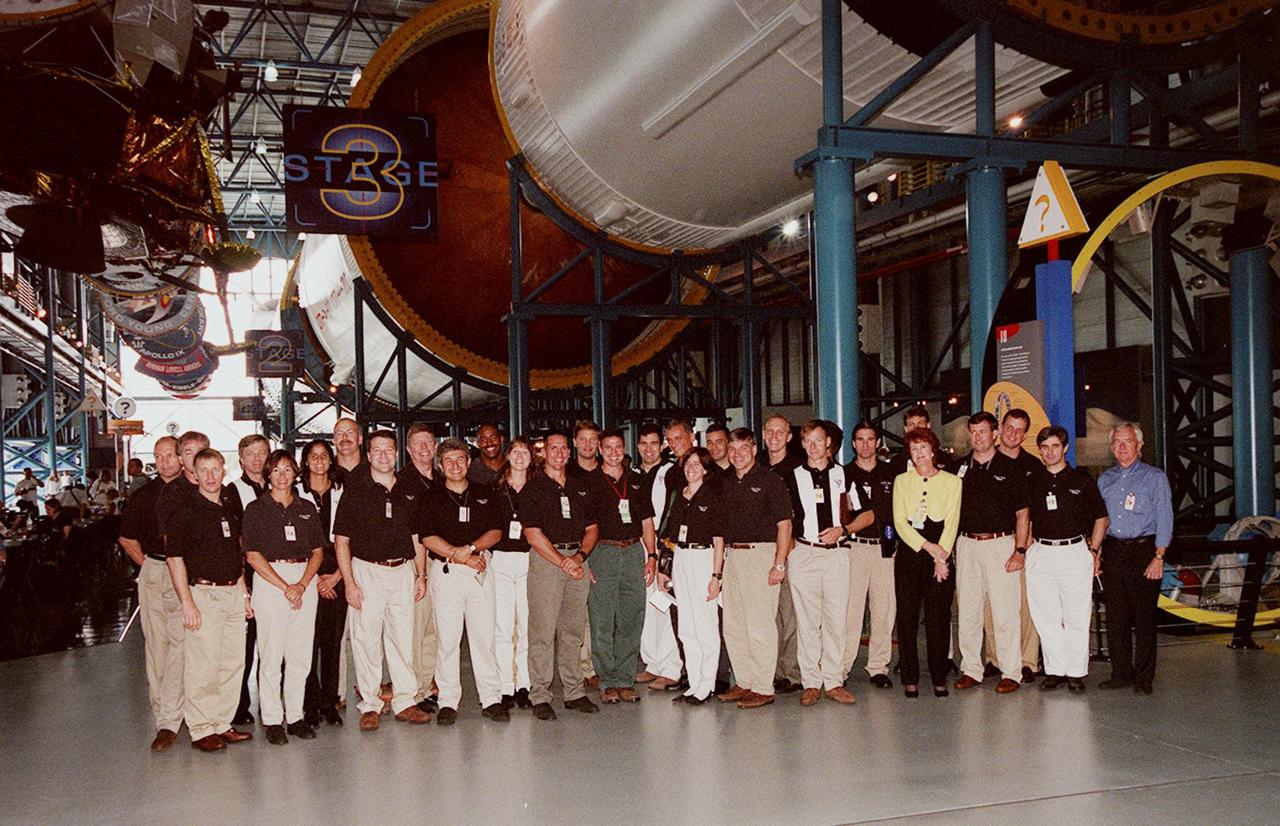
KENNEDY SPACE CENTER, FLA. -- At the Apollo/Saturn V Center, some of the 1998 astronaut candidate class (group 17) line up for a photo during a tour of facilities at KSC. The U.S. candidates include Clayton C. Anderson, Lee J. Archambault, Tracy E. Caldwell (Ph.D.), Gregory E. Chamitoff (Ph.D.), Timothy J. Creamer, Christopher J. Ferguson, Michael J. Foreman, Michael E. Fossum, Kenneth T. Ham, Patricia C. Hilliard (M.D.), Gregory C. Johnson, Gregory H. Johnson, Stanley G. Love (Ph.D.), Leland D. Melvin, Barbara R. Morgan, William A. Oefelein, John D. Olivas (Ph.D.), Nicholas J.M. Patrick (Ph.D.), Alan G. Poindexter, Garrett E. Reisman (Ph.D.), Steven R. Swanson, Douglas H. Wheelock, Sunita L. Williams, Neil W. Woodward III, George D. Zamka; and international candidates Leopold Eyharts, Paolo Nespoli, Hans Schlegel, Roberto Vittori, Bjarni V. Tryggvason, and Marcos Pontes. The class is at KSC for training activities, including fire training and a flight awareness program, plus touring the OPF, SSME Processing Facility, VAB, SSPF, launch pads, SLF and the crew headquarters
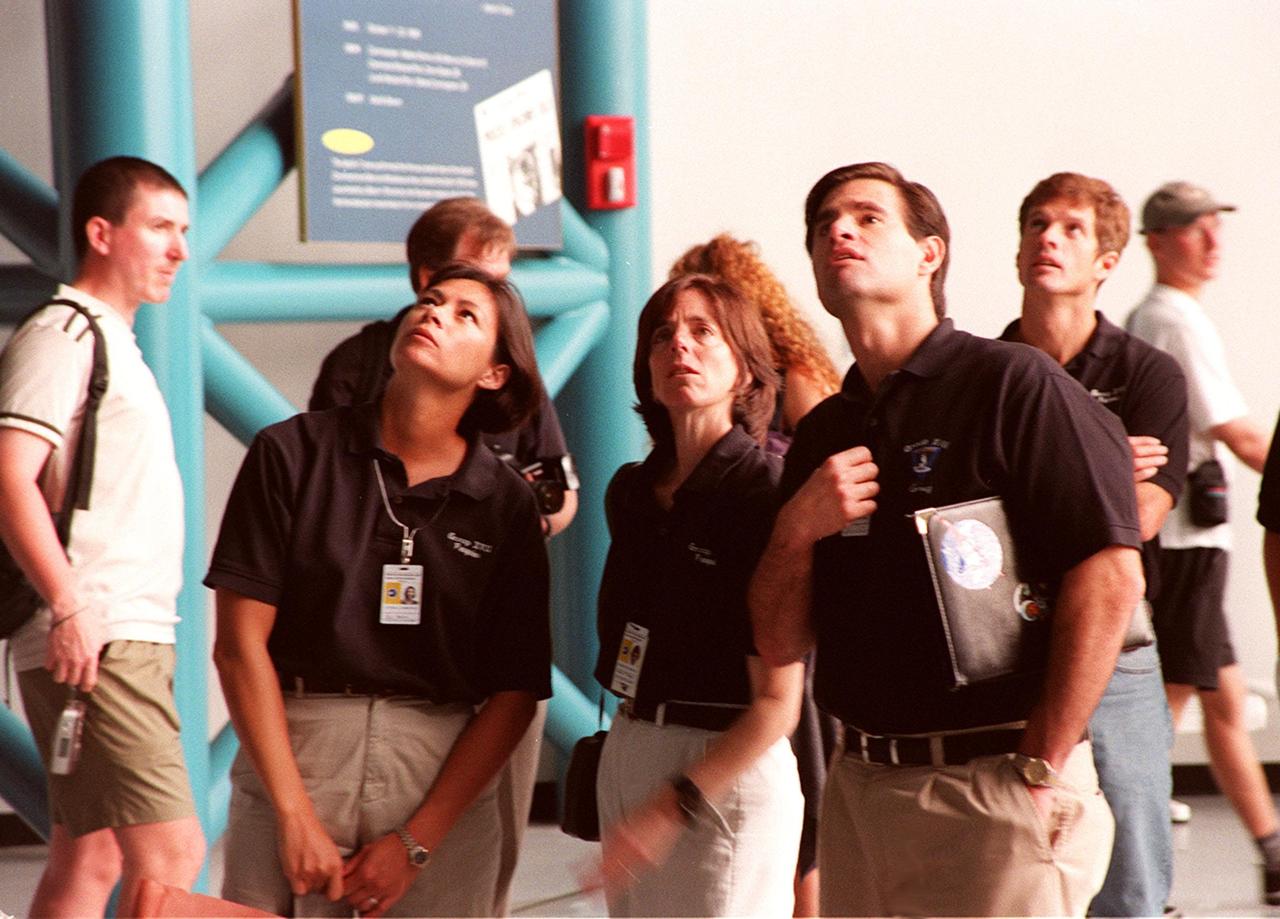
KENNEDY SPACE CENTER, FLA. -- Some of the 1998 astronaut candidate class (group 17) take a close look at displays in the Apollo/Saturn V Center at KSC. The U.S. candidates include Clayton C. Anderson, Lee J. Archambault, Tracy E. Caldwell (Ph.D.), Gregory E. Chamitoff (Ph.D.), Timothy J. Creamer, Christopher J. Ferguson, Michael J. Foreman, Michael E. Fossum, Kenneth T. Ham, Patricia C. Hilliard (M.D.), Gregory C. Johnson, Gregory H. Johnson, Stanley G. Love (Ph.D.), Leland D. Melvin, Barbara R. Morgan, William A. Oefelein, John D. Olivas (Ph.D.), Nicholas J.M. Patrick (Ph.D.), Alan G. Poindexter, Garrett E. Reisman (Ph.D.), Steven R. Swanson, Douglas H. Wheelock, Sunita L. Williams, Neil W. Woodward III, George D. Zamka; and international candidates Leopold Eyharts, Paolo Nespoli, Hans Schlegel, Roberto Vittori, Bjarni V. Tryggvason, and Marcos Pontes. The class is at KSC for training activities, including fire training and a flight awareness program, plus touring the OPF, SSME Processing Facility, VAB, SSPF, launch pads, SLF, Apollo/Saturn V Center and the crew headquarters
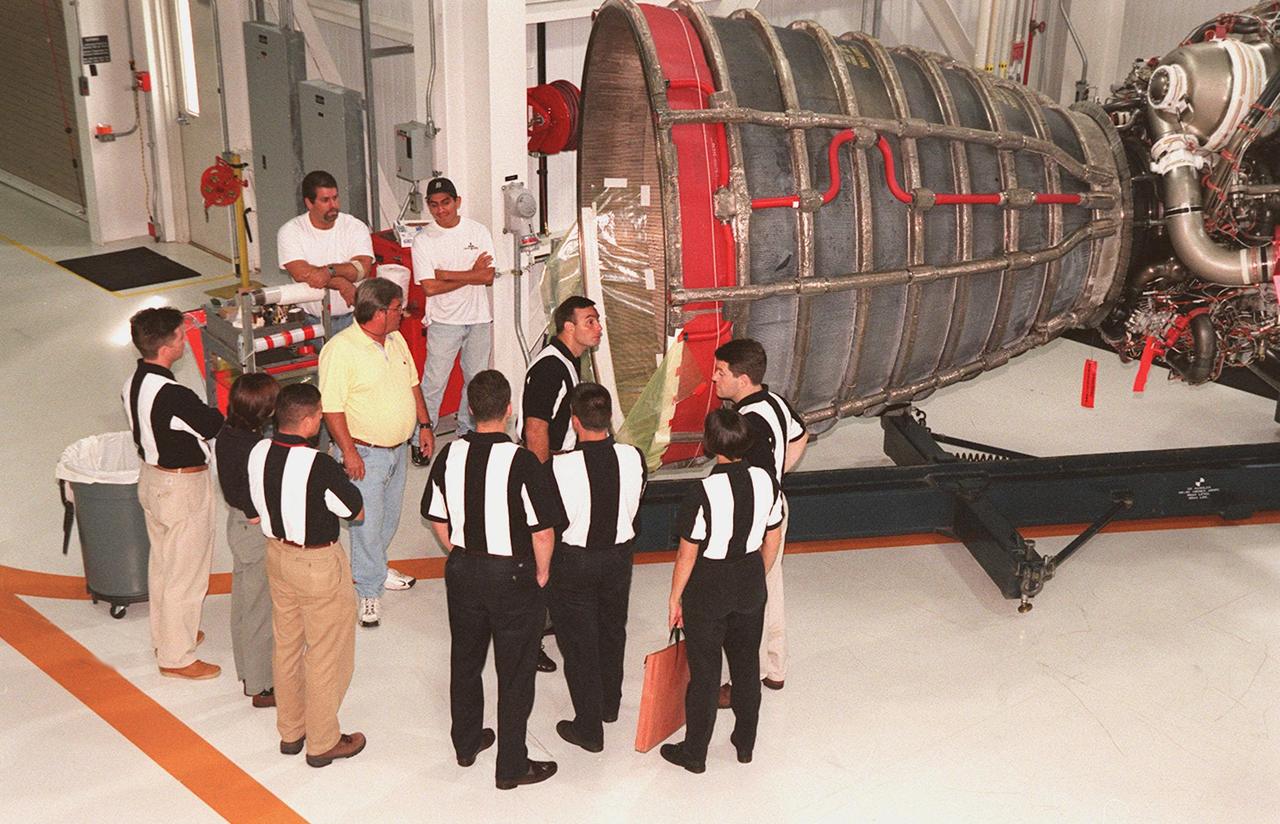
Members of the 1998 astronaut candidate class (group 17) look at the aft of a Space Shuttle Main Engine (SSME) (right). The class is at KSC for training activities, including fire training and a flight awareness program, plus touring the OPF, VAB, SSPF, launch pads, SLF, Apollo/Saturn V Center, the crew headquarters, as well as the SSME Processing Facility. The U.S. candidates in the '98 class are Clayton C. Anderson, Lee J. Archambault, Tracy E. Caldwell (Ph.D.), Gregory E. Chamitoff (Ph.D.), Timothy J. Creamer, Christopher J. Ferguson, Michael J. Foreman, Michael E. Fossum, Kenneth T. Ham, Patricia C. Hilliard (M.D.), Gregory C. Johnson, Gregory H. Johnson, Stanley G. Love (Ph.D.), Leland D. Melvin, Barbara R. Morgan, William A. Oefelein, John D. Olivas (Ph.D.), Nicholas J.M. Patrick (Ph.D.), Alan G. Poindexter, Garrett E. Reisman (Ph.D.), Steven R. Swanson, Douglas H. Wheelock, Sunita L. Williams, Neil W. Woodward III, George D. Zamka; and the international candidates are Leopold Eyharts, Paolo Nespoli, Hans Schlegel, Roberto Vittori, Bjarni V. Tryggvason, and Marcos Pontes
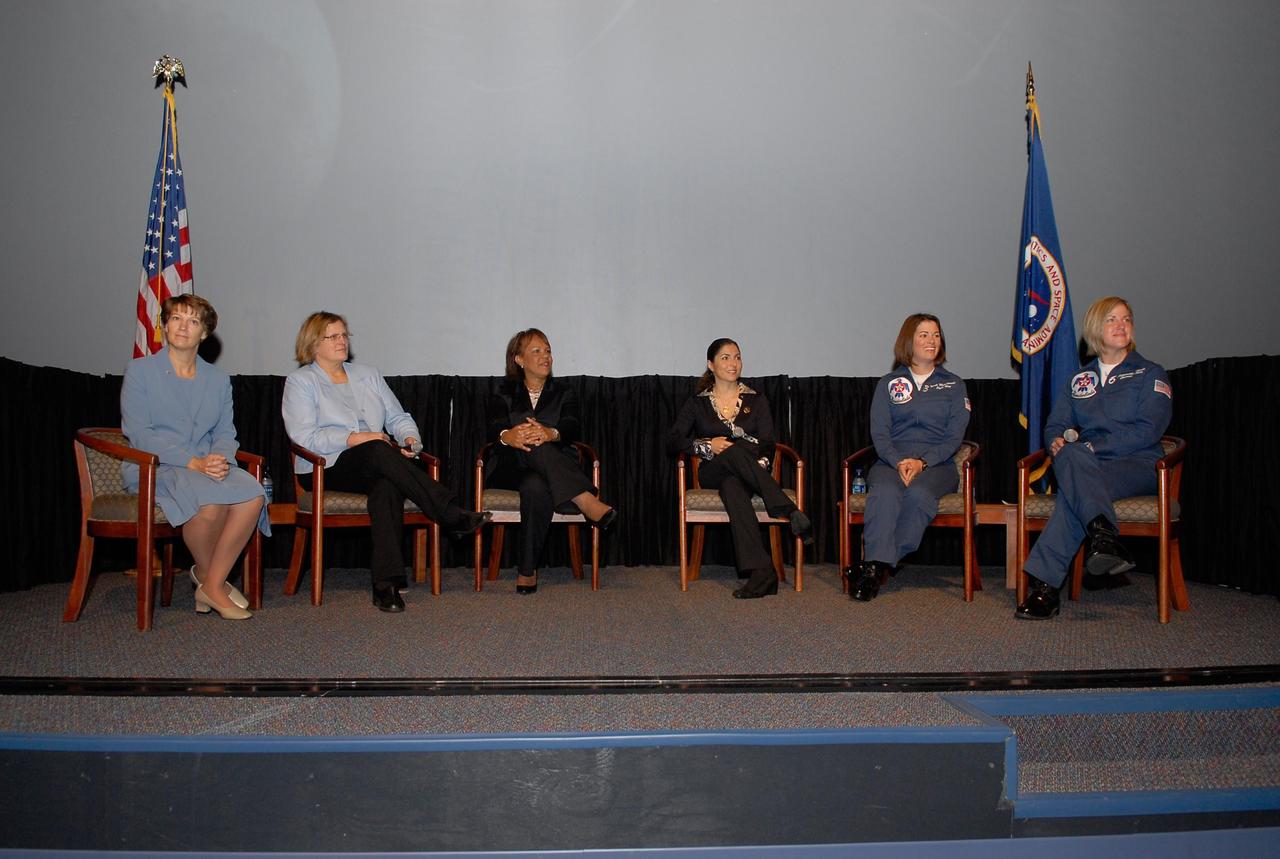
KENNEDY SPACE CENTER, FLA. — On stage for the World Space Expo's Pioneering Women of Aerospace forum are Ret. Colonel Eileen Collins, the first female shuttle commander; Dr. Kathryn D. Sullivan, the first American woman to spacewalk; Patricia Grace Smith, with the FAA, the first associate administrator of commercial space transportation; Dr. Anousheh Ansari, a spaceflight participant; Major Nicole Malachowski, the first female pilot with the U.S. Air Force Thunderbirds; and Major Samantha Weeks, the first female solo pilot with the U.S. Air Force Thunderbirds. The expo commemorates humanity's first 50 years in space while looking forward to returning people to the moon and exploring beyond. The expo showcased various panels, presentations and educational programs, as well as an aerial salute featuring the U.S. Air Force Thunderbirds, U.S. Air Force F-22 Raptor, U.S. Navy F-18 Super Hornet, U.S. Air Force F-15 Eagle, the P-51 Mustang Heritage Flight, and the U.S. Air Force 920th Rescue Wing, which was responsible for Mercury and Gemini capsule recovery. The U.S. Army Golden Knights also demonstrated precision skydiving. Photo credit: NASA/Kim Shiflett
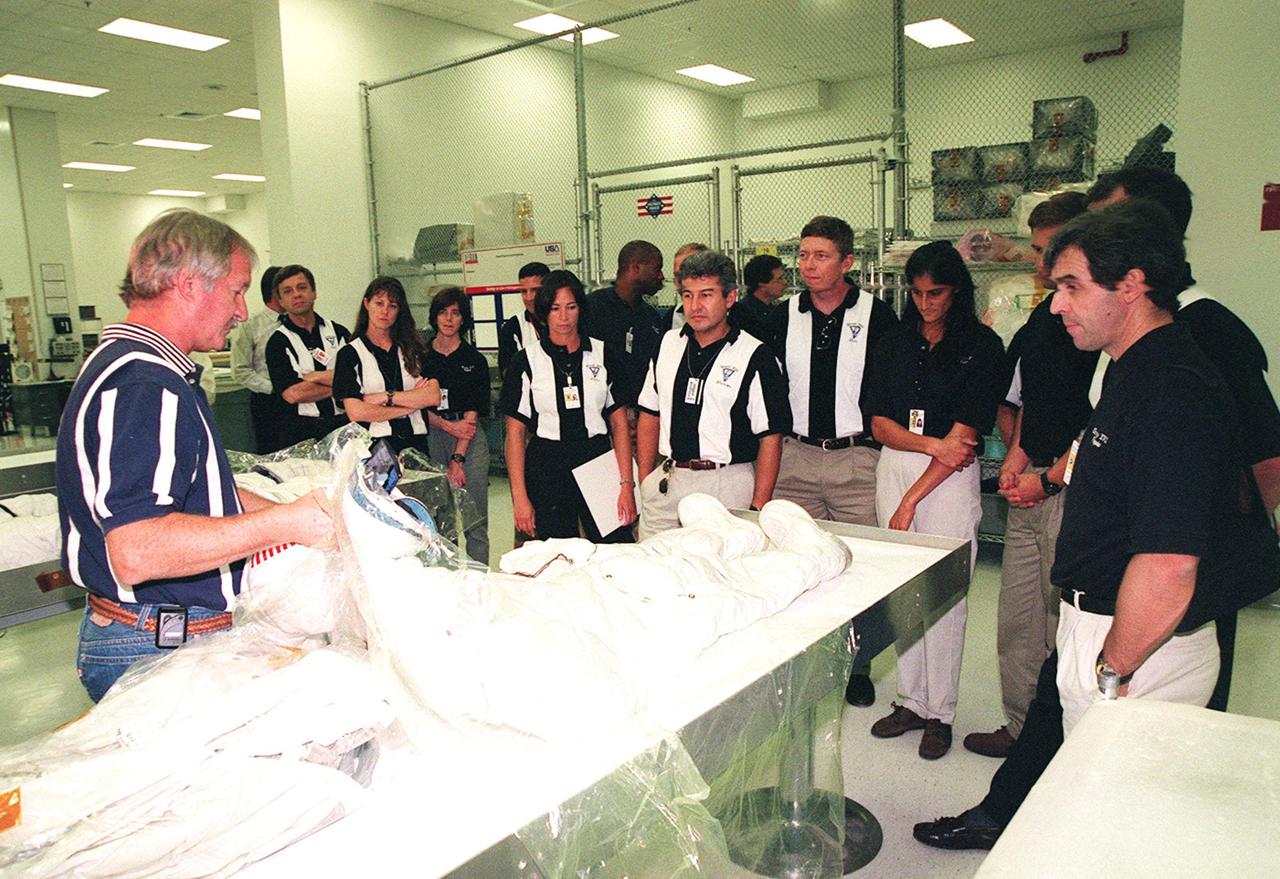
KENNEDY SPACE CENTER, FLA. -- In the Space Station Processing Facility, Ron Woods (left) shows members of the 1998 astronaut candidate class (group 17) an Apollo-style space suit and how it differs from the current suits. The class is taking part in training activities, including fire training and a flight awareness program, plus touring the OPF, VAB, SSPF, launch pads, SLF, Apollo/Saturn V Center, the crew headquarters, as well as the SSME Processing Facility. The U.S. candidates in the '98 class are Clayton C. Anderson, Lee J. Archambault, Tracy E. Caldwell (Ph.D.), Gregory E. Chamitoff (Ph.D.), Timothy J. Creamer, Christopher J. Ferguson, Michael J. Foreman, Michael E. Fossum, Kenneth T. Ham, Patricia C. Hilliard (M.D.), Gregory C. Johnson, Gregory H. Johnson, Stanley G. Love (Ph.D.), Leland D. Melvin, Barbara R. Morgan, William A. Oefelein, John D. Olivas (Ph.D.), Nicholas J.M. Patrick (Ph.D.), Alan G. Poindexter, Garrett E. Reisman (Ph.D.), Steven R. Swanson, Douglas H. Wheelock, Sunita L. Williams, Neil W. Woodward III, George D. Zamka; and the international candidates are Leopold Eyharts, Paolo Nespoli, Hans Schlegel, Roberto Vittori, Bjarni V. Tryggvason, and Marcos Pontes
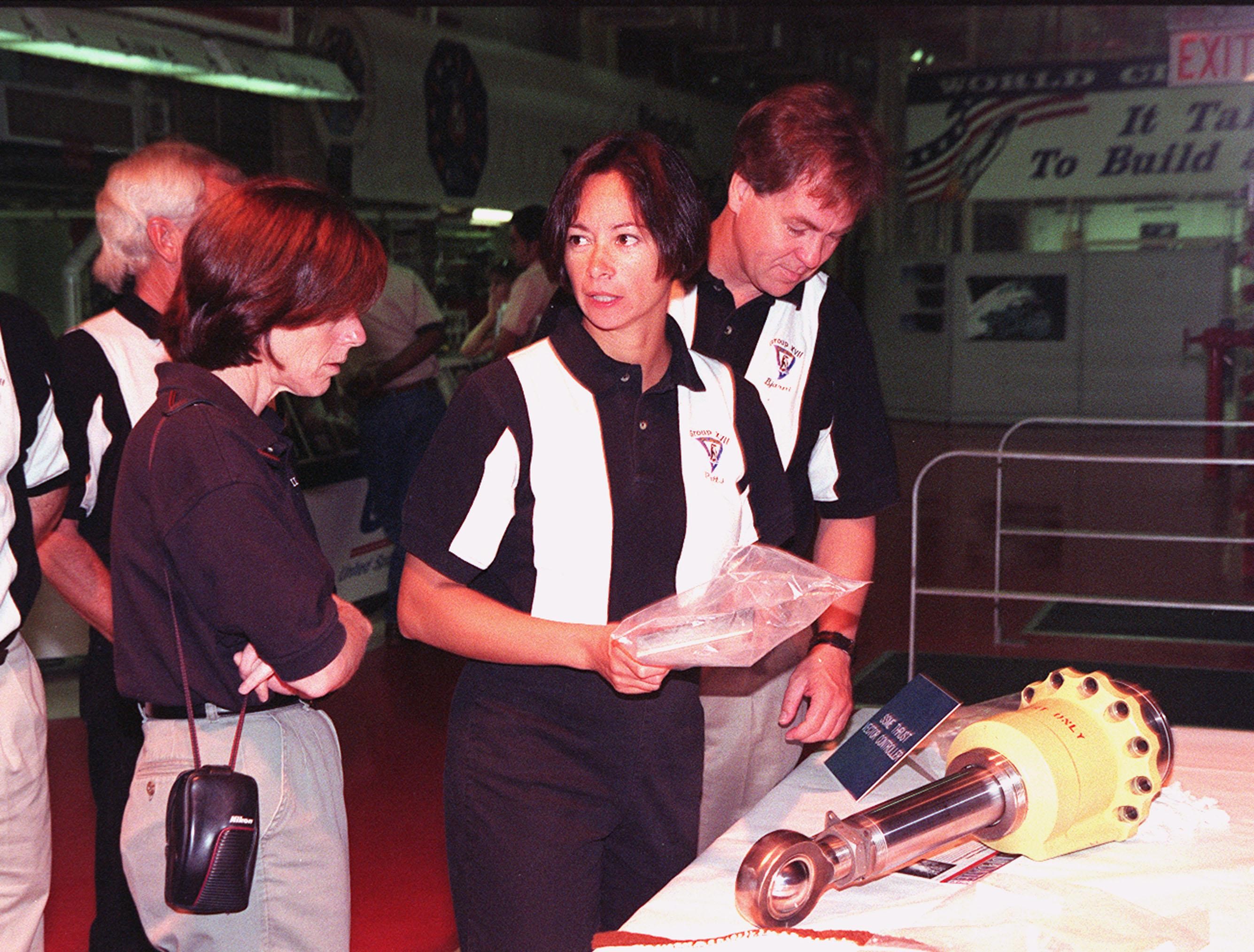
In the Orbiter Processing Facility, 1998 astronaut candidates (ASCAN) Barbara R. Morgan, Patricia C. Hilliard (M.D.) and Bjarni V. Tryggvason look at the hardware exhibits, such as the engine actuator on the table. Tryggvason is with the Canadian Space Agency. The 1998 ASCAN class is at KSC for training activities, including fire training and a flight awareness program, plus touring the OPF, SSME Processing Facility, VAB, SSPF, launch pads, SLF, Apollo/Saturn V Center and the crew headquarters. Other U.S. candidates in the '98 class are Clayton C. Anderson, Lee J. Archambault, Tracy E. Caldwell (Ph.D.), Gregory E. Chamitoff (Ph.D.), Timothy J. Creamer, Christopher J. Ferguson, Michael J. Foreman, Michael E. Fossum, Kenneth T. Ham, Gregory C. Johnson, Gregory H. Johnson, Stanley G. Love (Ph.D.), Leland D. Melvin, William A. Oefelein, John D. Olivas (Ph.D.), Nicholas J.M. Patrick (Ph.D.), Alan G. Poindexter, Garrett E. Reisman (Ph.D.), Steven R. Swanson, Douglas H. Wheelock, Sunita L. Williams, Neil W. Woodward III, George D. Zamka; and the other international candidates are Leopold Eyharts, Paolo Nespoli, Hans Schlegel, Roberto Vittori, and Marcos Pontes
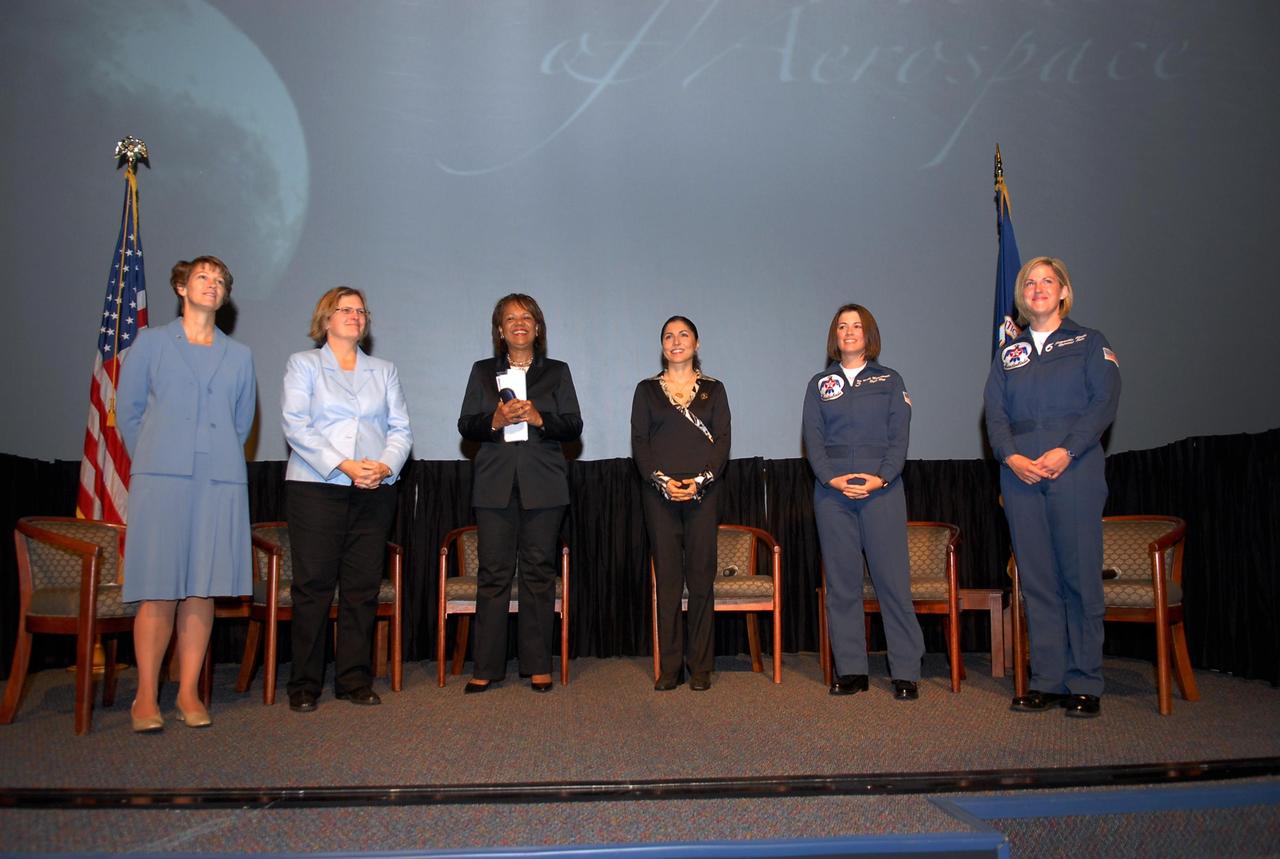
KENNEDY SPACE CENTER, FLA. — On stage for the World Space Expo's Pioneering Women of Aerospace forum are Ret. Colonel Eileen Collins, the first female shuttle commander; Dr. Kathryn D. Sullivan, the first American woman to spacewalk; Patricia Grace Smith, with the FAA, the first associate administrator of commercial space transportation; Dr. Anousheh Ansari, a spaceflight participant ; Major Nicole Malachowski, the first female pilot with the U.S. Air Force Thunderbirds; and Major Samantha Weeks, the first female solo pilot with the U.S. Air Force Thunderbirds. The expo commemorates humanity's first 50 years in space while looking forward to returning people to the moon and exploring beyond. The expo showcased various panels, presentations and educational programs, as well as an aerial salute featuring the U.S. Air Force Thunderbirds, U.S. Air Force F-22 Raptor, U.S. Navy F-18 Super Hornet, U.S. Air Force F-15 Eagle, the P-51 Mustang Heritage Flight, and the U.S. Air Force 920th Rescue Wing, which was responsible for Mercury and Gemini capsule recovery. The U.S. Army Golden Knights also demonstrated precision skydiving. Photo credit: NASA/Kim Shiflett
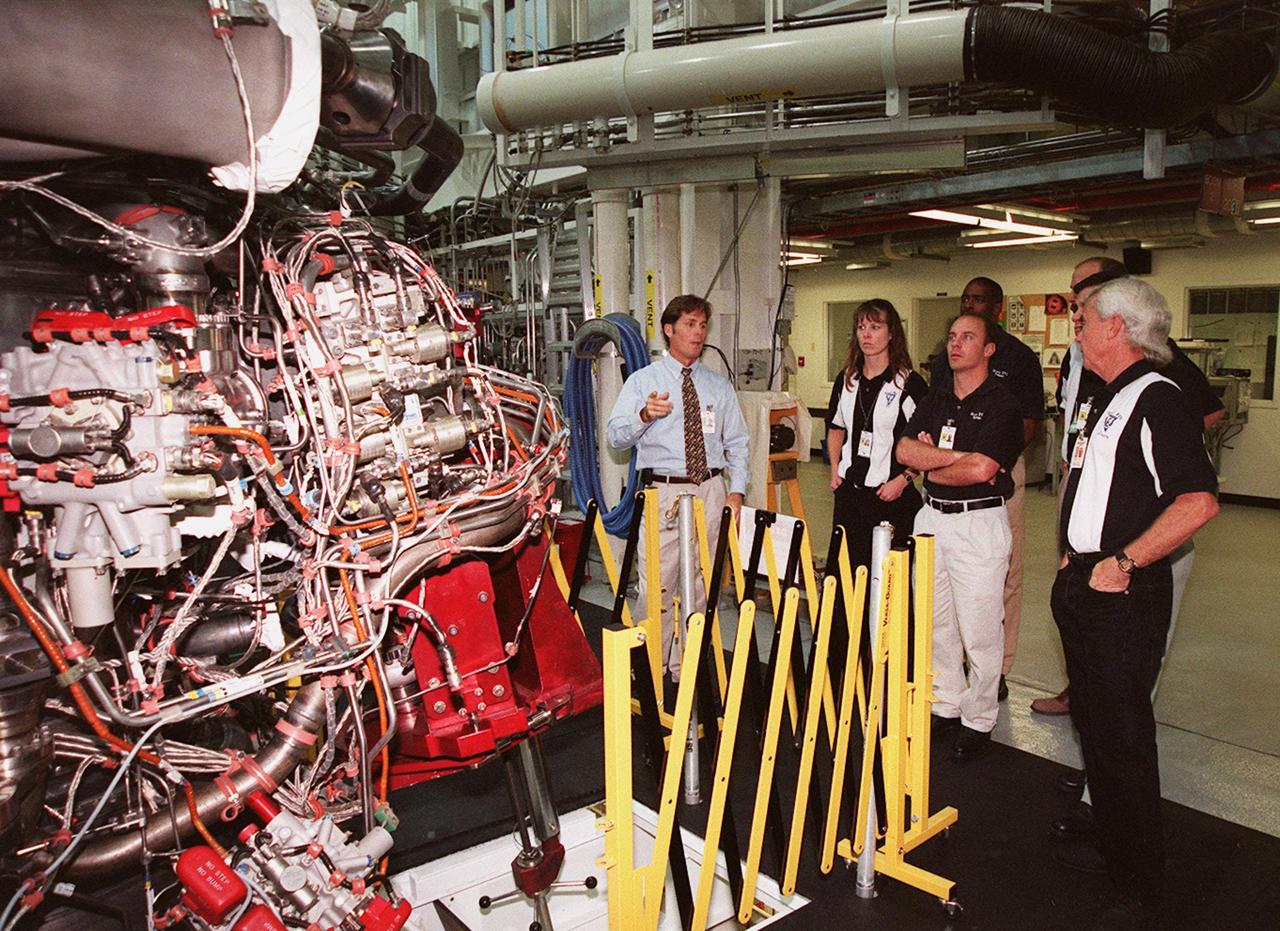
KENNEDY SPACE CENTER, FLA. -- On their tour of KSC, members of the 1998 astronaut candidate class (group 17) stop at the Space Shuttle Main Engine (SSME) Processing Facility for a close up look at a main shuttle engine. The class is taking part in training activities, including fire training and a flight awareness program, plus touring the OPF, VAB, SSPF, launch pads, SLF, Apollo/Saturn V Center, the crew headquarters, as well as the SSME Processing Facility. The U.S. candidates in the '98 class are Clayton C. Anderson, Lee J. Archambault, Tracy E. Caldwell (Ph.D.), Gregory E. Chamitoff (Ph.D.), Timothy J. Creamer, Christopher J. Ferguson, Michael J. Foreman, Michael E. Fossum, Kenneth T. Ham, Patricia C. Hilliard (M.D.), Gregory C. Johnson, Gregory H. Johnson, Stanley G. Love (Ph.D.), Leland D. Melvin, Barbara R. Morgan, William A. Oefelein, John D. Olivas (Ph.D.), Nicholas J.M. Patrick (Ph.D.), Alan G. Poindexter, Garrett E. Reisman (Ph.D.), Steven R. Swanson, Douglas H. Wheelock, Sunita L. Williams, Neil W. Woodward III, George D. Zamka; and the international candidates are Leopold Eyharts, Paolo Nespoli, Hans Schlegel, Roberto Vittori, Bjarni V. Tryggvason, and Marcos Pontes
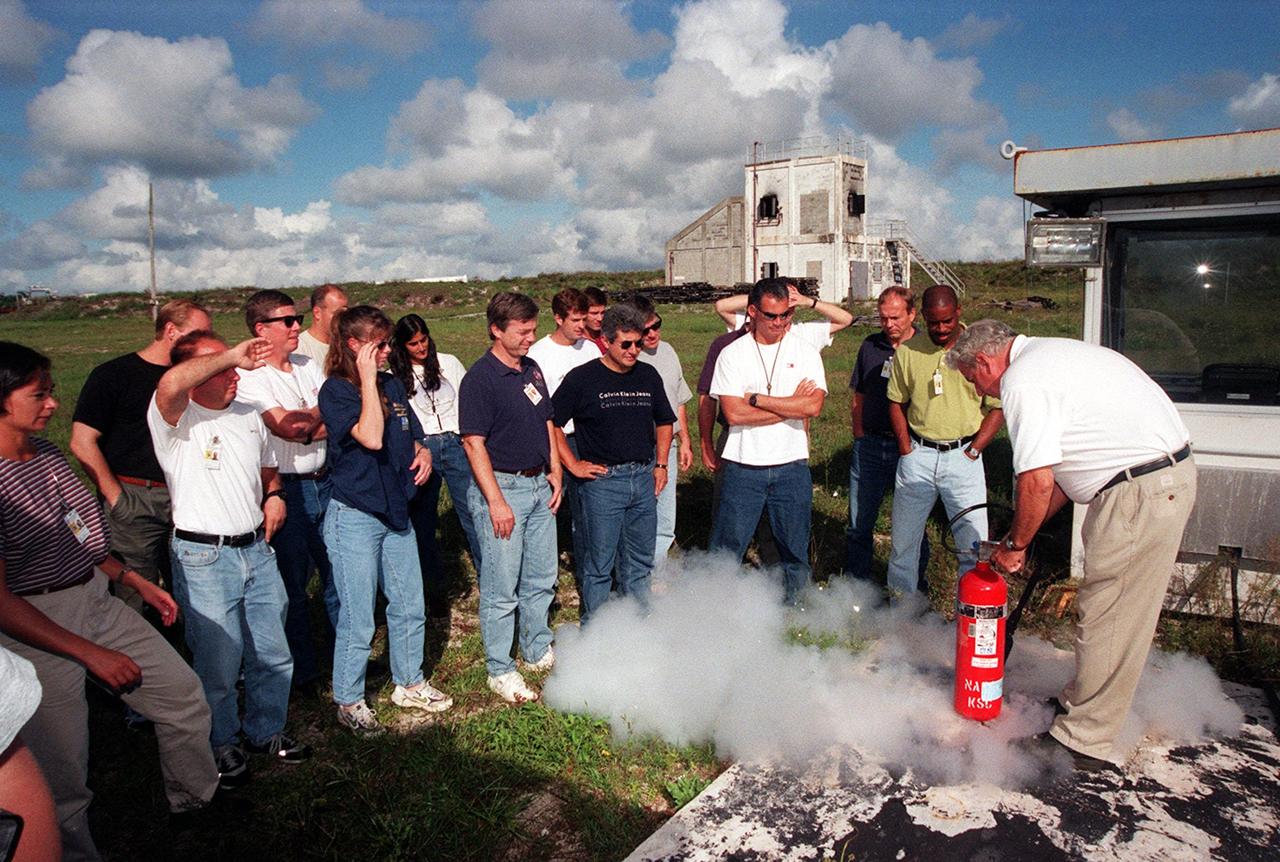
KENNEDY SPACE CENTER, FLA. -- On the grounds of the Kennedy Space Center, members of the 1998 astronaut candidate class (Group 17) take part in fire training. The class is taking part in training activities, including a flight awareness program, plus touring the OPF, VAB, SSPF, SSME Processing Facility, launch pads, SLF, Apollo/Saturn V Center, and the crew quarters. The U.S. candidates in the '98 class are Clayton C. Anderson, Lee J. Archambault, Tracy E. Caldwell (Ph.D.), Gregory E. Chamitoff (Ph.D.), Timothy J. Creamer, Christopher J. Ferguson, Michael J. Foreman, Michael E. Fossum, Kenneth T. Ham, Patricia C. Hilliard (M.D.), Gregory C. Johnson, Gregory H. Johnson, Stanley G. Love (Ph.D.), Leland D. Melvin, Barbara R. Morgan, William A. Oefelein, John D. Olivas (Ph.D.), Nicholas J.M. Patrick (Ph.D.), Alan G. Poindexter, Garrett E. Reisman (Ph.D.), Steven R. Swanson, Douglas H. Wheelock, Sunita L. Williams, Neil W. Woodward III, George D. Zamka; and the international candidates are Leopold Eyharts, Paolo Nespoli, Hans Schlegel, Roberto Vittori, Bjarni V. Tryggvason, and Marcos Pontes
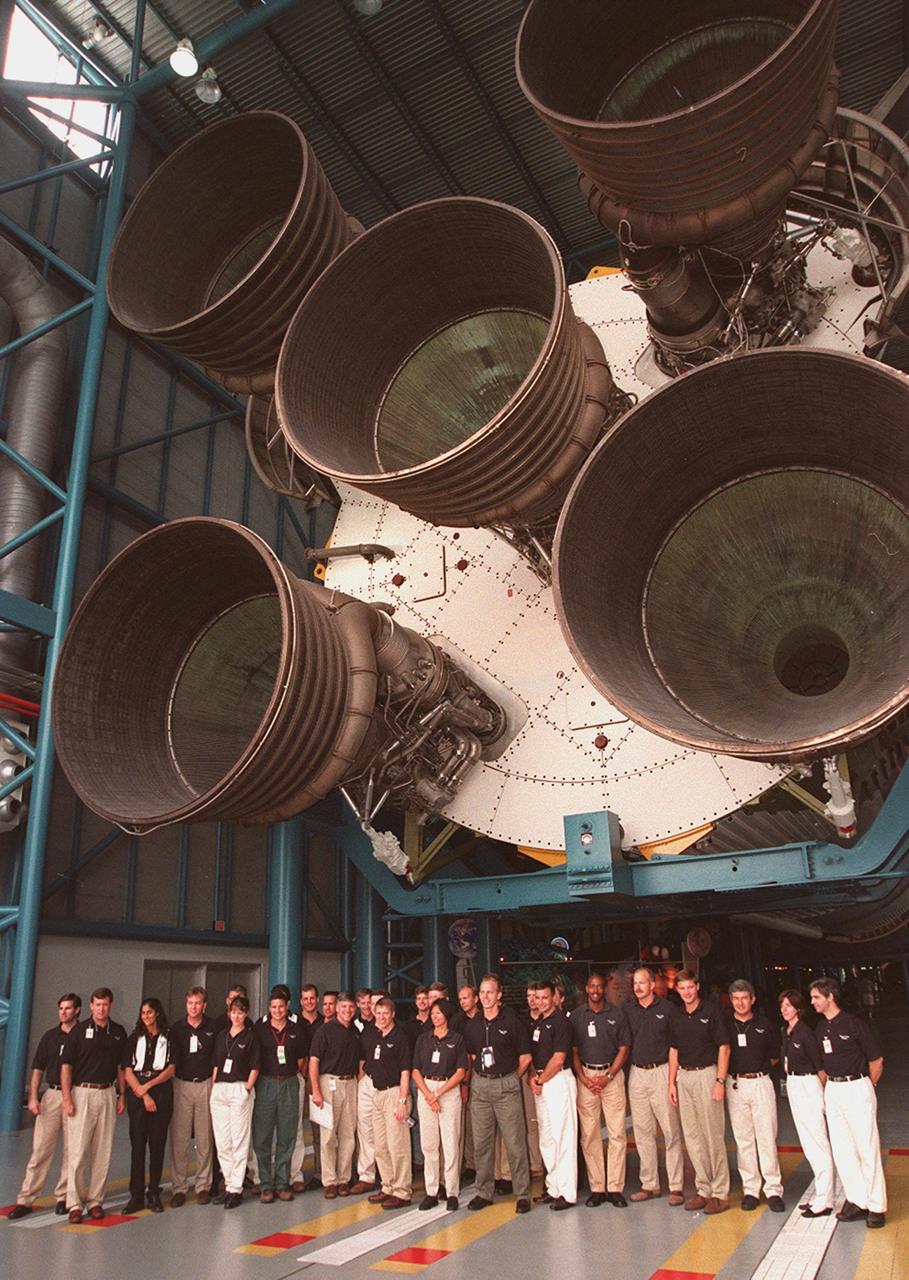
KENNEDY SPACE CENTER, FLA. -- At the Apollo/Saturn V Center, some of the 1998 astronaut candidate class (group 17) line up for a photo while standing under the engines of the Saturn V rocket on display. The U.S. candidates include Clayton C. Anderson, Lee J. Archambault, Tracy E. Caldwell (Ph.D.), Gregory E. Chamitoff (Ph.D.), Timothy J. Creamer, Christopher J. Ferguson, Michael J. Foreman, Michael E. Fossum, Kenneth T. Ham, Patricia C. Hilliard (M.D.), Gregory C. Johnson, Gregory H. Johnson, Stanley G. Love (Ph.D.), Leland D. Melvin, Barbara R. Morgan, William A. Oefelein, John D. Olivas (Ph.D.), Nicholas J.M. Patrick (Ph.D.), Alan G. Poindexter, Garrett E. Reisman (Ph.D.), Steven R. Swanson, Douglas H. Wheelock, Sunita L. Williams, Neil W. Woodward III, George D. Zamka; and international candidates Leopold Eyharts, Paolo Nespoli, Hans Schlegel, Roberto Vittori, Bjarni V. Tryggvason, and Marcos Pontes. The class is at KSC for training activities, including fire training and a flight awareness program, plus touring the OPF, SSME Processing Facility, VAB, SSPF, launch pads, SLF, Apollo/Saturn V Center and the crew headquarters
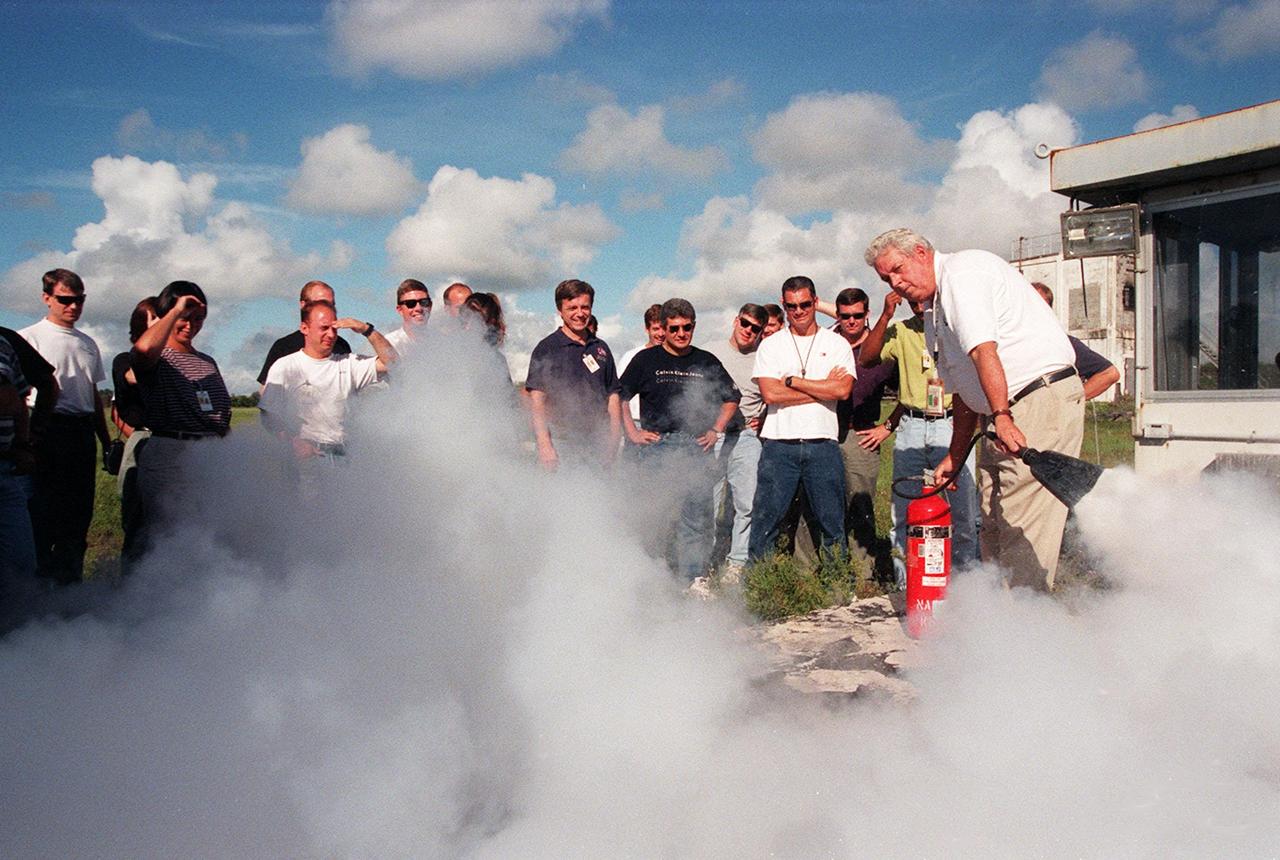
KENNEDY SPACE CENTER, FLA. -- On the grounds of the Kennedy Space Center, members of the 1998 astronaut candidate class (Group 17) watch a demonstration as part of fire training. The class is taking part in training activities, including a flight awareness program, plus touring the OPF, VAB, SSPF, SSME Processing Facility, launch pads, SLF, Apollo/Saturn V Center, and the crew quarters. The U.S. candidates in the '98 class are Clayton C. Anderson, Lee J. Archambault, Tracy E. Caldwell (Ph.D.), Gregory E. Chamitoff (Ph.D.), Timothy J. Creamer, Christopher J. Ferguson, Michael J. Foreman, Michael E. Fossum, Kenneth T. Ham, Patricia C. Hilliard (M.D.), Gregory C. Johnson, Gregory H. Johnson, Stanley G. Love (Ph.D.), Leland D. Melvin, Barbara R. Morgan, William A. Oefelein, John D. Olivas (Ph.D.), Nicholas J.M. Patrick (Ph.D.), Alan G. Poindexter, Garrett E. Reisman (Ph.D.), Steven R. Swanson, Douglas H. Wheelock, Sunita L. Williams, Neil W. Woodward III, George D. Zamka; and the international candidates are Leopold Eyharts, Paolo Nespoli, Hans Schlegel, Roberto Vittori, Bjarni V. Tryggvason, and Marcos Pontes
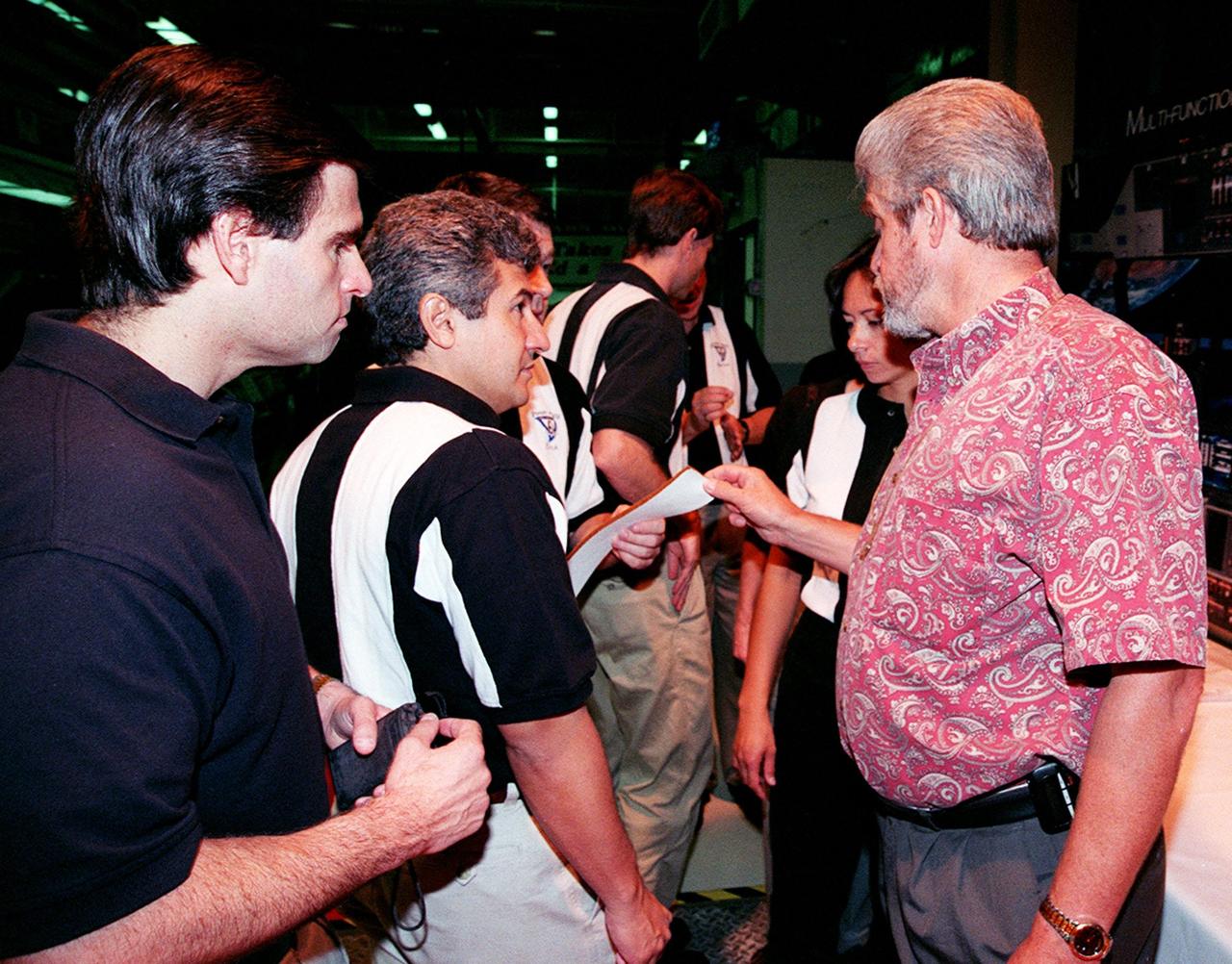
In the Orbiter Processing Facility bay 3, Larry Osheim (right), who is with United Space Alliance, shows members of the 1998 astronaut candidate class (group 17) a sample of Felt Reusable Surface Insulation (FRSI) blankets used on the orbiters. The class is at KSC for training activities, including fire training and a flight awareness program, plus touring the OPF, SSME Processing Facility, VAB, SSPF, launch pads, SLF, Apollo/Saturn V Center and the crew headquarters. The U.S. candidates in the '98 class are Clayton C. Anderson, Lee J. Archambault, Tracy E. Caldwell (Ph.D.), Gregory E. Chamitoff (Ph.D.), Timothy J. Creamer, Christopher J. Ferguson, Michael J. Foreman, Michael E. Fossum, Kenneth T. Ham, Patricia C. Hilliard (M.D.), Gregory C. Johnson, Gregory H. Johnson, Stanley G. Love (Ph.D.), Leland D. Melvin, Barbara R. Morgan, William A. Oefelein, John D. Olivas (Ph.D.), Nicholas J.M. Patrick (Ph.D.), Alan G. Poindexter, Garrett E. Reisman (Ph.D.), Steven R. Swanson, Douglas H. Wheelock, Sunita L. Williams, Neil W. Woodward III, George D. Zamka; and the international candidates are Leopold Eyharts, Paolo Nespoli, Hans Schlegel, Roberto Vittori, Bjarni V. Tryggvason, and Marcos Pontes
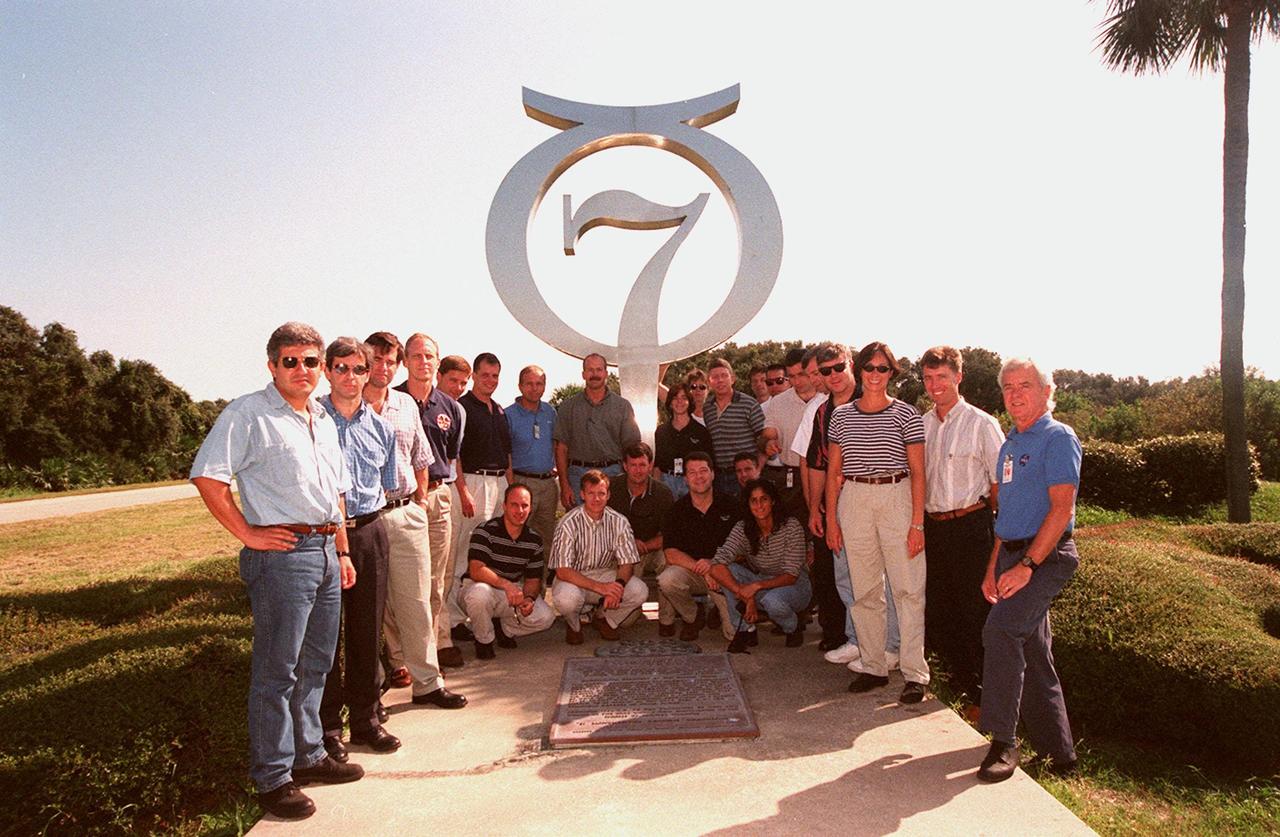
At Cape Canaveral Air Station, members of the 1998 astronaut candidate class (Group 17) pose in front of the Project Mercury monument at Launch Complex 14 during a tour of the station's facilities. This 13-foot-high astronomical symbol for the planet Mercury was constructed by General Dynamics, the Atlas airframe contractor, and dedicated in 1964 in honor of those who flew in the Mercury 7 capsule. The class is at Kennedy Space Center taking part in training activities, including a flight awareness program, as well as touring the OPF, VAB, SSPF, SSME Processing Facility, launch pads, SLF, Apollo/Saturn V Center, and the crew quarters. The U.S. candidates in the '98 class are Clayton C. Anderson, Lee J. Archambault, Tracy E. Caldwell (Ph.D.), Gregory E. Chamitoff (Ph.D.), Timothy J. Creamer, Christopher J. Ferguson, Michael J. Foreman, Michael E. Fossum, Kenneth T. Ham, Patricia C. Hilliard (M.D.), Gregory C. Johnson, Gregory H. Johnson, Stanley G. Love (Ph.D.), Leland D. Melvin, Barbara R. Morgan, William A. Oefelein, John D. Olivas (Ph.D.), Nicholas J.M. Patrick (Ph.D.), Alan G. Poindexter, Garrett E. Reisman (Ph.D.), Steven R. Swanson, Douglas H. Wheelock, Sunita L. Williams, Neil W. Woodward III, George D. Zamka; and the international candidates are Leopold Eyharts, Paolo Nespoli, Hans Schlegel, Roberto Vittori, Bjarni V. Tryggvason, and Marcos Pontes
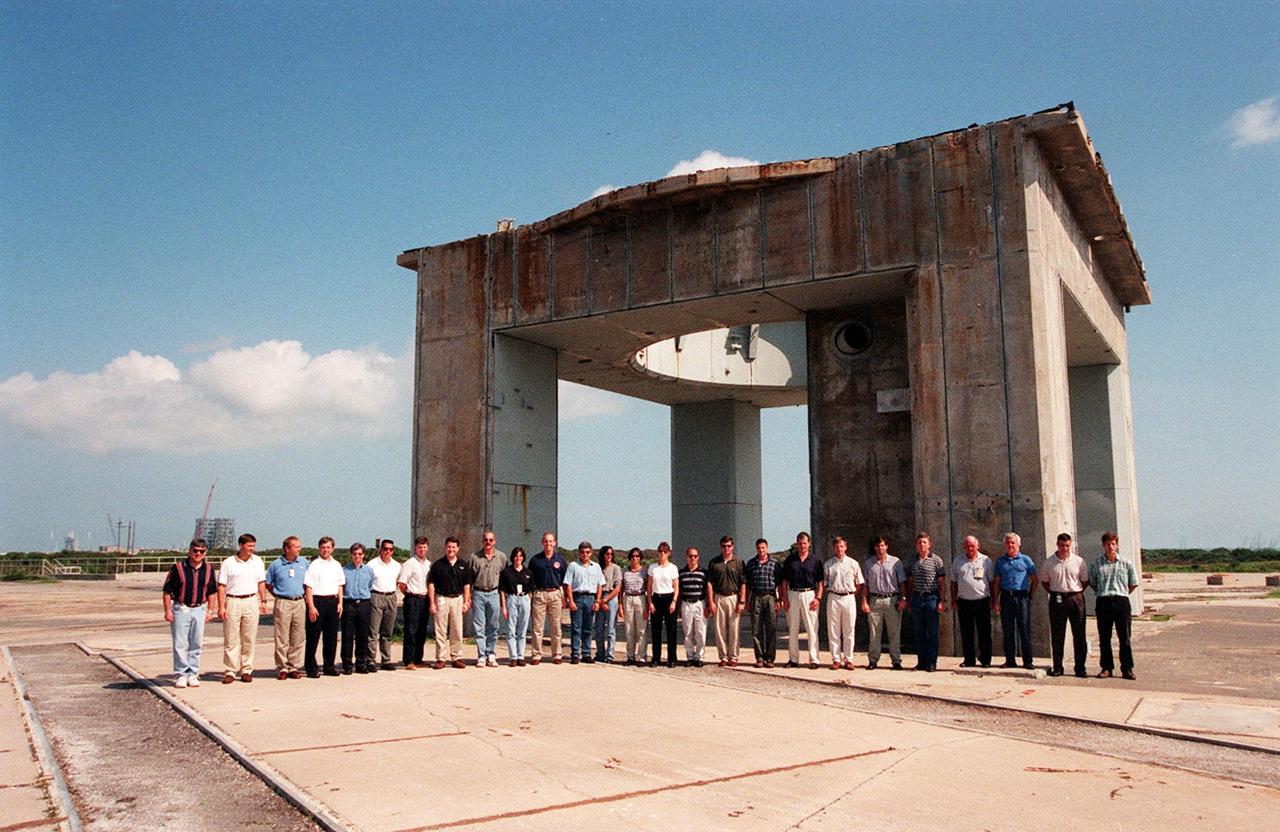
At Cape Canaveral Air Station, members of the 1998 astronaut candidate class (Group 17) pose in front of what remains of the launch tower at Launch Complex 34 during a tour of the station's facilities. During the Apollo Program, Launch Complex 34 was the site of the first Saturn I and Saturn IB launches, as well as the tragic fire in which the Apollo I astronauts lost their lives. The class is at Kennedy Space Center taking part in training activities, including a flight awareness program, as well as touring the OPF, VAB, SSPF, SSME Processing Facility, launch pads, SLF, Apollo/Saturn V Center, and the crew quarters. The U.S. candidates in the '98 class are Clayton C. Anderson, Lee J. Archambault, Tracy E. Caldwell (Ph.D.), Gregory E. Chamitoff (Ph.D.), Timothy J. Creamer, Christopher J. Ferguson, Michael J. Foreman, Michael E. Fossum, Kenneth T. Ham, Patricia C. Hilliard (M.D.), Gregory C. Johnson, Gregory H. Johnson, Stanley G. Love (Ph.D.), Leland D. Melvin, Barbara R. Morgan, William A. Oefelein, John D. Olivas (Ph.D.), Nicholas J.M. Patrick (Ph.D.), Alan G. Poindexter, Garrett E. Reisman (Ph.D.), Steven R. Swanson, Douglas H. Wheelock, Sunita L. Williams, Neil W. Woodward III, George D. Zamka; and the international candidates are Leopold Eyharts, Paolo Nespoli, Hans Schlegel, Roberto Vittori, Bjarni V. Tryggvason, and Marcos Pontes