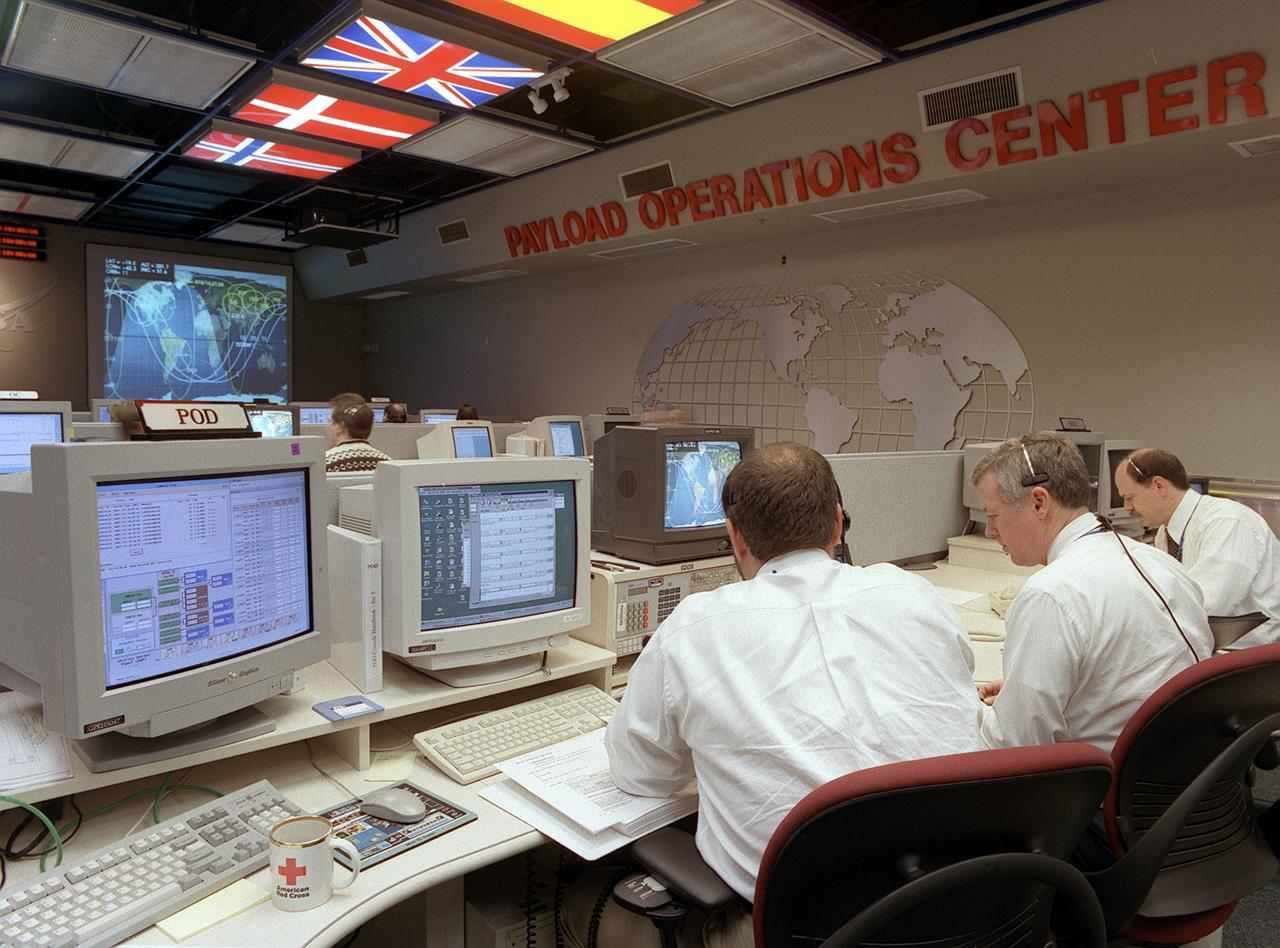
The Payload Operations Center (POC) is the science command post for the International Space Station (ISS). Located at NASA's Marshall Space Flight Center in Huntsville, Alabama, it is the focal point for American and international science activities aboard the ISS. The POC's unique capabilities allow science experts and researchers around the world to perform cutting-edge science in the unique microgravity environment of space. The POC is staffed around the clock by shifts of payload flight controllers. At any given time, 8 to 10 flight controllers are on consoles, operating, plarning for, and controlling various systems and payloads. This photograph shows the Payload Operations Director (POD) at work. The POD is the leader of the POC flight control team. The Director guides all payload activities in coordination with Mission Control at Johnson Space Center at Houston, Texas, the Station crew, the international partners, and other research facilities.
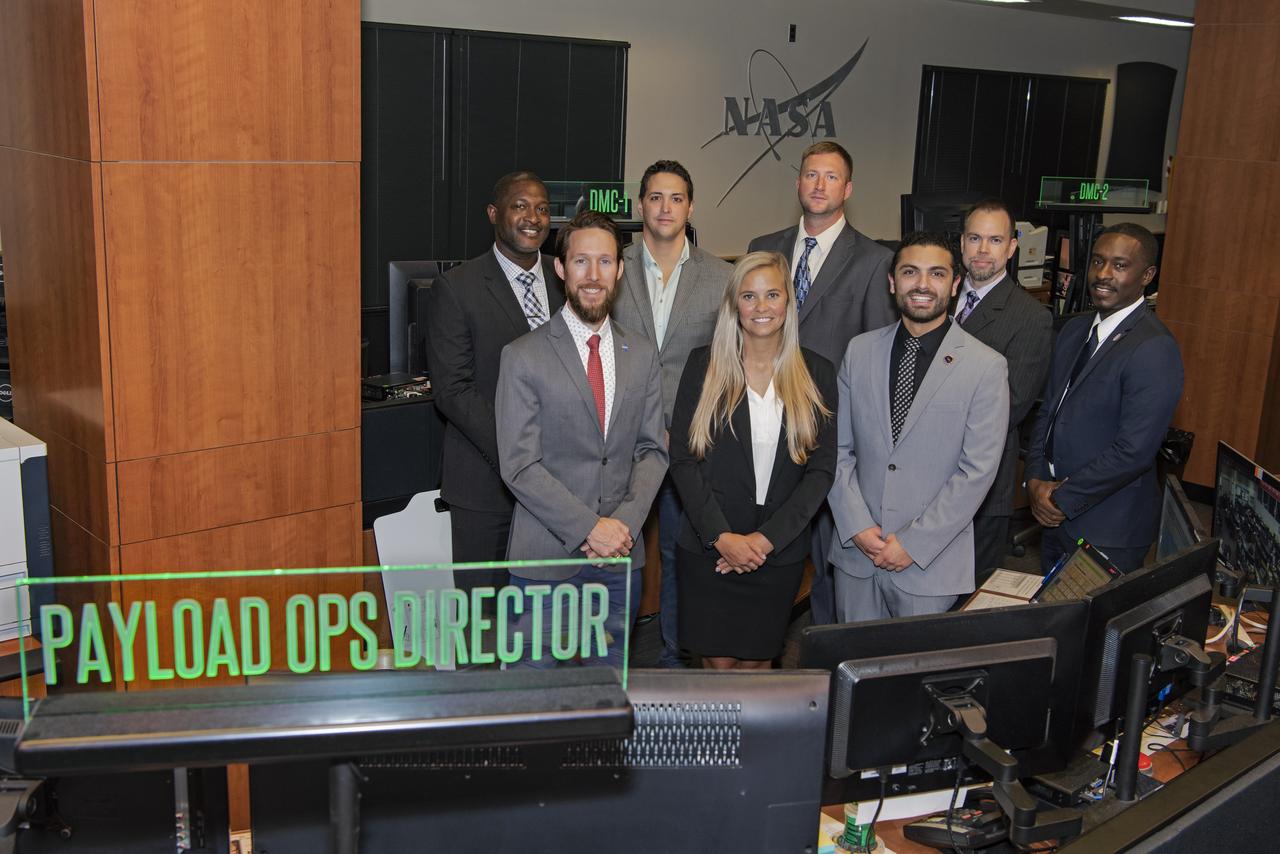
Official group photo of the new class of PODs (Payload Operations Directors) for 2019, taken in building 4663 Payload Operations Center. (L to R) Stacey Steele, Dr. Ian Howley, Michael Vigo, Jennifer McMillian, Luke Bingaman, Carlos Barreto, Luke Mays, David Nicholas Benjamin
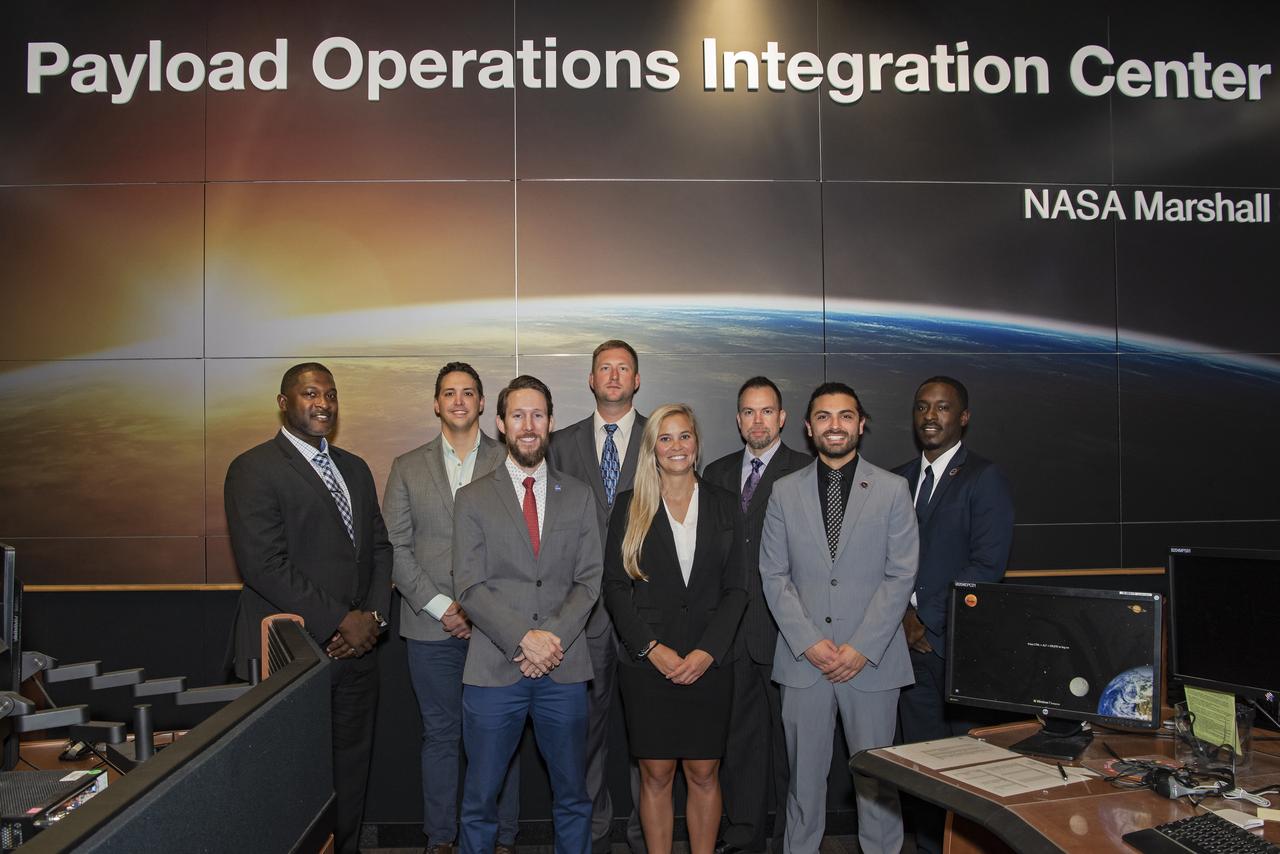
Official group photo of the new class of PODs (Payload Operations Directors) for 2019, taken in building 4663 Payload Operations Center. (L to R) Stacey Steele, Michael Vigo, Dr. Ian Howley, Luke Bingaman, Jennifer McMillian, Luke Mays, Carlos Barreto, David Nicholas Benjamin

PAYLOAD OPERATIONS INTEGRATION CENTER TEAM MEMBER STEPHANIE DUDLEY TALKS TO STUDENTS ABOUT HER DAY-TO-DAY JOB DUTIES AS A PAYLOAD OPERATIONS DIRECTOR.
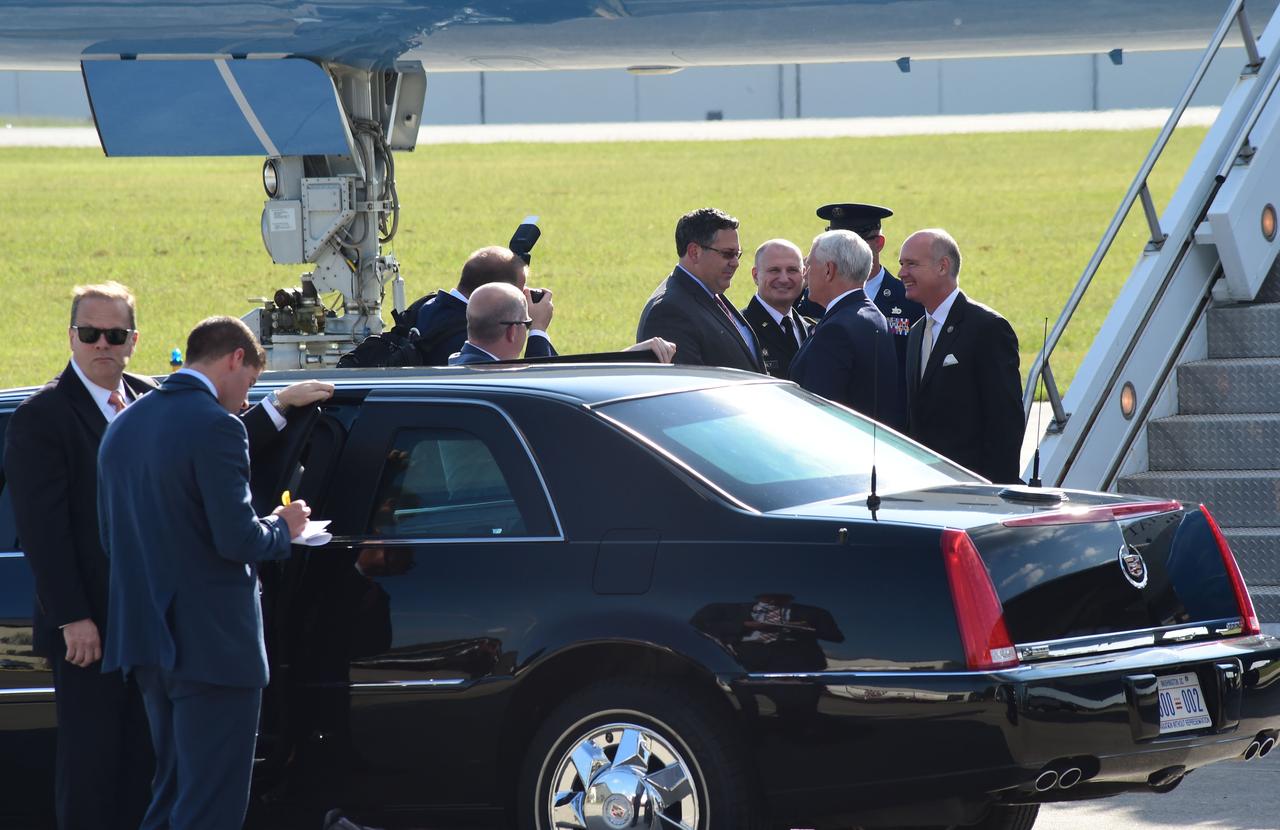
Air Force Two lands with Vice President Mike Pence along with Congressman Robert Aderholt at the Redstone Army Airfield in Huntsville, Alabama, on Monday, Sept. 25. They were greeted by NASA’s Marshall Space Flight Center Director Todd May and Redstone Arsenal’s Lt. Gen. Edward Daly. The Vice President is visiting NASA’s Marshall Center to meet with employees, view test hardware for NASA’s Space Launch System — America’s new deep-space rocket, and tour the Payload Operations Integration Center, “science central” for the International Space Station. Photo Credit: (NASA/Emmett Given)
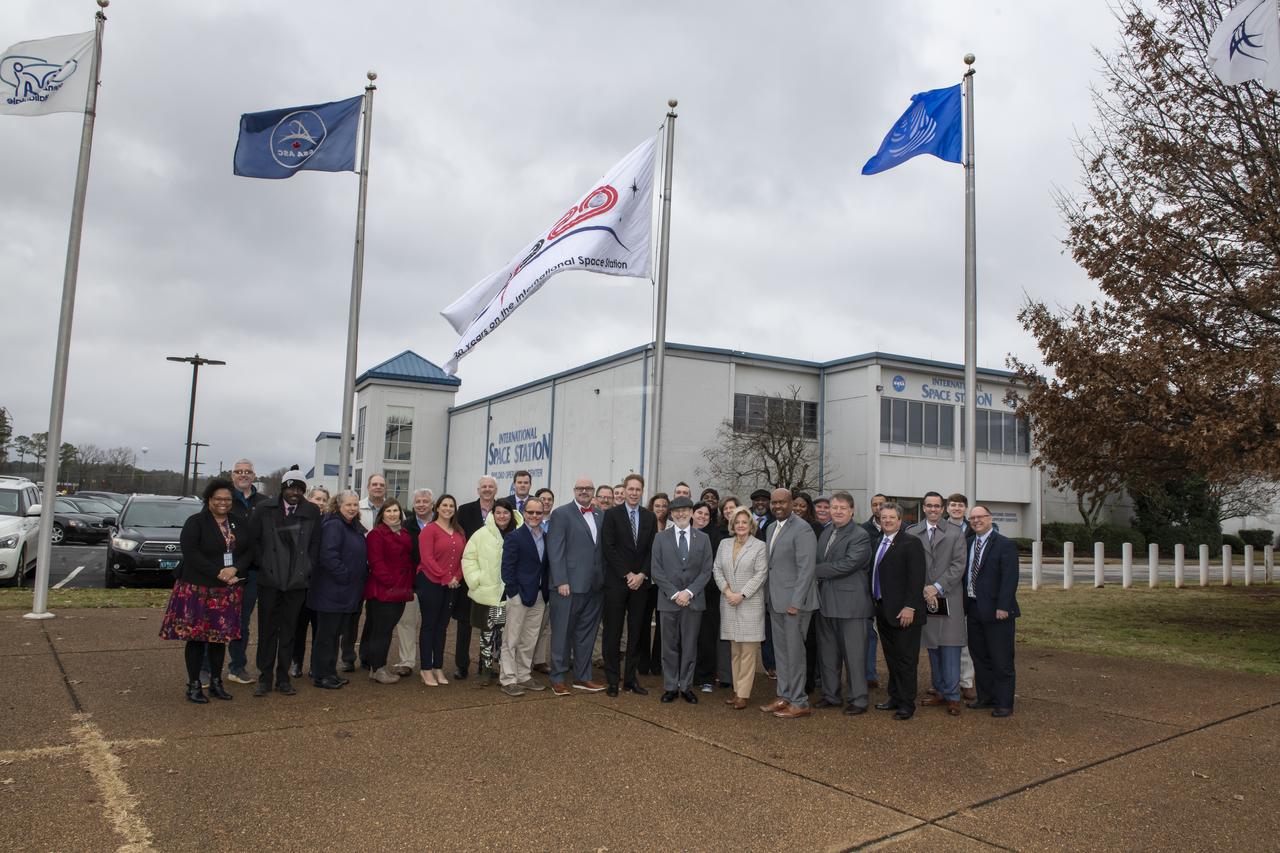
NASA Associate Administrator for the Human Exploration and Operations Mission Directorate and Marshall Center Director Jody Singer participate in the hanging of a new International Space Station flag out side of the Huntsville Operations Support Center (HOSC). Also participating were employees of the support center and the Payload Operations Integration Center.
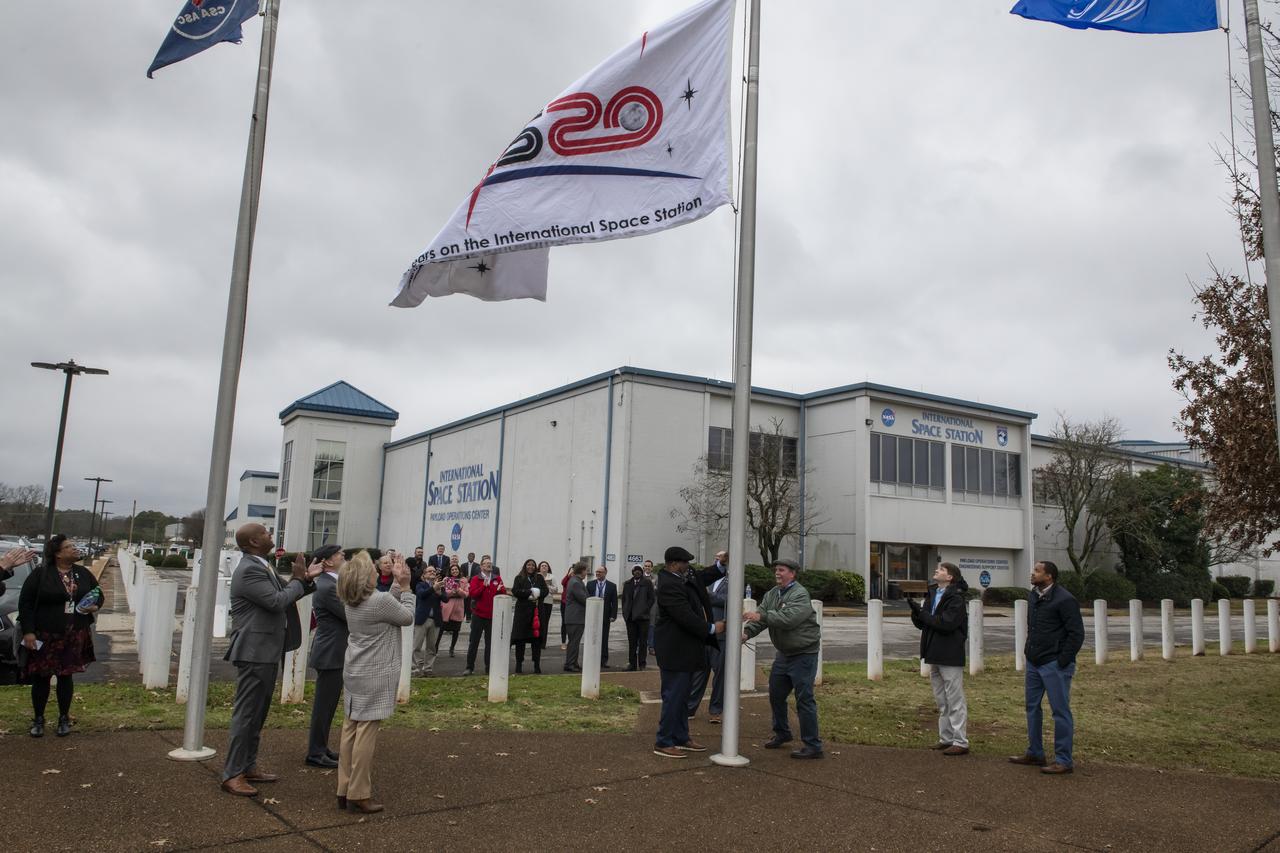
NASA Associate Administrator for the Human Exploration and Operations Mission Directorate and Marshall Center Director Jody Singer participate in the hanging of a new International Space Station flag out side of the Huntsville Operations Support Center (HOSC). Also participating were employees of the support center and the Payload Operations Integration Center.
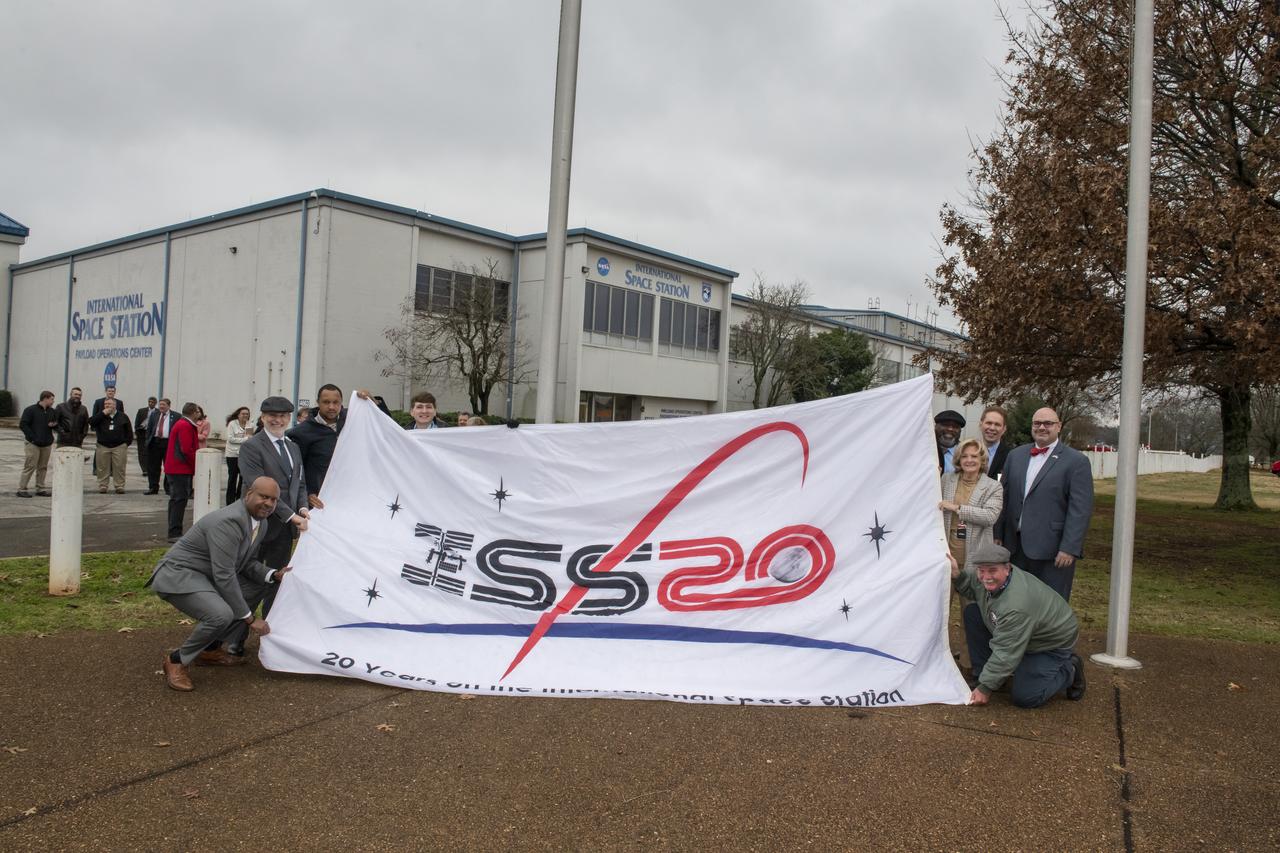
NASA Associate Administrator for the Human Exploration and Operations Mission Directorate and Marshall Center Director Jody Singer participate in the hanging of a new International Space Station flag out side of the Huntsville Operations Support Center (HOSC). Also participating were employees of the support center and the Payload Operations Integration Center.
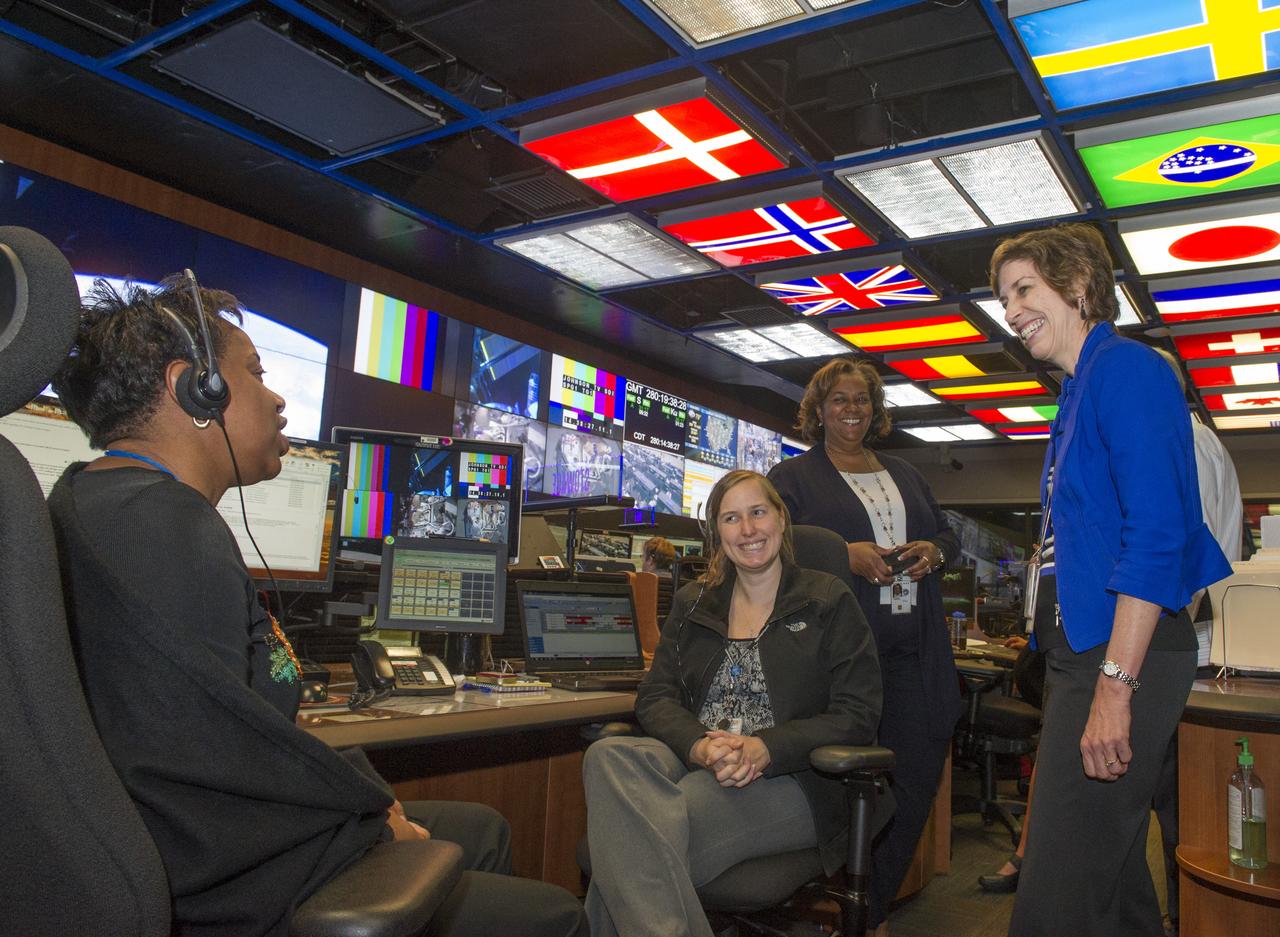
FROM LEFT, EUGENA GOGGANS AND MELISSA HOPPER, BOTH STOWAGE ENGINEERS, AND LYBREASE WOODARD, ASSOCIATE DIRECTOR OF THE MISSION OPERATIONS LAB, GREET DR. ELLEN OCHOA IN THE PAYLOAD OPERATIONS INTEGRATION CENTER FOR THE ISS
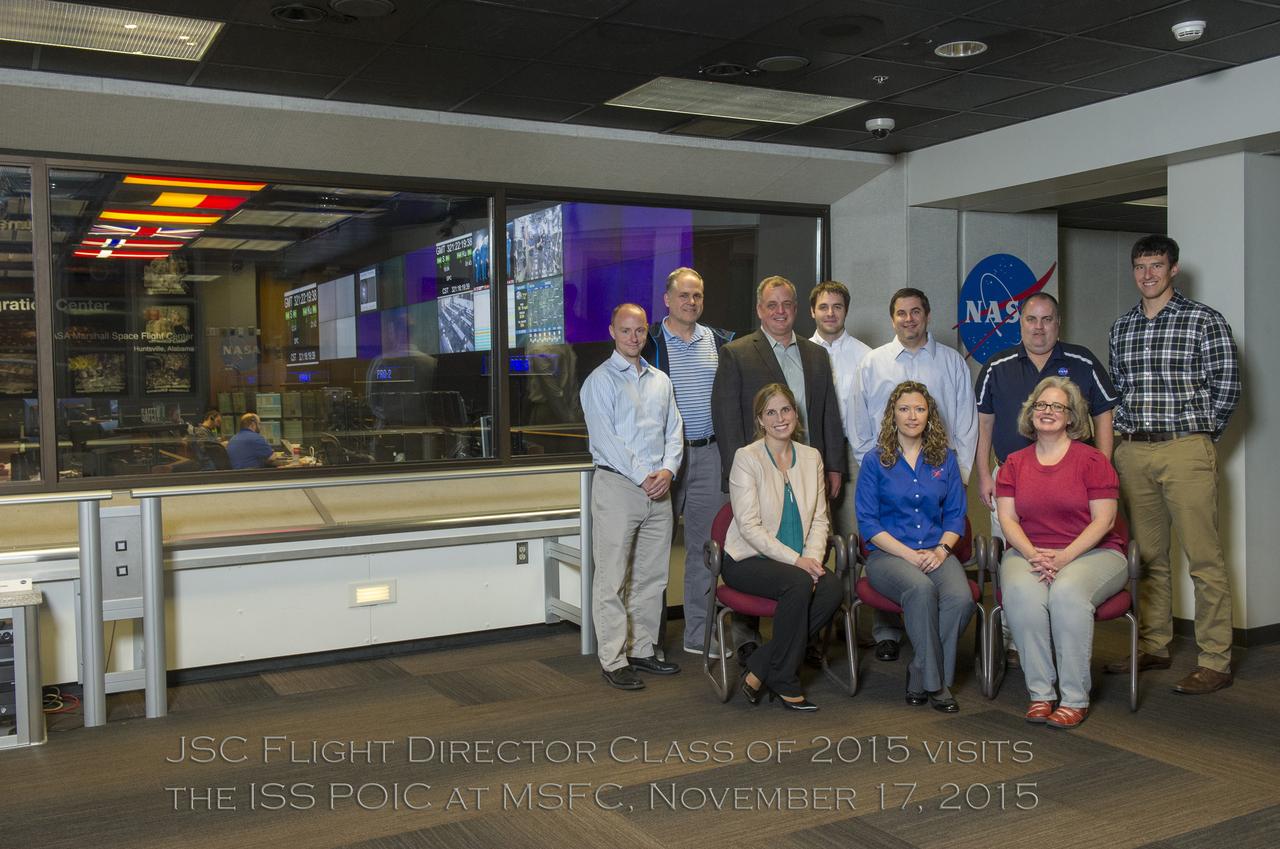
JSC FLIGHT DIRECTOR CLASS OF 2015 VISITS THE INTERNATIONAL SPACE STATION PAYLOAD OPERATION INTEGRATION CENTER AT MSFC, NOVEMBER 17, 2015
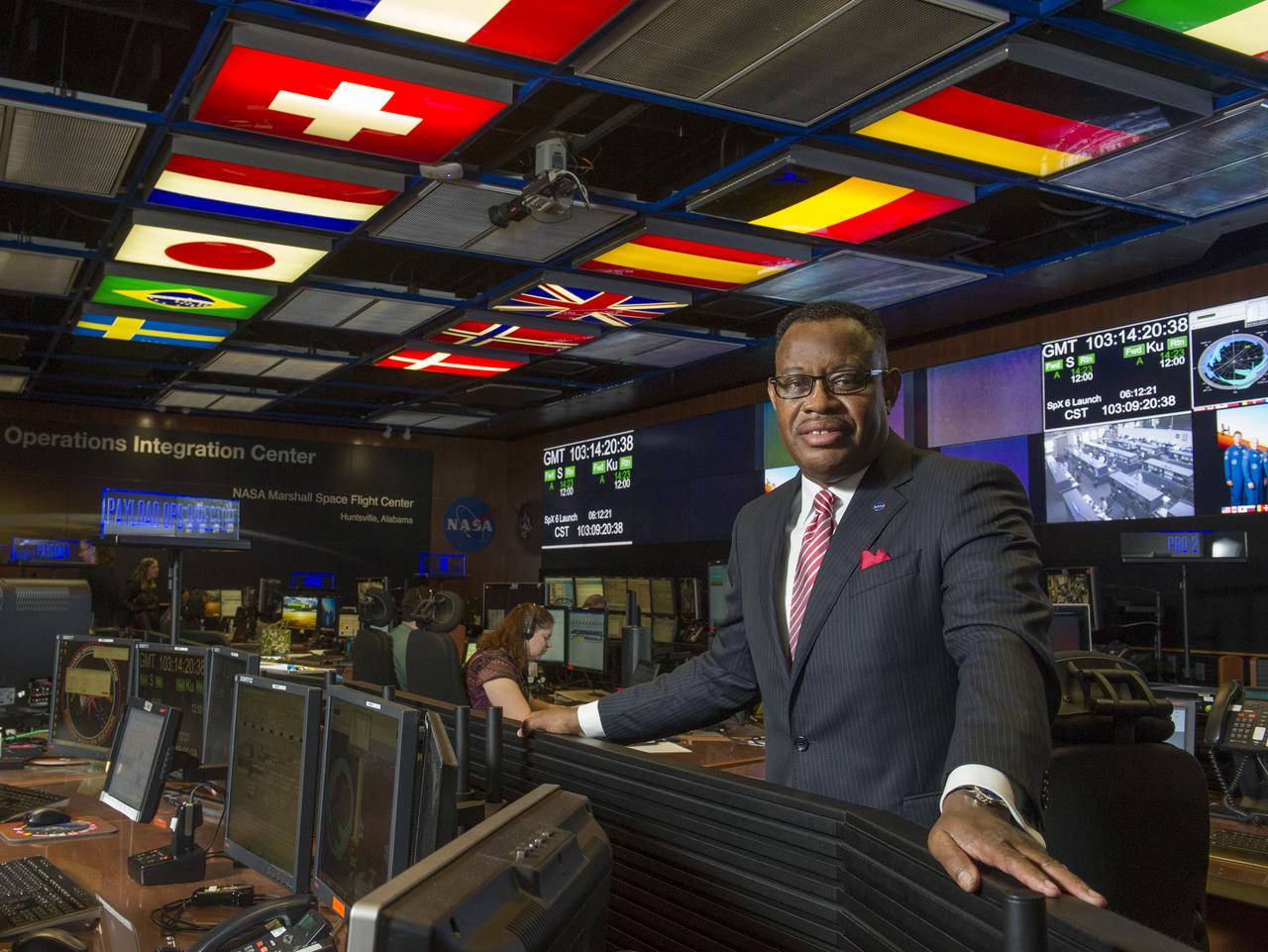
LEWIS WOOTEN, NEW DIRECTOR OF THE MISSION OPERATIONS LABORATORY AT NASA'S MARSHALL SPACE FLIGHT CENTER IN HUNTSVILLE, ALABAMA, MANAGES OPERATIONS IN THE PAYLOAD OPERATIONS INTEGRATION CENTER-THE COMMAND POST FOR ALL SCIENCE AND RESEARCH ACTIVITIES ON THE INTERNATIONAL SPACE STATION
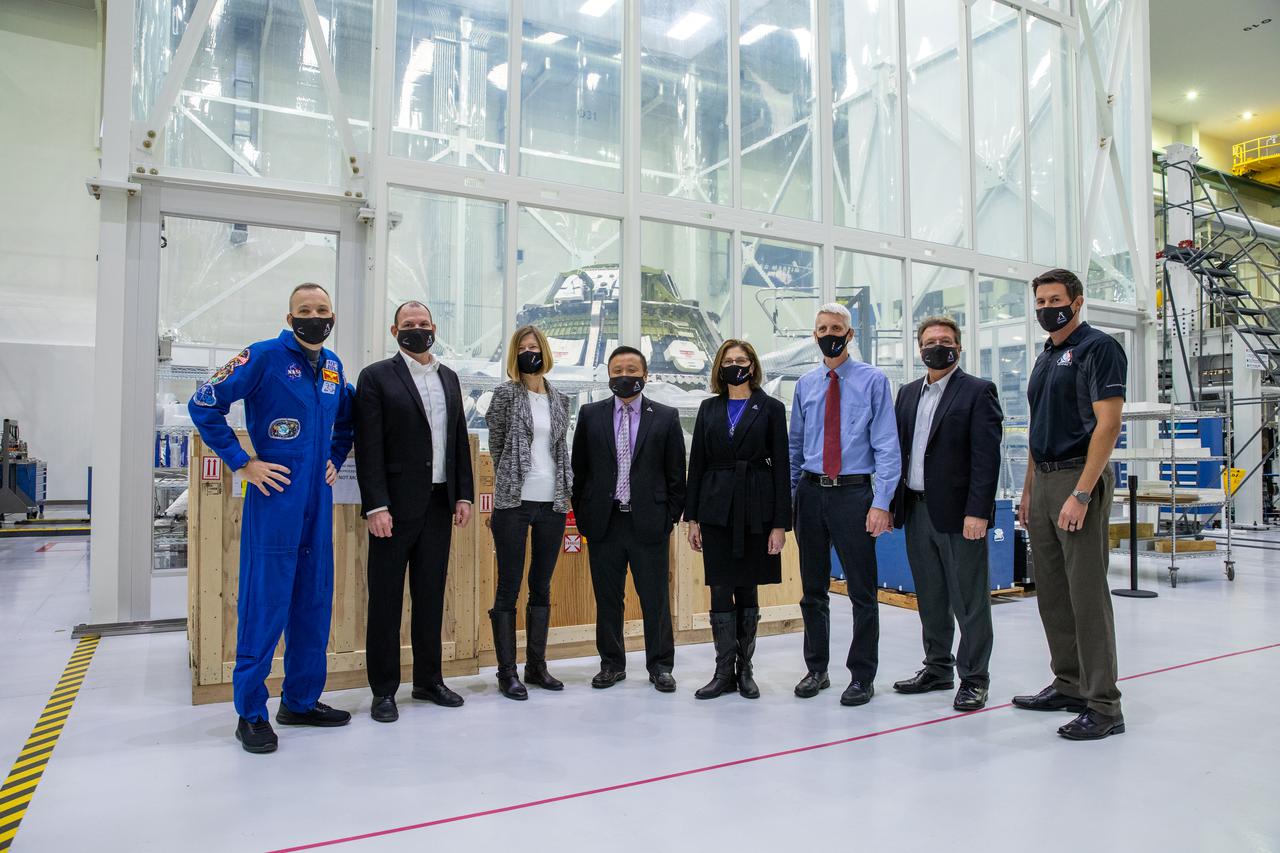
Kathy Lueders, third from left, associate administrator of the Human Exploration and Operations Mission Directorate, tours the Neil Armstrong Operations and Checkout Building high bay at NASA’s Kennedy Space Center in Florida on Jan. 14, 2021. In the background is the Orion crew module for the Artemis II mission. From left are NASA astronaut Randy Bresnik; Tony Antonelli, Lockheed Martin Orion Program director and Artemis II Mission director; Howard Hu, Orion deputy program manager; Cathy Koerner, Orion Program manager; Scott Wilson, Orion Production Operations manager; Jules Schneider, Lockheed Martin director of Orion Assembly, Test and Launch Operations at Kennedy; and Nathan Varn, Lockheed Martin Production Control director. The group also viewed the Orion spacecraft for Artemis I as it was lowered onto a transporter for the move to the Multi-Payload Processing Facility to begin ground processing by the Exploration Ground Systems and Jacobs teams.
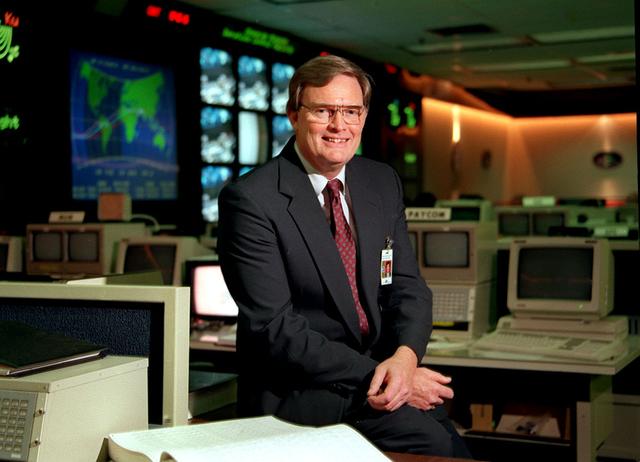
Marshall's sixth Center Director Thomas J. Lee (1989-1994) touring the Payload Operations Control Center (POCC). The Hubble Space Telescope (HST) saw its launch into orbit under the leadership of Dr. Lee's administration.
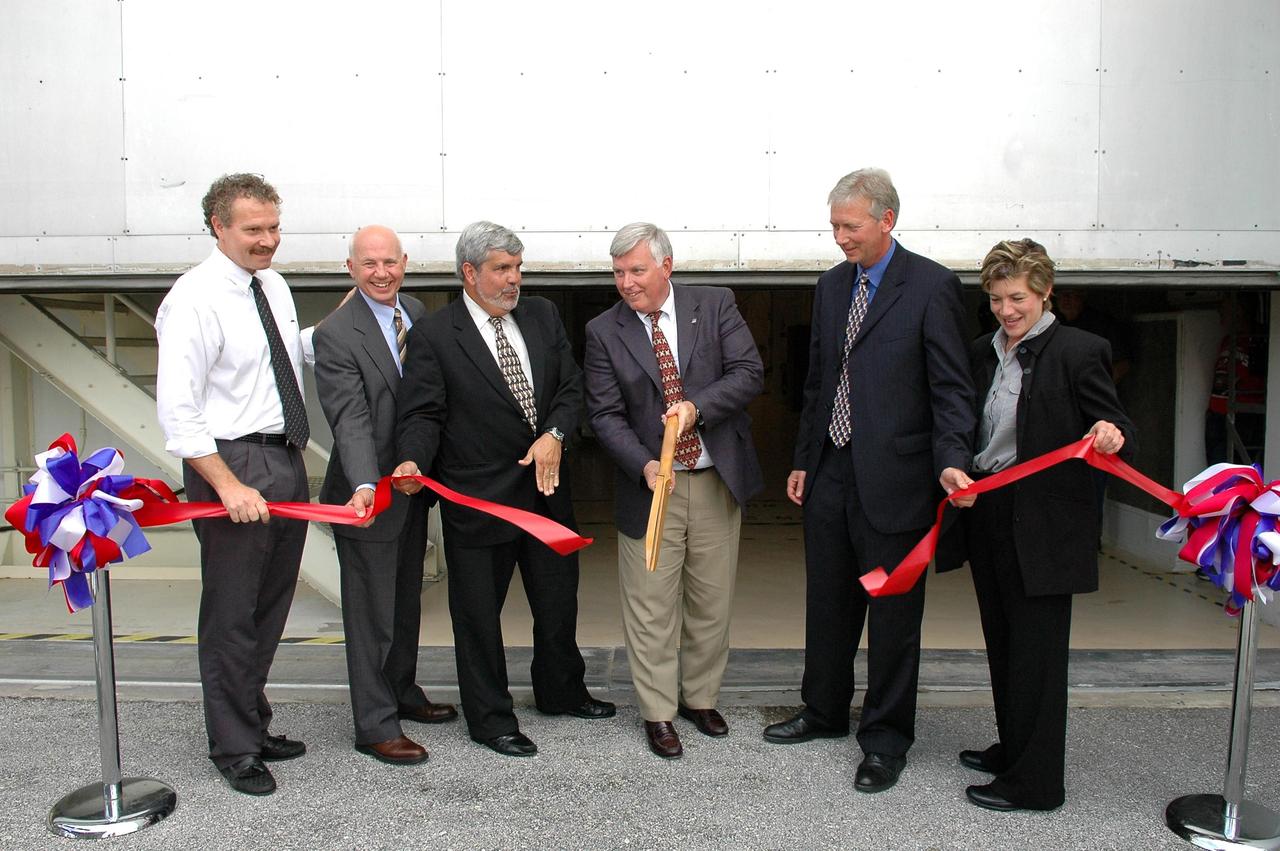
KENNEDY SPACE CENTER, FLA. - NASA officials cut the ribbon to officially reactivate the Operations and Checkout Building's west door as entry to the crew exploration vehicle (CEV) environment. From left are Russell Romanella, director of the ISS Payload and Processing Directorate; Conrad Nagel, consultant for Space Florida; Jim Kennedy, director of KSC; Adrian Lafitte, director of government relations for Lockheed Martin; Mark Jager, program manager of Checkout, Assembly, Payloads Processing Services with Boeing; and Lynda Weatherman, with the Economic Development Commission. During the rest of the decade, KSC will transition from launching space shuttles to launching new vehicles in NASA’s Vision For Space Exploration. Photo credit: NASA/Kim Shiflett
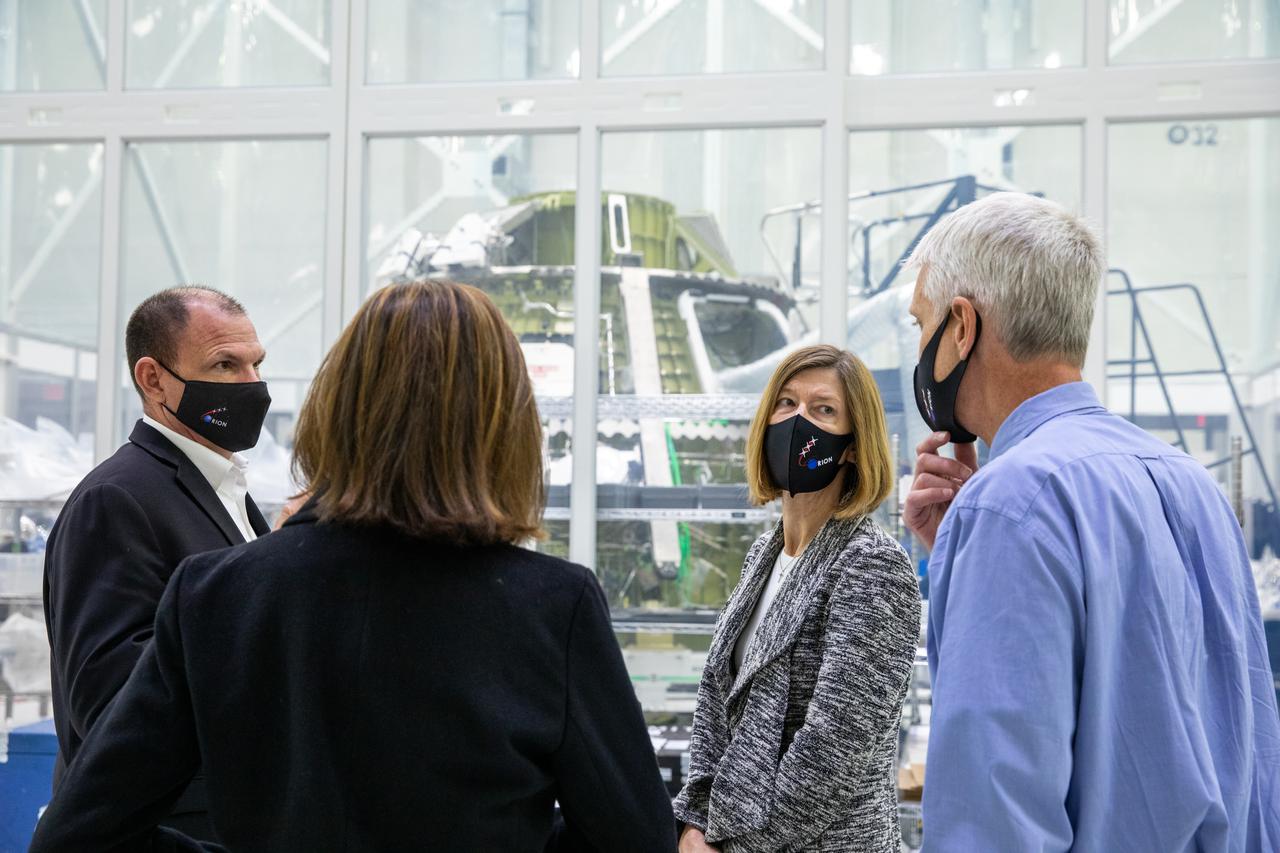
Kathy Lueders, second from right, associate administrator of the Human Exploration and Operations Mission Directorate, tours the Neil Armstrong Operations and Checkout Building high bay at NASA’s Kennedy Space Center in Florida on Jan. 14, 2021. In the background is the Orion crew module for the Artemis II mission. From left are Tony Antonelli, Lockheed Martin Orion Program director and Artemis II Mission director; Cathy Koerner, Orion Program manager; and Scott Wilson, Orion Production Operations manager. The group also viewed the Orion spacecraft for Artemis I as it was lowered onto a transporter for the move to the Multi-Payload Processing Facility to begin ground processing by the Exploration Ground Systems and Jacobs teams.
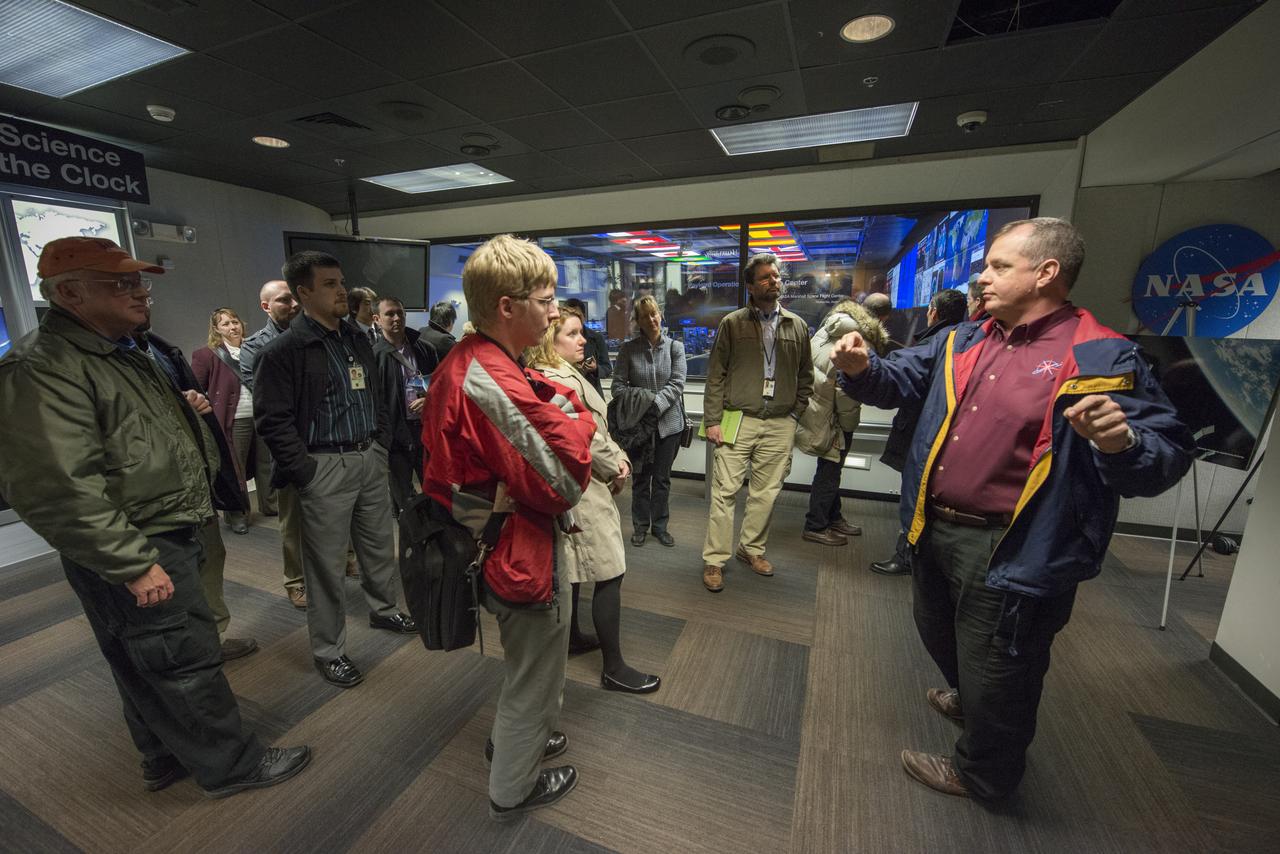
SPACE STATION SCIENCE INVESTIGATORS FROM AROUND THE WORLD TOUR THE PAYLOAD OPERATIONS INTEGRATION CENTER (POIC). THE TOUR WAS LED BY ASTRONAUT AND PAYLOAD OPERATIONS DIRECTOR AT MSFC T.J. CREAMER. WHEN SCIENTIFIC EXPERIMENTS REACH THE STATION, PARTICIPANTS IN THE TOUR WILL WORK WITH MSFC CONTROLLERS IN THE POIC WHO CAN SEND COMMANDS TO THE EXPERIMENTS, MONITOR DATA, AND ASSIST THE ISS CREW.
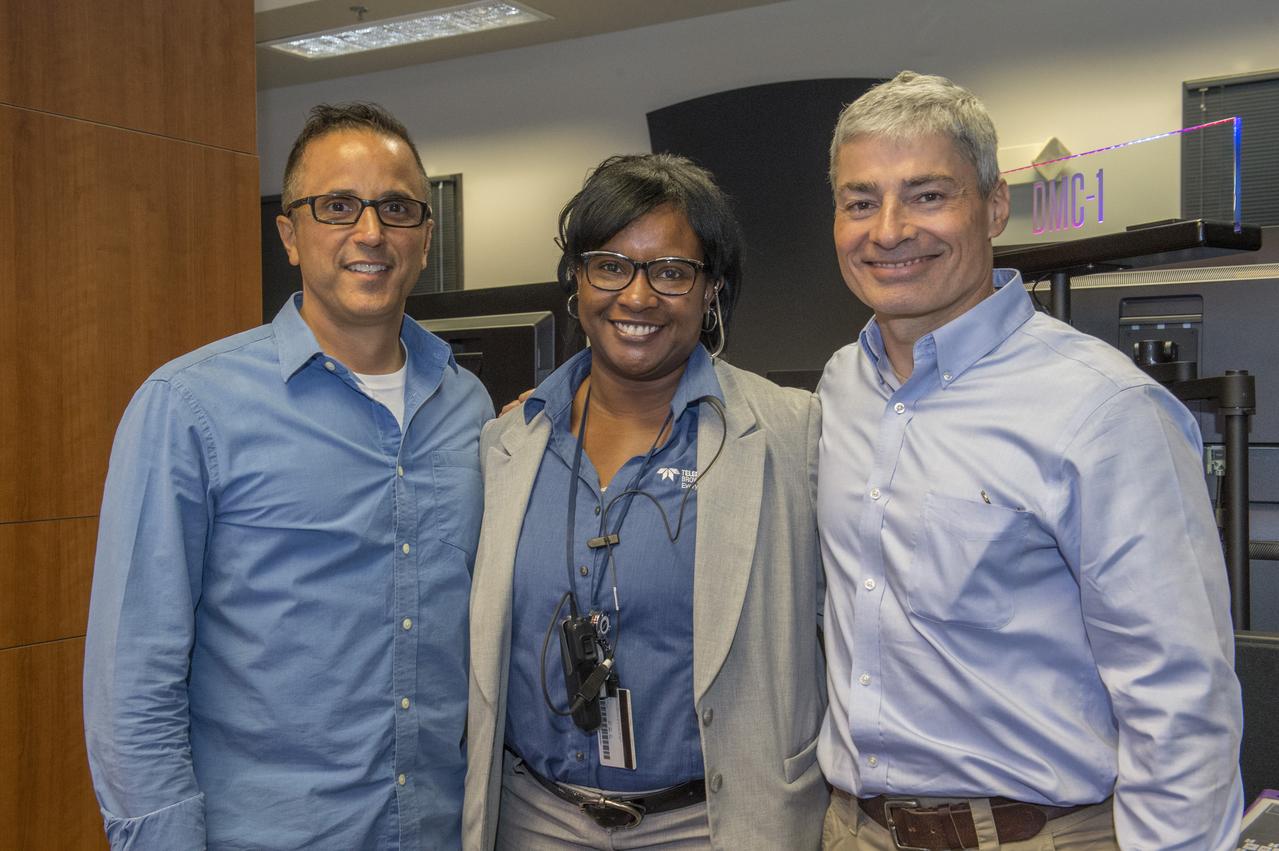
NASA astronauts Joe Acaba and Mark Vande Hei Acaba visited Marshall April 11 for their honorary Expedition 54 plaque hanging ceremony and to provide valuable feedback of their on-orbit science investigations with the Payload Operations and Integration Center team. Payload Operations Director Phillipia Simmons with Astronauts Joe Acaba (L) and Mark Vande Hei
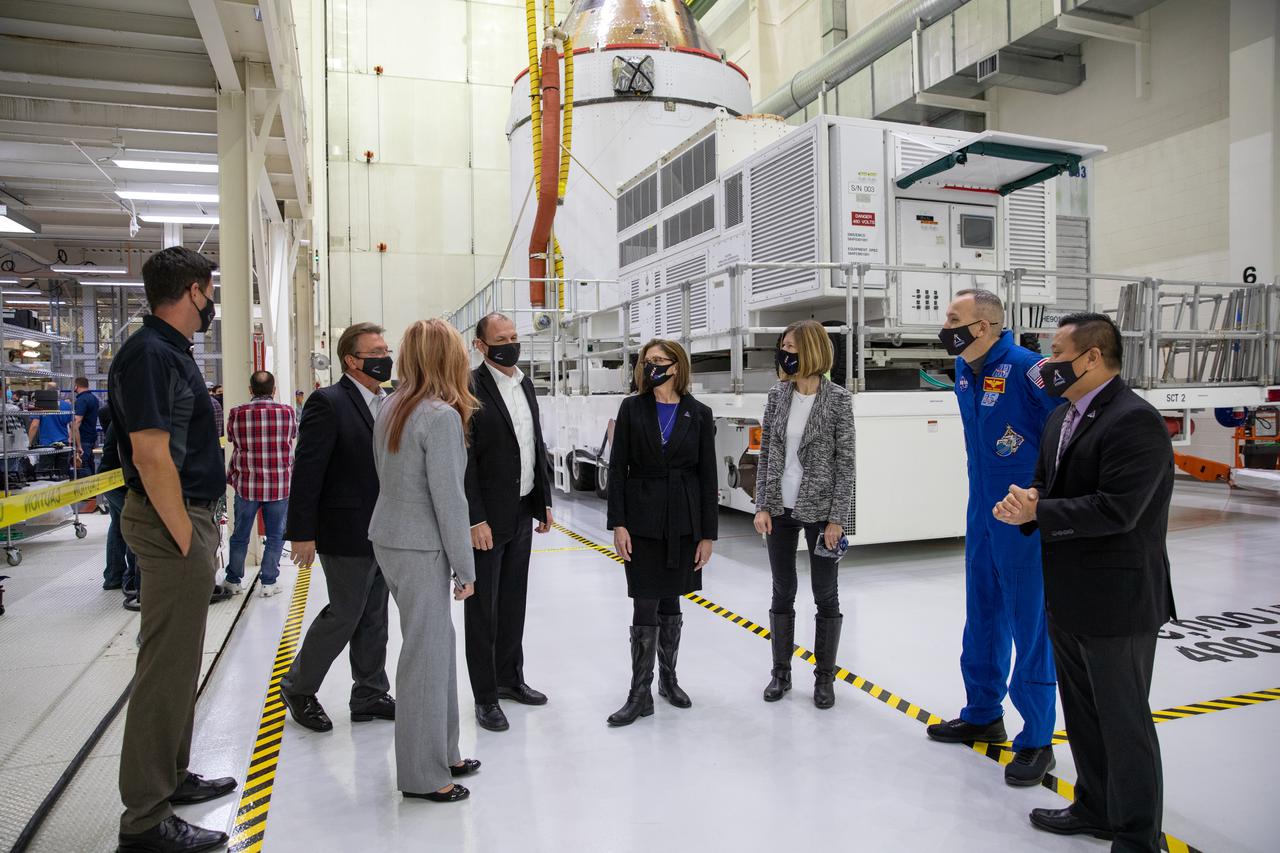
Orion is revealed for one of the final times on Jan. 14, as it is readied atop its transport pallet from the Neil Armstrong Operations and Checkout Building at NASA’s Kennedy Space Center in Florida, along its path to the pad ahead of the Artemis I launch. Inside the high bay, from left, are Nathan Varn, Lockheed Martin Production Control director; Jules Schneider, Lockheed Martin director of Orion Assembly, Test and Launch Operations at Kennedy; Kelly DeFazio, Lockheed Martin Orion Program director for production operations; Tony Antonelli, Lockheed Martin Orion Program director and Artemis II Mission director; Cathy Koerner, Orion Program manager; Kathy Lueders, associate administrator of the Human Exploration and Operations Mission Directorate; astronaut Randy Bresnik; and Howard Hu, Orion deputy program manager. Teams across the globe have worked tirelessly to assemble the spacecraft, which will receive a protective covering prior to departing for the Multi-Payload Processing Facility to begin ground processing by the Exploration Ground Systems and Jacobs teams.
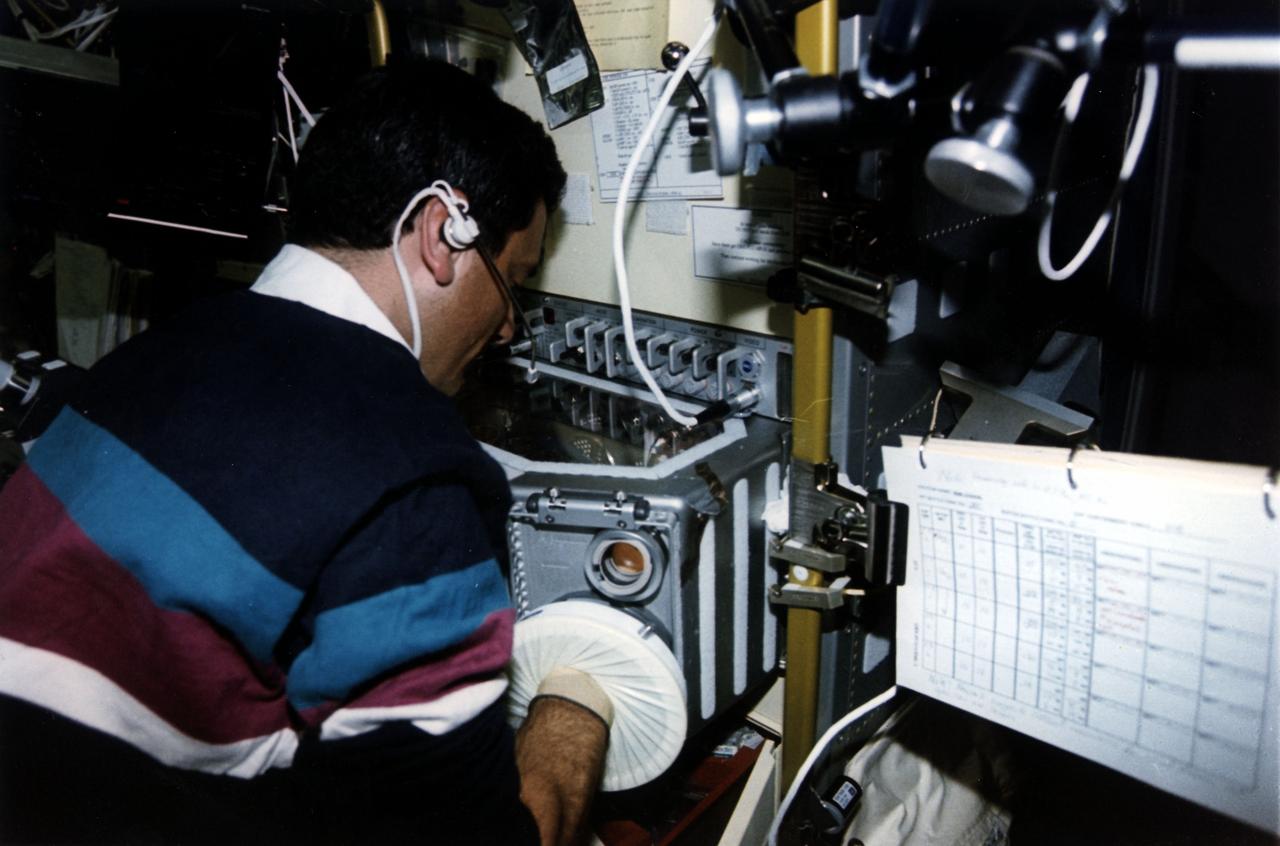
Dr. Larry DeLucas operating the USML-1 Glovebox (GBX) during the USML-1 (STS-50) mission. Dr. DeLucas was a Payload Specialist during the USML-1 mission and is Associate Director of the Center for Macromolecular Crystallography at The University of Alabama at Birmingham.
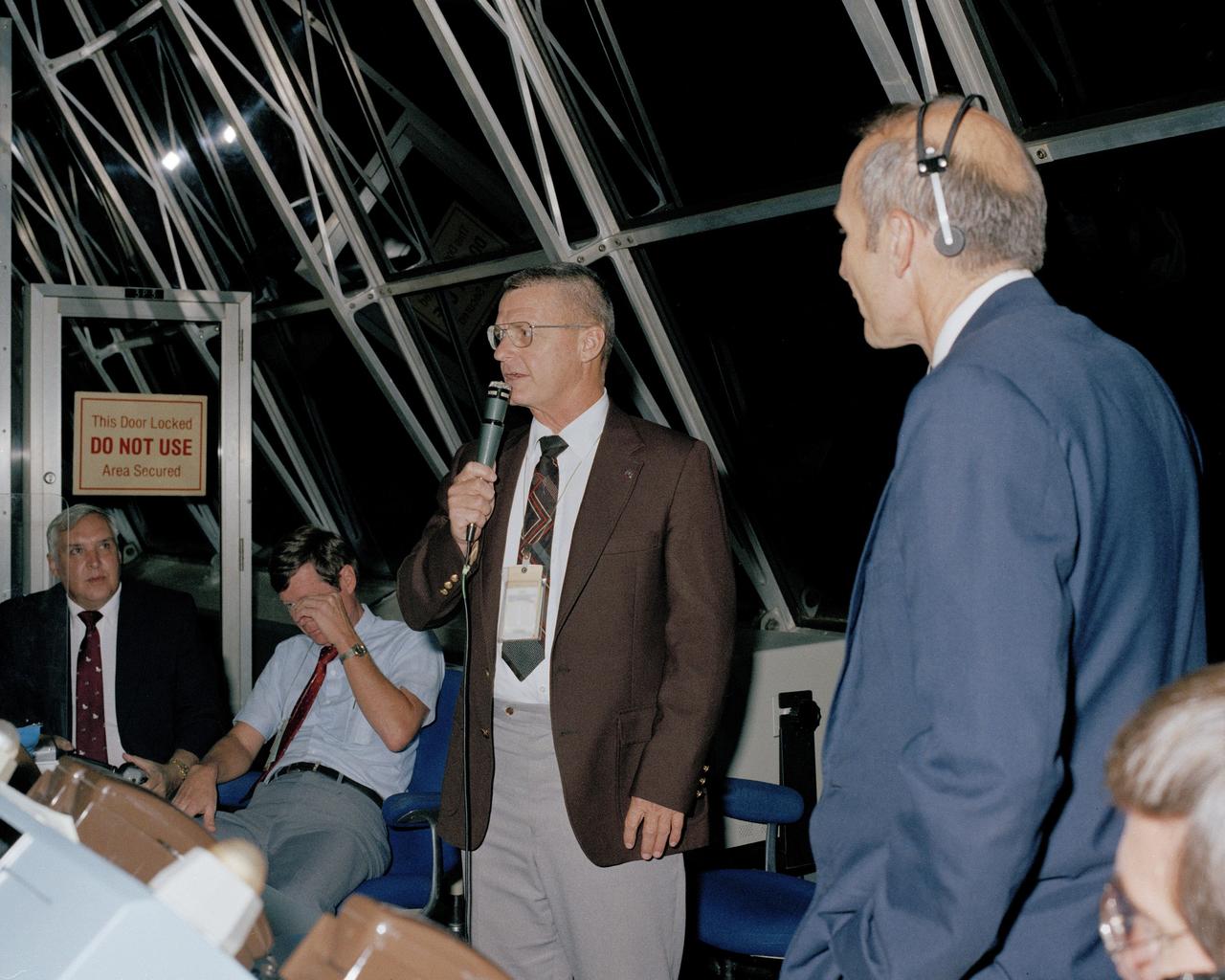
CAPE CANAVERAL, Fla. - After the successful Flight Readiness Firing of the space shuttle Discovery's three main engines, Kennedy Space Center Director Forrest McCartney congratulates members of the launch team in the firing room. The approximate 22-second firing was conducted to evaluate the performance of various components of the shuttle, external tank and solid rocket boosters, as well as the launch facilities and support equipment which will be used during the launch of STS-26. Looking on is Bob Sieck, KSC launch director, right, Hugh Harris, deputy director of KSC Public Affairs, left, and John Conway, director of Payload Management and Operations, second from left. Photo credit: NASA
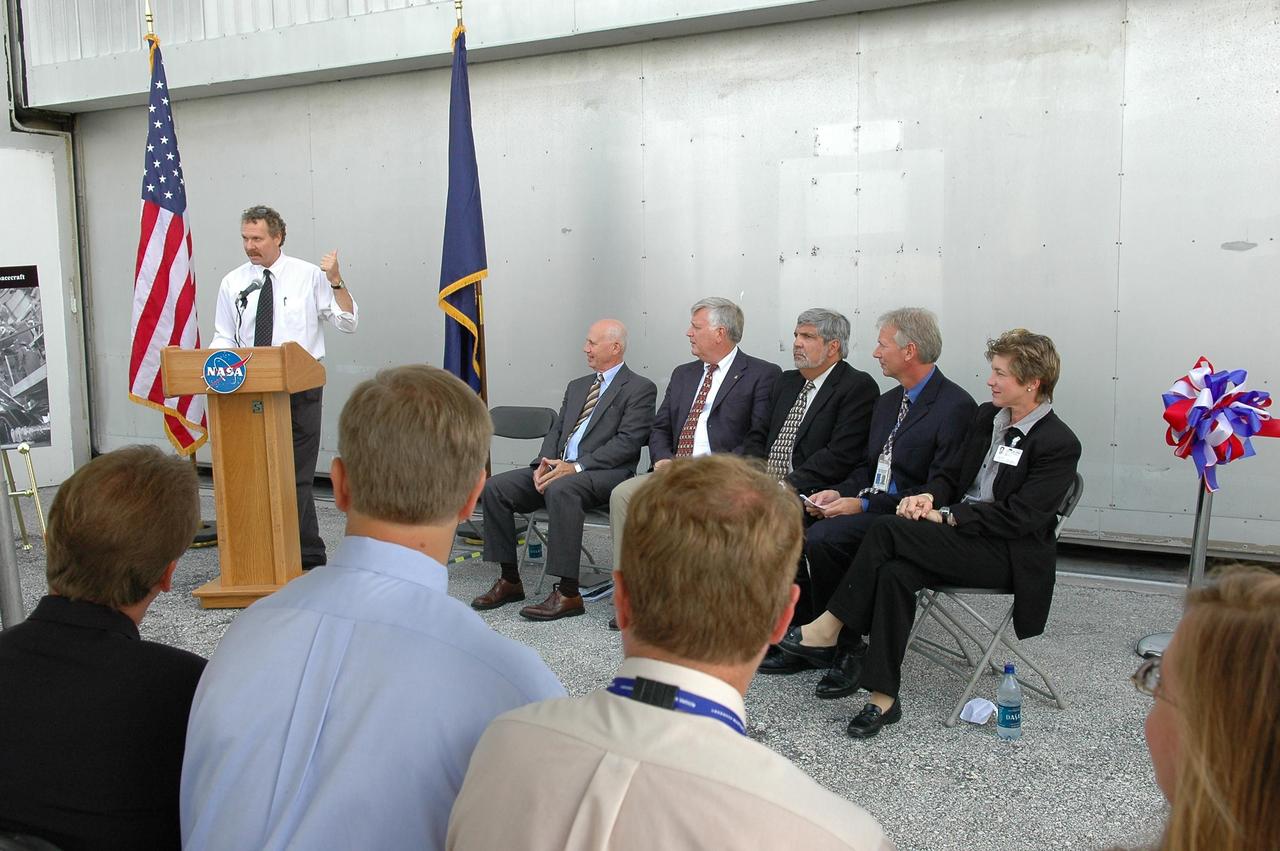
KENNEDY SPACE CENTER, FLA. - A ribbon-cutting at NASA's Kennedy Space Center officially reactivated the Operations and Checkout Building's west door as entry to the crew exploration vehicle environment. At the podium is Russell Romanella, who opened the ceremony. Romanella is director of the ISS Payload and Processing Directorate. Seated at right are Conrad Nagel, consultant for Space Florida; Jim Kennedy, director of KSC; Adrian Lafitte, director of government relations for Lockheed Martin; Mark Jager, program manager of Checkout, Assembly, Payloads Processing Services with Boeing; and Lynda Weatherman, with the Economic Development Commission. During the rest of the decade, KSC will transition from launching space shuttles to launching new vehicles in NASA’s Vision For Space Exploration. Photo credit: NASA/Kim Shiflett
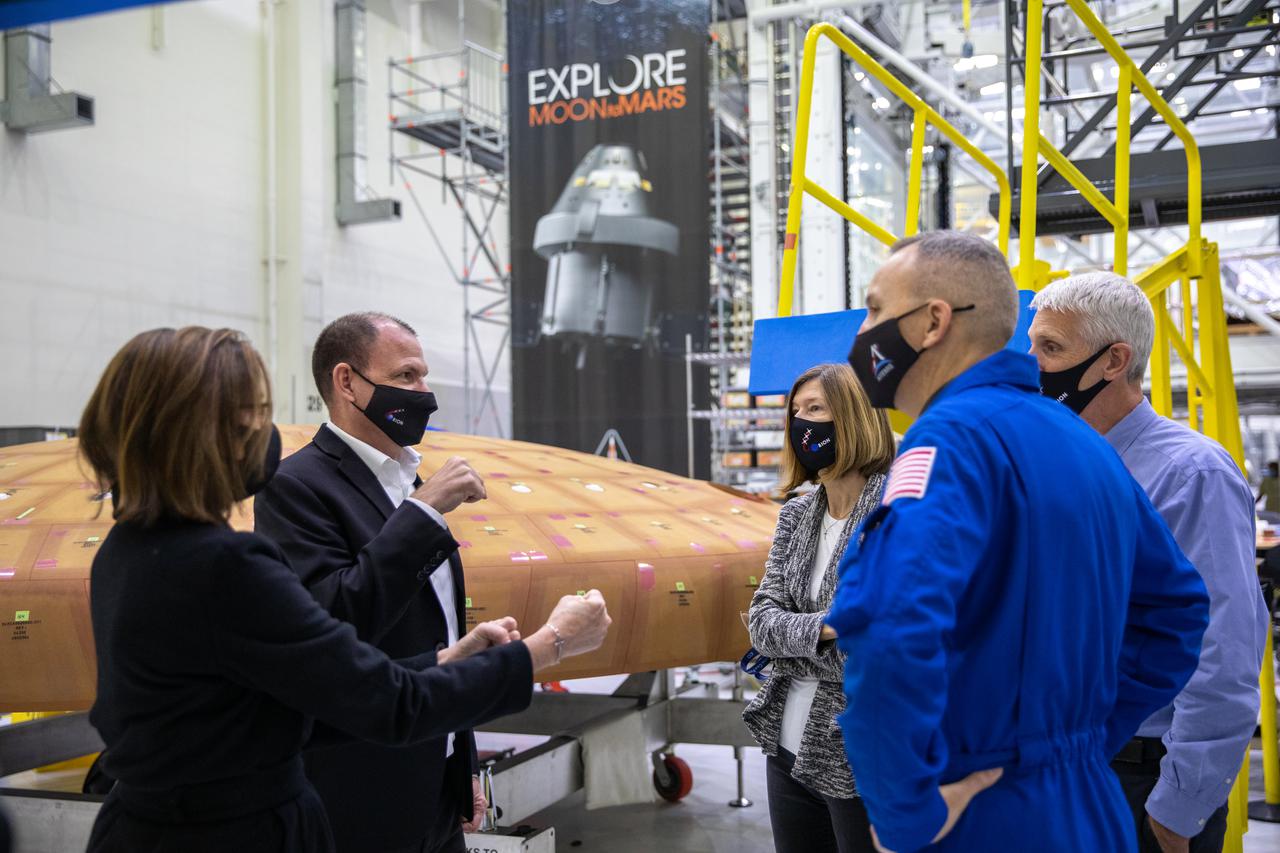
Kathy Lueders, third from right, associate administrator of the Human Exploration and Operations Mission Directorate, tours the Neil Armstrong Operations and Checkout Building high bay at NASA’s Kennedy Space Center in Florida on Jan. 14, 2021. In the background is the heat shield for the Orion crew module for the Artemis II mission. From left are Cathy Koerner, Orion Program manager; Tony Antonelli, Lockheed Martin Orion Program director and Artemis II Mission director; NASA astronaut Randy Bresnik; and Scott Wilson, Orion Production Operations manager. The group also viewed the Orion spacecraft for Artemis I as it was lowered onto a transporter for the move to the Multi-Payload Processing Facility to begin ground processing by the Exploration Ground Systems and Jacobs teams.
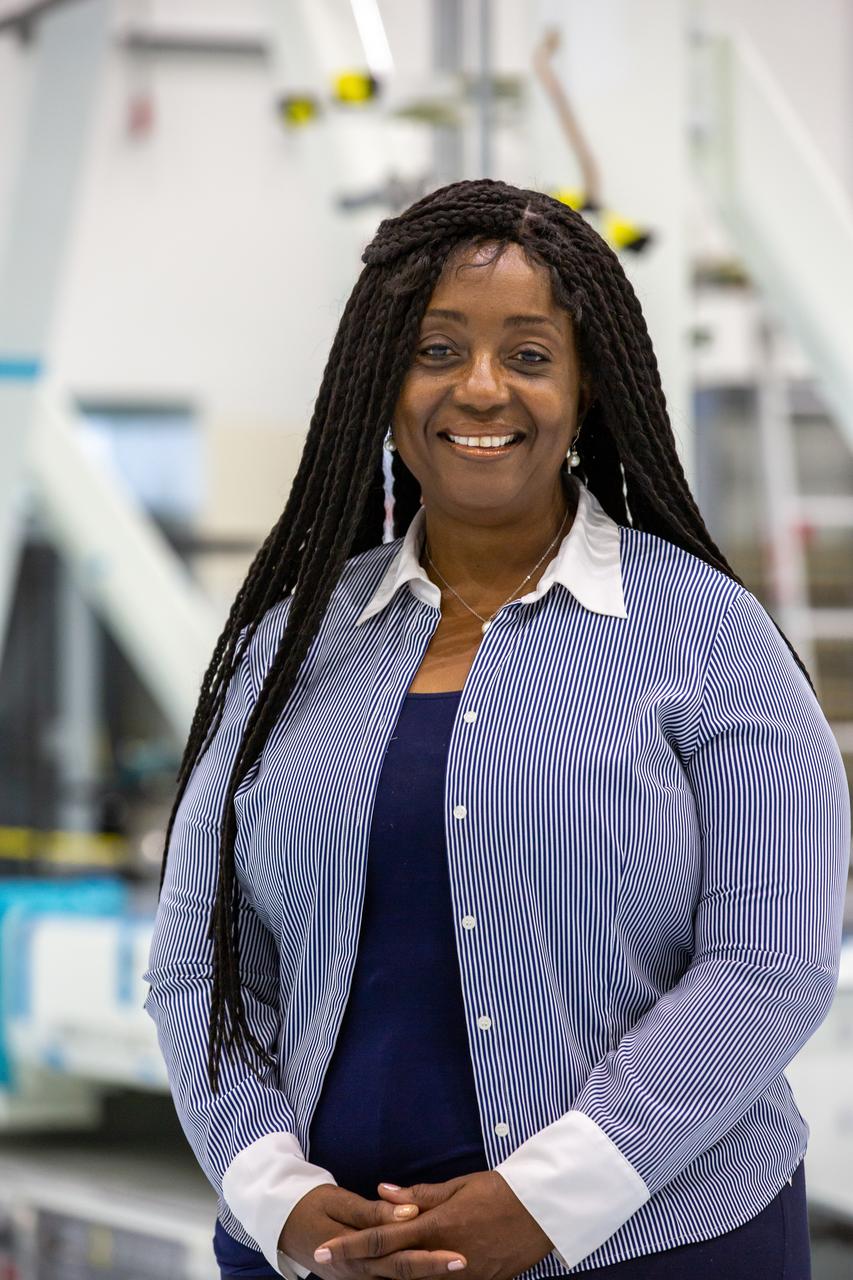
Barbara L. Brown, director of Exploration Research and Technology Programs at NASA's Kennedy Space Center in Florida, poses for a portrait inside the spaceport’s Space Station Processing Facility High Bay on Aug. 5, 2022. Brown leads processing, assembly, integration, and test of payloads and flight science experiments bound for the International Space Station. Additionally, Brown serves as Kennedy’s lead for the formulation of concepts to support uncrewed operations on the Moon and Mars, directing research, development, testing, and demonstration of flight systems and technologies to advance exploration and space systems. The programs and projects under her purview span NASA’s Exploration Systems, Science, Space Operations, and Space Technology mission directorates.
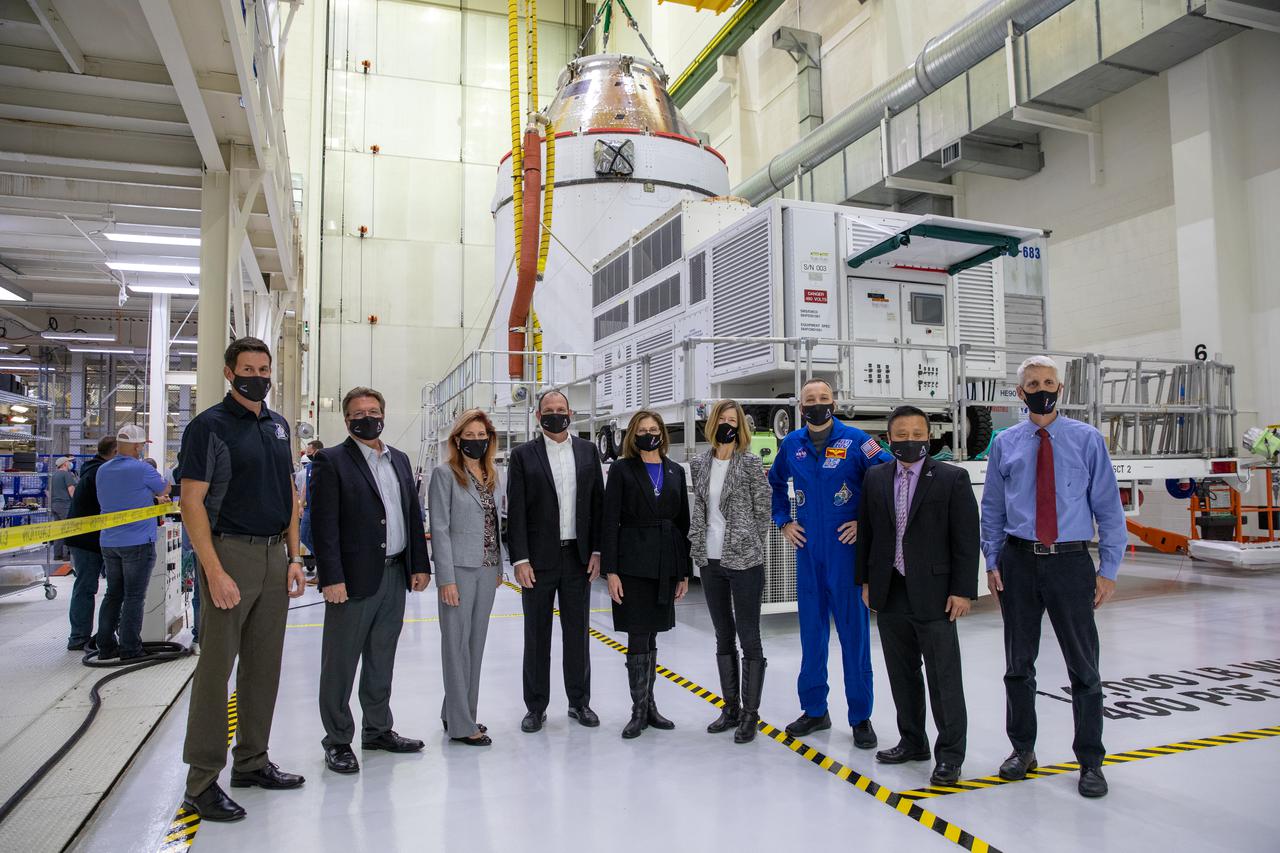
Orion is revealed for one of the final times on Jan. 14, as it is moved by crane to its transport pallet inside the Neil Armstrong Operations and Checkout Building at NASA’s Kennedy Space Center in Florida, along its path to the pad ahead of the Artemis I launch. Standing near Orion, from left, are Nathan Varn, Lockheed Martin Production Control director; Jules Schneider, Lockheed Martin Director of Orion Assembly, Test and Launch at Kennedy; Kelly DeFazio, Lockheed Martin Orion Program director for production operations; Tony Antonelli, Lockheed Martin Orion Program director and Artemis II mission director; Cathy Koerner, Orion Program manager; Kathy Lueders, associate administrator of the Human Exploration and Operations Mission Directorate; NASA astronaut Randy Bresnik; Howard Hu Orion Program deputy manager; and Scott Wilson, Orion Production Office manager. Teams across the globe have worked tirelessly to assemble the spacecraft, which will receive a protective covering prior to departing for the Multi-Payload Processing Facility to begin ground processing by the Exploration Ground Systems and Jacobs teams.
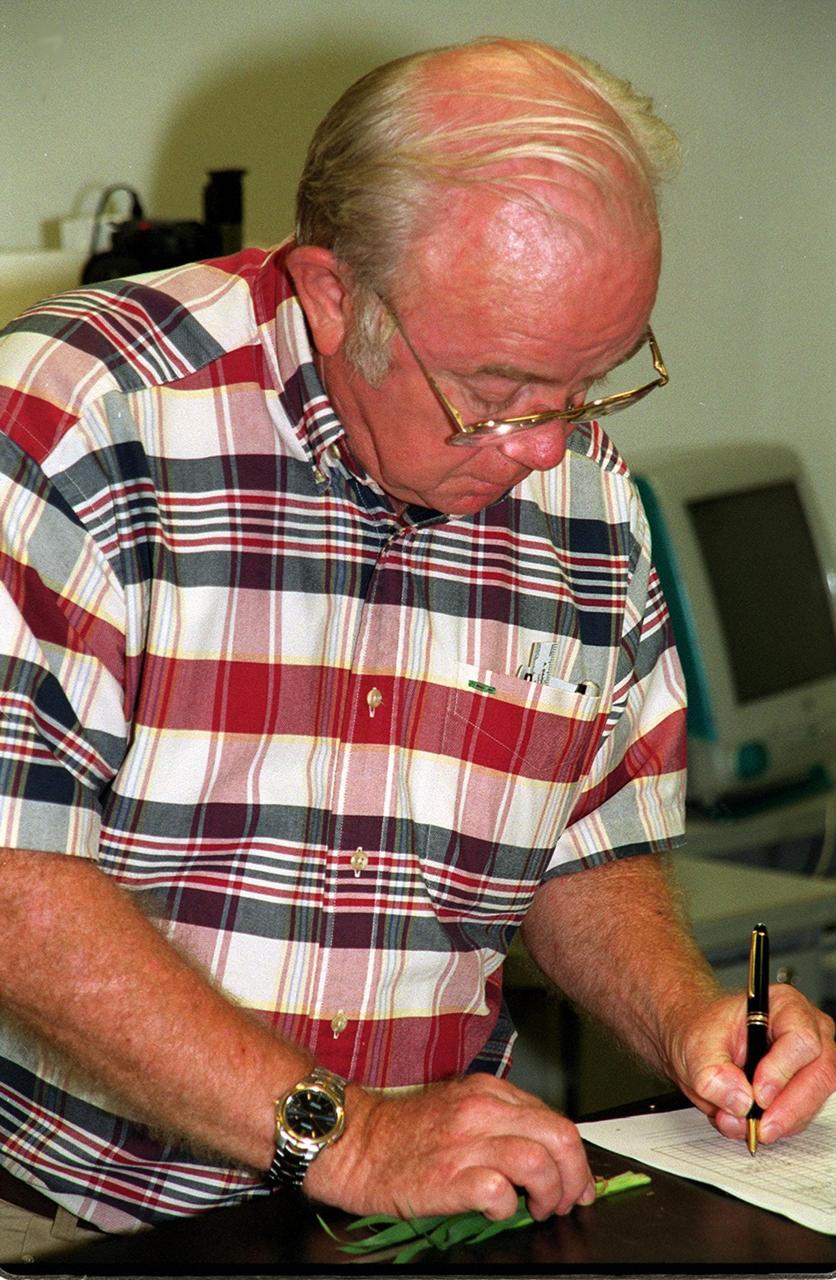
Research scientist Oscar Monje records data associated with ground testing for the first International Space Station plant experiment, scheduled to fly in October 2001. The payload process testing is one of many studies being performed at the Biological Sciences Branch in the Spaceport Engineering and Technology Directorate at Kennedy Space Center. The branch's operations and research areas include life sciences Space Shuttle payloads, bioregenerative life-support for long-duration spaceflight and environmental/ecological stewardship
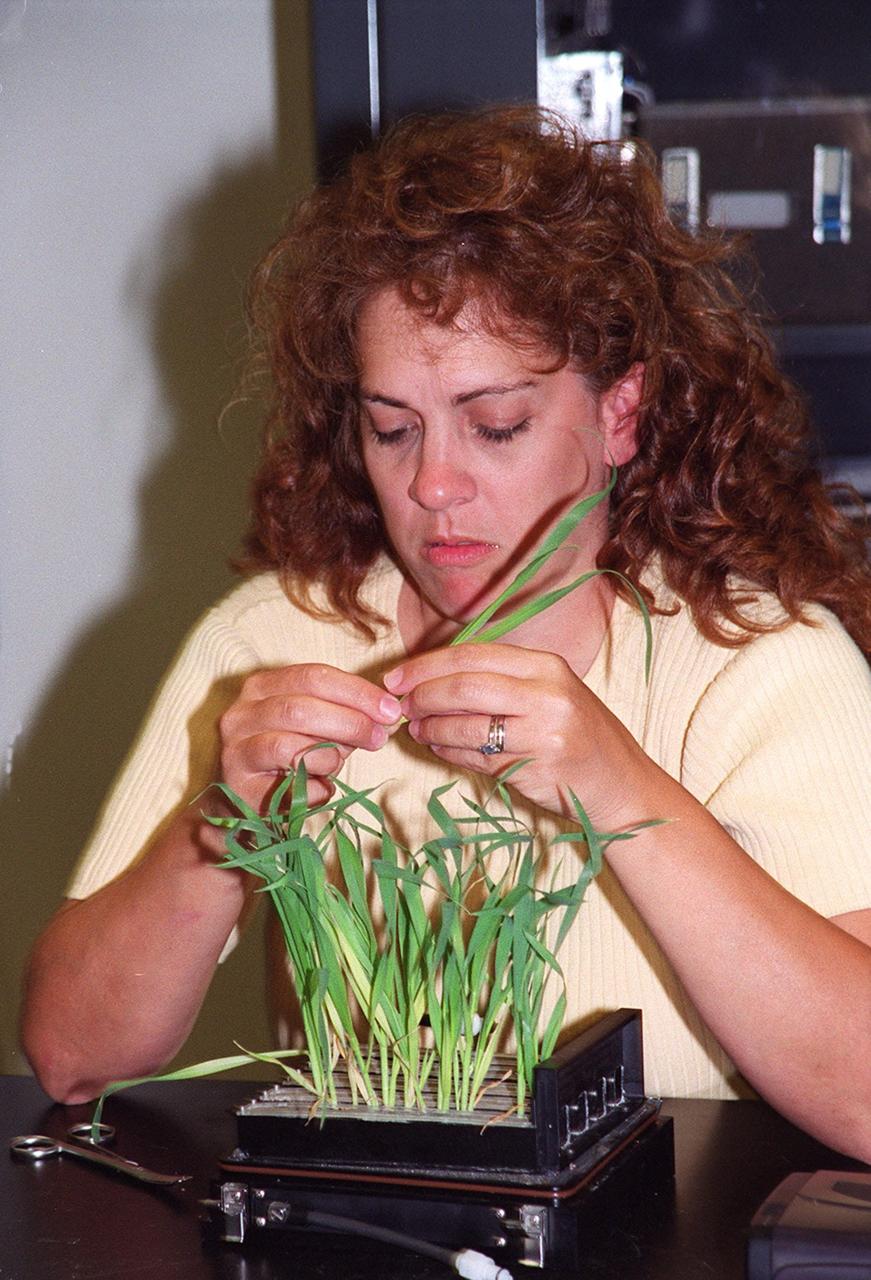
Research technician Lisa Ruffa works with a wheat sample that is part of ground testing for the first International Space Station plant experiment, scheduled to fly in October 2001. The payload process testing is one of many studies being performed at the Biological Sciences Branch in the Spaceport Engineering and Technology Directorate at Kennedy Space Center. The branch's operations and research areas include life sciences Space Shuttle payloads, bioregenerative life-support for long-duration spaceflight and environmental/ecological stewardship
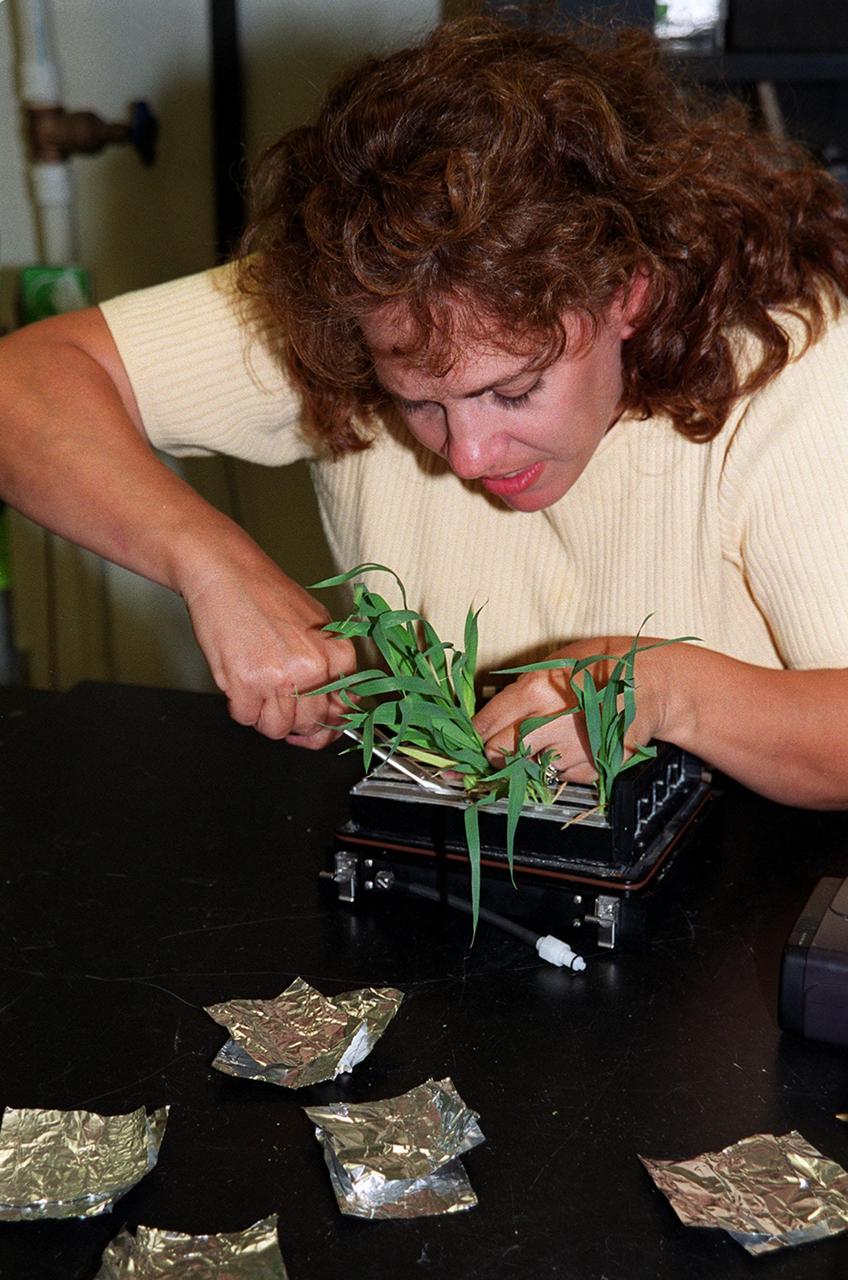
Research technician Lisa Ruffa works with a wheat sample that is part of ground testing for the first International Space Station plant experiment, scheduled to fly in October 2001. The payload process testing is one of many studies being performed at the Biological Sciences Branch in the Spaceport Engineering and Technology Directorate at Kennedy Space Center. The branch's operations and research areas include life sciences Space Shuttle payloads, bioregenerative life-support for long-duration spaceflight and environmental/ecological stewardship
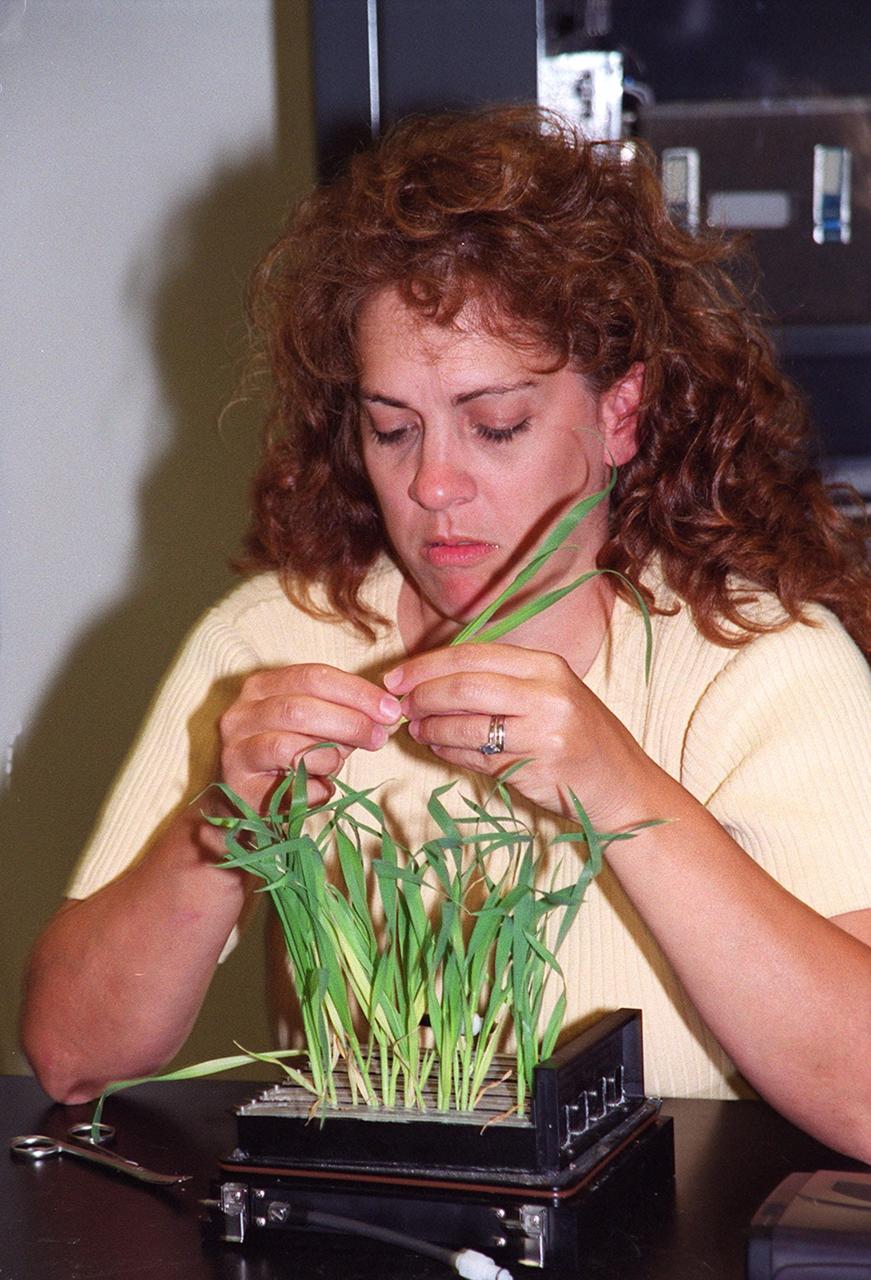
Research technician Lisa Ruffa works with a wheat sample that is part of ground testing for the first International Space Station plant experiment, scheduled to fly in October 2001. The payload process testing is one of many studies being performed at the Biological Sciences Branch in the Spaceport Engineering and Technology Directorate at Kennedy Space Center. The branch's operations and research areas include life sciences Space Shuttle payloads, bioregenerative life-support for long-duration spaceflight and environmental/ecological stewardship
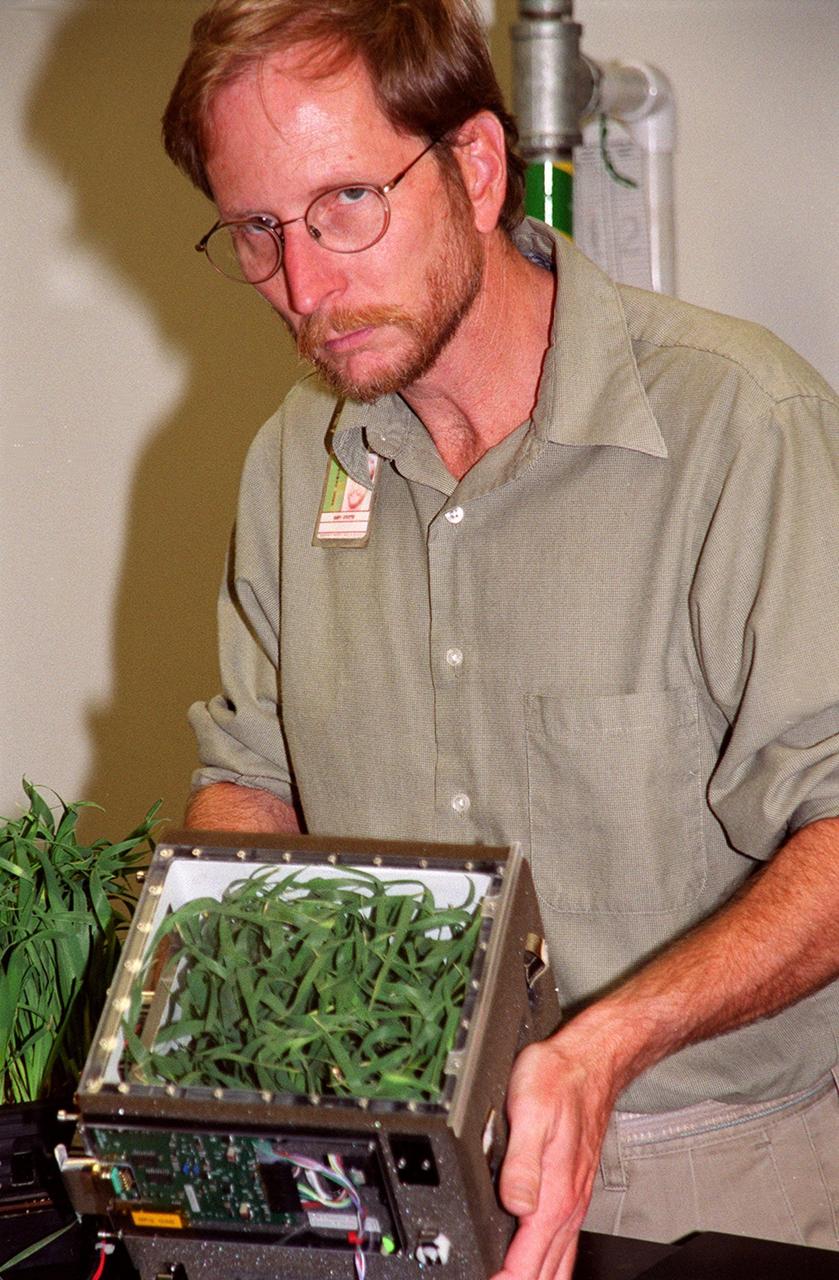
Research scientist Gary Stutte displays a wheat sample that is part of ground testing for the first International Space Station plant experiment, scheduled to fly in October 2001. The payload process testing is one of many studies being performed at the Biological Sciences Branch in the Spaceport Engineering and Technology Directorate at Kennedy Space Center. The branch's operations and research areas include life sciences Space Shuttle payloads, bioregenerative life-support for long-duration spaceflight and environmental/ecological stewardship
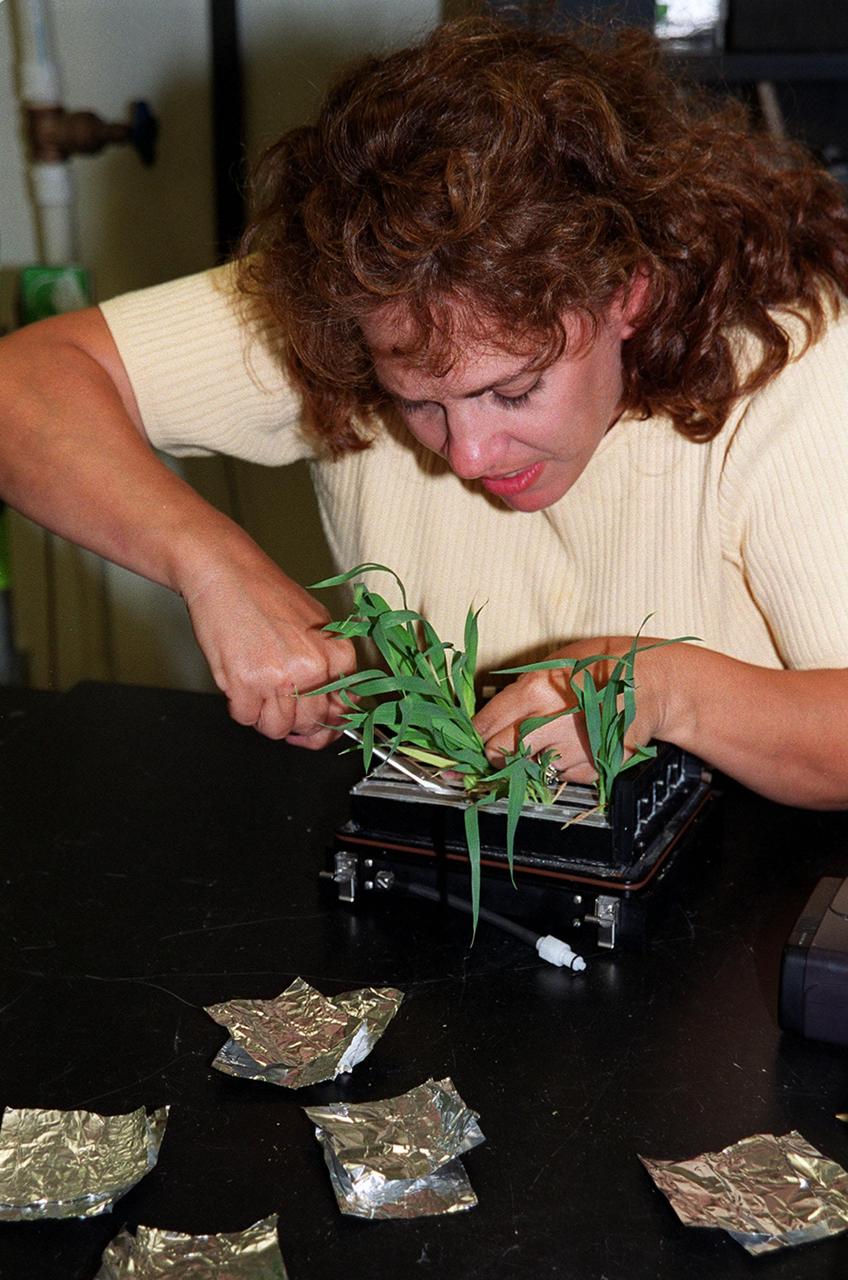
Research technician Lisa Ruffa works with a wheat sample that is part of ground testing for the first International Space Station plant experiment, scheduled to fly in October 2001. The payload process testing is one of many studies being performed at the Biological Sciences Branch in the Spaceport Engineering and Technology Directorate at Kennedy Space Center. The branch's operations and research areas include life sciences Space Shuttle payloads, bioregenerative life-support for long-duration spaceflight and environmental/ecological stewardship
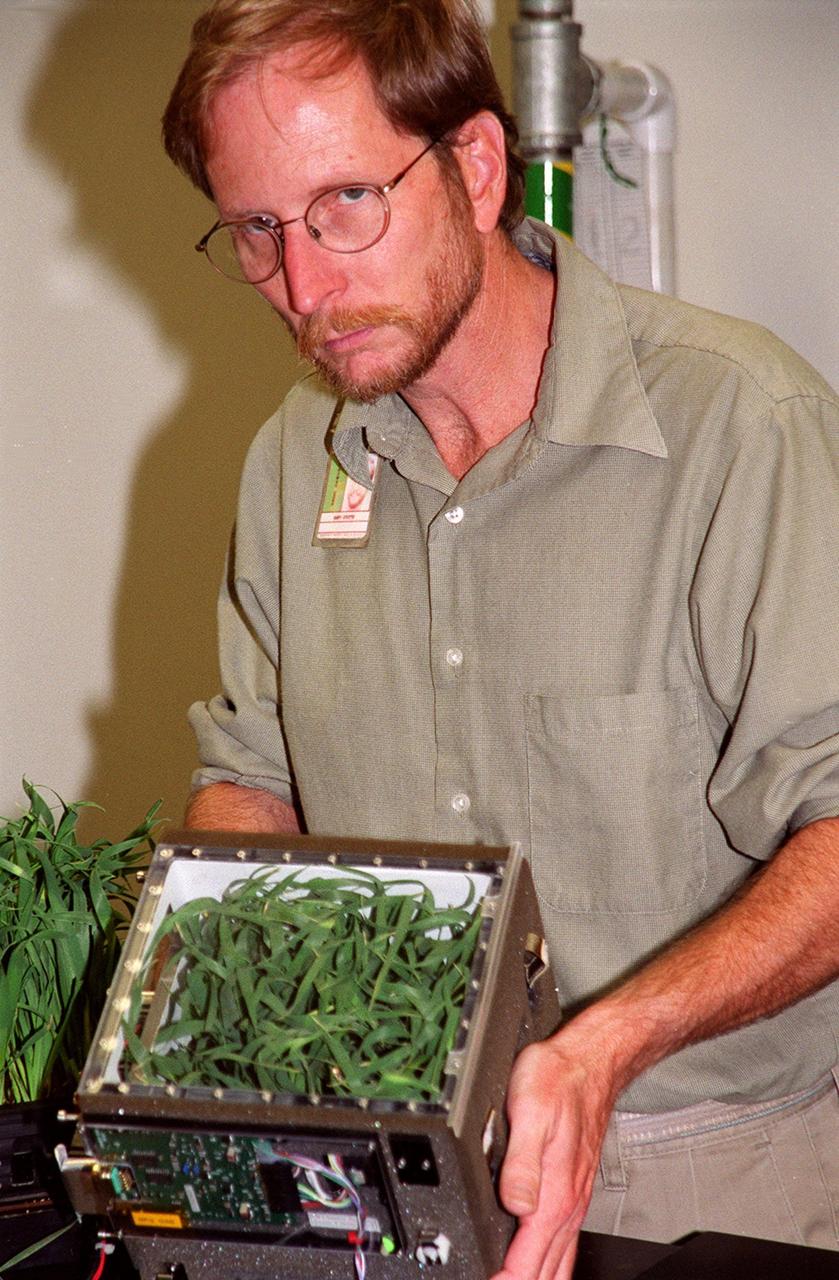
Research scientist Gary Stutte displays a wheat sample that is part of ground testing for the first International Space Station plant experiment, scheduled to fly in October 2001. The payload process testing is one of many studies being performed at the Biological Sciences Branch in the Spaceport Engineering and Technology Directorate at Kennedy Space Center. The branch's operations and research areas include life sciences Space Shuttle payloads, bioregenerative life-support for long-duration spaceflight and environmental/ecological stewardship
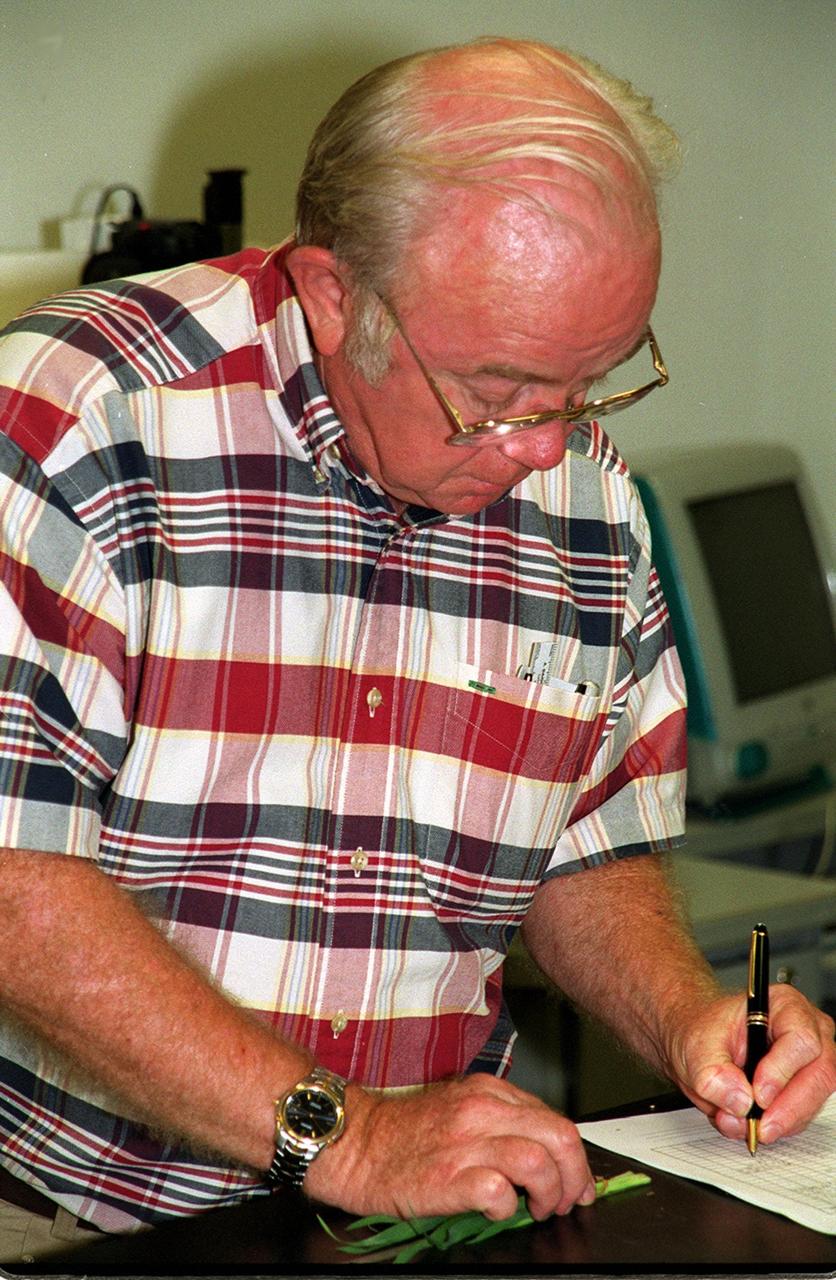
Research scientist Oscar Monje records data associated with ground testing for the first International Space Station plant experiment, scheduled to fly in October 2001. The payload process testing is one of many studies being performed at the Biological Sciences Branch in the Spaceport Engineering and Technology Directorate at Kennedy Space Center. The branch's operations and research areas include life sciences Space Shuttle payloads, bioregenerative life-support for long-duration spaceflight and environmental/ecological stewardship
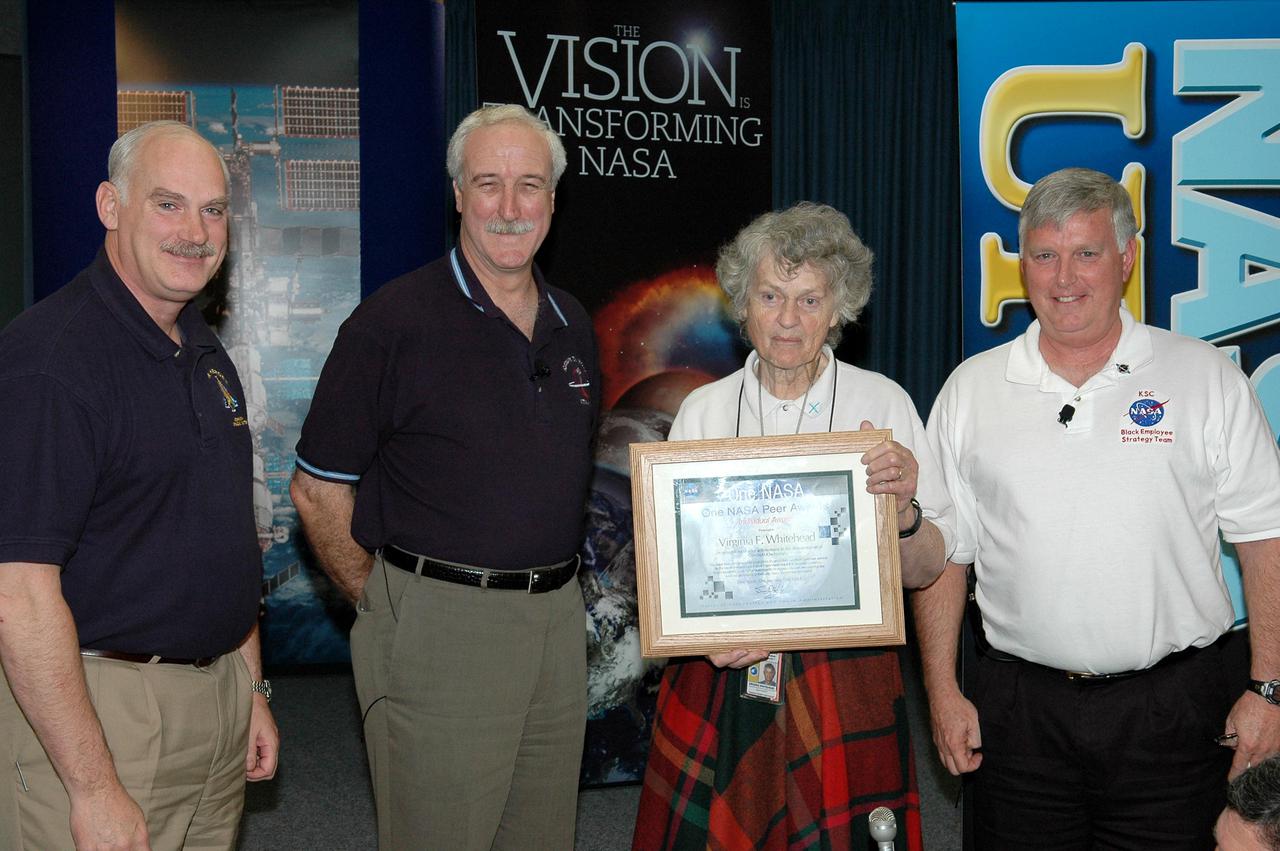
KENNEDY SPACE CENTER, FLA. - After the NASA Update by Administrator Sean O’Keefe, Center Director Jim Kennedy presented a One NASA Peer Award to Virginia Whitehead for her outstanding customer service. From left are Associate Administrator of Space Operations Mission Directorate William F. Readdy, O'Keefe, Whitehead, and Kennedy. Whitehead is a manager in the Center’s Payload Processing Directorate. The award is given to recognize employees who have demonstrated behaviors consistent with the spirit of One NASA and are called Peer Awards because candidates must be nominated by their peers.
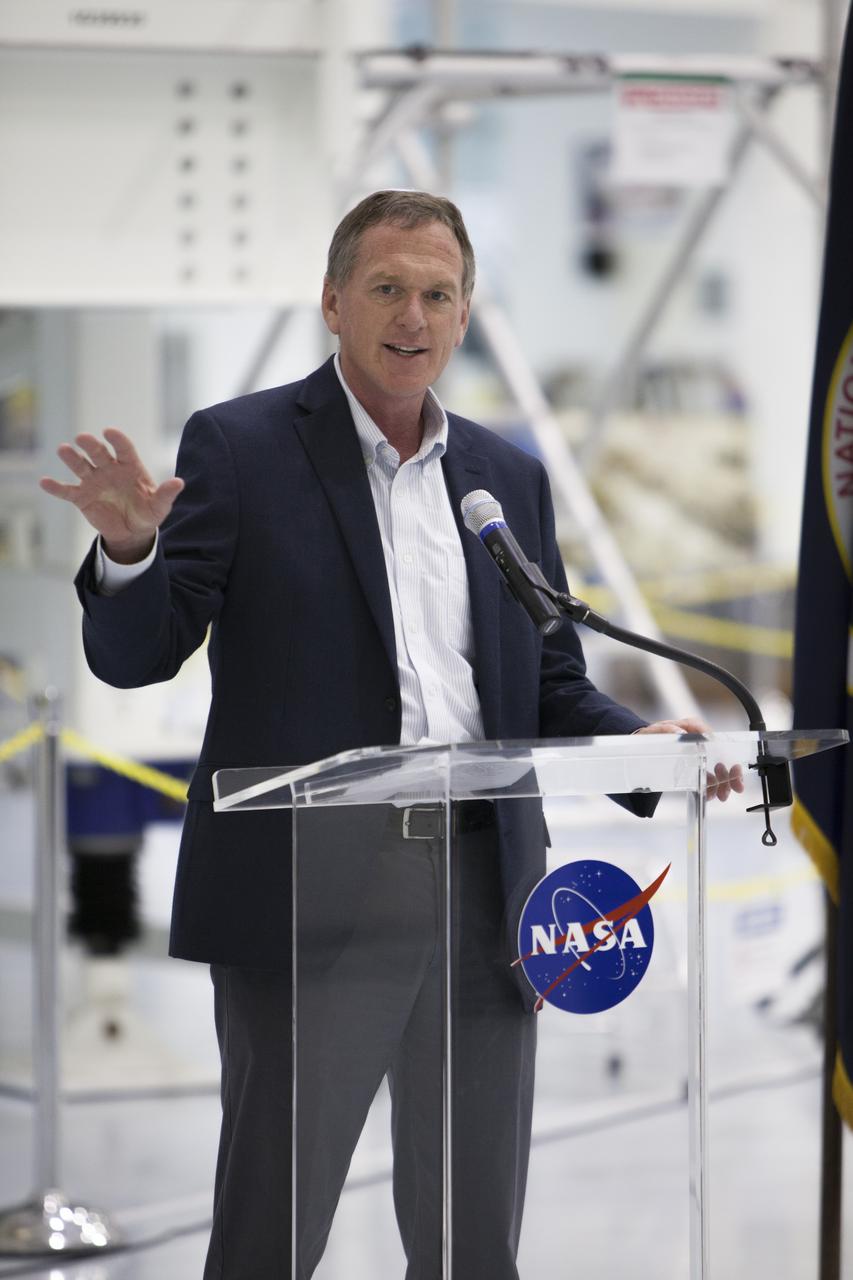
Mike Bolger, Ground Systems Development and Operations Program manager at NASA's Kennedy Space Center, speaks to guests during a ceremony in the high bay of the Space Station Processing Facility. The event marked the milestone of the Space Launch System rocket's Interim Cryogenic Propulsion Stage (ICPS) being turned over from NASA's Spacecraft/Payload Integration and Evolution organization to the spaceport's Ground Systems Development and Operations directorate. The ICPS is the first integrated piece of flight hardware to arrive in preparation for the uncrewed Exploration Mission-1.
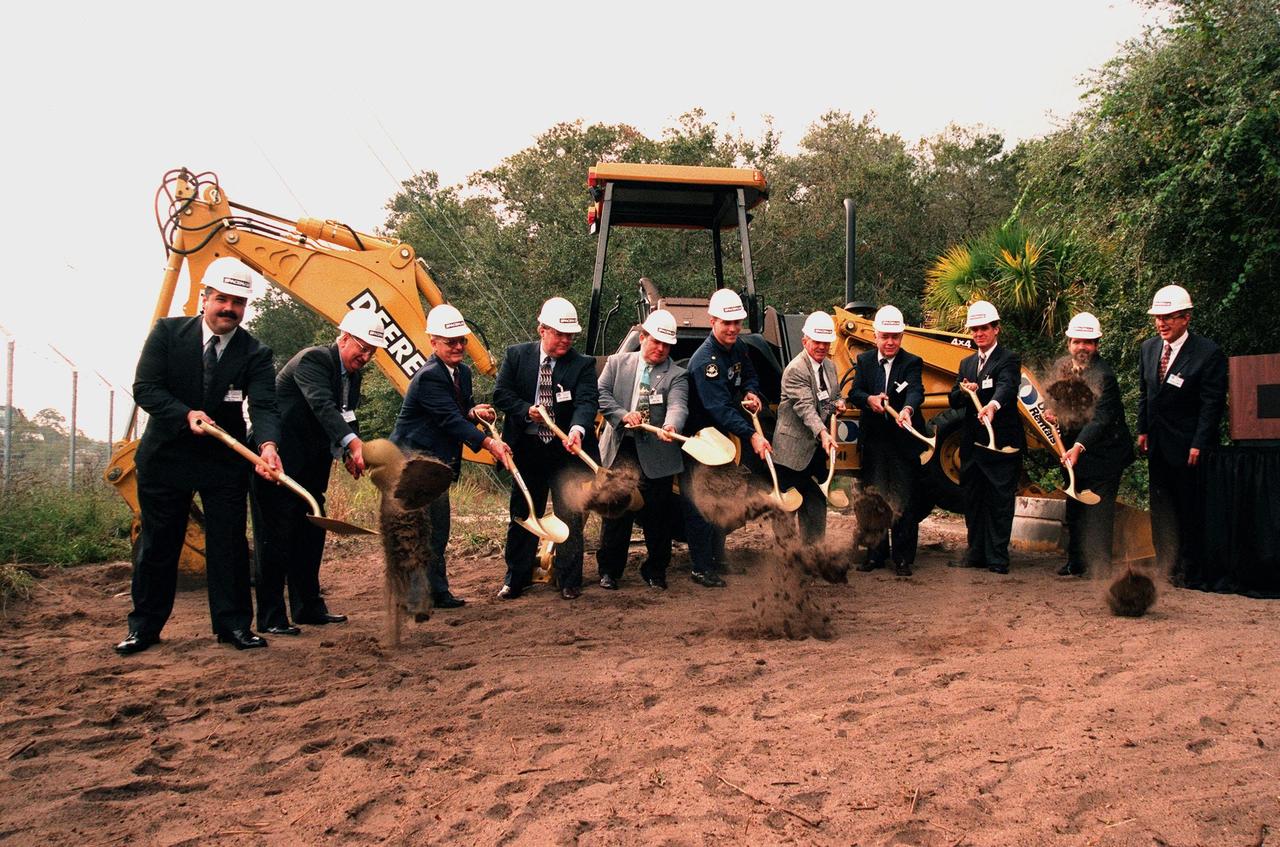
Dirt flies during a ground-breaking ceremony to kick off Astrotech Space Operations' construction of a new satellite preparation facility to support the Delta IV, Boeing's winning entrant in the Air Force Evolved Expendable Launch Vehicle (EELV) Program. Wielding shovels are (from left to right) Tom Alexico; Chet Lee, chairman, Astrotech Space Operations; Gen. Forrest McCartney, vice president, Launch Operations, Lockheed Martin; Richard Murphy, director, Delta Launch Operations, The Boeing Company; Keith Wendt; Toby Voltz; Loren Shriver, deputy director, Launch & Payload Processing, Kennedy Space Center; Truman Scarborough, Brevard County commissioner; U.S. Representative 15th Congressional District David Weldon; Ron Swank; and watching the action at right is George Baker, president, Astrotech Space Operations. Astrotech is located in Titusville, Fla. It is a wholly owned subsidiary of SPACEHAB, Inc., and has been awarded a 10-year contract to provide payload processing services for The Boeing Company. The facility will enable Astrotech to support the full range of satellite sizes planned for launch aboard Delta II, III and IV launch vehicles, as well as the Atlas V, Lockheed Martin's entrant in the EELV Program. The Atlas V will be used to launch satellites for government, including NASA, and commercial customers
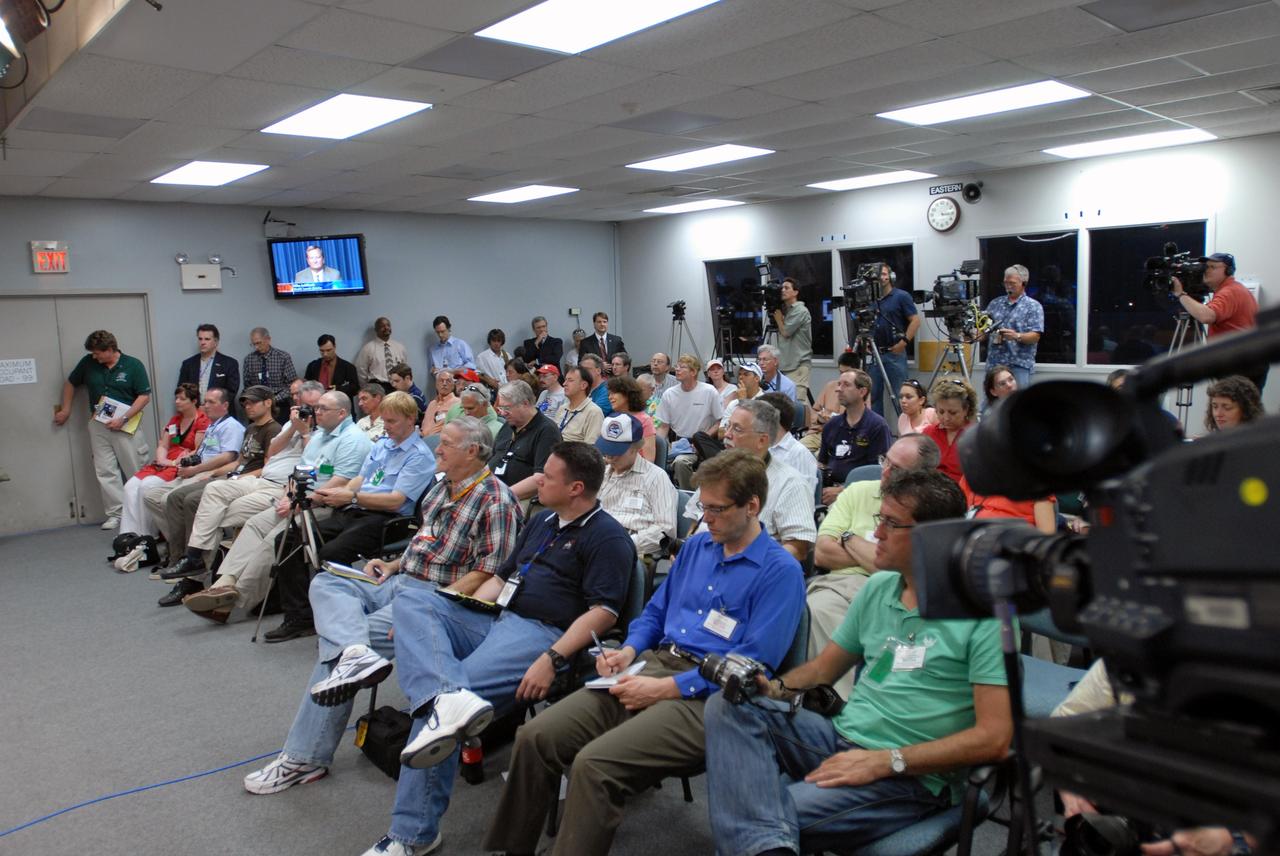
CAPE CANAVERAL, Fla. – The NASA News Auditorium is filled with media during the post-launch press conference at NASA's Kennedy Space Center in Florida. Featured on the dais were Associate Administrator for NASA's Space Operations Directorate William Gerstenmaier, Associate Administrator for NASA's Science Mission Directorate Ed Weiler, Launch Integration Manager Mike Moses and Shuttle Launch Director Mike Leinbach. The conference followed the successful launch of space shuttle Atlantis on the STS-125 mission to service NASA's Hubble Space Telescope. Atlantis' 11-day flight will include five spacewalks to refurbish and upgrade the telescope with state-of-the-art science instruments that will expand Hubble's capabilities and extend its operational lifespan through at least 2014. The payload includes a Wide Field Camera 3, Fine Guidance Sensor and the Cosmic Origins Spectrograph. Photo credit: NASA/Jim Grossmann
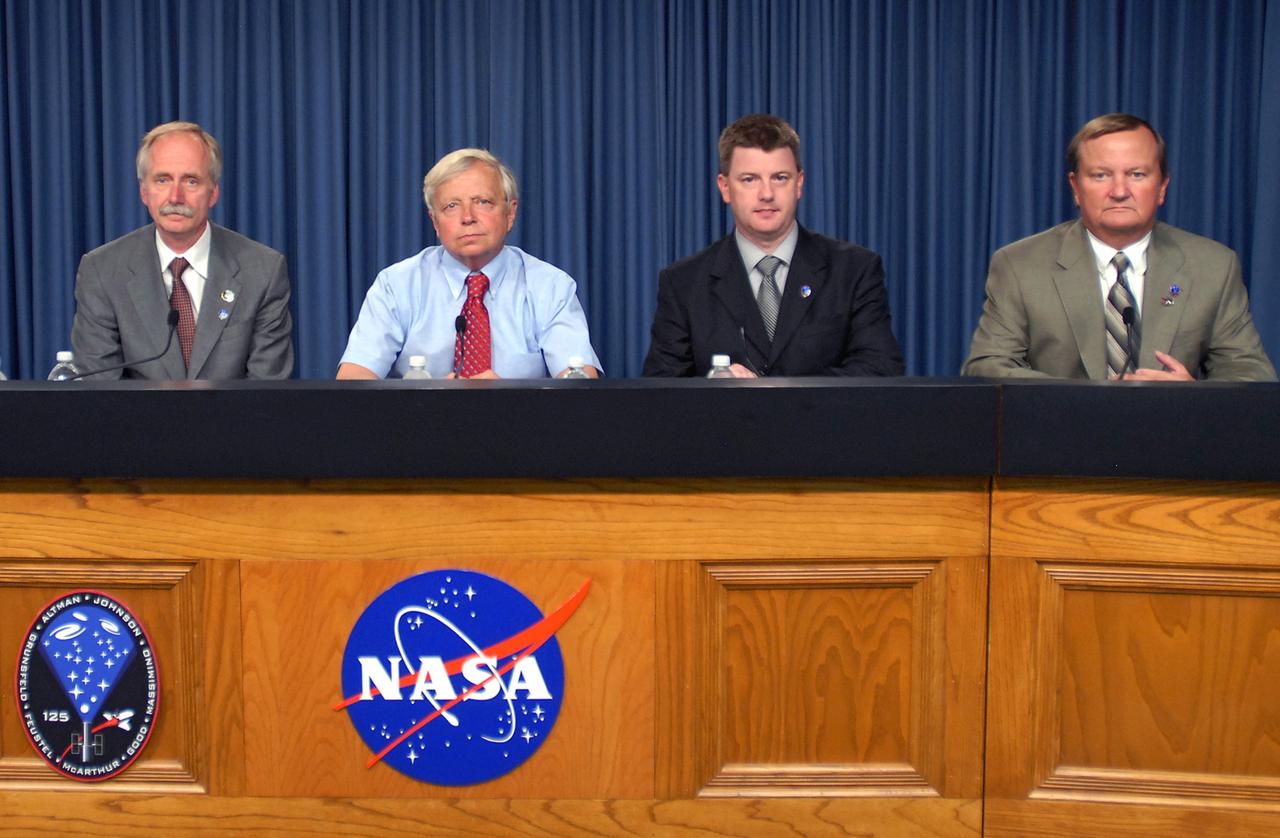
CAPE CANAVERAL, Fla. – At NASA's Kennedy Space Center in Florida, a press conference following the successful launch of space shuttle Atlantis on the STS-125 mission featured (from left) Associate Administrator for NASA's Space Operations Directorate William Gerstenmaier, Associate Administrator for NASA's Science Mission Directorate Ed Weiler, Launch Integration Manager Mike Moses and Shuttle Launch Director Mike Leinbach. Atlantis will rendezvous with NASA's Hubble Space Telescope. Liftoff was on time at 2:01 p.m. EDT. Atlantis' 11-day flight will include five spacewalks to refurbish and upgrade the telescope with state-of-the-art science instruments that will expand Hubble's capabilities and extend its operational lifespan through at least 2014. The payload includes a Wide Field Camera 3, Fine Guidance Sensor and the Cosmic Origins Spectrograph. Photo credit: NASA/Jim Grossmann
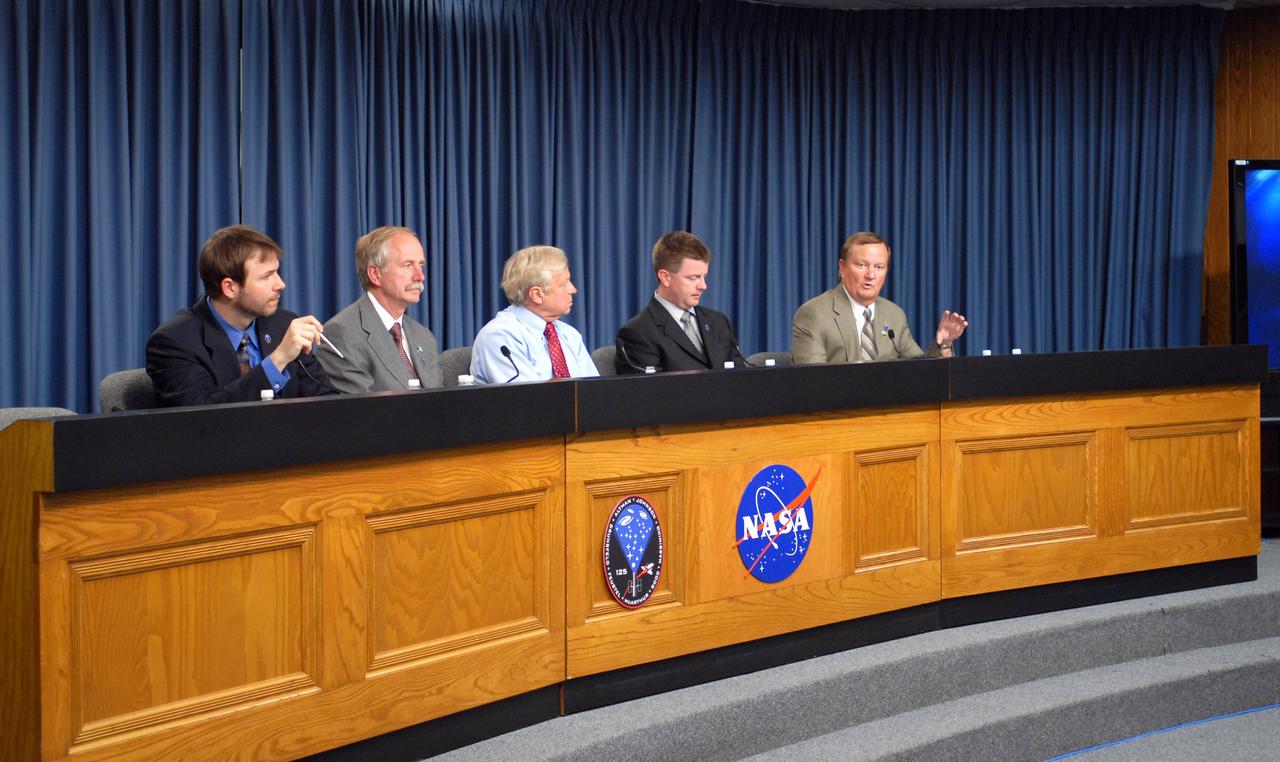
CAPE CANAVERAL, Fla. – During a press conference in the NASA News Auditorium at NASA's Kennedy Space Center in Florida, Shuttle Launch Director Mike Leinbach, right, answers a question from the media. Others from left are NASA Public Affairs Officer John Yembrick, who moderated, Associate Administrator for NASA's Space Operations Directorate William Gerstenmaier, Associate Administrator for NASA's Science Mission Directorate Ed Weiler and Launch Integration Manager Mike Moses. The conference followed the successful launch of space shuttle Atlantis on the STS-125 mission to service NASA's Hubble Space Telescope. Atlantis' 11-day flight will include five spacewalks to refurbish and upgrade the telescope with state-of-the-art science instruments that will expand Hubble's capabilities and extend its operational lifespan through at least 2014. The payload includes a Wide Field Camera 3, Fine Guidance Sensor and the Cosmic Origins Spectrograph. Photo credit: NASA/Jim Grossmann
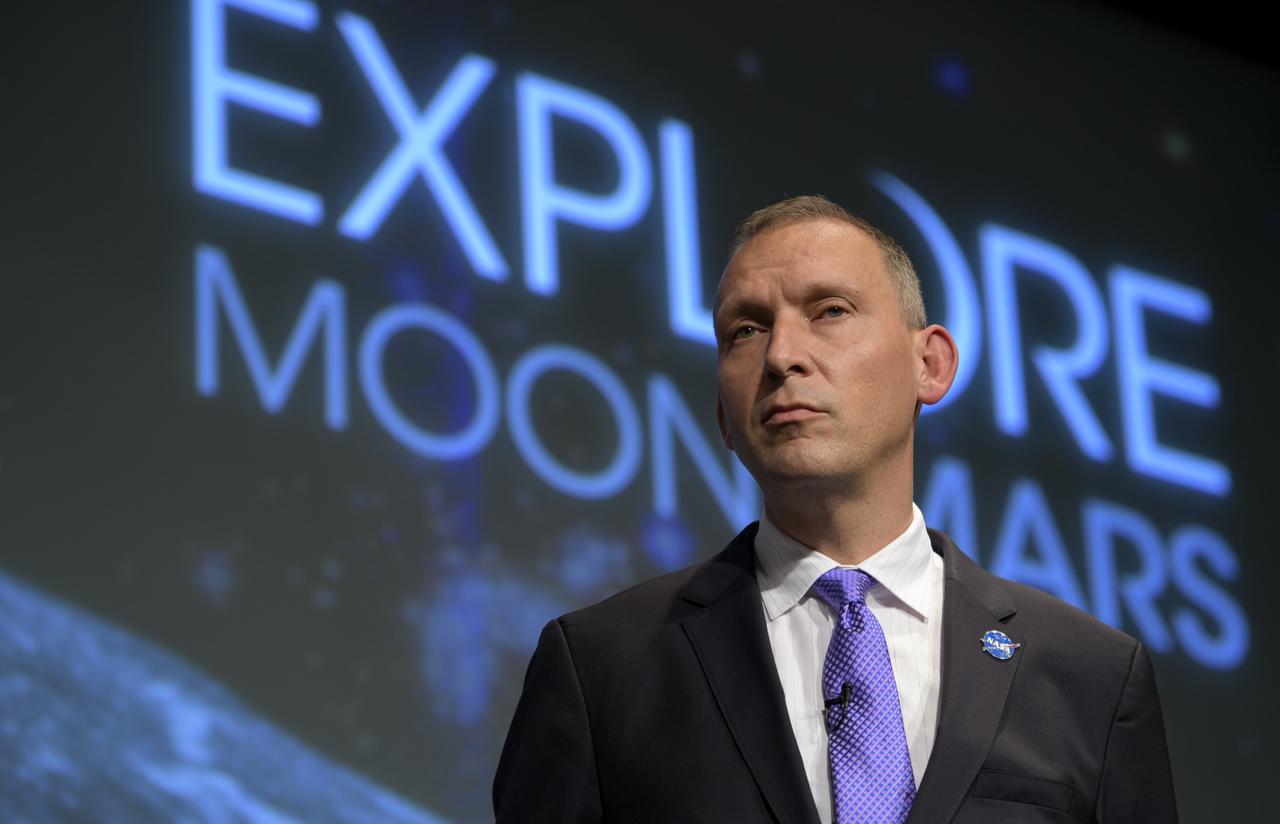
NASA Associate Administrator for the Science Mission Directorate, Thomas Zurbuchen, answers questions during an event where nine U.S. companies where named as eligible to bid on NASA delivery services to the lunar surface through Commercial Lunar Payload Services (CLPS) contracts, Thursday, Nov. 29, 2018 at NASA Headquarters in Washington. The companies will be able to bid on delivering science and technology payloads for NASA, including payload integration and operations, launching from Earth and landing on the surface of the Moon. NASA expects to be one of many customers that will use these commercial landing services. Photo Credit: (NASA/Bill Ingalls)
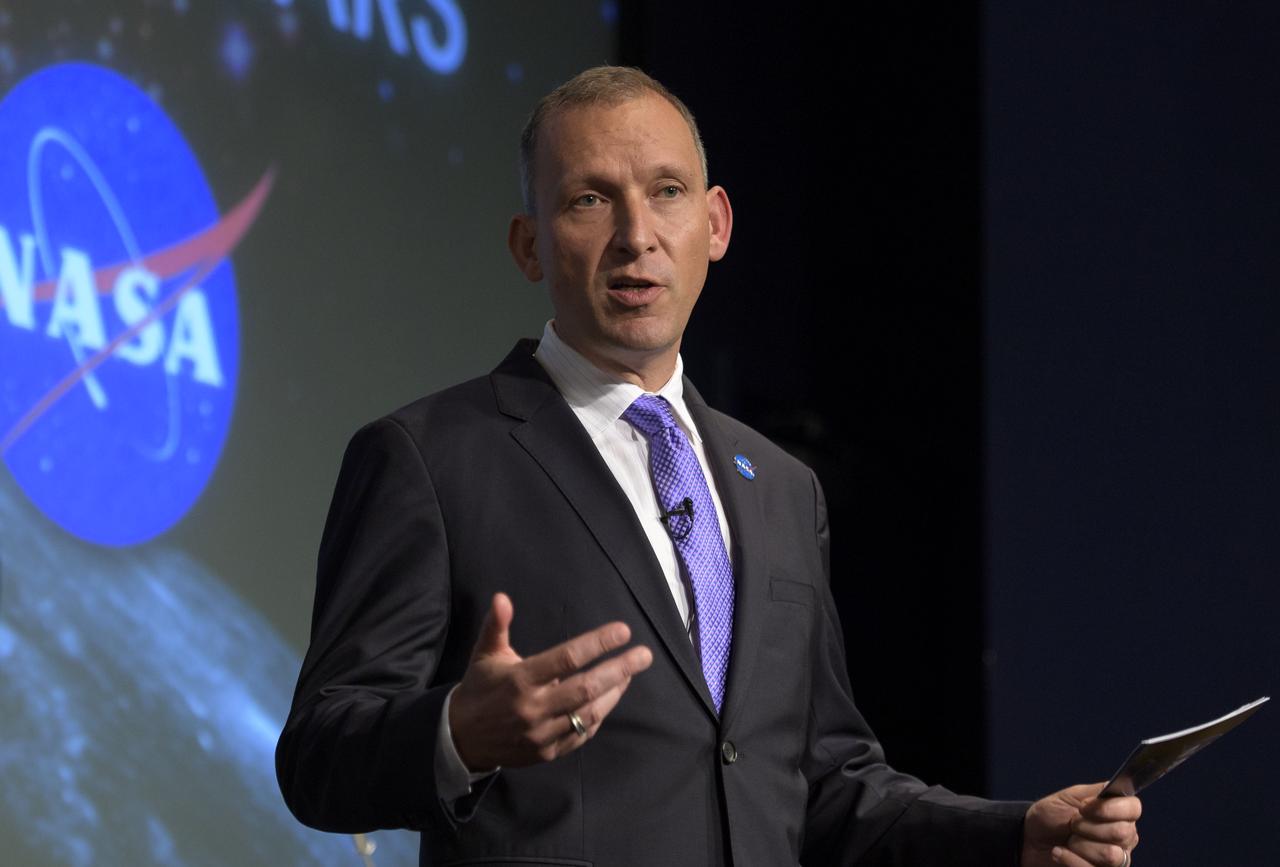
NASA Associate Administrator for the Science Mission Directorate, Thomas Zurbuchen, answers questions during an event where nine U.S. companies where named as eligible to bid on NASA delivery services to the lunar surface through Commercial Lunar Payload Services (CLPS) contracts, Thursday, Nov. 29, 2018 at NASA Headquarters in Washington. The companies will be able to bid on delivering science and technology payloads for NASA, including payload integration and operations, launching from Earth and landing on the surface of the Moon. NASA expects to be one of many customers that will use these commercial landing services. Photo Credit: (NASA/Bill Ingalls)
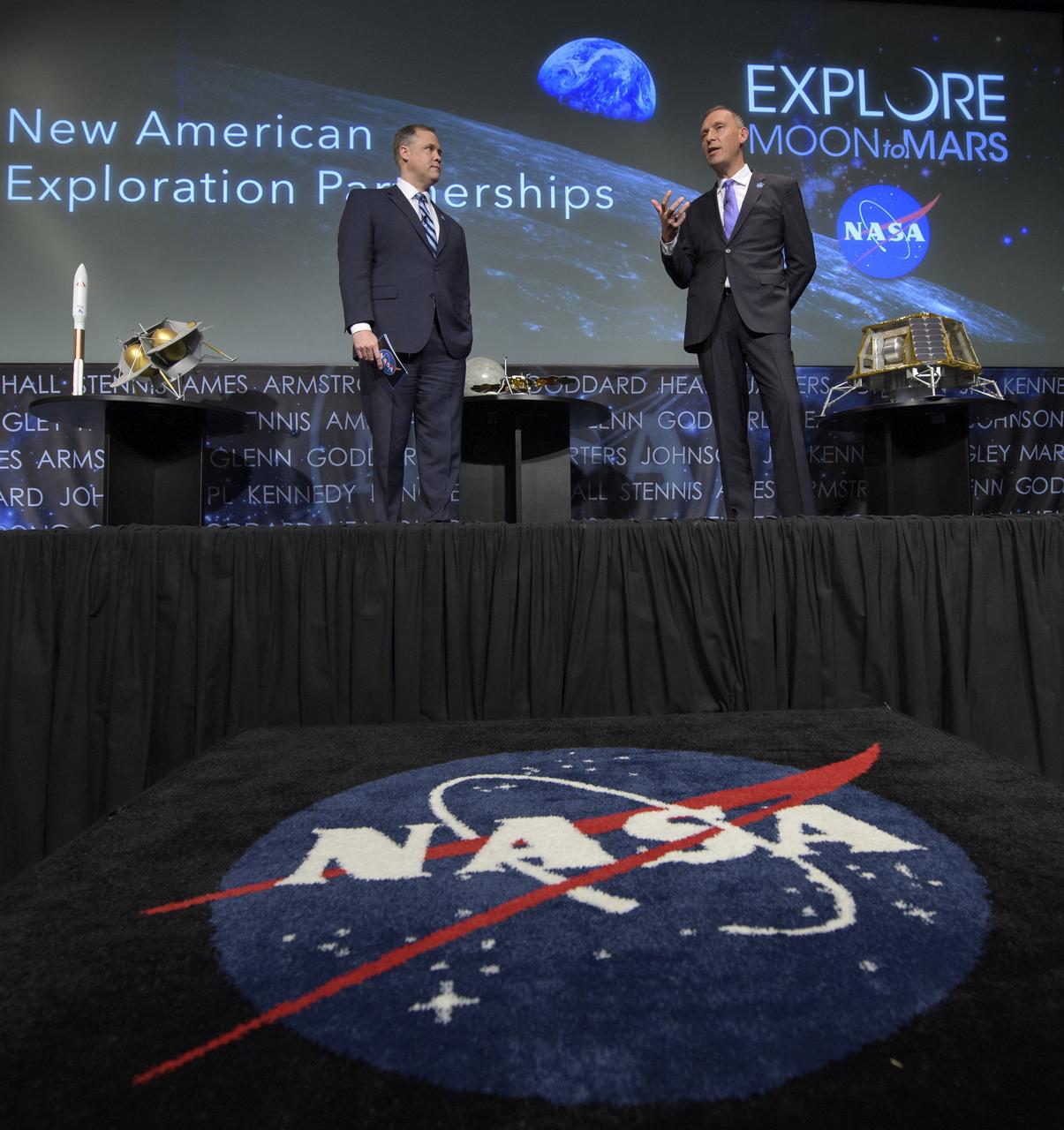
NASA Administrator Jim Bridenstine, left, and NASA Associate Administrator for the Science Mission Directorate, Thomas Zurbuchen, answer questions during an event where nine U.S. companies where named as eligible to bid on NASA delivery services to the lunar surface through Commercial Lunar Payload Services (CLPS) contracts, Thursday, Nov. 29, 2018 at NASA Headquarters in Washington. The companies will be able to bid on delivering science and technology payloads for NASA, including payload integration and operations, launching from Earth and landing on the surface of the Moon. NASA expects to be one of many customers that will use these commercial landing services. Photo Credit: (NASA/Bill Ingalls)
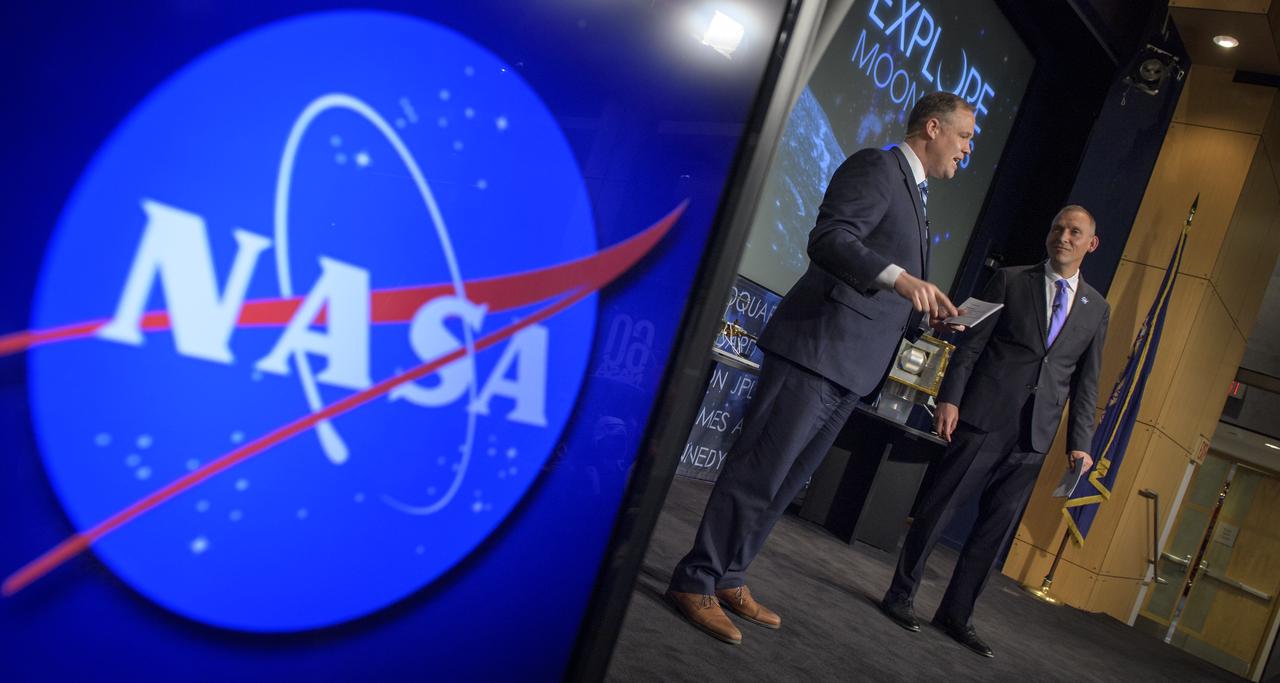
NASA Administrator Jim Bridenstine, left, and NASA Associate Administrator for the Science Mission Directorate, Thomas Zurbuchen, answer questions during an event where nine U.S. companies where named as eligible to bid on NASA delivery services to the lunar surface through Commercial Lunar Payload Services (CLPS) contracts, Thursday, Nov. 29, 2018 at NASA Headquarters in Washington. The companies will be able to bid on delivering science and technology payloads for NASA, including payload integration and operations, launching from Earth and landing on the surface of the Moon. NASA expects to be one of many customers that will use these commercial landing services. Photo Credit: (NASA/Bill Ingalls)
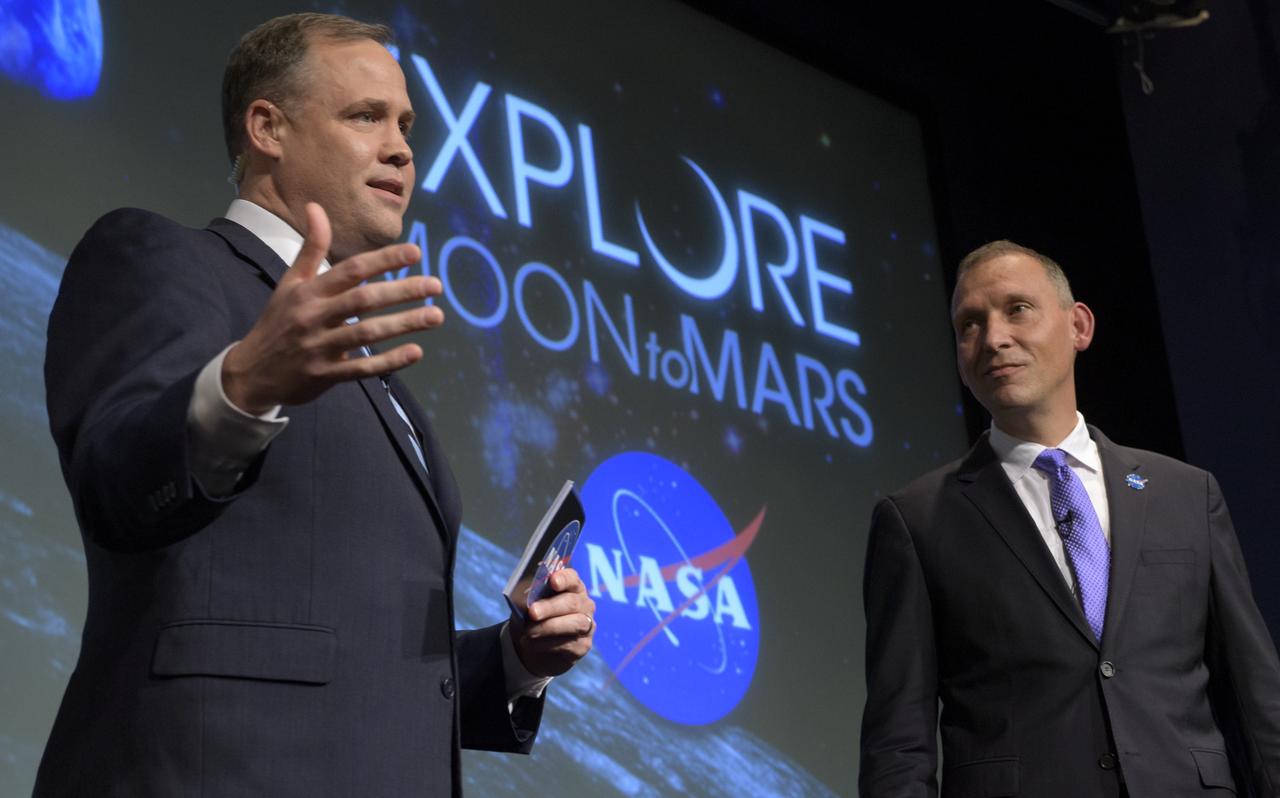
NASA Administrator Jim Bridenstine, left, and NASA Associate Administrator for the Science Mission Directorate, Thomas Zurbuchen, answer questions during an event where nine U.S. companies where named as eligible to bid on NASA delivery services to the lunar surface through Commercial Lunar Payload Services (CLPS) contracts, Thursday, Nov. 29, 2018 at NASA Headquarters in Washington. The companies will be able to bid on delivering science and technology payloads for NASA, including payload integration and operations, launching from Earth and landing on the surface of the Moon. NASA expects to be one of many customers that will use these commercial landing services. Photo Credit: (NASA/Bill Ingalls)
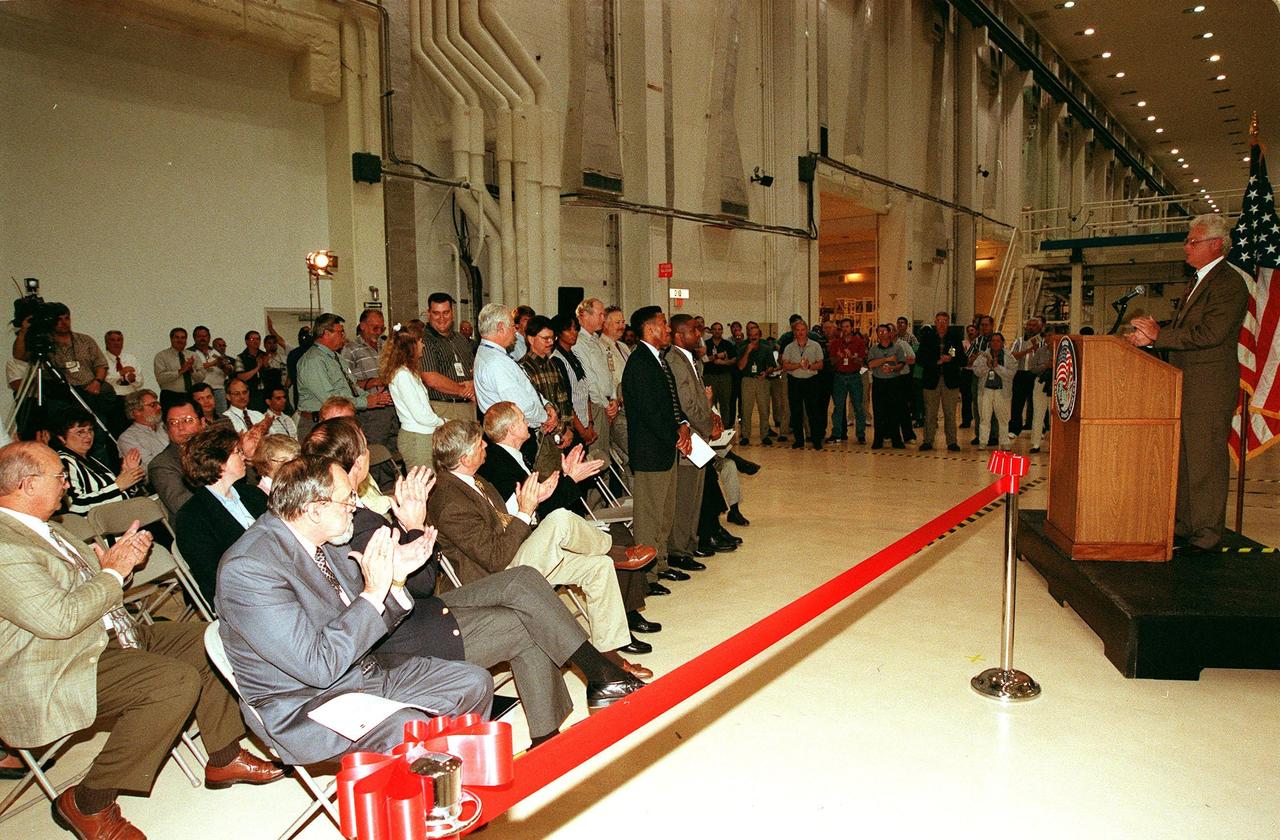
KENNEDY SPACE CENTER, FLA. -- At a ribbon-cutting ceremony inside the Operations and Checkout Building high bay, Sterling Walker, director of Engineering Development, introduces the project team members responsible for renovating an altitude chamber formerly used on the Apollo program. In addition, management, media and onlookers are present for the ceremony. Seated in the front row left are (left to right) Terry Smith, director of Engineering, Boeing Space Coast Operations; Steve Francois, director, Space Station and Shuttle Payloads; Jay Greene, International Space Station manager for Technical; and Roy Bridges, center director. The chamber was reactivated, after a 24-year hiatus, to perform leak tests on International Space Station pressurized modules at the launch site. Originally, two chambers were built to test the Apollo command and lunar service modules. They were last used in 1975 during the Apollo-Soyuz Test Project. After installation of new vacuum pumping equipment and controls, a new control room, and a new rotation handling fixture, the chamber again became operational in February 1999. The chamber, which is 33 feet in diameter and 50 feet tall, is constructed of stainless steel. The first module that will be tested for leaks is the U.S. Laboratory. No date has been determined for the test
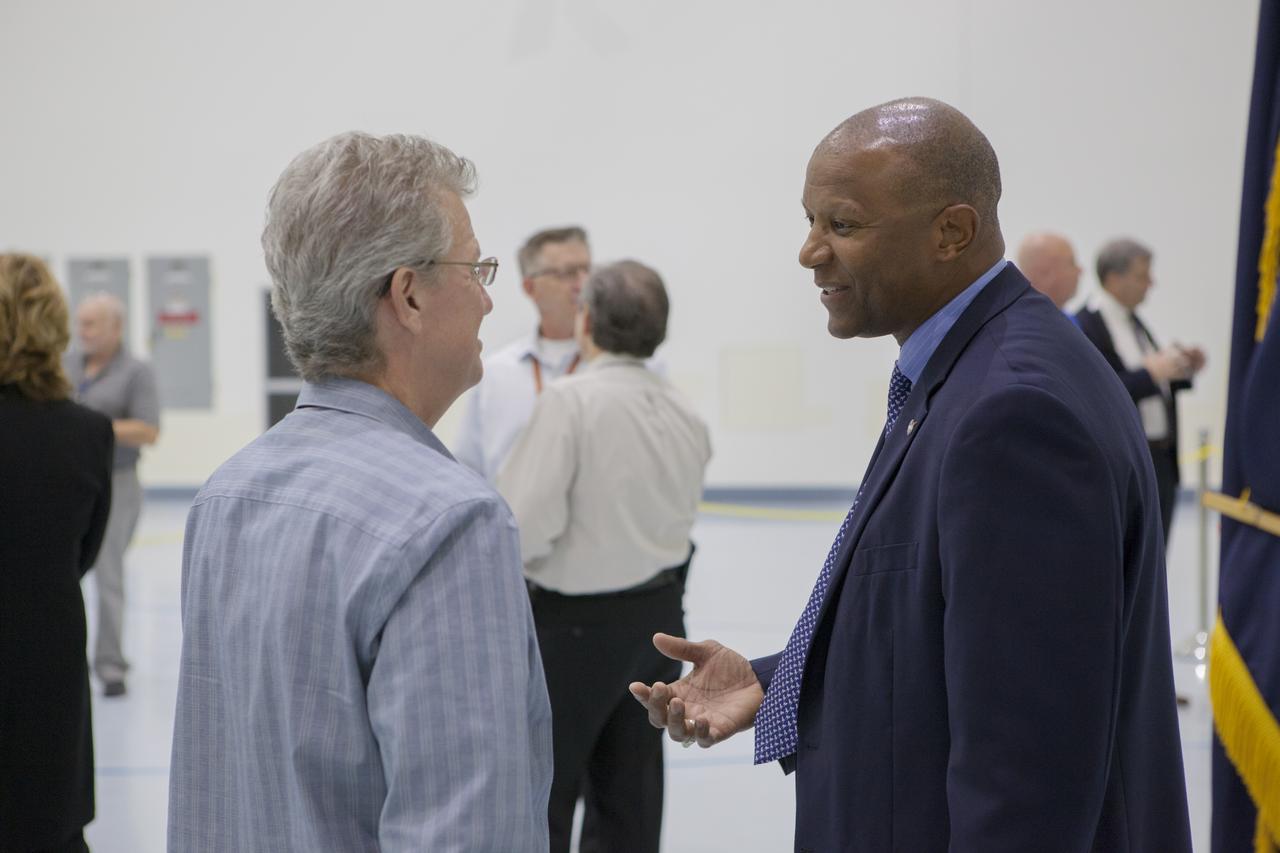
Kennedy Space Center Associate Director Kelvin Manning, right, speaks with a guest during a ceremony marking NASA's Spacecraft/Payload Integration and Evolution (SPIE) organization formally turning over processing of the Space Launch System (SLS) rocket's Interim Cryogenic Propulsion Stage (ICPS) to the center's Ground Systems Development and Operations (GSDO) Directorate. The ICPS is the first integrated piece of flight hardware to arrive in preparation for the uncrewed Exploration Mission-1. With the Orion attached, the ICPS sits atop the SLS rocket and will provide the spacecraft with the additional thrust needed to travel tens of thousands of miles beyond the Moon.
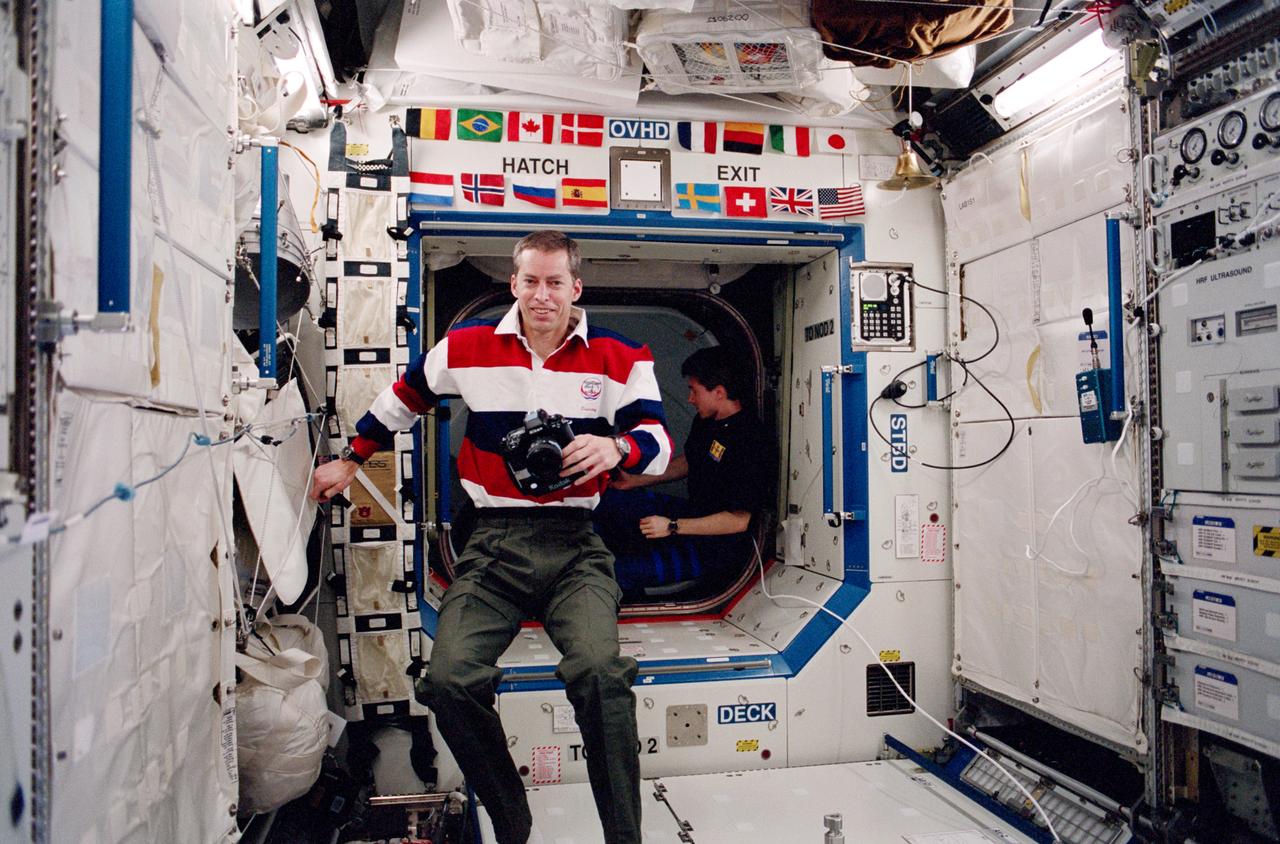
In this Space Shuttle STS-102 mission image, the Payload Equipment Restraint System H-Strap is shown at the left side of the U.S. Laboratory hatch and behind Astronaut James D. Weatherbee, mission specialist. PERS is an integrated modular system of components designed to assist the crew of the International Space Station (ISS) in restraining and carrying necessary payload equipment and tools in a microgravity environment. The Operations Development Group, Flight Projects Directorate at the Marshall Space Flight Center (MSFC), while providing operation support to the ISS Materials Science Research Facility (MSRF), recognized the need for an on-orbit restraint system to facilitate control of lose objects, payloads, and tools. The PERS is the offspring of that need and it helps the ISS crew manage tools and rack components that would otherwise float away in the near-zero gravity environment aboard the Space Station. The system combines Kevlar straps, mesh pockets, Velcro and a variety of cornecting devices into a portable, adjustable system. The system includes the Single Strap, the H-Strap, the Belly Pack, the Laptop Restraint Belt, and the Tool Page Case. The Single Strap and the H-Strap were flown on this mission. The PERS concept was developed by industrial design students at Auburn University and the MSFC Flight Projects Directorate.
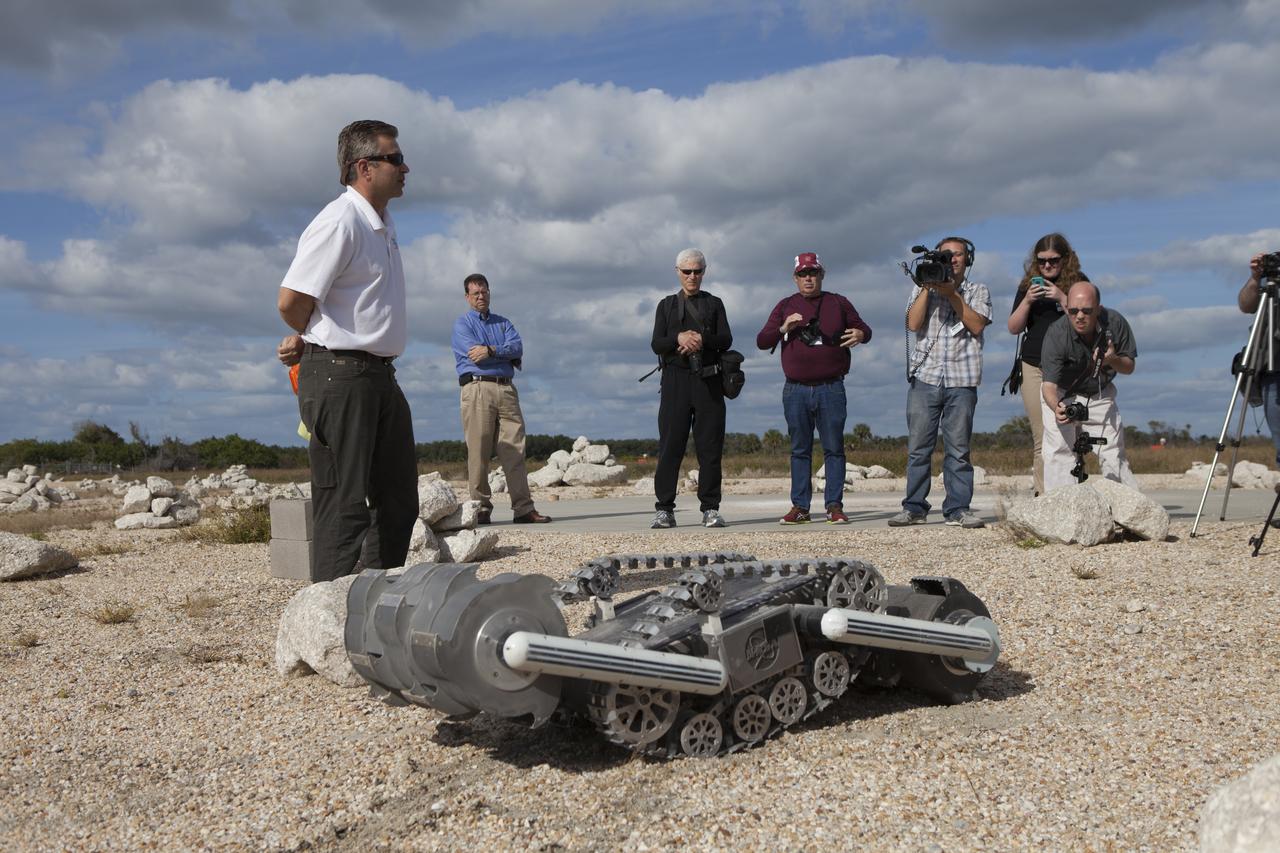
Rob Mueller, NASA senior technologist in the Surface Systems Office in Kennedy Space Center's Engineering and Technology Directorate, demonstrates the Regolith Advanced Surface System Operations Robot, or RASSOR, during a media event at Kennedy's automated landing and hazard avoidance technology, or ALHAT, hazard field at the north end of the Shuttle Landing Facility. The event was held to announce Moon Express Inc., of Moffett Field, California is selected to utilize Kennedy facilities for NASA's Lunar Cargo Transportation and Landing by Soft Touchdown, or Lunar CATALYST, initiative. Moon Express is developing a lander with capabilities that will enable delivery of payloads to the surface of the moon, as well as new science and exploration missions of interest to NASA and scientific and academic communities. Moon Express will base its activities at Kennedy and utilize the Morpheus ALHAT field and a hangar nearby for CATALYST testing. The Advanced Exploration Systems Division of NASA's Human Exploration and Operations Mission Directorate manages Lunar CATALYST.
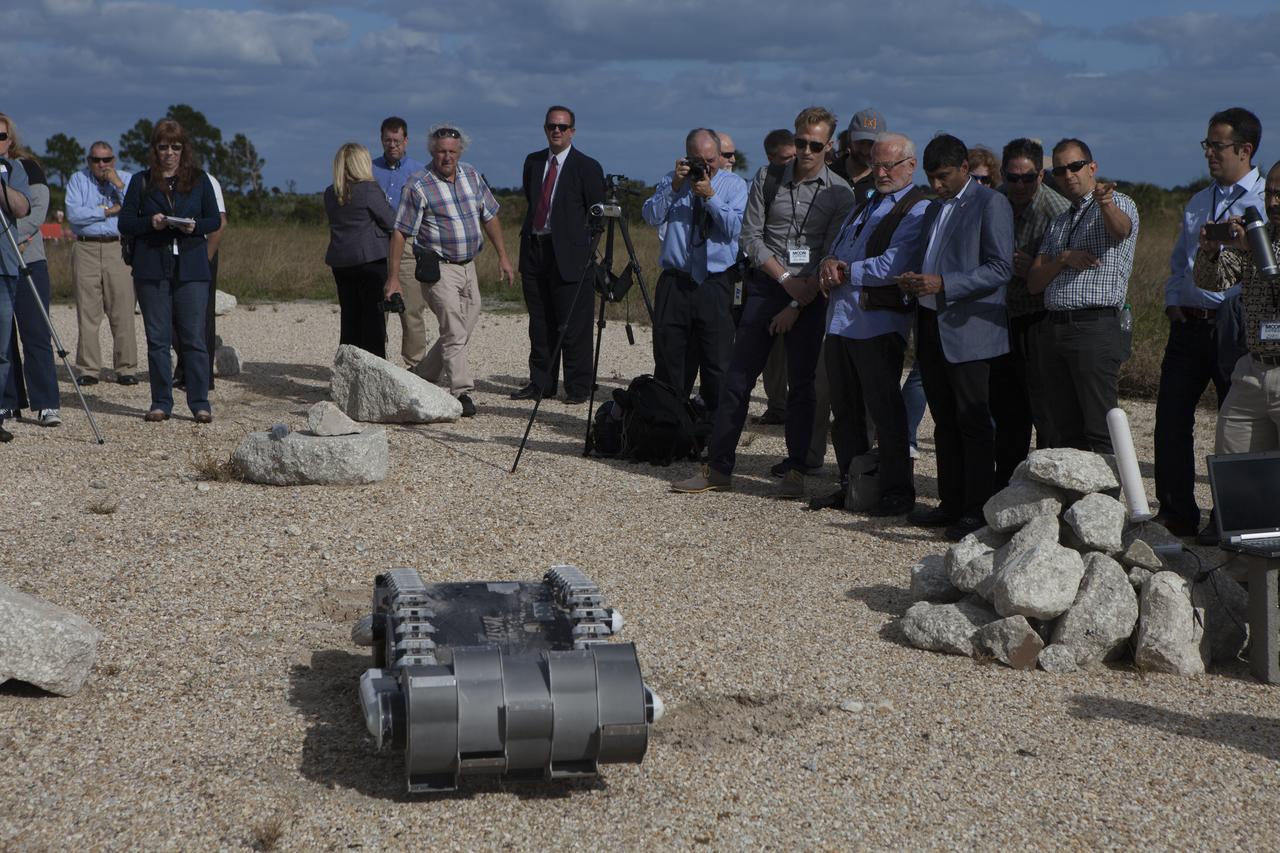
Members of the media watch a demonstration of the Regolith Advanced Surface System Operations Robot, or RASSOR, during a media event at the automated landing and hazard avoidance technology, or ALHAT, hazard field at the north end of the Shuttle Landing Facility at NASA's Kennedy Space Center in Florida. Tom Engler, center, in the suit, deputy director of Kennedy's Center Planning and Development, announced Moon Express Inc., of Moffett Field, California is selected to utilize Kennedy facilities for NASA's Lunar Cargo Transportation and Landing by Soft Touchdown, or Lunar CATALYST, initiative. Moon Express is developing a lander with capabilities that will enable delivery of payloads to the surface of the moon, as well as new science and exploration missions of interest to NASA and scientific and academic communities. Moon Express will base its activities at Kennedy and utilize the Morpheus ALHAT field and a hangar nearby for CATALYST testing. The Advanced Exploration Systems Division of NASA's Human Exploration and Operations Mission Directorate manages Lunar CATALYST.
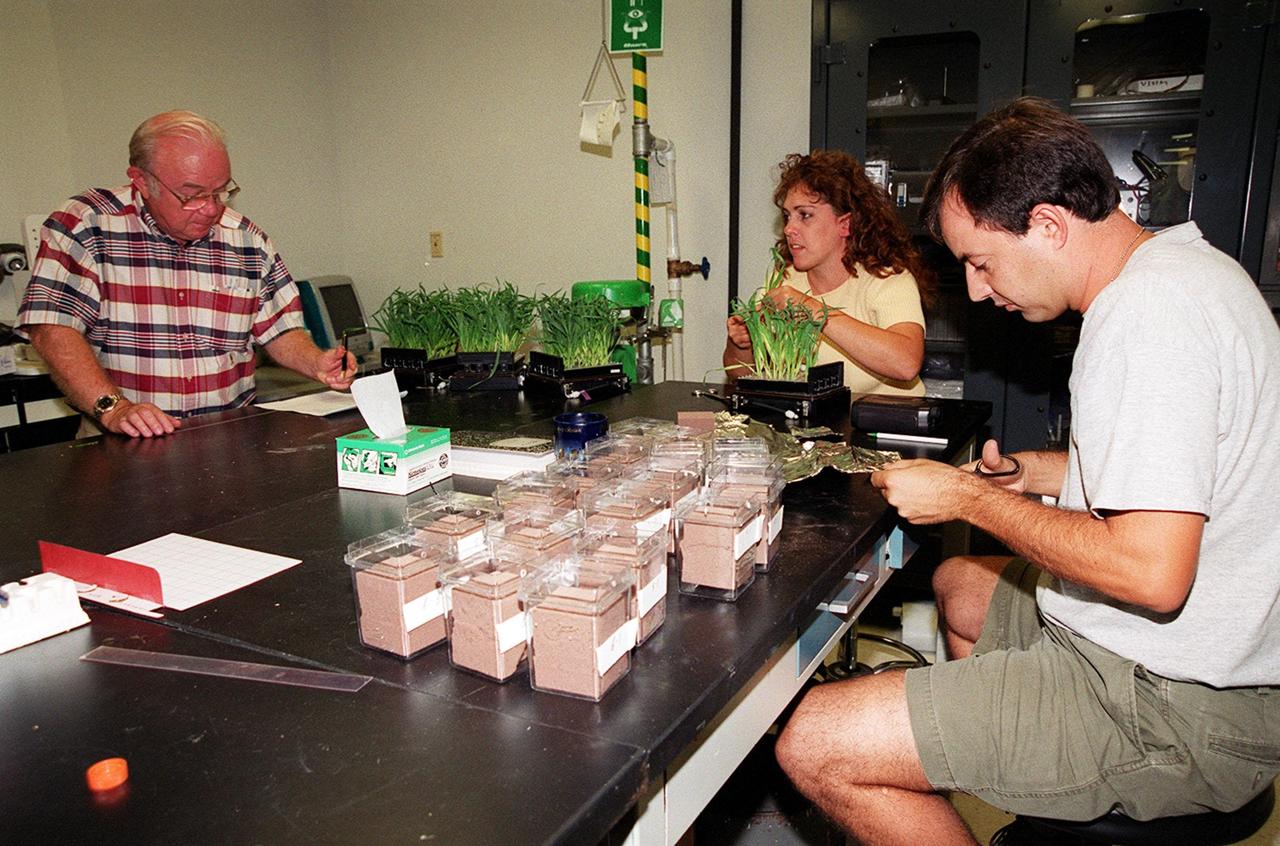
Researchers work with wheat samples that are part of ground testing for the first International Space Station plant experiment, scheduled to fly in October 2001. From left are research scientist Oscar Monje and research technicians Lisa Ruffa and Ignacio Eraso. The payload process testing they are performing is one of many studies at the Biological Sciences Branch in the Spaceport Engineering and Technology Directorate at Kennedy Space Center. The branch's operations and research areas include life sciences Space Shuttle payloads, bioregenerative life-support for long-duration spaceflight and environmental/ecological stewardship
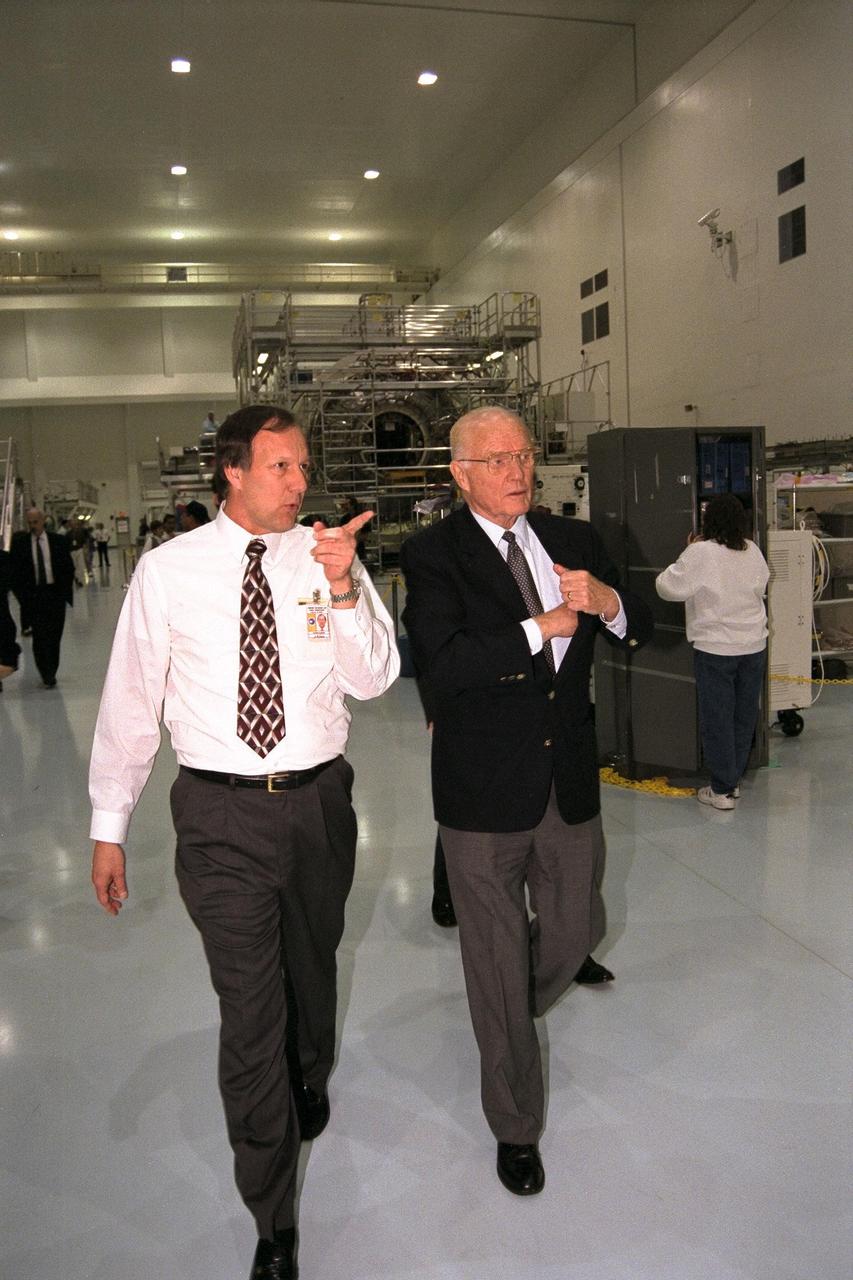
Ohio Senator John Glenn, at right, enjoys a tour of the Space Station Processing Facility at Kennedy Space Center. With Senator Glenn is Stephen Francois, director, Space Station and Shuttle Payloads, NASA. Senator Glenn arrived at KSC on Jan. 20 to tour KSC operational areas and to view the launch of STS-89. Glenn, who made history in 1962 as the first American to orbit the Earth, completing three orbits in a five-hour flight aboard Friendship 7, will fly his second space mission aboard Space Shuttle Discovery this October. Glenn is retiring from the Senate at the end of this year and will be a payload specialist aboard STS-95
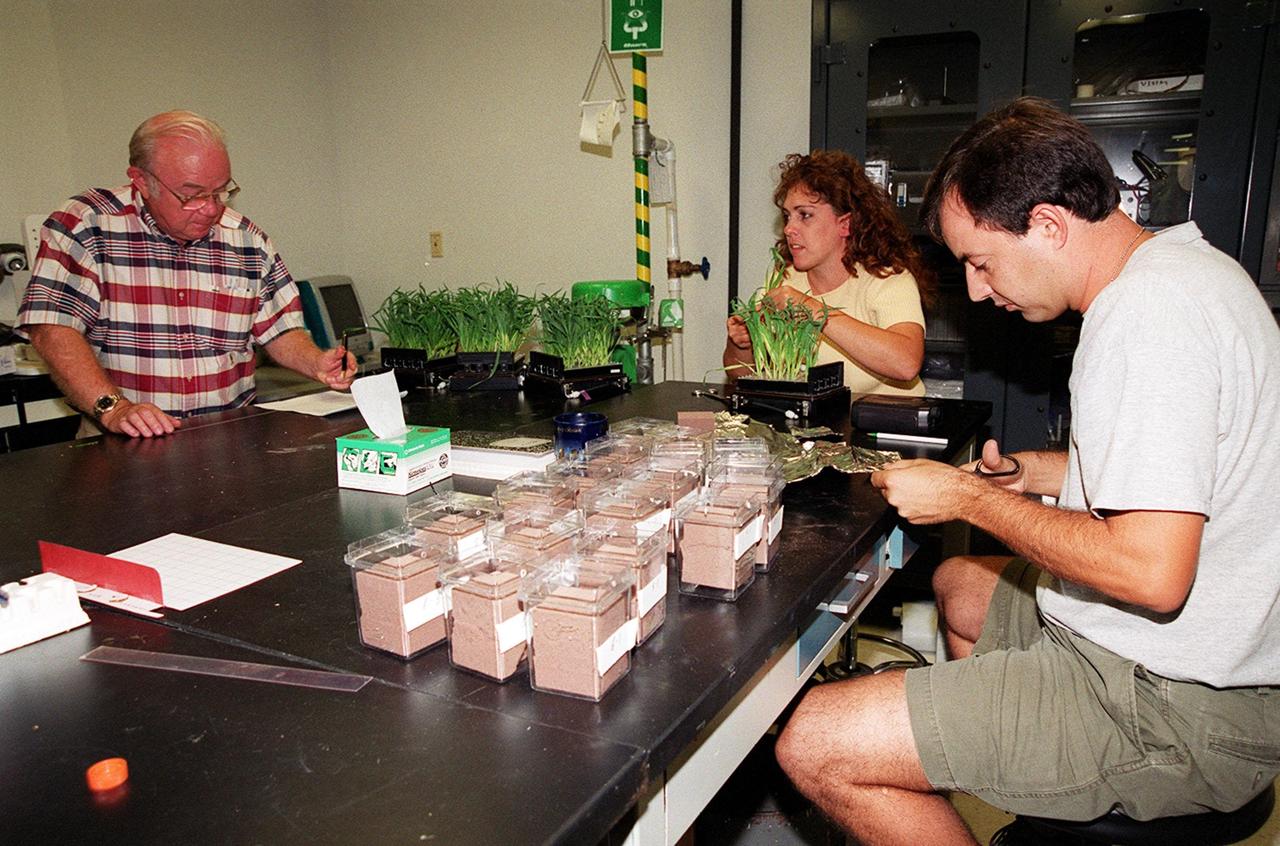
Researchers work with wheat samples that are part of ground testing for the first International Space Station plant experiment, scheduled to fly in October 2001. From left are research scientist Oscar Monje and research technicians Lisa Ruffa and Ignacio Eraso. The payload process testing they are performing is one of many studies at the Biological Sciences Branch in the Spaceport Engineering and Technology Directorate at Kennedy Space Center. The branch's operations and research areas include life sciences Space Shuttle payloads, bioregenerative life-support for long-duration spaceflight and environmental/ecological stewardship
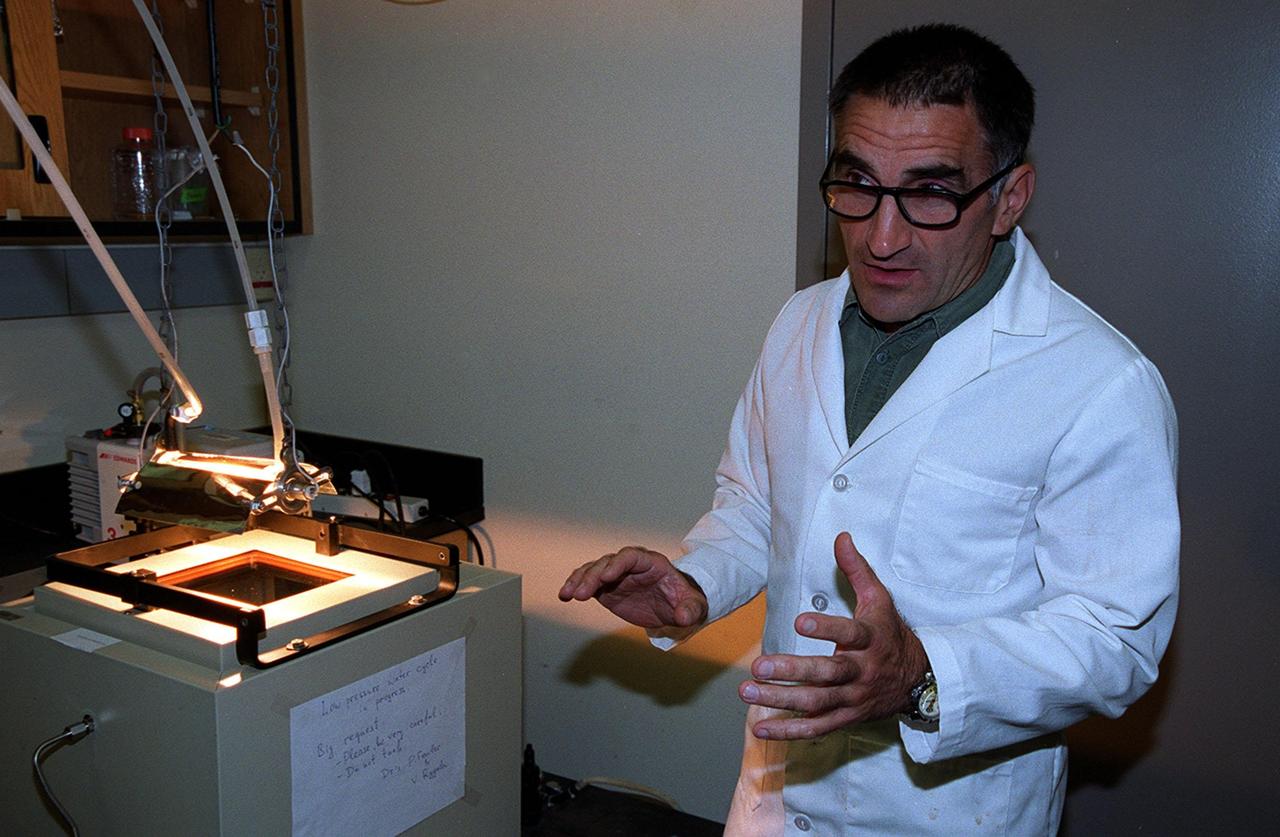
Research scientist Vadim Rygalov describes a new low-pressure water-recycling experiment being designed to help simulate plant growth conditions on Mars. The research he is performing is one of many studies at the Biological Sciences Branch in the Spaceport Engineering and Technology Directorate at Kennedy Space Center. The branch's operations and research areas include life sciences Space Shuttle payloads, bioregenerative life-support for long-duration spaceflight and environmental/ecological stewardship
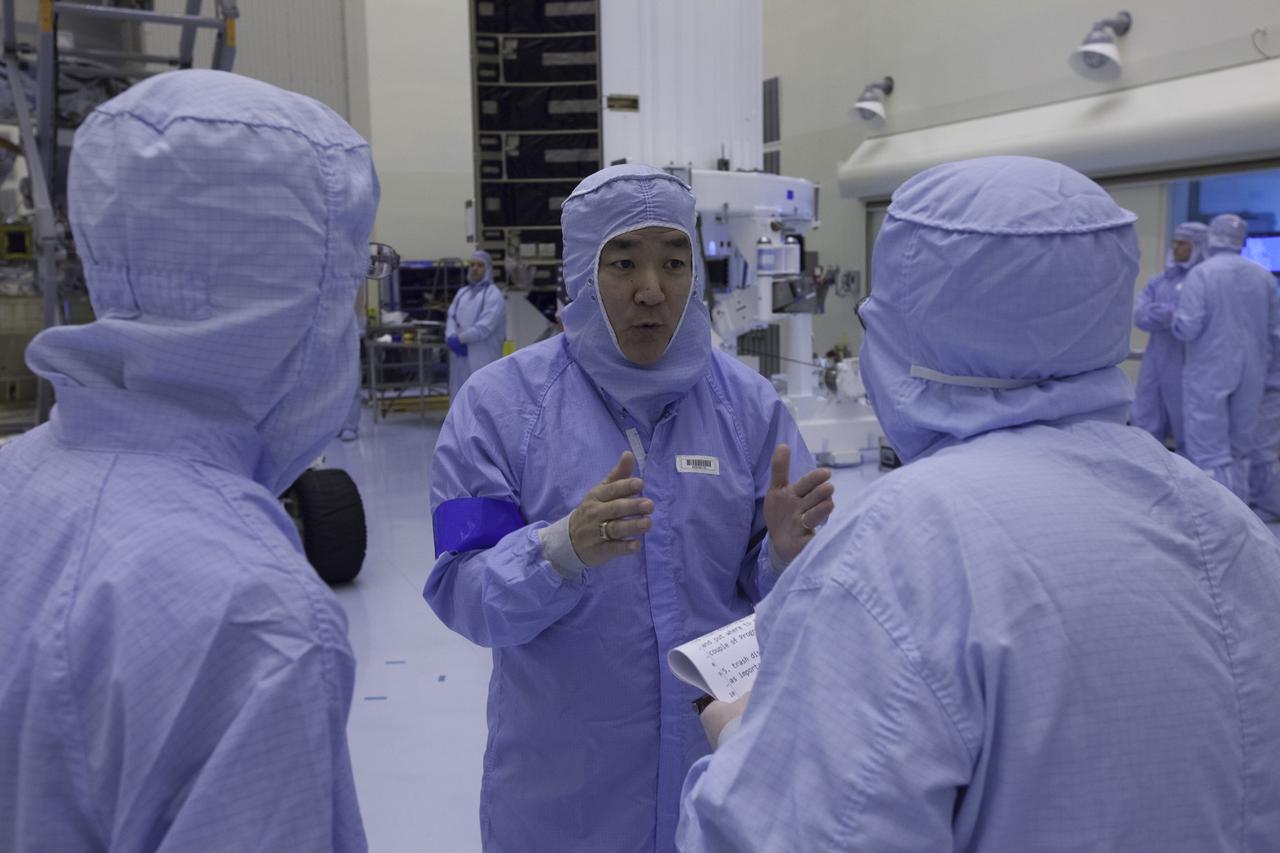
Inside the Payload Hazardous Servicing Facility at NASA's Kennedy Space Center, former NASA astronaut Dan Tani, who now is senior director of Missions and Cargo Operations for Orbital ATK in Dulles, Virginia, participates in a press interview. In the background is the Cygnus spacecraft scheduled to deliver hardware and supplies to the International Space Station on the upcoming Orbital ATK Commercial Resupply Services-6 mission.

Research assistant Trisha Bruno performs an analysis on potato samples at Hangar L at the Cape Canaveral Air Force Station. The research she is performing is one of many studies at the Biological Sciences Branch in the Spaceport Engineering and Technology Directorate at Kennedy Space Center. The branch's operations and research areas include life sciences Space Shuttle payloads, bioregenerative life-support for long-duration spaceflight and environmental/ecological stewardship
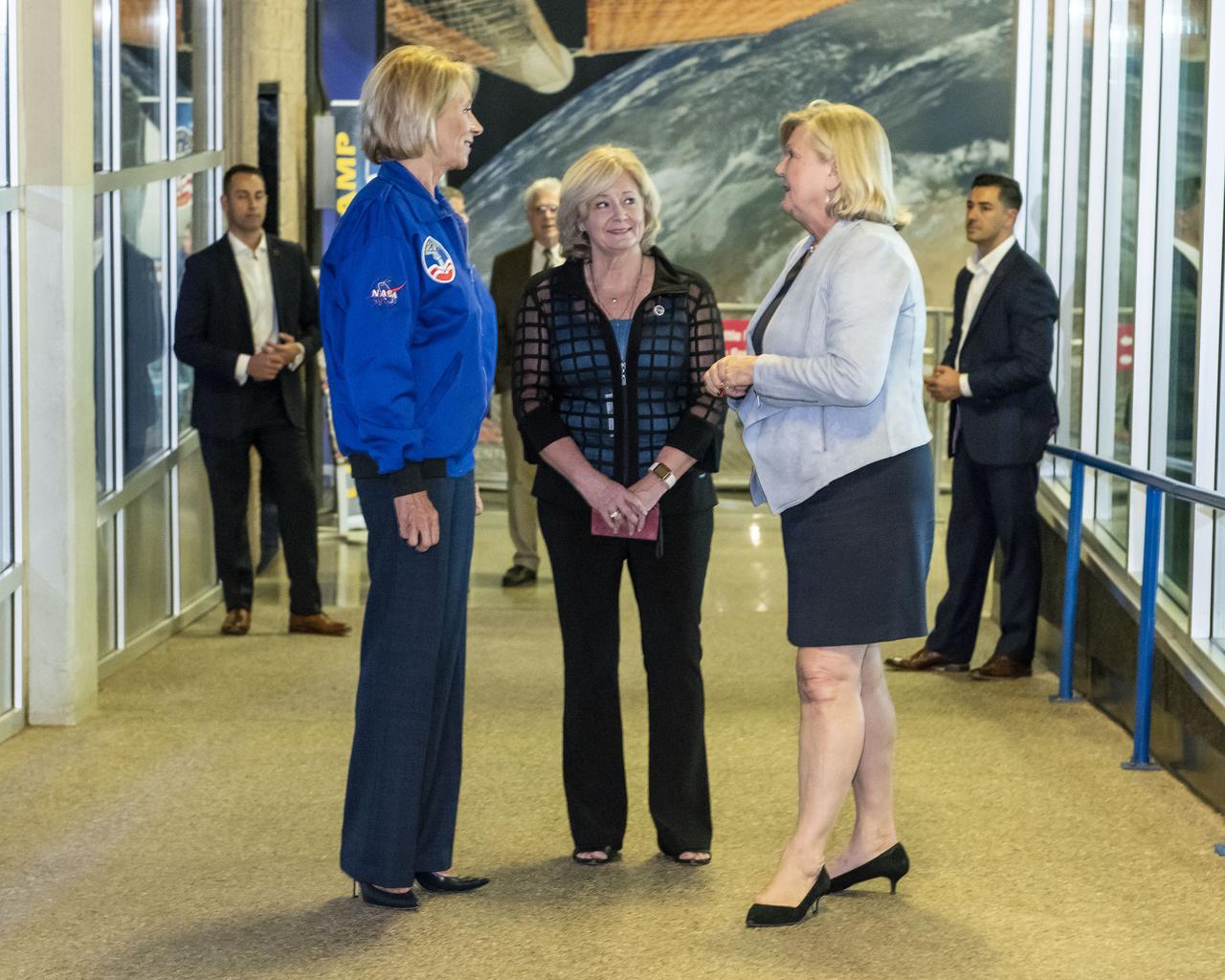
Secretary of Education Betsy DeVos visited the Payload Operations Integration Center (POIC) and test stand 4693 at the Marshall Space Flight Center (MSFC). The visit to MSFC was followed by a tour of educational facilities at the U.S. Space and Rocket Center (USSRC). Secretary DeVos was accompanied by Marshall Center Director Jody Singer and USSRC CEO Dr. Deborah Barnhart.
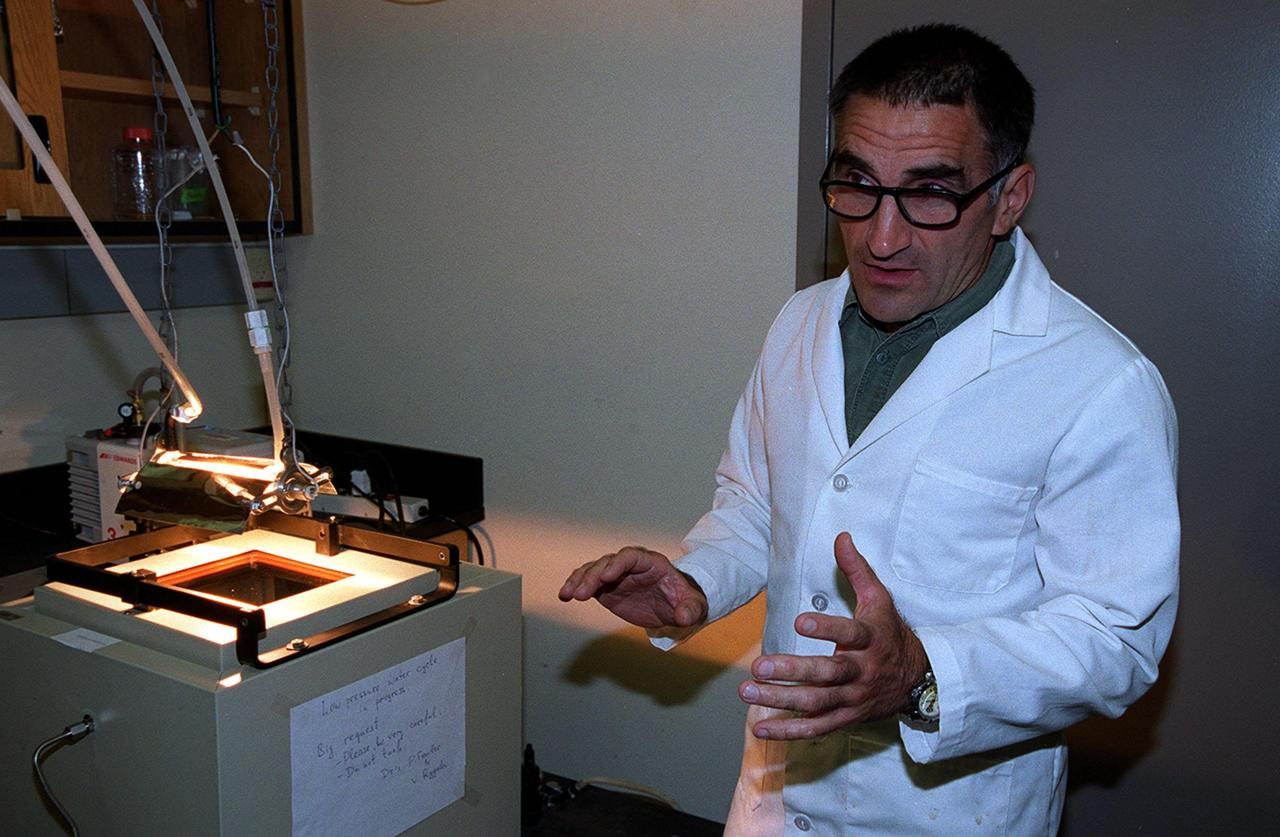
Research scientist Vadim Rygalov describes a new low-pressure water-recycling experiment being designed to help simulate plant growth conditions on Mars. The research he is performing is one of many studies at the Biological Sciences Branch in the Spaceport Engineering and Technology Directorate at Kennedy Space Center. The branch's operations and research areas include life sciences Space Shuttle payloads, bioregenerative life-support for long-duration spaceflight and environmental/ecological stewardship
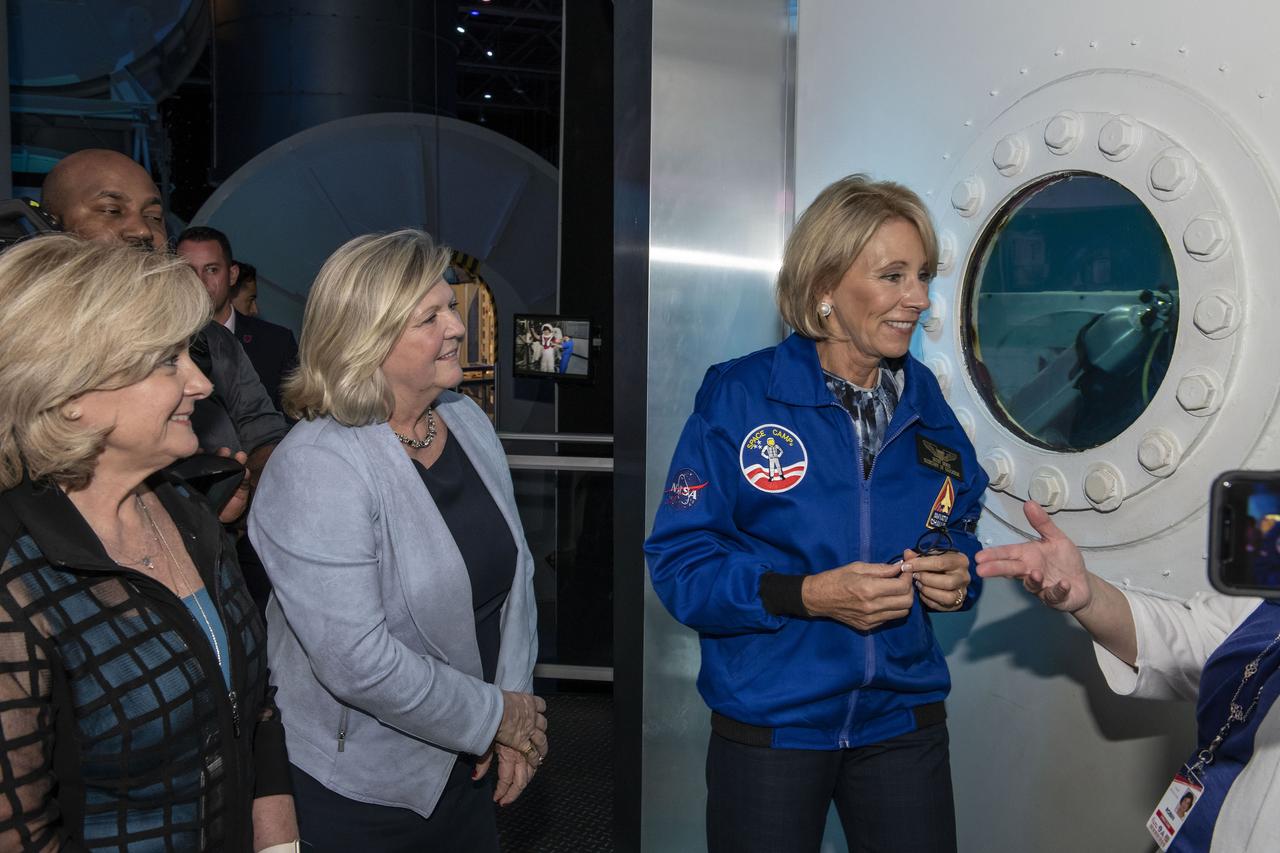
Secretary of Education Betsy DeVos visited the Payload Operations Integration Center (POIC) and test stand 4693 at the Marshall Space Flight Center (MSFC). The visit to MSFC was followed by a tour of educational facilities at the U.S. Space and Rocket Center (USSRC). Secretary DeVos was accompanied by Marshall Center Director Jody Singer and USSRC CEO Dr. Deborah Barnhart.
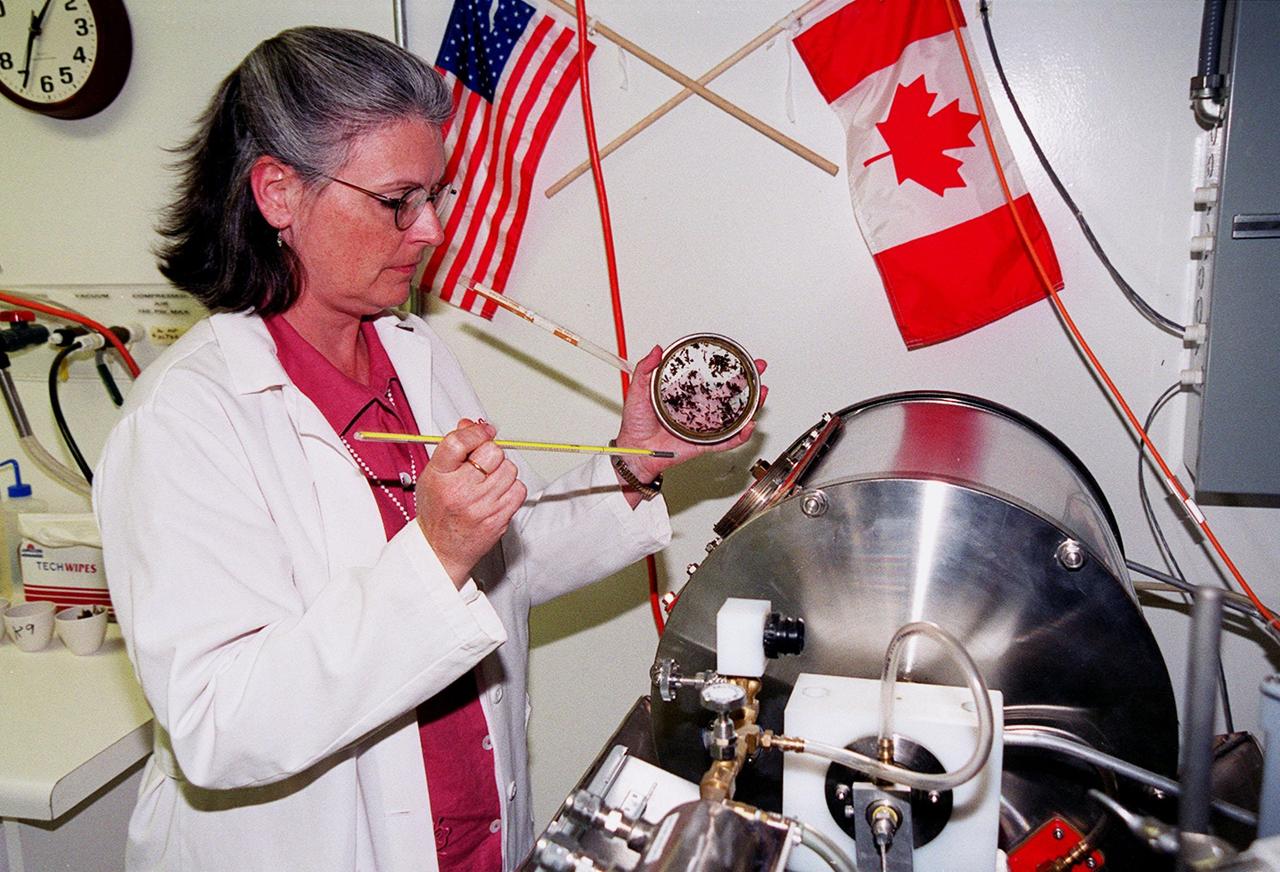
Visiting scientist Cheryl Frazier monitors a prototype composting machine in Hangar L at the Cape Canaveral Air Force Station. The research she is performing is one of many studies at the Biological Sciences Branch in the Spaceport Engineering and Technology Directorate at Kennedy Space Center. The branch's operations and research areas include life sciences Space Shuttle payloads, bioregenerative life-support for long-duration spaceflight and environmental/ecological stewardship
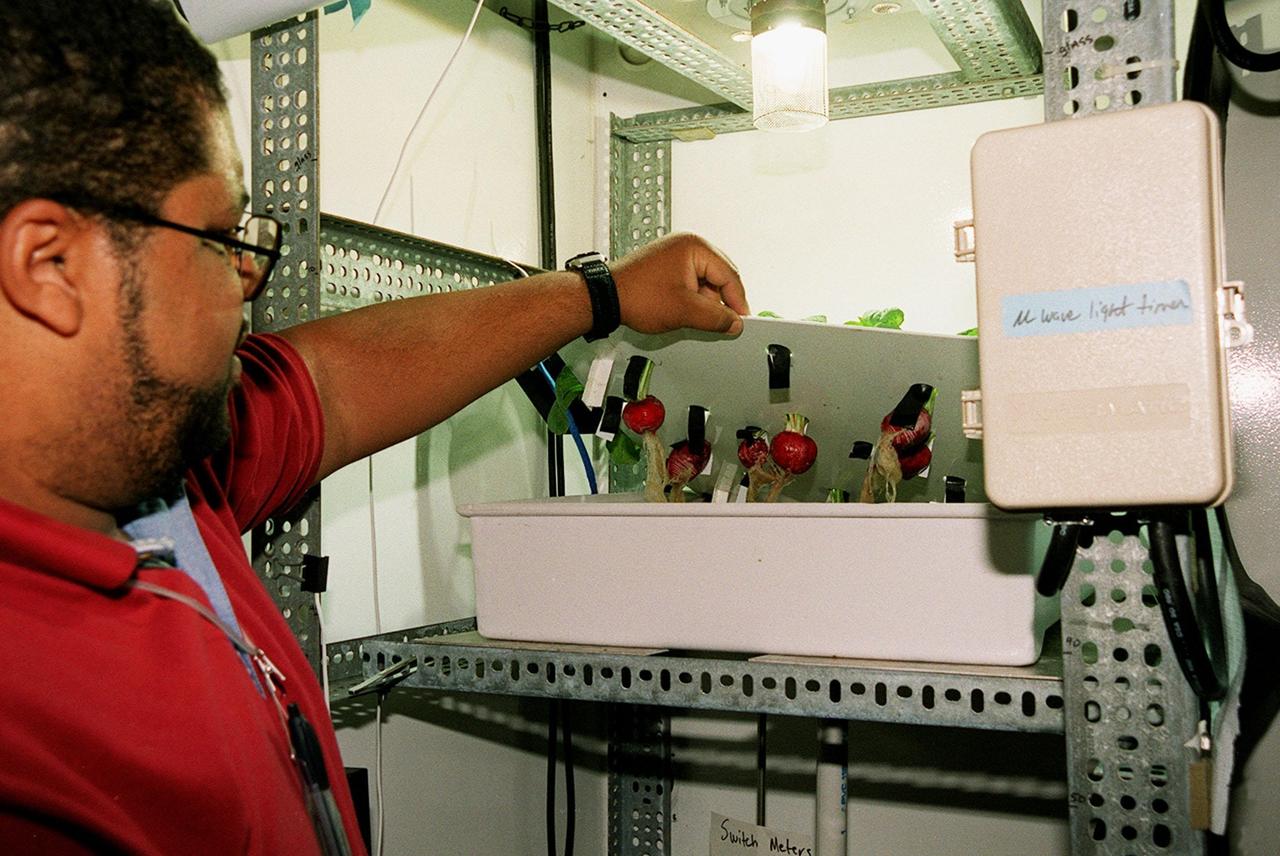
Research scientist Greg Goins monitors radish growth under a sulfur-microwave light at Hangar L at the Cape Canaveral Air Force Station. The research he is performing is one of many studies at the Biological Sciences Branch in the Spaceport Engineering and Technology Directorate at Kennedy Space Center. The branch's operations and research areas include life sciences Space Shuttle payloads, bioregenerative life-support for long-duration spaceflight and environmental/ecological stewardshi
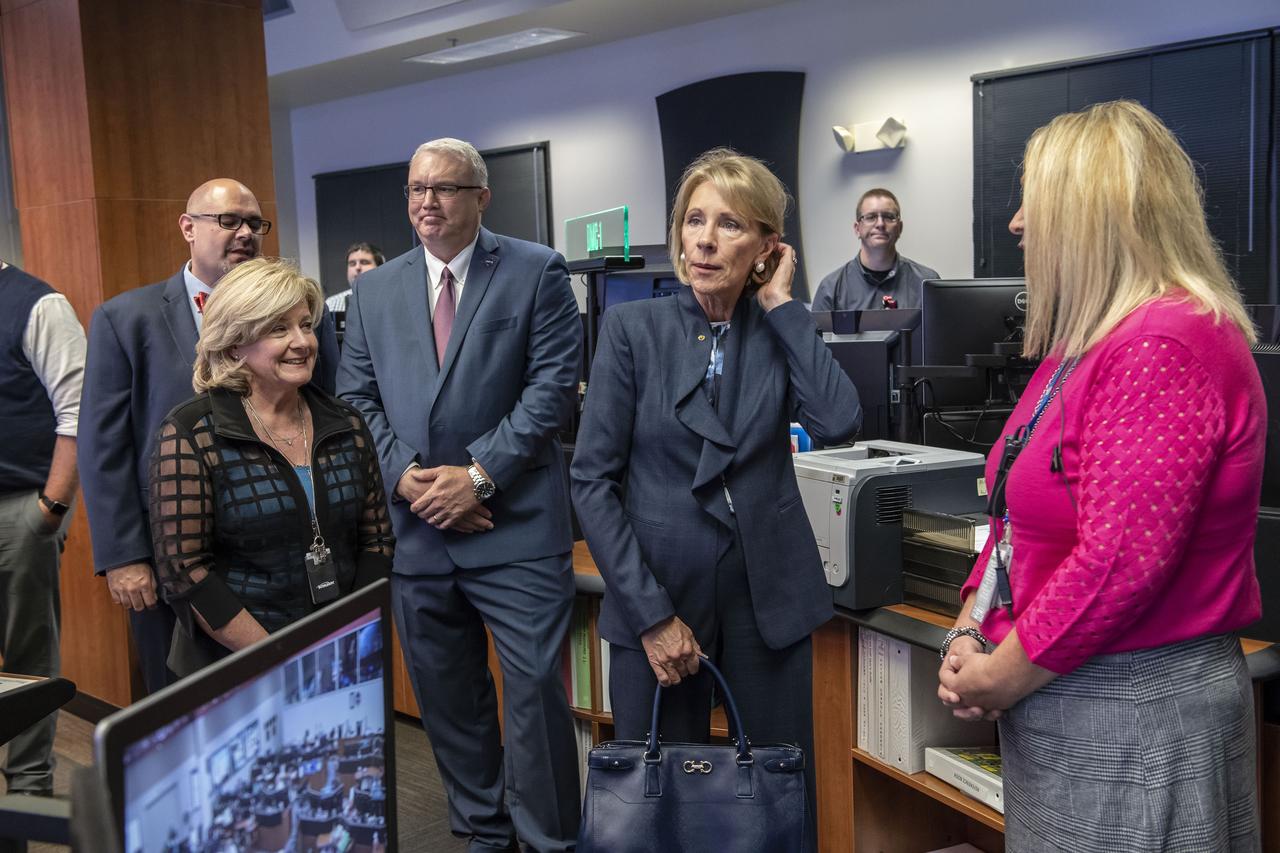
Secretary of Education Betsy DeVos visited the Payload Operations Integration Center (POIC) and test stand 4693 at the Marshall Space Flight Center (MSFC). The visit to MSFC was followed by a tour of educational facilities at the U.S. Space and Rocket Center (USSRC). Secretary DeVos was accompanied by Marshall Center Director Jody Singer and USSRC CEO Dr. Deborah Barnhart.
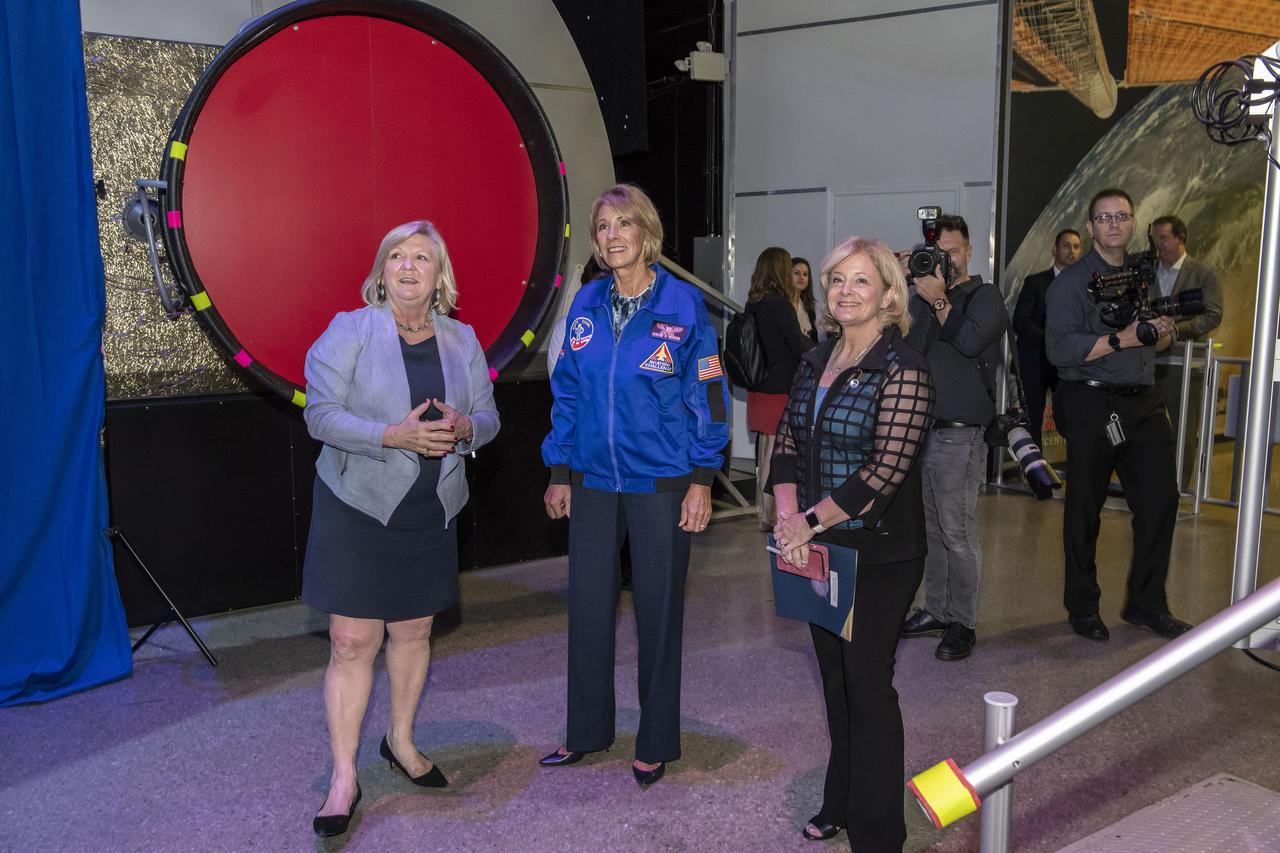
Secretary of Education Betsy DeVos visited the Payload Operations Integration Center (POIC) and test stand 4693 at the Marshall Space Flight Center (MSFC). The visit to MSFC was followed by a tour of educational facilities at the U.S. Space and Rocket Center (USSRC). Secretary DeVos was accompanied by Marshall Center Director Jody Singer and USSRC CEO Dr. Deborah Barnhart.
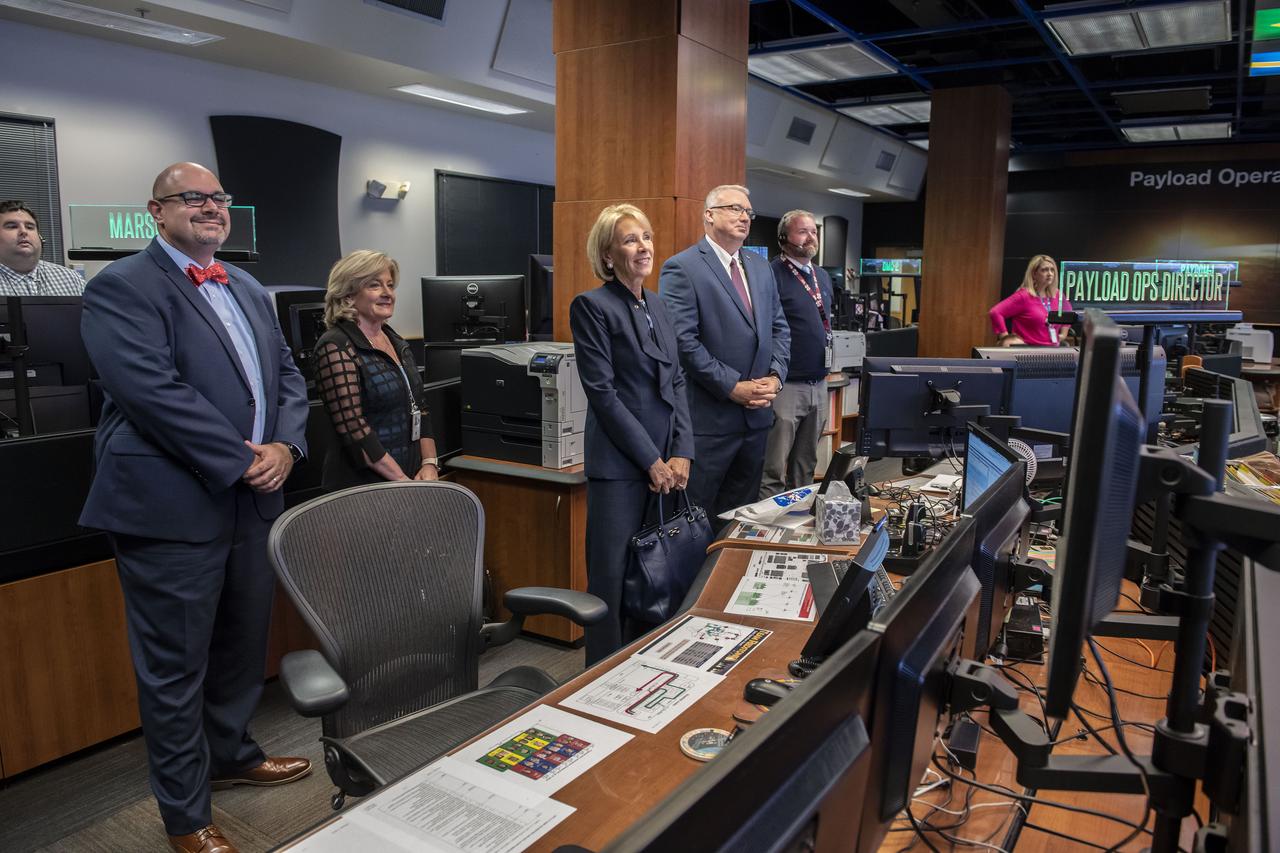
Secretary of Education Betsy DeVos visited the Payload Operations Integration Center (POIC) and test stand 4693 at the Marshall Space Flight Center (MSFC). The visit to MSFC was followed by a tour of educational facilities at the U.S. Space and Rocket Center (USSRC). Secretary DeVos was accompanied by Marshall Center Director Jody Singer and USSRC CEO Dr. Deborah Barnhart.
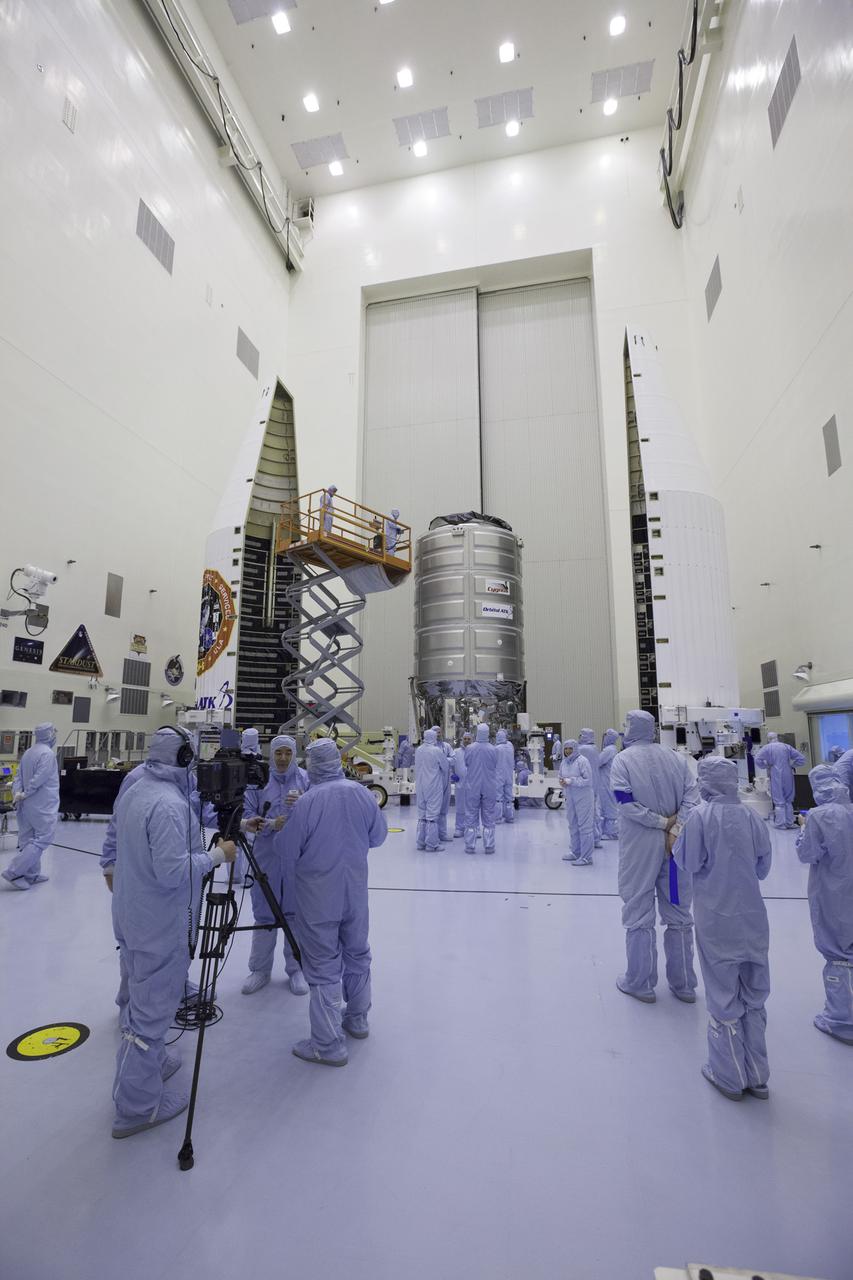
Inside the Payload Hazardous Servicing Facility at NASA's Kennedy Space Center, former NASA astronaut Dan Tani, who now is senior director of Missions and Cargo Operations for Orbital ATK in Dulles, Virginia, participates in a press interview. In the background is the Cygnus spacecraft scheduled to deliver hardware and supplies to the International Space Station on the upcoming Orbital ATK Commercial Resupply Services-6 mission.
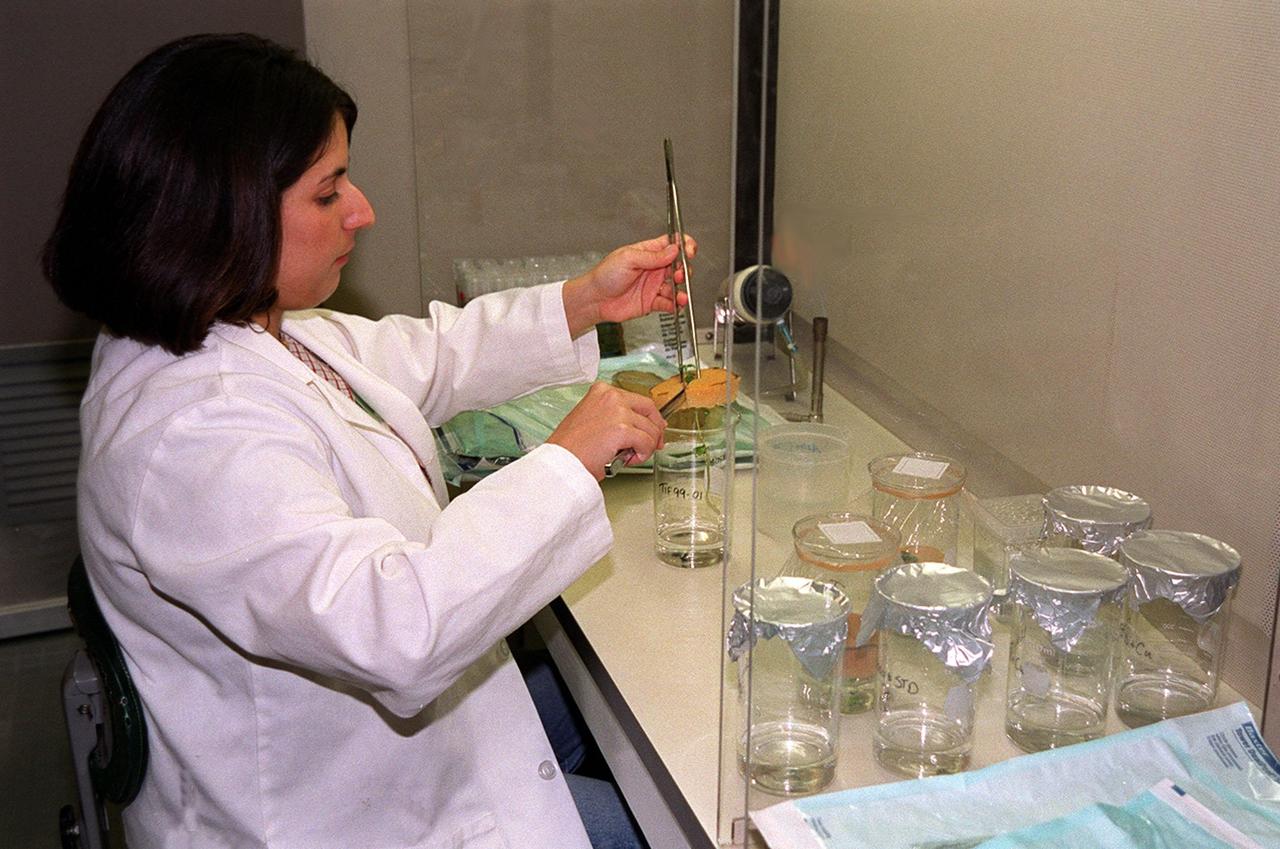
Research assistant Trisha Bruno performs an analysis on potato samples at Hangar L at the Cape Canaveral Air Force Station. The research she is performing is one of many studies at the Biological Sciences Branch in the Spaceport Engineering and Technology Directorate at Kennedy Space Center. The branch's operations and research areas include life sciences Space Shuttle payloads, bioregenerative life-support for long-duration spaceflight and environmental/ecological stewardship
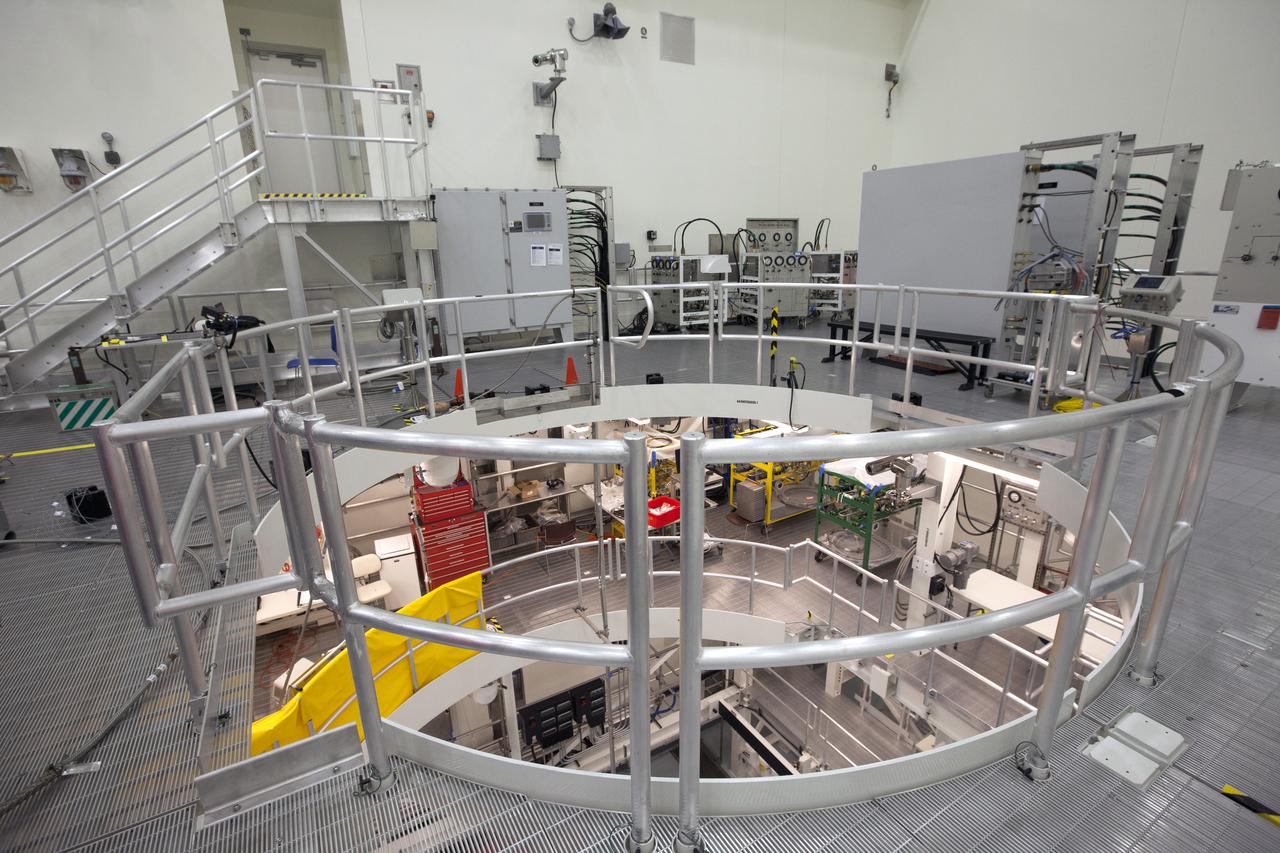
Engineers and technicians completed verification and validation testing of several pneumatic systems inside and outside the Multi-Payload Processing Facility (MPPF) at NASA's Kennedy Space Center in Florida. In view is the top level of the service platform for Orion spacecraft processing. The MPPF will be used for offline processing and fueling of the Orion spacecraft and service module stack before launch. Orion also will be de-serviced in the MPPF after a mission. The Ground Systems Development and Operations Program (GSDO) is overseeing upgrades to the facility. The Engineering Directorate led the recent pneumatic tests.
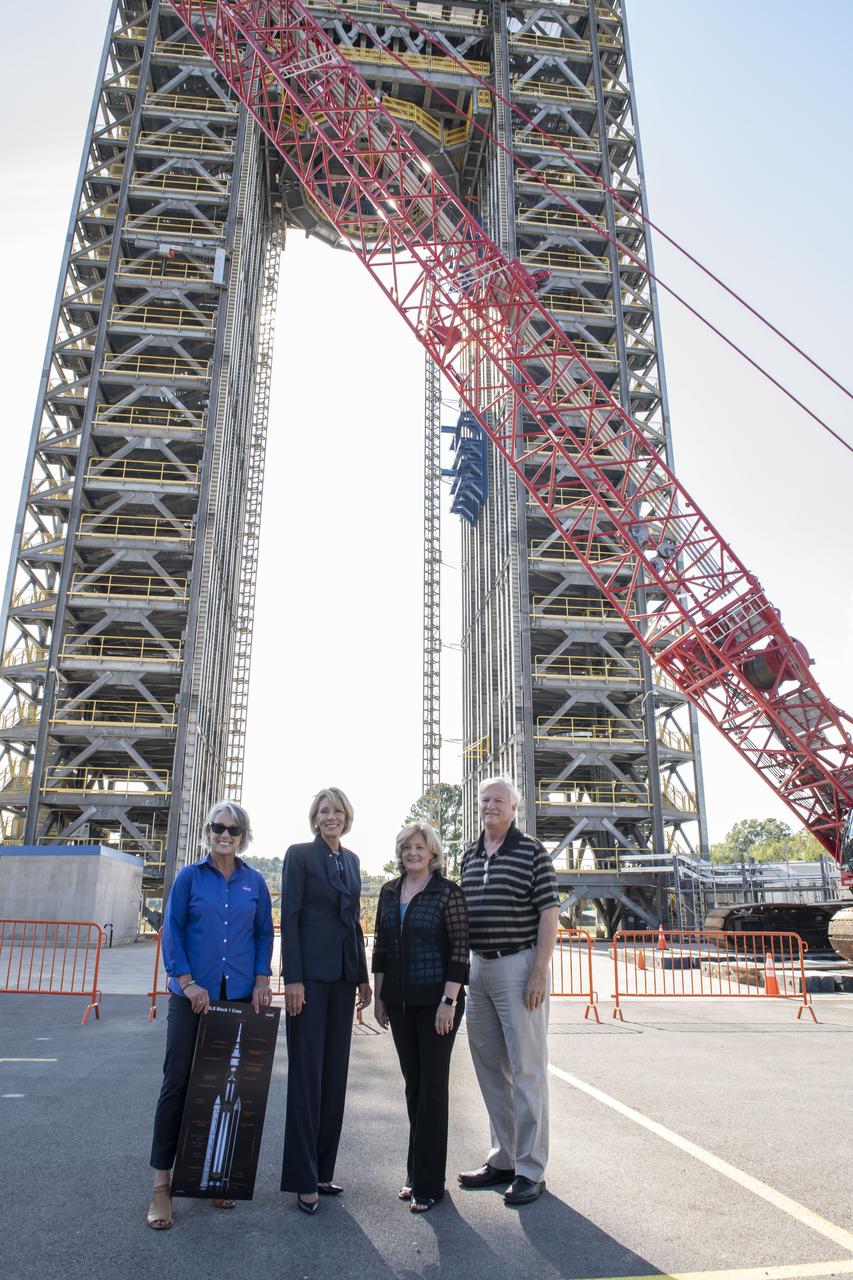
Secretary of Education Betsy DeVos visited the Payload Operations Integration Center (POIC) and test stand 4693 at the Marshall Space Flight Center (MSFC). The visit to MSFC was followed by a tour of educational facilities at the U.S. Space and Rocket Center (USSRC). Secretary DeVos was accompanied by Marshall Center Director Jody Singer and USSRC CEO Dr. Deborah Barnhart.
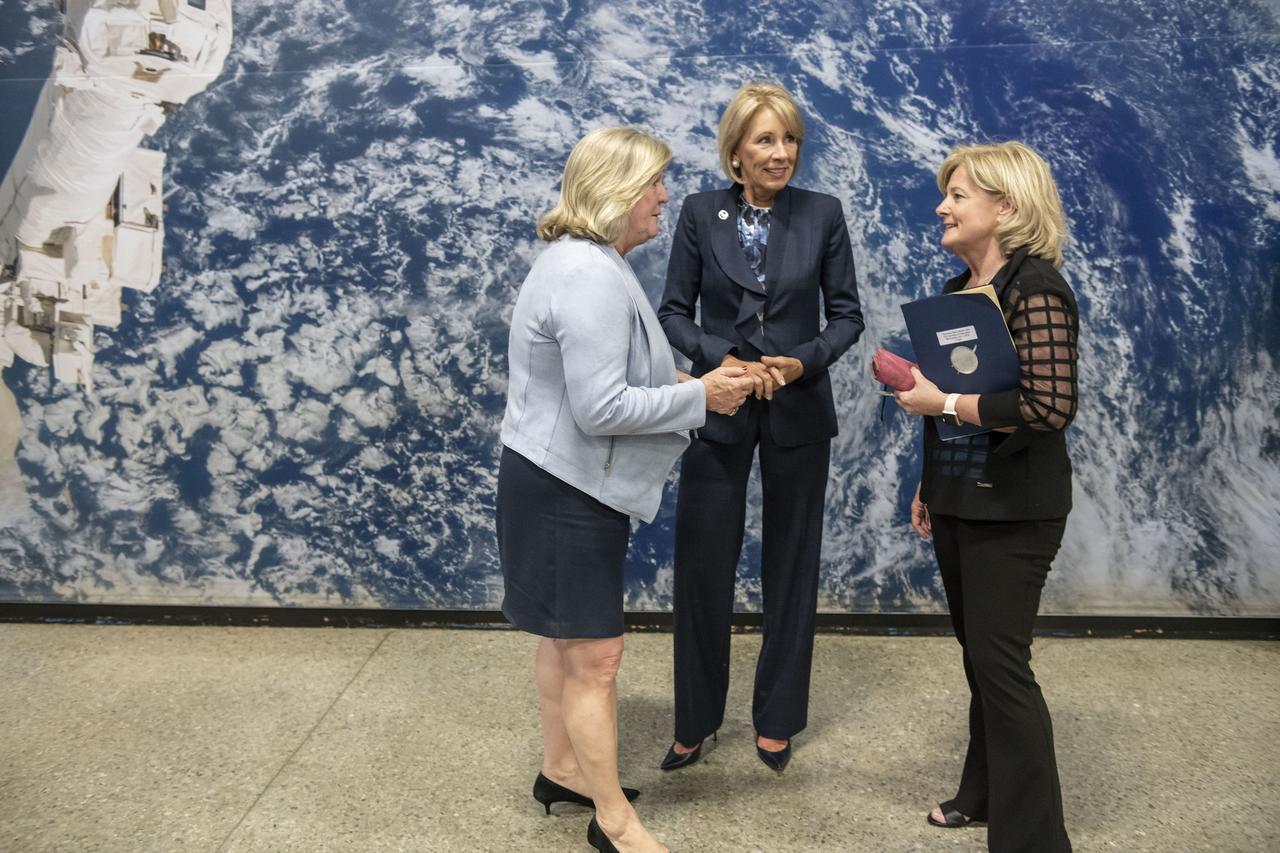
Secretary of Education Betsy DeVos visited the Payload Operations Integration Center (POIC) and test stand 4693 at the Marshall Space Flight Center (MSFC). The visit to MSFC was followed by a tour of educational facilities at the U.S. Space and Rocket Center (USSRC). Secretary DeVos was accompanied by Marshall Center Director Jody Singer and USSRC CEO Dr. Deborah Barnhart.
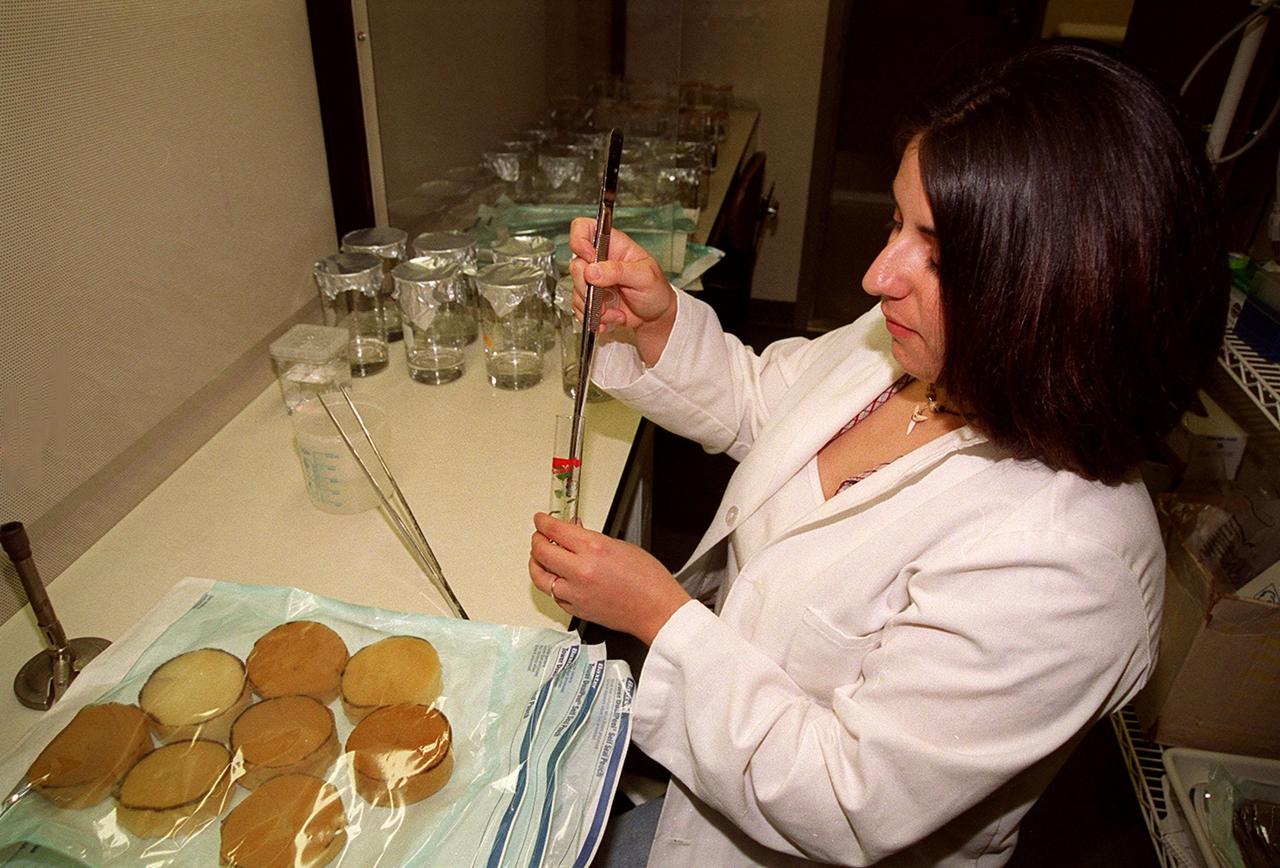
Research assistant Trisha Bruno performs an analysis on potato samples at Hangar L at the Cape Canaveral Air Force Station. The research she is performing is one of many studies at the Biological Sciences Branch in the Spaceport Engineering and Technology Directorate at Kennedy Space Center. The branch's operations and research areas include life sciences Space Shuttle payloads, bioregenerative life-support for long-duration spaceflight and environmental/ecological stewardship
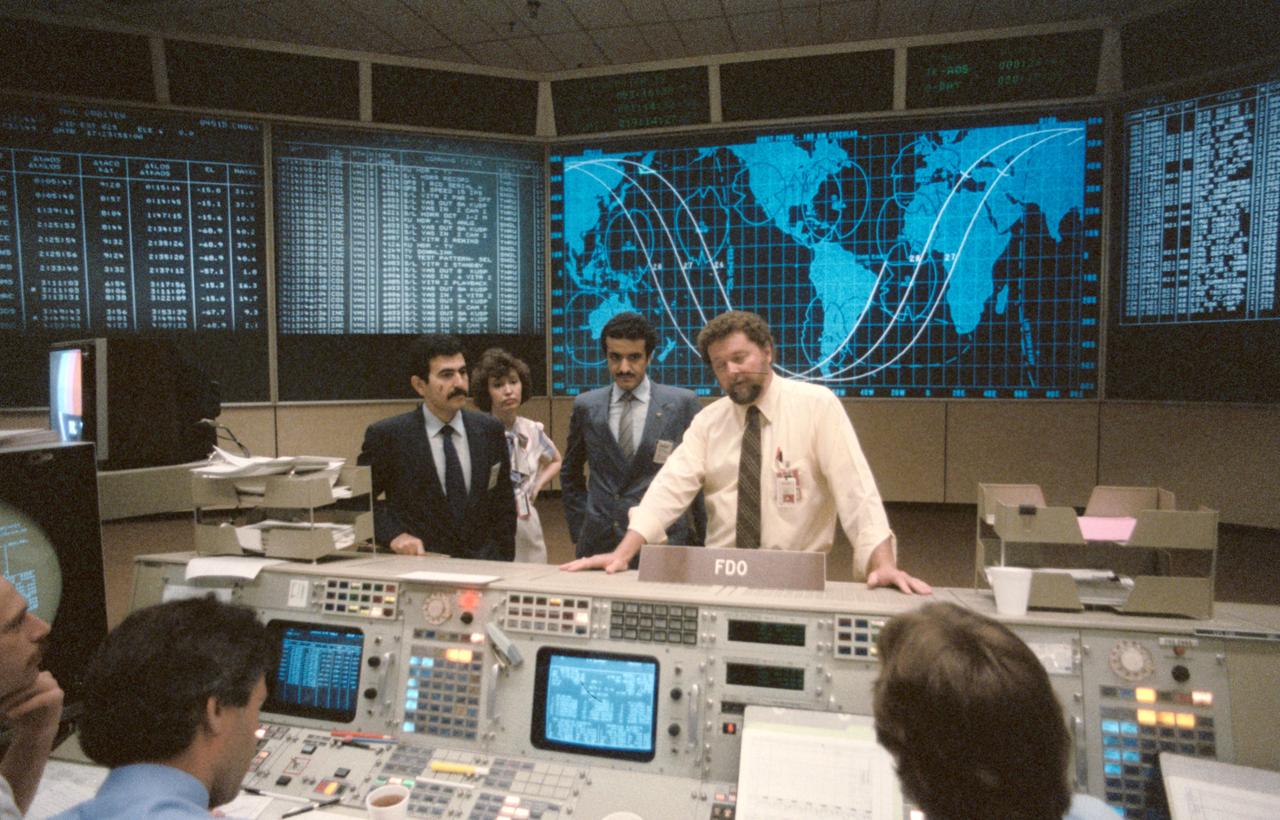
S85-29711 (April 1985) --- Ronald C. Epps, right of the training division in the mission operations directorate, briefs the Saudi Arabian payload specialist, Sultan Salman Abdelazize Al-Saud, and his backup, Abdulmohsen Hamad Al-Bassam, in the flight control room (FCR) of the mission control center (MCC). Erlinda Stevenson is also pictured.
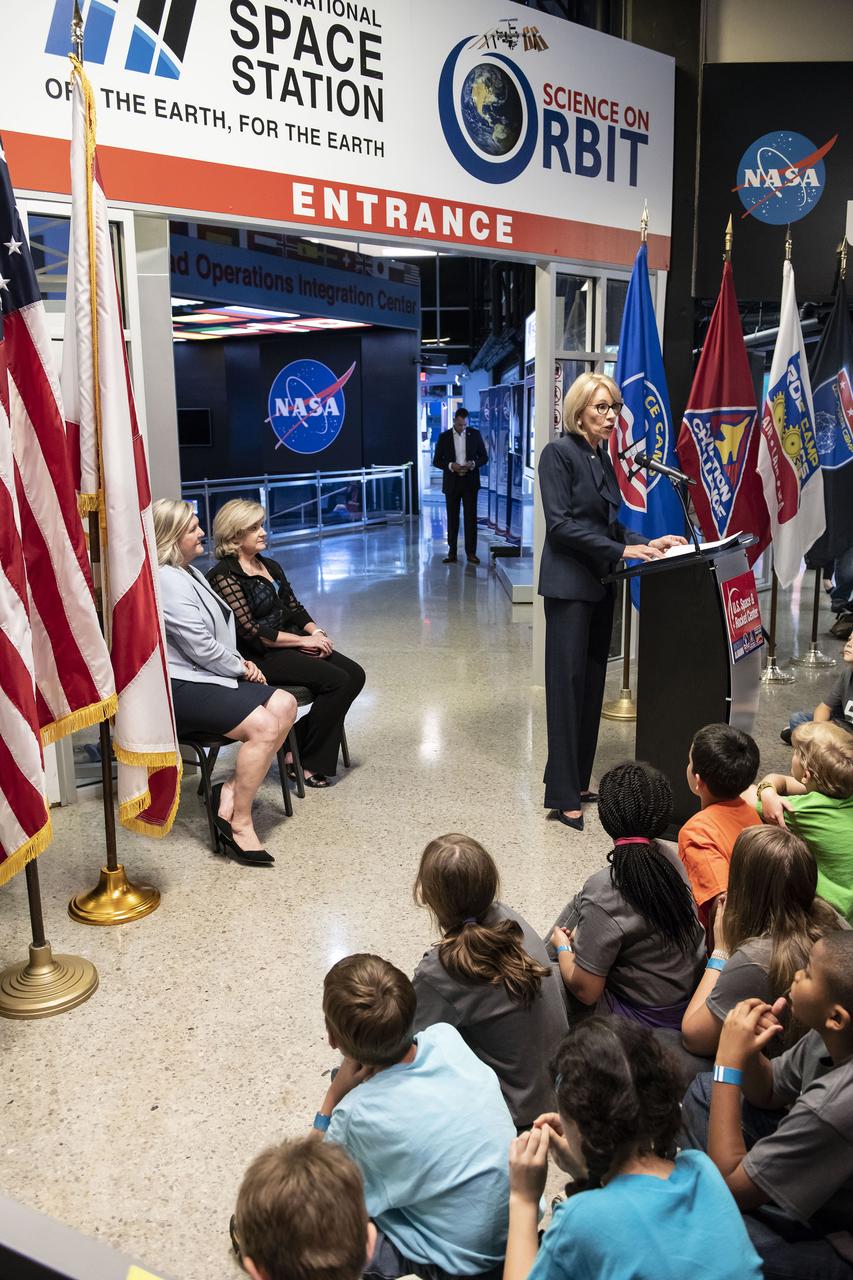
Secretary of Education Betsy DeVos visited the Payload Operations Integration Center (POIC) and test stand 4693 at the Marshall Space Flight Center (MSFC). The visit to MSFC was followed by a tour of educational facilities at the U.S. Space and Rocket Center (USSRC). Secretary DeVos was accompanied by Marshall Center Director Jody Singer and USSRC CEO Dr. Deborah Barnhart.
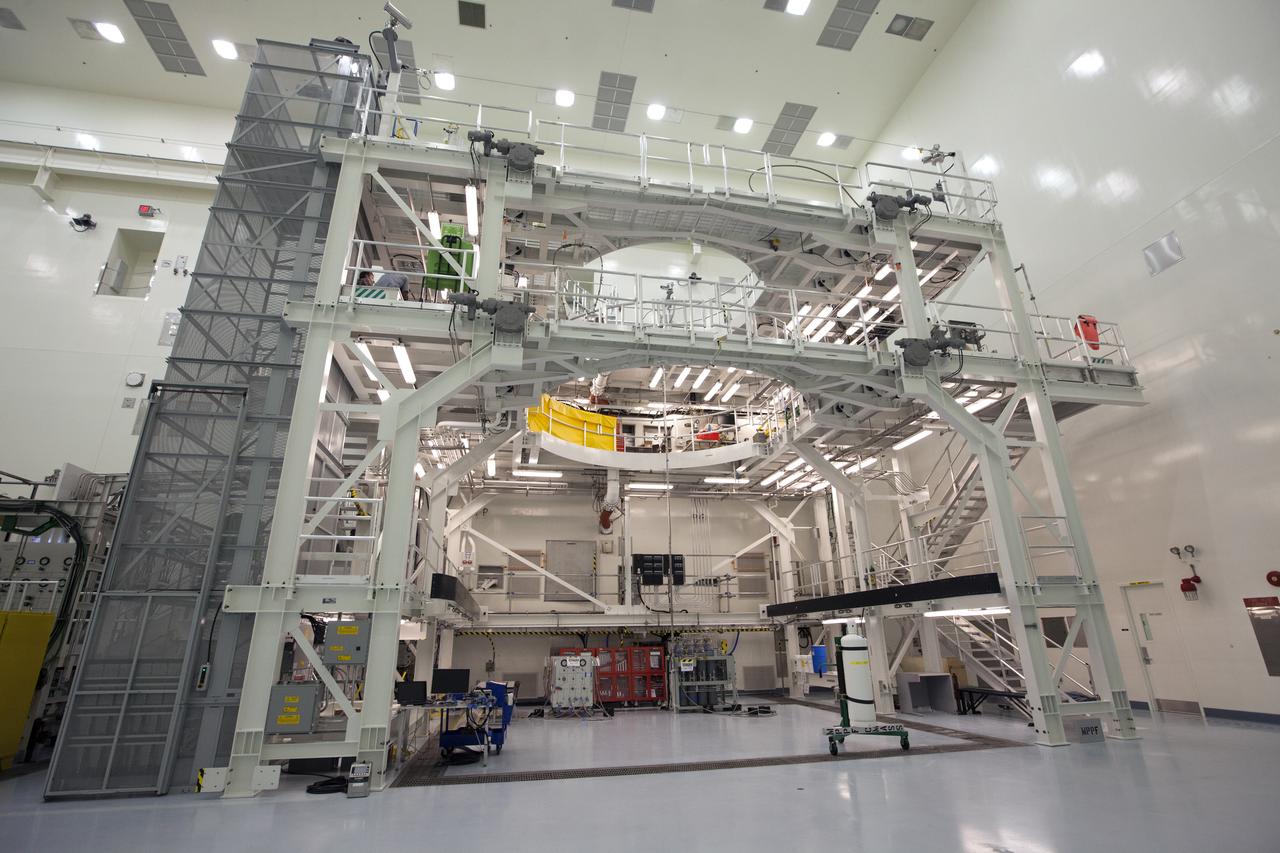
Engineers and technicians completed verification and validation testing of several pneumatic systems inside and outside the Multi-Payload Processing Facility (MPPF) at NASA's Kennedy Space Center in Florida. In view is the service platform for Orion spacecraft processing. The MPPF will be used for offline processing and fueling of the Orion spacecraft and service module stack before launch. Orion also will be de-serviced in the MPPF after a mission. The Ground Systems Development and Operations Program (GSDO) is overseeing upgrades to the facility. The Engineering Directorate led the recent pneumatic tests.
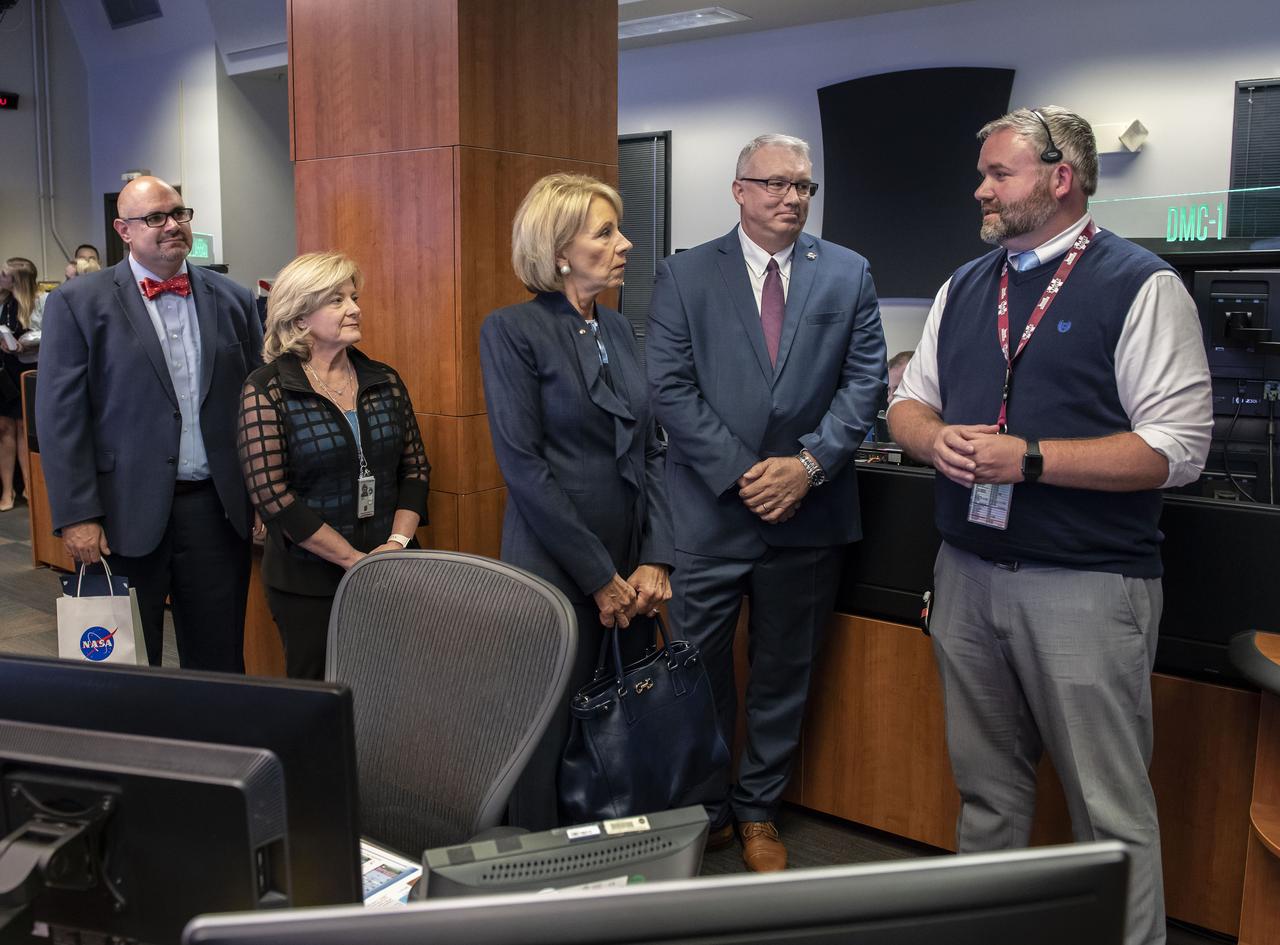
Secretary of Education Betsy DeVos visited the Payload Operations Integration Center (POIC) and test stand 4693 at the Marshall Space Flight Center (MSFC). The visit to MSFC was followed by a tour of educational facilities at the U.S. Space and Rocket Center (USSRC). Secretary DeVos was accompanied by Marshall Center Director Jody Singer and USSRC CEO Dr. Deborah Barnhart.
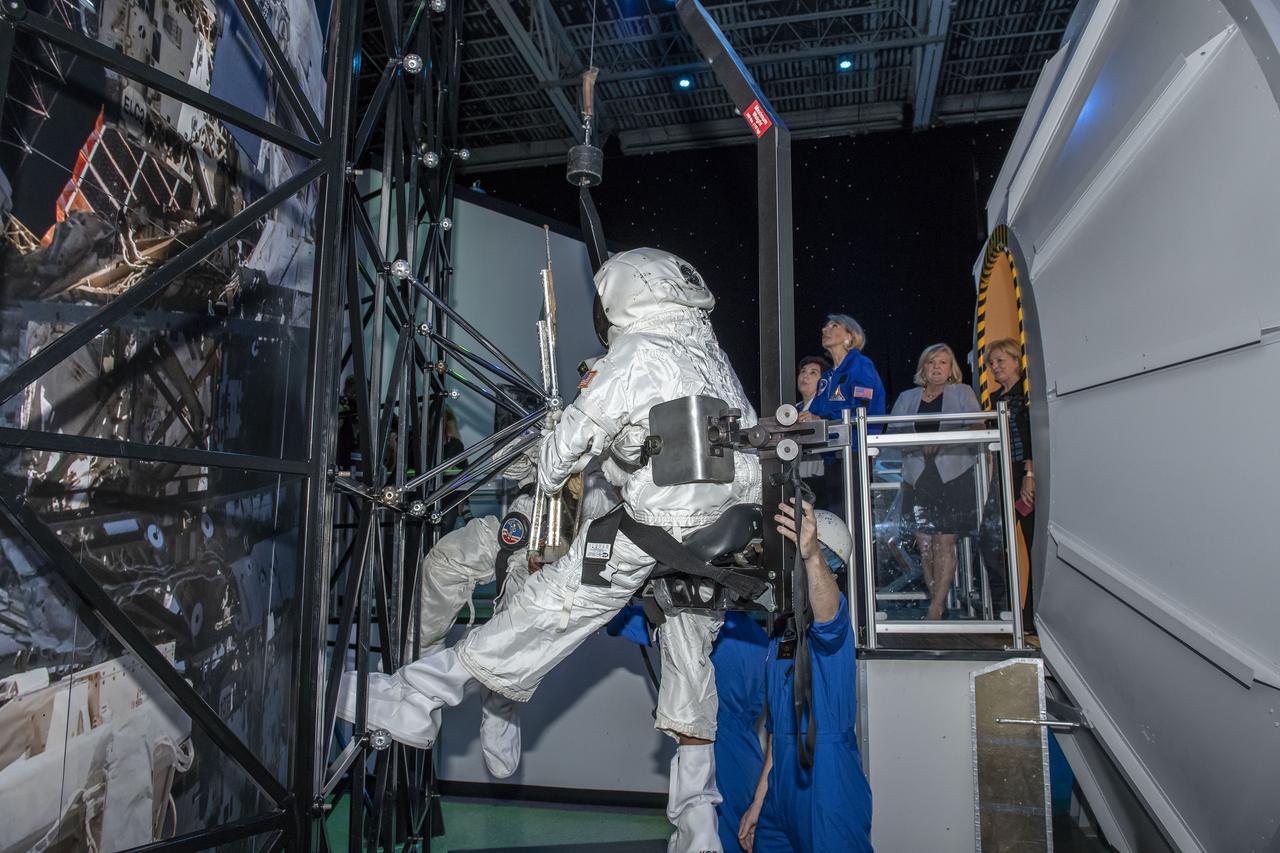
Secretary of Education Betsy DeVos visited the Payload Operations Integration Center (POIC) and test stand 4693 at the Marshall Space Flight Center (MSFC). The visit to MSFC was followed by a tour of educational facilities at the U.S. Space and Rocket Center (USSRC). Secretary DeVos was accompanied by Marshall Center Director Jody Singer and USSRC CEO Dr. Deborah Barnhart.
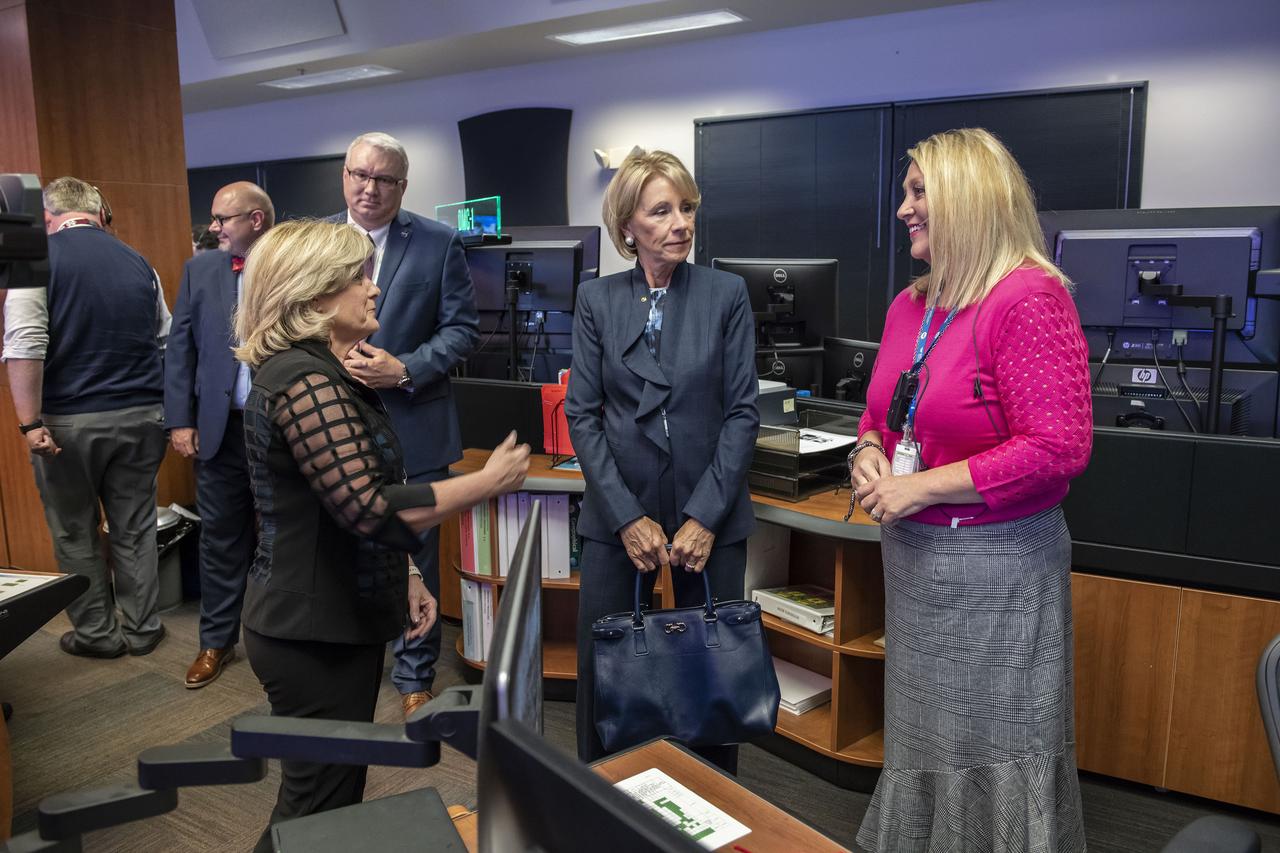
Secretary of Education Betsy DeVos visited the Payload Operations Integration Center (POIC) and test stand 4693 at the Marshall Space Flight Center (MSFC). The visit to MSFC was followed by a tour of educational facilities at the U.S. Space and Rocket Center (USSRC). Secretary DeVos was accompanied by Marshall Center Director Jody Singer and USSRC CEO Dr. Deborah Barnhart.
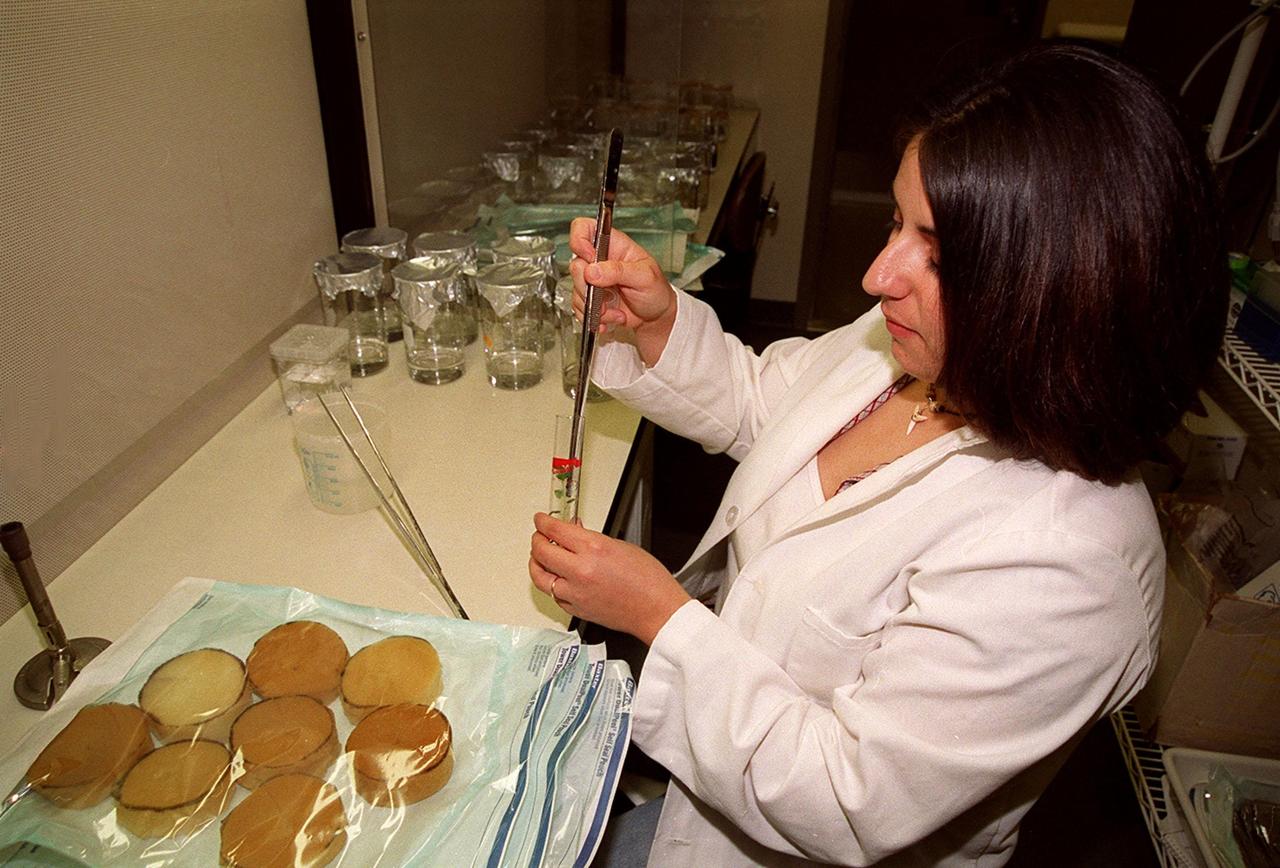
Research assistant Trisha Bruno performs an analysis on potato samples at Hangar L at the Cape Canaveral Air Force Station. The research she is performing is one of many studies at the Biological Sciences Branch in the Spaceport Engineering and Technology Directorate at Kennedy Space Center. The branch's operations and research areas include life sciences Space Shuttle payloads, bioregenerative life-support for long-duration spaceflight and environmental/ecological stewardship
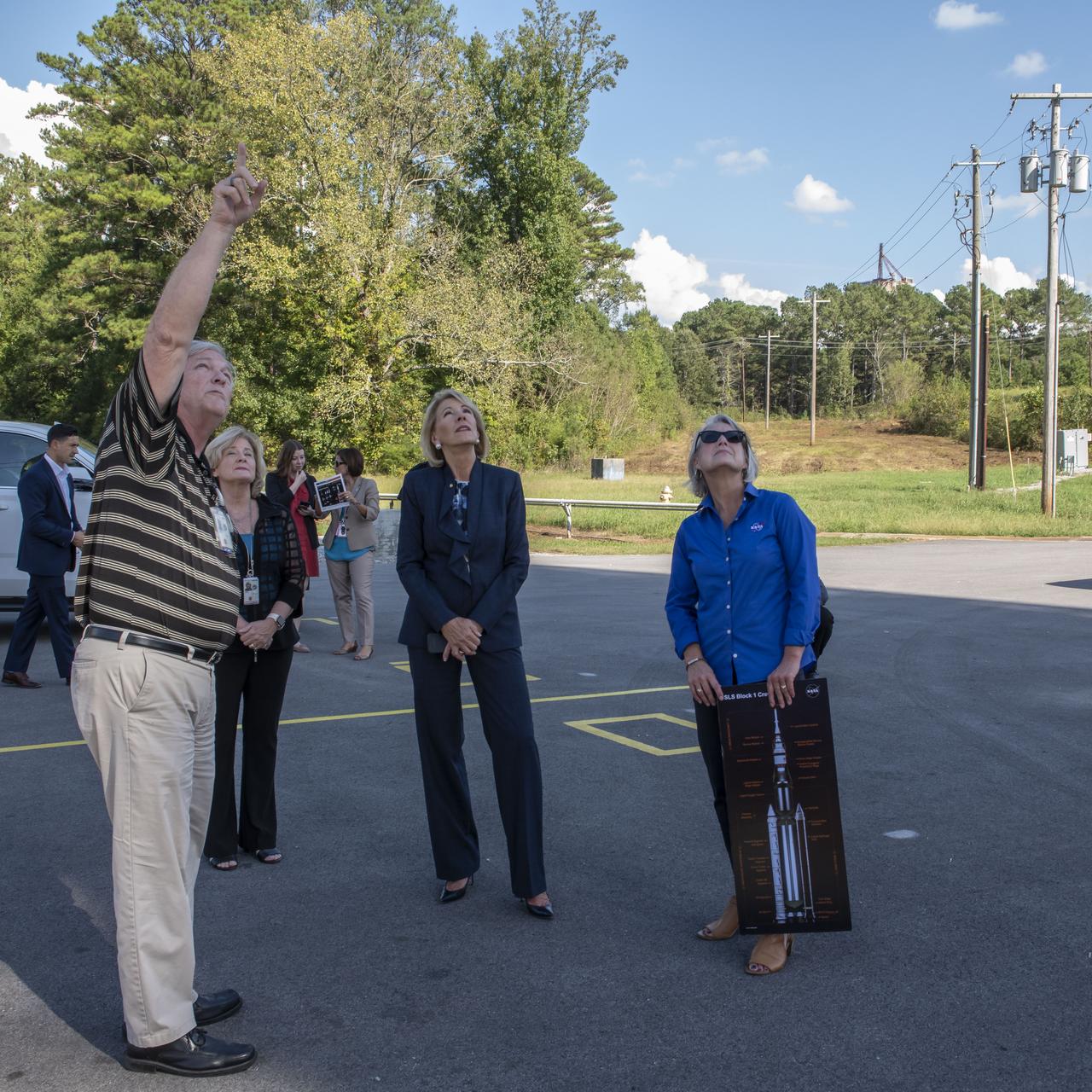
Secretary of Education Betsy DeVos visited the Payload Operations Integration Center (POIC) and test stand 4693 at the Marshall Space Flight Center (MSFC). The visit to MSFC was followed by a tour of educational facilities at the U.S. Space and Rocket Center (USSRC). Secretary DeVos was accompanied by Marshall Center Director Jody Singer and USSRC CEO Dr. Deborah Barnhart.
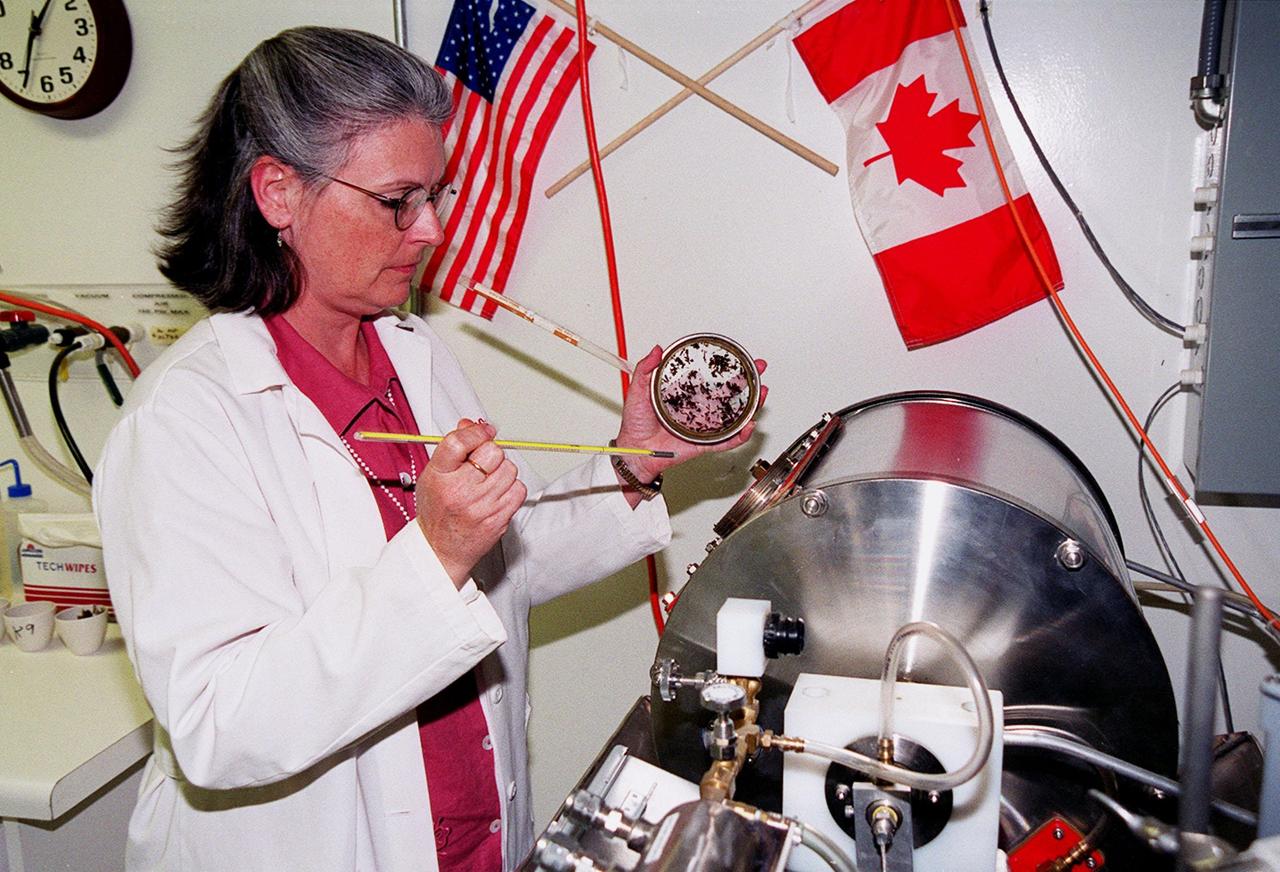
Visiting scientist Cheryl Frazier monitors a prototype composting machine in Hangar L at the Cape Canaveral Air Force Station. The research she is performing is one of many studies at the Biological Sciences Branch in the Spaceport Engineering and Technology Directorate at Kennedy Space Center. The branch's operations and research areas include life sciences Space Shuttle payloads, bioregenerative life-support for long-duration spaceflight and environmental/ecological stewardship
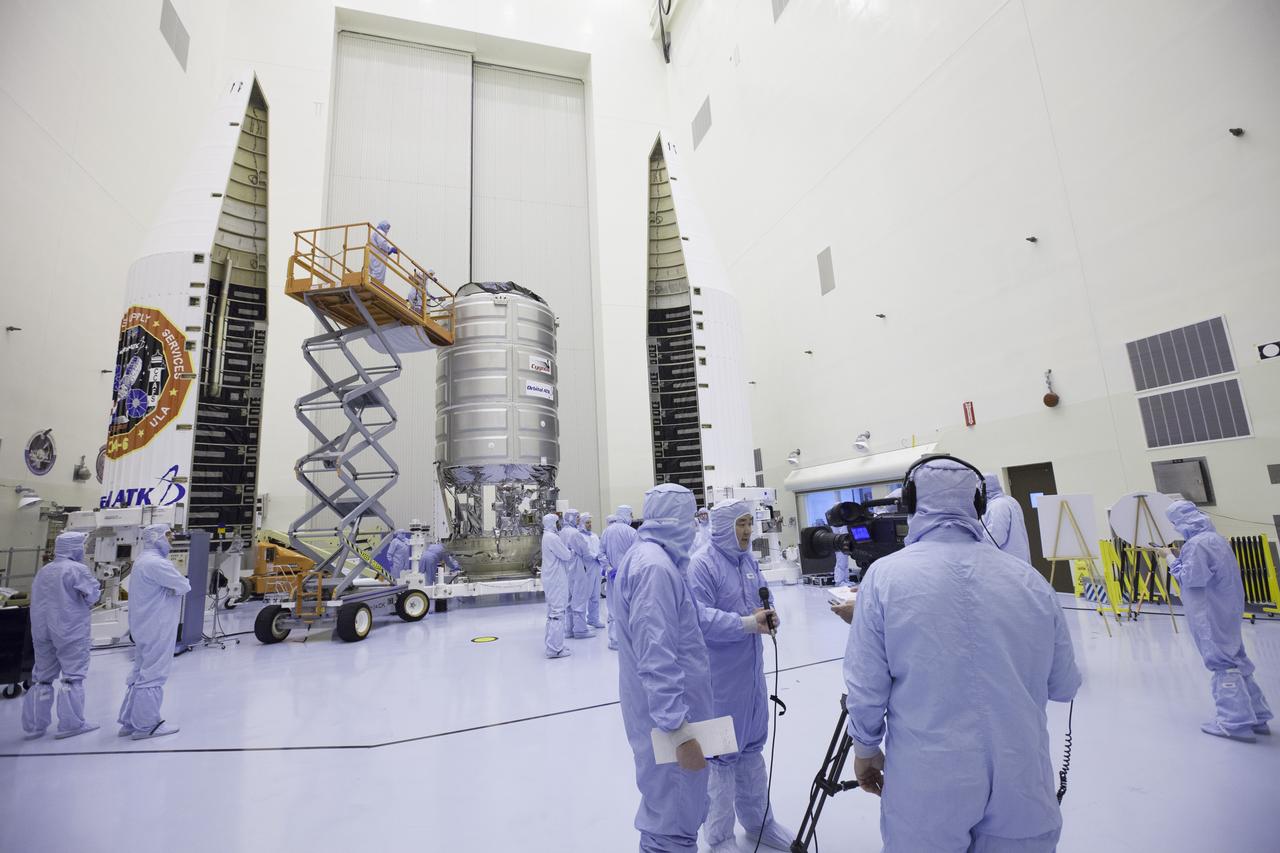
Inside the Payload Hazardous Servicing Facility at NASA's Kennedy Space Center, former NASA astronaut Dan Tani, who now is senior director of Missions and Cargo Operations for Orbital ATK in Dulles, Virginia, participates in a press interview. In the background is the Cygnus spacecraft scheduled to deliver hardware and supplies to the International Space Station on the upcoming Orbital ATK Commercial Resupply Services-6 mission.
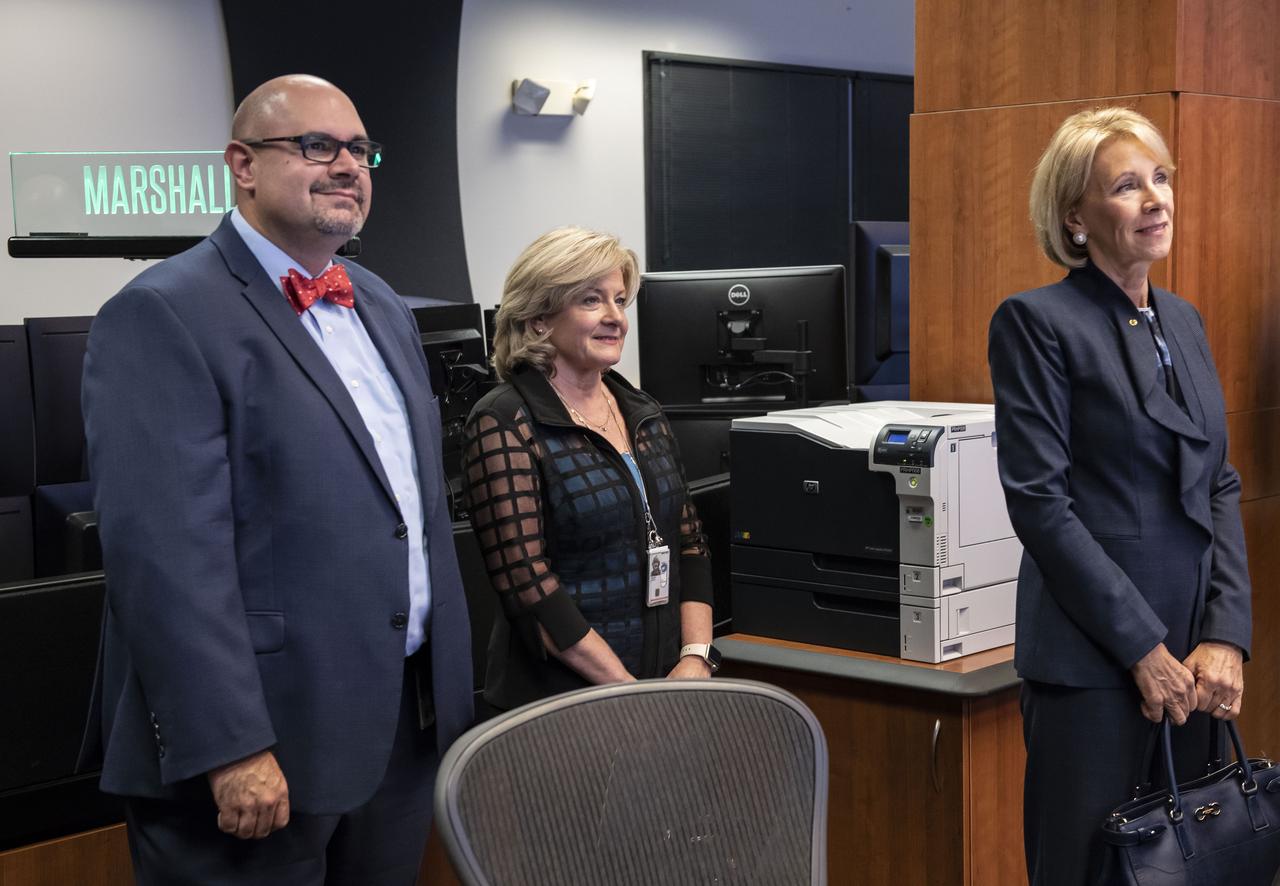
Secretary of Education Betsy DeVos visited the Payload Operations Integration Center (POIC) and test stand 4693 at the Marshall Space Flight Center (MSFC). The visit to MSFC was followed by a tour of educational facilities at the U.S. Space and Rocket Center (USSRC). Secretary DeVos was accompanied by Marshall Center Director Jody Singer and USSRC CEO Dr. Deborah Barnhart.
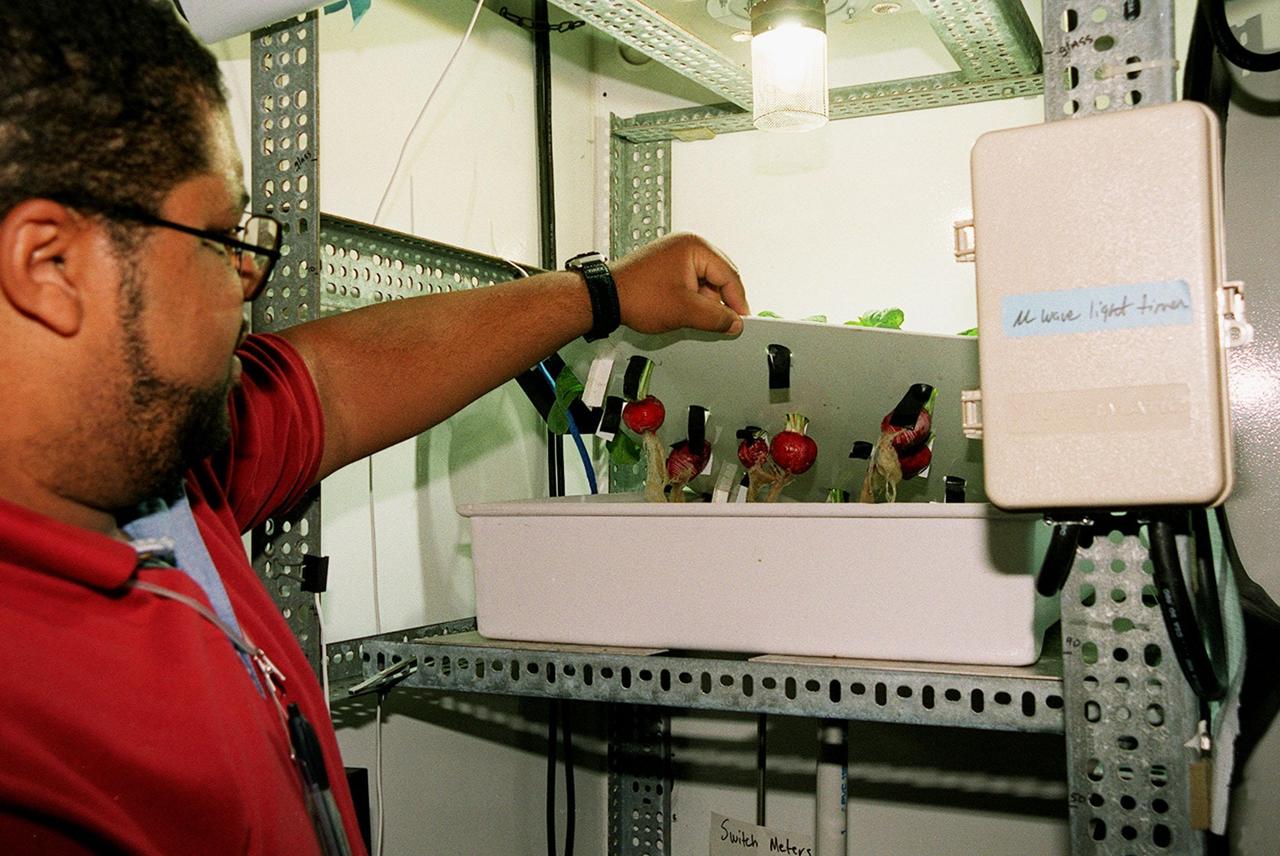
Research scientist Greg Goins monitors radish growth under a sulfur-microwave light at Hangar L at the Cape Canaveral Air Force Station. The research he is performing is one of many studies at the Biological Sciences Branch in the Spaceport Engineering and Technology Directorate at Kennedy Space Center. The branch's operations and research areas include life sciences Space Shuttle payloads, bioregenerative life-support for long-duration spaceflight and environmental/ecological stewardshi

Astronaut John Young (left), the keynote speaker at the Thirty-Fifth Space Congress, is presented with a model of the International Space Station by the Congress' General Chairman Bruce Melnick. Young is the associate director responsible for technical, operational and safety oversight of all NASA programs and activities assigned to the Johnson Space Center. Melnick, a former astronaut, is currently vice president of The Boeing Company and is responsible for the Payload Ground Operations Contract at Kennedy Space Center. The Thirty-Fifth Space Congress, sponsored by the Canaveral Council of Technical Societies, is being held in Cocoa Beach, Florida, from April 28 to May 1 and is a gathering of the world's aerospace community to discuss the status and future of space activities around the world
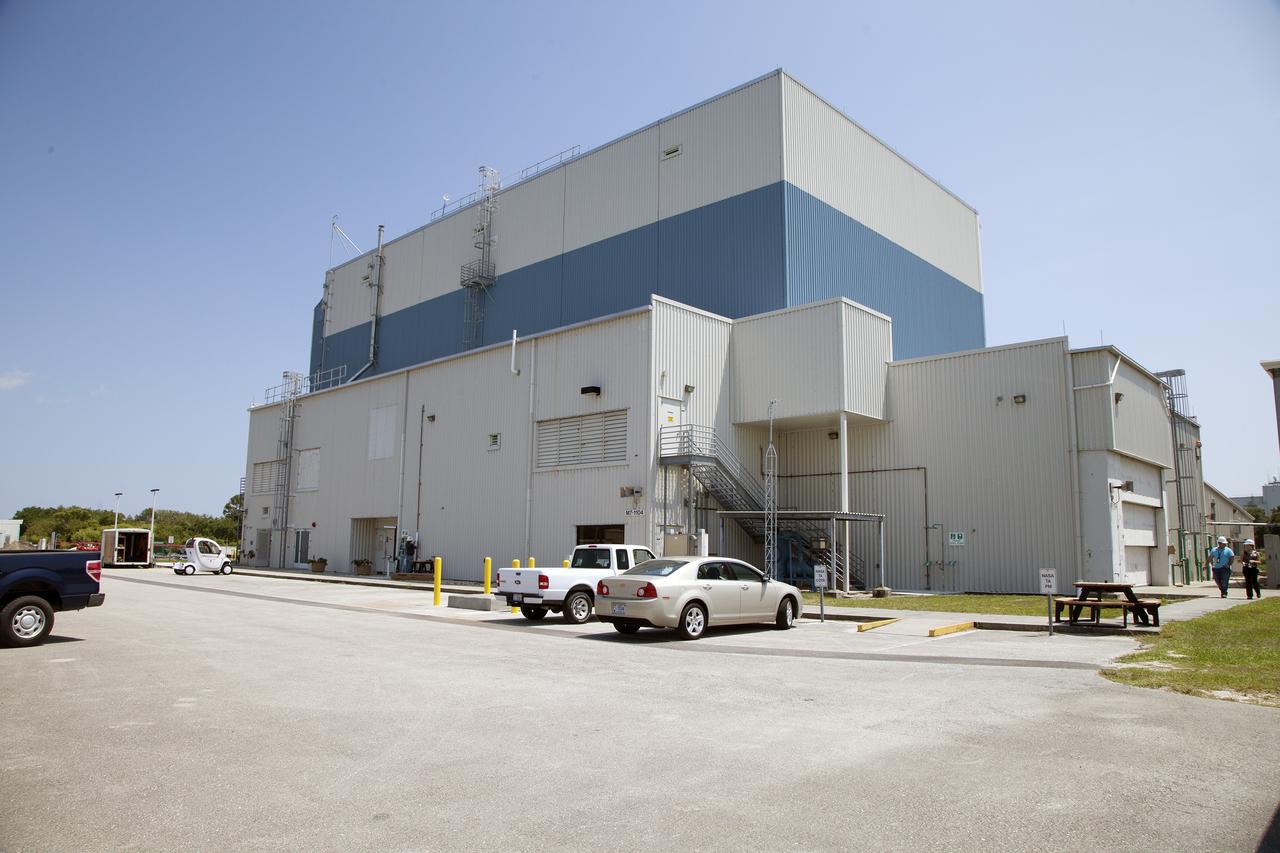
CAPE CANAVERAL, Fla. – Modifications continue on the Multi-Payload Processing Facility, or MPPF, at NASA's Kennedy Space Center in Florida. A view looking northwest, shows the exterior of the MPPF. Kennedy's Center Operations Directorate is overseeing upgrades to the MPPF for the Ground Systems Development and Operations Program. The extensive upgrades and modernizations will support processing of Orion spacecraft for NASA's exploration missions. The 19,647-square-foot building, originally constructed in 1995, primarily will be used for Orion hypergolic fueling, ammonia servicing and high-pressure gas servicing and checkout before being transported to the Vehicle Assembly Building for integration with the Space Launch System. Photo credit: NASA/Daniel Casper
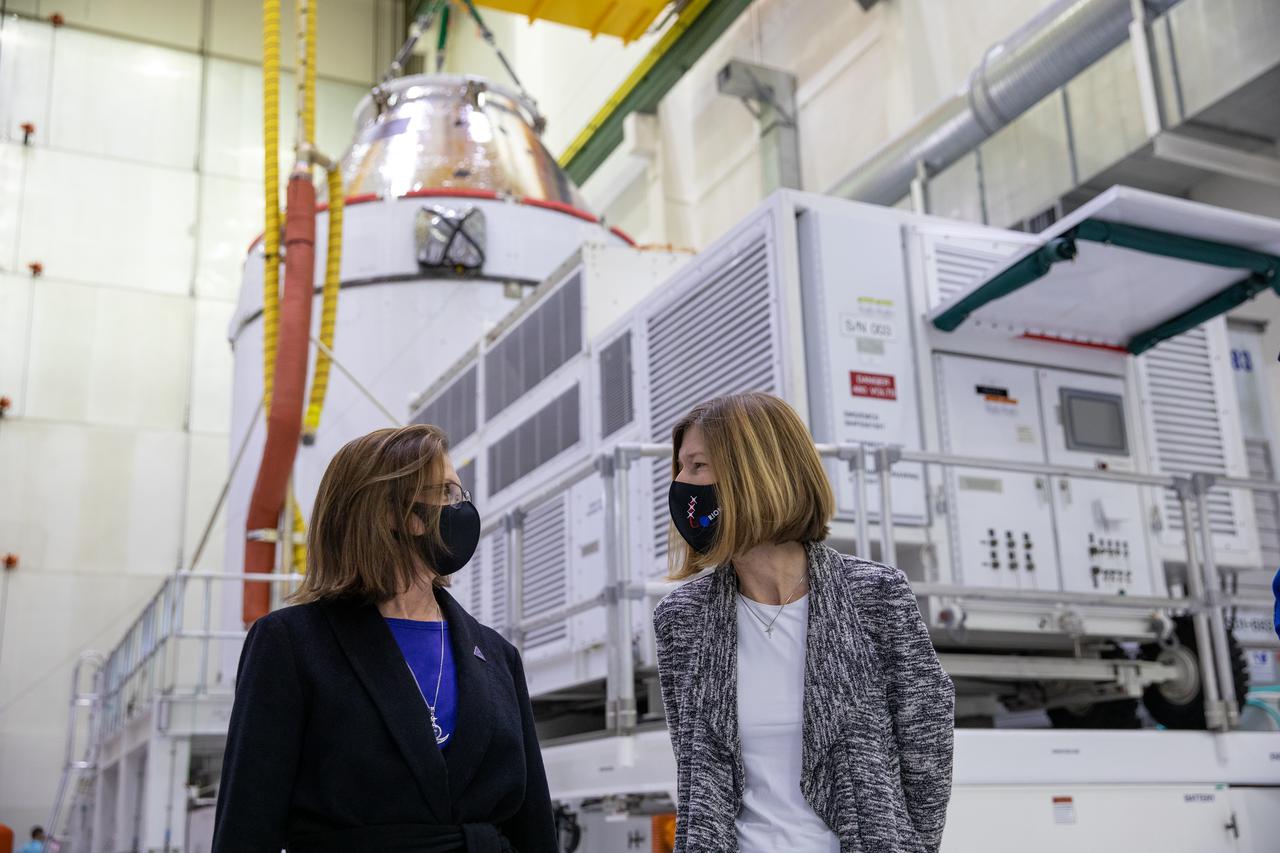
Orion is revealed for one of the final times on Jan. 14, as it is readied atop its transport pallet from the Neil Armstrong Operations and Checkout Building at NASA’s Kennedy Space Center in Florida, along its path to the pad ahead of the Artemis I launch. Viewing Orion in the high bay, from left, are Cathy Koerner, Orion Program Manager, and Kathy Lueders, associated administrator of the Human Exploration and Operations Mission Directorate. Teams across the globe have worked tirelessly to assemble the spacecraft, which will receive a protective covering prior to departing for the Multi-Payload Processing Facility to begin ground processing by the Exploration Ground Systems and Jacobs teams.

Astronaut John Young (left), the keynote speaker at the Thirty-Fifth Space Congress, is presented with a model of the International Space Station by the Congress' General Chairman Bruce Melnick. Young is the associate director responsible for technical, operational and safety oversight of all NASA programs and activities assigned to the Johnson Space Center. Melnick, a former astronaut, is currently vice president of The Boeing Company and is responsible for the Payload Ground Operations Contract at Kennedy Space Center. The Thirty-Fifth Space Congress, sponsored by the Canaveral Council of Technical Societies, is being held in Cocoa Beach, Florida, from April 28 to May 1 and is a gathering of the world's aerospace community to discuss the status and future of space activities around the world

CAPE CANAVERAL, Fla. – Modifications continue on the Multi-Payload Processing Facility, or MPPF, at NASA's Kennedy Space Center in Florida. Inside the high bay, a new fire suppression system and piping are being installed in the ceiling. Kennedy's Center Operations Directorate is overseeing upgrades to the MPPF for the Ground Systems Development and Operations Program. The extensive upgrades and modernizations will support processing of Orion spacecraft for NASA's exploration missions. The 19,647-square-foot building, originally constructed in 1995, primarily will be used for Orion hypergolic fueling, ammonia servicing and high-pressure gas servicing and checkout before being transported to the Vehicle Assembly Building for integration with the Space Launch System. Photo credit: NASA/Daniel Casper
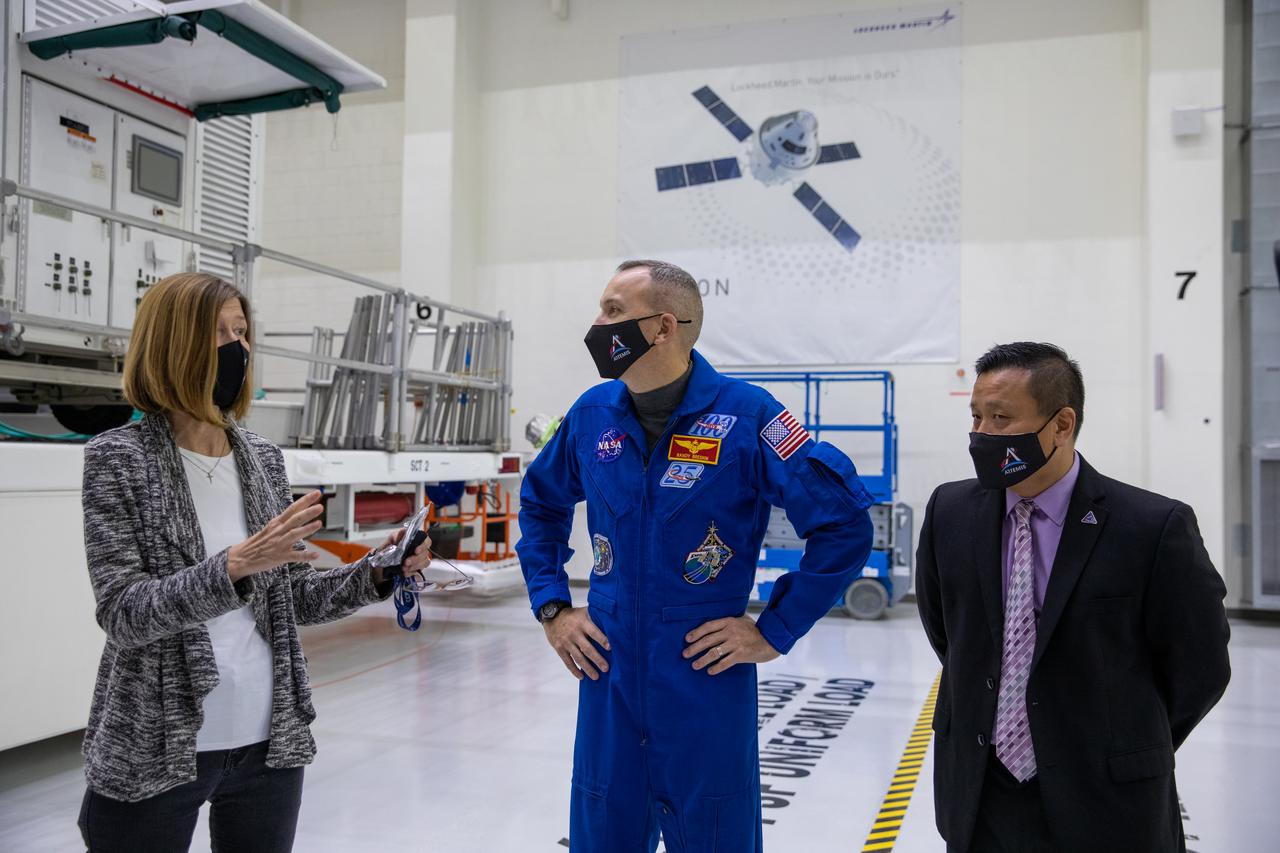
Orion is revealed for one of the final times on Jan. 14, as it is readied atop its transport pallet from the Neil Armstrong Operations and Checkout Building at NASA’s Kennedy Space Center in Florida, along its path to the pad ahead of the Artemis I launch. Touring the high bay, from left, are Kathy Lueders, associate administrator of the Human Exploration and Operations Mission Directorate, NASA astronaut Randy Bresnik, and Howard Hu, Orion Deputy Program manager. Teams across the globe have worked tirelessly to assemble the spacecraft, which will receive a protective covering prior to departing for the Multi-Payload Processing Facility to begin ground processing by the Exploration Ground Systems and Jacobs teams.
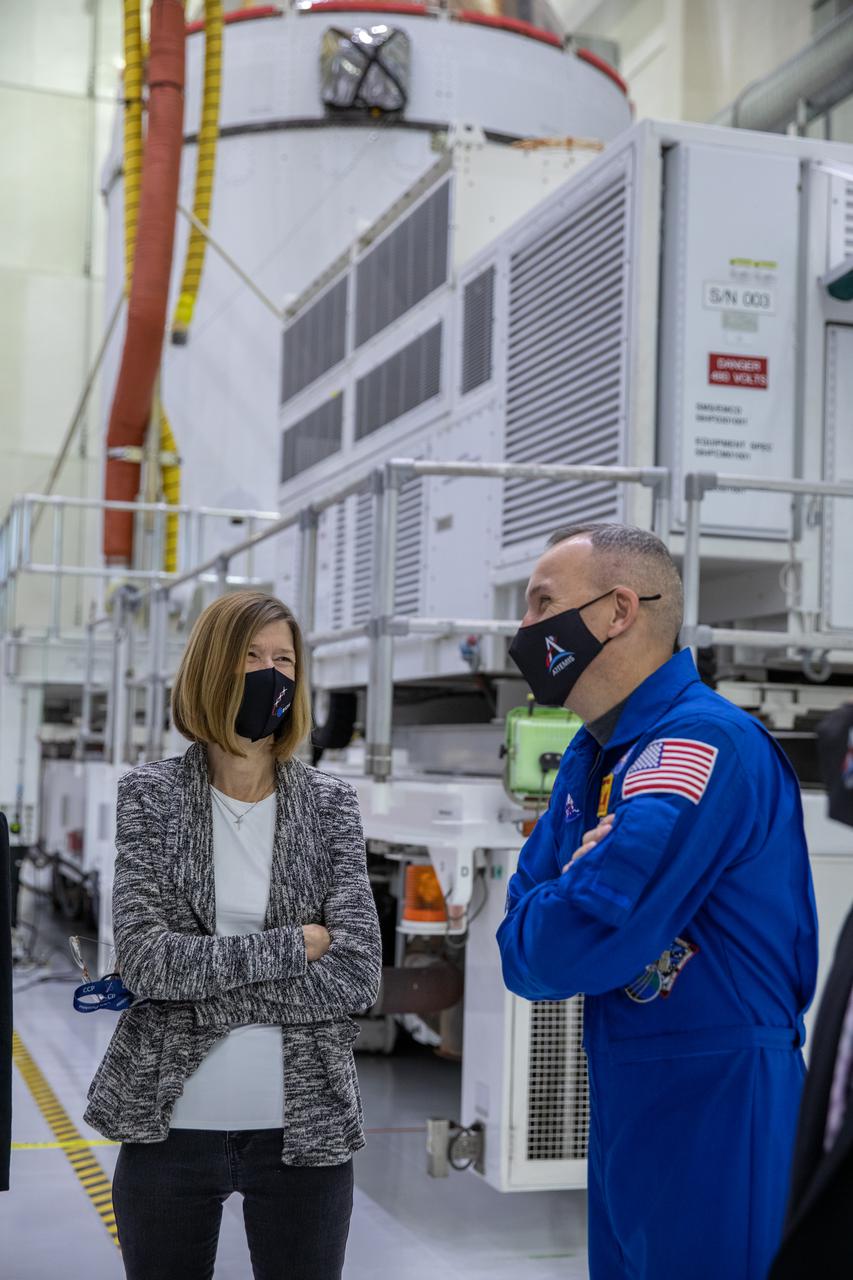
Orion is revealed for one of the final times on Jan. 14, as it is readied atop its transport pallet from the Neil Armstrong Operations and Checkout Building at NASA’s Kennedy Space Center in Florida, along its path to the pad ahead of the Artemis I launch. Touring the high bay, from left, are Kathy Lueders, associate administrator of the Human Exploration and Operations Mission Directorate, and NASA astronaut Randy Bresnik. Teams across the globe have worked tirelessly to assemble the spacecraft, which will receive a protective covering prior to departing for the Multi-Payload Processing Facility to begin ground processing by the Exploration Ground Systems and Jacobs teams.
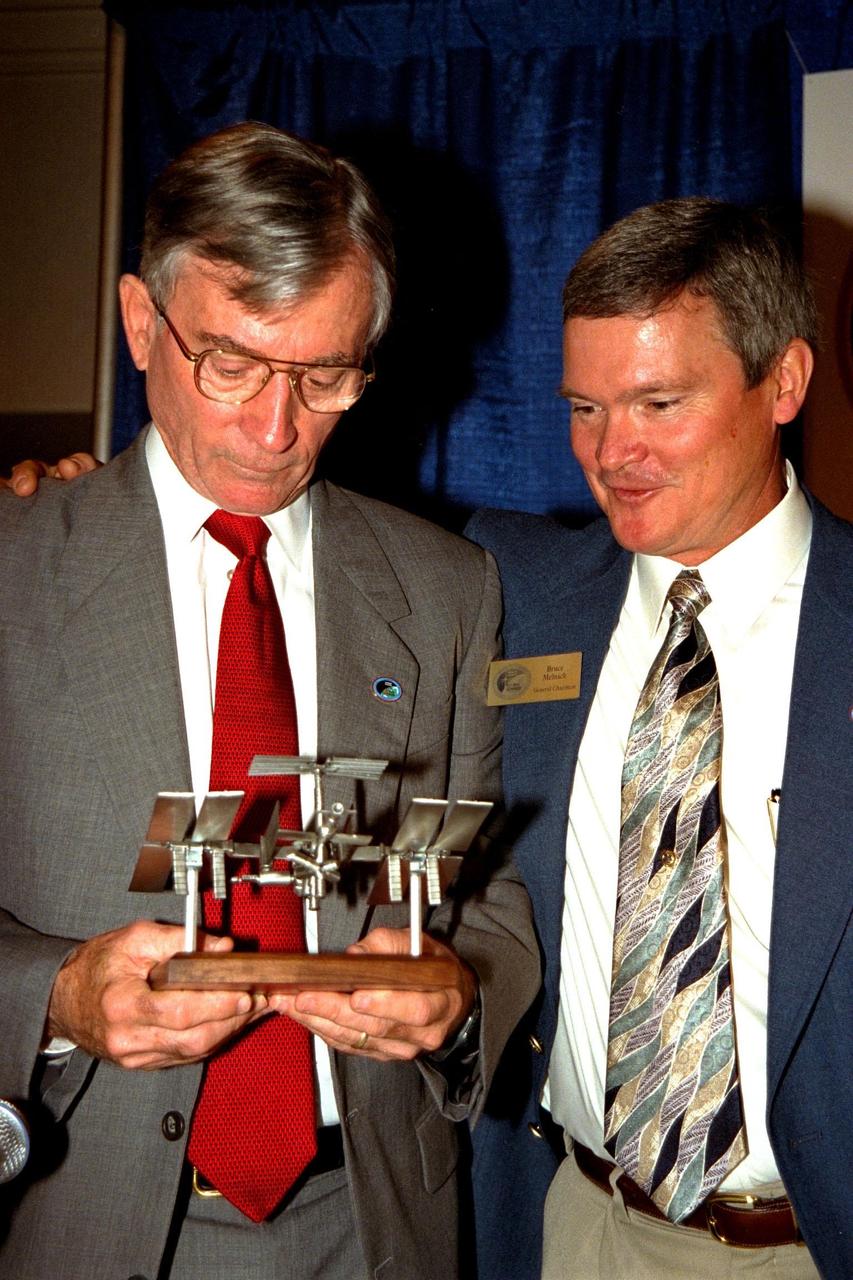
Astronaut John Young (left), the keynote speaker at the Thirty-Fifth Space Congress, is presented with a model of the International Space Station by the Congress' General Chairman Bruce Melnick. Young is the associate director responsible for technical, operational and safety oversight of all NASA programs and activities assigned to the Johnson Space Center. Melnick, a former astronaut, is currently vice president of The Boeing Company and is responsible for the Payload Ground Operations Contract at Kennedy Space Center. The Thirty-Fifth Space Congress, sponsored by the Canaveral Council of Technical Societies, is being held in Cocoa Beach, Florida, from April 28 to May 1 and is a gathering of the world's aerospace community to discuss the status and future of space activities around the world

51D-9091 (S23-9091) (12 April 1985) --- The Space Shuttle mission 51-D crewmembers depart the Kennedy Space Center's operations and checkout building on their way to the launch pad for an early morning launch of Discovery. Leading the seven are Karol J. Bobko (center of frame), commander; and Donald E. Williams (right), pilot. Following are Rhea Seddon, Jeffrey A. Hoffman, S. David Griggs--all mission specialists--Charles D. Walker and U.S. Sen. E. J. (Jake) Garn (partly obscured behind Walker), both payload specialists. Partly visible in the doorway are Astronaut John W. Young and George W.S. Abbey, director of flight crew operations.
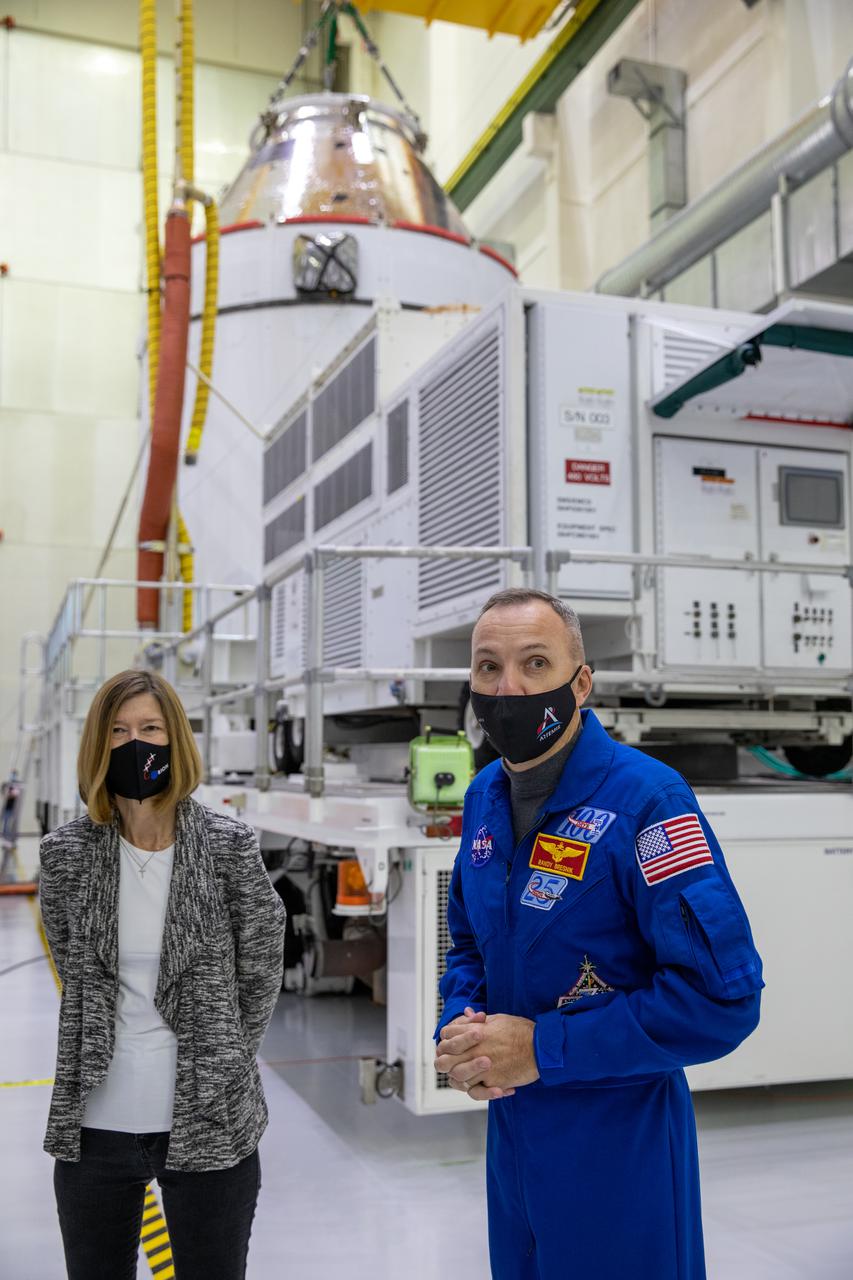
Orion is revealed for one of the final times on Jan. 14, as it is readied atop its transport pallet from the Neil Armstrong Operations and Checkout Building at NASA’s Kennedy Space Center in Florida, along its path to the pad ahead of the Artemis I launch. Viewing Orion in the high bay, from left, are Kathy Lueders, associate administrator of the Human Exploration and Operations Mission Directorate, and NASA astronaut Randy Bresnik. Teams across the globe have worked tirelessly to assemble the spacecraft, which will receive a protective covering prior to departing for the Multi-Payload Processing Facility to begin ground processing by the Exploration Ground Systems and Jacobs teams.
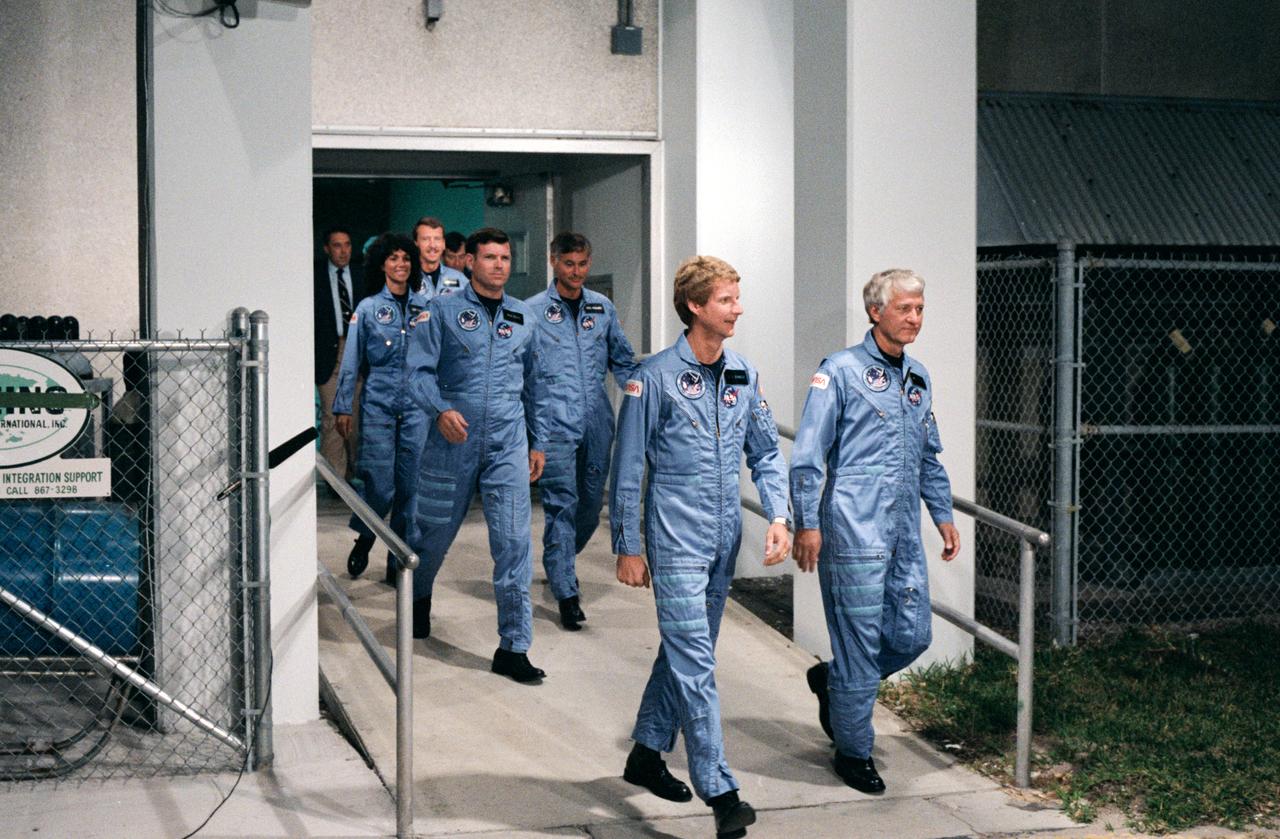
41D-3194 (30 Aug 1984)--- The six members of the 41-D Discovery crew leave the operations and checkout building at Kennedy Space to marke their way to Launch Pad 39A and a date with space. Leading the group is Henry W. hartsfield Jr., commander. Michael L. Coats, pilot, is left center. The mission specialists are Steven A. Hawley, second right, Richard M. (Mike) Mullane, right center, and Judith A. Resnik. Charles D. Walker, payload specialist, follows Resnik. Behind the blue-suited crewmembers are George W.S. Abbey, left, director of flight crew operations and John W. Young, chief of the astronaut office.
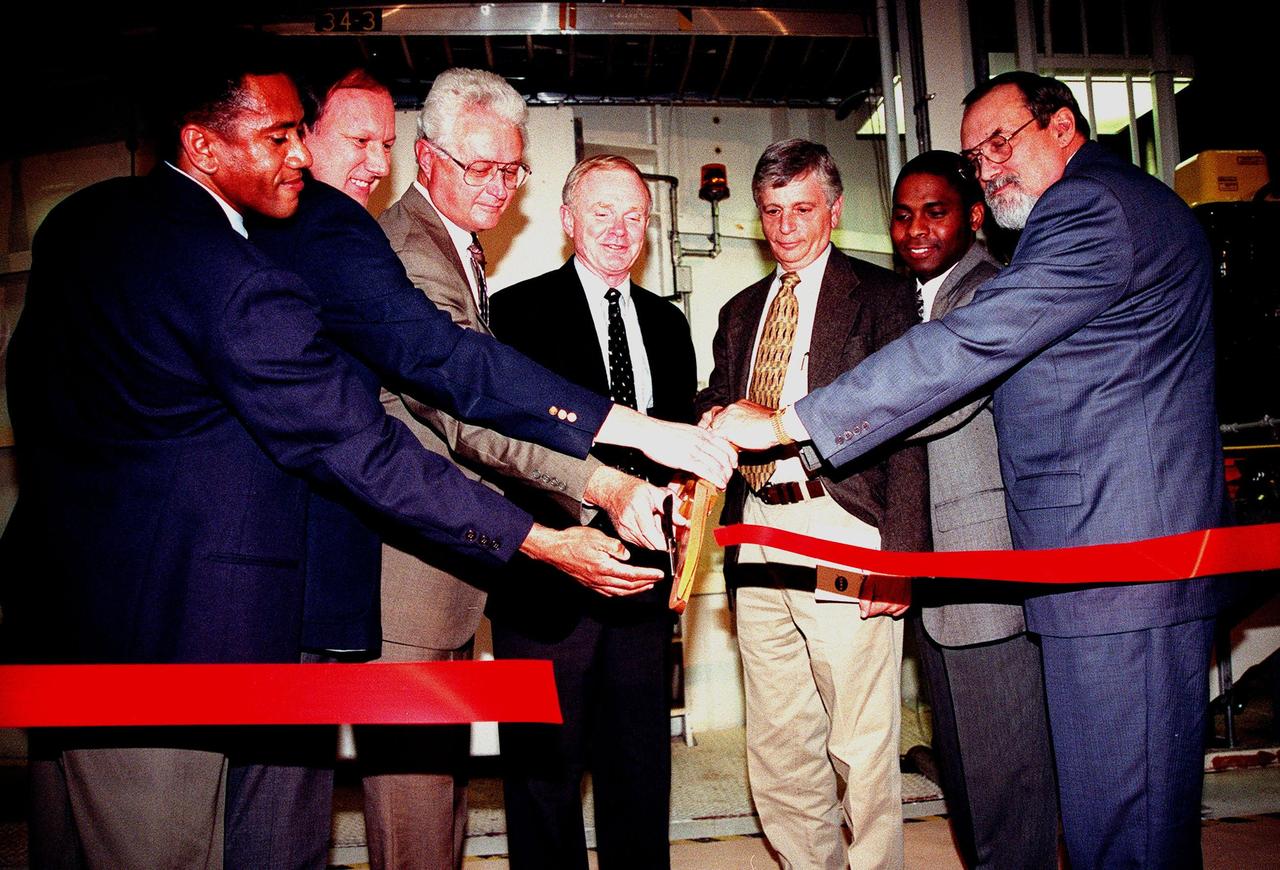
KENNEDY SPACE CENTER, FLA. -- Cutting a red ribbon for the unveiling of a newly renovated altitude chamber are (left to right) Tommy Mack, project manager, NASA; Steve Francois, director, Space Station and Shuttle Payloads; Sterling Walker, director, Engineering Development; Roy Bridges, director, Kennedy Space Center; Jay Greene, International Space Station manager for Technical; Michael Terry, project manager, Boeing; and Terry Smith, director of Engineering, Boeing Space Coast Operations. The chamber was reactivated, after a 24-year hiatus, to perform leak tests on International Space Station pressurized modules at the launch site. Originally, two chambers were built to test the Apollo command and lunar service modules. They were last used in 1975 during the Apollo-Soyuz Test Project. After installation of new vacuum pumping equipment and controls, a new control room, and a new rotation handling fixture, the chamber again became operational in February 1999. The chamber, which is 33 feet in diameter and 50 feet tall, is constructed of stainless steel. The first module that will be tested for leaks is the U.S. Laboratory. No date has been determined for the test
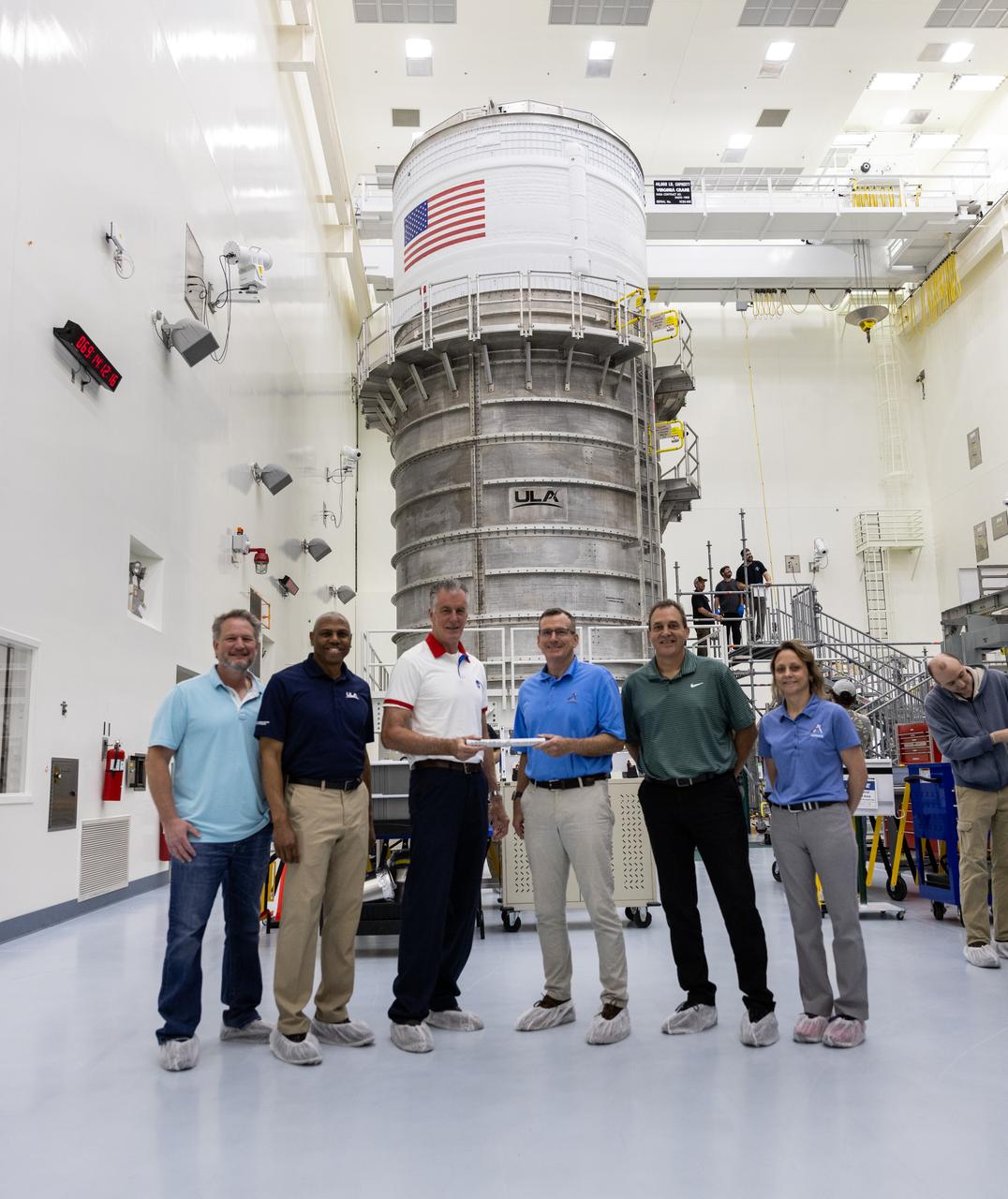
Managers from NASA and industry partners for NASA’s SLS (Space Launch System) rocket upper stage hand off the baton to managers from the agency’s Exploration Ground Systems (EGS) are shown with the SLS interim cryogenic propulsion stage inside the Multi-Payload Processing Facility at NASA’s Kennedy Space Center in Florida on Monday, March 10, 2025, after being transported from United Launch Alliance’s (ULA) Delta Operations Center at nearby Cape Canaveral Space Force Station. From left to right are Jim Bonato, ICPS Mission Manager, ULA; Ron Fortson, Director and General Manager, ULA; Chris Calfee, Spacecraft/Payload Integration and Evolution element manager, SLS; Cliff Lanham, senior vehicle operations manager, EGS; Todd Lamond, Strategic Planning and Integration, Amentum; and Natasha Wiest, Interim Director, Boeing Core Stage Integrated Product Team; The interim cryogenic propulsion stage is a liquid oxygen and liquid hydrogen-based system that will fire its RL10 engine to give the Orion spacecraft the big in-space push needed to fly around the Moon and back.
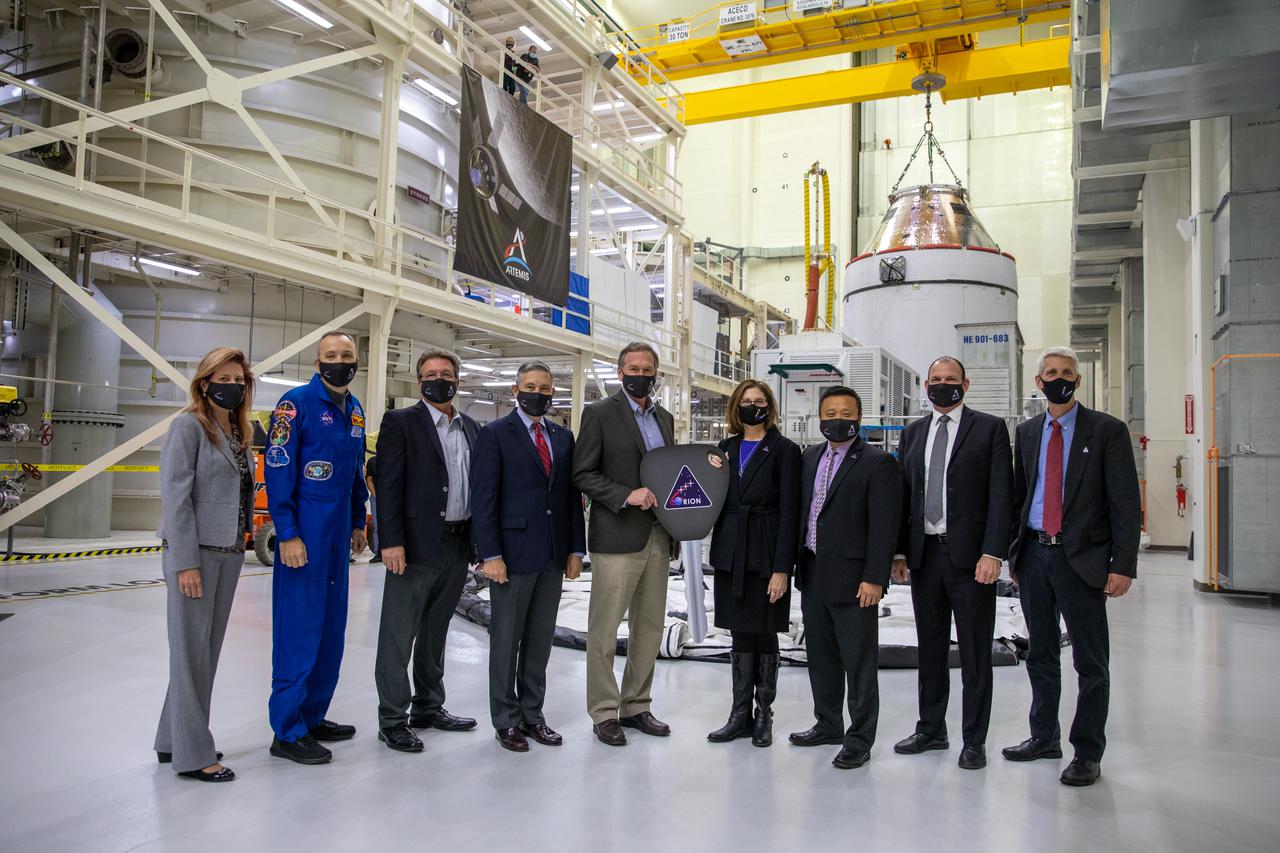
Orion is revealed for one of the final times on Jan. 14, as it is readied atop its transport pallet from the Neil Armstrong Operations and Checkout Building at NASA’s Kennedy Space Center in Florida, along its path to the pad ahead of the Artemis I launch. Standing in front of Orion, from left, are Kelly DeFazio, Lockheed Martin Orion Program director for production; NASA astronaut Randy Bresnik; Jules Schneider, Lockheed Martin director of Orion Assembly, Test & Launch at Kennedy; Kennedy Space Center Director Bob Cabana; Mike Bolger, Exploration Ground Systems (EGS) manager; Cathy Koerner, Orion Program manager; Howard Hu, Orion Program deputy manager; Tony Antonelli, Lockheed Martin Orion Program director and Artemis II mission director; and Scott Wilson, Orion Production Office manager. Teams across the globe have worked tirelessly to assemble the spacecraft, which will receive a protective covering prior to departing for the Multi-Payload Processing Facility to begin ground processing by the EGS and Jacobs teams.
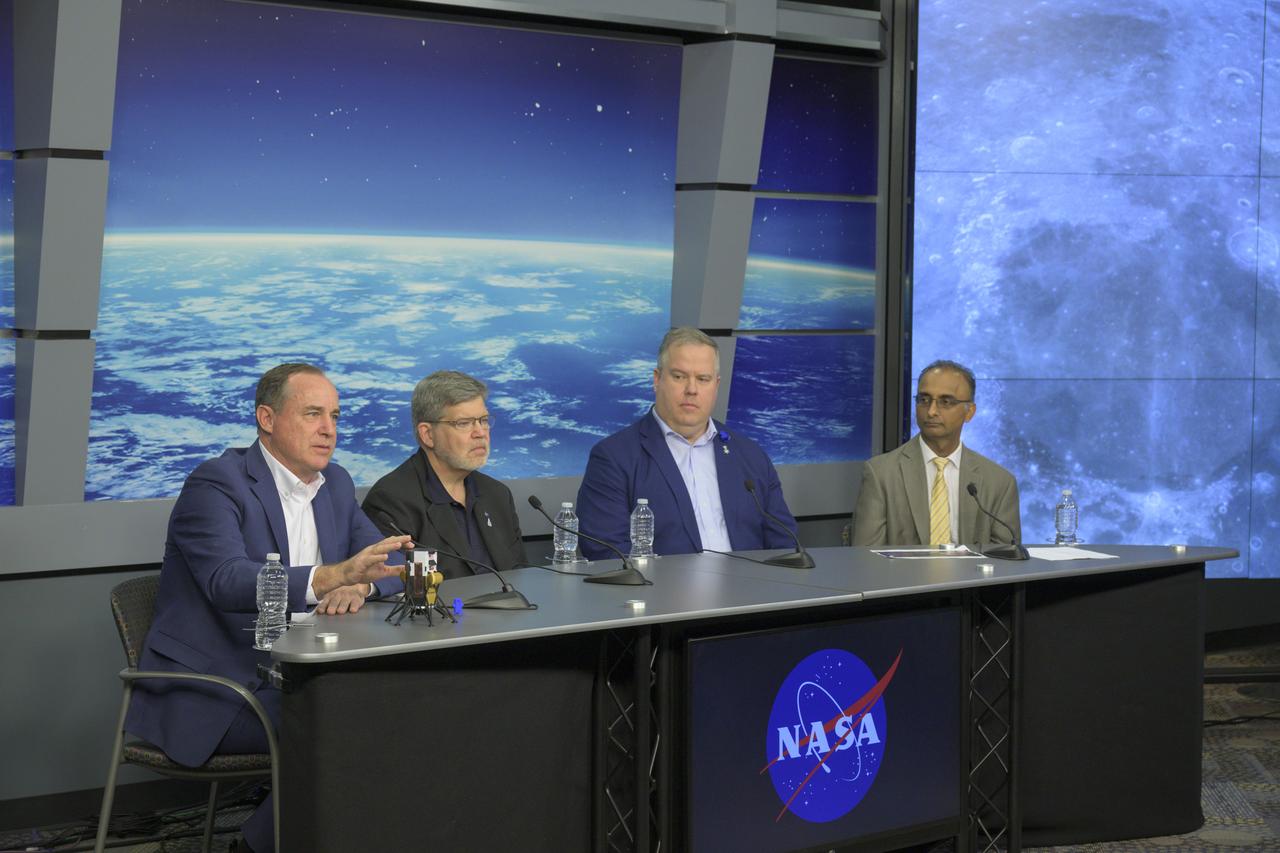
For the first time in more than 50 years, new NASA science instruments and technology demonstrations are operating on the Moon following the first successful delivery of the agency’s CLPS (Commercial Lunar Payload Services) initiative. Experts from NASA and Intuitive Machines hosted a news conference Feb. 23, 2024, at NASA’s Johnson Space Center in Houston to discuss the soft landing of the company’s Nova-C lander, called Odysseus. Participants in the briefing included (L-R): Steve Altemus, chief executive officer and co-founder, Intuitive Machines; Joel Kearns, deputy associate administrator for Exploration, Science Mission Directorate, NASA Headquarters in Washington; Tim Crain, chief technology officer and co-founder, Intuitive Machines; and Prasun Desai, deputy associate administrator, Space Technology Mission Directorate at NASA Headquarters. Photo Credit: NASA/Robert Markowitz
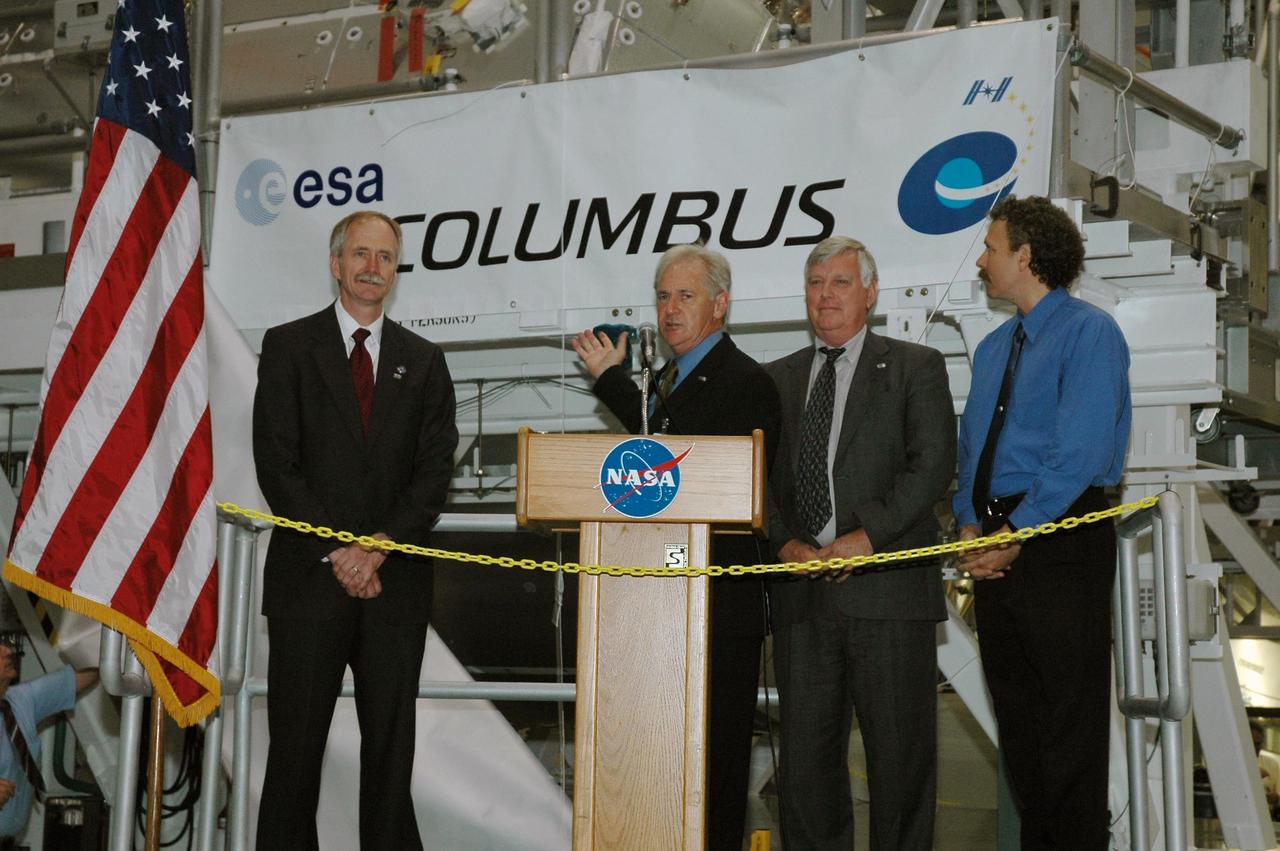
KENNEDY SPACE CENTER, FLA. - The delivery of the Columbus module from Germany to Florida is officially accepted by NASA during a ceremony in the Space Station Processing Facility (SSPF). Participating in the welcoming ceremony are, from left, William Gerstenmaier, NASA associate administrator for Space Operations; Alan Thirkettle, International Space Station program manager, European Space Agency; Jim Kennedy, director, Kennedy Space Center; and Russell Romanella, director, International Space Station and Payloads Processing. Columbus is the European Space Agency's research laboratory for the International Space Station. The module will be prepared in the SSPF for delivery to the space station on a future space shuttle mission. Columbus will expand the research facilities of the station and provide researchers with the ability to conduct numerous experiments in the life, physical and materials sciences. Photo credit: NASA/Amanda Diller
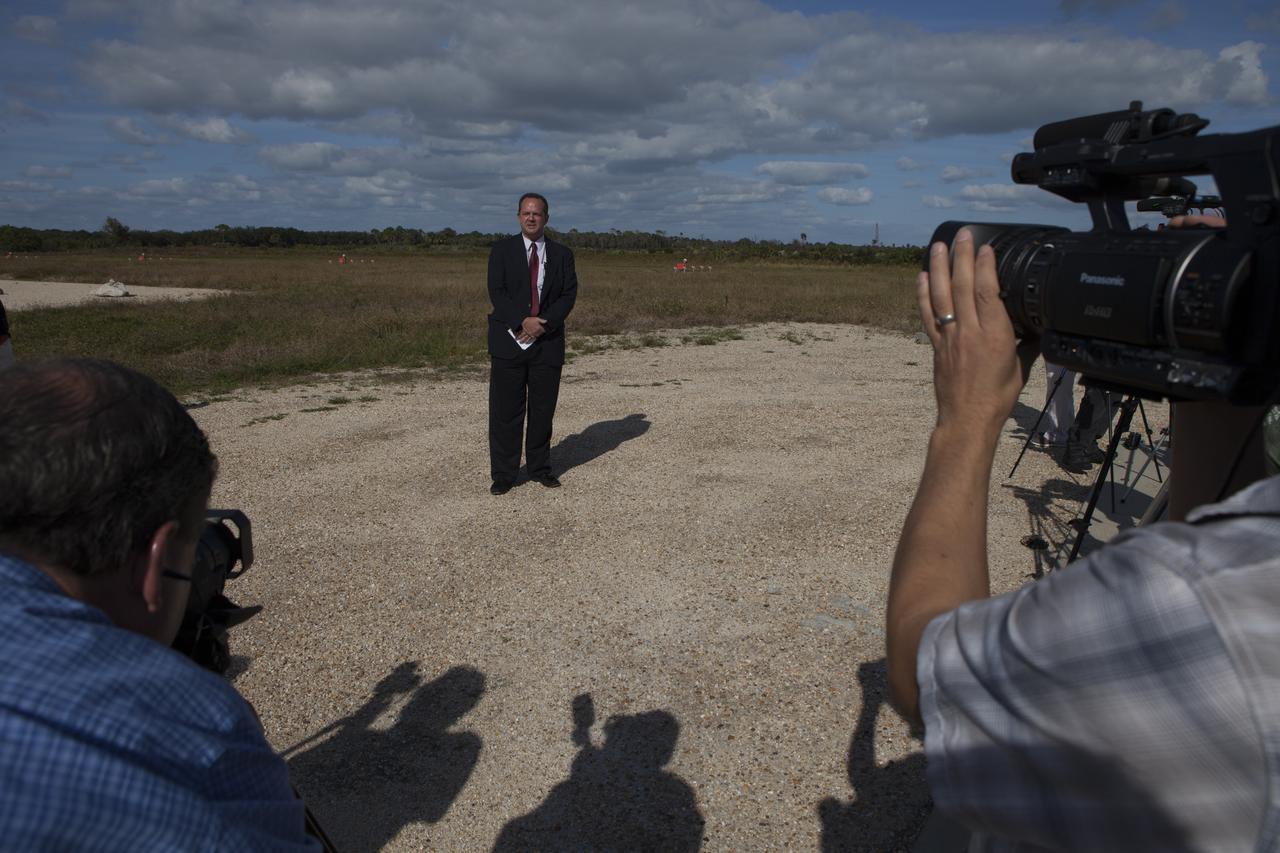
Tom Engler, deputy director of Center Planning and Development at NASA's Kennedy Space Center in Florida, speaks to members of the media during an event to announce the agency's Lunar Cargo Transportation and Landing by Soft Touchdown, or Lunar CATALYST, initiative and introduced one of the partners, Moon Express Inc. of Moffett Field, California. The event took place at Kennedy's automated landing and hazard avoidance technology, or ALHAT, hazard field at the north end of the Shuttle Landing Facility. Moon Express is developing a lander with capabilities that will enable delivery of payloads to the surface of the moon, as well as new science and exploration missions of interest to NASA and scientific and academic communities. Moon Express will base its activities at Kennedy and utilize the Morpheus ALHAT field and a hangar nearby for CATALYST testing. The Advanced Exploration Systems Division of NASA's Human Exploration and Operations Mission Directorate manages Lunar CATALYST.
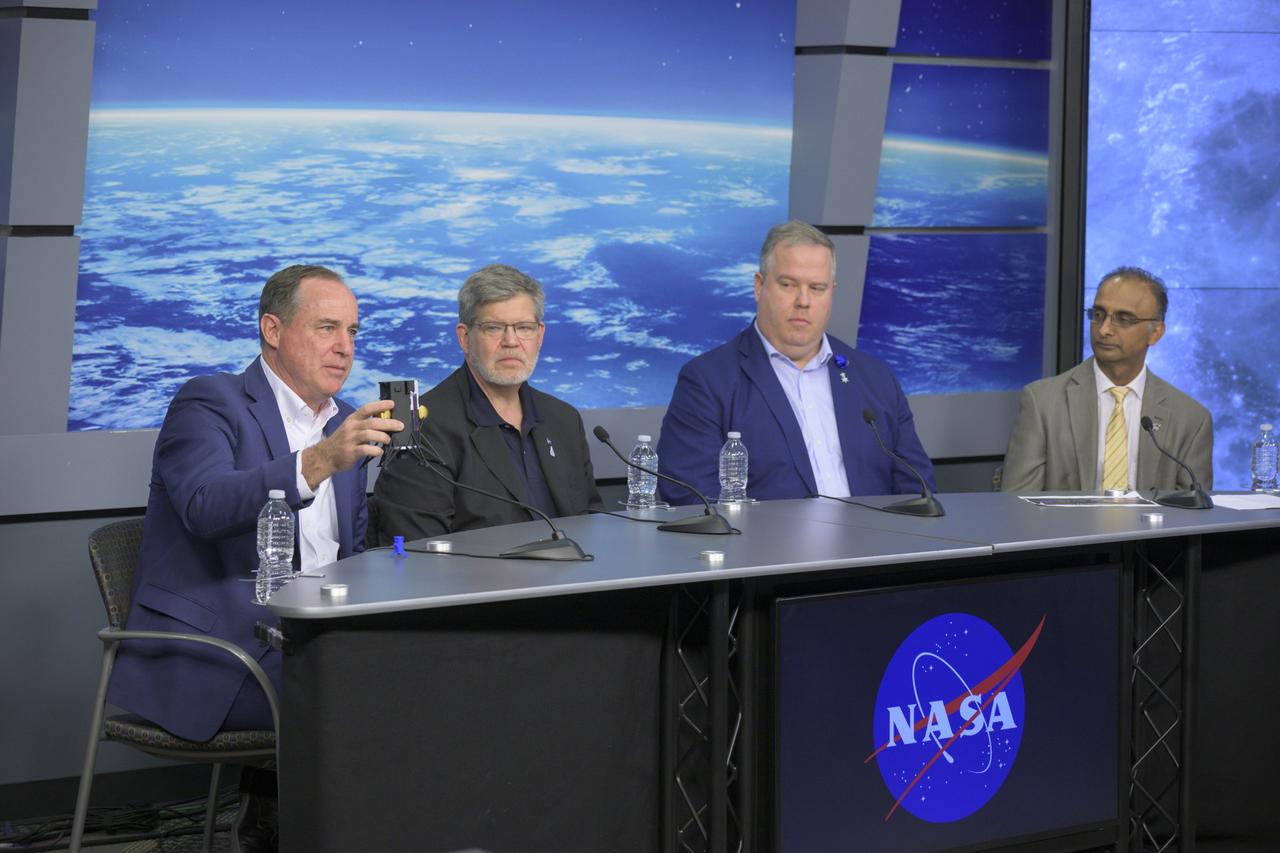
For the first time in more than 50 years, new NASA science instruments and technology demonstrations are operating on the Moon following the first successful delivery of the agency’s CLPS (Commercial Lunar Payload Services) initiative. Experts from NASA and Intuitive Machines hosted a news conference Feb. 23, 2024, at NASA’s Johnson Space Center in Houston to discuss the soft landing of the company’s Nova-C lander, called Odysseus. Participants in the briefing included (L-R): Steve Altemus, chief executive officer and co-founder, Intuitive Machines; Joel Kearns, deputy associate administrator for Exploration, Science Mission Directorate, NASA Headquarters in Washington; Tim Crain, chief technology officer and co-founder, Intuitive Machines; and Prasun Desai, deputy associate administrator, Space Technology Mission Directorate at NASA Headquarters. Photo Credit: NASA/Robert Markowitz
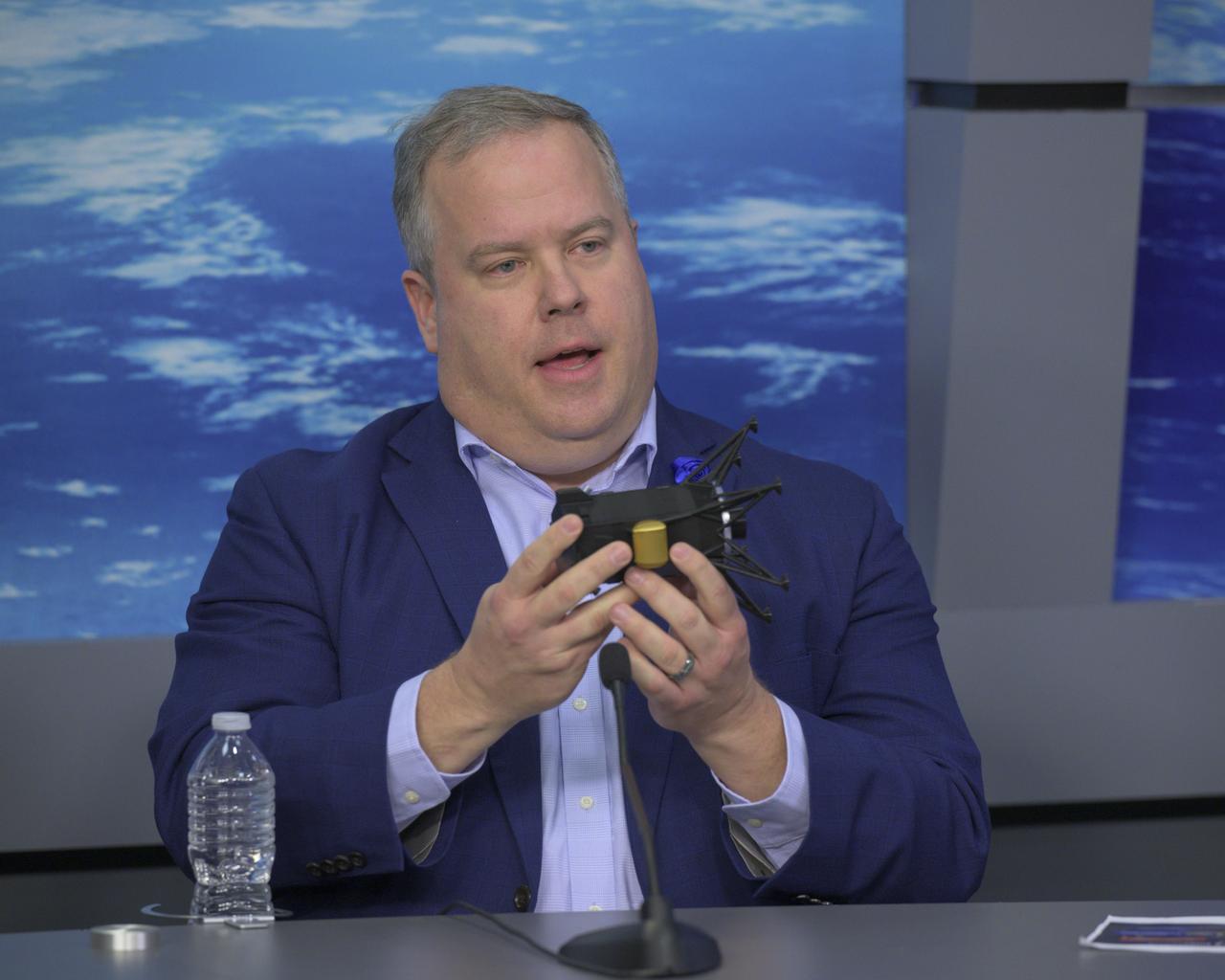
For the first time in more than 50 years, new NASA science instruments and technology demonstrations are operating on the Moon following the first successful delivery of the agency’s CLPS (Commercial Lunar Payload Services) initiative. Experts from NASA and Intuitive Machines hosted a news conference Feb. 23, 2024, at NASA’s Johnson Space Center in Houston to discuss the soft landing of the company’s Nova-C lander, called Odysseus. Participants in the briefing included (L-R): Steve Altemus, chief executive officer and co-founder, Intuitive Machines; Joel Kearns, deputy associate administrator for Exploration, Science Mission Directorate, NASA Headquarters in Washington; Tim Crain, chief technology officer and co-founder, Intuitive Machines; and Prasun Desai, deputy associate administrator, Space Technology Mission Directorate at NASA Headquarters. Photo Credit: NASA/Robert Markowitz
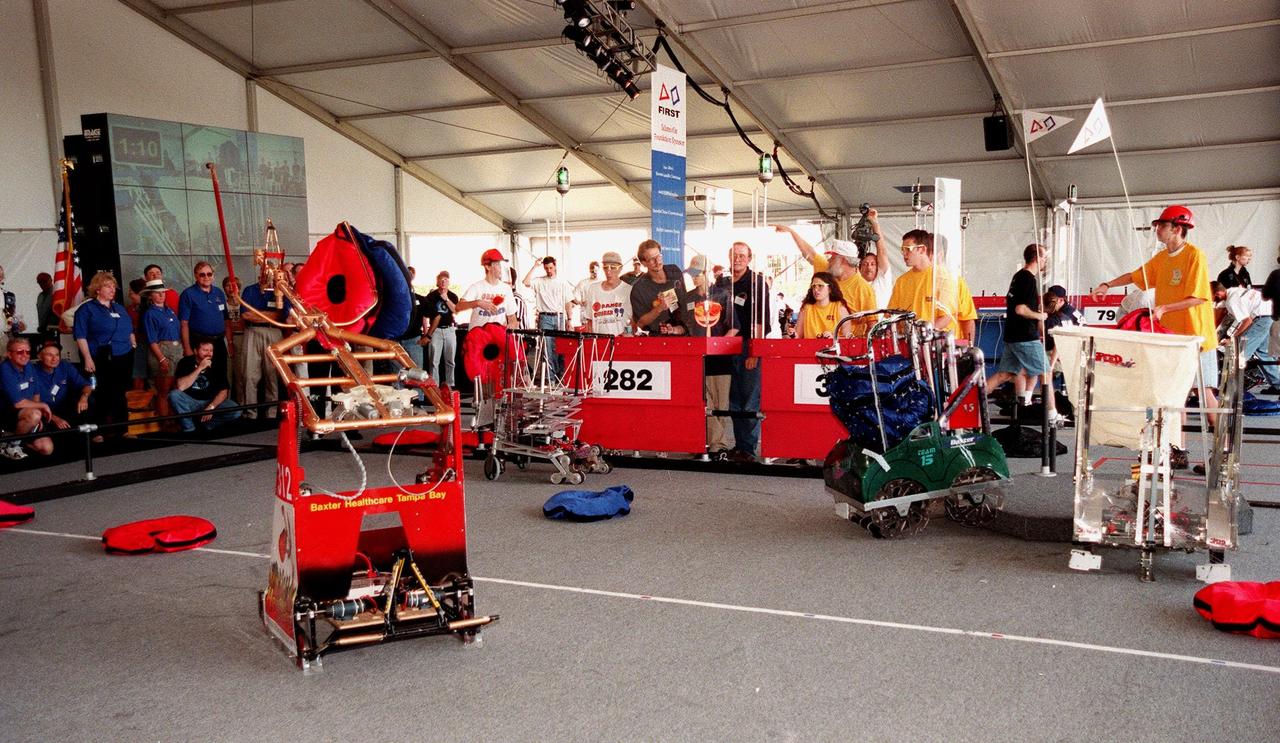
Student teams behind protective walls operate remote controls to maneuver their robots around the playing field during the 1999 FIRST Southeastern Regional robotic competition held at KSC. The robotic gladiators spent two minutes each trying to grab, claw and hoist large, satin pillows onto their machines. Teams played defense by taking away competitors' pillows and generally harassing opposing machines. On the side of the field are the judges, including (far left) Deputy Director for Launch and Payload Processing Loren Shriver and former KSC Director of Shuttle Processing Robert Sieck. A giant screen TV displays the action on the field. The competition comprised 27 teams, pairing high school students with engineer mentors and corporations. The FIRST robotics competition is designed to provide students with a hands-on, inside look at engineering and other professional careers