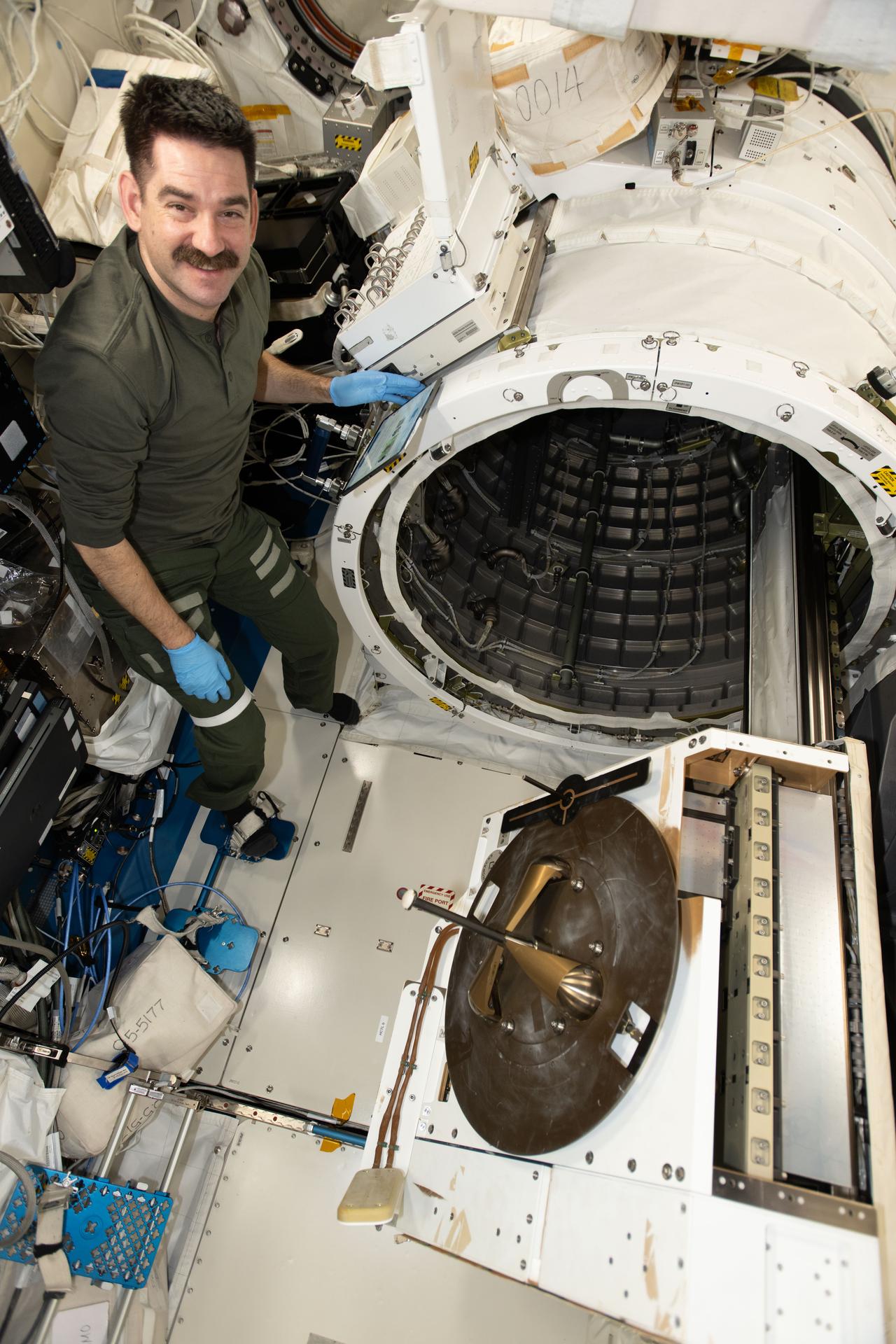
iss074e0491605 (April 20, 2026) --- NASA astronaut and Expedition 74 flight engineer Jack Hathaway installs the NanoRacks External Platform—carrying three scientific payloads—inside the Kibo laboratory module’s airlock for placement outside in the vacuum of space. The payloads will test ultra‑high‑resolution hyperspectral imagery, measure radio signals passing through Earth’s ionosphere, and help doctors identify space‑sensitive proteins while evaluating mobility and neuromuscular health therapies. Credit: NASA/Chris Williams
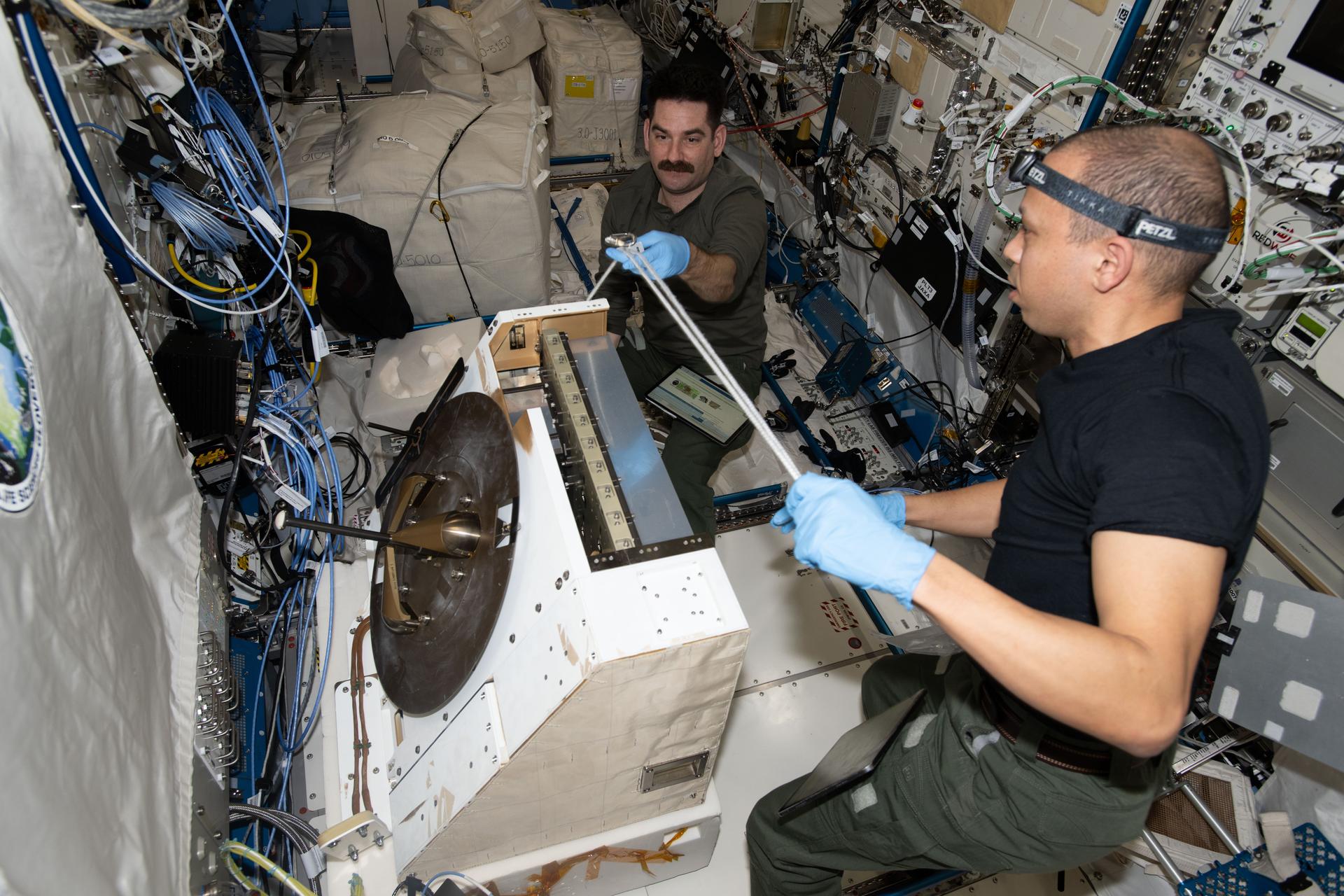
iss074e0491189 (April 20, 2026) --- NASA astronauts Jack Hathaway and Chris Williams, both Expedition 74 flight engineers, prepare the NanoRacks External Platform—carrying three scientific payloads—for installation inside the Kibo laboratory module’s airlock where it will be placed outside in the vacuum of space. The payloads will test ultra‑high‑resolution hyperspectral imagery, measure radio signals passing through Earth’s ionosphere, and help doctors identify space‑sensitive proteins while evaluating mobility and neuromuscular health therapies. Credit: NASA/Jack Hathaway
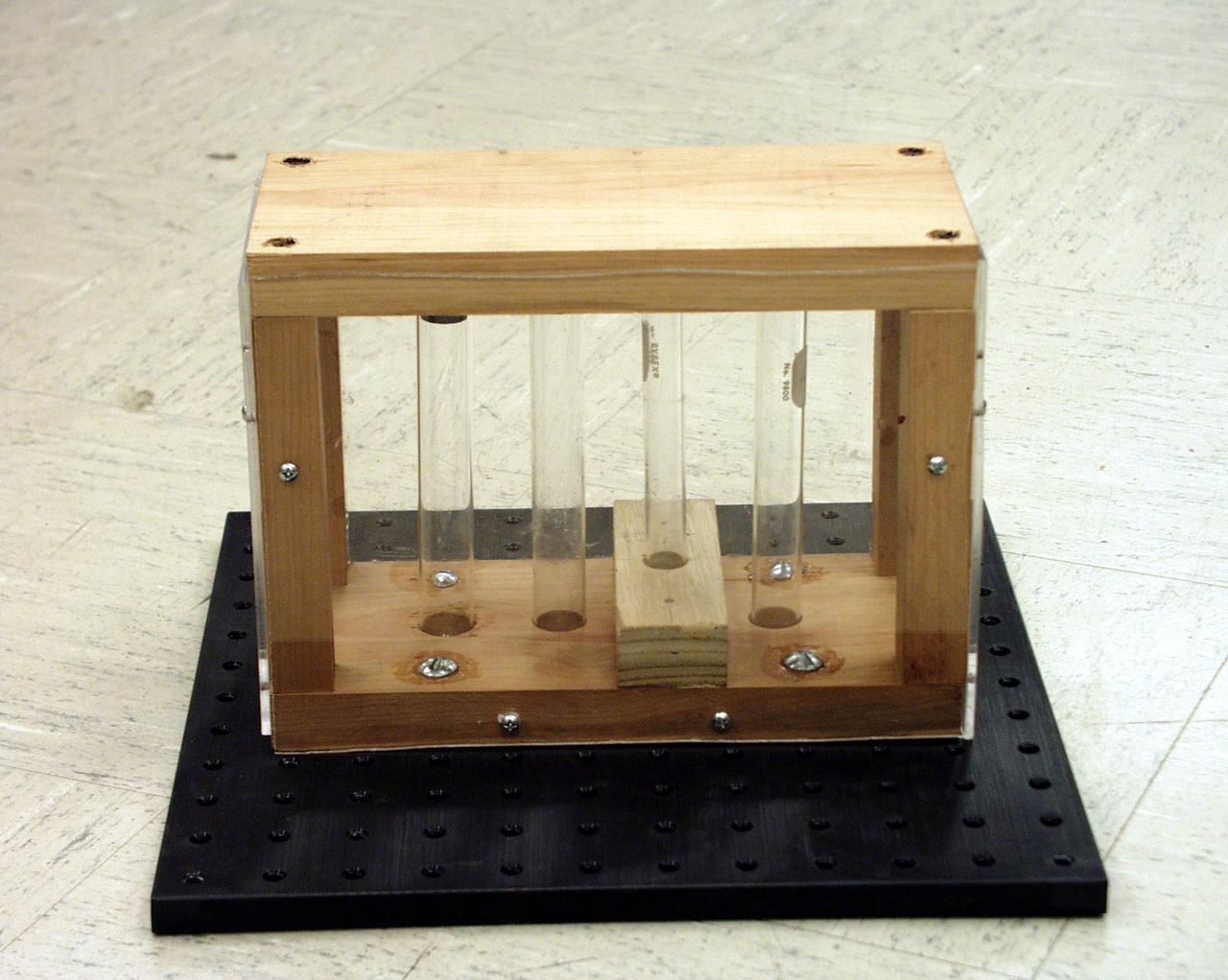
Test tubes to hold different types of fluids while in free-fall were among the student-designed items for the second Dropping in a Microgravity Environment (DIME) competition held April 23-25, 2002, at NASA's Glenn Research Center. Competitors included two teams from Sycamore High School, Cincinnati, OH, and one each from Bay High School, Bay Village, OH, and COSI Academy, Columbus, OH. DIME is part of NASA's education and outreach activities. Details are on line at http://microgravity.grc.nasa.gov/DIME_2002.html.
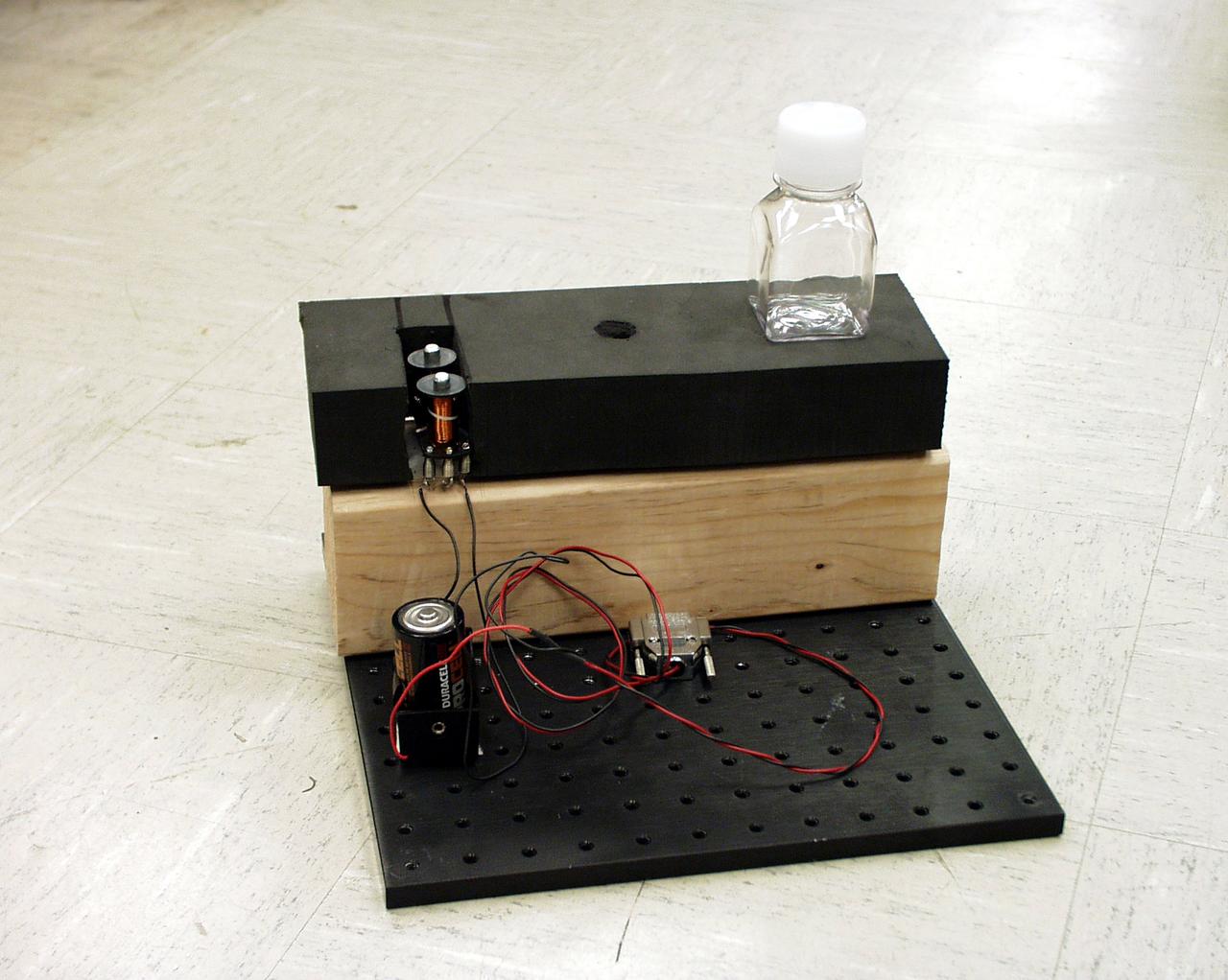
Student-designed and -built apparatus for the second Dropping in a Microgravity Environment (DIME) competition held April 23-25, 2002, at NASA's Glenn Research Center. Competitors included two teams from Sycamore High School, Cincinnati, OH, and one each from Bay High School, Bay Village, OH, and COSI Academy, Columbus, OH. DIME is part of NASA's education and outreach activities. Details are on line at http://microgravity.grc.nasa.gov/DIME_2002.html.
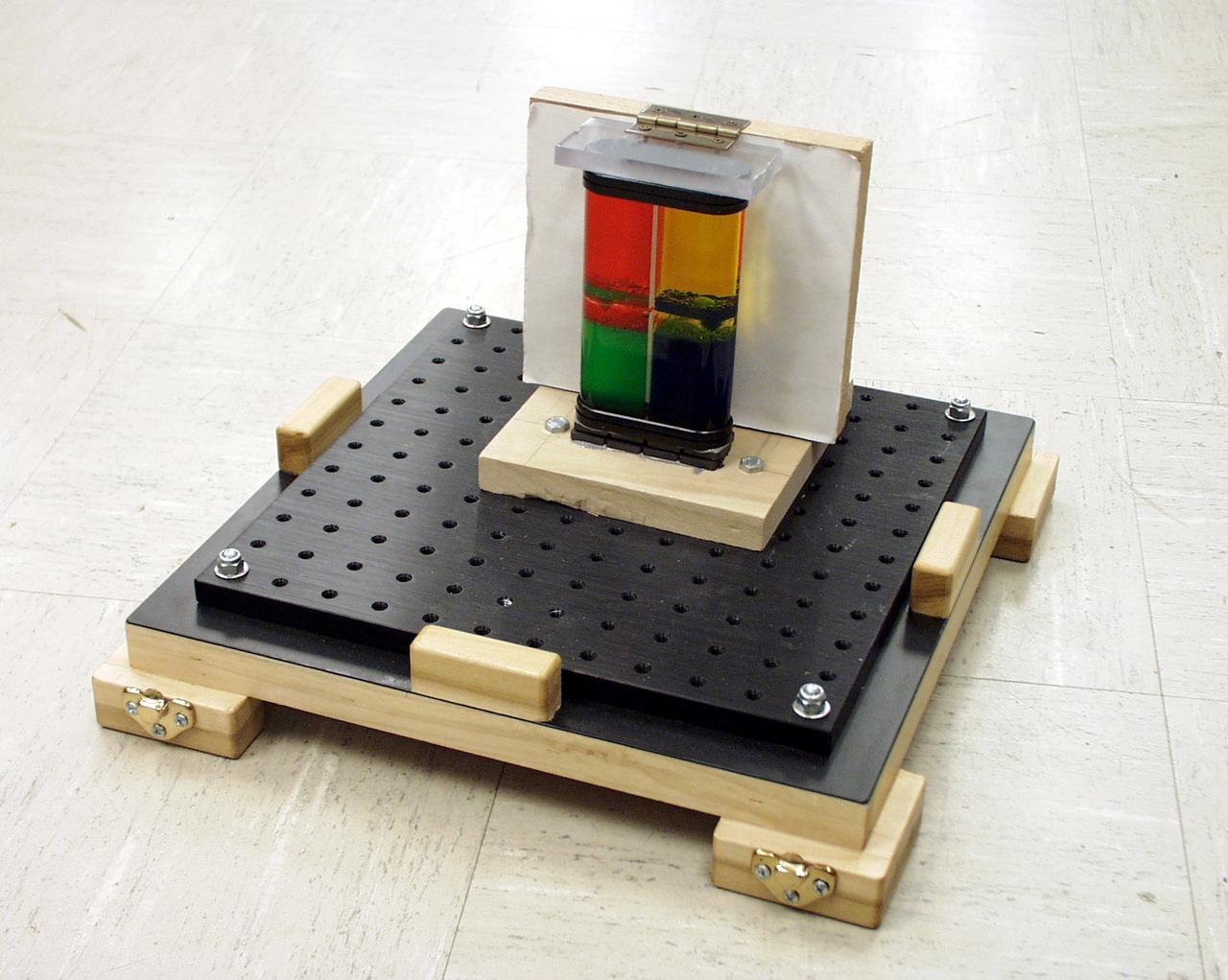
Colored oil flow toy was part of a student-designed apparatus used in the second Dropping in a Microgravity Environment (DIME) competition held April 23-25, 2002, at NASA's Glenn Research Center. Competitors included two teams from Sycamore High School, Cincinnati, OH, and one each from Bay High School, Bay Village, OH, and COSI Academy, Columbus, OH. DIME is part of NASA's education and outreach activities. Details are on line at http://microgravity.grc.nasa.gov/DIME_2002.html.
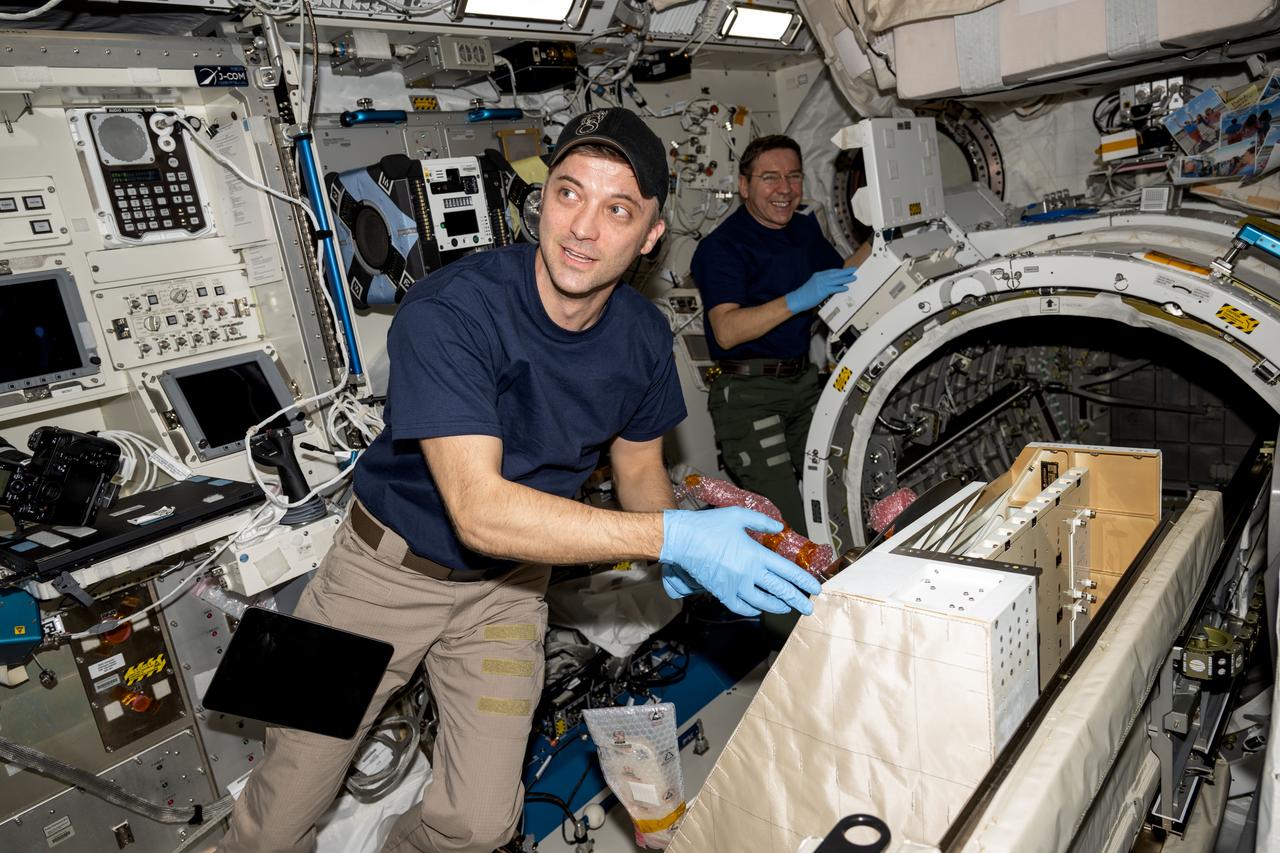
iss071e403564 (July 22, 2024) --- (From left) NASA astronauts Matthew Dominick and Mike Barratt, both Expedition 71 Flight Engineers, install the NanoRacks external platform inside the Kibo laboratory module's airlock. The platform from NanoRacks can host a variety of payloads placed outside the International Space Station and exposed to the external space environment for science experiments, technology demonstrations, and more.

KENNEDY SPACE CENTER, FLA. -- In the Space Station Processing Facility, an overhead crane moves the external stowage platform 3 to the payload canister at right. The platform is part of the payload on mission STS-118 and will be loaded into Space Shuttle Endeavour's payload bay at the pad. Endeavour is targeted for launch on Aug. 9 to the International Space Station. The mission will continue space station construction by delivering a third starboard truss segment, S5, as well as carrying the external stowage platform 3. Photo credit: NASA/Jim Grossmann
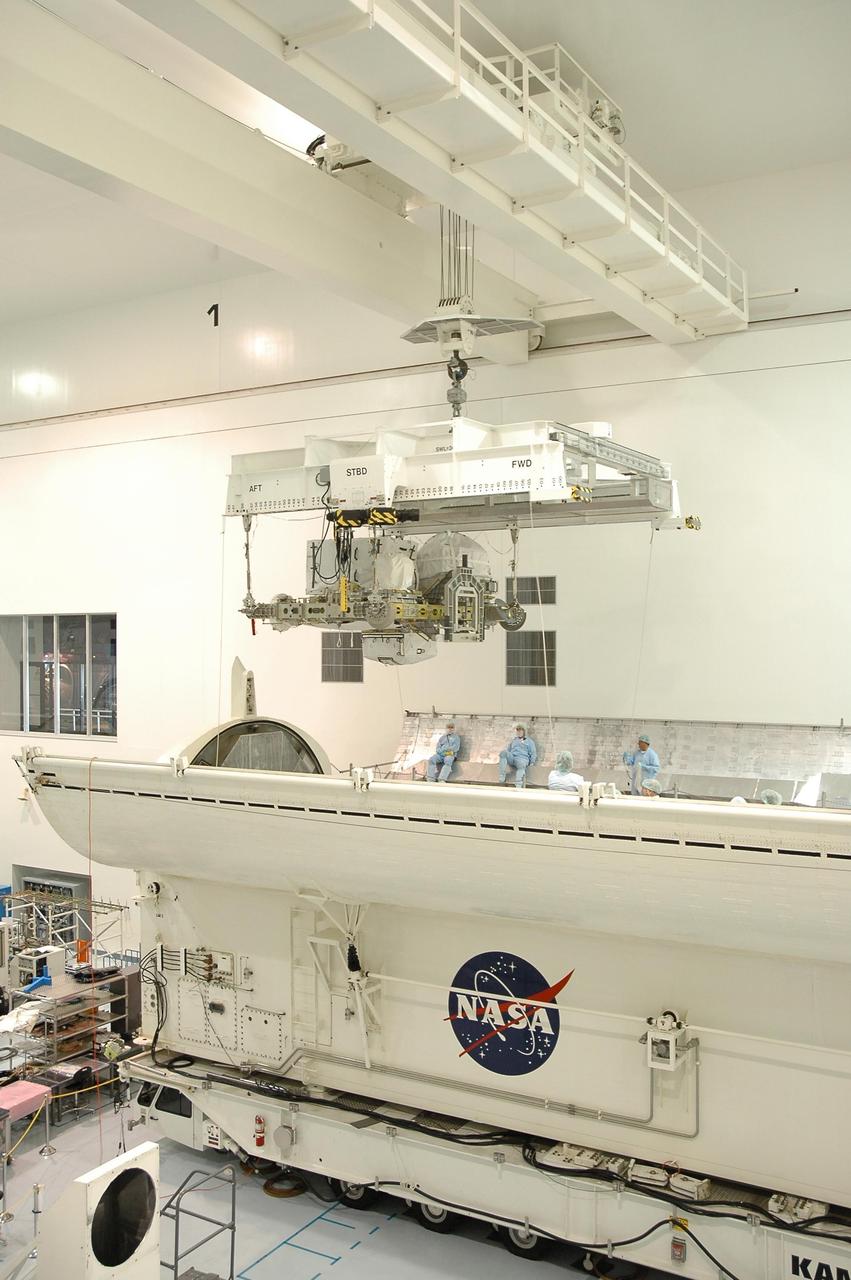
KENNEDY SPACE CENTER, FLA. -- In the Space Station Processing Facility, an overhead crane lowers the external stowage platform 3 into the payload canister. The platform is part of the payload on mission STS-118 and will be loaded into Space Shuttle Endeavour's payload bay at the pad. Endeavour is targeted for launch on Aug. 9 to the International Space Station. The mission will continue space station construction by delivering a third starboard truss segment, S5, as well as carrying the external stowage platform 3. Photo credit: NASA/Jim Grossmann
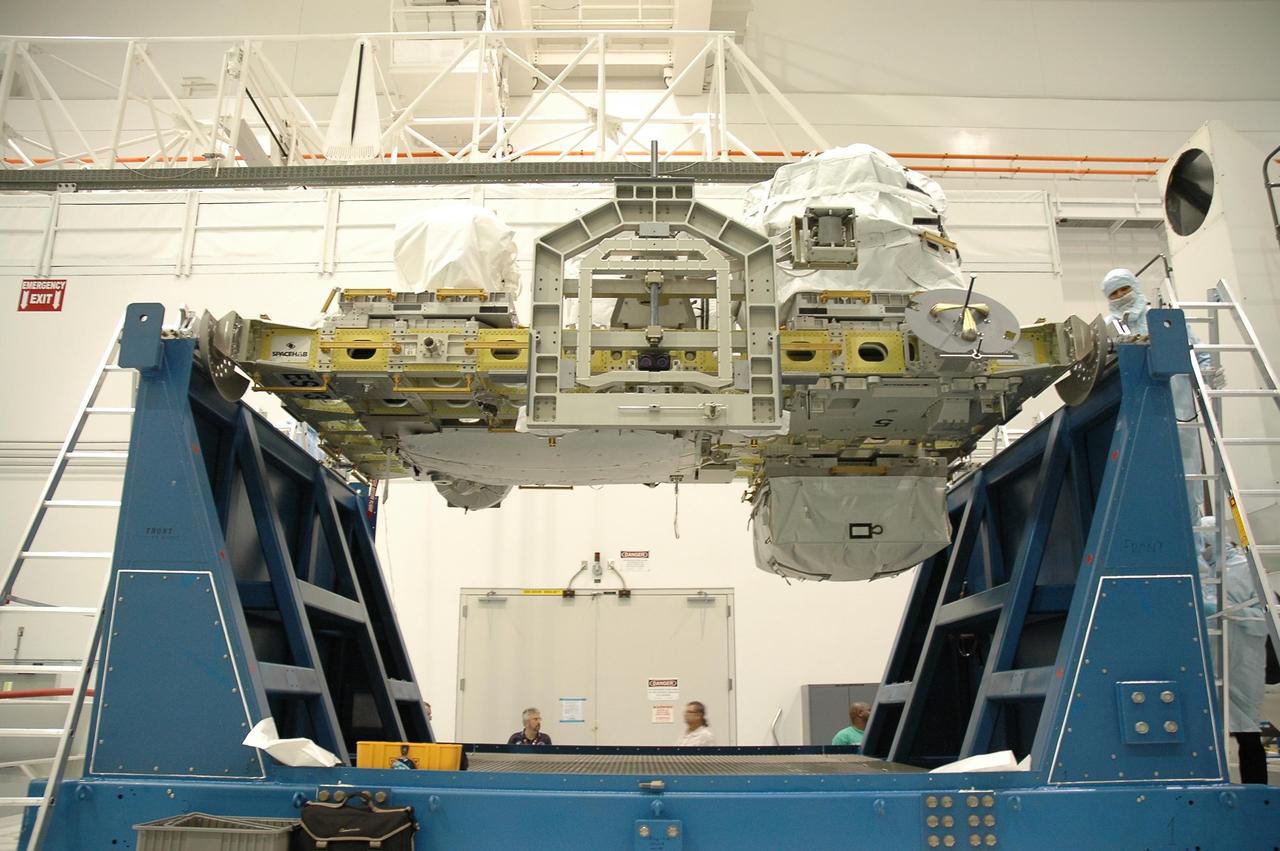
KENNEDY SPACE CENTER, FLA. -- In the Space Station Processing Facility, the external stowage platform 3 is ready to be lifted from its stand to move to the payload canister. The platform is part of the payload on mission STS-118 and will be loaded into Space Shuttle Endeavour's payload bay at the pad. Endeavour is targeted for launch on Aug. 9 to the International Space Station. The mission will continue space station construction by delivering a third starboard truss segment, S5, as well as carrying the external stowage platform 3. Photo credit: NASA/Jim Grossmann
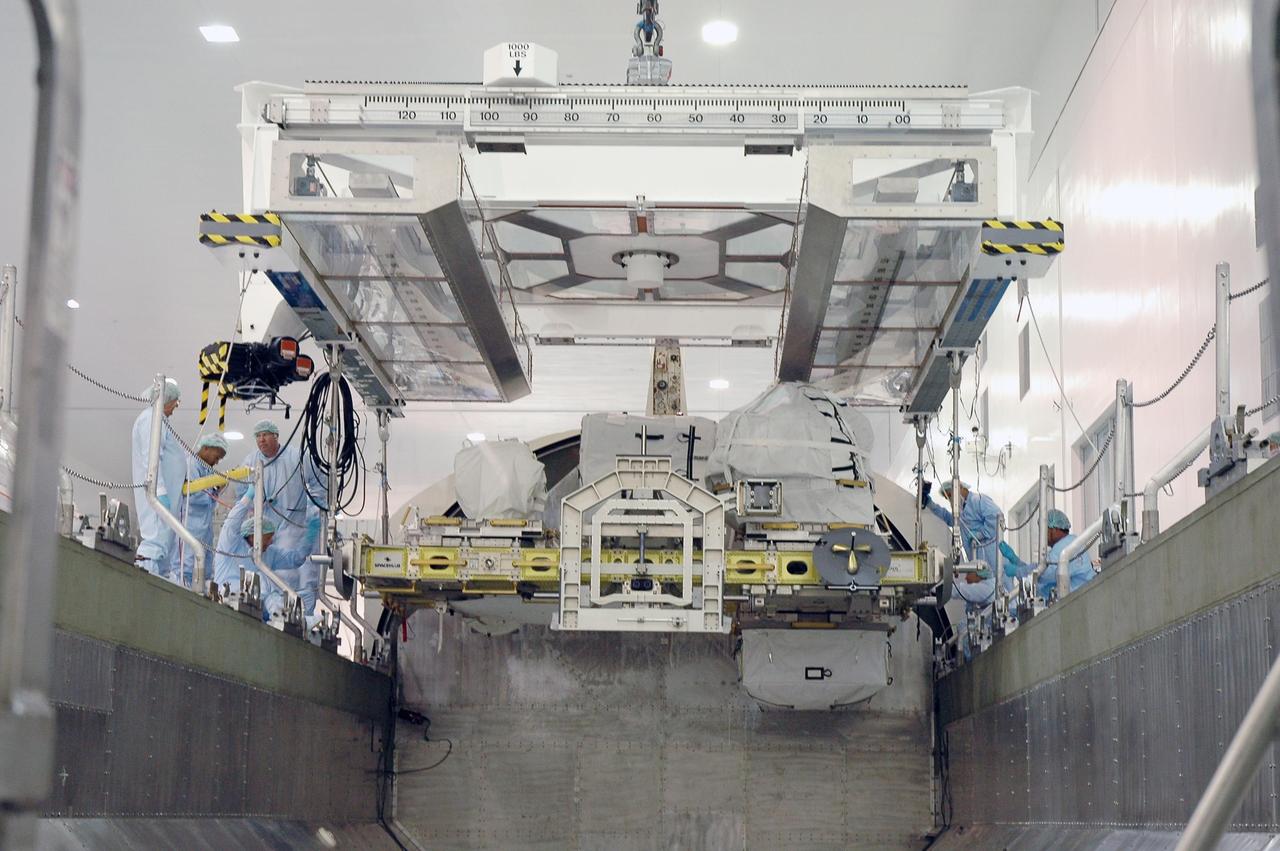
KENNEDY SPACE CENTER, FLA. -- In the Space Station Processing Facility, workers check the placement of the external stowage platform 3 to the payload canister. The platform is part of the payload on mission STS-118 and will be loaded into Space Shuttle Endeavour's payload bay at the pad. Endeavour is targeted for launch on Aug. 9 to the International Space Station. The mission will continue space station construction by delivering a third starboard truss segment, S5, as well as carrying the external stowage platform 3. Photo credit: NASA/Jim Grossmann
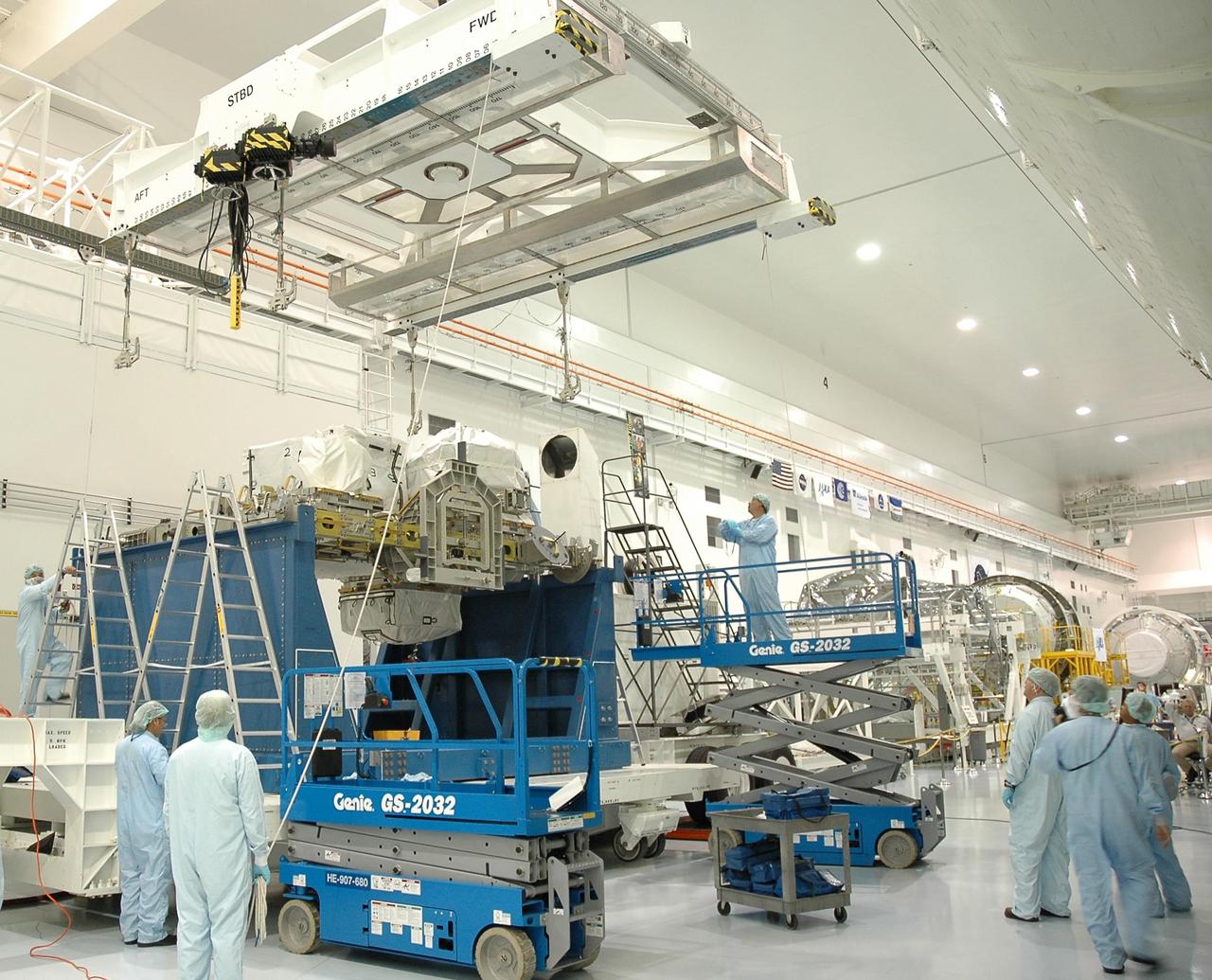
KENNEDY SPACE CENTER, FLA. -- In the Space Station Processing Facility, an overhead crane moves into place above the external stowage platform 3 to lift and move it to the payload canister. The platform is part of the payload on mission STS-118 and will be loaded into Space Shuttle Endeavour's payload bay at the pad. Endeavour is targeted for launch on Aug. 9 to the International Space Station. The mission will continue space station construction by delivering a third starboard truss segment, S5, as well as carrying the external stowage platform 3. Photo credit: NASA/Jim Grossmann
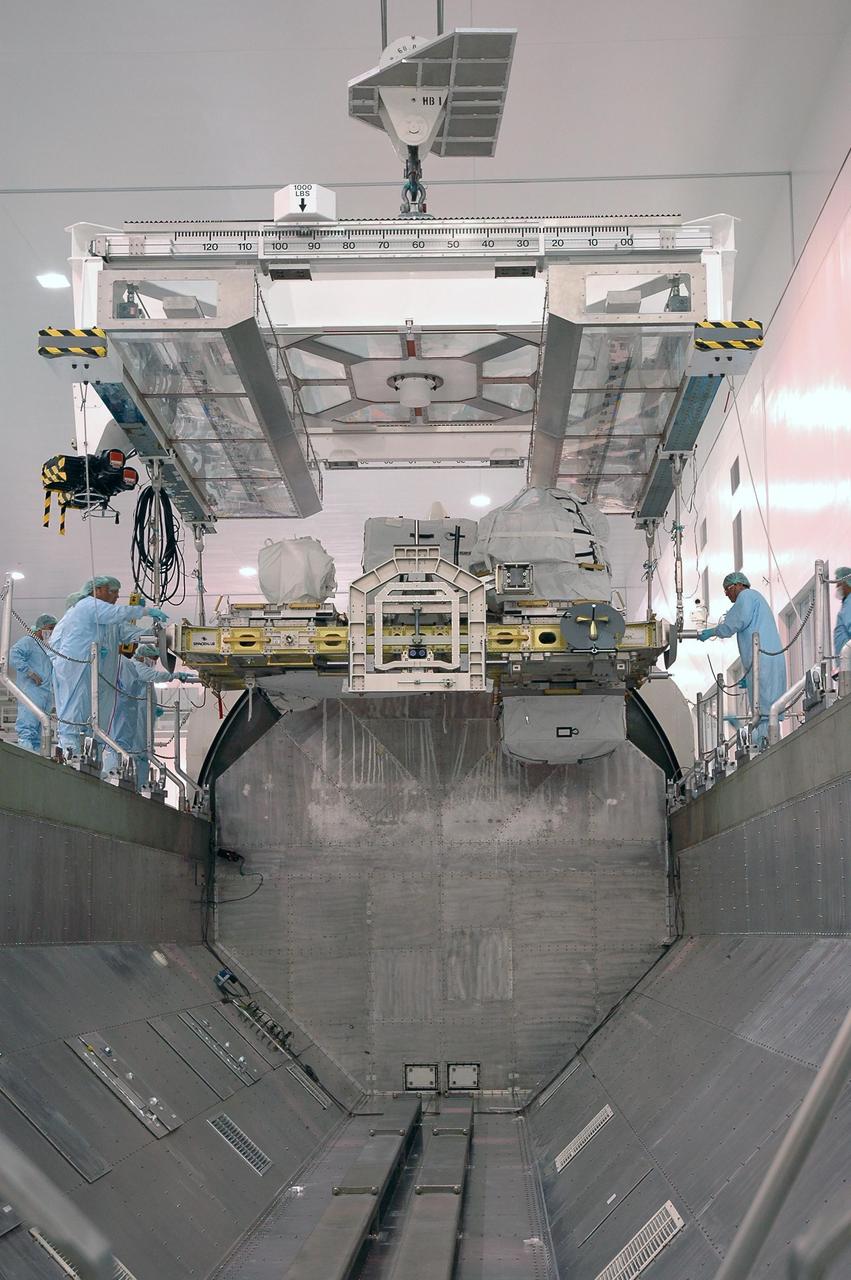
KENNEDY SPACE CENTER, FLA. -- In the Space Station Processing Facility, workers maneuver an overhead crane lowering the external stowage platform 3 into the payload canister below. The platform is part of the payload on mission STS-118 and will be loaded into Space Shuttle Endeavour's payload bay at the pad. Endeavour is targeted for launch on Aug. 9 to the International Space Station. The mission will continue space station construction by delivering a third starboard truss segment, S5, as well as carrying the external stowage platform 3. Photo credit: NASA/Jim Grossmann

KENNEDY SPACE CENTER, FLA. -- In the Space Station Processing Facility, workers are ready to attach the overhead crane to the external stowage platform 3 to lift and move it to the payload canister. The platform is part of the payload on mission STS-118 and will be loaded into Space Shuttle Endeavour's payload bay at the pad. Endeavour is targeted for launch on Aug. 9 to the International Space Station. The mission will continue space station construction by delivering a third starboard truss segment, S5, as well as carrying the external stowage platform 3. Photo credit: NASA/Jim Grossmann
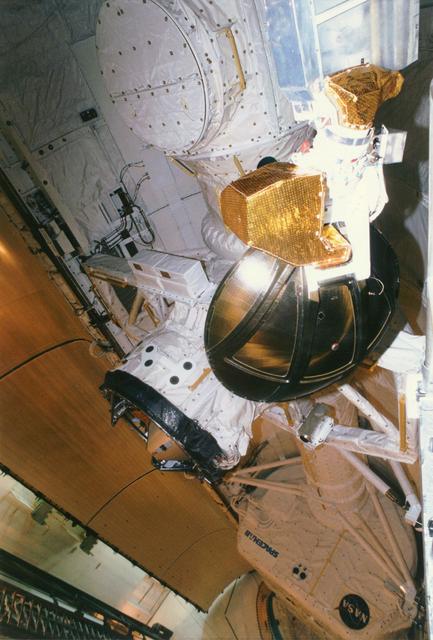
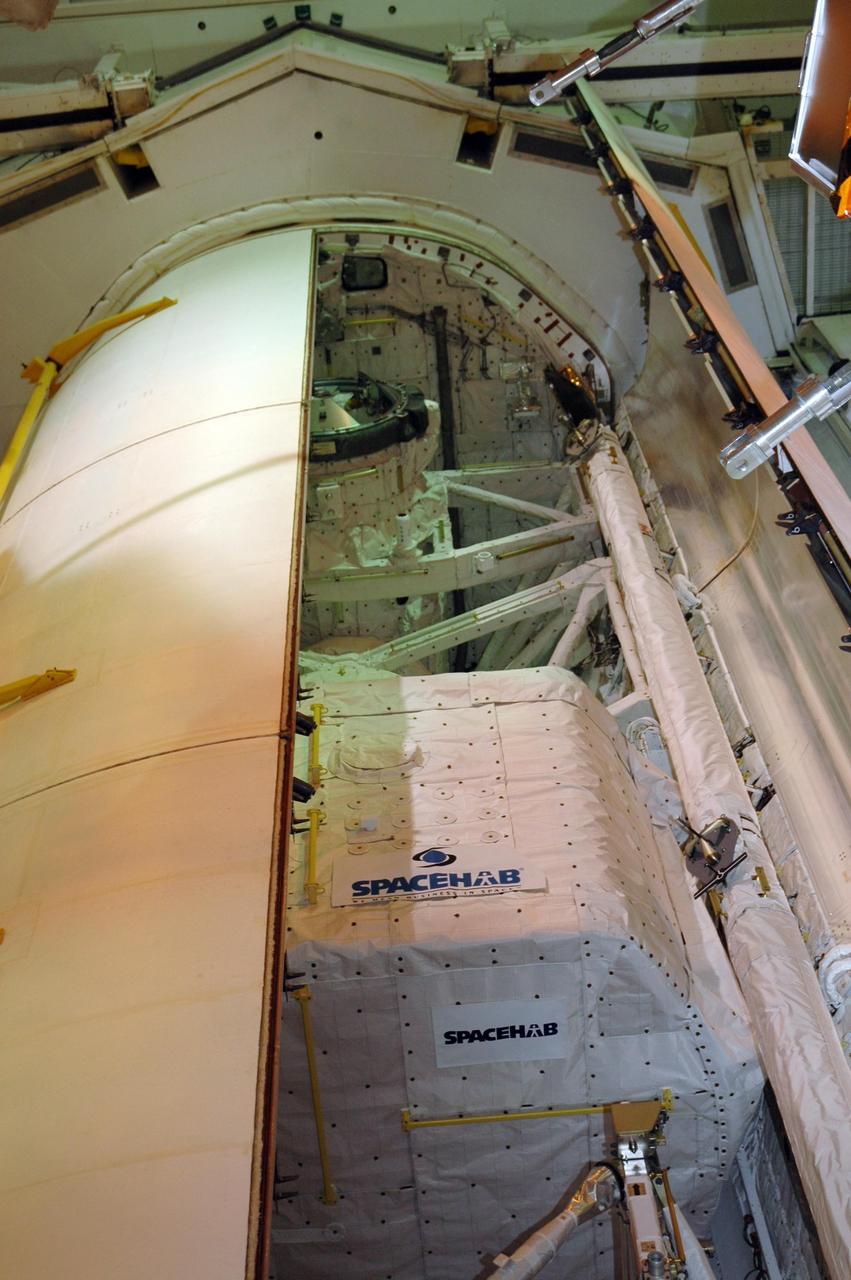
KENNEDY SPACE CENTER, FLA. - The orbiter Ku-band antenna looms large in this view of the Space Shuttle Atlantis' payload bay. Visible just past the antenna system - stowed on the starboard side of the payload bay wall - is the Orbiter Docking System (ODS), and connected to the ODS via a tunnel is the Spacehab Double Module in the aft area of the payload bay. This photograph was taken from the starboard wing platform on the fifth level of the Payload Changeout Room (PCR) at Launch Pad 39A. Work is under way in the PCR to close Atlantis' payload bay doors for flight. Atlantis currently is being targeted for liftoff on Mission STS-79, the fourth docking of the U.S. Shuttle to the Russian Space Station Mir, around Sept. 12.
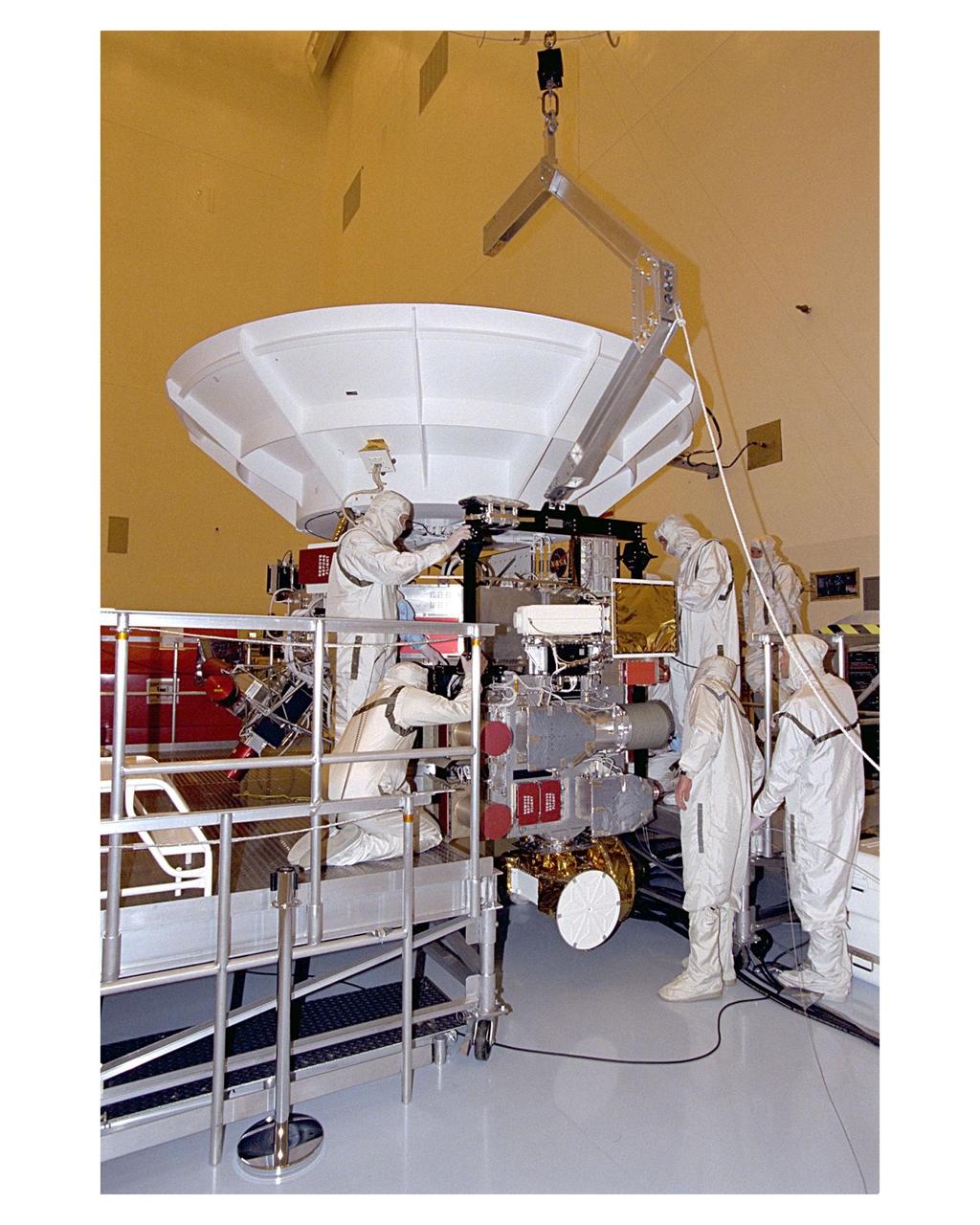
Titan Cassini Remote Sensing Platform installation in the Payload Hazardous Servicing Facility

Titan Cassini Remote Sensing Platform installation in the Payload Hazardous Servicing Facility
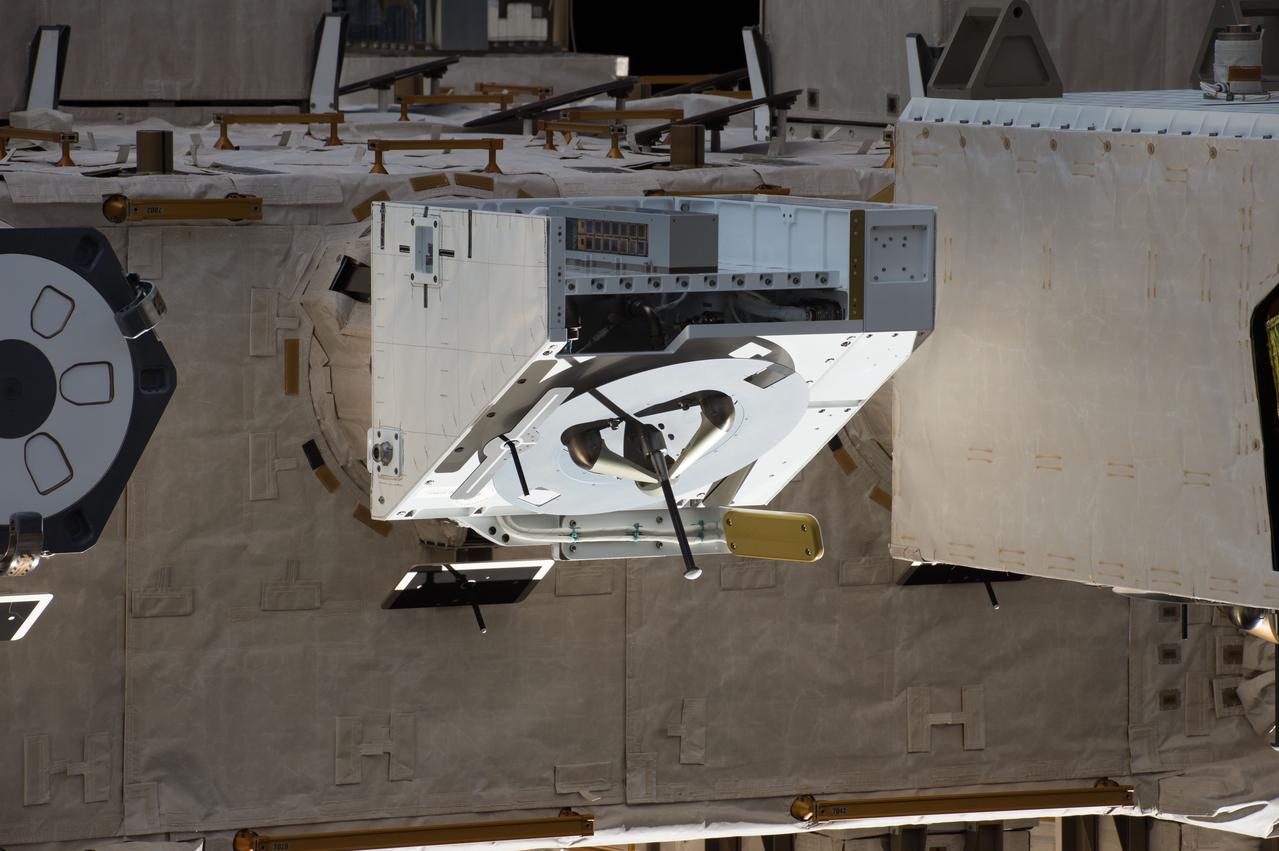
iss048e050816 (8/5/2016) --- A view of the NanoRacks External Platform (NREP), containing the NanoRacks-Gumstix and NanoRacks NanoTube Solar Cell payloads, installed on the JEM (Japanese Experiment Module) Exposed Facility (JEF). The NanoRacks External Platform is a compact research platform fitted for versatile use on the exterior of the International Space Station (ISS).
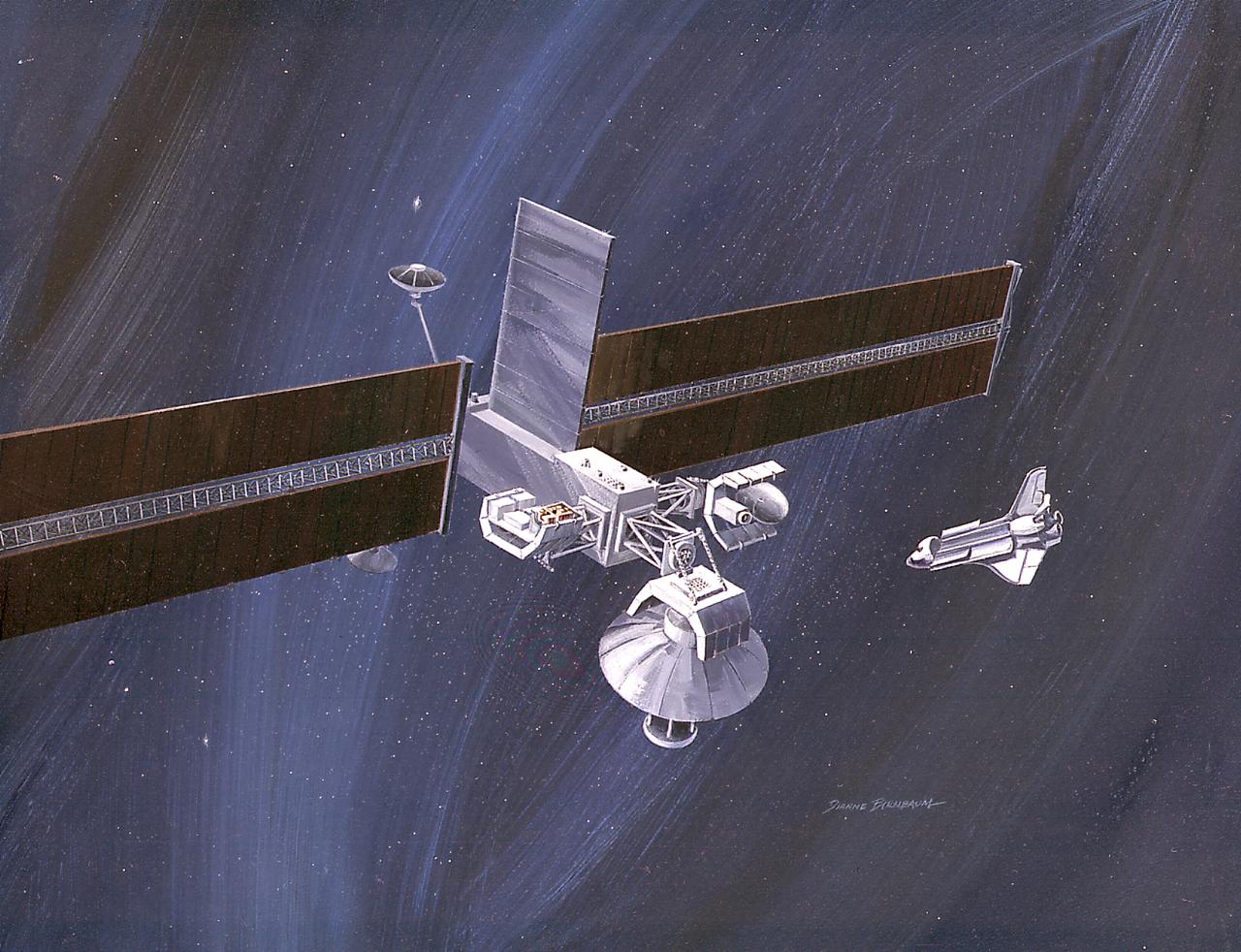
In the late 1970s, NASA, the Marshall Space Flight Center, and its contractors began focusing on designs for Shuttle-tended space platforms capable of extended periods in space and utilizing a variety of temporarily emplaced payloads. As a result, McDornell Douglas studied the Science and Applications Space Platform (SASP). The emphasis was placed on payloads that did not require a crewman's presence during normal operations. Most of the payloads would occupy one or more Spacelab-like pallets. This artist concept depicts the SASP.

Orbiter Processing Facility High Bay No. 3, 13 platforms and payload bay, looking northeast, July 31, 2006
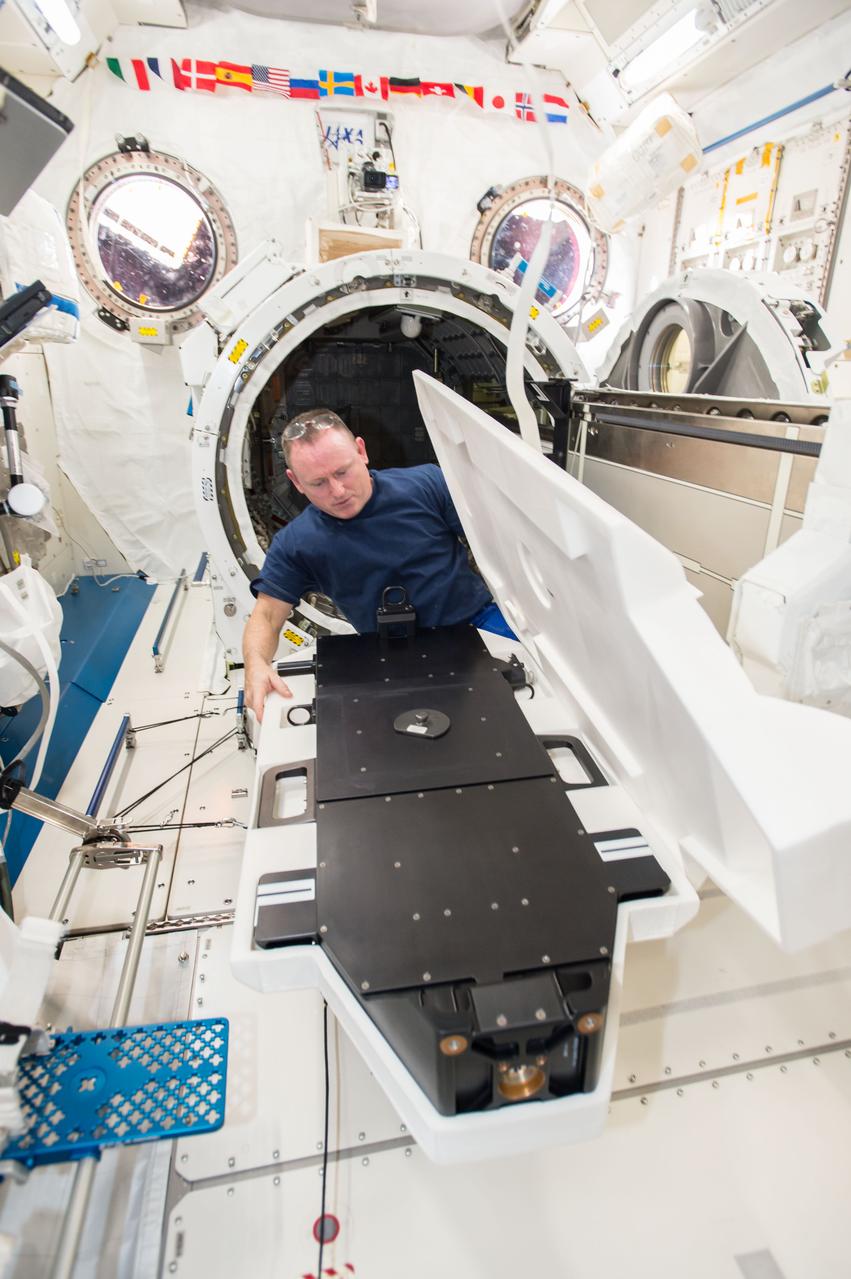
iss042e015943 (11/26/2014) --- Commander Barry Wilmore unpacks the Cyclops launch platform for installation on the Japanese Experiment Module Airlock (JEMAL) slide table. The Cyclops platform, also known as the Space Station Integrated Kinetic Launcher for Orbital Payload Systems (SSIKLOPS), holds and ejects nanosatellites from outside the ISS.
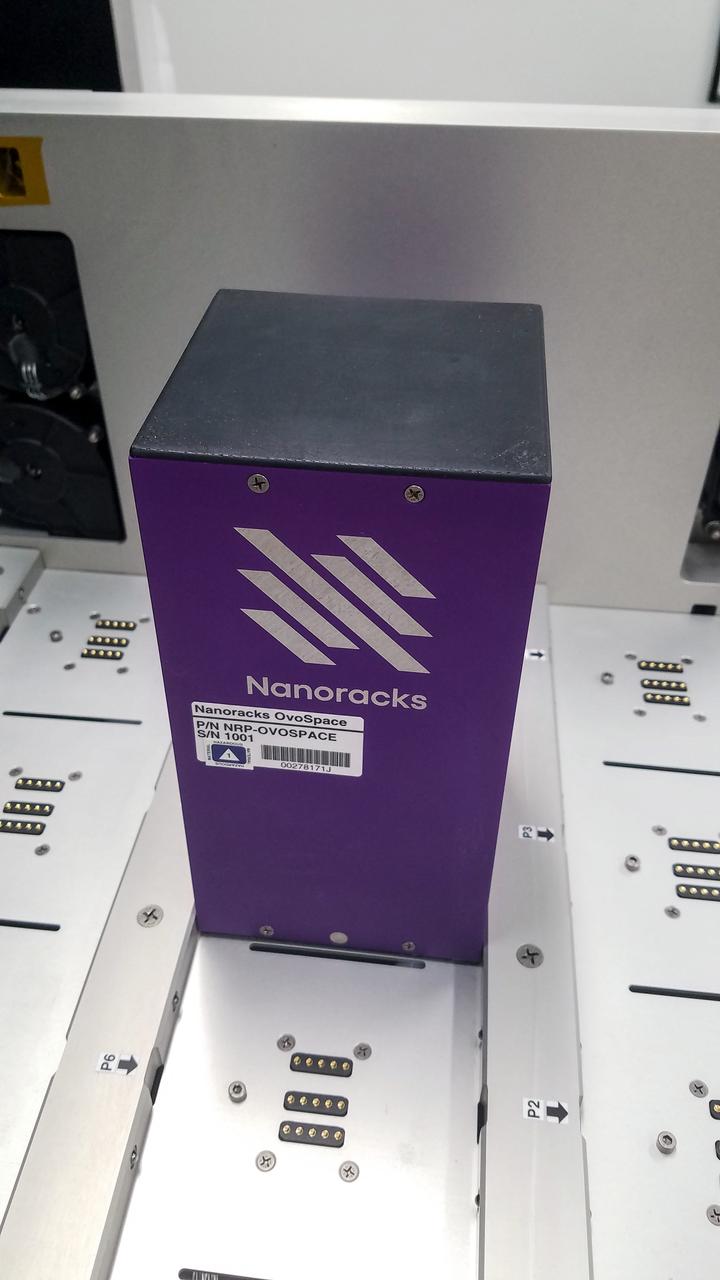
jsc2022e072966 (8/12/2022) --- A view of the OVOSPACE payload during a functional test. The science of the payload resides within the Nanoracks purple aluminum chassis. This chassis provides an interface to the Nanoracks Nanode platform. Nanode provides payloads with power and data throughout their time in space. Image courtesy of Nanoracks LLC.
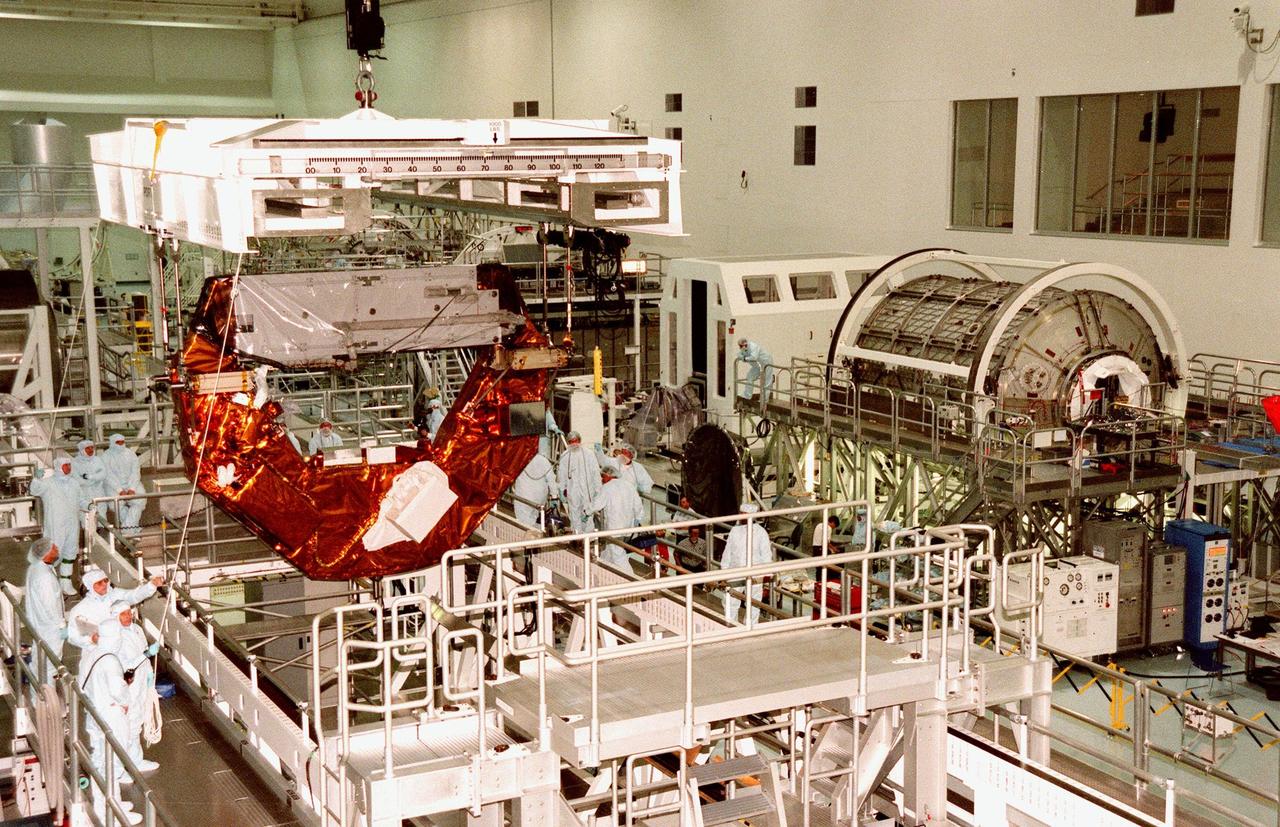
KENNEDY SPACE CENTER, FLA. -- The Hubble Space Telescope Orbiting Systems Test Platform (HOST) is lifted off its work stand in the Space Station Processing Facility before moving it to its payload canister. One of the payloads on the STS-95 mission, the HOST platform is carrying four experiments to validate components planned for installation during the third Hubble Space Telescope servicing mission and to evaluate new technologies in an Earth-orbiting environment. The STS-95 mission is scheduled to launch Oct. 29. It will carry other payloads such as the Spartan solar-observing deployable spacecraft, the International Extreme Ultraviolet Hitchhiker (IEH-3), and the SPACEHAB single module with experiments on space flight and the aging process
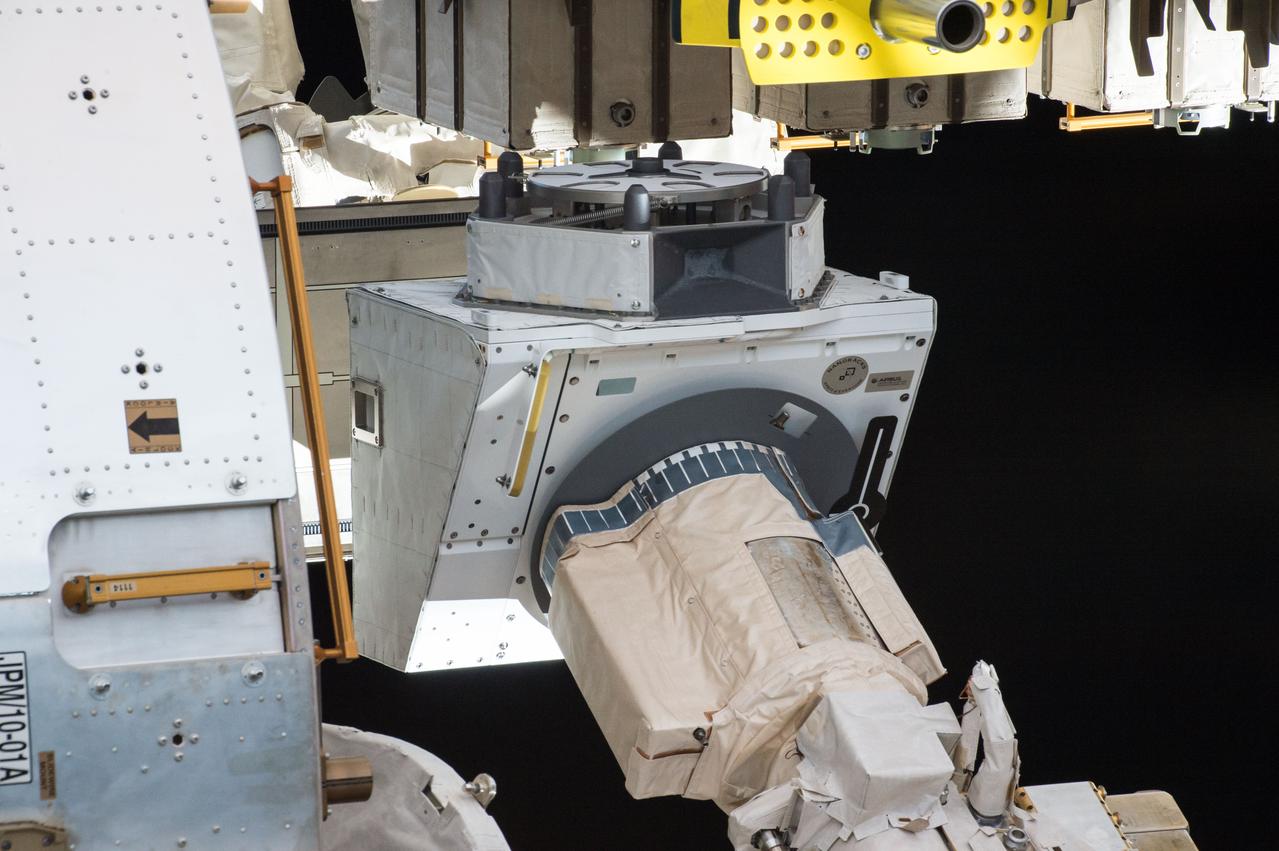
iss048e049789 (8/5/2016) --- A view of the NanoRacks External Platform (NREP) grappled by the Japanese Experiment Module Remote Manipulator System (JEMRMS) during operations to transfer the NREP to the JEM (Japanese Experiment Module) Exposed Facility (JEF). The NREP contains the NanoRacks-Gumstix and NanoRacks NanoTube Solar Cell payloads. The NanoRacks External Platform is a compact research platform fitted for versatile use on the exterior of the International Space Station (ISS).

iss048e049803 (8/5/2016) --- The Japanese Experiment Module Remote Manipulator System (JEMRMS) moves to install the NanoRacks External Platform (NREP) on the JEM (Japanese Experiment Module) Exposed Facility (JEF). The NREP contains the NanoRacks-Gumstix and NanoRacks NanoTube Solar Cell payloads. The NanoRacks External Platform is a compact research platform fitted for versatile use on the exterior of the International Space Station (ISS).
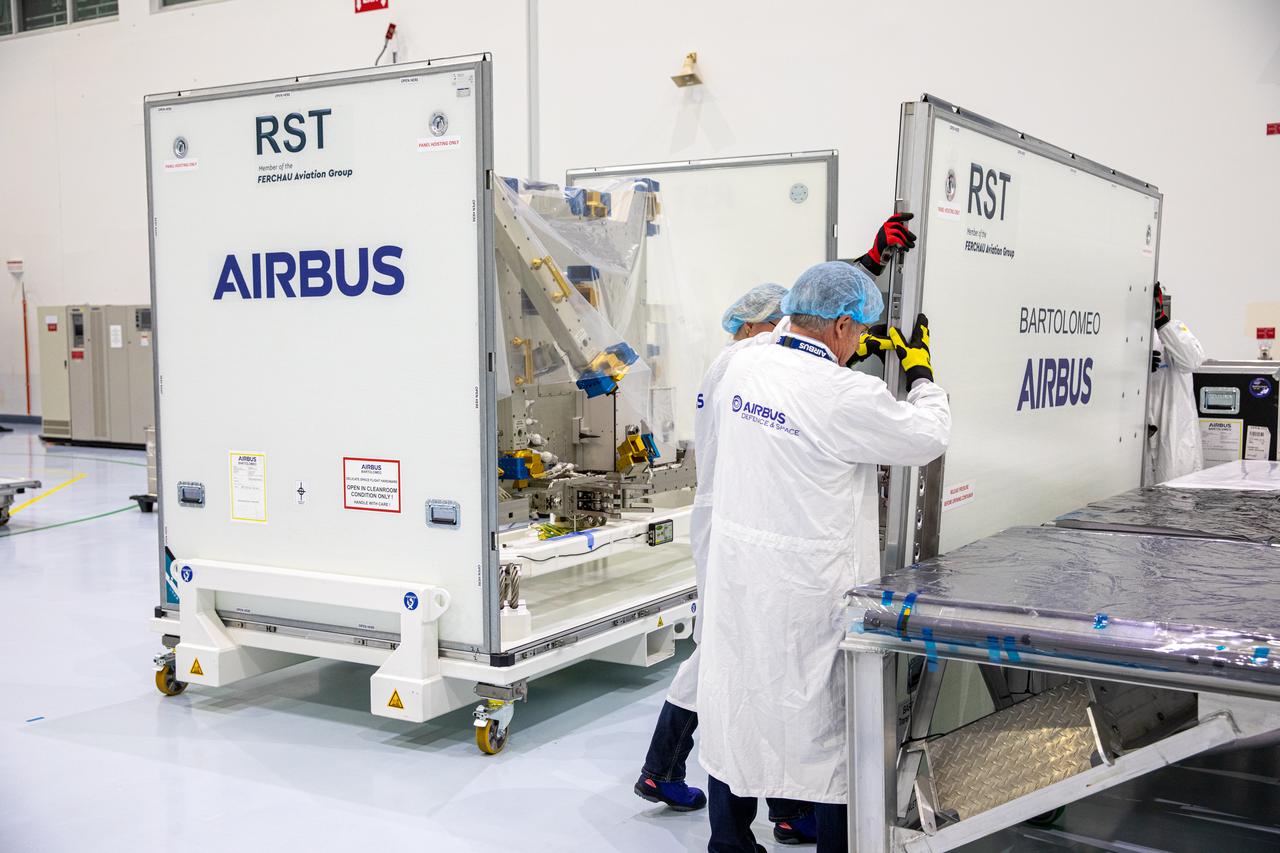
Airbus workers unpack the Bartolomeo platform in the Space Station Processing Facility high bay at NASA’s Kennedy Space Center in Florida on Jan. 30, 2020. Bartolomeo was manufactured by Airbus Defence and Space. The platform will be delivered to the International Space Station aboard SpaceX’s 20th Commercial Resupply Services (CRS-20) mission for the agency. The platform will attach to the exterior of the space station’s European Columbus Module. Named for the younger brother of Christopher Columbus, the platform has the capability to host external payloads in low-Earth orbit on the station. CRS-20 is scheduled to launch aboard SpaceX’s Dragon cargo spacecraft atop the company’s Falcon 9 rocket in March 2020.
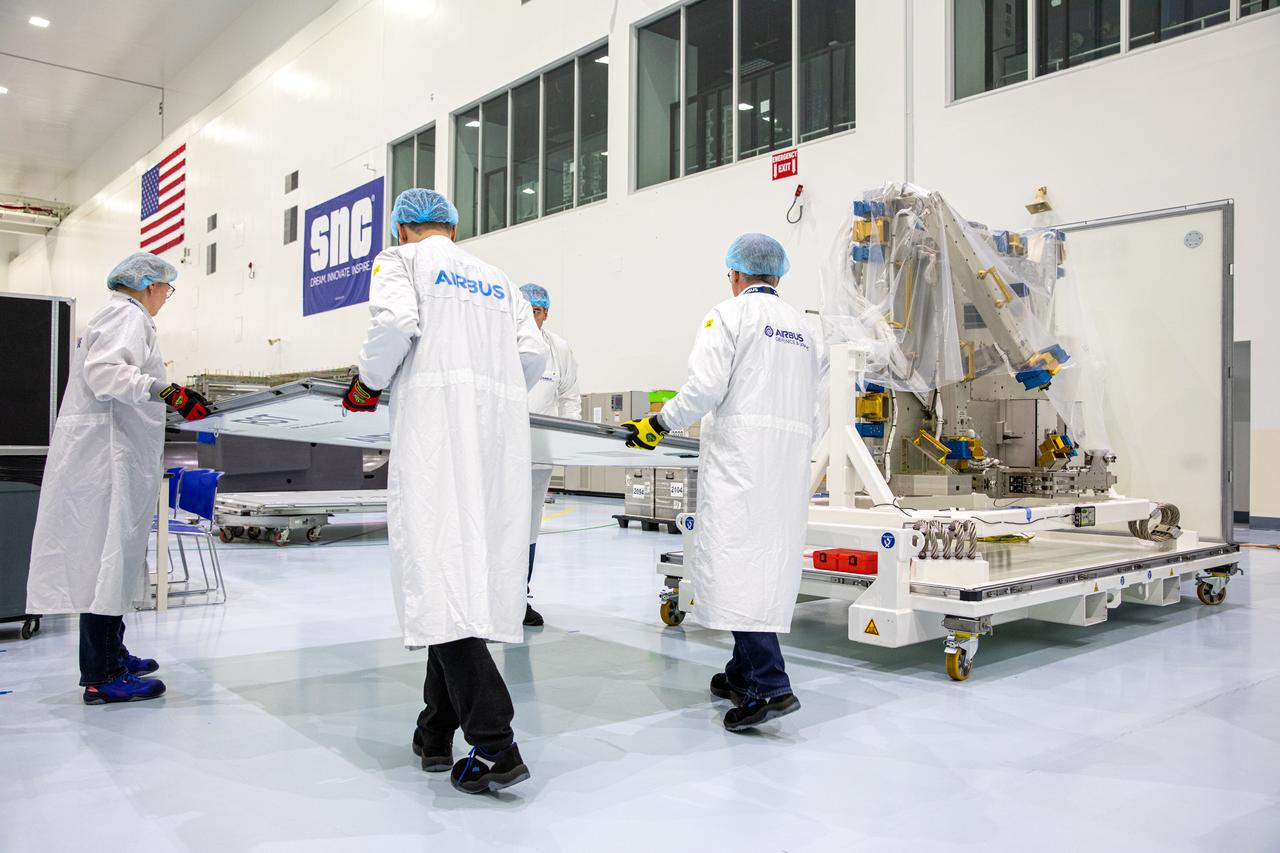
Airbus workers unpack the Bartolomeo platform in the Space Station Processing Facility high bay at NASA’s Kennedy Space Center in Florida on Jan. 30, 2020. Bartolomeo was manufactured by Airbus Defence and Space. The platform will be delivered to the International Space Station aboard SpaceX’s 20th Commercial Resupply Services (CRS-20) mission for the agency. The platform will attach to the exterior of the space station’s European Columbus Module. Named for the younger brother of Christopher Columbus, the platform has the capability to host external payloads in low-Earth orbit on the station. CRS-20 is scheduled to launch aboard SpaceX’s Dragon cargo spacecraft atop the company’s Falcon 9 rocket in March 2020.
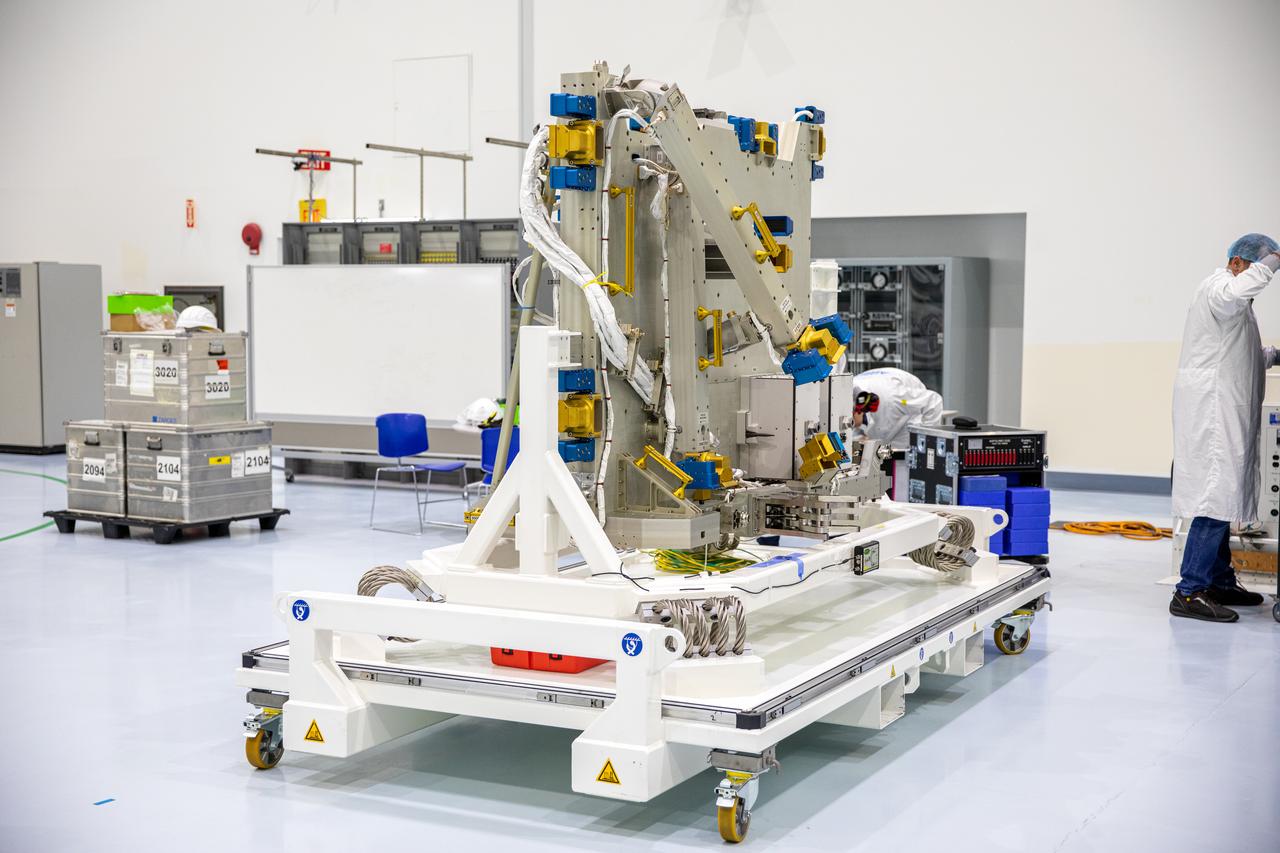
Airbus workers unpack the Bartolomeo platform in the Space Station Processing Facility high bay at NASA’s Kennedy Space Center in Florida on Jan. 30, 2020. Bartolomeo was manufactured by Airbus Defence and Space. The platform will be delivered to the International Space Station aboard SpaceX’s 20th Commercial Resupply Services (CRS-20) mission for the agency. The platform will attach to the exterior of the space station’s European Columbus Module. Named for the younger brother of Christopher Columbus, the platform has the capability to host external payloads in low-Earth orbit on the station. CRS-20 is scheduled to launch aboard SpaceX’s Dragon cargo spacecraft atop the company’s Falcon 9 rocket in March 2020.
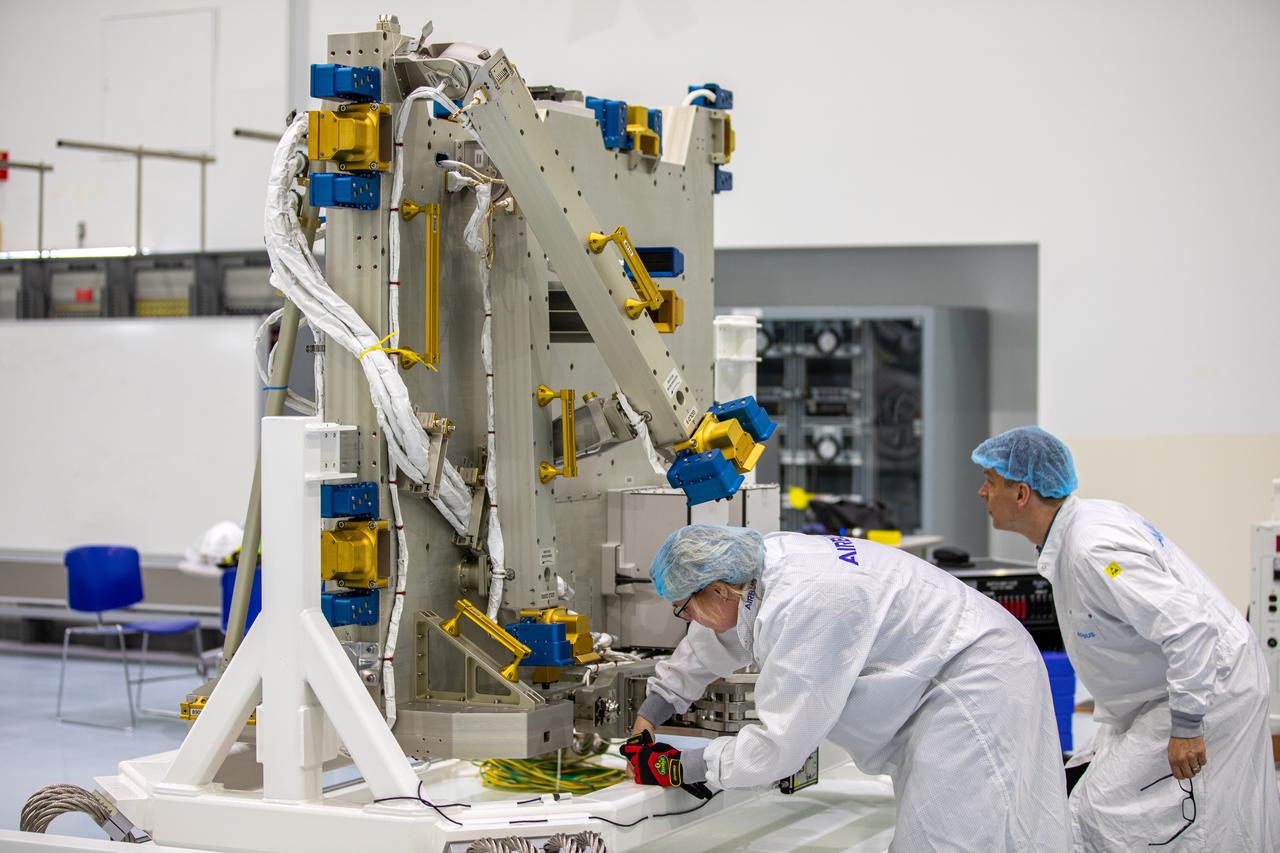
Airbus workers unpack the Bartolomeo platform in the Space Station Processing Facility high bay at NASA’s Kennedy Space Center in Florida on Jan. 30, 2020. Bartolomeo was manufactured by Airbus Defence and Space. The platform will be delivered to the International Space Station aboard SpaceX’s 20th Commercial Resupply Services (CRS-20) mission for the agency. The platform will attach to the exterior of the space station’s European Columbus Module. Named for the younger brother of Christopher Columbus, the platform has the capability to host external payloads in low-Earth orbit on the station. CRS-20 is scheduled to launch aboard SpaceX’s Dragon cargo spacecraft atop the company’s Falcon 9 rocket in March 2020.
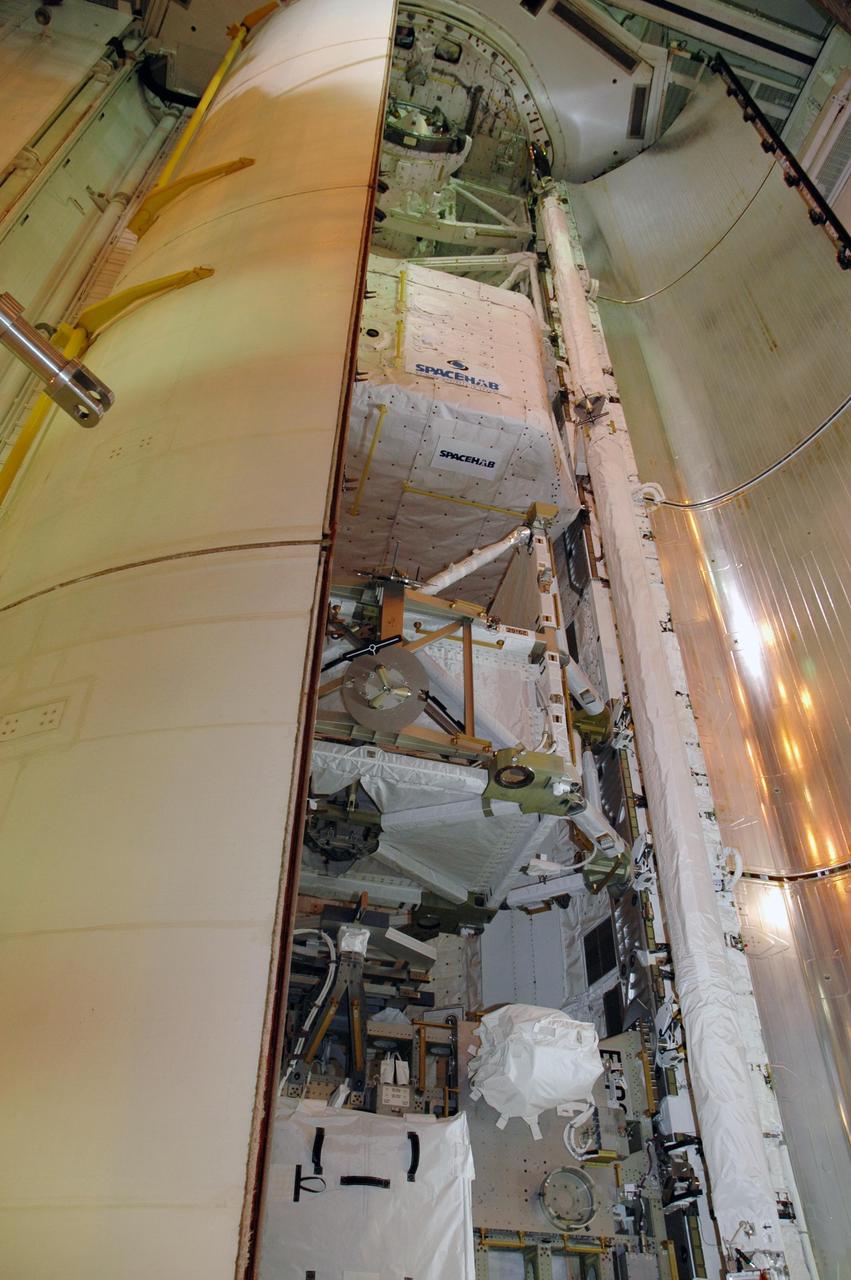
KENNEDY SPACE CENTER, FLA. — At Launch Pad 39A, the first payload bay door on Endeavour closes over its cargo. The payload includes the S5 truss, the SPACEHAB module and external stowage platform 3. The mission is the 22nd flight to the International Space Station and is targeted for launch on Aug. 7. NASA/Charisse Nahser
KENNEDY SPACE CENTER, FLA. — At Launch Pad 39A, the second payload bay door of Endeavour closes over the cargo inside. The payload includes the S5 truss, the SPACEHAB module and external stowage platform 3. The mission is the 22nd flight to the International Space Station and is targeted for launch on Aug. 7. NASA/Charisse Nahser
KENNEDY SPACE CENTER, FLA. — At Launch Pad 39A, a worker checks the progress of Endeavour's payload bay doors closing. The payload includes the S5 truss, the SPACEHAB module and external stowage platform 3. The mission is the 22nd flight to the International Space Station and is targeted for launch on Aug. 7. NASA/Charisse Nahser
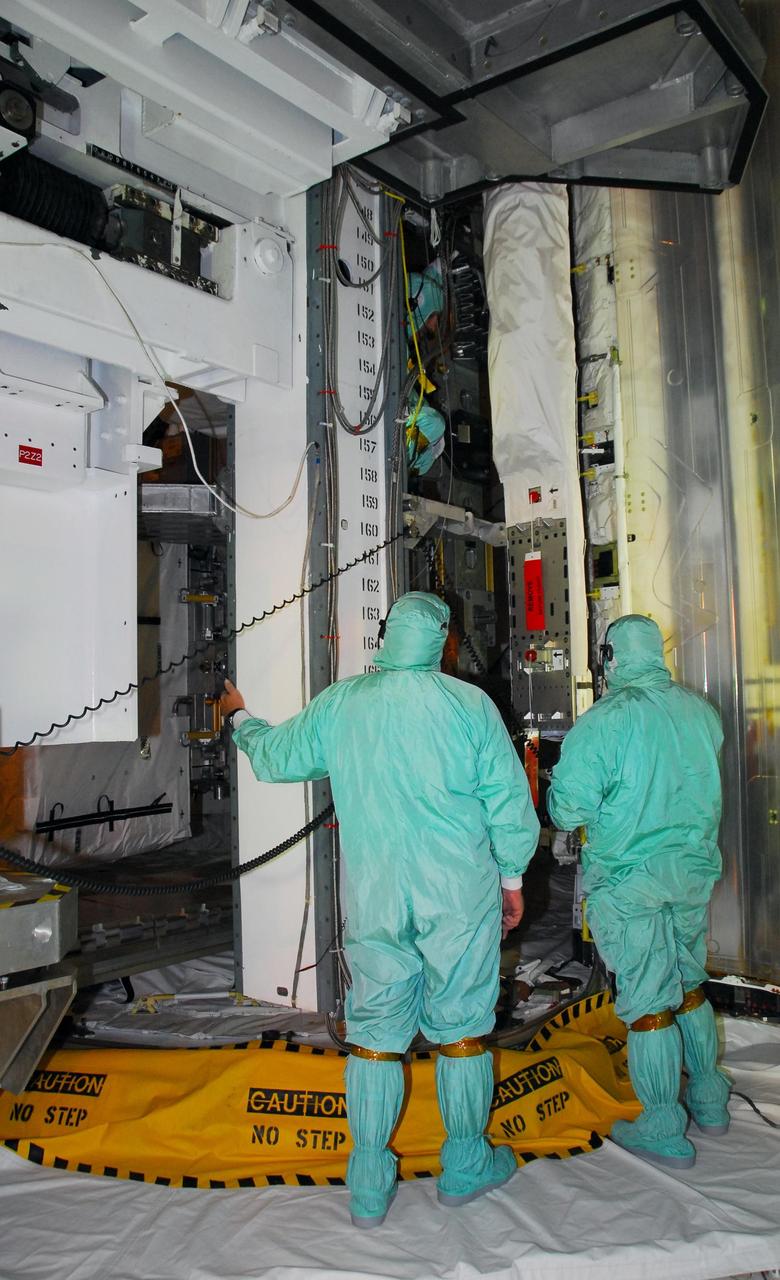
KENNEDY SPACE CENTER, FLA. -- On Launch Pad 39A, workers in the payload changeout room monitor the payload ground-handling mechanism as it transfers the mission STS-118 payload into the payload bay on Space Shuttle Endeavour. The payload includes the S5 truss, the SPACEHAB module and the external stowage platform 3. The mission is the 22nd flight to the International Space Station and is targeted for launch on Aug.7. Photo credit: NASA/Amanda Diller
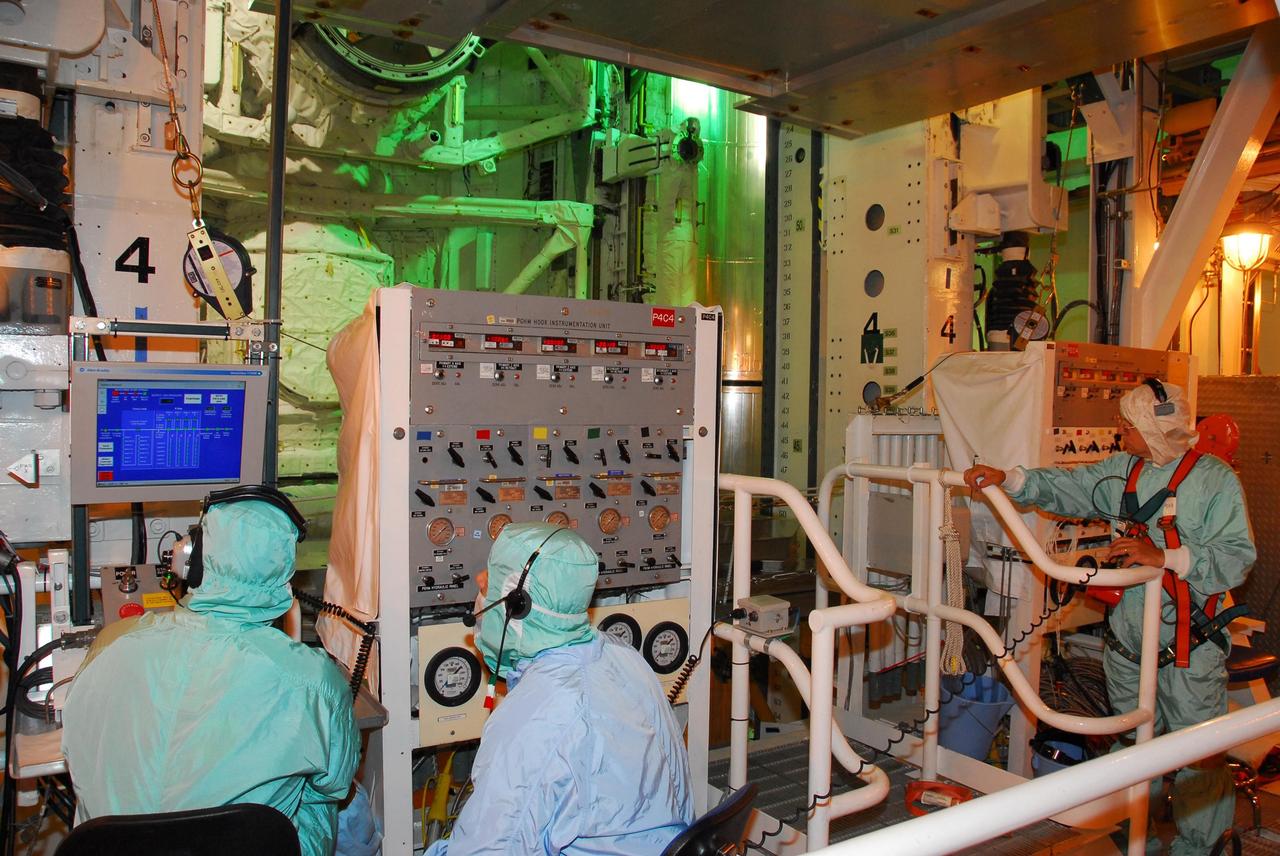
KENNEDY SPACE CENTER, FLA. -- On Launch Pad 39A, workers in the payload changeout room use the payload ground-handling mechanism to transfer the mission STS-118 payload into the payload bay on Space Shuttle Endeavour. The payload includes the S5 truss, the SPACEHAB module and the external stowage platform 3. The mission is the 22nd flight to the International Space Station and is targeted for launch on Aug.7. Photo credit: NASA/Amanda Diller
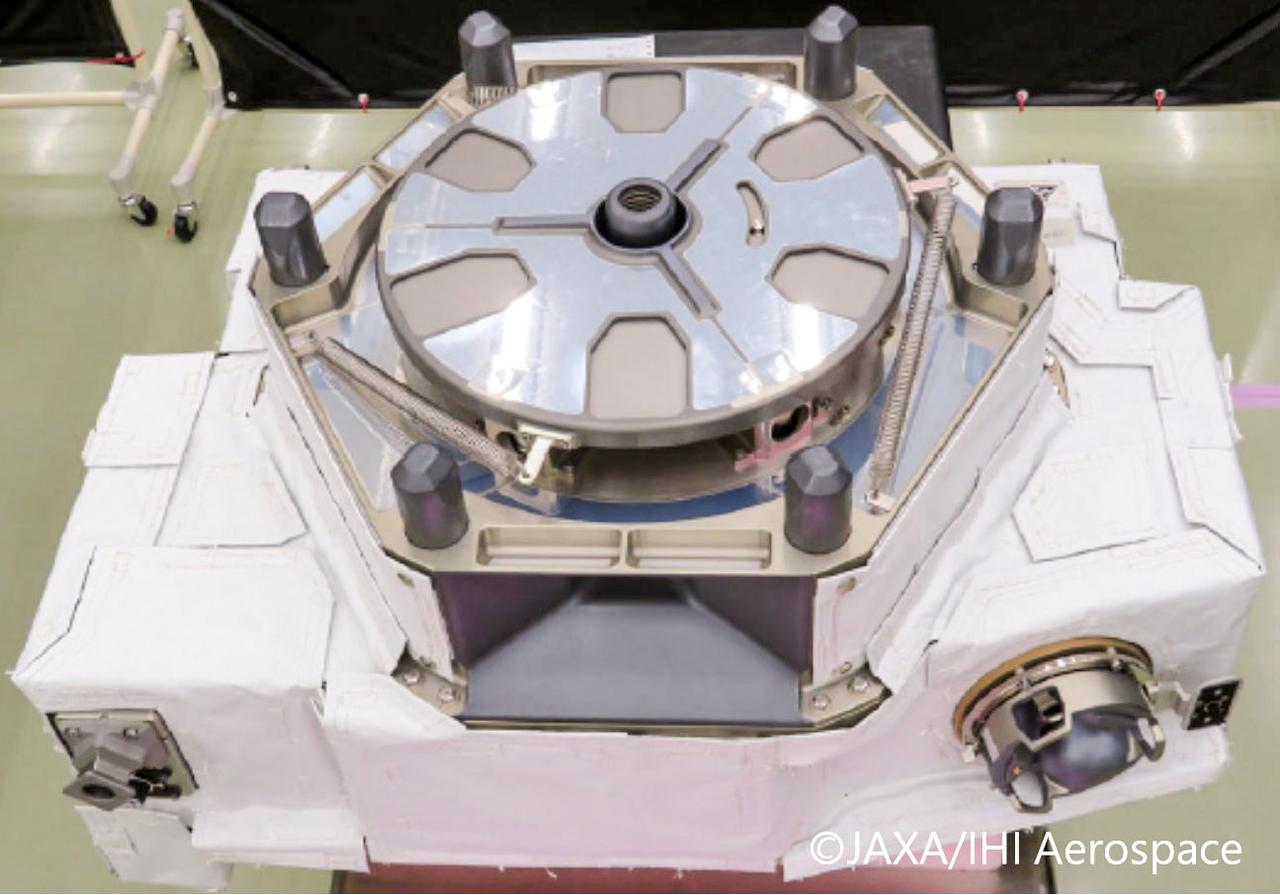
jsc2023e031747 (6/7/2023) --- Preflight image of IVA-replaceable Small Exposed Experiment Platform 3B (i-SEEP3B) shows the payload interface unit (PIU) side. Image courtesy of JAXA and IHI-Aerospace.
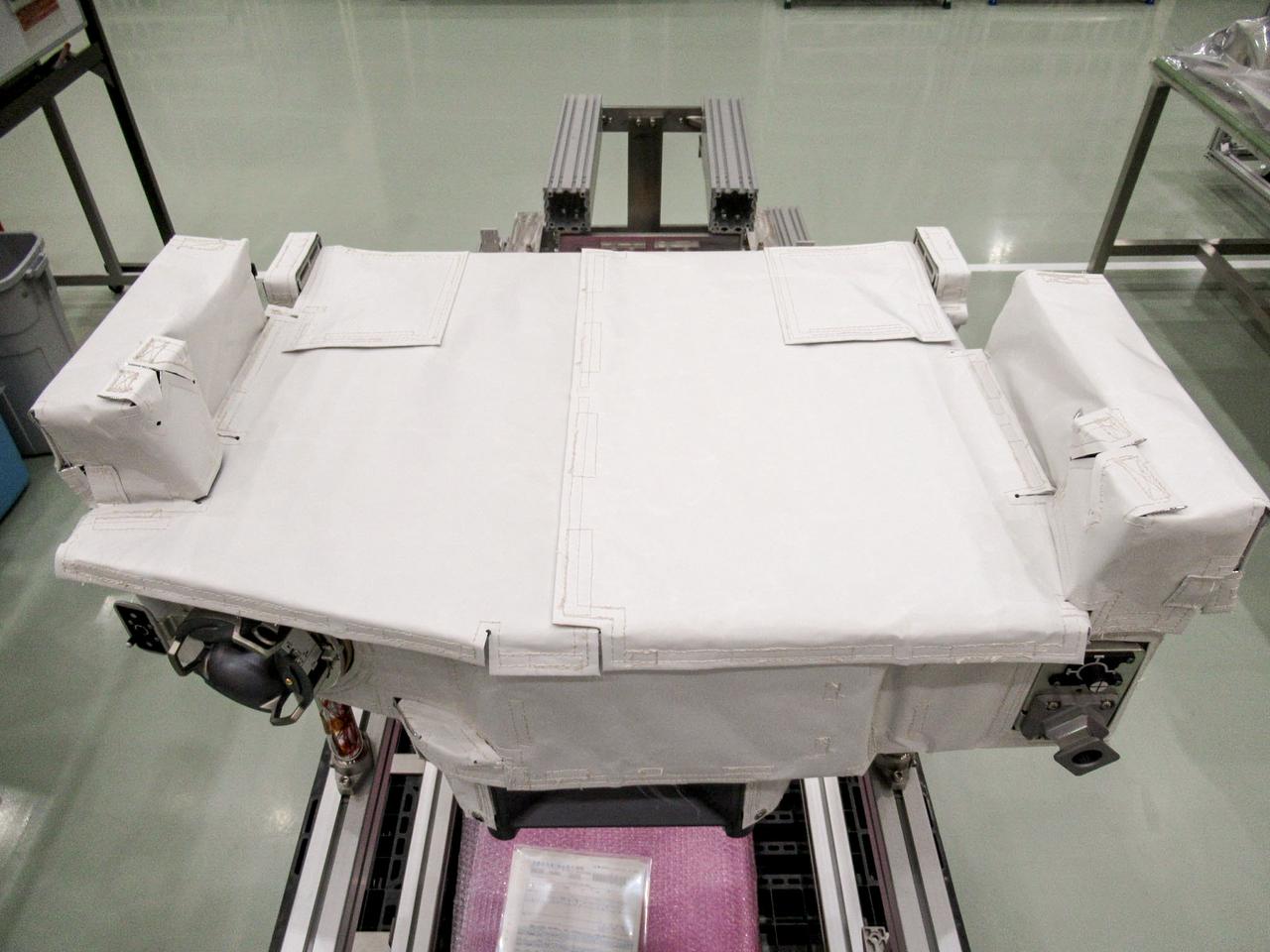
jsc2023e031749 (2/4/2022) --- Preflight image of IVA-replaceable Small Exposed Experiment Platform 3B (i-SEEP3B)—payload attached plate with Multi Layer Insulation (MLI). Image courtesy of JAXA and IHI-Aerospace.
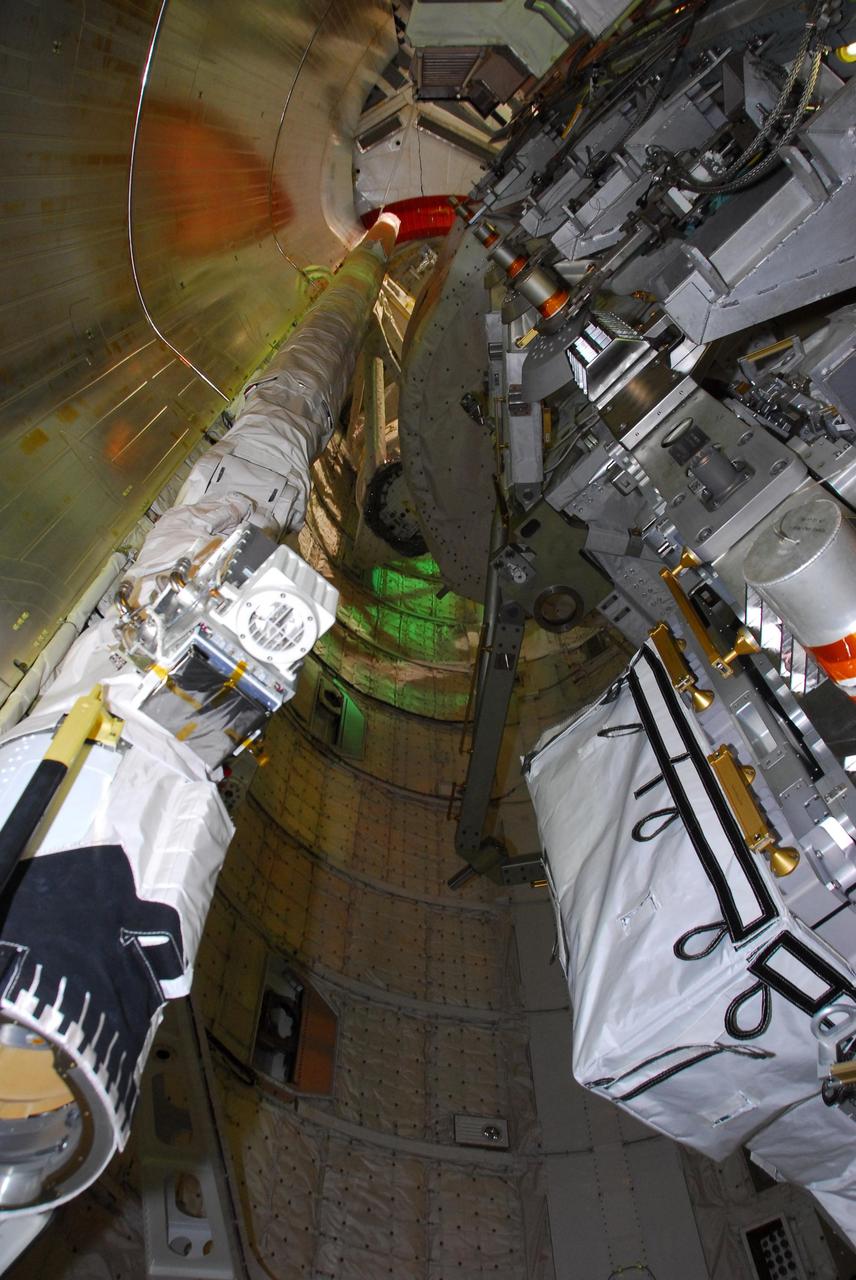
KENNEDY SPACE CENTER, FLA. -- The payload for mission STS-118 is being installed in the payload bay on Space Shuttle Endeavour from the payload changeout room on Launch Pad 39A. The payload includes the S5 truss, SPACEHAB module and external stowage platform 3. The mission is the 22nd flight to the International Space Station and is targeted for launch on Aug.7. Photo credit: NASA/Amanda Diller
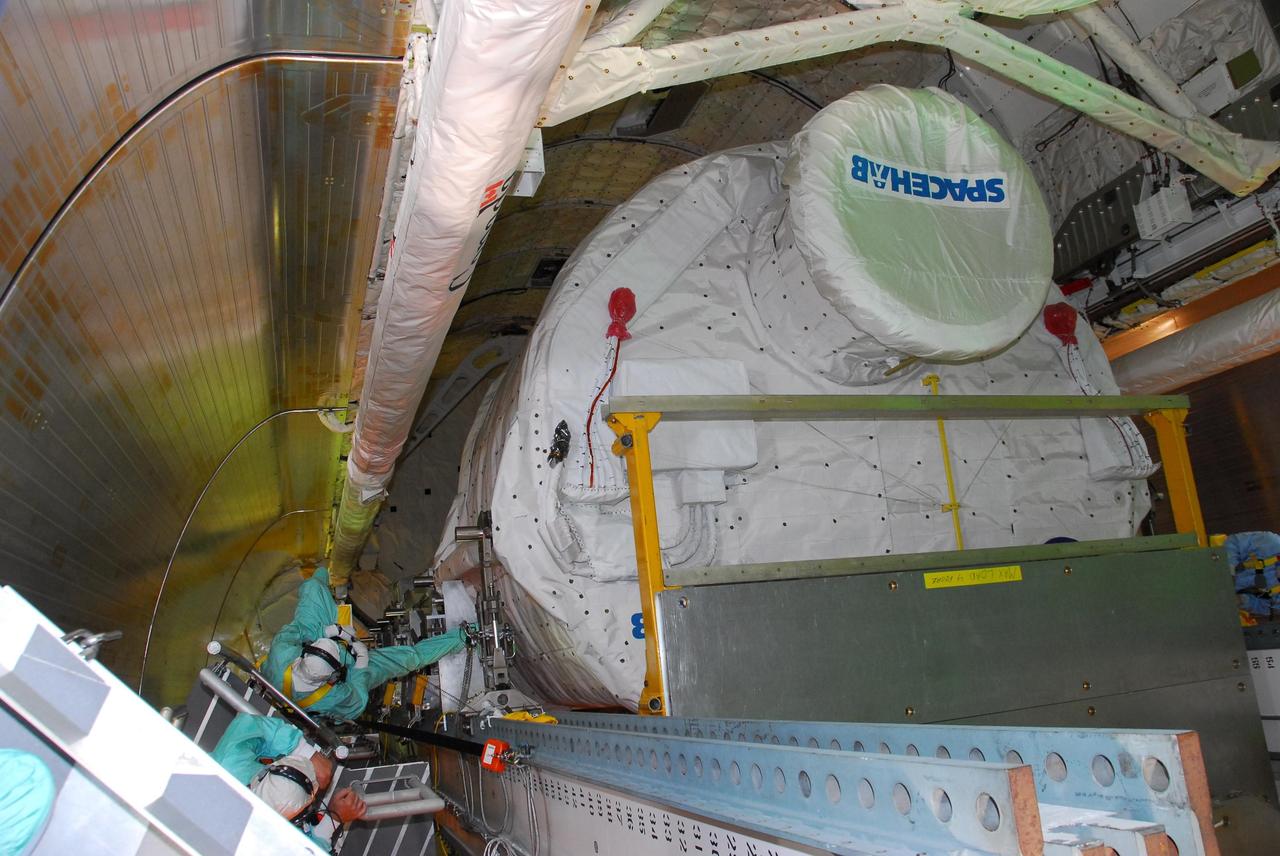
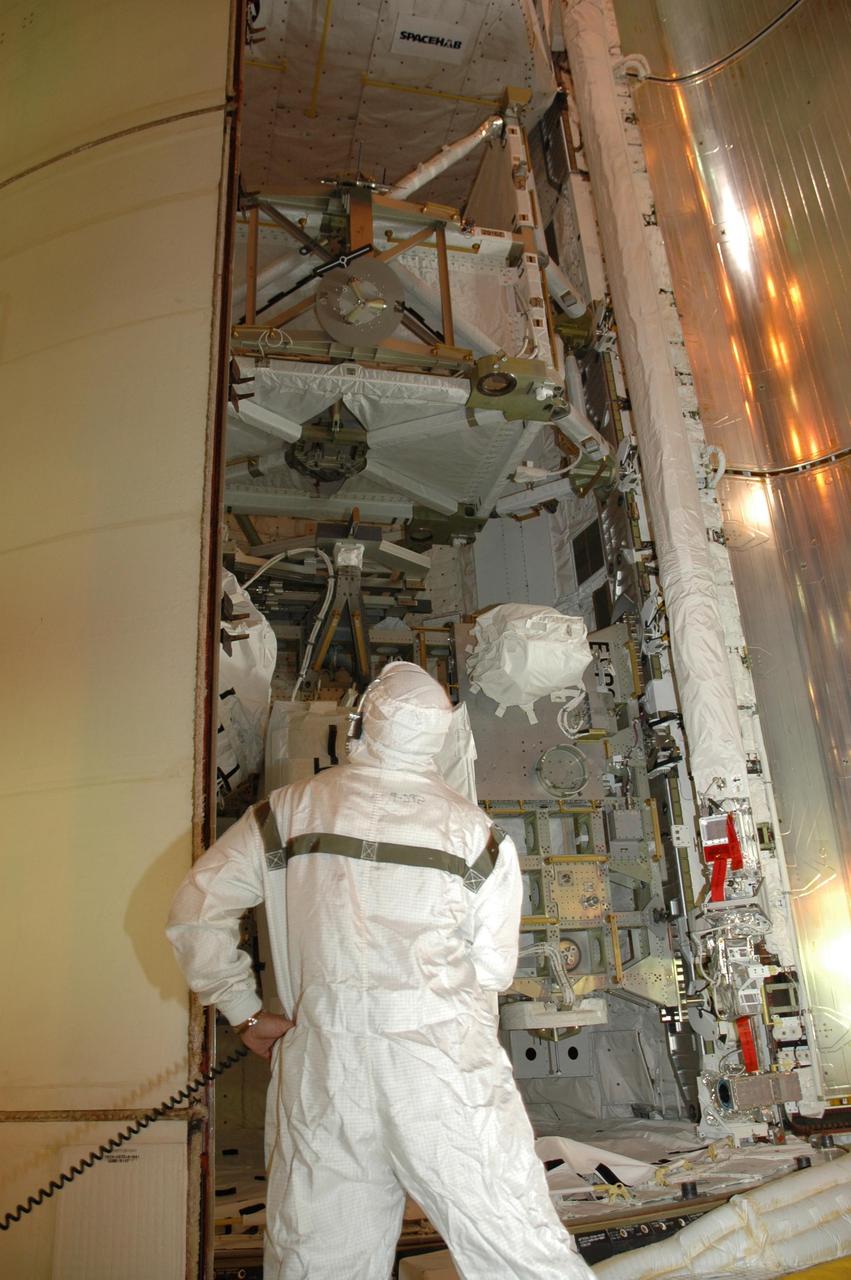
KENNEDY SPACE CENTER, FLA. -- On Launch Pad 39A, workers help transfer the payload for mission STS-118 from the payload changeout room into the payload bay on Space Shuttle Endeavour. Seen here is the SPACEHAB module. The payload also includes the S5 truss and external stowage platform 3. The mission is the 22nd flight to the International Space Station and is targeted for launch on Aug.7. Photo credit: NASA/Amanda Diller
KENNEDY SPACE CENTER, FLA. -- On Launch Pad 39A, a worker helps transfer the payload for mission STS-118 from the payload changeout room into the payload bay on Space Shuttle Endeavour. Seen here is the orbiter docking system. The payload also includes the S5 truss, the SPACEHAB module and external stowage platform 3. The mission is the 22nd flight to the International Space Station and is targeted for launch on Aug.7. Photo credit: NASA/Amanda Diller
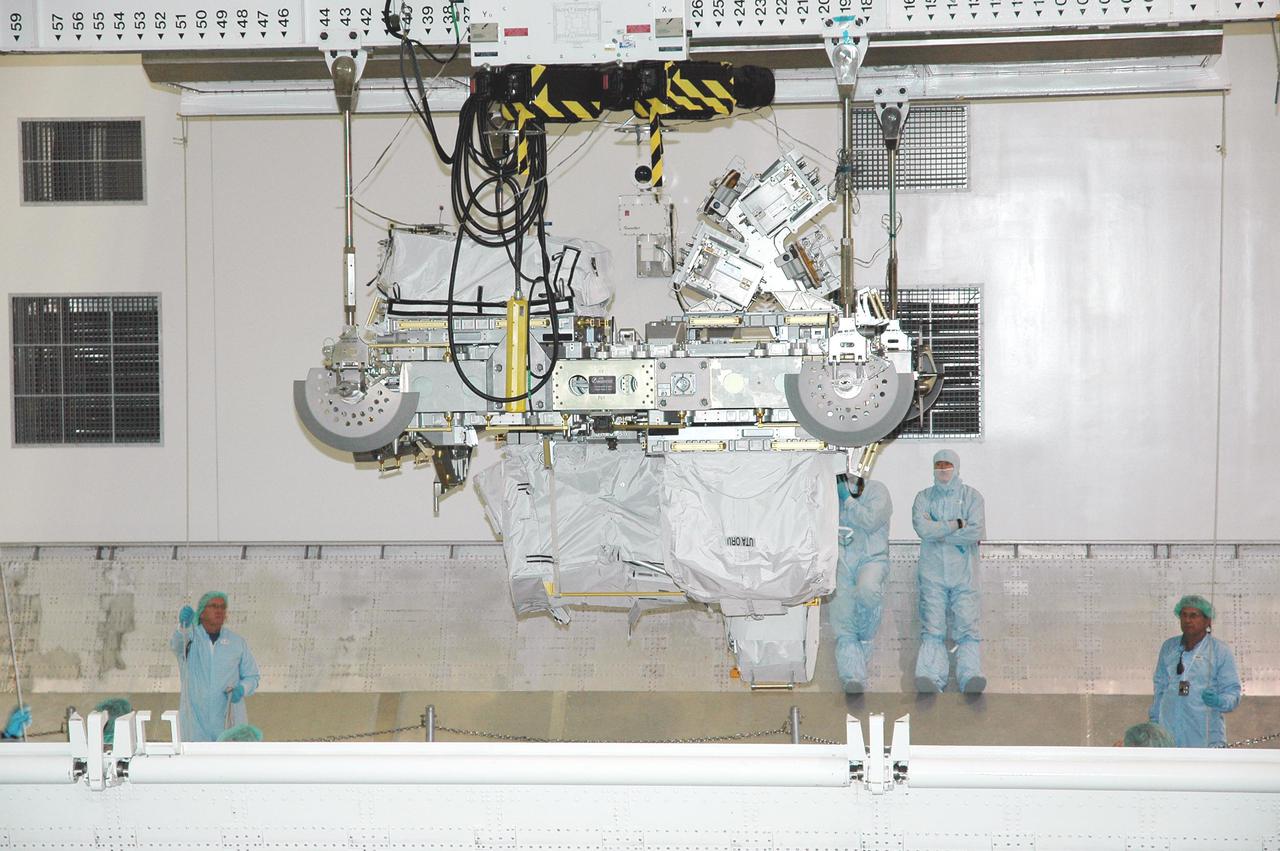
KENNEDY SPACE CENTER, FLA. - In the Space Station Processing Facility, the CELA (Cargo Element Lifting Assembly) carrying the External Stowage Platform-2 launching aboard Space Shuttle Discovery on Return to Flight mission STS-114 stops above the payload canister. The ESP-2 will travel to Launch Pad 39B with its fellow payload elements the Lightweight MPESS Carrier (Multi-Purpose Experiment Support Structure) and Multi-Purpose Logistics Module Raffaello in the canister. Once at the pad, the three payloads will be transferred to the payload bay of Discovery for flight. The ESP-2 is carrying replacement parts to the International Space Station. The platform will be deployed and attached to the Station’s airlock and used as a permanent spare parts facility. STS-114 is targeted for launch during a window that extends from May 15 through June 3.
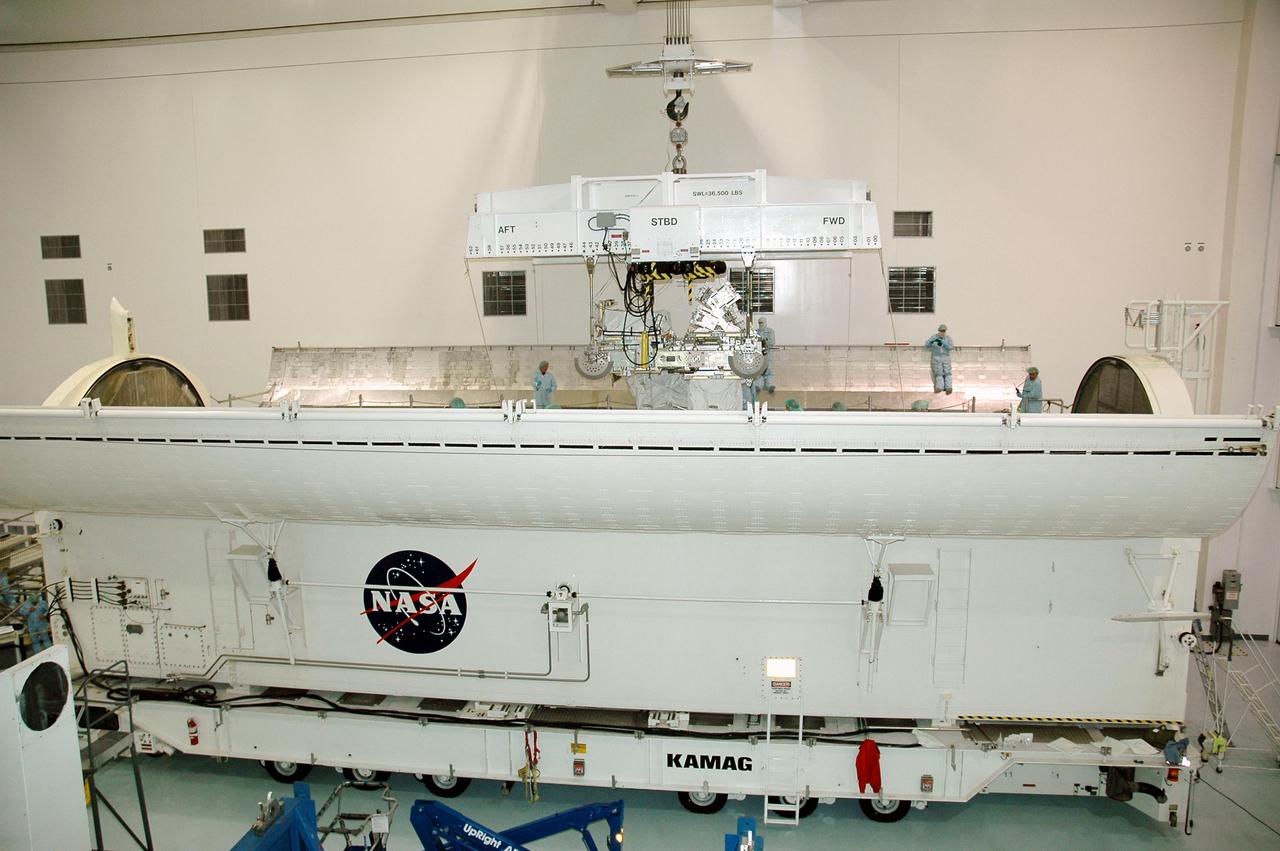
KENNEDY SPACE CENTER, FLA. -In the Space Station Processing Facility, the CELA (Cargo Element Lifting Assembly) lowers the External Stowage Platform-2 (ESP-2) into the payload canister. The ESP-2 will travel to Launch Pad 39B with its fellow payload elements the Lightweight MPESS Carrier (Multi-Purpose Experiment Support Structure) and Multi-Purpose Logistics Module Raffaello in the canister. Once at the pad, the three payloads will be transferred to the payload bay of Discovery for flight. The ESP-2 is carrying replacement parts to the International Space Station. The platform will be deployed and attached to the Station’s airlock and used as a permanent spare parts facility. STS-114 is targeted for launch during a window that extends from May 15 through June 3.
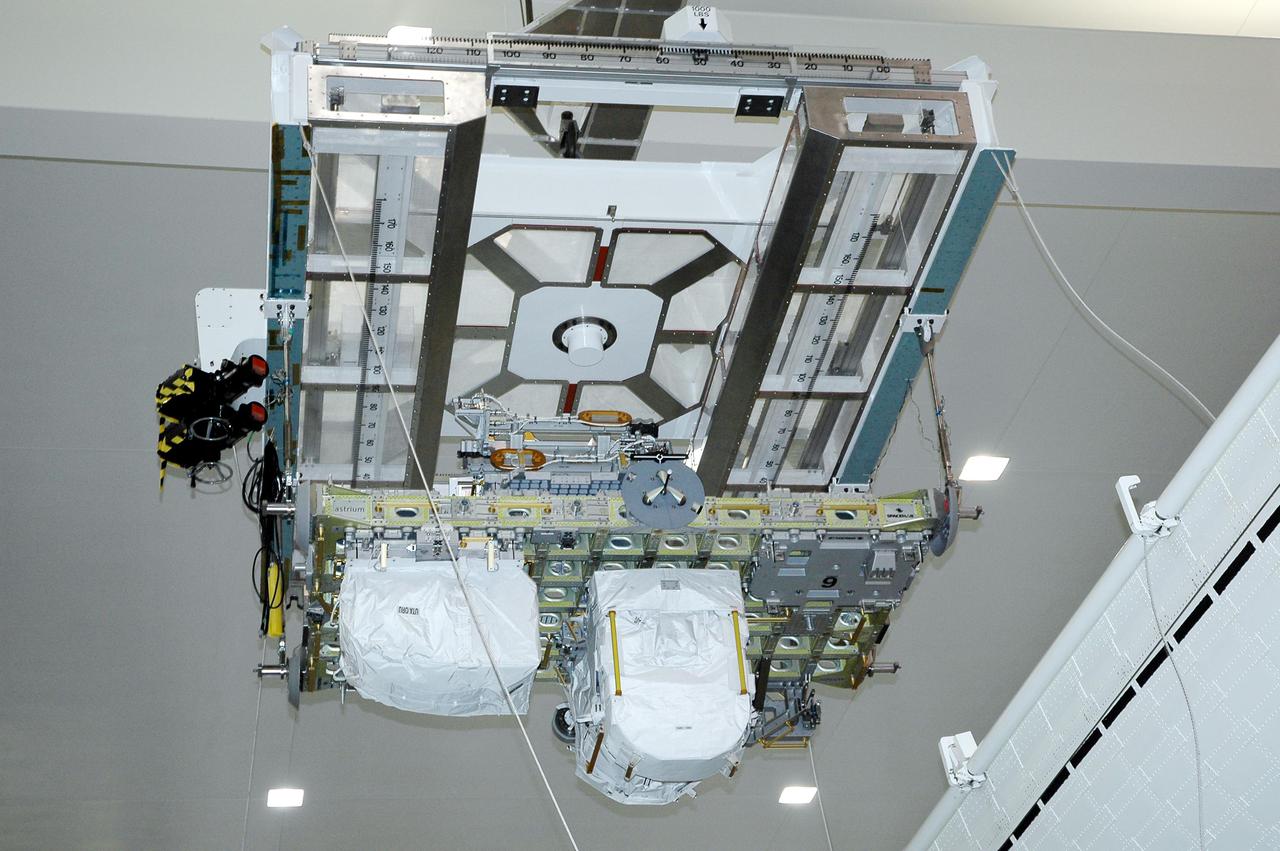
KENNEDY SPACE CENTER, FLA. - In the Space Station Processing Facility, the CELA (Cargo Element Lifting Assembly) moves the External Stowage Platform-2 launching aboard Space Shuttle Discovery on Return to Flight mission STS-114 to the payload canister. The ESP-2 will travel to Launch Pad 39B with its fellow payload elements the Lightweight MPESS Carrier (Multi-Purpose Experiment Support Structure) and Multi-Purpose Logistics Module Raffaello in the canister. Once at the pad, the three payloads will be transferred to the payload bay of Discovery for flight. The ESP-2 is carrying replacement parts to the International Space Station. The platform will be deployed and attached to the Station’s airlock and used as a permanent spare parts facility. STS-114 is targeted for launch during a window that extends from May 15 through June 3.
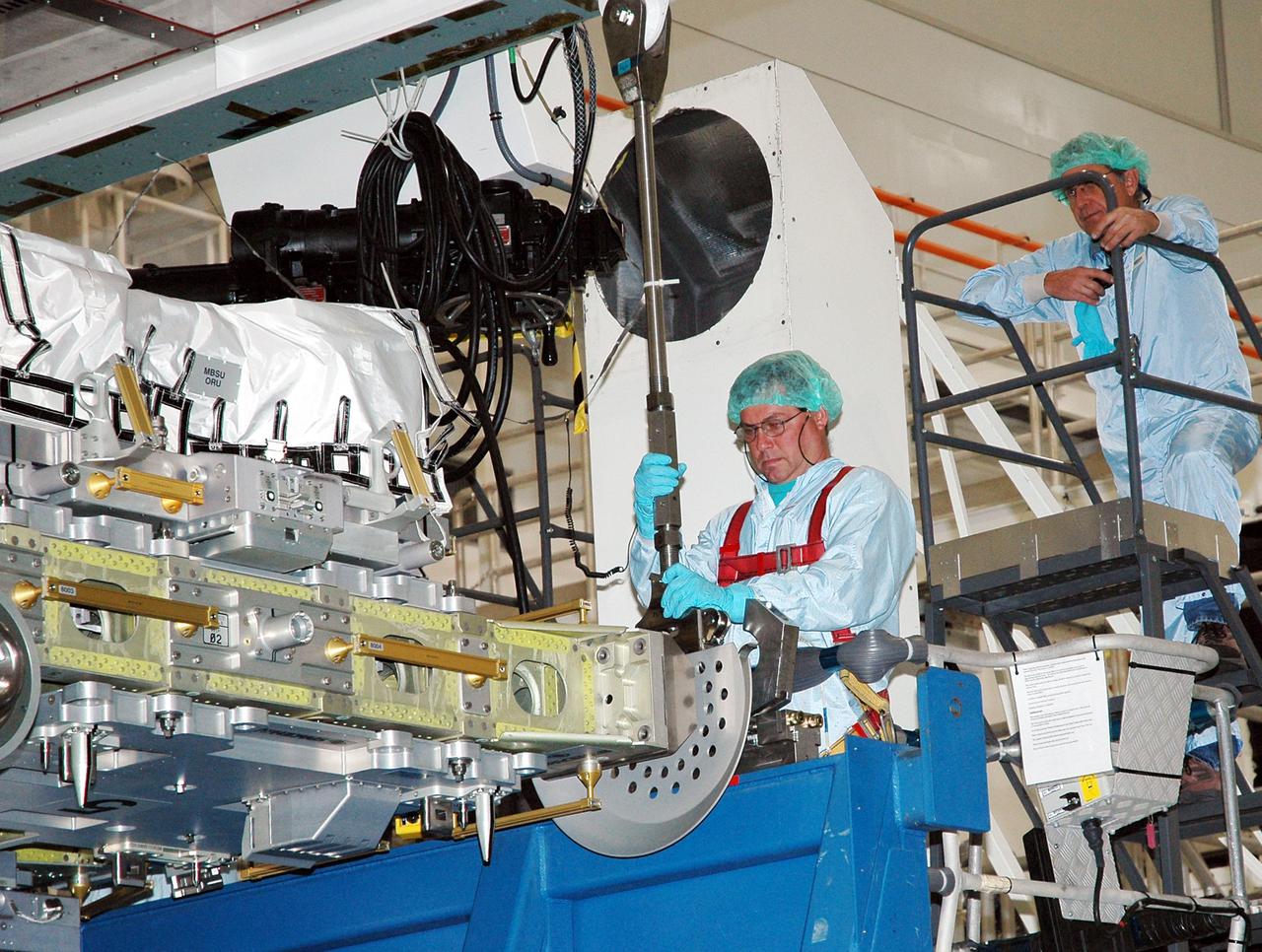
KENNEDY SPACE CENTER, FLA. - In the Space Station Processing Facility, technician Fred Parisi is attaching the CELA (Cargo Element Lifting Assembly) down rods to the External Stowage Platform -2 (ESP-2) in preparation for lifting the ESP-2 from its transportation container and installing it into the Payload Transportation Canister. At right, above, is Scott Kisner, task leader. The ESP-2 will travel to Launch Pad 39B with its fellow payload elements the Lightweight MPESS Carrier (Multi-Purpose Experiment Support Structure) and Multi-Purpose Logistics Module Raffaello in the canister. Once at the pad, the three payloads will be transferred to the payload bay of Discovery for flight. The ESP-2 is carrying replacement parts to the International Space Station. The platform will be deployed and attached to the Station’s airlock and used as a permanent spare parts facility. STS-114 is targeted for launch during a window that extends from May 15 through June 3.
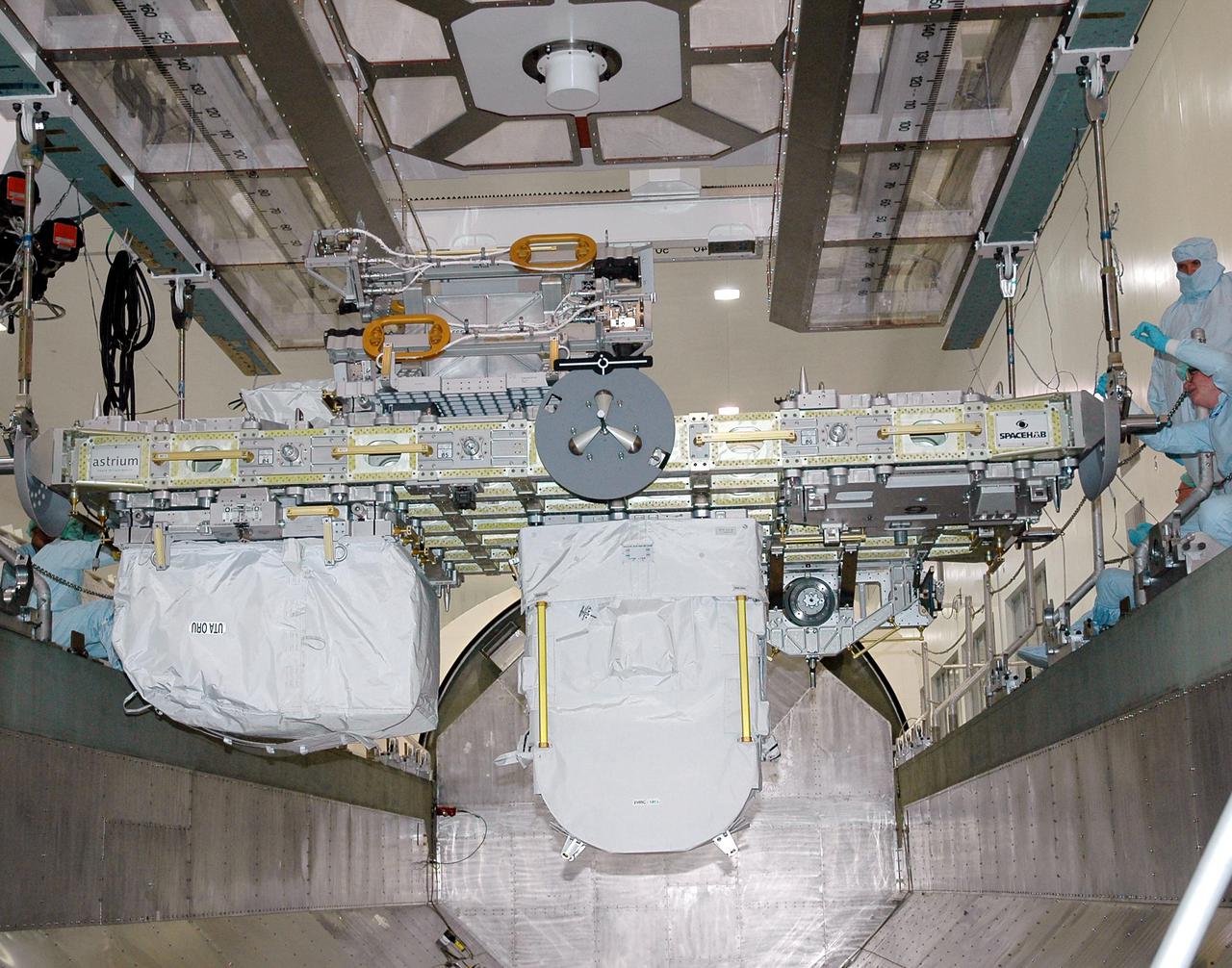
KENNEDY SPACE CENTER, FLA. - In the Space Station Processing Facility, the CELA (Cargo Element Lifting Assembly) lowers the External Stowage Platform-2 (ESP-2) into the payload canister. The ESP-2 will travel to Launch Pad 39B with its fellow payload elements the Lightweight MPESS Carrier (Multi-Purpose Experiment Support Structure) and Multi-Purpose Logistics Module Raffaello in the canister. Once at the pad, the three payloads will be transferred to the payload bay of Discovery for flight. The ESP-2 is carrying replacement parts to the International Space Station. The platform will be deployed and attached to the Station’s airlock and used as a permanent spare parts facility. STS-114 is targeted for launch during a window that extends from May 15 through June 3.
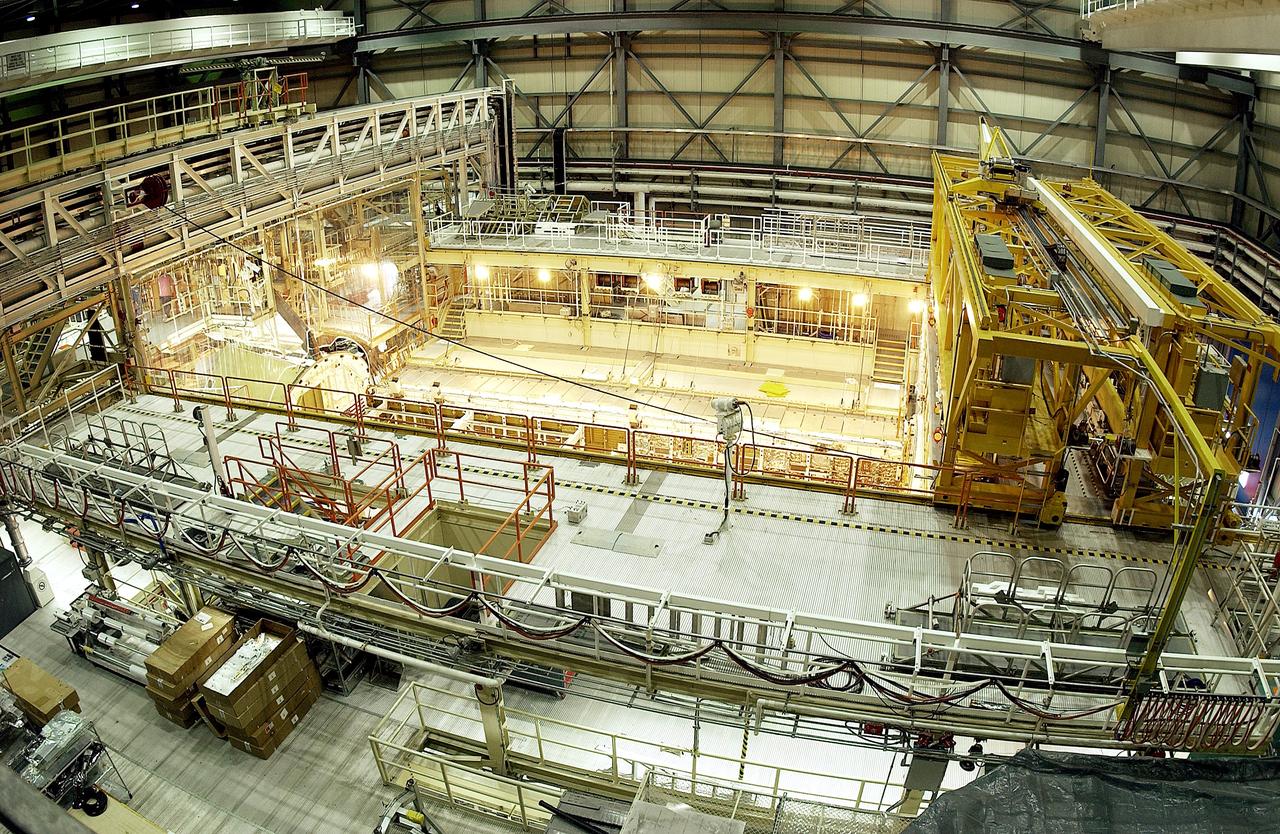
KENNEDY SPACE CENTER, FLA. - This bird's-eye view of a high bay in the Orbiter Processing Facility (OPF) shows the open payload bay of Space Shuttle Discovery surrounded by the standard platforms and equipment required to process a Space Shuttle orbiter. The high bay is 197 feet (60 meters) long, 150 feet (46 meters) wide, 95 feet (29 meters) high, and encompasses a 29,000-square-foot (2,694-meter) area. The 30-ton (27-metric-ton) bridge crane (yellow device, right) has a hook height of approximately 66 feet (20 meters). Platforms, a main access bridge, and two rolling bridges with trucks provide access to various parts of the orbiter. In addition to routine servicing and checkout, the inspections and modifications made to enhance Discovery's performance and upgrade its systems were performed in the OPF during its recently completed Orbiter Major Modification (OMM) period.
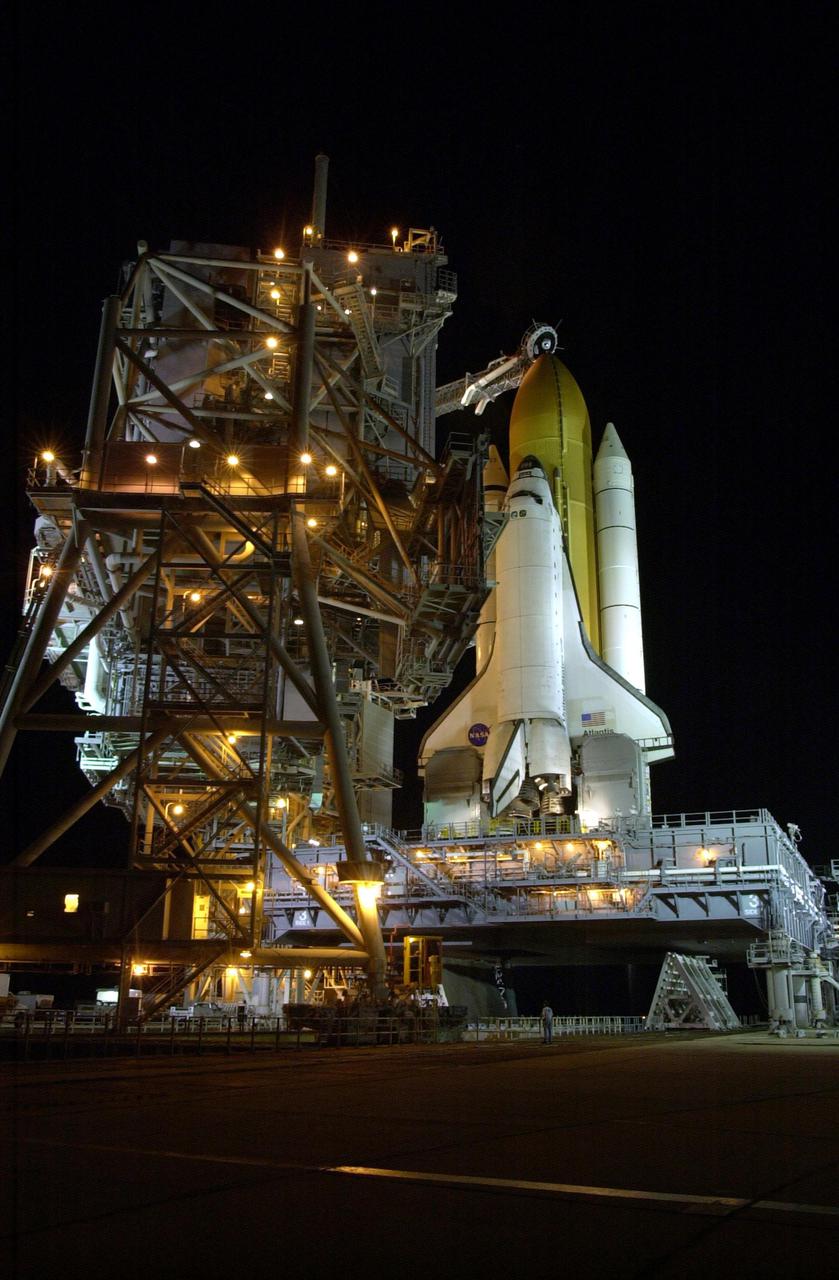
KENNEDY SPACE CENTER, FLA. -- In preparation for launch of Space Shuttle Atlantis on mission STS-110, the Rotating Service Structure (RSS) rolls back into launch position. The RSS provides protected access to the orbiter for changeout and servicing of payloads at the pad. The structure has access platforms at five levels to provide access to the payload bay. The Shuttle rests on the Mobile Launcher Platform (MLP), which straddles the flame trench below. The flame trench is part of the Flame Deflector System that insulates pad structures from the intense heat of a launch. Mission STS-110 is scheduled to launch April 4 on its 11-day mission to the International Space Station
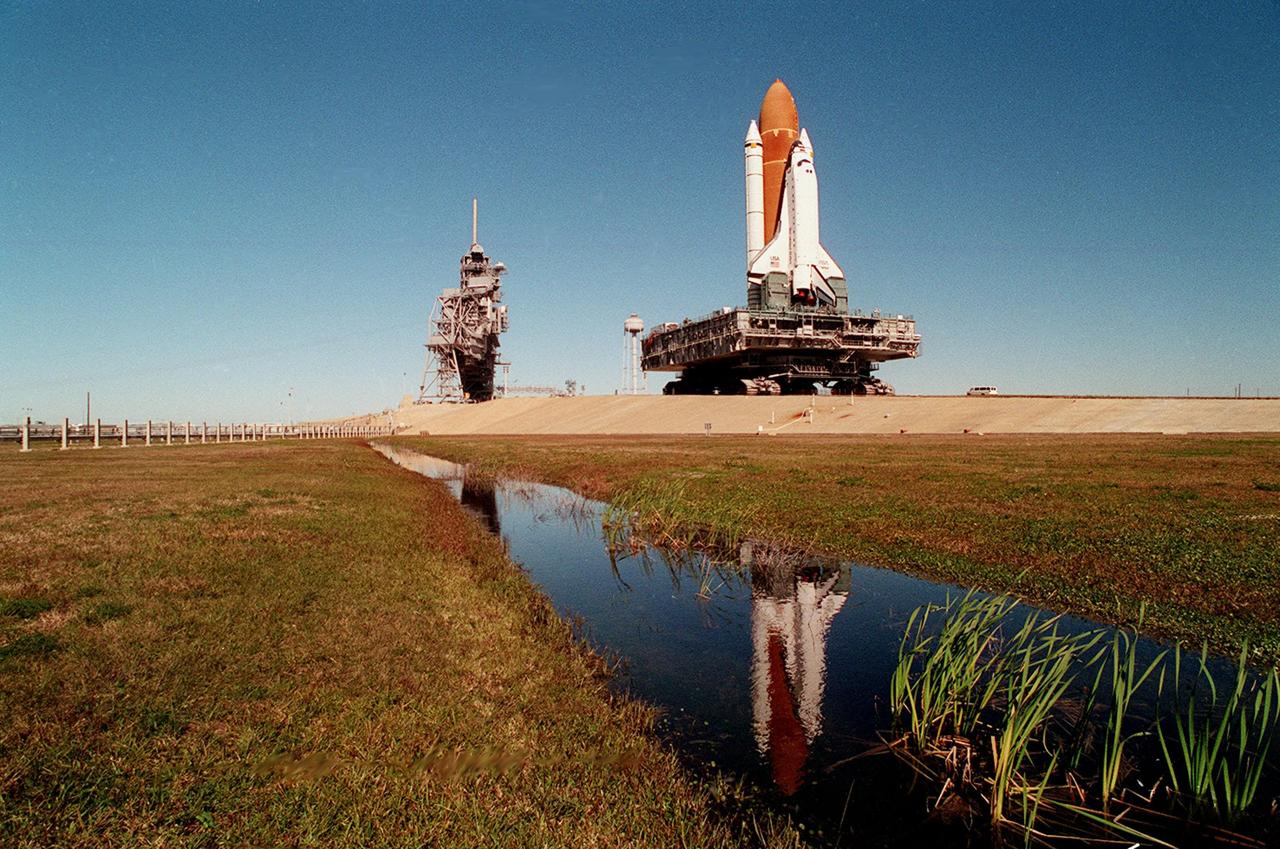
A massive 19 million pounds-plus (8.6 million kilograms) of Space Shuttle, support and transport hardware inch toward Launch Pad 39A from the Vehicle Assembly Building. The fully asssembled Space Shuttle Endeavour, minus its payloads, weighs about 4.5 million pounds (2 million kg.); the mobile launcher platform, on which it was assembled and from which it will lift off, weighs 9.25 million pounds (4.19 million kg.); and the crawler-transporter carrying the platform and Shuttle checks in at around 6 million pounds (2.7 million kg.). Once at the pad, the Shuttle and launch platform will be deposited atop support columns to complete preparations for the second Shuttle launch of 1995. The primary payload of mission STS-67 is the Astro-2 Astrophysics Observatory, carrying three ultraviolet telescopes that flew on the Astro-1 mission in 1990. STS-67 also is scheduled to become the longest shuttle flight to date, lasting 16 days
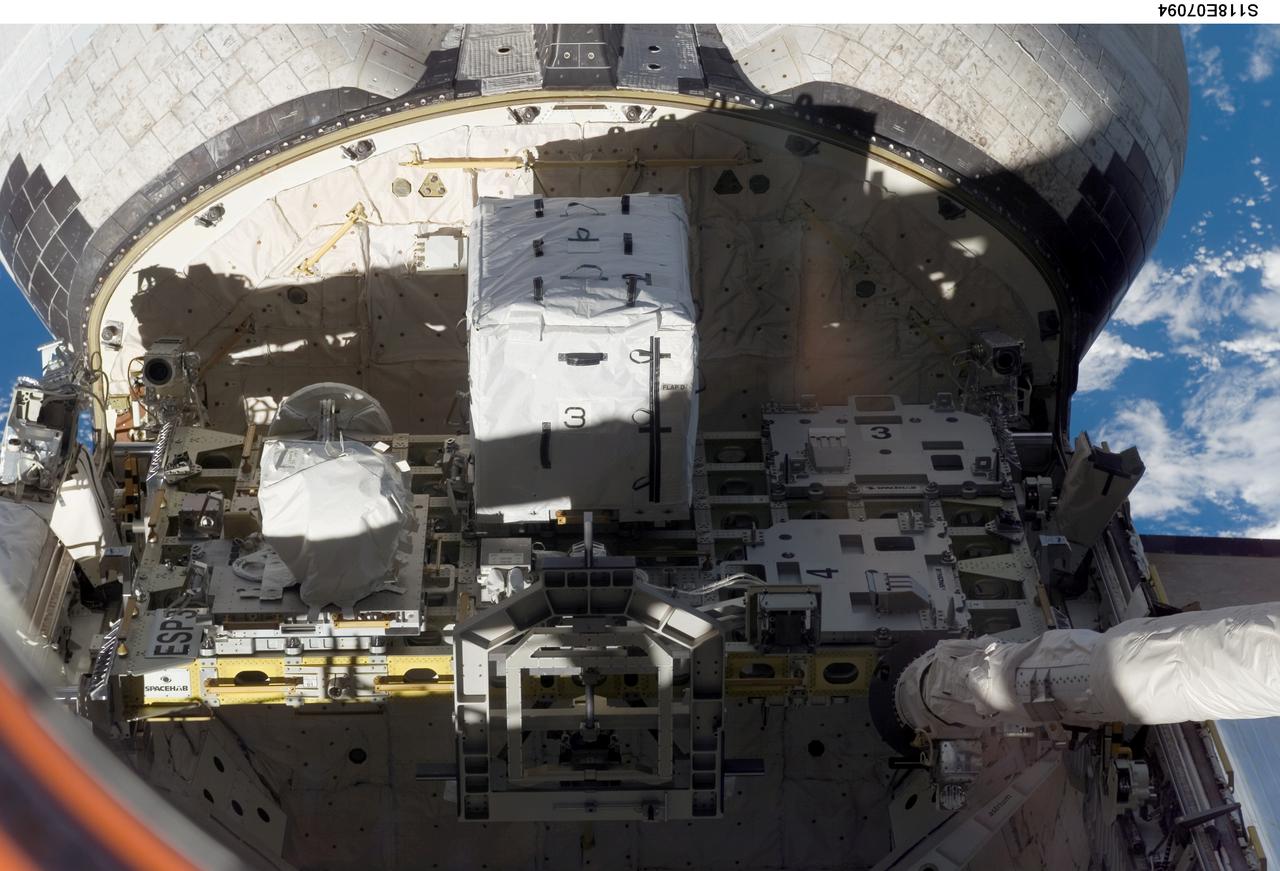
S118-E-07094 (14 Aug. 2007) --- An external stowage platform (ESP-3) is photographed in the payload bay of Space Shuttle Endeavour while docked with the International Space Station. Astronauts Tracy Caldwell and Barbara R. Morgan, both STS-118 mission specialists, were inside at Endeavour's controls as the shuttle's robotic arm (lower right) lifted the storage platform from the cargo bay to hand it over to the station's robotic arm, also known as Canadarm2. Astronauts Charlie Hobaugh, pilot, and Clay Anderson, Expedition 15 flight engineer, then used Canadarm2 to attach the 13-by-7-foot platform to the station's Port 3 truss.

The Bartolomeo platform that will be carried to the International Space Station aboard SpaceX’s 20th Commercial Resupply Services (CRS-20) mission for NASA is inside its shipping container in the Space Station Processing Facility high bay at the agency’s Kennedy Space Center in Florida on Jan. 30, 2020. Bartolomeo was manufactured by Airbus Defence and Space. The platform will attach to the exterior of the space station’s European Columbus Module. Named for the younger brother of Christopher Columbus, the platform has the capability to host external payloads in low-Earth orbit on the station. CRS-20 is scheduled to launch aboard SpaceX’s Dragon cargo spacecraft atop the company’s Falcon 9 rocket in March 2020.
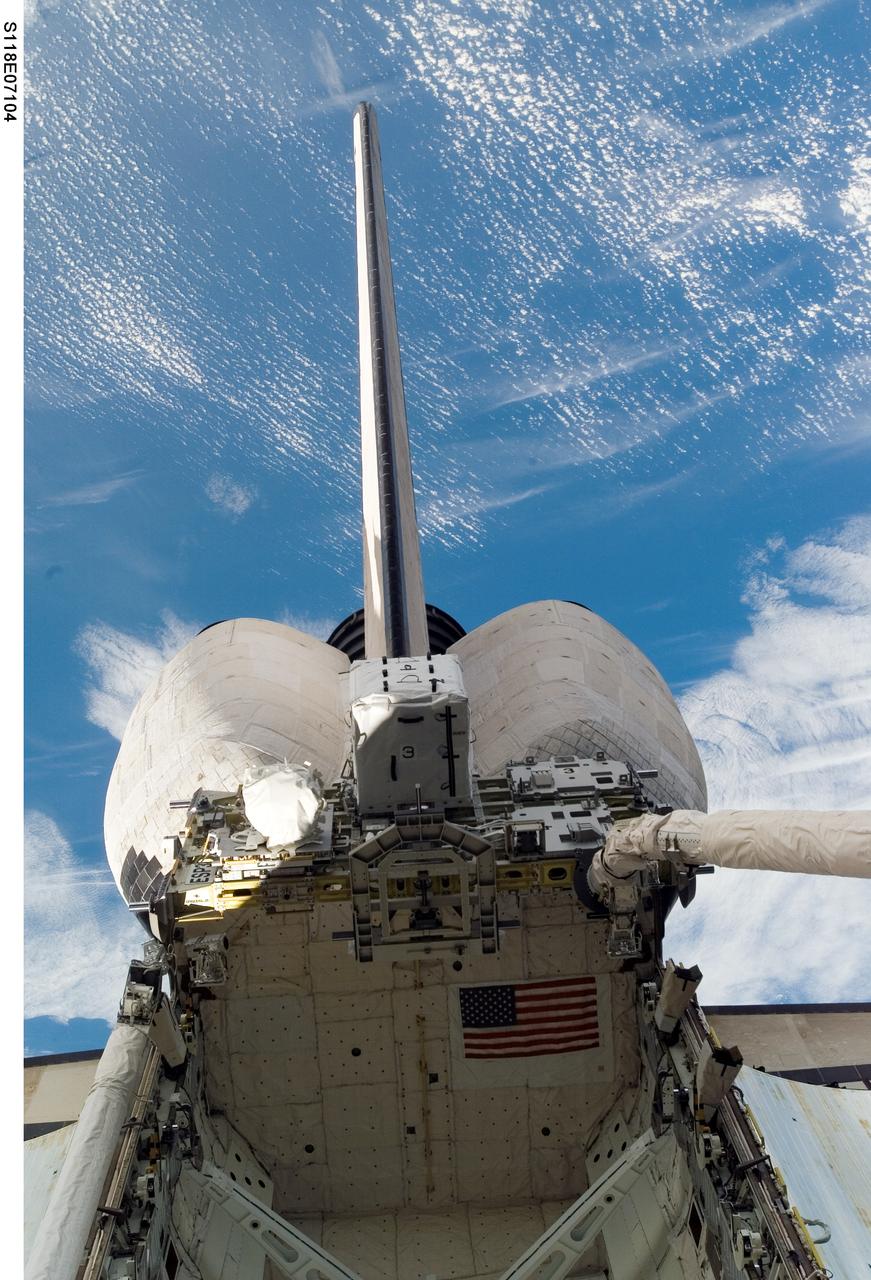
S118-E-07104 (14 Aug. 2007) --- An external stowage platform (ESP-3) is photographed in the payload bay of Space Shuttle Endeavour while docked with the International Space Station. Astronauts Tracy Caldwell and Barbara R. Morgan, both STS-118 mission specialists, were inside at Endeavour's controls as the shuttle's robotic arm (lower right) lifted the storage platform from the cargo bay to hand it over to the station's robotic arm, also known as Canadarm2. Astronauts Charlie Hobaugh, pilot, and Clay Anderson, Expedition 15 flight engineer, then used Canadarm2 to attach the 13-by-7-foot platform to the station's Port 3 truss.
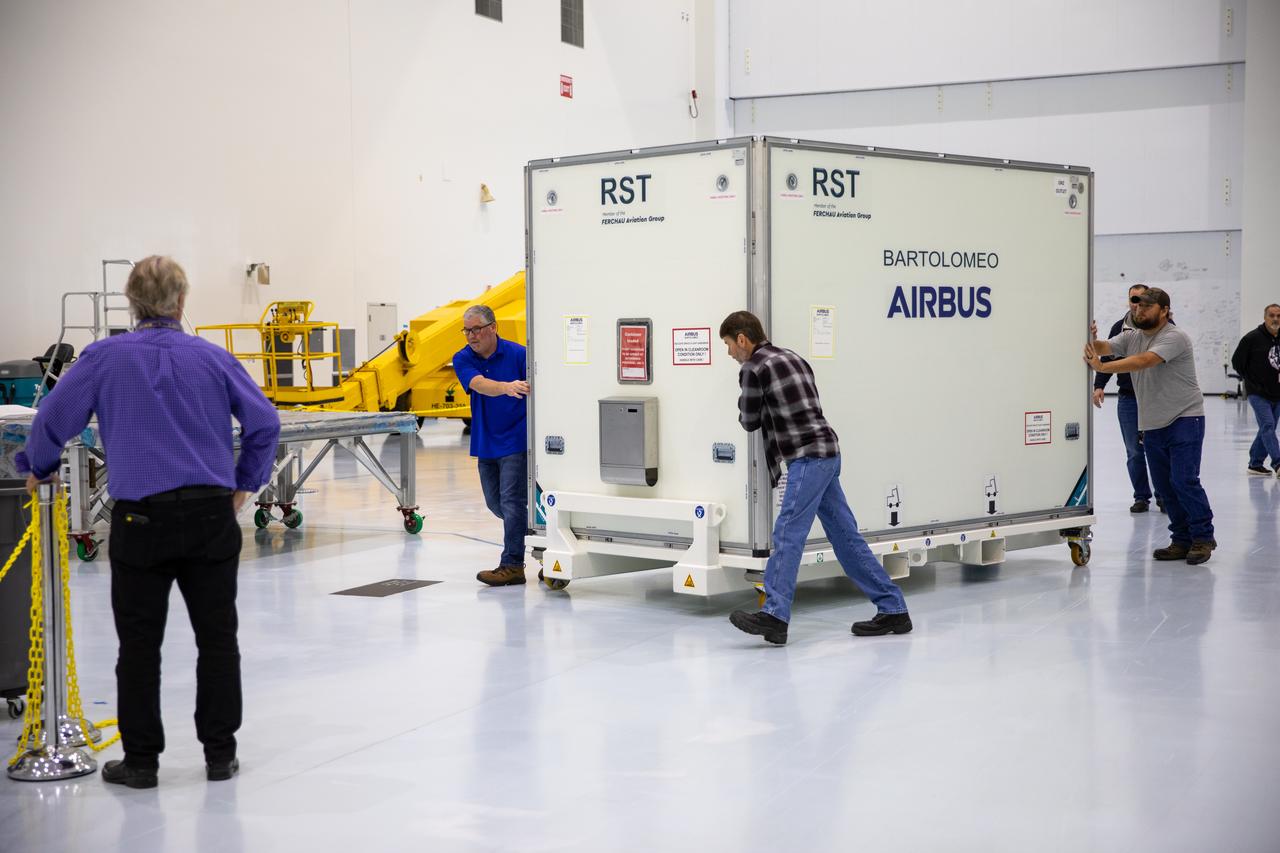
The Bartolomeo platform that will be carried to the International Space Station aboard SpaceX’s 20th Commercial Resupply Services (CRS-20) mission for NASA is moved in its shipping container inside the Space Station Processing Facility high bay at the agency’s Kennedy Space Center in Florida on Jan. 30, 2020. Bartolomeo was manufactured by Airbus Defence and Space. The platform will attach to the exterior of the space station’s European Columbus Module. Named for the younger brother of Christopher Columbus, the platform has the capability to host external payloads in low-Earth orbit on the station. CRS-20 is scheduled to launch aboard SpaceX’s Dragon cargo spacecraft atop the company’s Falcon 9 rocket in March 2020.
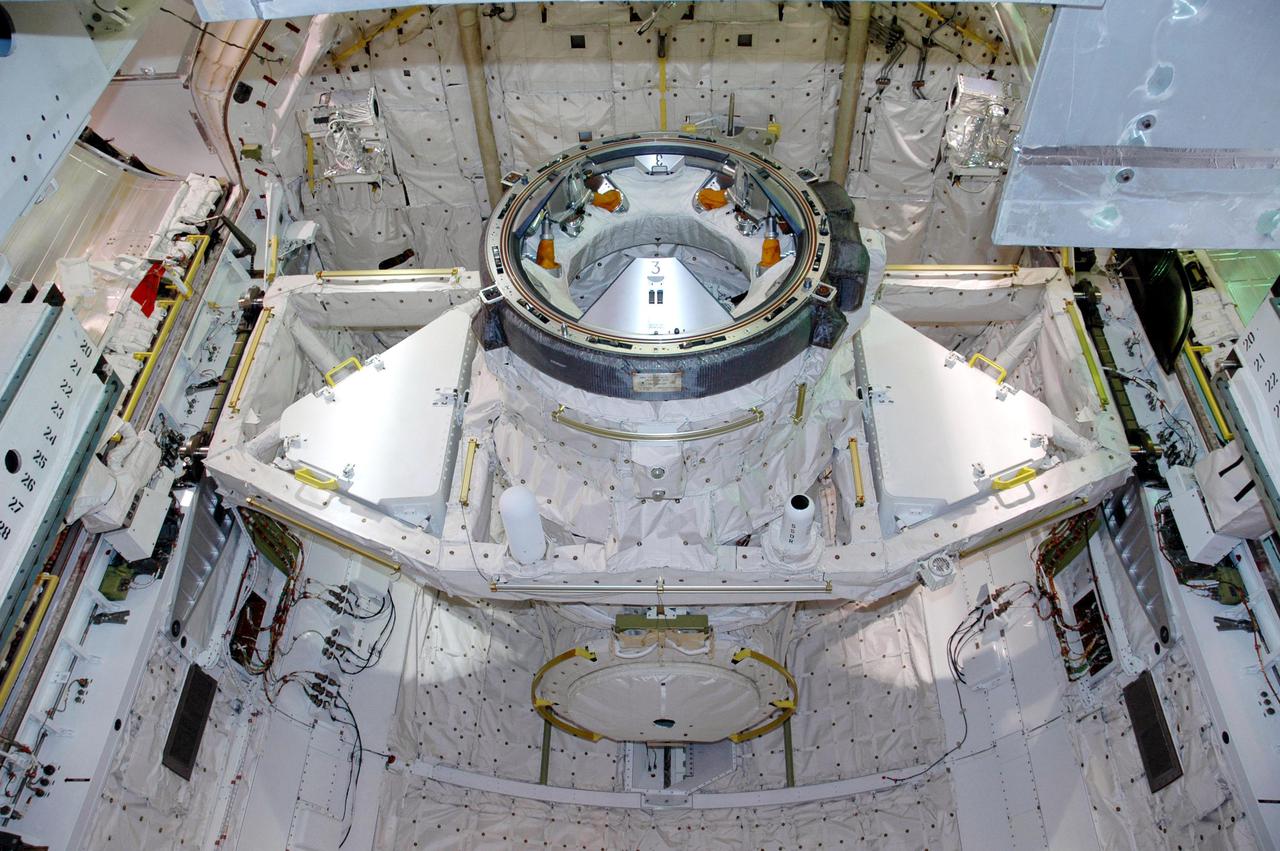
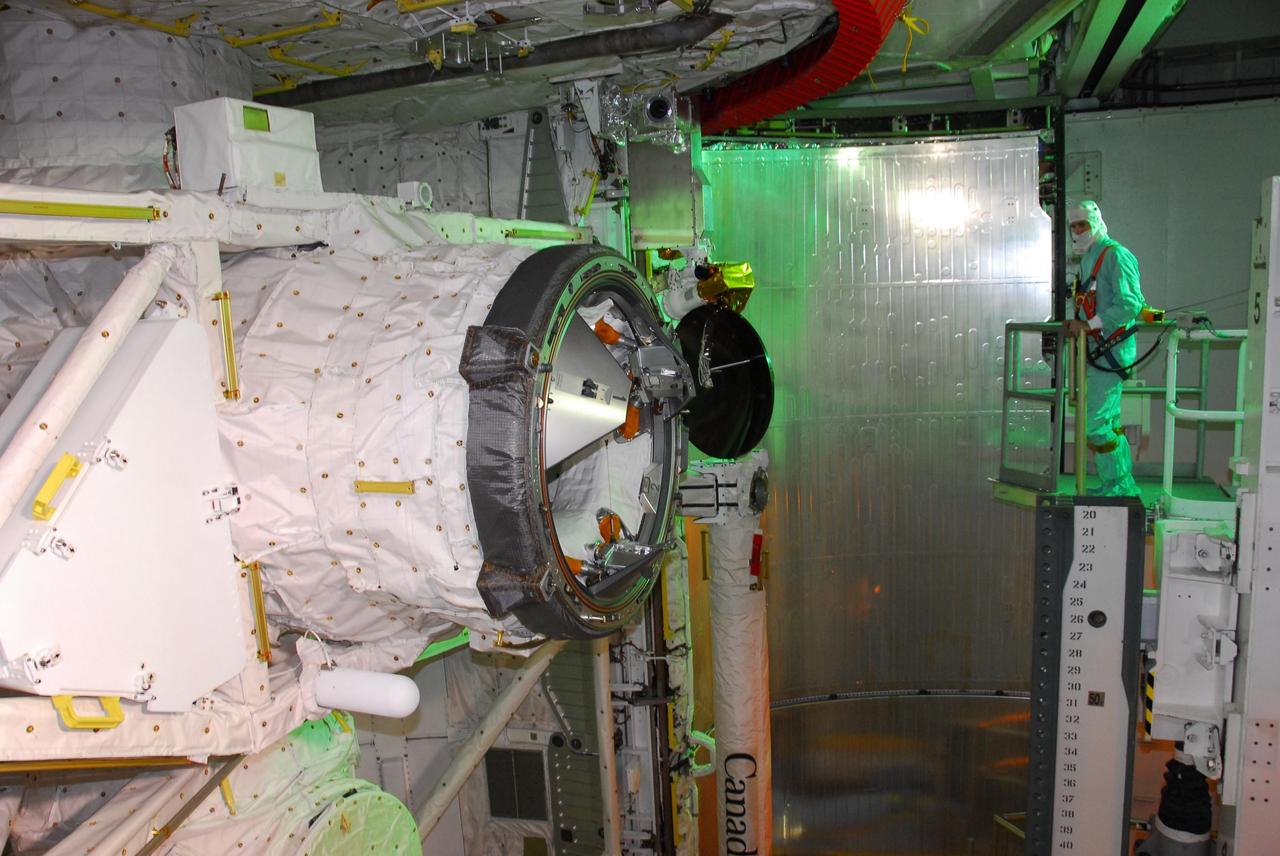
KENNEDY SPACE CENTER, FLA. - In the Payload Changeout Room on Launch Pad 39B, the payloads for Return to Flight mission STS-114 are being transferred to Discovery’s payload bay. Seen here is the airlock, already installed in the payload bay. Payloads being installed are a Control Moment Gyro, the Thermal Protection System Detailed Test Objective box, which is placed on the Lightweight Multi-Purpose Experiment Support Structure Carrier, External Stowage Platform 2 and Multi-Purpose Logistics Module Raffaello. Already installed in the payload bay are the airlock, the Canadarm 2, or Shuttle arm, and the Orbiter Boom Sensor System. The launch window for mission STS-114 extends from July 13 to July 31.
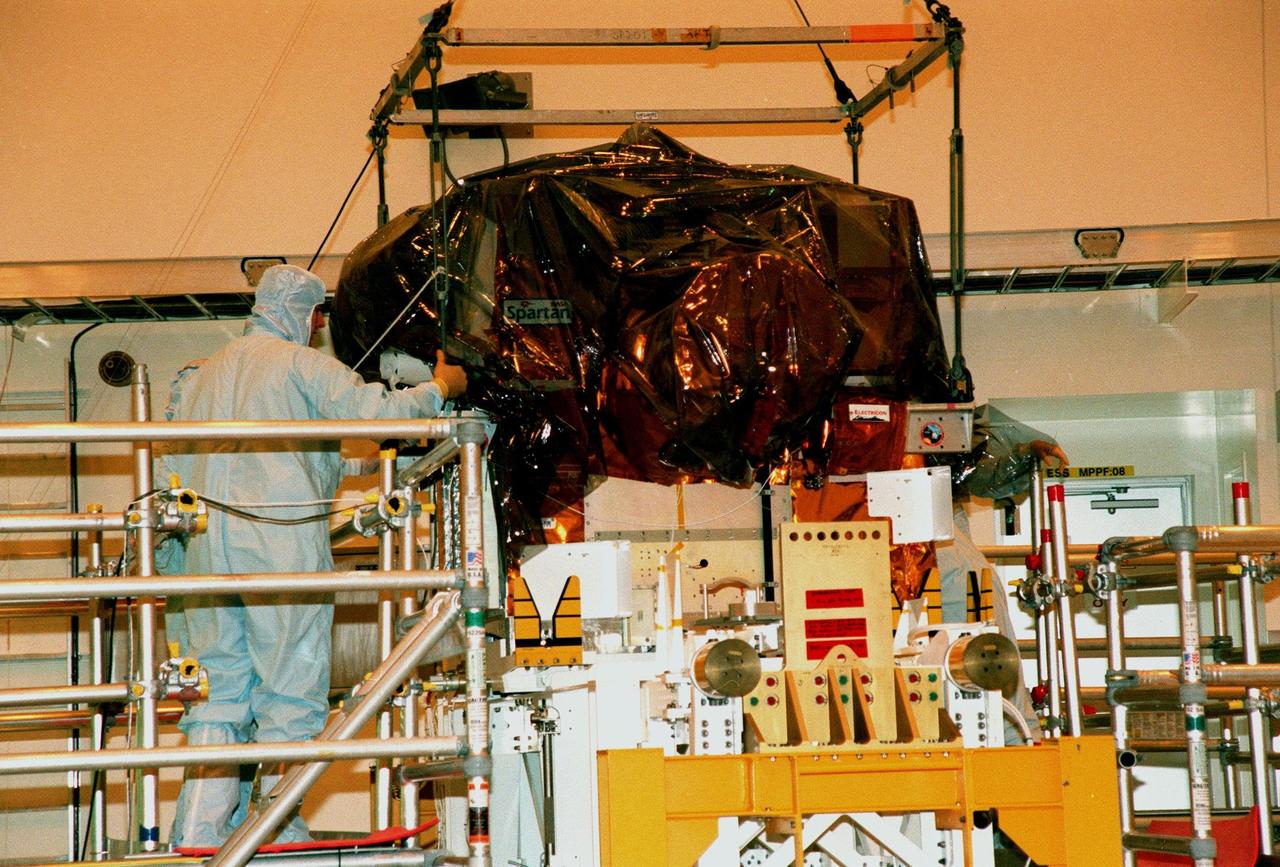
The Spartan solar-observing deployable spacecraft is moved from a bridge in the Multi-Payload Processing Facility at KSC where it had been stored for protection from a hurricane threatening the area. Spartan is one of the payloads for the STS-95 mission, scheduled to launch Oct. 29. Other research payloads include the Hubble Space Telescope Orbital Systems Test Platform, the International Extreme Ultraviolet Hitchhiker, as well as the SPACEHAB single module with experiments on space flight and the aging process
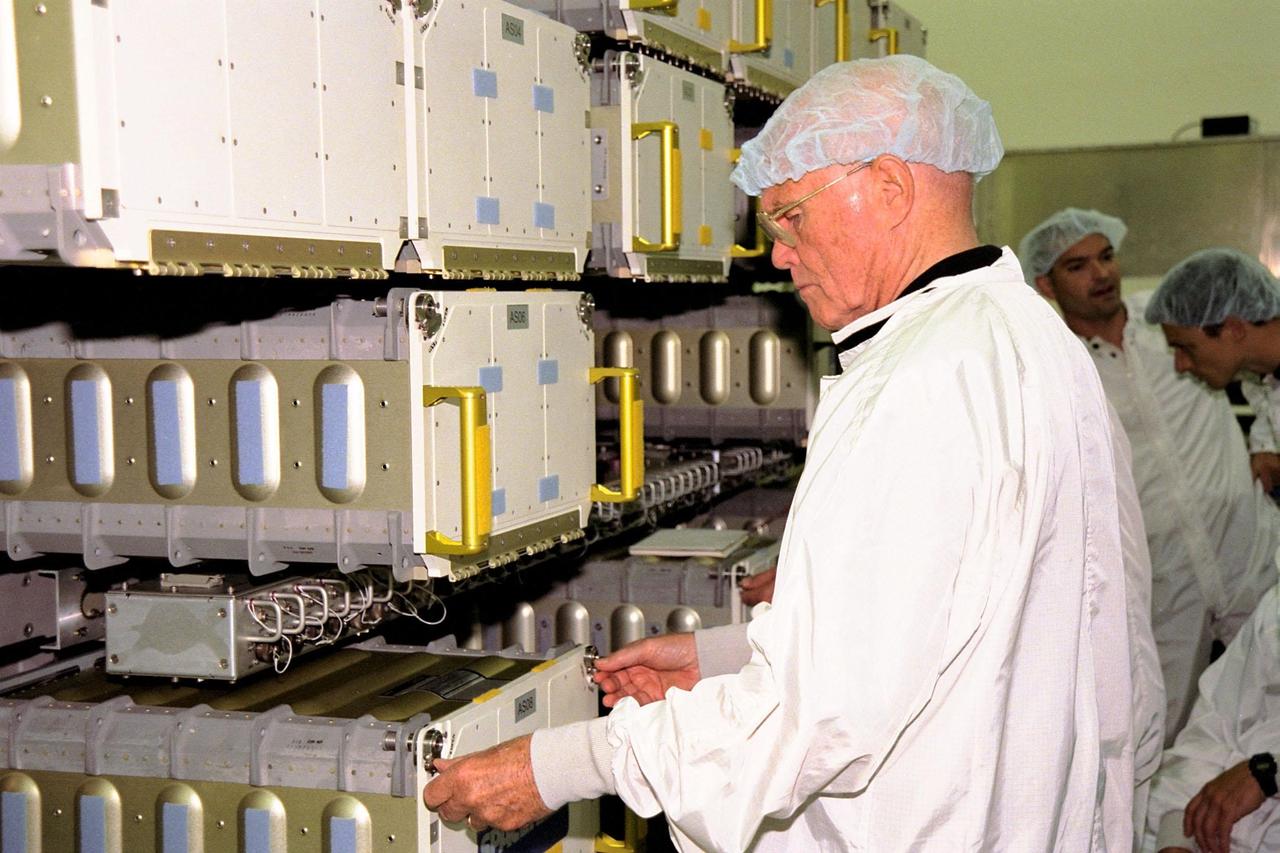
STS-95 Payload Specialist John H. Glenn Jr., who also is a senator from Ohio, works with equipment inside the SPACEHAB module at the SPACEHAB Payload Processing Facility in Cape Canaveral. STS-95 will feature a variety of research payloads, including the Spartan solar-observing deployable spacecraft, the Hubble Space Telescope Orbital Systems Platform, the International Extreme Ultraviolet Hitchhiker, and experiments on space flight and the aging process. STS-95 is targeted for an Oct. 29 launch aboard the Space Shuttle Discovery

KENNEDY SPACE CENTER, FLA. -- Workers in the Orbiter Processing Facility watch as the overhead crane begins to lift the STS-95 payloads from the payload bay of the orbiter Discovery. The experiments will be returned to their respective hosts. At the right is the SPACEHAB single module with experiments on space flight and the aging process. The other payloads include the Spartan solar-observing deployable spacecraft, the Hubble Space Telescope Orbital Systems Test Platform, and the International Extreme Ultraviolet Hitchhiker
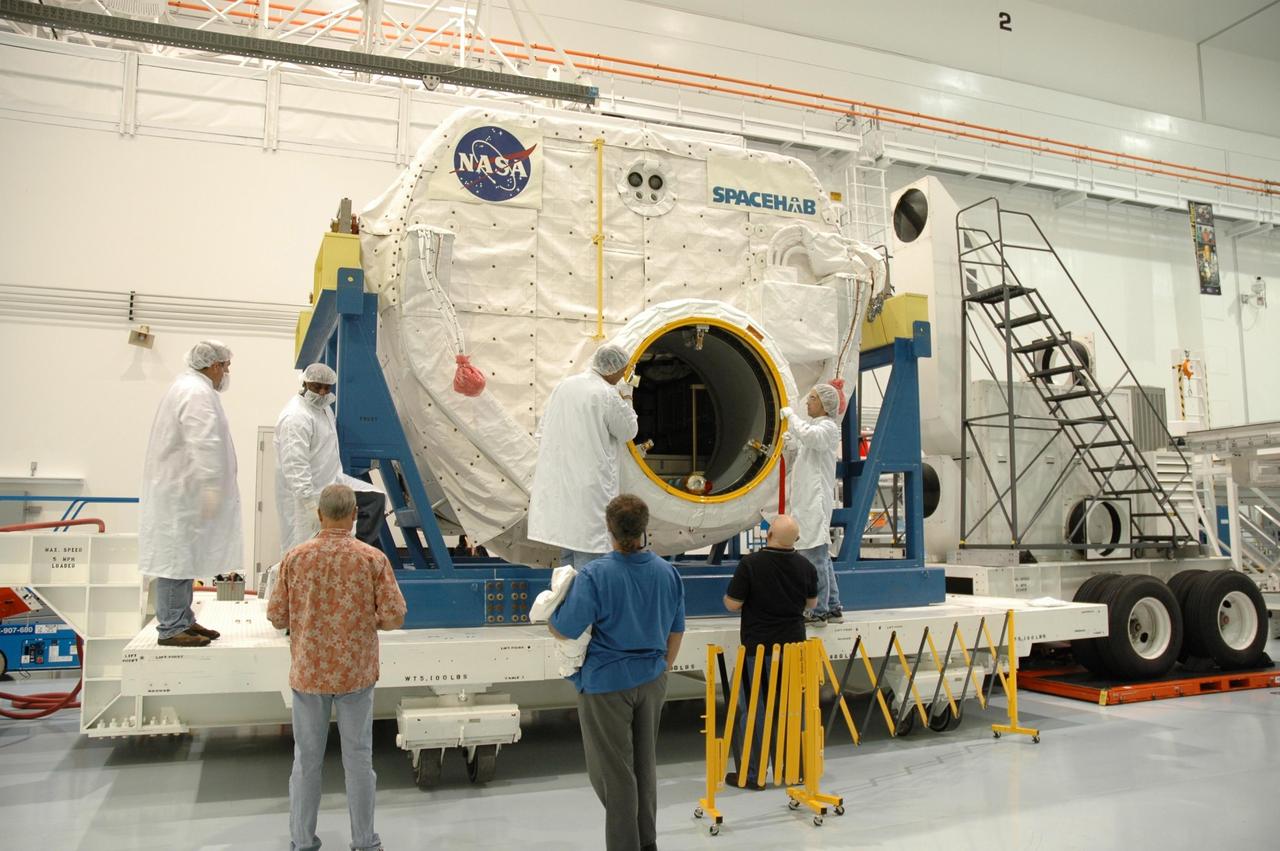
KENNEDY SPACE CENTER, FLA. -- In the Space Station Processing Facility, workers prepare the Spacehab module for its move to the payload canister. The module is part of the payload on mission STS-118 and will be loaded into Space Shuttle Endeavour's payload bay at the pad. Endeavour is targeted for launch on Aug. 9 to the International Space Station. The mission will continue space station construction by delivering a third starboard truss segment, S5, as well as carrying the external stowage platform 3 and Spacehab module. Photo credit: NASA/Jim Grossmann
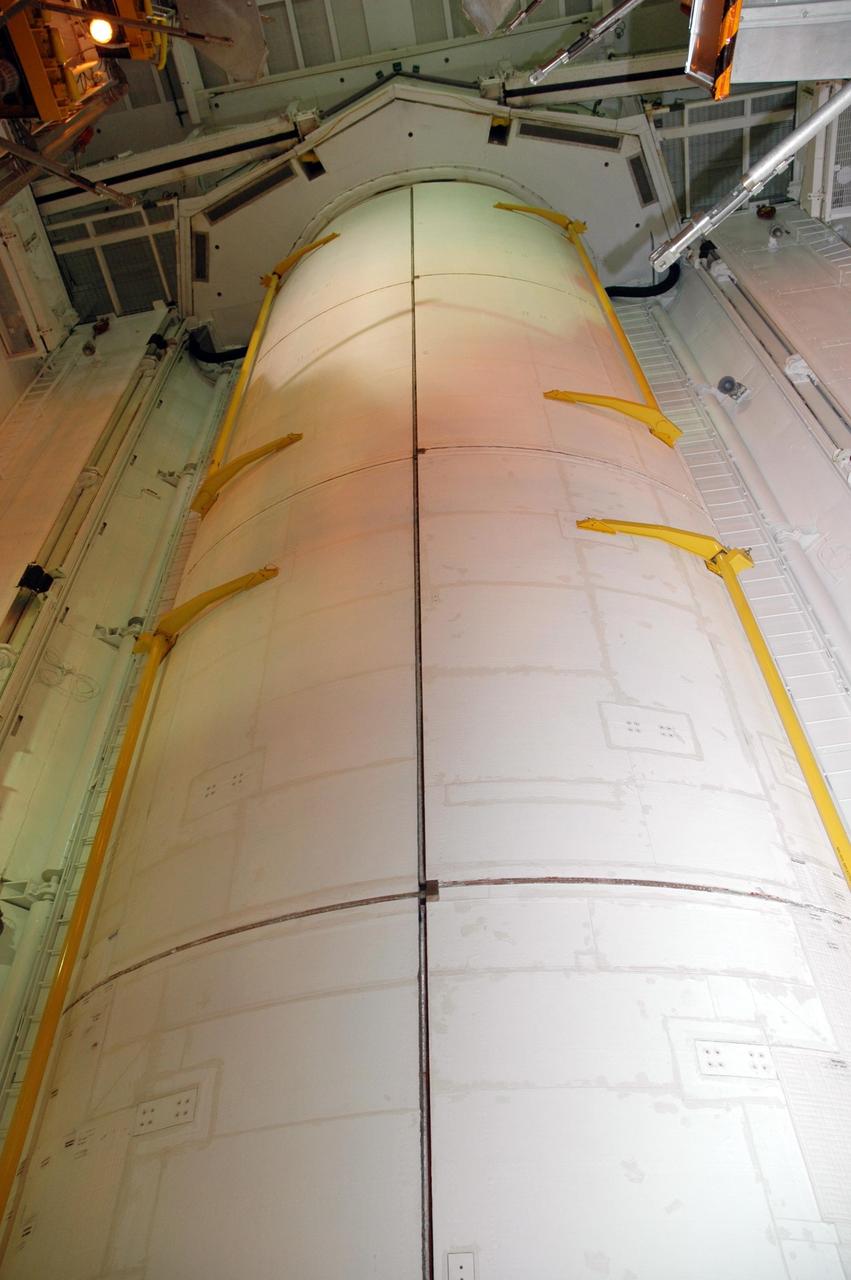
KENNEDY SPACE CENTER, FLA. — From inside the payload changeout room at Launch Pad 39A, this view shows the payload bay doors on Endeavour fully closed. The payload includes the S5 truss, the SPACEHAB module and external stowage platform 3. The mission is the 22nd flight to the International Space Station and is targeted for launch on Aug. 7. NASA/Charisse Nahser
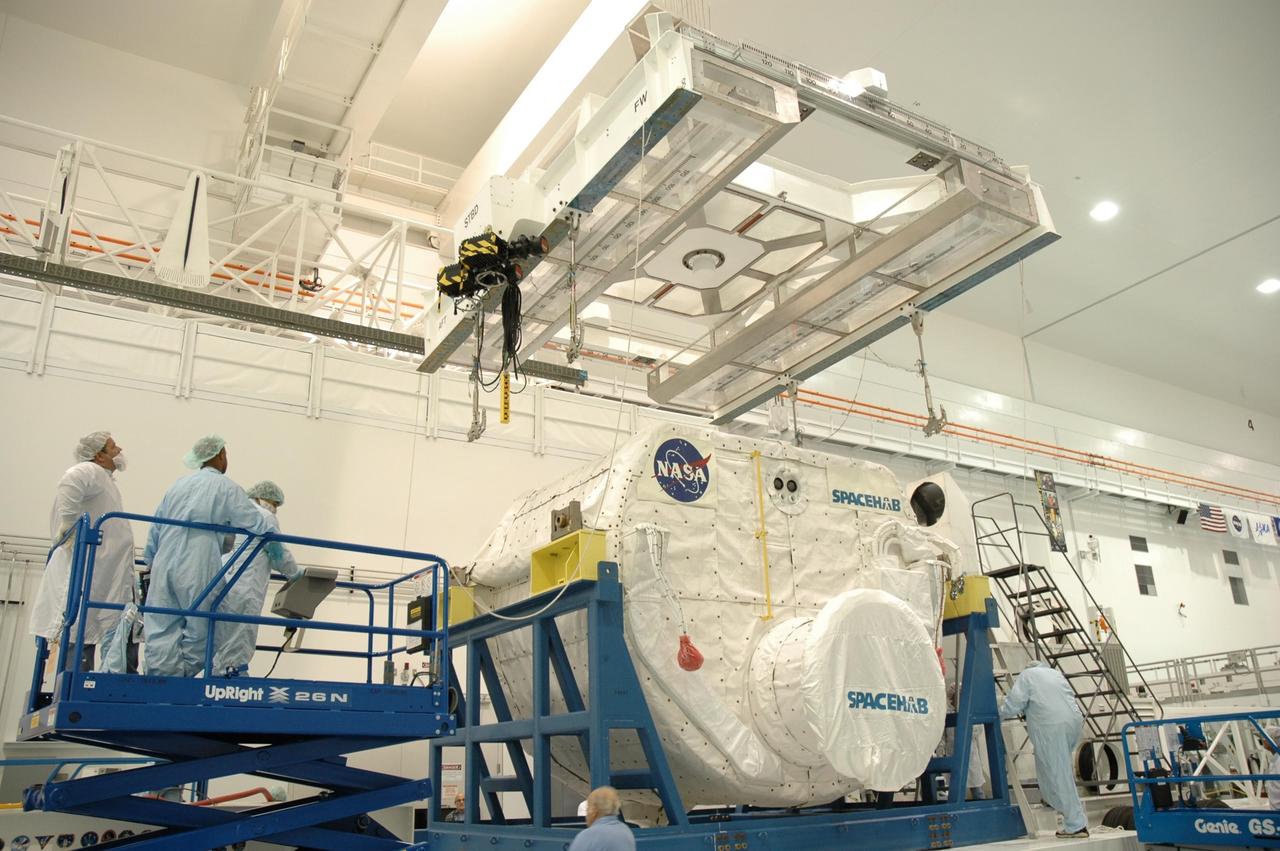
KENNEDY SPACE CENTER, FLA. -- In the Space Station Processing Facility, an overhead crane is moved into place above the Spacehab module to move it to the payload canister. The module is part of the payload on mission STS-118 and will be loaded into Space Shuttle Endeavour's payload bay at the pad. Endeavour is targeted for launch on Aug. 9 to the International Space Station. The mission will continue space station construction by delivering a third starboard truss segment, S5, as well as carrying the external stowage platform 3 and Spacehab module. Photo credit: NASA/Jim Grossmann
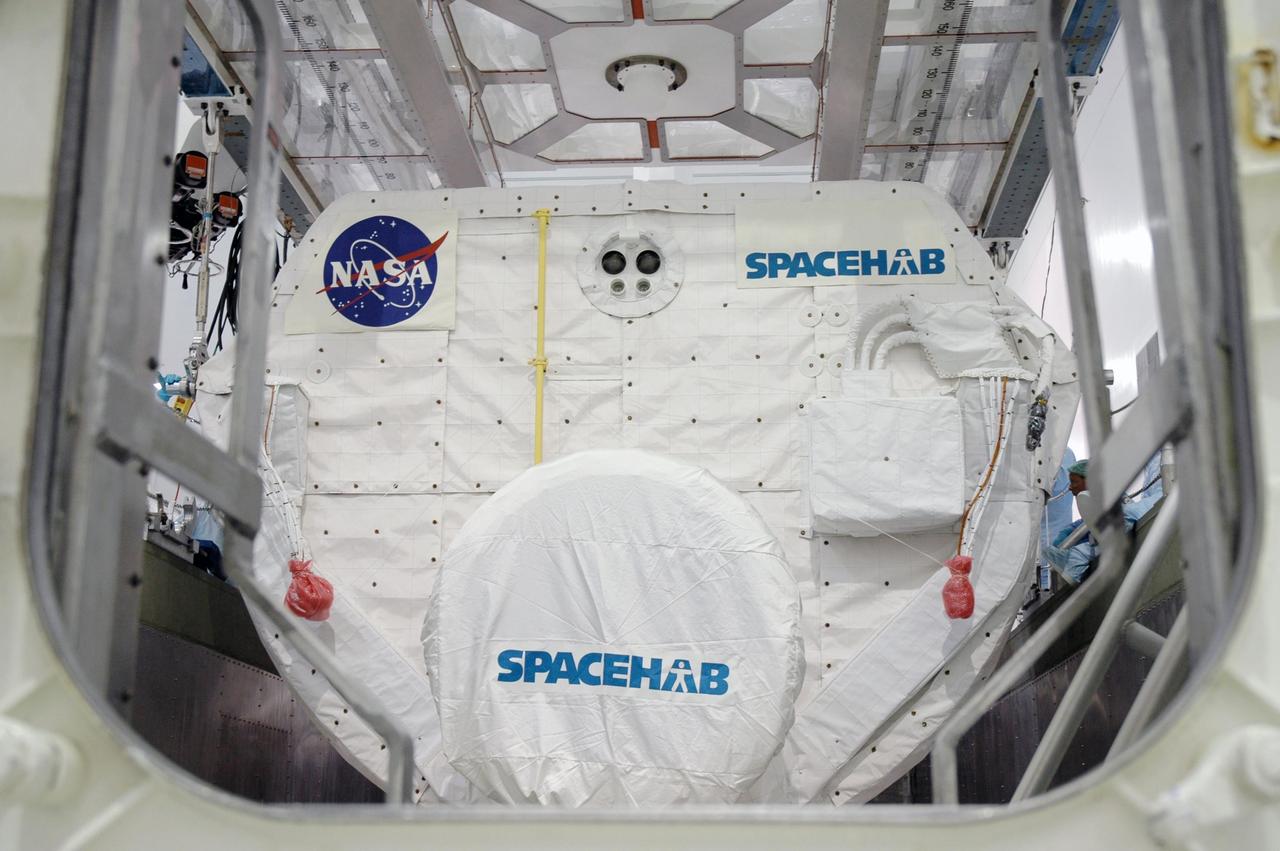
KENNEDY SPACE CENTER, FLA. -- In the Space Station Processing Facility, the Spacehab module is settled into place in the payload canister. The module is part of the payload on mission STS-118 and will be loaded into Space Shuttle Endeavour's payload bay at the pad. Endeavour is targeted for launch on Aug. 9 to the International Space Station. The mission will continue space station construction by delivering a third starboard truss segment, S5, as well as carrying the external stowage platform 3 and Spacehab module. Photo credit: NASA/Jim Grossmann
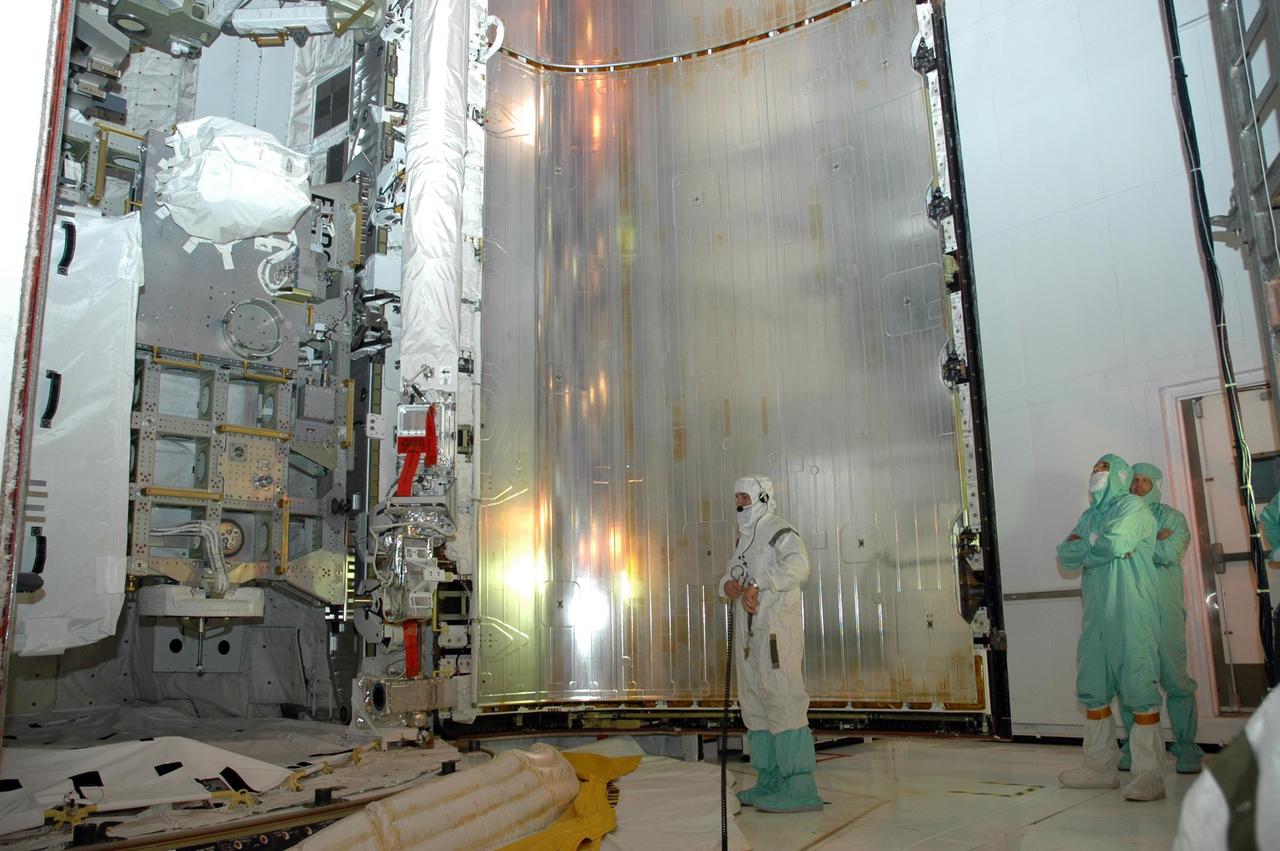
KENNEDY SPACE CENTER, FLA. — From inside the payload changeout room at Launch Pad 39A, workers check the progress of the closing of Endeavour's payload bay doors. The payload includes the S5 truss, the SPACEHAB module and external stowage platform 3. The mission is the 22nd flight to the International Space Station and is targeted for launch on Aug. 7. NASA/Charisse Nahser
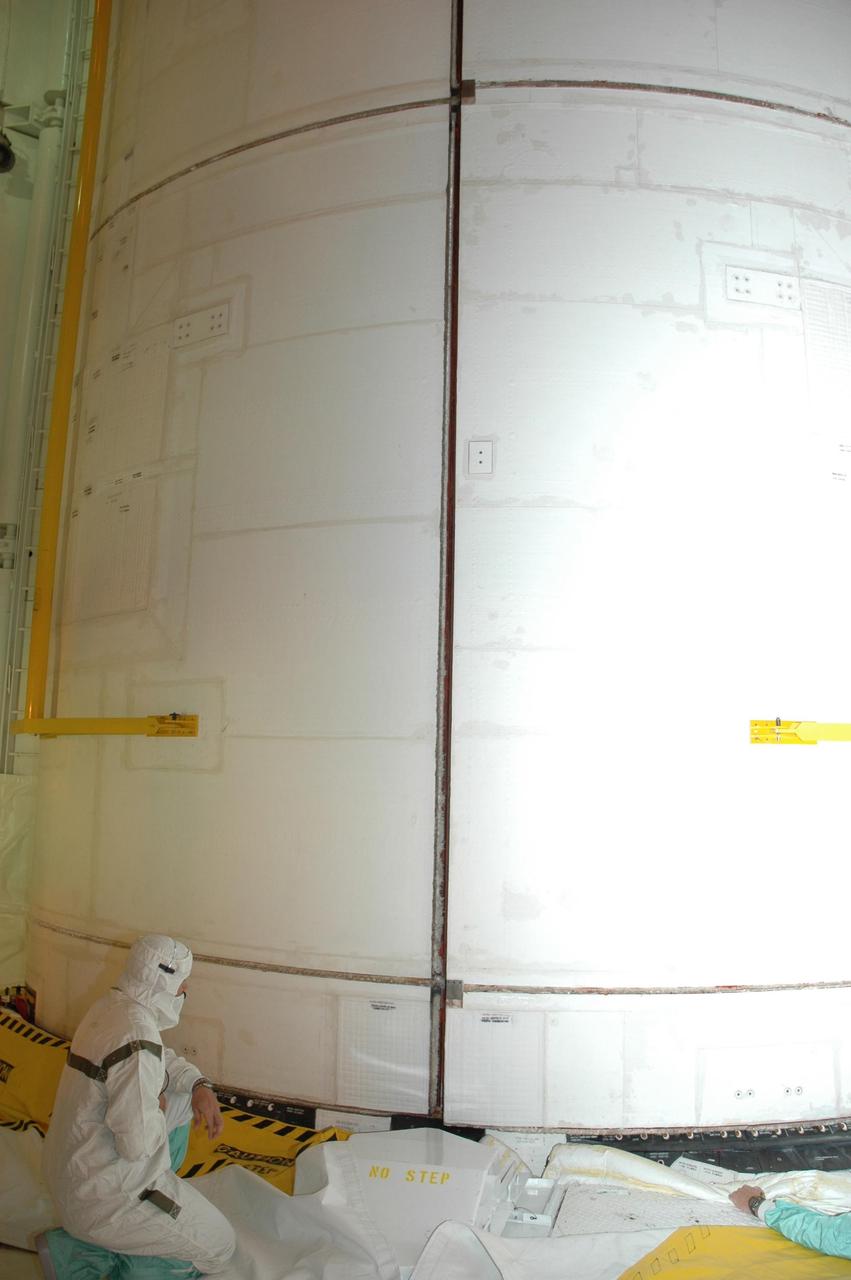
KENNEDY SPACE CENTER, FLA. — From inside the payload changeout room at Launch Pad 39A, workers check the closing of Endeavour's payload bay doors. The payload includes the S5 truss, the SPACEHAB module and external stowage platform 3. The mission is the 22nd flight to the International Space Station and is targeted for launch on Aug. 7. NASA/Charisse Nahser
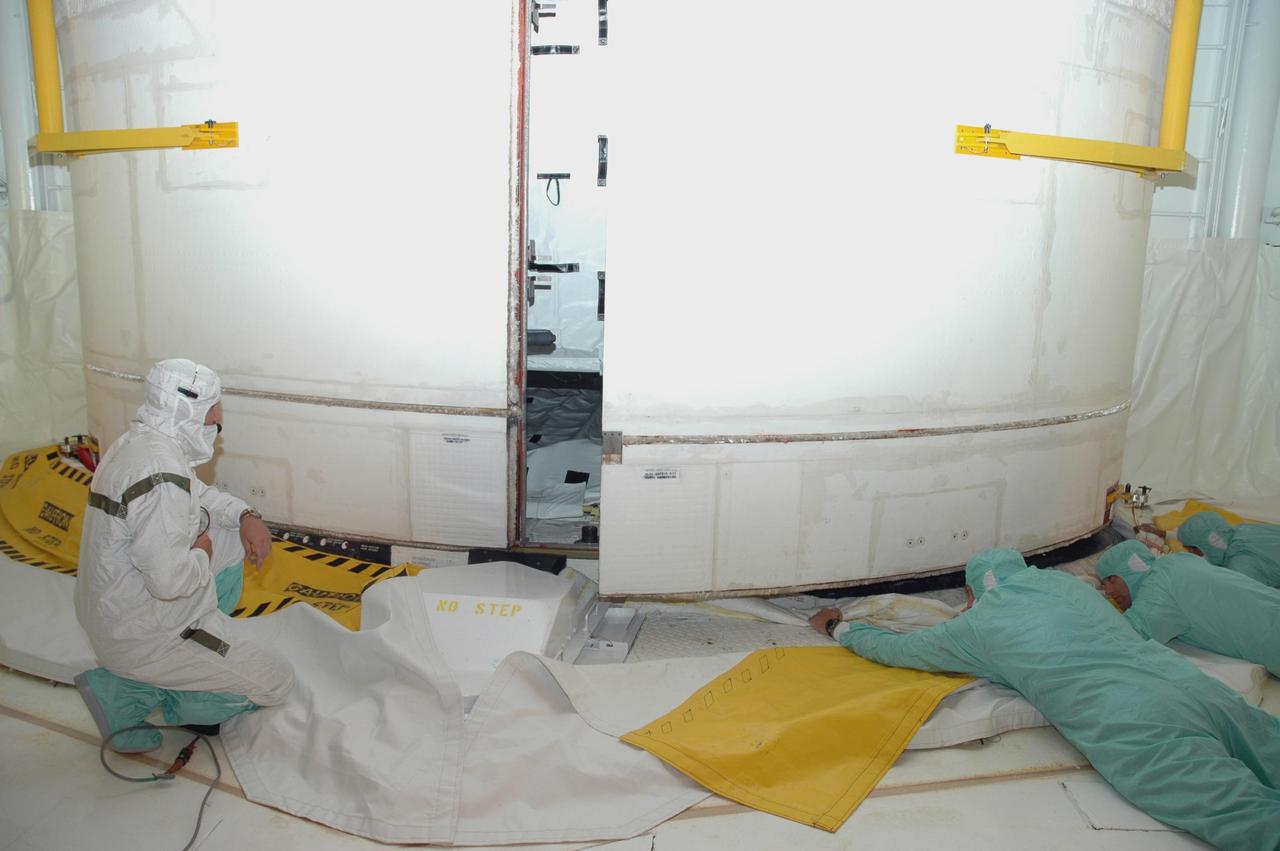
KENNEDY SPACE CENTER, FLA. — From inside the payload changeout room at Launch Pad 39A, workers check the closing of Endeavour's payload bay doors. The payload includes the S5 truss, the SPACEHAB module and external stowage platform 3. The mission is the 22nd flight to the International Space Station and is targeted for launch on Aug. 7. NASA/Charisse Nahser
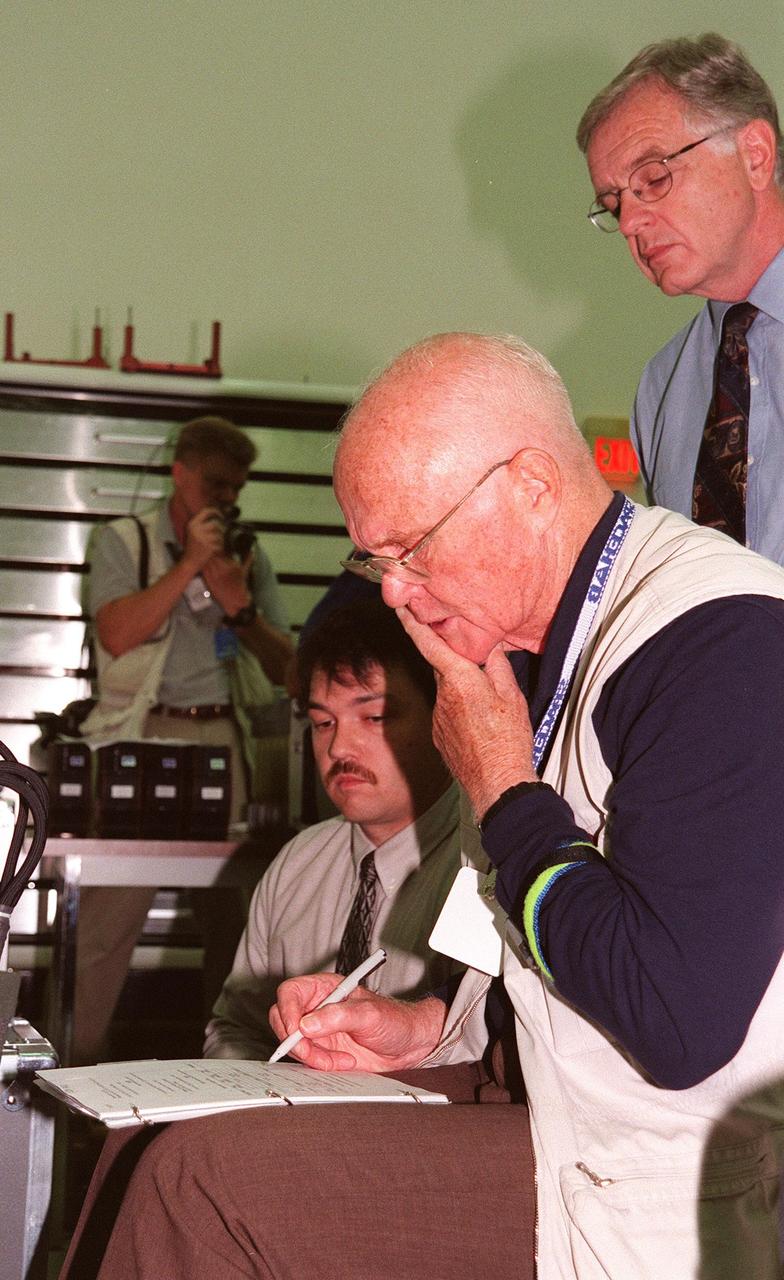
KENNEDY SPACE CENTER, FLA. -- STS-95 Payload Specialist John Glenn, who is a senator from Ohio, looks over documentation under the watchful eyes of KSC workers during SPACEHAB familiarization at the SPACEHAB Payload Processing Facility, Cape Canaveral. The mission, scheduled to launch Oct. 29, includes research payloads such as the Spartan solar-observing deployable spacecraft, the Hubble Space Telescope Orbital Systems Test Platform, the International Extreme Ultraviolet Hitchhiker, as well as the SPACEHAB single module with experiments on space flight and the aging process
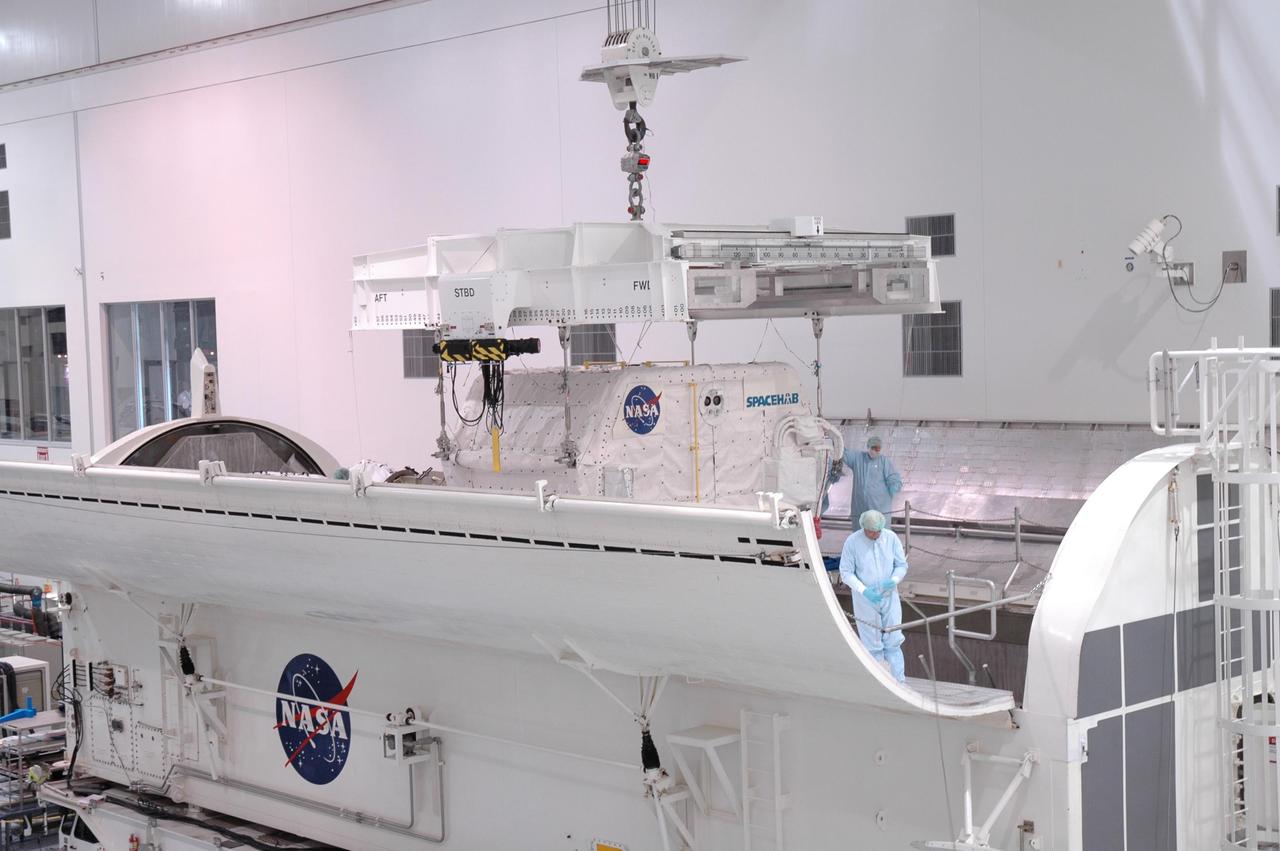
KENNEDY SPACE CENTER, FLA. -- In the Space Station Processing Facility, an overhead crane lowers the Spacehab module into the payload canister. The module is part of the payload on mission STS-118 and will be loaded into Space Shuttle Endeavour's payload bay at the pad. Endeavour is targeted for launch on Aug. 9 to the International Space Station. The mission will continue space station construction by delivering a third starboard truss segment, S5, as well as carrying the external stowage platform 3 and Spacehab module. Photo credit: NASA/Jim Grossmann
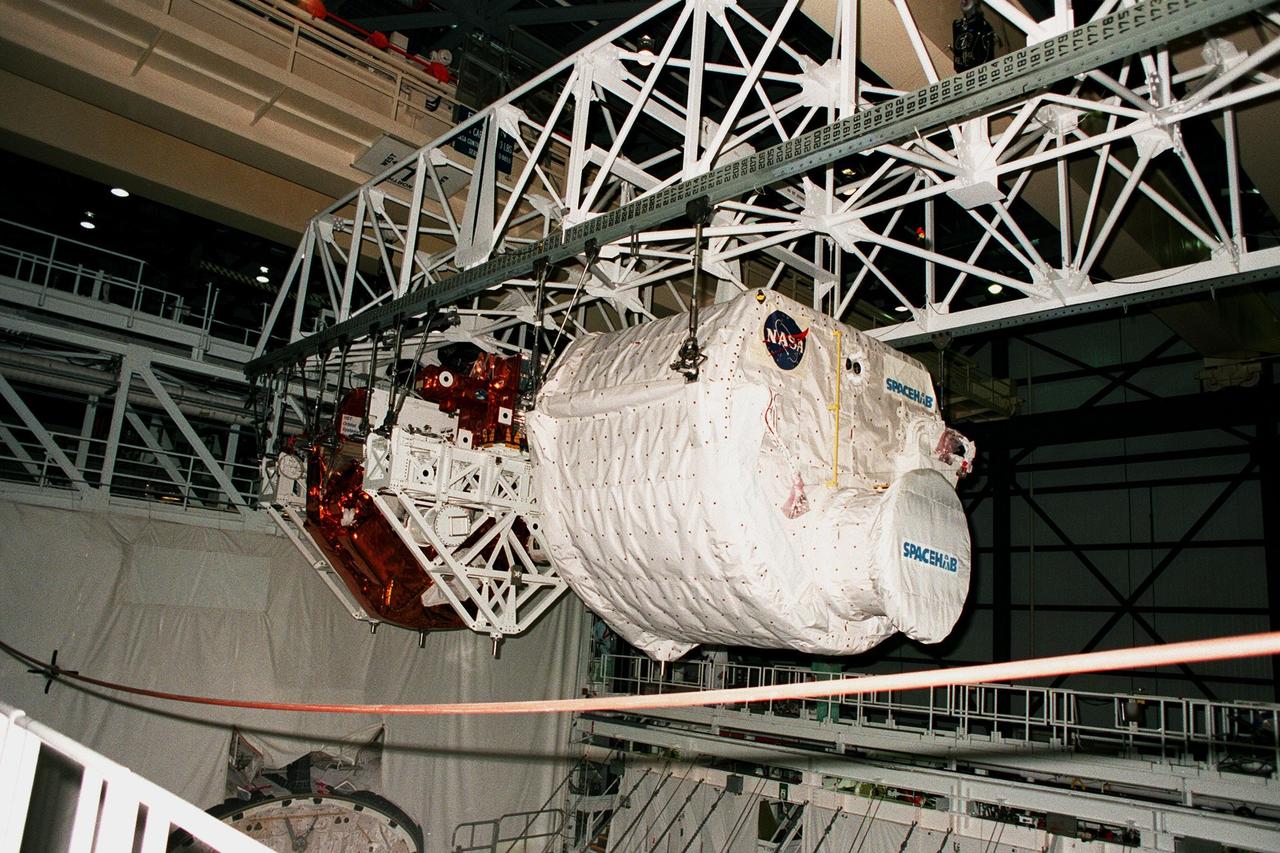
KENNEDY SPACE CENTER, FLA. -- The STS-95 payloads hang suspended above the payload bay of the orbiter Discovery in the Orbiter Processing Facility. The experiments will be returned to their respective hosts. At the right is the SPACEHAB single module with experiments on space flight and the aging process. The other payloads include the Spartan solar-observing deployable spacecraft, the Hubble Space Telescope Orbital Systems Test Platform, and the International Extreme Ultraviolet Hitchhiker
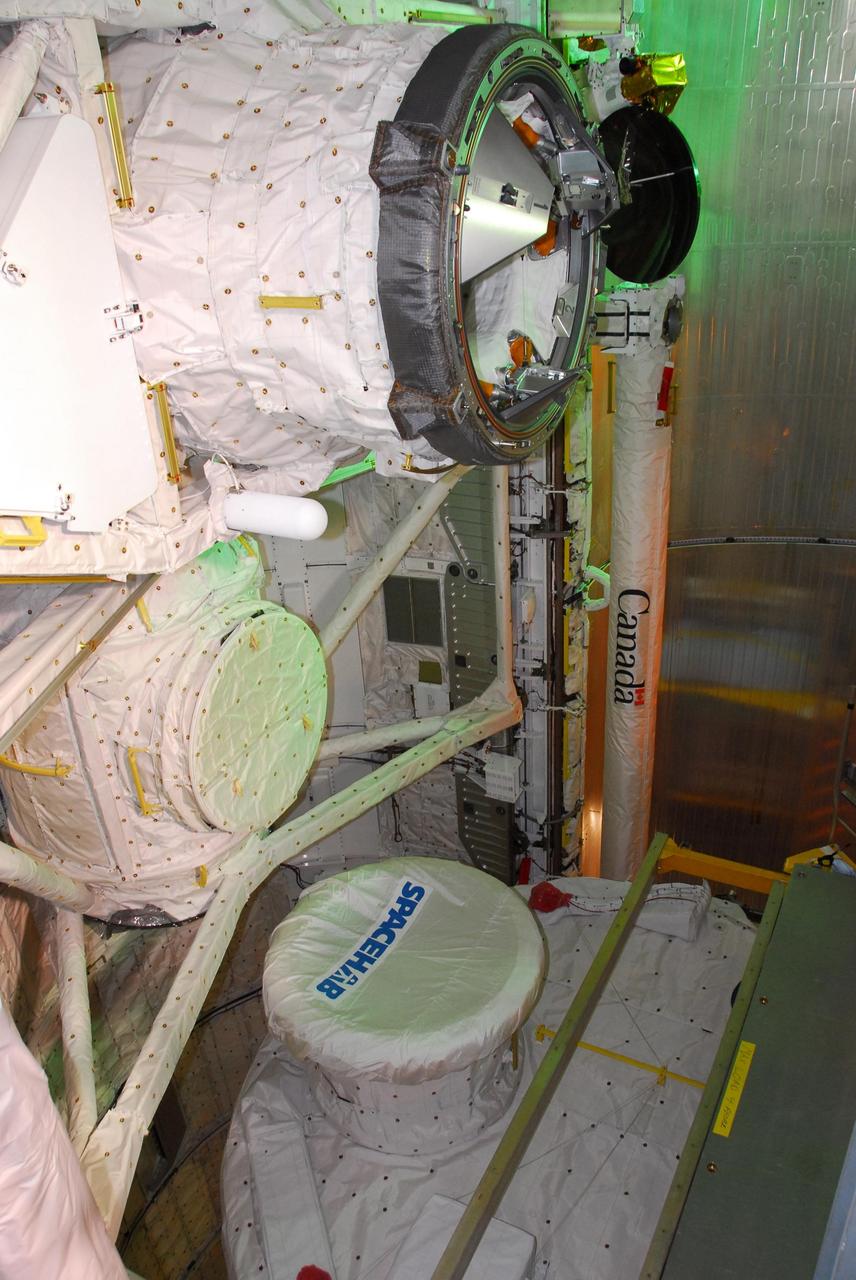
KENNEDY SPACE CENTER, FLA. -- The payload for mission STS-118 is being installed in the payload bay on Space Shuttle Endeavour on Launch Pad 39A. Seen here, from top, are the orbiter docking system, the SPACEHAB tunnel adapter and the SPACEHAB module. The payload also includes the S5 truss and the external stowage platform 3. The mission is the 22nd flight to the International Space Station and is targeted for launch on Aug.7. Photo credit: NASA/Amanda Diller
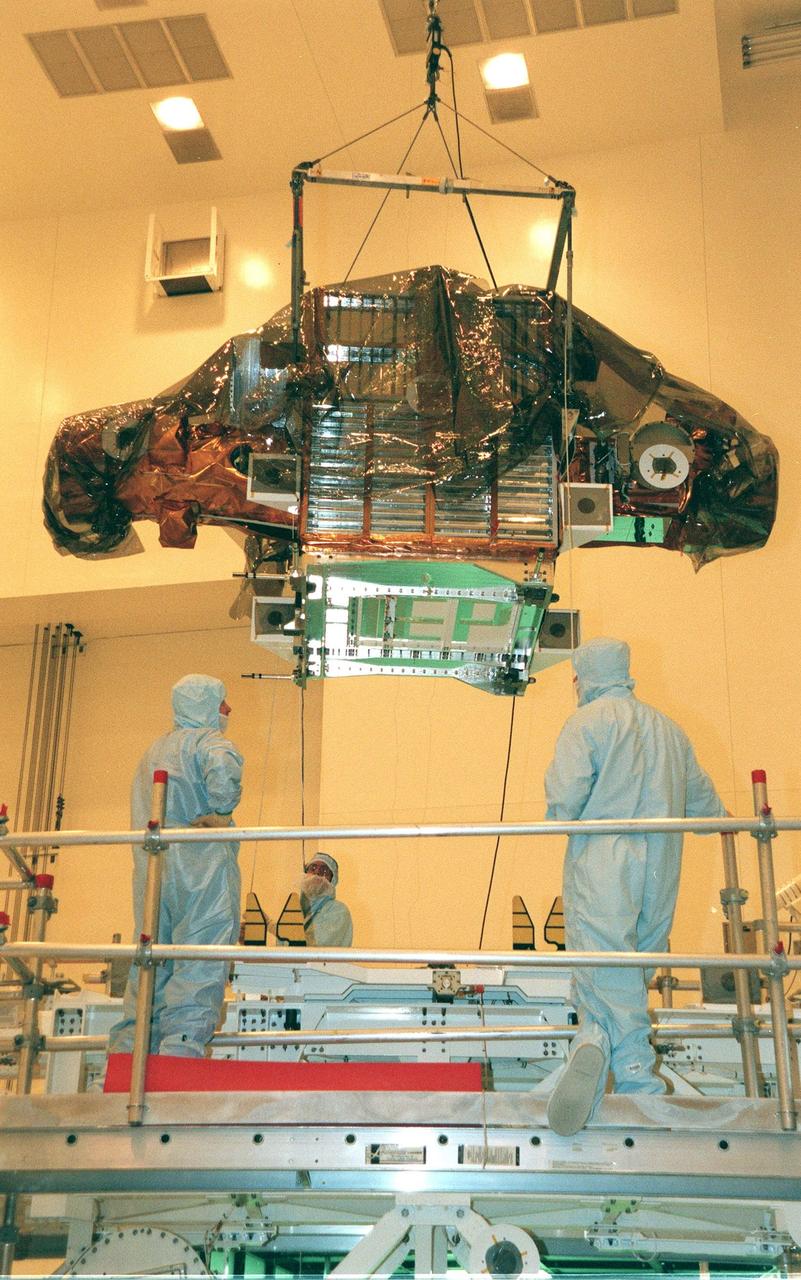
The Spartan solar-observing deployable spacecraft is moved onto a workstand in the Multi-Payload Processing Facility at KSC. Spartan is one of the payloads for the STS-95 mission, scheduled to launch Oct. 29. Other research payloads include the Hubble Space Telescope Orbital Systems Test Platform, the International Extreme Ultraviolet Hitchhiker, as well as the SPACEHAB single module with experiments on space flight and the aging process
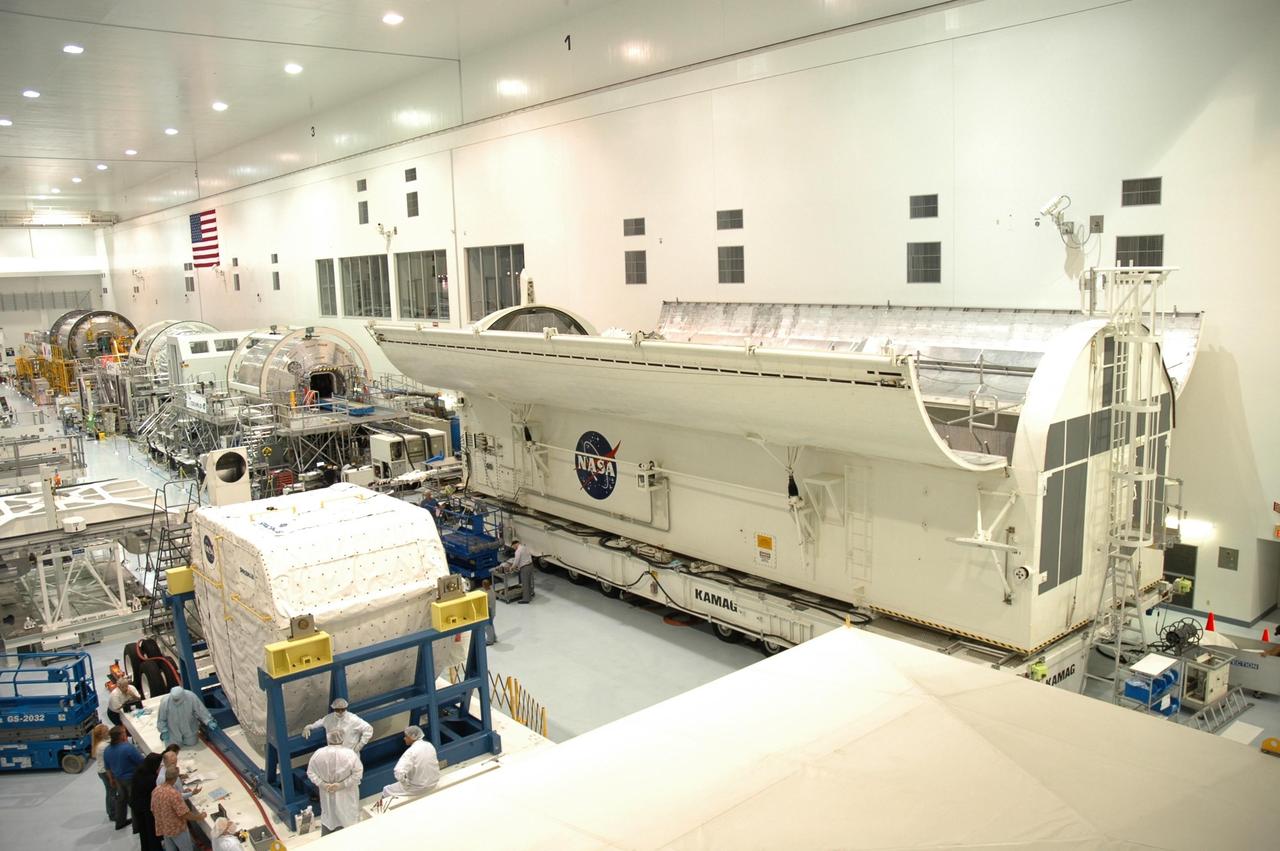
KENNEDY SPACE CENTER, FLA. -- At lower left, in the Space Station Processing Facility, the Spacehab module is prepared for its move to the payload canister at right. The module is part of the payload on mission STS-118 and will be loaded into Space Shuttle Endeavour's payload bay at the pad. Endeavour is targeted for launch on Aug. 9 to the International Space Station. The mission will continue space station construction by delivering a third starboard truss segment, S5, as well as carrying the external stowage platform 3 and Spacehab module. Photo credit: NASA/Jim Grossmann
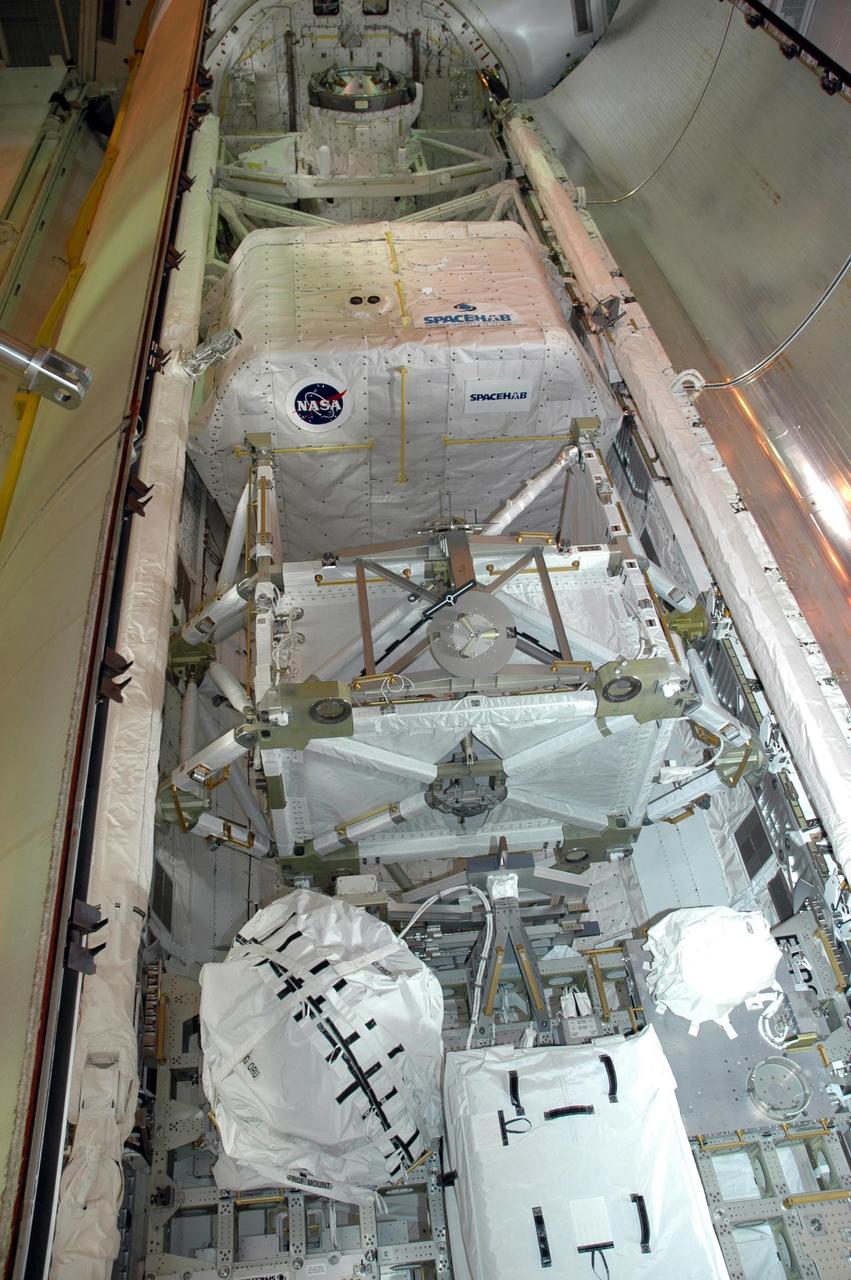
KENNEDY SPACE CENTER, FLA. -- At Launch Pad 39A, Space Shuttle Endeavour's payload lies nestled snugly inside the payload bay, ready for closure of the doors. The payload includes the S5 truss, the SPACEHAB module and external stowage platform 3. The mission is the 22nd flight to the International Space Station and is targeted for launch on Aug. 7. NASA/Charisse Nahser
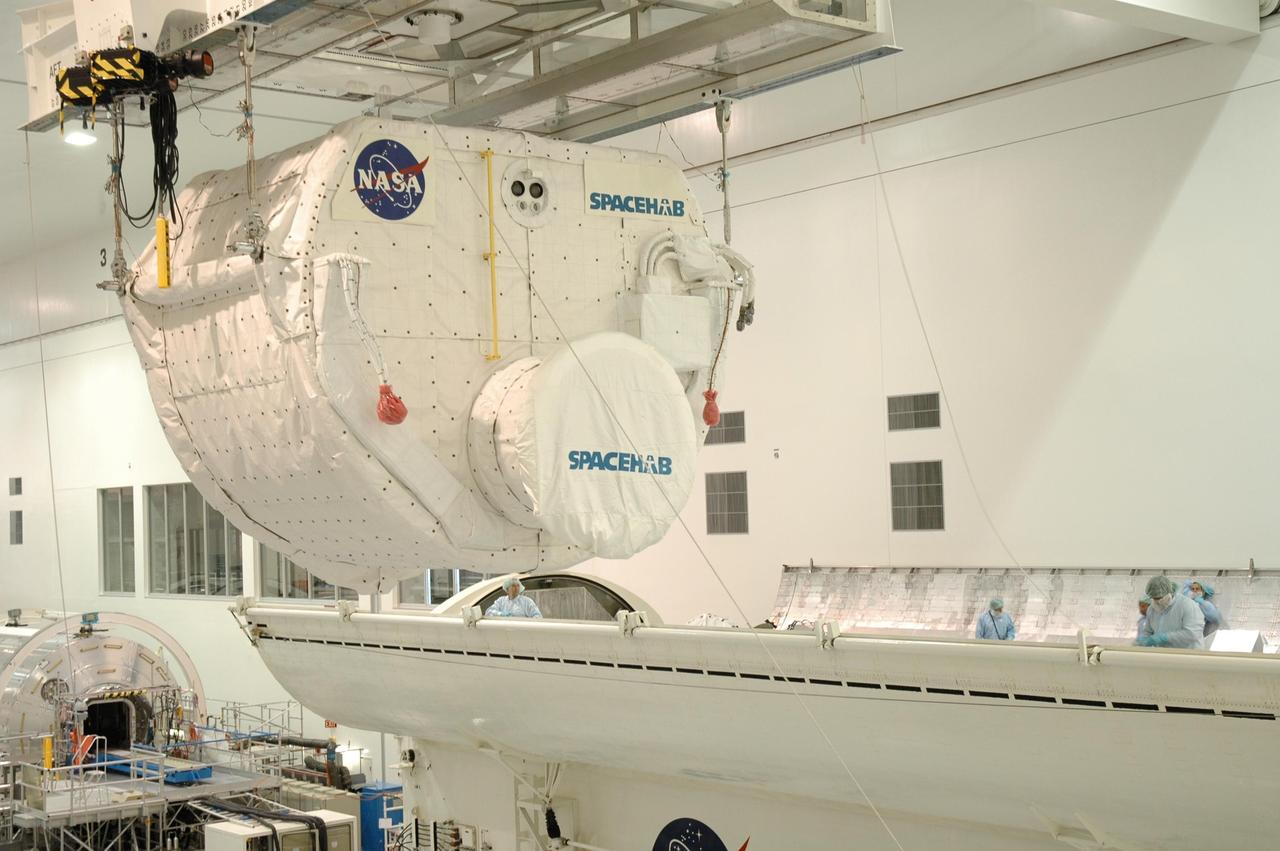
KENNEDY SPACE CENTER, FLA. -- In the Space Station Processing Facility, an overhead crane carries the Spacehab module to the payload canister. The module is part of the payload on mission STS-118 and will be loaded into Space Shuttle Endeavour's payload bay at the pad. Endeavour is targeted for launch on Aug. 9 to the International Space Station. The mission will continue space station construction by delivering a third starboard truss segment, S5, as well as carrying the external stowage platform 3 and Spacehab module. Photo credit: NASA/Jim Grossmann
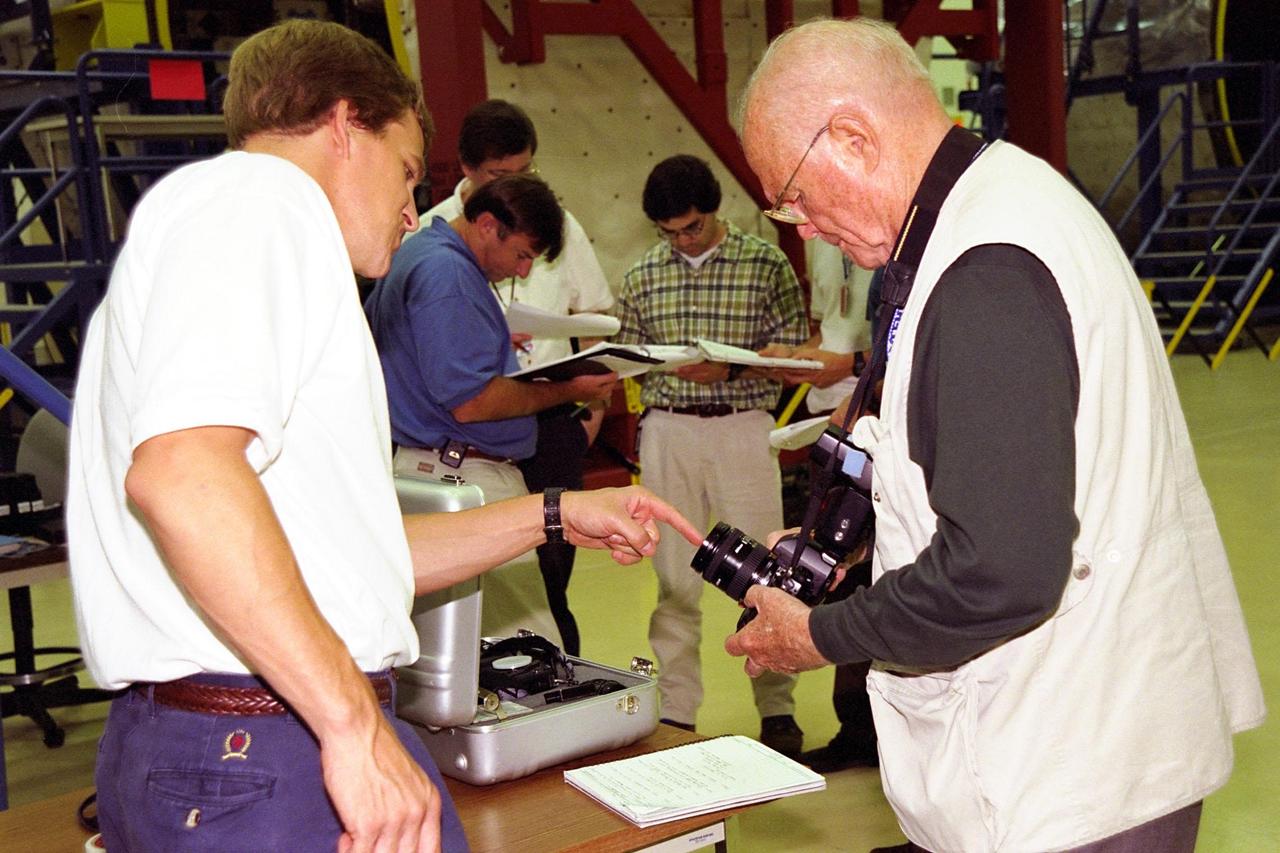
KENNEDY SPACE CENTER, FLA. -- STS-95 Payload Specialist John H. Glenn Jr., at right, and Mission Specialist Scott E. Parazynski examine a camera at the SPACEHAB Payload Processing Facility in Cape Canaveral. STS-95 will feature a variety of research payloads, including the Spartan solar-observing deployable spacecraft, the Hubble Space Telescope Orbital Systems Platform, the International Extreme Ultraviolet Hitchhiker, and experiments on space flight and the aging process. STS-95 is targeted for an Oct. 29 launch aboard the Space Shuttle Discovery
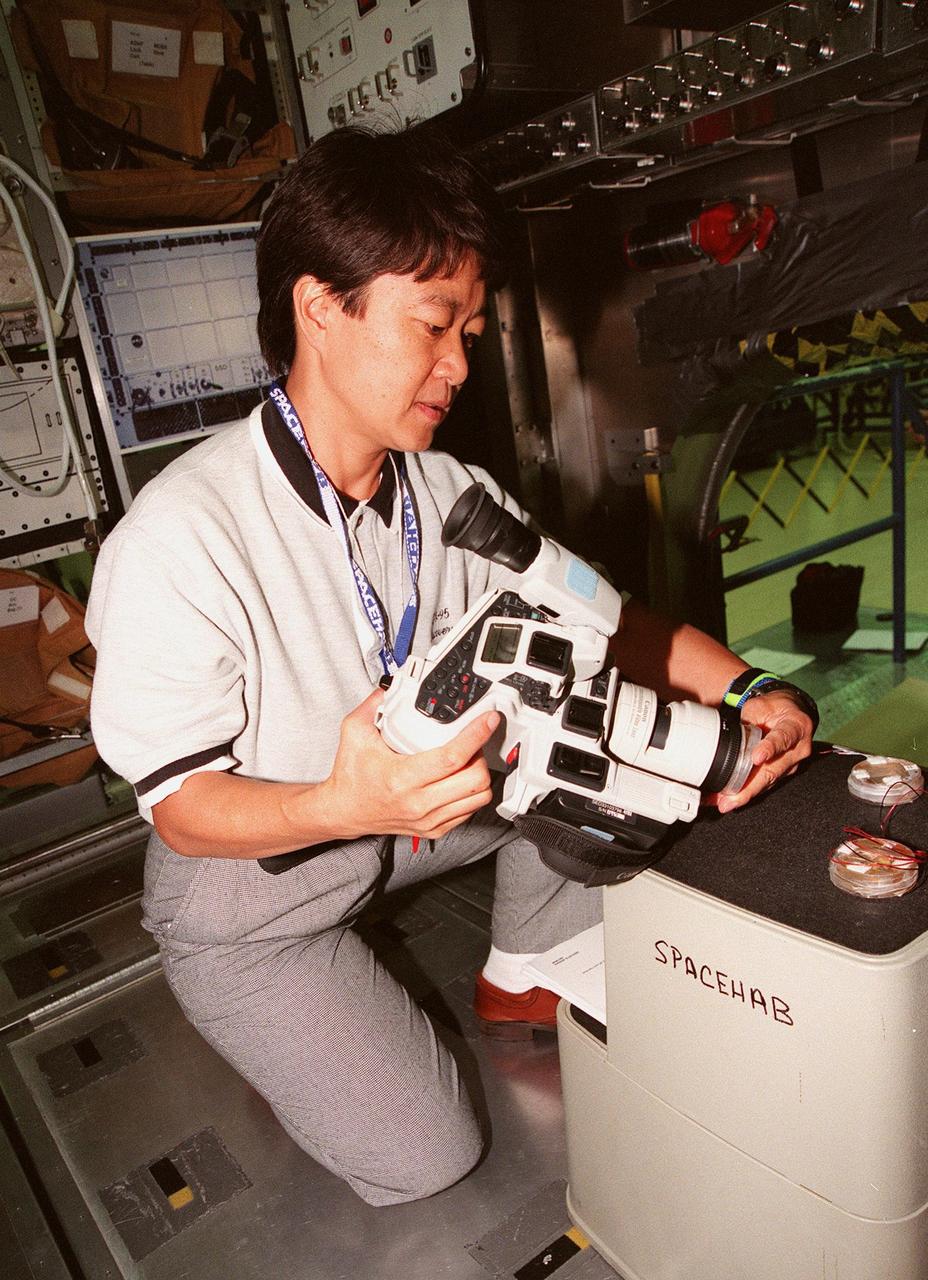
KENNEDY SPACE CENTER, FLA. -- STS-95 Payload Specialist Chiaki Mukai, representing the National Space Development Agency of Japan (NASDA), looks over part of the equipment for the SPACEHAB during familiarization at the SPACEHAB Payload Processing Facility, Cape Canaveral. The mission, scheduled to launch Oct. 29, includes research payloads such as the Spartan solar-observing deployable spacecraft, the Hubble Space Telescope Orbital Systems Test Platform, the International Extreme Ultraviolet Hitchhiker, as well as the SPACEHAB single module with experiments on space flight and the aging process
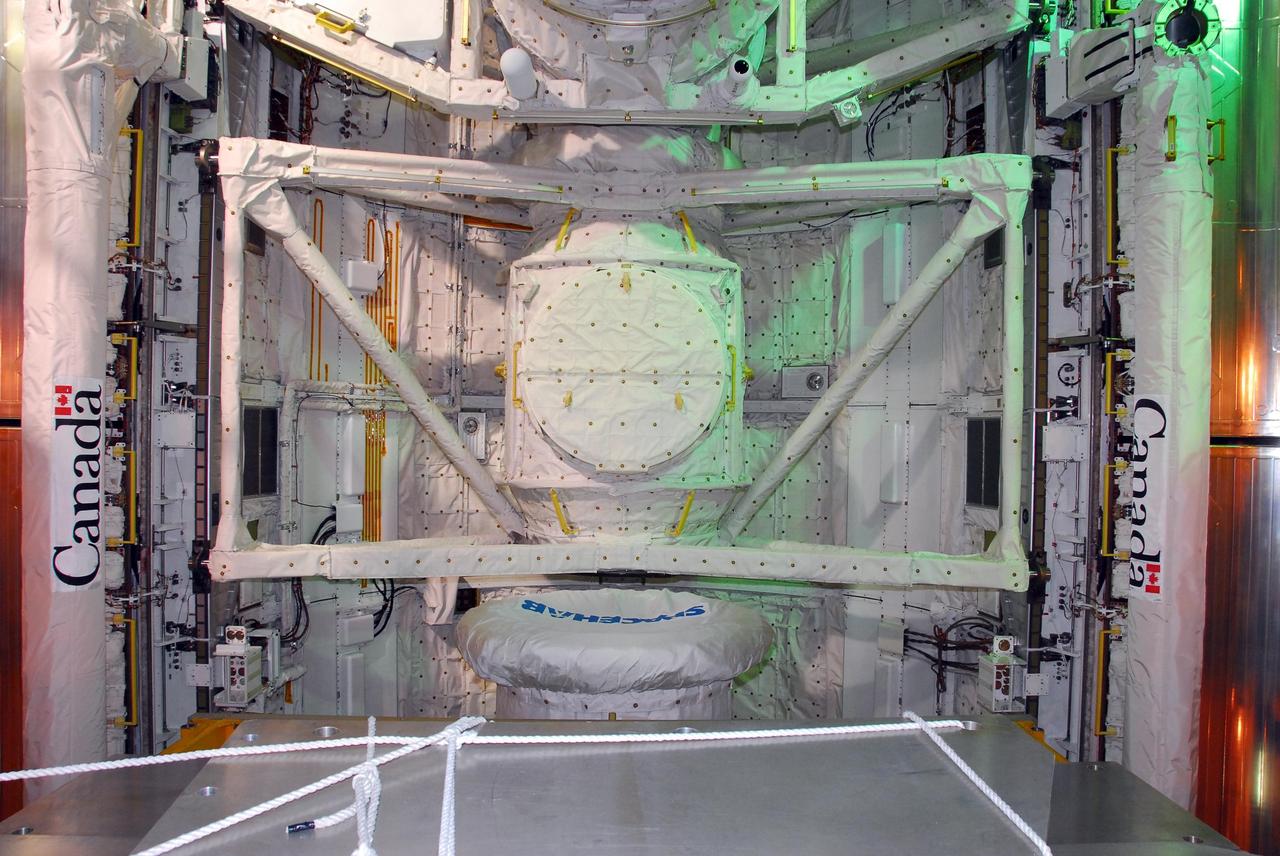
KENNEDY SPACE CENTER, FLA. -- The payload for mission STS-118 is being installed in the payload bay on Space Shuttle Endeavour on Launch Pad 39A. Seen at center is the SPACEHAB module. At left and right in the photo are the shuttle robotic arm and the orbiter boom sensor system. The payload also includes the S5 truss and external stowage platform 3. The mission is the 22nd flight to the International Space Station and is targeted for launch on Aug.7. Photo credit: NASA/Amanda Diller
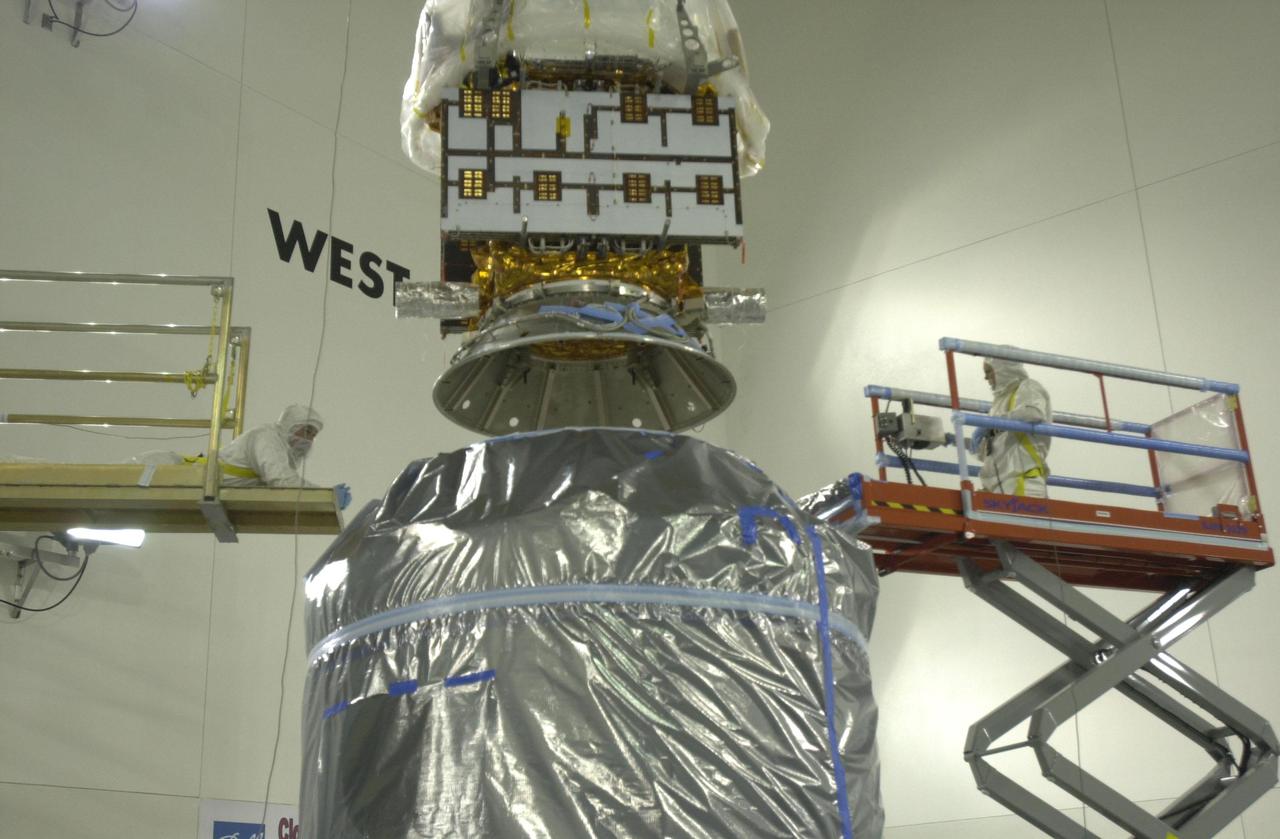
VANDENBERG AIR FORCE BASE, CALIF. — From an elevated platform, workers inside the Astrotech Payload Processing Facility on Vandenberg Air Force Base in California guide the lowering of the CALIPSO spacecraft onto the Lower Delta Payload Attach Fitting (LDPAF) that contains the CloudSat satellite.Later the UDPAF will be mated with the lower Delta Payload Attach Fitting, which contains the CloudSat satellite. The PAF is the interface between the spacecraft and the second stage of the rocket. CALIPSO stands for Cloud-Aerosol Lidar and Infrared Pathfinder Satellite Observation.
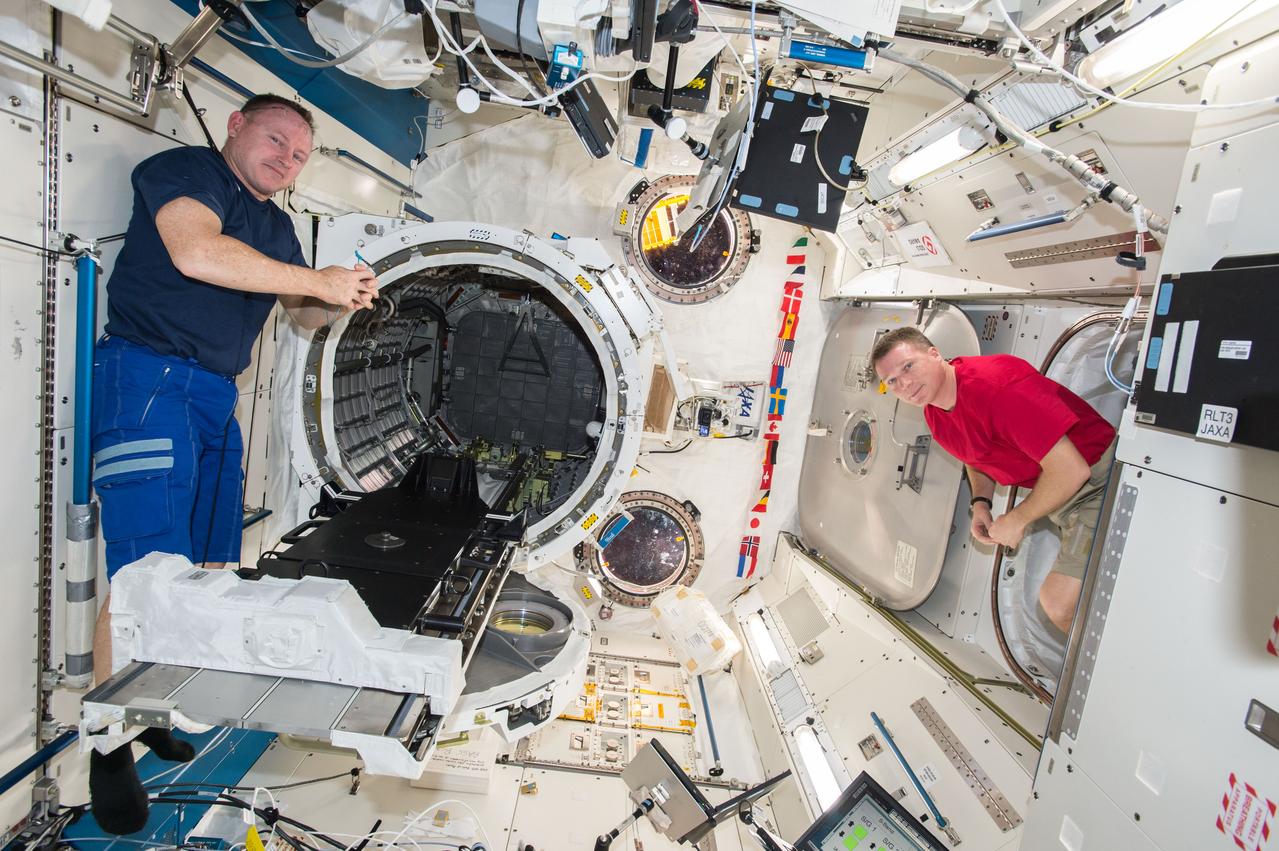
iss042e015971 (11/26/2011) --- NASA astronauts Barry Wilmore and Terry Virts are photographed during operations to install the Cyclops launch platform on the Japanese Experiment Module Airlock (JEMAL) slide table. The Cyclops platform, also known as the Space Station Integrated Kinetic Launcher for Orbital Payload Systems (SSIKLOPS), holds and ejects nanosatellites from outside the ISS.
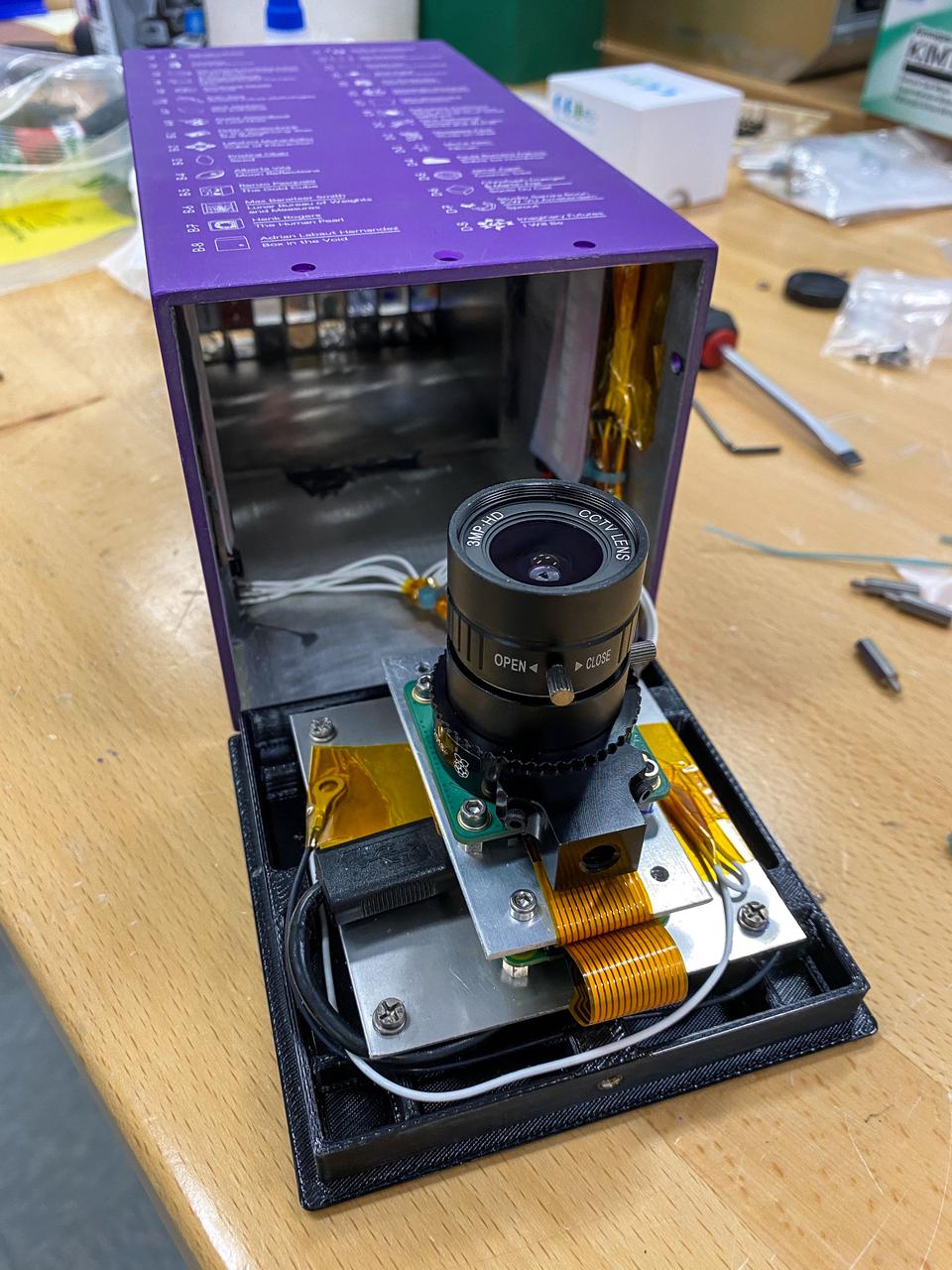
jsc2022e008878 (12/9/2021) --- A preflight view of the Moon Gallery payload. Moon Gallery evaluates the performance of a single-board computer platform with a high-quality camera in the space station’s radiation environment. Photos and videos taken with the camera become part of an art installation known as the Moon Gallery. The camera could be used in future space platforms and science hardware.
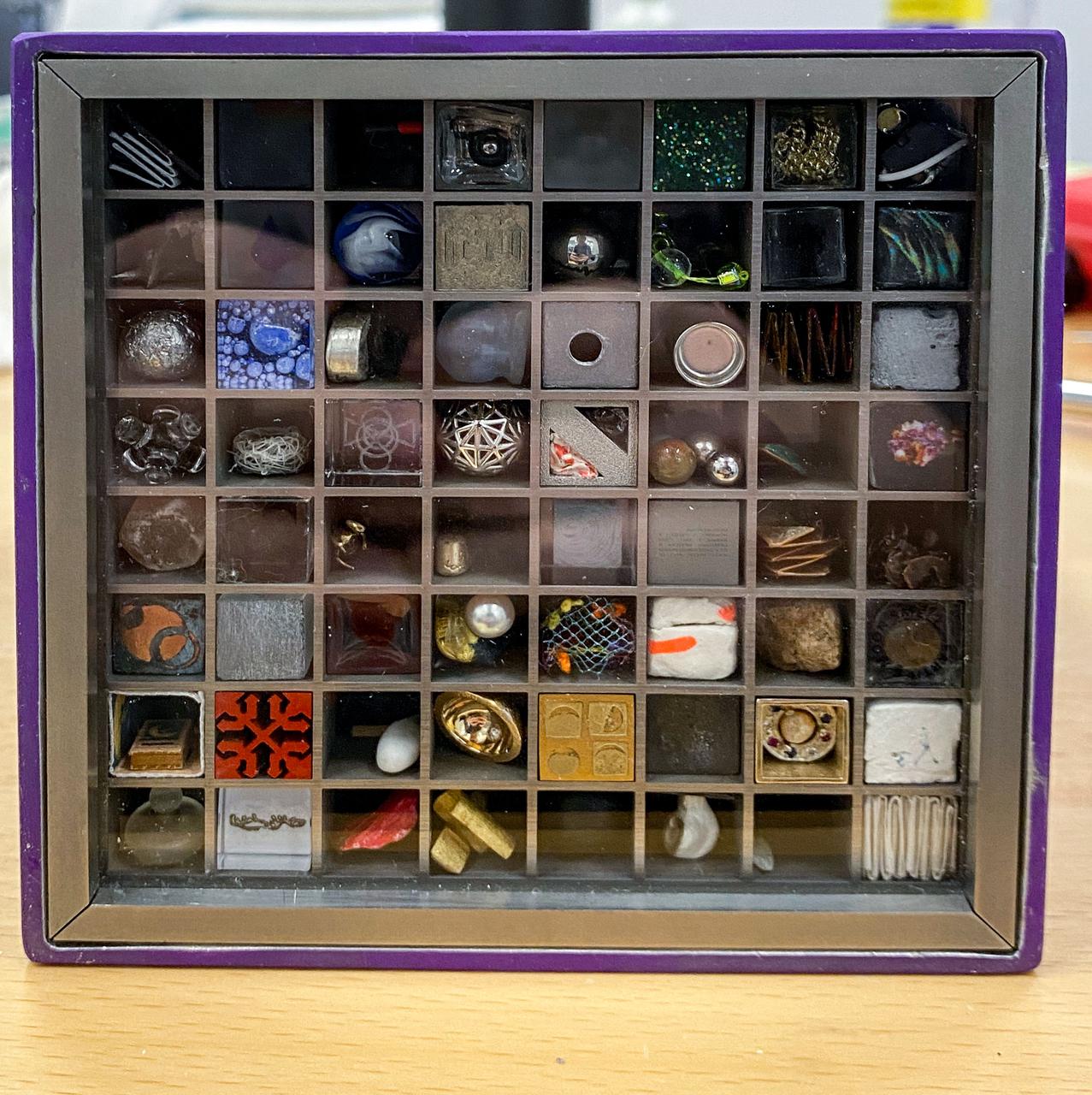
jsc2022e008880 (12/9/2021) --- A preflight view of the Moon Gallery payload. Moon Gallery evaluates the performance of a single-board computer platform with a high-quality camera in the space station’s radiation environment. Photos and videos taken with the camera become part of an art installation known as the Moon Gallery. The camera could be used in future space platforms and science hardware.
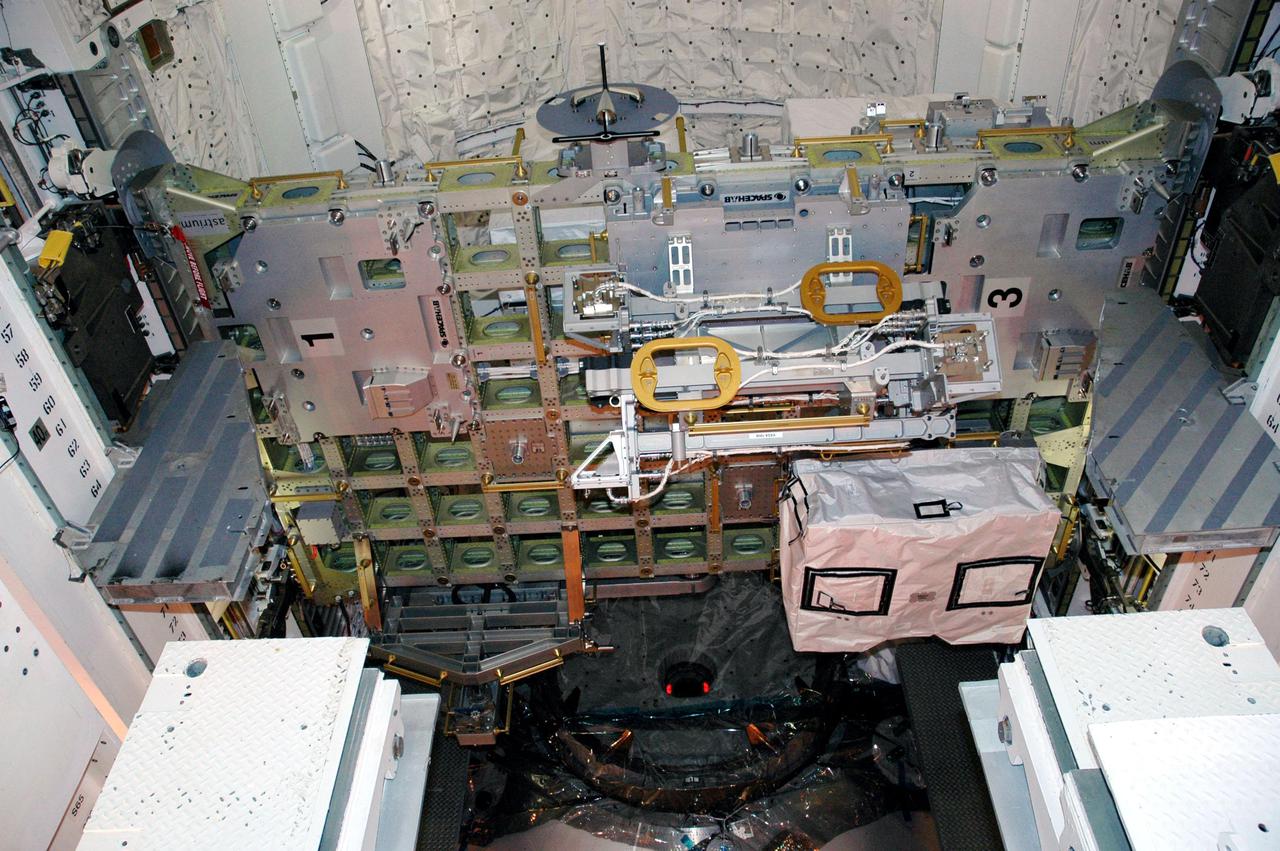
KENNEDY SPACE CENTER, FLA. - In the Payload Changeout Room on Launch Pad 39B, the payloads for Return to Flight mission STS-114 are being transferred to Discovery’s payload bay. Seen here is the External Stowage Platform 2. Other payloads includes a Control Moment Gyro and the Thermal Protection System Detailed Test Objective box, which is placed on the Lightweight Multi-Purpose Experiment Support Structure Carrier, and Multi-Purpose Logistics Module Raffaello. Already installed in the payload bay are the airlock, the Canadarm 2, or Shuttle arm, and the Orbiter Boom Sensor System. The launch window for mission STS-114 extends from July 13 to July 31.
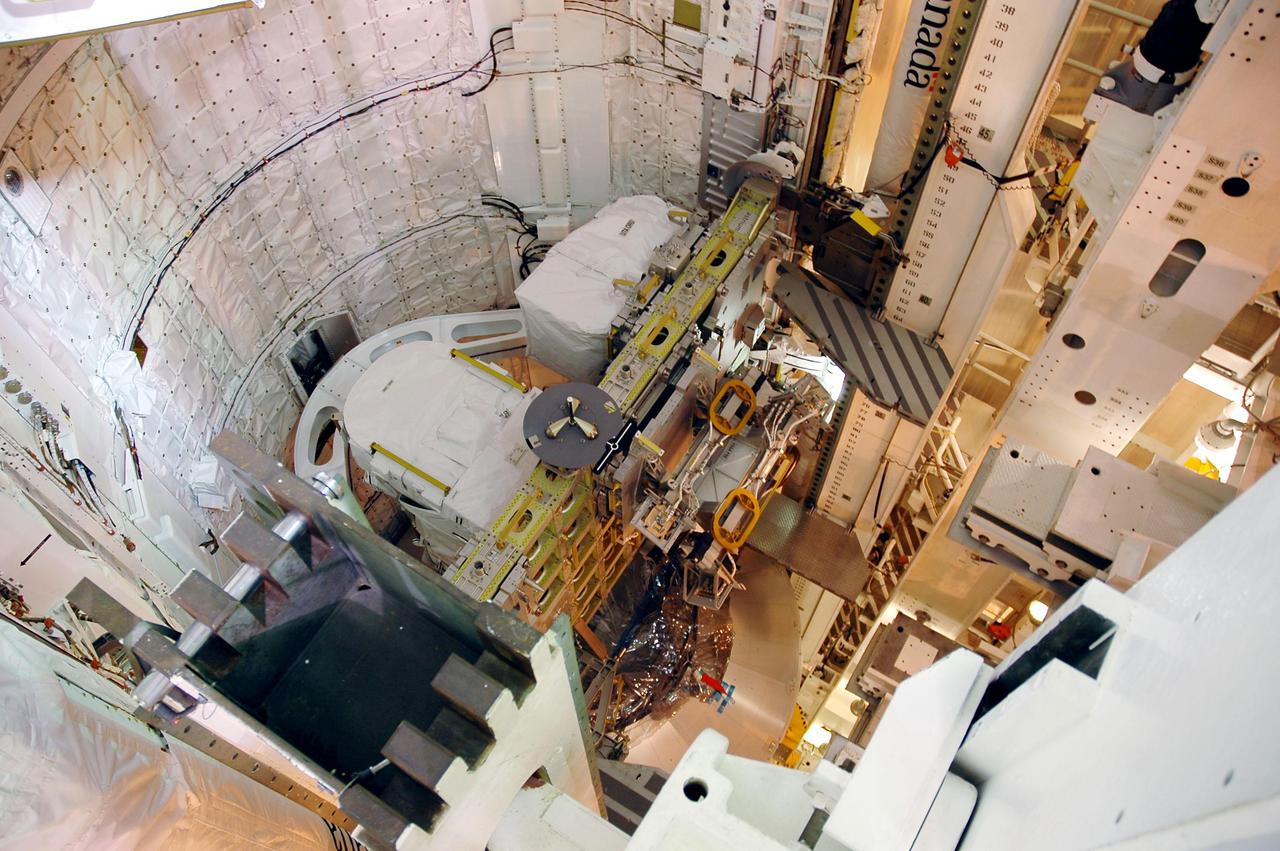
KENNEDY SPACE CENTER, FLA. - In the Payload Changeout Room on Launch Pad 39B, the payloads for Return to Flight mission STS-114 are being transferred to Discovery’s payload bay. The payloads include a Control Moment Gyro, the Thermal Protection System Detailed Test Objective box, which is placed on the Lightweight Multi-Purpose Experiment Support Structure Carrier, the External Stowage Platform 2, and Multi-Purpose Logistics Module Raffaello. Already installed in the payload bay are the airlock, the Canadarm 2, or Shuttle arm, and the Orbiter Boom Sensor System. The launch window for mission STS-114 extends from July 13 to July 31.

Airbus workers inspect the Bartolomeo platform after it was unpacked from its shipping container in the Space Station Processing Facility high bay at NASA’s Kennedy Space Center in Florida on Jan. 30, 2020. Bartolomeo was manufactured by Airbus Defence and Space. The platform will be delivered to the International Space Station aboard SpaceX’s 20th Commercial Resupply Services (CRS-20) mission for the agency. The platform will attach to the exterior of the space station’s European Columbus Module. Named for the younger brother of Christopher Columbus, the platform has the capability to host external payloads in low-Earth orbit on the station. CRS-20 is scheduled to launch aboard SpaceX’s Dragon cargo spacecraft atop the company’s Falcon 9 rocket in March 2020.
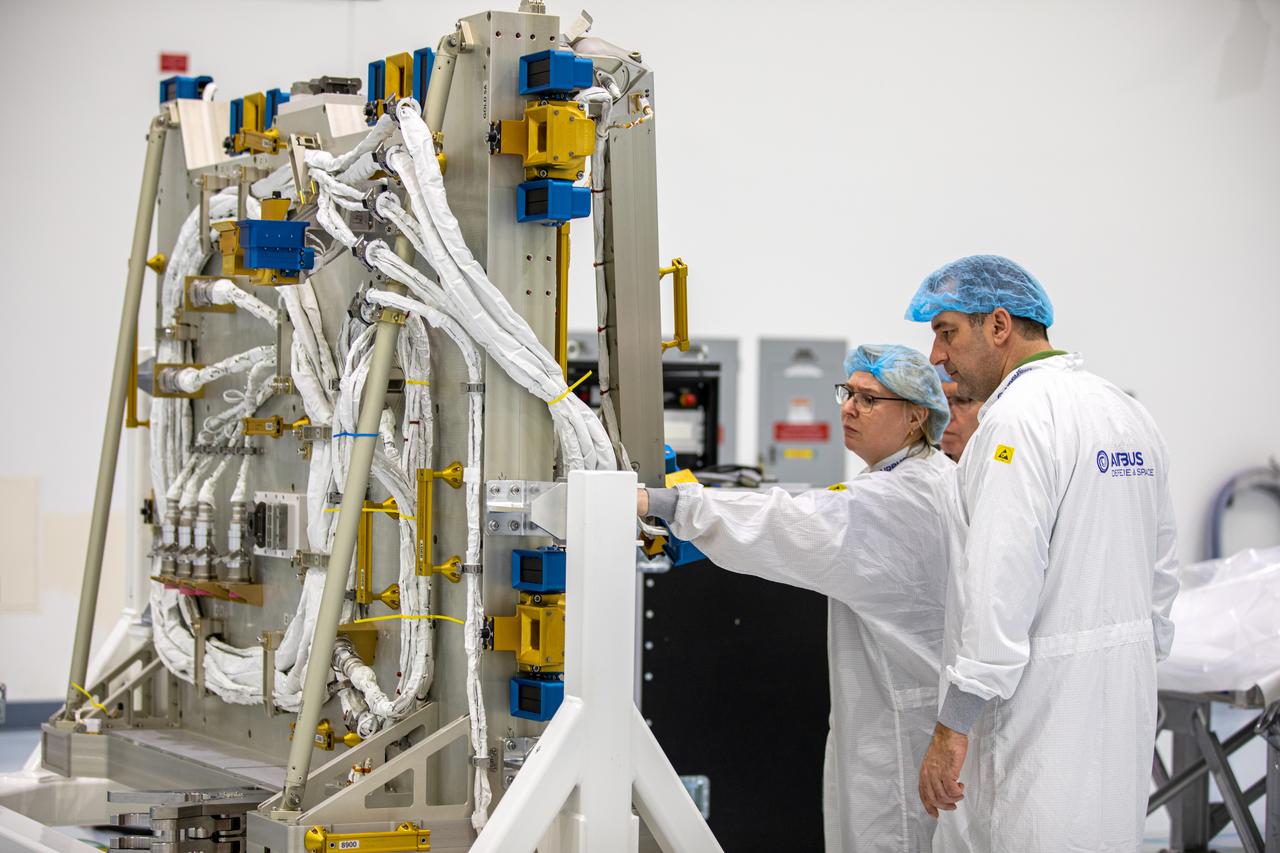
Airbus workers inspect the Bartolomeo platform after it was unpacked from its shipping container in the Space Station Processing Facility high bay at NASA’s Kennedy Space Center in Florida on Jan. 30, 2020. Bartolomeo was manufactured by Airbus Defence and Space. The platform will be delivered to the International Space Station aboard SpaceX’s 20th Commercial Resupply Services (CRS-20) mission for the agency. The platform will attach to the exterior of the space station’s European Columbus Module. Named for the younger brother of Christopher Columbus, the platform has the capability to host external payloads in low-Earth orbit on the station. CRS-20 is scheduled to launch aboard SpaceX’s Dragon cargo spacecraft atop the company’s Falcon 9 rocket in March 2020.
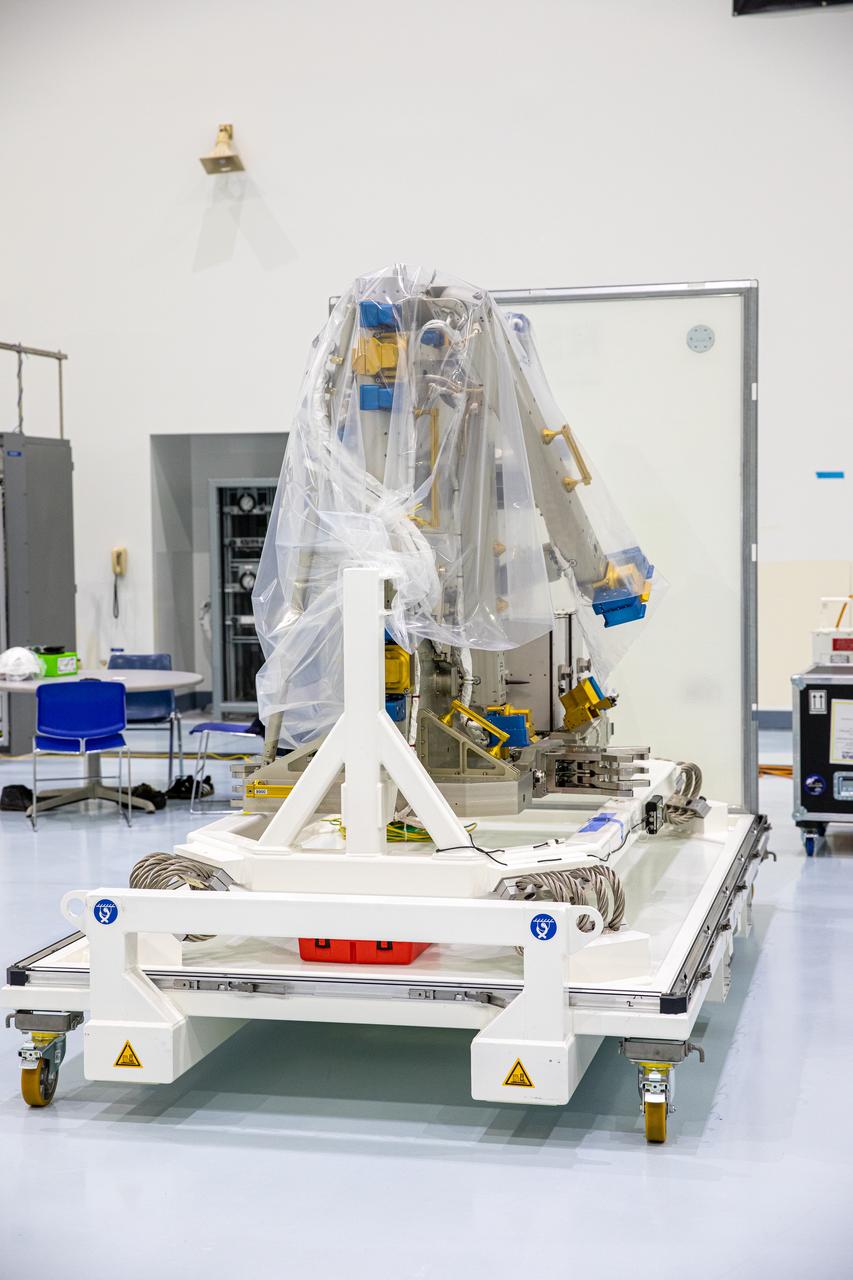
The Bartolomeo platform that will be delivered to the International Space Station is unpacked from its shipping container inside the Space Station Processing Facility high bay at NASA’s Kennedy Space Center in Florida on Jan. 30, 2020. Bartolomeo was manufactured by Airbus Defence and Space. The platform will be delivered to the International Space Station aboard SpaceX’s 20th Commercial Resupply Services (CRS-20) mission for the agency. The platform will attach to the exterior of the space station’s European Columbus Module. Named for the younger brother of Christopher Columbus, the platform has the capability to host external payloads in low-Earth orbit on the station. CRS-20 is scheduled to launch aboard SpaceX’s Dragon cargo spacecraft atop the company’s Falcon 9 rocket in March 2020.
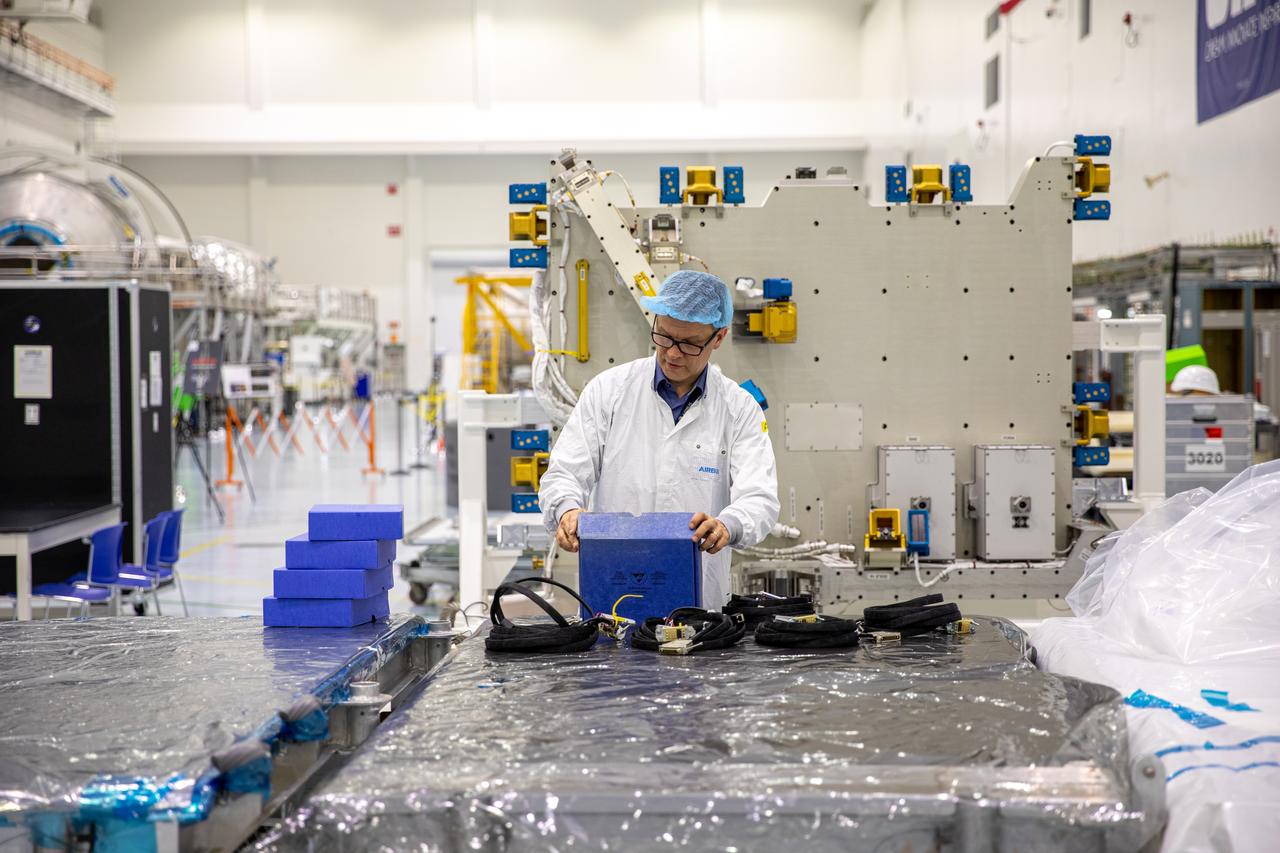
Airbus workers inspects parts for the Bartolomeo platform after it was unpacked from its shipping container in the Space Station Processing Facility high bay at NASA’s Kennedy Space Center in Florida on Jan. 30, 2020. Bartolomeo was manufactured by Airbus Defence and Space. The platform will be delivered to the International Space Station aboard SpaceX’s 20th Commercial Resupply Services (CRS-20) mission for the agency. The platform will attach to the exterior of the space station’s European Columbus Module. Named for the younger brother of Christopher Columbus, the platform has the capability to host external payloads in low-Earth orbit on the station. CRS-20 is scheduled to launch aboard SpaceX’s Dragon cargo spacecraft atop the company’s Falcon 9 rocket in March 2020.
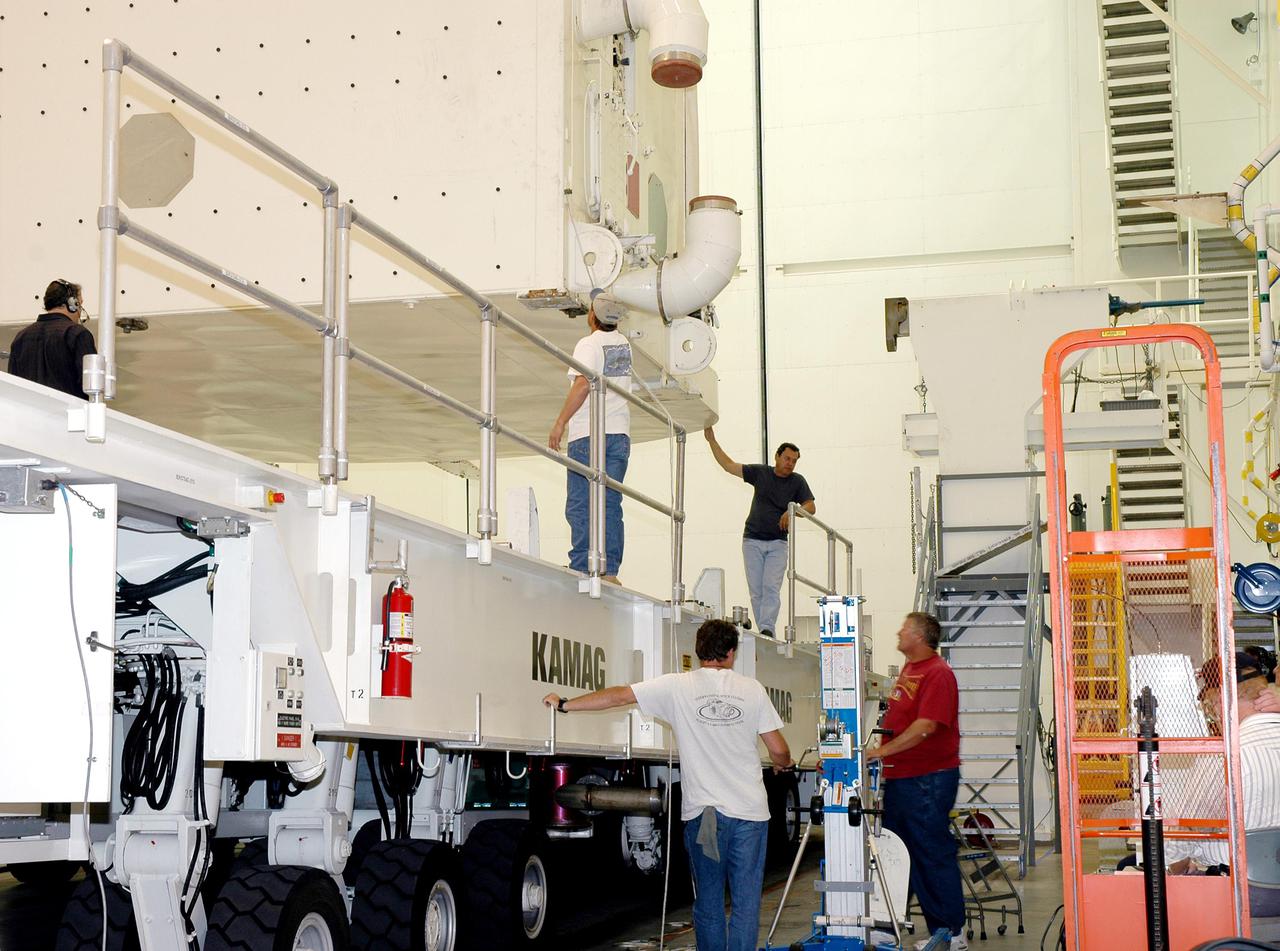
KENNEDY SPACE CENTER, FLA. - Workers in the Canister Rotation Facility at NASA’s Kennedy Space Center observe the Payload Canister after its rotation to a vertical position. The canister will be transported to Launch Pad 39B. The payloads inside, including the Multi-Purpose Logistics Module Raffaello and External Stowage Platform-2, will be moved into the Payload Changeout Room in the Rotating Service Structure and then installed in Discovery’s payload bay. Space Shuttle Discovery is scheduled to launch on Return to Flight mission STS-114 to the International Space Station. The launch window extends from May 22 to June 3.
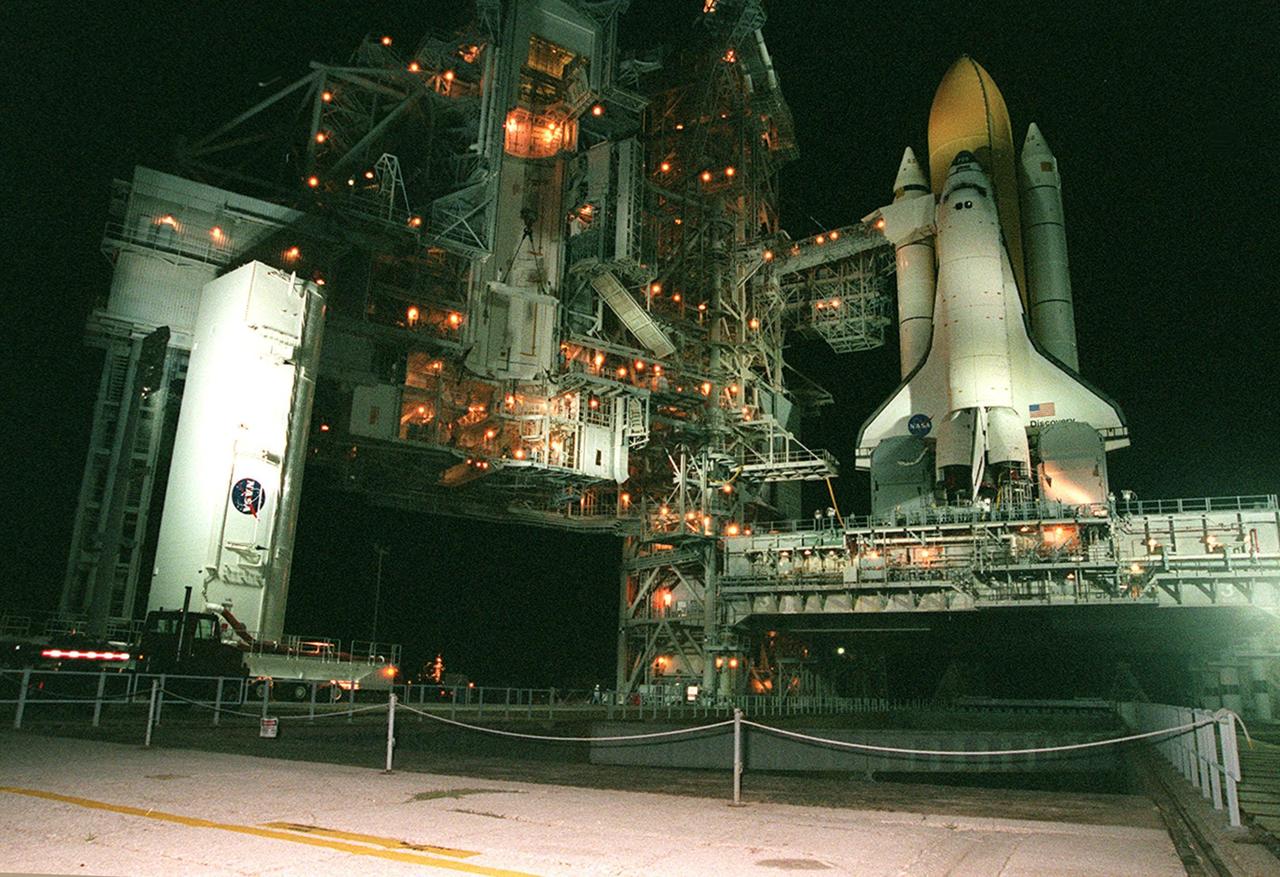
KENNEDY SPACE CENTER, Fla. -- At Launch Pad 39A, the payload canister at left draws closer to the Rotating Service Structure where it will be lifted to the Payload Changeout Room. There its cargo, the Integrated Truss Structure Z1, will be removed and later transferred to Space Shuttle Discovery’s payload bay. Discovery is at right, sitting atop the Mobile Launcher Platform. The Z1 truss is the first of 10 that will become the backbone of the International Space Station, eventually stretching the length of a football field. Along with its companion payload, the third Pressurized Mating Adapter, the Z1 is scheduled to be launched aboard Discovery Oct. 5 at 9:38 p.m. EDT
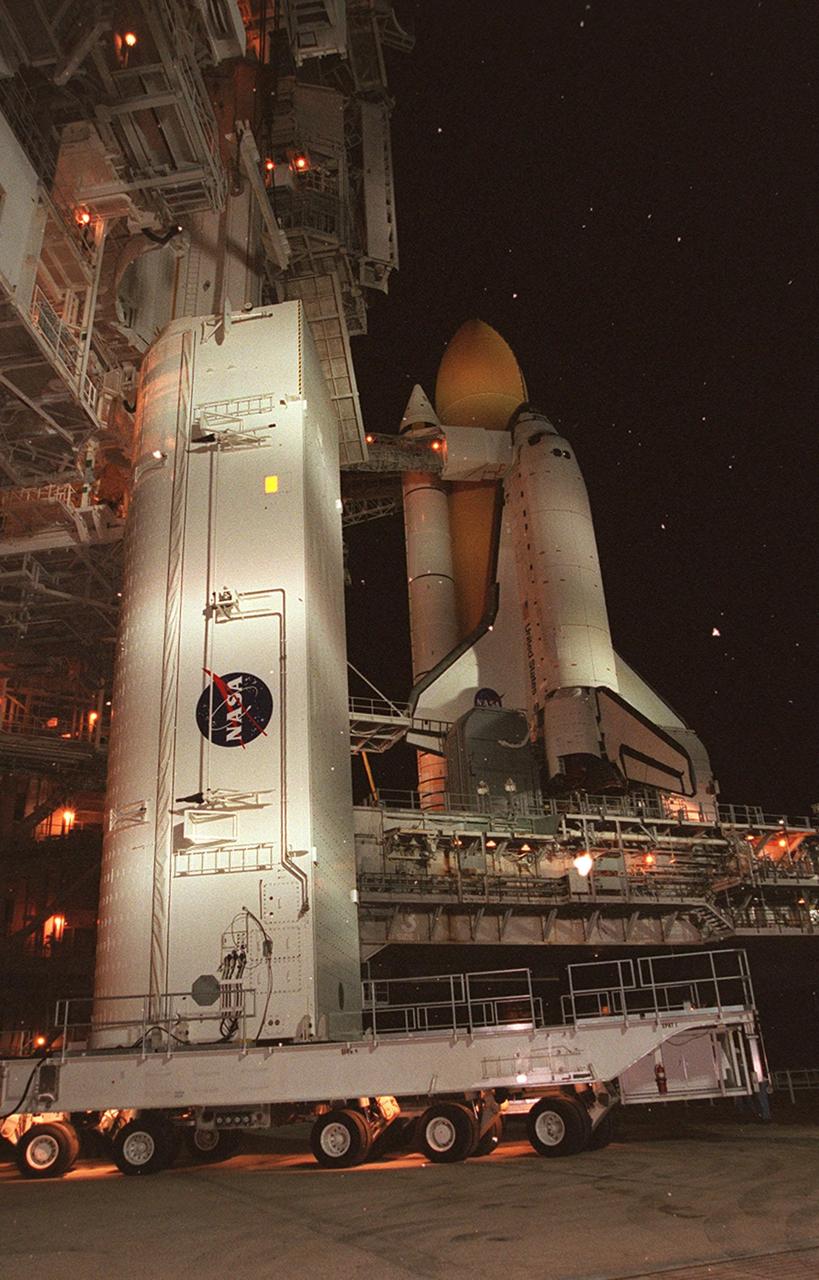
KENNEDY SPACE CENTER, Fla. -- At Launch Pad 39A, the payload canister with the Integrated Truss Structure Z1 inside arrives at the spot under the Rotating Service Structure where the canister can be lifted to the Payload Changeout Room. There the Z1 truss will be removed and later transferred to Space Shuttle Discovery’s payload bay. Discovery is at right, sitting atop the Mobile Launcher Platform. The Z1 truss is the first of 10 that will become the backbone of the International Space Station, eventually stretching the length of a football field. Along with its companion payload, the third Pressurized Mating Adapter, the Z1 is scheduled to be launched aboard Discovery Oct. 5 at 9:38 p.m. EDT
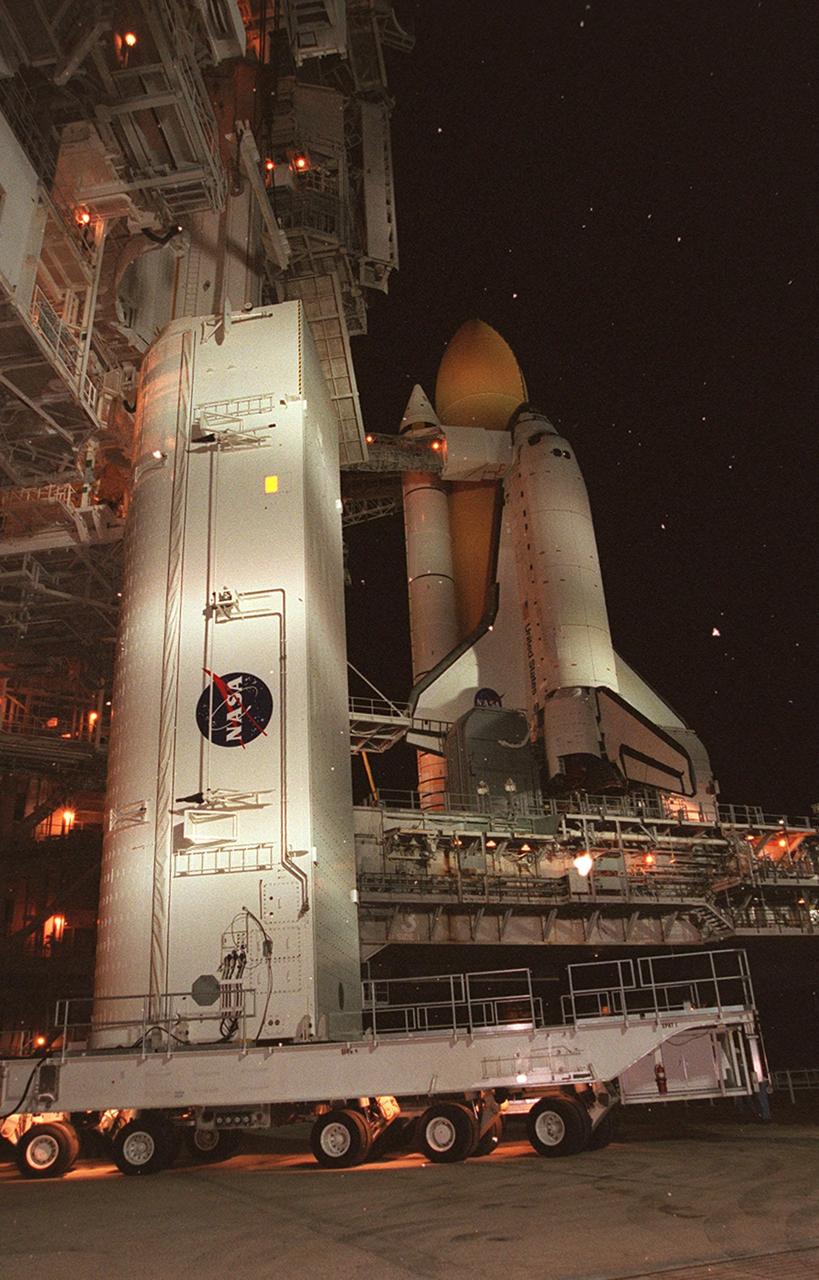
KENNEDY SPACE CENTER, Fla. -- At Launch Pad 39A, the payload canister with the Integrated Truss Structure Z1 inside arrives at the spot under the Rotating Service Structure where the canister can be lifted to the Payload Changeout Room. There the Z1 truss will be removed and later transferred to Space Shuttle Discovery’s payload bay. Discovery is at right, sitting atop the Mobile Launcher Platform. The Z1 truss is the first of 10 that will become the backbone of the International Space Station, eventually stretching the length of a football field. Along with its companion payload, the third Pressurized Mating Adapter, the Z1 is scheduled to be launched aboard Discovery Oct. 5 at 9:38 p.m. EDT
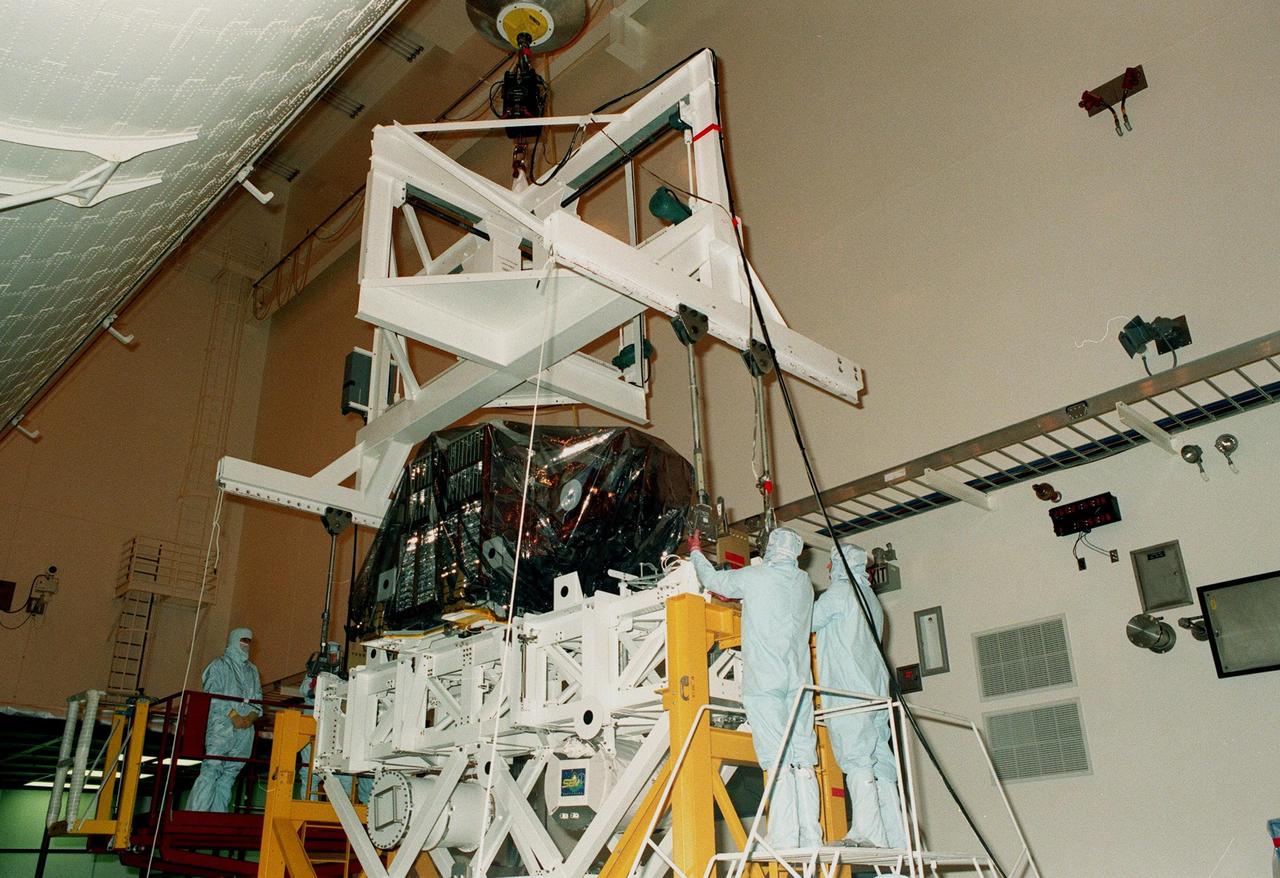
KENNEDY SPACE CENTER, FLA. -- The Spartan solar-observing deployable spacecraft is lifted from its work stand to move it to a payload canister in the Multi-Payload Processing Facility at KSC. Spartan is one of the payloads for the STS-95 mission, scheduled to launch Oct. 29. Spartan is a solar physics spacecraft designed to perform remote sensing of the hot outer layers of the sun's atmosphere or corona. The objective of the observations is to investigate the mechanisms causing the heating of the solar corona and the acceleration of the solar wind which originates in the corona. Other research payloads include the Hubble Space Telescope Orbital Systems Test Platform, the International Extreme Ultraviolet Hitchhiker, and the SPACEHAB single module with experiments on space flight and the aging process
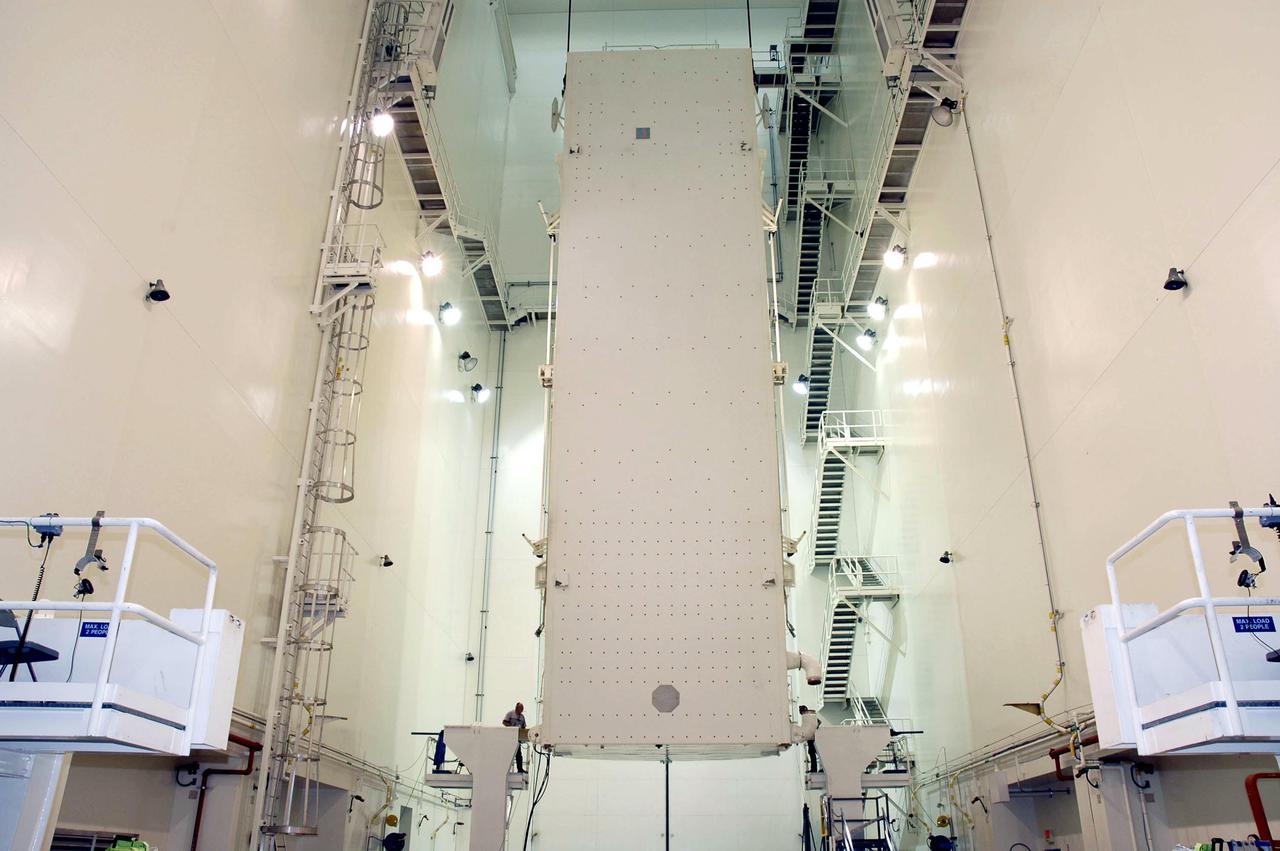
KENNEDY SPACE CENTER, FLA. - In the Canister Rotation Facility at NASA’s Kennedy Space Center, the Payload Canister is being raised to a vertical position for transport to Launch Pad 39B. The payloads inside, including the Multi-Purpose Logistics Module Raffaello and External Stowage Platform-2, will be moved into the Payload Changeout Room in the Rotating Service Structure and then installed in Discovery’s payload bay. Space Shuttle Discovery is scheduled to launch on Return to Flight mission STS-114 to the International Space Station. The launch window extends from May 22 to June 3.
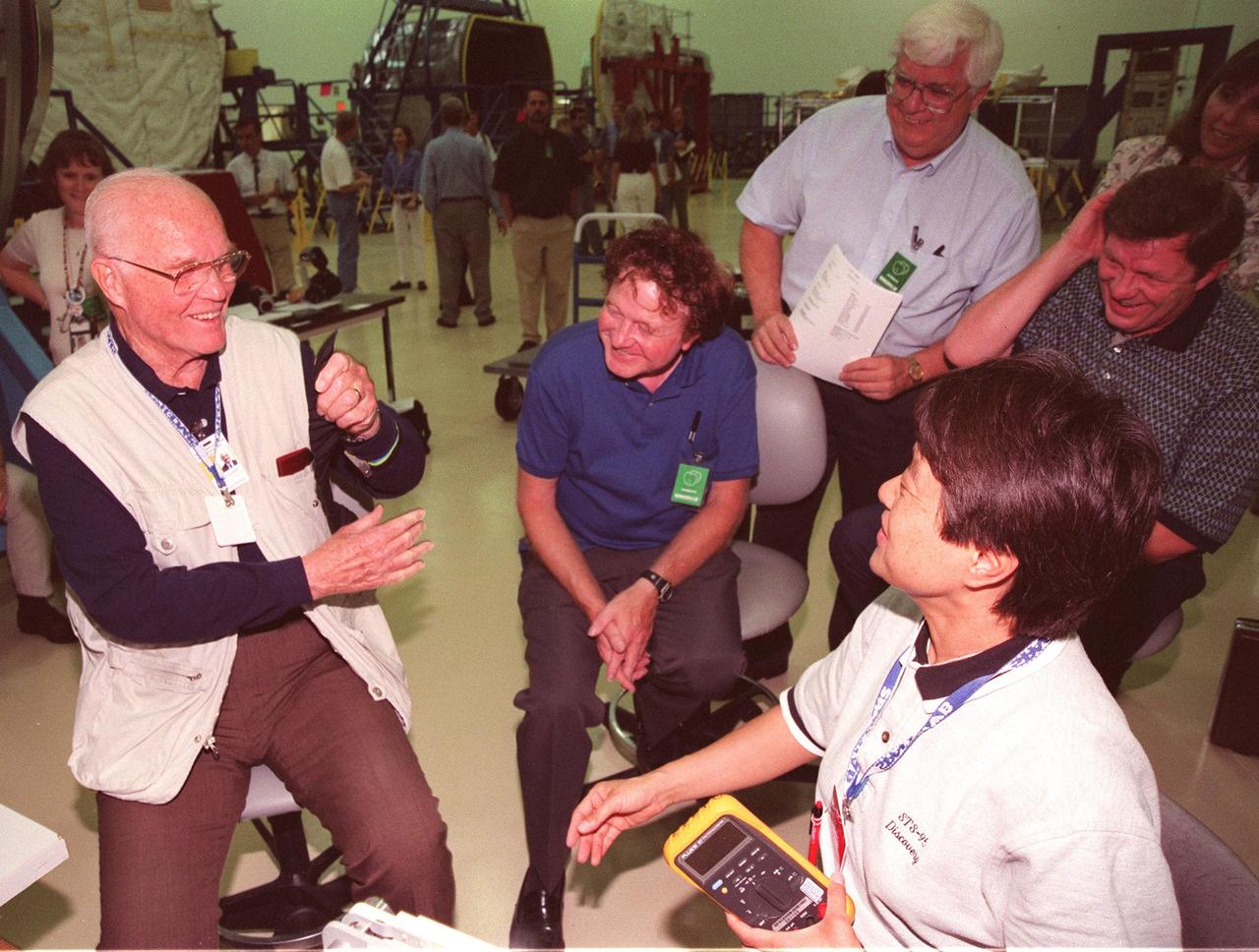
STS-95 Payload Specialist John Glenn (left), who is a senator from Ohio, shares an amusing moment with KSC workers in the background and Payload Specialist Chiaki Mukai (extreme right), who represents the National Space Development Agency of Japan (NASDA). Glenn and Mukai are participating in SPACEHAB familiarization at the SPACEHAB Payload Processing Facility, Cape Canaveral. The mission, scheduled to launch Oct. 29, includes research payloads such as the Spartan solar-observing deployable spacecraft, the Hubble Space Telescope Orbital Systems Test Platform, the International Extreme Ultraviolet Hitchhiker, as well as the SPACEHAB single module with experiments on space flight and the aging process
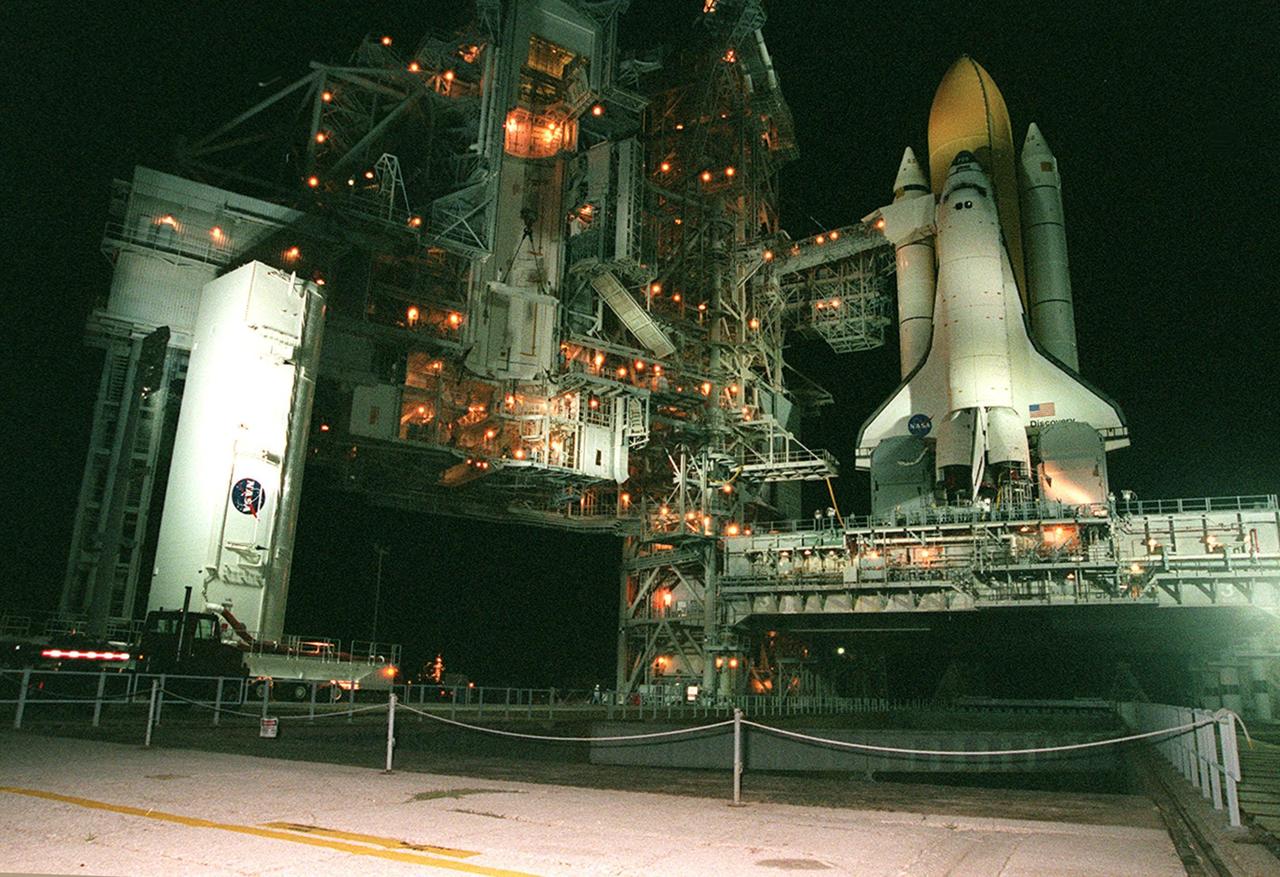
KENNEDY SPACE CENTER, Fla. -- At Launch Pad 39A, the payload canister at left draws closer to the Rotating Service Structure where it will be lifted to the Payload Changeout Room. There its cargo, the Integrated Truss Structure Z1, will be removed and later transferred to Space Shuttle Discovery’s payload bay. Discovery is at right, sitting atop the Mobile Launcher Platform. The Z1 truss is the first of 10 that will become the backbone of the International Space Station, eventually stretching the length of a football field. Along with its companion payload, the third Pressurized Mating Adapter, the Z1 is scheduled to be launched aboard Discovery Oct. 5 at 9:38 p.m. EDT
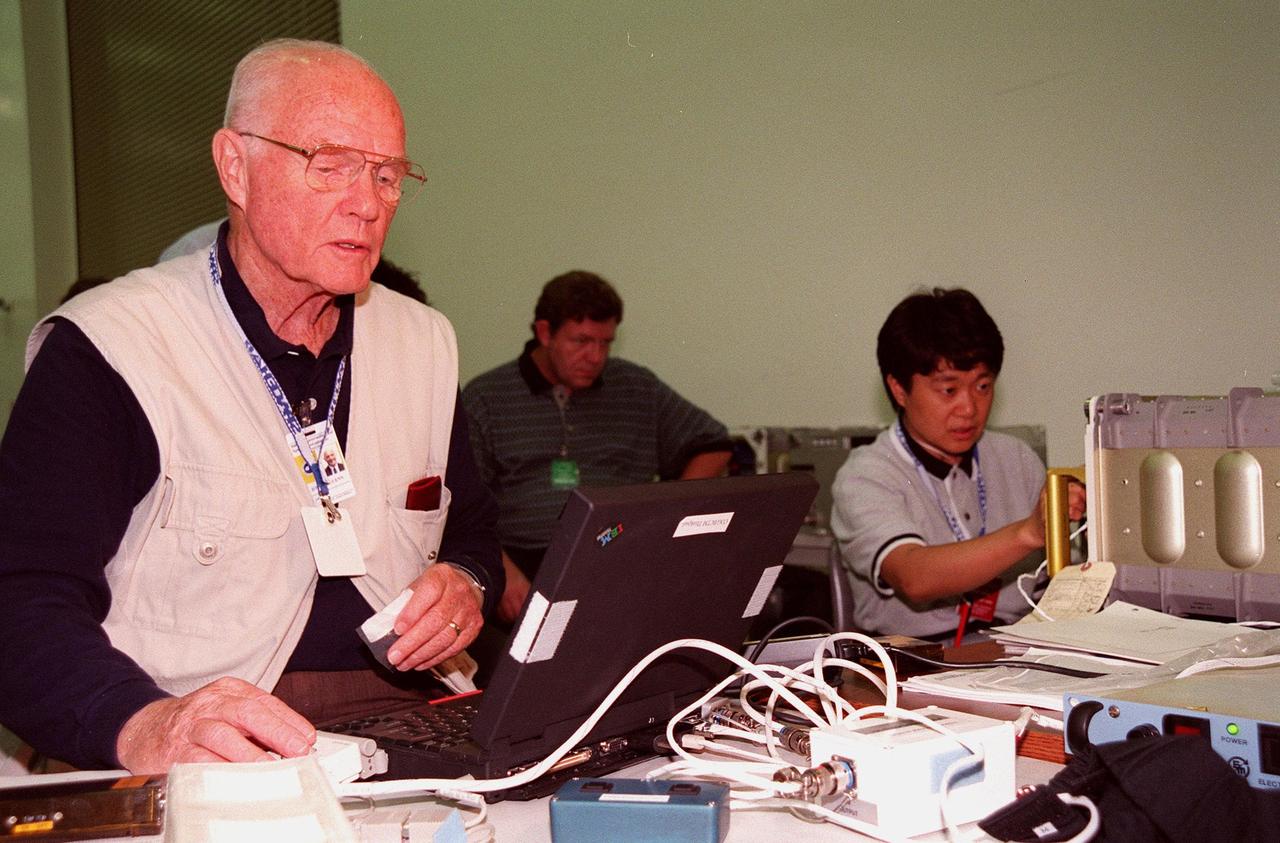
KENNEDY SPACE CENTER, FLA. -- STS-95 Payload Specialist John Glenn (left), who is a senator from Ohio, and Payload Specialist Chiaki Mukai (extreme right), who represents the National Space Development Agency of Japan (NASDA), check out equipment during SPACEHAB familiarization at the SPACEHAB Payload Processing Facility, Cape Canaveral. The mission, scheduled to launch Oct. 29, includes research payloads such as the Spartan solar-observing deployable spacecraft, the Hubble Space Telescope Orbital Systems Test Platform, the International Extreme Ultraviolet Hitchhiker, as well as the SPACEHAB single module with experiments on space flight and the aging proces
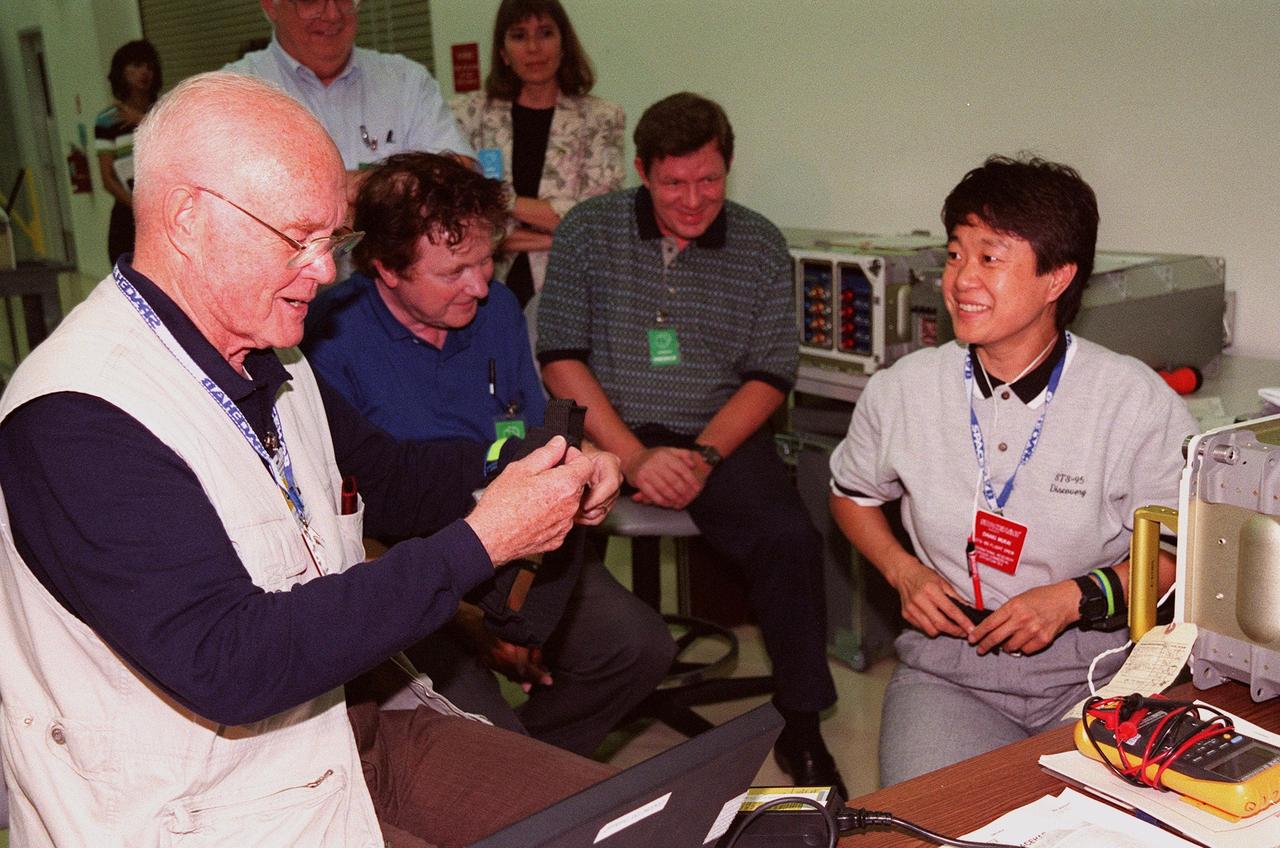
KENNEDY SPACE CENTER, FLA. -- STS-95 Payload Specialist John Glenn (left), who is a senator from Ohio, and Payload Specialist Chiaki Mukai (extreme right), who represents the National Space Development Agency of Japan (NASDA), check out equipment during SPACEHAB familiarization at the SPACEHAB Payload Processing Facility, Cape Canaveral. KSC workers in the background observe. The mission, scheduled to launch Oct. 29, includes research payloads such as the Spartan solar-observing deployable spacecraft, the Hubble Space Telescope Orbital Systems Test Platform, the International Extreme Ultraviolet Hitchhiker, as well as the SPACEHAB single module with experiments on space flight and the aging process
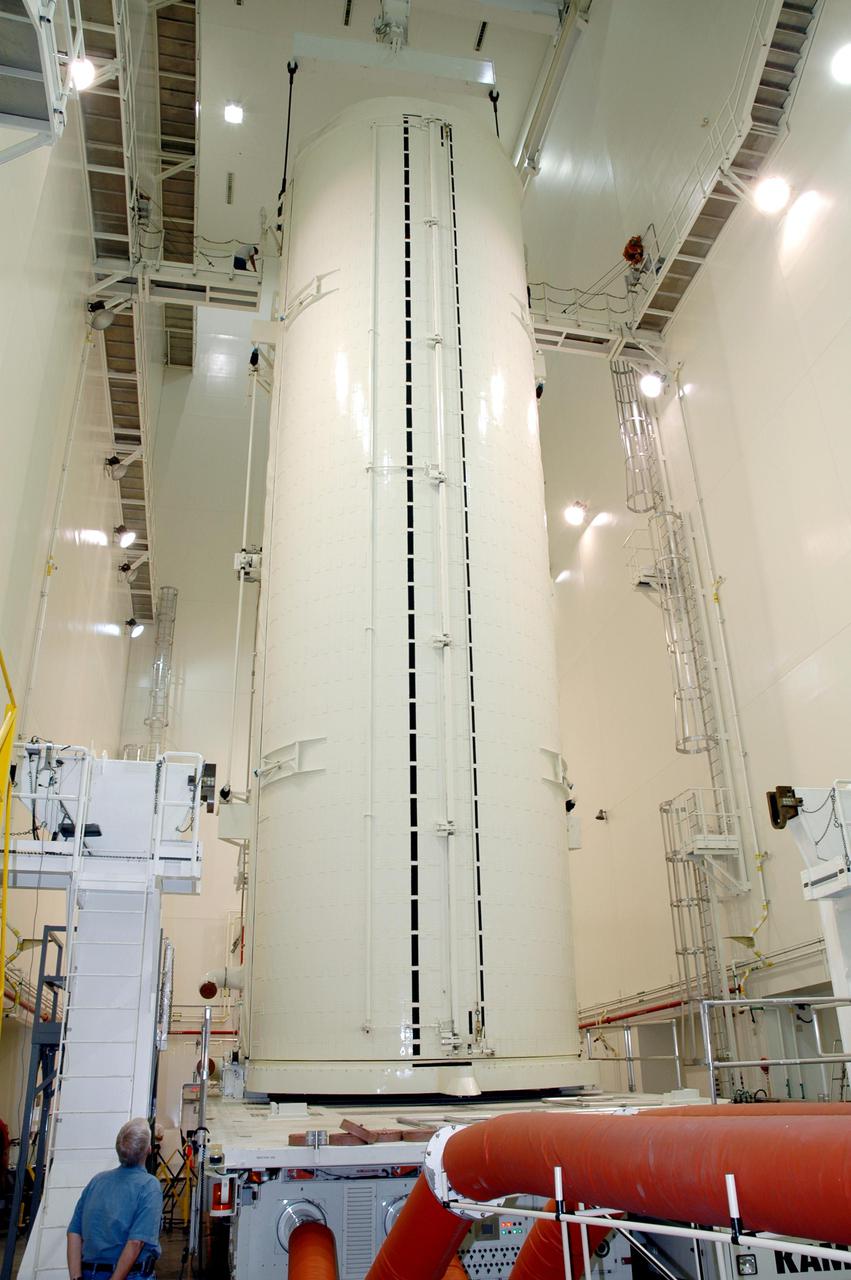
KENNEDY SPACE CENTER, FLA. - In the Canister Rotation Facility at NASA’s Kennedy Space Center, the vertical Payload Canister is ready for transport to Launch Pad 39B. The canister will be transported to Launch Pad 39B. The payloads inside, including the Multi-Purpose Logistics Module Raffaello and External Stowage Platform-2, will be moved into the Payload Changeout Room in the Rotating Service Structure and then installed in Discovery’s payload bay. Space Shuttle Discovery is scheduled to launch on Return to Flight mission STS-114 to the International Space Station. The launch window extends from May 22 to June 3.
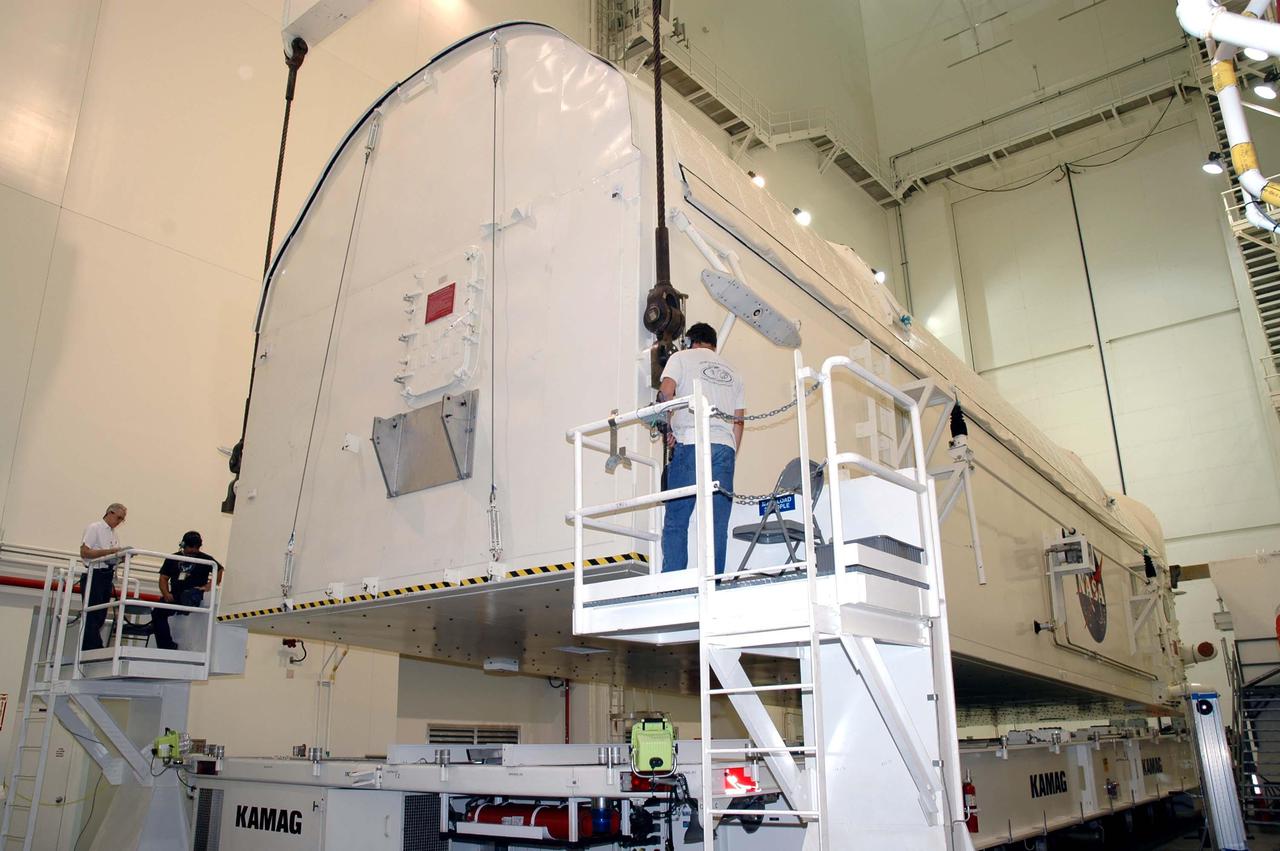
KENNEDY SPACE CENTER, FLA. - In the Canister Rotation Facility at NASA’s Kennedy Space Center, the Payload Canister is being raised to a vertical position for transport to Launch Pad 39B. The payloads inside, including the Multi-Purpose Logistics Module Raffaello and External Stowage Platform-2, will be moved into the Payload Changeout Room in the Rotating Service Structure and then installed in Discovery’s payload bay. Space Shuttle Discovery is scheduled to launch on Return to Flight mission STS-114 to the International Space Station. The launch window extends from May 22 to June 3.
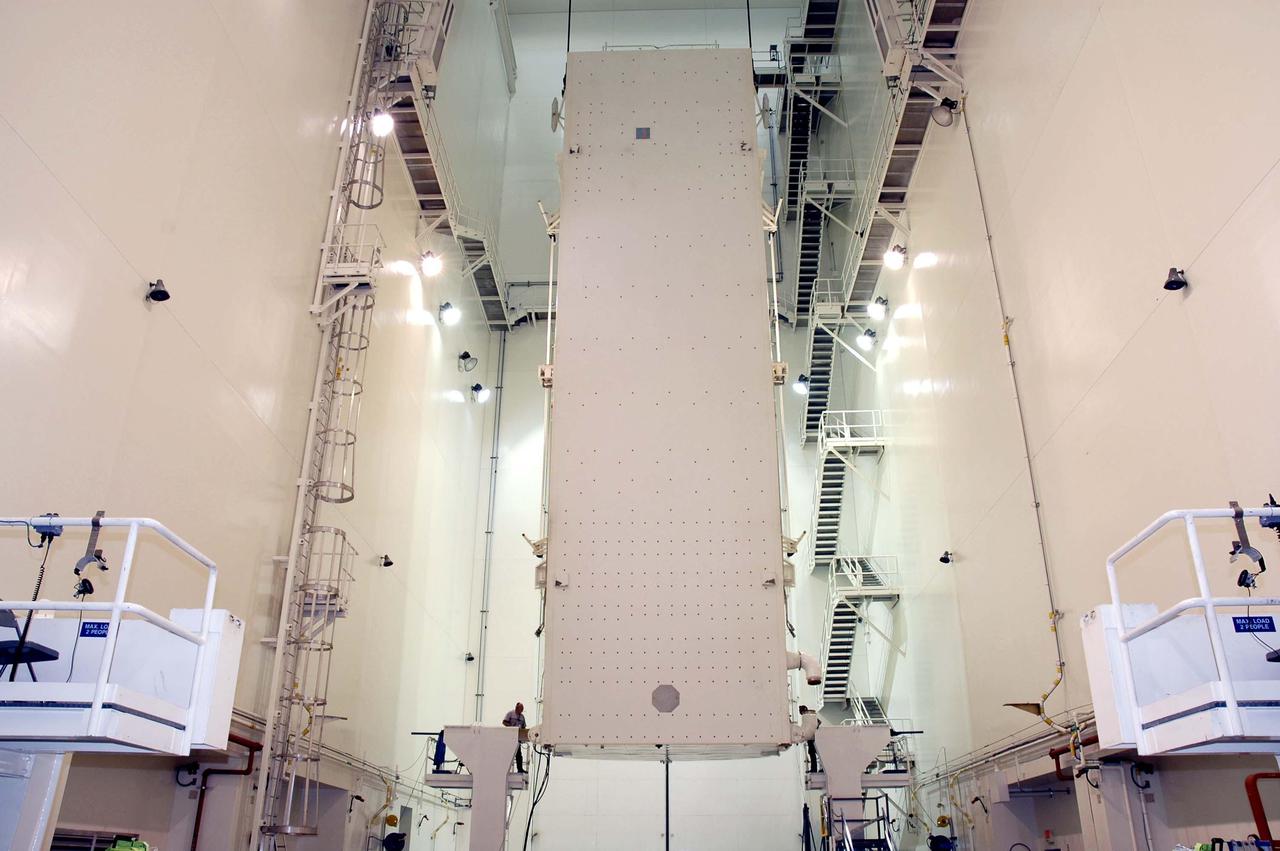
KENNEDY SPACE CENTER, FLA. - In the Canister Rotation Facility at NASA’s Kennedy Space Center, the Payload Canister has been raised to a vertical position for transport to Launch Pad 39B. The payloads inside, including the Multi-Purpose Logistics Module Raffaello and External Stowage Platform-2, will be moved into the Payload Changeout Room in the Rotating Service Structure and then installed in Discovery’s payload bay. Space Shuttle Discovery is scheduled to launch on Return to Flight mission STS-114 to the International Space Station. The launch window extends from May 22 to June 3.
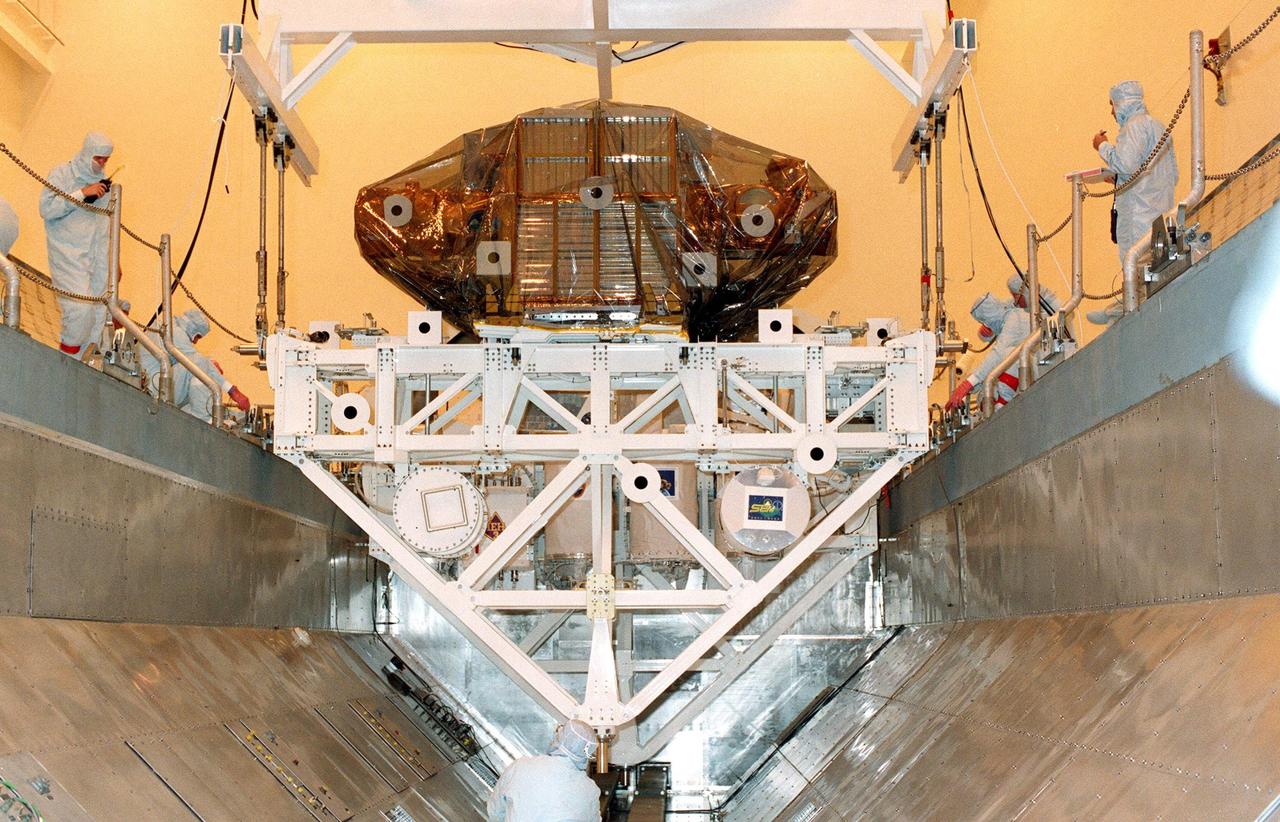
KENNEDY SPACE CENTER, FLA. -- The Spartan solar-observing deployable spacecraft is placed inside the payload canister in the Multi-Payload Processing Facility at KSC. Spartan is one of the payloads for the STS-95 mission, scheduled to launch Oct. 29. Spartan is a solar physics spacecraft designed to perform remote sensing of the hot outer layers of the sun's atmosphere or corona. The objective of the observations is to investigate the mechanisms causing the heating of the solar corona and the acceleration of the solar wind which originates in the corona. Other research payloads include the Hubble Space Telescope Orbital Systems Test Platform, the International Extreme Ultraviolet Hitchhiker, and the SPACEHAB single module with experiments on space flight and the aging process
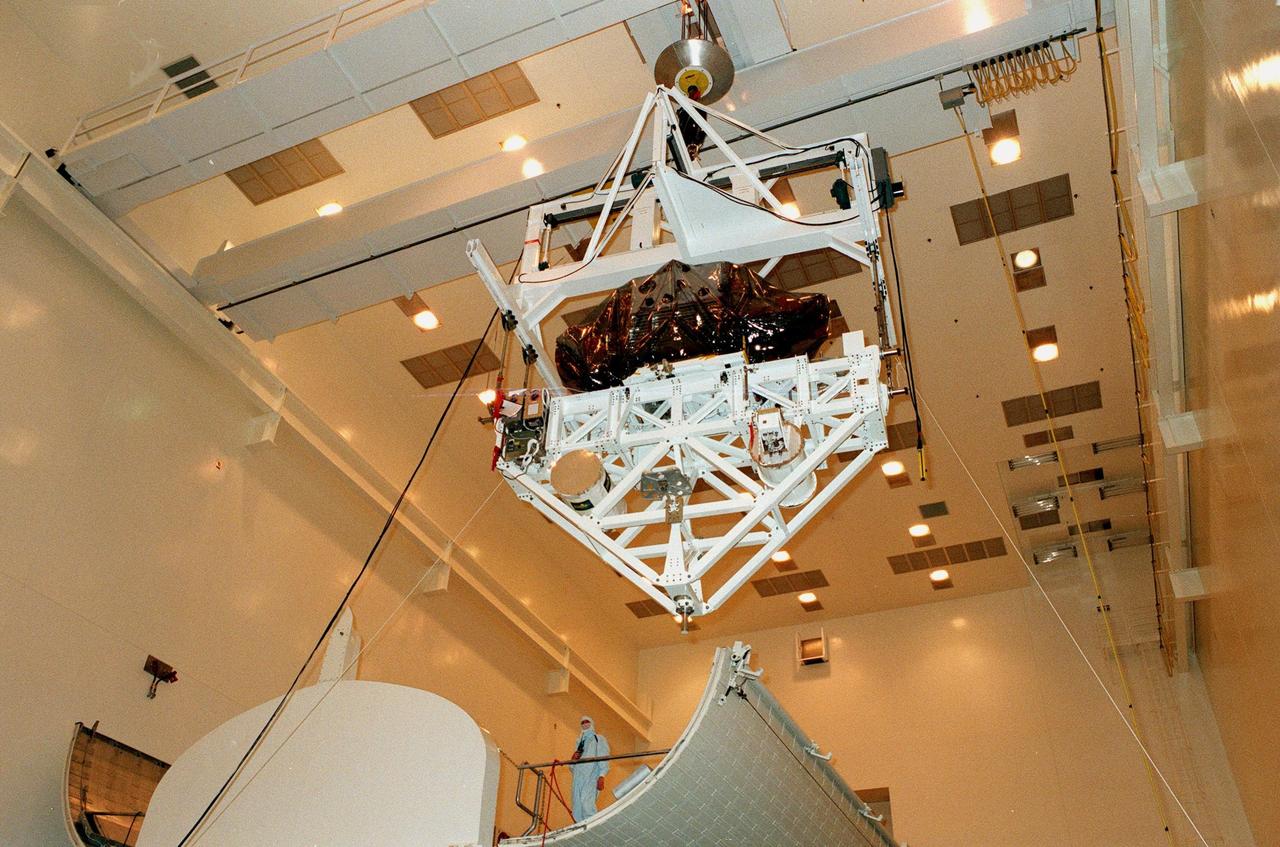
KENNEDY SPACE CENTER, FLA. -- The Spartan solar-observing deployable spacecraft is suspended above the payload canister in the Multi-Payload Processing Facility at KSC. Spartan is one of the payloads for the STS-95 mission, scheduled to launch Oct. 29. Spartan is a solar physics spacecraft designed to perform remote sensing of the hot outer layers of the sun's atmosphere or corona. The objective of the observations is to investigate the mechanisms causing the heating of the solar corona and the acceleration of the solar wind which originates in the corona. Other research payloads include the Hubble Space Telescope Orbital Systems Test Platform, the International Extreme Ultraviolet Hitchhiker, and the SPACEHAB single module with experiments on space flight and the aging process
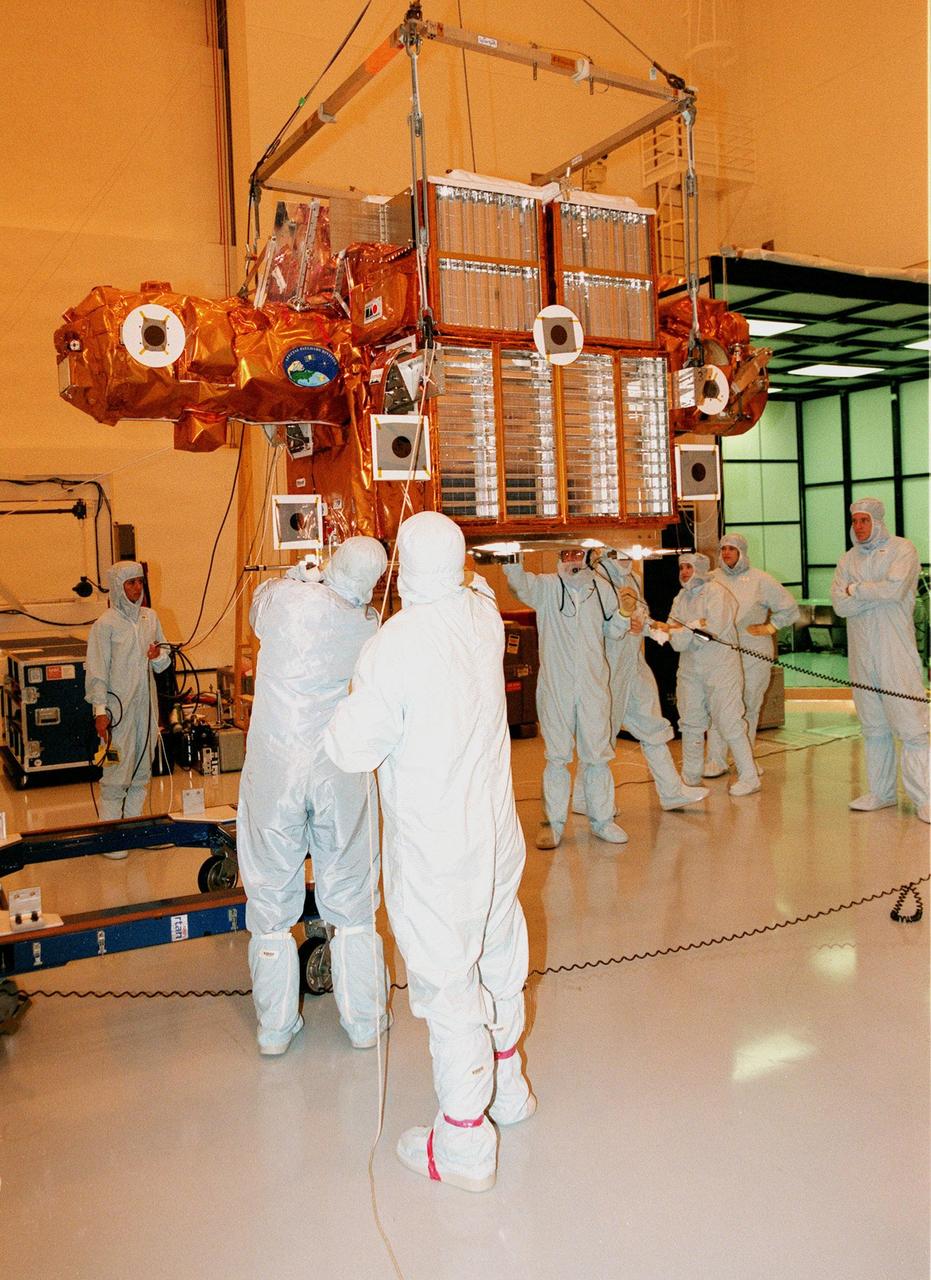
During Crew Equipment Interface Test (CEIT), STS-95 crew members watch as workers move the Spartan payload inside the Multi-Payload Processing Facility. At far right is Mission Specialist Scott E. Parazynski. The CEIT gives astronauts an opportunity for a hands-on look at the payloads and equipment with which they will be working on orbit. The launch of the STS-95 mission is scheduled for Oct. 29, 1998. The mission includes research payloads such as the Spartan solar-observing deployable spacecraft, the Hubble Space Telescope Orbital Systems Test Platform, the International Extreme Ultraviolet Hitchhiker, as well as the SPACEHAB single module with experiments on space flight and the aging process
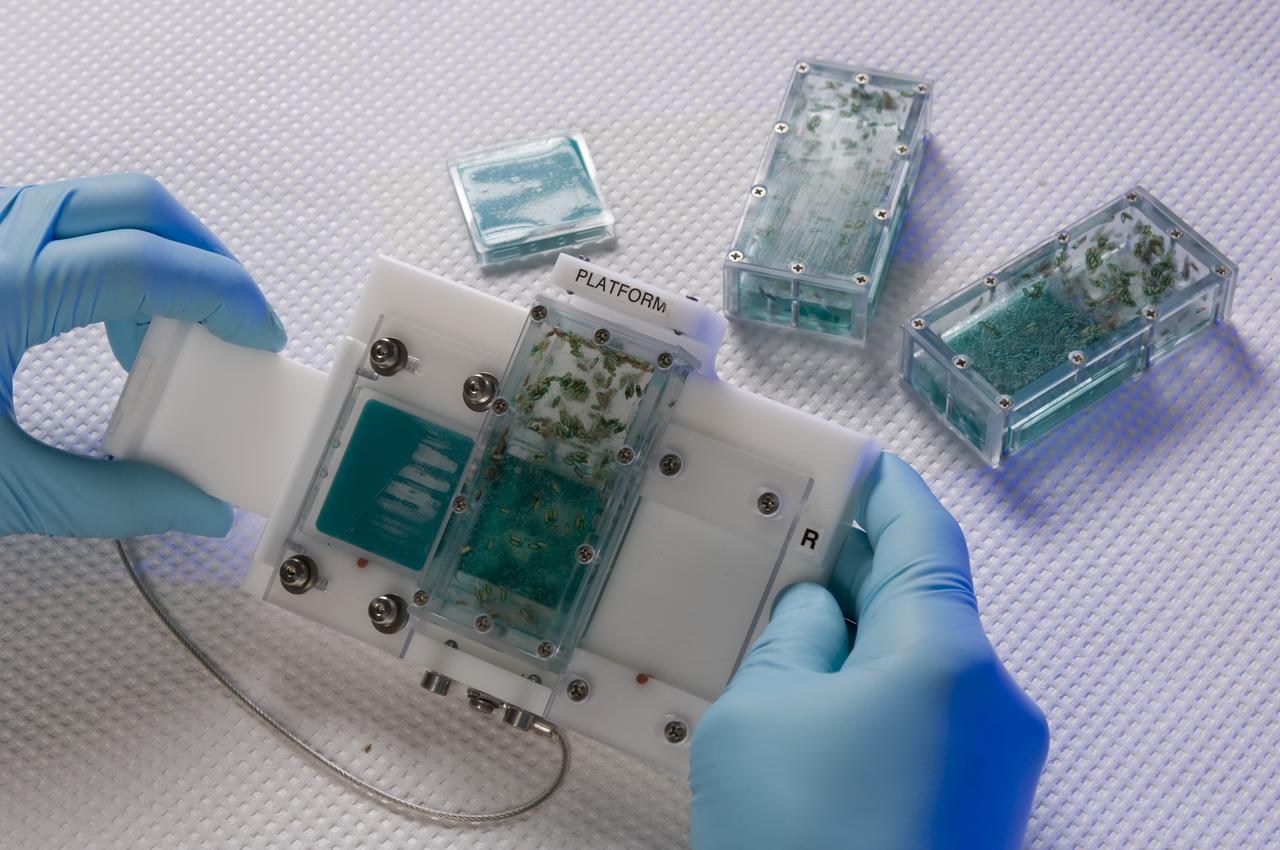
Space shuttle STS-121 FIT (Fly Immunity and Tumors) payload. Using Drosophila (fruit fly) to complete the experiments. Platform used by astronauts to change out old food trays with new food trays in space to facilitate culturing new flies.
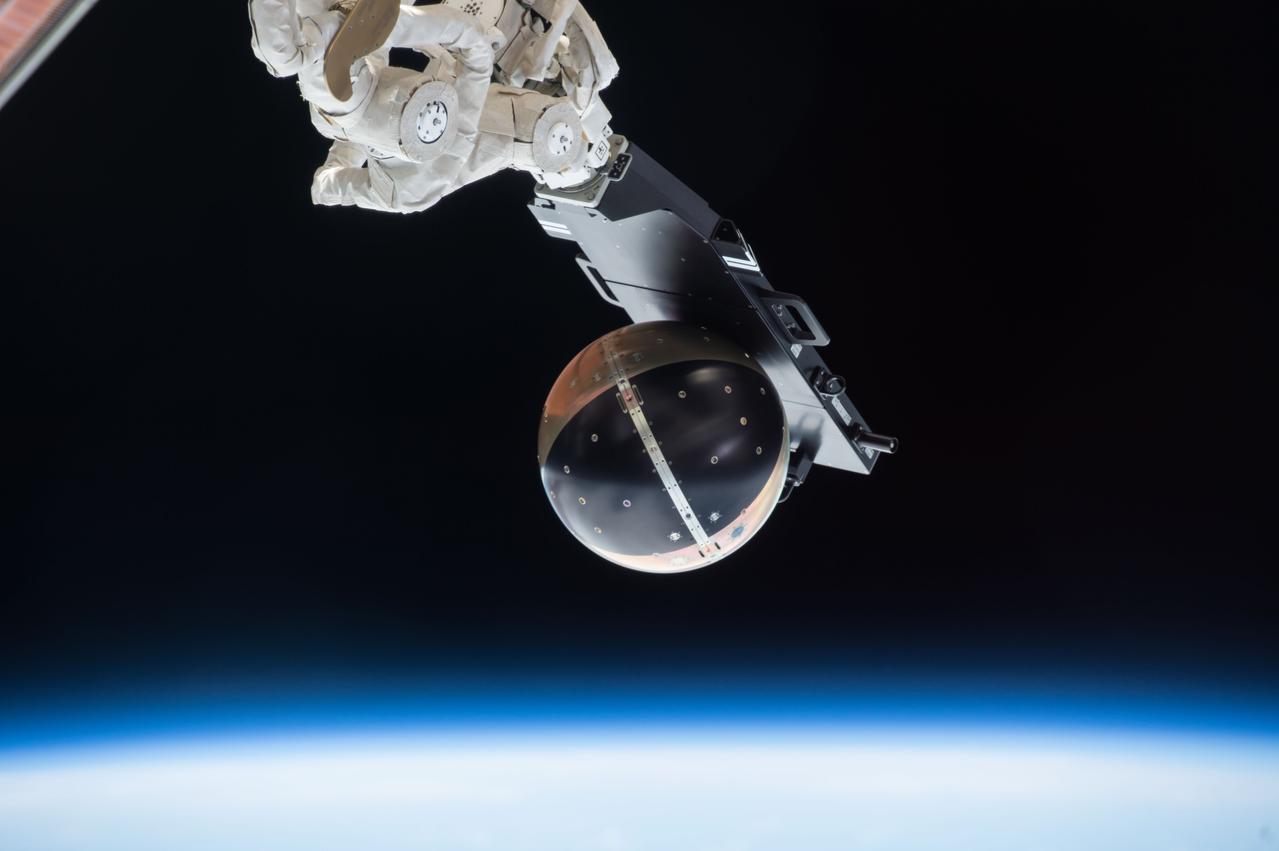
iss042e016906 (11/28/2014) --- The Space Station Integrated Kinetic Launcher for Orbital Payload Systems (SSIKLOPS), or Cyclops, launch platform with Special Purpose Inexpensive Satellite (SpinSat) attached is grappled by the Japanese Experiment Module Remote Manipulator System (JEMRMS) small fine Arm (SFA) in preparation for the release of SpinSat.