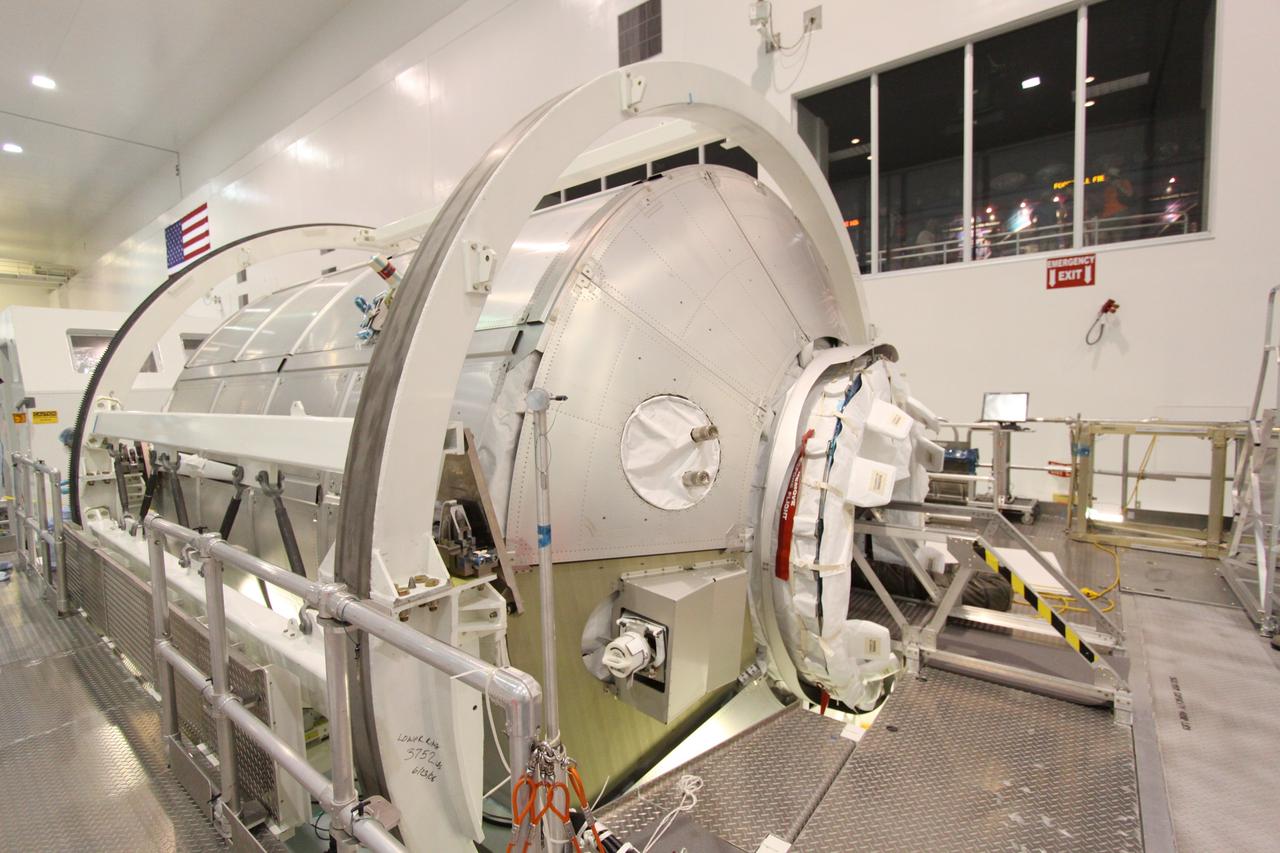
CAPE CANAVERAL, Fla. -- The Permanent Multipurpose Module, or PMM, is being processed for flight in the Space Station Processing Facility at NASA's Kennedy Space Center in Florida. In this view is the opposite side of the PMM which is still open for access. Space shuttle Discovery and its STS-133 crew are targeted to launch Nov. 1 and will deliver the PMM, packed with supplies and critical spare parts, as well as Robonaut 2, the dexterous humanoid astronaut helper, to the International Space Station. For more information visit: www.nasa.gov/shuttle. Photo credit: NASA/Jack Pfaller
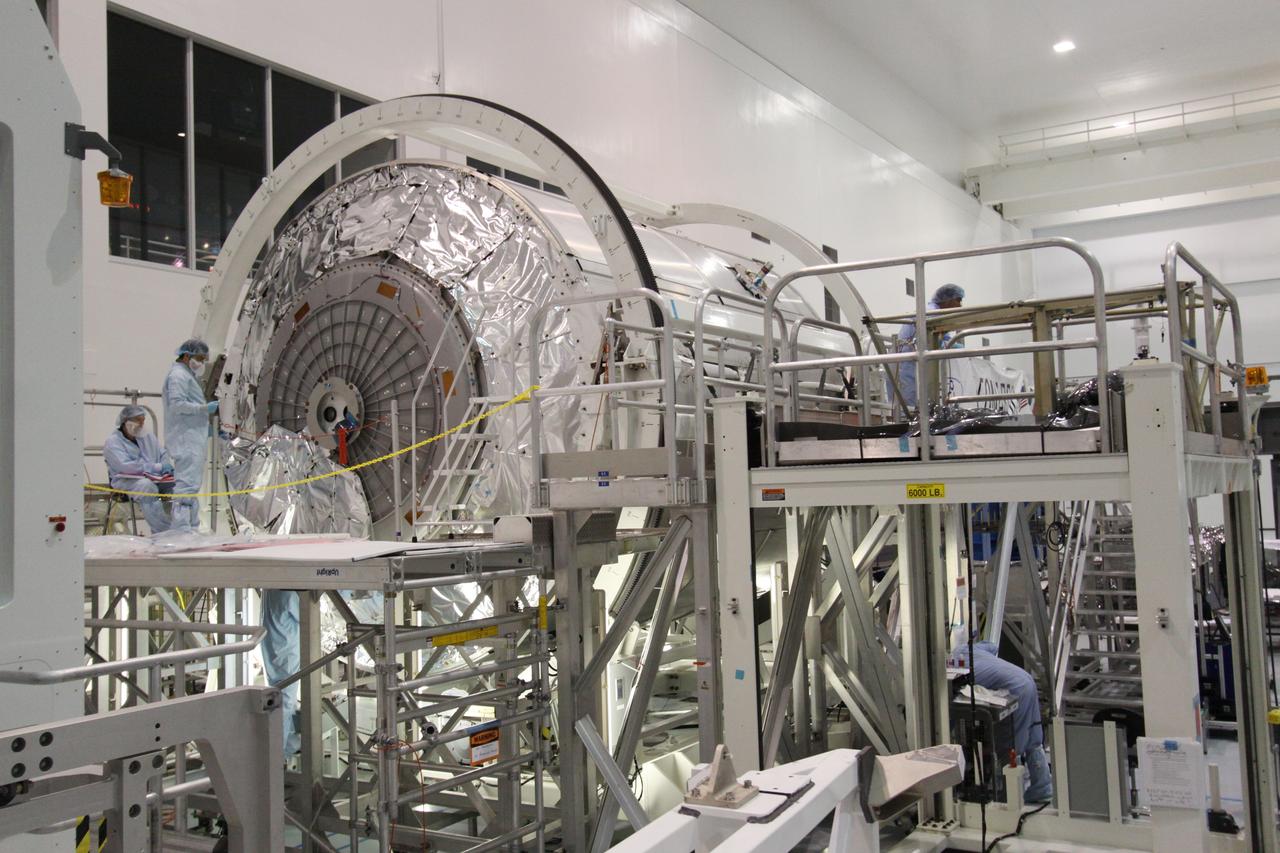
CAPE CANAVERAL, Fla. -- In the Space Station Processing Facility at NASA's Kennedy Space Center in Florida, technicians begin covering the hatch to the Permanent Multipurpose Module, or PMM, with insulating blankets to protect it and its contents from the harsh environment and temperatures of space. Space shuttle Discovery and its STS-133 crew are targeted to launch Nov. 1 and will deliver the PMM, packed with supplies and critical spare parts, as well as Robonaut 2, the dexterous humanoid astronaut helper, to the International Space Station. For more information visit: www.nasa.gov/shuttle. Photo credit: NASA/Jack Pfaller
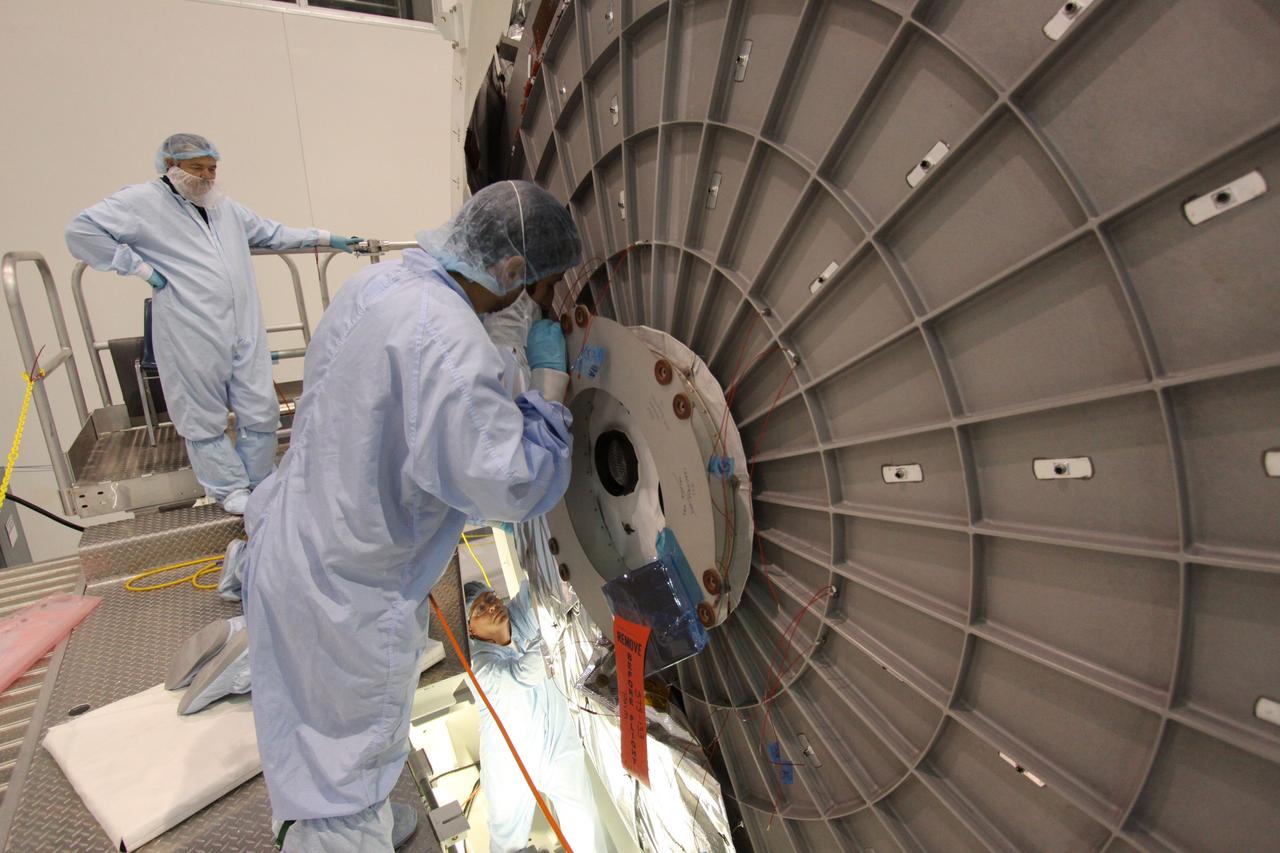
CAPE CANAVERAL, Fla. -- In the Space Station Processing Facility at NASA's Kennedy Space Center in Florida, technicians install insulating blankets to the hatch of the Permanent Multipurpose Module, or PMM, to protect it and its contents from the harsh environment and temperatures of space. Space shuttle Discovery and its STS-133 crew are targeted to launch Nov. 1 and will deliver the PMM, packed with supplies and critical spare parts, as well as Robonaut 2, the dexterous humanoid astronaut helper, to the International Space Station. For more information visit: www.nasa.gov/shuttle. Photo credit: NASA/Jack Pfaller
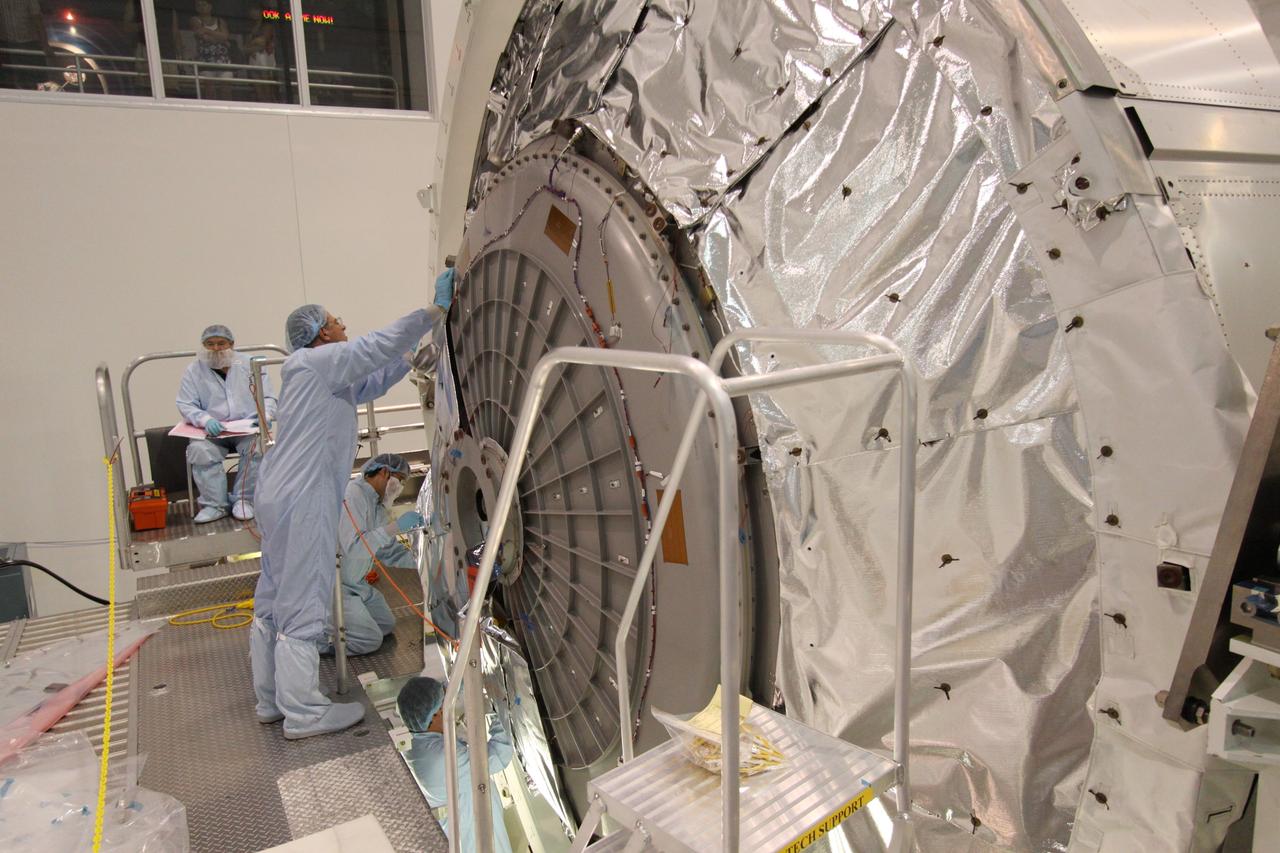
CAPE CANAVERAL, Fla. -- In the Space Station Processing Facility at NASA's Kennedy Space Center in Florida, technicians install insulating blankets to the hatch of the Permanent Multipurpose Module, or PMM, to protect it and its contents from the harsh environment and temperatures of space. Space shuttle Discovery and its STS-133 crew are targeted to launch Nov. 1 and will deliver the PMM, packed with supplies and critical spare parts, as well as Robonaut 2, the dexterous humanoid astronaut helper, to the International Space Station. For more information visit: www.nasa.gov/shuttle. Photo credit: NASA/Jack Pfaller
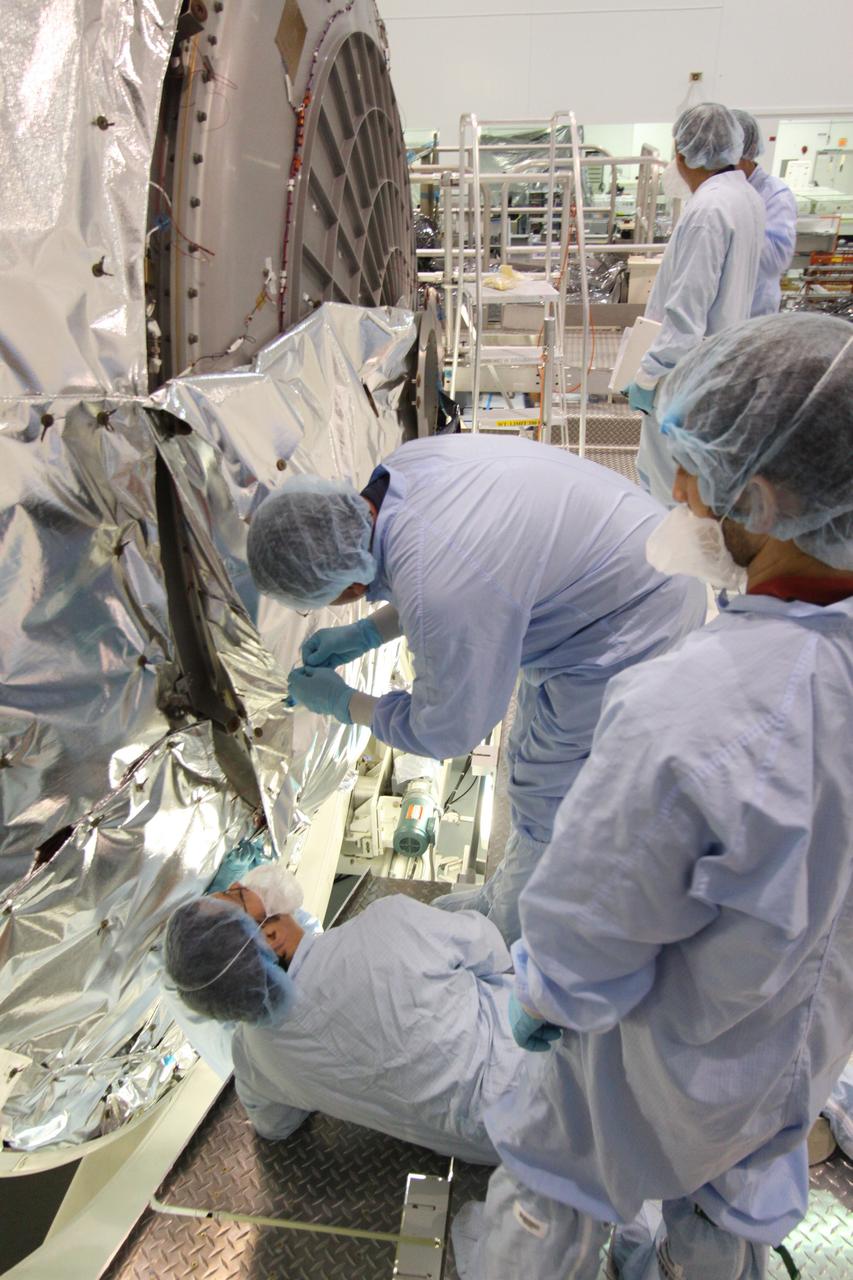
CAPE CANAVERAL, Fla. -- In the Space Station Processing Facility at NASA's Kennedy Space Center in Florida, technicians cover the hatch of the Permanent Multipurpose Module, or PMM, with insulating blankets to protect it and its contents from the harsh environment and temperatures of space. Space shuttle Discovery and its STS-133 crew are targeted to launch Nov. 1 and will deliver the PMM, packed with supplies and critical spare parts, as well as Robonaut 2, the dexterous humanoid astronaut helper, to the International Space Station. For more information visit: www.nasa.gov/shuttle. Photo credit: NASA/Jack Pfaller
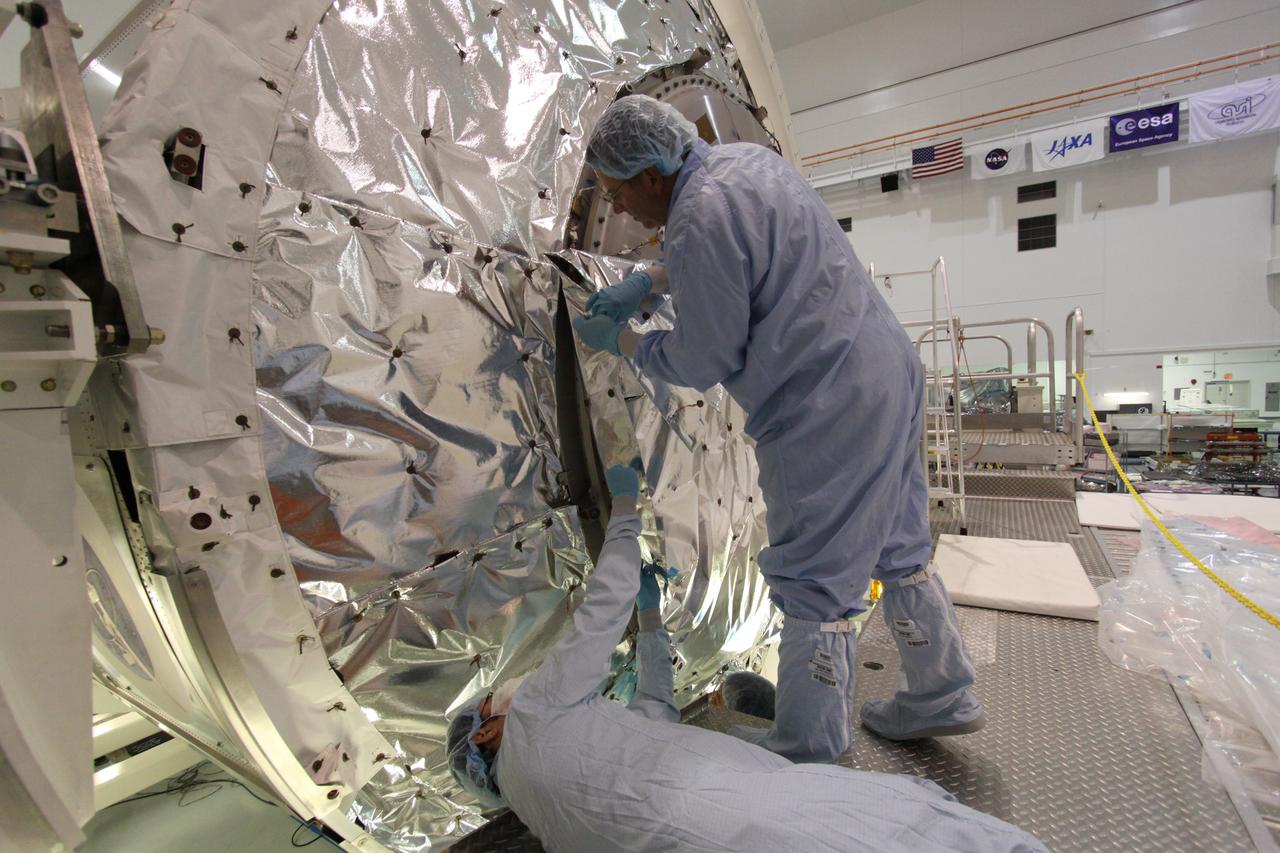
CAPE CANAVERAL, Fla. -- In the Space Station Processing Facility at NASA's Kennedy Space Center in Florida, technicians cover the hatch of the Permanent Multipurpose Module, or PMM, with insulating blankets to protect it and its contents from the harsh environment and temperatures of space. Space shuttle Discovery and its STS-133 crew are targeted to launch Nov. 1 and will deliver the PMM, packed with supplies and critical spare parts, as well as Robonaut 2, the dexterous humanoid astronaut helper, to the International Space Station. For more information visit: www.nasa.gov/shuttle. Photo credit: NASA/Jack Pfaller
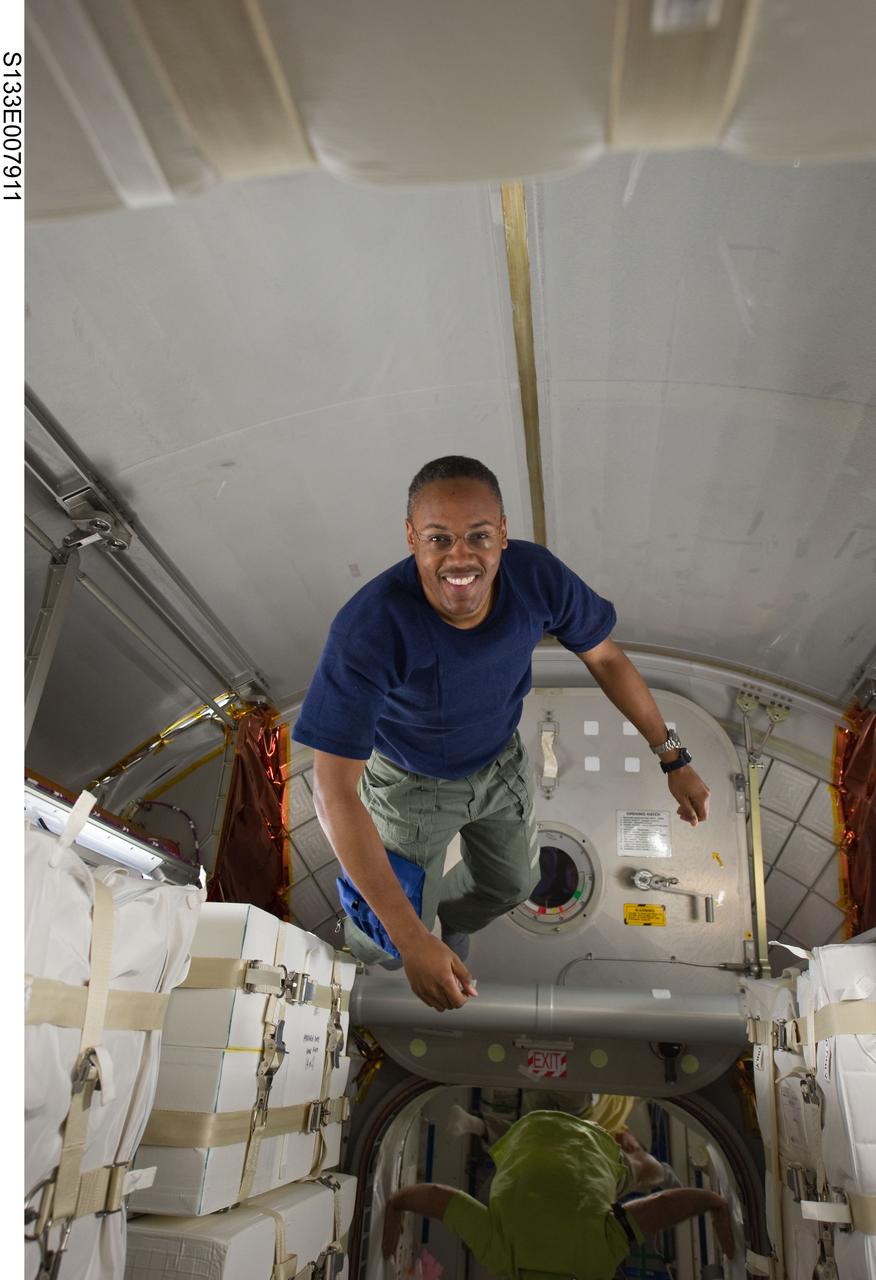
S133-E-007911 (1 March 2011) --- NASA astronaut Alvin Drew, STS-133 mission specialist, is pictured in the newly-installed Permanent Multipurpose Module (PMM) of the International Space Station while space shuttle Discovery remains docked with the station. Photo credit: NASA or National Aeronautics and Space Administration
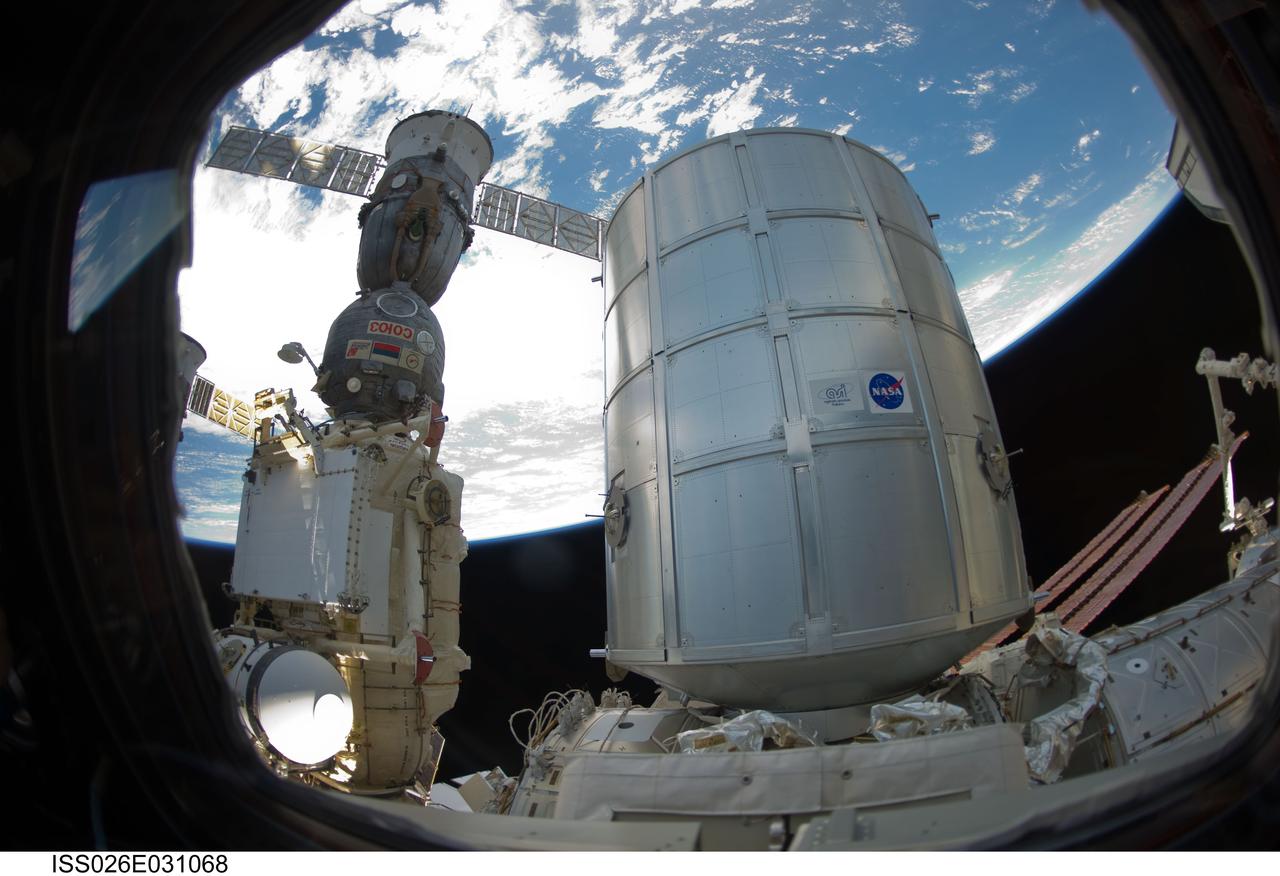
ISS026-E-031068 (1 March 2011) --- The newly-attached Permanent Multipurpose Module (PMM) and a docked Russian Soyuz spacecraft are featured in this image photographed by an Expedition 26 crew member while space shuttle Discovery (STS-133) remains docked with the station. Earth?s horizon and the blackness of space provide the backdrop for the scene.
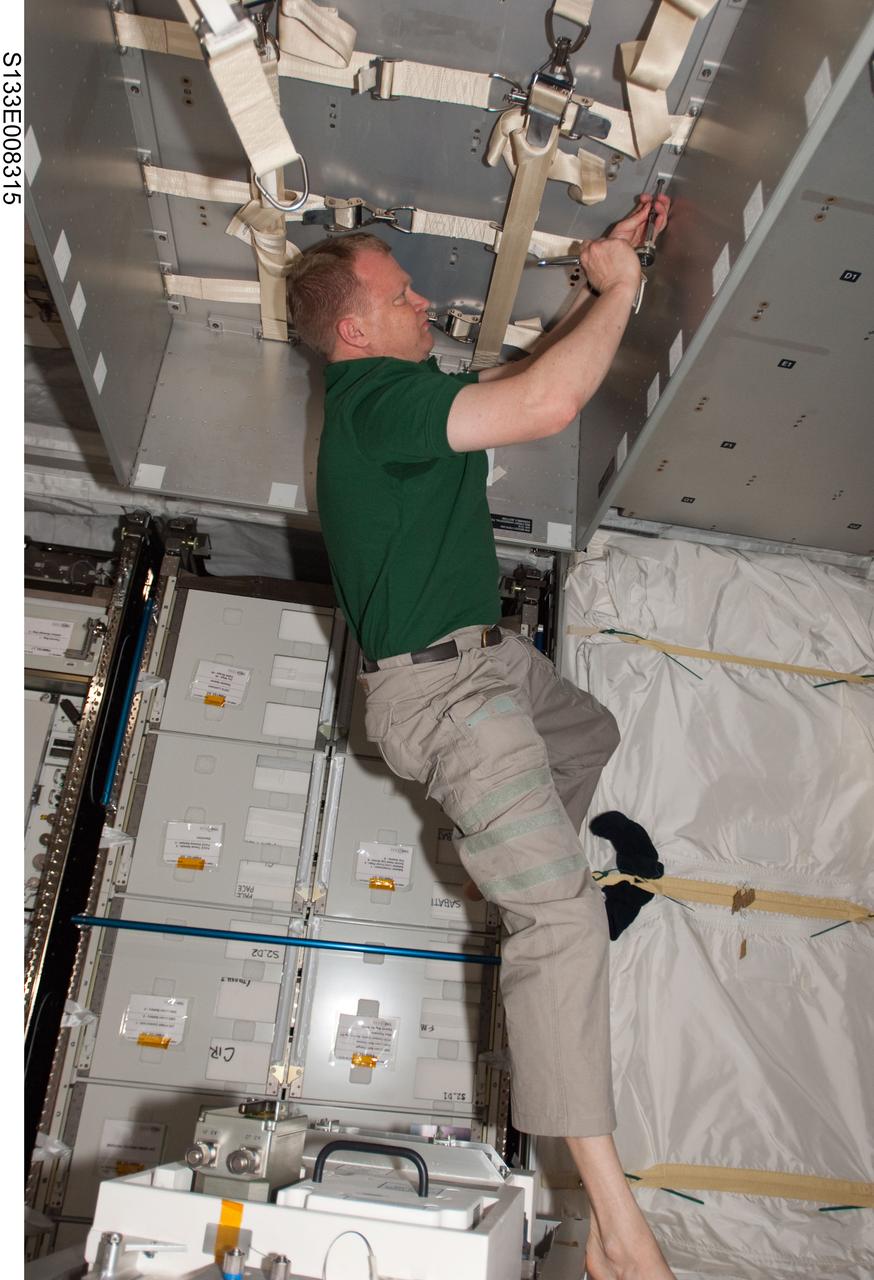
S133-E-008315 (2 March 2011) --- NASA astronaut Eric Boe, STS-133 pilot, works in the newly-installed Permanent Multipurpose Module (PMM) of the International Space Station while space shuttle Discovery remains docked with the station. Photo credit: NASA or National Aeronautics and Space Administration
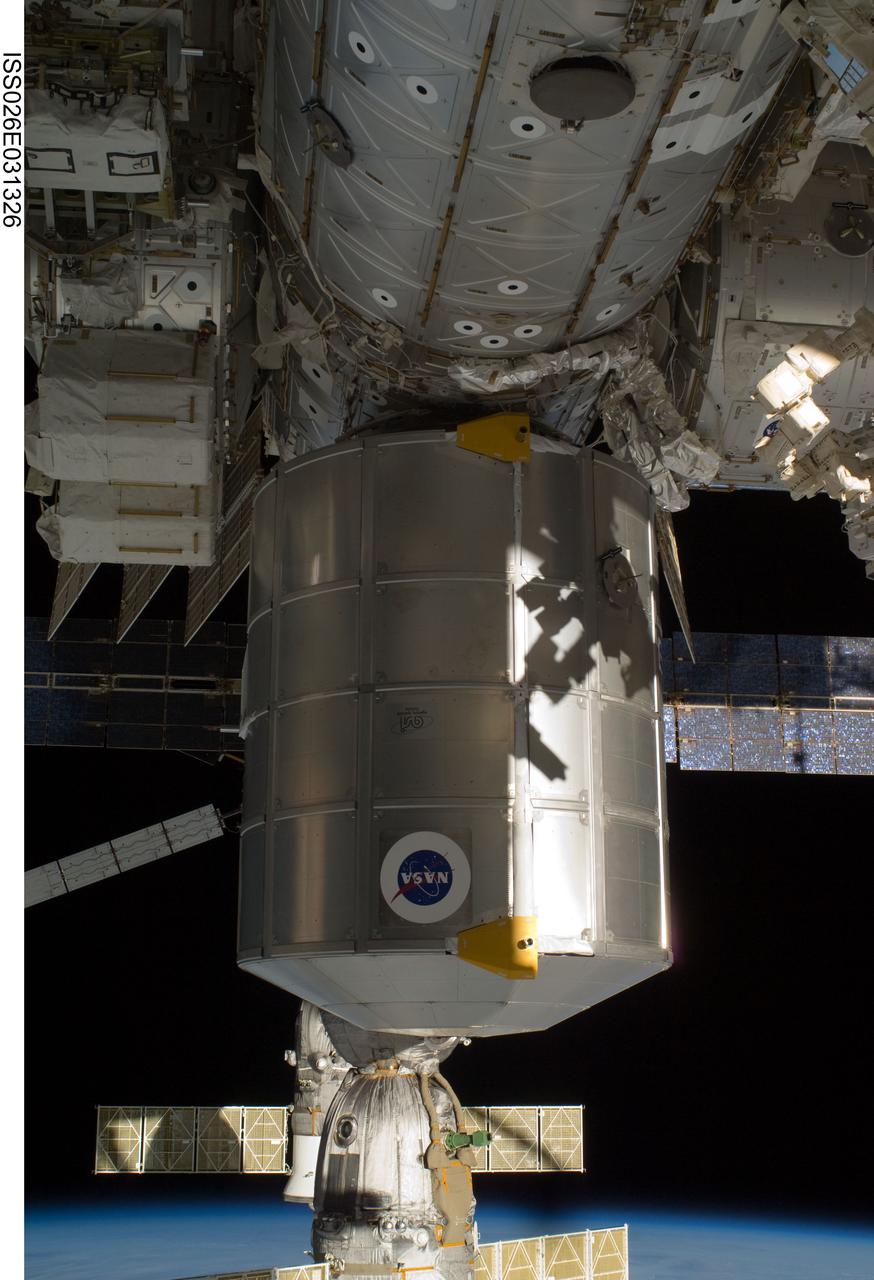
ISS026-E-031326 (2 March 2011) --- The newly-installed Permanent Multipurpose Module (PMM) of the International Space Station is featured in this image photographed by an Expedition 26 crew member while space shuttle Discovery (STS-133) remains docked with the station.

S133-E-008809 (5 March 2011) --- NASA astronaut Steve Bowen, STS-133 mission specialist, is pictured in the Permanent Multipurpose Module (PMM) of the International Space Station while space shuttle Discovery remains docked with the station. Photo credit: NASA or National Aeronautics and Space Administration
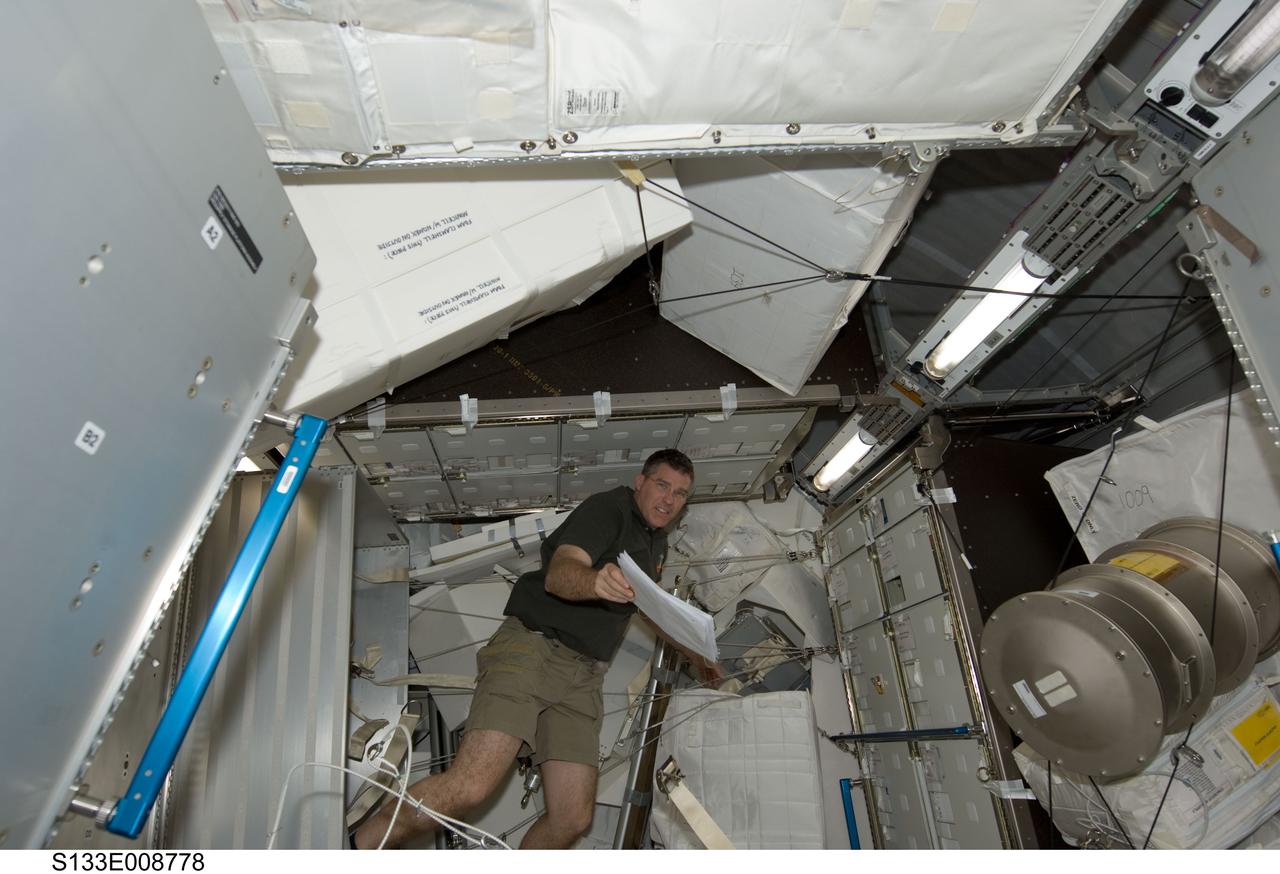
S133-E-008778 (5 March 2011) --- NASA astronaut Steve Bowen, STS-133 mission specialist, works in the Permanent Multipurpose Module (PMM) of the International Space Station while space shuttle Discovery remains docked with the station. Photo credit: NASA or National Aeronautics and Space Administration
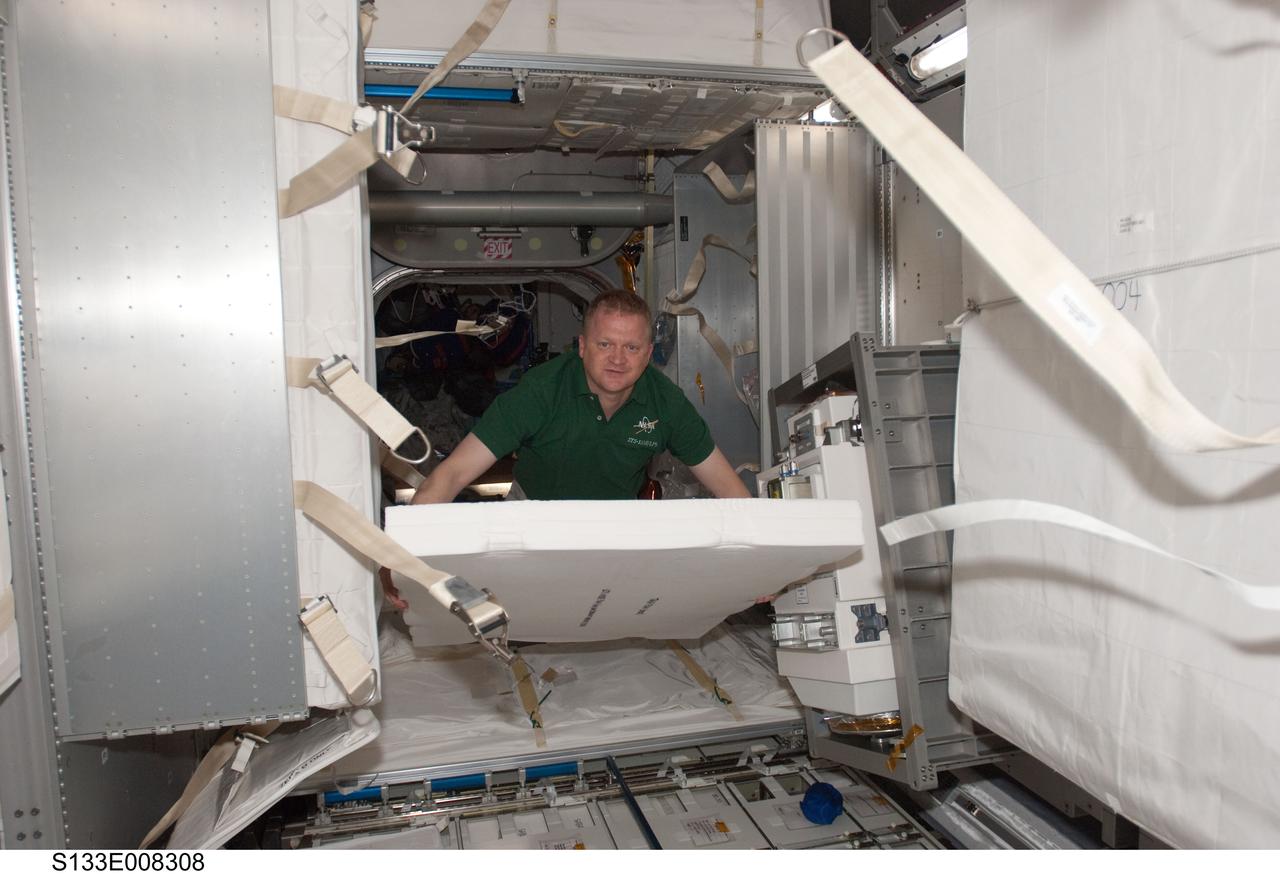
S133-E-008308 (2 March 2011) --- NASA astronaut Eric Boe, STS-133 pilot, works in the newly-installed Permanent Multipurpose Module (PMM) of the International Space Station while space shuttle Discovery remains docked with the station. Photo credit: NASA or National Aeronautics and Space Administration
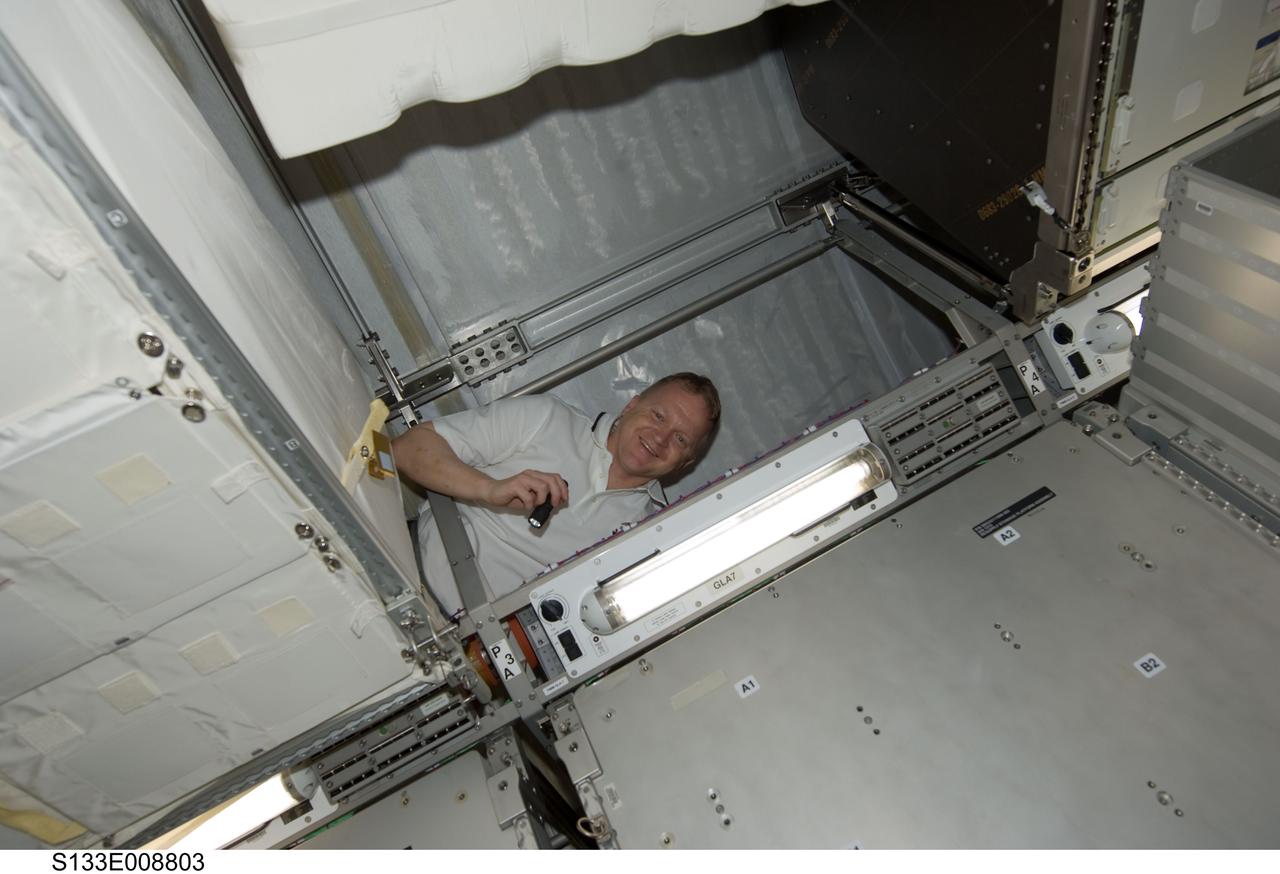
S133-E-008803 (5 March 2011) --- NASA astronaut Eric Boe, STS-133 pilot, works in the Permanent Multipurpose Module (PMM) of the International Space Station while space shuttle Discovery remains docked with the station. Photo credit: NASA or National Aeronautics and Space Administration
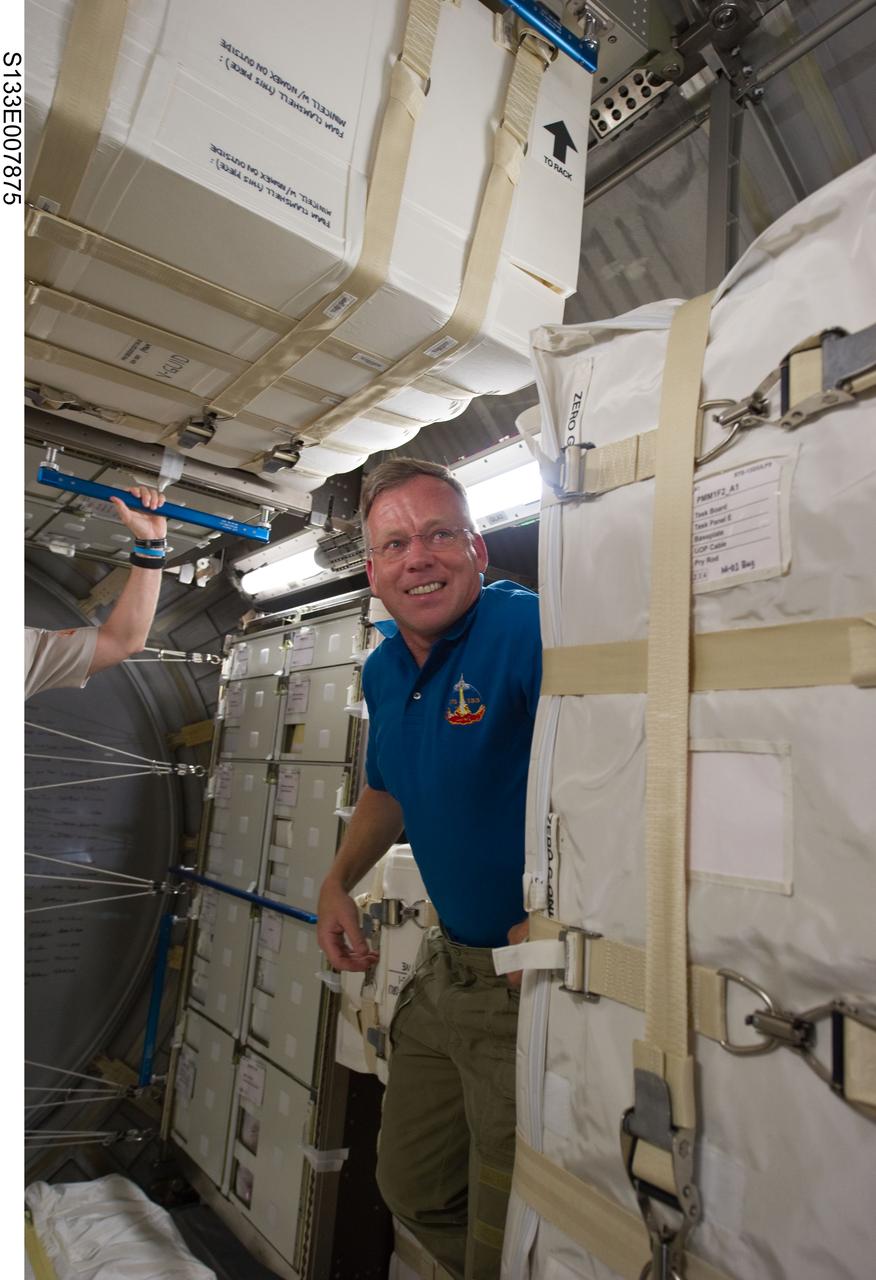
S133-E-007875 (1 March 2011) --- NASA astronaut Steve Lindsey, STS-133 commander, is pictured in the newly-installed Permanent Multipurpose Module (PMM) of the International Space Station while space shuttle Discovery remains docked with the station. Photo credit: NASA or National Aeronautics and Space Administration
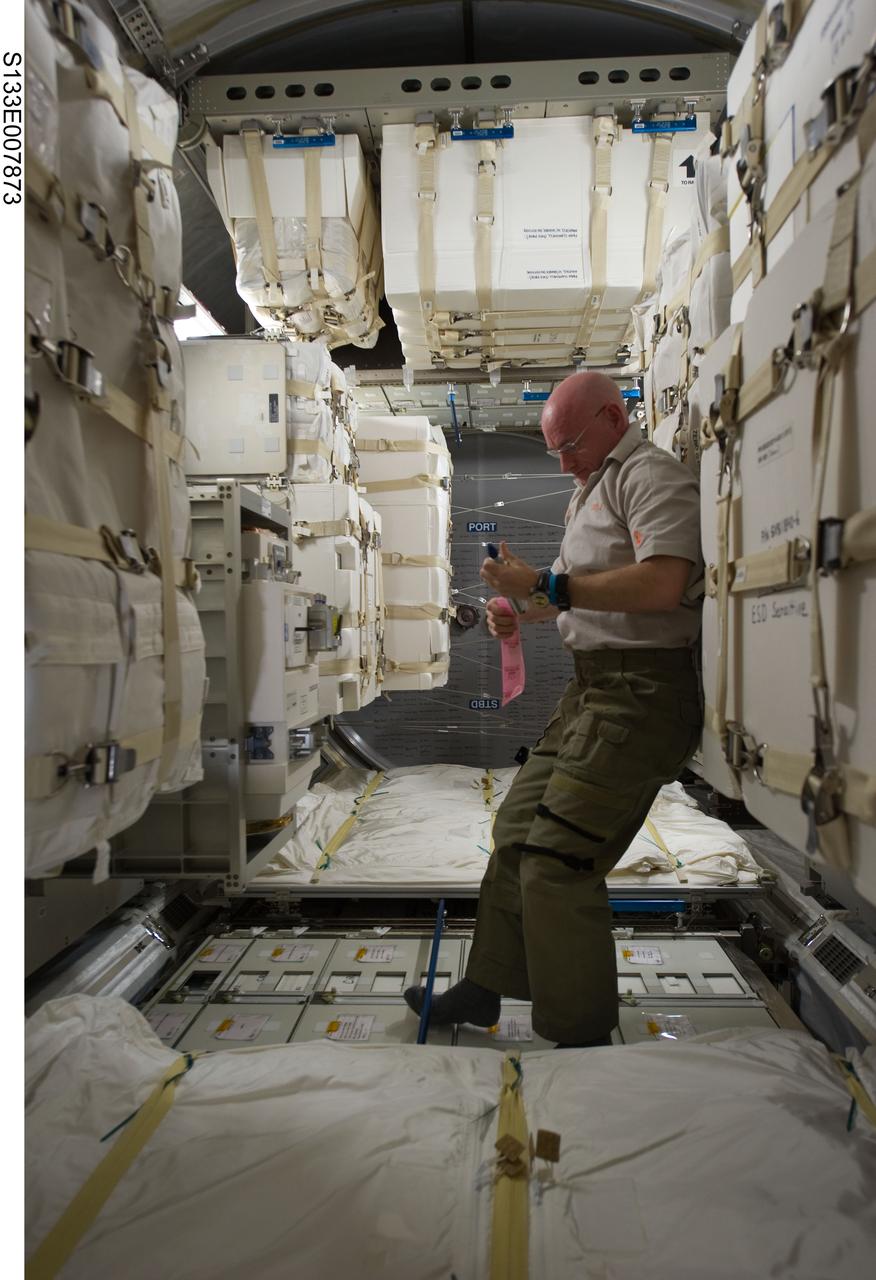
S133-E-007873 (1 March 2011) --- NASA astronaut Scott Kelly, Expedition 26 commander, is pictured in the newly-installed Permanent Multipurpose Module (PMM) of the International Space Station while space shuttle Discovery (STS-133) remains docked with the station. Photo credit: NASA or National Aeronautics and Space Administration
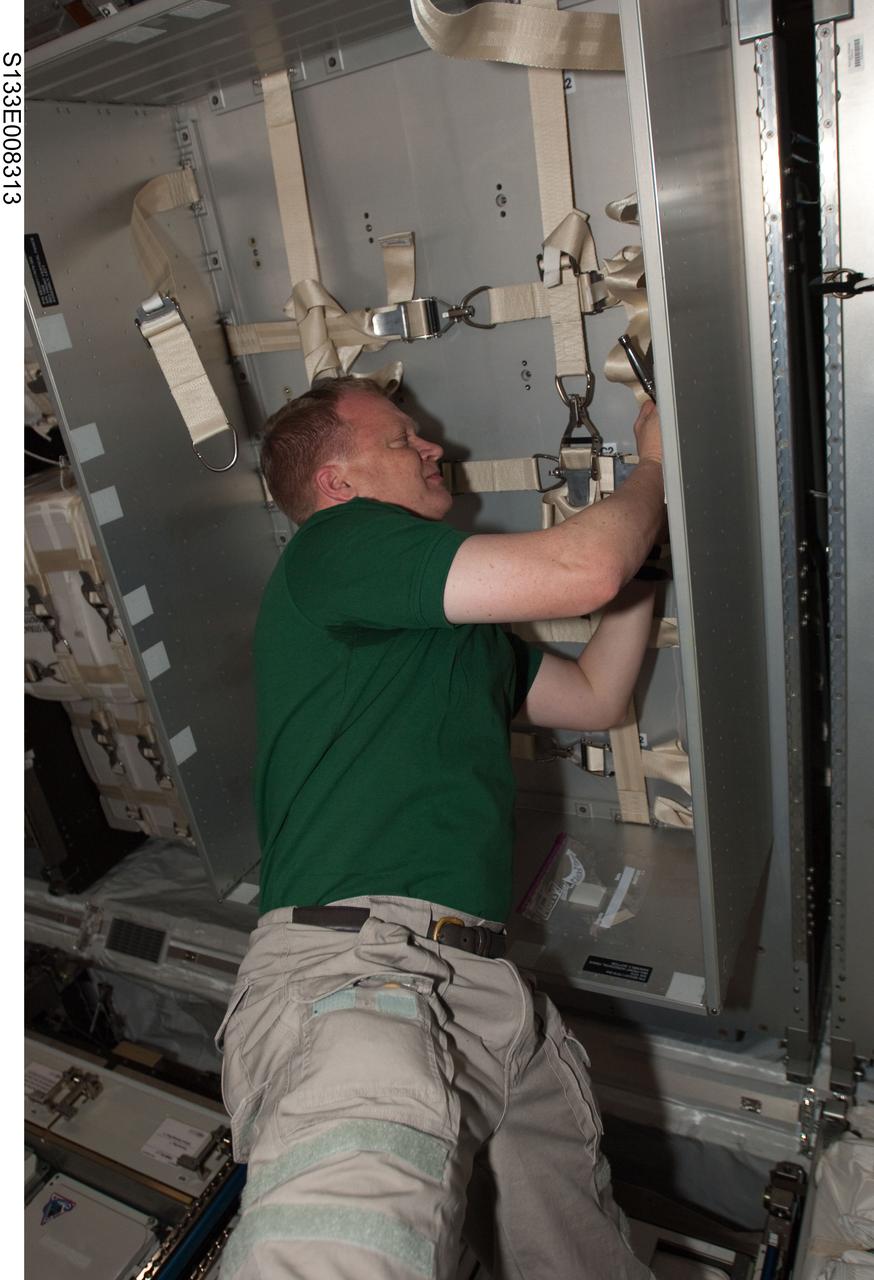
S133-E-008313 (2 March 2011) --- NASA astronaut Eric Boe, STS-133 pilot, works in the newly-installed Permanent Multipurpose Module (PMM) of the International Space Station while space shuttle Discovery remains docked with the station. Photo credit: NASA or National Aeronautics and Space Administration

CAPE CANAVERAL, Fla. -- Space shuttle Discovery's external fuel tank is visible on Launch Pad 39A at NASA's Kennedy Space Center in Florida. Discovery's next mission is STS-133, which will deliver the Permanent Multipurpose Module (PMM), packed with supplies and critical spare parts, as well as Robonaut 2 (R2), to the International Space Station. For more information on STS-133, visit www.nasa.gov/mission_pages/shuttle/shuttlemissions/sts133/. Photo credit: NASA/Frank Michaux
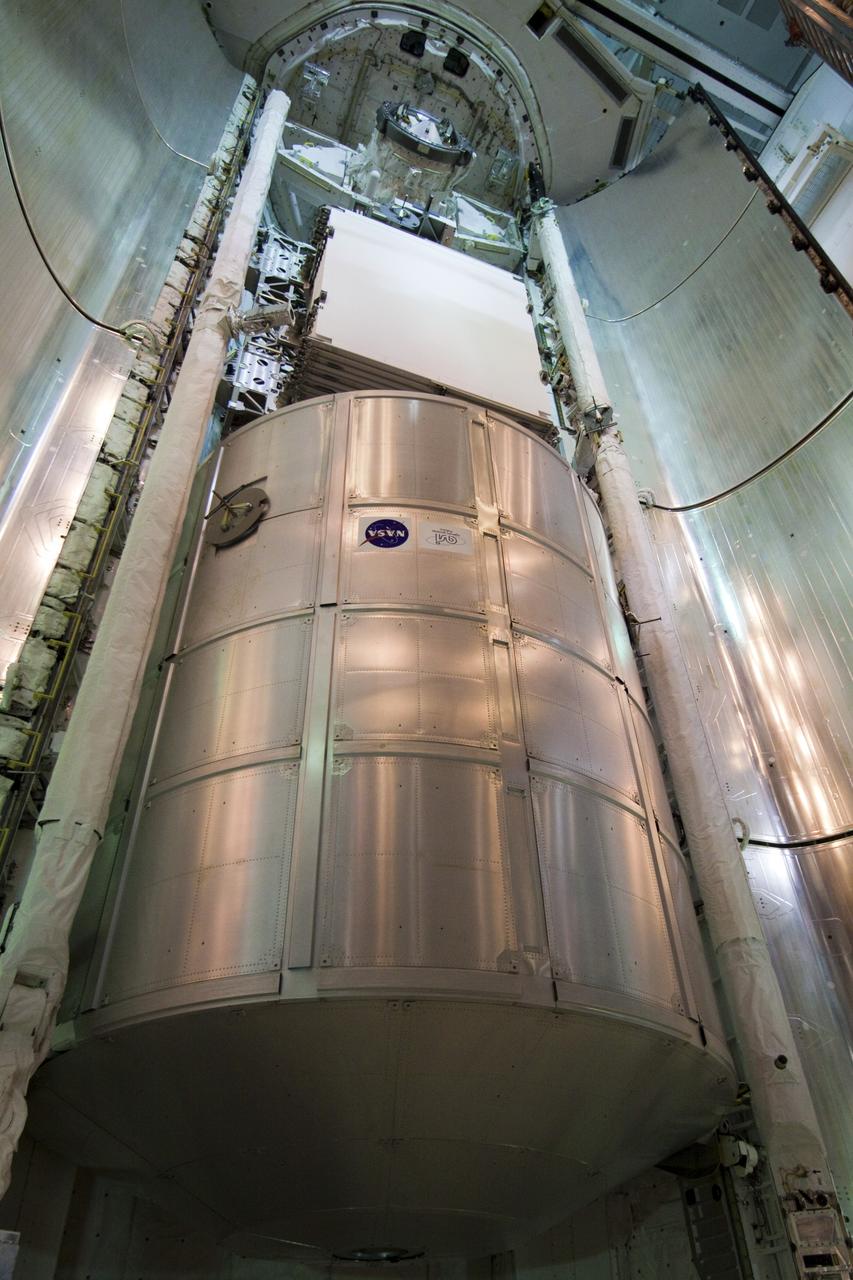
CAPE CANAVERAL, Fla. -- On Launch Pad 39A at NASA's Kennedy Space Center in Florida, the clamshell doors of space shuttle Discovery's payload bay are ready to be closed in preparation for the STS-133 launch to the International Space Station. Targeted to launch Nov. 1, STS-133 will carry the Permanent Multipurpose Module (PMM) packed with supplies and critical spare parts, as well as Robonaut 2 (R2) to the station. Photo credit: NASA/Jack Pfaller
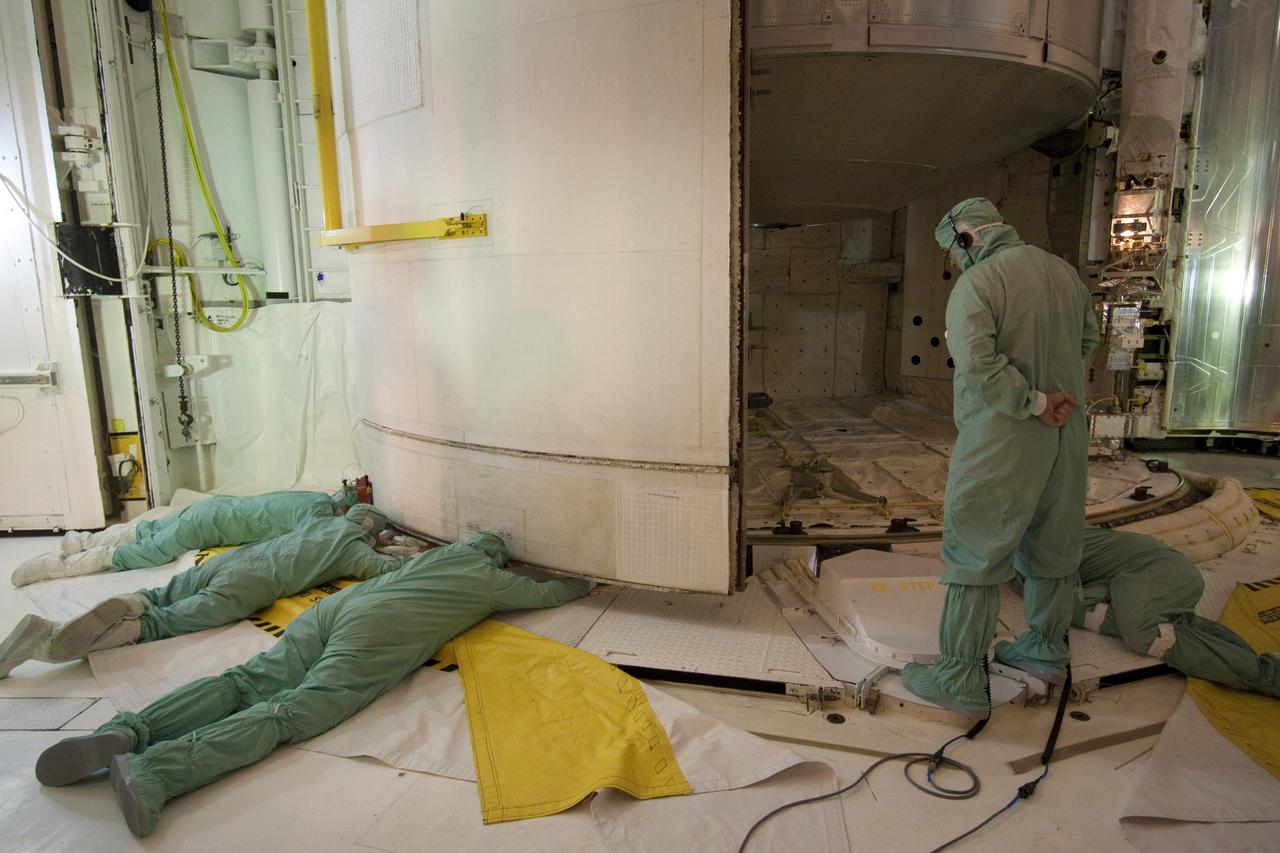
CAPE CANAVERAL, Fla. -- On Launch Pad 39A at NASA's Kennedy Space Center in Florida, technicians close the clamshell doors of space shuttle Discovery's payload bay in preparation for the STS-133 launch to the International Space Station. Targeted to launch Nov. 1, STS-133 will carry the Permanent Multipurpose Module (PMM) packed with supplies and critical spare parts, as well as Robonaut 2 (R2) to the station. Photo credit: NASA/Jack Pfaller
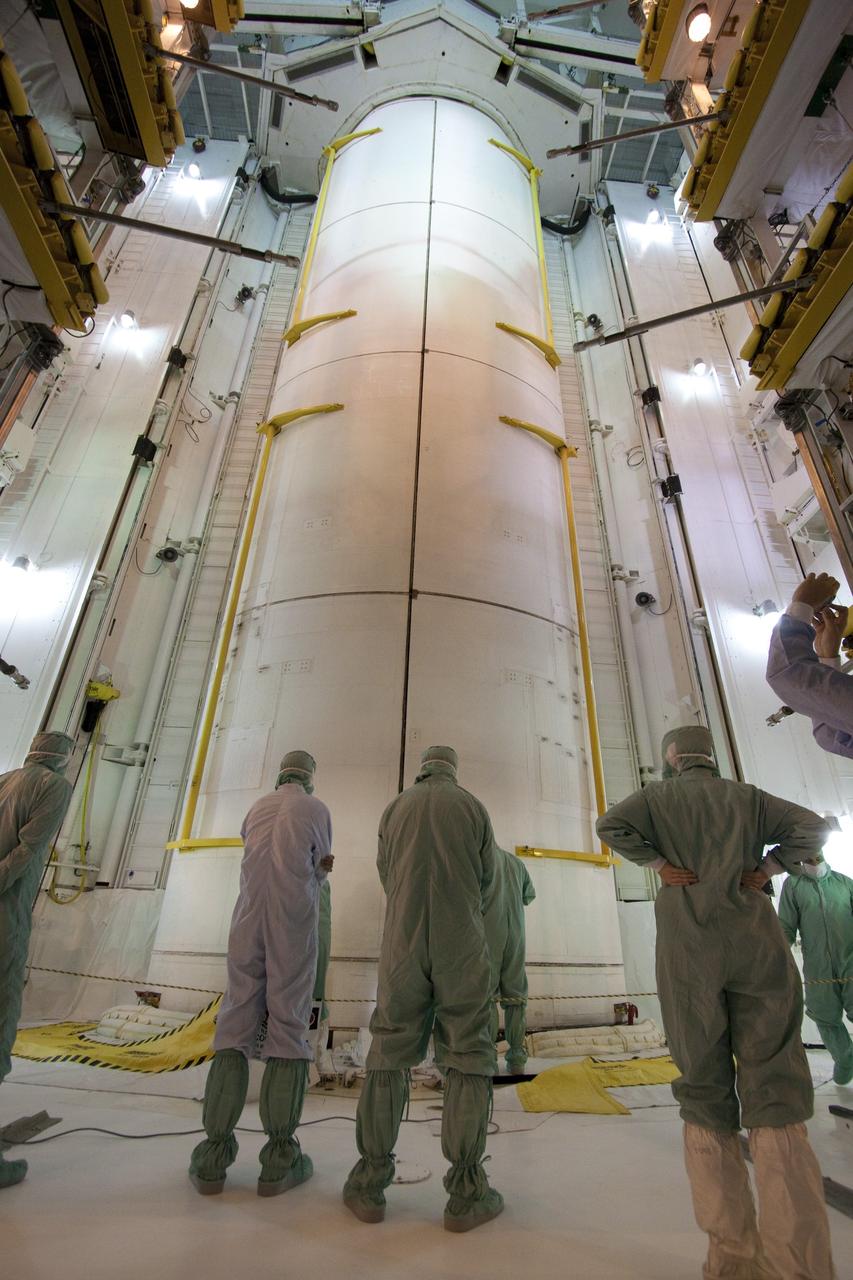
CAPE CANAVERAL, Fla. -- On Launch Pad 39A at NASA's Kennedy Space Center in Florida, the clamshell doors of space shuttle Discovery's payload bay are closed in preparation for the STS-133 launch to the International Space Station. Targeted to launch Nov. 1, STS-133 will carry the Permanent Multipurpose Module (PMM) packed with supplies and critical spare parts, as well as Robonaut 2 (R2) to the station. Photo credit: NASA/Jack Pfaller
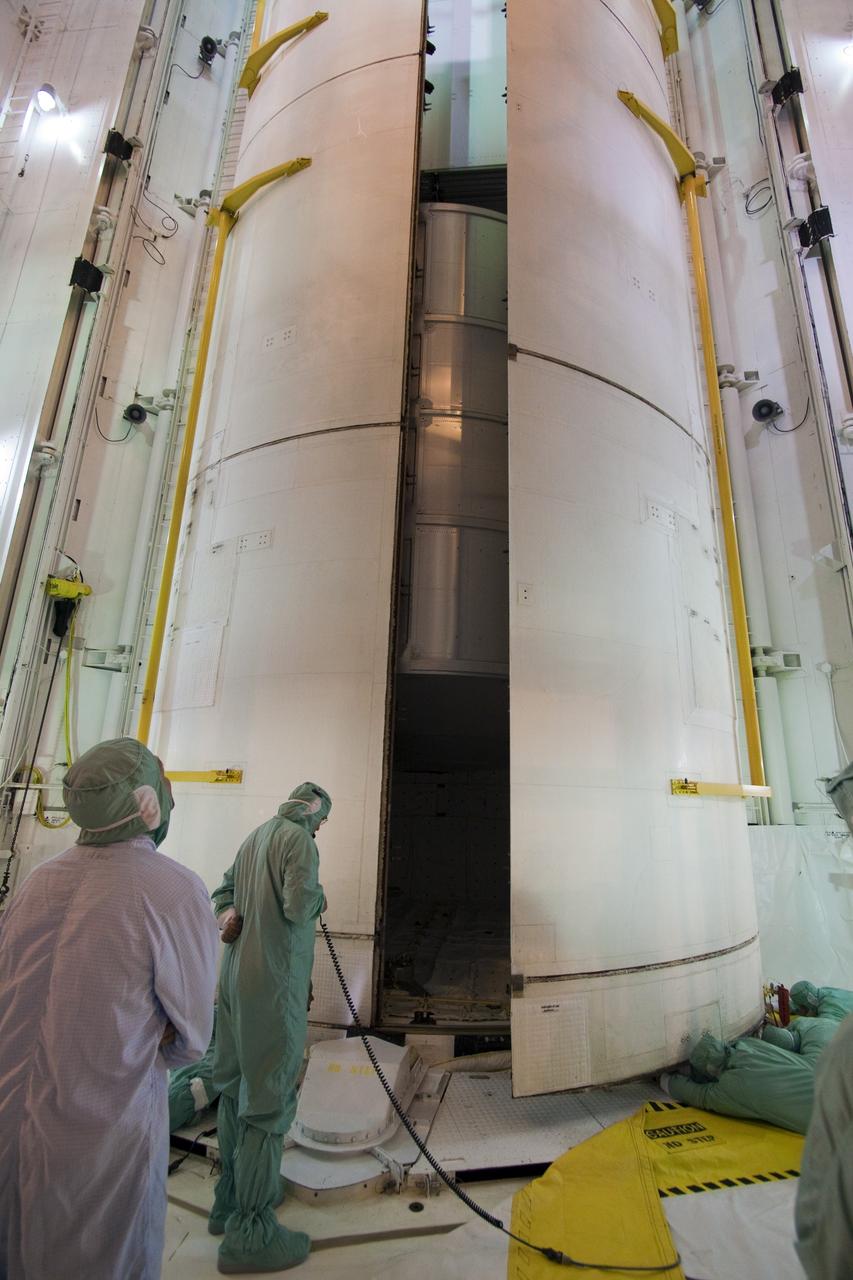
CAPE CANAVERAL, Fla. -- On Launch Pad 39A at NASA's Kennedy Space Center in Florida, technicians close the clamshell doors of space shuttle Discovery's payload bay in preparation for the STS-133 launch to the International Space Station. Targeted to launch Nov. 1, STS-133 will carry the Permanent Multipurpose Module (PMM) packed with supplies and critical spare parts, as well as Robonaut 2 (R2) to the station. Photo credit: NASA/Jack Pfaller
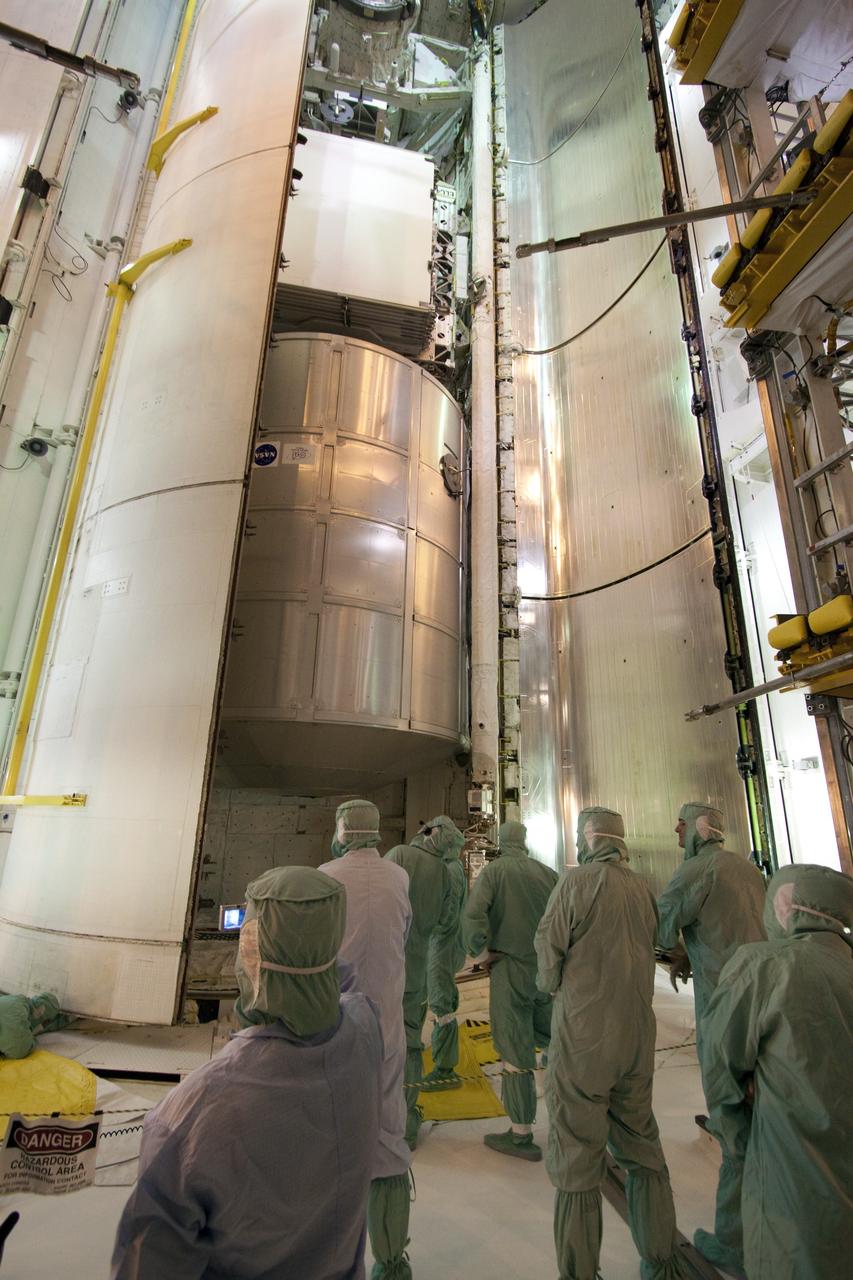
CAPE CANAVERAL, Fla. -- On Launch Pad 39A at NASA's Kennedy Space Center in Florida, technicians close the clamshell doors of space shuttle Discovery's payload bay in preparation for the STS-133 launch to the International Space Station. Targeted to launch Nov. 1, STS-133 will carry the Permanent Multipurpose Module (PMM) packed with supplies and critical spare parts, as well as Robonaut 2 (R2) to the station. Photo credit: NASA/Jack Pfaller
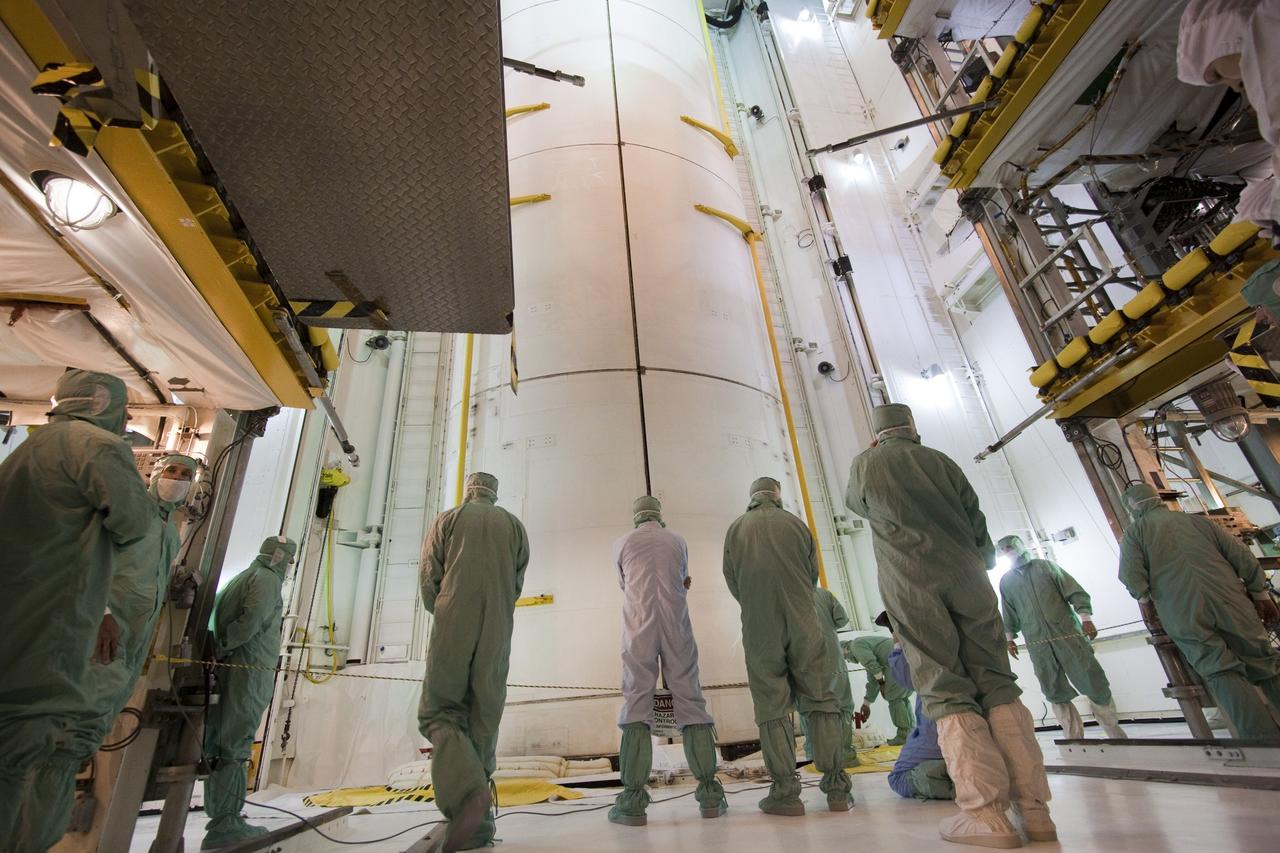
CAPE CANAVERAL, Fla. -- On Launch Pad 39A at NASA's Kennedy Space Center in Florida, the clamshell doors of space shuttle Discovery's payload bay are closed in preparation for the STS-133 launch to the International Space Station. Targeted to launch Nov. 1, STS-133 will carry the Permanent Multipurpose Module (PMM) packed with supplies and critical spare parts, as well as Robonaut 2 (R2) to the station. Photo credit: NASA/Jack Pfaller
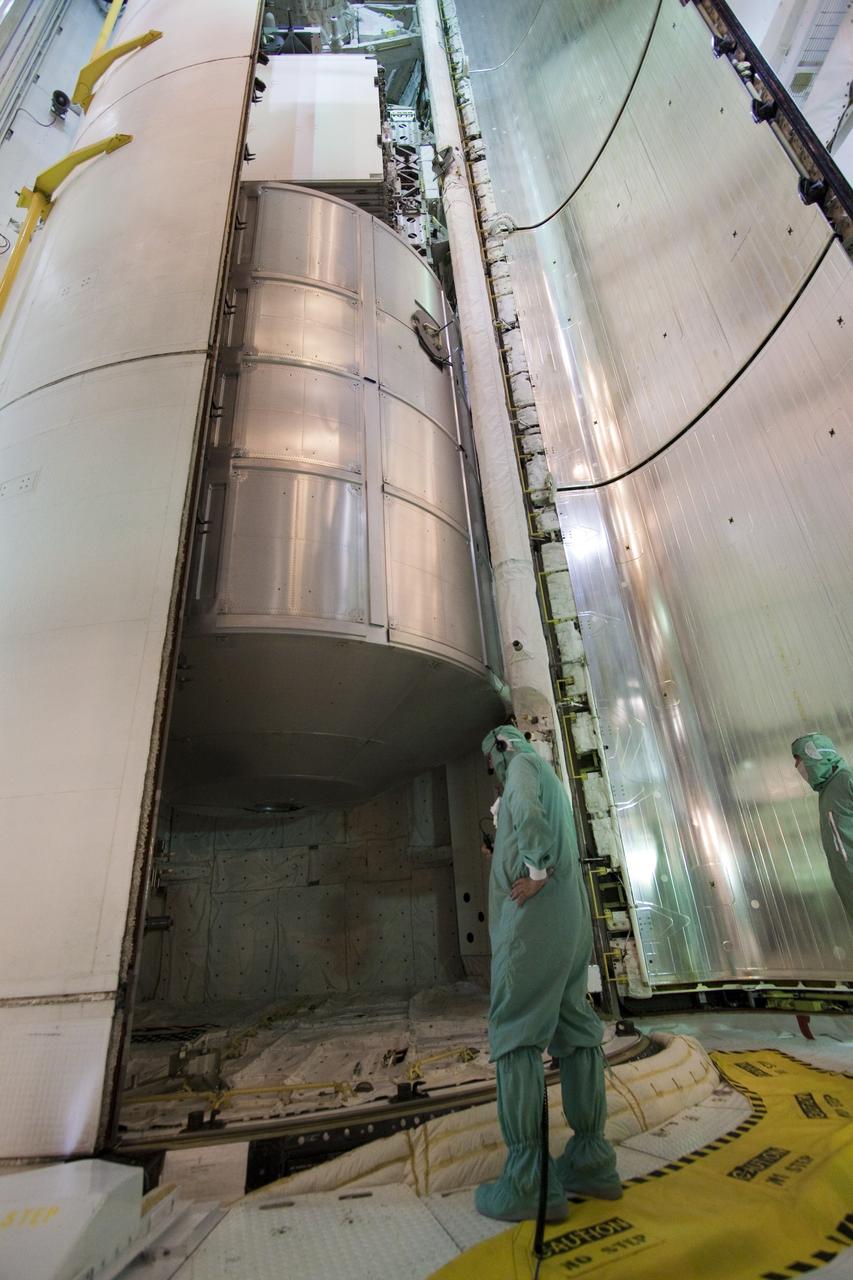
CAPE CANAVERAL, Fla. -- On Launch Pad 39A at NASA's Kennedy Space Center in Florida, technicians close the clamshell doors of space shuttle Discovery's payload bay in preparation for the STS-133 launch to the International Space Station. Targeted to launch Nov. 1, STS-133 will carry the Permanent Multipurpose Module (PMM) packed with supplies and critical spare parts, as well as Robonaut 2 (R2) to the station. Photo credit: NASA/Jack Pfaller
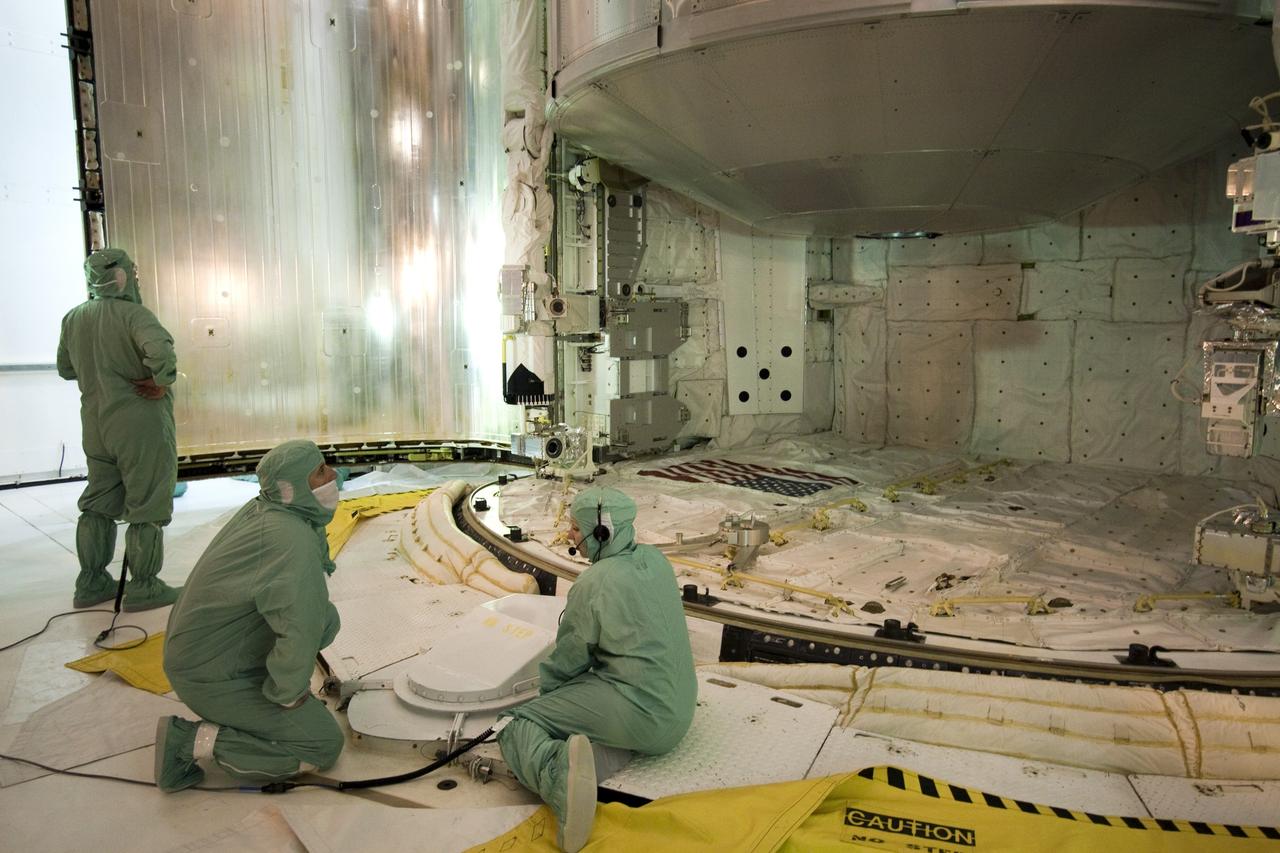
CAPE CANAVERAL, Fla. -- On Launch Pad 39A at NASA's Kennedy Space Center in Florida, technicians prepare to close the clamshell doors of space shuttle Discovery's payload bay in preparation for the STS-133 launch to the International Space Station. Targeted to launch Nov. 1, STS-133 will carry the Permanent Multipurpose Module (PMM) packed with supplies and critical spare parts, as well as Robonaut 2 (R2) to the station. Photo credit: NASA/Jack Pfaller
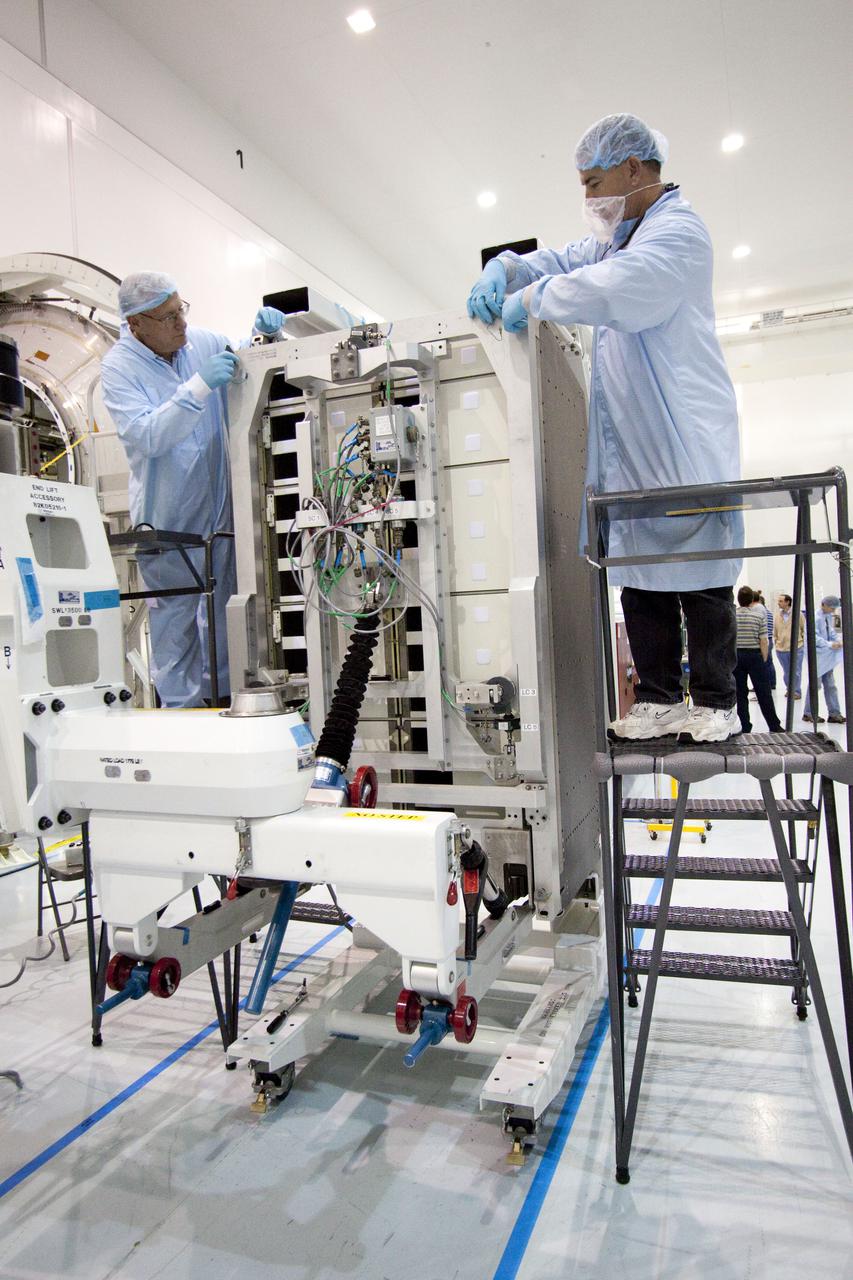
CAPE CANAVERAL, Fla. – In the Space Station Processing Facility at NASA's Kennedy Space Center in Florida, technicians prepare to install a resupply rack into the Permanent Multipurpose Module, or PMM. The Leonardo multi-purpose logistics module, or MPLM, is being modified to become the PMM that will carry supplies and critical spare parts to the International Space Station aboard space shuttle Discovery’s STS-133 mission. Discovery, targeted to launch Nov. 1, will leave the module behind so it can be used for microgravity experiments in fluid physics, materials science, biology and biotechnology. Photo credit: NASA_Jack Pfaller
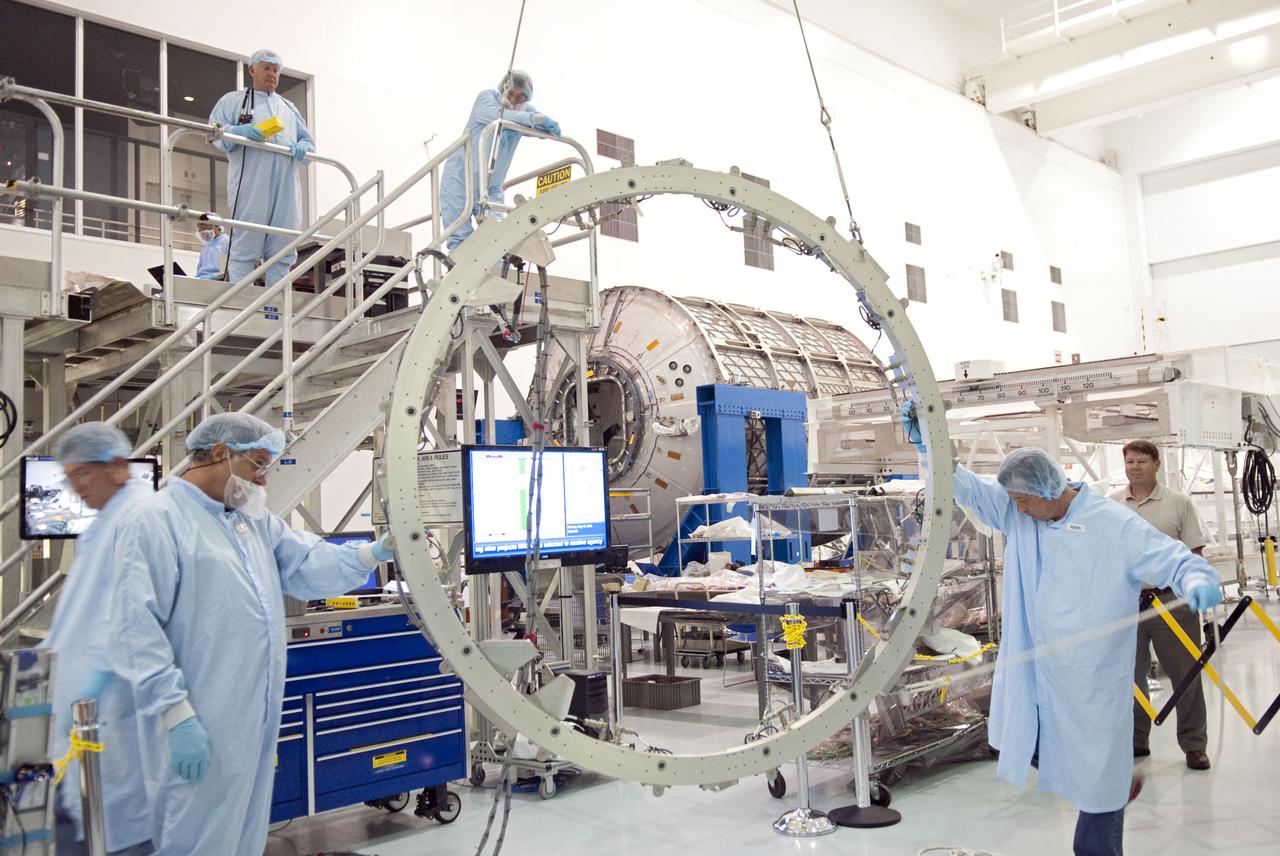
CAPE CANAVERAL, Fla. – Technicians in the Space Station Processing Facility at NASA's Kennedy Space Center in Florida begin to hoist and temporarily install the Common Berthing Mechanism, or CBM, to the Permanent Multipurpose Module, or PMM. The CBM is a test fixture that simulates the joining of the International Space Station with a pressurized element. The Leonardo multi-purpose logistics module, or MPLM, is being modified to become the PMM that will carry supplies and critical spare parts to the station aboard space shuttle Discovery’s STS-133 mission. Discovery will leave the module behind so it can be used for microgravity experiments in fluid physics, materials science, biology and biotechnology. Photo credit: NASA_Jim Grossmann
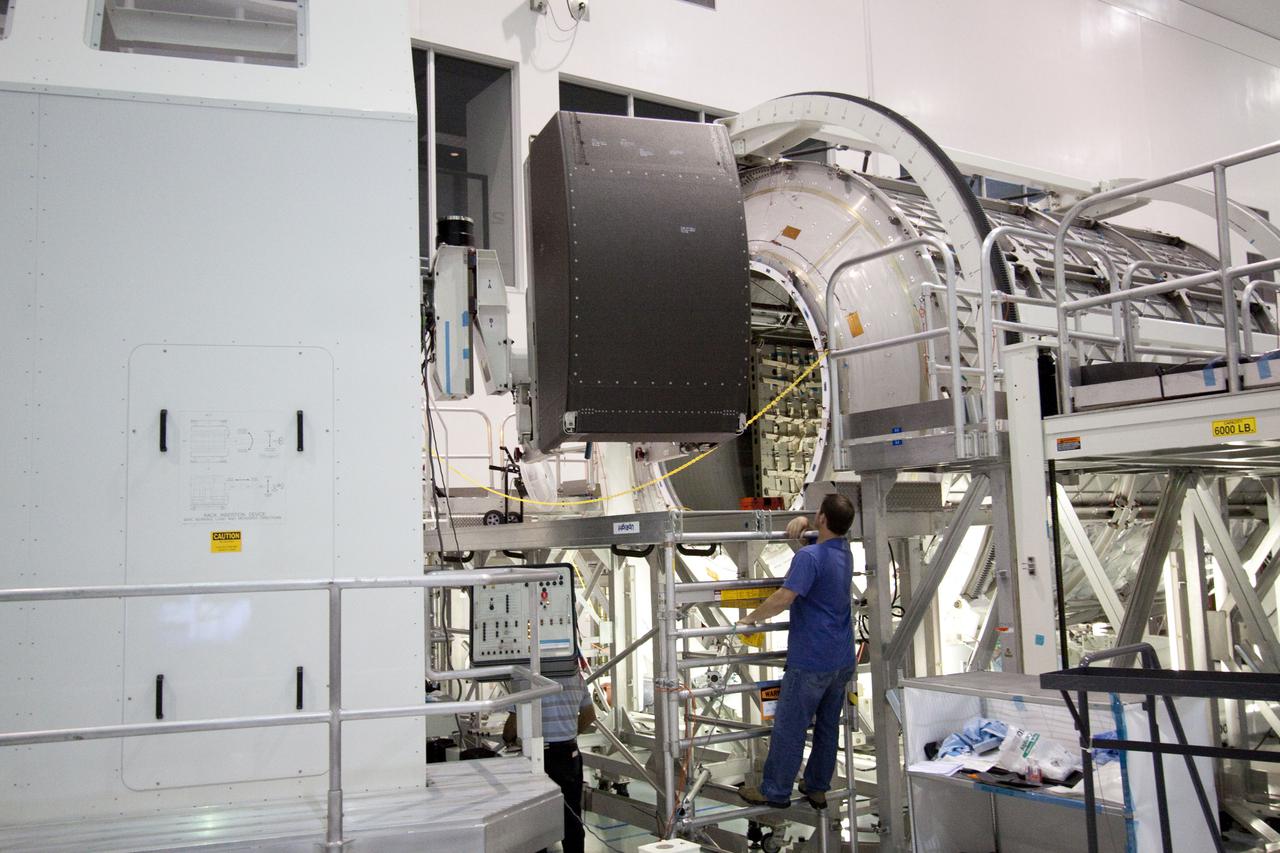
CAPE CANAVERAL, Fla. – In the Space Station Processing Facility at NASA's Kennedy Space Center in Florida, technicians begin to install a resupply rack into the Permanent Multipurpose Module, or PMM. The Leonardo multi-purpose logistics module, or MPLM, is being modified to become the PMM that will carry supplies and critical spare parts to the International Space Station aboard space shuttle Discovery’s STS-133 mission. Discovery, targeted to launch Nov. 1, will leave the module behind so it can be used for microgravity experiments in fluid physics, materials science, biology and biotechnology. Photo credit: NASA_Jack Pfaller
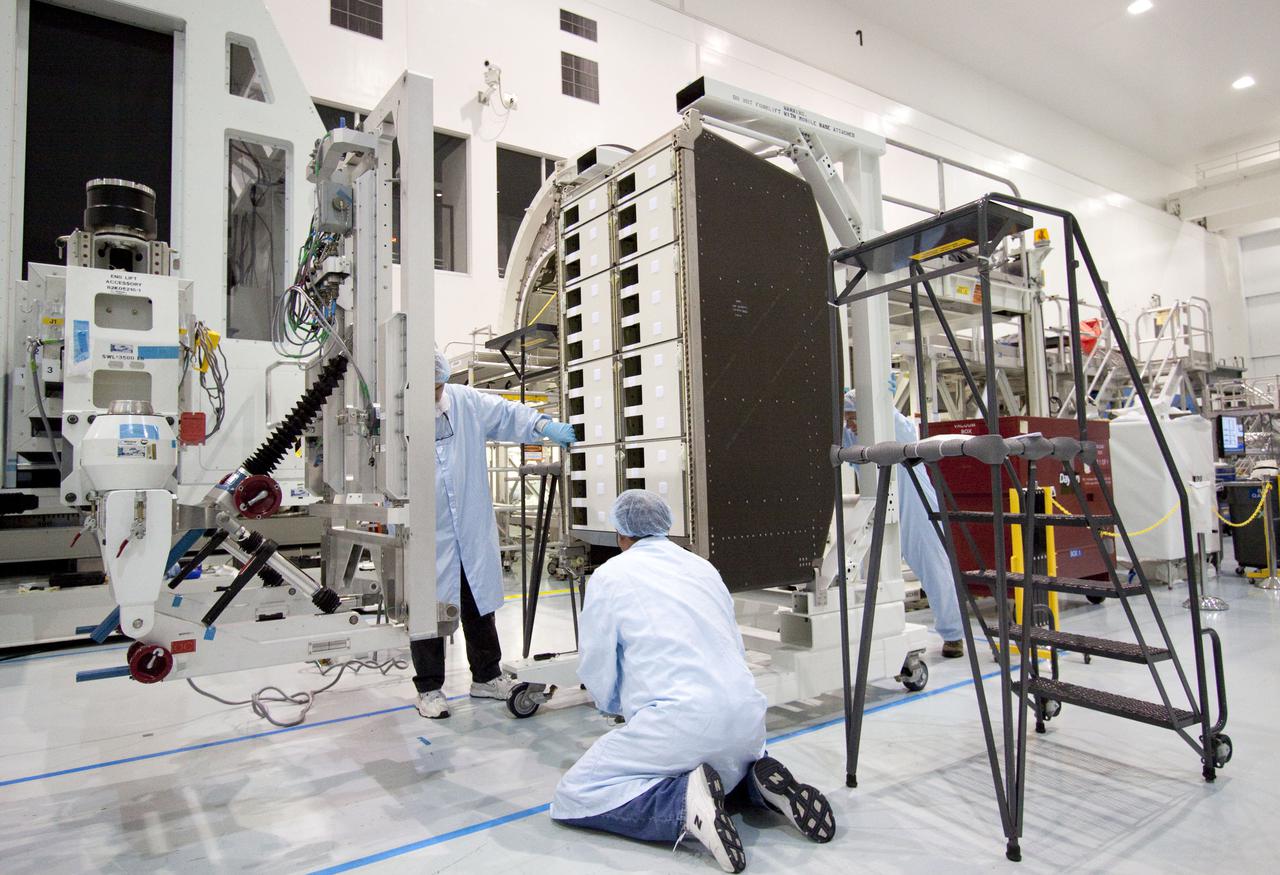
CAPE CANAVERAL, Fla. – In the Space Station Processing Facility at NASA's Kennedy Space Center in Florida, technicians prepare to install a resupply rack into the Permanent Multipurpose Module, or PMM. The Leonardo multi-purpose logistics module, or MPLM, is being modified to become the PMM that will carry supplies and critical spare parts to the International Space Station aboard space shuttle Discovery’s STS-133 mission. Discovery, targeted to launch Nov. 1, will leave the module behind so it can be used for microgravity experiments in fluid physics, materials science, biology and biotechnology. Photo credit: NASA_Jack Pfaller
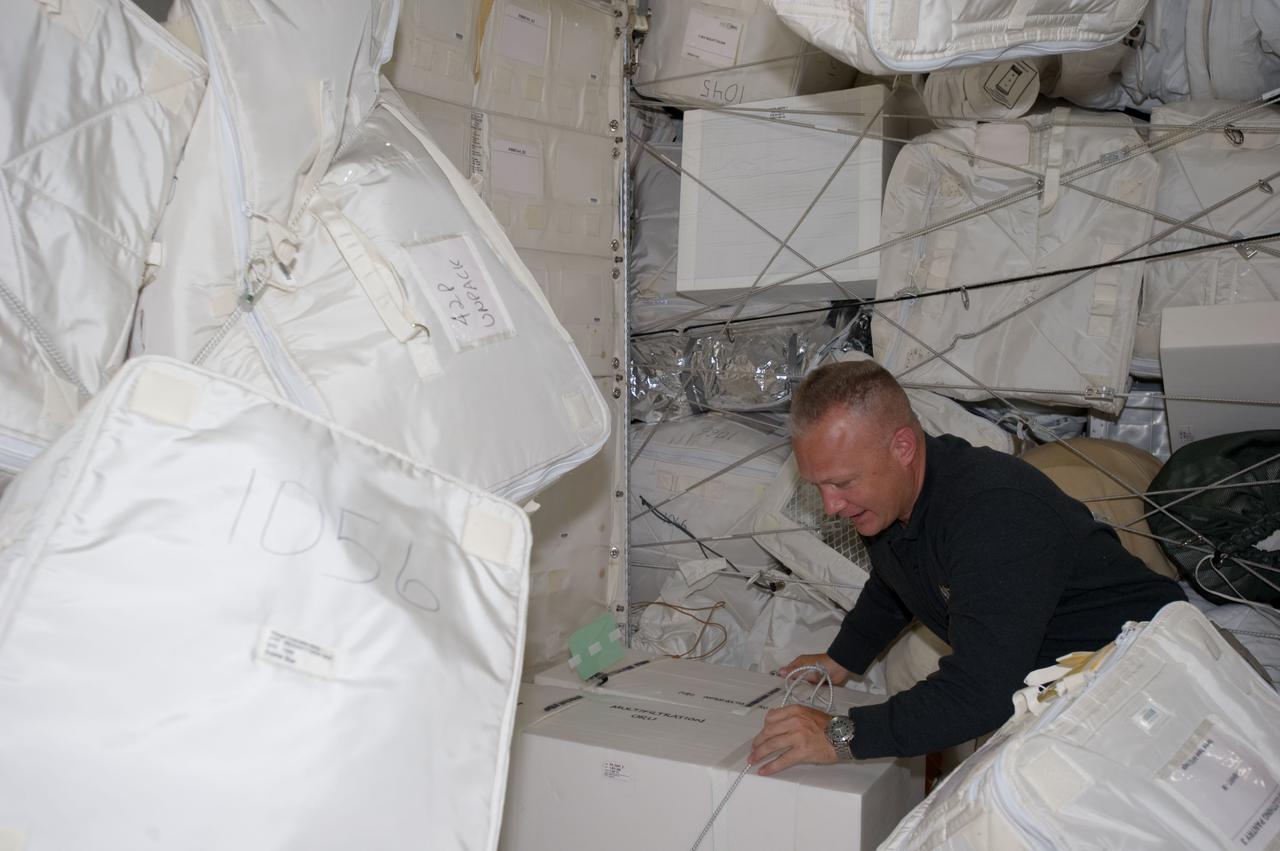
S135-E-007441 (11 July 2011) --- NASA astronaut Doug Hurley, STS-135 pilot, moves around supplies and equipment in the Leonardo Permanent Multipurpose Module (PMM) during the fourth day of flight for Atlantis' four person crew. This module is a component that joined the International Space Station complex after it was flown into space aboard the space shuttle Discovery on STS-133. Photo credit: NASA
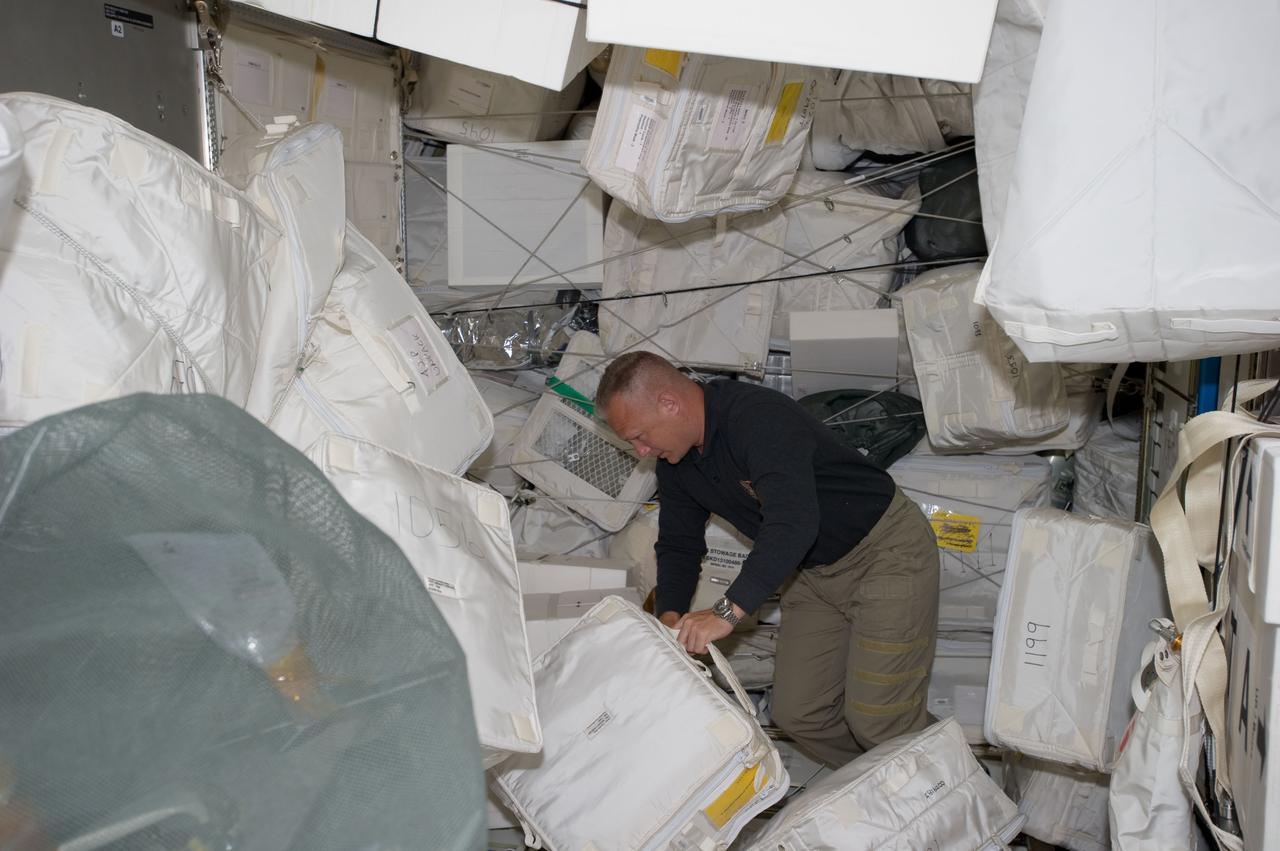
S135-E-007437 (11 July 2011) --- NASA astronaut Doug Hurley, STS-135 pilot, moves around supplies and equipment in the Leonardo Permanent Multipurpose Module (PMM) during the fourth day of flight for Atlantis' four person crew. This module is a component that joined the International Space Station complex after it was flown into space aboard the space shuttle Discovery on STS-133. Photo credit: NASA
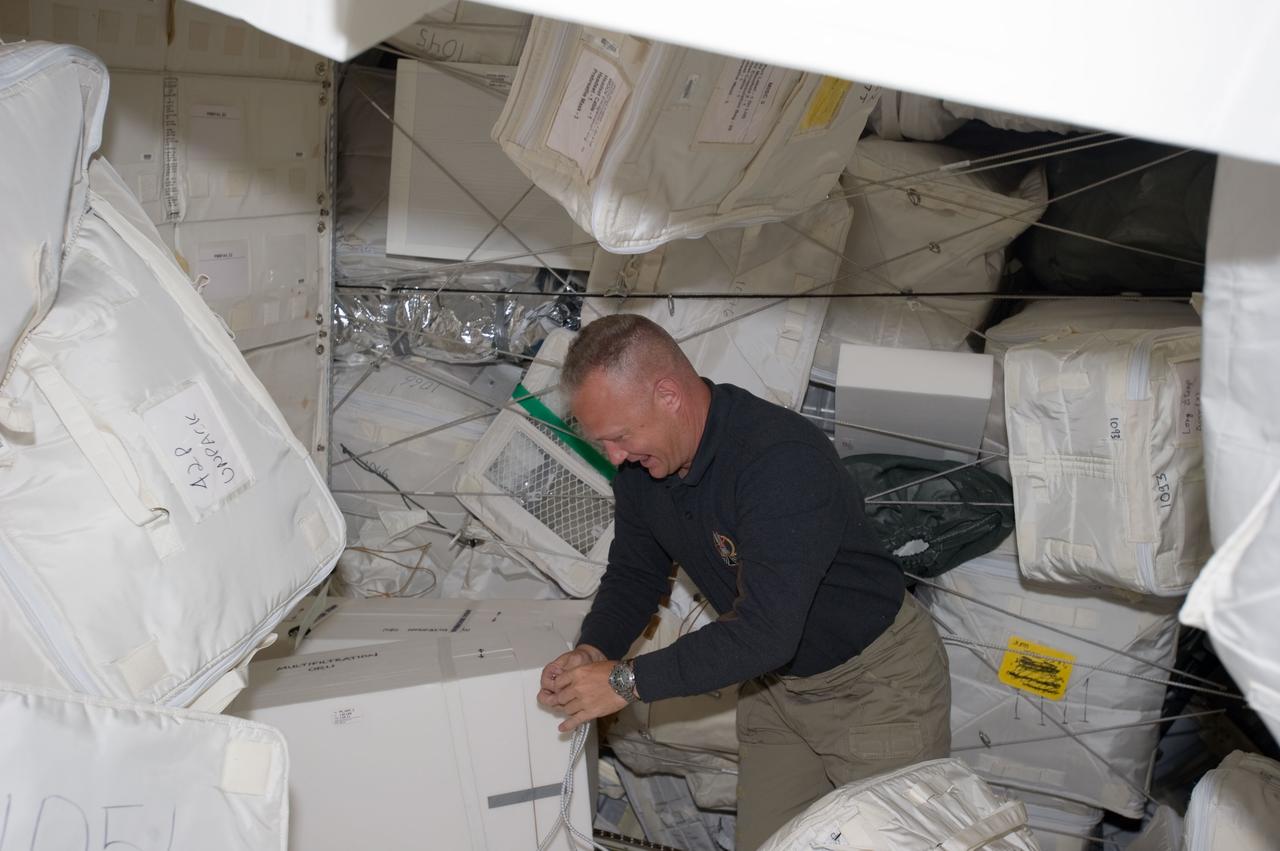
S135-E-007439 (11 July 2011) --- NASA astronaut Doug Hurley, STS-135 pilot, moves around supplies and equipment in the Leonardo Permanent Multipurpose Module (PMM) during the fourth day of flight for Atlantis' four person crew. This module is a component that joined the International Space Station complex after it was flown into space aboard the space shuttle Discovery on STS-133. Photo credit: NASA
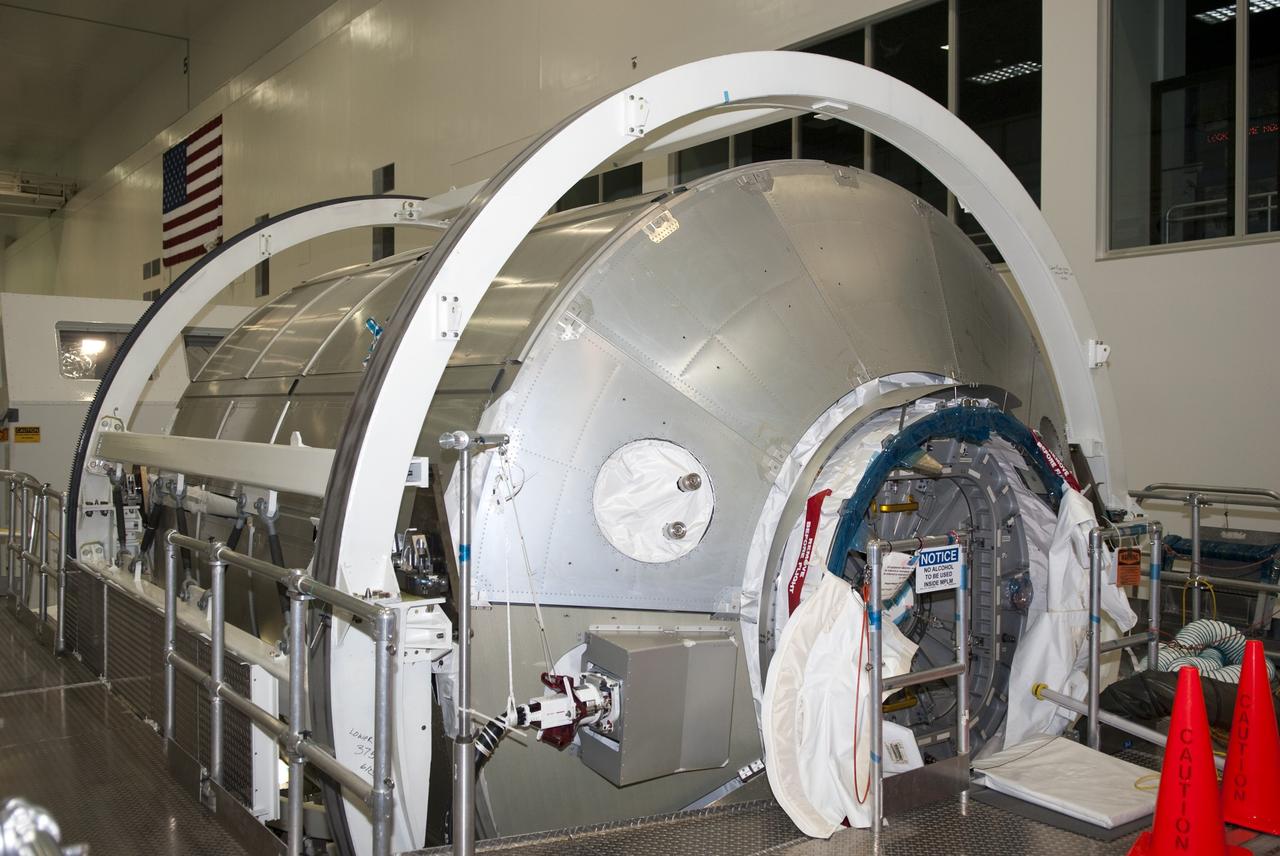
CAPE CANAVERAL, Fla. -- Inside the Space Station Processing Facility at NASA's Kennedy Space Center in Florida, the hatch of the Permanent Multipurpose Module (PMM) is closed in preparation for space shuttle Discovery's STS-133 mission to the International Space Station. Robonaut 2 (R2) and critical spare parts are packed inside the PMM, which will be left aboard the station on Discovery's final mission. Targeted to launch Nov. 1 at 4:40 p.m. EDT, Discovery and its crew also will carry Express Logistics Carrier-4 (ELC-4), which is filled with external payloads and experiments. For more information visit, www.nasa.gov/shuttle. Photo credit: NASA/Jim Grossmann
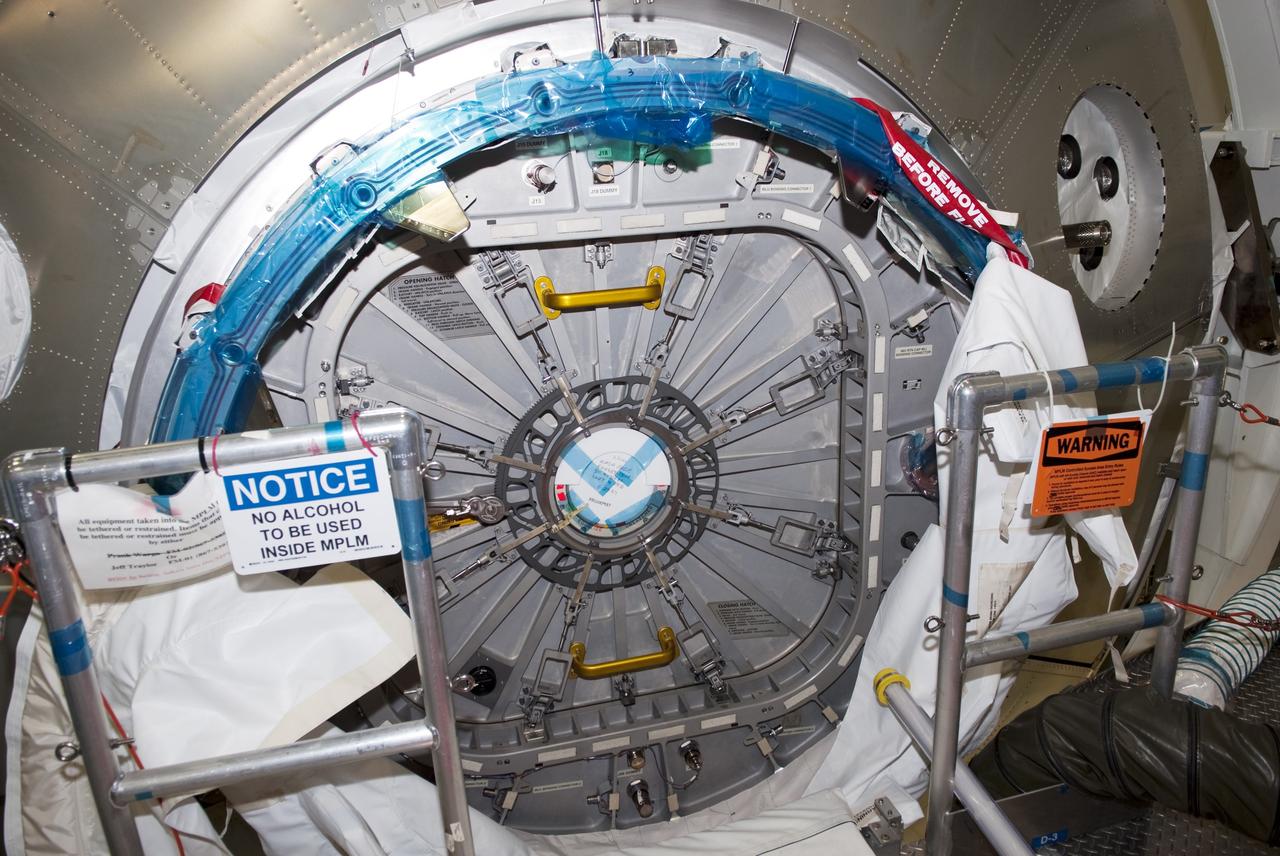
CAPE CANAVERAL, Fla. -- Inside the Space Station Processing Facility at NASA's Kennedy Space Center in Florida, the hatch of the Permanent Multipurpose Module (PMM) is closed in preparation for space shuttle Discovery's STS-133 mission to the International Space Station. Robonaut 2 (R2) and critical spare parts are packed inside the PMM, which will be left aboard the station on Discovery's final mission. Targeted to launch Nov. 1 at 4:40 p.m. EDT, Discovery and its crew also will carry Express Logistics Carrier-4 (ELC-4), which is filled with external payloads and experiments. For more information visit, www.nasa.gov/shuttle. Photo credit: NASA/Jim Grossmann

CAPE CANAVERAL, Fla. -- Inside the Space Station Processing Facility at NASA's Kennedy Space Center in Florida, the hatch of the Permanent Multipurpose Module (PMM) is closed in preparation for space shuttle Discovery's STS-133 mission to the International Space Station. Robonaut 2 (R2) and critical spare parts are packed inside the PMM, which will be left aboard the station on Discovery's final mission. Targeted to launch Nov. 1 at 4:40 p.m. EDT, Discovery and its crew also will carry Express Logistics Carrier-4 (ELC-4), which is filled with external payloads and experiments. For more information visit, www.nasa.gov/shuttle. Photo credit: NASA/Jim Grossmann

CAPE CANAVERAL, Fla. -- Inside the Space Station Processing Facility at NASA's Kennedy Space Center in Florida, workers inspect the Permanent Multipurpose Module (PMM) after its hatch is closed in preparation for space shuttle Discovery's STS-133 mission to the International Space Station. Robonaut 2 (R2) and critical spare parts are packed inside the PMM, which will be left aboard the station on Discovery's final mission. Targeted to launch Nov. 1 at 4:40 p.m. EDT, Discovery and its crew also will carry Express Logistics Carrier-4 (ELC-4), which is filled with external payloads and experiments. For more information visit, www.nasa.gov/shuttle. Photo credit: NASA/Jim Grossmann
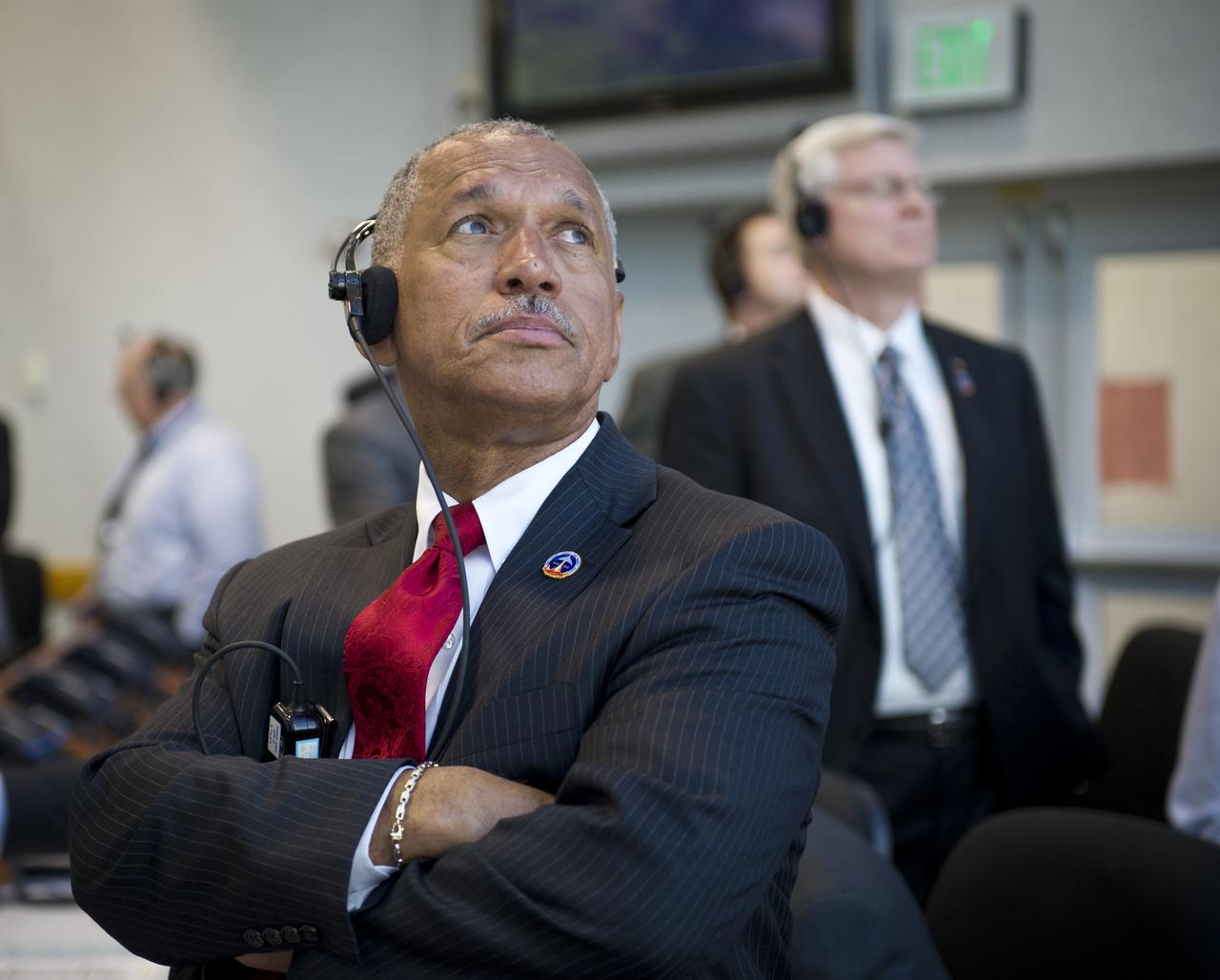
NASA Administrator Charles Bolden and other NASA management watch the launch of space shuttle Discovery (STS-133) from the firing room at Kennedy Space Center, Thursday, Feb. 24, 2011, in Cape Canaveral, Fla. Discovery, on its 39th and final flight, is carrying the Italian-built Permanent Multipurpose Module (PMM), Express Logistics Carrier 4 (ELC4) and Robonaut 2, the first humanoid robot in space to the International Space Station. Photo Credit: (NASA/Bill Ingalls)
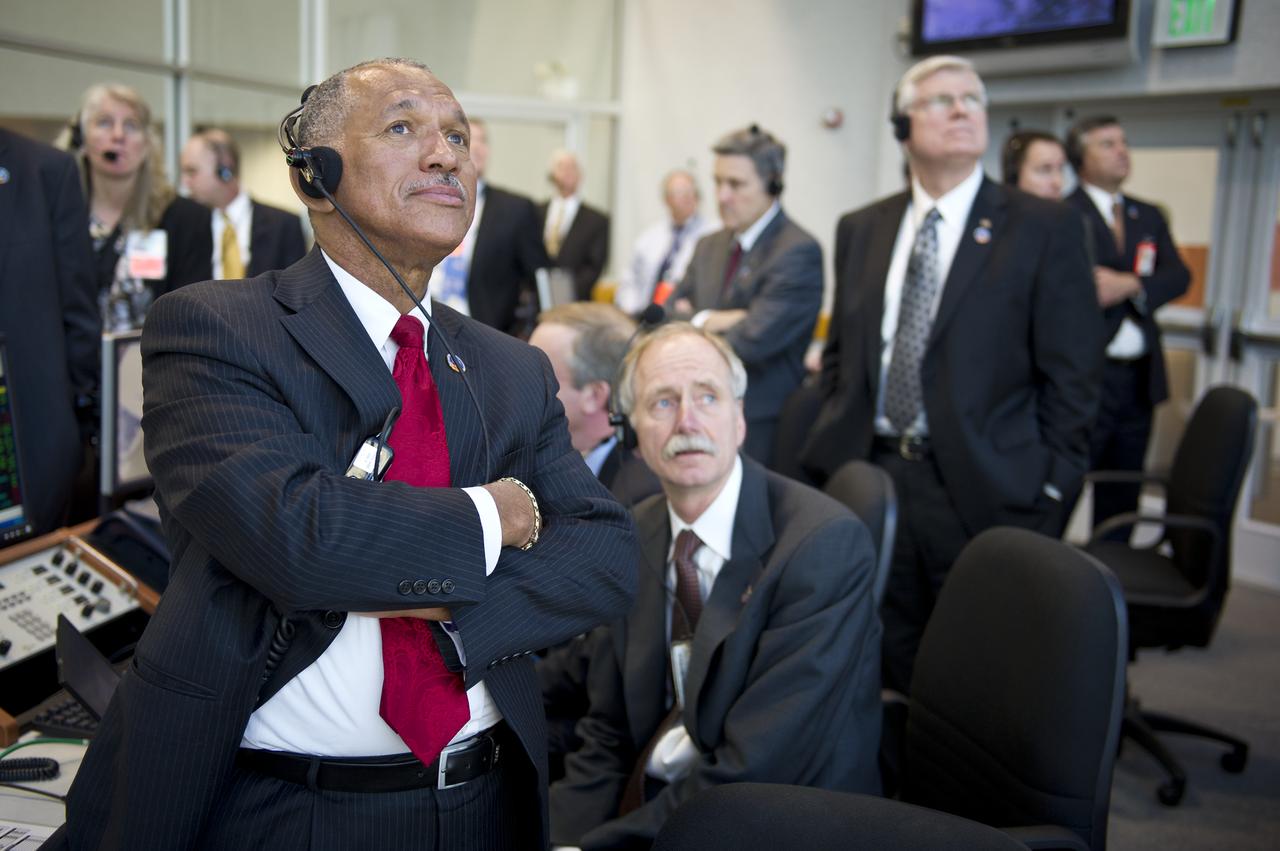
NASA Administrator Charles Bolden and other NASA management watch the launch of space shuttle Discovery (STS-133) from the firing room at Kennedy Space Center, Thursday, Feb. 24, 2011, in Cape Canaveral, Fla. Discovery, on its 39th and final flight, is carrying the Italian-built Permanent Multipurpose Module (PMM), Express Logistics Carrier 4 (ELC4) and Robonaut 2, the first humanoid robot in space to the International Space Station. Photo Credit: (NASA/Bill Ingalls)
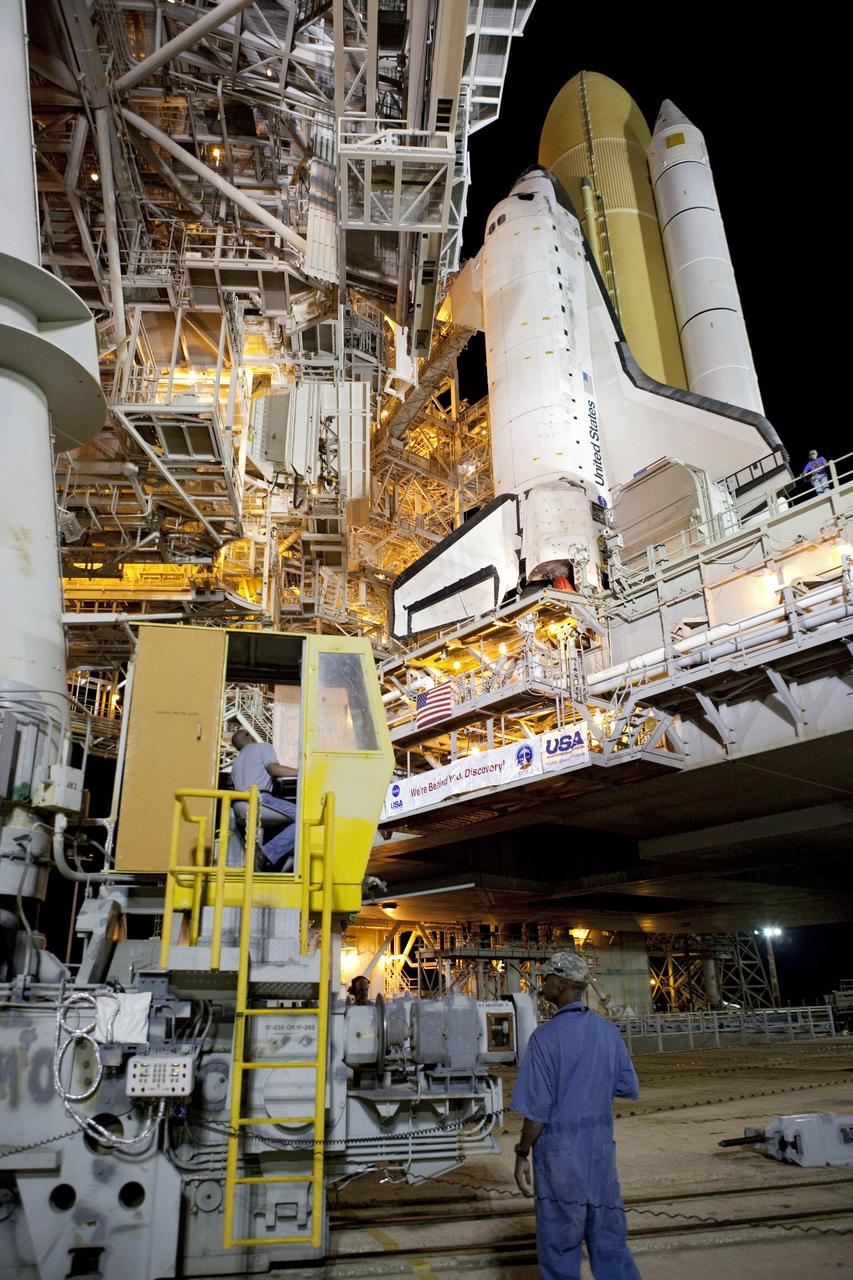
CAPE CANAVERAL, Fla. -- Workers at NASA's Kennedy Space Center in Florida move the rotating service structure into place around space shuttle Discovery on Launch Pad 39A. The structure protects the shuttle from the elements and allows access into the spacecraft while on the pad. Targeted to liftoff Nov. 1, Discovery will take the Permanent Multipurpose Module (PMM) packed with supplies and critical spare parts, as well as Robonaut 2 (R2) to the International Space Station on the STS-133 mission. Photo credit: NASA/Dimitri Gerondidakis
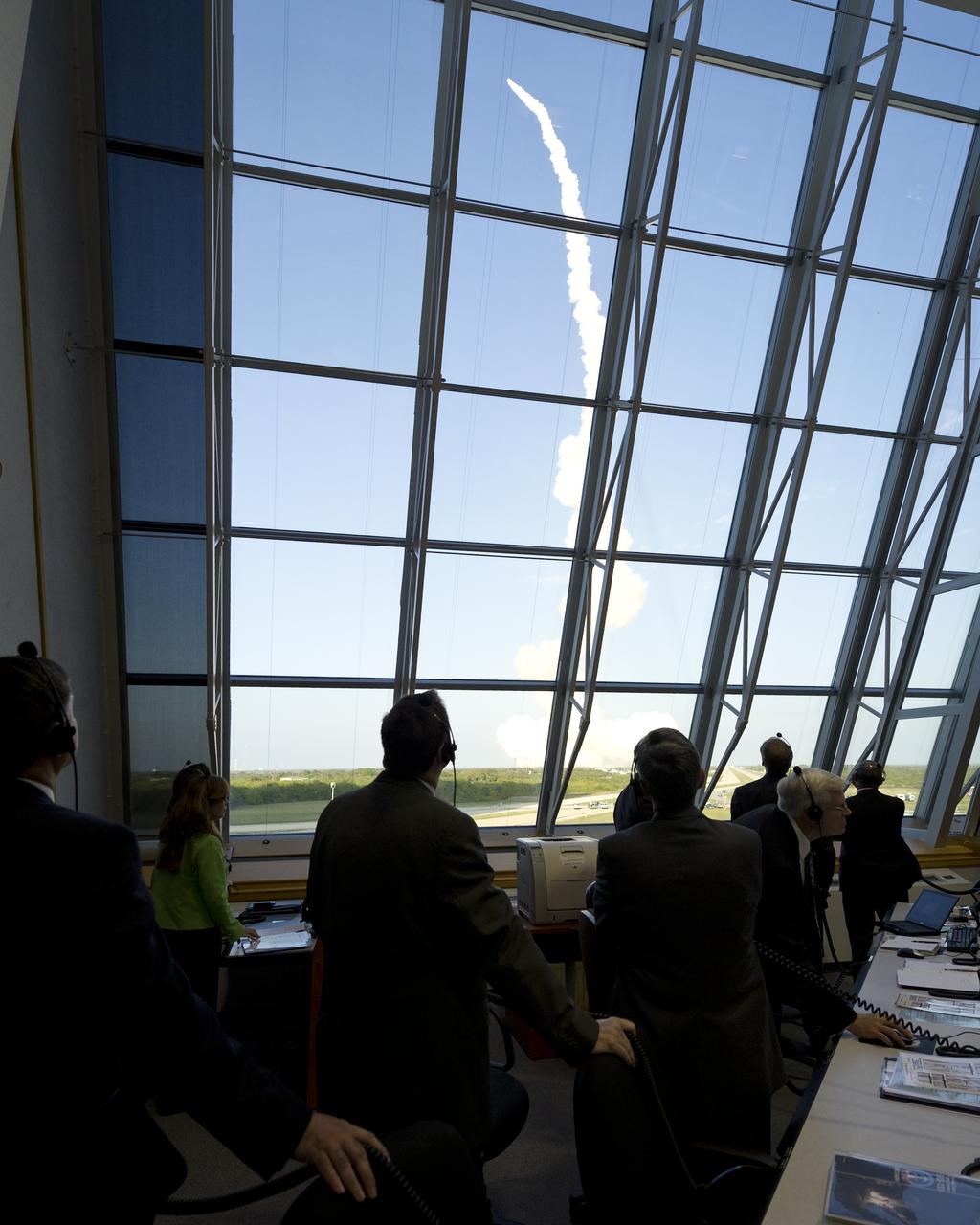
NASA management watch the launch of space shuttle Discovery (STS-133) from the firing room at Kennedy Space Center, Thursday, Feb. 24, 2011, in Cape Canaveral, Fla. Discovery, on its 39th and final flight, is carrying the Italian-built Permanent Multipurpose Module (PMM), Express Logistics Carrier 4 (ELC4) and Robonaut 2, the first humanoid robot in space to the International Space Station. Photo Credit: (NASA/Bill Ingalls)
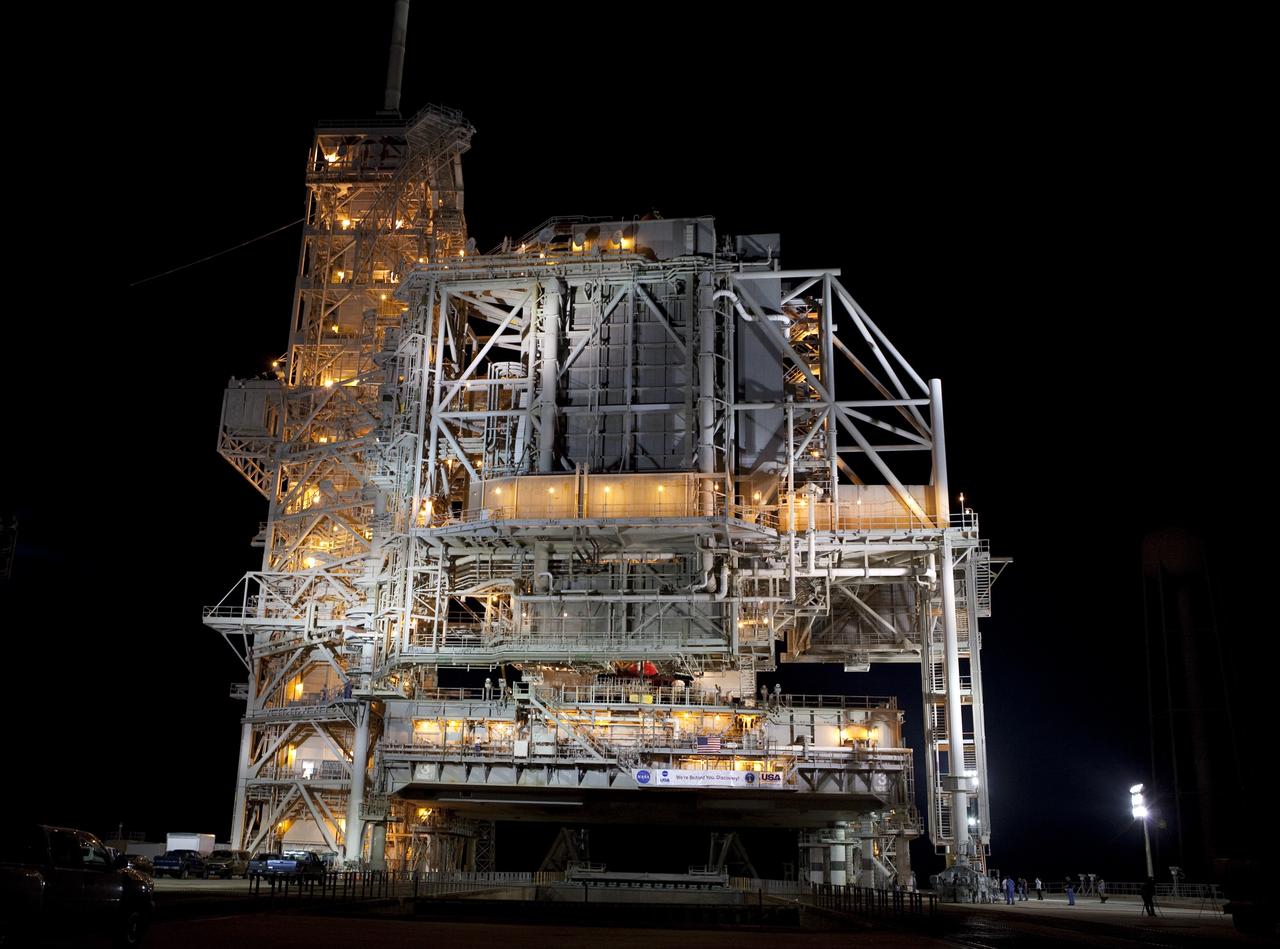
CAPE CANAVERAL, Fla. -- The rotating service structure surrounds space shuttle Discovery on Launch Pad 39A at NASA's Kennedy Space Center in Florida. The structure protects the shuttle from the elements and allows access into the spacecraft while on the pad. Targeted to liftoff Nov. 1, Discovery will take the Permanent Multipurpose Module (PMM) packed with supplies and critical spare parts, as well as Robonaut 2 (R2) to the International Space Station on the STS-133 mission. Photo credit: NASA/Dimitri Gerondidakis
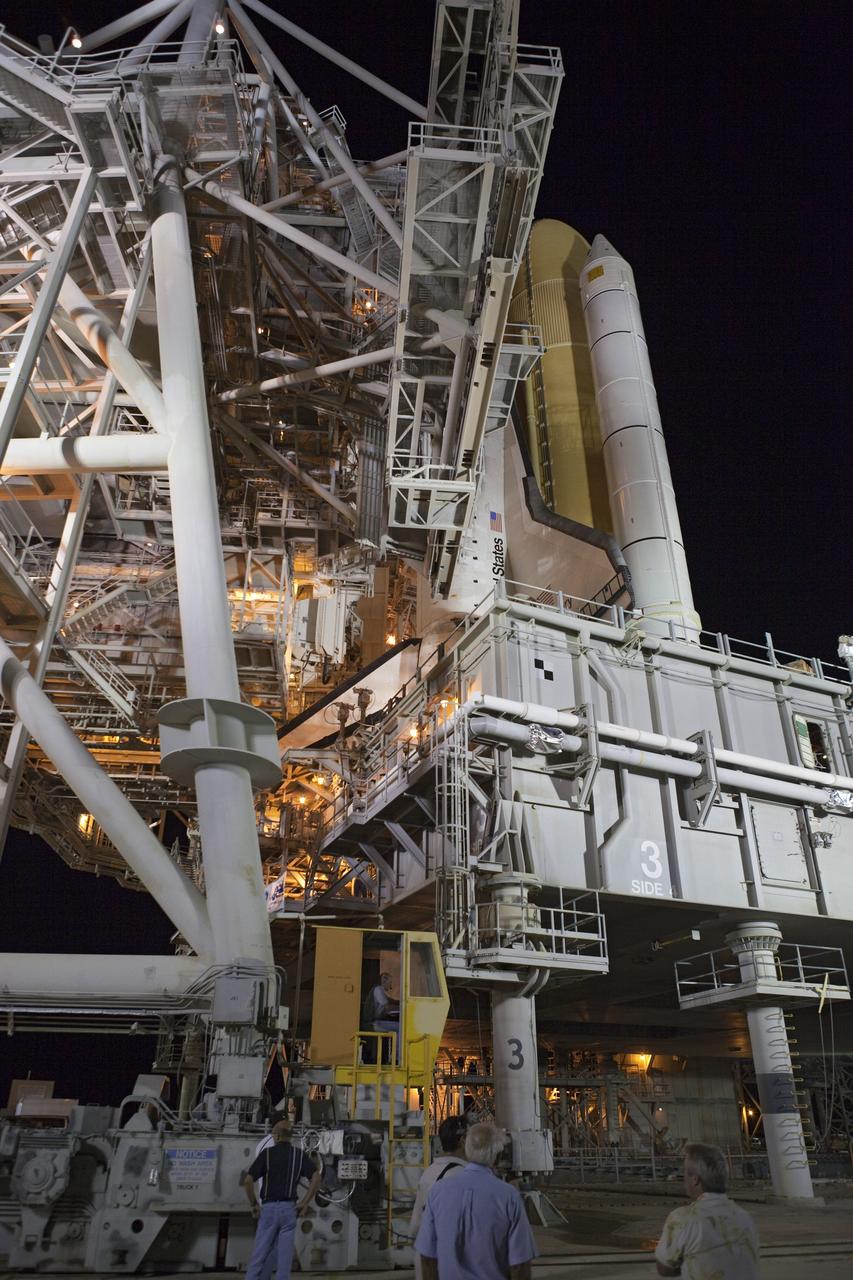
CAPE CANAVERAL, Fla. -- Workers at NASA's Kennedy Space Center in Florida move the rotating service structure into place around space shuttle Discovery on Launch Pad 39A. The structure protects the shuttle from the elements and allows access into the spacecraft while on the pad. Targeted to liftoff Nov. 1, Discovery will take the Permanent Multipurpose Module (PMM) packed with supplies and critical spare parts, as well as Robonaut 2 (R2) to the International Space Station on the STS-133 mission. Photo credit: NASA/Dimitri Gerondidakis
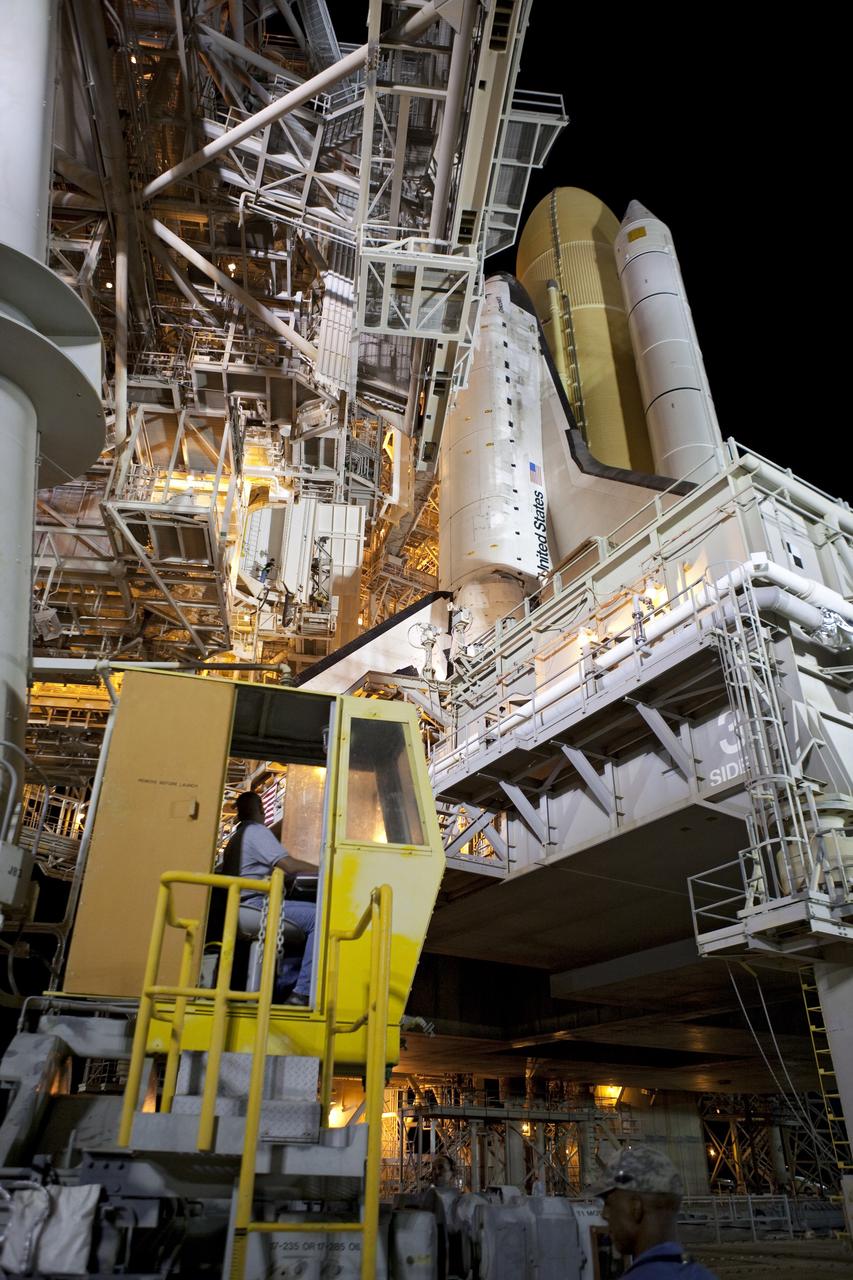
CAPE CANAVERAL, Fla. -- Workers at NASA's Kennedy Space Center in Florida move the rotating service structure into place around space shuttle Discovery on Launch Pad 39A. The structure protects the shuttle from the elements and allows access into the spacecraft while on the pad. Targeted to liftoff Nov. 1, Discovery will take the Permanent Multipurpose Module (PMM) packed with supplies and critical spare parts, as well as Robonaut 2 (R2) to the International Space Station on the STS-133 mission. Photo credit: NASA/Dimitri Gerondidakis
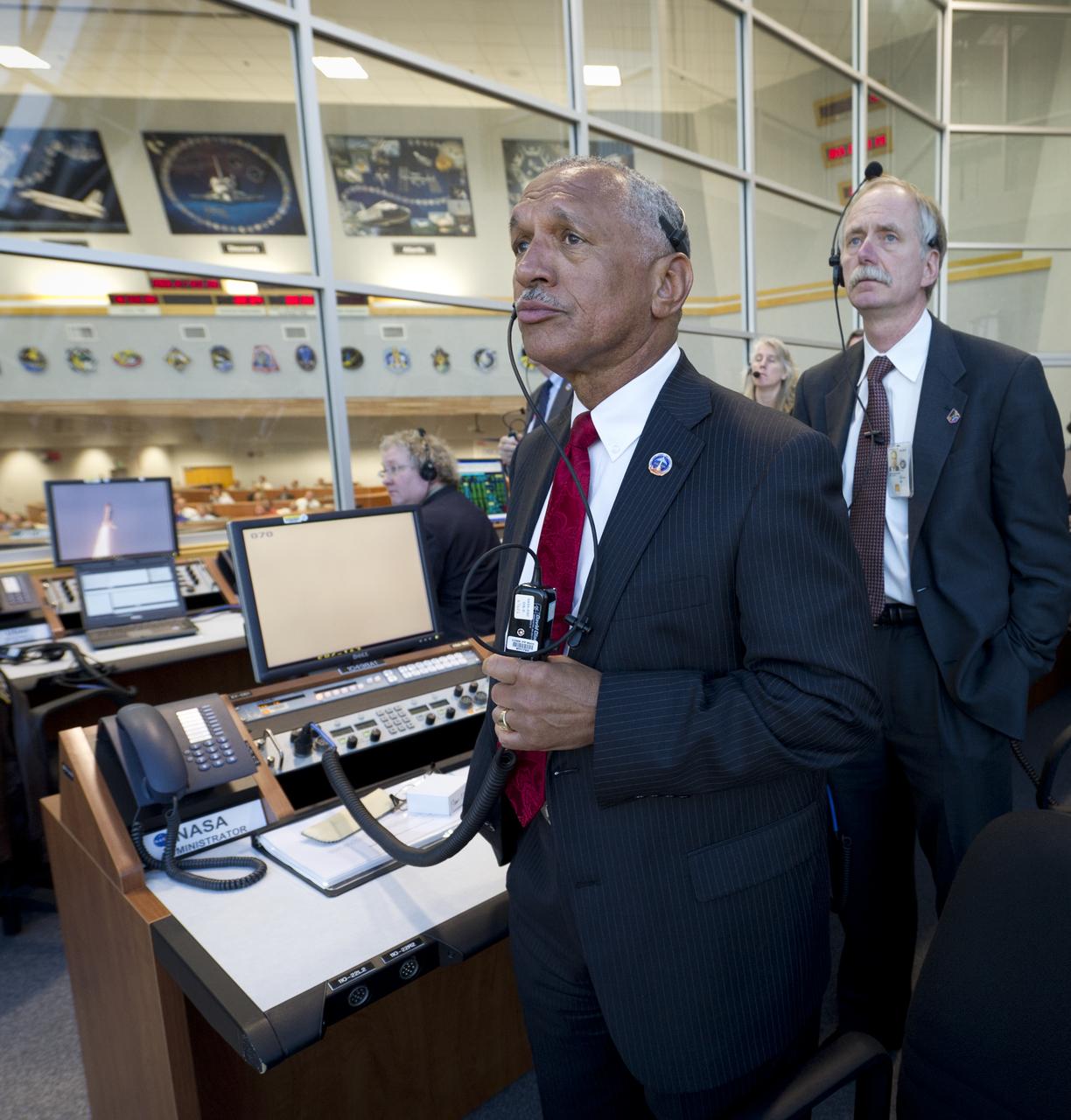
NASA Administrator Charles Bolden and other NASA management watch the launch of space shuttle Discovery (STS-133) from the firing room at Kennedy Space Center, Thursday, Feb. 24, 2011, in Cape Canaveral, Fla. Discovery, on its 39th and final flight, is carrying the Italian-built Permanent Multipurpose Module (PMM), Express Logistics Carrier 4 (ELC4) and Robonaut 2, the first humanoid robot in space to the International Space Station. Photo Credit: (NASA/Bill Ingalls)
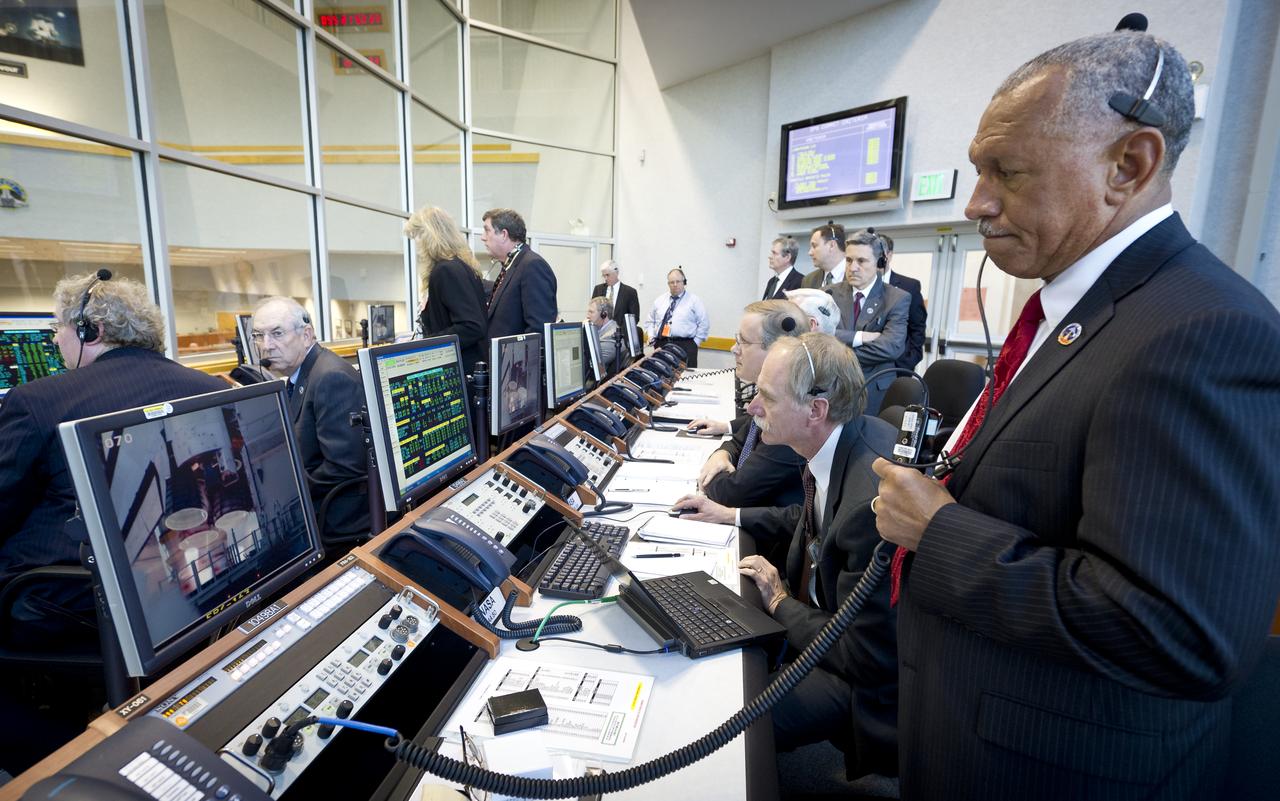
NASA Administrator Charles Bolden and other NASA management watch the launch of space shuttle Discovery (STS-133) from the firing room at Kennedy Space Center, Thursday, Feb. 24, 2011, in Cape Canaveral, Fla. Discovery, on its 39th and final flight, is carrying the Italian-built Permanent Multipurpose Module (PMM), Express Logistics Carrier 4 (ELC4) and Robonaut 2, the first humanoid robot in space to the International Space Station. Photo Credit: (NASA/Bill Ingalls)
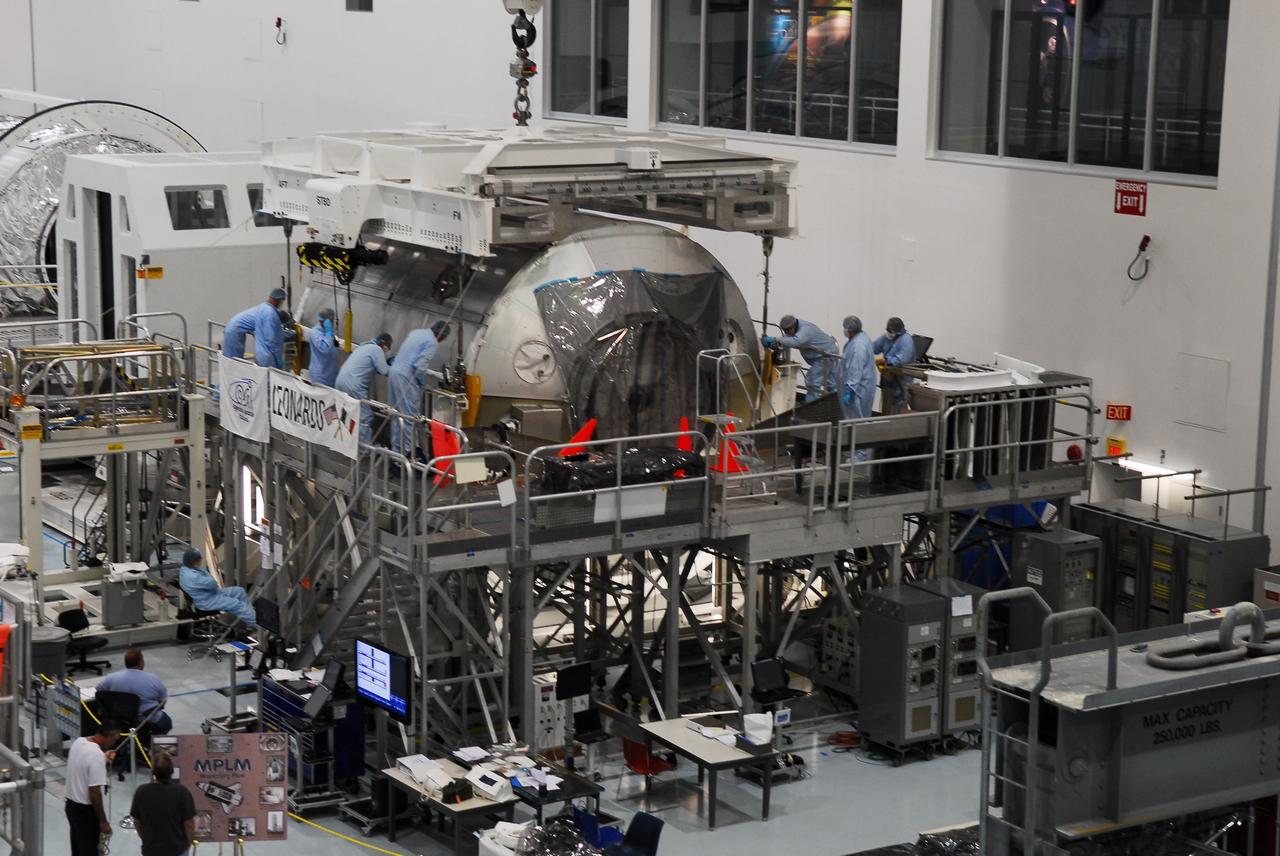
CAPE CANAVERAL, Fla. -- In the Space Station Processing Facility at NASA's Kennedy Space Center in Florida, technicians connect an overhead crane to the Permanent Multipurpose Module, or PMM, for its transfer into a payload canister. The canister will then be transported to Launch Pad 39A and installed into space shuttle Discovery's payload bay. Discovery and its STS-133 crew will deliver the PMM, packed with supplies and critical spare parts, as well as Robonaut 2, the dexterous humanoid astronaut helper, to the International Space Station. Launch is targeted for 4:40 p.m. EDT, Nov. 1. Photo credit: NASA/Cory Huston
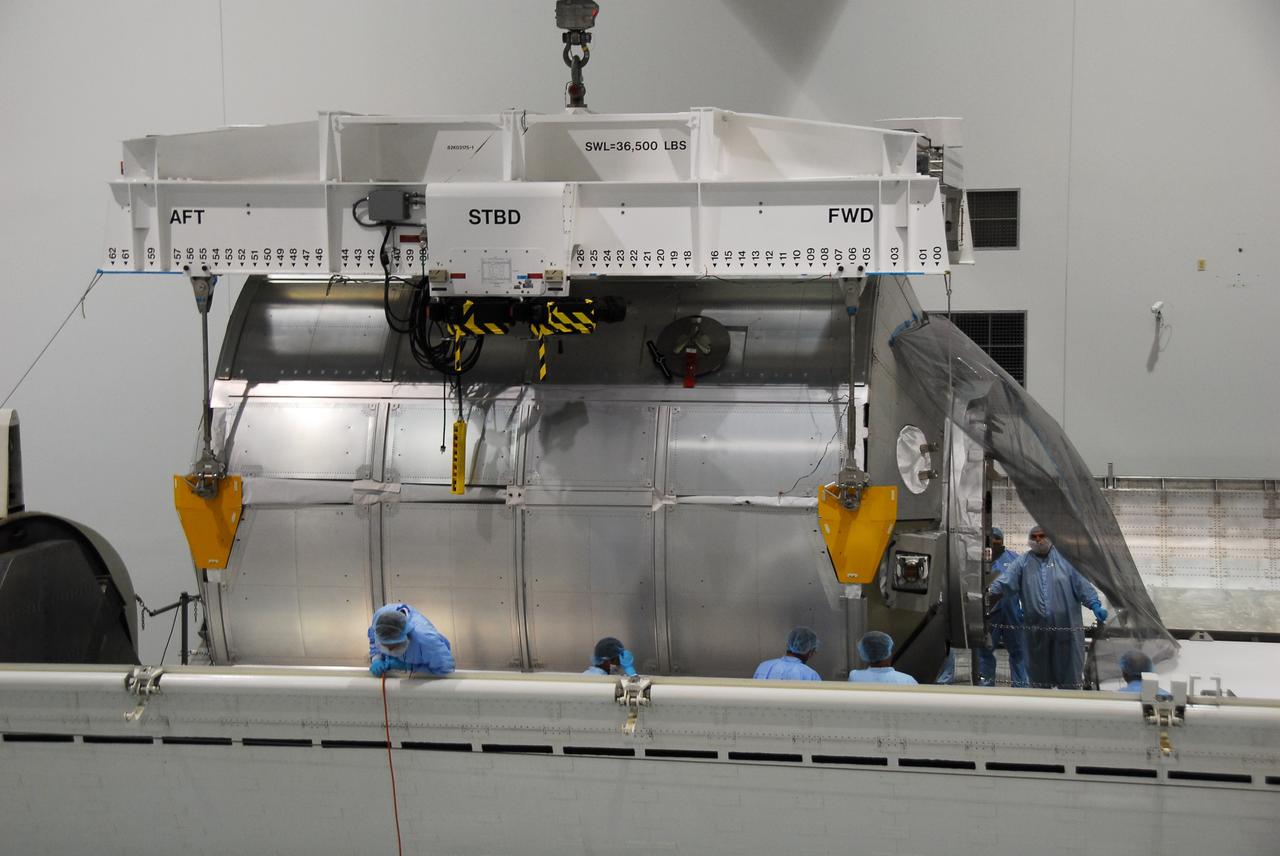
CAPE CANAVERAL, Fla. -- In the Space Station Processing Facility at NASA's Kennedy Space Center in Florida, technicians guide the Permanent Multipurpose Module, or PMM, as an overhead crane lowers it into the payload canister. The canister will then be transported to Launch Pad 39A and installed into space shuttle Discovery's payload bay. Discovery and its STS-133 crew will deliver the PMM, packed with supplies and critical spare parts, as well as Robonaut 2, the dexterous humanoid astronaut helper, to the International Space Station. Launch is targeted for 4:40 p.m. EDT, Nov. 1. Photo credit: NASA/Cory Huston
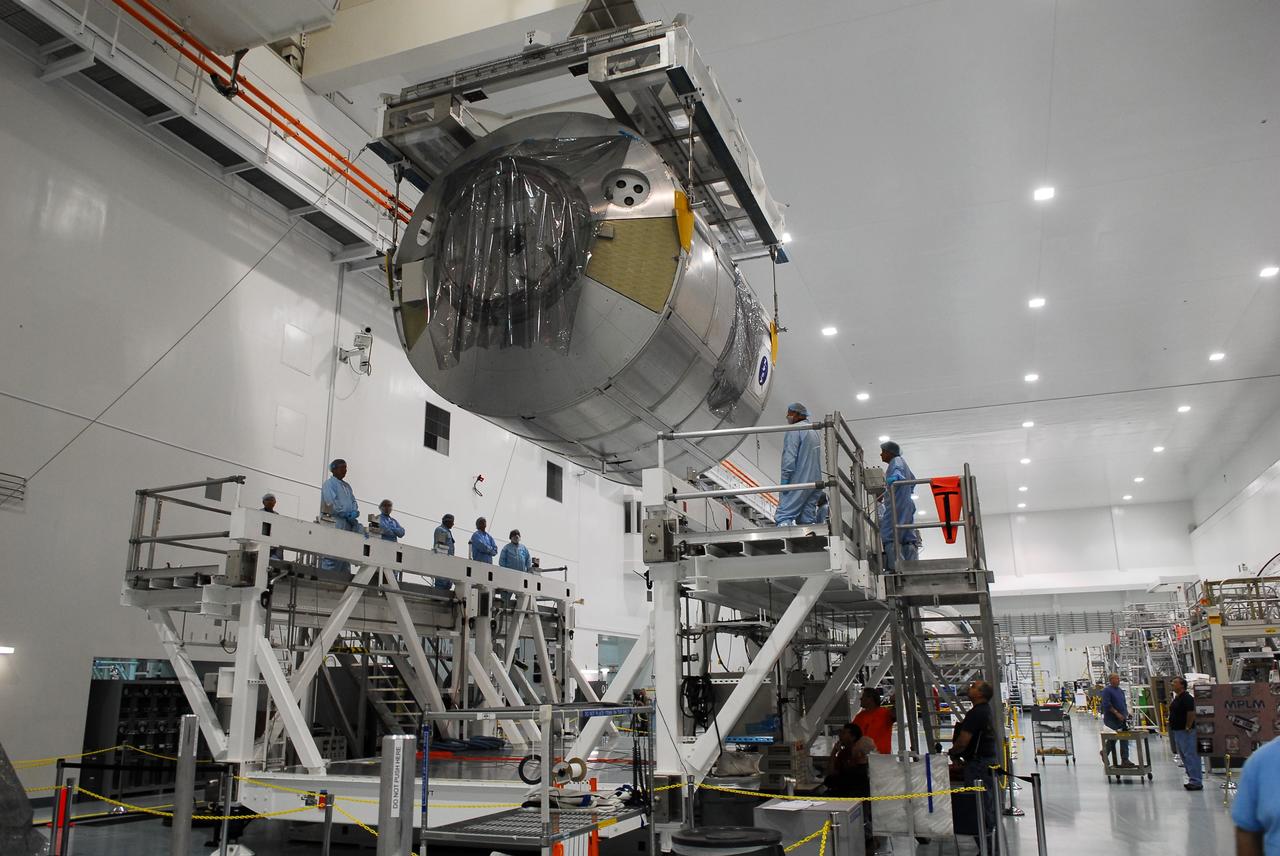
CAPE CANAVERAL, Fla. -- In the Space Station Processing Facility at NASA's Kennedy Space Center in Florida, technicians monitor the progress of the Permanent Multipurpose Module, or PMM, as it is being transferred by overhead crane towards a payload canister. The canister will then be transported to Launch Pad 39A and installed into space shuttle Discovery's payload bay. Discovery and its STS-133 crew will deliver the PMM, packed with supplies and critical spare parts, as well as Robonaut 2, the dexterous humanoid astronaut helper, to the International Space Station. Launch is targeted for 4:40 p.m. EDT, Nov. 1. Photo credit: NASA/Cory Huston
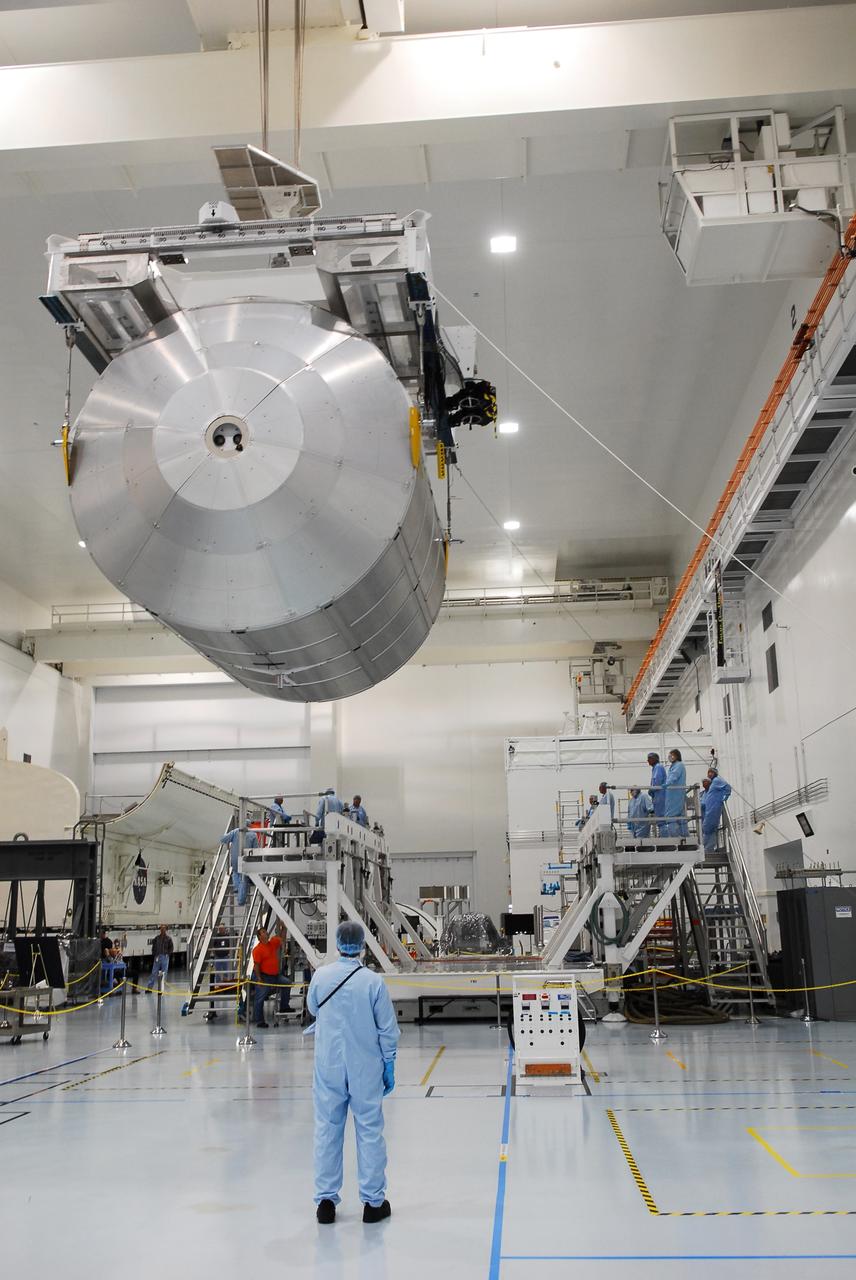
CAPE CANAVERAL, Fla. -- In the Space Station Processing Facility at NASA's Kennedy Space Center in Florida, technicians monitor the progress of the Permanent Multipurpose Module, or PMM, as it is being transferred by overhead crane towards a payload canister. The canister will then be transported to Launch Pad 39A and installed into space shuttle Discovery's payload bay. Discovery and its STS-133 crew will deliver the PMM, packed with supplies and critical spare parts, as well as Robonaut 2, the dexterous humanoid astronaut helper, to the International Space Station. Launch is targeted for 4:40 p.m. EDT, Nov. 1. Photo credit: NASA/Cory Huston
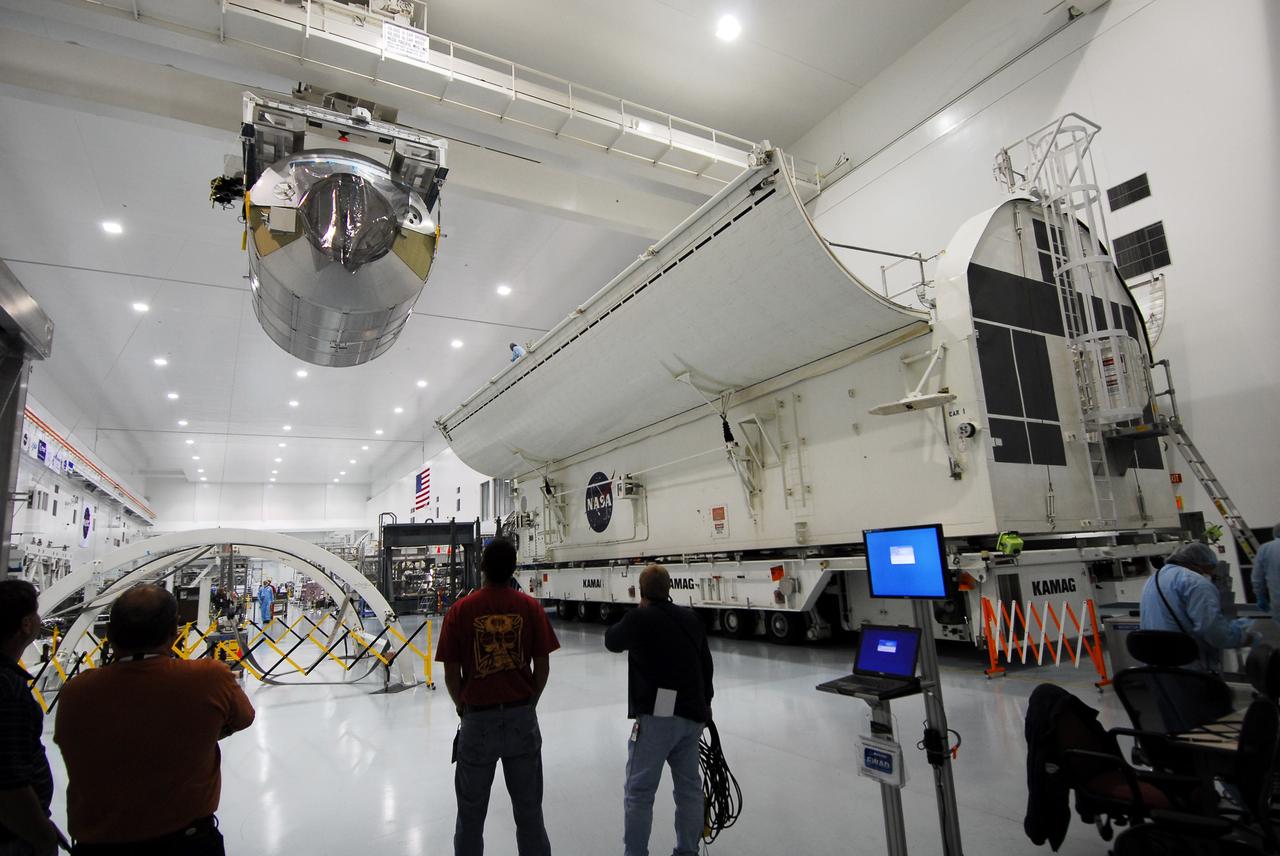
CAPE CANAVERAL, Fla. -- In the Space Station Processing Facility at NASA's Kennedy Space Center in Florida, workers watch the progress of the Permanent Multipurpose Module, or PMM, as it is being transferred by overhead crane towards a payload canister. The canister will then be transported to Launch Pad 39A and installed into space shuttle Discovery's payload bay. Discovery and its STS-133 crew will deliver the PMM, packed with supplies and critical spare parts, as well as Robonaut 2, the dexterous humanoid astronaut helper, to the International Space Station. Launch is targeted for 4:40 p.m. EDT, Nov. 1. Photo credit: NASA/Cory Huston
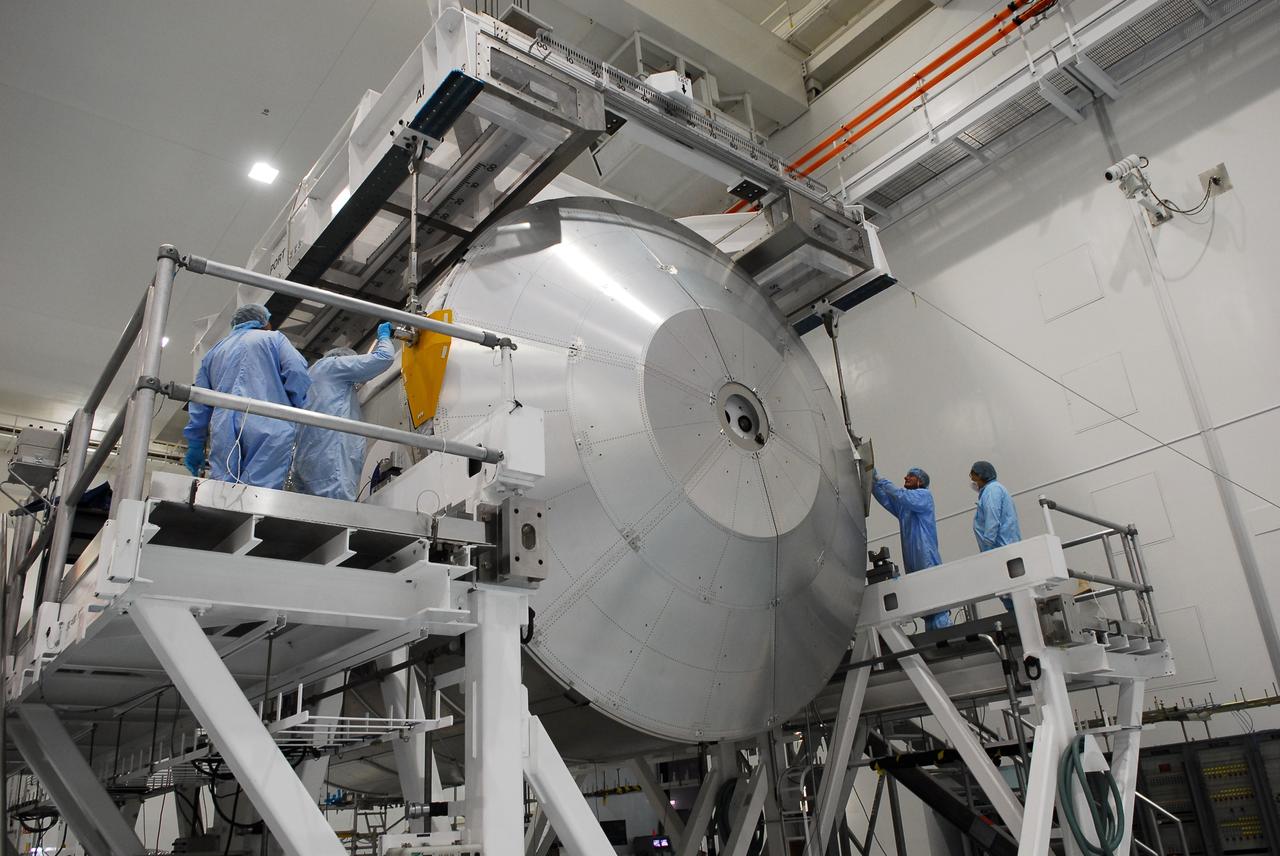
CAPE CANAVERAL, Fla. -- In the Space Station Processing Facility at NASA's Kennedy Space Center in Florida, technicians connect an overhead crane to the Permanent Multipurpose Module, or PMM, for its transfer into a payload canister. The canister will then be transported to Launch Pad 39A and installed into space shuttle Discovery's payload bay. Discovery and its STS-133 crew will deliver the PMM, packed with supplies and critical spare parts, as well as Robonaut 2, the dexterous humanoid astronaut helper, to the International Space Station. Launch is targeted for 4:40 p.m. EDT, Nov. 1. Photo credit: NASA/Cory Huston
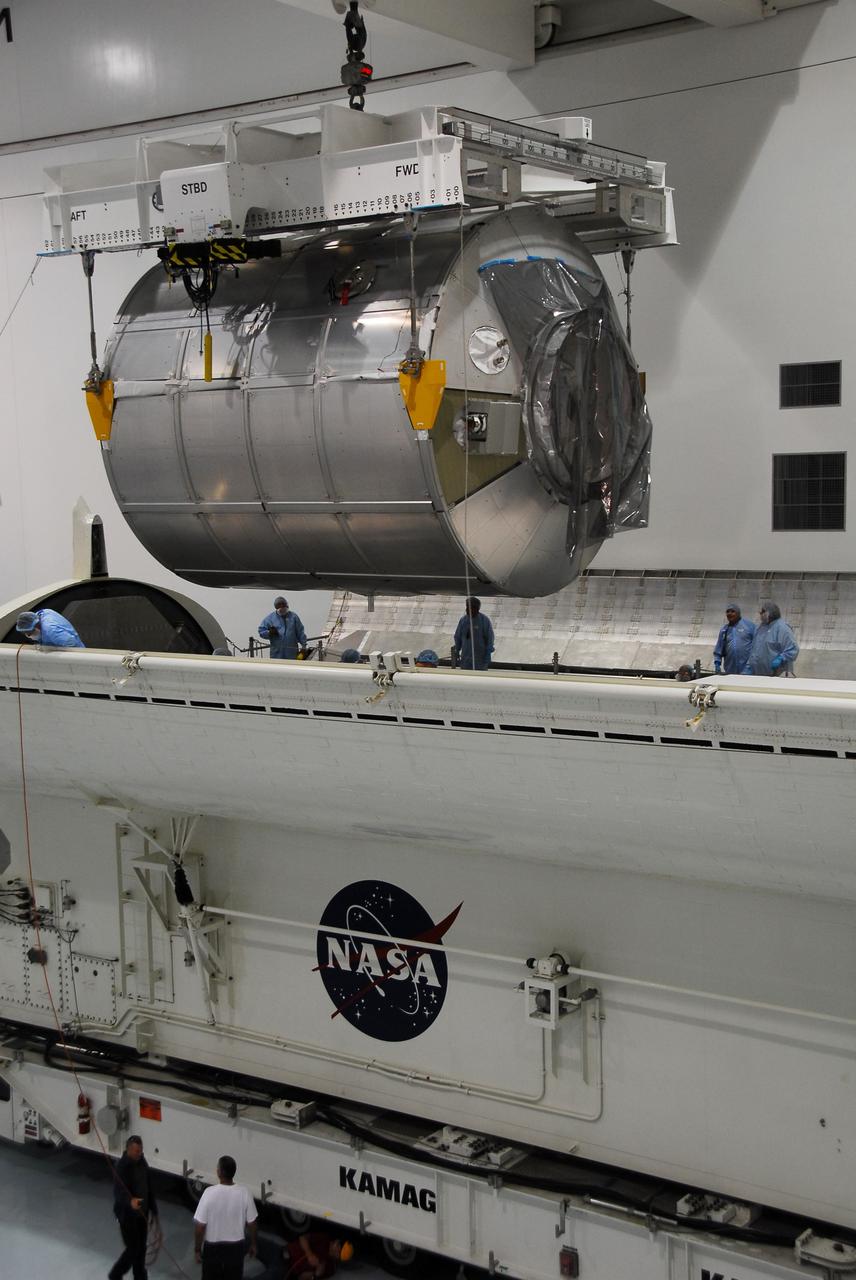
CAPE CANAVERAL, Fla. -- In the Space Station Processing Facility at NASA's Kennedy Space Center in Florida, technicians guide the Permanent Multipurpose Module, or PMM, as an overhead crane lowers it into the payload canister. The canister will then be transported to Launch Pad 39A and installed into space shuttle Discovery's payload bay. Discovery and its STS-133 crew will deliver the PMM, packed with supplies and critical spare parts, as well as Robonaut 2, the dexterous humanoid astronaut helper, to the International Space Station. Launch is targeted for 4:40 p.m. EDT, Nov. 1. Photo credit: NASA/Cory Huston
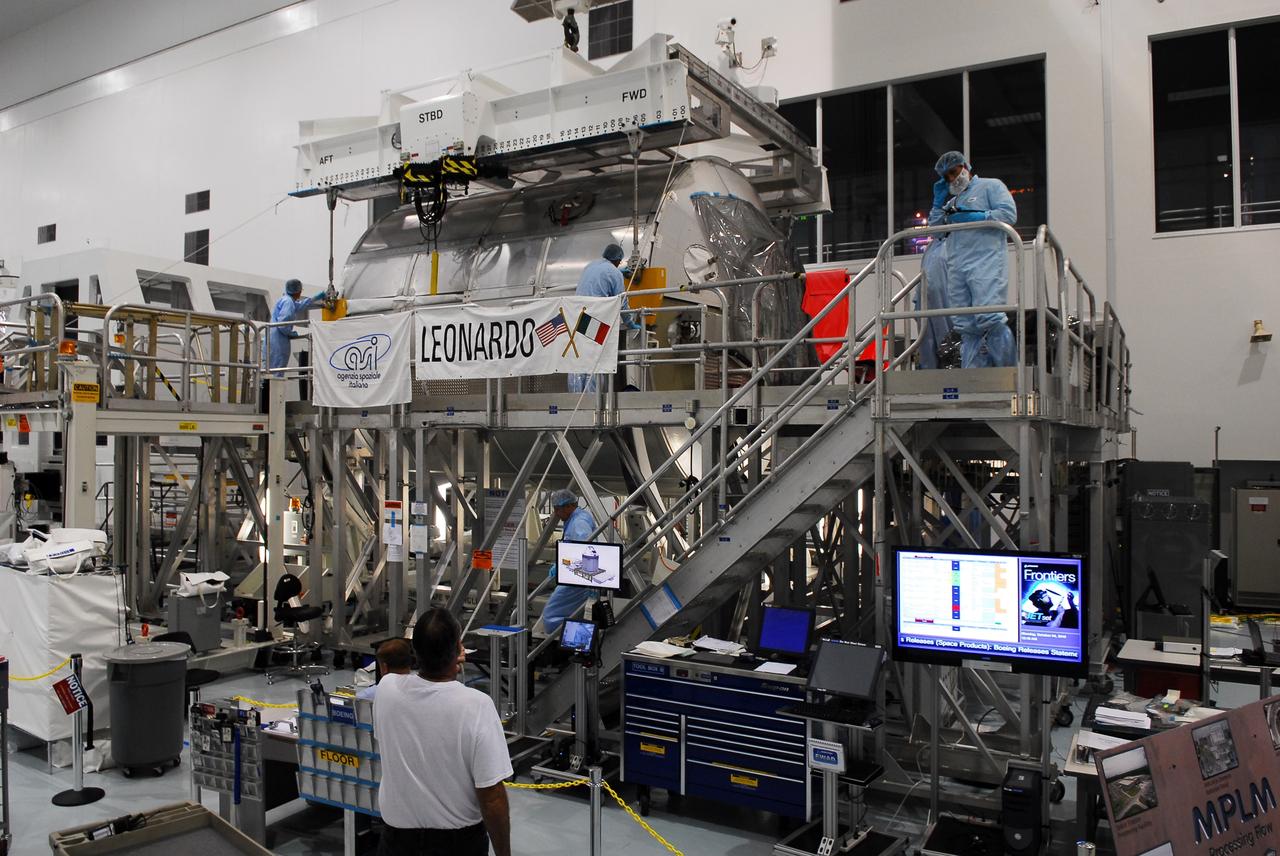
CAPE CANAVERAL, Fla. -- In the Space Station Processing Facility at NASA's Kennedy Space Center in Florida, technicians connect an overhead crane to the Permanent Multipurpose Module, or PMM, for its transfer into a payload canister. The canister will then be transported to Launch Pad 39A and installed into space shuttle Discovery's payload bay. Discovery and its STS-133 crew will deliver the PMM, packed with supplies and critical spare parts, as well as Robonaut 2, the dexterous humanoid astronaut helper, to the International Space Station. Launch is targeted for 4:40 p.m. EDT, Nov. 1. Photo credit: NASA/Cory Huston
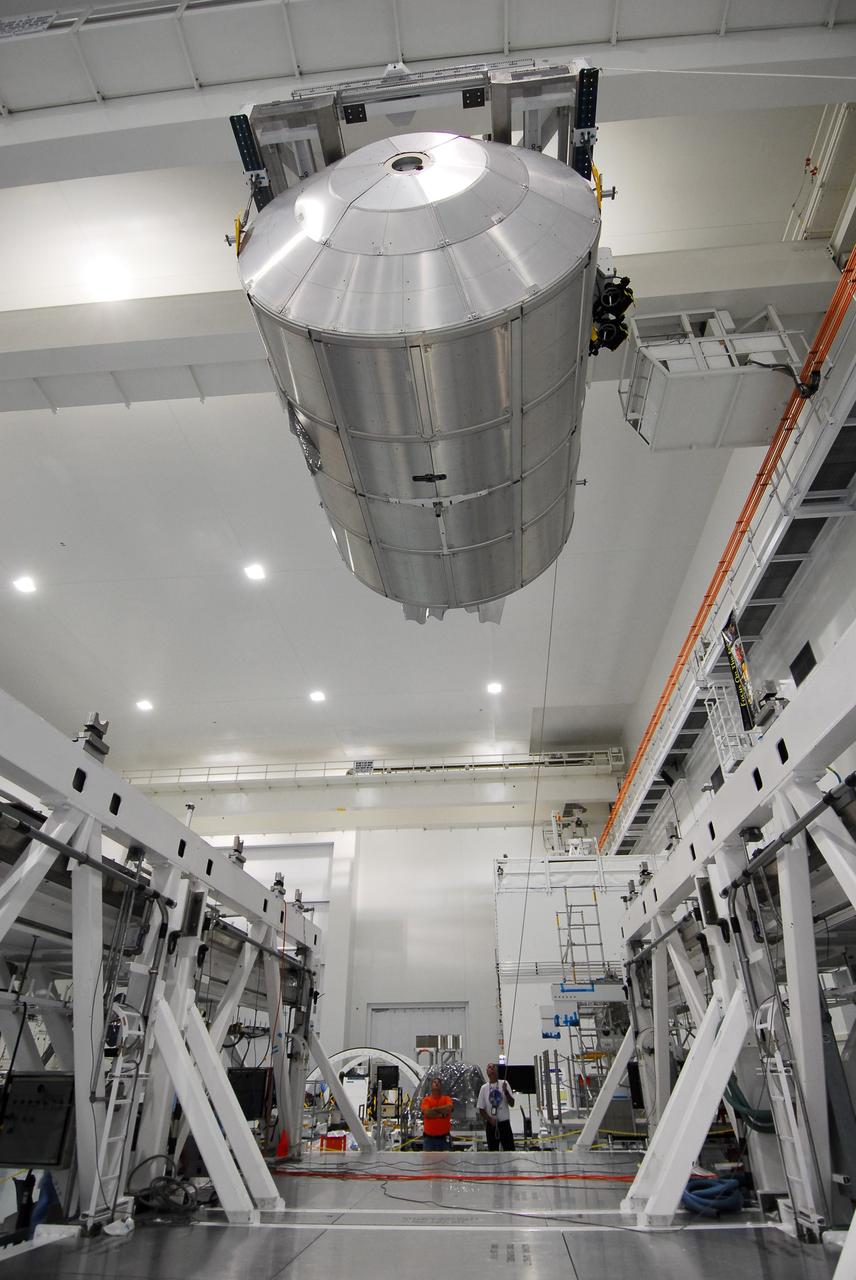
CAPE CANAVERAL, Fla. -- In the Space Station Processing Facility at NASA's Kennedy Space Center in Florida, workers guide the Permanent Multipurpose Module, or PMM, as it is being transferred by overhead crane towards a payload canister. The canister will then be transported to Launch Pad 39A and installed into space shuttle Discovery's payload bay. Discovery and its STS-133 crew will deliver the PMM, packed with supplies and critical spare parts, as well as Robonaut 2, the dexterous humanoid astronaut helper, to the International Space Station. Launch is targeted for 4:40 p.m. EDT, Nov. 1. Photo credit: NASA/Cory Huston
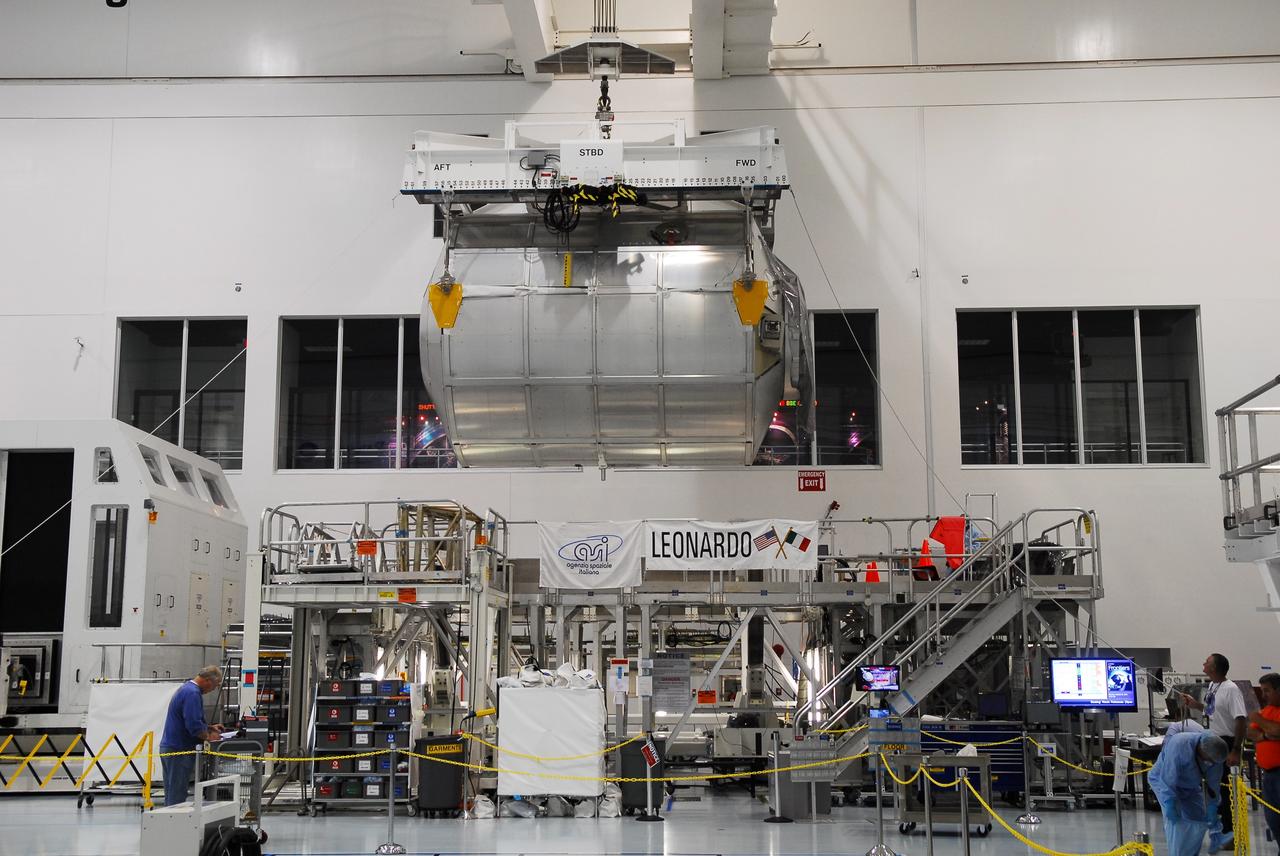
CAPE CANAVERAL, Fla. -- In the Space Station Processing Facility at NASA's Kennedy Space Center in Florida, the Permanent Multipurpose Module, or PMM, is being transferred by overhead crane towards a payload canister. The canister will then be transported to Launch Pad 39A and installed into space shuttle Discovery's payload bay. Discovery and its STS-133 crew will deliver the PMM, packed with supplies and critical spare parts, as well as Robonaut 2, the dexterous humanoid astronaut helper, to the International Space Station. Launch is targeted for 4:40 p.m. EDT, Nov. 1. Photo credit: NASA/Cory Huston
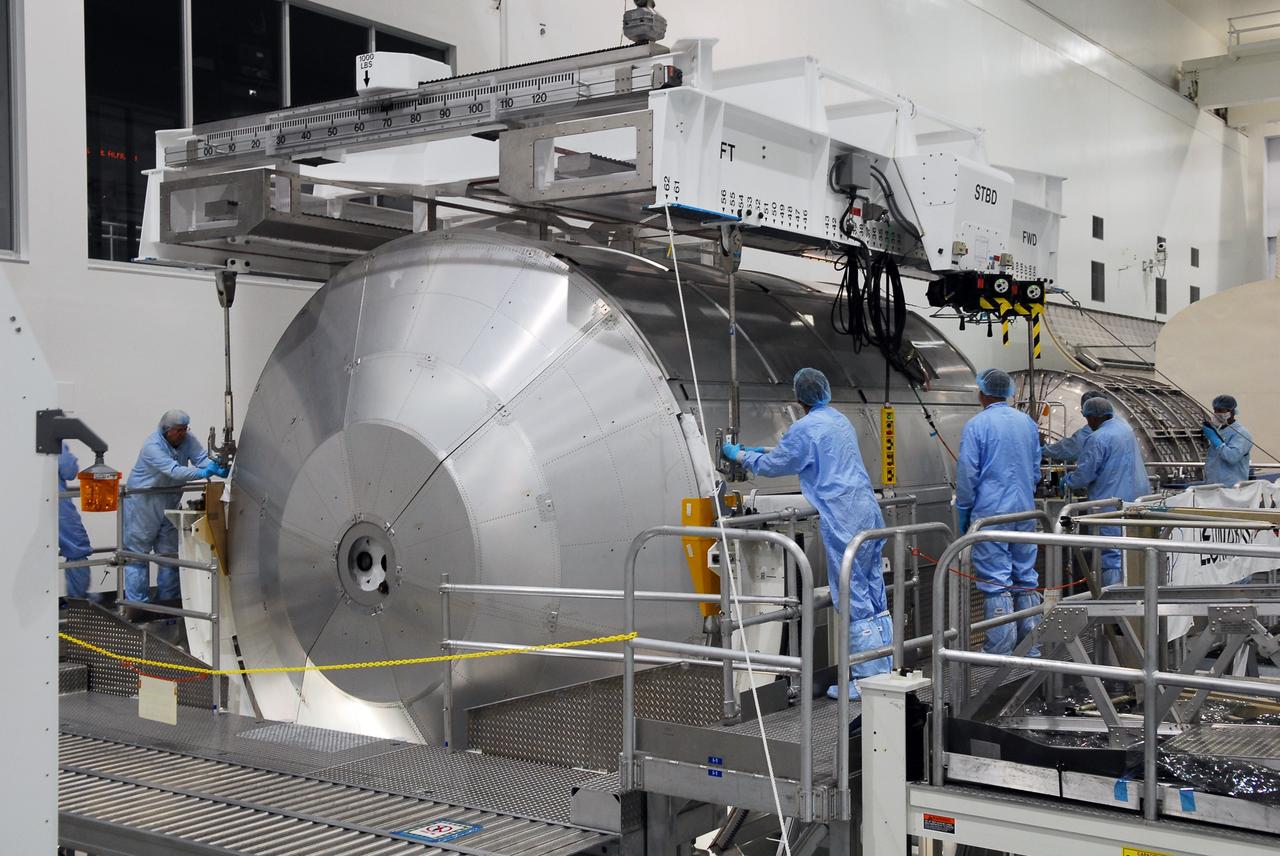
CAPE CANAVERAL, Fla. -- In the Space Station Processing Facility at NASA's Kennedy Space Center in Florida, technicians connect an overhead crane to the Permanent Multipurpose Module, or PMM, for its transfer into a payload canister. The canister will then be transported to Launch Pad 39A and installed into space shuttle Discovery's payload bay. Discovery and its STS-133 crew will deliver the PMM, packed with supplies and critical spare parts, as well as Robonaut 2, the dexterous humanoid astronaut helper, to the International Space Station. Launch is targeted for 4:40 p.m. EDT, Nov. 1. Photo credit: NASA/Cory Huston
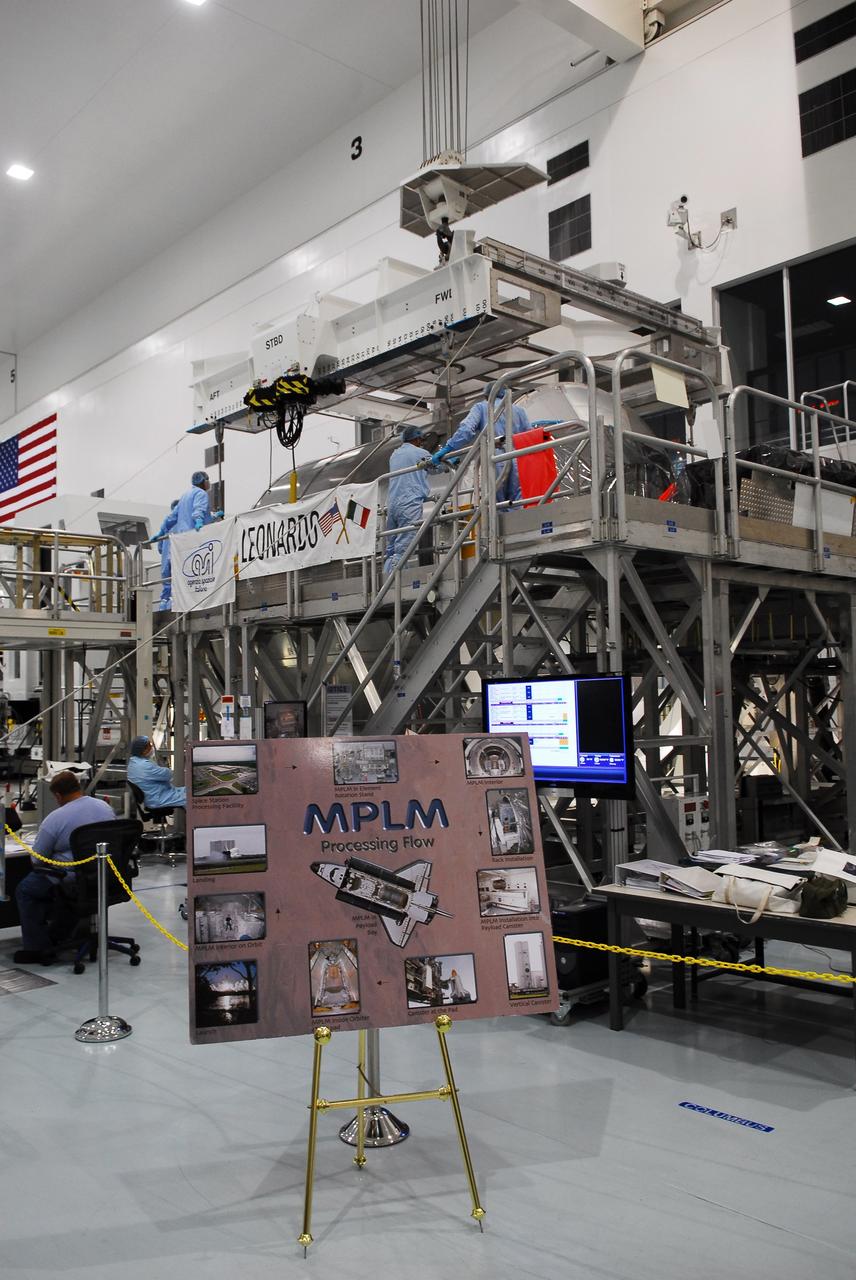
CAPE CANAVERAL, Fla. -- In the Space Station Processing Facility at NASA's Kennedy Space Center in Florida, technicians connect an overhead crane to the Permanent Multipurpose Module, or PMM, for its transfer into a payload canister. The canister will then be transported to Launch Pad 39A and installed into space shuttle Discovery's payload bay. Discovery and its STS-133 crew will deliver the PMM, packed with supplies and critical spare parts, as well as Robonaut 2, the dexterous humanoid astronaut helper, to the International Space Station. Launch is targeted for 4:40 p.m. EDT, Nov. 1. Photo credit: NASA/Cory Huston
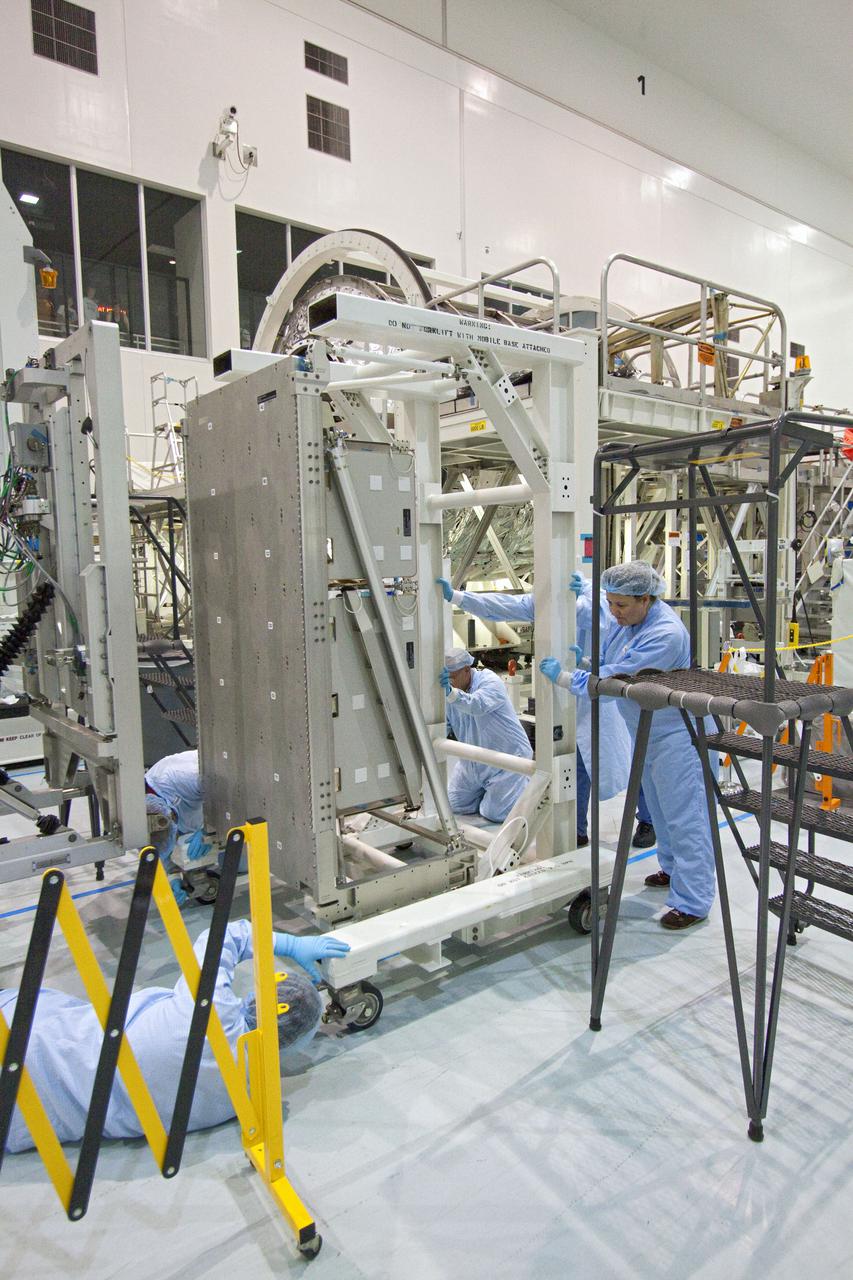
CAPE CANAVERAL, Fla. -- In the Space Station Processing Facility at NASA's Kennedy Space Center in Florida, workers prepare a resupply stowage platform prior to installation of cargo headed to the International Space Station. The stowage platforms will then be moved into the Permanent Multipurpose Module, or PMM. The PMM will be used to carry supplies and critical spare parts to the station. The module will be left behind so it can be used for microgravity experiments in fluid physics, materials science, biology and biotechnology. Space shuttle Discovery will deliver its payload to the station on the STS-133 mission. Launch is targeted for Nov. 1 at 4:33 p.m. EDT. Photo credit: NASA_Jack Pfaller

S133-E-007901 (1 March 2011) --- NASA astronauts Cady Coleman, Expedition 26 flight engineer; and Alvin Drew (top right), STS-133 mission specialist; along with Russian cosmonaut Dmitry Kondratyev, Expedition 26 flight engineer, are pictured in the newly-installed Permanent Multipurpose Module (PMM) of the International Space Station while space shuttle Discovery remains docked with the station. Photo credit: NASA or National Aeronautics and Space Administration
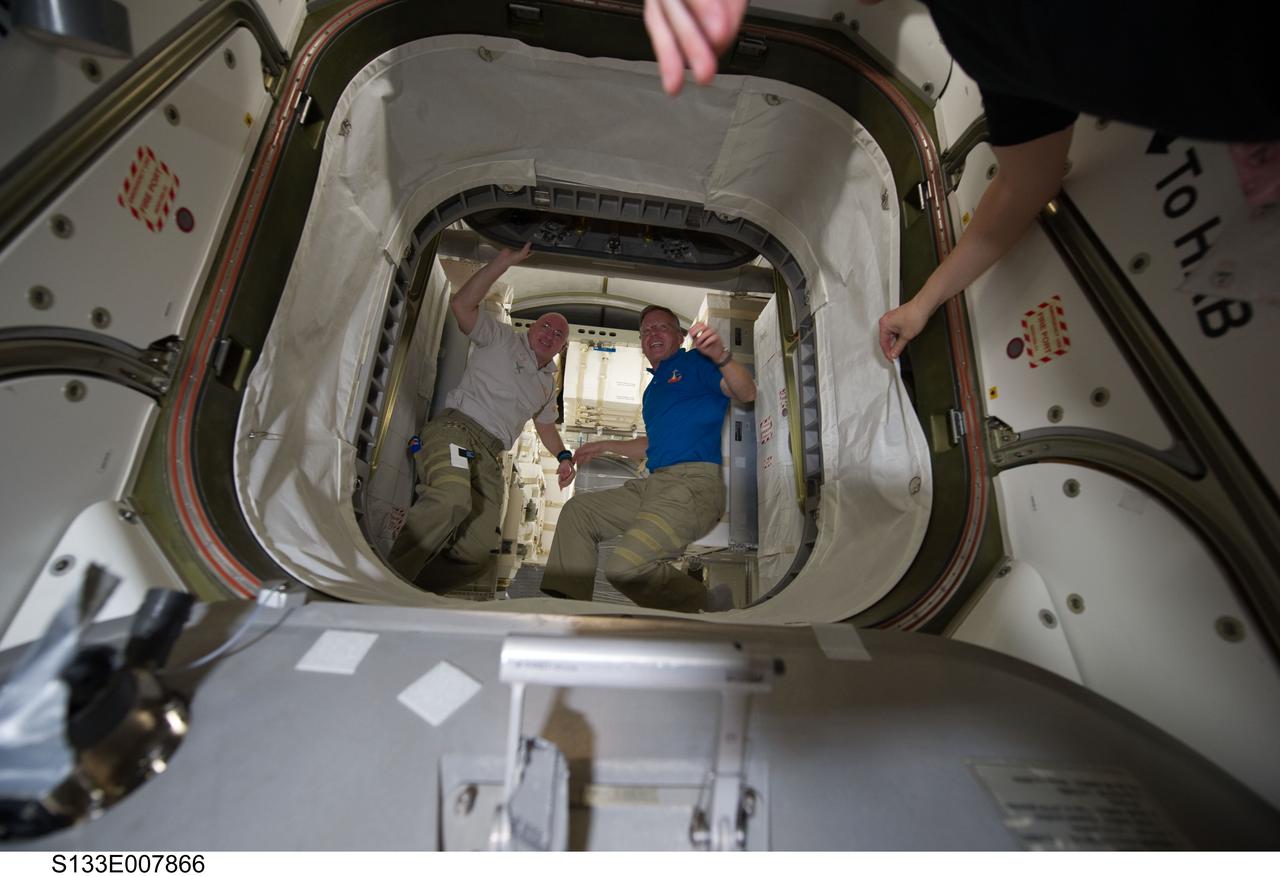
S133-E-007866 (1 March 2011) --- NASA astronauts Scott Kelly (left), Expedition 26 commander; and Steve Lindsey, STS-133 commander, are pictured in the hatch that leads to the newly-installed Permanent Multipurpose Module (PMM) of the International Space Station while space shuttle Discovery remains docked with the station. Photo credit: NASA or National Aeronautics and Space Administration
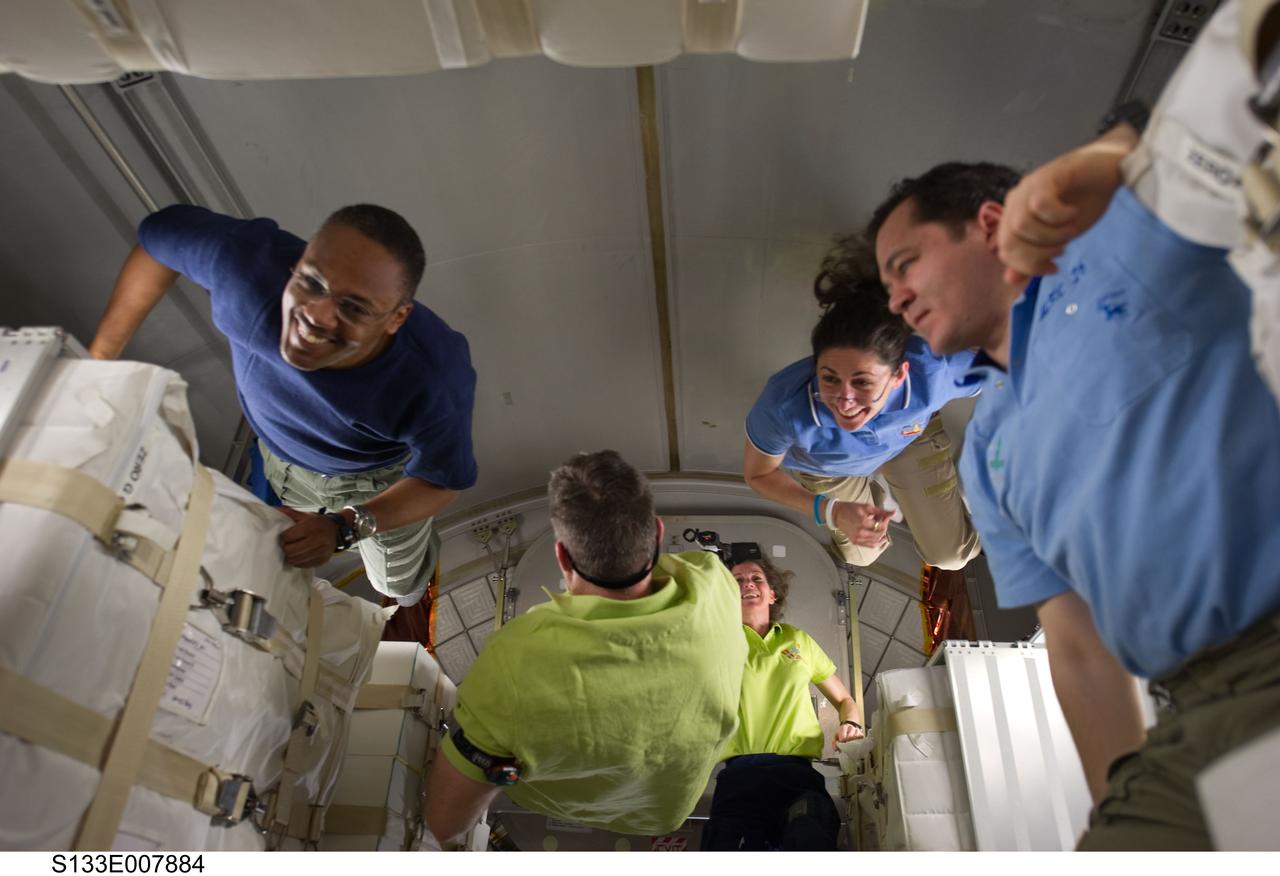
S133-E-007884 (1 March 2011) --- NASA astronauts Alvin Drew (left), Steve Bowen (center) and Nicole Stott (second right), all STS-133 mission specialists; along with NASA astronaut Cady Coleman and Russian cosmonaut Oleg Skripochka, both Expedition 26 flight engineers, are pictured in the newly-installed Permanent Multipurpose Module (PMM) of the International Space Station while space shuttle Discovery remains docked with the station. Photo credit: NASA or National Aeronautics and Space Administration
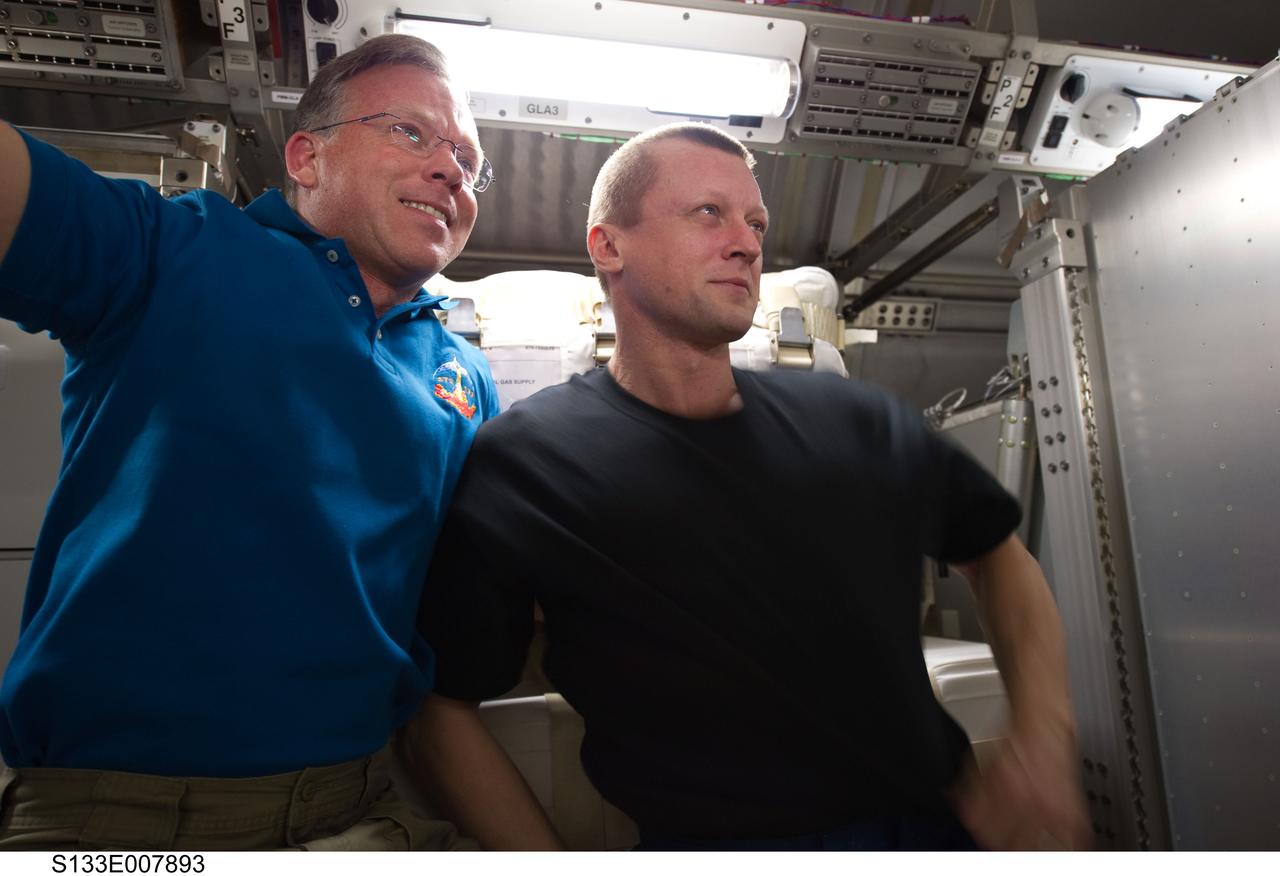
S133-E-007893 (1 March 2011) --- NASA astronaut Steve Lindsey (left), STS-133 commander; and Russian cosmonaut Dmitry Kondratyev, Expedition 26 flight engineer, are pictured in the newly-installed Permanent Multipurpose Module (PMM) of the International Space Station while space shuttle Discovery remains docked with the station. Photo credit: NASA or National Aeronautics and Space Administration
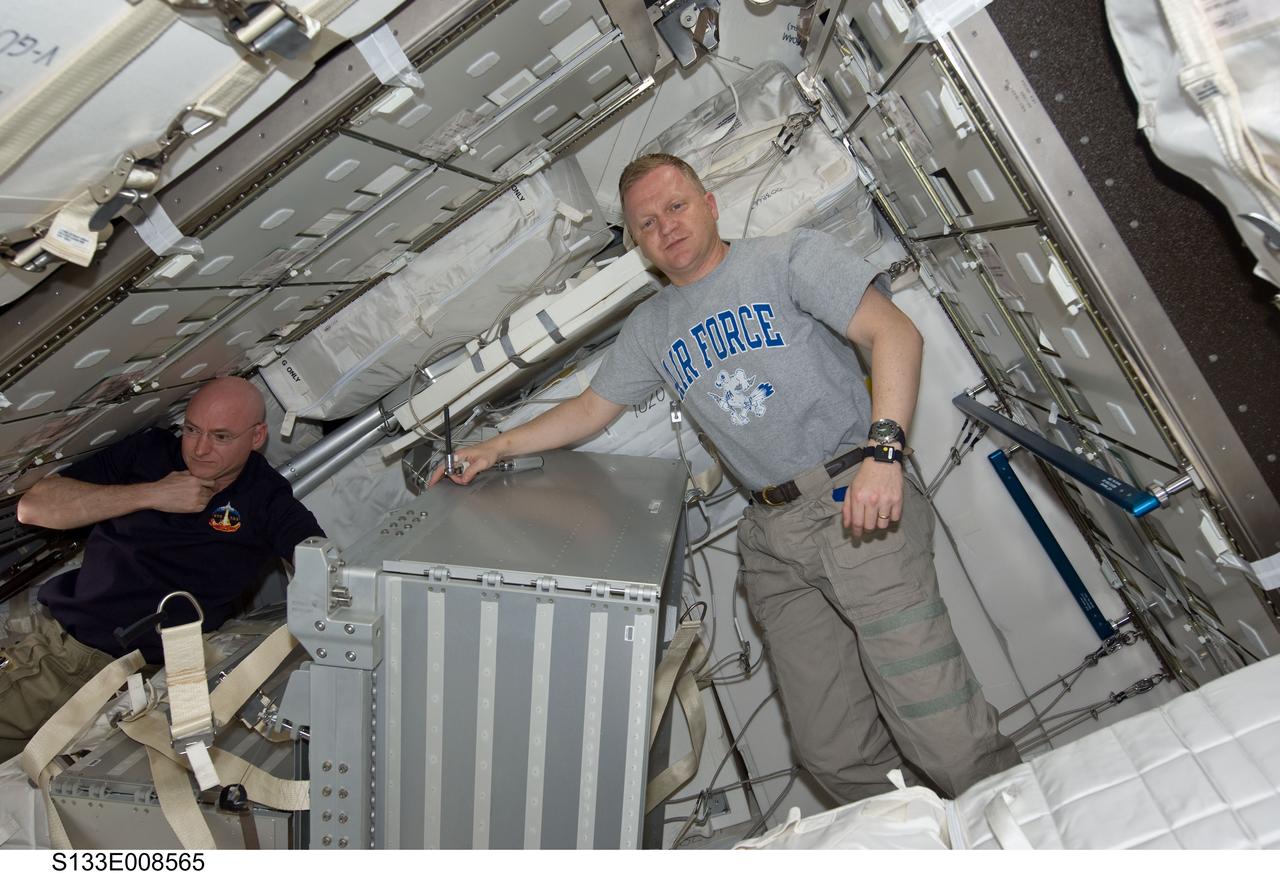
S133-E-008565 (4 March 2011) --- It's another moving day onboard the International Space Station, as NASA astronauts Scott Kelly, left, Expedition 26 commander, and Eric Boe, STS-133/Discovery pilot, join in the team effort of 12 total astronauts and cosmonauts working together temporarily onboard the orbital outpost. The joint crews added the pictured Permanent Multipurpose Module (PMM) to the station earlier in the week. Photo credit: NASA or National Aeronautics and Space Administration
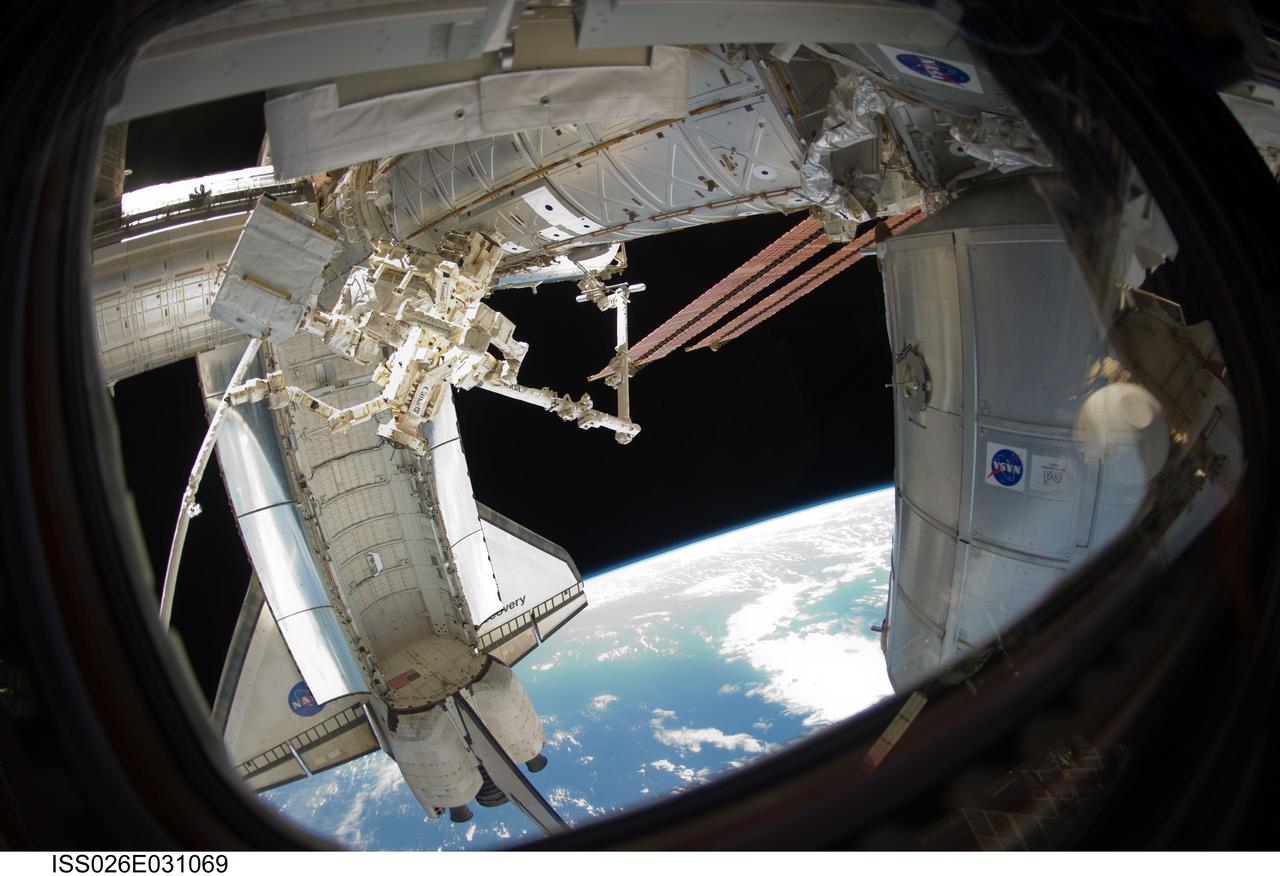
ISS026-E-031069 (1 March 2011) --- The newly-attached Permanent Multipurpose Module (PMM), docked space shuttle Discovery (STS-133) and the Canadian-built Dextre, also known as the Special Purpose Dextrous Manipulator (SPDM), are featured in this image photographed by an Expedition 26 crew member on the International Space Station. The blackness of space and Earth?s horizon provide the backdrop for the scene.
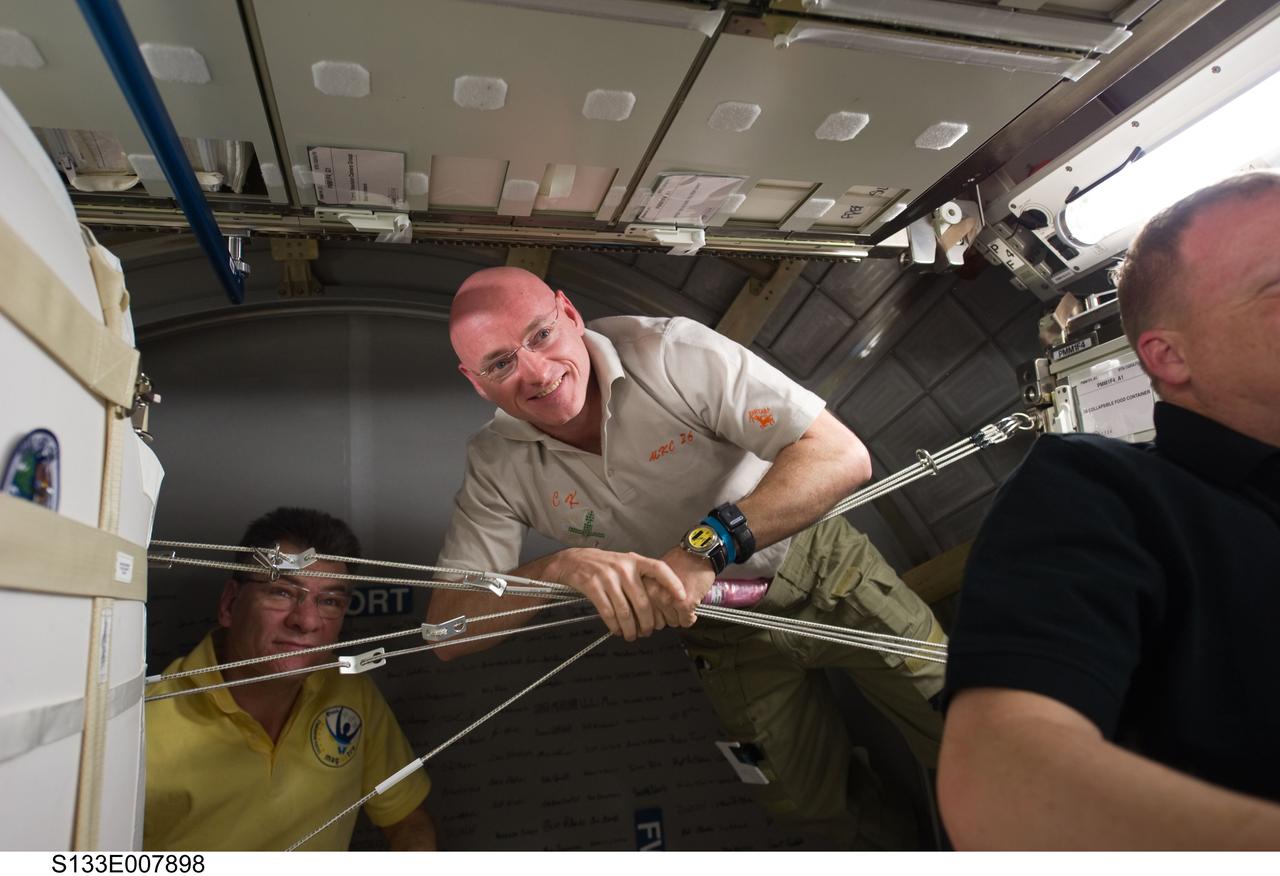
S133-E-007898 (1 March 2011) --- NASA astronauts Scott Kelly (center), Expedition 26 commander; and Eric Boe (right), STS-133 pilot; along with European Space Agency astronaut Paolo Nespoli, Expedition 26 flight engineer, are pictured in the newly-installed Permanent Multipurpose Module (PMM) of the International Space Station while space shuttle Discovery remains docked with the station. Photo credit: NASA or National Aeronautics and Space Administration
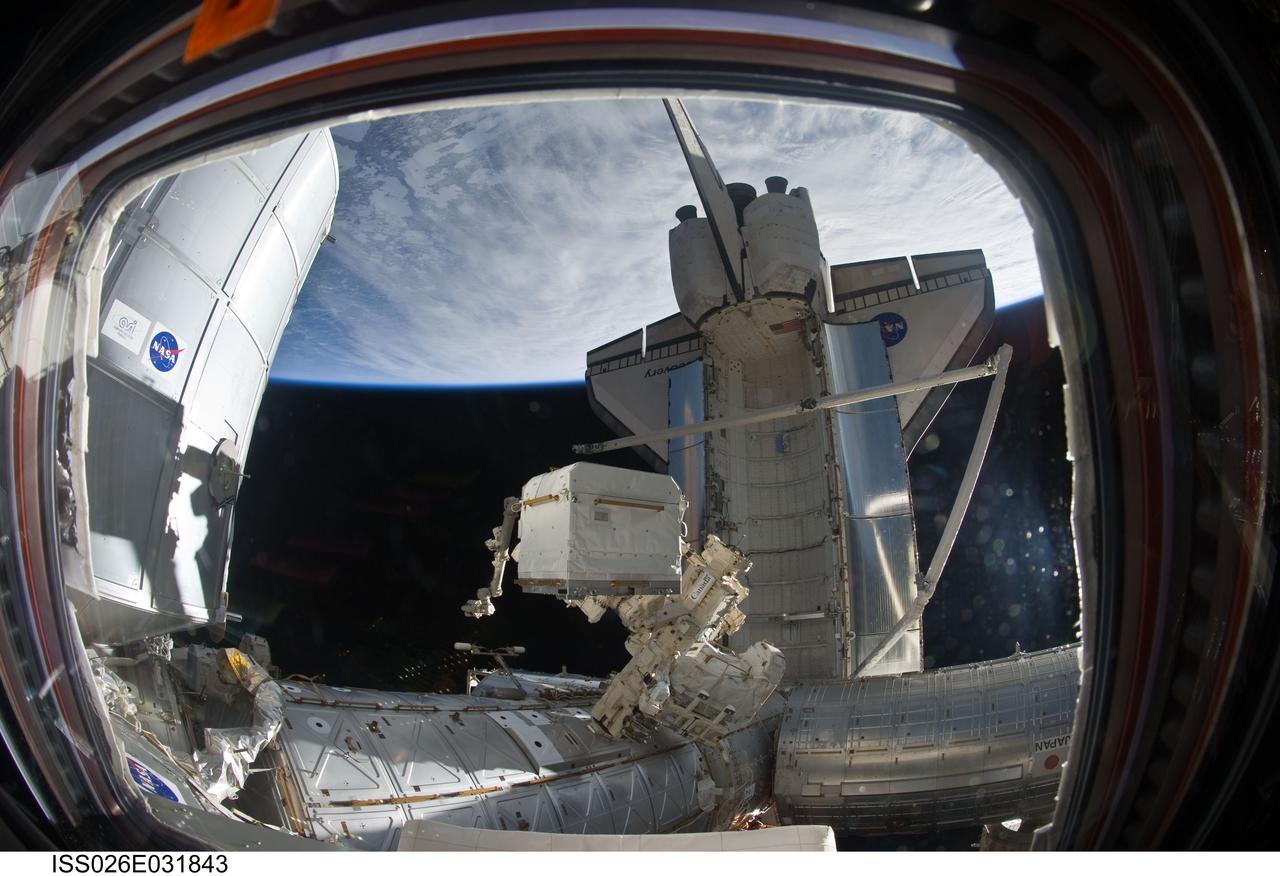
ISS026-E-031843 (2 March 2011) --- An Expedition 26 crew member used a fish-eye lens attached to an electronic still camera to capture this image of the docked space shuttle Discovery (STS-133) and its remote manipulator system/orbiter boom sensor system (RMS/OBSS), the newly-installed Permanent Multipurpose Module (PMM) and the Canadian-built Dextre, also known as the Special Purpose Dextrous Manipulator (SPDM). The blackness of space and Earth's horizon provide the backdrop for the scene.
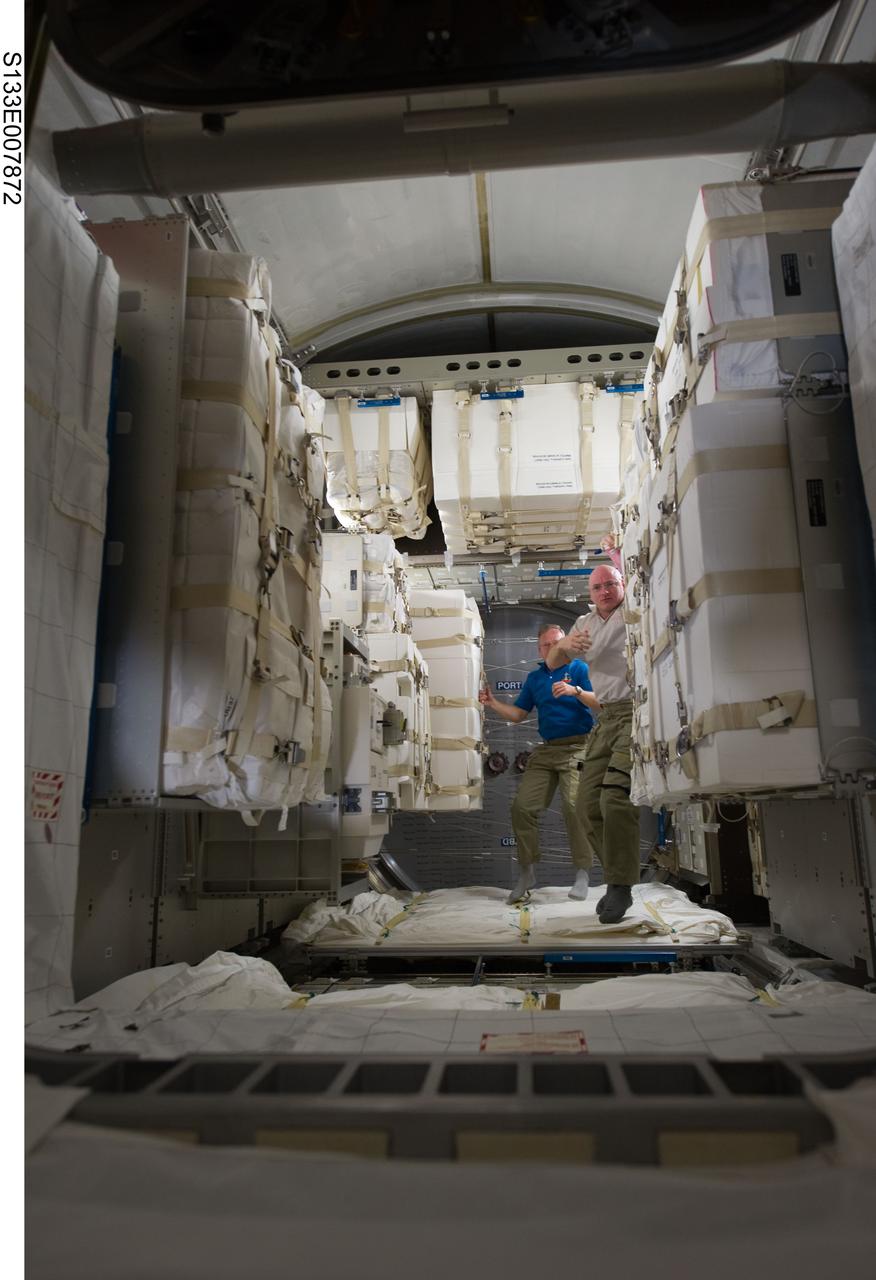
S133-E-007872 (1 March 2011) --- NASA astronauts Scott Kelly (foreground), Expedition 26 commander; and Steve Lindsey, STS-133 commander, are pictured in the newly-installed Permanent Multipurpose Module (PMM) of the International Space Station while space shuttle Discovery remains docked with the station. Photo credit: NASA or National Aeronautics and Space Administration
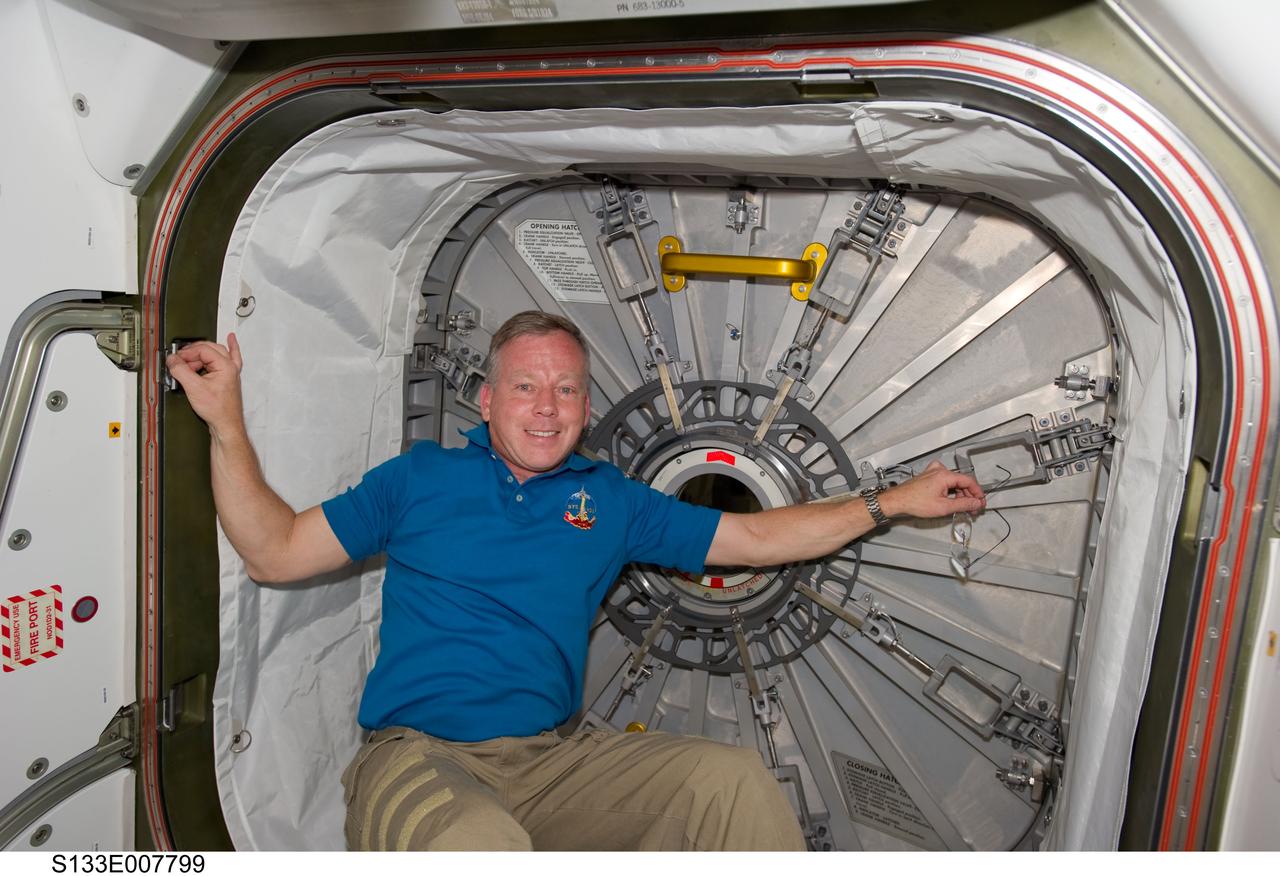
S133-E-007799 (1 March 2011) --- NASA astronaut Steve Lindsey, STS-133 commander, is pictured at the hatch of the Earth-facing port of the International Space Station’s Unity node while space shuttle Discovery remains docked with the station. On the other side of the hatch door is the newly-installed Permanent Multipurpose Module (PMM). Photo credit: NASA or National Aeronautics and Space Administration
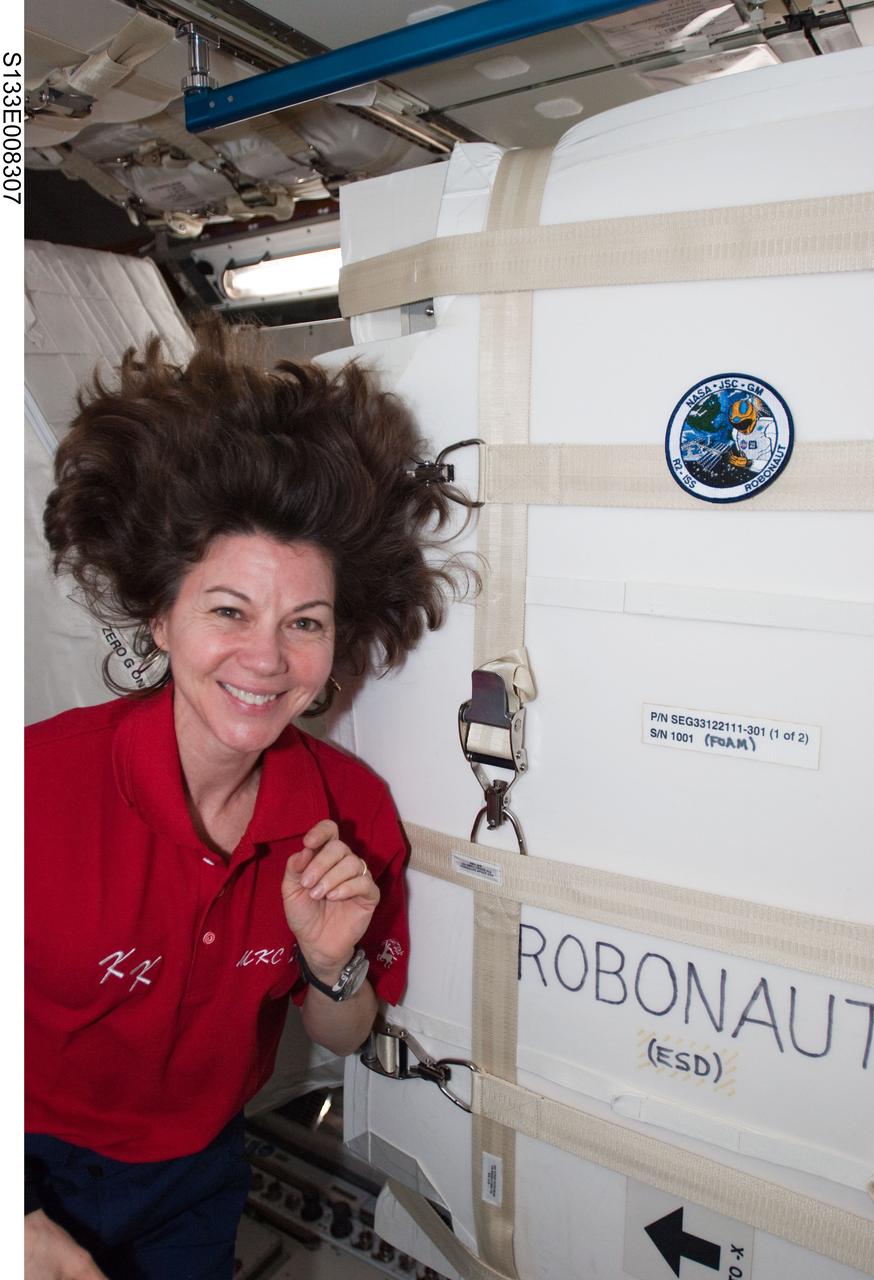
S133-E-008307 (2 March 2011) --- NASA astronaut Cady Coleman, Expedition 26 flight engineer, is pictured near the Robonaut2 container in the newly-installed Permanent Multipurpose Module (PMM) of the International Space Station while space shuttle Discovery (STS-133) remains docked with the station. Photo credit: NASA or National Aeronautics and Space Administration
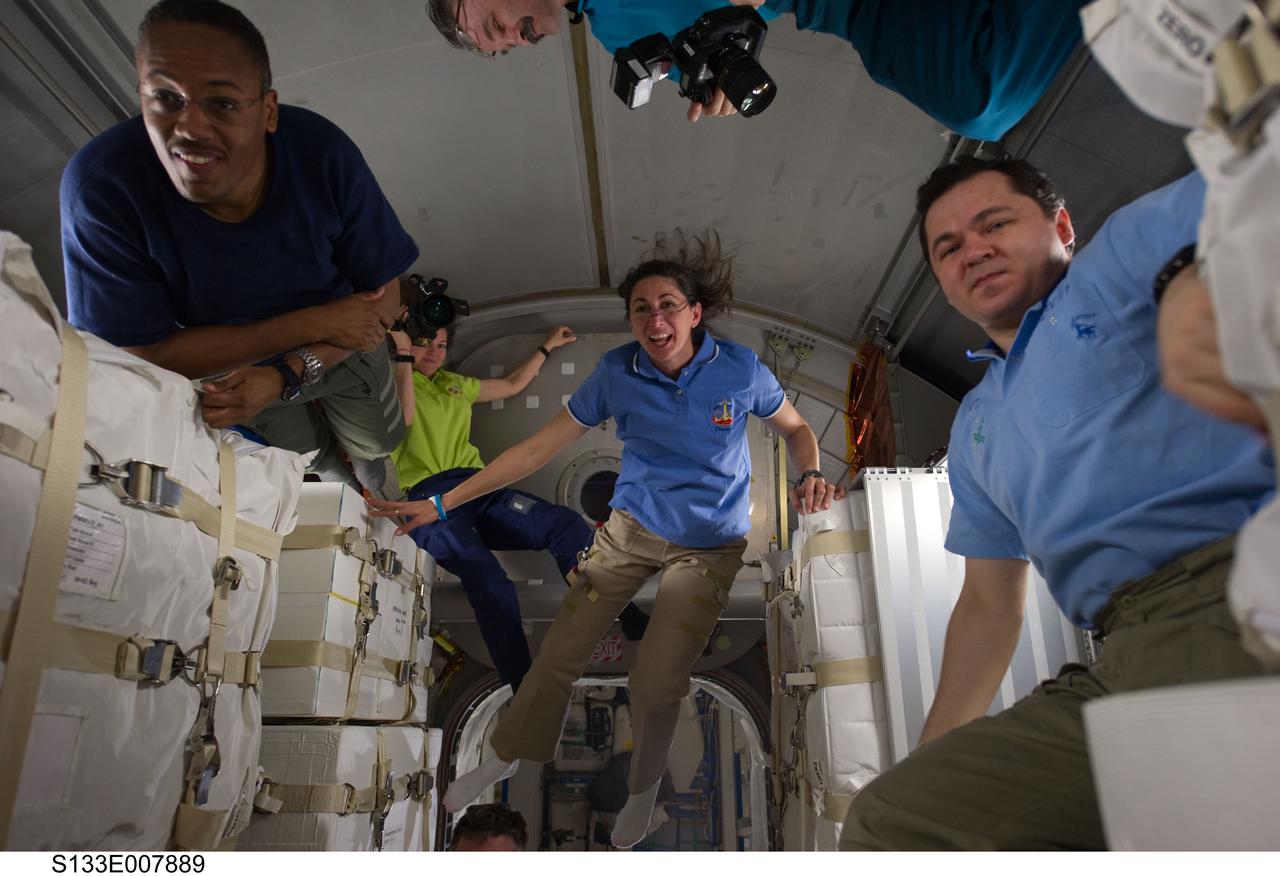
S133-E-007889 (1 March 2011) --- NASA astronauts Alvin Drew (left) and Nicole Stott (center), both STS-133 mission specialists; along with NASA astronaut Cady Coleman and Russian cosmonauts Oleg Skripochka and Alexander Kaleri (mostly out of frame at top), all Expedition 26 flight engineers, are pictured in the newly-installed Permanent Multipurpose Module (PMM) of the International Space Station while space shuttle Discovery remains docked with the station. Photo credit: NASA or National Aeronautics and Space Administration
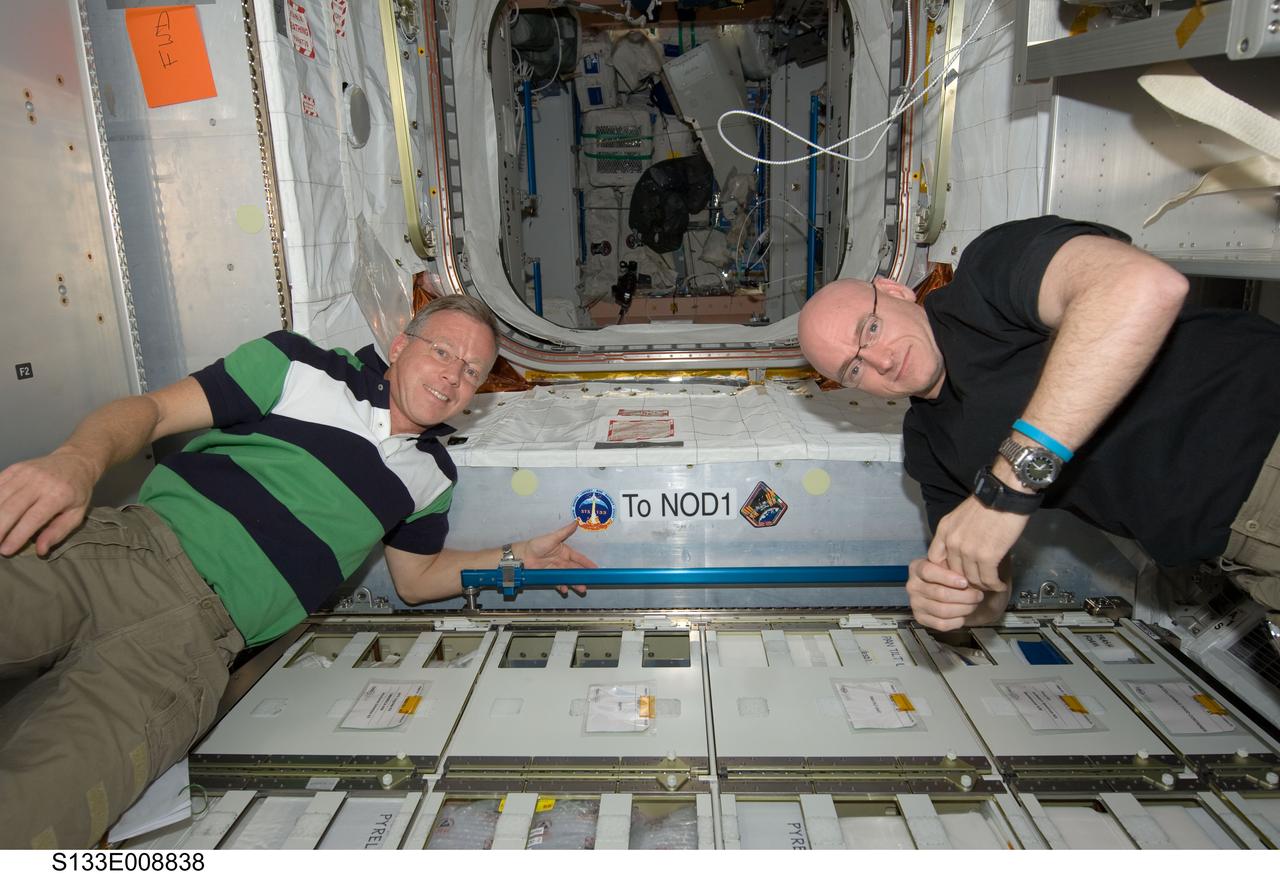
S133-E-008838 (5 March 2011) --- NASA astronauts Steve Lindsey (left), STS-133 commander; and Scott Kelly, Expedition 26 commander, pose after placing their mission patches in the newly-installed Permanent Multipurpose Module (PMM) of the International Space Station while space shuttle Discovery remains docked with the station. Photo credit: NASA or National Aeronautics and Space Administration

S133-E-007907 (1 March 2011) --- Russian cosmonaut Alexander Kaleri (bottom), Expedition 26 flight engineer; along with NASA astronauts Alvin Drew (top) and Steve Bowen, both STS-133 mission specialists, are pictured in the newly-installed Permanent Multipurpose Module (PMM) of the International Space Station while space shuttle Discovery remains docked with the station. Photo credit: NASA or National Aeronautics and Space Administration
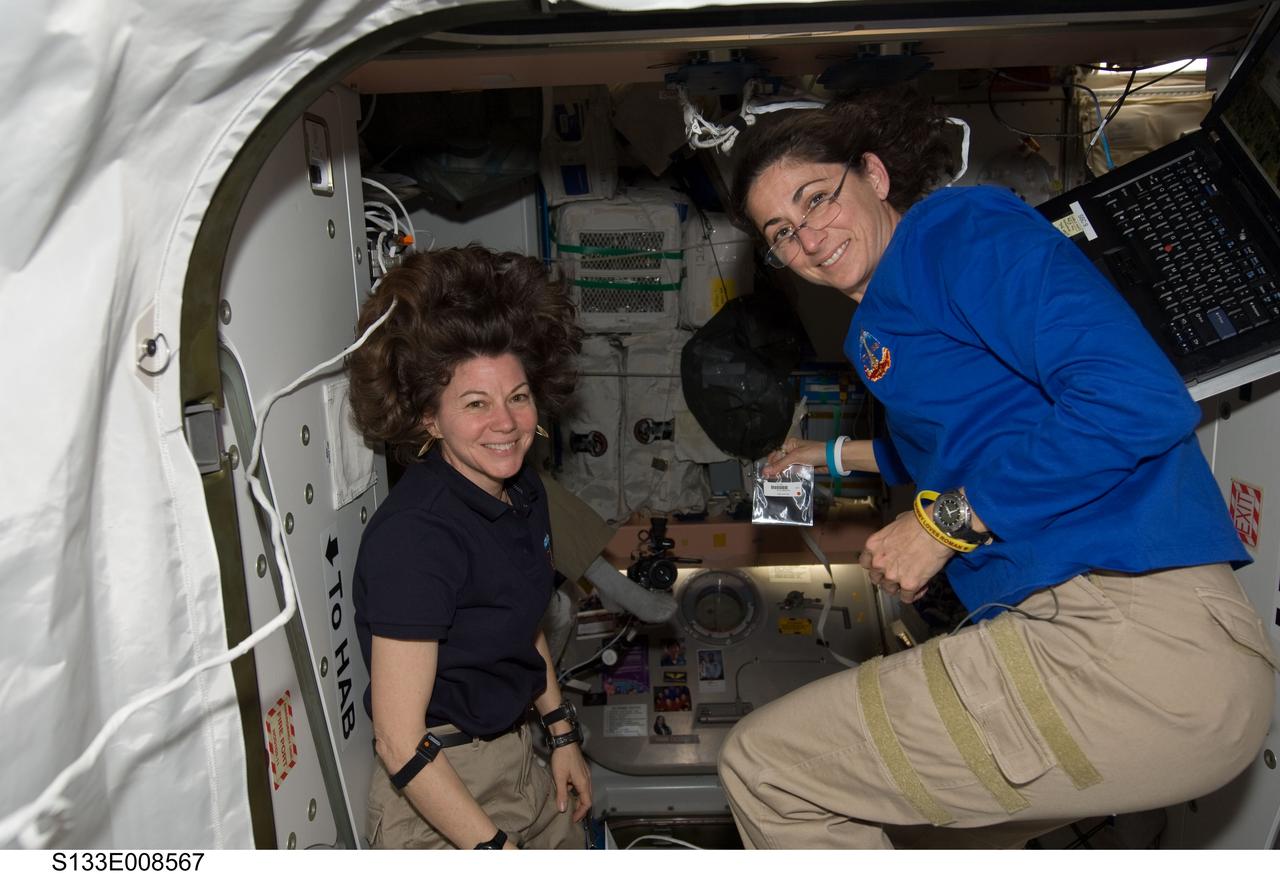
S133-E-008567 (4 March 2011) --- It's another moving day onboard the International Space Station, as NASA astronauts Cady Coleman (left), Expedition 26 flight engineer, Nicole Stott, STS-133/Discovery mission specialist, are seen just outside the new Permanent Multipurpose Module (PMM). They are participating in the team effort of 12 total astronauts and cosmonauts working together temporarily onboard the orbital outpost. The joint crews added the PMM to the station earlier in the week. Photo credit: NASA or National Aeronautics and Space Administration
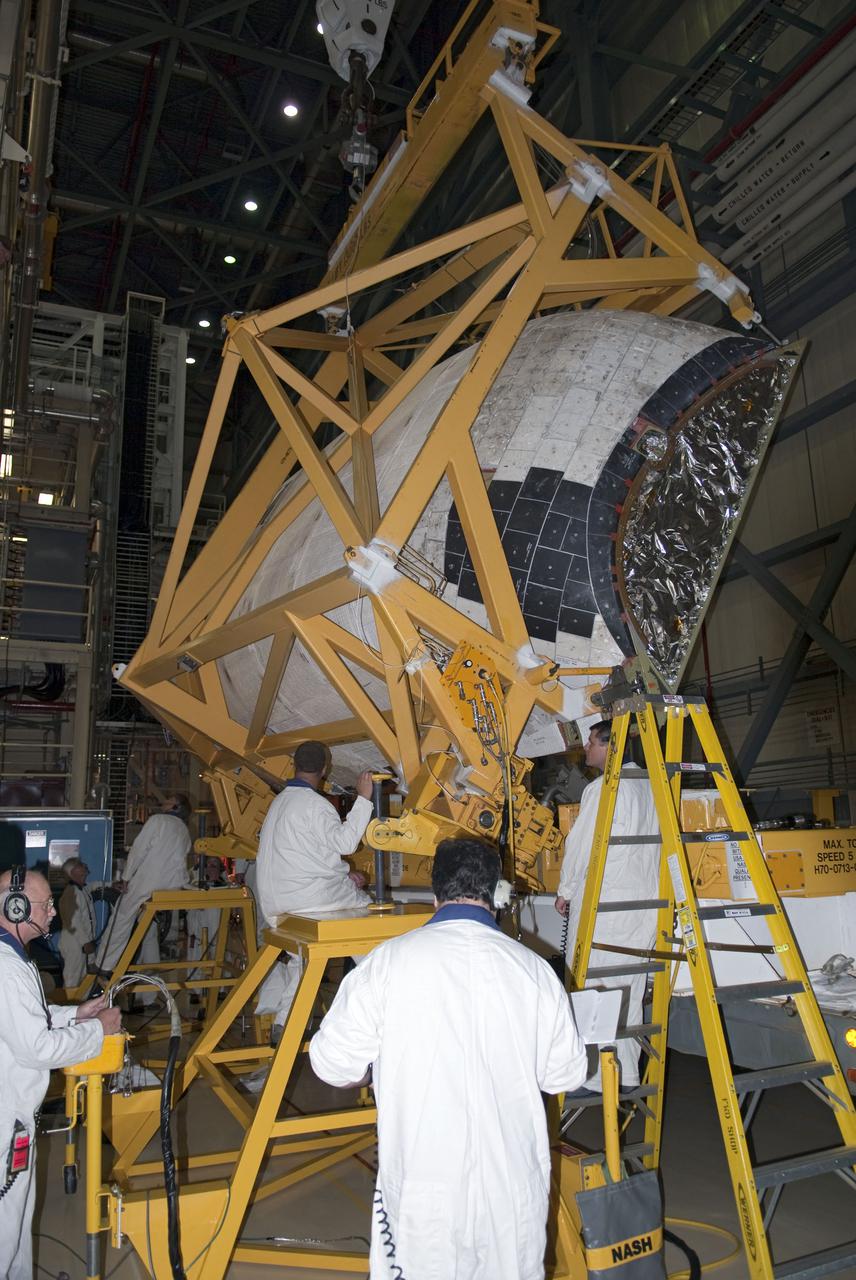
CAPE CANAVERAL, Fla. -- In Orbiter Processing Facility-3 at NASA's Kennedy Space Center in Florida, technicians assisted by an overhead crane prepare to install the right-hand orbital maneuvering system, or OMS, pod on space shuttle Discovery. Discovery and its crew will deliver the Permanent Multipurpose Module, or PMM, which will carry supplies and critical spare parts on the STS-133 mission to the International Space Station. The module will be left behind so it can be used for microgravity experiments in fluid physics, materials science, biology and biotechnology. For more information go to www.nasa.gov_shuttle. Photo credit: NASA_Ben Smegelsky
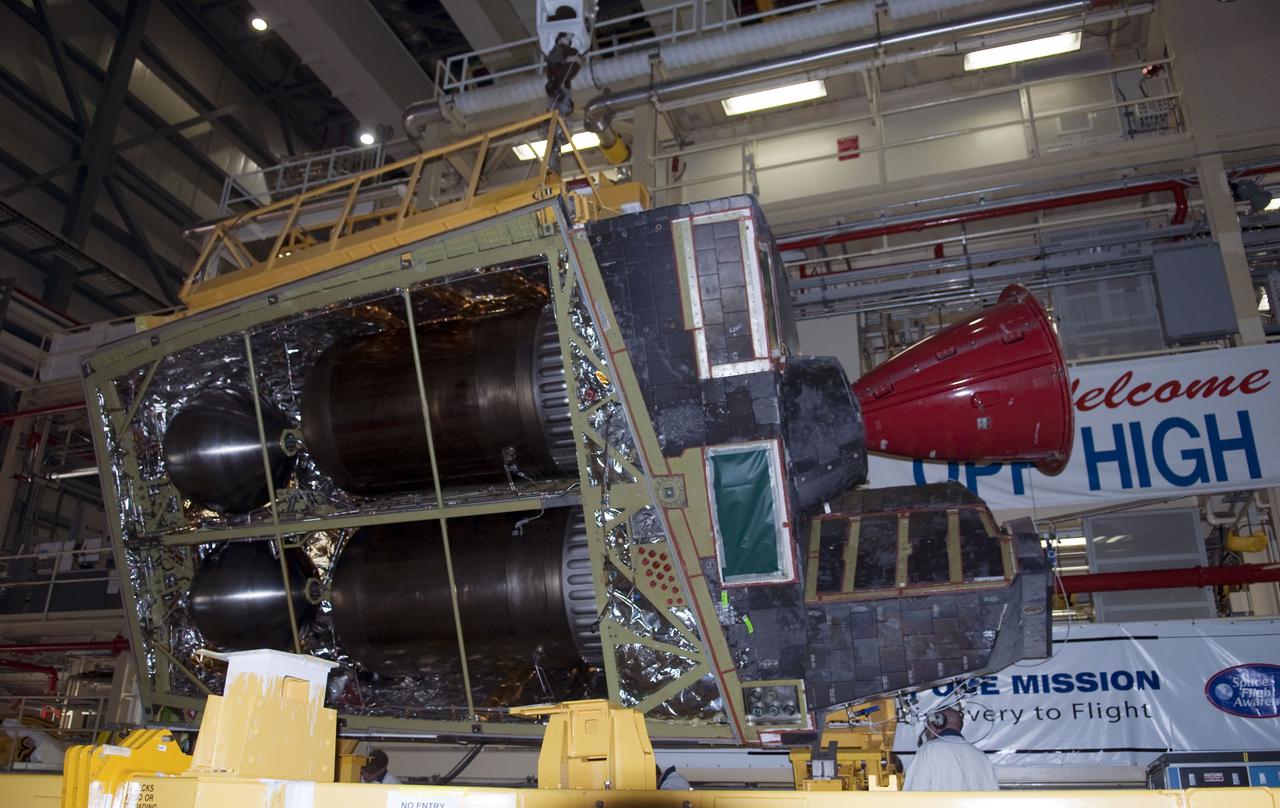
CAPE CANAVERAL, Fla. -- In Orbiter Processing Facility-3 at NASA's Kennedy Space Center in Florida, the right-hand orbital maneuvering system, or OMS, pod is being lifted by an overhead crane for installation on space shuttle Discovery. Discovery and its crew will deliver the Permanent Multipurpose Module, or PMM, which will carry supplies and critical spare parts on the STS-133 mission to the International Space Station. The module will be left behind so it can be used for microgravity experiments in fluid physics, materials science, biology and biotechnology. For more information go to www.nasa.gov_shuttle. Photo credit: NASA_Ben Smegelsky
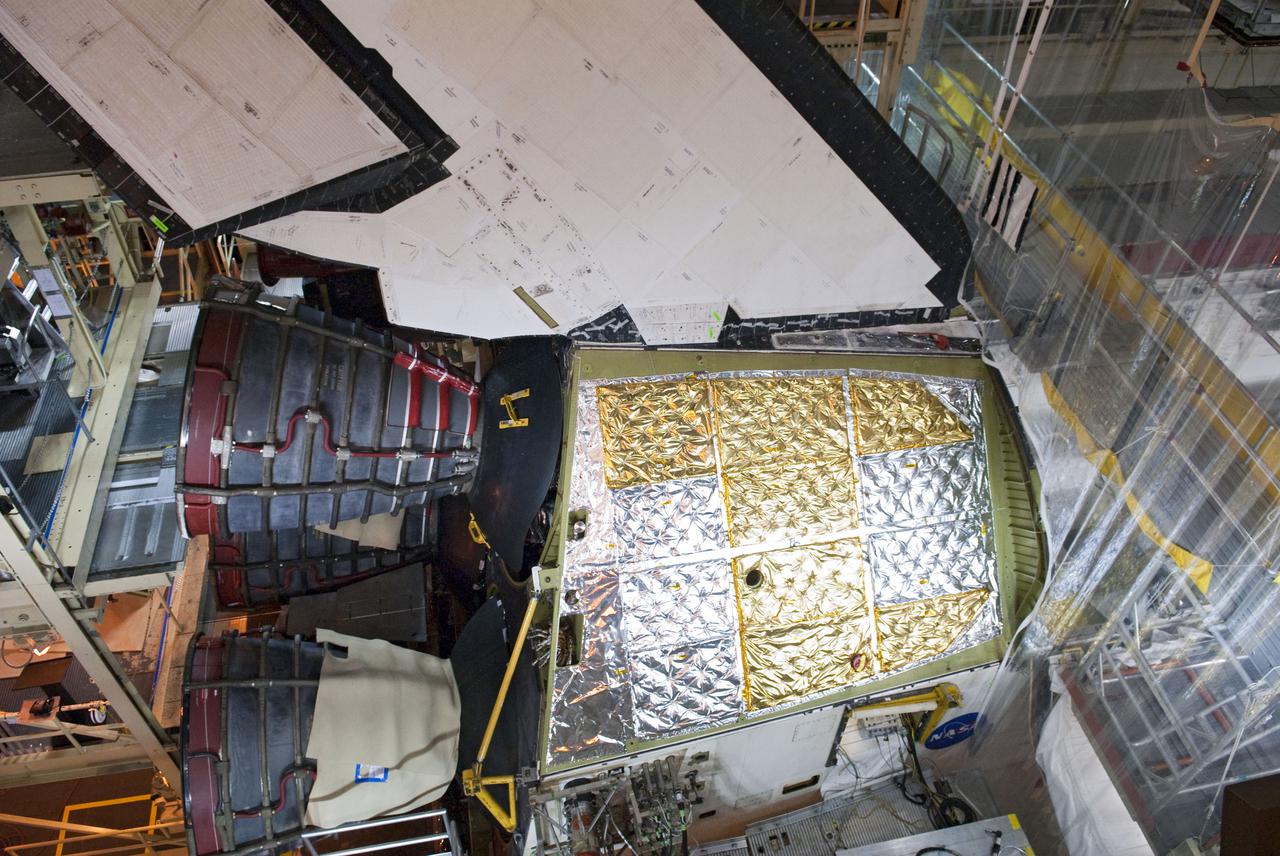
CAPE CANAVERAL, Fla. -- In Orbiter Processing Facility-3 at NASA's Kennedy Space Center in Florida, the aft section on space shuttle Discovery is set to accept the installation of the right-hand orbital maneuvering system, or OMS, pod. Discovery and its crew will deliver the Permanent Multipurpose Module, or PMM, which will carry supplies and critical spare parts on the STS-133 mission to the International Space Station. The module will be left behind so it can be used for microgravity experiments in fluid physics, materials science, biology and biotechnology. For more information go to www.nasa.gov_shuttle. Photo credit: NASA_Ben Smegelsky
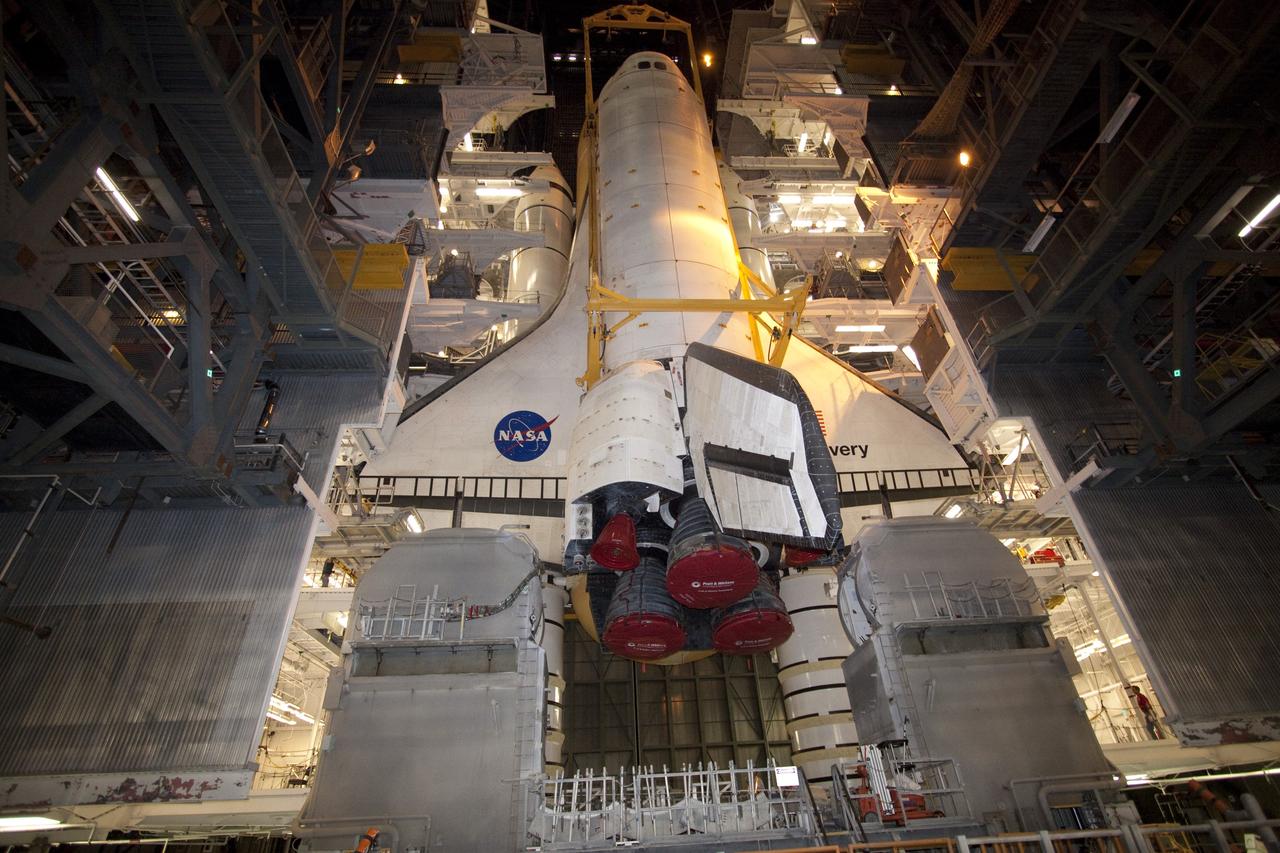
CAPE CANAVERAL, Fla. -- In High Bay 3 of the Vehicle Assembly Building at NASA's Kennedy Space Center in Florida, a large yellow, metal sling lowers shuttle Discovery to its external fuel tank and solid rocket boosters. The lift and mate operation began Sept. 9 and wrapped up early Sept. 10. Discovery is scheduled to roll out to Launch Pad 39A later this month in preparation for its launch to the International Space Station on the STS-133 mission. Targeted to lift off Nov. 1, Discovery will take the Permanent Multipurpose Module (PMM) packed with supplies and critical spare parts, as well as Robonaut 2 (R2) to the station. Photo credit: NASA/Jack Pfaller
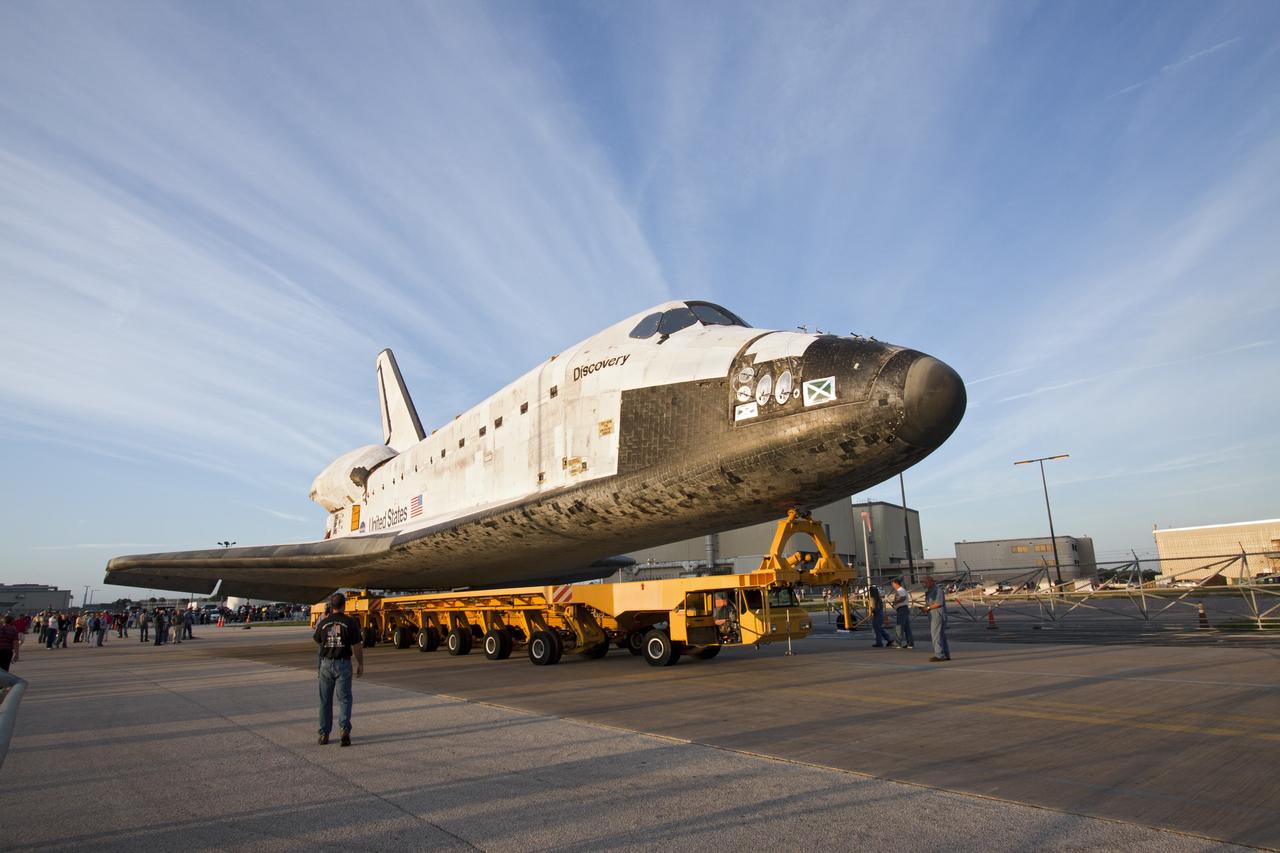
CAPE CANAVERAL, Fla. -- At NASA's Kennedy Space Center in Florida, shuttle Discovery pauses in between Orbiter Processing Facility-3 and the Vehicle Assembly Building (VAB) during a move called "rollover." Once inside the VAB, the shuttle will be joined to its solid rocket boosters and external fuel tank. Later this month, Discovery is scheduled to "rollout" to Launch Pad 39A for its launch to the International Space Station on the STS-133 mission. Targeted to liftoff Nov. 1, Discovery will take the Permanent Multipurpose Module (PMM) packed with supplies and critical spare parts, as well as Robonaut 2 (R2) to the station. Photo credit: NASA/Jack Pfaller
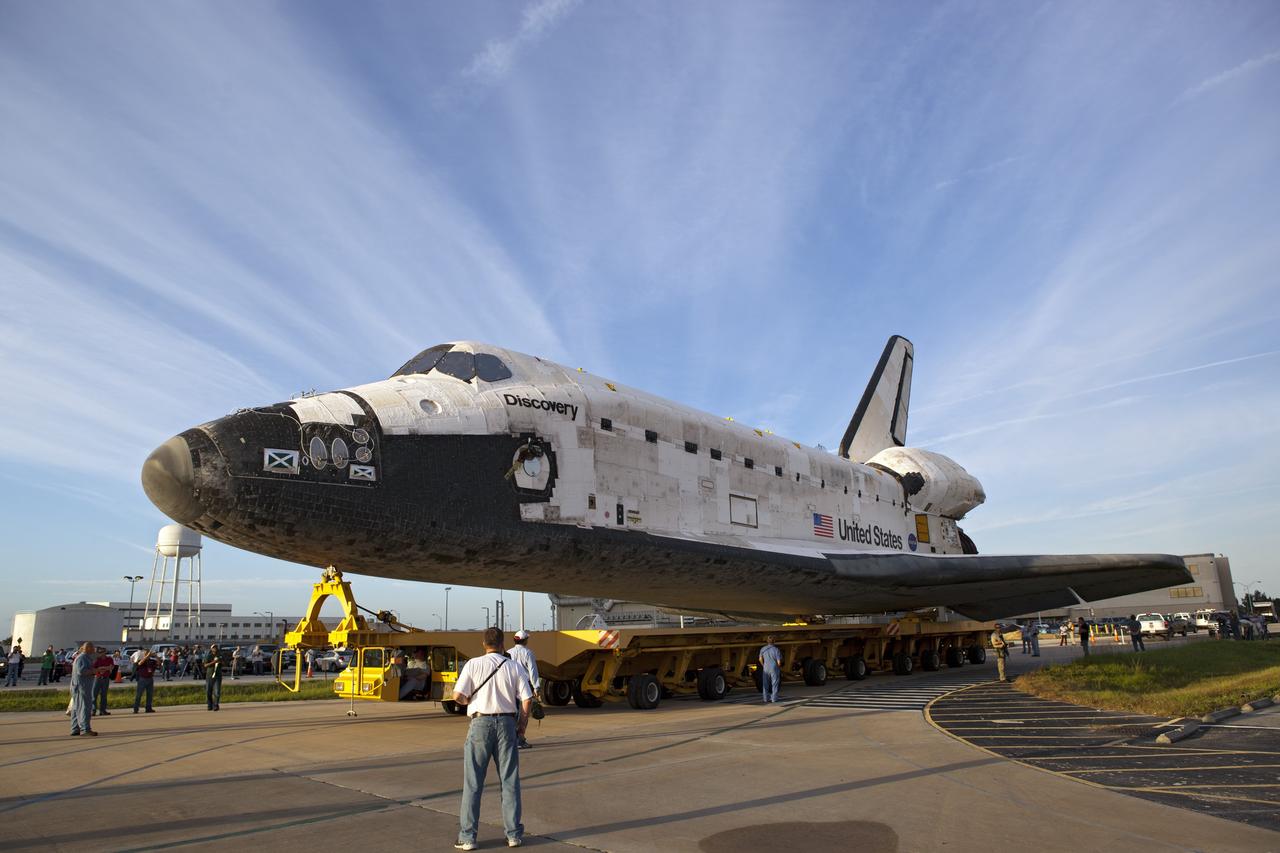
CAPE CANAVERAL, Fla. -- At NASA's Kennedy Space Center in Florida, shuttle Discovery pauses in between Orbiter Processing Facility-3 and the Vehicle Assembly Building (VAB) during a move called "rollover." Once inside the VAB, the shuttle will be joined to its solid rocket boosters and external fuel tank. Later this month, Discovery is scheduled to "rollout" to Launch Pad 39A for its launch to the International Space Station on the STS-133 mission. Targeted to liftoff Nov. 1, Discovery will take the Permanent Multipurpose Module (PMM) packed with supplies and critical spare parts, as well as Robonaut 2 (R2) to the station. Photo credit: NASA/Dimitri Gerondidakis
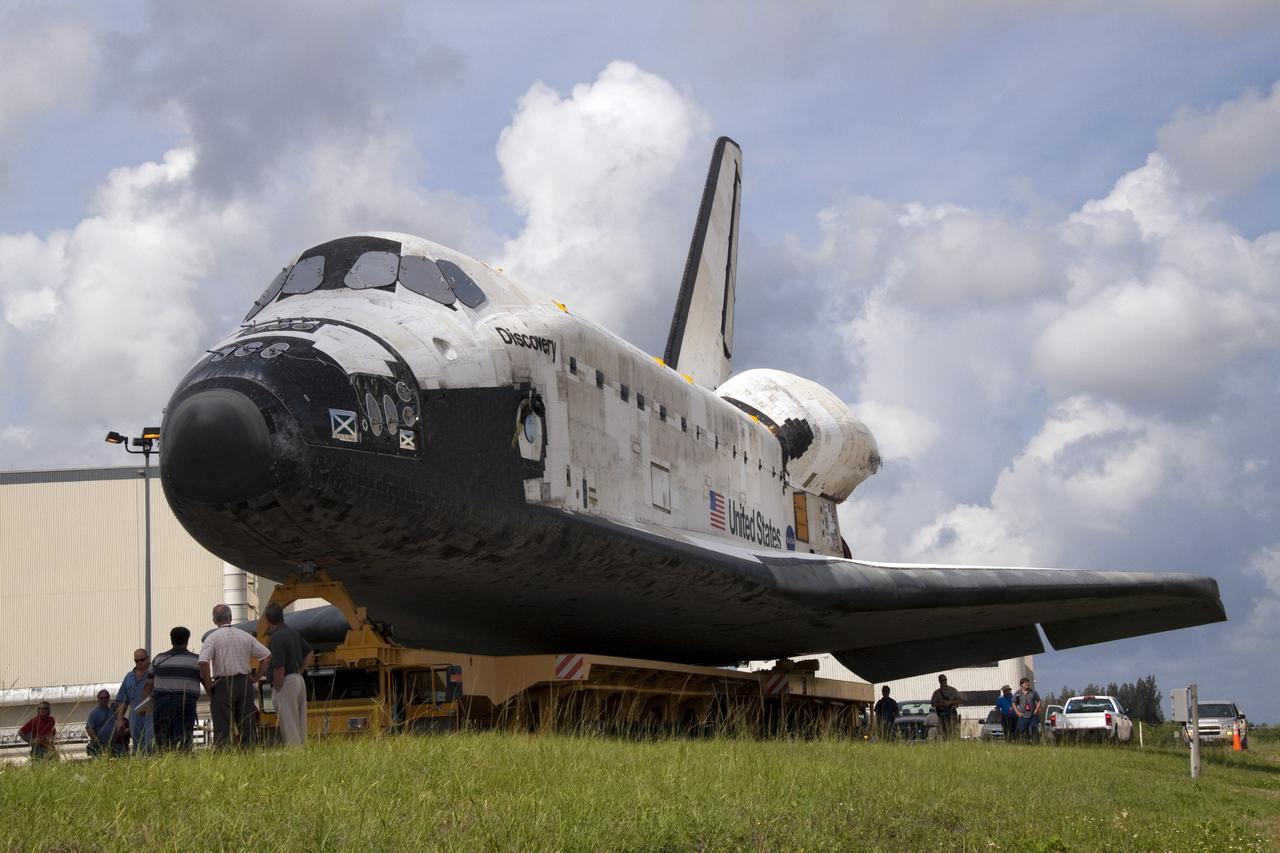
CAPE CANAVERAL, Fla. -- At NASA's Kennedy Space Center in Florida, shuttle Discovery continues its move, known as "rollover," from Orbiter Processing Facility-3 to the nearby Vehicle Assembly Building (VAB). Once inside the VAB, the shuttle will be joined to its solid rocket boosters and external fuel tank. Later this month, Discovery is scheduled to "rollout" to Launch Pad 39A for its launch to the International Space Station on the STS-133 mission. Targeted to liftoff Nov. 1, Discovery will take the Permanent Multipurpose Module (PMM) packed with supplies and critical spare parts, as well as Robonaut 2 (R2) to the station. Photo credit: NASA/Jack Pfaller
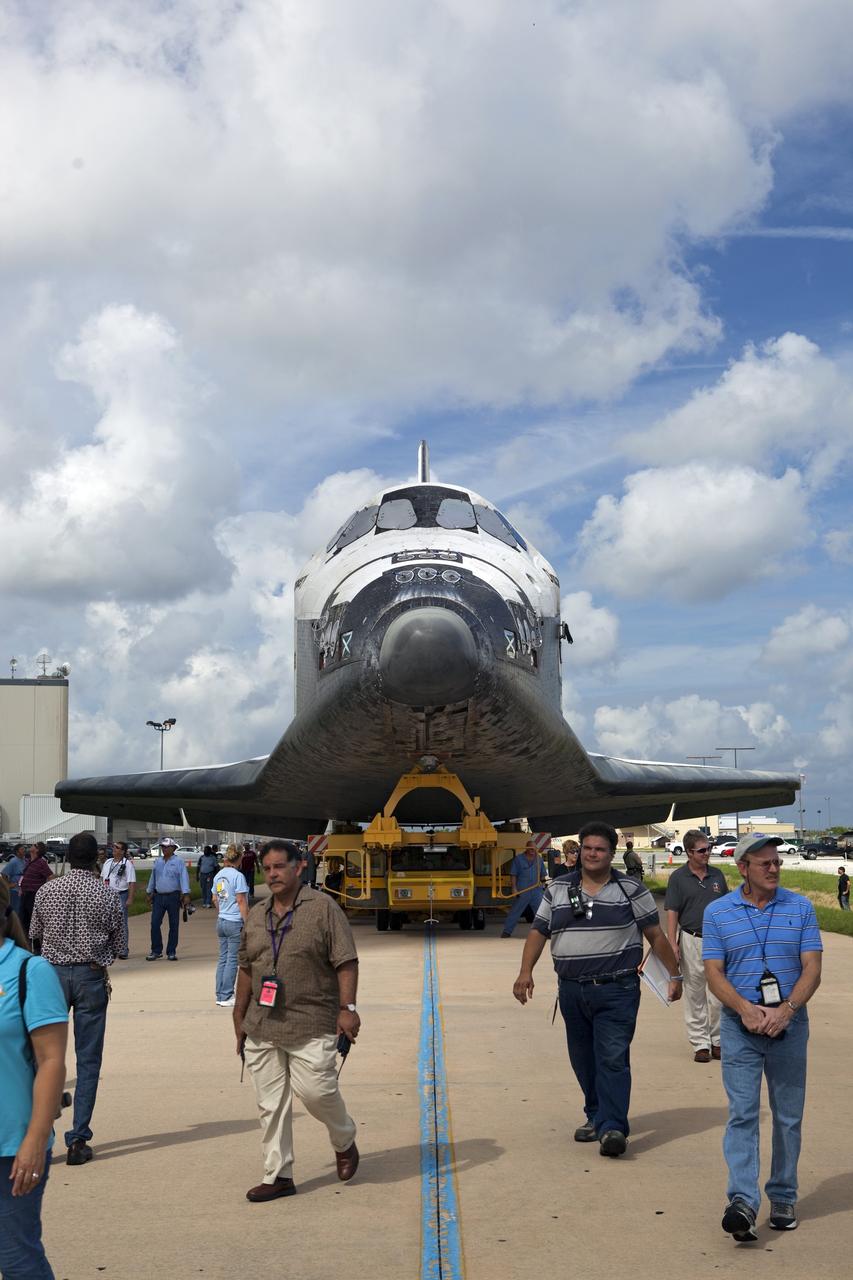
CAPE CANAVERAL, Fla. -- At NASA's Kennedy Space Center in Florida, shuttle Discovery pauses for photos during its move called "rollover" from Orbiter Processing Facility-3 to the nearby Vehicle Assembly Building (VAB). Once inside the VAB, the shuttle will be joined to its solid rocket boosters and external fuel tank. Later this month, Discovery is scheduled to "rollout" to Launch Pad 39A for its launch to the International Space Station on the STS-133 mission. Targeted to liftoff Nov. 1, Discovery will take the Permanent Multipurpose Module (PMM) packed with supplies and critical spare parts, as well as Robonaut 2 (R2) to the station. Photo credit: NASA/ Dimitri Gerondidakis
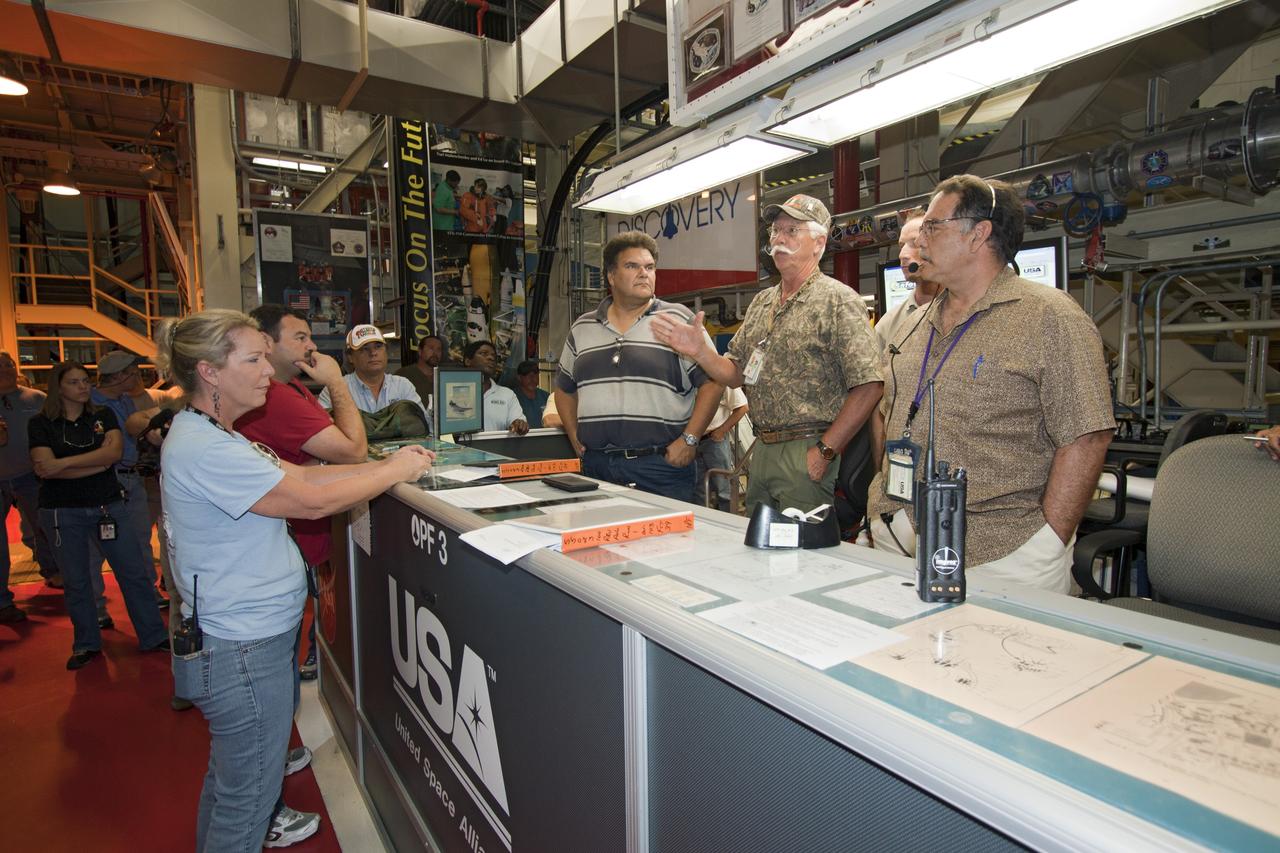
CAPE CANAVERAL, Fla. -- In Orbiter Processing Facility-3 at NASA's Kennedy Space Center in Florida, workers discuss moving, or "rolling over," shuttle Discovery to the nearby Vehicle Assembly Building (VAB). Once inside the VAB, the shuttle will be joined to its solid rocket boosters and external fuel tank. Later this month, Discovery is scheduled to "rollout" to Launch Pad 39A for its launch to the International Space Station on the STS-133 mission. Targeted to liftoff Nov. 1, Discovery will take the Permanent Multipurpose Module (PMM) packed with supplies and critical spare parts, as well as Robonaut 2 (R2) to the station. Photo credit: NASA/Jack Pfaller
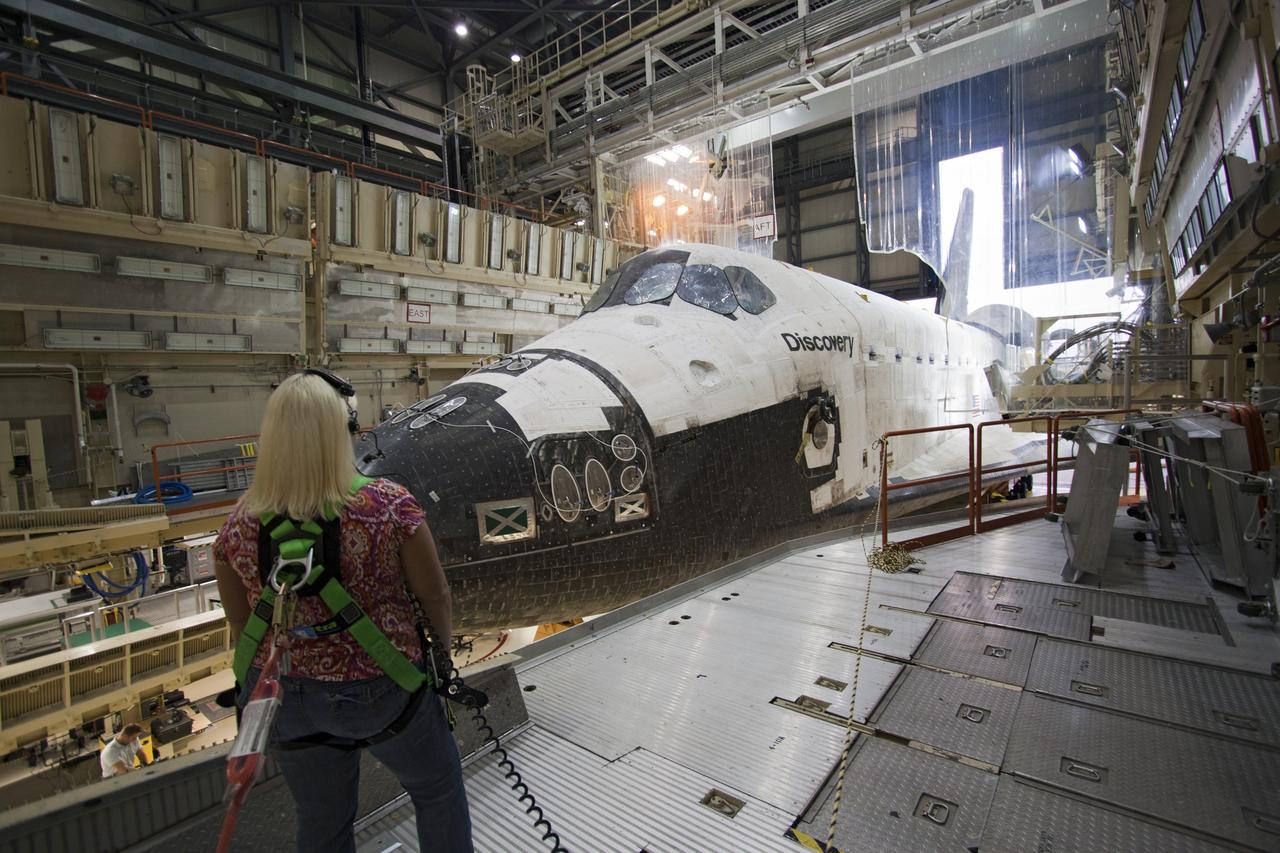
CAPE CANAVERAL, Fla. -- At NASA's Kennedy Space Center in Florida, shuttle Discovery begins to back out of Orbiter Processing Facility-3 during a move called "rollover" to the nearby Vehicle Assembly Building (VAB). Once inside the VAB, the shuttle will be joined to its solid rocket boosters and external fuel tank. Later this month, Discovery is scheduled to "rollout" to Launch Pad 39A for its launch to the International Space Station on the STS-133 mission. Targeted to liftoff Nov. 1, Discovery will take the Permanent Multipurpose Module (PMM) packed with supplies and critical spare parts, as well as Robonaut 2 (R2) to the station. Photo credit: NASA/Jack Pfaller

CAPE CANAVERAL, Fla. -- At NASA's Kennedy Space Center in Florida, the sun shines through Launch Pad 39A and hides space shuttle Discovery, which is secured to the pad structure. It took the spacecraft about six hours to make the journey, known as "rollout," from the Vehicle Assembly Building to the pad. Rollout sets the stage for Discovery's STS-133 crew to practice countdown and launch procedures during the Terminal Countdown Demonstration Test in mid-October. Targeted to liftoff Nov. 1, Discovery will take the Permanent Multipurpose Module (PMM) packed with supplies and critical spare parts, as well as Robonaut 2 (R2) to the International Space Station. Photo credit: NASA/Jack Pfaller
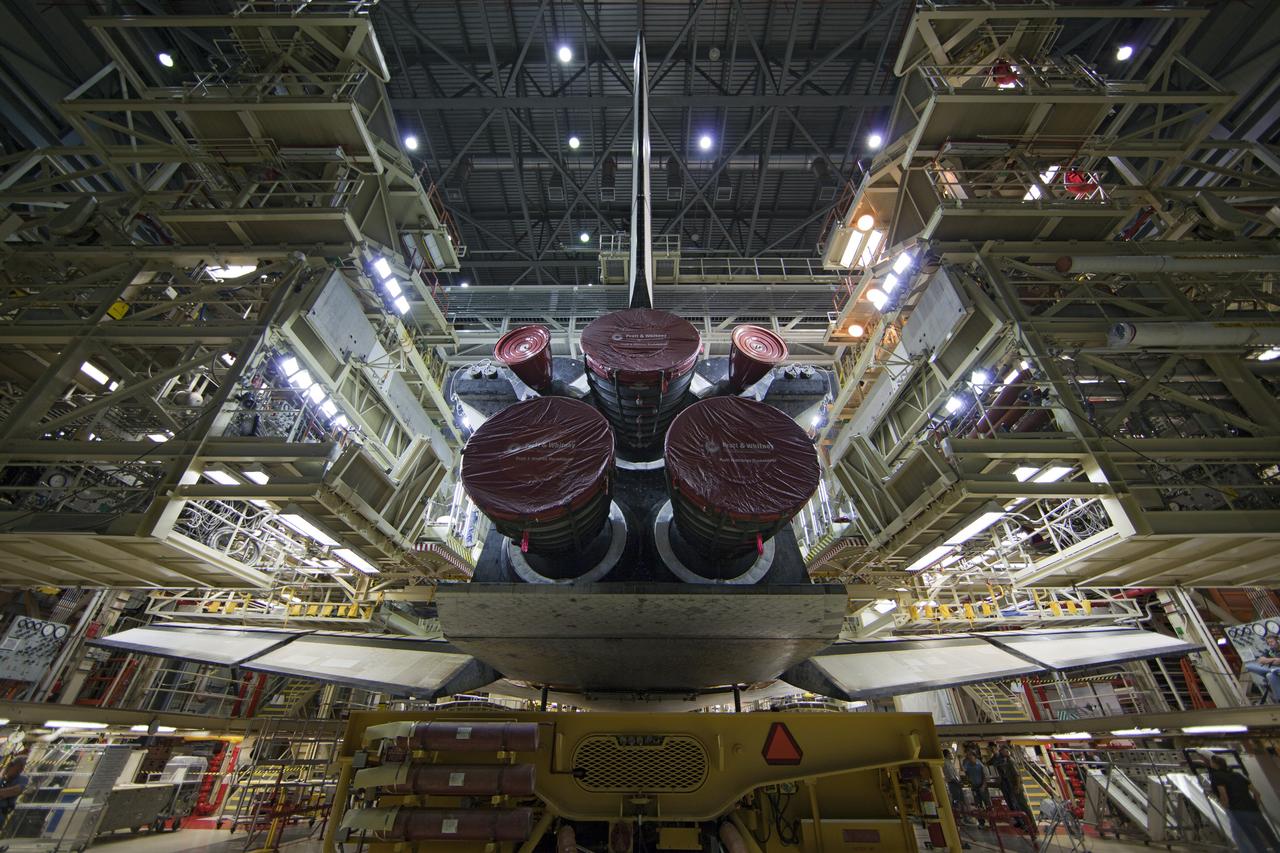
CAPE CANAVERAL, Fla. -- At NASA's Kennedy Space Center in Florida, shuttle Discovery begins to back out of Orbiter Processing Facility-3 during a move called "rollover" to the nearby Vehicle Assembly Building (VAB). Once inside the VAB, the shuttle will be joined to its solid rocket boosters and external fuel tank. Later this month, Discovery is scheduled to "rollout" to Launch Pad 39A for its launch to the International Space Station on the STS-133 mission. Targeted to liftoff Nov. 1, Discovery will take the Permanent Multipurpose Module (PMM) packed with supplies and critical spare parts, as well as Robonaut 2 (R2) to the station. Photo credit: NASA/Dimitri Gerondidakis
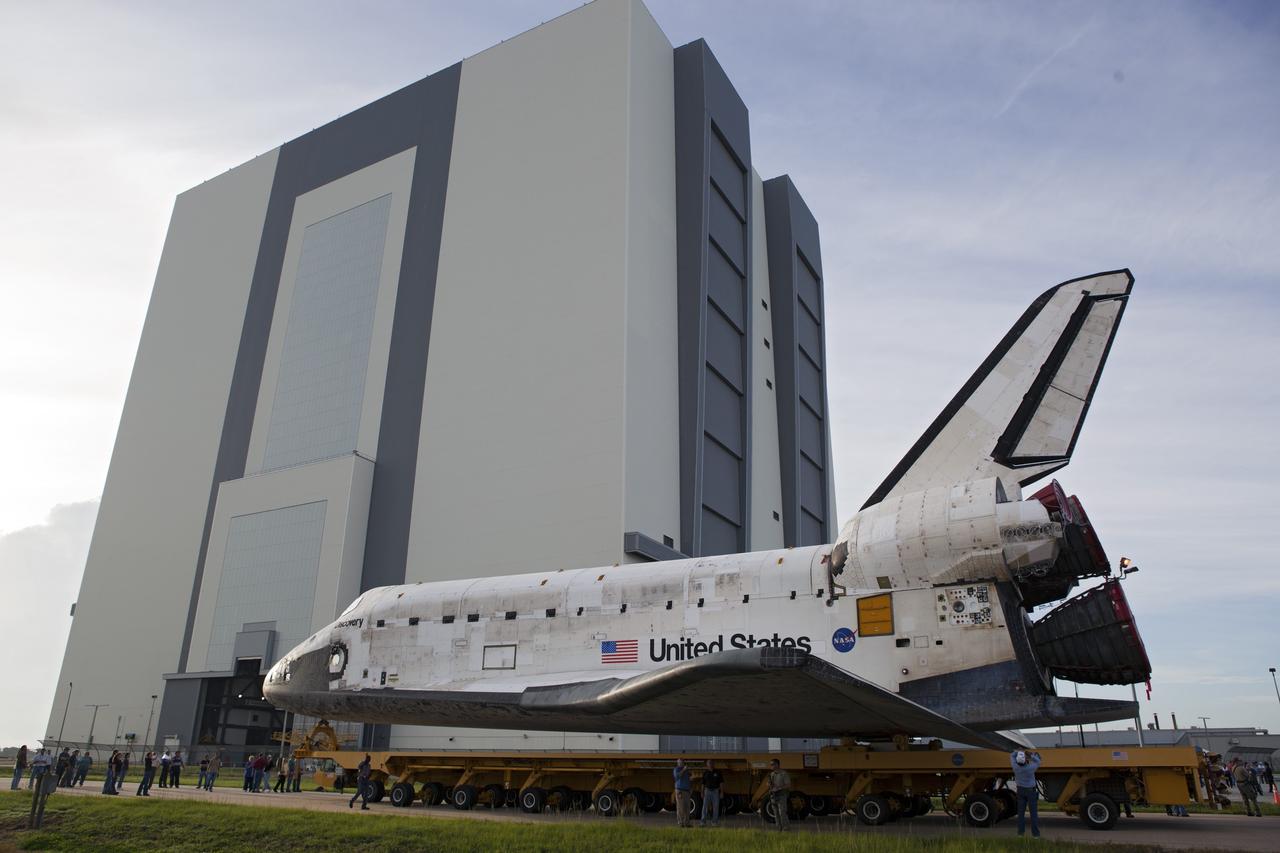
CAPE CANAVERAL, Fla. -- At NASA's Kennedy Space Center in Florida, shuttle Discovery pauses in between Orbiter Processing Facility-3 and the Vehicle Assembly Building (VAB) during a move called "rollover." Once inside the VAB, the shuttle will be joined to its solid rocket boosters and external fuel tank. Later this month, Discovery is scheduled to "rollout" to Launch Pad 39A for its launch to the International Space Station on the STS-133 mission. Targeted to liftoff Nov. 1, Discovery will take the Permanent Multipurpose Module (PMM) packed with supplies and critical spare parts, as well as Robonaut 2 (R2) to the station. Photo credit: NASA/Dimitri Gerondidakis
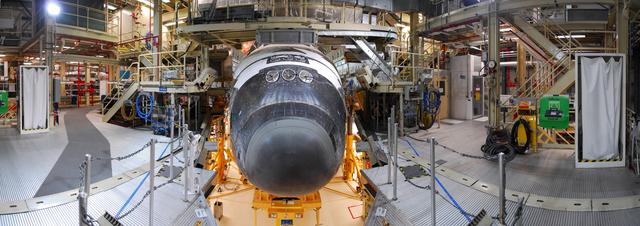
CAPE CANAVERAL, Fla. -- This panoramic image of space shuttle Discovery was photographed in Orbiter Processing Facility-3 at NASA's Kennedy Space Center in Florida, as the shuttle was being prepared for "rollover," or moved, to the Vehicle Assembly Building. Once inside the VAB, the shuttle will be joined to its solid rocket boosters and external fuel tank. Later this month, Discovery is scheduled to "rollout" to Launch Pad 39A for its launch to the International Space Station on the STS-133 mission. Targeted to liftoff Nov. 1, Discovery will take the Permanent Multipurpose Module (PMM) packed with supplies and critical spare parts, as well as Robonaut 2 (R2) to the station. Photo credit: NASA/Frankie Martin
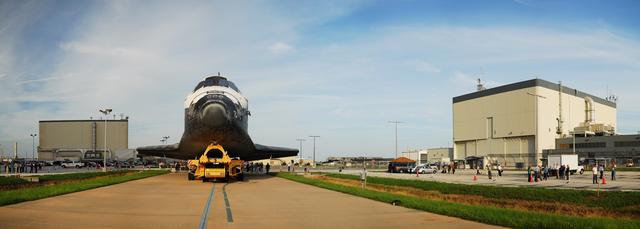
CAPE CANAVERAL, Fla. -- This panoramic image of space shuttle Discovery was photographed as it was being transported from Orbiter Processing Facility-3 at NASA's Kennedy Space Center in Florida, to the Vehicle Assembly Building escorted by workers. Once inside the VAB, the shuttle will be joined to its solid rocket boosters and external fuel tank. Later this month, Discovery is scheduled to "rollout" to Launch Pad 39A for its launch to the International Space Station on the STS-133 mission. Targeted to liftoff Nov. 1, Discovery will take the Permanent Multipurpose Module (PMM) packed with supplies and critical spare parts, as well as Robonaut 2 (R2) to the station. Photo credit: NASA/Frankie Martin
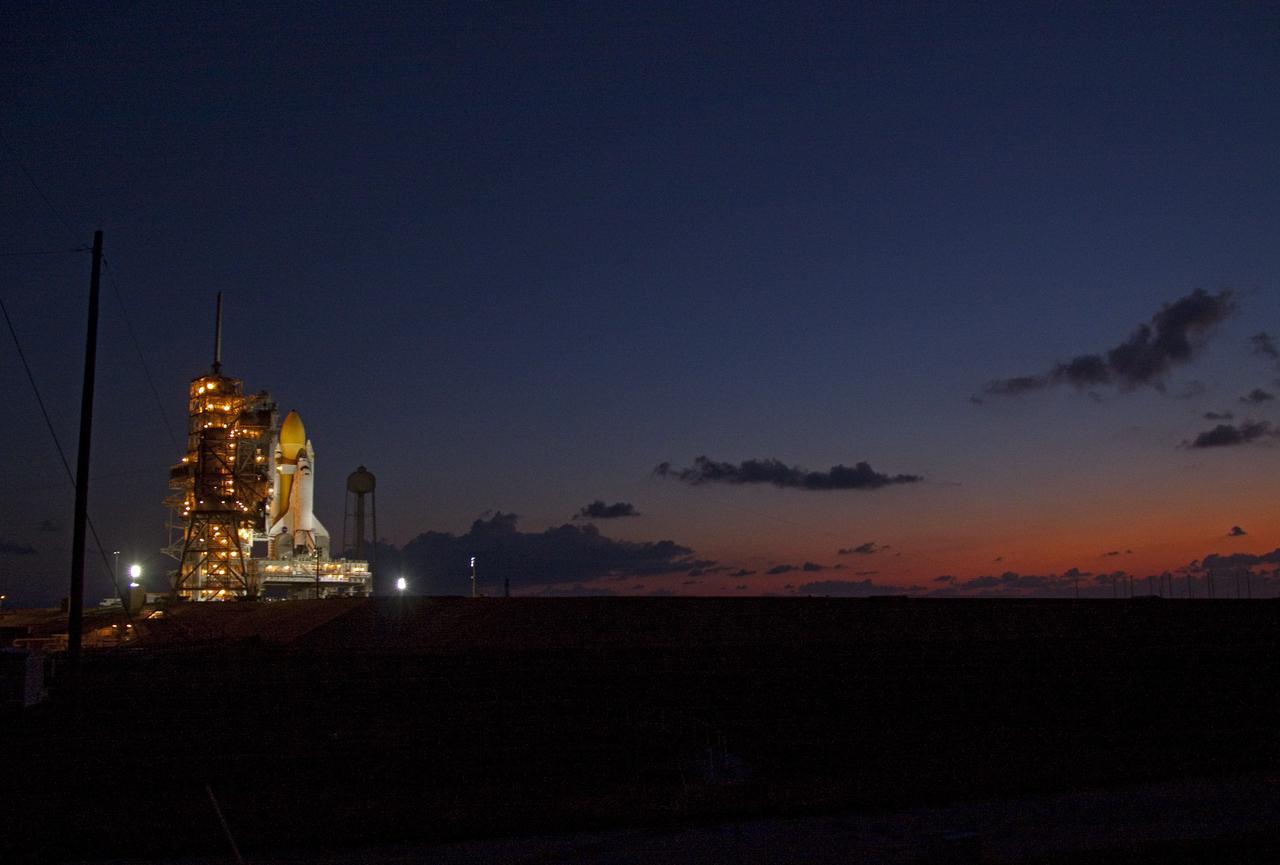
CAPE CANAVERAL, Fla. -- Space shuttle Discovery is attached to Launch Pad 39A as the sun rises over NASA's Kennedy Space Center in Florida. It took the spacecraft about six hours to make the journey, known as "rollout," from the Vehicle Assembly Building to the pad. Rollout sets the stage for Discovery's STS-133 crew to practice countdown and launch procedures during the Terminal Countdown Demonstration Test in mid-October. Targeted to liftoff Nov. 1, Discovery will take the Permanent Multipurpose Module (PMM) packed with supplies and critical spare parts, as well as Robonaut 2 (R2) to the International Space Station. Photo credit: NASA/Jack Pfaller
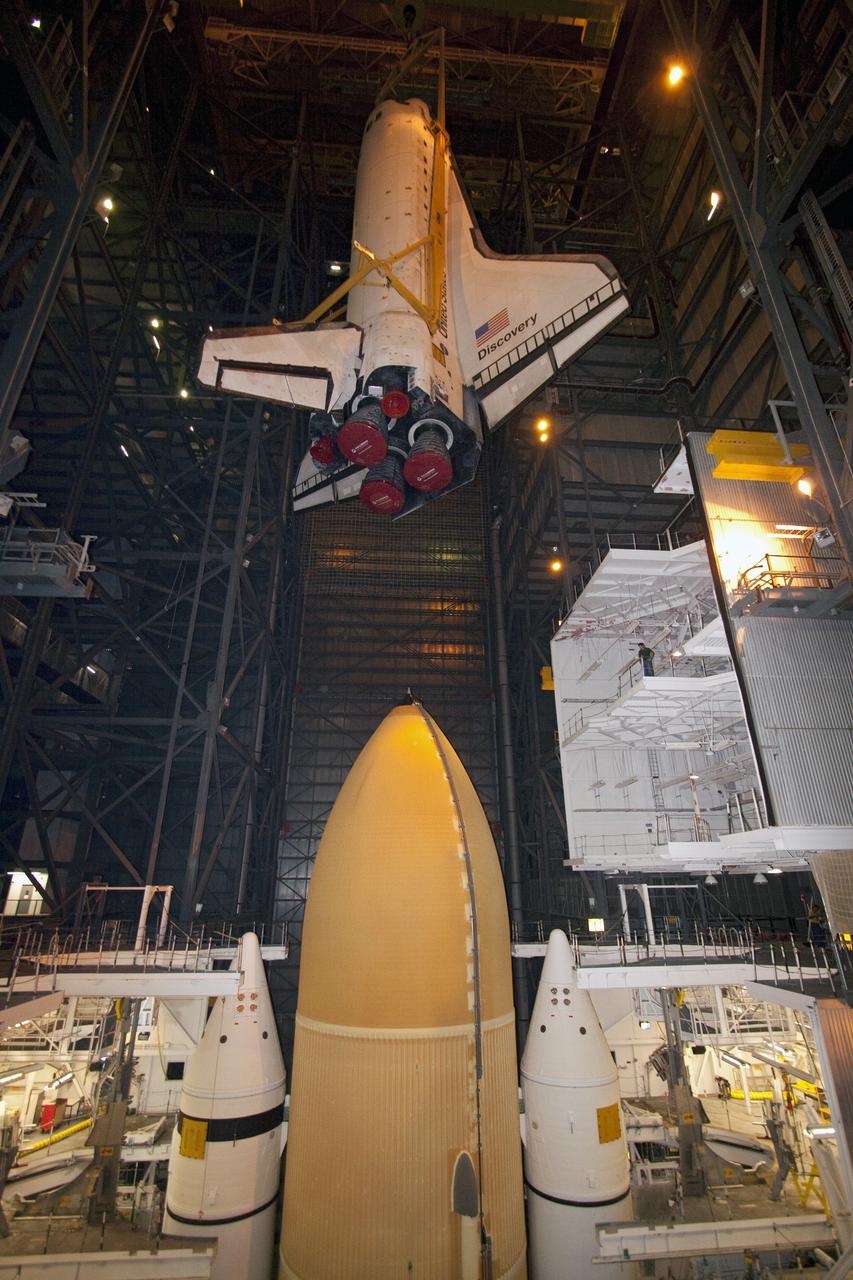
CAPE CANAVERAL, Fla. -- In High Bay 3 of the Vehicle Assembly Building at NASA's Kennedy Space Center in Florida, a large yellow, metal sling lowers shuttle Discovery to its external fuel tank and solid rocket boosters. The lift and mate operation began Sept. 9 and wrapped up early Sept. 10. Discovery is scheduled to roll out to Launch Pad 39A later this month in preparation for its launch to the International Space Station on the STS-133 mission. Targeted to lift off Nov. 1, Discovery will take the Permanent Multipurpose Module (PMM) packed with supplies and critical spare parts, as well as Robonaut 2 (R2) to the station. Photo credit: NASA/Jack Pfaller
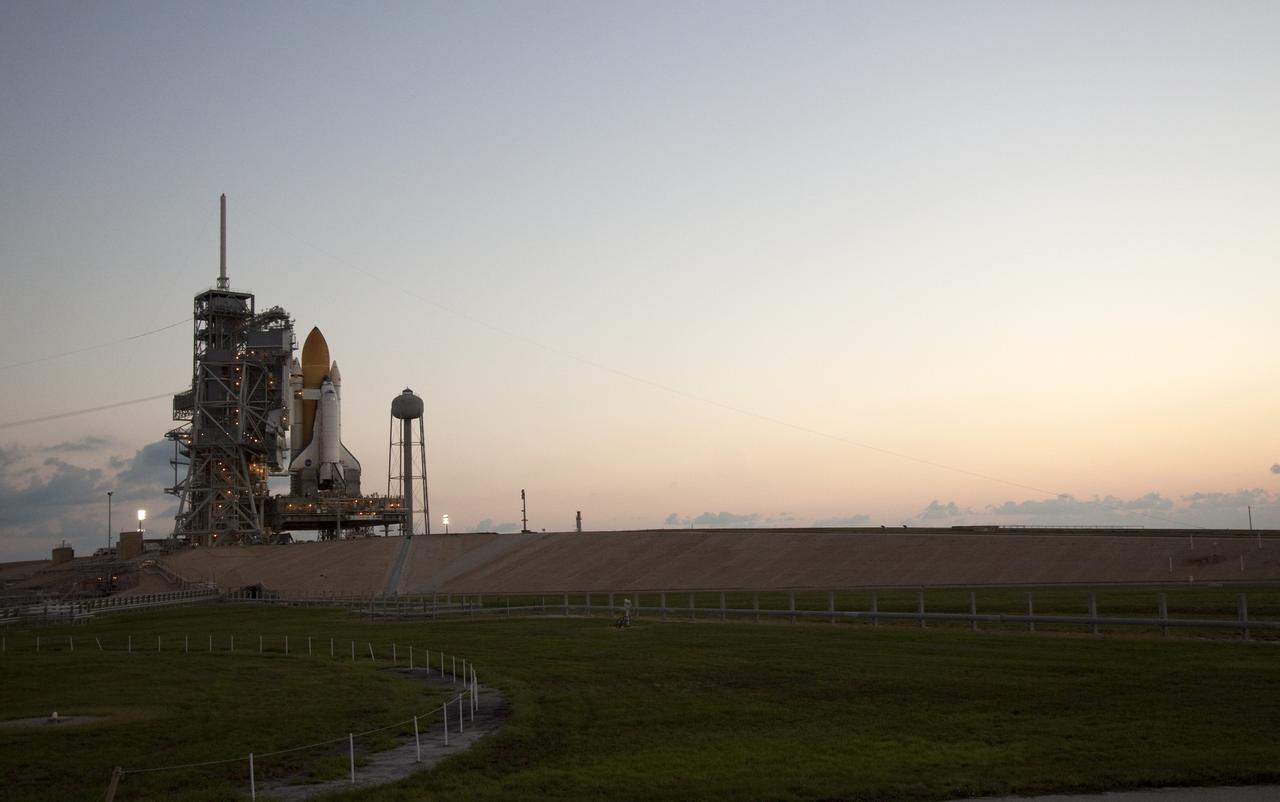
CAPE CANAVERAL, Fla. -- Space shuttle Discovery is attached to Launch Pad 39A as the sun rises over NASA's Kennedy Space Center in Florida. It took the spacecraft about six hours to make the journey, known as "rollout," from the Vehicle Assembly Building to the pad. Rollout sets the stage for Discovery's STS-133 crew to practice countdown and launch procedures during the Terminal Countdown Demonstration Test in mid-October. Targeted to liftoff Nov. 1, Discovery will take the Permanent Multipurpose Module (PMM) packed with supplies and critical spare parts, as well as Robonaut 2 (R2) to the International Space Station. Photo credit: NASA/Jack Pfaller
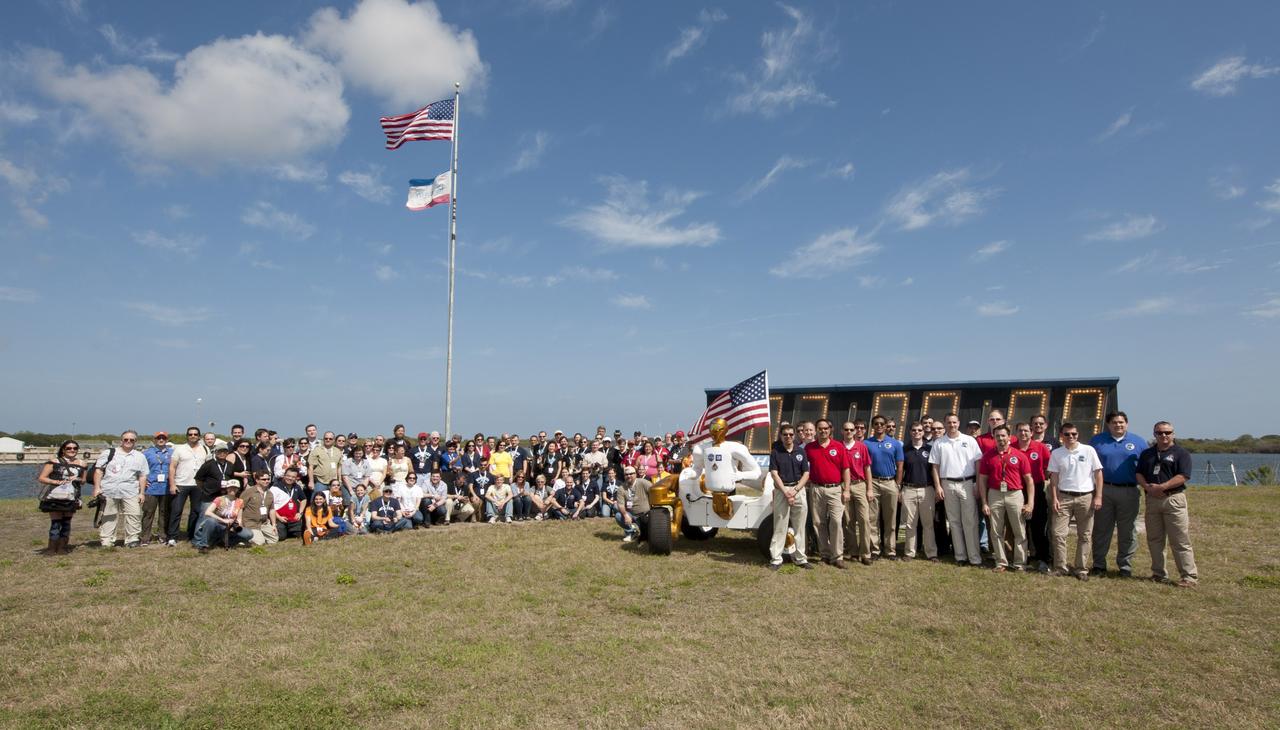
NASA Tweetup participants along with NASA engineers and Robonaut 2 stand at the launch clock, Thursday, Feb. 24, 2011, prior to the launch of the space shuttle Discovery (STS-133) at Kennedy Space Center in Cape Canaveral, Fla. During the 11-day mission, Discovery will deliver the Italian-built Permanent Multipurpose Module (PMM) and Express Logistics Carrier 4 (ELC4) along with another Robonaut 2, which will become the first humanoid robot in space. Discovery, on its 39th and final flight, is NASA's most flown shuttle. Photo Credit: (NASA/Paul E. Alers)
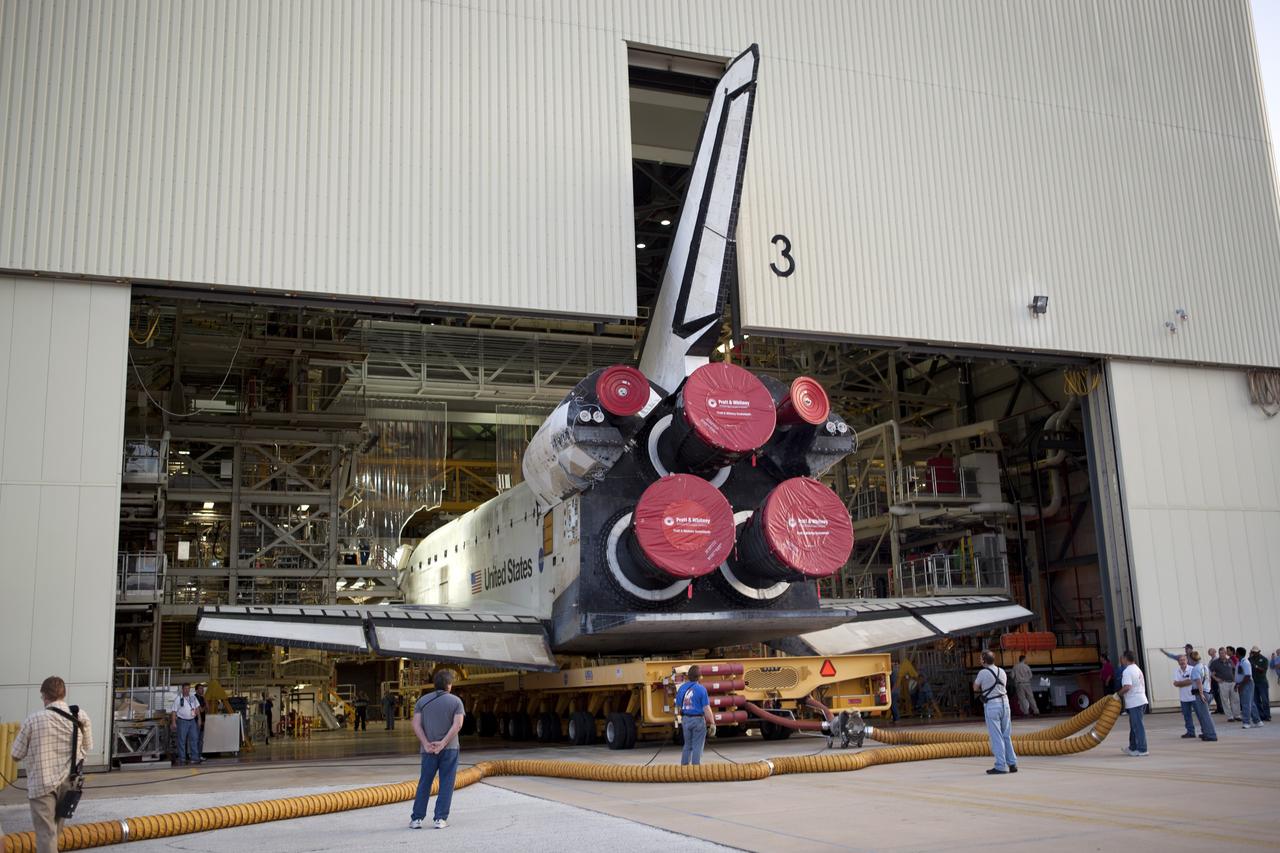
CAPE CANAVERAL, Fla. -- At NASA's Kennedy Space Center in Florida, shuttle Discovery backs out of Orbiter Processing Facility-3 during a move called "rollover" to the nearby Vehicle Assembly Building (VAB). Once inside the VAB, the shuttle will be joined to its solid rocket boosters and external fuel tank. Later this month, Discovery is scheduled to "rollout" to Launch Pad 39A for its launch to the International Space Station on the STS-133 mission. Targeted to liftoff Nov. 1, Discovery will take the Permanent Multipurpose Module (PMM) packed with supplies and critical spare parts, as well as Robonaut 2 (R2) to the station. Photo credit: NASA/Dimitri Gerondidakis
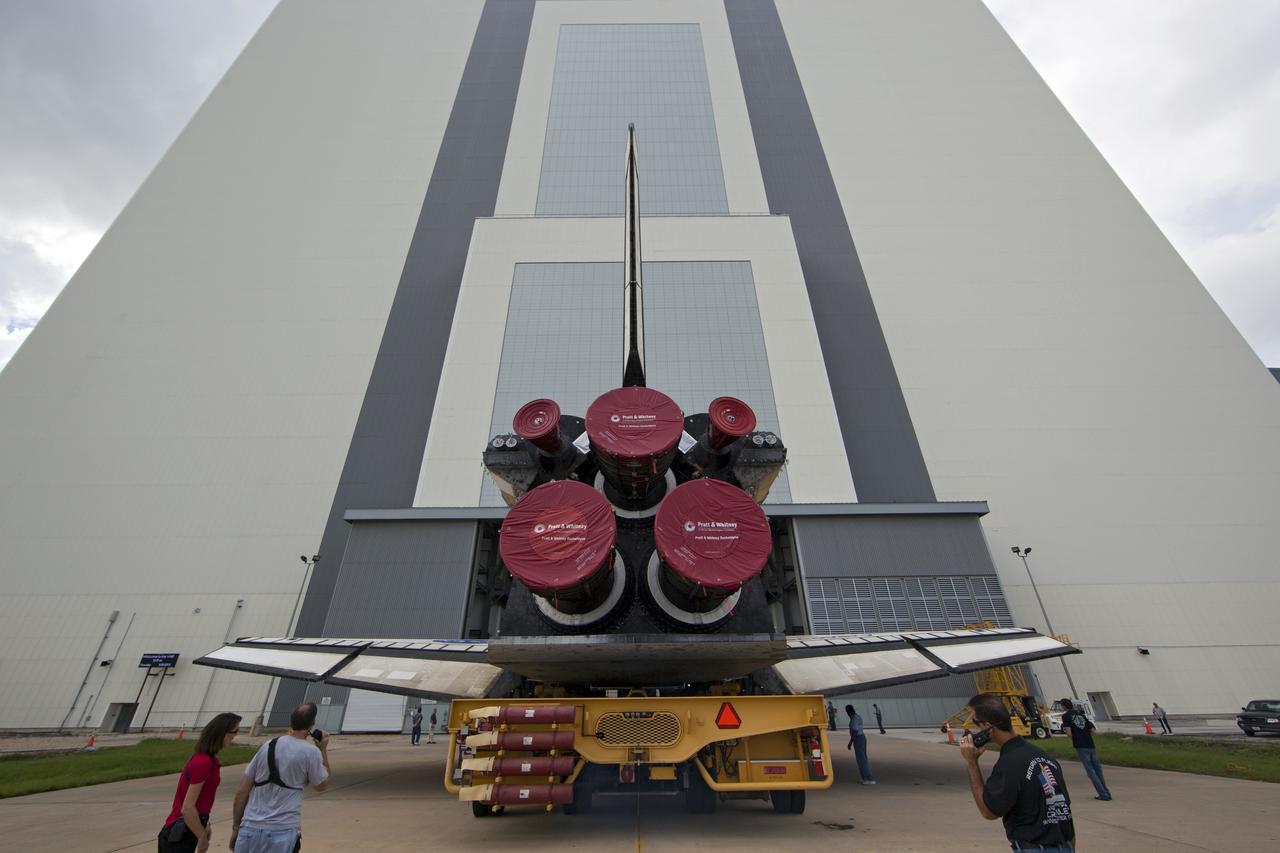
CAPE CANAVERAL, Fla. -- At NASA's Kennedy Space Center in Florida, shuttle Discovery is ushered into the Vehicle Assembly Building (VAB) from Orbiter Processing Facility-3 during a move known as "rollover." Once inside the VAB, the shuttle will be joined to its solid rocket boosters and external fuel tank. Later this month, Discovery is scheduled to "rollout" to Launch Pad 39A for its launch to the International Space Station on the STS-133 mission. Targeted to liftoff Nov. 1, Discovery will take the Permanent Multipurpose Module (PMM) packed with supplies and critical spare parts, as well as Robonaut 2 (R2) to the station. Photo credit: NASA/ Dimitri Gerondidakis
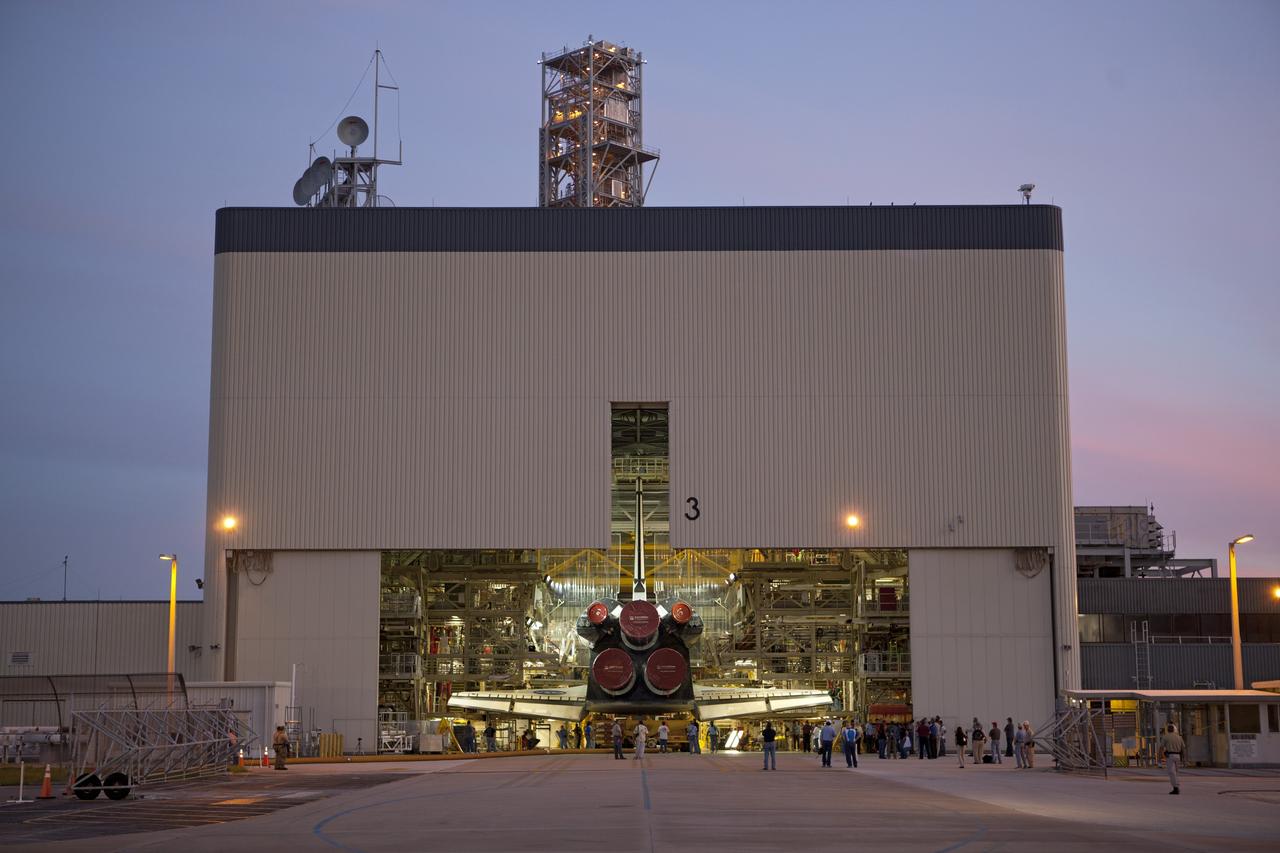
CAPE CANAVERAL, Fla. -- At NASA's Kennedy Space Center in Florida, shuttle Discovery backs out of Orbiter Processing Facility-3 during a move called "rollover" to the nearby Vehicle Assembly Building (VAB). Once inside the VAB, the shuttle will be joined to its solid rocket boosters and external fuel tank. Later this month, Discovery is scheduled to "rollout" to Launch Pad 39A for its launch to the International Space Station on the STS-133 mission. Targeted to liftoff Nov. 1, Discovery will take the Permanent Multipurpose Module (PMM) packed with supplies and critical spare parts, as well as Robonaut 2 (R2) to the station. Photo credit: NASA/Dimitri Gerondidakis
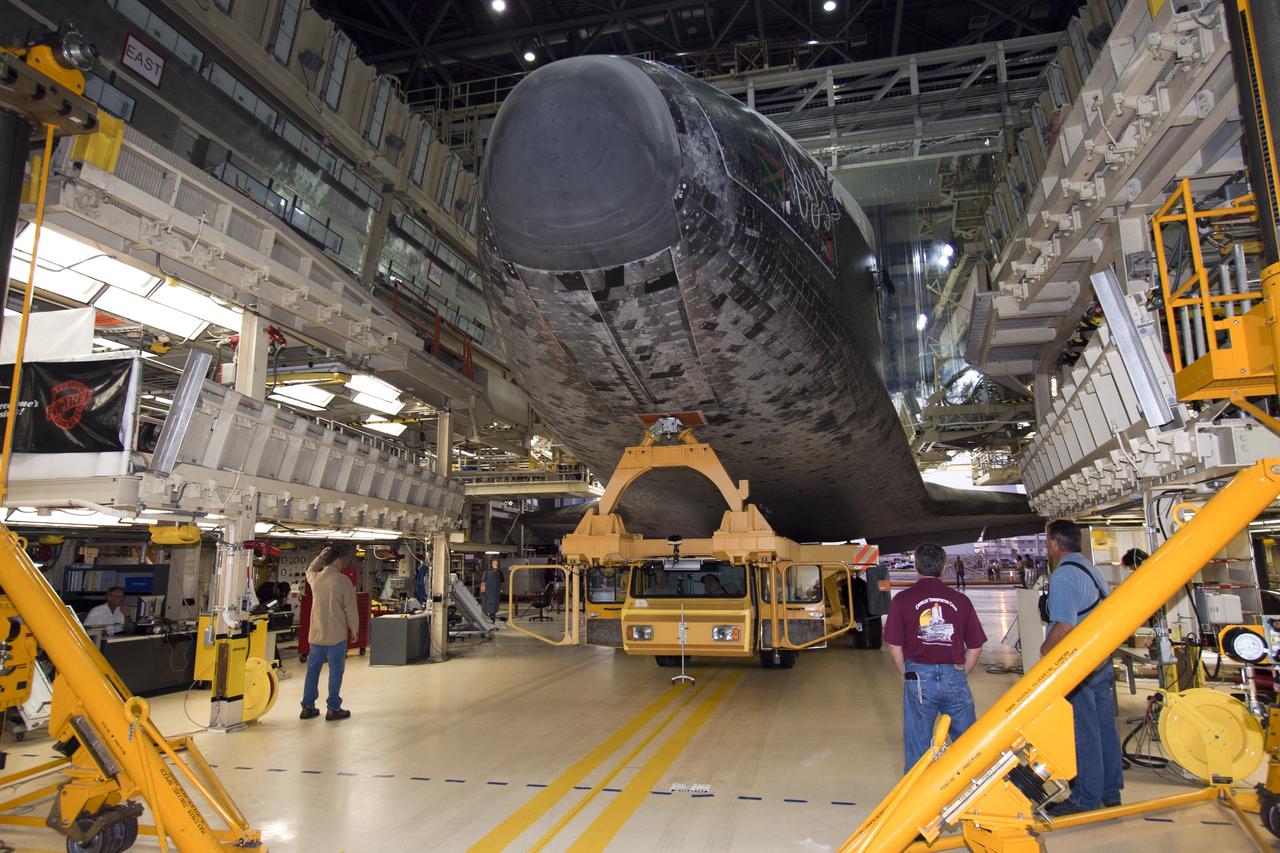
CAPE CANAVERAL, Fla. -- At NASA's Kennedy Space Center in Florida, shuttle Discovery begins to back out of Orbiter Processing Facility-3 during a move called "rollover" to the nearby Vehicle Assembly Building (VAB). Once inside the VAB, the shuttle will be joined to its solid rocket boosters and external fuel tank. Later this month, Discovery is scheduled to "rollout" to Launch Pad 39A for its launch to the International Space Station on the STS-133 mission. Targeted to liftoff Nov. 1, Discovery will take the Permanent Multipurpose Module (PMM) packed with supplies and critical spare parts, as well as Robonaut 2 (R2) to the station. Photo credit: NASA/Jack Pfaller
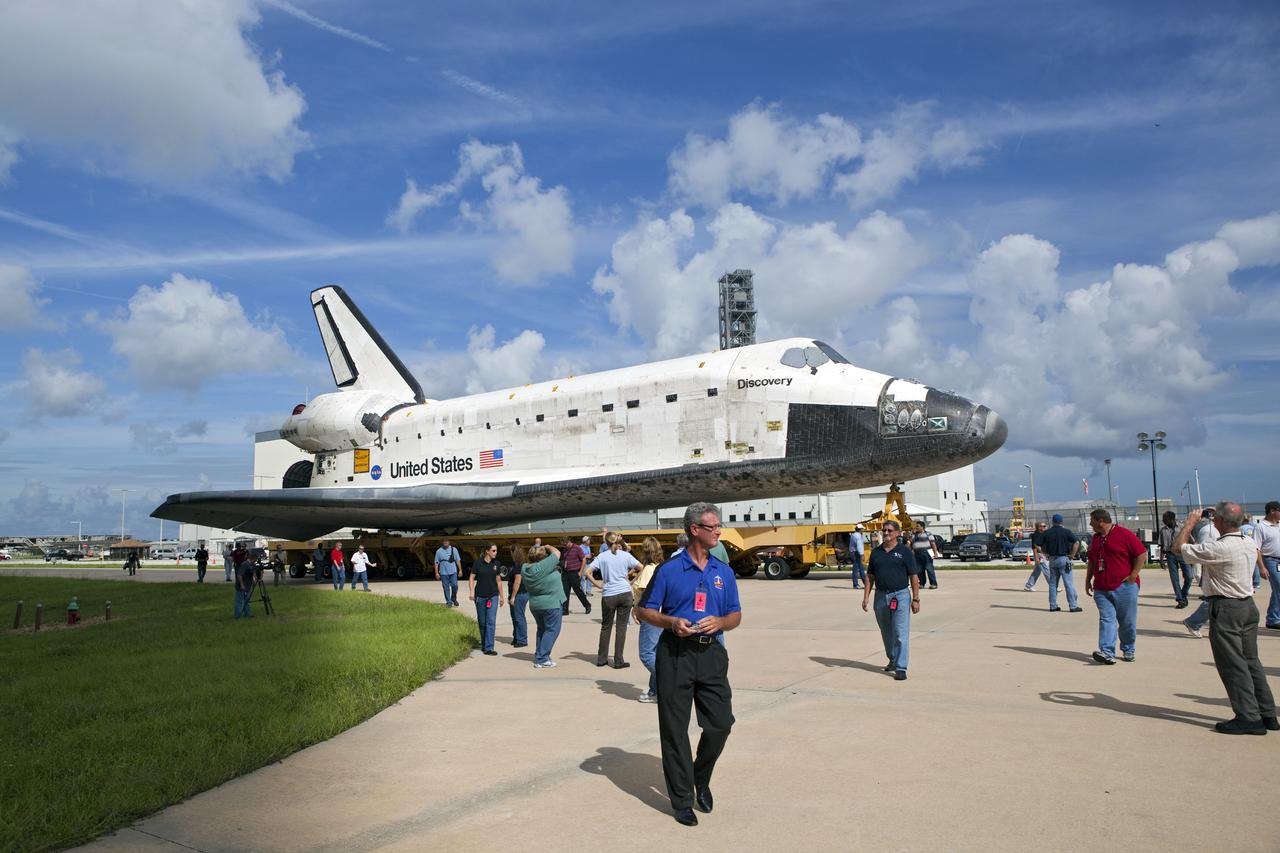
CAPE CANAVERAL, Fla. -- At NASA's Kennedy Space Center in Florida, shuttle Discovery pauses for photos during its move called "rollover" from Orbiter Processing Facility-3 to the nearby Vehicle Assembly Building (VAB). Once inside the VAB, the shuttle will be joined to its solid rocket boosters and external fuel tank. Later this month, Discovery is scheduled to "rollout" to Launch Pad 39A for its launch to the International Space Station on the STS-133 mission. Targeted to liftoff Nov. 1, Discovery will take the Permanent Multipurpose Module (PMM) packed with supplies and critical spare parts, as well as Robonaut 2 (R2) to the station. Photo credit: NASA/ Dimitri Gerondidakis
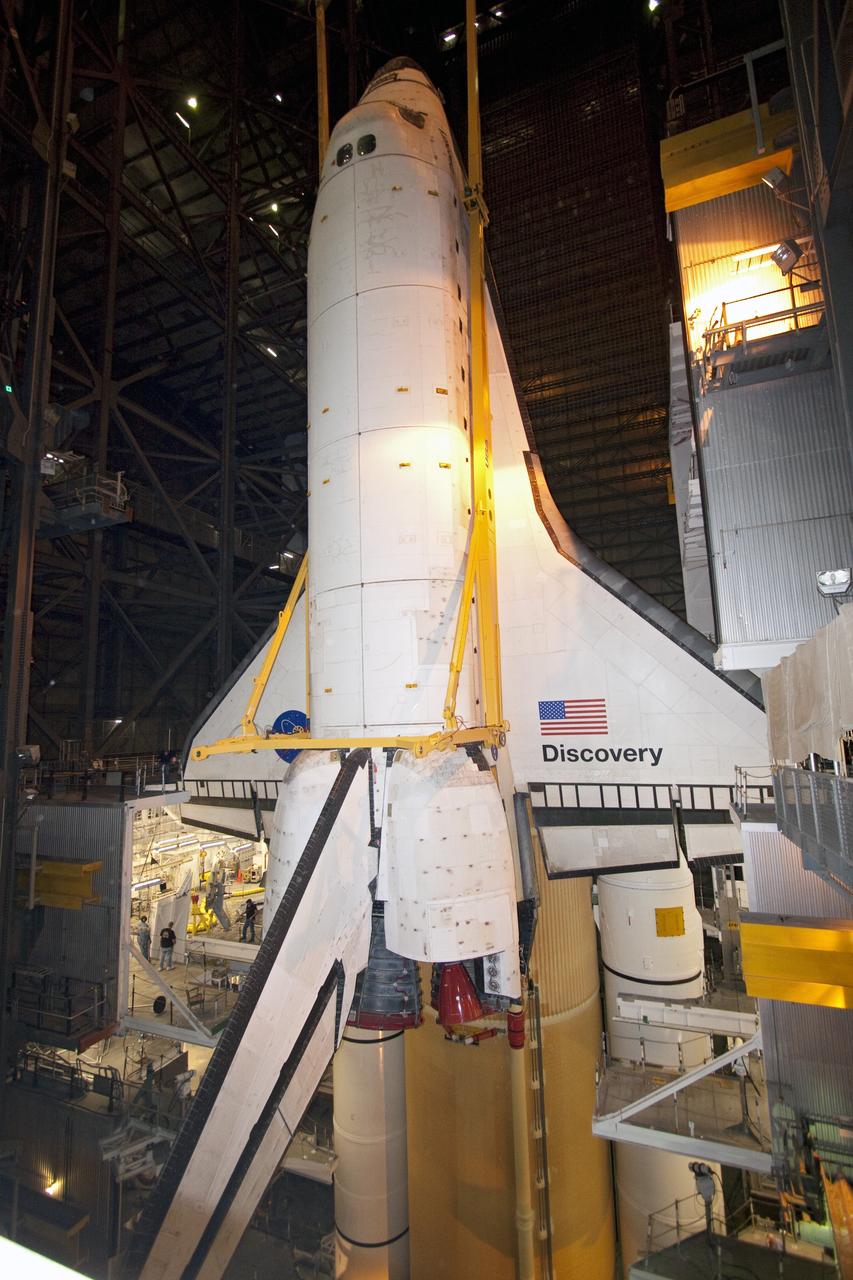
CAPE CANAVERAL, Fla. -- In High Bay 3 of the Vehicle Assembly Building at NASA's Kennedy Space Center in Florida, a large yellow, metal sling lowers shuttle Discovery to its external fuel tank and solid rocket boosters. The lift and mate operation began Sept. 9 and wrapped up early Sept. 10. Discovery is scheduled to roll out to Launch Pad 39A later this month in preparation for its launch to the International Space Station on the STS-133 mission. Targeted to lift off Nov. 1, Discovery will take the Permanent Multipurpose Module (PMM) packed with supplies and critical spare parts, as well as Robonaut 2 (R2) to the station. Photo credit: NASA/Jack Pfaller
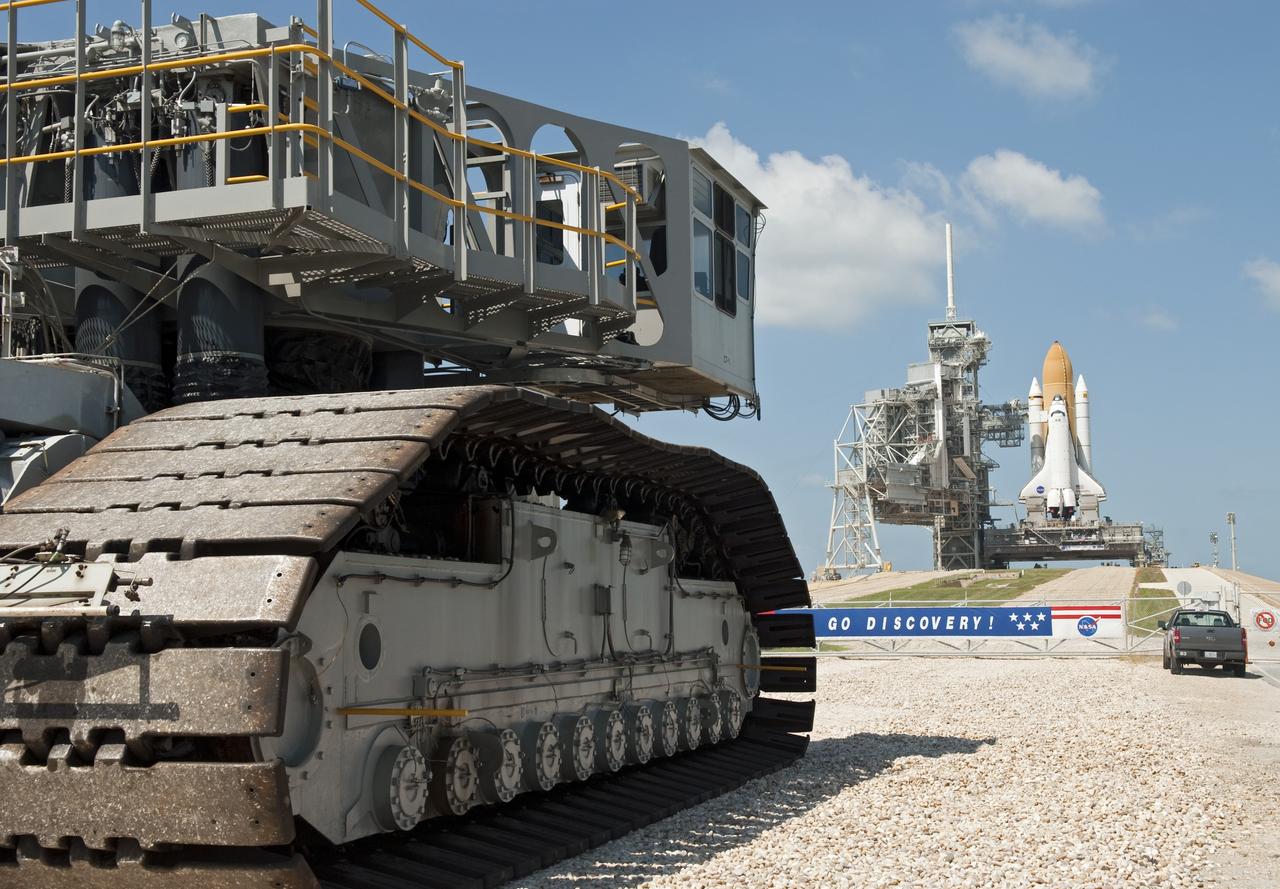
CAPE CANAVERAL, Fla. -- At NASA's Kennedy Space Center in Florida, the crawler-transporter that carried space shuttle Discovery from the Vehicle Assembly Building to Launch Pad 39A, moves toward the pad perimeter gate, giving the illusion that the shuttle is still on top, but smaller than it actually is. The move, called "rollout," sets the stage for Discovery's STS-133 crew to practice countdown and launch procedures during the Terminal Countdown Demonstration Test in mid-October. Targeted to liftoff Nov. 1, Discovery will take the Permanent Multipurpose Module (PMM) packed with supplies and critical spare parts, as well as Robonaut 2 (R2) to the International Space Station. Photo credit: NASA/Jim Grossmann