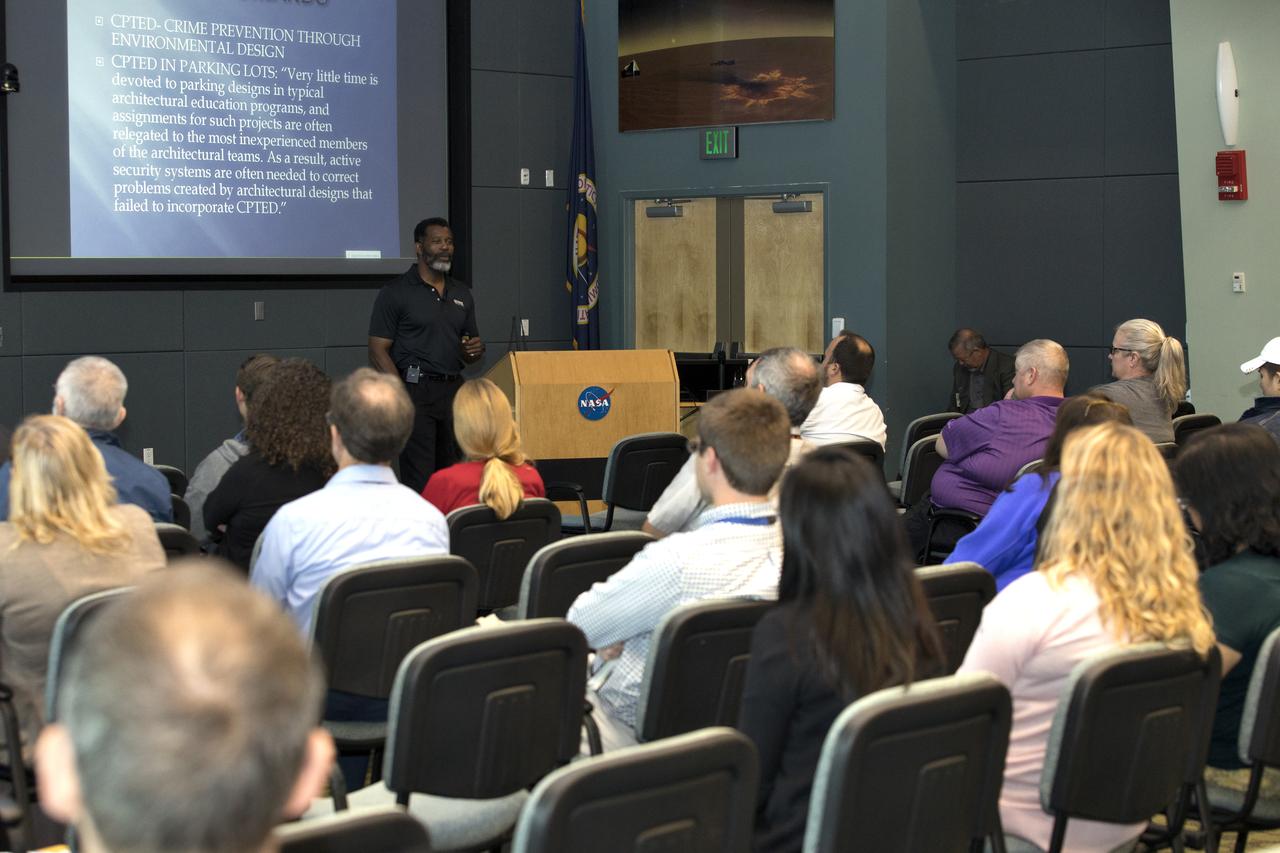
Derwin Bradley, a veteran police officer and former soldier, speaks to Kennedy Space Center employees at the center’s Operations Support Building II on the topic of personal safety and awareness. The presentation was held March 27, 2019, as part of the Florida spaceport’s Safety and Health Days. During the presentation, Bradley also demonstrated basic self-defense tactics.
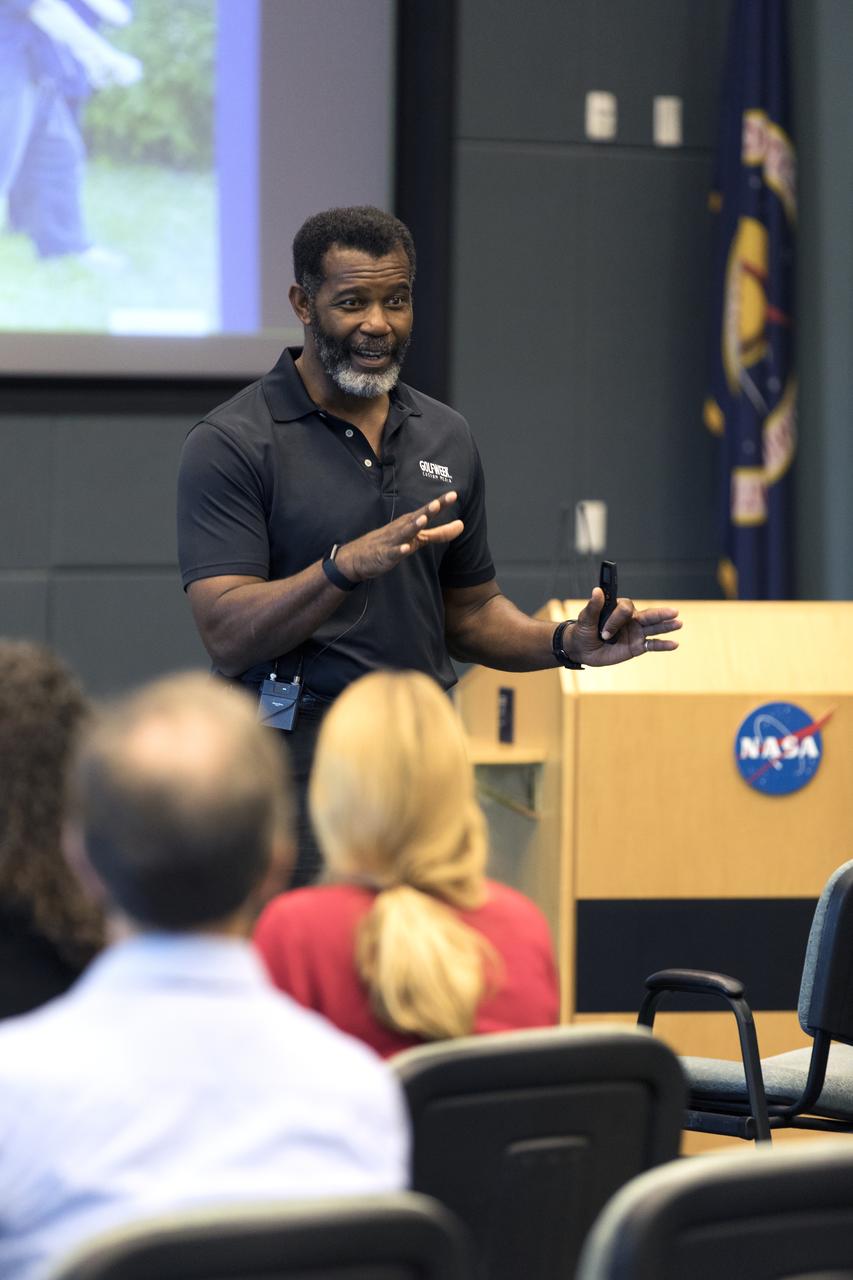
Derwin Bradley, a veteran police officer and former soldier, speaks to Kennedy Space Center employees at the center’s Operations Support Building II on the topic of personal safety and awareness. The presentation was held March 27, 2019, as part of the Florida spaceport’s Safety and Health Days. During the presentation, Bradley also demonstrated basic self-defense tactics.
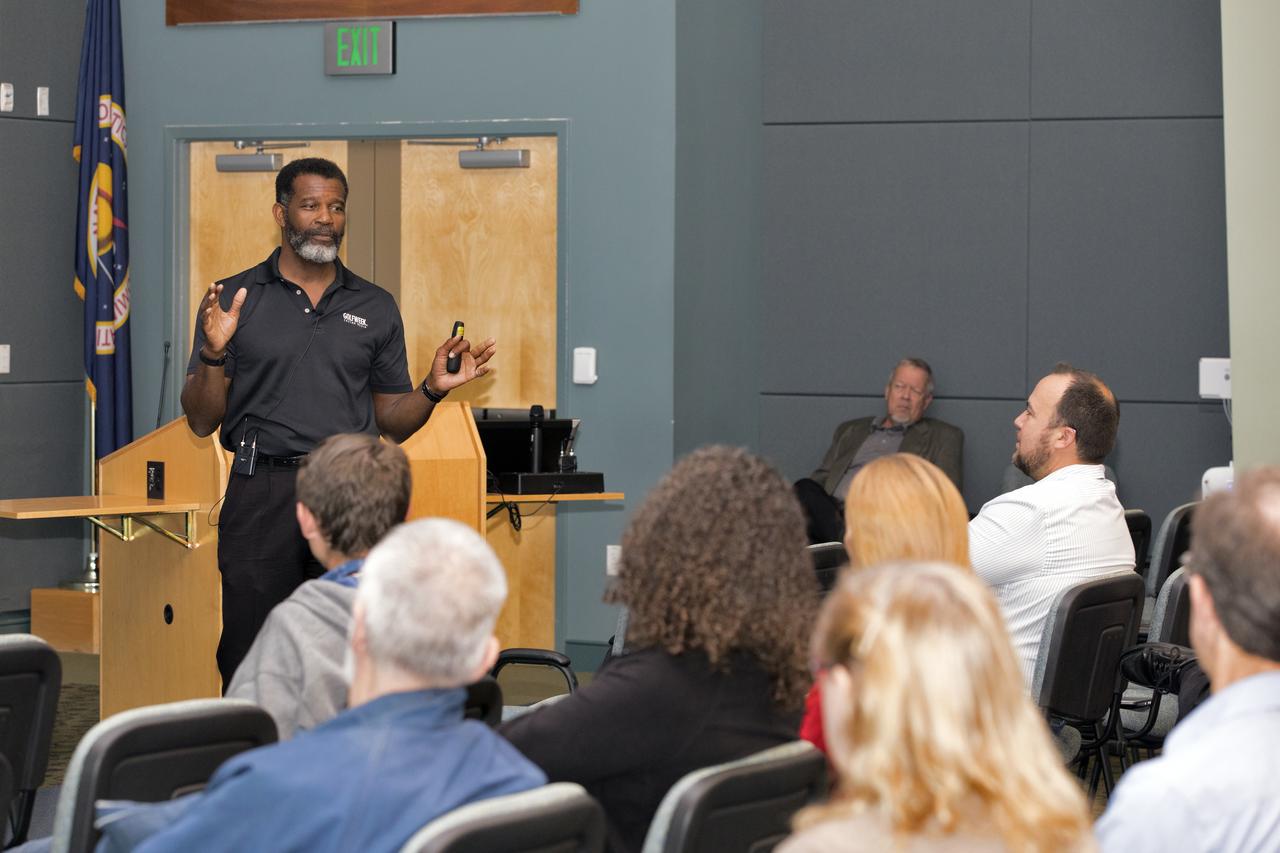
Derwin Bradley, a veteran police officer and former soldier, speaks to Kennedy Space Center employees at the center’s Operations Support Building II on the topic of personal safety and awareness. The presentation was held March 27, 2019, as part of the Florida spaceport’s Safety and Health Days. During the presentation, Bradley also demonstrated basic self-defense tactics.
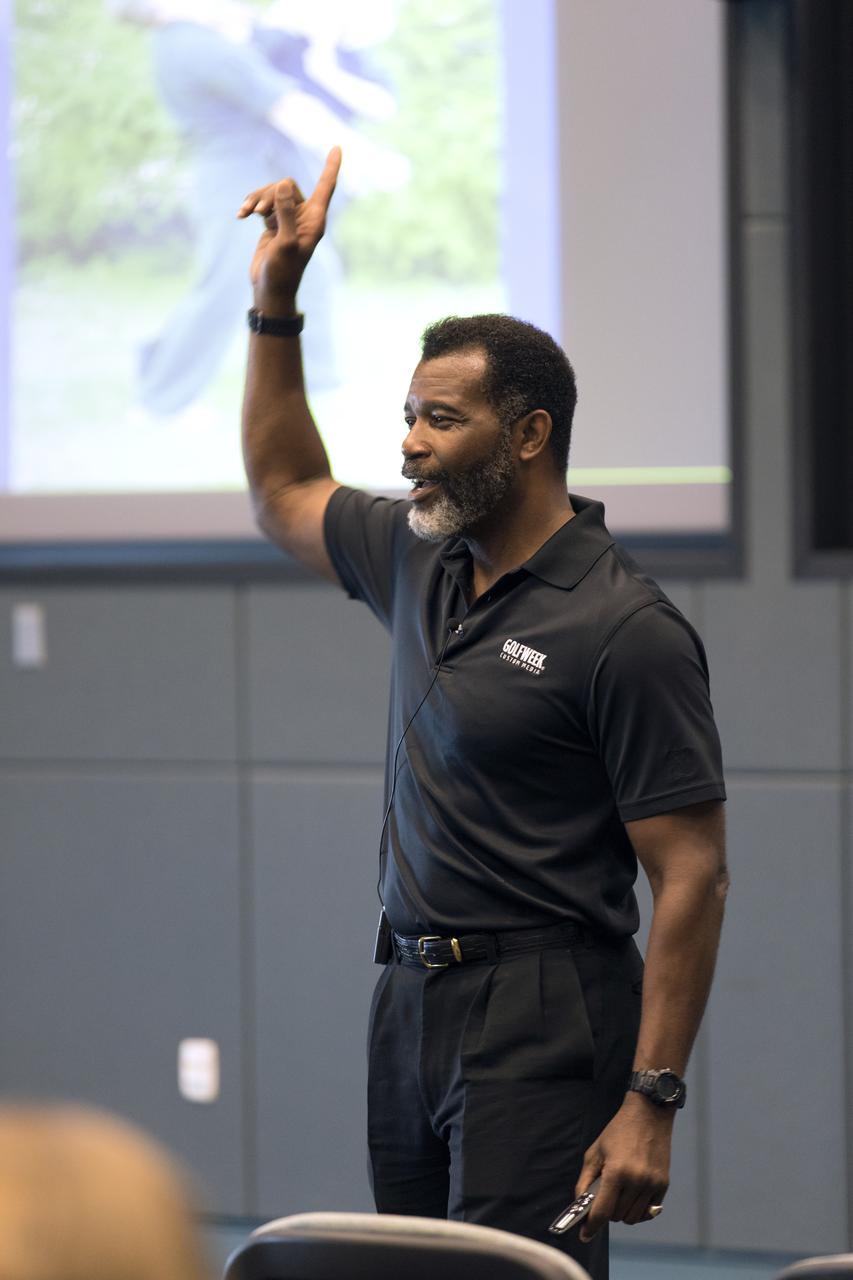
Derwin Bradley, a veteran police officer and former soldier, speaks to Kennedy Space Center employees at the center’s Operations Support Building II on the topic of personal safety and awareness. The presentation was held March 27, 2019, as part of the Florida spaceport’s Safety and Health Days. During the presentation, Bradley also demonstrated basic self-defense tactics.
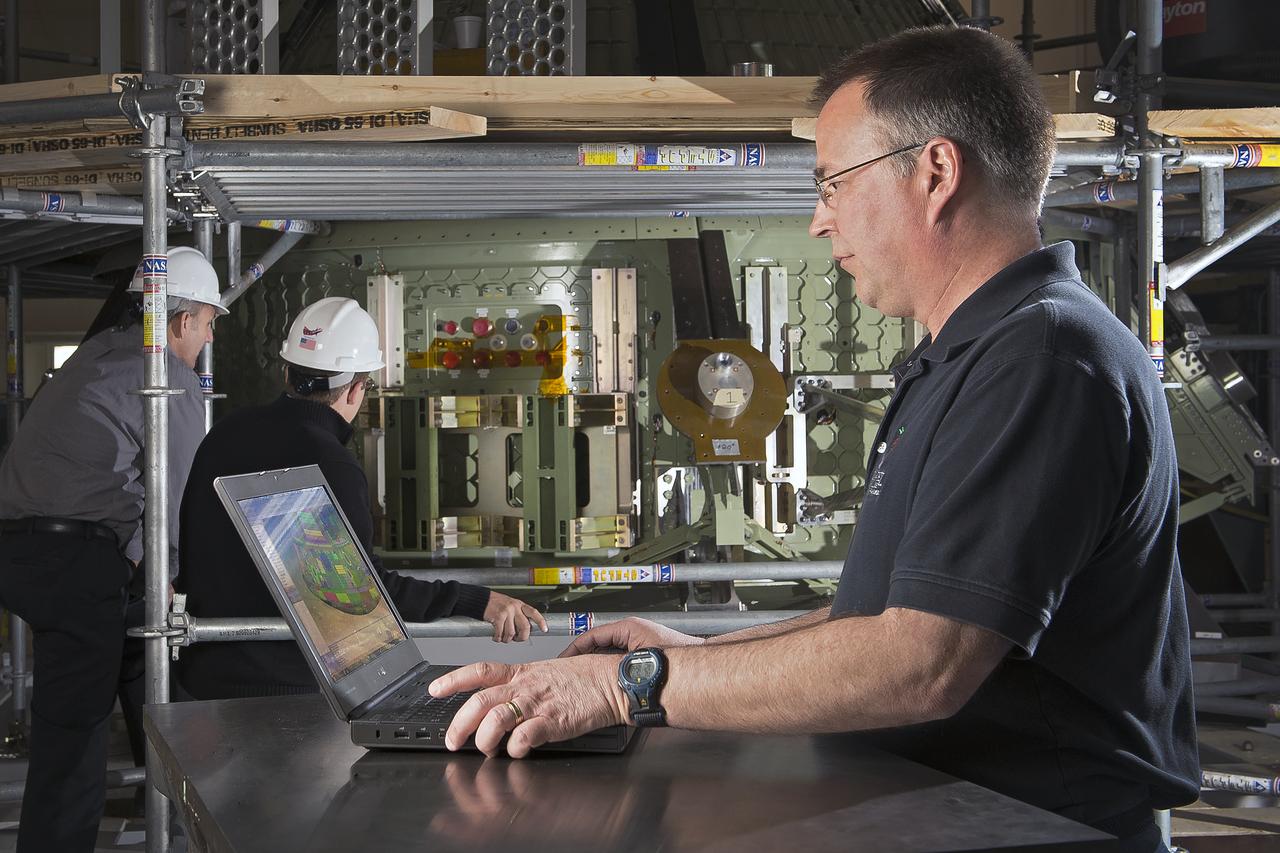
(NESC) NASA Engineering and Safety Center Orion Heat Shield Carrier Structure: Titanium Orthogrid heat shield sub-component dynamic test article : person in the photo Jim Jeans (Background: Mike Kirsch, James Ainsworth)
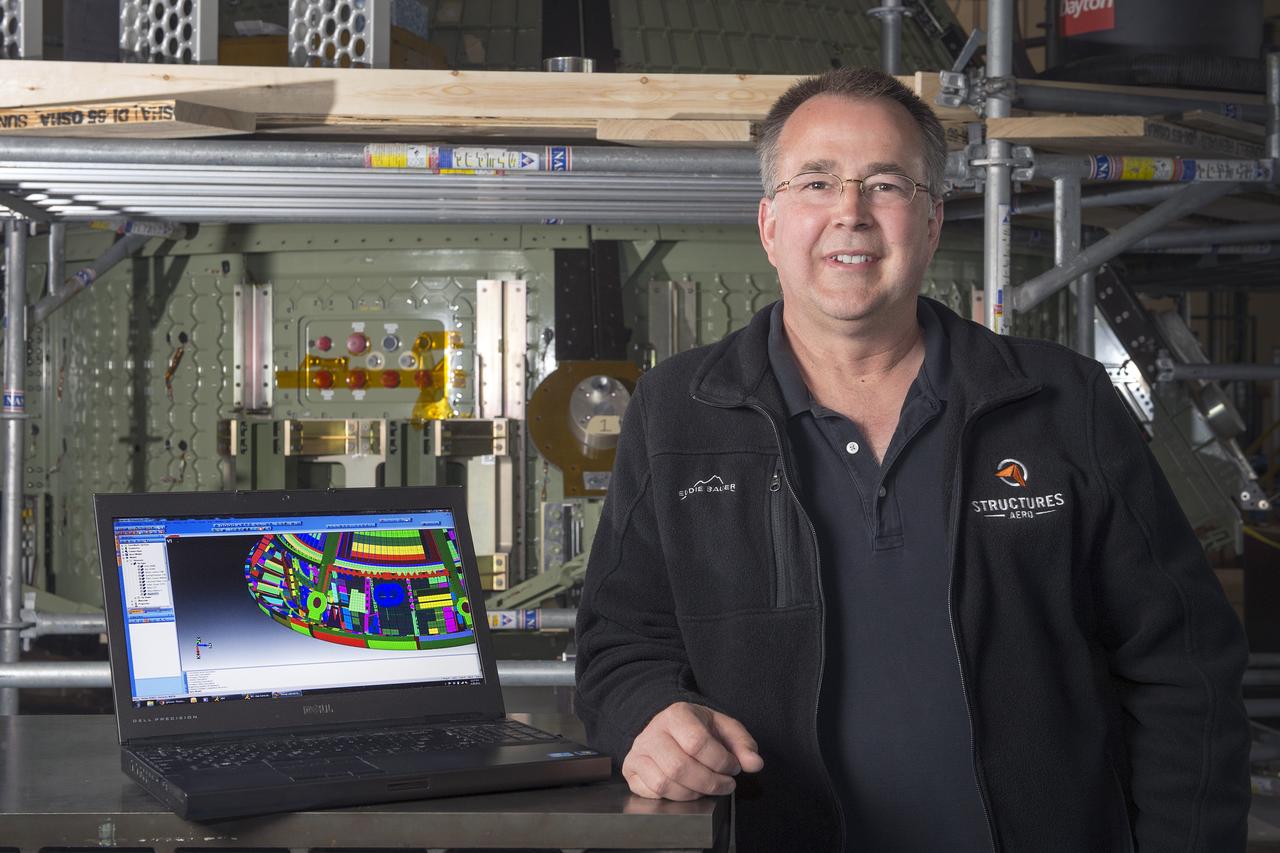
(NESC) NASA Engineering and Safety Center Orion Heat Shield Carrier Structure: Titanium Orthogrid heat shield sub-component dynamic test article : person in the photo Jim Jeans
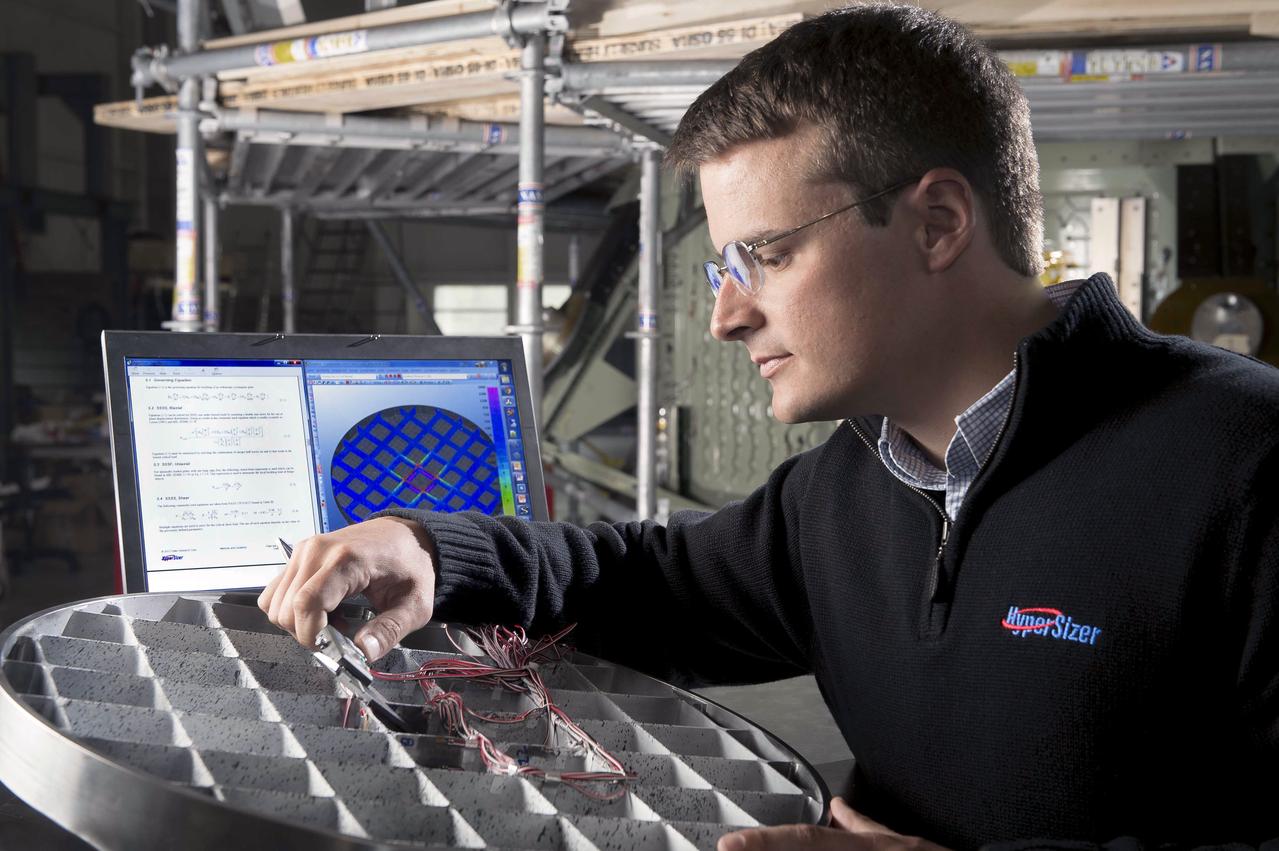
(NESC) NASA Engineering and Safety Center Orion Heat Shield Carrier Structure: Titanium Orthogrid heat shield sub-component dynamic test article :person in the photo James Ainsworth
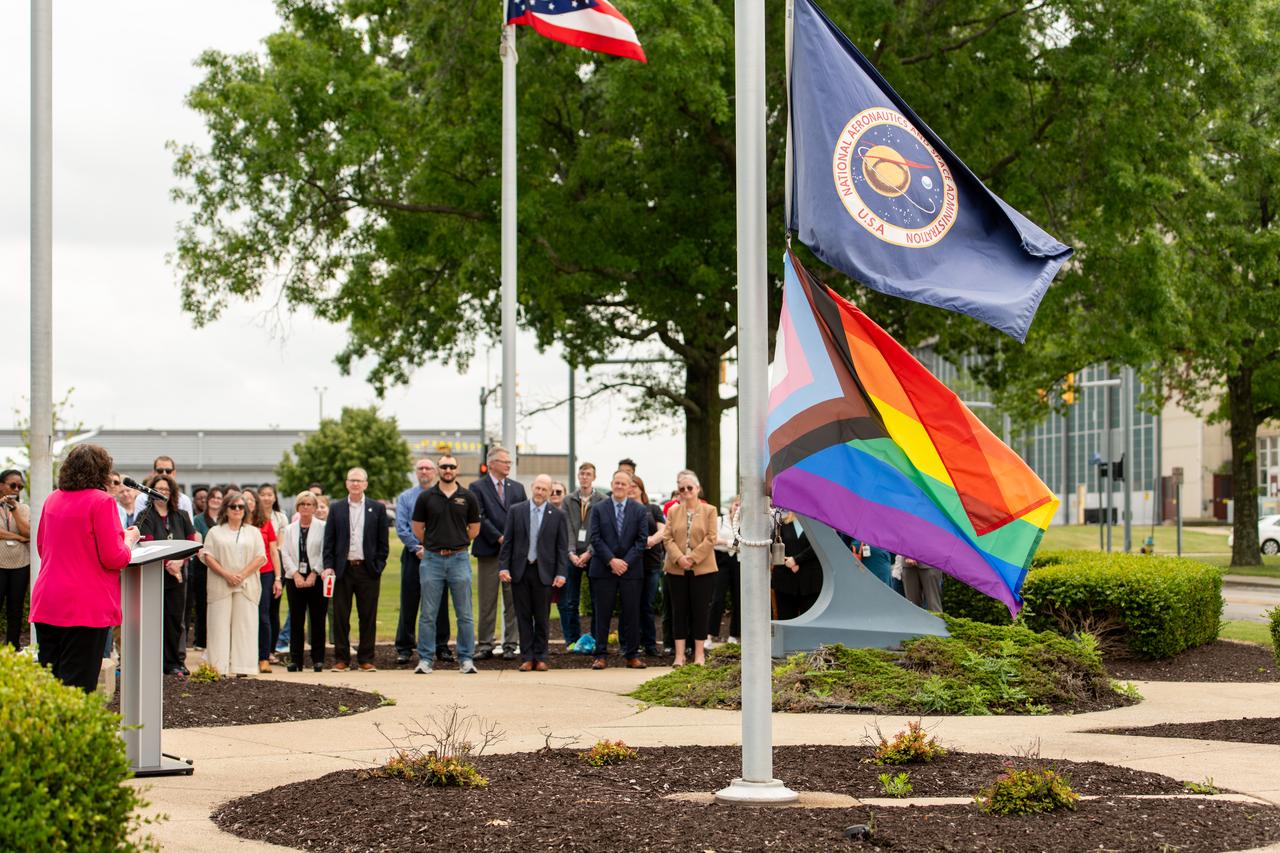
NASA Glenn’s Rainbow Alliance Advisory Group hosted an in-person and livestreamed Pride flag raising ceremony at the building 3 flagpole on June 3, 2024. The event included remarks from Deputy Director Dawn Schaible and NASA Safety Center Director Harmony Myers. Flag raising events such as this are times for LGBTQ+ employees and their allies to come together to celebrate the progress made in the quest for safety, tolerance, acceptance, rights, happiness, and freedom for the LGBTQ+ community on- and off-site of the center.
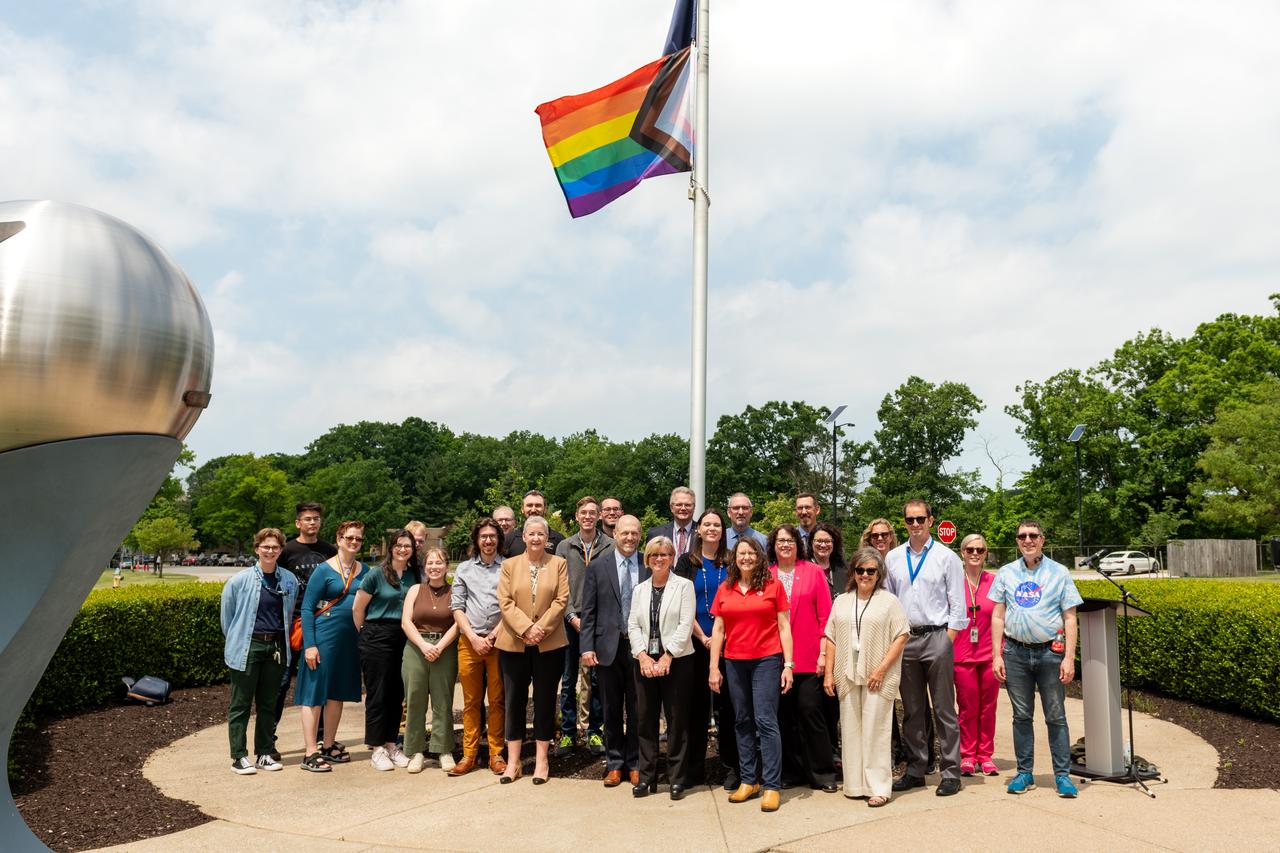
NASA Glenn’s Rainbow Alliance Advisory Group hosted an in-person and livestreamed Pride flag raising ceremony at the building 3 flagpole on June 3, 2024. The event included remarks from Deputy Director Dawn Schaible and NASA Safety Center Director Harmony Myers. Flag raising events such as this are times for LGBTQ+ employees and their allies to come together to celebrate the progress made in the quest for safety, tolerance, acceptance, rights, happiness, and freedom for the LGBTQ+ community on- and off-site of the center.
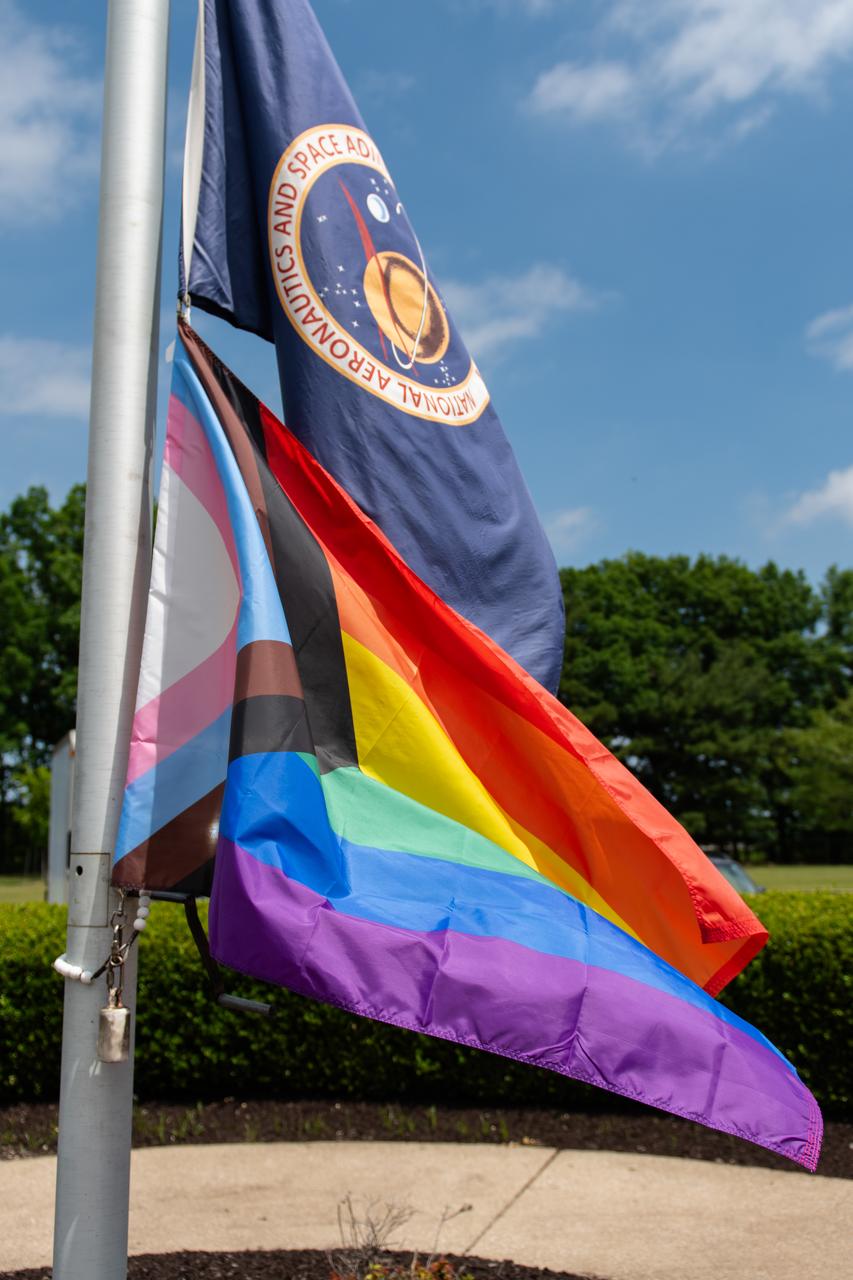
NASA Glenn’s Rainbow Alliance Advisory Group hosted an in-person and livestreamed Pride flag raising ceremony at the building 3 flagpole on June 3, 2024. The event included remarks from Deputy Director Dawn Schaible and NASA Safety Center Director Harmony Myers. Flag raising events such as this are times for LGBTQ+ employees and their allies to come together to celebrate the progress made in the quest for safety, tolerance, acceptance, rights, happiness, and freedom for the LGBTQ+ community on- and off-site of the center. Photo Credit: (NASA/Sara Lowthian-Hanna)
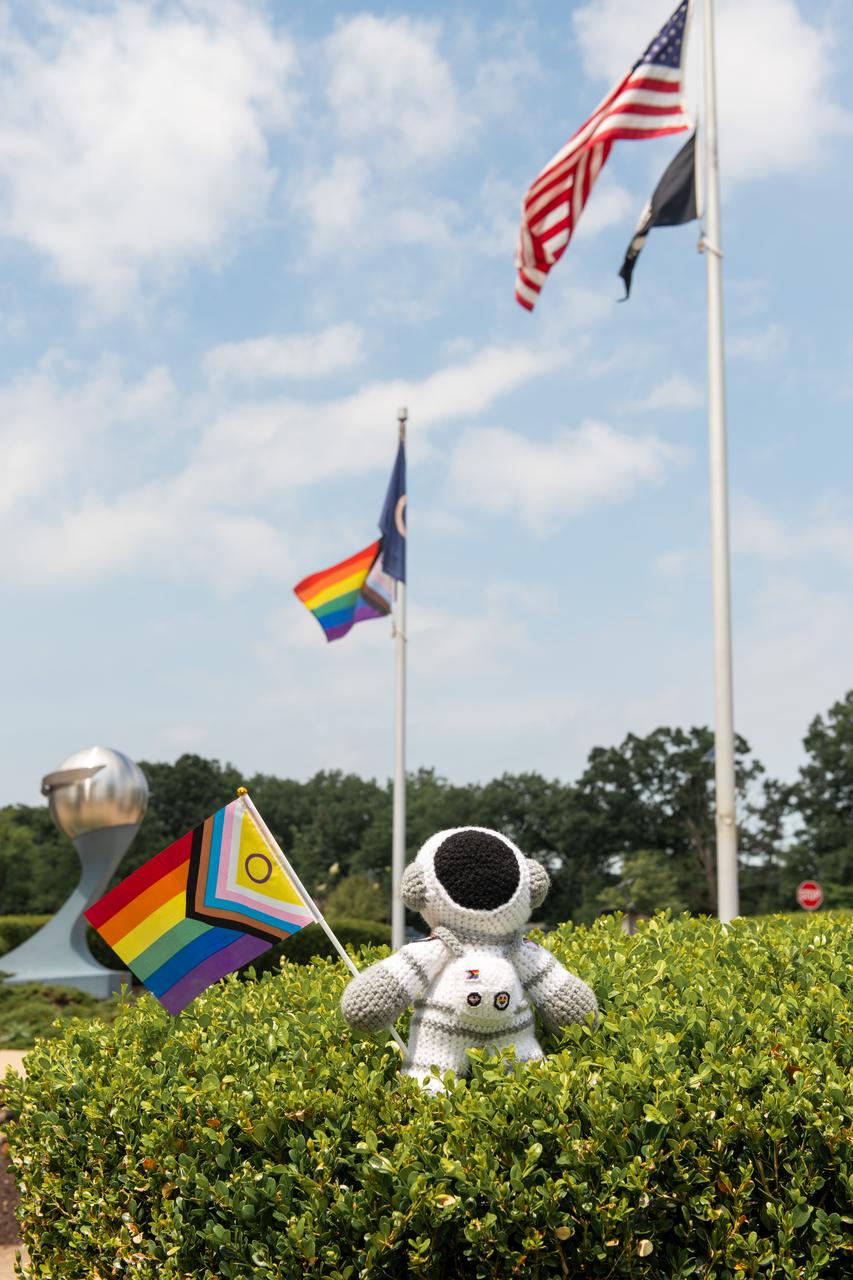
NASA Glenn’s Rainbow Alliance Advisory Group hosted an in-person and livestreamed Pride flag raising ceremony at the building 3 flagpole on June 3, 2024. The event included remarks from Deputy Director Dawn Schaible and NASA Safety Center Director Harmony Myers. Flag raising events such as this are times for LGBTQ+ employees and their allies to come together to celebrate the progress made in the quest for safety, tolerance, acceptance, rights, happiness, and freedom for the LGBTQ+ community on- and off-site of the center. Photo Credit: (NASA/Sara Lowthian-Hanna)
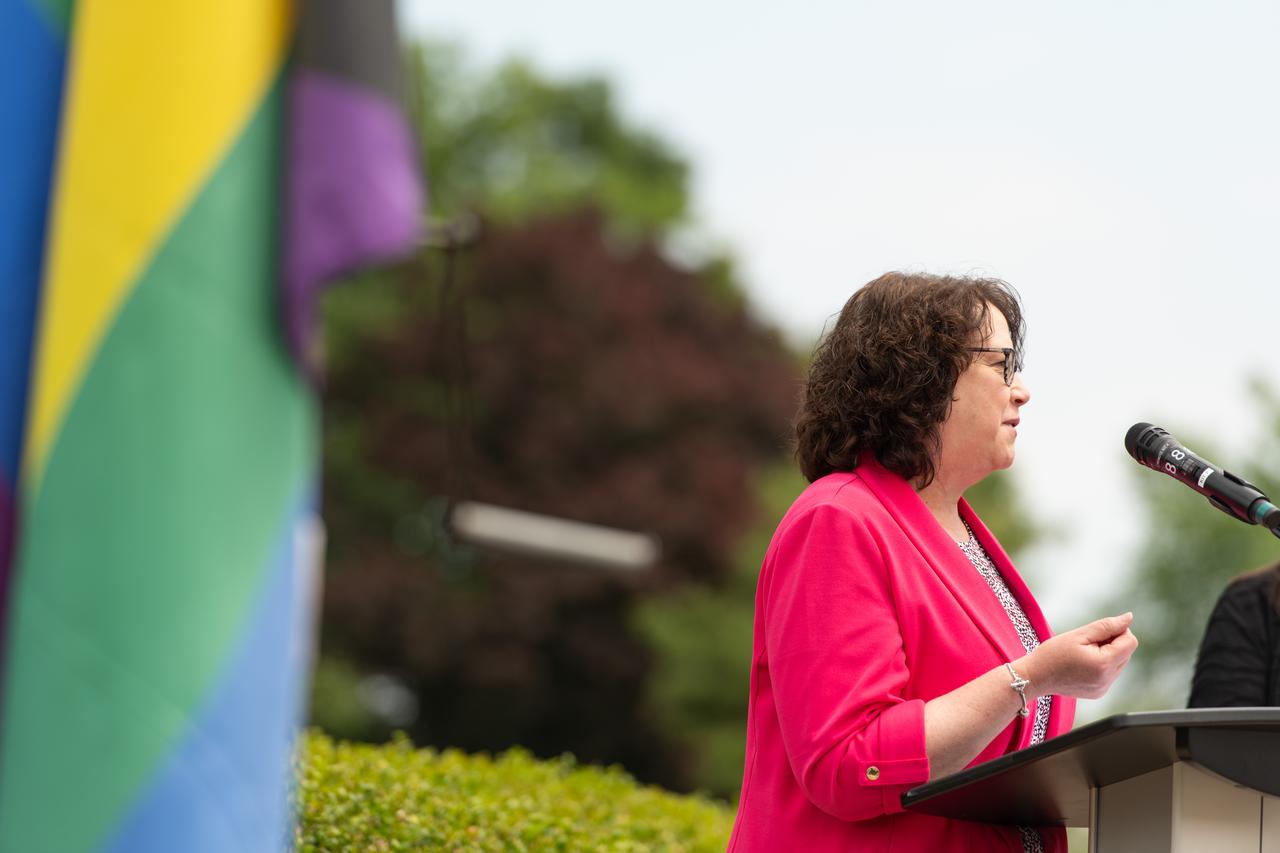
NASA Glenn’s Rainbow Alliance Advisory Group hosted an in-person and livestreamed Pride flag raising ceremony at the building 3 flagpole on June 3, 2024. The event included remarks from Deputy Director Dawn Schaible and NASA Safety Center Director Harmony Myers. Flag raising events such as this are times for LGBTQ+ employees and their allies to come together to celebrate the progress made in the quest for safety, tolerance, acceptance, rights, happiness, and freedom for the LGBTQ+ community on- and off-site of the center.
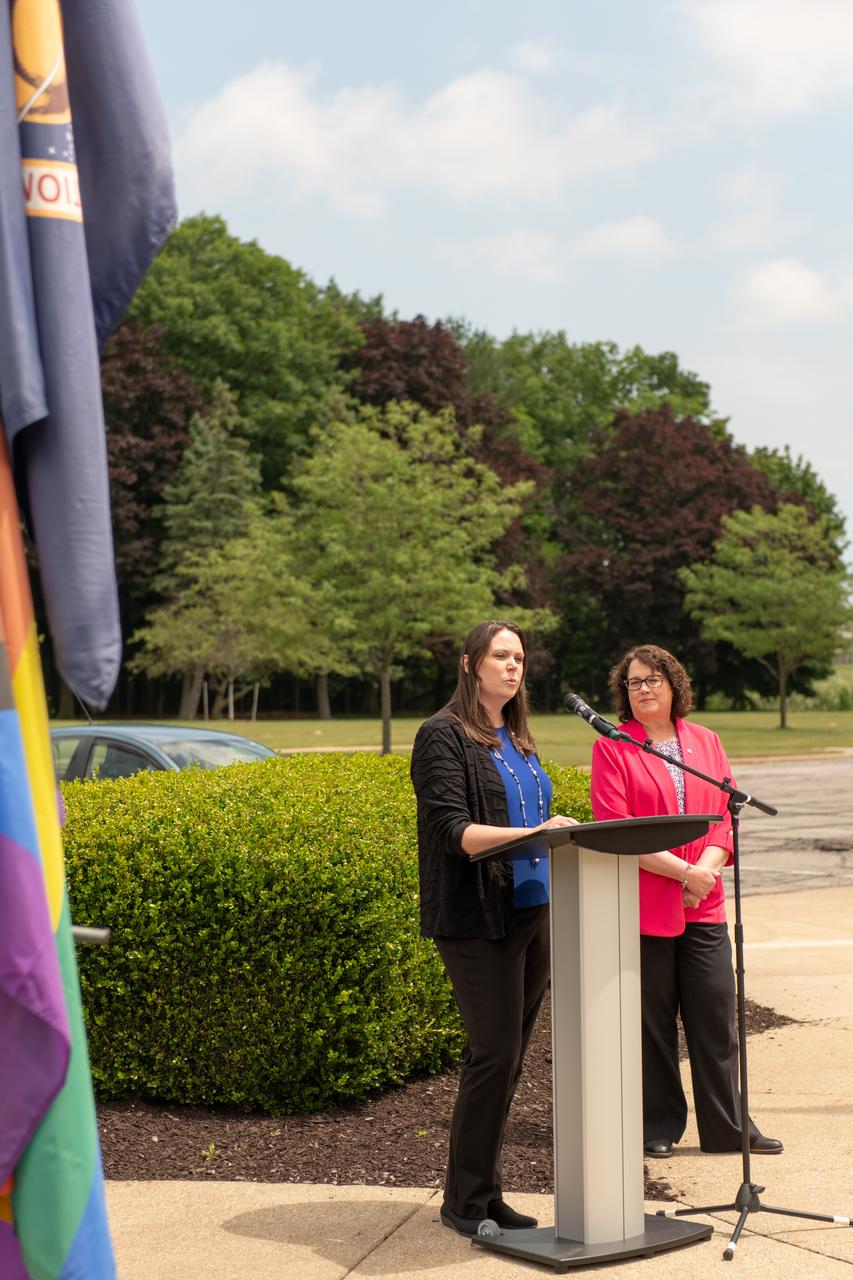
NASA Glenn’s Rainbow Alliance Advisory Group hosted an in-person and livestreamed Pride flag raising ceremony at the building 3 flagpole on June 3, 2024. The event included remarks from Deputy Director Dawn Schaible and NASA Safety Center Director Harmony Myers. Flag raising events such as this are times for LGBTQ+ employees and their allies to come together to celebrate the progress made in the quest for safety, tolerance, acceptance, rights, happiness, and freedom for the LGBTQ+ community on- and off-site of the center.
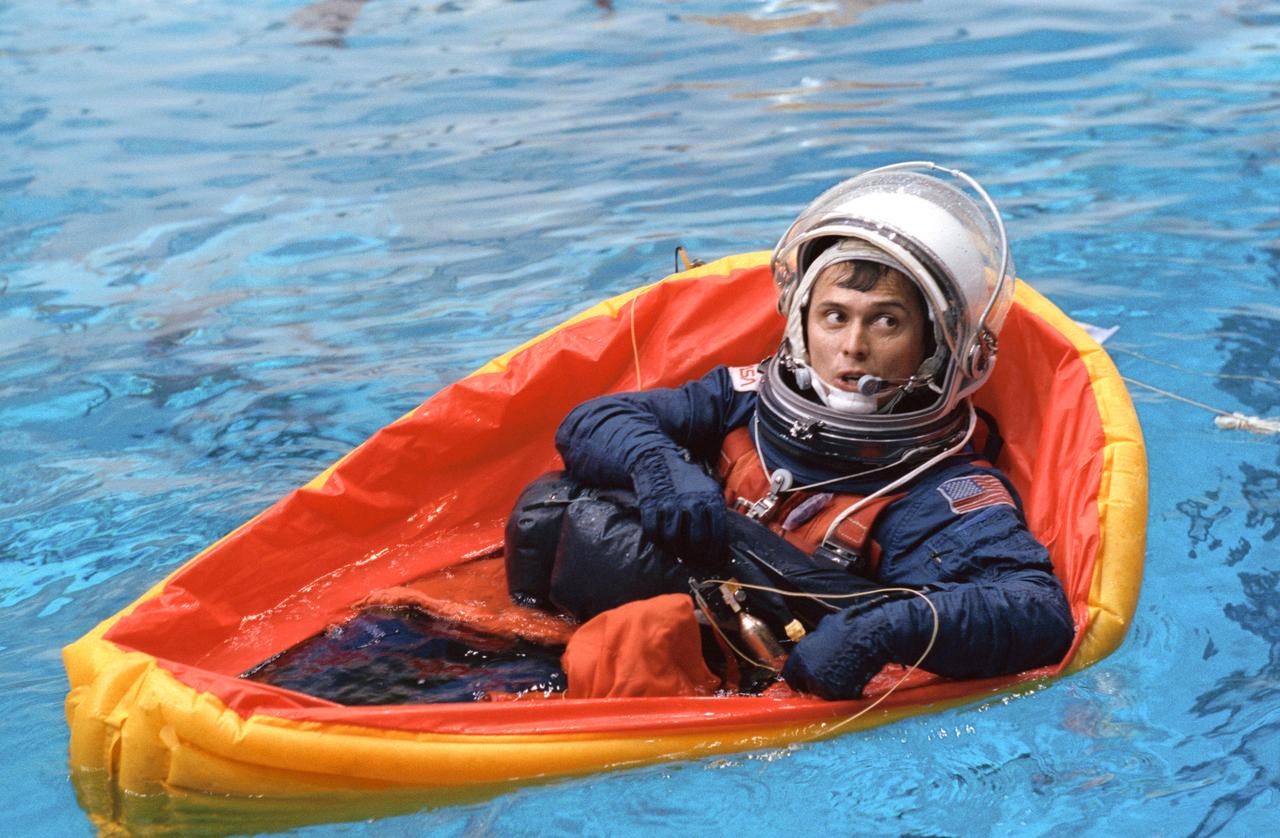
S92-33478 (12 March 1992) --- Astronaut Franklin R. Chang-Diaz, mission specialist, relies on a one-person life raft to get him to "safety" during a STS-46 bailout simulation exercise. The training took place in the Johnson Space Center's weightless environment training facility.

Luis Muniz, radiation safety officer at NASA’s Goddard Space Flight Center, poses for a photograph before an employee incentive flying event with NASA Administrator Jared Isaacman's personal F-5 aircraft, Friday, March 27, 2026, at NASA’s Kennedy Space Center in Florida. Photo Credit: (NASA/John Kraus)
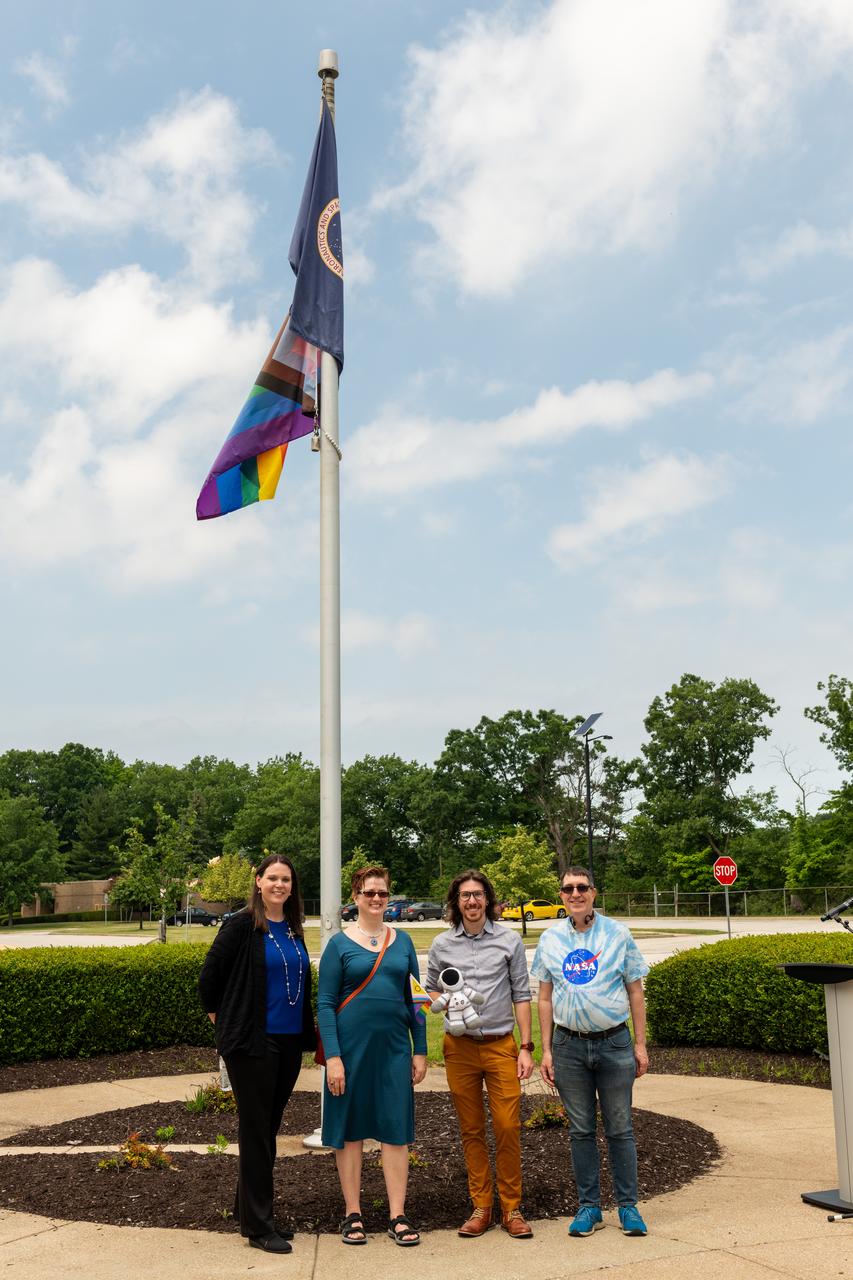
NASA Glenn’s Rainbow Alliance Advisory Group hosted an in-person and livestreamed Pride flag raising ceremony at the building 3 flagpole on June 3, 2024. The event included remarks from Deputy Director Dawn Schaible and NASA Safety Center Director Harmony Myers. Flag raising events such as this are times for LGBTQ+ employees and their allies to come together to celebrate the progress made in the quest for safety, tolerance, acceptance, rights, happiness, and freedom for the LGBTQ+ community on- and off-site of the center. Pictured here is NASA Safety Center Director Harmony Myers, Rainbow Alliance Advisory Group Co-Chairs Matthew Huffman and Jessica Reinert and John Wolter.
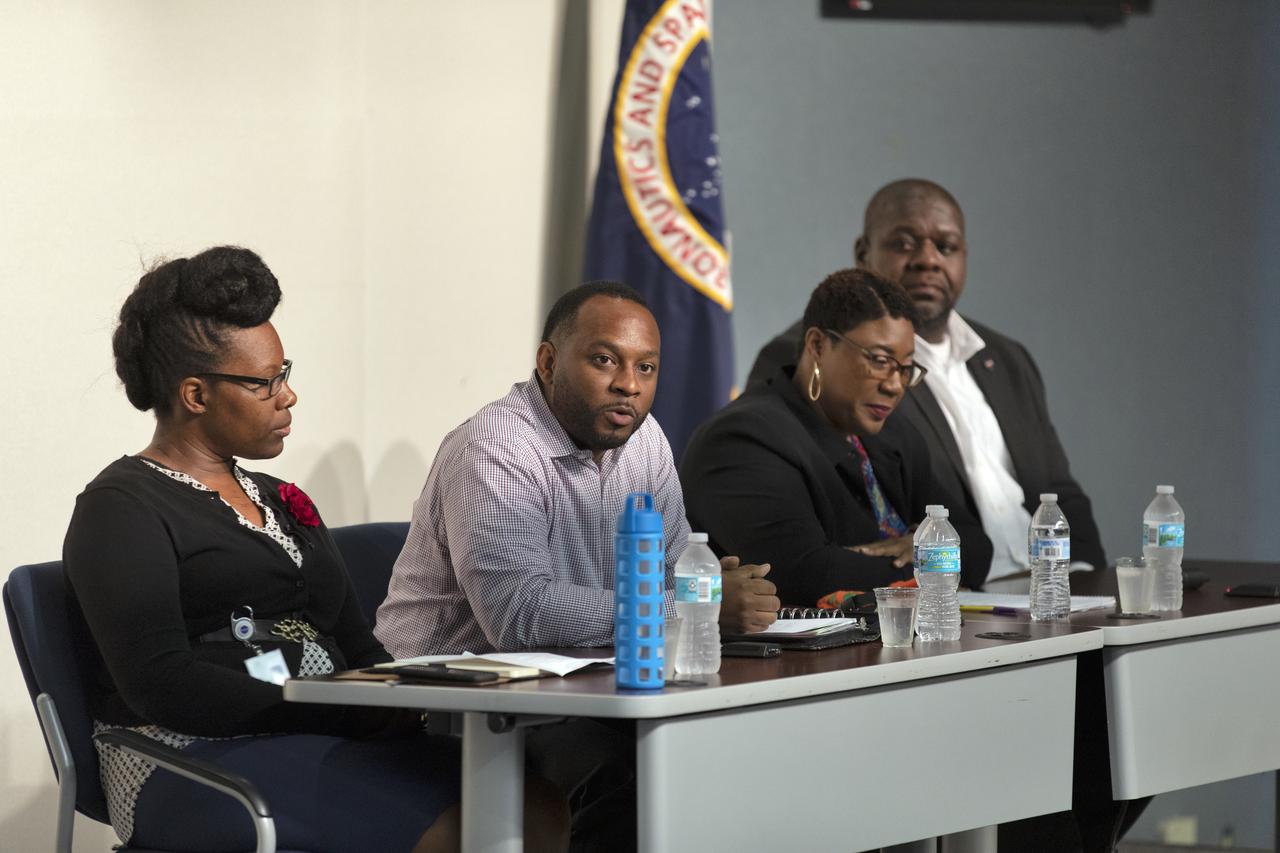
In recognition of Black History Month, the Black Employee Strategy Team hosted a panel discussion featuring some of the future leaders of NASA’s Kennedy Space Center on Feb. 13, 2019. Participants from left, are Tamiko Fletcher, Kennedy’s chief security information officer in IT Security; Anthony Harris, chief, Facility Systems Branch in Safety and Mission Assurance; Charmel Anderson-Jones, senior cross program quality engineer in the Safety and Mission Assurance Directorate, Exploration Ground Systems Division; and Malcolm Boston, contracting officer representative in the Launch Services Program. They shared personal testimony about their journey toward NASA employment, leadership styles and keys to their success.
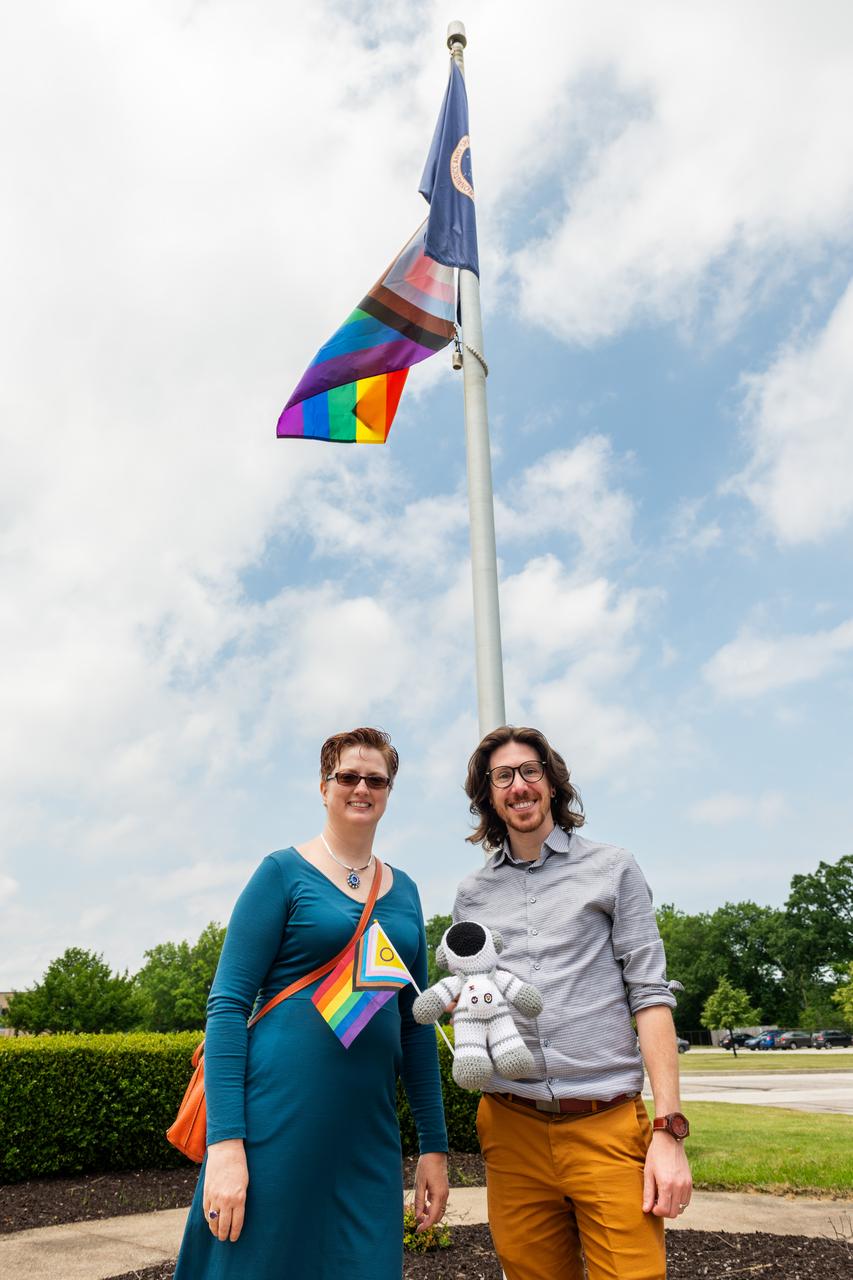
NASA Glenn’s Rainbow Alliance Advisory Group hosted an in-person and livestreamed Pride flag raising ceremony at the building 3 flagpole on June 3, 2024. The event included remarks from Deputy Director Dawn Schaible and NASA Safety Center Director Harmony Myers. Flag raising events such as this are times for LGBTQ+ employees and their allies to come together to celebrate the progress made in the quest for safety, tolerance, acceptance, rights, happiness, and freedom for the LGBTQ+ community on- and off-site of the center. Pictured here are Co-Chairs of the Rainbow Alliance Advisory Group Jessica Reinert and Matthew Huffman.
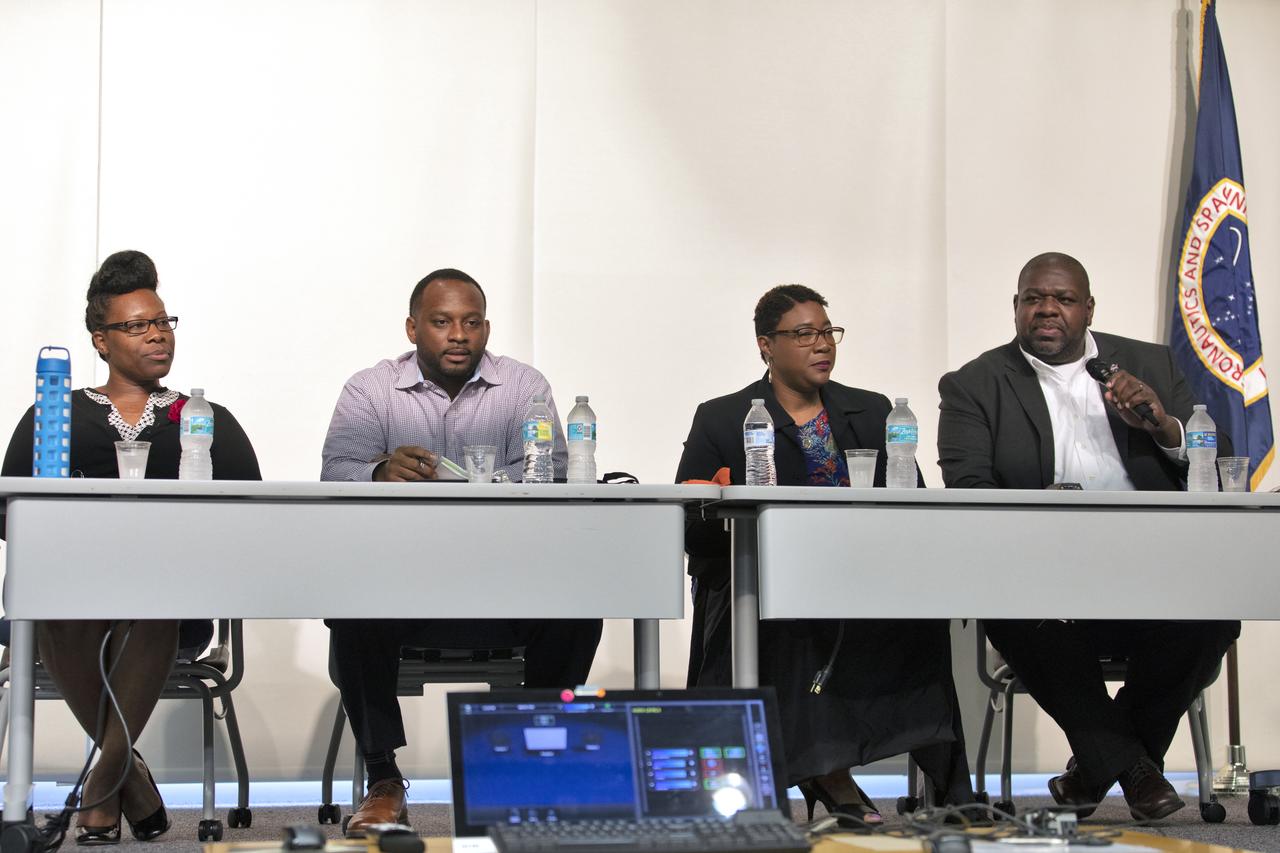
In recognition of Black History Month, the Black Employee Strategy Team hosted a panel discussion featuring some of the future leaders of NASA’s Kennedy Space Center on Feb. 13, 2019. Participants from left, are Tamiko Fletcher, Kennedy’s chief security information officer in IT Security; Anthony Harris, chief, Facility Systems Branch in Safety and Mission Assurance; Charmel Anderson-Jones, senior cross program quality engineer in the Safety and Mission Assurance Directorate, Exploration Ground Systems Division; and Malcolm Boston, contracting officer representative in the Launch Services Program. They shared personal testimony about their journey toward NASA employment, leadership styles and keys to their success.
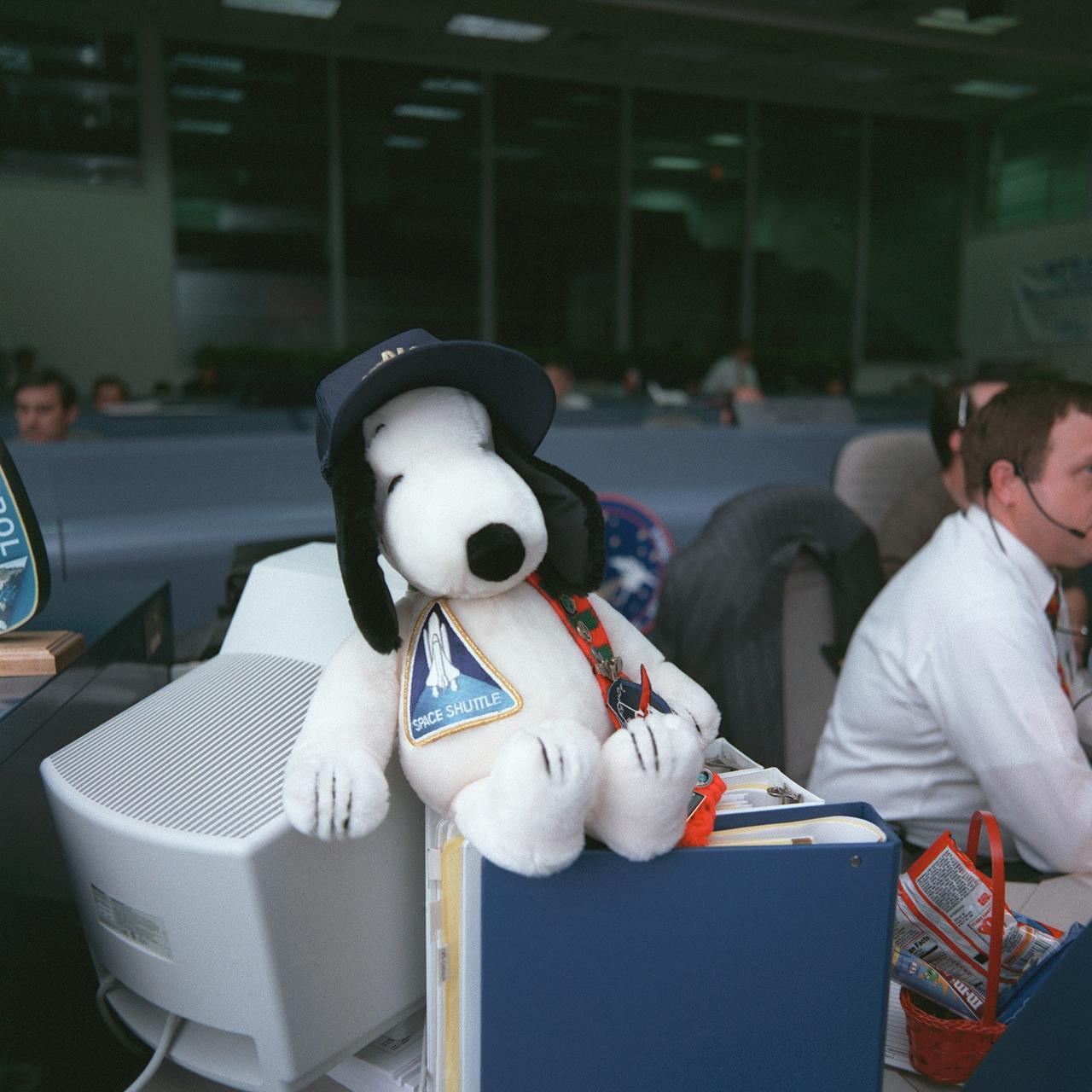
JSC2000-01580 (22 February 2000) --- Snoopy, who has had a long history with the astronauts and Houston's Mission Control Center, showed up in the Shuttle Flight Control Room on one of the consoles during the STS-99 mission. The NASA Astronaut personal safety award -- called the Silver Snoopy -- is given for outstanding performance by NASA employees or NASA contractors who contribute to flight safety or mission success. Snoopy is a product of the imagination of the late cartoonist Charles Schulz. Schulz died on Saturday, Feb. 12, 2000, the second day of the 11-day SRTM mission and on the eve of his final color strip appearing in Sunday newspapers on February 13, 2000.
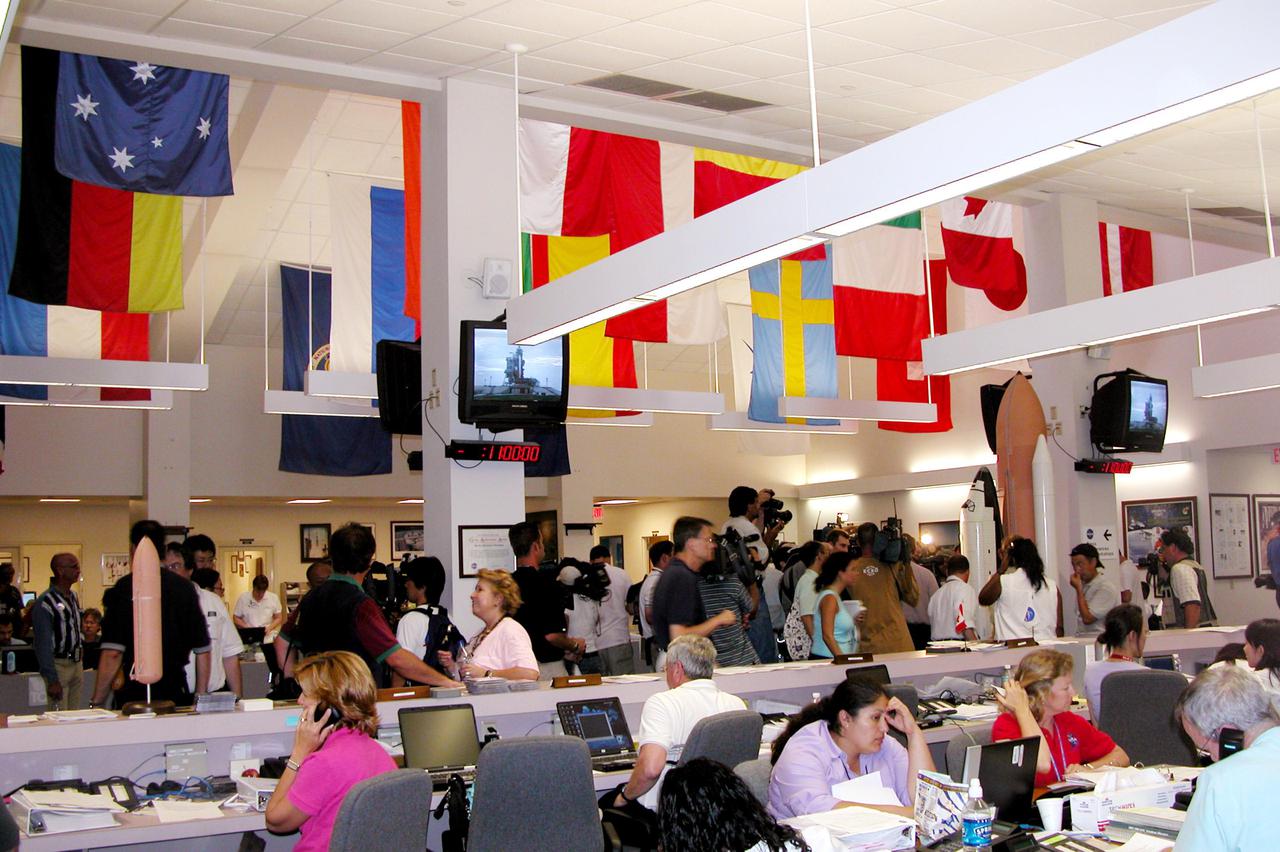
KENNEDY SPACE CENTER, FLA. - News media representatives arrive in the NASA Newsroom to cover the launch of Space Shuttle Discovery on Return to Flight mission STS-114. The countdown is under way for an anticipated liftoff at 3:51 p.m. EDT July 13. During its 12-day mission, Discovery’s seven-person crew will test new hardware and techniques to improve Shuttle safety, as well as deliver supplies to the International Space Station.
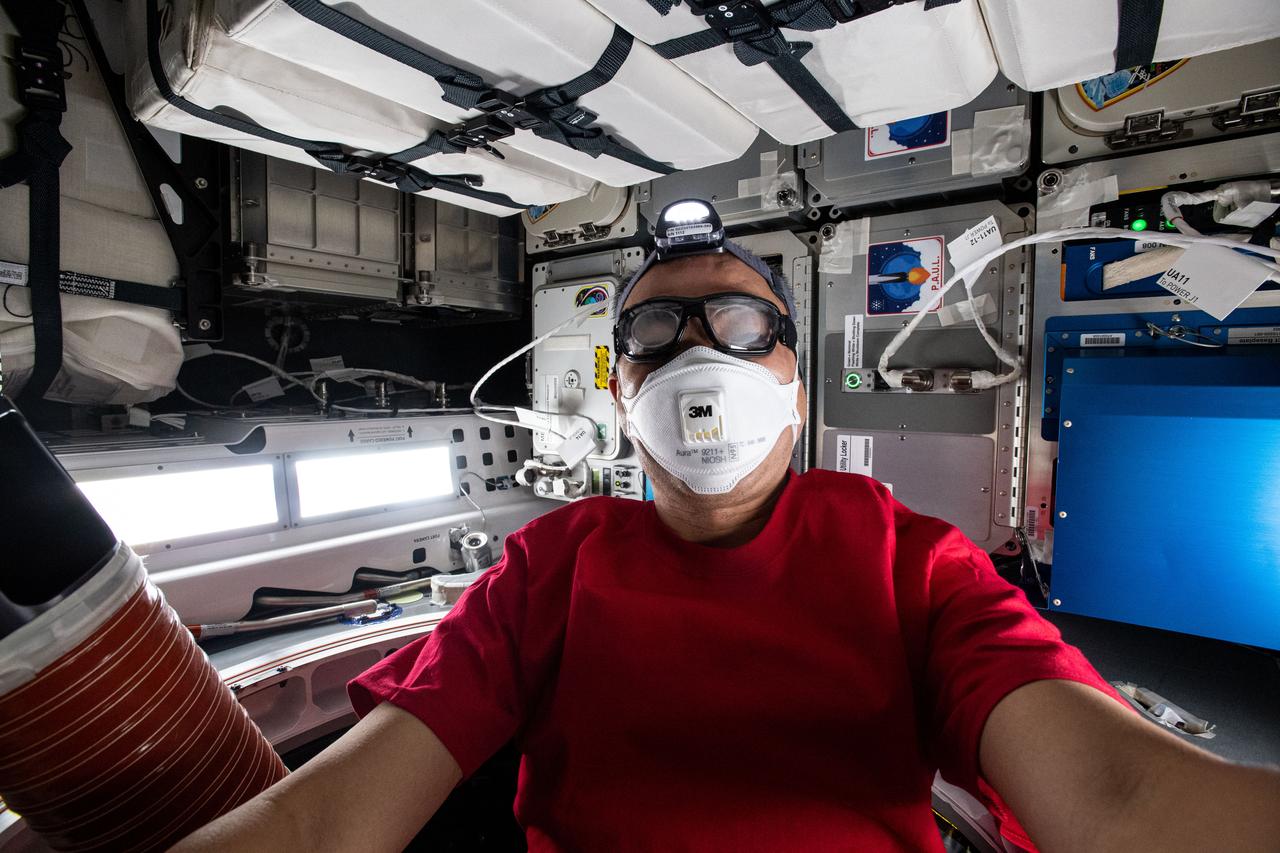
iss064e011228 (Dec. 7, 2020) --- JAXA astronaut Sochi Noguchi is pictured inside the newly arrived SpaceX Cargo Dragon vehicle wearing personal protective equipment. Safety goggles and masks are required when a crew member opens the hatch and enters a new spacecraft for the first time due to dust and debris that may have been dislodged during the ascent to space.
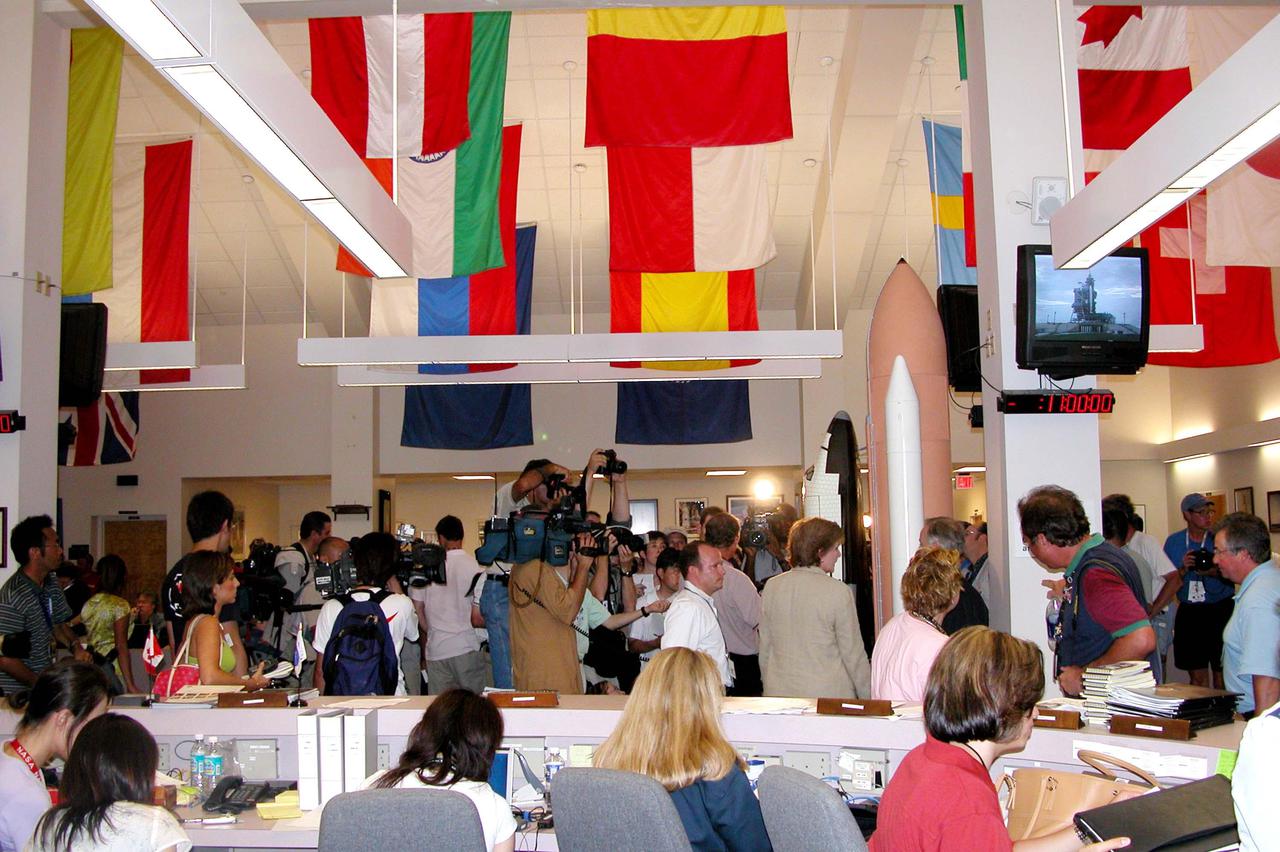
KENNEDY SPACE CENTER, FLA. - News media gather in the NASA Newsroom to cover the countdown for the launch of Space Shuttle Discovery on Return to Flight mission STS-114. Liftoff is planned for 3:51 p.m. EDT July 13. During its 12-day mission, Discovery’s seven-person crew will test new hardware and techniques to improve Shuttle safety, as well as deliver supplies to the International Space Station.
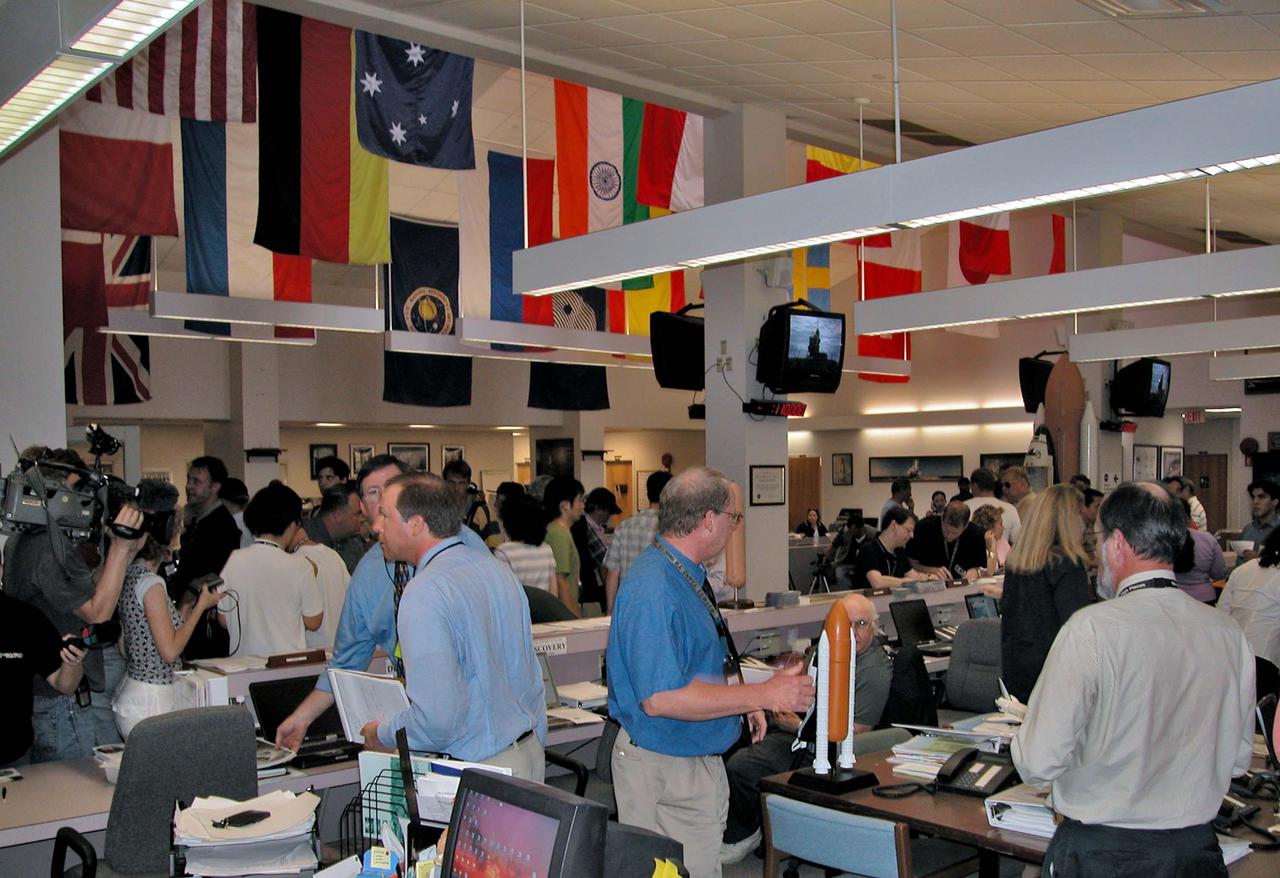
KENNEDY SPACE CENTER, FLA. - NASA spokesmen prepare to answer questions from news media representatives gathered in the NASA Newsroom to cover the countdown for the launch of Space Shuttle Discovery on Return to Flight mission STS-114. Liftoff is planned for 3:51 p.m. EDT July 13. During its 12-day mission, Discovery’s seven-person crew will test new hardware and techniques to improve Shuttle safety, as well as deliver supplies to the International Space Station.

Sean Clarke, NASA technical fellow for electric power for the NASA Engineering and Safety Center (NESC), based at NASA’s Armstrong Flight Research Center, participates in an employee incentive flying event with NASA Administrator Jared Isaacman's personal F-5 aircraft, Friday, March 27, 2026, at NASA’s Kennedy Space Center in Florida. Photo Credit: (NASA/John Kraus)
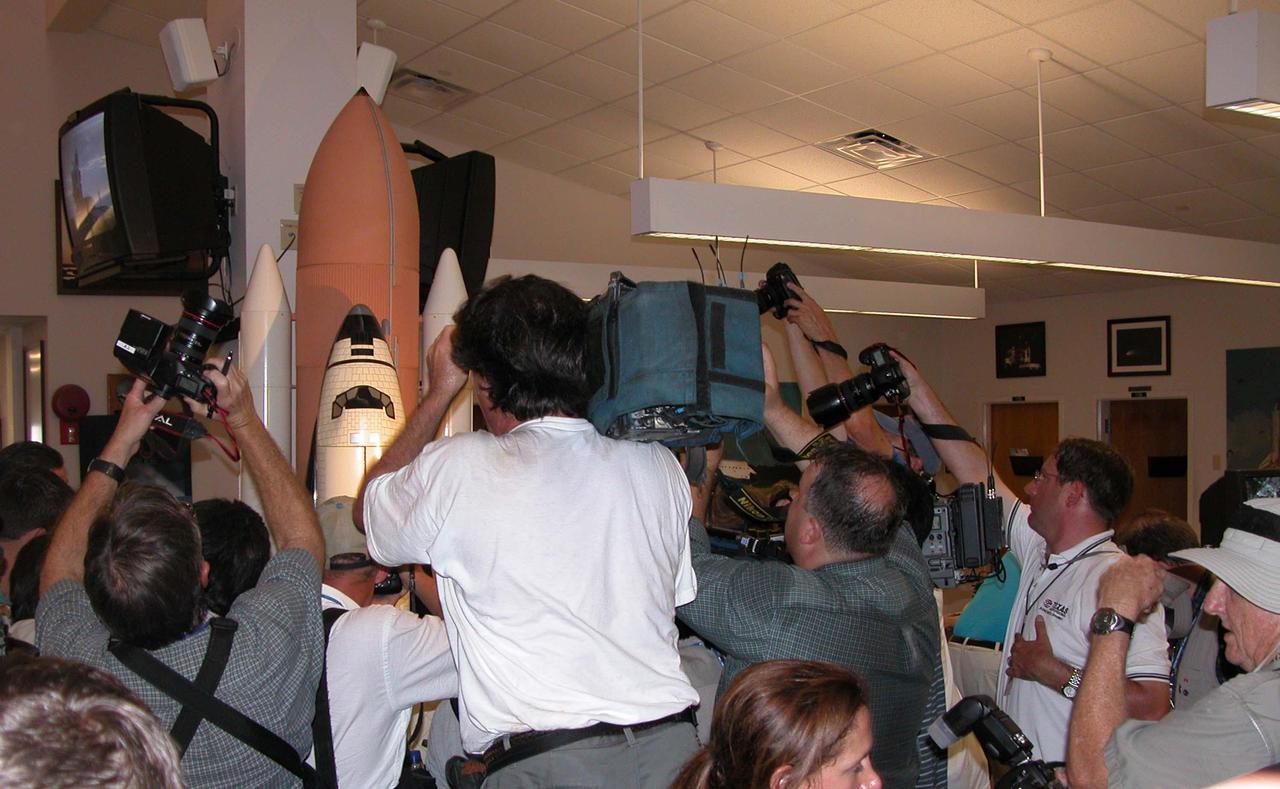
KENNEDY SPACE CENTER, FLA. - Excitement builds among the news media gathered in the NASA Newsroom the night before launch. The countdown for the launch of Space Shuttle Discovery on Return to Flight mission STS-114 is under way for an anticipated liftoff at 3:51 p.m. EDT July 13. During its 12-day mission, Discovery’s seven-person crew will test new hardware and techniques to improve Shuttle safety, as well as deliver supplies to the International Space Station.

Foreground, from left: Teresa Nieves-Chinchilla, director of the Moon to Mars Space Weather Analysis Office at NASA’s Goddard Space Flight Center; Kyle Back, director of the business management office at the Office of the Chief Financial Officer Enterprise at NASA Headquarters; NASA Administrator Jared Isaacman; and Luis Muniz, radiation safety officer at NASA’s Goddard Space Flight Center; background: Sean Clarke, NASA technical fellow for electric power for the NASA Engineering and Safety Center, based at NASA’s Armstrong Flight Research Center, center, and Ryan Fishel, pilot, right, pose for a photograph following an employee incentive flying event with Isaacman's personal F-5 aircraft, Friday, March 27, 2026, at NASA’s Kennedy Space Center in Florida. Photo Credit: (NASA/John Kraus)
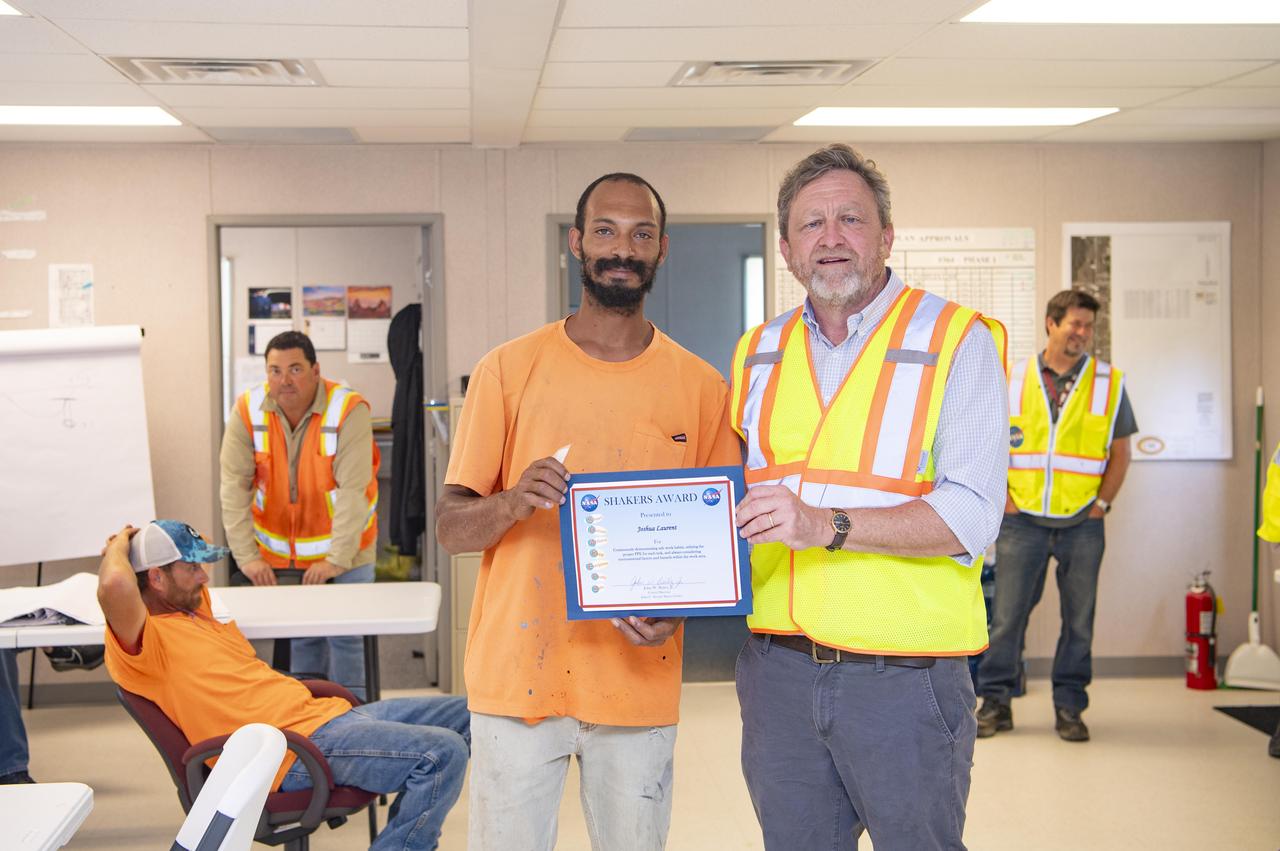
Joshua Laurent, an employee with Civil Works Contracting, is presented a NASA SHAKERS (Smart Human Actions Keep Everyone Really Safe) Award from NASA Stennis Associate Director Rodney McKellip on May 8. Laurent, left, received the award for continuously demonstrating safe work habits, utilizing the proper personal protective equipment for each task, and always considering environmental factors and hazards within the work area while working on the NASA Stennis potable water system. NASA’s constant attention to safety, one of the agency’s five core values, is the cornerstone for mission success.
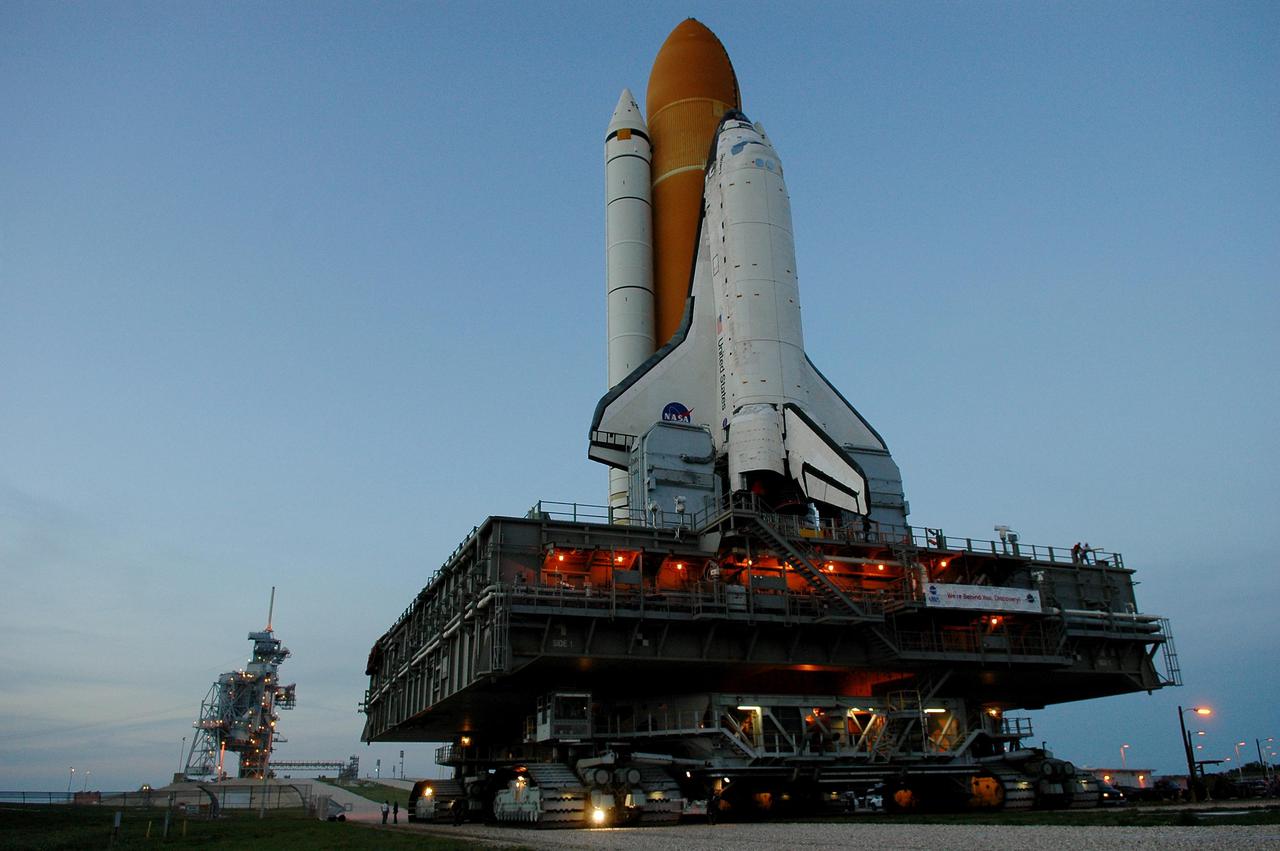
KENNEDY SPACE CENTER, FLA. - In the waning twilight, the service structures on Launch Pad 39B (left) and the Mobile Launcher Platform carrying Space Shuttle Discovery glow with lights. The Shuttle began rollout to the pad at 2:04 p.m. EDT from the Vehicle Assembly Building at NASA’s Kennedy Space Center, marking a major milestone in the Space Shuttle Program’s Return to Flight. Launch of Discovery on its Return to Flight mission, STS-114, is targeted for May 15 with a launch window that extends to June 3. During its 12-day mission, Discovery’s seven-person crew will test new hardware and techniques to improve Shuttle safety, as well as deliver supplies to the International Space Station.
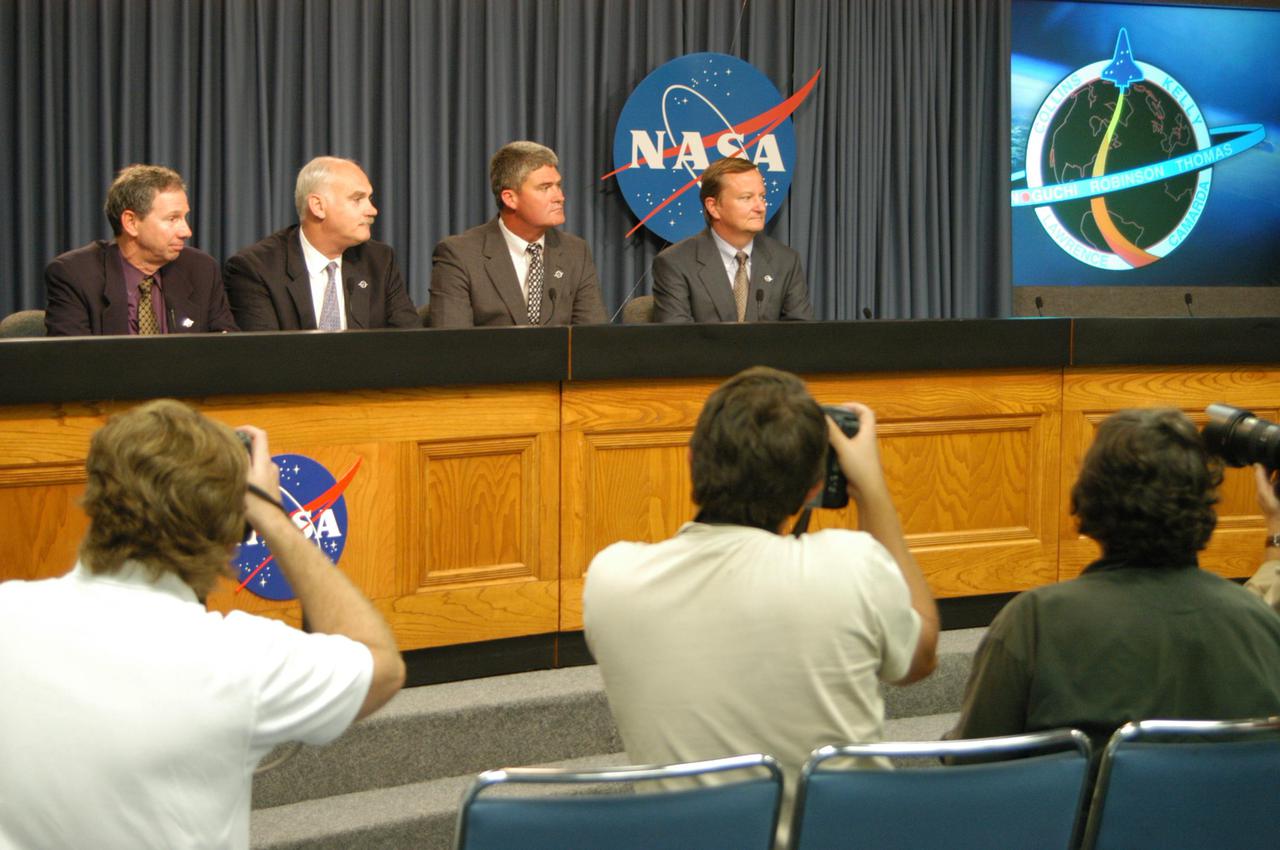
KENNEDY SPACE CENTER, FLA. - Space Shuttle managers take questions from the media during a press conference held following the conclusion of the Flight Readiness Review for Space Shuttle Discovery's Return to Flight mission STS-114. From left are NASA's Administrator Michael Griffin, Associate Administrator for Space Operations William Readdy, Space Shuttle Program Manager William Parsons, and Space Shuttle Launch Director Michael Leinbach. A July 13 launch date was approved for the 12-day mission during which Discovery’s seven-person crew will test new hardware and techniques to improve Shuttle safety, as well as deliver supplies to the International Space Station.
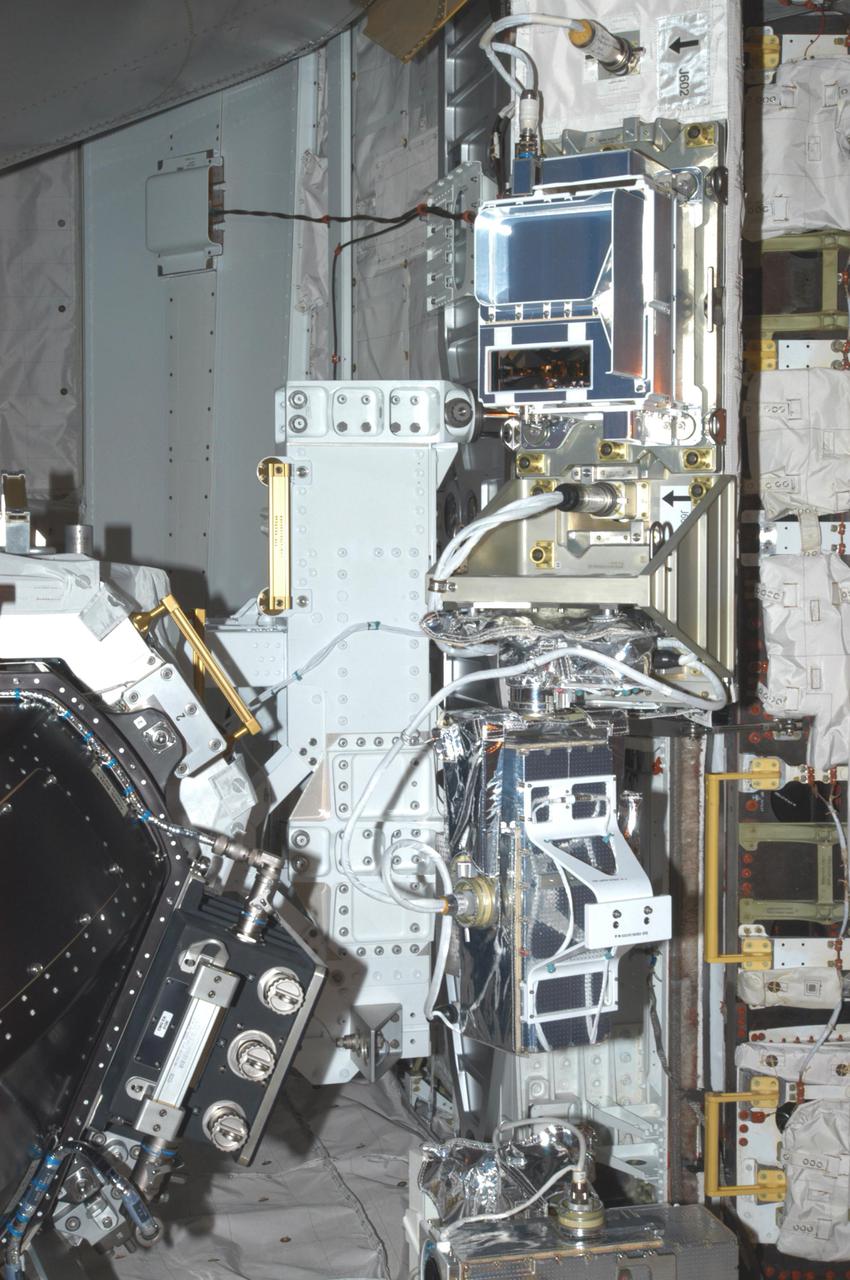
KENNEDY SPACE CENTER, FLA. - At Launch Pad 39B, the Orbiter Boom Sensor System (OBSS) sensor package is viewed before the orbiter's payload bay doors are closed for launch. Payload bay door closure is a significant milestone in the preparations of Discovery for the first Return to Flight mission, STS-114. This sensor package will provide surface area and depth defect inspection for all the surfaces of the orbiter. It includes an intensified television camera (ITVC) and a laser dynamic range imager, which are mounted on a pan and tilt unit, and a laser camera system (LCS) mounted on a stationary bracket. The package is part of the new safety measures added for all future Space Shuttle missions. During its 12-day mission, Discovery’s seven-person crew will test new hardware and techniques to improve Shuttle safety, as well as deliver supplies to the International Space Station. Discovery’s payloads include the Multi-Purpose Logistics Module Raffaello, the Lightweight Multi-Purpose Experiment Support Structure Carrier (LMC), and the External Stowage Platform-2 (ESP-2). Raffaello will deliver supplies to the International Space Station including food, clothing and research equipment. The LMC supports a replacement Control Moment Gyroscope and a tile repair sample box. The ESP-2 is outfitted with replacement parts. Launch of mission STS-114 was set for July 13 at the conclusion of the Flight Readiness Review yesterday.
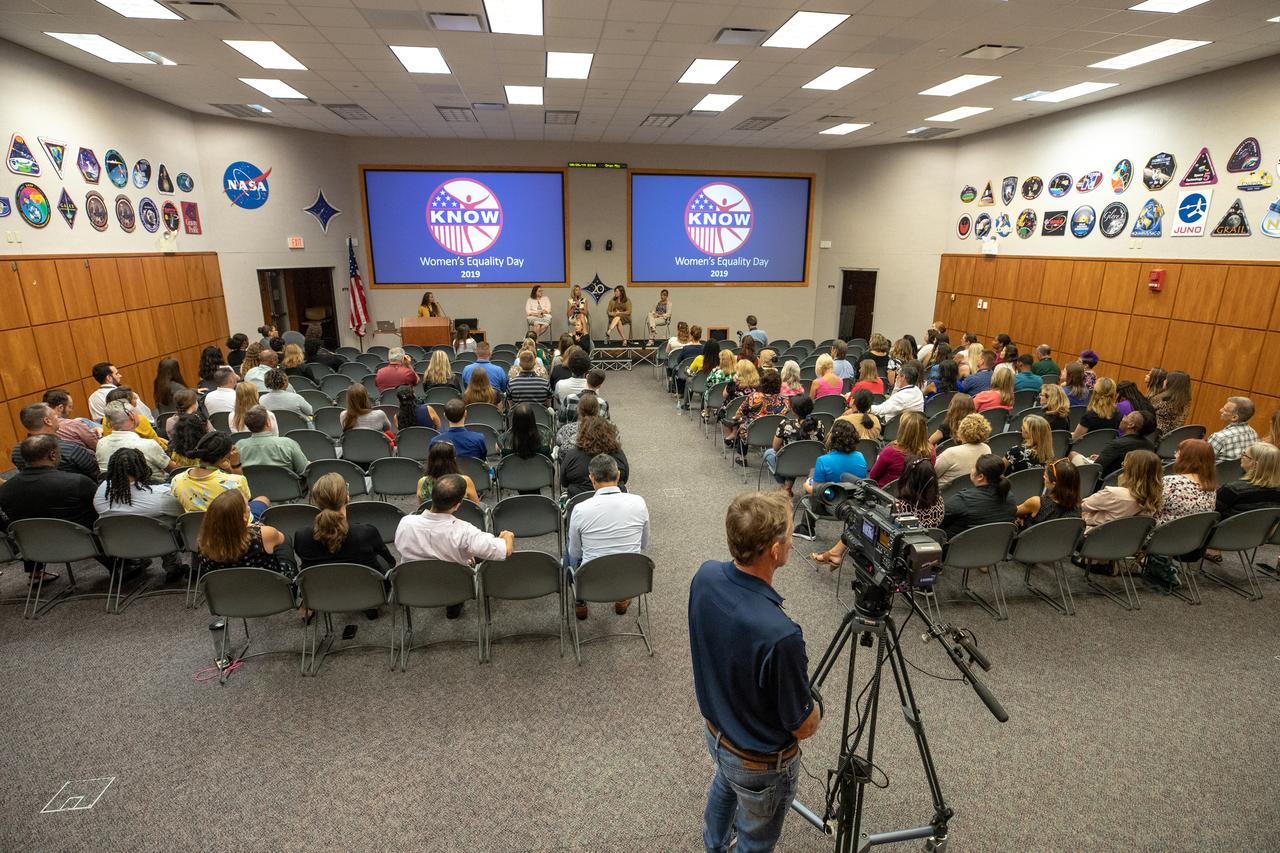
A panel discussion, featuring women in leadership roles at NASA’s Kennedy Space Center in Florida, is held on Aug. 26, 2019, to celebrate Women’s Equality Day. The event, sponsored by the Kennedy Networking Opportunities for Women (KNOW) employee resource group, honored the 100th anniversary of the passing of the 19th amendment guaranteeing all American women the right to vote. Seated in front from left, are Digna Carballosa, director of the Human Resources Office; Nancy Bray, director of Spaceport Integration and Services; Jennifer Kunz, director of Safety and Mission Assurance; and Amanda Mitskevich, Launch Services Program manager. At far left is Ashley Nelsen, Launch Service Program information manager and panel discussion moderator. The purpose of KNOW is to provide focus on issues such as employment, retention, promotion, training, career and personal development, education, and identify and eliminate barriers that hinder the advancement of women in the workforce.

A C-17 Globemaster aircraft from the Alaska Air National Guard’s 249th Airlift Squadron flies overhead as pararescue specialists from the 304th Rescue Squadron, located in Portland, Oregon complete an astronaut rescue training exercise inside a covered life raft on the Atlantic Ocean. The pararescue specialists, supporting the 45th Operations Group’s Detachment 3, based out of Patrick Air Force Base, conducted the exercise in April with NASA’s Commercial Crew Program and SpaceX off of Florida’s eastern coast. The specially designed 20-person life raft is equipped with enough food, water and medical supplies to sustain both rescuers and crew for up to three days, if necessary. In this situation, the Department of Defense (DOD) would complete the rescue by enlisting help from the US Coast Guard, a DOD ship, or a nearby commercial ship of opportunity to transport the crew to safety.
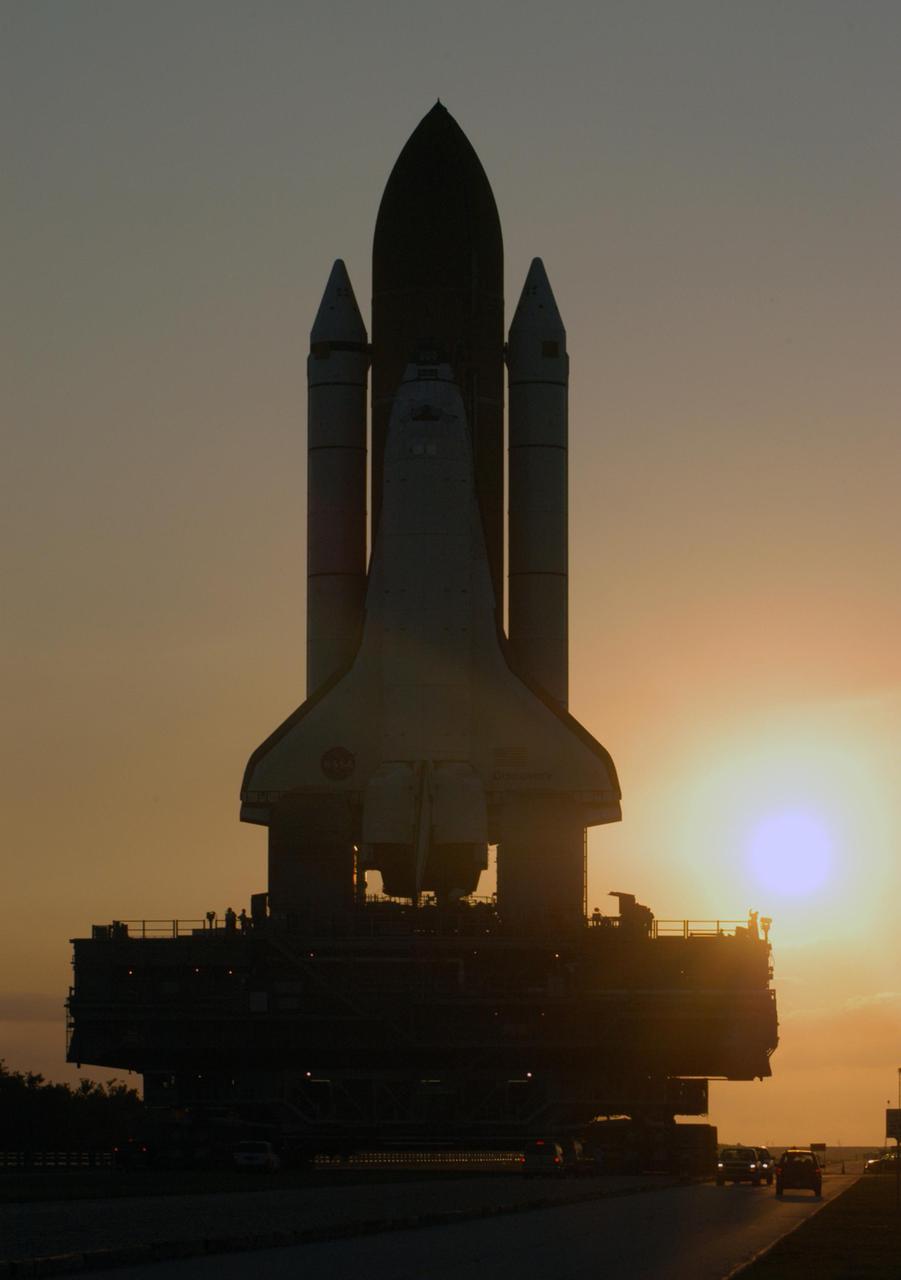
KENNEDY SPACE CENTER, FLA. - Space Shuttle Discovery makes its way along the crawlerway from high bay 3 to Launch Pad 39B as the sun rises. First motion for the 4-mile, 6-hour journey was at 1:58 a.m. EDT. The Space Shuttle rests on a Mobile Launcher Platform which sits atop a Crawler-Transporter. This is the second rollout of Discovery after being returned to the Vehicle Assembly Building for connection to an improved External Tank. Launch of Discovery on its Return to Flight mission STS-114 is targeted for a launch window extending from July 13 to July 31. During its 12-day mission, Discovery’s seven-person crew will test new hardware and techniques to improve Shuttle safety, as well as deliver supplies to the International Space Station.
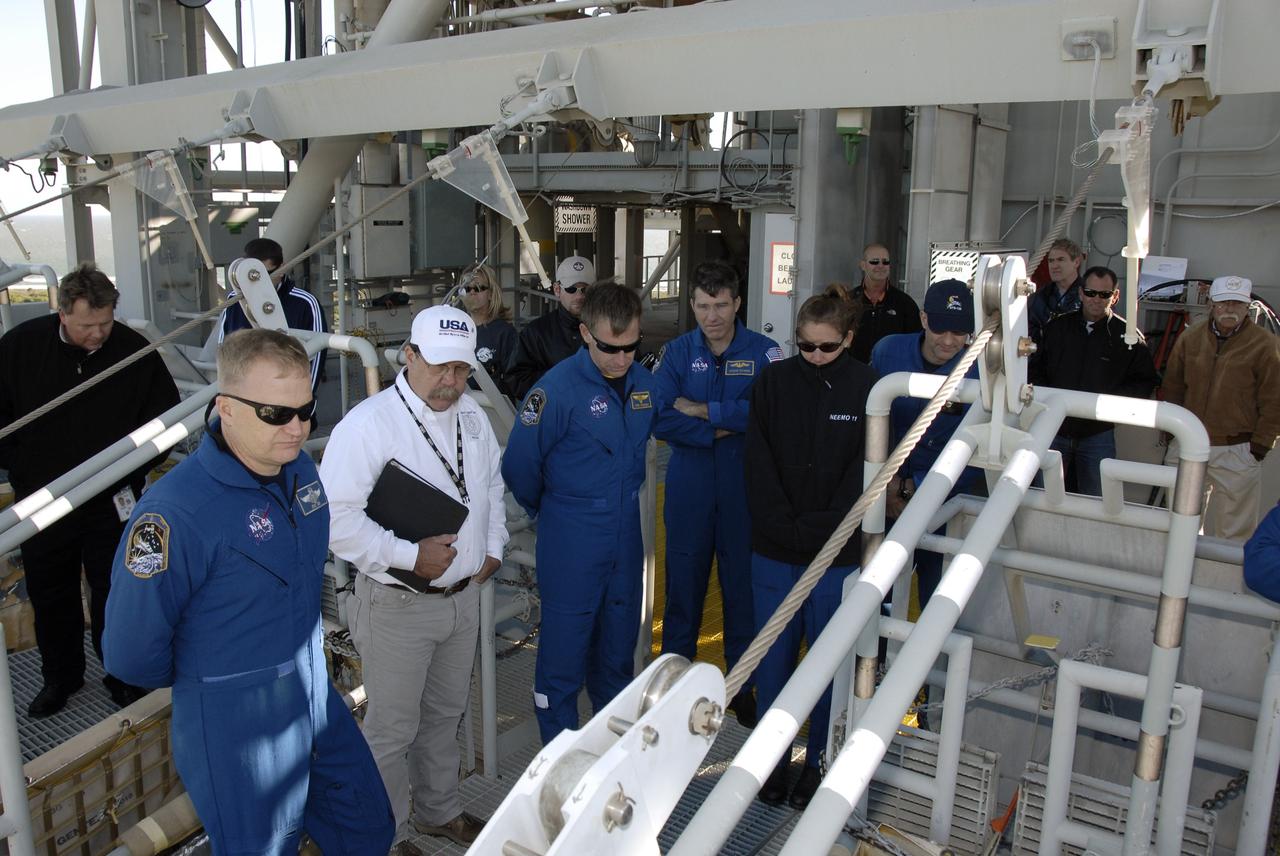
CAPE CANAVERAL, Fla. – At the 195-foot level of the fixed service structure on Launch Pad 39A at NASA's Kennedy Space Center in Florida, STS-126 crew members look at the slidewire basket used for emergency exit from the pad. Seen from left are Pilot Eric Boe, a safety instructor, Commander Chris Ferguson, and Mission Specialists Steve Bowen, Sandra Magnus and Donald Pettit. The crew is at Kennedy to take part in the Terminal Countdown Demonstration Test, which includes equipment familiarization, emergency exit training and a simulated launch countdown. On the STS-126 mission, space shuttle Endeavour's crew will deliver equipment and supplies to the International Space Station in preparation for expansion from a three- to six-person resident crew aboard the complex. The mission also will include four spacewalks to service the station’s Solar Alpha Rotary Joints. Endeavour is targeted to launch Nov. 14. Photo credit: NASA/Kim Shiflett
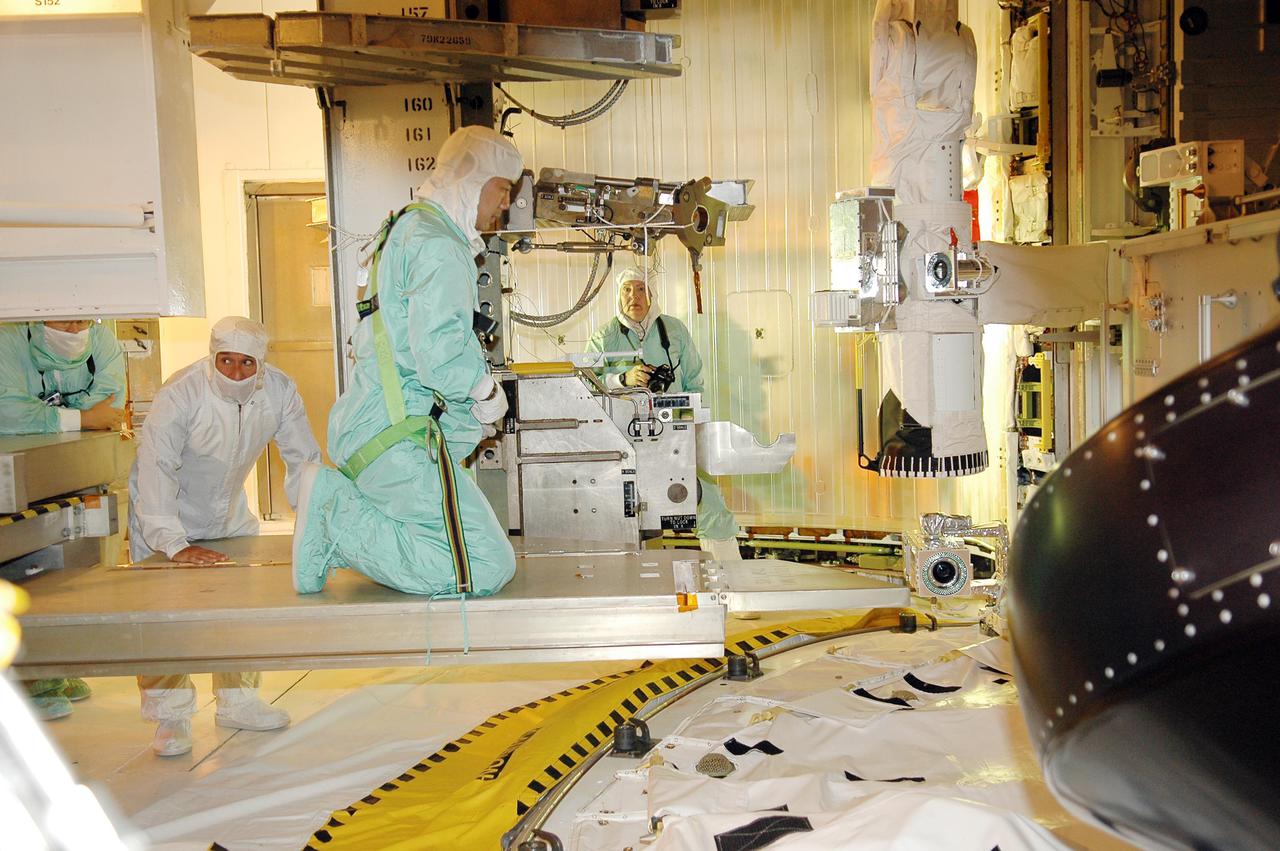
KENNEDY SPACE CENTER, FLA. - At Launch Pad 39B, STS-114 Mission Specialist Soichi Noguchi (kneeling) inspects the payloads in Space Shuttle Discovery's payload bay as Mission Specialist Charles Camarda (left) looks on. During its 12-day mission, Discovery’s seven-person crew will test new hardware and techniques to improve Shuttle safety, as well as deliver supplies to the International Space Station. Discovery’s payloads include the Multi-Purpose Logistics Module Raffaello, the Lightweight Multi-Purpose Experiment Support Structure Carrier (LMC), and the External Stowage Platform-2 (ESP-2). Raffaello will deliver supplies to the International Space Station including food, clothing and research equipment. The LMC will carry a replacement Control Moment Gyroscope and a tile repair sample box. The ESP-2 is outfitted with replacement parts. Launch of Discovery on its Return to Flight mission STS-114 is set for July 13.
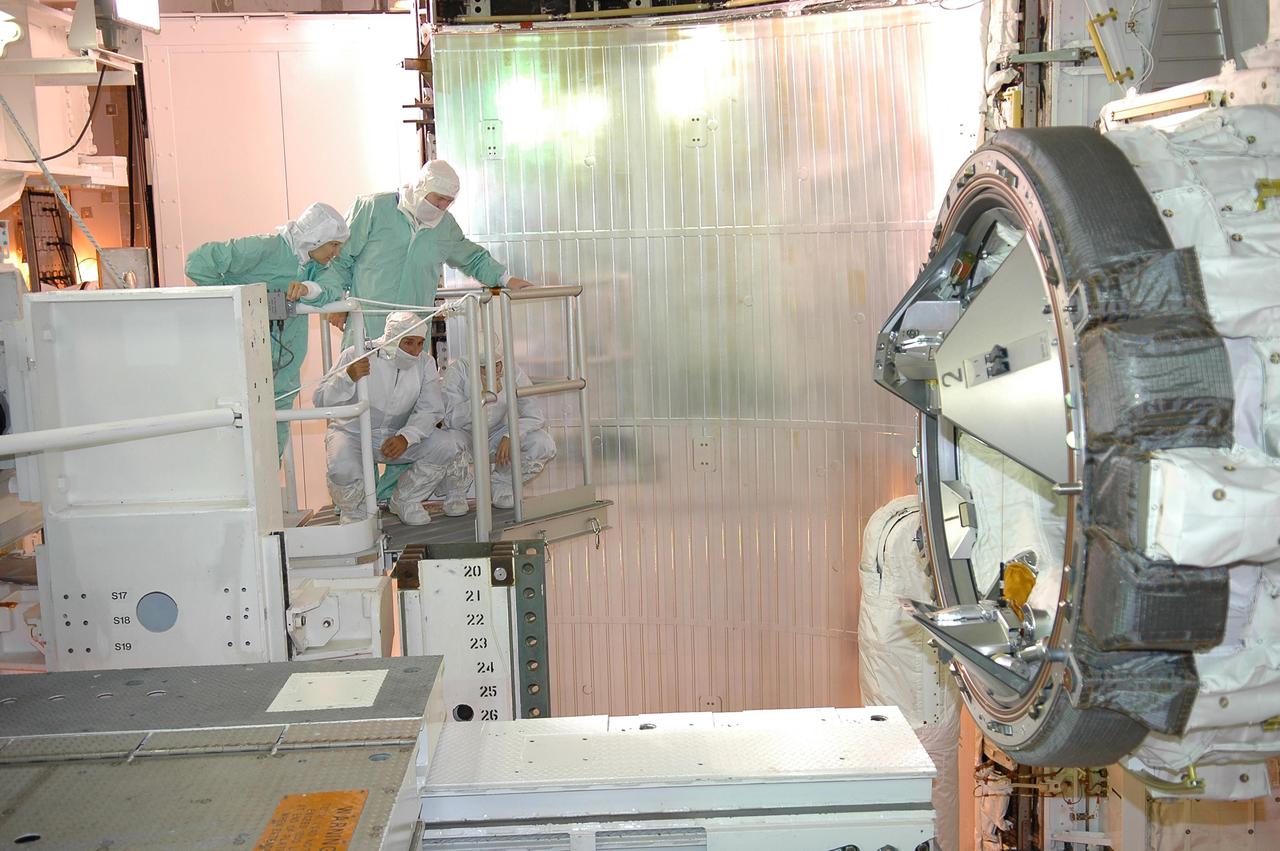
KENNEDY SPACE CENTER, FLA. - At Launch Pad 39B, STS-114 Commander Eileen Collins (left) inspects the payloads in Space Shuttle Discovery's payload bay as Mission Specialists Charles Camarda and Wendy Lawrence (kneeling) look on. During its 12-day mission, Discovery’s seven-person crew will test new hardware and techniques to improve Shuttle safety, as well as deliver supplies to the International Space Station. Discovery’s payloads include the Multi-Purpose Logistics Module Raffaello, the Lightweight Multi-Purpose Experiment Support Structure Carrier (LMC), and the External Stowage Platform-2 (ESP-2). Raffaello will deliver supplies to the International Space Station including food, clothing and research equipment. The LMC will carry a replacement Control Moment Gyroscope and a tile repair sample box. The ESP-2 is outfitted with replacement parts. Launch of Discovery on its Return to Flight mission STS-114 is set for July 13.
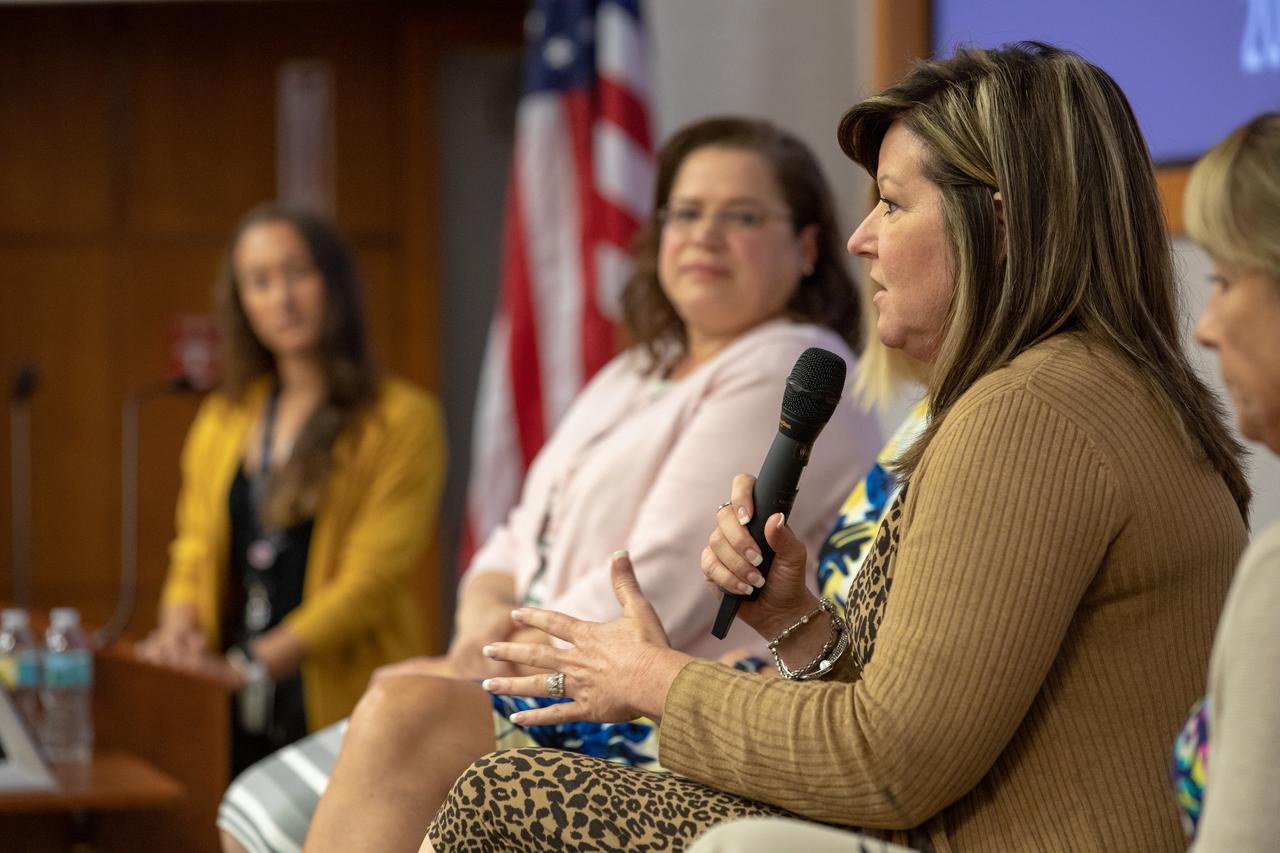
A panel discussion, featuring women in leadership roles at NASA’s Kennedy Space Center in Florida, is held on Aug. 26, 2019, to celebrate Women’s Equality Day. The event, sponsored by the Kennedy Networking Opportunities for Women (KNOW) employee resource group, honored the 100th anniversary of the passing of the 19th amendment guaranteeing all American women the right to vote. Jennifer Kunz, director of Safety and Mission Assurance, answers a question. Seated at left is Digna Carballosa, director of the Human Resources Office. At far left is Ashley Nelsen, Launch Service Program information manager and panel discussion moderator. The purpose of KNOW is to provide focus on issues such as employment, retention, promotion, training, career and personal development, education, and identify and eliminate barriers that hinder the advancement of women in the workforce.
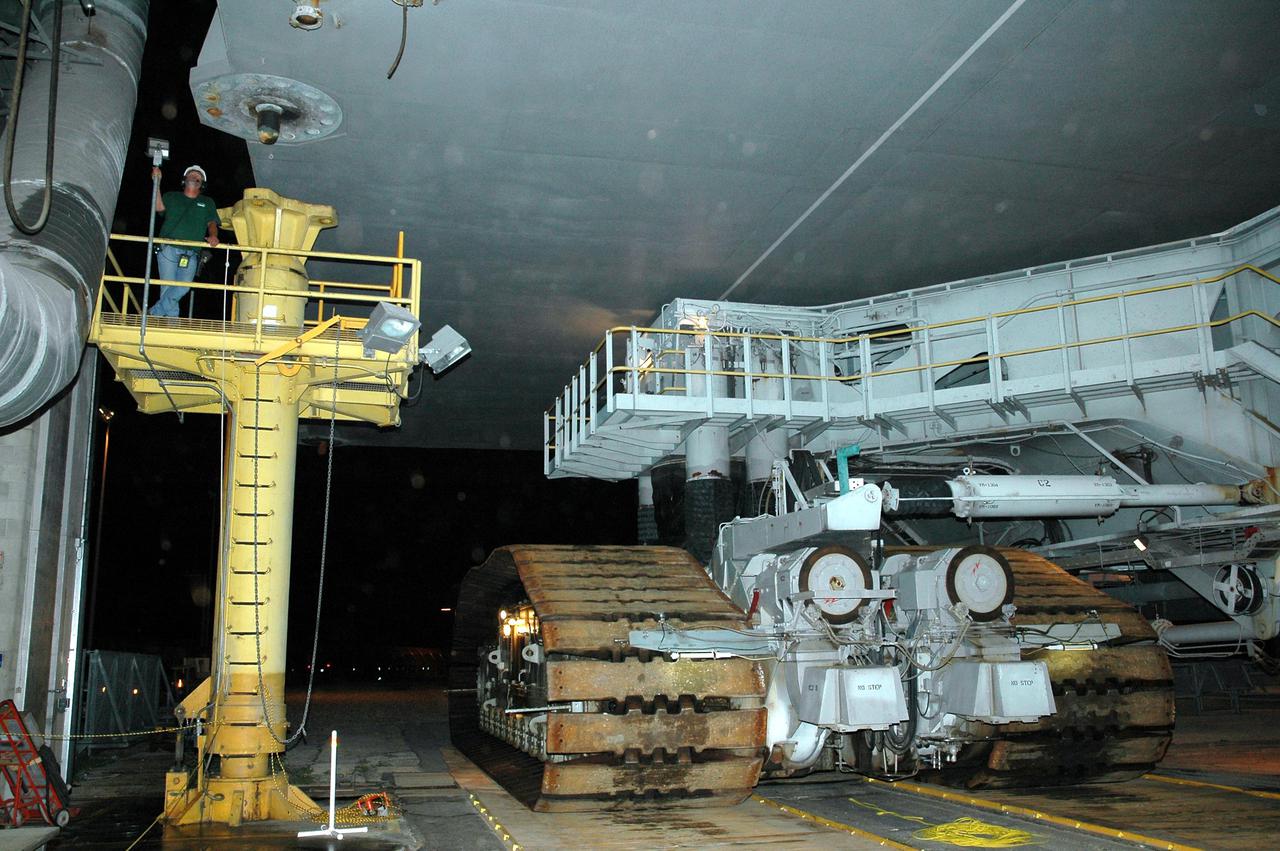
KENNEDY SPACE CENTER, FLA. - In the Vehicle Assembly Building (VAB) at NASA’s Kennedy Space Center, a technician monitors the clearance of a Crawler-Transporter as it moves Space Shuttle Discovery out of high bay 3 to Launch Pad 39B, a 4-mile, 6-hour journey. First motion was at 1:58 a.m. EDT. The Space Shuttle rests on a Mobile Launcher Platform which sits atop the Crawler-Transporter. This is the second rollout of Discovery after being returned to the Vehicle Assembly Building for connection to an improved External Tank. Launch of Discovery on its Return to Flight mission STS-114 is targeted for a launch window extending from July 13 to July 31. During its 12-day mission, Discovery’s seven-person crew will test new hardware and techniques to improve Shuttle safety, as well as deliver supplies to the International Space Station.
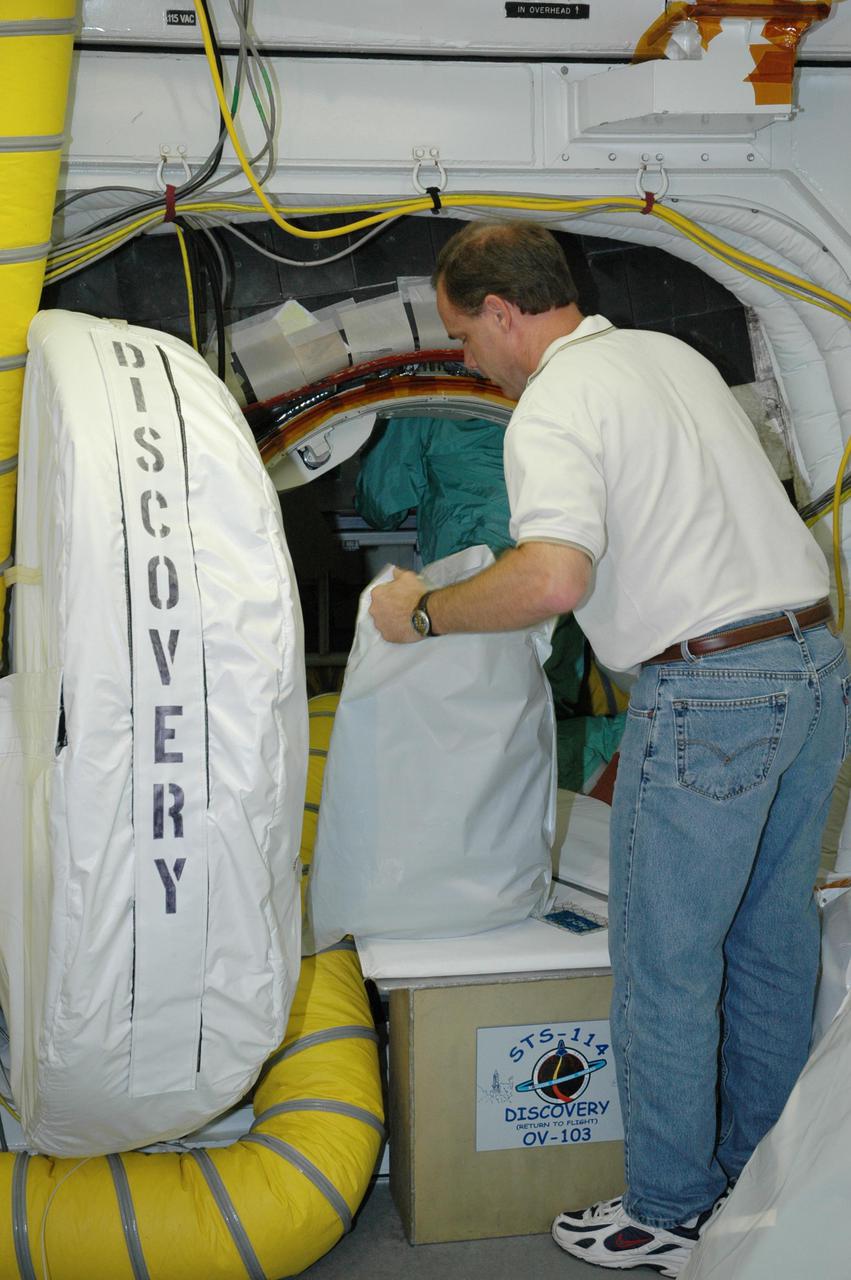
KENNEDY SPACE CENTER, FLA. - At Launch Pad 39B, United Space Alliance Flight Crew Systems engineer John Biegert uncovers a sleep restraint to be installed inside Space Shuttle Discovery, a final step in launch preparations. Launch of Discovery on its Return to Flight mission STS-114 is set for July 13, just days away. During its 12-day mission, Discovery’s seven-person crew will test new hardware and techniques to improve Shuttle safety, as well as deliver supplies to the International Space Station. Discovery’s payloads include the Multi-Purpose Logistics Module Raffaello, the Lightweight Multi-Purpose Experiment Support Structure Carrier (LMC), and the External Stowage Platform-2 (ESP-2). Raffaello will deliver supplies to the International Space Station including food, clothing and research equipment. The LMC will carry a replacement Control Moment Gyroscope and a tile repair sample box. The ESP-2 is outfitted with replacement parts.
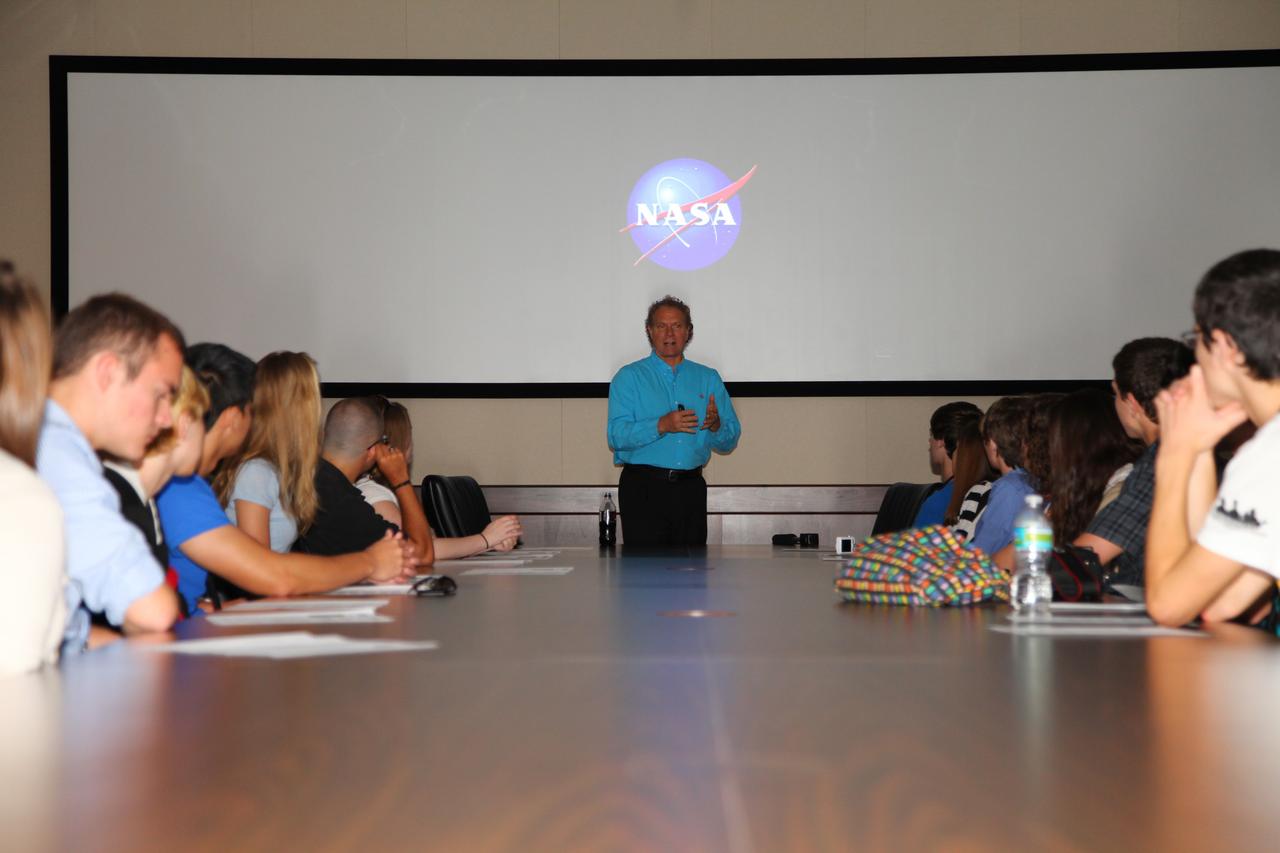
CAPE CANAVERAL, Fla. – At NASA’s Kennedy Space Center in Florida, students from Brevard County Schools gather in the Headquarters Building fourth floor conference room for a presentation about the past, present and future of space exploration by the Director of Safety and Mission Assurance Russell Romanella, during the Brevard Top Scholars event hosted by the Education Office. The event was held to honor the top two scholars of the 2012 graduating student class from each of Brevard County’s public high schools. The students toured Launch Complex 39 and the orbiter processing facility, heard from speakers on a variety of topics and received a personalized certificate during their day at Kennedy Space Center. Photo credit: NASA/Frankie Martin
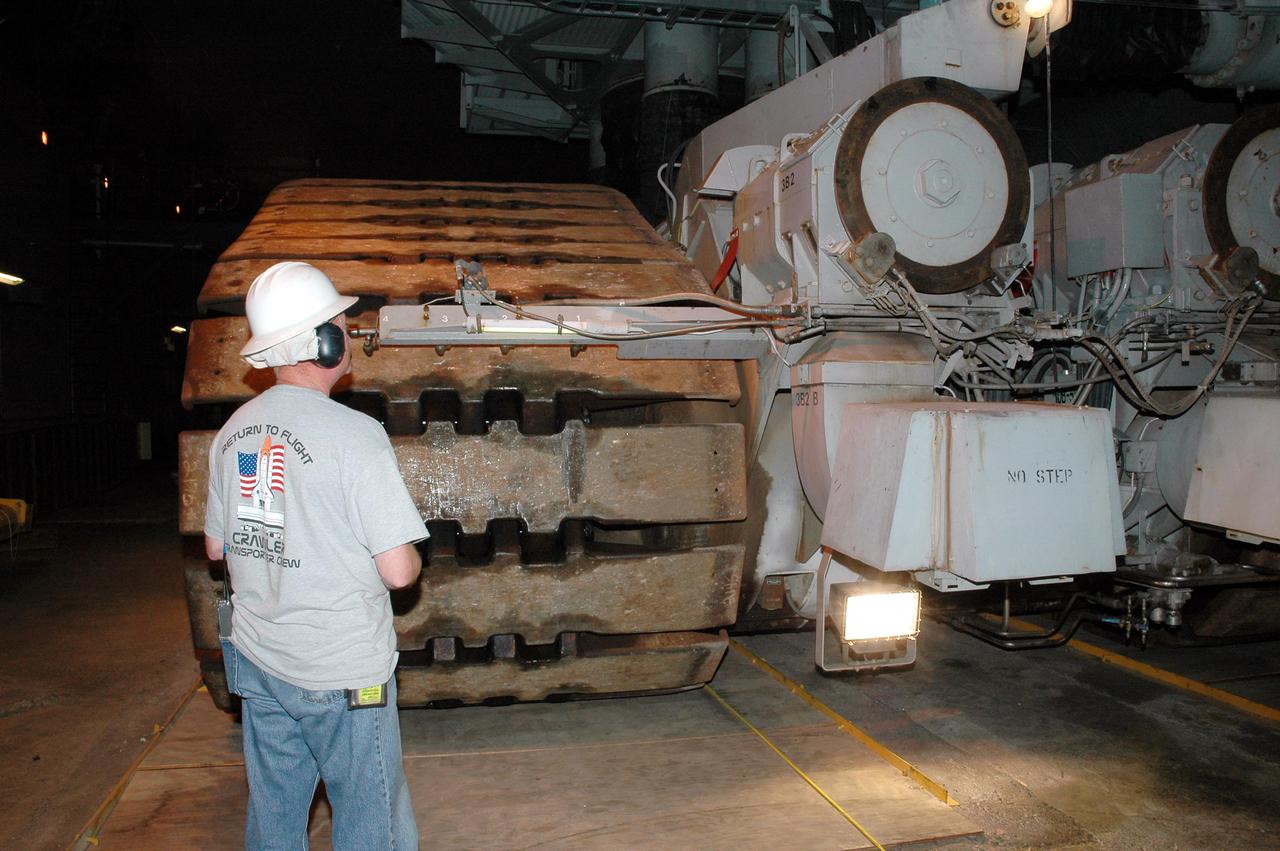
KENNEDY SPACE CENTER, FLA. - In the Vehicle Assembly Building (VAB) at NASA’s Kennedy Space Center, a technician monitors the preparations for a Crawler-Transporter to move Space Shuttle Discovery from high bay 3 to Launch Pad 39B, a 4-mile, 6-hour journey. First motion was at 1:58 a.m. EDT. The Space Shuttle rests on a Mobile Launcher Platform which sits atop the Crawler-Transporter. This is the second rollout of Discovery after being returned to the Vehicle Assembly Building for connection to an improved External Tank. Launch of Discovery on its Return to Flight mission STS-114 is targeted for a launch window extending from July 13 to July 31. During its 12-day mission, Discovery’s seven-person crew will test new hardware and techniques to improve Shuttle safety, as well as deliver supplies to the International Space Station.

KENNEDY SPACE CENTER, FLA. - In the Vehicle Assembly Building (VAB) at NASA’s Kennedy Space Center, a technician monitors the progress of a Crawler-Transporter as it moves Space Shuttle Discovery out of high bay 3 to Launch Pad 39B, a 4-mile, 6-hour journey. First motion was at 1:58 a.m. EDT. The Space Shuttle rests on a Mobile Launcher Platform which sits atop the Crawler-Transporter. This is the second rollout of Discovery after being returned to the Vehicle Assembly Building for connection to an improved External Tank. Launch of Discovery on its Return to Flight mission STS-114 is targeted for a launch window extending from July 13 to July 31. During its 12-day mission, Discovery’s seven-person crew will test new hardware and techniques to improve Shuttle safety, as well as deliver supplies to the International Space Station.
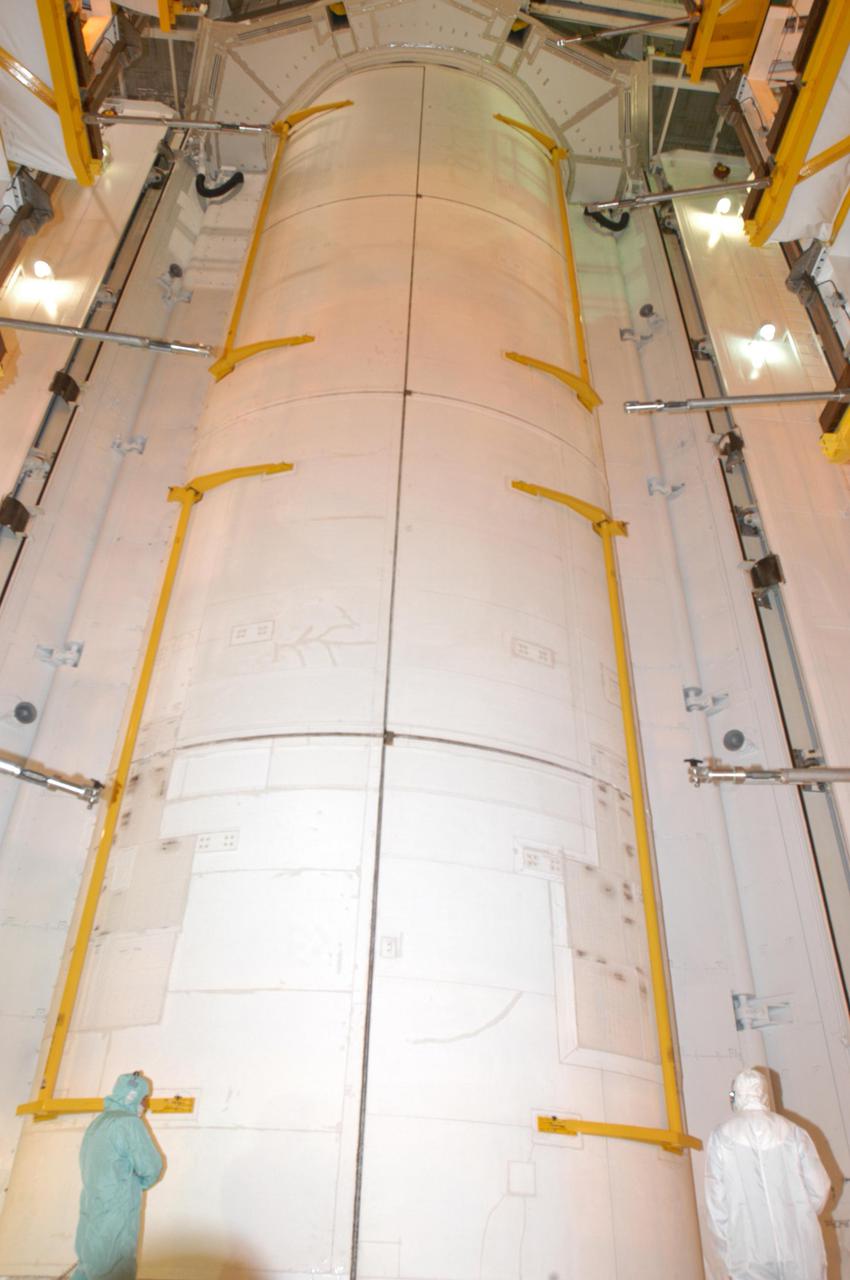
KENNEDY SPACE CENTER, FLA. - At Launch Pad 39B, the payload bay doors on Space Shuttle Discovery are closed for launch. Payload bay door closure is a significant milestone in the preparations for the first Return to Flight mission, STS-114. During its 12-day mission, Discovery’s seven-person crew will test new hardware and techniques to improve Shuttle safety, as well as deliver supplies to the International Space Station. Discovery’s payloads include the Multi-Purpose Logistics Module Raffaello, the Lightweight Multi-Purpose Experiment Support Structure Carrier (LMC), and the External Stowage Platform-2 (ESP-2). Raffaello will deliver supplies to the International Space Station including food, clothing and research equipment. The LMC supports a replacement Control Moment Gyroscope and a tile repair sample box. The ESP-2 is outfitted with replacement parts. Launch of mission STS-114 was set for July 13 at the conclusion of the Flight Readiness Review yesterday.
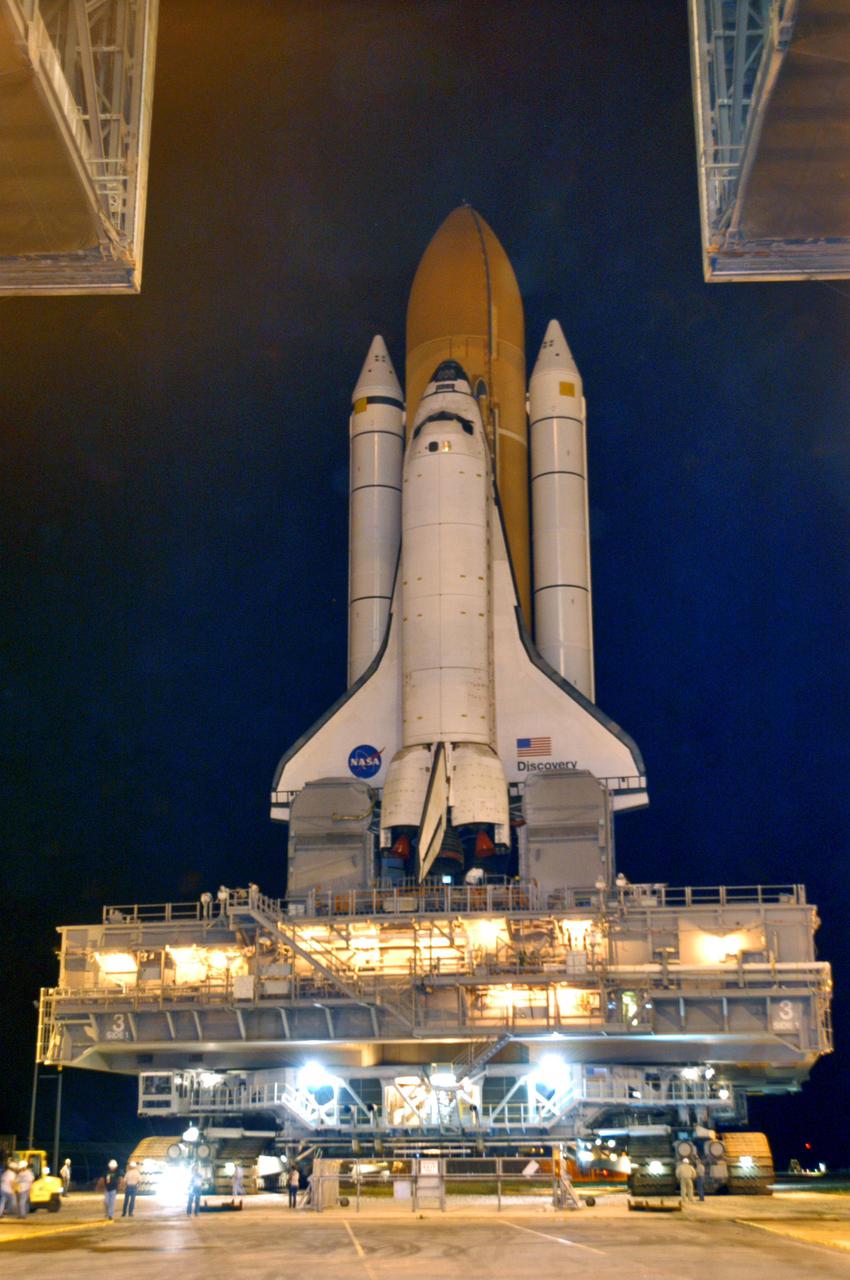
KENNEDY SPACE CENTER, FLA. - In the Vehicle Assembly Building (VAB) at NASA’s Kennedy Space Center, Space Shuttle Discovery rolls outside high bay 3 to begin its trip to Launch Pad 39B, a 4-mile, 6-hour journey. First motion was at 1:58 a.m. EDT. The Space Shuttle rests on a Mobile Launcher Platform which sits atop a Crawler-Transporter. This is the second rollout of Discovery after being returned to the Vehicle Assembly Building for connection to an improved External Tank. Launch of Discovery on its Return to Flight mission STS-114 is targeted for a launch window extending from July 13 to July 31. During its 12-day mission, Discovery’s seven-person crew will test new hardware and techniques to improve Shuttle safety, as well as deliver supplies to the International Space Station.
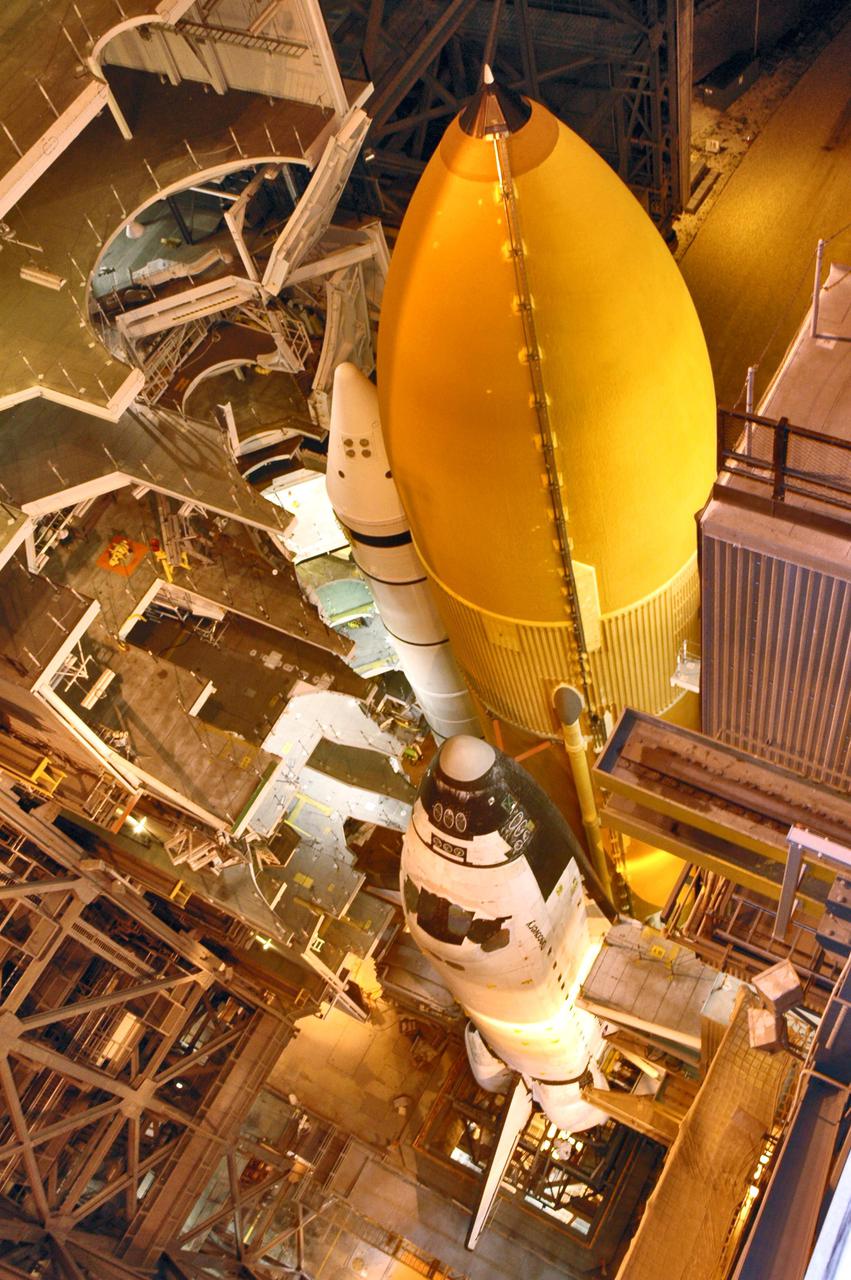
KENNEDY SPACE CENTER, FLA. - In the Vehicle Assembly Building (VAB) at NASA’s Kennedy Space Center, Space Shuttle Discovery is viewed from above as it departs high bay 3 for its trip to Launch Pad 39B, a 4-mile, 6-hour journey. First motion was at 1:58 a.m. EDT. The Space Shuttle rests on a Mobile Launcher Platform which sits atop a Crawler-Transporter. This is the second rollout of Discovery after being returned to the Vehicle Assembly Building for connection to an improved External Tank. Launch of Discovery on its Return to Flight mission STS-114 is targeted for a launch window extending from July 13 to July 31. During its 12-day mission, Discovery’s seven-person crew will test new hardware and techniques to improve Shuttle safety, as well as deliver supplies to the International Space Station.
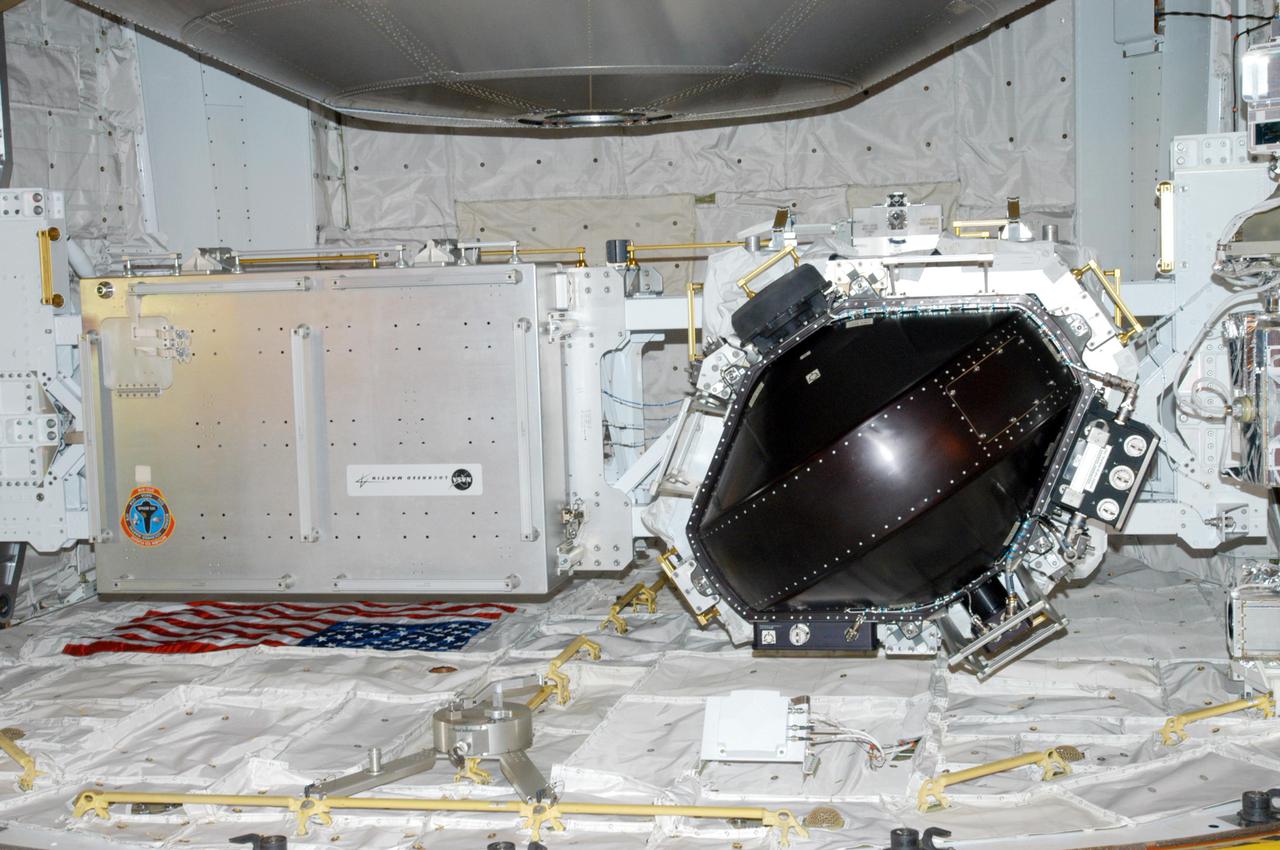
KENNEDY SPACE CENTER, FLA. - At Launch Pad 39B, the Lightweight Multi-Purpose Experiment Support Structure Carrier (LMC), supporting the Control Moment Gyroscope (right) and a tile repair sample box, is viewed before the orbiter's payload bay doors are closed for launch. Payload bay door closure is a significant milestone in the preparations of Discovery for the first Return to Flight mission, STS-114. Other payloads in the bay include the Multi-Purpose Logistics Module Raffaello and the External Stowage Platform-2 (ESP-2). During its 12-day mission, Discovery’s seven-person crew will test new hardware and techniques to improve Shuttle safety, as well as deliver supplies to the International Space Station. Launch of STS-114 was set for July 13 at the conclusion of the mission's Flight Readiness Review yesterday.
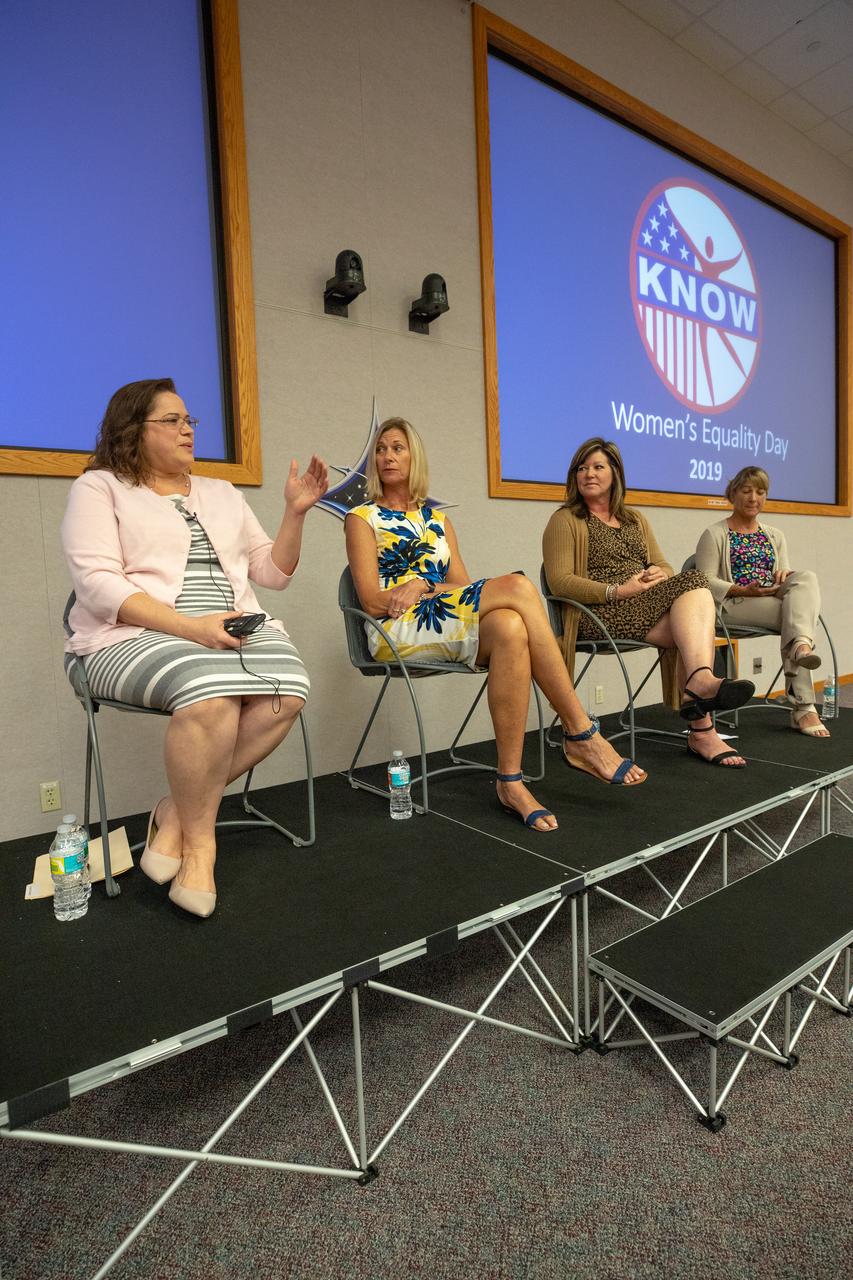
A panel discussion, featuring women in leadership roles at NASA’s Kennedy Space Center in Florida, is held on Aug. 26, 2019, to celebrate Women’s Equality Day. The event, sponsored by the Kennedy Networking Opportunities for Women (KNOW) employee resource group, honored the 100th anniversary of the passing of the 19th amendment guaranteeing all American women the right to vote. Seated from left, are Digna Carballosa, director of the Human Resources Office; Nancy Bray, director of Spaceport Integration and Services; Jennifer Kunz, director of Safety and Mission Assurance; and Amanda Mitskevich, Launch Services Program manager. The purpose of KNOW is to provide focus on issues such as employment, retention, promotion, training, career and personal development, education, and identify and eliminate barriers that hinder the advancement of women in the workforce.
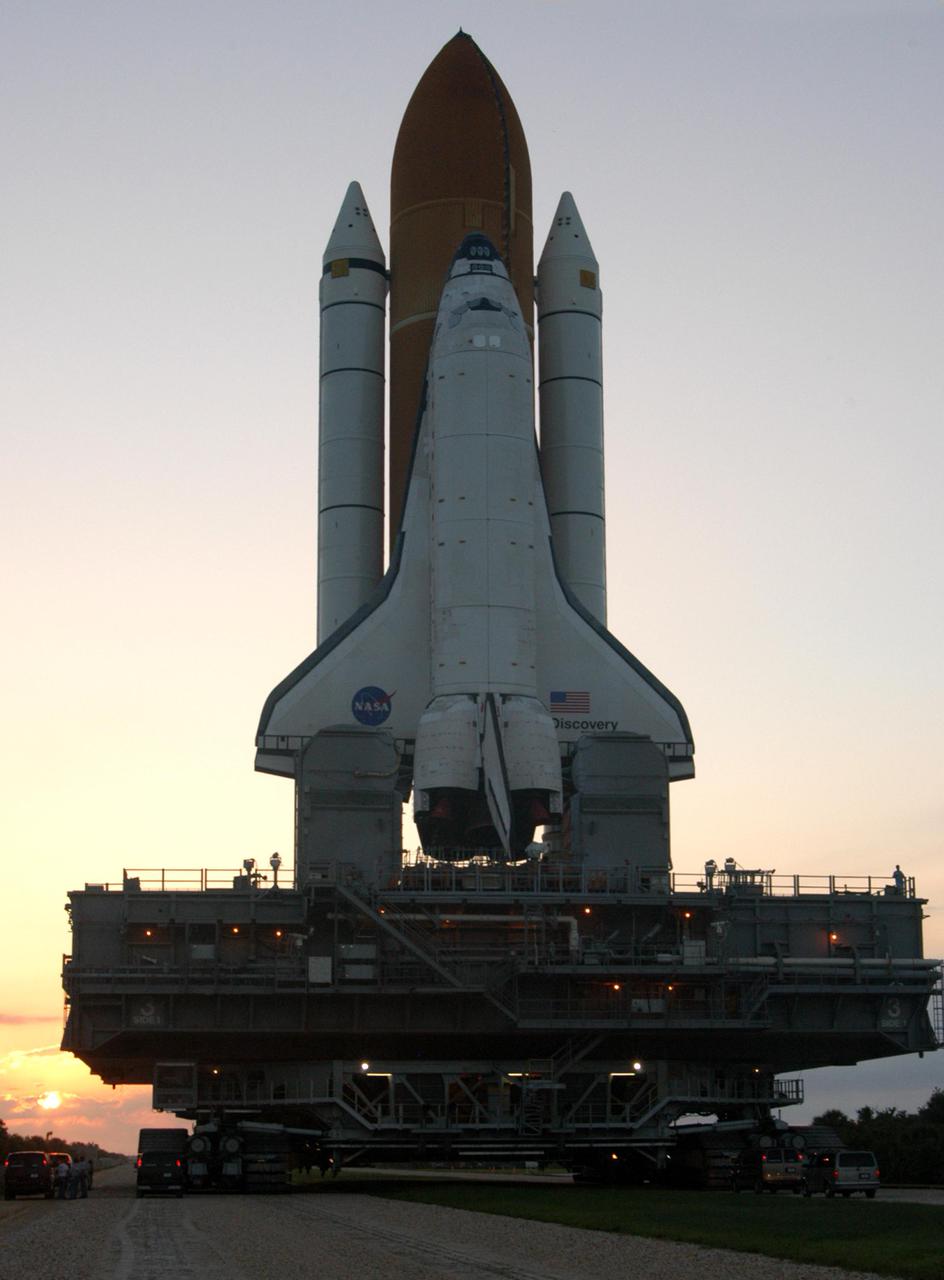
KENNEDY SPACE CENTER, FLA. - Space Shuttle Discovery makes its way along the crawlerway from high bay 3 to Launch Pad 39B as the sun rises. First motion for the 4-mile, 6-hour journey was at 1:58 a.m. EDT. The Space Shuttle rests on a Mobile Launcher Platform which sits atop a Crawler-Transporter. This is the second rollout of Discovery after being returned to the Vehicle Assembly Building for connection to an improved External Tank. Launch of Discovery on its Return to Flight mission STS-114 is targeted for a launch window extending from July 13 to July 31. During its 12-day mission, Discovery’s seven-person crew will test new hardware and techniques to improve Shuttle safety, as well as deliver supplies to the International Space Station.
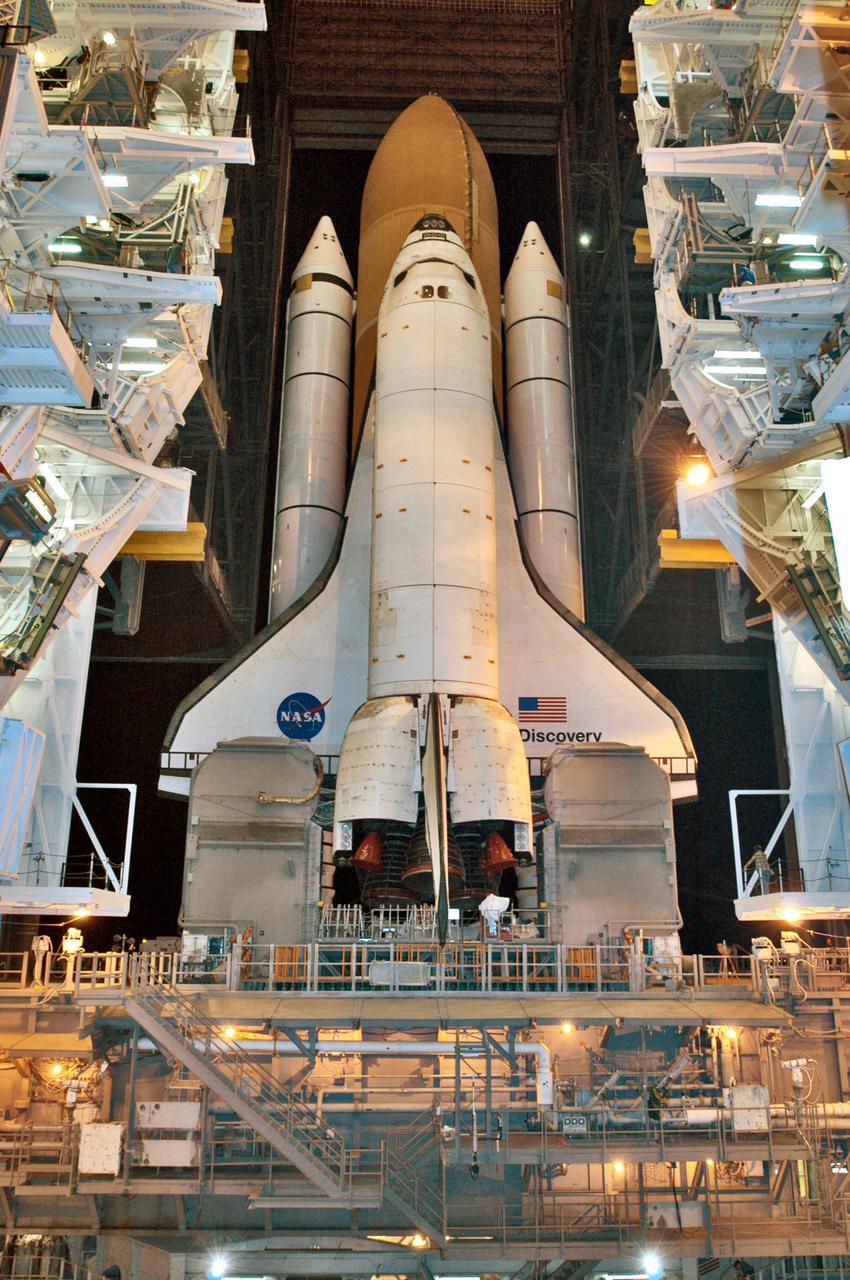
KENNEDY SPACE CENTER, FLA. - In the Vehicle Assembly Building (VAB) at NASA’s Kennedy Space Center, Space Shuttle Discovery exits high bay 3 to begin its trip to Launch Pad 39B, a 4-mile, 6-hour journey. First motion was at 1:58 a.m. EDT. The Space Shuttle rests on a Mobile Launcher Platform which sits atop a Crawler-Transporter. This is the second rollout of Discovery after being returned to the Vehicle Assembly Building for connection to an improved External Tank. Launch of Discovery on its Return to Flight mission STS-114 is targeted for a launch window extending from July 13 to July 31. During its 12-day mission, Discovery’s seven-person crew will test new hardware and techniques to improve Shuttle safety, as well as deliver supplies to the International Space Station.
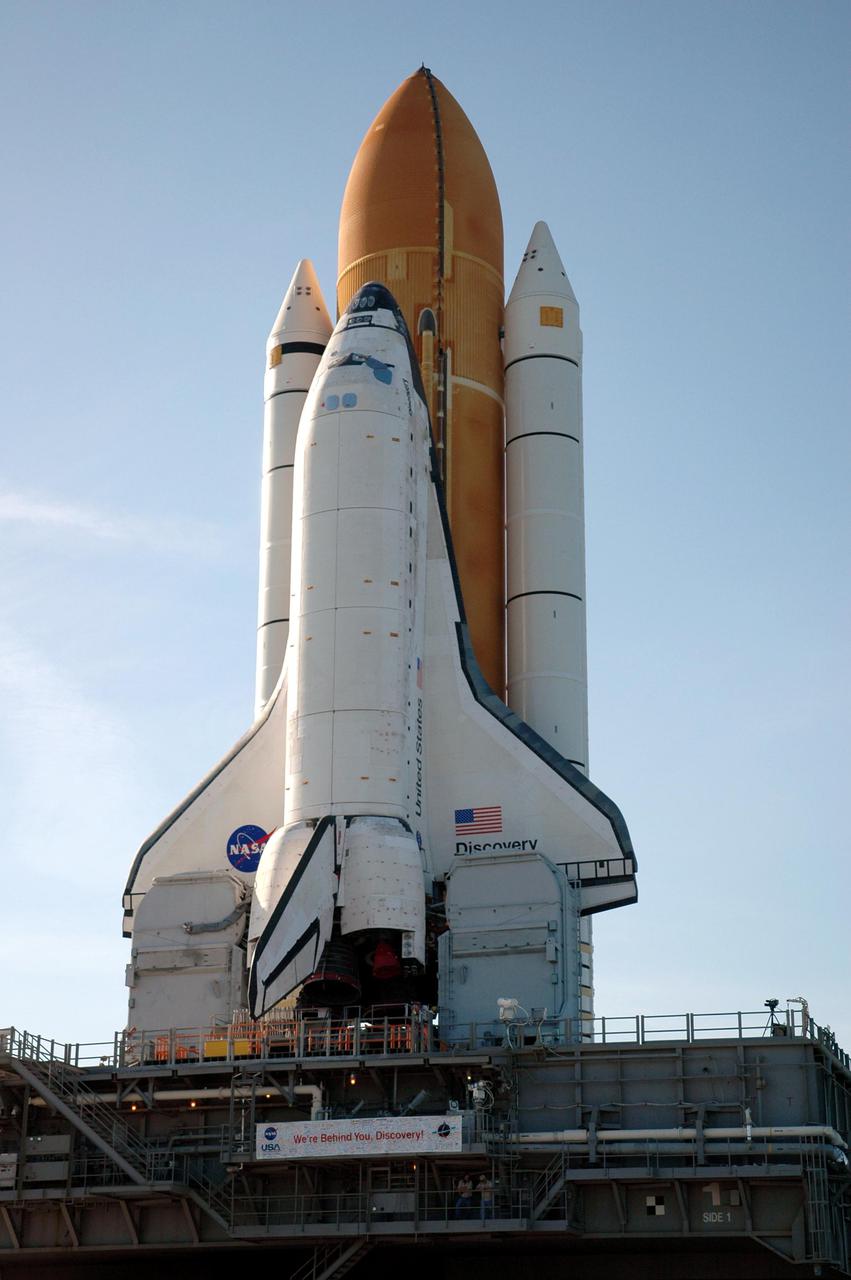
KENNEDY SPACE CENTER, FLA. - Space Shuttle Discovery, atop a Mobile Launcher Platform (MLP), crawls toward Launch Complex 39B. First motion out of the Vehicle Assembly Building occurred at 2:04 p.m. EDT. The rollout marks a major milestone in the Space Shuttle Program’s Return to Flight. The MLP is moved by a Crawler-Transporter underneath. A banner signed by KSC employees who helped process the orbiter for launch, proclaiming 'We're Behind You, Discovery_,' is affixed to the MLP. Launch of Discovery on its Return to Flight mission, STS-114, is targeted for May 15 with a launch window that extends to June 3. During its 12-day mission, Discovery’s seven-person crew will test new hardware and techniques to improve Shuttle safety, as well as deliver supplies to the International Space Station.
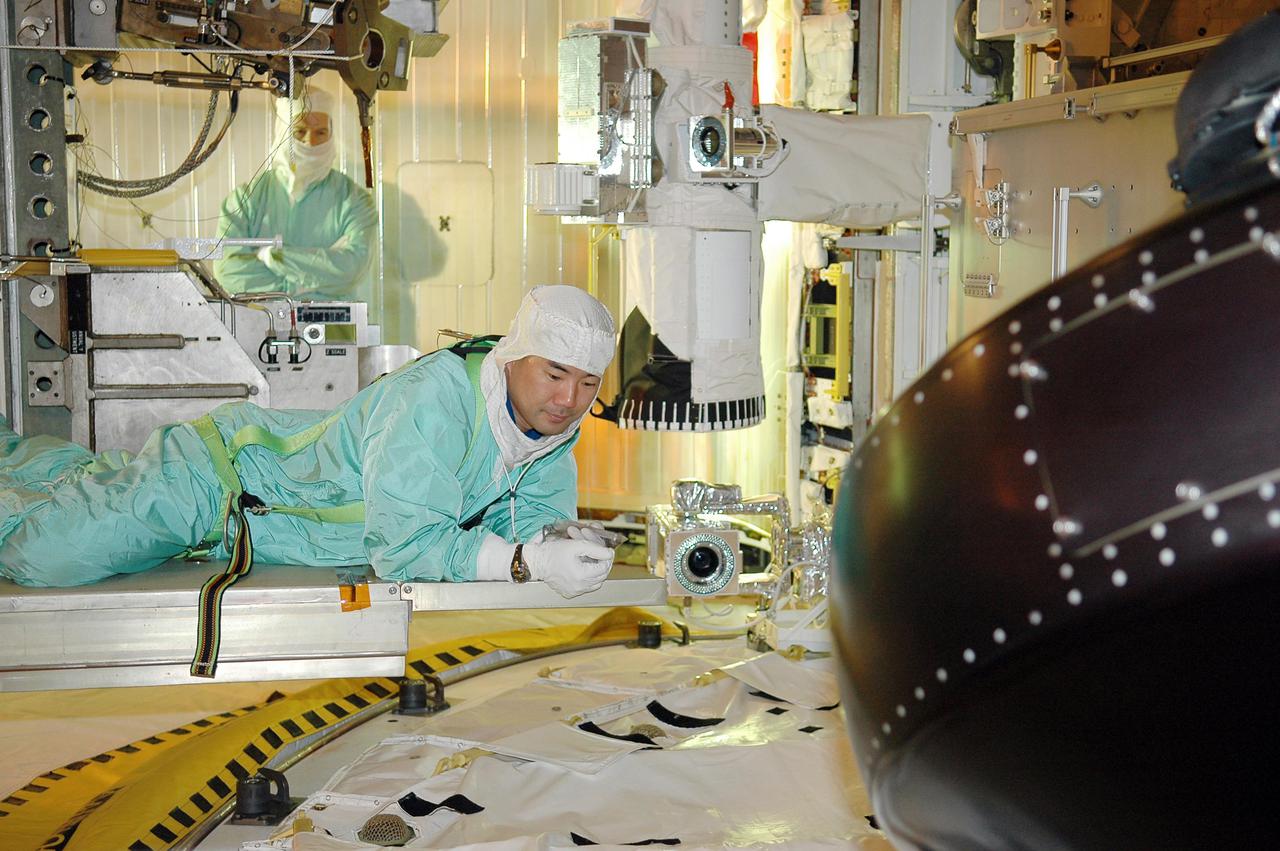
KENNEDY SPACE CENTER, FLA. - At Launch Pad 39B, STS-114 Mission Specialist Soichi Noguchi (prone) inspects the payloads in Space Shuttle Discovery's payload bay. During its 12-day mission, Discovery’s seven-person crew will test new hardware and techniques to improve Shuttle safety, as well as deliver supplies to the International Space Station. Discovery’s payloads include the Multi-Purpose Logistics Module Raffaello, the Lightweight Multi-Purpose Experiment Support Structure Carrier (LMC), and the External Stowage Platform-2 (ESP-2). Raffaello will deliver supplies to the International Space Station including food, clothing and research equipment. The LMC will carry a replacement Control Moment Gyroscope and a tile repair sample box. The ESP-2 is outfitted with replacement parts. Launch of Discovery on its Return to Flight mission STS-114 is set for July 13.
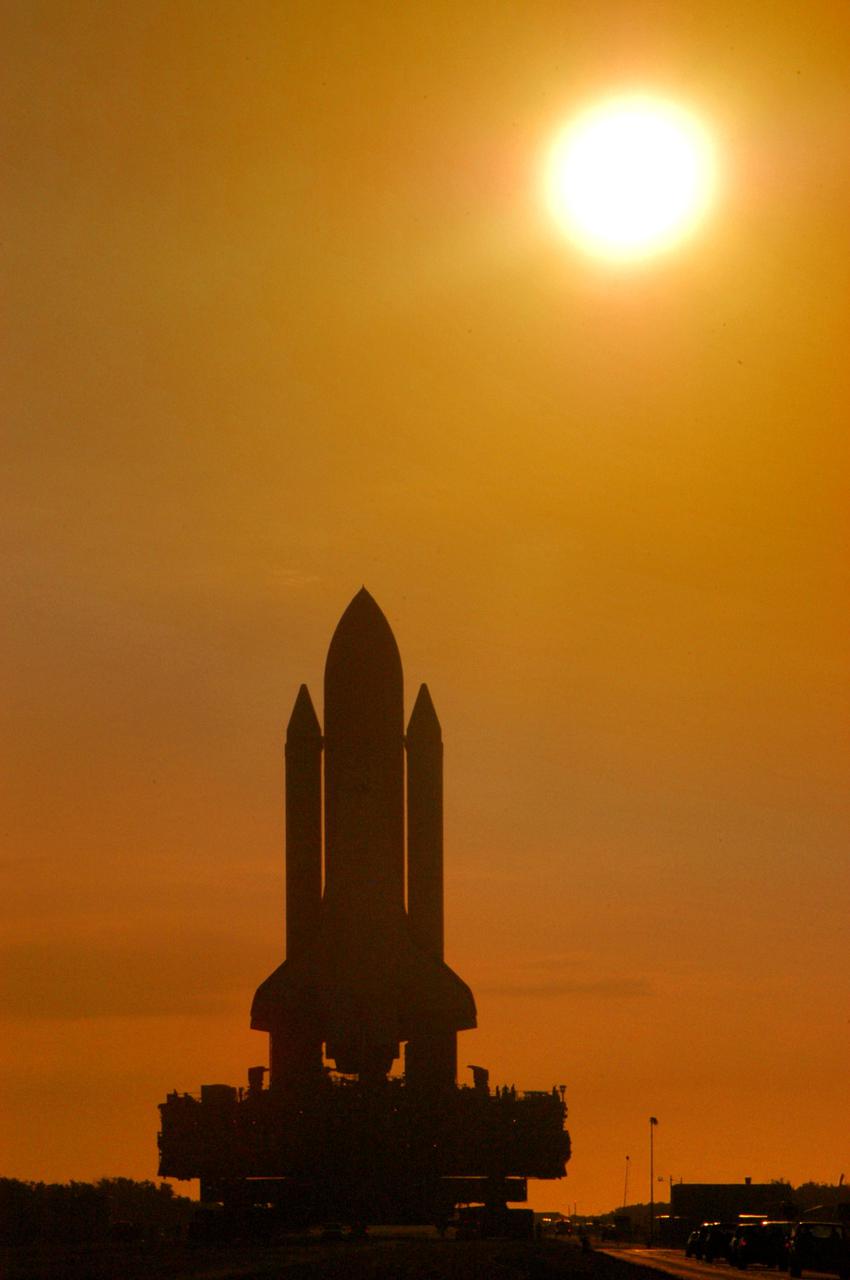
KENNEDY SPACE CENTER, FLA. - Space Shuttle Discovery makes its way along the crawlerway from high bay 3 to Launch Pad 39B as the sun rises. First motion for the 4-mile, 6-hour journey was at 1:58 a.m. EDT. The Space Shuttle rests on a Mobile Launcher Platform which sits atop a Crawler-Transporter. This is the second rollout of Discovery after being returned to the Vehicle Assembly Building for connection to an improved External Tank. Launch of Discovery on its Return to Flight mission STS-114 is targeted for a launch window extending from July 13 to July 31. During its 12-day mission, Discovery’s seven-person crew will test new hardware and techniques to improve Shuttle safety, as well as deliver supplies to the International Space Station.
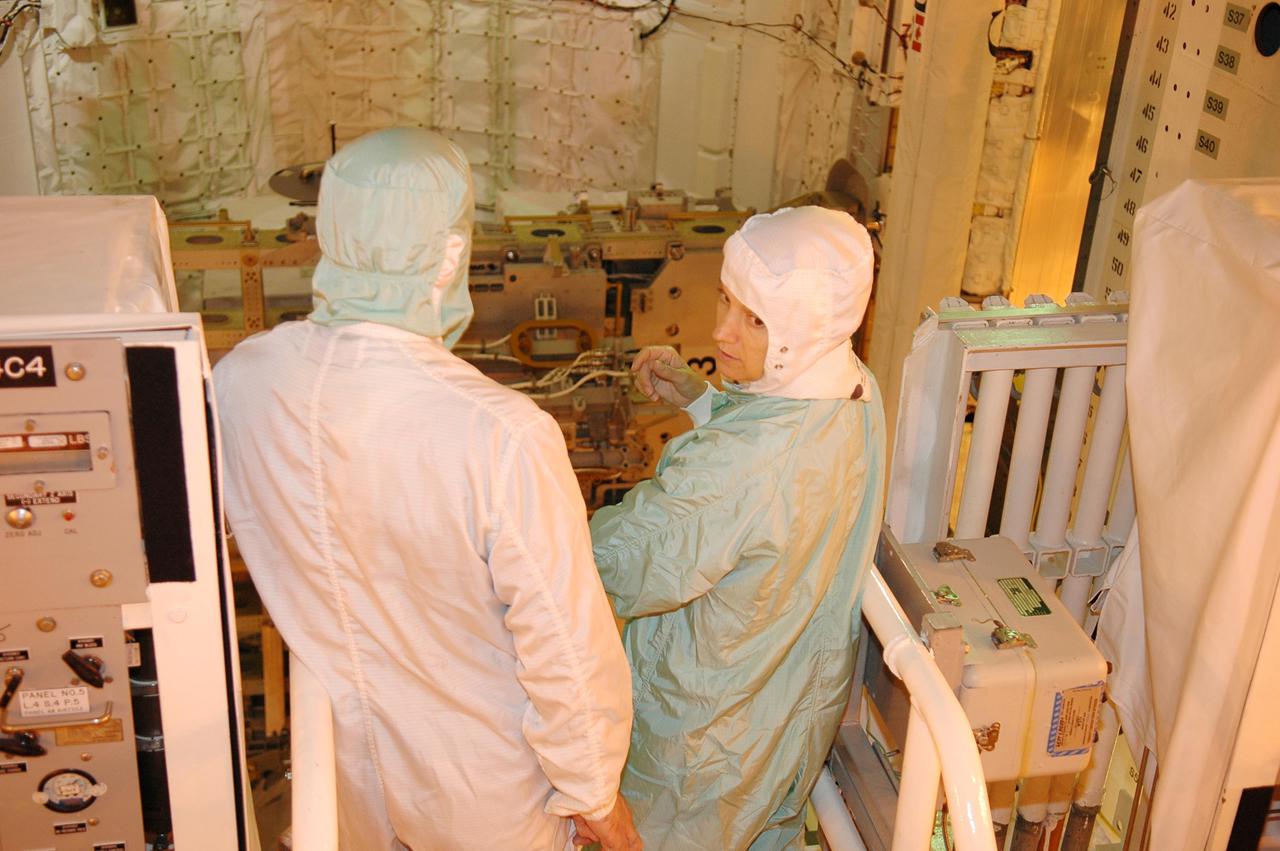
KENNEDY SPACE CENTER, FLA. - At Launch Pad 39B, STS-114 Commander Eileen Collins (right) takes a final look at the payloads in Space Shuttle Discovery's cargo bay before launch. During its 12-day mission, Discovery’s seven-person crew will test new hardware and techniques to improve Shuttle safety, as well as deliver supplies to the International Space Station. Discovery’s payloads include the Multi-Purpose Logistics Module Raffaello, the Lightweight Multi-Purpose Experiment Support Structure Carrier (LMC), and the External Stowage Platform-2 (ESP-2). Raffaello will deliver supplies to the International Space Station including food, clothing and research equipment. The LMC will carry a replacement Control Moment Gyroscope and a tile repair sample box. The ESP-2 is outfitted with replacement parts. Launch of Discovery on its Return to Flight mission STS-114 is set for July 13.
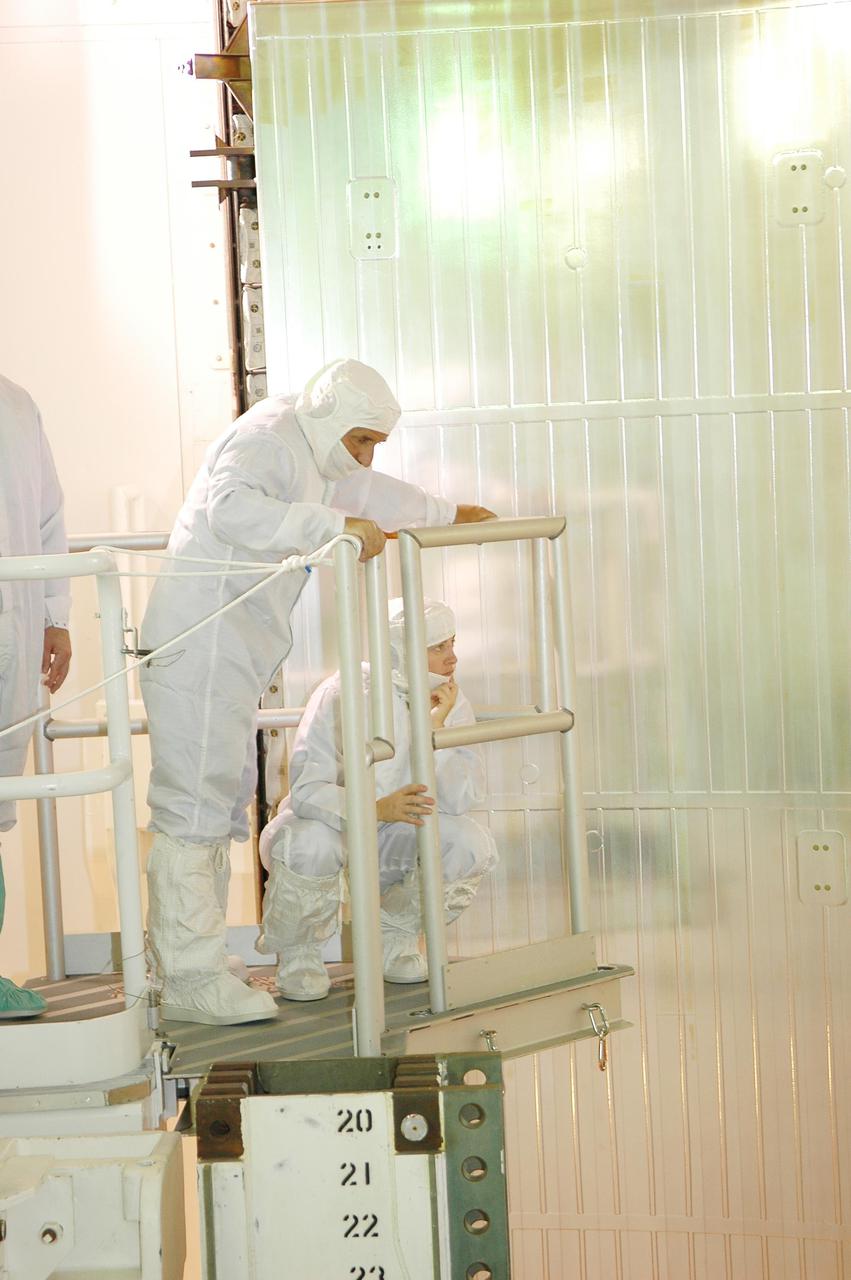
KENNEDY SPACE CENTER, FLA. - At Launch Pad 39B, Mission Specialists Charles Camarda (left) and Wendy Lawrence take a final look at the payloads in Space Shuttle Discovery's cargo bay before launch. During its 12-day mission, Discovery’s seven-person crew will test new hardware and techniques to improve Shuttle safety, as well as deliver supplies to the International Space Station. Discovery’s payloads include the Multi-Purpose Logistics Module Raffaello, the Lightweight Multi-Purpose Experiment Support Structure Carrier (LMC), and the External Stowage Platform-2 (ESP-2). Raffaello will deliver supplies to the International Space Station including food, clothing and research equipment. The LMC will carry a replacement Control Moment Gyroscope and a tile repair sample box. The ESP-2 is outfitted with replacement parts. Launch of Discovery on its Return to Flight mission STS-114 is set for July 13.
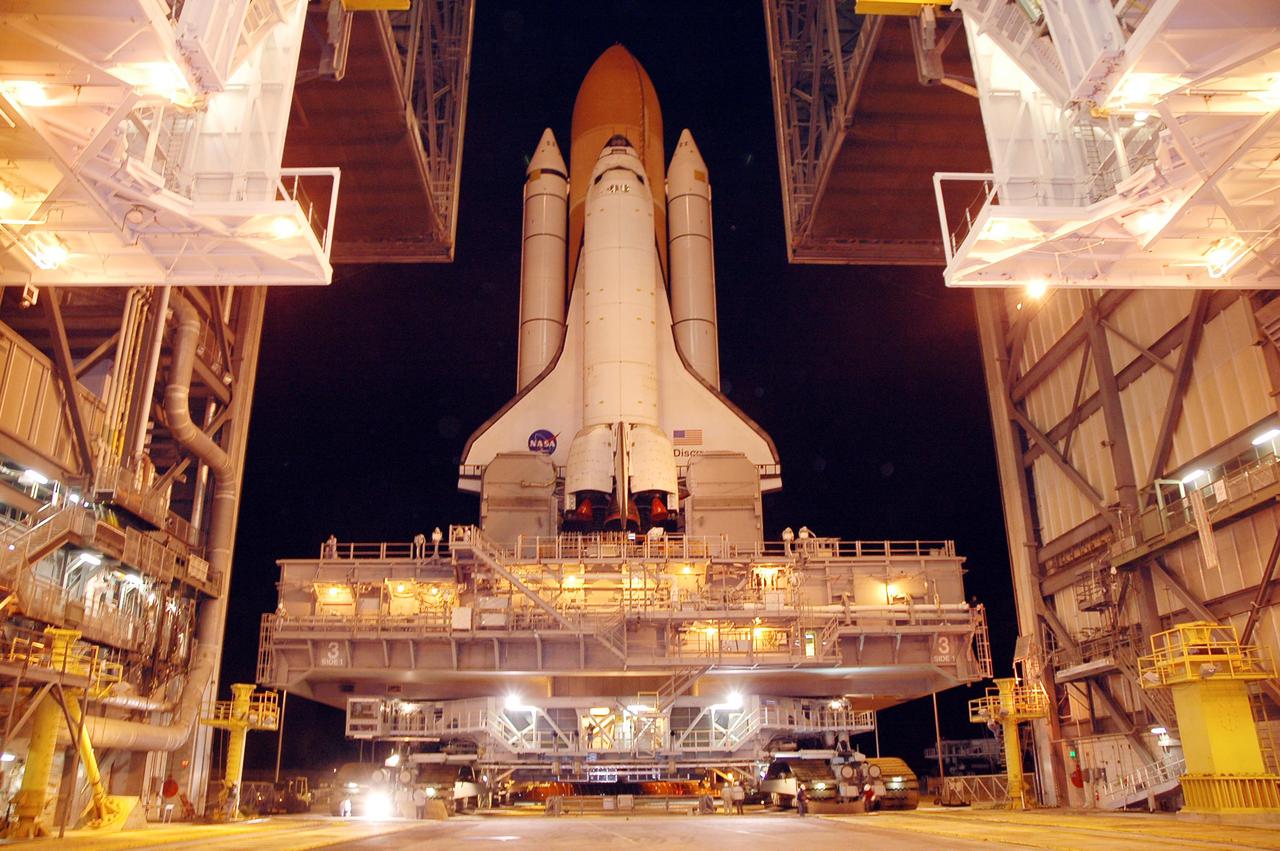
KENNEDY SPACE CENTER, FLA. - In the Vehicle Assembly Building (VAB) at NASA’s Kennedy Space Center, Space Shuttle Discovery rolls outside high bay 3 to begin its trip to Launch Pad 39B, a 4-mile, 6-hour journey. First motion was at 1:58 a.m. EDT. The Space Shuttle rests on a Mobile Launcher Platform which sits atop a Crawler-Transporter. This is the second rollout of Discovery after being returned to the Vehicle Assembly Building for connection to an improved External Tank. Launch of Discovery on its Return to Flight mission STS-114 is targeted for a launch window extending from July 13 to July 31. During its 12-day mission, Discovery’s seven-person crew will test new hardware and techniques to improve Shuttle safety, as well as deliver supplies to the International Space Station.

KENNEDY SPACE CENTER, FLA. - Space Shuttle Discovery makes its way along the crawlerway from high bay 3 to Launch Pad 39B as the sun rises. First motion for the 4-mile, 6-hour journey was at 1:58 a.m. EDT. The Space Shuttle rests on a Mobile Launcher Platform which sits atop a Crawler-Transporter. This is the second rollout of Discovery after being returned to the Vehicle Assembly Building for connection to an improved External Tank. Launch of Discovery on its Return to Flight mission STS-114 is targeted for a launch window extending from July 13 to July 31. During its 12-day mission, Discovery’s seven-person crew will test new hardware and techniques to improve Shuttle safety, as well as deliver supplies to the International Space Station.
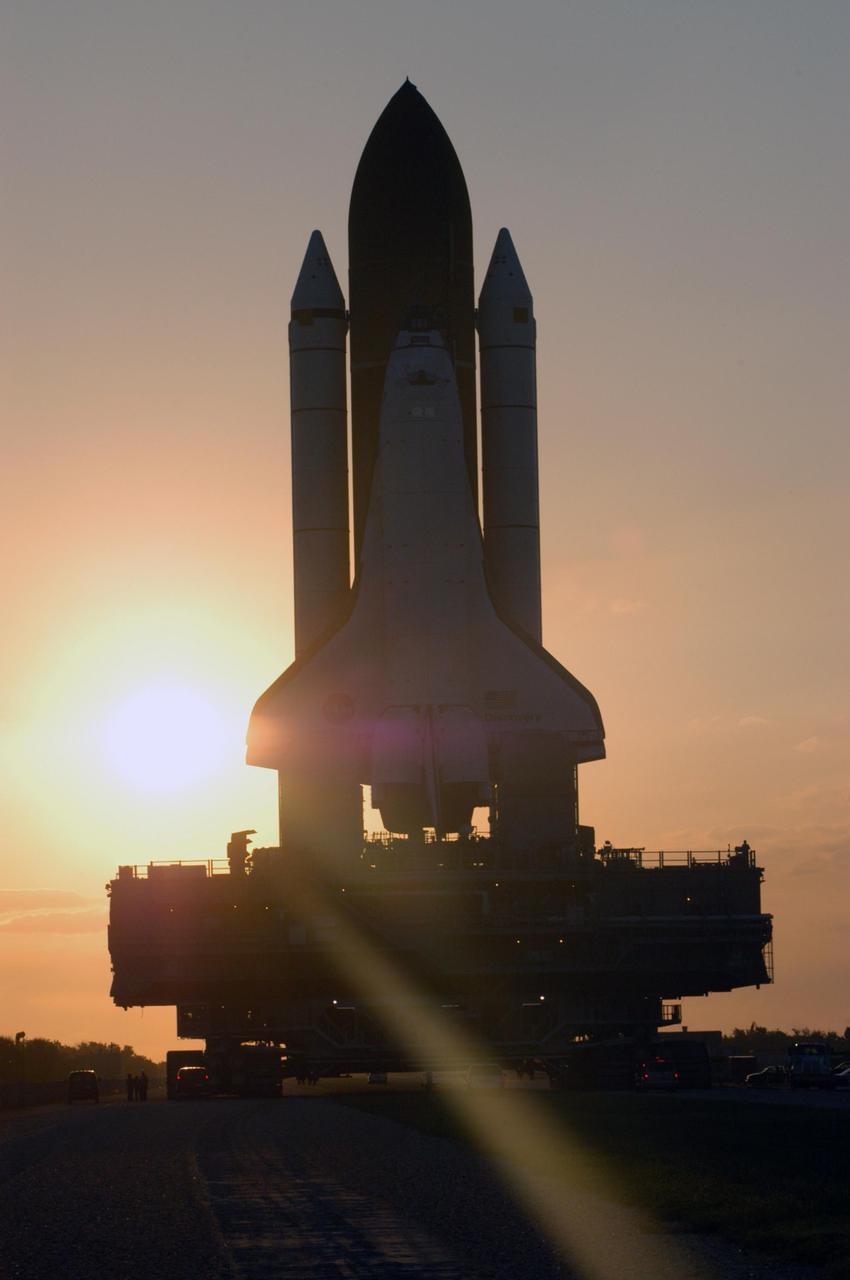
KENNEDY SPACE CENTER, FLA. - Space Shuttle Discovery makes its way along the crawlerway from high bay 3 to Launch Pad 39B as the sun rises. First motion for the 4-mile, 6-hour journey was at 1:58 a.m. EDT. The Space Shuttle rests on a Mobile Launcher Platform which sits atop a Crawler-Transporter. This is the second rollout of Discovery after being returned to the Vehicle Assembly Building for connection to an improved External Tank. Launch of Discovery on its Return to Flight mission STS-114 is targeted for a launch window extending from July 13 to July 31. During its 12-day mission, Discovery’s seven-person crew will test new hardware and techniques to improve Shuttle safety, as well as deliver supplies to the International Space Station.
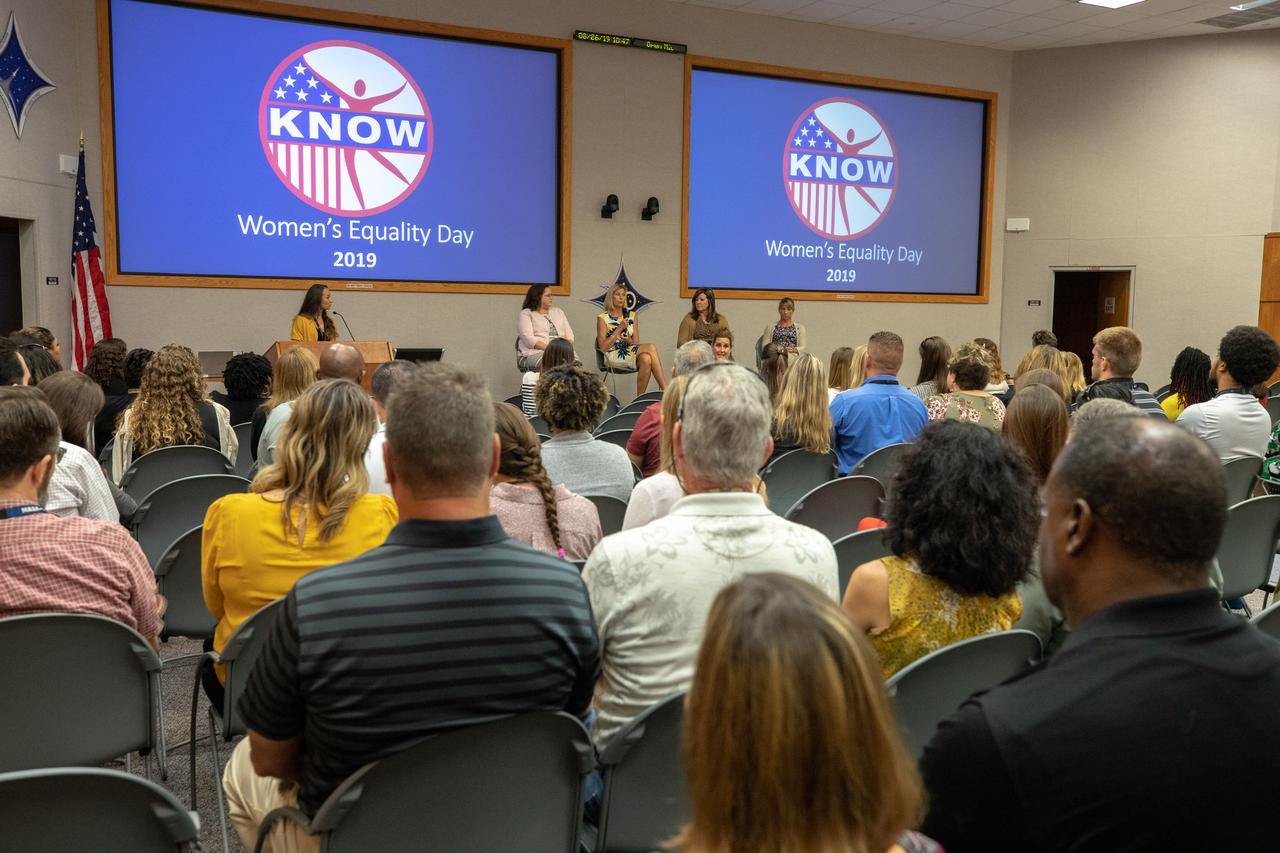
A panel discussion, featuring women in leadership roles at NASA’s Kennedy Space Center in Florida, is held on Aug. 26, 2019, to celebrate Women’s Equality Day. The event, sponsored by the Kennedy Networking Opportunities for Women (KNOW) employee resource group, honored the 100th anniversary of the passing of the 19th amendment guaranteeing all American women the right to vote. Seated in front from left, are Digna Carballosa, director of the Human Resources Office; Nancy Bray, director of Spaceport Integration and Services; Jennifer Kunz, director of Safety and Mission Assurance; and Amanda Mitskevich, Launch Services Program manager. At far left is Ashley Nelsen, Launch Service Program information manager and panel discussion moderator. The purpose of KNOW is to provide focus on issues such as employment, retention, promotion, training, career and personal development, education, and identify and eliminate barriers that hinder the advancement of women in the workforce.
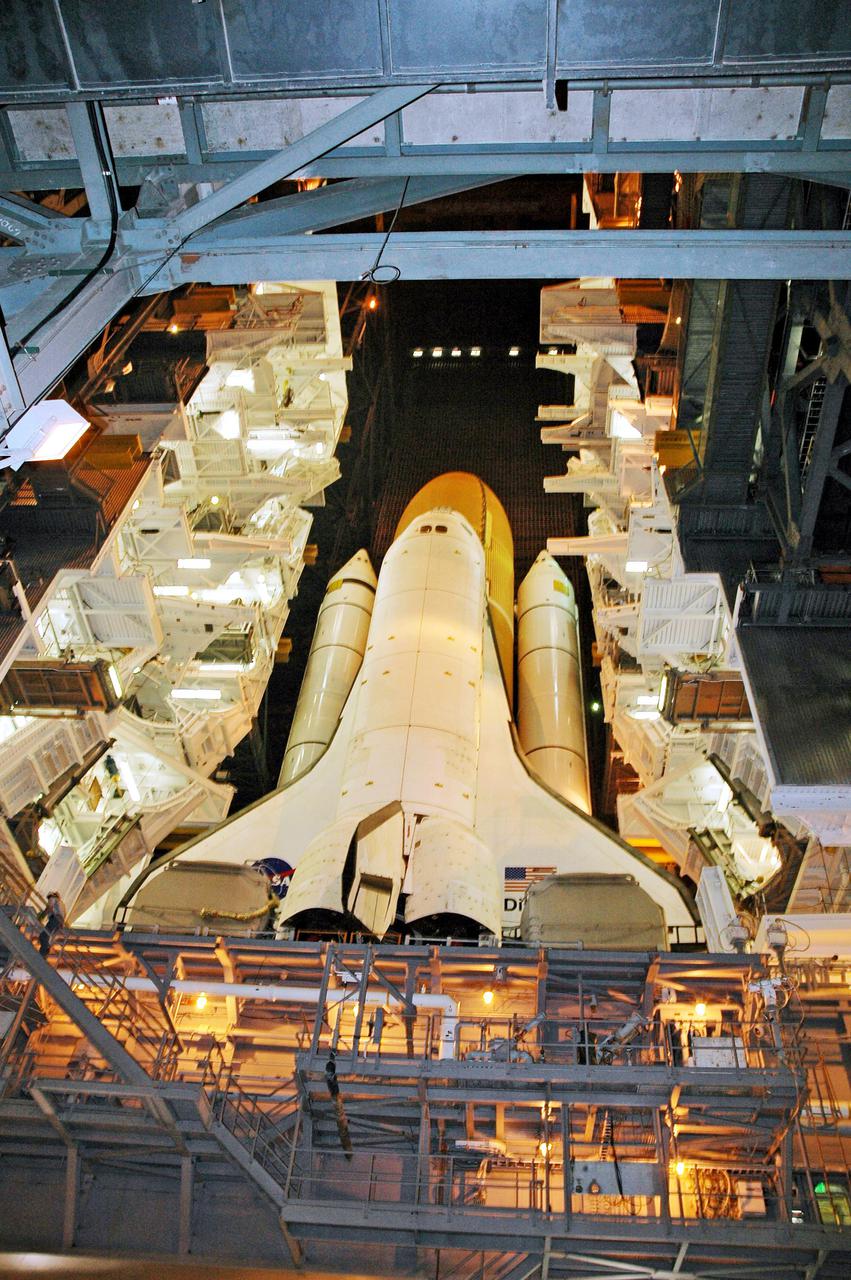
KENNEDY SPACE CENTER, FLA. - In the Vehicle Assembly Building (VAB) at NASA’s Kennedy Space Center, Space Shuttle Discovery awaits the start of its trip from high bay 3 to Launch Pad 39B, a 4-mile, 6-hour journey. First motion was at 1:58 a.m. EDT. The Space Shuttle rests on a Mobile Launcher Platform which sits atop a Crawler-Transporter. This is the second rollout of Discovery after being returned to the Vehicle Assembly Building for connection to an improved External Tank. Launch of Discovery on its Return to Flight mission STS-114 is targeted for a launch window extending from July 13 to July 31. During its 12-day mission, Discovery’s seven-person crew will test new hardware and techniques to improve Shuttle safety, as well as deliver supplies to the International Space Station.
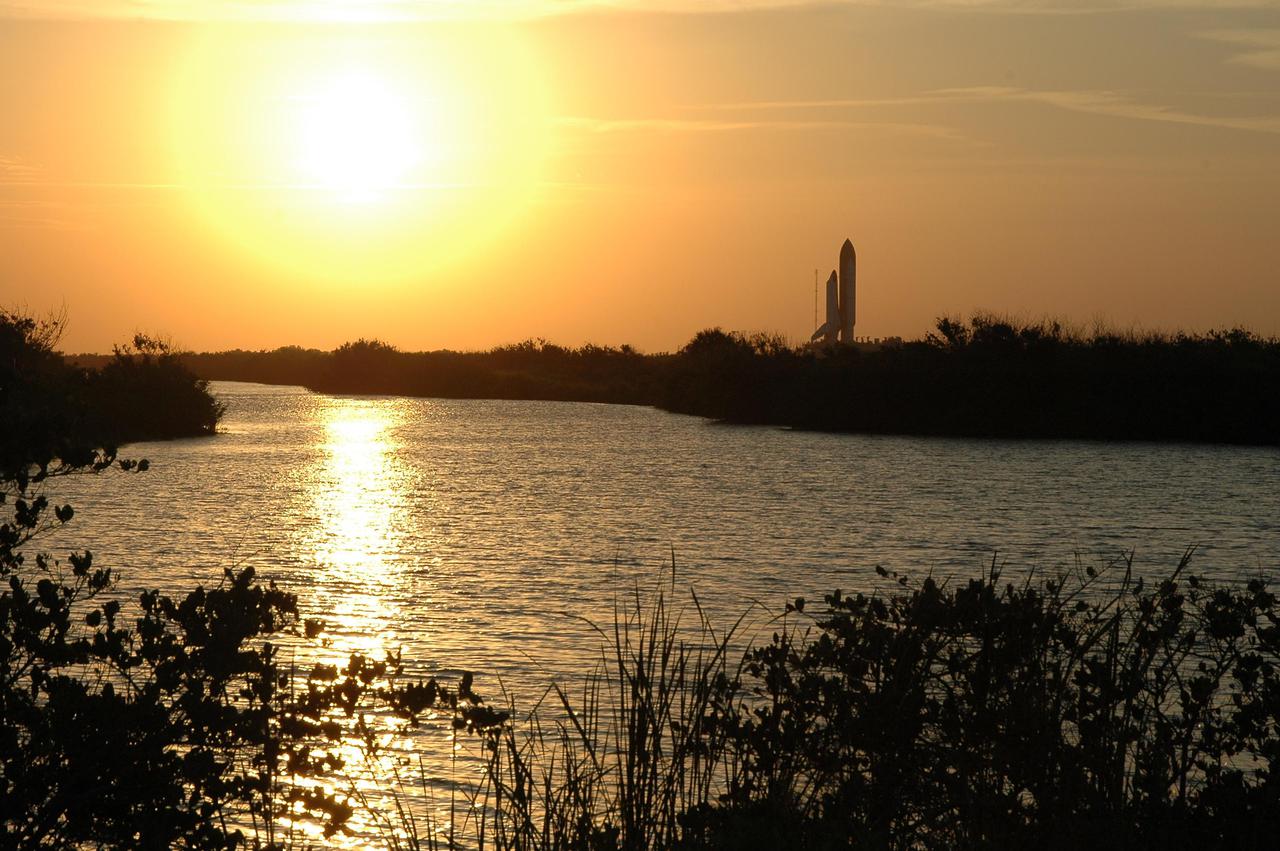
KENNEDY SPACE CENTER, FLA. - The orange glow of the setting sun paints a silhouette of Space Shuttle Discovery (on the right) as it rolls out to Launch Pad 39B at NASA’s Kennedy Space Center. The Shuttle began rollout to the pad at 2:04 p.m. EDT from the Vehicle Assembly Building at NASA’s Kennedy Space Center, marking a major milestone in the Space Shuttle Program’s Return to Flight. Launch of Discovery on its Return to Flight mission, STS-114, is targeted for May 15 with a launch window that extends to June 3. During its 12-day mission, Discovery’s seven-person crew will test new hardware and techniques to improve Shuttle safety, as well as deliver supplies to the International Space Station.
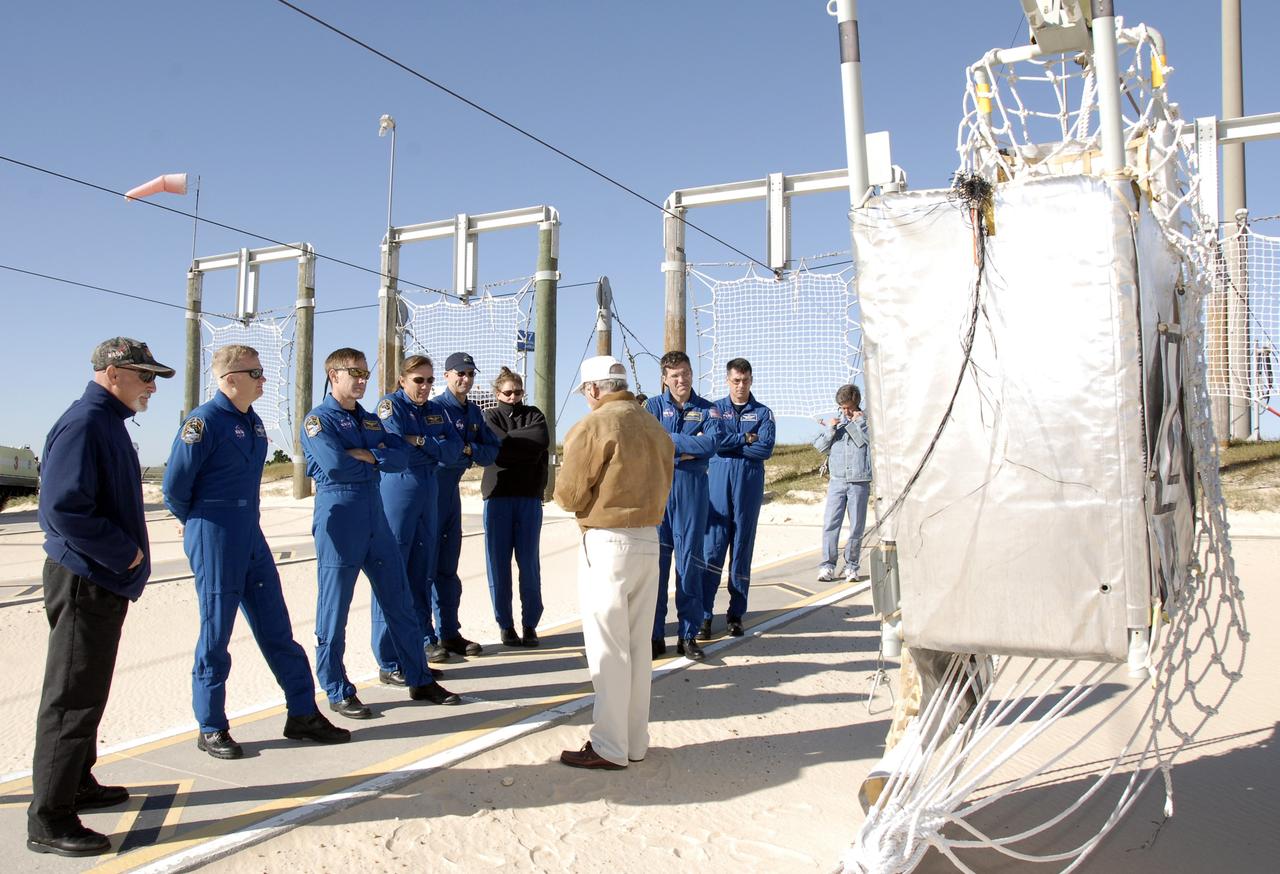
CAPE CANAVERAL, Fla. – STS-126 crew members listen to instructions about landing of the slidewire basket (at right) during emergency escape training from the shuttle and pad. From left are a safety instructor, Pilot Eric Boe, Commander Chris Ferguson and Mission Specialists Heidemarie Stefanyshyn-Piper, Donald Pettit, Sandra Magnus, Steve Bowen and Shane Kimbrough. The crew is at Kennedy to take part in the Terminal Countdown Demonstration Test, which includes equipment familiarization, emergency exit training and a simulated launch countdown. On the STS-126 mission, space shuttle Endeavour's crew will deliver equipment and supplies to the International Space Station in preparation for expansion from a three- to six-person resident crew aboard the complex. The mission also will include four spacewalks to service the station’s Solar Alpha Rotary Joints. Endeavour is targeted to launch Nov. 14. Photo credit: NASA/Kim Shiflett
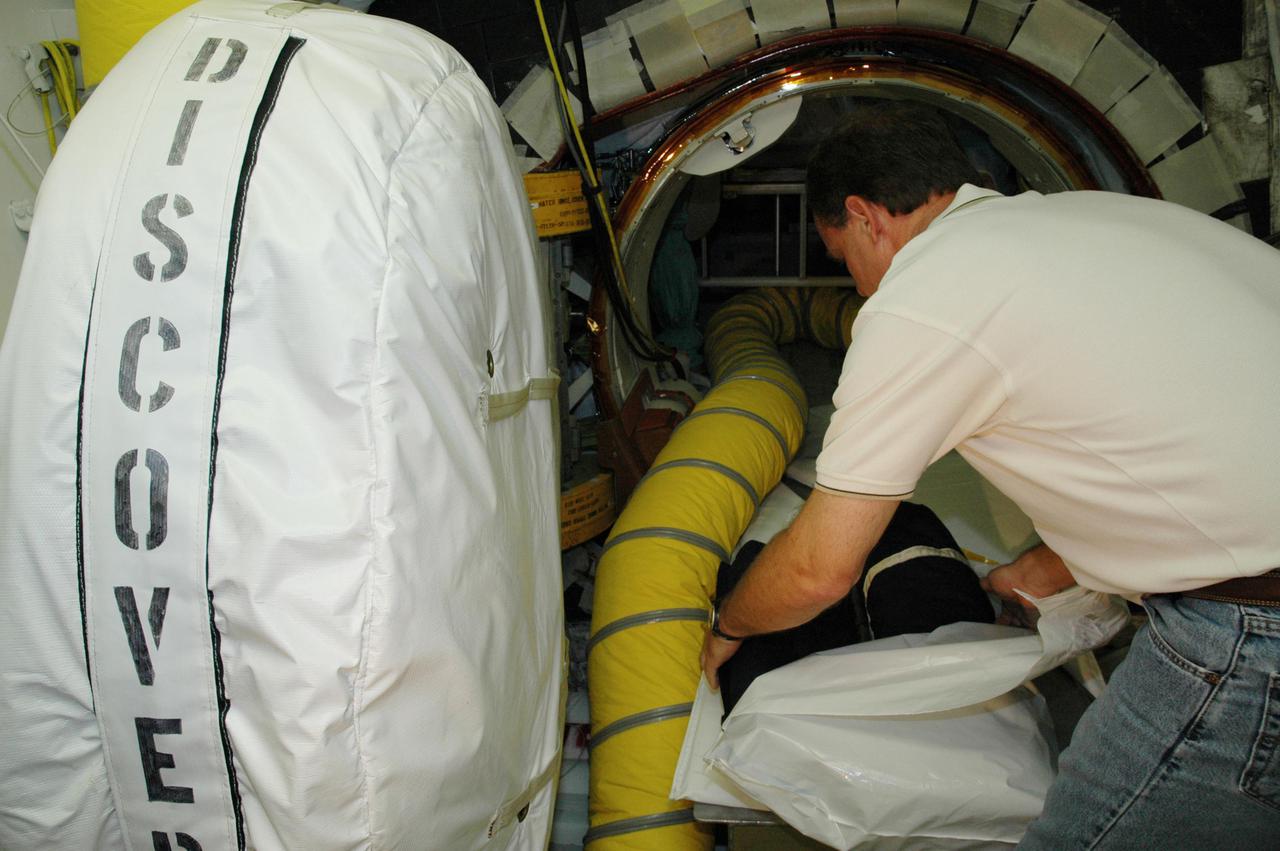
KENNEDY SPACE CENTER, FLA. - At Launch Pad 39B, United Space Alliance Flight Crew Systems engineer John Biegert passes a sleep restraint to a technician inside Space Shuttle Discovery for installation, a final step in launch preparations. Launch of Discovery on its Return to Flight mission STS-114 is set for July 13, just days away. During its 12-day mission, Discovery’s seven-person crew will test new hardware and techniques to improve Shuttle safety, as well as deliver supplies to the International Space Station. Discovery’s payloads include the Multi-Purpose Logistics Module Raffaello, the Lightweight Multi-Purpose Experiment Support Structure Carrier (LMC), and the External Stowage Platform-2 (ESP-2). Raffaello will deliver supplies to the International Space Station including food, clothing and research equipment. The LMC will carry a replacement Control Moment Gyroscope and a tile repair sample box. The ESP-2 is outfitted with replacement parts.
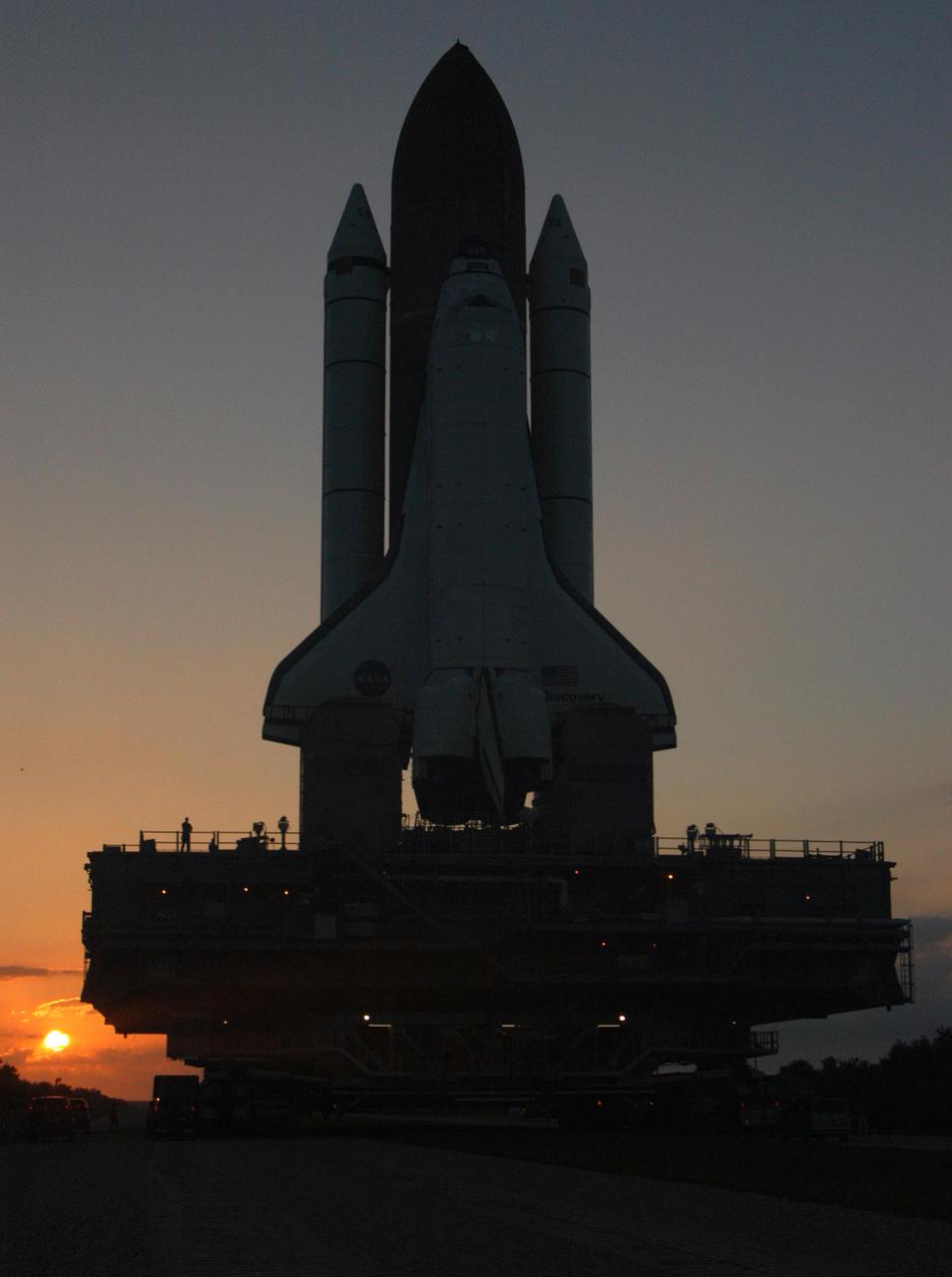
KENNEDY SPACE CENTER, FLA. - Space Shuttle Discovery makes its way along the crawlerway from high bay 3 to Launch Pad 39B as the sun rises. First motion for the 4-mile, 6-hour journey was at 1:58 a.m. EDT. The Space Shuttle rests on a Mobile Launcher Platform which sits atop a Crawler-Transporter. This is the second rollout of Discovery after being returned to the Vehicle Assembly Building for connection to an improved External Tank. Launch of Discovery on its Return to Flight mission STS-114 is targeted for a launch window extending from July 13 to July 31. During its 12-day mission, Discovery’s seven-person crew will test new hardware and techniques to improve Shuttle safety, as well as deliver supplies to the International Space Station.
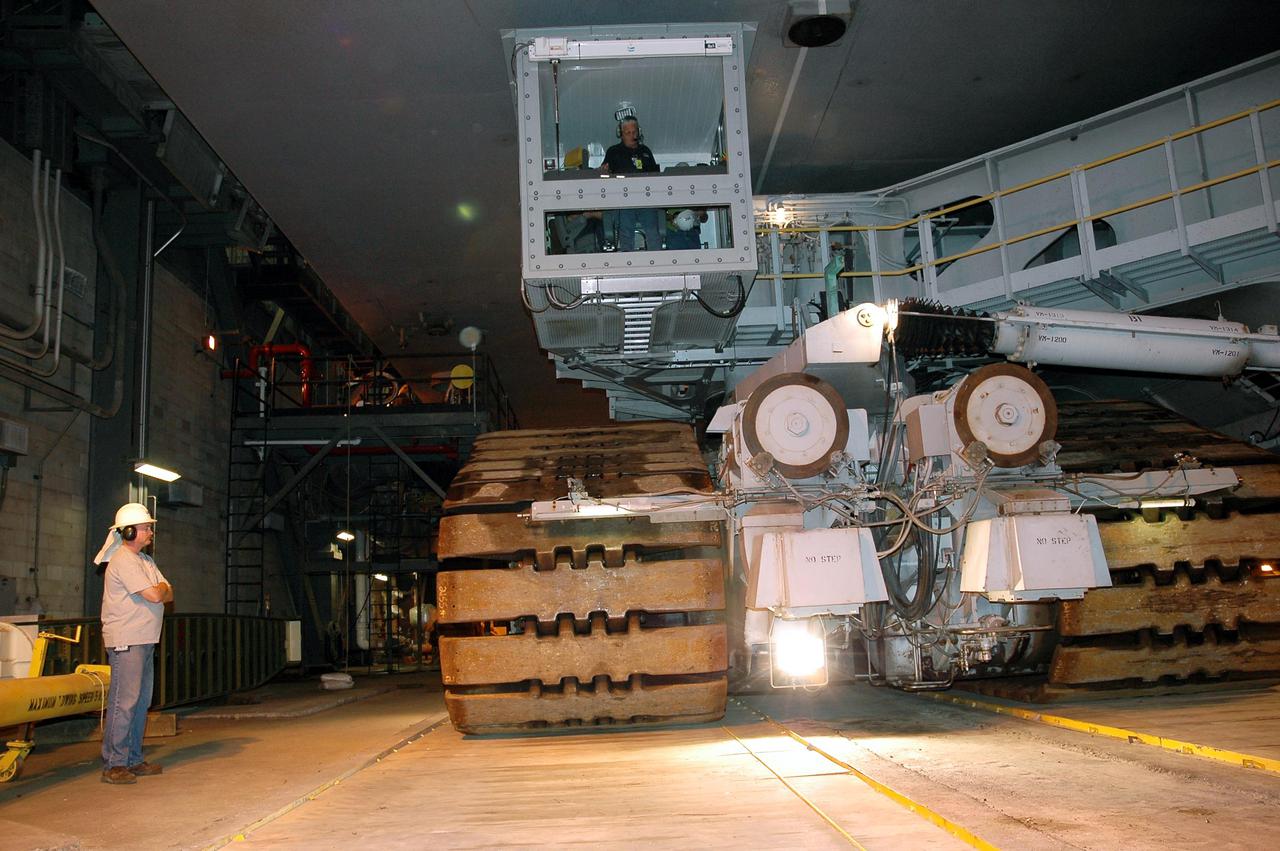
KENNEDY SPACE CENTER, FLA. - In the Vehicle Assembly Building (VAB) at NASA’s Kennedy Space Center, a Crawler-Transporter prepares to move Space Shuttle Discovery from high bay 3 to Launch Pad 39B, a 4-mile, 6-hour journey. First motion was at 1:58 a.m. EDT. The Space Shuttle rests on a Mobile Launcher Platform which sits atop the Crawler-Transporter. This is the second rollout of Discovery after being returned to the Vehicle Assembly Building for connection to an improved External Tank. Launch of Discovery on its Return to Flight mission STS-114 is targeted for a launch window extending from July 13 to July 31. During its 12-day mission, Discovery’s seven-person crew will test new hardware and techniques to improve Shuttle safety, as well as deliver supplies to the International Space Station.
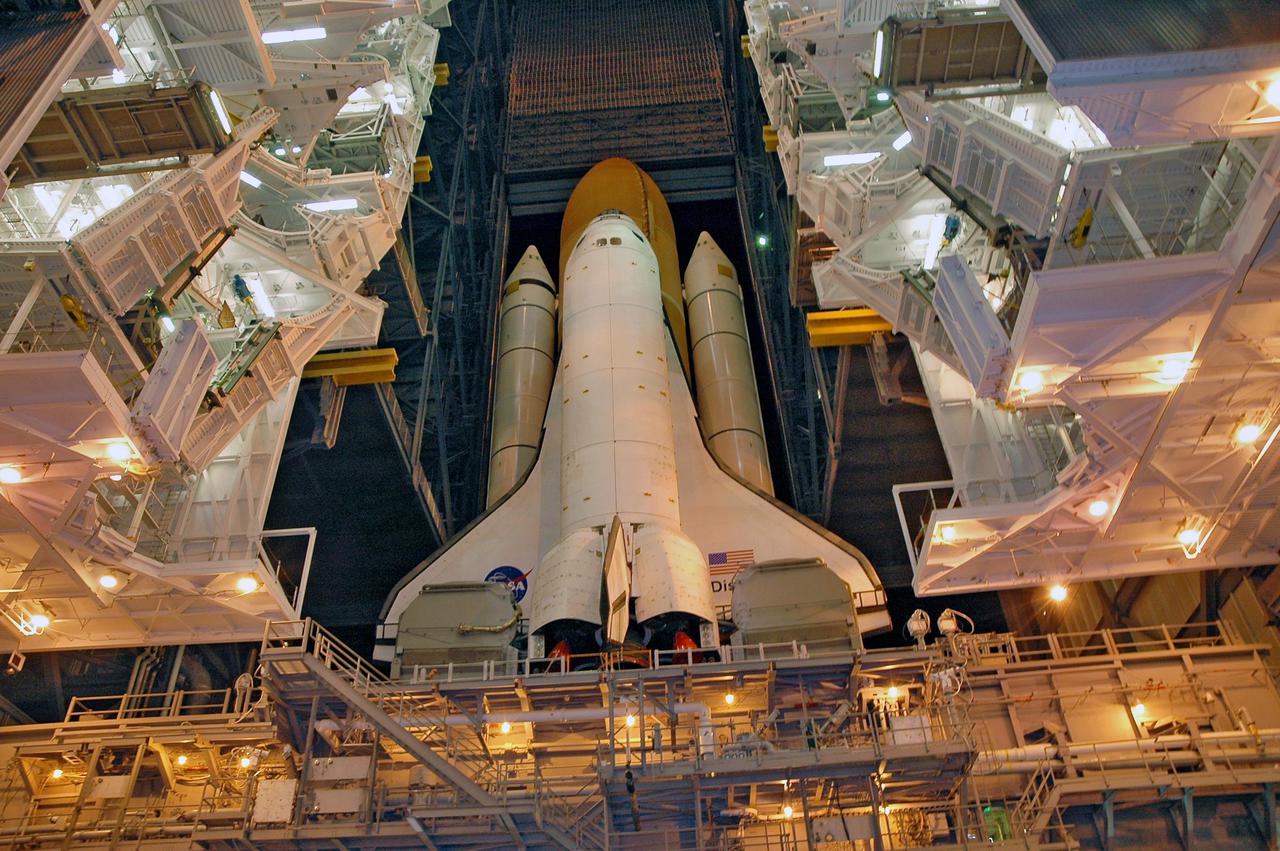
KENNEDY SPACE CENTER, FLA. - In the Vehicle Assembly Building (VAB) at NASA’s Kennedy Space Center, Space Shuttle Discovery begins its trip from high bay 3 to Launch Pad 39B, a 4-mile, 6-hour journey. First motion was at 1:58 a.m. EDT. The Space Shuttle rests on a Mobile Launcher Platform which sits atop a Crawler-Transporter. This is the second rollout of Discovery after being returned to the Vehicle Assembly Building for connection to an improved External Tank. Launch of Discovery on its Return to Flight mission STS-114 is targeted for a launch window extending from July 13 to July 31. During its 12-day mission, Discovery’s seven-person crew will test new hardware and techniques to improve Shuttle safety, as well as deliver supplies to the International Space Station.
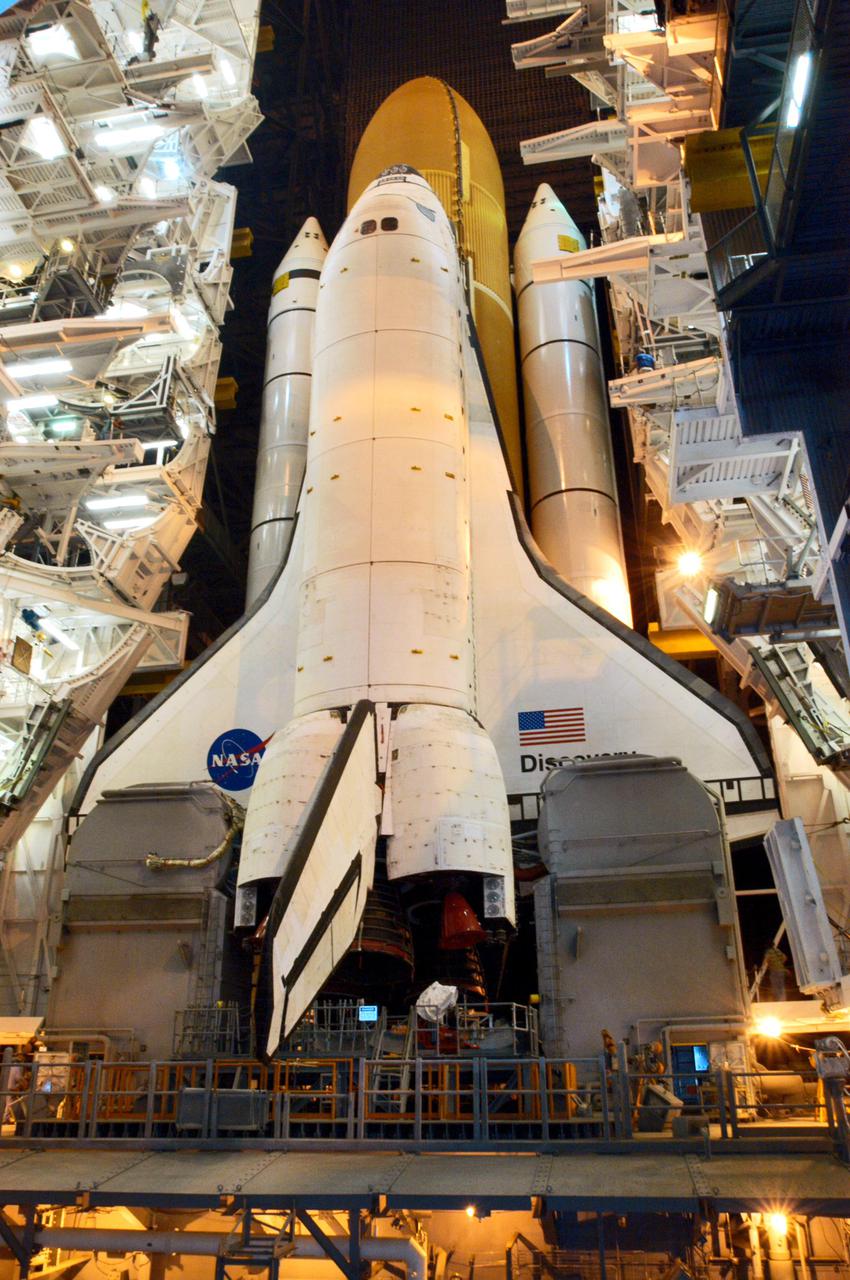
KENNEDY SPACE CENTER, FLA. - In the Vehicle Assembly Building (VAB) at NASA’s Kennedy Space Center, Space Shuttle Discovery exits high bay 3 to begin its trip to Launch Pad 39B, a 4-mile, 6-hour journey. First motion was at 1:58 a.m. EDT. The Space Shuttle rests on a Mobile Launcher Platform which sits atop a Crawler-Transporter. This is the second rollout of Discovery after being returned to the Vehicle Assembly Building for connection to an improved External Tank. Launch of Discovery on its Return to Flight mission STS-114 is targeted for a launch window extending from July 13 to July 31. During its 12-day mission, Discovery’s seven-person crew will test new hardware and techniques to improve Shuttle safety, as well as deliver supplies to the International Space Station.
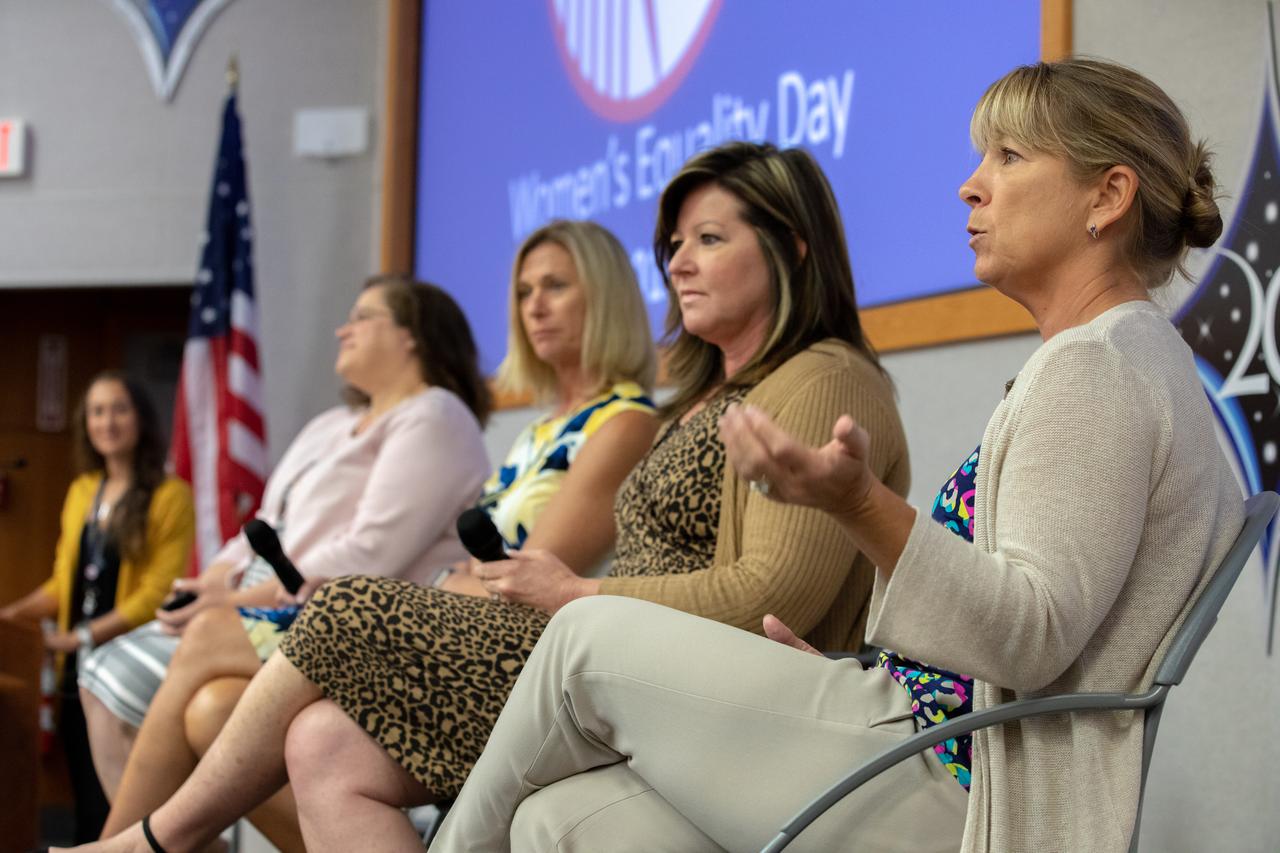
A panel discussion, featuring women in leadership roles at NASA’s Kennedy Space Center in Florida, is held on Aug. 26, 2019, to celebrate Women’s Equality Day. The event, sponsored by the Kennedy Networking Opportunities for Women (KNOW) employee resource group, honored the 100th anniversary of the passing of the 19th amendment guaranteeing all American women the right to vote. Seated in front from left, are Digna Carballosa, director of the Human Resources Office; Nancy Bray, director of Spaceport Integration and Services; Jennifer Kunz, director of Safety and Mission Assurance; and Amanda Mitskevich, Launch Services Program manager. At far left, is Ashley Nelsen, Launch Service Program information manager and panel discussion moderator. The purpose of KNOW is to provide focus on issues such as employment, retention, promotion, training, career and personal development, education, and identify and eliminate barriers that hinder the advancement of women in the workforce.
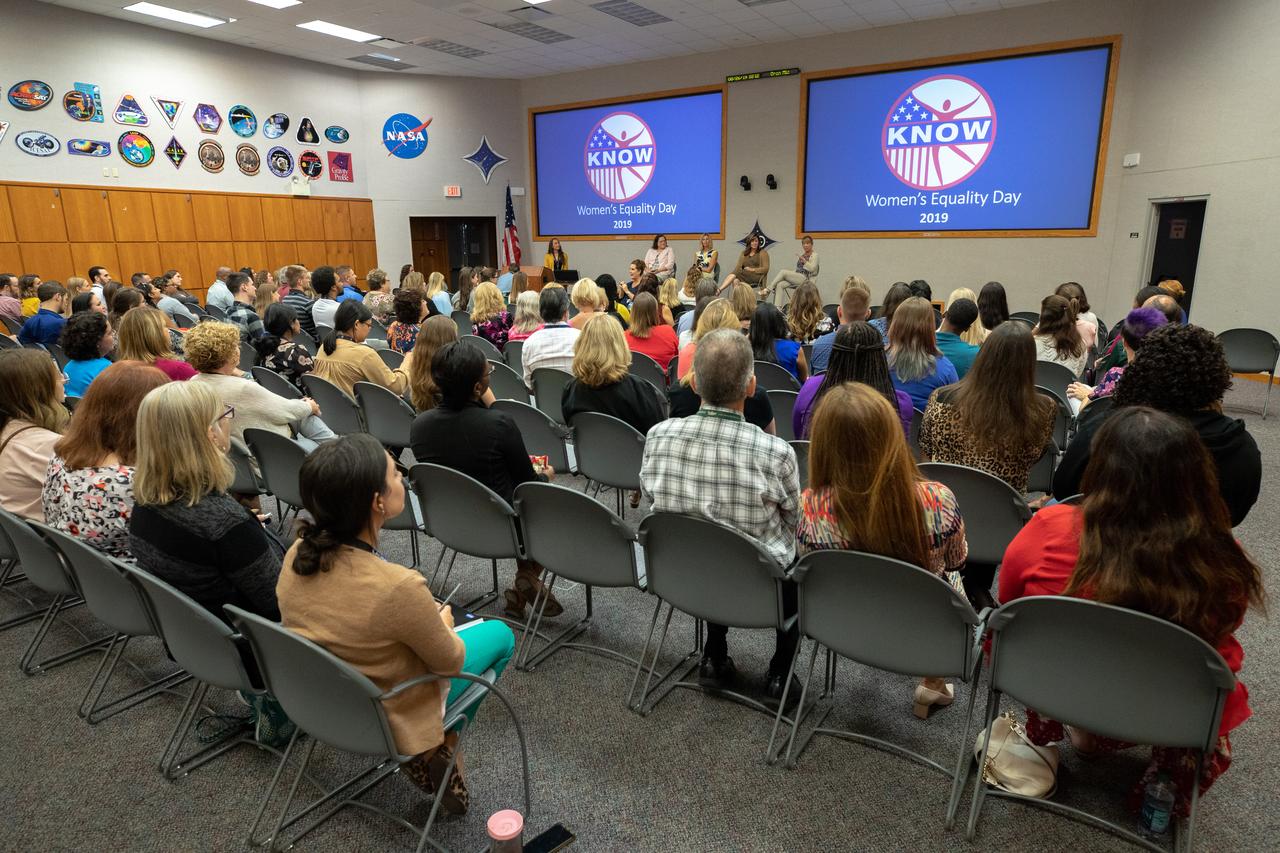
A panel discussion, featuring women in leadership roles at NASA’s Kennedy Space Center in Florida, is held on Aug. 26, 2019, to celebrate Women’s Equality Day. The event, sponsored by the Kennedy Networking Opportunities for Women (KNOW) employee resource group, honored the 100th anniversary of the passing of the 19th amendment guaranteeing all American women the right to vote. Seated in front from left, are Digna Carballosa, director of the Human Resources Office; Nancy Bray, director of Spaceport Integration and Services; Jennifer Kunz, director of Safety and Mission Assurance; and Amanda Mitskevich, Launch Services Program manager. At far left is Ashley Nelsen, Launch Service Program information manager and panel discussion moderator. The purpose of KNOW is to provide focus on issues such as employment, retention, promotion, training, career and personal development, education, and identify and eliminate barriers that hinder the advancement of women in the workforce.

Pararescue specialists from the 304th Rescue Squadron, located in Portland, Oregon and supporting the 45th Operations Group’s Detachment 3, based out of Patrick Air Force Base, secure a covered life raft as the sun sets during an astronaut rescue training exercise with NASA’s Commercial Crew Program and SpaceX off of Florida’s eastern coast in April. The specially designed 20-person life raft is equipped with enough food, water and medical supplies to sustain both rescuers and crew for up to three days, if necessary. In this situation, the Department of Defense (DOD) would complete the rescue by enlisting help from the US Coast Guard, a DOD ship, or a nearby commercial ship of opportunity to transport the crew to safety.
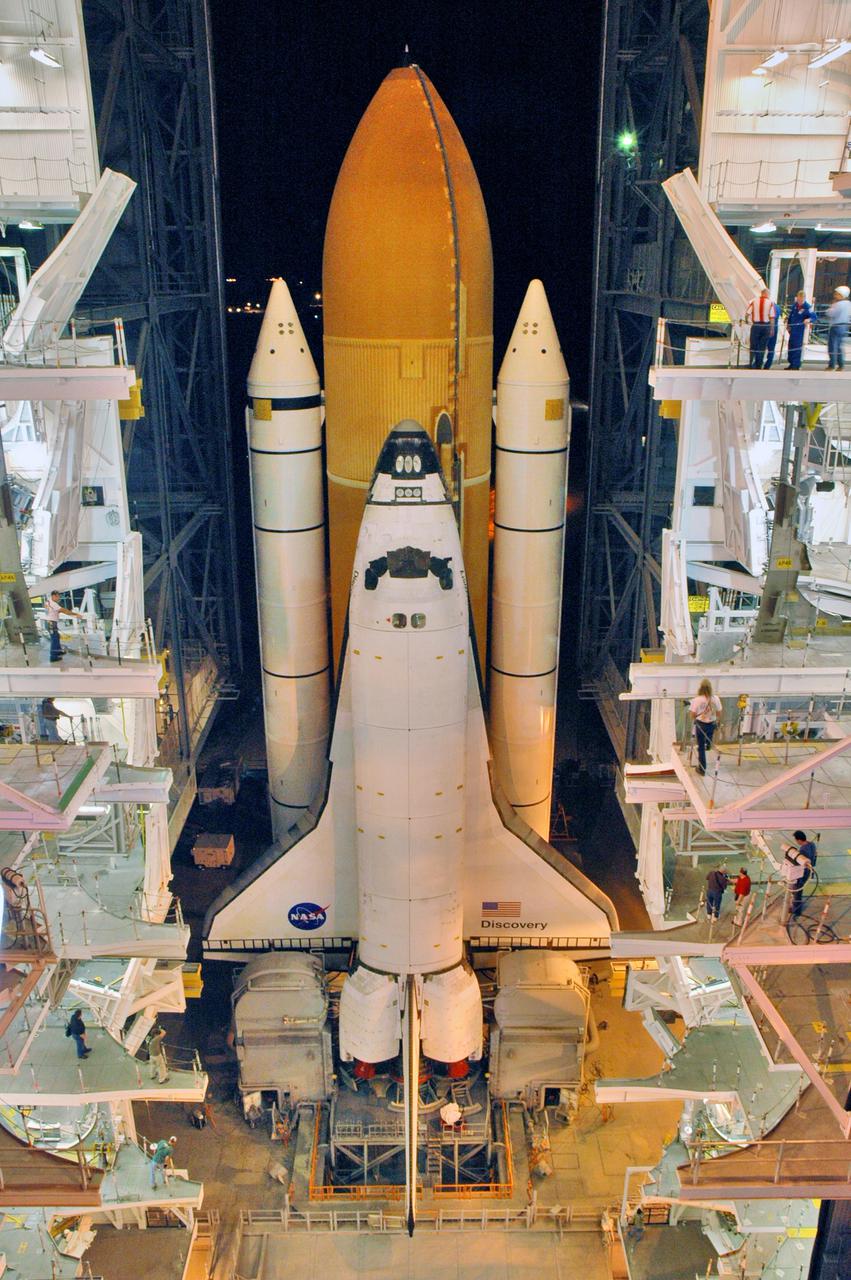
KENNEDY SPACE CENTER, FLA. - In the Vehicle Assembly Building (VAB) at NASA’s Kennedy Space Center, Space Shuttle Discovery begins its trip from high bay 3 to Launch Pad 39B, a 4-mile, 6-hour journey. First motion was at 1:58 a.m. EDT. The Space Shuttle rests on a Mobile Launcher Platform which sits atop a Crawler-Transporter. This is the second rollout of Discovery after being returned to the Vehicle Assembly Building for connection to an improved External Tank. Launch of Discovery on its Return to Flight mission STS-114 is targeted for a launch window extending from July 13 to July 31. During its 12-day mission, Discovery’s seven-person crew will test new hardware and techniques to improve Shuttle safety, as well as deliver supplies to the International Space Station.
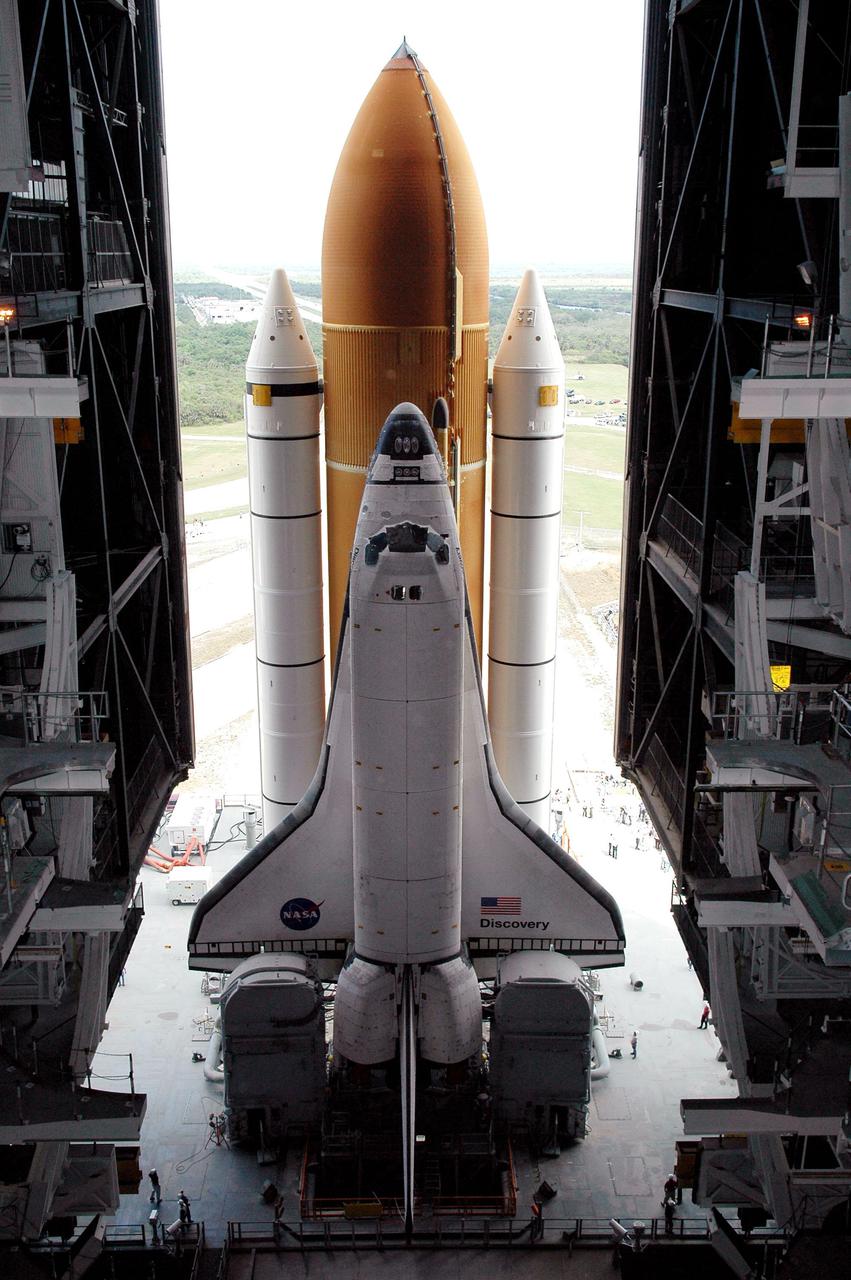
KENNEDY SPACE CENTER, FLA. - In the Vehicle Assembly Building (VAB) at NASA’s Kennedy Space Center, Space Shuttle Discovery passes through the open doors as it begins its long, slow journey to Launch Pad 39B. First motion was at 2:04 p.m. EDT. The Shuttle comprises the orbiter, External Tank (ET) and twin Solid Rocket Boosters (SRBs). The Space Shuttle rests on the Mobile Launcher Platform, which is moved by the Crawler-Transporter underneath. The Crawler is 20 feet high, 131 feet long and 114 feet wide. It moves on eight tracks, each containing 57 shoes, or cleats, weighing one ton each. Loaded with the Space Shuttle, the Crawler can move at a maximum speed of approximately 1 mile an hour. A leveling system in the Crawler keeps the Shuttle vertical while negotiating the 5 percent grade leading to the top of the launch pad. Launch of Discovery on its Return to Flight mission, STS-114, is targeted for May 15 with a launch window that extends to June 3. During its 12-day mission, Discovery’s seven-person crew will test new hardware and techniques to improve Shuttle safety, as well as deliver supplies to the International Space Station. Discovery was moved on March 29 from the Orbiter Processing Facility to the VAB and attached to its propulsion elements, a redesigned ET and twin SRBs.
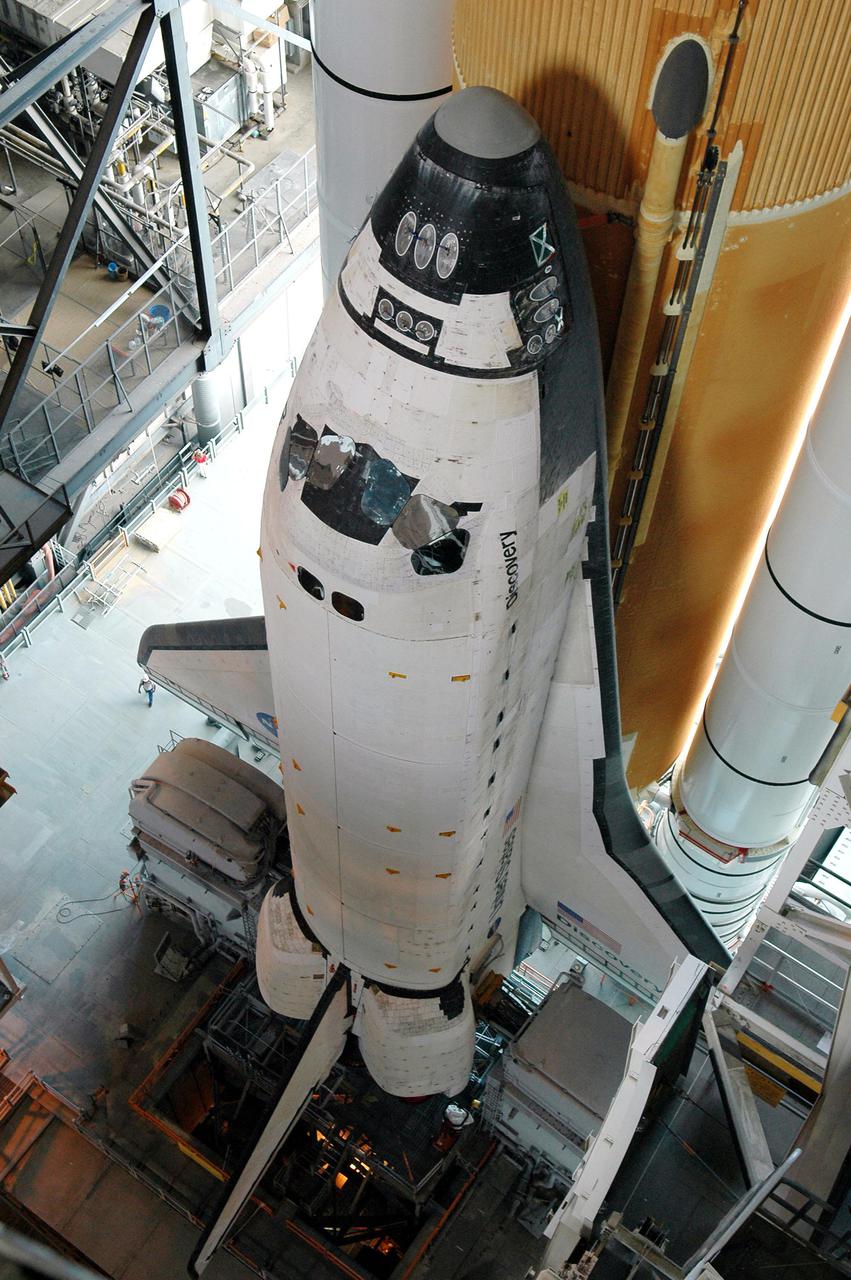
KENNEDY SPACE CENTER, FLA. - In the Vehicle Assembly Building (VAB) at NASA’s Kennedy Space Center, Space Shuttle Discovery is beginning its long, slow journey to Launch Pad 39B. First motion was at 2:04 p.m. EDT. The Shuttle comprises the orbiter, External Tank (ET) and twin Solid Rocket Boosters (SRBs). The Space Shuttle rests on the Mobile Launcher Platform, which is moved by the Crawler-Transporter underneath. The Crawler is 20 feet high, 131 feet long and 114 feet wide. It moves on eight tracks, each containing 57 shoes, or cleats, weighing one ton each. Loaded with the Space Shuttle, the Crawler can move at a maximum speed of approximately 1 mile an hour. A leveling system in the Crawler keeps the Shuttle vertical while negotiating the 5 percent grade leading to the top of the launch pad. Launch of Discovery on its Return to Flight mission, STS-114, is targeted for May 15 with a launch window that extends to June 3. During its 12-day mission, Discovery’s seven-person crew will test new hardware and techniques to improve Shuttle safety, as well as deliver supplies to the International Space Station. Discovery was moved on March 29 from the Orbiter Processing Facility to the VAB and attached to its propulsion elements, a redesigned ET and twin SRBs.
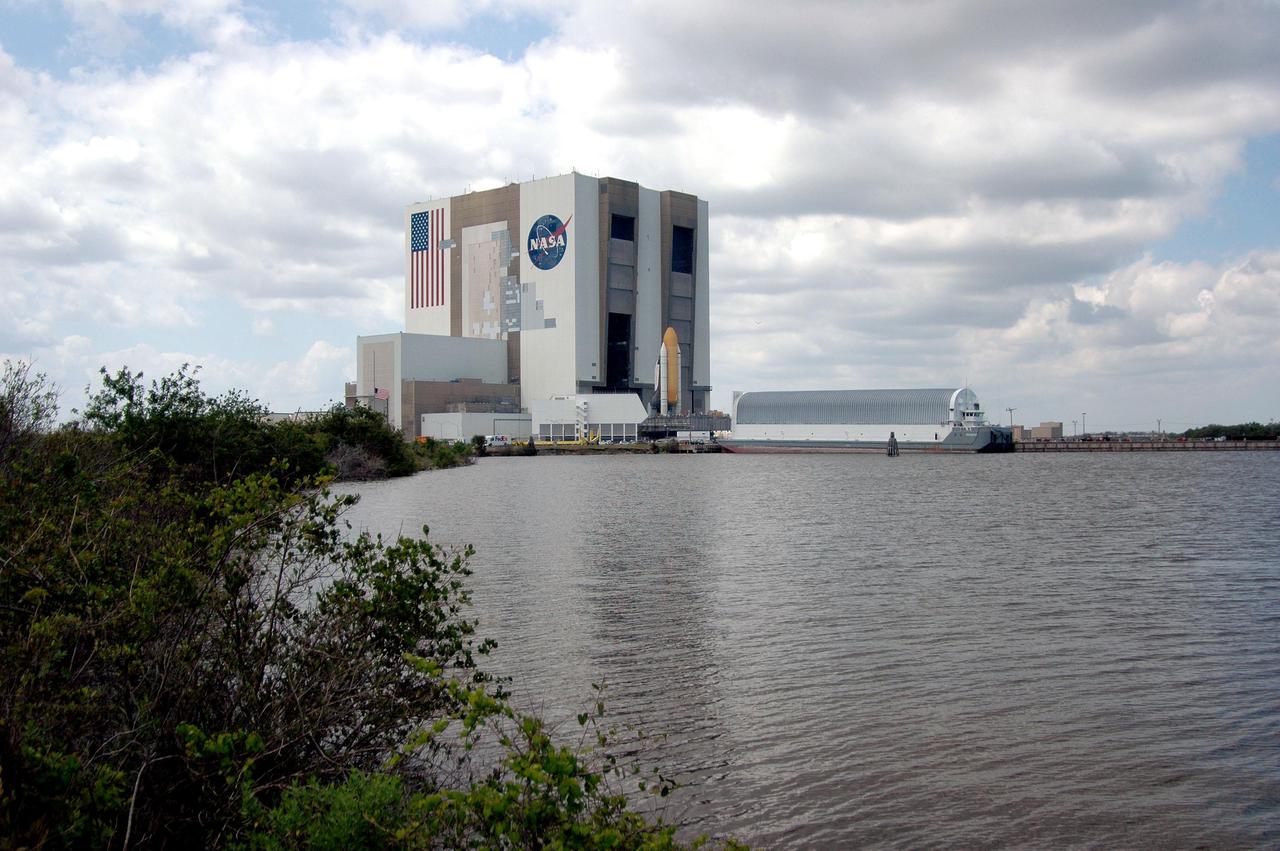
KENNEDY SPACE CENTER, FLA. - Across the Turn Basin at NASA’s Kennedy Space Center looms the Vehicle Assembly Building (VAB). In front of the massive doors is Space Shuttle Discovery, atop the Mobile Launcher Platform, wending its way slowly to Launch Pad 39B. First motion out of the VAB was at 2:04 p.m. EDT. The Mobile Launcher Platform is moved by the Crawler-Transporter underneath. The Crawler is 20 feet high, 131 feet long and 114 feet wide. It moves on eight tracks, each containing 57 shoes, or cleats, weighing one ton each. Loaded with the Space Shuttle, the Crawler can move at a maximum speed of approximately 1 mile an hour. A leveling system in the Crawler keeps the Shuttle vertical while negotiating the 5 percent grade leading to the top of the launch pad. Launch of Discovery on its Return to Flight mission, STS-114, is targeted for May 15 with a launch window that extends to June 3. During its 12-day mission, Discovery’s seven-person crew will test new hardware and techniques to improve Shuttle safety, as well as deliver supplies to the International Space Station. Discovery was moved on March 29 from the Orbiter Processing Facility to the VAB and attached to its propulsion elements, a redesigned ET and twin SRBs.
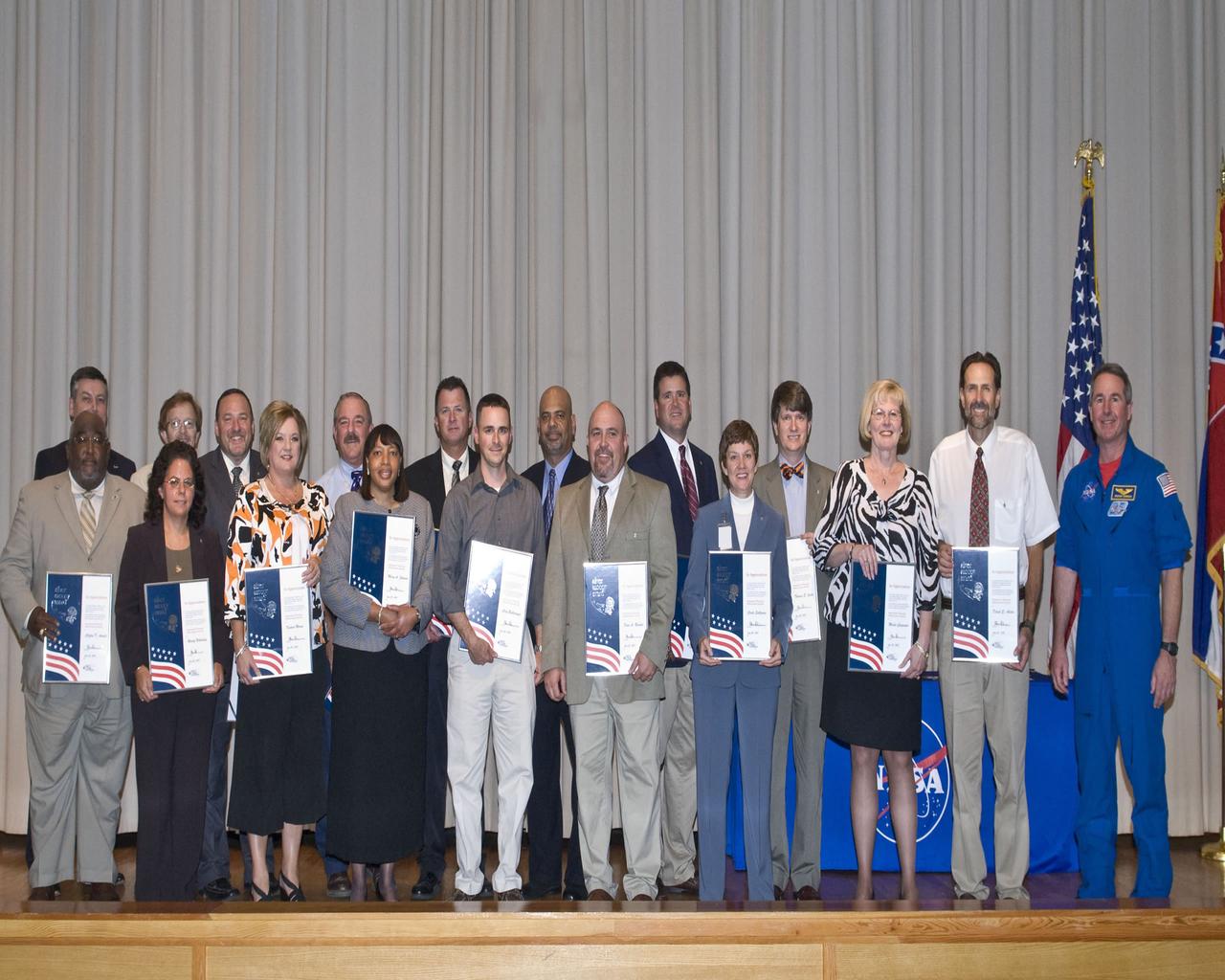
NASA's John C. Stennis Space Center Director Patrick Scheuermann and astronaut Steve Robinson stand with recipients of the 2010 Silver Snoopy awards following a June 23 ceremony. Sixteen Stennis employees received the astronauts' personal award, which is presented by a member of the astronaut corps representing its core principles for outstanding flight safety and mission success. This year's recipients and ceremony participants were: (front row, l to r): Cliff Arnold (NASA), Wendy Holladay (NASA), Kendra Moran (Pratt & Whitney Rocketdyne), Mary Johnson (Jacobs Technology Facility Operating Services Contract group), Cory Beckemeyer (PWR), Dean Bourlet (PWR), Cecile Saltzman (NASA), Marla Carpenter (Jacobs FOSC), David Alston (Jacobs FOSC); (back row, l to r) Scheuermann, Don Wilson (A2 Research), Tim White (NASA), Ira Lossett (Jacobs Technology NASA Test Operations Group), Kerry Gallagher (Jacobs NTOG); Rene LeFrere (PWR), Todd Ladner (ASRC Research and Technology Solutions) and Thomas Jacks (NASA).
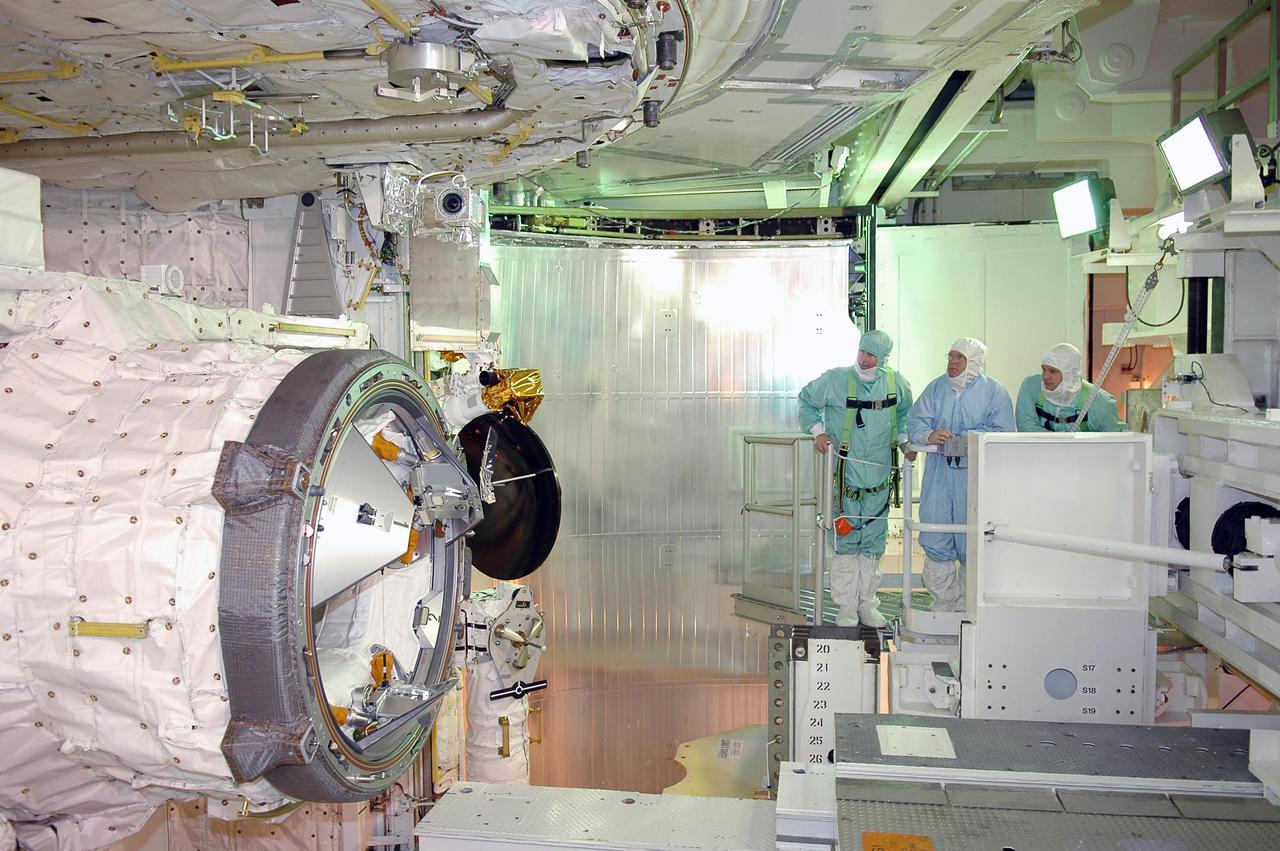
KENNEDY SPACE CENTER, FLA. - At Launch Pad 39B, STS-114 Mission Specialists Stephen Robinson (left) and Andrew Thomas discuss the payloads in Space Shuttle Discovery's cargo bay with a technician. The STS-114 crew is conducting a final inspection of their mission payloads before launch. During its 12-day mission, Discovery’s seven-person crew will test new hardware and techniques to improve Shuttle safety, as well as deliver supplies to the International Space Station. Discovery’s payloads include the Multi-Purpose Logistics Module Raffaello, the Lightweight Multi-Purpose Experiment Support Structure Carrier (LMC), and the External Stowage Platform-2 (ESP-2). Raffaello will deliver supplies to the International Space Station including food, clothing and research equipment. The LMC will carry a replacement Control Moment Gyroscope and a tile repair sample box. The ESP-2 is outfitted with replacement parts. Launch of Discovery on its Return to Flight mission STS-114 is set for July 13.
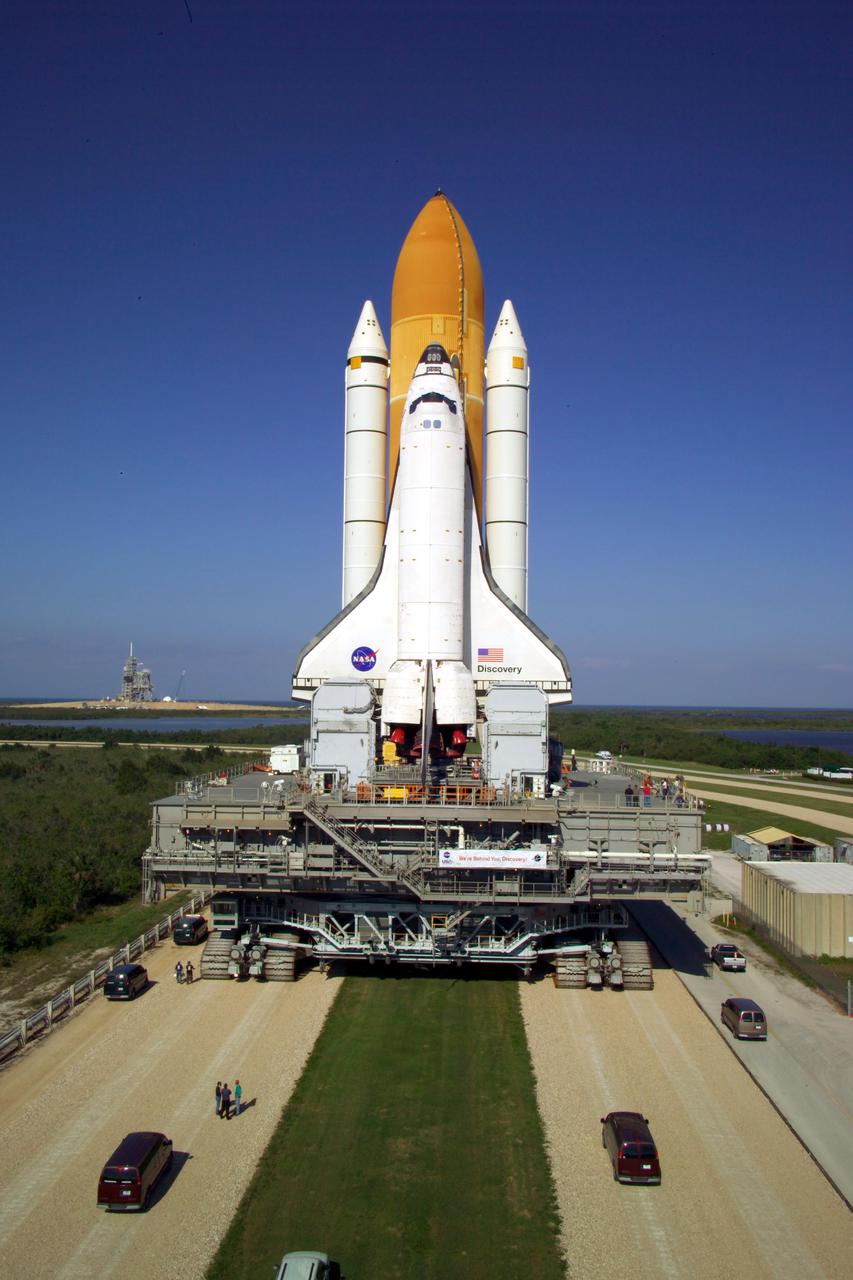
KENNEDY SPACE CENTER, FLA. - At NASA’s Kennedy Space Center, Space Shuttle Discovery, atop the Mobile Launcher Platform (MLP), crawls toward Launch Complex 39B. First motion out of the Vehicle Assembly Building occurred at 2:04 p.m. EDT. The rollout marks a major milestone in the Space Shuttle Program’s Return to Flight. The MLP is moved by the Crawler-Transporter underneath, which stands 20 feet high, 131 feet long and 114 feet wide. It moves on eight tracks, each containing 57 shoes, or cleats, weighing one ton each. Loaded with the Space Shuttle, the Crawler can move at a maximum speed of approximately 1 mile an hour. A leveling system in the Crawler keeps the Shuttle vertical while negotiating the 5 percent grade leading to the top of the launch pad. Launch of Discovery on its Return to Flight mission, STS-114, is targeted for May 15 with a launch window that extends to June 3. During its 12-day mission, Discovery’s seven-person crew will test new hardware and techniques to improve Shuttle safety, as well as deliver supplies to the International Space Station.
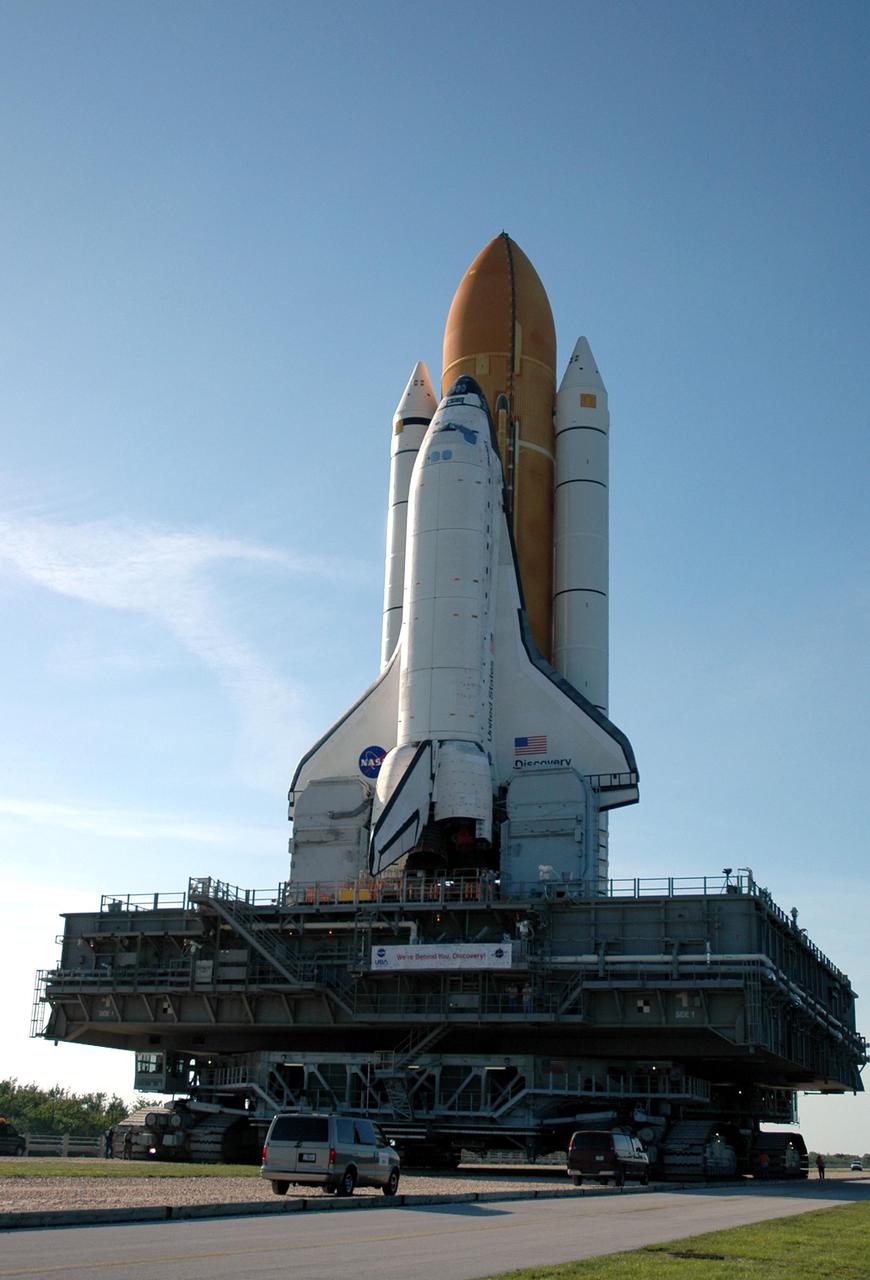
KENNEDY SPACE CENTER, FLA. - Space Shuttle Discovery, atop a Mobile Launcher Platform (MLP), crawls toward Launch Complex 39B. First motion out of the Vehicle Assembly Building occurred at 2:04 p.m. EDT. The rollout marks a major milestone in the Space Shuttle Program’s Return to Flight. The MLP is moved by the Crawler-Transporter underneath, which stands 20 feet high, 131 feet long and 114 feet wide. It moves on eight tracks, each containing 57 shoes, or cleats, weighing one ton each. Loaded with the Space Shuttle, the Crawler can move at a maximum speed of approximately 1 mile an hour. A leveling system in the Crawler keeps the Shuttle vertical while negotiating the 5 percent grade leading to the top of the launch pad. Launch of Discovery on its Return to Flight mission, STS-114, is targeted for May 15 with a launch window that extends to June 3. During its 12-day mission, Discovery’s seven-person crew will test new hardware and techniques to improve Shuttle safety, as well as deliver supplies to the International Space Station.
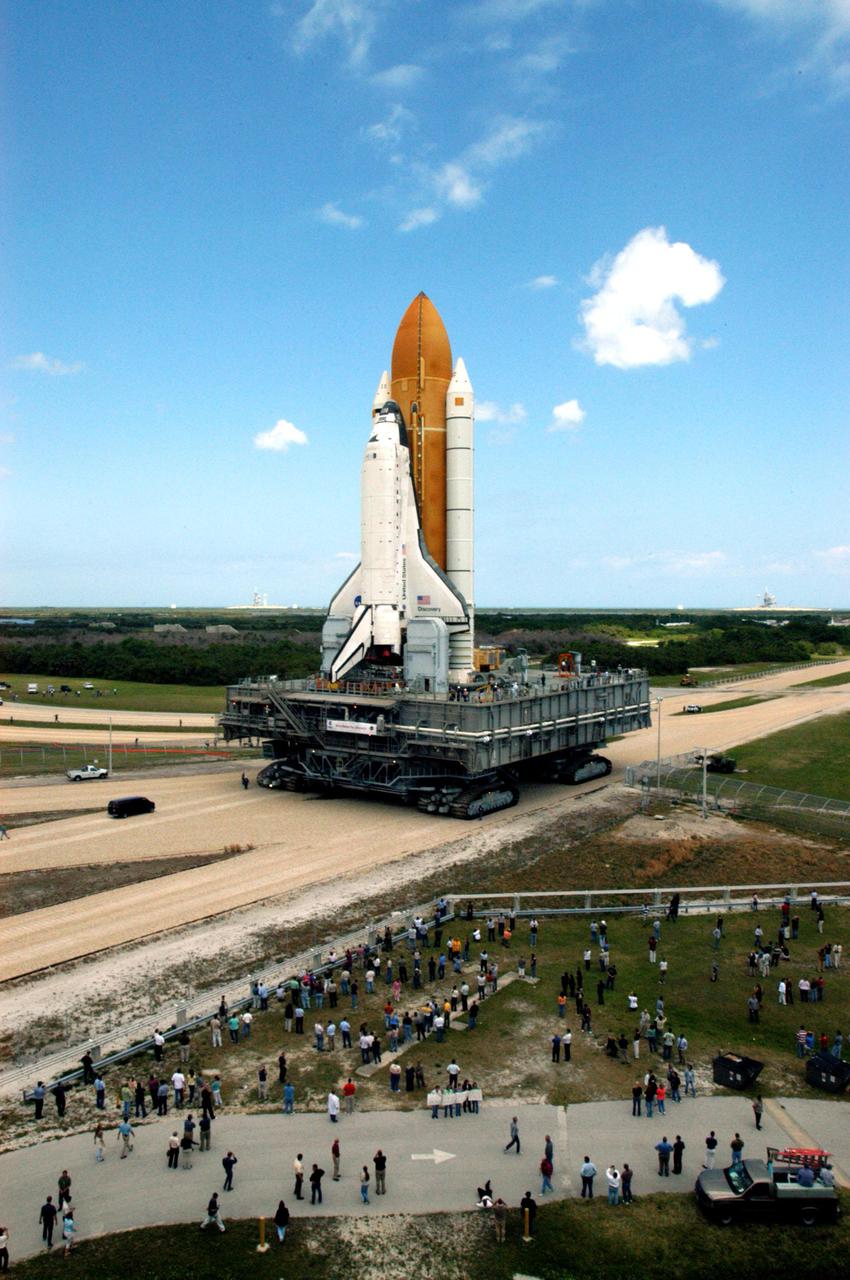
KENNEDY SPACE CENTER, FLA. - As Space Shuttle Discovery creeps along the crawlerway toward the horizon, and Launch Pad 39B at NASA’s Kennedy Space Center, media and workers in the foreground appear as ants. First motion of the Shuttle out of the Vehicle Assembly Building (VAB) was at 2:04 p.m. EDT. The Mobile Launcher Platform is moved by the Crawler-Transporter underneath. The Crawler is 20 feet high, 131 feet long and 114 feet wide. It moves on eight tracks, each containing 57 shoes, or cleats, weighing one ton each. Loaded with the Space Shuttle, the Crawler can move at a maximum speed of approximately 1 mile an hour. A leveling system in the Crawler keeps the Shuttle vertical while negotiating the 5 percent grade leading to the top of the launch pad. Launch of Discovery on its Return to Flight mission, STS-114, is targeted for May 15 with a launch window that extends to June 3. During its 12-day mission, Discovery’s seven-person crew will test new hardware and techniques to improve Shuttle safety, as well as deliver supplies to the International Space Station. Discovery was moved on March 29 from the Orbiter Processing Facility to the VAB and attached to its propulsion elements, a redesigned ET and twin SRBs.
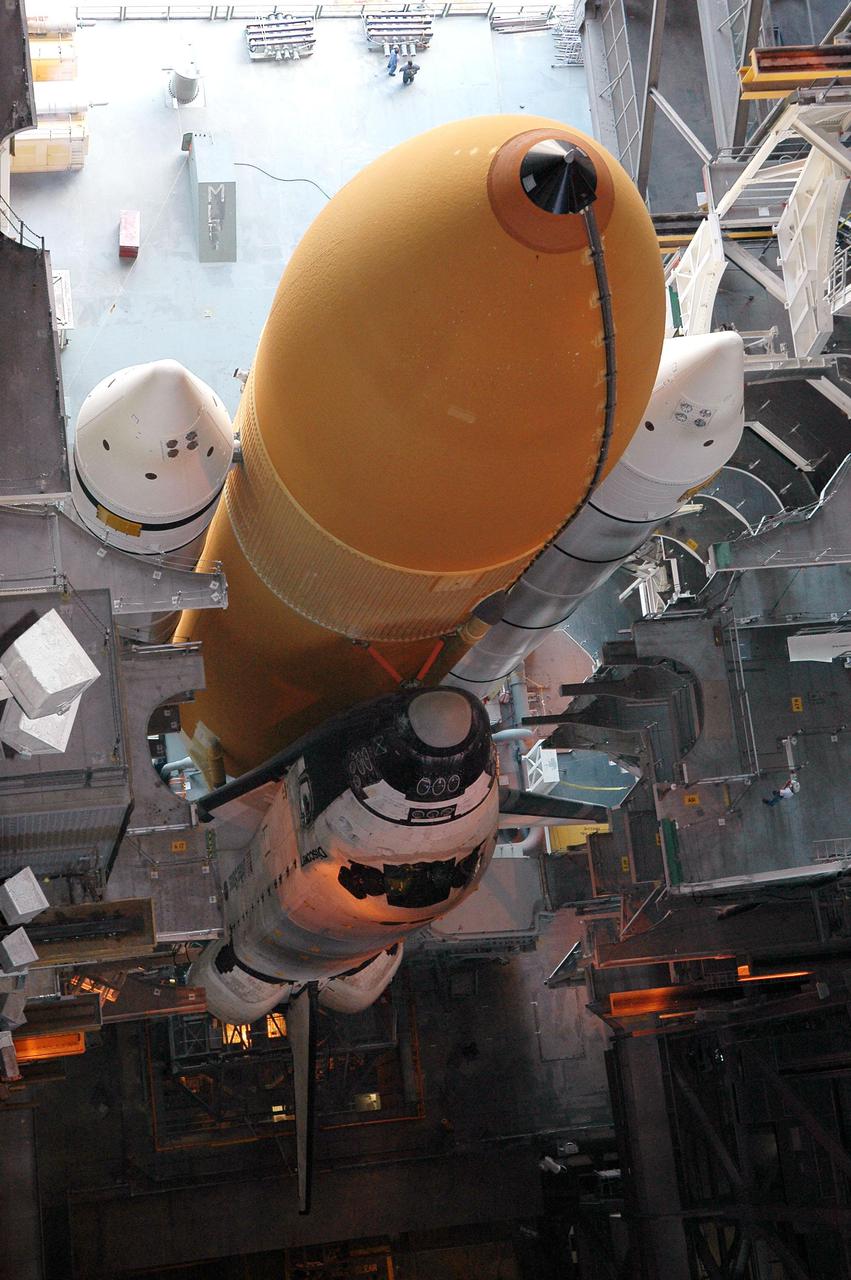
KENNEDY SPACE CENTER, FLA. - The open doors of the Vehicle Assembly Building (VAB) at NASA’s Kennedy Space Center cast light on Space Shuttle Discovery. The Shuttle, which comprises the orbiter, External Tank (ET) and twin Solid Rocket Boosters (SRBs), is beginning its long, slow journey to Launch Pad 39B. First motion was at 2:04 p.m. EDT. The Space Shuttle rests on the Mobile Launcher Platform, which is moved by the Crawler-Transporter underneath. The Crawler is 20 feet high, 131 feet long and 114 feet wide. It moves on eight tracks, each containing 57 shoes, or cleats, weighing one ton each. Loaded with the Space Shuttle, the Crawler can move at a maximum speed of approximately 1 mile an hour. A leveling system in the Crawler keeps the Shuttle vertical while negotiating the 5 percent grade leading to the top of the launch pad. Launch of Discovery on its Return to Flight mission, STS-114, is targeted for May 15 with a launch window that extends to June 3. During its 12-day mission, Discovery’s seven-person crew will test new hardware and techniques to improve Shuttle safety, as well as deliver supplies to the International Space Station. Discovery was moved on March 29 from the Orbiter Processing Facility to the VAB and attached to its propulsion elements, a redesigned ET and twin SRBs.
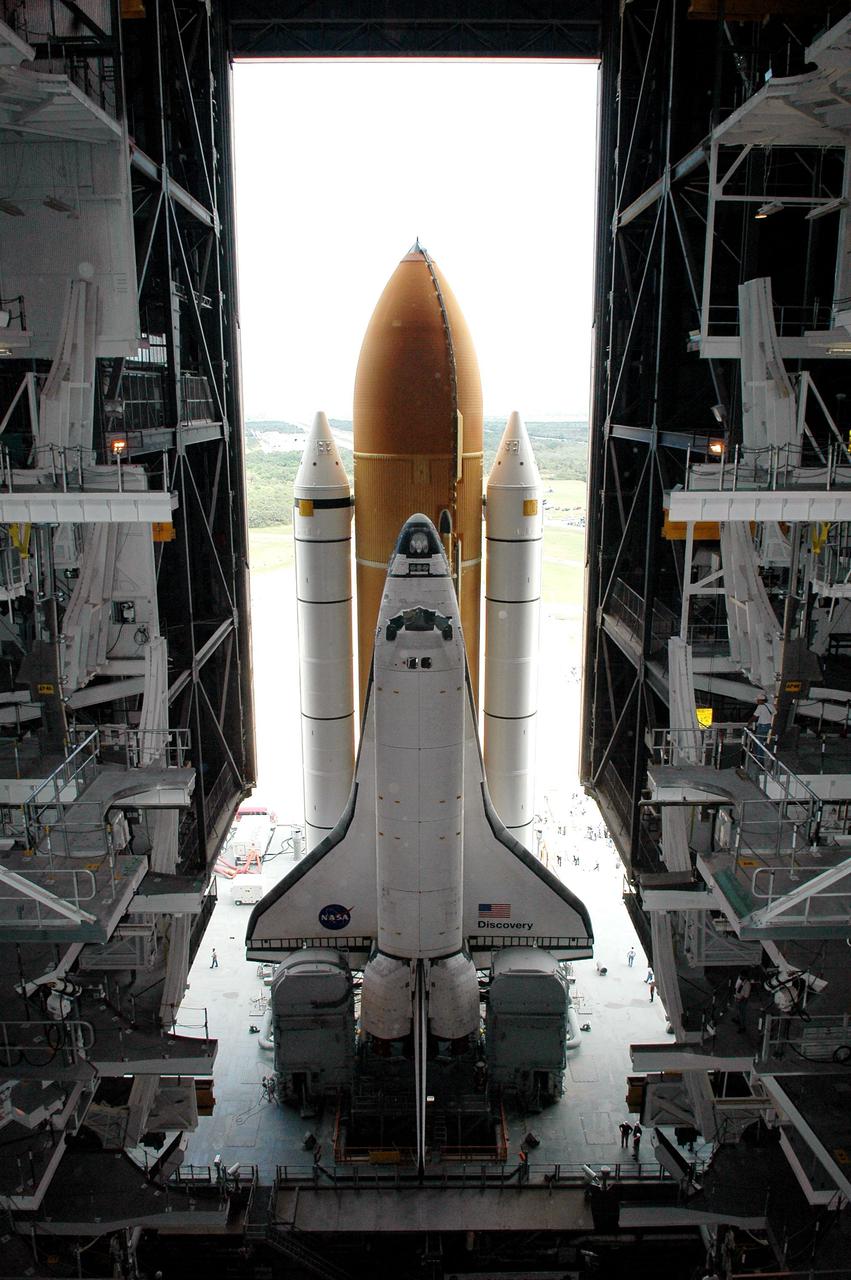
KENNEDY SPACE CENTER, FLA. - In the Vehicle Assembly Building (VAB) at NASA’s Kennedy Space Center, Space Shuttle Discovery is framed in the open doors as it begins its long, slow journey to Launch Pad 39B. First motion was at 2:04 p.m. EDT. The Shuttle comprises the orbiter, External Tank (ET) and twin Solid Rocket Boosters (SRBs). The Space Shuttle rests on the Mobile Launcher Platform, which is moved by the Crawler-Transporter underneath. The Crawler is 20 feet high, 131 feet long and 114 feet wide. It moves on eight tracks, each containing 57 shoes, or cleats, weighing one ton each. Loaded with the Space Shuttle, the Crawler can move at a maximum speed of approximately 1 mile an hour. A leveling system in the Crawler keeps the Shuttle vertical while negotiating the 5 percent grade leading to the top of the launch pad. Launch of Discovery on its Return to Flight mission, STS-114, is targeted for May 15 with a launch window that extends to June 3. During its 12-day mission, Discovery’s seven-person crew will test new hardware and techniques to improve Shuttle safety, as well as deliver supplies to the International Space Station. Discovery was moved on March 29 from the Orbiter Processing Facility to the VAB and attached to its propulsion elements, a redesigned ET and twin SRBs.
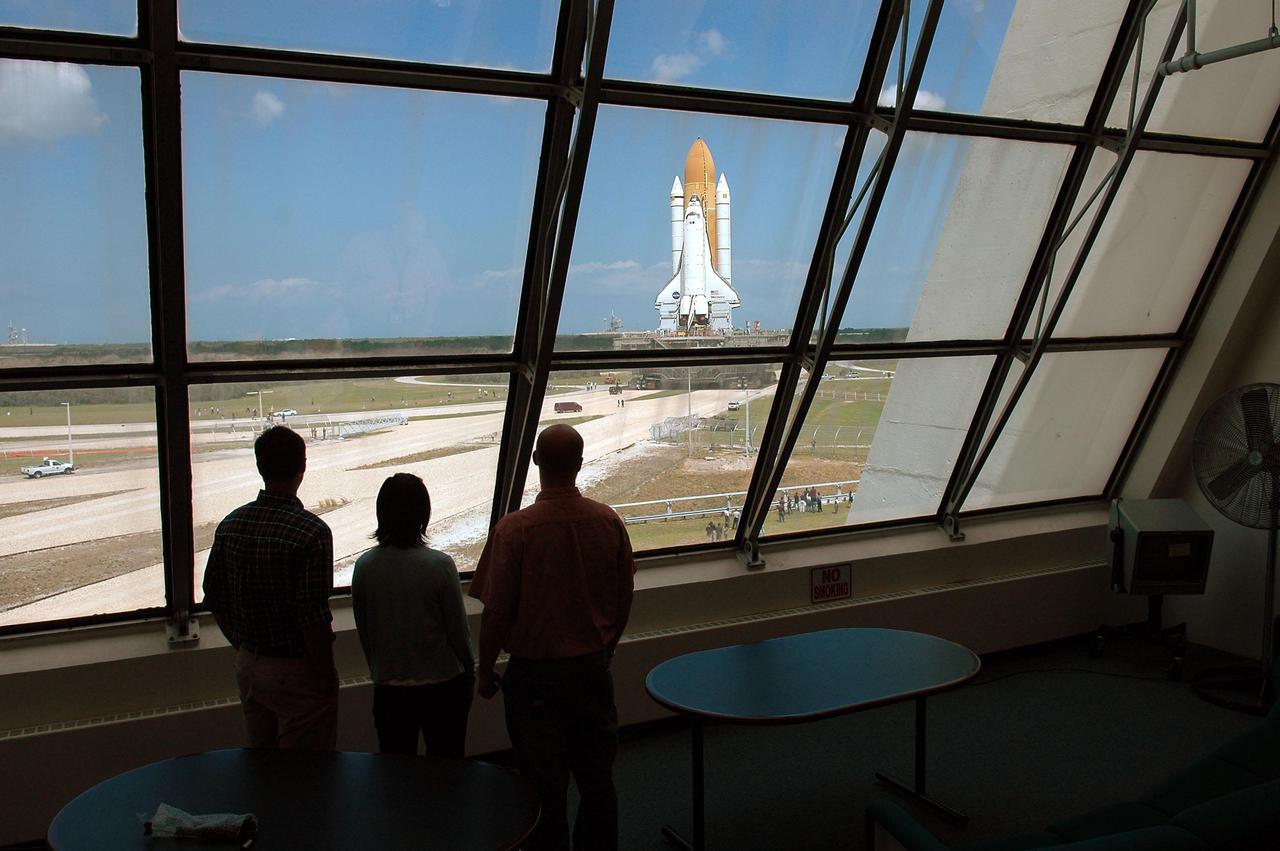
KENNEDY SPACE CENTER, FLA. - From inside the viewing room of the Launch Control Center, KSC employees watch Space Shuttle Discovery as it creeps along the crawlerway toward the horizon, and Launch Pad 39B at NASA’s Kennedy Space Center. First motion of the Shuttle out of the Vehicle Assembly Building (VAB) was at 2:04 p.m. EDT. The Mobile Launcher Platform is moved by the Crawler-Transporter underneath. The Crawler is 20 feet high, 131 feet long and 114 feet wide. It moves on eight tracks, each containing 57 shoes, or cleats, weighing one ton each. Loaded with the Space Shuttle, the Crawler can move at a maximum speed of approximately 1 mile an hour. A leveling system in the Crawler keeps the Shuttle vertical while negotiating the 5 percent grade leading to the top of the launch pad. Launch of Discovery on its Return to Flight mission, STS-114, is targeted for May 15 with a launch window that extends to June 3. During its 12-day mission, Discovery’s seven-person crew will test new hardware and techniques to improve Shuttle safety, as well as deliver supplies to the International Space Station. Discovery was moved on March 29 from the Orbiter Processing Facility to the VAB and attached to its propulsion elements, a redesigned ET and twin SRBs.
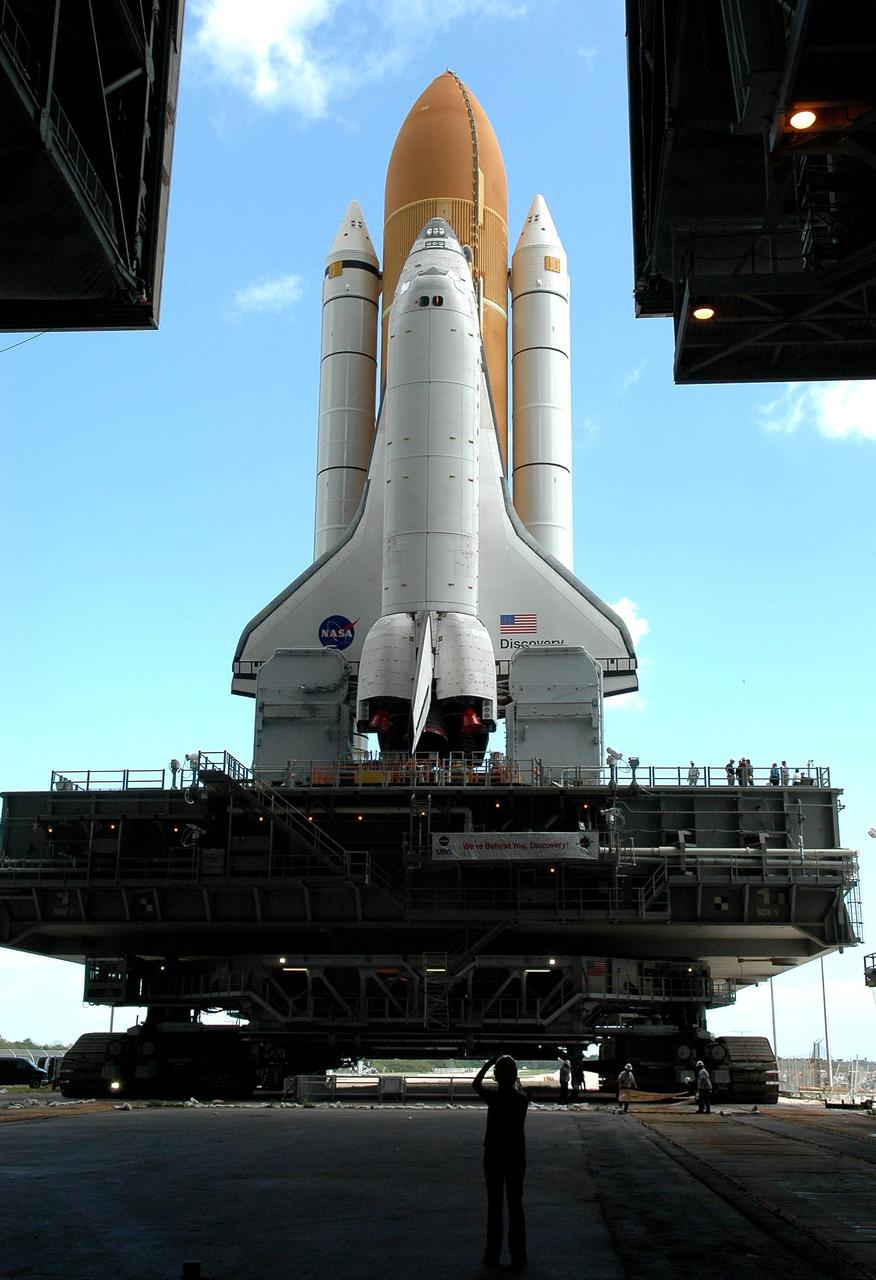
KENNEDY SPACE CENTER, FLA. - Framed in the open doors of the Vehicle Assembly Building (VAB) at NASA’s Kennedy Space Center, Space Shuttle Discovery is bathed in light as it begins its long, slow journey to Launch Pad 39B. The Space Shuttle rests on the Mobile Launcher Platform, which is moved by the Crawler-Transporter underneath. The Crawler is 20 feet high, 131 feet long and 114 feet wide. It moves on eight tracks, each containing 57 shoes, or cleats, weighing one ton each. Loaded with the Space Shuttle, the Crawler can move at a maximum speed of approximately 1 mile an hour. A leveling system in the Crawler keeps the Shuttle vertical while negotiating the 5 percent grade leading to the top of the launch pad. Launch of Discovery on its Return to Flight mission, STS-114, is targeted for May 15 with a launch window that extends to June 3. During its 12-day mission, Discovery’s seven-person crew will test new hardware and techniques to improve Shuttle safety, as well as deliver supplies to the International Space Station. Discovery was moved on March 29 from the Orbiter Processing Facility to the VAB and attached to its propulsion elements, a redesigned ET and twin SRBs.
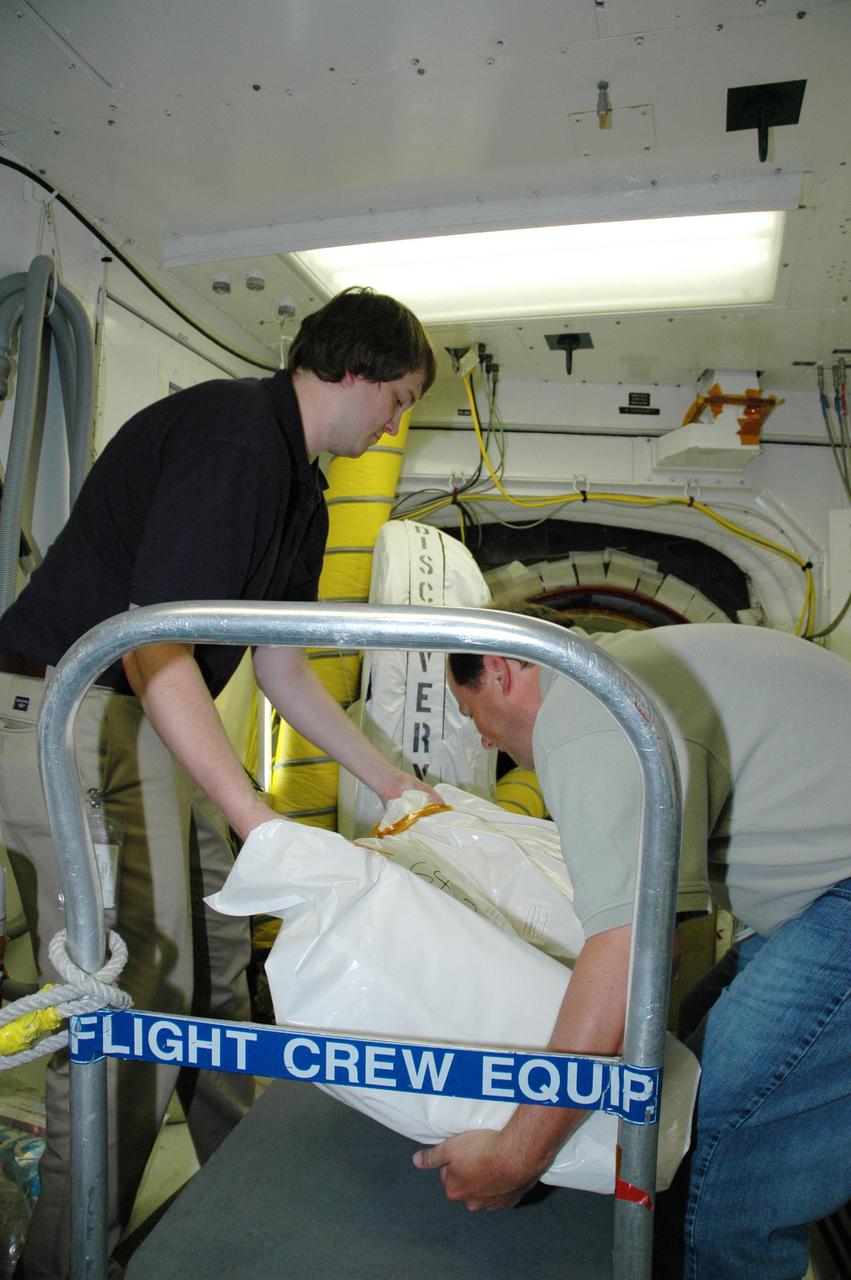
KENNEDY SPACE CENTER, FLA. - At Launch Pad 39B, NASA Flight Crew Systems engineers Ben Van Lear (left) and Brad Poffenberger hand a stowage container to a technician inside Space Shuttle Discovery for installation, a final step in launch preparations. Launch of Discovery on its Return to Flight mission STS-114 is set for July 13, just days away. The container holds consumables that will be unpacked by the crew once on orbit and will be used to return miscellaneous used products back to Earth. During its 12-day mission, Discovery’s seven-person crew will test new hardware and techniques to improve Shuttle safety, as well as deliver supplies to the International Space Station. Discovery’s payloads include the Multi-Purpose Logistics Module Raffaello, the Lightweight Multi-Purpose Experiment Support Structure Carrier (LMC), and the External Stowage Platform-2 (ESP-2). Raffaello will deliver supplies to the International Space Station including food, clothing and research equipment. The LMC will carry a replacement Control Moment Gyroscope and a tile repair sample box. The ESP-2 is outfitted with replacement parts.
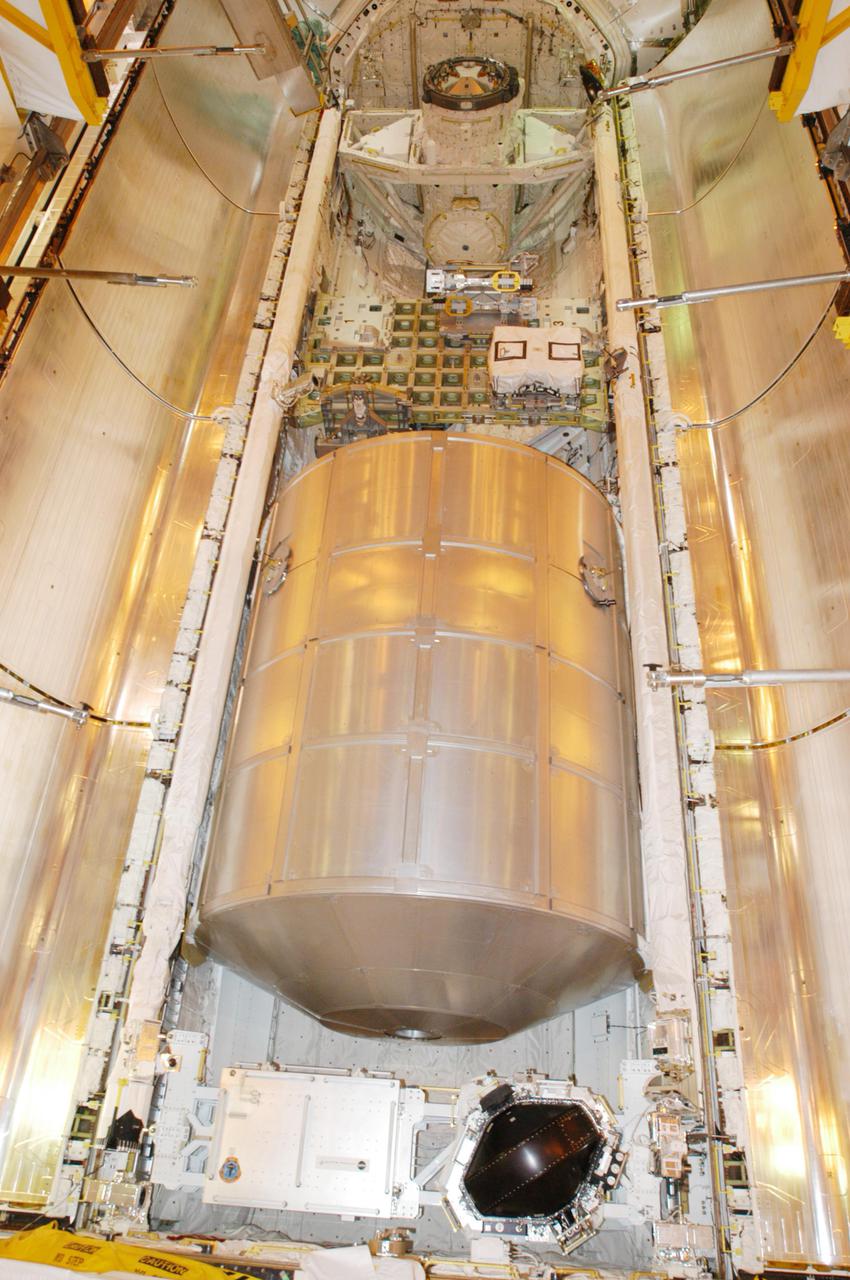
KENNEDY SPACE CENTER, FLA. - At Launch Pad 39B, all payloads are secure and closure of the cargo bay doors on Space Shuttle Discovery is moments away. Payload bay door closure is a significant milestone in the preparations for the first Return to Flight mission, STS-114. During its 12-day mission, Discovery’s seven-person crew will test new hardware and techniques to improve Shuttle safety, as well as deliver supplies to the International Space Station. Discovery’s payloads include the Multi-Purpose Logistics Module Raffaello (center), the Lightweight Multi-Purpose Experiment Support Structure Carrier (LMC), and the External Stowage Platform-2 (ESP-2). Raffaello will deliver supplies to the International Space Station including food, clothing and research equipment. The LMC supports a replacement Control Moment Gyroscope (bottom right) and a tile repair sample box (bottom left). The ESP-2 is outfitted with replacement parts. Launch of STS-114 was set for July 13 at the conclusion of the mission's Flight Readiness Review yesterday.
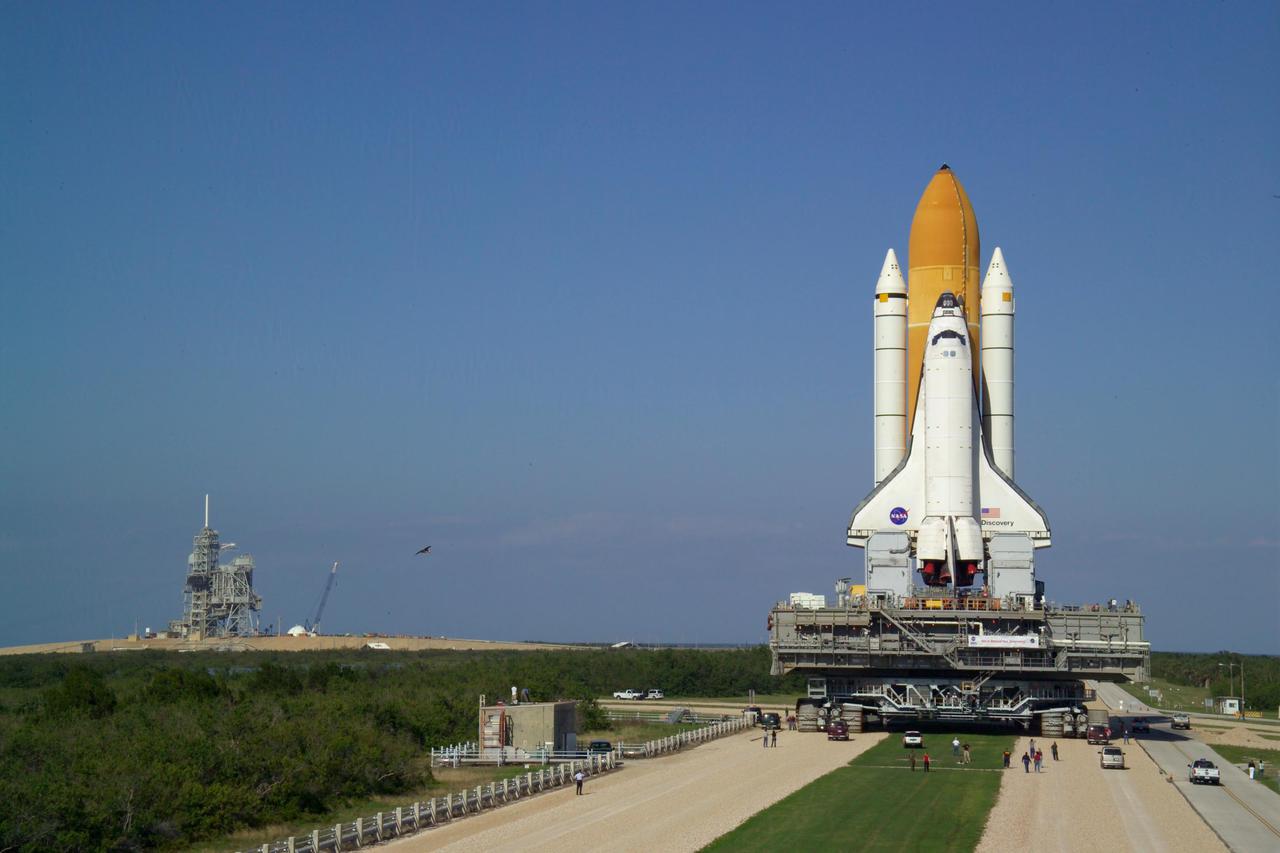
KENNEDY SPACE CENTER, FLA. - Blue sky blends with the blue Atlantic Ocean as Space Shuttle Discovery, atop the Mobile Launcher Platform (MLP), crawls toward Launch Complex 39A, on its way to Pad 39B. First motion out of the Vehicle Assembly Building occurred at 2:04 p.m. EDT. The rollout marks a major milestone in the Space Shuttle Program’s Return to Flight. The MLP is moved by the Crawler-Transporter underneath, which stands 20 feet high, 131 feet long and 114 feet wide. It moves on eight tracks, each containing 57 shoes, or cleats, weighing one ton each. Loaded with the Space Shuttle, the Crawler can move at a maximum speed of approximately 1 mile an hour. A leveling system in the Crawler keeps the Shuttle vertical while negotiating the 5 percent grade leading to the top of the launch pad. Launch of Discovery on its Return to Flight mission, STS-114, is targeted for May 15 with a launch window that extends to June 3. During its 12-day mission, Discovery’s seven-person crew will test new hardware and techniques to improve Shuttle safety, as well as deliver supplies to the International Space Station.
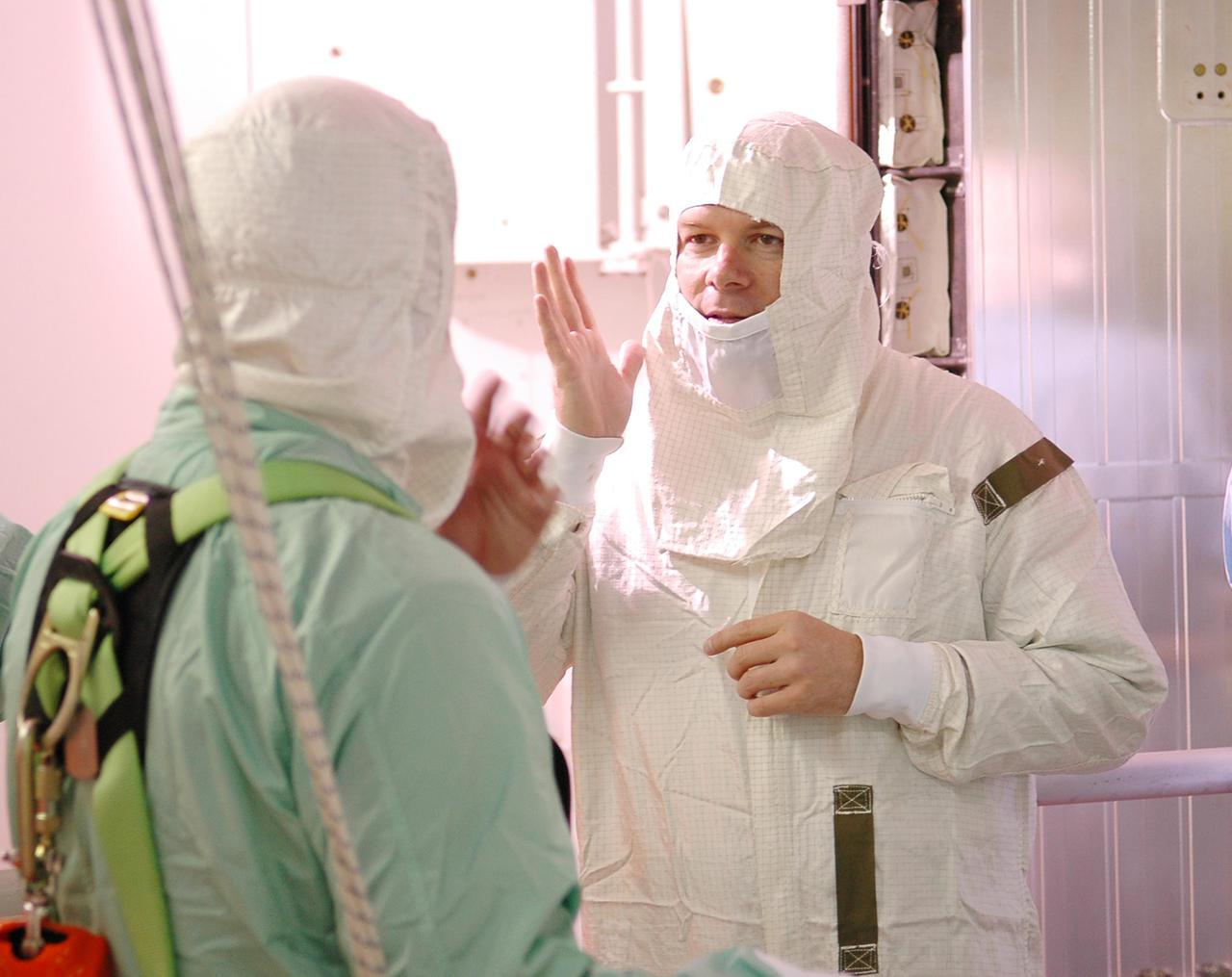
KENNEDY SPACE CENTER, FLA. - At Launch Pad 39B, STS-114 Pilot James Kelly discusses the payloads in Space Shuttle Discovery's cargo bay with his fellow crew members before launch. The STS-114 crew is conducting a final inspection of their mission payloads before launch. During its 12-day mission, Discovery’s seven-person crew will test new hardware and techniques to improve Shuttle safety, as well as deliver supplies to the International Space Station. Discovery’s payloads include the Multi-Purpose Logistics Module Raffaello, the Lightweight Multi-Purpose Experiment Support Structure Carrier (LMC), and the External Stowage Platform-2 (ESP-2). Raffaello will deliver supplies to the International Space Station including food, clothing and research equipment. The LMC will carry a replacement Control Moment Gyroscope and a tile repair sample box. The ESP-2 is outfitted with replacement parts. Launch of Discovery on its Return to Flight mission STS-114 is set for July 13.
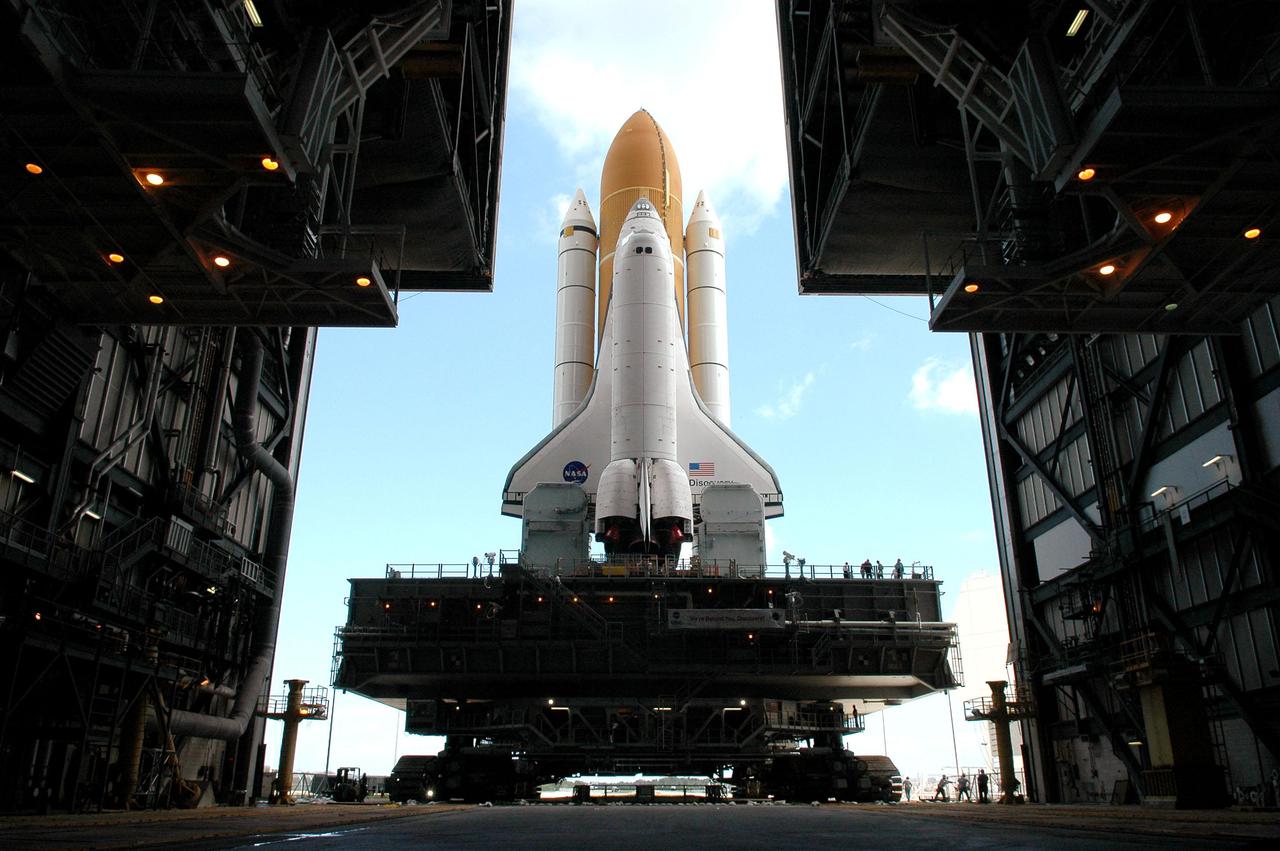
KENNEDY SPACE CENTER, FLA. - Framed in the open doors of the Vehicle Assembly Building (VAB) at NASA’s Kennedy Space Center, Space Shuttle Discovery meets the light of day as it begins its long, slow journey to Launch Pad 39B. First motion was at 2:04 p.m. EDT. The Shuttle comprises the orbiter, External Tank (ET) and twin Solid Rocket Boosters (SRBs). The Space Shuttle rests on the Mobile Launcher Platform, which is moved by the Crawler-Transporter underneath. The Crawler is 20 feet high, 131 feet long and 114 feet wide. It moves on eight tracks, each containing 57 shoes, or cleats, weighing one ton each. Loaded with the Space Shuttle, the Crawler can move at a maximum speed of approximately 1 mile an hour. A leveling system in the Crawler keeps the Shuttle vertical while negotiating the 5 percent grade leading to the top of the launch pad. Launch of Discovery on its Return to Flight mission, STS-114, is targeted for May 15 with a launch window that extends to June 3. During its 12-day mission, Discovery’s seven-person crew will test new hardware and techniques to improve Shuttle safety, as well as deliver supplies to the International Space Station. Discovery was moved on March 29 from the Orbiter Processing Facility to the VAB and attached to its propulsion elements, a redesigned ET and twin SRBs.
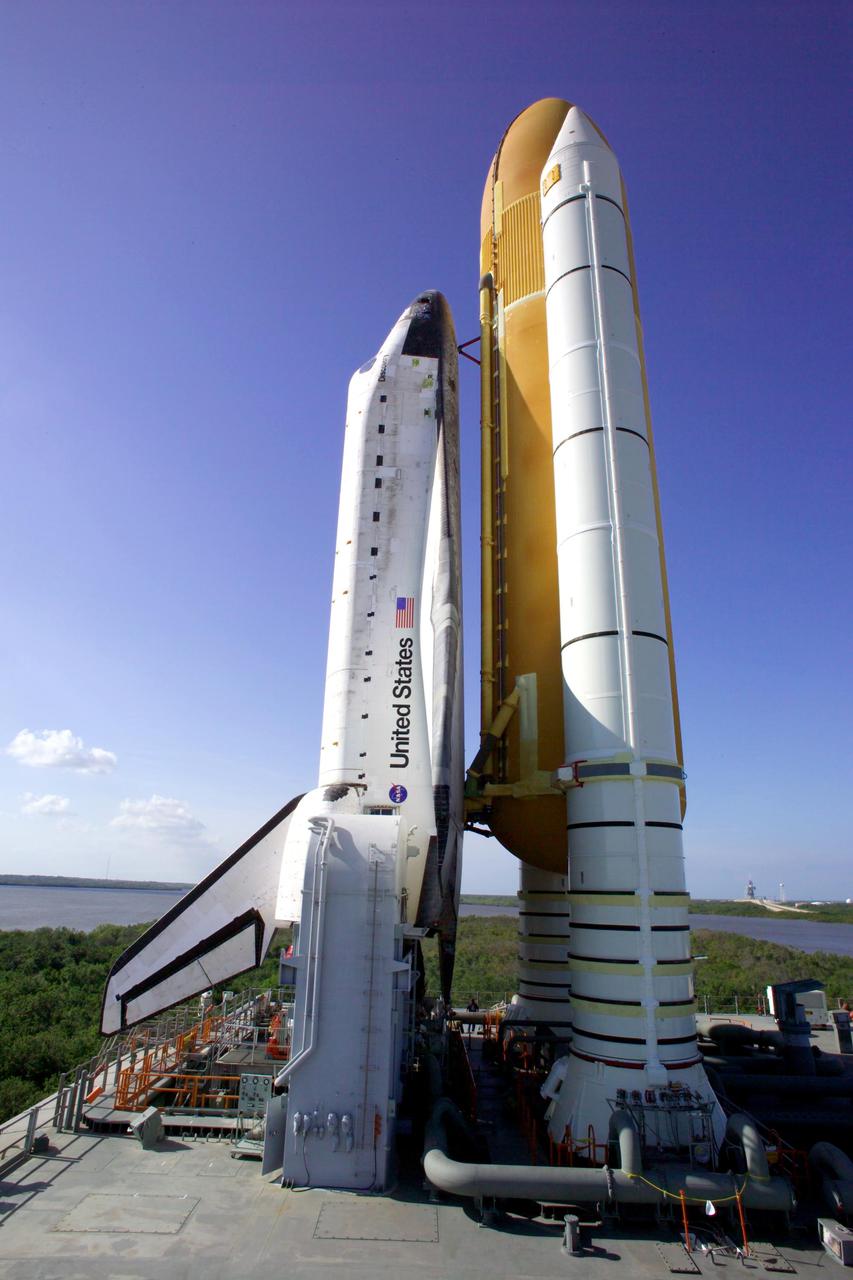
KENNEDY SPACE CENTER, FLA. - At NASA’s Kennedy Space Center, Space Shuttle Discovery is viewed from the side as it sits atop the Mobile Launcher Platform (MLP) rolling out to Launch Complex 39B. First motion out of the Vehicle Assembly Building occurred at 2:04 p.m. EDT. The rollout marks a major milestone in the Space Shuttle Program’s Return to Flight. The MLP is moved by the Crawler-Transporter underneath, which stands 20 feet high, 131 feet long and 114 feet wide. It moves on eight tracks, each containing 57 shoes, or cleats, weighing one ton each. Loaded with the Space Shuttle, the Crawler can move at a maximum speed of approximately 1 mile an hour. A leveling system in the Crawler keeps the Shuttle vertical while negotiating the 5 percent grade leading to the top of the launch pad. Launch of Discovery on its Return to Flight mission, STS-114, is targeted for May 15 with a launch window that extends to June 3. During its 12-day mission, Discovery’s seven-person crew will test new hardware and techniques to improve Shuttle safety, as well as deliver supplies to the International Space Station.
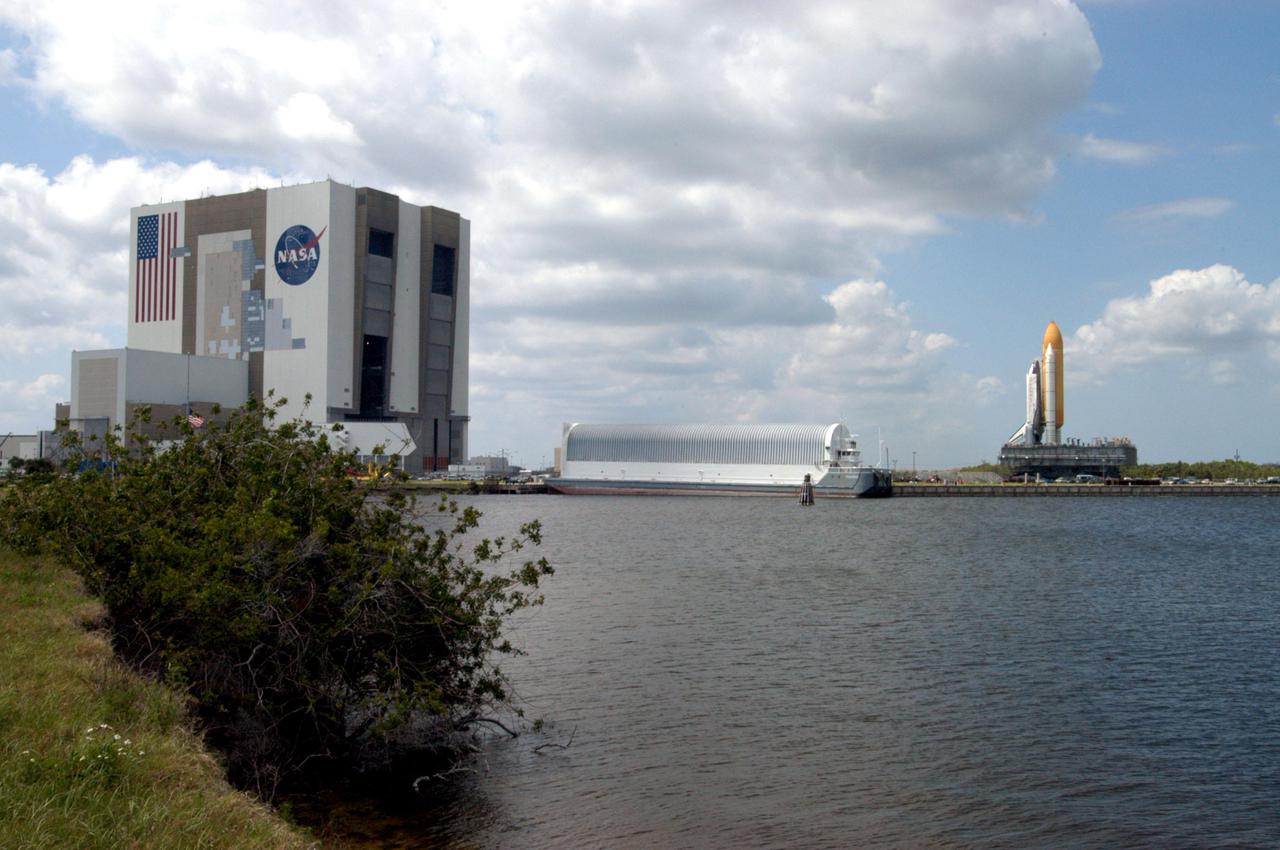
KENNEDY SPACE CENTER, FLA. - Across the Turn Basin is seen the Vehicle Assembly Building (VAB (at left), the Launch Control Center (middle), and Space Shuttle Discovery (at right). First motion of the Shuttle out of the VAB was at 2:04 p.m. EDT. Atop the Mobile Launcher Platform, the Shuttle is on its way to Launch Pad 39B, marking a major milestone in Return to Flight. The Mobile Launcher Platform is moved by the Crawler-Transporter underneath. The Crawler is 20 feet high, 131 feet long and 114 feet wide. It moves on eight tracks, each containing 57 shoes, or cleats, weighing one ton each. Loaded with the Space Shuttle, the Crawler can move at a maximum speed of approximately 1 mile an hour. A leveling system in the Crawler keeps the Shuttle vertical while negotiating the 5 percent grade leading to the top of the launch pad. Launch of Discovery on its Return to Flight mission, STS-114, is targeted for May 15 with a launch window that extends to June 3. During its 12-day mission, Discovery’s seven-person crew will test new hardware and techniques to improve Shuttle safety, as well as deliver supplies to the International Space Station. Discovery was moved on March 29 from the Orbiter Processing Facility to the VAB and attached to its propulsion elements, a redesigned ET and twin SRBs.
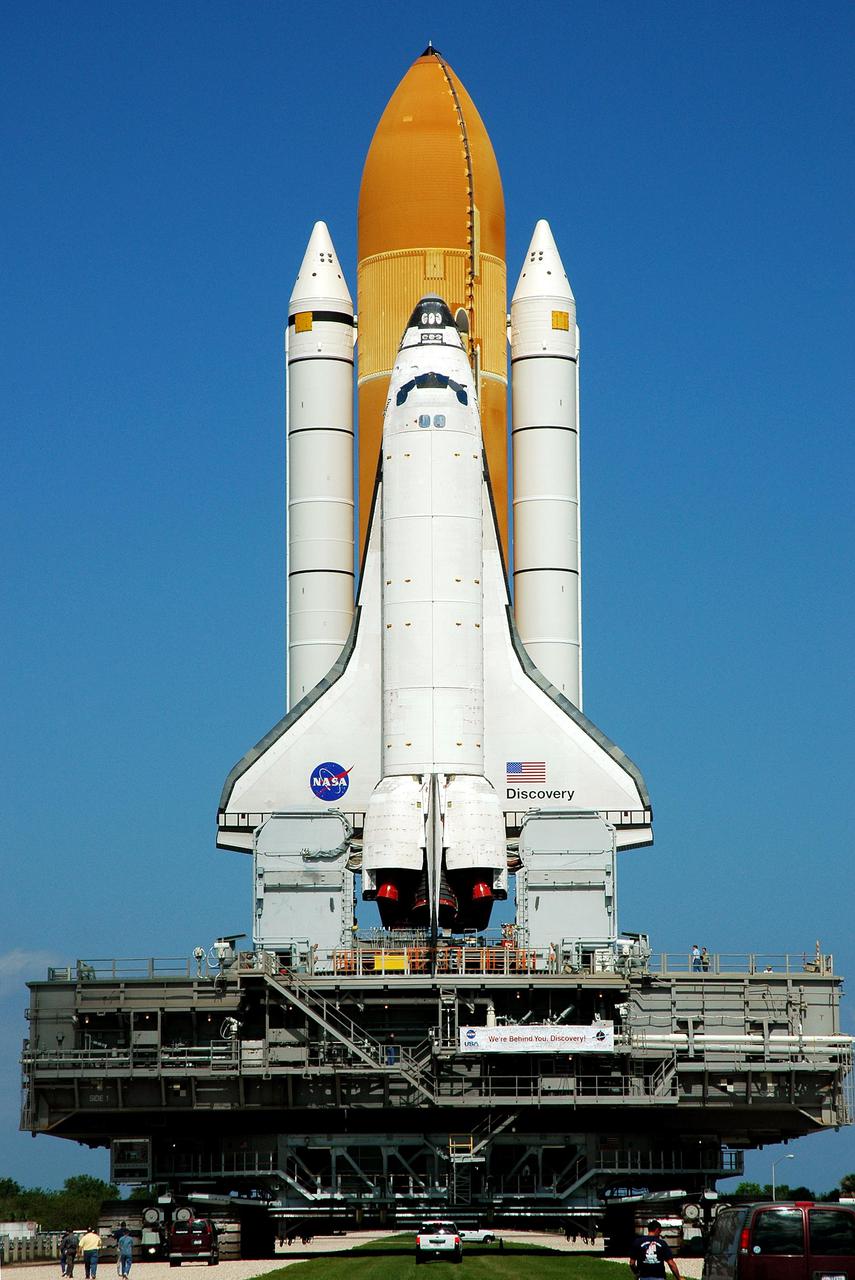
KENNEDY SPACE CENTER, FLA. -- Space Shuttle Discovery, atop a Mobile Launcher Platform (MLP), crawls toward Launch Complex 39B. First motion out of the Vehicle Assembly Building occurred at 2:04 p.m. EDT. The rollout marks a major milestone in the Space Shuttle Program’s Return to Flight. The MLP is moved by the Crawler-Transporter underneath, which stands 20 feet high, 131 feet long and 114 feet wide. It moves on eight tracks, each containing 57 shoes, or cleats, weighing one ton each. Loaded with the Space Shuttle, the Crawler can move at a maximum speed of approximately 1 mile an hour. A leveling system in the Crawler keeps the Shuttle vertical while negotiating the 5 percent grade leading to the top of the launch pad. Launch of Discovery on its Return to Flight mission, STS-114, is targeted for May 15 with a launch window that extends to June 3. During its 12-day mission, Discovery’s seven-person crew will test new hardware and techniques to improve Shuttle safety, as well as deliver supplies to the International Space Station.
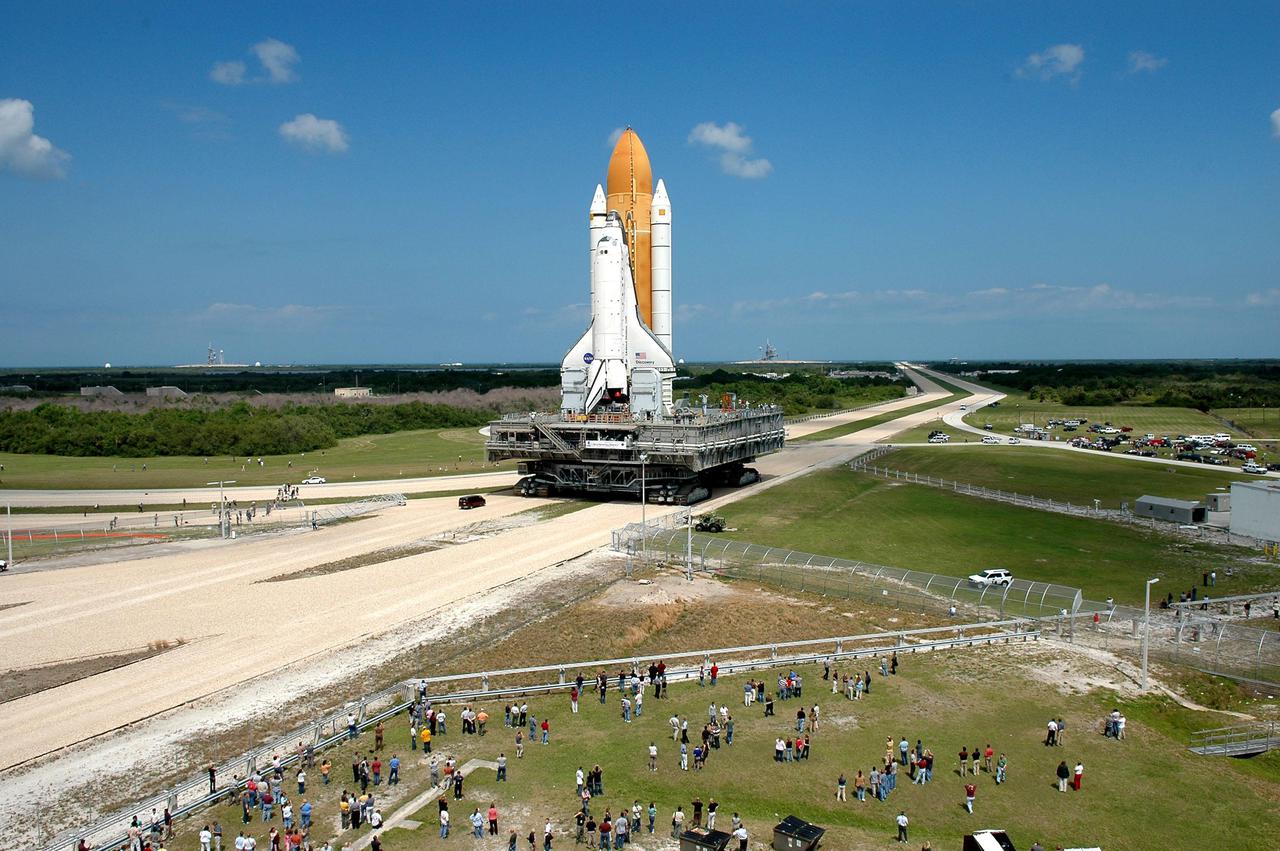
KENNEDY SPACE CENTER, FLA. - The broad, brilliant blue Florida sky silhouettes Space Shuttle Discovery as it creeps along the crawlerway toward the horizon, and Launch Pad 39B at NASA’s Kennedy Space Center. First motion of the Shuttle out of the Vehicle Assembly Building (VAB) was at 2:04 p.m. EDT. The Mobile Launcher Platform is moved by the Crawler-Transporter underneath. The Crawler is 20 feet high, 131 feet long and 114 feet wide. It moves on eight tracks, each containing 57 shoes, or cleats, weighing one ton each. Loaded with the Space Shuttle, the Crawler can move at a maximum speed of approximately 1 mile an hour. A leveling system in the Crawler keeps the Shuttle vertical while negotiating the 5 percent grade leading to the top of the launch pad. Launch of Discovery on its Return to Flight mission, STS-114, is targeted for May 15 with a launch window that extends to June 3. During its 12-day mission, Discovery’s seven-person crew will test new hardware and techniques to improve Shuttle safety, as well as deliver supplies to the International Space Station. Discovery was moved on March 29 from the Orbiter Processing Facility to the VAB and attached to its propulsion elements, a redesigned ET and twin SRBs.
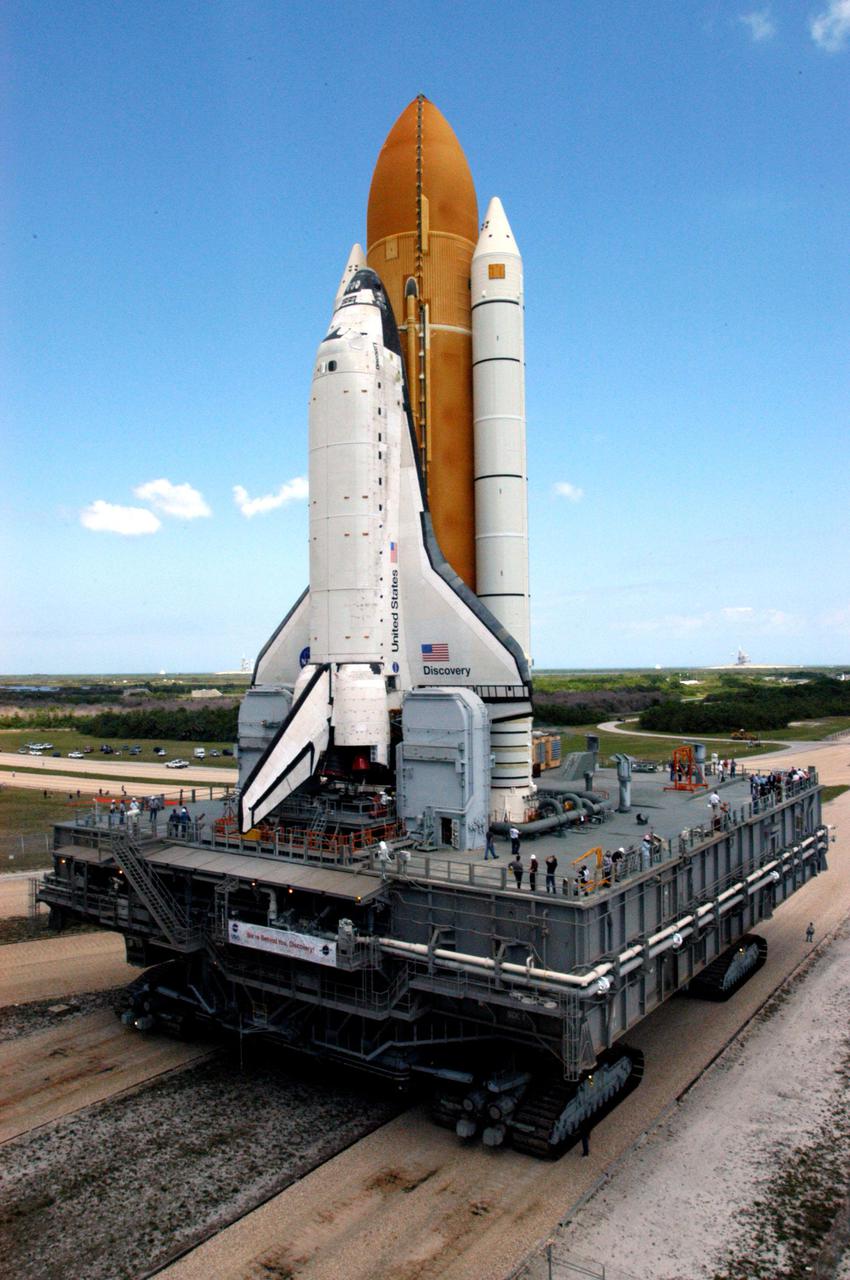
KENNEDY SPACE CENTER, FLA. - Under brilliant-blue Florida skies, Space Shuttle Discovery, atop the Mobile Launcher Platform, is on its way to Launch Pad 39B at NASA’s Kennedy Space Center. First motion out of the Vehicle Assembly Building (VAB) was at 2:04 p.m. EDT. The Shuttle comprises the orbiter, External Tank (ET) and twin Solid Rocket Boosters (SRBs). The Mobile Launcher Platform moved by the Crawler-Transporter underneath. The Crawler is 20 feet high, 131 feet long and 114 feet wide. It moves on eight tracks, each containing 57 shoes, or cleats, weighing one ton each. Loaded with the Space Shuttle, the Crawler can move at a maximum speed of approximately 1 mile an hour. A leveling system in the Crawler keeps the Shuttle vertical while negotiating the 5 percent grade leading to the top of the launch pad. Launch of Discovery on its Return to Flight mission, STS-114, is targeted for May 15 with a launch window that extends to June 3. During its 12-day mission, Discovery’s seven-person crew will test new hardware and techniques to improve Shuttle safety, as well as deliver supplies to the International Space Station. Discovery was moved on March 29 from the Orbiter Processing Facility to the VAB and attached to its propulsion elements, a redesigned ET and twin SRBs.
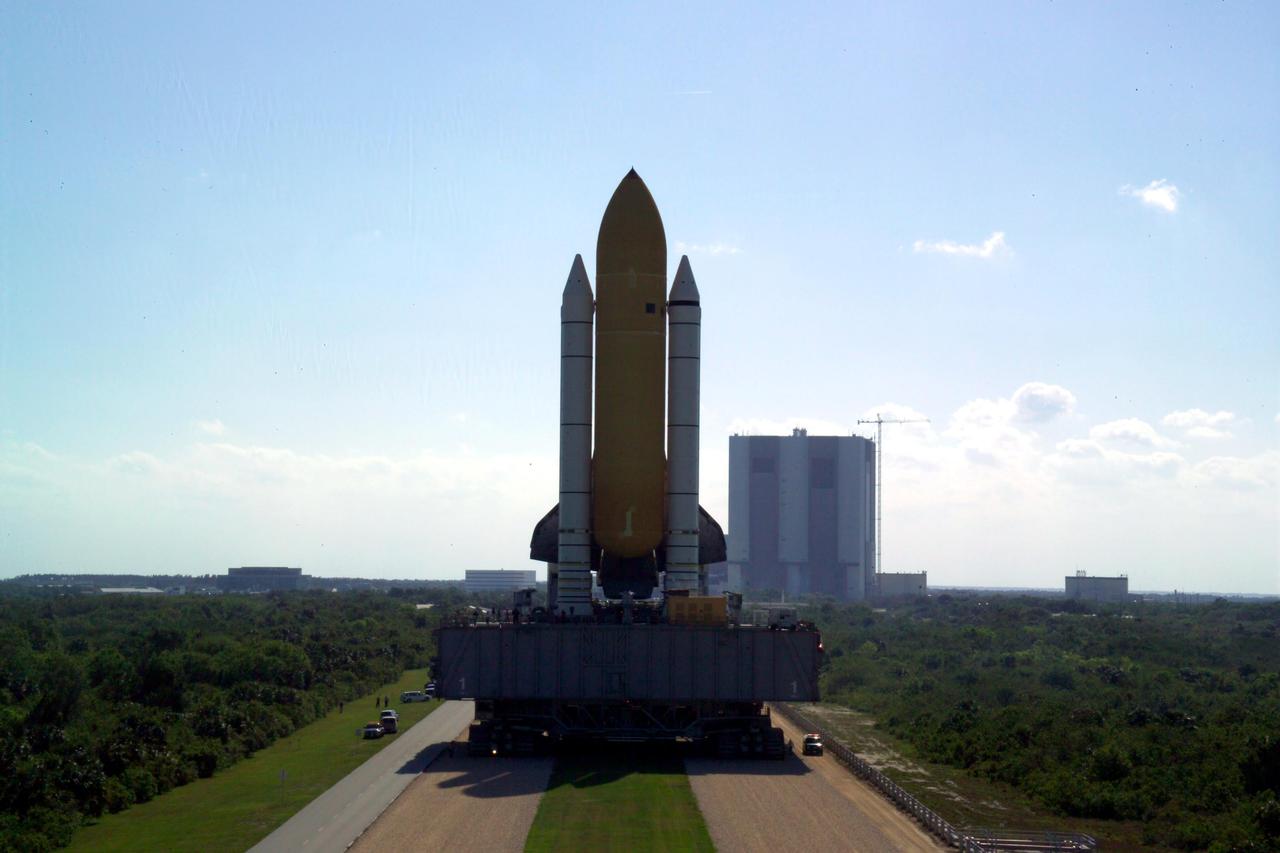
KENNEDY SPACE CENTER, FLA. - At NASA’s Kennedy Space Center, Space Shuttle Discovery, atop the Mobile Launcher Platform (MLP), casts a shadow on the crawlerway as it makes its way east to Launch Complex 39B close to sunset. In the background is the Vehicle Assembly Building (VAB) where Discovery began the rollout at 2:04 p.m. EDT. The rollout marks a major milestone in the Space Shuttle Program’s Return to Flight. The MLP is moved by the Crawler-Transporter underneath, which stands 20 feet high, 131 feet long and 114 feet wide. It moves on eight tracks, each containing 57 shoes, or cleats, weighing one ton each. Loaded with the Space Shuttle, the Crawler can move at a maximum speed of approximately 1 mile an hour. A leveling system in the Crawler keeps the Shuttle vertical while negotiating the 5 percent grade leading to the top of the launch pad. Launch of Discovery on its Return to Flight mission, STS-114, is targeted for May 15 with a launch window that extends to June 3. During its 12-day mission, Discovery’s seven-person crew will test new hardware and techniques to improve Shuttle safety, as well as deliver supplies to the International Space Station.
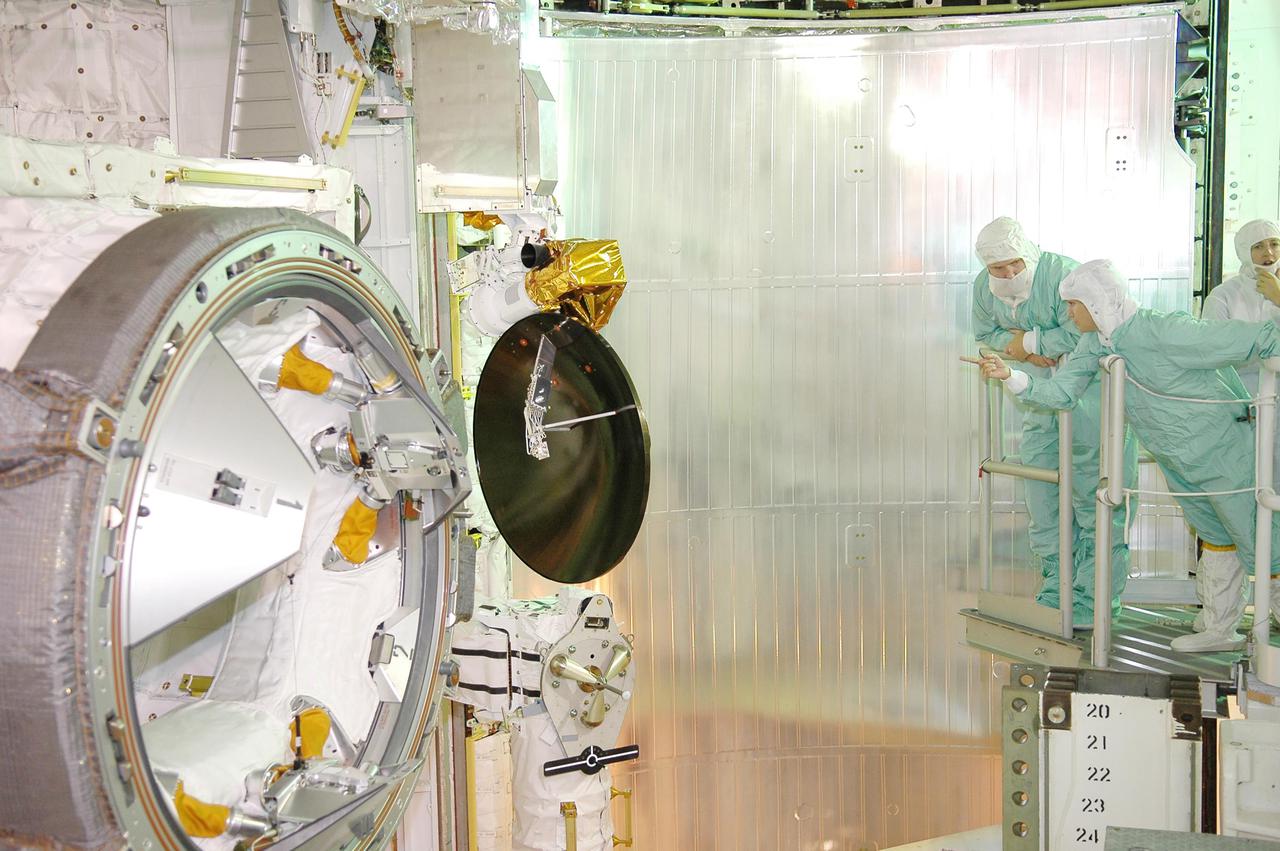
KENNEDY SPACE CENTER, FLA. - At Launch Pad 39B, STS-114 Commander Eileen Collins (leaning forward) discusses the payloads in Space Shuttle Discovery's cargo bay with Mission Specialist Wendy Lawrence (right) looking on behind her. The STS-114 crew is conducting a final inspection of their mission payloads before launch. During its 12-day mission, Discovery’s seven-person crew will test new hardware and techniques to improve Shuttle safety, as well as deliver supplies to the International Space Station. Discovery’s payloads include the Multi-Purpose Logistics Module Raffaello, the Lightweight Multi-Purpose Experiment Support Structure Carrier (LMC), and the External Stowage Platform-2 (ESP-2). Raffaello will deliver supplies to the International Space Station including food, clothing and research equipment. The LMC will carry a replacement Control Moment Gyroscope and a tile repair sample box. The ESP-2 is outfitted with replacement parts. Launch of Discovery on its Return to Flight mission STS-114 is set for July 13.
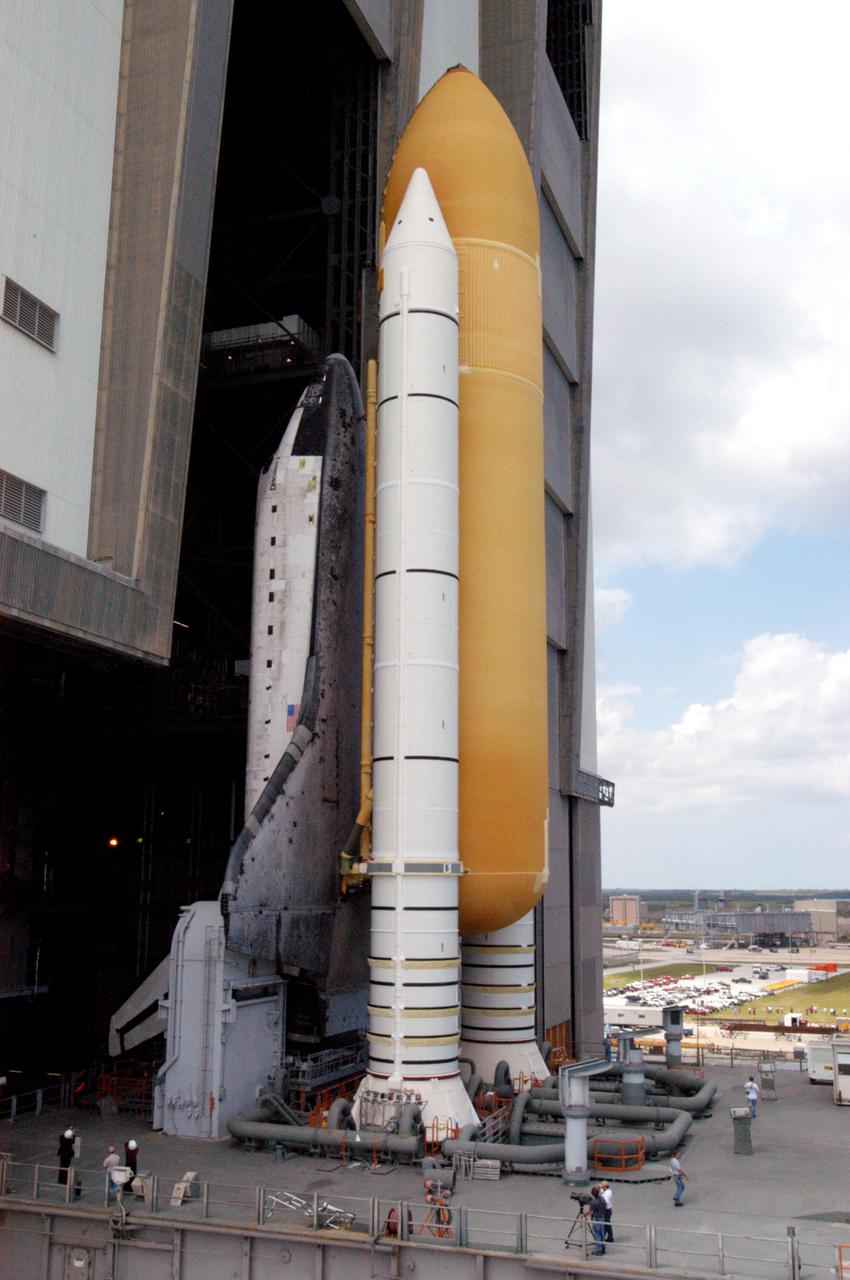
KENNEDY SPACE CENTER, FLA. - Space Shuttle Discovery, atop the Mobile Launcher Platform, slowly rolls out of the Vehicle Assembly Building (VAB) at NASA’s Kennedy Space Center. First motion was at 2:04 p.m. EDT. The Shuttle comprises the orbiter, External Tank (ET) and twin Solid Rocket Boosters (SRBs). The Mobile Launcher Platform moved by the Crawler-Transporter underneath. The Crawler is 20 feet high, 131 feet long and 114 feet wide. It moves on eight tracks, each containing 57 shoes, or cleats, weighing one ton each. Loaded with the Space Shuttle, the Crawler can move at a maximum speed of approximately 1 mile an hour. A leveling system in the Crawler keeps the Shuttle vertical while negotiating the 5 percent grade leading to the top of the launch pad. Launch of Discovery on its Return to Flight mission, STS-114, is targeted for May 15 with a launch window that extends to June 3. During its 12-day mission, Discovery’s seven-person crew will test new hardware and techniques to improve Shuttle safety, as well as deliver supplies to the International Space Station. Discovery was moved on March 29 from the Orbiter Processing Facility to the VAB and attached to its propulsion elements, a redesigned ET and twin SRBs.
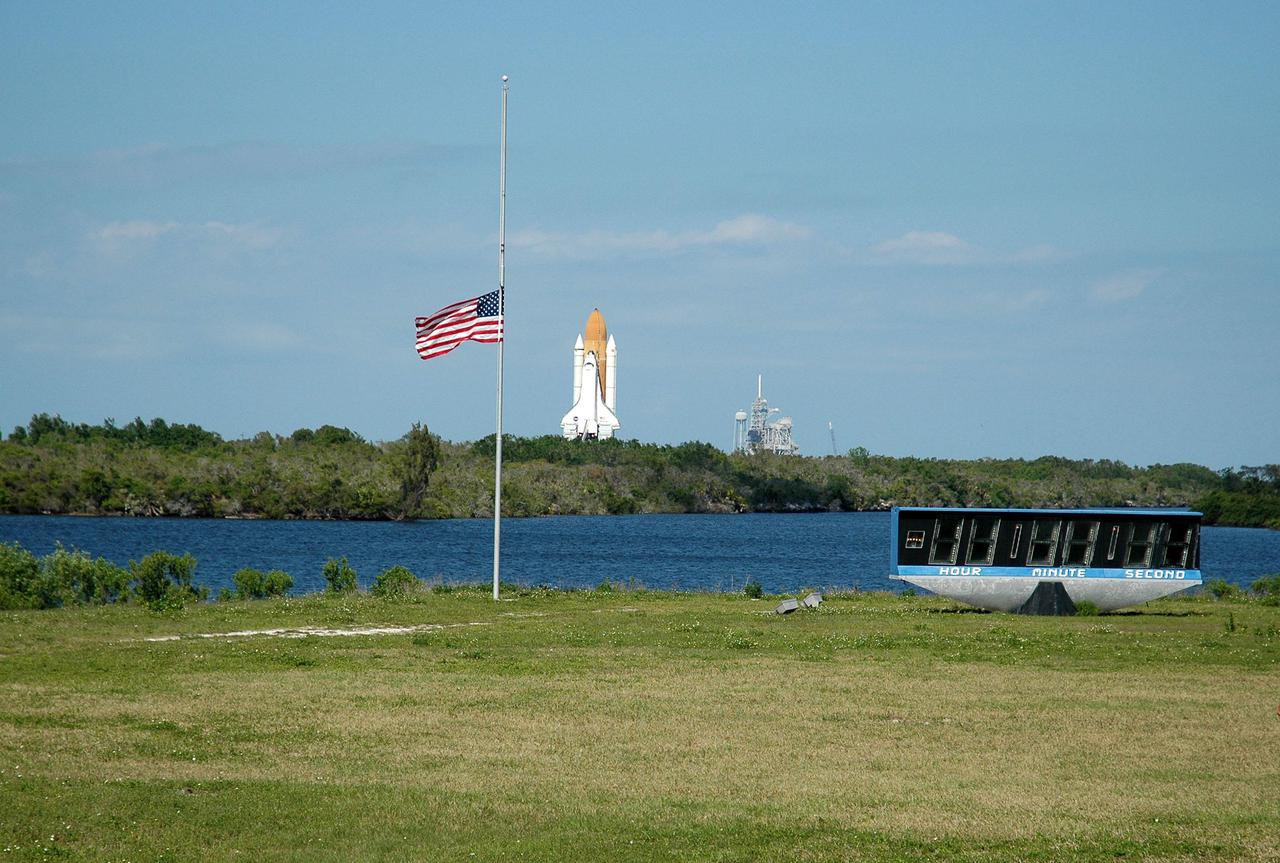
KENNEDY SPACE CENTER, FLA. - A KSC employee stands at the Press Site watching Space Shuttle Discovery mark a major milestone for Return to Flight, rolling out to Launch Pad 39B. First motion out of the Vehicle Assembly Building was at 2:04 p.m. EDT. The Shuttle sits atop the Mobile Launcher Platform, which is moved by the Crawler-Transporter underneath. The Crawler is 20 feet high, 131 feet long and 114 feet wide. It moves on eight tracks, each containing 57 shoes, or cleats, weighing one ton each. Loaded with the Space Shuttle, the Crawler can move at a maximum speed of approximately 1 mile an hour. A leveling system in the Crawler keeps the Shuttle vertical while negotiating the 5 percent grade leading to the top of the launch pad. Launch of Discovery on its Return to Flight mission, STS-114, is targeted for May 15 with a launch window that extends to June 3. During its 12-day mission, Discovery’s seven-person crew will test new hardware and techniques to improve Shuttle safety, as well as deliver supplies to the International Space Station. Discovery was moved on March 29 from the Orbiter Processing Facility to the VAB and attached to its propulsion elements, a redesigned ET and twin SRBs.
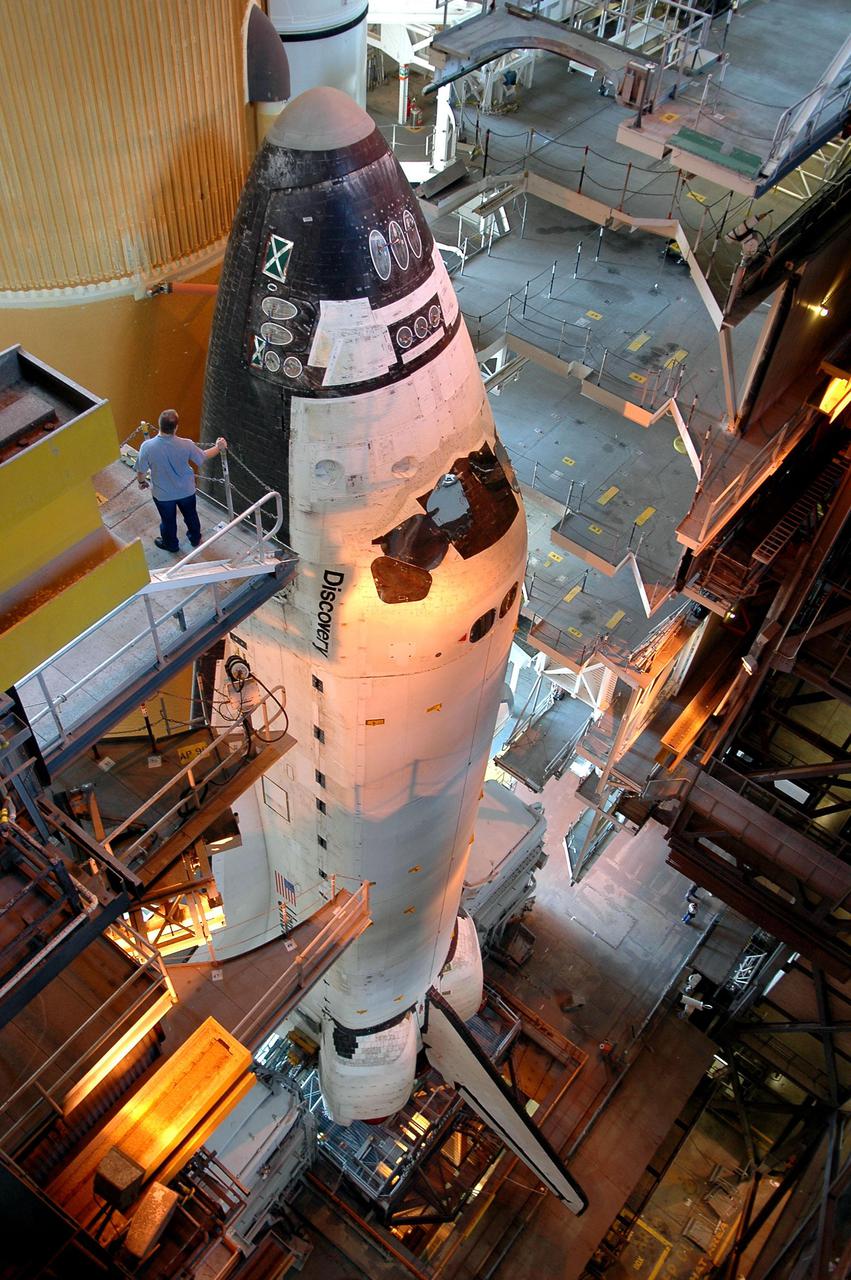
KENNEDY SPACE CENTER, FLA. - In the Vehicle Assembly Building (VAB) at NASA’s Kennedy Space Center, Space Shuttle Discovery begins its long, slow journey to Launch Pad 39B. First motion was at 2:04 p.m. EDT. The Shuttle comprises the orbiter, External Tank (ET) and twin Solid Rocket Boosters (SRBs). The Space Shuttle rests on the Mobile Launcher Platform, which is moved by the Crawler-Transporter underneath. The Crawler is 20 feet high, 131 feet long and 114 feet wide. It moves on eight tracks, each containing 57 shoes, or cleats, weighing one ton each. Loaded with the Space Shuttle, the Crawler can move at a maximum speed of approximately 1 mile an hour. A leveling system in the Crawler keeps the Shuttle vertical while negotiating the 5 percent grade leading to the top of the launch pad. Launch of Discovery on its Return to Flight mission, STS-114, is targeted for May 15 with a launch window that extends to June 3. During its 12-day mission, Discovery’s seven-person crew will test new hardware and techniques to improve Shuttle safety, as well as deliver supplies to the International Space Station. Discovery was moved on March 29 from the Orbiter Processing Facility to the VAB and attached to its propulsion elements, a redesigned ET and twin SRBs.
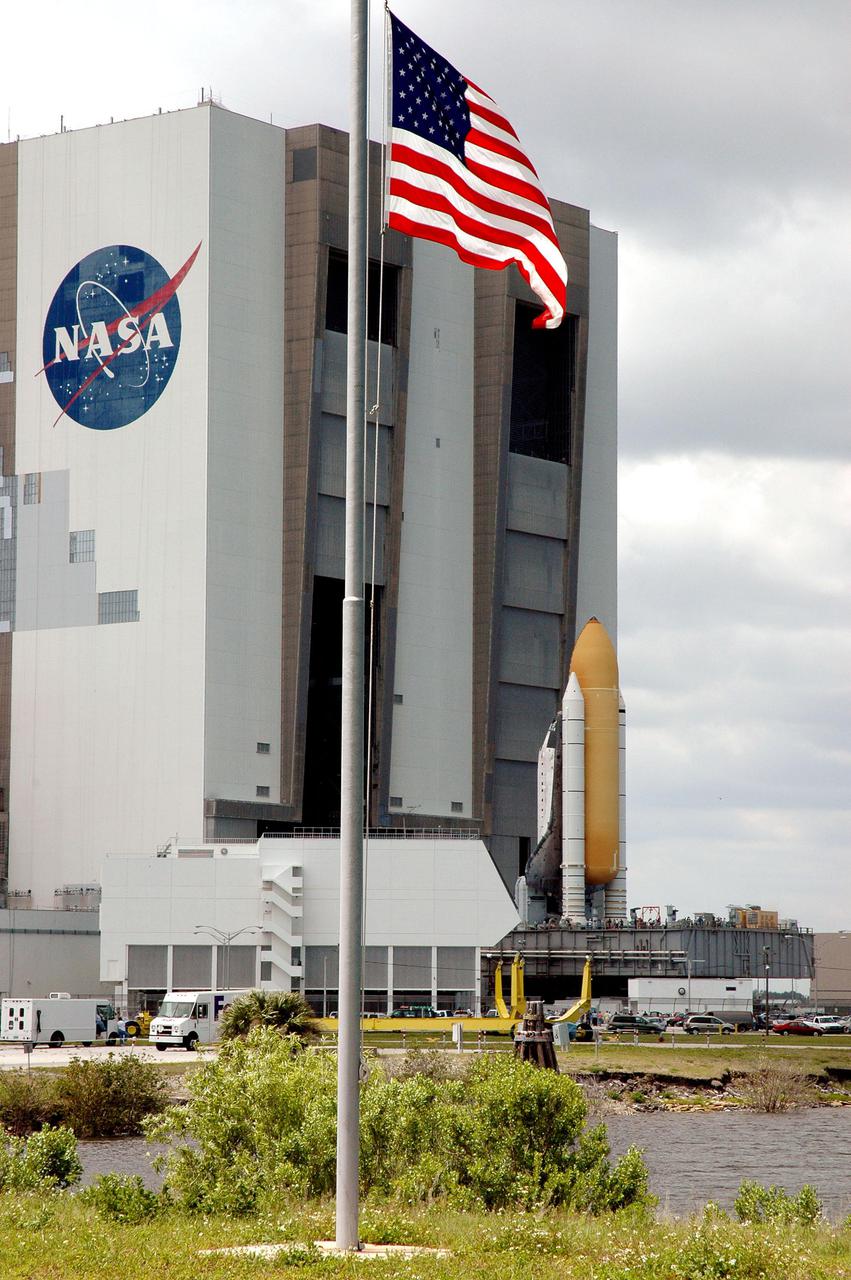
KENNEDY SPACE CENTER, FLA. - — Looking from the Press Site across the Turn Basin at NASA’s Kennedy Space Center, the American flag appears to salute Space Shuttle Discovery as she marks a major milestone for Return to Flight, rolling out to Launch Pad 39B. First motion out of the Vehicle Assembly Building, behind the flag, was at 2:04 p.m. EDT. The Shuttle sits atop the Mobile Launcher Platform, which is moved by the Crawler-Transporter underneath. The Crawler is 20 feet high, 131 feet long and 114 feet wide. It moves on eight tracks, each containing 57 shoes, or cleats, weighing one ton each. Loaded with the Space Shuttle, the Crawler can move at a maximum speed of approximately 1 mile an hour. A leveling system in the Crawler keeps the Shuttle vertical while negotiating the 5 percent grade leading to the top of the launch pad. Launch of Discovery on its Return to Flight mission, STS-114, is targeted for May 15 with a launch window that extends to June 3. During its 12-day mission, Discovery’s seven-person crew will test new hardware and techniques to improve Shuttle safety, as well as deliver supplies to the International Space Station. Discovery was moved on March 29 from the Orbiter Processing Facility to the VAB and attached to its propulsion elements, a redesigned ET and twin SRBs.
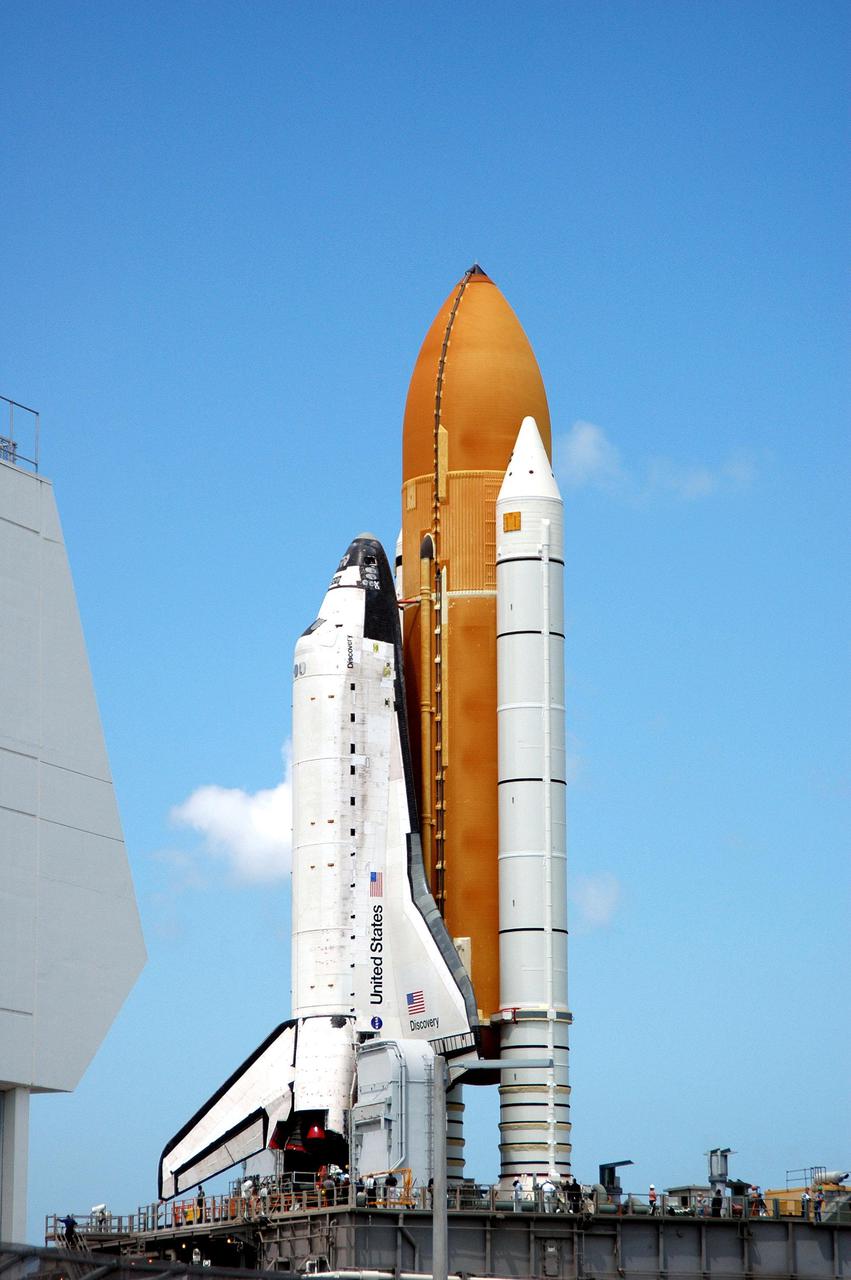
KENNEDY SPACE CENTER, FLA. - Under brilliant-blue Florida skies, Space Shuttle Discovery, atop the Mobile Launcher Platform, wends its way slowly to Launch Pad 39B at NASA’s Kennedy Space Center. First motion out of the Vehicle Assembly Building (VAB) was at 2:04 p.m. EDT. The Mobile Launcher Platform is moved by the Crawler-Transporter underneath. The Crawler is 20 feet high, 131 feet long and 114 feet wide. It moves on eight tracks, each containing 57 shoes, or cleats, weighing one ton each. Loaded with the Space Shuttle, the Crawler can move at a maximum speed of approximately 1 mile an hour. A leveling system in the Crawler keeps the Shuttle vertical while negotiating the 5 percent grade leading to the top of the launch pad. Launch of Discovery on its Return to Flight mission, STS-114, is targeted for May 15 with a launch window that extends to June 3. During its 12-day mission, Discovery’s seven-person crew will test new hardware and techniques to improve Shuttle safety, as well as deliver supplies to the International Space Station. Discovery was moved on March 29 from the Orbiter Processing Facility to the VAB and attached to its propulsion elements, a redesigned ET and twin SRBs.