
Photovoltaic Investigation on the Lunar Surface – PILS
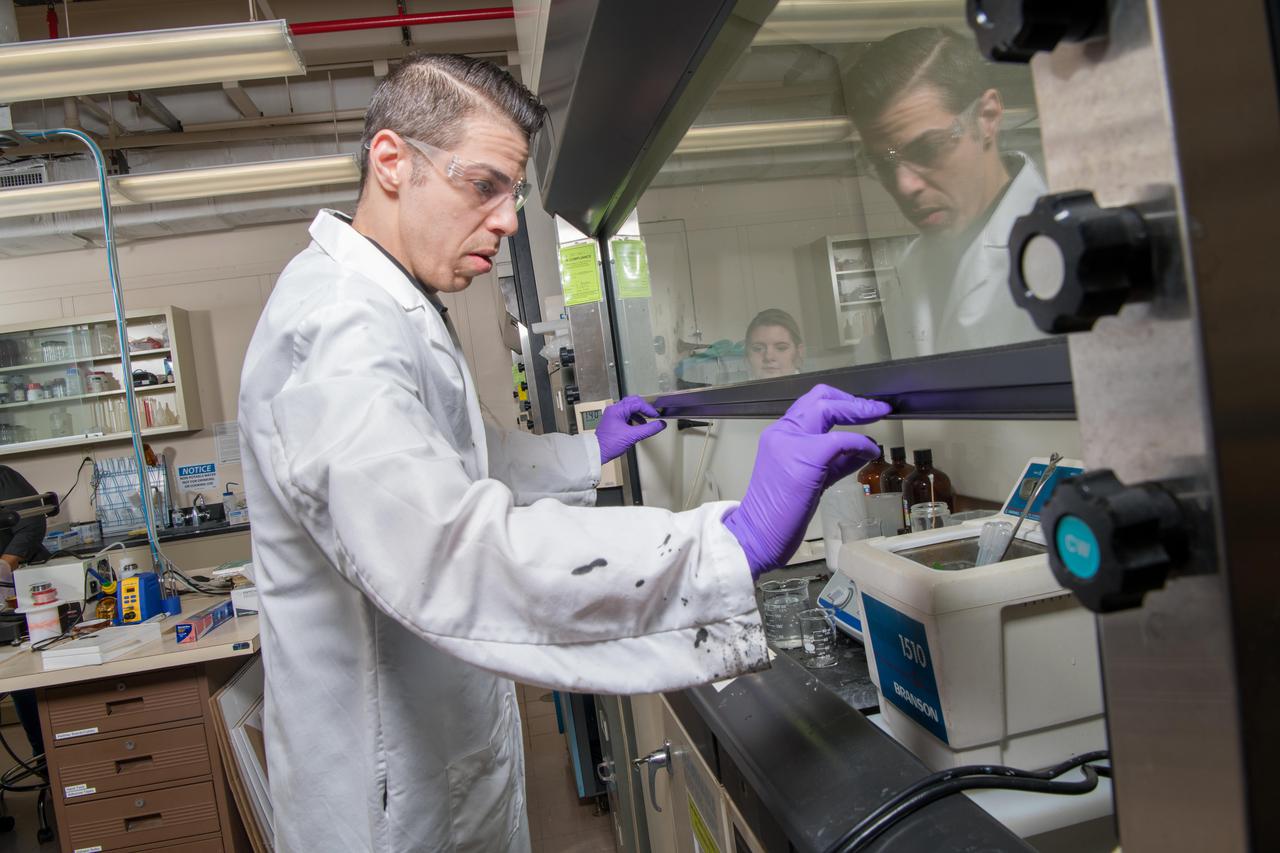
Photovoltaic Investigation on the Lunar Surface – PILS
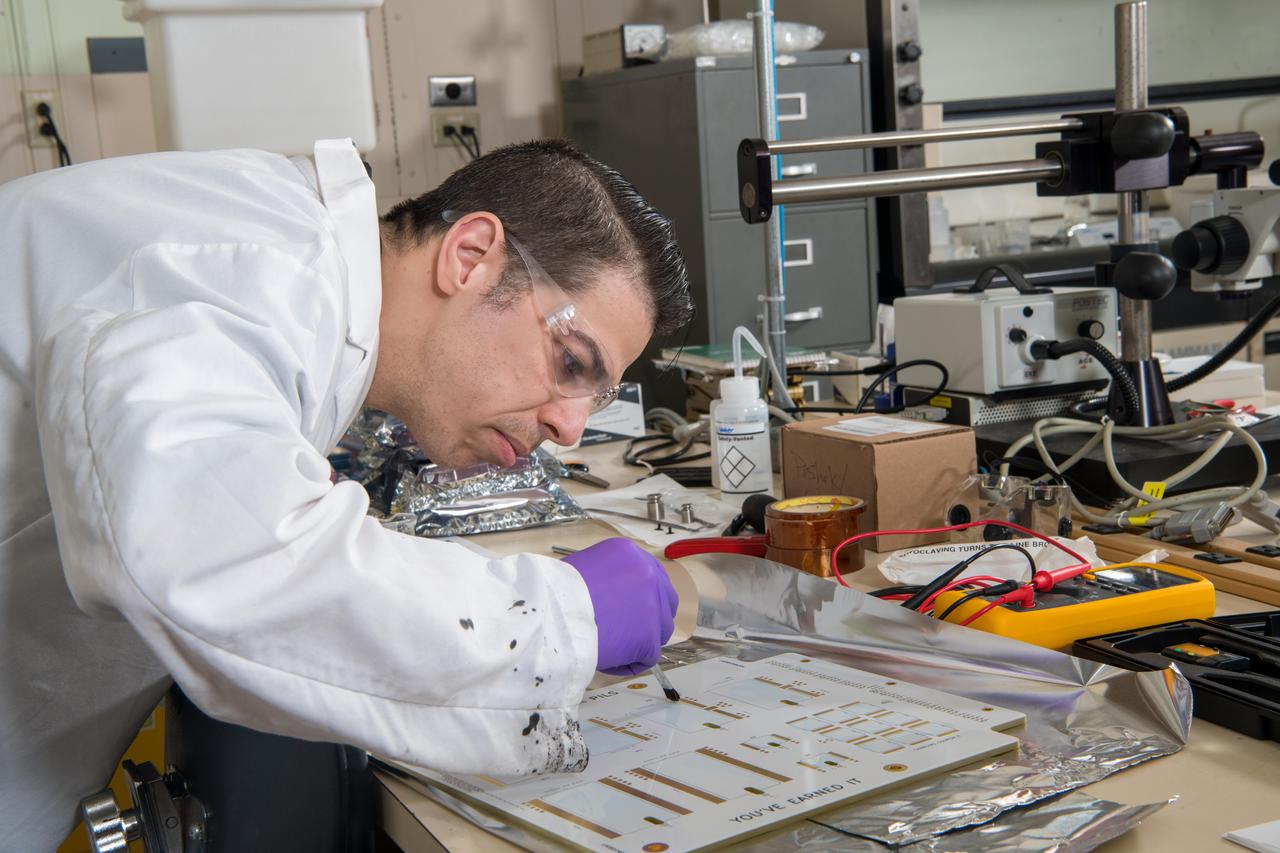
Photovoltaic Investigation on the Lunar Surface – PILS
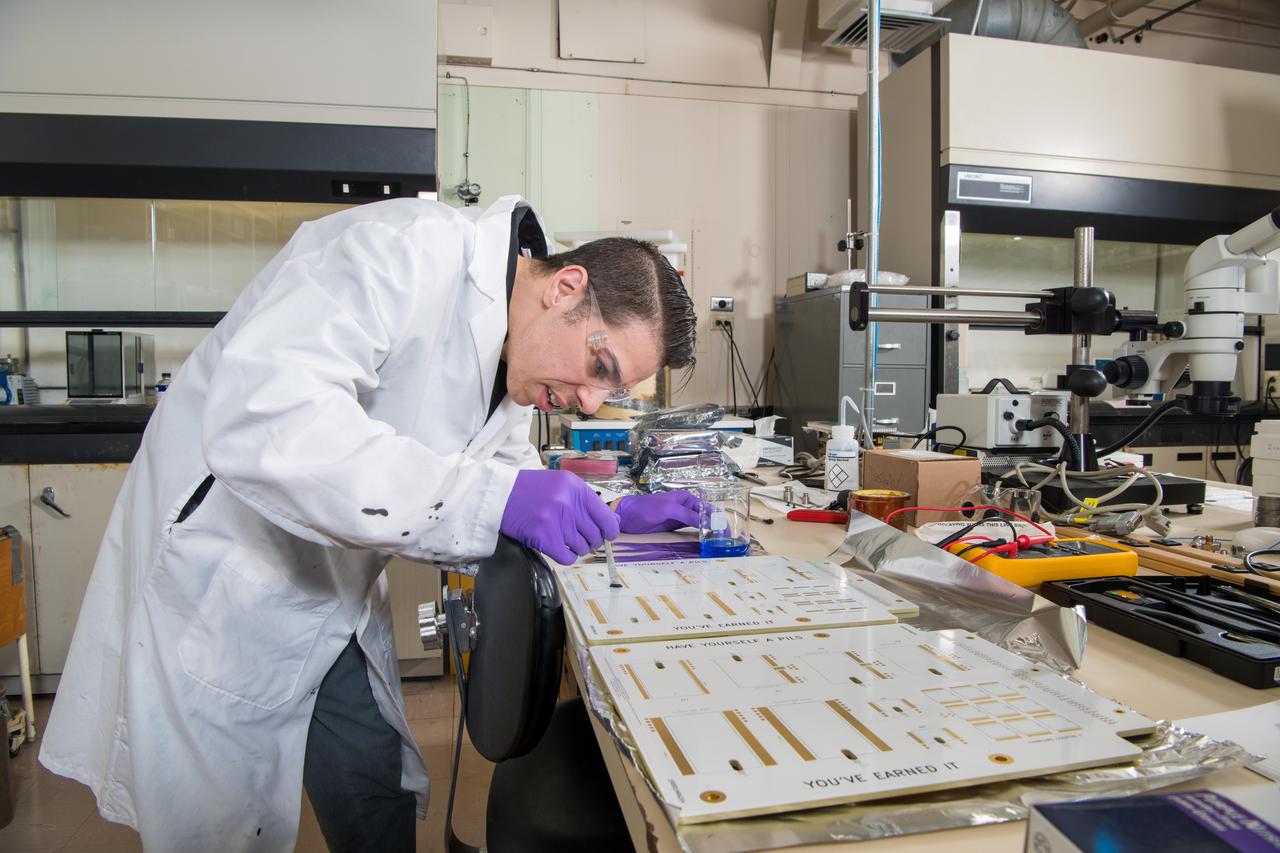
Photovoltaic Investigation on the Lunar Surface – PILS
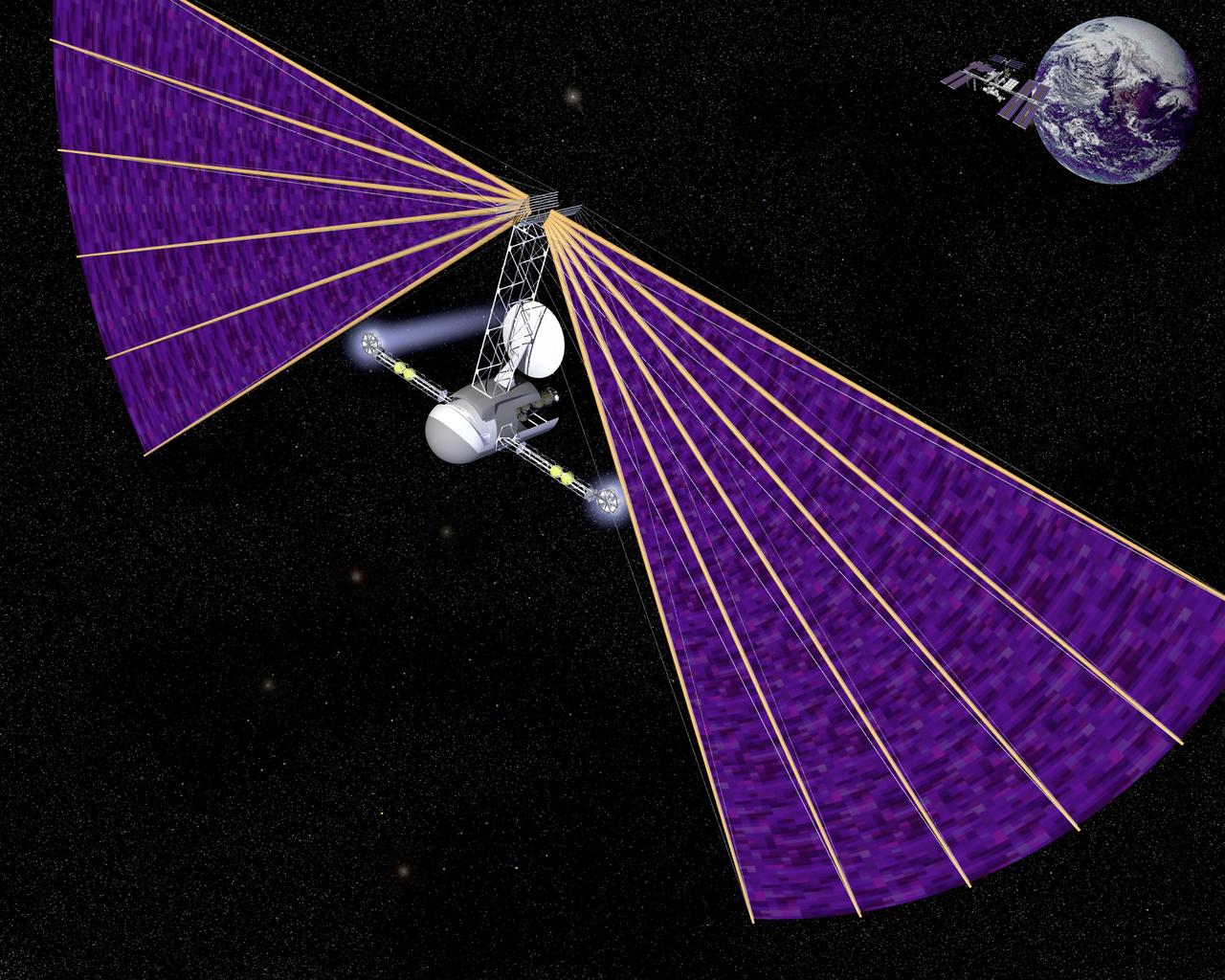
Concept of a vehicle journeys from Earth to Mars propelled by thrusters powered by electricity from photovoltaic cells on its large fan shaped sails
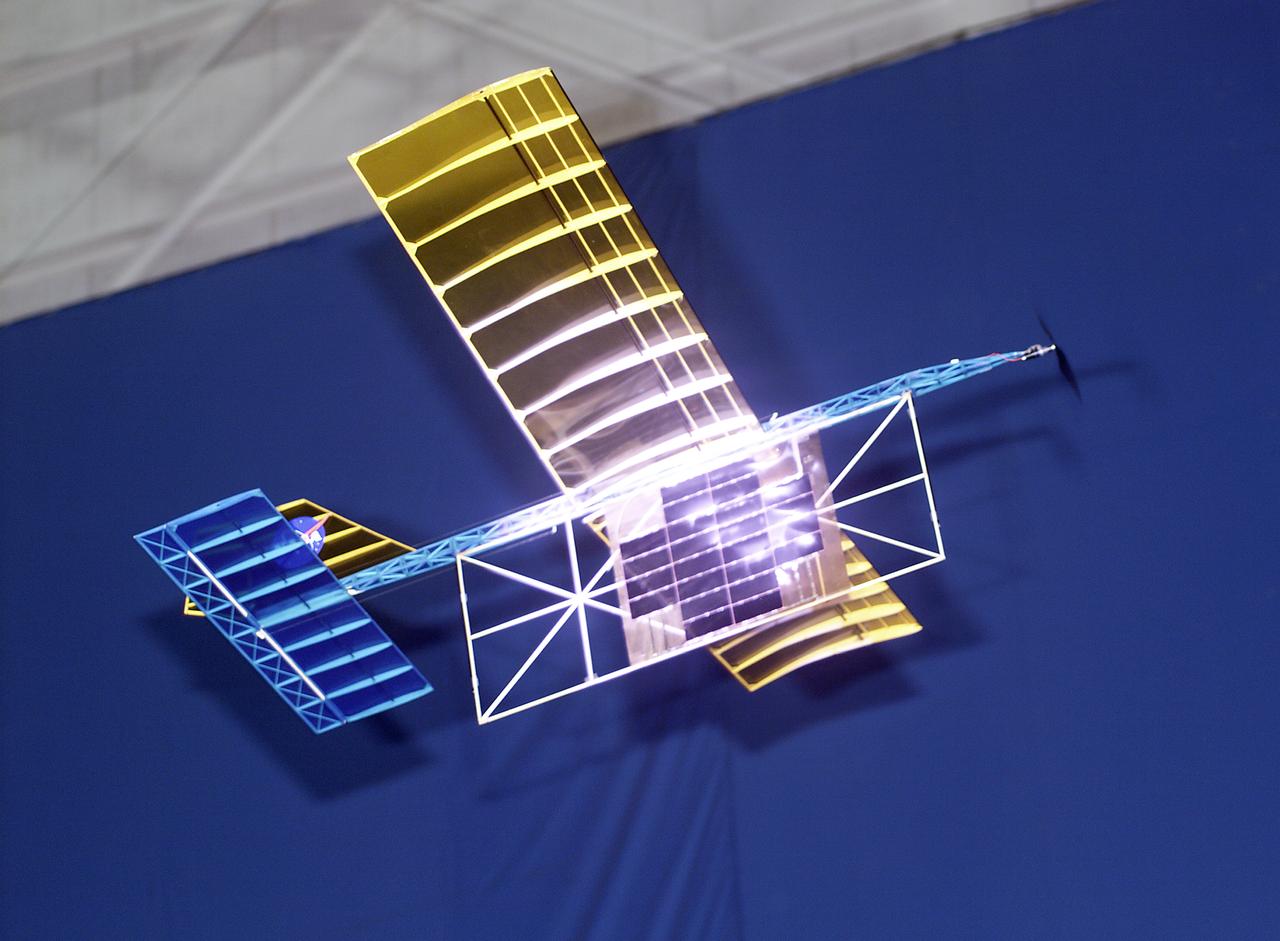
With a laser beam centered on its panel of photovoltaic cells, a lightweight model plane makes the first flight of an aircraft powered by a laser beam inside a building at NASA Marshall Space Flight Center.
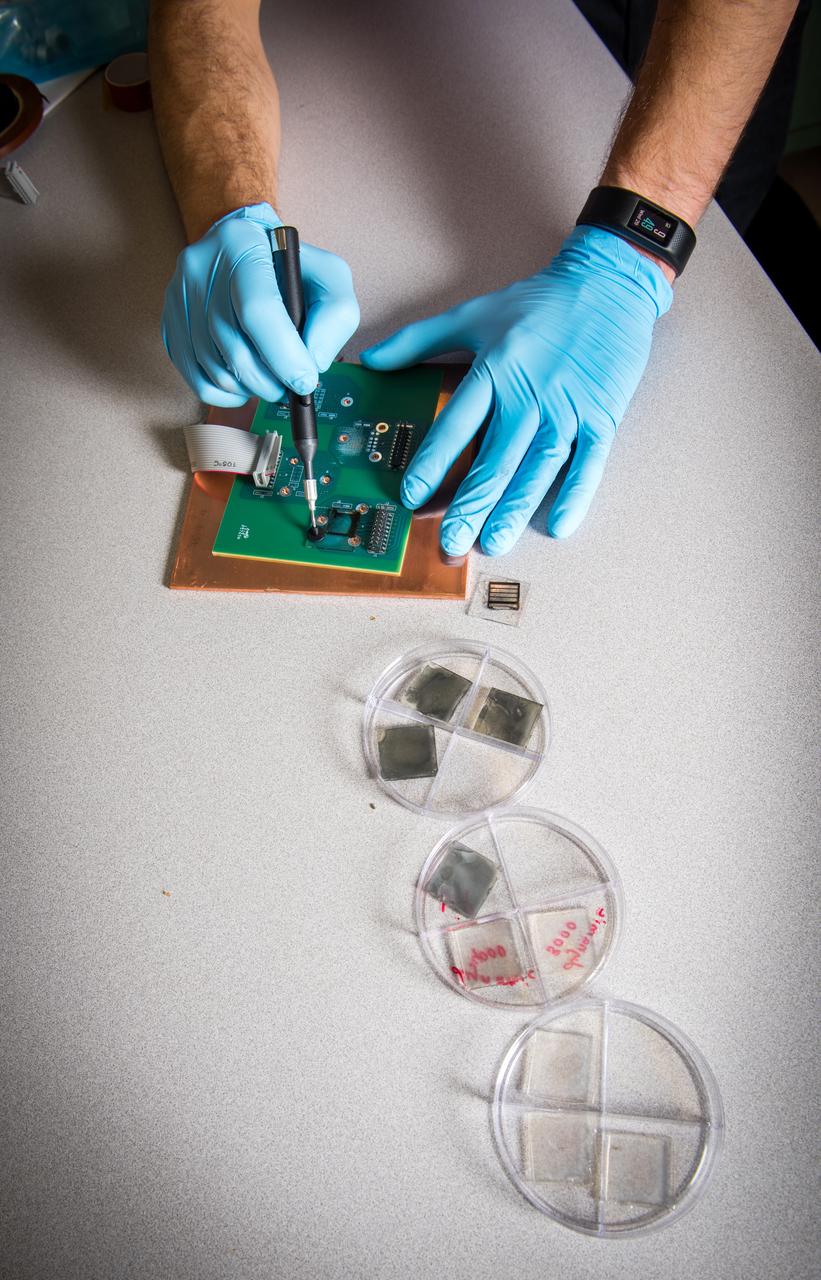
NASA Glenn researcher Tim Peshek shows off a new type of ultrathin solar cell, known as a ‘perovskite’ because of its structure. These solar cells show promise for space applications because of their high efficiency and radiation tolerance and open the door to extremely low cost and large solar arrays for spacecraft or lunar surface habitats.
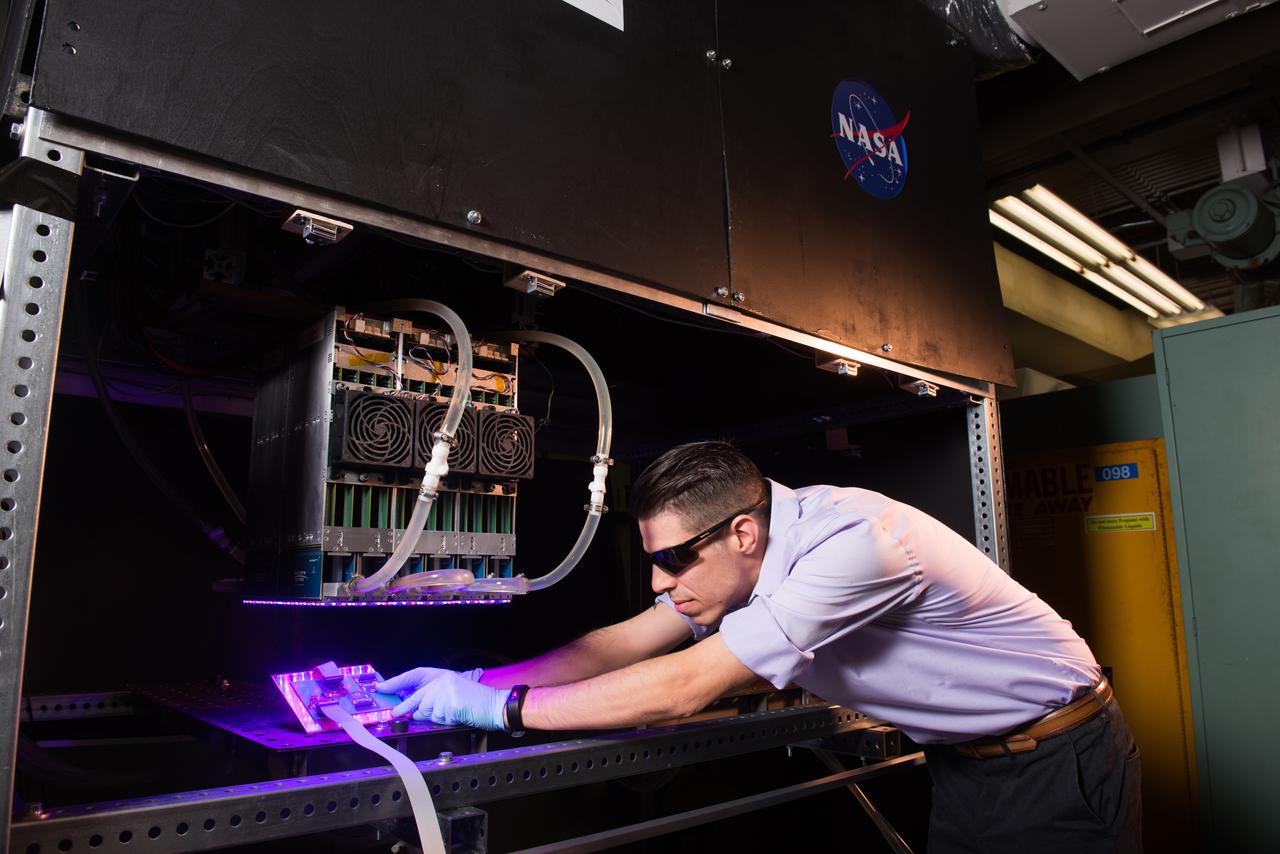
NASA Glenn researcher Tim Peshek shows off a new type of ultrathin solar cell, known as a ‘perovskite’ because of its structure. These solar cells show promise for space applications because of their high efficiency and radiation tolerance and open the door to extremely low cost and large solar arrays for spacecraft or lunar surface habitats.
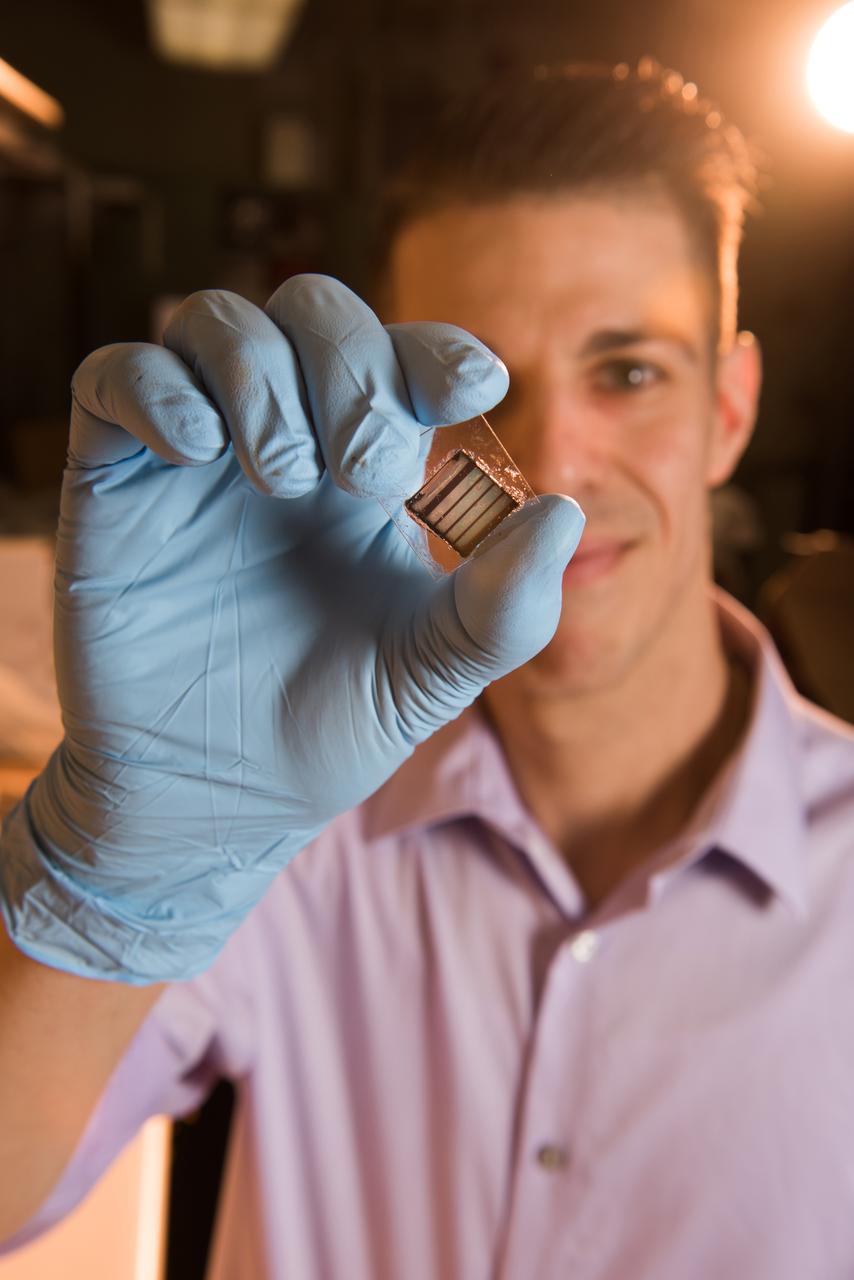
NASA Glenn researcher Tim Peshek shows off a new type of ultrathin solar cell, known as a ‘perovskite’ because of its structure. These solar cells show promise for space applications because of their high efficiency and radiation tolerance and open the door to extremely low cost and large solar arrays for spacecraft or lunar surface habitats.
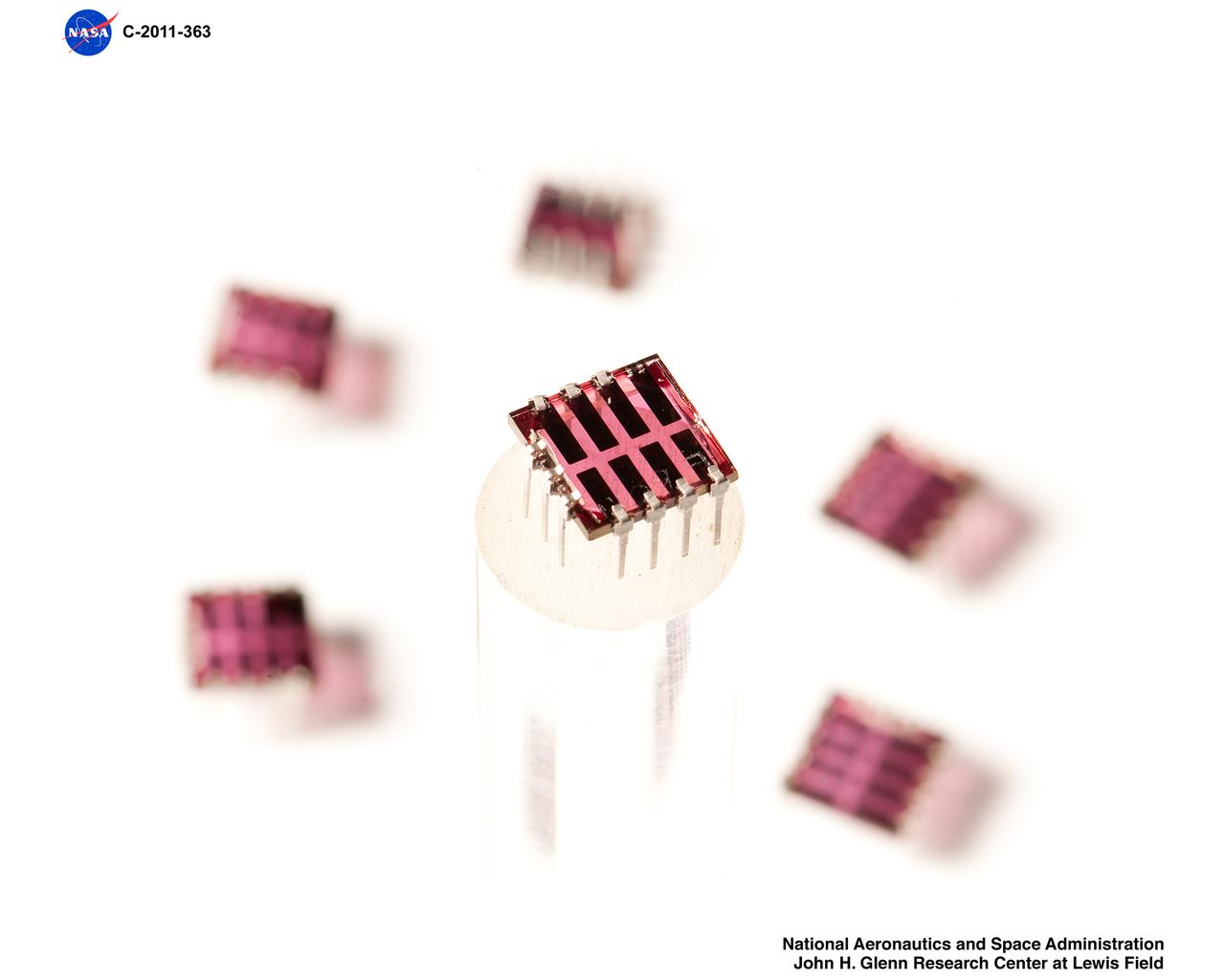
Photovoltaic Hardware - Prototype Organic Solar Cell Module
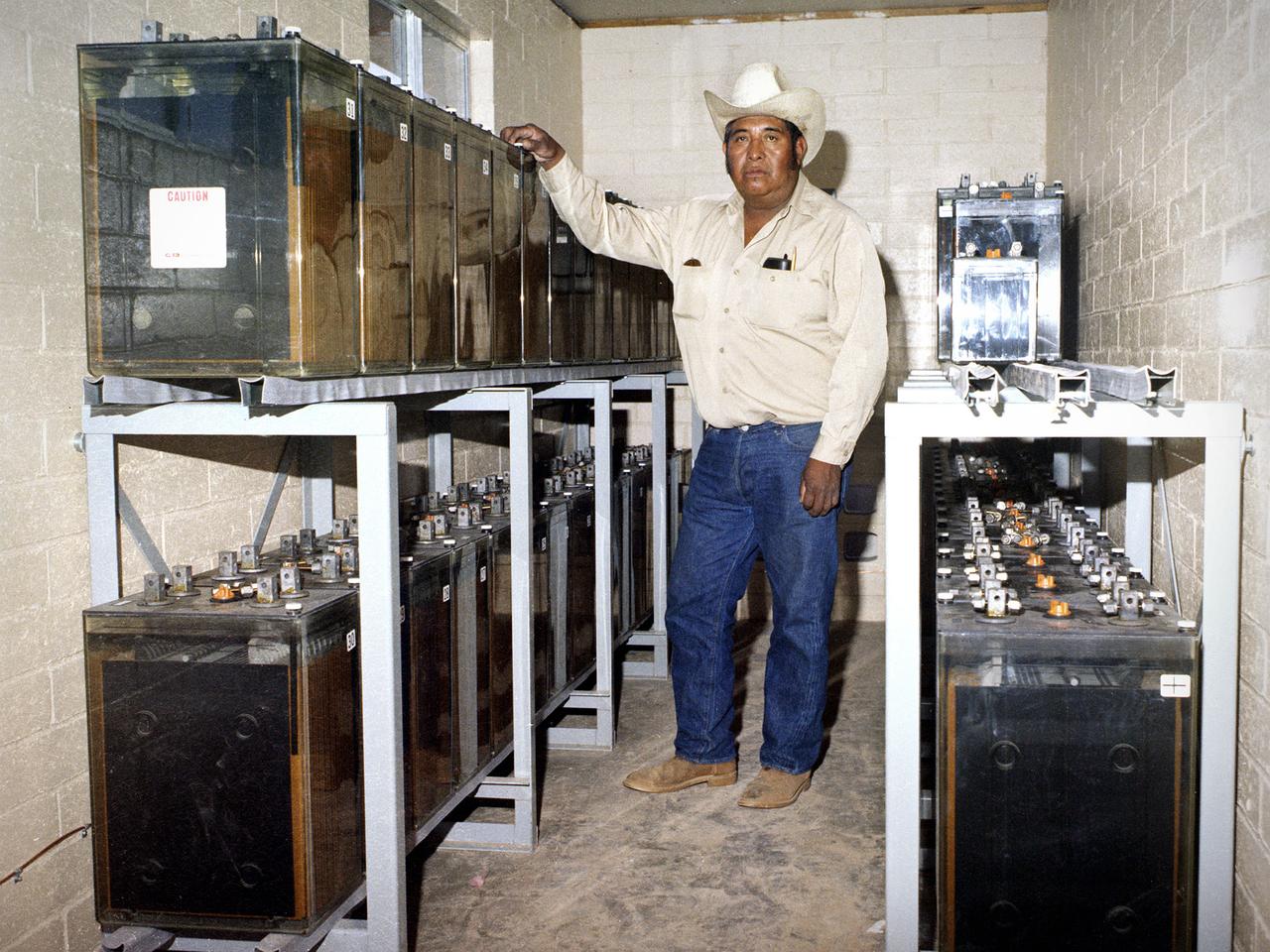
National Aeronautics and Space Administration (NASA) Lewis Research Center. NASA signed an agreement with the Papago tribe in May 1978 to provide the village with solar-generated electricity within the year. The project was funded by the Department of Energy and managed by NASA Lewis. Lewis provided all of the equipment and technical assistance while the tribe’s construction team built the arrays and support equipment, seen here. The 3.5-kilowatt system was modest in scope, but resulted in the first solar electric village. The system provided power to operate a refrigerator, freezer, washing machine, and water pump for the village and lights in each of the 16 homes. The system was activated on December 16, 1978. During the next year officials from around the world travelled to Schuchuli to ascertain if the system was applicable to their areas. The major television networks and over 100 publications covered the story. Less than one percent of the cells failed during the first year of operation.
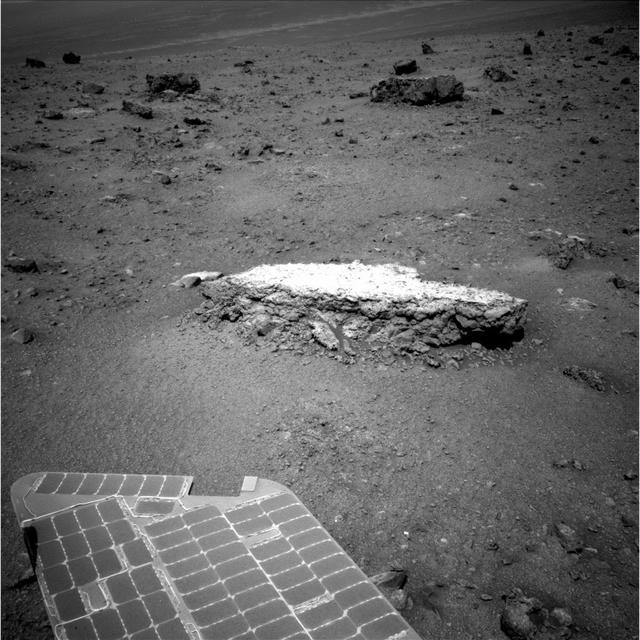
Part of NASA Mars Exploration Rover Opportunity array of photovoltaic cells is visible in the foreground of this image. Opportunity took this picture showing a light-toned rock, Tisdale
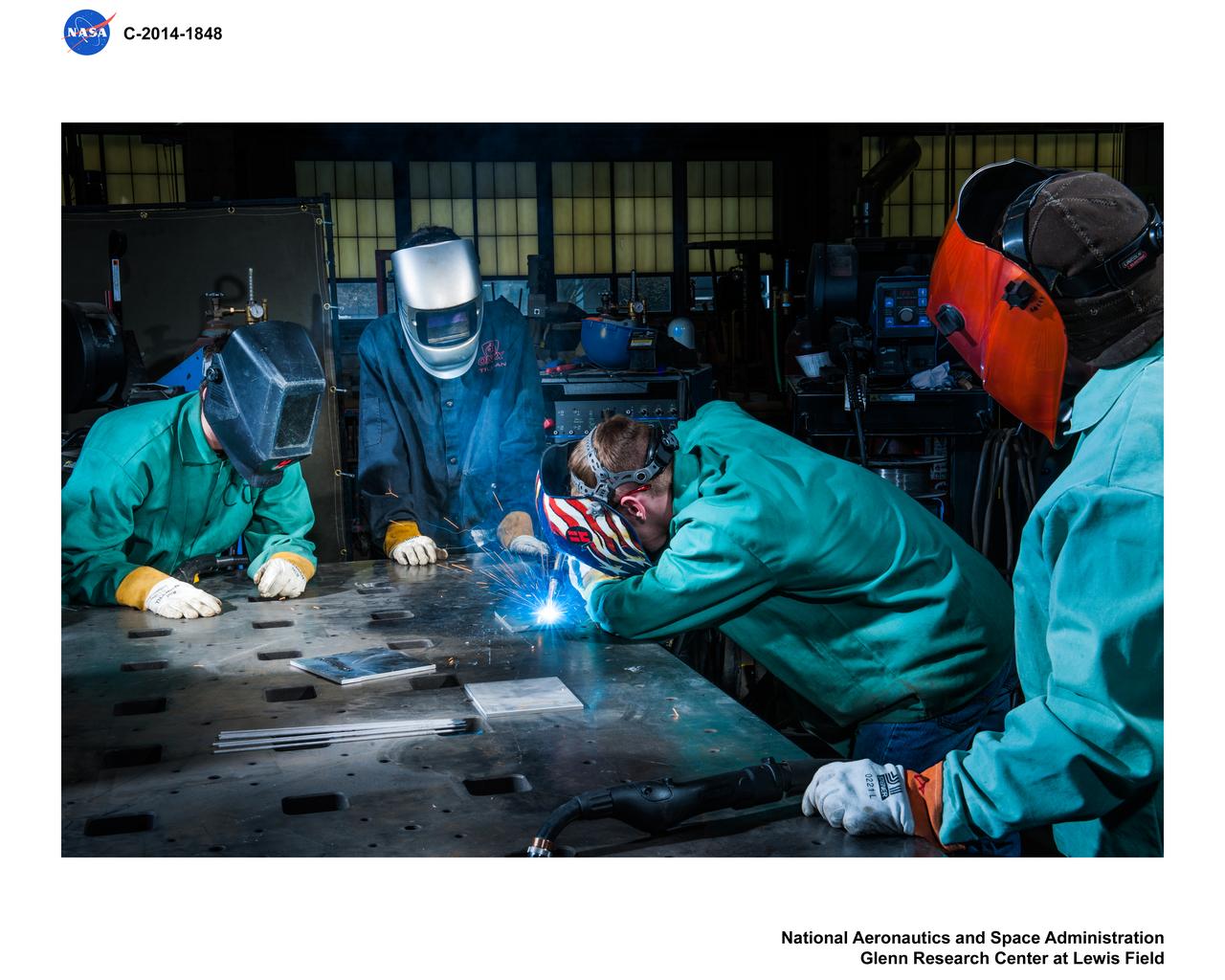
Visit to the Manufacturing Facility by Administration, Faculty and Students from the Erie Huron Ottawa Vocational Education Career Center, EHOVE in support of the 3KVA Mobile Photovoltaic Power Plant Project
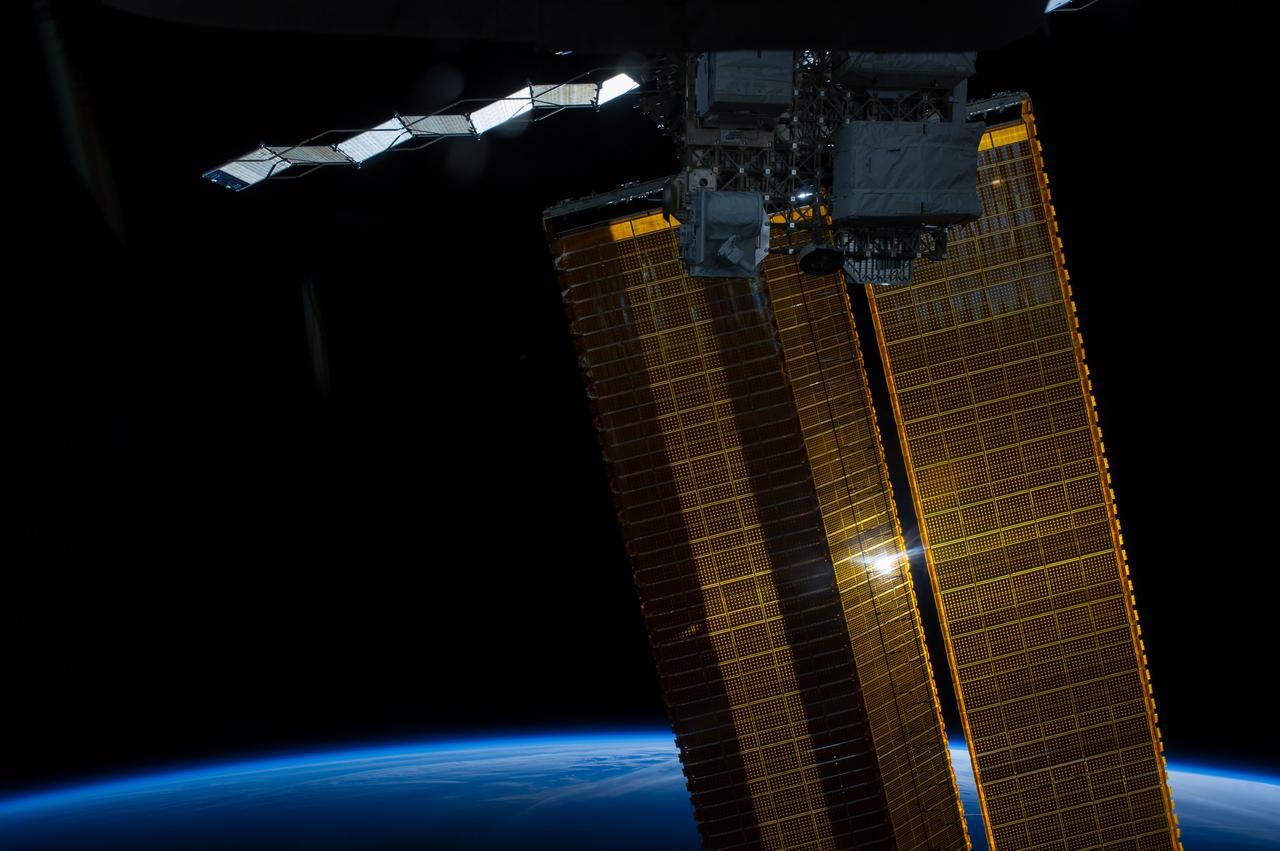
ISS040-E-007073 (3 June 2014) --- Some 228 nautical miles above the home planet, one of the Expedition 40 crew members aboard the International Space Station photographed this view of a sun-kissed solar array wing and a photovoltaic radiator (top) on the orbital outpost on June 3, 2014.
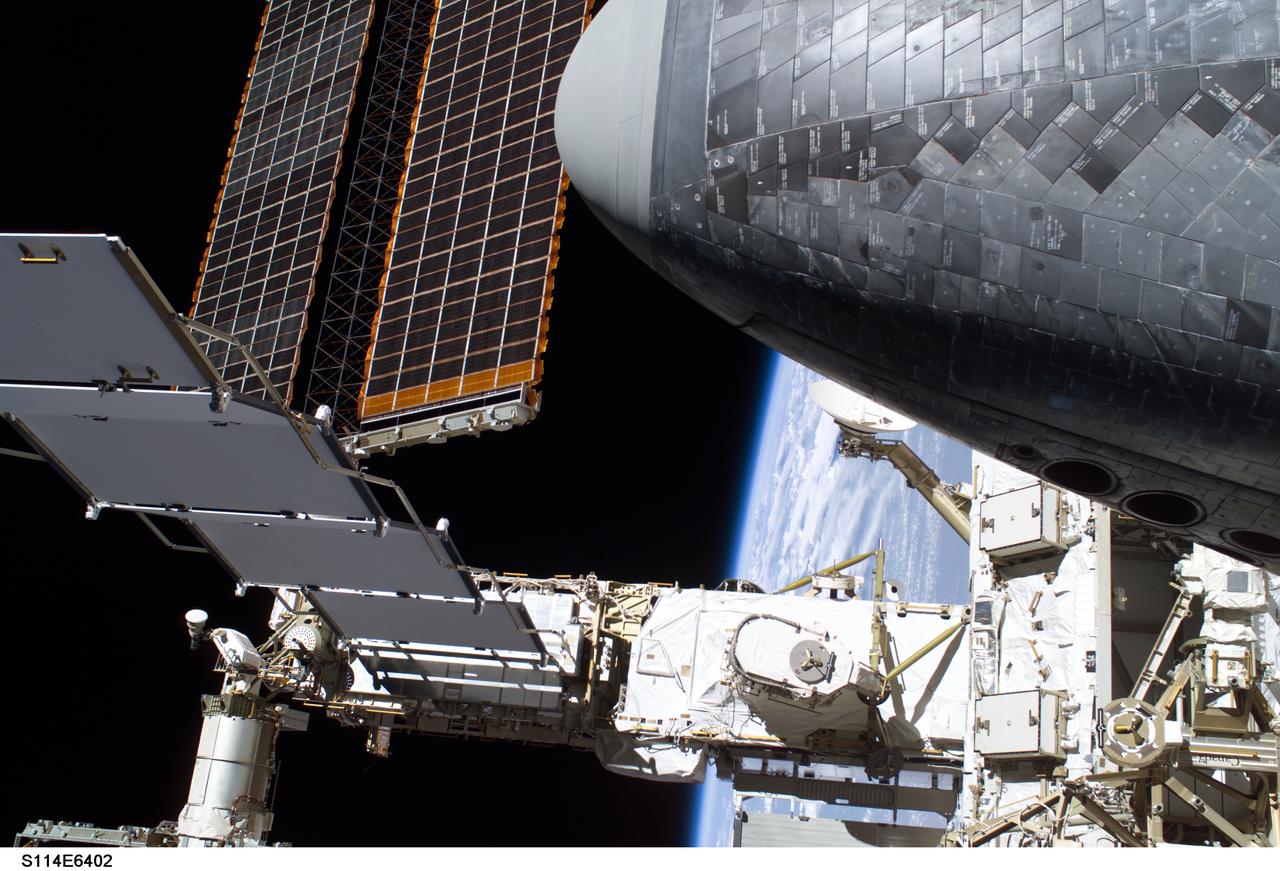
Photograph documenting the P6 Truss Solar Array Wing (SAW), Mast Canisters, Photovoltaic (PV) Radiator and Solar Array Blanket Boxes (SABB) as seen by the STS-114 crew during the third of three Extravehicular Activities (EVAs) of the mission. Part of the orbiter Discovery's nosecone is visible in the upper right of the frame.
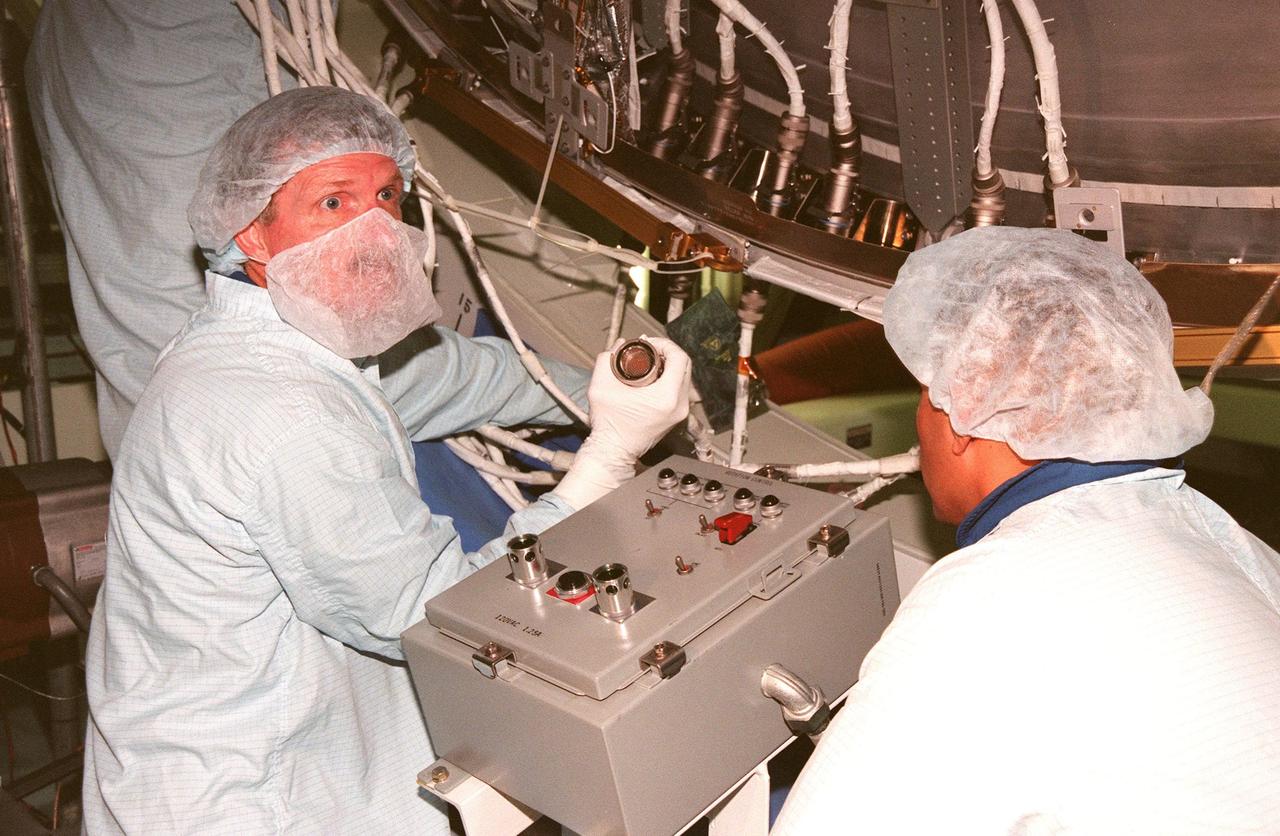
STS-97 Mission Specialists Joseph R. Tanner and Carlos I. Noriega check equipment of the International Space Station inside the Space Station Processing Facility. STS-97, targeted to launch on Aug. 5, 1999, is scheduled to carry integrated truss structure P6, photovoltaic module and radiators
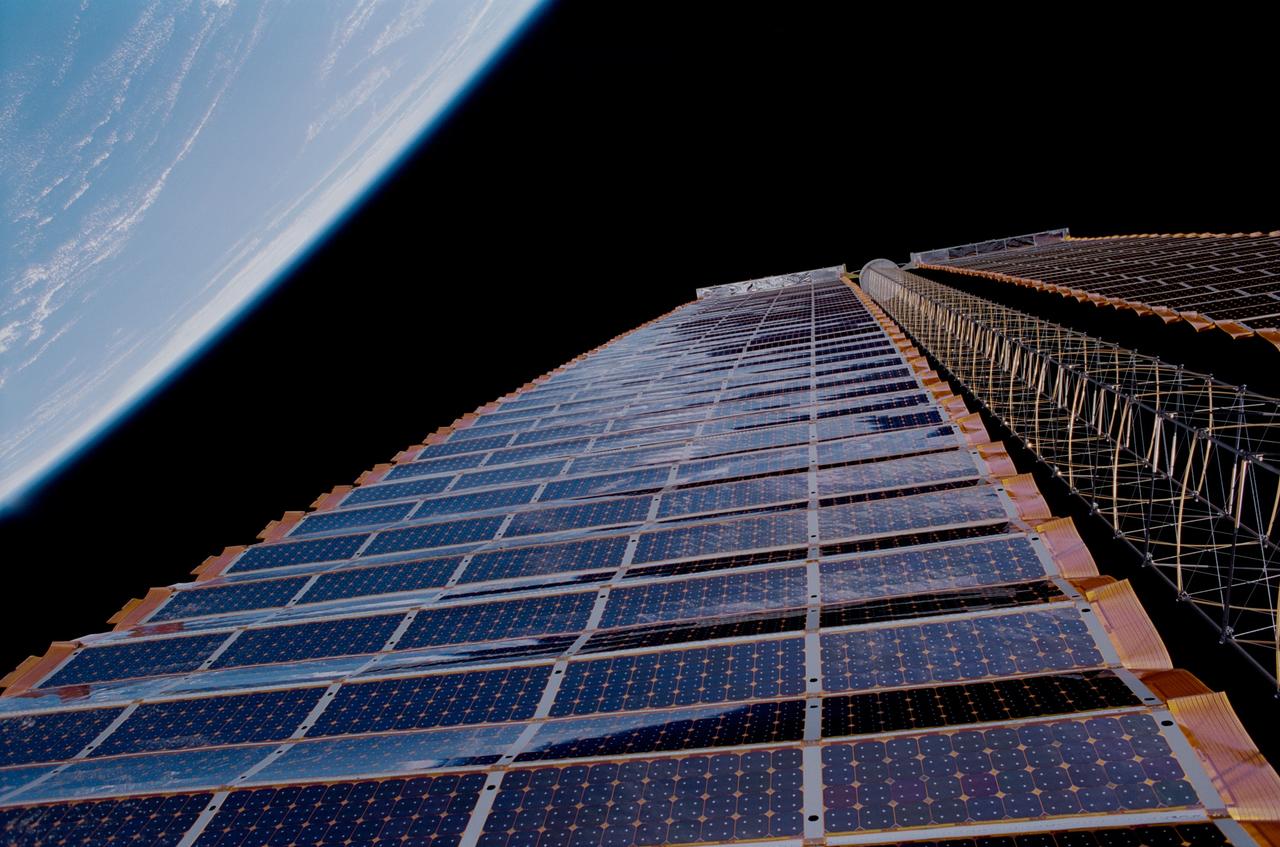
STS097-376-019 (7 December 2000) --- A close-up view of the P6 solar array on the International Space Station (ISS), backdropped against the blackness of space and the Earth’s horizon. The P6 solar array is the first of eight sets of solar arrays that at the completion of the space station construction in 2006, will comprise the station’s electrical power system, converting sunlight to electricity.
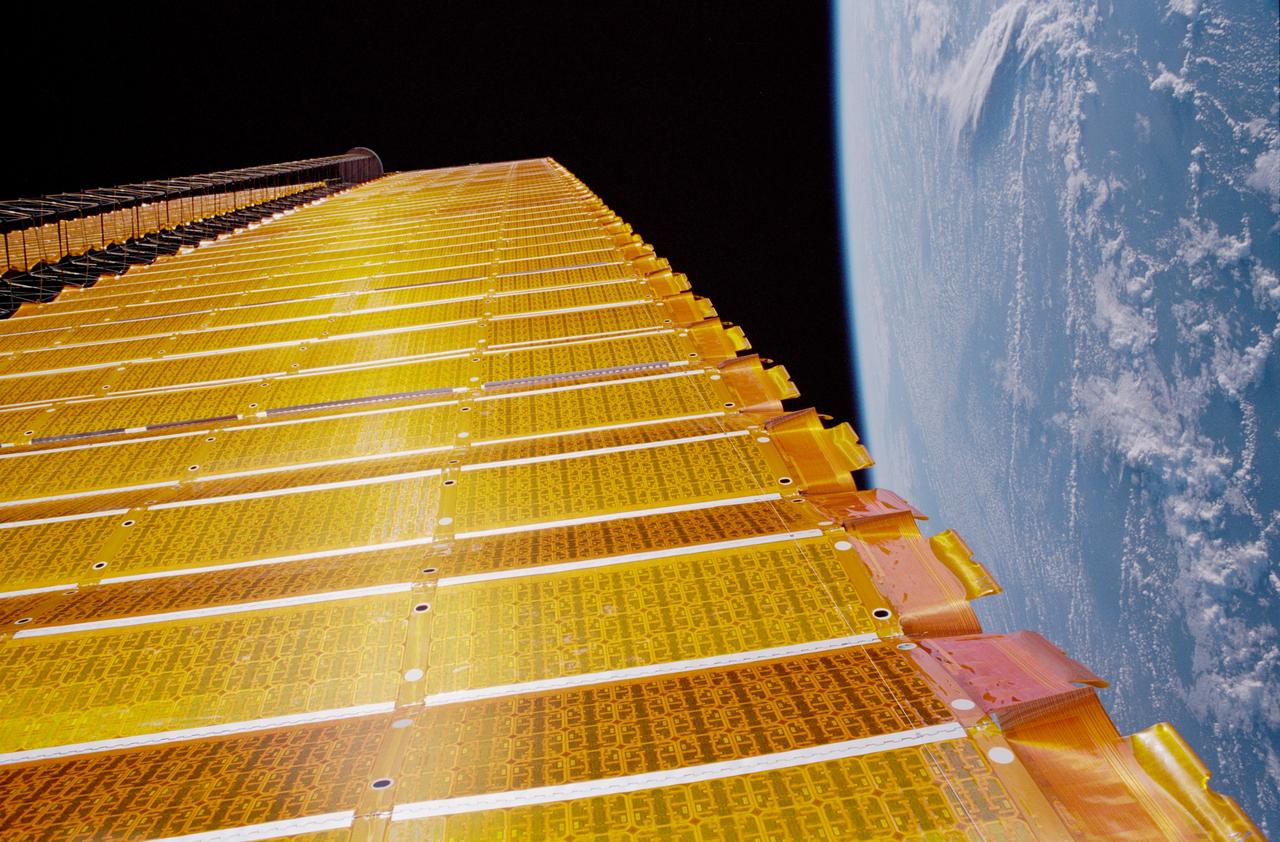
STS097-376-006 (7 Dec 2000) --- A close-up view of the P6 solar array on the International Space Station (ISS), backdropped against the blackness of space and the Earth?s horizon. The P6 solar array is the first of eight sets of solar arrays that at the completion of the space station construction in 2006, will comprise the station?s electrical power system, converting sunlight to electricity.
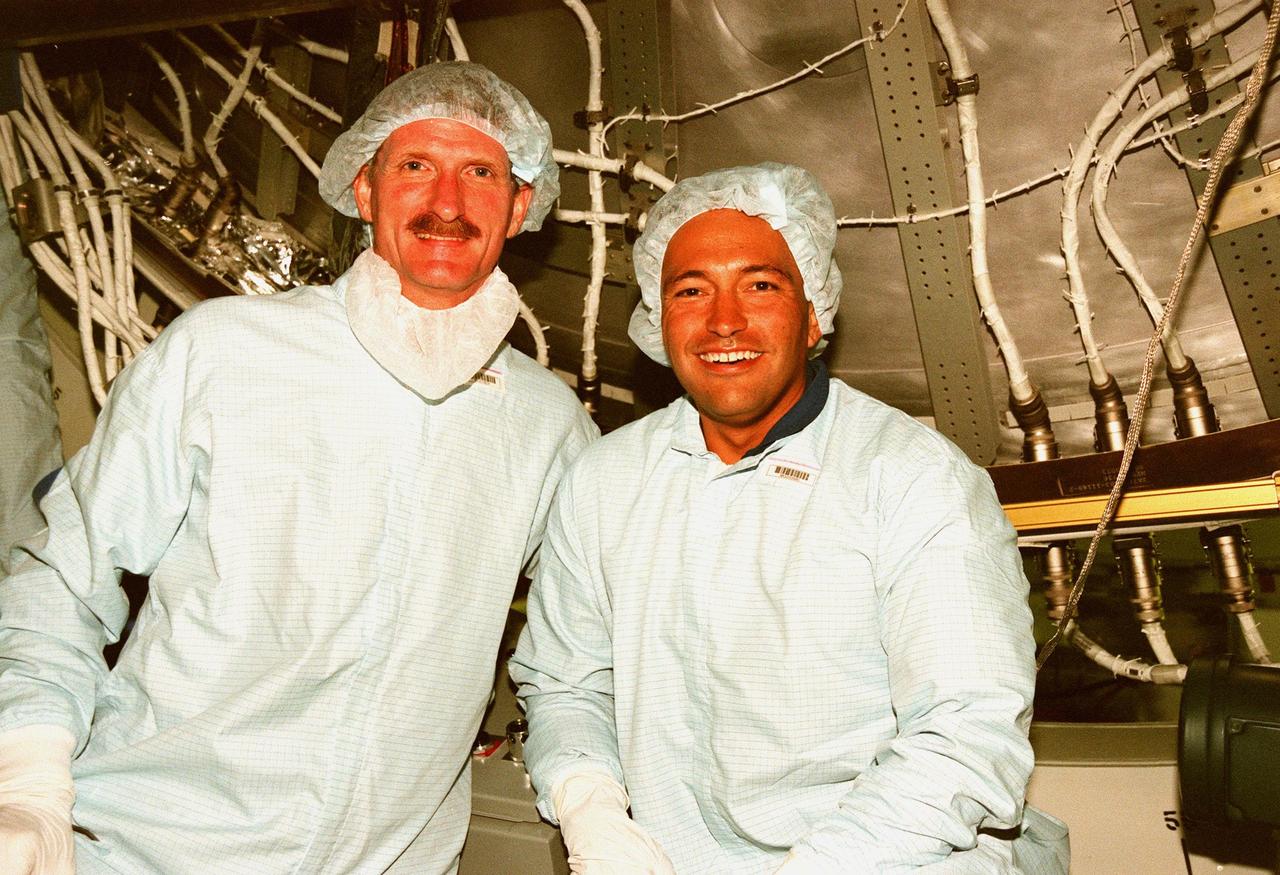
Inside the Space Station Processing Facility, STS-97 Mission Specialists Joseph R. Tanner and Carlos I. Noriega take a break from equipment check for the International Space Station . STS-97, the fourth ISS flight, is targeted to launch on Aug. 5, 1999. It is scheduled to carry integrated truss structure P6, photovoltaic module and radiators
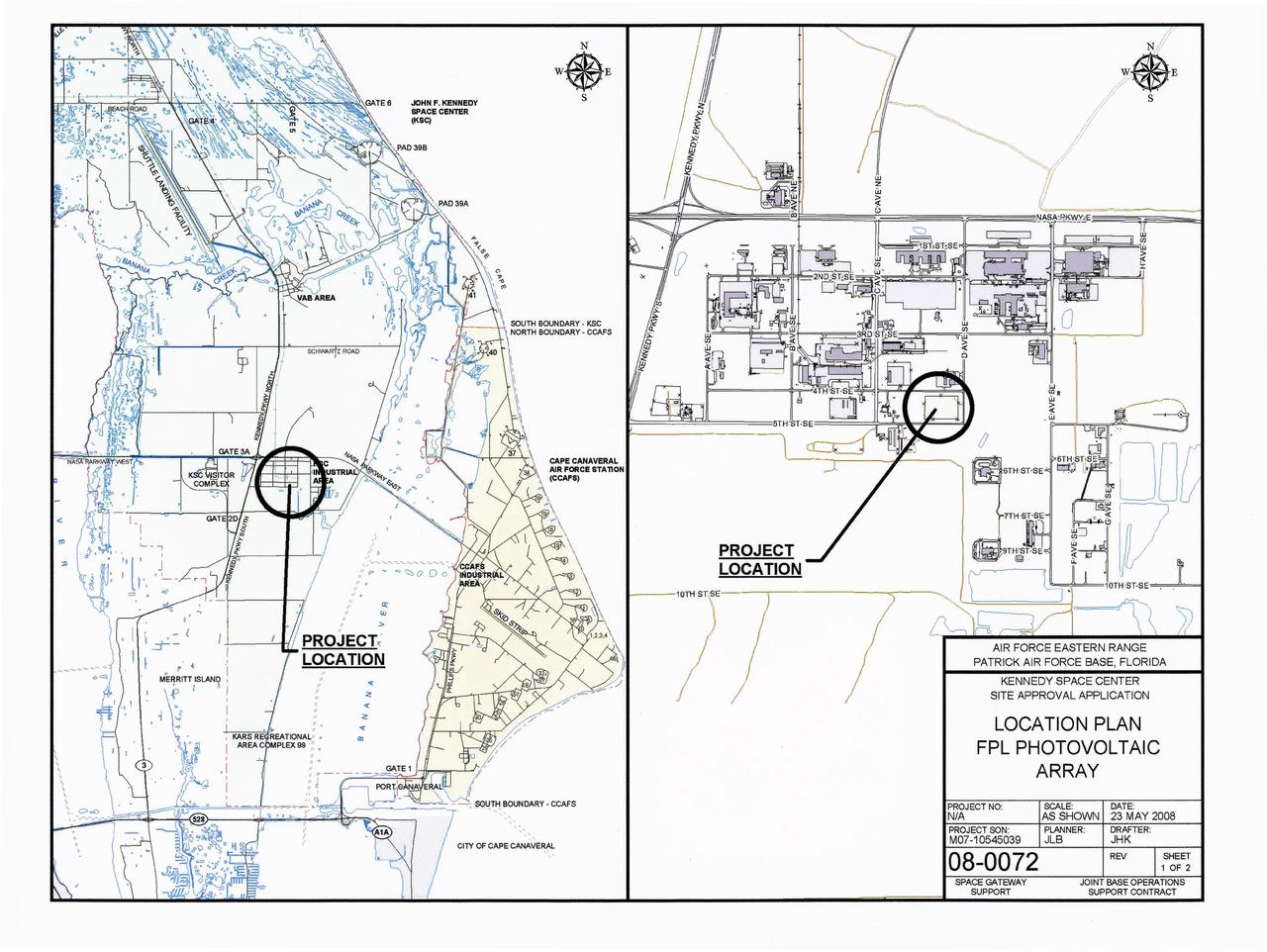
CAPE CANAVERAL, Fla. – This map shows the two sites within NASA's Kennedy Space Center where a solar photovoltaic power generation system will be built as the result of an agreement between NASA and Florida Power & Light. The agreement is part of a new initiative that will cut reliance on fossil fuels and improve the environment by reducing greenhouse gas emissions. The major facility will produce an estimated 10 megawatts of electrical power, which can serve roughly 3,000 homes. A separate one-megawatt solar power facility will support the electrical needs of the center.
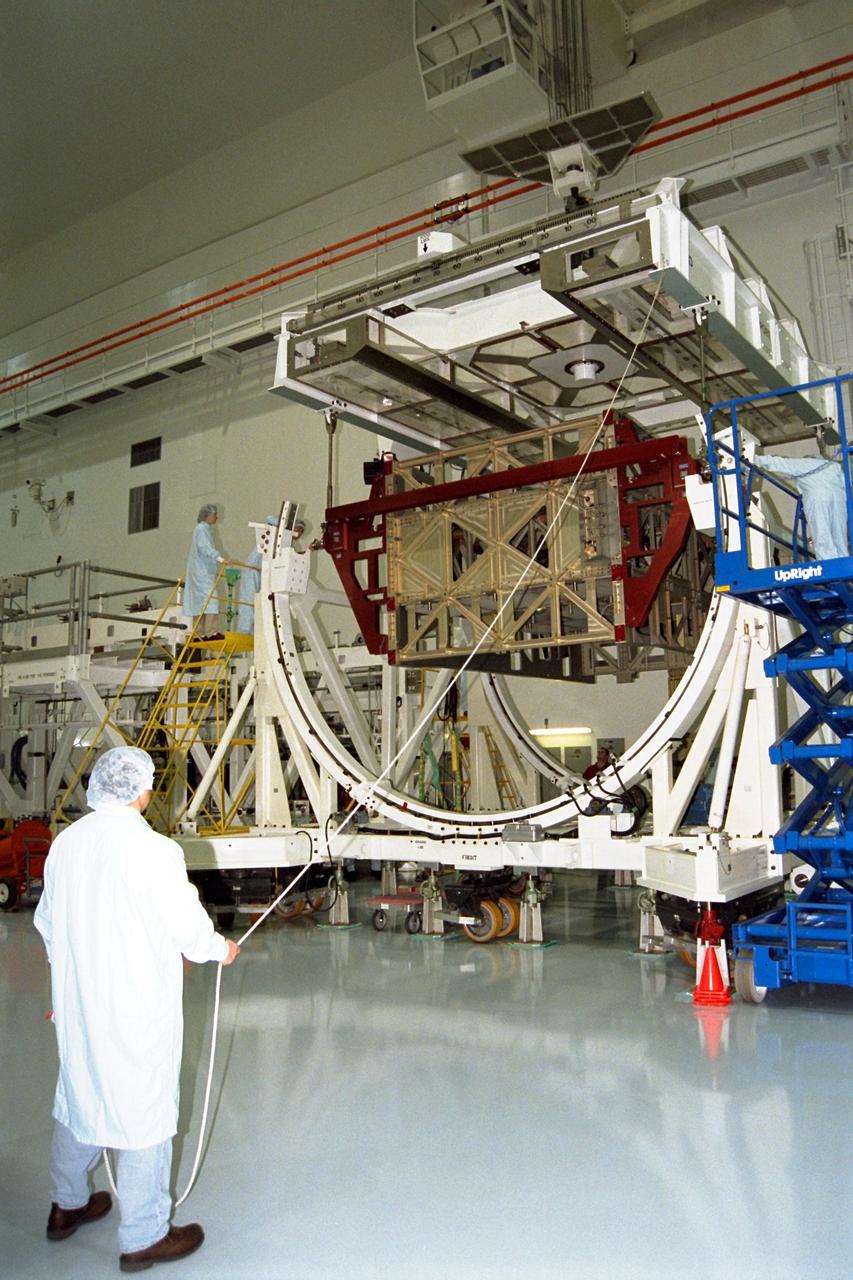
The Photovoltaic Module 1 Integrated Equipment Assembly (IEA) is lowered into its workstand at Kennedy Space Center’s Space Station Processing Facility (SSPF), where it will be processed for flight on STS-97, scheduled for launch in April 1999. The IEA is one of four integral units designed to generate, distribute, and store power for the International Space Station. It will carry solar arrays, power storage batteries, power control units, and a thermal control system. The 16-foot-long, 16,850-pound unit is now undergoing preflight preparations in the SSPF
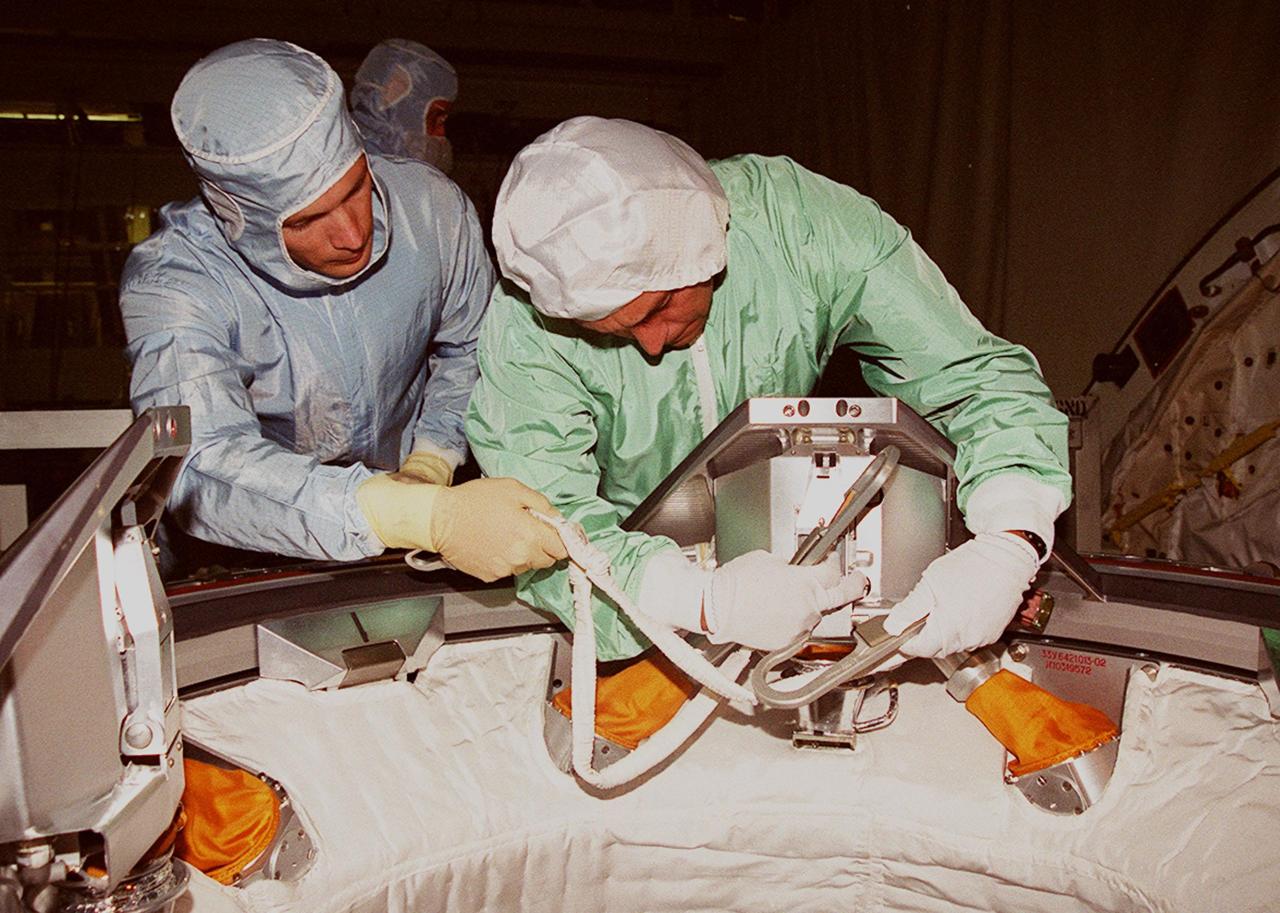
During the STS-97 Crew Equipment Interface Test (CEIT), Mission Specialist Carlos Noriega (right) gets hands-on experience with parts of the Orbital Docking System in Endeavour’s payload bay. The CEIT provides an opportunity for crew members to check equipment and facilities that will be on board the orbiter during their mission. The STS-97 mission will be the sixth construction flight to the International Space Station. The payload includes a photovoltaic (PV) module, providing solar power to the Station. STS-97 is scheduled to launch Nov. 30 from KSC for the 10-day mission
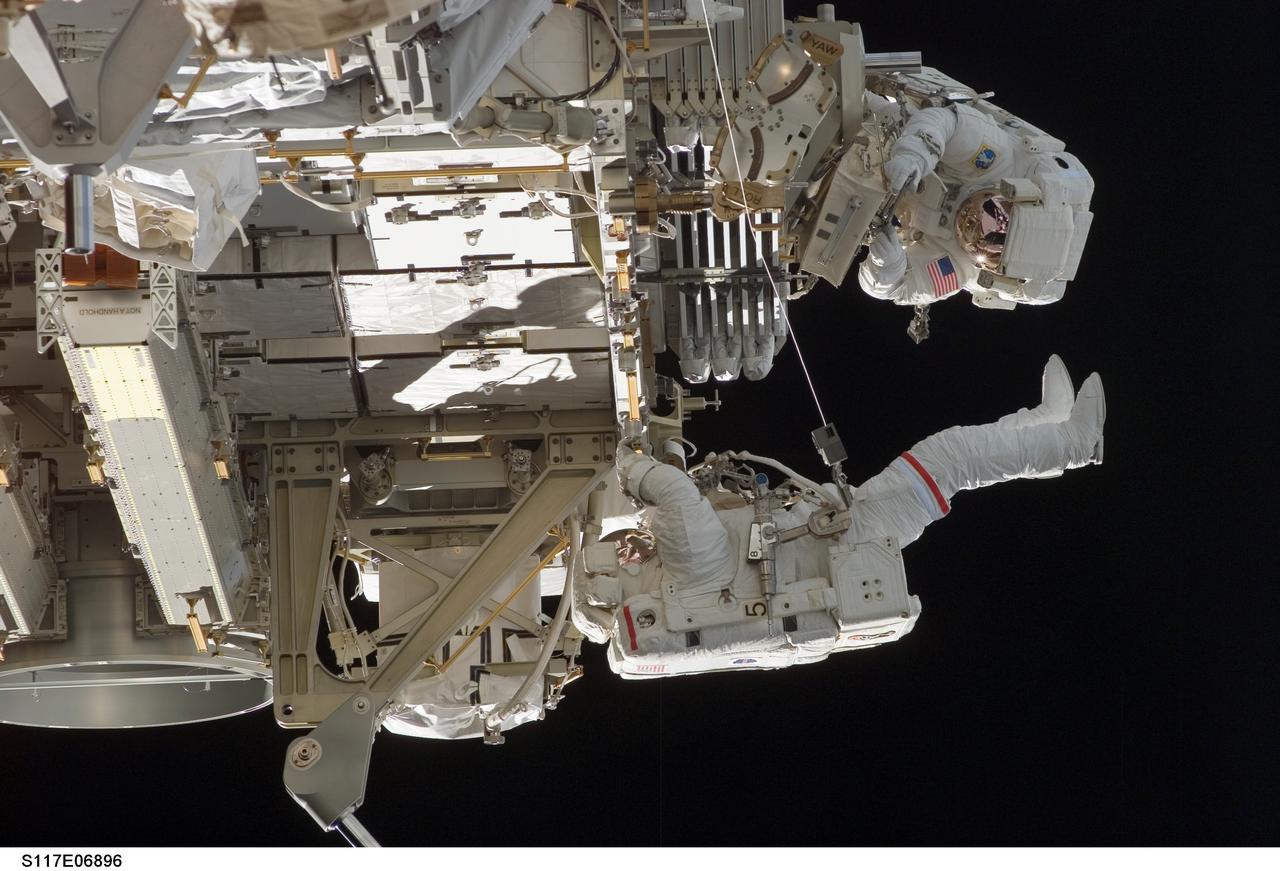
S117-E-06896 (11 June 2007) --- Astronauts Jim Reilly (bottom) and John "Danny" Olivas (top right), both STS-117 mission specialists, participate in the mission's first planned session of extravehicular activity (EVA), as construction resumes on the International Space Station. Among other tasks, Reilly and Olivas connected power, data and cooling cables between S1 and S3; released the launch restraints from and deployed the four solar array blanket boxes on S4 and released the cinches and winches holding the photovoltaic radiator on S4.
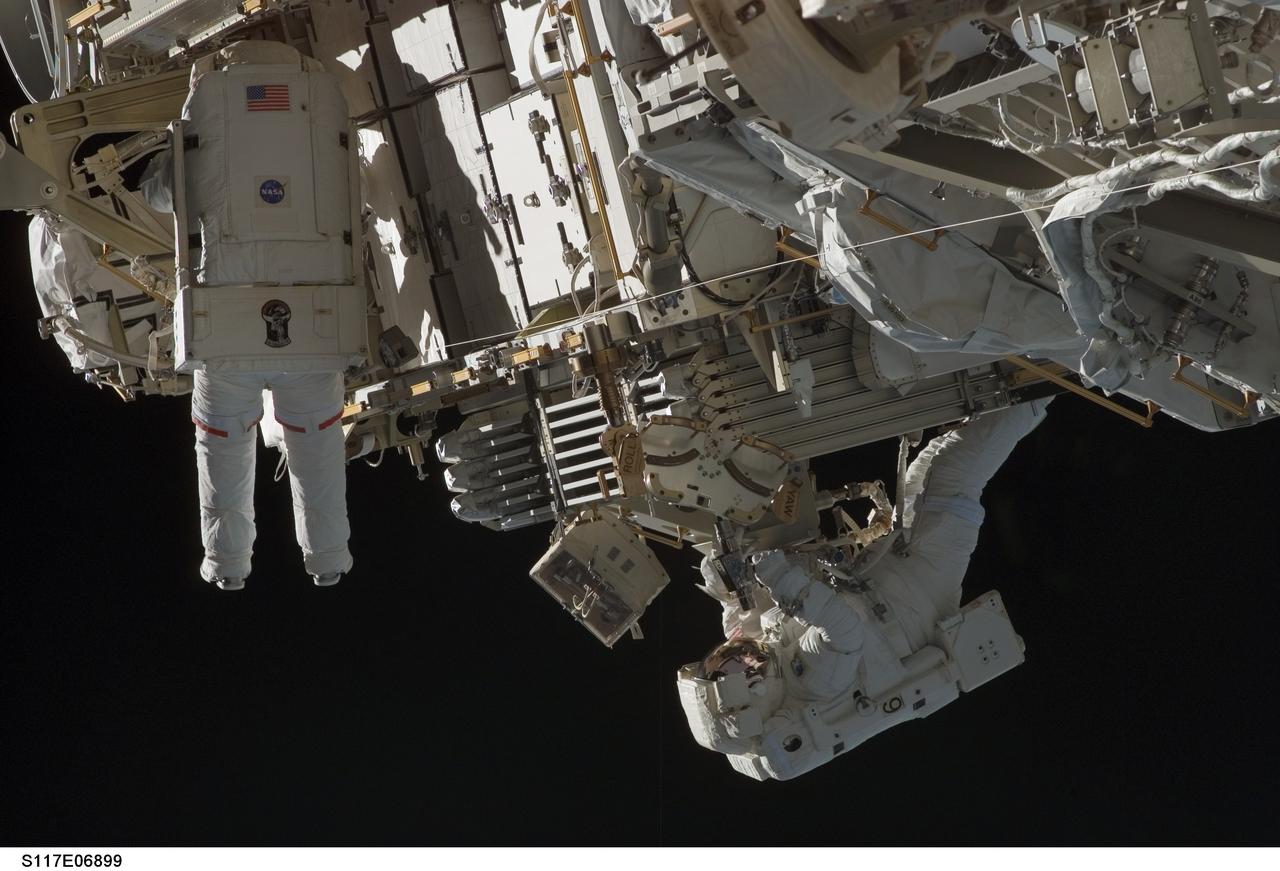
S117-E-06899 (11 June 2007) --- Astronauts Jim Reilly (left) and John "Danny" Olivas (bottom right), both STS-117 mission specialists, participate in the mission's first planned session of extravehicular activity (EVA), as construction resumes on the International Space Station. Among other tasks, Reilly and Olivas connected power, data and cooling cables between S1 and S3; released the launch restraints from and deployed the four solar array blanket boxes on S4 and released the cinches and winches holding the photovoltaic radiator on S4.
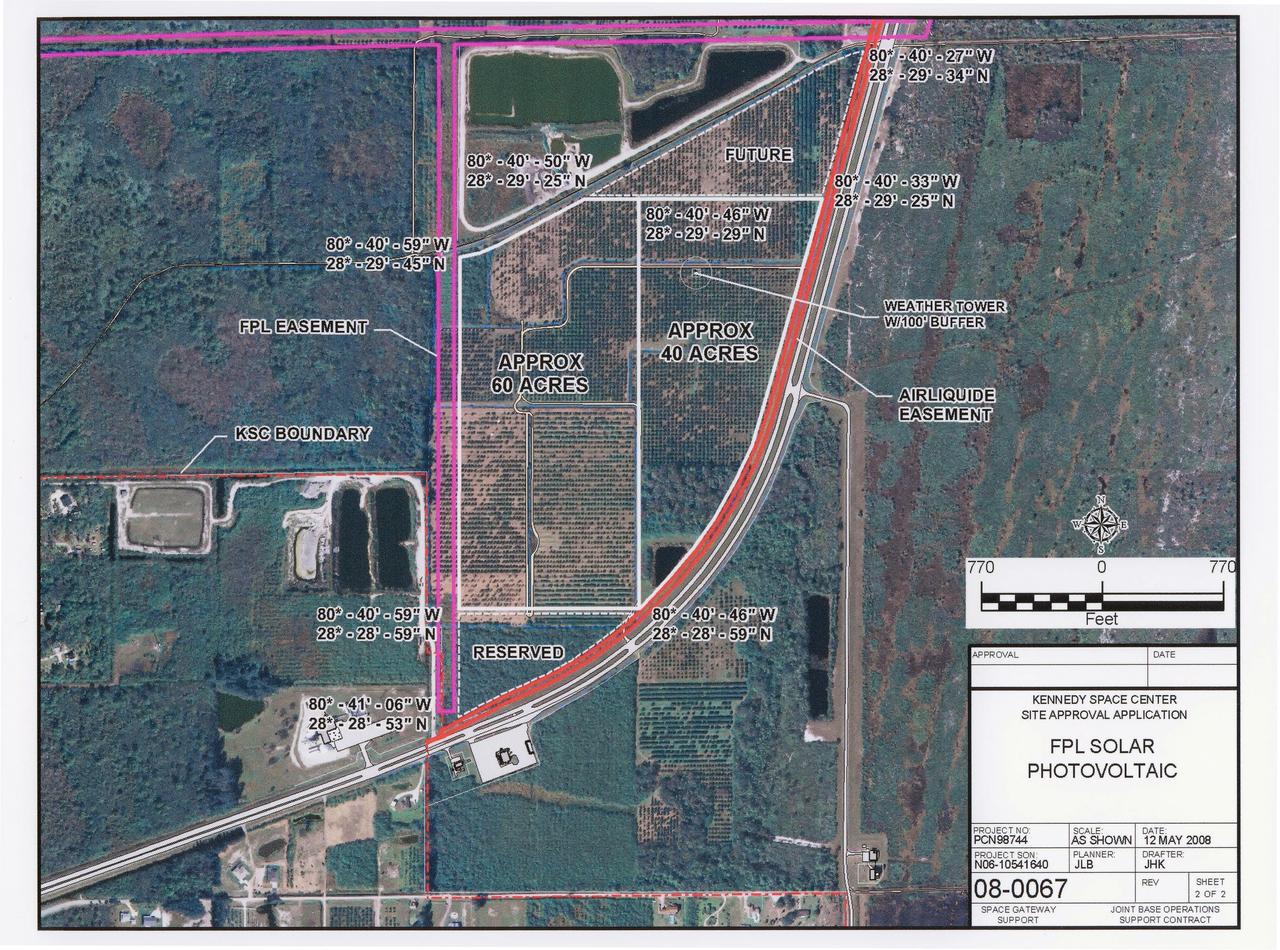
CAPE CANAVERAL, Fla. – This map shows the area within NASA's Kennedy Space Center where a solar photovoltaic power generation system will be built as the result of an agreement between NASA and Florida Power & Light. The agreement is part of a new initiative that will cut reliance on fossil fuels and improve the environment by reducing greenhouse gas emissions. The major facility will produce an estimated 10 megawatts of electrical power, which can serve roughly 3,000 homes. A separate one-megawatt solar power facility will support the electrical needs of the center.
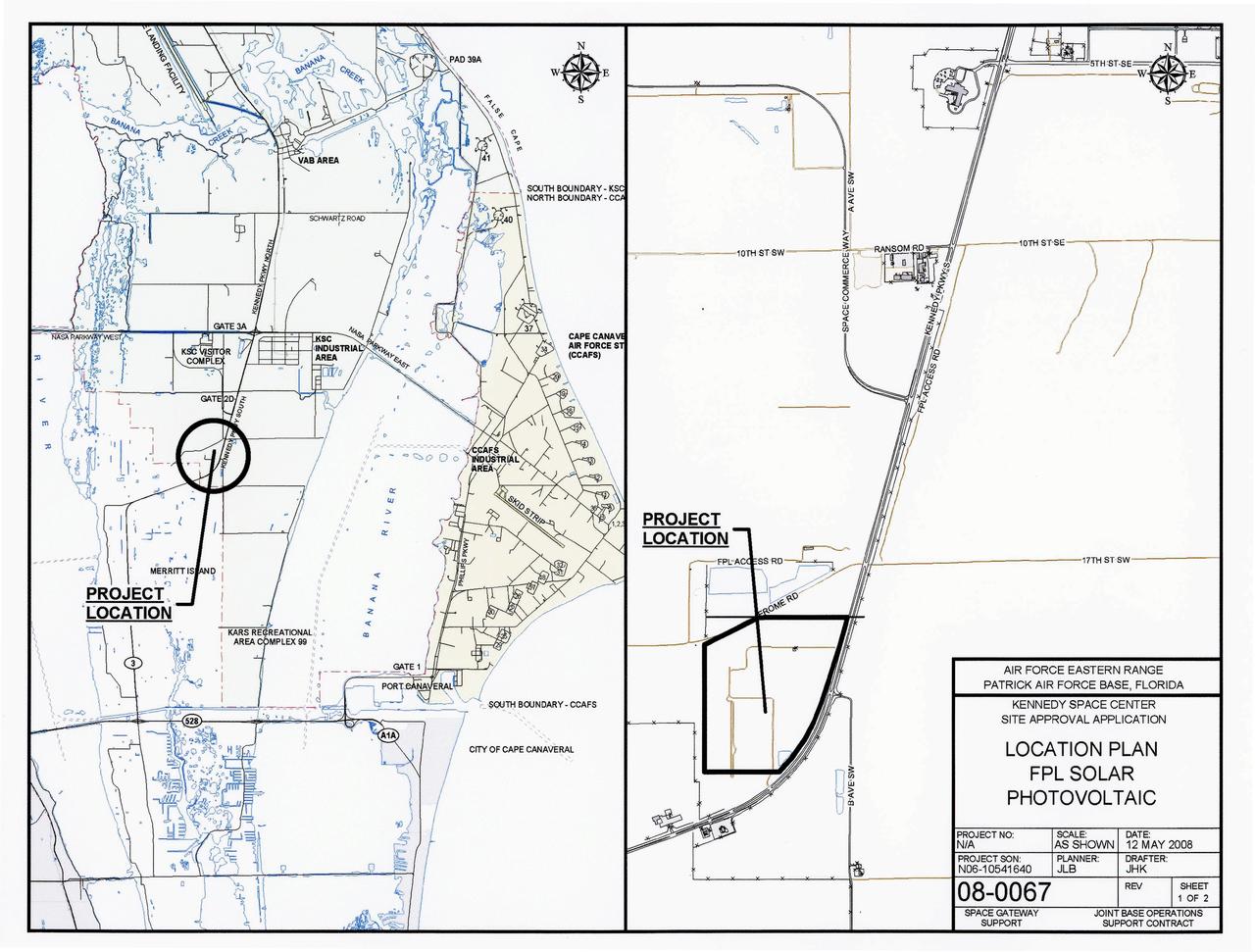
CAPE CANAVERAL, Fla. – This map shows the two sites within NASA's Kennedy Space Center where a solar photovoltaic power generation system will be built as the result of an agreement between NASA and Florida Power & Light. The agreement is part of a new initiative that will cut reliance on fossil fuels and improve the environment by reducing greenhouse gas emissions. The major facility will produce an estimated 10 megawatts of electrical power, which can serve roughly 3,000 homes. A separate one-megawatt solar power facility will support the electrical needs of the center.
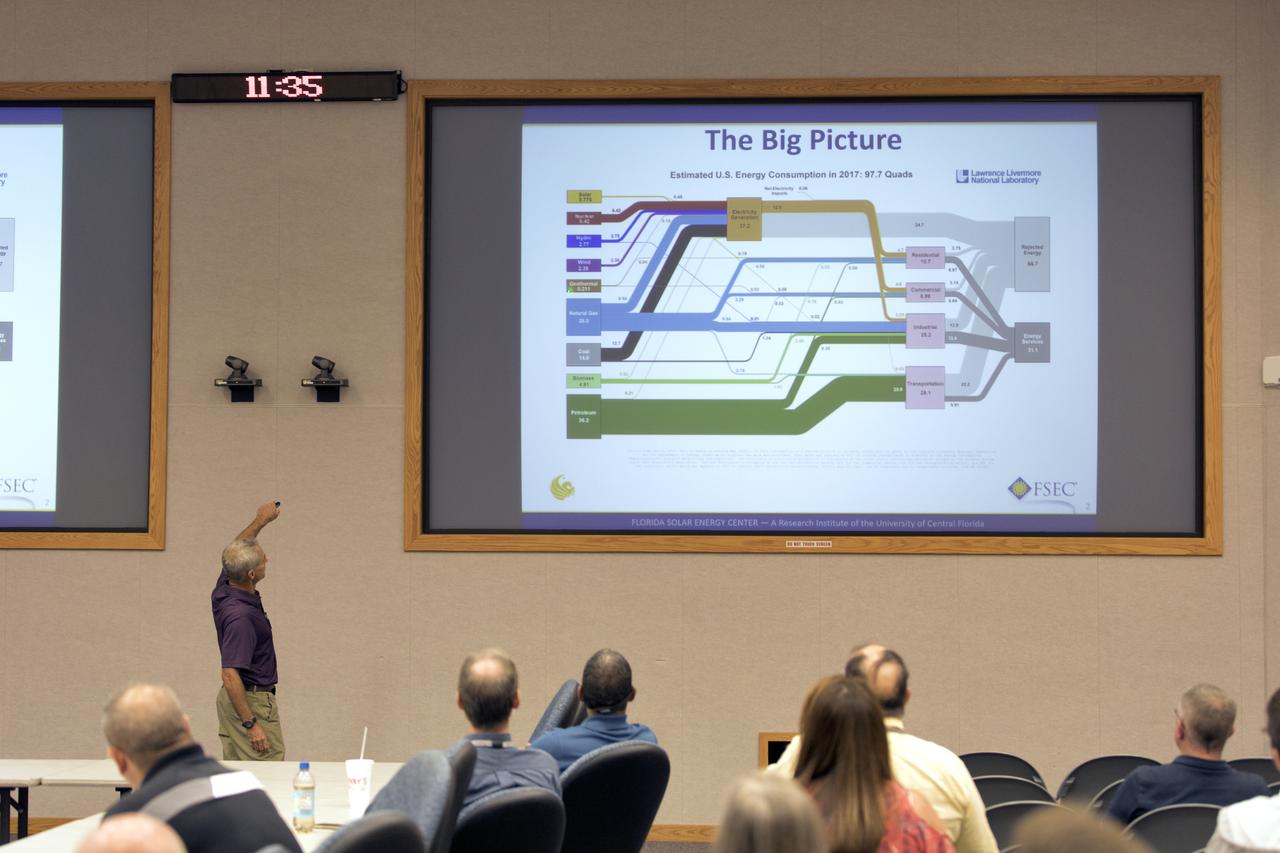
Guest speaker John Sherwin shares a presentation featuring residential solar and home energy-saving methods during a “lunch and learn” held Tuesday, Oct. 23, 2018, for employees at NASA’s Kennedy Space Center in Florida. Sherwin is the director of the Photovoltaic System Certification and Testing Program at the Florida Solar Energy Center in Cocoa. The event was one of two held during October in conjunction with Energy Awareness Month, which aims to recognize the importance of energy management for our national prosperity, security and environmental sustainability.
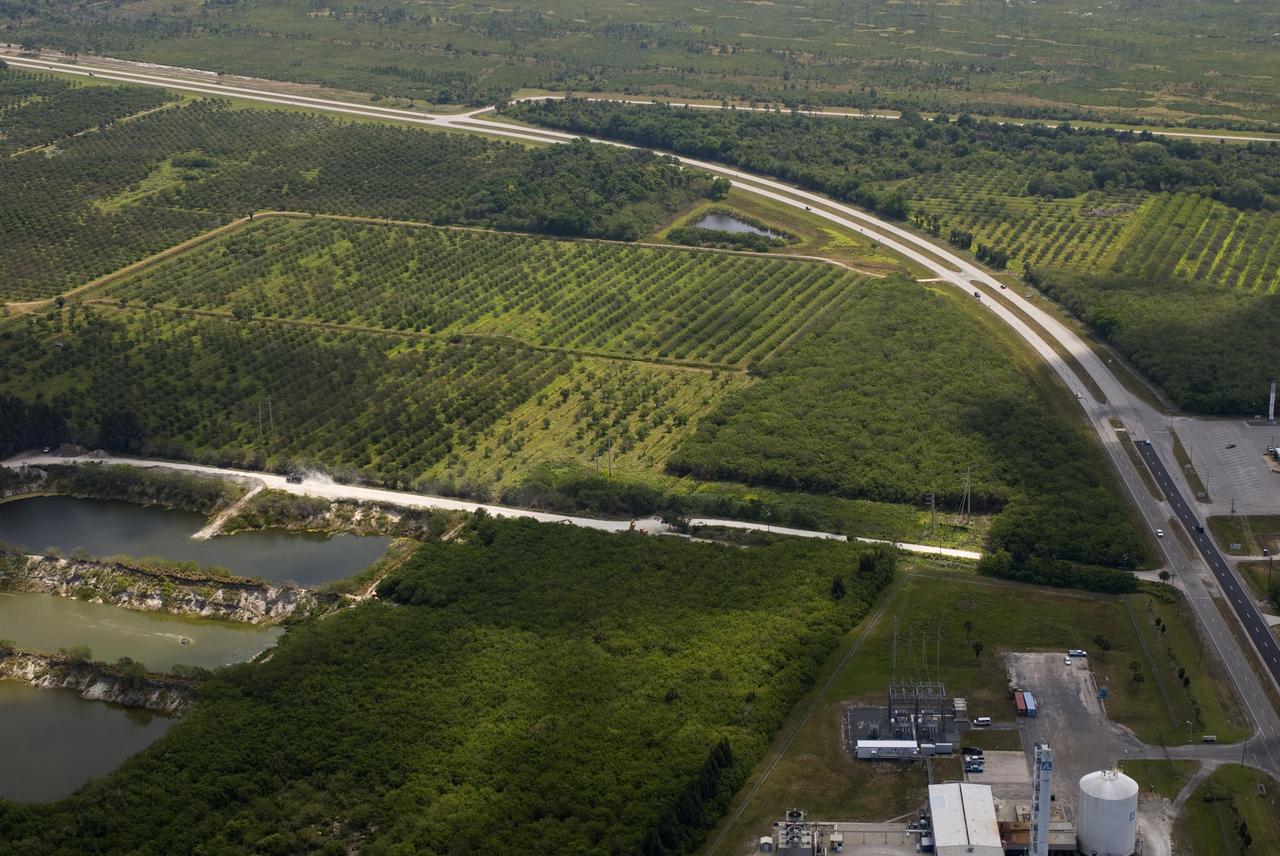
CAPE CANAVERAL, Fla. – This photo shows the area within NASA's Kennedy Space Center where a solar photovoltaic power generation system will be built as the result of an agreement between NASA and Florida Power & Light. The agreement is part of a new initiative that will cut reliance on fossil fuels and improve the environment by reducing greenhouse gas emissions. The major facility will produce an estimated 10 megawatts of electrical power, which can serve roughly 3,000 homes. A separate one-megawatt solar power facility will support the electrical needs of the center.
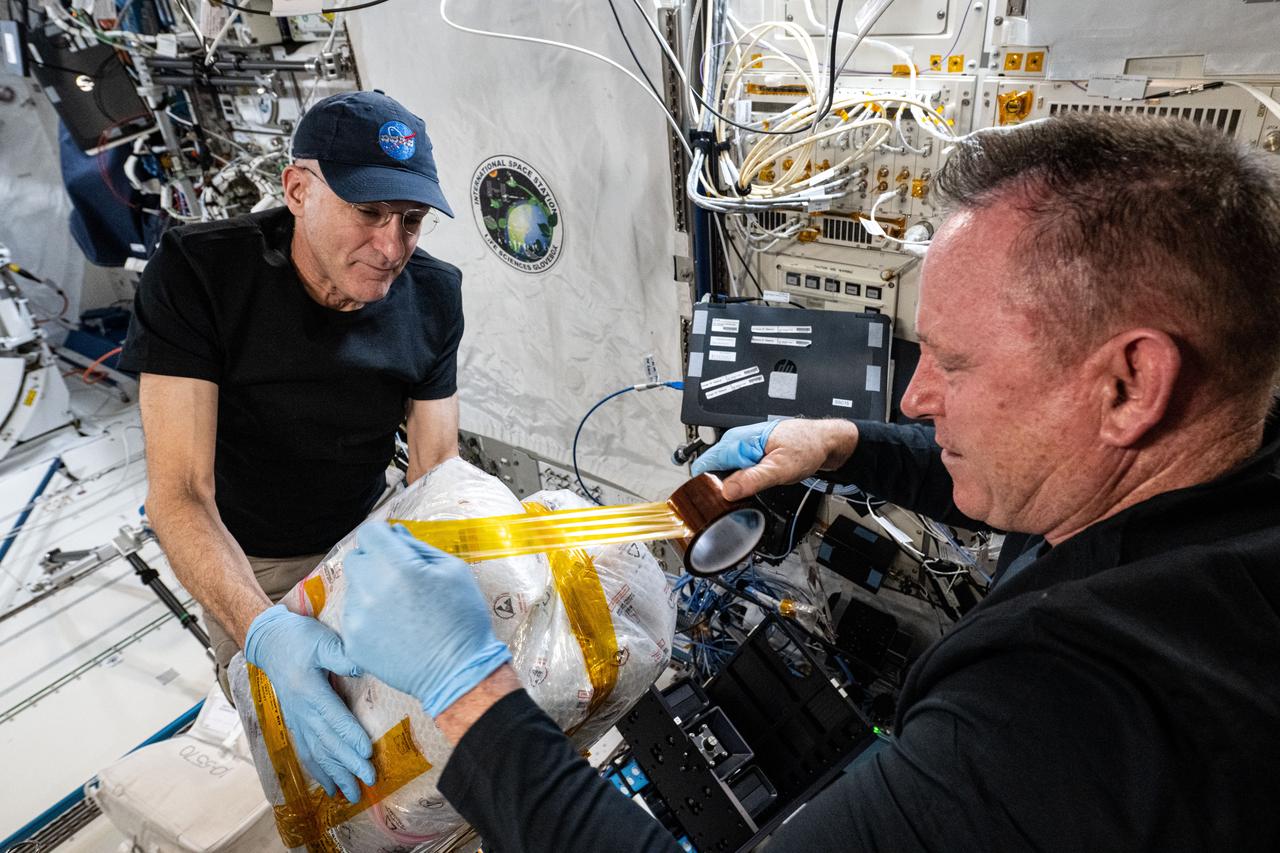
iss072e280736 (Nov. 26, 2024) --- NASA astronauts (from left) Don Pettit and Butch Wilmore, both Expedition 72 flight engineers, pack external research hardware removed from the Kibo laboratory module's airlock. The hardware housed a variety of samples exposed to the vacuum of space such as polymers, photovoltaic devices, and more. The samples will be returned to Earth and examined to understand how space radiation, the extreme thermal environment, micrometeoroids, and more affect materials possibly benefitting the space industry.
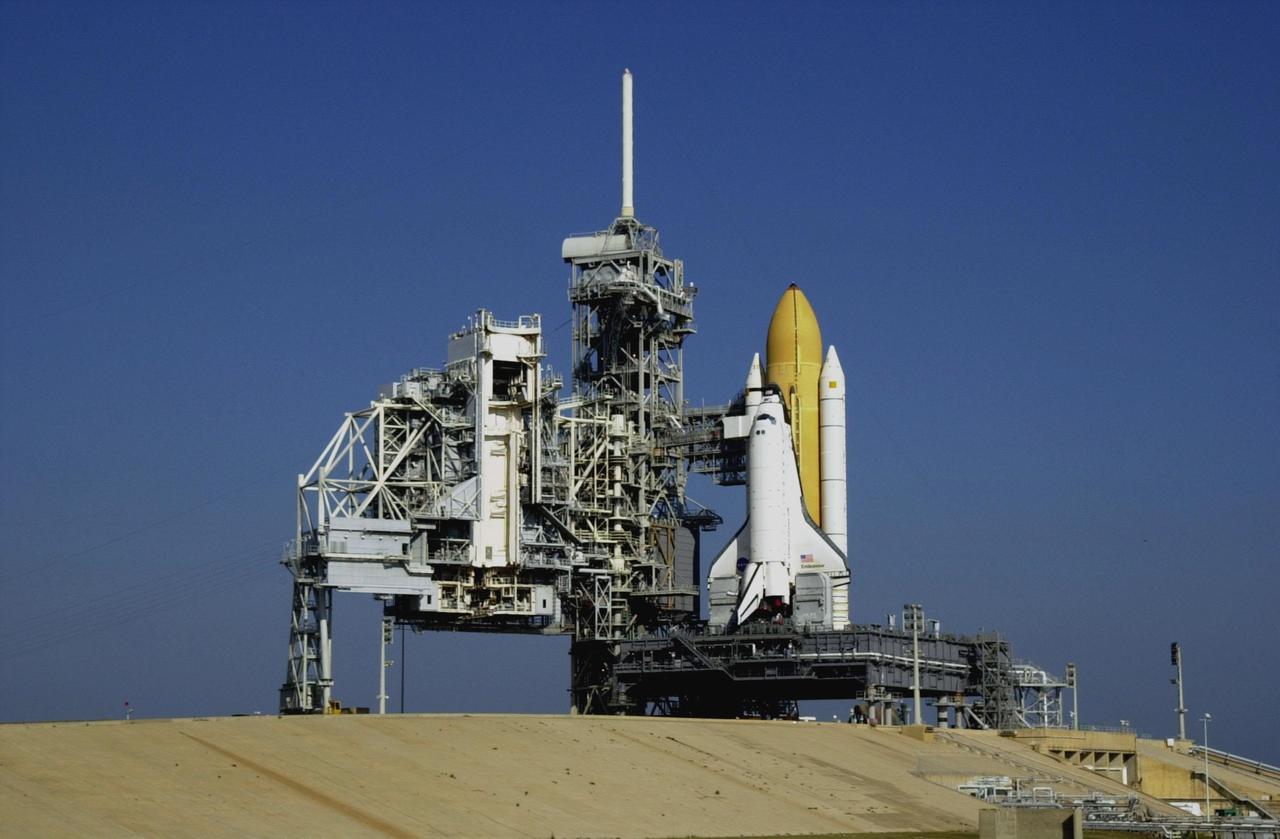
After repair of a cracked cleat on the crawler-transporter, Space Shuttle Endeavour finally rests on Launch Pad 39B. To the left is the Rotating Service Structure. Endeavour is scheduled to be launched Nov. 30 at 10:01 p.m. EST on mission STS-97, the sixth construction flight to the International Space Station. Its payload includes the P6 Integrated Truss Structure and a photovoltaic (PV) module, with giant solar arrays that will provide power to the Station. The mission includes two spacewalks to complete the solar array connections
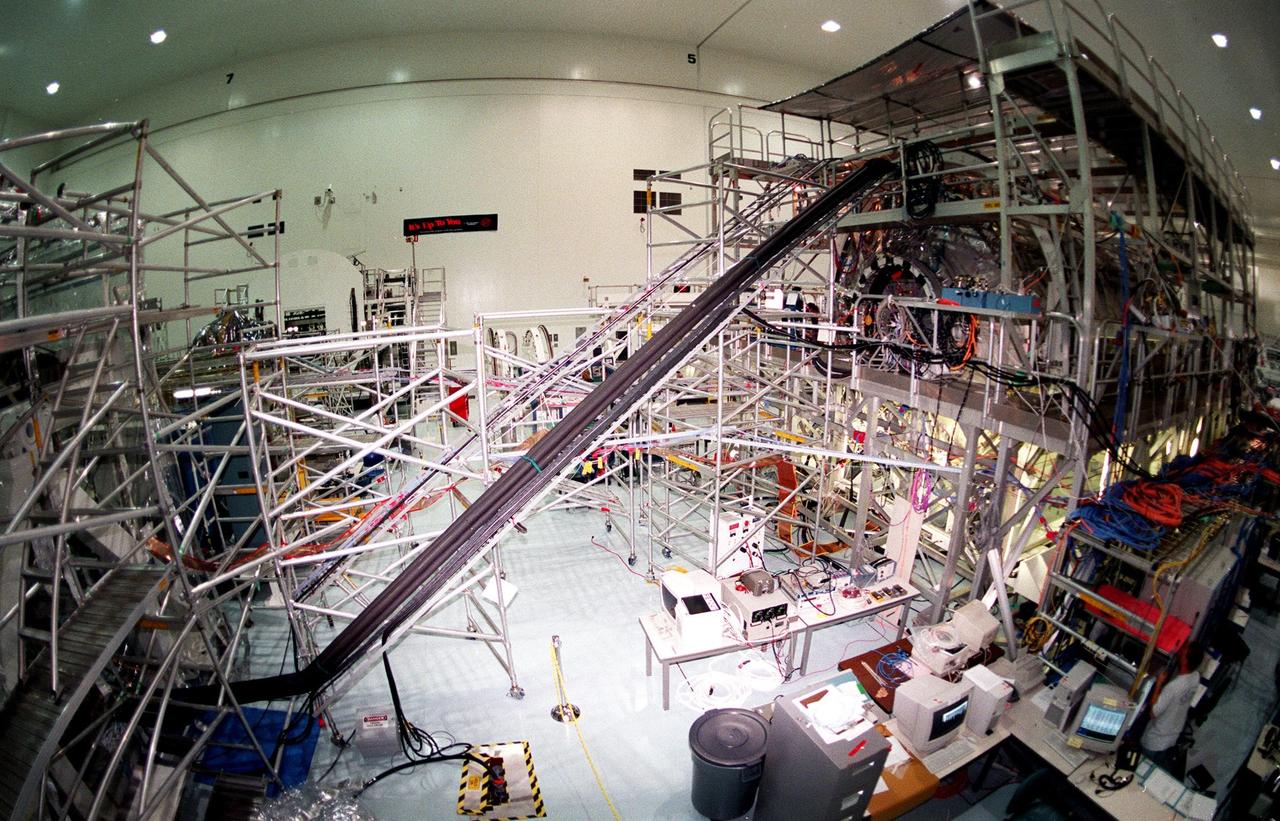
In The Space Station Processing Facility, a Multi-Element Integration Test (MEIT) is underway to ensure components of the International Space Station work together before they are launched into orbit. Within the framework at right is the U.S. Lab, called Destiny; at left is the Z-1 truss. The current MEIT combines the P-6 photovoltaic module, the Z-1 truss and the Pressurized Mating Adapter 3. Electrical and fluid connections are being hooked up to verify how the ISS elements operate together
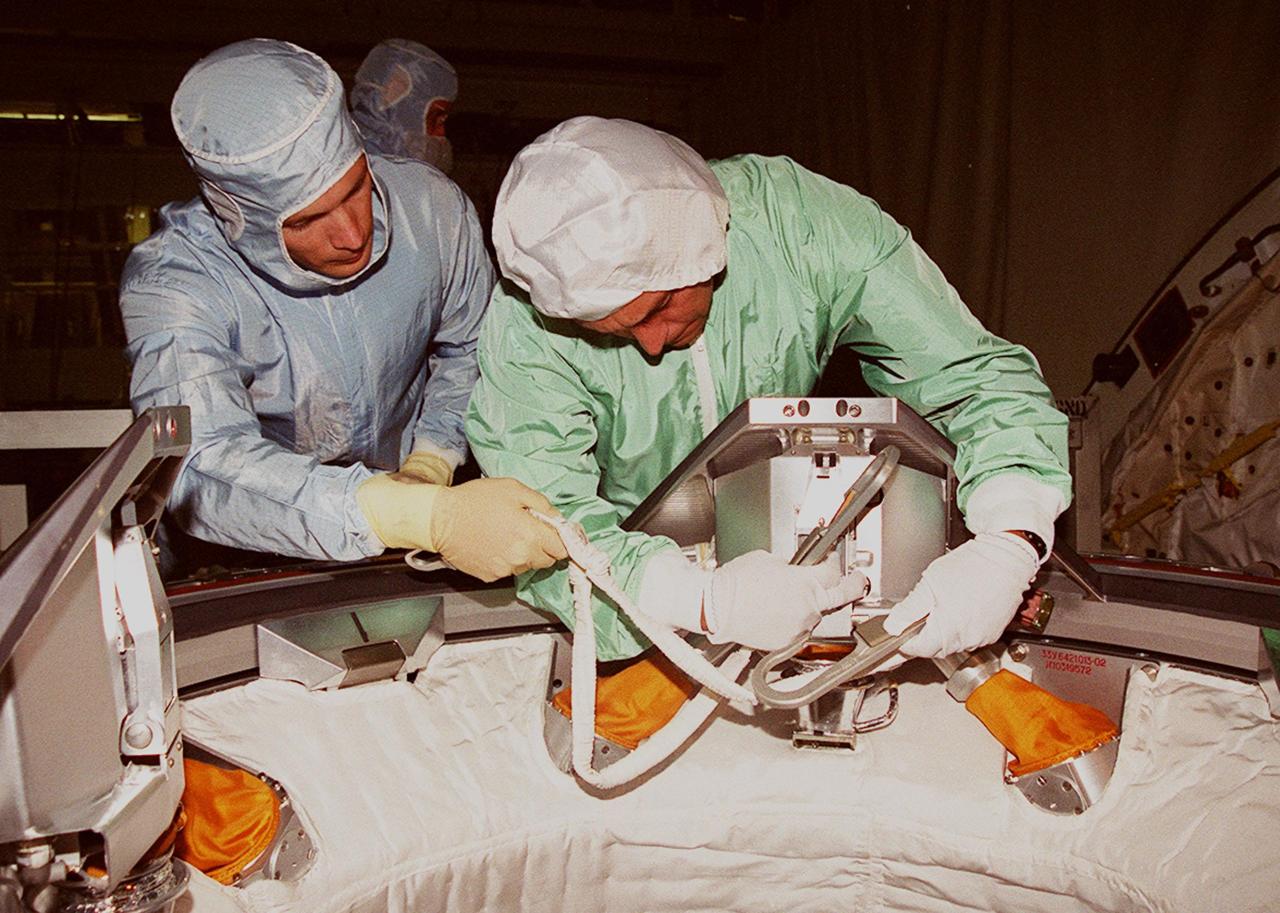
During the STS-97 Crew Equipment Interface Test (CEIT), Mission Specialist Carlos Noriega (right) gets hands-on experience with parts of the Orbital Docking System in Endeavour’s payload bay. The CEIT provides an opportunity for crew members to check equipment and facilities that will be on board the orbiter during their mission. The STS-97 mission will be the sixth construction flight to the International Space Station. The payload includes a photovoltaic (PV) module, providing solar power to the Station. STS-97 is scheduled to launch Nov. 30 from KSC for the 10-day mission
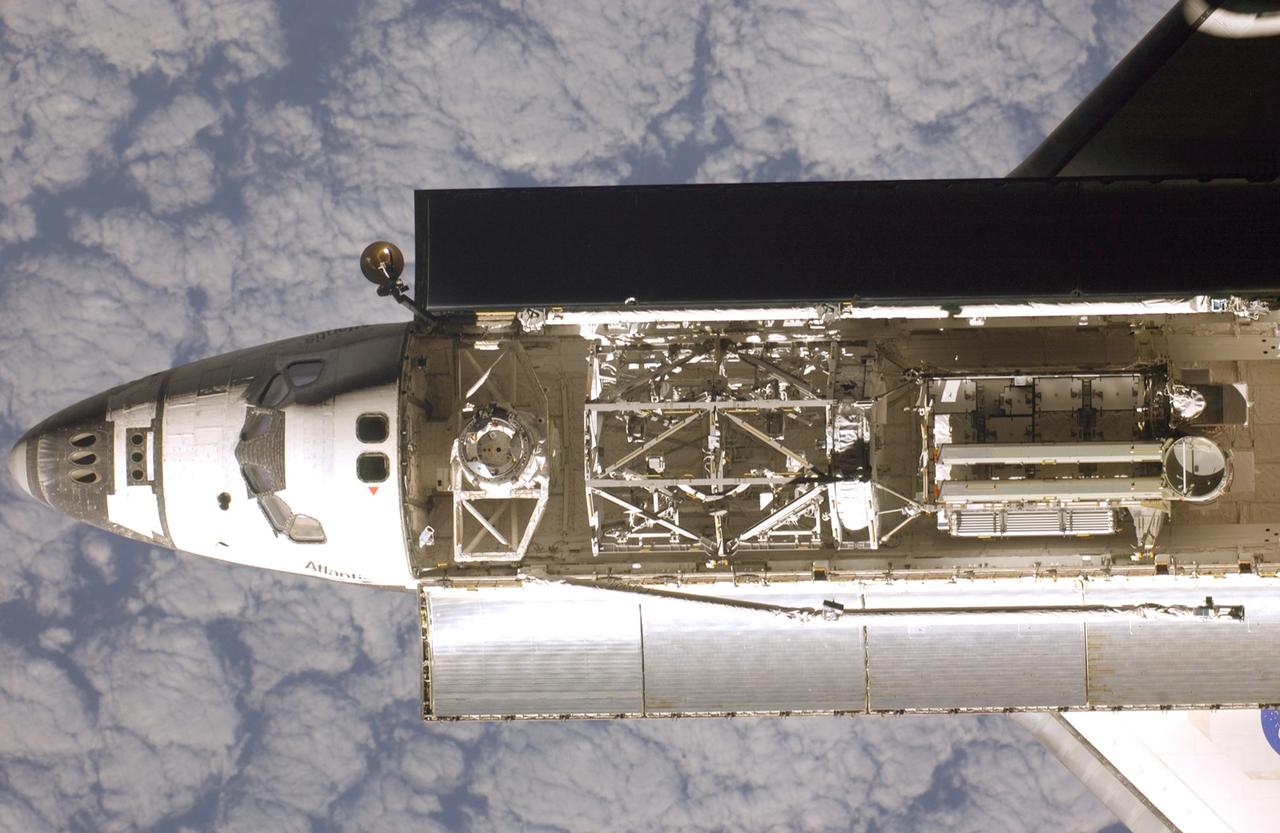
This nadir view of the STS-117 mission Space Shuttle Atlantis, taken by the Expedition 15 crew aboard the International Space Station (ISS), occurred just before the two spacecraft linked up in Earth orbit. Berthed in the cargo bay are the 17.8 ton second and third (S3 and S4) truss segments ready for installment. STS-117 mission objectives included the addition of S3 and S4 with Photovoltaic Radiator (PVR), the deployment of the third set of solar arrays, and the retraction of the P4 starboard solar array wing and one radiator.
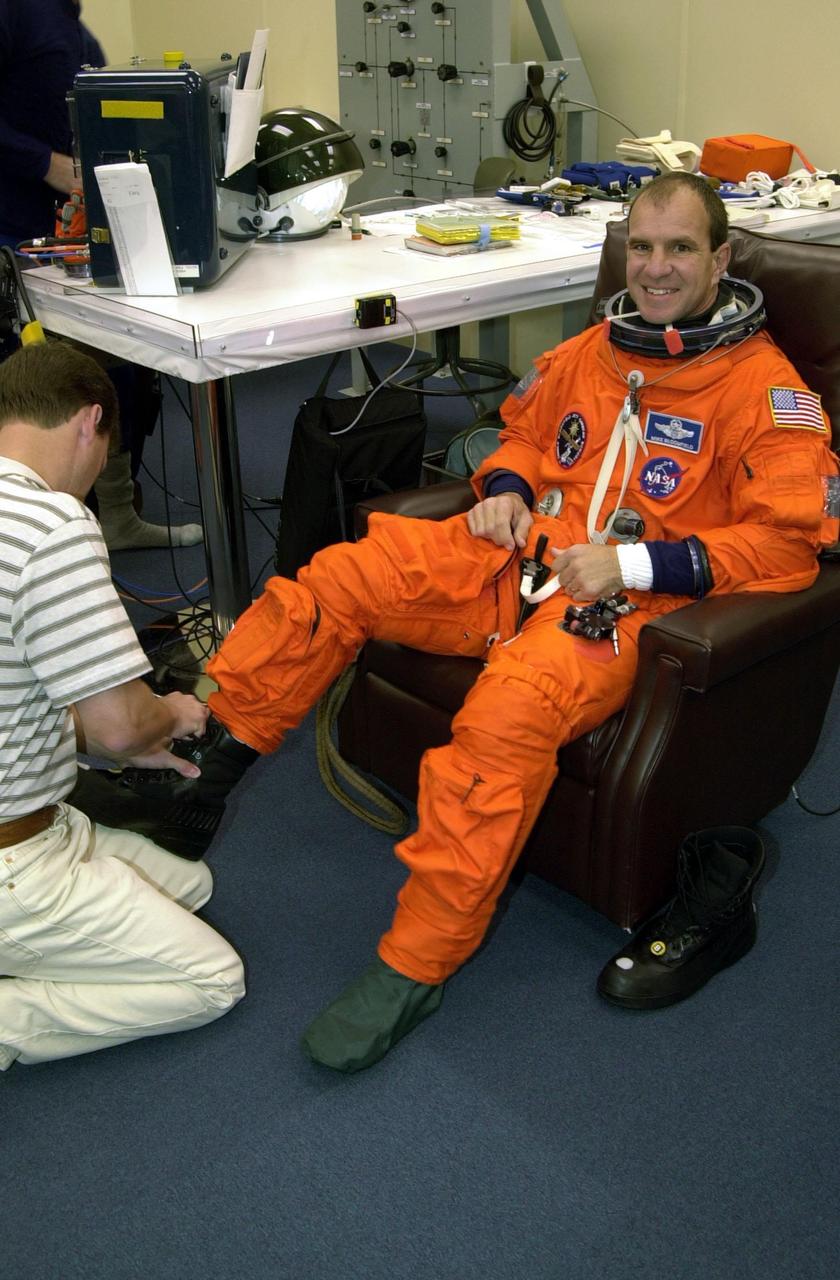
STS-97 Pilot Michael Bloomfield gets help with his boots from suit technician Steve Clendenin during pre-pack and fit check. Mission STS-97 is the sixth construction flight to the International Space Station. Its payload includes the P6 Integrated Truss Structure and a photovoltaic (PV) module, with giant solar arrays that will provide power to the Station. The mission includes two spacewalks to complete the solar array connections. STS-97 is scheduled to launch Nov. 30 at about 10:06 p.m. EST
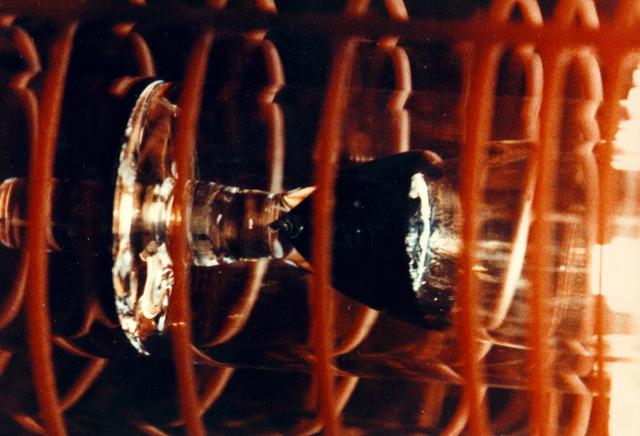
The objective of this facility is to investigate the potential of space grown semiconductor materials by the vapor transport technique and develop powdered metal and ceramic sintering techniques in microgravity. The materials processed or developed in the SEF have potential application for improving infrared detectors, nuclear particle detectors, photovoltaic cells, bearing cutting tools, electrical brushes and catalysts for chemical production. Flown on STS-60 Commercial Center: Consortium for Materials Development in Space - University of Alabama Huntsville (UAH)

s114e7235 (8/6/2005) --- Backdropped by a colorful Earth, this aft view of the International Space Station was photographed during the flyaround by the Space Shuttle Discovery following the undocking of the two spacecraft. Visible in the frame are the P6 Truss / Photovoltaic Solar Arrays and MISSE-5. The Materials International Space Station Experiment-5 (MISSE-5) was an external payload that flew on-board the ISS from August 2005 until September 2006. MISSE-5 provided an opportunity for researchers to test a wide range of samples in the Low Earth Orbit (LEO) environment.
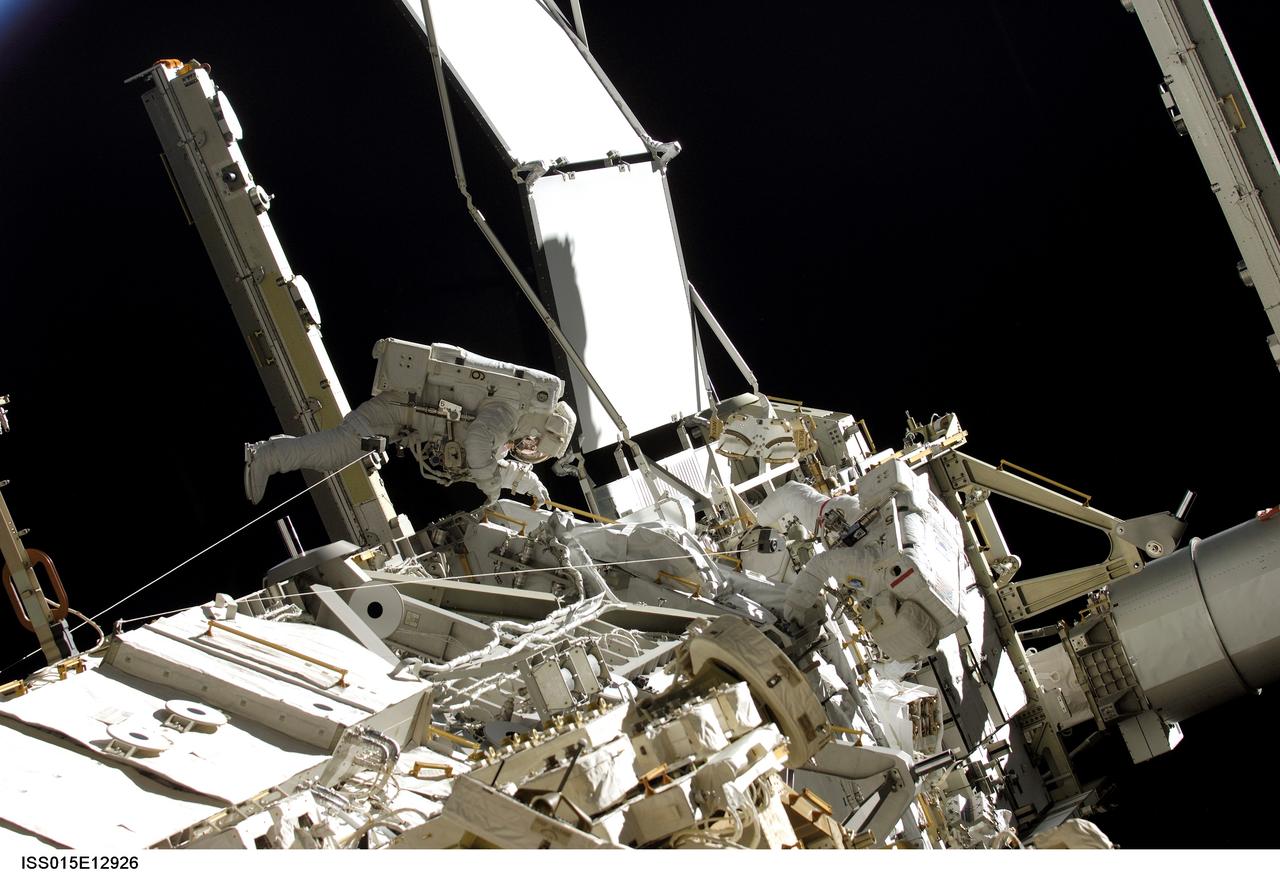
ISS015-E-12926 (11 June 2007) --- Astronauts Jim Reilly (right) and John "Danny" Olivas, both STS-117 mission specialists, participate in the mission's first planned session of extravehicular activity (EVA), as construction continues on the International Space Station. Among other tasks, Reilly and Olivas connected power, data and cooling cables between S1 and S3; released the launch restraints from and deployed the four solar array blanket boxes on S4 and released the cinches and winches holding the photovoltaic radiator on S4.
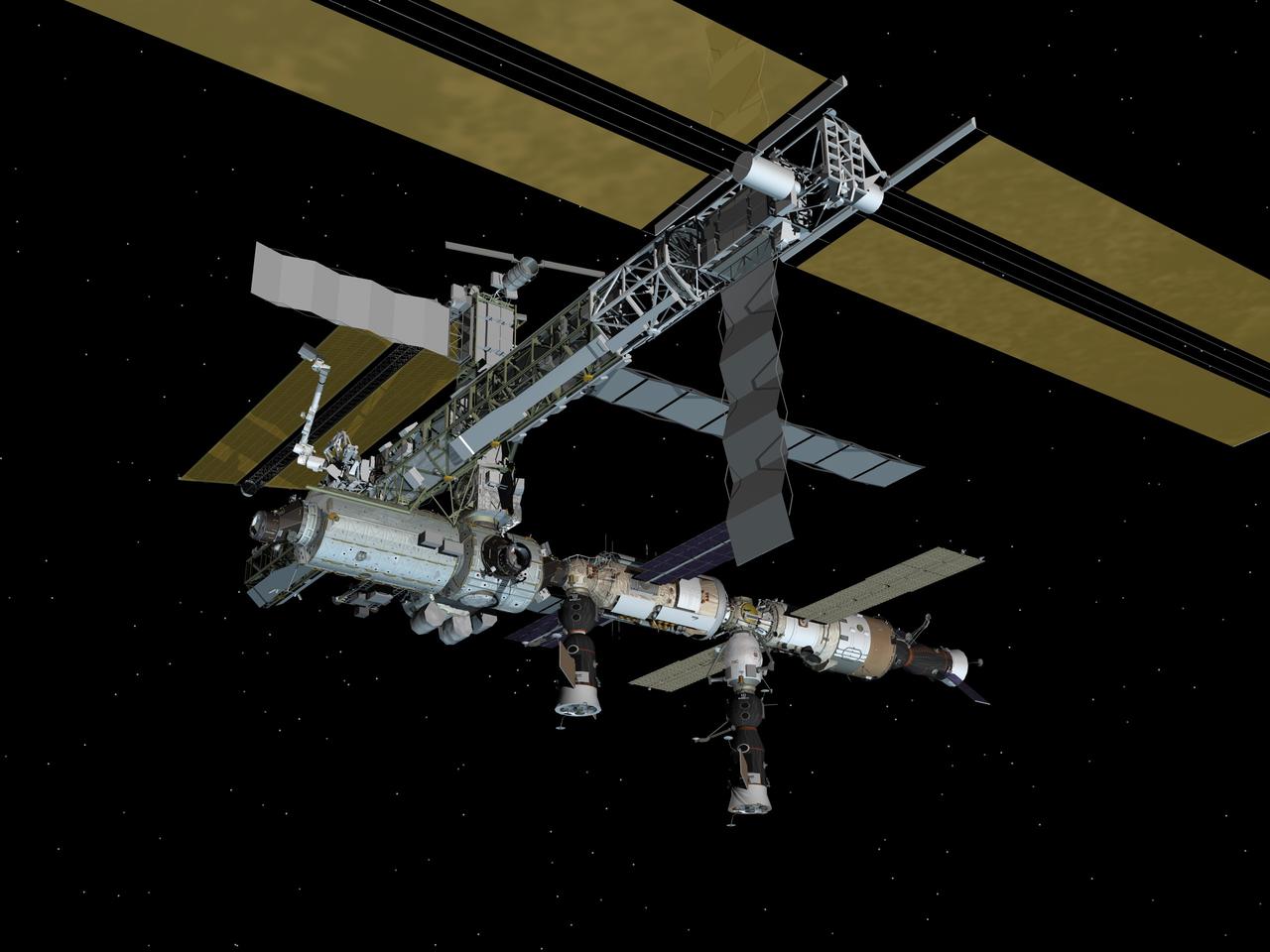
JSC2007-E-09333 (February 2007) --- Computer-generated artist's rendering of the International Space Station following scheduled activities of Feb 4, 2007. This angle shows the port side of the orbiting complex. P6 starboard and aft photovoltaic radiators (PVR) are retracted and the P6 forward PVR remains deployed. Progress 24 resupply vehicle remains docked to the Pirs Docking Compartment. Progress 23 stays connected to the Zvezda Service Module aft port and Soyuz 13 (TMA-9) remains linked to the Zarya Module nadir port.
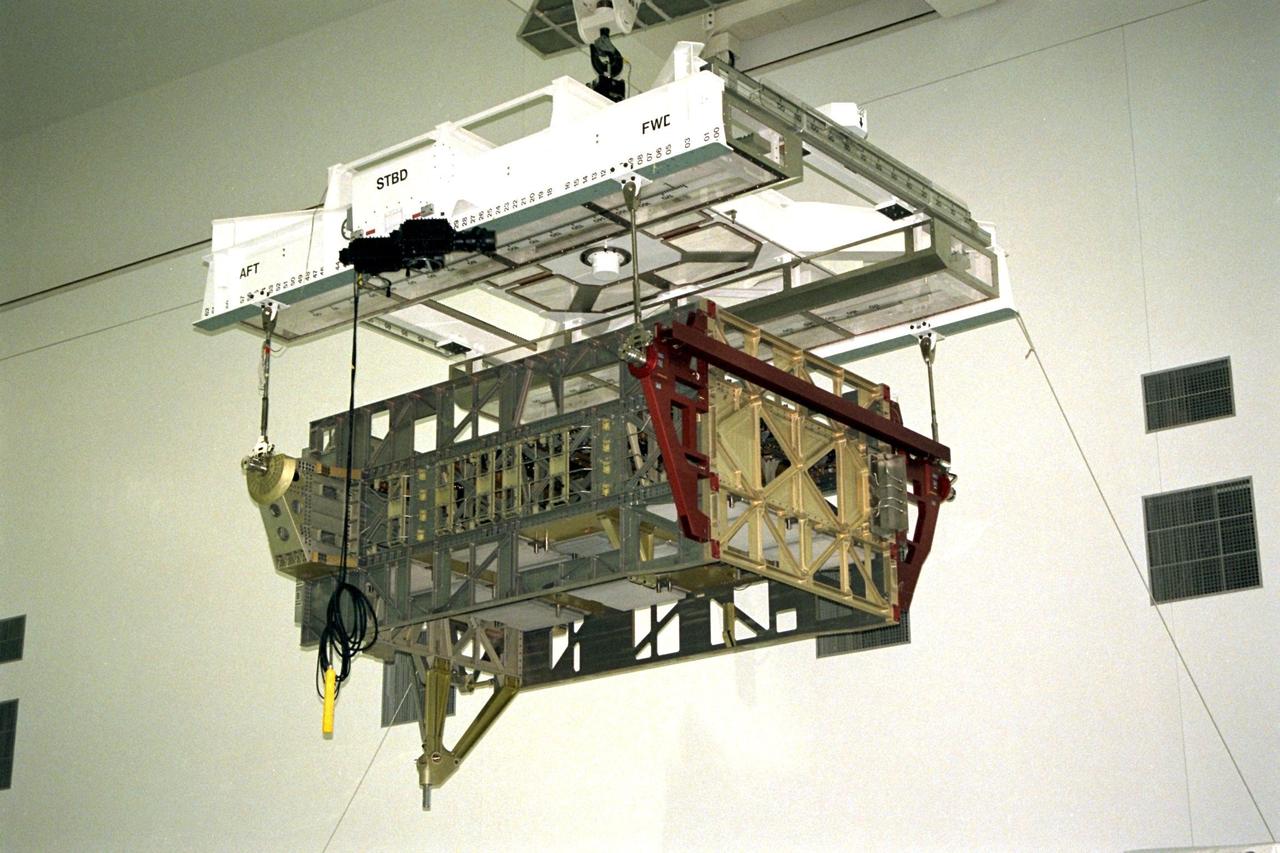
The Photovoltaic Module 1 Integrated Equipment Assembly (IEA) is moved through Kennedy Space Center’s Space Station Processing Facility (SSPF) toward the workstand where it will be processed for flight on STS-97, scheduled for launch in April 1999. The IEA is one of four integral units designed to generate, distribute, and store power for the International Space Station. It will carry solar arrays, power storage batteries, power control units, and a thermal control system. The 16-foot-long, 16,850-pound unit is now undergoing preflight preparations in the SSPF
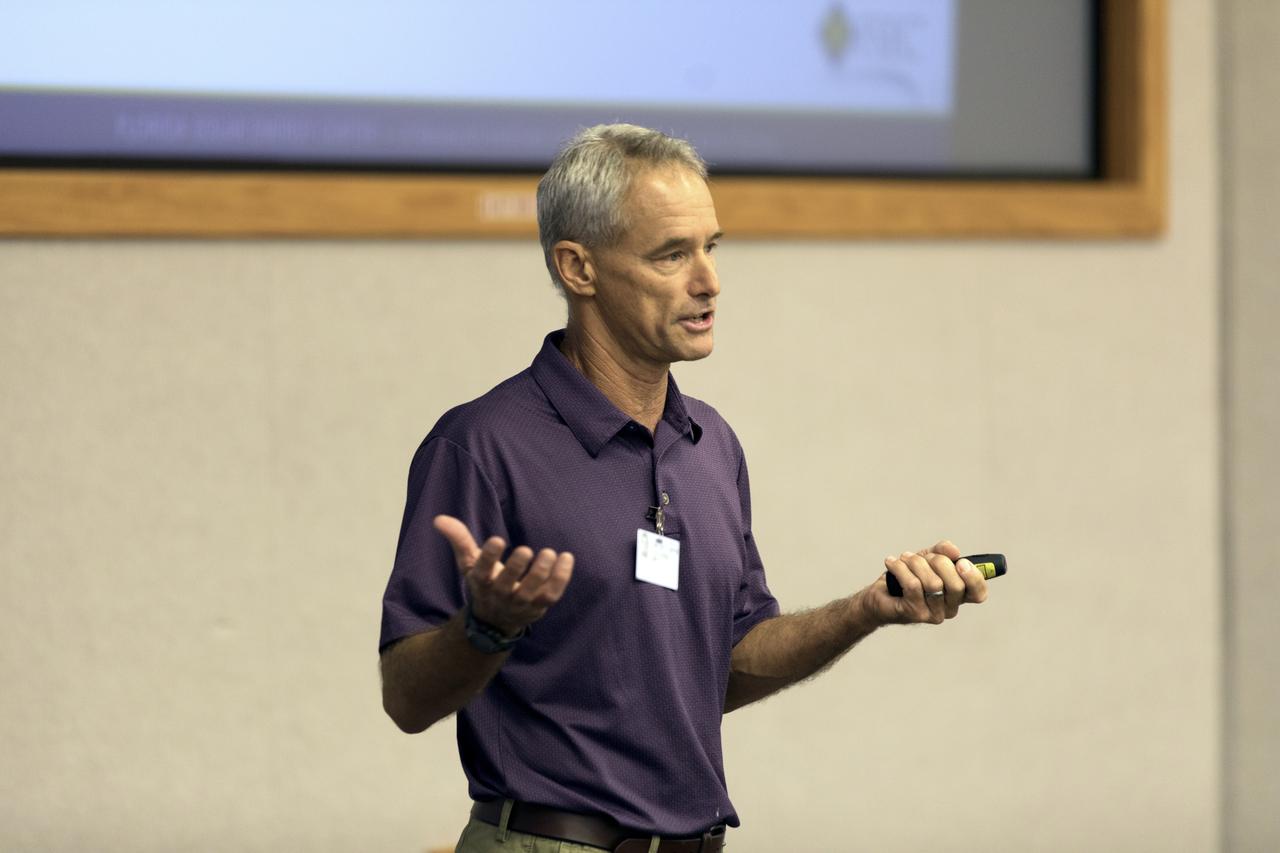
Guest speaker John Sherwin explains residential solar and home energy-saving methods during a “lunch and learn” held Tuesday, Oct. 23, 2018, for employees at NASA’s Kennedy Space Center in Florida. Sherwin is the director of the Photovoltaic System Certification and Testing Program at the Florida Solar Energy Center in Cocoa. The event was one of two held during October in conjunction with Energy Awareness Month, which aims to recognize the importance of energy management for our national prosperity, security and environmental sustainability.
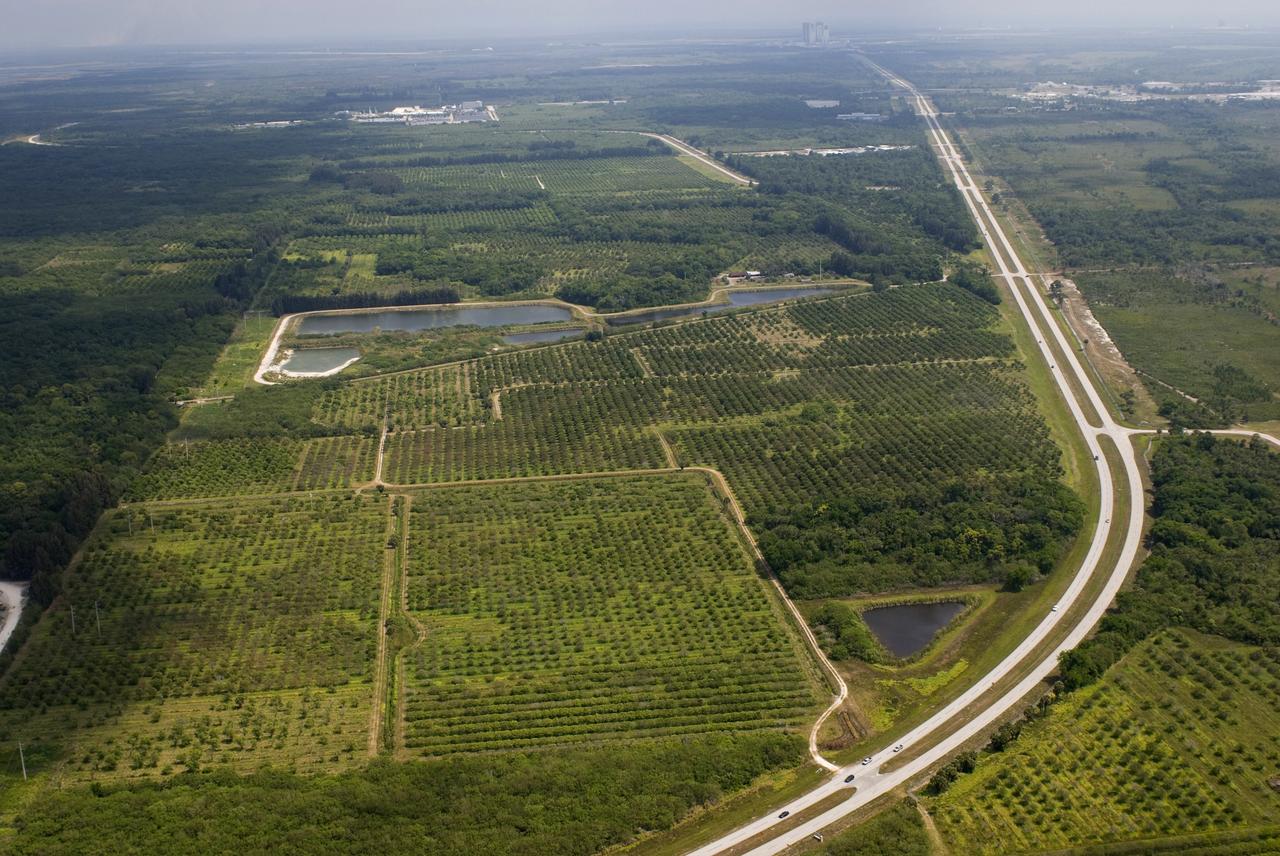
CAPE CANAVERAL, Fla. – This photo shows the area within NASA's Kennedy Space Center where a solar photovoltaic power generation system will be built as the result of an agreement between NASA and Florida Power & Light. The agreement is part of a new initiative that will cut reliance on fossil fuels and improve the environment by reducing greenhouse gas emissions. The major facility will produce an estimated 10 megawatts of electrical power, which can serve roughly 3,000 homes. A separate one-megawatt solar power facility will support the electrical needs of the center.
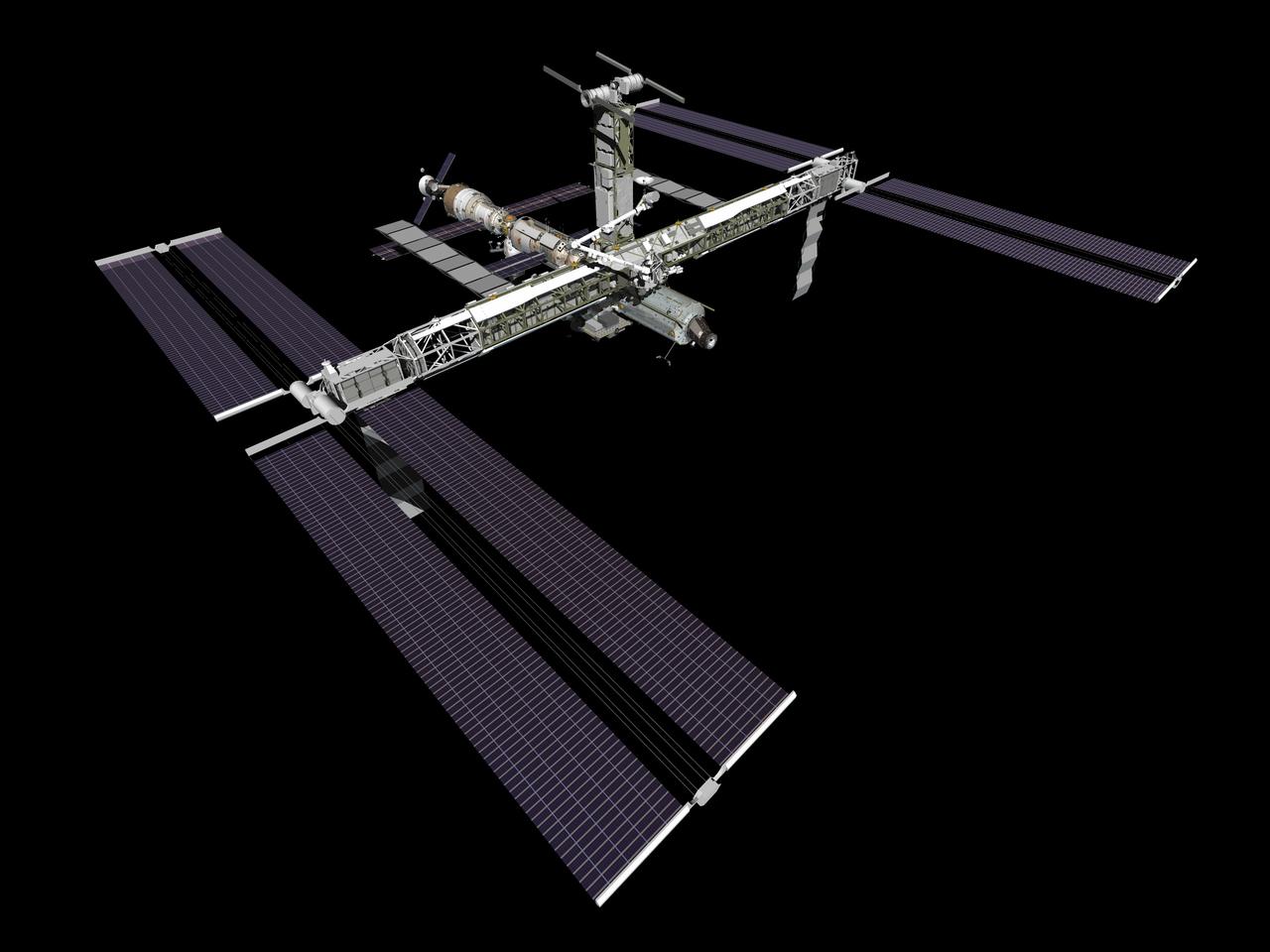
JSC2007-E-06523 (February 2007) --- Computer-generated artist's rendering of the International Space Station after Space Shuttle Atlantis' (STS-117/13A) undocking and departure. The image shows the addition of the second and third starboard truss segments (S3/S4) with Photovoltaic Radiator (PVR) and the deployed third set of solar arrays. P6 starboard solar array wing and one radiator are retracted.
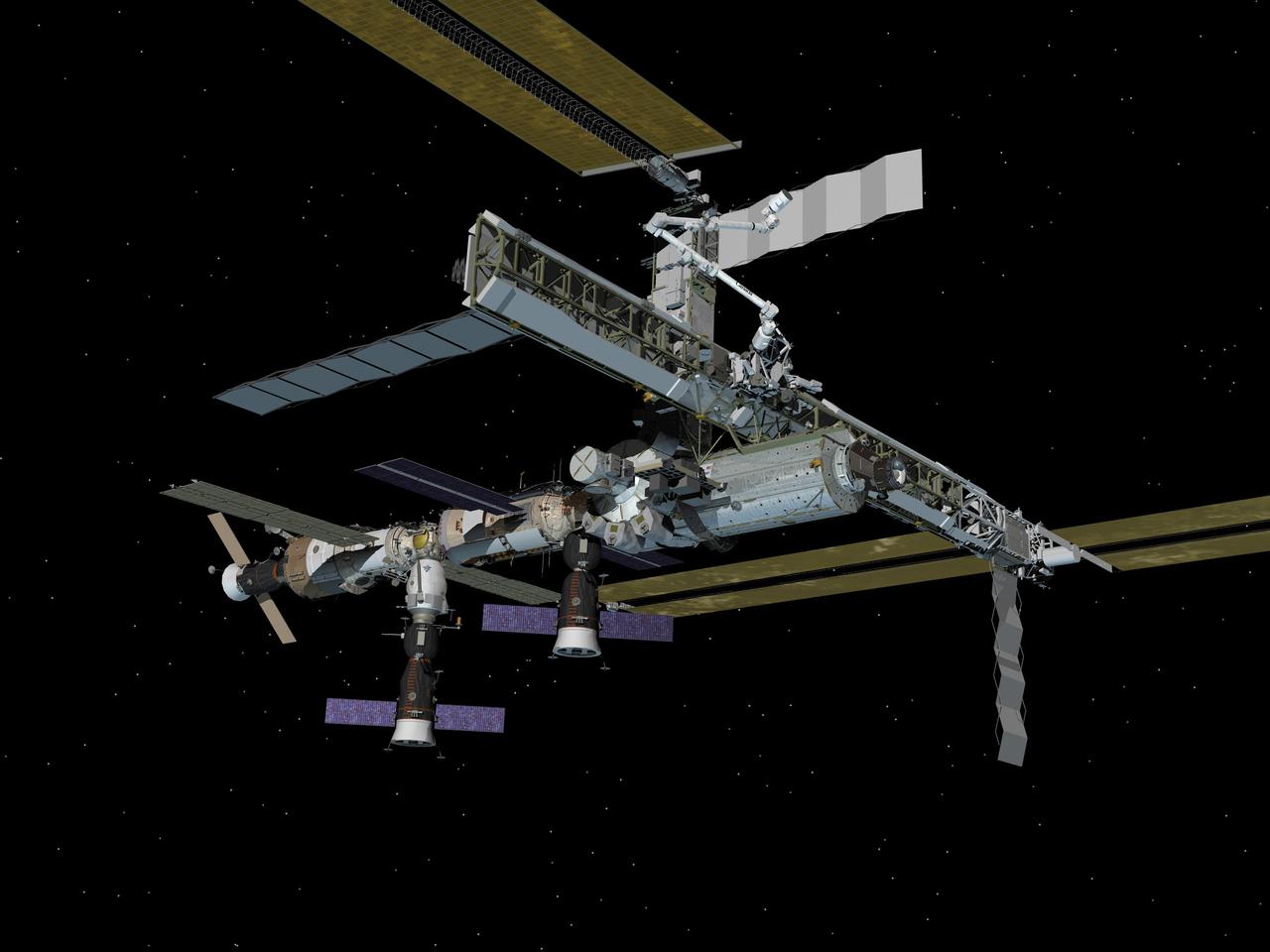
JSC2007-E-09334 (February 2007) --- Computer-generated artist's rendering of the International Space Station following scheduled activities of Feb 4, 2007. This angle shows the starboard side of the orbiting complex. P6 starboard and aft photovoltaic radiators (PVR) are retracted and the P6 forward PVR remains deployed. Progress 24 resupply vehicle remains docked to the Pirs Docking Compartment. Progress 23 stays connected to the Zvezda Service Module aft port and Soyuz 13 (TMA-9) remains linked to the Zarya Module nadir port.
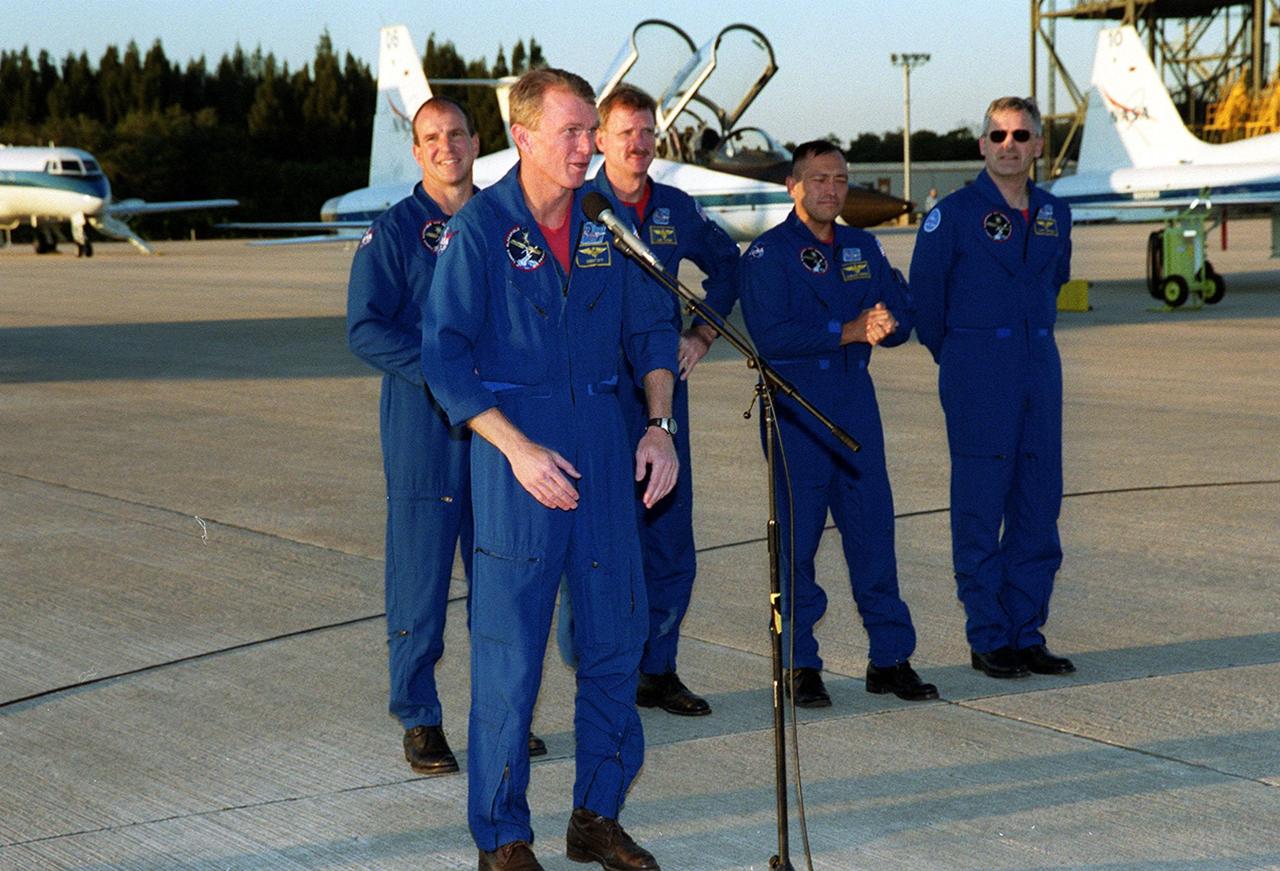
After arriving at the Shuttle Landing Facility, the STS-97 crew gather to address the media. At the microphone, Commander Brent Jett praises the efforts of the KSC workers to get ready for the launch. Behind Jett are Pilot Michael Bloomfield and Mission Specialists Joseph Tanner, Carlos Noriega and Marc Garneau, who is with the Canadian Space Agency. Mission STS-97 is the sixth construction flight to the International Space Station. Its payload includes the P6 Integrated Truss Structure and a photovoltaic (PV) module, with giant solar arrays that will provide power to the Station. The mission includes two spacewalks to complete the solar array connections. STS-97 is scheduled to launch Nov. 30 at about 10:06 p.m. EST
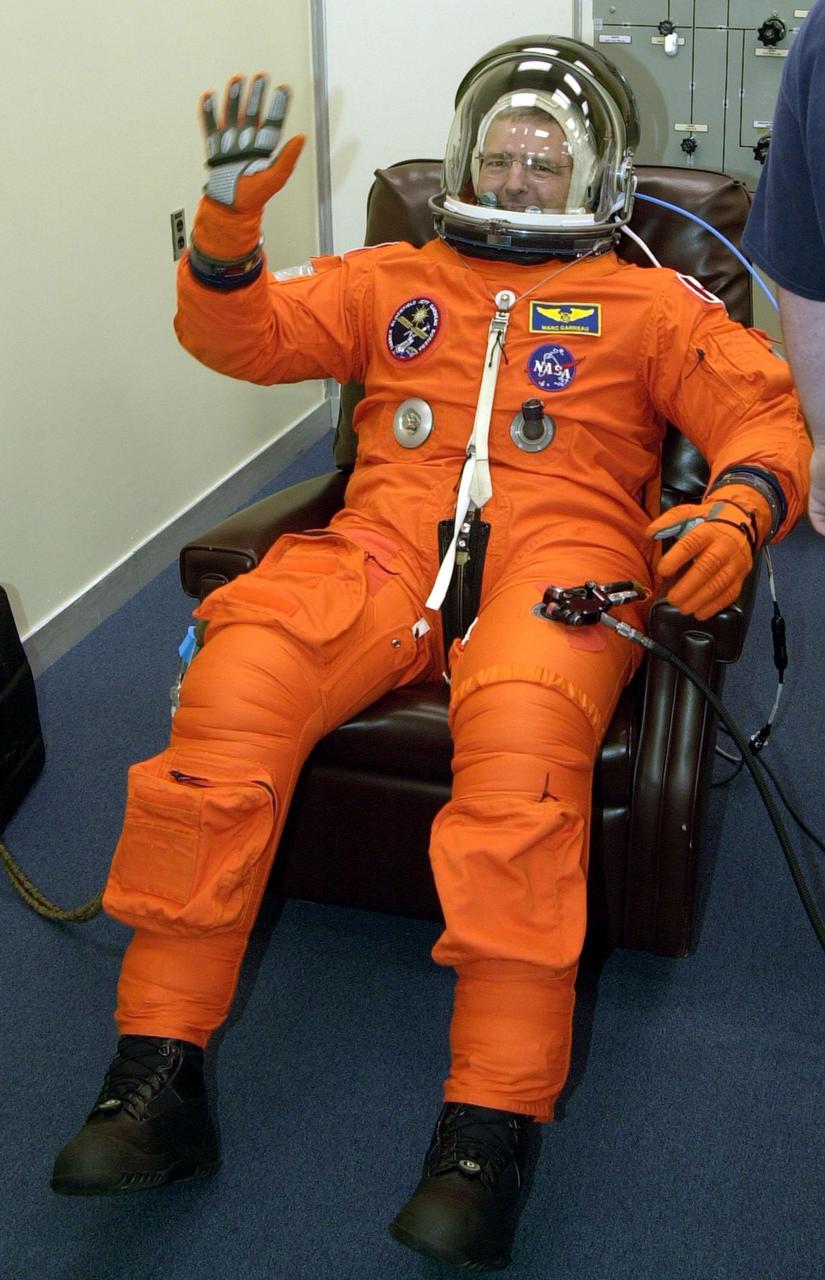
During pre-pack and fit check in the Operations and Checkout Building, STS-97 Mission Specialist Marc Garneau waves after getting his helmet on. Garneau is with the Canadian Space Agency. Mission STS-97 is the sixth construction flight to the International Space Station. Its payload includes the P6 Integrated Truss Structure and a photovoltaic (PV) module, with giant solar arrays that will provide power to the Station. The mission includes two spacewalks to complete the solar array connections. STS-97 is scheduled to launch Nov. 30 at about 10:06 p.m. EST
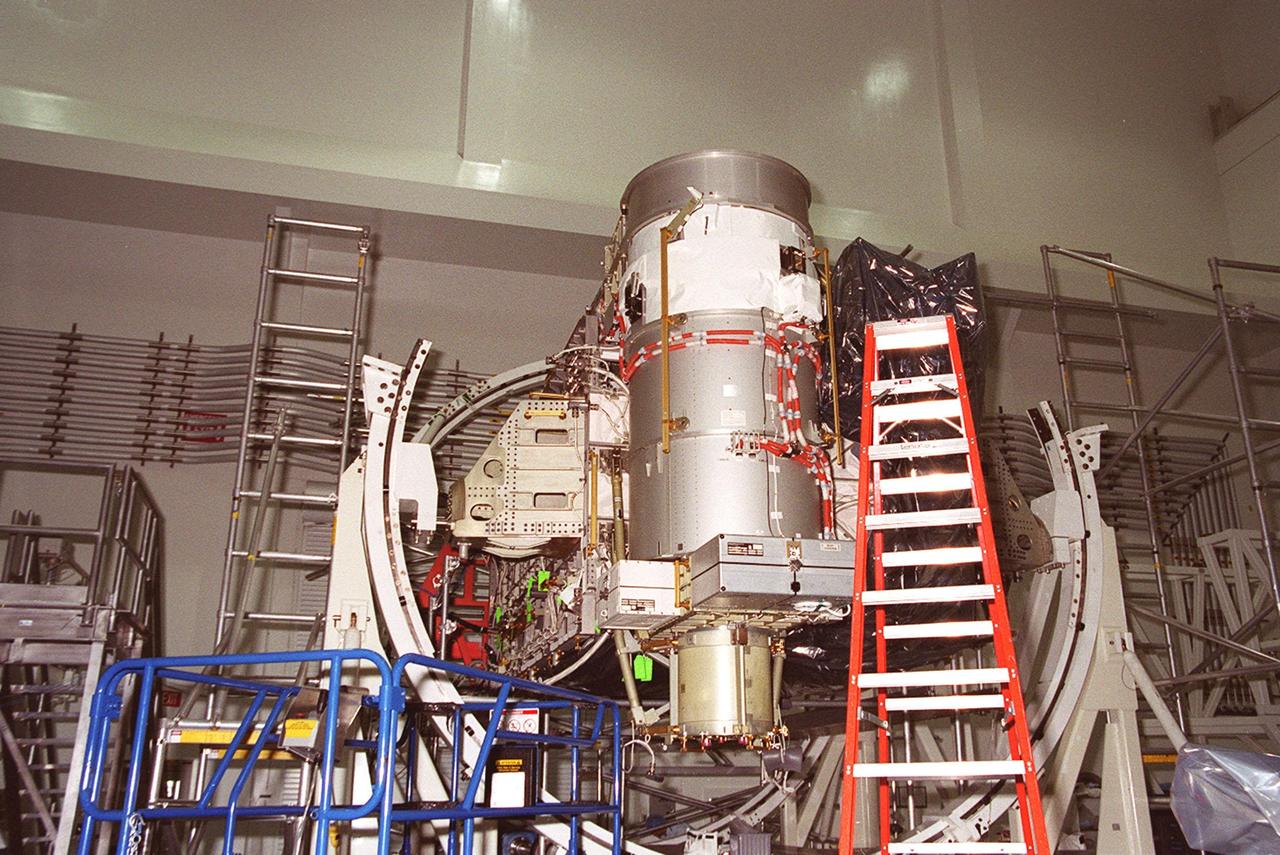
In the Space Station Processing Facility, Solar Array Wing-3, a component of the International Space Station, is installed in the Integrated Electronic Assembly where it will be tested. The solar array is scheduled to be launched on STS-97 in late November along with the P6 truss. The Station’s electrical power system (EPS) will use eight photovoltaic solar arrays to convert sunlight to electricity. Each of the eight solar arrays will be 112 feet long by 39 feet wide. The solar arrays are mounted on a “blanket” that can be folded like an accordion for delivery. Once in orbit, astronauts will deploy the blankets to their full size. Gimbals will be used to rotate the arrays so that they will face the Sun to provide maximum power to the Space Station
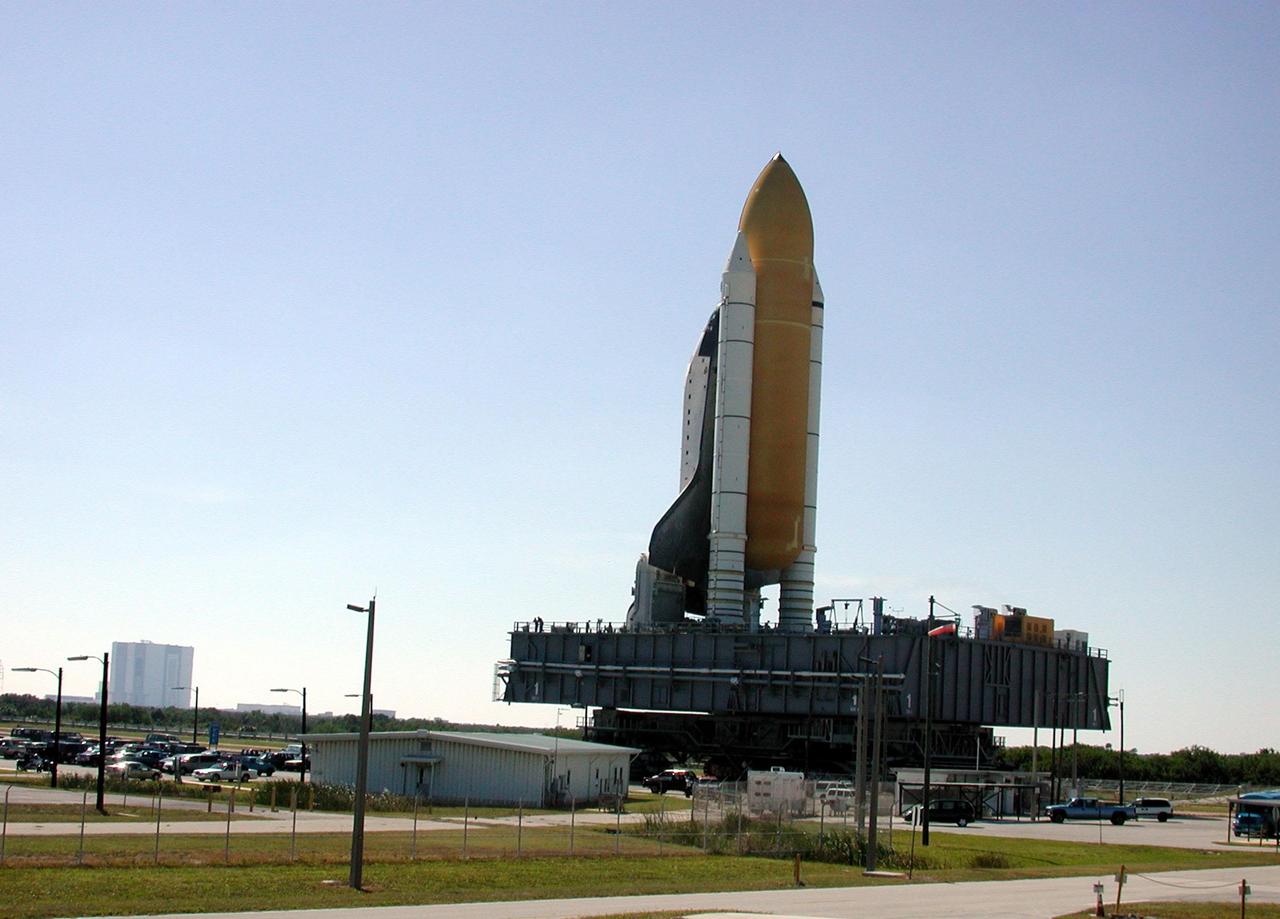
KENNEDY SPACE CENTER, FLA. -- Space Shuttle Endeavour is nearly through the gate on its backward trek from Launch Pad 39B. A broken cleat on the crawler-transporter forced the reverse movement so the cleat could be repaired before moving up the incline to the top of the pad. Endeavour is scheduled to be launched Nov. 30 at 10:01 p.m. EST on mission STS-97, the sixth construction flight to the International Space Station. Its payload includes the P6 Integrated Truss Structure and a photovoltaic (PV) module, with giant solar arrays that will provide power to the Station. The mission includes two spacewalks to complete the solar array connections
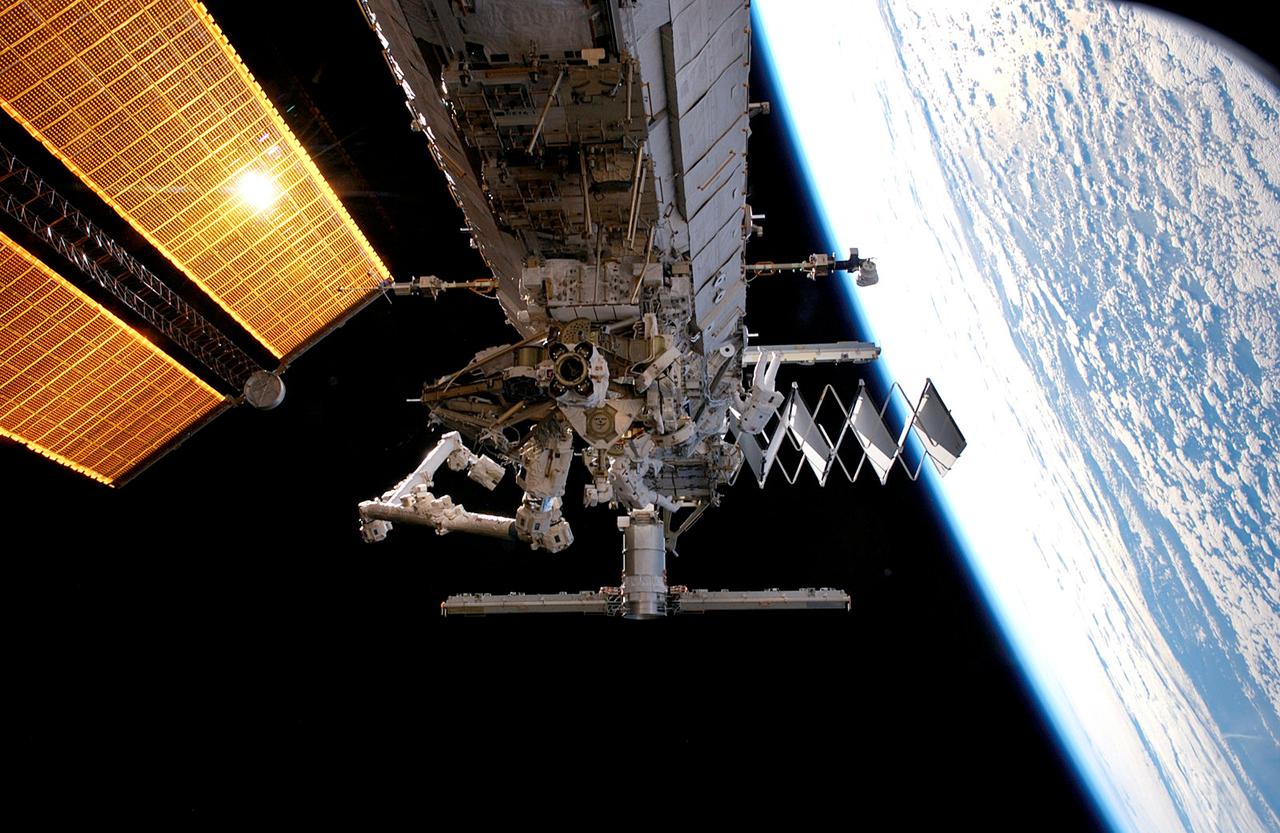
ISS015-E-12863 (11 June 2007) --- Astronauts Jim Reilly (left) and John "Danny" Olivas, both STS-117 mission specialists, participate in the mission's first planned session of extravehicular activity (EVA), as construction continues on the International Space Station. Among other tasks, Reilly and Olivas connected power, data and cooling cables between S1 and S3; released the launch restraints from and deployed the four solar array blanket boxes on S4 and released the cinches and winches holding the photovoltaic radiator on S4. Earth's horizon and the blackness of space provide the backdrop for the scene.
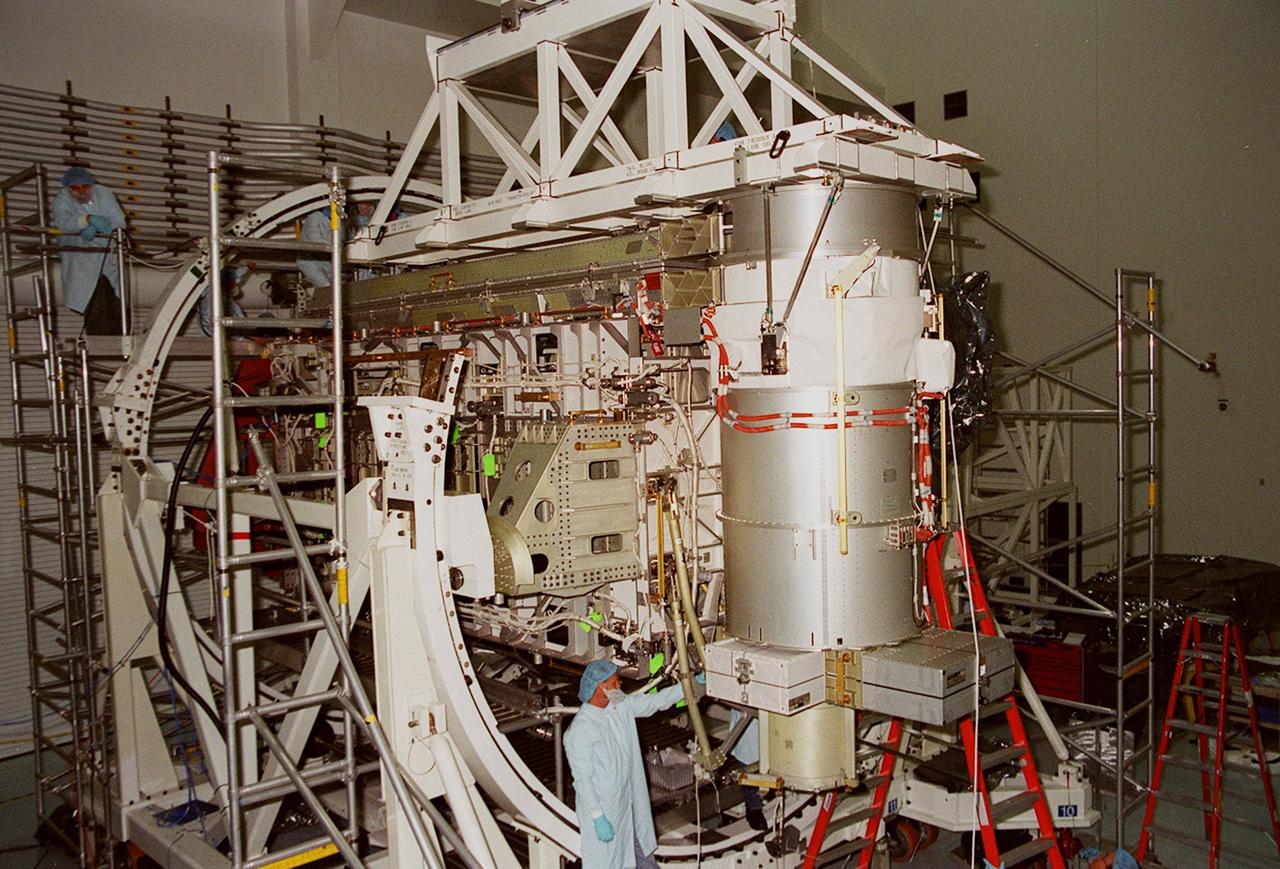
In the Space Station Processing Facility, Solar Array Wing-3, a component of the International Space Station, is installed in the Integrated Electronic Assembly where it will be tested. The solar array is scheduled to be launched on STS-97 in late November along with the P6 truss. The Station’s electrical power system (EPS) will use eight photovoltaic solar arrays to convert sunlight to electricity. Each of the eight solar arrays will be 112 feet long by 39 feet wide. The solar arrays are mounted on a “blanket” that can be folded like an accordion for delivery. Once in orbit, astronauts will deploy the blankets to their full size. Gimbals will be used to rotate the arrays so that they will face the Sun to provide maximum power to the Space Station
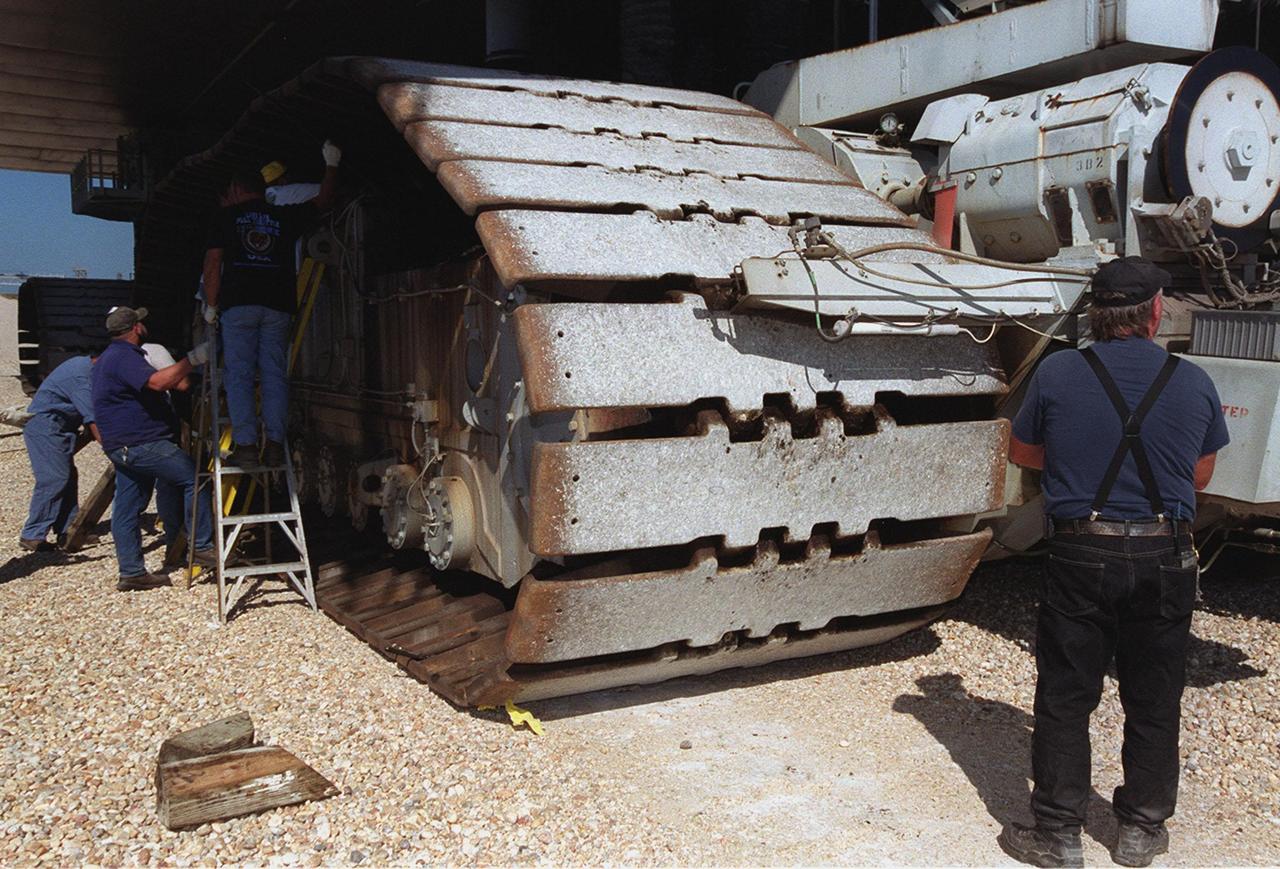
KENNEDY SPACE CENTER, FLA. -- A repair crew begin working on replacing a broken cleat on this track of the crawler-transporter. The crack was noticed as the crawler-transporter was moving Space Shuttle Endeavour to Launch Pad 39B. Rollout was delayed until the cleat could be replaced. The Space Shuttle was hard down on the pad several hours later. Endeavour is scheduled to be launched Nov. 30 at 10:01 p.m. EST on mission STS-97, the sixth construction flight to the International Space Station. Its payload includes the P6 Integrated Truss Structure and a photovoltaic (PV) module, with giant solar arrays that will provide power to the Station. The mission includes two spacewalks to complete the solar array connections
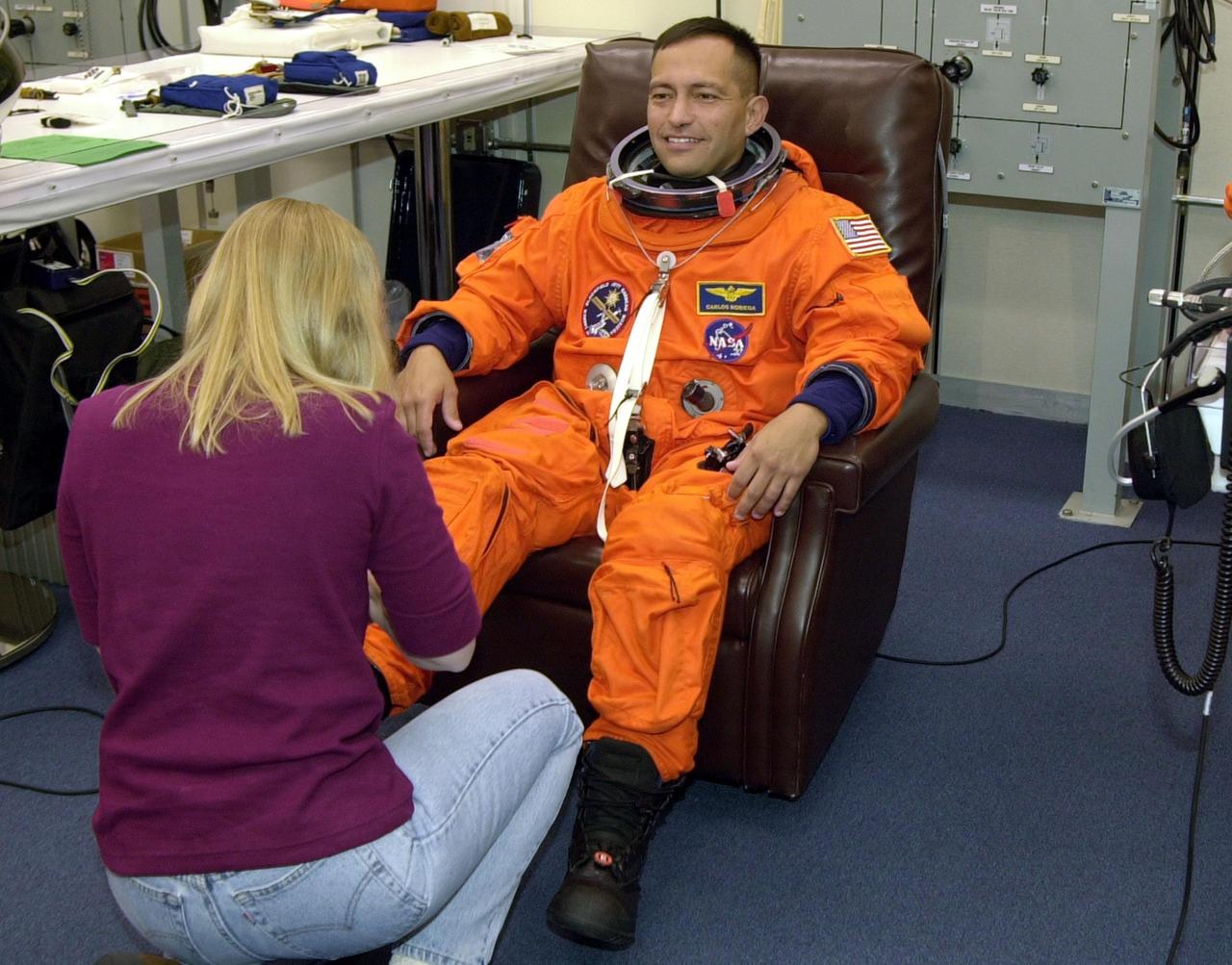
STS-97 Mission Specialist Carlos Noriega gets help with his boots from suit technician Shelly Grick-Agrella during pre-pack and fit check. Mission STS-97 is the sixth construction flight to the International Space Station. Its payload includes the P6 Integrated Truss Structure and a photovoltaic (PV) module, with giant solar arrays that will provide power to the Station. The mission includes two spacewalks to complete the solar array connections. STS-97 is scheduled to launch Nov. 30 at about 10:06 p.m. EST
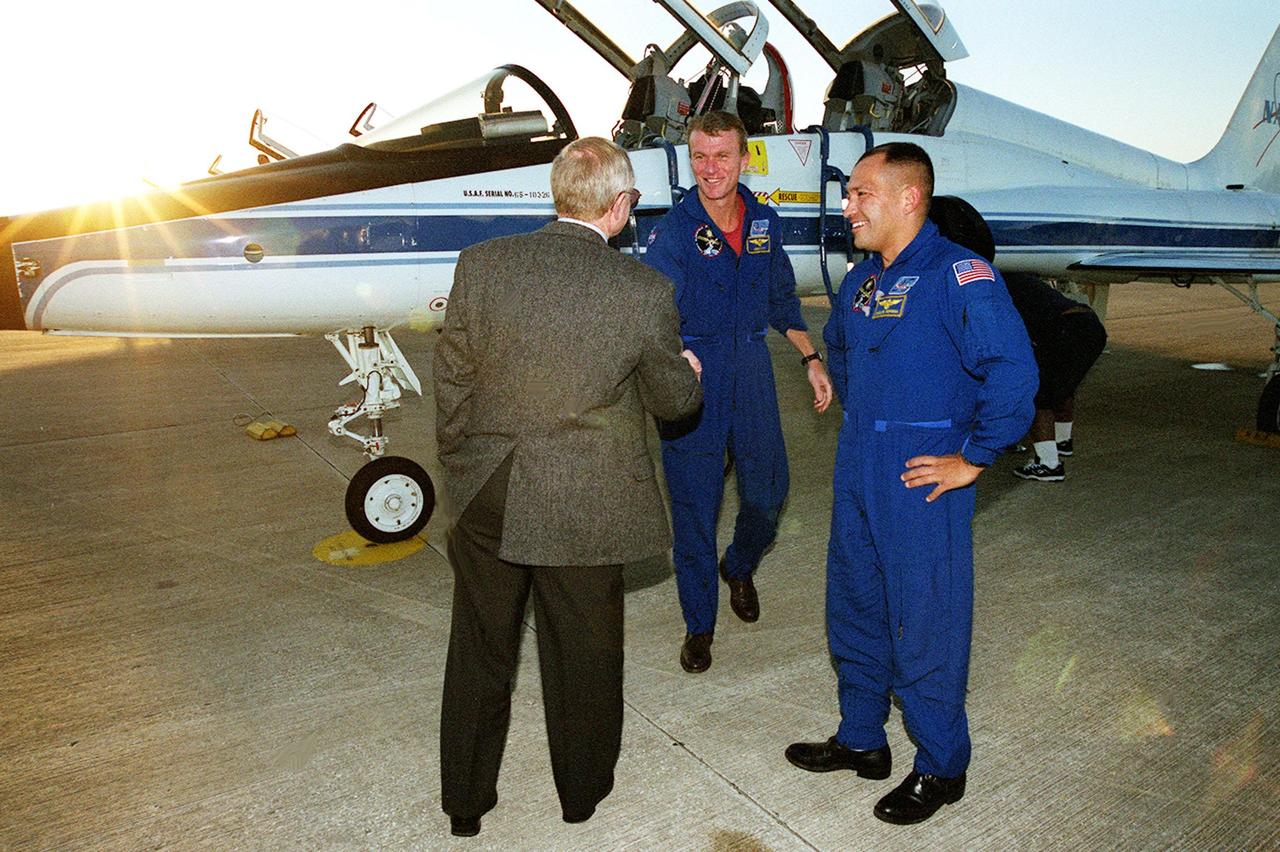
At the Shuttle Landing Facility, Center Director Roy Bridges (left) greets STS-97 Commander Brent Jett on his arrival at KSC for the mission launch. At right is Mission Specialist Carlos Noriega. Jett and Noriega traveled from Johnson Space Center, Houston, Texas, in the T-38 jet aircraft behind them. Mission STS-97is the sixth construction flight to the International Space Station. Its payload includes the P6 Integrated Truss Structure and a photovoltaic (PV) module, with giant solar arrays that will provide power to the Station. The mission includes two spacewalks to complete the solar array connections. STS-97 is scheduled to launch Nov. 30 at about 10:06 p.m. EST
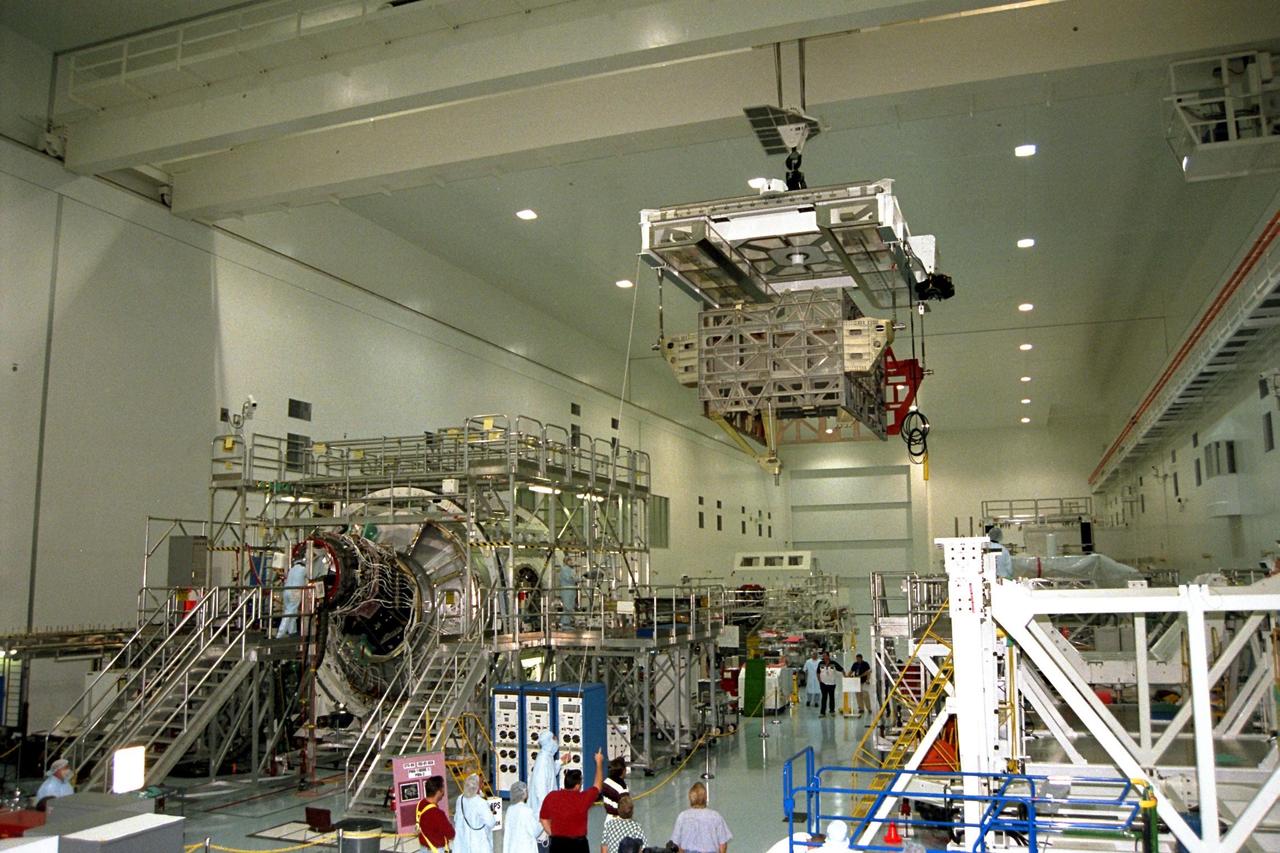
The Photovoltaic Module 1 Integrated Equipment Assembly (IEA) is moved past Node 1, seen at left, of the International Space Station (ISS) in Kennedy Space Center’s Space Station Processing Facility (SSPF). The IEA will be processed at the SSPF for flight on STS-97, scheduled for launch in April 1999. The IEA is one of four integral units designed to generate, distribute, and store power for the ISS. It will carry solar arrays, power storage batteries, power control units, and a thermal control system. The 16-foot-long, 16,850-pound unit is now undergoing preflight preparations in the SSPF
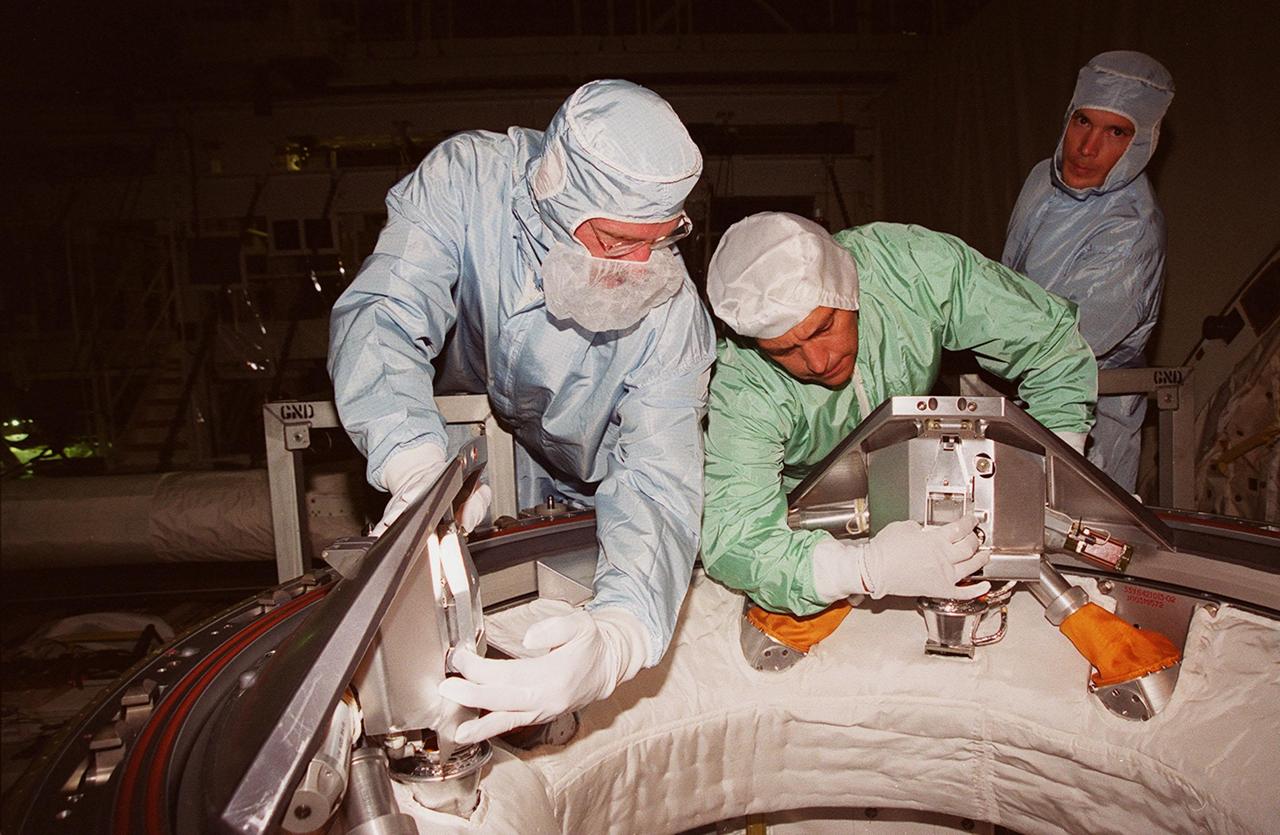
KENNEDY SPACE CENTER, FLA. -- In Orbiter Processing Facility (OPF) bay 2 during Crew Equipment Interface Test (CEIT), Mission Specialists Joe Tanner (left) and Carlos Noriega (right) practice working parts of the Orbital Docking System (ODS) in Endeavour’s payload bay. The CEIT provides an opportunity for crew members to check equipment and facilities that will be on board the orbiter during their mission. The STS-97 mission will be the sixth construction flight to the International Space Station. The payload includes a photovoltaic (PV) module, providing solar power to the Station. STS-97 is scheduled to launch Nov. 30 from KSC for the 10-day mission
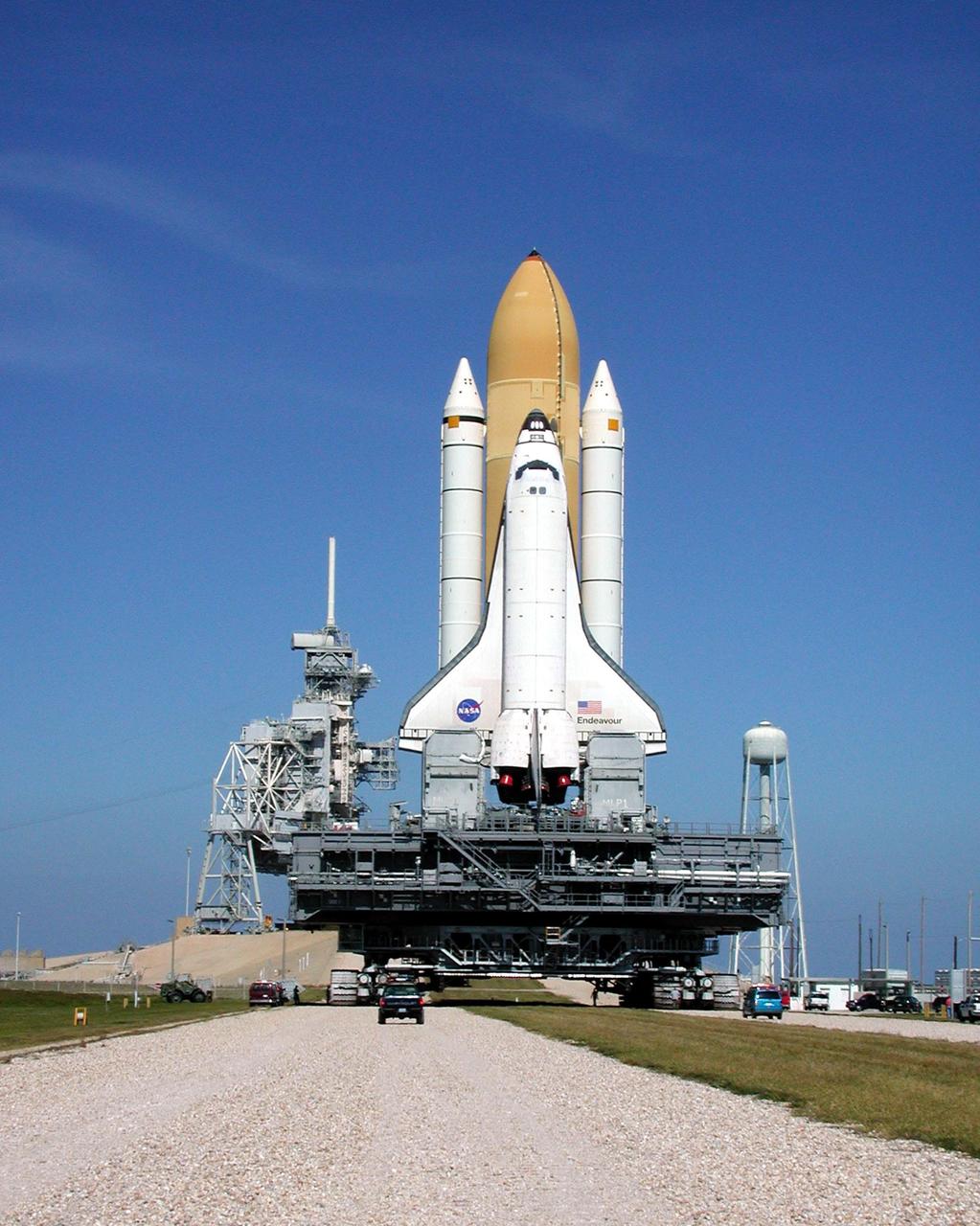
KENNEDY SPACE CENTER, Fla. -- Perched atop the Mobile Launcher Platform, Space Shuttle Endeavour is nearly through the gate to Launch Pad 39B. To the right of the pad is a 290-foot tall water tower. To the left is the Fixed Service Structure and Rotating Service Structure. Endeavour is scheduled to be launched Nov. 30 at 10:01 p.m. EST on mission STS-97, the sixth construction flight to the International Space Station. Its payload includes the P6 Integrated Truss Structure and a photovoltaic (PV) module, with giant solar arrays that will provide power to the Station. The mission includes two spacewalks to complete the solar array connections
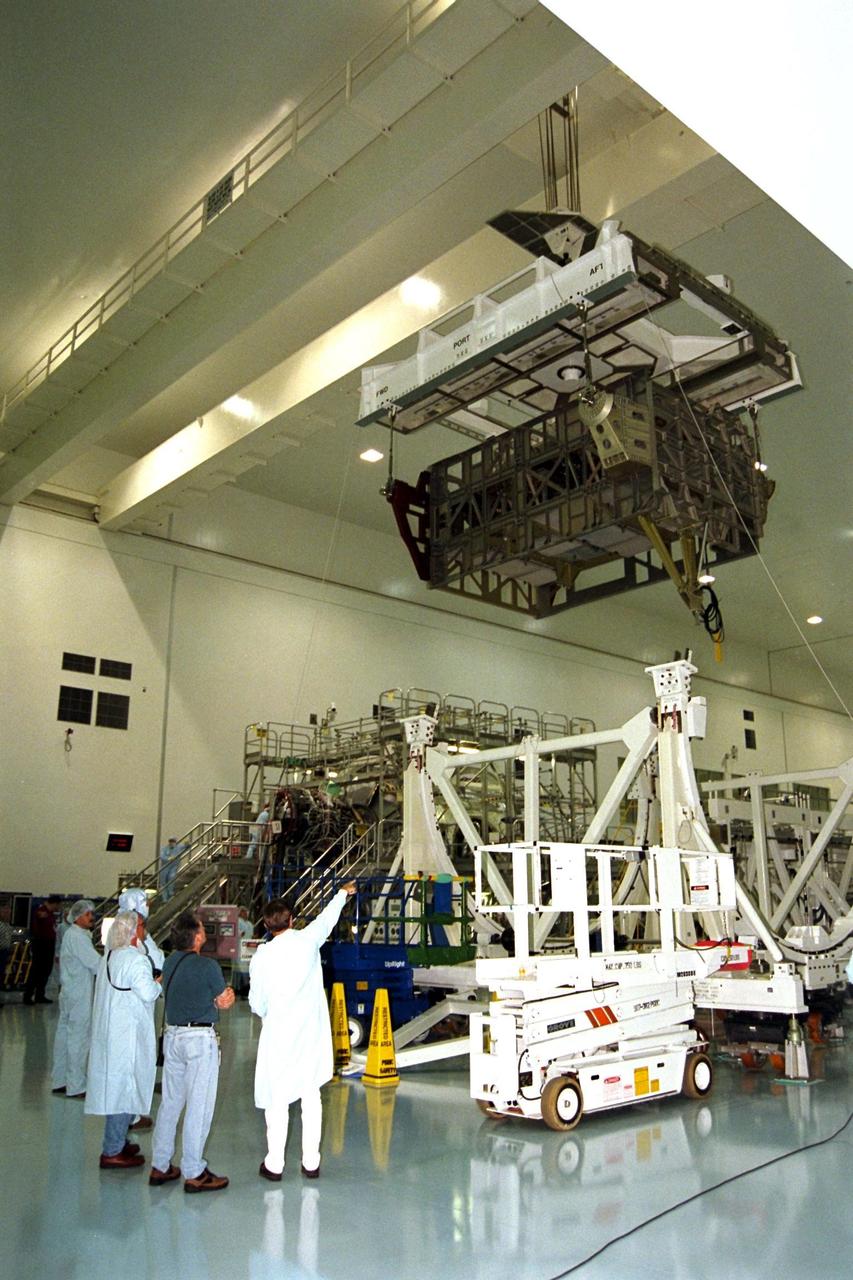
Workers in Kennedy Space Center’s Space Station Processing Facility (SSPF) observe the Photovoltaic Module 1 Integrated Equipment Assembly (IEA) as it moves past them on its way to its workstand, where it will be processed for flight on STS-97, scheduled for launch in April 1999. The IEA is one of four integral units designed to generate, distribute, and store power for the International Space Station. It will carry solar arrays, power storage batteries, power control units, and a thermal control system. The 16-foot-long, 16,850-pound unit is now undergoing preflight preparations in the SSPF
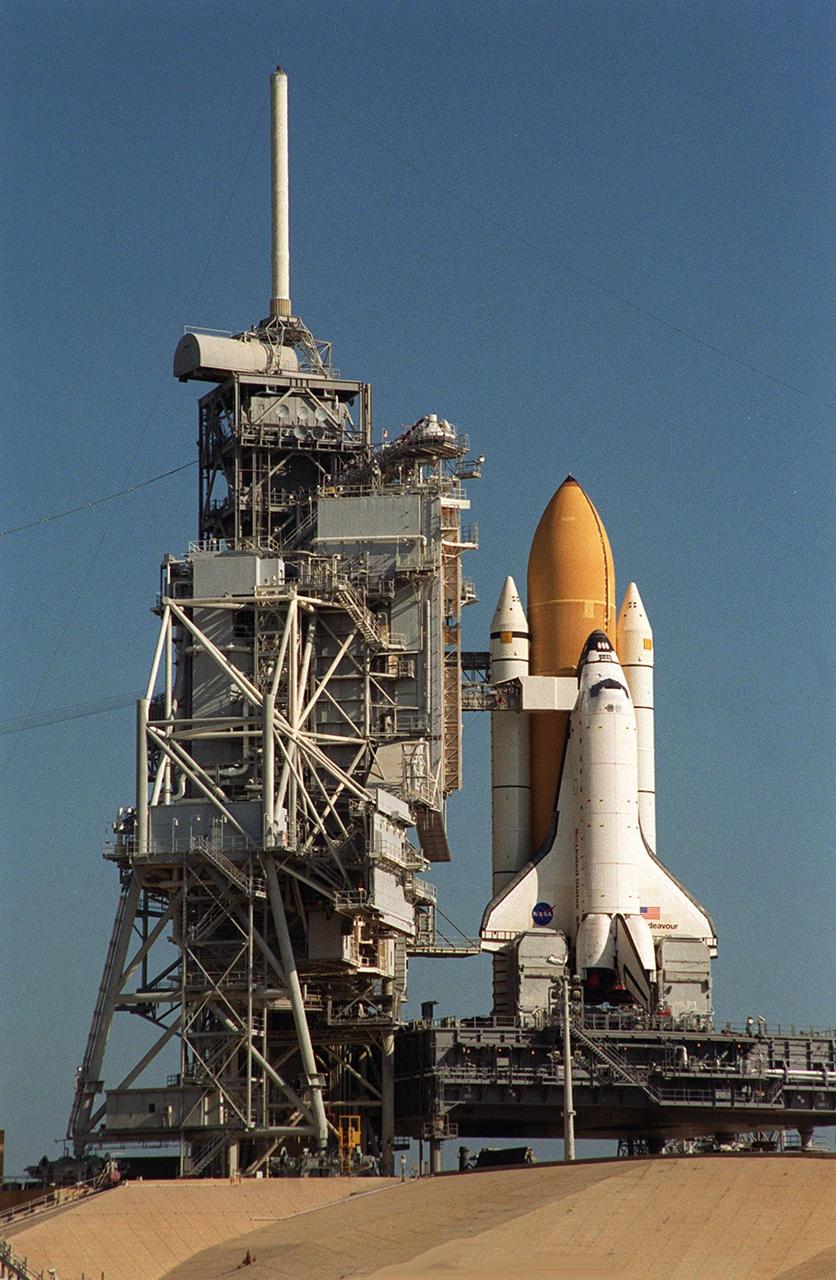
KENNEDY SPACE CENTER, FLA. -- Space Shuttle Endeavour finally rests on Launch Pad 39B after its rollout was delayed several hours to fix a broken cleat on the crawler-transporter. At the far left is the Rotating Service Structure. From the Fixed Service Structure, the Orbiter Access Arm is already extended to the orbiter. Endeavour is scheduled to be launched Nov. 30 at 10:01 p.m. EST on mission STS-97, the sixth construction flight to the International Space Station. Its payload includes the P6 Integrated Truss Structure and a photovoltaic (PV) module, with giant solar arrays that will provide power to the Station. The mission includes two spacewalks to complete the solar array connections
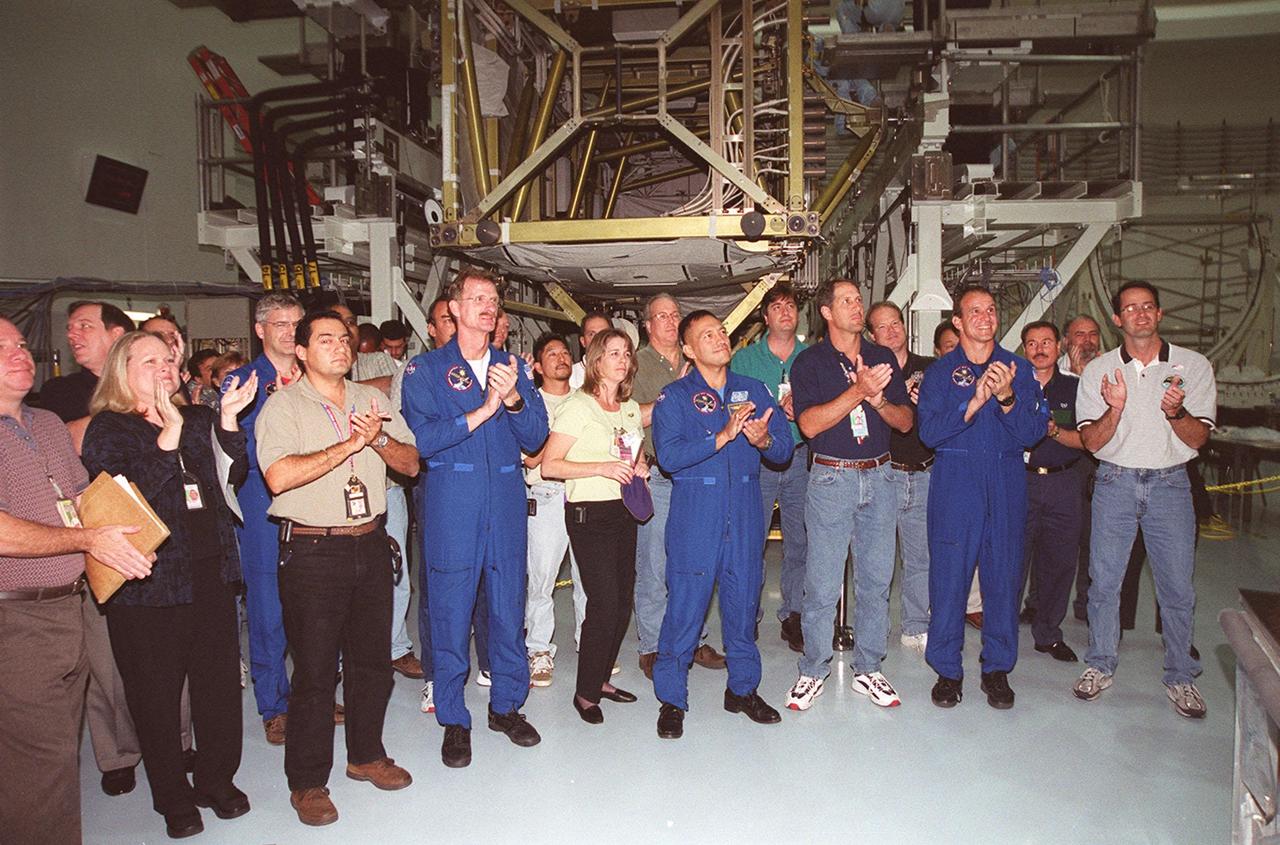
In the Space Station Processing Facility, workers applaud the turnover of the P6 Integrated Truss Structure by International Space Station ground operations to the NASA shuttle integration team in a special ceremony. Standing in front are STS-97 Mission Specialists Joe Tanner and Carlos Noriega plus Pilot Mike Broomfield. Behind and left of Tanner is Mission Specialist Marc Garneau. Mission STS-97is the sixth construction flight to the International Space Station. Its payload includes a photovoltaic (PV) module, with giant solar arrays that will provide power to the Station. The mission involves two spacewalks to complete the solar array connections. STS-97 is scheduled to launch Nov. 30 at 10:05 p.m. EST
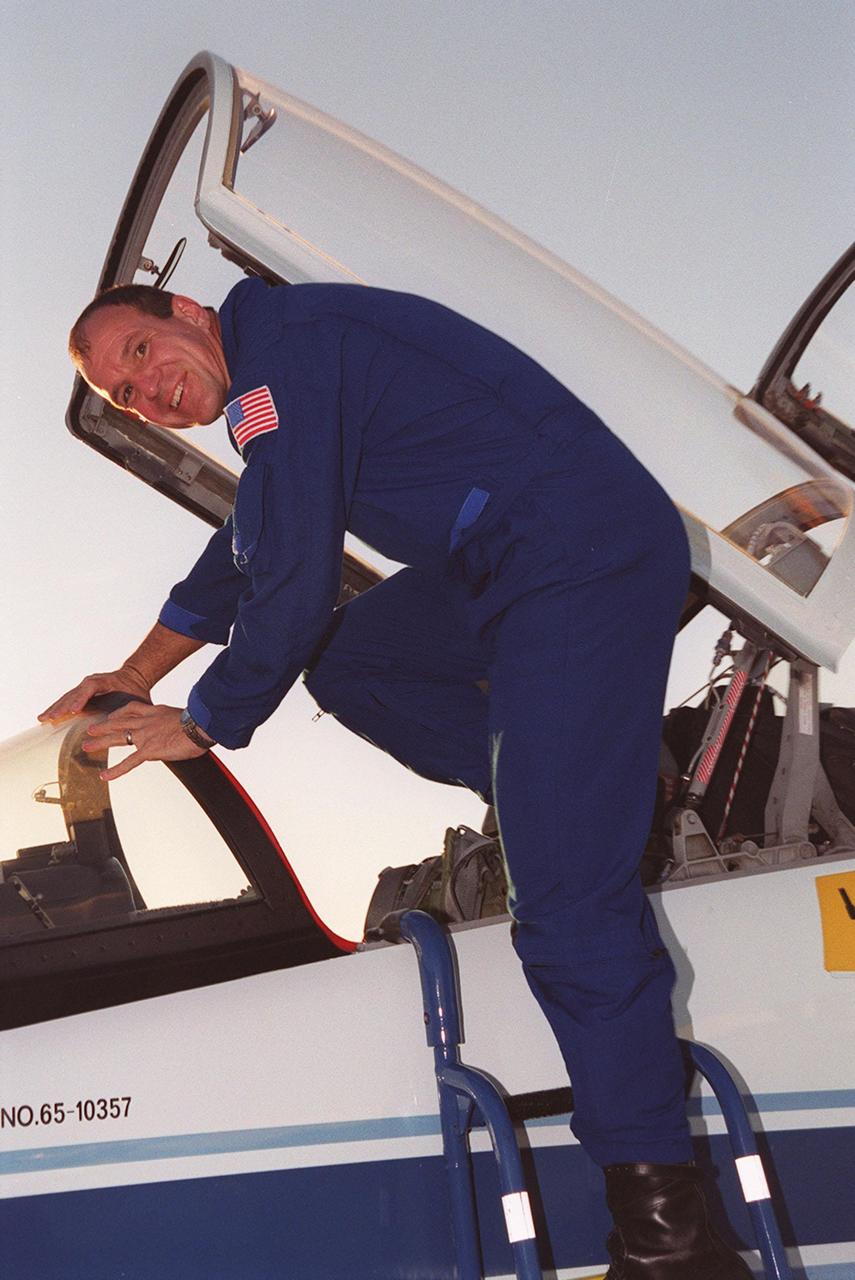
At the Shuttle Landing Facility, STS-97 Pilot Michael Bloomfield climbs out of the cockpit of a T-38 jet aircraft he flew from Johnson Space Center. He and the rest of the crew have returned to KSC for the launch, scheduled for Nov. 30 at about 10:06 p.m. EST. Mission STS-97is the sixth construction flight to the International Space Station. Its payload includes the P6 Integrated Truss Structure and a photovoltaic (PV) module, with giant solar arrays that will provide power to the Station. The mission includes two spacewalks to complete the solar array connections. STS-97 is scheduled to launch Nov. 30 at about 10:06 p.m. EST
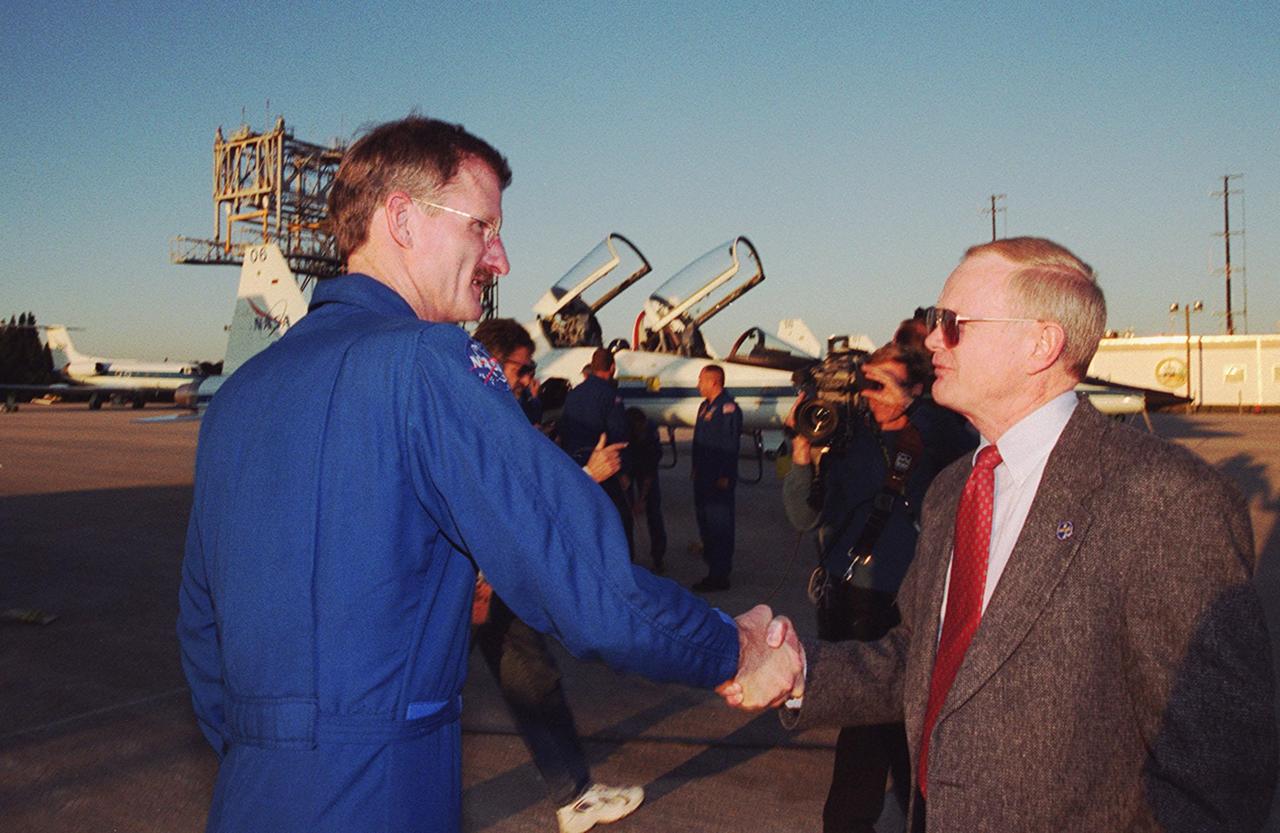
At the Shuttle Landing Facility, STS-97 Mission Specialist Joseph Tanner (left) is greeted by Center Director Roy Bridges on his arrival at KSC from Johnson Space Center. Tanner and the rest of the crew have returned to KSC for the launch, scheduled for Nov. 30 at about 10:06 p.m. EST. Mission STS-97is the sixth construction flight to the International Space Station. Its payload includes the P6 Integrated Truss Structure and a photovoltaic (PV) module, with giant solar arrays that will provide power to the Station. The mission includes two spacewalks to complete the solar array connections. STS-97 is scheduled to launch Nov. 30 at about 10:06 p.m. EST
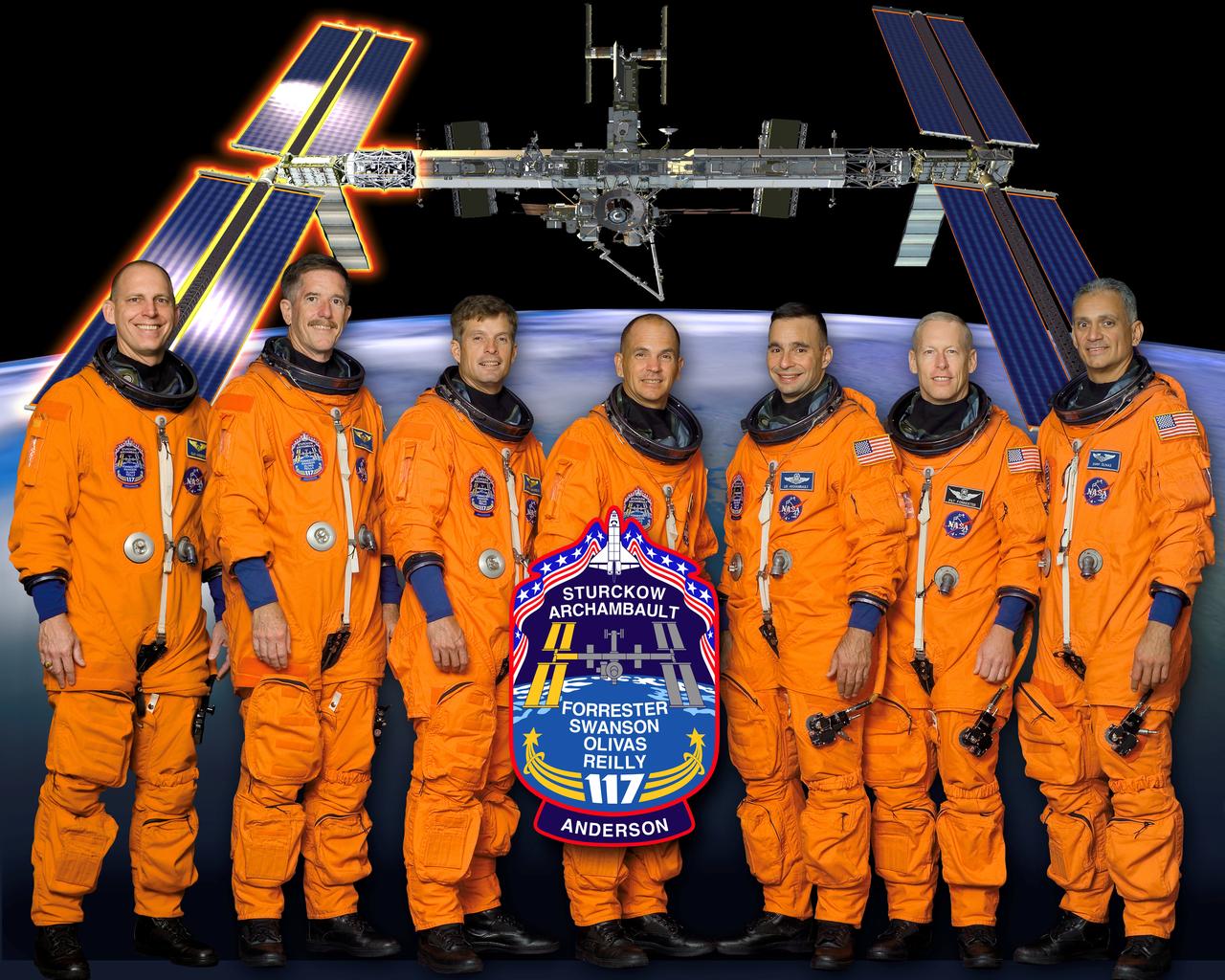
These six STS 117 astronauts, assigned to launch aboard the Space Shuttle Atlantis, are (from the left) astronauts James F. Reilly II, Steven R. Swanson, mission specialists; Frederick W. (Rick) Sturckow, commander; Lee J. Archambault, pilot; and Patrick G. Forrester and John D. (Danny) Olivas, mission specialists. The crewmembers are attired in training versions of their shuttle launch and entry suits. Mission objectives include the addition of the second and third starboard truss segments (S3/S4) with Photovoltaic Radiator (PVR), the deployed third set of solar arrays. The P6 starboard solar array wing and one radiator are to be retracted.
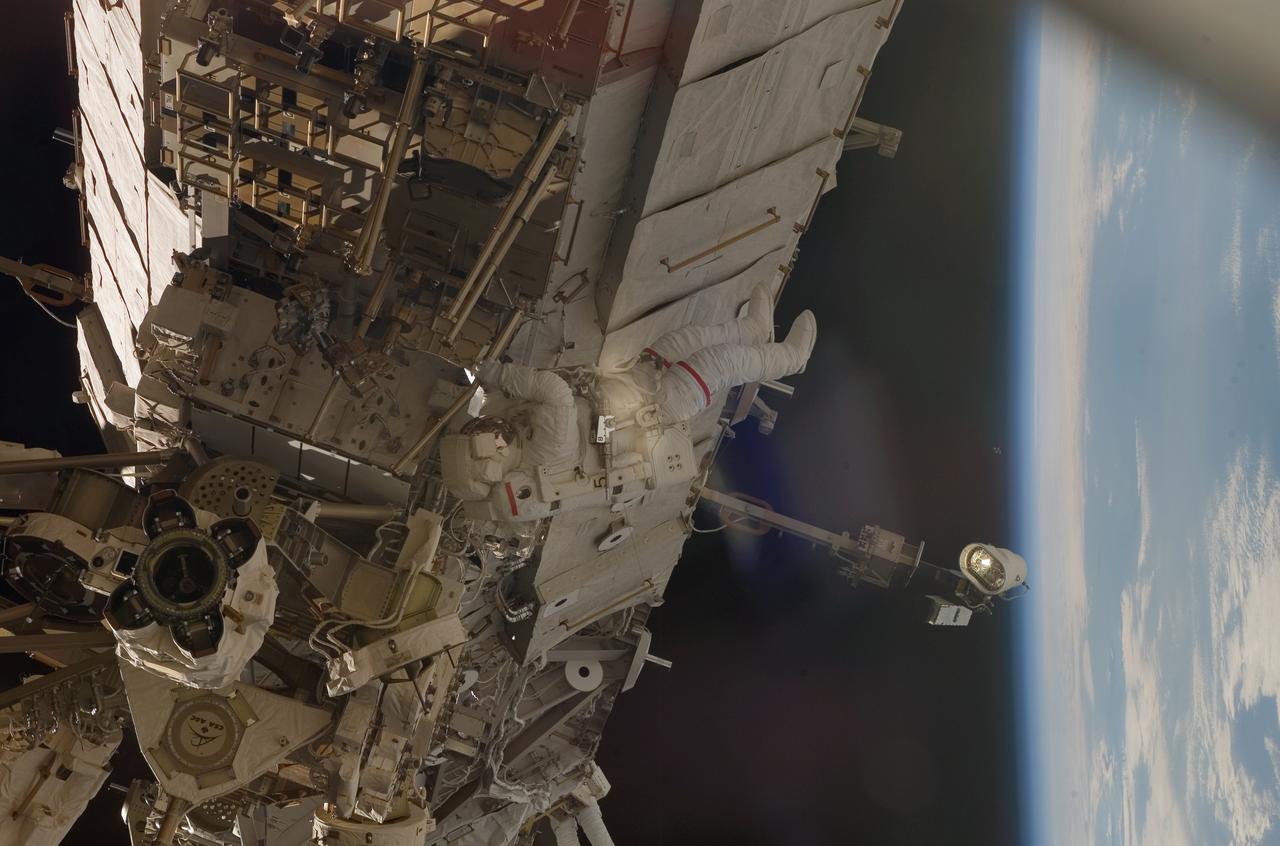
STS-117 astronauts and mission specialists Jim Reilly (center frame), and John “Danny” Olivas (bottom center), participated in the first Extra Vehicular Activity (EVA) as construction resumed on the International Space Station (ISS). Among other tasks, the two connected power, data, and cooling cables between trusses 1 (S1) and 3 (S3), released the launch restraints from and deployed the four solar array blanket boxes on S4, and released the cinches and winches holding the photovoltaic radiator on S4. The primary mission objective was the installment of the second and third starboard truss segments (S3 and S4).
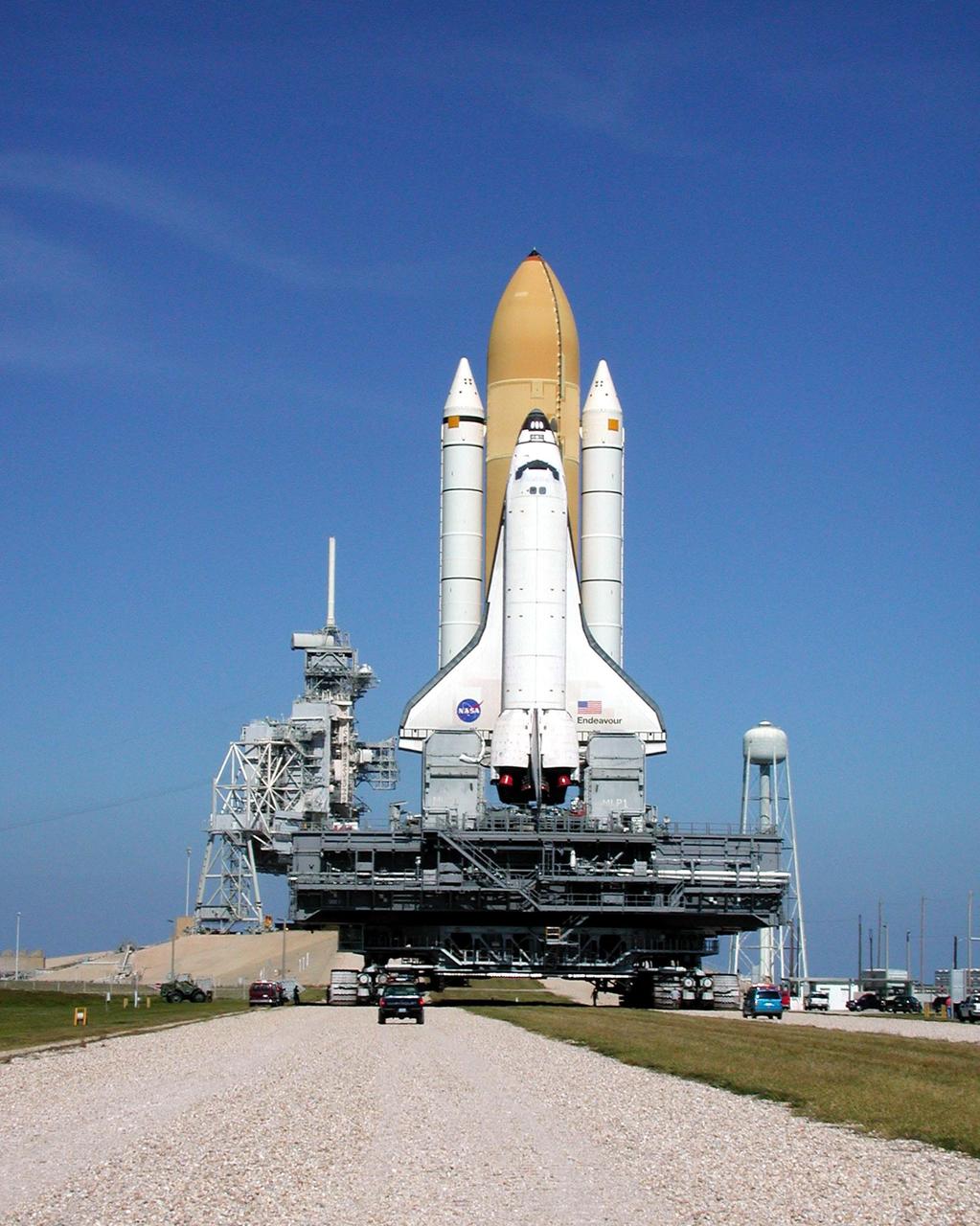
KENNEDY SPACE CENTER, Fla. -- Perched atop the Mobile Launcher Platform, Space Shuttle Endeavour is nearly through the gate to Launch Pad 39B. To the right of the pad is a 290-foot tall water tower. To the left is the Fixed Service Structure and Rotating Service Structure. Endeavour is scheduled to be launched Nov. 30 at 10:01 p.m. EST on mission STS-97, the sixth construction flight to the International Space Station. Its payload includes the P6 Integrated Truss Structure and a photovoltaic (PV) module, with giant solar arrays that will provide power to the Station. The mission includes two spacewalks to complete the solar array connections

At the Shuttle Landing Facility, STS-97 Pilot Michael Bloomfield climbs out of the cockpit of a T-38 jet aircraft he flew from Johnson Space Center. He and the rest of the crew have returned to KSC for the launch, scheduled for Nov. 30 at about 10:06 p.m. EST. Mission STS-97is the sixth construction flight to the International Space Station. Its payload includes the P6 Integrated Truss Structure and a photovoltaic (PV) module, with giant solar arrays that will provide power to the Station. The mission includes two spacewalks to complete the solar array connections. STS-97 is scheduled to launch Nov. 30 at about 10:06 p.m. EST
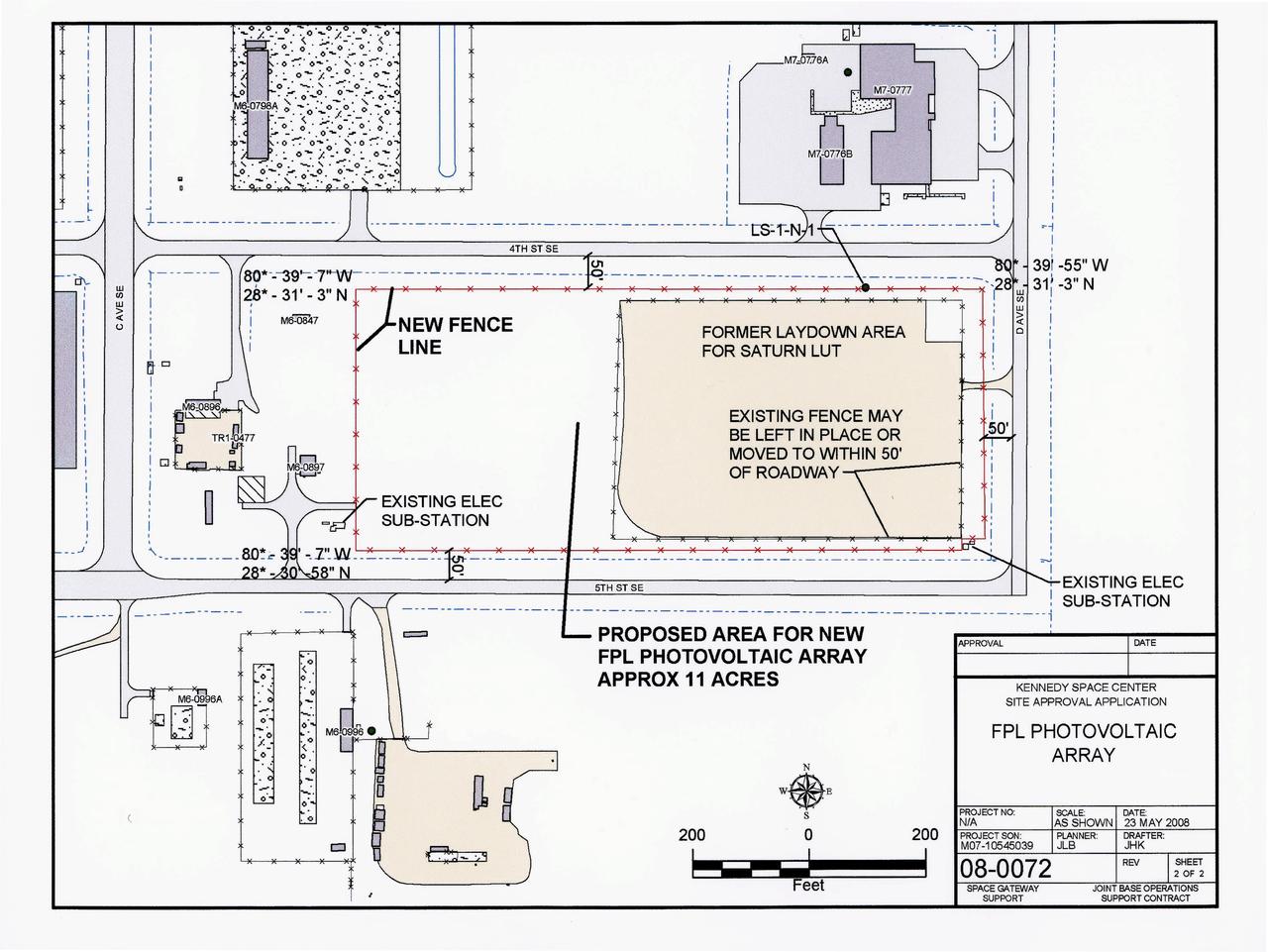
CAPE CANAVERAL, Fla. – This map shows the area within NASA's Kennedy Space Center where one of the two solar photovoltaic power generation systems will be built as the result of an agreement between NASA and Florida Power & Light. The agreement is part of a new initiative that will cut reliance on fossil fuels and improve the environment by reducing greenhouse gas emissions. The major facility will produce an estimated 10 megawatts of electrical power, which can serve roughly 3,000 homes. A separate one-megawatt solar power facility will support the electrical needs of the center.
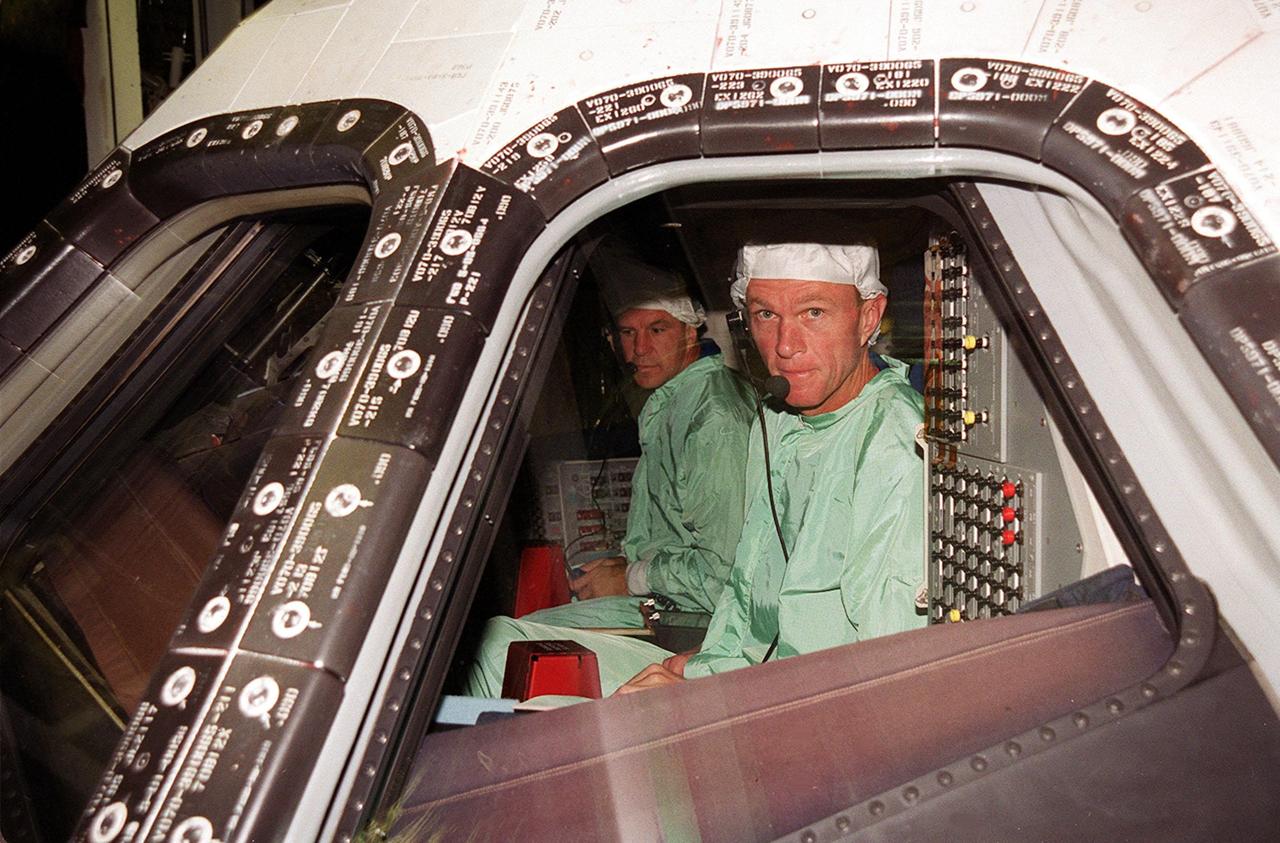
In Orbiter Processing Facility bay 2 during a Crew Equipment Interface Test (CEIT), STS-97 Pilot Michael Bloomfied (left) and Commander Brent Jett (right) check out the cockpit of orbiter Endeavour as part of preflight preparations. The CEIT provides an opportunity for crew members to check equipment and facilities that will be on board the orbiter during their mission. The STS-97 mission will be the sixth construction flight to the International Space Station. The payload includes a photovoltaic (PV) module, providing solar power to the Station. STS-97 is scheduled to launch Nov. 30 from KSC for the 10-day mission
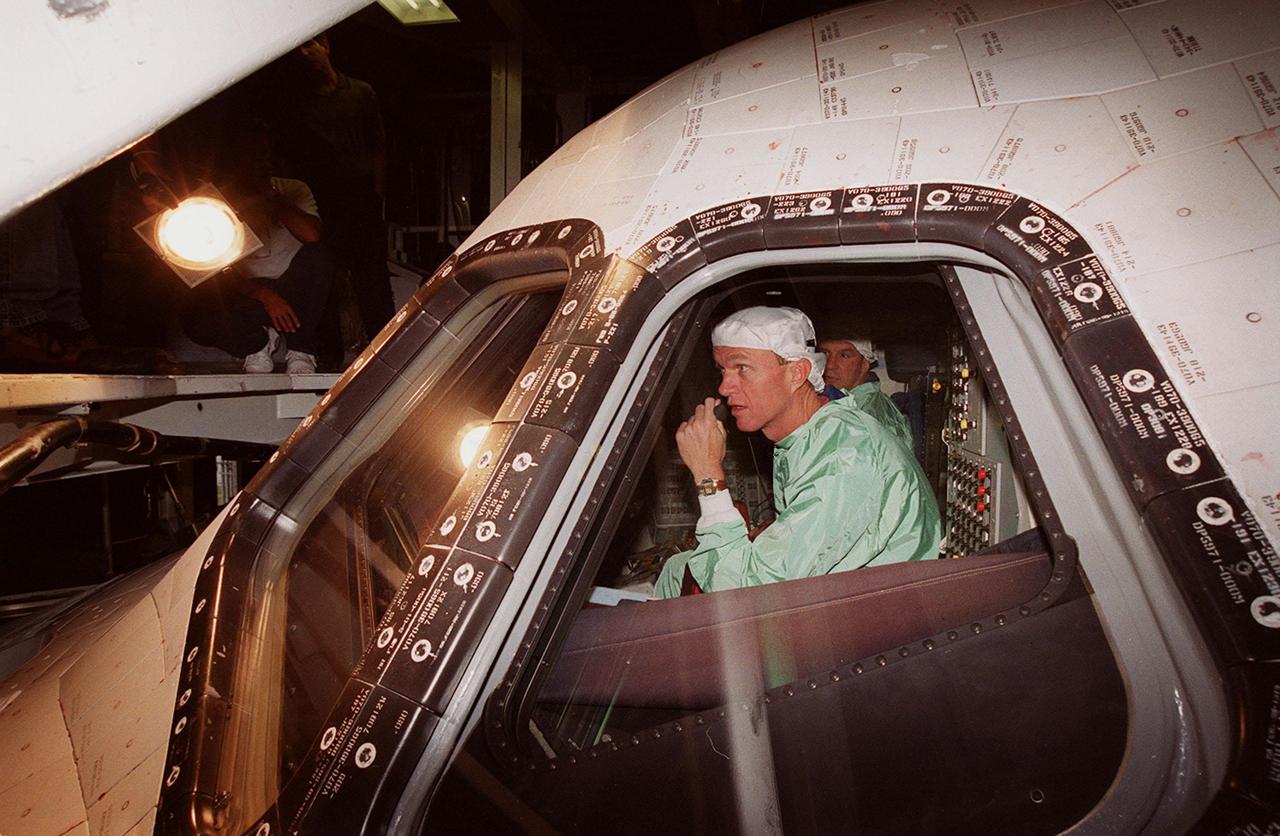
In Orbiter Processing Facility bay 2 during a Crew Equipment Interface Test (CEIT), STS-97 Commander Brent Jett (left) and Pilot Michael Bloomfied (right) check out the cockpit of orbiter Endeavour as part of preflight preparations. The CEIT provides an opportunity for crew members to check equipment and facilities that will be on board the orbiter during their mission. The STS-97 mission will be the sixth construction flight to the International Space Station. The payload includes a photovoltaic (PV) module, providing solar power to the Station. STS-97 is scheduled to launch Nov. 30 from KSC for the 10-day mission
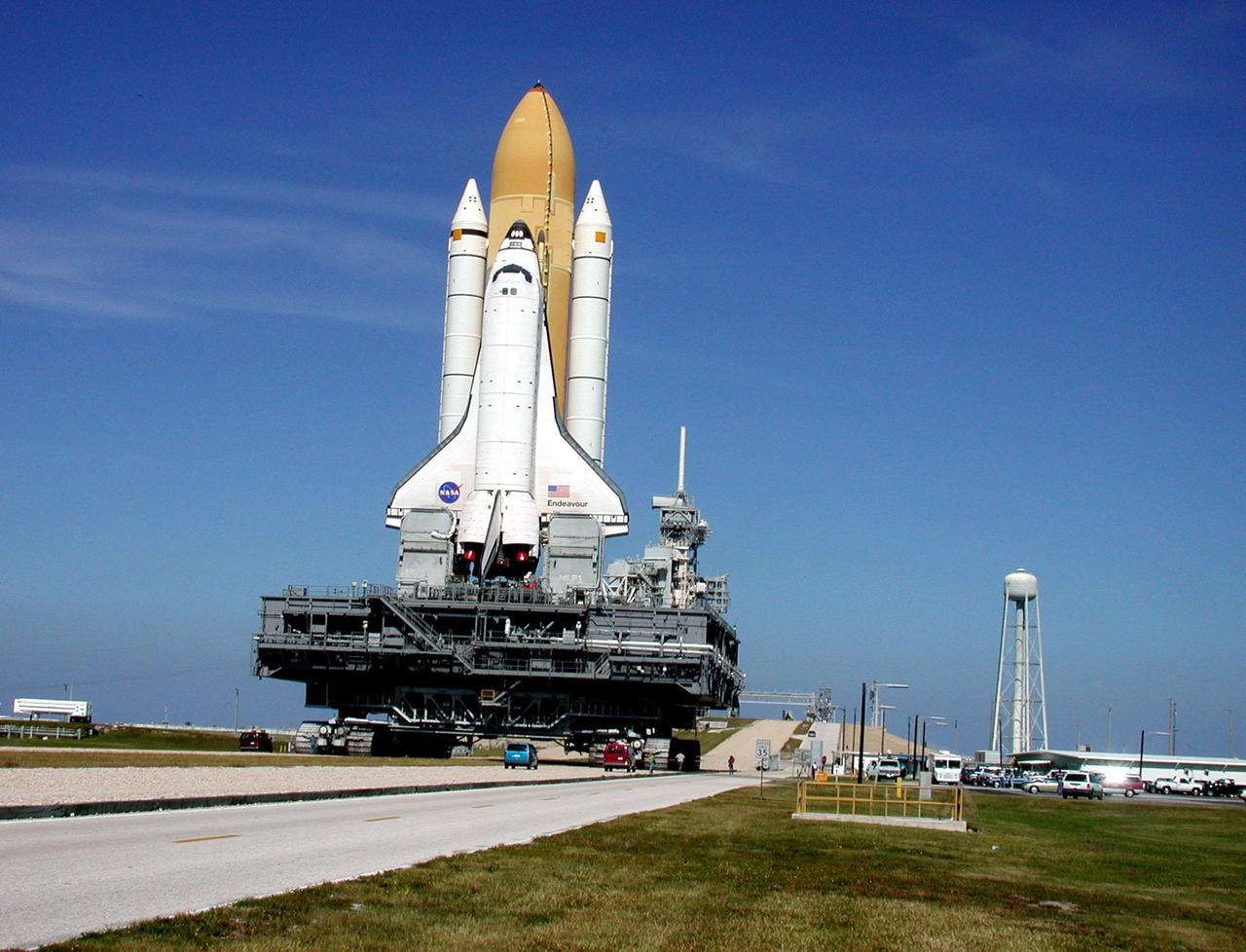
KENNEDY SPACE CENTER, Fla. -- Perched atop the Mobile Launcher Platform, Space Shuttle Endeavour approaches the gate to Launch Pad 39B. To the right of the pad is a 290-foot tall water tower. Endeavour is scheduled to be launched Nov. 30 at 10:01 p.m. EST on mission STS-97, the sixth construction flight to the International Space Station. Its payload includes the P6 Integrated Truss Structure and a photovoltaic (PV) module, with giant solar arrays that will provide power to the Station. The mission includes two spacewalks to complete the solar array connections
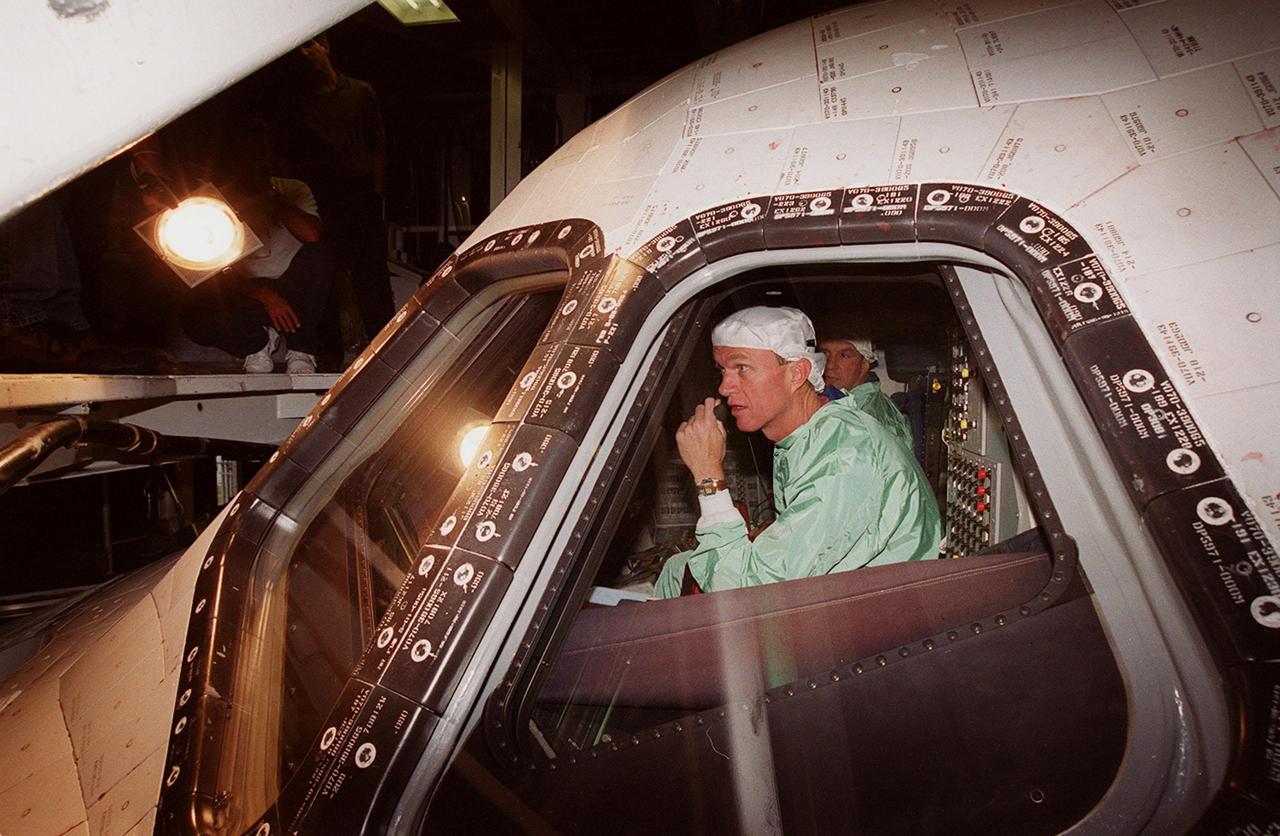
In Orbiter Processing Facility bay 2 during a Crew Equipment Interface Test (CEIT), STS-97 Commander Brent Jett (left) and Pilot Michael Bloomfied (right) check out the cockpit of orbiter Endeavour as part of preflight preparations. The CEIT provides an opportunity for crew members to check equipment and facilities that will be on board the orbiter during their mission. The STS-97 mission will be the sixth construction flight to the International Space Station. The payload includes a photovoltaic (PV) module, providing solar power to the Station. STS-97 is scheduled to launch Nov. 30 from KSC for the 10-day mission
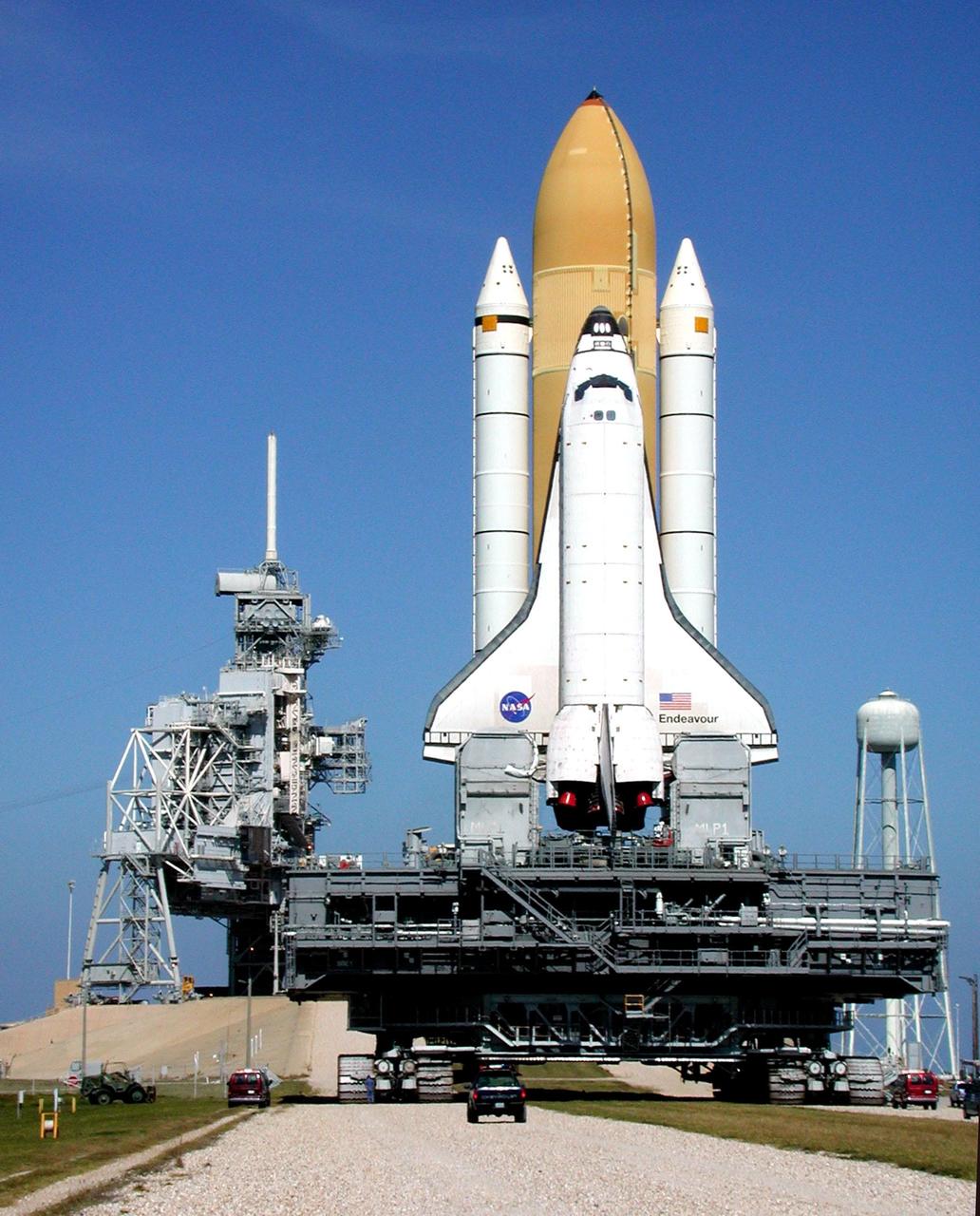
KENNEDY SPACE CENTER, Fla. -- Perched atop the Mobile Launcher Platform, Space Shuttle Endeavour passes through the gate to Launch Pad 39B. To the right of the pad is a 290-foot tall water tower. To the left is the Fixed Service Structure and Rotating Service Structure. Endeavour is scheduled to be launched Nov. 30 at 10:01 p.m. EST on mission STS-97, the sixth construction flight to the International Space Station. Its payload includes the P6 Integrated Truss Structure and a photovoltaic (PV) module, with giant solar arrays that will provide power to the Station. The mission includes two spacewalks to complete the solar array connections
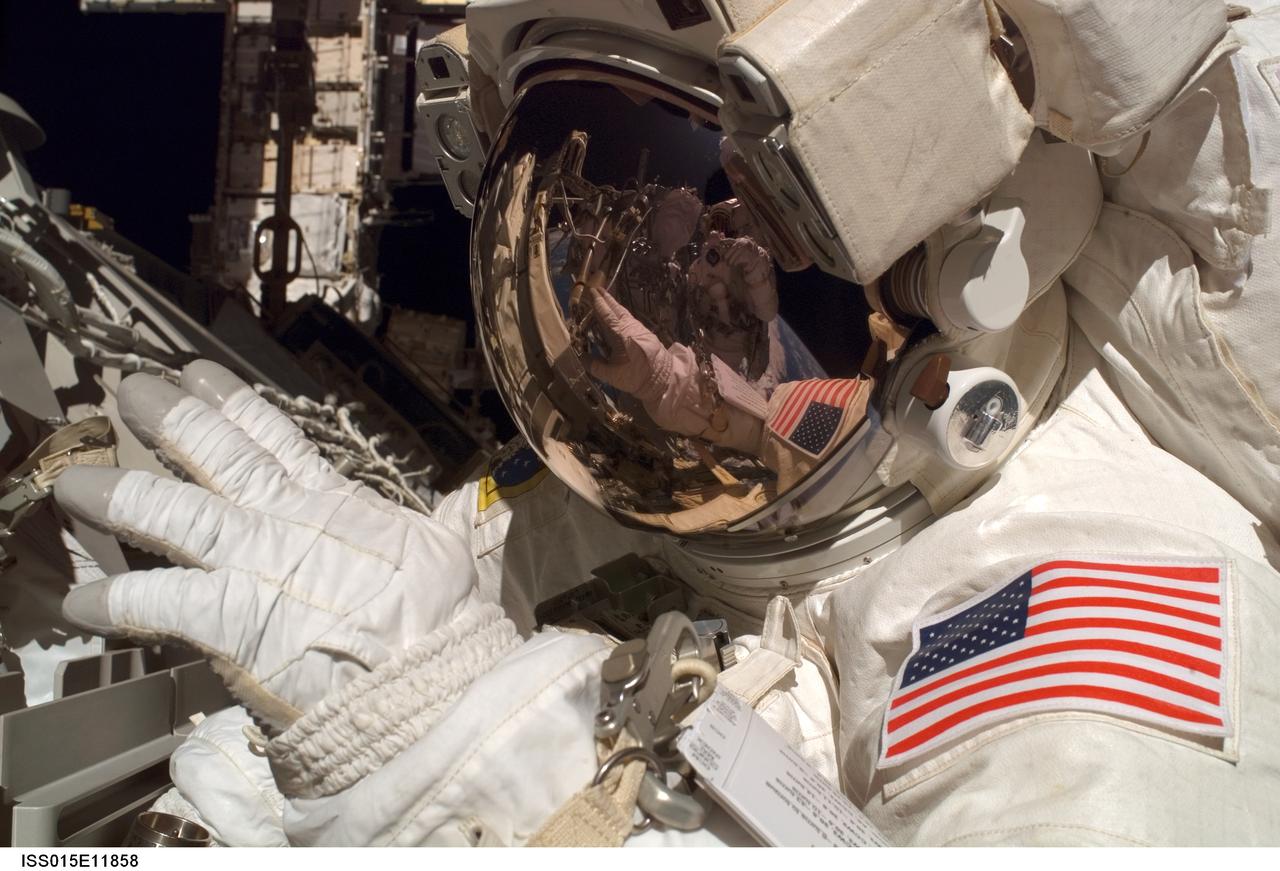
ISS015-E-11858 (11 June 2007) --- Astronauts Jim Reilly and John "Danny" Olivas (visible among Reilly's helmet reflections), both STS-117 mission specialists, participate in the mission's first planned session of extravehicular activity (EVA), as construction resumes on the International Space Station. Among other tasks, Reilly and Olivas connected power, data and cooling cables between S1 and S3; released the launch restraints from and deployed the four solar array blanket boxes on S4 and released the cinches and winches holding the photovoltaic radiator on S4.

KENNEDY SPACE CENTER, FLA. -- Space Shuttle Endeavour, atop the Mobile Launcher Platform, moves through the gate a second time to Launch Pad 39B. After a cracked cleat was noticed on one of the eight tracks on the crawler-transporter, the vehicle reversed direction to level ground where the cleat is being replaced. Endeavour is scheduled to be launched Nov. 30 at 10:01 p.m. EST on mission STS-97, the sixth construction flight to the International Space Station. Its payload includes the P6 Integrated Truss Structure and a photovoltaic (PV) module, with giant solar arrays that will provide power to the Station. The mission includes two spacewalks to complete the solar array connections
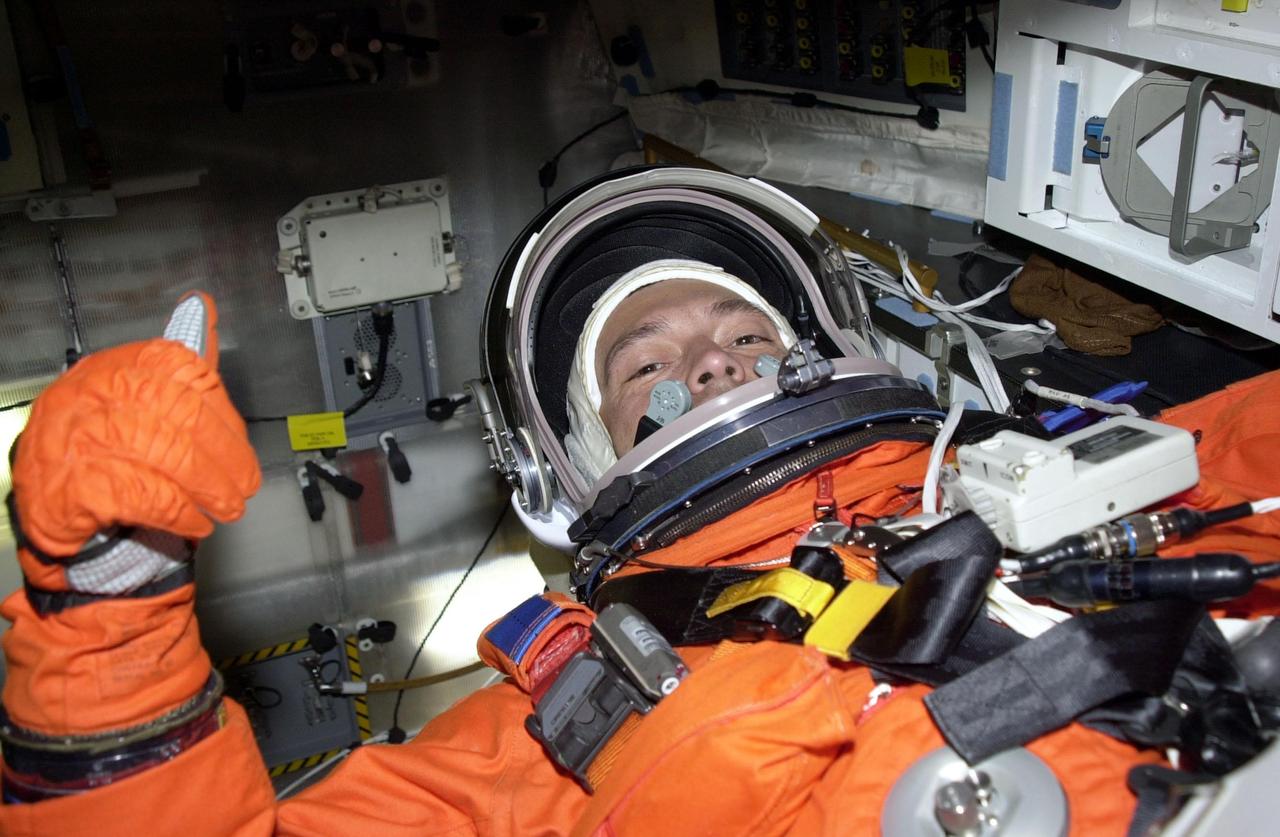
STS-97 Mission Specialist Carlos Noriega settles into his seat in Space Shuttle Endeavour on Launch Pad 39B. He and the rest of the crew are taking part in a simulated launch countdown, part of Terminal Countdown Demonstration Test activities that also include emergency egress training and familiarization with the payload. Mission STS-97 is the sixth construction flight to the International Space Station. Its payload includes the P6 Integrated Truss Structure and a photovoltaic (PV) module, with giant solar arrays that will provide power to the Station. The mission includes two spacewalks to complete the solar array connections. STS-97 is scheduled to launch Nov. 30 at about 10:05 p.m. EST
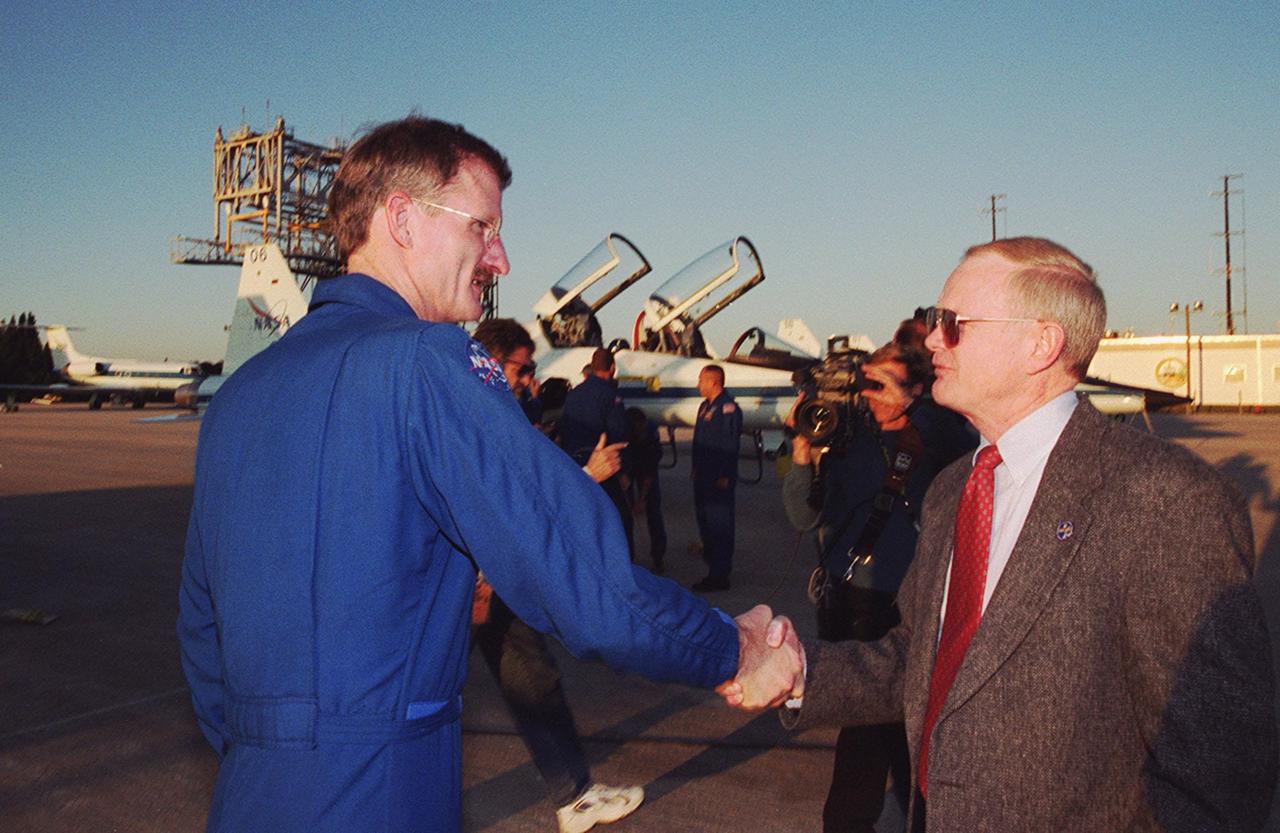
At the Shuttle Landing Facility, STS-97 Mission Specialist Joseph Tanner (left) is greeted by Center Director Roy Bridges on his arrival at KSC from Johnson Space Center. Tanner and the rest of the crew have returned to KSC for the launch, scheduled for Nov. 30 at about 10:06 p.m. EST. Mission STS-97is the sixth construction flight to the International Space Station. Its payload includes the P6 Integrated Truss Structure and a photovoltaic (PV) module, with giant solar arrays that will provide power to the Station. The mission includes two spacewalks to complete the solar array connections. STS-97 is scheduled to launch Nov. 30 at about 10:06 p.m. EST
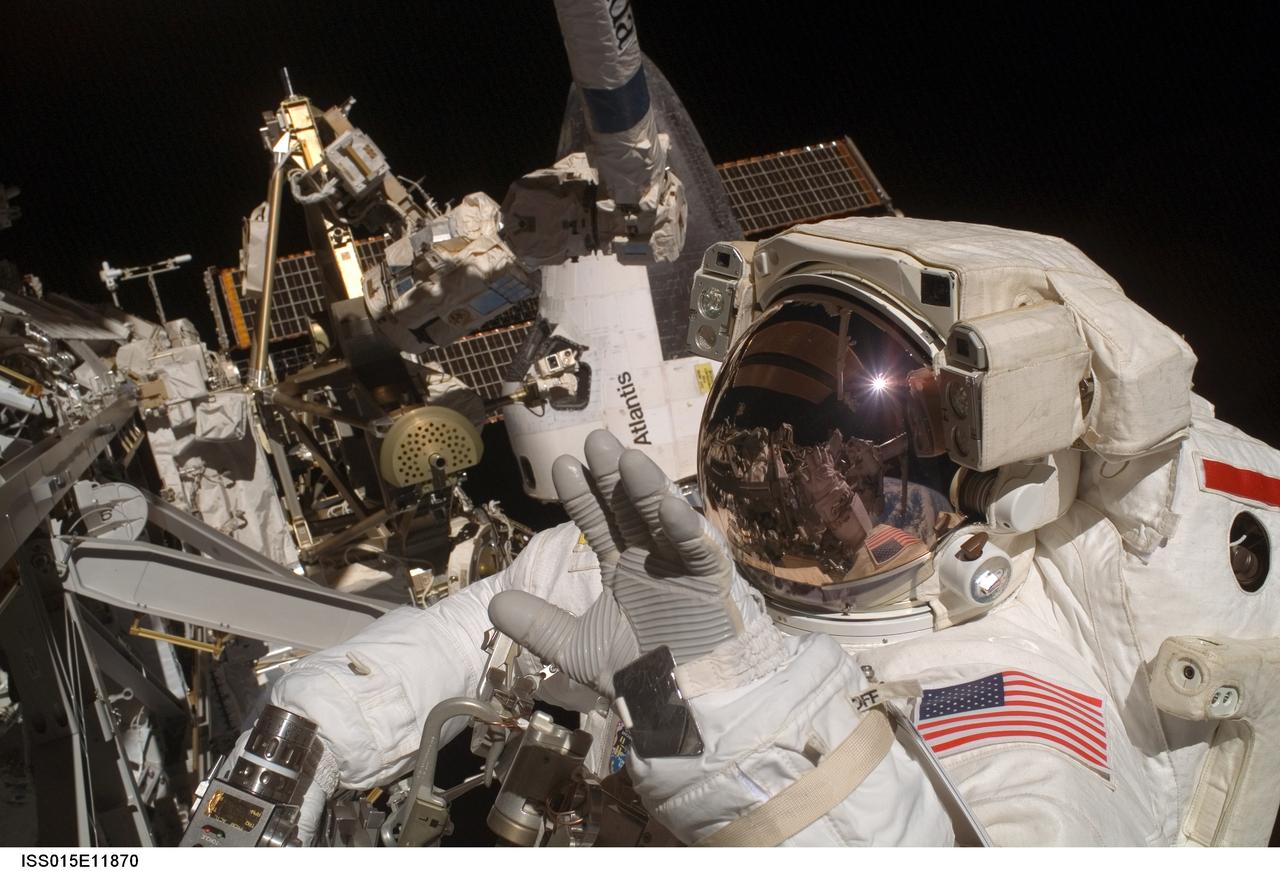
ISS015-E-11870 (11 June 2007) --- Astronauts Jim Reilly and John "Danny" Olivas (visible among Reilly's helmet reflections), both STS-117 mission specialists, participate in the mission's first planned session of extravehicular activity (EVA), as construction resumes on the International Space Station. Among other tasks, Reilly and Olivas connected power, data and cooling cables between S1 and S3; released the launch restraints from and deployed the four solar array blanket boxes on S4 and released the cinches and winches holding the photovoltaic radiator on S4. The crew cabin and nose of Space Shuttle Atlantis docked to the station is visible in the background.
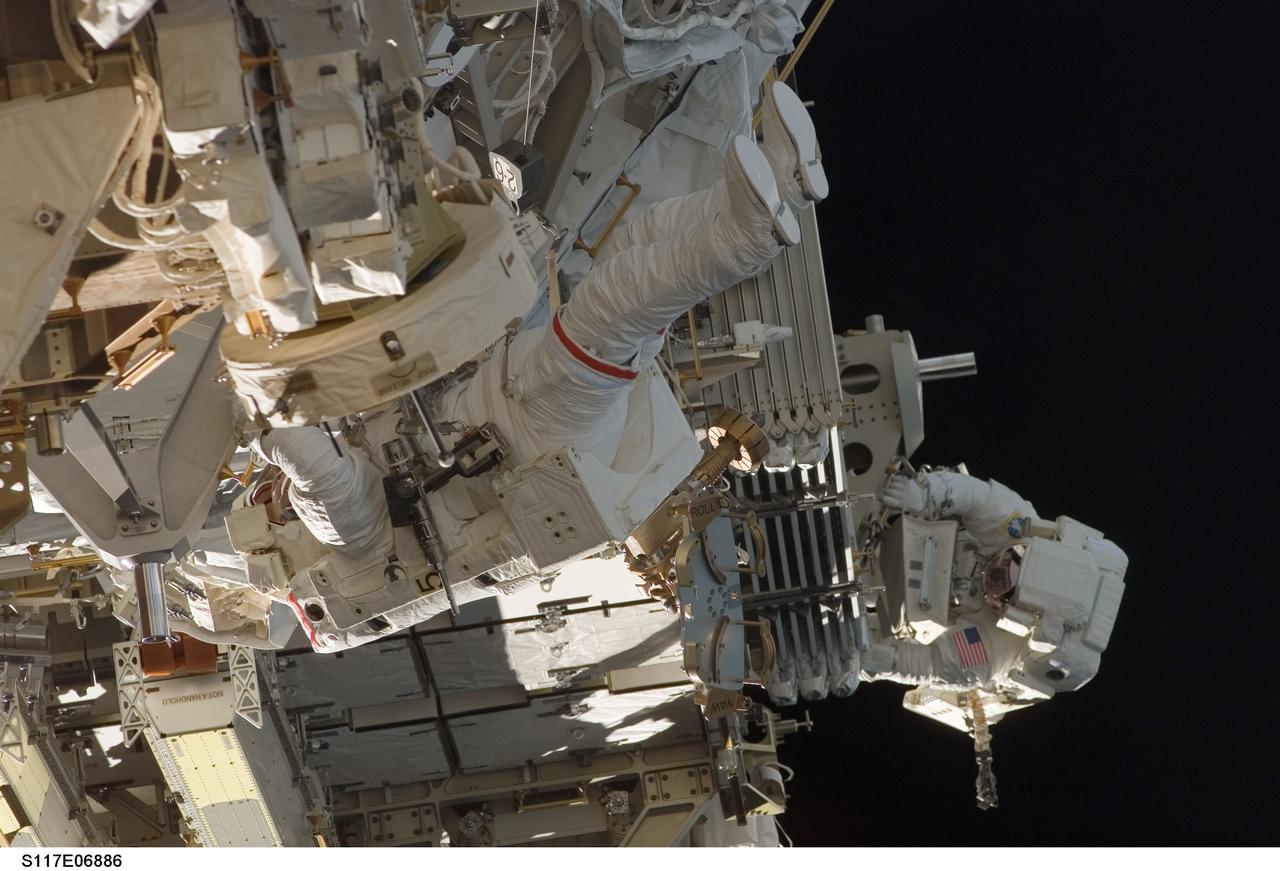
S117-E-06886 (11 June 2007) --- Astronauts Jim Reilly (center frame) and John "Danny" Olivas (bottom right), both STS-117 mission specialists, participate in the mission's first planned session of extravehicular activity (EVA), as construction resumes on the International Space Station. Among other tasks, Reilly and Olivas connected power, data and cooling cables between S1 and S3; released the launch restraints from and deployed the four solar array blanket boxes on S4 and released the cinches and winches holding the photovoltaic radiator on S4.
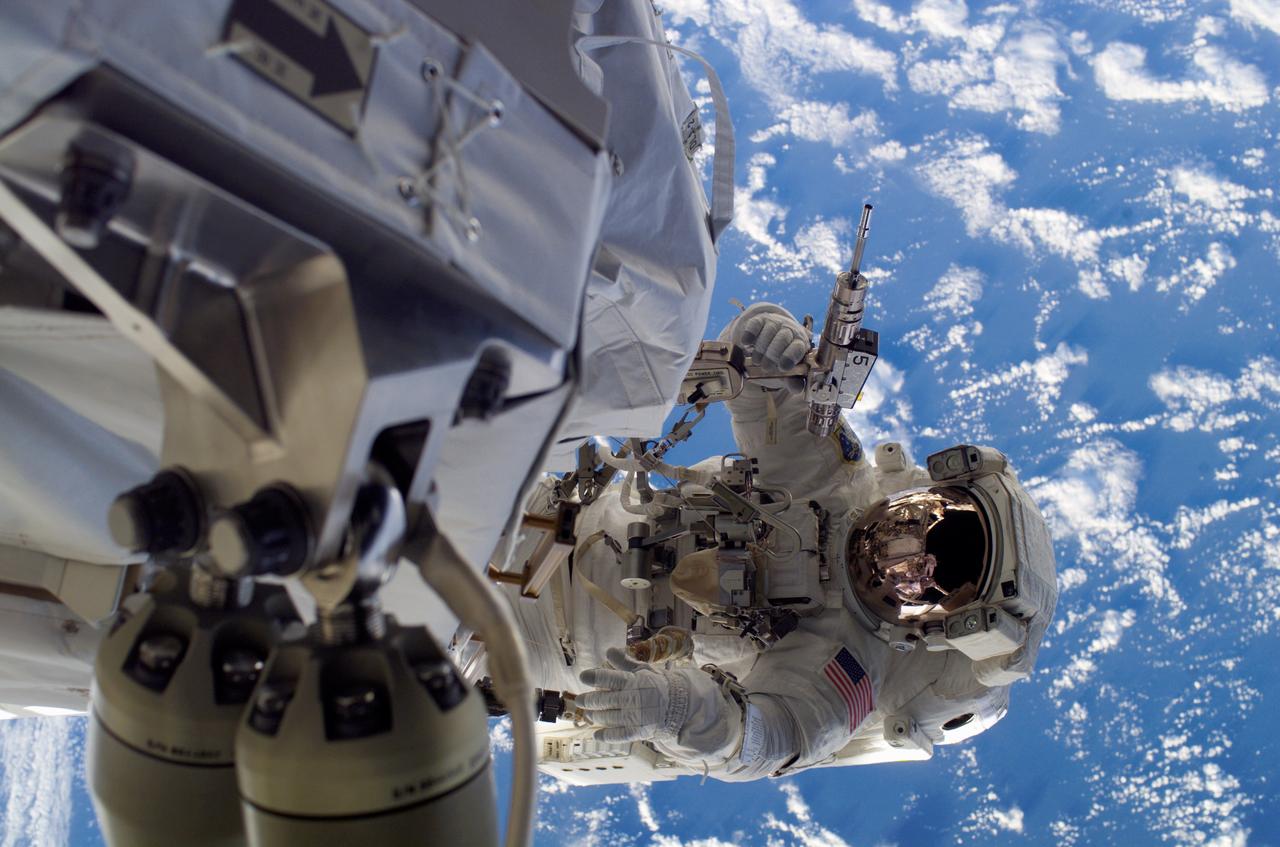
ISS015-E-11831 (11 June 2007) --- Astronauts John "Danny" Olivas and Jim Reilly (out of frame), both STS-117 mission specialists, participate in the mission's first planned session of extravehicular activity (EVA), as construction resumes on the International Space Station. Among other tasks, Reilly and Olivas connected power, data and cooling cables between S1 and S3; released the launch restraints from and deployed the four solar array blanket boxes on S4 and released the cinches and winches holding the photovoltaic radiator on S4. A blue and white Earth provided the backdrop for the scene.
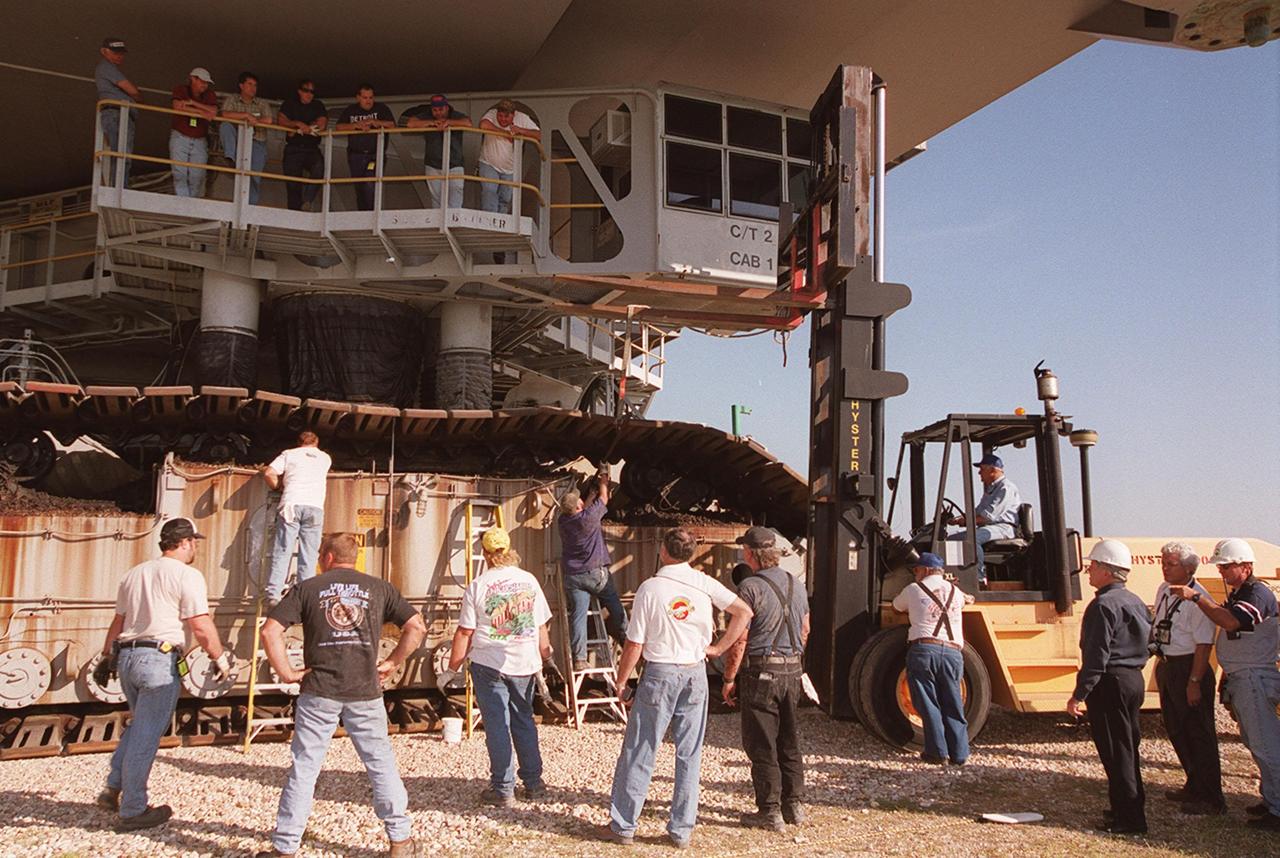
KENNEDY SPACE CENTER, FLA. -- Workers stand by while the broken cleat (shoe) on the crawler-transporter is removed. The crack was noticed as the crawler-transporter, moving Space Shuttle Endeavour to Launch Pad 39B, started up the incline to the pad. Endeavour is scheduled to be launched Nov. 30 at 10:01 p.m. EST on mission STS-97, the sixth construction flight to the International Space Station. Its payload includes the P6 Integrated Truss Structure and a photovoltaic (PV) module, with giant solar arrays that will provide power to the Station. The mission includes two spacewalks to complete the solar array connections

KENNEDY SPACE CENTER, Fla. -- Space Shuttle Endeavour is again on level ground after its backward trek from Launch Pad 39B. A broken cleat on the crawler-transporter forced the reverse movement so the cleat could be repaired before moving up the incline to the top of the pad. Endeavour is scheduled to be launched Nov. 30 at 10:01 p.m. EST on mission STS-97, the sixth construction flight to the International Space Station. Its payload includes the P6 Integrated Truss Structure and a photovoltaic (PV) module, with giant solar arrays that will provide power to the Station. The mission includes two spacewalks to complete the solar array connections
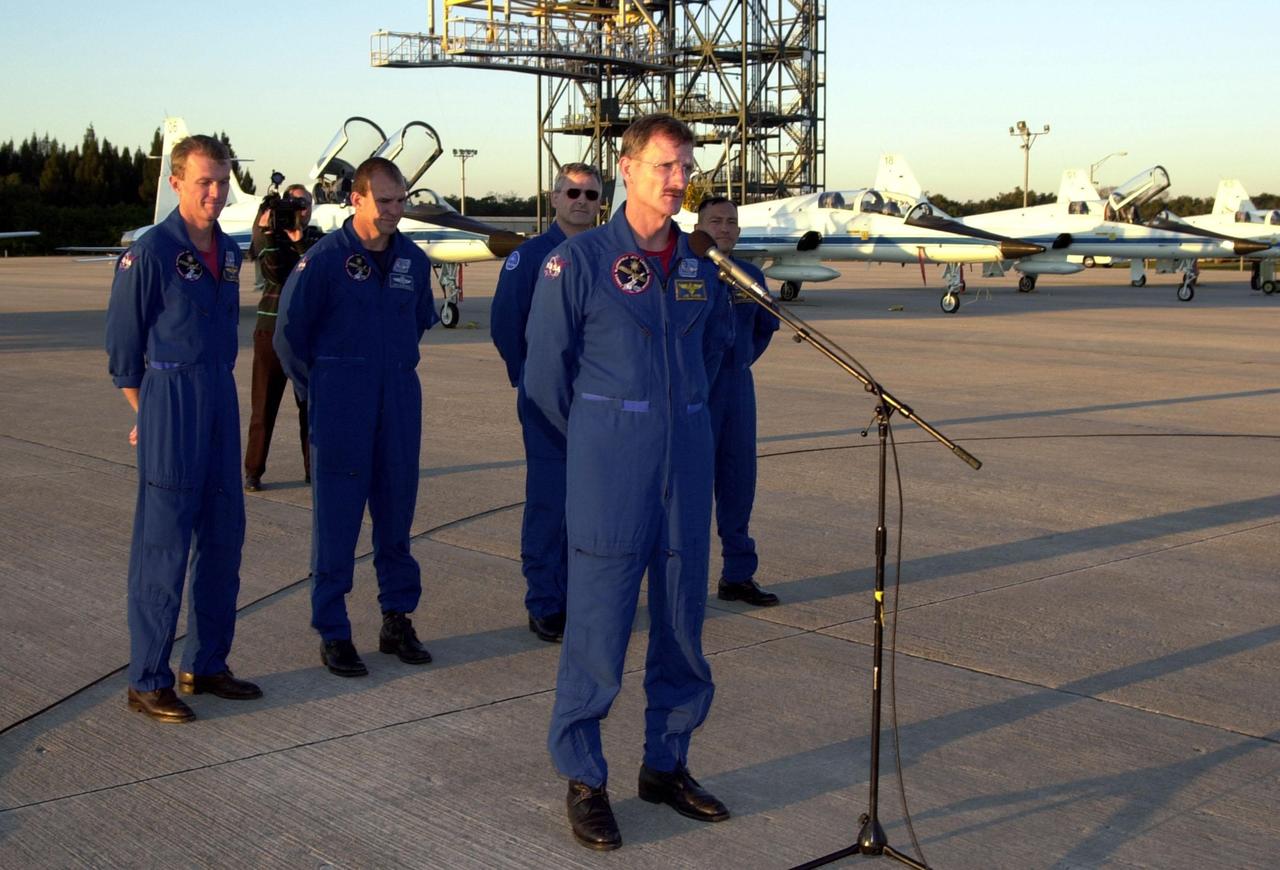
After their arrival at the Shuttle Landing Facility, the STS-97 crew gather to address the media. At the microphone is Mission Specialist Joseph Tanner. Behind him stand Commander Brent Jett, Pilot Michael Bloomfield and Mission Specialists Marc Garneau, who is with the Canadian Space Agency, and Carlos Noriega. Mission STS-97is the sixth construction flight to the International Space Station. Its payload includes the P6 Integrated Truss Structure and a photovoltaic (PV) module, with giant solar arrays that will provide power to the Station. The mission includes two spacewalks to complete the solar array connections. STS-97 is scheduled to launch Nov. 30 at about 10:06 p.m. EST
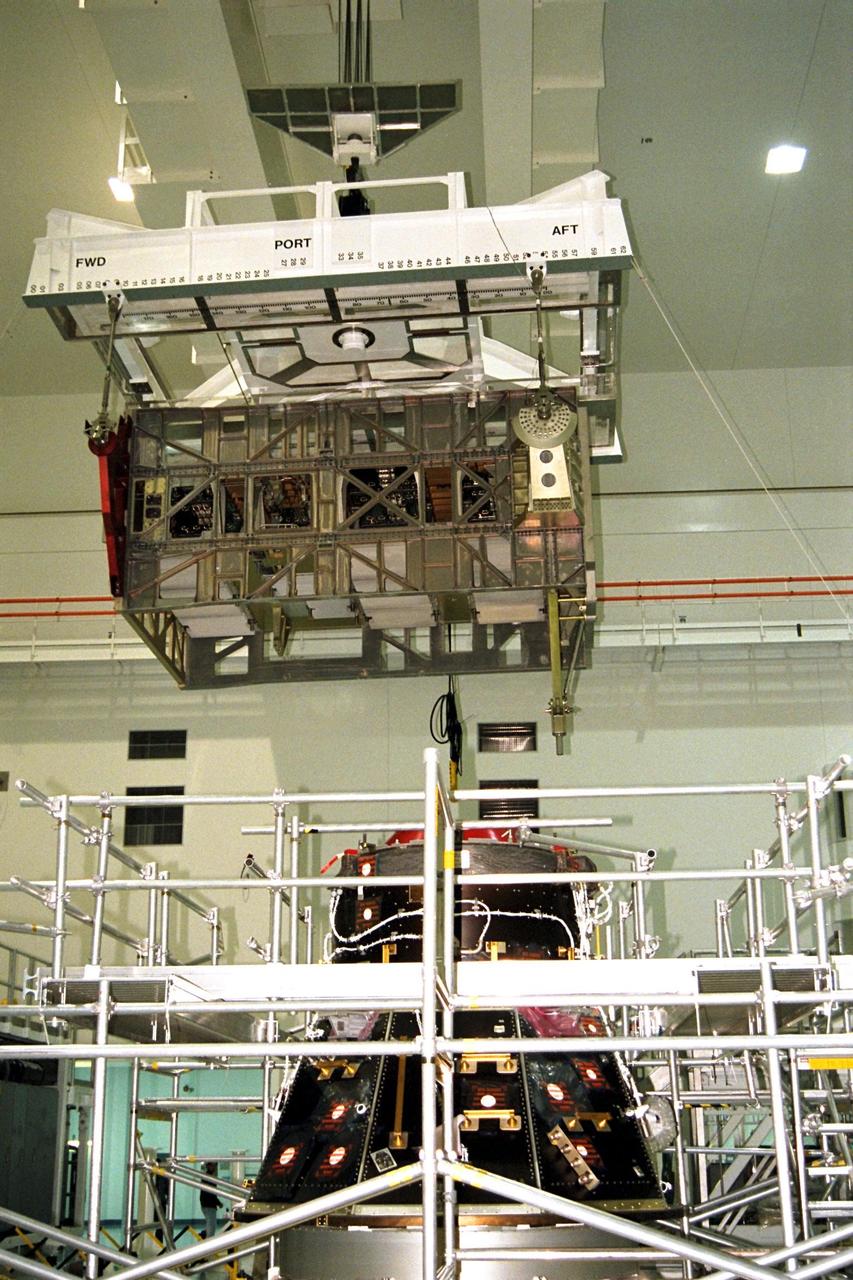
The Photovoltaic Module 1 Integrated Equipment Assembly (IEA) is moved past a Pressurized Mating Adapter in Kennedy Space Center’s Space Station Processing Facility (SSPF) toward the workstand where it will be processed for flight on STS-97, scheduled for launch in April 1999. The IEA is one of four integral units designed to generate, distribute, and store power for the International Space Station. It will carry solar arrays, power storage batteries, power control units, and a thermal control system. The 16-foot-long, 16,850-pound unit is now undergoing preflight preparations in the SSPF
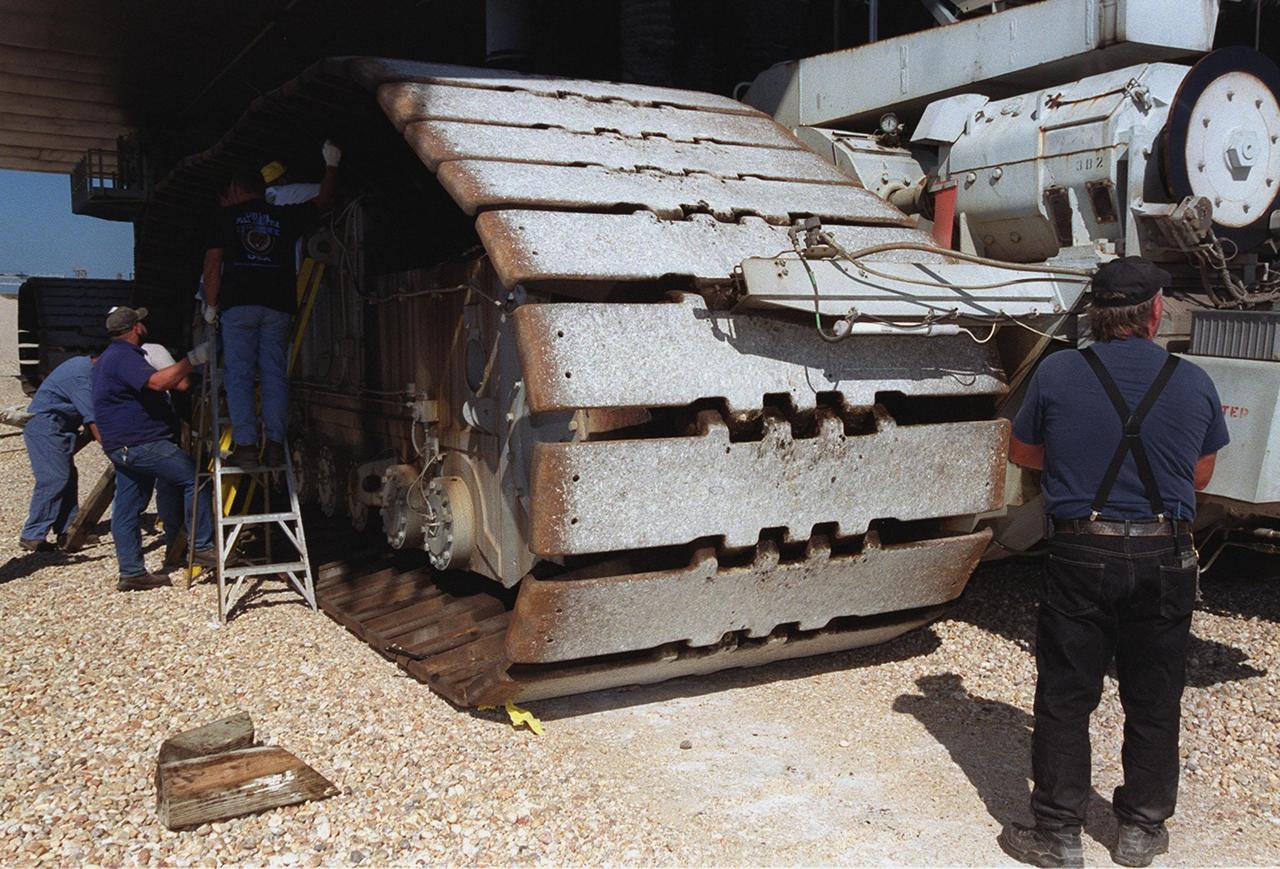
KENNEDY SPACE CENTER, FLA. -- A repair crew begin working on replacing a broken cleat on this track of the crawler-transporter. The crack was noticed as the crawler-transporter was moving Space Shuttle Endeavour to Launch Pad 39B. Rollout was delayed until the cleat could be replaced. The Space Shuttle was hard down on the pad several hours later. Endeavour is scheduled to be launched Nov. 30 at 10:01 p.m. EST on mission STS-97, the sixth construction flight to the International Space Station. Its payload includes the P6 Integrated Truss Structure and a photovoltaic (PV) module, with giant solar arrays that will provide power to the Station. The mission includes two spacewalks to complete the solar array connections
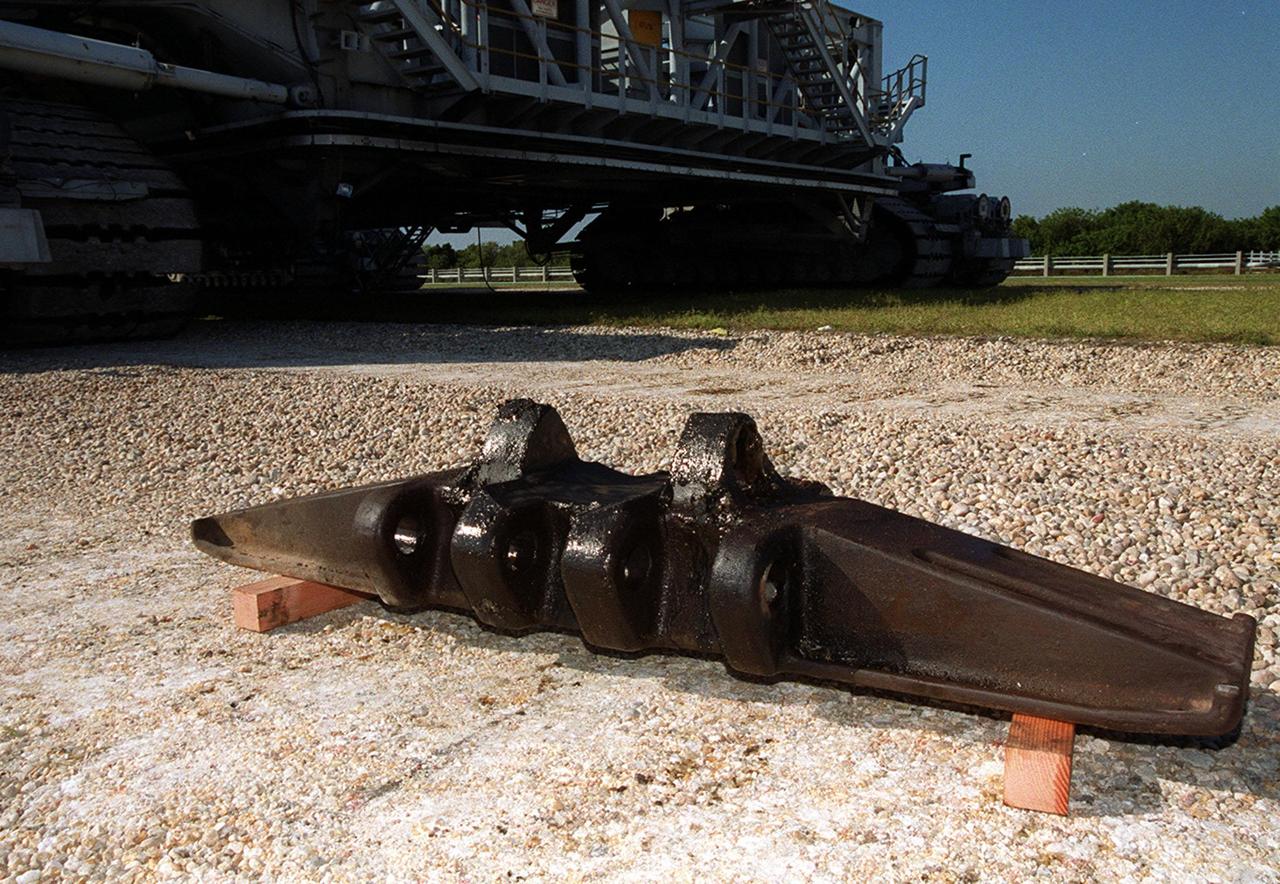
A new cleat, or shoe, for one of the tracks on the crawler-transporter sits on the ground near the vehicle (in the background). A cracked cleat was noticed on the crawler as it was rolling Space Shuttle Endeavour and the Mobile Launcher Platform out to Launch Pad 39B. The rollout is being suspended while the cleat is replaced. Endeavour is scheduled to be launched Nov. 30 at 10:01 p.m. EST on mission STS-97, the sixth construction flight to the International Space Station. Its payload includes the P6 Integrated Truss Structure and a photovoltaic (PV) module, with giant solar arrays that will provide power to the Station. The mission includes two spacewalks to complete the solar array connections
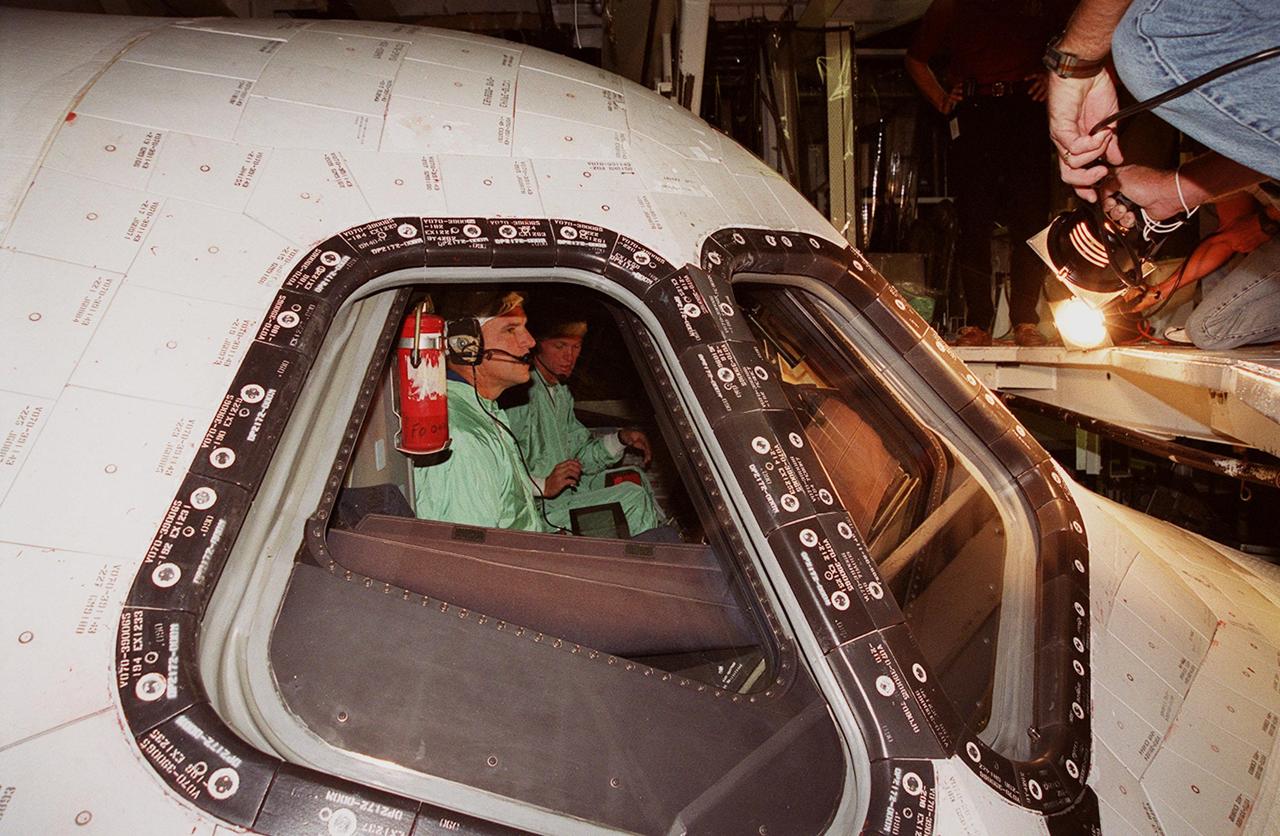
During a Crew Equipment Interface Test (CEIT), STS-97 Commander Brent Jett (left) and Pilot Michael Bloomfied (right) check out the cockpit of orbiter Endeavour in Orbiter Processing Facility bay 2 as part of preflight preparations. The CEIT provides an opportunity for crew members to check equipment and facilities that will be on board the orbiter during their mission. The STS-97 mission will be the sixth construction flight to the International Space Station. The payload includes a photovoltaic (PV) module, providing solar power to the Station. STS-97 is scheduled to launch Nov. 30 from KSC for the 10-day mission
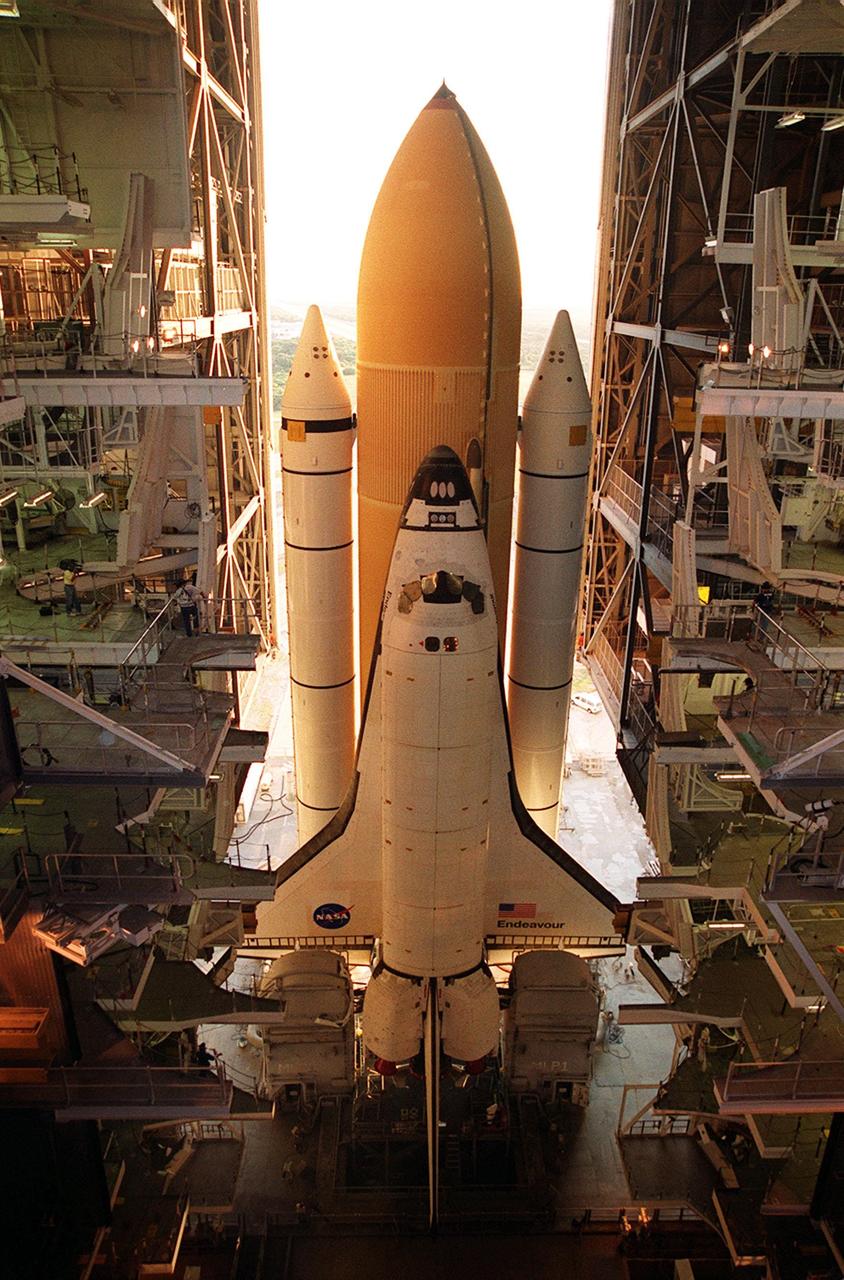
KENNEDY SPACE CENTER, Fla. -- Space Shuttle Endeavour is ready to move from the Vehicle Assembly Building into the light of early morning on its rollout to Launch Pad 39B. The Space Shuttle sits atop the Mobile Launcher Platform (MLP). Endeavour is scheduled to be launched Nov. 30 at 10:01 p.m. EST on mission STS-97, the sixth construction flight to the International Space Station. Its payload includes the P6 Integrated Truss Structure and a photovoltaic (PV) module, with giant solar arrays that will provide power to the Station. The mission includes two spacewalks to complete the solar array connections
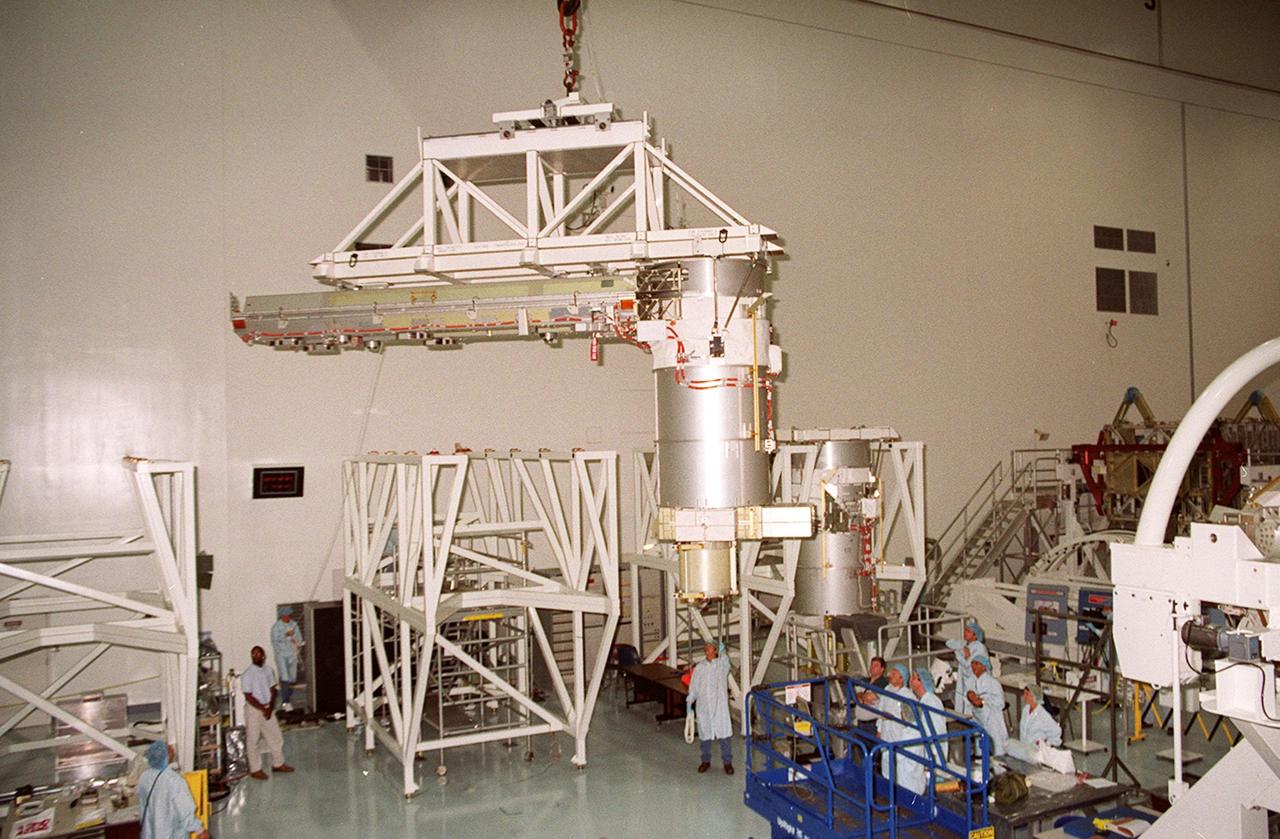
In the Space Station Processing Facility, Solar Array Wing-3, an element of the International Space Station, is lifted from a work stand to move it to the Integrated Electronic Assembly for testing. The solar array is scheduled to be launched on STS-97 in late November along with the P6 truss. The Station’s electrical power system (EPS) will use eight photovoltaic solar arrays to convert sunlight to electricity. Each of the eight solar arrays will be 112 feet long by 39 feet wide. The solar arrays are mounted on a “blanket” that can be folded like an accordion for delivery. Once in orbit, astronauts will deploy the blankets to their full size. Gimbals will be used to rotate the arrays so that they will face the Sun to provide maximum power to the Space Station
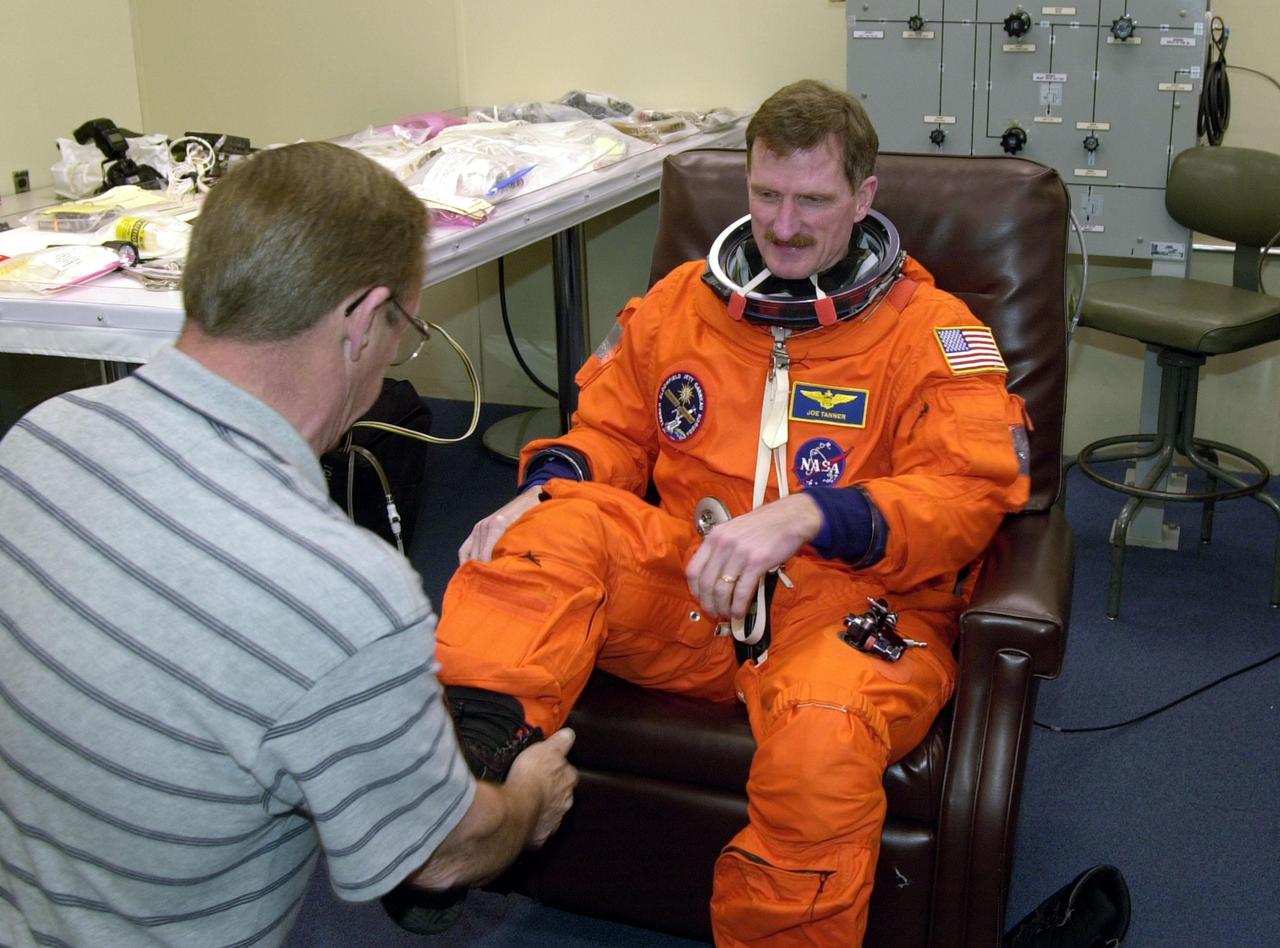
STS-97 Mission Specialist Joseph Tanner gets help with his boots from suit technician Erin Canlon during check pre-pack and fit check. Mission STS-97 is the sixth construction flight to the International Space Station. Its payload includes the P6 Integrated Truss Structure and a photovoltaic (PV) module, with giant solar arrays that will provide power to the Station. The mission includes two spacewalks to complete the solar array connections. STS-97 is scheduled to launch Nov. 30 at about 10:06 p.m. EST
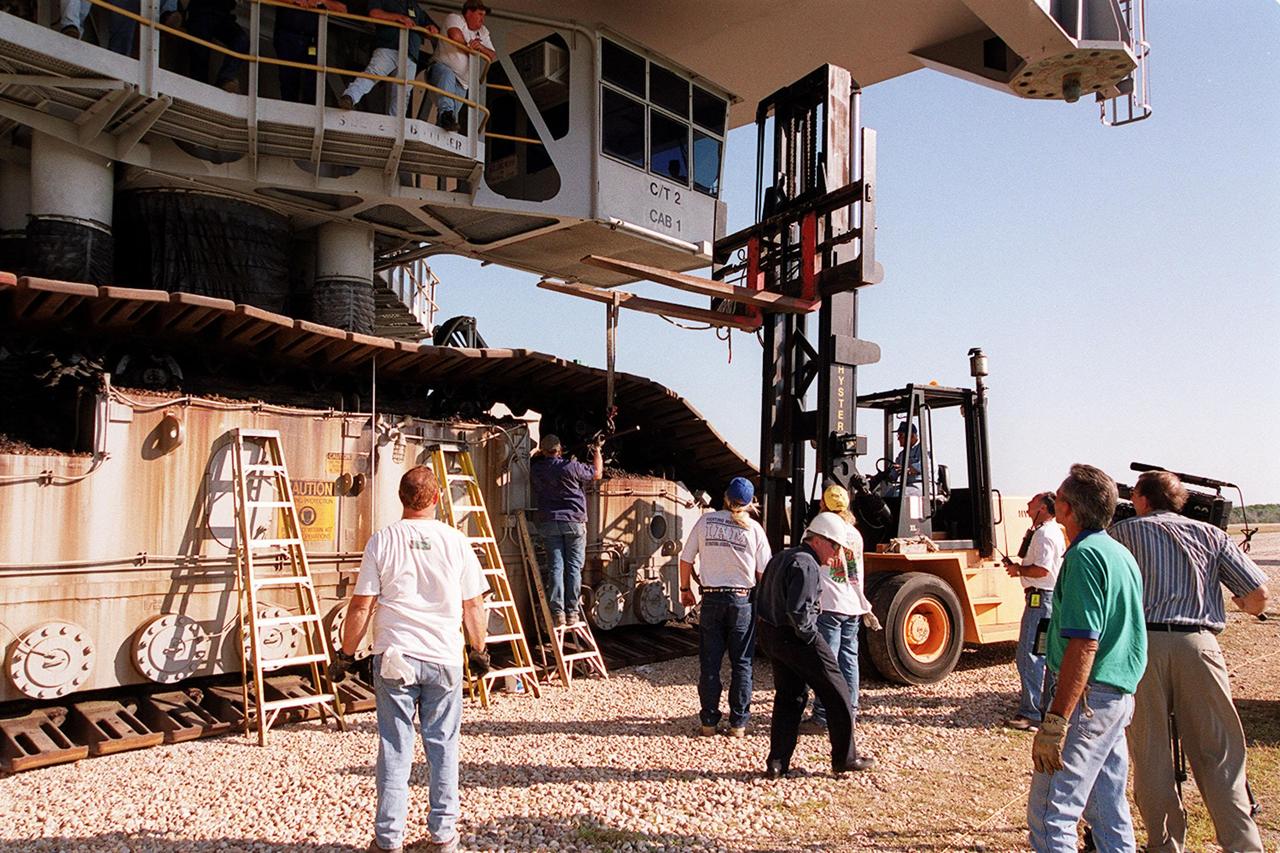
KENNEDY SPACE CENTER, FLA. -- A repair crew works to remove a broken cleat (shoe) on the crawler-transporter moving the Space Shuttle Endeavour to Launch Pad 39B. The crack was noticed as the crawler-transporter started up the incline to the pad. Endeavour is scheduled to be launched Nov. 30 at 10:01 p.m. EST on mission STS-97, the sixth construction flight to the International Space Station. Its payload includes the P6 Integrated Truss Structure and a photovoltaic (PV) module, with giant solar arrays that will provide power to the Station. The mission includes two spacewalks to complete the solar array connections
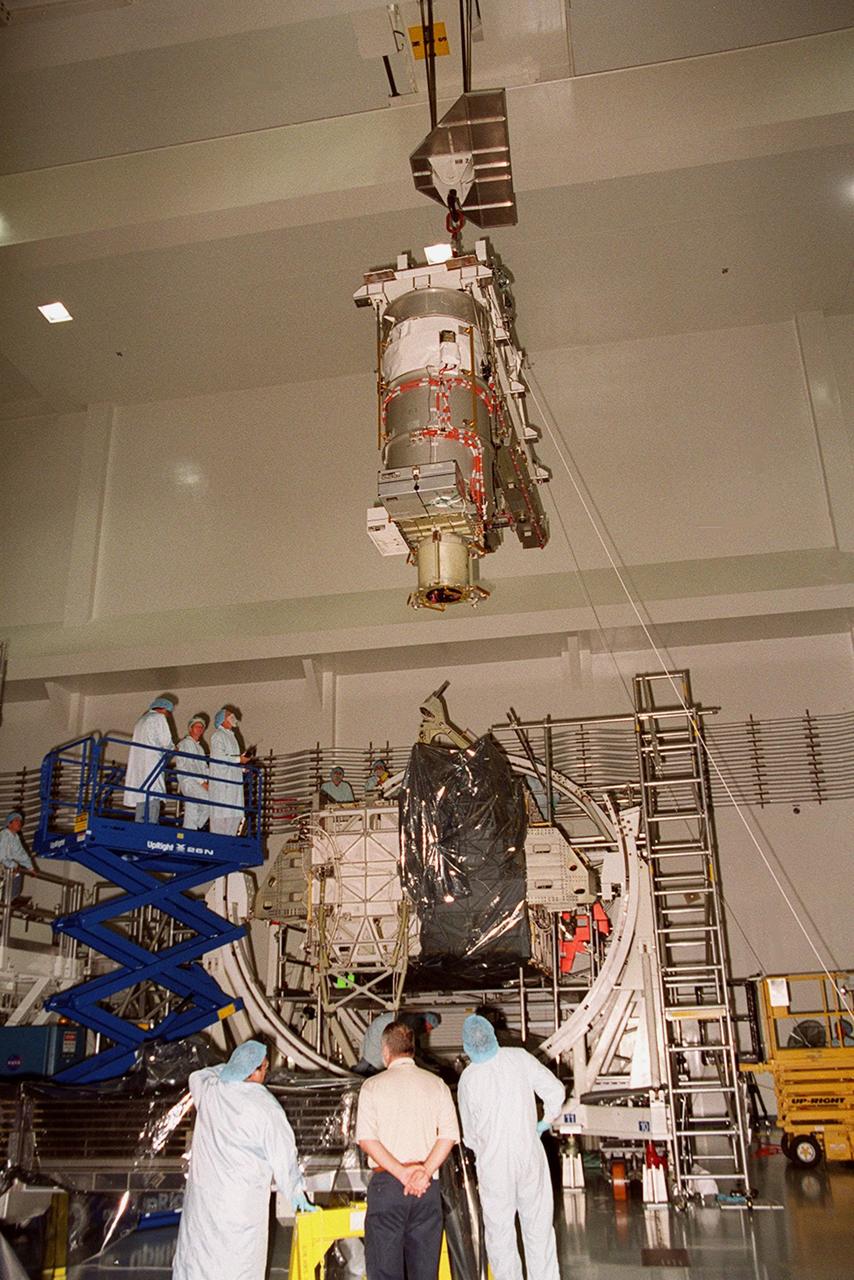
In the Space Station Processing Facility, Solar Array Wing-3 (at top), a component of the International Space Station, hovers above the Integrated Electronic Assembly where it will be installed for testing. The solar array is scheduled to be launched on STS-97 in late November along with the P6 truss. The Station’s electrical power system (EPS) will use eight photovoltaic solar arrays to convert sunlight to electricity. Each of the eight solar arrays will be 112 feet long by 39 feet wide. The solar arrays are mounted on a “blanket” that can be folded like an accordion for delivery. Once in orbit, astronauts will deploy the blankets to their full size. Gimbals will be used to rotate the arrays so that they will face the Sun to provide maximum power to the Space Station
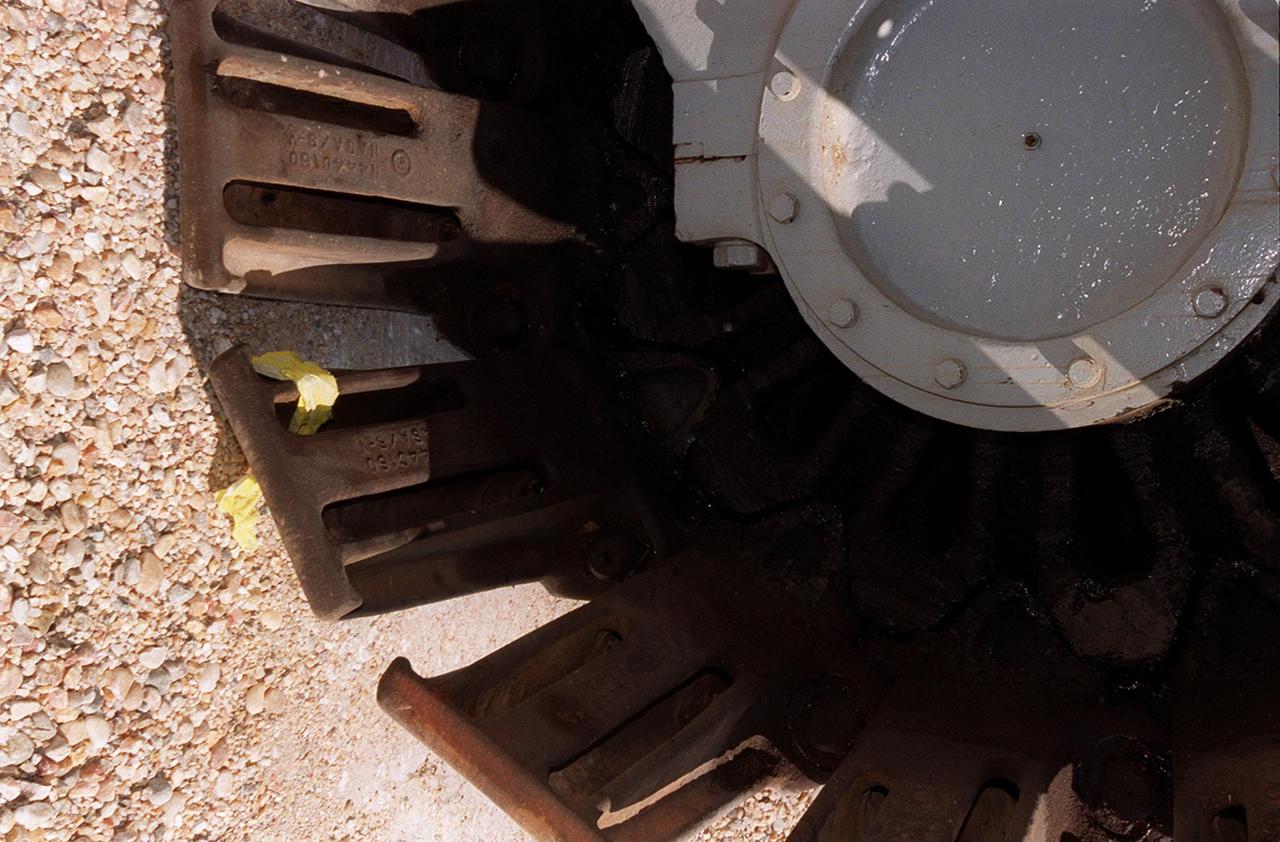
KENNEDY SPACE CENTER, FLA. -- A yellow tag identifies the crawler-transporter cleat that has a crack. The crack was noticed as the crawler-transporter was moving Space Shuttle Endeavour to Launch Pad 39B. Rollout was delayed until the cleat could be replaced. The Space Shuttle was hard down on the pad several hours later. Endeavour is scheduled to be launched Nov. 30 at 10:01 p.m. EST on mission STS-97, the sixth construction flight to the International Space Station. Its payload includes the P6 Integrated Truss Structure and a photovoltaic (PV) module, with giant solar arrays that will provide power to the Station. The mission includes two spacewalks to complete the solar array connections
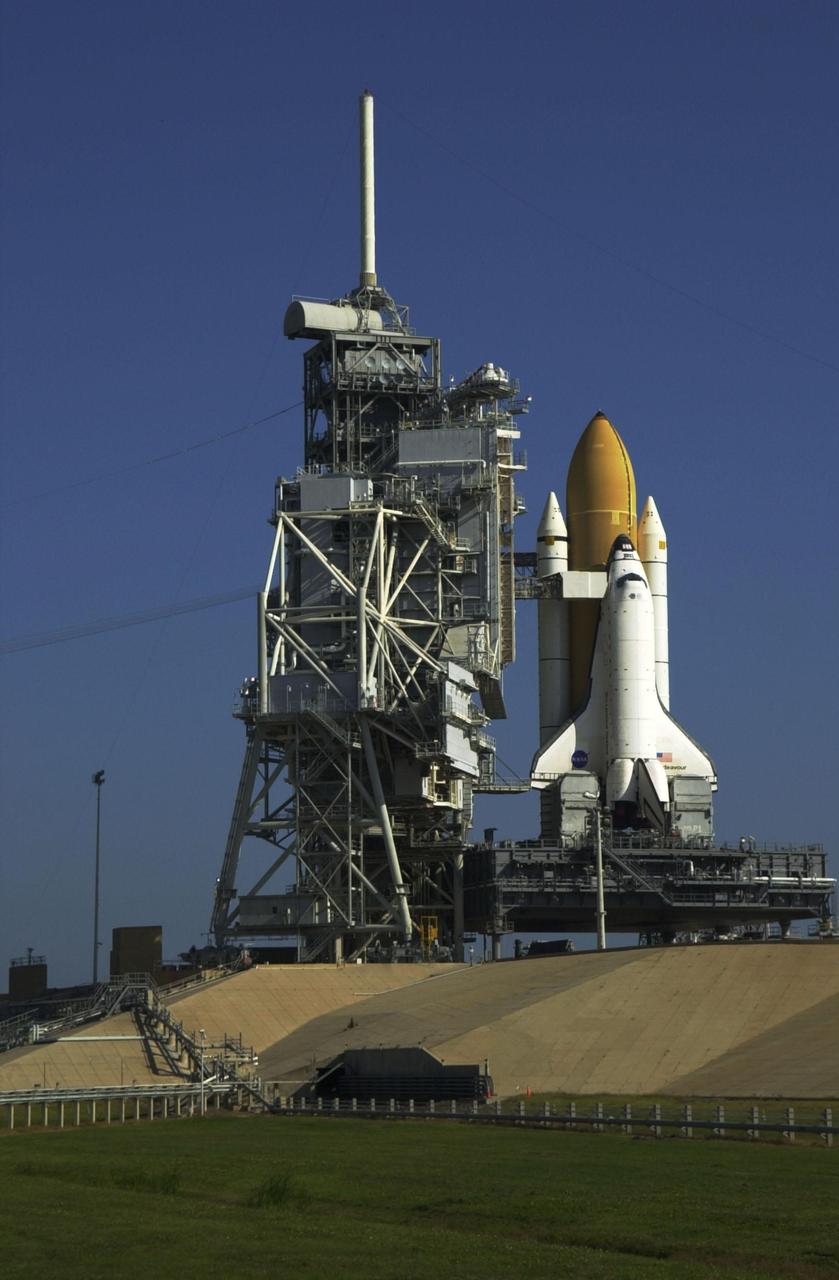
Space Shuttle Endeavour finally rests on Launch Pad 39B after its rollout was stalled several hours to fix a broken cleat on the crawler-transporter. To the left is the Rotating Service Structure. The Orbiter Access Arm is already extended from the Fixed Service Structure to the orbiter. Endeavour is scheduled to be launched Nov. 30 at 10:01 p.m. EST on mission STS-97, the sixth construction flight to the International Space Station. Its payload includes the P6 Integrated Truss Structure and a photovoltaic (PV) module, with giant solar arrays that will provide power to the Station. The mission includes two spacewalks to complete the solar array connections
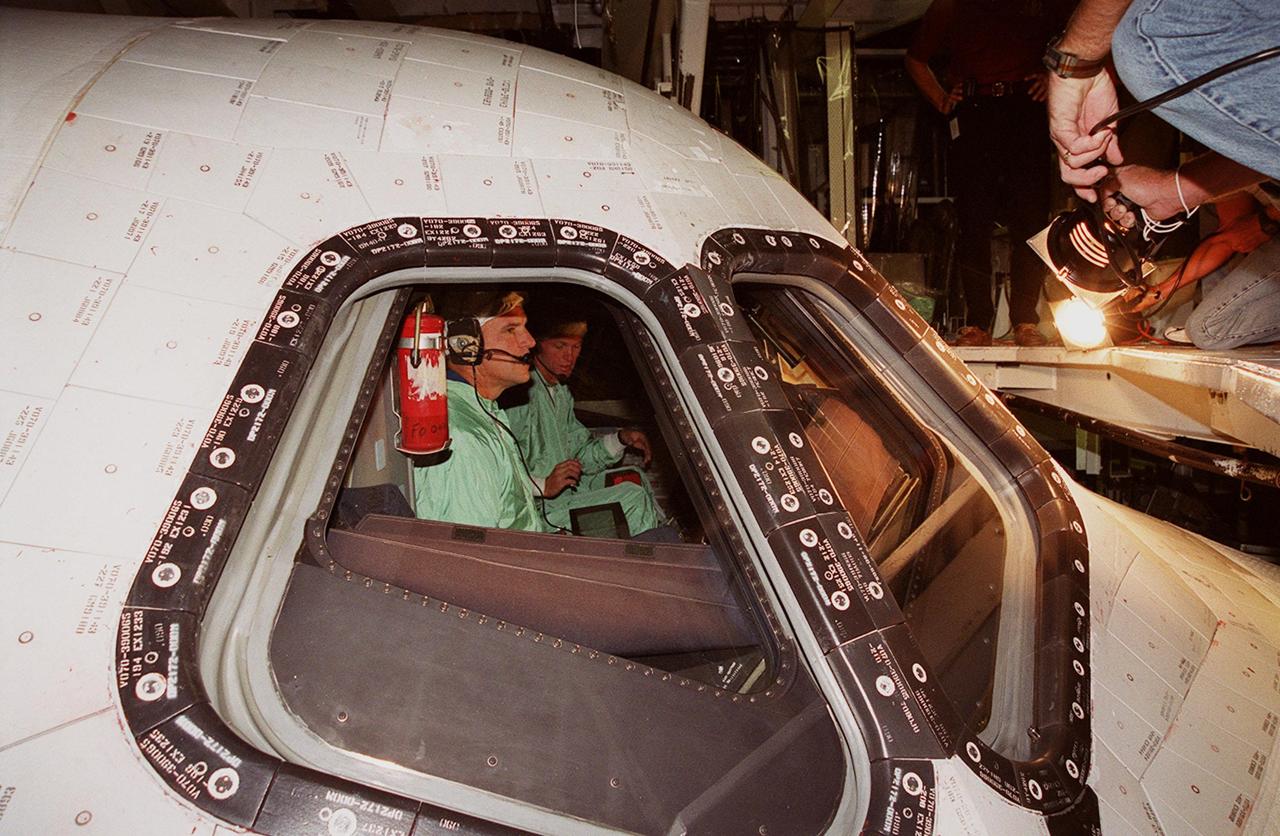
During a Crew Equipment Interface Test (CEIT), STS-97 Commander Brent Jett (left) and Pilot Michael Bloomfied (right) check out the cockpit of orbiter Endeavour in Orbiter Processing Facility bay 2 as part of preflight preparations. The CEIT provides an opportunity for crew members to check equipment and facilities that will be on board the orbiter during their mission. The STS-97 mission will be the sixth construction flight to the International Space Station. The payload includes a photovoltaic (PV) module, providing solar power to the Station. STS-97 is scheduled to launch Nov. 30 from KSC for the 10-day mission
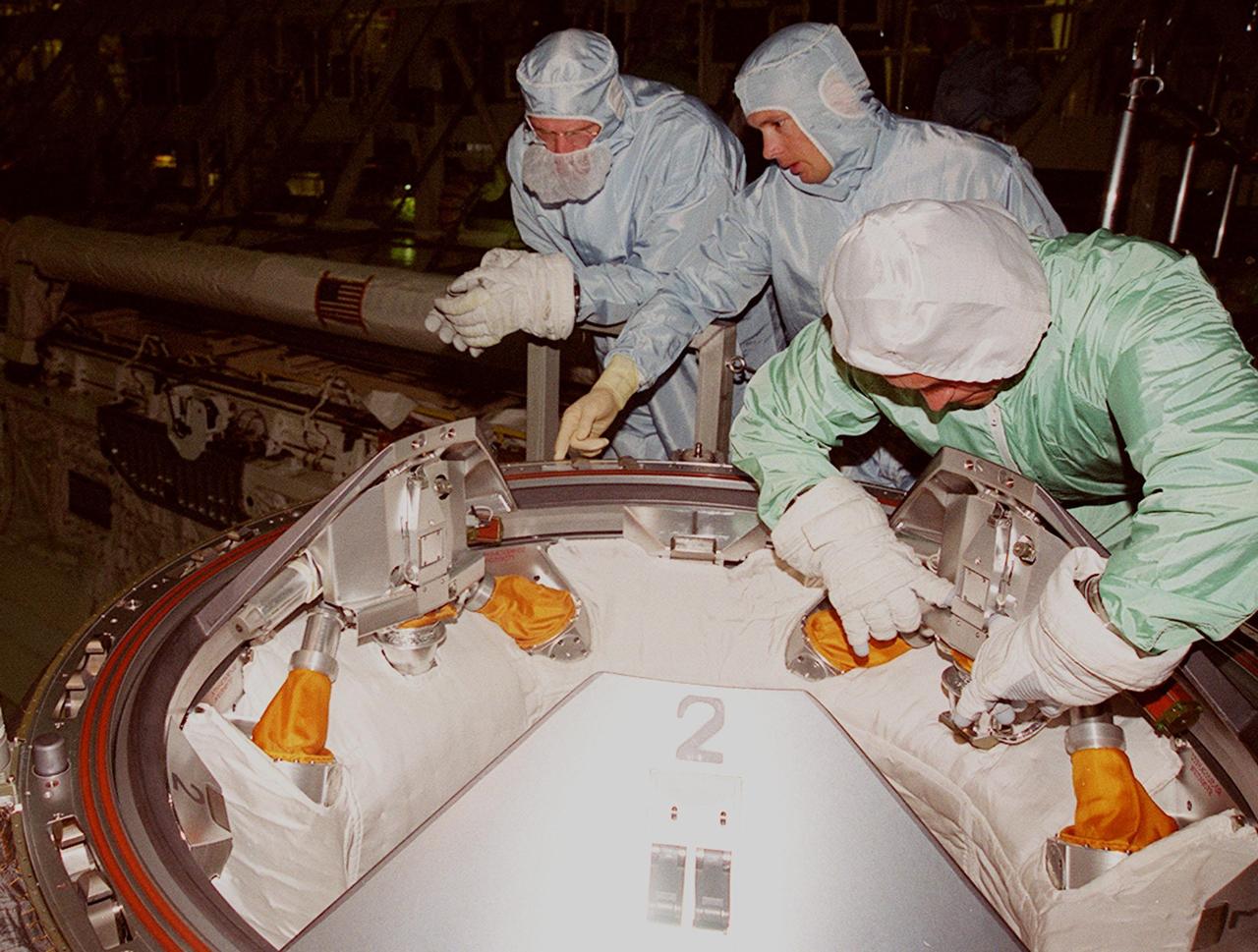
KENNEDY SPACE CENTER, FLA. -- In Orbiter Processing Facility (OPF) bay 2 during Crew Equipment Interface Test (CEIT), Mission Specialist Joe Tanner (left) gets instruction from a worker while Mission Specialist Carlos Noriega (right) practices working latches on the Orbital Docking System in Endeavour’s payload bay. The CEIT provides an opportunity for crew members to check equipment and facilities that will be on board the orbiter during their mission. The STS-97 mission will be the sixth construction flight to the International Space Station. The payload includes a photovoltaic (PV) module, providing solar power to the Station. STS-97 is scheduled to launch Nov. 30 from KSC for the 10-day mission
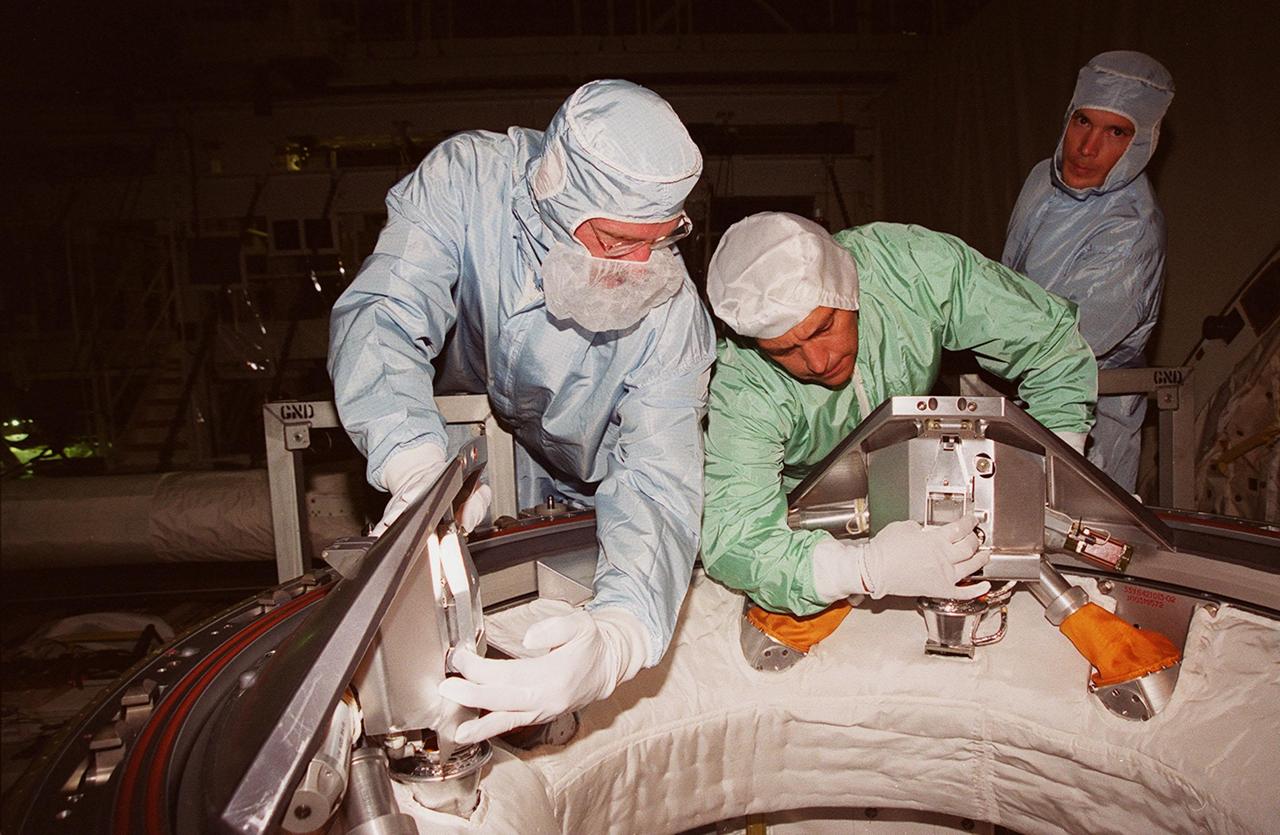
KENNEDY SPACE CENTER, FLA. -- In Orbiter Processing Facility (OPF) bay 2 during Crew Equipment Interface Test (CEIT), Mission Specialists Joe Tanner (left) and Carlos Noriega (right) practice working parts of the Orbital Docking System (ODS) in Endeavour’s payload bay. The CEIT provides an opportunity for crew members to check equipment and facilities that will be on board the orbiter during their mission. The STS-97 mission will be the sixth construction flight to the International Space Station. The payload includes a photovoltaic (PV) module, providing solar power to the Station. STS-97 is scheduled to launch Nov. 30 from KSC for the 10-day mission
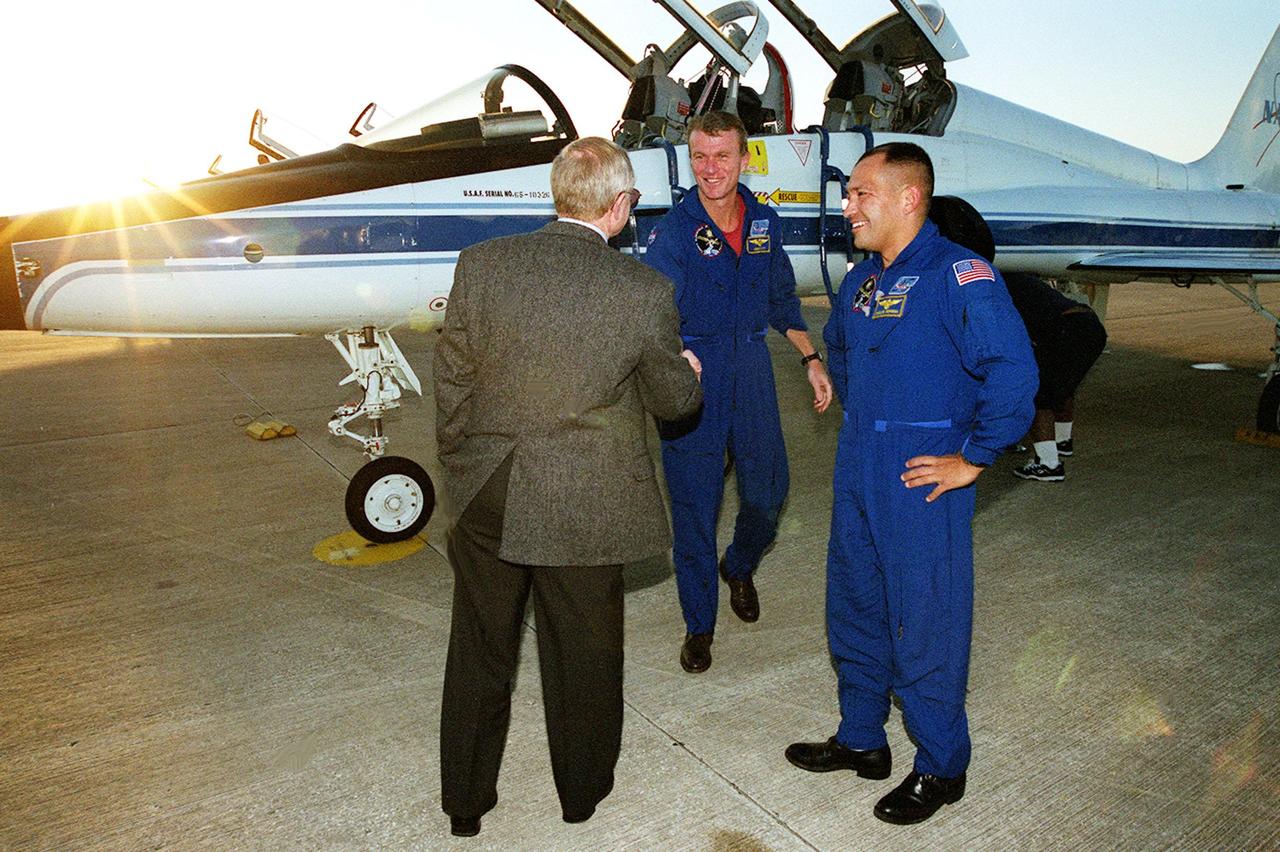
At the Shuttle Landing Facility, Center Director Roy Bridges (left) greets STS-97 Commander Brent Jett on his arrival at KSC for the mission launch. At right is Mission Specialist Carlos Noriega. Jett and Noriega traveled from Johnson Space Center, Houston, Texas, in the T-38 jet aircraft behind them. Mission STS-97is the sixth construction flight to the International Space Station. Its payload includes the P6 Integrated Truss Structure and a photovoltaic (PV) module, with giant solar arrays that will provide power to the Station. The mission includes two spacewalks to complete the solar array connections. STS-97 is scheduled to launch Nov. 30 at about 10:06 p.m. EST

KENNEDY SPACE CENTER, Fla. -- With the early morning light behind it, Space Shuttle Endeavour appears to fill the opening in the Vehicle Assembly Building as it begins rollout to Launch Pad 39B on the Mobile Launcher Platform (MLP). At the bottom can be seen the crawler-transporter that moves the combined Shuttle and MLP. Endeavour is scheduled to be launched Nov. 30 at 10:01 p.m. EST on mission STS-97, the sixth construction flight to the International Space Station. Its payload includes the P6 Integrated Truss Structure and a photovoltaic (PV) module, with giant solar arrays that will provide power to the Station. The mission includes two spacewalks to complete the solar array connections
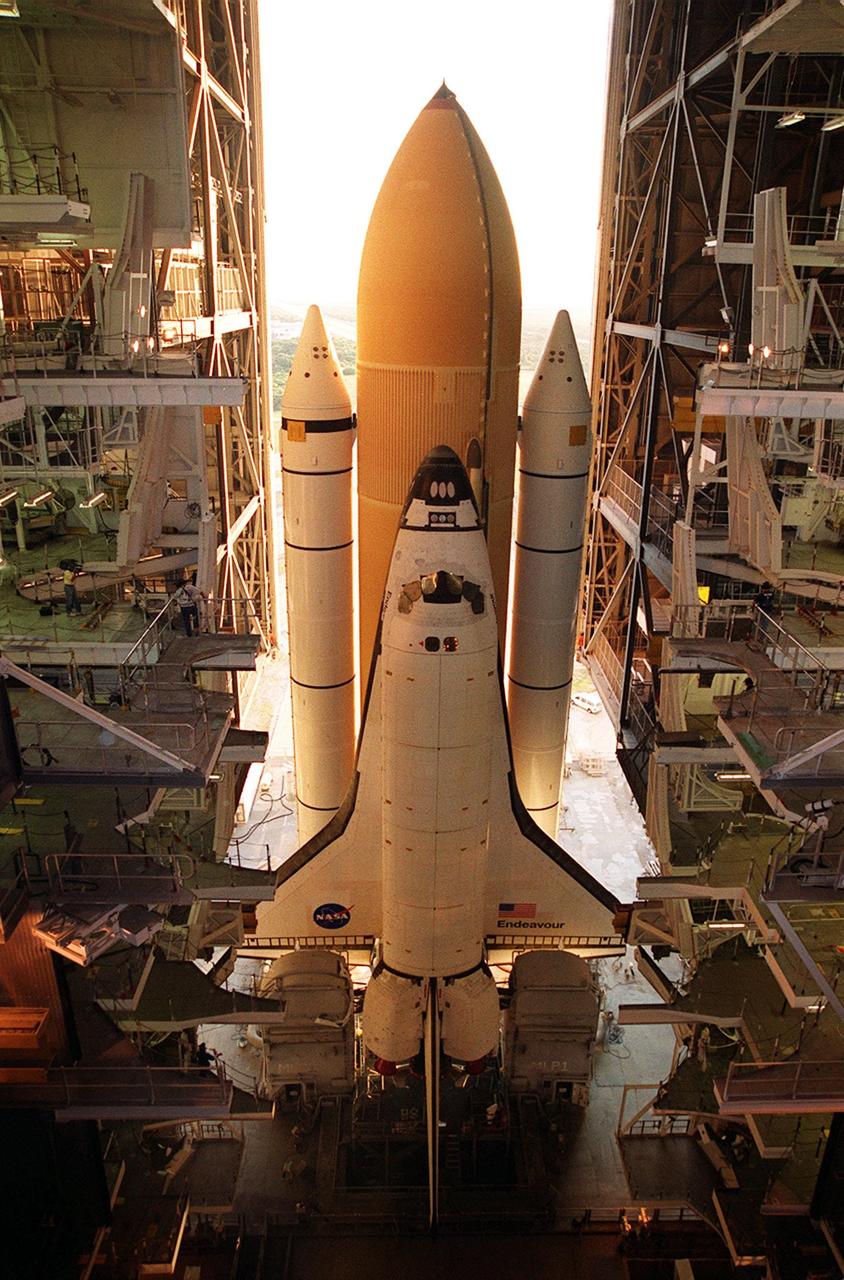
KENNEDY SPACE CENTER, Fla. -- Space Shuttle Endeavour is ready to move from the Vehicle Assembly Building into the light of early morning on its rollout to Launch Pad 39B. The Space Shuttle sits atop the Mobile Launcher Platform (MLP). Endeavour is scheduled to be launched Nov. 30 at 10:01 p.m. EST on mission STS-97, the sixth construction flight to the International Space Station. Its payload includes the P6 Integrated Truss Structure and a photovoltaic (PV) module, with giant solar arrays that will provide power to the Station. The mission includes two spacewalks to complete the solar array connections
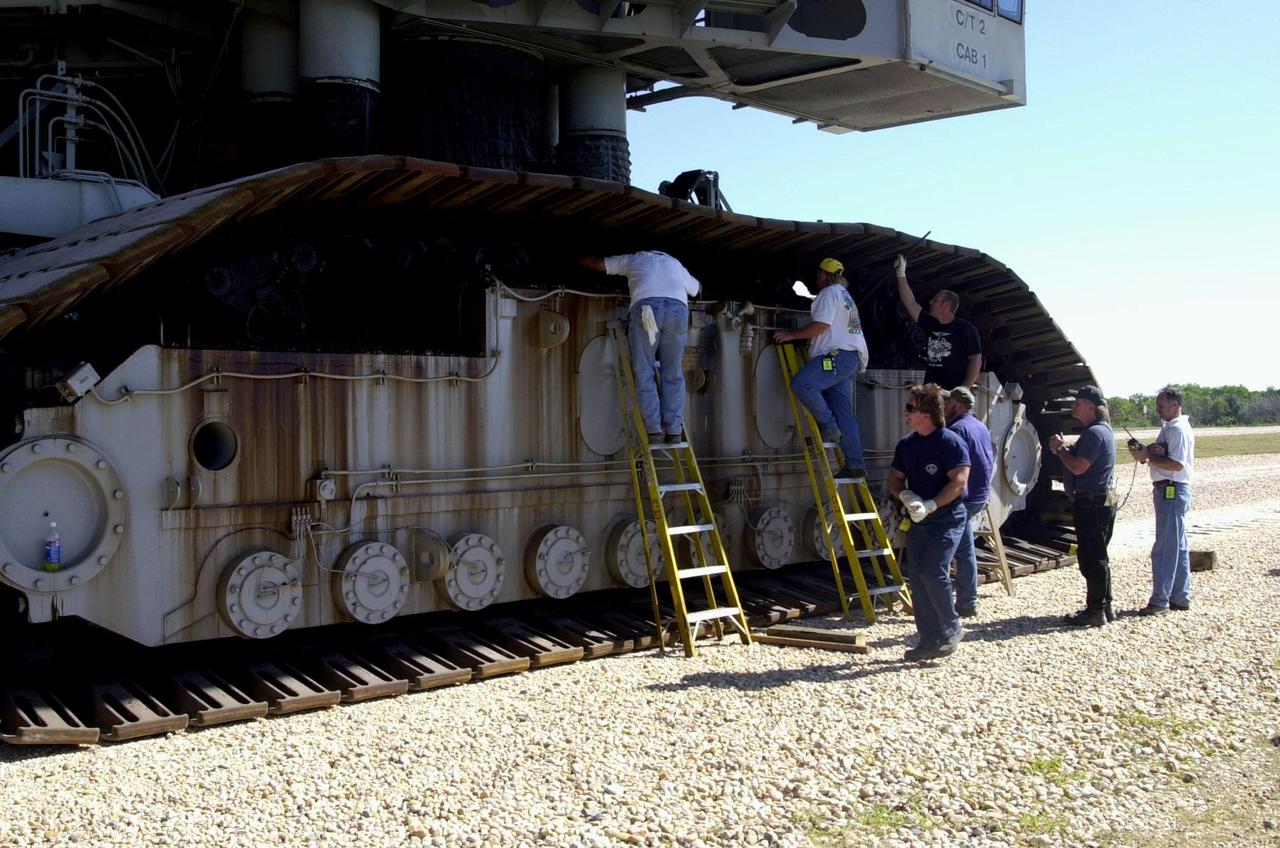
A repair crew works to repair the broken cleat on the crawler-transporter, found as it was moving up the incline on Launch Pad 39B. The Shuttle retreated to level ground so the broken cleat could be repaired. Endeavour is scheduled to be launched Nov. 30 at 10:01 p.m. EST on mission STS-97, the sixth construction flight to the International Space Station. Its payload includes the P6 Integrated Truss Structure and a photovoltaic (PV) module, with giant solar arrays that will provide power to the Station. The mission includes two spacewalks to complete the solar array connections
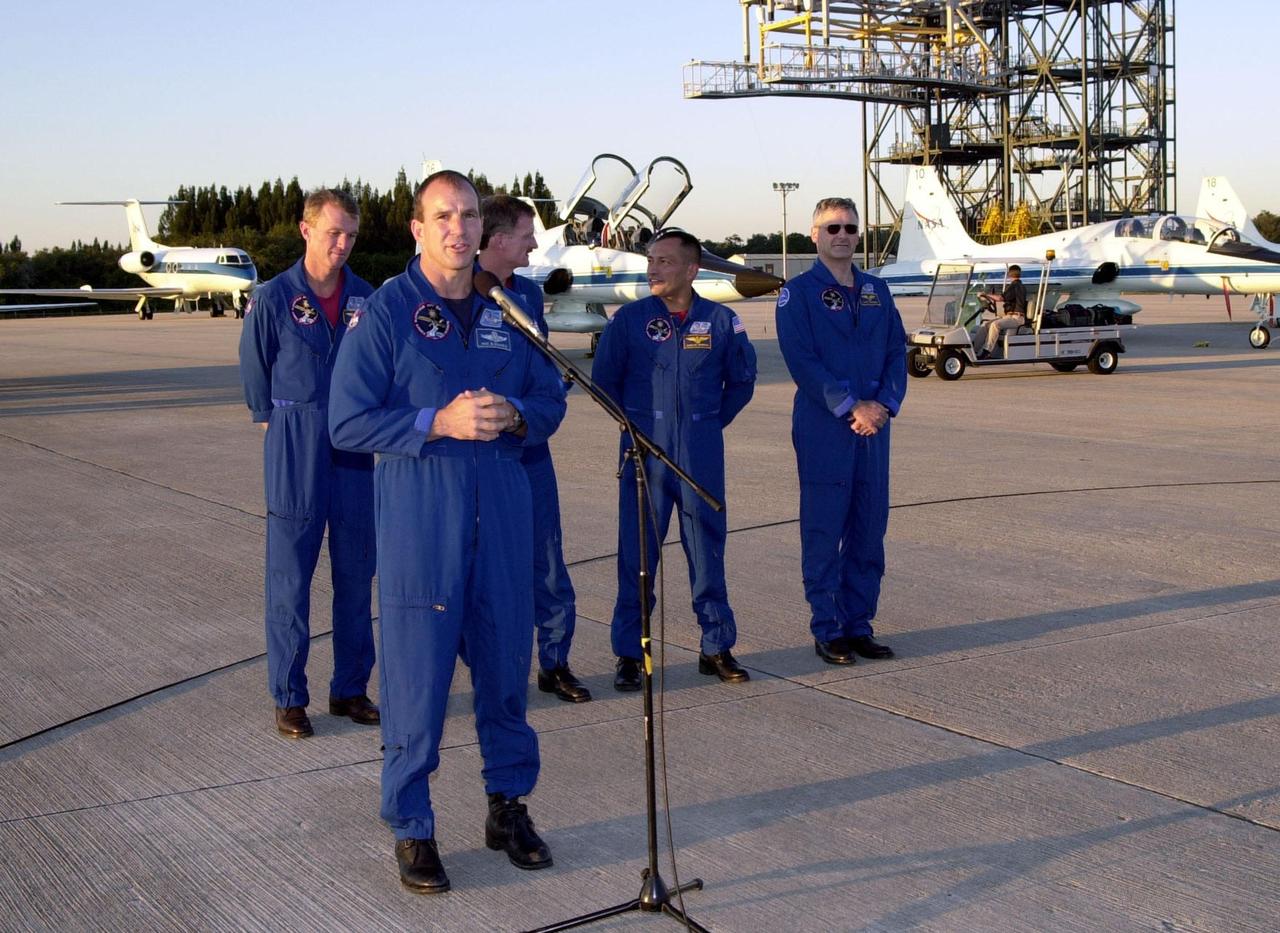
After their arrival at the Shuttle Landing Facility, the STS-97 crew gather to address the media. At the microphone is Pilot Michael Bloomfield. Behind him stand Commander Brent Jett and Mission Specialists Joseph Tanner, Carolos Noriega and Marc Garneau, who is with the Canadian Space Agency. Mission STS-97is the sixth construction flight to the International Space Station. Its payload includes the P6 Integrated Truss Structure and a photovoltaic (PV) module, with giant solar arrays that will provide power to the Station. The mission includes two spacewalks to complete the solar array connections. STS-97 is scheduled to launch Nov. 30 at about 10:06 p.m. EST
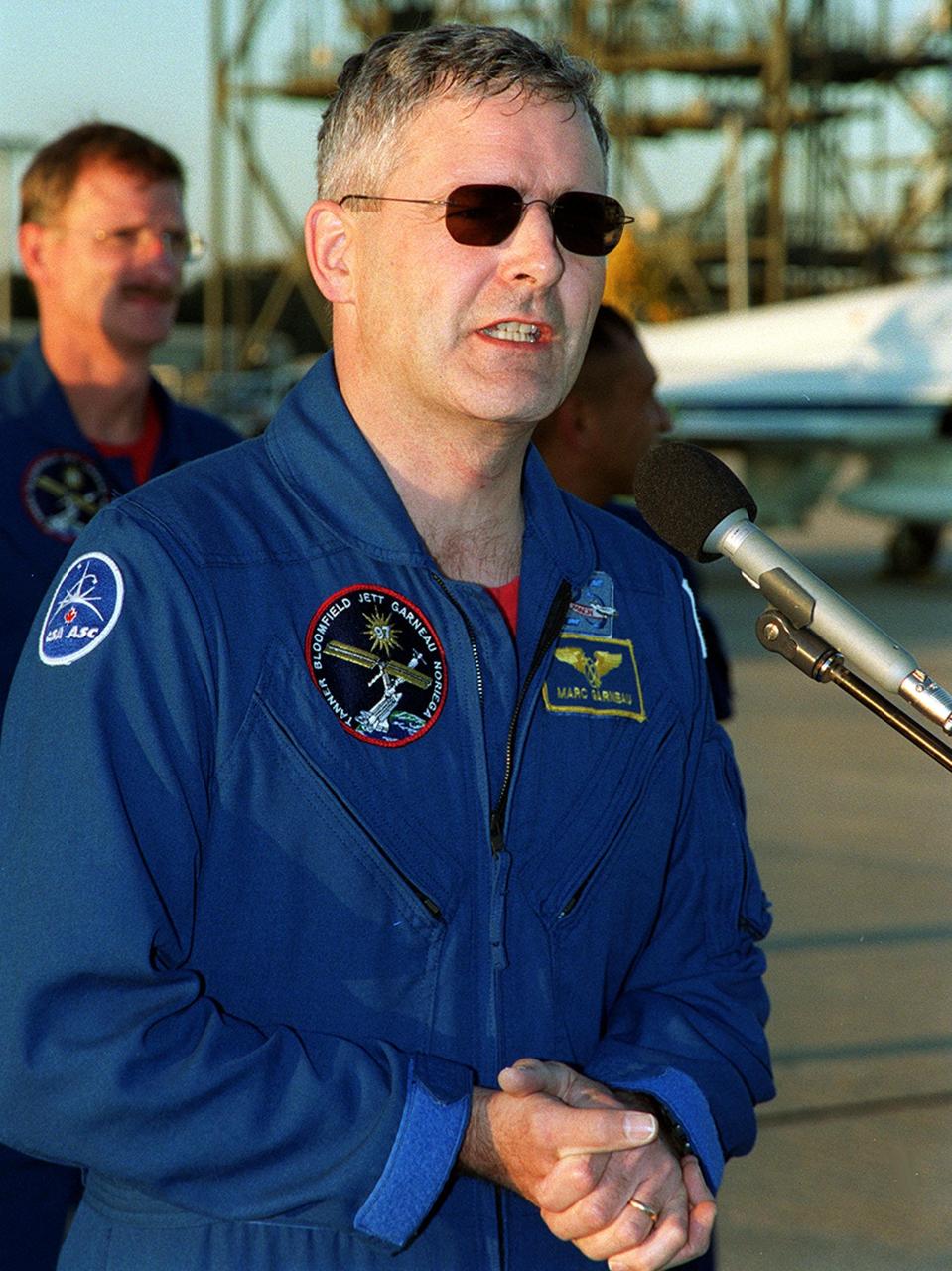
After arriving at the Shuttle Landing Facility, the STS-97 crew gather to address the media. At the microphone is Mission Specialist Marc Garneau, who is with the Canadian Space Agency. Behind him can be seen Mission Specialists Joseph Tanner (left) and Carlos Noriega. Mission STS-97 is the sixth construction flight to the International Space Station. Its payload includes the P6 Integrated Truss Structure and a photovoltaic (PV) module, with giant solar arrays that will provide power to the Station. The mission includes two spacewalks to complete the solar array connections. STS-97 is scheduled to launch Nov. 30 at about 10:06 p.m. EST