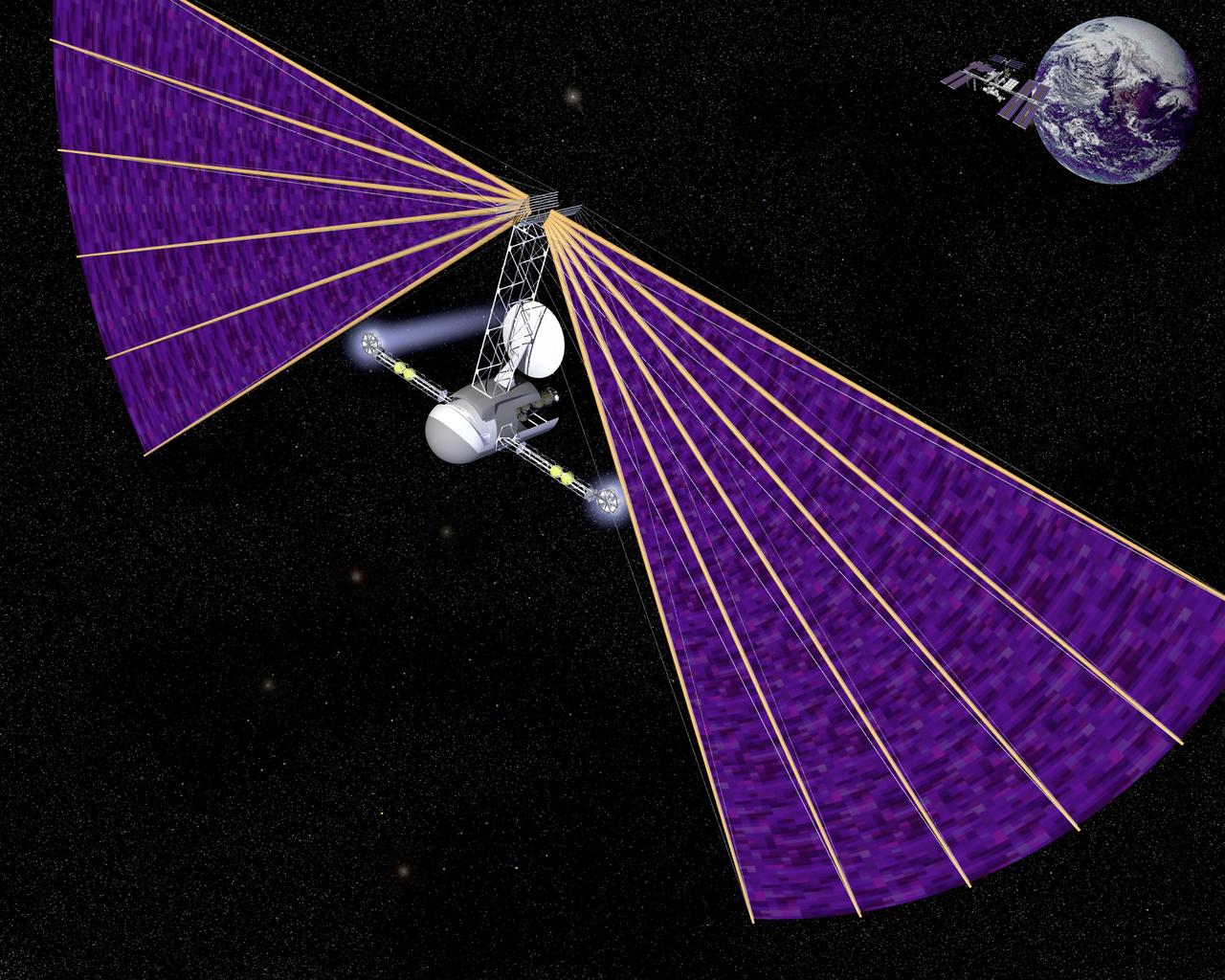
Concept of a vehicle journeys from Earth to Mars propelled by thrusters powered by electricity from photovoltaic cells on its large fan shaped sails
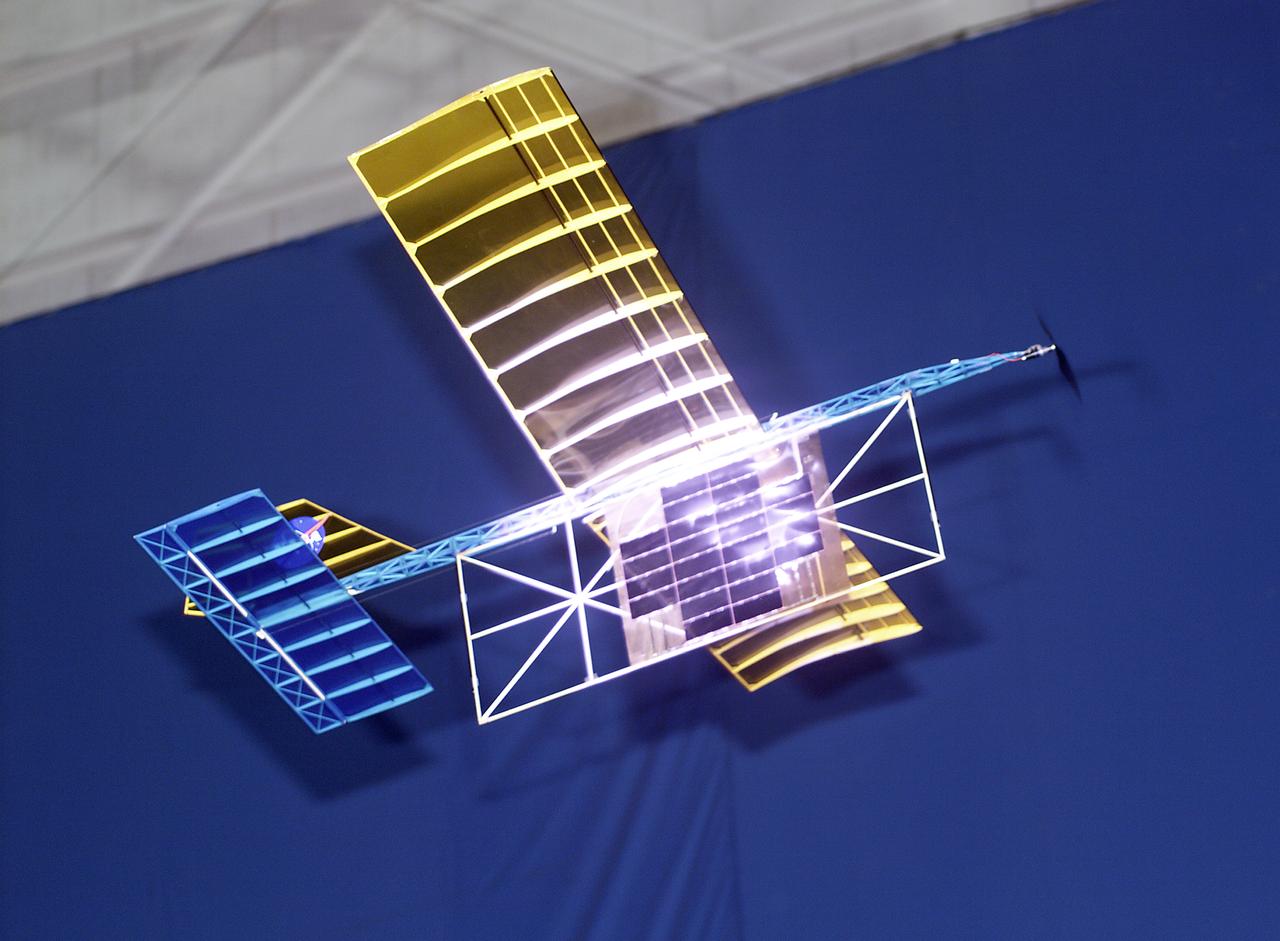
With a laser beam centered on its panel of photovoltaic cells, a lightweight model plane makes the first flight of an aircraft powered by a laser beam inside a building at NASA Marshall Space Flight Center.
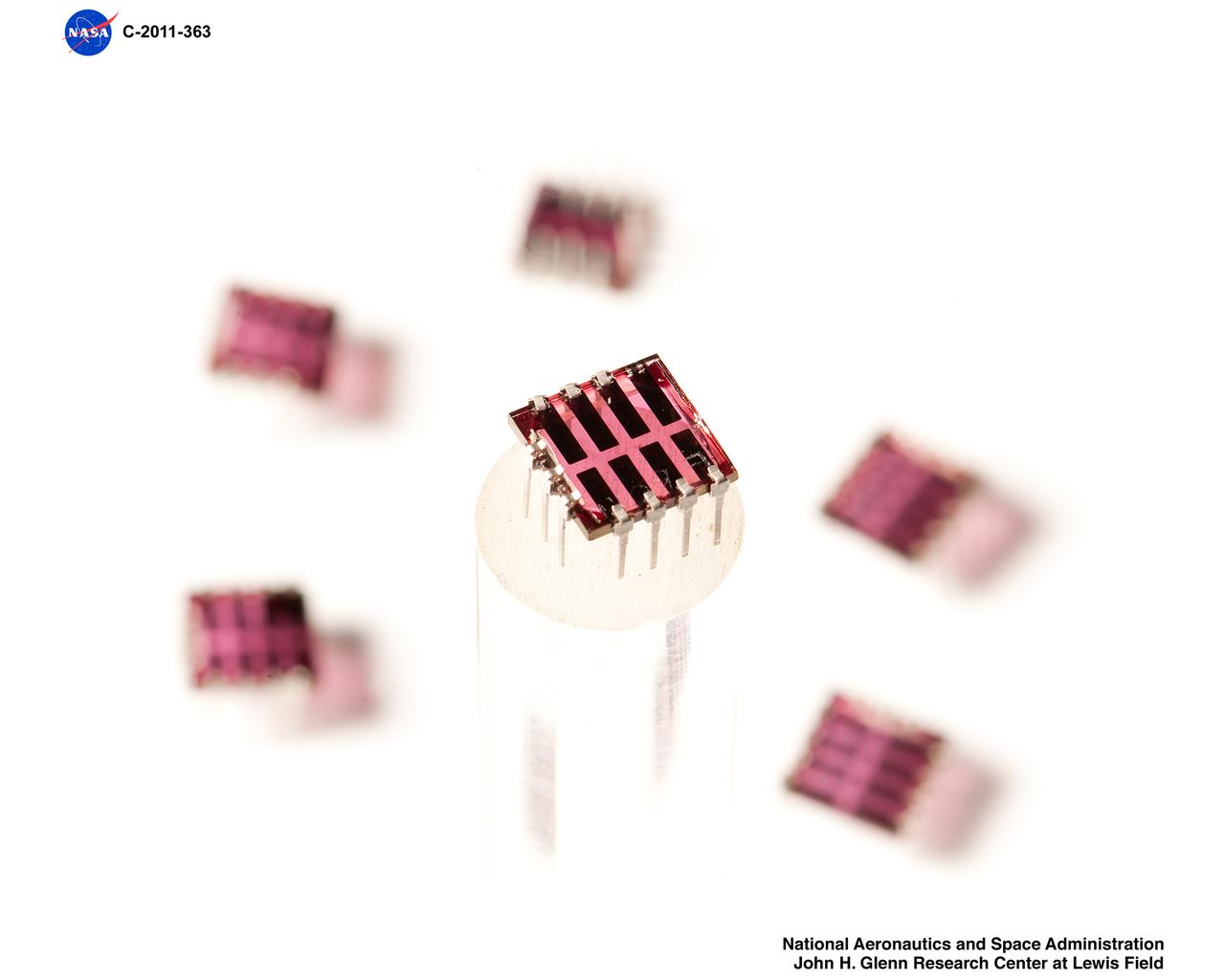
Photovoltaic Hardware - Prototype Organic Solar Cell Module
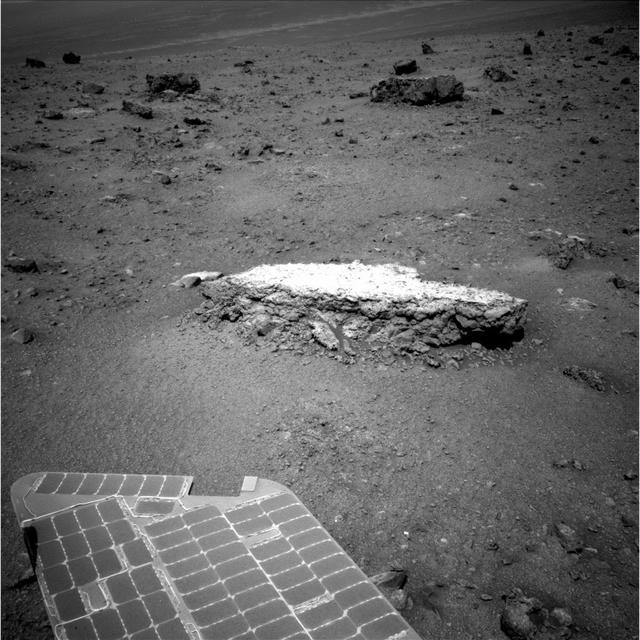
Part of NASA Mars Exploration Rover Opportunity array of photovoltaic cells is visible in the foreground of this image. Opportunity took this picture showing a light-toned rock, Tisdale
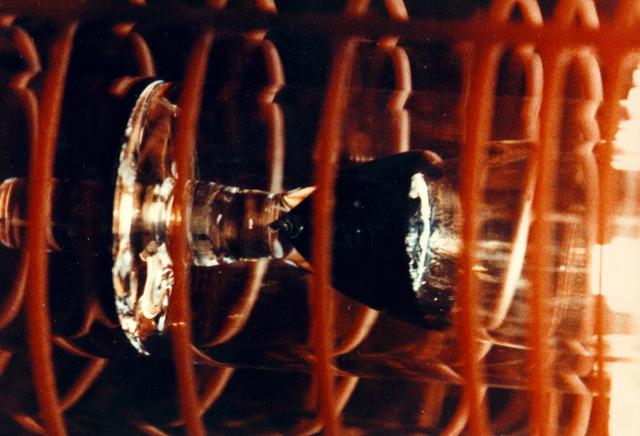
The objective of this facility is to investigate the potential of space grown semiconductor materials by the vapor transport technique and develop powdered metal and ceramic sintering techniques in microgravity. The materials processed or developed in the SEF have potential application for improving infrared detectors, nuclear particle detectors, photovoltaic cells, bearing cutting tools, electrical brushes and catalysts for chemical production. Flown on STS-60 Commercial Center: Consortium for Materials Development in Space - University of Alabama Huntsville (UAH)
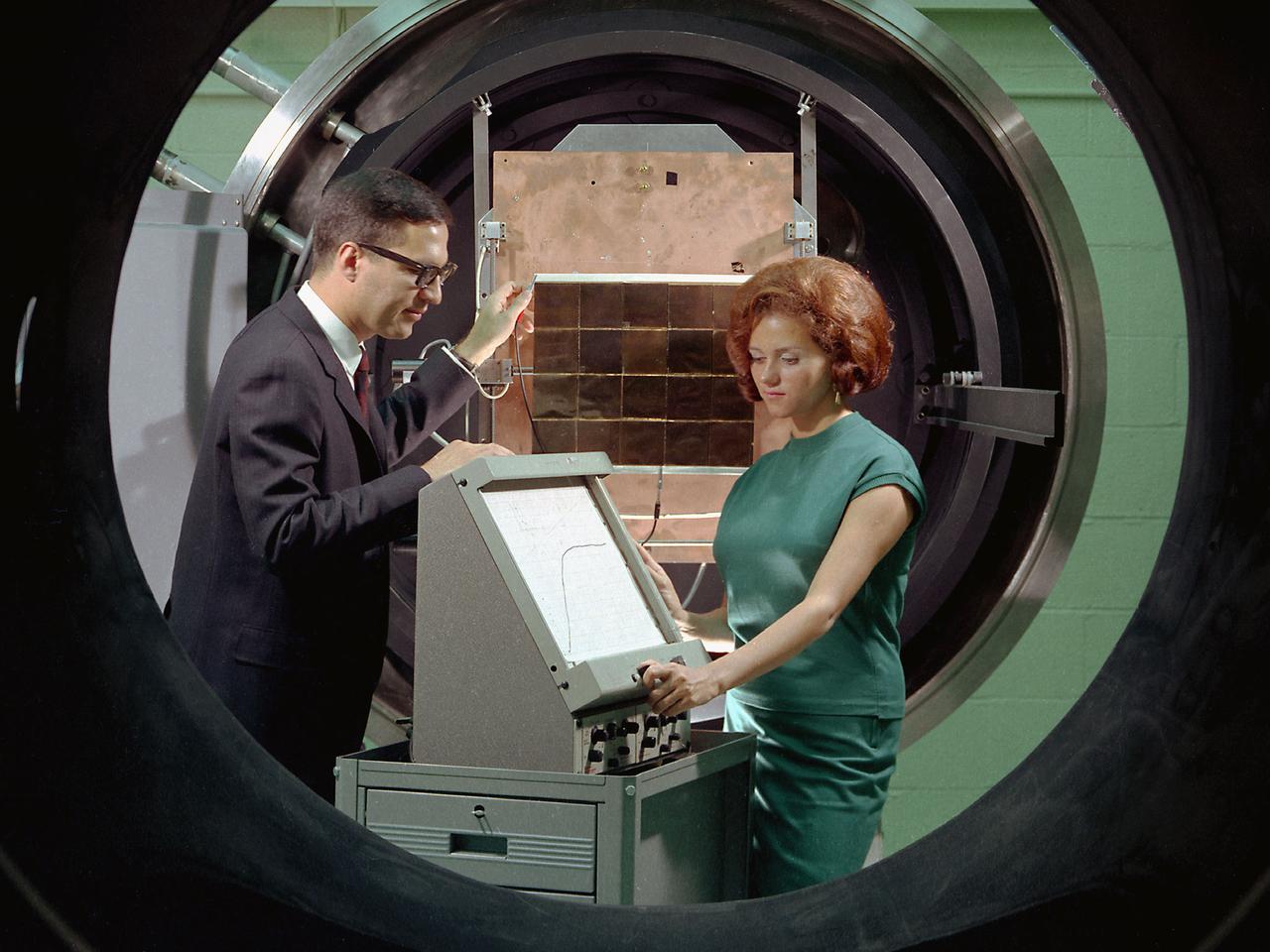
George Mazaris, works with an assistant to obtain the preliminary measurements of cadmium sulfide thin-film solar cells being tested in the Space Environmental Chamber at the National Aeronautics and Space Administration (NASA) Lewis Research Center. Lewis’ Photovoltaic Fundamentals Section was investigating thin-film alternatives to the standard rigid and fragile solar cells. The cadmium sulfide semiconductors were placed in a light, metallized substrate that could be rolled or furled during launch. The main advantage of the thin-film solar cells was their reduced weight. Lewis researchers, however, were still working on improving the performance of the semiconductor. The new thin-film solar cells were tested in a space simulation chamber in the CW-6 test cell in the Engine Research Building. The chamber created a simulated altitude of 200 miles. Sunlight was simulated by a 5000-watt xenon light. Some two dozen cells were exposed to 15 minutes of light followed by 15 minutes of darkness to test their durability in the constantly changing illumination of Earth orbit. This photograph was taken for use in a NASA recruiting publication.

Adolph Spakowski, head of the Photovoltaic Fundamentals Section at the National Aeronautics and Space Administration (NASA) Lewis Research Center, illustrated the difference between conventional silicon solar cells (rear panel) and the new thin-film cells. The larger, flexible thin-film cells in the foreground were evaluated by Lewis energy conversion specialists for possible future space use. The conventional solar cells used on most spacecraft at the time were both delicate and heavy. For example, the Mariner IV spacecraft required 28,000 these solar cells for its flyby of Mars in 1964. NASA Lewis began investigating cadmium sulfide thin-film solar cells in 1961. The thin-film cells were made by heating semiconductor material until it evaporated. The vapor was then condensed onto an electricity-producing film only one-thousandth of an inch thick. The physical flexibility of the new thin-film cells allowed them to be furled, or rolled up, during launch. Spakowski led an 18-month test program at Lewis to investigate the application of cadmium sulfide semiconductors on a light metallized substrate. The new thin-film solar cells were tested in a space simulation chamber at a simulated altitude of 200 miles. Sunlight was recreated by a 5000-watt xenon light. Two dozen cells were exposed to 15 minutes of light followed by 15 minutes of darkness to test their durability in the constantly changing illumination of Earth orbit.
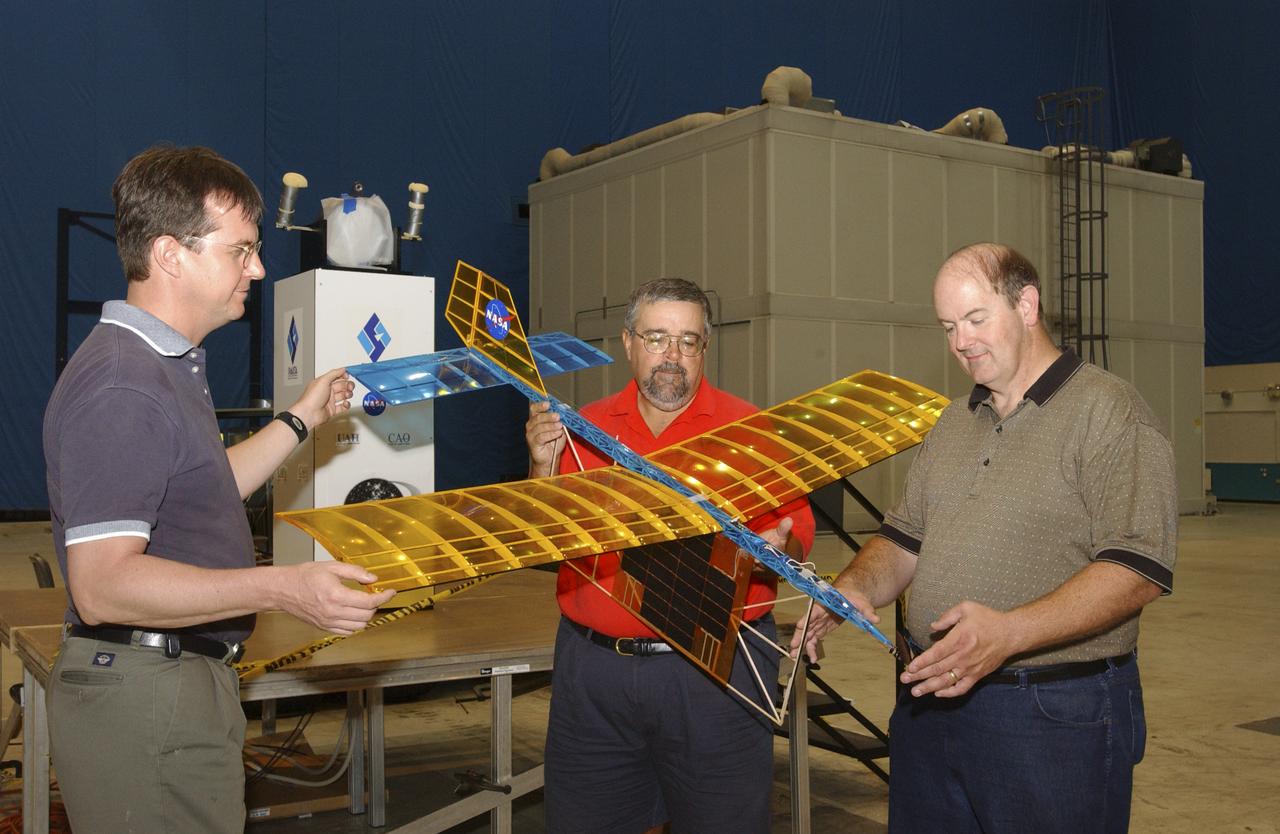
A team of NASA researchers from Marshall Space Flight Center (MSFC) and Dryden Flight Research center have proven that beamed light can be used to power an aircraft, a first-in-the-world accomplishment to the best of their knowledge. Using an experimental custom built radio-controlled model aircraft, the team has demonstrated a system that beams enough light energy from the ground to power the propeller of an aircraft and sustain it in flight. Special photovoltaic arrays on the plane, similar to solar cells, receive the light energy and convert it to electric current to drive the propeller motor. In a series of indoor flights this week at MSFC, a lightweight custom built laser beam was aimed at the airplane `s solar panels. The laser tracks the plane, maintaining power on its cells until the end of the flight when the laser is turned off and the airplane glides to a landing. The laser source demonstration represents the capability to beam more power to a plane so that it can reach higher altitudes and have a greater flight range without having to carry fuel or batteries, enabling an indefinite flight time. The demonstration was a collaborative effort between the Dryden Center at Edward's, California, where the aircraft was designed and built, and MSFC, where integration and testing of the laser and photovoltaic cells was done. Laser power beaming is a promising technology for consideration in new aircraft design and operation, and supports NASA's goals in the development of revolutionary aerospace technologies. Photographed with their invention are (from left to right): David Bushman and Tony Frackowiak, both of Dryden; and MSFC's Robert Burdine.