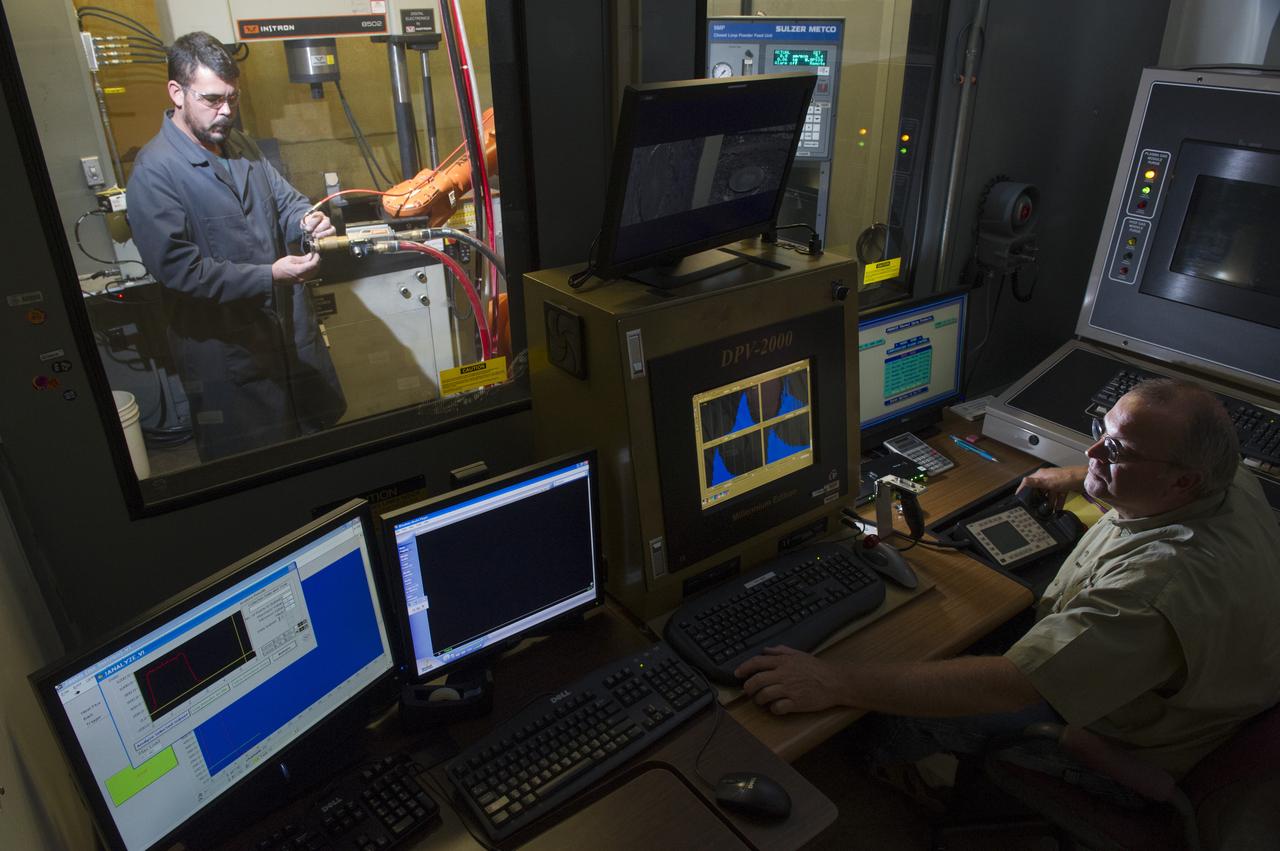
PLASMA TORCH TEST FACILITY
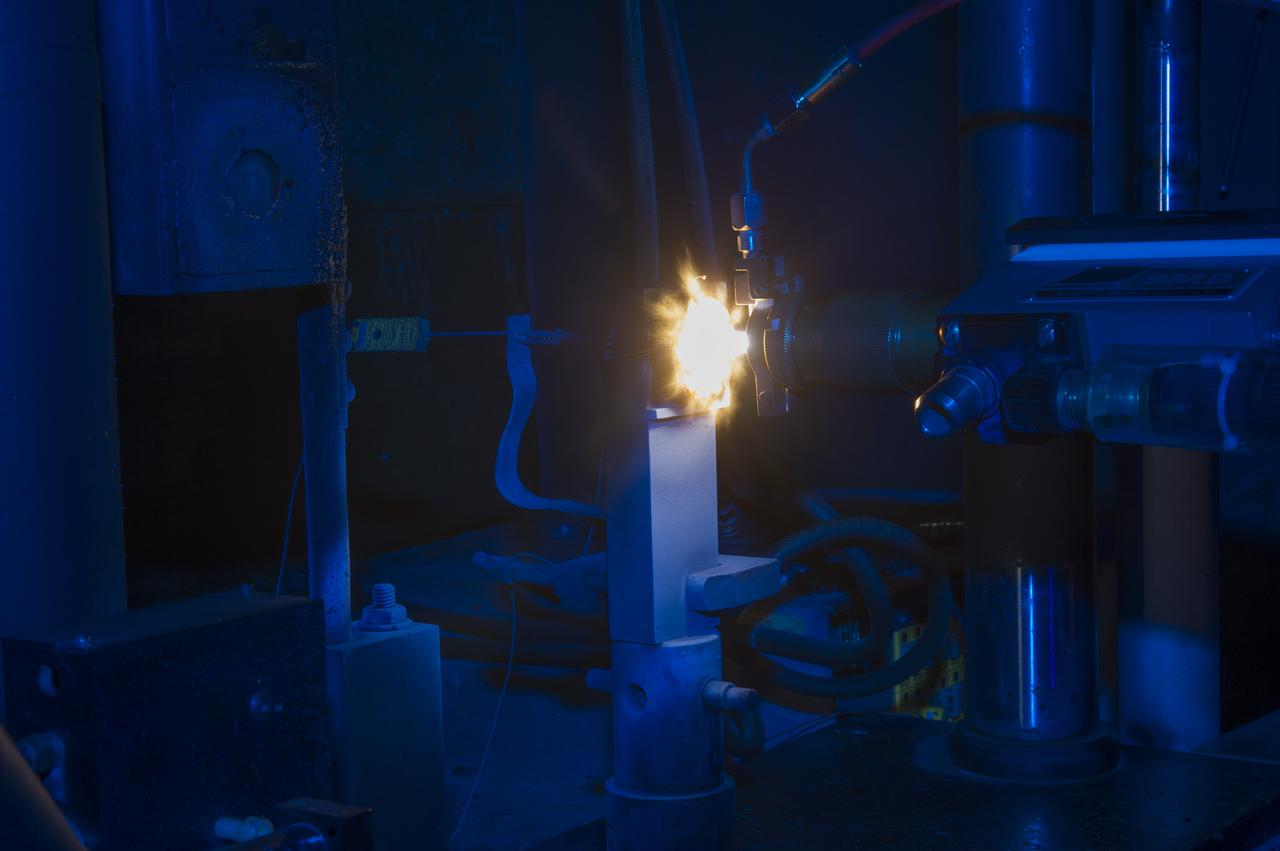
PLASMA TORCH TEST FACILITY
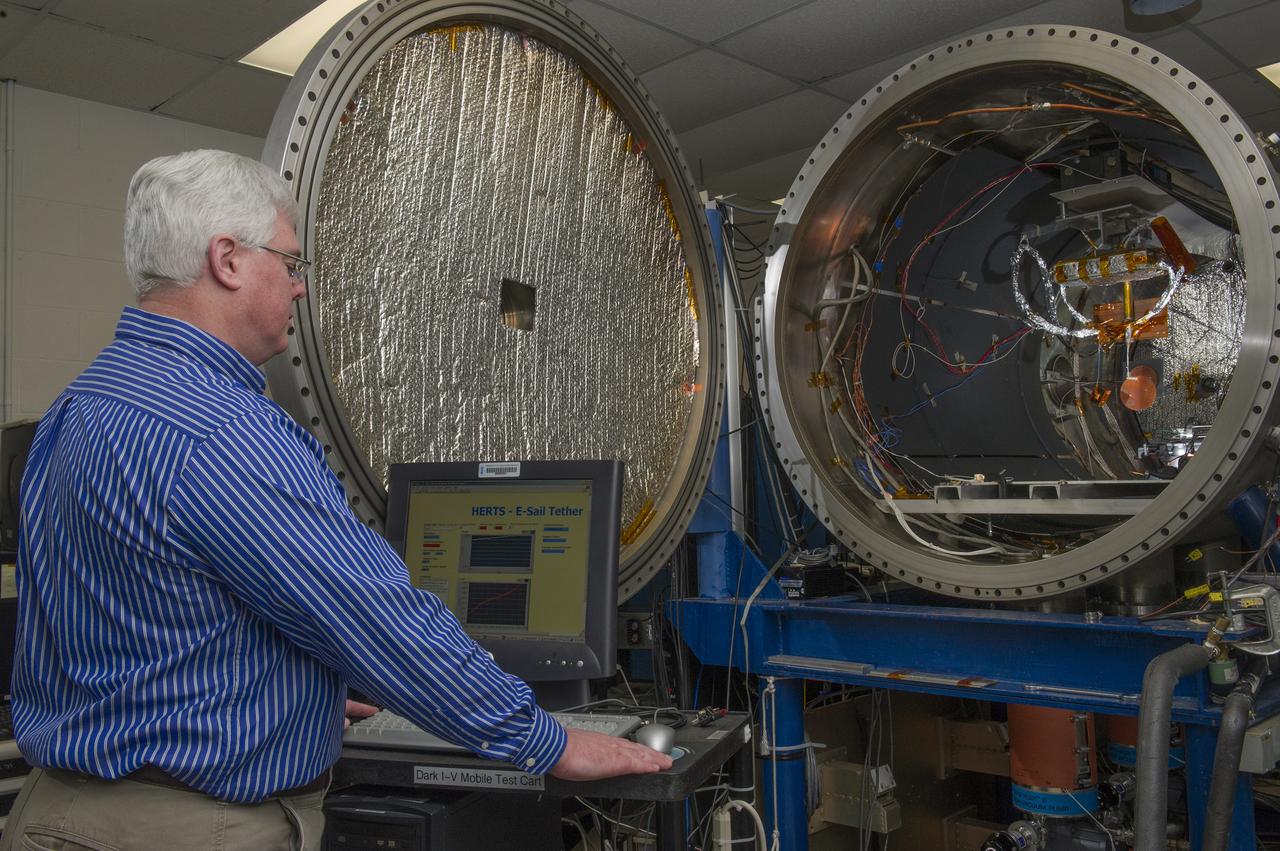
TODD SCHNEIDER PREPARES A PLASMA CHAMBER IN BUILDING 4605 AT MSFC FOR AN UPCOMING TEST. SCHNEIDER IS A PHYSICIST IN THE MATERIALS AND PROCESSES DEPARTMENT AT MSFC.
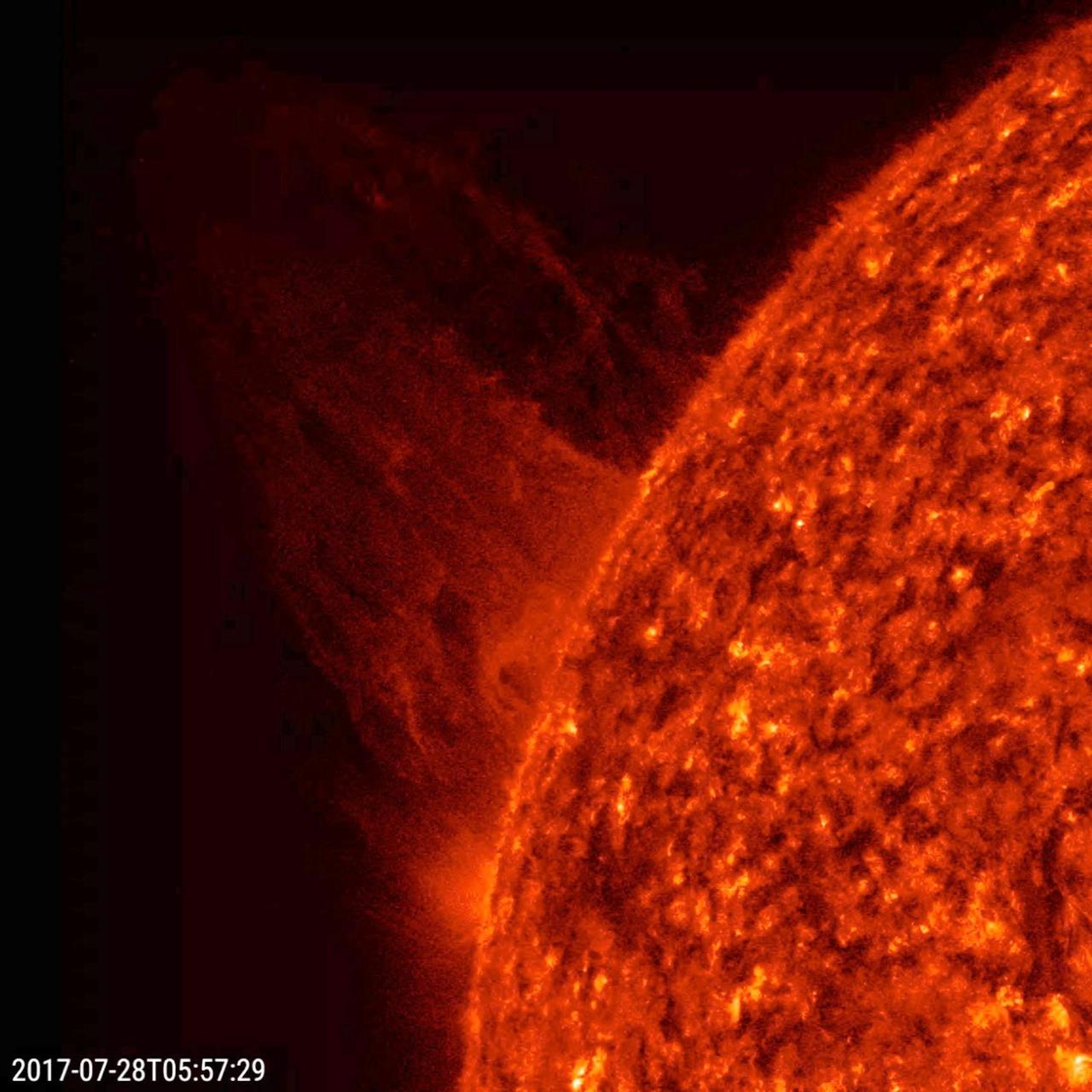
A sheet of plasma blasted out into space from just behind the edge of the sun (July 28, 2017). While some material escaped into space, a portion of it was unable to break the pull of gravity and the magnetic forces nearby and can be seen falling back to the sun. The 3.5 hours of action was captured in a wavelength of extreme ultraviolet light. https://photojournal.jpl.nasa.gov/catalog/PIA21866
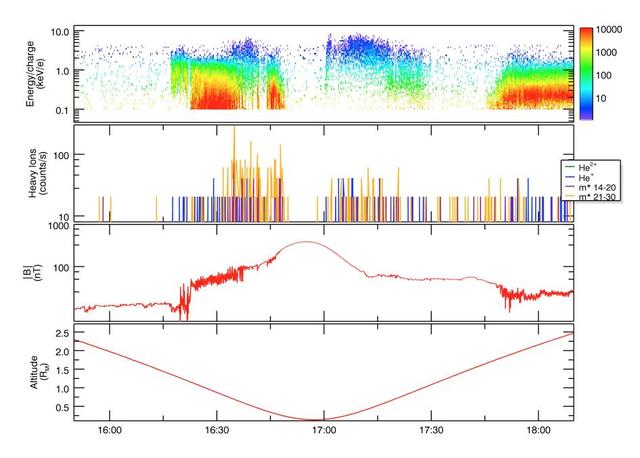
Exploring Mercury Plasma Environment
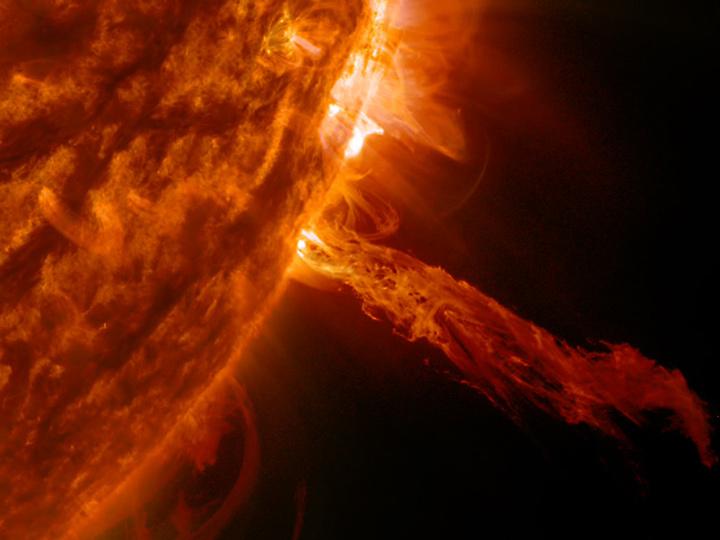
A stream of plasma burst out from the sun, but since it lacked enough force to break away, most of it fell back into the sun (May 27, 2014). This eruption was minor and such events occur almost every day on the sun and suggest the kind of dynamic activity being driven by powerful magnetic forces near the sun's surface. Credit: NASA/Goddard/Solar Dynamics Observatory <b><a href="http://www.nasa.gov/audience/formedia/features/MP_Photo_Guidelines.html" rel="nofollow">NASA image use policy.</a></b> <b><a href="http://www.nasa.gov/centers/goddard/home/index.html" rel="nofollow">NASA Goddard Space Flight Center</a></b> enables NASA’s mission through four scientific endeavors: Earth Science, Heliophysics, Solar System Exploration, and Astrophysics. Goddard plays a leading role in NASA’s accomplishments by contributing compelling scientific knowledge to advance the Agency’s mission. <b>Follow us on <a href="http://twitter.com/NASAGoddardPix" rel="nofollow">Twitter</a></b> <b>Like us on <a href="http://www.facebook.com/pages/Greenbelt-MD/NASA-Goddard/395013845897?ref=tsd" rel="nofollow">Facebook</a></b> <b>Find us on <a href="http://instagram.com/nasagoddard?vm=grid" rel="nofollow">Instagram</a></b>
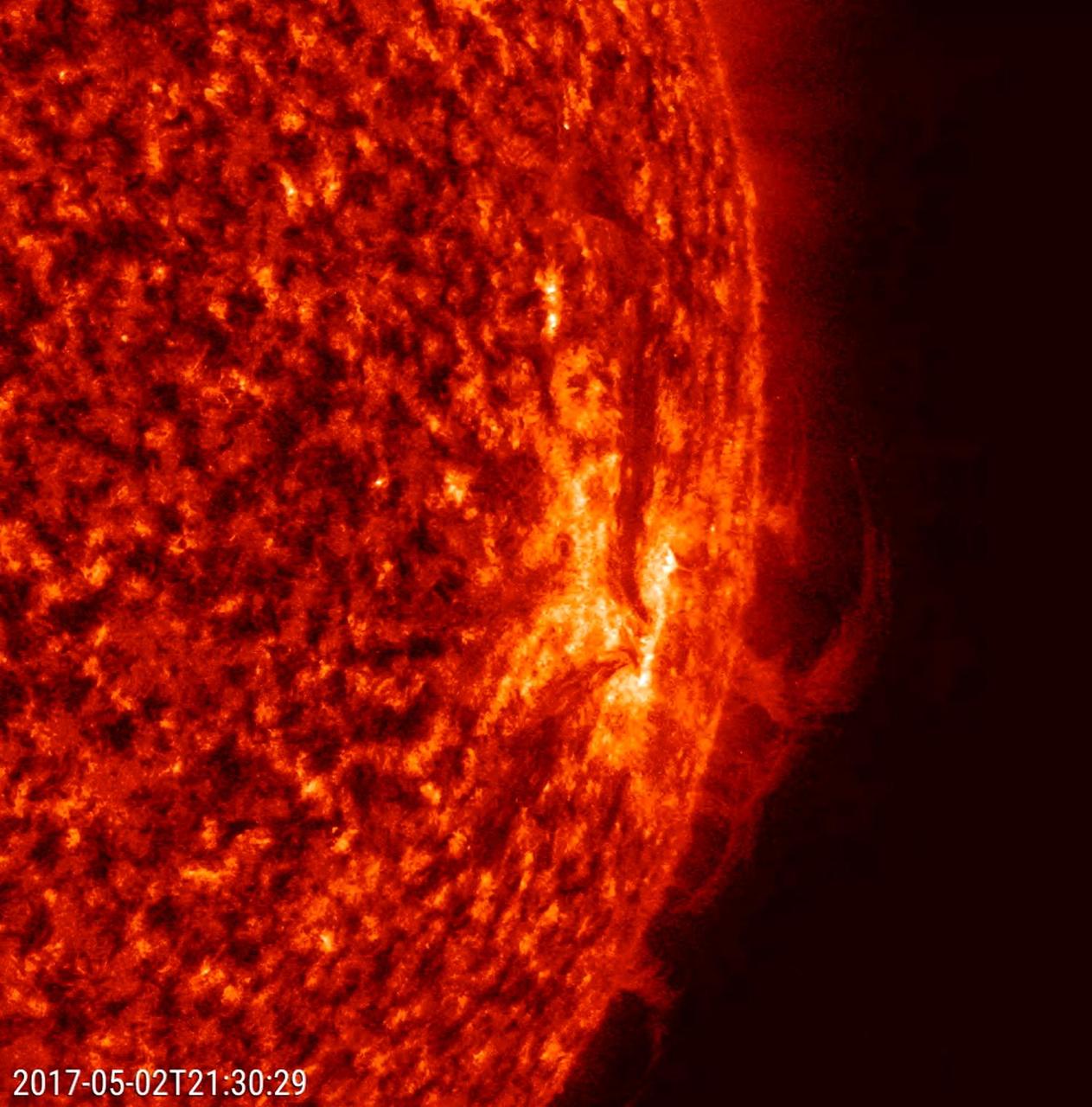
Strands of plasma at the sun edge shifted and twisted back and forth over a 22-hour period, May 2-3, 2017. In this close-up from NASA Solar Dynamics Observatory, the strands are being manipulated by strong magnetic forces associated with active region. This kind of activity is not at all uncommon, but best viewed in profile. The images were taken in a wavelength of extreme ultraviolet light. To give a sense of scale, the strands hover above the sun more than several times the size of Earth. Movies are available at https://photojournal.jpl.nasa.gov/catalog/PIA21632
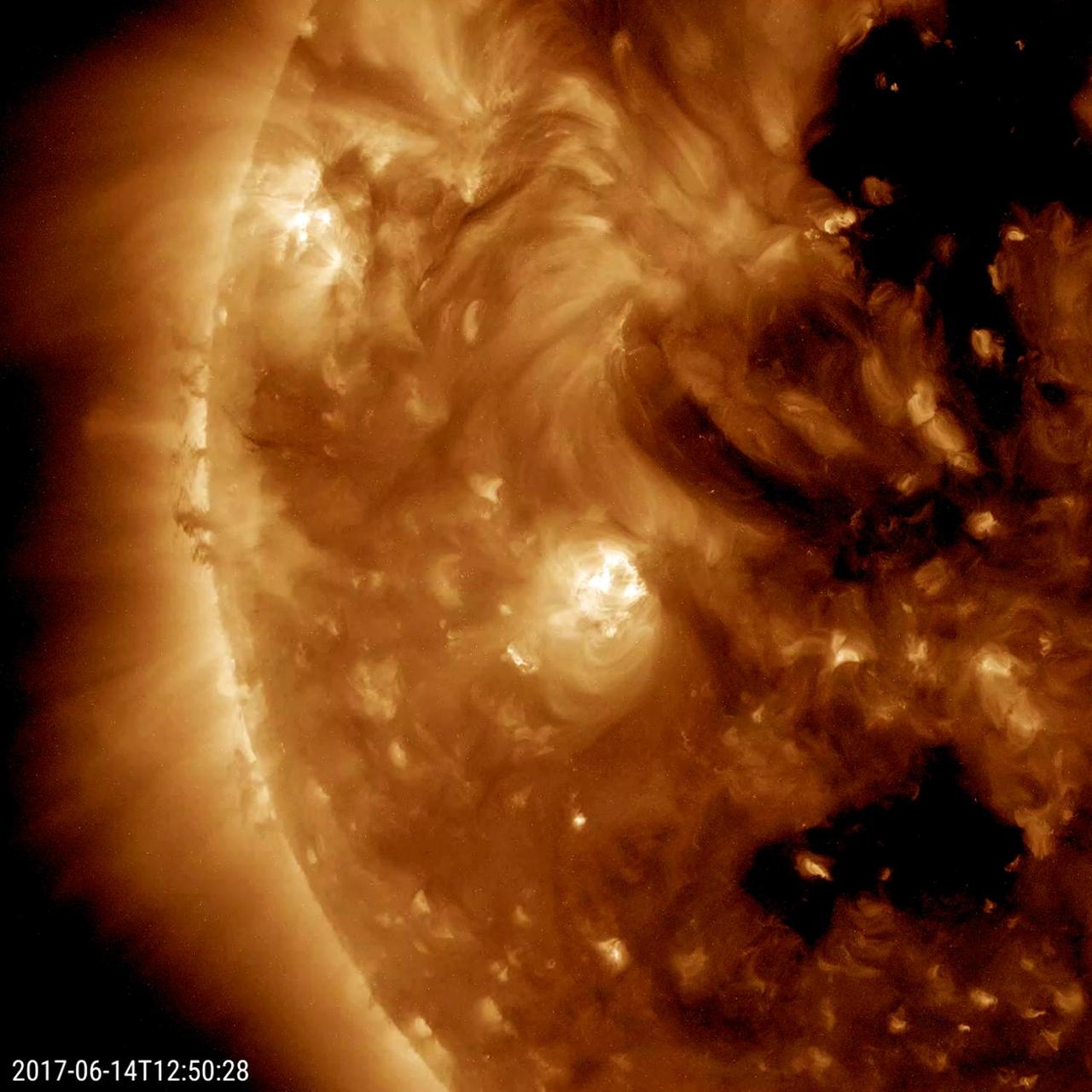
Several short stalks of cooler, darker plasma spun and twisted as they interacted with each other at the sun's edge (June 14-15, 2017). The row of strands, which together form a prominence, were being pulled back and forth by magnetic forces. The dynamic action was observed for just over one day. Also noteworthy is the rapid development of a bright active region in the upper right about halfway through the clip. Movies are available at https://photojournal.jpl.nasa.gov/catalog/PIA21761
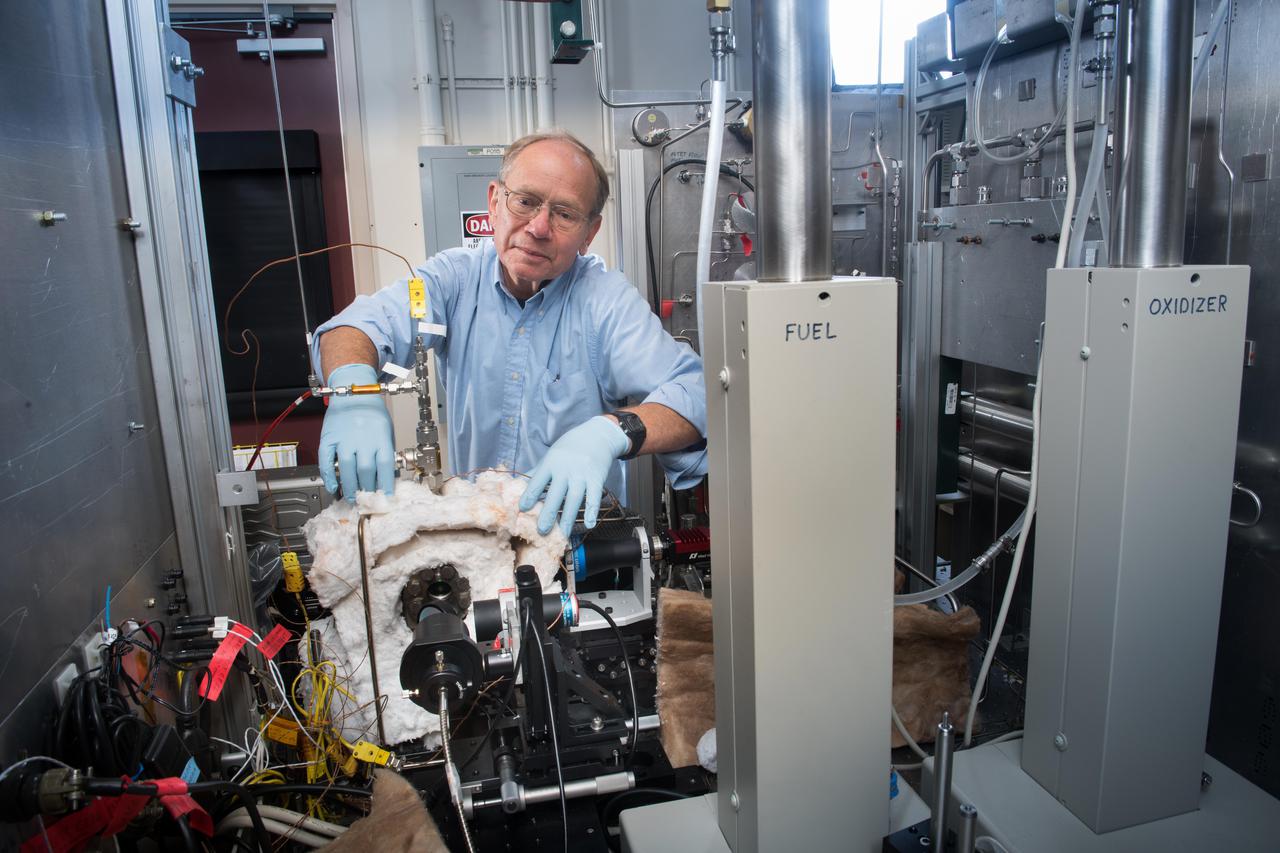
High Pressure Plasma-assisted Combustion
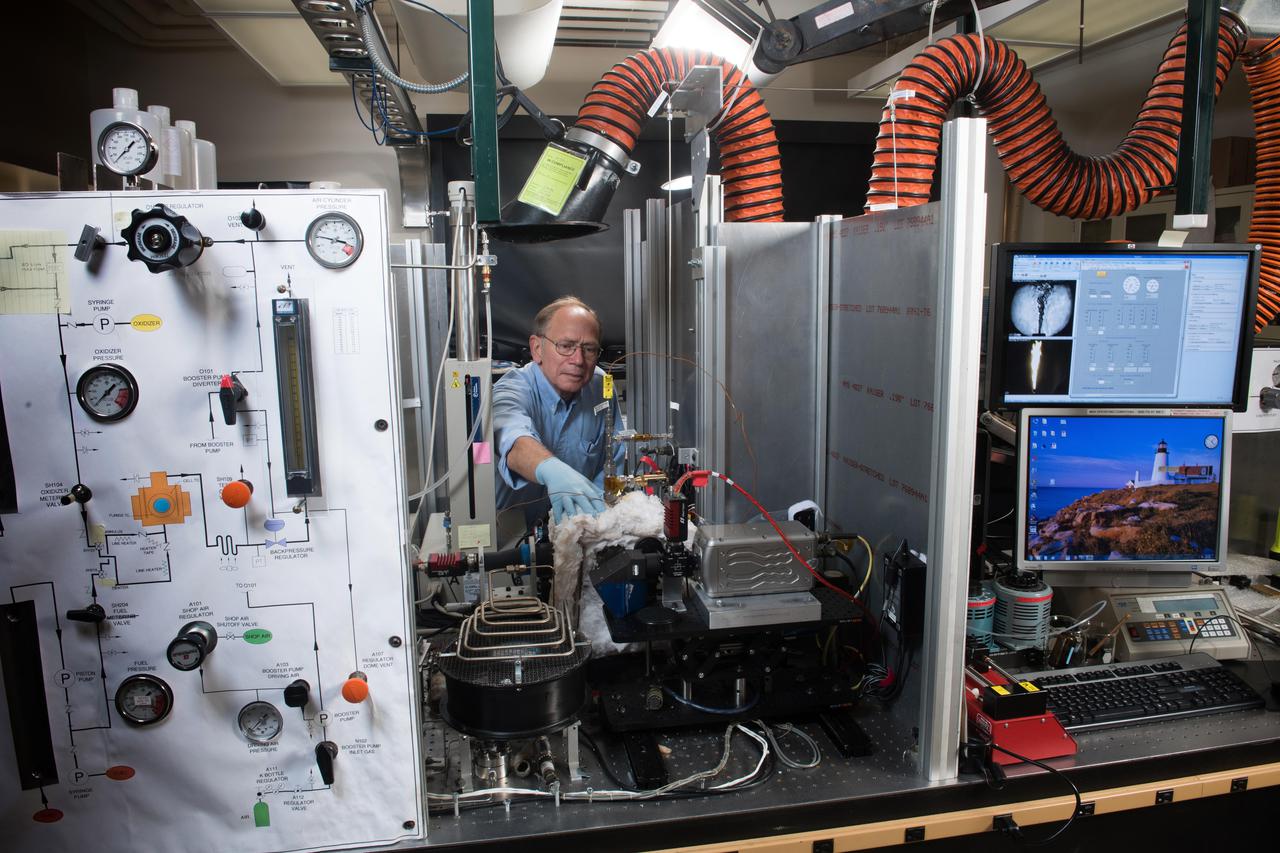
High Pressure Plasma-assisted Combustion
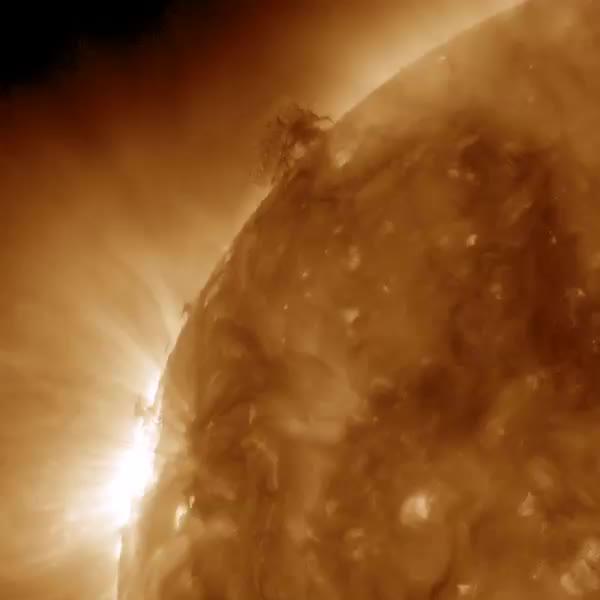
Dark strands of plasma hovering above the sun's surface began to interact with each other in a form of tug of war over two and a half days on June 28-30, 2015. At times, strands of plasma extended a tenuous connection between one area and the other. Twice the small tower of plasma to the lower left shot a burst of energy over to the quivering filament higher up. We are seeing the push and pull of magnetic forces revealed in a 193 wavelength of extreme ultraviolet light, typically colorized in brown. Credit: NASA/SDO <b><a href="http://www.nasa.gov/audience/formedia/features/MP_Photo_Guidelines.html" rel="nofollow">NASA image use policy.</a></b> <b><a href="http://www.nasa.gov/centers/goddard/home/index.html" rel="nofollow">NASA Goddard Space Flight Center</a></b> enables NASA’s mission through four scientific endeavors: Earth Science, Heliophysics, Solar System Exploration, and Astrophysics. Goddard plays a leading role in NASA’s accomplishments by contributing compelling scientific knowledge to advance the Agency’s mission. <b>Follow us on <a href="http://twitter.com/NASAGoddardPix" rel="nofollow">Twitter</a></b> <b>Like us on <a href="http://www.facebook.com/pages/Greenbelt-MD/NASA-Goddard/395013845897?ref=tsd" rel="nofollow">Facebook</a></b> <b>Find us on <a href="http://instagrid.me/nasagoddard/?vm=grid" rel="nofollow">Instagram</a></b>
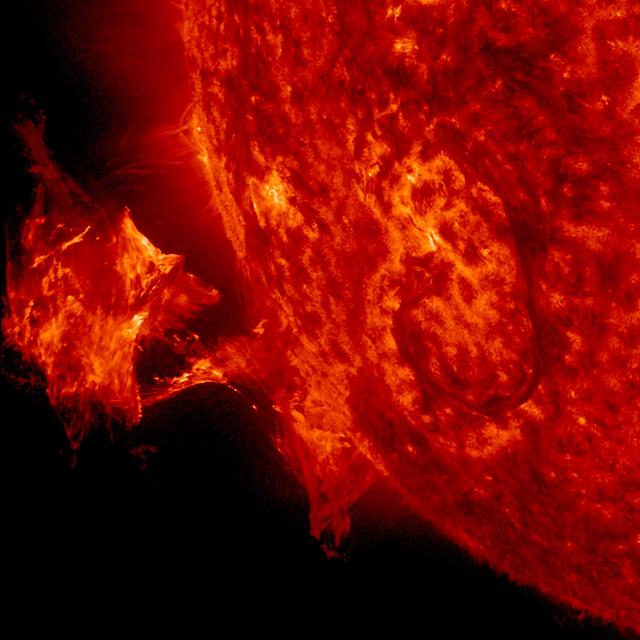
A twisted blob of solar material – a hot, charged gas called plasma – can be seen erupting off the side of the sun on Sept. 26, 2014. The image is from NASA's Solar Dynamics Observatory, focusing in on ionized Helium at 60,000 degrees C. Credit: NASA/SDO <b><a href="http://www.nasa.gov/audience/formedia/features/MP_Photo_Guidelines.html" rel="nofollow">NASA image use policy.</a></b> <b><a href="http://www.nasa.gov/centers/goddard/home/index.html" rel="nofollow">NASA Goddard Space Flight Center</a></b> enables NASA’s mission through four scientific endeavors: Earth Science, Heliophysics, Solar System Exploration, and Astrophysics. Goddard plays a leading role in NASA’s accomplishments by contributing compelling scientific knowledge to advance the Agency’s mission. <b>Follow us on <a href="http://twitter.com/NASAGoddardPix" rel="nofollow">Twitter</a></b> <b>Like us on <a href="http://www.facebook.com/pages/Greenbelt-MD/NASA-Goddard/395013845897?ref=tsd" rel="nofollow">Facebook</a></b> <b>Find us on <a href="http://instagram.com/nasagoddard?vm=grid" rel="nofollow">Instagram</a></b>
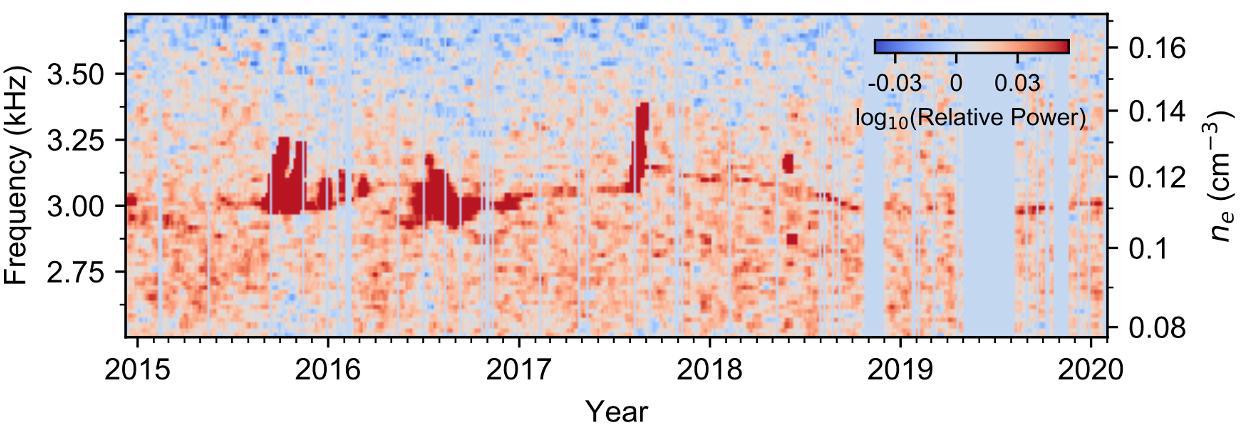
Weak but nearly continuous plasma oscillation events — visible as a thin red line in this graphic — connect stronger events in Voyager 1's Plasma Wave Subsystem data. https://photojournal.jpl.nasa.gov/catalog/PIA24572

This image shows laser plasmas in a test lab at Los Alamos National Laboratory, N.M., under typical atmospheric pressures on Earth and Mars. A plasma is an ionized, glowing gas.

Strands of solar material at the sun's edge shifted and twisted back and forth over a 22-hour period in this footage captured May 2-3, 2017, by NASA’s Solar Dynamics Observatory. In this close-up, the strands are being manipulated by strong magnetic forces associated with active regions. To give a sense of scale, the strands that hover above the sun are more than several times the size of Earth. These images were taken in a wavelength of extreme ultraviolet light, which is typically invisible to our eyes, but was colorized here in red. <a href="https://go.nasa.gov/2qJzPD2" rel="nofollow">go.nasa.gov/2qJzPD2</a> Credit: NASA/Goddard/SDO <b><a href="http://www.nasa.gov/audience/formedia/features/MP_Photo_Guidelines.html" rel="nofollow">NASA image use policy.</a></b> <b><a href="http://www.nasa.gov/centers/goddard/home/index.html" rel="nofollow">NASA Goddard Space Flight Center</a></b> enables NASA’s mission through four scientific endeavors: Earth Science, Heliophysics, Solar System Exploration, and Astrophysics. Goddard plays a leading role in NASA’s accomplishments by contributing compelling scientific knowledge to advance the Agency’s mission. <b>Follow us on <a href="http://twitter.com/NASAGoddardPix" rel="nofollow">Twitter</a></b> <b>Like us on <a href="http://www.facebook.com/pages/Greenbelt-MD/NASA-Goddard/395013845897?ref=tsd" rel="nofollow">Facebook</a></b> <b>Find us on <a href="http://instagrid.me/nasagoddard/?vm=grid" rel="nofollow">Instagram</a></b>
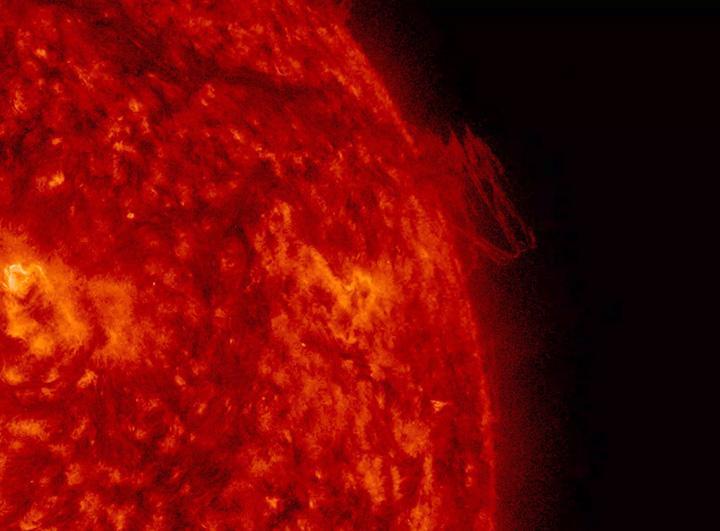
A close-up of twisting plasma above the Sun's surface produced a nice display of turbulence by caused combative magnetic forces (June 7-8, 2016) over a day and a half. The plasma does not break away, but just spins and twists the entire period. Images were taken in extreme ultraviolet light. The mass we observed is part of a longer, darkish filament angling down from the upper left of the frame. Filaments are unstable clouds of plasma suspended above the Sun by magnetic forces. http://photojournal.jpl.nasa.gov/catalog/PIA20739
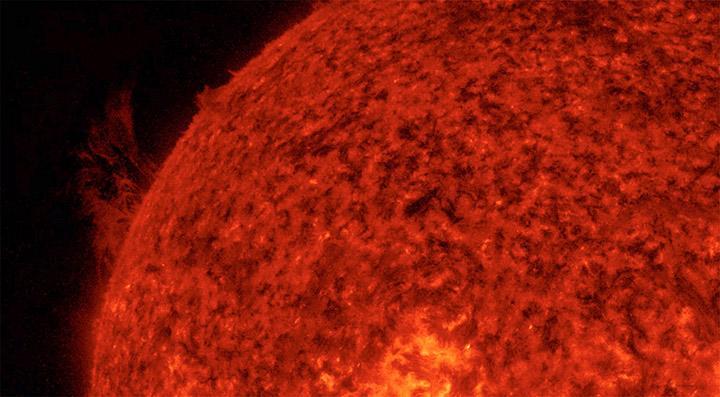
Strands and arches of plasma streamed above the edge of the Sun for over a day, pulled by powerful magnetic forces (Aug. 11-12, 2016). The tug and pull of material heated to about 60,000 degrees C. was viewed in extreme ultraviolet light. This kind of dynamic flow of materials is rather common, though this grouping was larger than most. http://photojournal.jpl.nasa.gov/catalog/PIA17913
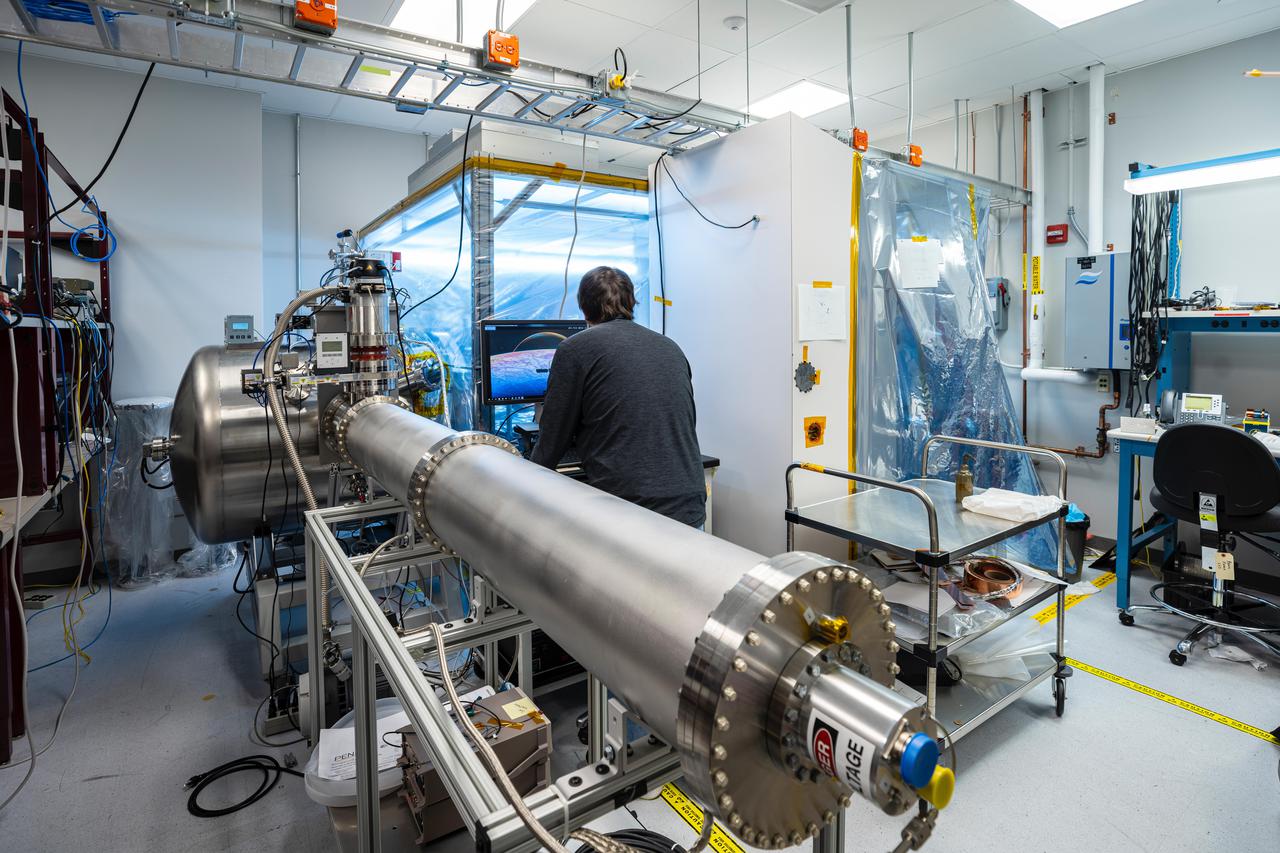
Included in the payload of science instruments for NASA's Europa Clipper is the Plasma Instrument for Magnetic Sounding (PIMS). Scientists will use PIMS to study the characteristics of plasma around Europa to better understand the moon's ice-shell thickness, ocean depth, and ocean salinity. PIMS will have four sensors, called Faraday cups, to measure the electrical current produced by charged particles (or plasma) as they strike a detector plate inside each sensor. In this photo, the Plasma Instrument Calibration Chamber at the Johns Hopkins Applied Physics Laboratory (APL) in Laurel, Maryland, recreates the plasma environments that PIMS and other instruments will encounter in space. The equipment in this lab simulates these environments with ion beams that reproduce plasma energy ranges found at Jupiter and Europa. Once PIMS is fully assembled in the clean room attached to the chamber, the team will direct these ion and electron beams into the Faraday cup sensors for calibration. This will be used specifically to simulate the plasma in Europa's ionosphere and Jupiter's magnetosphere, which PIMS will later measure directly. With an internal global ocean twice the size of Earth's oceans combined, Europa may have the potential to harbor life. NASA's Europa Clipper spacecraft will swoop around Jupiter on an elliptical path, dipping close to the moon on each flyby to collect data. Understanding Europa's habitability will help scientists better understand how life developed on Earth and the potential for finding life beyond our planet. https://photojournal.jpl.nasa.gov/catalog/PIA24330
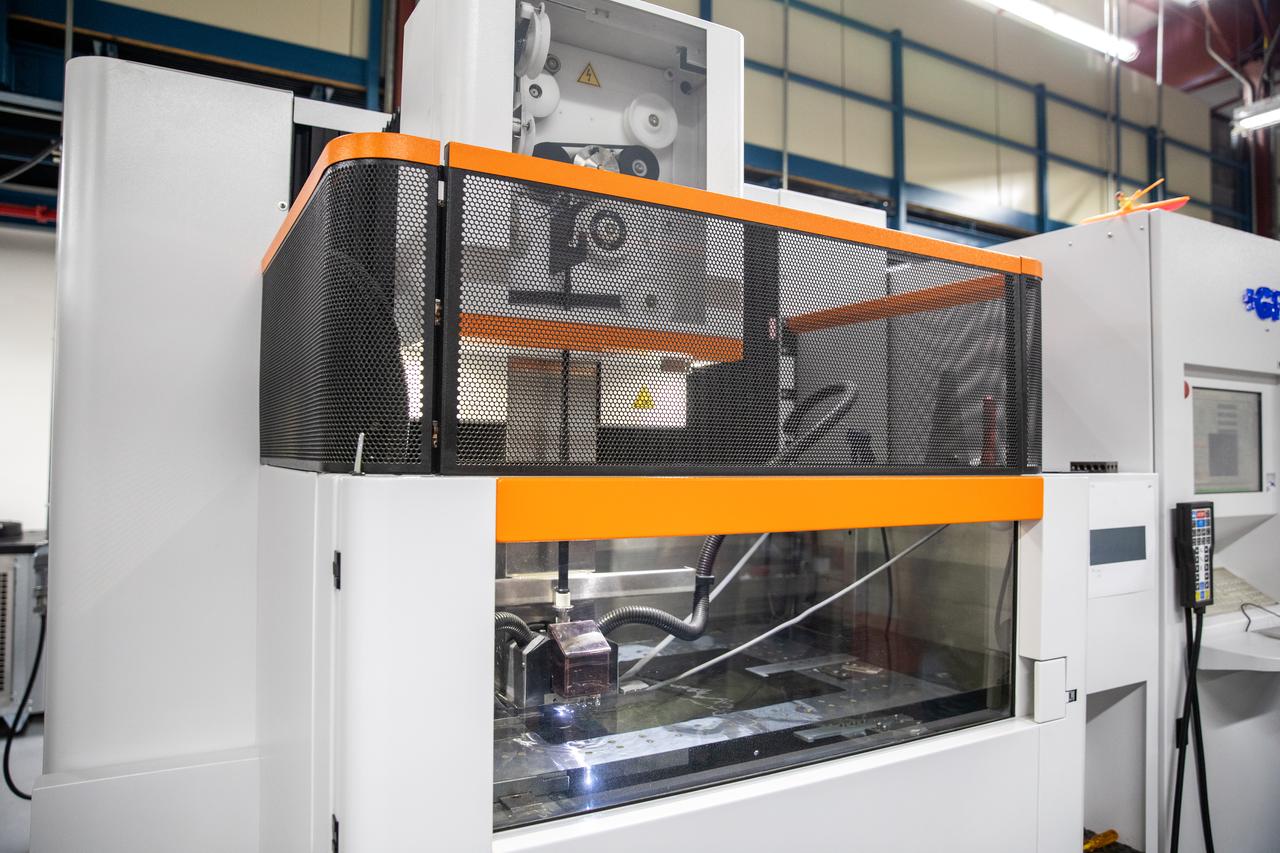
Testing of the Plasma Rapid Oxidation Technique for Extending Component Tenability (PROTECT) experiment is underway inside the Prototype Development Laboratory at NASA’s Kennedy Space Center in Florida on Nov. 2, 2022. Plasma electrolytic oxidation is a surface coating technology that produces oxide layers on the surface of light metals and their alloys to improve their performance characteristics. These coatings are tailored to provide a combination of characteristics such as corrosion protection, wear resistance, thermal management, extreme hardness, and fatigue performance. PROTECT is expected to demonstrate a ten percent improved fatigue performance and a 70 percent improvement in corrosion characteristics on the interior of treated 3-D printed metallic parts when compared to non-treated parts. PROTECT could be applied on spacecraft and launch vehicles.
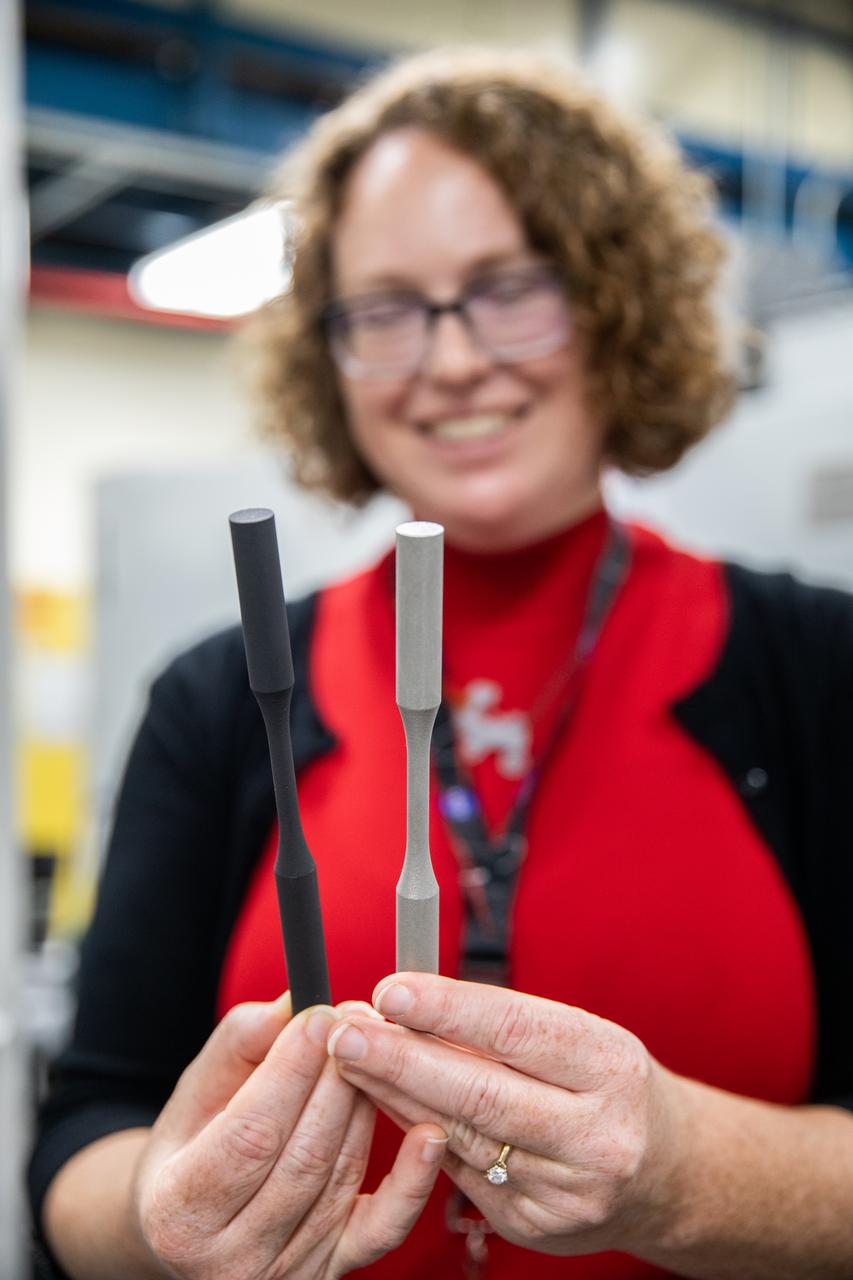
Dr. Jennifer Williams, a NASA research chemical engineer, displays two fatigue samples that will be tested in the Plasma Rapid Oxidation Technique for Extending Component Tenability (PROTECT) experiments inside the Prototype Laboratory at NASA’s Kennedy Space Center in Florida on Nov. 2, 2022. Plasma electrolytic oxidation is a surface coating technology that produces oxide layers on the surface of light metals and their alloys to improve their performance characteristics. These coatings are tailored to provide a combination of characteristics such as corrosion protection, wear resistance, thermal management, extreme hardness, and fatigue performance. PROTECT is expected to demonstrate a 10 percent improved fatigue performance and a 70 percent improvement in corrosion characteristics on the interior of treated 3-D printed metallic parts when compared to non-treated parts. PROTECT could be applied to spacecraft and launch vehicles.
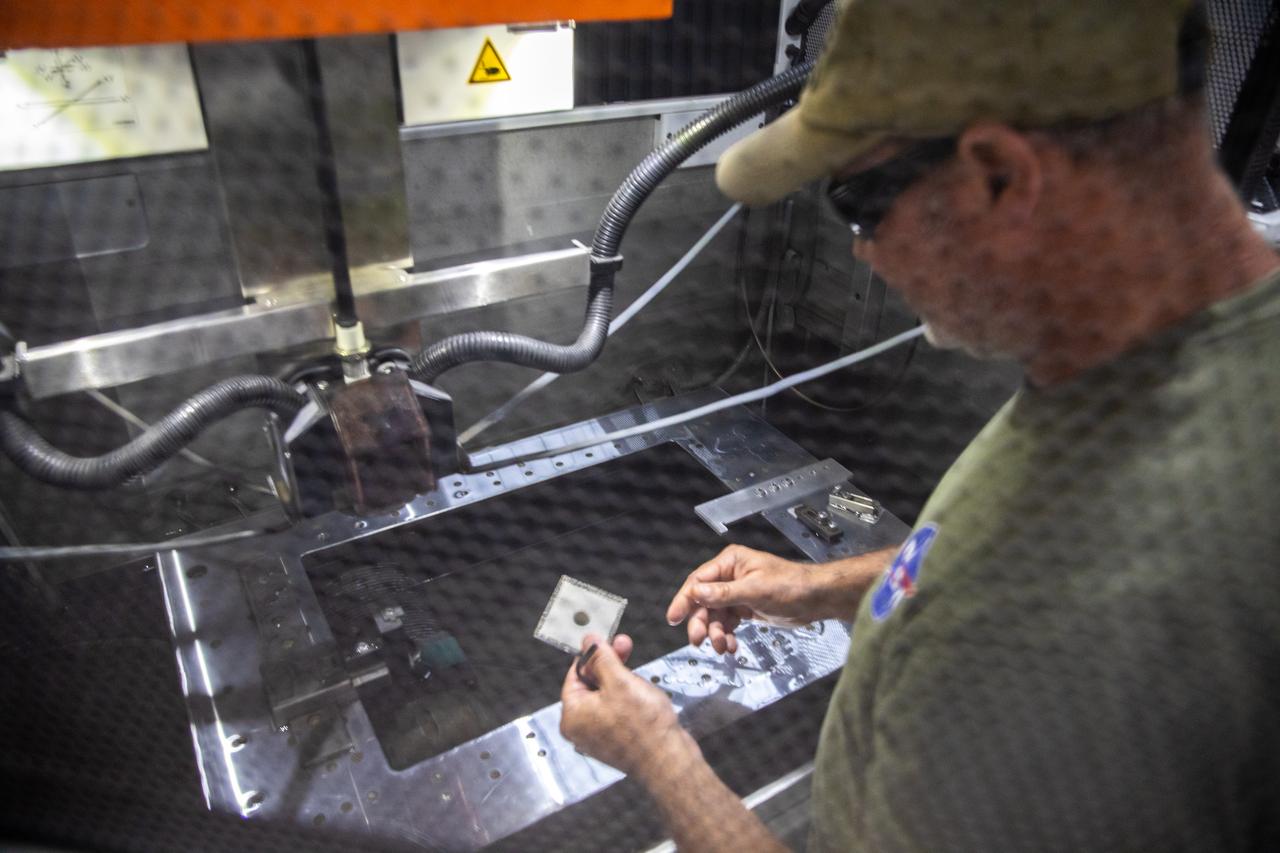
Gerard Moscoso, a mechanical engineer technician with NASA, prepares a sample for testing for the Plasma Rapid Oxidation Technique for Extending Component Tenability (PROTECT) project inside the Prototype Development Laboratory at NASA’s Kennedy Space Center in Florida on Nov. 2, 2022. Plasma electrolytic oxidation is a surface coating technology that produces oxide layers on the surface of light metals and their alloys to improve their performance characteristics. These coatings are tailored to provide a combination of characteristics such as corrosion protection, wear resistance, thermal management, extreme hardness, and fatigue performance. PROTECT is expected to demonstrate a 10 percent improved fatigue performance and a 70 percent improvement in corrosion characteristics on the interior of treated 3-D printed metallic parts when compared to non-treated parts. PROTECT could be applied on spacecraft and launch vehicles.

Dr. Jennifer Williams, a NASA research chemical engineer, is inside the Prototype Development Laboratory at NASA’s Kennedy Space Center in Florida to begin testing on the Plasma Rapid Oxidation Technique for Extending Component Tenability (PROTECT) project on Nov. 2, 2022. Plasma electrolytic oxidation is a surface coating technology that produces oxide layers on the surface of light metals and their alloys to improve their performance characteristics. These coatings are tailored to provide a combination of characteristics such as corrosion protection, wear resistance, thermal management, extreme hardness, and fatigue performance. PROTECT is expected to demonstrate a 10 percent improved fatigue performance and a 70 percent improvement in corrosion characteristics on the interior of treated 3-D printed metallic parts when compared to non-treated parts. PROTECT could be applied to spacecraft and launch vehicles.
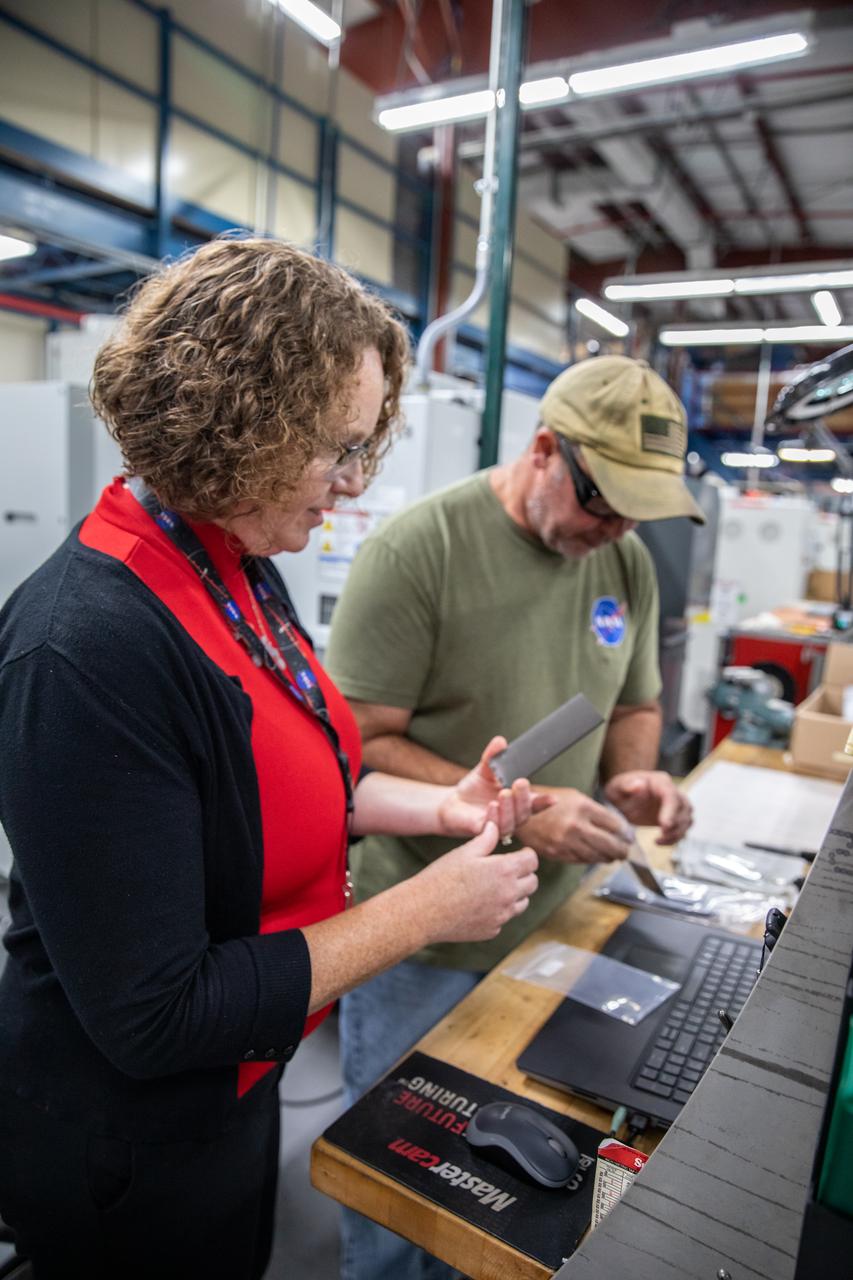
From left, Dr. Jennifer Williams, a NASA research chemical engineer, and Gerard Moscoso, a mechanical engineer technician, inspect specimens prepared forthe Plasma Rapid Oxidation Technique for Extending Component Tenability (PROTECT) experiment inside the Prototype Development Laboratory at NASA’s Kennedy Space Center in Florida on Nov. 2, 2022. Plasma electrolytic oxidation is a surface coating technology that produces oxide layers on the surface of light metals and their alloys to improve their performance characteristics. These coatings are tailored to provide a combination of characteristics such as corrosion protection, wear resistance, thermal management, extreme hardness, and fatigue performance. PROTECT is expected to demonstrate a 10 percent improved fatigue performance and a 70 percent improvement in corrosion characteristics on the interior of treated 3-D printed metallic parts when compared to non-treated parts. PROTECT could be applied used on spacecraft and launch vehicles.
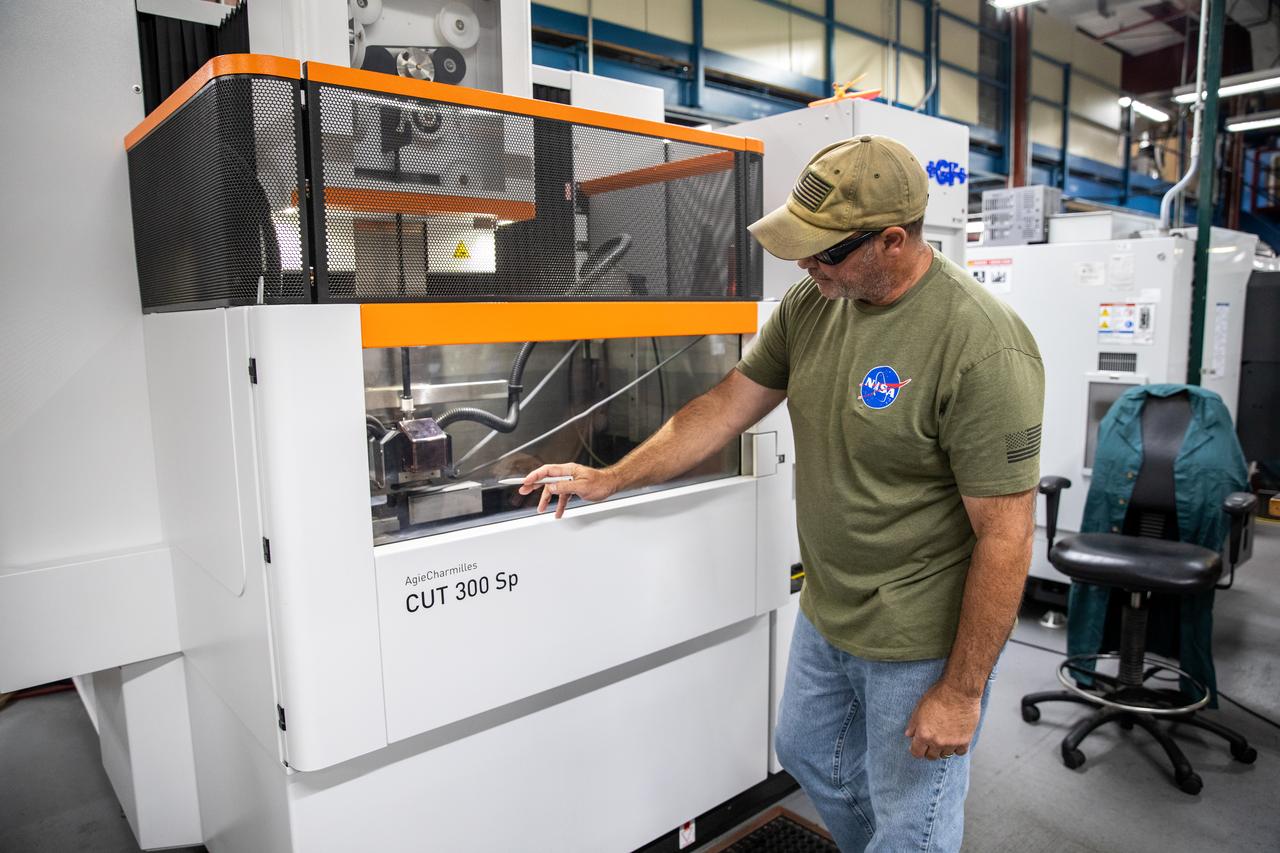
Gerard Moscoso, a mechanical engineer technician with NASA, prepares the Plasma Rapid Oxidation Technique for Extending Component Tenability (PROTECT) specimens for testing inside the Prototype Development Laboratory at NASA’s Kennedy Space Center in Florida on Nov. 2, 2022. Plasma electrolytic oxidation is a surface coating technology that produces oxide layers on the surface of light metals and their alloys to improve their performance characteristics. These coatings are tailored to provide a combination of characteristics such as corrosion protection, wear resistance, thermal management, extreme hardness, and fatigue performance. PROTECT is expected to demonstrate a 10 percent improved fatigue performance and a 70 percent improvement in corrosion characteristics on the interior of treated 3-D printed metallic parts when compared to non-treated parts. PROTECT could be applied on spacecraft and launch vehicles.
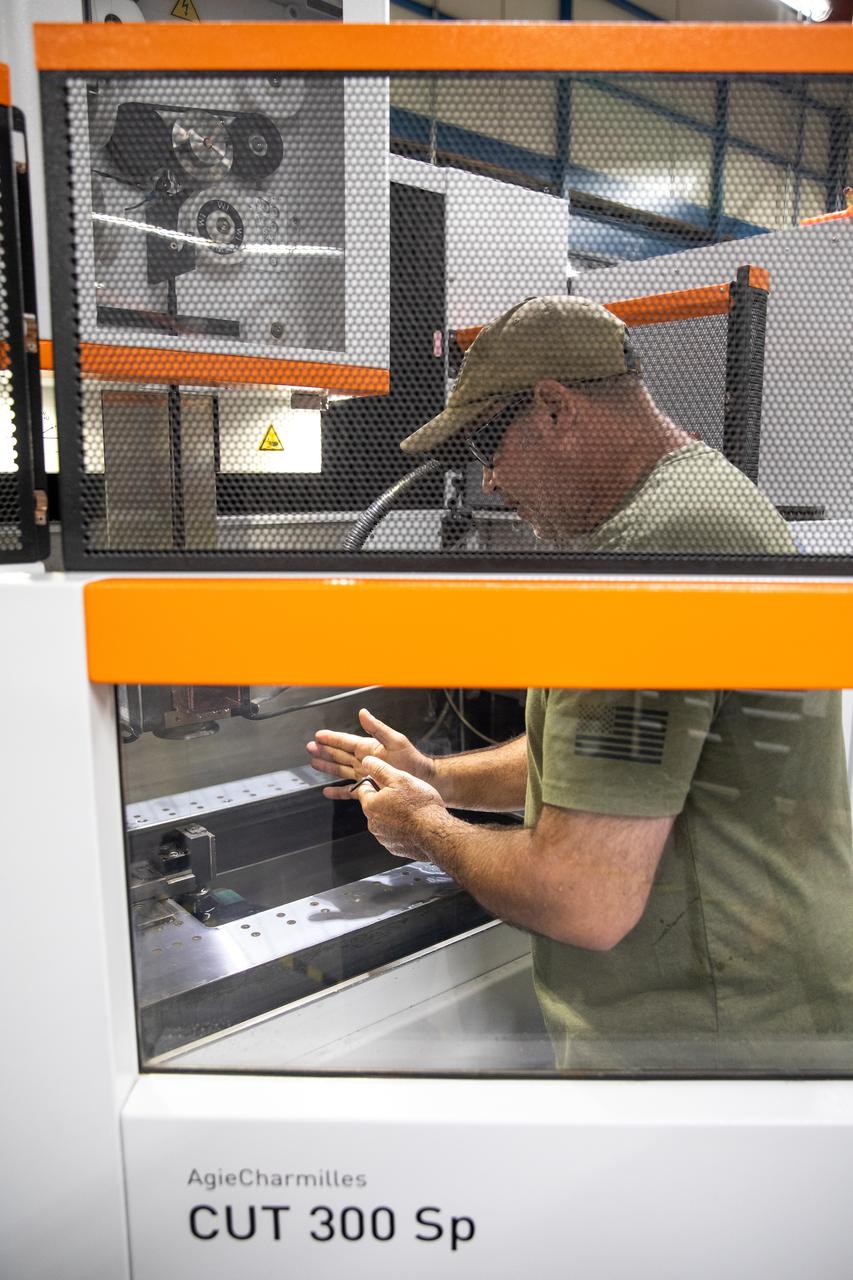
Gerard Moscoso, a mechanical engineer technician with NASA, handles a sample that is being prepared for fatigue and corrosion testing for the Plasma Rapid Oxidation Technique for Extending Component Tenability (PROTECT) project inside the Prototype Development Laboratory at NASA’s Kennedy Space Center in Florida on Nov. 2, 2022. Plasma electrolytic oxidation is a surface coating technology that produces oxide layers on the surface of light metals and their alloys to improve their performance characteristics. These coatings are tailored to provide a combination of characteristics such as corrosion protection, wear resistance, thermal management, extreme hardness, and fatigue performance. PROTECT is expected to demonstrate a ten percent improved fatigue performance and a 70 percent improvement in corrosion characteristics on the interior of treated 3-D printed metallic parts when compared to non-treated parts. PROTECT could be applied on spacecraft and launch vehicles.
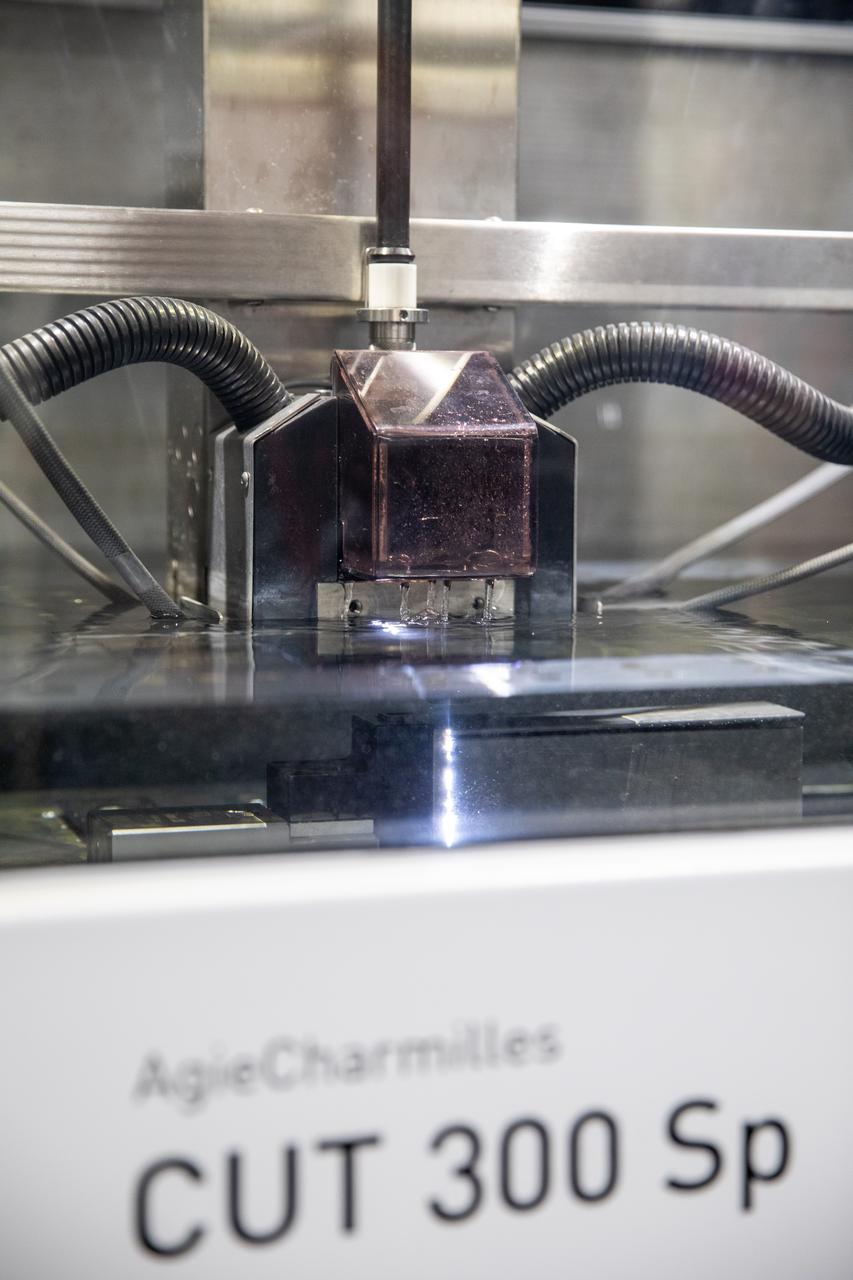
Testing of the Plasma Rapid Oxidation Technique for Extending Component Tenability (PROTECT) experiment is underway inside the Prototype Development Laboratory at NASA’s Kennedy Space Center in Florida on Nov. 2, 2022. Plasma electrolytic oxidation is a surface coating technology that produces oxide layers on the surface of light metals and their alloys to improve their performance characteristics. These coatings are tailored to provide a combination of characteristics such as corrosion protection, wear resistance, thermal management, extreme hardness, and fatigue performance. PROTECT is expected to demonstrate a 10 percent improved fatigue performance and a 70 percent improvement in corrosion characteristics on the interior of treated 3-D printed metallic parts when compared to non-treated parts. PROTECT could be applied on spacecraft and launch vehicles.
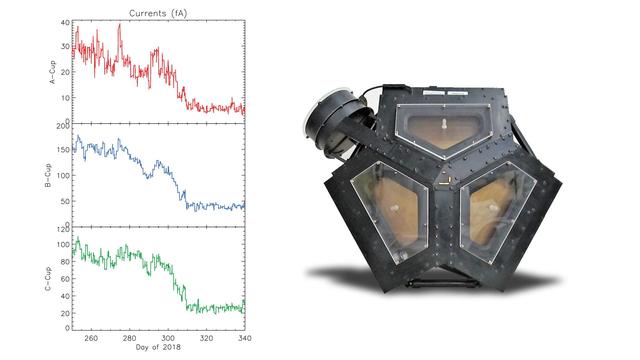
The set of graphs on the left illustrates the drop in electrical current detected in three directions by Voyager 2's plasma science experiment (PLS) to background levels. They are among the key pieces of data that Voyager scientists used to determine that Voyager 2 entered interstellar space, the space between stars, in November 2018. The disappearance in electrical current in the sunward-looking detectors indicates the spacecraft is no longer in the outward flow of solar wind plasma. It is instead in a new plasma environment -- interstellar medium plasma. The image on the right shows the Faraday cups of the PLS. The three sunward pointed cups point in slightly different directions in order to measure the direction of the solar wind. The fourth cup (on the upper left) points perpendicular to the others. https://photojournal.jpl.nasa.gov/catalog/PIA22922
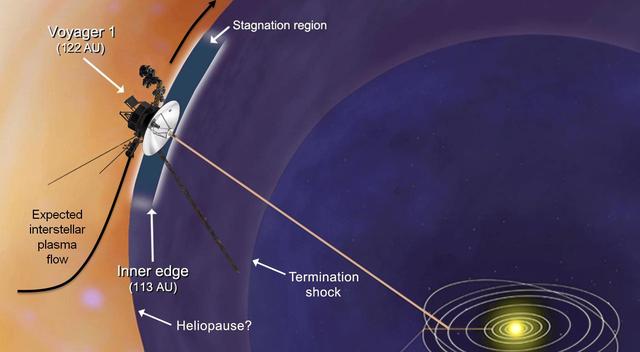
This artist concept shows plasma flows around NASA Voyager 1 spacecraft as it approaches interstellar space. Voyager 1 low-energy charged particle instrument detects the speed of the wind of plasma, or hot ionized gas, streaming off the sun.
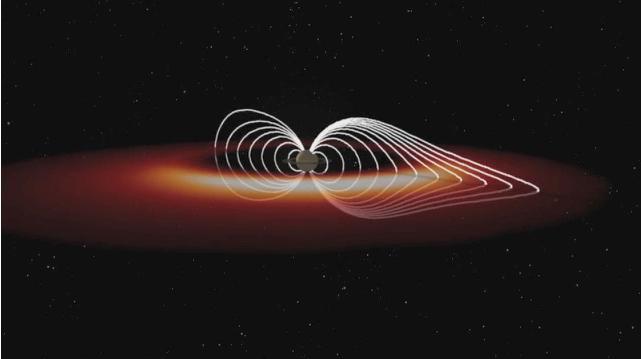
This frame from an animation based on data obtained by NASA Cassini spacecraft shows how the explosions of hot plasma on the night side orange and white periodically inflate Saturn magnetic field white lines.
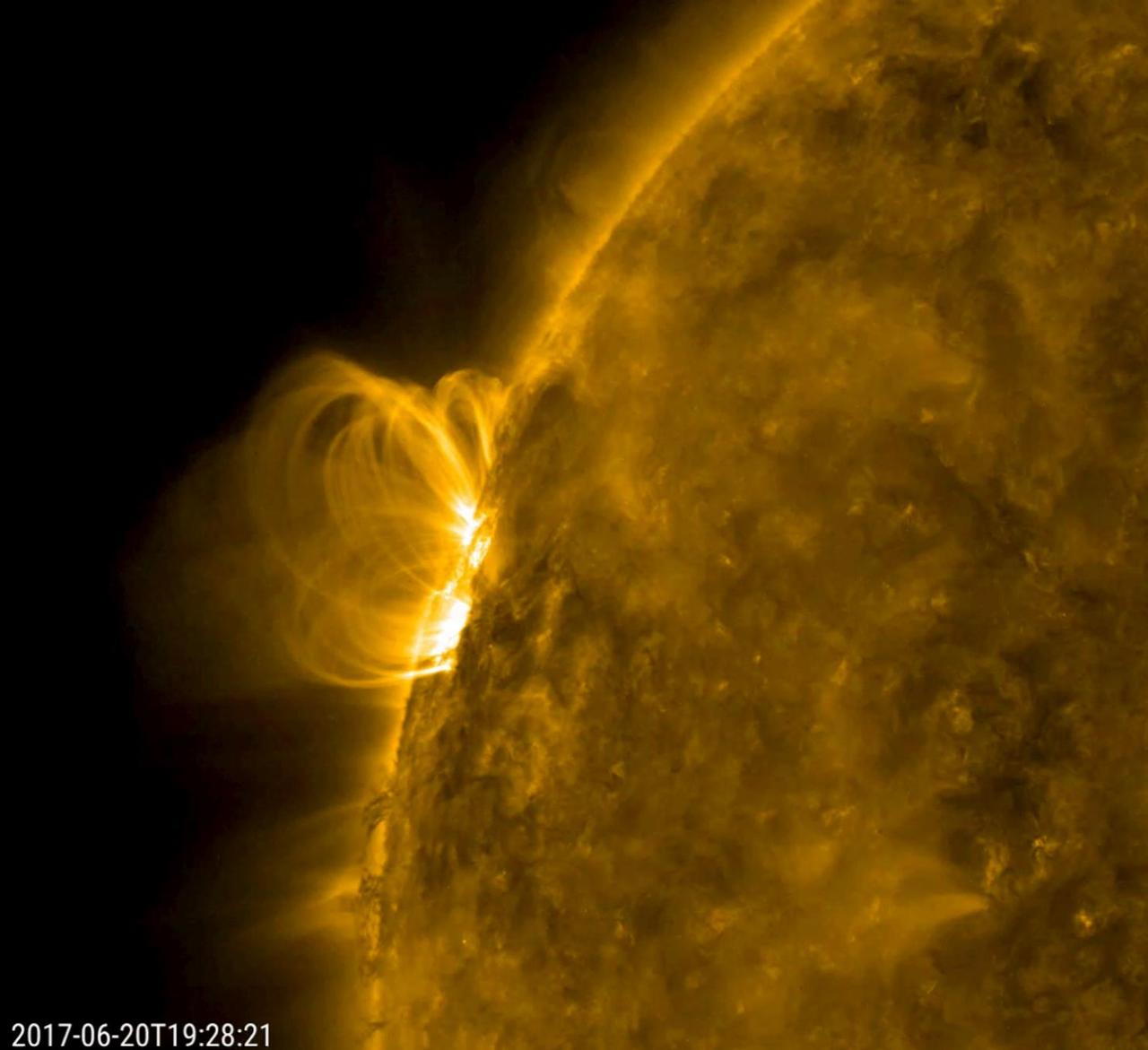
A smallish solar filament looks like it collapsed into the sun and set off a minor eruption that hurled plasma into space (June 20, 2017). Then, the disrupted magnetic field immediately began to reorganize itself, hence the bright series of spirals coiling up over that area. The magnetic field lines are made visible in extreme ultraviolet light as charged particles spin along them. Also of interest are the darker, cooler strands of plasma being pulled and twisted at the edge of the sun just below the active region. The activity here is in a 21-hour period. Movies are available at https://photojournal.jpl.nasa.gov/catalog/PIA21764
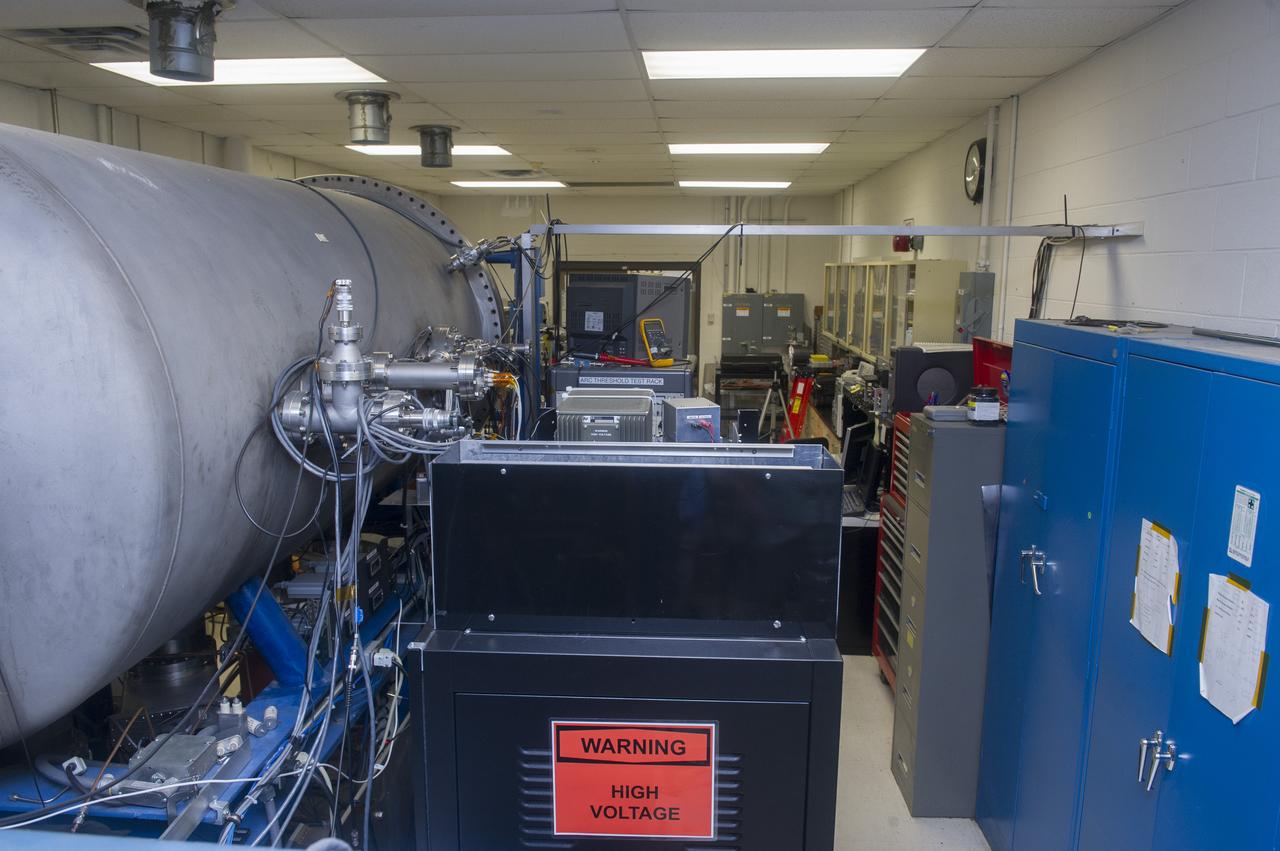
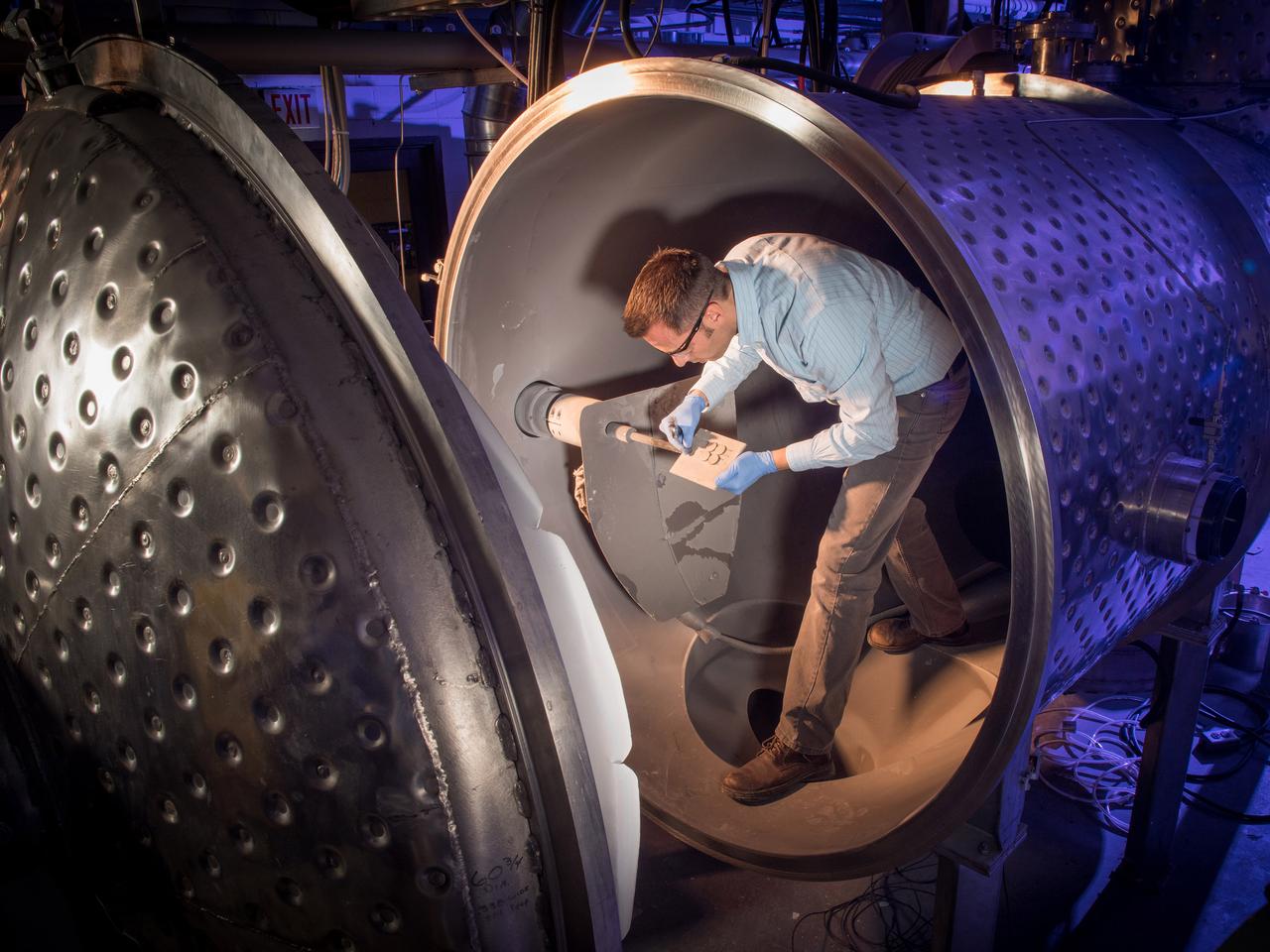
BLDG. 4605 PLASMA ENVIRONMENT TEST LABORATORY. VACUUM CHAMBER FROM REAR
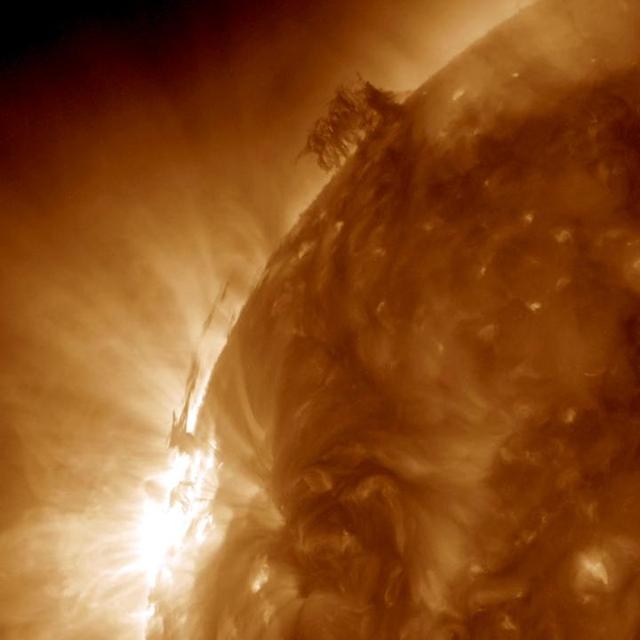
This still image from an animation from NASA GSFC Solar Dynamics Observatory shows dark strands of plasma hovering above the Sun surface beginning to interact with each other in a form of tug of war over two and a half days June 28-30, 2015.
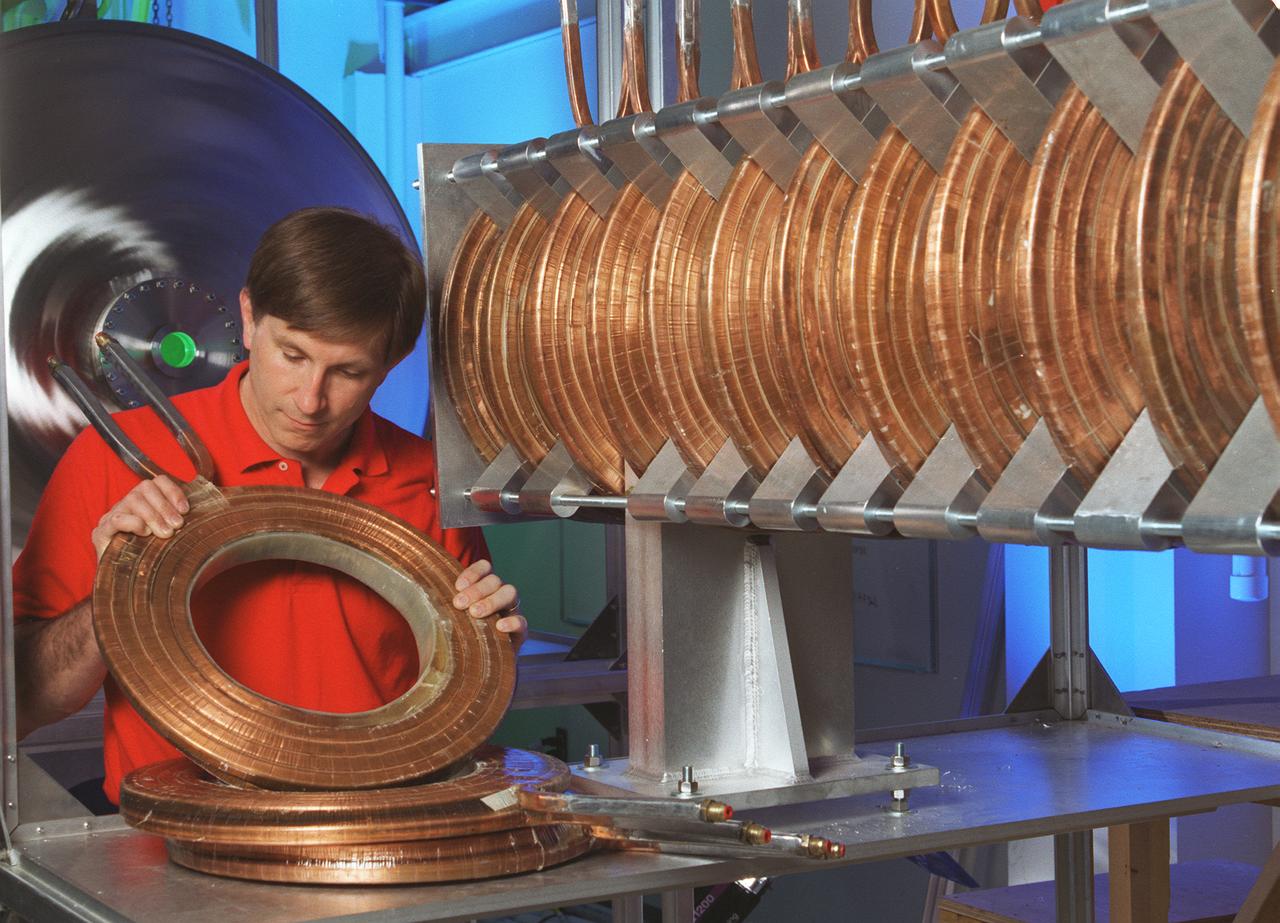
The Gasdynamic Mirror, or GDM, is an example of a magnetic mirror-based fusion propulsion system. Its design is primarily consisting of a long slender solenoid surrounding a vacuum chamber that contains plasma. The bulk of the fusion plasma is confined by magnetic field generated by a series of toroidal-shaped magnets in the center section of the device. the purpose of the GDM Fusion Propulsion Experiment is to confirm the feasibility of the concept and to demonstrate many of the operational characteristics of a full-size plasma can be confined within the desired physical configuration and still reman stable. This image shows an engineer from Propulsion Research Technologies Division at Marshall Space Flight Center inspecting solenoid magnets-A, an integrate part of the Gasdynamic Mirror Fusion Propulsion Engine Experiment.
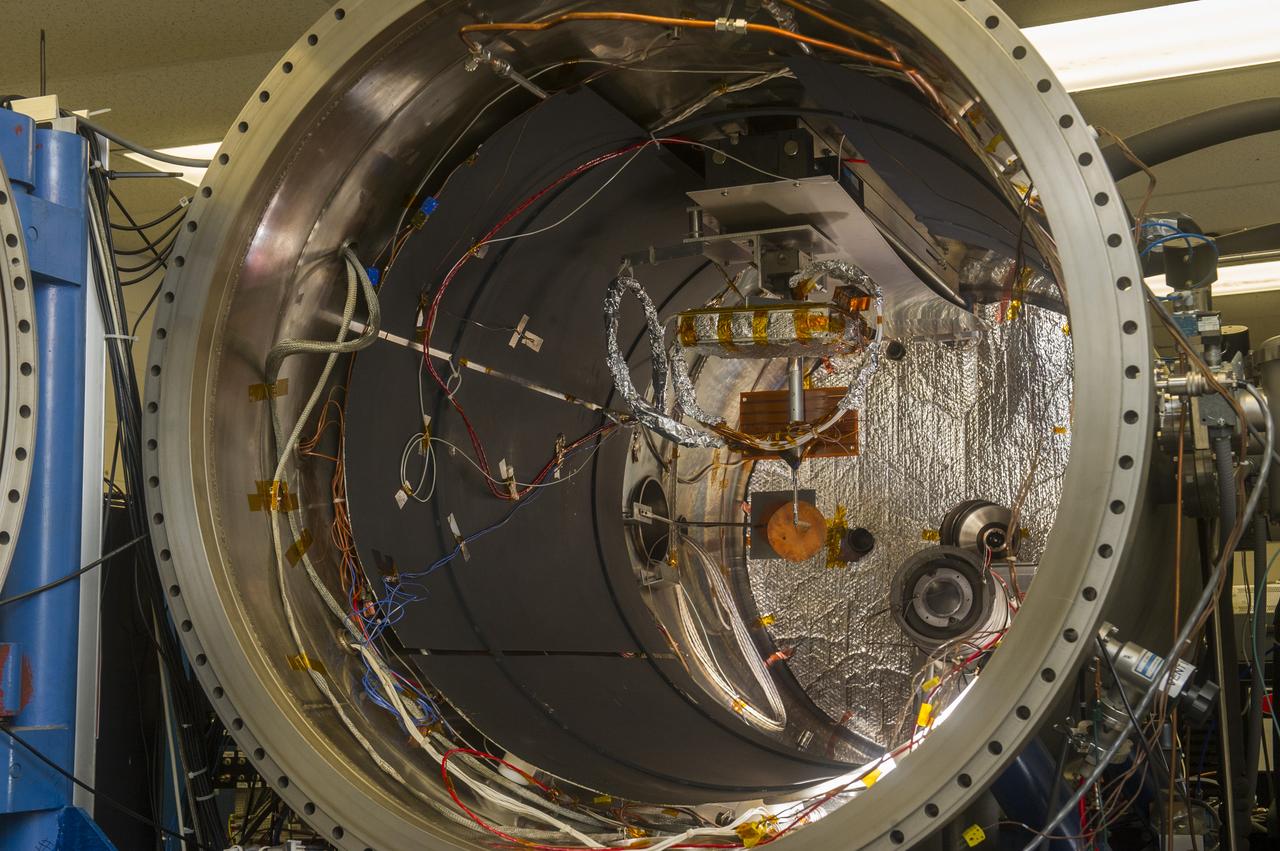
BLDG. 4605 PLASMA ENVIRONMENT TEST LABORATORY. VACUUM CHAMBER OPEN WITH SAMPLE SETUP
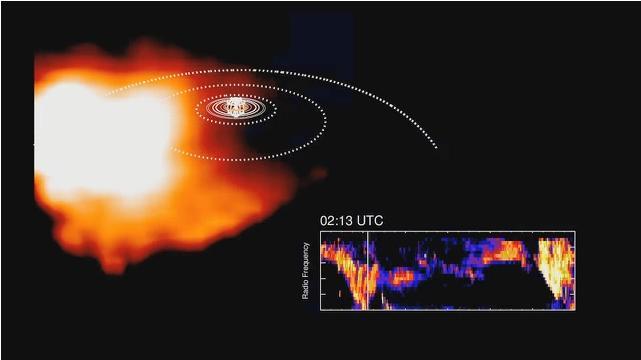
This frame from an animation, derived from data obtained by NASA Cassini spacecraft, shows how plasma swirling around Saturn is correlated to bursts of radio waves emanating from the planet.
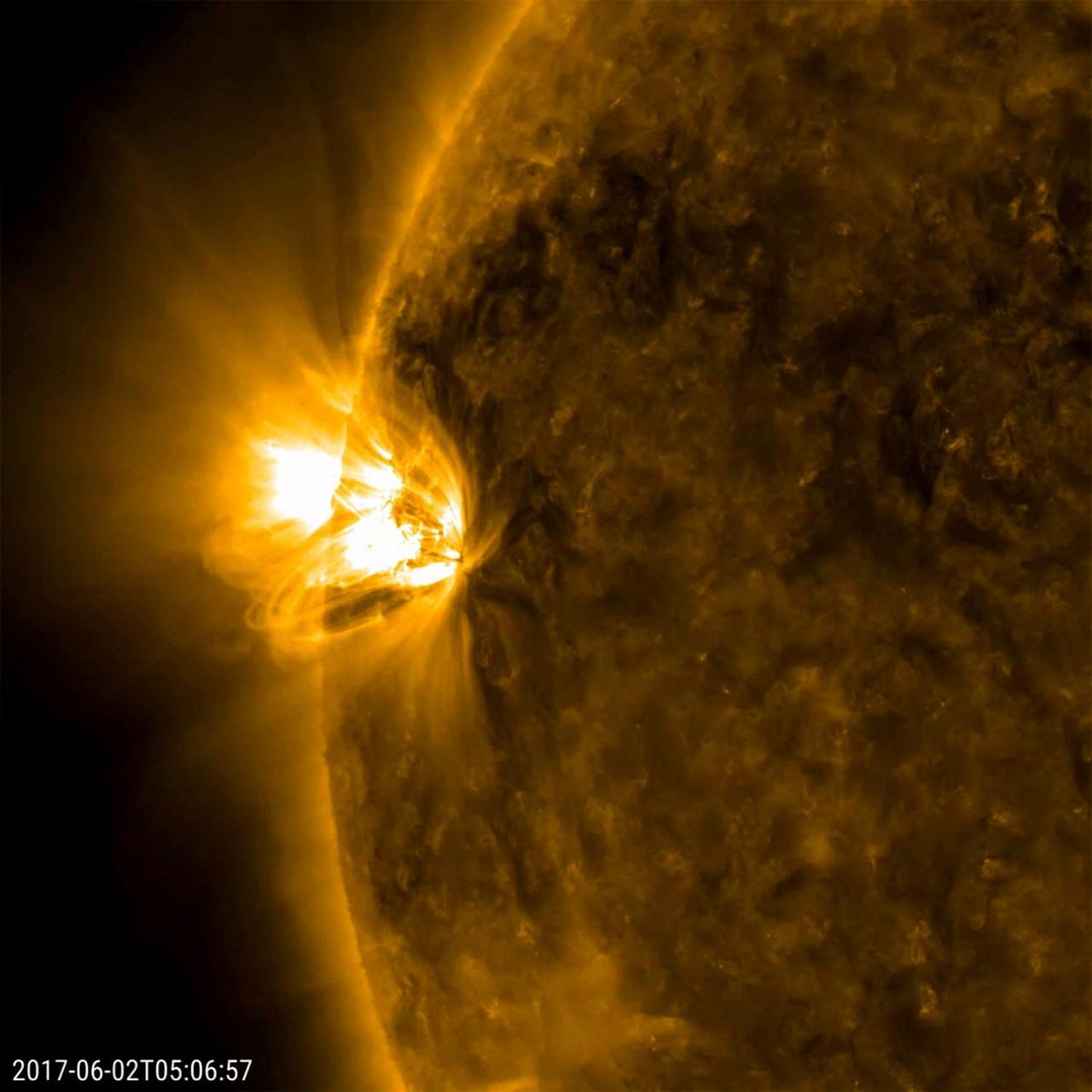
A pair of relatively small (but frenetic) active regions rotated into view, spouting off numerous small flares and sweeping loops of plasma (May 31-June 2, 2017). At first, only the one active region was observed, but mid-way though the video clip a second one behind the first can be picked out. The dynamic regions were easily the most remarkable areas on the sun during this 42-hour period. The images were taken in a wavelength of extreme ultraviolet light. Movies are available at https://photojournal.jpl.nasa.gov/catalog/PIA21756
The Plasma Spray-Physical Vapor Deposition (PS-PVD) Rig at NASA Glenn Research Center. The rig helps develop coatings for next-generation aircraft turbine components and create more efficient engines.
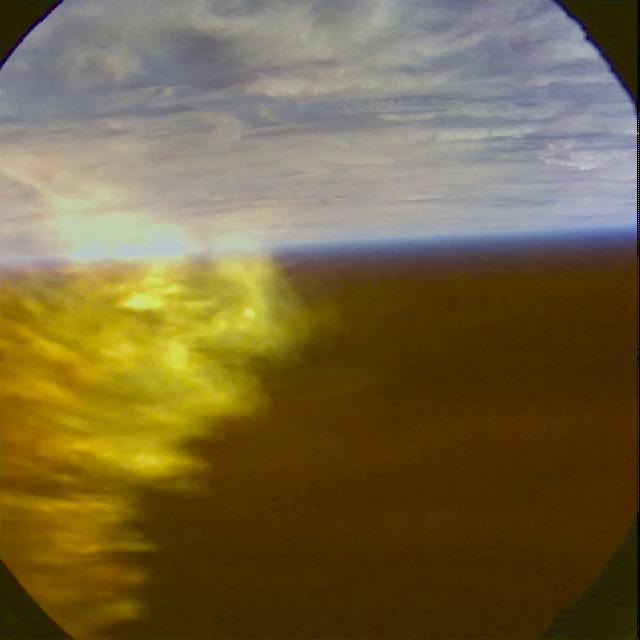
A view from the side windows as plasma surrounds the vehicle during reentry on Orion's first flight test, Exploration Flight Test-1 (EFT-1), on December 5, 2014.
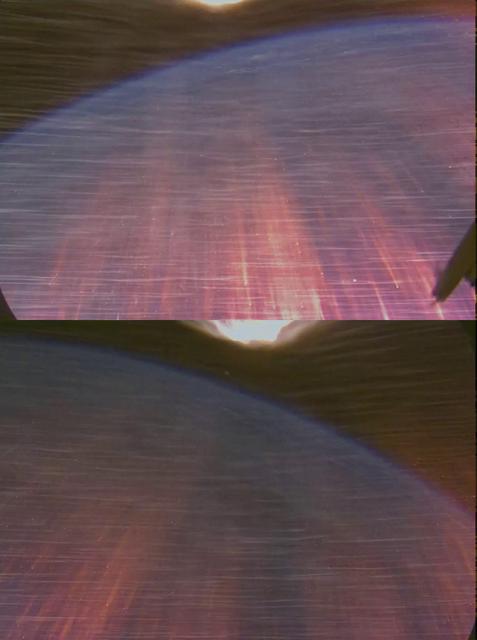
A view from the top hatch window as plasma surrounds the vehicle during reentry on Orion's first flight test, Exploration Flight Test-1 (EFT-1), on December 5, 2014.
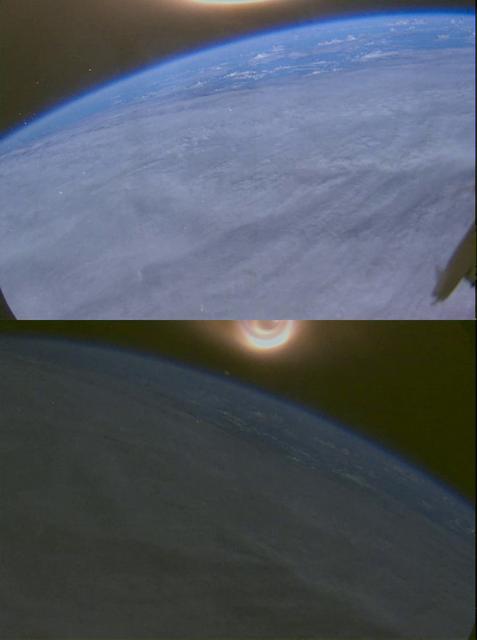
A view from the side windows as plasma surrounds the vehicle during reentry on Orion's first flight test, Exploration Flight Test-1 (EFT-1), on December 5, 2014.
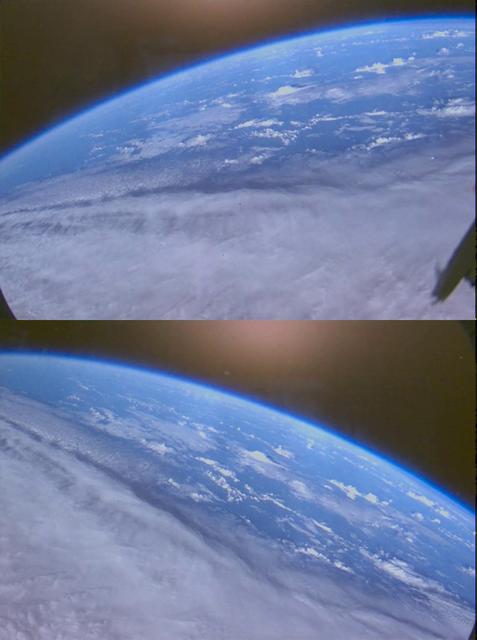
A view from the top hatch window as plasma surrounds the vehicle during reentry on Orion's first flight test, Exploration Flight Test-1 (EFT-1), on December 5, 2014.
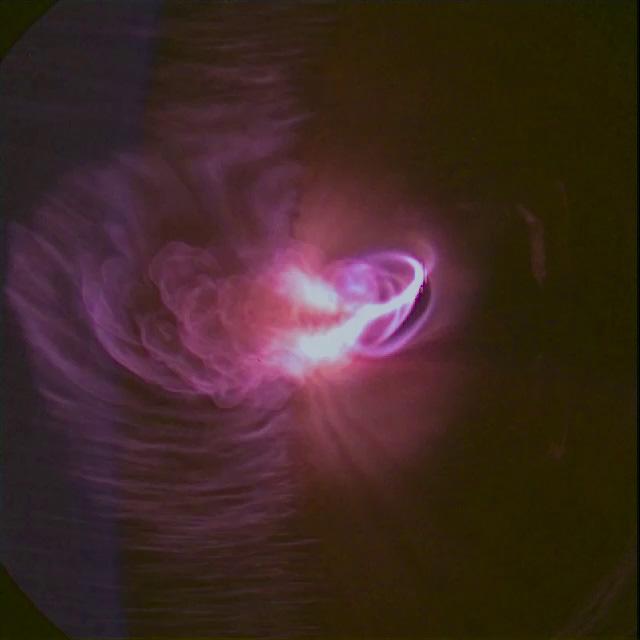
A view from the top hatch window as plasma surrounds the vehicle during reentry on Orion's first flight test, Exploration Flight Test-1 (EFT-1), on December 5, 2014.
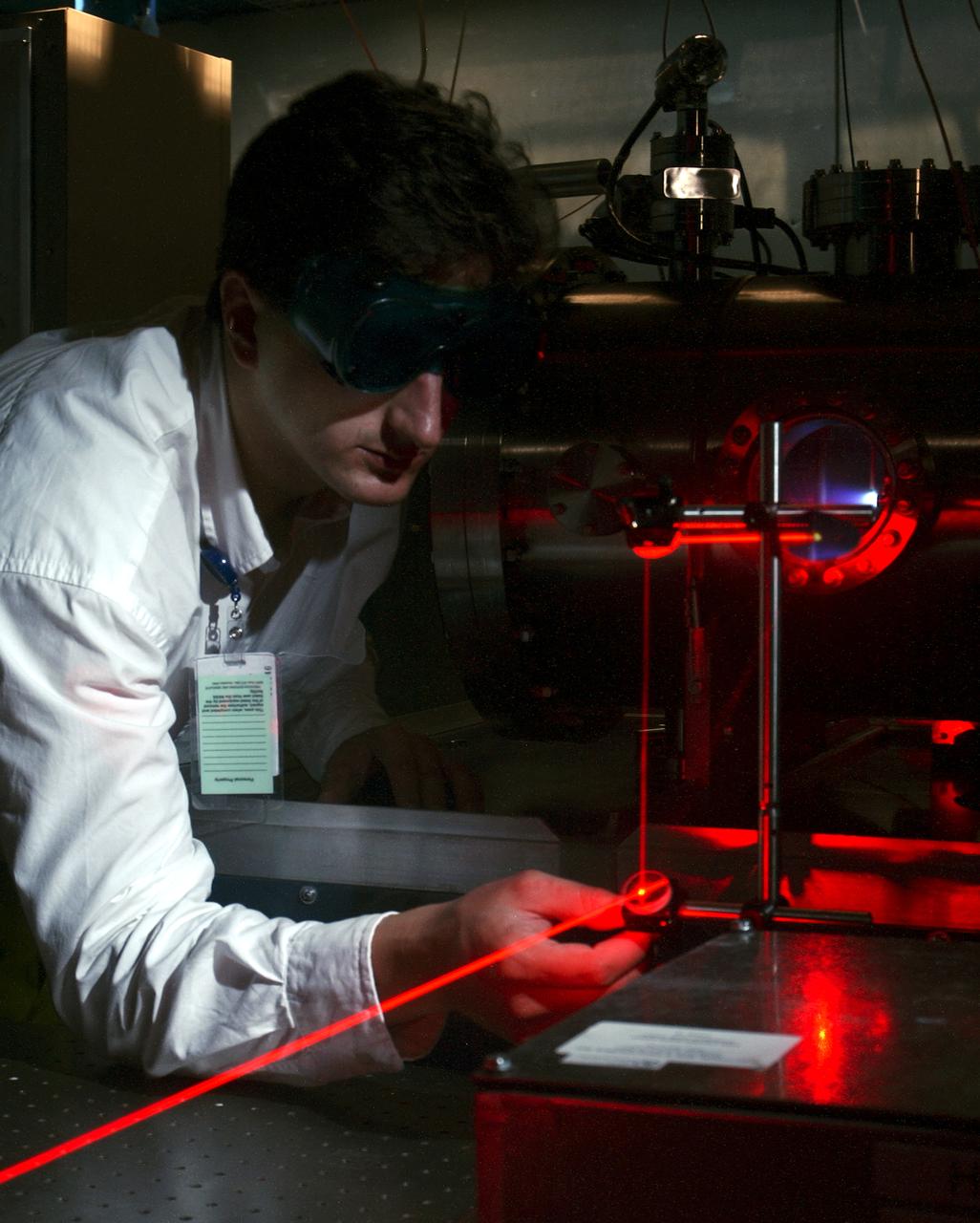
Dr. Tom Markusic, a propulsion research engineer at the Marshall Space Flight Center (MSFC), adjusts a diagnostic laser while a pulsed plasma thruster (PPT) fires in a vacuum chamber in the background. NASA/MSFC's Propulsion Research Center (PRC) is presently investigating plasma propulsion for potential use on future nuclear-powered spacecraft missions, such as human exploration of Mars.
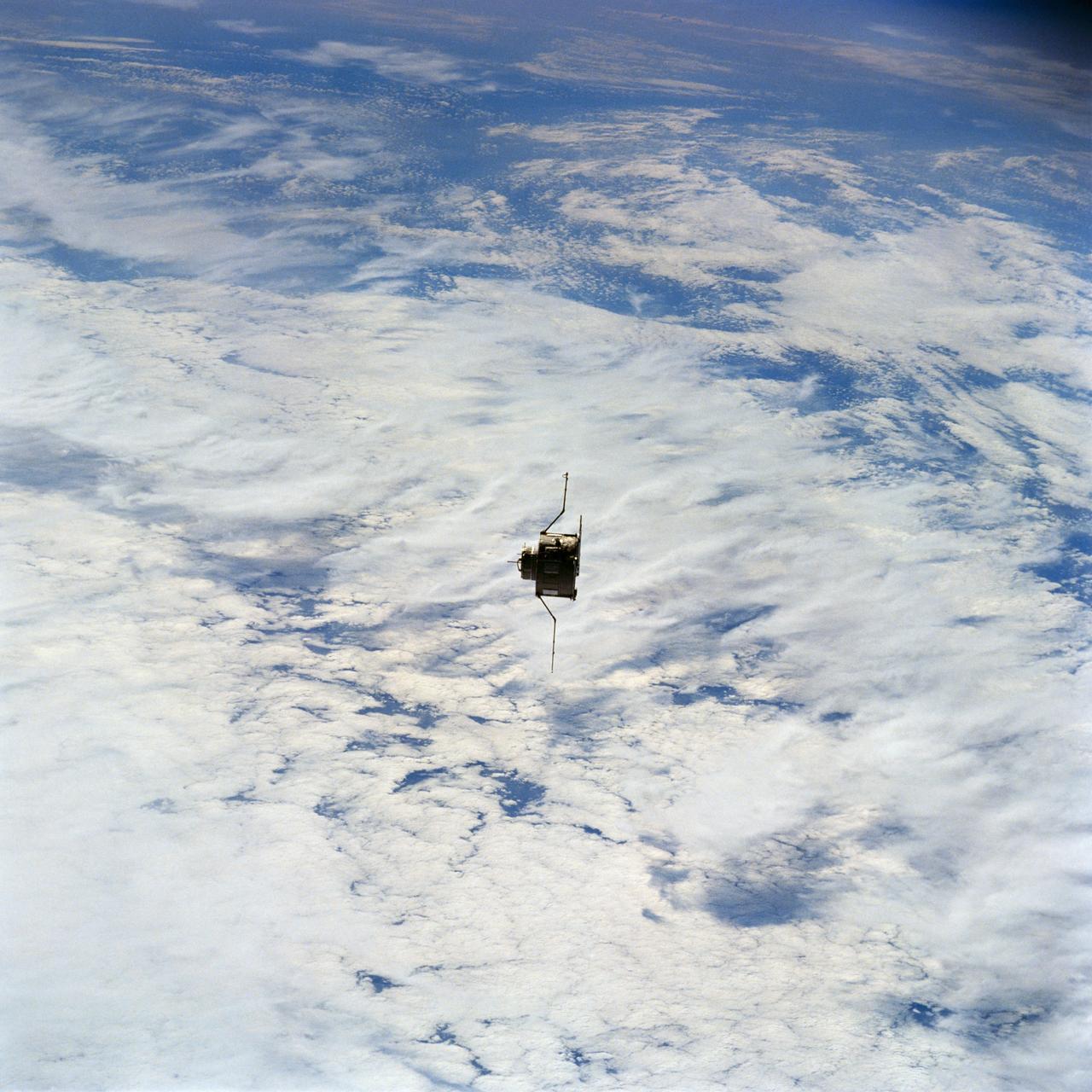
51F-34-041 (29 July-6 Aug. 1985) --- The plasma diagnostics package(PDP) in free flight over heavily cloud-covered Earth.

A solar prominence at the sun's edge put on quite a display of plasma being pushed and pulled by unstable magnetic fields (May 22-24, 2017). We call them hedgerow prominences because they look somewhat like a hedge of bushes. This is one of the better examples of this type of solar phenomenon than any we have seen in quite some time. Movies are available at https://photojournal.jpl.nasa.gov/catalog/PIA21650
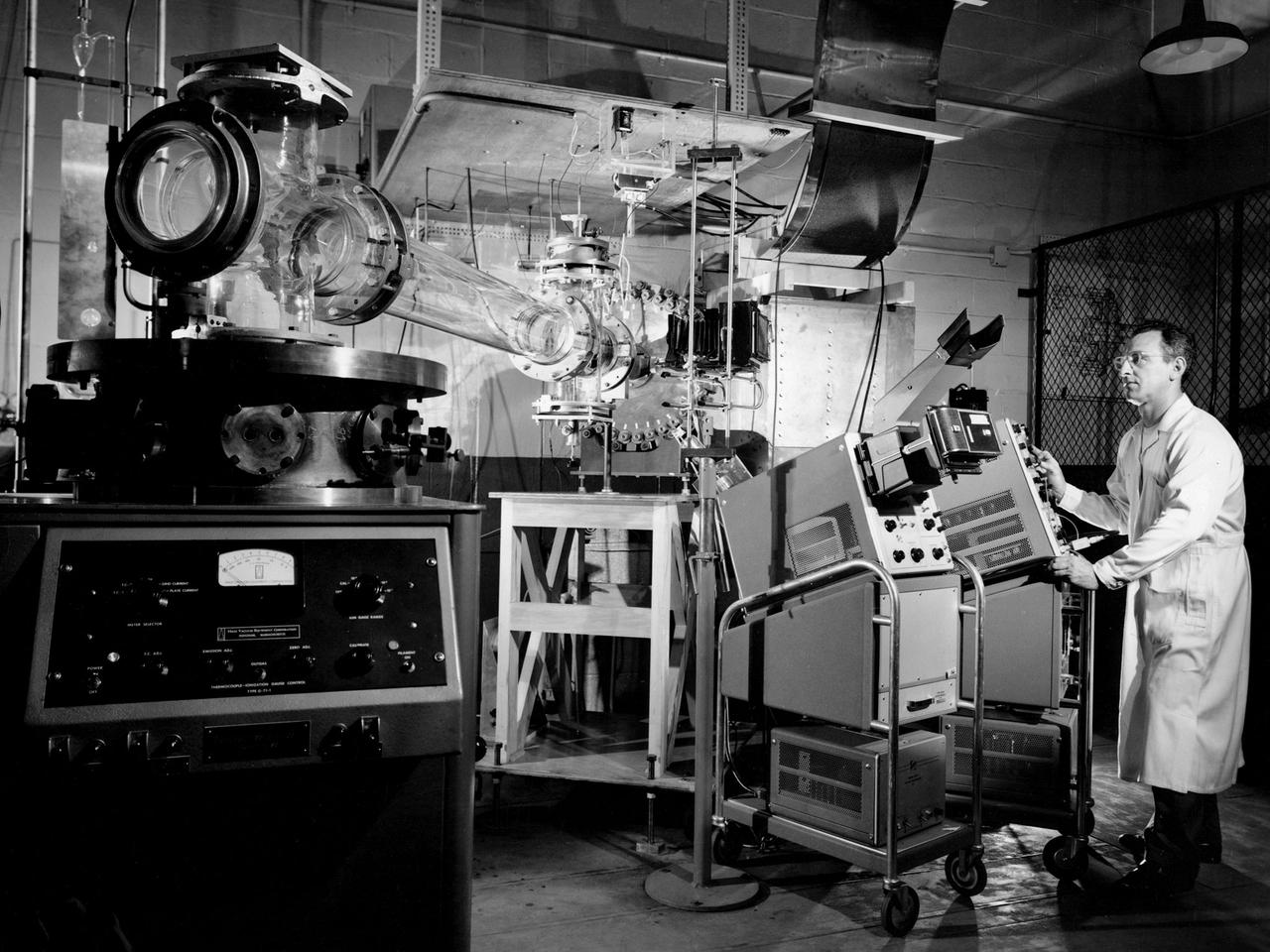
Researcher Charles Michels operates a coaxial plasma gun rig in Cell SW-13 of the Engine Research Building at the National Aeronautics and Space Administration (NASA) Lewis Research Center. From 1962 to 1967 NASA Lewis investigated coaxial plasma guns powered by conventional capacitor banks. The studies were part of a larger effort to identify electromagnetic accelerators for space propulsion. NASA worked with General Dynamics, General Electric, General Motors, and Republic Aviation on the project. NASA Lewis conducted a research program to determine which factors influenced the coaxial gun’s efficiency and analyze the acceleration process. The system had not previously been used for propulsion applications. The single-shot gun’s fast gas valve and capacitor banks with variable-delay ignition source permitted the evaluation of gun performance under controllable propellant quantity and distribution conditions. The coaxial plasma gun was the most basic type of electromagnetic accelerator. It included a charged capacitor in series with a pair of coaxial electrodes. An electrical breakdown occurred when gas was admitted to the inter-electrode region. The gas instantly became a good conductor and formed a conducting sheet that separated the magnetic field from the open region beyond. The highly-conducting gas was basically expelled by the force of the magnetic pressure. This type of thruster could operate at the high instantaneous power levels without decreasing its average power level.
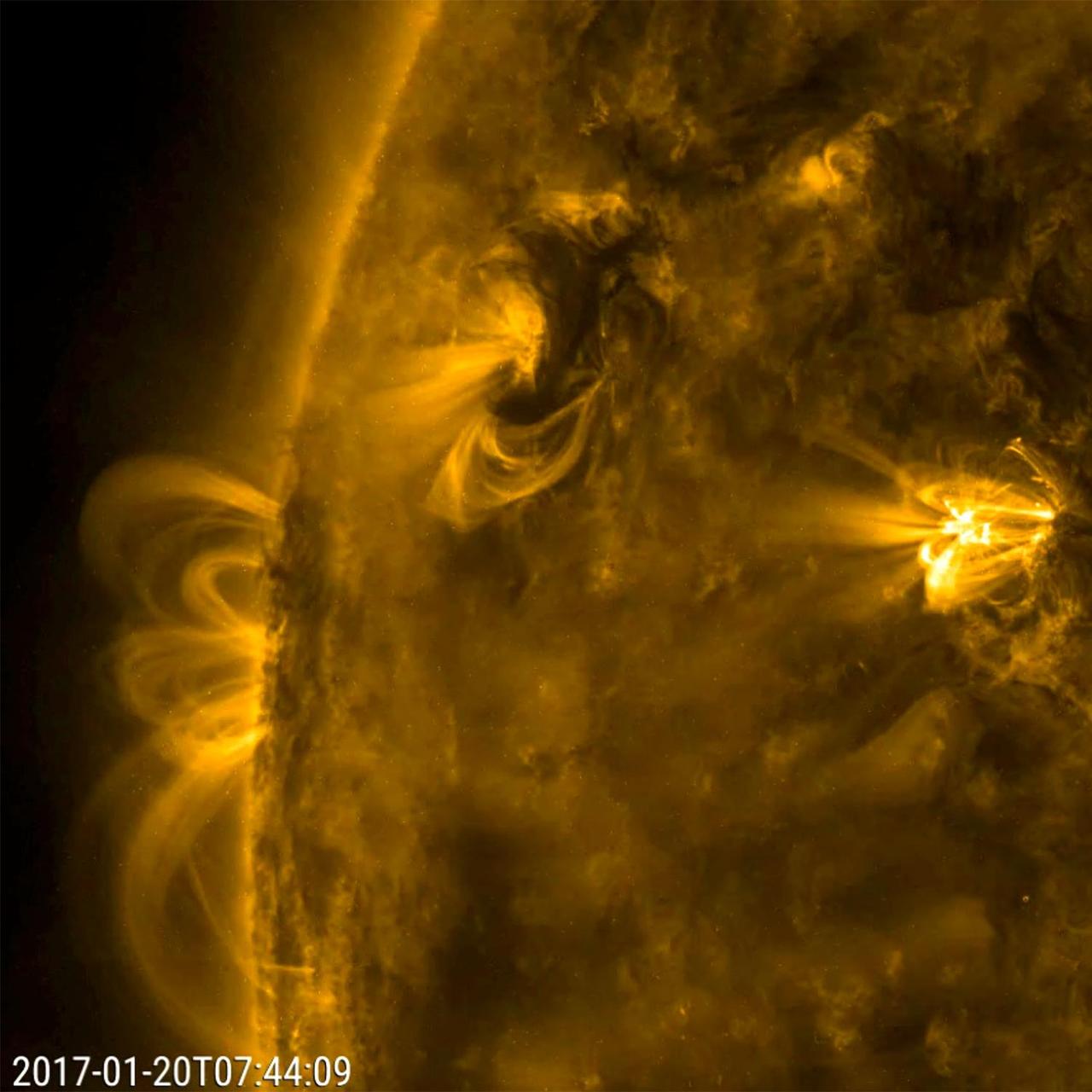
On Jan. 20, 2017, NASA Solar Dynamics Observatory captured a small area of the sun highlighted three active region. Over half a day this active region sent dark swirls of plasma and bright magnetic arches twisting and turning above it. All the activity in the three areas was driven by competing magnetic forces. The dynamic action was observed in a wavelength of extreme ultraviolet light. Movies are available at http://photojournal.jpl.nasa.gov/catalog/PIA11703

A small eruption blew a bright, disjointed stream of plasma into space (Oct. 18, 2017). The source of the blast was just out of sight beyond the edge of the sun. Images from SOHO's coronagraph instruments show a bright loop of material heading away from the sun near this same area. The video, taken in extreme ultraviolet light, covers just two hours of activity. Movies are available at https://photojournal.jpl.nasa.gov/catalog/PIA22050
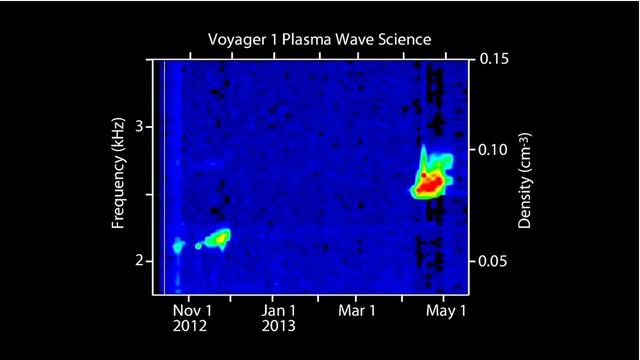
This visual represents sounds captured of interstellar space by NASA Voyager 1 spacecraft. Voyager 1 plasma wave instrument detected the vibrations of dense interstellar plasma.
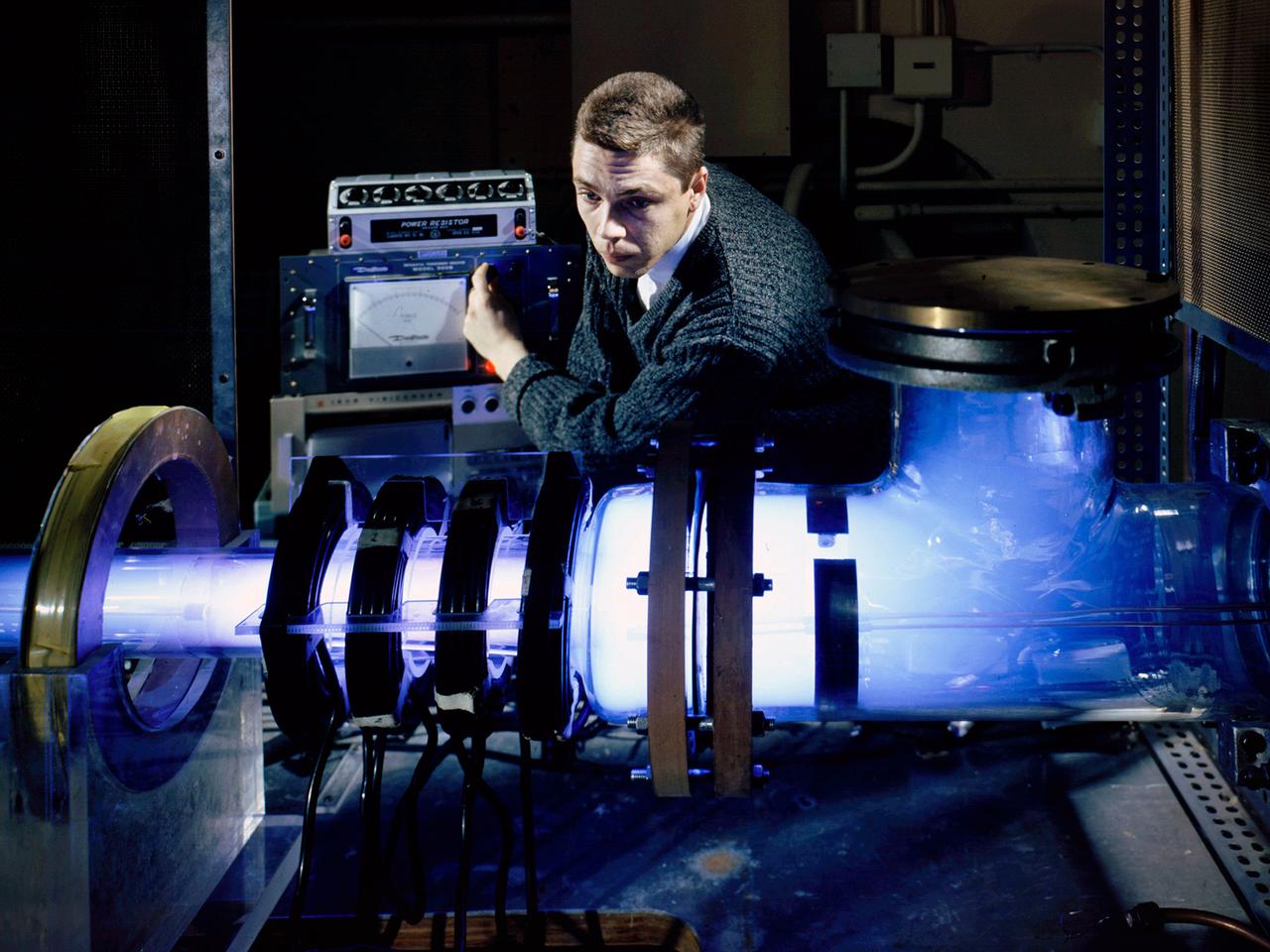
Raymond Palmer, of the Electromagnetic Propulsion Division’s Plasma Flow Section, adjusts the traveling magnetic wave plasma engine being operated in the Electric Power Conversion at the National Aeronautics and Space Administration (NASA) Lewis Research Center. During the 1960s Lewis researchers were exploring several different methods of creating electric propulsion systems, including the traveling magnetic wave plasma engine. The device operated similarly to alternating-current motors, except that a gas, not a solid, was used to conduct the electricity. A magnetic wave induced a current as it passed through the plasma. The current and magnetic field pushed the plasma in one direction. Palmer and colleague Robert Jones explored a variety of engine configurations in the Electric Propulsion Research Building. The engine is seen here mounted externally on the facility’s 5-foot diameter and 16-foot long vacuum tank. The four magnetic coils are seen on the left end of the engine. The researchers conducted two-minute test runs with varying configurations and used of both argon and xenon as the propellant. The Electric Propulsion Research Building was built in 1942 as the Engine Propeller Research Building, often called the Prop House. It contained four test cells to study large reciprocating engines with their propellers. After World War II, the facility was modified to study turbojet engines. By the 1960s, the facility was modified again for electric propulsion research and given its current name.
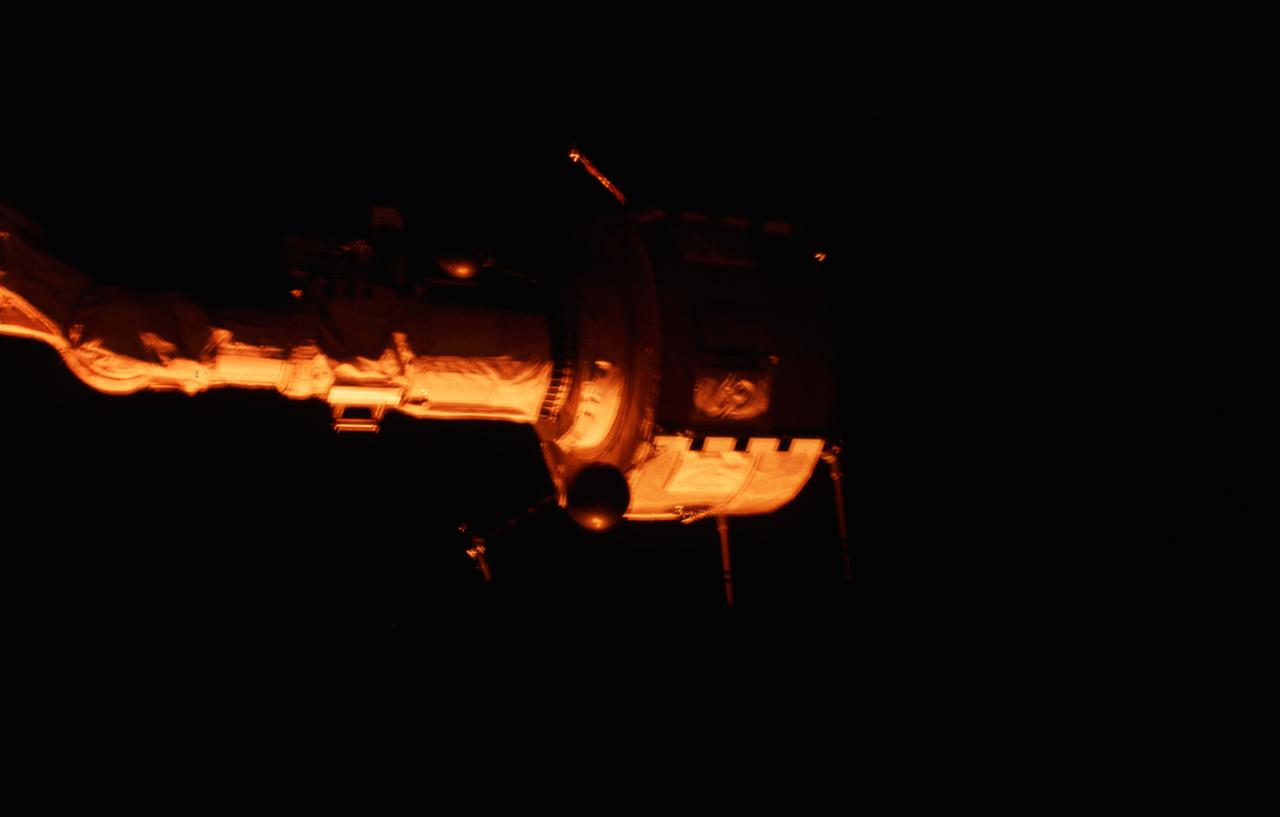
STS003-21-080 (22-30 March 1982) --- Plasma Diagnostics Package (PDP) grappled by remote manipulator system (RMS) end effector is positioned above payload bay (PLB) at sunrise. Photo credit: NASA
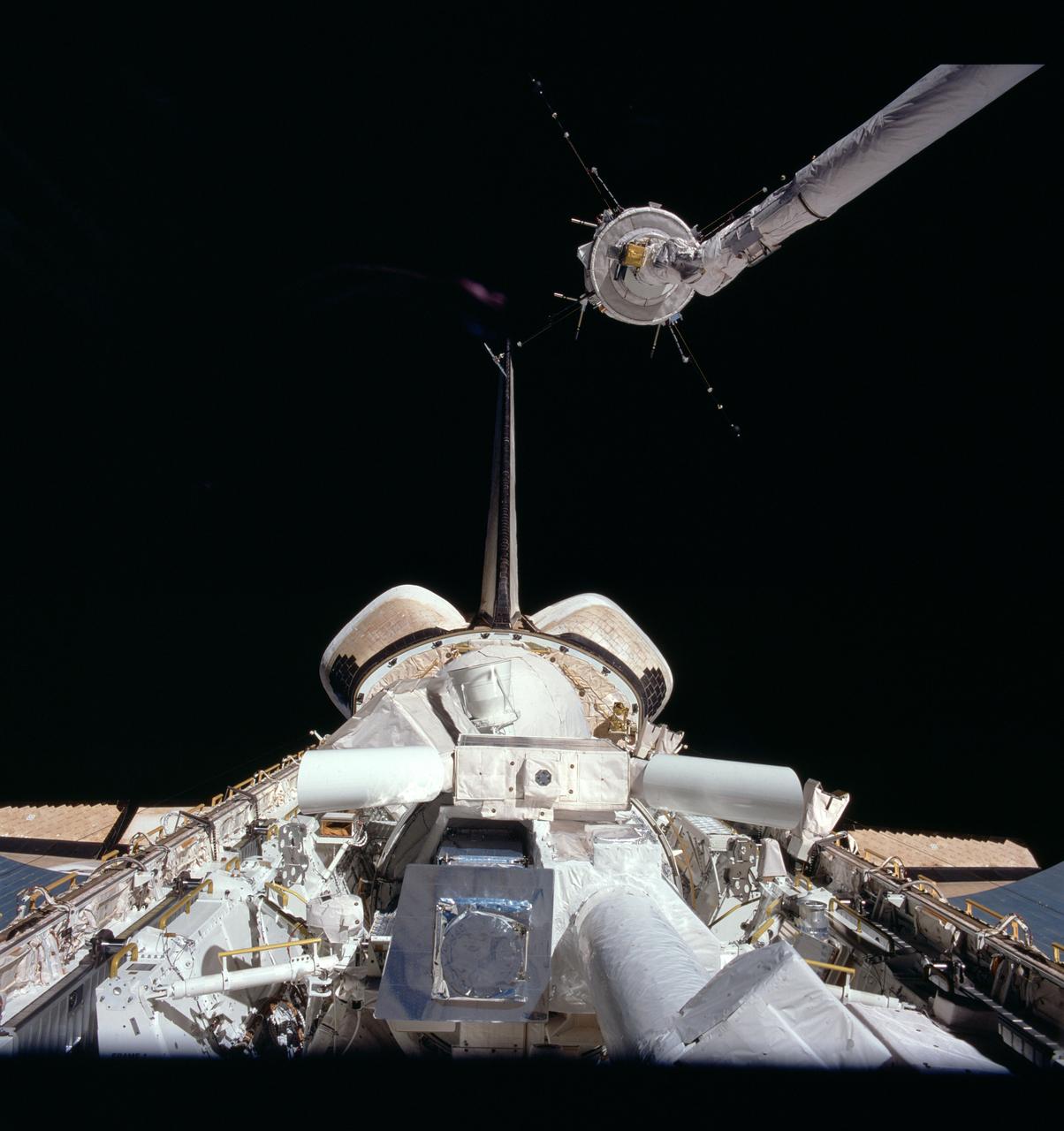
51F-33-024 (29 July-6 Aug 1985) --- The Challenger's remote manipulator system (RMS) arm grasps the plasma diagnostics package (PDP) over the experiment-laden cargo bay of the earth orbiting spacecraft. The instrument pointing system, in a resting mode here, is prominent in the bay.
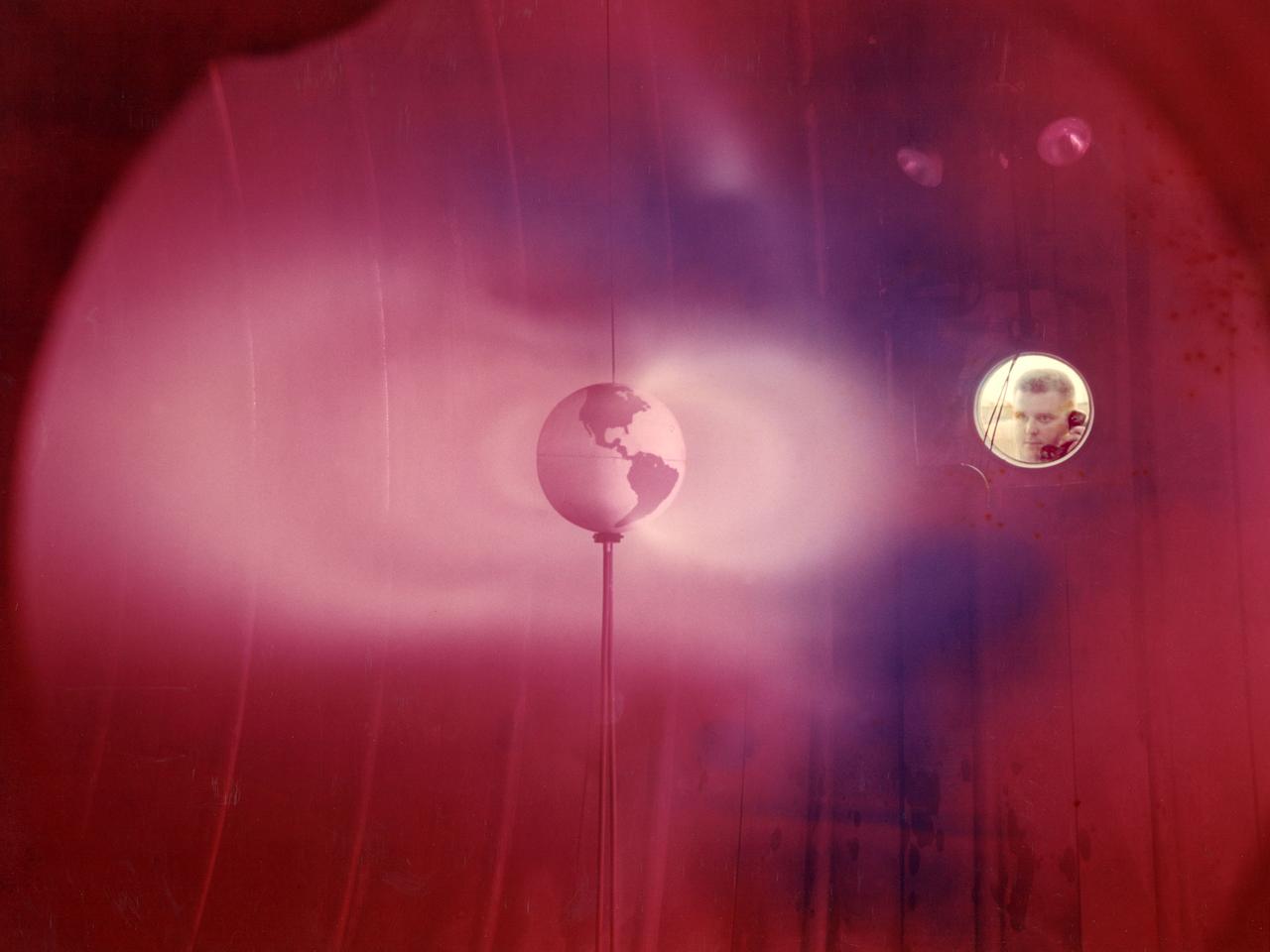
The model of the Earth housed inside Vacuum Tank 5 contained a coil which produced a magnetic field simulating that of the Earth. It was bombarded with a stream of ionized particles simulating the solar wind which impinges on the Earth's magnetic field. The bands or belts of luminous plasma seen in this image were suggestive of the Van Allen belts found around the Earth. Scientists at Lewis probed the plasma around the model and studied scaling laws in an attempt to find an explanation for the actual formation of the Van Allen belt.
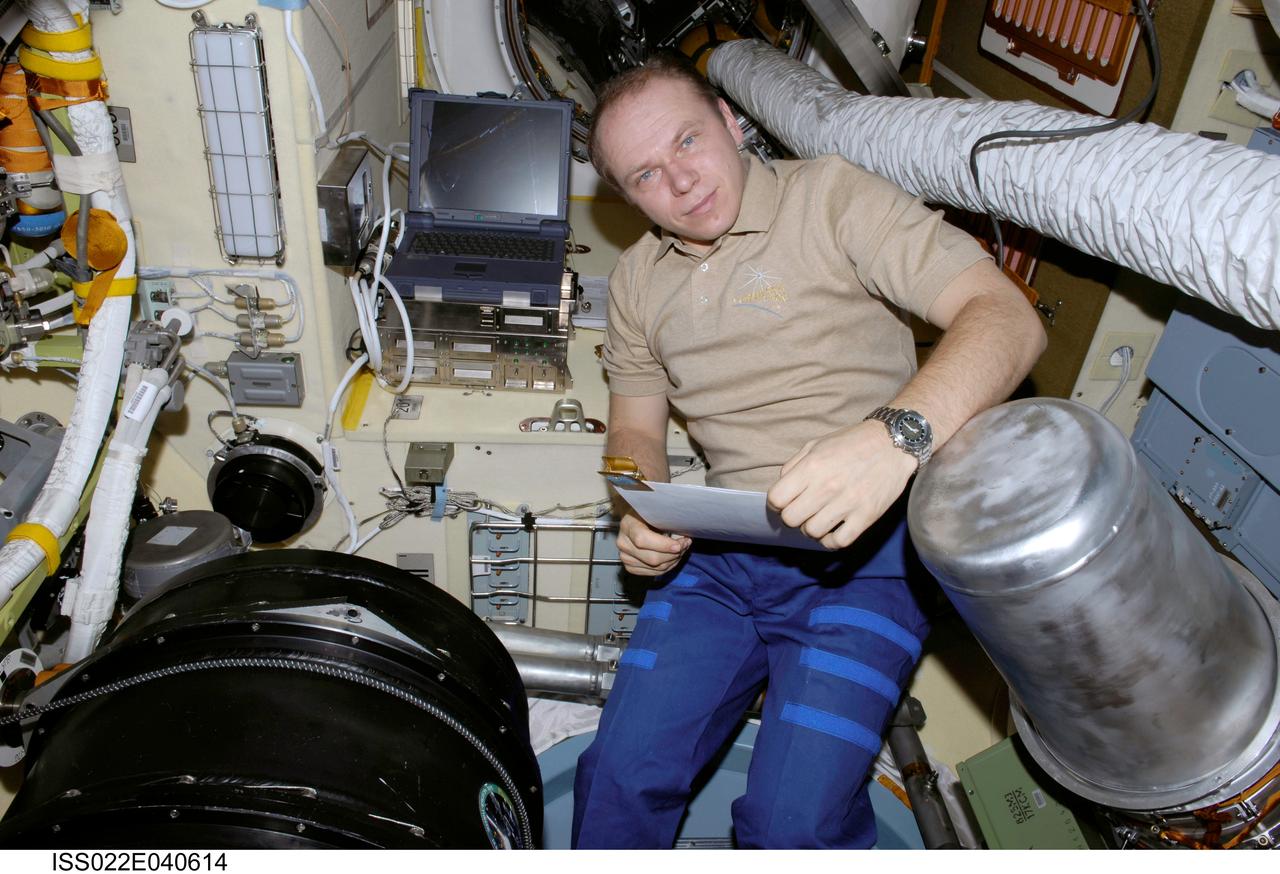
ISS022-E-040614 (28 Jan. 2010) --- Russian cosmonaut Oleg Kotov, Expedition 22 flight engineer, is pictured while working with the Plasma Crystal-3 experiment in the Zvezda Service Module of the International Space Station.
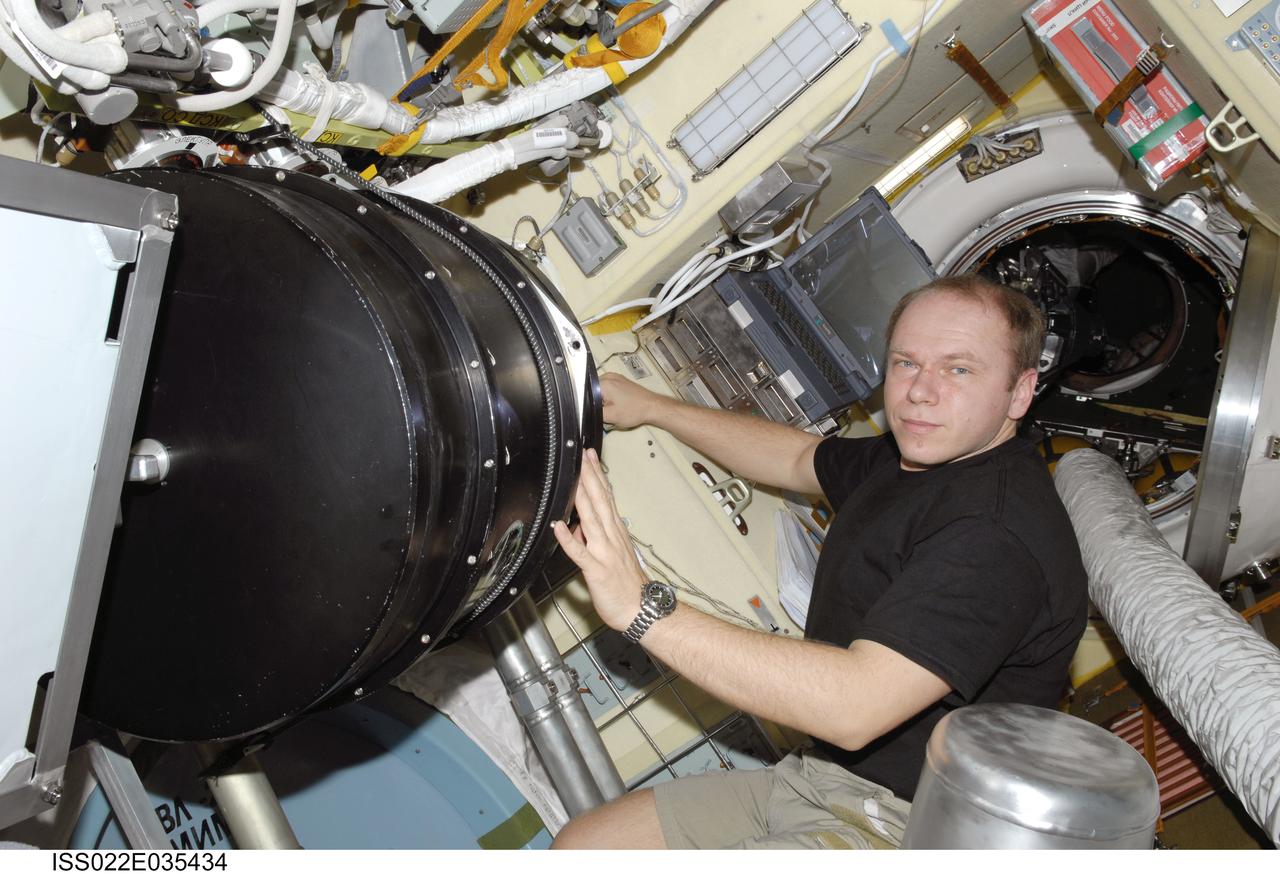
ISS022-E-035434 (25 Jan. 2010) --- Russian cosmonaut Oleg Kotov, Expedition 22 flight engineer, works with the Plasma Crystal-3 experiment in the Zvezda Service Module of the International Space Station.
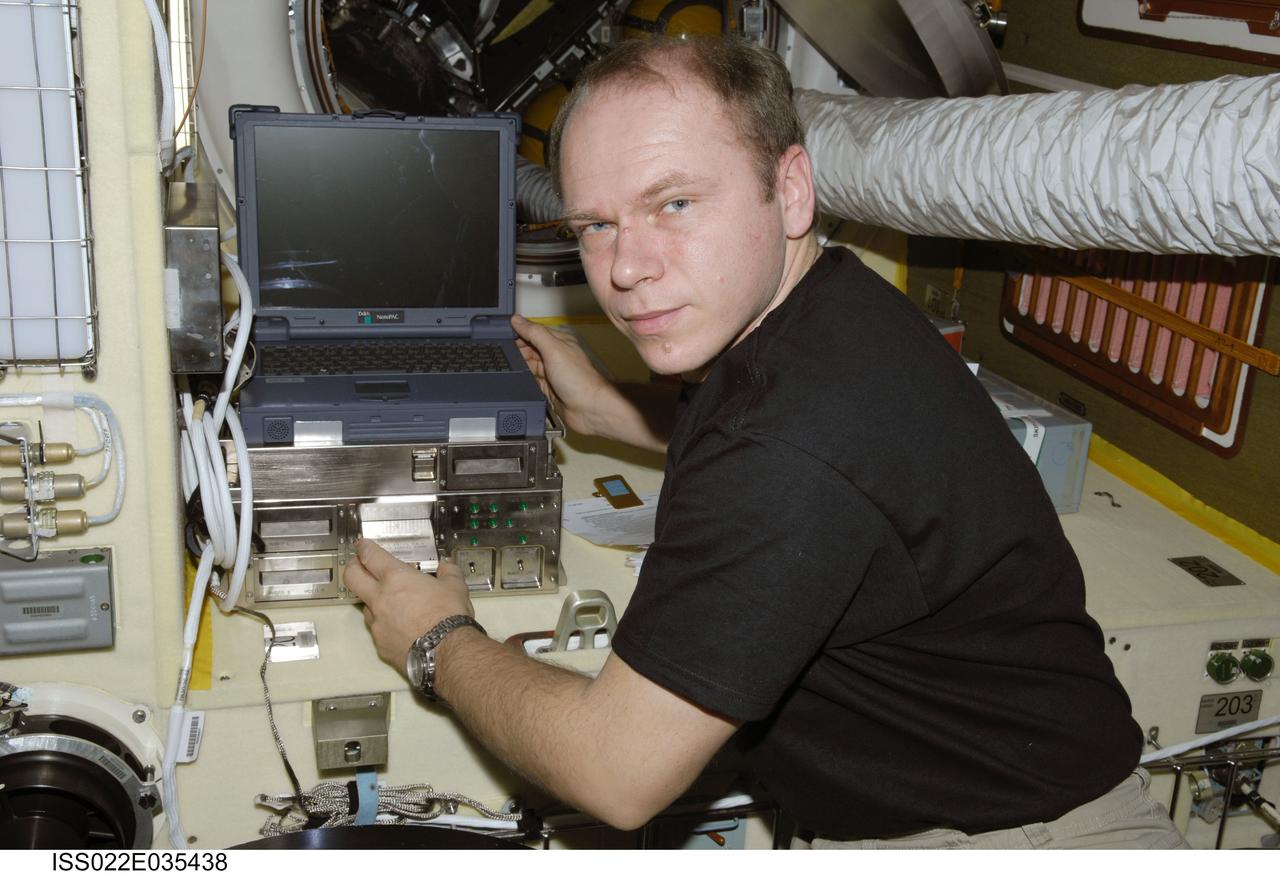
ISS022-E-035438 (25 Jan. 2010) --- Russian cosmonaut Oleg Kotov, Expedition 22 flight engineer, uses a computer while servicing the Plasma Crystal-3 experiment in the Zvezda Service Module of the International Space Station.
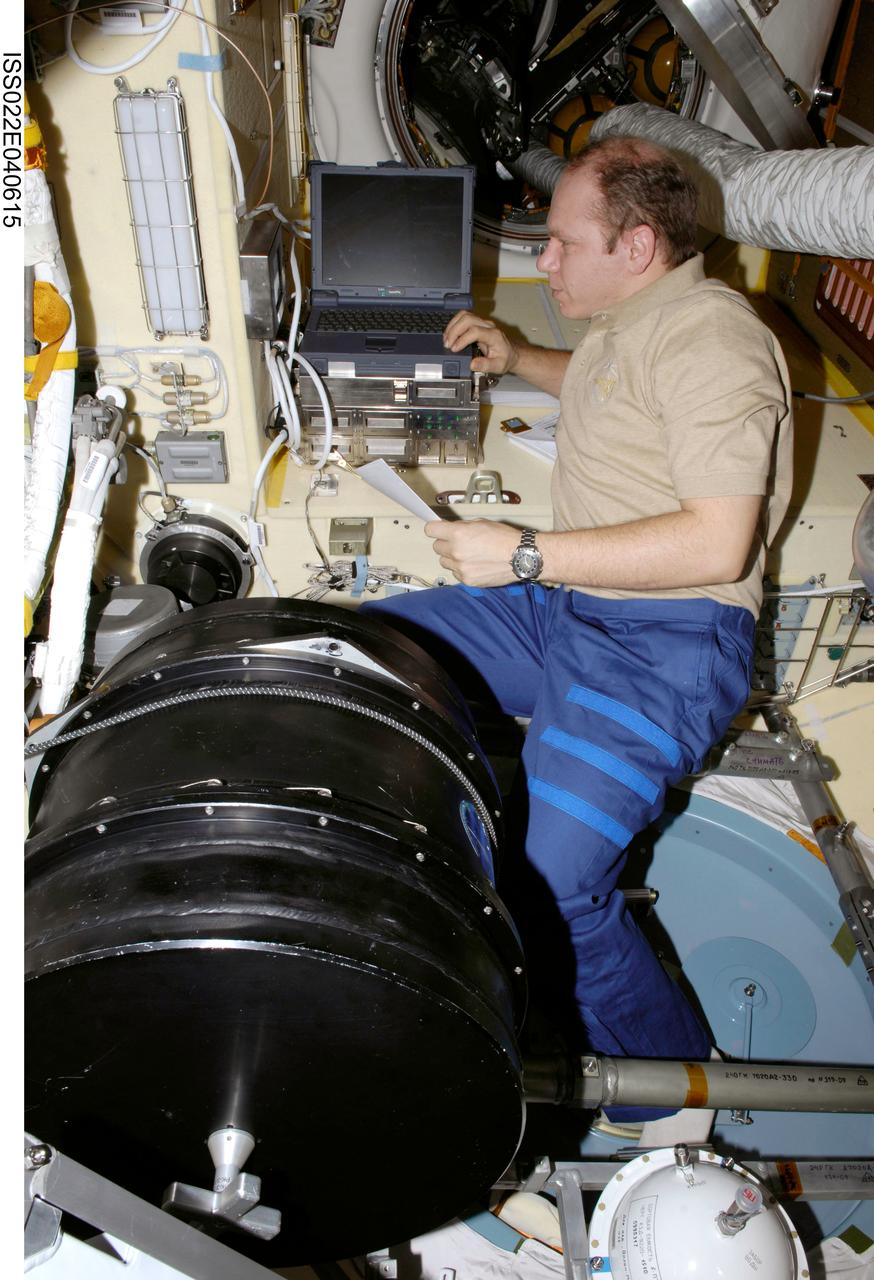
ISS022-E-040615 (28 Jan. 2010) --- Russian cosmonaut Oleg Kotov, Expedition 22 flight engineer, uses a computer while servicing the Plasma Crystal-3 experiment in the Zvezda Service Module of the International Space Station.
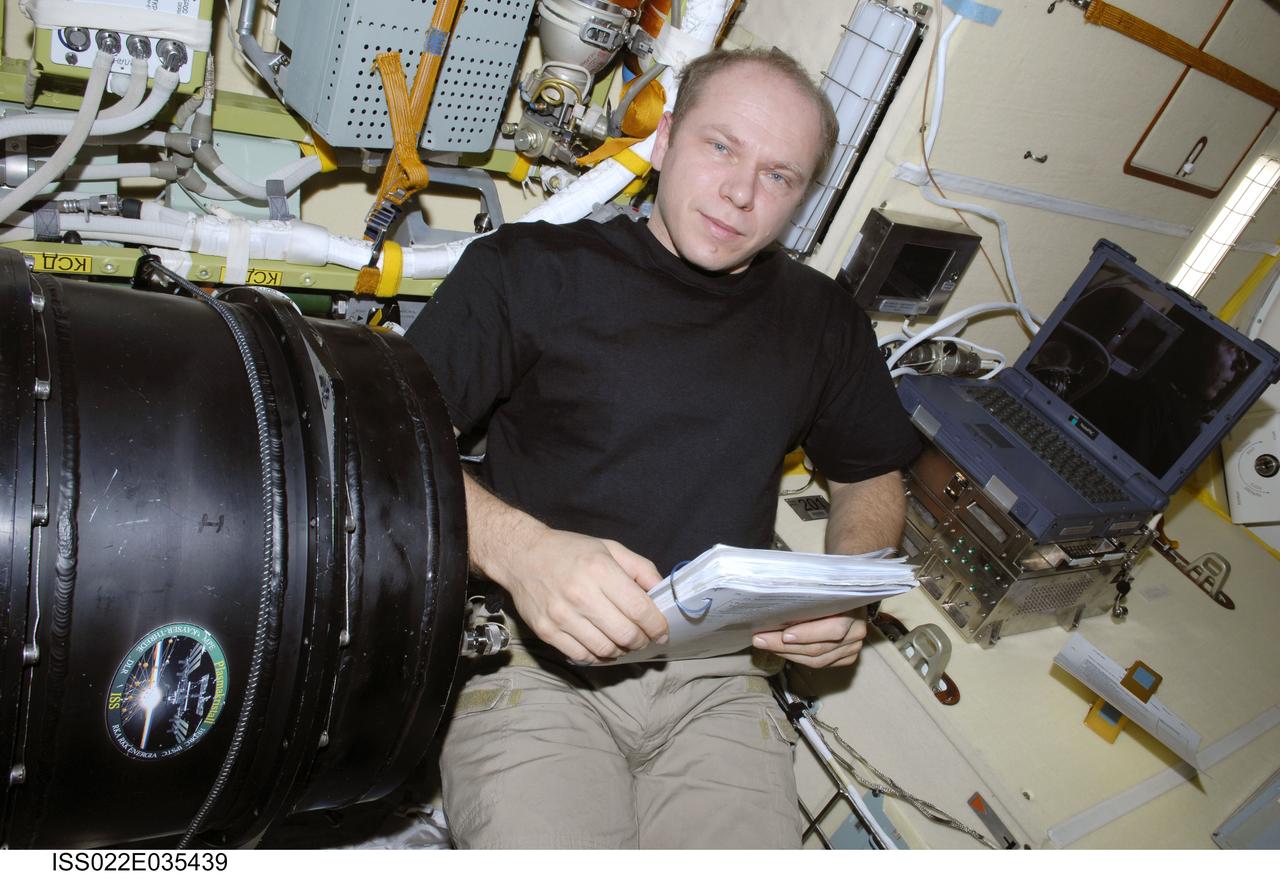
ISS022-E-035439 (25 Jan. 2010) --- Russian cosmonaut Oleg Kotov, Expedition 22 flight engineer, is pictured while working with the Plasma Crystal-3 experiment in the Zvezda Service Module of the International Space Station.
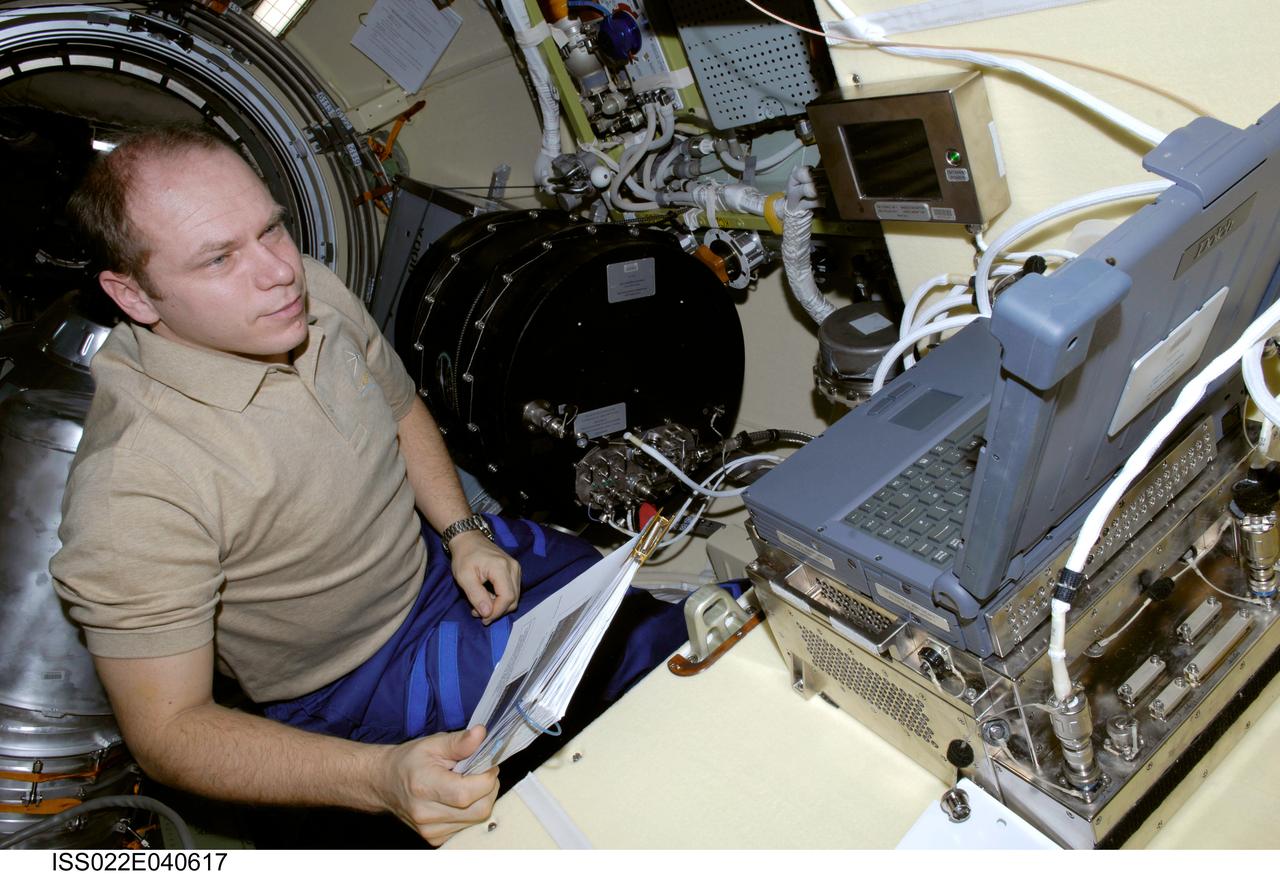
ISS022-E-040617 (28 Jan. 2010) --- Russian cosmonaut Oleg Kotov, Expedition 22 flight engineer, is pictured while working with the Plasma Crystal-3 experiment in the Zvezda Service Module of the International Space Station.
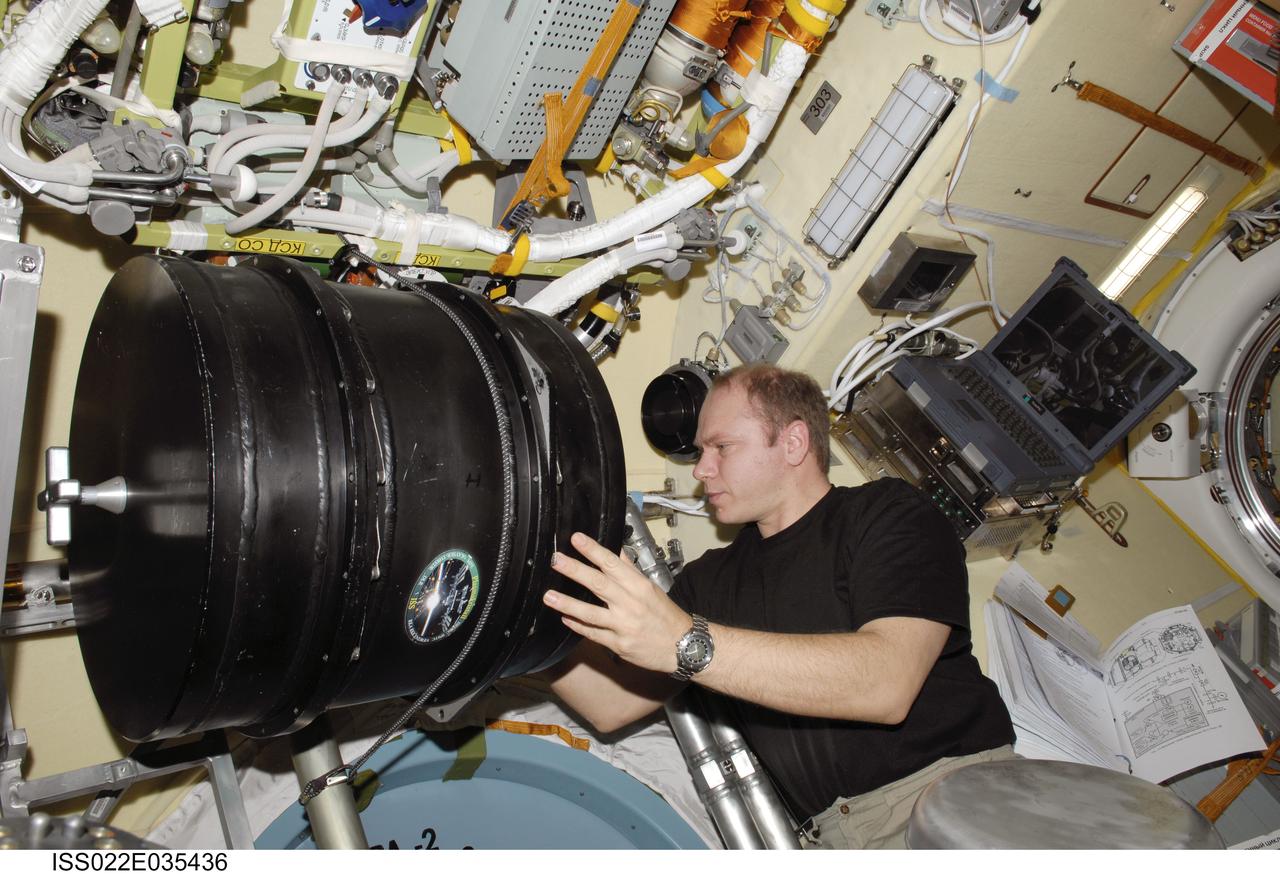
ISS022-E-035436 (25 Jan. 2010) --- Russian cosmonaut Oleg Kotov, Expedition 22 flight engineer, works with the Plasma Crystal-3 experiment in the Zvezda Service Module of the International Space Station.
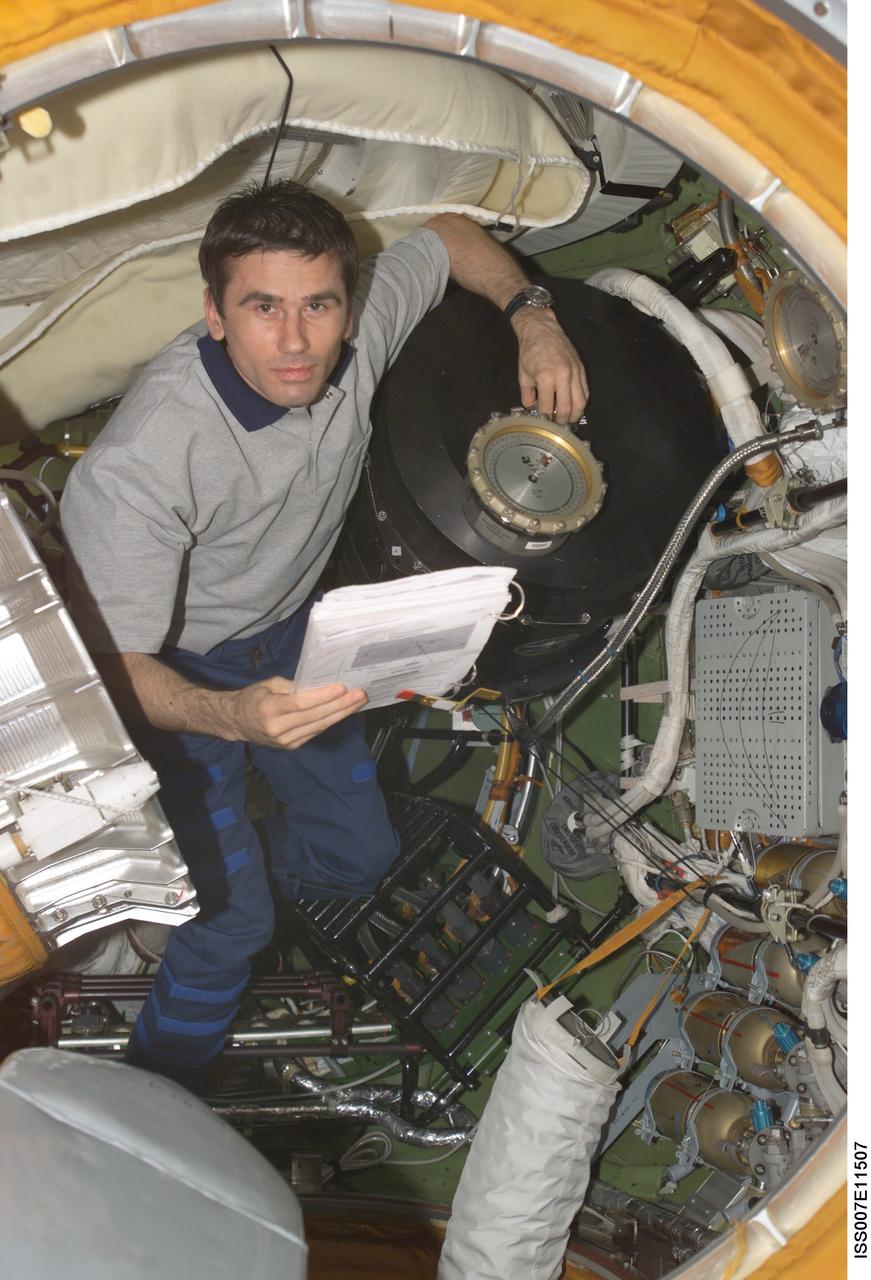
ISS007-E-11507 (31 July 2003) --- Cosmonaut Yuri I. Malenchenko, Expedition 7 mission commander, is pictured with the Plasma Crystal Experiment in the Zvezda Service Module’s transfer compartment on the International Space Station (ISS). Malenchenko represents Rosaviakosmos.
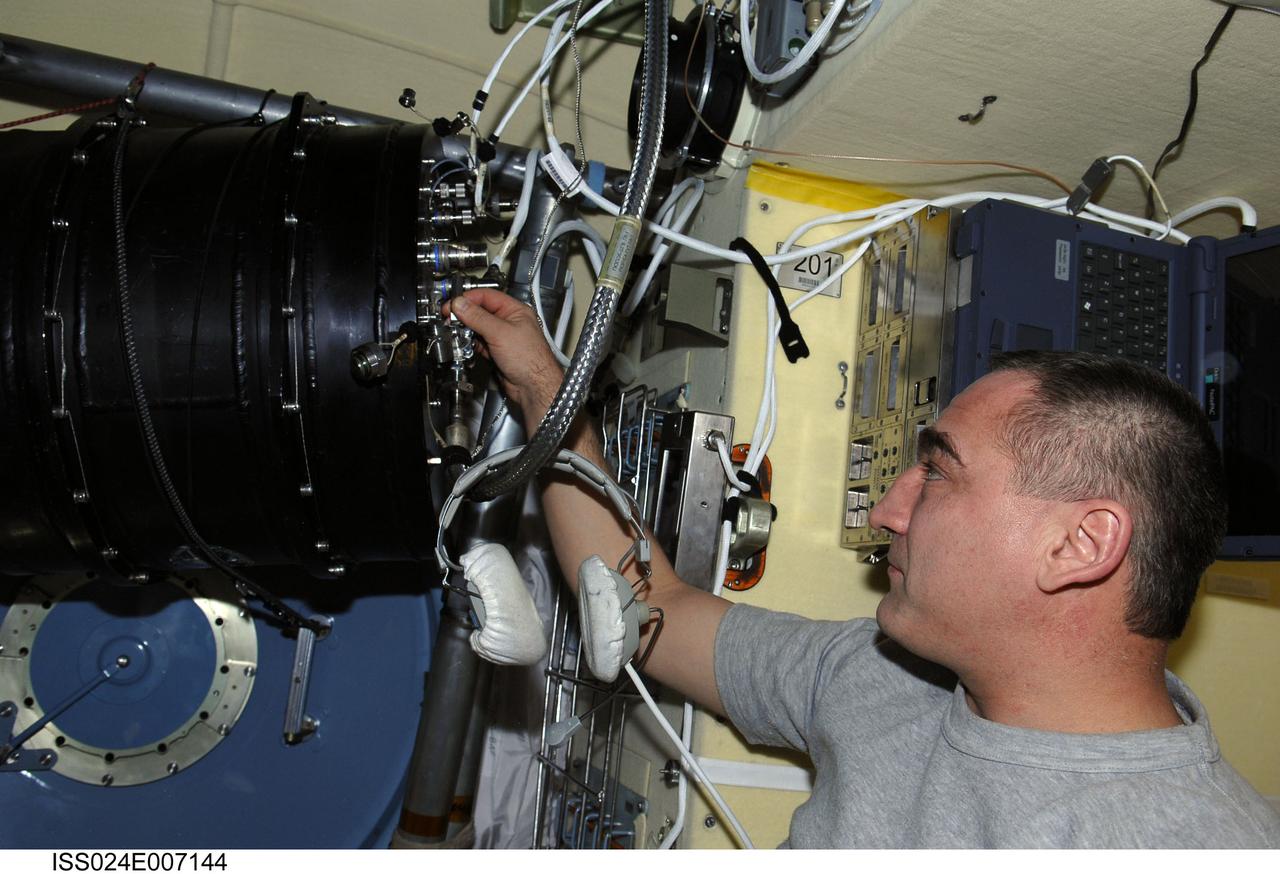
ISS024-E-007144 (1 July 2010) --- Russian cosmonaut Alexander Skvortsov, Expedition 24 commander, performs chamber leak checks on the new Plasma Crystal-3 Plus experiment in the Poisk Mini-Research Module 2 (MRM2) of the International Space Station.
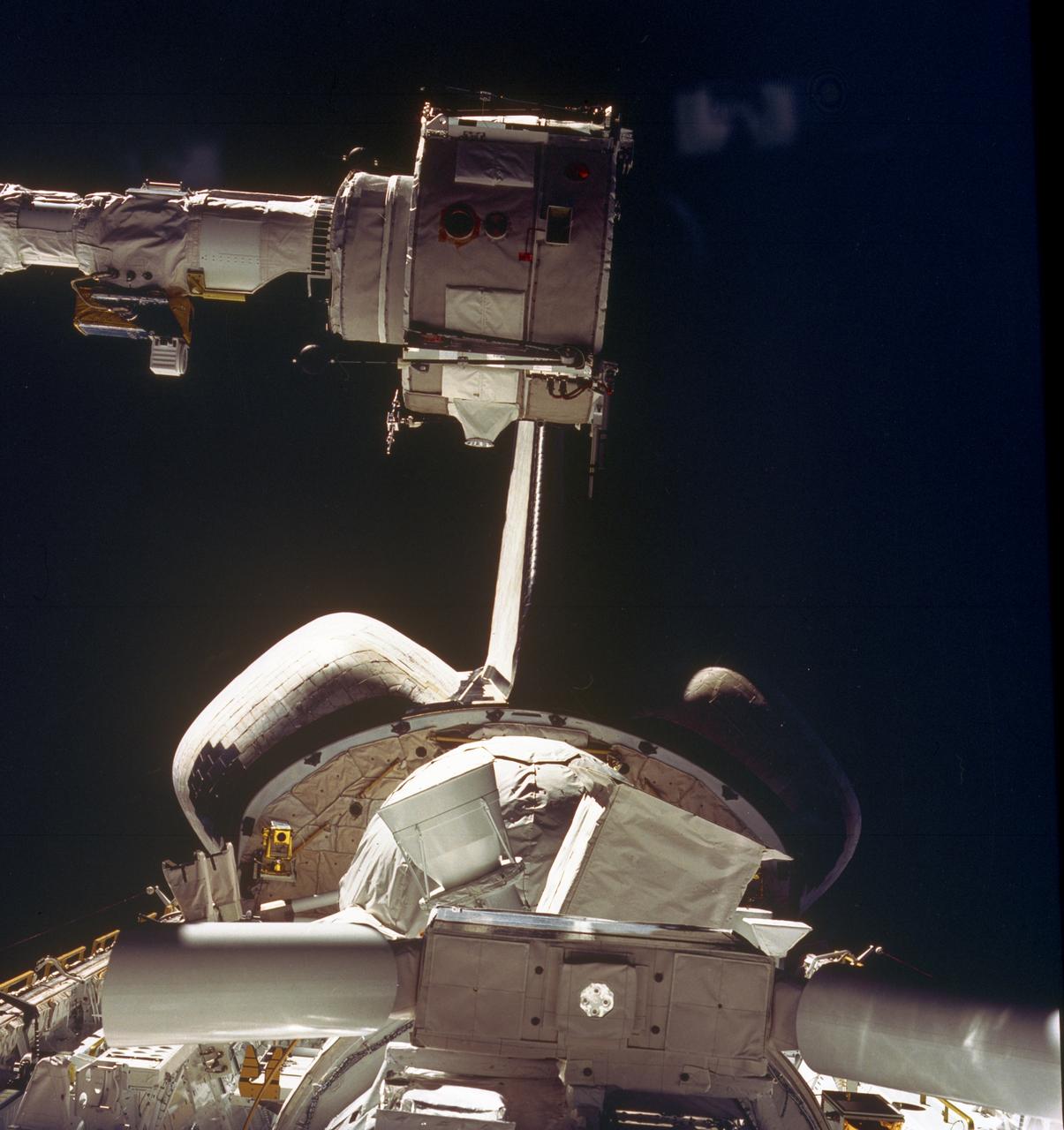
This STS-51F mission onboard Photograph shows some of the Spacelab-2 instruments in the cargo bay of the Orbiter Challenger. The Plasma Diagnostics Package (PDP). shown at the end of the Remote Manipulator System (RMS), used instruments on a subsatellite to study natural plasma processes, orbiter-induced plasma processes, and beam plasma physics. Fourteen instruments were mounted on the PDP for measurements of various plasma characteristics. The X-ray Telescope (XRT), is at the front. The goal of this investigation was to image and examine the X-ray emissions from clusters of galaxies in order to study the mechanisms that cause high-temperature emissions and to determine the weight of galactic clusters. The Small Helium-Cooled Infrared Telescope (IRT) is at the right behind the XRT. The objective of this investigation was to measure and map diffused and discrete infrared astronomical sources while evaluating the Space Shuttle as a platform for infrared astronomy. At the same time, a new large superfluid helium dewar system for cooling the telescope was evaluated. The egg-shaped Cosmic Ray Nuclei experiment (CRNE) is shown at the rear. This investigation was to study the composition of high-energy cosmic rays by using a large instrument exposed to space for a considerable period of time. Spacelab-2 (STS-51F, 19th Shuttle mission) was launched aboard the Space Shuttle Orbiter Challenger on July 29, 1985.
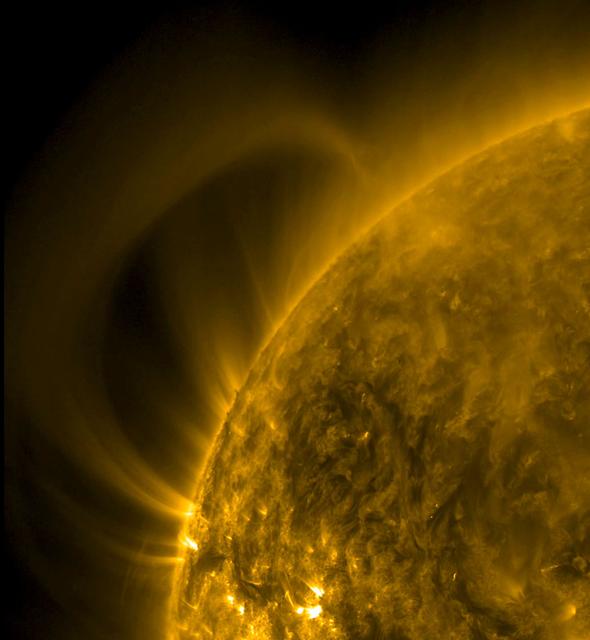
A giant arch of plasma rose up out of the Sun and then stretched itself until it had reached back to a point behind our view of the Sun (Sept, 17-18, 2014). Since it emerged from a magnetically intense active region, the arch is likely connecting to another active region over the Sun's horizon. We rarely see material extend this distance. The images were observed in the extreme ultraviolet wavelength of 171 Angstroms. Credit: NASA/Solar Dynamics Observatory <b><a href="http://www.nasa.gov/audience/formedia/features/MP_Photo_Guidelines.html" rel="nofollow">NASA image use policy.</a></b> <b><a href="http://www.nasa.gov/centers/goddard/home/index.html" rel="nofollow">NASA Goddard Space Flight Center</a></b> enables NASA’s mission through four scientific endeavors: Earth Science, Heliophysics, Solar System Exploration, and Astrophysics. Goddard plays a leading role in NASA’s accomplishments by contributing compelling scientific knowledge to advance the Agency’s mission. <b>Follow us on <a href="http://twitter.com/NASAGoddardPix" rel="nofollow">Twitter</a></b> <b>Like us on <a href="http://www.facebook.com/pages/Greenbelt-MD/NASA-Goddard/395013845897?ref=tsd" rel="nofollow">Facebook</a></b> <b>Find us on <a href="http://instagram.com/nasagoddard?vm=grid" rel="nofollow">Instagram</a></b>

Blue Origin’s New Glenn rocket carrying NASA’s twin ESCAPADE (Escape and Plasma Acceleration and Dynamics Explorers) spacecraft launches at 3:55 p.m. EST, Thursday, Nov. 13, 2025, from Launch Complex 36 at Cape Canaveral Space Force Station in Florida. The ESCAPADE mission, built by Rocket Lab, will study how solar wind and plasma interact with Mars’ magnetosphere and how this interaction drives the planet’s atmospheric escape to prepare for future human missions on Mars.
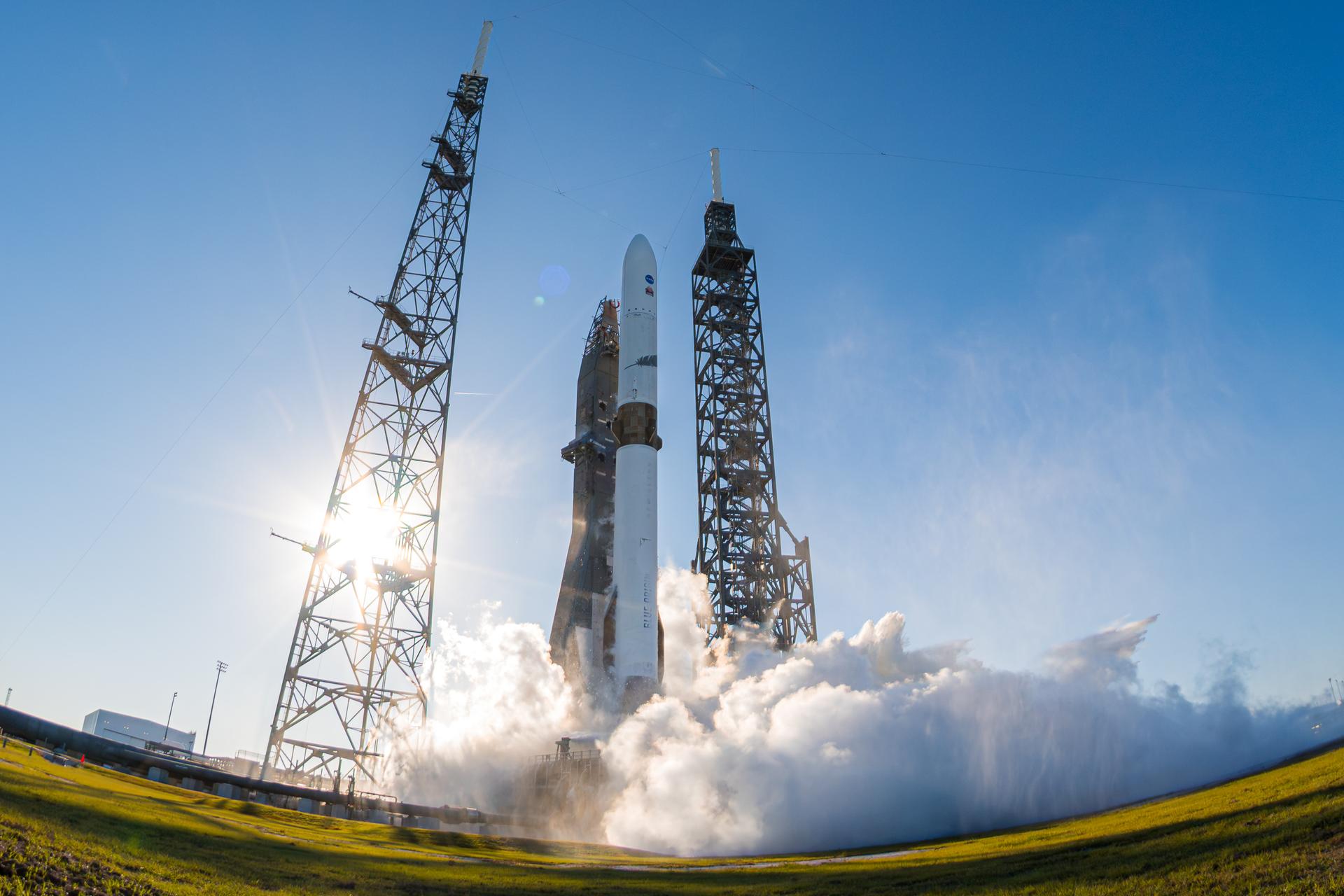
Blue Origin’s New Glenn rocket carrying NASA’s twin ESCAPADE (Escape and Plasma Acceleration and Dynamics Explorers) spacecraft launches at 3:55 p.m. EST, Thursday, Nov. 13, 2025, from Launch Complex 36 at Cape Canaveral Space Force Station in Florida. The ESCAPADE mission, built by Rocket Lab, will study how solar wind and plasma interact with Mars’ magnetosphere and how this interaction drives the planet’s atmospheric escape to prepare for future human missions on Mars.
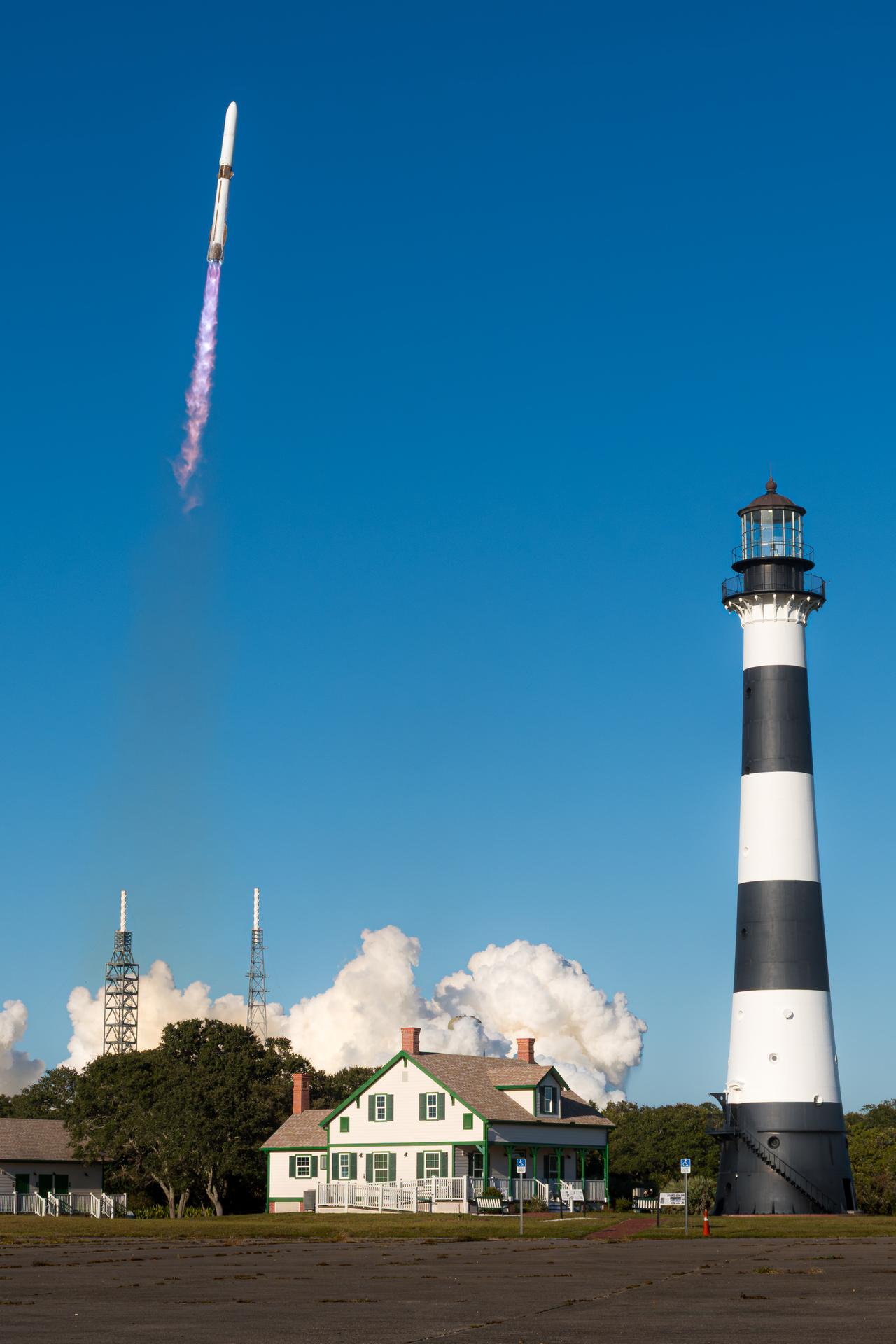
Near Cape Canaveral Lighthouse, Blue Origin’s New Glenn rocket carrying NASA’s twin ESCAPADE (Escape and Plasma Acceleration and Dynamics Explorers) spacecraft launches at 3:55 p.m. EST, Thursday, Nov. 13, 2025, from Launch Complex 36 at Cape Canaveral Space Force Station in Florida. The ESCAPADE mission, built by Rocket Lab, will study how solar wind and plasma interact with Mars’ magnetosphere and how this interaction drives the planet’s atmospheric escape to prepare for future human missions on Mars.
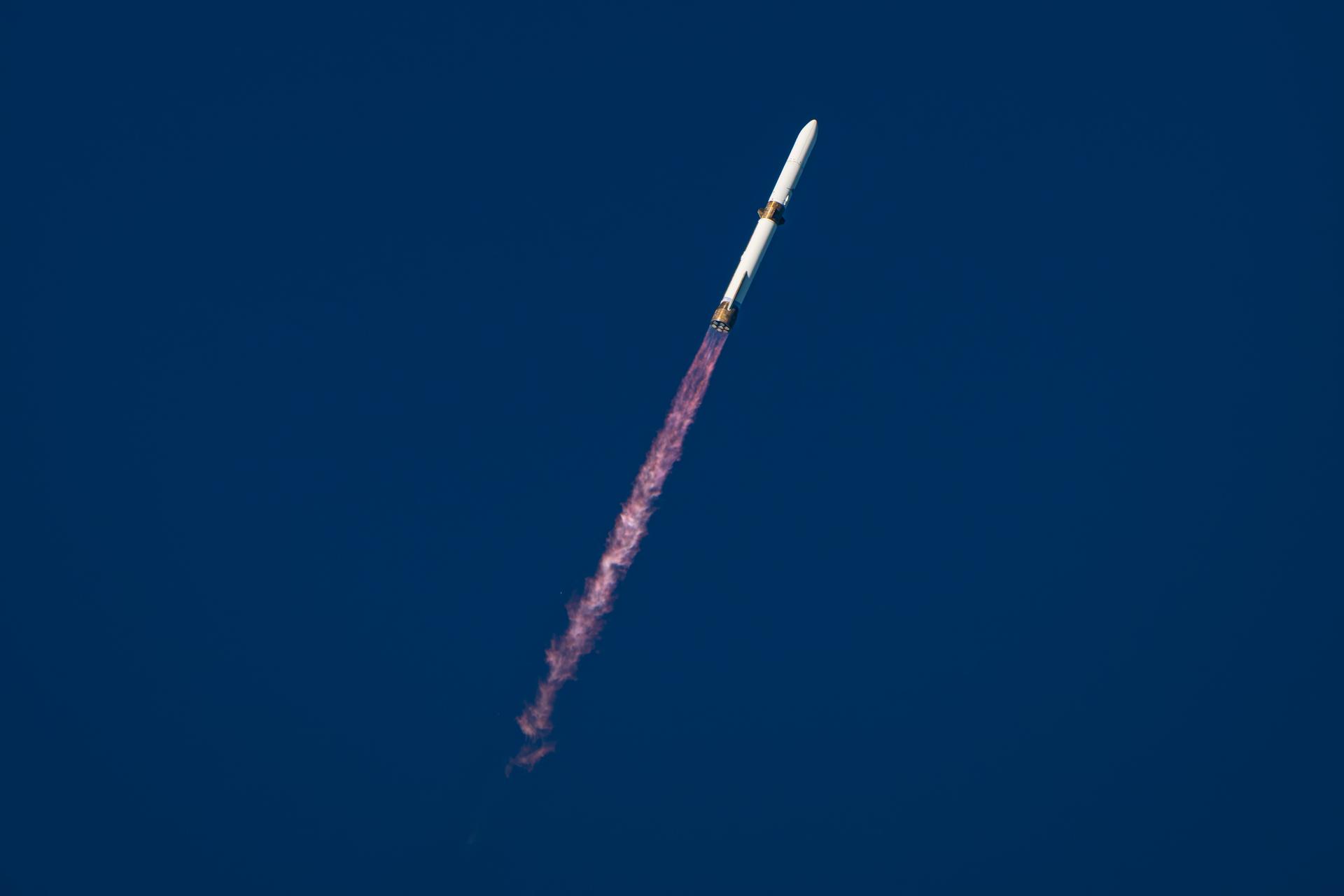
Blue Origin’s New Glenn rocket carrying NASA’s twin ESCAPADE (Escape and Plasma Acceleration and Dynamics Explorers) spacecraft launches at 3:55 p.m. EST, Thursday, Nov. 13, 2025, from Launch Complex 36 at Cape Canaveral Space Force Station in Florida. The ESCAPADE mission, built by Rocket Lab, will study how solar wind and plasma interact with Mars’ magnetosphere and how this interaction drives the planet’s atmospheric escape to prepare for future human missions on Mars.
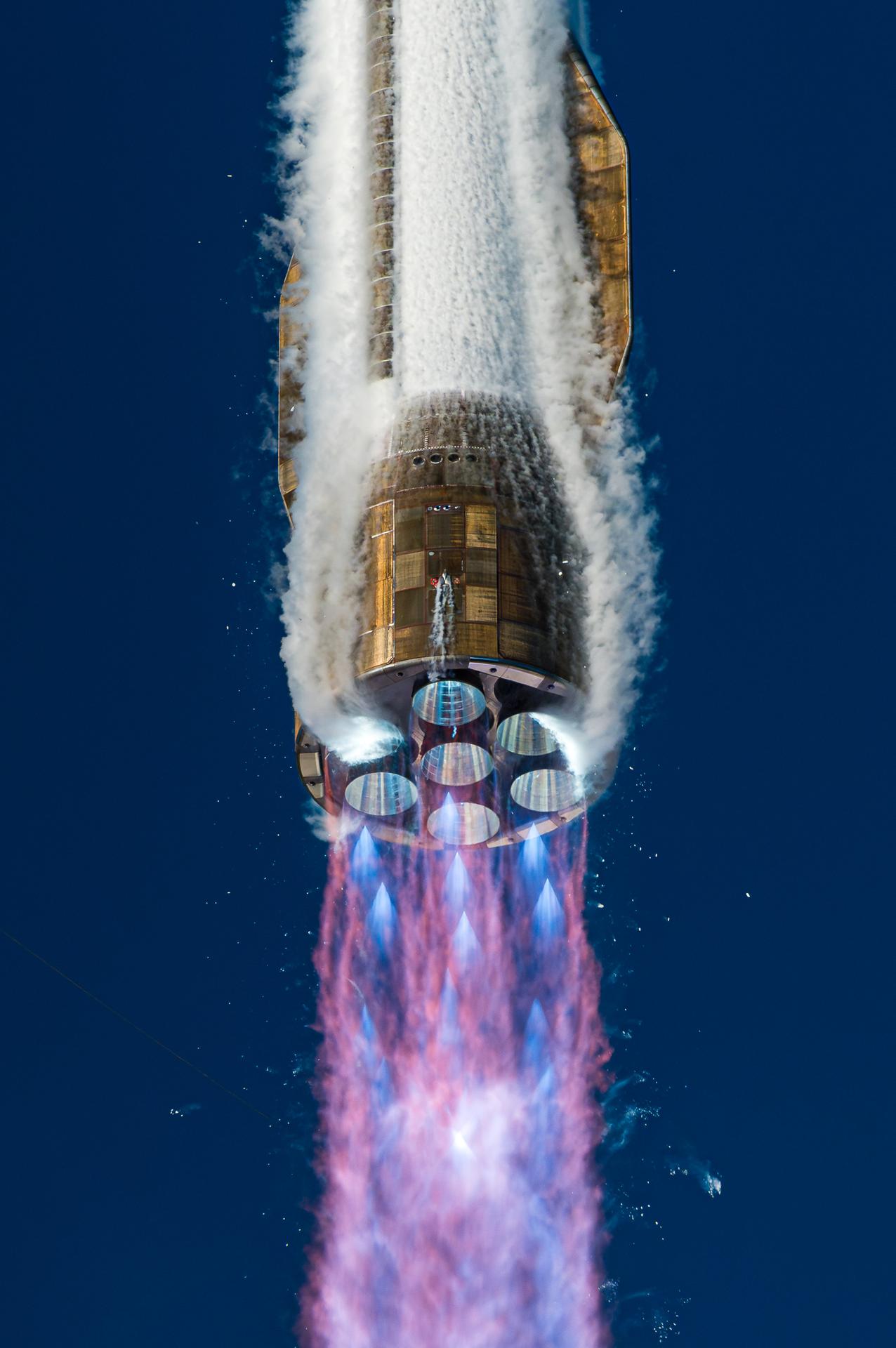
Blue Origin’s New Glenn rocket carrying NASA’s twin ESCAPADE (Escape and Plasma Acceleration and Dynamics Explorers) spacecraft launches at 3:55 p.m. EST, Thursday, Nov. 13, 2025, from Launch Complex 36 at Cape Canaveral Space Force Station in Florida. The ESCAPADE mission, built by Rocket Lab, will study how solar wind and plasma interact with Mars’ magnetosphere and how this interaction drives the planet’s atmospheric escape to prepare for future human missions on Mars.
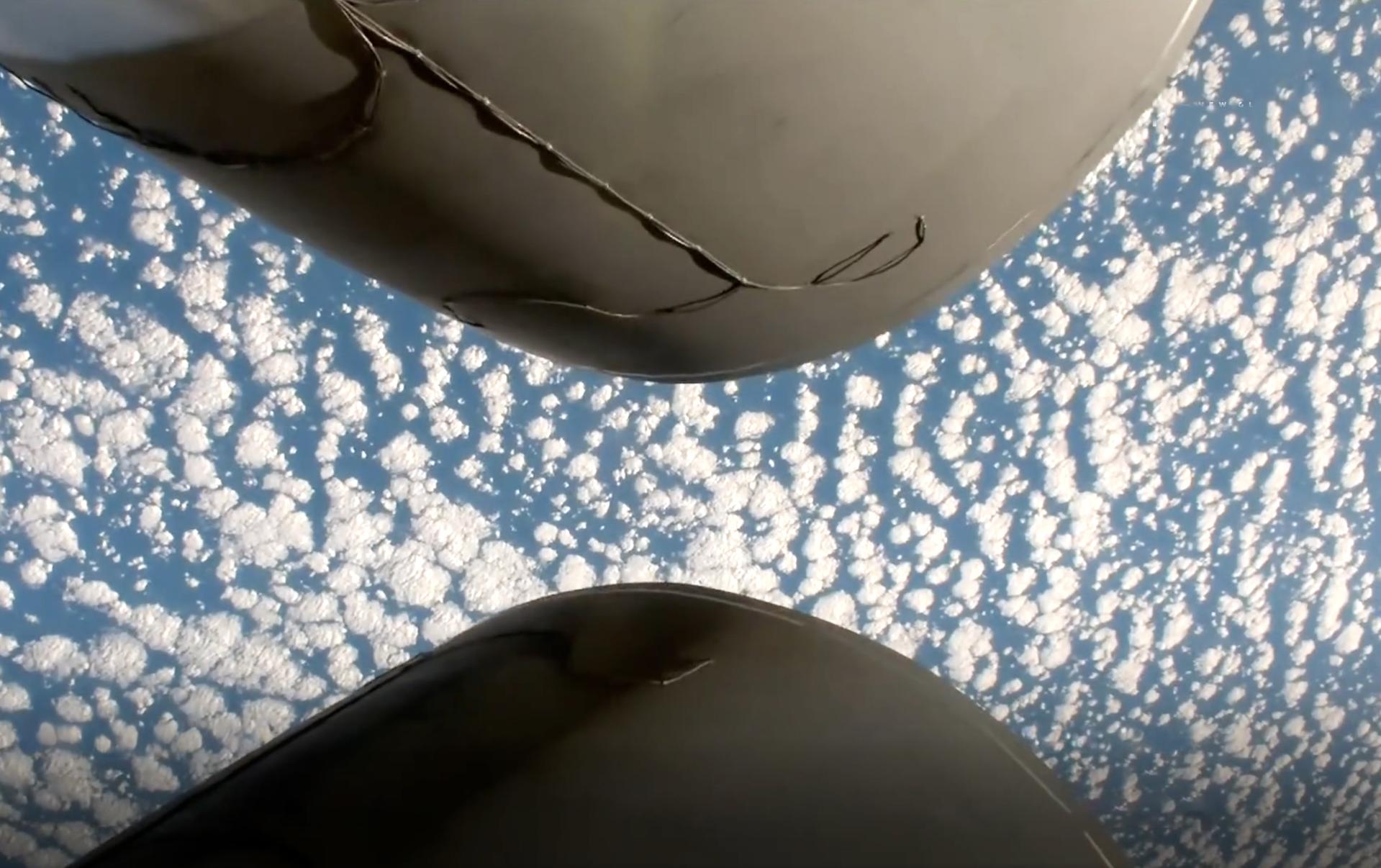
Blue Origin’s New Glenn rocket carrying NASA’s twin ESCAPADE (Escape and Plasma Acceleration and Dynamics Explorers) spacecraft launches at 3:55 p.m. EST, Thursday, Nov. 13, 2025, from Launch Complex 36 at Cape Canaveral Space Force Station in Florida. The ESCAPADE mission, built by Rocket Lab, will study how solar wind and plasma interact with Mars’ magnetosphere and how this interaction drives the planet’s atmospheric escape to prepare for future human missions on Mars.
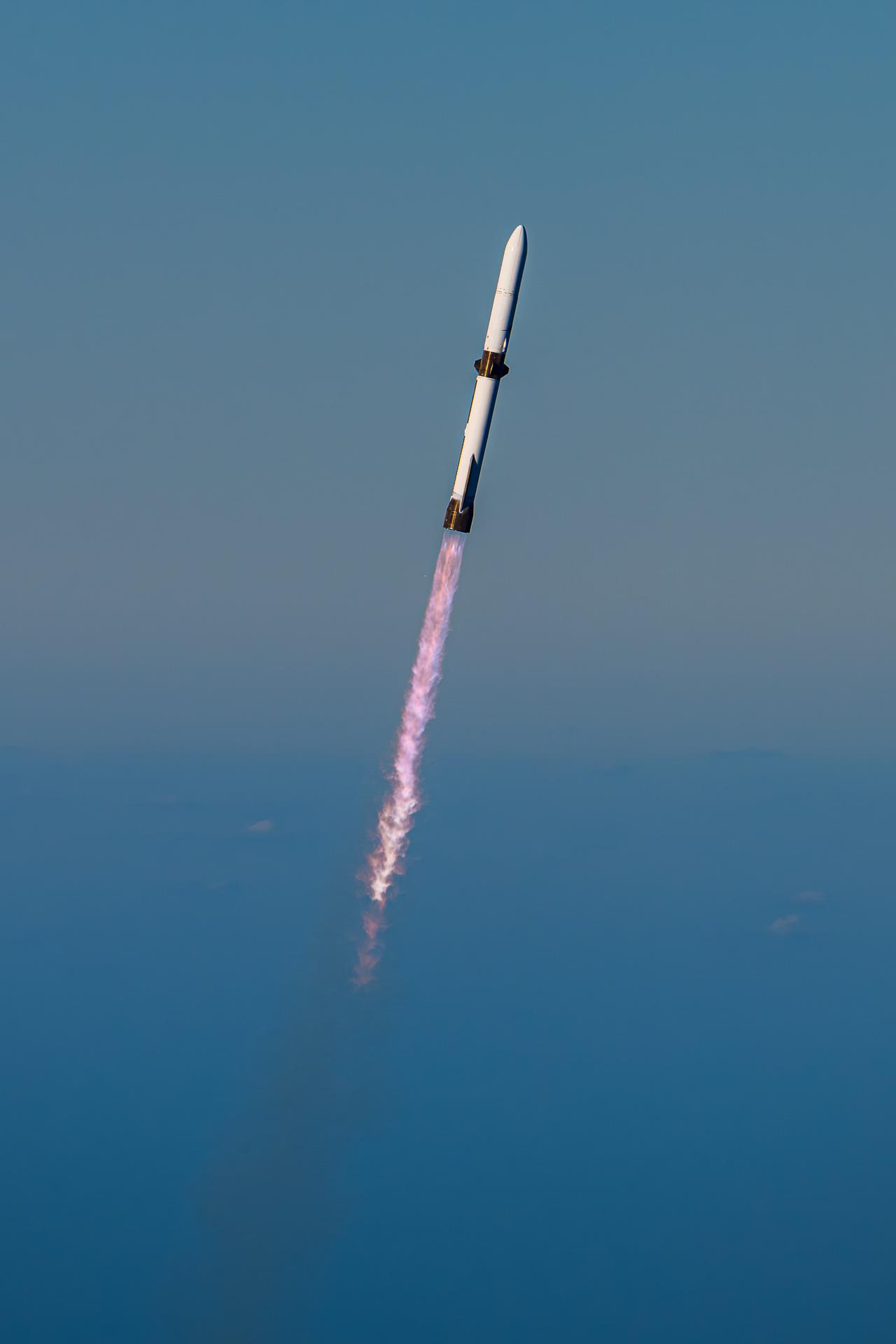
Blue Origin’s New Glenn rocket carrying NASA’s twin ESCAPADE (Escape and Plasma Acceleration and Dynamics Explorers) spacecraft launches at 3:55 p.m. EST, Thursday, Nov. 13, 2025, from Launch Complex 36 at Cape Canaveral Space Force Station in Florida. The ESCAPADE mission, built by Rocket Lab, will study how solar wind and plasma interact with Mars’ magnetosphere and how this interaction drives the planet’s atmospheric escape to prepare for future human missions on Mars.
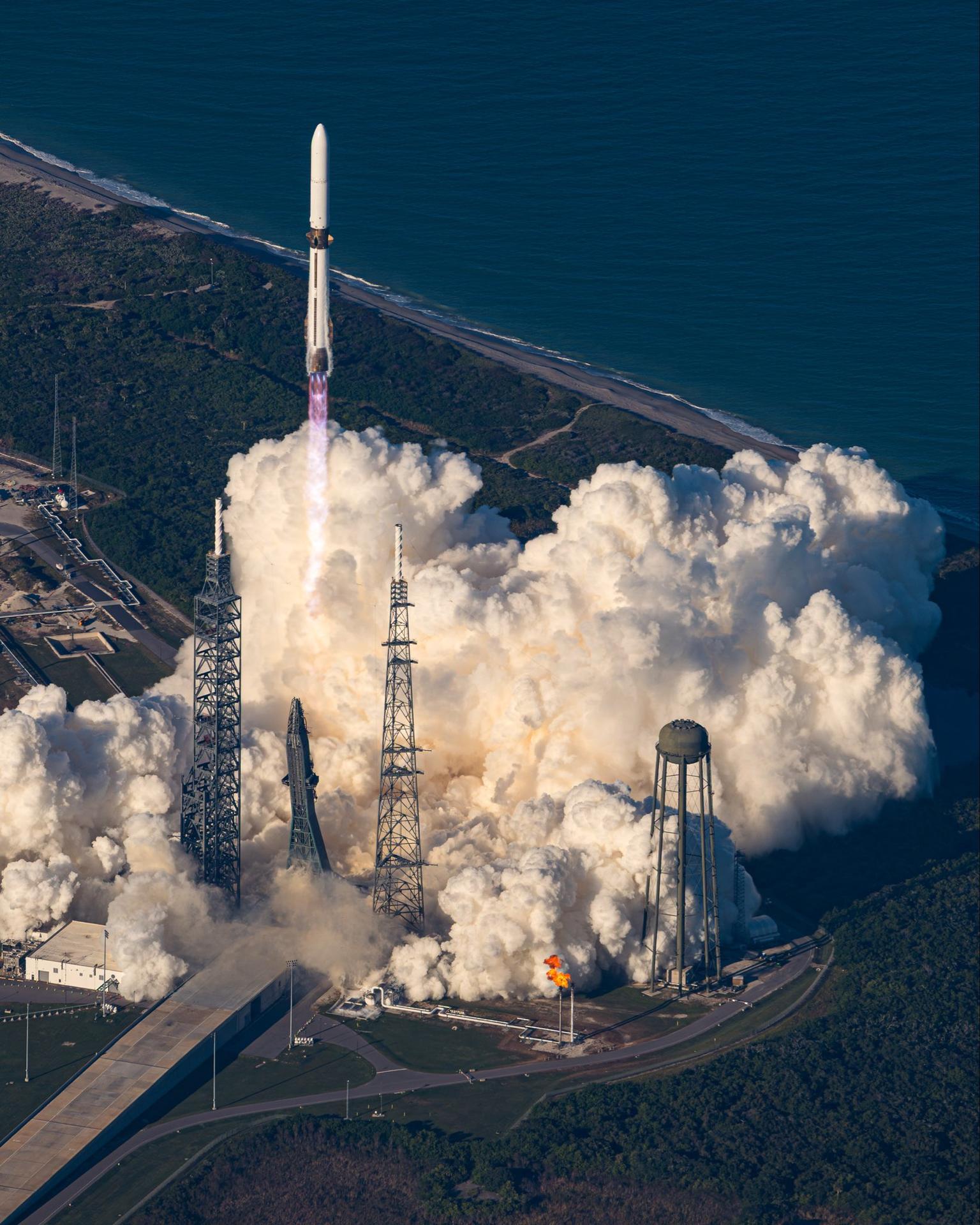
Blue Origin’s New Glenn rocket carrying NASA’s twin ESCAPADE (Escape and Plasma Acceleration and Dynamics Explorers) spacecraft launches at 3:55 p.m. EST, Thursday, Nov. 13, 2025, from Launch Complex 36 at Cape Canaveral Space Force Station in Florida. The ESCAPADE mission, built by Rocket Lab, will study how solar wind and plasma interact with Mars’ magnetosphere and how this interaction drives the planet’s atmospheric escape to prepare for future human missions on Mars.
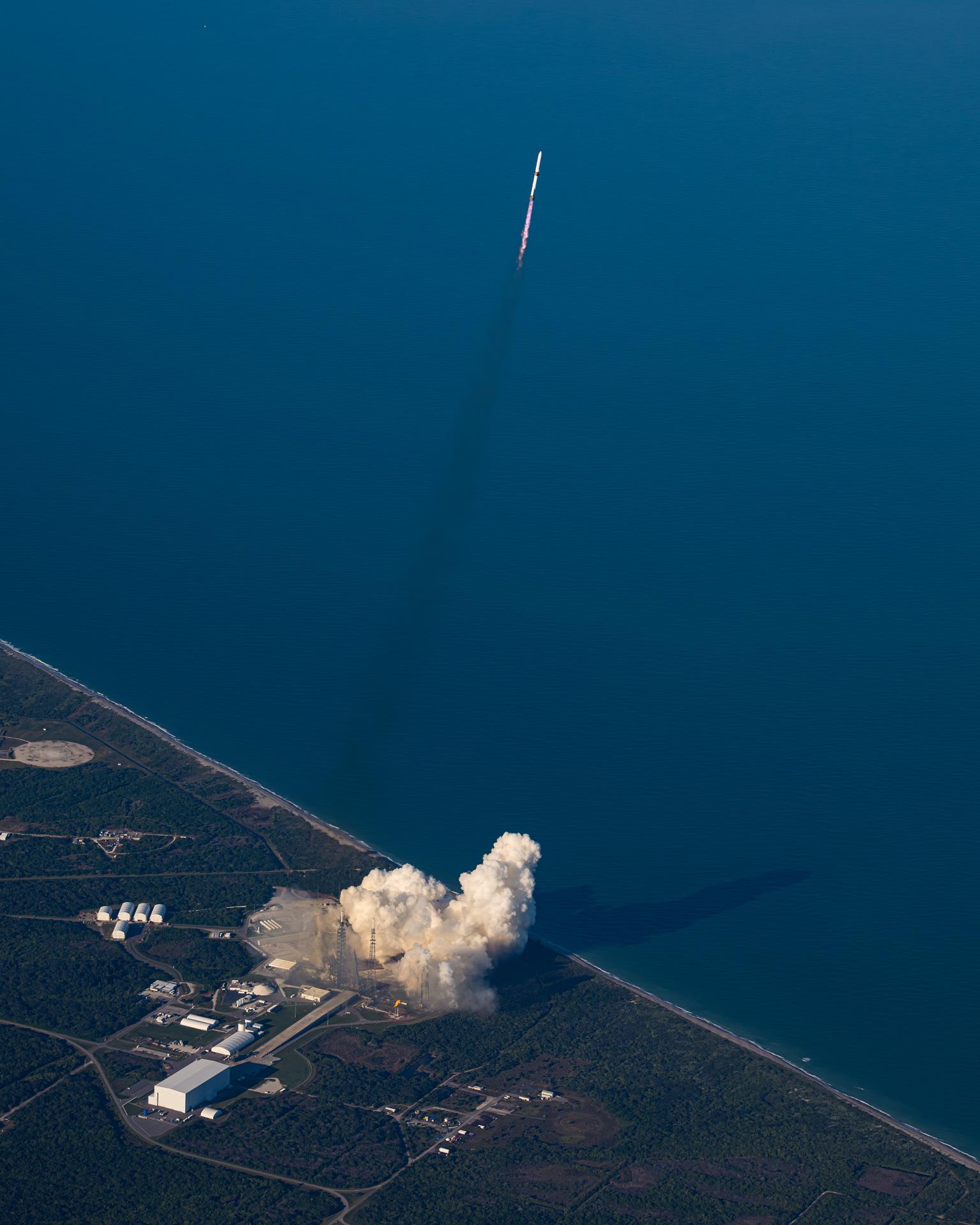
Blue Origin’s New Glenn rocket carrying NASA’s twin ESCAPADE (Escape and Plasma Acceleration and Dynamics Explorers) spacecraft launches at 3:55 p.m. EST, Thursday, Nov. 13, 2025, from Launch Complex 36 at Cape Canaveral Space Force Station in Florida. The ESCAPADE mission, built by Rocket Lab, will study how solar wind and plasma interact with Mars’ magnetosphere and how this interaction drives the planet’s atmospheric escape to prepare for future human missions on Mars.

Blue Origin’s New Glenn first stage rocket successfully lands for the first time on a drone ship in the Atlantic Ocean following the launching of NASA’s twin ESCAPADE (Escape and Plasma Acceleration and Dynamics Explorers) spacecraft at 3:55 p.m. EST, Thursday, Nov. 13, 2025, from Launch Complex 36 at Cape Canaveral Space Force Station in Florida. The ESCAPADE mission, built by Rocket Lab, will study how solar wind and plasma interact with Mars’ magnetosphere and how this interaction drives the planet’s atmospheric escape to prepare for future human missions on Mars.
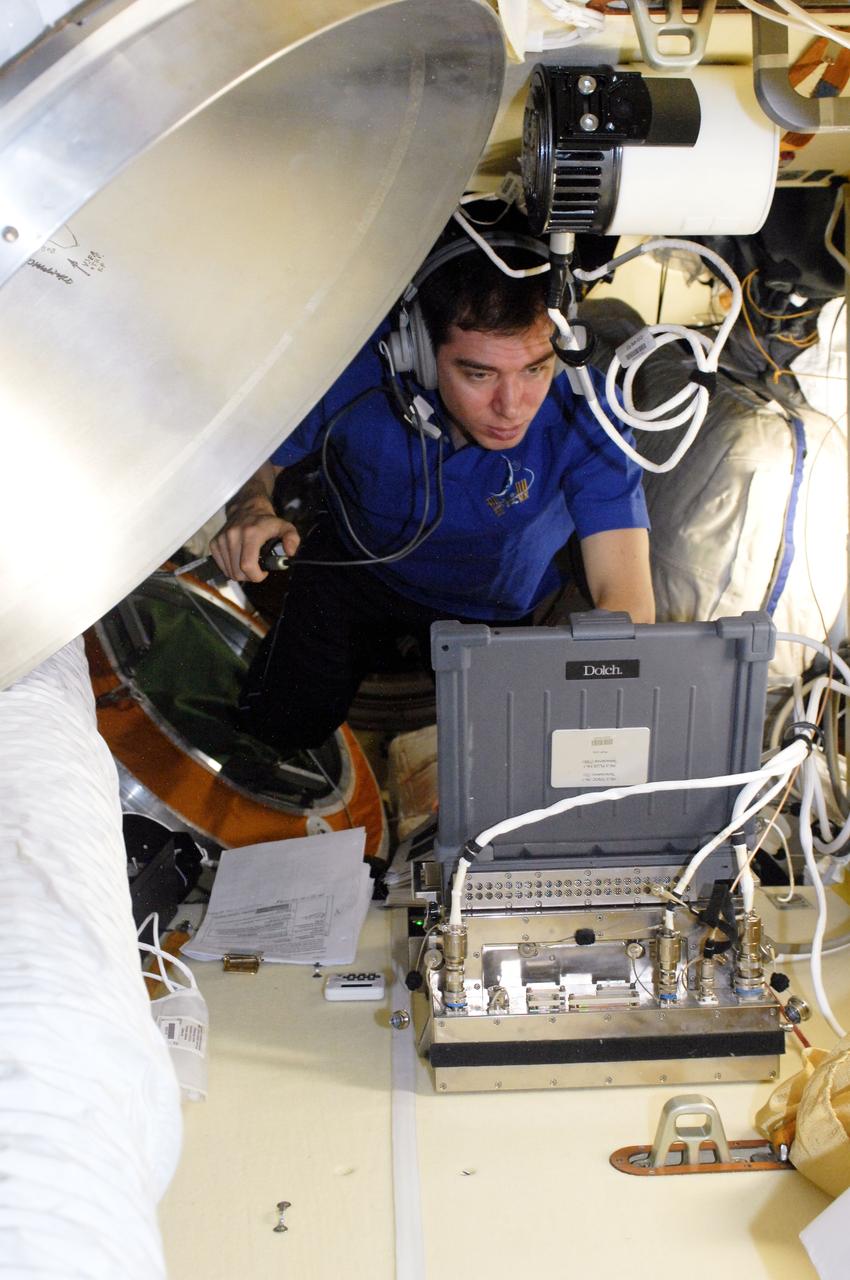
ISS028-E-009756 (27 June 2011) --- Russian cosmonaut Sergei Volkov, Expedition 28 flight engineer, works with the new KPT-21 PK-3+ Plasma Crystal-3+ (Plazmennyi-Kristall-3 plus) Telescience payload in the Poisk Mini-Research Module 2 (MRM2) of the International Space Station.
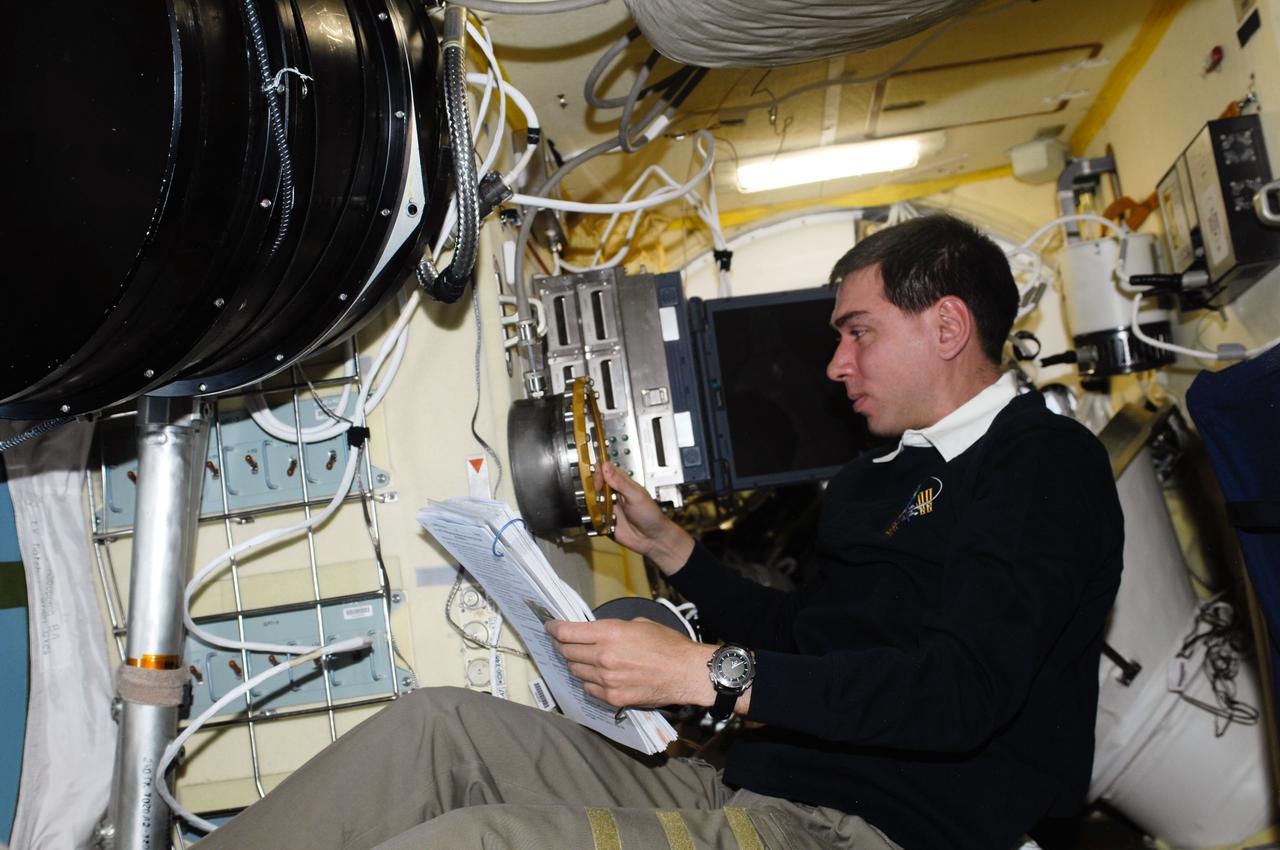
ISS028-E-009187 (22 June 2011) --- Russian cosmonaut Sergei Volkov, Expedition 28 flight engineer, works with the new KPT-21 PK-3+ Plasma Crystal-3+ (Plazmennyi-Kristall-3 plus) Telescience payload in the Poisk Mini-Research Module 2 (MRM2) of the International Space Station.
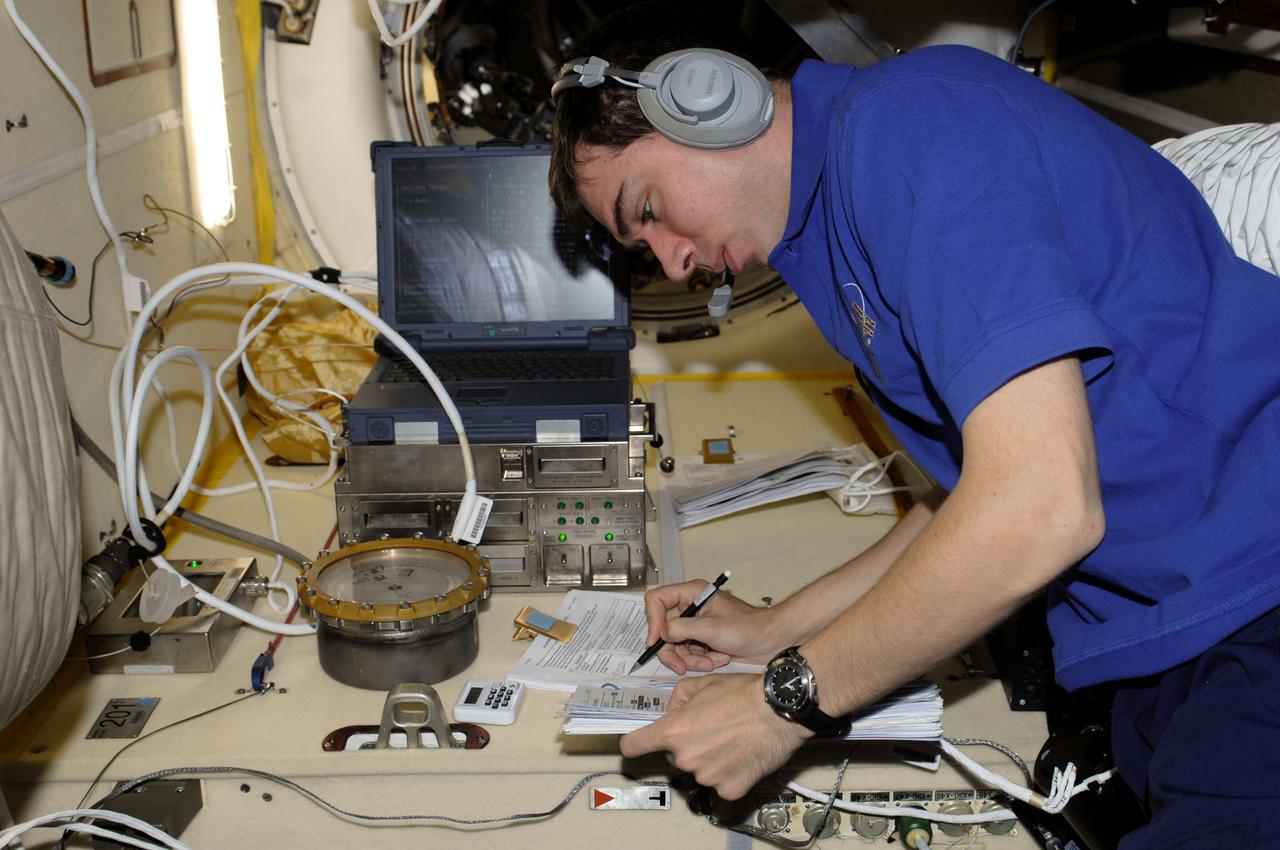
ISS028-E-009754 (27 June 2011) --- Russian cosmonaut Sergei Volkov, Expedition 28 flight engineer, works with the new KPT-21 PK-3+ Plasma Crystal-3+ (Plazmennyi-Kristall-3 plus) Telescience payload in the Poisk Mini-Research Module 2 (MRM2) of the International Space Station.
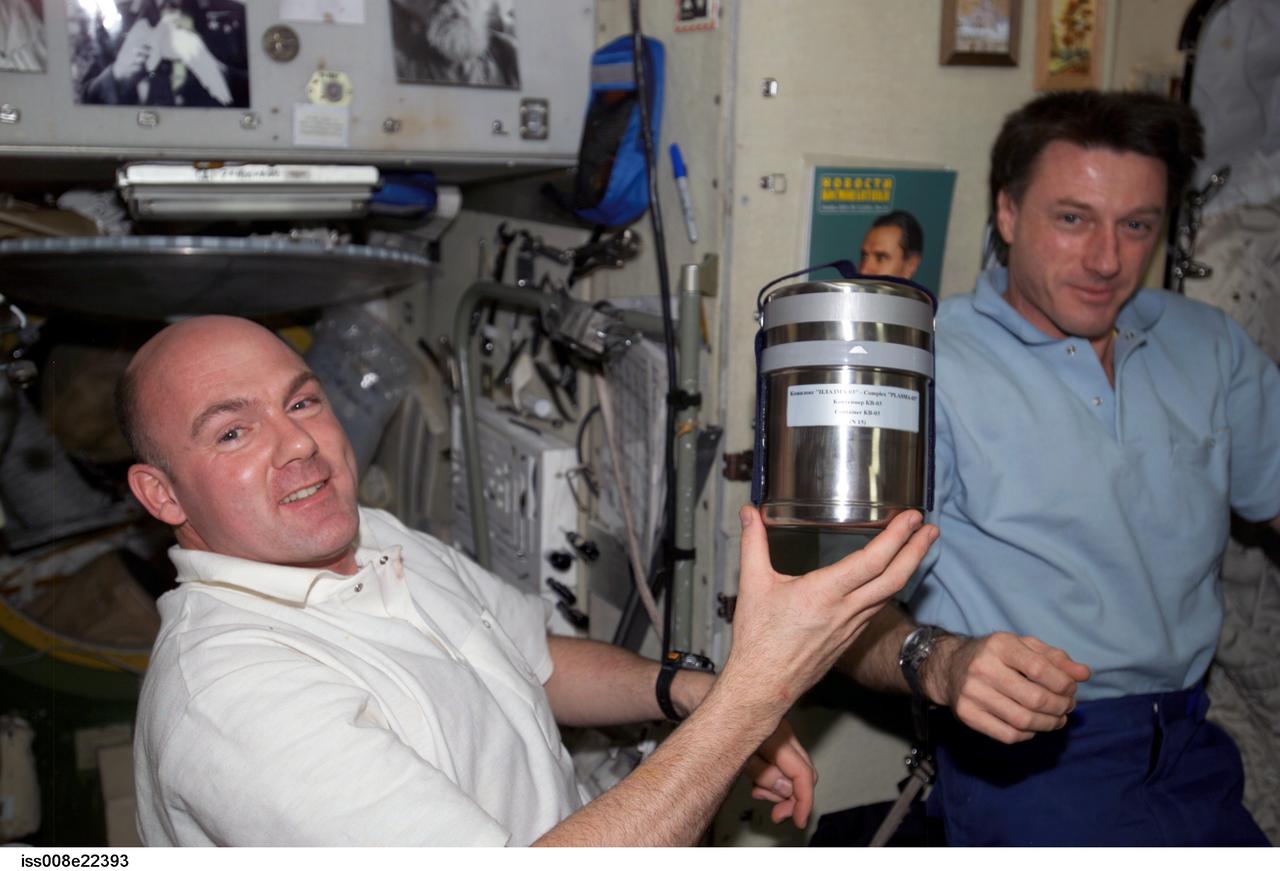
ISS008-E-22393 (29 April 2004) --- European Space Agency (ESA) astronaut Andre Kuipers of the Netherlands, holds a Complex “Plasma-03” canister in the Zvezda Service Module of the International Space Station (ISS). Astronaut C. Michael Foale, Expedition 8 commander and NASA ISS science officer, is at right.
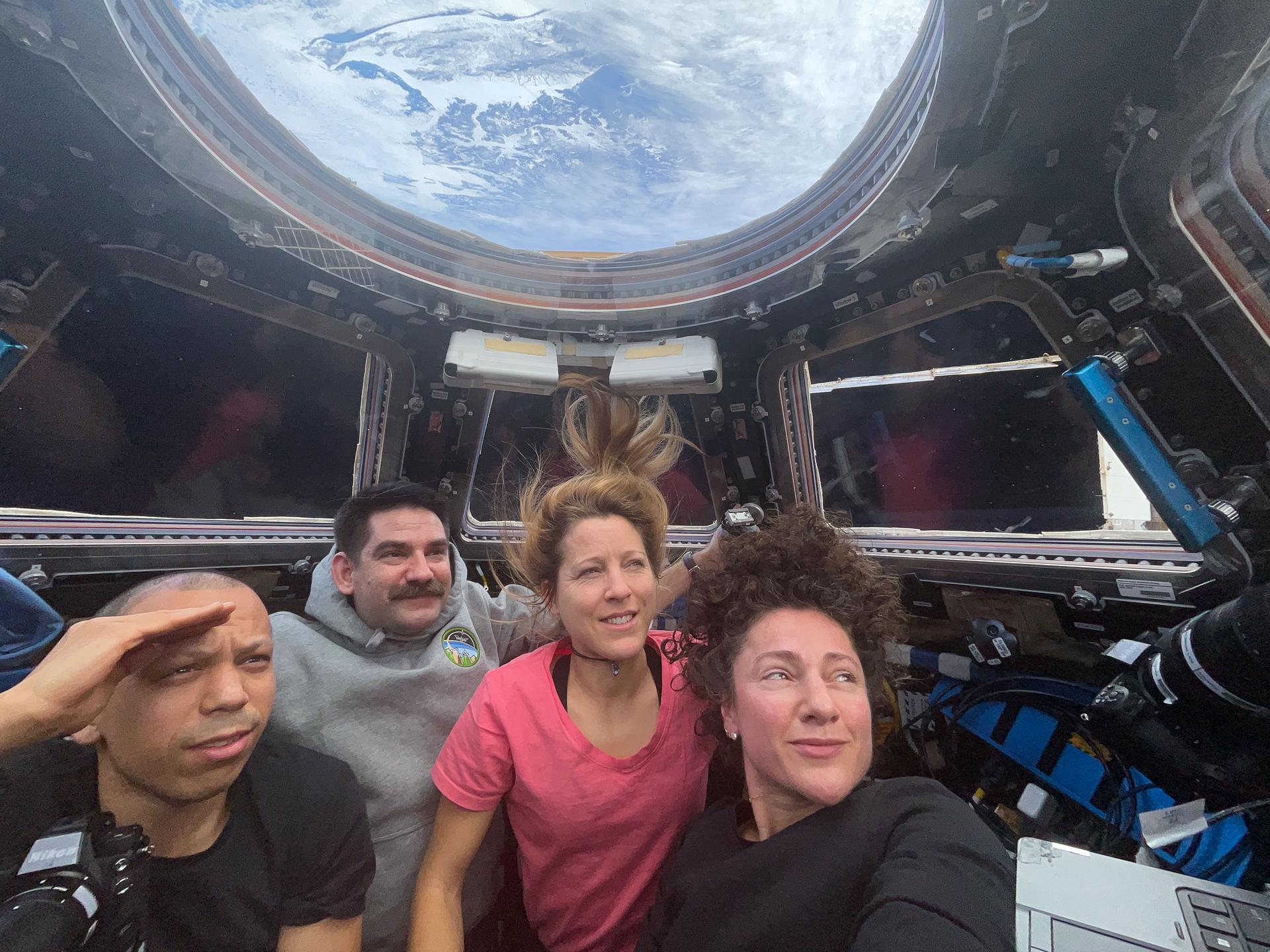
iss074e0458251 (April 10, 2026) --- Expedition 74 flight engineers (from left) Chris Williams, Jack Hathaway, Sophie Adenot, and Jessica Meir are inside the International Space Station’s cupola, waiting to observe the plasma trail of the Orion spacecraft—with the Artemis II crew aboard—as it reenters Earth’s atmosphere. Meir posted on her @astro_jessica Instagram account: "Eyes peeled in the cupola awaiting the safe return of our @nasaartemis friends. Our trajectory on @iss will be passing nearby over the Pacific, so we hope to catch a glimpse!" Credit: NASA/Jessica Meir
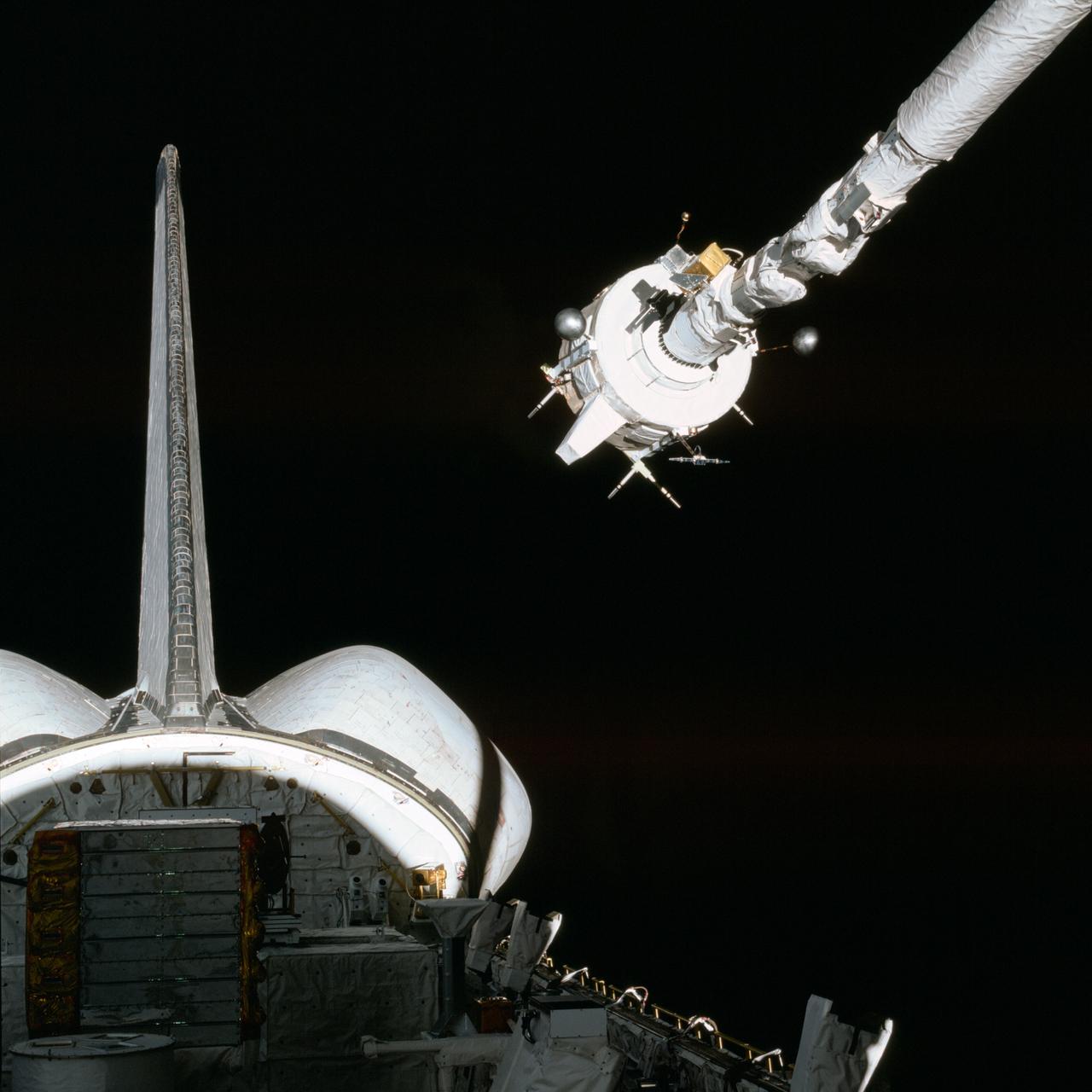
STS003-09-444 (22-30 March 1982) --- The darkness of space provides the backdrop for this scene of the plasma diagnostics package (PDR) experiment in the grasp of the end effector or ?hand? of the remote manipulator system (RMS) arm, and other components of the Office of Space Sciences (OSS-1) package in the aft section of the Columbia?s cargo hold. The PDP is a compact, comprehensive assembly of electromagnetic and particle sensors that will be used to study the interaction of the orbiter with its surrounding environment; to test the capabilities of the shuttle?s remote manipulator system; and to carry out experiments in conjunction with the fast pulse electron generator of the vehicle charging and potential experiment, another experiment on the OSS-1 payload pallet. This photograph was exposed with a 70mm handheld camera by the astronaut crew of STS-3, with a handheld camera aimed through the flight deck?s aft window. Photo credit: NASA
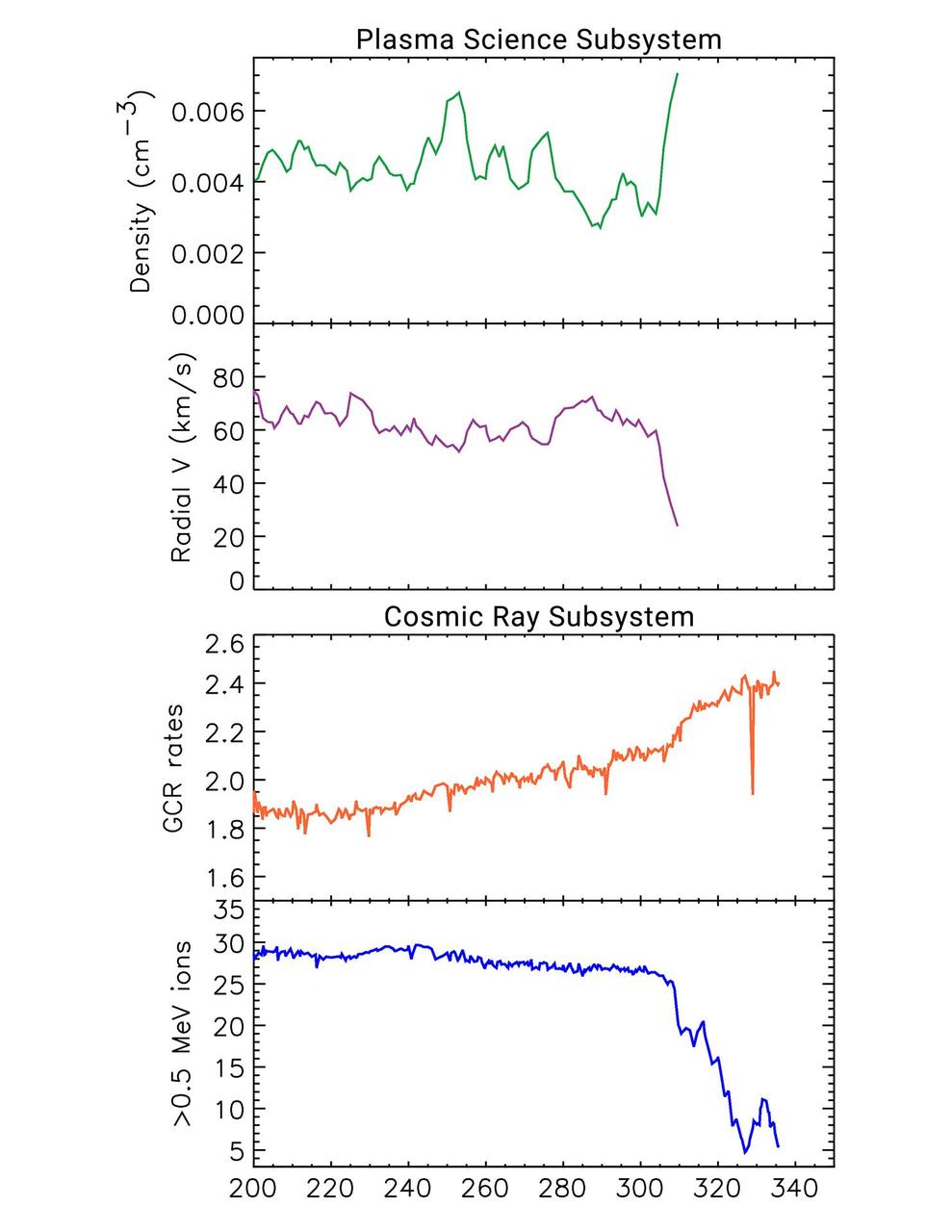
This set of graphs illustrates how data from two key instruments point to NASA's Voyager 2 spacecraft entering interstellar space, or the space between the stars, in November 2018. The top two plots come from the plasma science experiment (PLS). The plasma -- or ionized gas -- of interstellar space is significantly denser than the plasma inside the bubble of plasma the Sun blows around itself (the heliosphere). There is a jump on the graph in November 2018. At the same time, the measurements show that the outward speed (radial velocity) of the plasma the Sun is blowing (also known as the solar wind) sharply decreased. The bottom two plots come from the cosmic ray subsystem, which counts hits per second of higher-energy particles that originate from outside the solar bubble and lower-energy particles that originate from inside the solar bubble. The outsideparticles (also known as galactic cosmic rays or GCRs) increased and the inside particles (greater than 0.5 MeV) decreased at the same time the plasma science instrument detected its changes. The horizontal axis proceeds according to the numbered days of the year in 2018. https://photojournal.jpl.nasa.gov/catalog/PIA22923
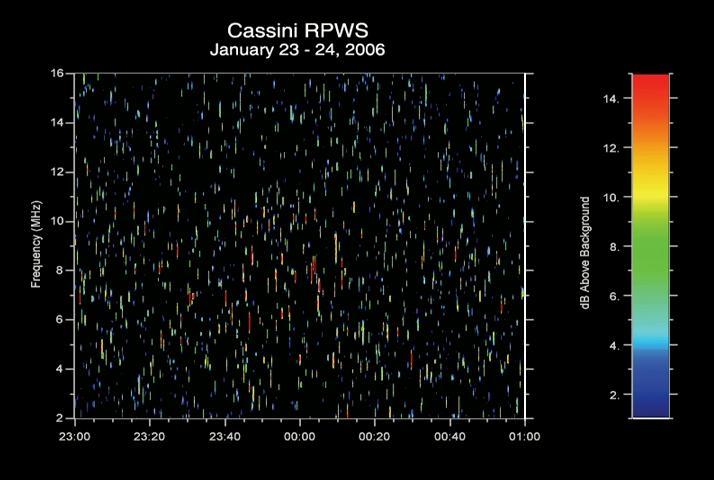
Lightning sounds from Saturn can be heard via radio signals received by the radio and plasma wave science instrument on the Cassini spacecraft
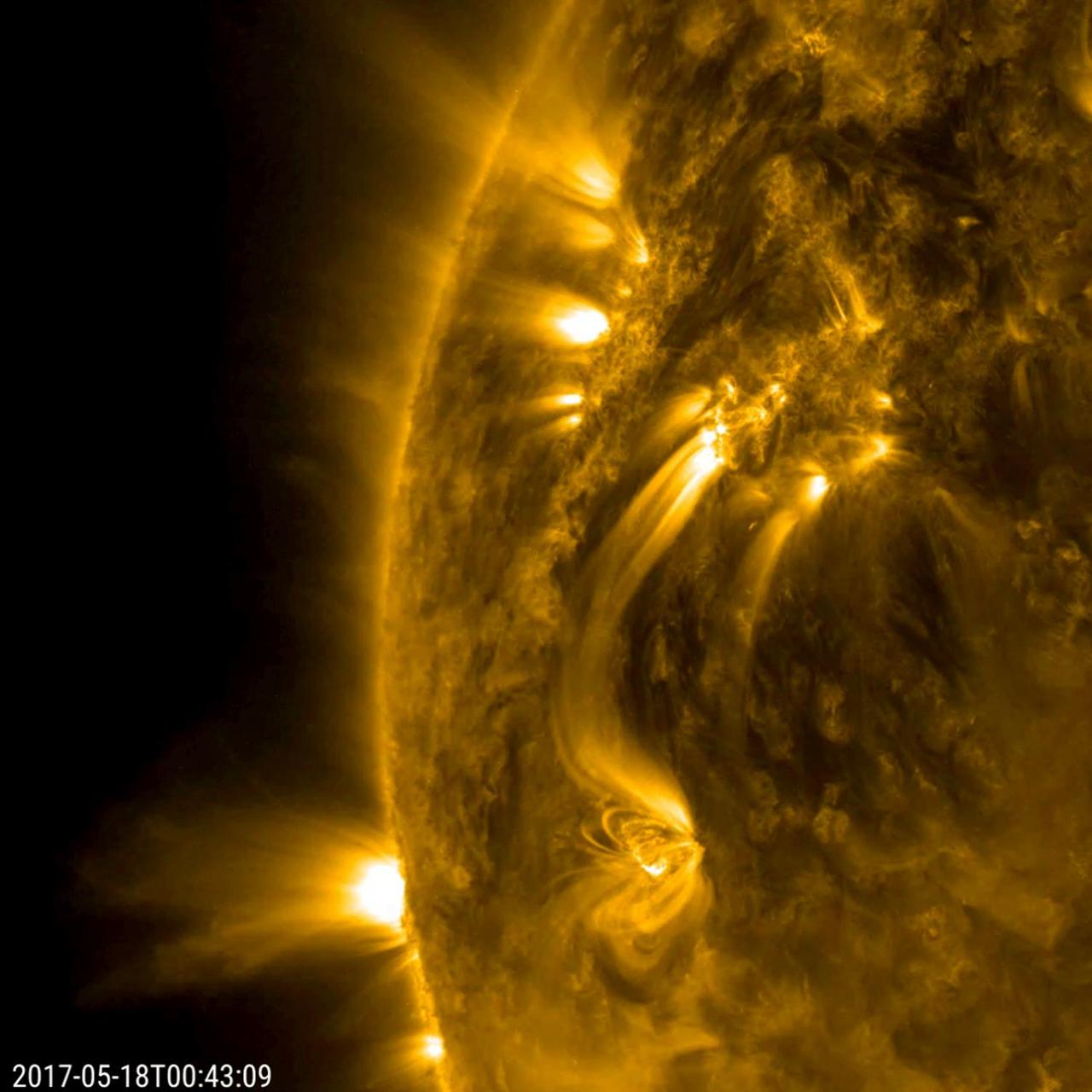
Several bright bands of plasma connect from one active region to another, even though they are tens of thousands of miles away from each other (May 17-18, 2017). Active regions are, by their nature, strong magnetic areas with north and south poles. The plasma consists of charged particles that stream along the magnetic field lines between these two regions. These connecting lines are clearly visible in this wavelength of extreme ultraviolet light. Other loops and strands of bright plasma can be seen rising up and out of smaller active regions as well. The video covers about one day's worth of activity. Movies are available at https://photojournal.jpl.nasa.gov/catalog/PIA21638
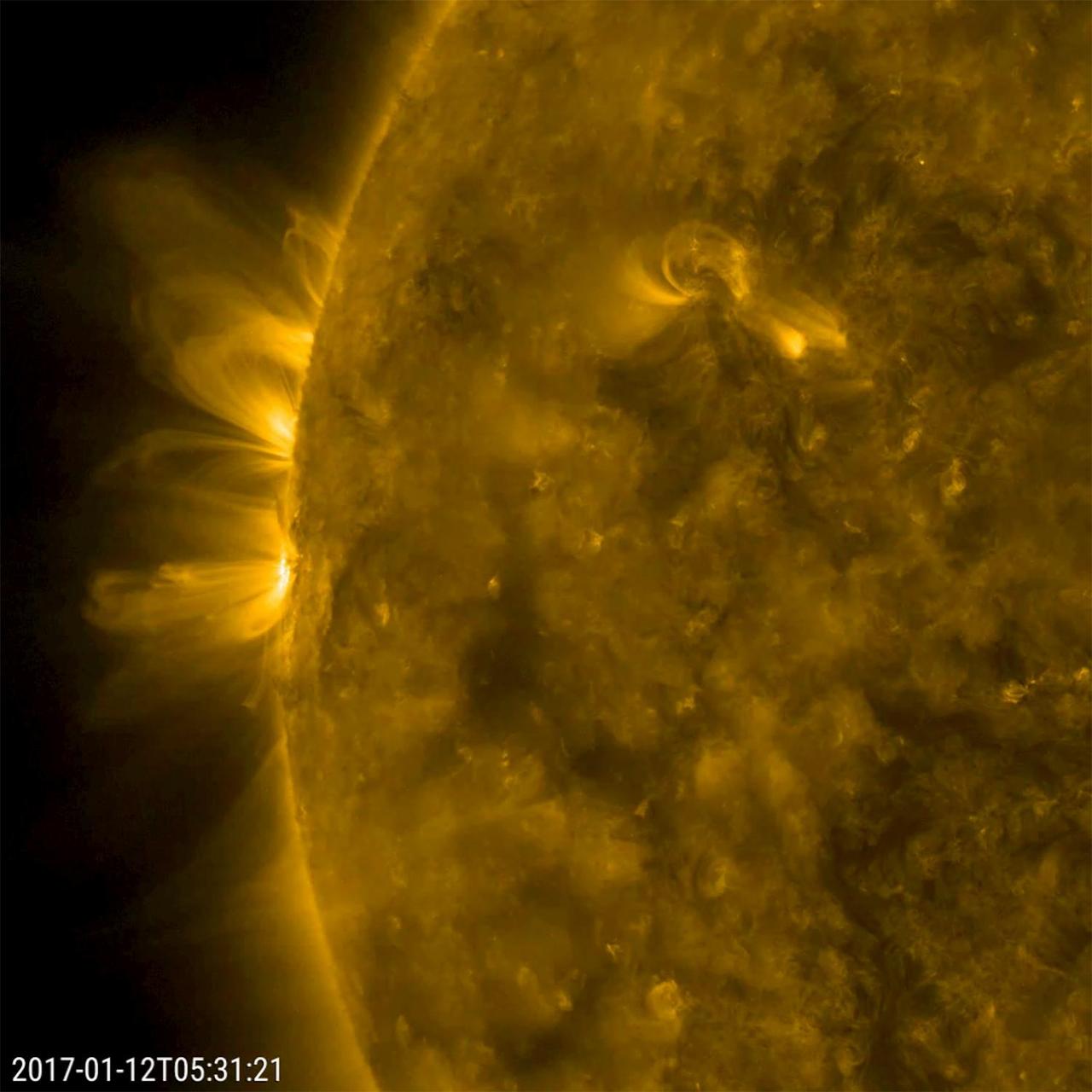
Magnetic arcs of plasma that spiraled above two active regions held their shape fairly well over 18 hours (Jan. 11-12, 2017). The charged plasma is being controlled the magnetic field lines of the active regions. The field lines become clearly visible when viewed in this wavelength of extreme ultraviolet light. Often the arches bend and twist more dynamically than the relatively stable ones seen here. Movies are available at http://photojournal.jpl.nasa.gov/catalog/PIA12327

A small prominence observed in profile arched up and sent streams of plasma curling back into the sun over a 30-hour period (Dec. 13-14, 2017). We are observing charged particles streaming along magnetic field lines made visible in extreme ultraviolet light. Prominences are cooler strands of plasma tethered above the sun's surface by magnetic forces. They are quite unstable and frequently fall apart within hours or days. Movies are available at https://photojournal.jpl.nasa.gov/catalog/PIA22196
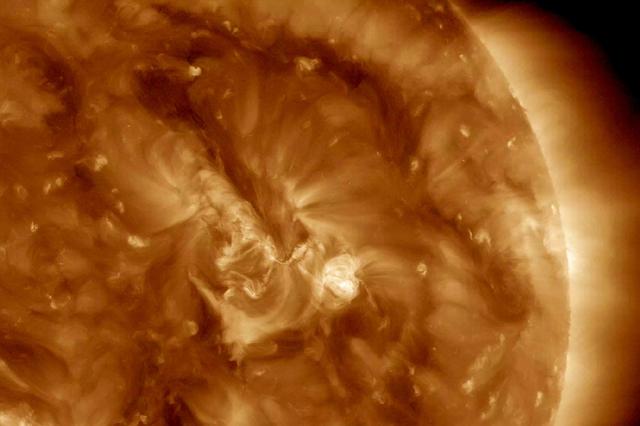
A minor solar eruption triggered a crackling, white flash that sent an expanding wave of plasma below it over about six hours (Nov. 4, 2016). Some of the plasma also appeared to surge along a narrow path above the active region as well. Such occurrences are fairly common, but still interesting to watch up close. The images were taken in a wavelength of extreme ultraviolet light. Movies are available at http://photojournal.jpl.nasa.gov/catalog/PIA21202
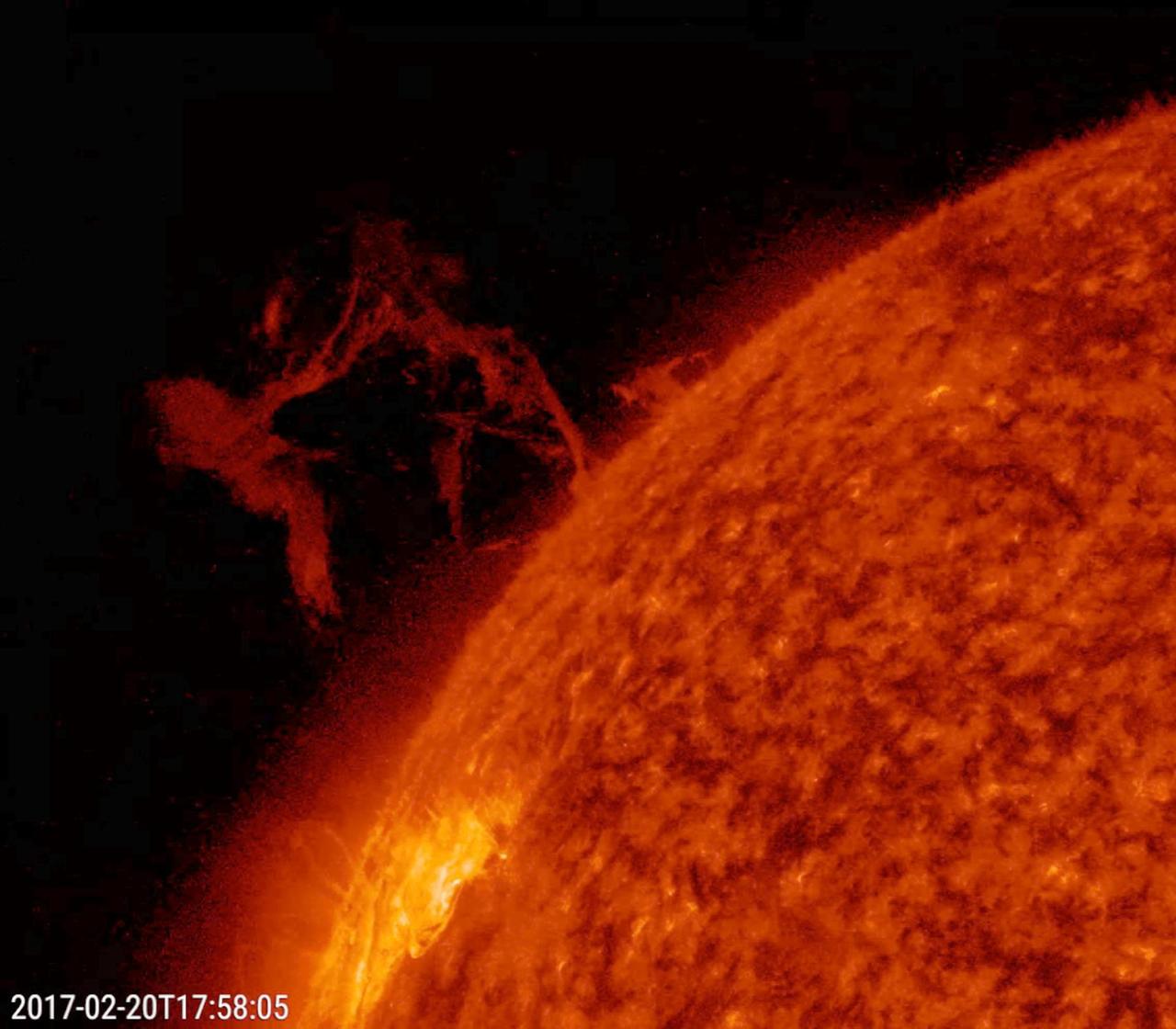
A solar prominence gathered itself into a twisting cone, then rose up and broke apart in a delicate dance of plasma above the sun (Feb. 20, 2017). The event, observed in a wavelength of extreme ultraviolet light, lasted just about four hours. Prominences are unstable clouds of plasma suspended above the sun's surface by magnetic forces. This kind of event is not uncommon. The brighter area near the bottom of the images is an active region. Movies are available at http://photojournal.jpl.nasa.gov/catalog/PIA21552

A prominence rose up above the sun, sent an arch of plasma to link up magnetically with an active region over a one-day period (Jan, 9-10, 2017). Then the flow of plasma seemed to largely change direction and head back where it came from. Finally, amidst the confused patterns of movement, it dissipated and fell away. Prominences are cooler clouds of charged particles tenuously tethered to the sun by magnetic forces. Images were taken in a wavelength of extreme ultraviolet light. Movies are available at https://photojournal.jpl.nasa.gov/catalog/PIA22199
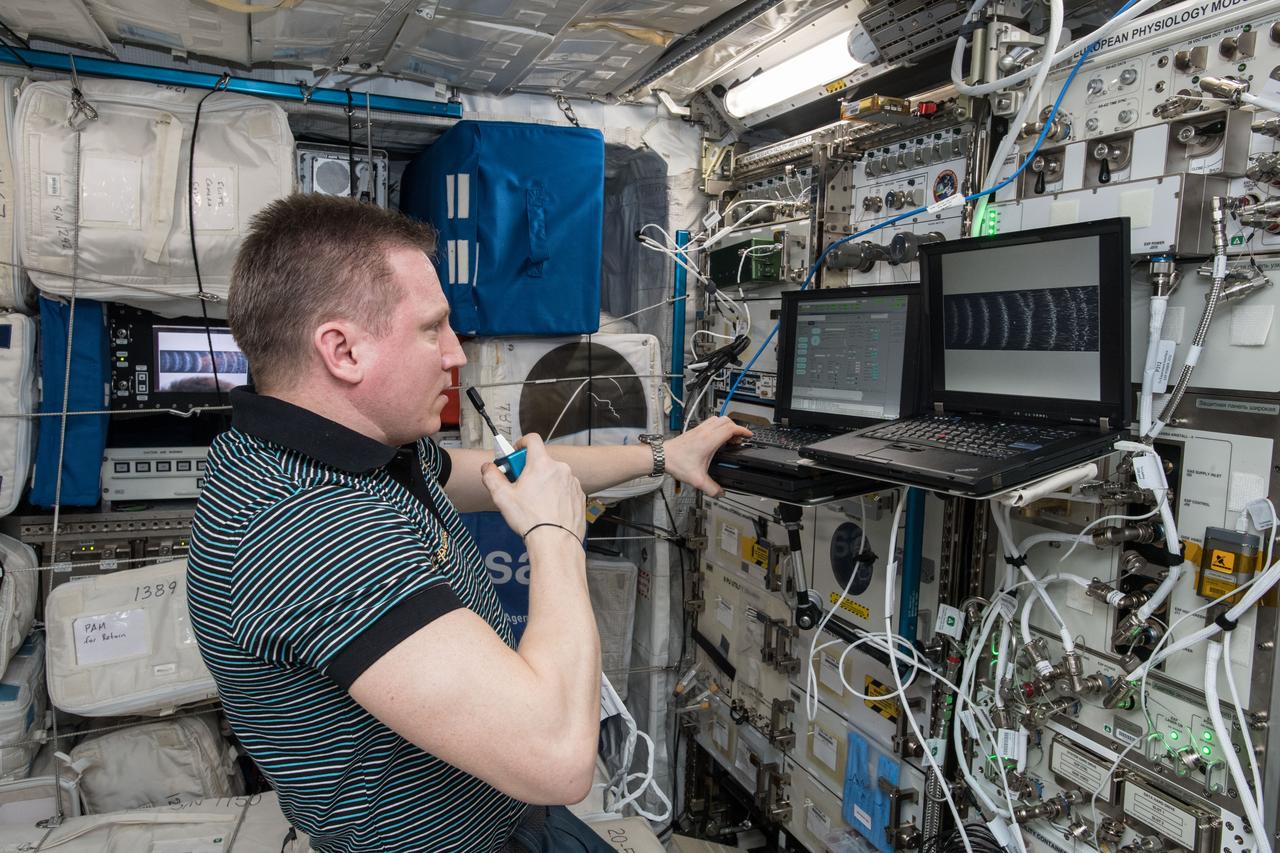
iss057e074488 (11/7/2018) --- Russian Cosmonaut Sergei Prokopev, during the Plasma Krystall-4 (PK-4) Experiment. PK-4 is a scientific collaboration between the European Space Agency (ESA) and the Russian Federal Space Agency (Roscosmos), performing research in the field of "Complex Plasmas". Complex or dusty plasmas are plasmas which contain beside electrons, ions, and neutral gas in addition micro-particles, e.g., dust grains. Due to the strong influence of gravity on the micro-particles, most experiments on complex plasmas are strongly distorted or even impossible on earth, and therefore, require microgravity conditions.

This cartoon shows how magnetic waves, called Alfvén S-waves, propagate outward from the base of black hole jets. The jet is a flow of charged particles, called a plasma, which is launched by a black hole. The jet has a helical magnetic field (yellow coil) permeating the plasma. The waves then travel along the jet, in the direction of the plasma flow, but at a velocity determined by both the jet's magnetic properties and the plasma flow speed. The BL Lac jet examined in a new study is several light-years long, and the wave speed is about 98 percent the speed of light. Fast-moving magnetic waves emanating from a distant supermassive black hole undulate like a whip whose handle is being shaken by a giant hand, according to a study using data from the National Radio Astronomy Observatory's Very Long Baseline Array. Scientists used this instrument to explore the galaxy/black hole system known as BL Lacertae (BL Lac) in high resolution. http://photojournal.jpl.nasa.gov/catalog/PIA19822
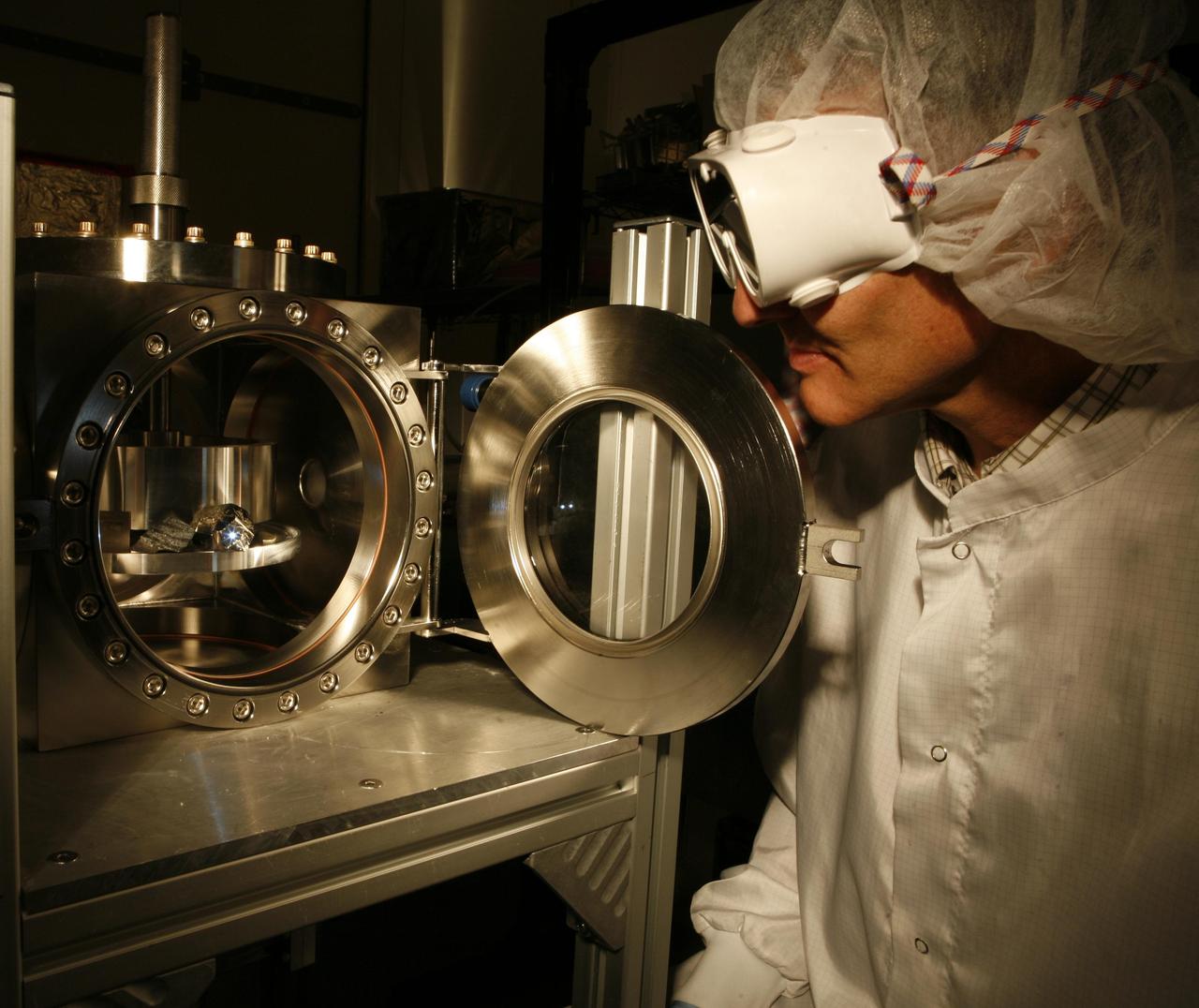
The ChemCam instrument for NASA Mars Science Laboratory mission uses a pulsed laser beam to vaporize a pinhead-size target, producing a flash of light from the ionized material plasma that can be analyzed to identify chemical elements in the target.

This artist concept depicts NASA Voyager 1 spacecraft entering interstellar space. Interstellar space is dominated by the plasma, or ionized gas, that was ejected by the death of nearby giant stars millions of years ago.

NASA Extreme Ultraviolet Imaging Telescope aboard ESA’s SOHO spacecraft took this image of a huge, handle-shaped prominence in 1999. Prominences are huge clouds of relatively cool dense plasma suspended in the Sun hot, thin corona.

During its close flyby of Earth, NASA Jupiter-bound Juno spacecraft listened for a coordinated, global transmission from amateur radio operators using its radio and plasma wave science instrument, known as Waves.
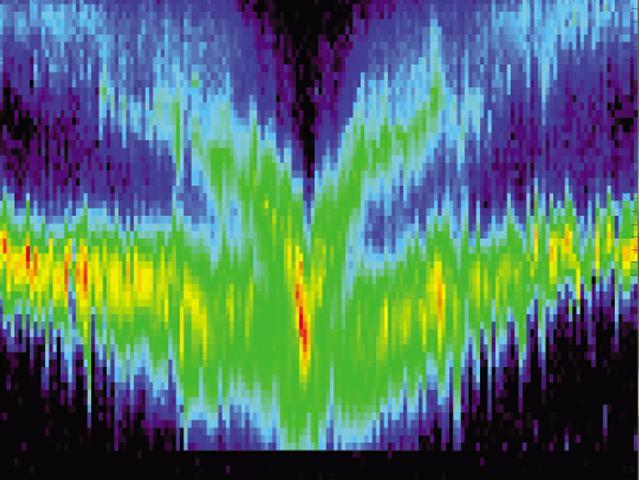
NASA Deep Space 1 flew by comet Borrelly on September 22, 2001 and took these measurements with its plasma instruments. These data show that the flow of ions around the comet rocky, icy nucleus.
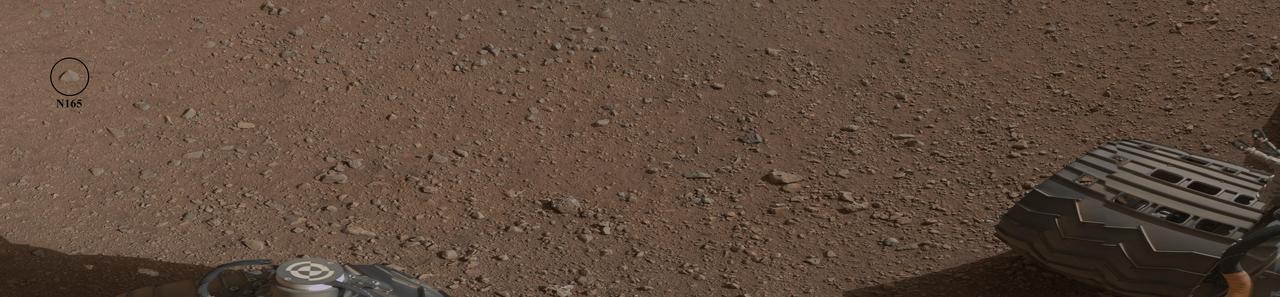
This mosaic image shows the first target NASA Curiosity rover aims to zap ChemCam instrument. ChemCam will be firing a laser at this rock, provisionally named N165, and analyzing the glowing, ionized gas, called plasma, that the laser excites.
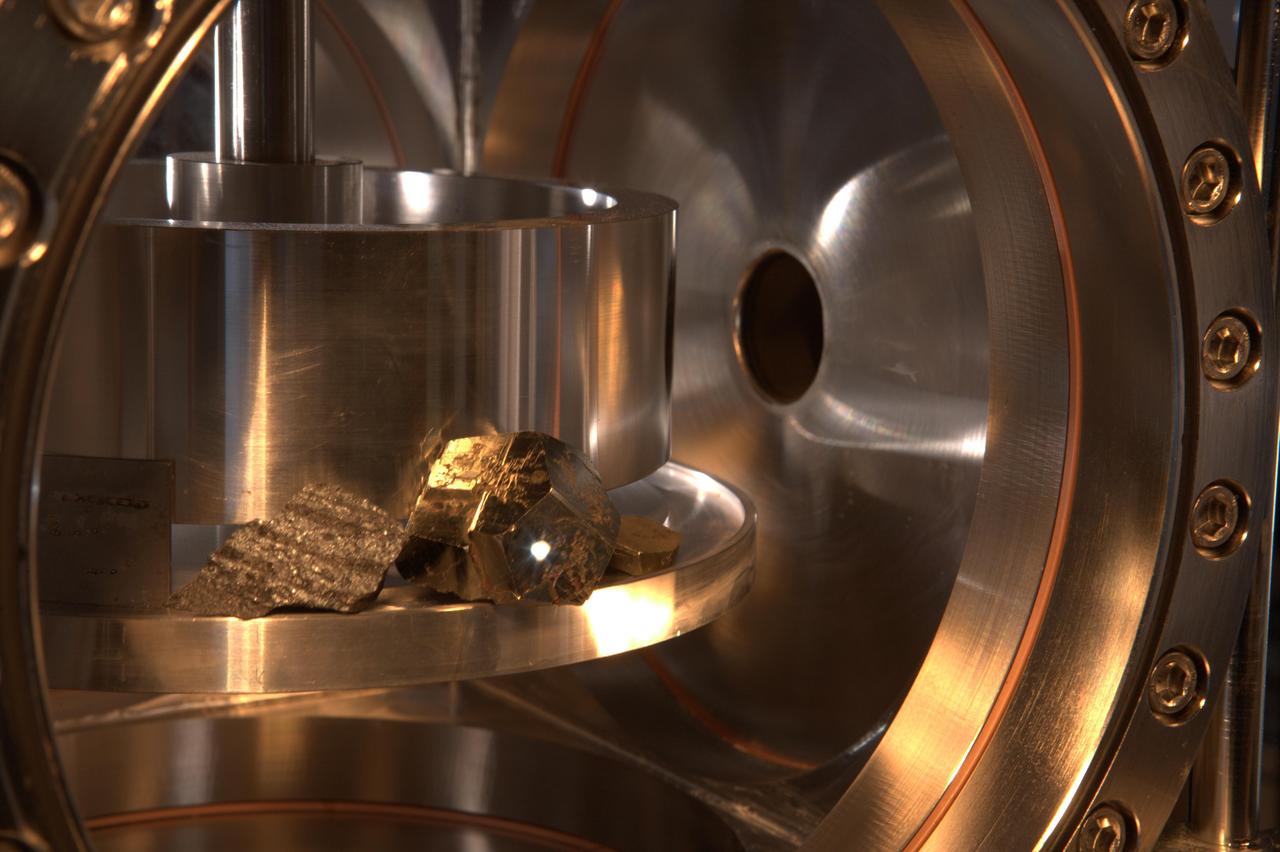
The ChemCam instrument for NASA Mars Science Laboratory mission uses a pulsed laser beam to vaporize a pinhead-size target, producing a flash of light from the ionized material plasma that can be analyzed to identify chemical elements in the target.
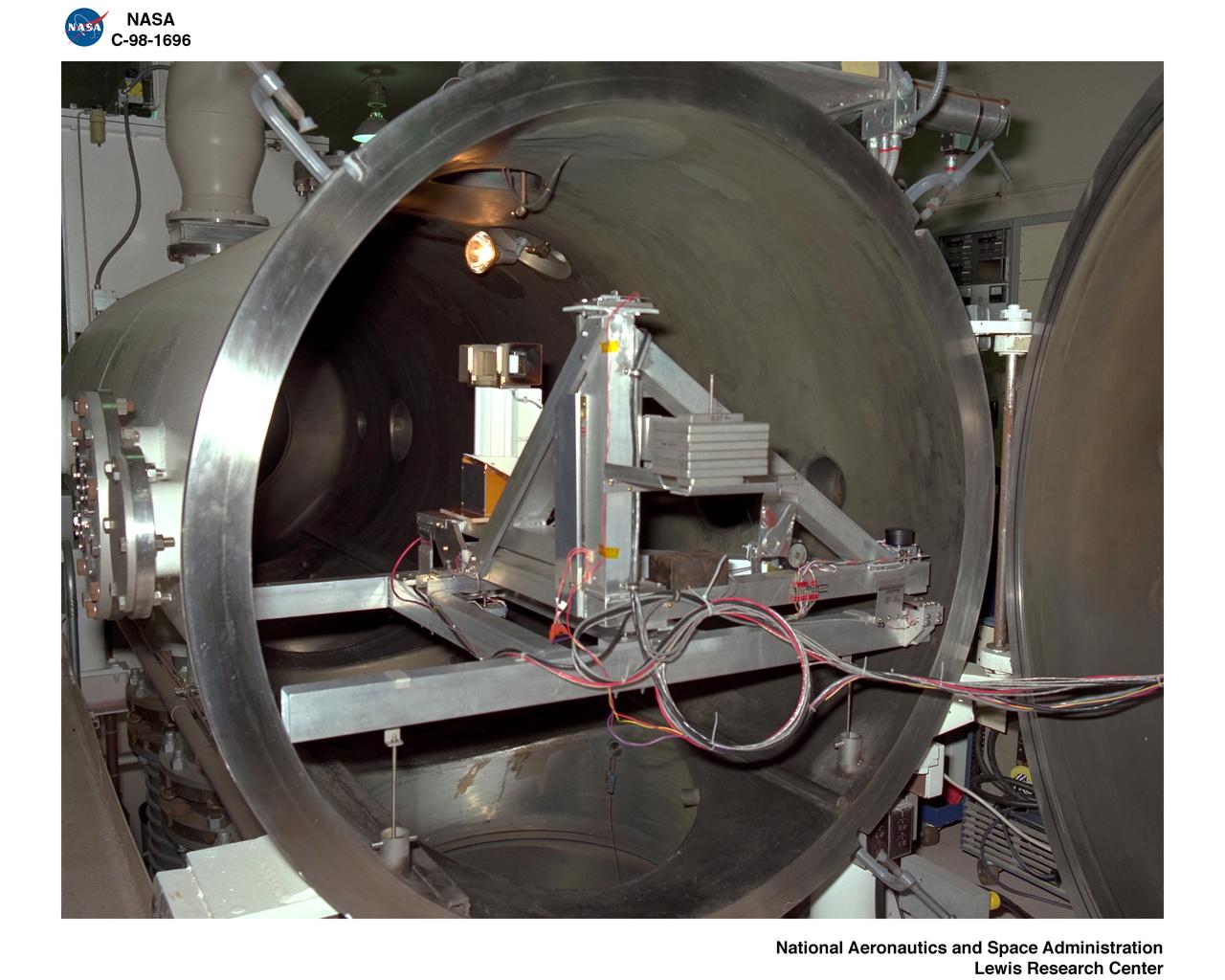
PULSED PLASMA THRUSTER
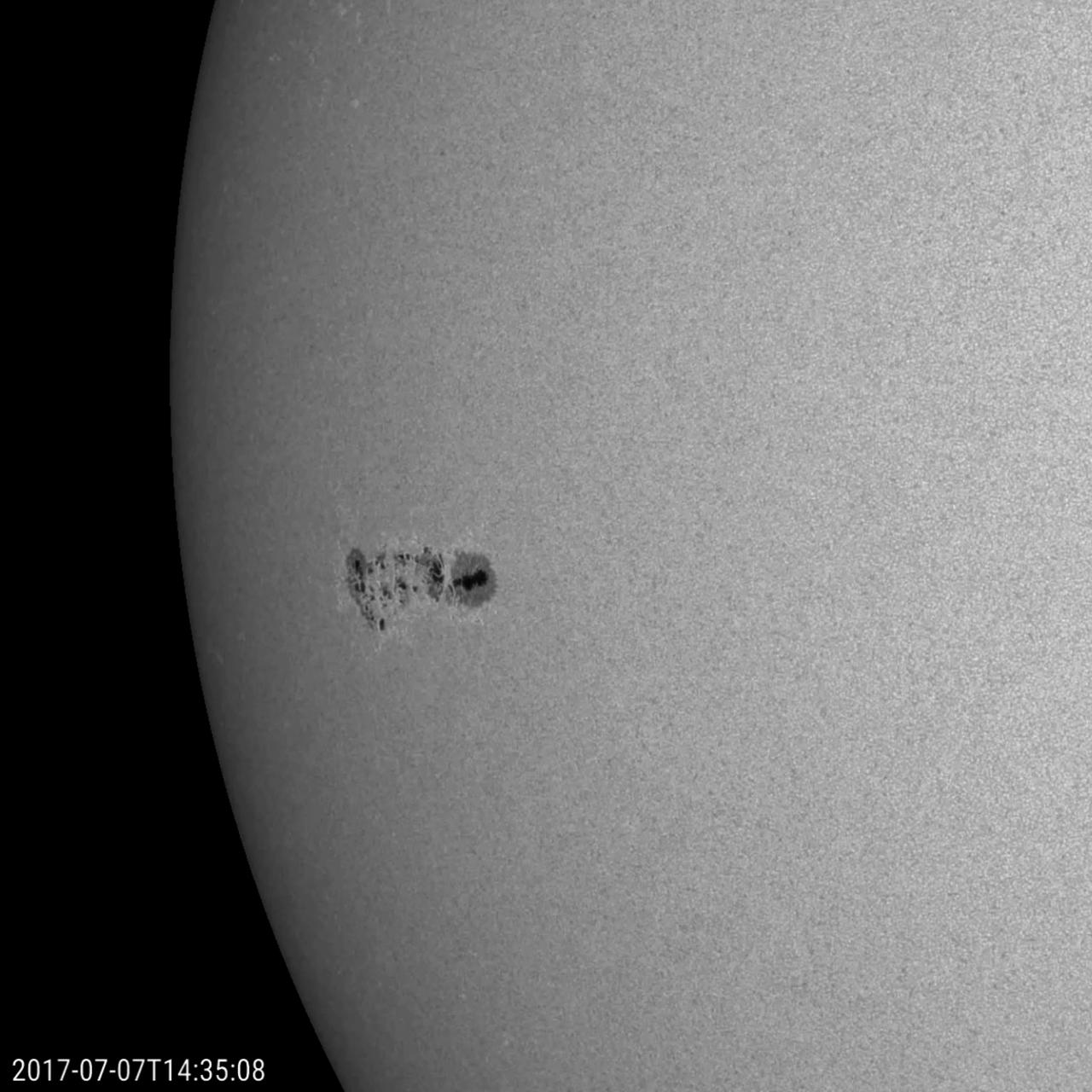
A prominence at the edge of the sun provided us with a splendid view of solar plasma as it churned and streamed over less than one day (June 25-26, 2017). The charged particles of plasma were being manipulated by strong magnetic forces. When viewed in this wavelength of extreme ultraviolet light, we can trace the movements of the particles. Such occurrences are fairly common but much easier to see when they are near the sun's edge. For a sense of scale, the arch of prominence in the still image has risen up several times the size of Earth. Movies are available at https://photojournal.jpl.nasa.gov/catalog/PIA21783

A prominence at the edge of the sun provided us with a splendid view of solar plasma as it churned and streamed over less than one day (June 25-26, 2017). The charged particles of plasma were being manipulated by strong magnetic forces. When viewed in this wavelength of extreme ultraviolet light, we can trace the movements of the particles. Such occurrences are fairly common but much easier to see when they are near the sun's edge. For a sense of scale, the arch of prominence in the still image has risen up several times the size of Earth. Movies are available at https://photojournal.jpl.nasa.gov/catalog/PIA21768