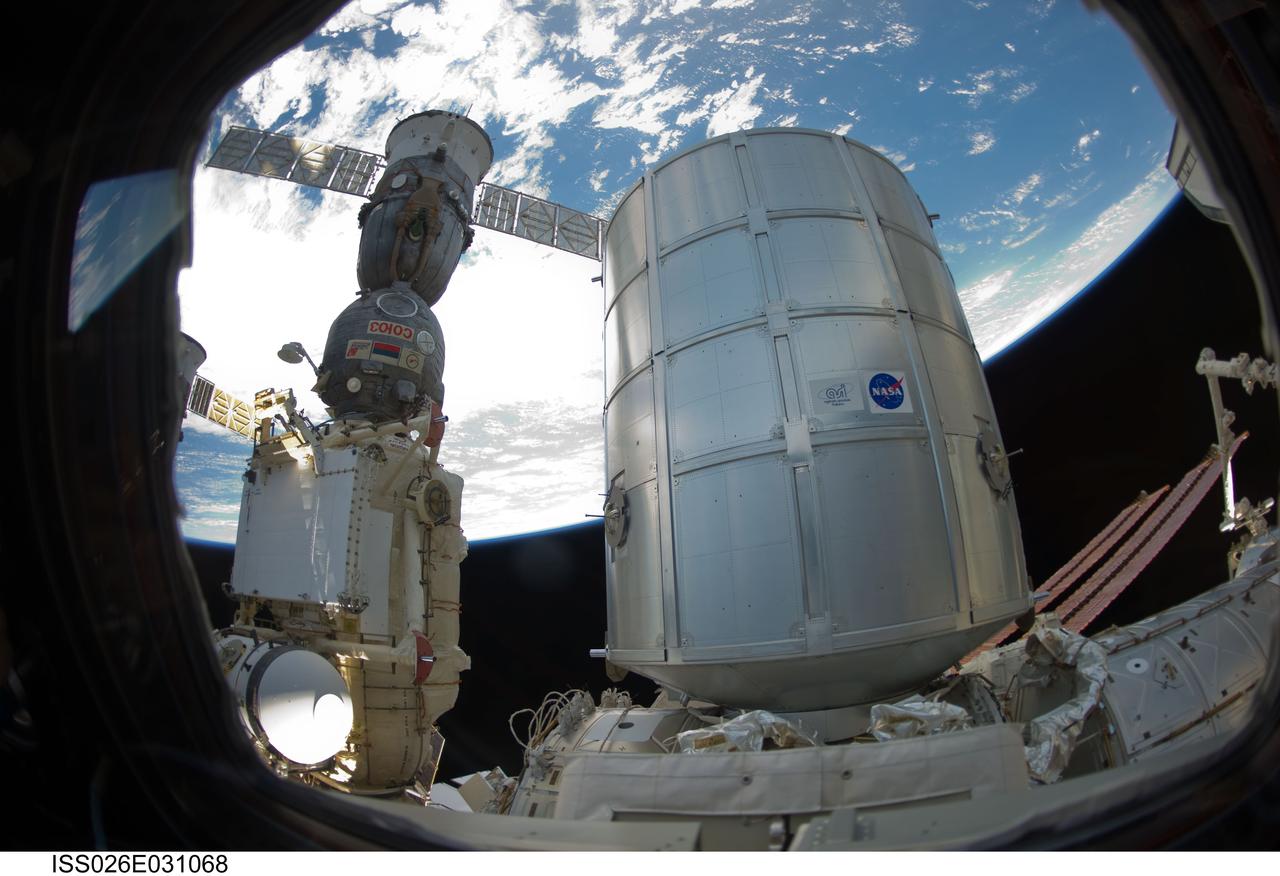
ISS026-E-031068 (1 March 2011) --- The newly-attached Permanent Multipurpose Module (PMM) and a docked Russian Soyuz spacecraft are featured in this image photographed by an Expedition 26 crew member while space shuttle Discovery (STS-133) remains docked with the station. Earth?s horizon and the blackness of space provide the backdrop for the scene.
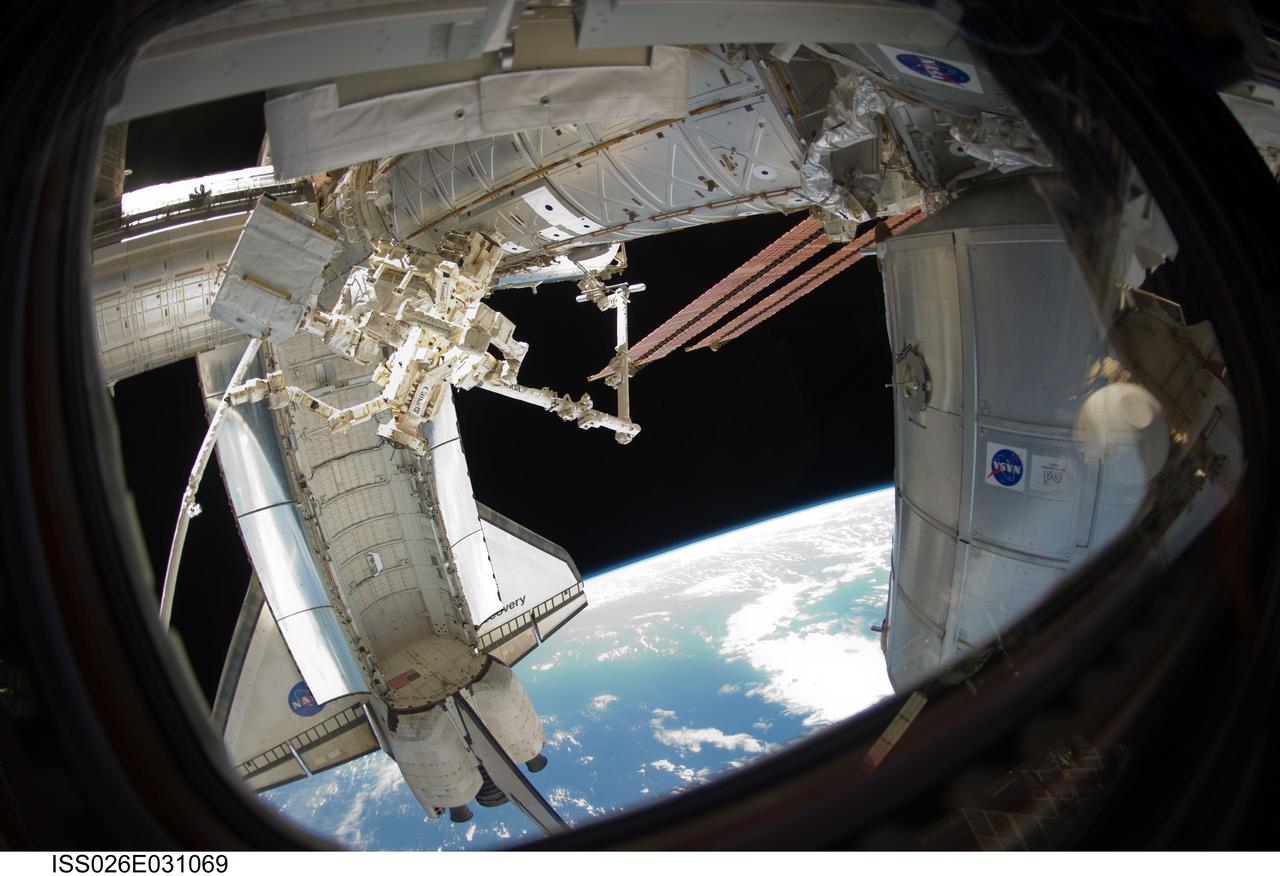
ISS026-E-031069 (1 March 2011) --- The newly-attached Permanent Multipurpose Module (PMM), docked space shuttle Discovery (STS-133) and the Canadian-built Dextre, also known as the Special Purpose Dextrous Manipulator (SPDM), are featured in this image photographed by an Expedition 26 crew member on the International Space Station. The blackness of space and Earth?s horizon provide the backdrop for the scene.
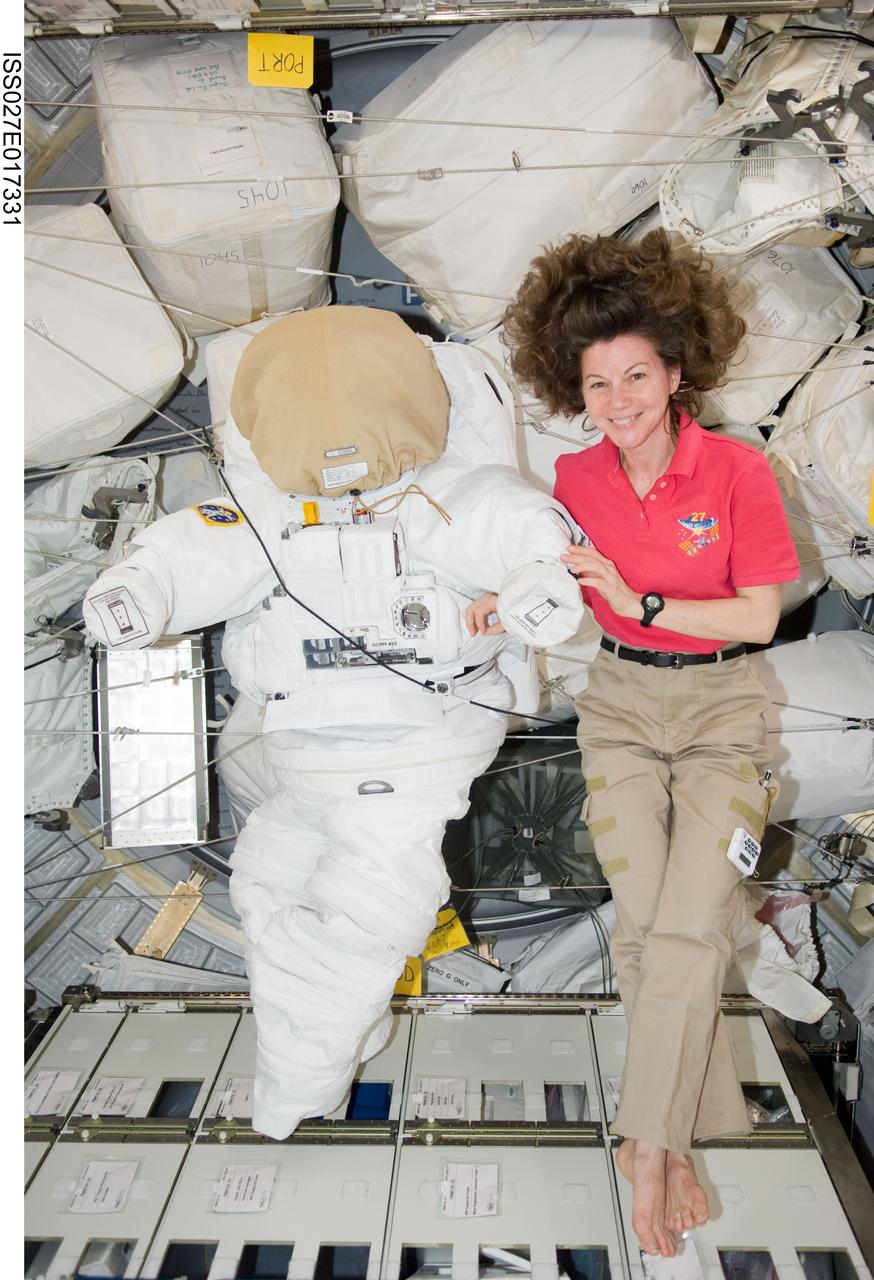
ISS027-E-017331 (27 April 2011) --- NASA astronaut Cady Coleman, Expedition 27 flight engineer, poses with an Extravehicular Mobility Unit (EMU) spacesuit in the Permanent Multipurpose Module (PMM) of the International Space Station.
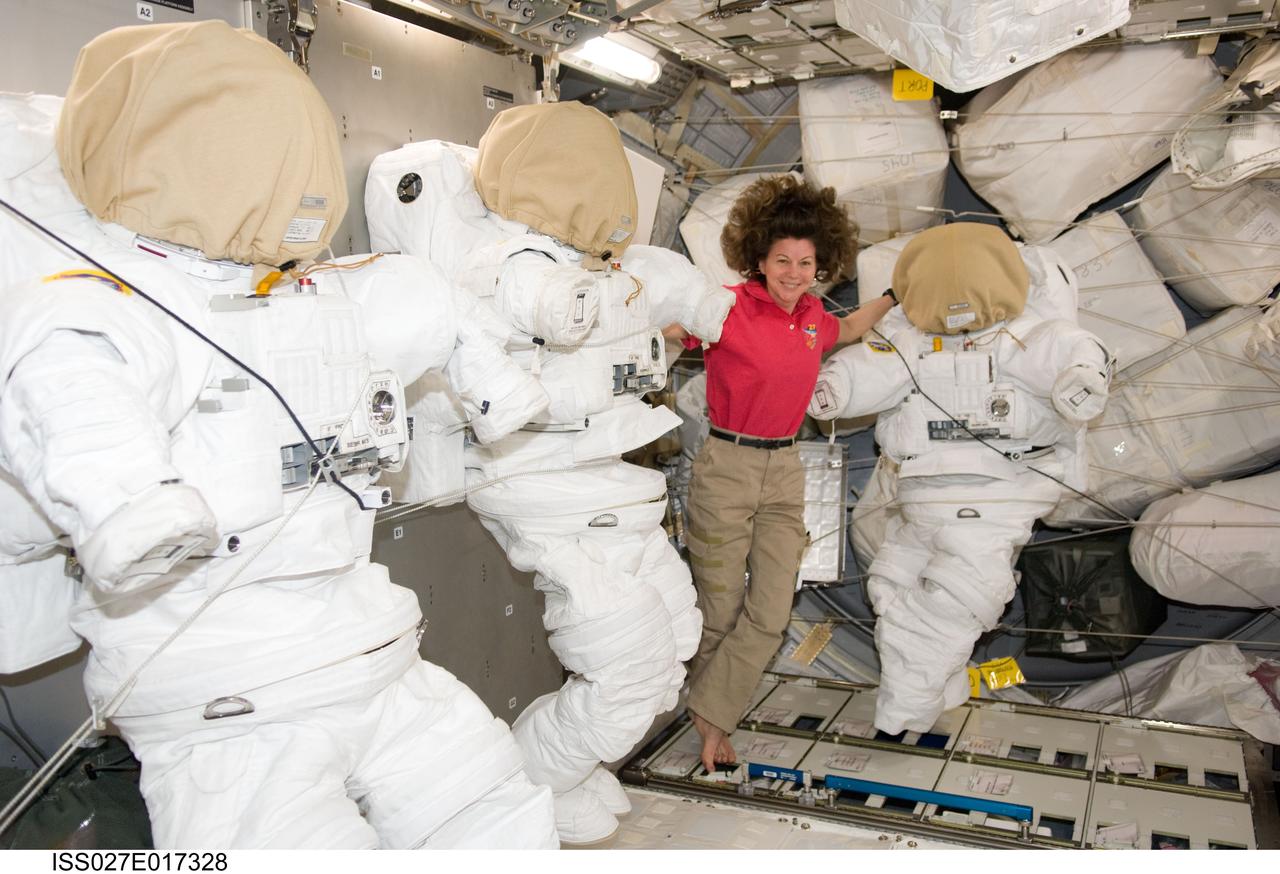
ISS027-E-017328 (27 April 2011) --- NASA astronaut Cady Coleman, Expedition 27 flight engineer, poses with three Extravehicular Mobility Unit (EMU) spacesuits in the Permanent Multipurpose Module (PMM) of the International Space Station.
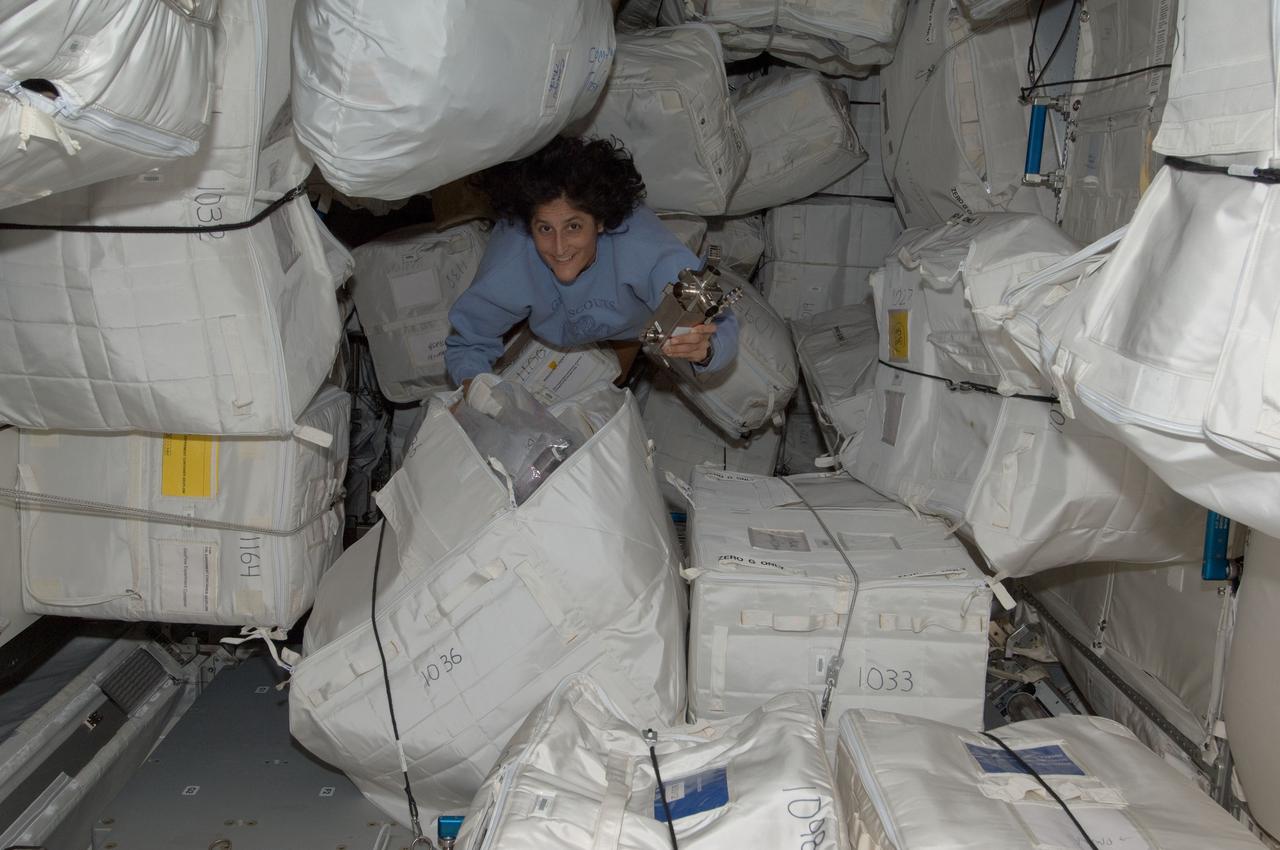
ISS032-E-018888 (14 Aug. 2012) --- NASA astronaut Sunita Williams, Expedition 32 flight engineer, removes a piece of hardware from a stowage container in the Permanent Multipurpose Module (PMM) of the International Space Station.
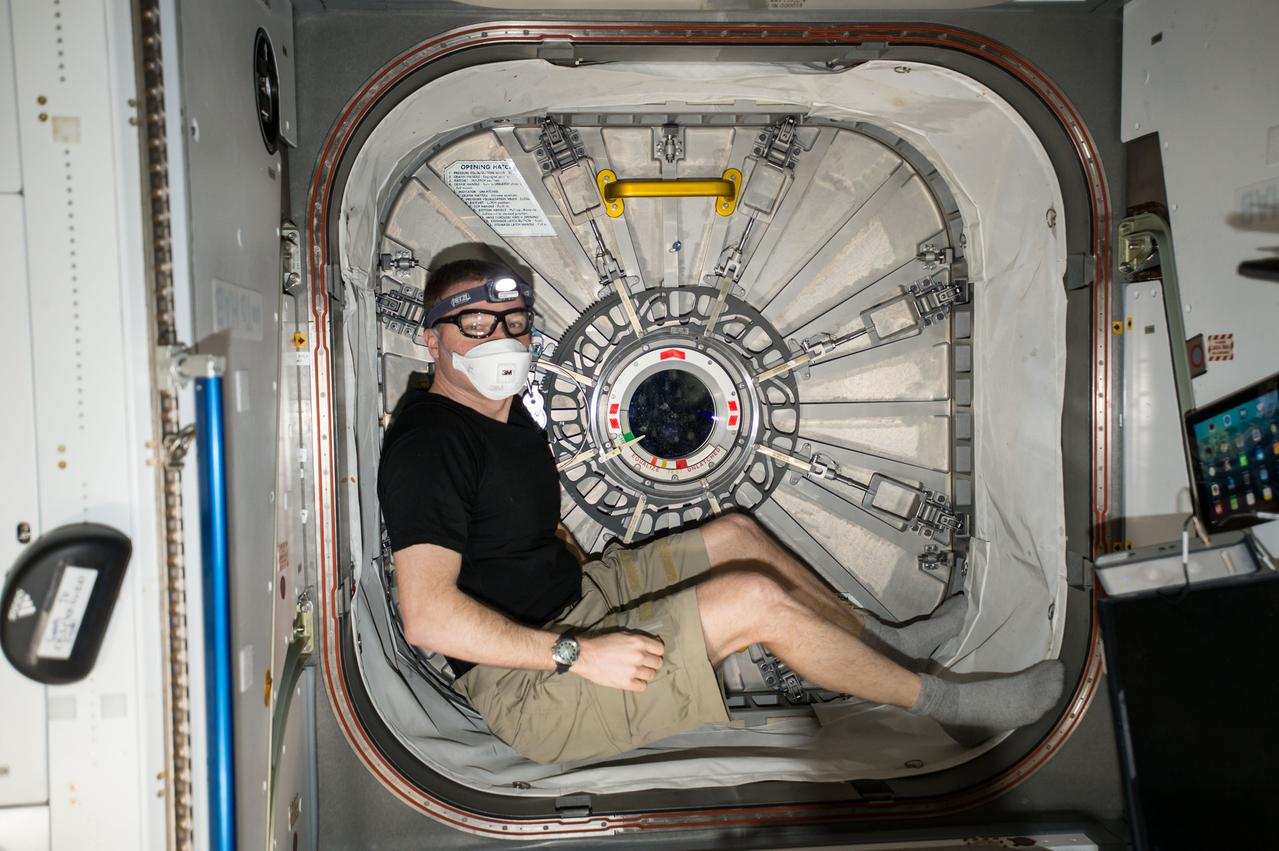
ISS043E266841 (05/28/2015) --- Expedition 43 Commander and NASA astronaut Terry Virts sits is one of the hatchways aboard the International Space Station following the relocation of the Leonardo Permanent Multipurpose Module (PMM.) The PMM was relocated from the Unity node to the Tranquility node as the next step in preparing the International Space Station for the installation of new International Docking Adapters which will enable future U.S. commercial crew vehicles to dock to the station. Crew members typically wear personal protective devices (mask, glasses, gloves) whenever opening a hatch following dynamic operations as a precaution.
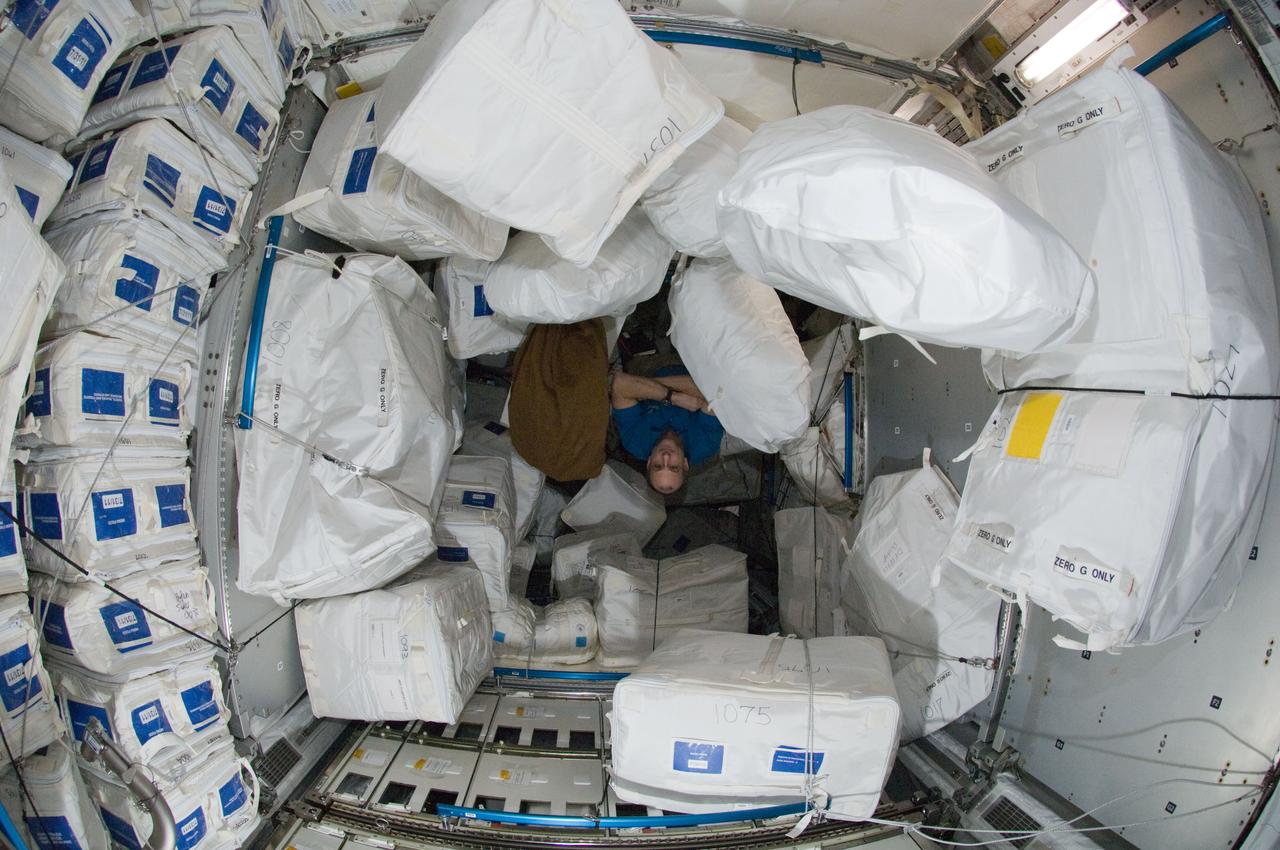
ISS030-E-049727 (22 Jan. 2012) --- NASA astronaut Don Pettit, Expedition 30 flight engineer, works among storage containers in the Leonardo Permanent Multipurpose Module (PMM) of the International Space Station.

ISS035-E-010416 (30 March 2013) --- NASA astronaut Chris Cassidy, Expedition 35 flight engineer, works with the loading and unloading of supplies in the Leonardo Permanent Multipurpose Module (PMM) of the Earth-orbiting International Space Station.
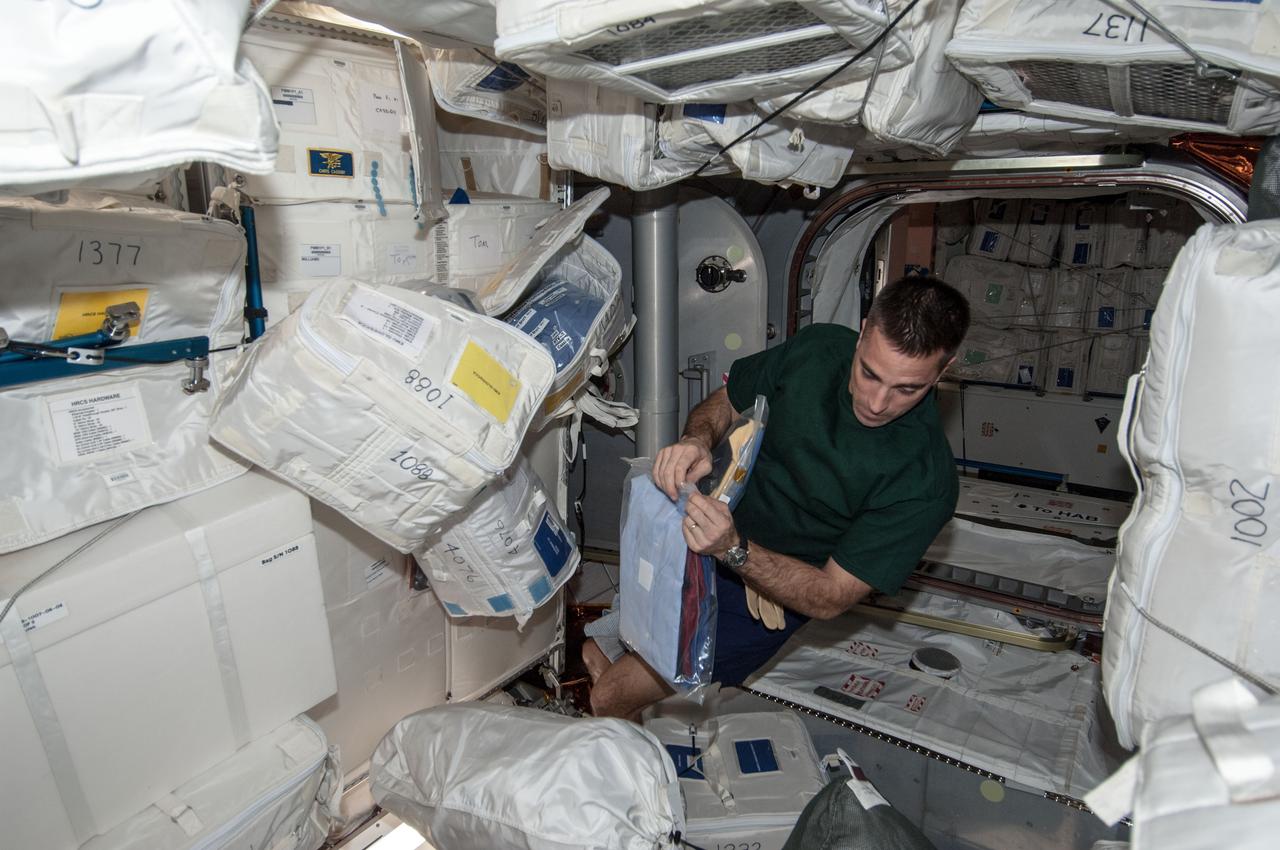
ISS035-E-010424 (30 March 2013) --- NASA astronaut Chris Cassidy, Expedition 35 flight engineer, works with the loading and unloading of supplies in the Leonardo Permanent Multipurpose Module (PMM) of the Earth-orbiting International Space Station.
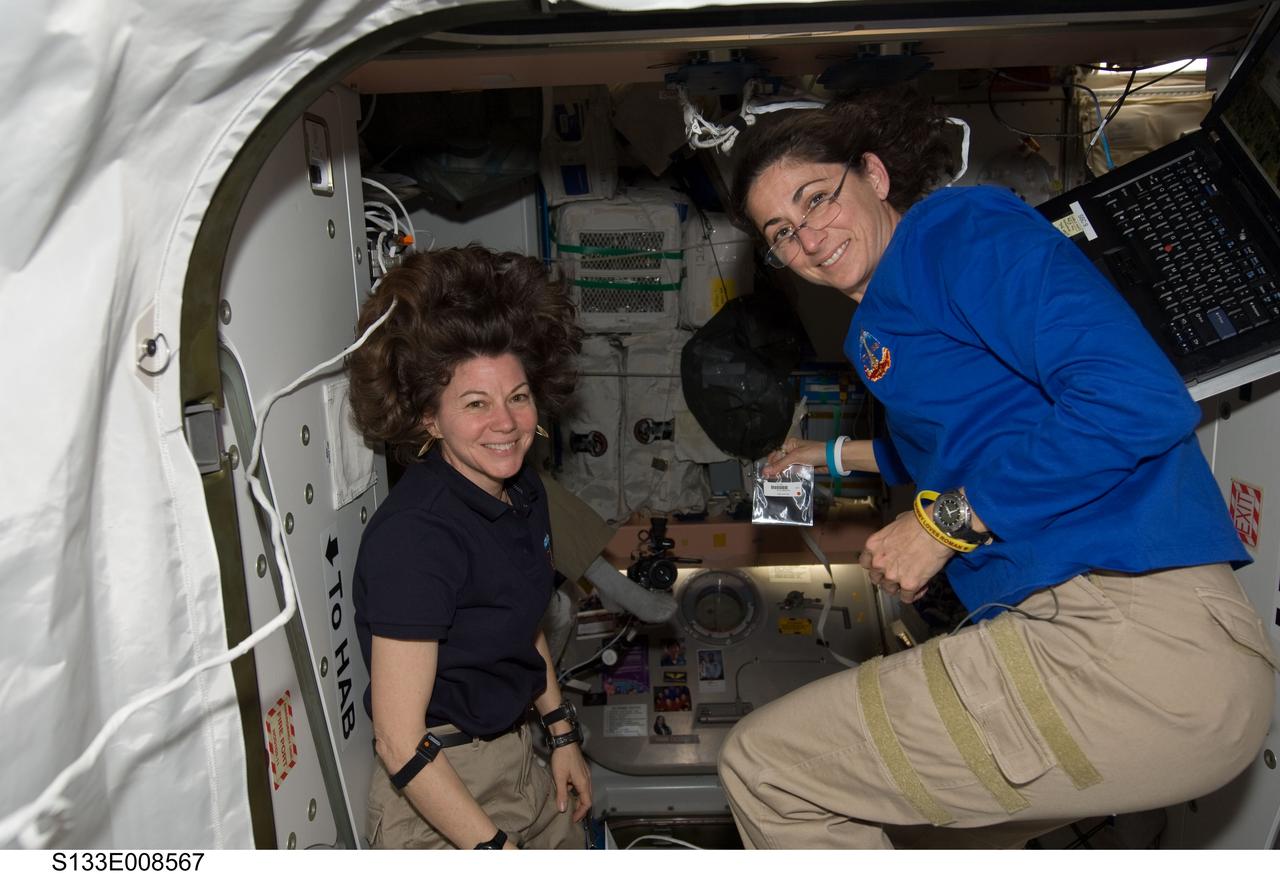
S133-E-008567 (4 March 2011) --- It's another moving day onboard the International Space Station, as NASA astronauts Cady Coleman (left), Expedition 26 flight engineer, Nicole Stott, STS-133/Discovery mission specialist, are seen just outside the new Permanent Multipurpose Module (PMM). They are participating in the team effort of 12 total astronauts and cosmonauts working together temporarily onboard the orbital outpost. The joint crews added the PMM to the station earlier in the week. Photo credit: NASA or National Aeronautics and Space Administration
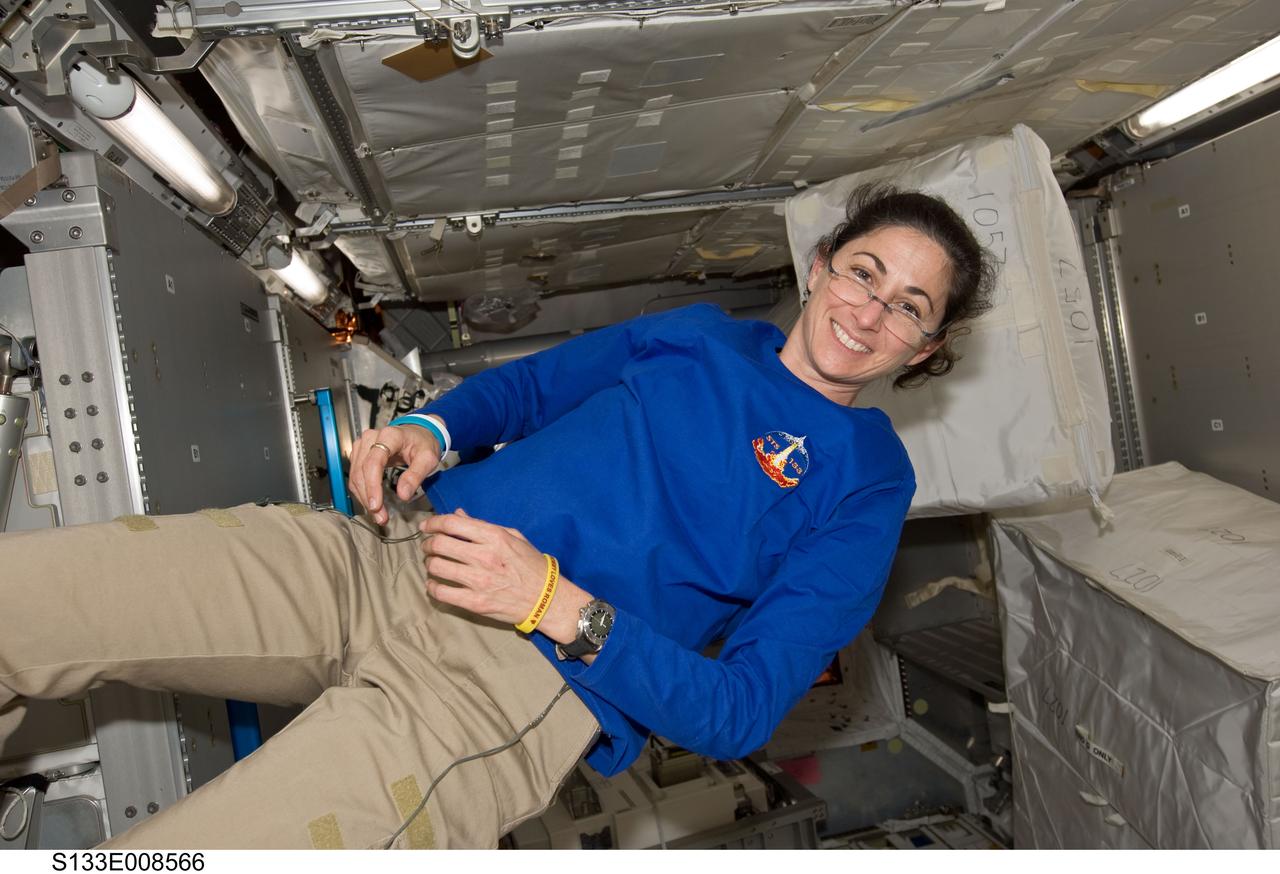
S133-E-008566 (4 March 2011) --- NASA astronaut Nicole Stott, STS-133 mission specialist, takes a pause during another moving day onboard the International Space Station as she participates in the team effort of 12 total astronauts and cosmonauts working together temporarily onboard the orbital outpost. The joint crews added the pictured Permanent Multipurpose Module (PMM) to the station earlier in the week. Photo credit: NASA or National Aeronautics and Space Administration
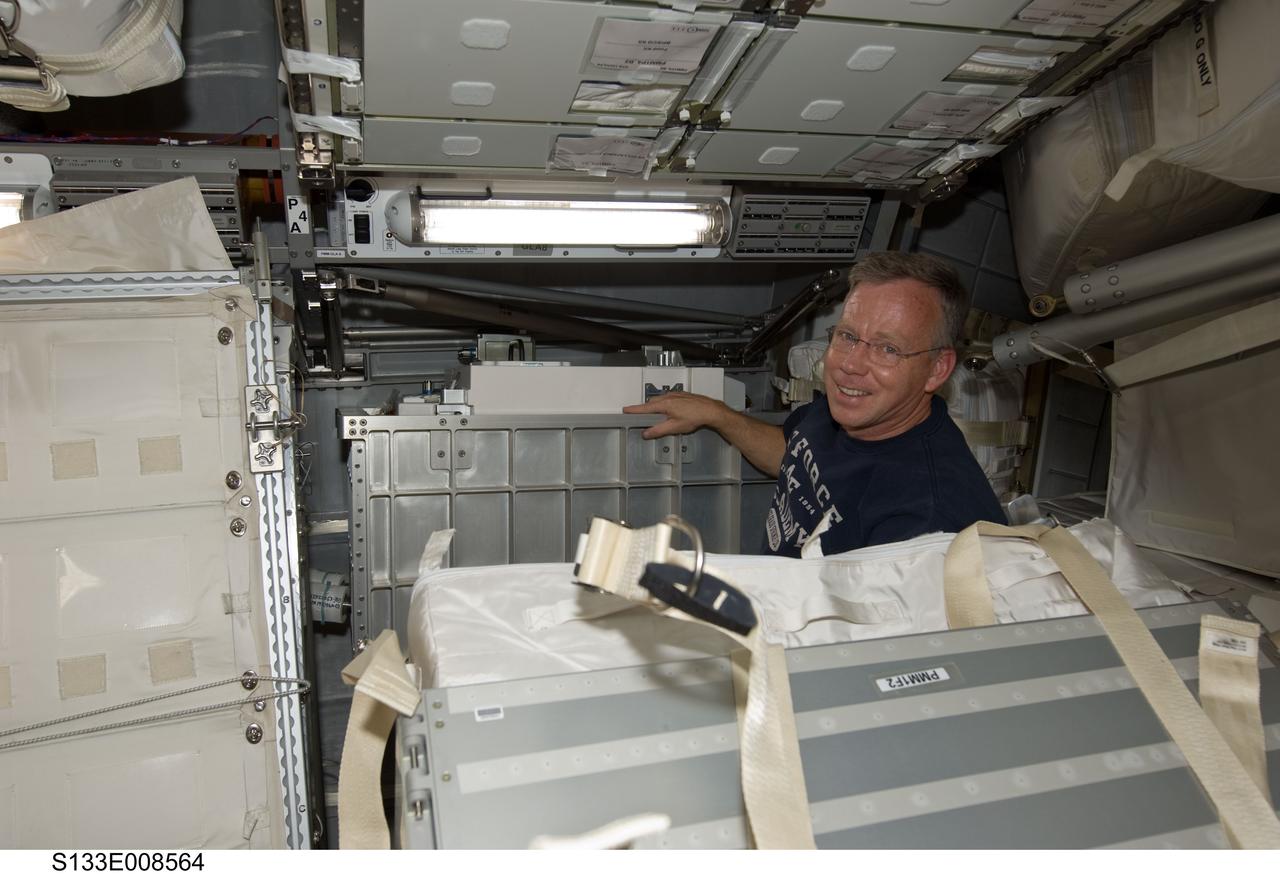
S133-E-008564 (4 March 2011) --- It's another moving day onboard the International Space Station, as NASA astronaut Steve Lindsey, STS-133 commander, participates in the team effort of 12 total astronauts and cosmonauts working together temporarily onboard the orbital outpost. The joint crews added the Permanent Multipurpose Module (PMM) to the station earlier in the week. Photo credit: NASA or National Aeronautics and Space Administration
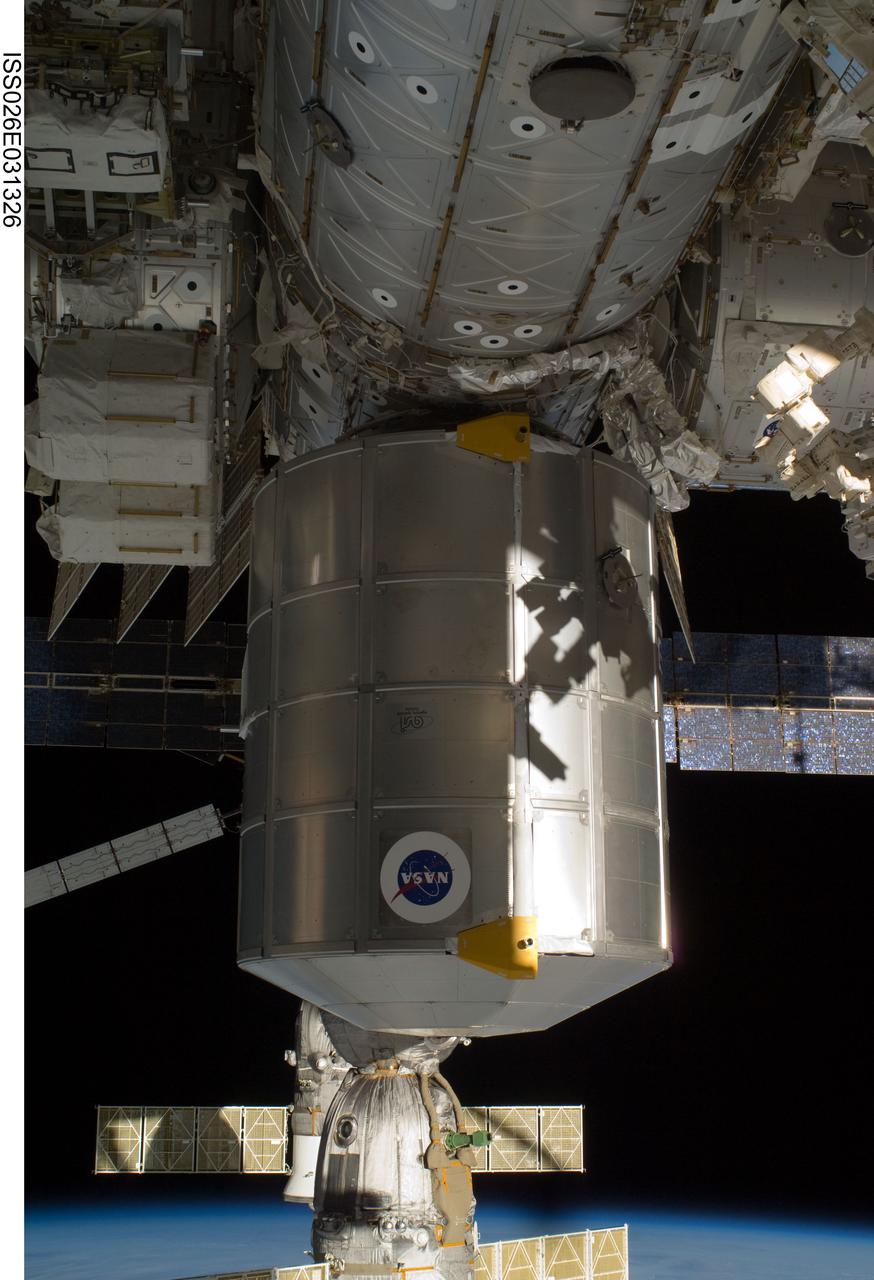
ISS026-E-031326 (2 March 2011) --- The newly-installed Permanent Multipurpose Module (PMM) of the International Space Station is featured in this image photographed by an Expedition 26 crew member while space shuttle Discovery (STS-133) remains docked with the station.
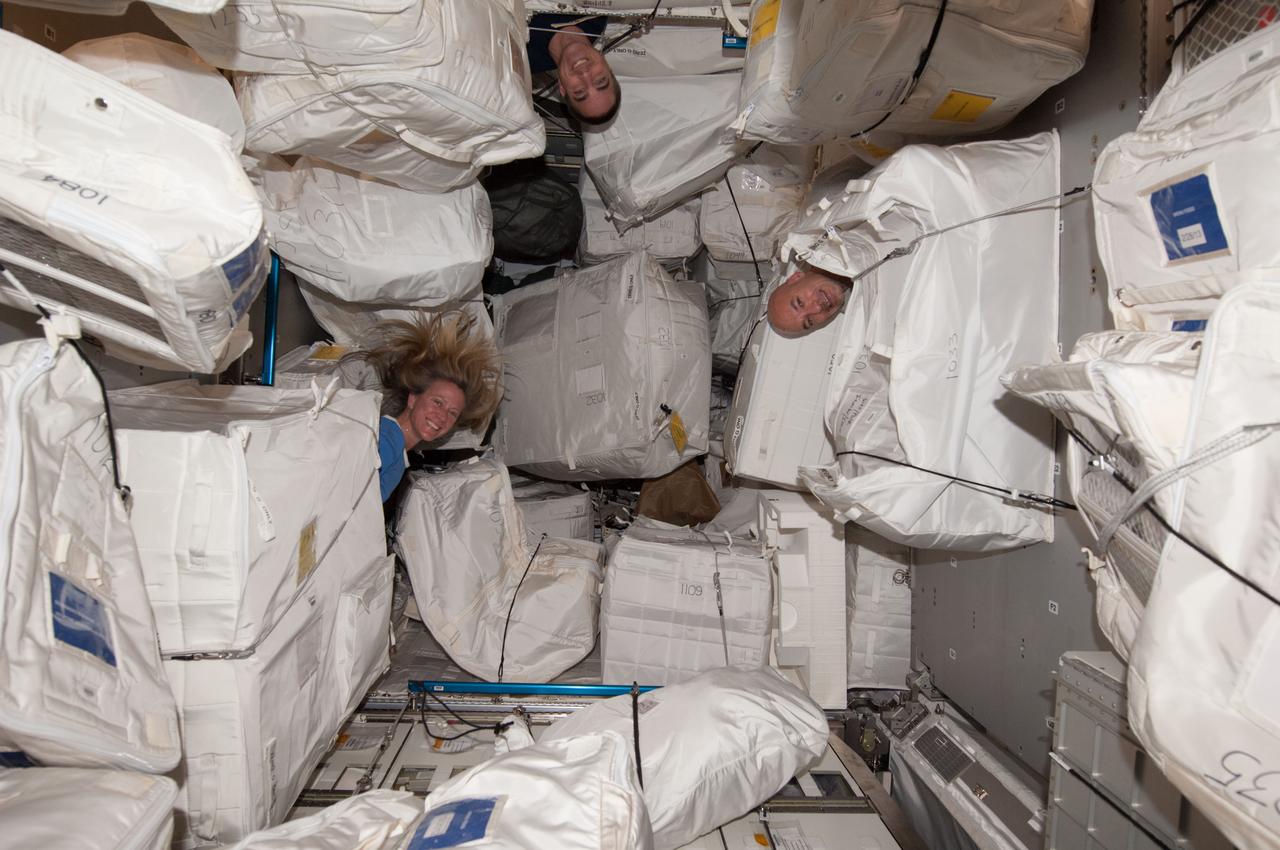
ISS036-E-018184 (14 July 2013) --- NASA astronauts Karen Nyberg and Chris Cassidy (top) along with European Space Agency astronaut Luca Parmitano (right), all Expedition 36 flight engineers, are pictured among stowage containers in the Permanent Multipurpose Module (PMM) of the International Space Station.
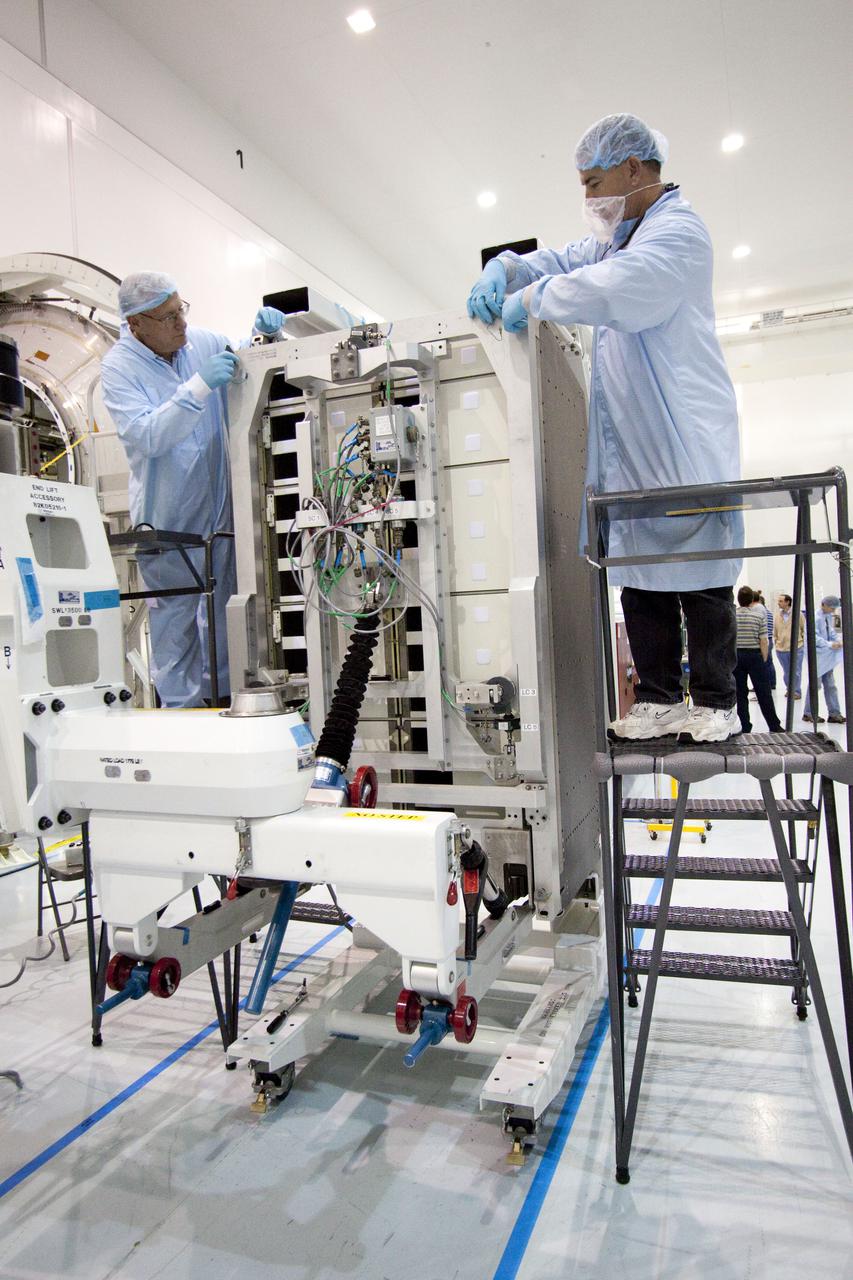
CAPE CANAVERAL, Fla. – In the Space Station Processing Facility at NASA's Kennedy Space Center in Florida, technicians prepare to install a resupply rack into the Permanent Multipurpose Module, or PMM. The Leonardo multi-purpose logistics module, or MPLM, is being modified to become the PMM that will carry supplies and critical spare parts to the International Space Station aboard space shuttle Discovery’s STS-133 mission. Discovery, targeted to launch Nov. 1, will leave the module behind so it can be used for microgravity experiments in fluid physics, materials science, biology and biotechnology. Photo credit: NASA_Jack Pfaller
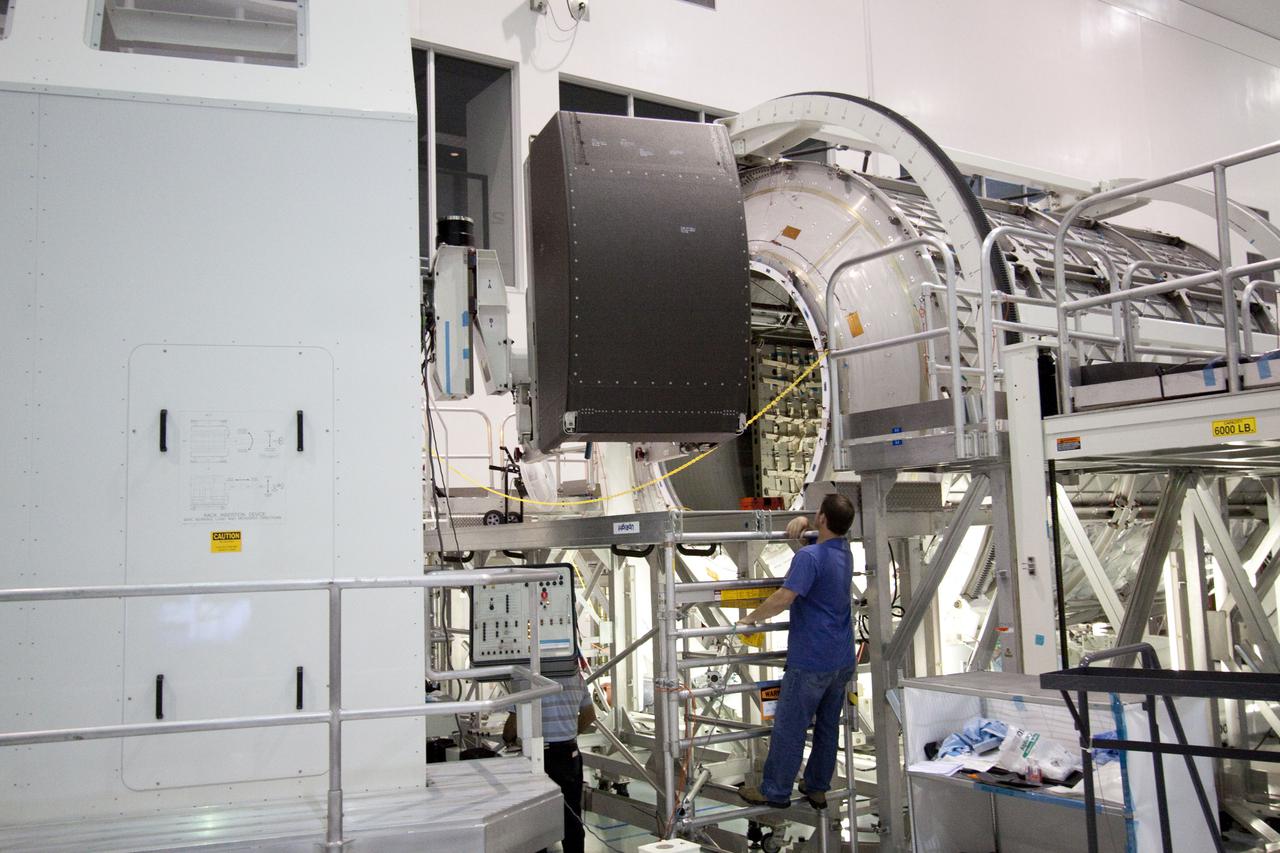
CAPE CANAVERAL, Fla. – In the Space Station Processing Facility at NASA's Kennedy Space Center in Florida, technicians begin to install a resupply rack into the Permanent Multipurpose Module, or PMM. The Leonardo multi-purpose logistics module, or MPLM, is being modified to become the PMM that will carry supplies and critical spare parts to the International Space Station aboard space shuttle Discovery’s STS-133 mission. Discovery, targeted to launch Nov. 1, will leave the module behind so it can be used for microgravity experiments in fluid physics, materials science, biology and biotechnology. Photo credit: NASA_Jack Pfaller
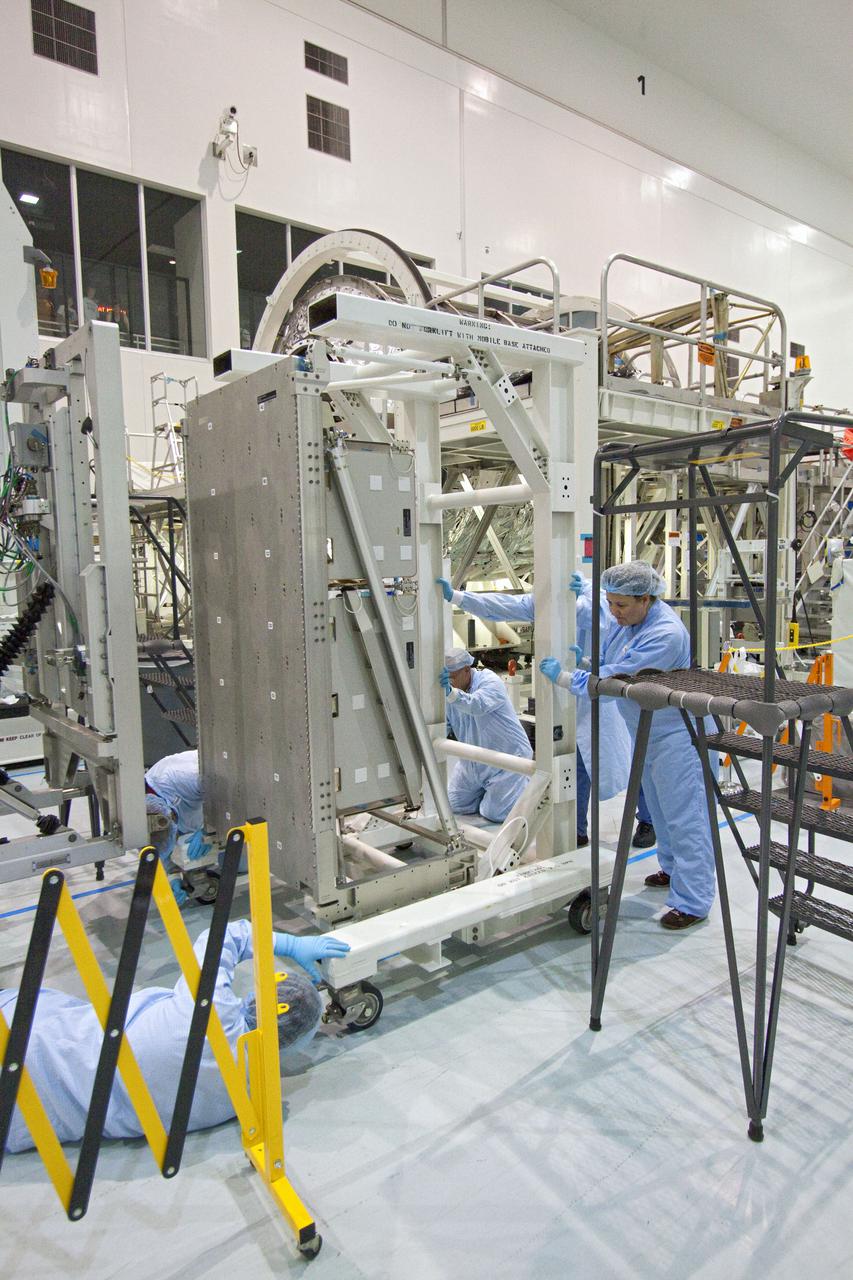
CAPE CANAVERAL, Fla. -- In the Space Station Processing Facility at NASA's Kennedy Space Center in Florida, workers prepare a resupply stowage platform prior to installation of cargo headed to the International Space Station. The stowage platforms will then be moved into the Permanent Multipurpose Module, or PMM. The PMM will be used to carry supplies and critical spare parts to the station. The module will be left behind so it can be used for microgravity experiments in fluid physics, materials science, biology and biotechnology. Space shuttle Discovery will deliver its payload to the station on the STS-133 mission. Launch is targeted for Nov. 1 at 4:33 p.m. EDT. Photo credit: NASA_Jack Pfaller
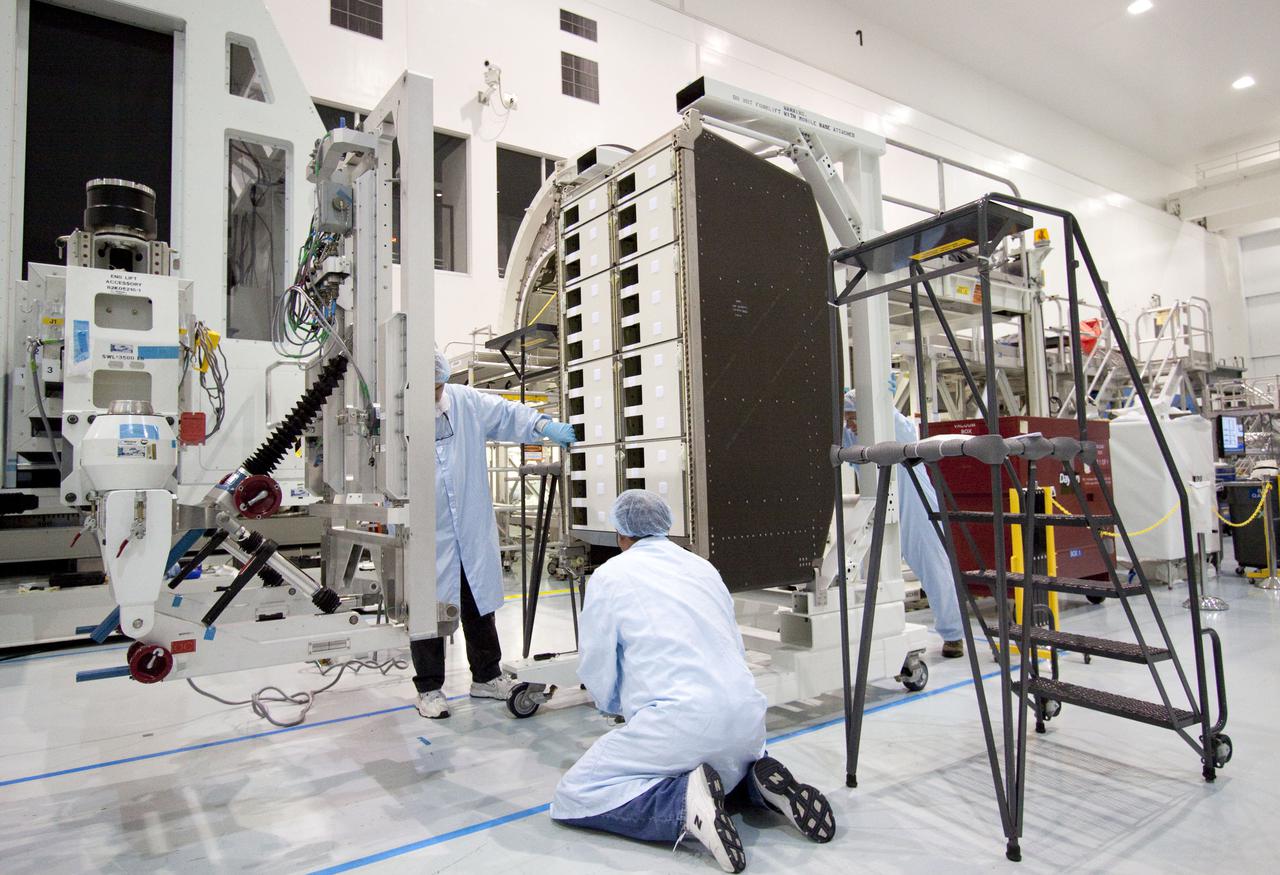
CAPE CANAVERAL, Fla. – In the Space Station Processing Facility at NASA's Kennedy Space Center in Florida, technicians prepare to install a resupply rack into the Permanent Multipurpose Module, or PMM. The Leonardo multi-purpose logistics module, or MPLM, is being modified to become the PMM that will carry supplies and critical spare parts to the International Space Station aboard space shuttle Discovery’s STS-133 mission. Discovery, targeted to launch Nov. 1, will leave the module behind so it can be used for microgravity experiments in fluid physics, materials science, biology and biotechnology. Photo credit: NASA_Jack Pfaller
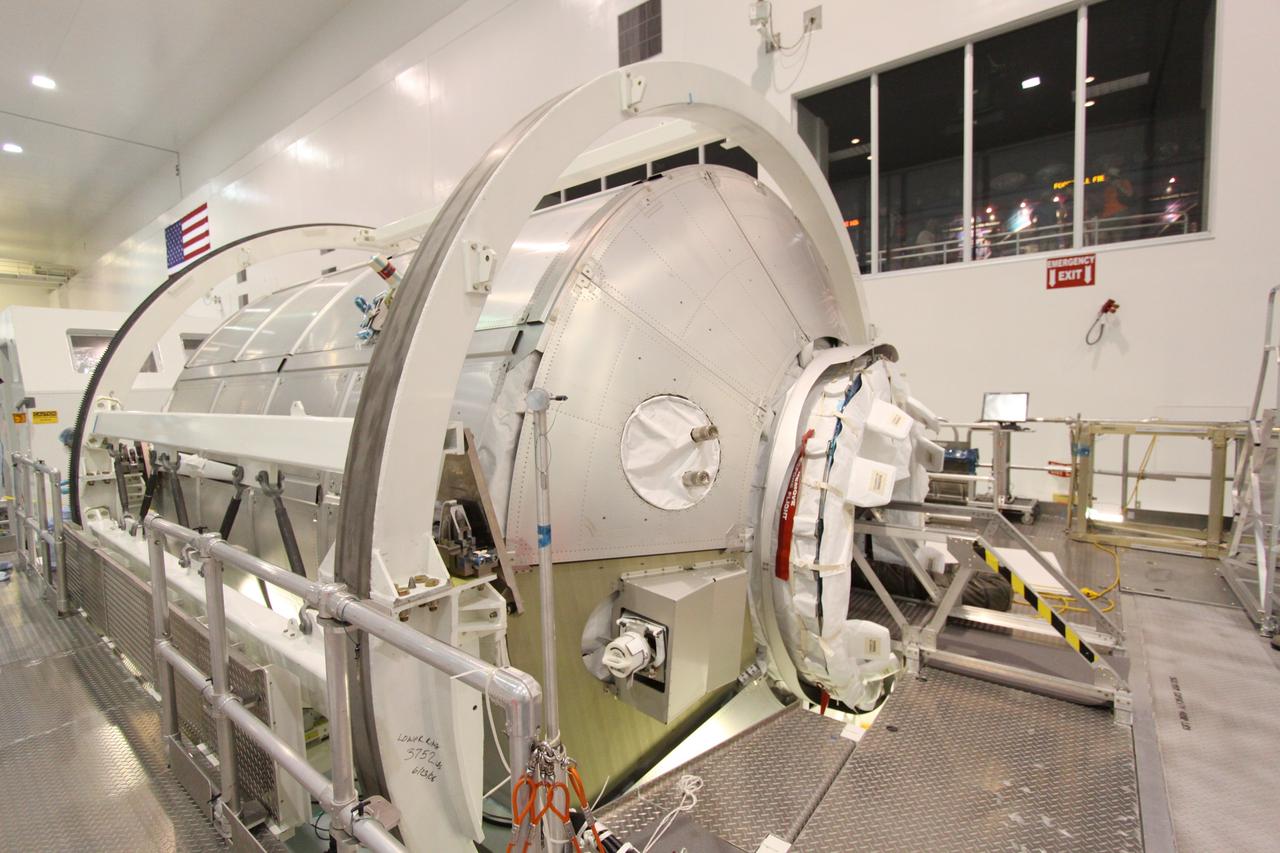
CAPE CANAVERAL, Fla. -- The Permanent Multipurpose Module, or PMM, is being processed for flight in the Space Station Processing Facility at NASA's Kennedy Space Center in Florida. In this view is the opposite side of the PMM which is still open for access. Space shuttle Discovery and its STS-133 crew are targeted to launch Nov. 1 and will deliver the PMM, packed with supplies and critical spare parts, as well as Robonaut 2, the dexterous humanoid astronaut helper, to the International Space Station. For more information visit: www.nasa.gov/shuttle. Photo credit: NASA/Jack Pfaller
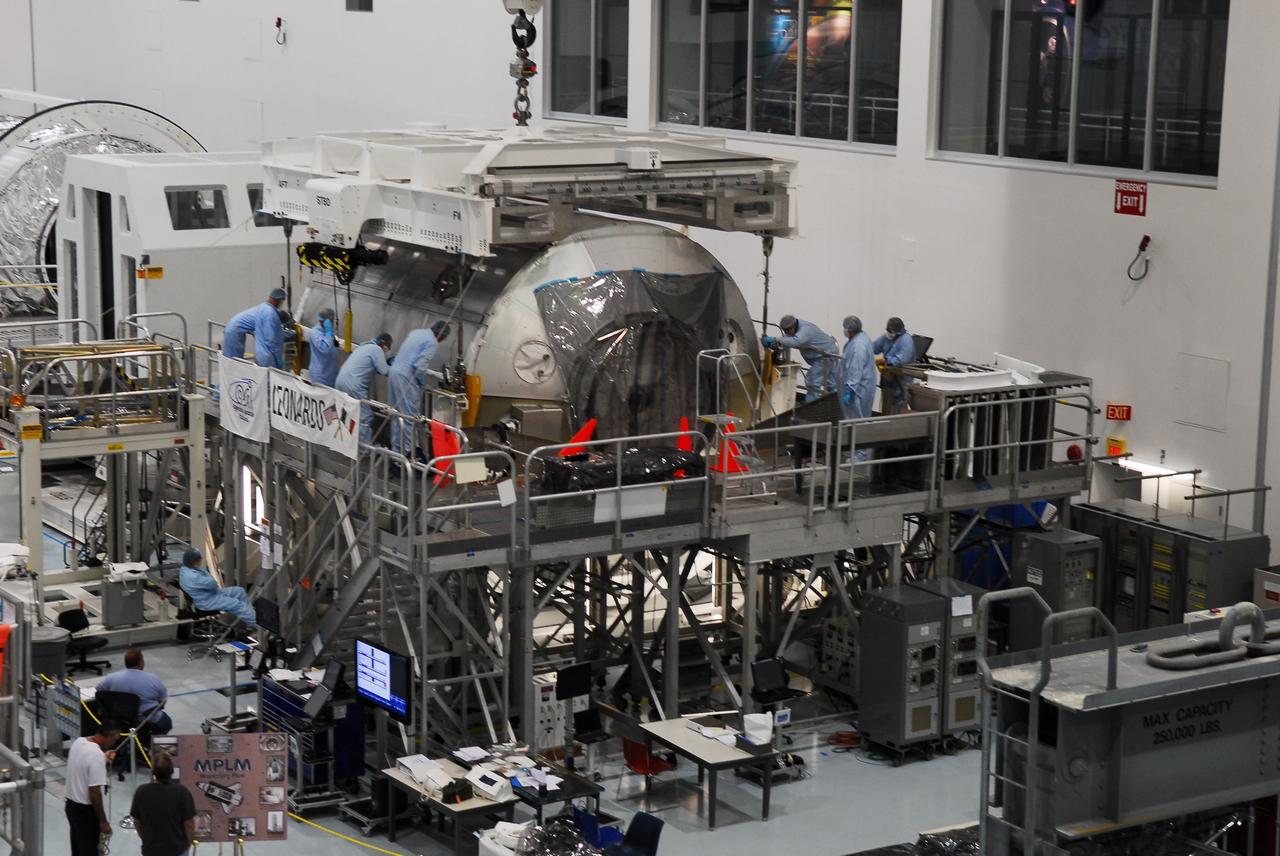
CAPE CANAVERAL, Fla. -- In the Space Station Processing Facility at NASA's Kennedy Space Center in Florida, technicians connect an overhead crane to the Permanent Multipurpose Module, or PMM, for its transfer into a payload canister. The canister will then be transported to Launch Pad 39A and installed into space shuttle Discovery's payload bay. Discovery and its STS-133 crew will deliver the PMM, packed with supplies and critical spare parts, as well as Robonaut 2, the dexterous humanoid astronaut helper, to the International Space Station. Launch is targeted for 4:40 p.m. EDT, Nov. 1. Photo credit: NASA/Cory Huston
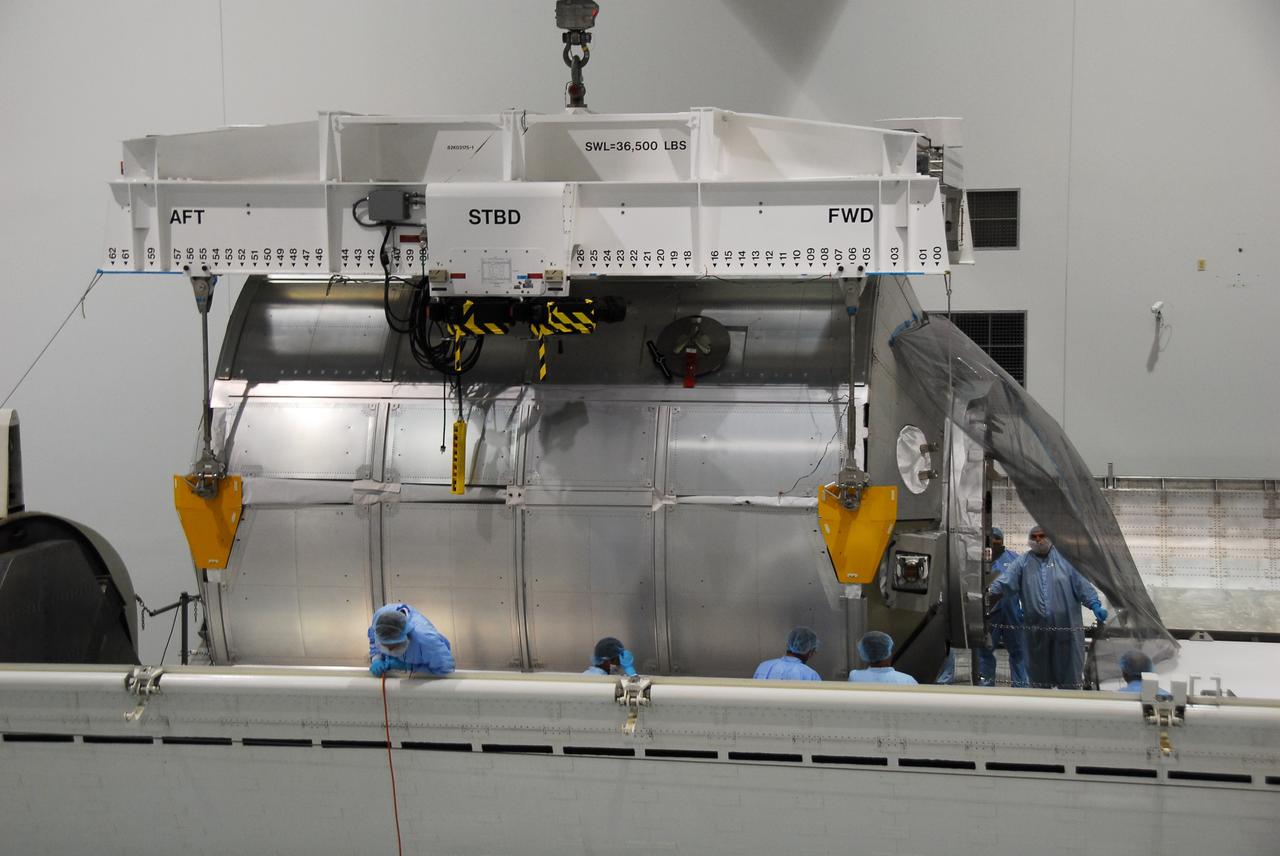
CAPE CANAVERAL, Fla. -- In the Space Station Processing Facility at NASA's Kennedy Space Center in Florida, technicians guide the Permanent Multipurpose Module, or PMM, as an overhead crane lowers it into the payload canister. The canister will then be transported to Launch Pad 39A and installed into space shuttle Discovery's payload bay. Discovery and its STS-133 crew will deliver the PMM, packed with supplies and critical spare parts, as well as Robonaut 2, the dexterous humanoid astronaut helper, to the International Space Station. Launch is targeted for 4:40 p.m. EDT, Nov. 1. Photo credit: NASA/Cory Huston
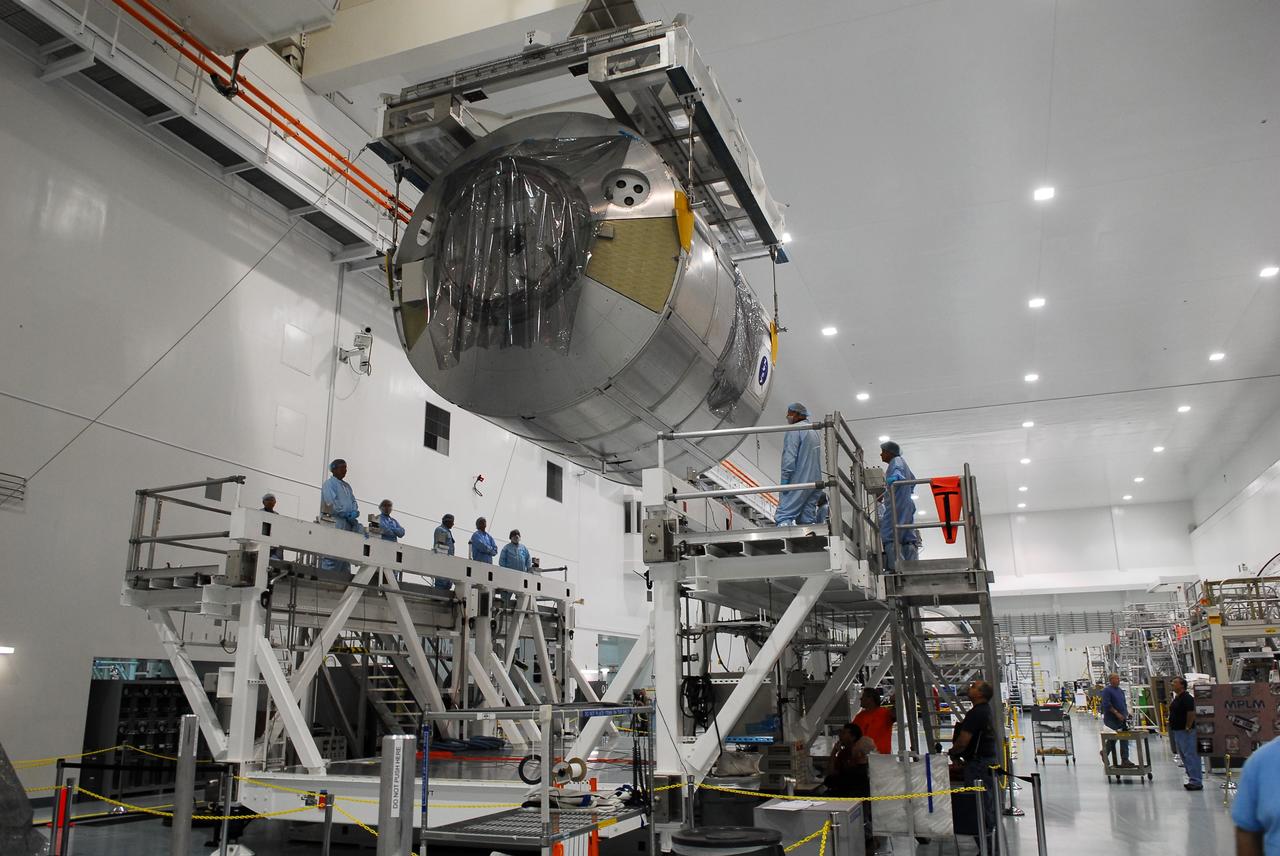
CAPE CANAVERAL, Fla. -- In the Space Station Processing Facility at NASA's Kennedy Space Center in Florida, technicians monitor the progress of the Permanent Multipurpose Module, or PMM, as it is being transferred by overhead crane towards a payload canister. The canister will then be transported to Launch Pad 39A and installed into space shuttle Discovery's payload bay. Discovery and its STS-133 crew will deliver the PMM, packed with supplies and critical spare parts, as well as Robonaut 2, the dexterous humanoid astronaut helper, to the International Space Station. Launch is targeted for 4:40 p.m. EDT, Nov. 1. Photo credit: NASA/Cory Huston
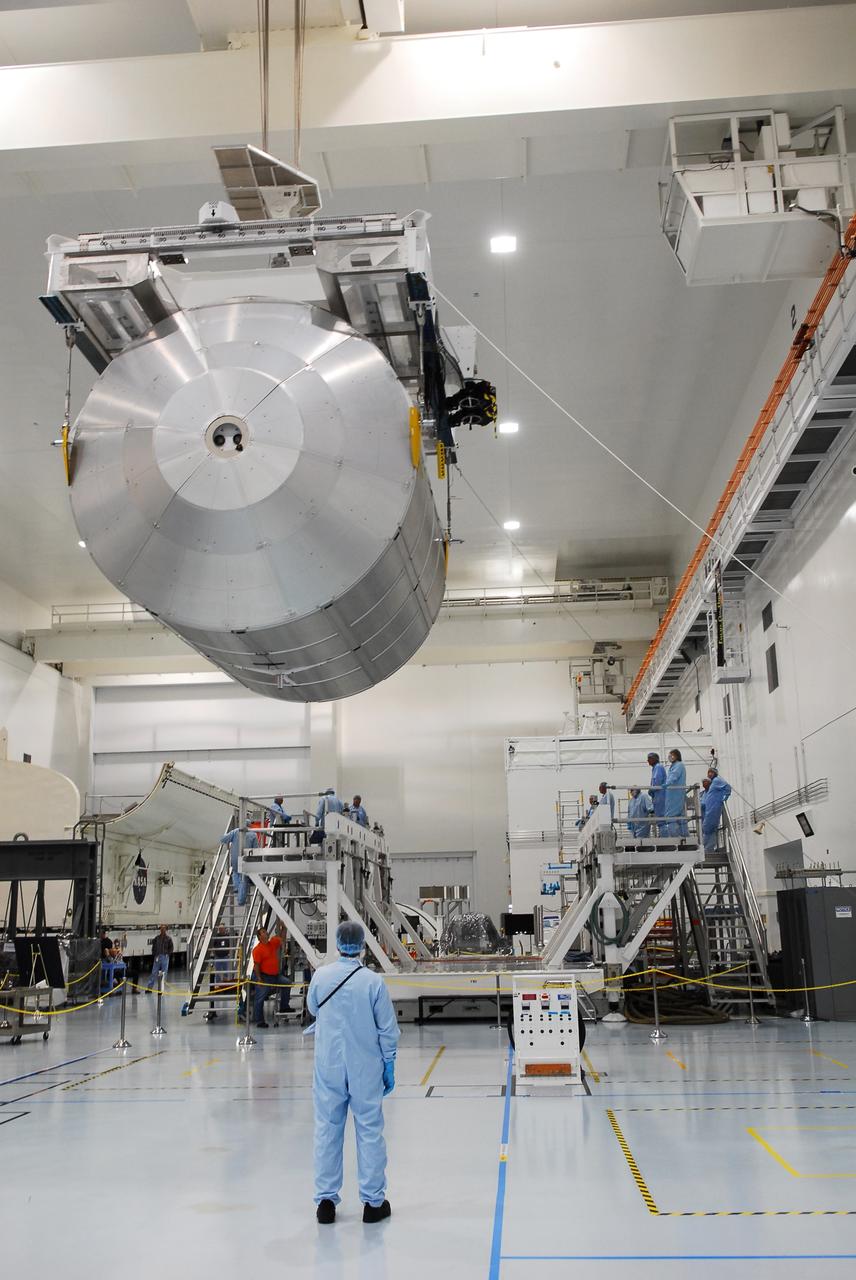
CAPE CANAVERAL, Fla. -- In the Space Station Processing Facility at NASA's Kennedy Space Center in Florida, technicians monitor the progress of the Permanent Multipurpose Module, or PMM, as it is being transferred by overhead crane towards a payload canister. The canister will then be transported to Launch Pad 39A and installed into space shuttle Discovery's payload bay. Discovery and its STS-133 crew will deliver the PMM, packed with supplies and critical spare parts, as well as Robonaut 2, the dexterous humanoid astronaut helper, to the International Space Station. Launch is targeted for 4:40 p.m. EDT, Nov. 1. Photo credit: NASA/Cory Huston
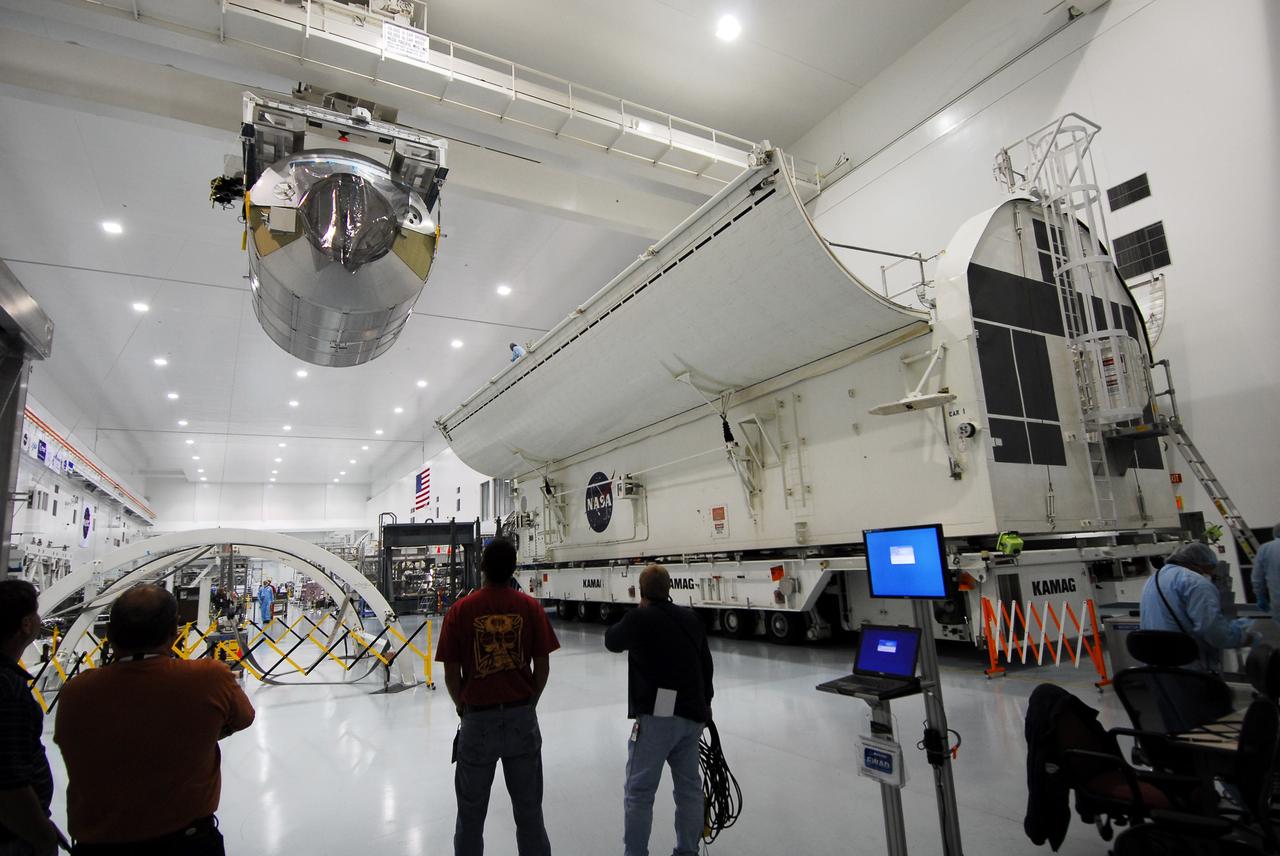
CAPE CANAVERAL, Fla. -- In the Space Station Processing Facility at NASA's Kennedy Space Center in Florida, workers watch the progress of the Permanent Multipurpose Module, or PMM, as it is being transferred by overhead crane towards a payload canister. The canister will then be transported to Launch Pad 39A and installed into space shuttle Discovery's payload bay. Discovery and its STS-133 crew will deliver the PMM, packed with supplies and critical spare parts, as well as Robonaut 2, the dexterous humanoid astronaut helper, to the International Space Station. Launch is targeted for 4:40 p.m. EDT, Nov. 1. Photo credit: NASA/Cory Huston
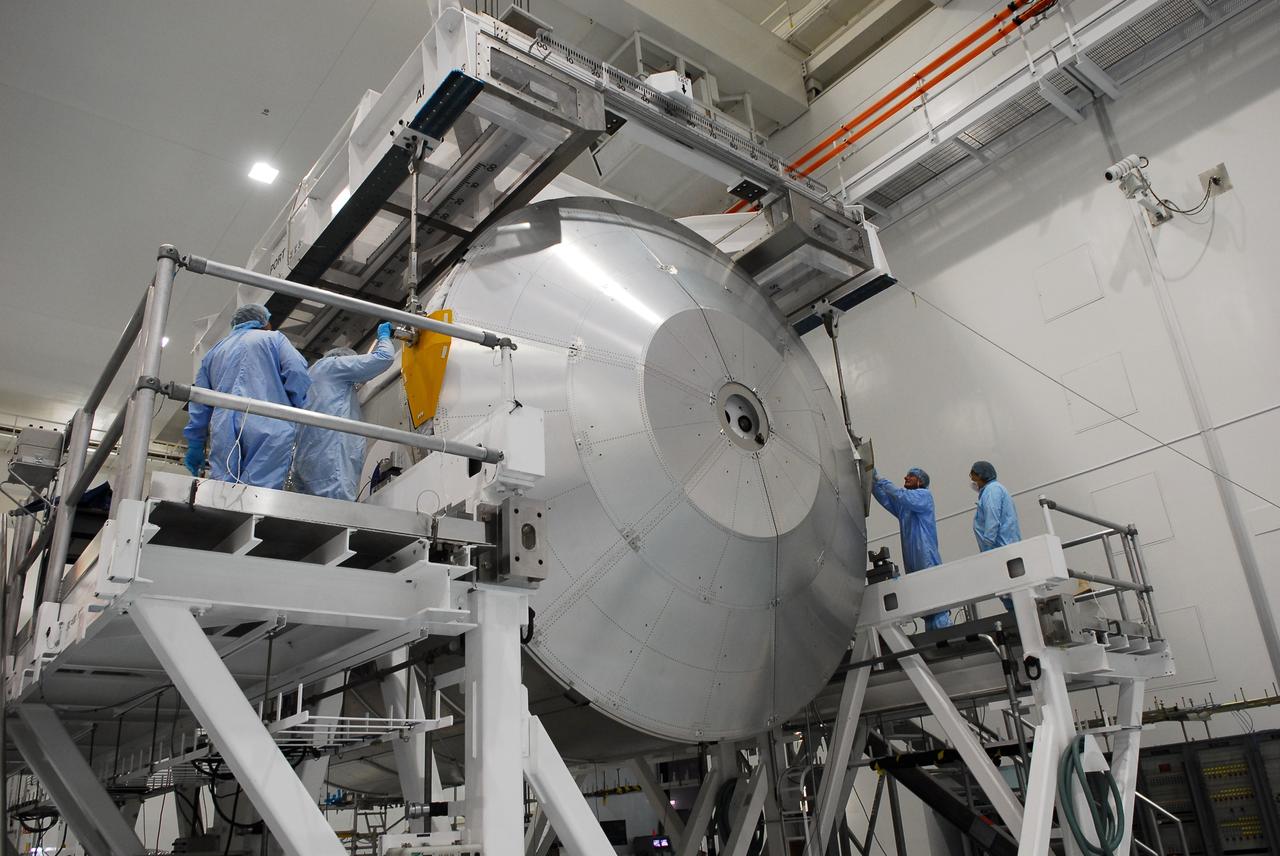
CAPE CANAVERAL, Fla. -- In the Space Station Processing Facility at NASA's Kennedy Space Center in Florida, technicians connect an overhead crane to the Permanent Multipurpose Module, or PMM, for its transfer into a payload canister. The canister will then be transported to Launch Pad 39A and installed into space shuttle Discovery's payload bay. Discovery and its STS-133 crew will deliver the PMM, packed with supplies and critical spare parts, as well as Robonaut 2, the dexterous humanoid astronaut helper, to the International Space Station. Launch is targeted for 4:40 p.m. EDT, Nov. 1. Photo credit: NASA/Cory Huston
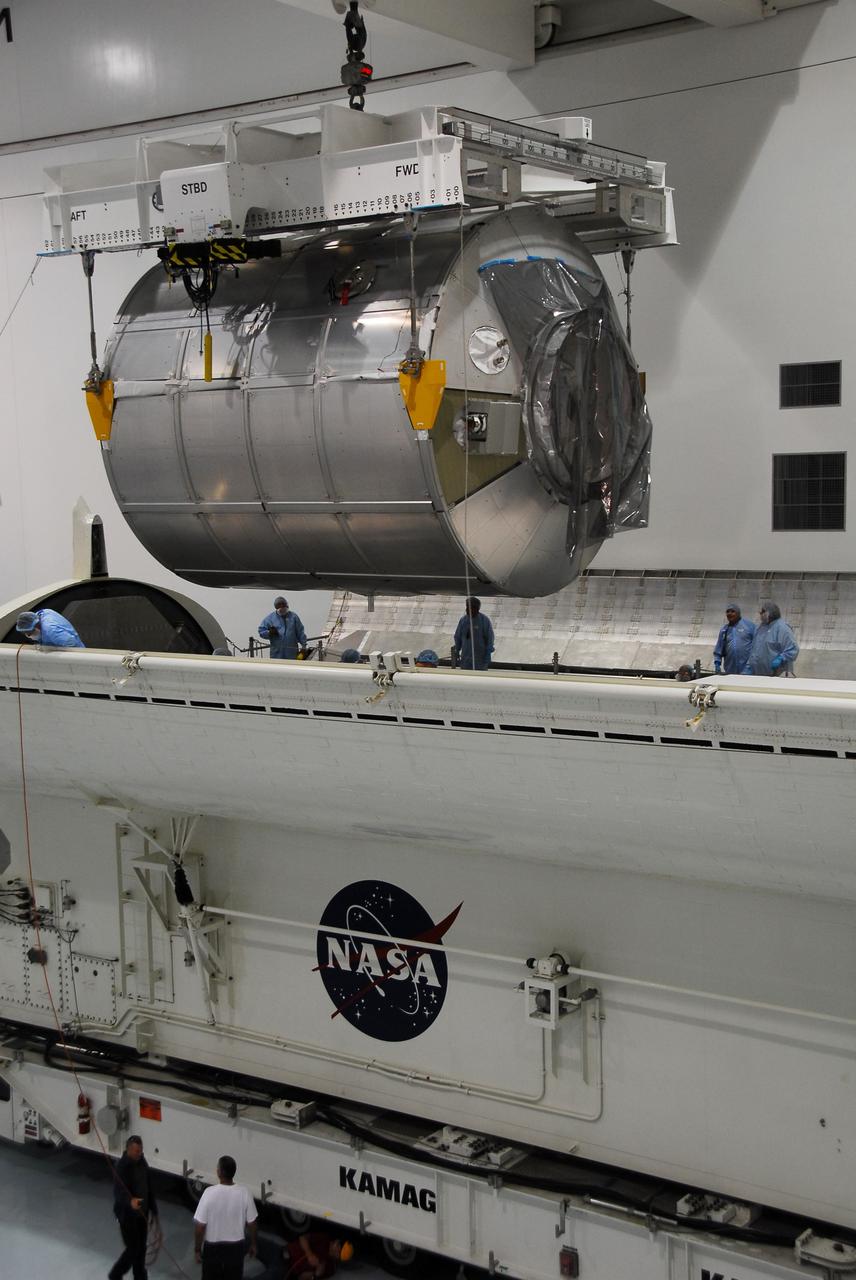
CAPE CANAVERAL, Fla. -- In the Space Station Processing Facility at NASA's Kennedy Space Center in Florida, technicians guide the Permanent Multipurpose Module, or PMM, as an overhead crane lowers it into the payload canister. The canister will then be transported to Launch Pad 39A and installed into space shuttle Discovery's payload bay. Discovery and its STS-133 crew will deliver the PMM, packed with supplies and critical spare parts, as well as Robonaut 2, the dexterous humanoid astronaut helper, to the International Space Station. Launch is targeted for 4:40 p.m. EDT, Nov. 1. Photo credit: NASA/Cory Huston
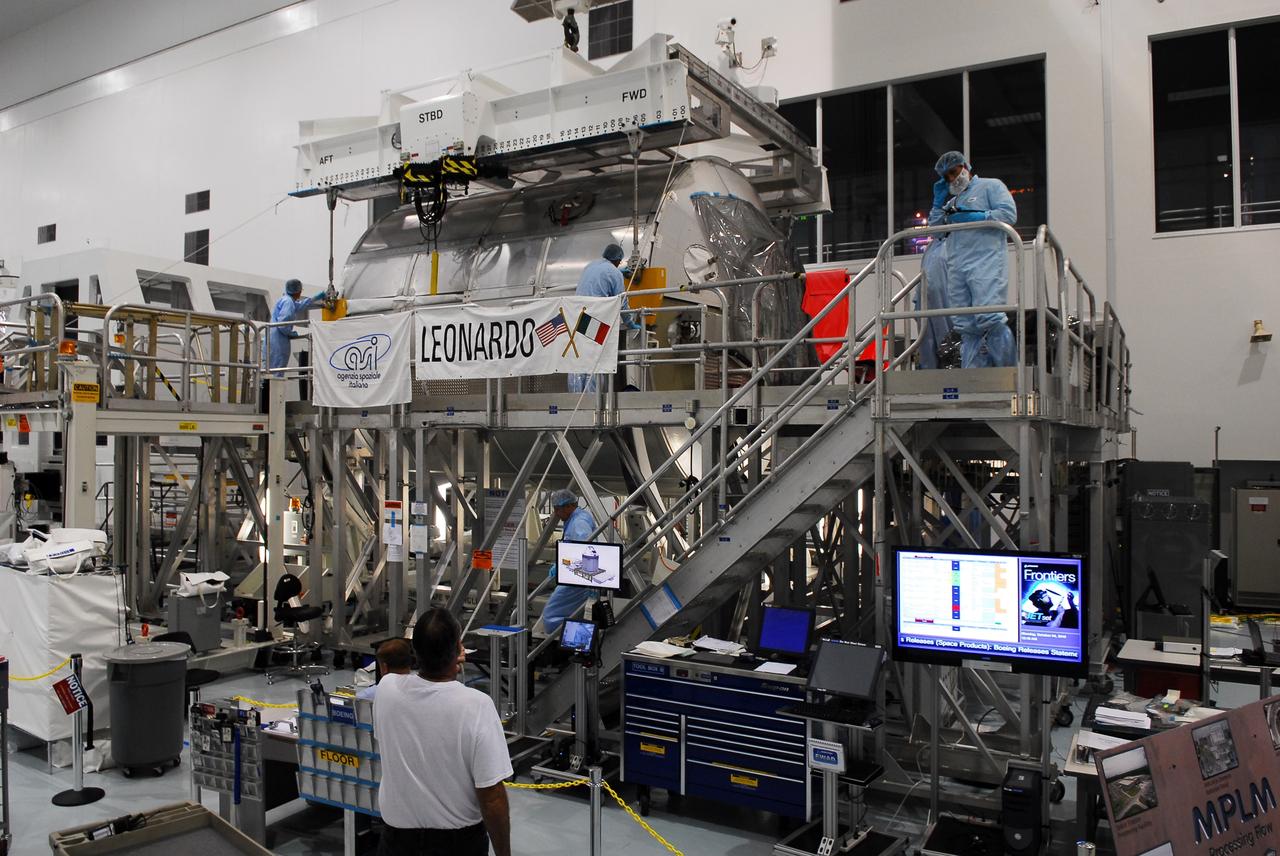
CAPE CANAVERAL, Fla. -- In the Space Station Processing Facility at NASA's Kennedy Space Center in Florida, technicians connect an overhead crane to the Permanent Multipurpose Module, or PMM, for its transfer into a payload canister. The canister will then be transported to Launch Pad 39A and installed into space shuttle Discovery's payload bay. Discovery and its STS-133 crew will deliver the PMM, packed with supplies and critical spare parts, as well as Robonaut 2, the dexterous humanoid astronaut helper, to the International Space Station. Launch is targeted for 4:40 p.m. EDT, Nov. 1. Photo credit: NASA/Cory Huston
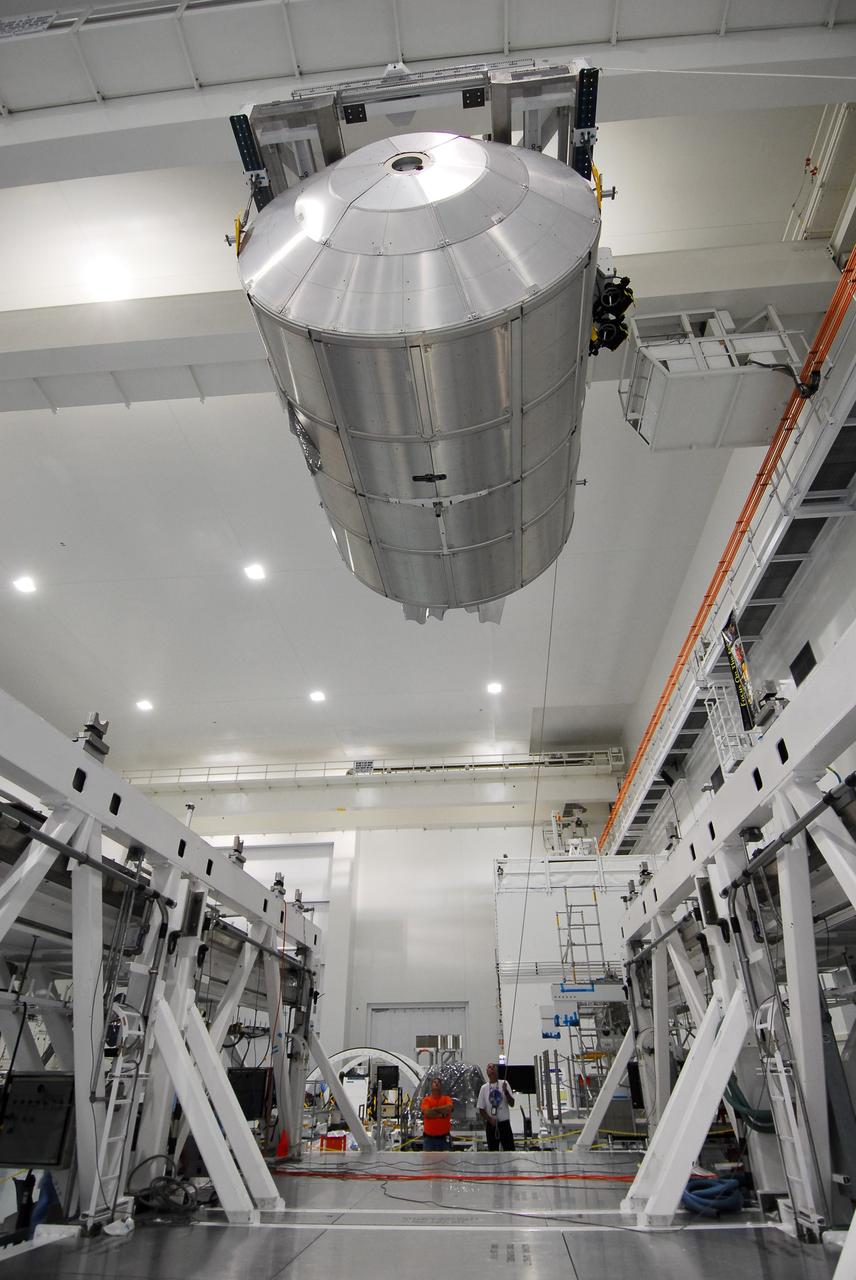
CAPE CANAVERAL, Fla. -- In the Space Station Processing Facility at NASA's Kennedy Space Center in Florida, workers guide the Permanent Multipurpose Module, or PMM, as it is being transferred by overhead crane towards a payload canister. The canister will then be transported to Launch Pad 39A and installed into space shuttle Discovery's payload bay. Discovery and its STS-133 crew will deliver the PMM, packed with supplies and critical spare parts, as well as Robonaut 2, the dexterous humanoid astronaut helper, to the International Space Station. Launch is targeted for 4:40 p.m. EDT, Nov. 1. Photo credit: NASA/Cory Huston
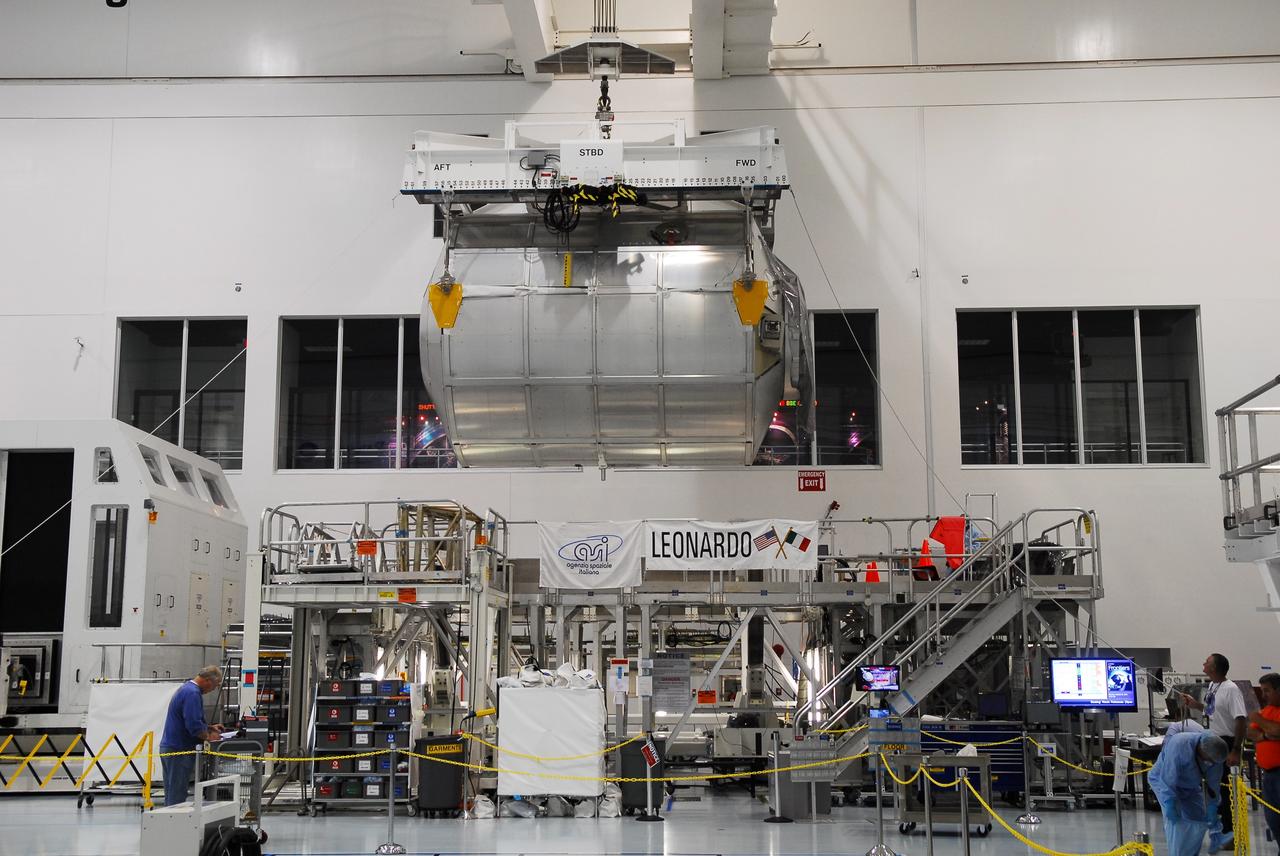
CAPE CANAVERAL, Fla. -- In the Space Station Processing Facility at NASA's Kennedy Space Center in Florida, the Permanent Multipurpose Module, or PMM, is being transferred by overhead crane towards a payload canister. The canister will then be transported to Launch Pad 39A and installed into space shuttle Discovery's payload bay. Discovery and its STS-133 crew will deliver the PMM, packed with supplies and critical spare parts, as well as Robonaut 2, the dexterous humanoid astronaut helper, to the International Space Station. Launch is targeted for 4:40 p.m. EDT, Nov. 1. Photo credit: NASA/Cory Huston
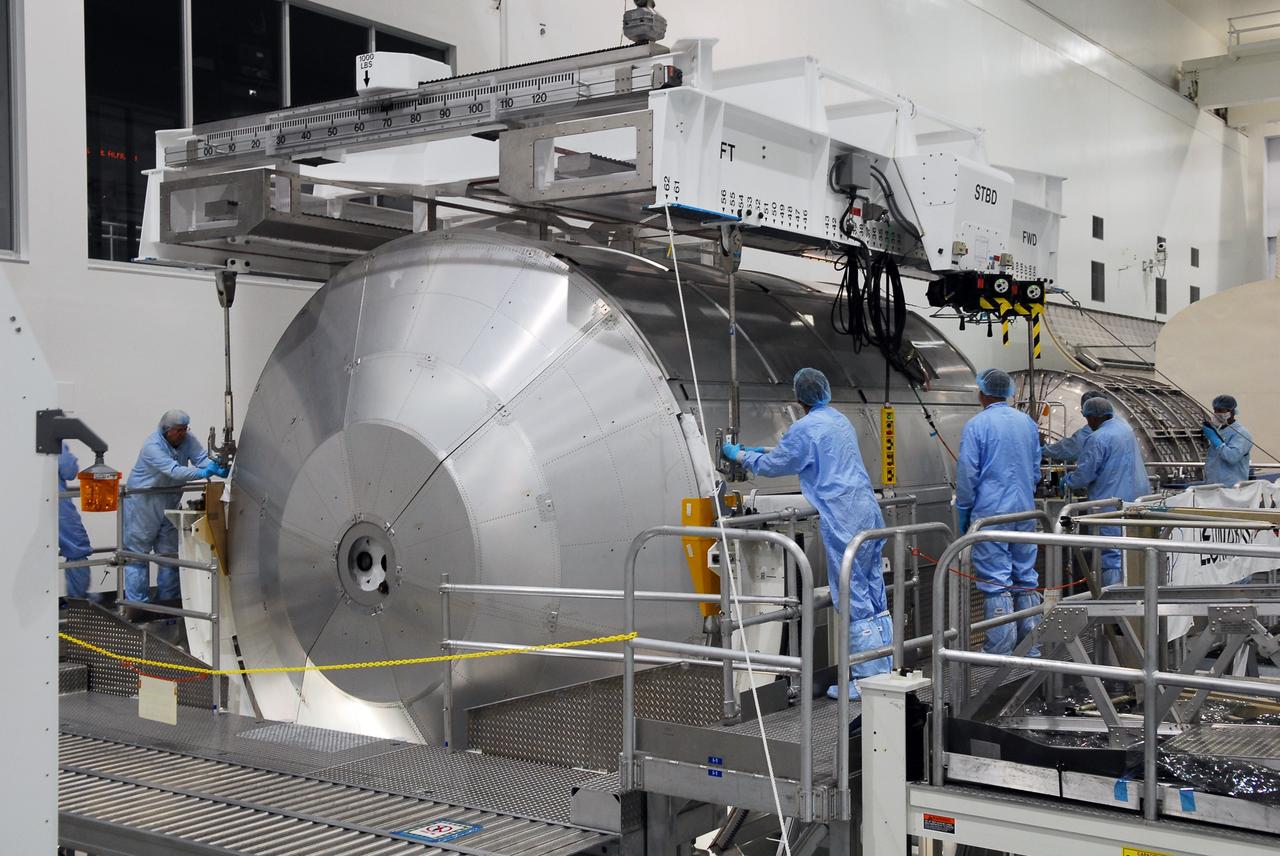
CAPE CANAVERAL, Fla. -- In the Space Station Processing Facility at NASA's Kennedy Space Center in Florida, technicians connect an overhead crane to the Permanent Multipurpose Module, or PMM, for its transfer into a payload canister. The canister will then be transported to Launch Pad 39A and installed into space shuttle Discovery's payload bay. Discovery and its STS-133 crew will deliver the PMM, packed with supplies and critical spare parts, as well as Robonaut 2, the dexterous humanoid astronaut helper, to the International Space Station. Launch is targeted for 4:40 p.m. EDT, Nov. 1. Photo credit: NASA/Cory Huston
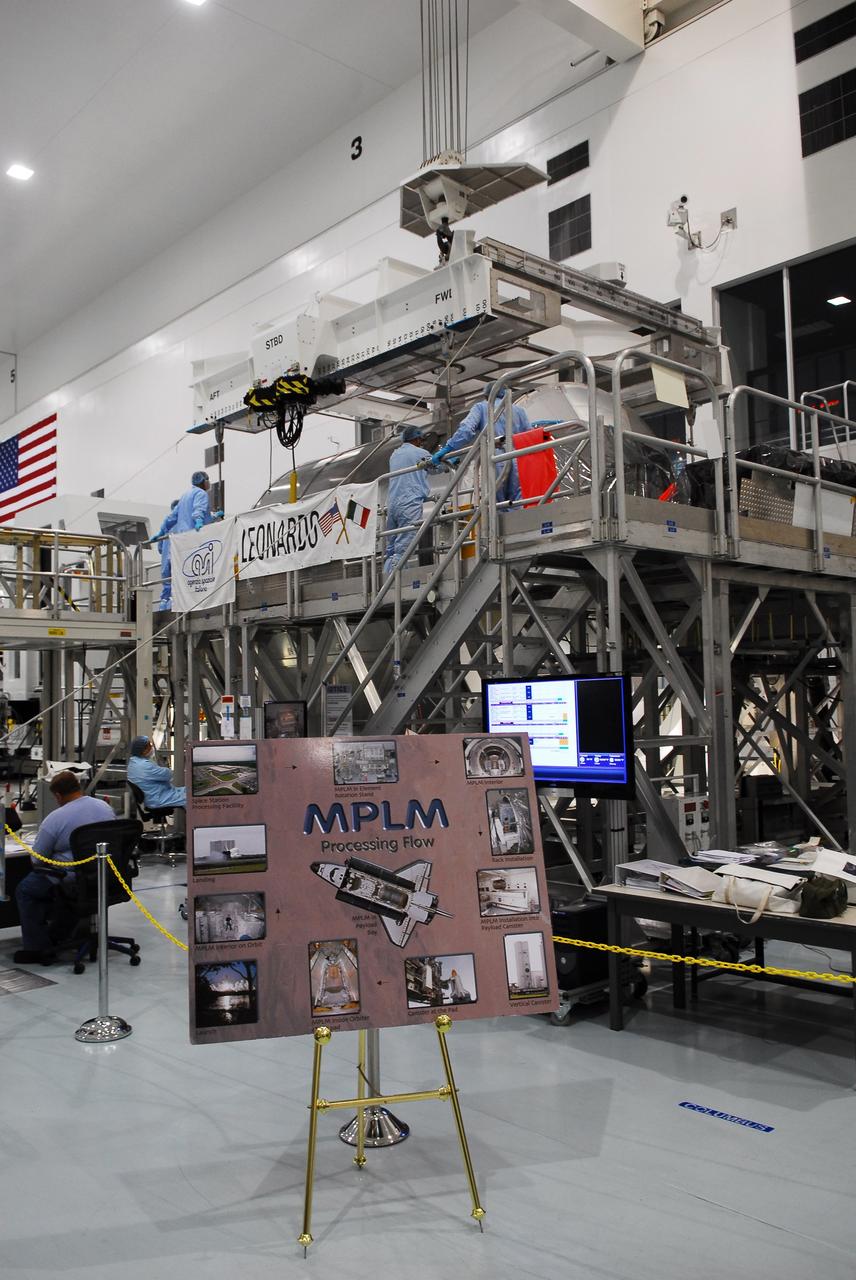
CAPE CANAVERAL, Fla. -- In the Space Station Processing Facility at NASA's Kennedy Space Center in Florida, technicians connect an overhead crane to the Permanent Multipurpose Module, or PMM, for its transfer into a payload canister. The canister will then be transported to Launch Pad 39A and installed into space shuttle Discovery's payload bay. Discovery and its STS-133 crew will deliver the PMM, packed with supplies and critical spare parts, as well as Robonaut 2, the dexterous humanoid astronaut helper, to the International Space Station. Launch is targeted for 4:40 p.m. EDT, Nov. 1. Photo credit: NASA/Cory Huston

ISS028-E-018516 (24 July 2011) --- Japan Aerospace Exploration Agency astronaut Satoshi Furukawa, Expedition 28 flight engineer, is surrounded by storage containers while working in the permanent multi-purpose module (PMM) of the International Space Station.
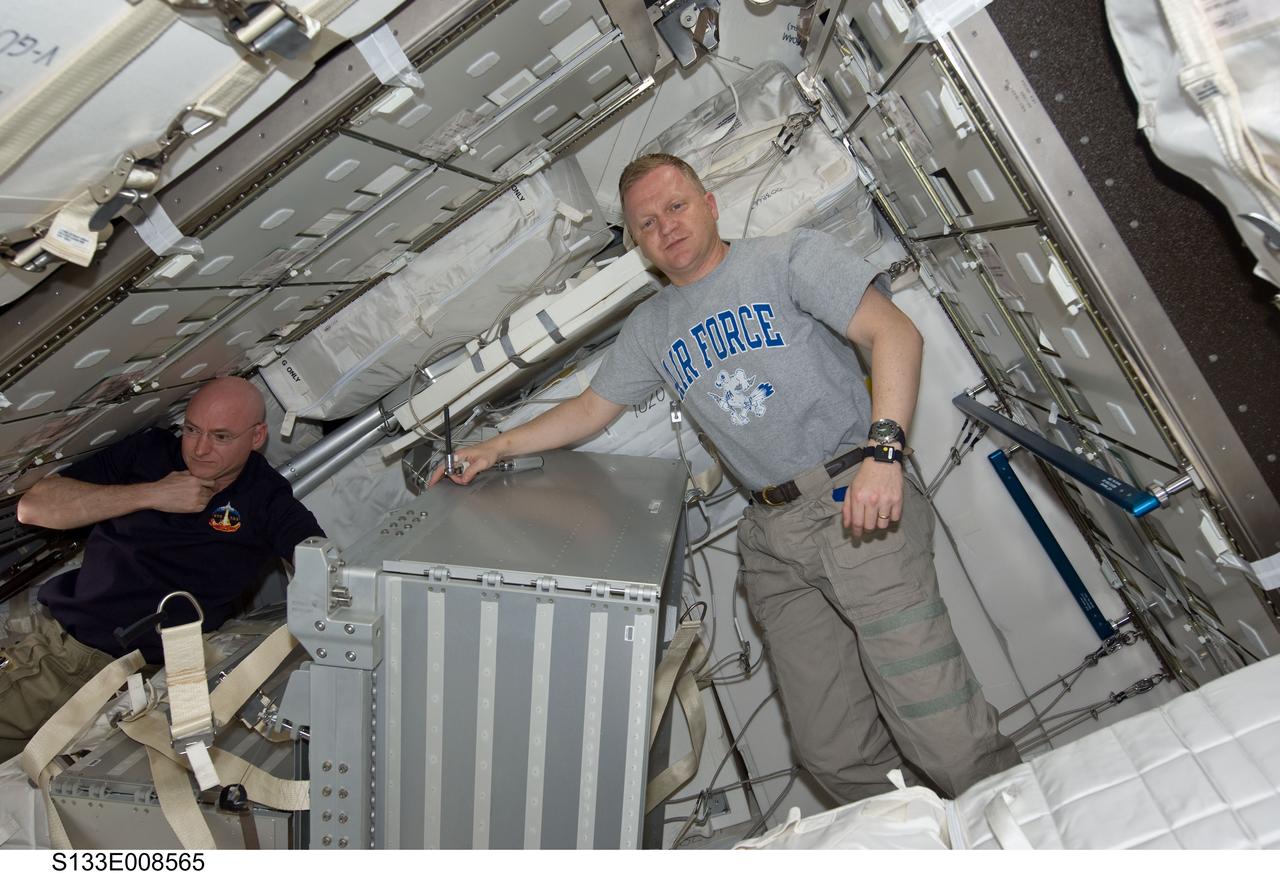
S133-E-008565 (4 March 2011) --- It's another moving day onboard the International Space Station, as NASA astronauts Scott Kelly, left, Expedition 26 commander, and Eric Boe, STS-133/Discovery pilot, join in the team effort of 12 total astronauts and cosmonauts working together temporarily onboard the orbital outpost. The joint crews added the pictured Permanent Multipurpose Module (PMM) to the station earlier in the week. Photo credit: NASA or National Aeronautics and Space Administration
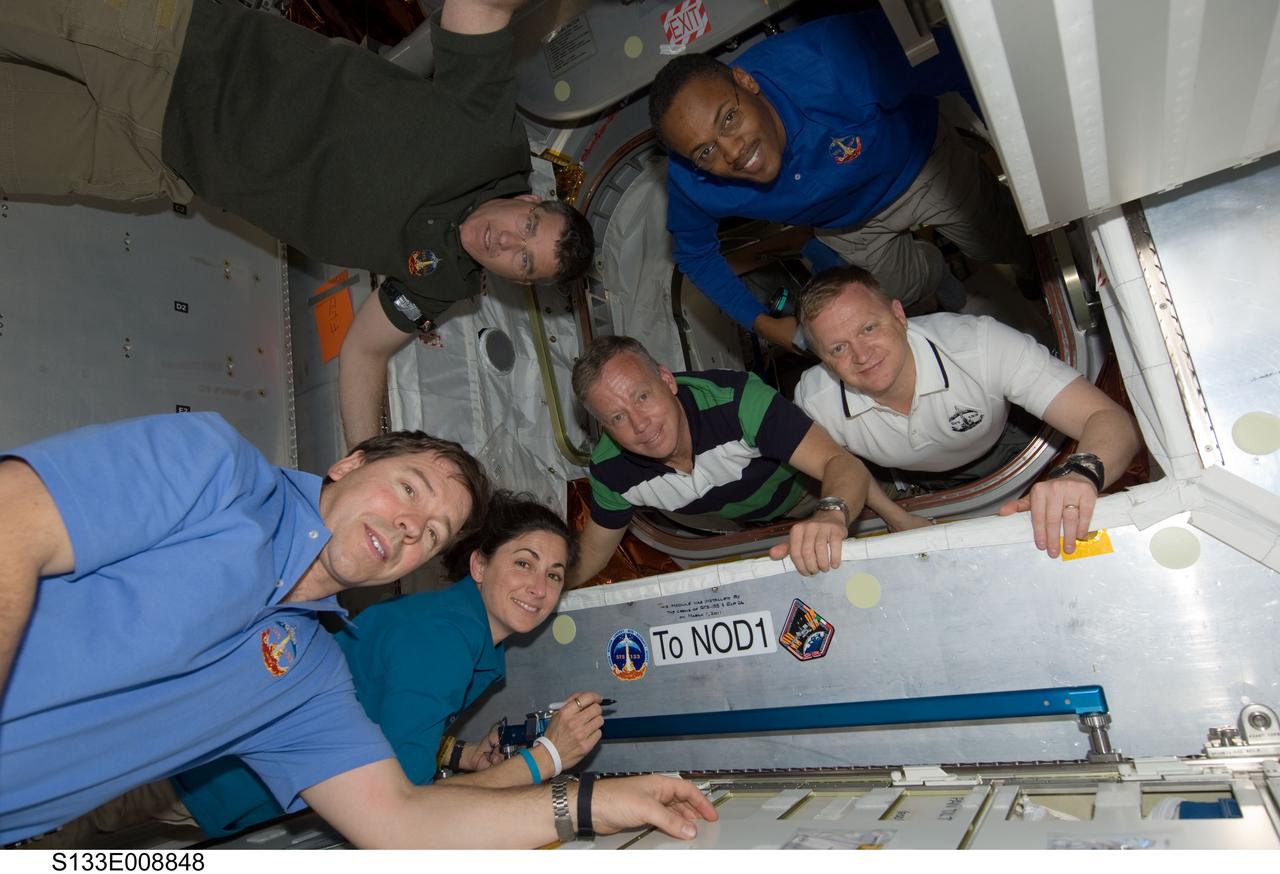
In the newly-installed Permanent Multipurpose Module (PMM), the STS-133 crew members pose while signing the STS-133 patch, which was added to the growing collection of insignias representing crews who have worked on the International Space Station. Pictured counter-clockwise (from the center) are NASA astronauts Steve Lindsey, commander; Eric Boe, pilot; Alvin Drew, Steve Bowen, Nicole Stott and Michael Barratt, all mission specialists.
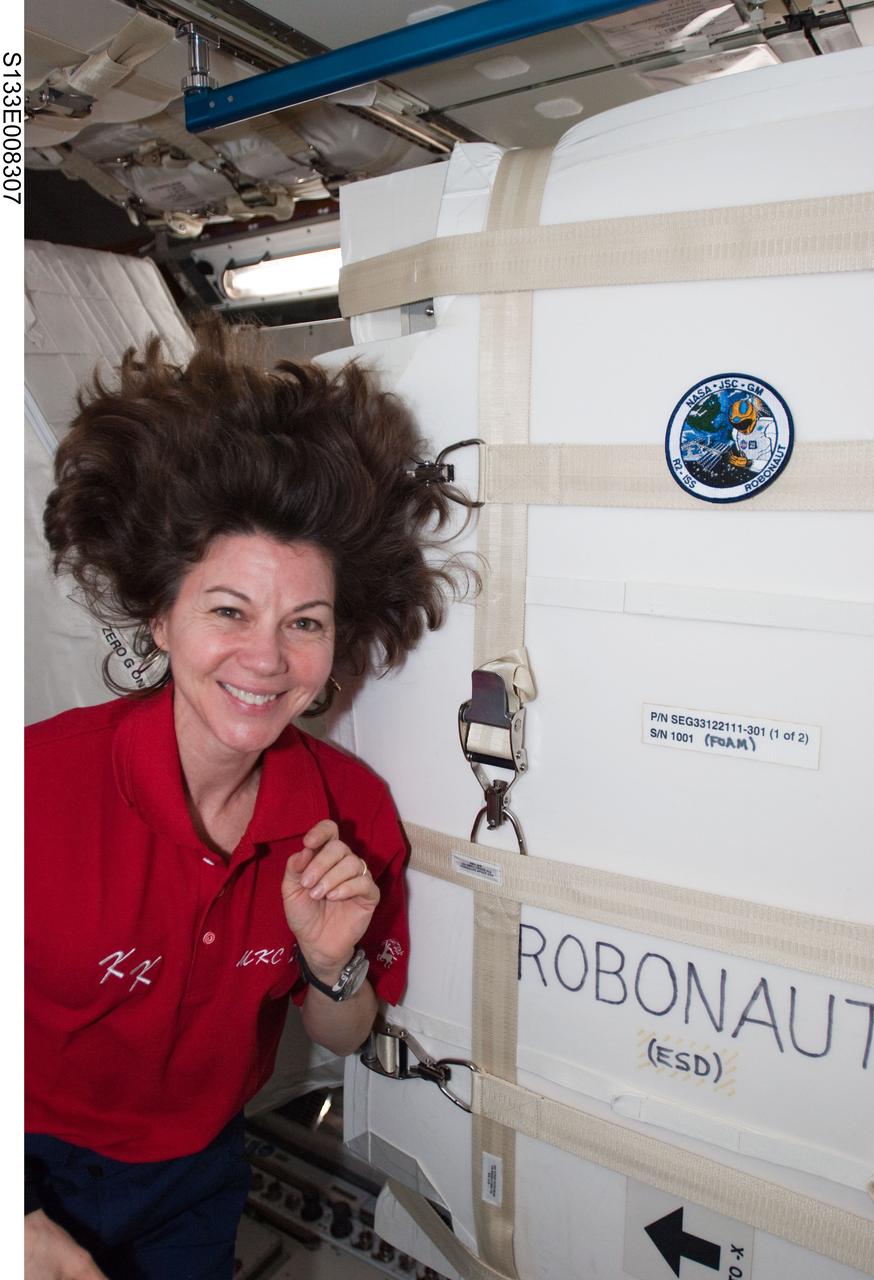
S133-E-008307 (2 March 2011) --- NASA astronaut Cady Coleman, Expedition 26 flight engineer, is pictured near the Robonaut2 container in the newly-installed Permanent Multipurpose Module (PMM) of the International Space Station while space shuttle Discovery (STS-133) remains docked with the station. Photo credit: NASA or National Aeronautics and Space Administration
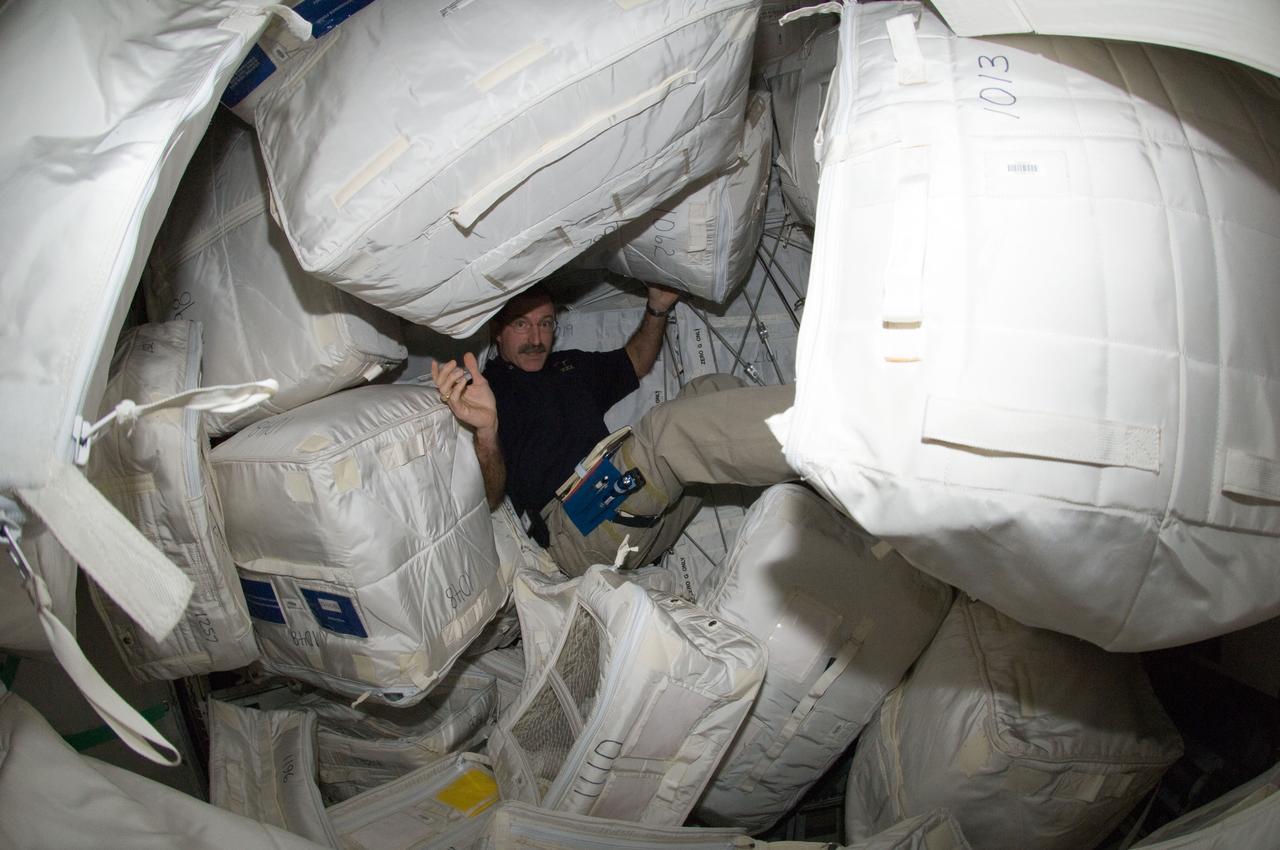
ISS030-E-115935 (2 March 2012) --- NASA astronaut Dan Burbank, Expedition 30 commander, is pictured among stowage containers in the Leonardo Permanent Multipurpose Module (PMM) of the International Space Station.
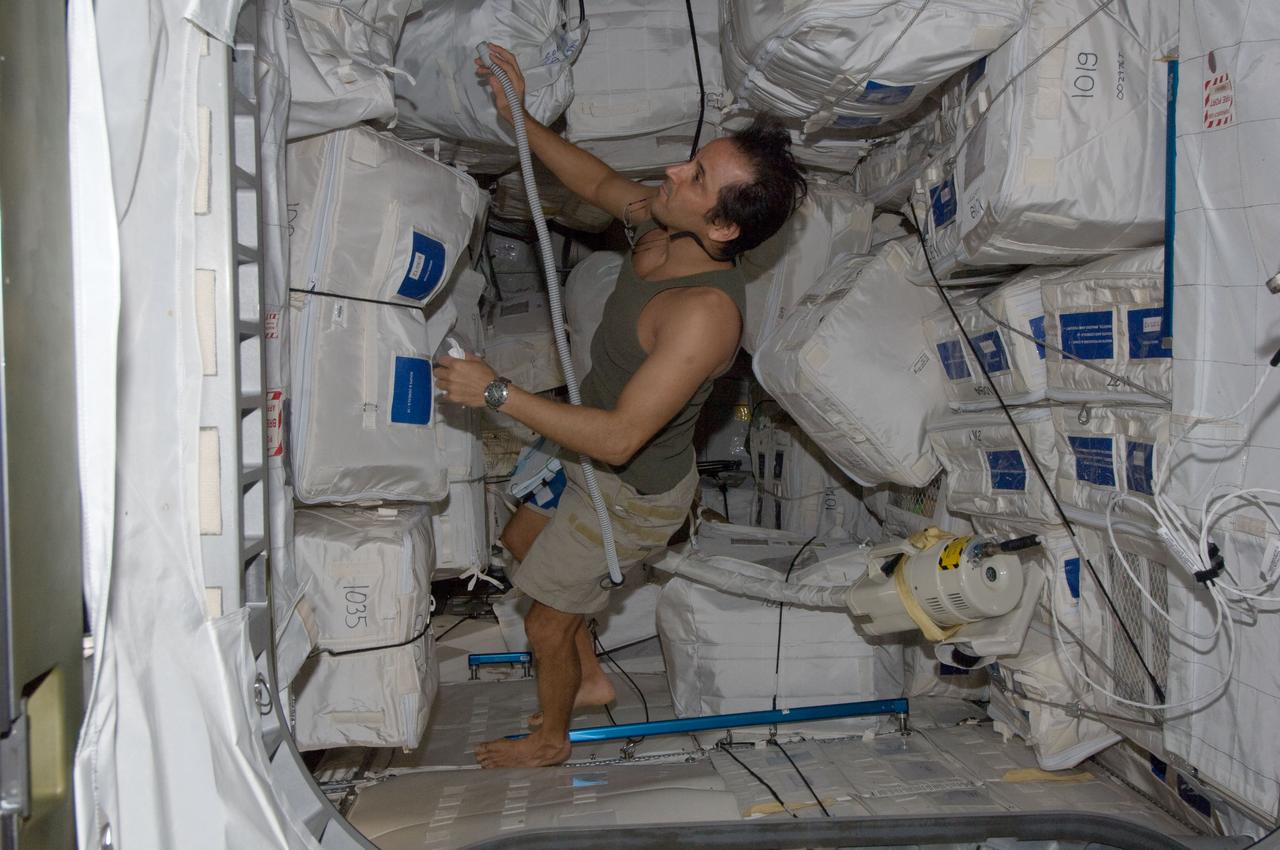
ISS032-E-011881 (4 Aug. 2012) --- NASA astronaut Joe Acaba, Expedition 32 flight engineer, uses a vacuum cleaner during housekeeping operations in the Permanent Multipurpose Module (PMM) of the International Space Station.
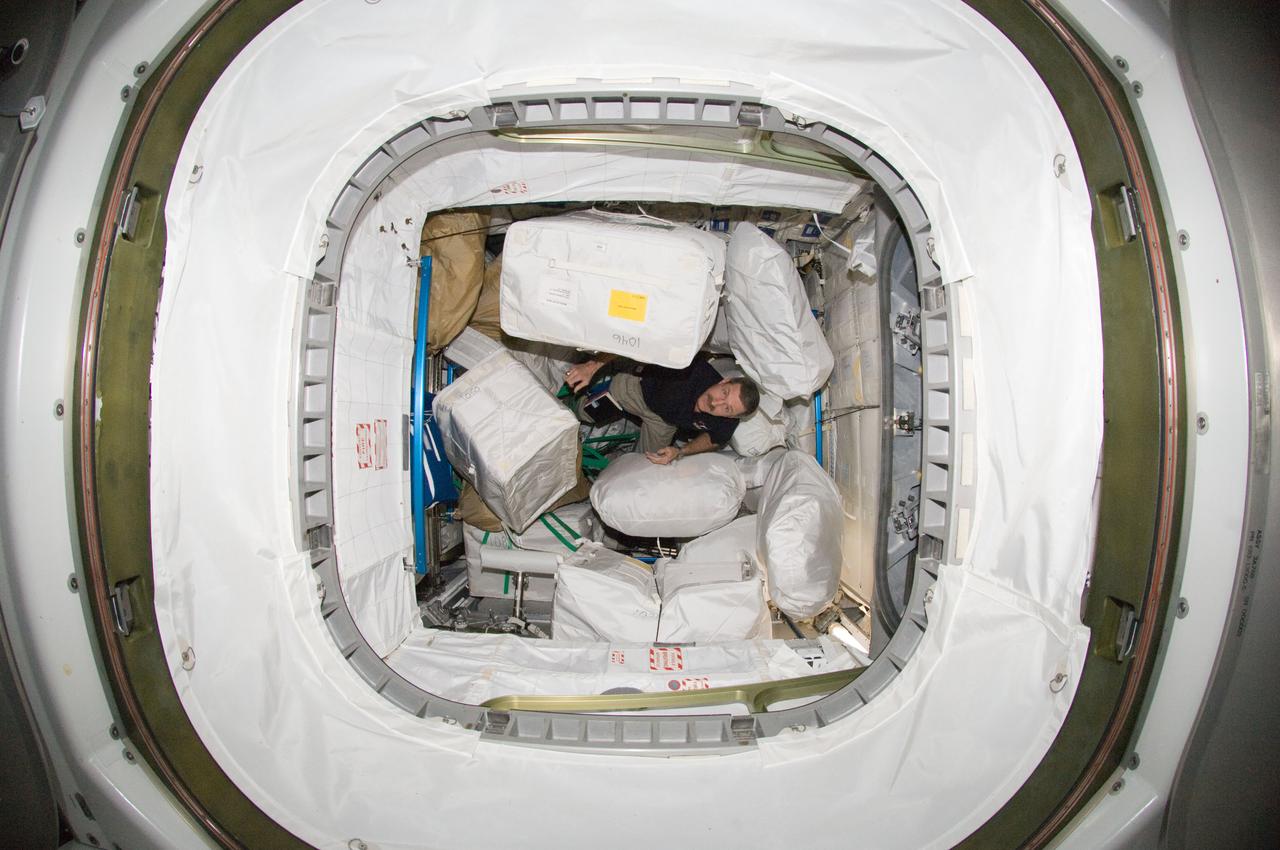
ISS030-E-115930 (2 March 2012) --- NASA astronaut Dan Burbank, Expedition 30 commander, is pictured among stowage containers in the Leonardo Permanent Multipurpose Module (PMM) of the International Space Station.
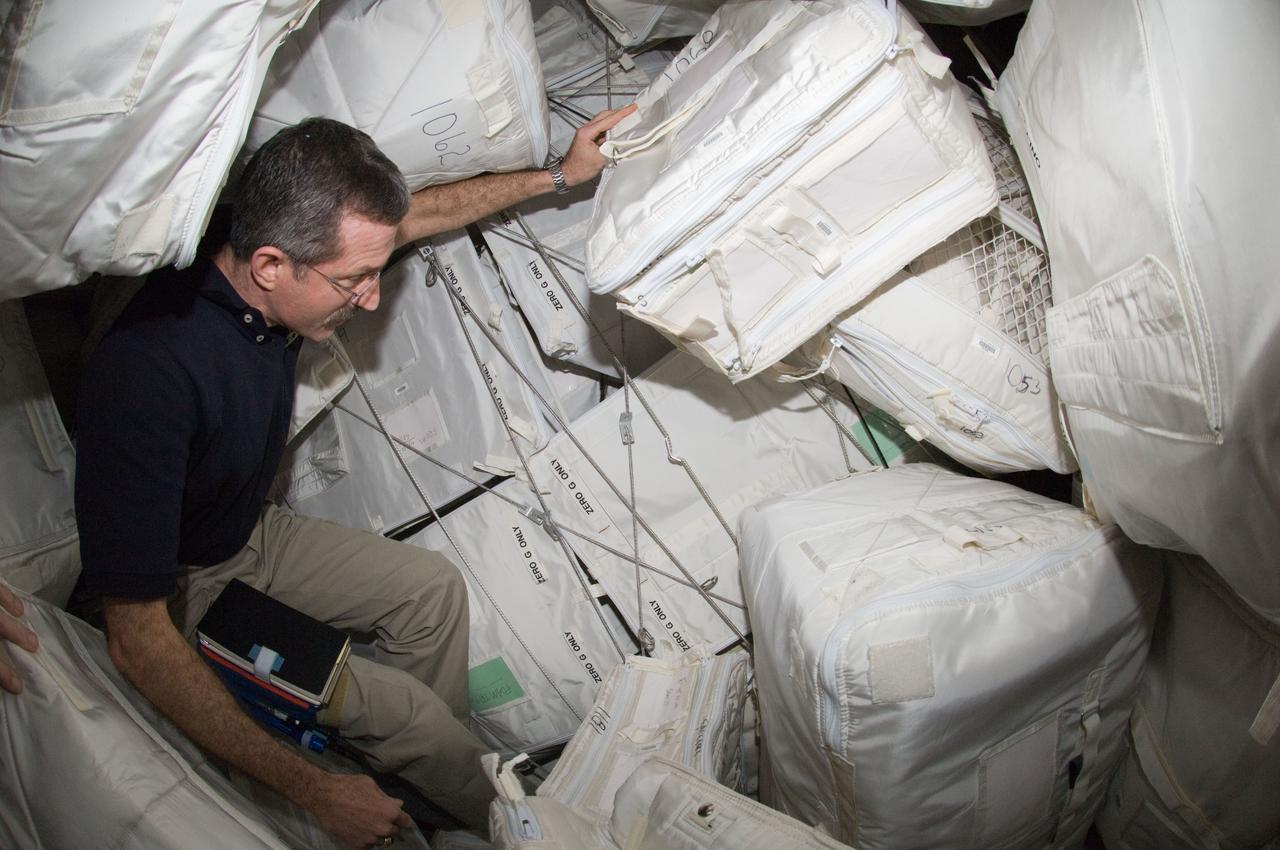
ISS030-E-115939 (2 March 2012) --- NASA astronaut Dan Burbank, Expedition 30 commander, is pictured among stowage containers in the Leonardo Permanent Multipurpose Module (PMM) of the International Space Station.
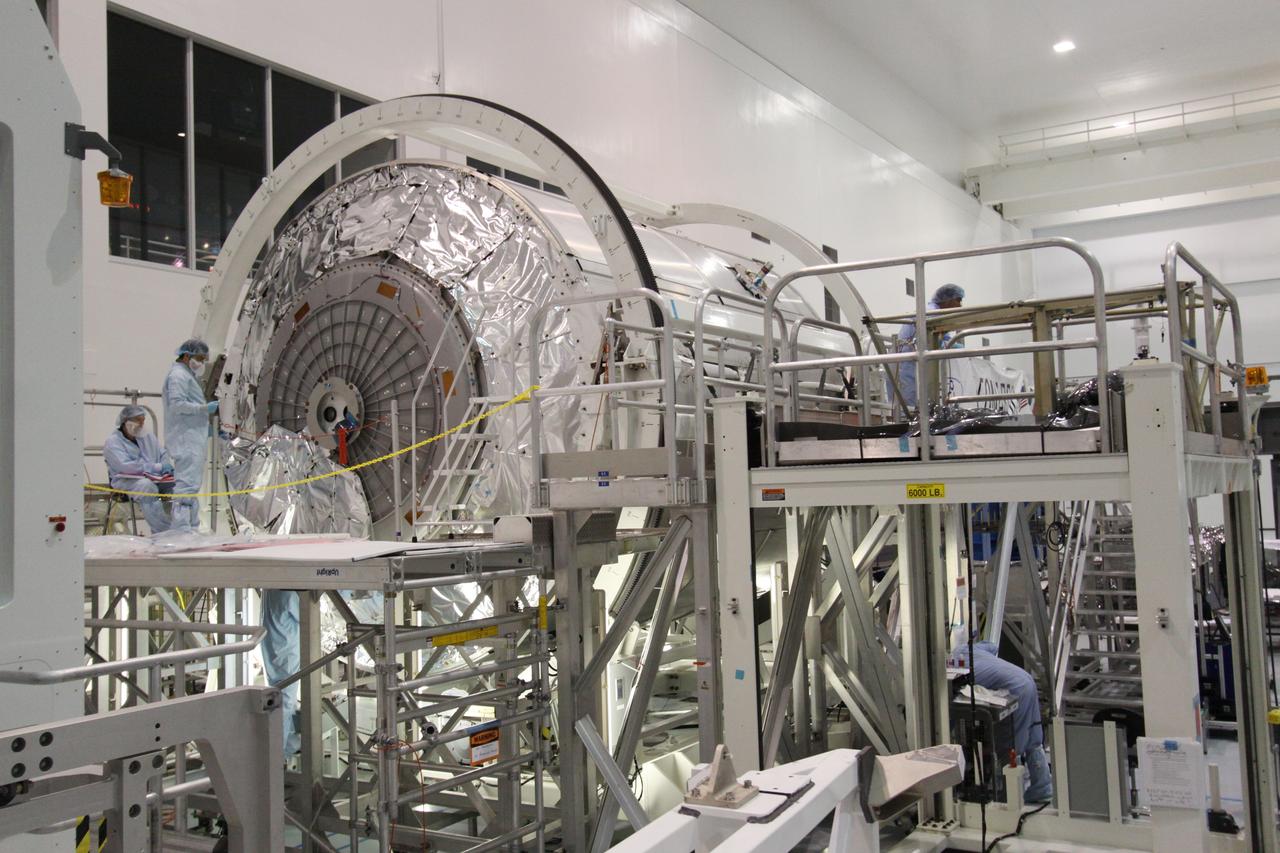
CAPE CANAVERAL, Fla. -- In the Space Station Processing Facility at NASA's Kennedy Space Center in Florida, technicians begin covering the hatch to the Permanent Multipurpose Module, or PMM, with insulating blankets to protect it and its contents from the harsh environment and temperatures of space. Space shuttle Discovery and its STS-133 crew are targeted to launch Nov. 1 and will deliver the PMM, packed with supplies and critical spare parts, as well as Robonaut 2, the dexterous humanoid astronaut helper, to the International Space Station. For more information visit: www.nasa.gov/shuttle. Photo credit: NASA/Jack Pfaller
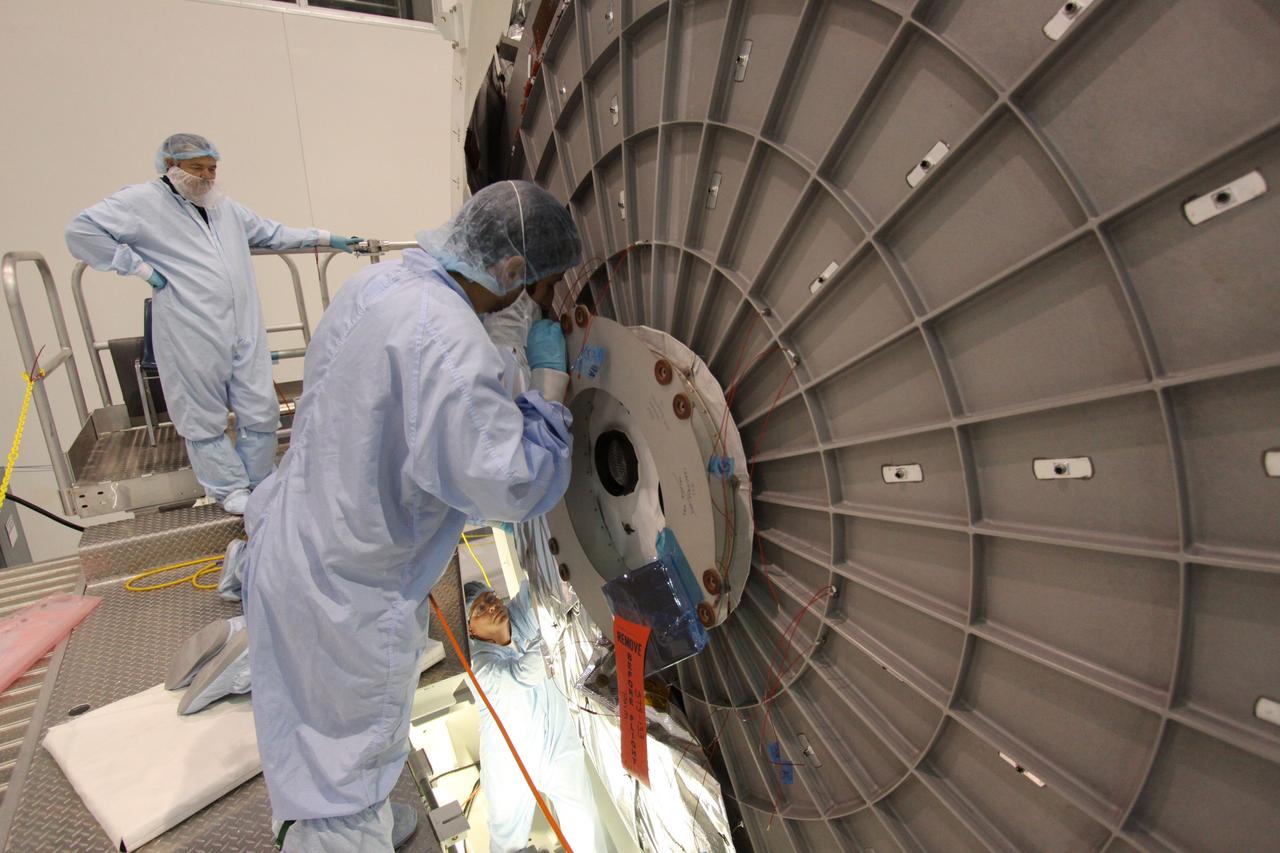
CAPE CANAVERAL, Fla. -- In the Space Station Processing Facility at NASA's Kennedy Space Center in Florida, technicians install insulating blankets to the hatch of the Permanent Multipurpose Module, or PMM, to protect it and its contents from the harsh environment and temperatures of space. Space shuttle Discovery and its STS-133 crew are targeted to launch Nov. 1 and will deliver the PMM, packed with supplies and critical spare parts, as well as Robonaut 2, the dexterous humanoid astronaut helper, to the International Space Station. For more information visit: www.nasa.gov/shuttle. Photo credit: NASA/Jack Pfaller
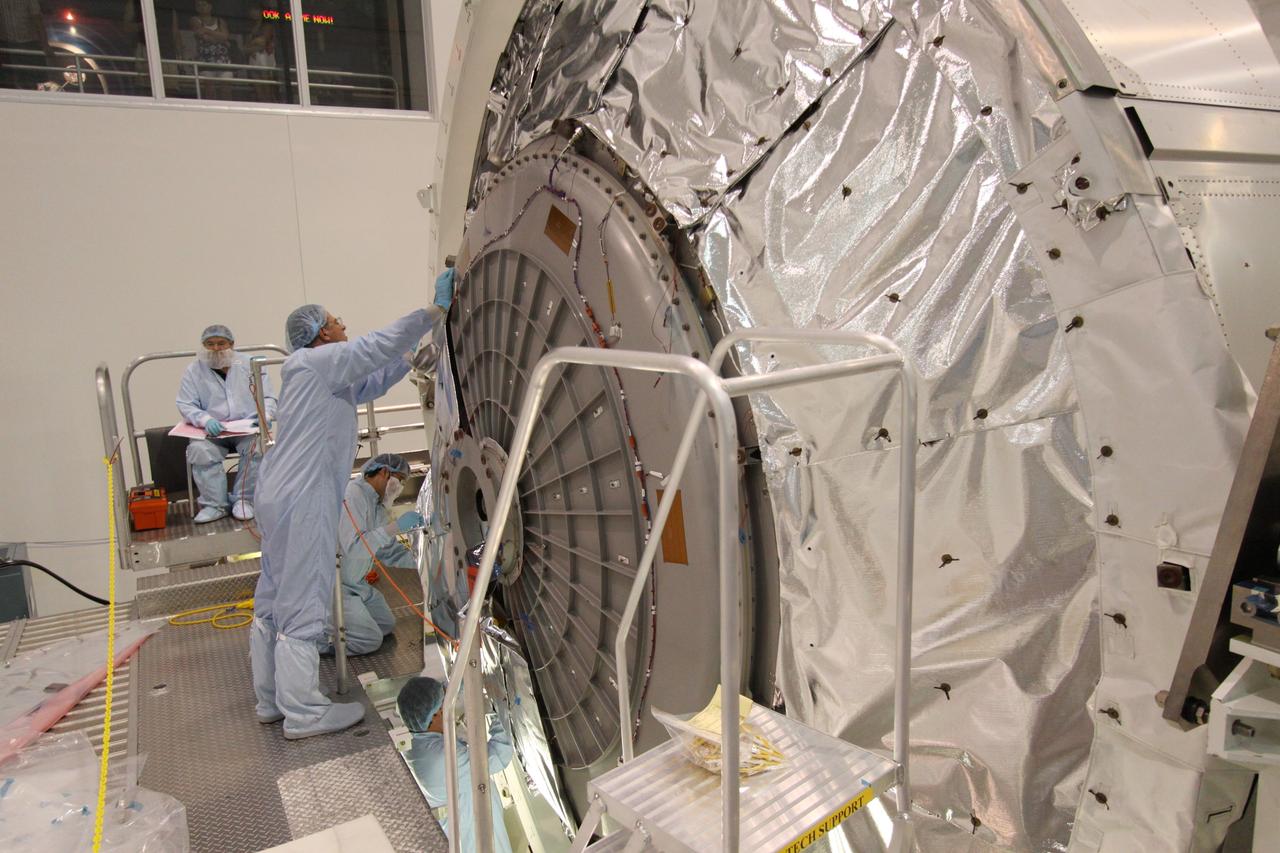
CAPE CANAVERAL, Fla. -- In the Space Station Processing Facility at NASA's Kennedy Space Center in Florida, technicians install insulating blankets to the hatch of the Permanent Multipurpose Module, or PMM, to protect it and its contents from the harsh environment and temperatures of space. Space shuttle Discovery and its STS-133 crew are targeted to launch Nov. 1 and will deliver the PMM, packed with supplies and critical spare parts, as well as Robonaut 2, the dexterous humanoid astronaut helper, to the International Space Station. For more information visit: www.nasa.gov/shuttle. Photo credit: NASA/Jack Pfaller
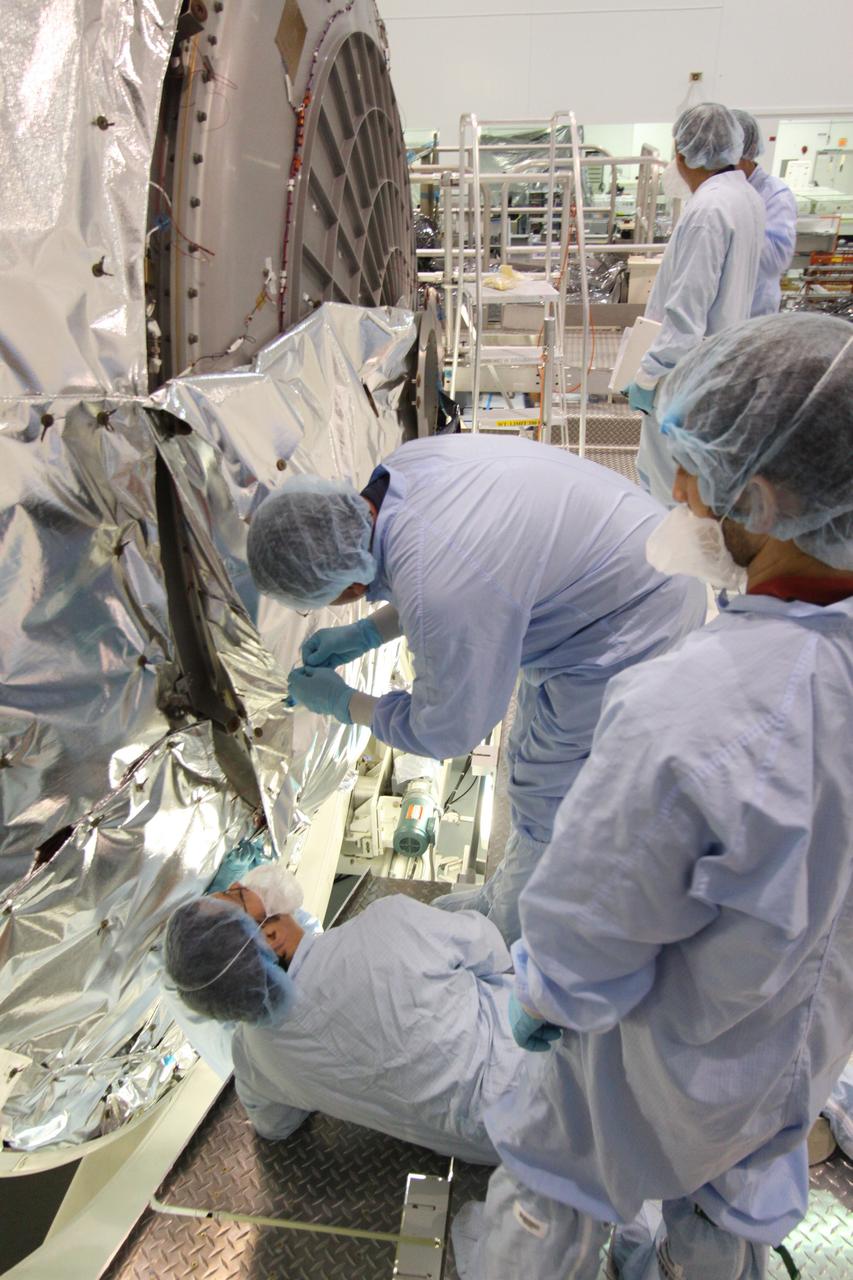
CAPE CANAVERAL, Fla. -- In the Space Station Processing Facility at NASA's Kennedy Space Center in Florida, technicians cover the hatch of the Permanent Multipurpose Module, or PMM, with insulating blankets to protect it and its contents from the harsh environment and temperatures of space. Space shuttle Discovery and its STS-133 crew are targeted to launch Nov. 1 and will deliver the PMM, packed with supplies and critical spare parts, as well as Robonaut 2, the dexterous humanoid astronaut helper, to the International Space Station. For more information visit: www.nasa.gov/shuttle. Photo credit: NASA/Jack Pfaller
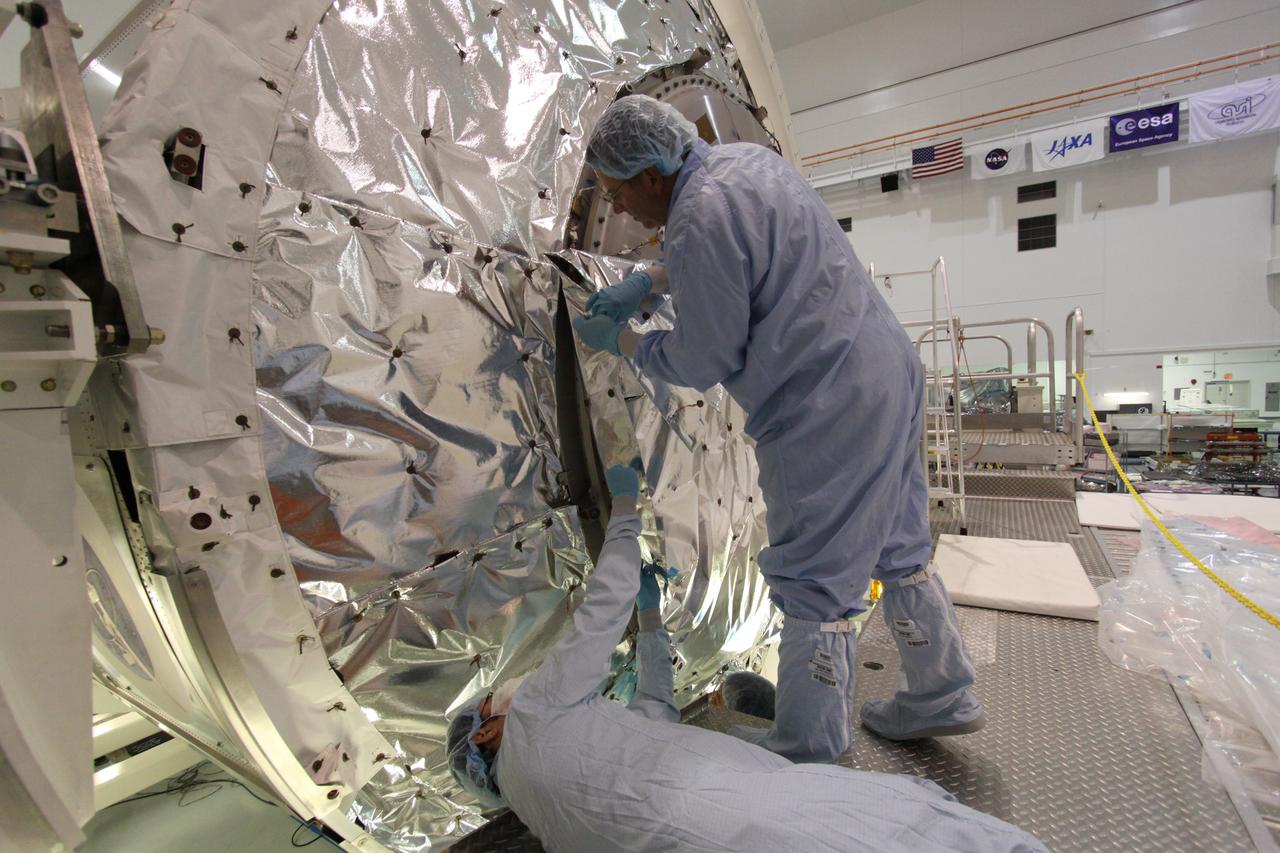
CAPE CANAVERAL, Fla. -- In the Space Station Processing Facility at NASA's Kennedy Space Center in Florida, technicians cover the hatch of the Permanent Multipurpose Module, or PMM, with insulating blankets to protect it and its contents from the harsh environment and temperatures of space. Space shuttle Discovery and its STS-133 crew are targeted to launch Nov. 1 and will deliver the PMM, packed with supplies and critical spare parts, as well as Robonaut 2, the dexterous humanoid astronaut helper, to the International Space Station. For more information visit: www.nasa.gov/shuttle. Photo credit: NASA/Jack Pfaller
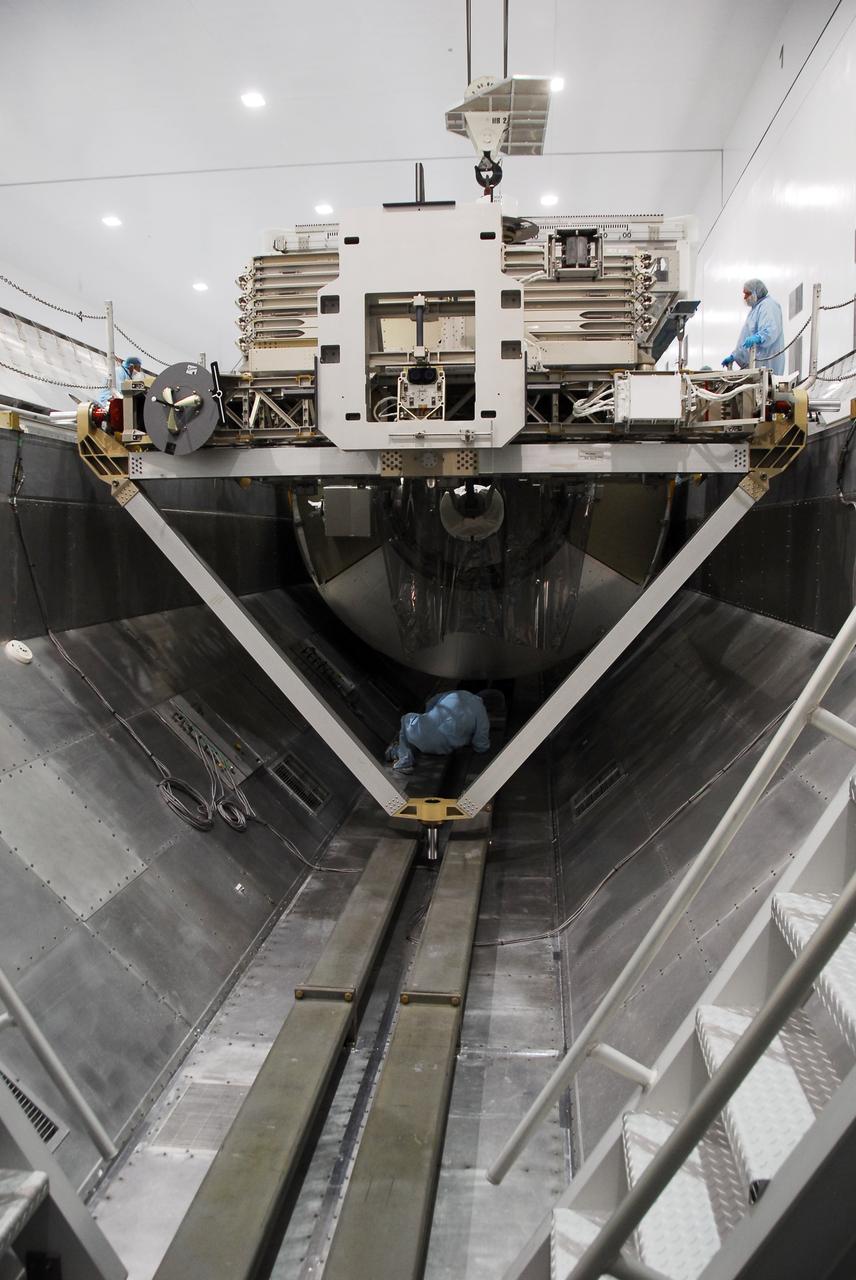
CAPE CANAVERAL, Fla. -- In the Space Station Processing Facility at NASA's Kennedy Space Center in Florida, technicians check the positioning of the Permanent Multipurpose Module, or PMM, after an overhead crane lowered it into the payload canister. Also being installed inside the canister is the Express Logistics Carrier-4 (top) carrying the Heat Rejection Subsystem radiator. The canister will then be transported to Launch Pad 39A and installed into space shuttle Discovery's payload bay. Discovery and its STS-133 crew will deliver the PMM, packed with supplies and critical spare parts, as well as Robonaut 2, the dexterous humanoid astronaut helper, to the International Space Station. Launch is targeted for 4:40 p.m. EDT, Nov. 1. Photo credit: NASA/Cory Huston
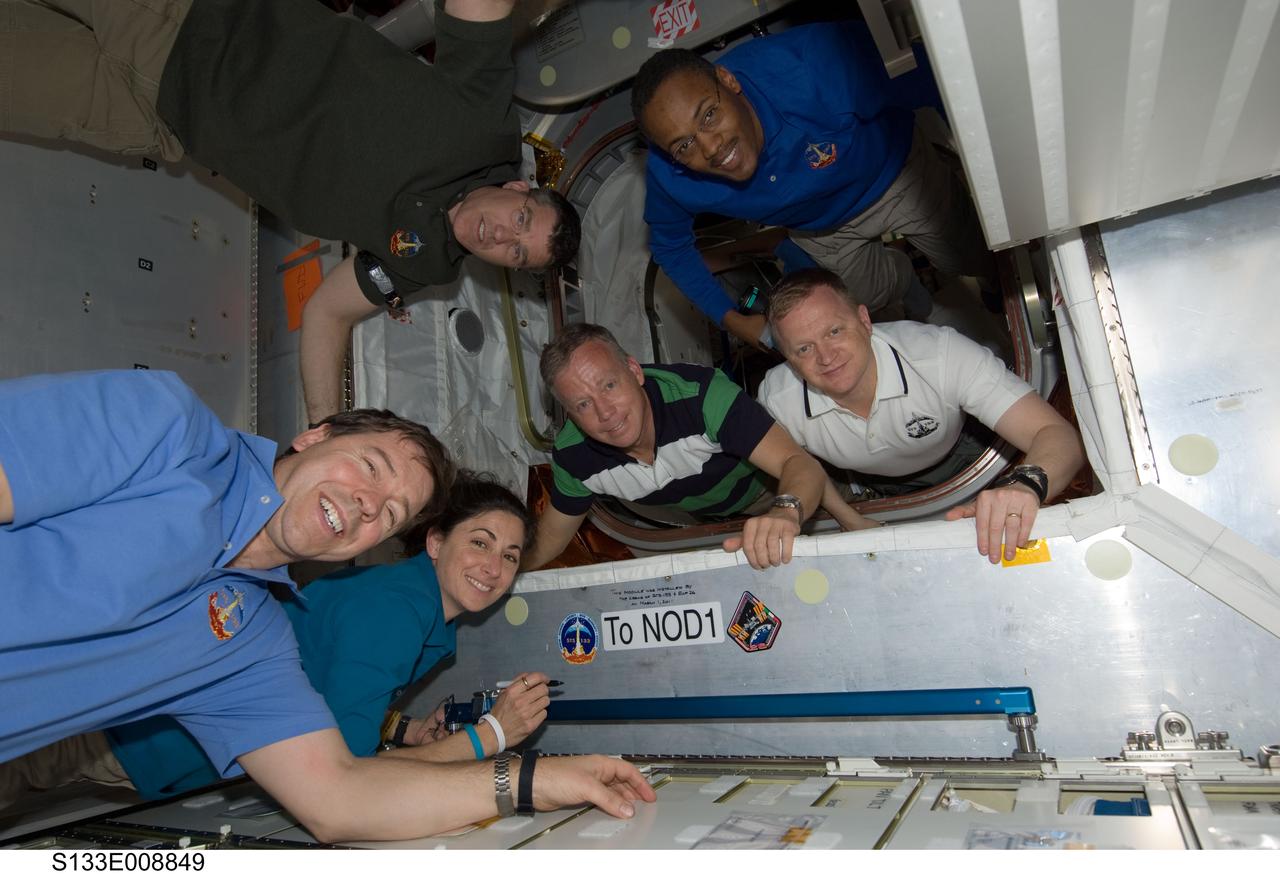
S133-E-008849 (5 March 2011) --- In the newly-installed Permanent Multipurpose Module (PMM), the STS-133 crew members pose while signing the STS-133 patch, which was added to the growing collection of insignias representing crews who have worked on the International Space Station. Pictured counter-clockwise (from the center) are NASA astronauts Steve Lindsey, commander; Eric Boe, pilot; Alvin Drew, Steve Bowen, Nicole Stott and Michael Barratt, all mission specialists. Photo credit: NASA or National Aeronautics and Space Administration
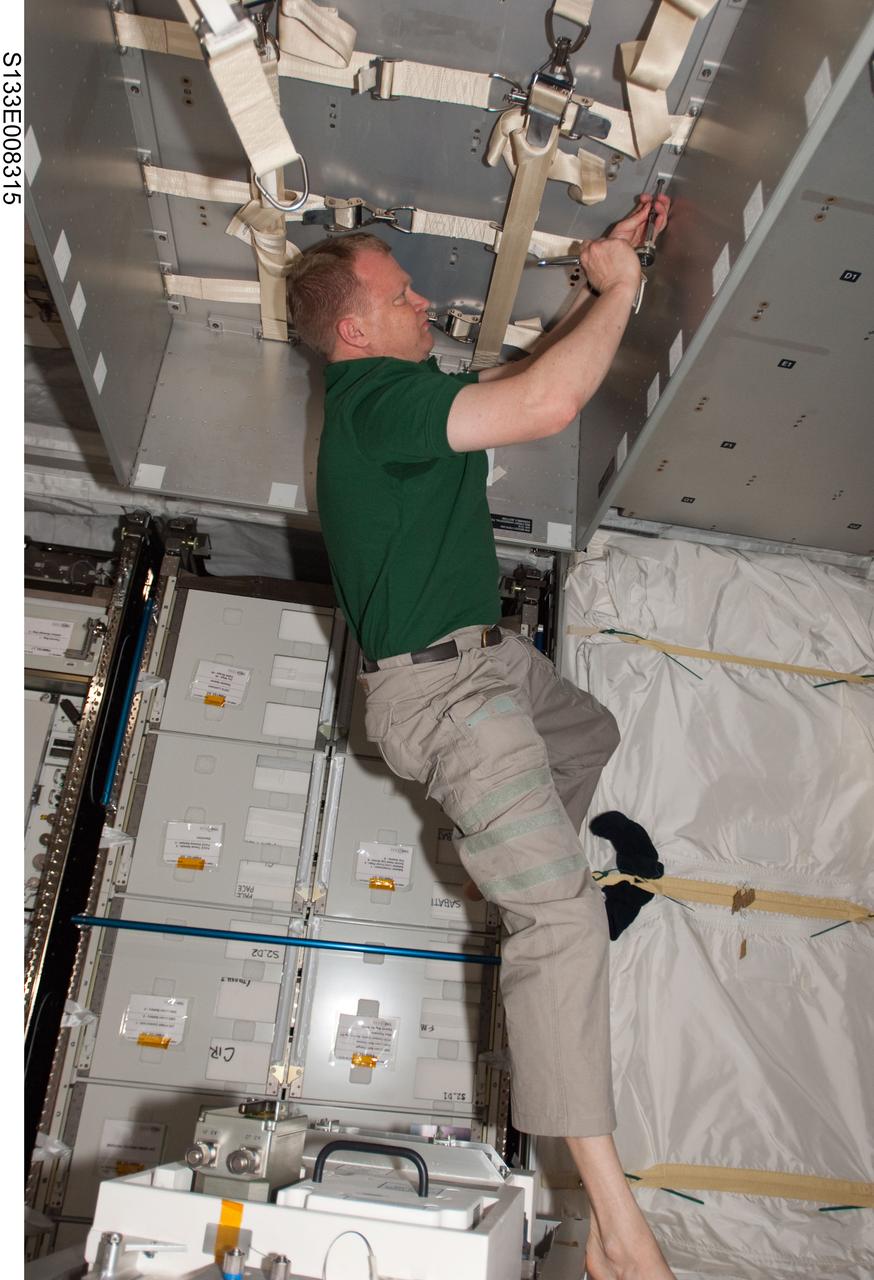
S133-E-008315 (2 March 2011) --- NASA astronaut Eric Boe, STS-133 pilot, works in the newly-installed Permanent Multipurpose Module (PMM) of the International Space Station while space shuttle Discovery remains docked with the station. Photo credit: NASA or National Aeronautics and Space Administration
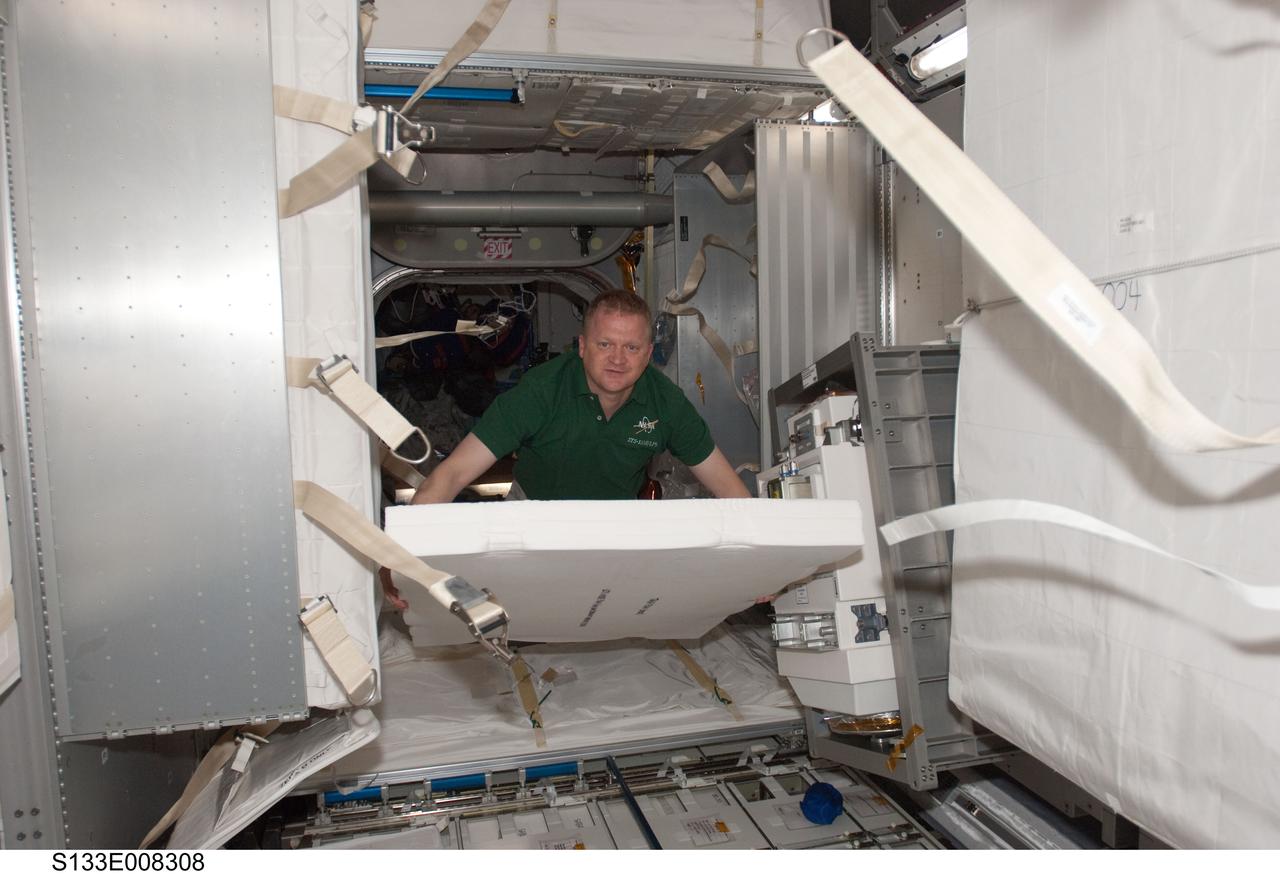
S133-E-008308 (2 March 2011) --- NASA astronaut Eric Boe, STS-133 pilot, works in the newly-installed Permanent Multipurpose Module (PMM) of the International Space Station while space shuttle Discovery remains docked with the station. Photo credit: NASA or National Aeronautics and Space Administration
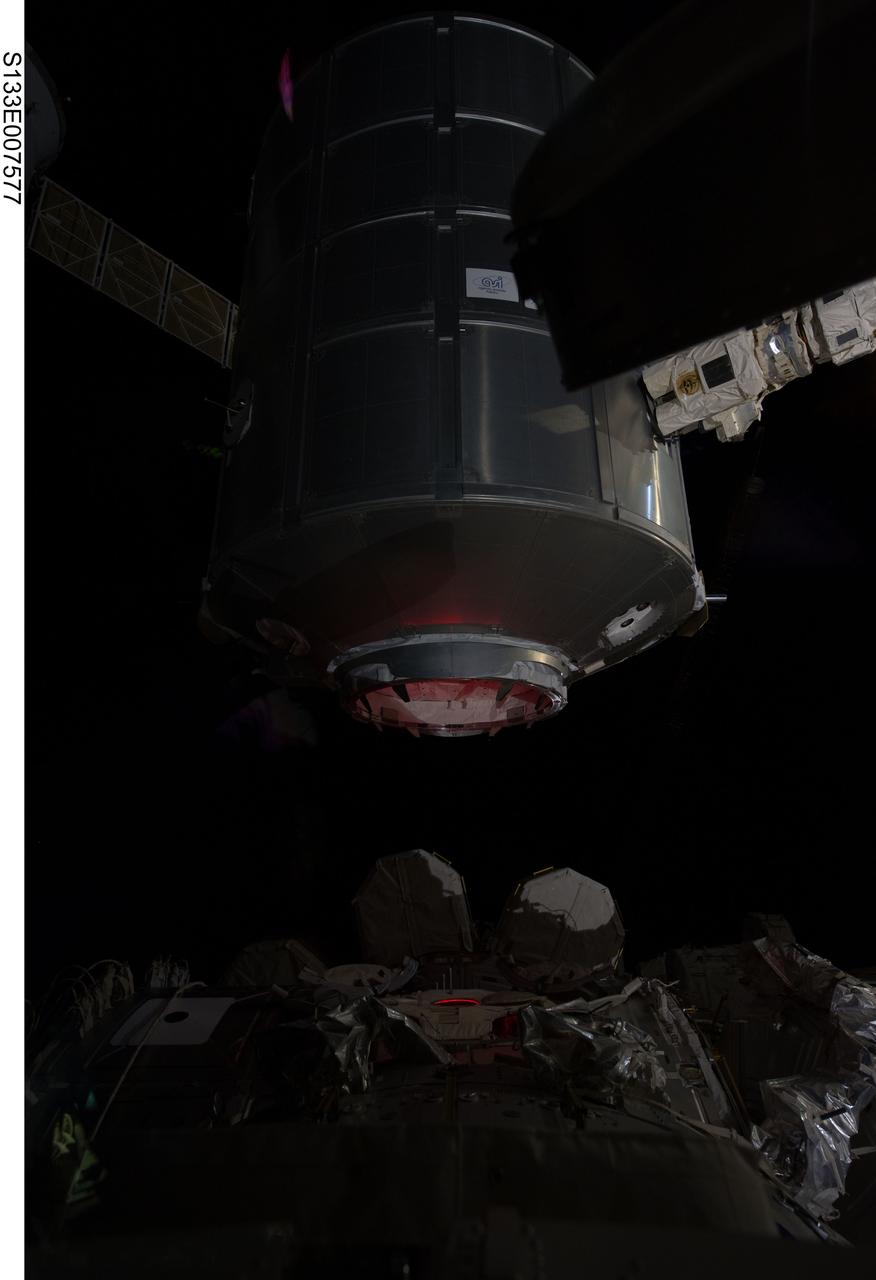
S133-E-007577 (1 March 2011) --- In the grasp of the International Space Station’s Canadarm2, the Italian-built Permanent Multipurpose Module (PMM) is transferred from space shuttle Discovery’s payload bay to be permanently attached to the Earth-facing port of the station’s Unity node. Photo credit: NASA or National Aeronautics and Space Administration
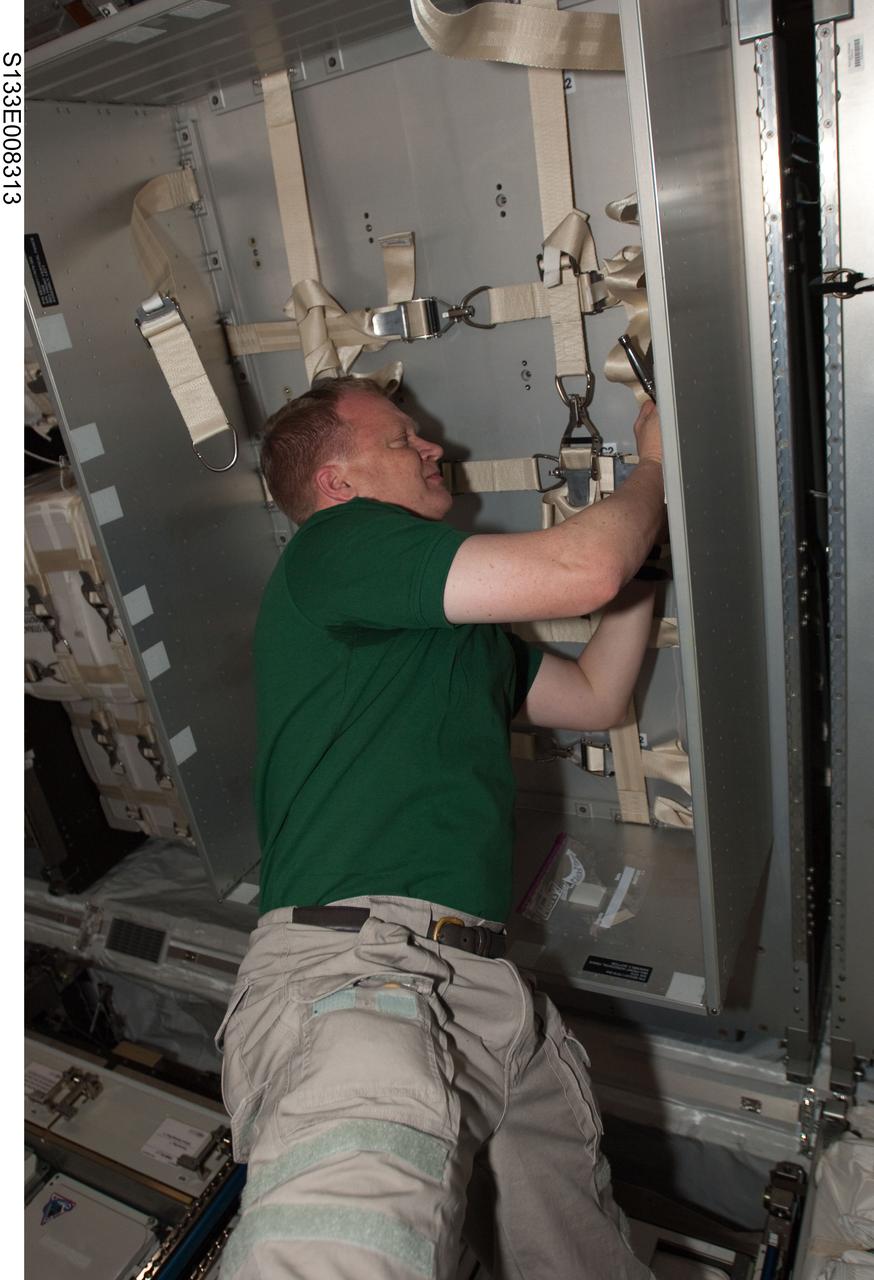
S133-E-008313 (2 March 2011) --- NASA astronaut Eric Boe, STS-133 pilot, works in the newly-installed Permanent Multipurpose Module (PMM) of the International Space Station while space shuttle Discovery remains docked with the station. Photo credit: NASA or National Aeronautics and Space Administration
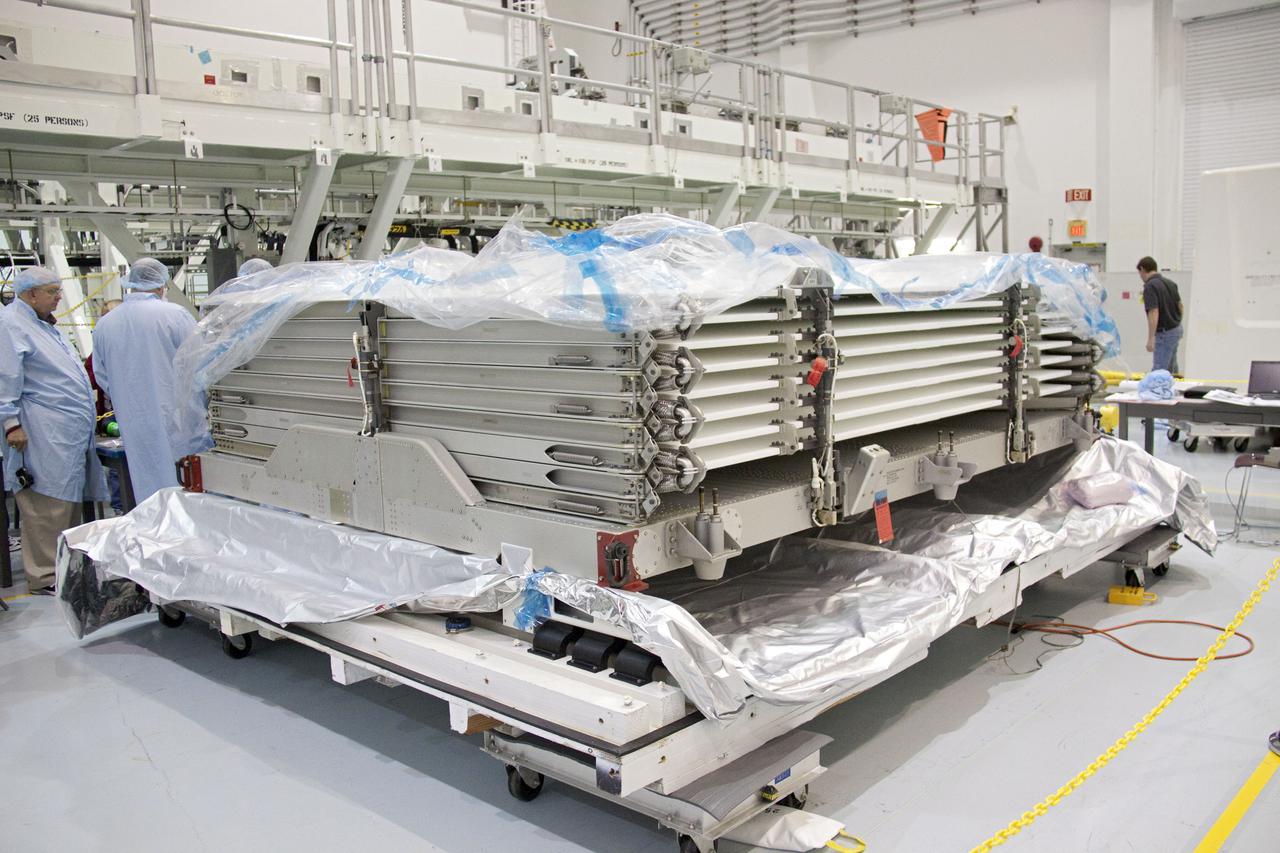
CAPE CANAVERAL, Fla. -- In the Space Station Processing Facility at NASA's Kennedy Space Center in Florida, workers prepare the Heat Rejection Subsystem, or HRS, radiator for installation onto the Express Logistics Carrier-4, or ELC-4. Space shuttle Discovery and its STS-133 crew will deliver the ELC-4 filled with external payloads and experiments, as well as the spare radiator and the Permanent Multipurpose Module, or PMM, to the International Space Station. Launch is targeted for Nov. 1 at 4:33 p.m. EDT. For more information visit, www.nasa.gov_shuttle. Photo credit: NASA_Troy Cryder

S133-E-007808 (1 March 2011) --- In the grasp of the International Space Station’s Canadarm2, the Italian-built Permanent Multipurpose Module (PMM) is transferred from space shuttle Discovery’s payload bay to be permanently attached to the Earth-facing port of the station’s Unity node. Earth’s horizon and the blackness of space provide the backdrop for the scene. Photo credit: NASA or National Aeronautics and Space Administration
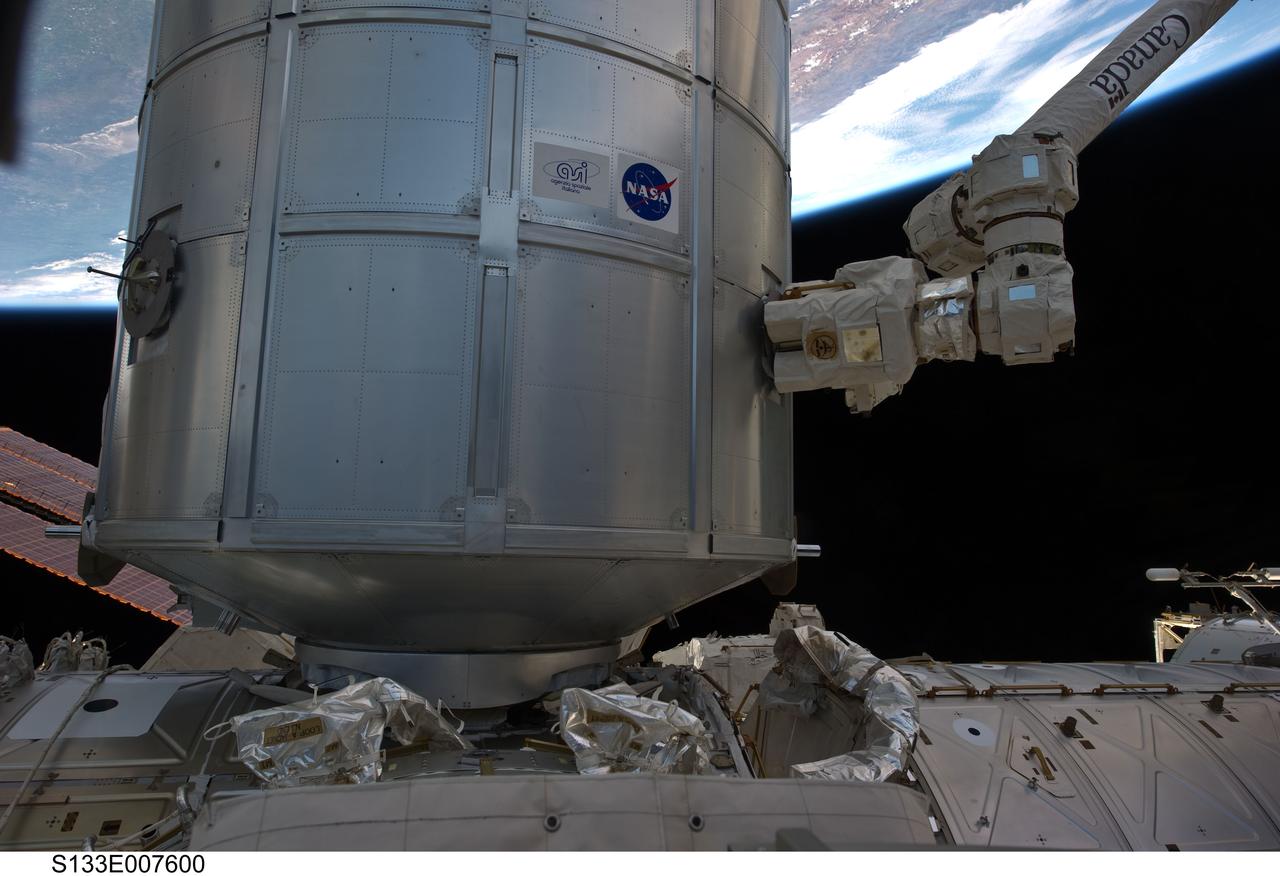
S133-E-007600 (1 March 2011) --- In the grasp of the International Space Station’s Canadarm2, the Italian-built Permanent Multipurpose Module (PMM) is transferred from space shuttle Discovery’s payload bay to be permanently attached to the Earth-facing port of the station’s Unity node. Earth’s horizon and the blackness of space provide the backdrop for the scene. Photo credit: NASA or National Aeronautics and Space Administration
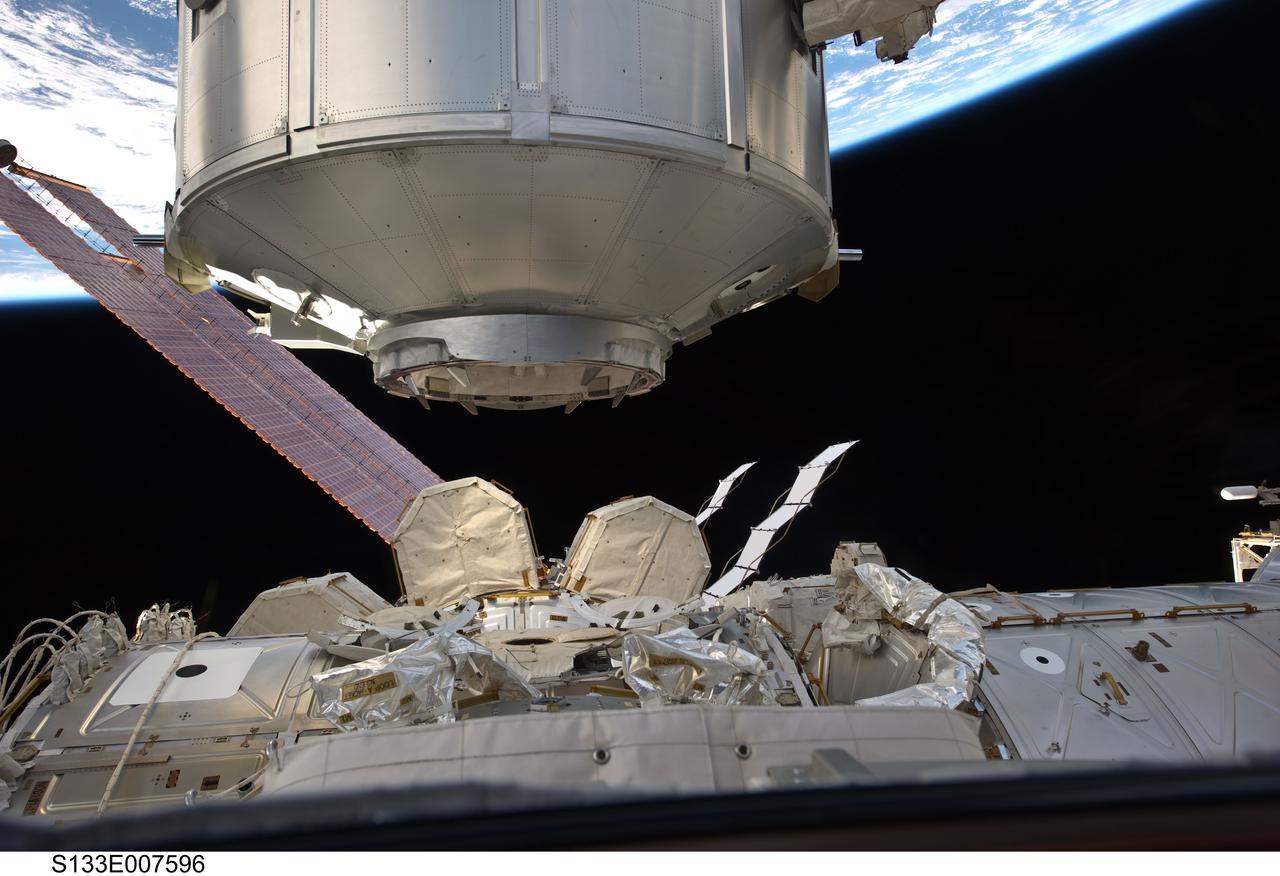
S133-E-007596 (1 March 2011) --- In the grasp of the International Space Station’s Canadarm2, the Italian-built Permanent Multipurpose Module (PMM) is transferred from space shuttle Discovery’s payload bay to be permanently attached to the Earth-facing port of the station’s Unity node. Earth’s horizon and the blackness of space provide the backdrop for the scene. Photo credit: NASA or National Aeronautics and Space Administration
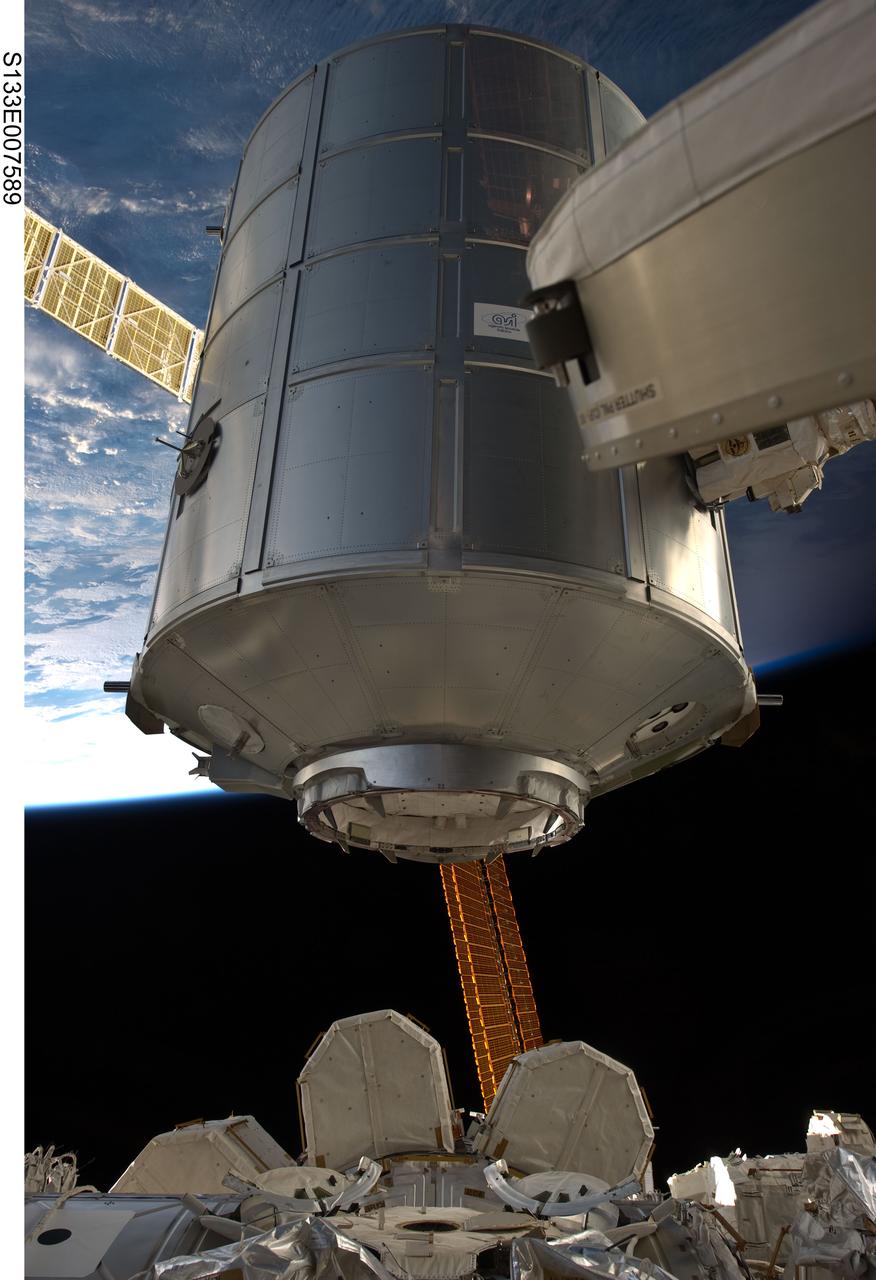
S133-E-007589 (1 March 2011) --- In the grasp of the International Space Station’s Canadarm2, the Italian-built Permanent Multipurpose Module (PMM) is transferred from space shuttle Discovery’s payload bay to be permanently attached to the Earth-facing port of the station’s Unity node. Earth’s horizon and the blackness of space provide the backdrop for the scene. Photo credit: NASA or National Aeronautics and Space Administration
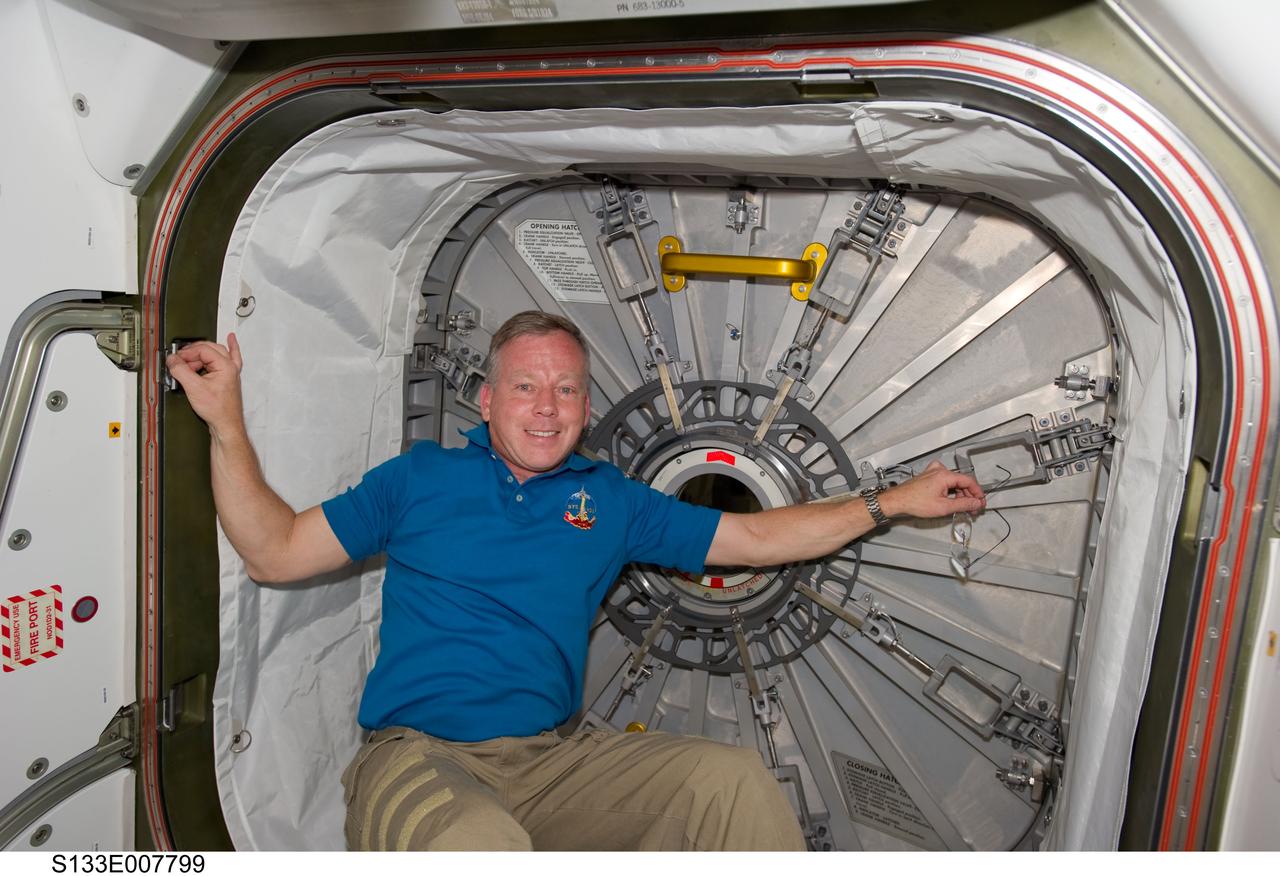
S133-E-007799 (1 March 2011) --- NASA astronaut Steve Lindsey, STS-133 commander, is pictured at the hatch of the Earth-facing port of the International Space Station’s Unity node while space shuttle Discovery remains docked with the station. On the other side of the hatch door is the newly-installed Permanent Multipurpose Module (PMM). Photo credit: NASA or National Aeronautics and Space Administration
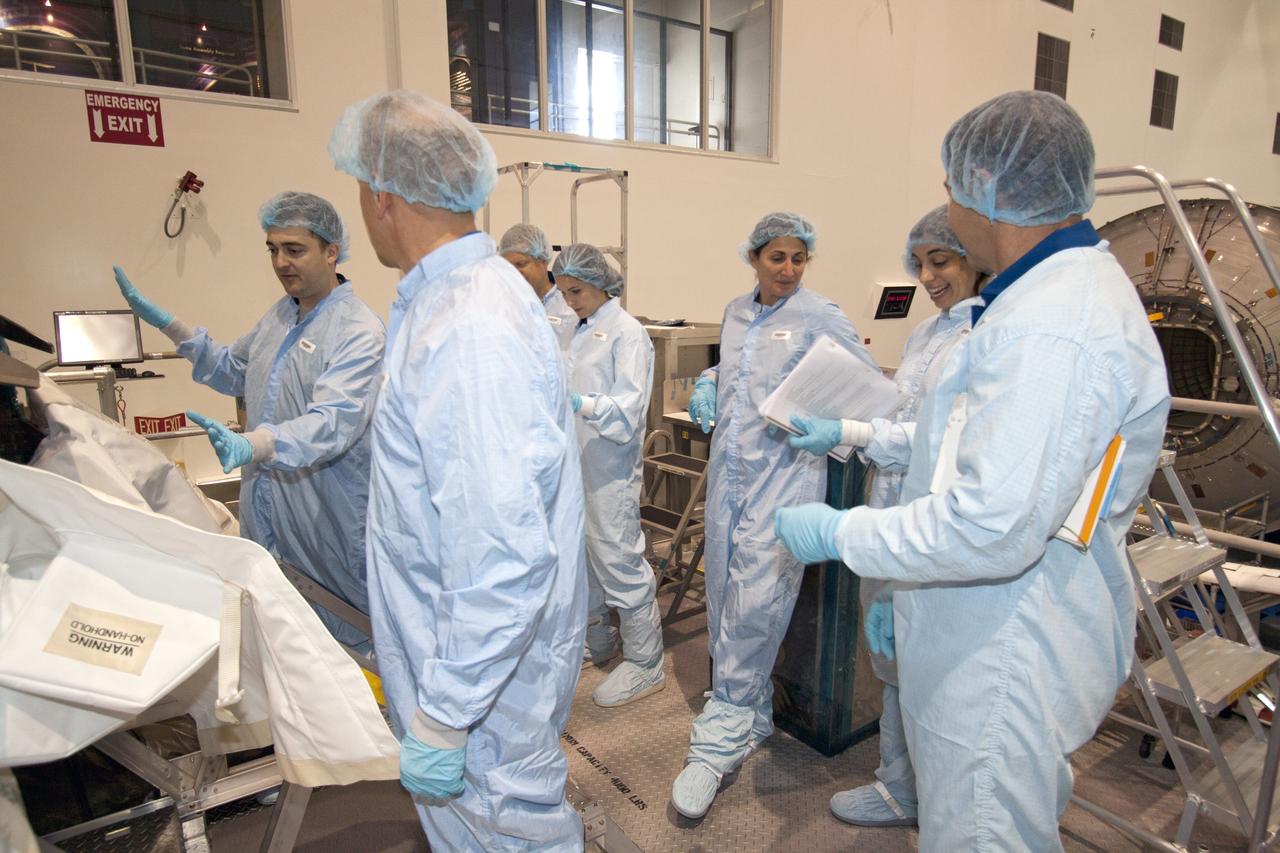
CAPE CANAVERAL, Fla. -- In the Space Station Processing Facility at NASA's Kennedy Space Center in Florida, space shuttle Discovery's STS-133 crew members are participating in the Payload Crew Equipment Interface Test, or CEIT. During this phase of CEIT the astronauts have an opportunity to see first-hand the payload they'll be delivering to the International Space Station. In the right background is the Permanent Multipurpose Module, or PMM, which is packed with supplies and critical spare parts, including Robonaut 2, the dexterous humanoid astronaut helper. Discovery is targeted to launch at 4:40 p.m. EDT Nov. 1. For more information visit www.nasa.gov/shuttle. Photo credit: NASA/Jack Pfaller
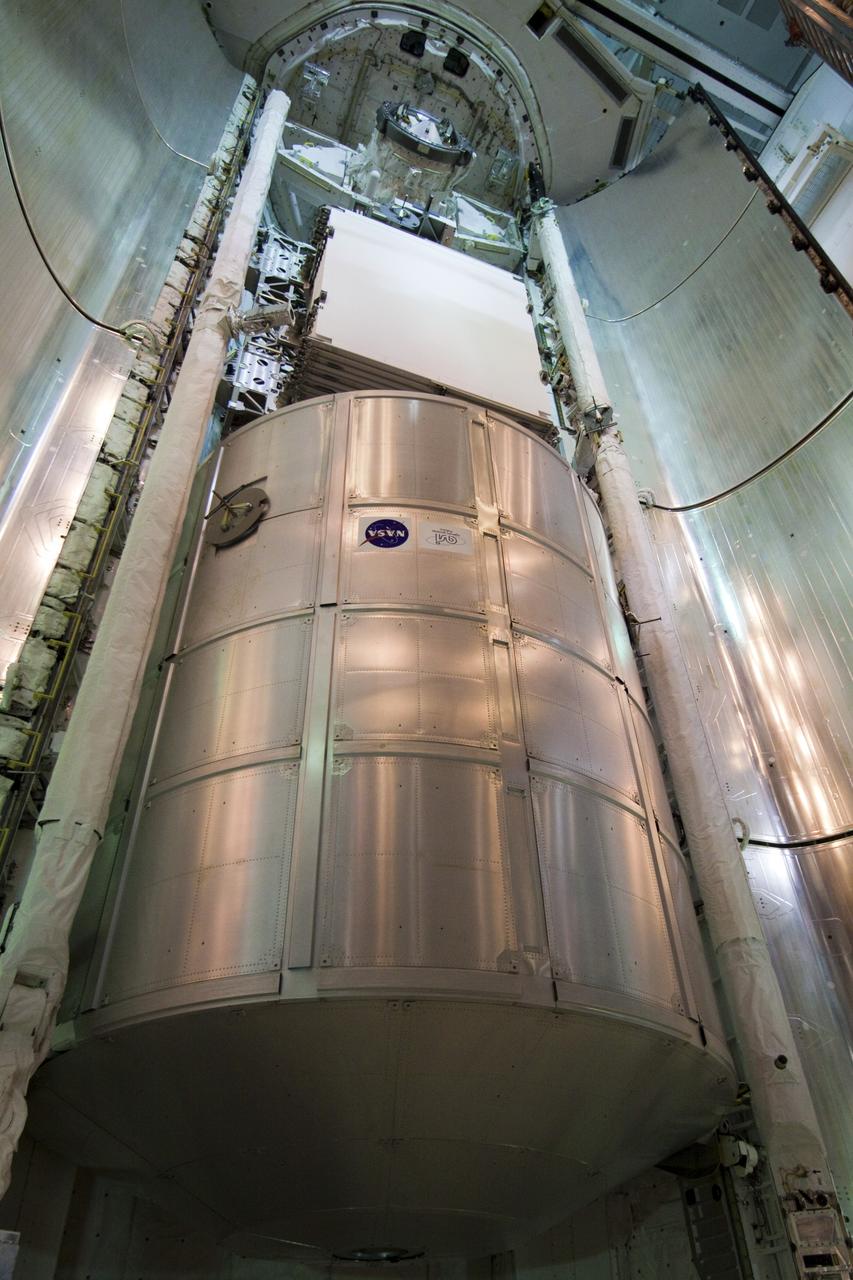
CAPE CANAVERAL, Fla. -- On Launch Pad 39A at NASA's Kennedy Space Center in Florida, the clamshell doors of space shuttle Discovery's payload bay are ready to be closed in preparation for the STS-133 launch to the International Space Station. Targeted to launch Nov. 1, STS-133 will carry the Permanent Multipurpose Module (PMM) packed with supplies and critical spare parts, as well as Robonaut 2 (R2) to the station. Photo credit: NASA/Jack Pfaller
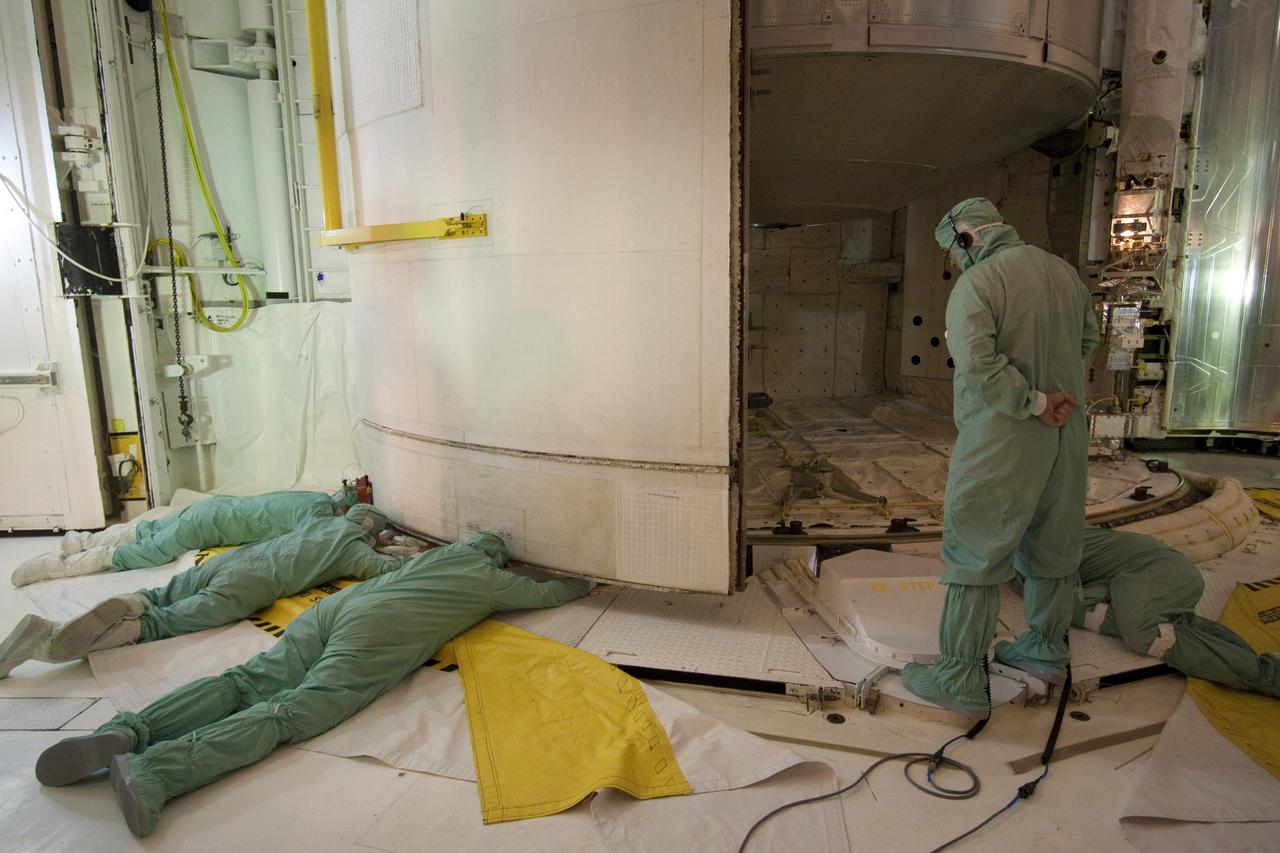
CAPE CANAVERAL, Fla. -- On Launch Pad 39A at NASA's Kennedy Space Center in Florida, technicians close the clamshell doors of space shuttle Discovery's payload bay in preparation for the STS-133 launch to the International Space Station. Targeted to launch Nov. 1, STS-133 will carry the Permanent Multipurpose Module (PMM) packed with supplies and critical spare parts, as well as Robonaut 2 (R2) to the station. Photo credit: NASA/Jack Pfaller
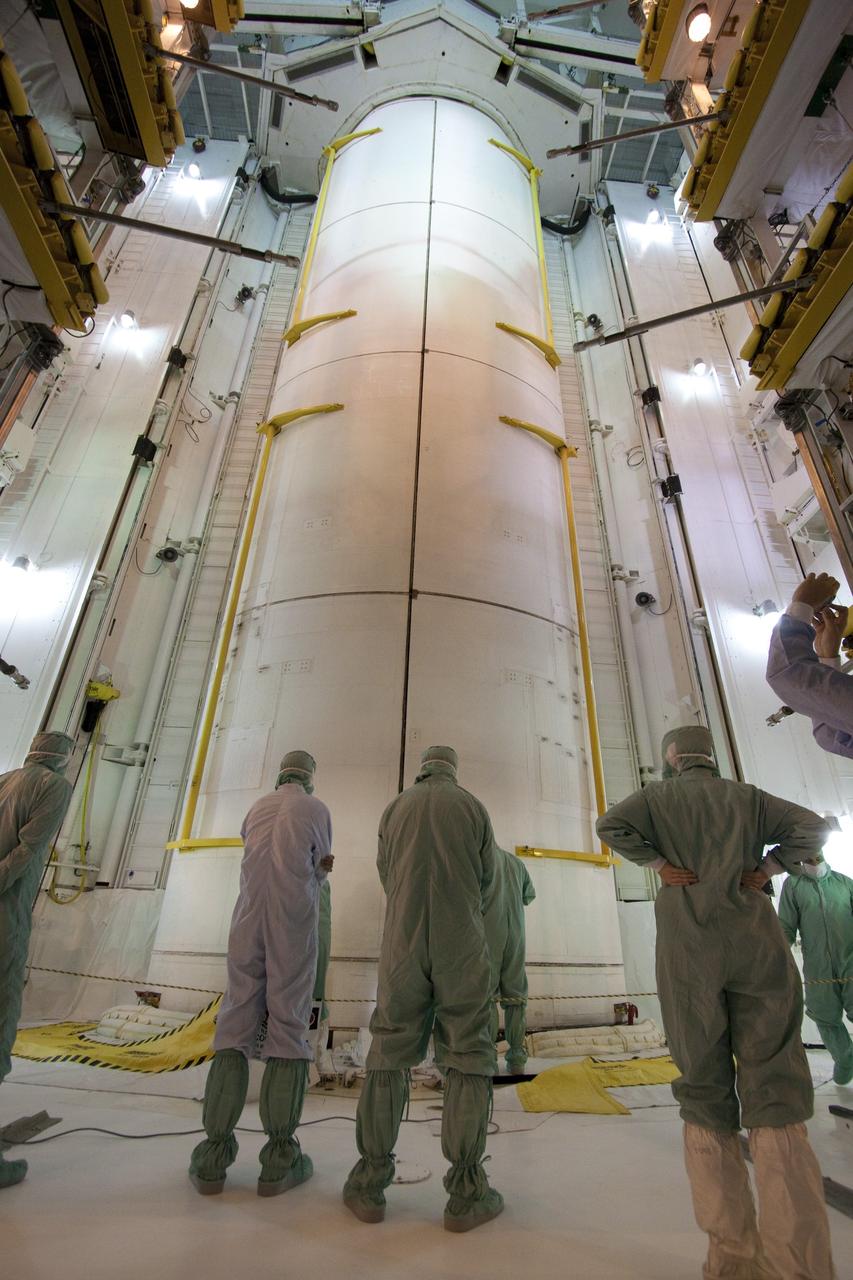
CAPE CANAVERAL, Fla. -- On Launch Pad 39A at NASA's Kennedy Space Center in Florida, the clamshell doors of space shuttle Discovery's payload bay are closed in preparation for the STS-133 launch to the International Space Station. Targeted to launch Nov. 1, STS-133 will carry the Permanent Multipurpose Module (PMM) packed with supplies and critical spare parts, as well as Robonaut 2 (R2) to the station. Photo credit: NASA/Jack Pfaller
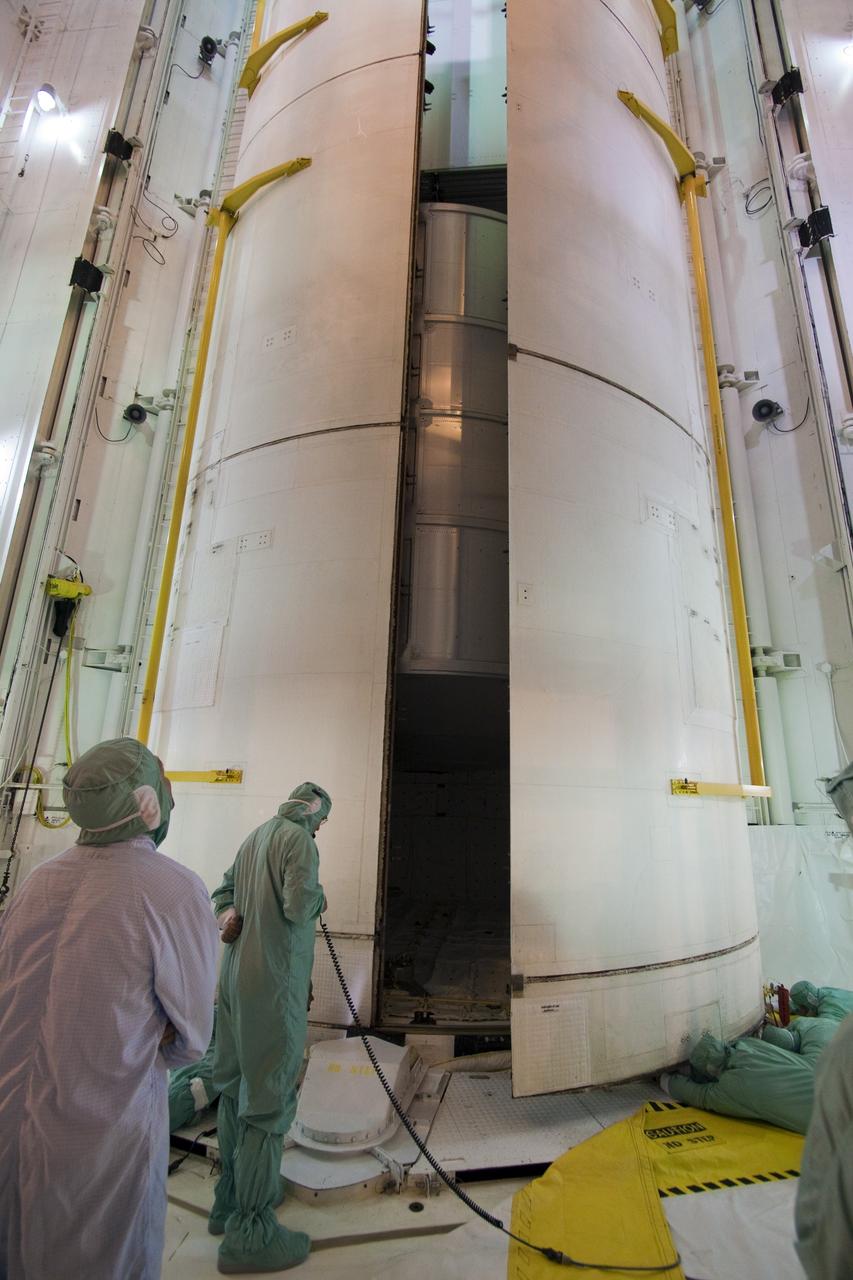
CAPE CANAVERAL, Fla. -- On Launch Pad 39A at NASA's Kennedy Space Center in Florida, technicians close the clamshell doors of space shuttle Discovery's payload bay in preparation for the STS-133 launch to the International Space Station. Targeted to launch Nov. 1, STS-133 will carry the Permanent Multipurpose Module (PMM) packed with supplies and critical spare parts, as well as Robonaut 2 (R2) to the station. Photo credit: NASA/Jack Pfaller
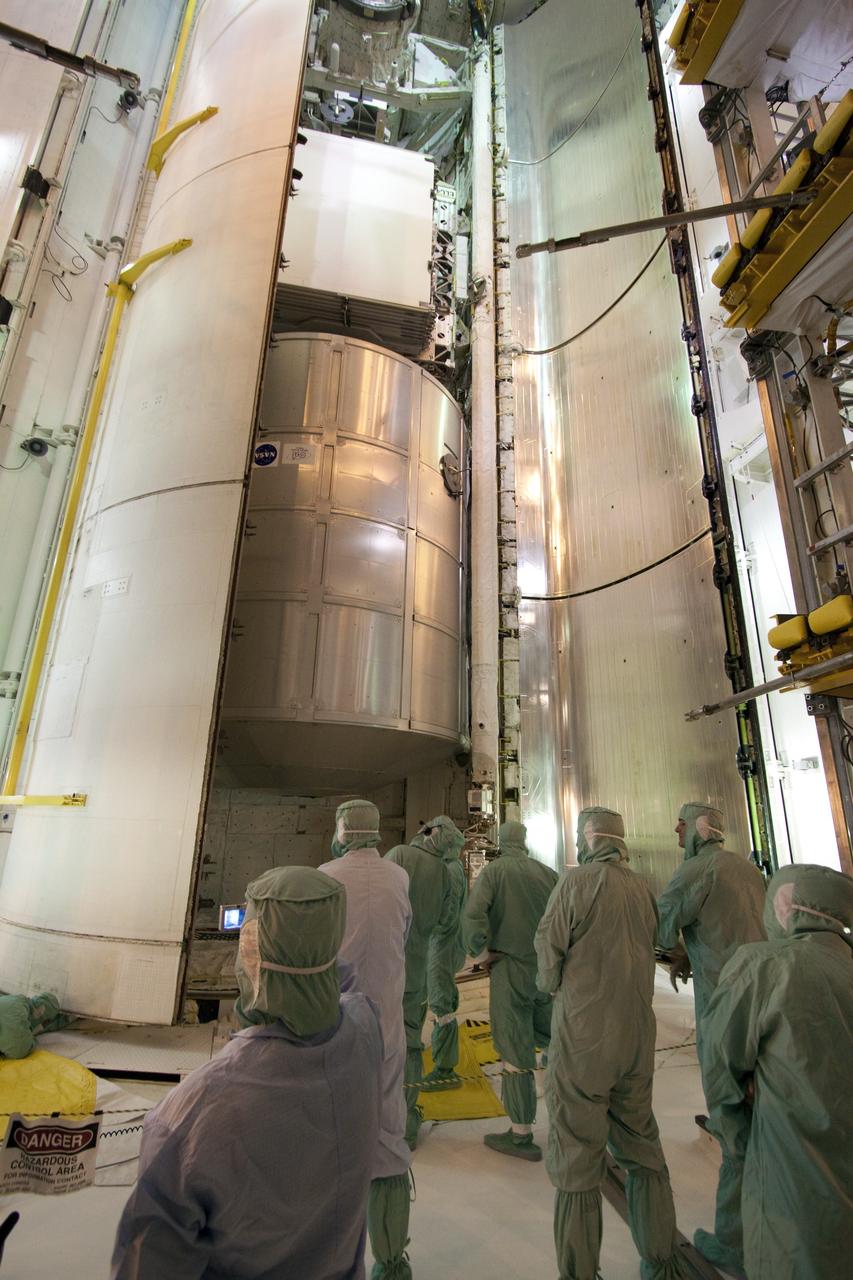
CAPE CANAVERAL, Fla. -- On Launch Pad 39A at NASA's Kennedy Space Center in Florida, technicians close the clamshell doors of space shuttle Discovery's payload bay in preparation for the STS-133 launch to the International Space Station. Targeted to launch Nov. 1, STS-133 will carry the Permanent Multipurpose Module (PMM) packed with supplies and critical spare parts, as well as Robonaut 2 (R2) to the station. Photo credit: NASA/Jack Pfaller
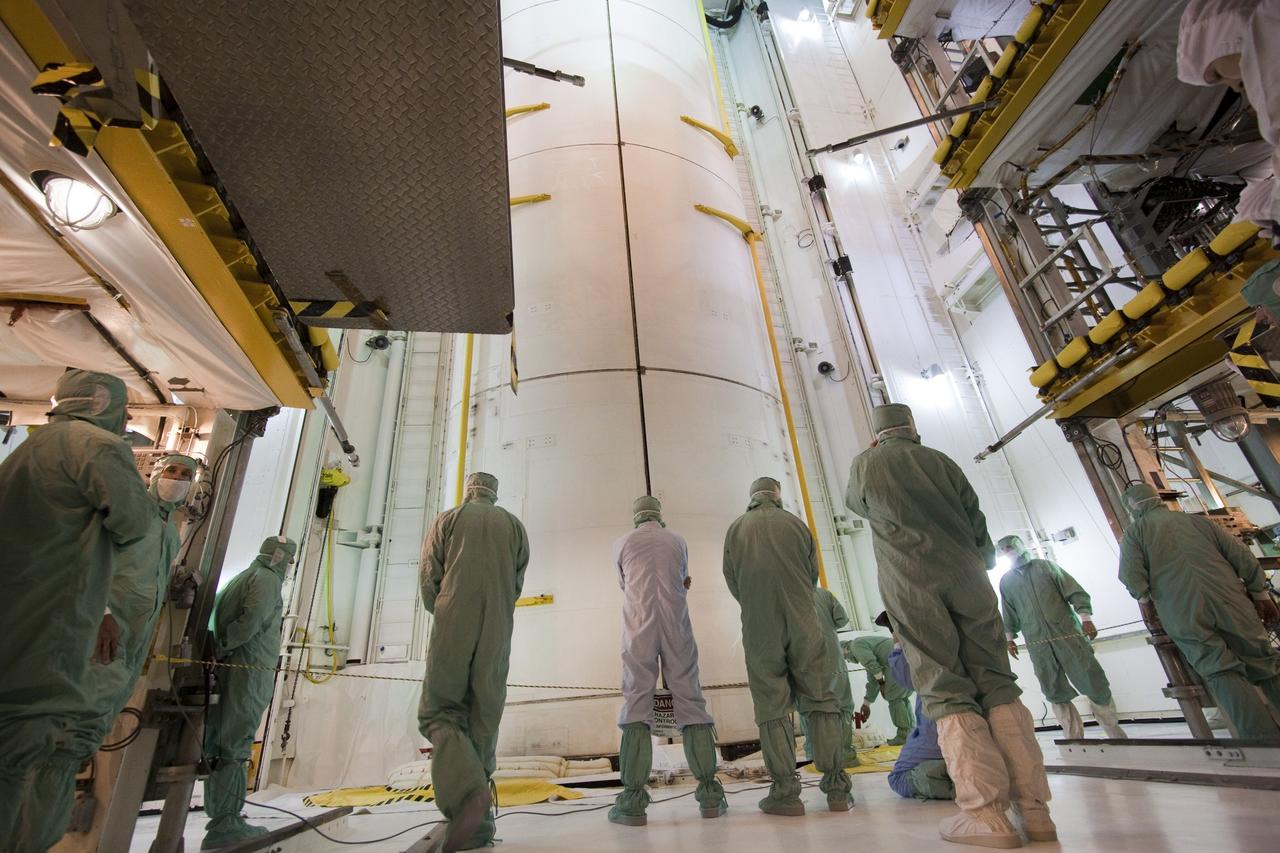
CAPE CANAVERAL, Fla. -- On Launch Pad 39A at NASA's Kennedy Space Center in Florida, the clamshell doors of space shuttle Discovery's payload bay are closed in preparation for the STS-133 launch to the International Space Station. Targeted to launch Nov. 1, STS-133 will carry the Permanent Multipurpose Module (PMM) packed with supplies and critical spare parts, as well as Robonaut 2 (R2) to the station. Photo credit: NASA/Jack Pfaller
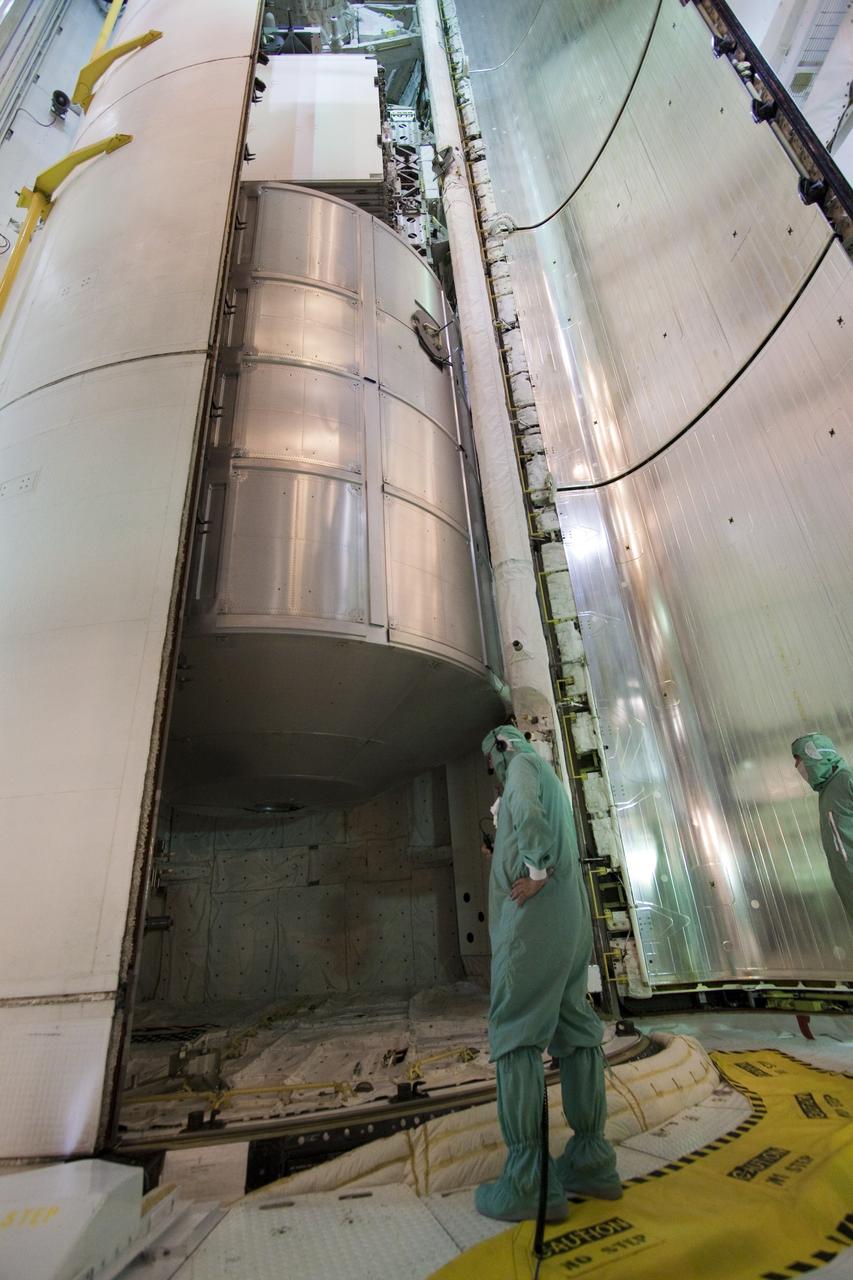
CAPE CANAVERAL, Fla. -- On Launch Pad 39A at NASA's Kennedy Space Center in Florida, technicians close the clamshell doors of space shuttle Discovery's payload bay in preparation for the STS-133 launch to the International Space Station. Targeted to launch Nov. 1, STS-133 will carry the Permanent Multipurpose Module (PMM) packed with supplies and critical spare parts, as well as Robonaut 2 (R2) to the station. Photo credit: NASA/Jack Pfaller
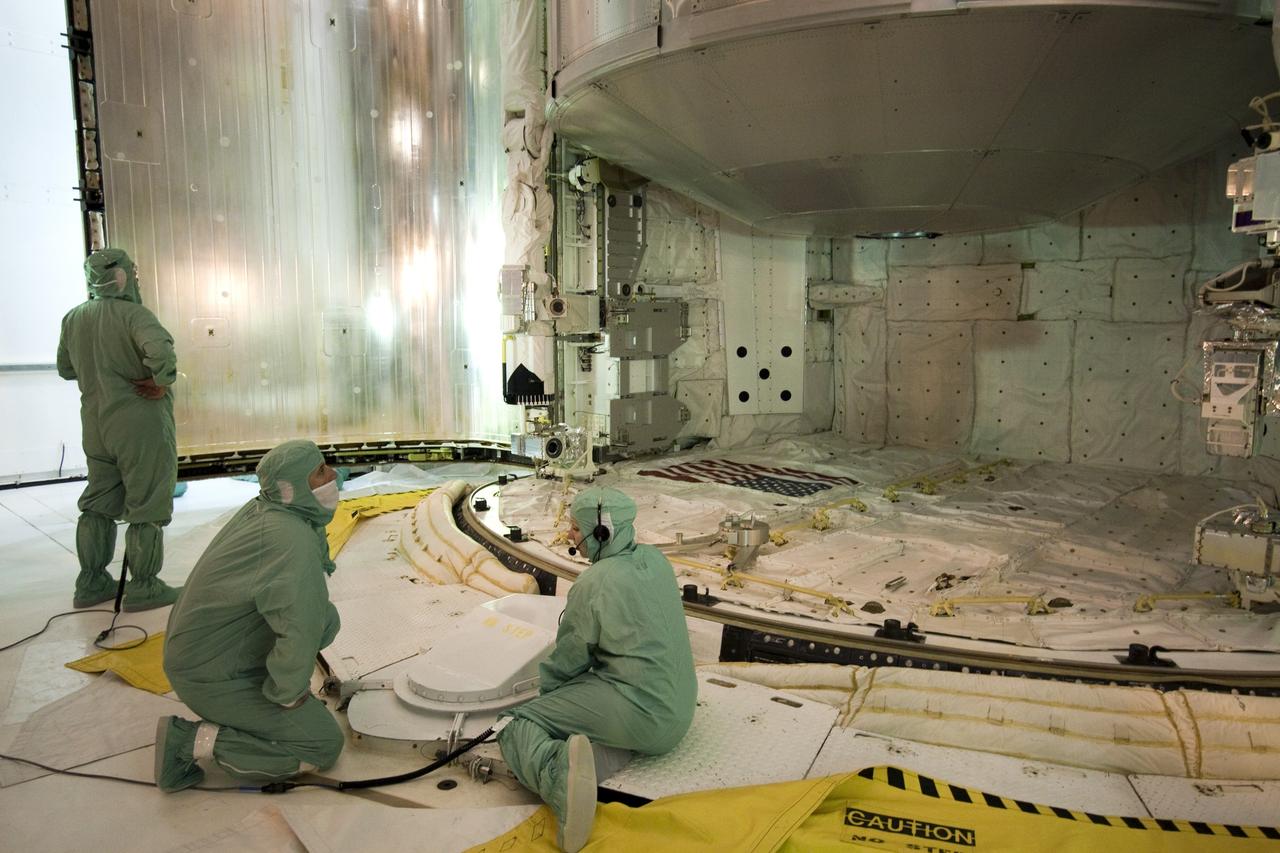
CAPE CANAVERAL, Fla. -- On Launch Pad 39A at NASA's Kennedy Space Center in Florida, technicians prepare to close the clamshell doors of space shuttle Discovery's payload bay in preparation for the STS-133 launch to the International Space Station. Targeted to launch Nov. 1, STS-133 will carry the Permanent Multipurpose Module (PMM) packed with supplies and critical spare parts, as well as Robonaut 2 (R2) to the station. Photo credit: NASA/Jack Pfaller
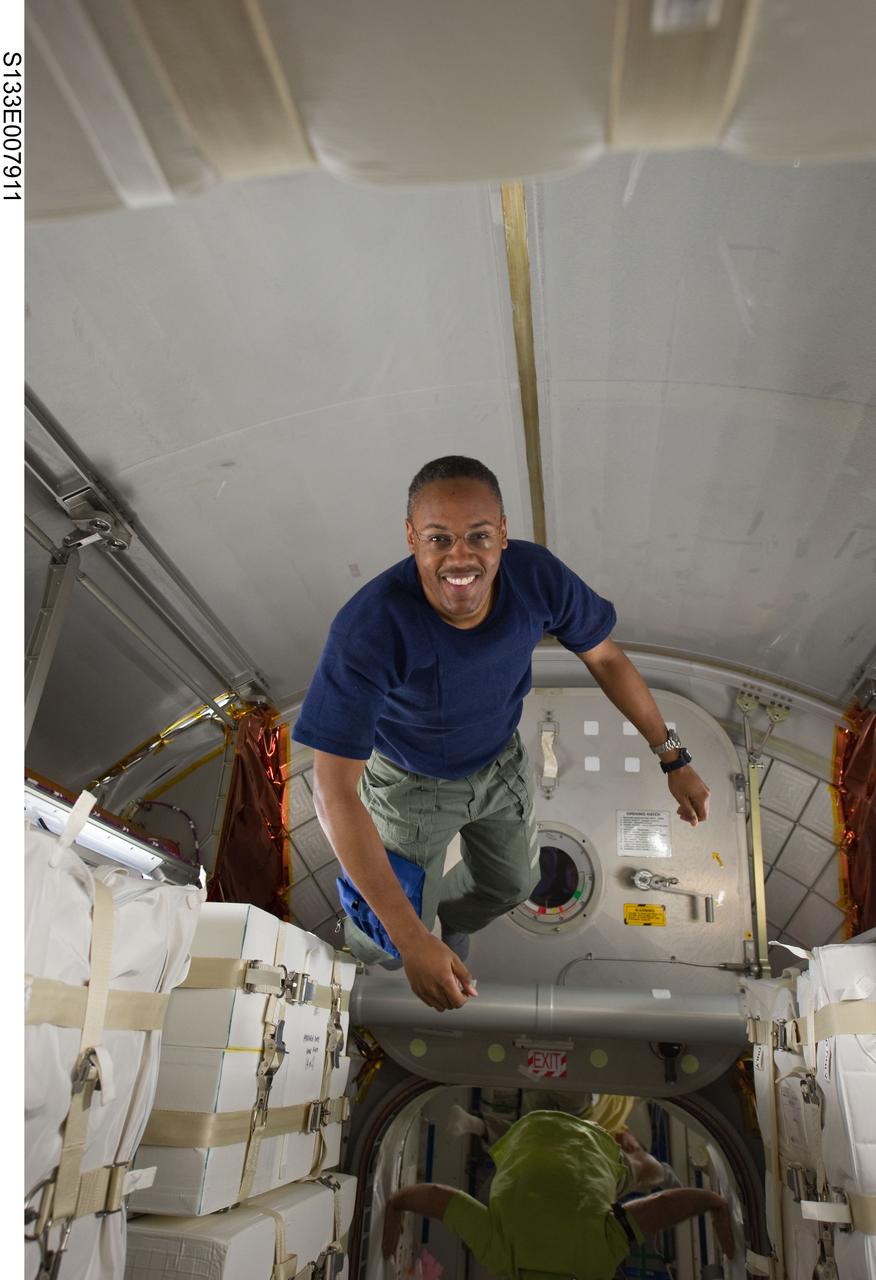
S133-E-007911 (1 March 2011) --- NASA astronaut Alvin Drew, STS-133 mission specialist, is pictured in the newly-installed Permanent Multipurpose Module (PMM) of the International Space Station while space shuttle Discovery remains docked with the station. Photo credit: NASA or National Aeronautics and Space Administration
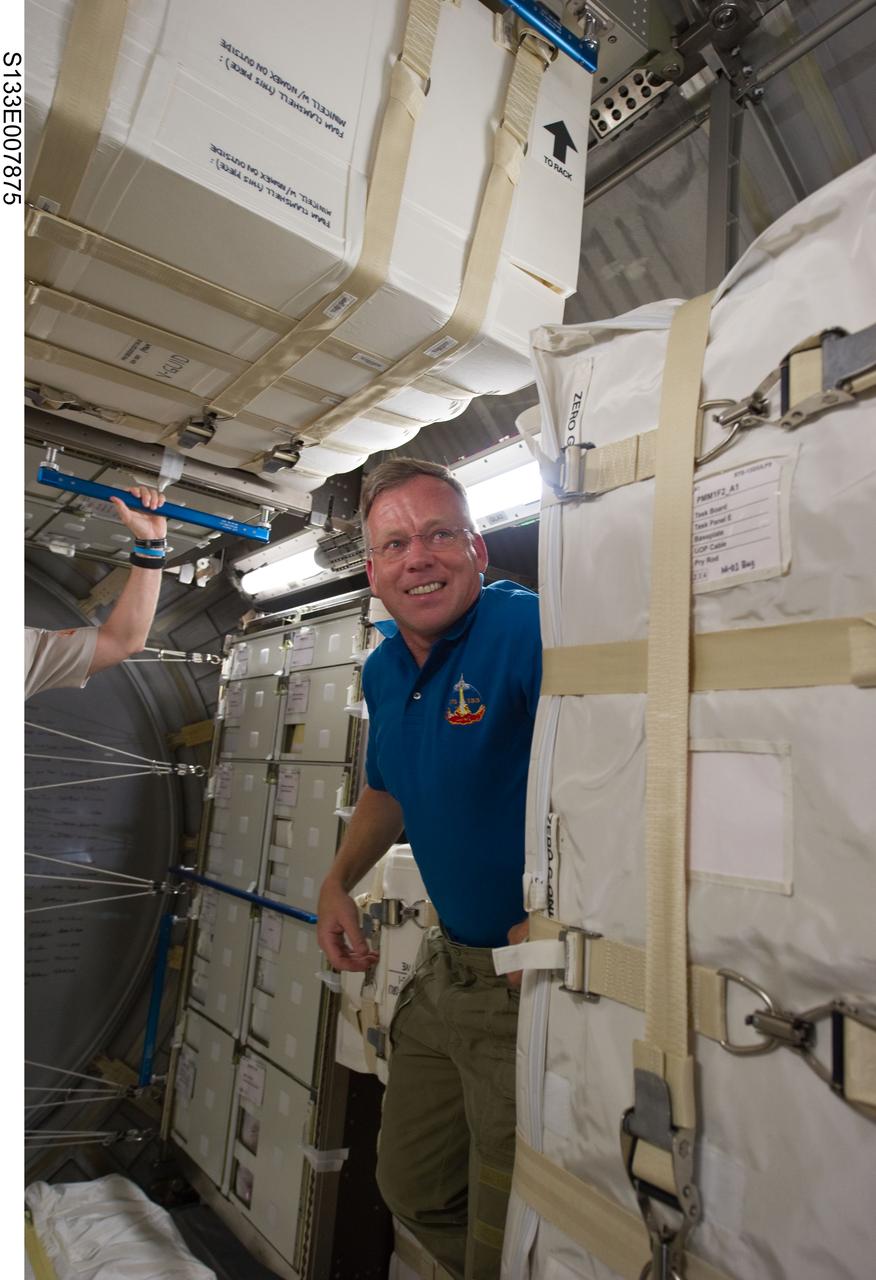
S133-E-007875 (1 March 2011) --- NASA astronaut Steve Lindsey, STS-133 commander, is pictured in the newly-installed Permanent Multipurpose Module (PMM) of the International Space Station while space shuttle Discovery remains docked with the station. Photo credit: NASA or National Aeronautics and Space Administration
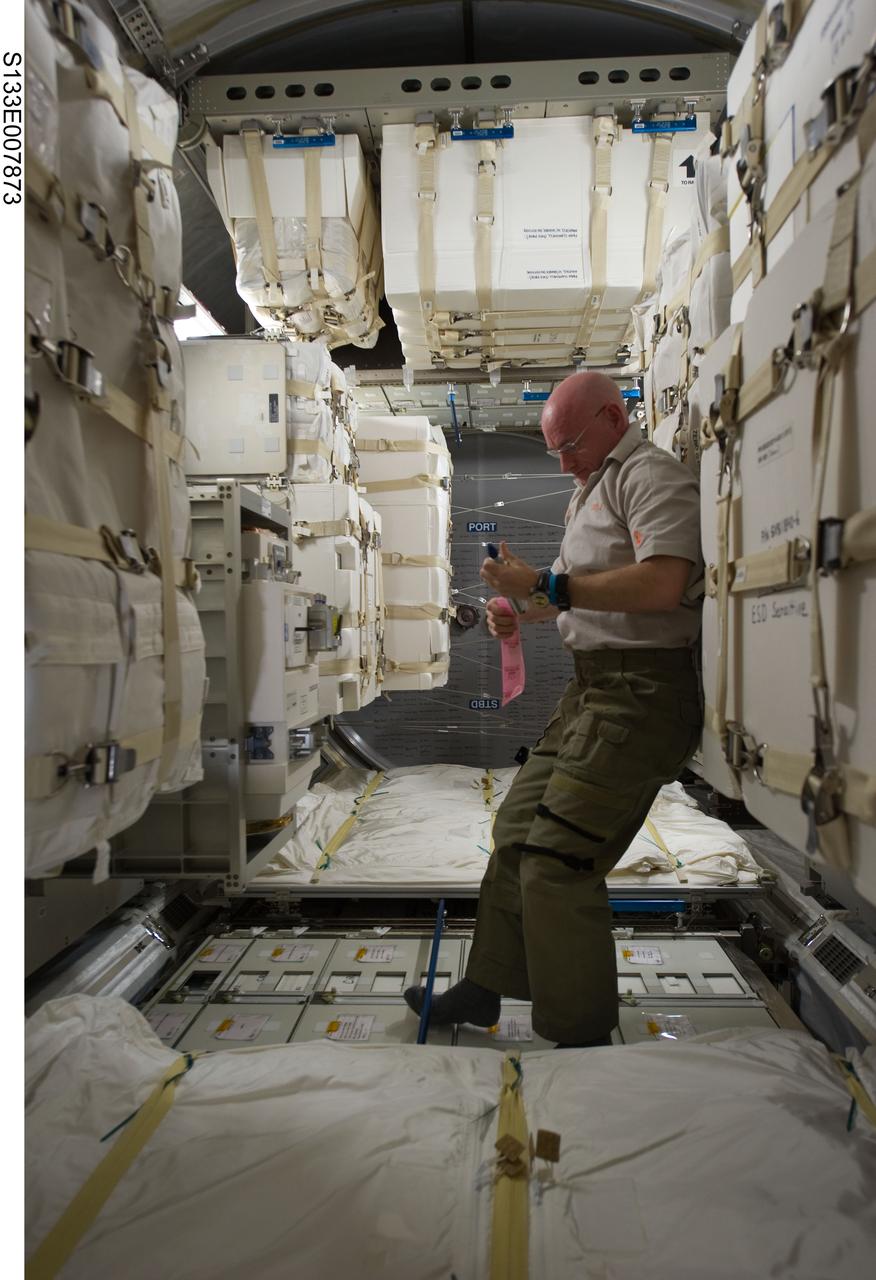
S133-E-007873 (1 March 2011) --- NASA astronaut Scott Kelly, Expedition 26 commander, is pictured in the newly-installed Permanent Multipurpose Module (PMM) of the International Space Station while space shuttle Discovery (STS-133) remains docked with the station. Photo credit: NASA or National Aeronautics and Space Administration
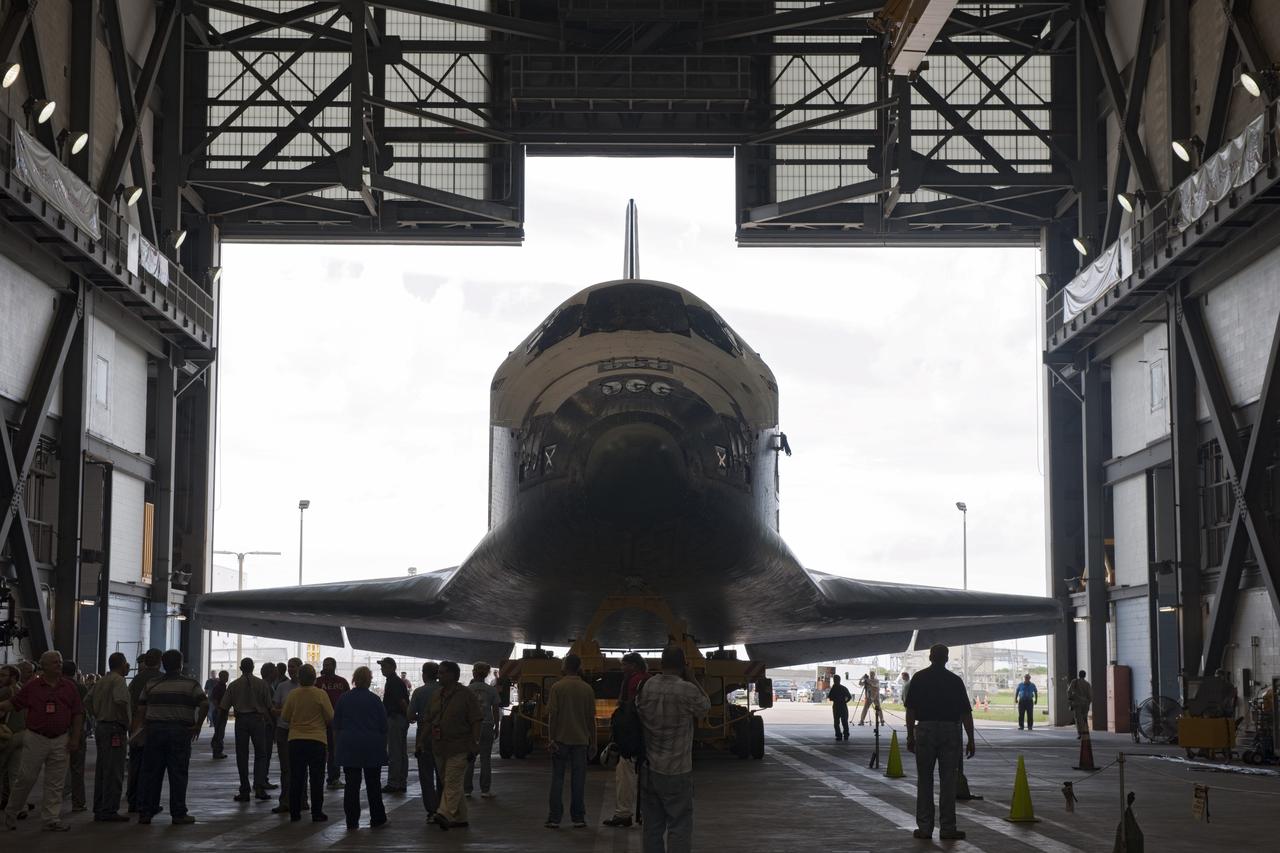
CAPE CANAVERAL, Fla. -- At NASA's Kennedy Space Center in Florida, shuttle Discovery is ushered into the Vehicle Assembly Building (VAB) from Orbiter Processing Facility-3 during a move known as "rollover." Once inside the VAB, the shuttle will be joined to its solid rocket boosters and external fuel tank. Later, Discovery will "roll out" to Launch Pad 39A for its launch to the International Space Station on the STS-133 mission. Targeted to liftoff Nov. 1, Discovery will take the Permanent Multipurpose Module (PMM) packed with supplies and critical spare parts, as well as Robonaut 2 (R2) to the station. Photo credit: NASA/Ben Cooper
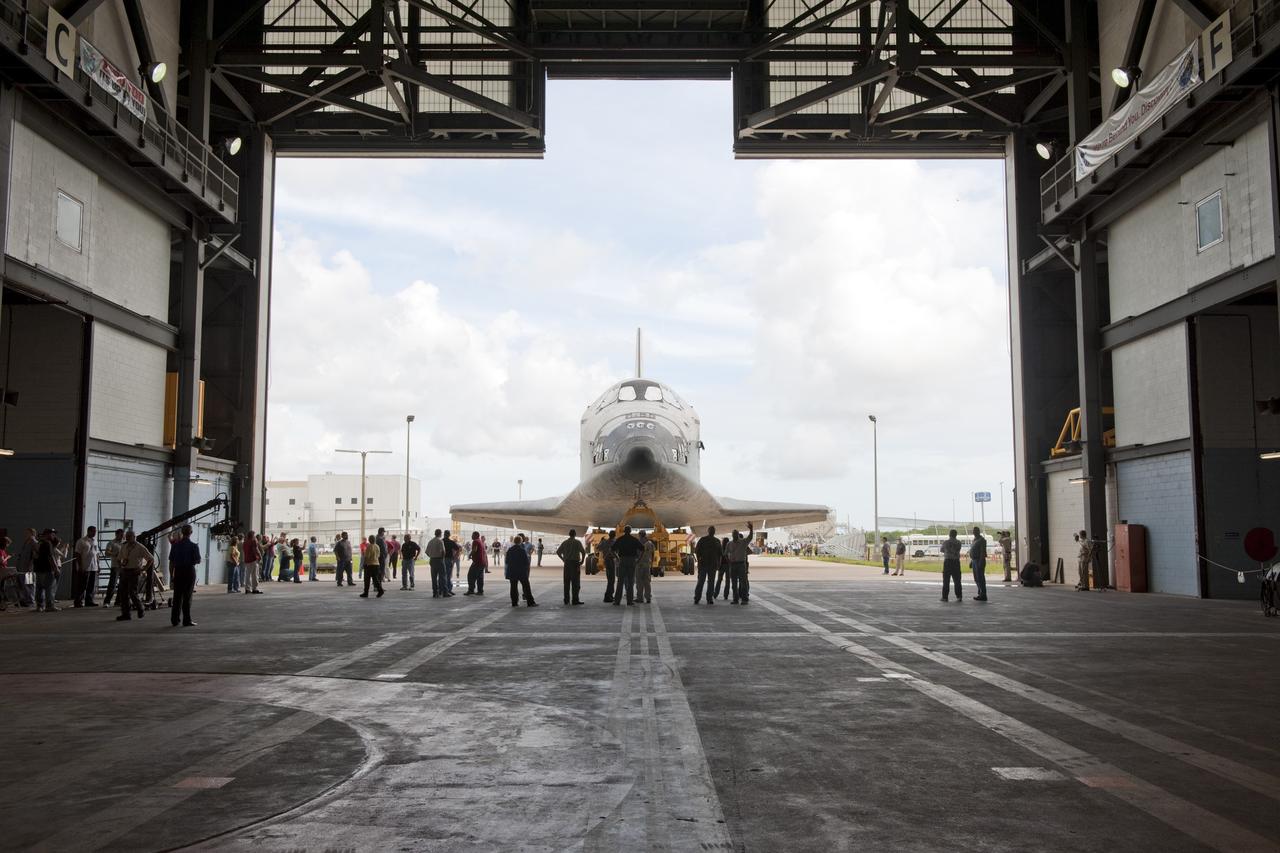
CAPE CANAVERAL, Fla. -- At NASA's Kennedy Space Center in Florida, shuttle Discovery is ushered into the Vehicle Assembly Building (VAB) from Orbiter Processing Facility-3 during a move known as "rollover." Once inside the VAB, the shuttle will be joined to its solid rocket boosters and external fuel tank. Later, Discovery will "roll out" to Launch Pad 39A for its launch to the International Space Station on the STS-133 mission. Targeted to liftoff Nov. 1, Discovery will take the Permanent Multipurpose Module (PMM) packed with supplies and critical spare parts, as well as Robonaut 2 (R2) to the station. Photo credit: NASA/Ben Cooper

S133-E-007901 (1 March 2011) --- NASA astronauts Cady Coleman, Expedition 26 flight engineer; and Alvin Drew (top right), STS-133 mission specialist; along with Russian cosmonaut Dmitry Kondratyev, Expedition 26 flight engineer, are pictured in the newly-installed Permanent Multipurpose Module (PMM) of the International Space Station while space shuttle Discovery remains docked with the station. Photo credit: NASA or National Aeronautics and Space Administration
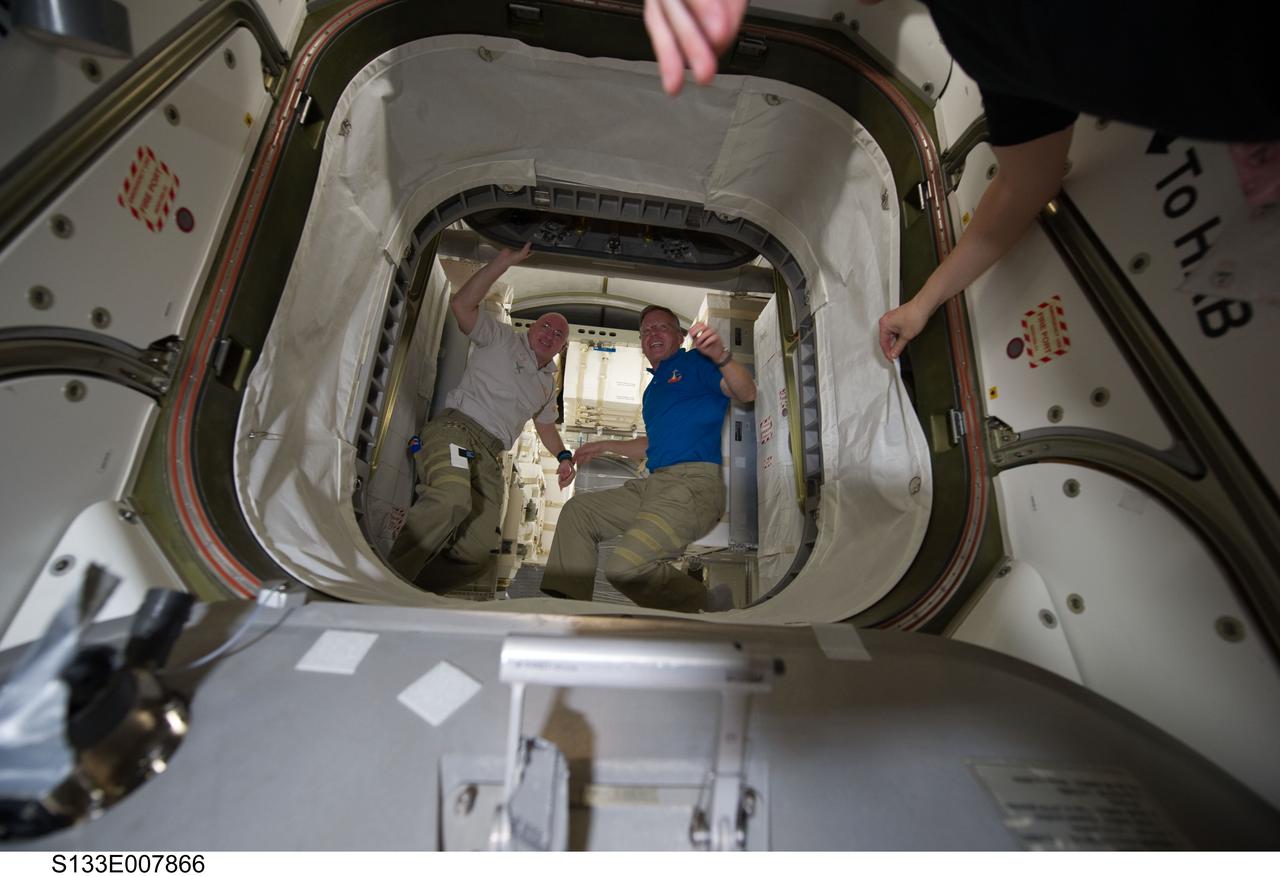
S133-E-007866 (1 March 2011) --- NASA astronauts Scott Kelly (left), Expedition 26 commander; and Steve Lindsey, STS-133 commander, are pictured in the hatch that leads to the newly-installed Permanent Multipurpose Module (PMM) of the International Space Station while space shuttle Discovery remains docked with the station. Photo credit: NASA or National Aeronautics and Space Administration
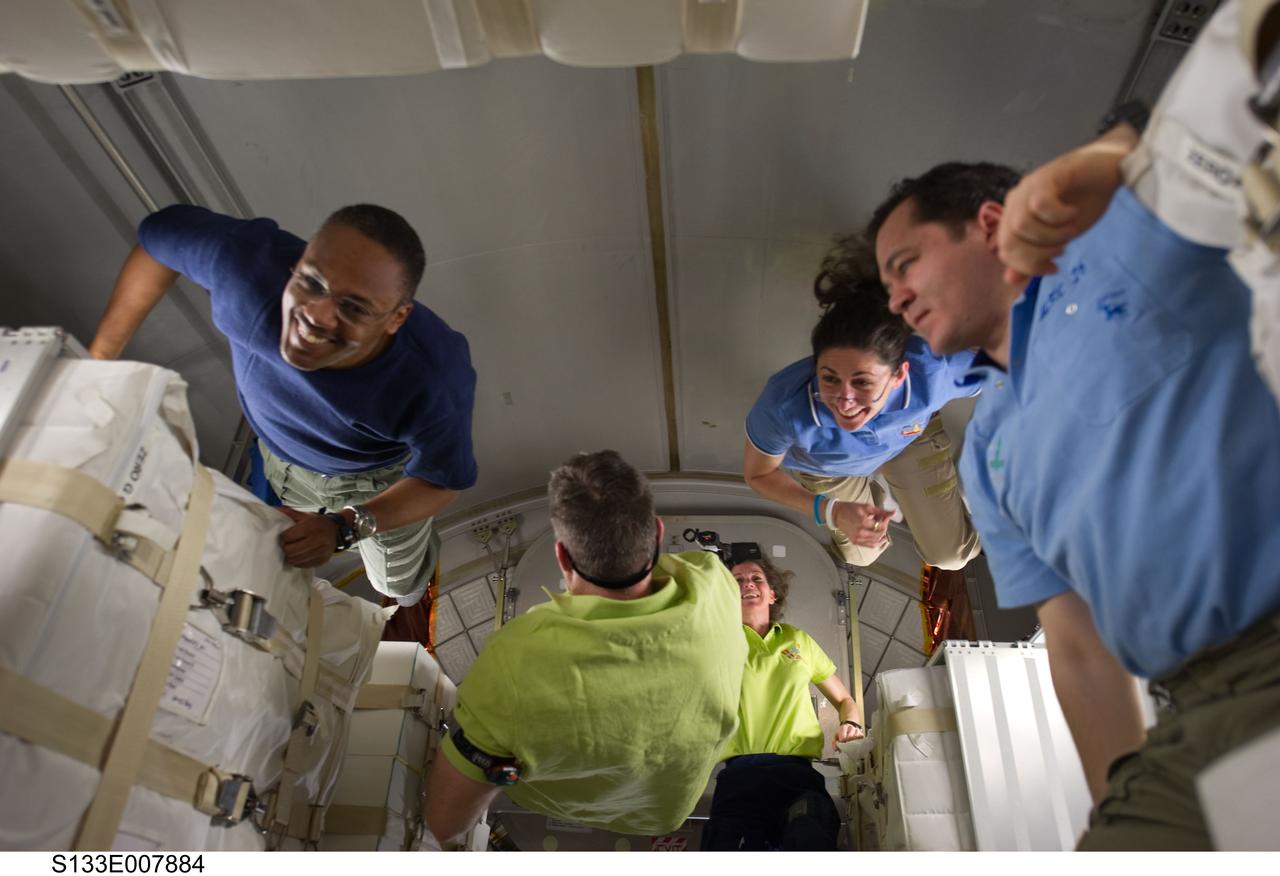
S133-E-007884 (1 March 2011) --- NASA astronauts Alvin Drew (left), Steve Bowen (center) and Nicole Stott (second right), all STS-133 mission specialists; along with NASA astronaut Cady Coleman and Russian cosmonaut Oleg Skripochka, both Expedition 26 flight engineers, are pictured in the newly-installed Permanent Multipurpose Module (PMM) of the International Space Station while space shuttle Discovery remains docked with the station. Photo credit: NASA or National Aeronautics and Space Administration
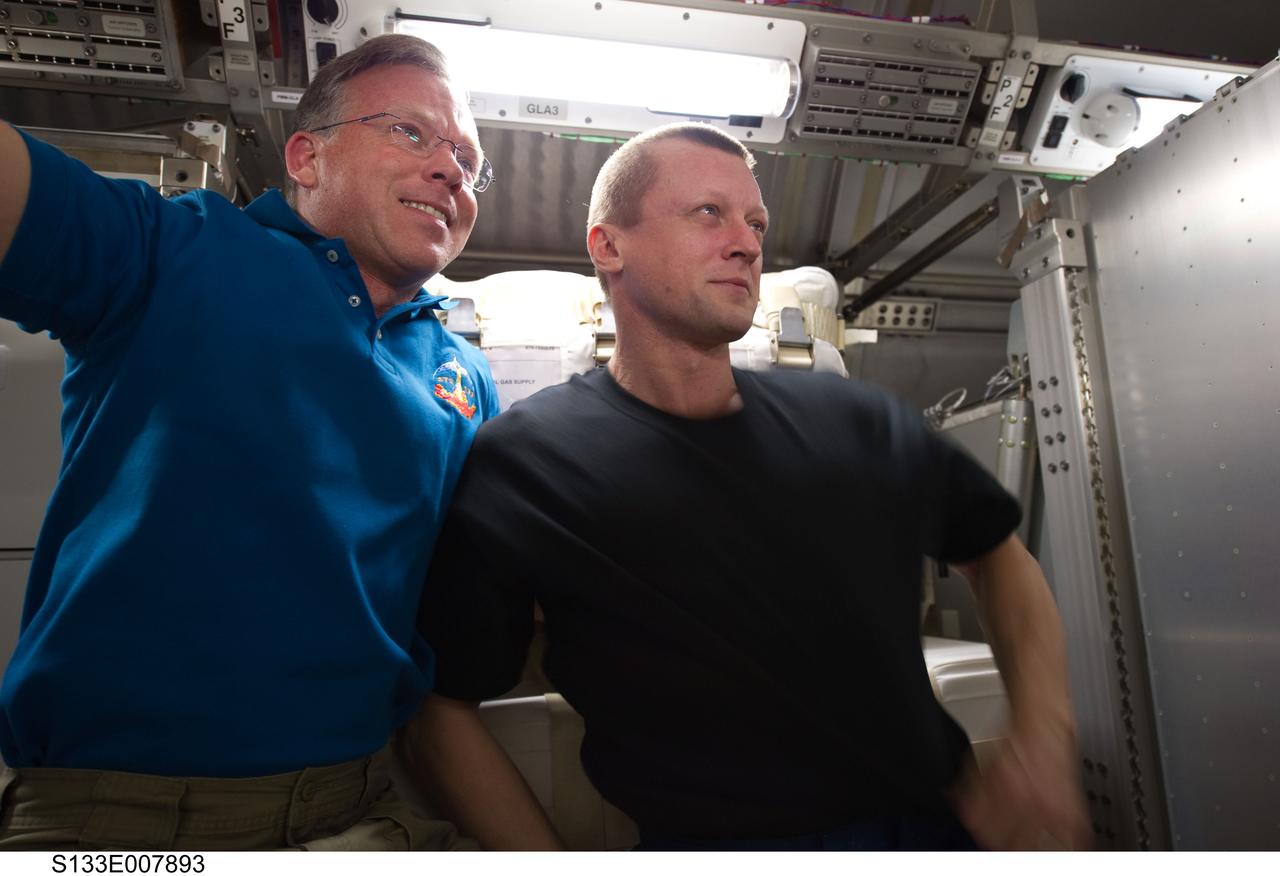
S133-E-007893 (1 March 2011) --- NASA astronaut Steve Lindsey (left), STS-133 commander; and Russian cosmonaut Dmitry Kondratyev, Expedition 26 flight engineer, are pictured in the newly-installed Permanent Multipurpose Module (PMM) of the International Space Station while space shuttle Discovery remains docked with the station. Photo credit: NASA or National Aeronautics and Space Administration
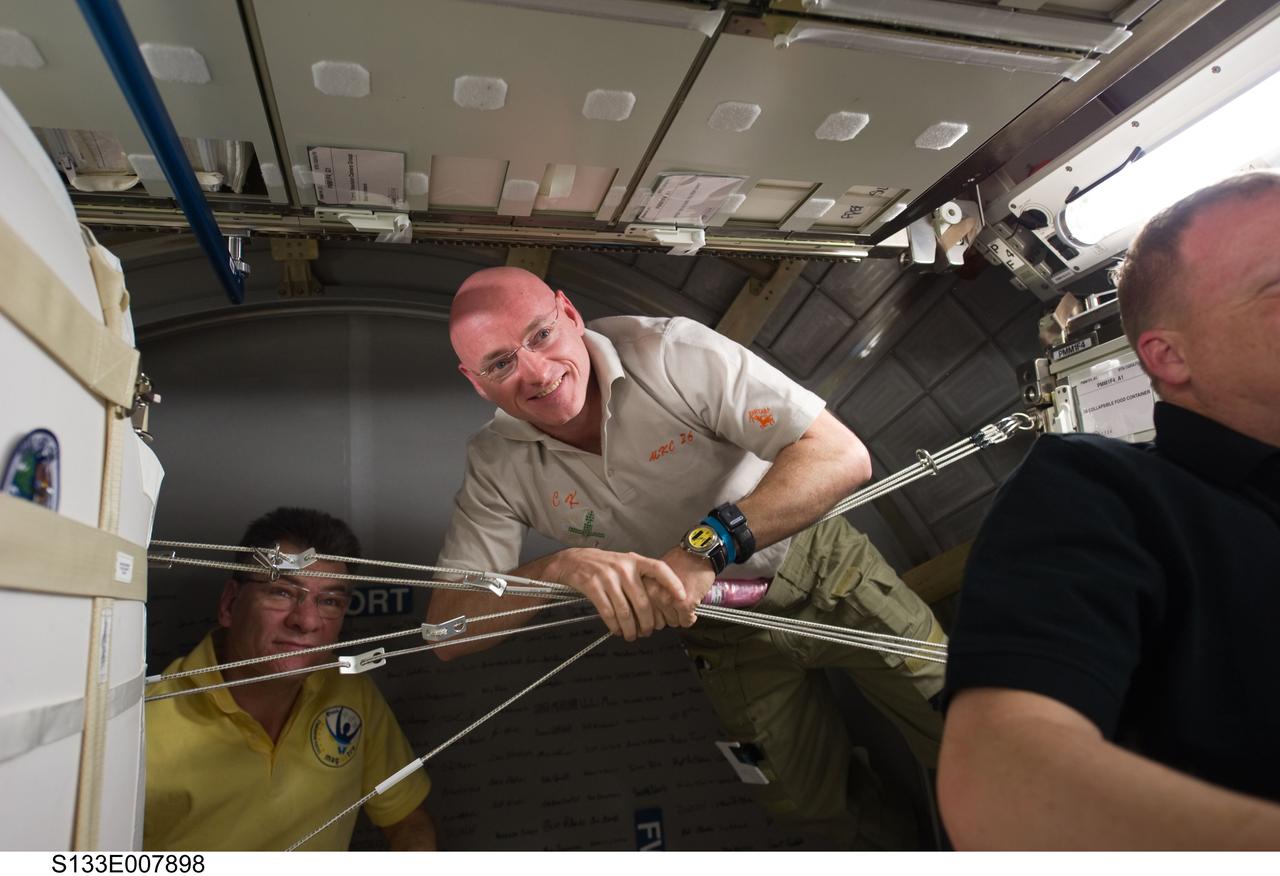
S133-E-007898 (1 March 2011) --- NASA astronauts Scott Kelly (center), Expedition 26 commander; and Eric Boe (right), STS-133 pilot; along with European Space Agency astronaut Paolo Nespoli, Expedition 26 flight engineer, are pictured in the newly-installed Permanent Multipurpose Module (PMM) of the International Space Station while space shuttle Discovery remains docked with the station. Photo credit: NASA or National Aeronautics and Space Administration
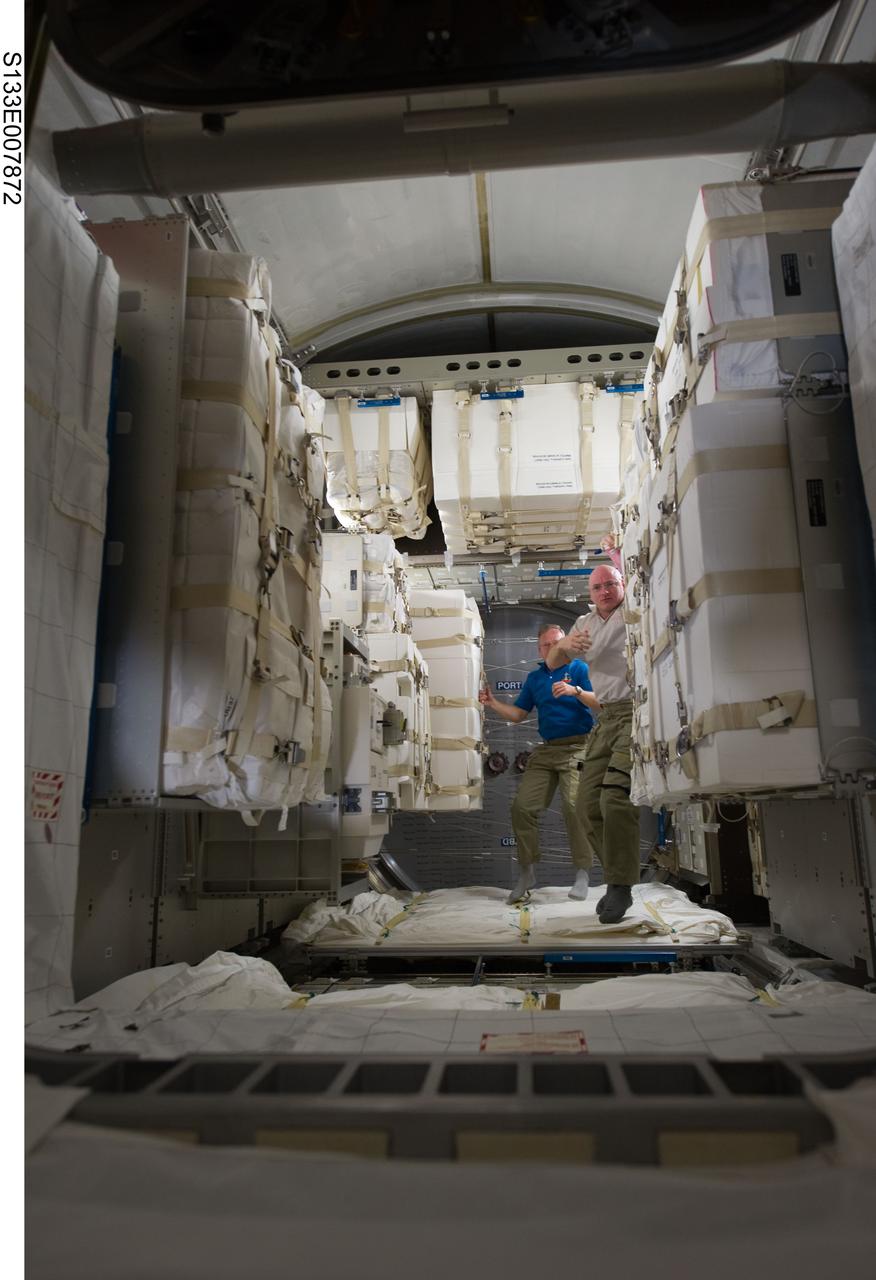
S133-E-007872 (1 March 2011) --- NASA astronauts Scott Kelly (foreground), Expedition 26 commander; and Steve Lindsey, STS-133 commander, are pictured in the newly-installed Permanent Multipurpose Module (PMM) of the International Space Station while space shuttle Discovery remains docked with the station. Photo credit: NASA or National Aeronautics and Space Administration
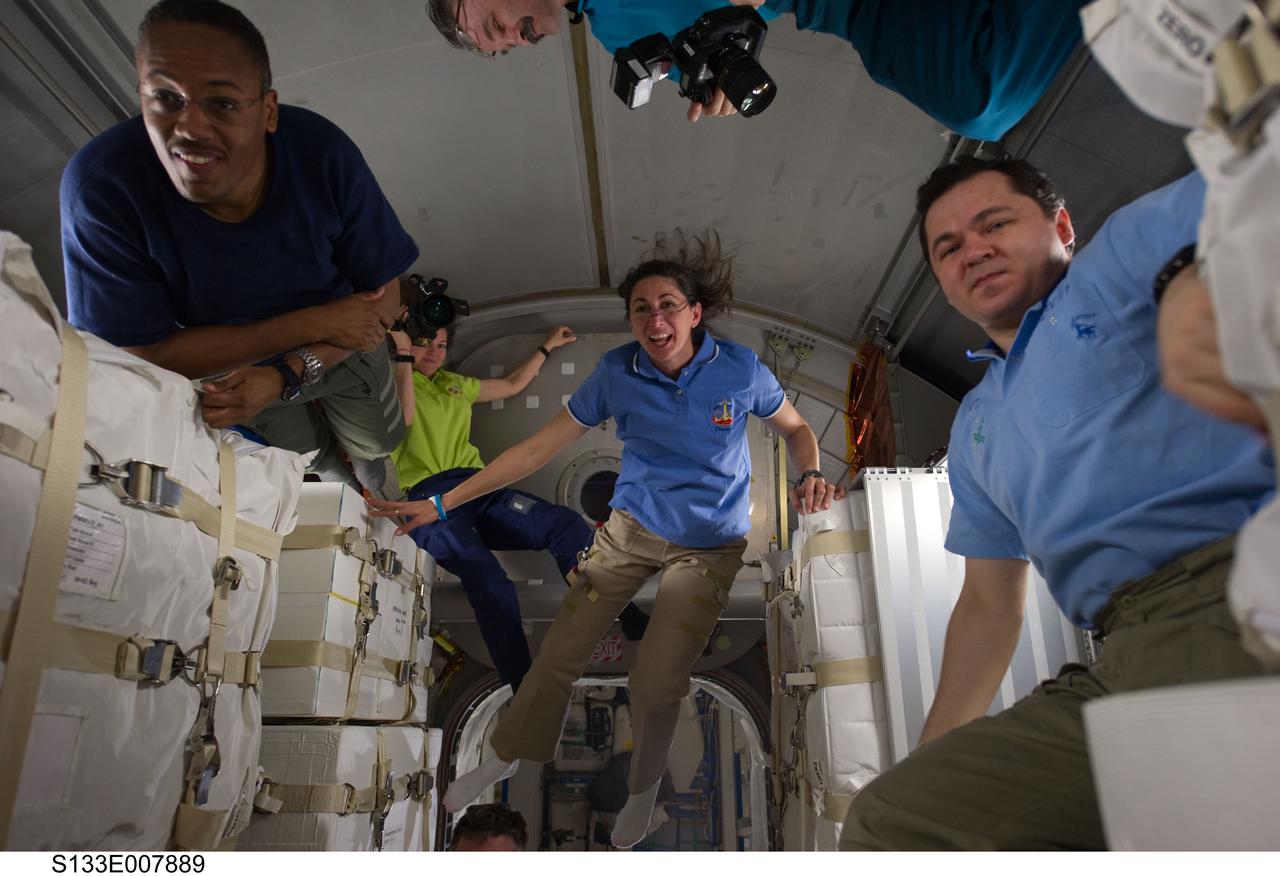
S133-E-007889 (1 March 2011) --- NASA astronauts Alvin Drew (left) and Nicole Stott (center), both STS-133 mission specialists; along with NASA astronaut Cady Coleman and Russian cosmonauts Oleg Skripochka and Alexander Kaleri (mostly out of frame at top), all Expedition 26 flight engineers, are pictured in the newly-installed Permanent Multipurpose Module (PMM) of the International Space Station while space shuttle Discovery remains docked with the station. Photo credit: NASA or National Aeronautics and Space Administration

S133-E-007907 (1 March 2011) --- Russian cosmonaut Alexander Kaleri (bottom), Expedition 26 flight engineer; along with NASA astronauts Alvin Drew (top) and Steve Bowen, both STS-133 mission specialists, are pictured in the newly-installed Permanent Multipurpose Module (PMM) of the International Space Station while space shuttle Discovery remains docked with the station. Photo credit: NASA or National Aeronautics and Space Administration
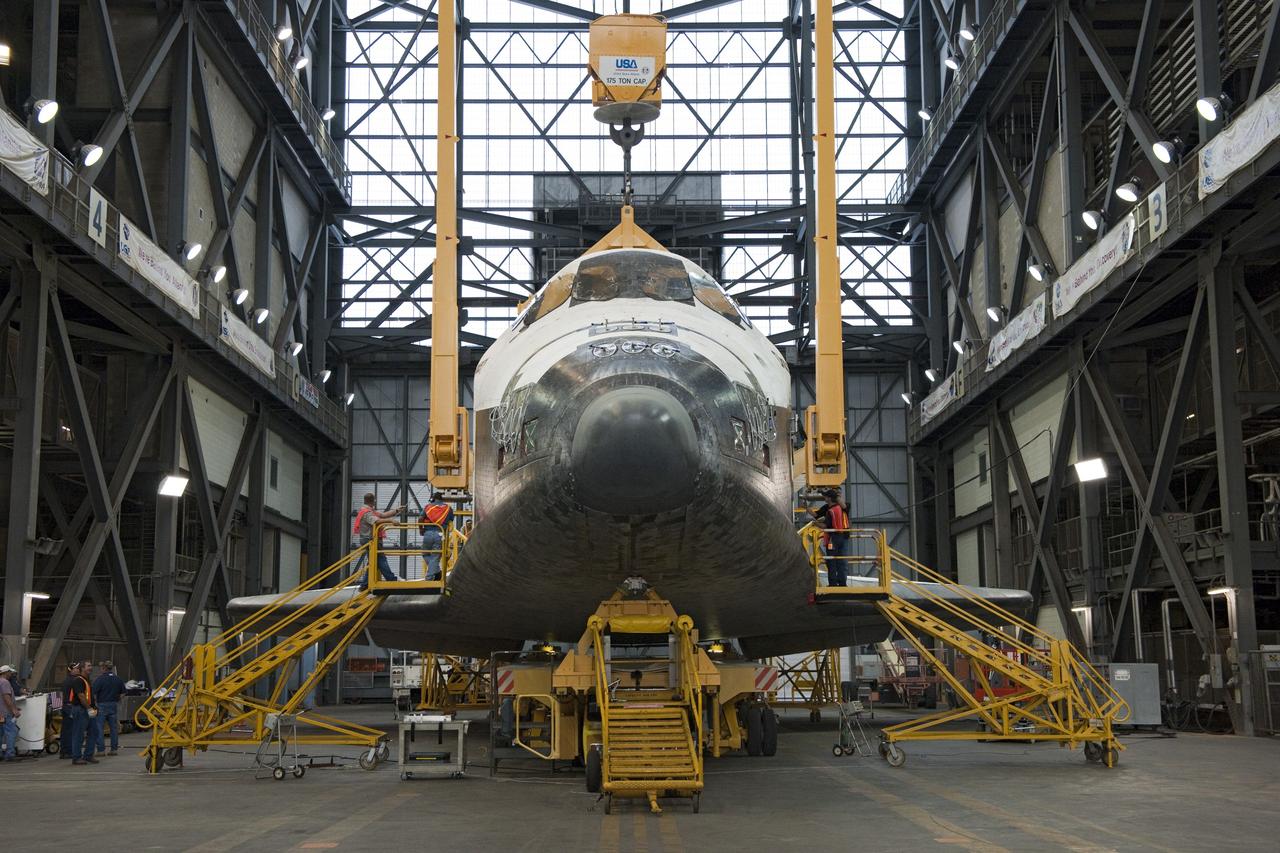
CAPE CANAVERAL, Fla. -- At NASA's Kennedy Space Center in Florida, workers in the Vehicle Assembly Building begin to secure a large yellow, metal sling to shuttle Discovery for its lift from the transfer aisle into High Bay 3. In the bay, the shuttle will be attached to its external fuel tank and solid rocket boosters. The operation began Sept. 9 and wrapped up early Sept. 10. Later, Discovery will "roll out" to Launch Pad 39A in preparation for its launch to the International Space Station on the STS-133 mission. Targeted to liftoff Nov. 1, Discovery will take the Permanent Multipurpose Module (PMM) packed with supplies and critical spare parts, as well as Robonaut 2 (R2) to the station. Photo credit: NASA/Ben Cooper
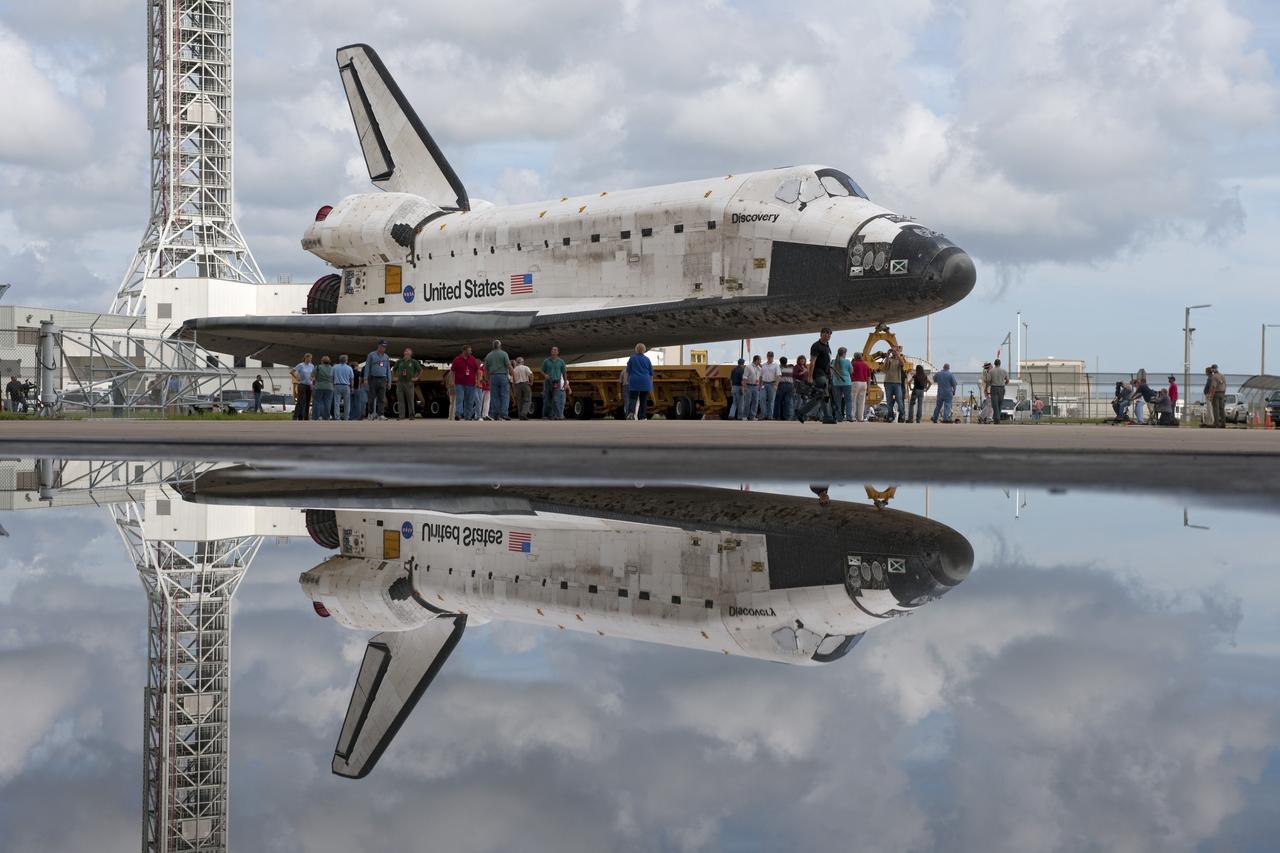
CAPE CANAVERAL, Fla. -- At NASA's Kennedy Space Center in Florida, shuttle Discovery pauses for photos during its move called "rollover" from Orbiter Processing Facility-3 to the nearby Vehicle Assembly Building (VAB). Behind and to the left of Discovery is NASA's new 355-foot-tall mobile launcher support structure. Once inside the VAB, the shuttle will be joined to its solid rocket boosters and external fuel tank. Later, Discovery will "roll out" to Launch Pad 39A for its launch to the International Space Station on the STS-133 mission. Targeted to liftoff Nov. 1, Discovery will take the Permanent Multipurpose Module (PMM) packed with supplies and critical spare parts, as well as Robonaut 2 (R2) to the station. Photo credit: NASA/Ben Cooper
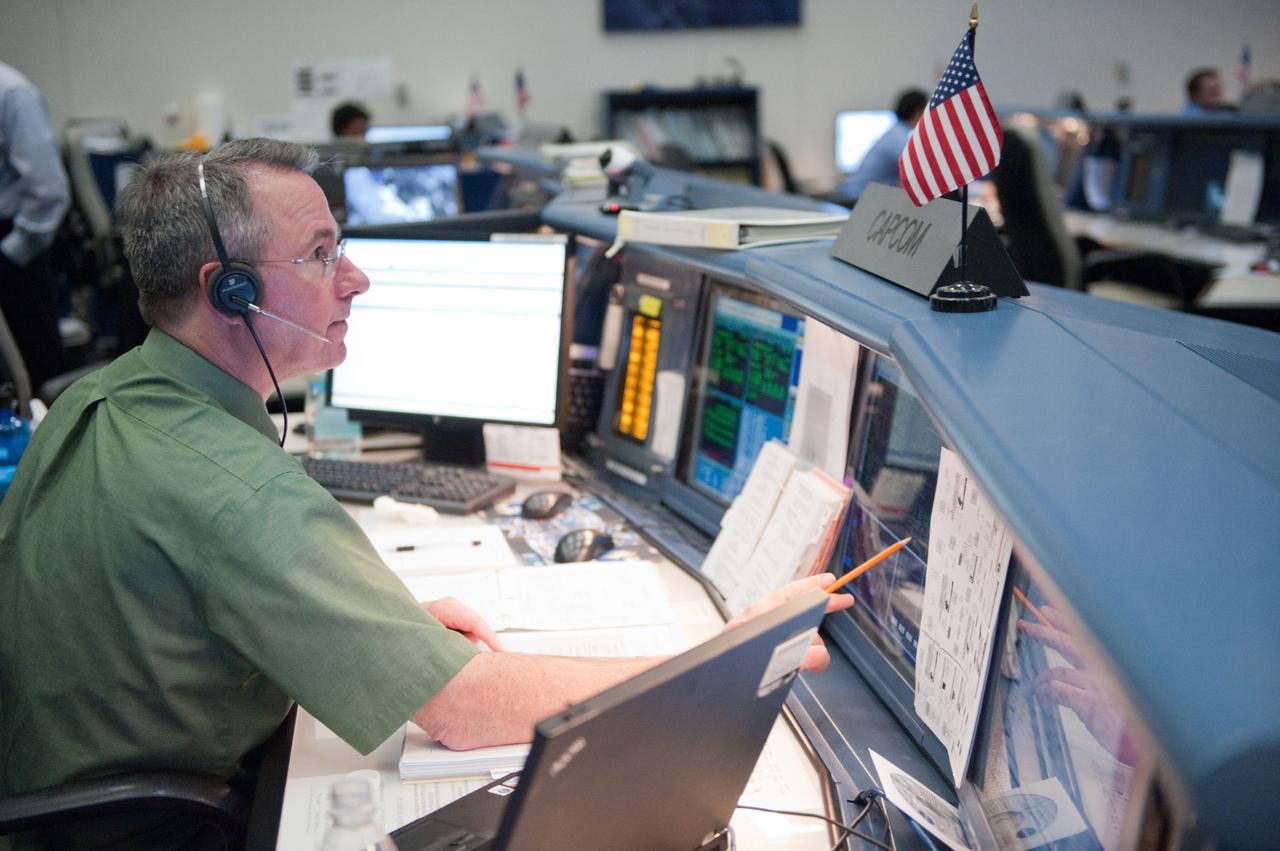
STS-133/ULF5 Orbit 1 flight controllers on console during unberth of Permanment Multipurpose Module (PMM) from shuttle. Photo Date: March 1, 2011. Location: Building 30 - WFCR and FCR-1. Photographer: Robert Markowitz.
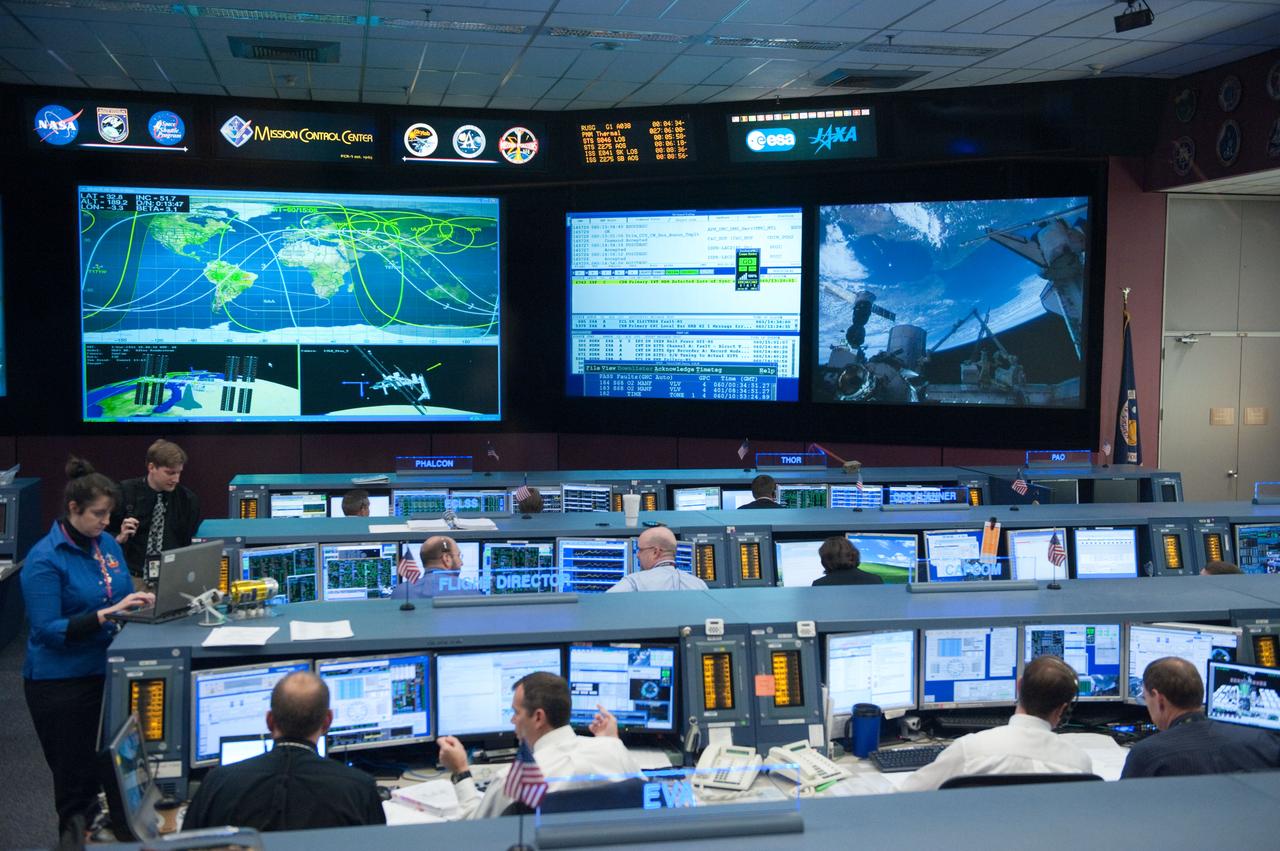
STS-133/ULF5 Orbit 1 flight controllers on console during unberth of Permanment Multipurpose Module (PMM) from shuttle. Photo Date: March 1, 2011. Location: Building 30 - WFCR and FCR-1. Photographer: Robert Markowitz.
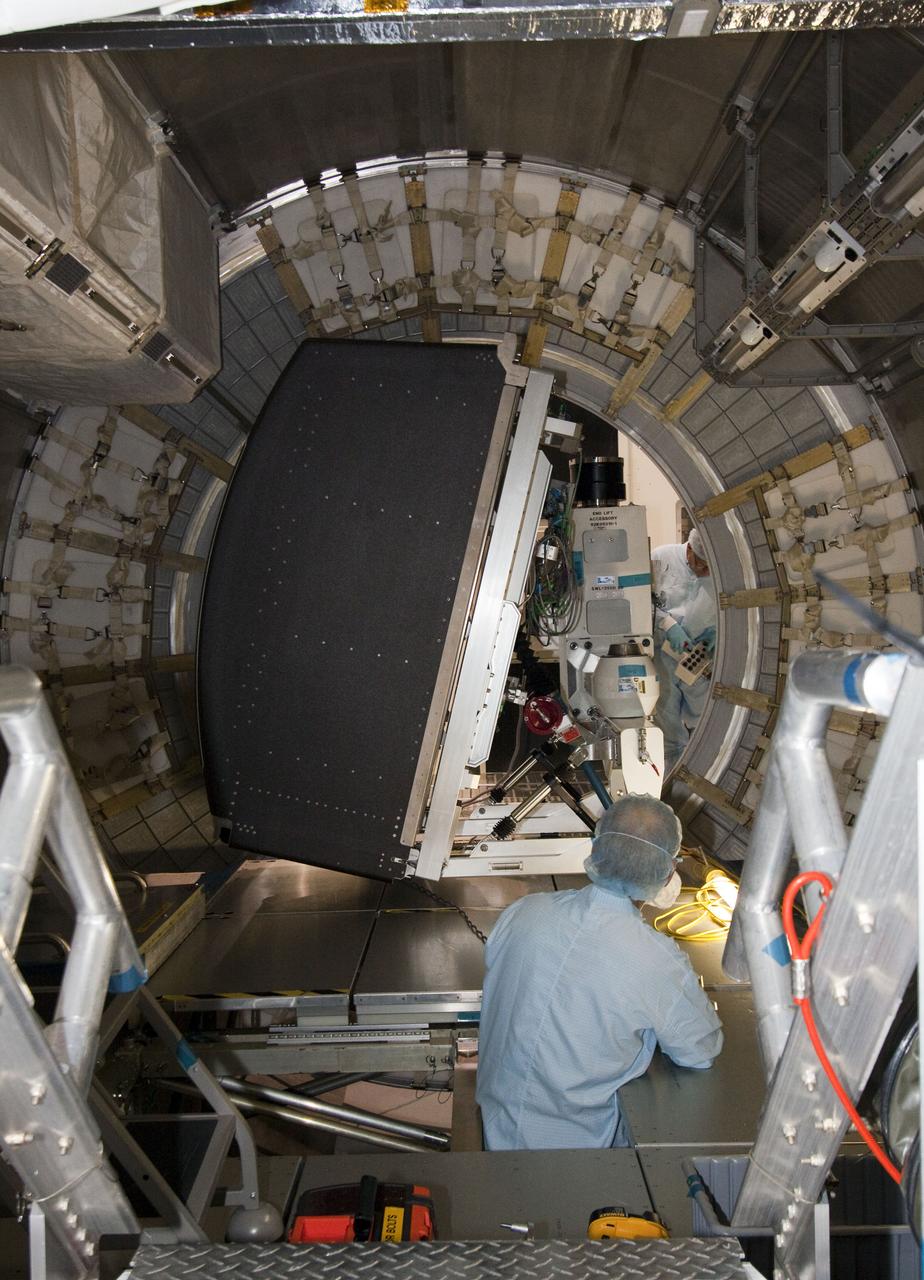
STS-133 RACK INSTALL TO PMM

STS-133 RACK INSTALL TO PMM
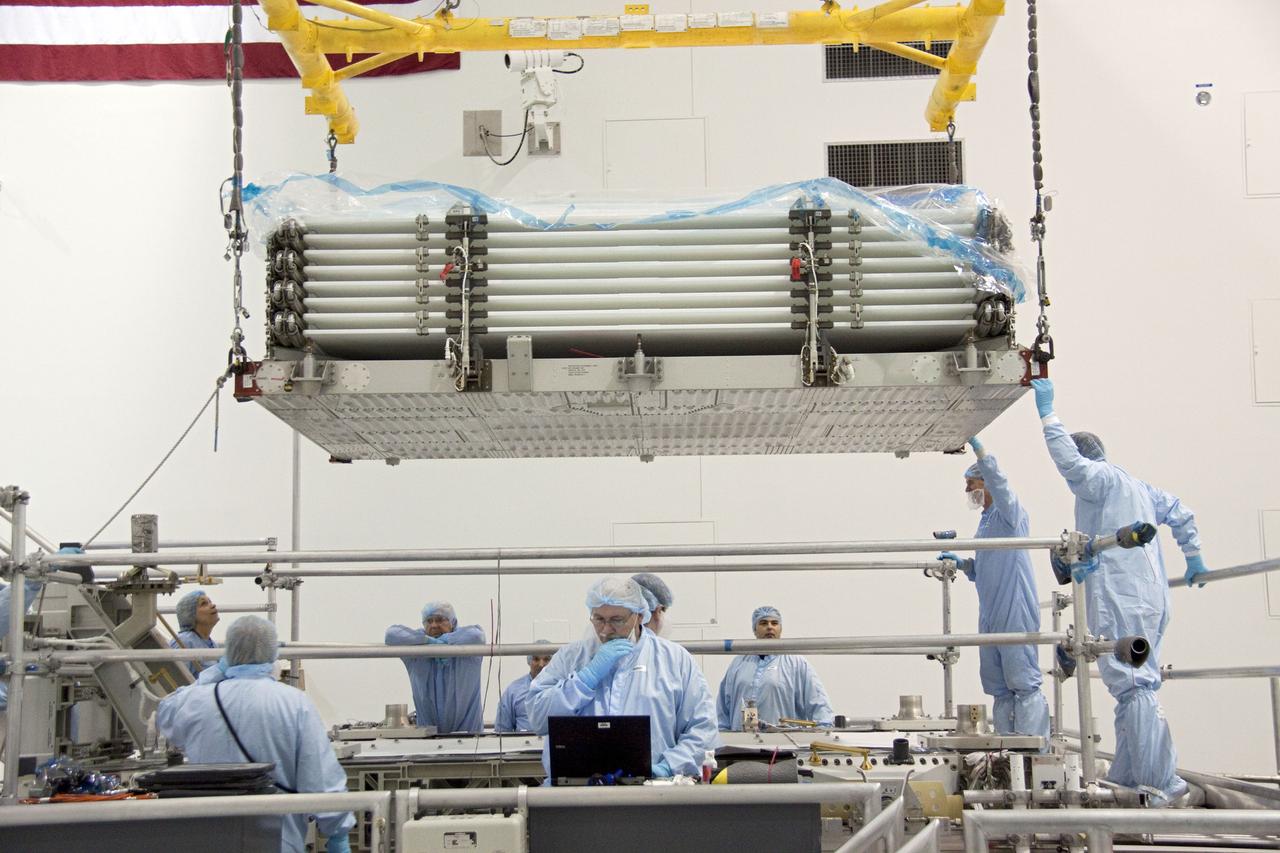
STS-133 HRS INSTALLATION TO PMM
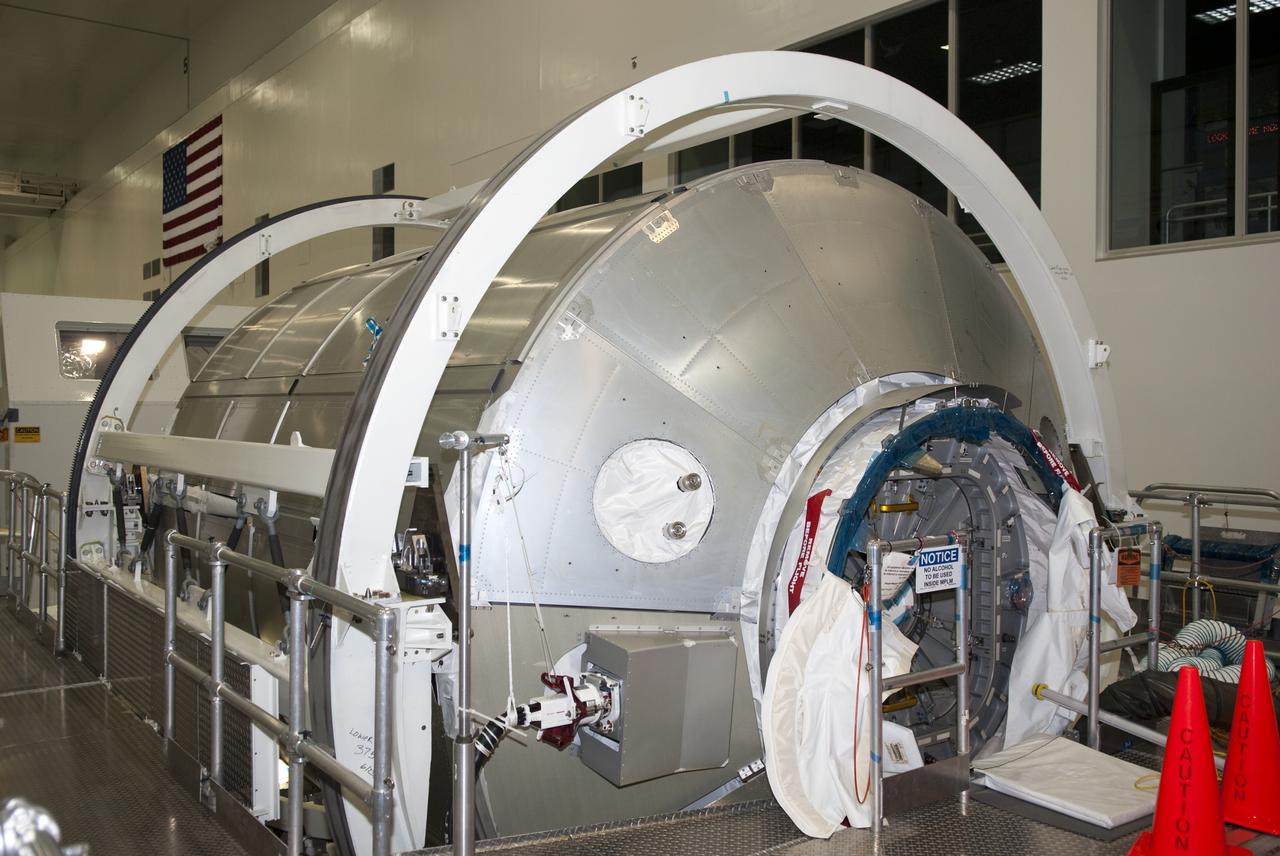
STS-133 PMM HATCH CLOSURE
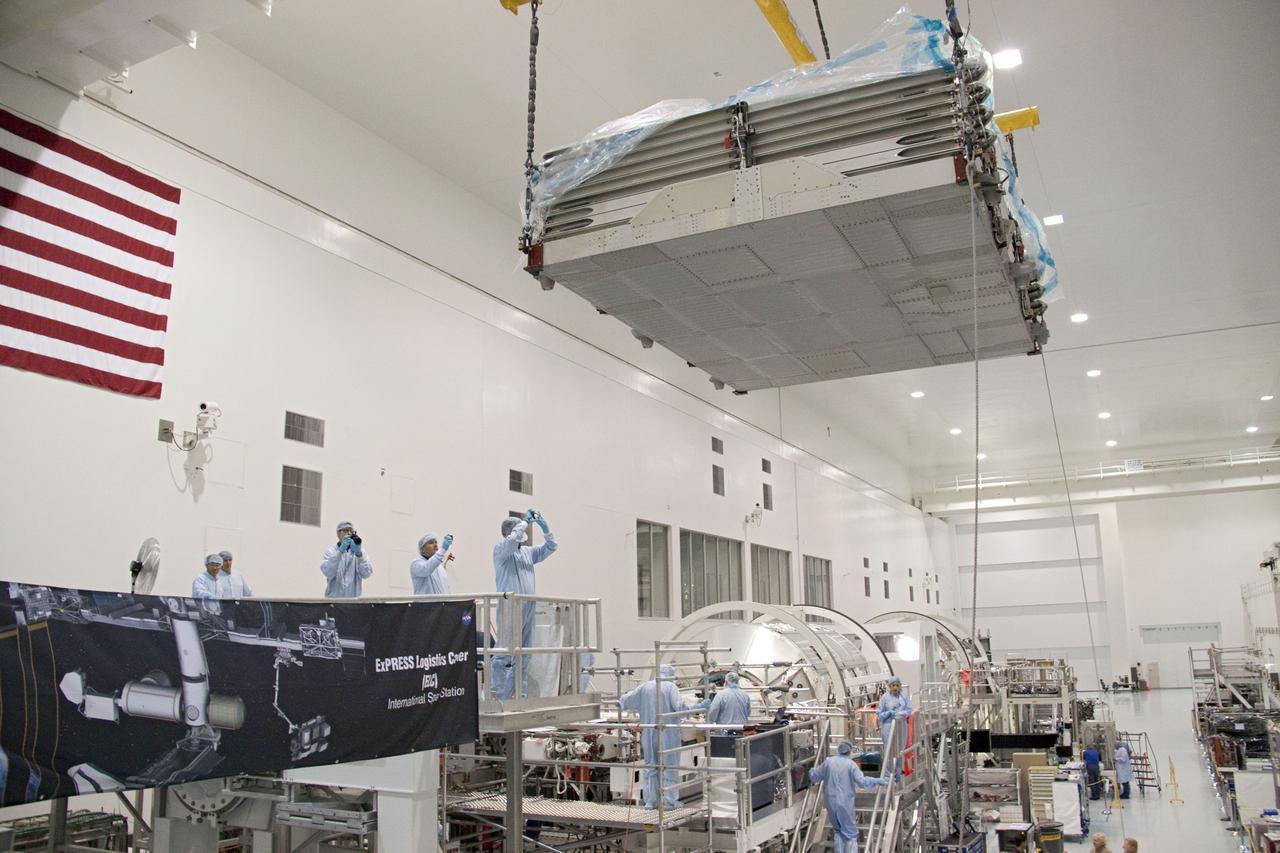
STS-133 HRS INSTALLATION TO PMM
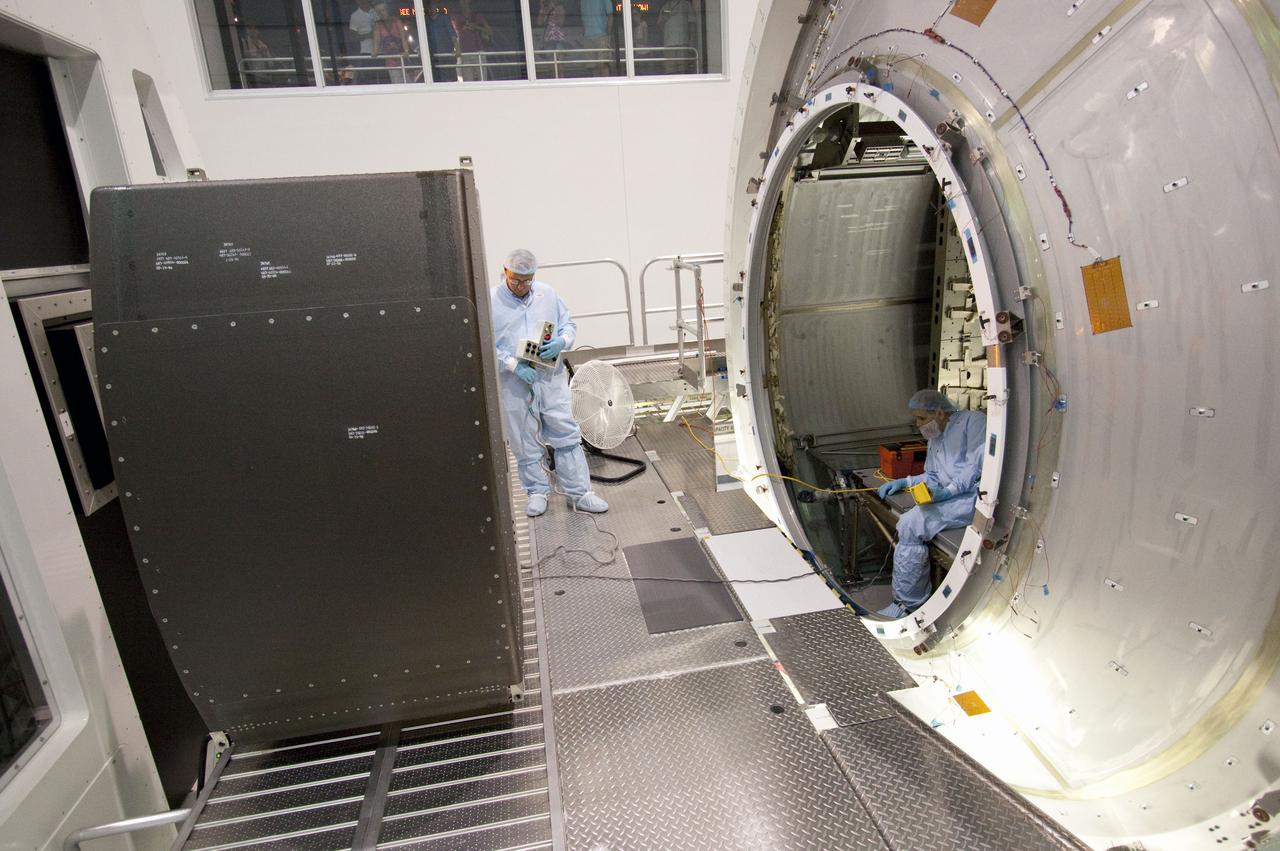
STS-133 RACK INSTALL TO PMM
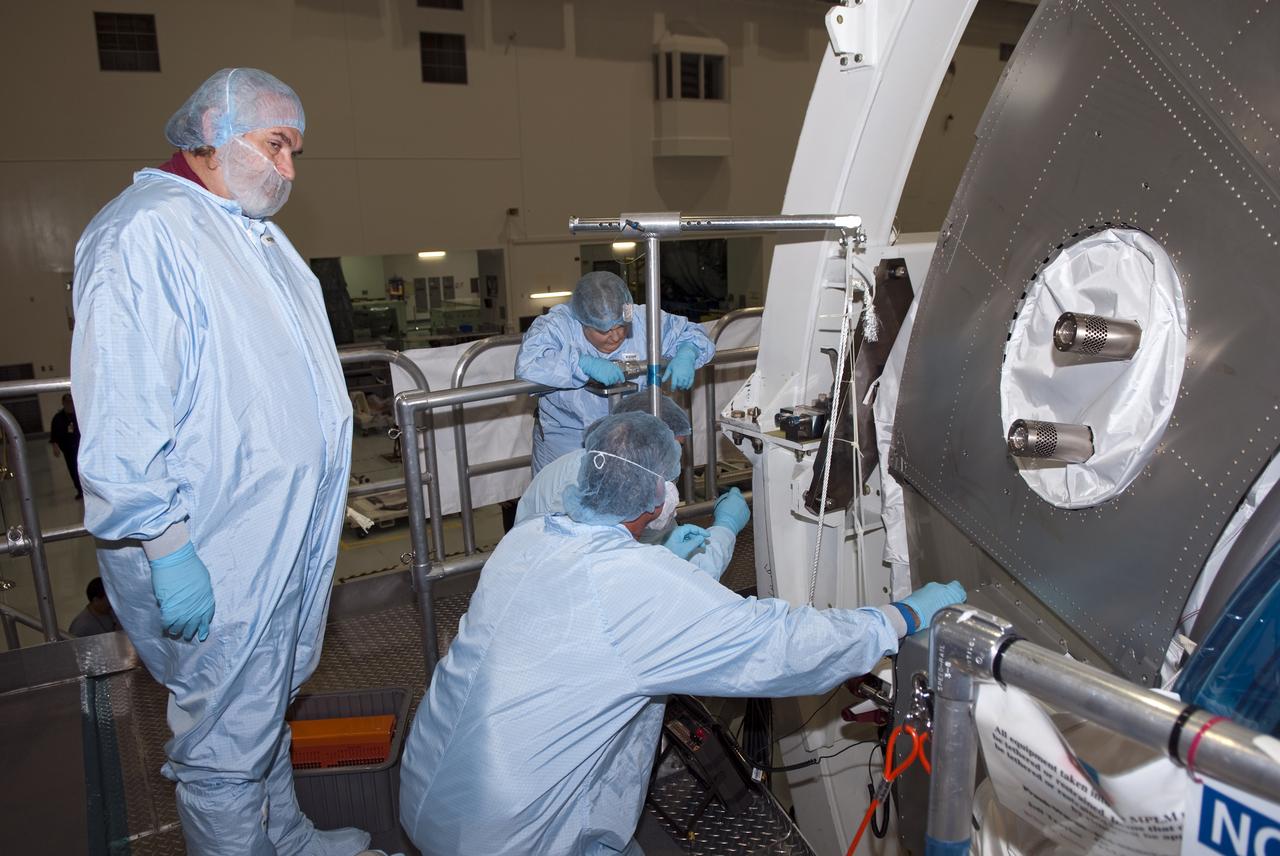
STS-133 PMM HATCH CLOSURE
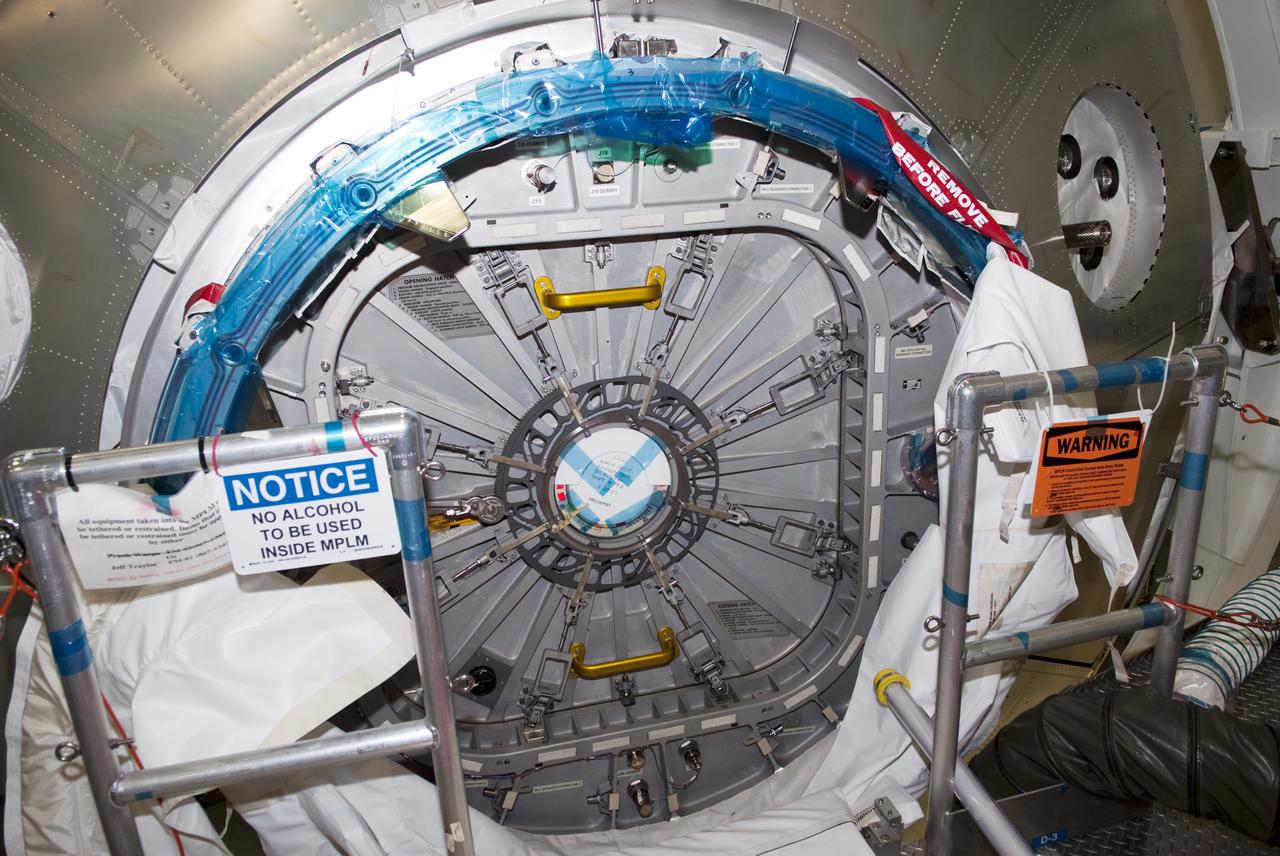
STS-133 PMM HATCH CLOSURE

STS-133 RACK INSTALL TO PMM
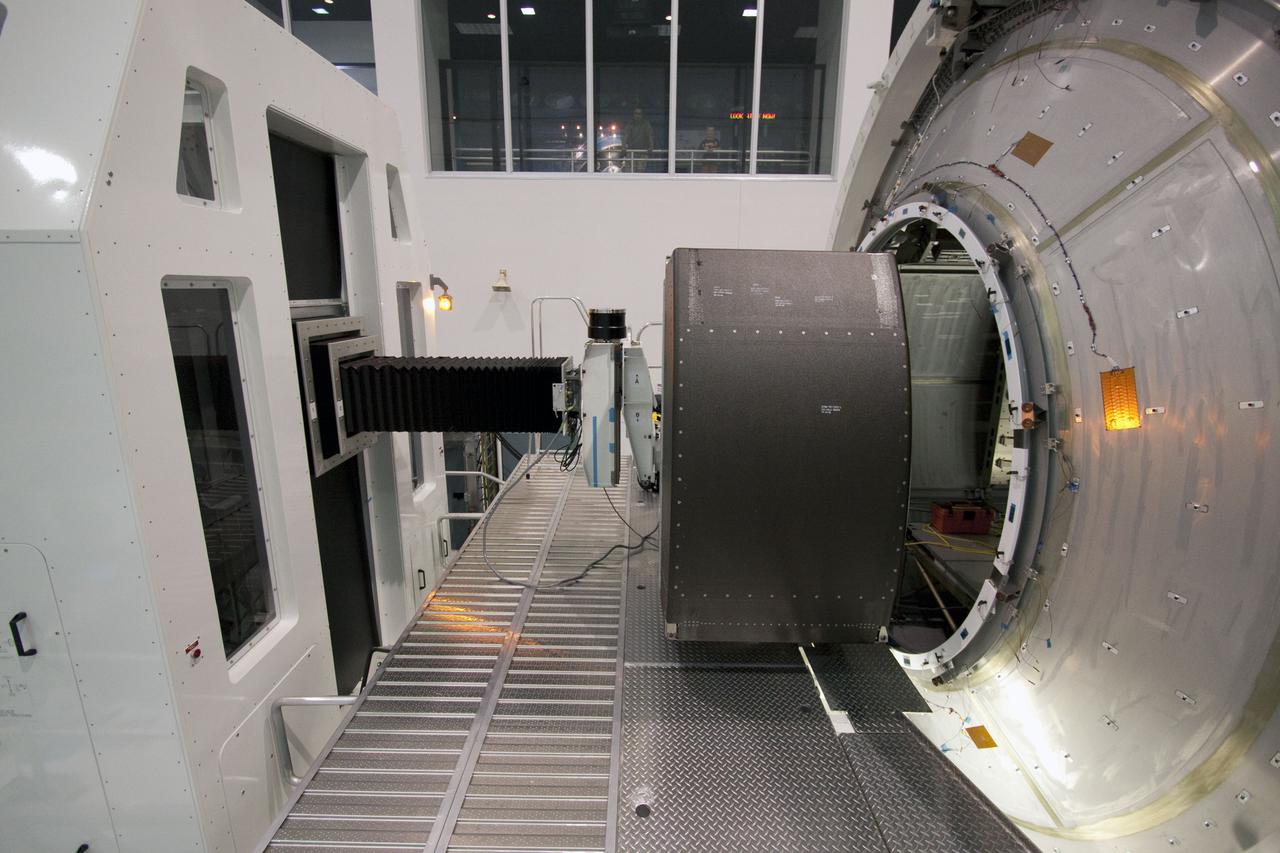
STS-133 RACK INSTALL TO PMM
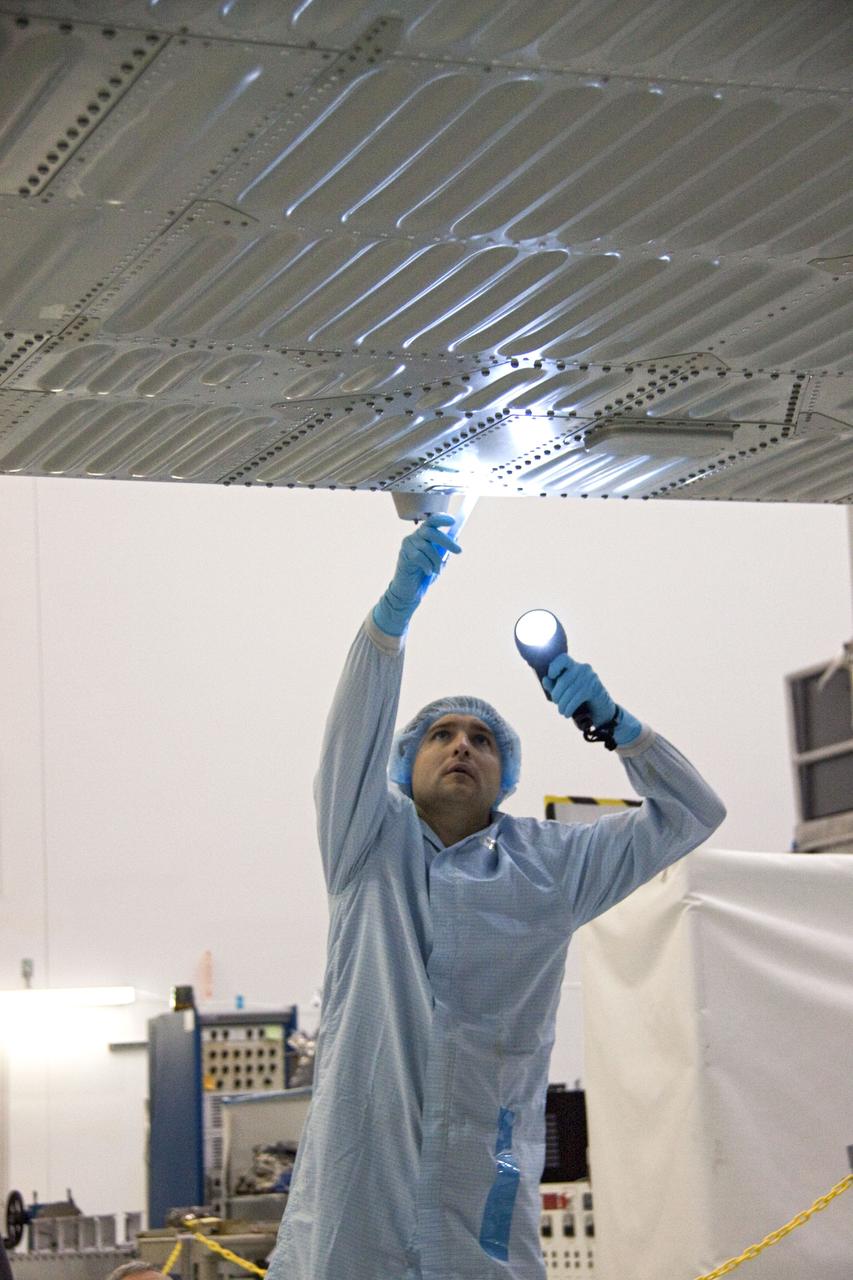
STS-133 HRS INSTALLATION TO PMM
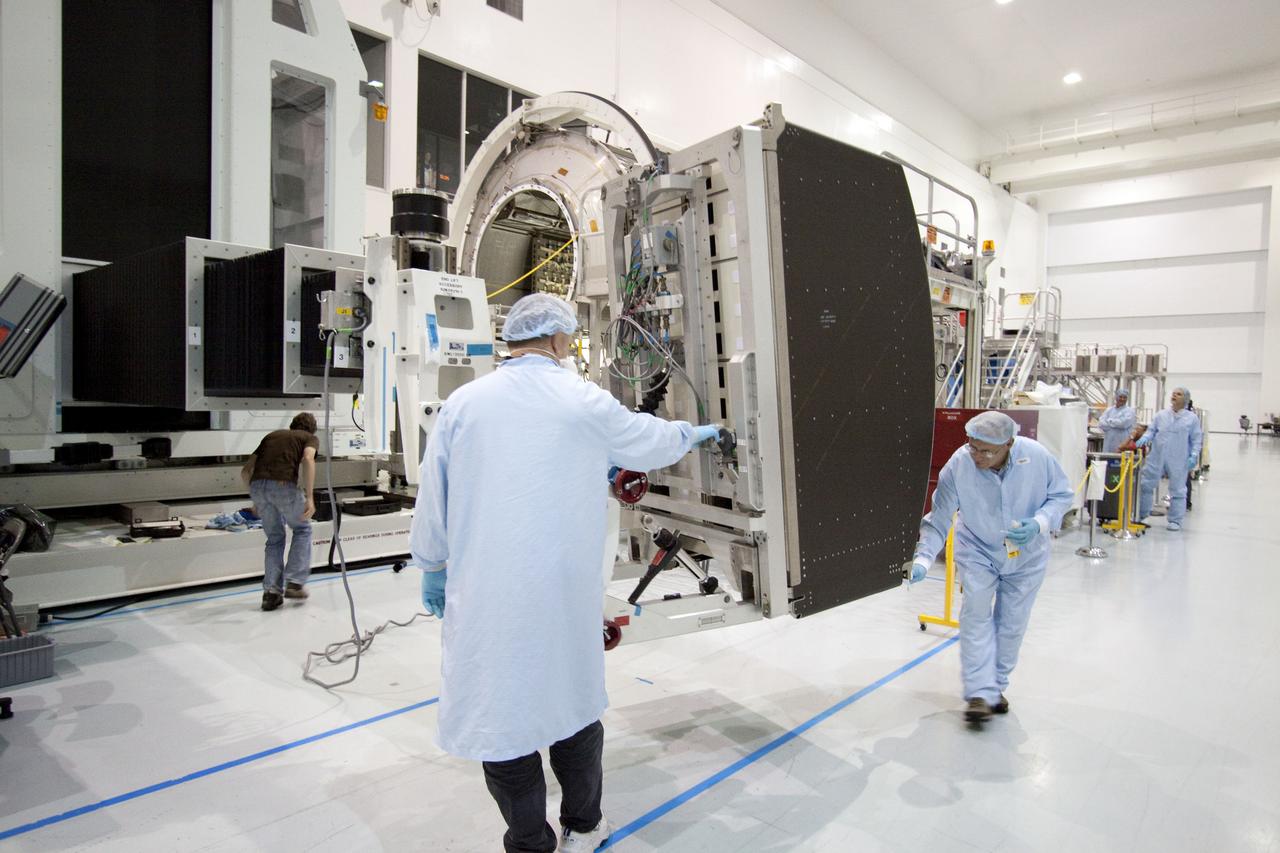
STS-133 RACK INSTALL TO PMM
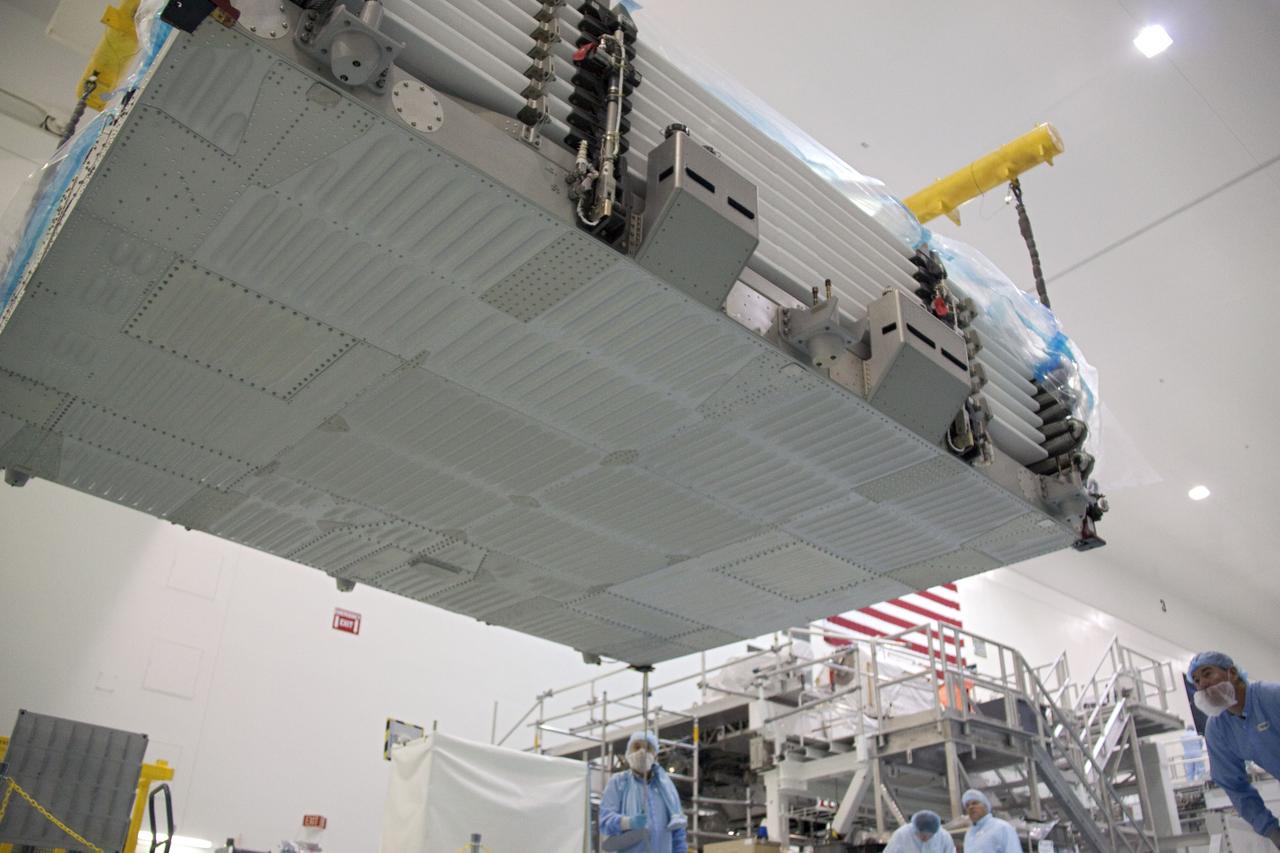
STS-133 HRS INSTALLATION TO PMM
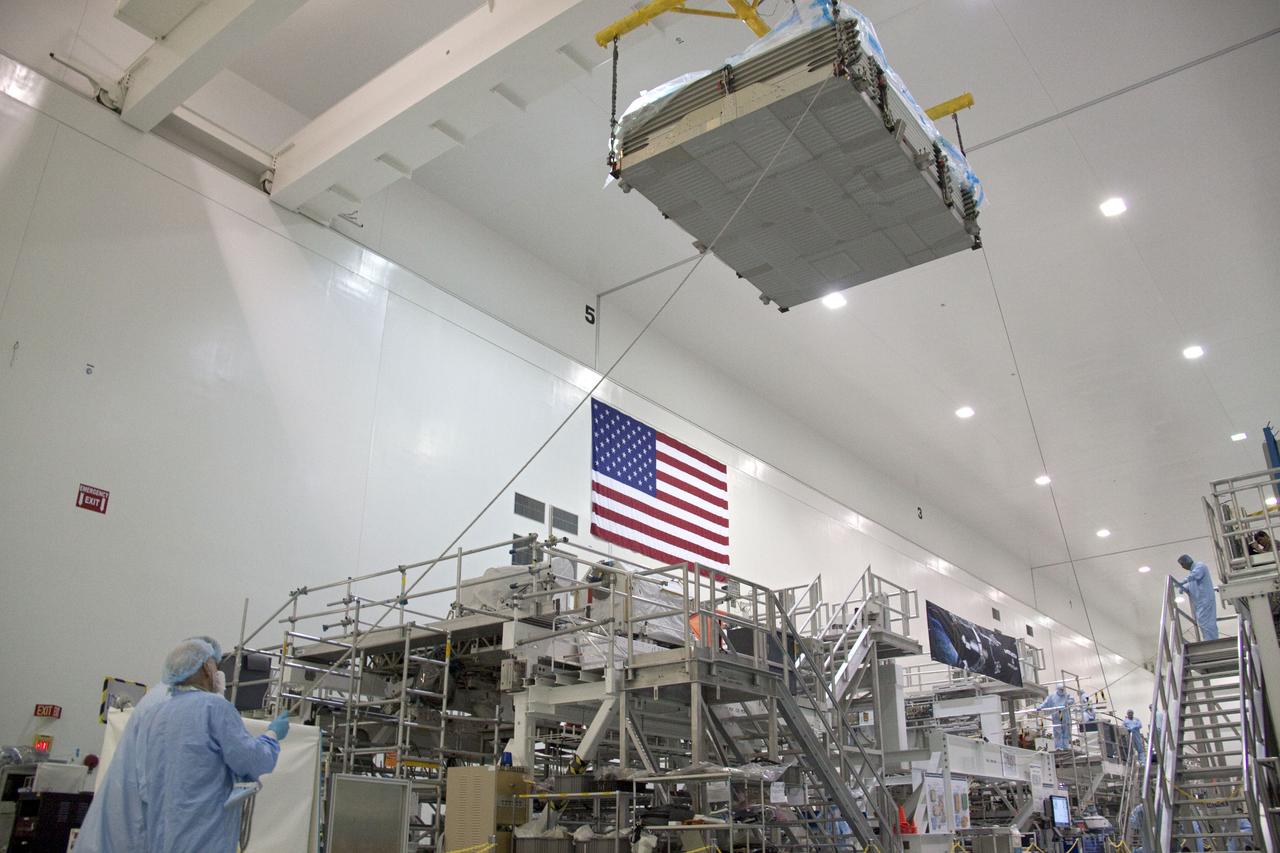
STS-133 HRS INSTALLATION TO PMM
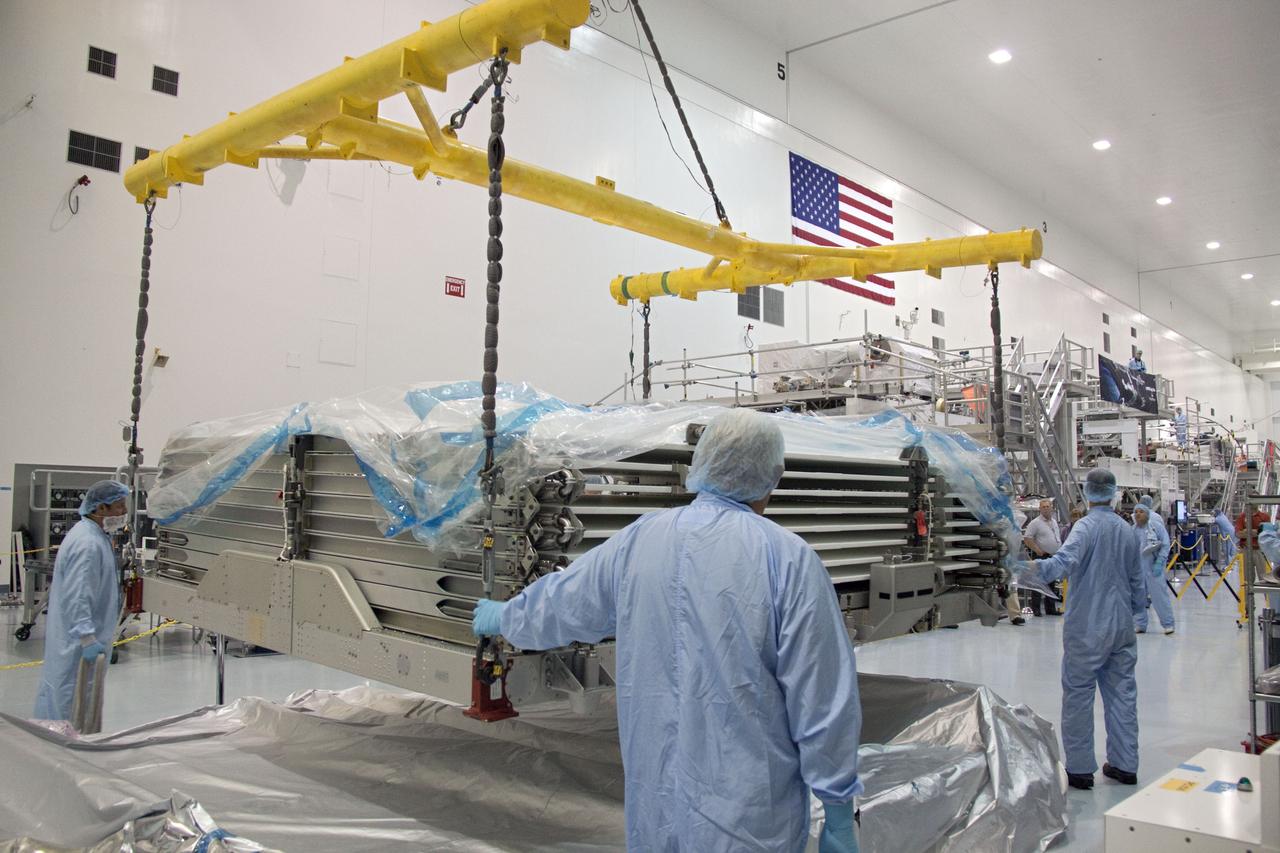
STS-133 HRS INSTALLATION TO PMM
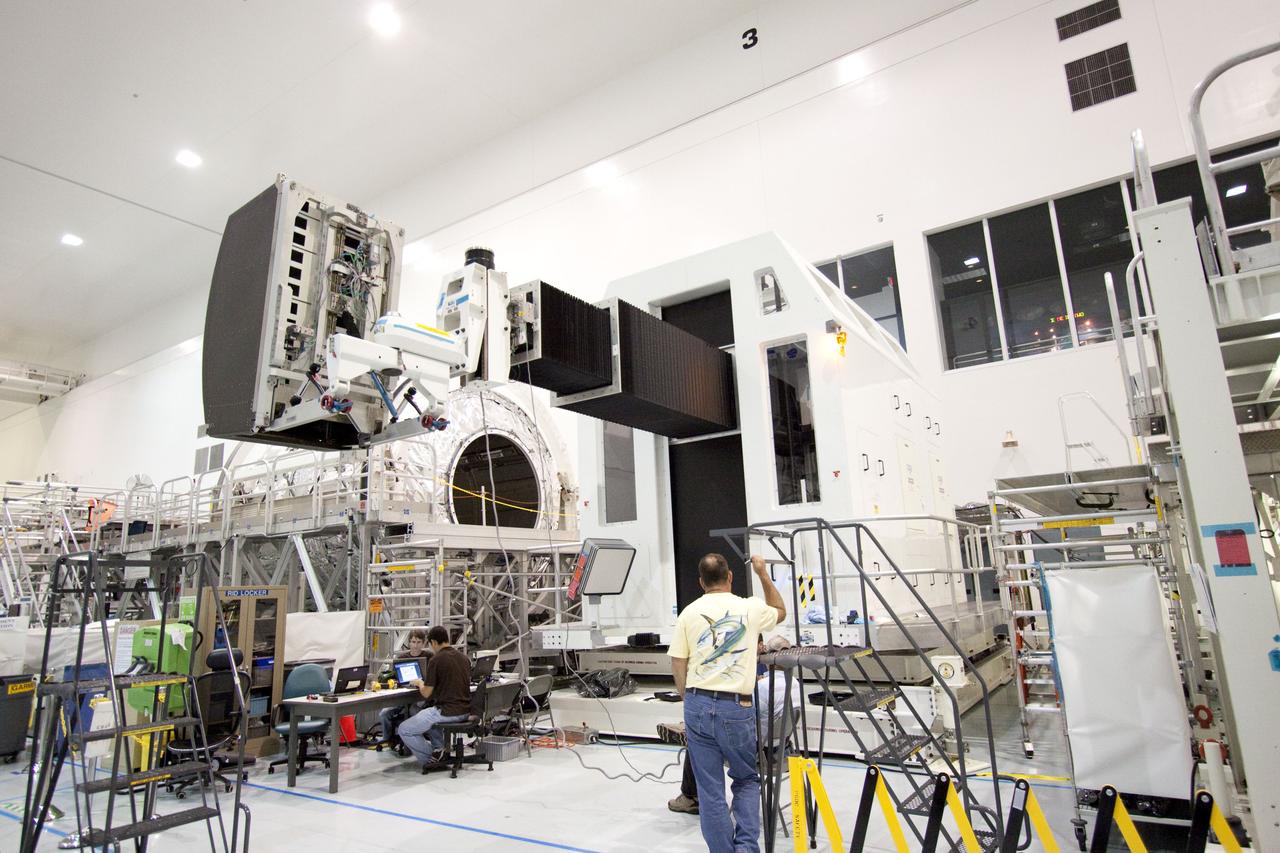
STS-133 RACK INSTALL TO PMM
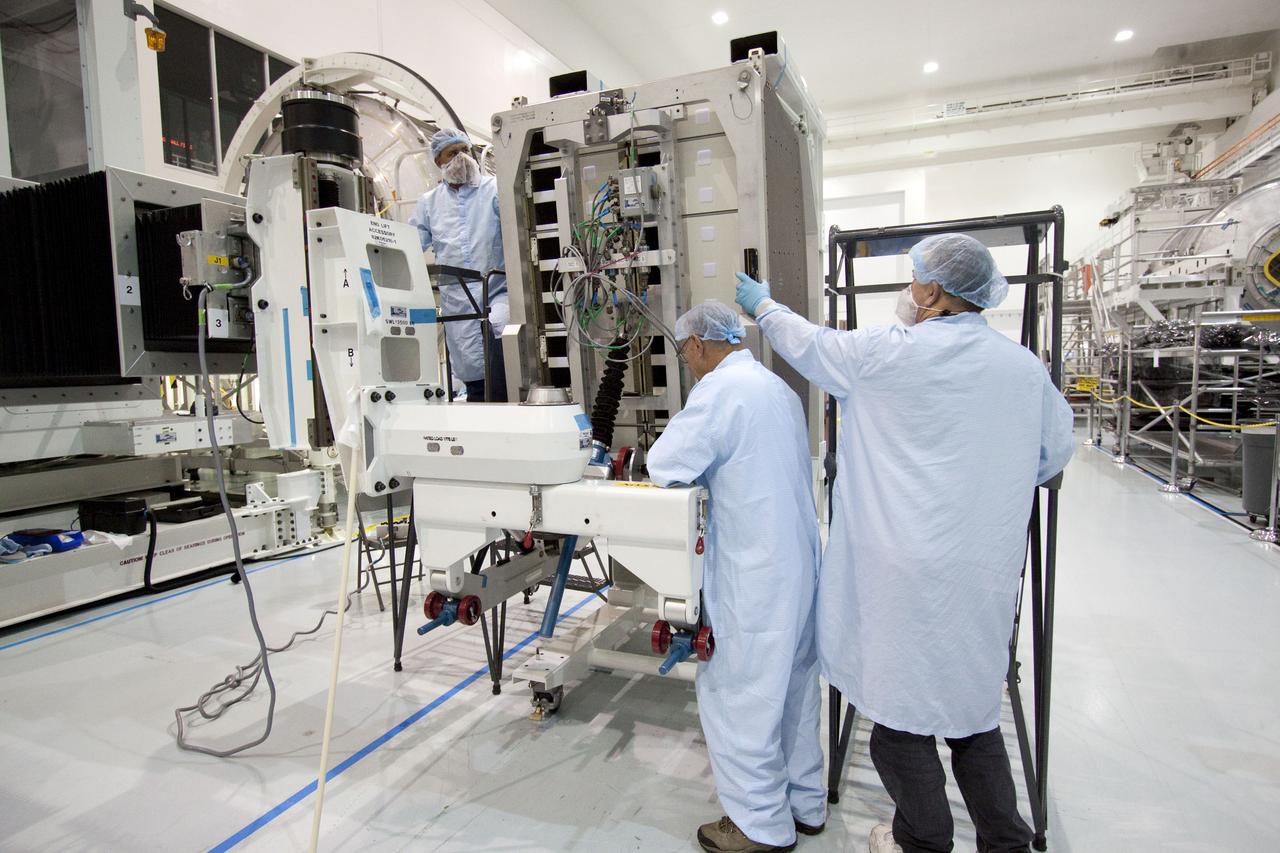
STS-133 RACK INSTALL TO PMM
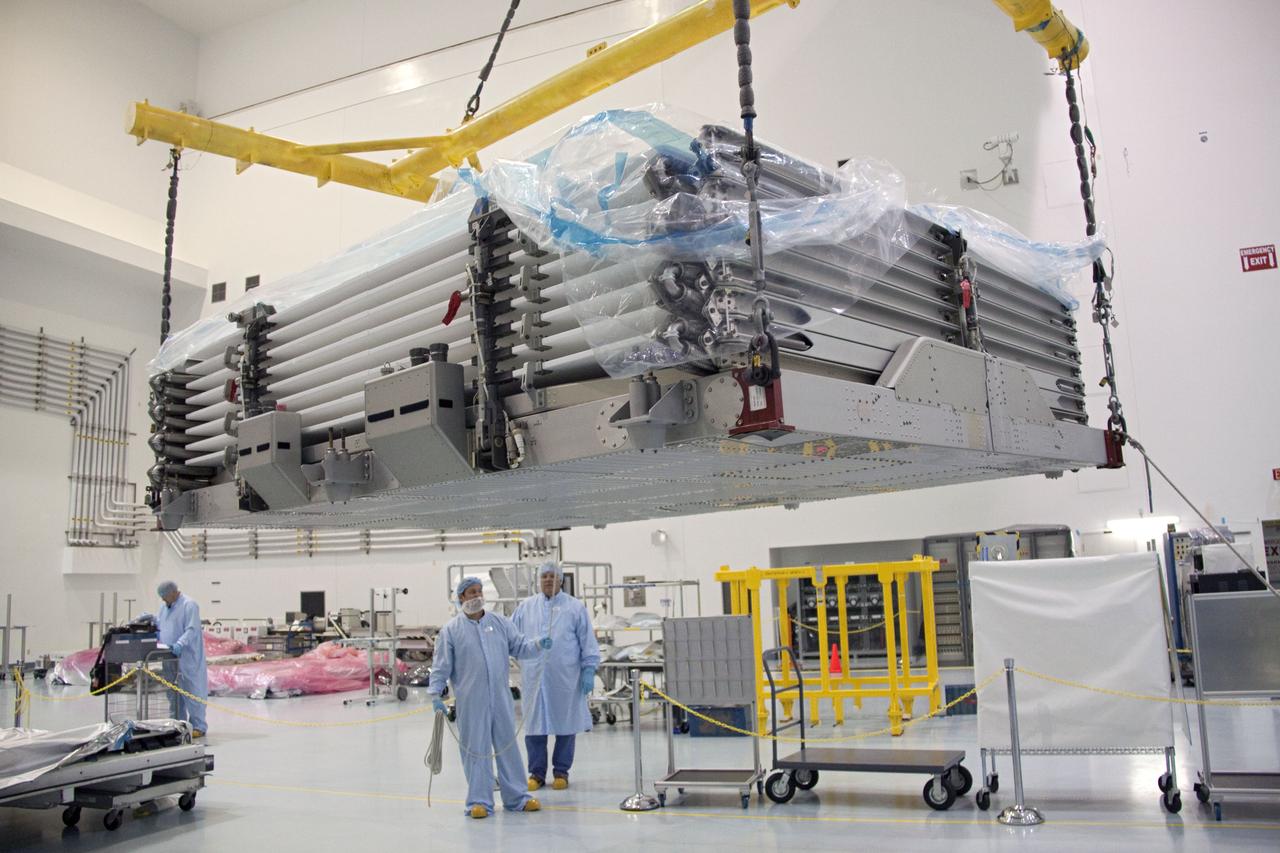
STS-133 HRS INSTALLATION TO PMM