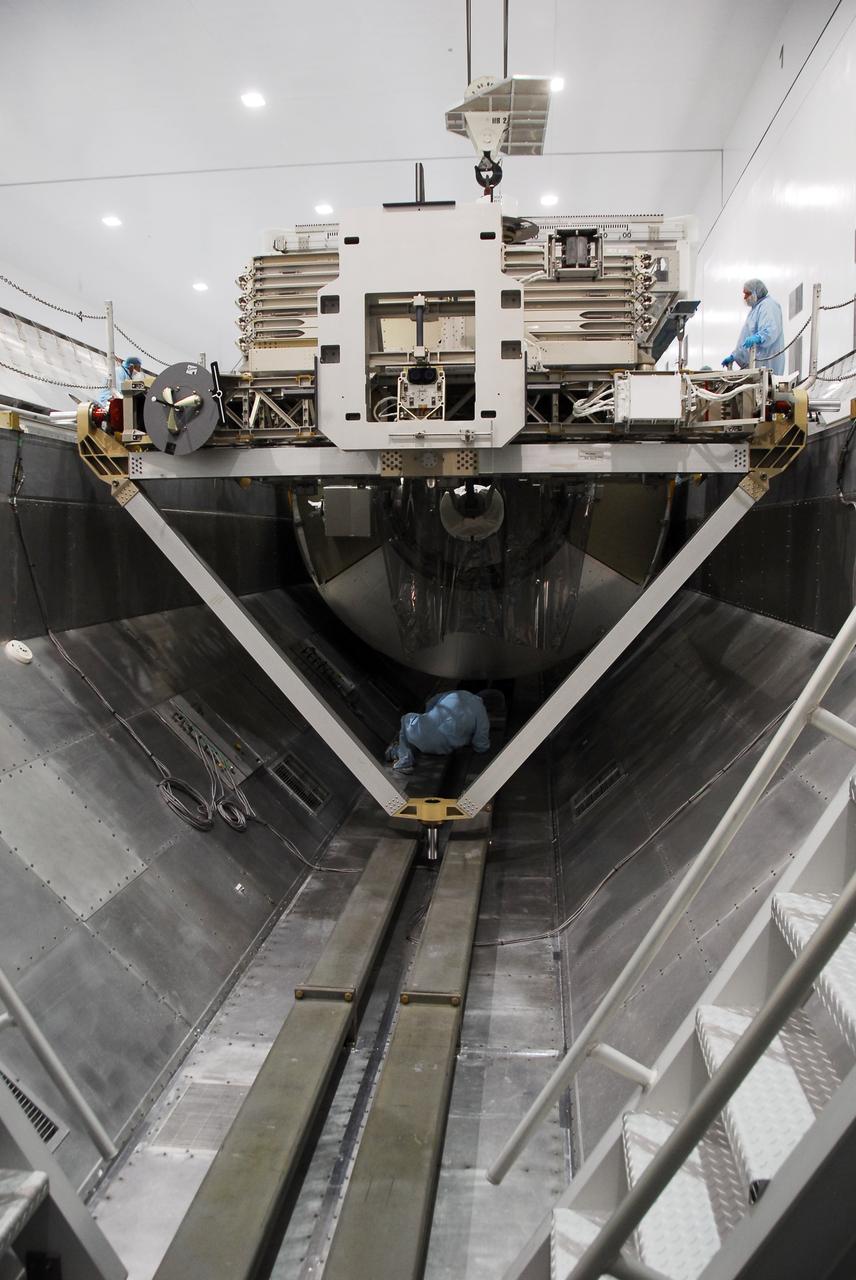
CAPE CANAVERAL, Fla. -- In the Space Station Processing Facility at NASA's Kennedy Space Center in Florida, technicians check the positioning of the Permanent Multipurpose Module, or PMM, after an overhead crane lowered it into the payload canister. Also being installed inside the canister is the Express Logistics Carrier-4 (top) carrying the Heat Rejection Subsystem radiator. The canister will then be transported to Launch Pad 39A and installed into space shuttle Discovery's payload bay. Discovery and its STS-133 crew will deliver the PMM, packed with supplies and critical spare parts, as well as Robonaut 2, the dexterous humanoid astronaut helper, to the International Space Station. Launch is targeted for 4:40 p.m. EDT, Nov. 1. Photo credit: NASA/Cory Huston
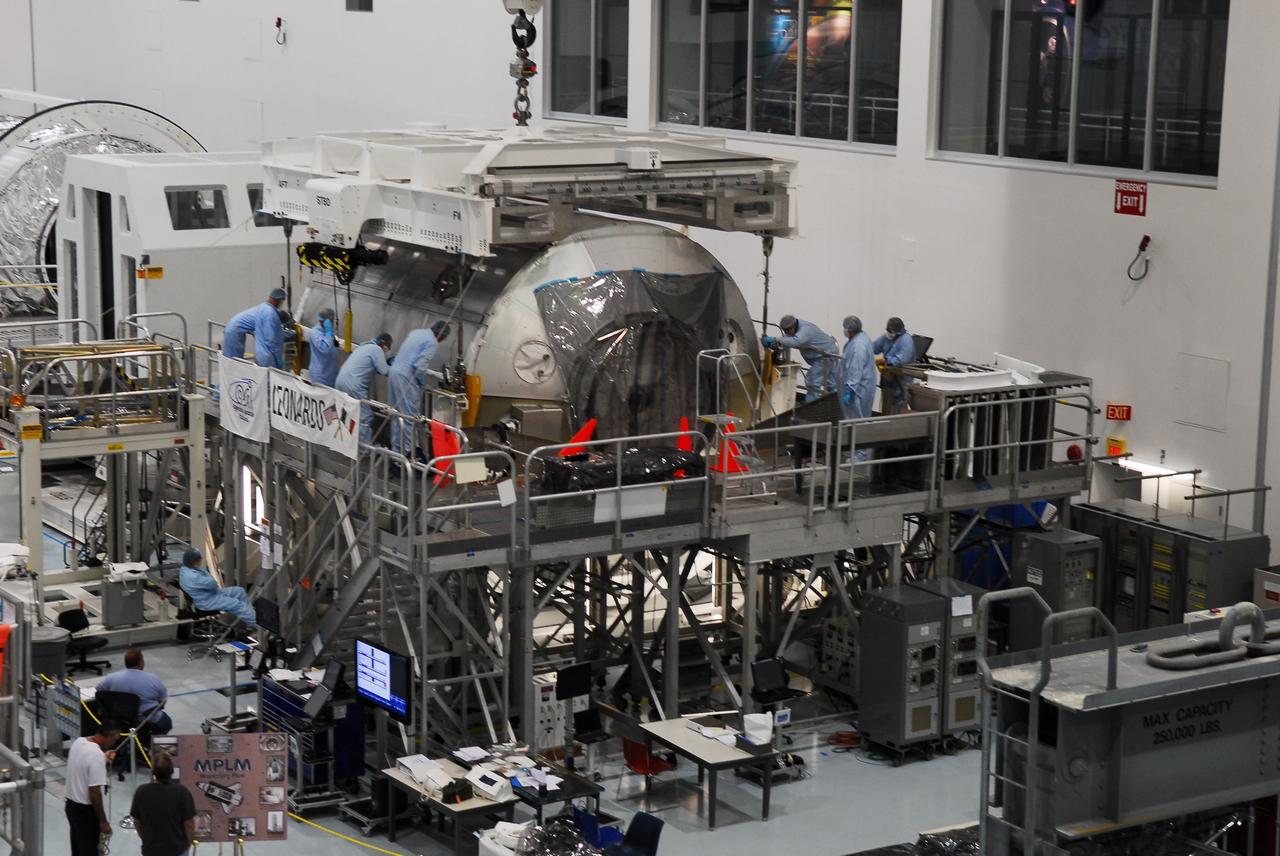
CAPE CANAVERAL, Fla. -- In the Space Station Processing Facility at NASA's Kennedy Space Center in Florida, technicians connect an overhead crane to the Permanent Multipurpose Module, or PMM, for its transfer into a payload canister. The canister will then be transported to Launch Pad 39A and installed into space shuttle Discovery's payload bay. Discovery and its STS-133 crew will deliver the PMM, packed with supplies and critical spare parts, as well as Robonaut 2, the dexterous humanoid astronaut helper, to the International Space Station. Launch is targeted for 4:40 p.m. EDT, Nov. 1. Photo credit: NASA/Cory Huston
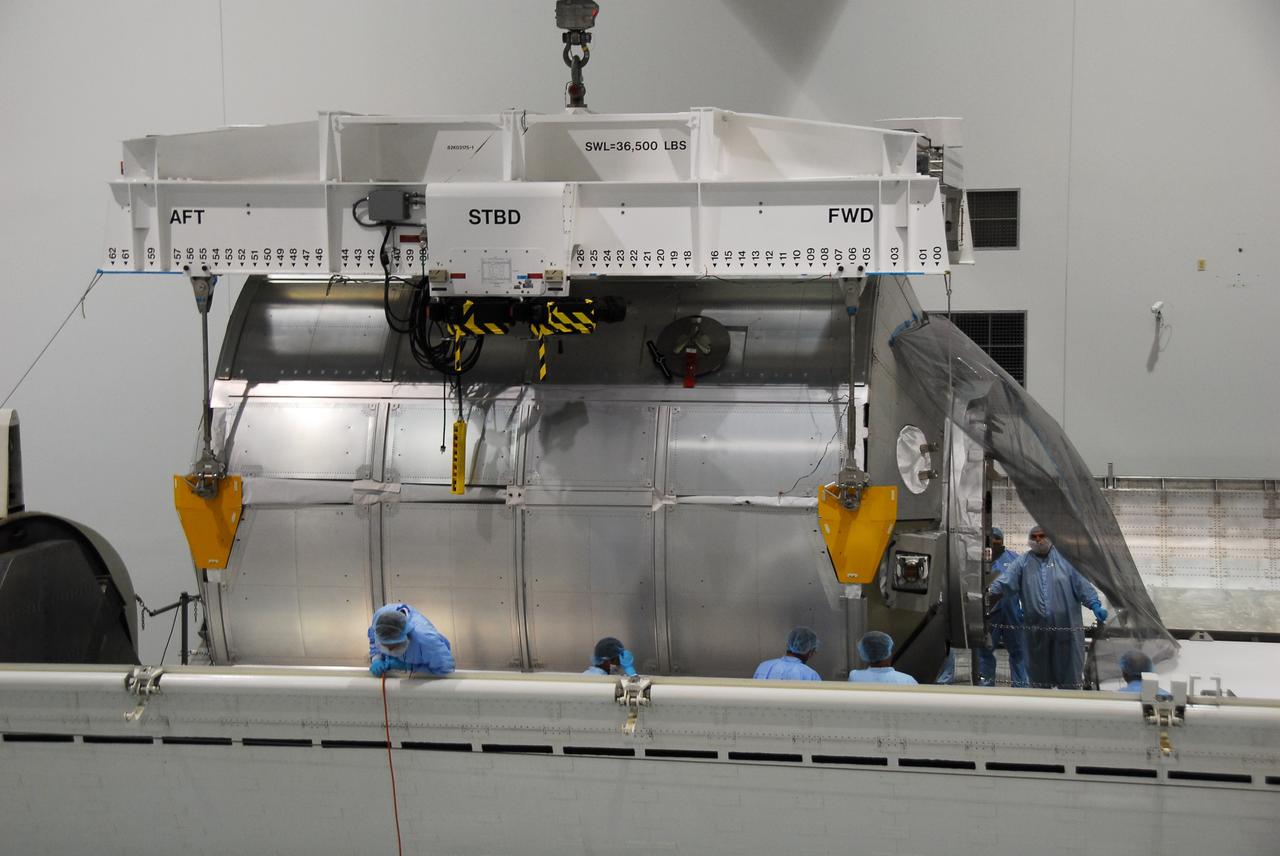
CAPE CANAVERAL, Fla. -- In the Space Station Processing Facility at NASA's Kennedy Space Center in Florida, technicians guide the Permanent Multipurpose Module, or PMM, as an overhead crane lowers it into the payload canister. The canister will then be transported to Launch Pad 39A and installed into space shuttle Discovery's payload bay. Discovery and its STS-133 crew will deliver the PMM, packed with supplies and critical spare parts, as well as Robonaut 2, the dexterous humanoid astronaut helper, to the International Space Station. Launch is targeted for 4:40 p.m. EDT, Nov. 1. Photo credit: NASA/Cory Huston
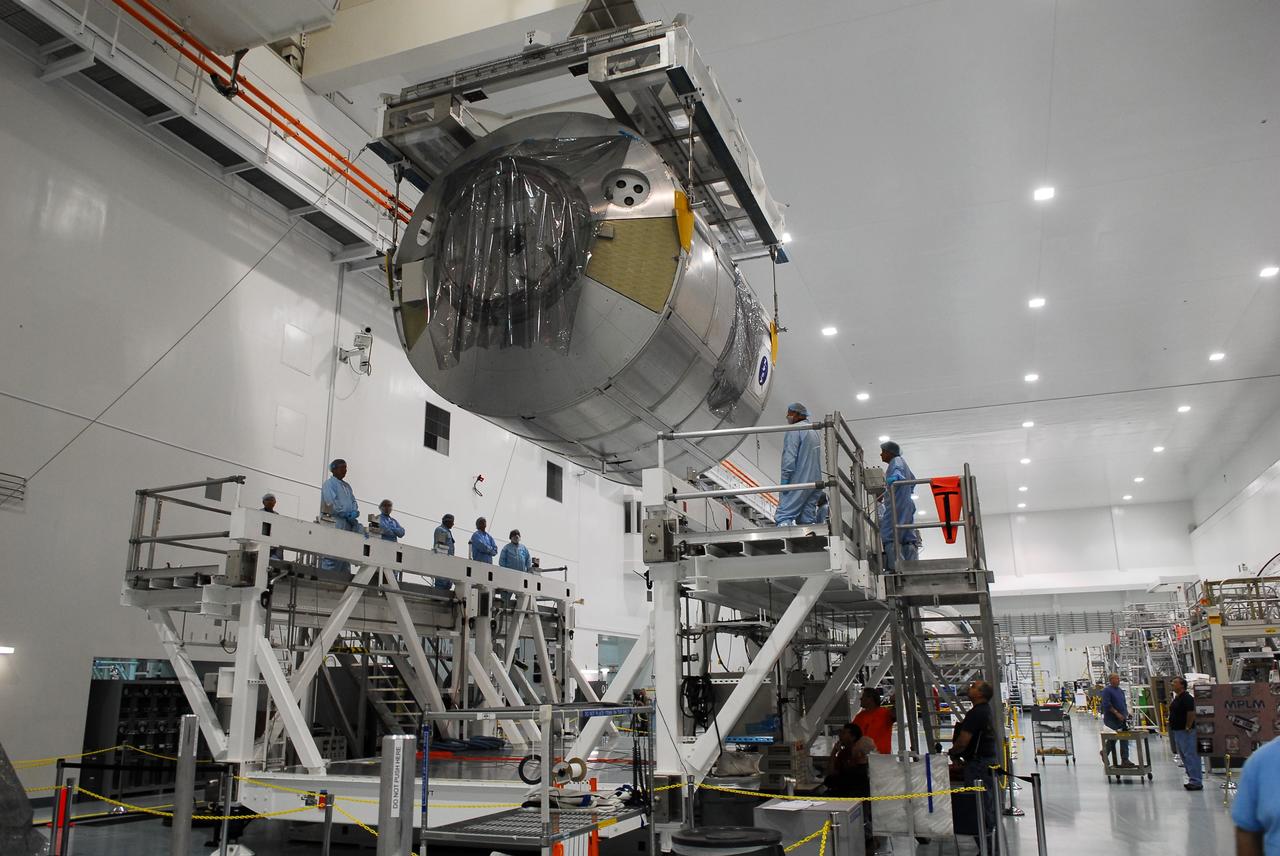
CAPE CANAVERAL, Fla. -- In the Space Station Processing Facility at NASA's Kennedy Space Center in Florida, technicians monitor the progress of the Permanent Multipurpose Module, or PMM, as it is being transferred by overhead crane towards a payload canister. The canister will then be transported to Launch Pad 39A and installed into space shuttle Discovery's payload bay. Discovery and its STS-133 crew will deliver the PMM, packed with supplies and critical spare parts, as well as Robonaut 2, the dexterous humanoid astronaut helper, to the International Space Station. Launch is targeted for 4:40 p.m. EDT, Nov. 1. Photo credit: NASA/Cory Huston
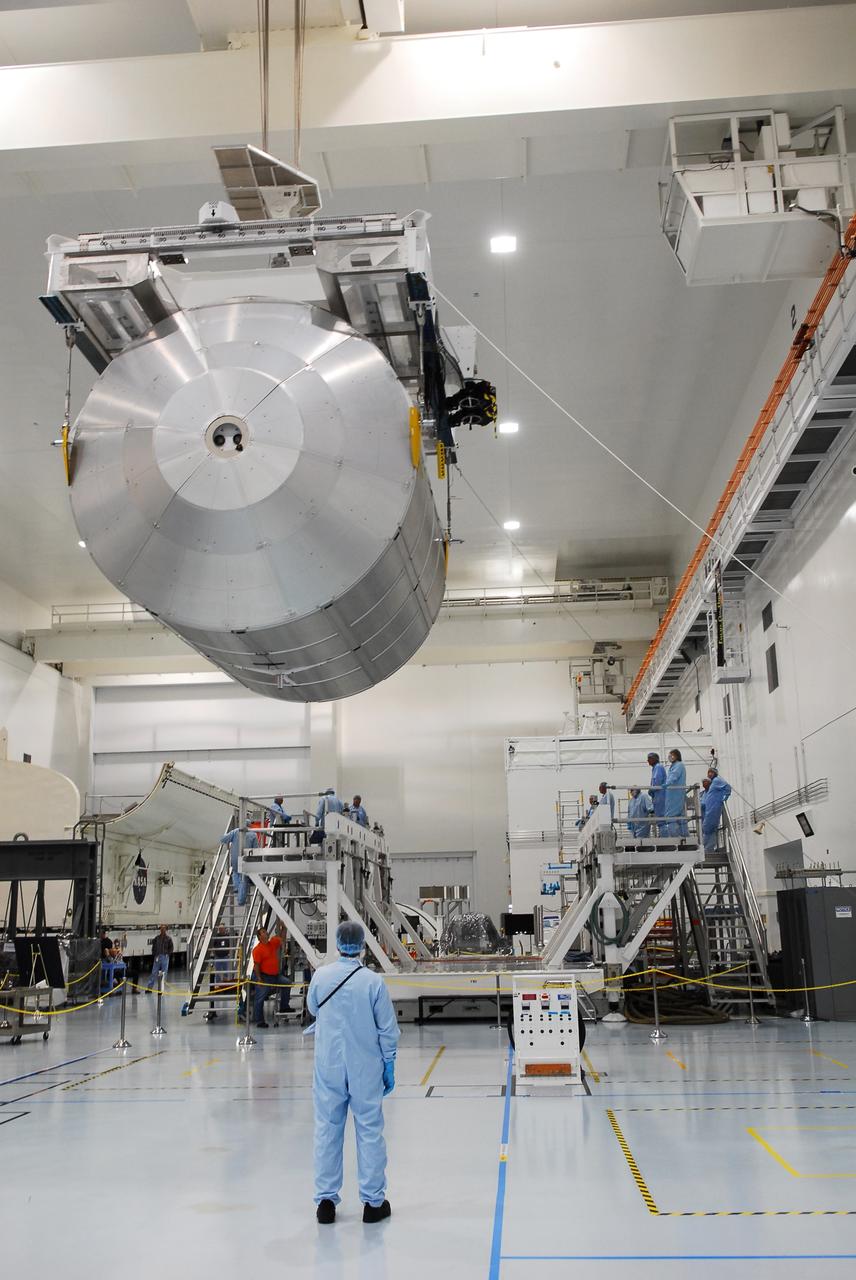
CAPE CANAVERAL, Fla. -- In the Space Station Processing Facility at NASA's Kennedy Space Center in Florida, technicians monitor the progress of the Permanent Multipurpose Module, or PMM, as it is being transferred by overhead crane towards a payload canister. The canister will then be transported to Launch Pad 39A and installed into space shuttle Discovery's payload bay. Discovery and its STS-133 crew will deliver the PMM, packed with supplies and critical spare parts, as well as Robonaut 2, the dexterous humanoid astronaut helper, to the International Space Station. Launch is targeted for 4:40 p.m. EDT, Nov. 1. Photo credit: NASA/Cory Huston
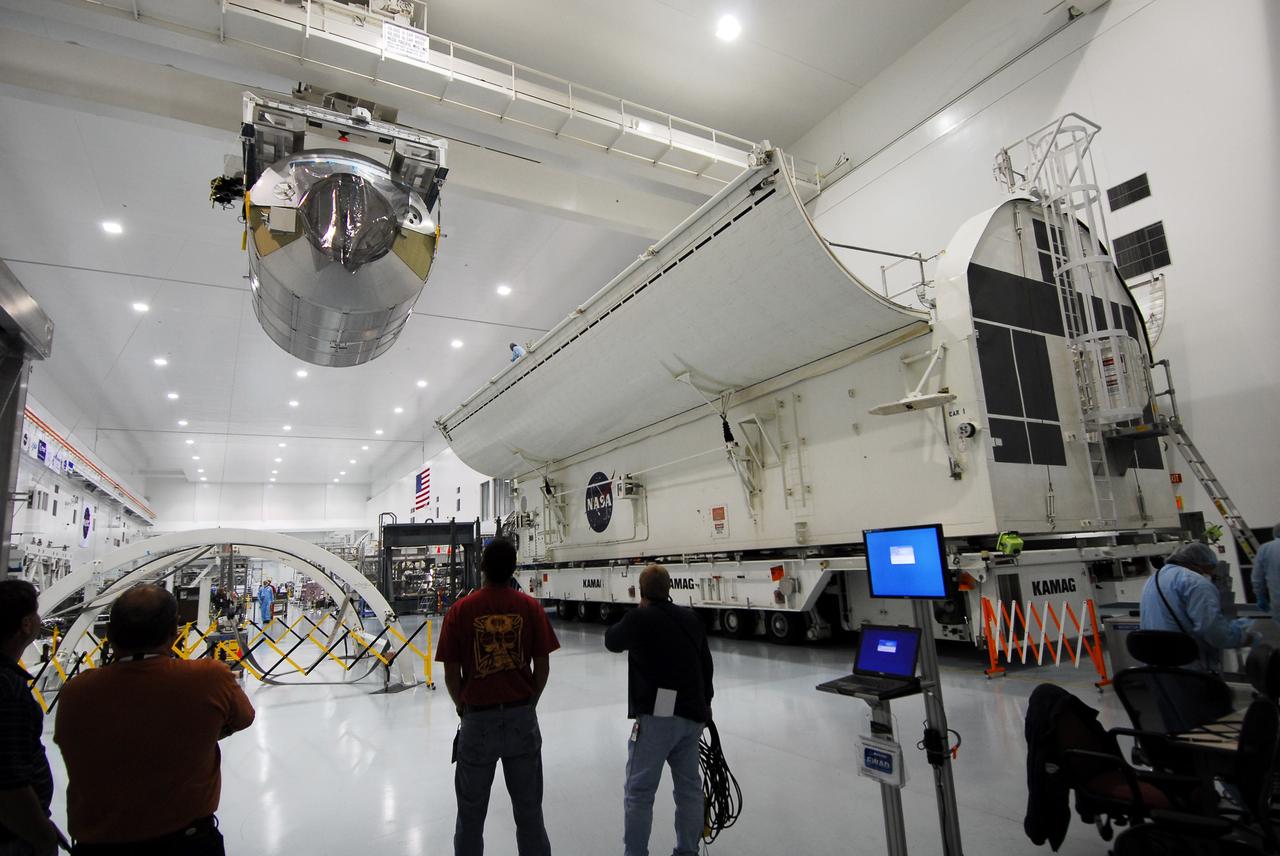
CAPE CANAVERAL, Fla. -- In the Space Station Processing Facility at NASA's Kennedy Space Center in Florida, workers watch the progress of the Permanent Multipurpose Module, or PMM, as it is being transferred by overhead crane towards a payload canister. The canister will then be transported to Launch Pad 39A and installed into space shuttle Discovery's payload bay. Discovery and its STS-133 crew will deliver the PMM, packed with supplies and critical spare parts, as well as Robonaut 2, the dexterous humanoid astronaut helper, to the International Space Station. Launch is targeted for 4:40 p.m. EDT, Nov. 1. Photo credit: NASA/Cory Huston
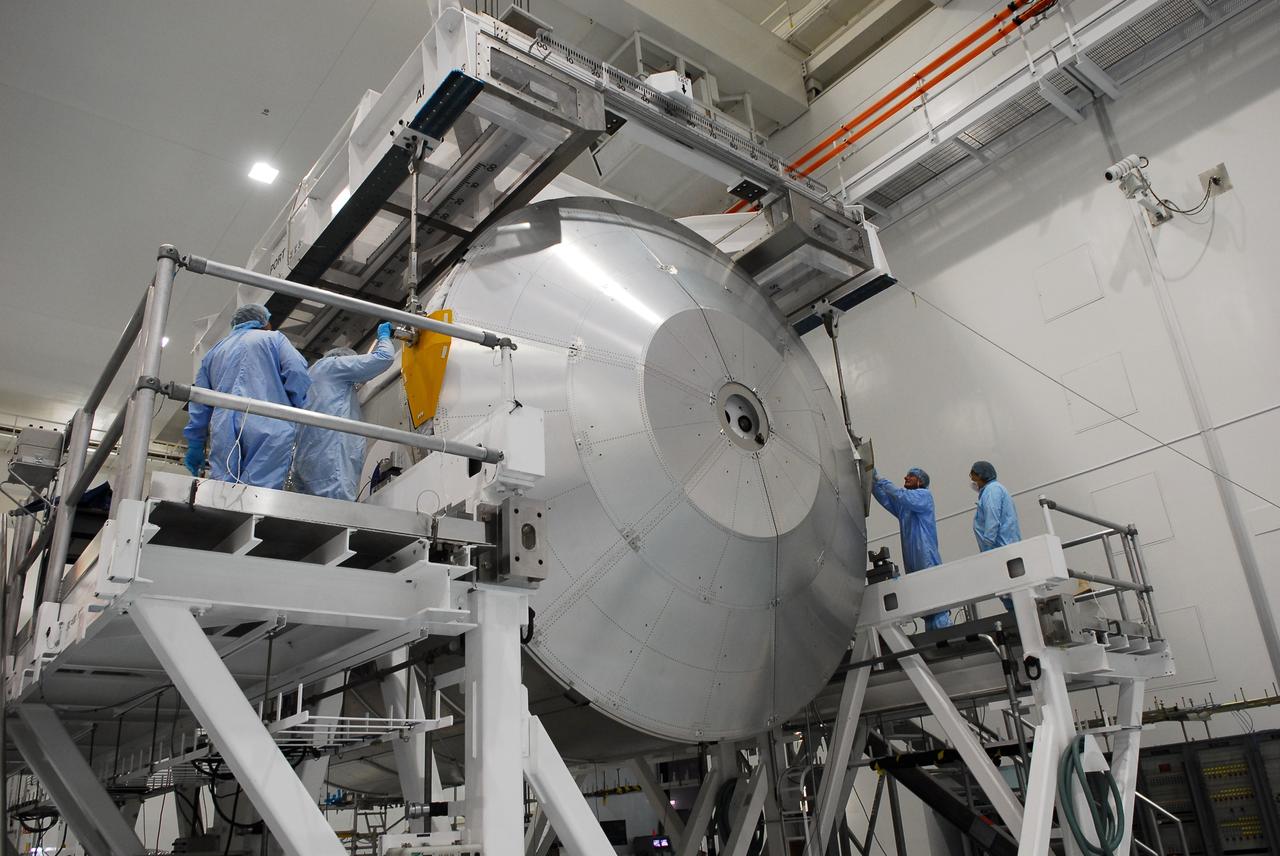
CAPE CANAVERAL, Fla. -- In the Space Station Processing Facility at NASA's Kennedy Space Center in Florida, technicians connect an overhead crane to the Permanent Multipurpose Module, or PMM, for its transfer into a payload canister. The canister will then be transported to Launch Pad 39A and installed into space shuttle Discovery's payload bay. Discovery and its STS-133 crew will deliver the PMM, packed with supplies and critical spare parts, as well as Robonaut 2, the dexterous humanoid astronaut helper, to the International Space Station. Launch is targeted for 4:40 p.m. EDT, Nov. 1. Photo credit: NASA/Cory Huston
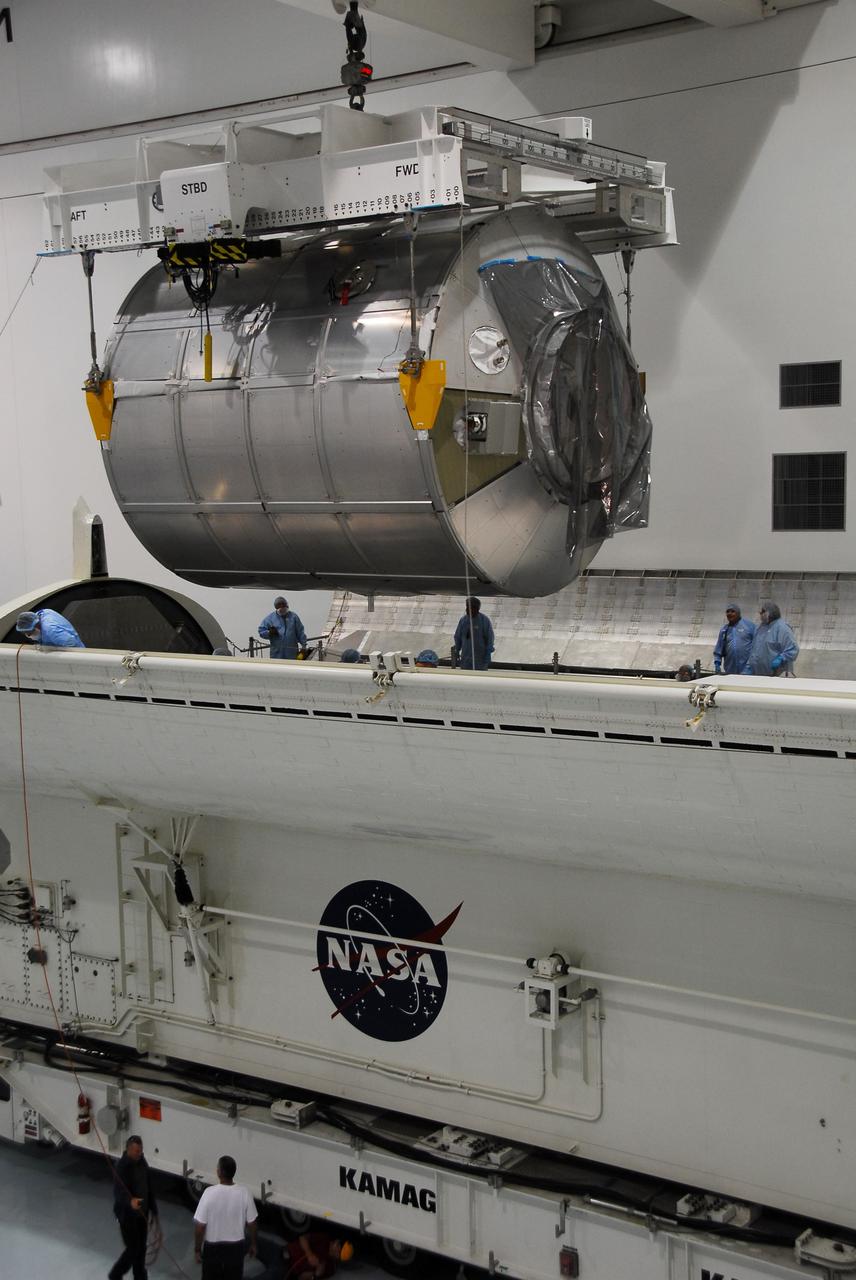
CAPE CANAVERAL, Fla. -- In the Space Station Processing Facility at NASA's Kennedy Space Center in Florida, technicians guide the Permanent Multipurpose Module, or PMM, as an overhead crane lowers it into the payload canister. The canister will then be transported to Launch Pad 39A and installed into space shuttle Discovery's payload bay. Discovery and its STS-133 crew will deliver the PMM, packed with supplies and critical spare parts, as well as Robonaut 2, the dexterous humanoid astronaut helper, to the International Space Station. Launch is targeted for 4:40 p.m. EDT, Nov. 1. Photo credit: NASA/Cory Huston
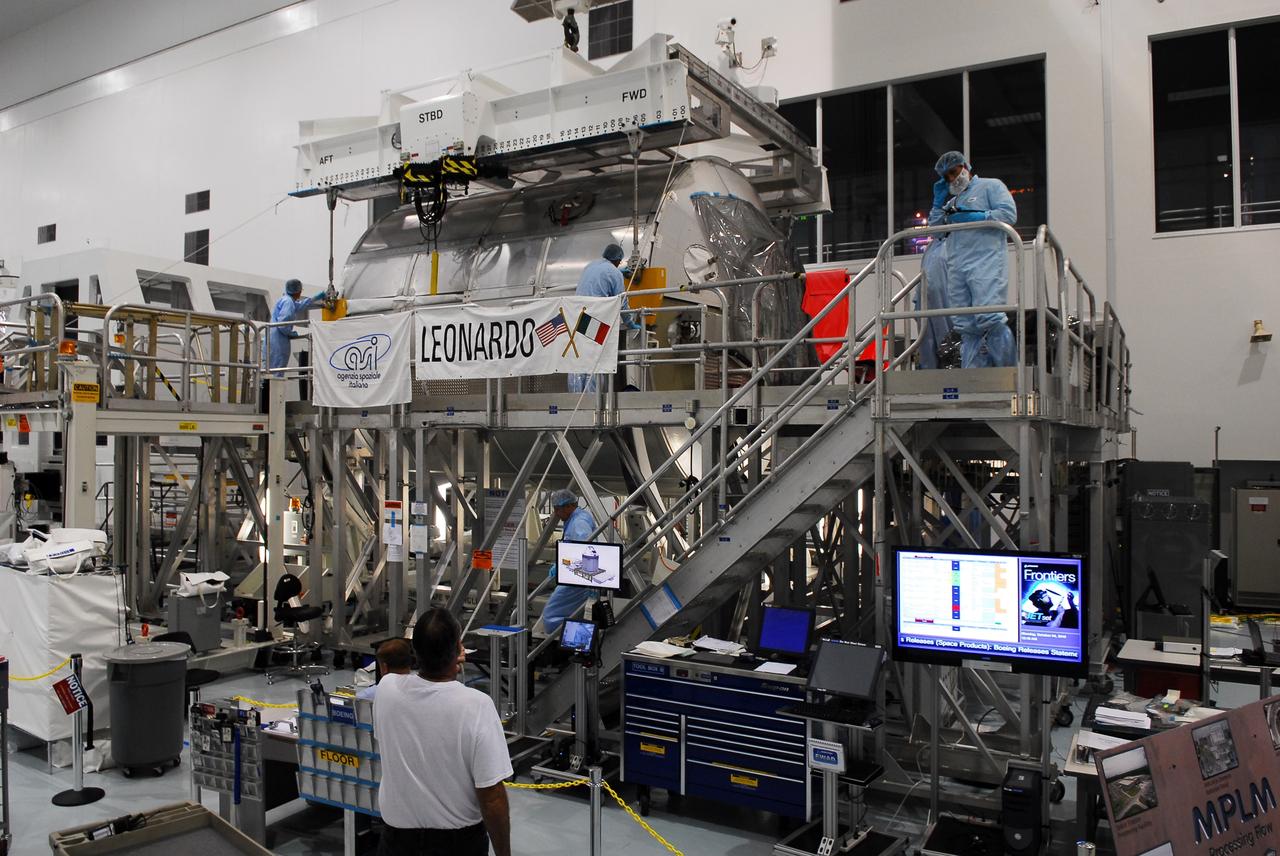
CAPE CANAVERAL, Fla. -- In the Space Station Processing Facility at NASA's Kennedy Space Center in Florida, technicians connect an overhead crane to the Permanent Multipurpose Module, or PMM, for its transfer into a payload canister. The canister will then be transported to Launch Pad 39A and installed into space shuttle Discovery's payload bay. Discovery and its STS-133 crew will deliver the PMM, packed with supplies and critical spare parts, as well as Robonaut 2, the dexterous humanoid astronaut helper, to the International Space Station. Launch is targeted for 4:40 p.m. EDT, Nov. 1. Photo credit: NASA/Cory Huston
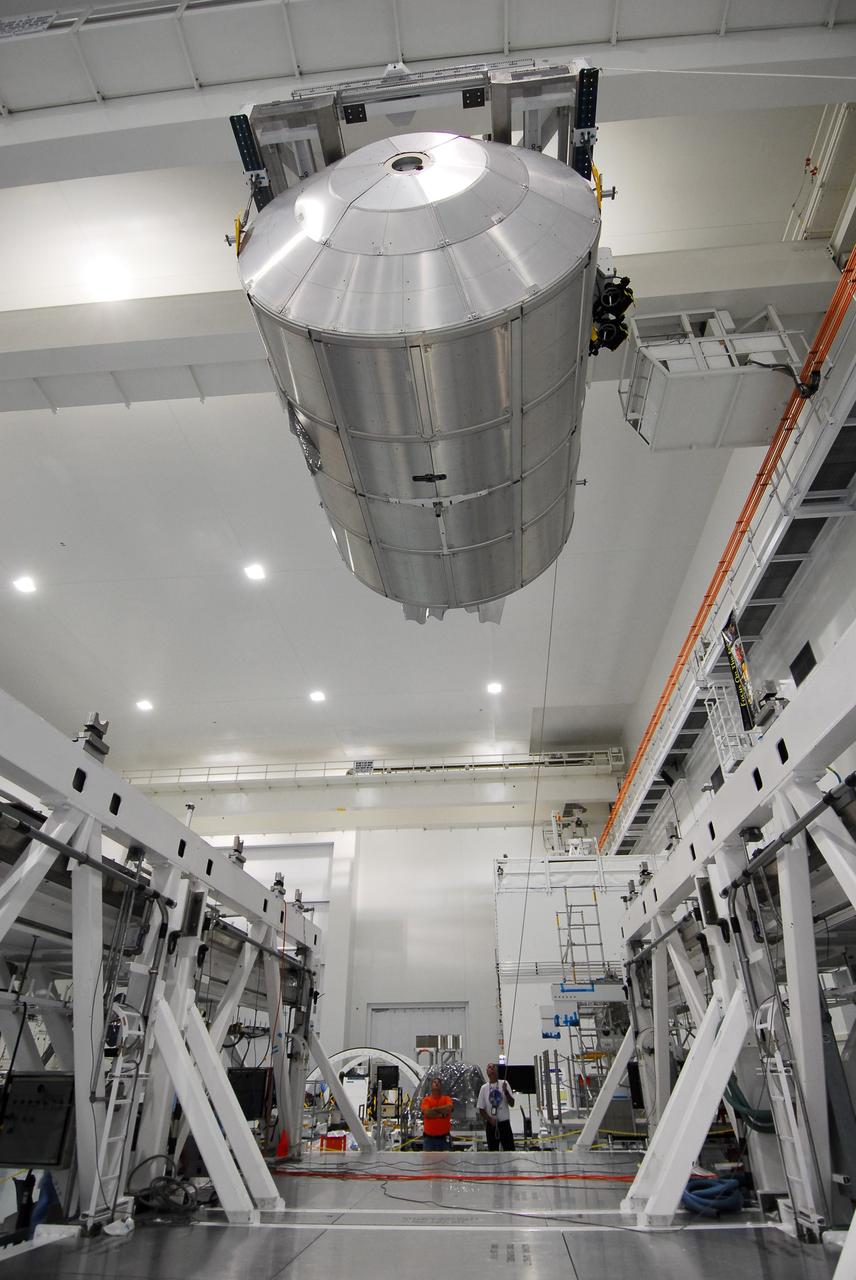
CAPE CANAVERAL, Fla. -- In the Space Station Processing Facility at NASA's Kennedy Space Center in Florida, workers guide the Permanent Multipurpose Module, or PMM, as it is being transferred by overhead crane towards a payload canister. The canister will then be transported to Launch Pad 39A and installed into space shuttle Discovery's payload bay. Discovery and its STS-133 crew will deliver the PMM, packed with supplies and critical spare parts, as well as Robonaut 2, the dexterous humanoid astronaut helper, to the International Space Station. Launch is targeted for 4:40 p.m. EDT, Nov. 1. Photo credit: NASA/Cory Huston
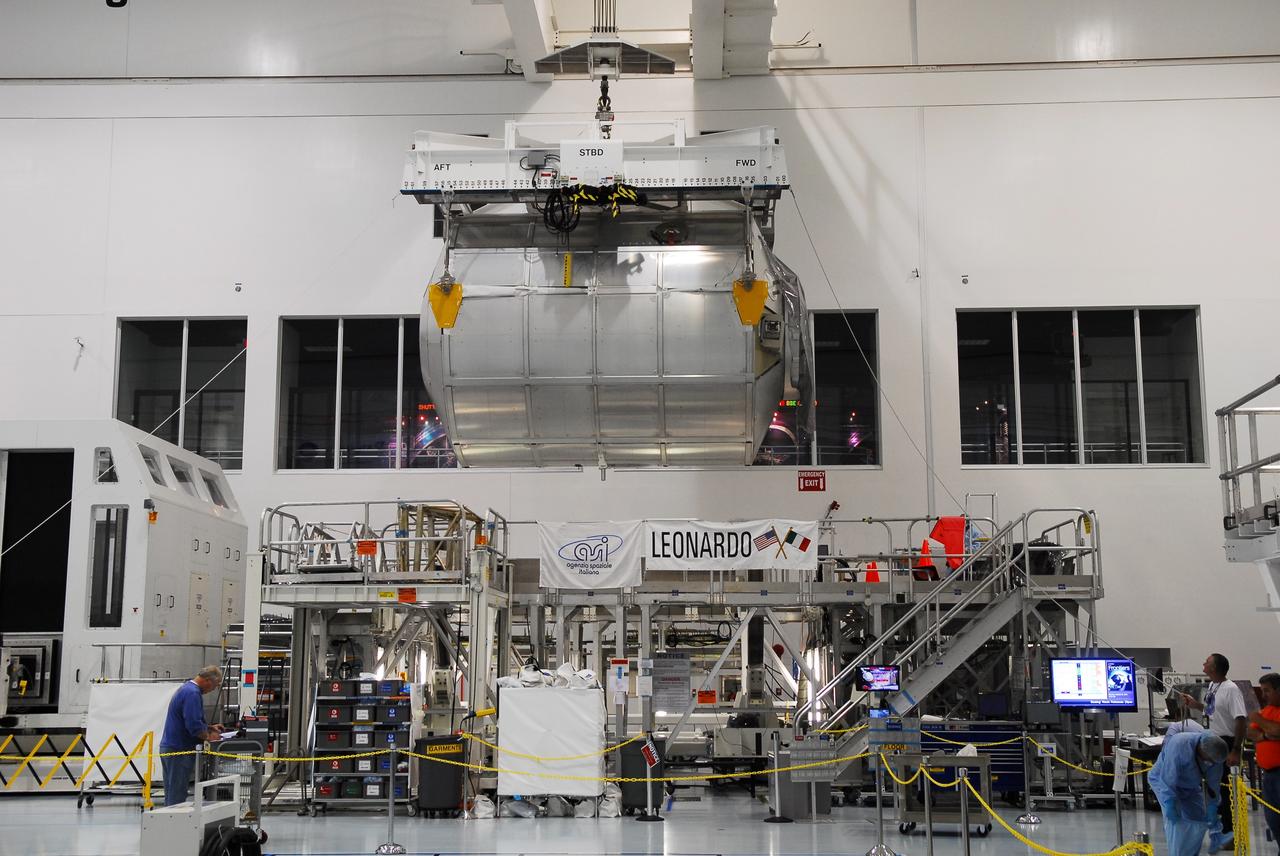
CAPE CANAVERAL, Fla. -- In the Space Station Processing Facility at NASA's Kennedy Space Center in Florida, the Permanent Multipurpose Module, or PMM, is being transferred by overhead crane towards a payload canister. The canister will then be transported to Launch Pad 39A and installed into space shuttle Discovery's payload bay. Discovery and its STS-133 crew will deliver the PMM, packed with supplies and critical spare parts, as well as Robonaut 2, the dexterous humanoid astronaut helper, to the International Space Station. Launch is targeted for 4:40 p.m. EDT, Nov. 1. Photo credit: NASA/Cory Huston
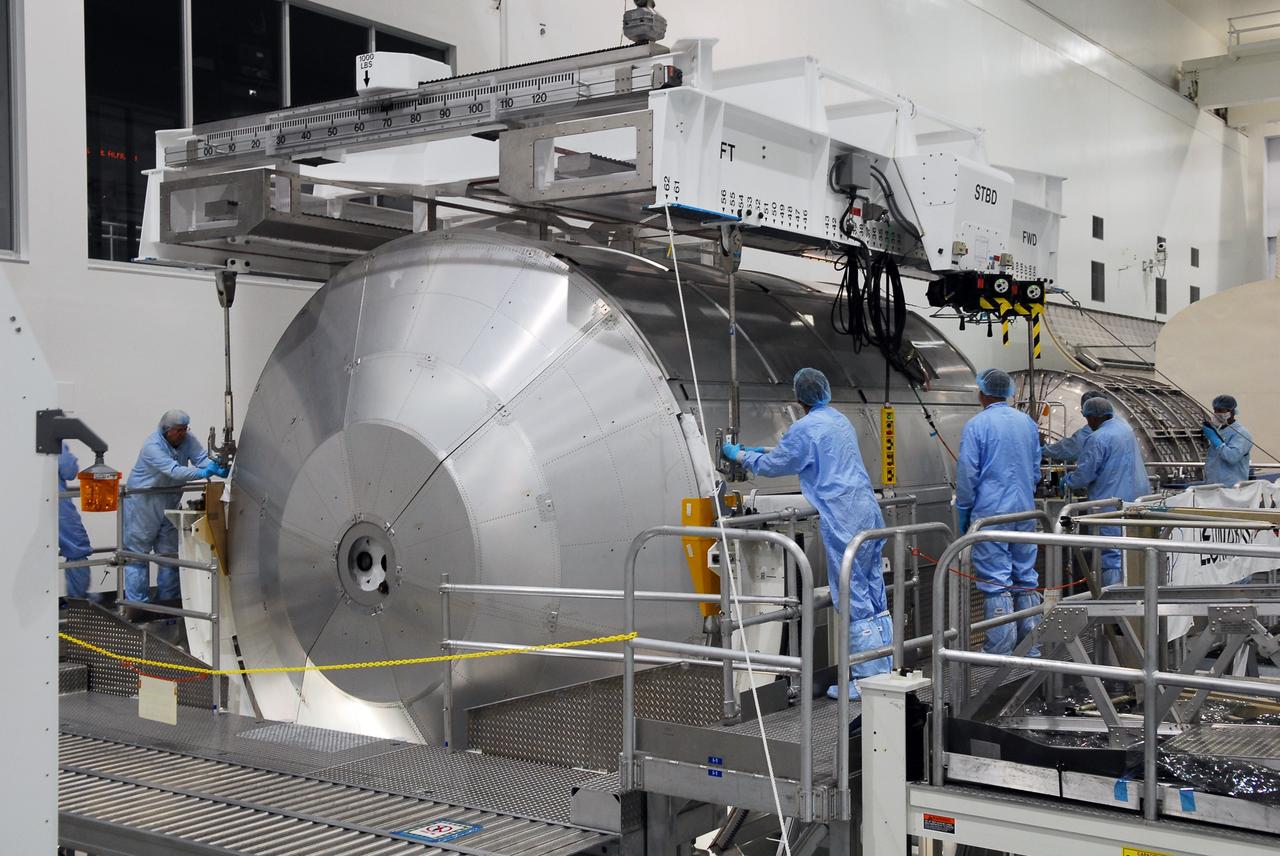
CAPE CANAVERAL, Fla. -- In the Space Station Processing Facility at NASA's Kennedy Space Center in Florida, technicians connect an overhead crane to the Permanent Multipurpose Module, or PMM, for its transfer into a payload canister. The canister will then be transported to Launch Pad 39A and installed into space shuttle Discovery's payload bay. Discovery and its STS-133 crew will deliver the PMM, packed with supplies and critical spare parts, as well as Robonaut 2, the dexterous humanoid astronaut helper, to the International Space Station. Launch is targeted for 4:40 p.m. EDT, Nov. 1. Photo credit: NASA/Cory Huston
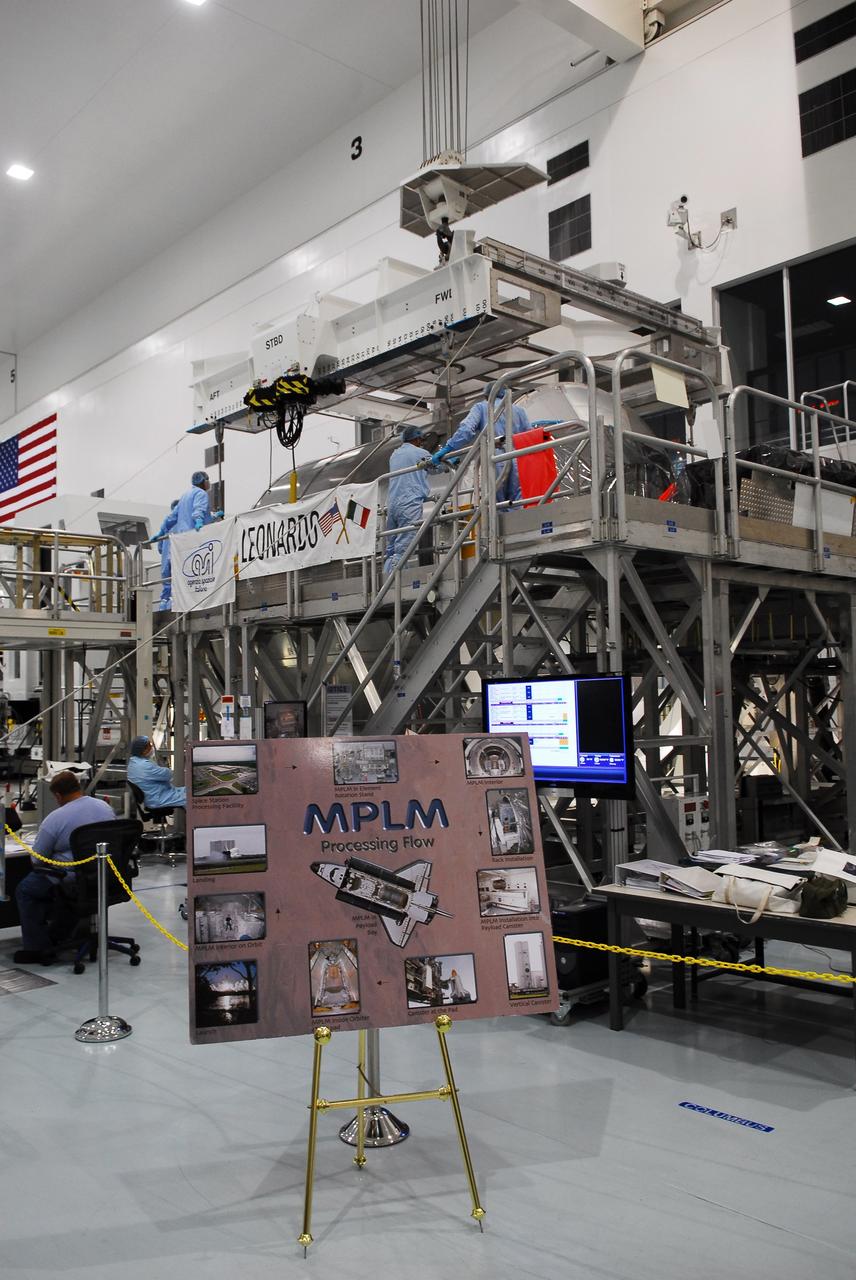
CAPE CANAVERAL, Fla. -- In the Space Station Processing Facility at NASA's Kennedy Space Center in Florida, technicians connect an overhead crane to the Permanent Multipurpose Module, or PMM, for its transfer into a payload canister. The canister will then be transported to Launch Pad 39A and installed into space shuttle Discovery's payload bay. Discovery and its STS-133 crew will deliver the PMM, packed with supplies and critical spare parts, as well as Robonaut 2, the dexterous humanoid astronaut helper, to the International Space Station. Launch is targeted for 4:40 p.m. EDT, Nov. 1. Photo credit: NASA/Cory Huston