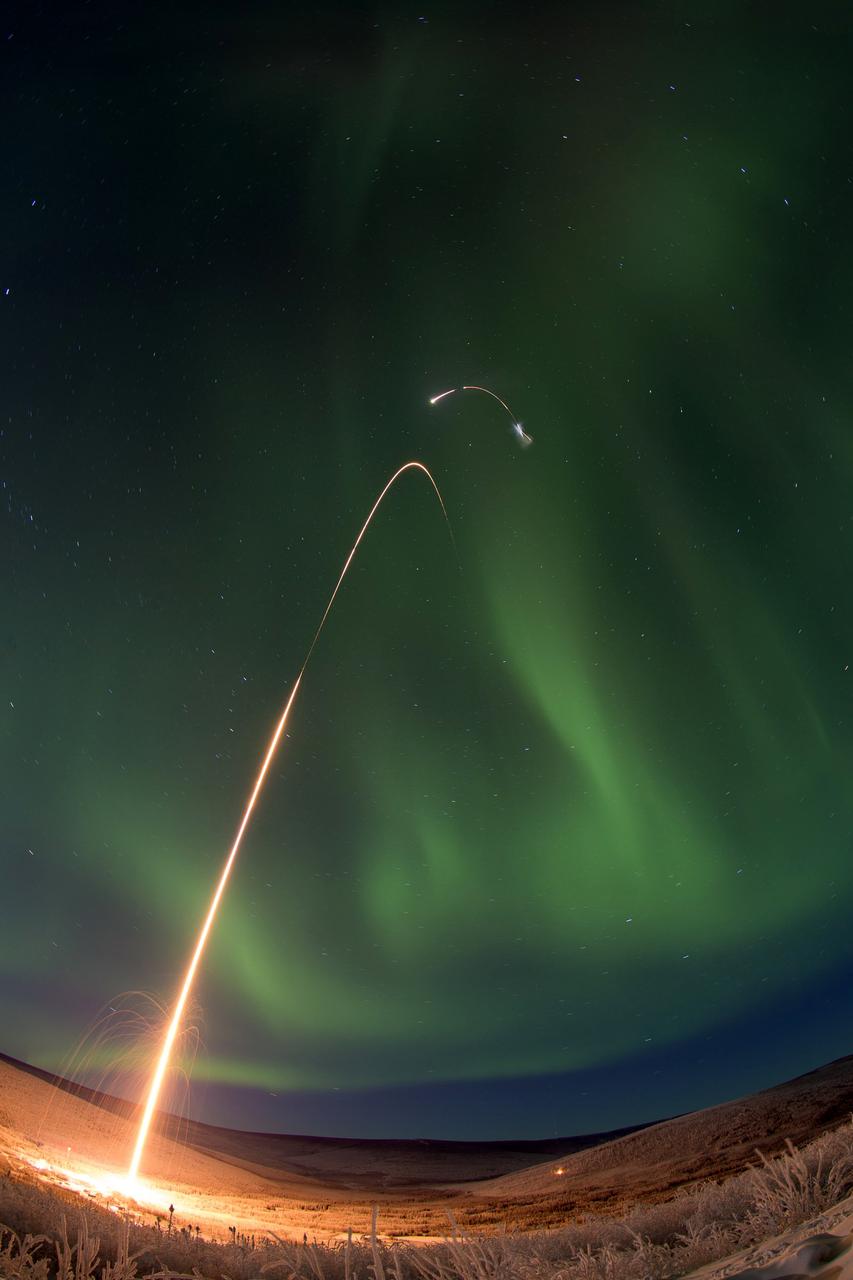
Caption: Time lapse photo of the NASA Oriole IV sounding rocket with Aural Spatial Structures Probe as an aurora dances over Alaska. All four stages of the rocket are visible in this image. Credit: NASA/Jamie Adkins More info: On count day number 15, the Aural Spatial Structures Probe, or ASSP, was successfully launched on a NASA Oriole IV sounding rocket at 5:41 a.m. EST on Jan. 28, 2015, from the Poker Flat Research Range in Alaska. Preliminary data show that all aspects of the payload worked as designed and the principal investigator Charles Swenson at Utah State University described the mission as a “raging success.” “This is likely the most complicated mission the sounding rocket program has ever undertaken and it was not easy by any stretch," said John Hickman, operations manager of the NASA sounding rocket program office at the Wallops Flight Facility, Virginia. "It was technically challenging every step of the way.” “The payload deployed all six sub-payloads in formation as planned and all appeared to function as planned. Quite an amazing feat to maneuver and align the main payload, maintain the proper attitude while deploying all six 7.3-pound sub payloads at about 40 meters per second," said Hickman. Read more: <a href="http://www.nasa.gov/content/assp-sounding-rocket-launches-successfully-from-alaska/#.VMkOnEhpEhJ" rel="nofollow">www.nasa.gov/content/assp-sounding-rocket-launches-succes...</a> <b><a href="http://www.nasa.gov/audience/formedia/features/MP_Photo_Guidelines.html" rel="nofollow">NASA image use policy.</a></b> <b><a href="http://www.nasa.gov/centers/goddard/home/index.html" rel="nofollow">NASA Goddard Space Flight Center</a></b> enables NASA’s mission through four scientific endeavors: Earth Science, Heliophysics, Solar System Exploration, and Astrophysics. Goddard plays a leading role in NASA’s accomplishments by contributing compelling scientific knowledge to advance the Agency’s mission. <b>Follow us on <a href="http://twitter.com/NASAGoddardPix" rel="nofollow">Twitter</a></b> <b>Like us on <a href="http://www.facebook.com/pages/Greenbelt-MD/NASA-Goddard/395013845897?ref=tsd" rel="nofollow">Facebook</a></b> <b>Find us on <a href="http://instagram.com/nasagoddard?vm=grid" rel="nofollow">Instagram</a></b>
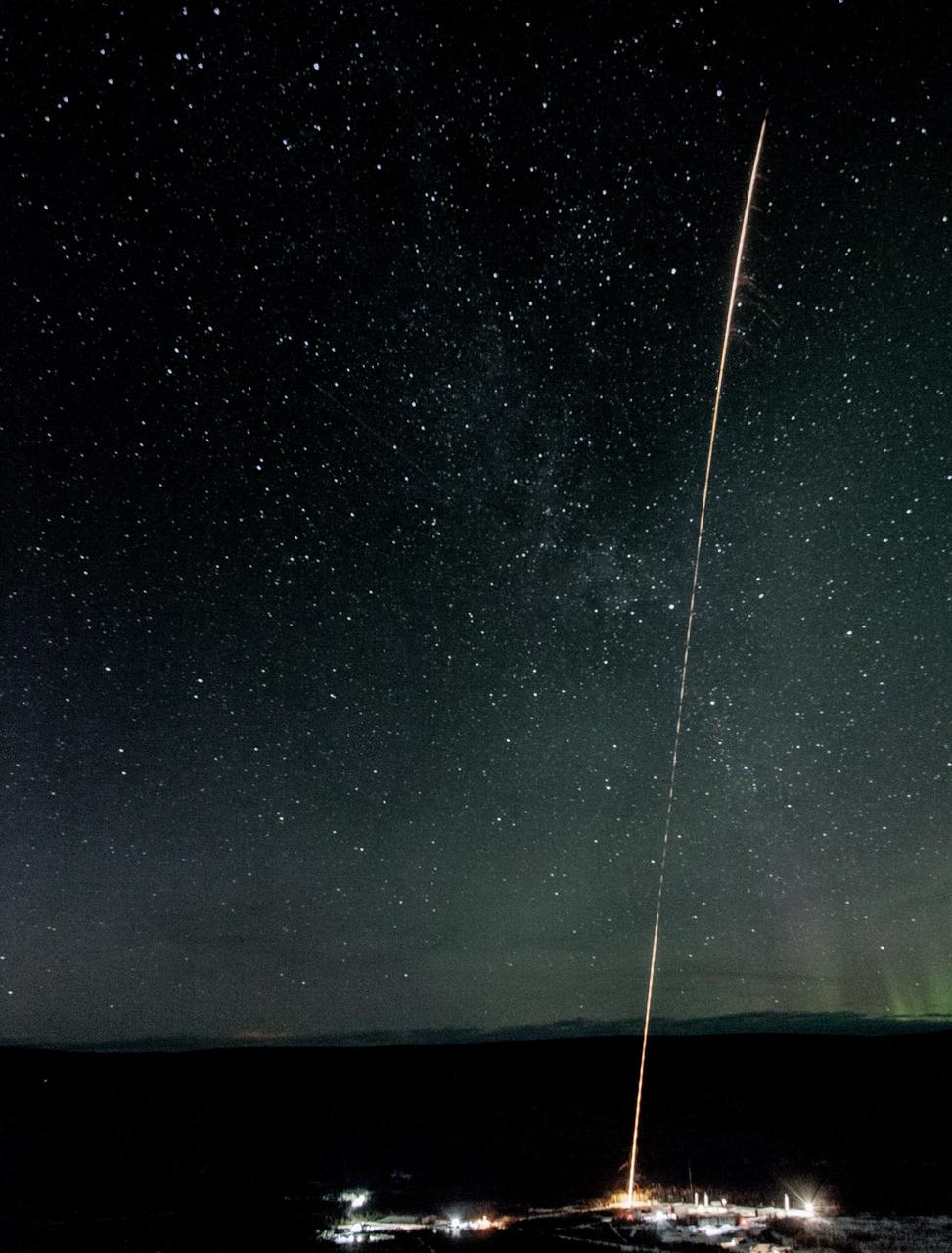
A test rocket is launched the night of Feb. 17 from the Poker Flat Research Range in Alaska. Test rockets are launched as part of the countdown to test out the radar tracking systems. NASA is launching five sounding rockets from the Poker Range into active auroras to explore the Earth's magnetic environment and its impact on Earth’s upper atmosphere and ionosphere. The launch window for the four remaining rockets runs through March 3. Credit: NASA/Terry Zaperach <b><a href="http://www.nasa.gov/audience/formedia/features/MP_Photo_Guidelines.html" rel="nofollow">NASA image use policy.</a></b> <b><a href="http://www.nasa.gov/centers/goddard/home/index.html" rel="nofollow">NASA Goddard Space Flight Center</a></b> enables NASA’s mission through four scientific endeavors: Earth Science, Heliophysics, Solar System Exploration, and Astrophysics. Goddard plays a leading role in NASA’s accomplishments by contributing compelling scientific knowledge to advance the Agency’s mission. <b>Follow us on <a href="http://twitter.com/NASAGoddardPix" rel="nofollow">Twitter</a></b> <b>Like us on <a href="http://www.facebook.com/pages/Greenbelt-MD/NASA-Goddard/395013845897?ref=tsd" rel="nofollow">Facebook</a></b> <b>Find us on <a href="http://instagrid.me/nasagoddard/?vm=grid" rel="nofollow">Instagram</a></b>

Caption: Composite shot of all four rockets for the M-TeX and MIST experiments is made up of 30 second exposures. The rocket salvo began at 4:13 a.m. EST, Jan. 26, 2015, from the Poker Flat Research Range, Alaska. Credit: NASA/Jamie Adkins More info: The Mesosphere-Lower Thermosphere Turbulence Experiment, or M-TeX, and the Mesospheric Inversion-layer Stratified Turbulence, or MIST, experiment were successfully conducted the morning of Jan. 26, 2015, from the Poker Flat Research Range, Alaska. The first M-Tex rocket, a NASA Terrier-Improved Malemute sounding rocket, was launched at 4:13 a.m. EST and was followed one-minute later by the first MIST experiment payload on a NASA Terrier-Improved Orion. The second M-TeX payload was launched at 4:46 a.m. EST and also was followed one minute later by the second MIST payload. Preliminary data show that all four payloads worked as planned and the trimethyl aluminum, or TMA, vapor trails were seen at the various land-based observation sites in Alaska. A fifth rocket carrying the Auroral Spatial Structures Probe remains ready on the launch pad. The launch window for this experiment runs through Jan. 27. <b><a href="http://www.nasa.gov/audience/formedia/features/MP_Photo_Guidelines.html" rel="nofollow">NASA image use policy.</a></b> <b><a href="http://www.nasa.gov/centers/goddard/home/index.html" rel="nofollow">NASA Goddard Space Flight Center</a></b> enables NASA’s mission through four scientific endeavors: Earth Science, Heliophysics, Solar System Exploration, and Astrophysics. Goddard plays a leading role in NASA’s accomplishments by contributing compelling scientific knowledge to advance the Agency’s mission. <b>Follow us on <a href="http://twitter.com/NASAGoddardPix" rel="nofollow">Twitter</a></b> <b>Like us on <a href="http://www.facebook.com/pages/Greenbelt-MD/NASA-Goddard/395013845897?ref=tsd" rel="nofollow">Facebook</a></b> <b>Find us on <a href="http://instagram.com/nasagoddard?vm=grid" rel="nofollow">Instagram</a></b>

Caption: A NASA-funded sounding rocket launches into an aurora in the early morning of March 3, 2014, over Venetie, Alaska. The GREECE mission studies how certain structures – classic curls like swirls of cream in coffee -- form in the aurora. Credit: NASA/Christopher Perry More info: On March 3, 2014, at 6:09 a.m. EST, a NASA-funded sounding rocket launched straight into an aurora over Venetie, Alaska. The Ground-to-Rocket Electrodynamics – Electron Correlative Experiment, or GREECE, sounding rocket mission, which launched from Poker Flat Research Range in Poker Flat, Alaska, will study classic curls in the aurora in the night sky. The GREECE instruments travel on a sounding rocket that launches for a ten-minute ride right through the heart of the aurora reaching its zenith over the native village of Venetie, Alaska. To study the curl structures, GREECE consists of two parts: ground-based imagers located in Venetie to track the aurora from the ground and the rocket to take measurements from the middle of the aurora itself. At their simplest, auroras are caused when particles from the sun funnel over to Earth's night side, generate electric currents, and trigger a shower of particles that strike oxygen and nitrogen some 60 to 200 miles up in Earth's atmosphere, releasing a flash of light. But the details are always more complicated, of course. Researchers wish to understand the aurora, and movement of plasma in general, at much smaller scales including such things as how different structures are formed there. This is a piece of information, which in turn, helps paint a picture of the sun-Earth connection and how energy and particles from the sun interact with Earth's own magnetic system, the magnetosphere. GREECE is a collaborative effort between SWRI, which developed particle instruments and the ground-based imaging, and the University of California, Berkeley, measuring the electric and magnetic fields. The launch is supported by a sounding rocket team from NASA’s Wallops Flight Facility, Wallops Island, Va. The Poker Flat Research Range is operated by the University of Alaska, Fairbanks. “The conditions were optimal,” said Marilia Samara, principal investigator for the mission at Southwest Research Institute in San Antonio, Texas. “We can’t wait to dig into the data.” For more information on the GREECE mission visit: <a href="http://www.nasa.gov/content/goddard/nasa-funded-sounding-rocket-to-catch-aurora-in-the-act/." rel="nofollow">www.nasa.gov/content/goddard/nasa-funded-sounding-rocket- </a>.<b><a href="http://www.nasa.gov/audience/formedia/features/MP_Photo_Guidelines.html" rel="nofollow">NASA image use policy.</a></b> <b><a href="http://www.nasa.gov/centers/goddard/home/index.html" rel="nofollow">NASA Goddard Space Flight Center</a></b> enables NASA’s mission through four scientific endeavors: Earth Science, Heliophysics, Solar System Exploration, and Astrophysics. Goddard plays a leading role in NASA’s accomplishments by contributing compelling scientific knowledge to advance the Agency’s mission. <b>Follow us on <a href="http://twitter.com/NASAGoddardPix" rel="nofollow">Twitter</a></b> <b>Like us on <a href="http://www.facebook.com/pages/Greenbelt-MD/NASA-Goddard/395013845897?ref=tsd" rel="nofollow">Facebook</a></b> <b>Find us on <a href="http://instagram.com/nasagoddard?vm=grid" rel="nofollow">Instagram</a></b>

Caption: A NASA-funded sounding rocket launches into an aurora in the early morning of March 3, 2014, over Venetie, Alaska. The GREECE mission studies how certain structures – classic curls like swirls of cream in coffee -- form in the aurora. Credit: NASA/Christopher Perry More info: On March 3, 2014, at 6:09 a.m. EST, a NASA-funded sounding rocket launched straight into an aurora over Venetie, Alaska. The Ground-to-Rocket Electrodynamics – Electron Correlative Experiment, or GREECE, sounding rocket mission, which launched from Poker Flat Research Range in Poker Flat, Alaska, will study classic curls in the aurora in the night sky. The GREECE instruments travel on a sounding rocket that launches for a ten-minute ride right through the heart of the aurora reaching its zenith over the native village of Venetie, Alaska. To study the curl structures, GREECE consists of two parts: ground-based imagers located in Venetie to track the aurora from the ground and the rocket to take measurements from the middle of the aurora itself. At their simplest, auroras are caused when particles from the sun funnel over to Earth's night side, generate electric currents, and trigger a shower of particles that strike oxygen and nitrogen some 60 to 200 miles up in Earth's atmosphere, releasing a flash of light. But the details are always more complicated, of course. Researchers wish to understand the aurora, and movement of plasma in general, at much smaller scales including such things as how different structures are formed there. This is a piece of information, which in turn, helps paint a picture of the sun-Earth connection and how energy and particles from the sun interact with Earth's own magnetic system, the magnetosphere. GREECE is a collaborative effort between SWRI, which developed particle instruments and the ground-based imaging, and the University of California, Berkeley, measuring the electric and magnetic fields. The launch is supported by a sounding rocket team from NASA’s Wallops Flight Facility, Wallops Island, Va. The Poker Flat Research Range is operated by the University of Alaska, Fairbanks. “The conditions were optimal,” said Marilia Samara, principal investigator for the mission at Southwest Research Institute in San Antonio, Texas. “We can’t wait to dig into the data.” For more information on the GREECE mission visit: <a href="http://www.nasa.gov/content/goddard/nasa-funded-sounding-rocket-to-catch-aurora-in-the-act/." rel="nofollow">www.nasa.gov/content/goddard/nasa-funded-sounding-rocket- </a>.<b><a href="http://www.nasa.gov/audience/formedia/features/MP_Photo_Guidelines.html" rel="nofollow">NASA image use policy.</a></b> <b><a href="http://www.nasa.gov/centers/goddard/home/index.html" rel="nofollow">NASA Goddard Space Flight Center</a></b> enables NASA’s mission through four scientific endeavors: Earth Science, Heliophysics, Solar System Exploration, and Astrophysics. Goddard plays a leading role in NASA’s accomplishments by contributing compelling scientific knowledge to advance the Agency’s mission. <b>Follow us on <a href="http://twitter.com/NASAGoddardPix" rel="nofollow">Twitter</a></b> <b>Like us on <a href="http://www.facebook.com/pages/Greenbelt-MD/NASA-Goddard/395013845897?ref=tsd" rel="nofollow">Facebook</a></b> <b>Find us on <a href="http://instagram.com/nasagoddard?vm=grid" rel="nofollow">Instagram</a></b>

Caption: A NASA-funded sounding rocket launches into an aurora in the early morning of March 3, 2014, over Venetie, Alaska. The GREECE mission studies how certain structures – classic curls like swirls of cream in coffee -- form in the aurora. Credit: NASA/Christopher Perry More info: On March 3, 2014, at 6:09 a.m. EST, a NASA-funded sounding rocket launched straight into an aurora over Venetie, Alaska. The Ground-to-Rocket Electrodynamics – Electron Correlative Experiment, or GREECE, sounding rocket mission, which launched from Poker Flat Research Range in Poker Flat, Alaska, will study classic curls in the aurora in the night sky. The GREECE instruments travel on a sounding rocket that launches for a ten-minute ride right through the heart of the aurora reaching its zenith over the native village of Venetie, Alaska. To study the curl structures, GREECE consists of two parts: ground-based imagers located in Venetie to track the aurora from the ground and the rocket to take measurements from the middle of the aurora itself. At their simplest, auroras are caused when particles from the sun funnel over to Earth's night side, generate electric currents, and trigger a shower of particles that strike oxygen and nitrogen some 60 to 200 miles up in Earth's atmosphere, releasing a flash of light. But the details are always more complicated, of course. Researchers wish to understand the aurora, and movement of plasma in general, at much smaller scales including such things as how different structures are formed there. This is a piece of information, which in turn, helps paint a picture of the sun-Earth connection and how energy and particles from the sun interact with Earth's own magnetic system, the magnetosphere. GREECE is a collaborative effort between SWRI, which developed particle instruments and the ground-based imaging, and the University of California, Berkeley, measuring the electric and magnetic fields. The launch is supported by a sounding rocket team from NASA’s Wallops Flight Facility, Wallops Island, Va. The Poker Flat Research Range is operated by the University of Alaska, Fairbanks. “The conditions were optimal,” said Marilia Samara, principal investigator for the mission at Southwest Research Institute in San Antonio, Texas. “We can’t wait to dig into the data.” For more information on the GREECE mission visit: <a href="http://www.nasa.gov/content/goddard/nasa-funded-sounding-rocket-to-catch-aurora-in-the-act/." rel="nofollow">www.nasa.gov/content/goddard/nasa-funded-sounding-rocket- </a>.<b><a href="http://www.nasa.gov/audience/formedia/features/MP_Photo_Guidelines.html" rel="nofollow">NASA image use policy.</a></b> <b><a href="http://www.nasa.gov/centers/goddard/home/index.html" rel="nofollow">NASA Goddard Space Flight Center</a></b> enables NASA’s mission through four scientific endeavors: Earth Science, Heliophysics, Solar System Exploration, and Astrophysics. Goddard plays a leading role in NASA’s accomplishments by contributing compelling scientific knowledge to advance the Agency’s mission. <b>Follow us on <a href="http://twitter.com/NASAGoddardPix" rel="nofollow">Twitter</a></b> <b>Like us on <a href="http://www.facebook.com/pages/Greenbelt-MD/NASA-Goddard/395013845897?ref=tsd" rel="nofollow">Facebook</a></b> <b>Find us on <a href="http://instagram.com/nasagoddard?vm=grid" rel="nofollow">Instagram</a></b>

Caption: A NASA-funded sounding rocket launches into an aurora in the early morning of March 3, 2014, over Venetie, Alaska. The GREECE mission studies how certain structures – classic curls like swirls of cream in coffee -- form in the aurora. Credit: NASA/Christopher Perry More info: On March 3, 2014, at 6:09 a.m. EST, a NASA-funded sounding rocket launched straight into an aurora over Venetie, Alaska. The Ground-to-Rocket Electrodynamics – Electron Correlative Experiment, or GREECE, sounding rocket mission, which launched from Poker Flat Research Range in Poker Flat, Alaska, will study classic curls in the aurora in the night sky. The GREECE instruments travel on a sounding rocket that launches for a ten-minute ride right through the heart of the aurora reaching its zenith over the native village of Venetie, Alaska. To study the curl structures, GREECE consists of two parts: ground-based imagers located in Venetie to track the aurora from the ground and the rocket to take measurements from the middle of the aurora itself. At their simplest, auroras are caused when particles from the sun funnel over to Earth's night side, generate electric currents, and trigger a shower of particles that strike oxygen and nitrogen some 60 to 200 miles up in Earth's atmosphere, releasing a flash of light. But the details are always more complicated, of course. Researchers wish to understand the aurora, and movement of plasma in general, at much smaller scales including such things as how different structures are formed there. This is a piece of information, which in turn, helps paint a picture of the sun-Earth connection and how energy and particles from the sun interact with Earth's own magnetic system, the magnetosphere. GREECE is a collaborative effort between SWRI, which developed particle instruments and the ground-based imaging, and the University of California, Berkeley, measuring the electric and magnetic fields. The launch is supported by a sounding rocket team from NASA’s Wallops Flight Facility, Wallops Island, Va. The Poker Flat Research Range is operated by the University of Alaska, Fairbanks. “The conditions were optimal,” said Marilia Samara, principal investigator for the mission at Southwest Research Institute in San Antonio, Texas. “We can’t wait to dig into the data.” For more information on the GREECE mission visit: <a href="http://www.nasa.gov/content/goddard/nasa-funded-sounding-rocket-to-catch-aurora-in-the-act/." rel="nofollow">www.nasa.gov/content/goddard/nasa-funded-sounding-rocket- </a>.<b><a href="http://www.nasa.gov/audience/formedia/features/MP_Photo_Guidelines.html" rel="nofollow">NASA image use policy.</a></b> <b><a href="http://www.nasa.gov/centers/goddard/home/index.html" rel="nofollow">NASA Goddard Space Flight Center</a></b> enables NASA’s mission through four scientific endeavors: Earth Science, Heliophysics, Solar System Exploration, and Astrophysics. Goddard plays a leading role in NASA’s accomplishments by contributing compelling scientific knowledge to advance the Agency’s mission. <b>Follow us on <a href="http://twitter.com/NASAGoddardPix" rel="nofollow">Twitter</a></b> <b>Like us on <a href="http://www.facebook.com/pages/Greenbelt-MD/NASA-Goddard/395013845897?ref=tsd" rel="nofollow">Facebook</a></b> <b>Find us on <a href="http://instagram.com/nasagoddard?vm=grid" rel="nofollow">Instagram</a></b>

Caption: A NASA-funded sounding rocket launches into an aurora in the early morning of March 3, 2014, over Venetie, Alaska. The GREECE mission studies how certain structures – classic curls like swirls of cream in coffee -- form in the aurora. Credit: NASA/Christopher Perry More info: On March 3, 2014, at 6:09 a.m. EST, a NASA-funded sounding rocket launched straight into an aurora over Venetie, Alaska. The Ground-to-Rocket Electrodynamics – Electron Correlative Experiment, or GREECE, sounding rocket mission, which launched from Poker Flat Research Range in Poker Flat, Alaska, will study classic curls in the aurora in the night sky. The GREECE instruments travel on a sounding rocket that launches for a ten-minute ride right through the heart of the aurora reaching its zenith over the native village of Venetie, Alaska. To study the curl structures, GREECE consists of two parts: ground-based imagers located in Venetie to track the aurora from the ground and the rocket to take measurements from the middle of the aurora itself. At their simplest, auroras are caused when particles from the sun funnel over to Earth's night side, generate electric currents, and trigger a shower of particles that strike oxygen and nitrogen some 60 to 200 miles up in Earth's atmosphere, releasing a flash of light. But the details are always more complicated, of course. Researchers wish to understand the aurora, and movement of plasma in general, at much smaller scales including such things as how different structures are formed there. This is a piece of information, which in turn, helps paint a picture of the sun-Earth connection and how energy and particles from the sun interact with Earth's own magnetic system, the magnetosphere. GREECE is a collaborative effort between SWRI, which developed particle instruments and the ground-based imaging, and the University of California, Berkeley, measuring the electric and magnetic fields. The launch is supported by a sounding rocket team from NASA’s Wallops Flight Facility, Wallops Island, Va. The Poker Flat Research Range is operated by the University of Alaska, Fairbanks. “The conditions were optimal,” said Marilia Samara, principal investigator for the mission at Southwest Research Institute in San Antonio, Texas. “We can’t wait to dig into the data.” For more information on the GREECE mission visit: <a href="http://www.nasa.gov/content/goddard/nasa-funded-sounding-rocket-to-catch-aurora-in-the-act/." rel="nofollow">www.nasa.gov/content/goddard/nasa-funded-sounding-rocket- </a>.<b><a href="http://www.nasa.gov/audience/formedia/features/MP_Photo_Guidelines.html" rel="nofollow">NASA image use policy.</a></b> <b><a href="http://www.nasa.gov/centers/goddard/home/index.html" rel="nofollow">NASA Goddard Space Flight Center</a></b> enables NASA’s mission through four scientific endeavors: Earth Science, Heliophysics, Solar System Exploration, and Astrophysics. Goddard plays a leading role in NASA’s accomplishments by contributing compelling scientific knowledge to advance the Agency’s mission. <b>Follow us on <a href="http://twitter.com/NASAGoddardPix" rel="nofollow">Twitter</a></b> <b>Like us on <a href="http://www.facebook.com/pages/Greenbelt-MD/NASA-Goddard/395013845897?ref=tsd" rel="nofollow">Facebook</a></b> <b>Find us on <a href="http://instagram.com/nasagoddard?vm=grid" rel="nofollow">Instagram</a></b>
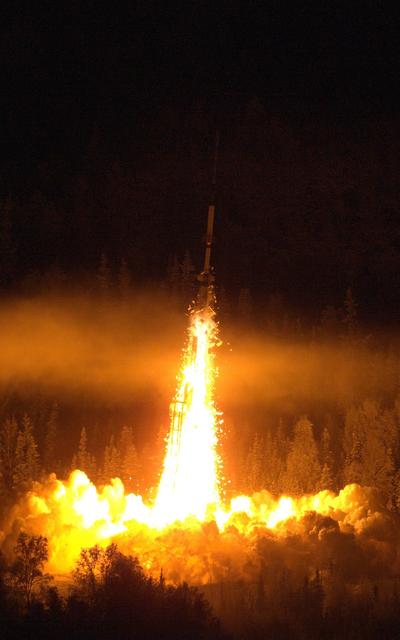
A NASA Oriole IV sounding rocket with the Aural Spatial Structures Probe leaves the launch pad on Jan. 28, 2015, from the Poker Flat Research Range in Alaska. Credit: NASA/Lee Wingfield More info: On count day number 15, the Aural Spatial Structures Probe, or ASSP, was successfully launched on a NASA Oriole IV sounding rocket at 5:41 a.m. EST on Jan. 28, 2015, from the Poker Flat Research Range in Alaska. Preliminary data show that all aspects of the payload worked as designed and the principal investigator Charles Swenson at Utah State University described the mission as a “raging success.” “This is likely the most complicated mission the sounding rocket program has ever undertaken and it was not easy by any stretch," said John Hickman, operations manager of the NASA sounding rocket program office at the Wallops Flight Facility, Virginia. "It was technically challenging every step of the way.” “The payload deployed all six sub-payloads in formation as planned and all appeared to function as planned. Quite an amazing feat to maneuver and align the main payload, maintain the proper attitude while deploying all six 7.3-pound sub payloads at about 40 meters per second," said Hickman. Read more: <a href="http://www.nasa.gov/content/assp-sounding-rocket-launches-successfully-from-alaska/#.VMkOnEhpEhJ" rel="nofollow">www.nasa.gov/content/assp-sounding-rocket-launches-succes...</a> <b><a href="http://www.nasa.gov/audience/formedia/features/MP_Photo_Guidelines.html" rel="nofollow">NASA image use policy.</a></b> <b><a href="http://www.nasa.gov/centers/goddard/home/index.html" rel="nofollow">NASA Goddard Space Flight Center</a></b> enables NASA’s mission through four scientific endeavors: Earth Science, Heliophysics, Solar System Exploration, and Astrophysics. Goddard plays a leading role in NASA’s accomplishments by contributing compelling scientific knowledge to advance the Agency’s mission. <b>Follow us on <a href="http://twitter.com/NASAGoddardPix" rel="nofollow">Twitter</a></b> <b>Like us on <a href="http://www.facebook.com/pages/Greenbelt-MD/NASA-Goddard/395013845897?ref=tsd" rel="nofollow">Facebook</a></b> <b>Find us on <a href="http://instagram.com/nasagoddard?vm=grid" rel="nofollow">Instagram</a></b>

A NASA sounding rocket to be launched from the Poker Flat Research Range, Alaska, between February 13 and March 3, 2017, will form white artificial clouds during its brief, 10-minute flight. The rocket is one of five being launched January through March, each carrying instruments to explore the aurora and its interactions with Earth’s upper atmosphere and ionosphere. Scientists at NASA's Goddard Space Center in Greenbelt, Maryland, explain that electric fields drive the ionosphere, which, in turn, are predicted to set up enhanced neutral winds within an aurora arc. This experiment seeks to understand the height-dependent processes that create localized neutral jets within the aurora. For this mission, two 56-foot long Black Brant IX rockets will be launched nearly simultaneously. One rocket is expected to fly to an apogee of about 107 miles while the other is targeted for 201 miles apogee. Only the lower altitude rocket will form the white luminescent clouds during its flight. Read more: <a href="http://go.nasa.gov/2kYaBgV" rel="nofollow">go.nasa.gov/2kYaBgV</a> <b><a href="http://www.nasa.gov/audience/formedia/features/MP_Photo_Guidelines.html" rel="nofollow">NASA image use policy.</a></b> <b><a href="http://www.nasa.gov/centers/goddard/home/index.html" rel="nofollow">NASA Goddard Space Flight Center</a></b> enables NASA’s mission through four scientific endeavors: Earth Science, Heliophysics, Solar System Exploration, and Astrophysics. Goddard plays a leading role in NASA’s accomplishments by contributing compelling scientific knowledge to advance the Agency’s mission. <b>Follow us on <a href="http://twitter.com/NASAGoddardPix" rel="nofollow">Twitter</a></b> <b>Like us on <a href="http://www.facebook.com/pages/Greenbelt-MD/NASA-Goddard/395013845897?ref=tsd" rel="nofollow">Facebook</a></b> <b>Find us on <a href="http://instagrid.me/nasagoddard/?vm=grid" rel="nofollow">Instagram</a></b>

The Polar Night Nitric Oxide or PolarNOx experiment from Virginia Tech is launched aboard a NASA Black Brant IX sounding rocket at 8:45 a.m. EST, Jan. 27, from the Poker Flat Research Range in Alaska. PolarNOx is measuring nitric oxide in the polar night sky. Nitric oxide in the polar night sky is created by auroras. Under appropriate conditions it can be transported to the stratosphere where it may destroy ozone resulting in possible changes in stratospheric temperature and wind and may even impact the circulation at Earth’s surface. Credit: NASA/Wallops/Jamie Adkins <b><a href="http://www.nasa.gov/audience/formedia/features/MP_Photo_Guidelines.html" rel="nofollow">NASA image use policy.</a></b> <b><a href="http://www.nasa.gov/centers/goddard/home/index.html" rel="nofollow">NASA Goddard Space Flight Center</a></b> enables NASA’s mission through four scientific endeavors: Earth Science, Heliophysics, Solar System Exploration, and Astrophysics. Goddard plays a leading role in NASA’s accomplishments by contributing compelling scientific knowledge to advance the Agency’s mission. <b>Follow us on <a href="http://twitter.com/NASAGoddardPix" rel="nofollow">Twitter</a></b> <b>Like us on <a href="http://www.facebook.com/pages/Greenbelt-MD/NASA-Goddard/395013845897?ref=tsd" rel="nofollow">Facebook</a></b> <b>Find us on <a href="http://instagrid.me/nasagoddard/?vm=grid" rel="nofollow">Instagram</a></b>
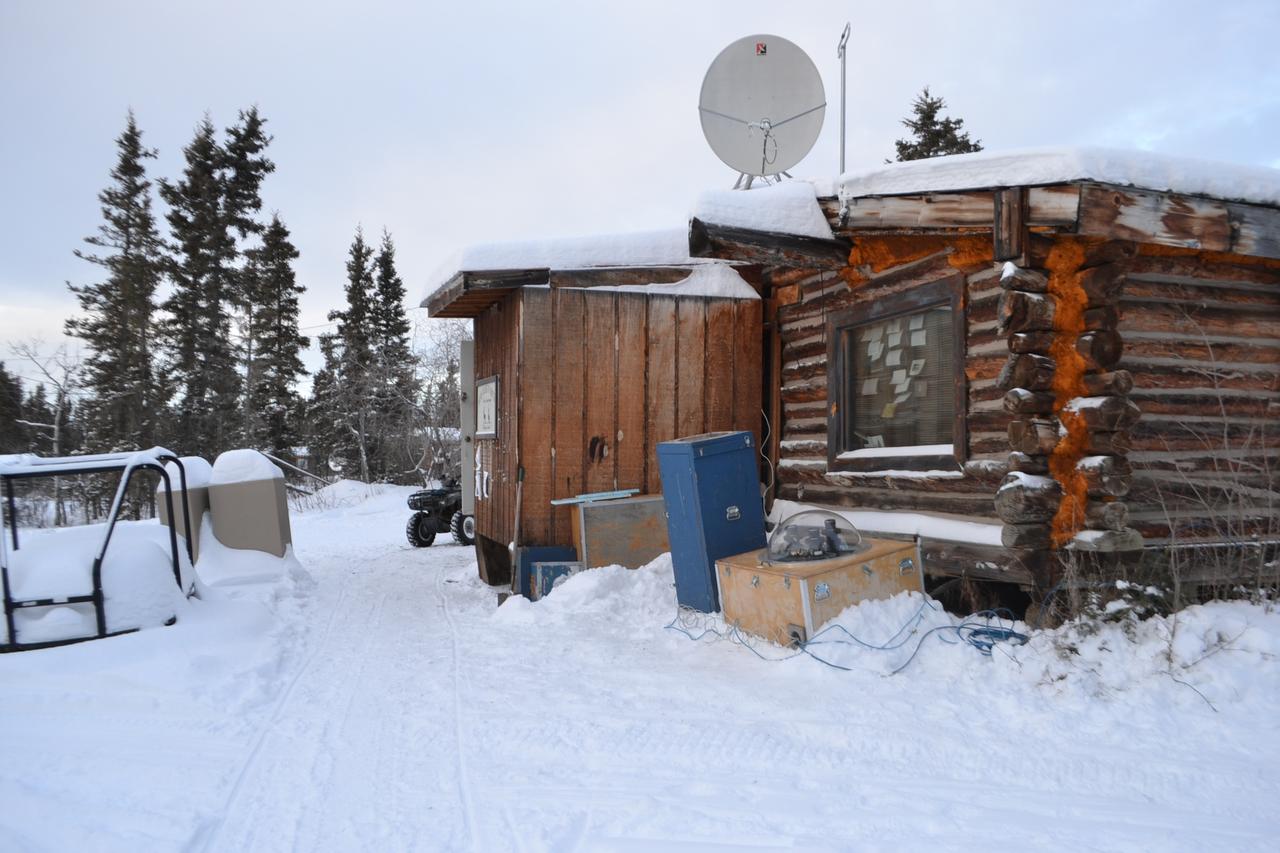
The NASA-funded Ground-to-Rocket Electron-Electrodynamics Correlative Experiment, or GREECE, wants to understand aurora. Specifically, it will study classic auroral curls that swirl through the sky like cream in a cup of coffee. The GREECE instruments travel on a sounding rocket that launches for a ten-minute ride right through the heart of the aurora reaching its zenith over the native village of Venetie, Alaska. To study the curl structures, GREECE consists of two parts: ground-based imagers located in Venetie to track the aurora from the ground and the rocket to take measurements from the middle of the aurora itself. At their simplest, auroras are caused when particles from the sun funnel over to Earth's night side, generate electric currents, and trigger a shower of particles that strike oxygen and nitrogen some 60 to 200 miles up in Earth's atmosphere, releasing a flash of light. But the details are always more complicated, of course. Researchers wish to understand the aurora, and movement of plasma in general, at much smaller scales including such things as how different structures are formed there. This is a piece of information, which in turn, helps paint a picture of the sun-Earth connection and how energy and particles from the sun interact with Earth's own magnetic system, the magnetosphere. GREECE is a collaborative effort between SWRI, which developed particle instruments and the ground-based imaging, and the University of California, Berkeley, measuring the electric and magnetic fields. The launch is supported by a sounding rocket team from NASA’s Wallops Flight Facility, Wallops Island, Va. The Poker Flat Research Range is operated by the University of Alaska, Fairbanks. Credit: NASA Goddard <b><a href="http://www.nasa.gov/audience/formedia/features/MP_Photo_Guidelines.html" rel="nofollow">NASA image use policy.</a></b> <b><a href="http://www.nasa.gov/centers/goddard/home/index.html" rel="nofollow">NASA Goddard Space Flight Center</a></b> enables NASA’s mission through four scientific endeavors: Earth Science, Heliophysics, Solar System Exploration, and Astrophysics. Goddard plays a leading role in NASA’s accomplishments by contributing compelling scientific knowledge to advance the Agency’s mission. <b>Follow us on <a href="http://twitter.com/NASAGoddardPix" rel="nofollow">Twitter</a></b> <b>Like us on <a href="http://www.facebook.com/pages/Greenbelt-MD/NASA-Goddard/395013845897?ref=tsd" rel="nofollow">Facebook</a></b> <b>Find us on <a href="http://instagram.com/nasagoddard?vm=grid" rel="nofollow">Instagram</a></b>
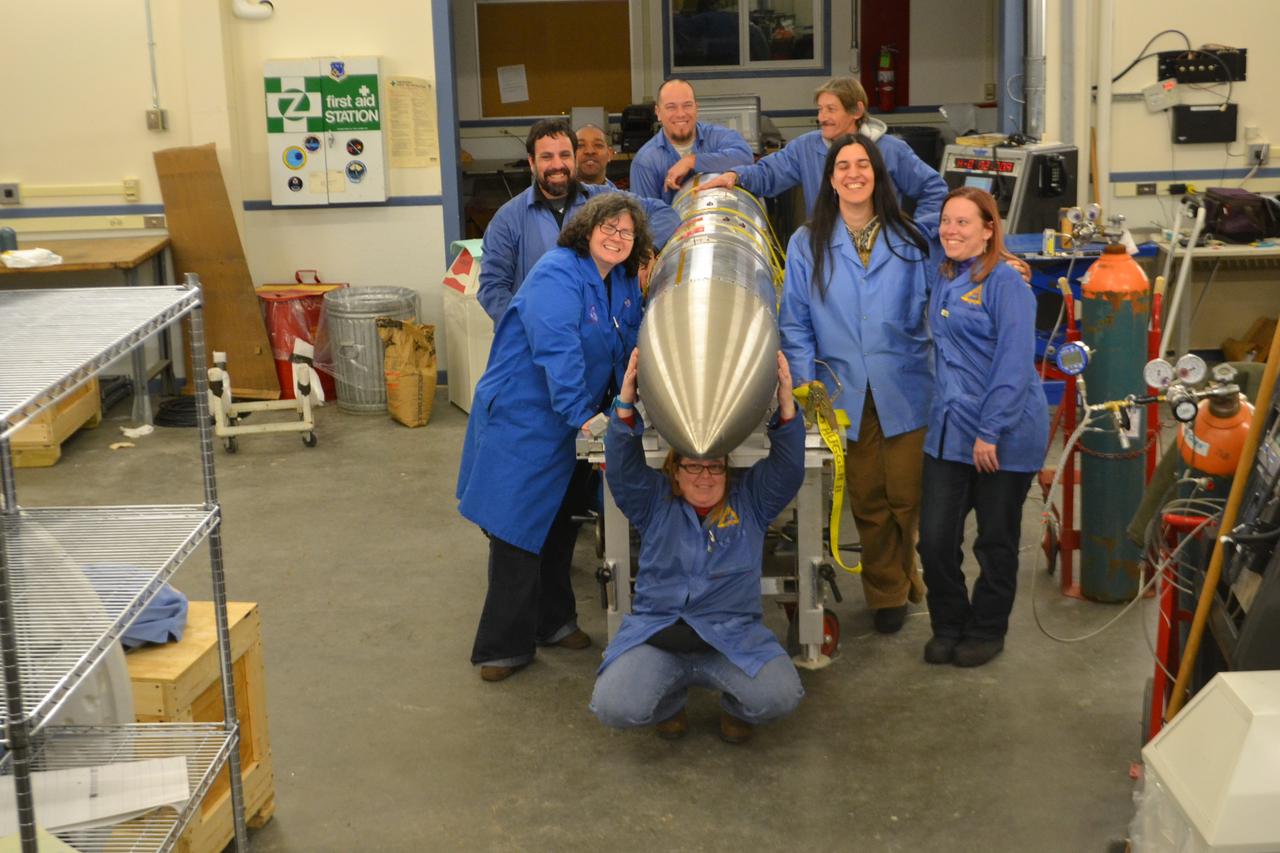
The NASA-funded Ground-to-Rocket Electron-Electrodynamics Correlative Experiment, or GREECE, wants to understand aurora. Specifically, it will study classic auroral curls that swirl through the sky like cream in a cup of coffee. The GREECE instruments travel on a sounding rocket that launches for a ten-minute ride right through the heart of the aurora reaching its zenith over the native village of Venetie, Alaska. To study the curl structures, GREECE consists of two parts: ground-based imagers located in Venetie to track the aurora from the ground and the rocket to take measurements from the middle of the aurora itself. At their simplest, auroras are caused when particles from the sun funnel over to Earth's night side, generate electric currents, and trigger a shower of particles that strike oxygen and nitrogen some 60 to 200 miles up in Earth's atmosphere, releasing a flash of light. But the details are always more complicated, of course. Researchers wish to understand the aurora, and movement of plasma in general, at much smaller scales including such things as how different structures are formed there. This is a piece of information, which in turn, helps paint a picture of the sun-Earth connection and how energy and particles from the sun interact with Earth's own magnetic system, the magnetosphere. GREECE is a collaborative effort between SWRI, which developed particle instruments and the ground-based imaging, and the University of California, Berkeley, measuring the electric and magnetic fields. The launch is supported by a sounding rocket team from NASA’s Wallops Flight Facility, Wallops Island, Va. The Poker Flat Research Range is operated by the University of Alaska, Fairbanks. Credit: NASA Goddard <b><a href="http://www.nasa.gov/audience/formedia/features/MP_Photo_Guidelines.html" rel="nofollow">NASA image use policy.</a></b> <b><a href="http://www.nasa.gov/centers/goddard/home/index.html" rel="nofollow">NASA Goddard Space Flight Center</a></b> enables NASA’s mission through four scientific endeavors: Earth Science, Heliophysics, Solar System Exploration, and Astrophysics. Goddard plays a leading role in NASA’s accomplishments by contributing compelling scientific knowledge to advance the Agency’s mission. <b>Follow us on <a href="http://twitter.com/NASAGoddardPix" rel="nofollow">Twitter</a></b> <b>Like us on <a href="http://www.facebook.com/pages/Greenbelt-MD/NASA-Goddard/395013845897?ref=tsd" rel="nofollow">Facebook</a></b> <b>Find us on <a href="http://instagram.com/nasagoddard?vm=grid" rel="nofollow">Instagram</a></b>
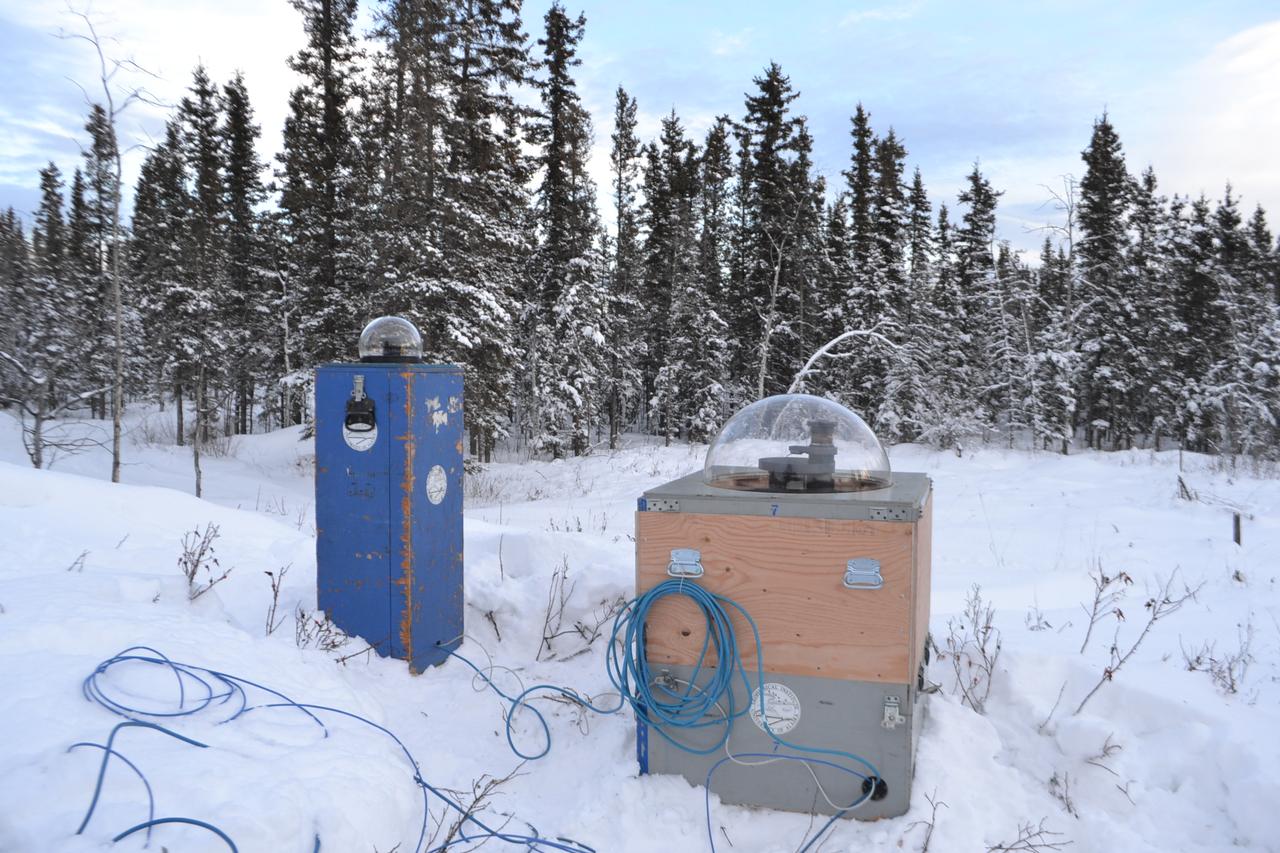
The NASA-funded Ground-to-Rocket Electron-Electrodynamics Correlative Experiment, or GREECE, wants to understand aurora. Specifically, it will study classic auroral curls that swirl through the sky like cream in a cup of coffee. The GREECE instruments travel on a sounding rocket that launches for a ten-minute ride right through the heart of the aurora reaching its zenith over the native village of Venetie, Alaska. To study the curl structures, GREECE consists of two parts: ground-based imagers located in Venetie to track the aurora from the ground and the rocket to take measurements from the middle of the aurora itself. At their simplest, auroras are caused when particles from the sun funnel over to Earth's night side, generate electric currents, and trigger a shower of particles that strike oxygen and nitrogen some 60 to 200 miles up in Earth's atmosphere, releasing a flash of light. But the details are always more complicated, of course. Researchers wish to understand the aurora, and movement of plasma in general, at much smaller scales including such things as how different structures are formed there. This is a piece of information, which in turn, helps paint a picture of the sun-Earth connection and how energy and particles from the sun interact with Earth's own magnetic system, the magnetosphere. GREECE is a collaborative effort between SWRI, which developed particle instruments and the ground-based imaging, and the University of California, Berkeley, measuring the electric and magnetic fields. The launch is supported by a sounding rocket team from NASA’s Wallops Flight Facility, Wallops Island, Va. The Poker Flat Research Range is operated by the University of Alaska, Fairbanks. Credit: NASA Goddard <b><a href="http://www.nasa.gov/audience/formedia/features/MP_Photo_Guidelines.html" rel="nofollow">NASA image use policy.</a></b> <b><a href="http://www.nasa.gov/centers/goddard/home/index.html" rel="nofollow">NASA Goddard Space Flight Center</a></b> enables NASA’s mission through four scientific endeavors: Earth Science, Heliophysics, Solar System Exploration, and Astrophysics. Goddard plays a leading role in NASA’s accomplishments by contributing compelling scientific knowledge to advance the Agency’s mission. <b>Follow us on <a href="http://twitter.com/NASAGoddardPix" rel="nofollow">Twitter</a></b> <b>Like us on <a href="http://www.facebook.com/pages/Greenbelt-MD/NASA-Goddard/395013845897?ref=tsd" rel="nofollow">Facebook</a></b> <b>Find us on <a href="http://instagram.com/nasagoddard?vm=grid" rel="nofollow">Instagram</a></b>