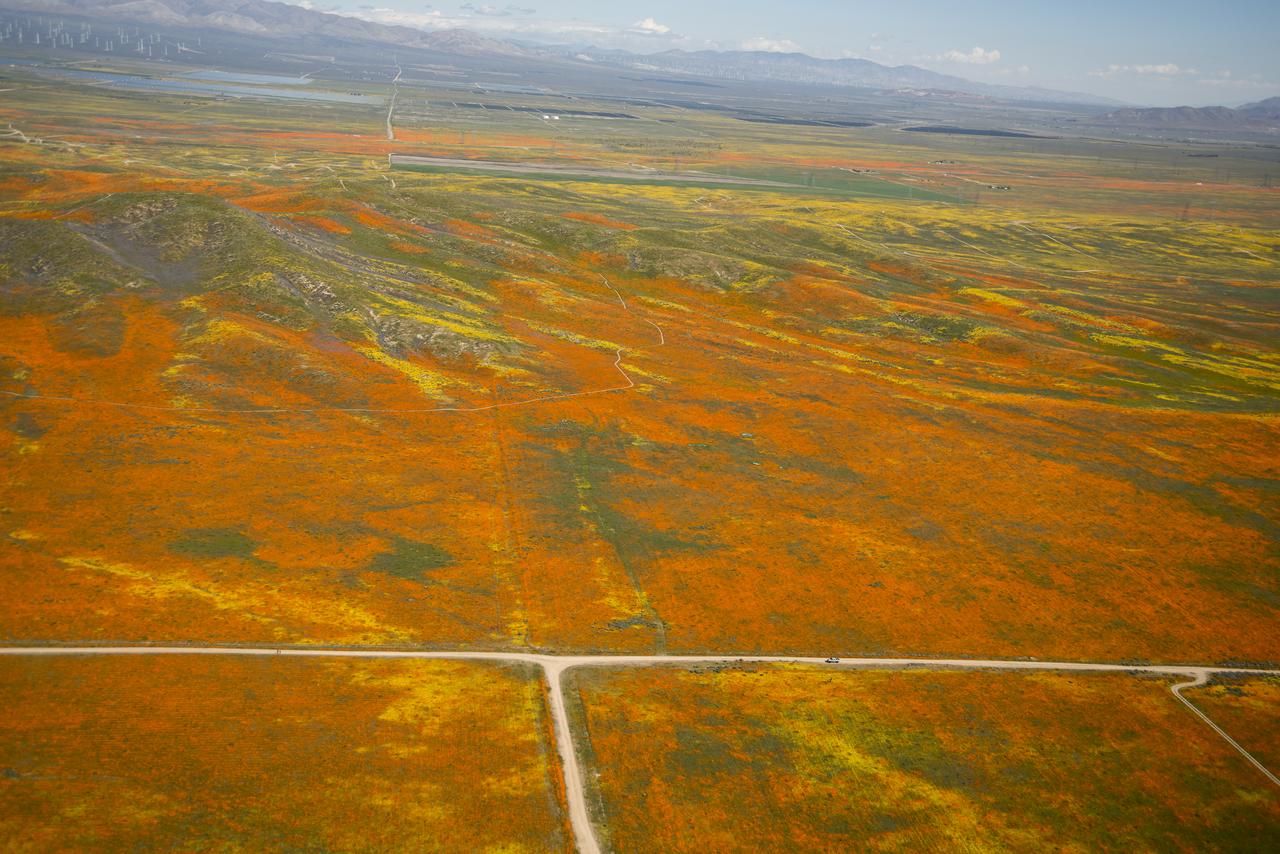
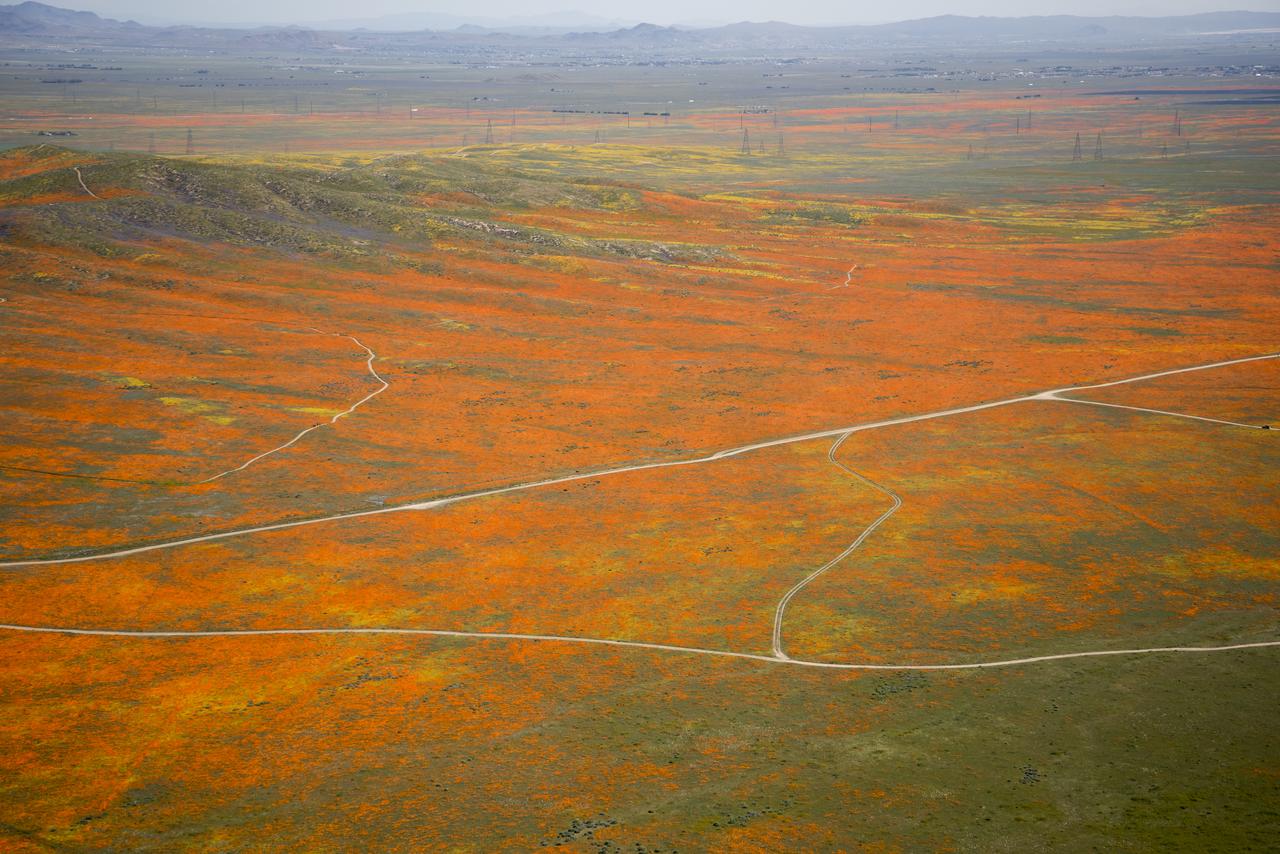
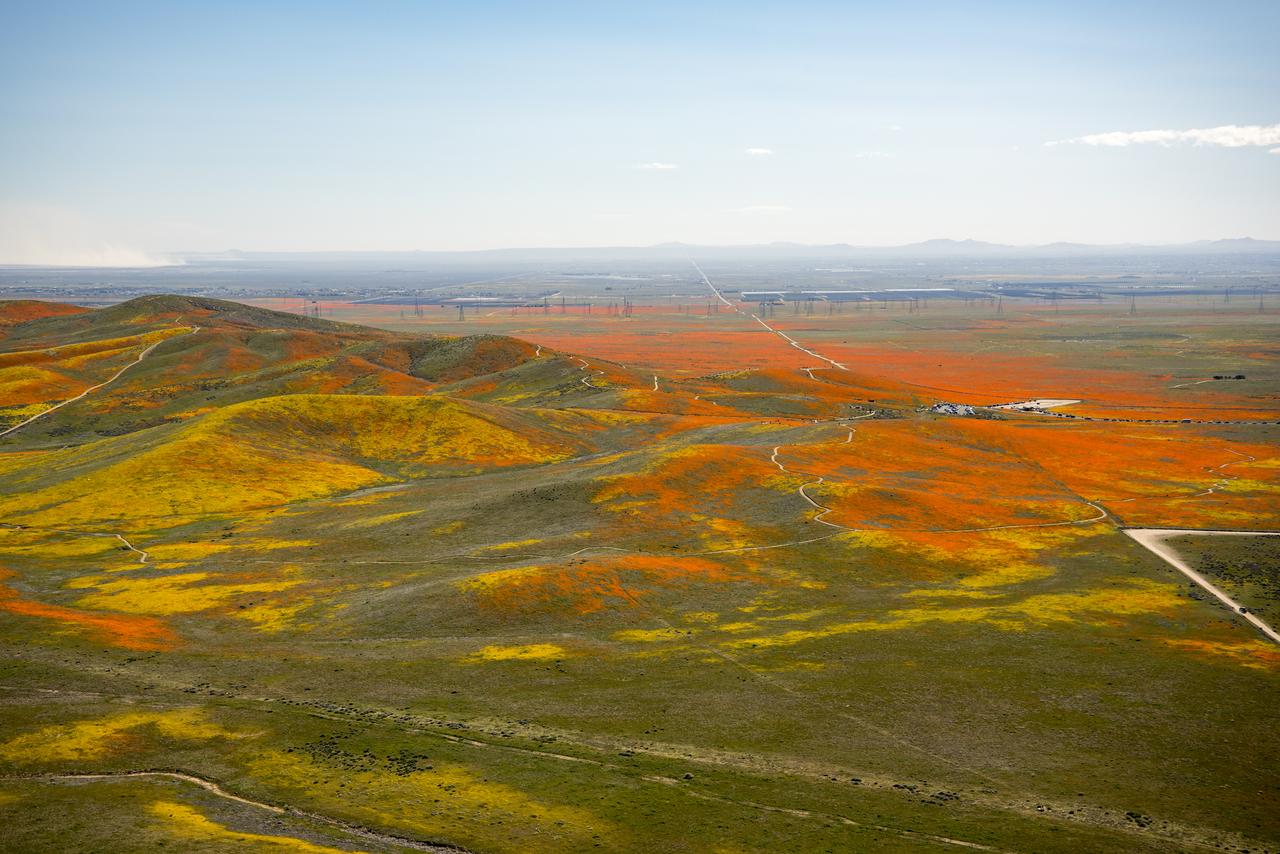
View from a NASA aircraft, TG-14, over the Superbloom of wildflowers and poppies from the Antelope Valley in Southern California and Poppy Reserve and solar panels in background
Rainy Winter Season Brings Abundance of Wildflowers and Poppies in Southern California’s Antelope Valley. The poppy is the state flower.
View from a NASA aircraft, TG-14, over the Superbloom of yellow wildflowers and orange poppies from the Antelope Valley in Southern California. The poppy is the state flower.
Rainy Winter Season Brings Abundance of Wildflowers and Poppies in Southern California’s Antelope Valley. The poppy is the state flower.
View from a NASA aircraft, TG-14, over the Superbloom of yellow wildflowers and orange poppies from the Antelope Valley in Southern California, Poppy Reserve and solar panels are in the background.
Rainy Winter Season Brings Abundance of Wildflowers and Poppies in Southern California’s Antelope Valley. The Poppy is the state flower.
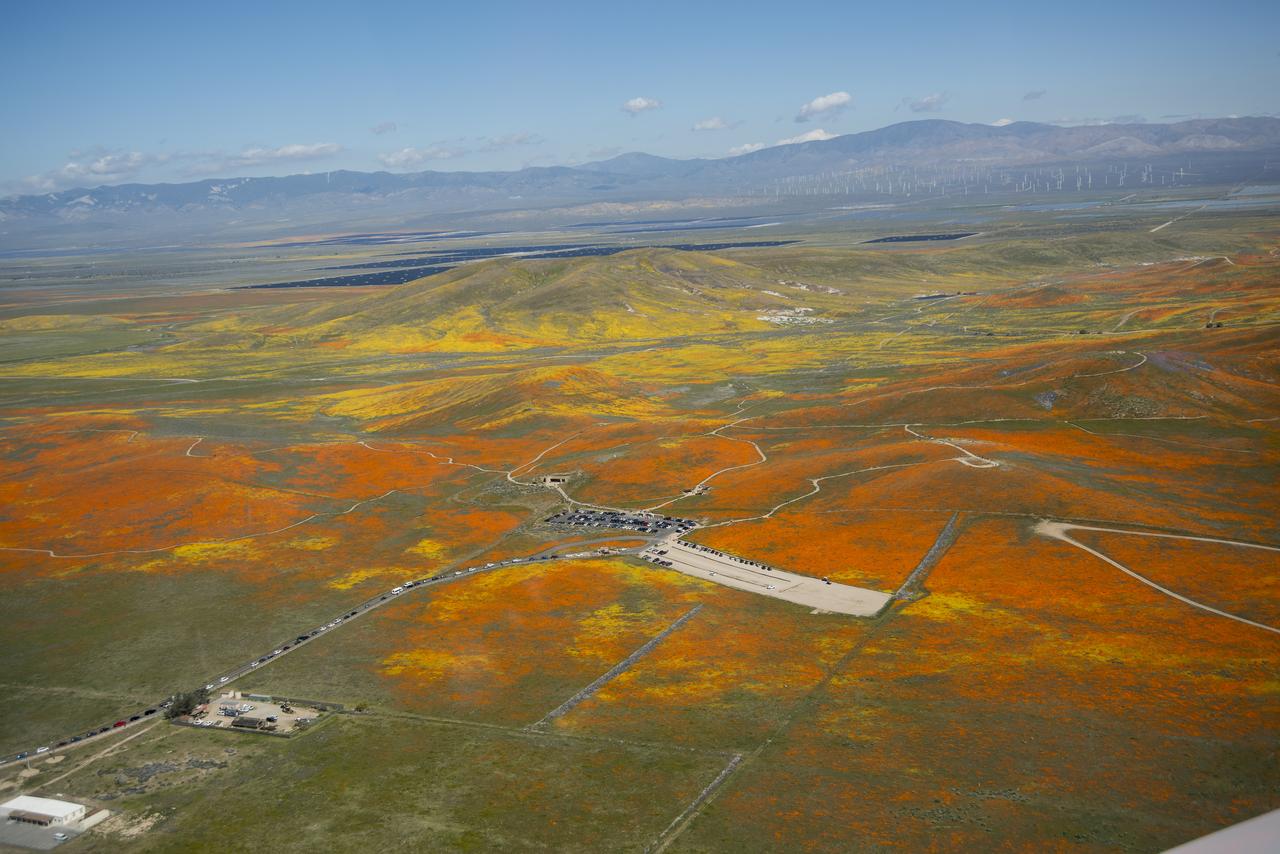
View from a NASA aircraft, TG-14, over the Superbloom of wildflowers and poppies from the Antelope Valley in Southern California. The Poppy Reserve is in the foreground and solar panels are in the background.
Rainy Winter Season Brings Abundance of Wildflowers and Poppies in Southern California’s Antelope Valley showing Poppy Reserve and solar panels are in the background.
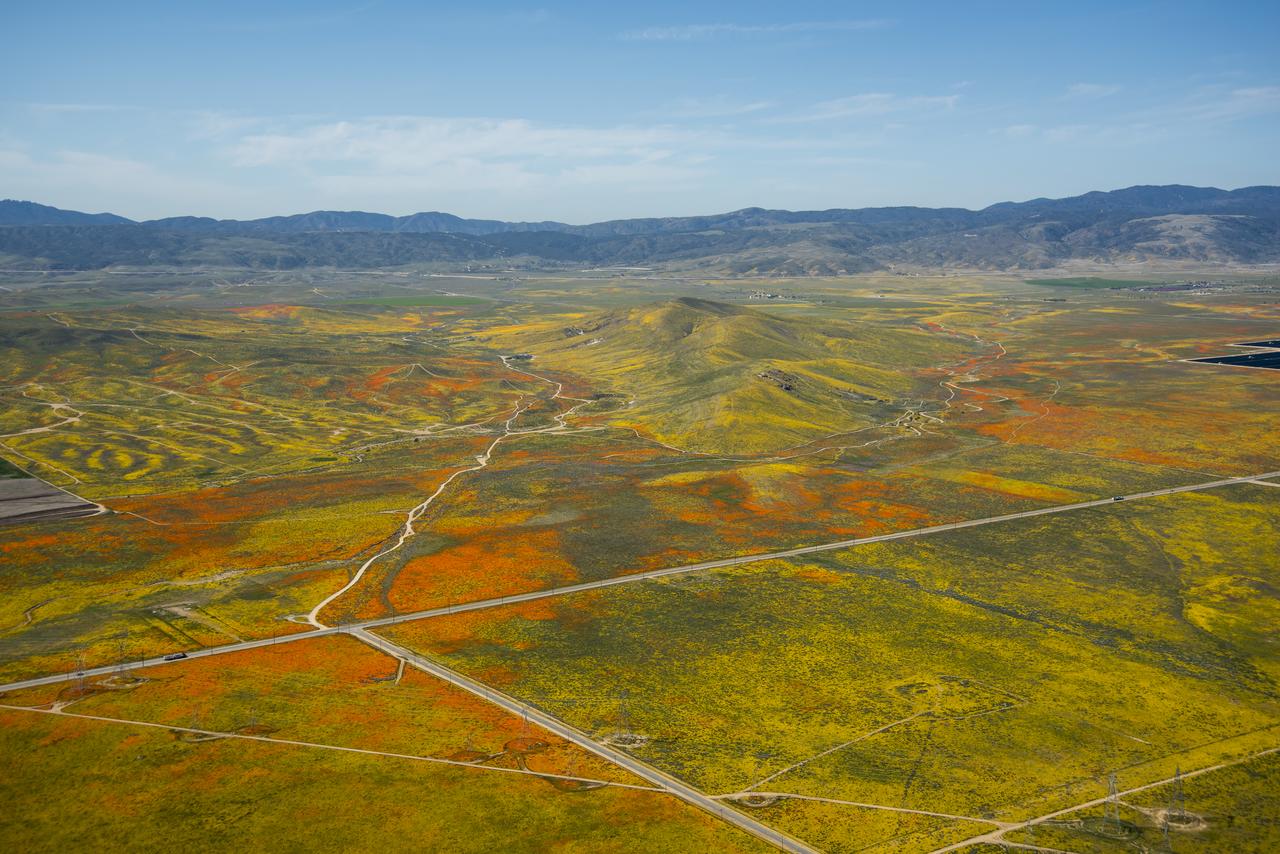
Image from a NASA aircraft, TG-14, over the Superbloom of wildflowers and poppies from the Antelope Valley in Southern California
Rainy Winter Season Brings Abundance of Wildflowers and Poppies in Southern California's Antelope Valley. The poppy is the state flower.
View from a NASA aircraft, TG-14, over the Superbloom of wildflowers and poppies from the Antelope Valley in Southern California, Poppy Reserve and solar panels are in the background.
Rainy Winter Season Brings Abundance of Wildflowers and Poppies in Southern California’s Antelope Valley. Solar panels are in the background.
NASA’s T-34 aircraft flown from the agency’s Armstrong Flight Research Center heading toward Southern California’s Antelope Valley Poppy Reserve. The aircraft was flown from the agency’s Armstrong Flight Research Center.
NASA Aircraft heads to Southern California’s Poppy Reserve in the foreground. Rainy Season made the Antelope Valley colorful with poppies and wildflowers.
NASA's T-34 aircraft flown from the agency's Armstrong Flight Research Center aims the plane toward Southern California's Antelope Valley Poppy Reserve. The aircraft was flown from the agency's Armstrong Flight Research Center.
NASA Aircraft heads to Southern California's Poppy Reserve in the foreground. Rainy Season made the Antelope Valley colorful with poppies and wildflowers.
NASA’s T-34 aircraft flown from the agency’s Armstrong Flight Research Center aims the plane toward Southern California’s Antelope Valley Poppy Reserve flying over yellow wildflowers. The aircraft was flown from the agency’s Armstrong Flight Research Center.
NASA Aircraft flies over yellow wildflowers abundant due to rainy winter season. The T-34 aircraft was flown from the agency's Armstrong Flight Research Center.
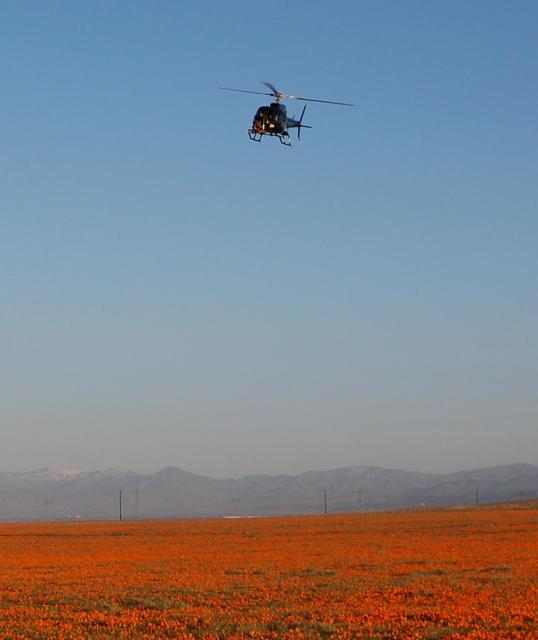
This image, taken April 9, 2010, shows a helicopter carrying an engineering test model of the landing radar for NASA Mars Science Laboratory over a patch of desert with abundant California poppies.
Testing of Mars Landing Radar near Lancaster, Calif.
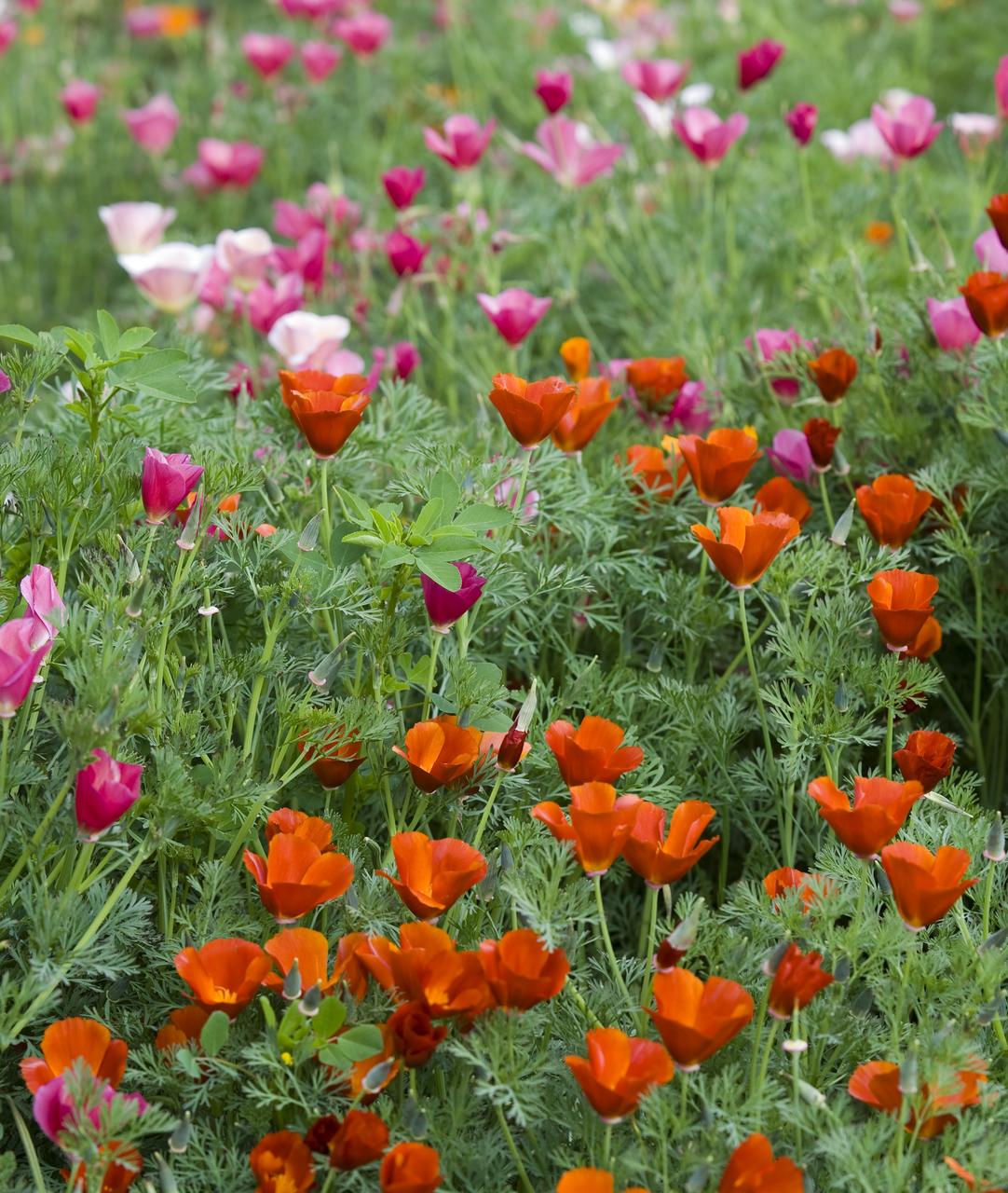
Environmental sustainability is put into practice here in the native plant gardens that surround the main auditorium building at NASA Ames Research Center, Moffett Field, Calif.  An assortment of the colors of the California poppy are shown in this image. The garden contains many other native plants as well.
ARC-2010-ACD10-0059-008
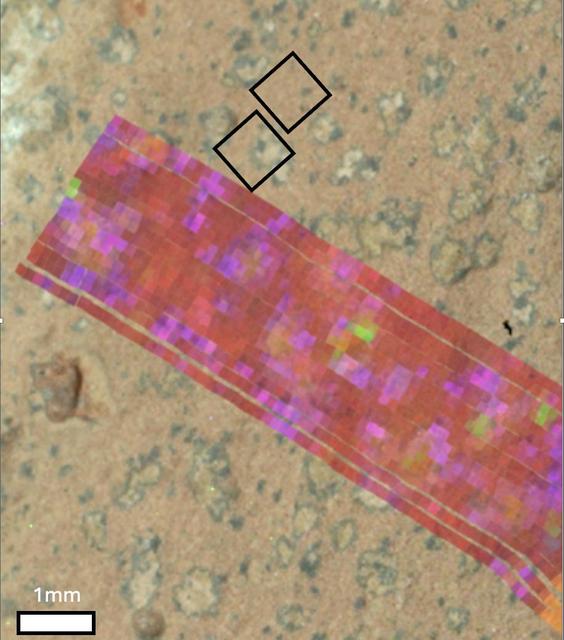
NASA's Perseverance Mars rover generated this mineral map showing the presence of two minerals – vivianite (purple and pink) and greigite (dull yellow and green) – on the surface of a rock nicknamed "Cheyava Falls." The data helped scientists determine the rock contained a potential biosignature, which is a substance or structure that might have a biological origin but requires more data or further study before a conclusion can be reached about the absence or presence of life.  Perseverance's PIXL (Planetary Instrument for X-ray Lithochemistry) and SHERLOC (Scanning Habitable Environments with Raman & Luminescence for Organics & Chemicals)instruments found a distinct pattern of minerals arranged into reaction fronts (points of contact where chemical and physical reactions occur) that the team called "leopard spots."  The leopard spots carried the signature of vivianite (hydrated iron phosphate) and greigite (iron sulfide). Vivianite appears within black spots mission scientists refer to as "poppy seeds" and in the dark rims of the larger "leopard spots." Greigite is seen within the interiors of the leopard spots, which could have been left behind by microbial life if it had used the raw ingredients – the organic carbon, sulfur, and phosphorus – in the rock as an energy source. Vivianite is frequently found on Earth in sediments and peat bogs and around decaying organic matter. Similarly, certain forms of microbial life on Earth can produce greigite.  The combination of these minerals, which appear to have formed by electron-transfer reactions between the sediment and organic matter, is a potential "fingerprint" for microbial life, which would use these reactions to produce energy for growth. The minerals can also be generated abiotically, or without the presence of life.  https://photojournal.jpl.nasa.gov/catalog/PIA26640
Perseverance's PIXL Finds Vivianite, Greigite in 'Cheyava Falls' Sample