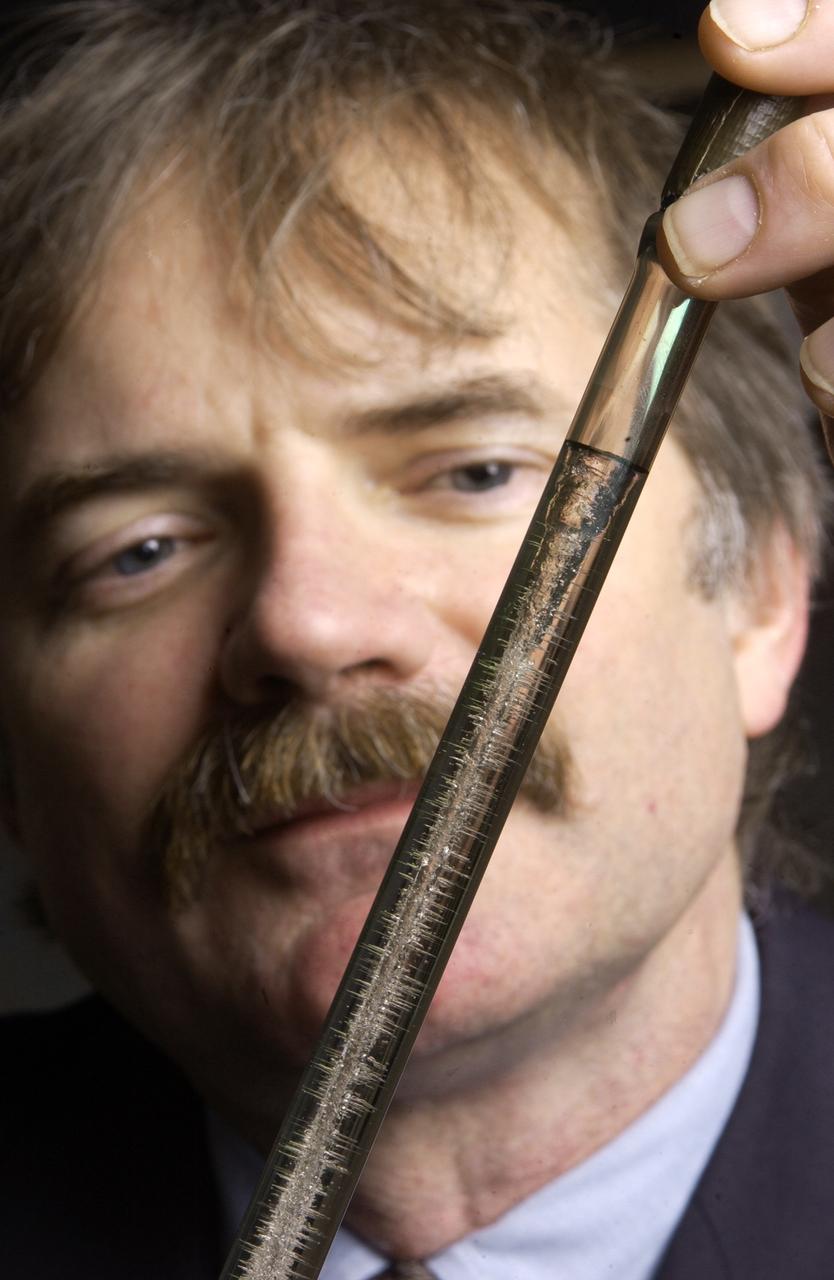
On Earth when scientists melt metals, bubbles that form in the molten material can rise to the surface, pop and disappear. In microgravity -- the near-weightless environment created as the International Space Station orbits Earth -- the lighter bubbles do not rise and disappear. Prior space experiments have shown that bubbles often become trapped in the final metal or crystal sample -similar to the bubbles trapped in this sample. In the solid, these bubbles, or porosity, are defects that diminish both the material's strength and usefulness. The Pore Formation and Mobility Investigation will melt samples of a transparent modeling material, succinonitrile and succinonitrile water mixtures, shown here in an ampoule being examined by Dr. Richard Grugel, the principal investigator for the experiment at NASA's Marshall Space Flight Center in Huntsville, Ala. As the samples are processed in space, Grugel will be able to observe how bubbles form in the samples and study their movements and interactions.
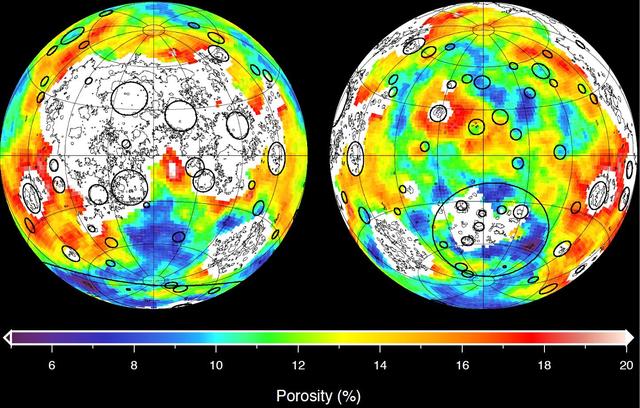
This image depicting the porosity of the lunar highland crust was derived using bulk density data from NASA GRAIL mission and independent grain density measurements from NASA Apollo moon mission samples as well as orbital remote-sensing data.
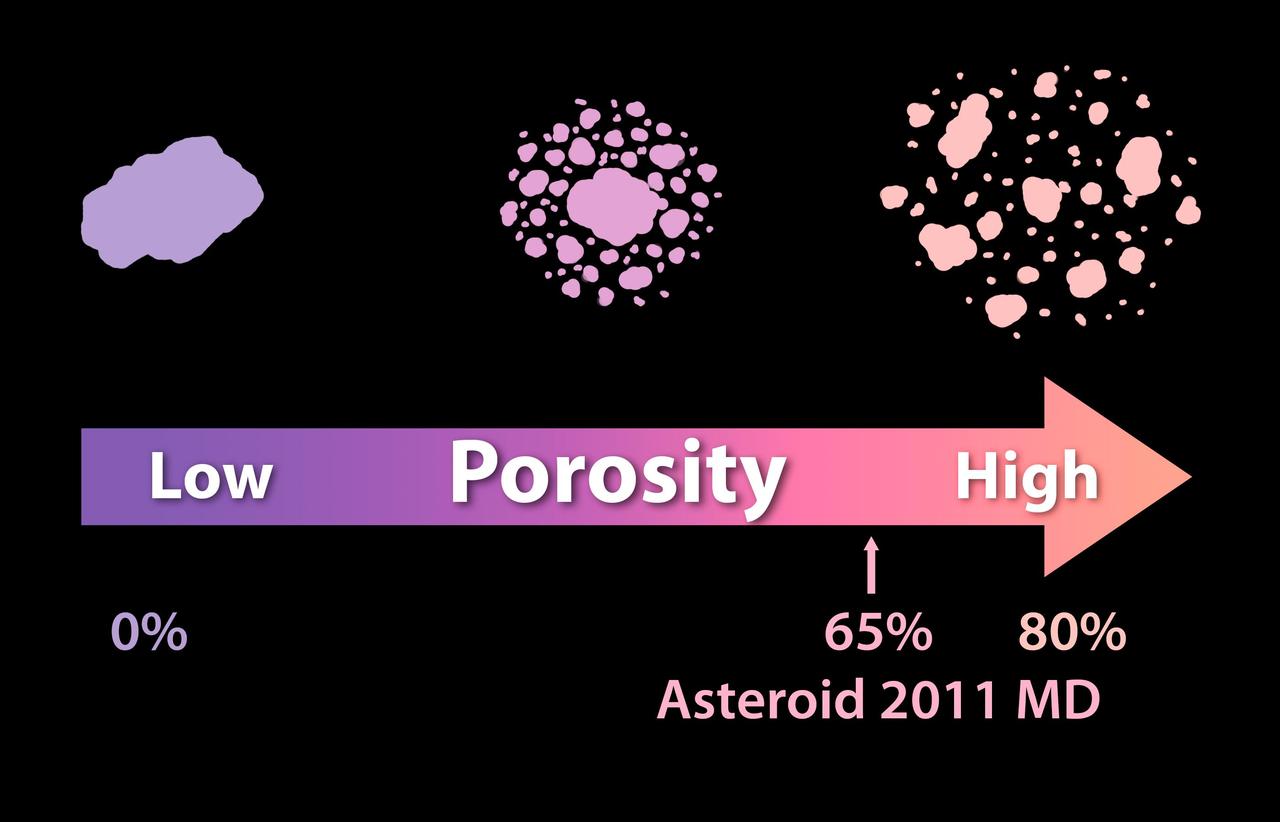
Observations from NASA Spitzer Space Telescope, taken in infrared light, have helped to reveal that a small asteroid called 2011 MD is made-up of two-thirds empty space.
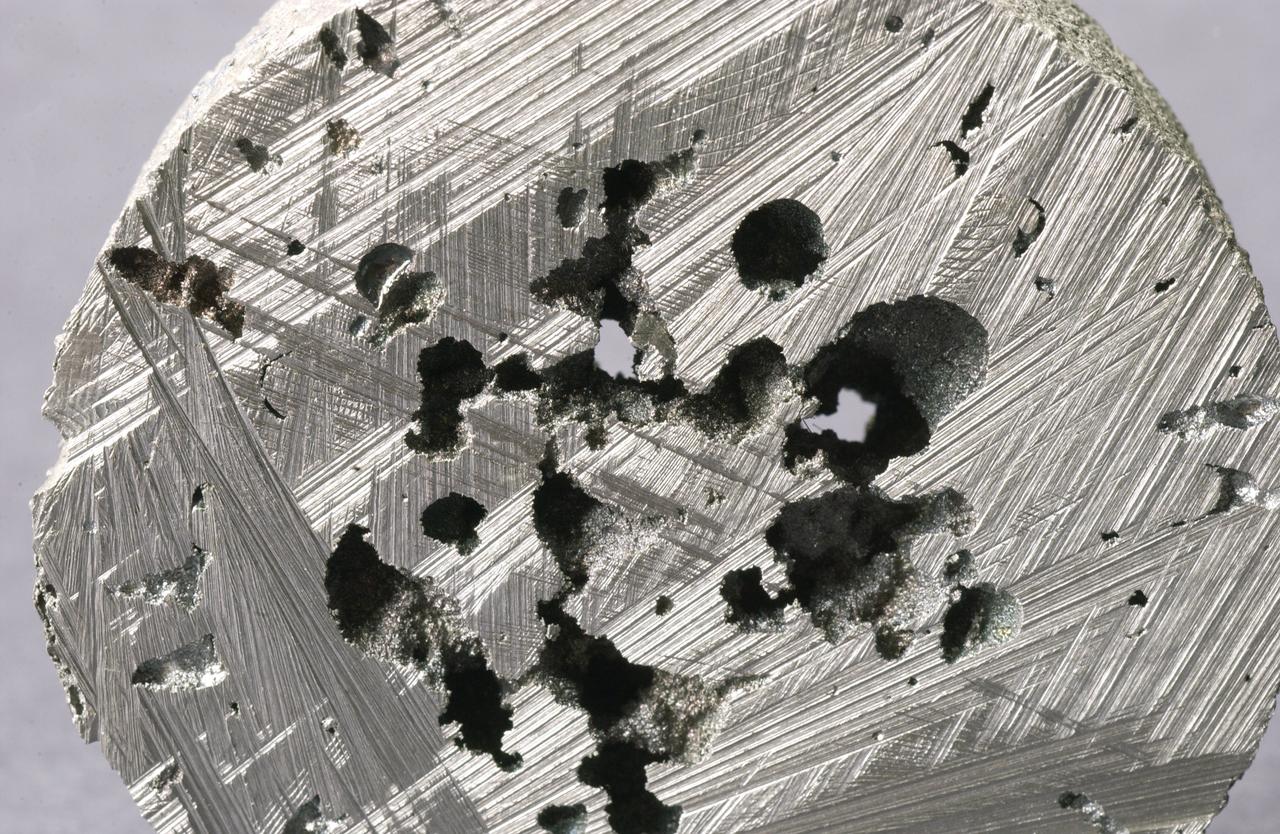
Pores and voids often form in metal castings on Earth (above) making them useless. A transparent material that behaves at a large scale in microgravity the way that metals behave at the microscopic scale on Earth, will help show how voids form and learn how to prevent them. Scientists are using the microgravity environment on the International Space Station to study how these bubbles form, move and interact. The Pore Formation and Mobility Investigation (PFMI) in the Microgravity Science Glovebox aboard the International Space Station uses a transparent material called succinonitrile that behaves like a metal to study this problem. Video images sent to the ground allow scientists to watch the behavior of the bubbles as they control the melting and freezing of the material. The bubbles do not float to the top of the material in microgravity, so they can study their interactions.
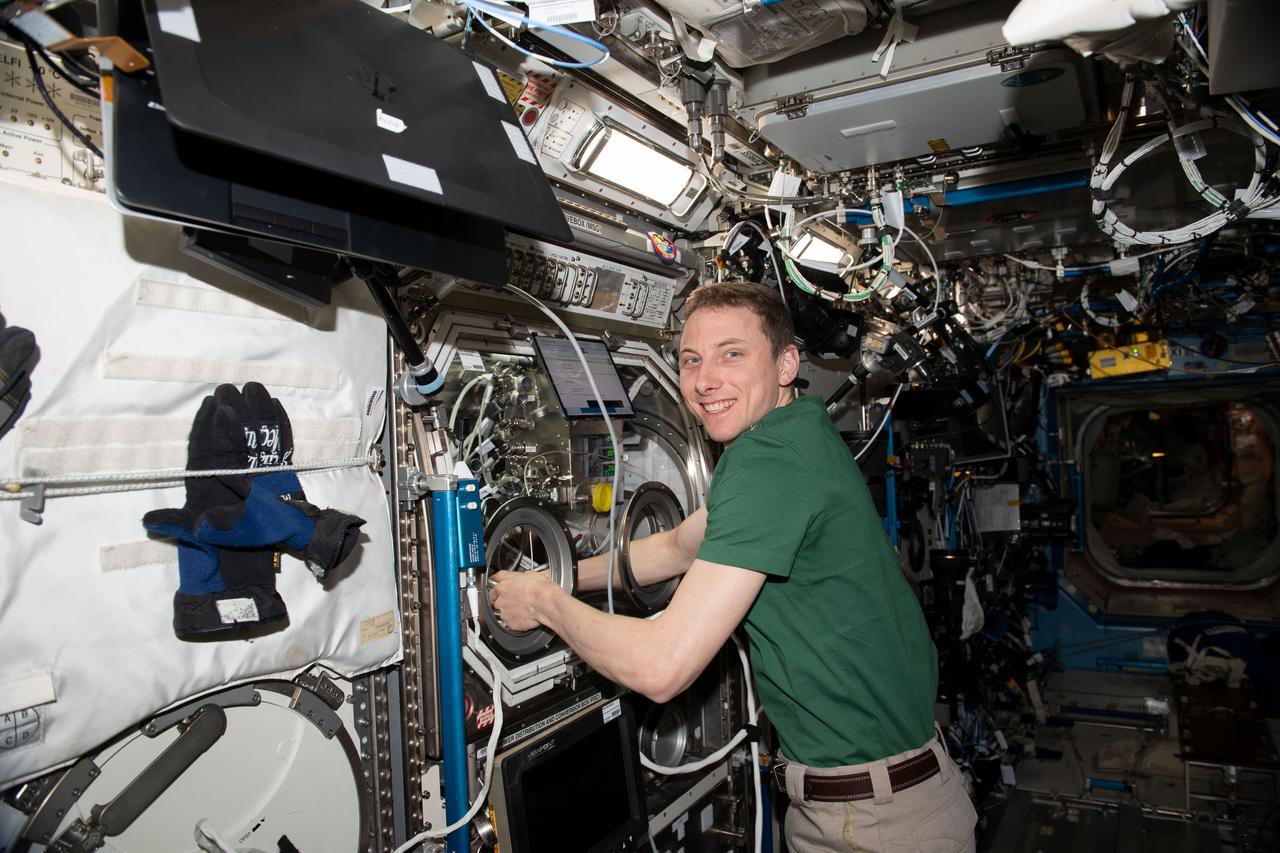
iss069e060236 (Aug. 14, 2023) --- NASA astronaut and Expedition 69 Flight Engineer Woody Hoburg works on physics research inside the Destiny laboratory module's Microgravity Science Glovebox. The SUBSA-μgGA investigation seeks to create a superior graphene aerogel, a synthetic material with high porosity and low density, in microgravity benefitting both Earth and space industries such as power storage, environmental protection, and chemical sensing.
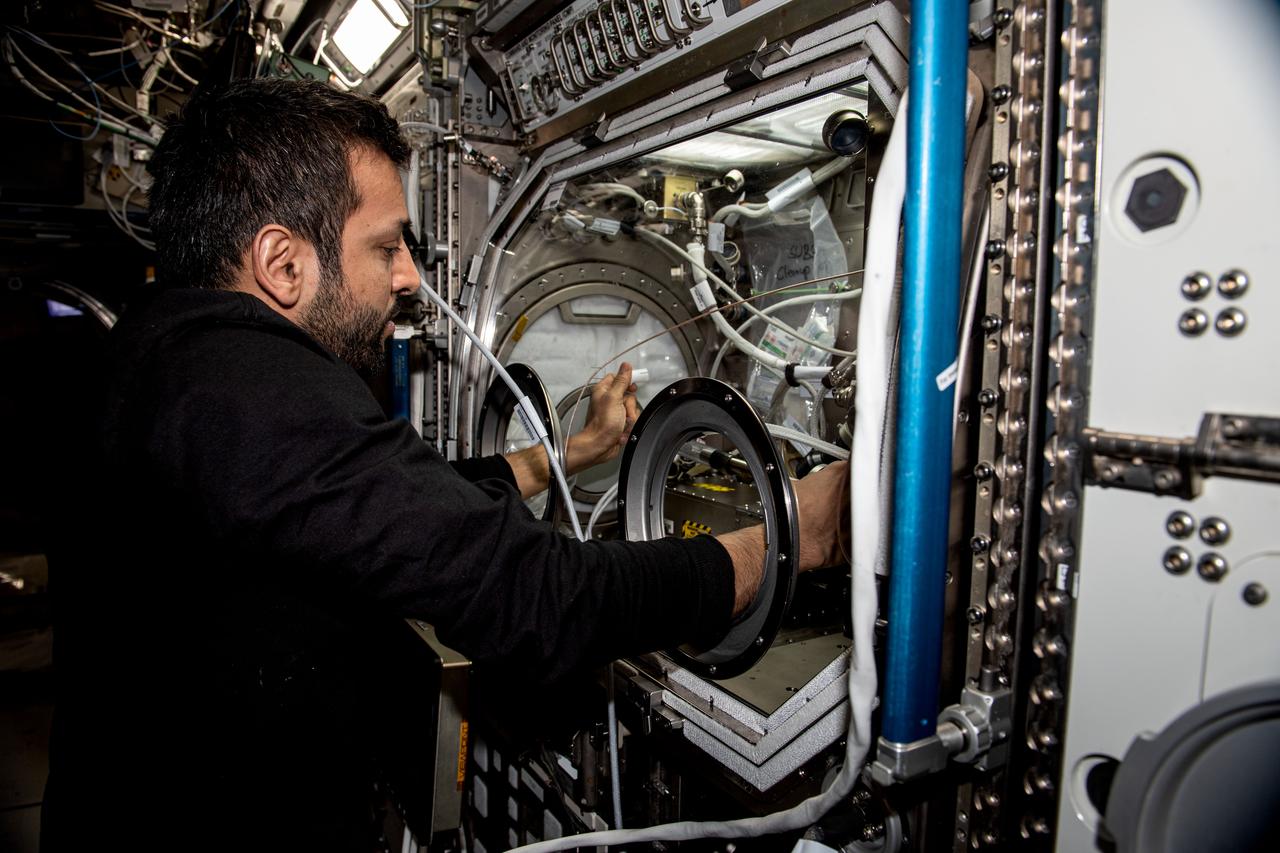
iss069e056648 (Aug. 11, 2023) --- UAE (United Arab Emirates) astronaut and Expedition 69 Flight Engineer Sultan Alneyadi works on physics research inside the Destiny laboratory module's Microgravity Science Glovebox. The SUBSA-μgGA investigation seeks to create a superior graphene aerogel, a synthetic material with high porosity and low density, in microgravity benefitting both Earth and space industries such as power storage, environmental protection, and chemical sensing.
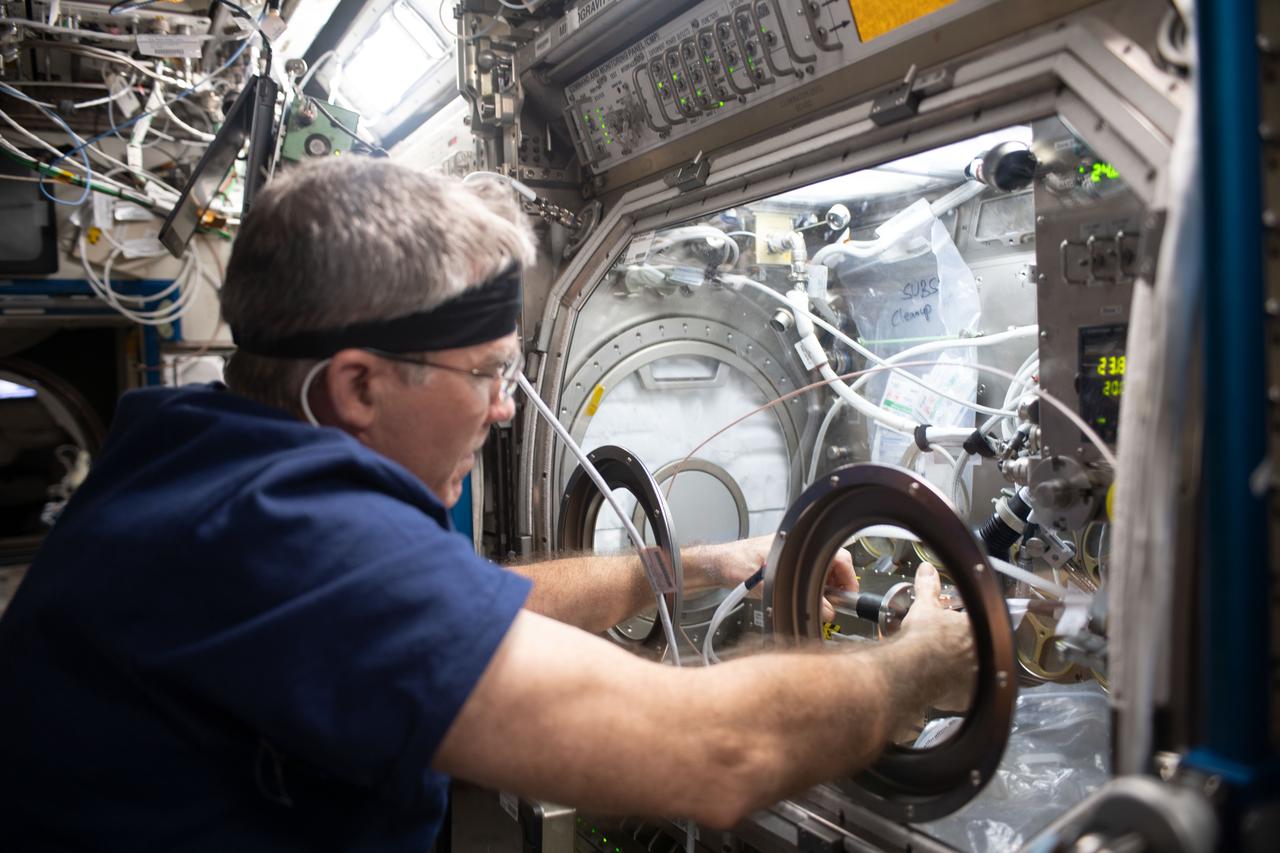
iss069e056172 (Aug. 11, 2023) --- NASA astronaut and Expedition 69 Flight Engineer Stephen Bowen works on physics research inside the Destiny laboratory module's Microgravity Science Glovebox. The SUBSA-μgGA investigation seeks to create a superior graphene aerogel, a synthetic material with high porosity and low density, in microgravity benefitting both Earth and space industries such as power storage, environmental protection, and chemical sensing.
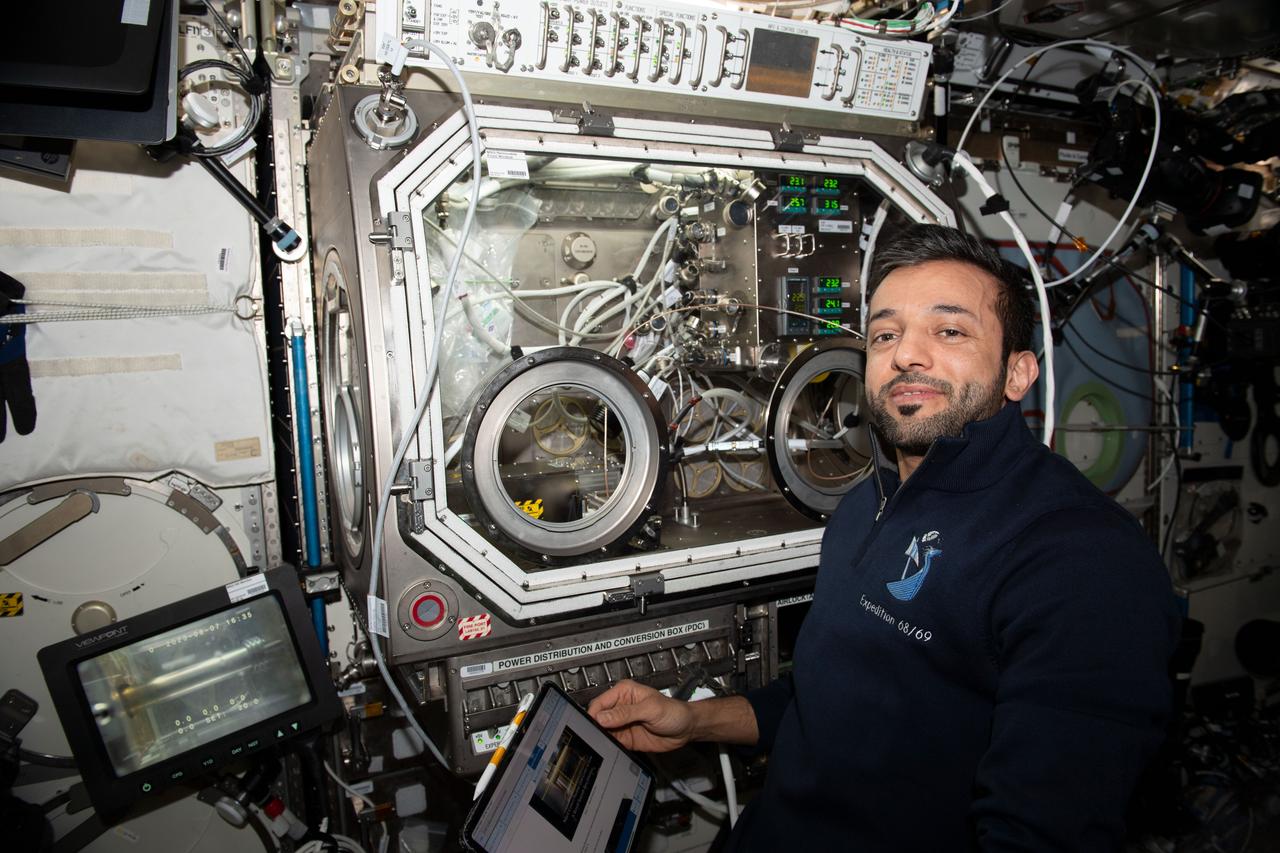
iss069e054948 (Aug. 7, 2023) --- UAE (United Arab Emirates) astronaut and Expedition 69 Flight Engineer Sultan Alneyadi sets up physics research hardware in the Destiny laboratory module's Microgravity Science Glovebox. The investigation seeks to create a superior graphene aerogel, a synthetic material with high porosity and low density, in microgravity benefitting both Earth and space industries such as power storage, environmental protection, and chemical sensing.
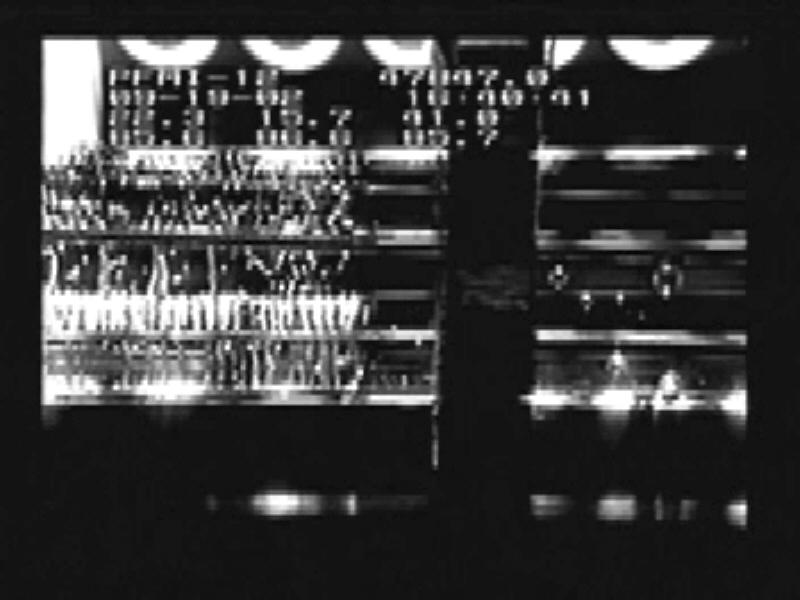
Video images sent to the ground allow scientists to watch the behavior of the bubbles as they control the melting and freezing of the material during the Pore Formation and Mobility Investigation (PFMI) in the Microgravity Science Glovebox aboard the International Space Station. While the investigation studies the way that metals behave at the microscopic scale on Earth -- and how voids form -- the experiment uses a transparent material called succinonitrile that behaves like a metal to study this problem. The bubbles do not float to the top of the material in microgravity, so they can study their interactions.
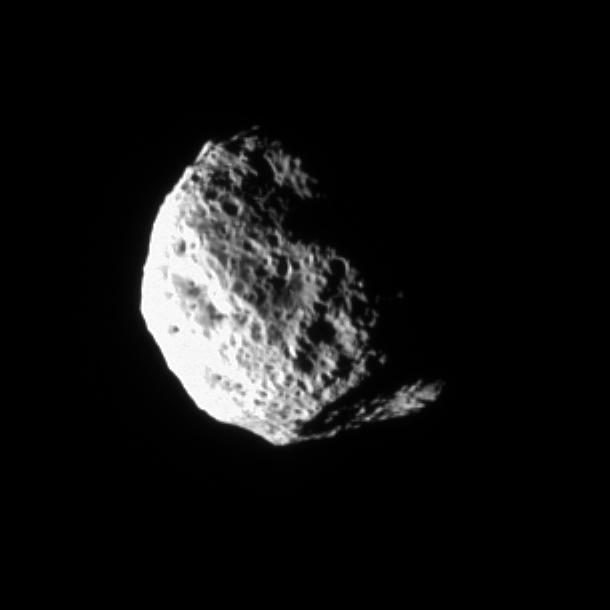
The tumbling and irregularly shaped moon Hyperion rotates away from the Cassini spacecraft in this movie taken during a distant encounter in Dec. 2005. A shadow closes over the large crater at bottom as the movie progresses. Hyperion (280 kilometers, or 174 miles across) is covered with closely packed and deeply etched pits. The warming action of the Sun on water ice lying beneath a darkened layer of surface material apparently has deepened and exaggerated the depressions already created by impacts. Cassini scientists now think that Hyperion’s unusual appearance can be attributed to the fact that it has an unusually low density for such a large object, giving it weak surface gravity and high porosity. These characteristics help preserve the original shapes of Hyperion’s craters by limiting the amount of impact ejecta coating the moon’s surface. Impactors tend to make craters by compressing the surface material, rather than blasting it out. Further, Hyperion’s weak gravity, and correspondingly low escape velocity, means that what little ejecta is produced has a good chance of escaping the moon altogether. The images were taken in visible light with the Cassini spacecraft narrow-angle camera on Dec. 23, 2005 at distances ranging from 228,000 kilometers (142,000 miles) to 238,000 kilometers (148,000 miles) from Hyperion and at a Sun-Hyperion-spacecraft, or phase, angle ranging from 77 to 86 degrees. Resolution in the original images was about 1.4 kilometers (0.9 mile) per pixel. The images have been magnified by a factor of two and contrast-enhanced to aid visibility. An animation is available at http://photojournal.jpl.nasa.gov/catalog/PIA07683
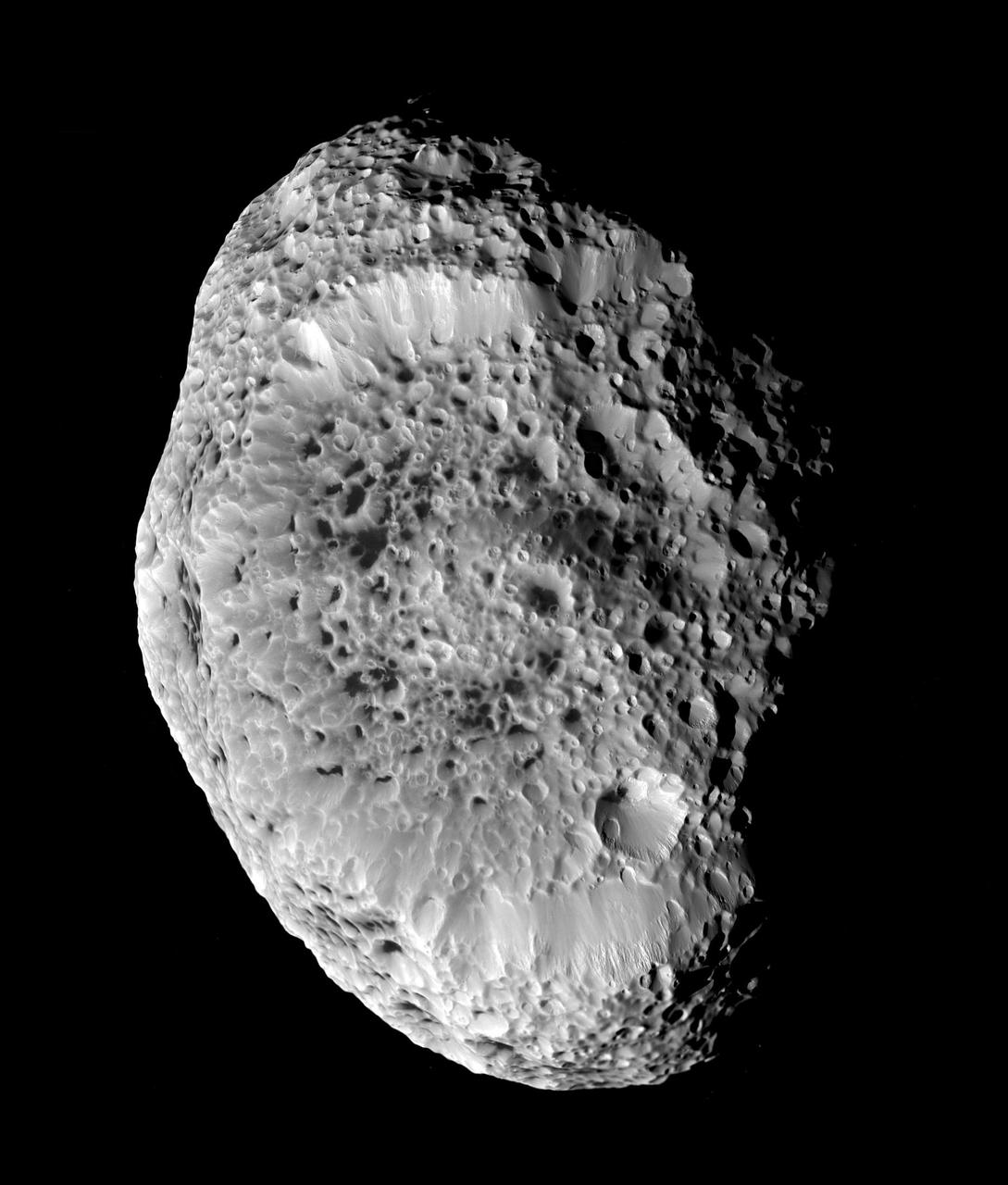
Saturn's impact-pummeled Hyperion stares back at Cassini in this six-image mosaic taken during the spacecraft’s close approach on Sept. 26, 2005. This up-close view shows a low density body blasted by impacts over the eons. Scientists originally believed that the spongy appearance of Hyperion is caused by a phenomenon called thermal erosion, in which dark materials accumulating on crater floors are warmed by sunlight and melt deeper into the surface, allowing surrounding ice to vaporize away. Cassini scientists now think that Hyperion’s unusual appearance can be attributed to the fact that it has an unusually low density for such a large object, giving it weak surface gravity and high porosity. These characteristics help preserve the original shapes of Hyperion’s craters by limiting the amount of impact ejecta coating the moon’s surface. Impactors tend to make craters by compressing the surface material, rather than blasting it out. Further, Hyperion’s weak gravity, and correspondingly low escape velocity, means that what little ejecta is produced has a good chance of escaping the moon altogether. At 280 kilometers, (174 miles) across, Hyperion’s impact-shaped morphology makes it the largest of Saturn's irregularly-shaped moons. Six, clear-filter images were combined to create this mosaic. Images were taken by the Cassini spacecraft narrow-angle camera at a mean distance of about 33,000 kilometers (20,500 miles) from Hyperion and at a sun-Hyperion-spacecraft, or phase, angle of 51 degrees. Image scale is 197 meters per pixel. http://photojournal.jpl.nasa.gov/catalog/PIA07761