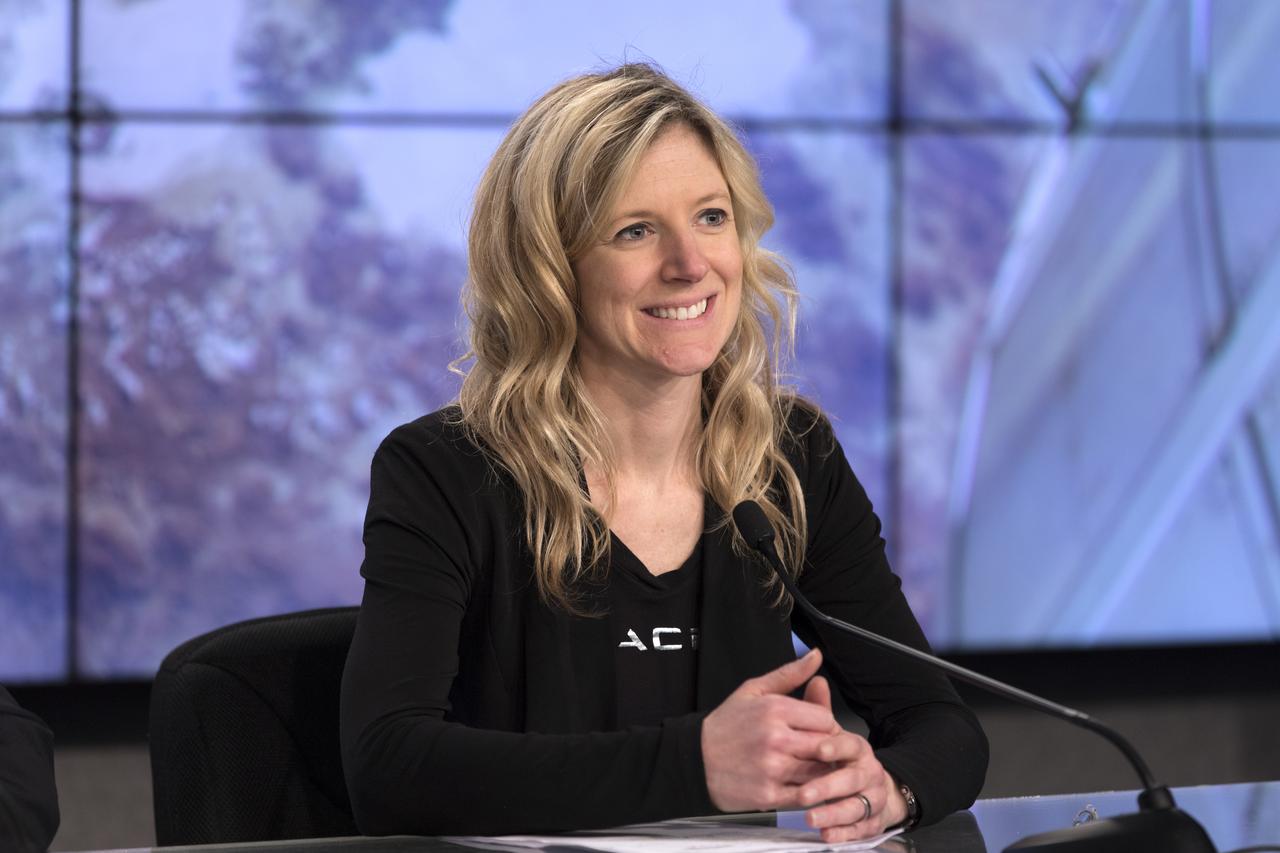
In the Press Site auditorium of NASA's Kennedy Space Center in Florida, Jessica Jensen, SpaceX director of Dragon Mission Management, speaks to media at a post-launch news conference following the liftoff of the SpaceX Falcon 9 rocket at 4:30 p.m. EST. The flight is a commercial resupply services mission for NASA to the International Space Station. SpaceX CRS-14 lifted off atop the Falcon 9 rocket from Space Launch Complex 40 at Cape Canaveral Air Force Station carrying supplies and equipment and new science experiments for technology research.
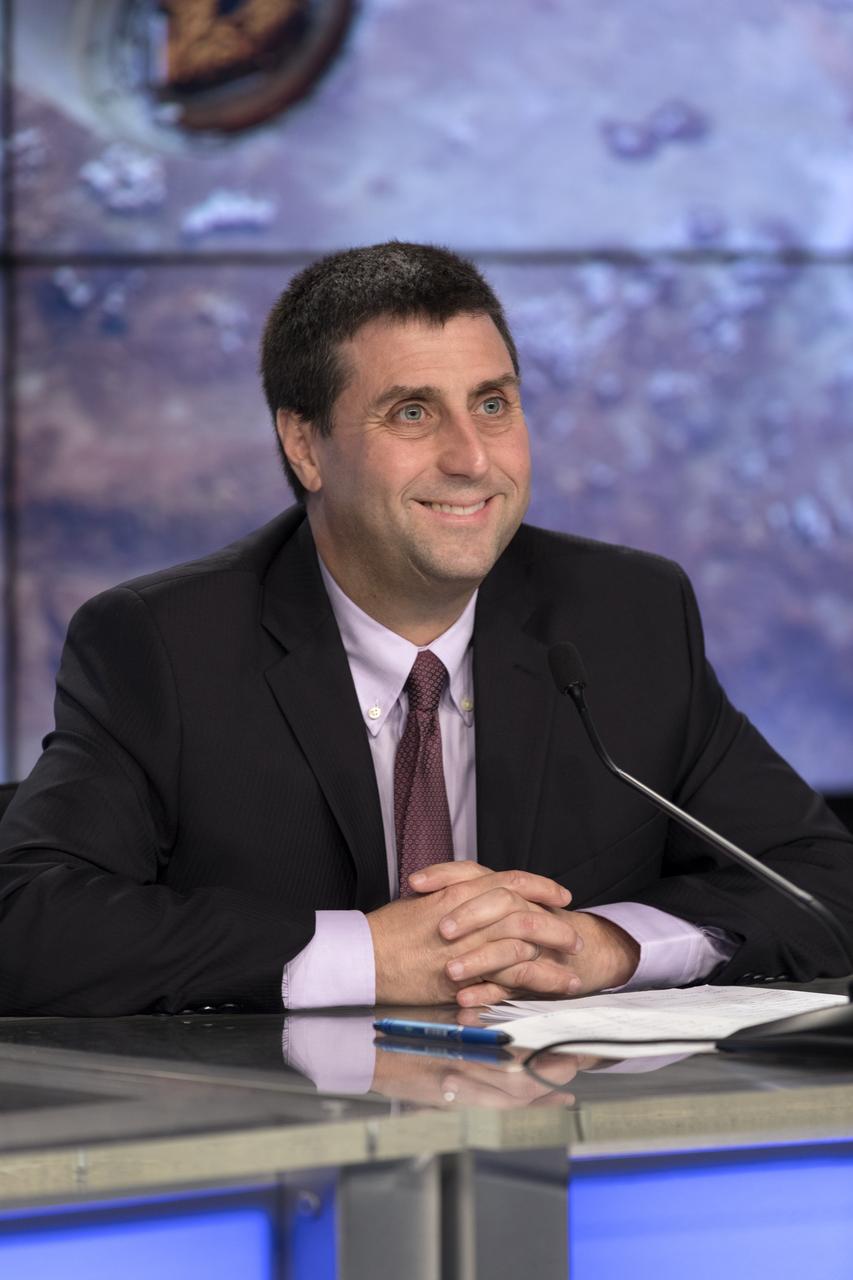
In the Press Site auditorium of NASA's Kennedy Space Center in Florida,Joel Montalbano, deputy manager, International Space Station Program manager at NASA's Johnson Space Center in Houston, speaks to media at a post-launch news conference following the liftoff of the SpaceX Falcon 9 rocket at 4:30 p.m. EST. The flight is a commercial resupply services mission for NASA to the International Space Station. SpaceX CRS-14 lifted off atop the Falcon 9 rocket from Space Launch Complex 40 at Cape Canaveral Air Force Station carrying supplies and equipment and new science experiments for technology research.
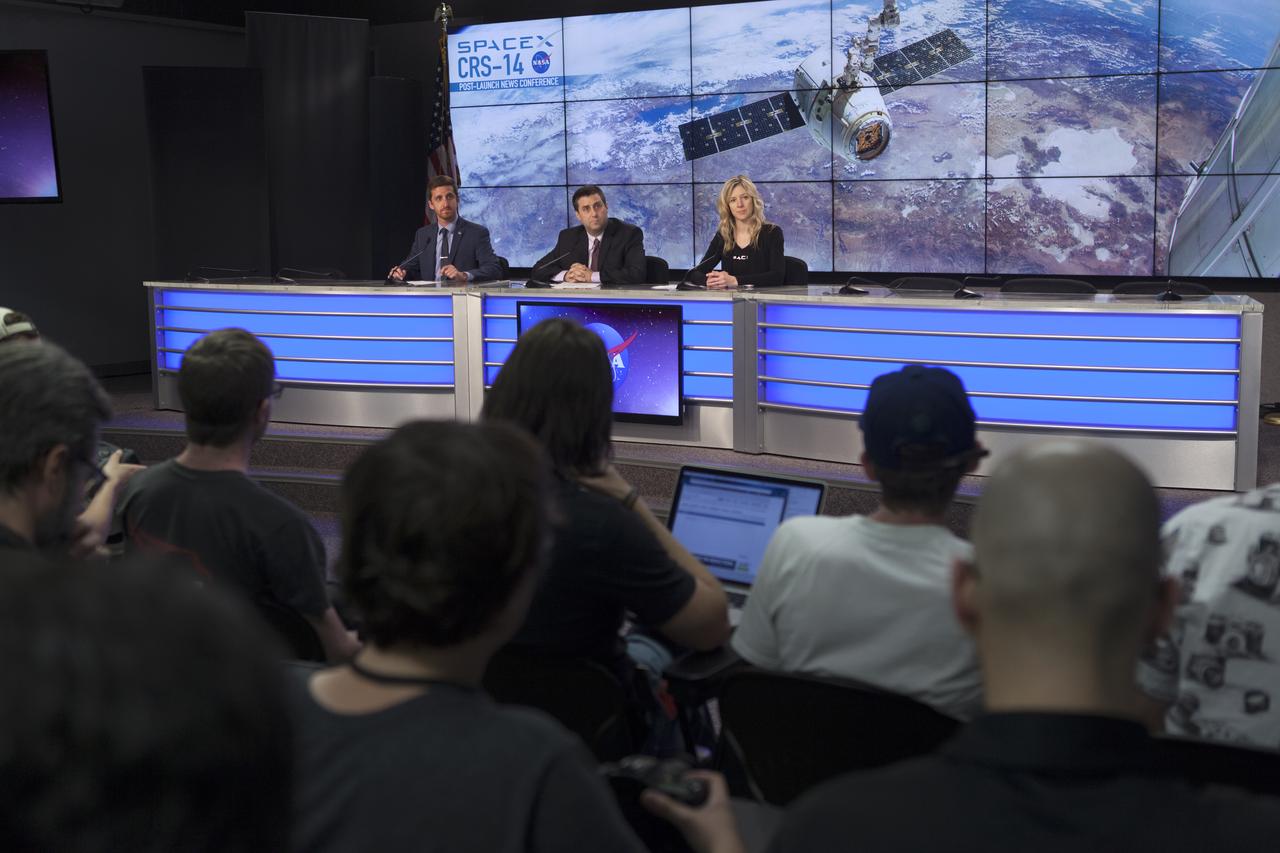
In the Press Site auditorium of NASA's Kennedy Space Center in Florida, from left, Josh Finch of NASA Communications, Joel Montalbano, deputy manager, International Space Station Program manager at NASA's Johnson Space Center in Houston, and Jessica Jensen, SpaceX director of Dragon Mission Management, speak to media at a post-launch news conference following the liftoff of the SpaceX Falcon 9 rocket at 4:30 p.m. EST. The flight is a commercial resupply services mission for NASA to the International Space Station. SpaceX CRS-14 lifted off atop the Falcon 9 rocket from Space Launch Complex 40 at Cape Canaveral Air Force Station carrying supplies and equipment and new science experiments for technology research.
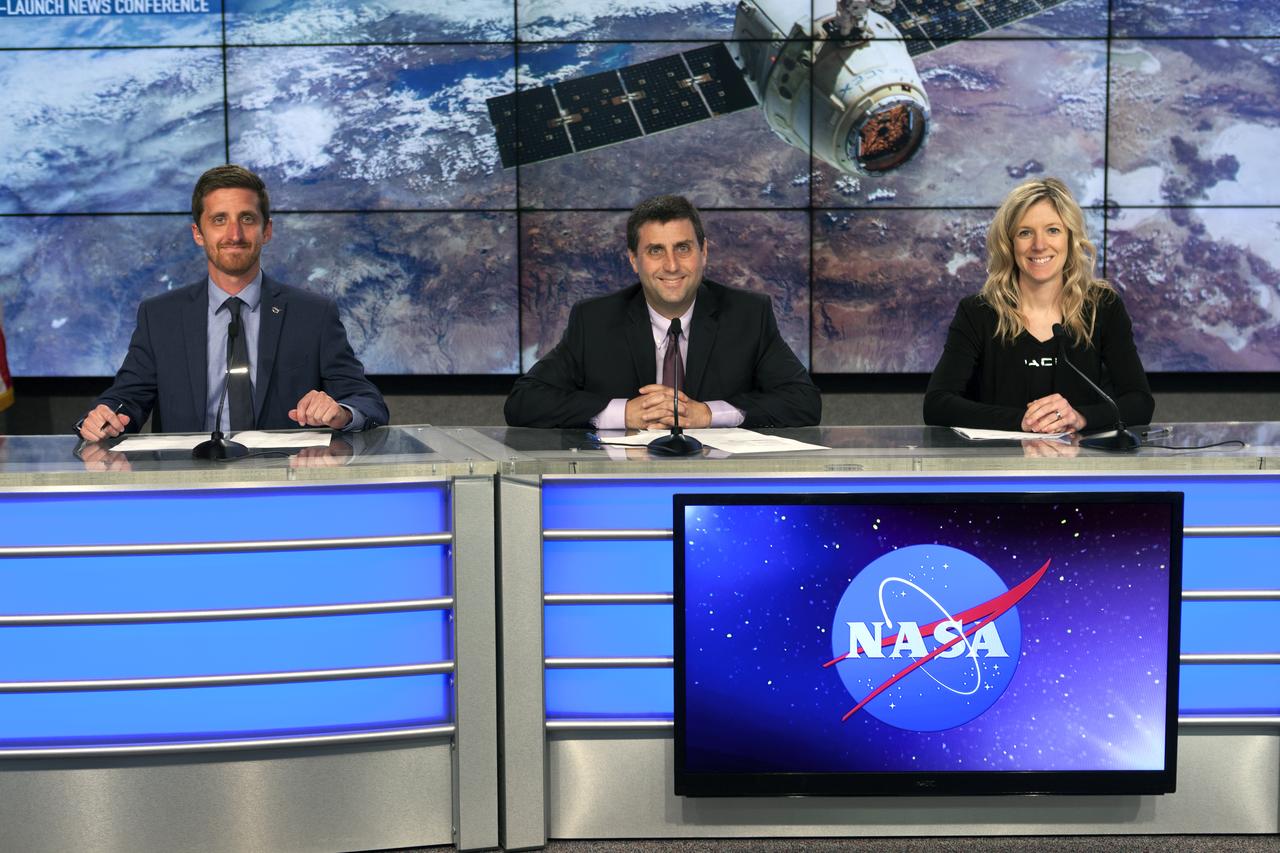
In the Press Site auditorium of NASA's Kennedy Space Center in Florida, from left, Josh Finch of NASA Communications, Joel Montalbano, deputy manager, International Space Station Program manager at NASA's Johnson Space Center in Houston, and Jessica Jensen, SpaceX director of Dragon Mission Management, speak to media at a post-launch news conference following the liftoff of the SpaceX Falcon 9 rocket at 4:30 p.m. EST. The flight is a commercial resupply services mission for NASA to the International Space Station. SpaceX CRS-14 lifted off atop the Falcon 9 rocket from Space Launch Complex 40 at Cape Canaveral Air Force Station carrying supplies and equipment and new science experiments for technology research.
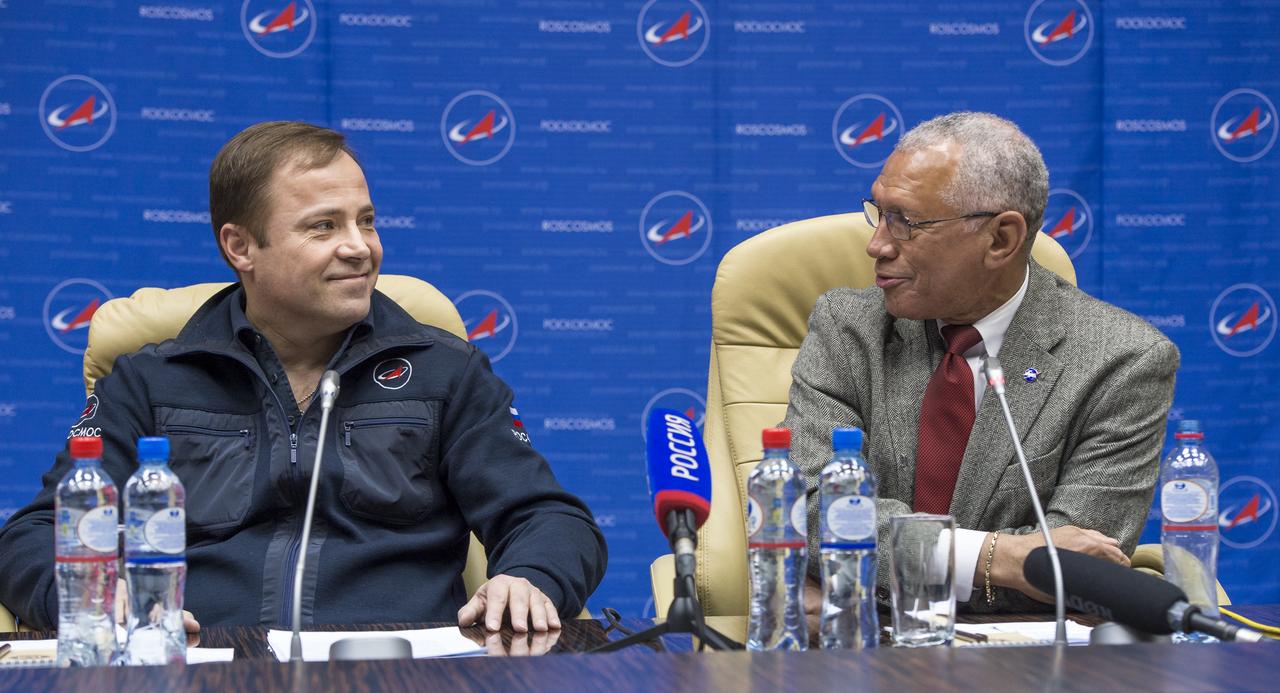
Head of Russian Federal Space Agency (Roscosmos) Igor Komarov, left, and NASA Administrator Charles Bolden are seen during an Expedition 43 post launch briefing, Saturday, March 28, 2015 at the Baikonur Hotel in Baikonur, Kazakhstan. Earlier in the morning the Soyuz TMA-16M launched to the International Space Station with Expedition 43 NASA Astronaut Scott Kelly, Russian Cosmonauts Mikhail Kornienko, and Gennady Padalka of the Russian Federal Space Agency (Roscosmos) onboard from the Baikonur Cosmodrome in Kazakhstan. As the one-year crew, Kelly and Kornienko will return to Earth on Soyuz TMA-18M in March 2016. Photo Credit (NASA/Bill Ingalls)
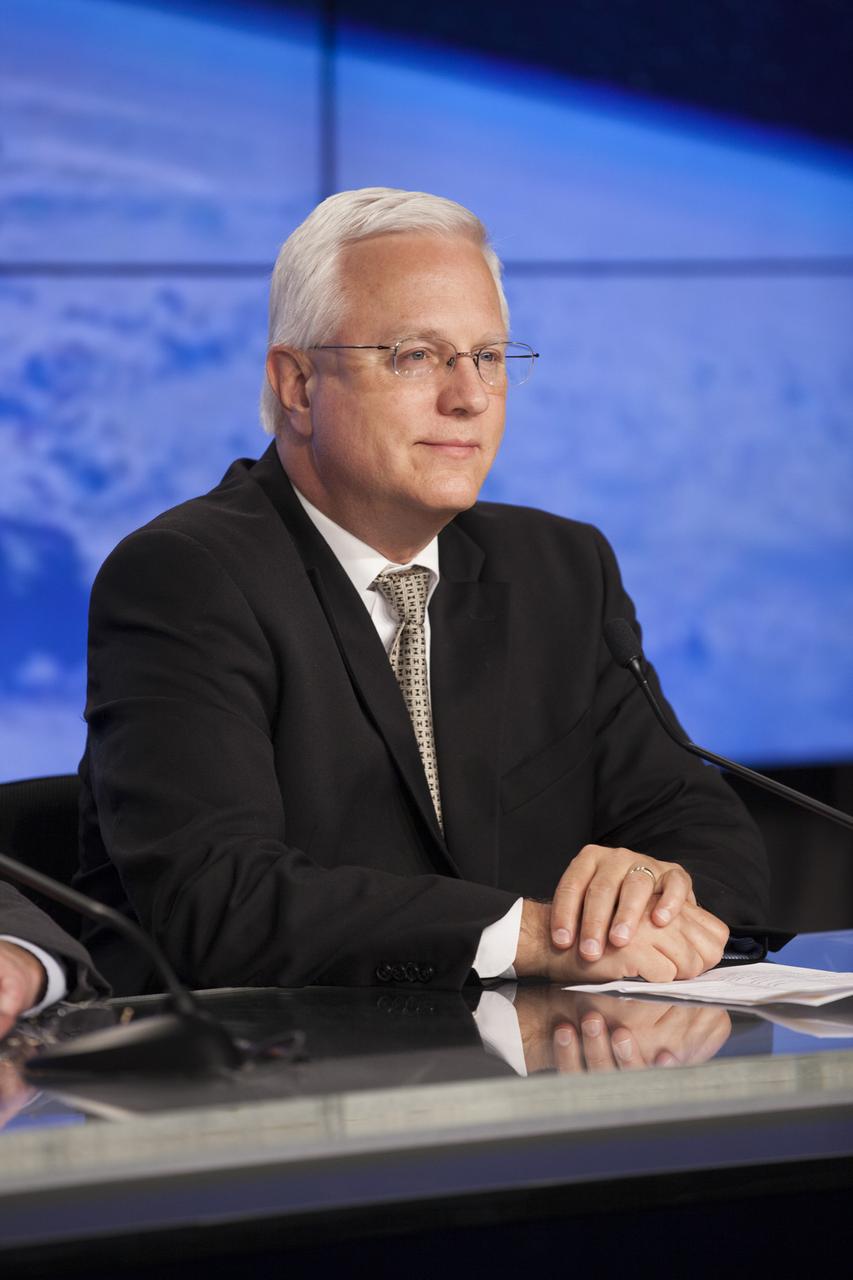
In the Press Site auditorium of NASA's Kennedy Space Center in Florida, Vern Thorp, United Space Alliance's program manager for NASA missions, speaks to members of the news media at a post-launch news conference following the liftoff of Orbital ATK CRS-6, a commercial resupply services mission to the International Space Station, or ISS. The Cygnus spacecraft lifted off atop an Atlas V rocket from Space Launch Complex 41 at Cape Canaveral Air Force Station at 11:05 p.m. EDT.

In the Press Site auditorium of NASA's Kennedy Space Center in Florida, Frank Culbertson, president of Orbital ATK's Space System Group, speaks to members of the news media at a post-launch news conference following the liftoff of Orbital ATK CRS-6, a commercial resupply services mission to the International Space Station, or ISS. The Cygnus spacecraft lifted off atop an Atlas V rocket from Space Launch Complex 41 at Cape Canaveral Air Force Station at 11:05 p.m. EDT.
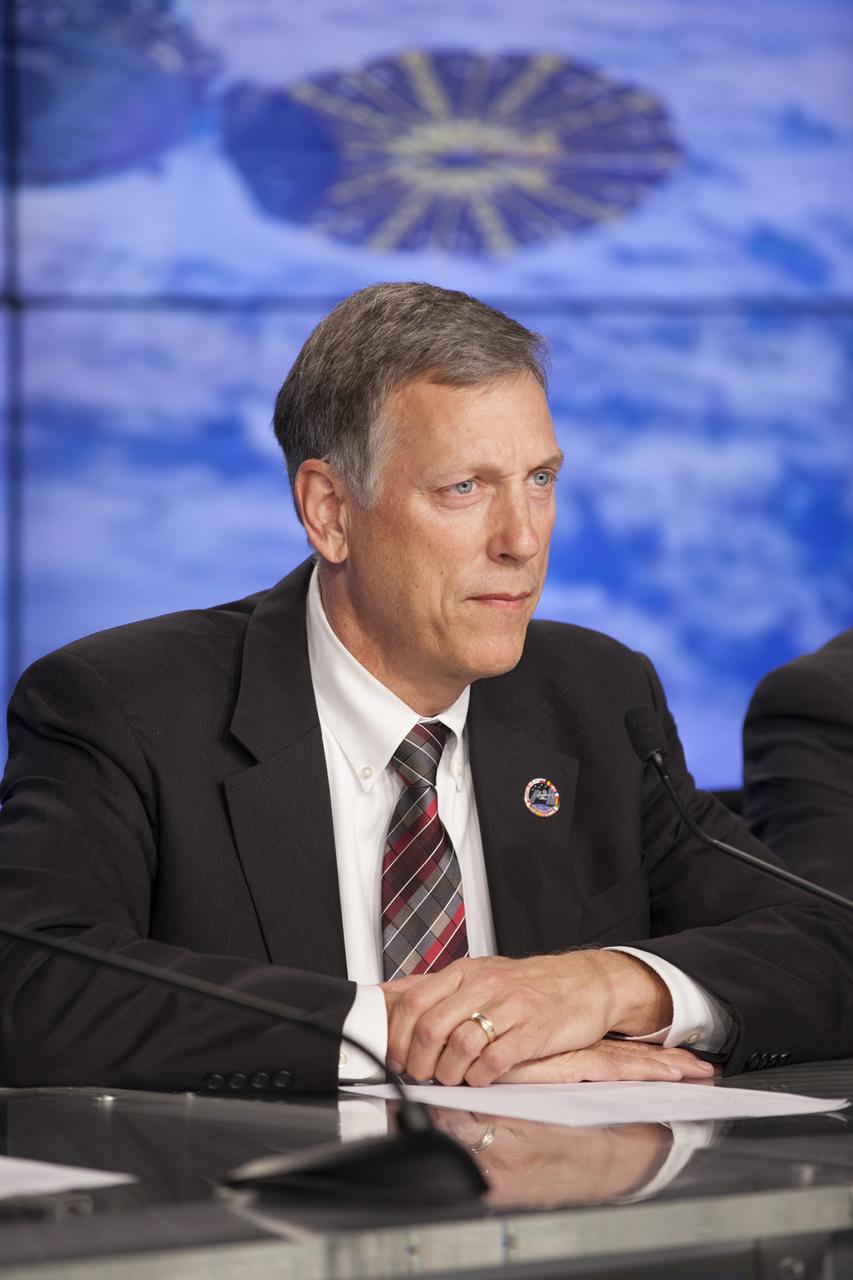
In the Press Site auditorium of NASA's Kennedy Space Center in Florida, Kenneth Todd, NASA's International Space Staton Operations Integration manager, speaks to members of the news media at a post-launch news conference following the liftoff of Orbital ATK CRS-6, a commercial resupply services mission to the ISS. The Cygnus spacecraft lifted off atop an Atlas V rocket from Space Launch Complex 41 at Cape Canaveral Air Force Station at 11:05 p.m. EDT.
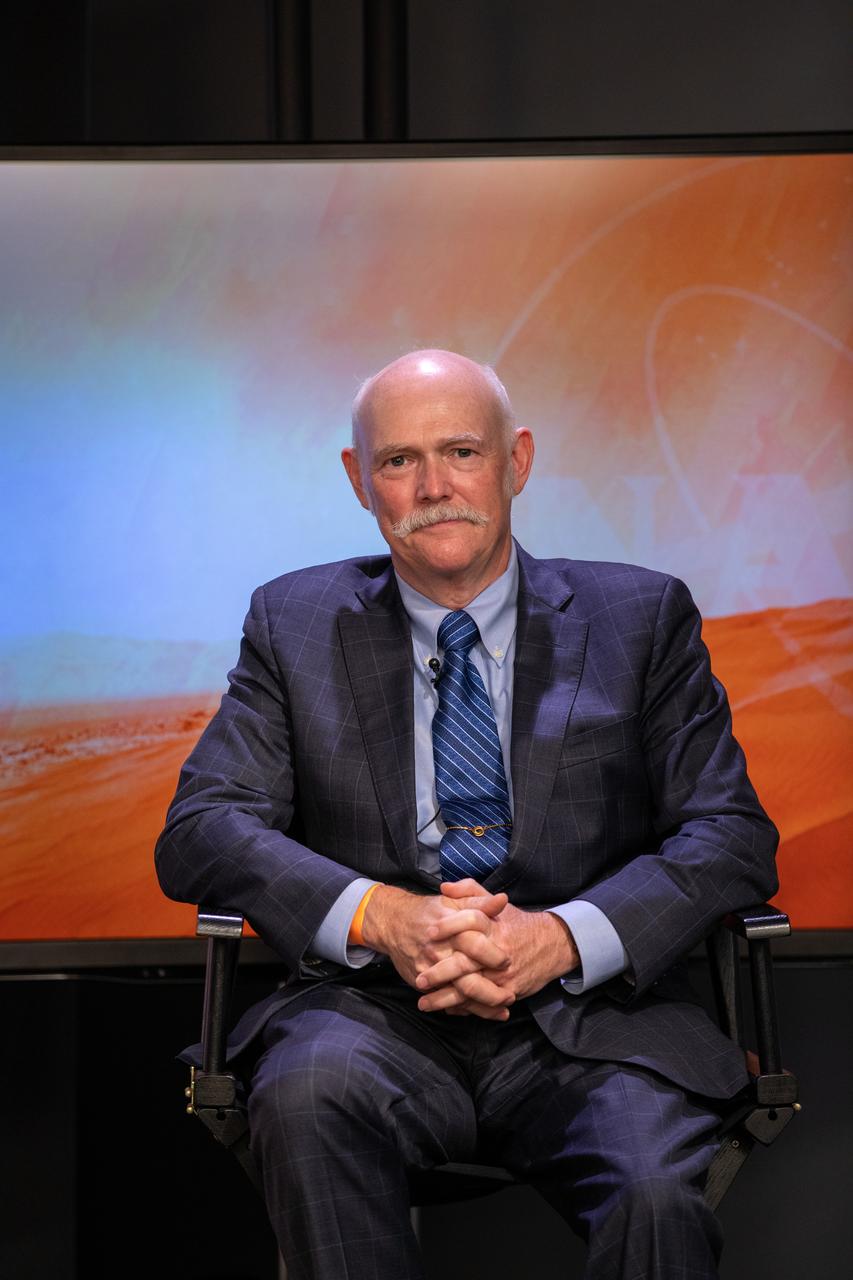
Tory Bruno, president and CEO of United Launch Alliance (ULA), participates in a Mars 2020 post-launch news conference at NASA’s Kennedy Space Center in Florida on July 30, 2020. The ULA Atlas V 541 rocket lifted off from Space Launch Complex 41 at Cape Canaveral Air Force Station at 7:50 a.m. EDT, carrying the agency’s Mars Perseverance rover and Ingenuity helicopter. The rover is part of NASA’s Mars Exploration Program, a long-term effort of robotic exploration of the Red Planet. The rover will search for habitable conditions in the ancient past and signs of past microbial life on Mars. The Launch Services Program at Kennedy is responsible for launch management.
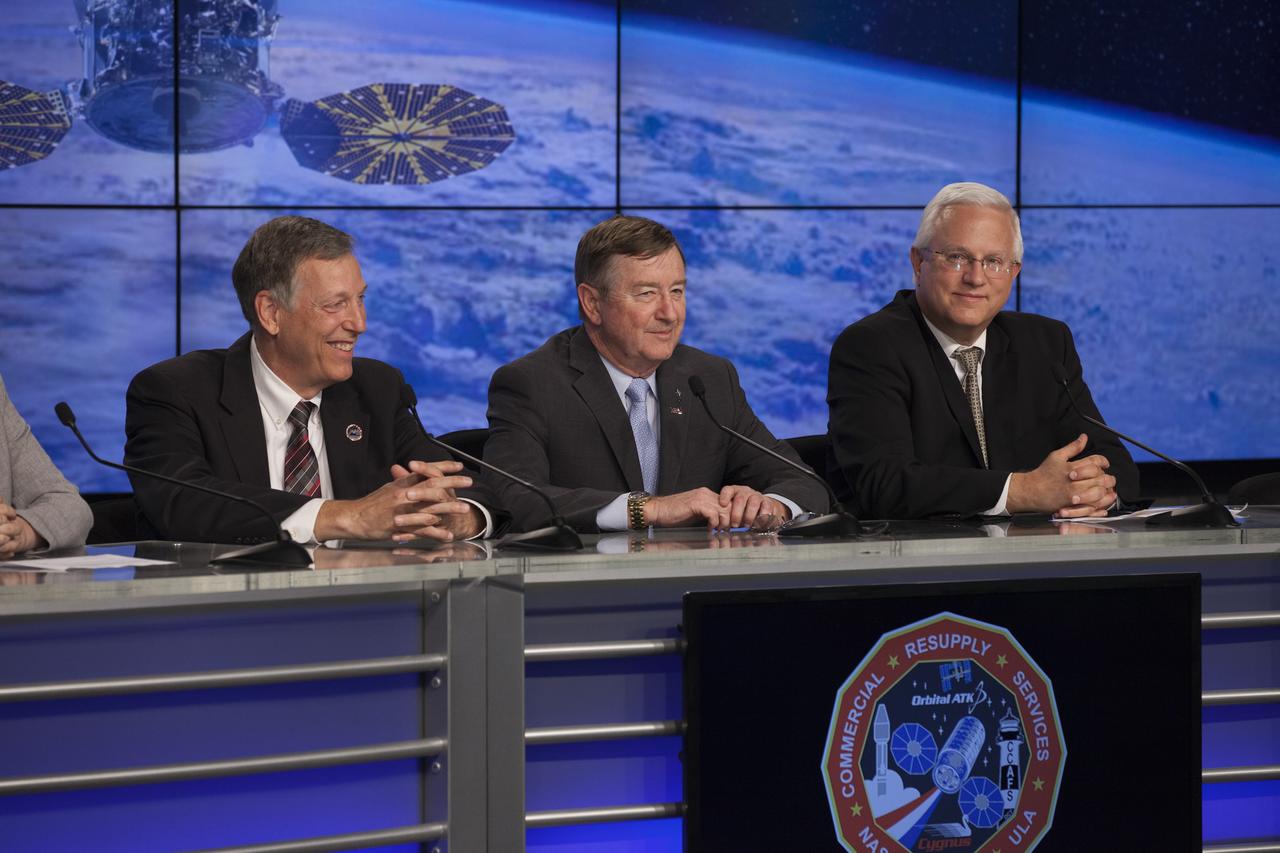
In the Press Site auditorium of NASA's Kennedy Space Center in Florida, NASA and industry leaders speak to members of the news media at a post-launch news conference following the liftoff of Orbital ATK CRS-6, a commercial resupply services mission to the International Space Station, or ISS. From left are: Kenneth Todd, NASA ISS Operations Integration manager; Frank Culbertson, president of Orbital ATK's Space System Group; Vern Thorp, United Space Alliance's program manager for NASA missions. The Cygnus spacecraft lifted off atop an Atlas V rocket from Space Launch Complex 41 at Cape Canaveral Air Force Station at 11:05 p.m. EDT.
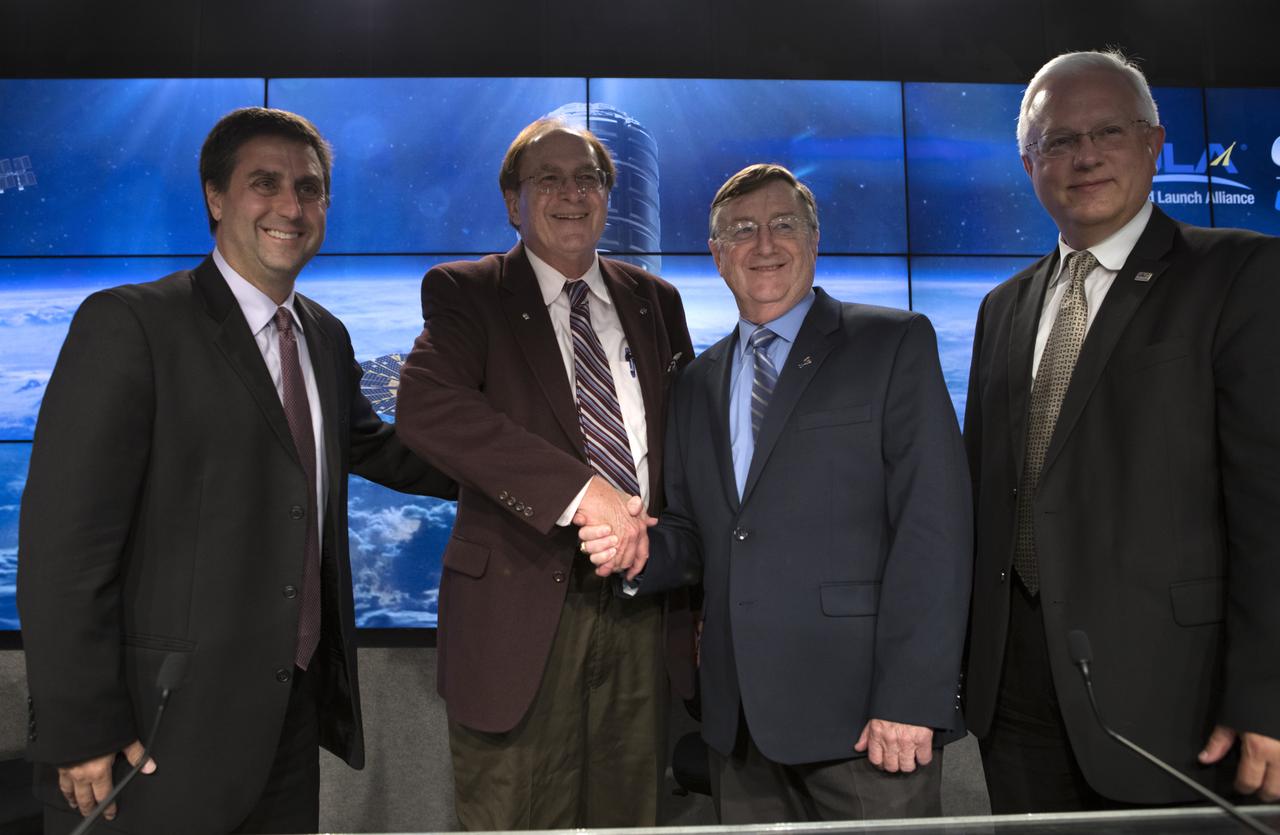
At the conclusion of the Orbital ATK CRS-7 post-launch press conference, moderator George Diller, second from left, NASA Kennedy Communications; shakes hands with Joel Montalbano, deputy manager, International Space Station Program, NASA Johnson Space Center in Houston. Also with them are Frank Culbertson, president, Orbital ATK Space Systems Group; and Vern Thorp, program manager, commercial missions, United Launch Alliance. A United Launch Alliance Atlas V rocket lifted off from Space Launch Complex 41 at Cape Canaveral Air Force Station in Florida, carrying Orbital ATK's Cygnus pressurized cargo module. It is Orbital ATK's seventh commercial resupply services mission to the International Space Station. Liftoff was at 11:11 a.m. EDT.
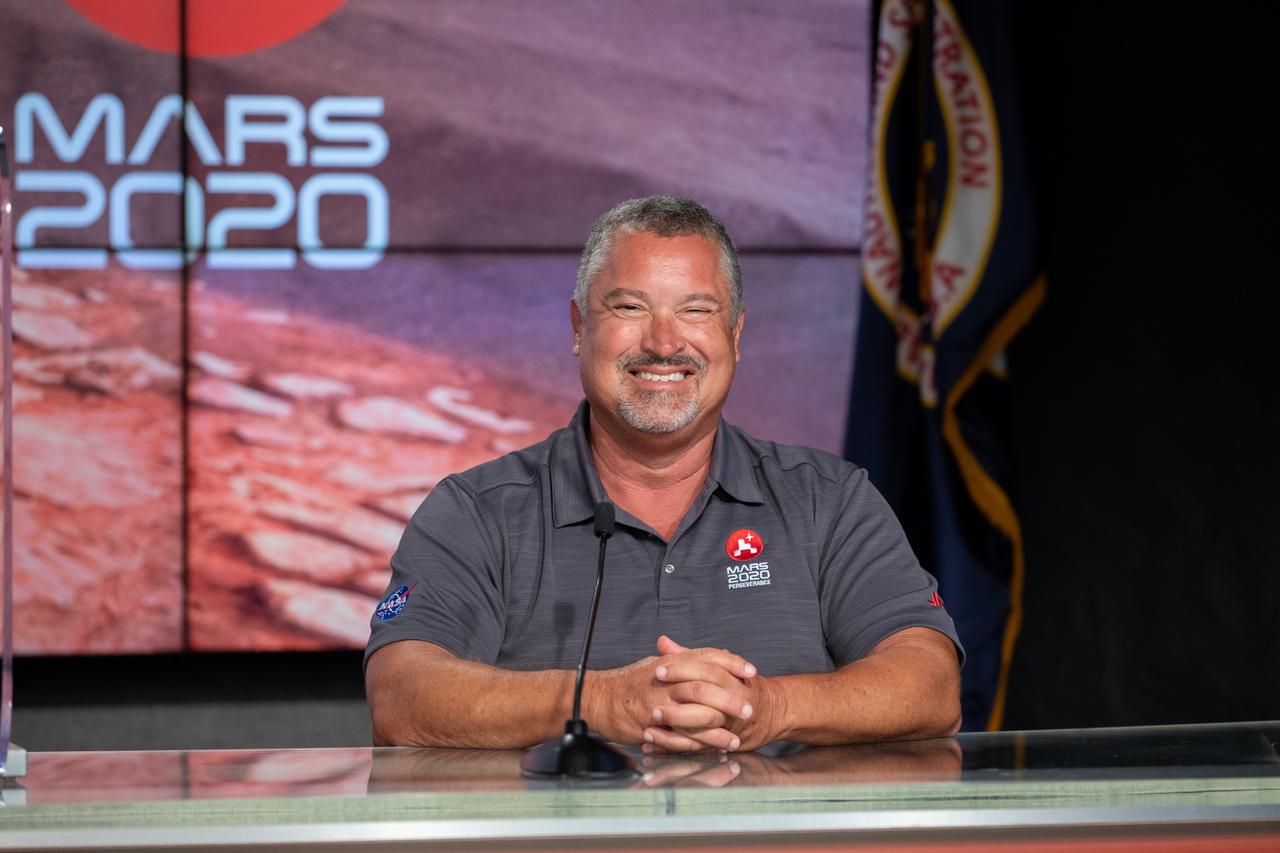
Omar Baez, launch director, NASA’s Launch Services Program, participates in a Mars 2020 post-launch news conference at NASA’s Kennedy Space Center in Florida on July 30, 2020. The United Launch Alliance Atlas V 541 rocket lifted off from Space Launch Complex 41 at Cape Canaveral Air Force Station at 7:50 a.m. EDT, carrying the agency’s Mars Perseverance rover and Ingenuity helicopter. The rover is part of NASA’s Mars Exploration Program, a long-term effort of robotic exploration of the Red Planet. The rover will search for habitable conditions in the ancient past and signs of past microbial life on Mars. The Launch Services Program at Kennedy is responsible for launch management.
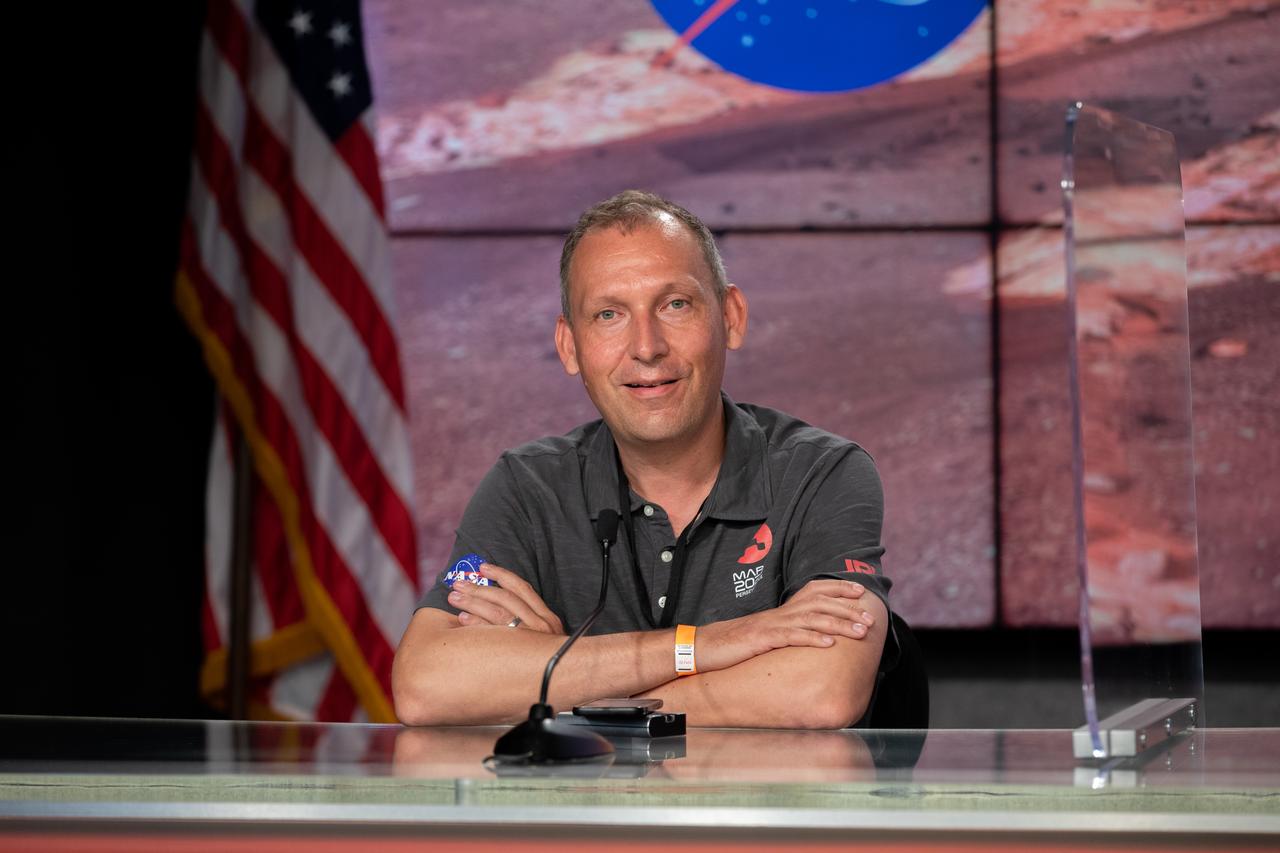
Thomas Zurbuchen, NASA associate administrator, Science Mission Directorate, participates in a Mars 2020 post-launch news conference at NASA’s Kennedy Space Center in Florida on July 30, 2020. The United Launch Alliance Atlas V 541 rocket lifted off from Space Launch Complex 41 at Cape Canaveral Air Force Station at 7:50 a.m. EDT, carrying the agency’s Mars Perseverance rover and Ingenuity helicopter. The rover is part of NASA’s Mars Exploration Program, a long-term effort of robotic exploration of the Red Planet. The rover will search for habitable conditions in the ancient past and signs of past microbial life on Mars. The Launch Services Program at Kennedy is responsible for launch management.
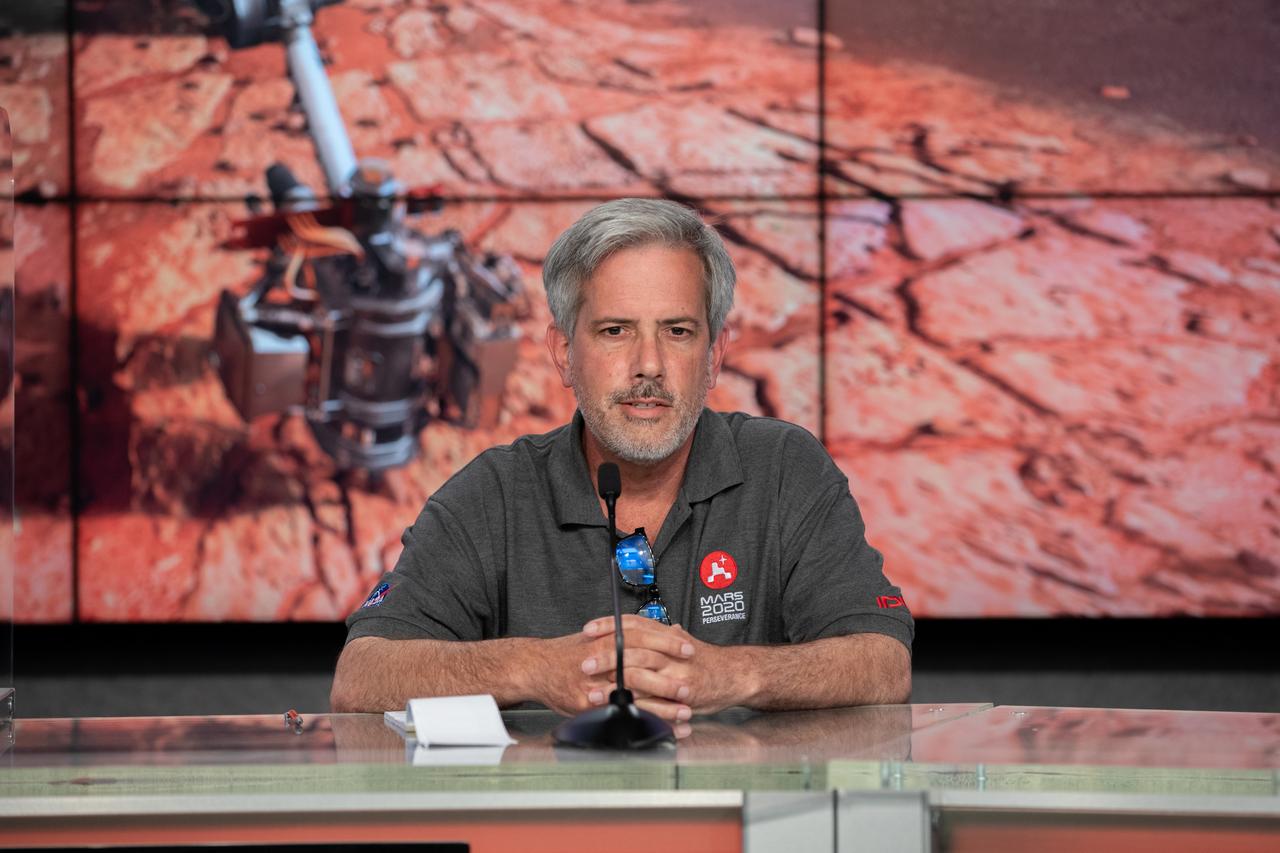
Matt Wallace, deputy project manager, NASA’s Jet Propulsion Laboratory, participates in a Mars 2020 post-launch news conference at NASA’s Kennedy Space Center in Florida on July 30, 2020. The United Launch Alliance Atlas V 541 rocket lifted off from Space Launch Complex 41 at Cape Canaveral Air Force Station at 7:50 a.m. EDT, carrying the agency’s Mars Perseverance rover and Ingenuity helicopter. The rover is part of NASA’s Mars Exploration Program, a long-term effort of robotic exploration of the Red Planet. The rover will search for habitable conditions in the ancient past and signs of past microbial life on Mars. The Launch Services Program at Kennedy is responsible for launch management.
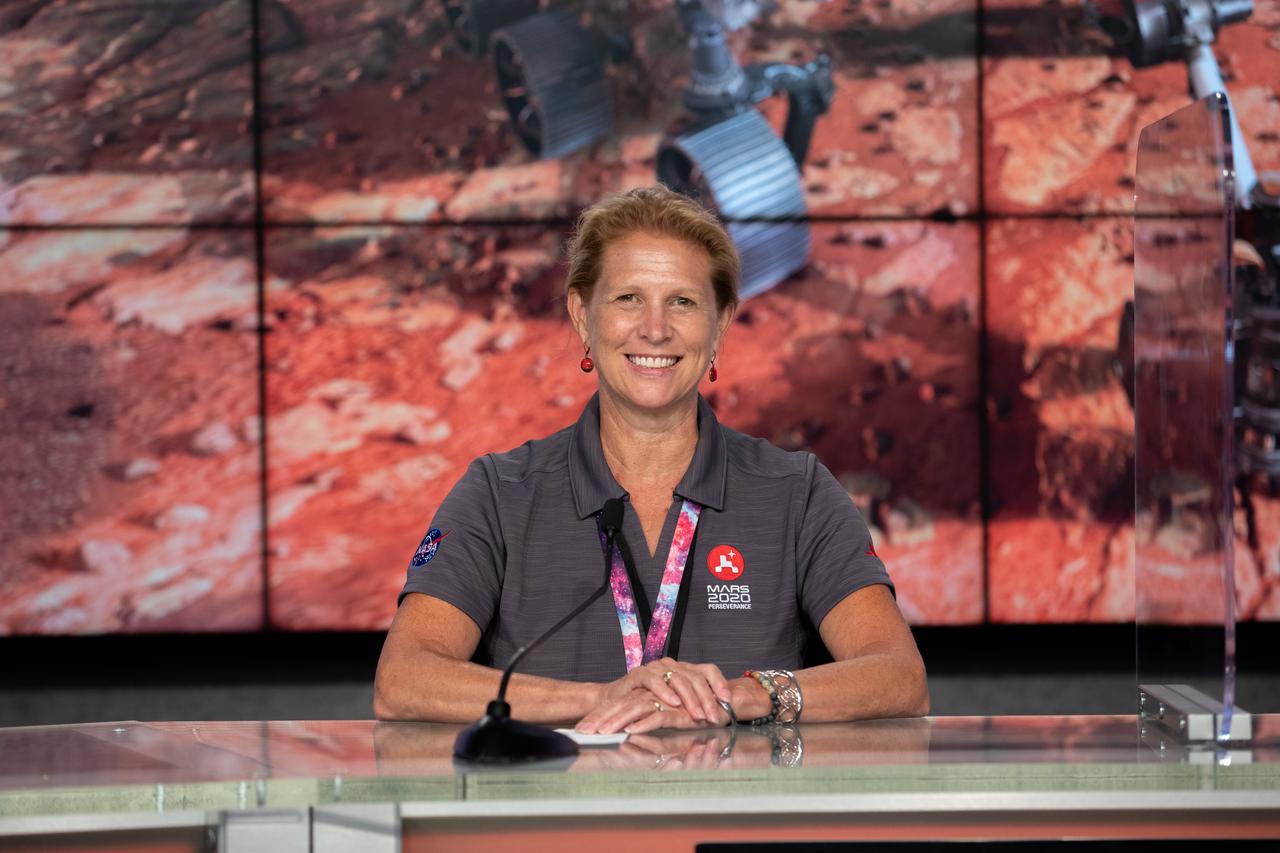
Lori Glaze, Planetary Science Division director, NASA Headquarters, participates in a Mars 2020 post-launch news conference at NASA’s Kennedy Space Center in Florida on July 30, 2020. The United Launch Alliance Atlas V 541 rocket lifted off from Space Launch Complex 41 at Cape Canaveral Air Force Station at 7:50 a.m. EDT, carrying the agency’s Mars Perseverance rover and Ingenuity helicopter. The rover is part of NASA’s Mars Exploration Program, a long-term effort of robotic exploration of the Red Planet. The rover will search for habitable conditions in the ancient past and signs of past microbial life on Mars. The Launch Services Program at Kennedy is responsible for launch management.
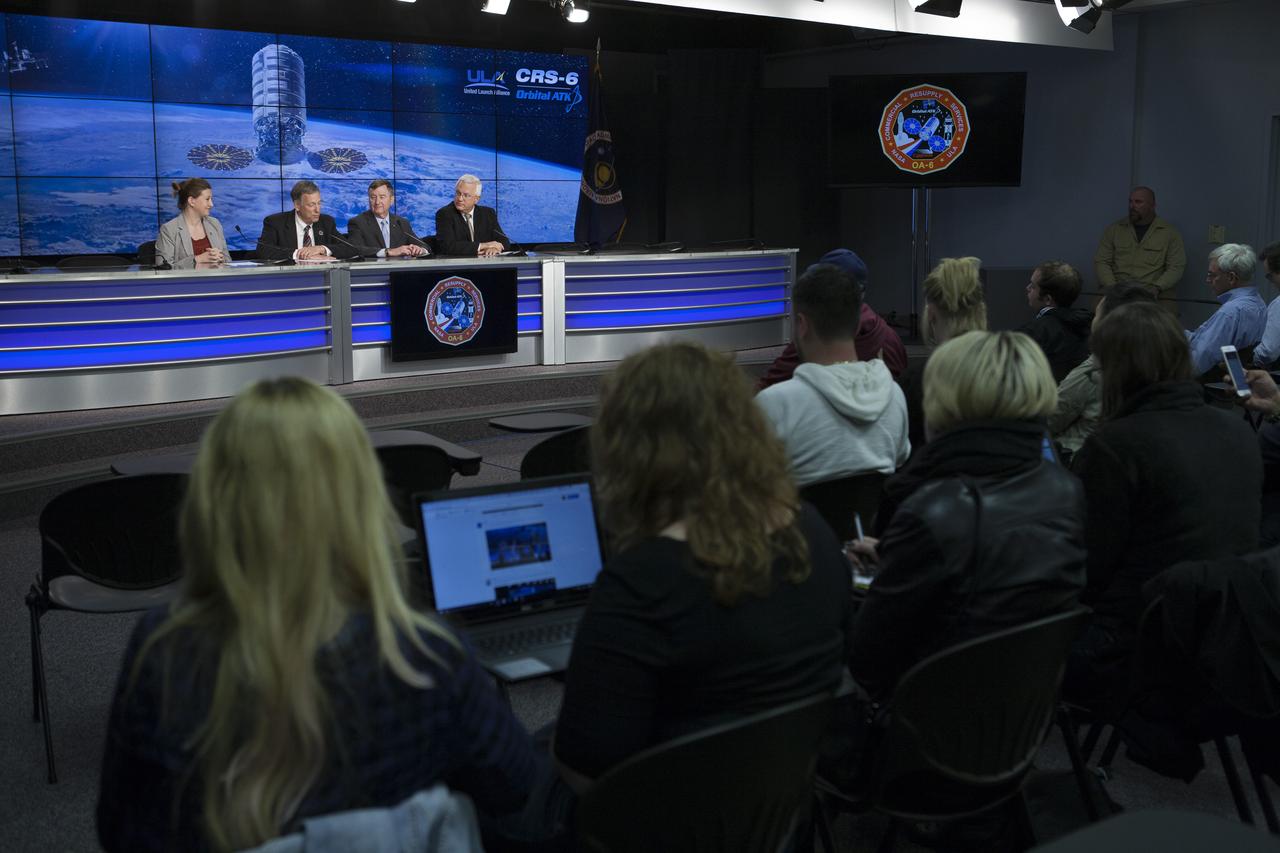
In the Press Site auditorium of NASA's Kennedy Space Center in Florida, NASA and industry leaders speak to members of the news media at a post-launch news conference following the liftoff of Orbital ATK CRS-6, a commercial resupply services mission to the International Space Station, or ISS. From left are: Kathryn Hambleton of NASA Communications; Kenneth Todd, NASA ISS Operations Integration manager; Frank Culbertson, president of Orbital ATK's Space System Group; Vern Thorp, United Space Alliance's program manager for NASA missions. The Cygnus spacecraft lifted off atop an Atlas V rocket from Space Launch Complex 41 at Cape Canaveral Air Force Station at 11:05 p.m. EDT.
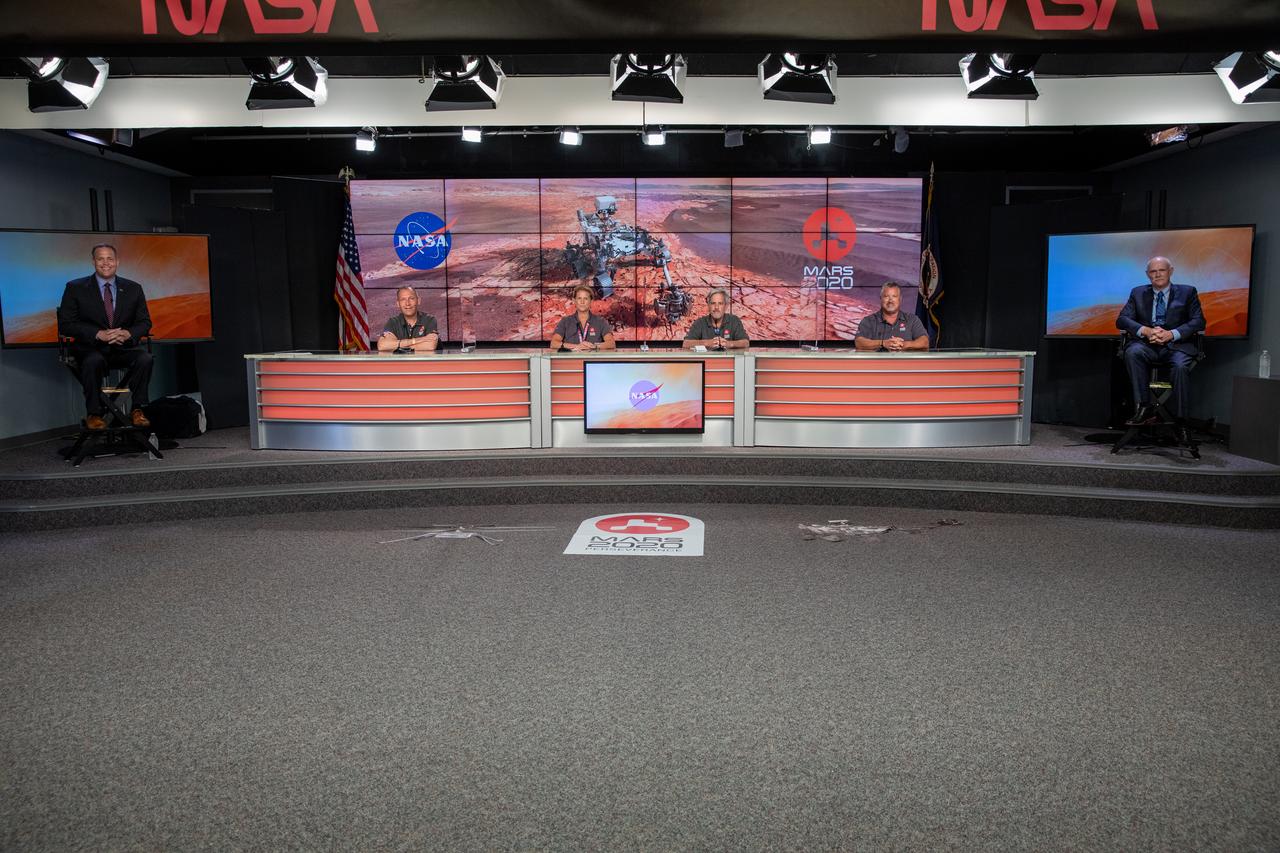
A Mars 2020 post-launch news conference is held at NASA’s Kennedy Space Center in Florida on July 30, 2020. Participants, from left, are NASA Administrator Jim Bridenstine; Thomas Zurbuchen, NASA associate administrator, Science Mission Directorate; Lori Glaze, Planetary Science Division director, NASA Headquarters; Matt Wallace, deputy project manager, NASA’s Jet Propulsion Laboratory; Omar Baez, launch director, NASA’s Launch Services Program; and Tory Bruno, president and CEO of United Launch Alliance. The United Launch Alliance Atlas V 541 rocket lifted off from Space Launch Complex 41 at Cape Canaveral Air Force Station at 7:50 a.m. EDT, carrying the agency’s Mars Perseverance rover and Ingenuity helicopter. The rover is part of NASA’s Mars Exploration Program, a long-term effort of robotic exploration of the Red Planet. The rover will search for habitable conditions in the ancient past and signs of past microbial life on Mars. The Launch Services Program at Kennedy is responsible for launch management.
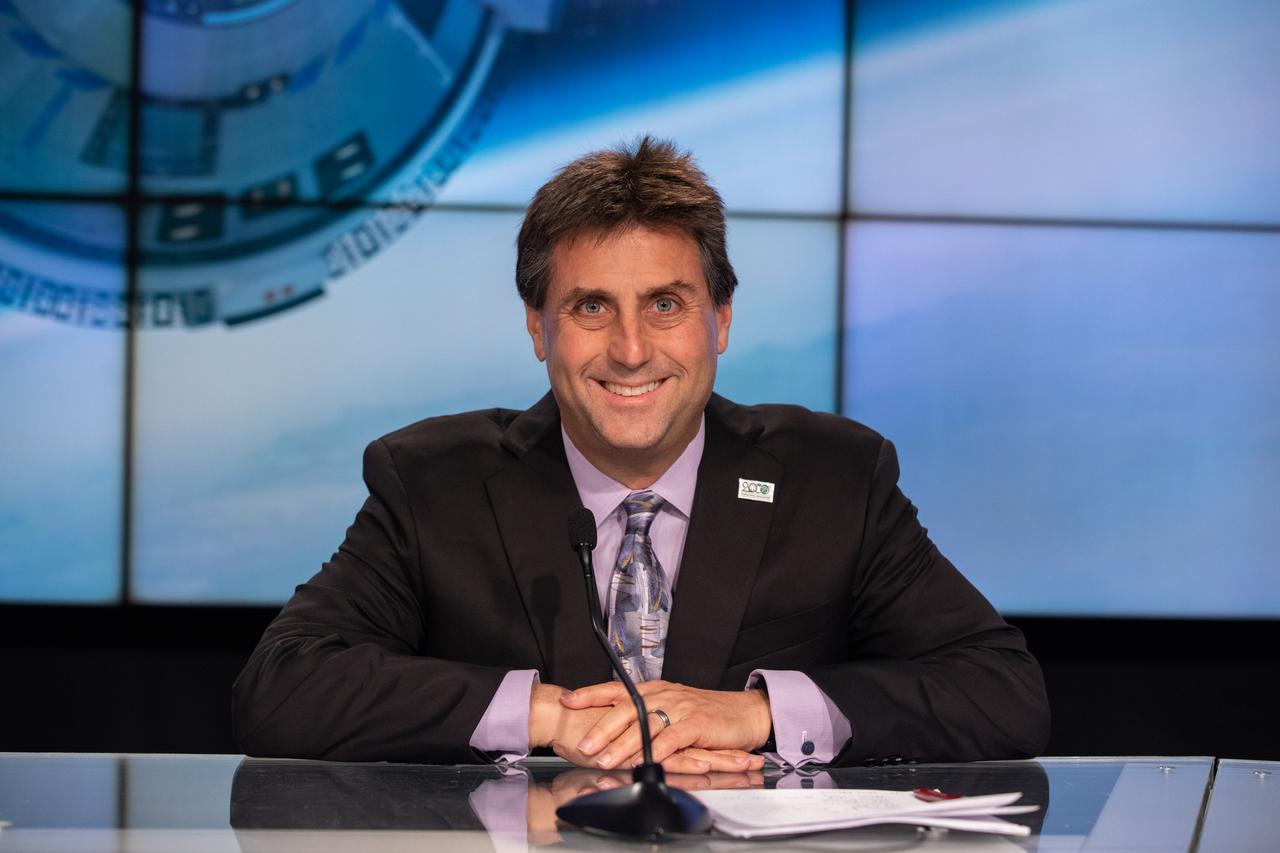
Joel Montalbano, manager, NASA’s International Space Station Program, participates in a post-launch news conference following the liftoff of NASA Boeing’s Orbital Flight Test-2 (OFT-2) on May 19, 2022. Liftoff occurred at 6:54 p.m. EDT from Space Launch Complex-41 at Florida’s Cape Canaveral Space Force Station. Boeing’s uncrewed flight test is designed to test the system’s end-to-end capabilities for NASA’s Commercial Crew Program providing valuable data towards NASA certifying Boeing’s crew transportation system for regular crewed flights to and from the International Space Station.
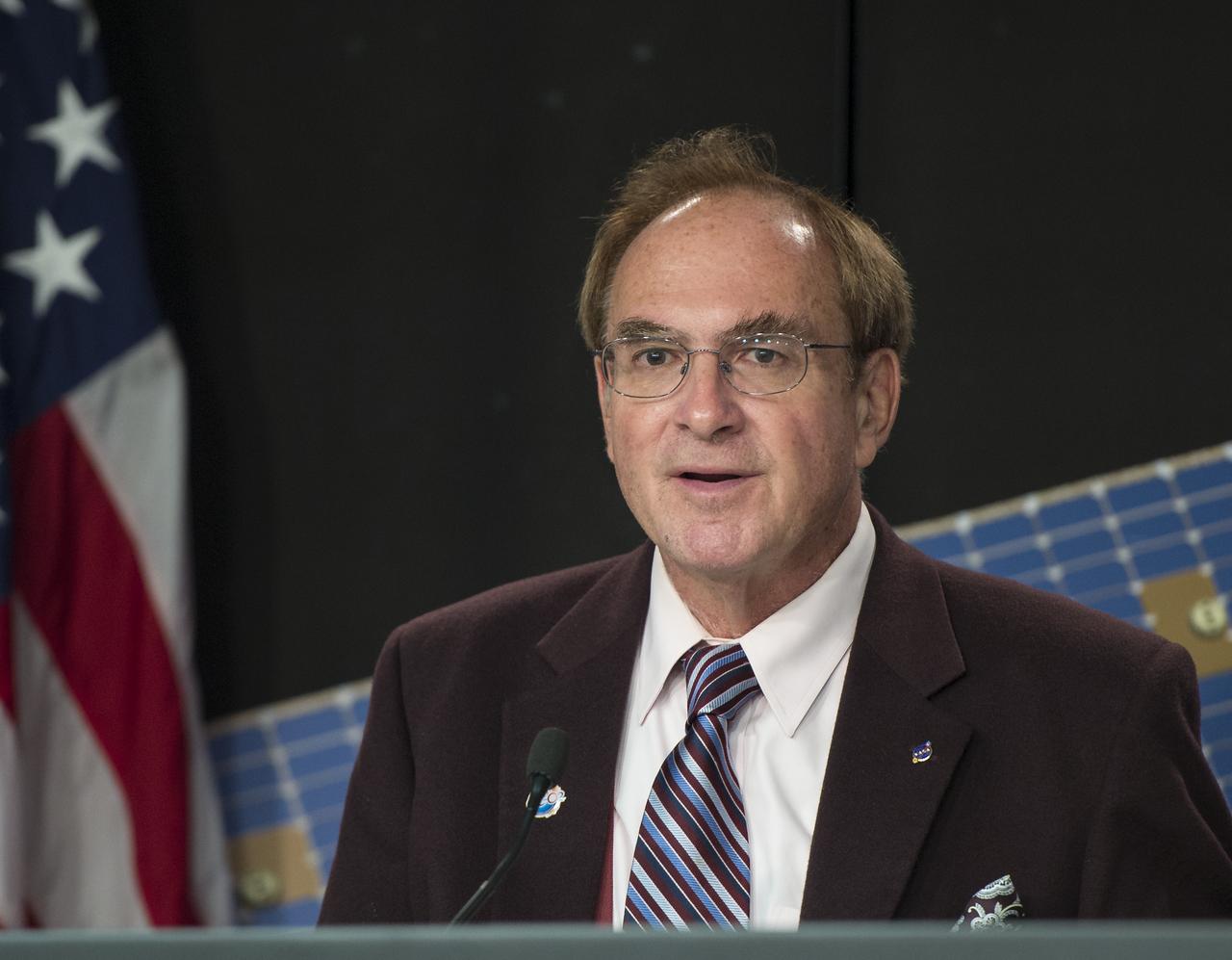
NASA Kennedy Space Center Public Affairs Officer George Diller, moderates a post-launch press briefing, following the successful launch of the Orbiting Carbon Observatory-2 (OCO-2), NASA’s first spacecraft dedicated to studying carbon dioxide, Wednesday, July 2, 2014, at the Vandenberg Air Force Base, Calif. OCO-2 will measure the global distribution of carbon dioxide, the leading human-produced greenhouse gas driving changes in Earth’s climate. Photo Credit: (NASA/Bill Ingalls)
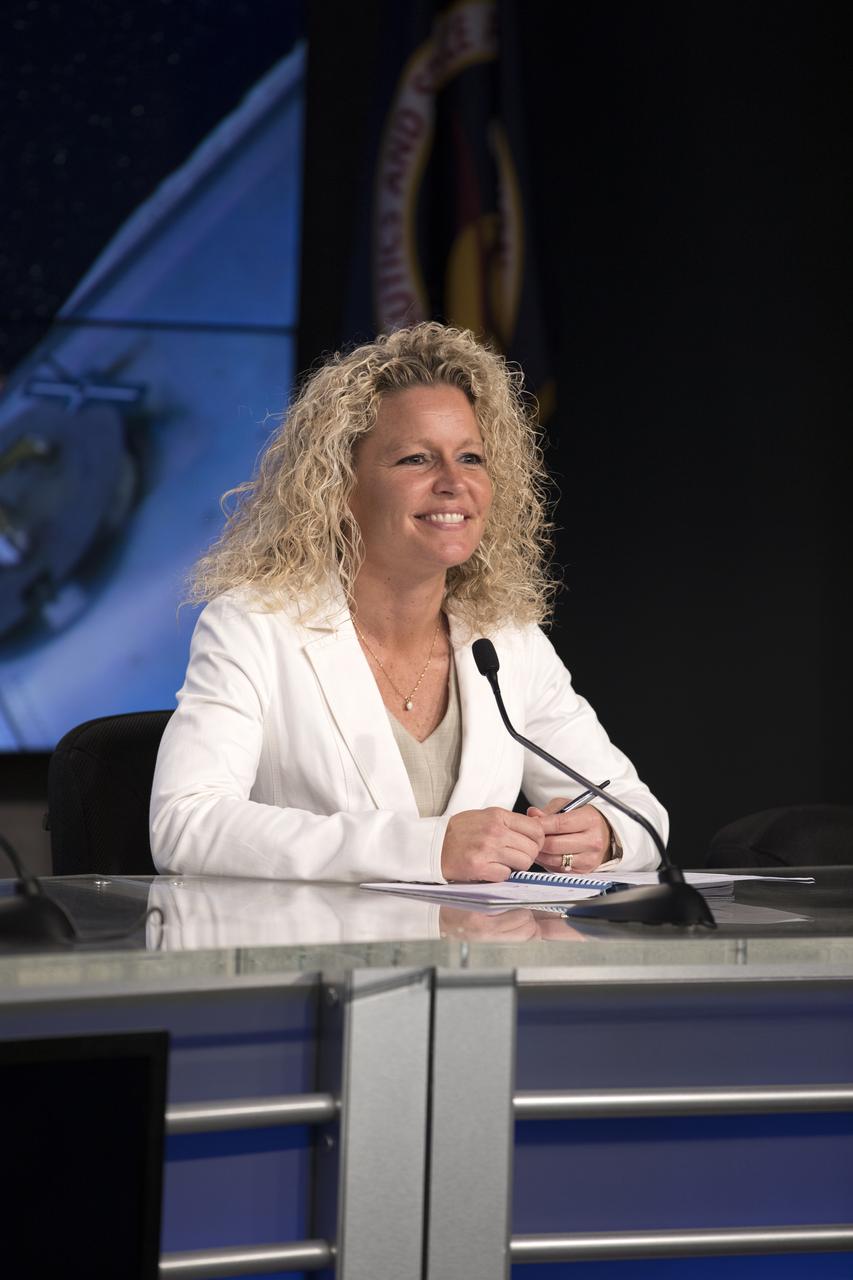
In the Press Site auditorium of NASA's Kennedy Space Center in Florida, Pam Underwood, manager of the Operations Integration Division of the Federal Aviation Administration Office of Commercial Space Transportation, speaks to the news media at a post-launch news conference following the liftoff of SpaceX CRS-10, a commercial resupply services mission to the International Space Station. SpaceX CRS-10 lifted off atop a Falcon 9 rocket from Kennedy's Launch Complex 39A at 9:39 a.m. EST.
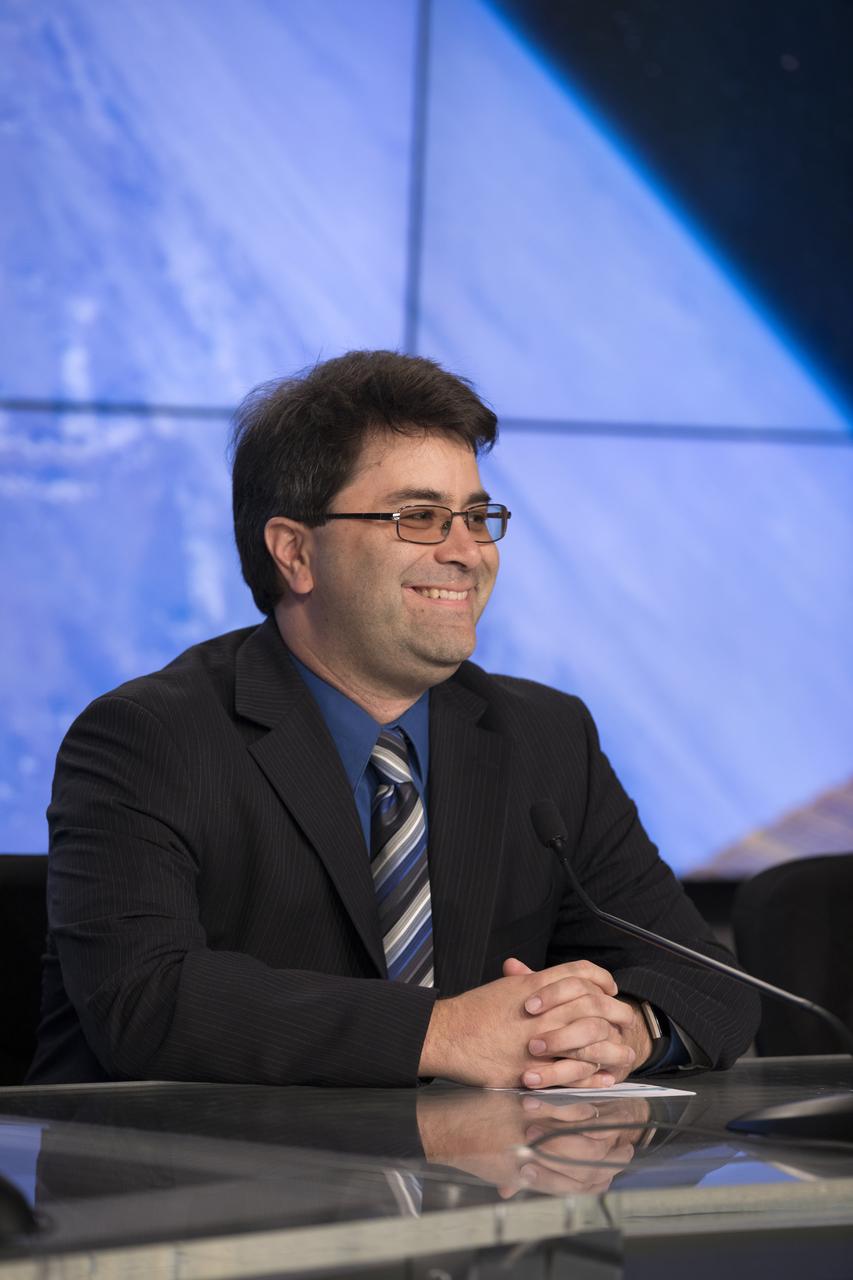
In the Press Site auditorium of NASA's Kennedy Space Center in Florida, William Spetch, deputy manager of the International Space Station Transportation Office, speaks to the news media at a post-launch news conference following the liftoff of SpaceX CRS-10, a commercial resupply services mission to the International Space Station. SpaceX CRS-10 lifted off atop a Falcon 9 rocket from Kennedy's Launch Complex 39A at 9:39 a.m. EST.
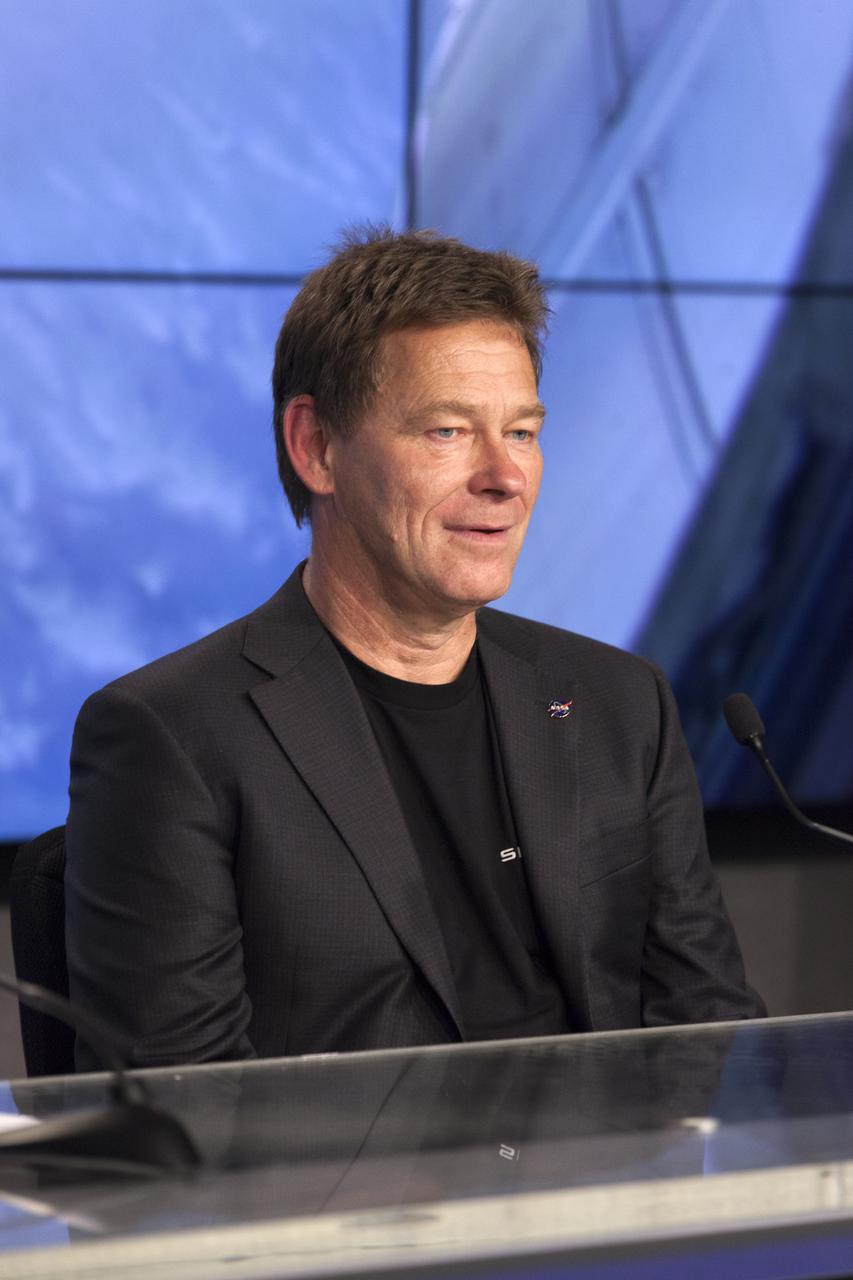
In the Press Site auditorium of NASA's Kennedy Space Center in Florida, Hans Koenigsmann, SpaceX vice president of Flight and Build Reliability, speaks to media at a post-launch news conference following the liftoff of SpaceX CRS-12, a commercial resupply services mission to the International Space Station. SpaceX CRS-12 lifted off atop a Falcon 9 rocket from Kennedy's Launch Complex 39A at 12:31 p.m. EDT.
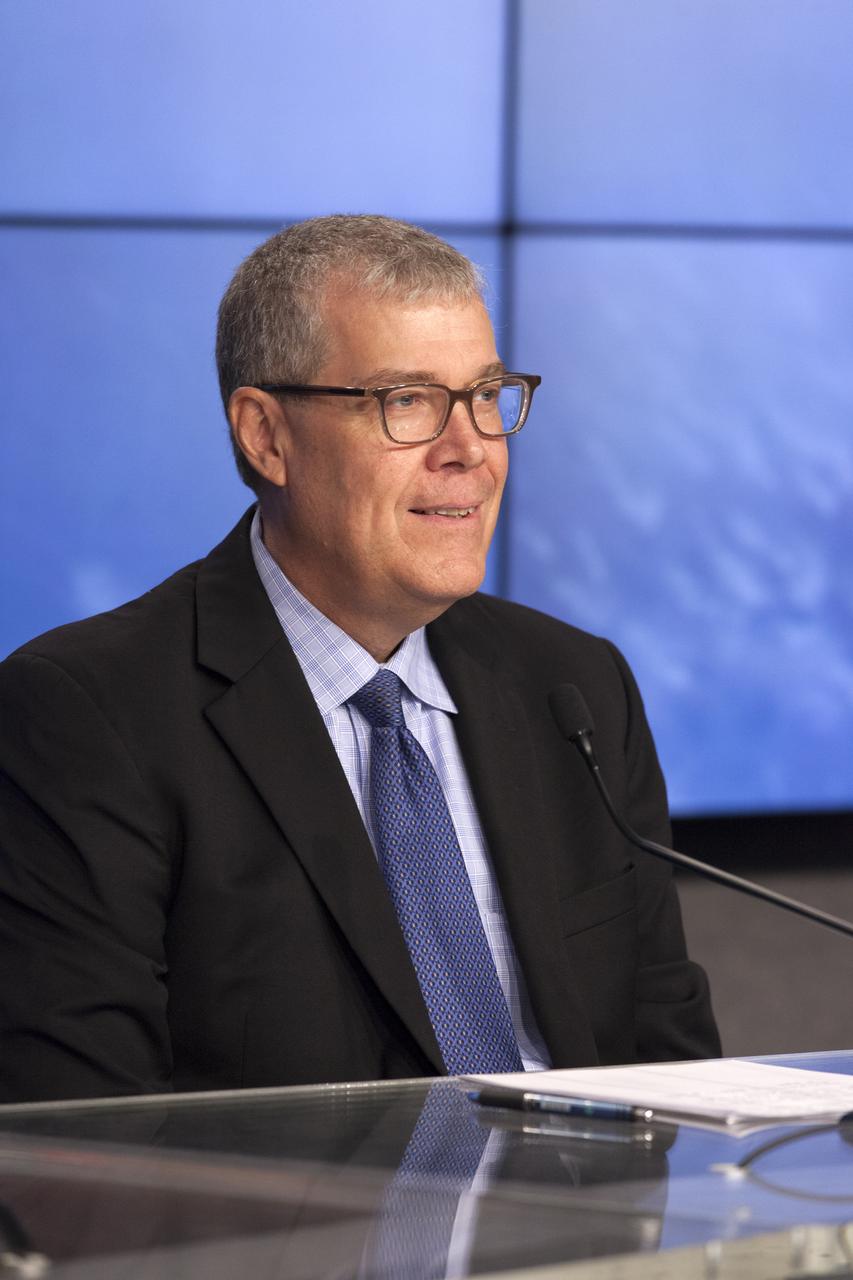
In the Press Site auditorium of NASA's Kennedy Space Center in Florida, Dan Hartman, NASA deputy manager of the International Space Station Program, speaks to media at a post-launch news conference following the liftoff of SpaceX CRS-12, a commercial resupply services mission to the International Space Station. SpaceX CRS-12 lifted off atop a Falcon 9 rocket from Kennedy's Launch Complex 39A at 12:31 p.m. EDT.

In the Press Site auditorium of NASA's Kennedy Space Center in Florida, Stephanie Martin of NASA Communications, speaks to media at a post-launch news conference following the liftoff of SpaceX CRS-12, a commercial resupply services mission to the International Space Station. SpaceX CRS-12 lifted off atop a Falcon 9 rocket from Kennedy's Launch Complex 39A at 12:31 p.m. EDT.
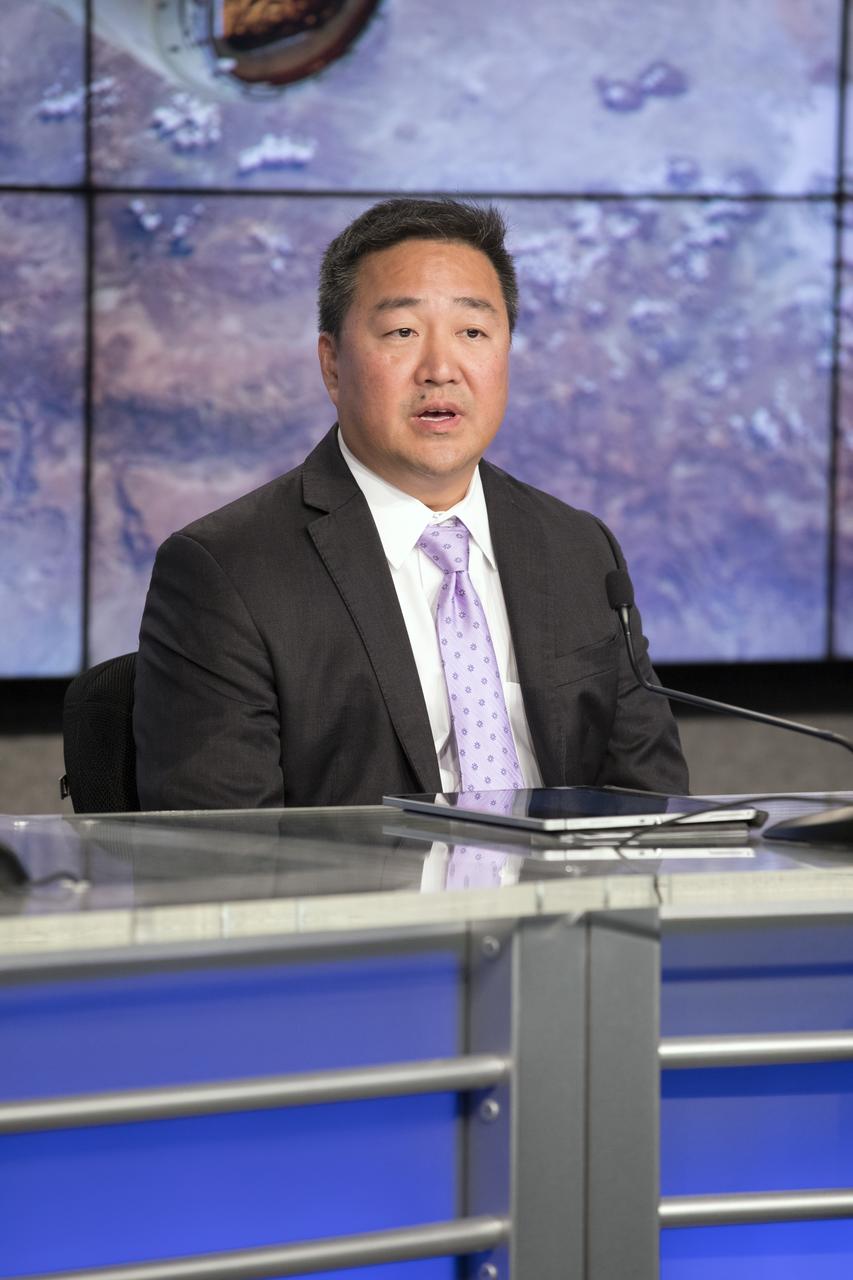
In the Press Site auditorium of NASA's Kennedy Space Center in Florida, Ven Feng, NASA's manager of the International Space Station Transportation Integration Office, speaks to media at a post-launch news conference following the liftoff of SpaceX CRS-11, a commercial resupply services mission to the International Space Station. SpaceX CRS-11 lifted off atop a Falcon 9 rocket from Kennedy's Launch Complex 39A at 5:07 p.m. EDT.
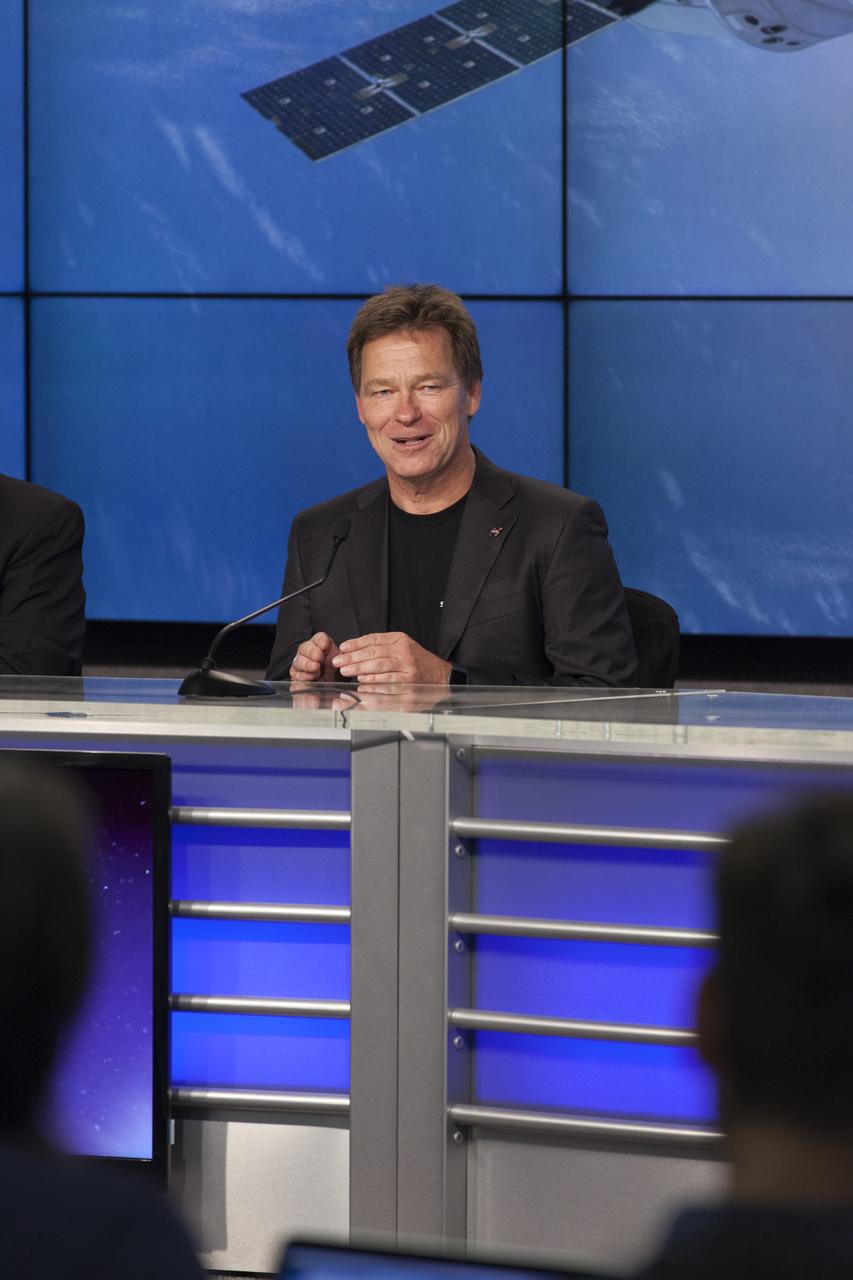
In the Press Site auditorium of NASA's Kennedy Space Center in Florida, Hans Koenigsmann, SpaceX vice president of Flight and Build Reliability, speaks to media at a post-launch news conference following the liftoff of SpaceX CRS-12, a commercial resupply services mission to the International Space Station. SpaceX CRS-12 lifted off atop a Falcon 9 rocket from Kennedy's Launch Complex 39A at 12:31 p.m. EDT.
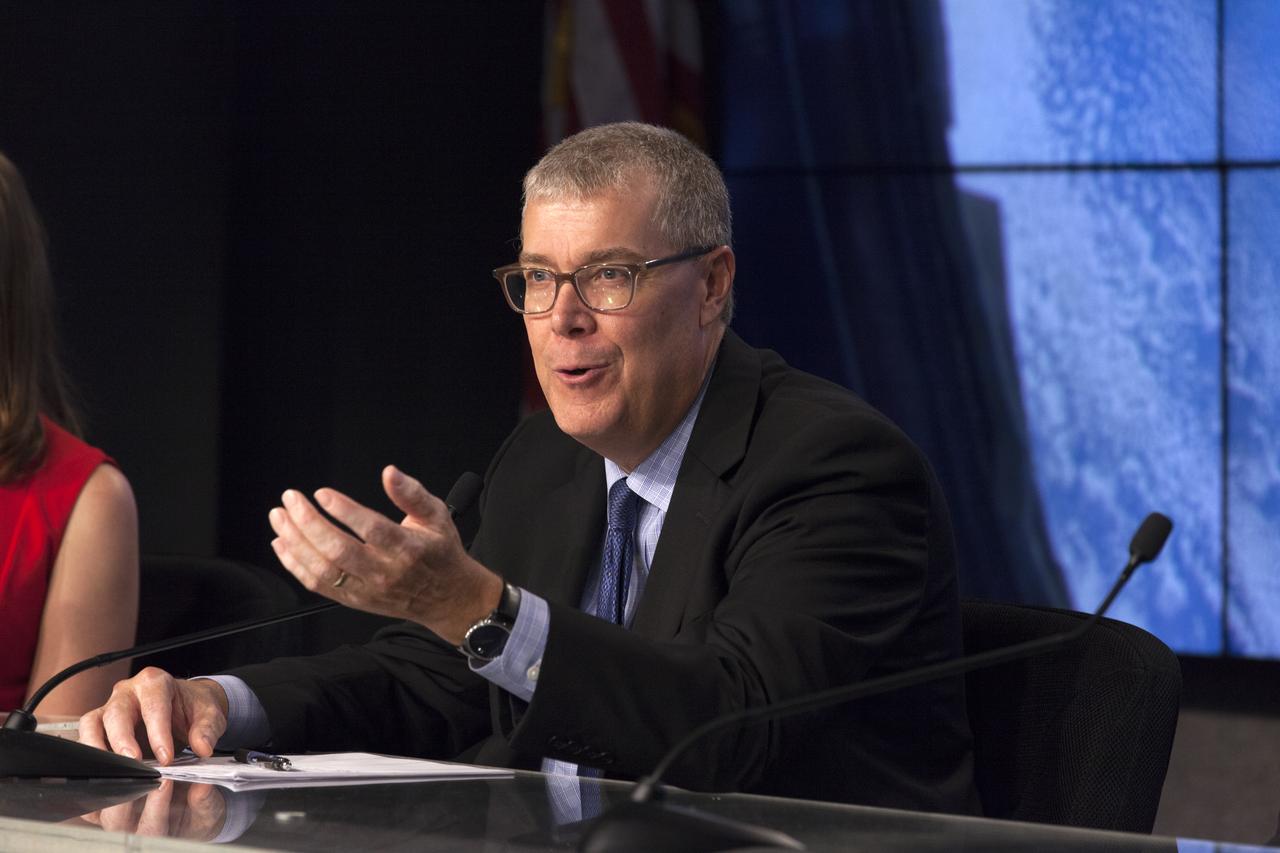
In the Press Site auditorium of NASA's Kennedy Space Center in Florida, Dan Hartman, NASA deputy manager of the International Space Station Program, speaks to media at a post-launch news conference following the liftoff of SpaceX CRS-12, a commercial resupply services mission to the International Space Station. SpaceX CRS-12 lifted off atop a Falcon 9 rocket from Kennedy's Launch Complex 39A at 12:31 p.m. EDT.
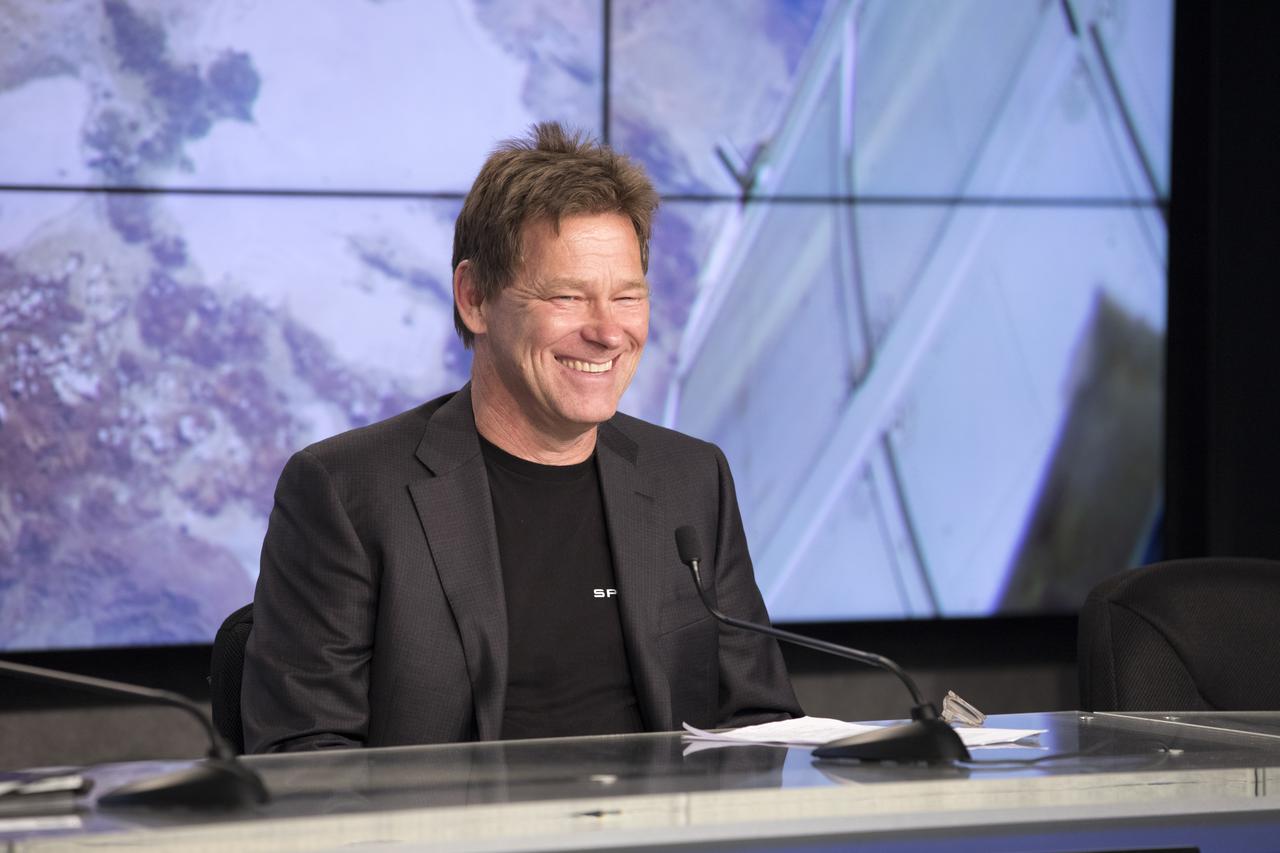
In the Press Site auditorium of NASA's Kennedy Space Center in Florida, Hans Koenigsmann, vice president of Flight Reliability for SpaceX. SpaceX, speaks to media at a post-launch news conference following the liftoff of SpaceX CRS-11, a commercial resupply services mission to the International Space Station. SpaceX CRS-11 lifted off atop a Falcon 9 rocket from Kennedy's Launch Complex 39A at 5:07 p.m. EDT.

In the Press Site auditorium of NASA's Kennedy Space Center in Florida, Jessica Jensen, Dragon mission manager for SpaceX, speaks to the news media at a post-launch news conference following the liftoff of SpaceX CRS-10, a commercial resupply services mission to the International Space Station. SpaceX CRS-10 lifted off atop a Falcon 9 rocket from Kennedy's Launch Complex 39A at 9:39 a.m. EST.

In the Press Site auditorium of NASA's Kennedy Space Center in Florida, Jessica Jensen, Dragon mission manager for SpaceX, speaks to the news media at a post-launch news conference following the liftoff of SpaceX CRS-10, a commercial resupply services mission to the International Space Station. SpaceX CRS-10 lifted off atop a Falcon 9 rocket from Kennedy's Launch Complex 39A at 9:39 a.m. EST.
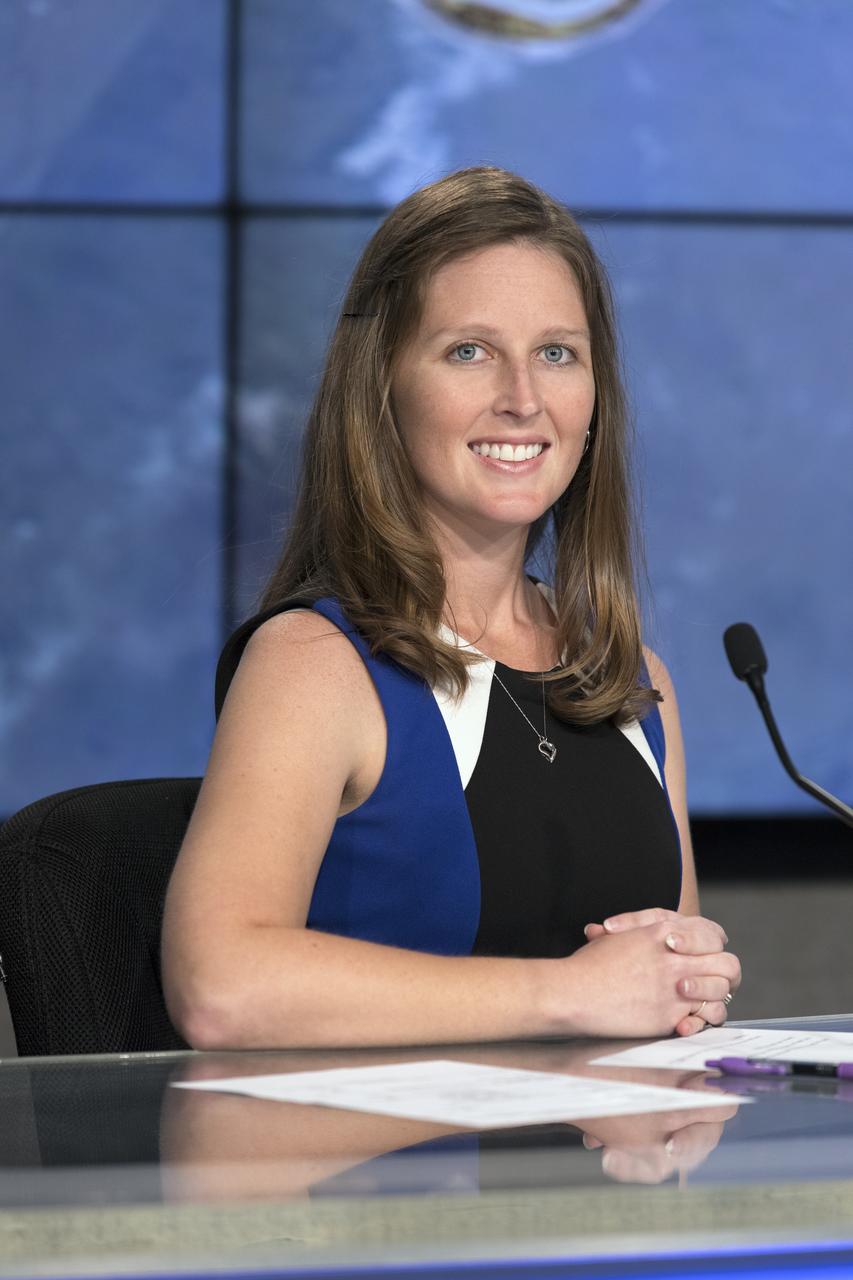
In the Press Site auditorium of NASA's Kennedy Space Center in Florida, from left, Stephanie Martin of NASA Communications, speaks to media at a post-launch news conference following the liftoff of SpaceX CRS-13. The flight is a commercial resupply services mission to the International Space Station. SpaceX CRS-13 lifted off atop a Falcon 9 rocket from Space Launch Complex 40 at Cape Canaveral Air Force Station at 10:36 a.m. EST with supplies and equipment and new science experiments for technology research.
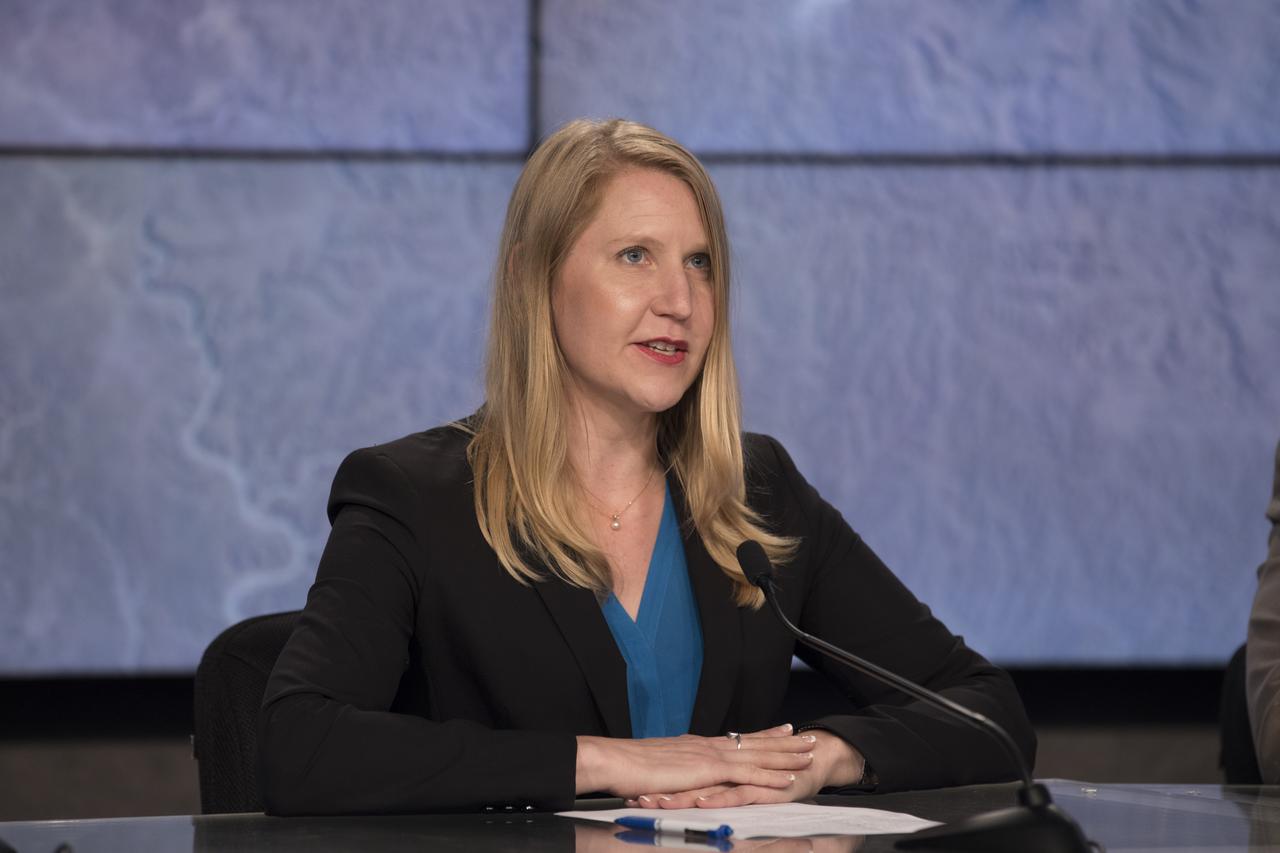
In the Press Site auditorium of NASA's Kennedy Space Center in Florida, Stephanie Schierholz of NASA Communications speaks to media at a post-launch news conference following the liftoff of SpaceX CRS-15. The flight is a commercial resupply services mission to the International Space Station. SpaceX CRS-15 lifted off atop a Falcon 9 rocket from Space Launch Complex 40 at Cape Canaveral Air Force Station on Friday, June 29, 2018, at 5:42 a.m. EDT with supplies and materials to support multiple critical science and research investigations.
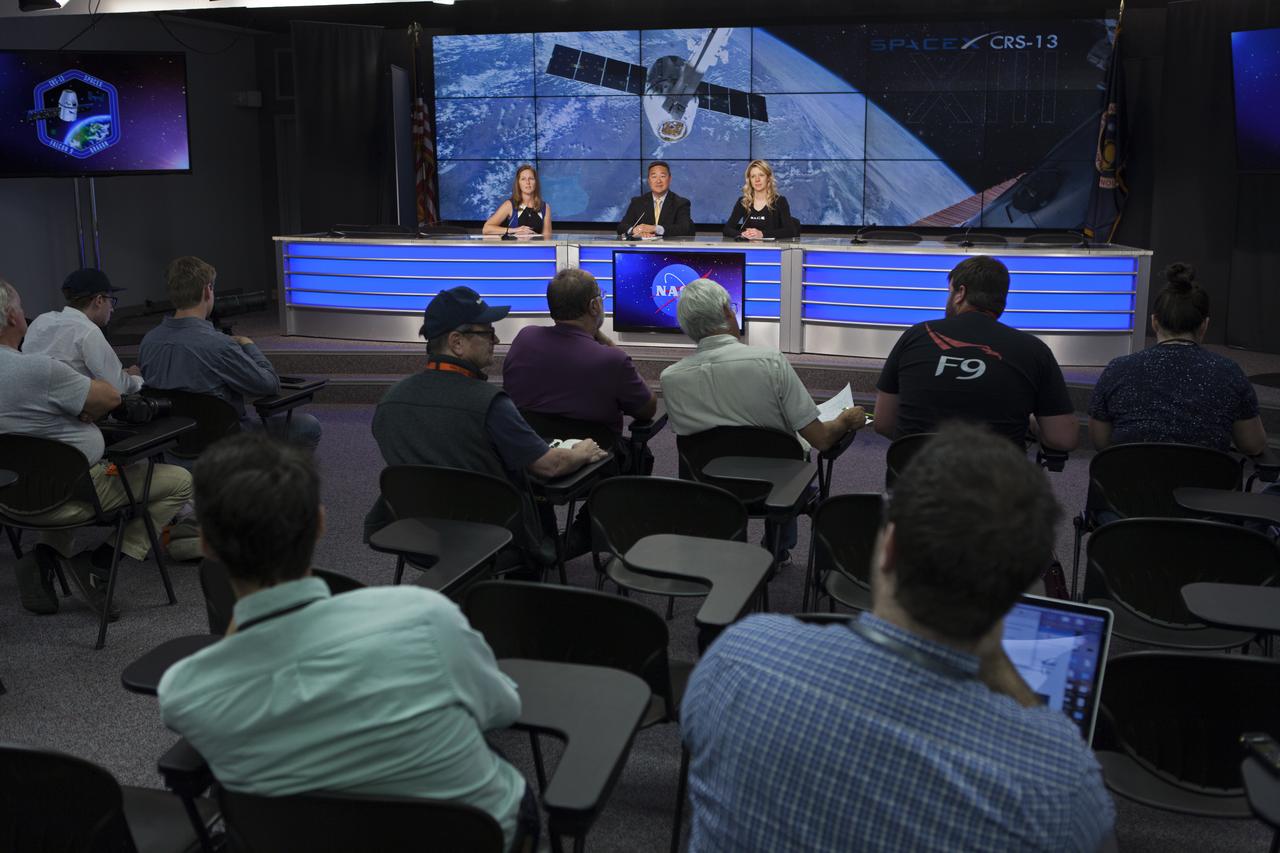
In the Press Site auditorium of NASA's Kennedy Space Center in Florida, from left, Stephanie Martin of NASA Communications, Ven Feng, manager of the Transportation Integration Office for the International Space Station Program, and Jessica Jensen, SpaceX director of Dragon Mission Management, speak to media at a post-launch news conference following the liftoff of SpaceX CRS-13. The flight is a commercial resupply services mission to the International Space Station. SpaceX CRS-13 lifted off atop a Falcon 9 rocket from Space Launch Complex 40 at Cape Canaveral Air Force Station at 10:36 a.m. EST with supplies and equipment and new science experiments for technology research.
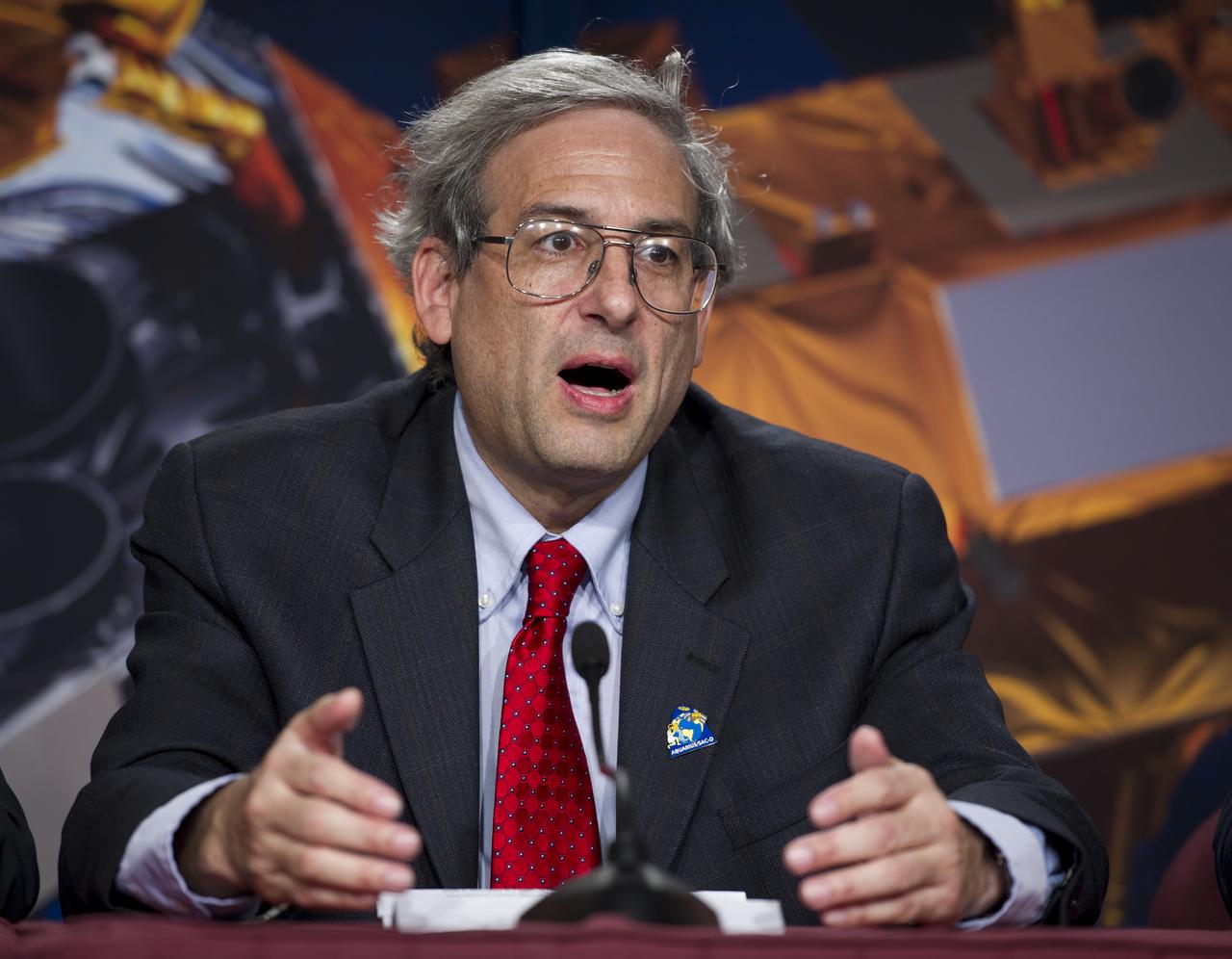
Michael Freilich, NASA Earth Science Division Director, NASA Headquarters, talks during the Aquarius/SAC-D post-launch press conference on Friday, June 10, 2011 at the NASA Resident Office, Vandenberg Air Force Base, Calif. The joint U.S./Argentinian Aquarius/Satélite de Aplicaciones Científicas (SAC)-D mission, launched earlier on Friday June 10, will map the salinity at the ocean surface, information critical to improving our understanding of two major components of Earth's climate system: the water cycle and ocean circulation. Photo Credit: (NASA/Bill Ingalls)

In the Press Site auditorium of NASA's Kennedy Space Center in Florida, from left, Ven Feng, manager of the Transportation Integration Office for the International Space Station Program, and Jessica Jensen, SpaceX director of Dragon Mission Management, speak to media at a post-launch news conference following the liftoff of SpaceX CRS-13. The flight is a commercial resupply services mission to the International Space Station. SpaceX CRS-13 lifted off atop a Falcon 9 rocket from Space Launch Complex 40 at Cape Canaveral Air Force Station at 10:36 a.m. EST with supplies and equipment and new science experiments for technology research.
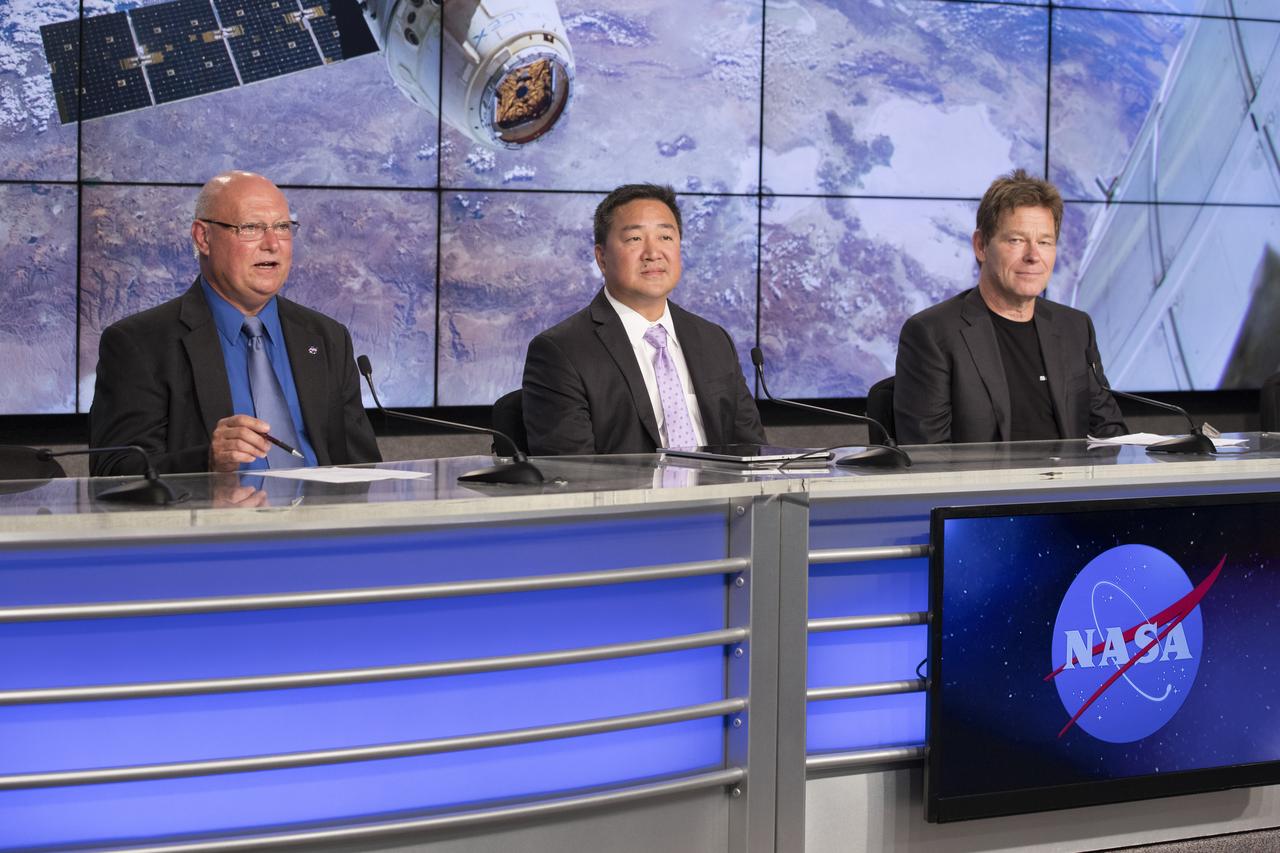
In the Press Site auditorium of NASA's Kennedy Space Center in Florida, NASA and industry leaders speak to media at a post-launch news conference following the liftoff of SpaceX CRS-11, a commercial resupply services mission to the International Space Station. From left are: Mike Curie of NASA Communications, Ven Feng, NASA's manager of the International Space Station Transportation Integration Office, and Hans Koenigsmann, vice president of Flight Reliability for SpaceX. SpaceX CRS-11 lifted off atop a Falcon 9 rocket from Kennedy's Launch Complex 39A at 5:07 p.m. EDT.
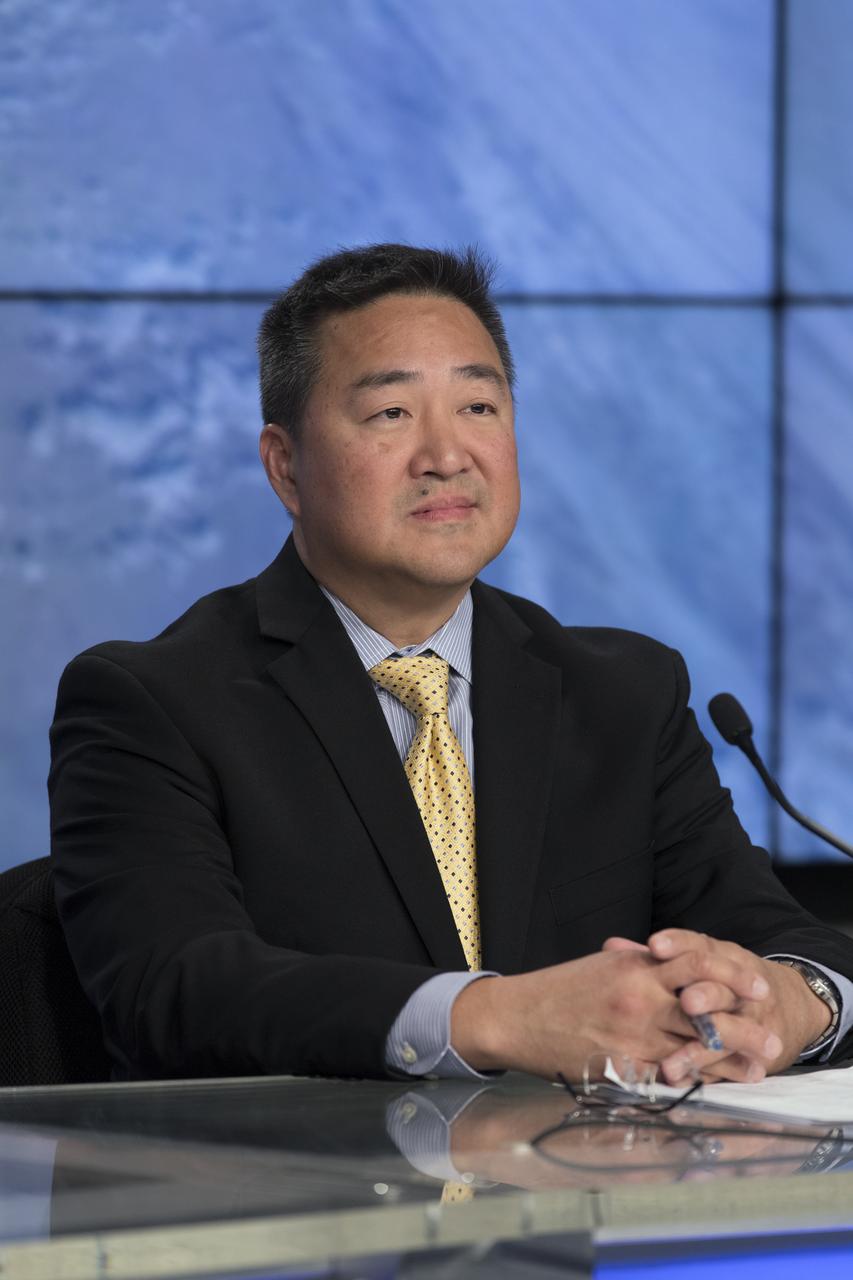
In the Press Site auditorium of NASA's Kennedy Space Center in Florida, from left, Ven Feng, manager of the Transportation Integration Office for the International Space Station Program, speaks to media at a post-launch news conference following the liftoff of SpaceX CRS-13. The flight is a commercial resupply services mission to the International Space Station. SpaceX CRS-13 lifted off atop a Falcon 9 rocket from Space Launch Complex 40 at Cape Canaveral Air Force Station at 10:36 a.m. EST with supplies and equipment and new science experiments for technology research.
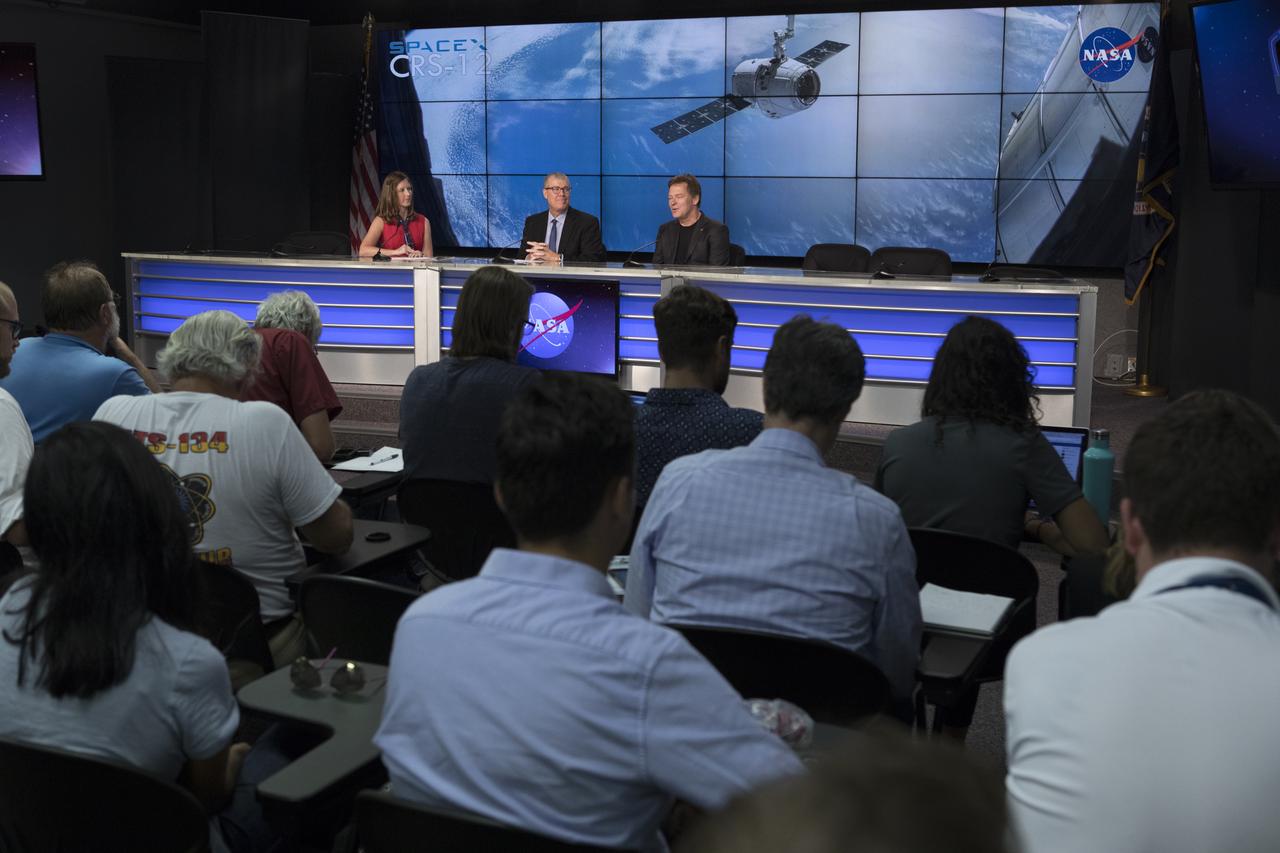
In the Press Site auditorium of NASA's Kennedy Space Center in Florida, NASA and industry leaders speak to media at a post-launch news conference following the liftoff of SpaceX CRS-12, a commercial resupply services mission to the International Space Station. From left are: Stephanie Martin of NASA Communications, Dan Hartman, NASA deputy manager of the International Space Station Program, and Hans Koenigsmann, SpaceX vice president of Flight and Build Reliability. SpaceX CRS-12 lifted off atop a Falcon 9 rocket from Kennedy's Launch Complex 39A at 12:31 p.m. EDT.
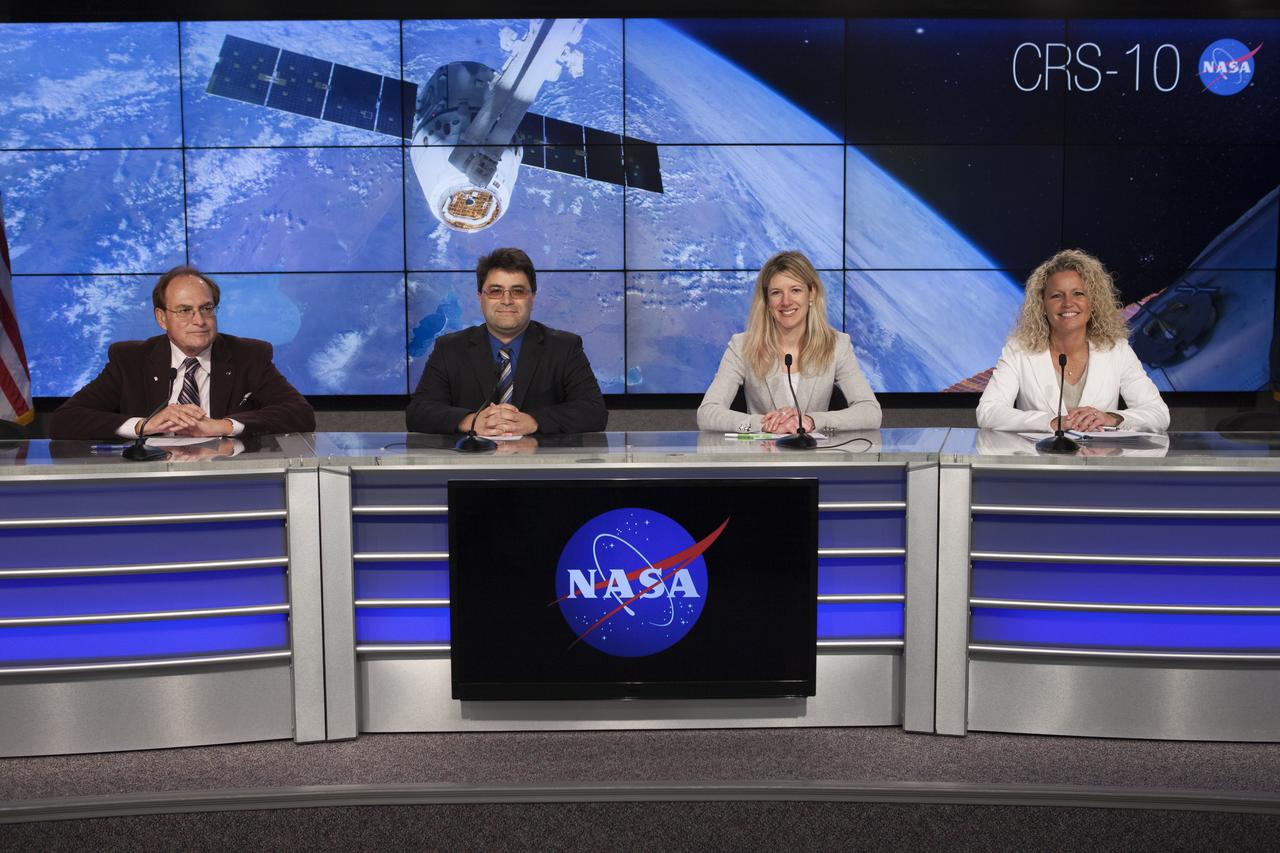
In the Press Site auditorium of NASA's Kennedy Space Center in Florida, NASA and industry leaders speak to media at a post-launch news conference following the liftoff of SpaceX CRS-10, a commercial resupply services mission to the International Space Station. From left are: George Diller, NASA Communications; William Spetch, deputy manager of the International Space Station Transportation Office; Jessica Jensen, Dragon mission manager for SpaceX; and Pam Underwood, manager of the Operations Integration Division of the Federal Aviation Administration Office of Commercial Space Transportation. SpaceX CRS-10 lifted off atop a Falcon 9 rocket from Kennedy's Launch Complex 39A at 9:39 a.m. EST.
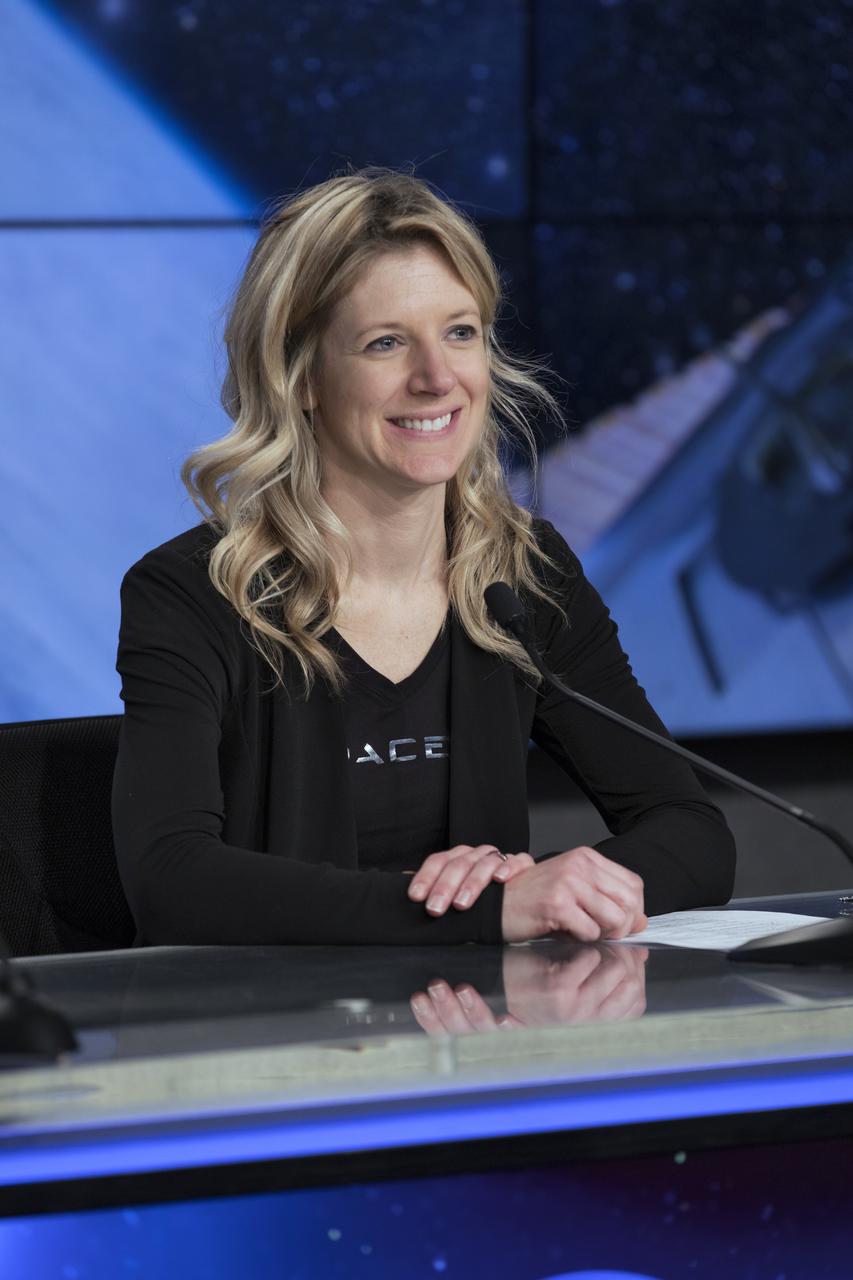
In the Press Site auditorium of NASA's Kennedy Space Center in Florida, from left, Jessica Jensen, SpaceX director of Dragon Mission Management, speaks to media at a post-launch news conference following the liftoff of SpaceX CRS-13. The flight is a commercial resupply services mission to the International Space Station. SpaceX CRS-13 lifted off atop a Falcon 9 rocket from Space Launch Complex 40 at Cape Canaveral Air Force Station at 10:36 a.m. EST with supplies and equipment and new science experiments for technology research.
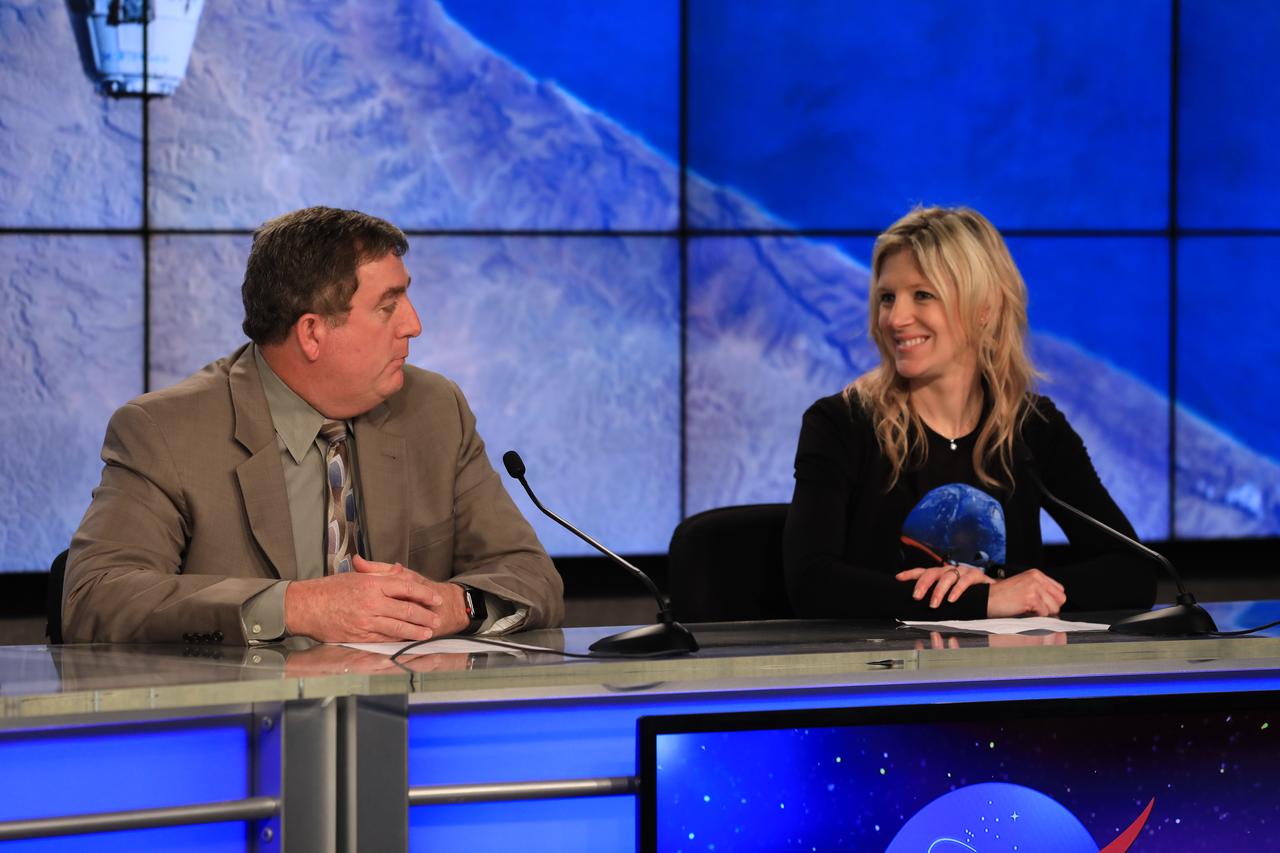
In the Press Site auditorium of NASA's Kennedy Space Center in Florida, from left, Kirk Shireman, manager, International Space Station Program, and Jessica Jensen, Director, Dragon Mission Management, SpaceX, speak to media at a post-launch news conference following the liftoff of SpaceX CRS-15. The flight is a commercial resupply services mission to the International Space Station. SpaceX CRS-15 lifted off atop a Falcon 9 rocket from Space Launch Complex 40 at Cape Canaveral Air Force Station on Friday, June 29, 2018, at 5:42 a.m. EDT with supplies and materials to support multiple critical science and research investigations.
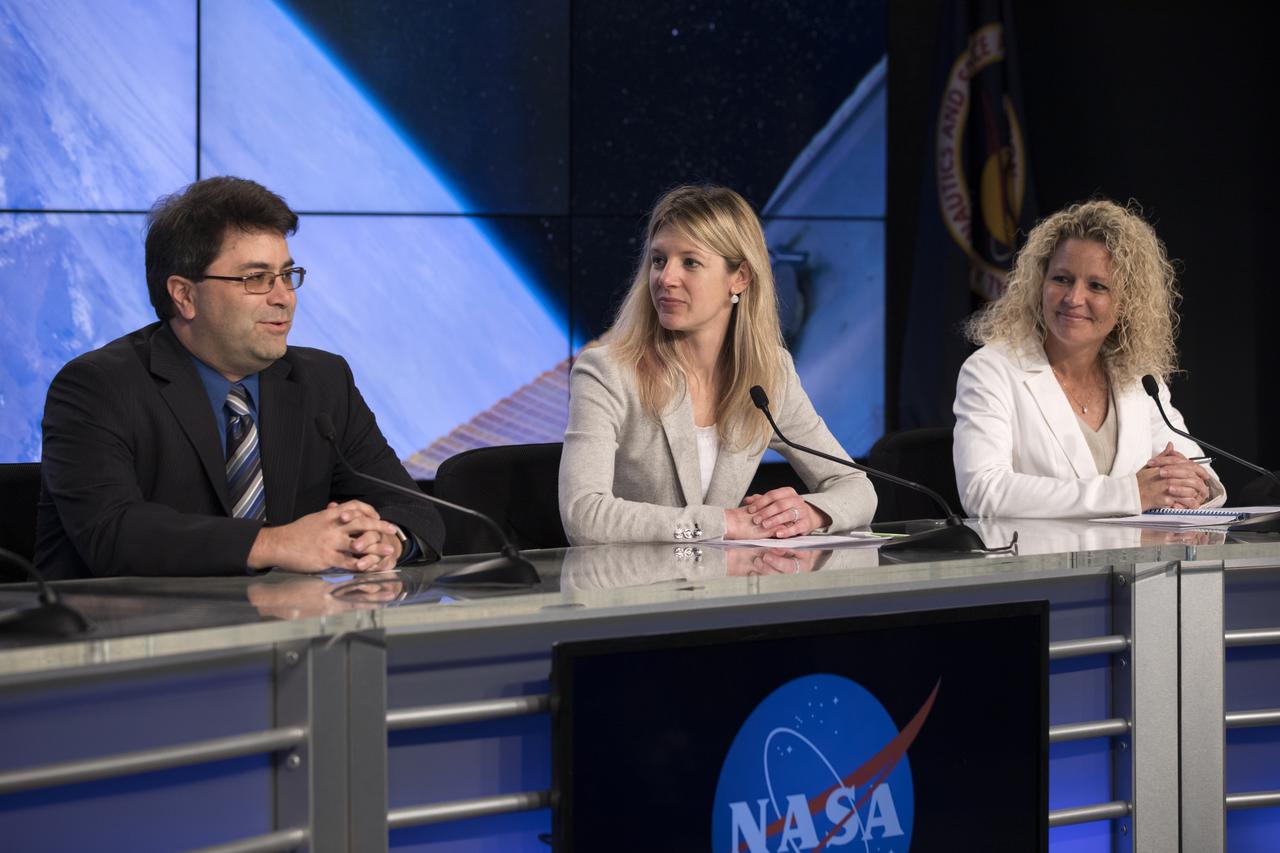
In the Press Site auditorium of NASA's Kennedy Space Center in Florida, NASA and industry leaders speak to media at a post-launch news conference following the liftoff of SpaceX CRS-10, a commercial resupply services mission to the International Space Station. From left are: William Spetch, deputy manager of the International Space Station Transportation Office; Jessica Jensen, Dragon mission manager for SpaceX; and Pam Underwood, manager of the Operations Integration Division of the Federal Aviation Administration Office of Commercial Space Transportation. SpaceX CRS-10 lifted off atop a Falcon 9 rocket from Kennedy's Launch Complex 39A at 9:39 a.m. EST.
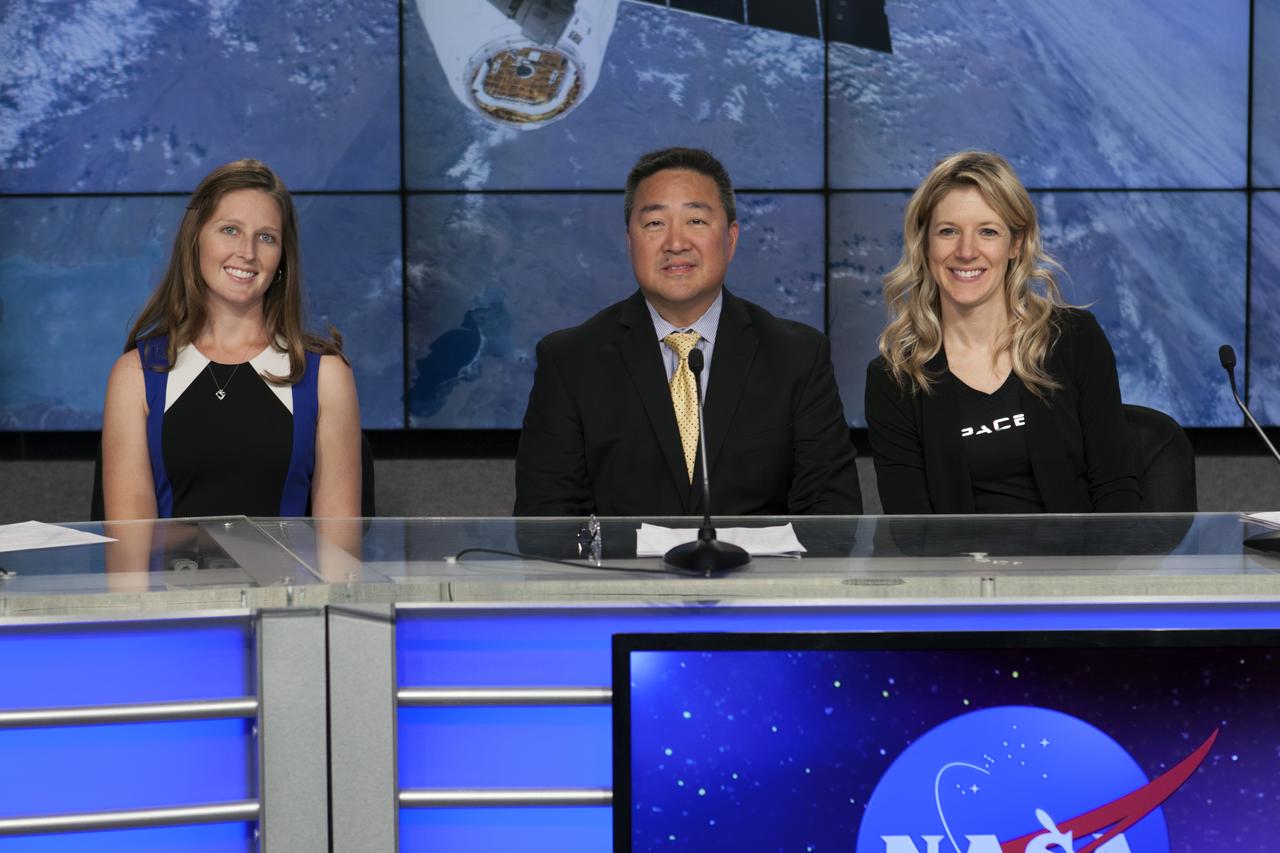
In the Press Site auditorium of NASA's Kennedy Space Center in Florida, from left, Stephanie Martin of NASA Communications, Ven Feng, manager of the Transportation Integration Office for the International Space Station Program, and Jessica Jensen, SpaceX director of Dragon Mission Management, speak to media at a post-launch news conference following the liftoff of SpaceX CRS-13. The flight is a commercial resupply services mission to the International Space Station. SpaceX CRS-13 lifted off atop a Falcon 9 rocket from Space Launch Complex 40 at Cape Canaveral Air Force Station at 10:36 a.m. EST with supplies and equipment and new science experiments for technology research.
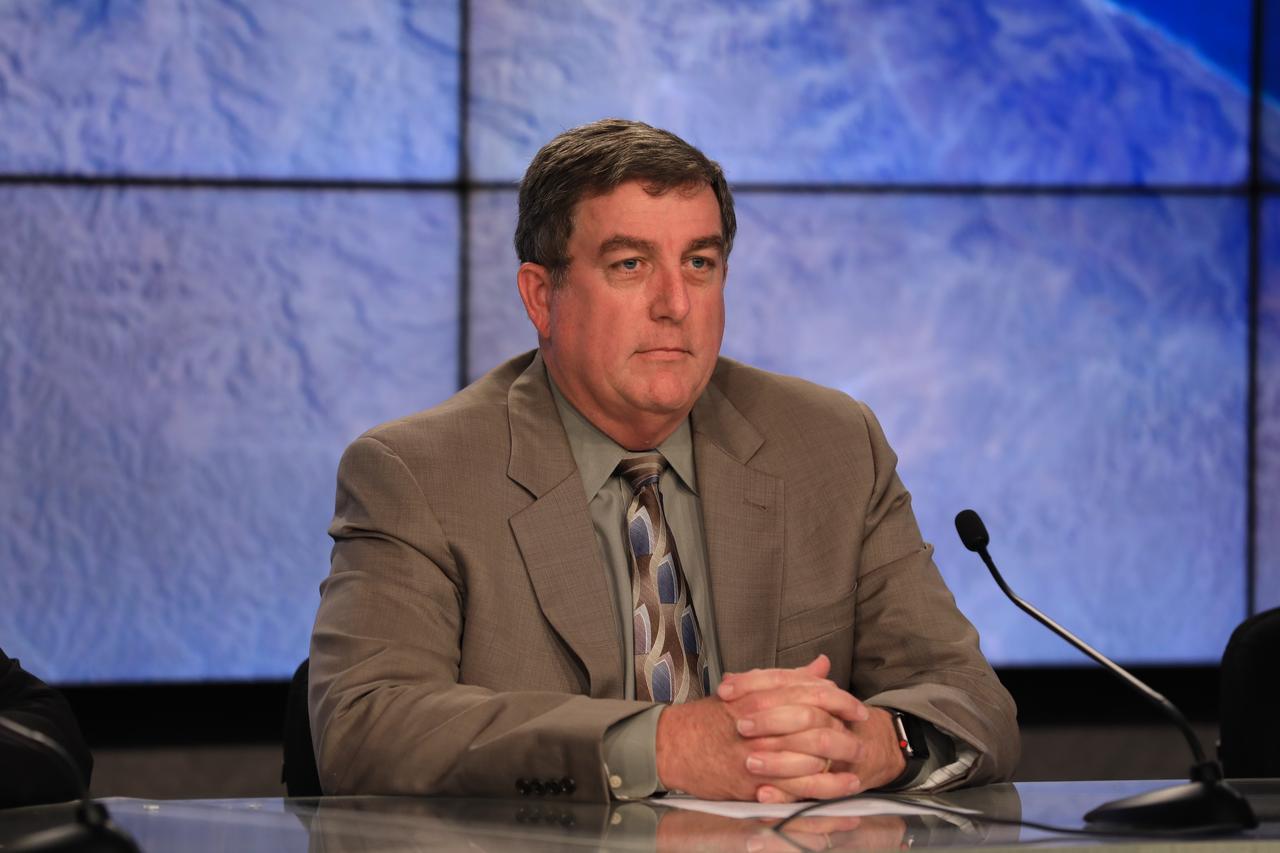
In the Press Site auditorium of NASA's Kennedy Space Center in Florida, Kirk Shireman, manager, International Space Station Program, speaks to media at a post-launch news conference following the liftoff of SpaceX CRS-15. The flight is a commercial resupply services mission to the International Space Station. SpaceX CRS-15 lifted off atop a Falcon 9 rocket from Space Launch Complex 40 at Cape Canaveral Air Force Station on Friday, June 29, 2018, at 5:42 a.m. EDT with supplies and materials to support multiple critical science and research investigations.
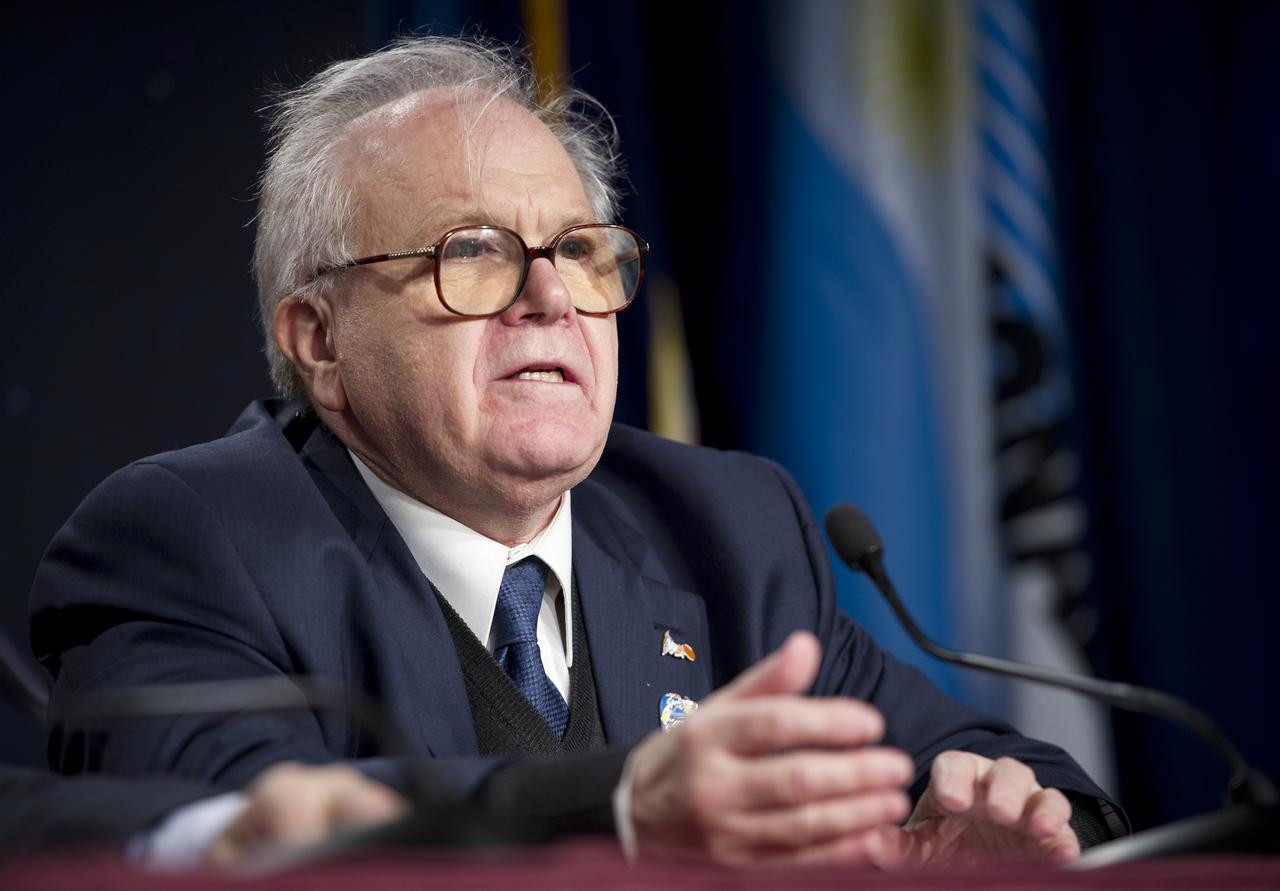
Conrado Varotto, CONAE Executive and Technical Director, Buenos Aires, talks during the Aquarius/SAC-D post-launch press conference on Friday, June 10, 2011 at the NASA Resident Office, Vandenberg Air Force Base, Calif. The joint U.S./Argentinian Aquarius/Satélite de Aplicaciones Científicas (SAC)-D mission, launched earlier on Friday June 10, will map the salinity at the ocean surface, information critical to improving our understanding of two major components of Earth's climate system: the water cycle and ocean circulation. Photo Credit: (NASA/Bill Ingalls)
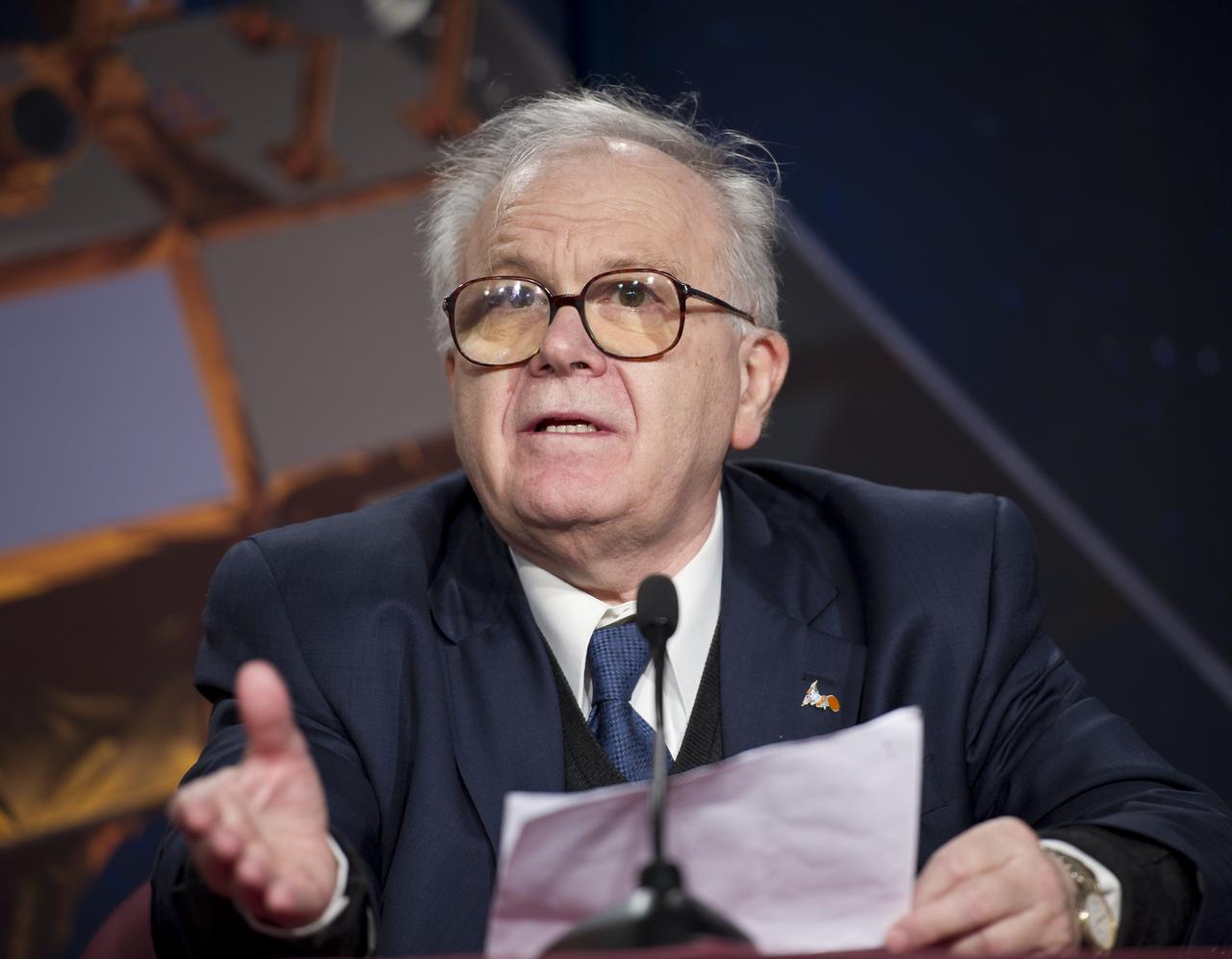
Conrado Varotto, CONAE Executive and Technical Director, Buenos Aires, talks during the Aquarius/SAC-D post-launch press conference on Friday, June 10, 2011 at the NASA Resident Office, Vandenberg Air Force Base, Calif. The joint U.S./Argentinian Aquarius/Satélite de Aplicaciones Científicas (SAC)-D mission, launched earlier on Friday June 10, will map the salinity at the ocean surface, information critical to improving our understanding of two major components of Earth's climate system: the water cycle and ocean circulation. Photo Credit: (NASA/Bill Ingalls)
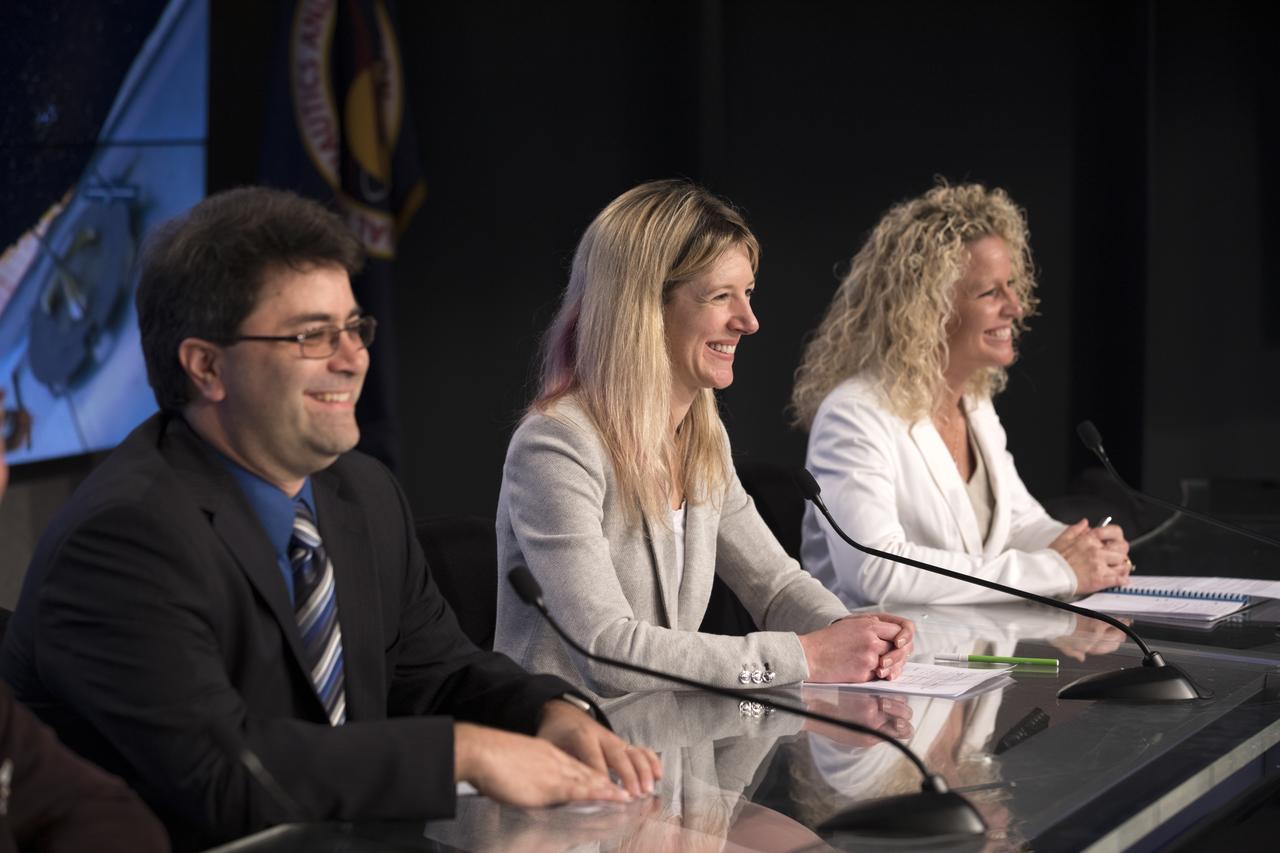
In the Press Site auditorium of NASA's Kennedy Space Center in Florida, NASA and industry leaders speak to media at a post-launch news conference following the liftoff of SpaceX CRS-10, a commercial resupply services mission to the International Space Station. From left are: William Spetch, deputy manager of the International Space Station Transportation Office; Jessica Jensen, Dragon mission manager for SpaceX; and Pam Underwood, manager of the Operations Integration Division of the Federal Aviation Administration Office of Commercial Space Transportation. SpaceX CRS-10 lifted off atop a Falcon 9 rocket from Kennedy's Launch Complex 39A at 9:39 a.m. EST.
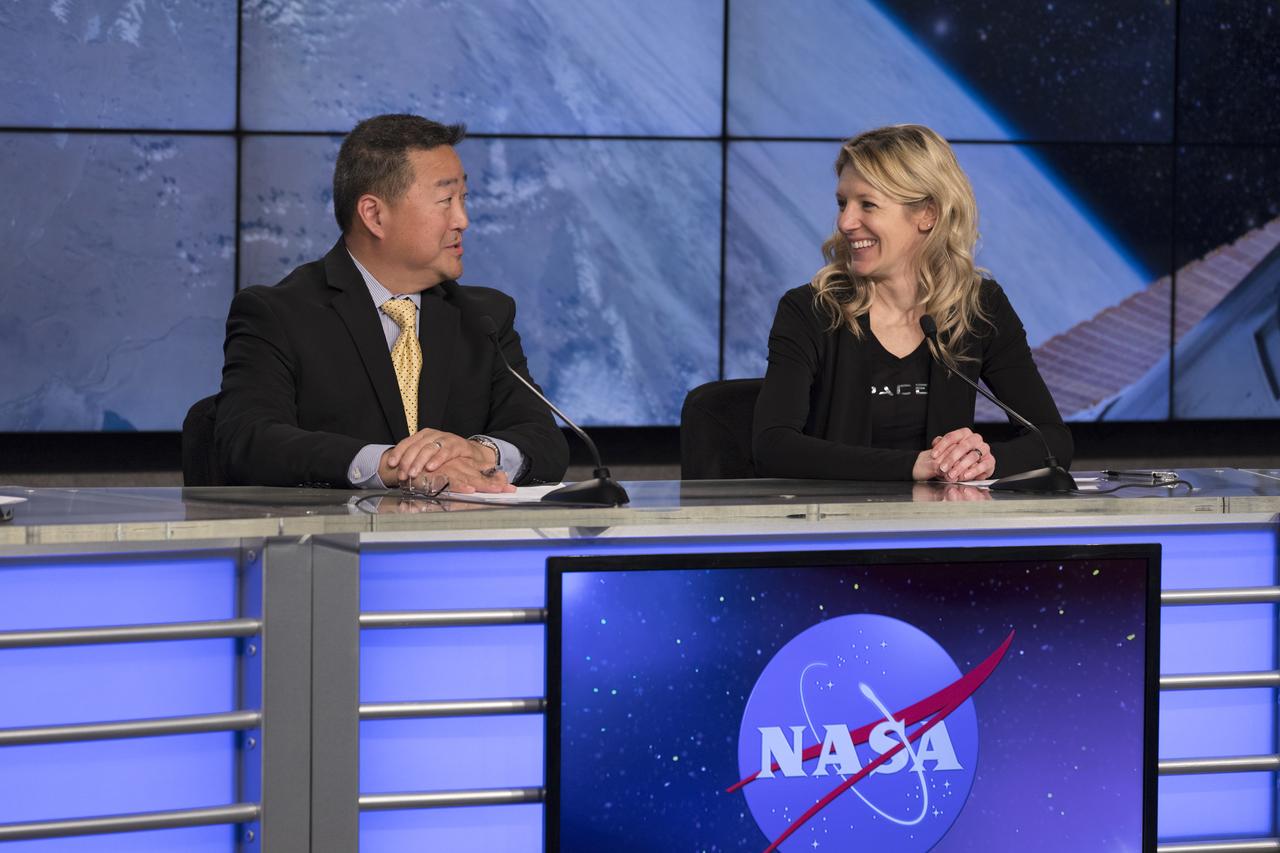
In the Press Site auditorium of NASA's Kennedy Space Center in Florida, from left, Ven Feng, manager of the Transportation Integration Office for the International Space Station Program, and Jessica Jensen, SpaceX director of Dragon Mission Management, speak to media at a post-launch news conference following the liftoff of SpaceX CRS-13. The flight is a commercial resupply services mission to the International Space Station. SpaceX CRS-13 lifted off atop a Falcon 9 rocket from Space Launch Complex 40 at Cape Canaveral Air Force Station at 10:36 a.m. EST with supplies and equipment and new science experiments for technology research.
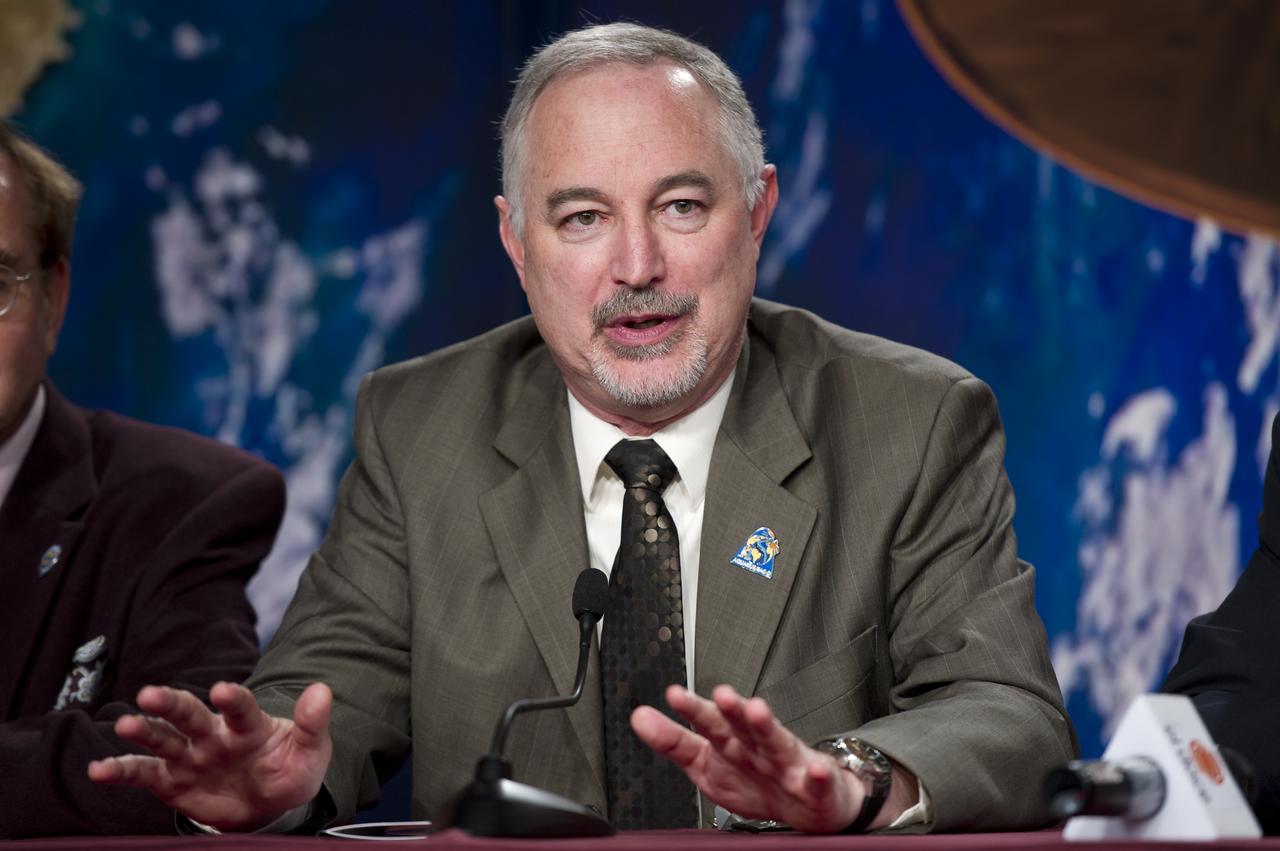
Charles Gay, Deputy Associate Administrator, NASA Science Mission Directorate, talks during the Aquarius/SAC-D post-launch press conference on Friday, June 10, 2011 at the NASA Resident Office, Vandenberg Air Force Base, Calif. The joint U.S./Argentinian Aquarius/Satélite de Aplicaciones Científicas (SAC)-D mission, launched earlier on Friday June 10, will map the salinity at the ocean surface, information critical to improving our understanding of two major components of Earth's climate system: the water cycle and ocean circulation. Photo Credit: (NASA/Bill Ingalls)
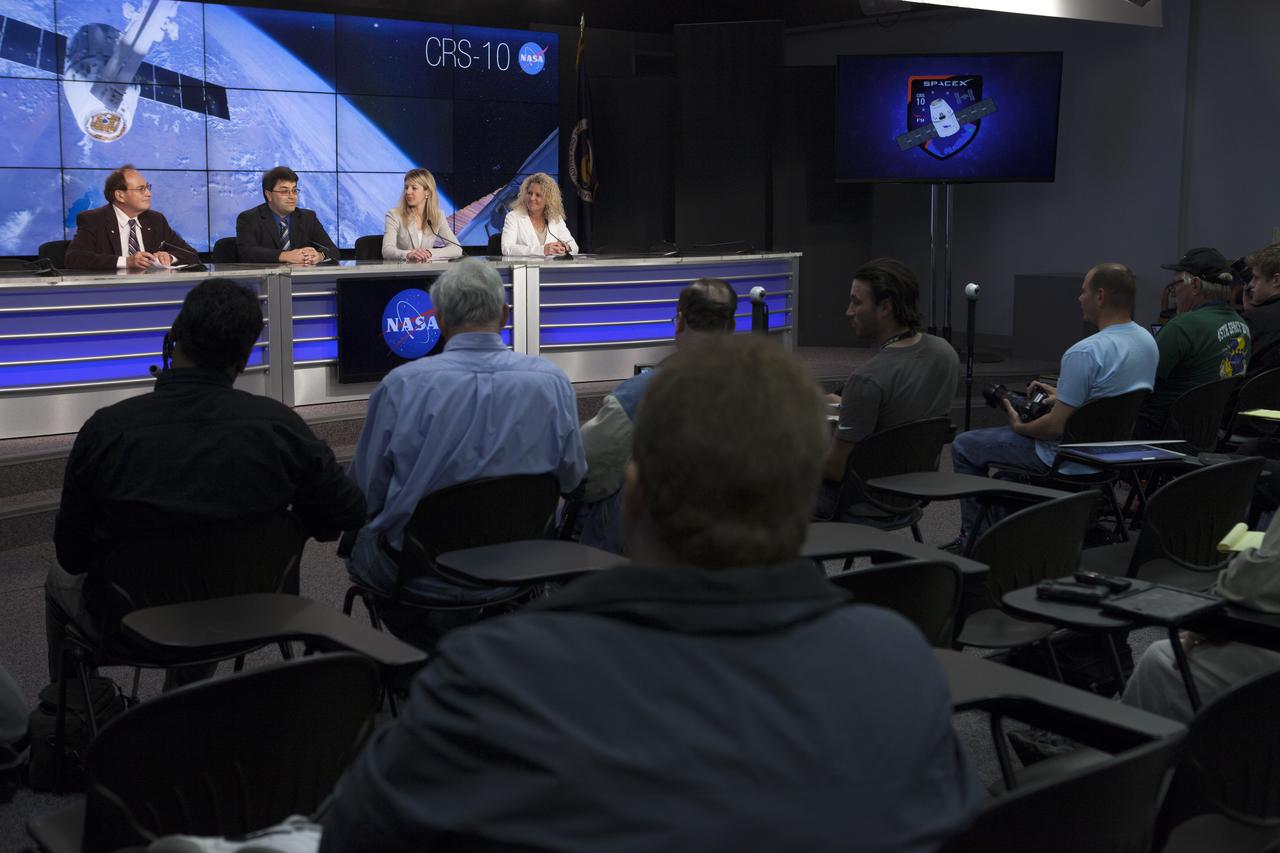
In the Press Site auditorium of NASA's Kennedy Space Center in Florida, NASA and industry leaders speak to media at a post-launch news conference following the liftoff of SpaceX CRS-10, a commercial resupply services mission to the International Space Station. From left are: George Diller, NASA Communications; William Spetch, deputy manager of the International Space Station Transportation Office; Jessica Jensen, Dragon mission manager for SpaceX; and Pam Underwood, manager of the Operations Integration Division of the Federal Aviation Administration Office of Commercial Space Transportation. SpaceX CRS-10 lifted off atop a Falcon 9 rocket from Kennedy's Launch Complex 39A at 9:39 a.m. EST.
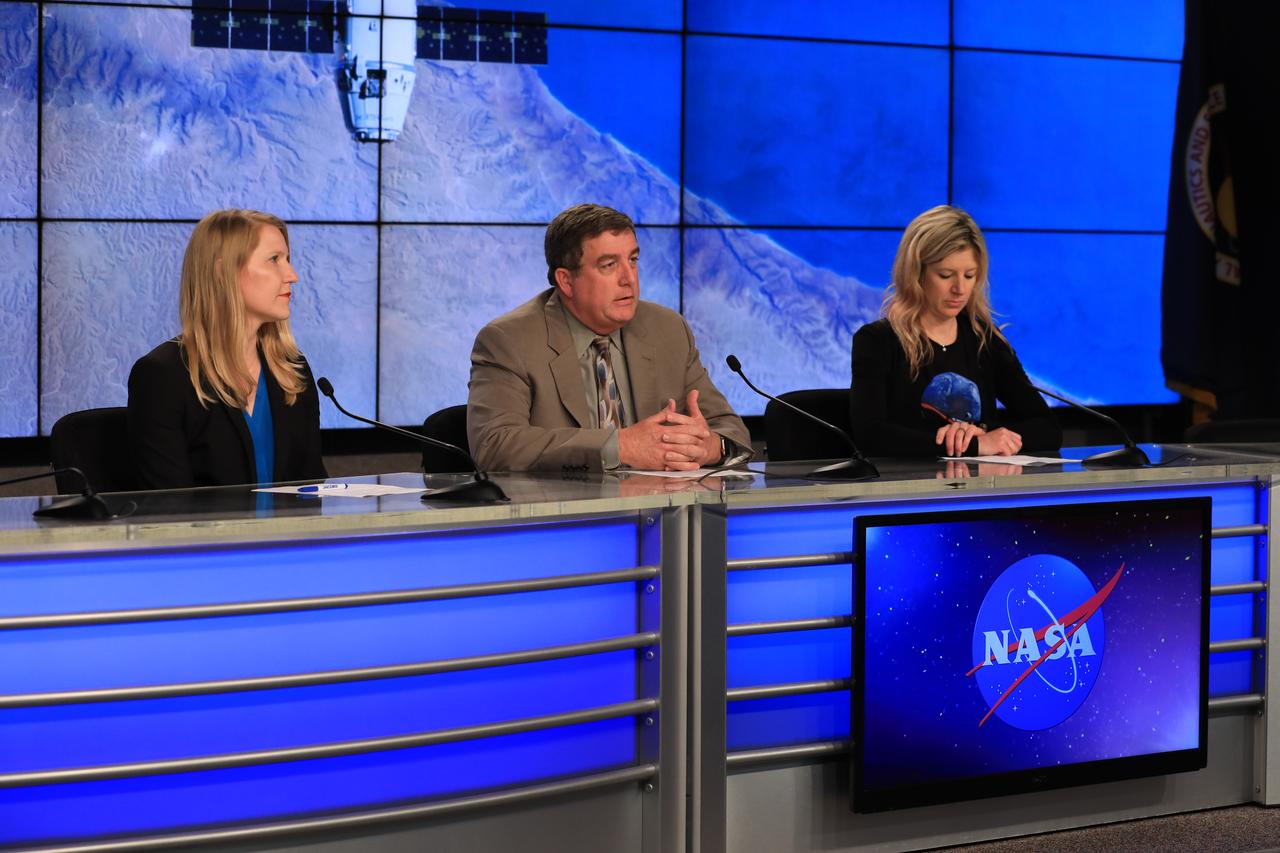
In the Press Site auditorium of NASA's Kennedy Space Center in Florida, from left, Stephanie Schierholz of NASA Communications, Kirk Shireman, manager, International Space Station Program, and Jessica Jensen, Director, Dragon Mission Management, SpaceX, speak to media at a post-launch news conference following the liftoff of SpaceX CRS-15. The flight is a commercial resupply services mission to the International Space Station. SpaceX CRS-15 lifted off atop a Falcon 9 rocket from Space Launch Complex 40 at Cape Canaveral Air Force Station on Friday, June 29, 2018, at 5:42 a.m. EDT with supplies and materials to support multiple critical science and research investigations.
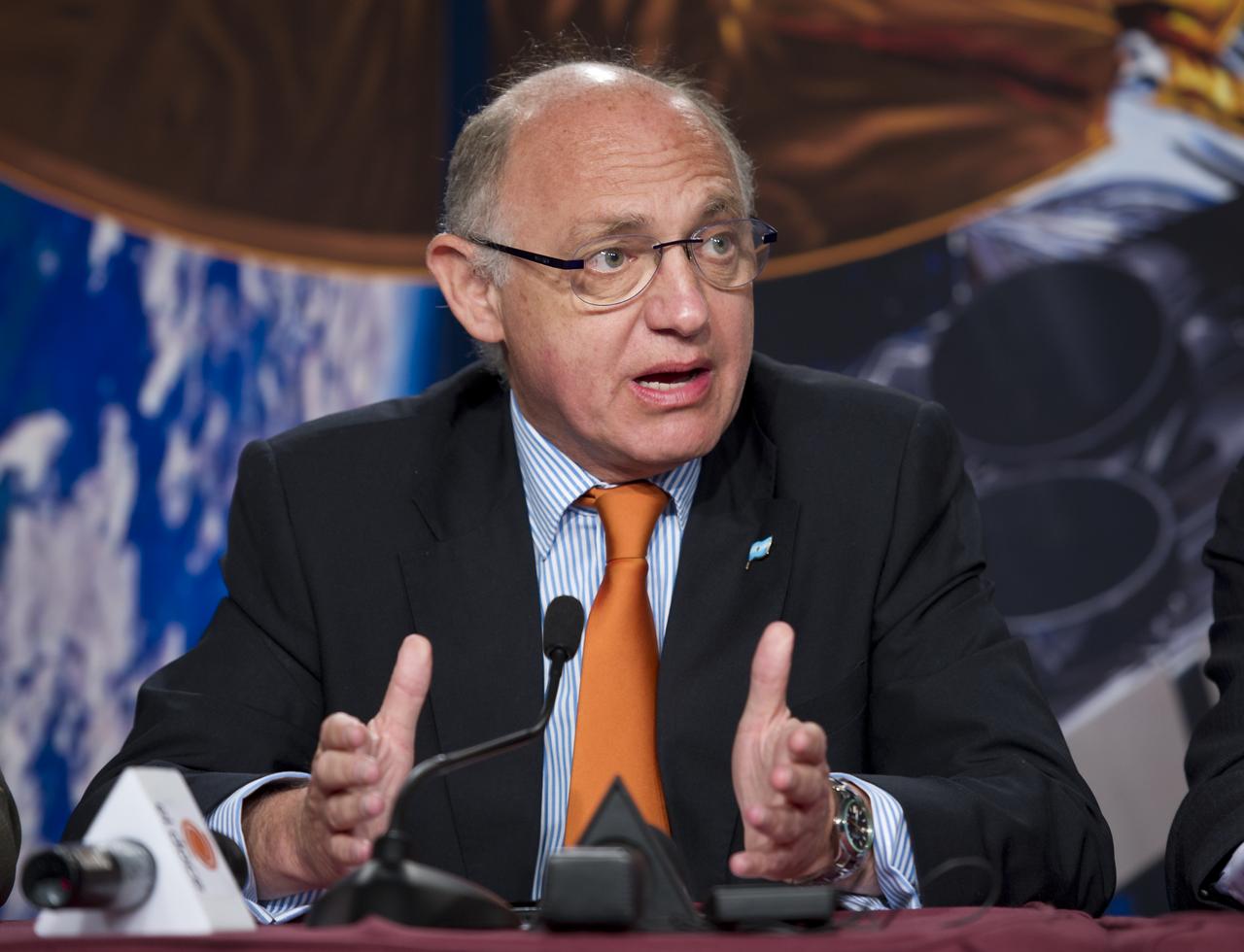
Hector Timerman, Foreign Minister of Argentina, Buenos Aires, talks during the Aquarius/SAC-D post-launch press conference on Friday, June 10, 2011 at the NASA Resident Office, Vandenberg Air Force Base, Calif. The joint U.S./Argentinian Aquarius/Satélite de Aplicaciones Científicas (SAC)-D mission, launched earlier on Friday June 10, will map the salinity at the ocean surface, information critical to improving our understanding of two major components of Earth's climate system: the water cycle and ocean circulation. Photo Credit: (NASA/Bill Ingalls)
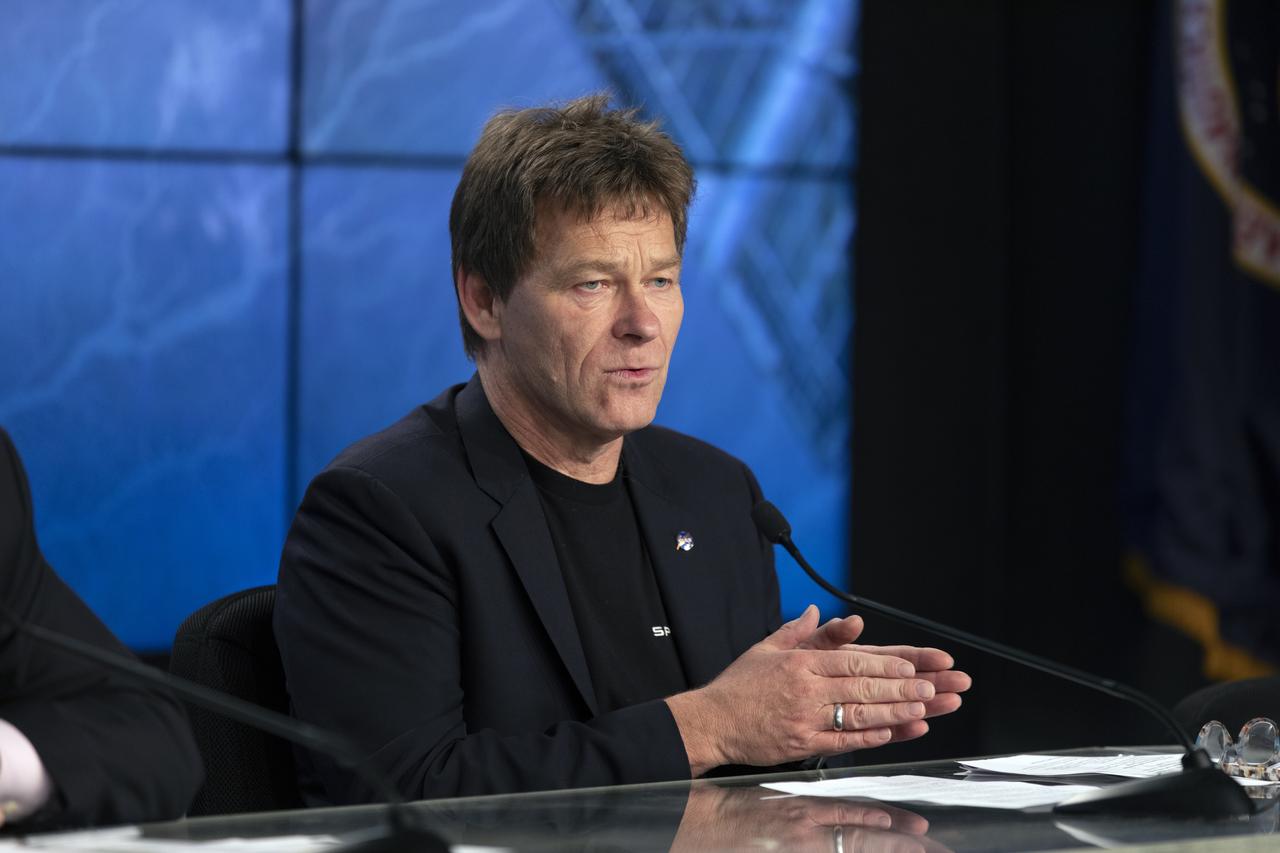
In the Press Site auditorium of NASA's Kennedy Space Center in Florida, Hans Koenigsmann, vice president of Build and Flight Reliability for SpaceX, speaks to media at a post-launch news conference following the liftoff of SpaceX CRS-16. The flight is a commercial resupply services mission to the International Space Station. SpaceX CRS-16 lifted off atop a Falcon 9 rocket from Space Launch Complex 40 at Cape Canaveral Air Force Station at 1:16 p.m. EST, Dec. 5, 2018, with supplies and equipment and new science experiments for technology research.
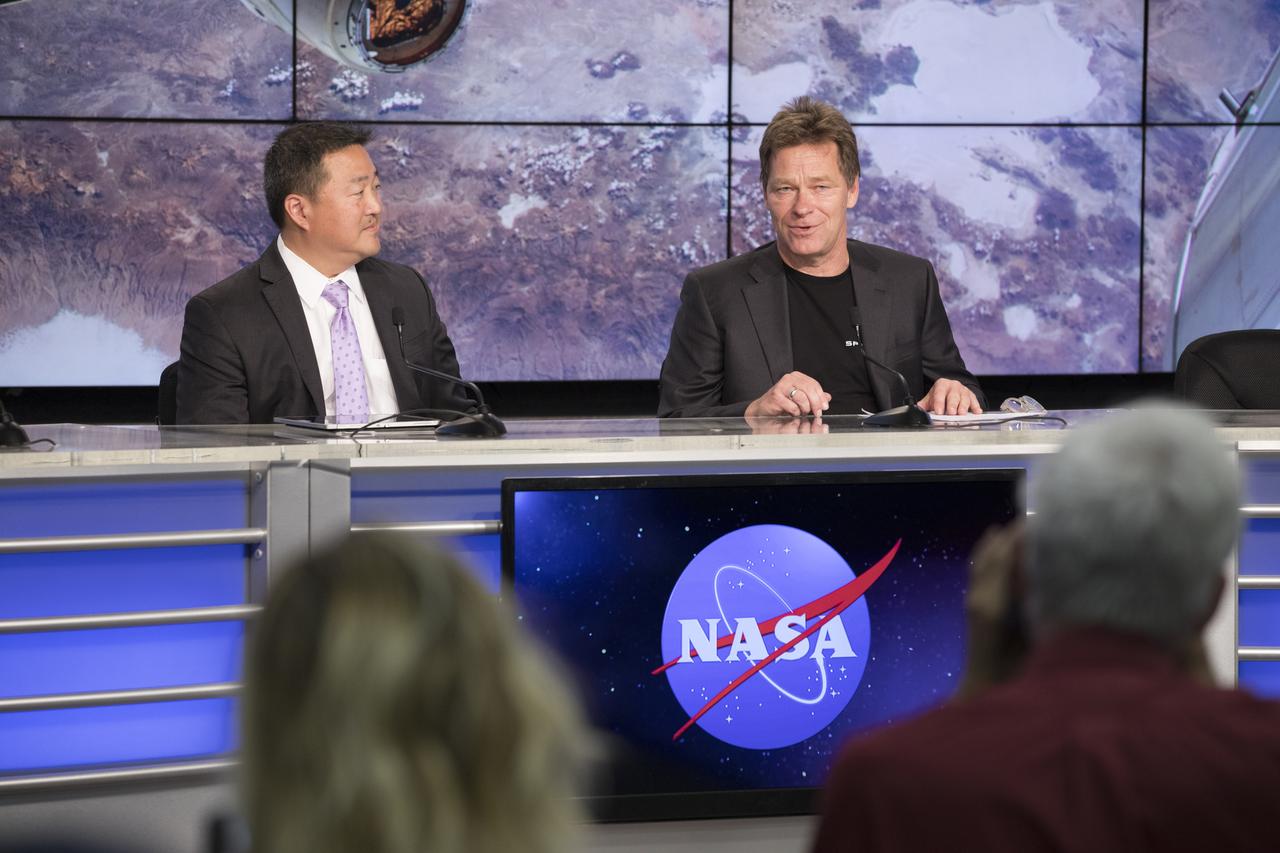
In the Press Site auditorium of NASA's Kennedy Space Center in Florida, NASA and industry leaders speak to media at a post-launch news conference following the liftoff of SpaceX CRS-11, a commercial resupply services mission to the International Space Station. From left are: Ven Feng, NASA's manager of the International Space Station Transportation Integration Office, and Hans Koenigsmann, vice president of Flight Reliability for SpaceX. SpaceX CRS-11 lifted off atop a Falcon 9 rocket from Kennedy's Launch Complex 39A at 5:07 p.m. EDT.
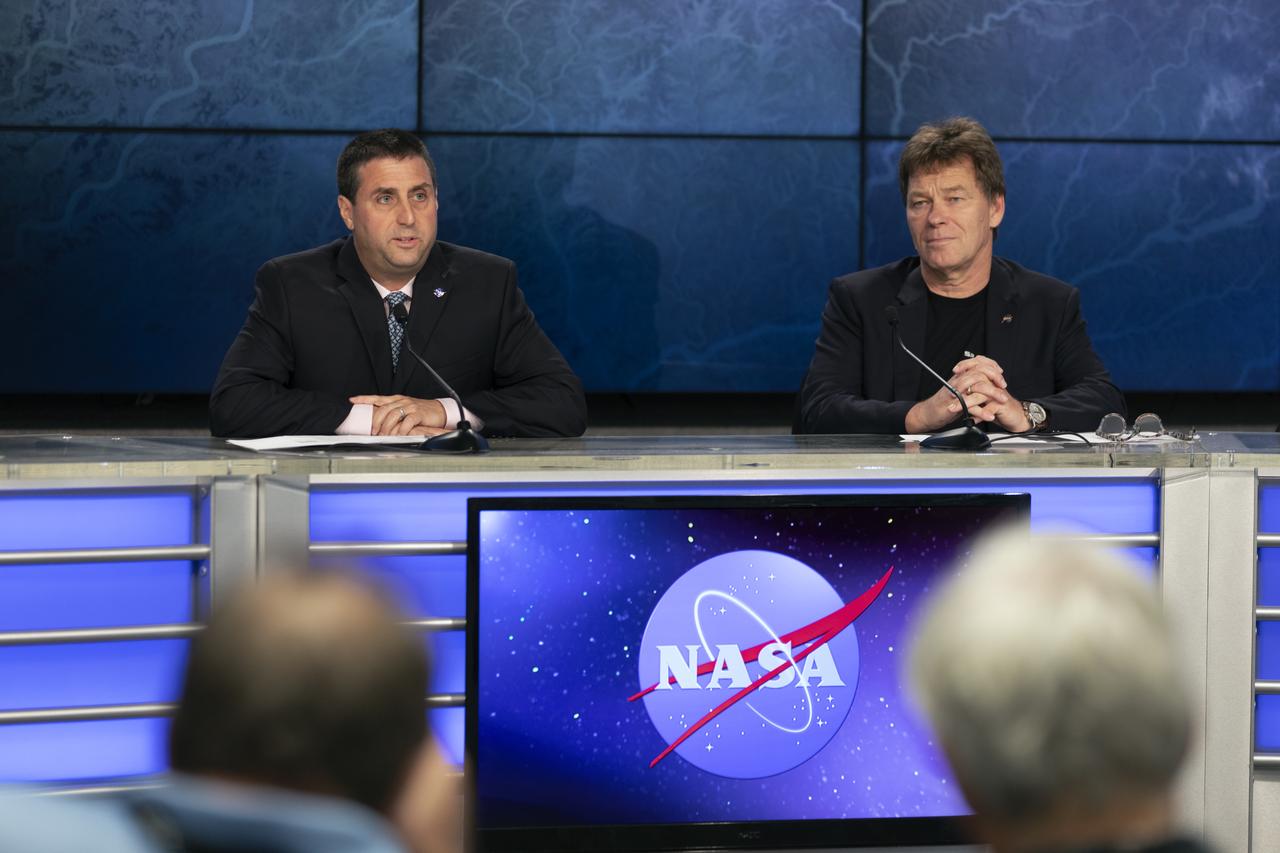
In the Press Site auditorium of NASA's Kennedy Space Center in Florida, Joel Montalbano, deputy International Space Station program manager at NASA's Johnson Space Center in Houston, left, and Hans Koenigsmann, vice president of Build and Flight Reliability for SpaceX, speak to media at a post-launch news conference following the liftoff of SpaceX CRS-16. The flight is a commercial resupply services mission to the International Space Station. SpaceX CRS-16 lifted off atop a Falcon 9 rocket from Space Launch Complex 40 at Cape Canaveral Air Force Station at 1:16 p.m. EST, Dec. 5, 2018, with supplies and equipment and new science experiments for technology research.
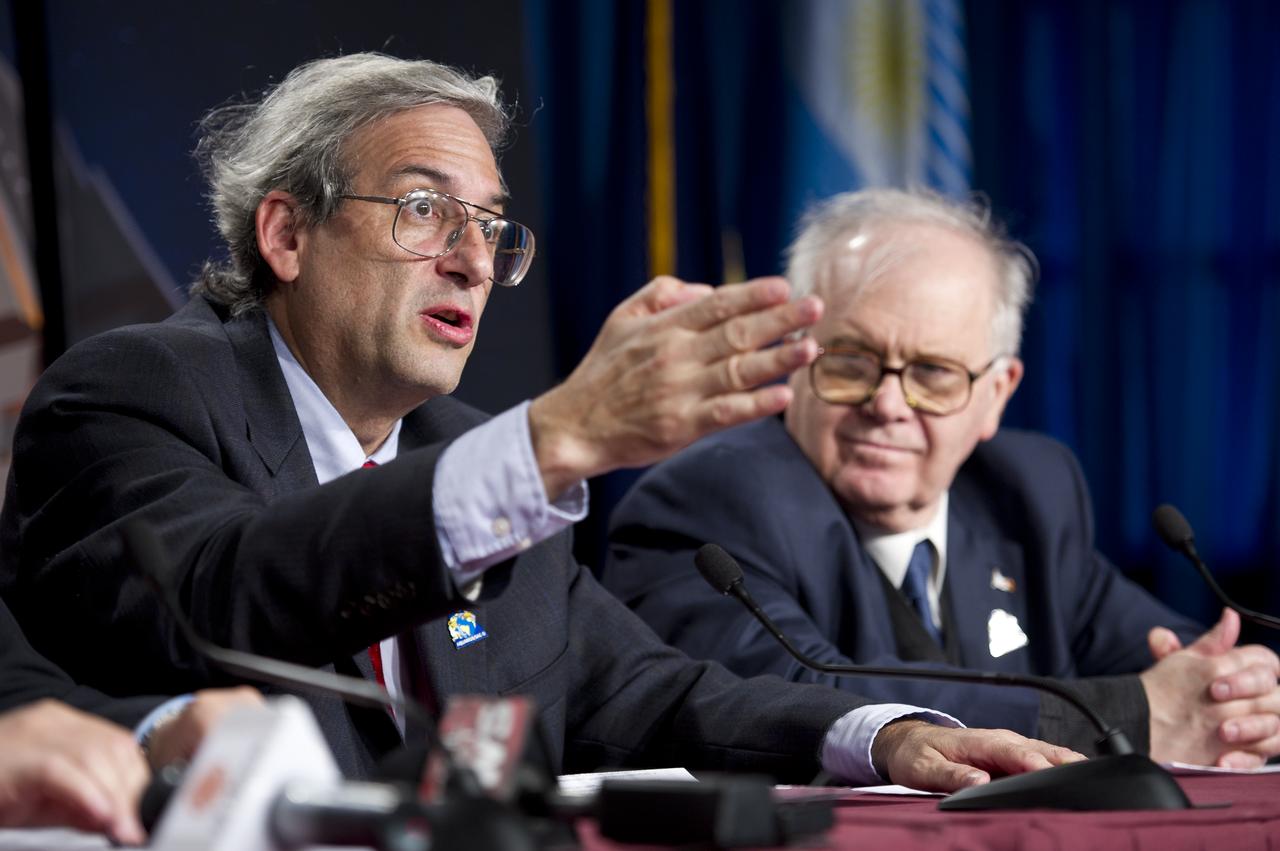
Michael Freilich, NASA Earth Science Division Director, NASA Headquarters, talks during the Aquarius/SAC-D post-launch press conference on Friday, June 10, 2011 at the NASA Resident Office, Vandenberg Air Force Base, Calif. The joint U.S./Argentinian Aquarius/Satélite de Aplicaciones Científicas (SAC)-D mission, launched earlier on Friday June 10, will map the salinity at the ocean surface, information critical to improving our understanding of two major components of Earth's climate system: the water cycle and ocean circulation. Photo Credit: (NASA/Bill Ingalls)
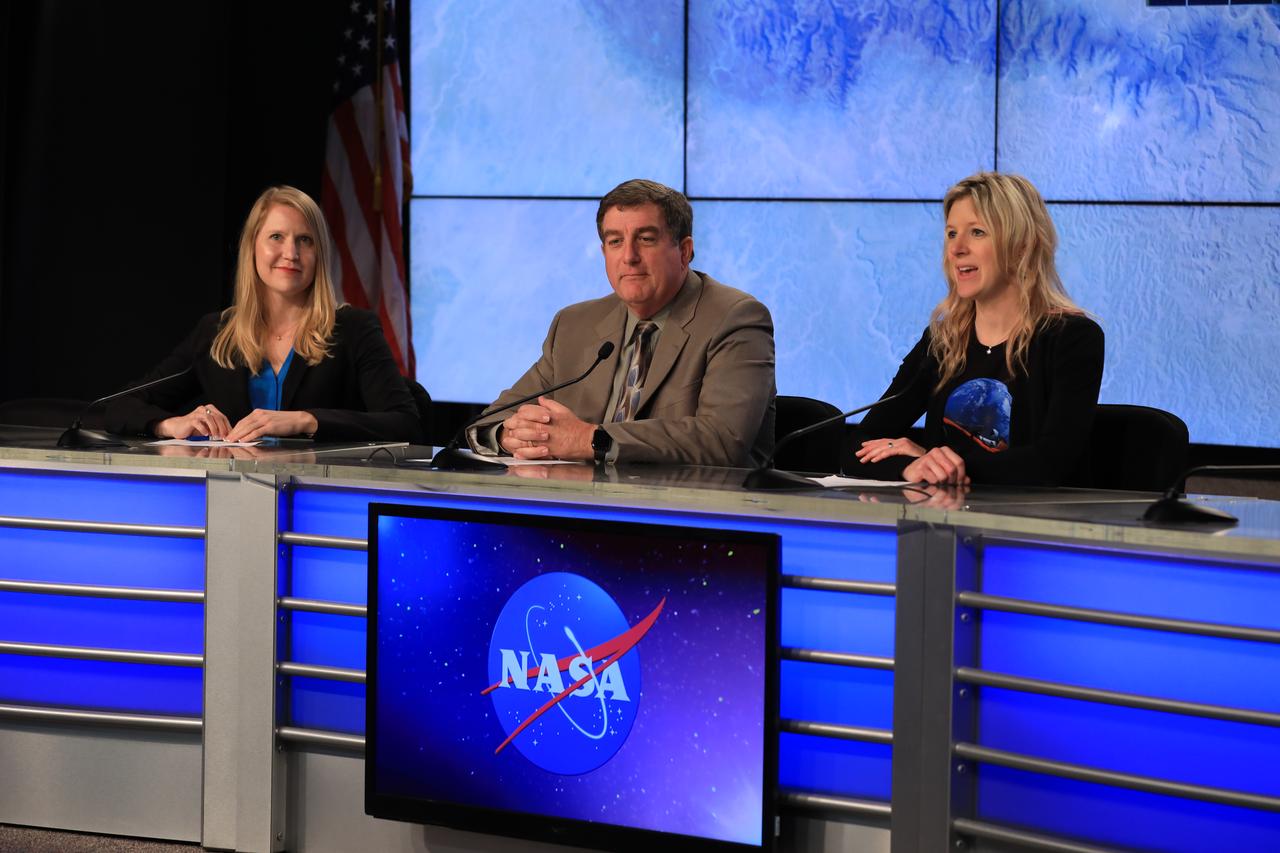
In the Press Site auditorium of NASA's Kennedy Space Center in Florida, from left, Stephanie Schierholz of NASA Communications, Kirk Shireman, manager, International Space Station Program, and Jessica Jensen, Director, Dragon Mission Management, SpaceX, speak to media at a post-launch news conference following the liftoff of SpaceX CRS-15. The flight is a commercial resupply services mission to the International Space Station. SpaceX CRS-15 lifted off atop a Falcon 9 rocket from Space Launch Complex 40 at Cape Canaveral Air Force Station on Friday, June 29, 2018, at 5:42 a.m. EDT with supplies and materials to support multiple critical science and research investigations.
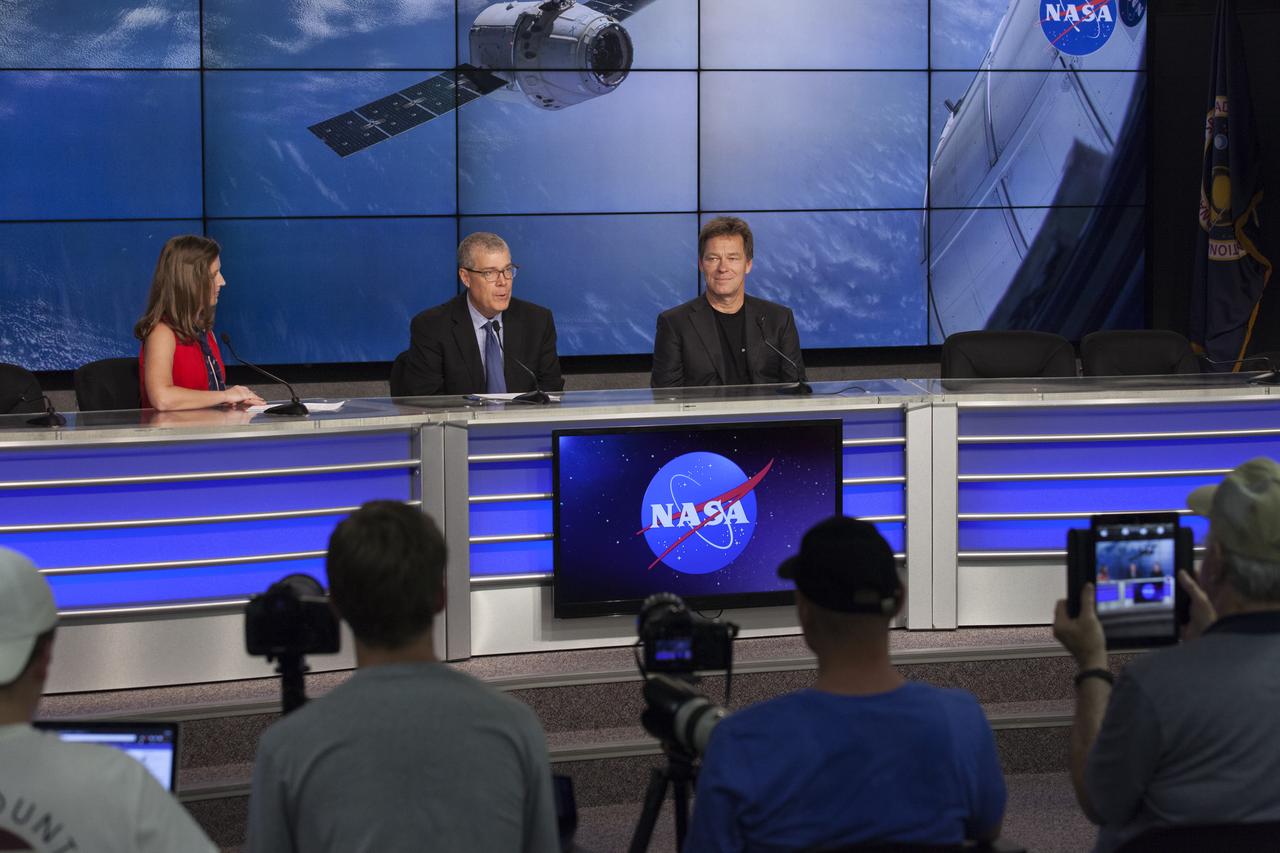
In the Press Site auditorium of NASA's Kennedy Space Center in Florida, NASA and industry leaders speak to media at a post-launch news conference following the liftoff of SpaceX CRS-12, a commercial resupply services mission to the International Space Station. From left are: Stephanie Martin of NASA Communications, Dan Hartman, NASA deputy manager of the International Space Station Program, and Hans Koenigsmann, SpaceX vice president of Flight and Build Reliability. SpaceX CRS-12 lifted off atop a Falcon 9 rocket from Kennedy's Launch Complex 39A at 12:31 p.m. EDT.
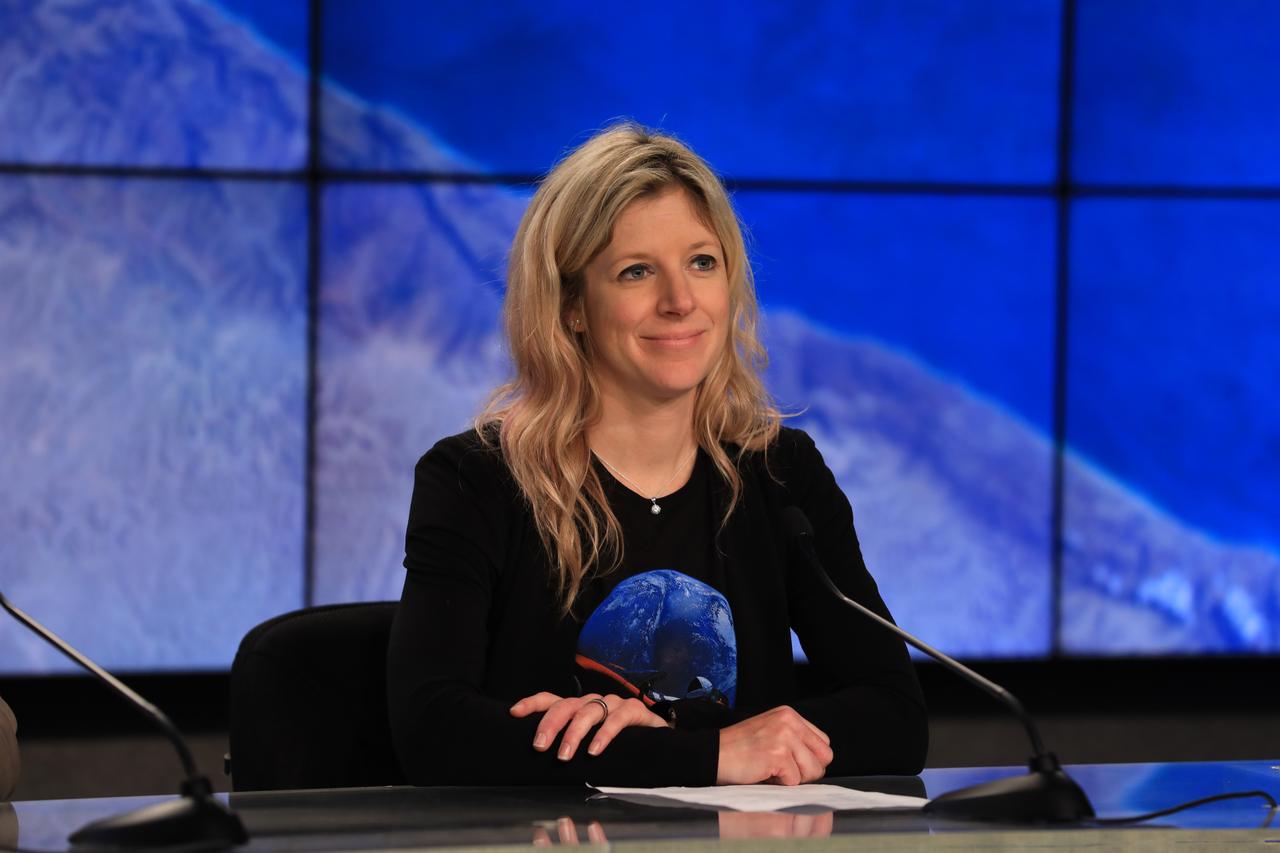
In the Press Site auditorium of NASA's Kennedy Space Center in Florida, Jessica Jensen, Director, Dragon Mission Management, SpaceX, speaks to media at a post-launch news conference following the liftoff of SpaceX CRS-15. The flight is a commercial resupply services mission to the International Space Station. SpaceX CRS-15 lifted off atop a Falcon 9 rocket from Space Launch Complex 40 at Cape Canaveral Air Force Station on Friday, June 29, 2018, at 5:42 a.m. EDT with supplies and materials to support multiple critical science and research investigations.
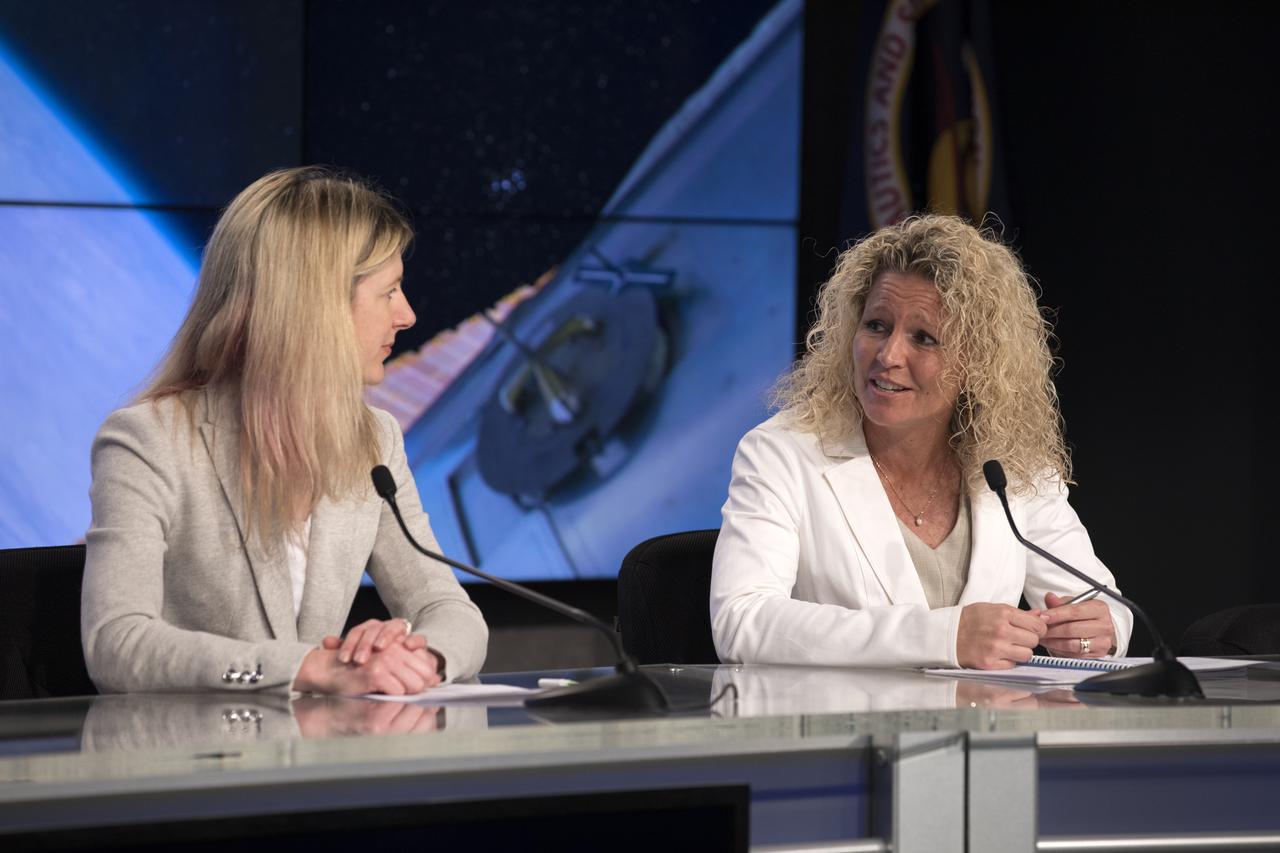
In the Press Site auditorium of NASA's Kennedy Space Center in Florida, NASA and industry leaders speak to media at a post-launch news conference following the liftoff of SpaceX CRS-10, a commercial resupply services mission to the International Space Station. From left are: Jessica Jensen, Dragon mission manager for SpaceX; and Pam Underwood, manager of the Operations Integration Division of the Federal Aviation Administration Office of Commercial Space Transportation. SpaceX CRS-10 lifted off atop a Falcon 9 rocket from Kennedy's Launch Complex 39A at 9:39 a.m. EST.
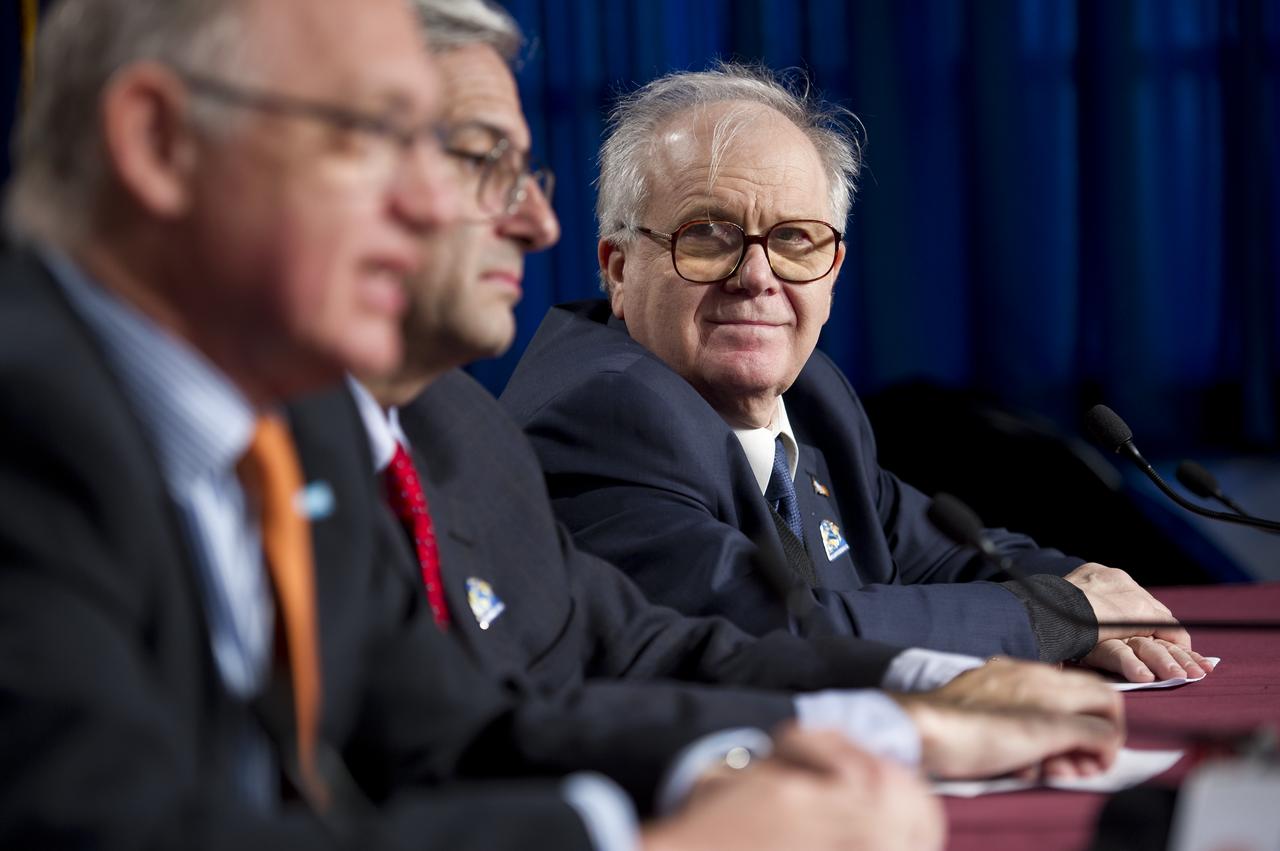
Conrado Varotto, CONAE Executive and Technical Director, Buenos Aires, looks on as other panelest speak during the Aquarius/SAC-D post-launch press conference on Friday, June 10, 2011 at the NASA Resident Office, Vandenberg Air Force Base, Calif. The joint U.S./Argentinian Aquarius/Satélite de Aplicaciones Científicas (SAC)-D mission, launched earlier on Friday June 10, will map the salinity at the ocean surface, information critical to improving our understanding of two major components of Earth's climate system: the water cycle and ocean circulation. Photo Credit: (NASA/Bill Ingalls)
Members of the news media attend a press conference at NASA's Kennedy Space Center in Florida, after the launch of the Orbital ATK Cygnus pressurized cargo module atop a United Launch Alliance Atlas V rocket from Space Launch Complex 41 at Cape Canaveral Air Force Station. It was Orbital ATK's seventh commercial resupply services mission to the International Space Station. Liftoff was at 11:11 a.m. EDT. Moderating the press conference is George Diller, NASA Kennedy Communications.

Members of the news media attend a press conference at NASA's Kennedy Space Center in Florida, after the launch of the Orbital ATK Cygnus pressurized cargo module atop a United Launch Alliance Atlas V rocket from Space Launch Complex 41 at Cape Canaveral Air Force Station. It was Orbital ATK's seventh commercial resupply services mission to the International Space Station. Liftoff was at 11:11 a.m. EDT. Moderating the press conference is George Diller, NASA Kennedy Communications.
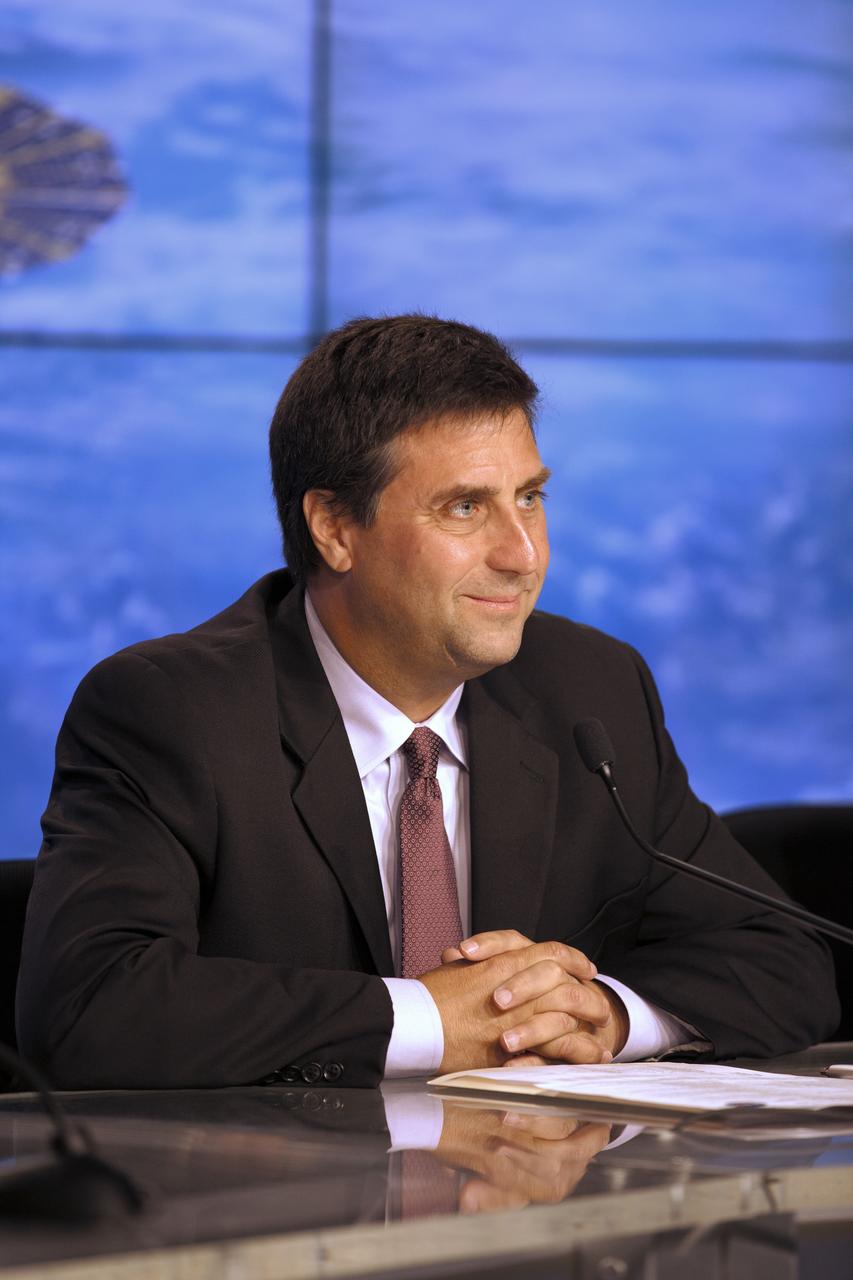
Members of the news media attend a press conference at NASA's Kennedy Space Center in Florida, after the launch of the Orbital ATK Cygnus pressurized cargo module atop a United Launch Alliance Atlas V rocket from Space Launch Complex 41 at Cape Canaveral Air Force Station. It was Orbital ATK's seventh commercial resupply services mission to the International Space Station. Liftoff was at 11:11 a.m. EDT. Speaking to the media is Joel Montalbano, deputy manager, International Space Station Program, NASA Johnson Space Center in Houston.
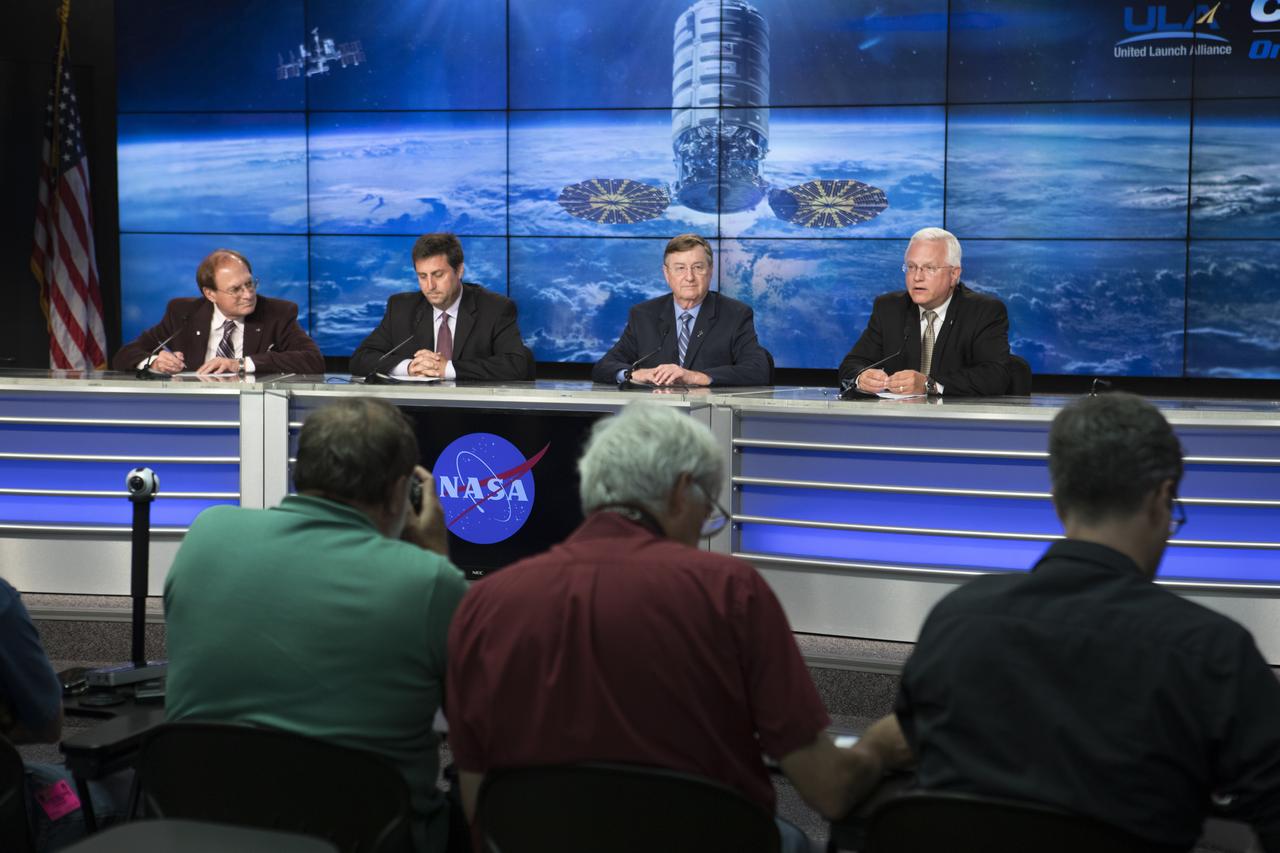
Members of the news media attend a press conference at NASA's Kennedy Space Center in Florida, after the launch of the Orbital ATK Cygnus pressurized cargo module atop a United Launch Alliance Atlas V rocket from Space Launch Complex 41 at Cape Canaveral Air Force Station. It was Orbital ATK's seventh commercial resupply services mission to the International Space Station. Liftoff was at 11:11 a.m. EDT. Speaking to the media are, from left, George Diller, NASA Kennedy Communications; Joel Montalbano, deputy manager, International Space Station Program, NASA Johnson Space Center in Houston; Frank Culbertson, president, Orbital ATK Space Systems Group; and Vern Thorp, program manager, commercial missions, United Launch Alliance.
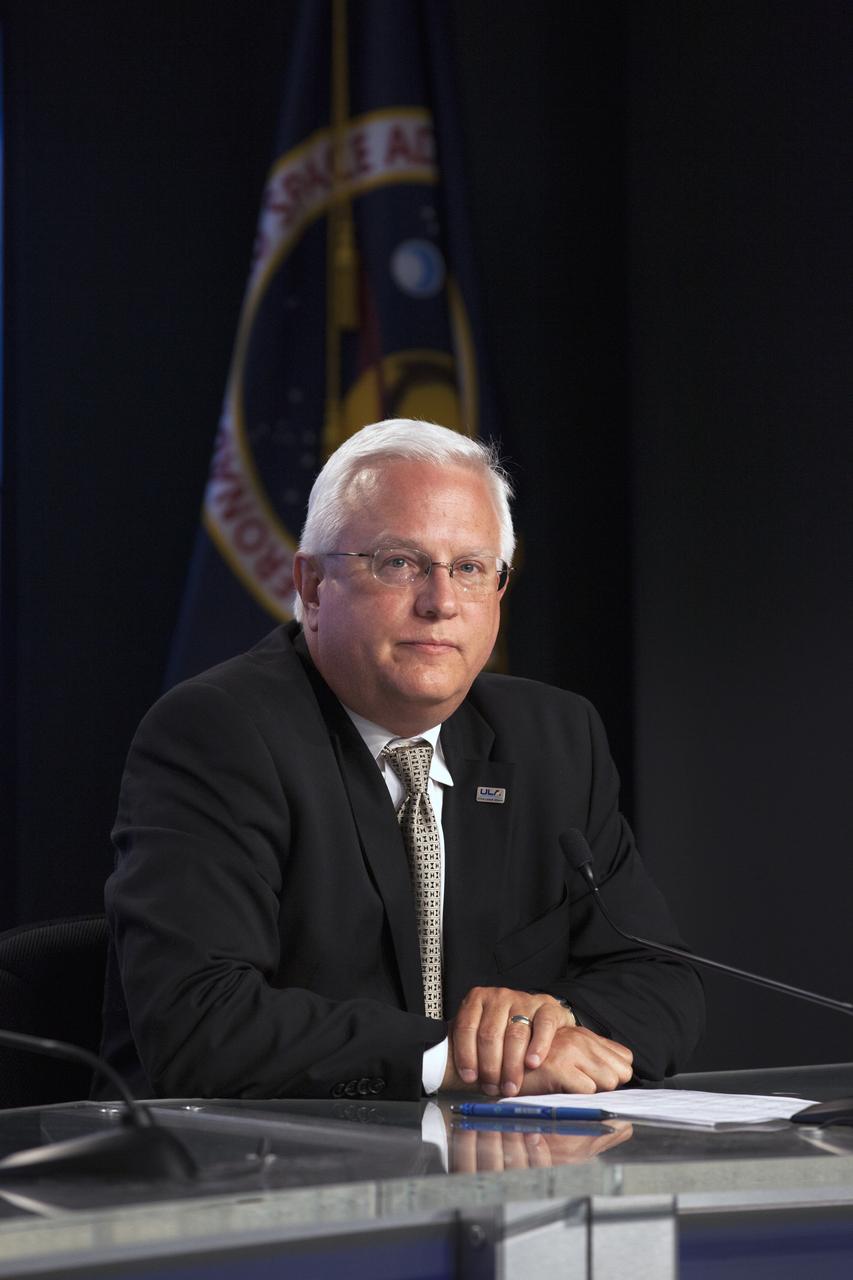
Members of the news media attend a press conference at NASA's Kennedy Space Center in Florida, after the launch of the Orbital ATK Cygnus pressurized cargo module atop a United Launch Alliance Atlas V rocket from Space Launch Complex 41 at Cape Canaveral Air Force Station. It was Orbital ATK's seventh commercial resupply services mission to the International Space Station. Liftoff was at 11:11 a.m. EDT. Speaking to the media is Vern Thorp, program manager, commercial missions, United Launch Alliance.
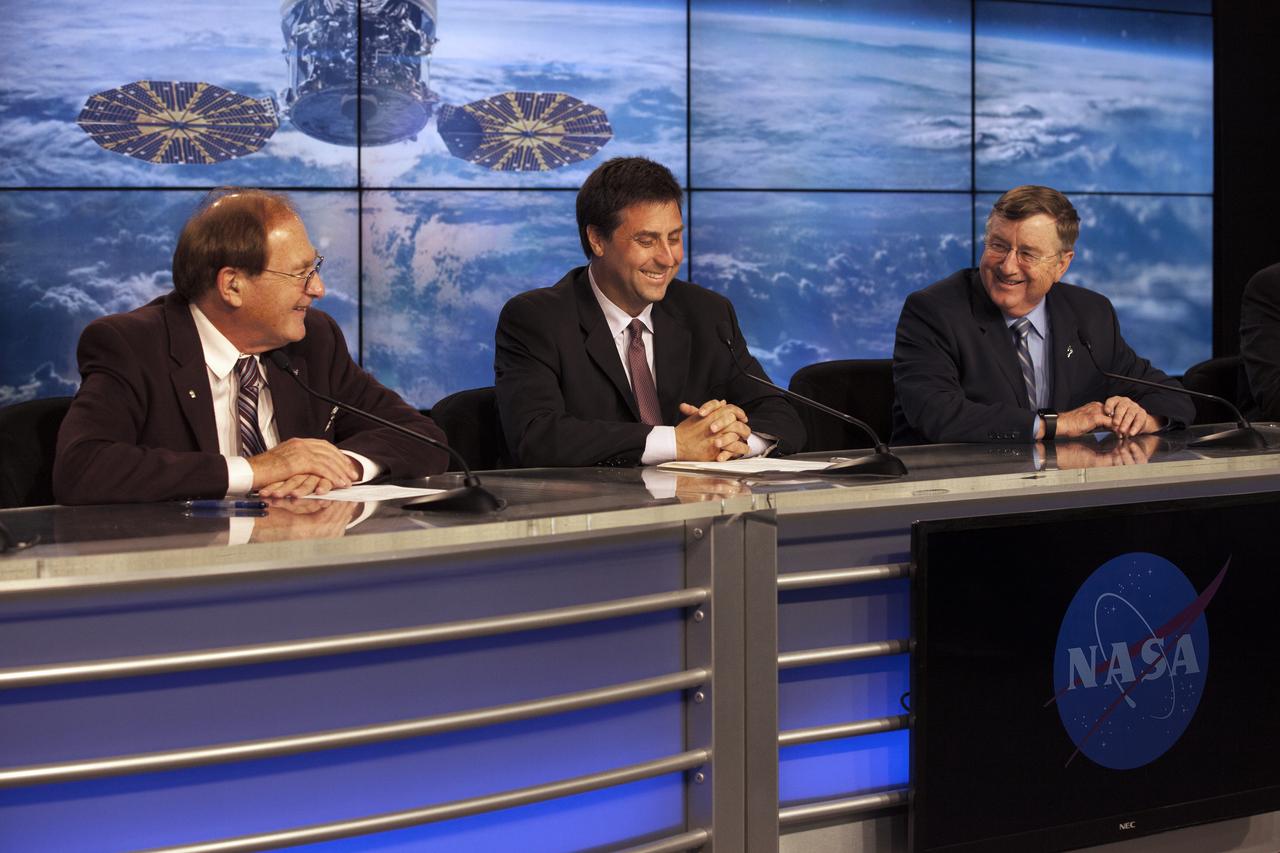
Members of the news media attend a press conference at NASA's Kennedy Space Center in Florida, after the launch of the Orbital ATK Cygnus pressurized cargo module atop a United Launch Alliance Atlas V rocket from Space Launch Complex 41 at Cape Canaveral Air Force Station. It was Orbital ATK's seventh commercial resupply services mission to the International Space Station. Liftoff was at 11:11 a.m. EDT. Speaking to the media are, from left, George Diller, NASA Kennedy Communications; Joel Montalbano, deputy manager, International Space Station Program, NASA Johnson Space Center in Houston; and Frank Culbertson, president, Orbital ATK Space Systems Group.
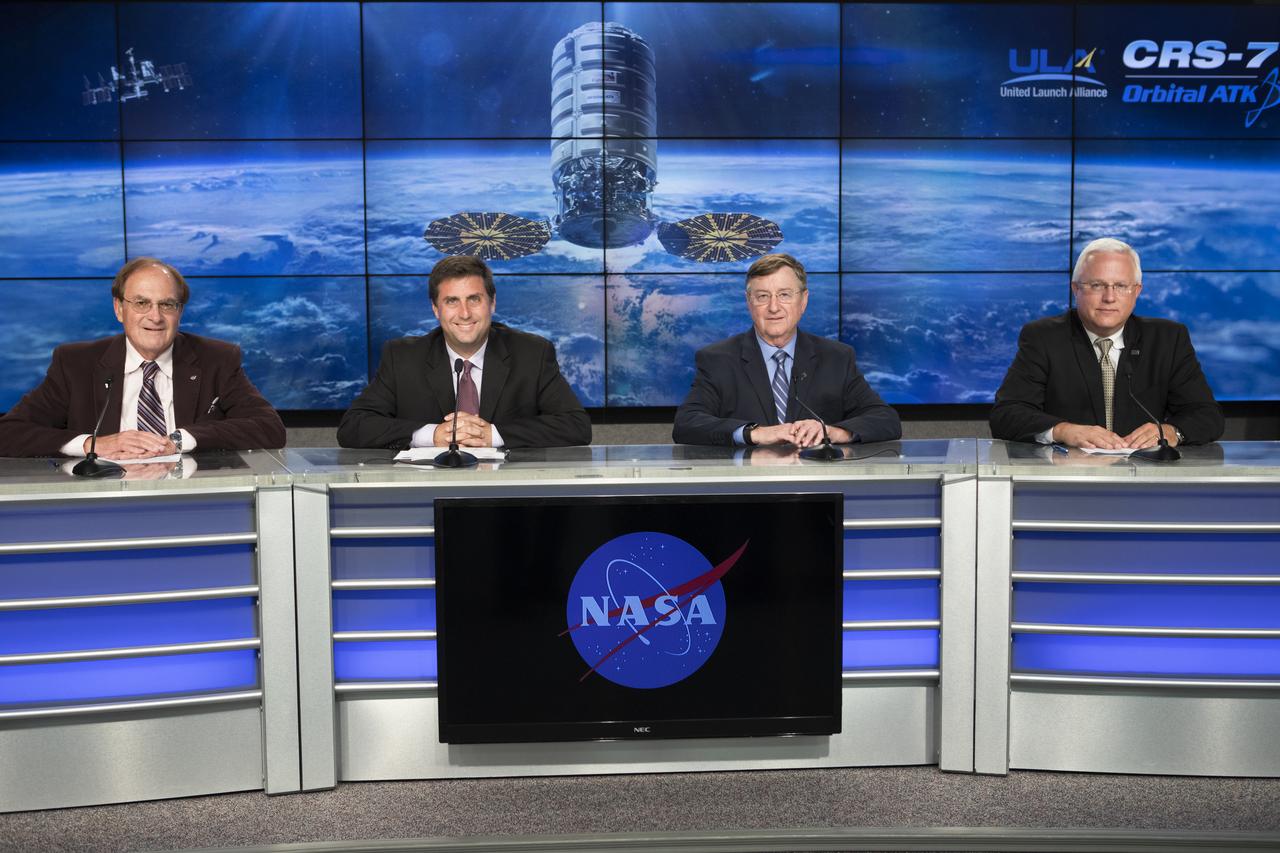
Members of the news media attend a press conference at NASA's Kennedy Space Center in Florida, after the launch of the Orbital ATK Cygnus pressurized cargo module atop a United Launch Alliance Atlas V rocket from Space Launch Complex 41 at Cape Canaveral Air Force Station. It was Orbital ATK's seventh commercial resupply services mission to the International Space Station. Liftoff was at 11:11 a.m. EDT. Speaking to the media are, from left, George Diller, NASA Kennedy Communications; Joel Montalbano, deputy manager, International Space Station Program, NASA Johnson Space Center in Houston; Frank Culbertson, president, Orbital ATK Space Systems Group; and Vern Thorp, program manager, commercial missions, United Launch Alliance.
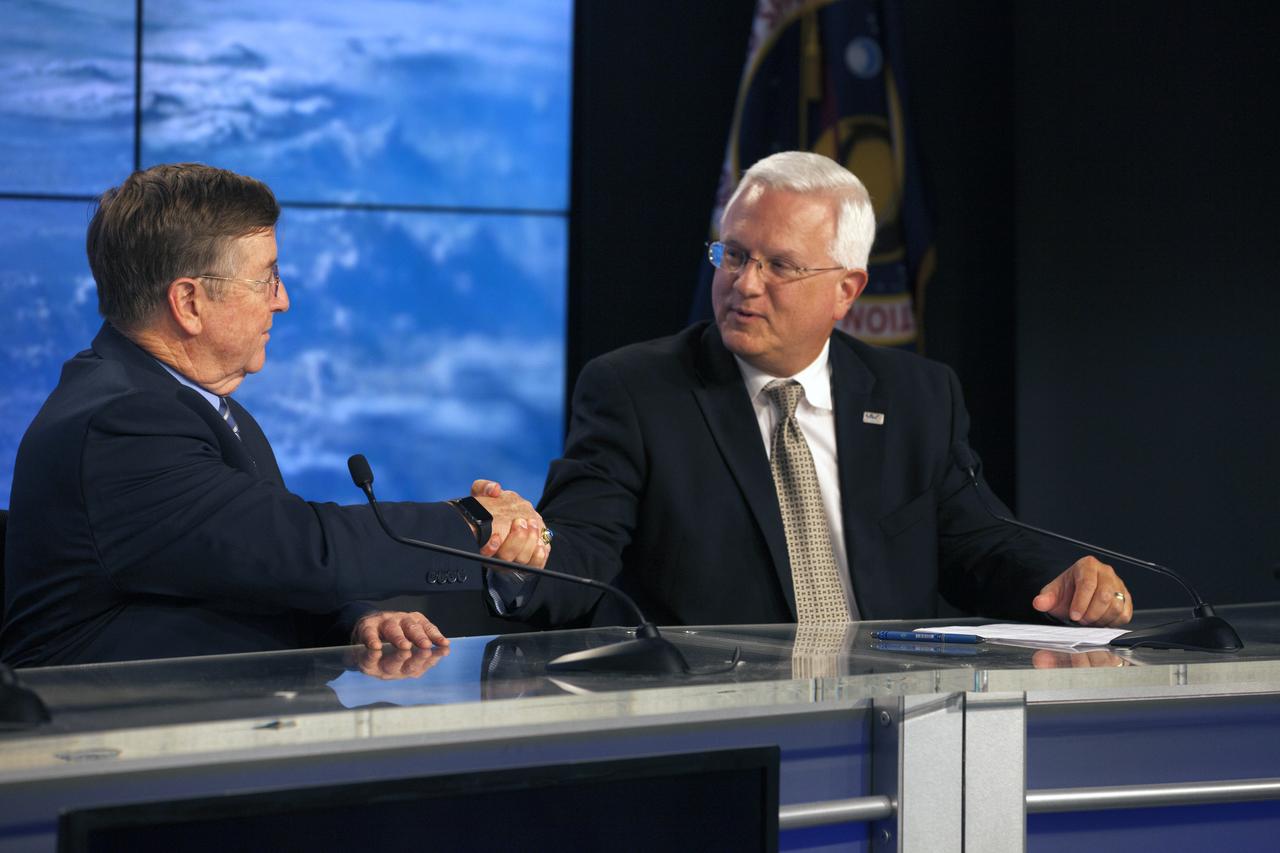
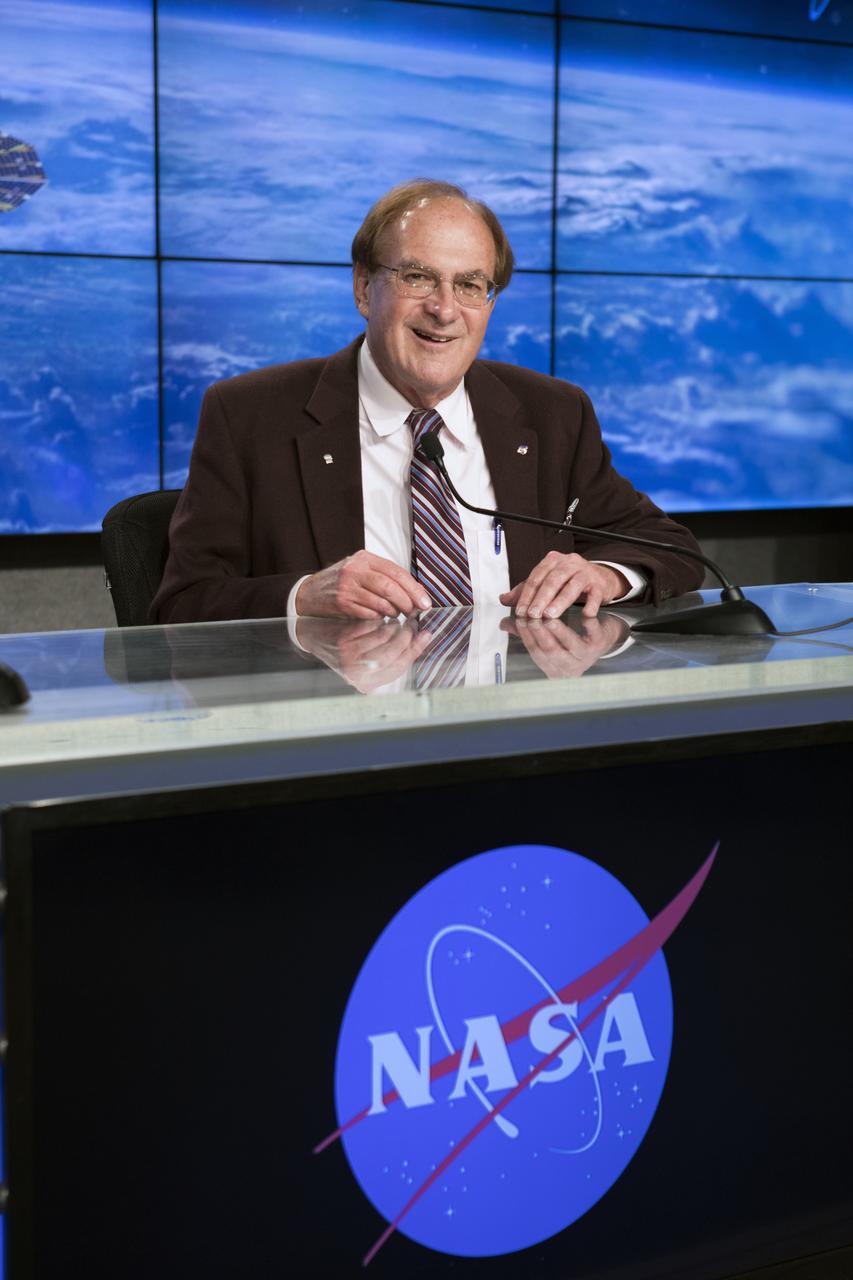
Members of the news media attend a press conference at NASA's Kennedy Space Center in Florida, after the launch of the Orbital ATK Cygnus pressurized cargo module atop a United Launch Alliance Atlas V rocket from Space Launch Complex 41 at Cape Canaveral Air Force Station. It was Orbital ATK's seventh commercial resupply services mission to the International Space Station. Liftoff was at 11:11 a.m. EDT. Shaking hands, from left, are Frank Culbertson, president, Orbital ATK Space Systems Group.and Vern Thorp, program manager, commercial missions, United Launch Alliance.
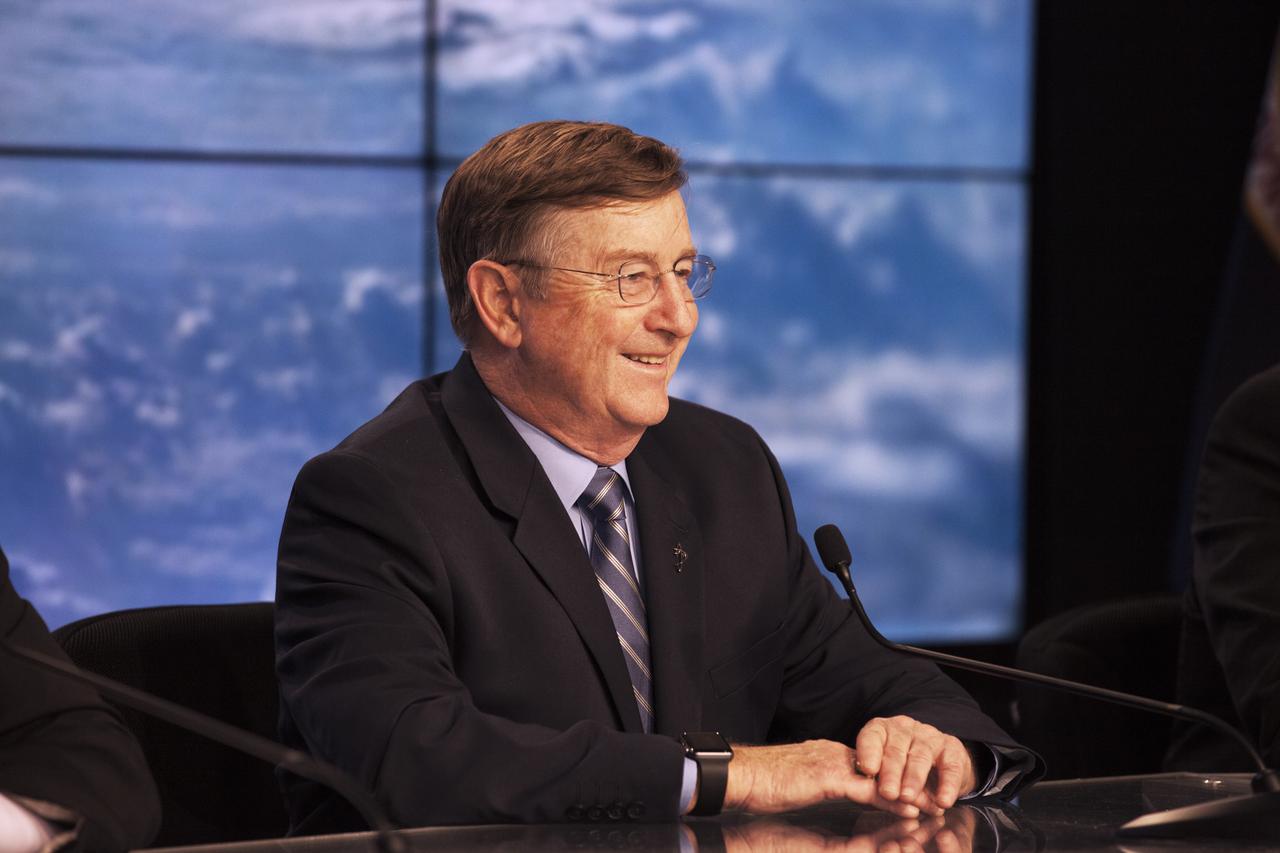
Members of the news media attend a press conference at NASA's Kennedy Space Center in Florida, after the launch of the Orbital ATK Cygnus pressurized cargo module atop a United Launch Alliance Atlas V rocket from Space Launch Complex 41 at Cape Canaveral Air Force Station. It was Orbital ATK's seventh commercial resupply services mission to the International Space Station. Liftoff was at 11:11 a.m. EDT. Speaking to the media is Frank Culbertson, president, Orbital ATK Space Systems Group.
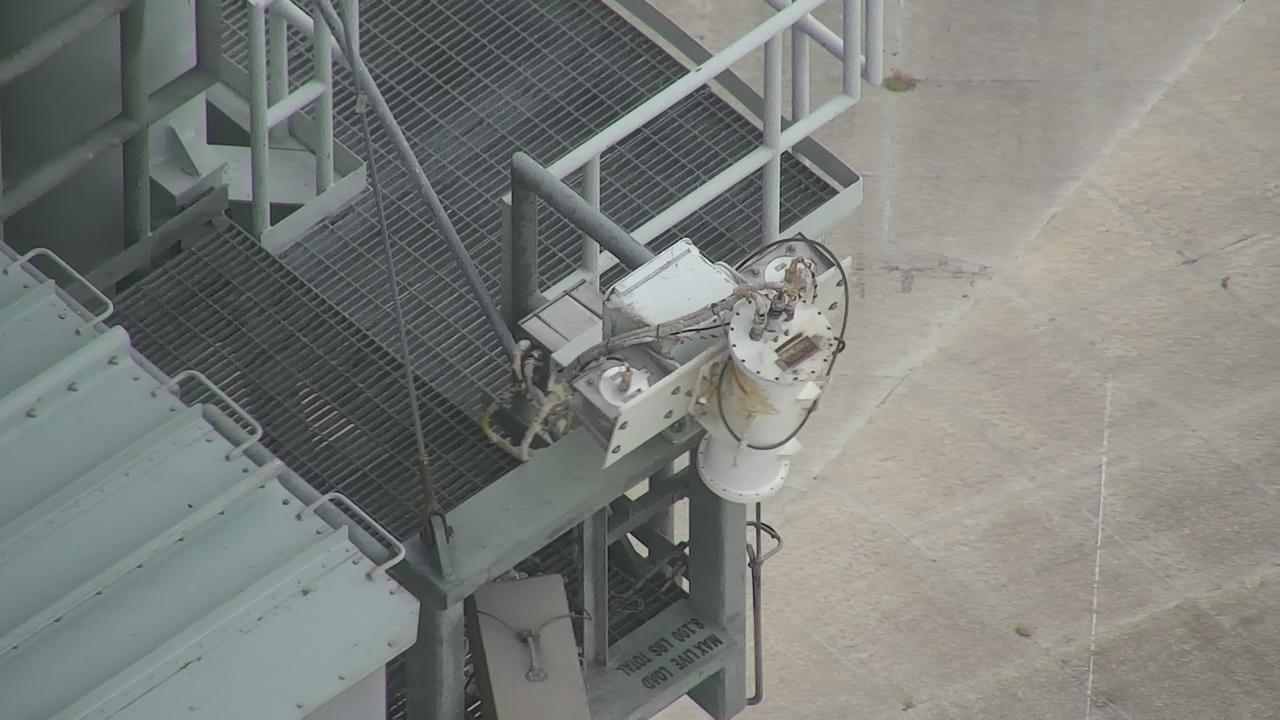
Following NASA’s successful Artemis I launch from Kennedy Space Center in Florida on Nov. 16, 2022, teams with the Exploration Ground Systems conducted a post-launch assessment for the ground systems, which began the day of launch and concluded Friday, Nov. 18. This enabled teams to inspect areas on the mobile launcher and identify specific damage and debris around the pad. Engineers have determined the overall mobile launcher and pad systems performed as designed during launch and are structurally sound.
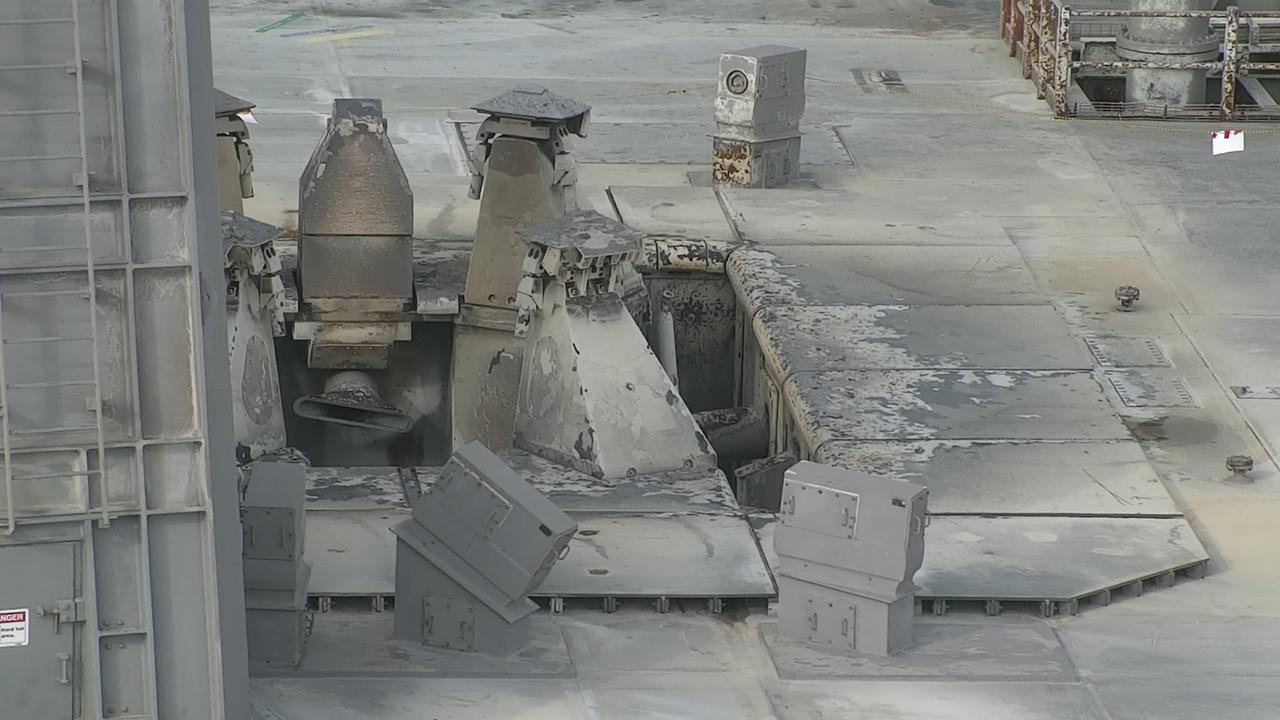
Following NASA’s successful Artemis I launch from Kennedy Space Center in Florida on Nov. 16, 2022, teams with the Exploration Ground Systems conducted a post-launch assessment for the ground systems, which began the day of launch and concluded Friday, Nov. 18. This enabled teams to inspect areas on the mobile launcher and identify specific damage and debris around the pad. Engineers have determined the overall mobile launcher and pad systems performed as designed during launch and are structurally sound.
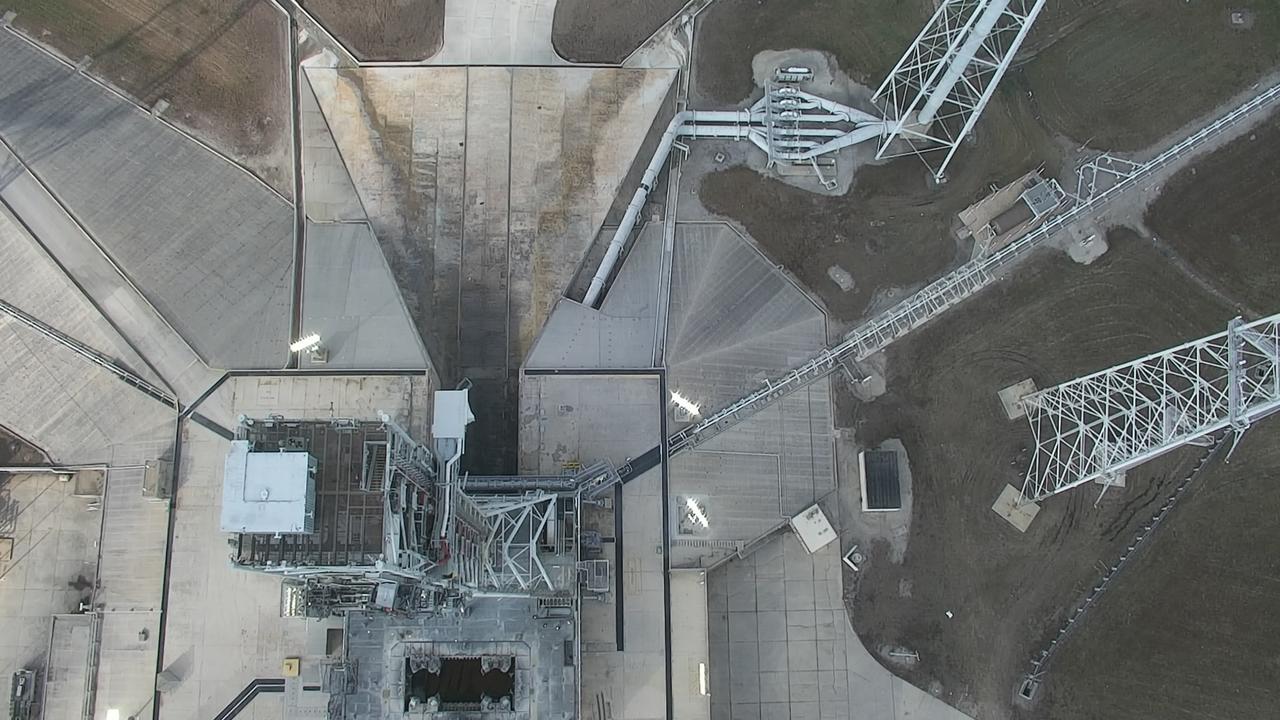
Following NASA’s successful Artemis I launch from Kennedy Space Center in Florida on Nov. 16, 2022, teams with the Exploration Ground Systems conducted a post-launch assessment for the ground systems, which began the day of launch and concluded Friday, Nov. 18. This enabled teams to inspect areas on the mobile launcher and identify specific damage and debris around the pad. Engineers have determined the overall mobile launcher and pad systems performed as designed during launch and are structurally sound.
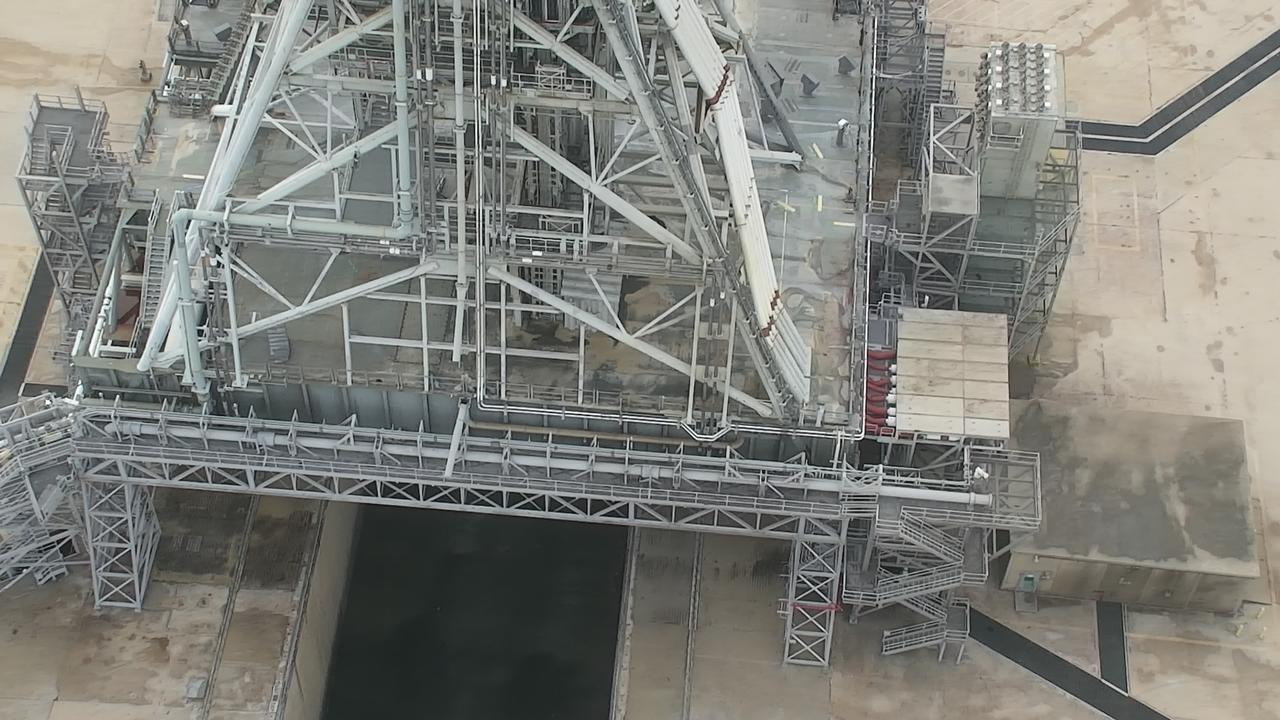
Following NASA’s successful Artemis I launch from Kennedy Space Center in Florida on Nov. 16, 2022, teams with the Exploration Ground Systems conducted a post-launch assessment for the ground systems, which began the day of launch and concluded Friday, Nov. 18. This enabled teams to inspect areas on the mobile launcher and identify specific damage and debris around the pad. Engineers have determined the overall mobile launcher and pad systems performed as designed during launch and are structurally sound.

Following NASA’s successful Artemis I launch from Kennedy Space Center in Florida on Nov. 16, 2022, teams with the Exploration Ground Systems conducted a post-launch assessment for the ground systems, which began the day of launch and concluded Friday, Nov. 18. This enabled teams to inspect areas on the mobile launcher and identify specific damage and debris around the pad. Engineers have determined the overall mobile launcher and pad systems performed as designed during launch and are structurally sound.
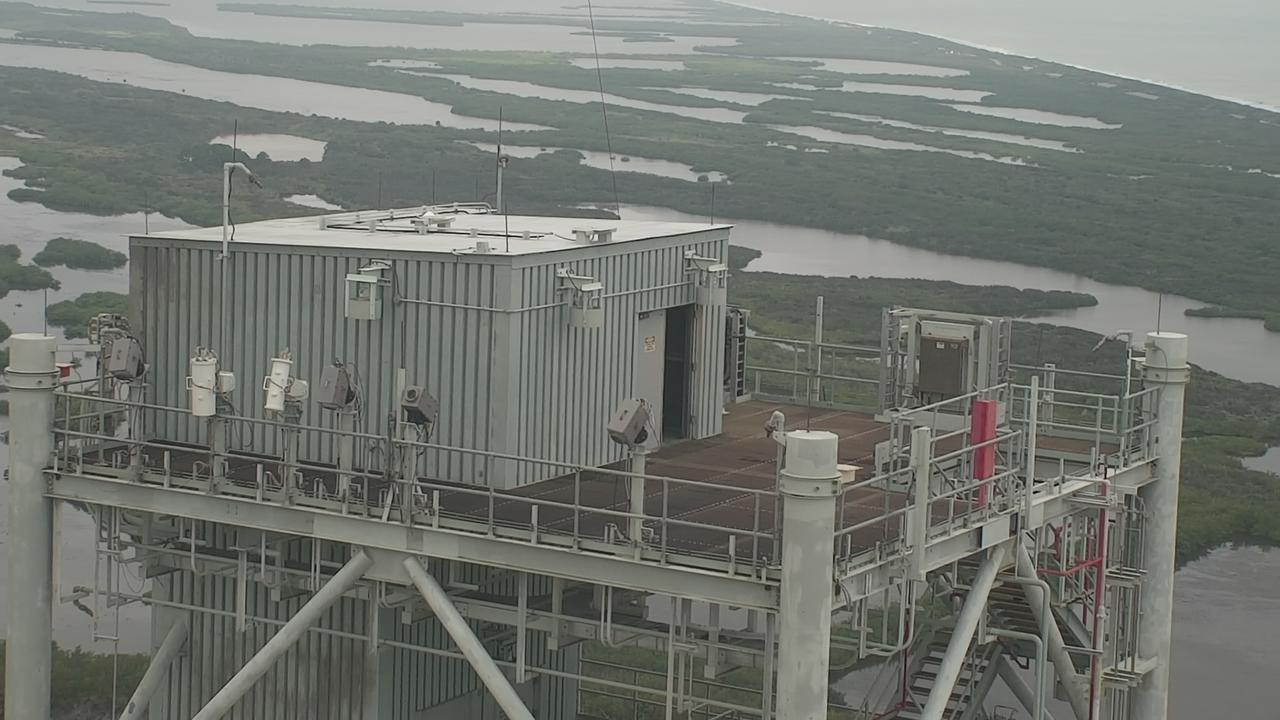
Following NASA’s successful Artemis I launch from Kennedy Space Center in Florida on Nov. 16, 2022, teams with the Exploration Ground Systems conducted a post-launch assessment for the ground systems, which began the day of launch and concluded Friday, Nov. 18. This enabled teams to inspect areas on the mobile launcher and identify specific damage and debris around the pad. Engineers have determined the overall mobile launcher and pad systems performed as designed during launch and are structurally sound.
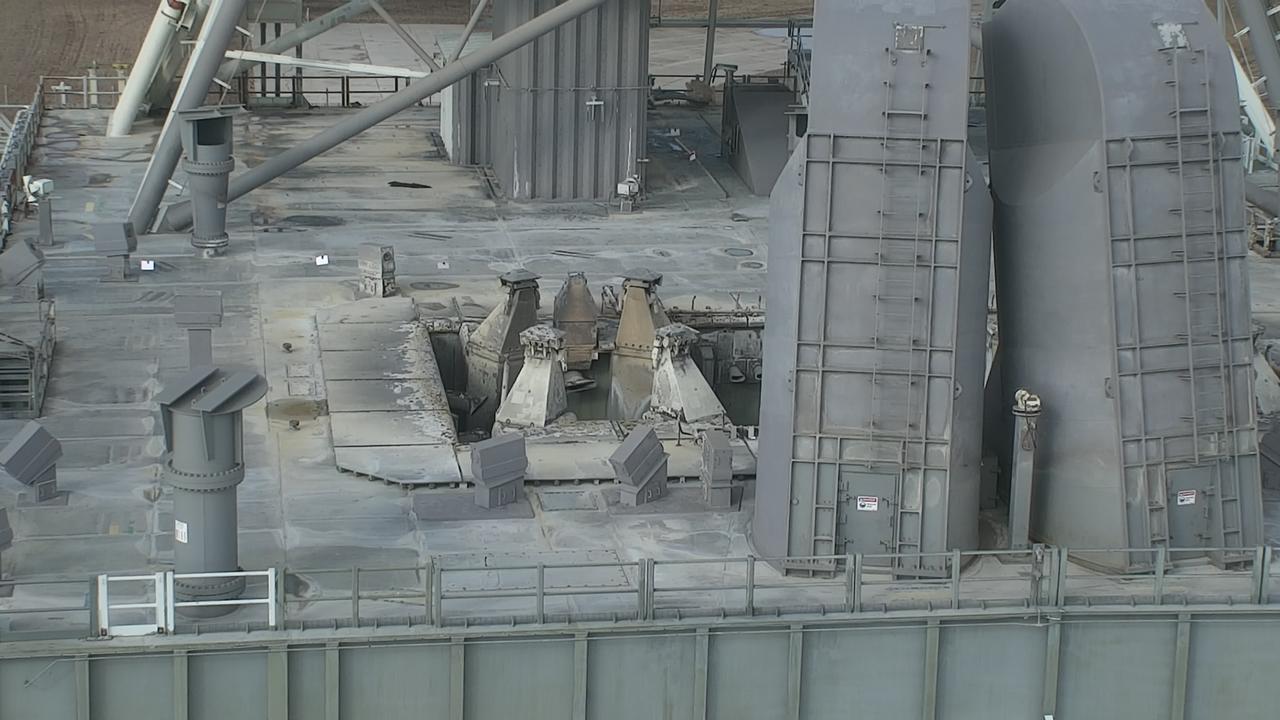
Following NASA’s successful Artemis I launch from Kennedy Space Center in Florida on Nov. 16, 2022, teams with the Exploration Ground Systems conducted a post-launch assessment for the ground systems, which began the day of launch and concluded Friday, Nov. 18. This enabled teams to inspect areas on the mobile launcher and identify specific damage and debris around the pad. Engineers have determined the overall mobile launcher and pad systems performed as designed during launch and are structurally sound.

Following NASA’s successful Artemis I launch from Kennedy Space Center in Florida on Nov. 16, 2022, teams with the Exploration Ground Systems conducted a post-launch assessment for the ground systems, which began the day of launch and concluded Friday, Nov. 18. This enabled teams to inspect areas on the mobile launcher and identify specific damage and debris around the pad. Engineers have determined the overall mobile launcher and pad systems performed as designed during launch and are structurally sound.
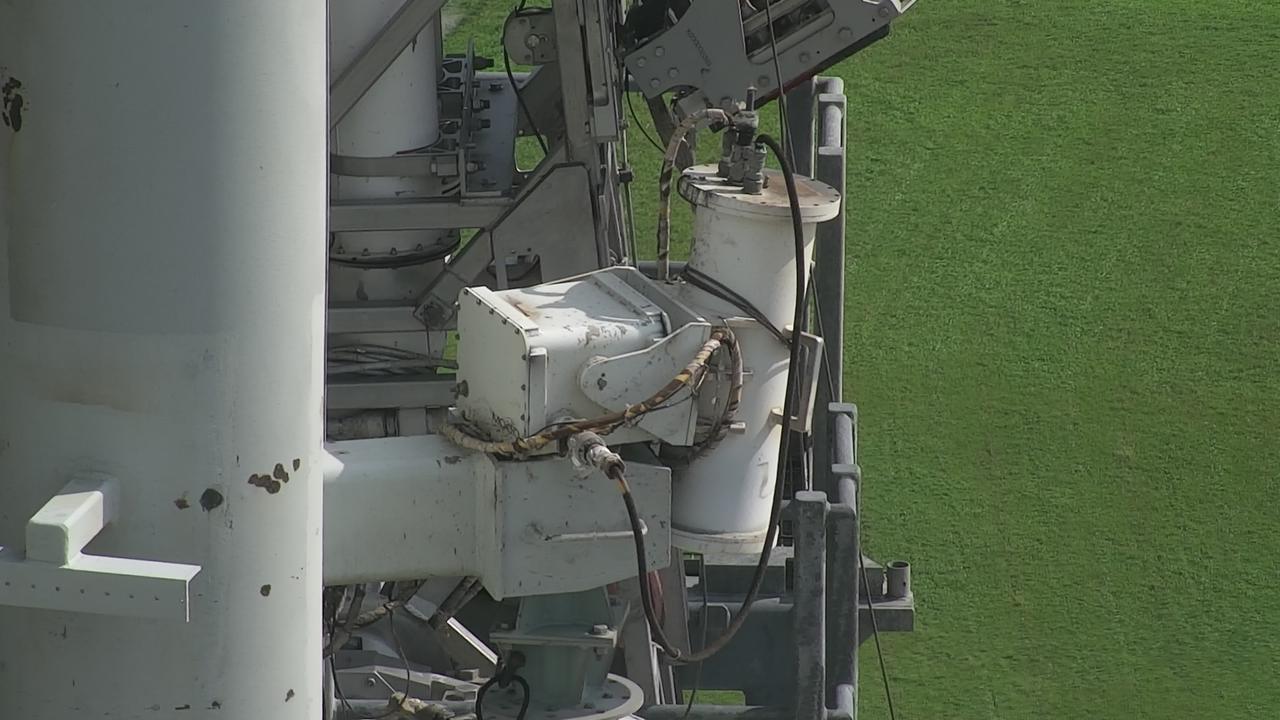
Following NASA’s successful Artemis I launch from Kennedy Space Center in Florida on Nov. 16, 2022, teams with the Exploration Ground Systems conducted a post-launch assessment for the ground systems, which began the day of launch and concluded Friday, Nov. 18. This enabled teams to inspect areas on the mobile launcher and identify specific damage and debris around the pad. Engineers have determined the overall mobile launcher and pad systems performed as designed during launch and are structurally sound.
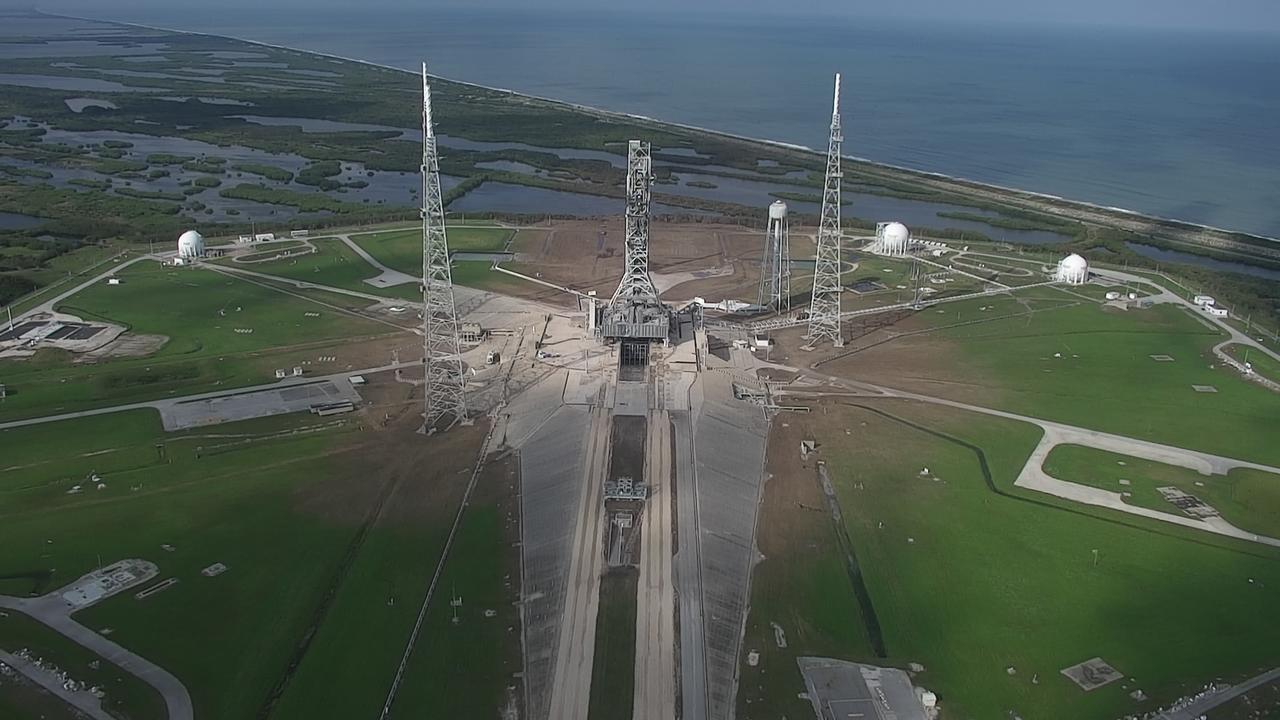
Following NASA’s successful Artemis I launch from Kennedy Space Center in Florida on Nov. 16, 2022, teams with the Exploration Ground Systems conducted a post-launch assessment for the ground systems, which began the day of launch and concluded Friday, Nov. 18. This enabled teams to inspect areas on the mobile launcher and identify specific damage and debris around the pad. Engineers have determined the overall mobile launcher and pad systems performed as designed during launch and are structurally sound.
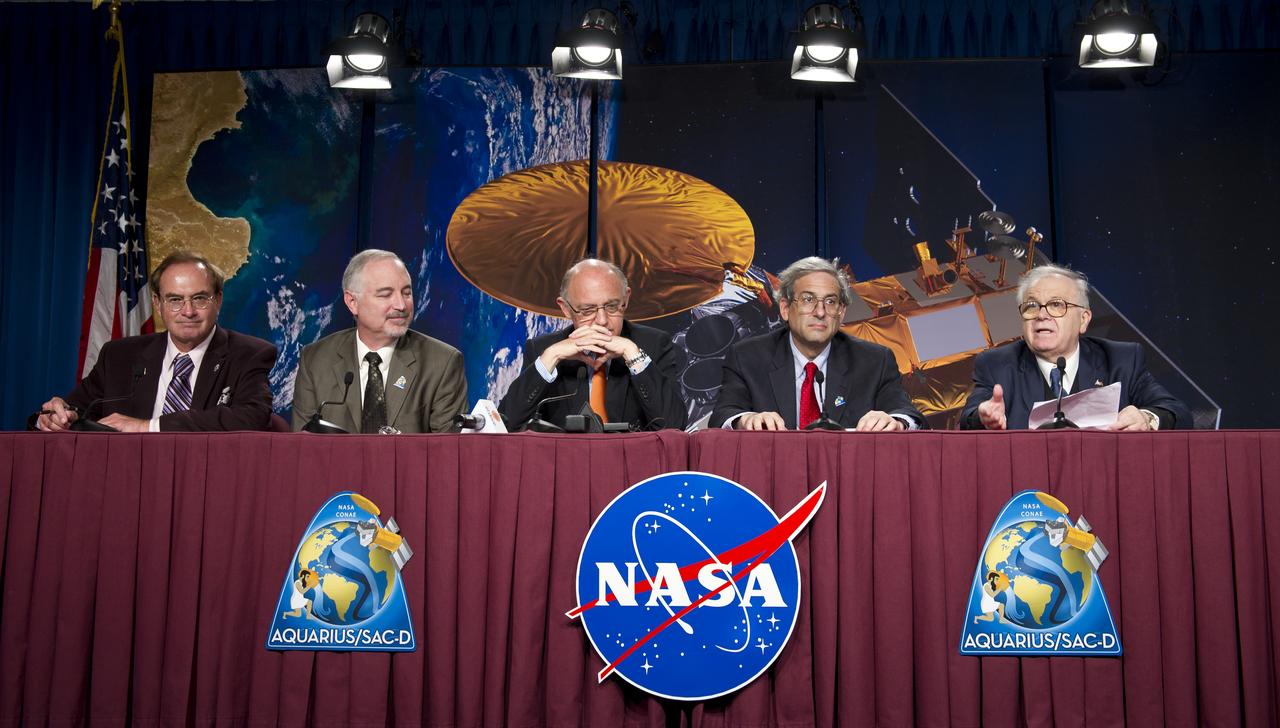
From left, George Diller, NASA Public Affairs Officer; Charles Gay, Deputy Associate Administrator, NASA Science Mission Directorate; Hector Timerman, Foreign Minister of Argentina, Buenos Aires; Michael Freilich, NASA Earth Science Division Director, NASA Headquarters; and Conrado Varotto, CONAE Executive and Technical Director, Buenos Aires, are seen at the Aquarius/SAC-D post-launch press conference on Friday, June 10, 2011 at the NASA Resident Office, Vandenberg Air Force Base, Calif. The joint U.S./Argentinian Aquarius/Satélite de Aplicaciones Científicas (SAC)-D mission, launched earlier on Friday June 10, will map the salinity at the ocean surface, information critical to improving our understanding of two major components of Earth's climate system: the water cycle and ocean circulation. Photo Credit: (NASA/Bill Ingalls)
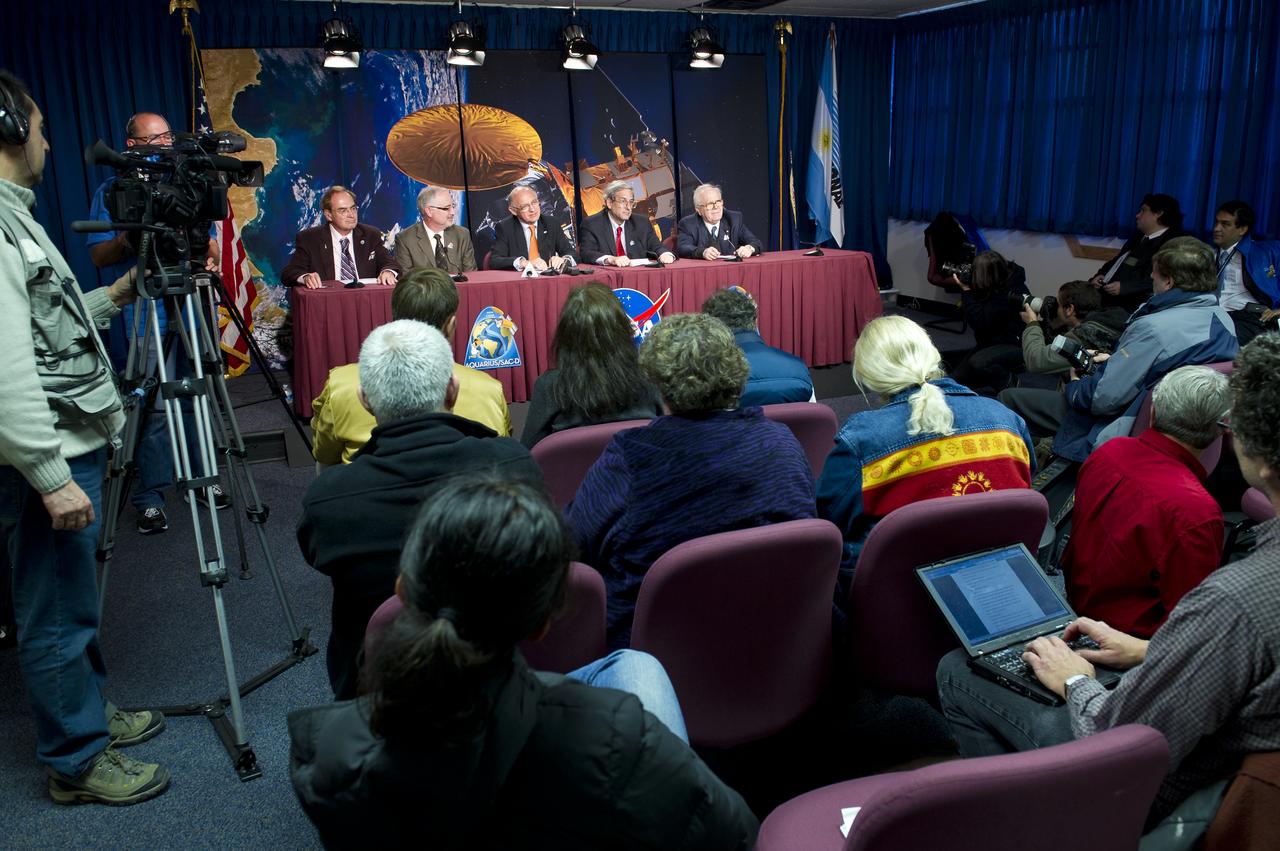
Seated from left, George Diller, NASA Public Affairs Officer; Charles Gay, Deputy Associate Administrator, NASA Science Mission Directorate; Hector Timerman, Foreign Minister of Argentina, Buenos Aires; Michael Freilich, NASA Earth Science Division Director, NASA Headquarters; and Conrado Varotto, CONAE Executive and Technical Director, Buenos Aires, are seen at the Aquarius/SAC-D post-launch press conference on Friday, June 10, 2011 at the NASA Resident Office, Vandenberg Air Force Base, Calif. The joint U.S./Argentinian Aquarius/Satélite de Aplicaciones Científicas (SAC)-D mission, launched earlier on Friday June 10, will map the salinity at the ocean surface, information critical to improving our understanding of two major components of Earth's climate system: the water cycle and ocean circulation. Photo Credit: (NASA/Bill Ingalls)
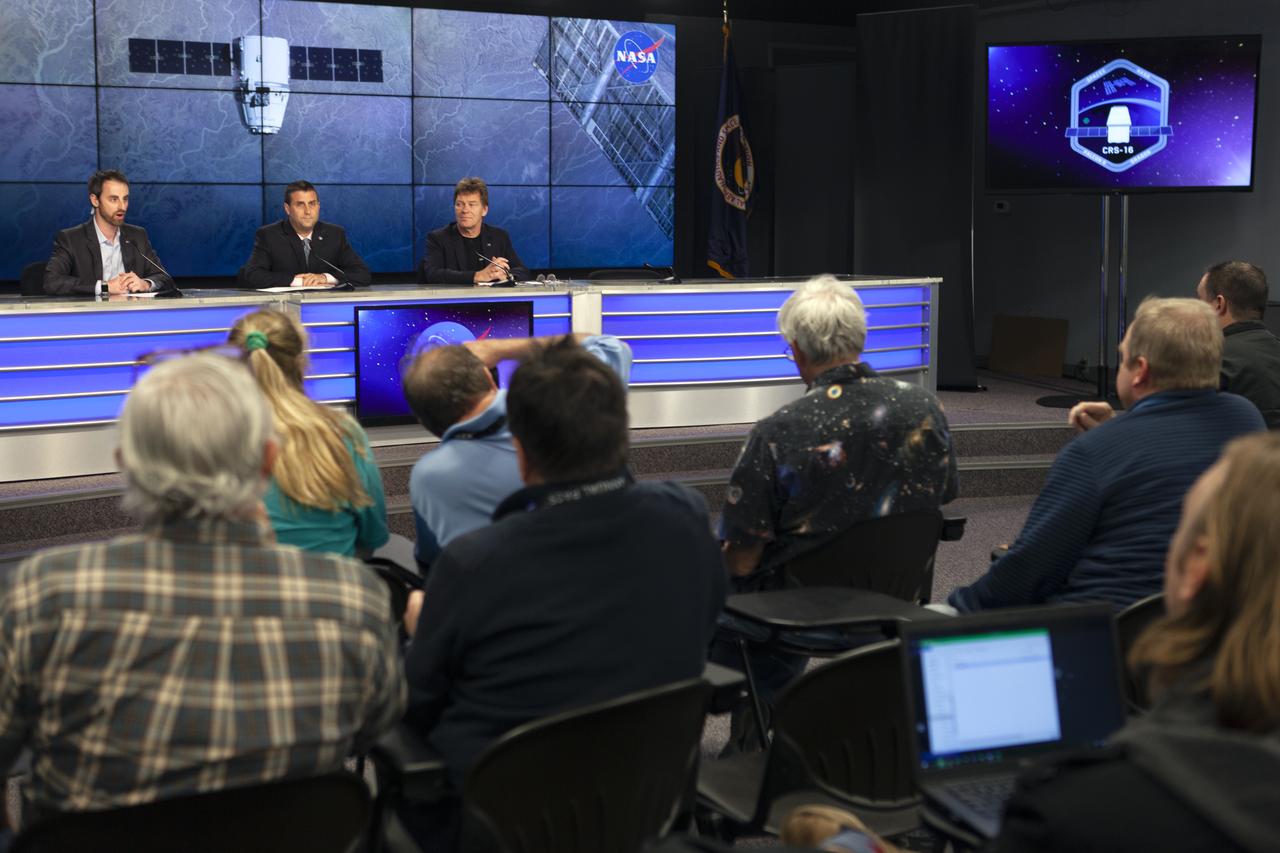
In the Press Site auditorium of NASA's Kennedy Space Center in Florida, from left, Joshua Santora of NASA Communications, Joel Montalbano, deputy International Space Station program manager at NASA's Johnson Space Center in Houston, and Hans Koenigsmann, vice president of Build and Flight Reliability for SpaceX, speak to media at a post-launch news conference following the liftoff of SpaceX CRS-16. The flight is a commercial resupply services mission to the International Space Station. SpaceX CRS-16 lifted off atop a Falcon 9 rocket from Space Launch Complex 40 at Cape Canaveral Air Force Station at 1:16 p.m. EST, Dec. 5, 2018, with supplies and equipment and new science experiments for technology research.
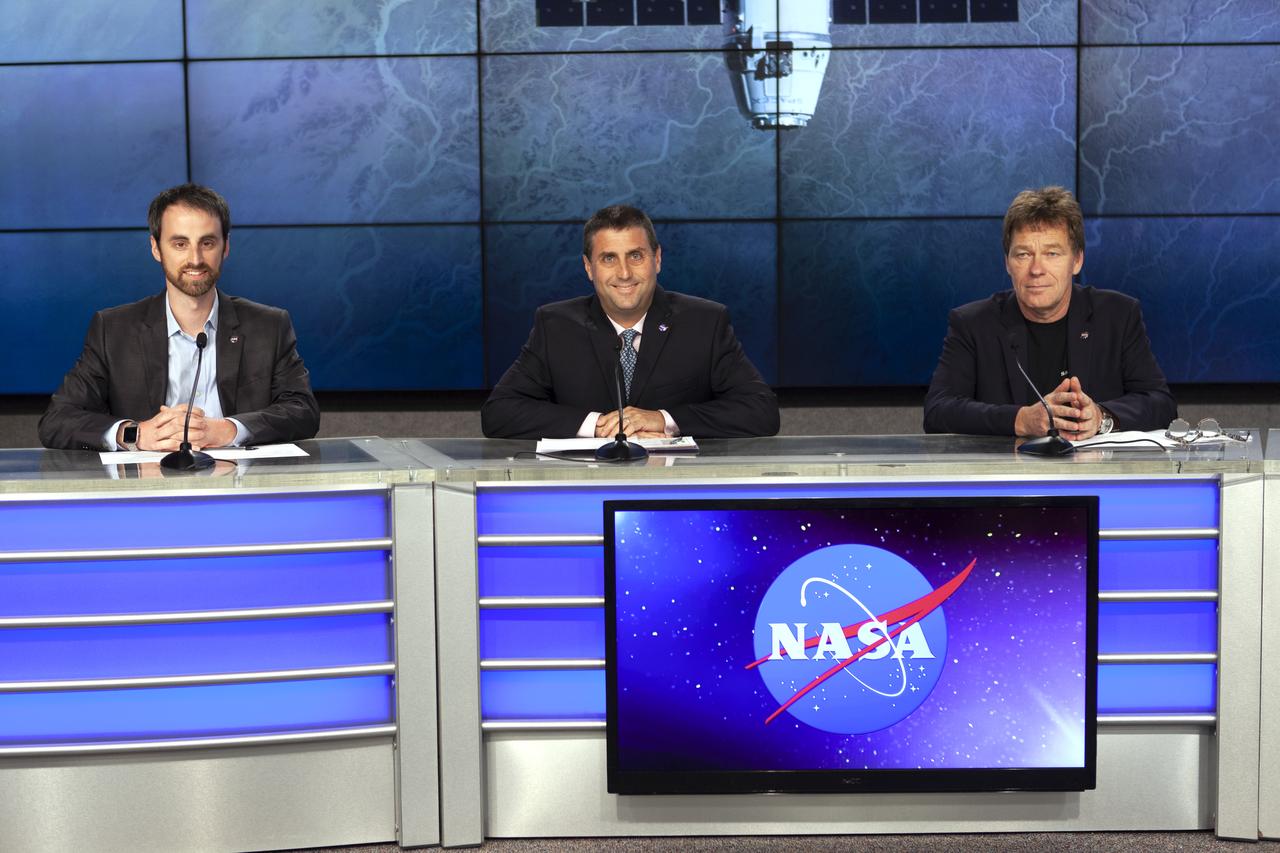
In the Press Site auditorium of NASA's Kennedy Space Center in Florida, from left, Joshua Santora of NASA Communications, Joel Montalbano, deputy International Space Station program manager at NASA's Johnson Space Center in Houston, and Hans Koenigsmann, vice president of Build and Flight Reliability for SpaceX, speak to media at a post-launch news conference following the liftoff of SpaceX CRS-16. The flight is a commercial resupply services mission to the International Space Station. SpaceX CRS-16 lifted off atop a Falcon 9 rocket from Space Launch Complex 40 at Cape Canaveral Air Force Station at 1:16 p.m. EST, Dec. 5, 2018, with supplies and equipment and new science experiments for technology research.
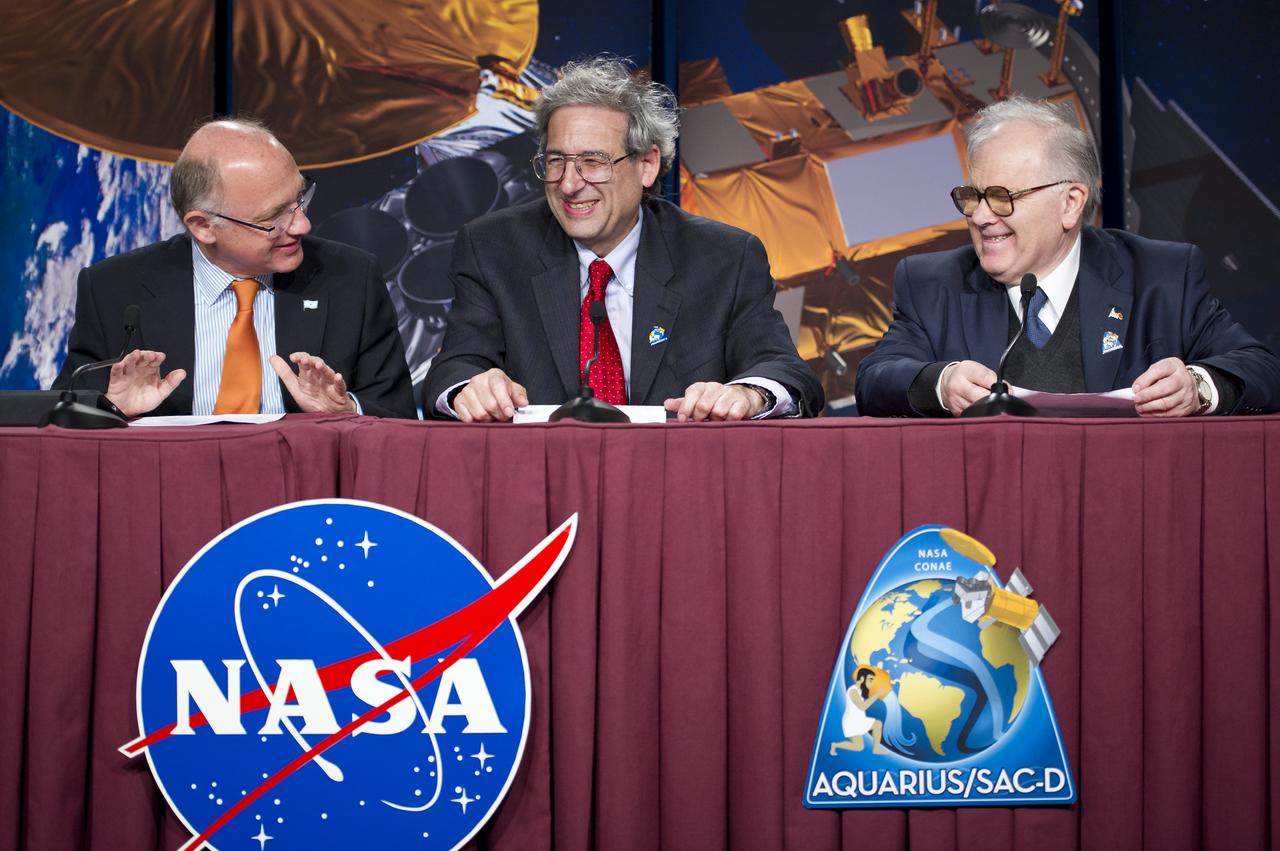
Hector Timerman, Foreign Minister of Argentina, Buenos Aires, left, Michael Freilich, NASA Earth Science Division Director, NASA Headquarters, Washington, center, and Conrado Varotto, CONAE Executive and Technical Director, Buenos Aires, laugh at the start of the Aquarius/SAC-D post-launch press conference on Friday, June 10, 2011 at the NASA Resident Office, Vandenberg Air Force Base, Calif. The joint U.S./Argentinian Aquarius/Satélite de Aplicaciones Científicas (SAC)-D mission, launched earlier on Friday June 10, will map the salinity at the ocean surface, information critical to improving our understanding of two major components of Earth's climate system: the water cycle and ocean circulation. Photo Credit: (NASA/Bill Ingalls)
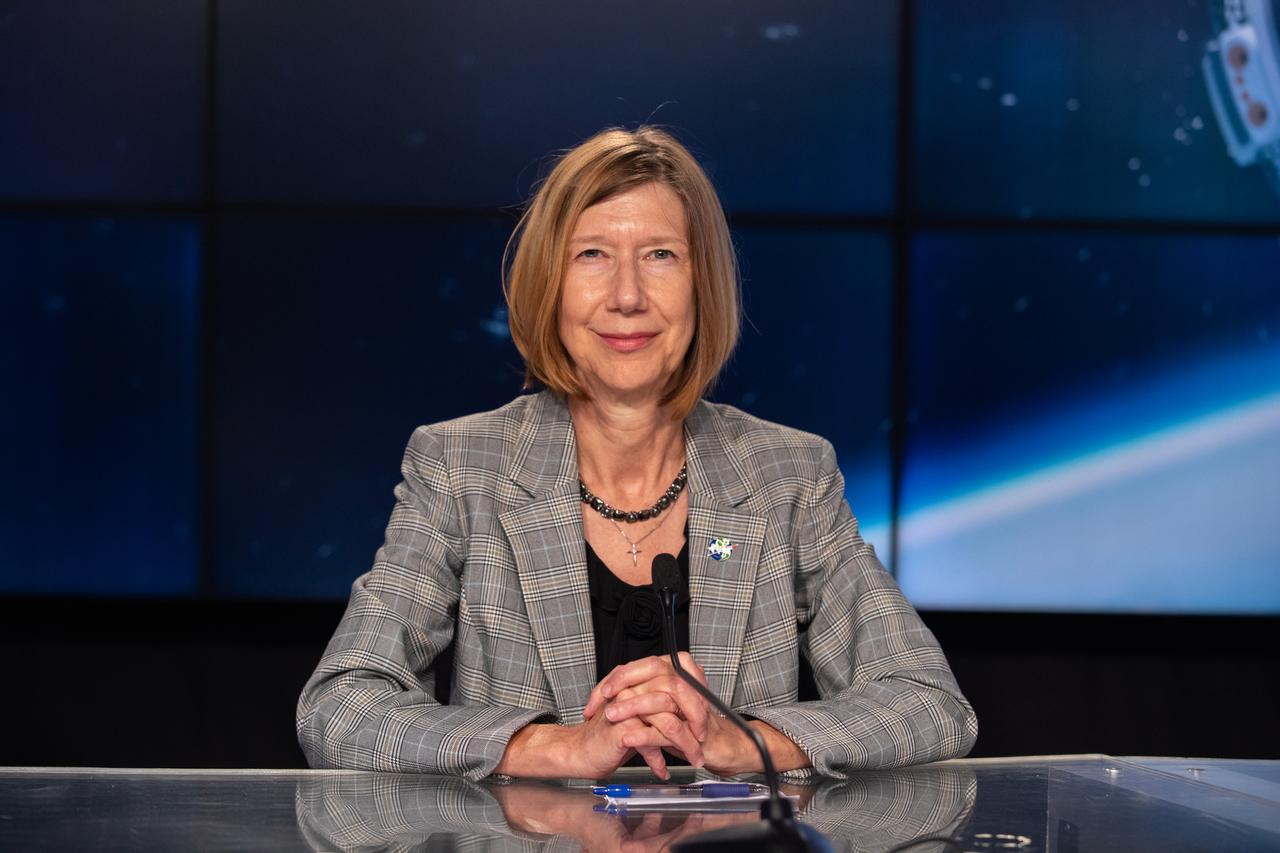
Kathy Lueders, associate administrator, Space Operations Mission Directorate at NASA, participates in a postlaunch news conference following the liftoff of NASA Boeing’s Orbital Flight Test-2 (OFT-2) on May 19, 2022. Liftoff occurred at 6:54 p.m. EDT from Space Launch Complex-41 at Florida’s Cape Canaveral Space Force Station. Boeing’s uncrewed flight test is designed to test the system’s end-to-end capabilities for NASA’s Commercial Crew Program providing valuable data towards NASA certifying Boeing’s crew transportation system for regular crewed flights to and from the International Space Station.
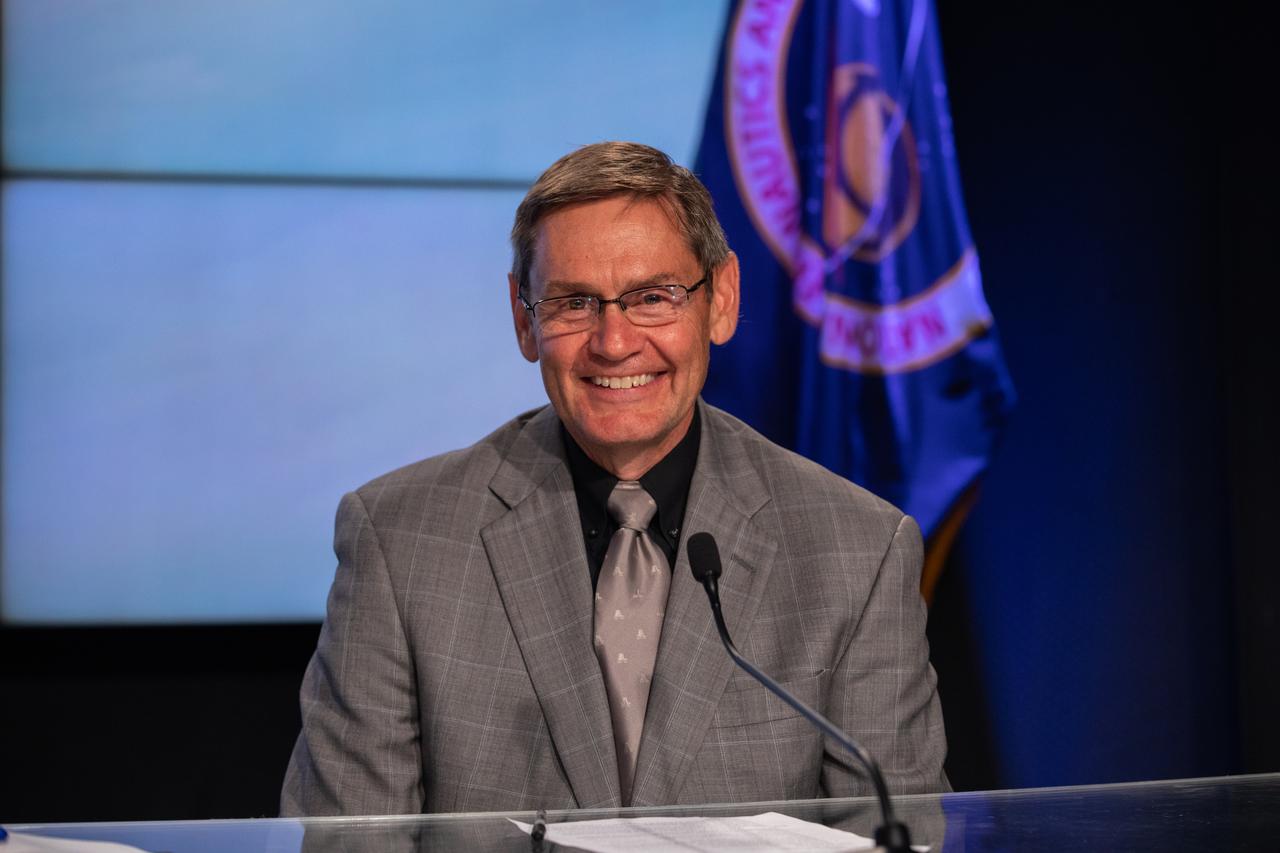
John Elbon, chief operating officer, United Launch Alliance, participates in a postlaunch news conference following the liftoff of NASA Boeing’s Orbital Flight Test-2 (OFT-2) on May 19, 2022. Liftoff occurred at 6:54 p.m. EDT from Space Launch Complex-41 at Florida’s Cape Canaveral Space Force Station. Boeing’s uncrewed flight test is designed to test the system’s end-to-end capabilities for NASA’s Commercial Crew Program providing valuable data towards NASA certifying Boeing’s crew transportation system for regular crewed flights to and from the International Space Station.
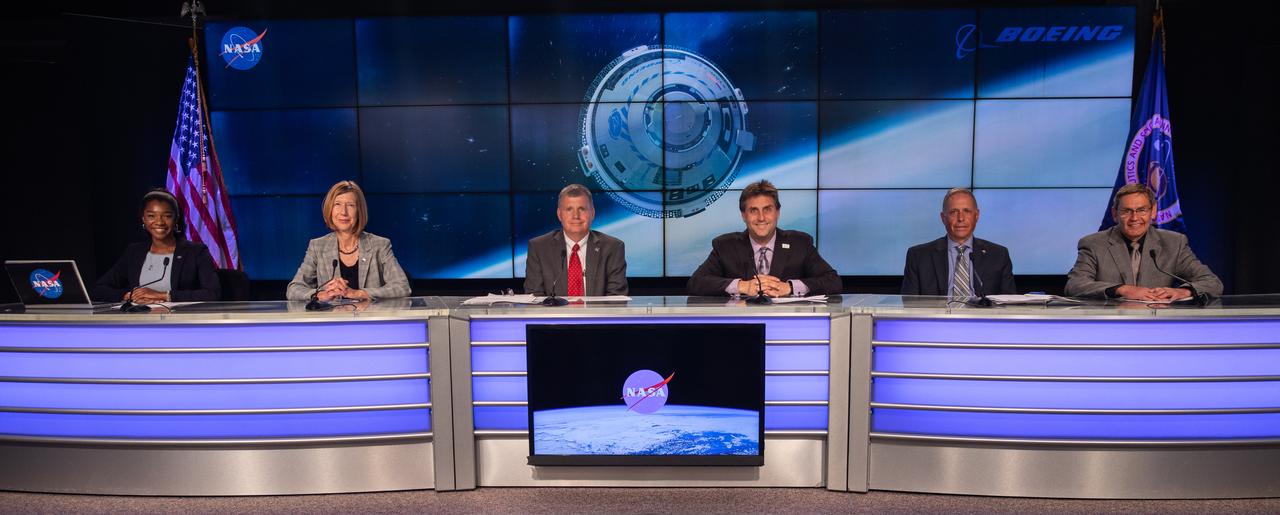
In the Press Site auditorium of NASA's Kennedy Space Center in Florida, officials from NASA, Boeing, and United Launch Alliance (ULA) participate in a postlaunch news conference following the liftoff of NASA Boeing’s Orbital Flight Test-2 (OFT-2) on May 19, 2022. From left are Jasmine Hopkins, NASA Communications; Kathryn Lueders, associate administrator, Space Operations Mission Directorate at NASA; Steve Stich, manager, NASA Commercial Crew Program; Joel Montalbano, manager, NASA’s International Space Station Program; Mark Nappi, vice president and program manager, Boeing Commercial Crew Program; John Elbon, chief operating officer, United Launch Alliance. Liftoff occurred at 6:54 p.m. EDT from Space Launch Complex-41 at Florida’s Cape Canaveral Space Force Station. Boeing’s uncrewed flight test is designed to test the system’s end-to-end capabilities for NASA’s Commercial Crew Program providing valuable data towards NASA certifying Boeing’s crew transportation system for regular crewed flights to and from the International Space Station.
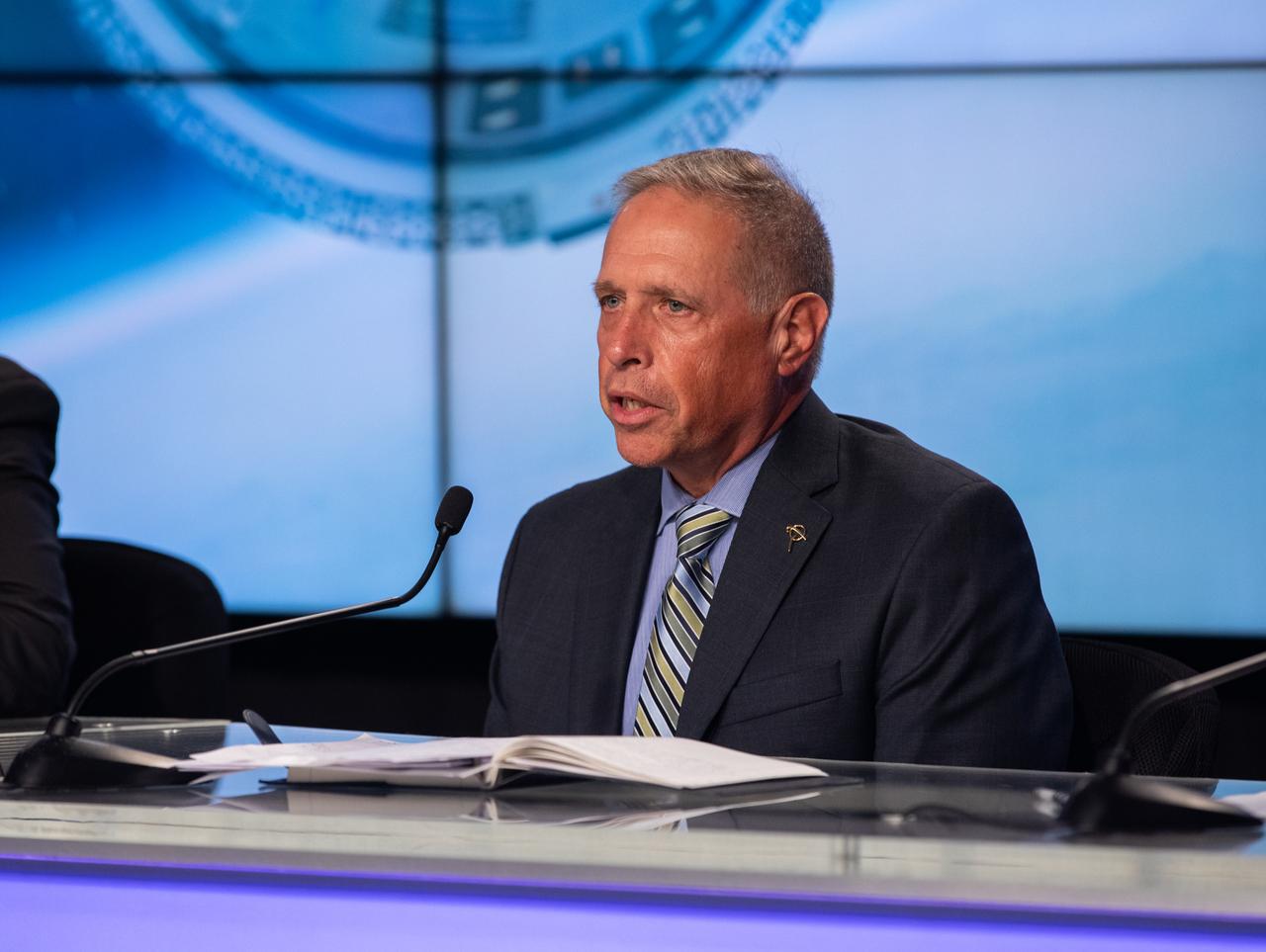
Mark Nappi, vice president and program manager, Boeing Commercial Crew Program, participates in a postlaunch news conference following the liftoff of NASA Boeing’s Orbital Flight Test-2 (OFT-2) on May 19, 2022. Liftoff occurred at 6:54 p.m. EDT from Space Launch Complex-41 at Florida’s Cape Canaveral Space Force Station. Boeing’s uncrewed flight test is designed to test the system’s end-to-end capabilities for NASA’s Commercial Crew Program providing valuable data towards NASA certifying Boeing’s crew transportation system for regular crewed flights to and from the International Space Station.
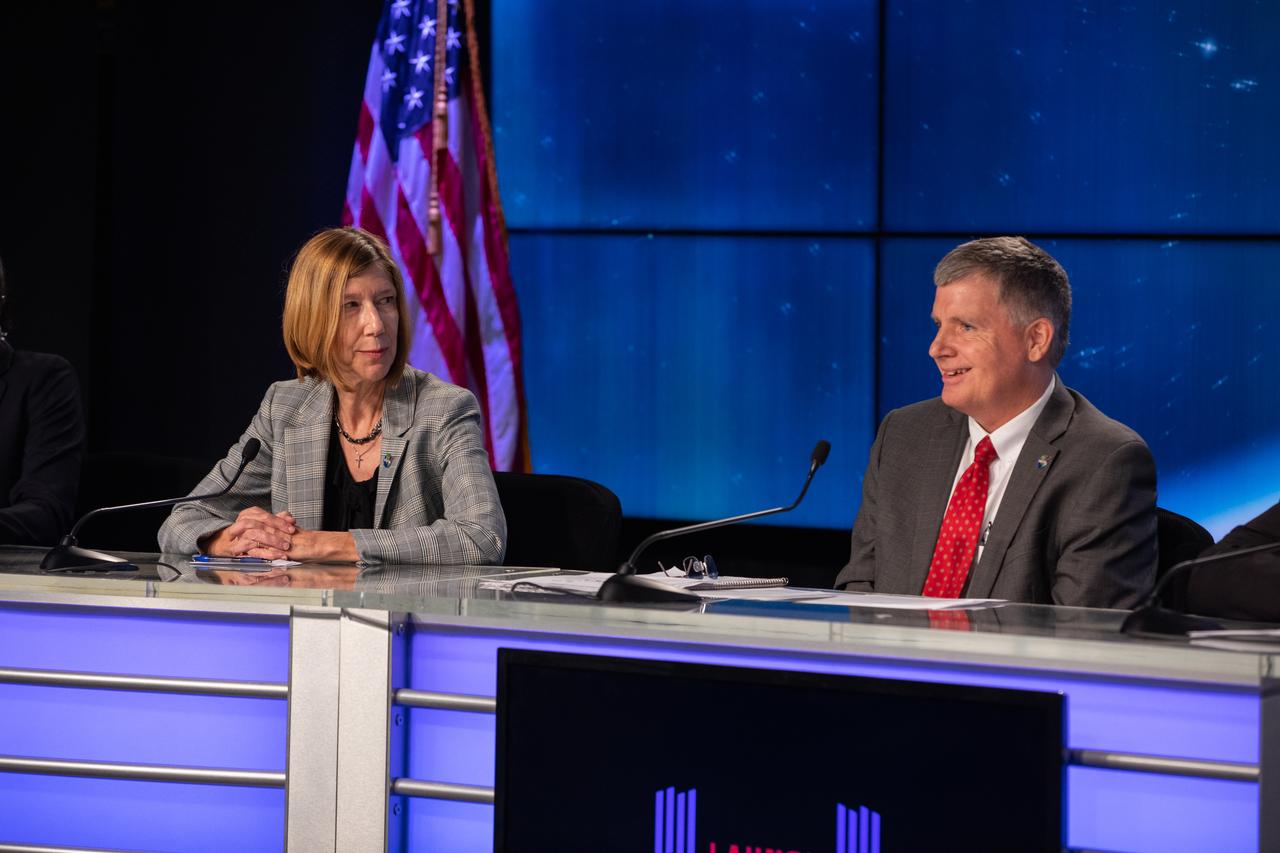
Kathy Lueders, associate administrator, Space Operations Mission Directorate at NASA, left, and Steve Stich, manager, NASA’s Commercial Crew Program, right, participate in a postlaunch news conference following the liftoff of NASA Boeing’s Orbital Flight Test-2 (OFT-2) on May 19, 2022. Liftoff occurred at 6:54 p.m. EDT from Space Launch Complex-41 at Florida’s Cape Canaveral Space Force Station. Boeing’s uncrewed flight test is designed to test the system’s end-to-end capabilities for NASA’s Commercial Crew Program providing valuable data towards NASA certifying Boeing’s crew transportation system for regular crewed flights to and from the International Space Station.
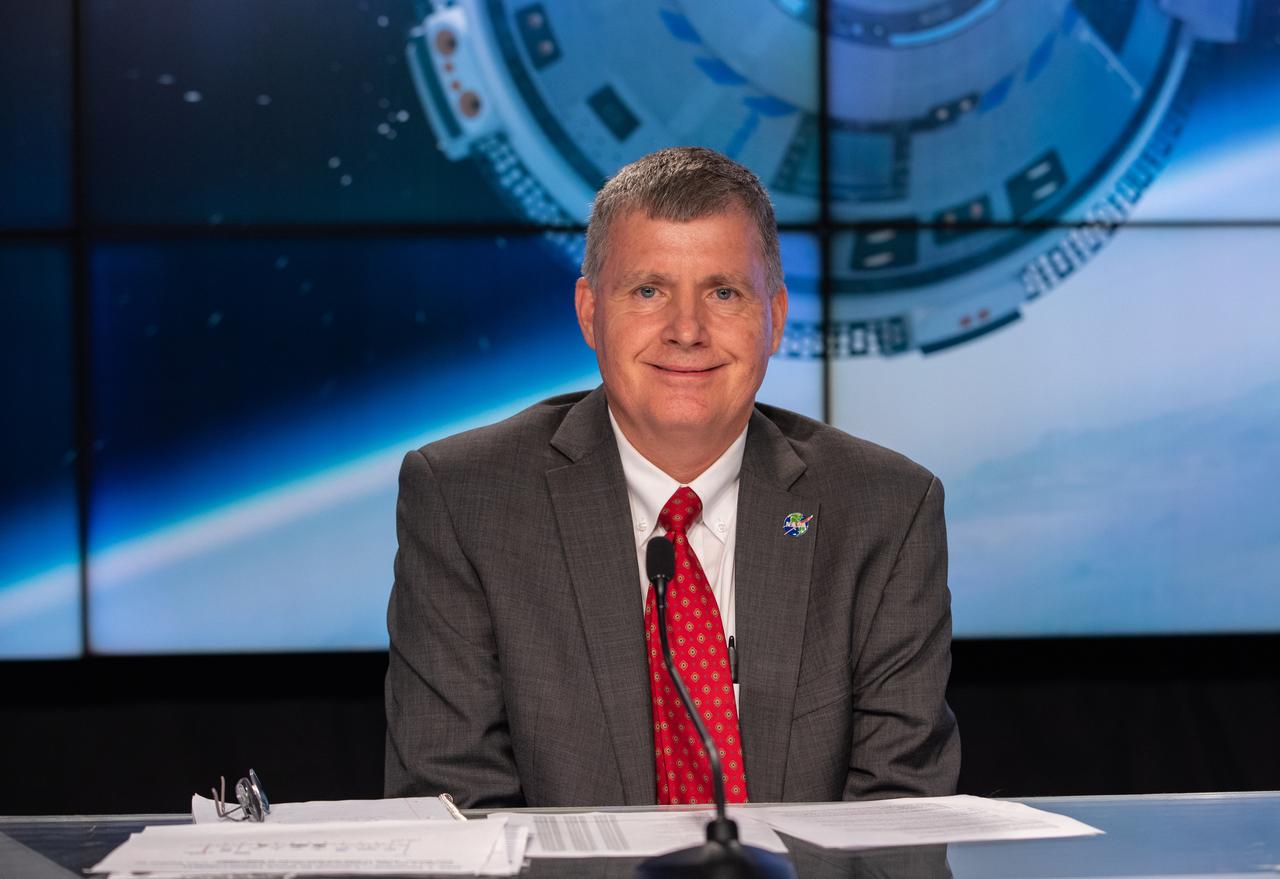
Steve Stich, manager, NASA’s Commercial Crew Program, participates in a postlaunch news conference following the liftoff of NASA Boeing’s Orbital Flight Test-2 (OFT-2) on May 19, 2022. Liftoff occurred at 6:54 p.m. EDT from Space Launch Complex-41 at Florida’s Cape Canaveral Space Force Station. Boeing’s uncrewed flight test is designed to test the system’s end-to-end capabilities for NASA’s Commercial Crew Program providing valuable data towards NASA certifying Boeing’s crew transportation system for regular crewed flights to and from the International Space Station.
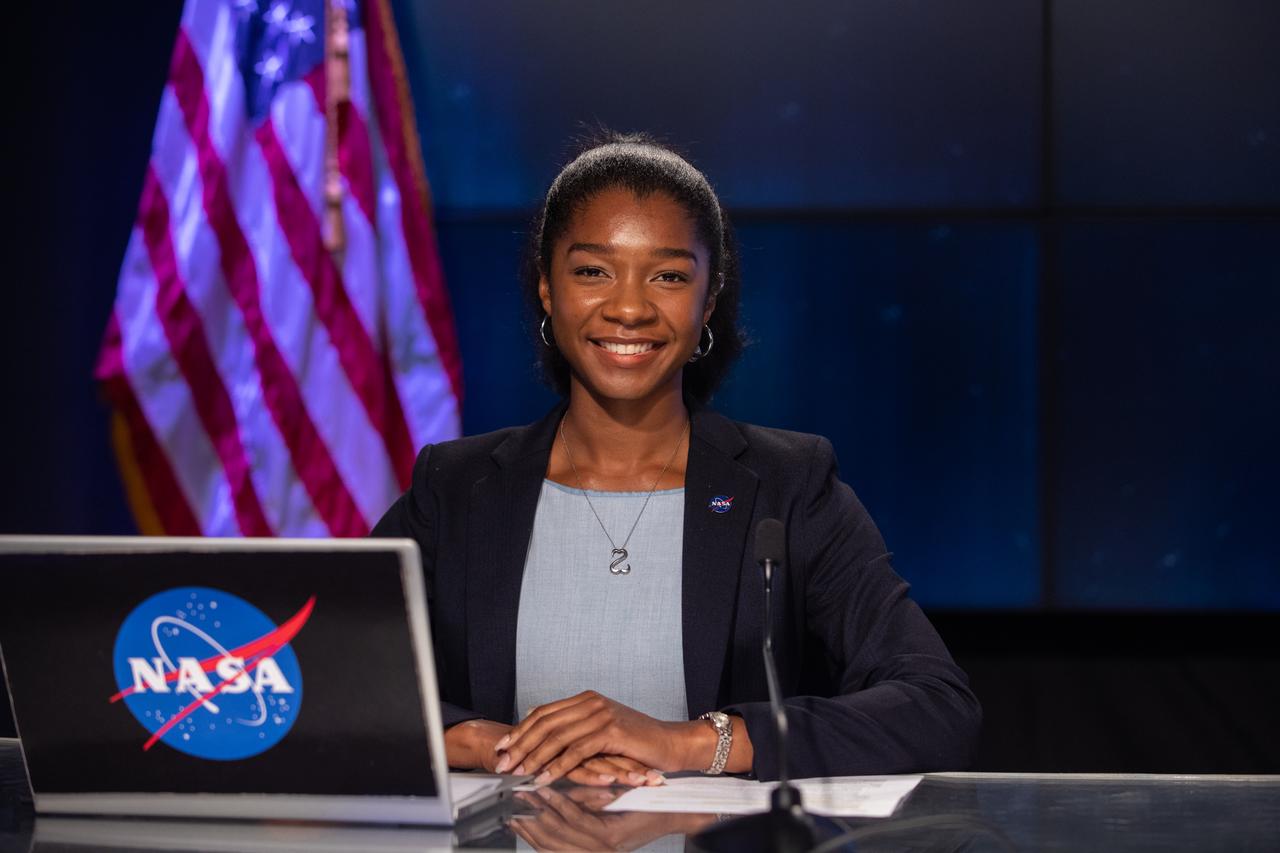
Jasmine Hopkins, NASA Communications, moderates a postlaunch news conference following the liftoff of NASA Boeing’s Orbital Flight Test-2 (OFT-2) on May 19, 2022. Liftoff occurred at 6:54 p.m. EDT from Space Launch Complex-41 at Florida’s Cape Canaveral Space Force Station. Boeing’s uncrewed flight test is designed to test the system’s end-to-end capabilities for NASA’s Commercial Crew Program providing valuable data towards NASA certifying Boeing’s crew transportation system for regular crewed flights to and from the International Space Station.

Flight Director Matt Smith studies the data during the second post-launch trajectory correction maneuver during Perseverance's cruise to Mars. The team is in the Mission Support Area at NASA's Jet Propulsion Laboratory in Southern California. https://photojournal.jpl.nasa.gov/catalog/PIA24195
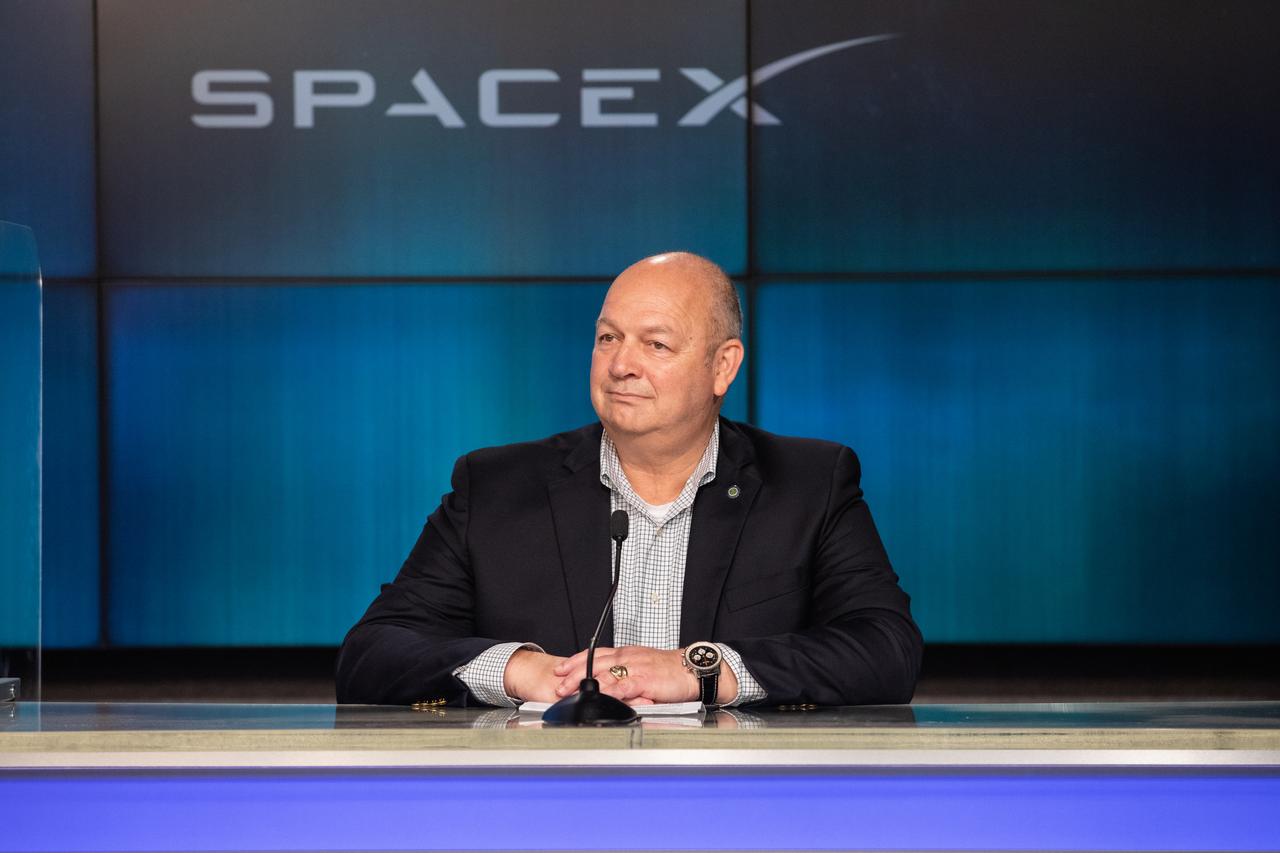
Steve Dickson, administrator, Federal Aviation Administration, answers questions from members of the news media during a postlaunch news conference for NASA’s SpaceX Crew-1 mission on Nov. 15, 2020, at Kennedy Space Center in Florida. Liftoff time on a Falcon 9 rocket was at 7:27 p.m. EST. The Crew Dragon is carrying NASA astronauts Michael Hopkins, spacecraft commander; Victor Glover, pilot; Shannon Walker, mission specialist; and Japan Aerospace Exploration Agency astronaut Soichi Noguchi, mission specialist, to the International Space Station. Crew-1 is the first regular crew mission of a U.S. commercial spacecraft with astronauts to the space station as part of NASA’s Commercial Crew Program. The Crew Dragon will dock with the station and the crew will remain on the orbiting laboratory for a six-month science mission.
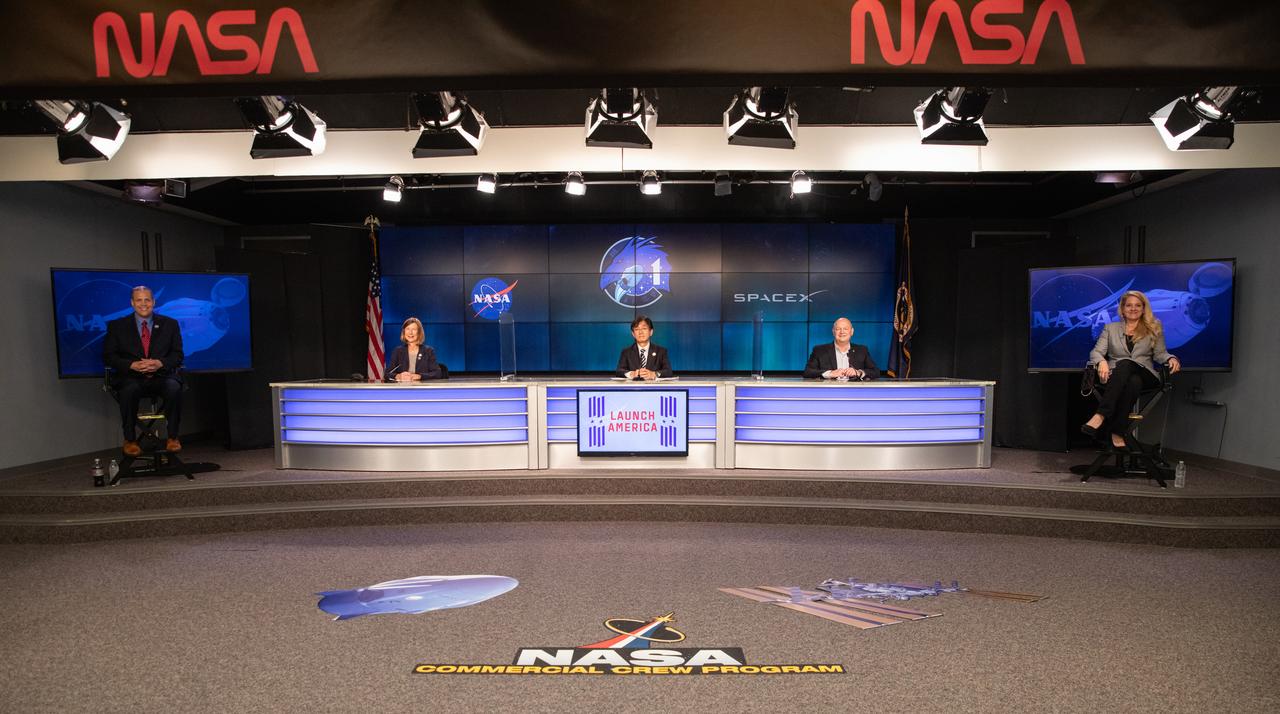
A postlaunch news conference for NASA’s SpaceX Crew-1 mission is held at Kennedy Space Center in Florida on Nov. 15, 2020. Liftoff time on a SpaceX Falcon 9 rocket was at 7:27 p.m. EST. From left are NASA Administrator Jim Bridenstine; Kathy Lueders, associate administrator for human exploration and operations, NASA Headquarters; Hiroshi Sasaki, vice president and director general, JAXA’s Human Spaceflight Technology Directorate; Steve Dickson, administrator, Federal Aviation Administration; and Gwynne Shotwell, president and chief operating officer, SpaceX. The Crew Dragon is carrying NASA astronauts Michael Hopkins, spacecraft commander; Victor Glover, pilot; Shannon Walker, mission specialist; and Japan Aerospace Exploration Agency astronaut Soichi Noguchi, mission specialist, to the international Space Station. Crew-1 is the first regular crew mission of a U.S. commercial spacecraft with astronauts to the space station as part of NASA’s Commercial Crew Program. The Crew Dragon will dock with the station and the crew will remain on the orbiting laboratory for a six-month science mission.
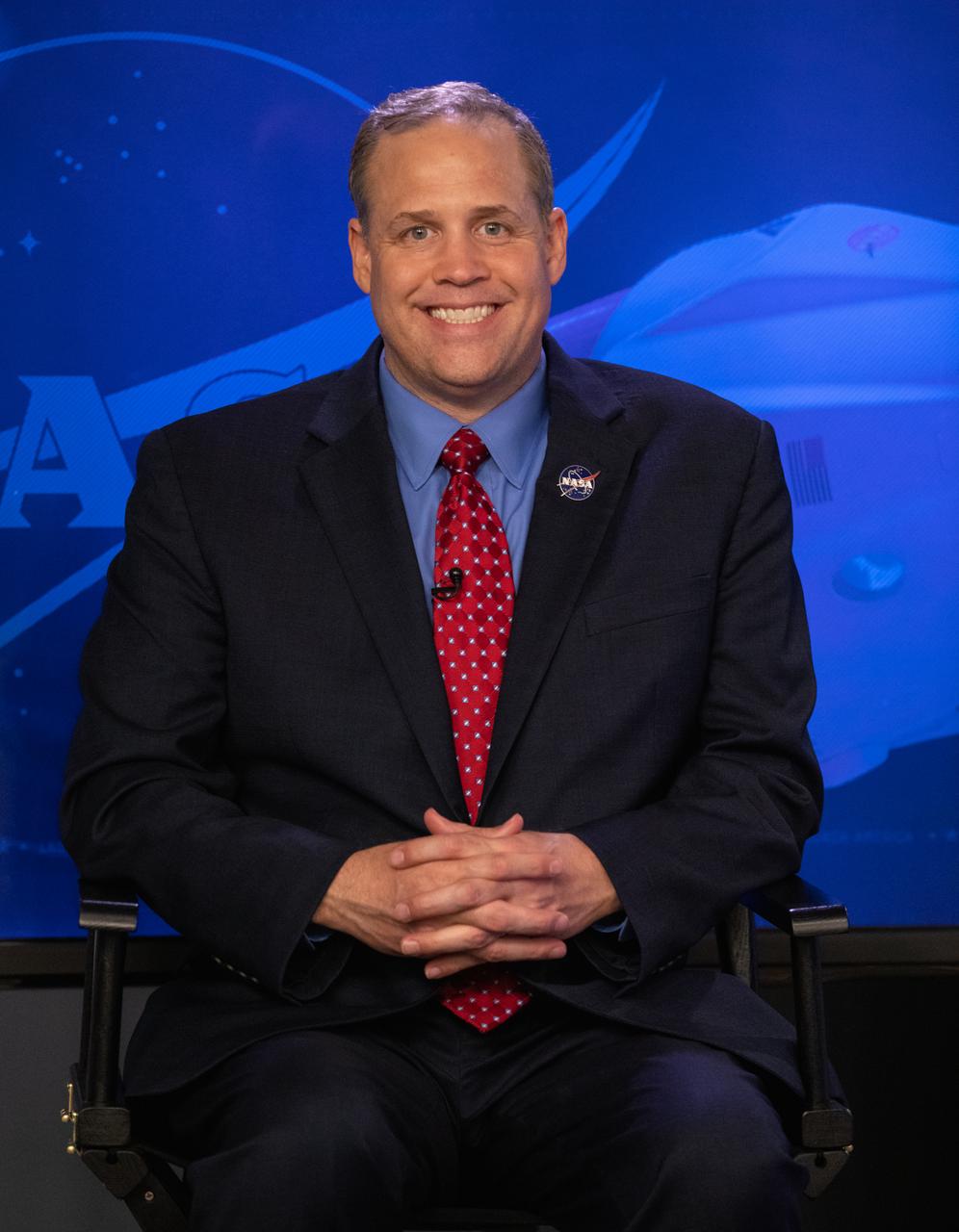
NASA Administrator Jim Bridenstine makes remarks during a postlaunch news conference for NASA’s SpaceX Crew-1 mission on Nov. 15, 2020, at Kennedy Space Center in Florida. Liftoff time on a Falcon 9 rocket was at 7:27 p.m. EST. The Crew Dragon is carrying NASA astronauts Michael Hopkins, spacecraft commander; Victor Glover, pilot; Shannon Walker, mission specialist; and Japan Aerospace Exploration Agency astronaut Soichi Noguchi, mission specialist, to the International Space Station. Crew-1 is the first regular crew mission of a U.S. commercial spacecraft with astronauts to the space station as part of NASA’s Commercial Crew Program. The Crew Dragon will dock with the station and the crew will remain on the orbiting laboratory for a six-month science mission.
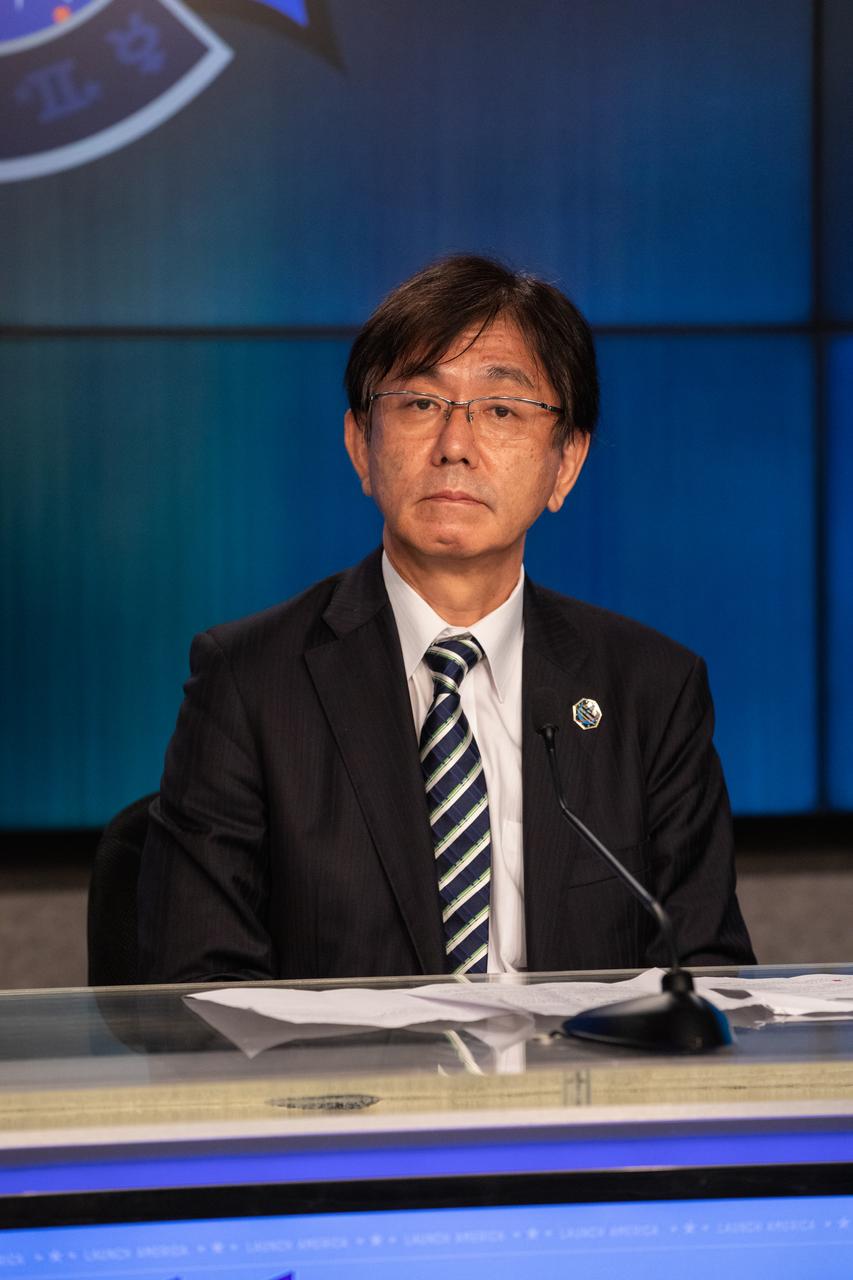
Hiroshi Sasaki, vice president and director general, JAXA’s Human Spaceflight Technology Directorate, answers questions from members of the news media during a postlaunch news conference for NASA’s SpaceX Crew-1 mission on Nov. 15, 2020, at Kennedy Space Center in Florida. Liftoff time on a Falcon 9 rocket was at 7:27 p.m. EST. The Crew Dragon is carrying NASA astronauts Michael Hopkins, spacecraft commander; Victor Glover, pilot; Shannon Walker, mission specialist; and Japan Aerospace Exploration Agency astronaut Soichi Noguchi, mission specialist, to the International Space Station. Crew-1 is the first regular crew mission of a U.S. commercial spacecraft with astronauts to the space station as part of NASA’s Commercial Crew Program. The Crew Dragon will dock with the station and the crew will remain on the orbiting laboratory for a six-month science mission.
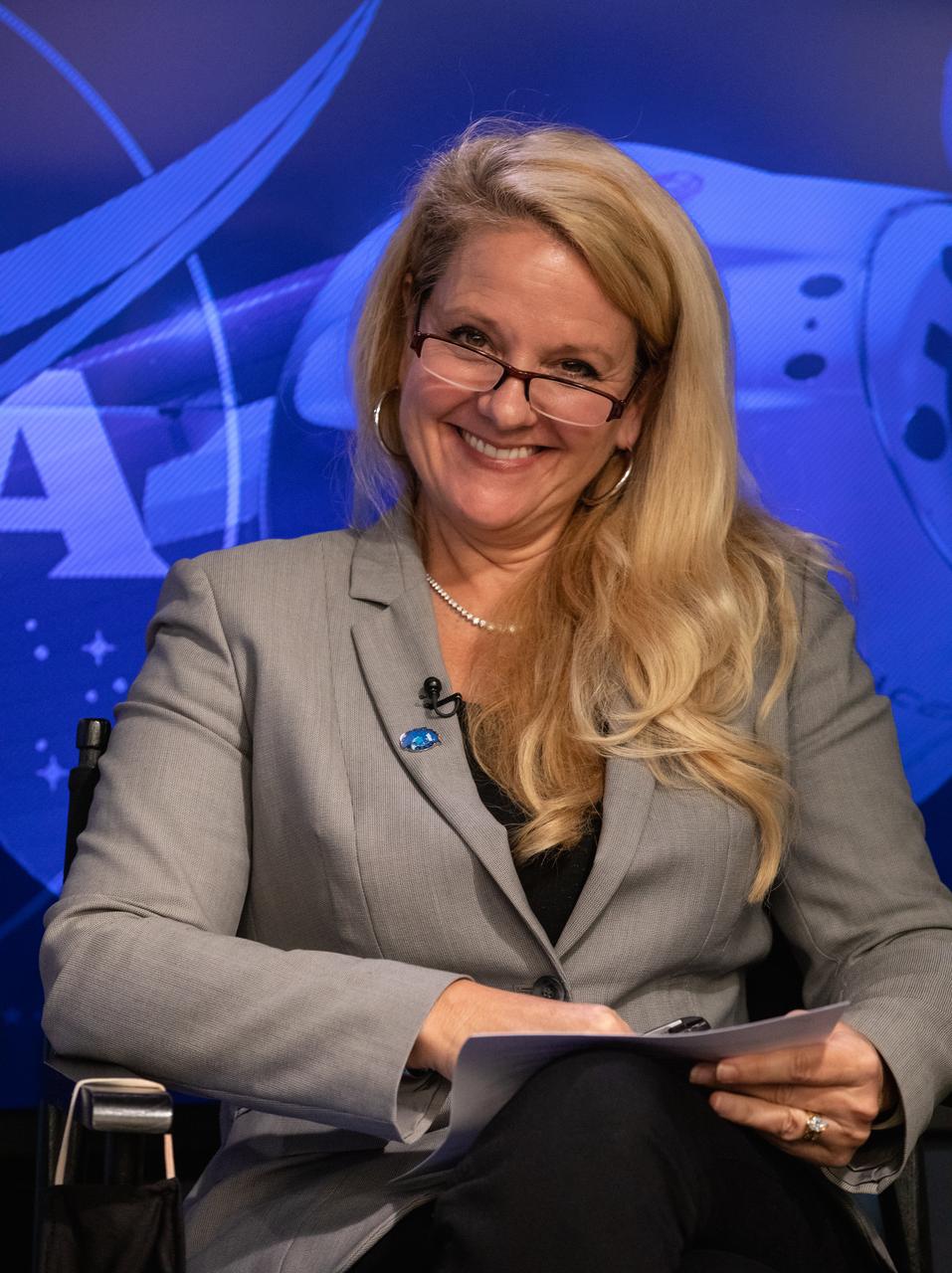
Gwynne Shotwell, president and chief operating officer, SpaceX, answers questions from members of the news media during a postlaunch news conference for NASA’s SpaceX Crew-1 mission on Nov. 15, 2020, at Kennedy Space Center in Florida. Liftoff time on a Falcon 9 rocket was at 7:27 p.m. EST. The Crew Dragon is carrying NASA astronauts Michael Hopkins, spacecraft commander; Victor Glover, pilot; Shannon Walker, mission specialist; and Japan Aerospace Exploration Agency astronaut Soichi Noguchi, mission specialist, to the International Space Station. Crew-1 is the first regular crew mission of a U.S. commercial spacecraft with astronauts to the space station as part of NASA’s Commercial Crew Program. The Crew Dragon will dock with the station and the crew will remain on the orbiting laboratory for a six-month science mission.
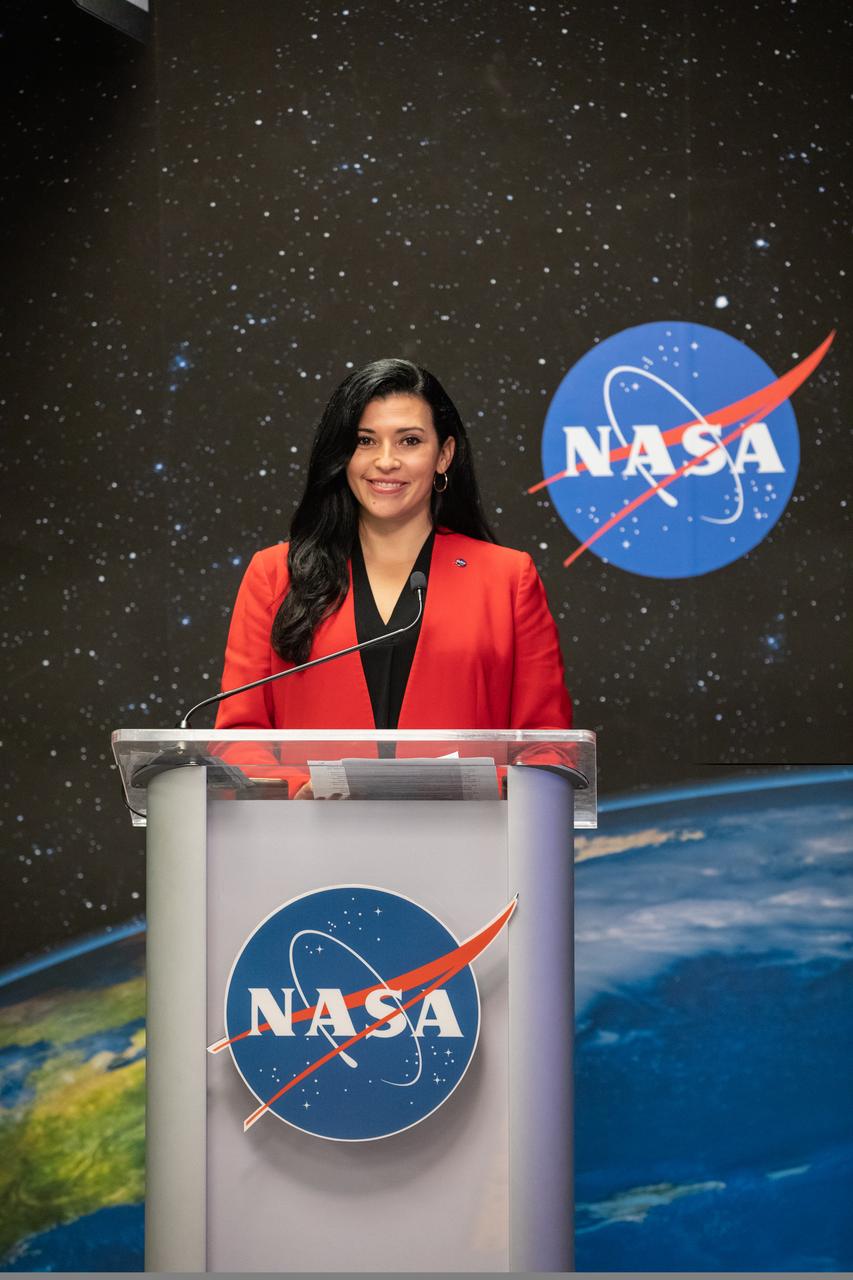
Bettina Inclan, NASA Communications, moderates a postlaunch news conference for NASA’s SpaceX Crew-1 mission on Nov. 15, 2020, at Kennedy Space Center in Florida. Liftoff time on a Falcon 9 rocket was at 7:27 p.m. EST. The Crew Dragon is carrying NASA astronauts Michael Hopkins, spacecraft commander; Victor Glover, pilot; Shannon Walker, mission specialist; and Japan Aerospace Exploration Agency astronaut Soichi Noguchi, mission specialist, to the International Space Station. Crew-1 is the first regular crew mission of a U.S. commercial spacecraft with astronauts to the space station as part of NASA’s Commercial Crew Program. The Crew Dragon will dock with the station and the crew will remain on the orbiting laboratory for a six-month science mission.
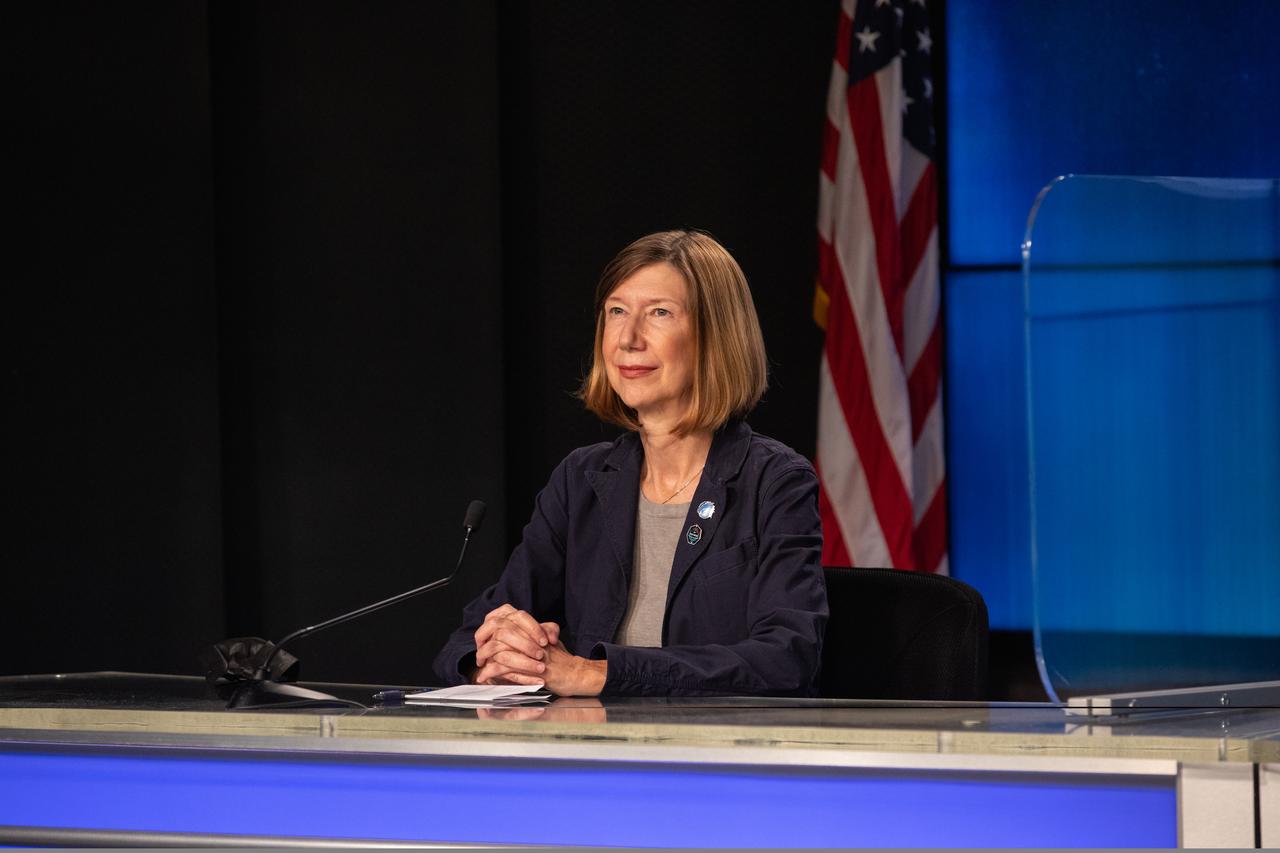
Kathy Lueders, associate administrator for human exploration and operations, NASA Headquarters, answers questions from members of the news media during a postlaunch news conference for NASA’s SpaceX Crew-1 mission on Nov. 15, 2020, at Kennedy Space Center in Florida. Liftoff time on a Falcon 9 rocket was at 7:27 p.m. EST. The Crew Dragon is carrying NASA astronauts Michael Hopkins, spacecraft commander; Victor Glover, pilot; Shannon Walker, mission specialist; and Japan Aerospace Exploration Agency astronaut Soichi Noguchi, mission specialist, to the International Space Station. Crew-1 is the first regular crew mission of a U.S. commercial spacecraft with astronauts to the space station as part of NASA’s Commercial Crew Program. The Crew Dragon will dock with the station and the crew will remain on the orbiting laboratory for a six-month science mission.