
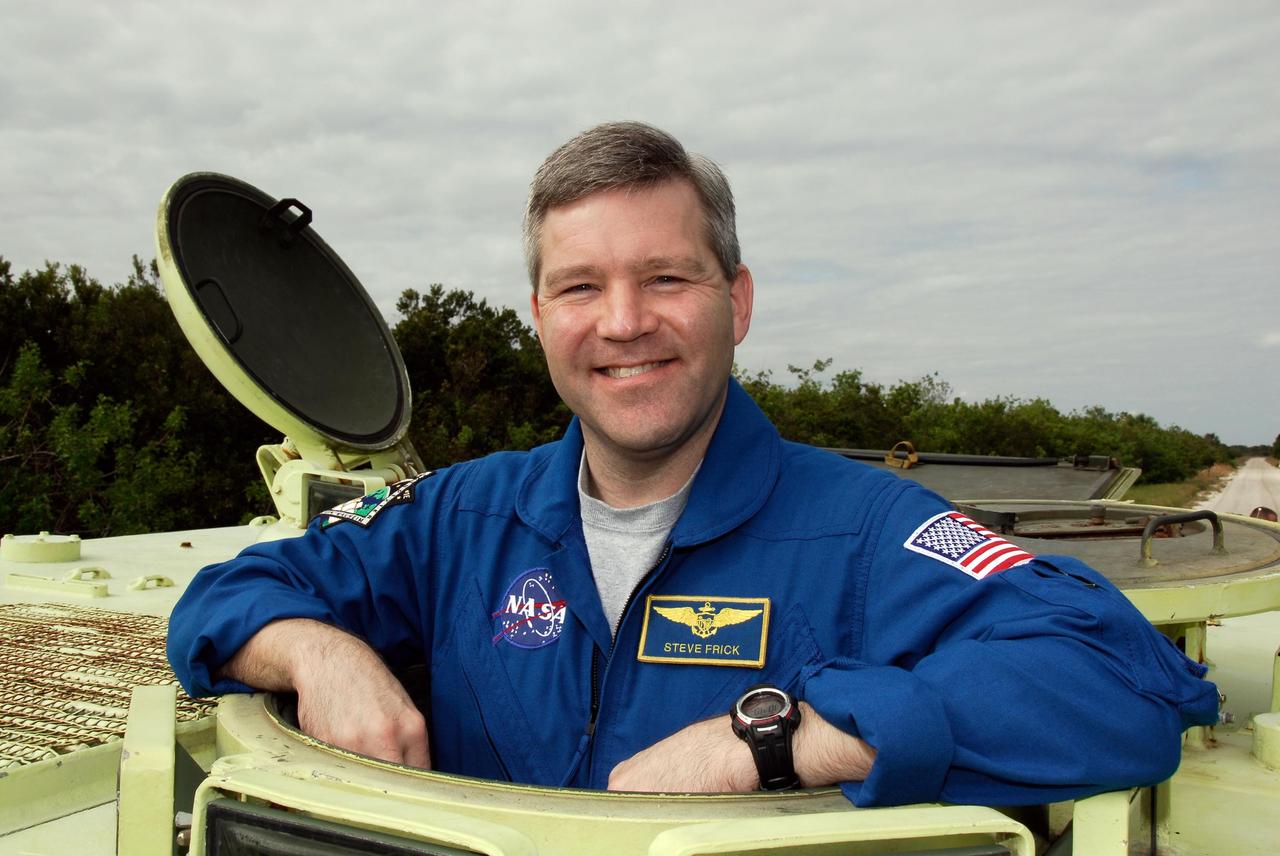
KENNEDY SPACE CENTER, FLA. -- STS-122 Commander Stephen Frick takes time out from driving practice of the M-113 armored personnel carrier to pose for a photo. The practice near Launch Pad 39B is part of training on emergency egress procedures. An M-113 will be available to transport the crew to safety in the event of a contingency on the pad before their launch. The crew is participating in Terminal Countdown Demonstration Test activities, a standard part of launch preparations. The TCDT provides astronauts and ground crews with equipment familiarization, emergency egress training and a simulated launch countdown. On mission STS-122, Atlantis will deliver the European Space Agency's Columbus module to the International Space Station. Columbus is a multifunctional, pressurized laboratory that will be permanently attached to U.S. Node 2, called Harmony, and will expand the research facilities aboard the station. Launch is targeted for Dec. 6. Photo credit: NASA/Kim Shiflett
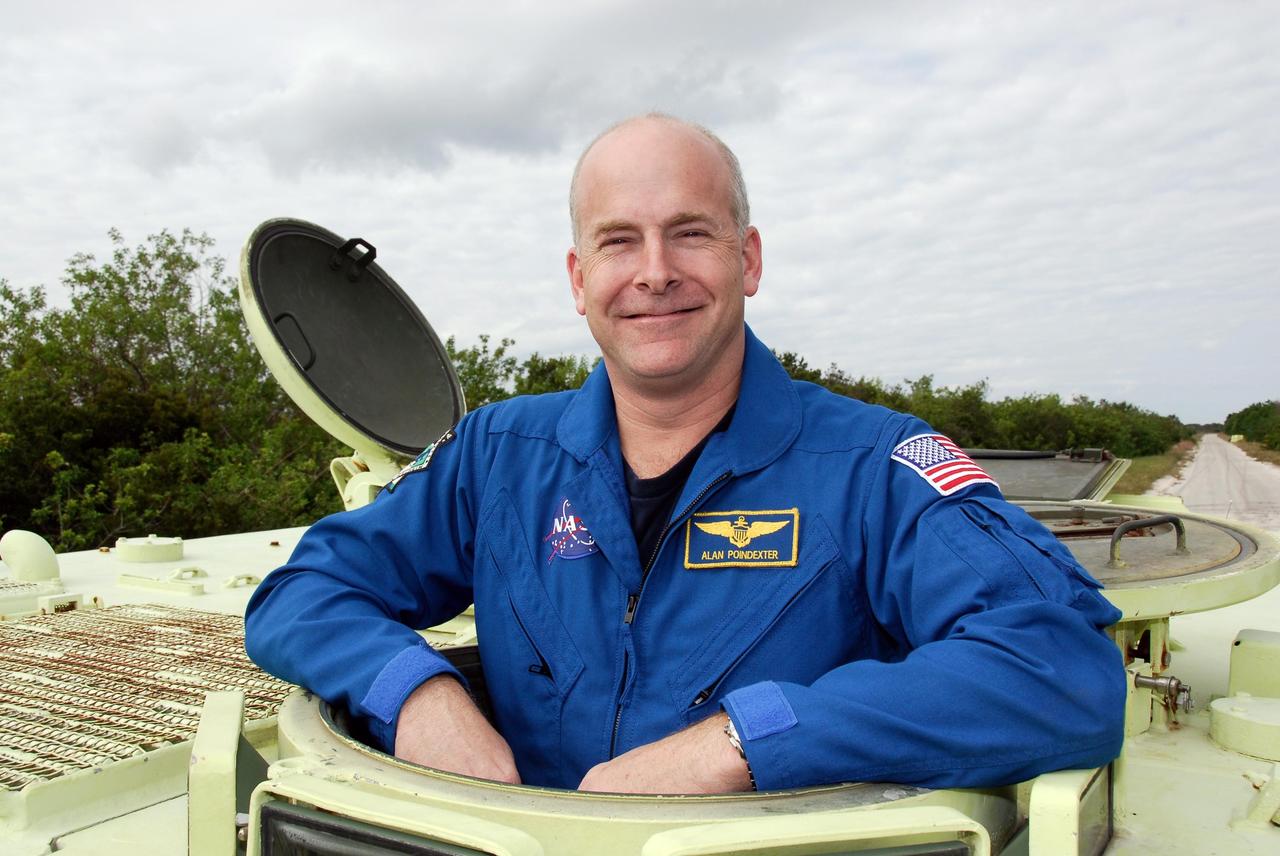
KENNEDY SPACE CENTER, FLA. -- STS-122 Pilot Alan Poindexter takes time out from driving practice of the M-113 armored personnel carrier to pose for a photo. The practice near Launch Pad 39B is part of training on emergency egress procedures. An M-113 will be available to transport the crew to safety in the event of a contingency on the pad before their launch. The crew is participating in Terminal Countdown Demonstration Test activities, a standard part of launch preparations. The TCDT provides astronauts and ground crews with equipment familiarization, emergency egress training and a simulated launch countdown. On mission STS-122, Atlantis will deliver the European Space Agency's Columbus module to the International Space Station. Columbus is a multifunctional, pressurized laboratory that will be permanently attached to U.S. Node 2, called Harmony, and will expand the research facilities aboard the station. Launch is targeted for Dec. 6. Photo credit: NASA/Kim Shiflett
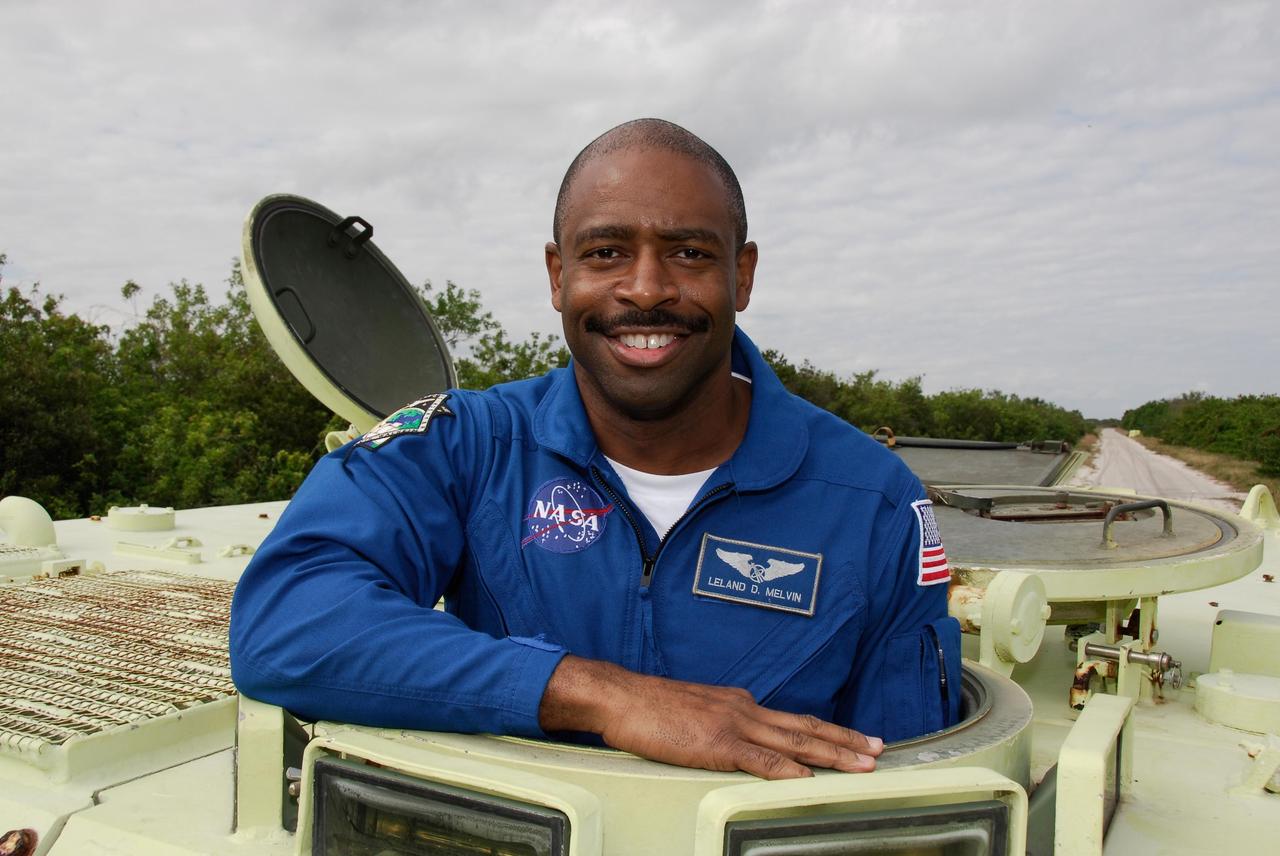
KENNEDY SPACE CENTER, FLA. -- STS-122 Mission Specialist Leland Melvin takes time out from driving practice of the M-113 armored personnel carrier to pose for a photo. The practice near Launch Pad 39B is part of training on emergency egress procedures. An M-113 will be available to transport the crew to safety in the event of a contingency on the pad before their launch. The crew is participating in Terminal Countdown Demonstration Test activities, a standard part of launch preparations. The TCDT provides astronauts and ground crews with equipment familiarization, emergency egress training and a simulated launch countdown. On mission STS-122, Atlantis will deliver the European Space Agency's Columbus module to the International Space Station. Columbus is a multifunctional, pressurized laboratory that will be permanently attached to U.S. Node 2, called Harmony, and will expand the research facilities aboard the station. Launch is targeted for Dec. 6. Photo credit: NASA/Kim Shiflett
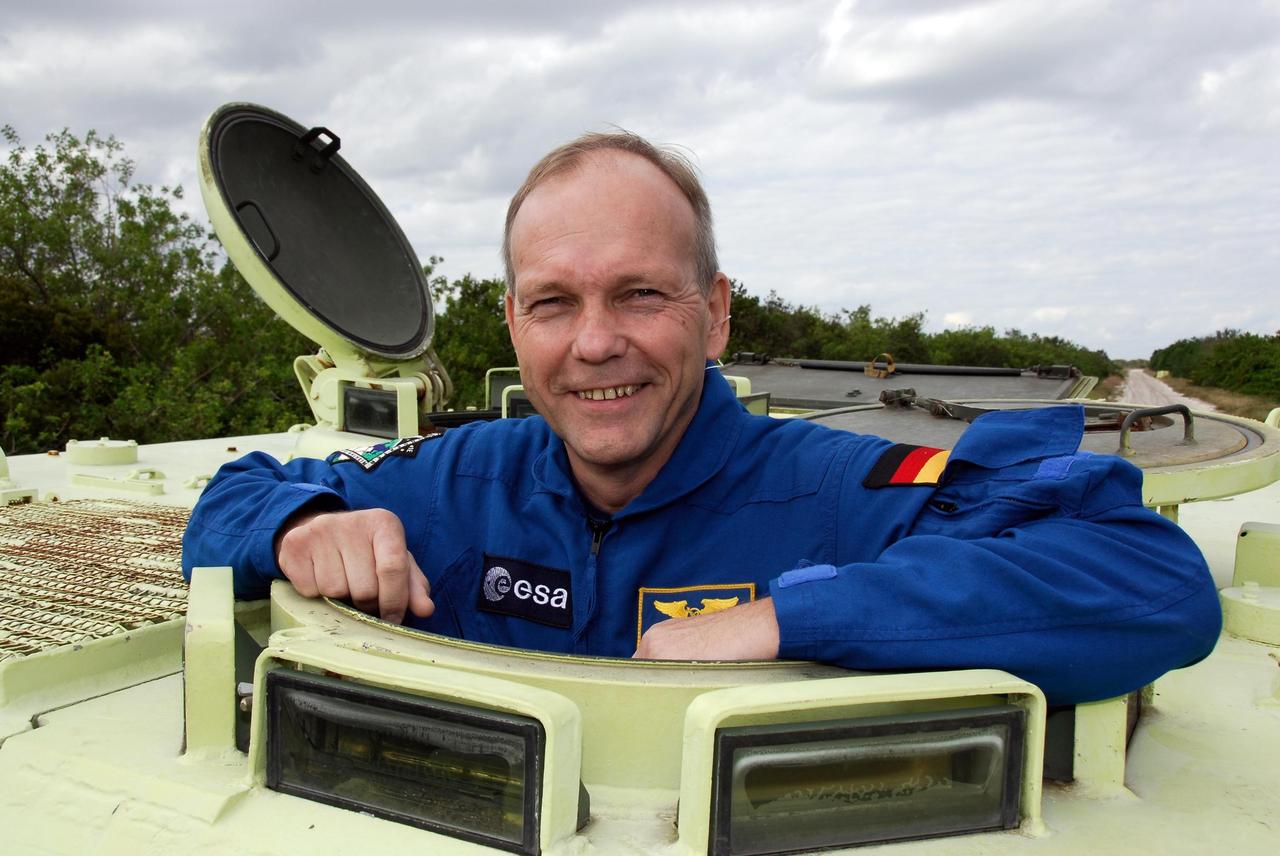
KENNEDY SPACE CENTER, FLA. -- STS-122 Mission Specialist Hans Schlegel, of the European Space Agency, takes time out from driving practice of the M-113 armored personnel carrier to pose for a photo. The practice near Launch Pad 39B is part of training on emergency egress procedures. An M-113 will be available to transport the crew to safety in the event of a contingency on the pad before their launch. The crew is participating in Terminal Countdown Demonstration Test activities, a standard part of launch preparations. The TCDT provides astronauts and ground crews with equipment familiarization, emergency egress training and a simulated launch countdown. On mission STS-122, Atlantis will deliver the European Space Agency's Columbus module to the International Space Station. Columbus is a multifunctional, pressurized laboratory that will be permanently attached to U.S. Node 2, called Harmony, and will expand the research facilities aboard the station. Launch is targeted for Dec. 6. Photo credit: NASA/Kim Shiflett
KENNEDY SPACE CENTER, FLA. -- STS-122 Mission Specialist Rex Walheim, at right, practices driving an M-113 armored personnel carrier as the instructor beside him monitors his performance. The practice near Launch Pad 39B is part of training on emergency egress procedures. An M-113 will be available to transport the crew to safety in the event of a contingency on the pad before their launch. The crew is participating in Terminal Countdown Demonstration Test activities, a standard part of launch preparations. The TCDT provides astronauts and ground crews with equipment familiarization, emergency egress training and a simulated launch countdown. On mission STS-122, Atlantis will deliver the European Space Agency's Columbus module to the International Space Station. Columbus is a multifunctional, pressurized laboratory that will be permanently attached to U.S. Node 2, called Harmony, and will expand the research facilities aboard the station. Launch is targeted for Dec. 6. Photo credit: NASA/Kim Shiflett
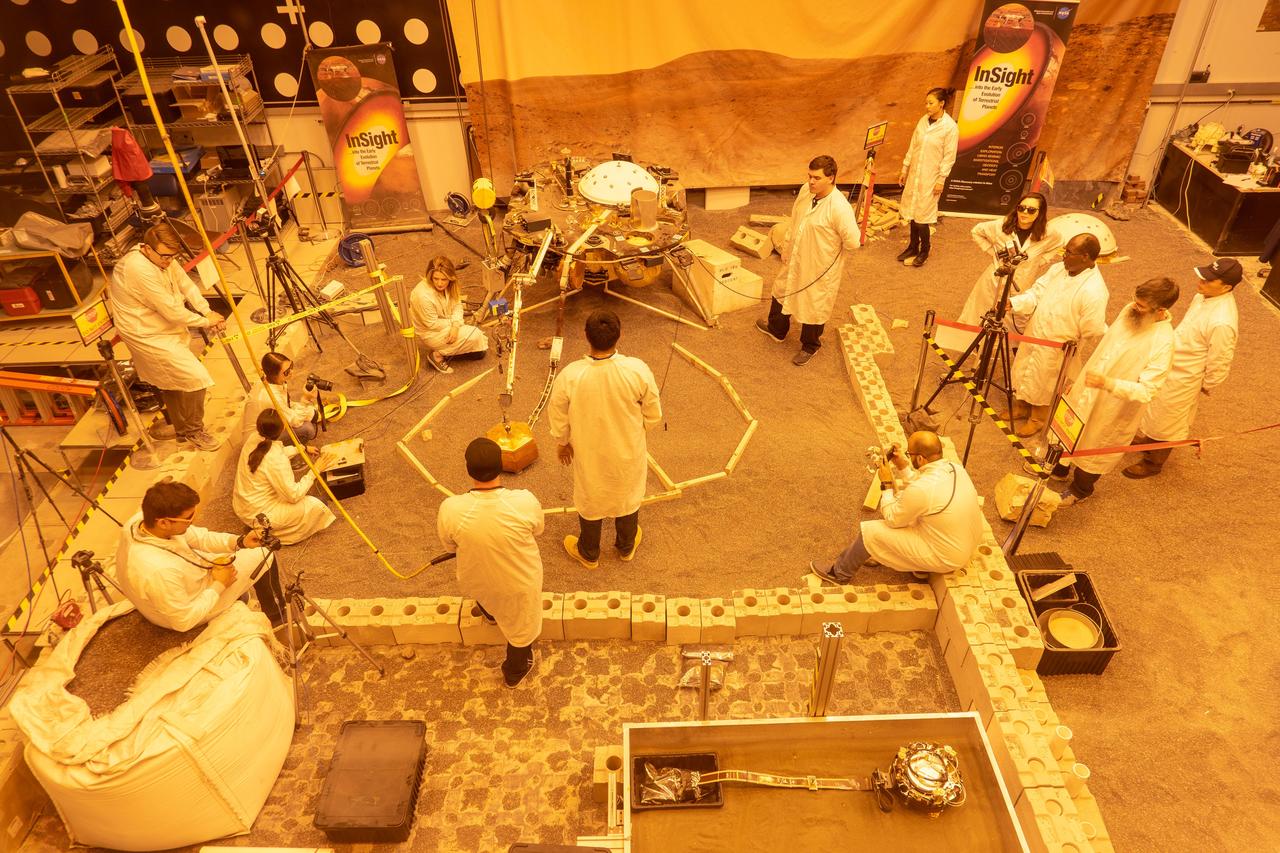
Engineers practice deploying InSight's instruments in a lab at NASA's Jet Propulsion Laboratory in Pasadena, California. Several of them are wearing sunglasses to block the bright yellow lights in the test space, which mimic sunlight as it appears on Mars. The yellow lights are used to test cameras which are the same as those used by InSight on Mars. The entire lab space in the center of the image has been sculpted to mimic the terrain in front of the lander on Mars, creating more reliable test conditions. The area in the center of the image is the "workspace" where the lander's instruments can be set down; wood blocks have been laid down to mark the perimeter of these areas. Rocks have been chosen to match the size, shape and location of those in front of InSight on Mars. In the center of the image is a model of the lander's copper-colored seismometer; at the bottom-right is a second model of the seismometer used for a different kind of testing. In the lower left corner of the image is a bag of crushed granite, which is used in this lab to simulate Martian sand. https://photojournal.jpl.nasa.gov/catalog/PIA22744
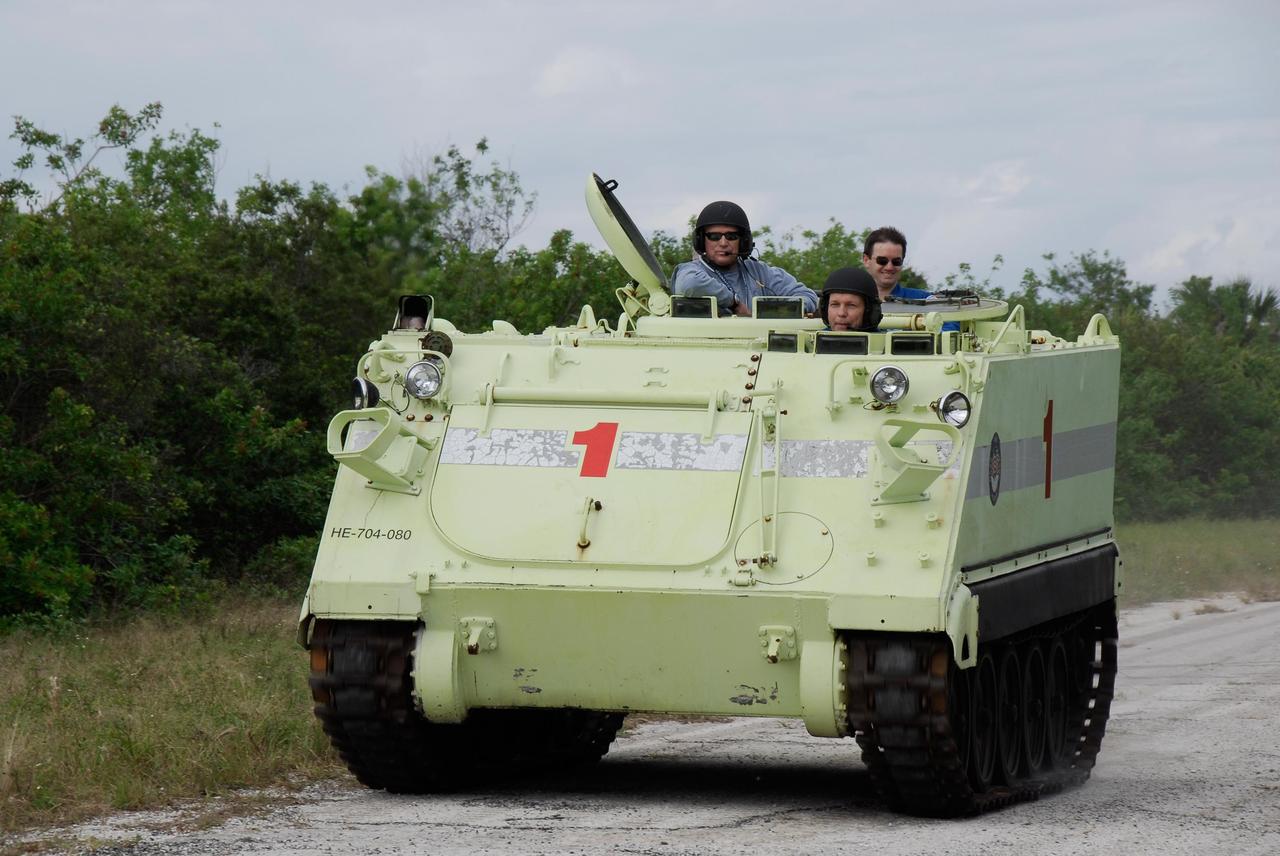
KENNEDY SPACE CENTER, FLA. -- STS-122 Mission Specialist Hans Schlegel, of the European Space Agency, in front, practices driving an M-113 armored personnel carrier as the instructor, to his left, monitors his performance. STS-122 Mission Specialist Rex Walheim, at right, enjoys the ride in back. The practice near Launch Pad 39B is part of training on emergency egress procedures. An M-113 will be available to transport the crew to safety in the event of a contingency on the pad before their launch. The crew is participating in Terminal Countdown Demonstration Test activities, a standard part of launch preparations. The TCDT provides astronauts and ground crews with equipment familiarization, emergency egress training and a simulated launch countdown. On mission STS-122, Atlantis will deliver the European Space Agency's Columbus module to the International Space Station. Columbus is a multifunctional, pressurized laboratory that will be permanently attached to U.S. Node 2, called Harmony, and will expand the research facilities aboard the station. Launch is targeted for Dec. 6. Photo credit: NASA/Kim Shiflett
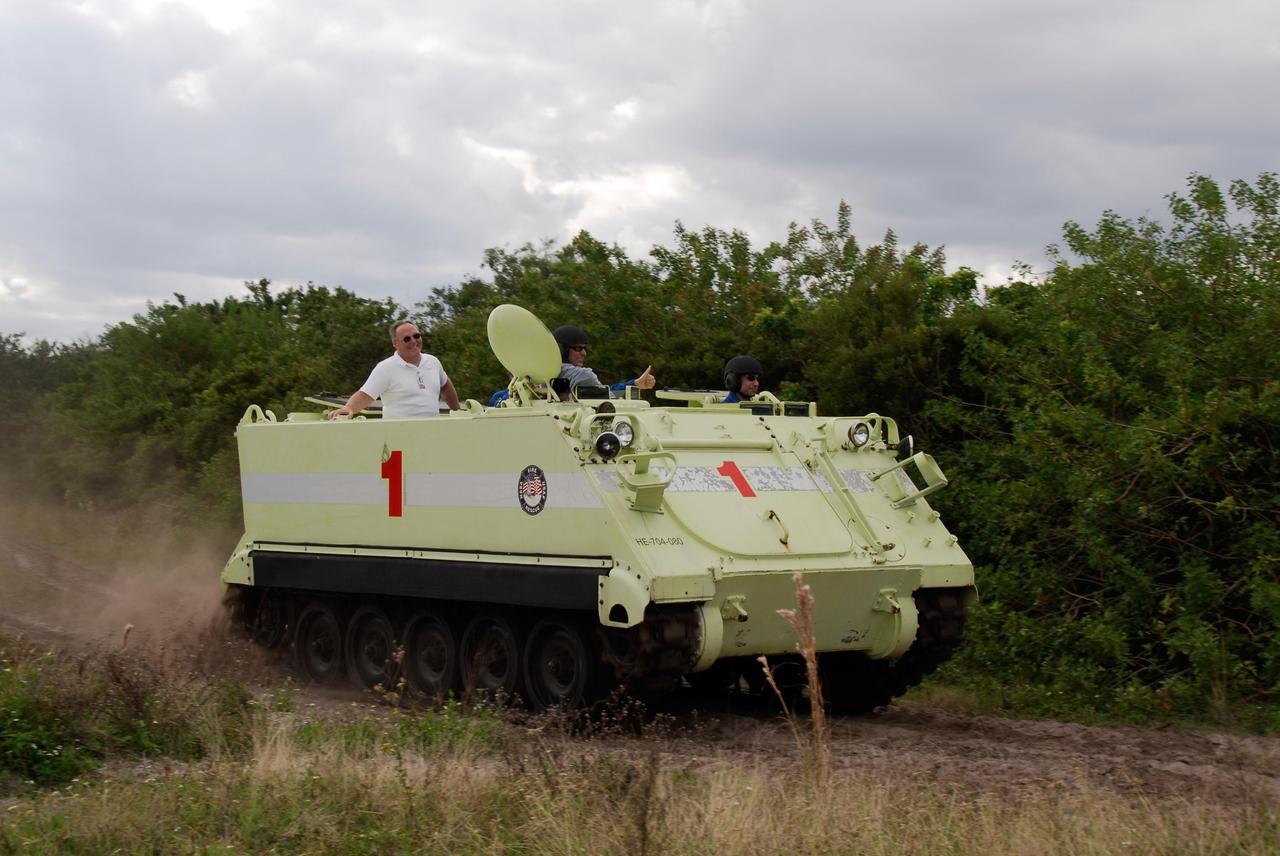
KENNEDY SPACE CENTER, FLA. -- STS-122 Mission Specialist Stanley Love, at right, practices driving an M-113 armored personnel carrier as the instructor behind him monitors his performance. Former astronaut Jerry Ross, chief of the Vehicle Integration Test Office at NASA Johnson Space Center, enjoys the ride in back. The practice near Launch Pad 39B is part of training on emergency egress procedures. An M-113 will be available to transport the crew to safety in the event of a contingency on the pad before their launch. The crew is participating in Terminal Countdown Demonstration Test activities, a standard part of launch preparations. The TCDT provides astronauts and ground crews with equipment familiarization, emergency egress training and a simulated launch countdown. On mission STS-122, Atlantis will deliver the European Space Agency's Columbus module to the International Space Station. Columbus is a multifunctional, pressurized laboratory that will be permanently attached to U.S. Node 2, called Harmony, and will expand the research facilities aboard the station. Launch is targeted for Dec. 6. Photo credit: NASA/Kim Shiflett
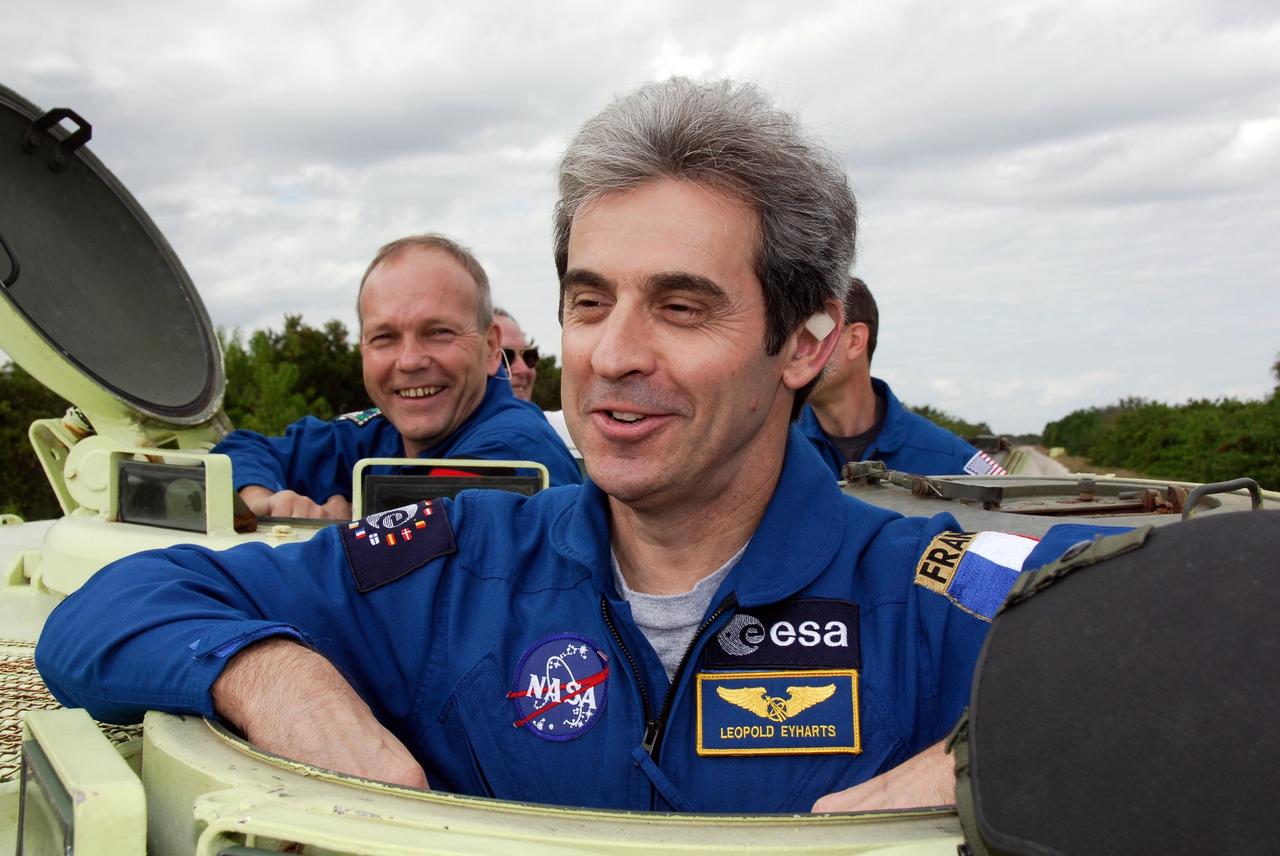
KENNEDY SPACE CENTER, FLA. -- STS-122 Mission Specialist Leopold Eyharts takes time out from driving practice of the M-113 armored personnel carrier to pose for a photo as Mission Specialist Hans Schlegel, behind him on the left, prepares to ride along. Both Eyharts and Schlegel are with the European Space Agency, but Eyharts will remain on the International Space Station as a flight engineer for Expedition 16 following the STS-122 mission. The practice near Launch Pad 39B is part of training on emergency egress procedures. An M-113 will be available to transport the crew to safety in the event of a contingency on the pad before their launch. The crew is participating in Terminal Countdown Demonstration Test activities, a standard part of launch preparations. The TCDT provides astronauts and ground crews with equipment familiarization, emergency egress training and a simulated launch countdown. On mission STS-122, Atlantis will deliver the European Space Agency's Columbus module to the International Space Station. Columbus is a multifunctional, pressurized laboratory that will be permanently attached to U.S. Node 2, called Harmony, and will expand the research facilities aboard the station. Launch is targeted for Dec. 6. Photo credit: NASA/Kim Shiflett
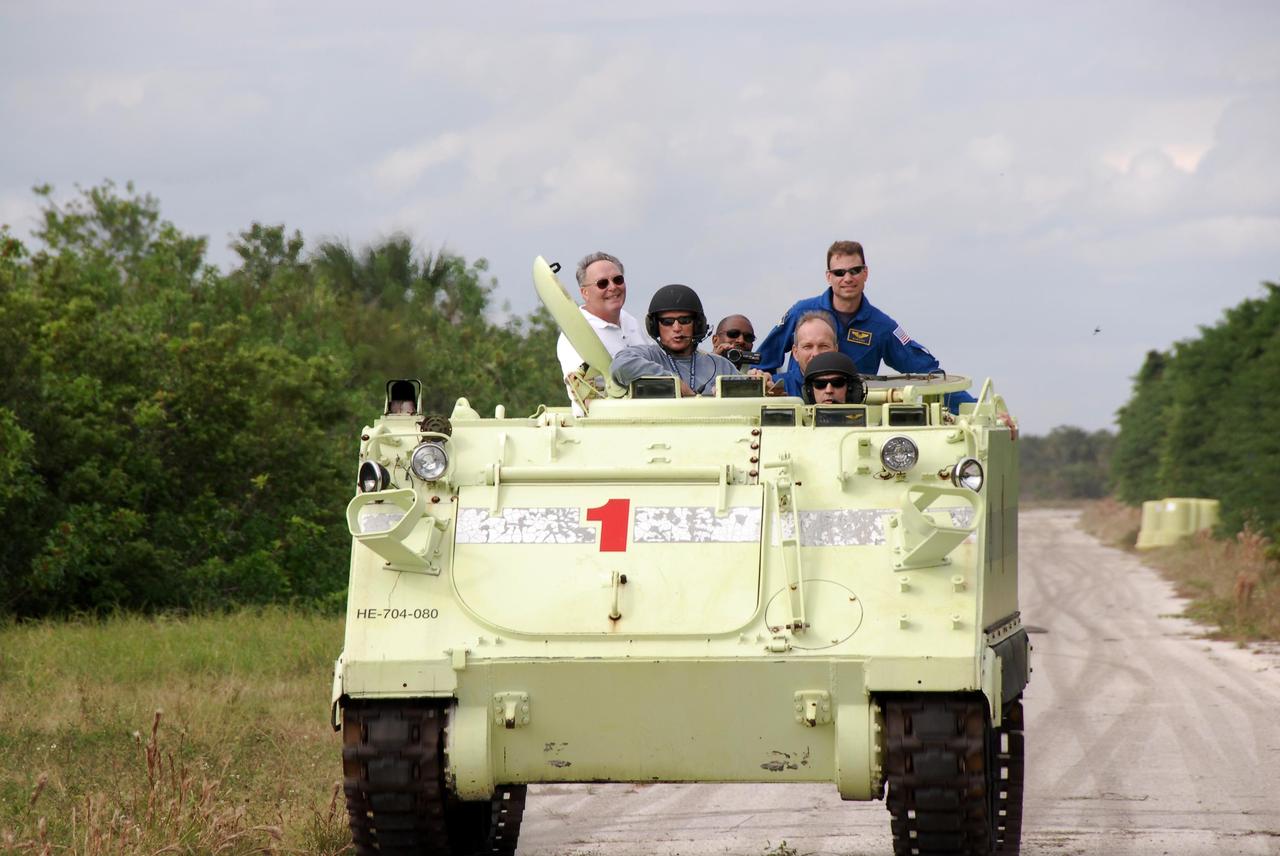
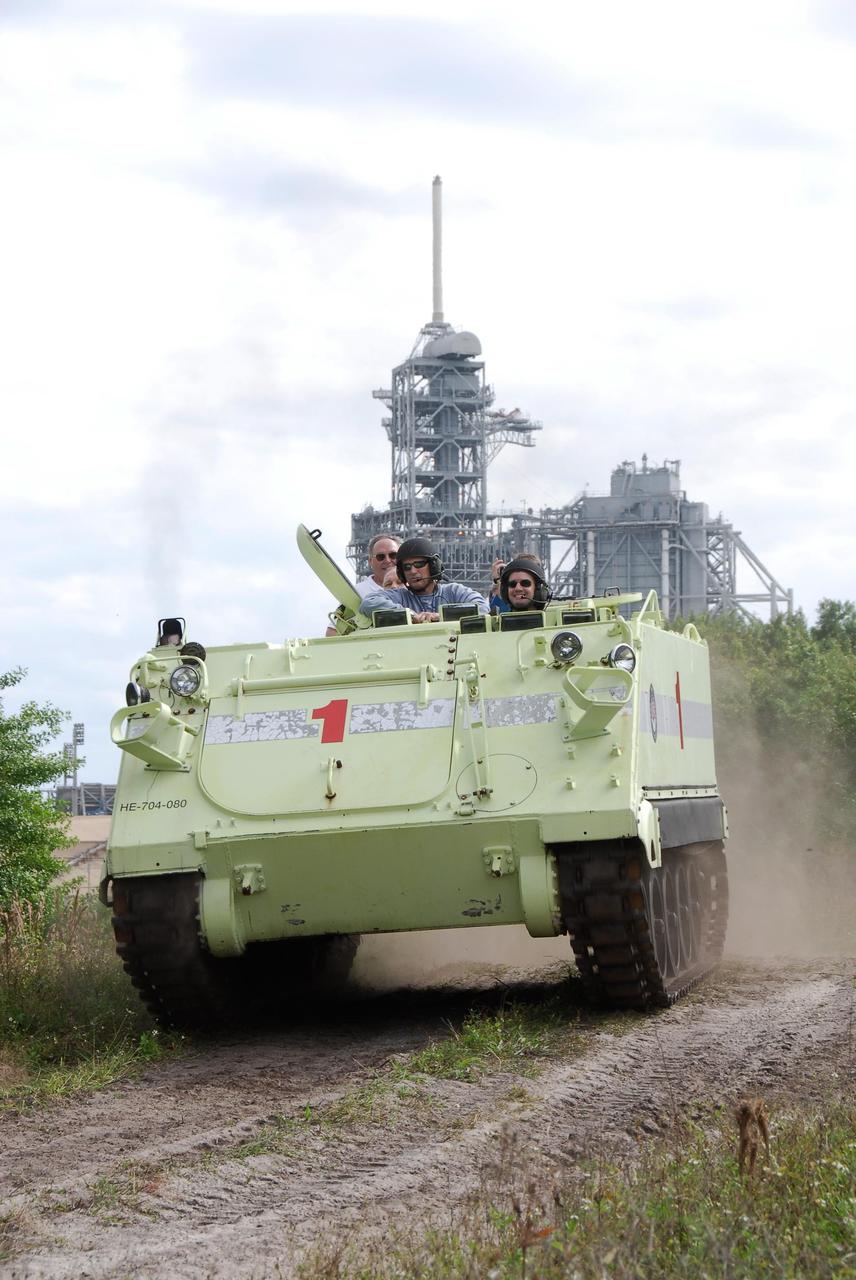
KENNEDY SPACE CENTER, FLA. -- STS-122 Mission Specialist Leopold Eyharts of the European Space Agency, in front, practices driving an M-113 armored personnel carrier as the instructor, in the helmet beside him, monitors his performance. Eyharts will remain on the International Space Station as a flight engineer for Expedition 16 following the STS-122 mission. In back from left, former astronaut Jerry Ross, chief of the Vehicle Integration Test Office at NASA Johnson Space Center, and STS-122 Mission Specialists Leland Melvin, Stanley Love (standing) and Hans Schlegel of the European Space Agency, are along for the ride. The practice near Launch Pad 39B is part of training on emergency egress procedures. An M-113 will be available to transport the crew to safety in the event of a contingency on the pad before their launch. The crew is participating in Terminal Countdown Demonstration Test activities, a standard part of launch preparations. The TCDT provides astronauts and ground crews with equipment familiarization, emergency egress training and a simulated launch countdown. On mission STS-122, Atlantis will deliver the European Space Agency's Columbus module to the International Space Station. Columbus is a multifunctional, pressurized laboratory that will be permanently attached to U.S. Node 2, called Harmony, and will expand the research facilities aboard the station. Launch is targeted for Dec. 6. Photo credit: NASA/Kim Shiflett
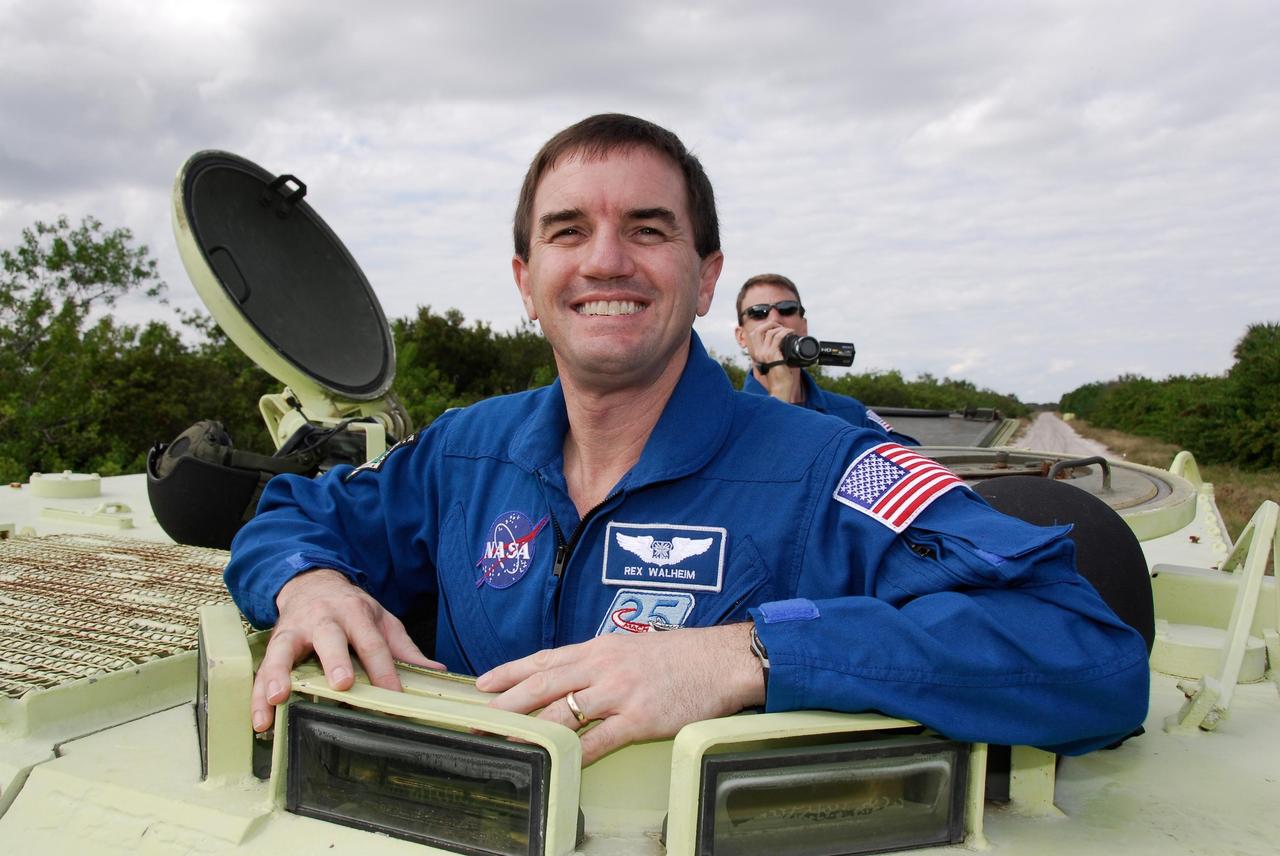
KENNEDY SPACE CENTER, FLA. -- STS-122 Mission Specialist Rex Walheim takes time out from driving practice of the M-113 armored personnel carrier to pose for a photo as Mission Specialist Stanley Love, behind him, takes a photo of his own. The practice near Launch Pad 39B is part of training on emergency egress procedures. An M-113 will be available to transport the crew to safety in the event of a contingency on the pad before their launch. The crew is participating in Terminal Countdown Demonstration Test activities, a standard part of launch preparations. The TCDT provides astronauts and ground crews with equipment familiarization, emergency egress training and a simulated launch countdown. On mission STS-122, Atlantis will deliver the European Space Agency's Columbus module to the International Space Station. Columbus is a multifunctional, pressurized laboratory that will be permanently attached to U.S. Node 2, called Harmony, and will expand the research facilities aboard the station. Launch is targeted for Dec. 6. Photo credit: NASA/Kim Shiflett

KENNEDY SPACE CENTER, FLA. -- European Space Agency astronaut Frank De Winne takes time out from driving practice of the M-113 armored personnel carrier to pose for a photo. De Winne is the backup for STS-122 Mission Specialist Leopold Eyharts will remain on the International Space Station as a flight engineer for Expedition 16 following the STS-122 mission. The practice near Launch Pad 39B is part of training on emergency egress procedures. An M-113 will be available to transport the crew to safety in the event of a contingency on the pad before their launch. The crew is participating in Terminal Countdown Demonstration Test activities, a standard part of launch preparations. The TCDT provides astronauts and ground crews with equipment familiarization, emergency egress training and a simulated launch countdown. On mission STS-122, Atlantis will deliver the European Space Agency's Columbus module to the International Space Station. Columbus is a multifunctional, pressurized laboratory that will be permanently attached to U.S. Node 2, called Harmony, and will expand the research facilities aboard the station. Launch is targeted for Dec. 6. Photo credit: NASA/Kim Shiflett
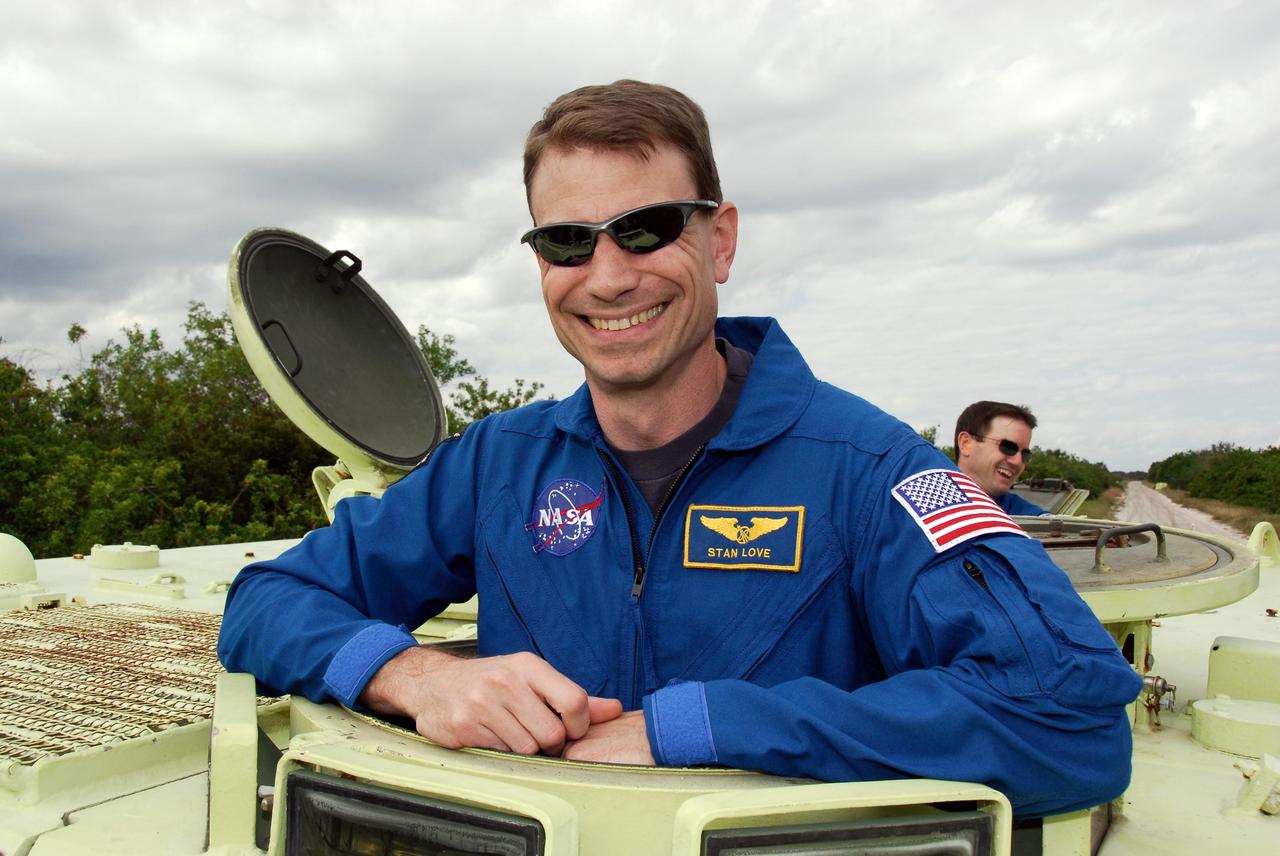
KENNEDY SPACE CENTER, FLA. -- STS-122 Mission Specialist Stanley Love takes time out from driving practice of the M-113 armored personnel carrier to pose for a photo as Mission Specialist Rex Walheim, behind him, prepares to ride along. The practice near Launch Pad 39B is part of training on emergency egress procedures. An M-113 will be available to transport the crew to safety in the event of a contingency on the pad before their launch. The crew is participating in Terminal Countdown Demonstration Test activities, a standard part of launch preparations. The TCDT provides astronauts and ground crews with equipment familiarization, emergency egress training and a simulated launch countdown. On mission STS-122, Atlantis will deliver the European Space Agency's Columbus module to the International Space Station. Columbus is a multifunctional, pressurized laboratory that will be permanently attached to U.S. Node 2, called Harmony, and will expand the research facilities aboard the station. Launch is targeted for Dec. 6. Photo credit: NASA/Kim Shiflett
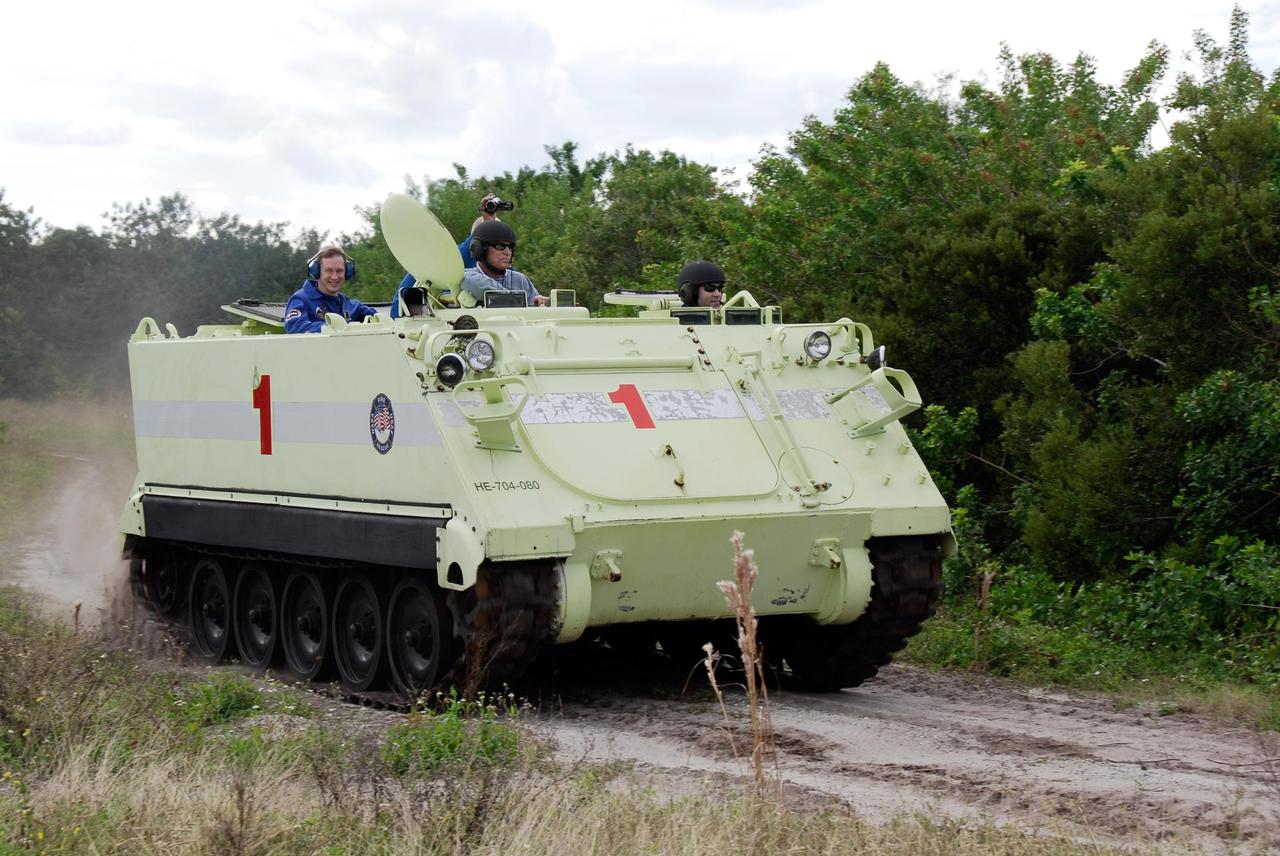
KENNEDY SPACE CENTER, FLA. -- STS-122 Commander Stephen Frick, at right, practices driving an M-113 armored personnel carrier as an instructor, at left, monitors his performance. European Space Agency astronaut Frank De Winne, the backup for STS-122 Mission Specialist Leopold Eyharts, rides in back. The practice near Launch Pad 39B is part of training on emergency egress procedures. An M-113 will be available to transport the crew to safety in the event of a contingency on the pad before their launch. The crew is participating in Terminal Countdown Demonstration Test activities, a standard part of launch preparations. The TCDT provides astronauts and ground crews with equipment familiarization, emergency egress training and a simulated launch countdown. On mission STS-122, Atlantis will deliver the European Space Agency's Columbus module to the International Space Station. Columbus is a multifunctional, pressurized laboratory that will be permanently attached to U.S. Node 2, called Harmony, and will expand the research facilities aboard the station. Launch is targeted for Dec. 6. Photo credit: NASA/Kim Shiflett
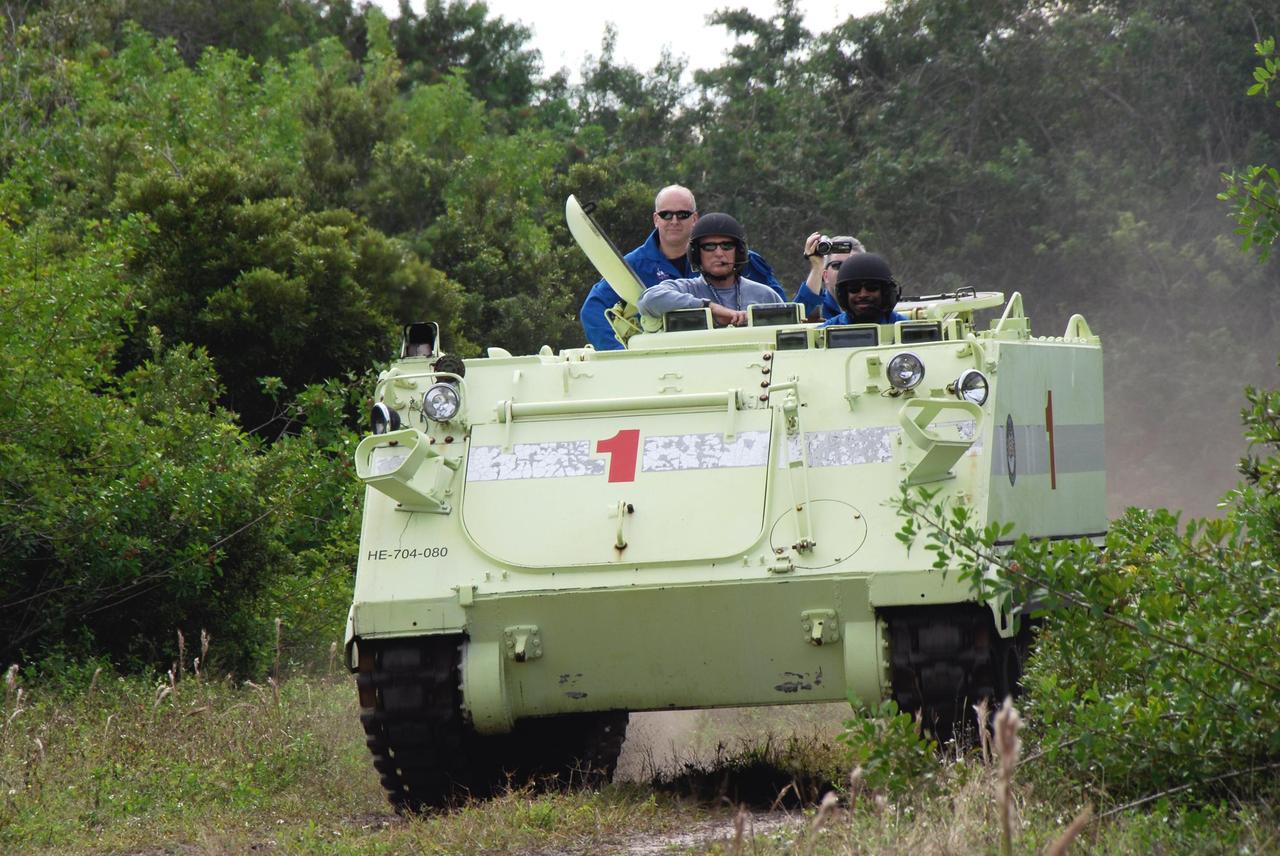
KENNEDY SPACE CENTER, FLA. -- STS-122 Mission Specialist Leland Melvin, at right, practices driving an M-113 armored personnel carrier as the instructor beside him monitors his performance. STS-122 Pilot Alan Poindexter, at left, rides in back. The practice near Launch Pad 39B is part of training on emergency egress procedures. An M-113 will be available to transport the crew to safety in the event of a contingency on the pad before their launch. The crew is participating in Terminal Countdown Demonstration Test activities, a standard part of launch preparations. The TCDT provides astronauts and ground crews with equipment familiarization, emergency egress training and a simulated launch countdown. On mission STS-122, Atlantis will deliver the European Space Agency's Columbus module to the International Space Station. Columbus is a multifunctional, pressurized laboratory that will be permanently attached to U.S. Node 2, called Harmony, and will expand the research facilities aboard the station. Launch is targeted for Dec. 6. Photo credit: NASA/Kim Shiflett
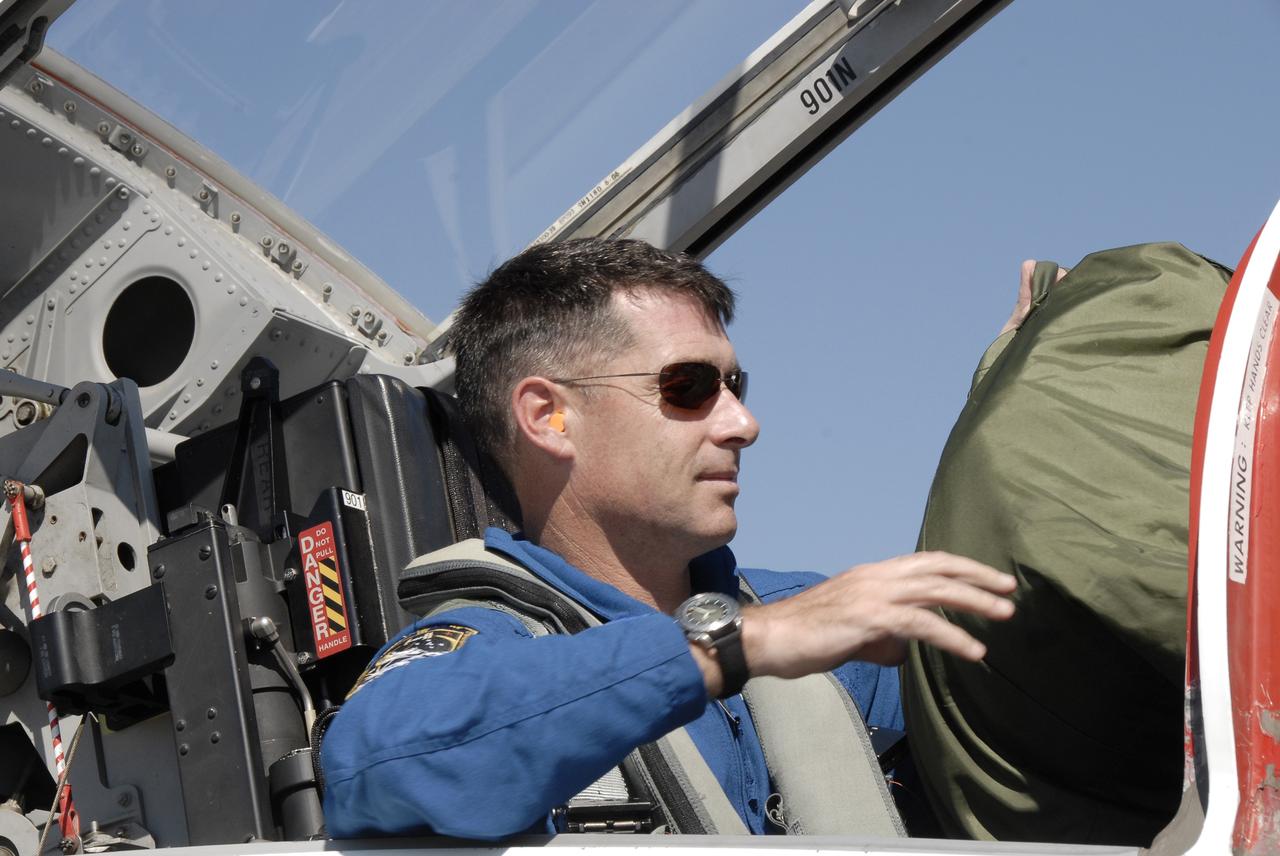
CAPE CANAVERAL, Fla. - STS-126 Mission Specialist Shane Kimbrough arrives at the Shuttle Landing Facility at NASA’s Kennedy Space Center in Florida aboard a T-38 jet for Terminal Countdown Demonstration Test, or TCDT, activities. During TCDT, Endeavour's astronauts and launch teams will participate in a simulated countdown, practice emergency exit procedures at the launch pad and continue to familiarize themselves with the mission payload and hardware. On this 27th mission to the International Space Station, Endeavour will carry the Lightweight Multi-Purpose Experiment Support Structure Carrier and the Multi-Purpose Logistics Module Leonardo that will hold supplies and equipment, including additional crew quarters, additional exercise equipment, spare hardware and equipment for the regenerative life support system. Endeavour is targeted to launch at 7:55 p.m. EST on Nov. 14. Photo credit: NASA/Kim Shiflett
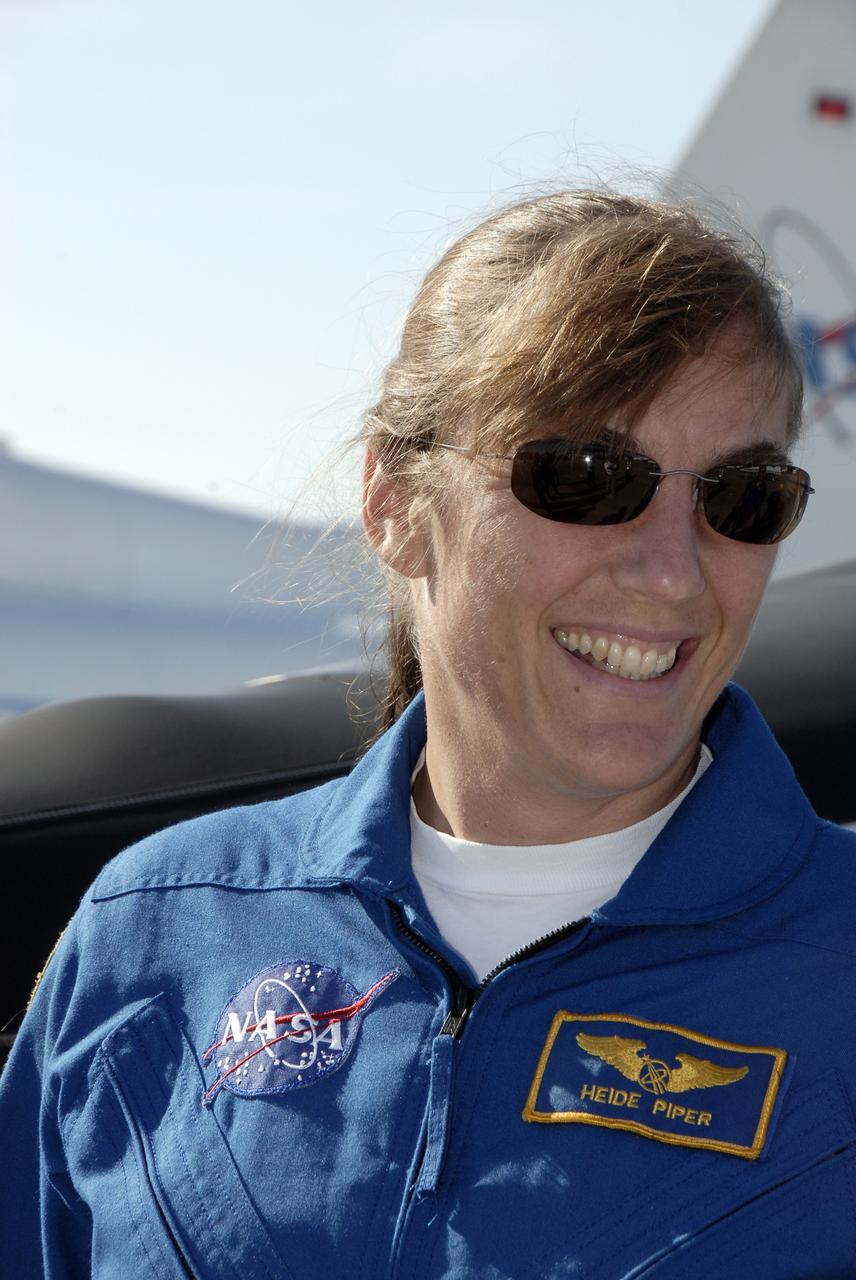
CAPE CANAVERAL, Fla. - STS-126 Mission Specialist Heidemarie Stefanyshyn-Piper arrives at the Shuttle Landing Facility at NASA’s Kennedy Space Center in Florida aboard a T-38 jet for Terminal Countdown Demonstration Test, or TCDT, activities. During TCDT, Endeavour's astronauts and launch teams will participate in a simulated countdown, practice emergency exit procedures at the launch pad and continue to familiarize themselves with the mission payload and hardware. On this 27th mission to the International Space Station, Endeavour will carry the Lightweight Multi-Purpose Experiment Support Structure Carrier and the Multi-Purpose Logistics Module Leonardo that will hold supplies and equipment, including additional crew quarters, additional exercise equipment, spare hardware and equipment for the regenerative life support system. Endeavour is targeted to launch at 7:55 p.m. EST on Nov. 14. Photo credit: NASA/Kim Shiflett
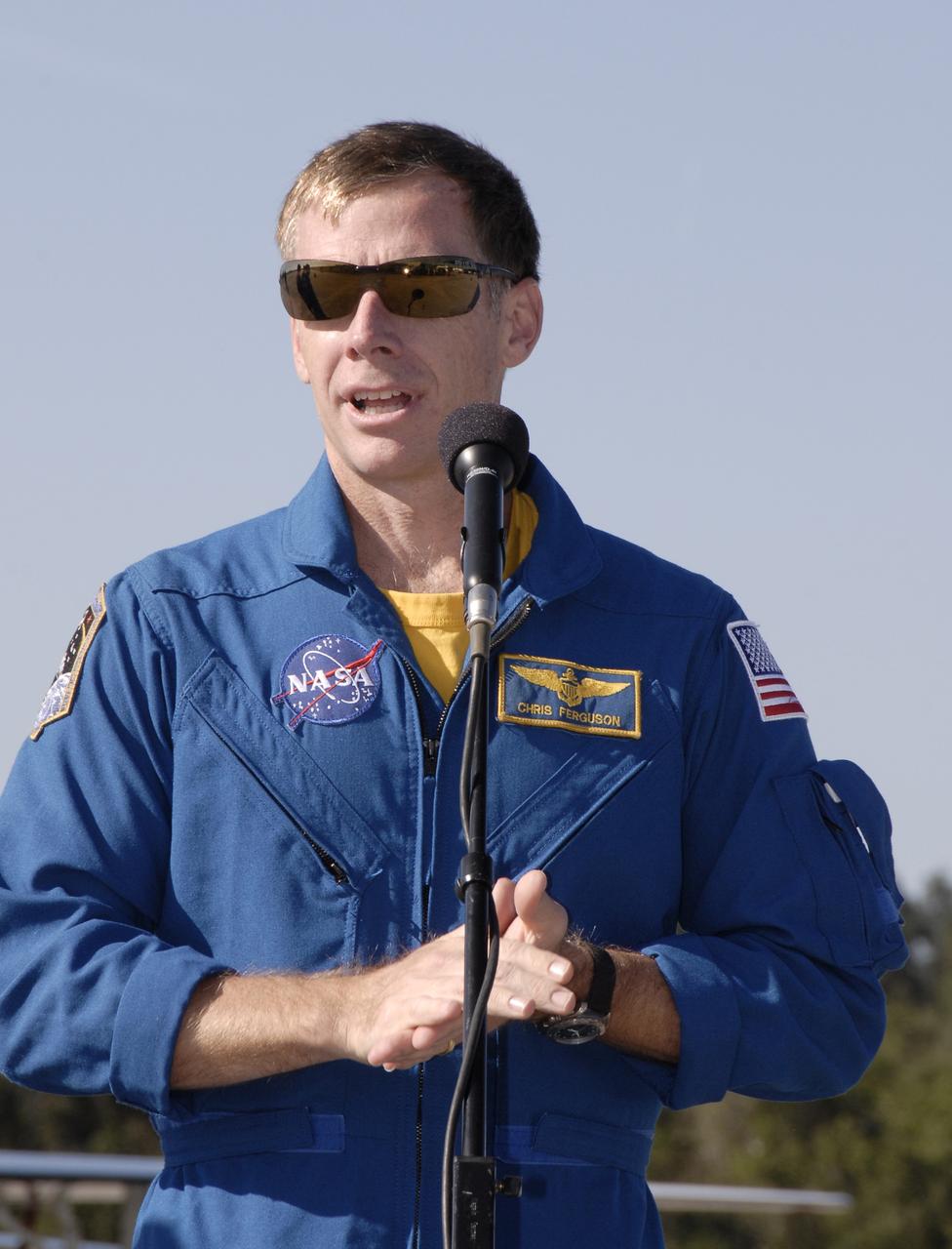
CAPE CANAVERAL, Fla. - STS-126 Commander Chris Ferguson speaks to the media at the Shuttle Landing Facility at NASA’s Kennedy Space Center in Florida after arriving for Terminal Countdown Demonstration Test, or TCDT, activities. During TCDT, Endeavour's astronauts and launch teams will participate in a simulated countdown, practice emergency exit procedures at the launch pad and continue to familiarize themselves with the mission payload and hardware. On this 27th mission to the International Space Station, Endeavour will carry the Lightweight Multi-Purpose Experiment Support Structure Carrier and the Multi-Purpose Logistics Module Leonardo that will hold supplies and equipment, including additional crew quarters, additional exercise equipment, spare hardware and equipment for the regenerative life support system. Endeavour is targeted to launch at 7:55 p.m. EST on Nov. 14. Photo credit: NASA/Kim Shiflett
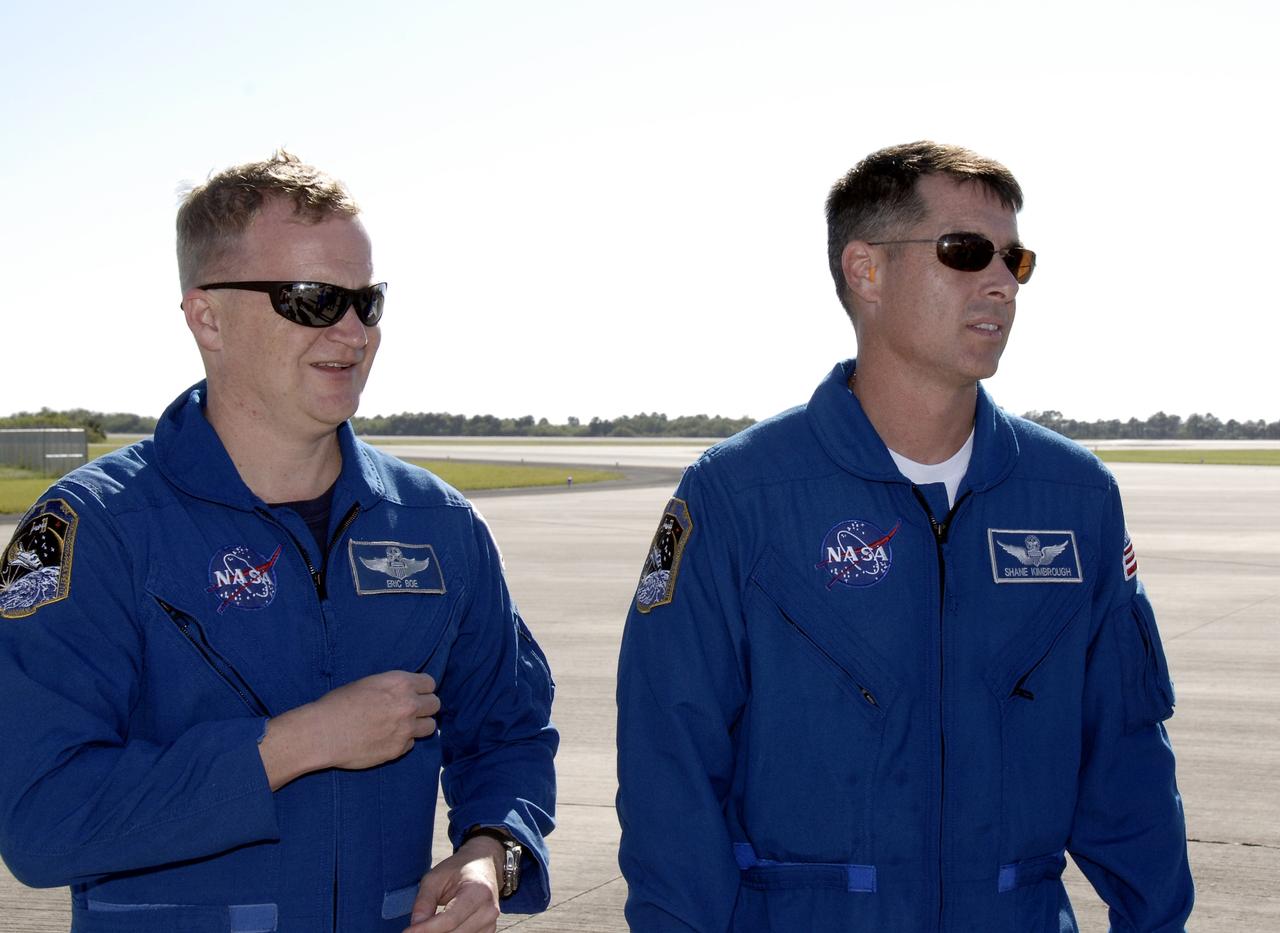
CAPE CANAVERAL, Fla. - STS-126 Pilot Eric Boe, left, and Mission Specialist Shane Kimbrough arrive at the Shuttle Landing Facility at NASA’s Kennedy Space Center in Florida for Terminal Countdown Demonstration Test, or TCDT, activities. During TCDT, Endeavour's astronauts and launch teams will participate in a simulated countdown, practice emergency exit procedures at the launch pad and continue to familiarize themselves with the mission payload and hardware. On this 27th mission to the International Space Station, Endeavour will carry the Lightweight Multi-Purpose Experiment Support Structure Carrier and the Multi-Purpose Logistics Module Leonardo that will hold supplies and equipment, including additional crew quarters, additional exercise equipment, spare hardware and equipment for the regenerative life support system. Endeavour is targeted to launch at 7:55 p.m. EST on Nov. 14. Photo credit: NASA/Kim Shiflett
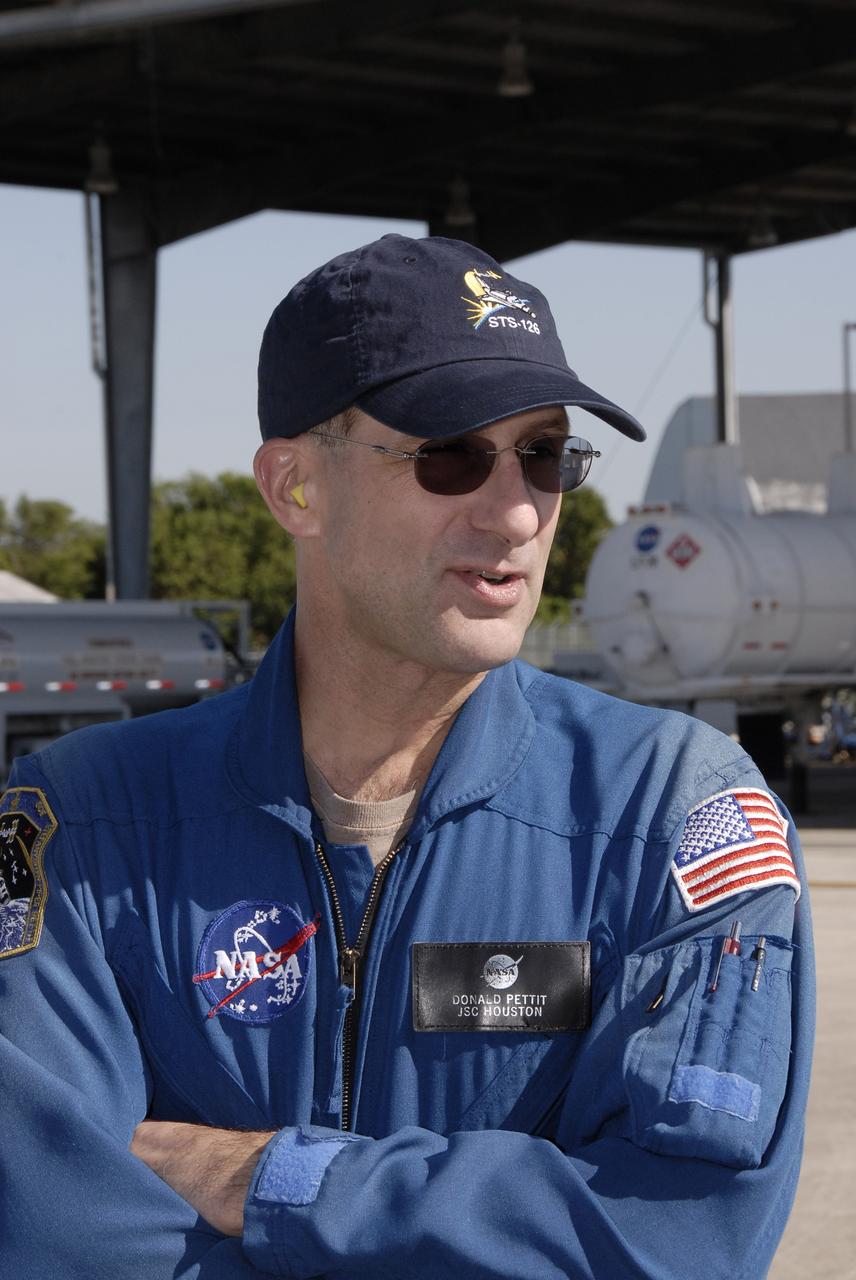
CAPE CANAVERAL, Fla. - STS-126 Mission Specialist Donald Pettit arrives at the Shuttle Landing Facility at NASA’s Kennedy Space Center in Florida for Terminal Countdown Demonstration Test, or TCDT, activities. During TCDT, Endeavour's astronauts and launch teams will participate in a simulated countdown, practice emergency exit procedures at the launch pad and continue to familiarize themselves with the mission payload and hardware. On this 27th mission to the International Space Station, Endeavour will carry the Lightweight Multi-Purpose Experiment Support Structure Carrier and the Multi-Purpose Logistics Module Leonardo that will hold supplies and equipment, including additional crew quarters, additional exercise equipment, spare hardware and equipment for the regenerative life support system. Endeavour is targeted to launch at 7:55 p.m. EST on Nov. 14. Photo credit: NASA/Kim Shiflett
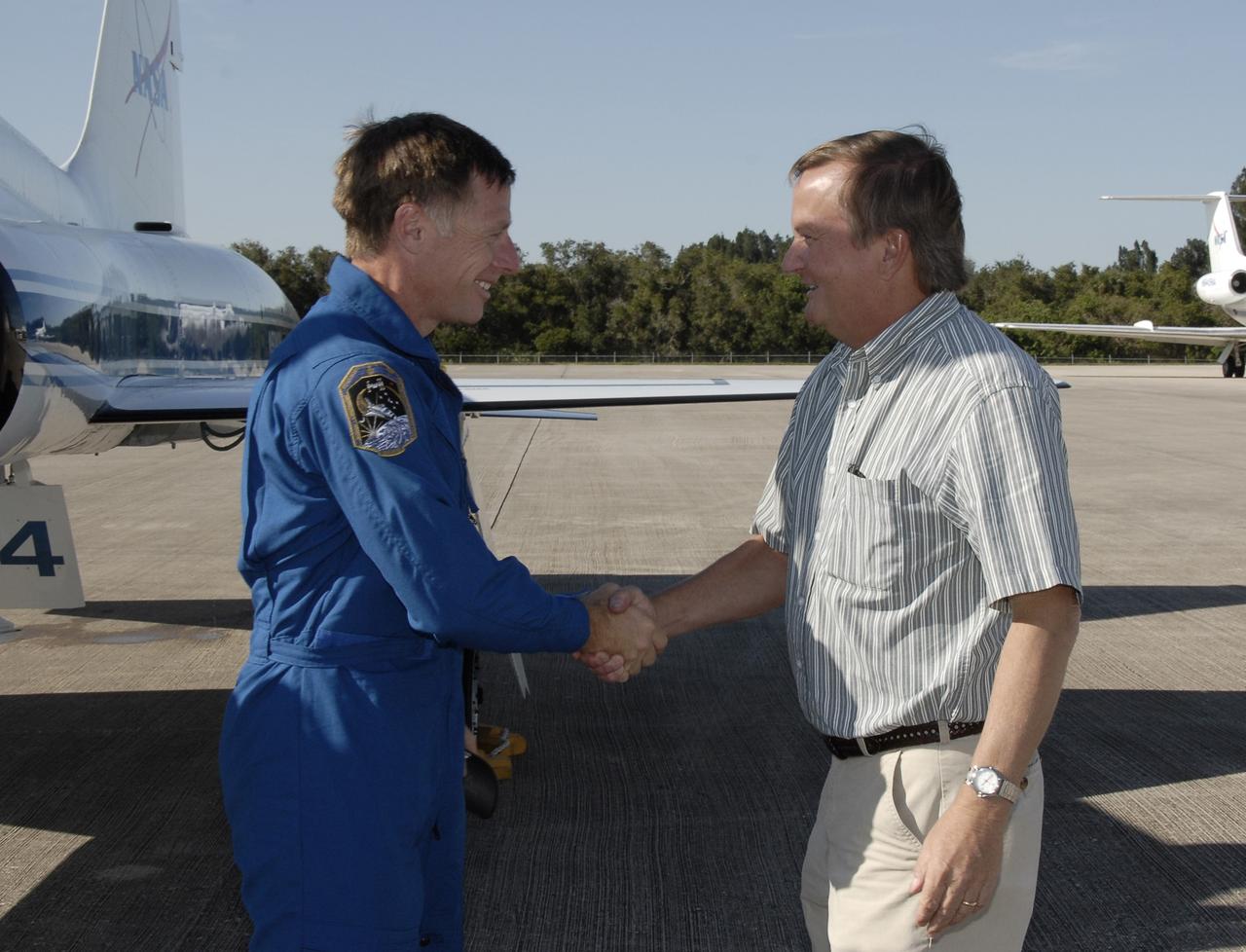
CAPE CANAVERAL, Fla. - STS-126 Commander Chris Ferguson, left, is greeted by Shuttle Launch Director Mike Linebach following his arrival at the Shuttle Landing Facility at NASA’s Kennedy Space Center in Florida for Terminal Countdown Demonstration Test, or TCDT, activities. During TCDT, Endeavour's astronauts and launch teams will participate in a simulated countdown, practice emergency exit procedures at the launch pad and continue to familiarize themselves with the mission payload and hardware. On this 27th mission to the International Space Station, Endeavour will carry the Lightweight Multi-Purpose Experiment Support Structure Carrier and the Multi-Purpose Logistics Module Leonardo that will hold supplies and equipment, including additional crew quarters, additional exercise equipment, spare hardware and equipment for the regenerative life support system. Endeavour is targeted to launch at 7:55 p.m. EST on Nov. 14. Photo credit: NASA/Kim Shiflett
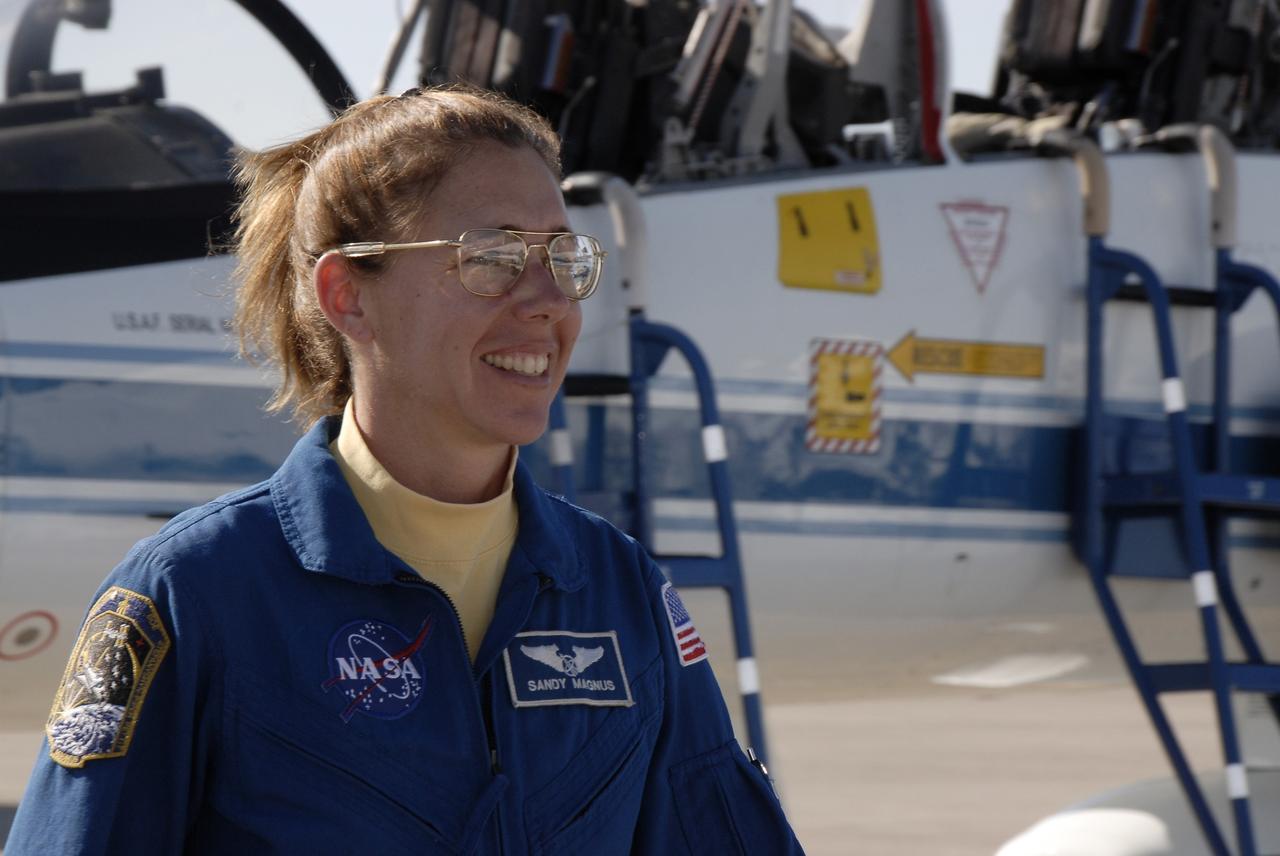
CAPE CANAVERAL, Fla. - STS-126 Mission Specialist Sandra Magnus arrives at the Shuttle Landing Facility at NASA’s Kennedy Space Center in Florida aboard a T-38 jet for Terminal Countdown Demonstration Test, or TCDT, activities. Magnus will remain on the International Space Station as a flight engineer and science officer for Expedition 18. During TCDT, Endeavour's astronauts and launch teams will participate in a simulated countdown, practice emergency exit procedures at the launch pad and continue to familiarize themselves with the mission payload and hardware. On this 27th mission to the International Space Station, Endeavour will carry the Lightweight Multi-Purpose Experiment Support Structure Carrier and the Multi-Purpose Logistics Module Leonardo that will hold supplies and equipment, including additional crew quarters, additional exercise equipment, spare hardware and equipment for the regenerative life support system. Endeavour is targeted to launch at 7:55 p.m. EST on Nov. 14. Photo credit: NASA/Kim Shiflett
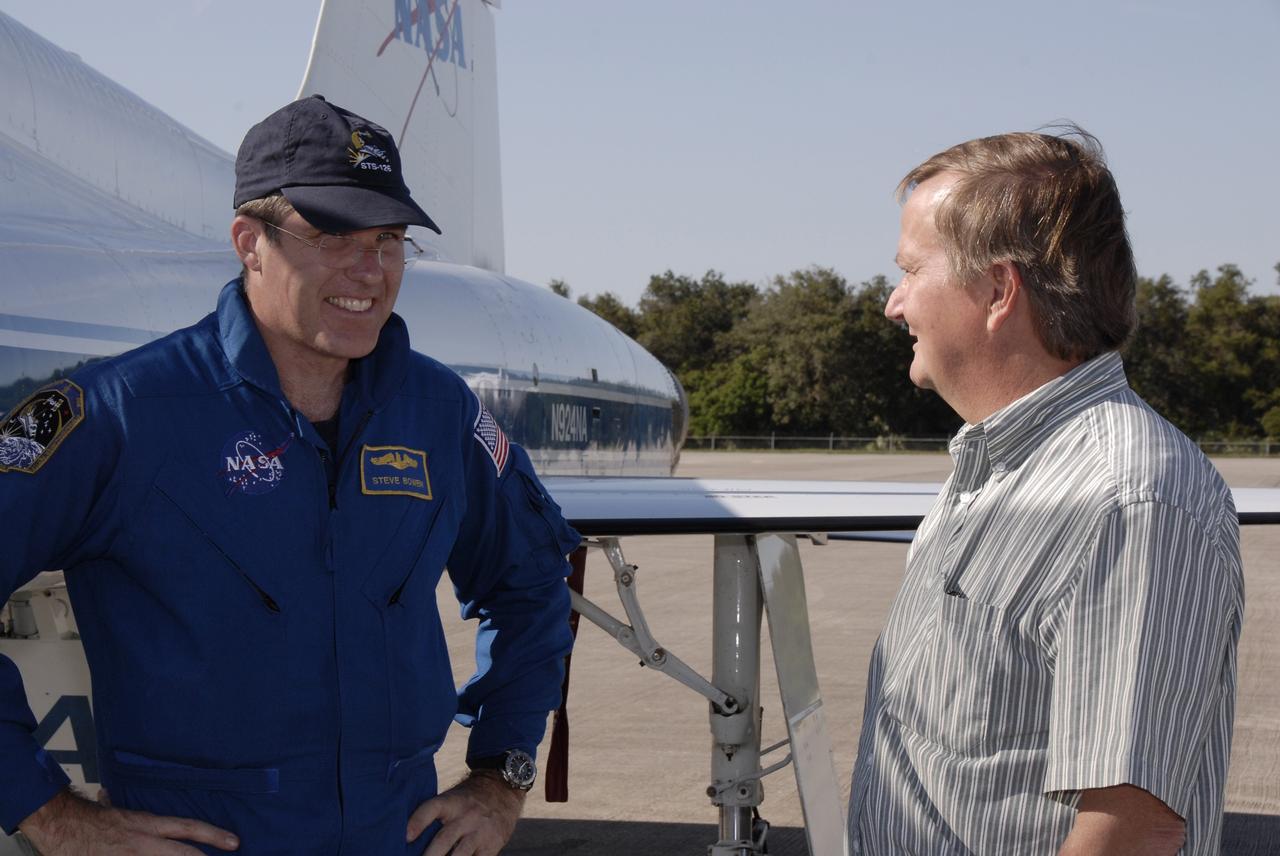
CAPE CANAVERAL, Fla. - STS-126 Mission Specialist Steve Bowen, left, is greeted by Shuttle Launch Director Mike Linebach following his arrival at the Shuttle Landing Facility at NASA’s Kennedy Space Center in Florida for Terminal Countdown Demonstration Test, or TCDT, activities. During TCDT, Endeavour's astronauts and launch teams will participate in a simulated countdown, practice emergency exit procedures at the launch pad and continue to familiarize themselves with the mission payload and hardware. On this 27th mission to the International Space Station, Endeavour will carry the Lightweight Multi-Purpose Experiment Support Structure Carrier and the Multi-Purpose Logistics Module Leonardo that will hold supplies and equipment, including additional crew quarters, additional exercise equipment, spare hardware and equipment for the regenerative life support system. Endeavour is targeted to launch at 7:55 p.m. EST on Nov. 14. Photo credit: NASA/Kim Shiflett
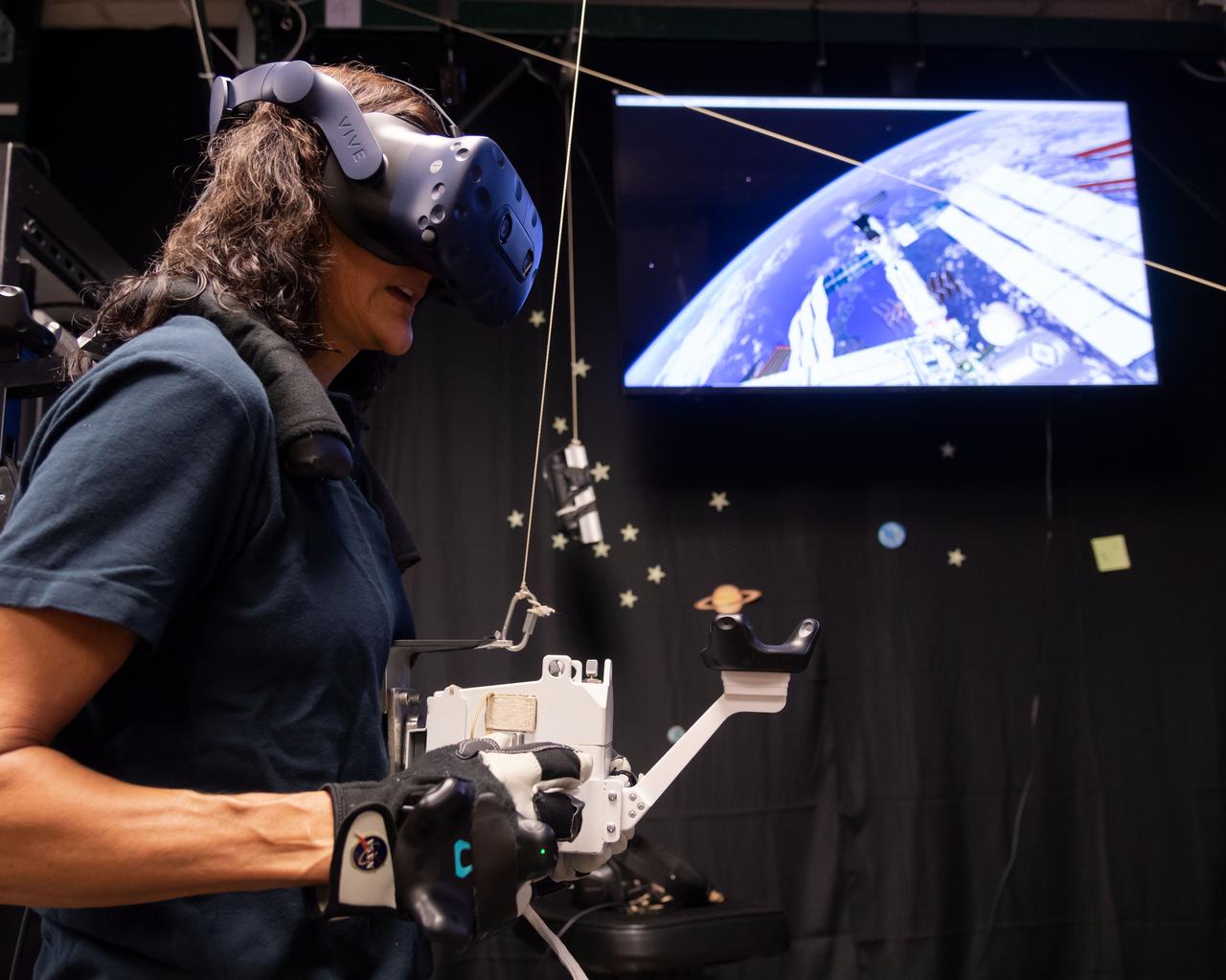
The Virtual Reality Lab at Johnson Space Center in Houston provides real-time graphics and motion simulators to replicate the space environment. Commercial Crew Astronaut Suni Williams practices spacewalking in preparation for a mission to the International Space Station in 2019. Williams is assigned to Boeing’s first operational mission after the company’s test flight with crew.
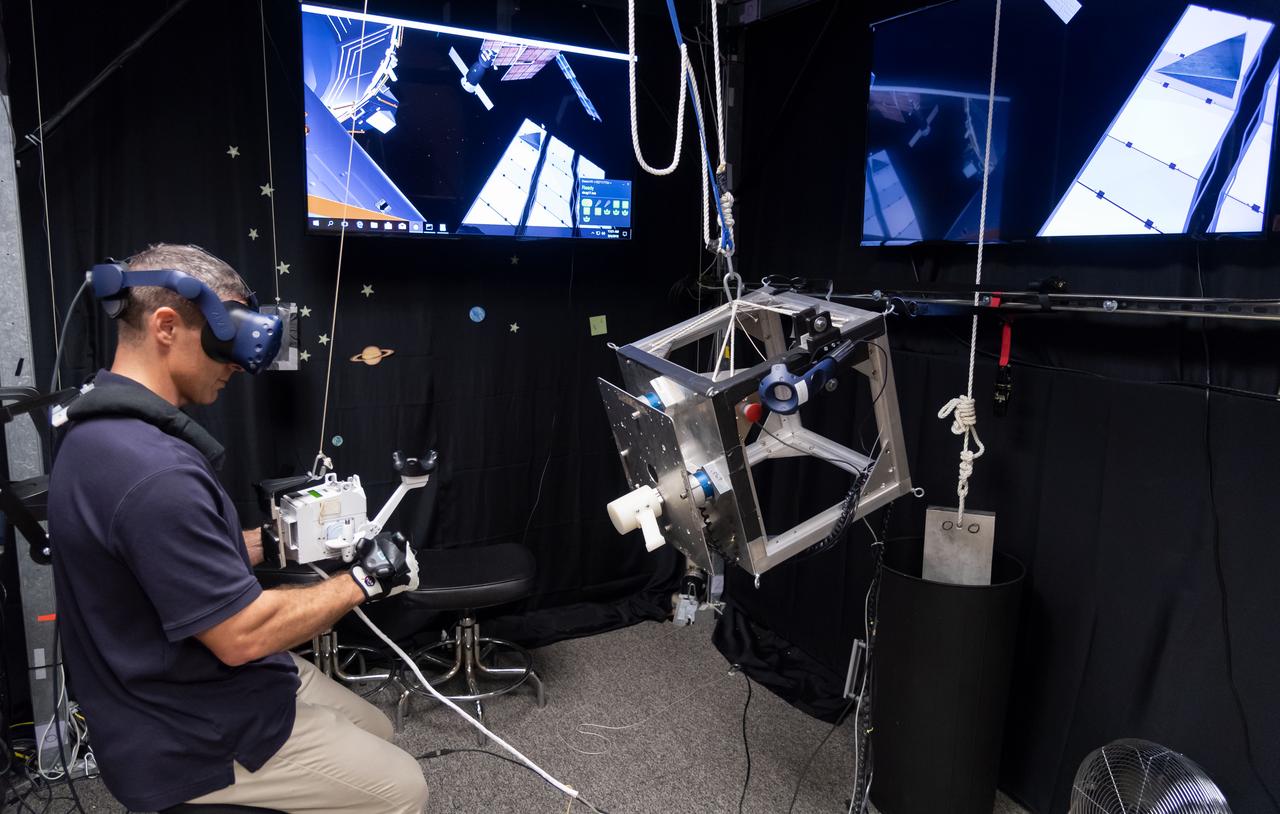
The Virtual Reality Lab at Johnson Space Center in Houston provides real-time graphics and motion simulators to replicate the space environment. Commercial Crew Astronaut Mike Hopkins practices spacewalking in preparation for a mission to the International Space Station. Hopkins is assigned to SpaceX’s first operational mission after the company’s test flight with crew.

jsc2026e037770 (May 5, 2026) --- NASA astronaut Luke Delaney practices suiting up in a spacesuit in an International Space Station airlock simulator at Johnson Space Center’s (JSC) Space Vehicle Mockup Facility in Houston, Texas. Astronauts familiarize themselves with spacesuit systems and procedures and practice Quest airlock operations before conducting spacewalk training at JSC’s Neutral Buoyancy Laboratory in simulated microgravity. Credit: NASA/Josh Valcarcel

Inside the Multi-Operations Support Building near the Multi-Payload Processing Facility (MPPF) at NASA’s Kennedy Space Center in Florida on Aug. 16, 2019, rows of gloves that are part of Self-Contained Atmospheric Protective Ensemble (SCAPE) suits are in view inside a changing room. SCAPE technicians will practice putting on SCAPE suits for a test simulation of loading propellants into a replicated test tank for Orion. Exploration Ground Systems is preparing for Artemis 1 with a series of hazardous hyper test events at the MPPF. After donning their suits, the technicians will complete a tanking to test the system before Orion arrives for processing. During preparations for launch, these teams will be responsible for loading the Orion vehicle with propellants prior to transportation to the Vehicle Assembly Building, where it will be secured atop the Space Launch System rocket. SCAPE suits are used in operations involving toxic propellants and are supplied with air either through a hardline or through a self-contained environmental control unit.
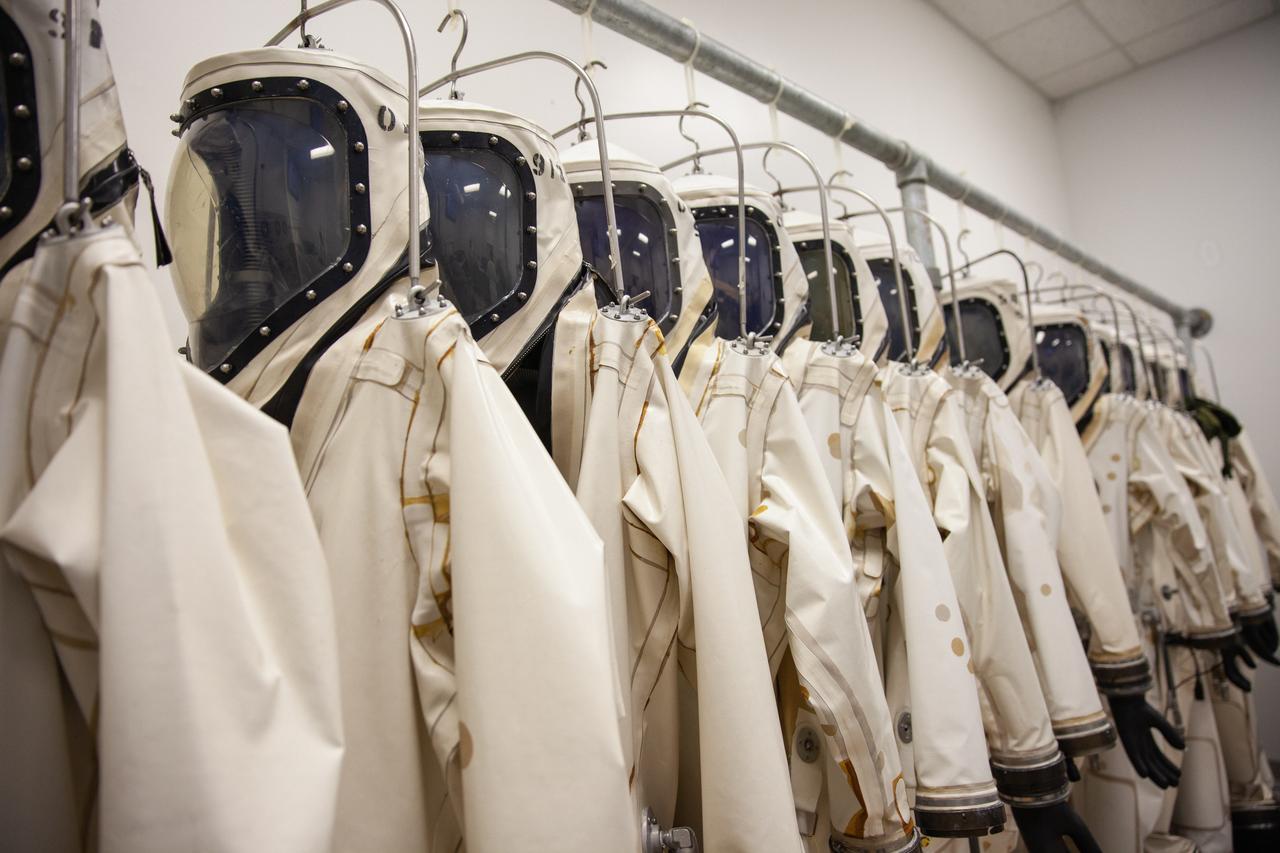
Inside the Multi-Operations Support Building near the Multi-Payload Processing Facility (MPPF) at NASA’s Kennedy Space Center in Florida on Aug. 16, 2019, a row of Self-Contained Atmospheric Protective Ensemble (SCAPE) suits are hanging inside a changing room. SCAPE technicians are practicing putting on the suits for a test simulation of loading propellants into a replicated test tank for Orion. Exploration Ground Systems is preparing for Artemis 1 with a series of hazardous hyper test events at the MPPF. After donning their suits, the technicians will complete a tanking to test the system before Orion arrives for processing. During preparations for launch, these teams will be responsible for loading the Orion vehicle with propellants prior to transportation to the Vehicle Assembly Building, where it will be secured atop the Space Launch System rocket. SCAPE suits are used in operations involving toxic propellants and are supplied with air either through a hardline or through a self-contained environmental control unit.
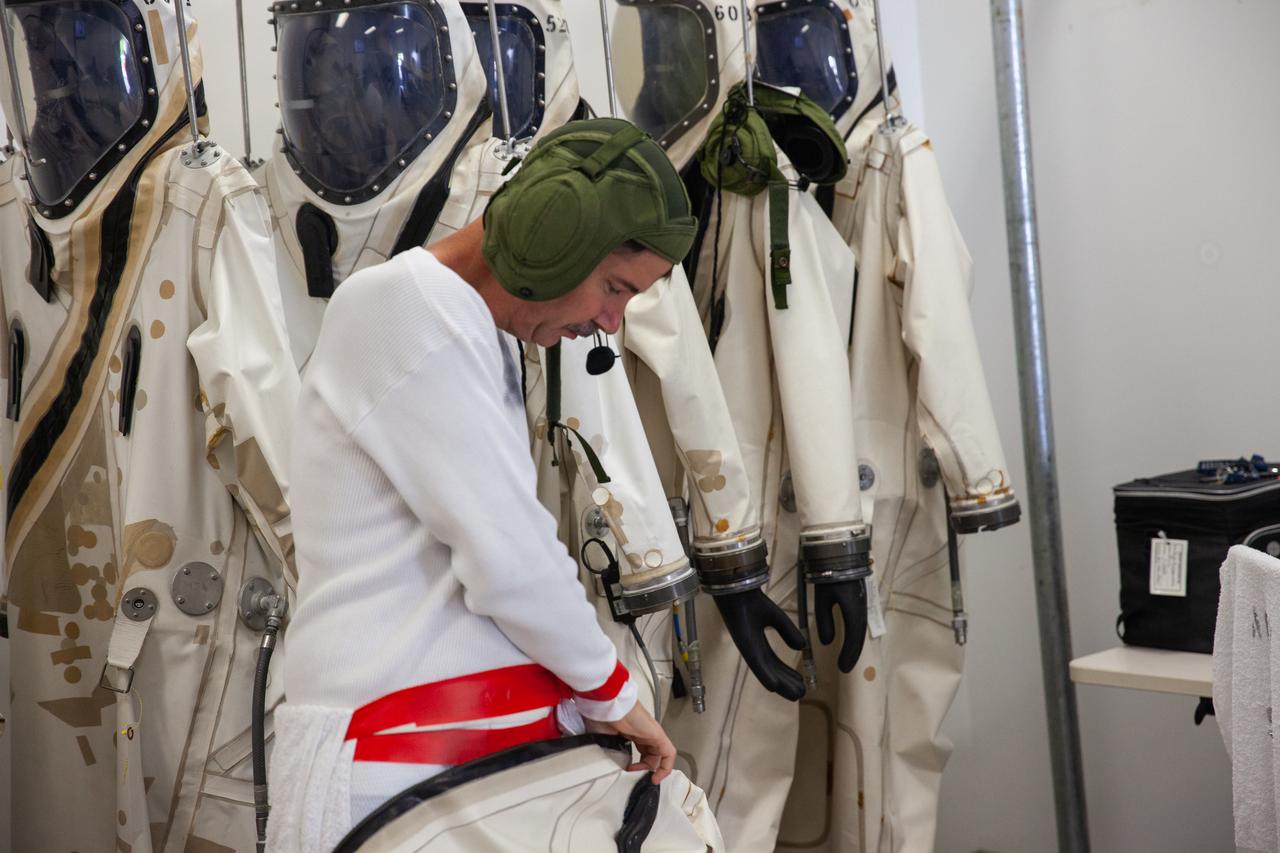
Inside the Multi-Operations Support Building near the Multi-Payload Processing Facility (MPPF) at NASA’s Kennedy Space Center in Florida, a technician prepares to put on a Self-Contained Atmospheric Protective Ensemble (SCAPE) suit inside a changing room on Aug. 16, 2019. SCAPE technicians are practicing putting on the suits for a test simulation of loading propellants into a replicated test tank for Orion. Exploration Ground Systems is preparing for Artemis 1 with a series of hazardous hyper test events at the MPPF. After donning their suits, the technicians will complete a tanking to test the system before Orion arrives for processing. During preparations for launch, these teams will be responsible for loading the Orion vehicle with propellants prior to transportation to the Vehicle Assembly Building, where it will be secured atop the Space Launch System rocket. SCAPE suits are used in operations involving toxic propellants and are supplied with air either through a hardline or through a self-contained environmental control unit.
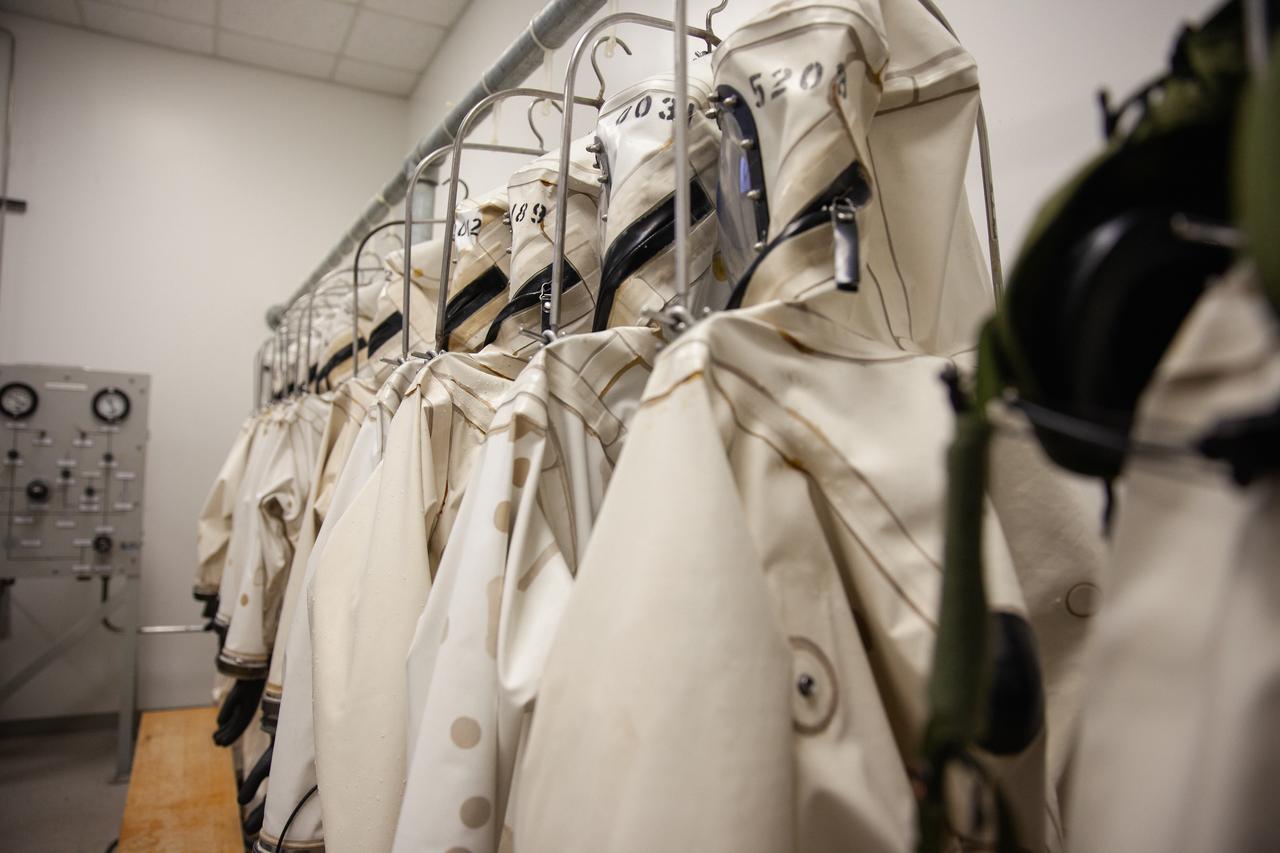
Inside the Multi-Operations Support Building near the Multi-Payload Processing Facility (MPPF) at NASA’s Kennedy Space Center in Florida on Aug. 16, 2019, a row of Self-Contained Atmospheric Protective Ensemble (SCAPE) suits are hanging inside a changing room. SCAPE technicians are practicing putting on their suits for a test simulation of loading propellants into a replicated test tank for Orion. Exploration Ground Systems is preparing for Artemis 1 with a series of hazardous hyper test events at the MPPF. After donning their suits, the technicians will complete a tanking to test the system before Orion arrives for processing. During preparations for launch, these teams will be responsible for loading the Orion vehicle with propellants prior to transportation to the Vehicle Assembly Building, where it will be secured atop the Space Launch System rocket. SCAPE suits are used in operations involving toxic propellants and are supplied with air either through a hardline or through a self-contained environmental control unit.
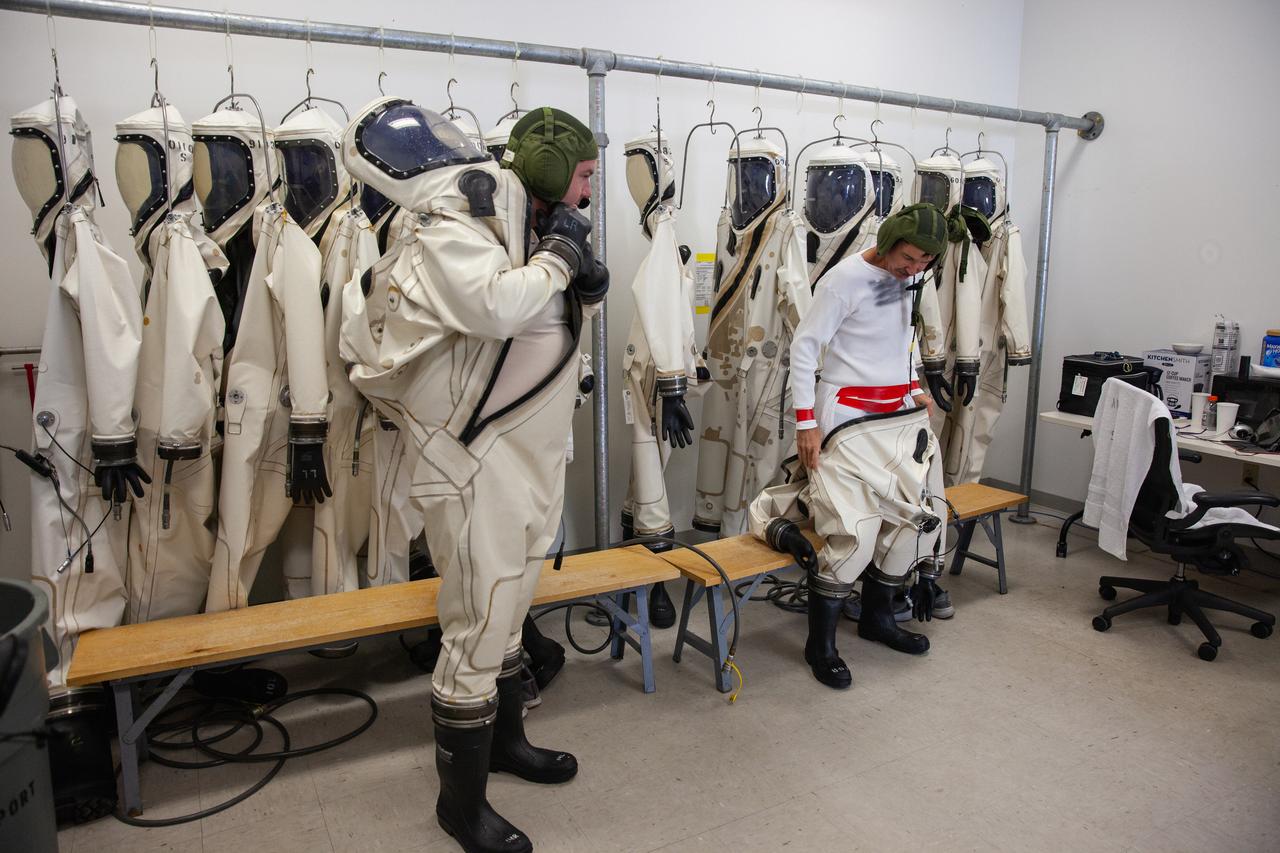
Inside the Multi-Operations Support Building near the Multi-Payload Processing Facility (MPPF) at NASA’s Kennedy Space Center in Florida, technicians put on Self-Contained Atmospheric Protective Ensemble (SCAPE) suits inside a changing room on Aug. 16, 2019. SCAPE technicians are practicing putting on the suits for a test simulation of loading propellants into a replicated test tank for Orion. Exploration Ground Systems is preparing for Artemis 1 with a series of hazardous hyper test events at the MPPF. After donning their suits, the technicians will complete a tanking to test the system before Orion arrives for processing. During preparations for launch, these teams will be responsible for loading the Orion vehicle with propellants prior to transportation to the Vehicle Assembly Building, where it will be secured atop the Space Launch System rocket. SCAPE suits are used in operations involving toxic propellants and are supplied with air either through a hardline or through a self-contained environmental control unit.
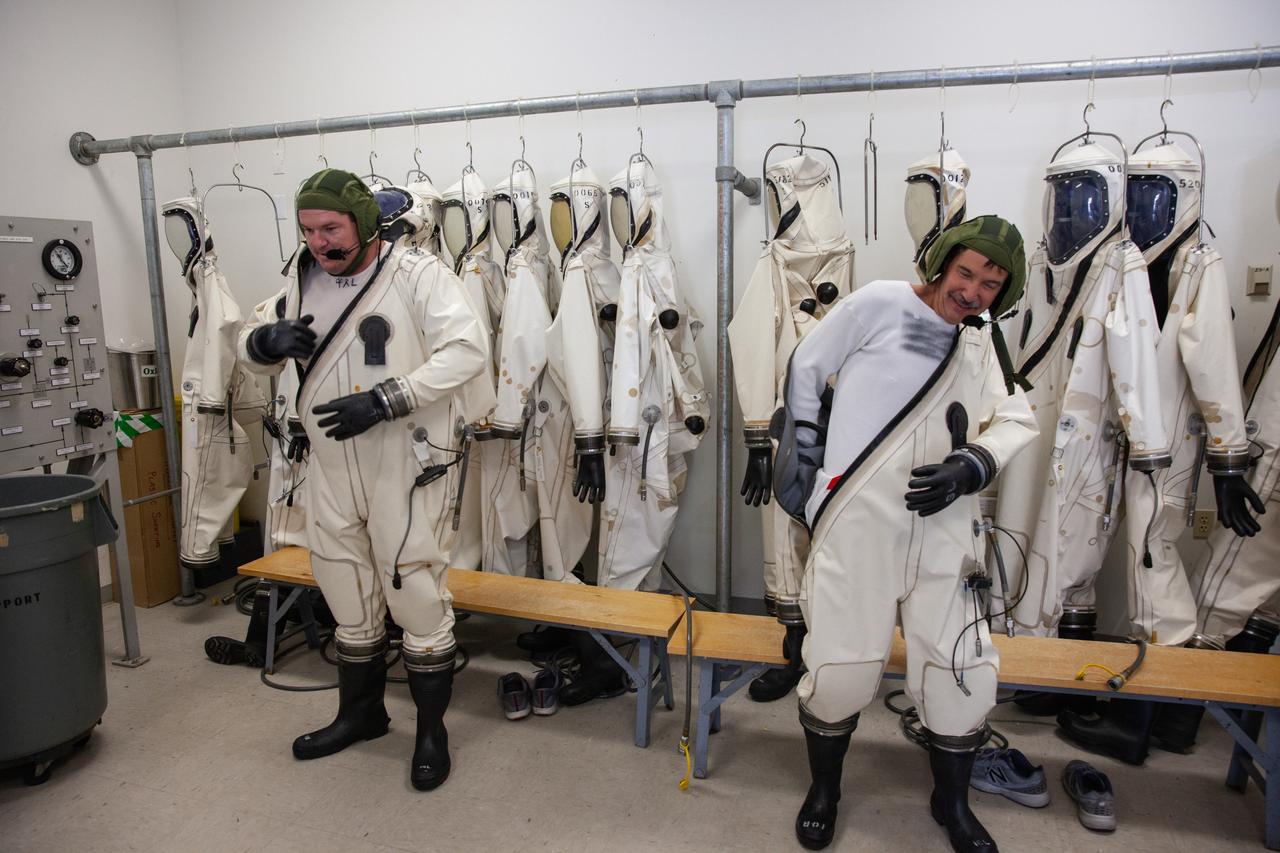
Inside the Multi-Operations Support Building near the Multi-Payload Processing Facility (MPPF) at NASA’s Kennedy Space Center in Florida, technicians put on Self-Contained Atmospheric Protective Ensemble (SCAPE) suits inside a changing room on Aug. 16, 2019. SCAPE technicians are practicing putting on the suits for a test simulation of loading propellants into a replicated test tank for Orion. Exploration Ground Systems is preparing for Artemis 1 with a series of hazardous hyper test events at the MPPF. After donning their suits, the technicians will complete a tanking to test the system before Orion arrives for processing. During preparations for launch, these teams will be responsible for loading the Orion vehicle with propellants prior to transportation to the Vehicle Assembly Building, where it will be secured atop the Space Launch System rocket. SCAPE suits are used in operations involving toxic propellants and are supplied with air either through a hardline or through a self-contained environmental control unit.
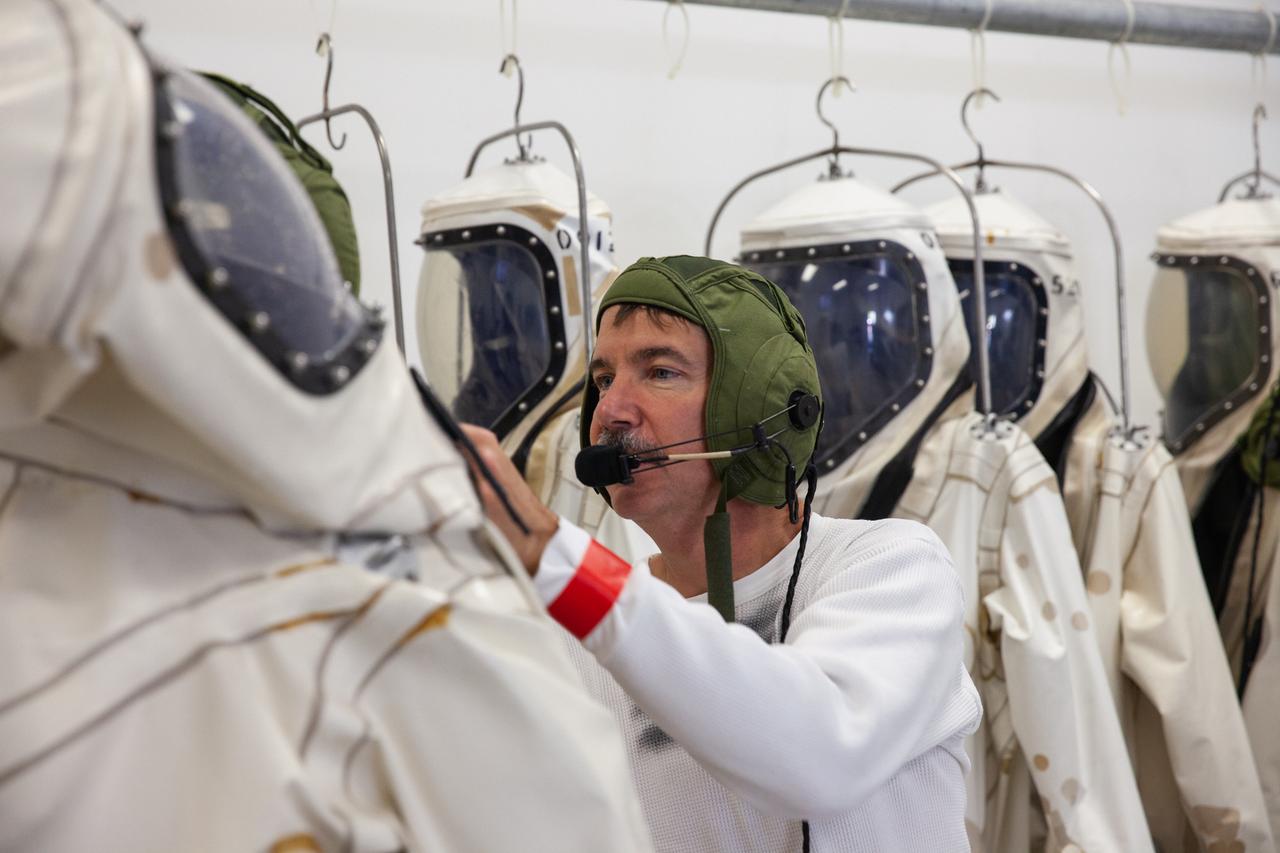
Inside the Multi-Operations Support Building near the Multi-Payload Processing Facility (MPPF) at NASA’s Kennedy Space Center in Florida, a technician prepares to put on a Self-Contained Atmospheric Protective Ensemble (SCAPE) suit inside a changing room on Aug. 16, 2019. SCAPE technicians are practicing putting on their suits for a test simulation of loading propellants into a replicated test tank for Orion. Exploration Ground Systems is preparing for Artemis 1 with a series of hazardous hyper test events at the MPPF. After donning their suits, the technicians will complete a tanking to test the system before Orion arrives for processing. During preparations for launch, these teams will be responsible for loading the Orion vehicle with propellants prior to transportation to the Vehicle Assembly Building, where it will be secured atop the Space Launch System rocket. SCAPE suits are used in operations involving toxic propellants and are supplied with air either through a hardline or through a self-contained environmental control unit.
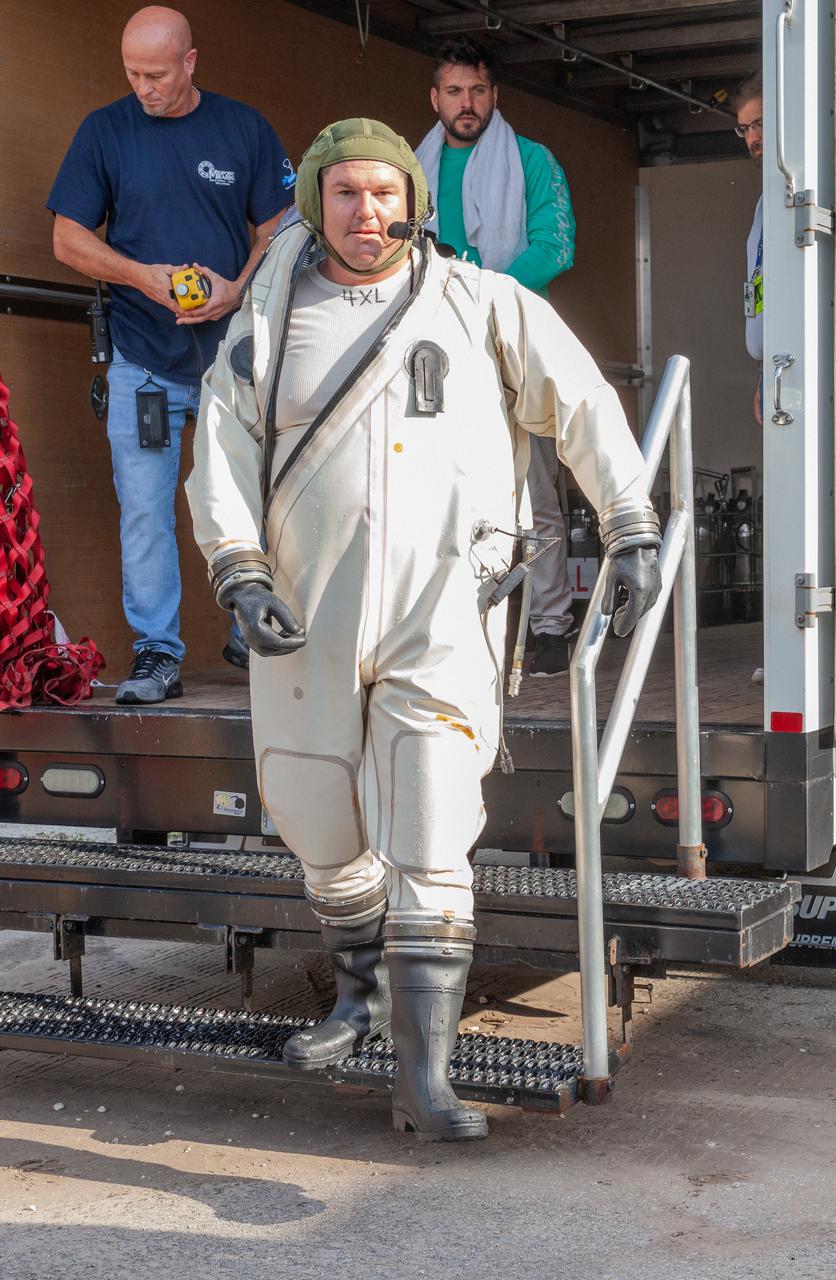
A technician in a Self-Contained Atmospheric Protective Ensemble (SCAPE) suit exits a truck near the Multi-Payload Processing Facility (MPPF) at NASA’s Kennedy Space Center in Florida on Aug. 16, 2019. SCAPE technicians are practicing by putting on the suits for a test simulation of loading propellants into a replicated test tank for Orion. Exploration Ground Systems is preparing for Artemis 1 with a series of hazardous hyper test events at the MPPF. After donning their suits, the technicians will complete a tanking to test the system before Orion arrives for processing. During preparations for launch, these teams will be responsible for loading the Orion vehicle with propellants prior to transportation to the Vehicle Assembly Building, where it will be secured atop the Space Launch System rocket. SCAPE suits are used in operations involving toxic propellants and are supplied with air either through a hardline or through a self-contained environmental control unit.
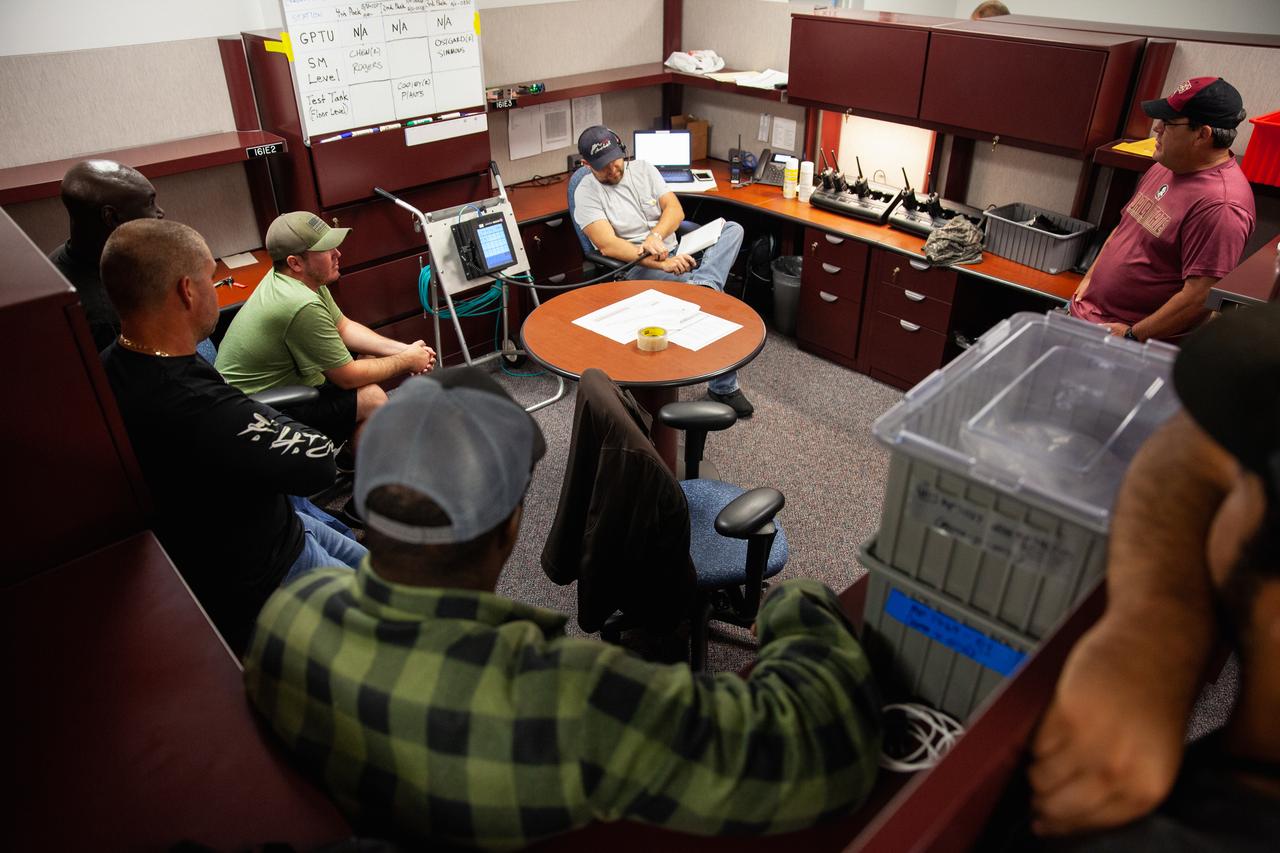
Inside the Multi-Operations Support Building near the Multi-Payload Processing Facility (MPPF) at NASA’s Kennedy Space Center in Florida, technicians and operations personnel review procedures for a test simulation of loading propellants into a replicated test tank for Orion, on Aug. 16, 2019. Exploration Ground Systems is preparing for Artemis 1 with a series of hazardous hyper test events at the MPPF. Technicians will practice putting on Self-Contained Atmospheric Protective Ensemble (SCAPE) suits and then complete tanking to test the system before Orion arrives for processing. During preparations for launch, these teams will be responsible for loading the Orion vehicle with propellants prior to transportation to the Vehicle Assembly Building, where it will be secured atop the Space Launch System rocket. SCAPE suits are used in operations involving toxic propellants and are supplied with air either through a hardline or through a self-contained environmental control unit.
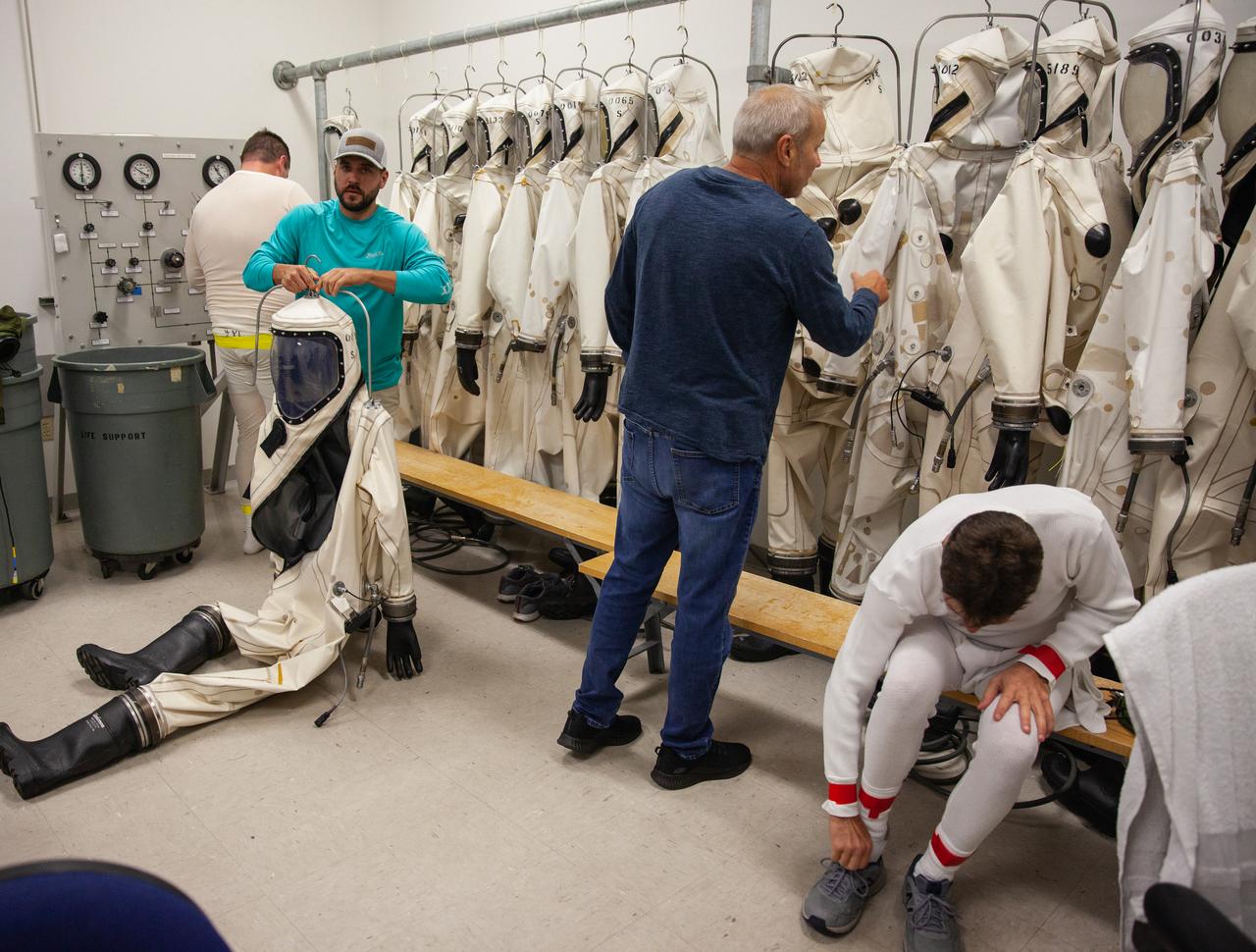
Inside the Multi-Operations Support Building near the Multi-Payload Processing Facility (MPPF) at NASA’s Kennedy Space Center in Florida, technicians are putting on Self-Contained Atmospheric Protective Ensemble (SCAPE) suits inside a changing room on Aug. 16, 2019. SCAPE technicians are practicing by putting on the suits for a test simulation of loading propellants into a replicated test tank for Orion. Exploration Ground Systems is preparing for Artemis 1 with a series of hazardous hyper test events at the MPPF. After donning their suits, the technicians will complete a tanking to test the system before Orion arrives for processing. During preparations for launch, these teams will be responsible for loading the Orion vehicle with propellants prior to transportation to the Vehicle Assembly Building, where it will be secured atop the Space Launch System rocket. SCAPE suits are used in operations involving toxic propellants and are supplied with air either through a hardline or through a self-contained environmental control unit.
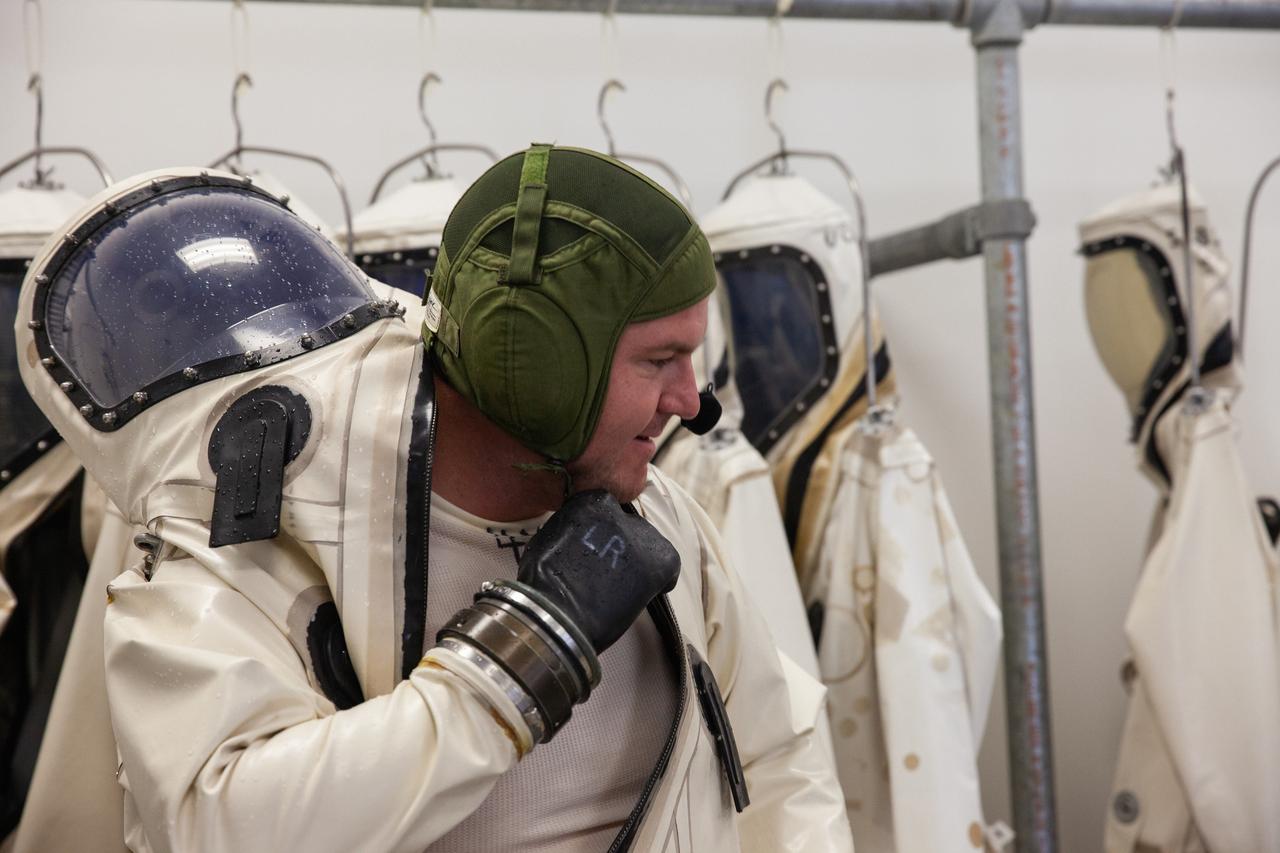
Inside the Multi-Operations Support Building near the Multi-Payload Processing Facility (MPPF) at NASA’s Kennedy Space Center in Florida, a technician puts on a Self-Contained Atmospheric Protective Ensemble (SCAPE) suit inside a changing room on Aug. 16, 2019. SCAPE technicians are practicing putting on the suits for a test simulation of loading propellants into a replicated test tank for Orion. Exploration Ground Systems is preparing for Artemis 1 with a series of hazardous hyper test events at the MPPF. After donning their suits, the technicians will complete a tanking to test the system before Orion arrives for processing. During preparations for launch, these teams will be responsible for loading the Orion vehicle with propellants prior to transportation to the Vehicle Assembly Building, where it will be secured atop the Space Launch System rocket. SCAPE suits are used in operations involving toxic propellants and are supplied with air either through a hardline or through a self-contained environmental control unit.
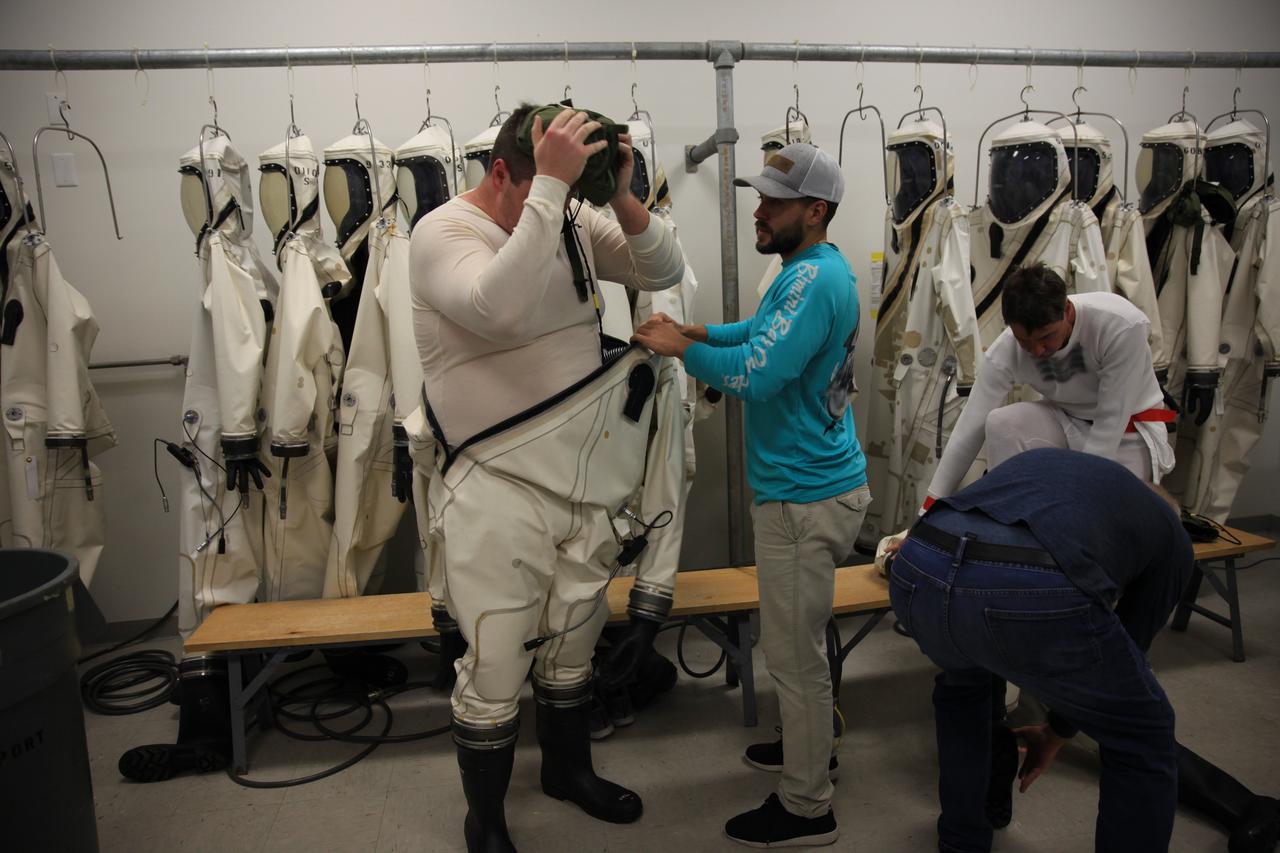
Inside the Multi-Operations Support Building near the Multi-Payload Processing Facility (MPPF) at NASA’s Kennedy Space Center in Florida, technicians put on Self-Contained Atmospheric Protective Ensemble (SCAPE) suits inside a changing room on Aug. 16, 2019. SCAPE technicians are practicing by putting on the suits for a test simulation of loading propellants into a replicated test tank for Orion. Exploration Ground Systems is preparing for Artemis 1 with a series of hazardous hyper test events at the MPPF. After donning their suits, the technicians will complete a tanking to test the system before Orion arrives for processing. During preparations for launch, these teams will be responsible for loading the Orion vehicle with propellants prior to transportation to the Vehicle Assembly Building, where it will be secured atop the Space Launch System rocket. SCAPE suits are used in operations involving toxic propellants and are supplied with air either through a hardline or through a self-contained environmental control unit.
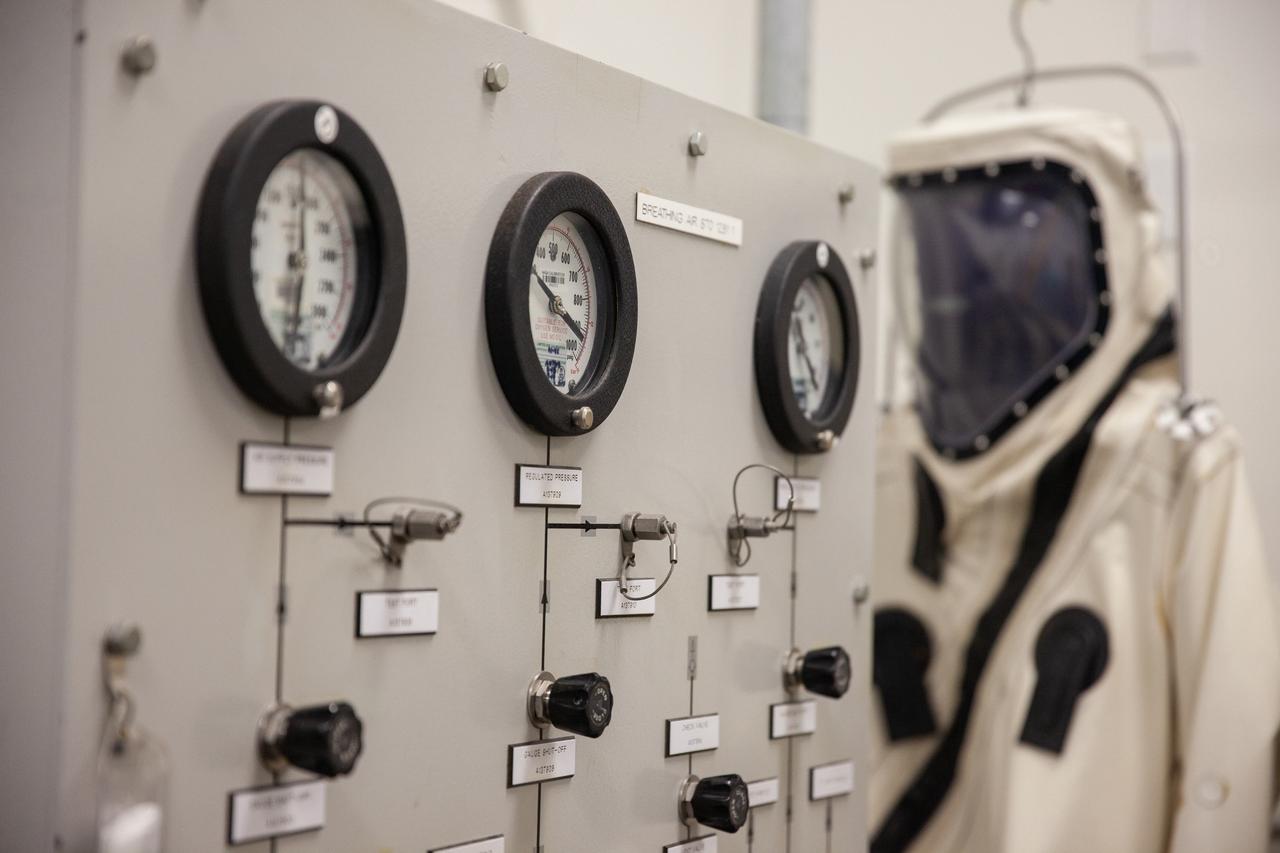
Inside the Multi-Operations Support Building near the Multi-Payload Processing Facility (MPPF) at NASA’s Kennedy Space Center in Florida on Aug. 16, 2019, a Self-Contained Atmospheric Protective Ensemble (SCAPE) suit is in view inside a changing room. SCAPE technicians are practicing putting on SCAPE suits and preparing for a test simulation of loading propellants into a replicated test tank for Orion. Exploration Ground Systems is preparing for Artemis 1 with a series of hazardous hyper test events at the MPPF. After donning their suits, the technicians will complete a tanking to test the system before Orion arrives for processing. During preparations for launch, these teams will be responsible for loading the Orion vehicle with propellants prior to transportation to the Vehicle Assembly Building, where it will be secured atop the Space Launch System rocket. SCAPE suits are used in operations involving toxic propellants and are supplied with air either through a hardline or through a self-contained environmental control unit.
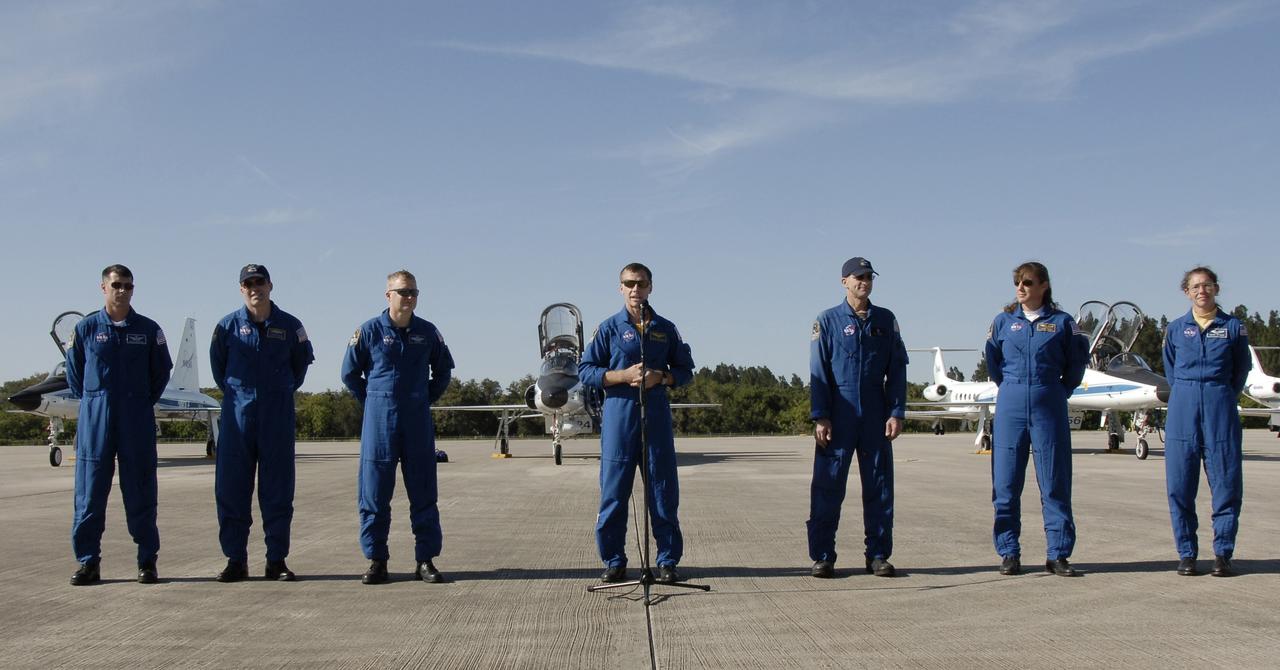
CAPE CANAVERAL, Fla. - Crew members for space shuttle Endeavour's STS-126 mission speak to the media at the Shuttle Landing Facility at NASA’s Kennedy Space Center in Florida after arriving for Terminal Countdown Demonstration Test, or TCDT, activities. From left are Mission Specialists Shane Kimbrough and Steve Bowen, Pilot Eric Boe, Commander Chris Ferguson, and Mission Specialists Donald Pettit, Heidemarie Stefanyshyn-Piper and Sandra Magnus. Magnus will remain on the International Space Station as a flight engineer and science officer for Expedition 18. During TCDT, Endeavour's astronauts and launch teams will participate in a simulated countdown, practice emergency exit procedures at the launch pad and continue to familiarize themselves with the mission payload and hardware. On this 27th mission to the International Space Station, Endeavour will carry the Lightweight Multi-Purpose Experiment Support Structure Carrier and the Multi-Purpose Logistics Module Leonardo that will hold supplies and equipment, including additional crew quarters, additional exercise equipment, spare hardware and equipment for the regenerative life support system. Endeavour is targeted to launch at 7:55 p.m. EST on Nov. 14. Photo credit: NASA/Kim Shiflett
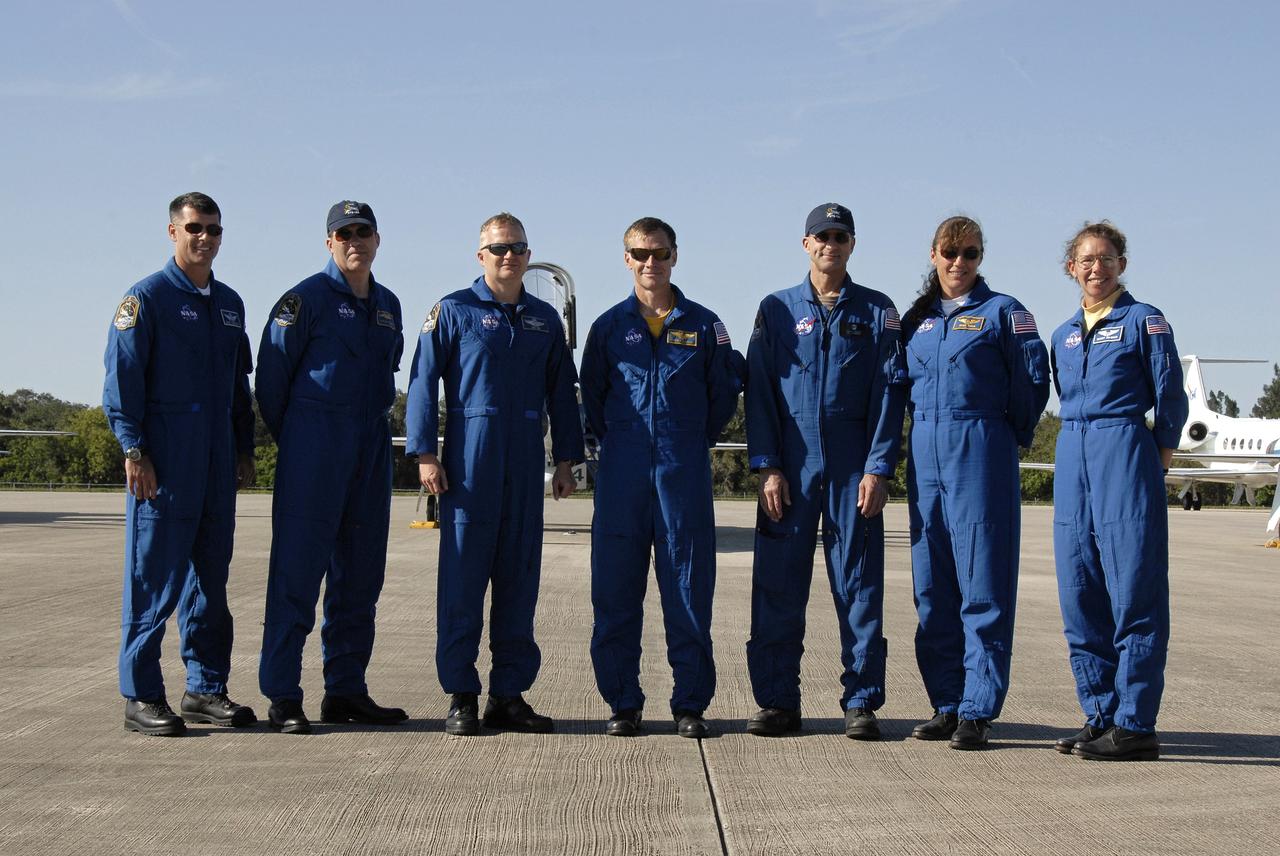
CAPE CANAVERAL, Fla. - Crew members for space shuttle Endeavour's STS-126 mission pose for a group portrait at the Shuttle Landing Facility at NASA’s Kennedy Space Center in Florida after arriving for Terminal Countdown Demonstration Test, or TCDT, activities. From left are Mission Specialists Shane Kimbrough and Steve Bowen, Pilot Eric Boe, Commander Chris Ferguson, and Mission Specialists Donald Pettit, Heidemarie Stefanyshyn-Piper and Sandra Magnus. Magnus will remain on the International Space Station as a flight engineer and science officer for Expedition 18. During TCDT, Endeavour's astronauts and launch teams will participate in a simulated countdown, practice emergency exit procedures at the launch pad and continue to familiarize themselves with the mission payload and hardware. On this 27th mission to the International Space Station, Endeavour will carry the Lightweight Multi-Purpose Experiment Support Structure Carrier and the Multi-Purpose Logistics Module Leonardo that will hold supplies and equipment, including additional crew quarters, additional exercise equipment, spare hardware and equipment for the regenerative life support system. Endeavour is targeted to launch at 7:55 p.m. EST on Nov. 14. Photo credit: NASA/Kim Shiflett
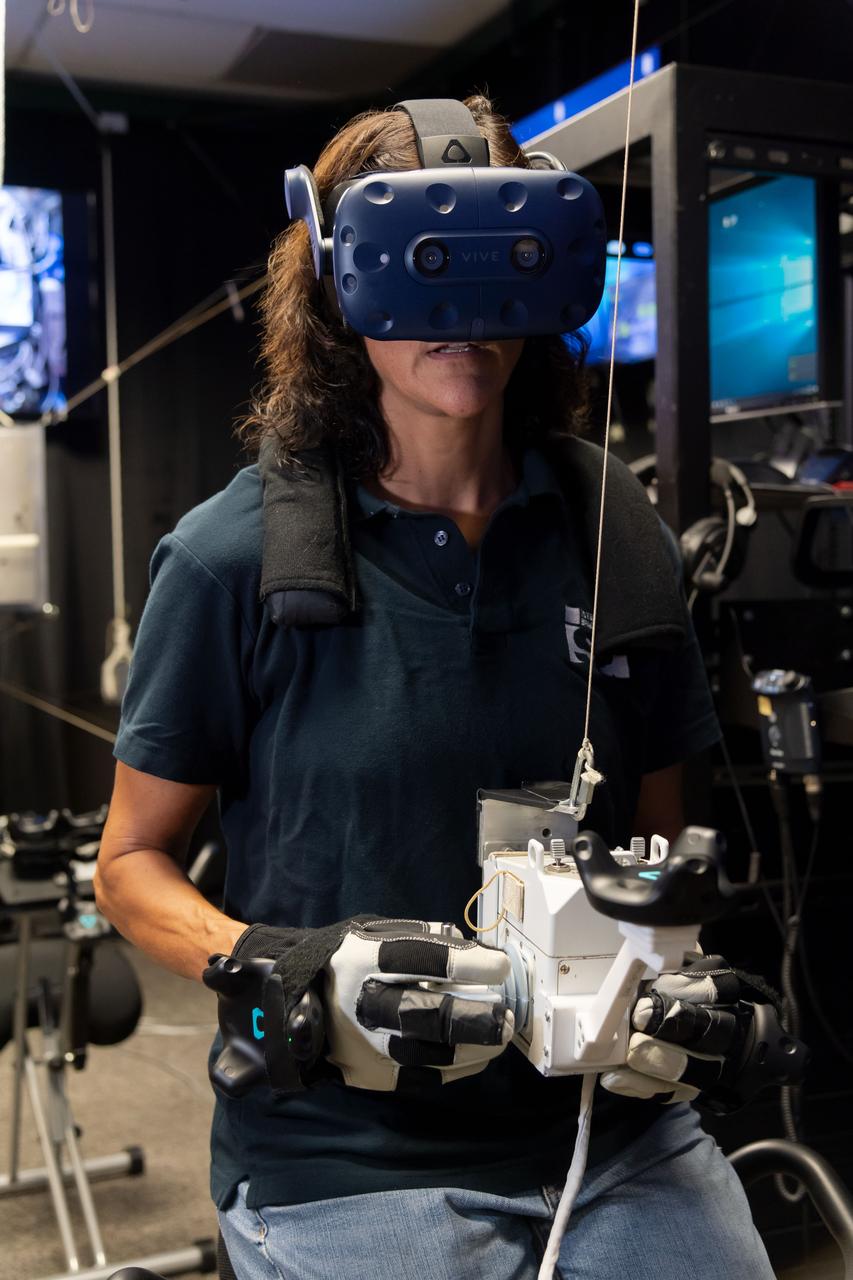
Commercial Crew Astronaut Suni Williams practices spacewalking in the Virtual Reality Lab at Johnson Space Center in Houston. The training provides real-time graphics and motion simulators to replicate the space environment. NASA’s Commercial Crew Program is working with Boeing and SpaceX to return human spaceflight launches to the United States in 2019. Williams is assigned to Boeing’s first operational mission after the company’s test flight with crew.
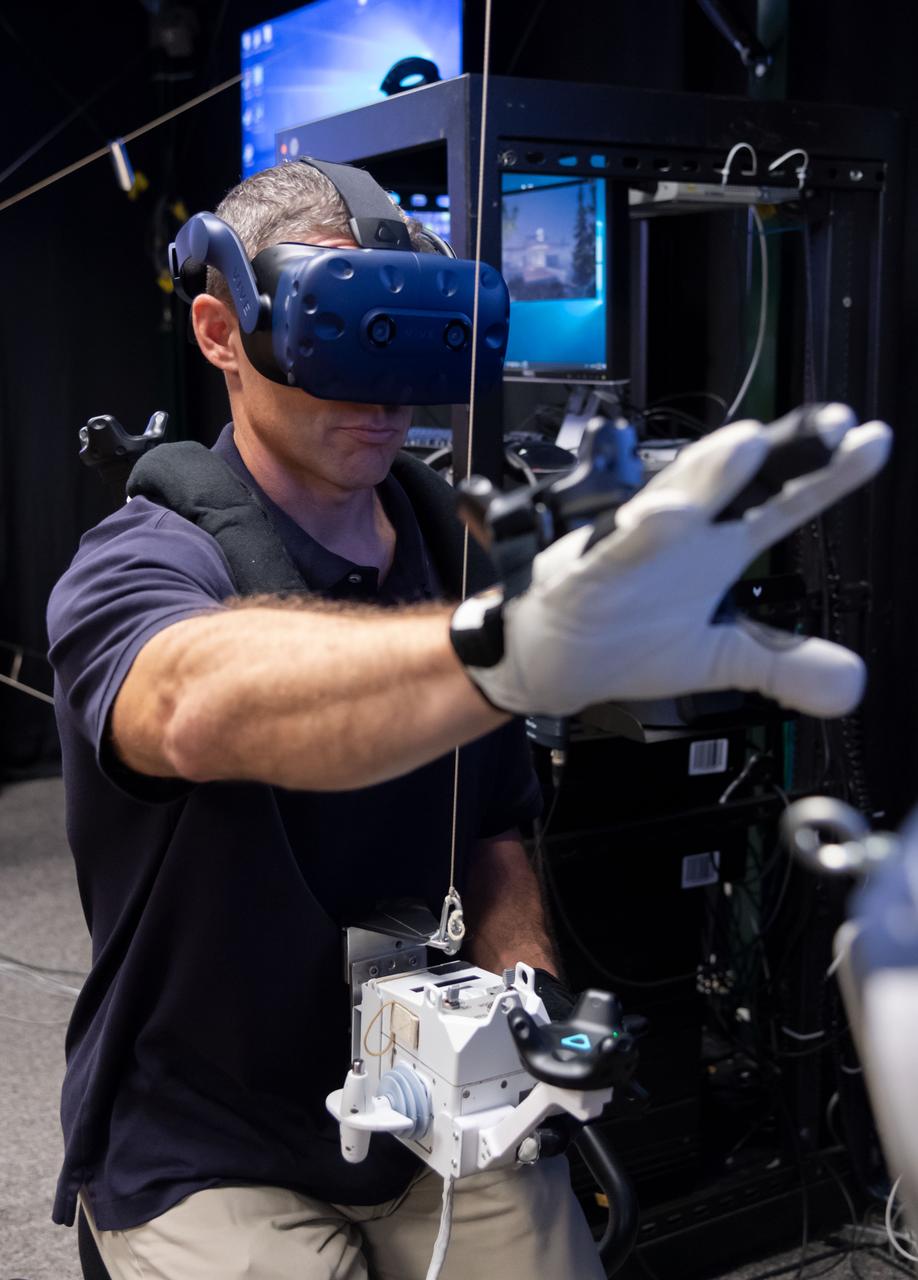
Commercial Crew Astronaut Mike Hopkins practices spacewalking in the Virtual Reality Lab at Johnson Space Center in Houston. The training provides real-time graphics and motion simulators to replicate the space environment. NASA’s Commercial Crew Program is working with Boeing and SpaceX to return human spaceflight launches to the United States in 2019. Hopkins is assigned to SpaceX’s first operational mission after the company’s test flight with crew.
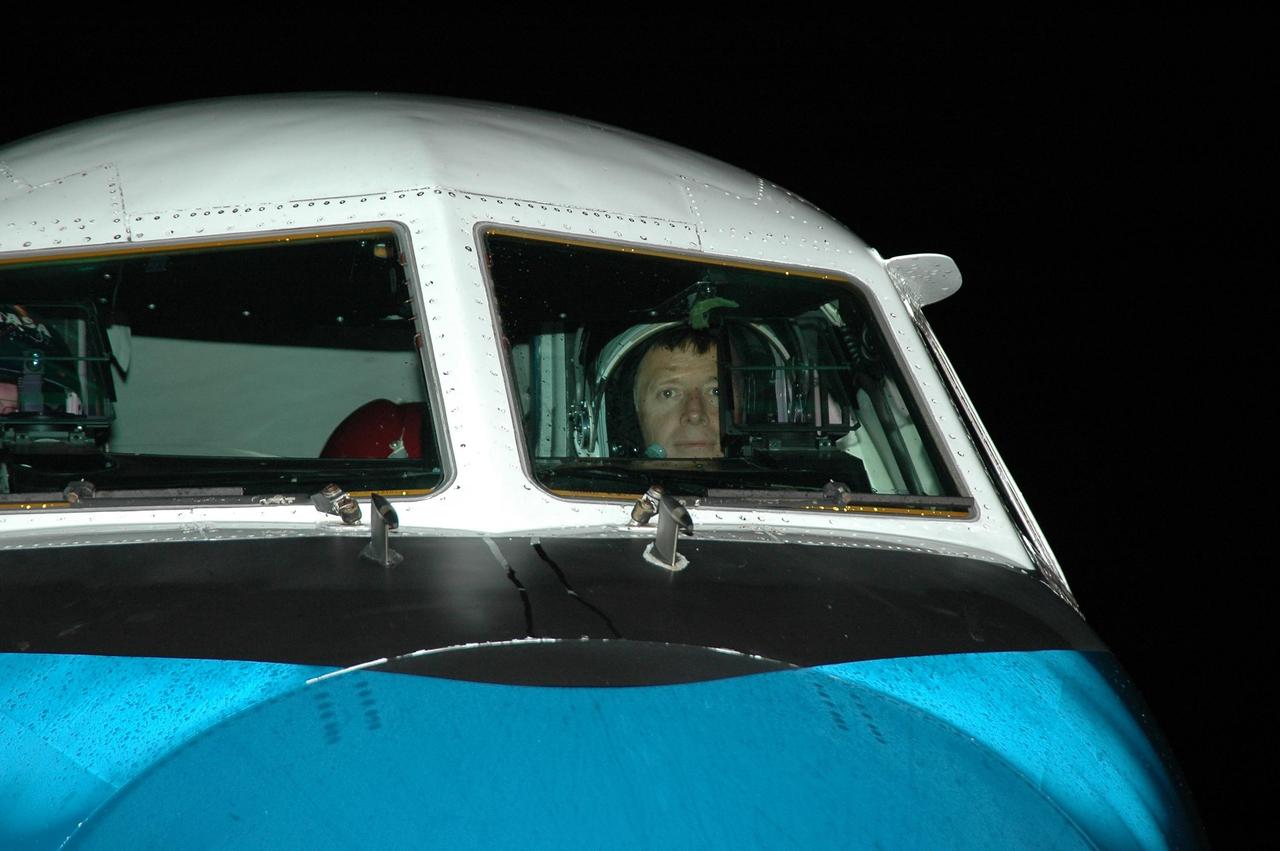
KENNEDY SPACE CENTER, FLA. - STS-115 Pilot Christopher Ferguson settles in the cockpit of the Shuttle Training Aircraft to practice landing the shuttle. STA practice is part of launch preparations. The STA is a Grumman American Aviation-built Gulf Stream II jet that was modified to simulate an orbiter’s cockpit, motion and visual cues, and handling qualities. In flight, the STA duplicates the orbiter’s atmospheric descent trajectory from approximately 35,000 feet altitude to landing on a runway. Because the orbiter is unpowered during re-entry and landing, its high-speed glide must be perfectly executed the first time. Mission STS-115 is scheduled to lift off about 12:29 p.m. Sept. 6. Mission managers cancelled Atlantis' first launch campaign due to a lightning strike at the pad and the passage of Tropical Storm Ernesto along Florida's east coast. The mission will deliver and install the 17-and-a-half-ton P3/P4 truss segment to the port side of the integrated truss system on the orbital outpost. The truss includes a new set of photovoltaic solar arrays. When unfurled to their full length of 240 feet, the arrays will provide additional power for the station in preparation for the delivery of international science modules over the next two years. STS-115 is expected to last 11 days and includes three scheduled spacewalks. Photo credit: NASA/Kim Shiflett
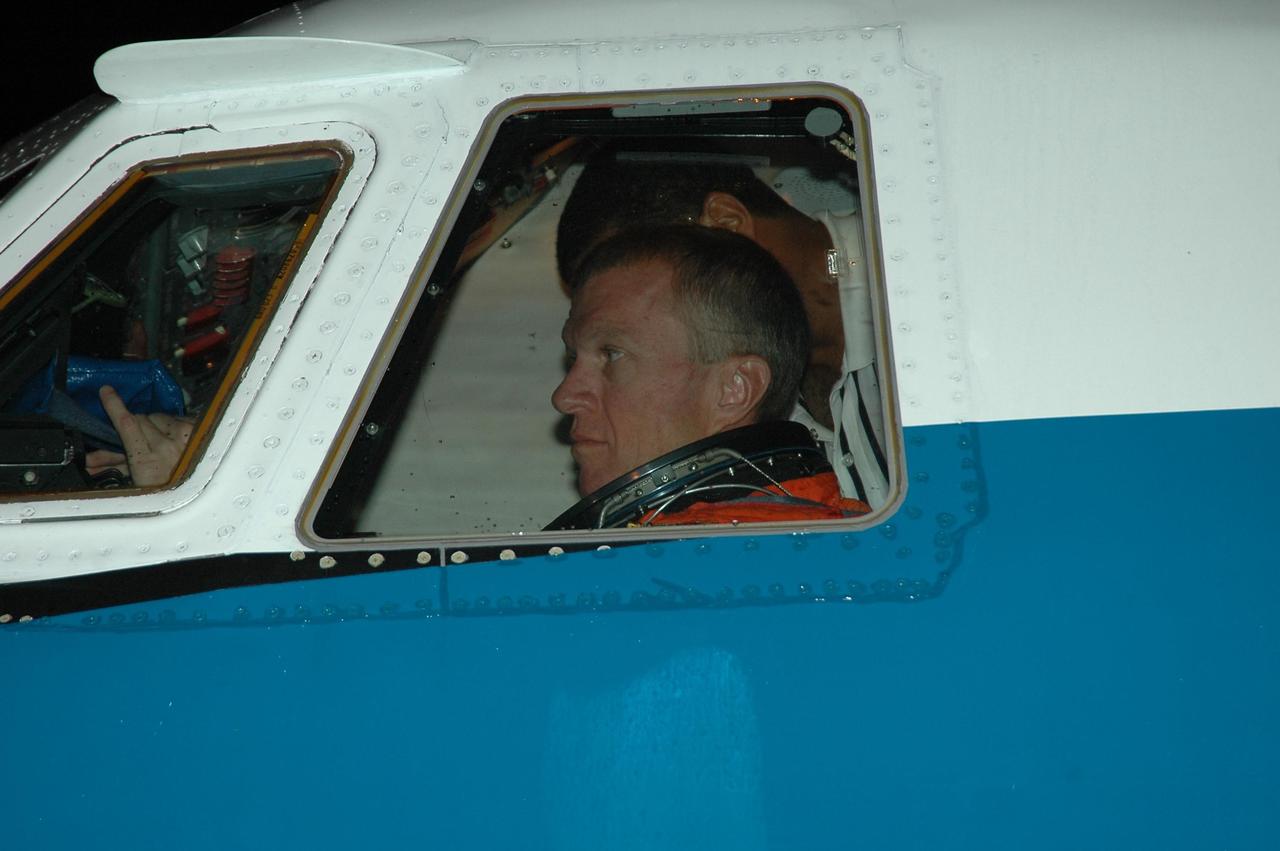
KENNEDY SPACE CENTER, FLA. - STS-115 Commander Brent Jett settles in the cockpit of the Shuttle Training Aircraft to practice landing the shuttle. STA practice is part of launch preparations. The STA is a Grumman American Aviation-built Gulf Stream II jet that was modified to simulate an orbiter’s cockpit, motion and visual cues, and handling qualities. In flight, the STA duplicates the orbiter’s atmospheric descent trajectory from approximately 35,000 feet altitude to landing on a runway. Because the orbiter is unpowered during re-entry and landing, its high-speed glide must be perfectly executed the first time. Mission STS-115 is scheduled to lift off about 12:29 p.m. Sept. 6. Mission managers cancelled Atlantis' first launch campaign due to a lightning strike at the pad and the passage of Tropical Storm Ernesto along Florida's east coast. The mission will deliver and install the 17-and-a-half-ton P3/P4 truss segment to the port side of the integrated truss system on the orbital outpost. The truss includes a new set of photovoltaic solar arrays. When unfurled to their full length of 240 feet, the arrays will provide additional power for the station in preparation for the delivery of international science modules over the next two years. STS-115 is expected to last 11 days and includes three scheduled spacewalks. Photo credit: NASA/Kim Shiflett

KENNEDY SPACE CENTER, FLA. - STS-115 Commander Brent Jett studies the controls in the cockpit of the Shuttle Training Aircraft before a practice session of landing the shuttle. STA practice is part of launch preparations. The STA is a Grumman American Aviation-built Gulf Stream II jet that was modified to simulate an orbiter’s cockpit, motion and visual cues, and handling qualities. In flight, the STA duplicates the orbiter’s atmospheric descent trajectory from approximately 35,000 feet altitude to landing on a runway. Because the orbiter is unpowered during re-entry and landing, its high-speed glide must be perfectly executed the first time. Mission STS-115 is scheduled to lift off about 12:29 p.m. Sept. 6. Mission managers cancelled Atlantis' first launch campaign due to a lightning strike at the pad and the passage of Tropical Storm Ernesto along Florida's east coast. The mission will deliver and install the 17-and-a-half-ton P3/P4 truss segment to the port side of the integrated truss system on the orbital outpost. The truss includes a new set of photovoltaic solar arrays. When unfurled to their full length of 240 feet, the arrays will provide additional power for the station in preparation for the delivery of international science modules over the next two years. STS-115 is expected to last 11 days and includes three scheduled spacewalks. Photo credit: NASA/Kim Shiflett
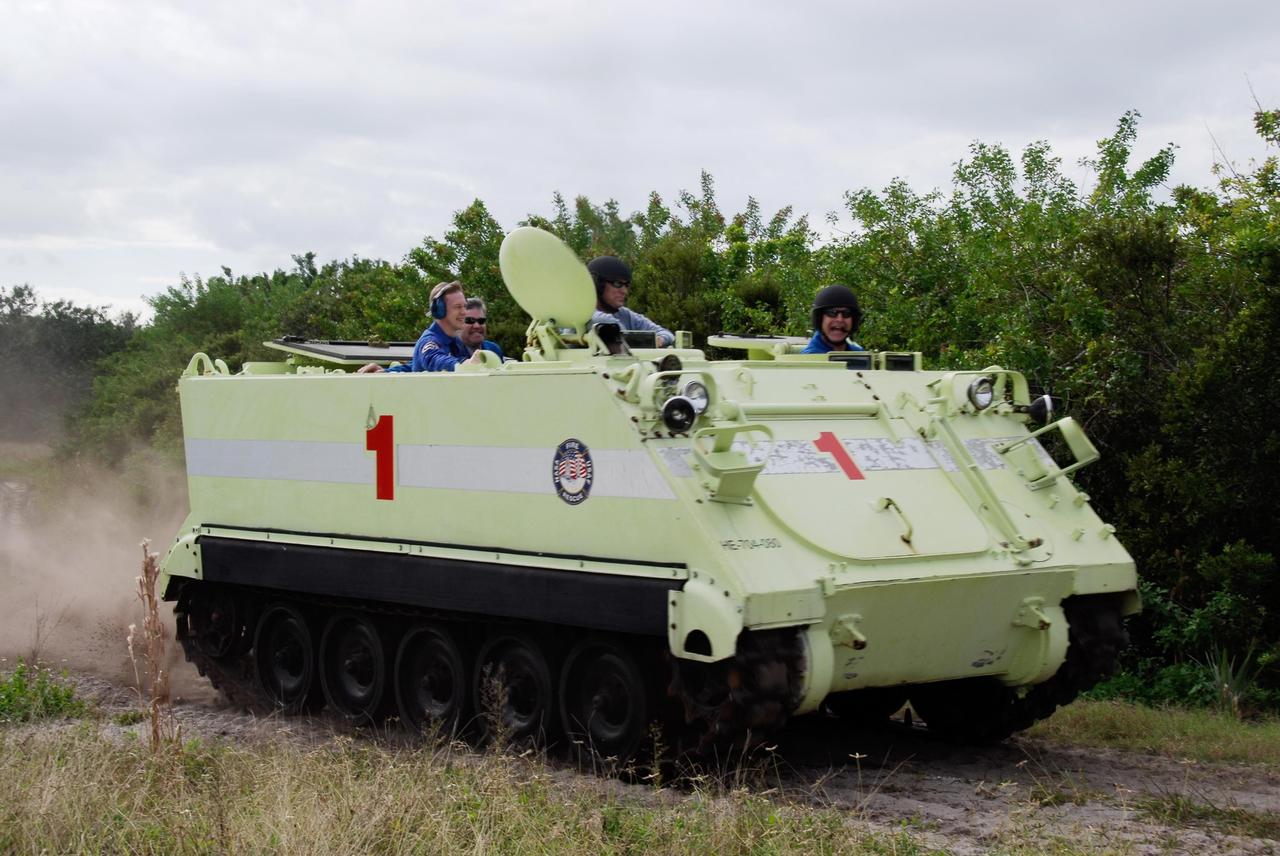
KENNEDY SPACE CENTER, FLA. -- STS-122 Pilot Alan Poindexter, at right, seems to enjoy driving an M-113 armored personnel carrier as the instructor behind him monitors his performance. European Space Agency astronaut Frank De Winne, at left, the backup for STS-122 Mission Specialist Leopold Eyharts, is along for the ride. The practice near Launch Pad 39B is part of training on emergency egress procedures. An M-113 will be available to transport the crew to safety in the event of a contingency on the pad before their launch. The crew is participating in Terminal Countdown Demonstration Test activities, a standard part of launch preparations. The TCDT provides astronauts and ground crews with equipment familiarization, emergency egress training and a simulated launch countdown. On mission STS-122, Atlantis will deliver the European Space Agency's Columbus module to the International Space Station. Columbus is a multifunctional, pressurized laboratory that will be permanently attached to U.S. Node 2, called Harmony, and will expand the research facilities aboard the station. Launch is targeted for Dec. 6. Photo credit: NASA/Kim Shiflett
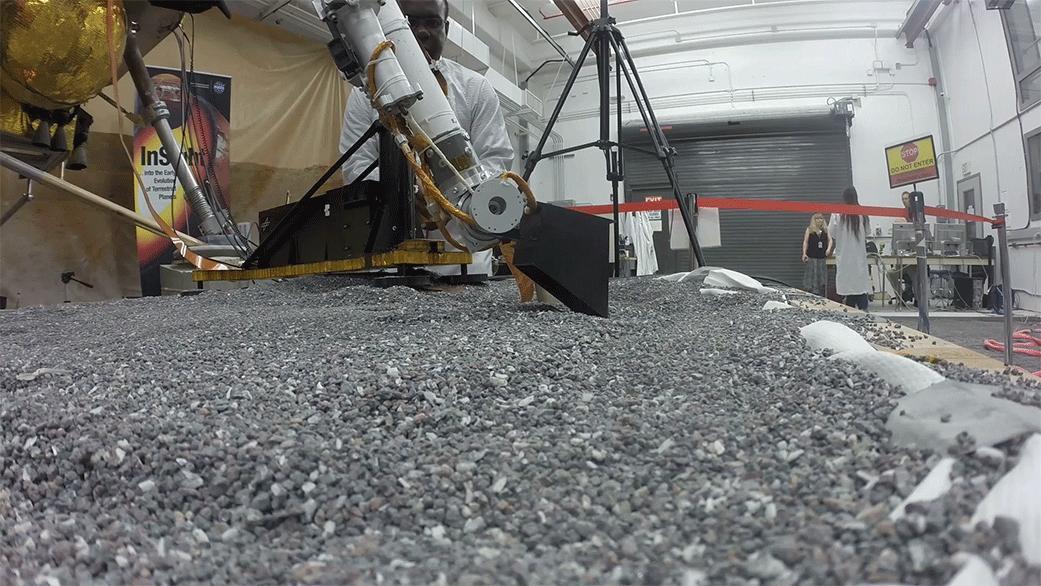
This footage from Aug. 19, 2019, shows a replica of InSight scraping soil with a scoop on the end of its robotic arm in a test lab at NASA's Jet Propulsion Laboratory in Southern California. A replica of the "mole" — the lander's self-hammering heat probe — comes in to view as the scoop moves to the left. On Mars, InSight will use techniques practiced by engineers on Earth in order to scrape and tamp down soil on top of the mole to help it dig. Movie available at https://photojournal.jpl.nasa.gov/catalog/PIA24099
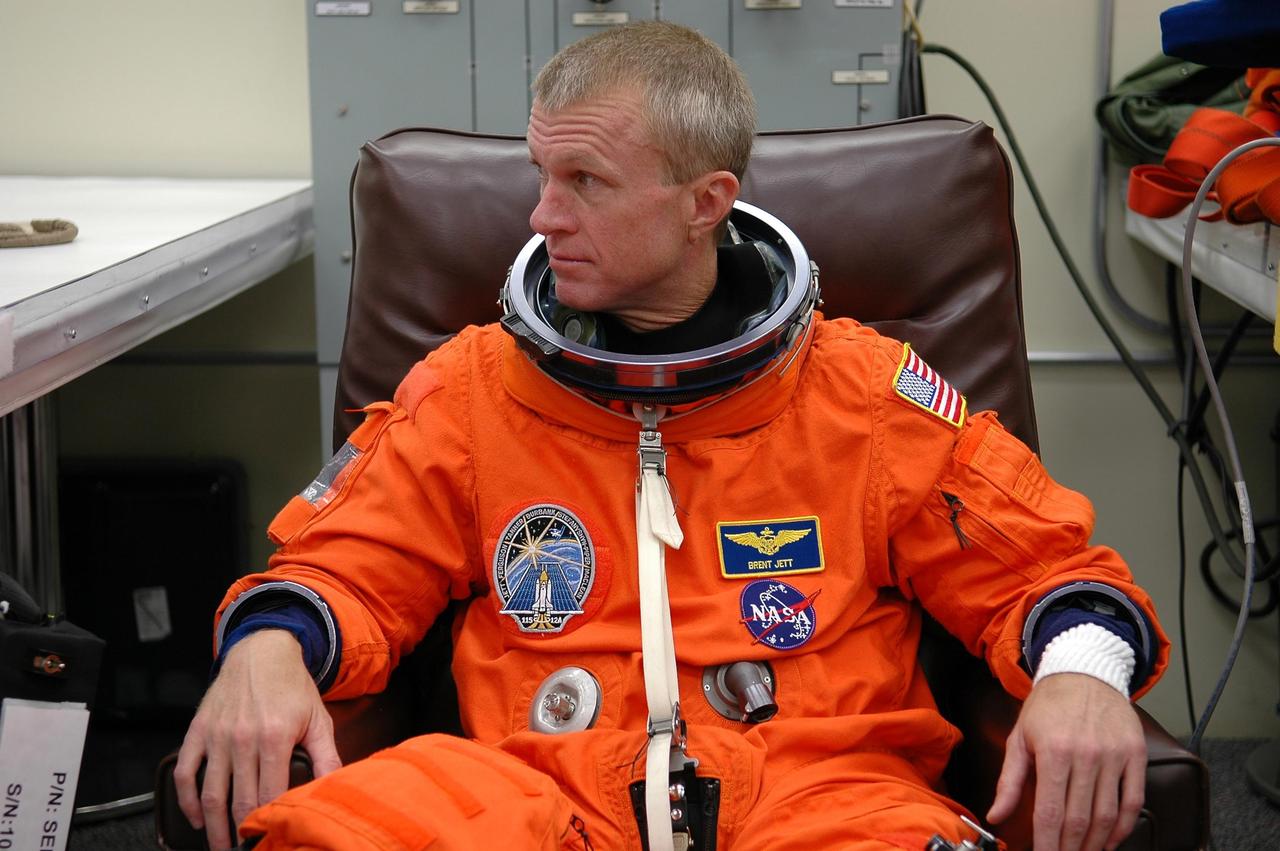
KENNEDY SPACE CENTER, FLA. - STS-115 Commander Brent Jett dons his launch suit before flying the Shuttle Training Aircraft to practice landing the shuttle. STA practice is part of launch preparations. The STA is a Grumman American Aviation-built Gulf Stream II jet that was modified to simulate an orbiter’s cockpit, motion and visual cues, and handling qualities. In flight, the STA duplicates the orbiter’s atmospheric descent trajectory from approximately 35,000 feet altitude to landing on a runway. Because the orbiter is unpowered during re-entry and landing, its high-speed glide must be perfectly executed the first time. Mission STS-115 is scheduled to lift off about 12:29 p.m. Sept. 6. Mission managers cancelled Atlantis' first launch campaign due to a lightning strike at the pad and the passage of Tropical Storm Ernesto along Florida's east coast. The mission will deliver and install the 17-and-a-half-ton P3/P4 truss segment to the port side of the integrated truss system on the orbital outpost. The truss includes a new set of photovoltaic solar arrays. When unfurled to their full length of 240 feet, the arrays will provide additional power for the station in preparation for the delivery of international science modules over the next two years. STS-115 is expected to last 11 days and includes three scheduled spacewalks. Photo credit: NASA/Kim Shiflett
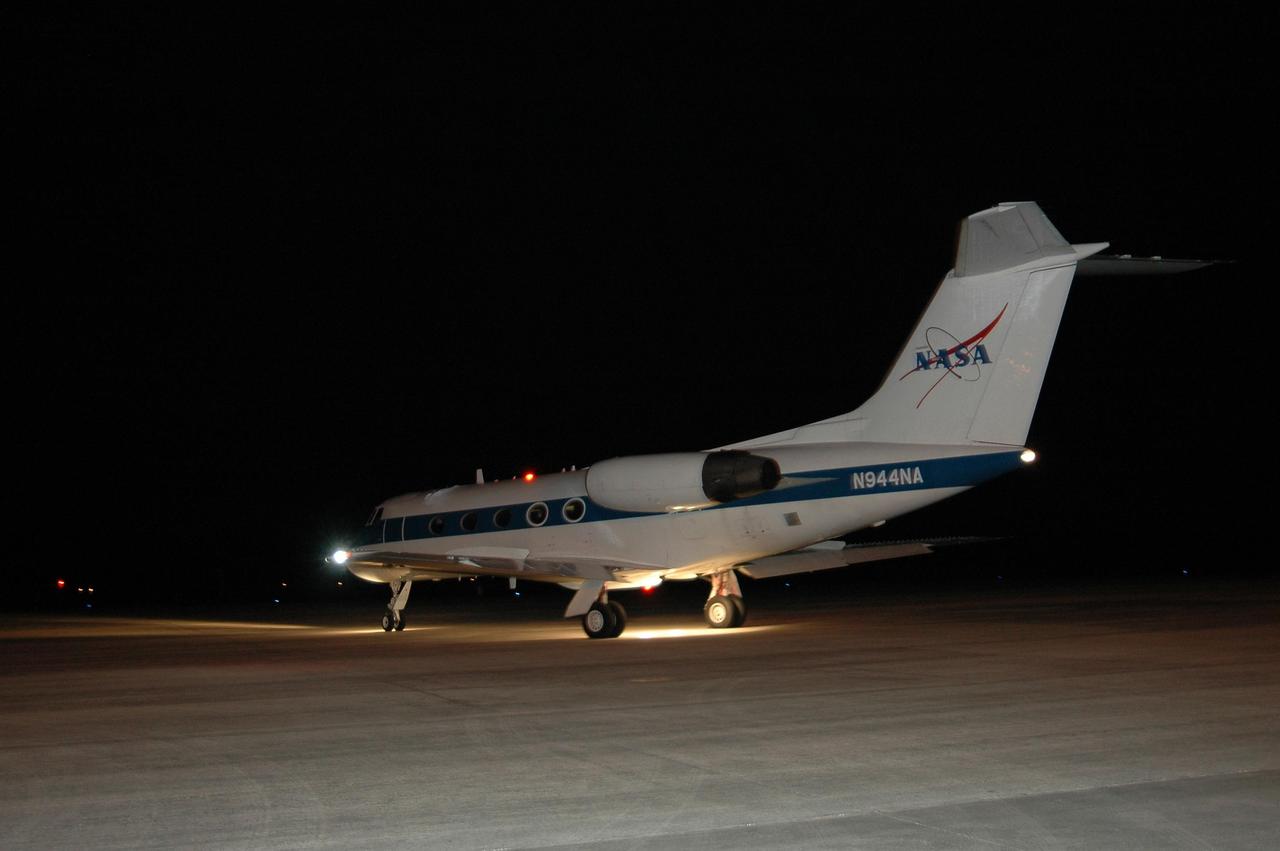
KENNEDY SPACE CENTER, FLA. - In the early morning hours on NASA Kennedy Space Center's Shuttle Landing Facility, the Shuttle Training Aircraft taxis onto the runway. In the specially configured aircraft, STS-115 Commander Brent Jett and Pilot Christopher Ferguson are practicing landing the shuttle. STA practice is part of launch preparations. The STA is a Grumman American Aviation-built Gulf Stream II jet that was modified to simulate an orbiter’s cockpit, motion and visual cues, and handling qualities. In flight, the STA duplicates the orbiter’s atmospheric descent trajectory from approximately 35,000 feet altitude to landing on a runway. Because the orbiter is unpowered during re-entry and landing, its high-speed glide must be perfectly executed the first time. Mission STS-115 is scheduled to lift off about 12:29 p.m. Sept. 6. Mission managers cancelled Atlantis' first launch campaign due to a lightning strike at the pad and the passage of Tropical Storm Ernesto along Florida's east coast. The mission will deliver and install the 17-and-a-half-ton P3/P4 truss segment to the port side of the integrated truss system on the orbital outpost. The truss includes a new set of photovoltaic solar arrays. When unfurled to their full length of 240 feet, the arrays will provide additional power for the station in preparation for the delivery of international science modules over the next two years. STS-115 is expected to last 11 days and includes three scheduled spacewalks. Photo credit: NASA/Kim Shiflett
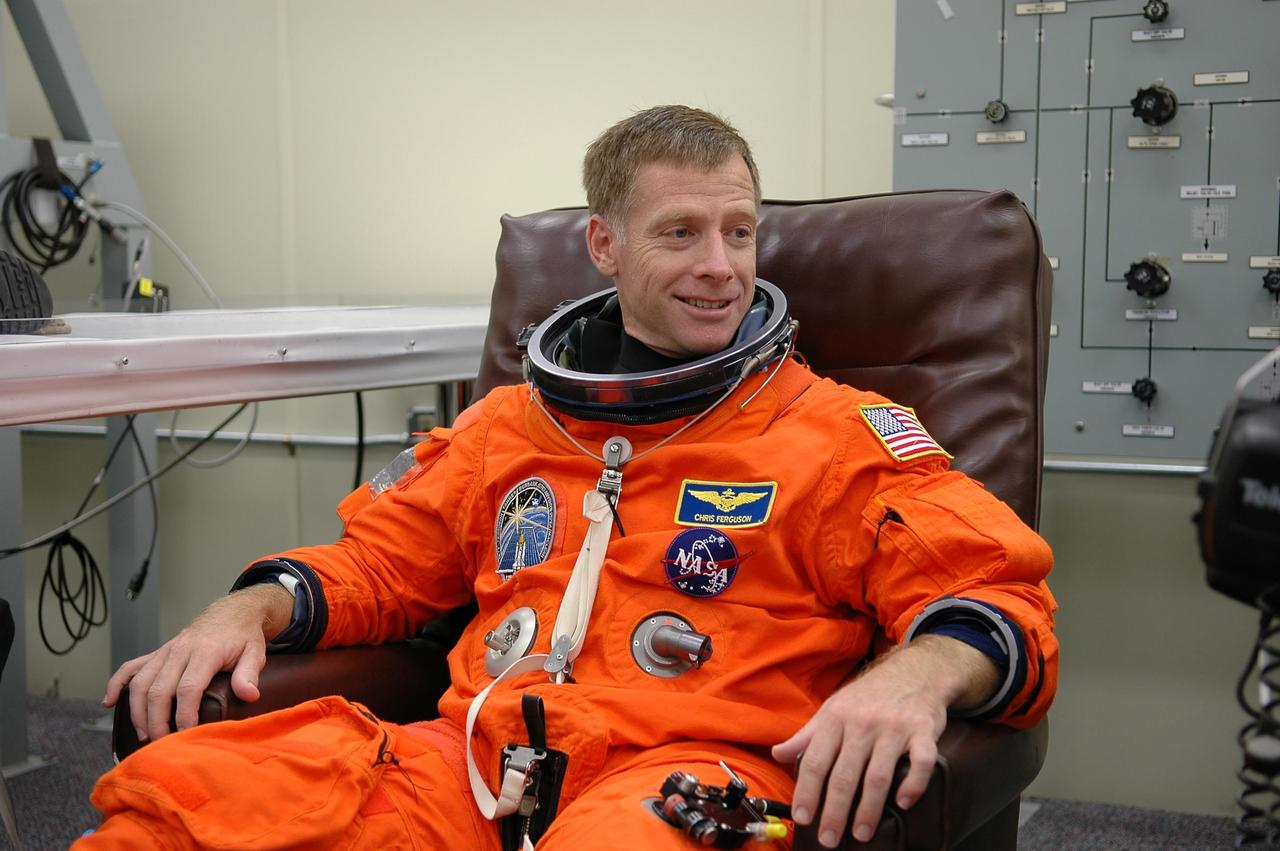
KENNEDY SPACE CENTER, FLA. - STS-115 Pilot Christopher Ferguson dons his launch suit before flying the Shuttle Training Aircraft to practice landing the shuttle. STA practice is part of launch preparations. The STA is a Grumman American Aviation-built Gulf Stream II jet that was modified to simulate an orbiter’s cockpit, motion and visual cues, and handling qualities. In flight, the STA duplicates the orbiter’s atmospheric descent trajectory from approximately 35,000 feet altitude to landing on a runway. Because the orbiter is unpowered during re-entry and landing, its high-speed glide must be perfectly executed the first time. Mission STS-115 is scheduled to lift off about 12:29 p.m. Sept. 6. Mission managers cancelled Atlantis' first launch campaign due to a lightning strike at the pad and the passage of Tropical Storm Ernesto along Florida's east coast. The mission will deliver and install the 17-and-a-half-ton P3/P4 truss segment to the port side of the integrated truss system on the orbital outpost. The truss includes a new set of photovoltaic solar arrays. When unfurled to their full length of 240 feet, the arrays will provide additional power for the station in preparation for the delivery of international science modules over the next two years. STS-115 is expected to last 11 days and includes three scheduled spacewalks. Photo credit: NASA/Kim Shiflett
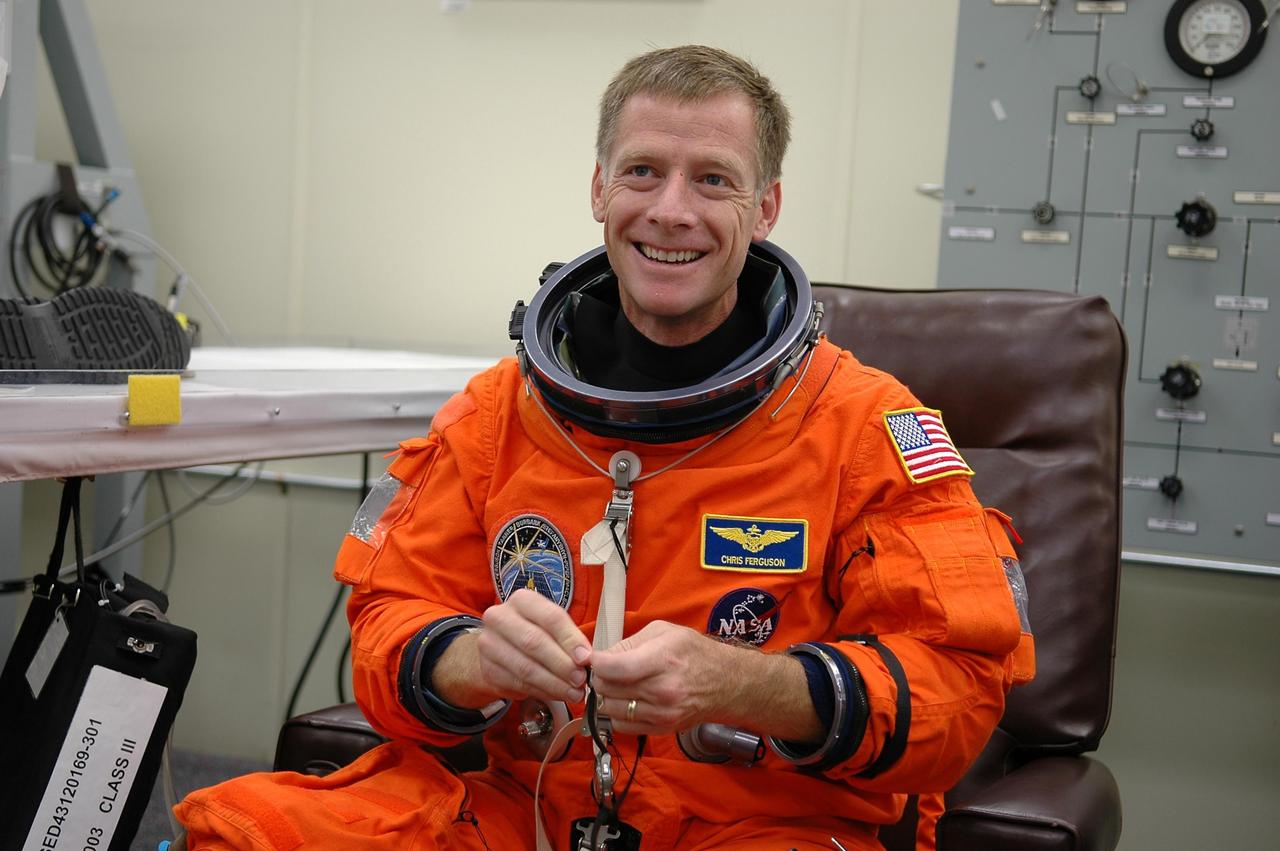
KENNEDY SPACE CENTER, FLA. - STS-115 Pilot Christopher Ferguson is dressed in his launch suit before flying the Shuttle Training Aircraft to practice landing the shuttle. STA practice is part of launch preparations. The STA is a Grumman American Aviation-built Gulf Stream II jet that was modified to simulate an orbiter’s cockpit, motion and visual cues, and handling qualities. In flight, the STA duplicates the orbiter’s atmospheric descent trajectory from approximately 35,000 feet altitude to landing on a runway. Because the orbiter is unpowered during re-entry and landing, its high-speed glide must be perfectly executed the first time. Mission STS-115 is scheduled to lift off about 12:29 p.m. Sept. 6. Mission managers cancelled Atlantis' first launch campaign due to a lightning strike at the pad and the passage of Tropical Storm Ernesto along Florida's east coast. The mission will deliver and install the 17-and-a-half-ton P3/P4 truss segment to the port side of the integrated truss system on the orbital outpost. The truss includes a new set of photovoltaic solar arrays. When unfurled to their full length of 240 feet, the arrays will provide additional power for the station in preparation for the delivery of international science modules over the next two years. STS-115 is expected to last 11 days and includes three scheduled spacewalks. Photo credit: NASA/Kim Shiflett
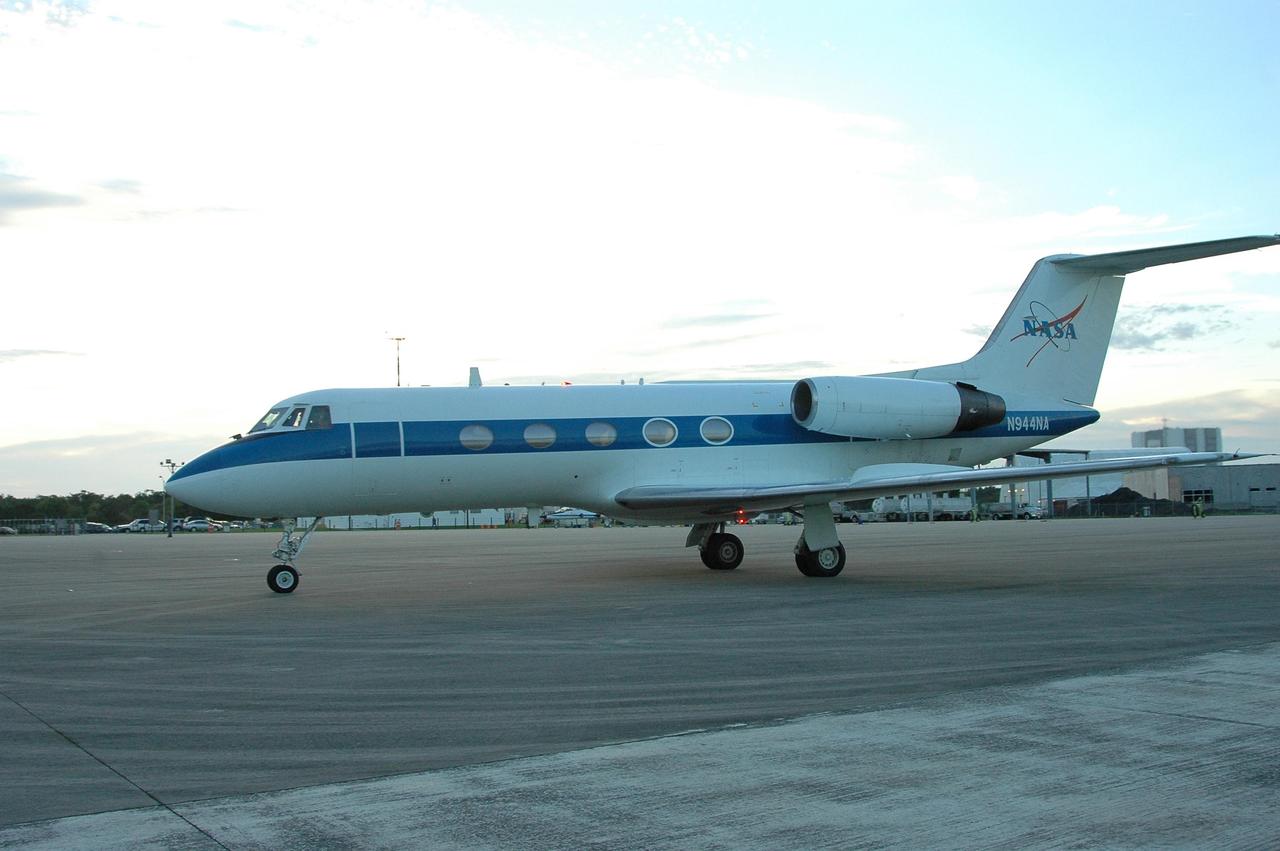
KENNEDY SPACE CENTER, FLA. - A Shuttle Training Aircraft (STA) taxis into the parking area of KSC's Shuttle Landing Facility. In the specially configured aircraft, STS-115 Commander Brent Jett and Pilot Christopher Ferguson practiced landing the shuttle this morning. STA practice is part of launch preparations. The STA is a Grumman American Aviation-built Gulf Stream II jet that was modified to simulate an orbiter’s cockpit, motion and visual cues, and handling qualities. In flight, the STA duplicates the orbiter’s atmospheric descent trajectory from approximately 35,000 feet altitude to landing on a runway. Because the orbiter is unpowered during re-entry and landing, its high-speed glide must be perfectly executed the first time. Mission STS-115 is scheduled to lift off about 12:29 p.m. Sept. 6. Mission managers cancelled Atlantis' first launch campaign due to a lightning strike at the pad and the passage of Tropical Storm Ernesto along Florida's east coast. The mission will deliver and install the 17-and-a-half-ton P3/P4 truss segment to the port side of the integrated truss system on the orbital outpost. The truss includes a new set of photovoltaic solar arrays. When unfurled to their full length of 240 feet, the arrays will provide additional power for the station in preparation for the delivery of international science modules over the next two years. STS-115 is expected to last 11 days and includes three scheduled spacewalks. Photo credit: NASA/Kim Shiflett
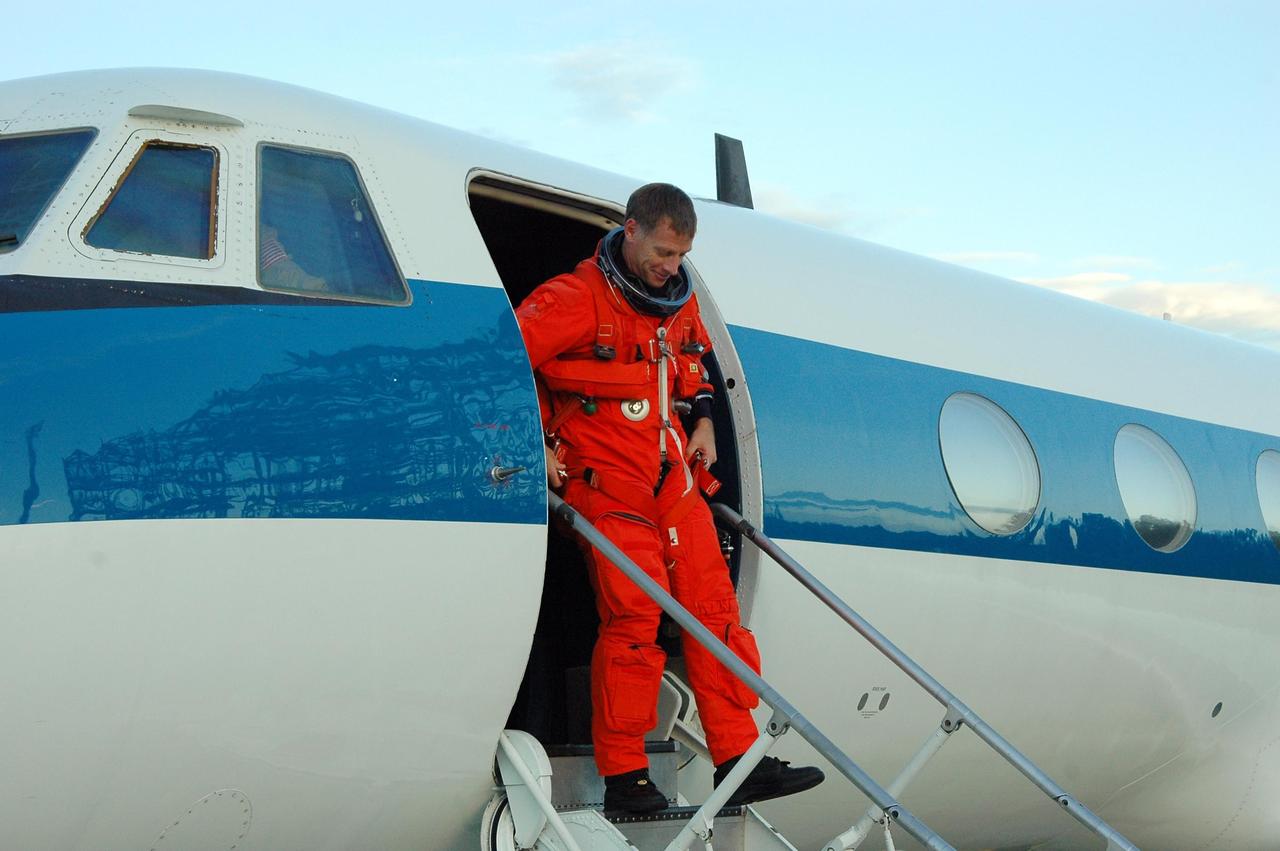
KENNEDY SPACE CENTER, FLA. - On NASA Kennedy Space Center's Shuttle Landing Facility, STS-115 Pilot Christopher Ferguson disembarks from the Shuttle Training Aircraft after a practice session of landing the shuttle. STA practice is part of launch preparations. The STA is a Grumman American Aviation-built Gulf Stream II jet that was modified to simulate an orbiter’s cockpit, motion and visual cues, and handling qualities. In flight, the STA duplicates the orbiter’s atmospheric descent trajectory from approximately 35,000 feet altitude to landing on a runway. Because the orbiter is unpowered during re-entry and landing, its high-speed glide must be perfectly executed the first time. Mission STS-115 is scheduled to lift off about 12:29 p.m. Sept. 6. Mission managers cancelled Atlantis' first launch campaign due to a lightning strike at the pad and the passage of Tropical Storm Ernesto along Florida's east coast. The mission will deliver and install the 17-and-a-half-ton P3/P4 truss segment to the port side of the integrated truss system on the orbital outpost. The truss includes a new set of photovoltaic solar arrays. When unfurled to their full length of 240 feet, the arrays will provide additional power for the station in preparation for the delivery of international science modules over the next two years. STS-115 is expected to last 11 days and includes three scheduled spacewalks. Photo credit: NASA/Kim Shiflett

KENNEDY SPACE CENTER, FLA. - STS-115 Commander Brent Jett is dressed in his launch suit before flying the Shuttle Training Aircraft to practice landing the shuttle. STA practice is part of launch preparations. The STA is a Grumman American Aviation-built Gulf Stream II jet that was modified to simulate an orbiter’s cockpit, motion and visual cues, and handling qualities. In flight, the STA duplicates the orbiter’s atmospheric descent trajectory from approximately 35,000 feet altitude to landing on a runway. Because the orbiter is unpowered during re-entry and landing, its high-speed glide must be perfectly executed the first time. Mission STS-115 is scheduled to lift off about 12:29 p.m. Sept. 6. Mission managers cancelled Atlantis' first launch campaign due to a lightning strike at the pad and the passage of Tropical Storm Ernesto along Florida's east coast. The mission will deliver and install the 17-and-a-half-ton P3/P4 truss segment to the port side of the integrated truss system on the orbital outpost. The truss includes a new set of photovoltaic solar arrays. When unfurled to their full length of 240 feet, the arrays will provide additional power for the station in preparation for the delivery of international science modules over the next two years. STS-115 is expected to last 11 days and includes three scheduled spacewalks. Photo credit: NASA/Kim Shiflett
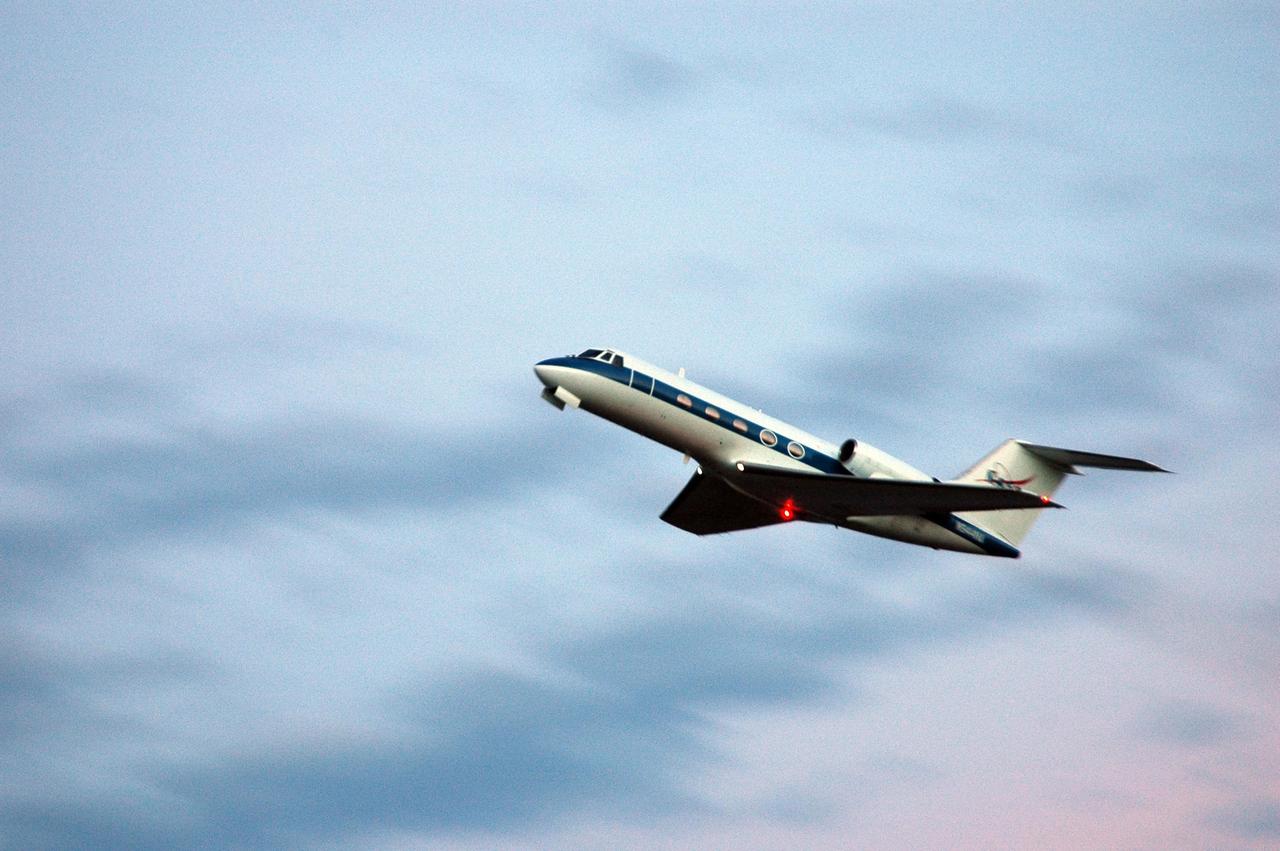
KENNEDY SPACE CENTER, FLA. - On NASA Kennedy Space Center's Shuttle Landing Facility, the Shuttle Training Aircraft takes to the skies. In the specially configured aircraft, STS-115 Commander Brent Jett and Pilot Christopher Ferguson are practicing landing the shuttle. STA practice is part of launch preparations. The STA is a Grumman American Aviation-built Gulf Stream II jet that was modified to simulate an orbiter’s cockpit, motion and visual cues, and handling qualities. In flight, the STA duplicates the orbiter’s atmospheric descent trajectory from approximately 35,000 feet altitude to landing on a runway. Because the orbiter is unpowered during re-entry and landing, its high-speed glide must be perfectly executed the first time. Mission STS-115 is scheduled to lift off about 12:29 p.m. Sept. 6. Mission managers cancelled Atlantis' first launch campaign due to a lightning strike at the pad and the passage of Tropical Storm Ernesto along Florida's east coast. The mission will deliver and install the 17-and-a-half-ton P3/P4 truss segment to the port side of the integrated truss system on the orbital outpost. The truss includes a new set of photovoltaic solar arrays. When unfurled to their full length of 240 feet, the arrays will provide additional power for the station in preparation for the delivery of international science modules over the next two years. STS-115 is expected to last 11 days and includes three scheduled spacewalks. Photo credit: NASA/Kim Shiflett
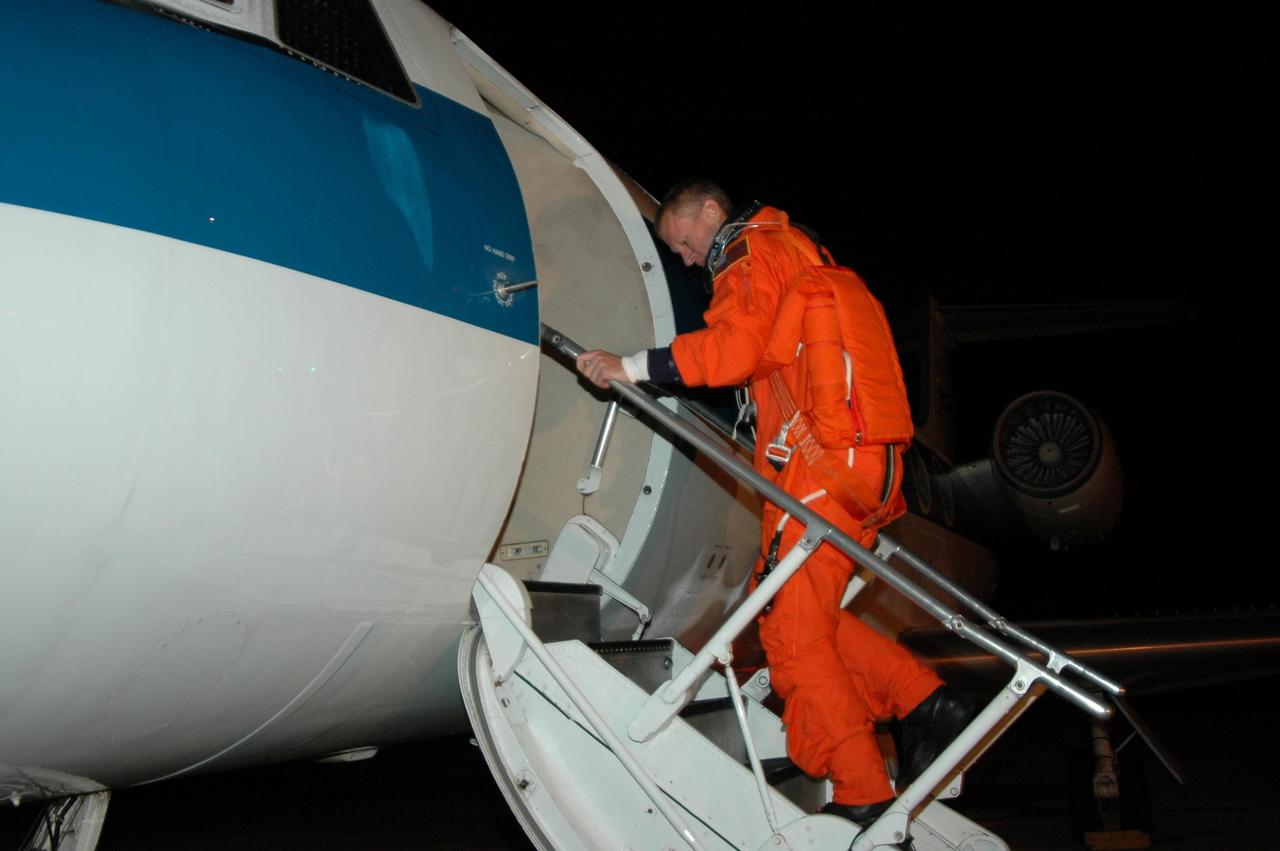
KENNEDY SPACE CENTER, FLA. - On NASA Kennedy Space Center's Shuttle Landing Facility, STS-115 Commander Brent Jett boards the Shuttle Training Aircraft to practice landing the shuttle. STA practice is part of launch preparations. The STA is a Grumman American Aviation-built Gulf Stream II jet that was modified to simulate an orbiter’s cockpit, motion and visual cues, and handling qualities. In flight, the STA duplicates the orbiter’s atmospheric descent trajectory from approximately 35,000 feet altitude to landing on a runway. Because the orbiter is unpowered during re-entry and landing, its high-speed glide must be perfectly executed the first time. Mission STS-115 is scheduled to lift off about 12:29 p.m. Sept. 6. Mission managers cancelled Atlantis' first launch campaign due to a lightning strike at the pad and the passage of Tropical Storm Ernesto along Florida's east coast. The mission will deliver and install the 17-and-a-half-ton P3/P4 truss segment to the port side of the integrated truss system on the orbital outpost. The truss includes a new set of photovoltaic solar arrays. When unfurled to their full length of 240 feet, the arrays will provide additional power for the station in preparation for the delivery of international science modules over the next two years. STS-115 is expected to last 11 days and includes three scheduled spacewalks. Photo credit: NASA/Kim Shiflett
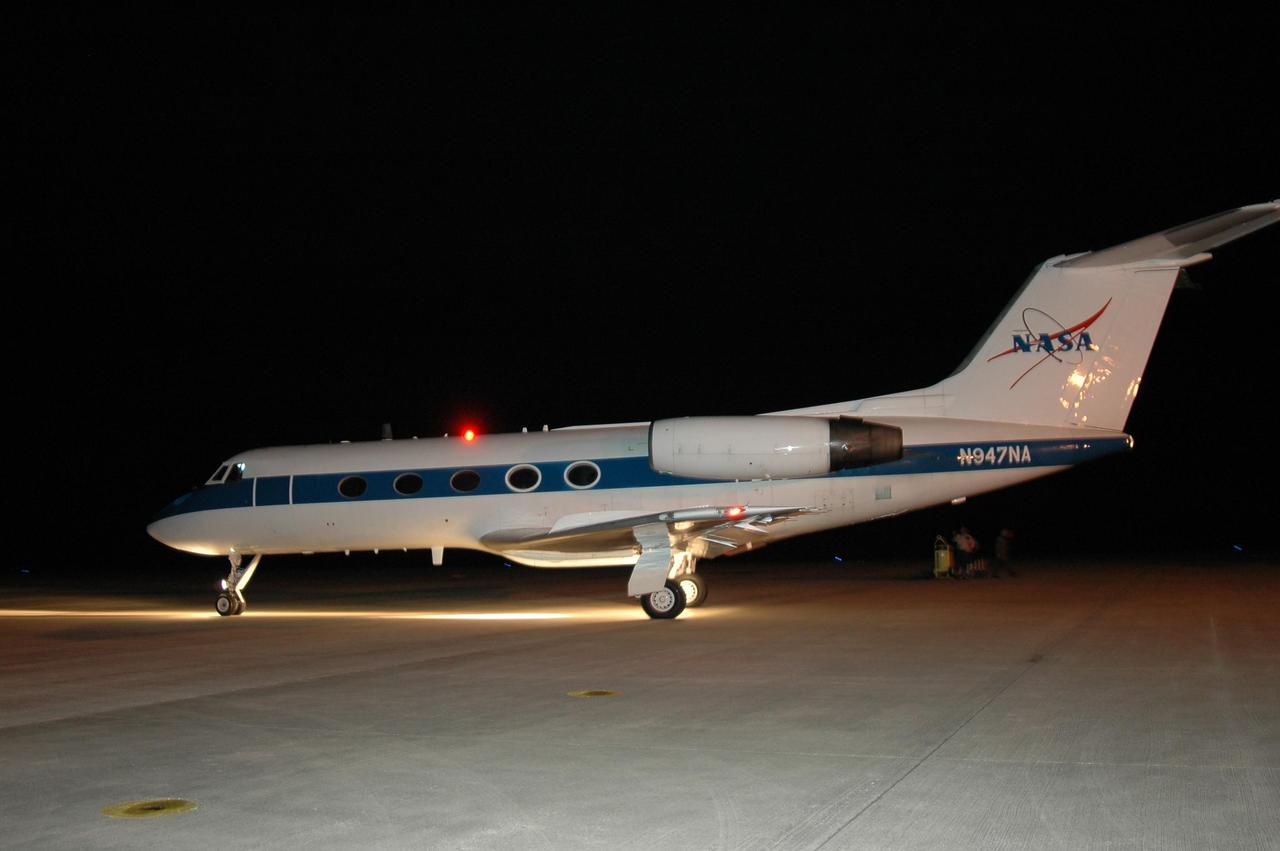
KENNEDY SPACE CENTER, FLA. - In the early morning hours on NASA Kennedy Space Center's Shuttle Landing Facility, the Shuttle Training Aircraft taxis onto the runway. In the specially configured aircraft, STS-115 Commander Brent Jett and Pilot Christopher Ferguson are practicing landing the shuttle. STA practice is part of launch preparations. The STA is a Grumman American Aviation-built Gulf Stream II jet that was modified to simulate an orbiter’s cockpit, motion and visual cues, and handling qualities. In flight, the STA duplicates the orbiter’s atmospheric descent trajectory from approximately 35,000 feet altitude to landing on a runway. Because the orbiter is unpowered during re-entry and landing, its high-speed glide must be perfectly executed the first time. Mission STS-115 is scheduled to lift off about 12:29 p.m. Sept. 6. Mission managers cancelled Atlantis' first launch campaign due to a lightning strike at the pad and the passage of Tropical Storm Ernesto along Florida's east coast. The mission will deliver and install the 17-and-a-half-ton P3/P4 truss segment to the port side of the integrated truss system on the orbital outpost. The truss includes a new set of photovoltaic solar arrays. When unfurled to their full length of 240 feet, the arrays will provide additional power for the station in preparation for the delivery of international science modules over the next two years. STS-115 is expected to last 11 days and includes three scheduled spacewalks. Photo credit: NASA/Kim Shiflett
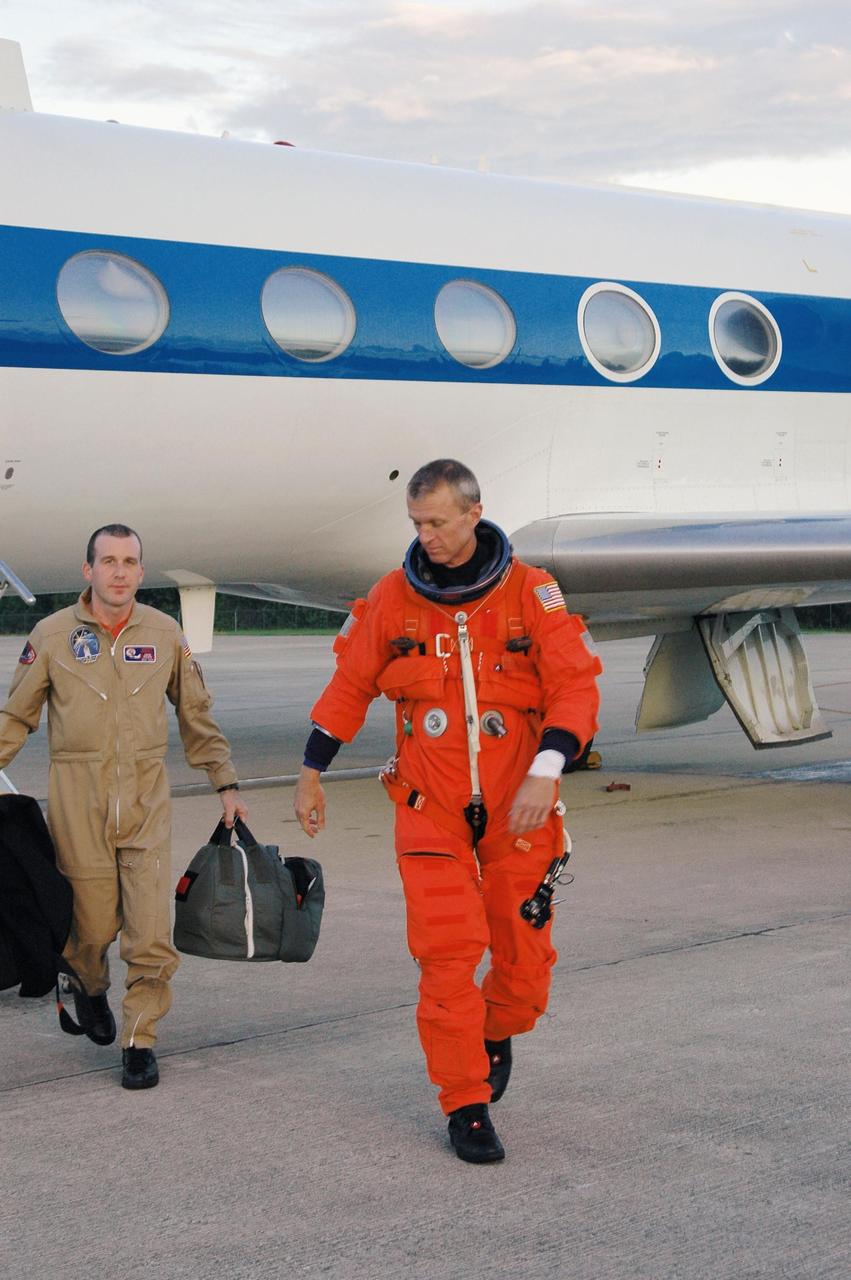
KENNEDY SPACE CENTER, FLA. - On NASA Kennedy Space Center's Shuttle Landing Facility, STS-115 Commander Brent Jett leaves the Shuttle Training Aircraft after a practice session of landing the shuttle. STA practice is part of launch preparations. The STA is a Grumman American Aviation-built Gulf Stream II jet that was modified to simulate an orbiter’s cockpit, motion and visual cues, and handling qualities. In flight, the STA duplicates the orbiter’s atmospheric descent trajectory from approximately 35,000 feet altitude to landing on a runway. Because the orbiter is unpowered during re-entry and landing, its high-speed glide must be perfectly executed the first time. Mission STS-115 is scheduled to lift off about 12:29 p.m. Sept. 6. Mission managers cancelled Atlantis' first launch campaign due to a lightning strike at the pad and the passage of Tropical Storm Ernesto along Florida's east coast. The mission will deliver and install the 17-and-a-half-ton P3/P4 truss segment to the port side of the integrated truss system on the orbital outpost. The truss includes a new set of photovoltaic solar arrays. When unfurled to their full length of 240 feet, the arrays will provide additional power for the station in preparation for the delivery of international science modules over the next two years. STS-115 is expected to last 11 days and includes three scheduled spacewalks. Photo credit: NASA/Kim Shiflett
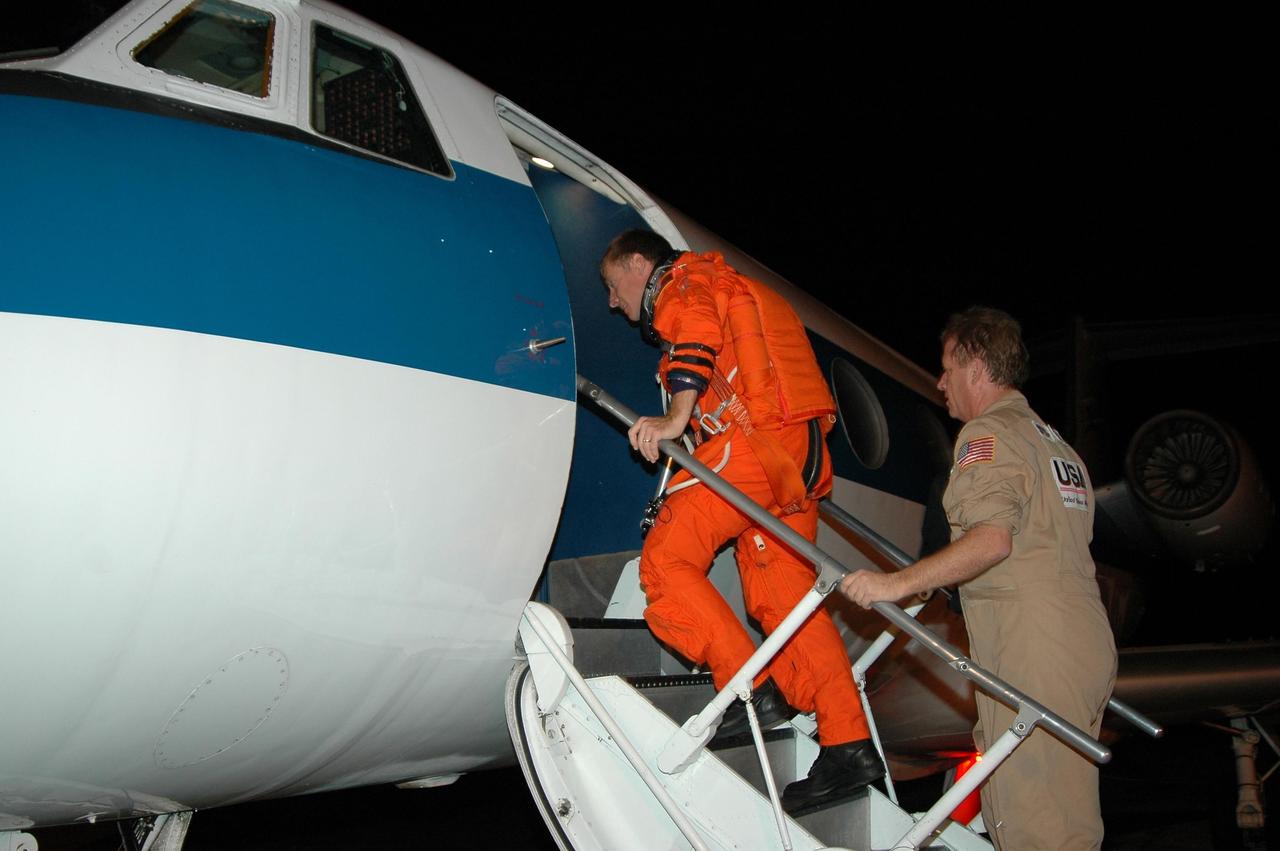
KENNEDY SPACE CENTER, FLA. - On NASA Kennedy Space Center's Shuttle Landing Facility, STS-115 Pilot Christopher Ferguson boards the Shuttle Training Aircraft to practice landing the shuttle. STA practice is part of launch preparations. The STA is a Grumman American Aviation-built Gulf Stream II jet that was modified to simulate an orbiter’s cockpit, motion and visual cues, and handling qualities. In flight, the STA duplicates the orbiter’s atmospheric descent trajectory from approximately 35,000 feet altitude to landing on a runway. Because the orbiter is unpowered during re-entry and landing, its high-speed glide must be perfectly executed the first time. Mission STS-115 is scheduled to lift off about 12:29 p.m. Sept. 6. Mission managers cancelled Atlantis' first launch campaign due to a lightning strike at the pad and the passage of Tropical Storm Ernesto along Florida's east coast. The mission will deliver and install the 17-and-a-half-ton P3/P4 truss segment to the port side of the integrated truss system on the orbital outpost. The truss includes a new set of photovoltaic solar arrays. When unfurled to their full length of 240 feet, the arrays will provide additional power for the station in preparation for the delivery of international science modules over the next two years. STS-115 is expected to last 11 days and includes three scheduled spacewalks. Photo credit: NASA/Kim Shiflett
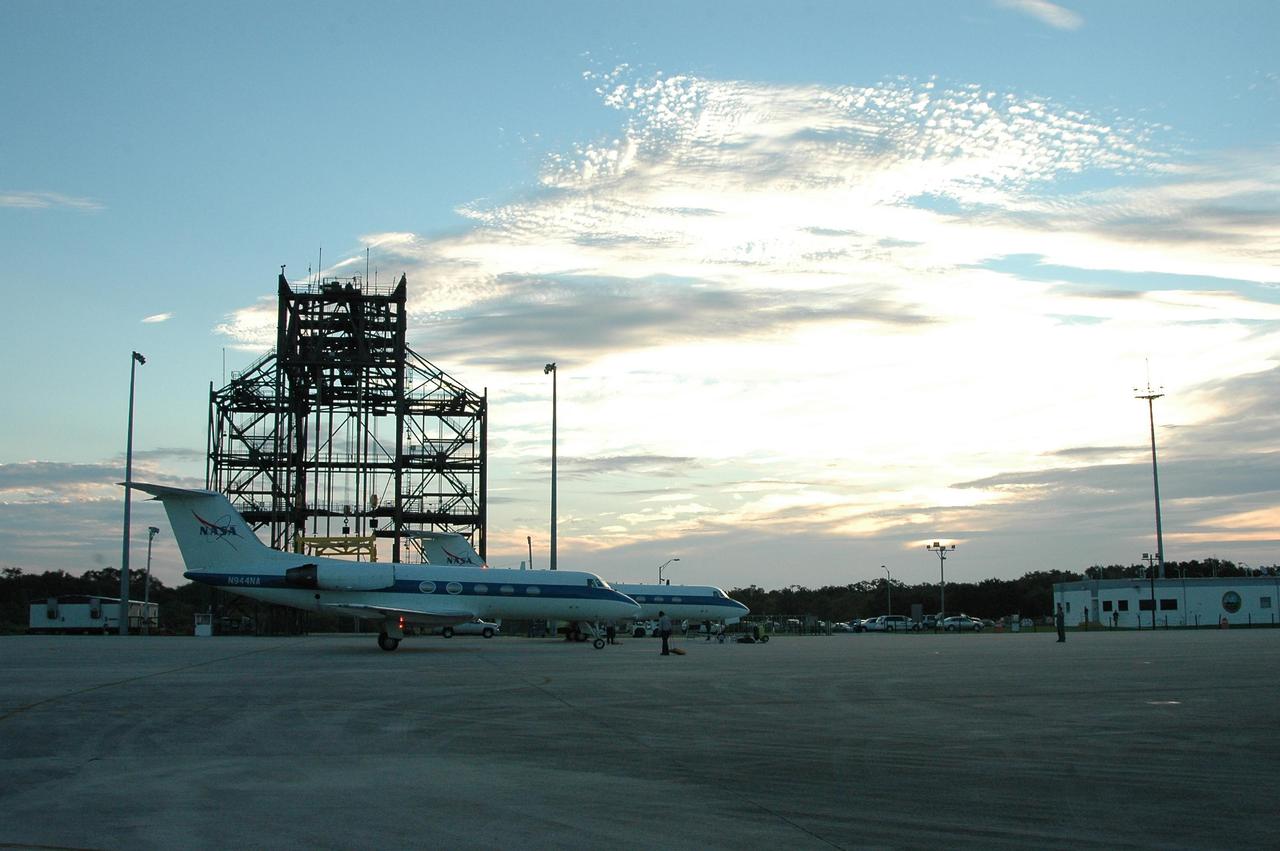
KENNEDY SPACE CENTER, FLA. - A Shuttle Training Aircraft (STA) is positioned in the parking area of KSC's Shuttle Landing Facility. In the specially configured aircraft, STS-115 Commander Brent Jett and Pilot Christopher Ferguson practiced landing the shuttle this morning. The space shuttle's Mate-Demate Device is seen in the background. STA practice is part of launch preparations. The STA is a Grumman American Aviation-built Gulf Stream II jet that was modified to simulate an orbiter’s cockpit, motion and visual cues, and handling qualities. In flight, the STA duplicates the orbiter’s atmospheric descent trajectory from approximately 35,000 feet altitude to landing on a runway. Because the orbiter is unpowered during re-entry and landing, its high-speed glide must be perfectly executed the first time. Mission STS-115 is scheduled to lift off about 12:29 p.m. Sept. 6. Mission managers cancelled Atlantis' first launch campaign due to a lightning strike at the pad and the passage of Tropical Storm Ernesto along Florida's east coast. The mission will deliver and install the 17-and-a-half-ton P3/P4 truss segment to the port side of the integrated truss system on the orbital outpost. The truss includes a new set of photovoltaic solar arrays. When unfurled to their full length of 240 feet, the arrays will provide additional power for the station in preparation for the delivery of international science modules over the next two years. STS-115 is expected to last 11 days and includes three scheduled spacewalks. Photo credit: NASA/Kim Shiflett

jsc2026e037769 (May 5, 2026) --- CSA (Canadian Space Agency) astronaut Josh Kutryk practices suiting up in a spacesuit in an International Space Station airlock simulator at Johnson Space Center’s (JSC) Space Vehicle Mockup Facility in Houston, Texas. Astronauts familiarize themselves with spacesuit systems and procedures and practice Quest airlock operations before conducting spacewalk training at JSC’s Neutral Buoyancy Laboratory in simulated microgravity. Credit: NASA/Josh Valcarcel

jsc2026e037785 (May 5, 2026) --- NASA astronaut Jessica Watkins (center), surrounded by training specialists, assists CSA (Canadian Space Agency) astronaut Josh Kutryk as he practices suiting up in a spacesuit in an International Space Station airlock simulator at Johnson Space Center’s (JSC) Space Vehicle Mockup Facility in Houston, Texas. Astronauts familiarize themselves with spacesuit systems and procedures and practice Quest airlock operations before conducting spacewalk training at JSC’s Neutral Buoyancy Laboratory in simulated microgravity. Credit: NASA/Josh Valcarcel

jsc2026e037783 (May 5, 2026) --- CSA (Canadian Space Agency) astronaut Josh Kutryk (left) and NASA astronaut Luke Delaney (right), with assistance from training specialists, practice suiting up in spacesuits in an International Space Station airlock simulator at Johnson Space Center’s (JSC) Space Vehicle Mockup Facility in Houston, Texas. Astronauts familiarize themselves with spacesuit systems and procedures and practice Quest airlock operations before conducting spacewalk training at JSC’s Neutral Buoyancy Laboratory in simulated microgravity. Credit: NASA/Josh Valcarcel

jsc2026e037778 (May 5, 2026) --- NASA astronaut Jessica Watkins assists NASA astronaut Luke Delaney as he practices suiting up in a spacesuit in an International Space Station airlock simulator at Johnson Space Center’s (JSC) Space Vehicle Mockup Facility in Houston, Texas. Astronauts familiarize themselves with spacesuit systems and procedures and practice Quest airlock operations before conducting spacewalk training at JSC’s Neutral Buoyancy Laboratory in simulated microgravity. Credit: NASA/Josh Valcarcel

Astronaut Dale A. Gardner, 51-A mission specialist, rehearses control of manned maneuvering unit (MMU) during a practice for an extravehicular activity (EVA). Gardner is in the Shuttle mockup and integration laboratory at JSC. Gardner handles a stinger device to make initial contact with one of the two satellites they will be working with.
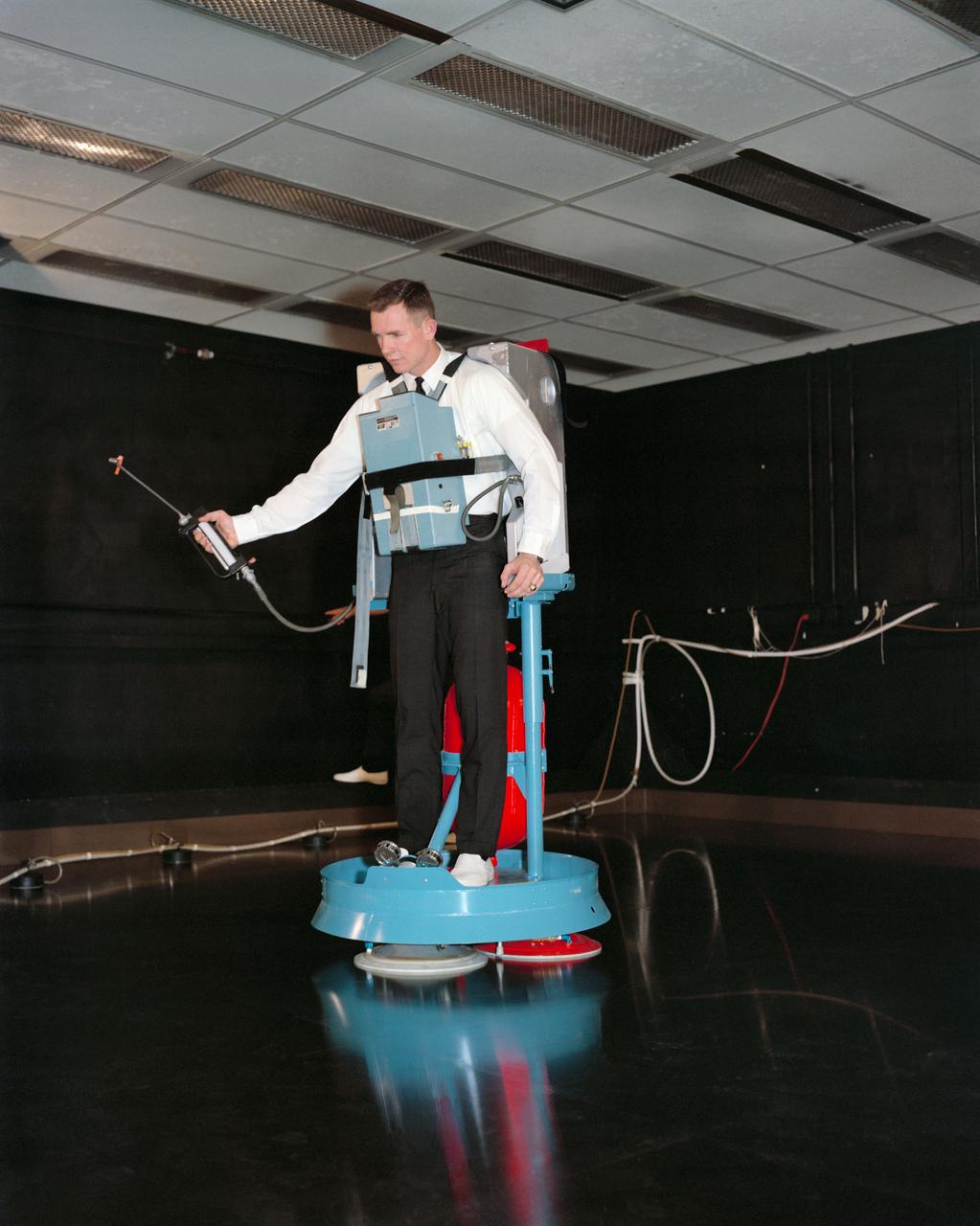
S66-19284 (1 Feb. 1966) --- Astronaut David R. Scott practicing for Gemini-8 extravehicular activity (EVA) in building 4 of the Manned Spacecraft Center on the air bearing floor. He is wearing the Hand-Held Maneuvering Unit which he will use during the EVA. Photo credit: NASA
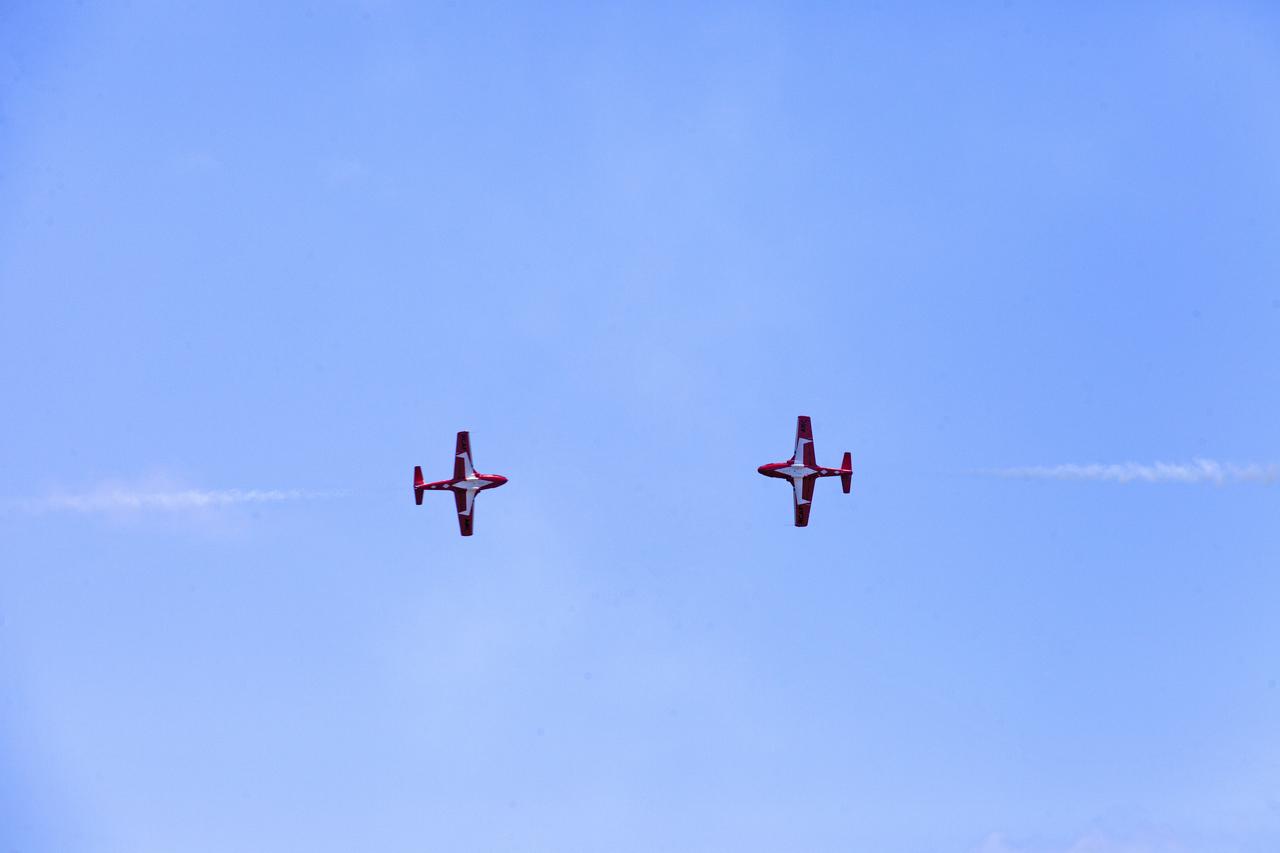
Two Canadian Forces Snowbirds perform an aerial maneuver over NASA's Kennedy Space Center in Florida during a practice flight on May 9, 2018, between their scheduled U.S. air shows.
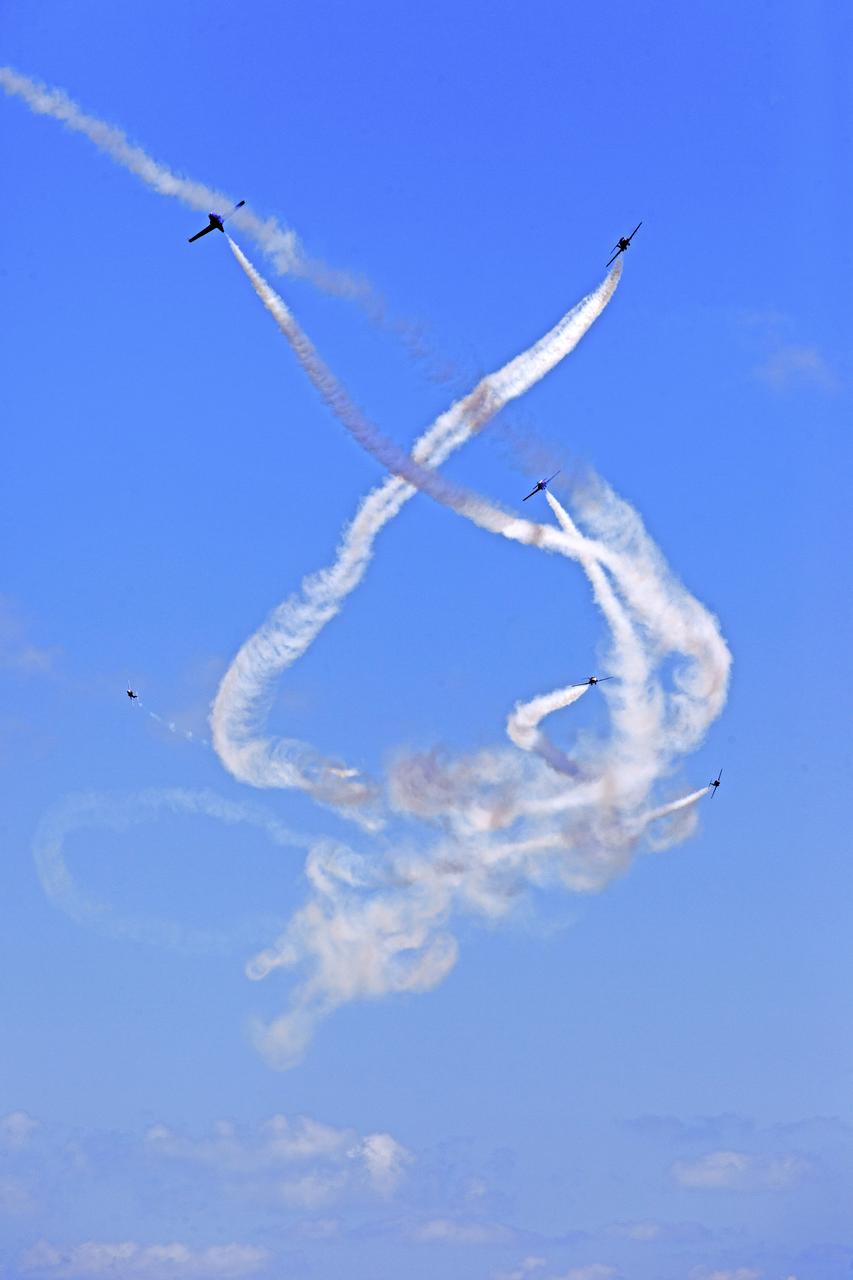
Canadian Forces Snowbirds perform an aerial maneuver over NASA's Kennedy Space Center in Florida during a practice flight on May 9, 2018, between their scheduled U.S. air shows.
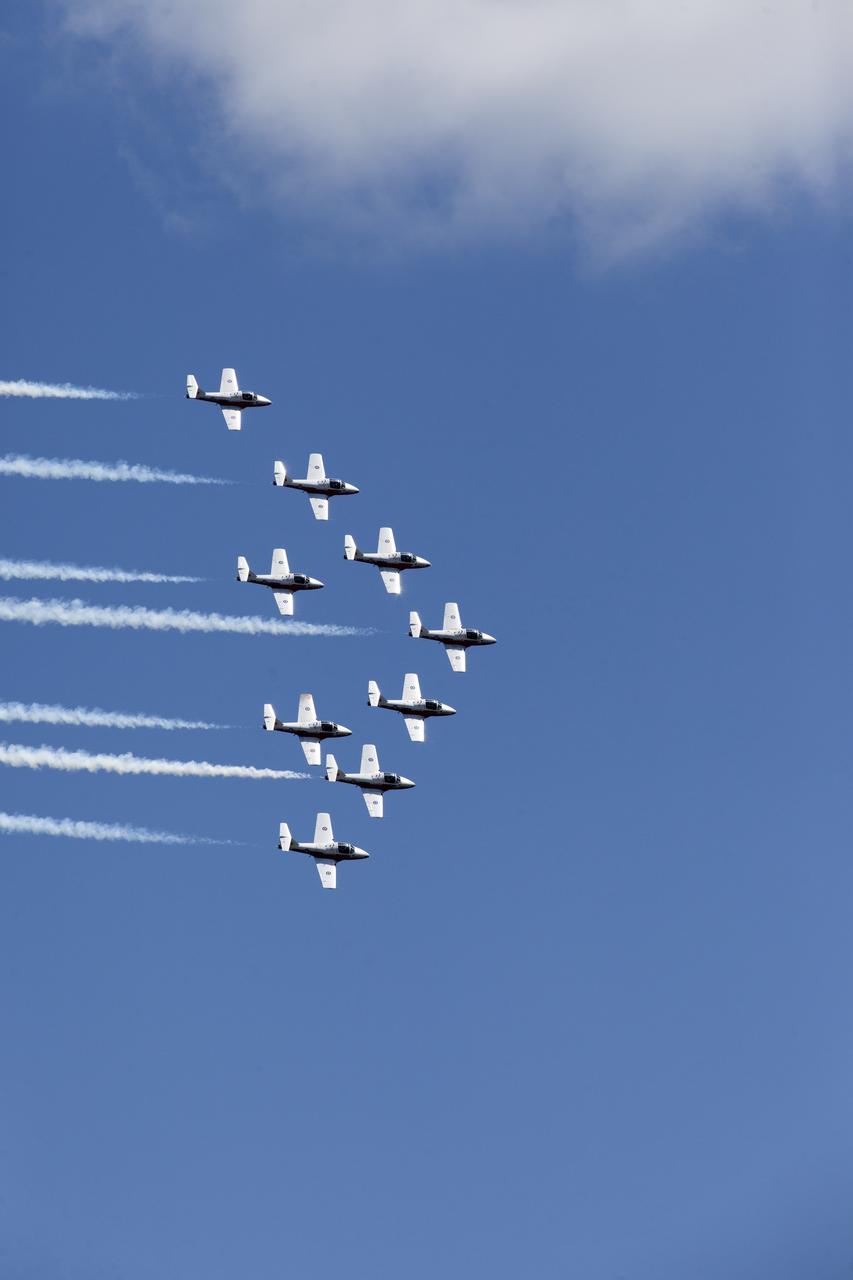
Canadian Forces Snowbirds fly in formation over NASA's Kennedy Space Center in Florida during a practice flight on May 9, 2018, between their scheduled U.S. air shows.
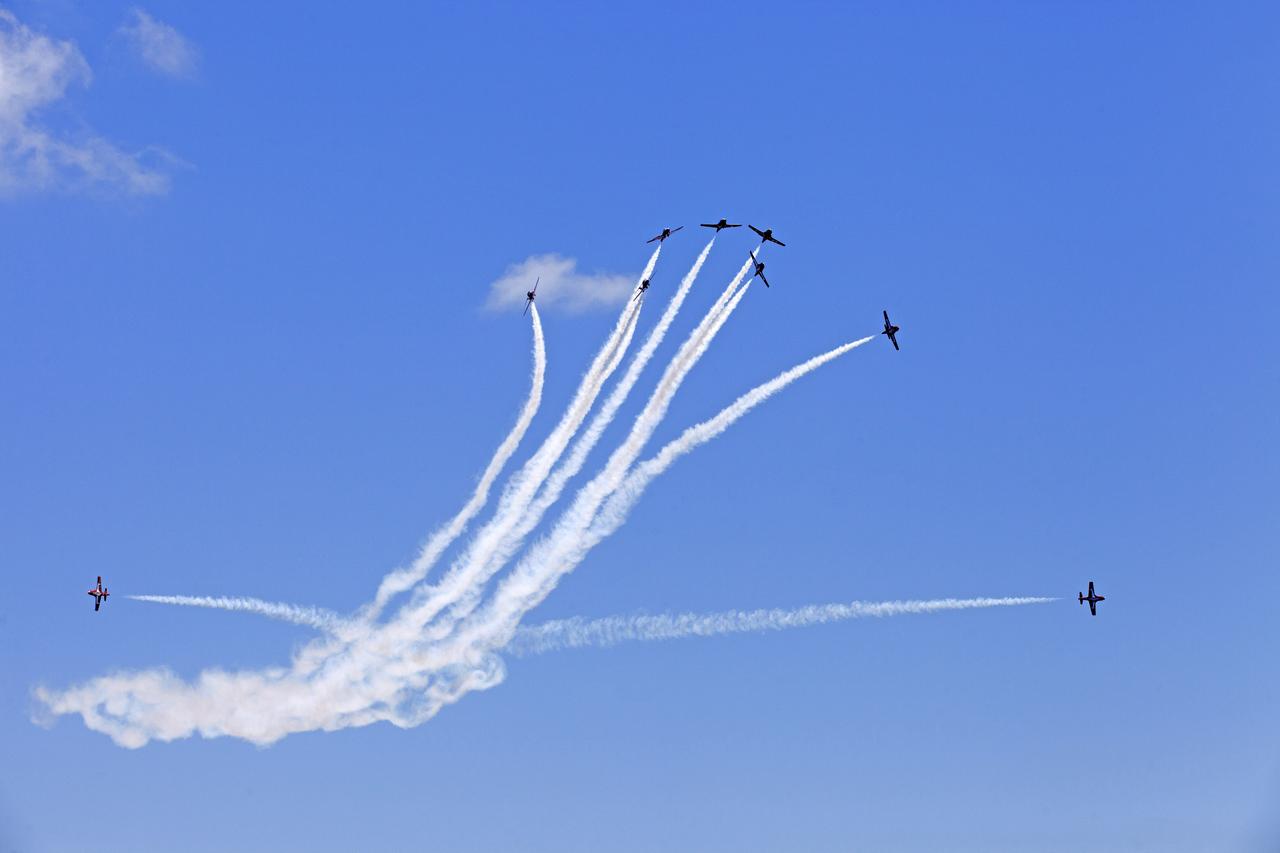
Canadian Forces Snowbirds perform an aerial acrobatic maneuver over NASA's Kennedy Space Center in Florida during a practice flight on May 9, 2018, between their scheduled U.S. air shows.
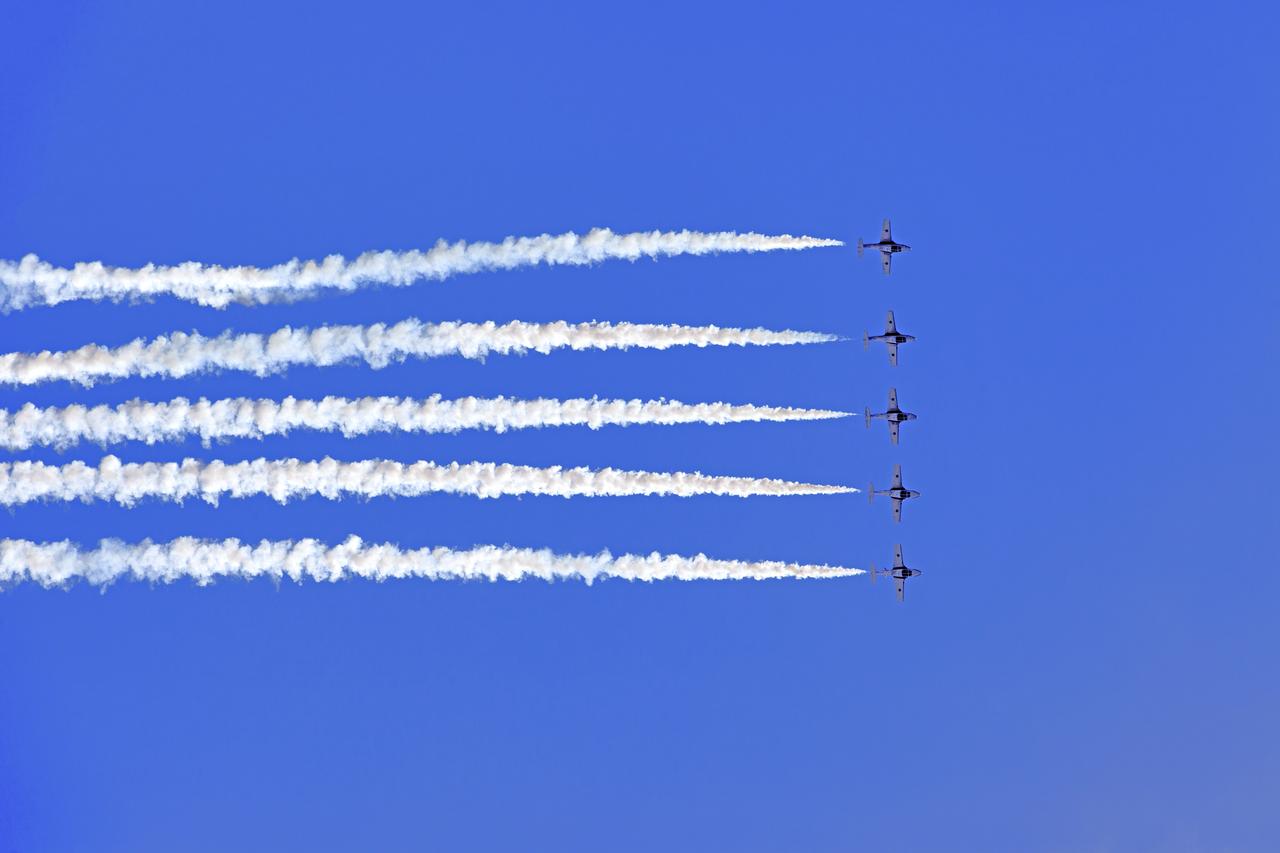
Canadian Forces Snowbirds fly in formation over NASA's Kennedy Space Center in Florida during a practice flight on May 9, 2018, between their scheduled U.S. air shows.
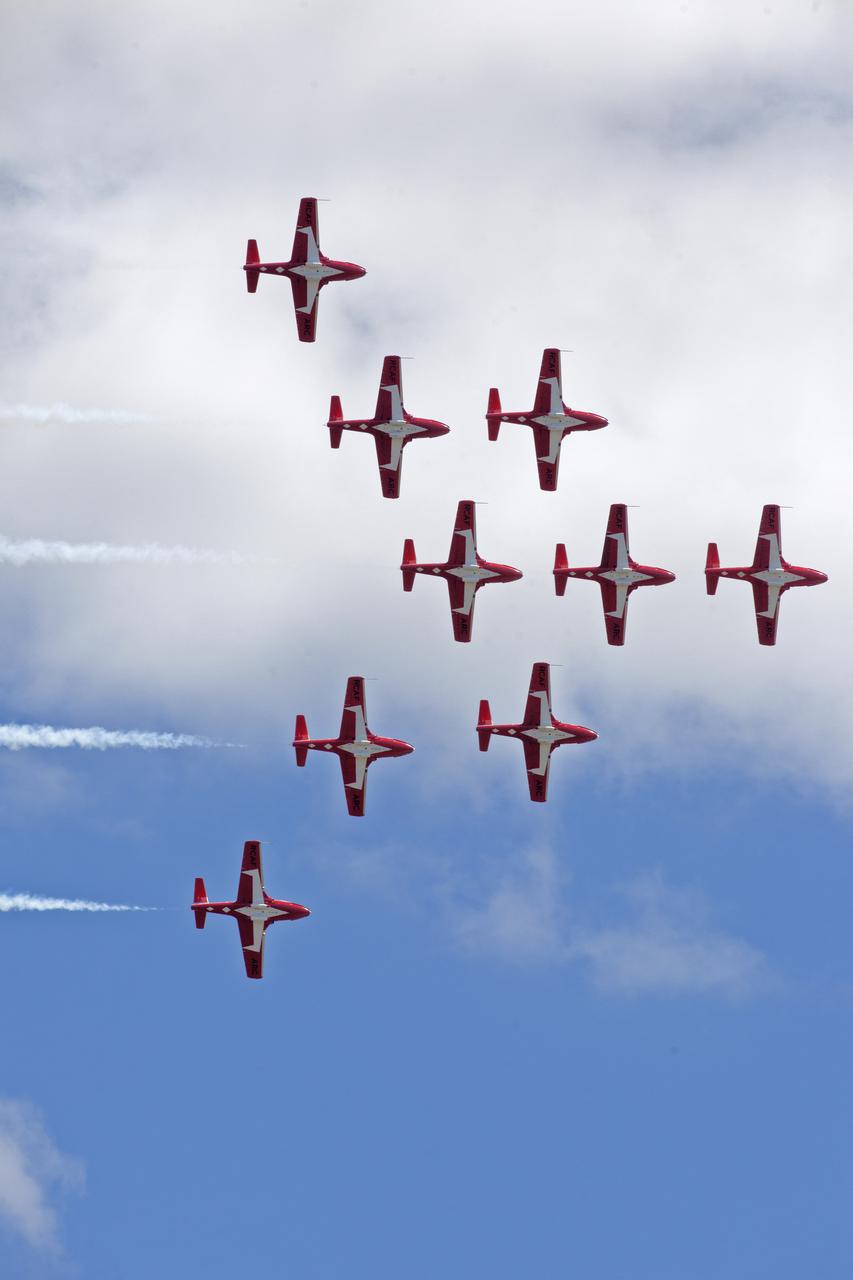
Canadian Forces Snowbirds fly in formation over NASA's Kennedy Space Center in Florida during a practice flight on May 9, 2018, between their scheduled U.S. air shows.
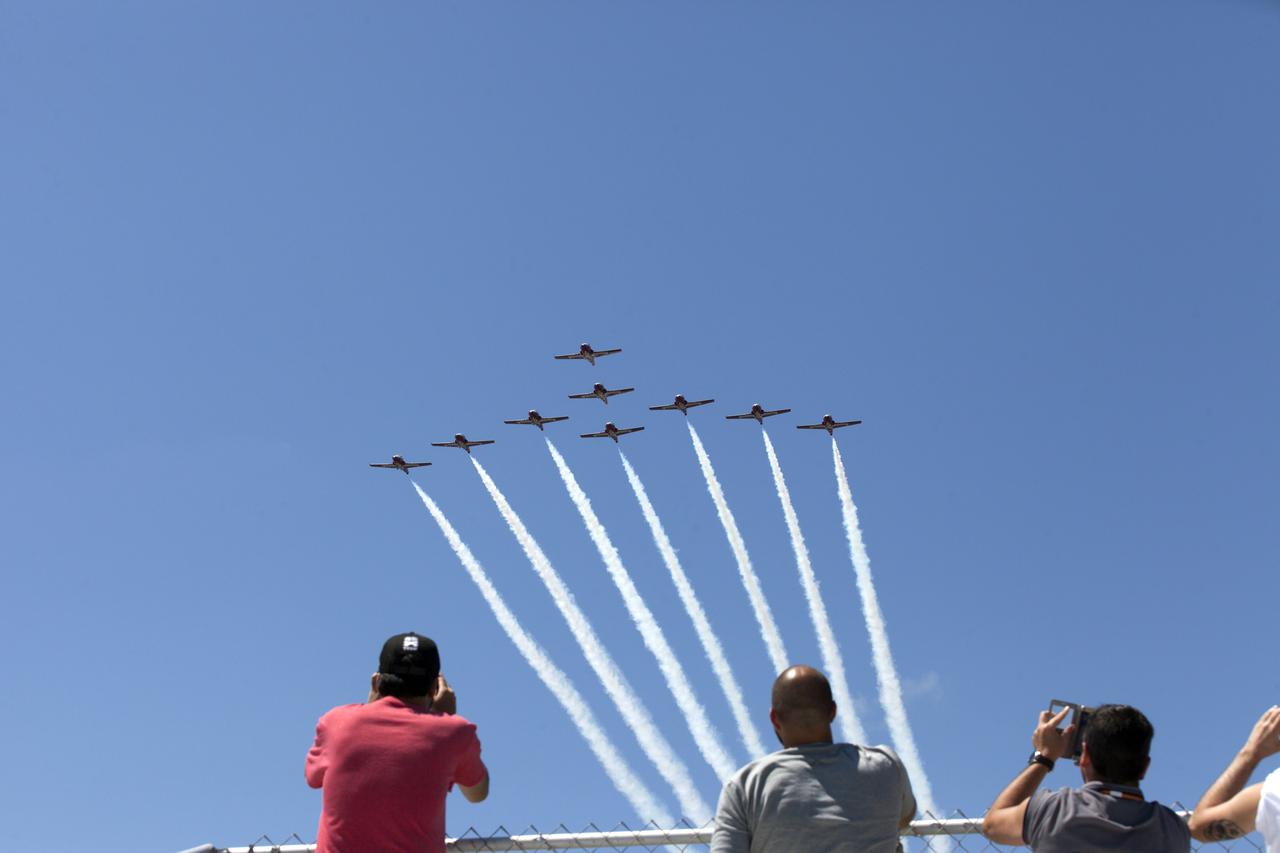
Workers along the NASA Causeway at NASA's Kennedy Space Center in Florida watch a practice flight of the Canadian Forces Snowbirds on May 9, 2018, between their scheduled U.S. air shows.
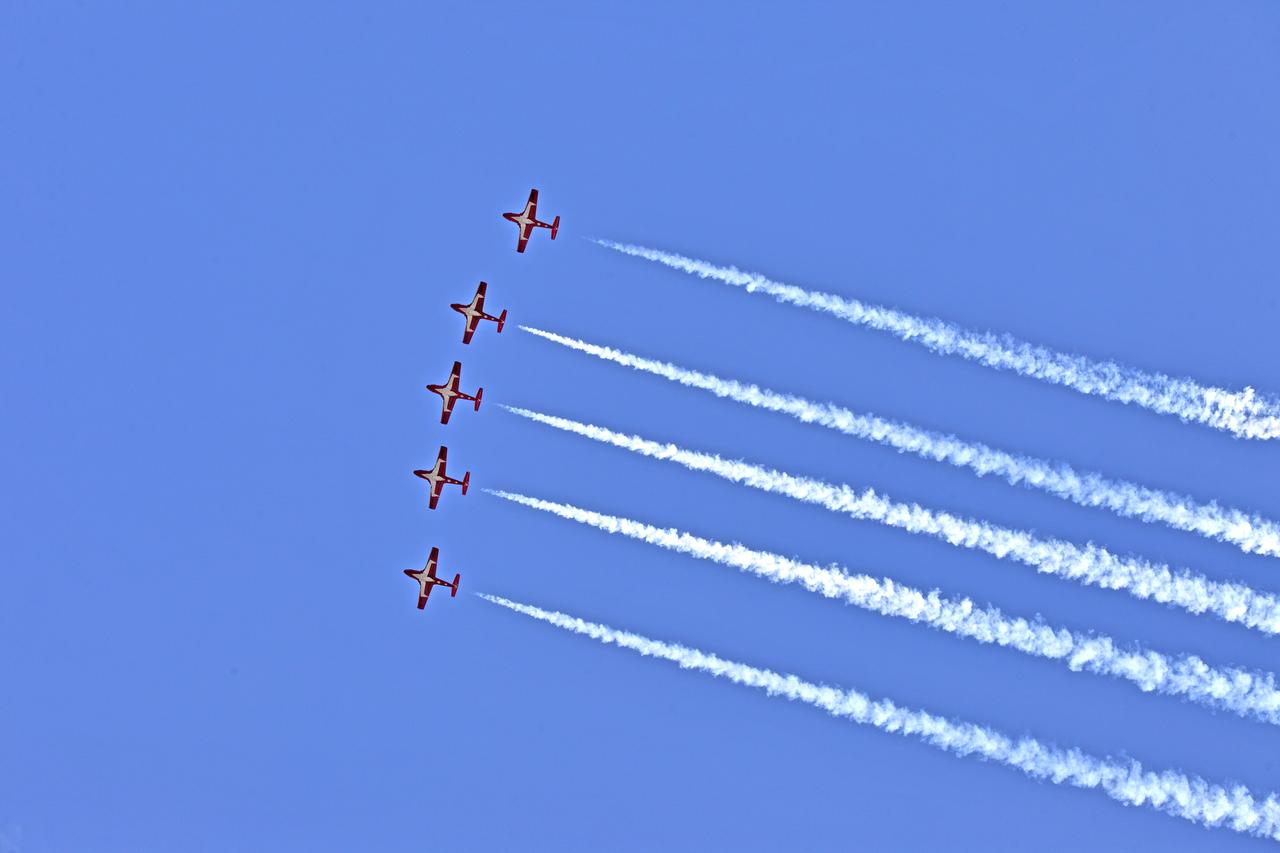
Canadian Forces Snowbirds fly in formation over NASA's Kennedy Space Center in Florida during a practice flight on May 9, 2018, between their scheduled U.S. air shows.
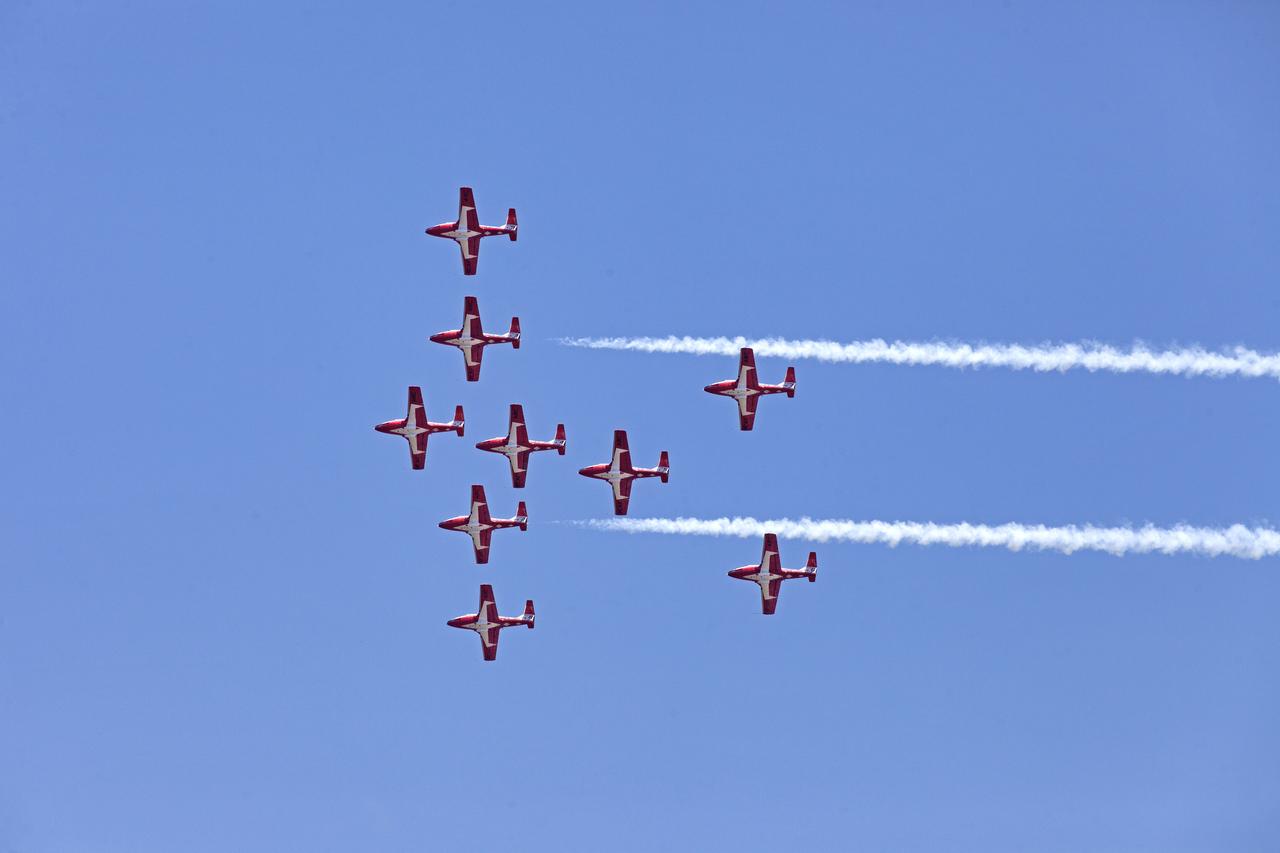
Canadian Forces Snowbirds fly in formation over NASA's Kennedy Space Center in Florida during a practice flight on May 9, 2018, between their scheduled U.S. air shows.
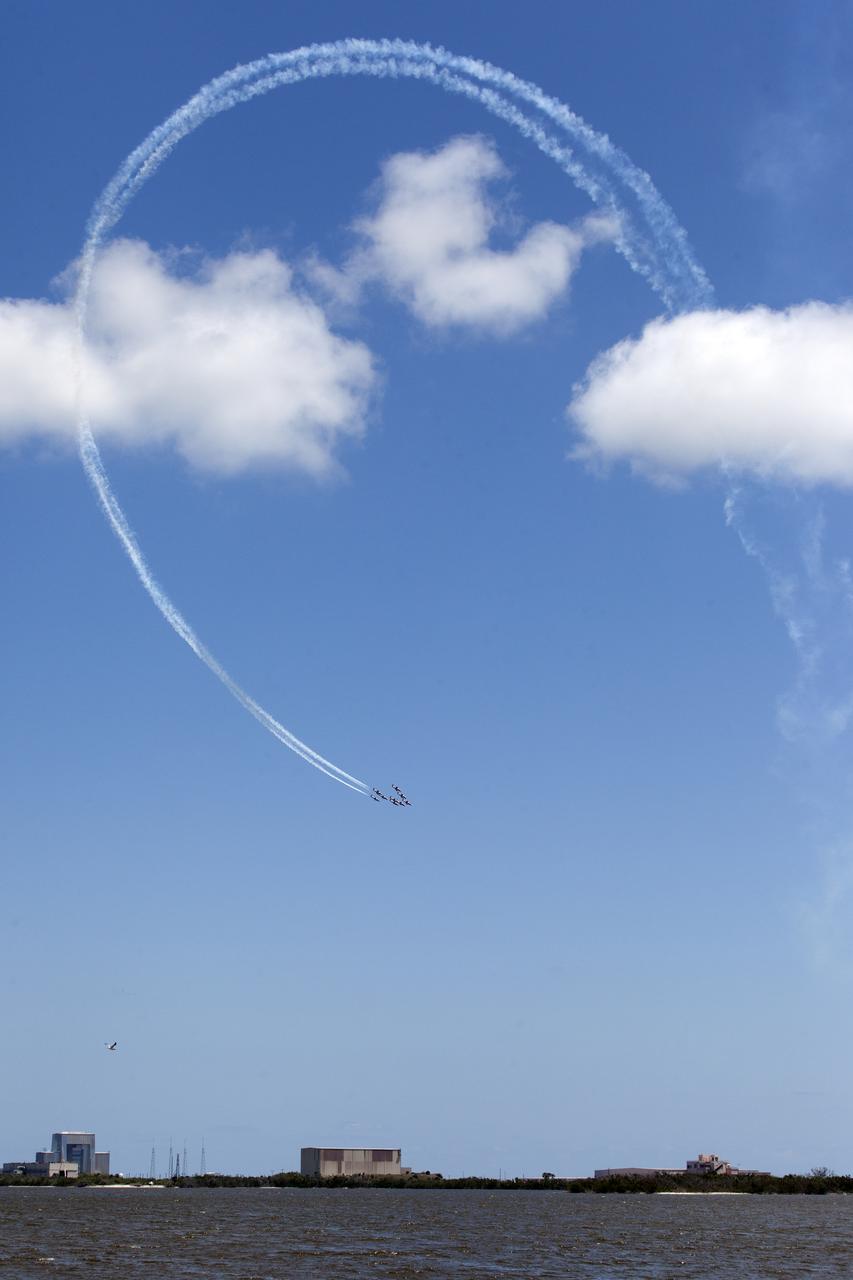
Canadian Forces Snowbirds perform a loop maneuver over Cape Canaveral Air Force Station in Florida during a practice flight between their scheduled U.S. air shows on May 9, 2018.
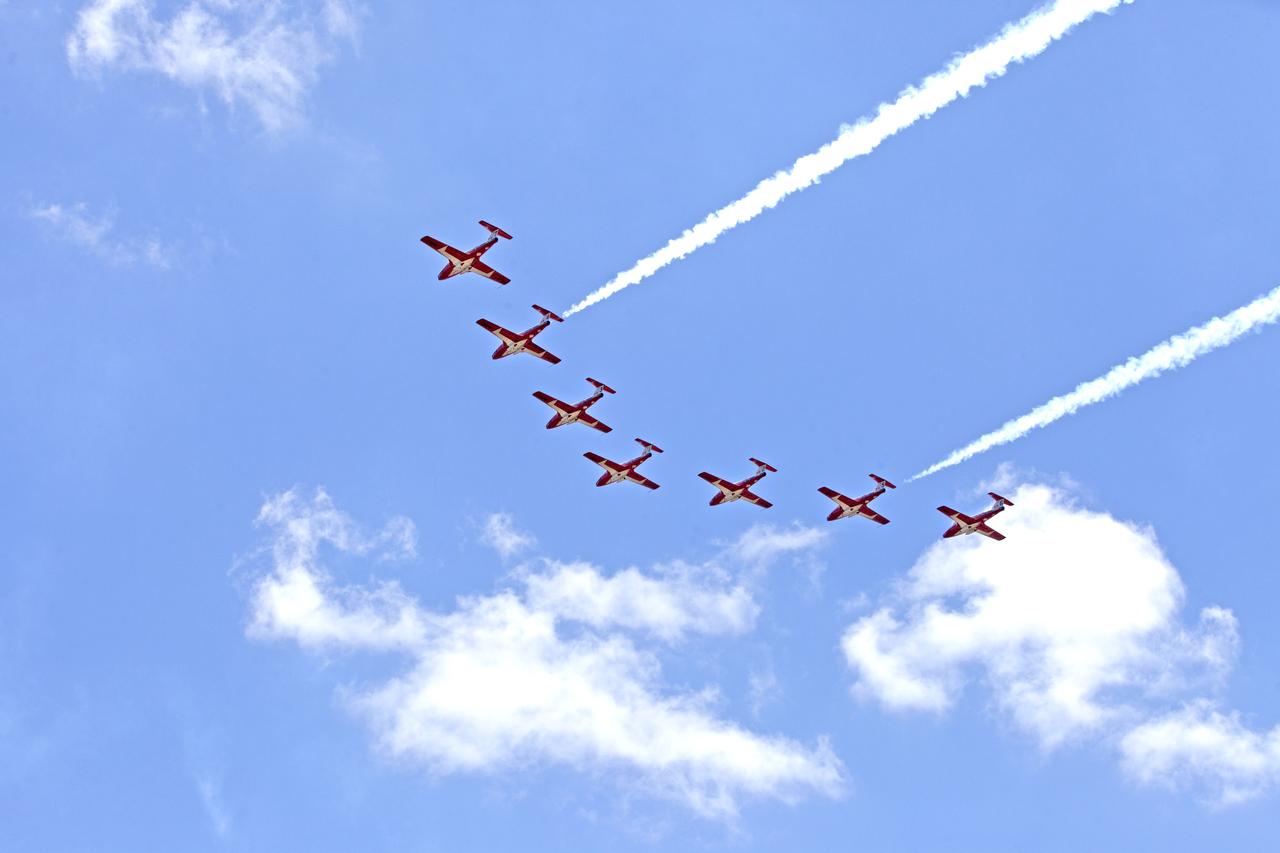
Canadian Forces Snowbirds fly in formation over NASA's Kennedy Space Center in Florida during a practice flight on May 9, 2018, between their scheduled U.S. air shows.
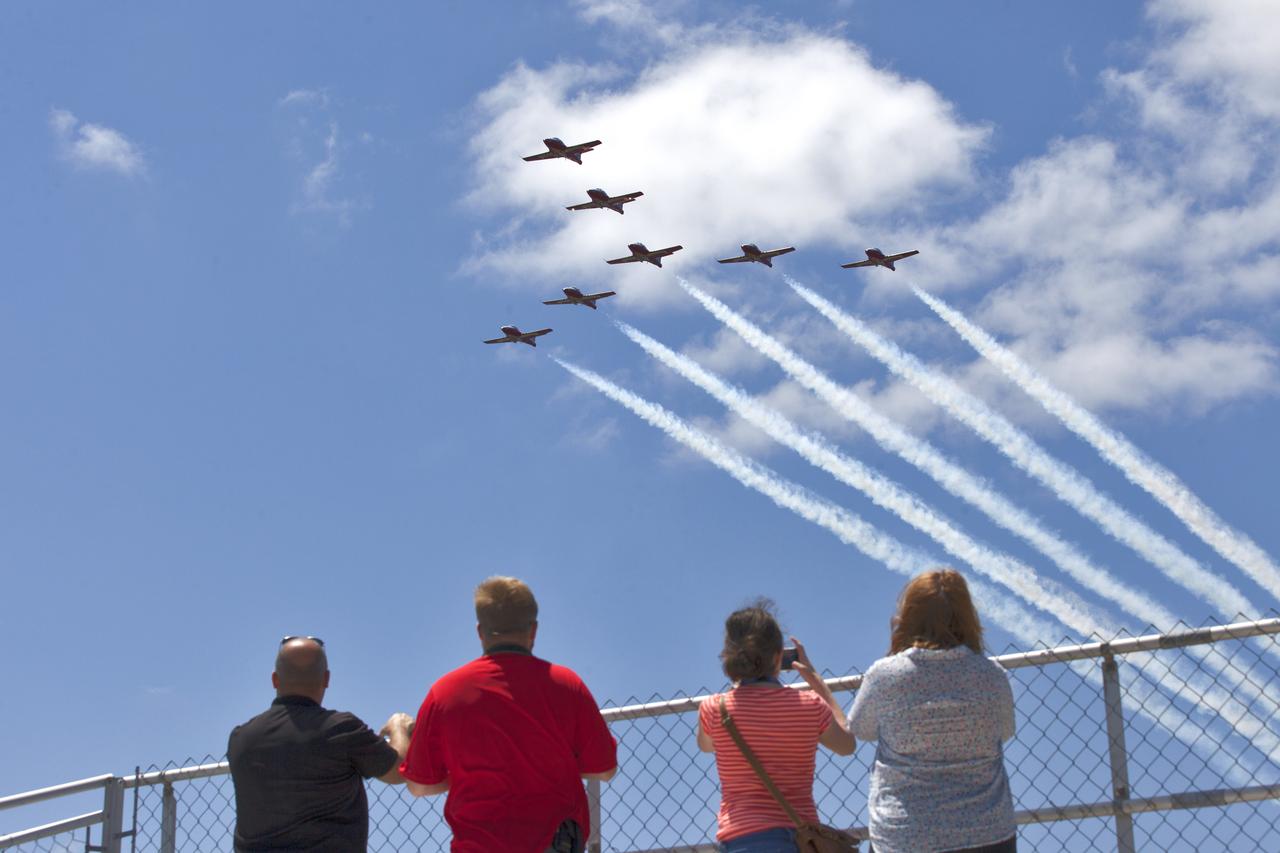
Workers watch as the Canadian Forces Snowbirds fly in formation over the Shuttle Landing Facility at NASA's Kennedy Space Center in Florida, during a practice flight on May 9, 2018, between their scheduled U.S. air shows.
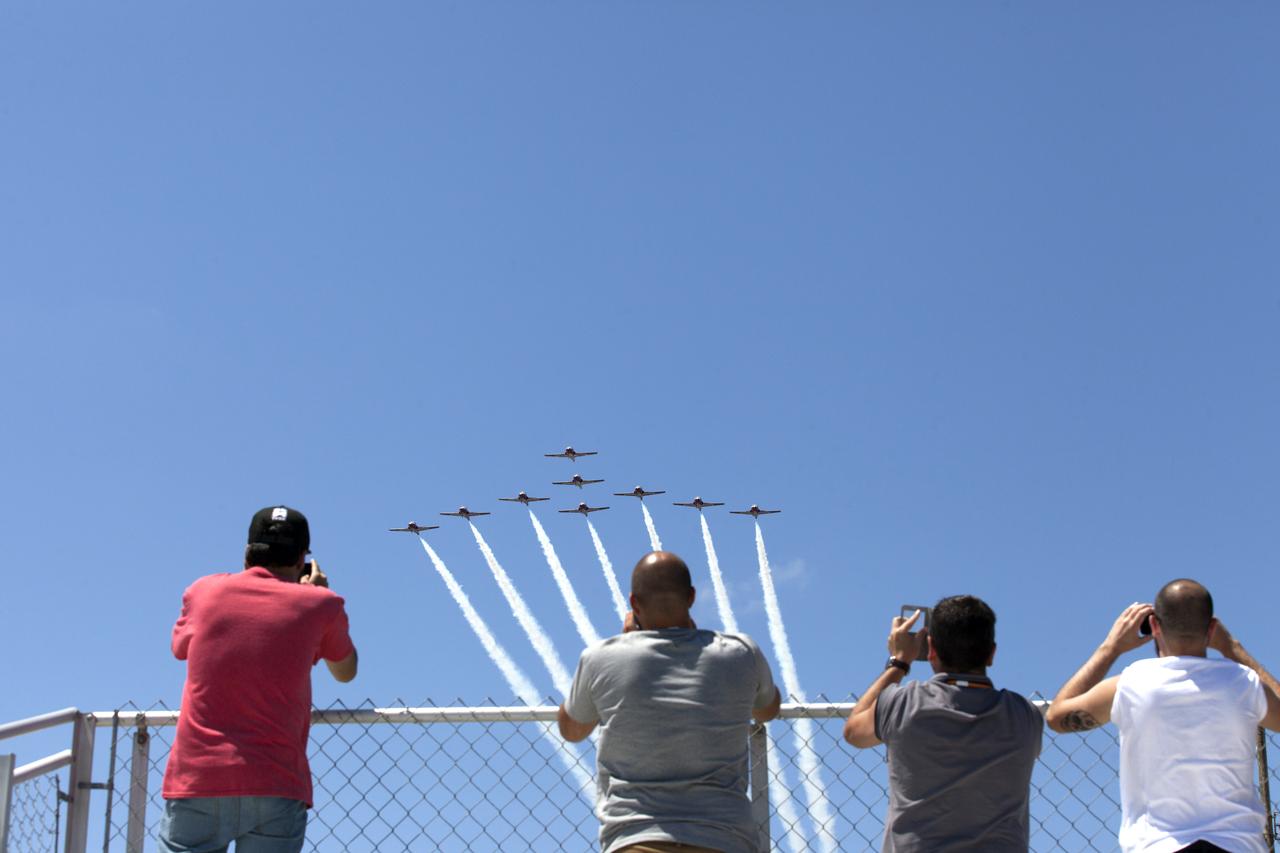
Workers along the NASA Causeway at NASA's Kennedy Space Center in Florida watch a practice flight of the Canadian Forces Snowbirds on May 9, 2018, between their scheduled U.S. air shows.
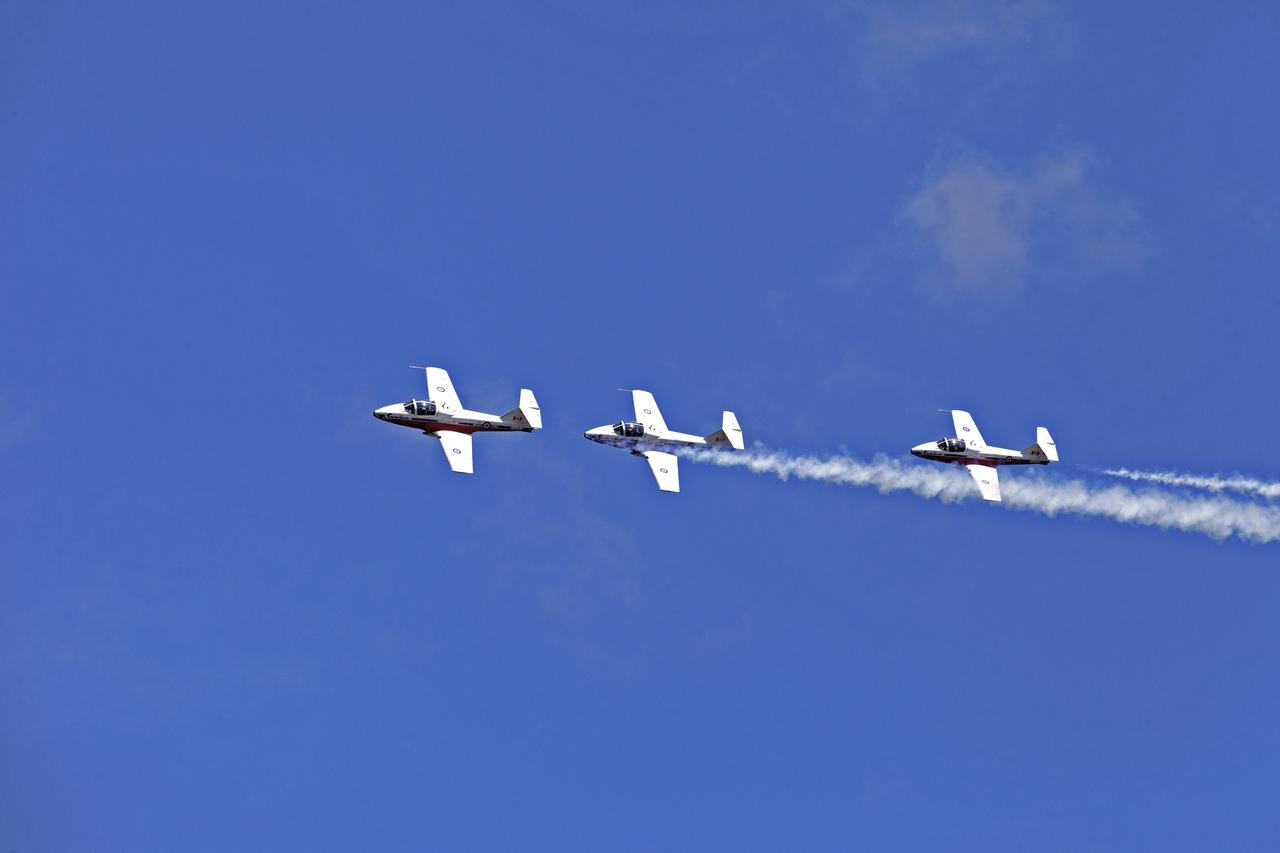
Canadian Forces Snowbirds fly in formation over NASA's Kennedy Space Center in Florida during a practice flight on May 9, 2018, between their scheduled U.S. air shows.
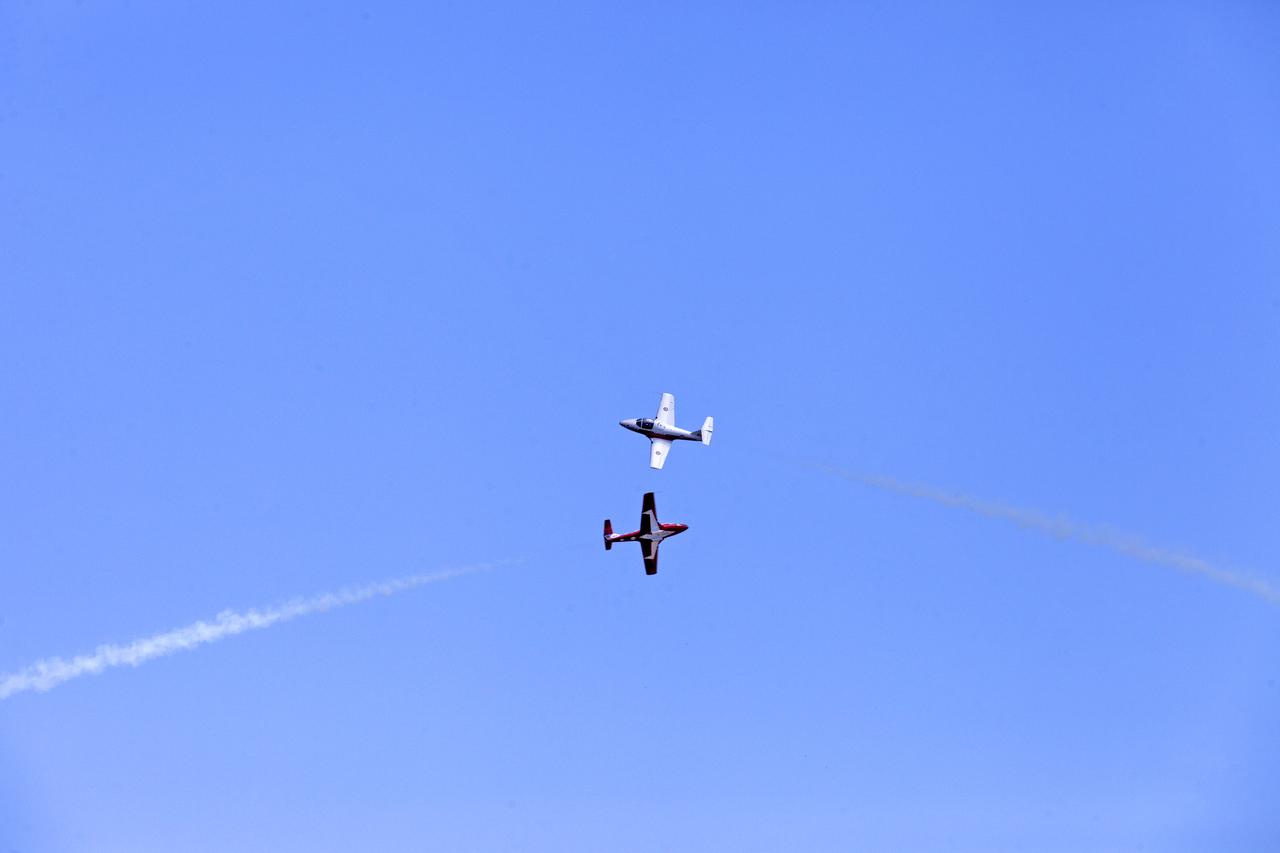
Two Canadian Forces Snowbirds perform a close flyby maneuver over NASA's Kennedy Space Center in Florida during a practice flight on May 9, 2018, between their scheduled U.S. air shows.
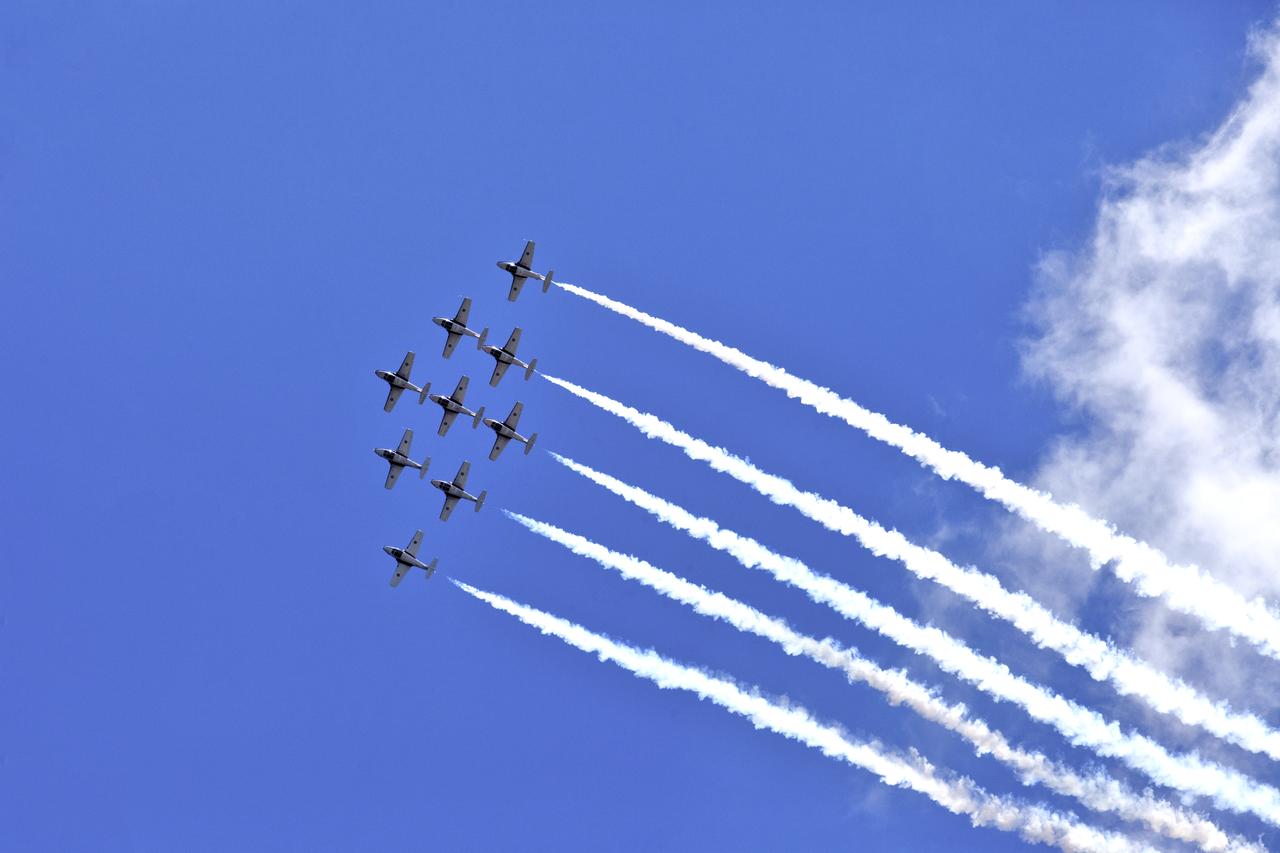
Canadian Forces Snowbirds fly in formation over NASA's Kennedy Space Center in Florida during a practice flight on May 9, 2018, between their scheduled U.S. air shows.
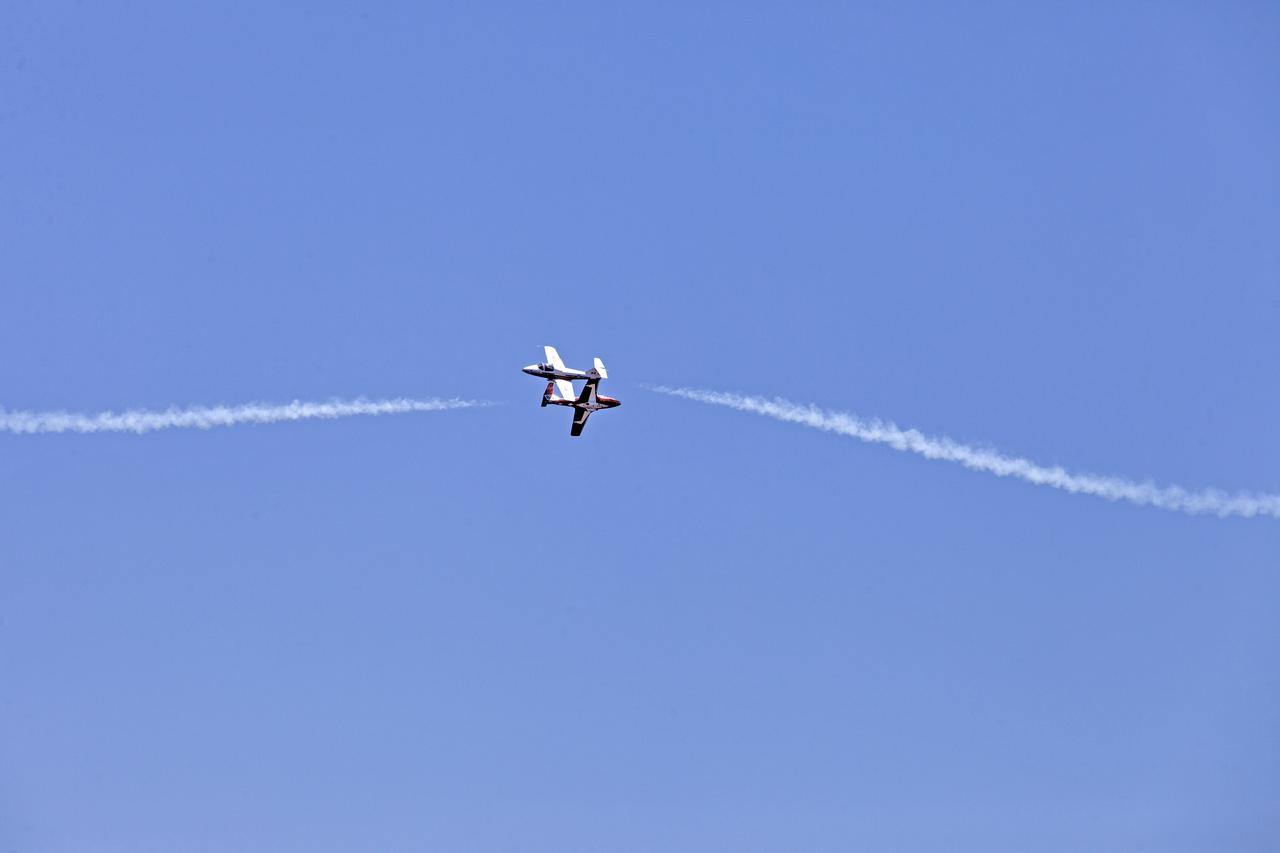
Two Canadian Forces Snowbirds perform a close flyby maneuver over NASA's Kennedy Space Center in Florida during a practice flight on May 9, 2018, between their scheduled U.S. air shows.
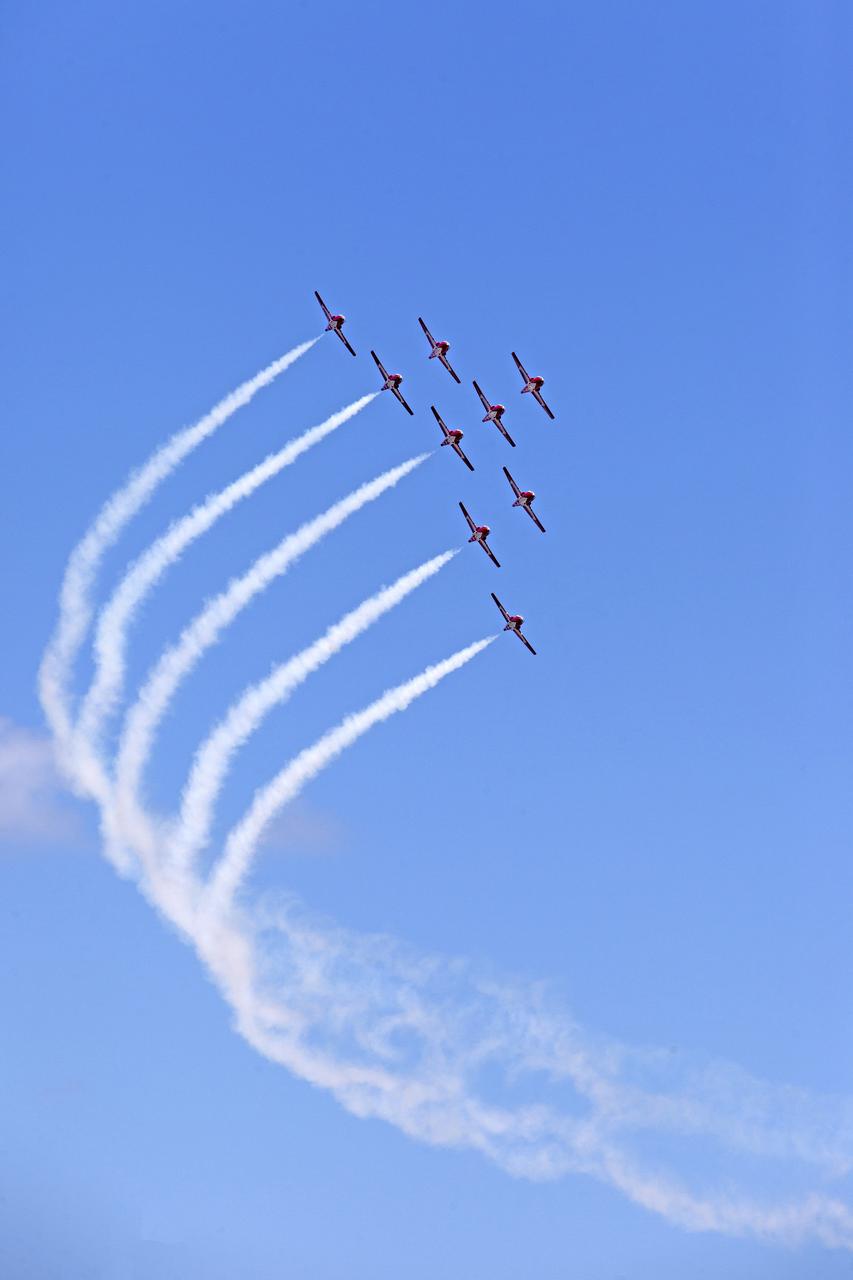
Canadian Forces Snowbirds fly in formation over NASA's Kennedy Space Center in Florida during a practice flight on May 9, 2018, between their scheduled U.S. air shows.
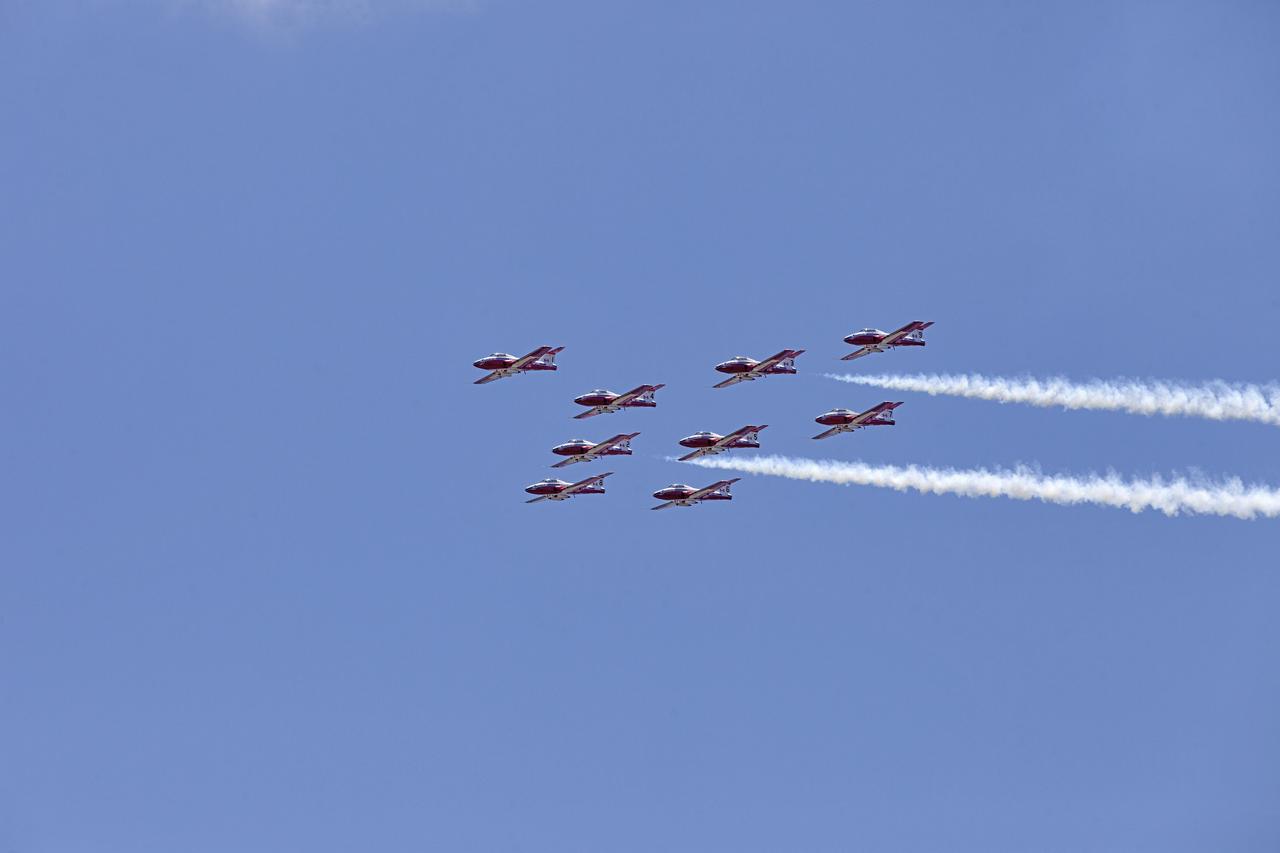
Canadian Forces Snowbirds fly in formation over NASA's Kennedy Space Center in Florida during a practice flight on May 9, 2018, between their scheduled U.S. air shows.
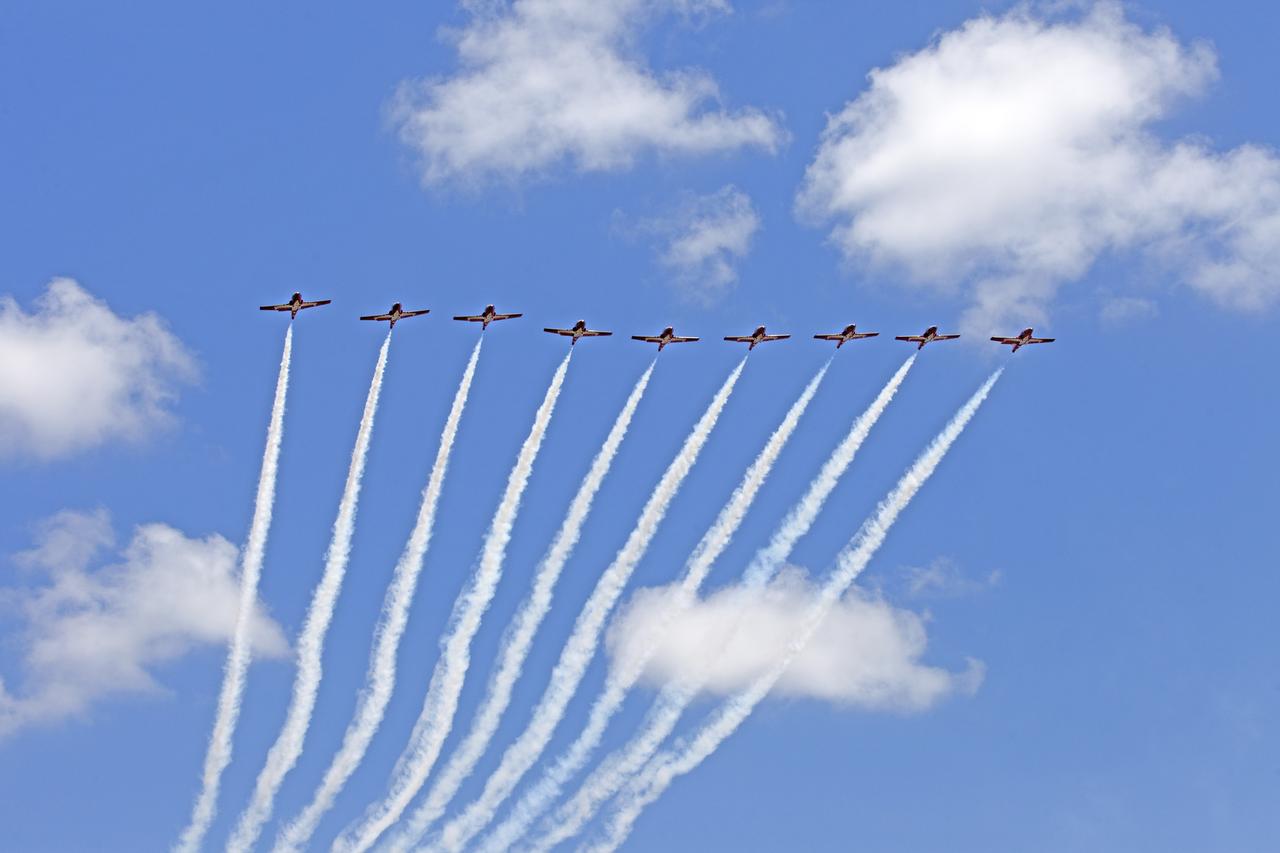
Canadian Forces Snowbirds fly in formation over NASA's Kennedy Space Center in Florida during a practice flight on May 9, 2018, between their scheduled U.S. air shows.
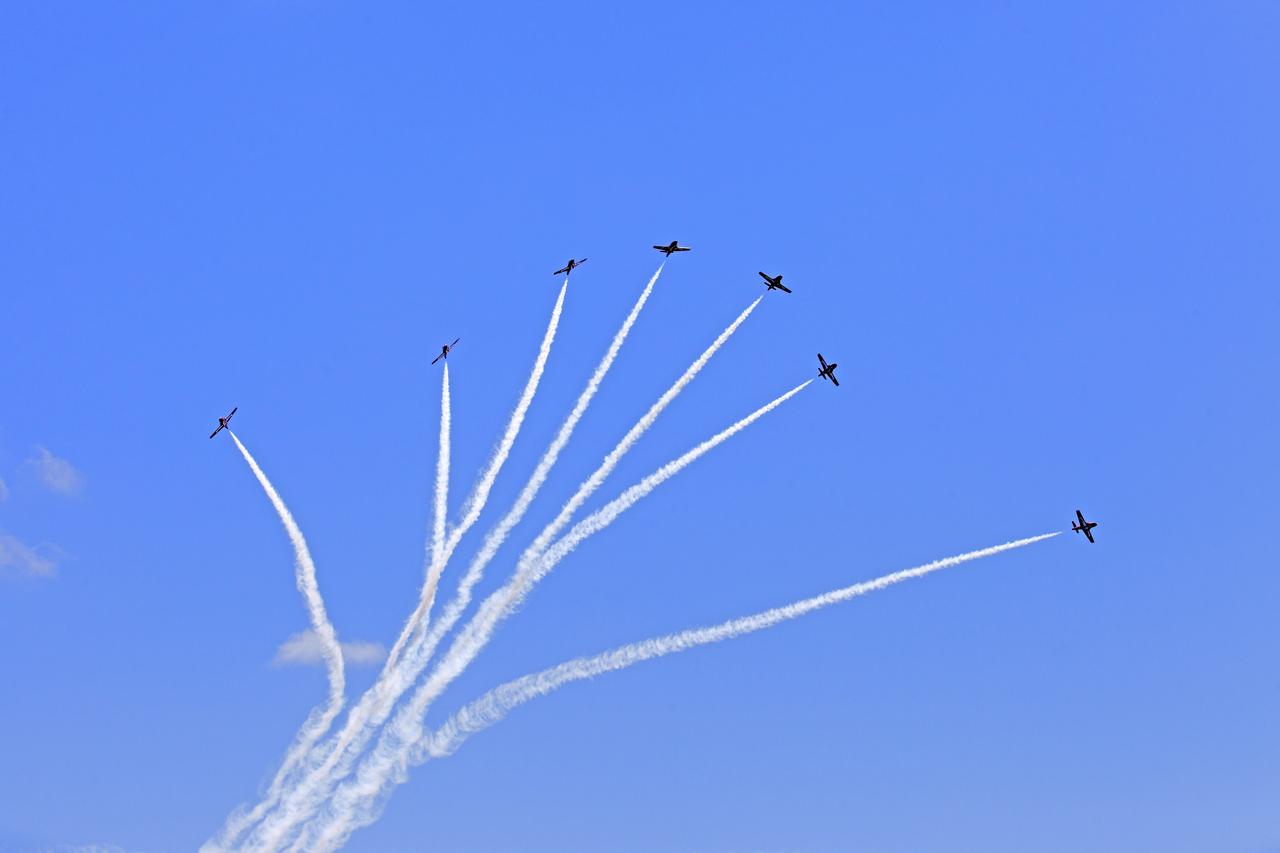
Canadian Forces Snowbirds perform an aerial acrobatic maneuver over NASA's Kennedy Space Center in Florida during a practice flight on May 9, 2018, between their scheduled U.S. air shows.
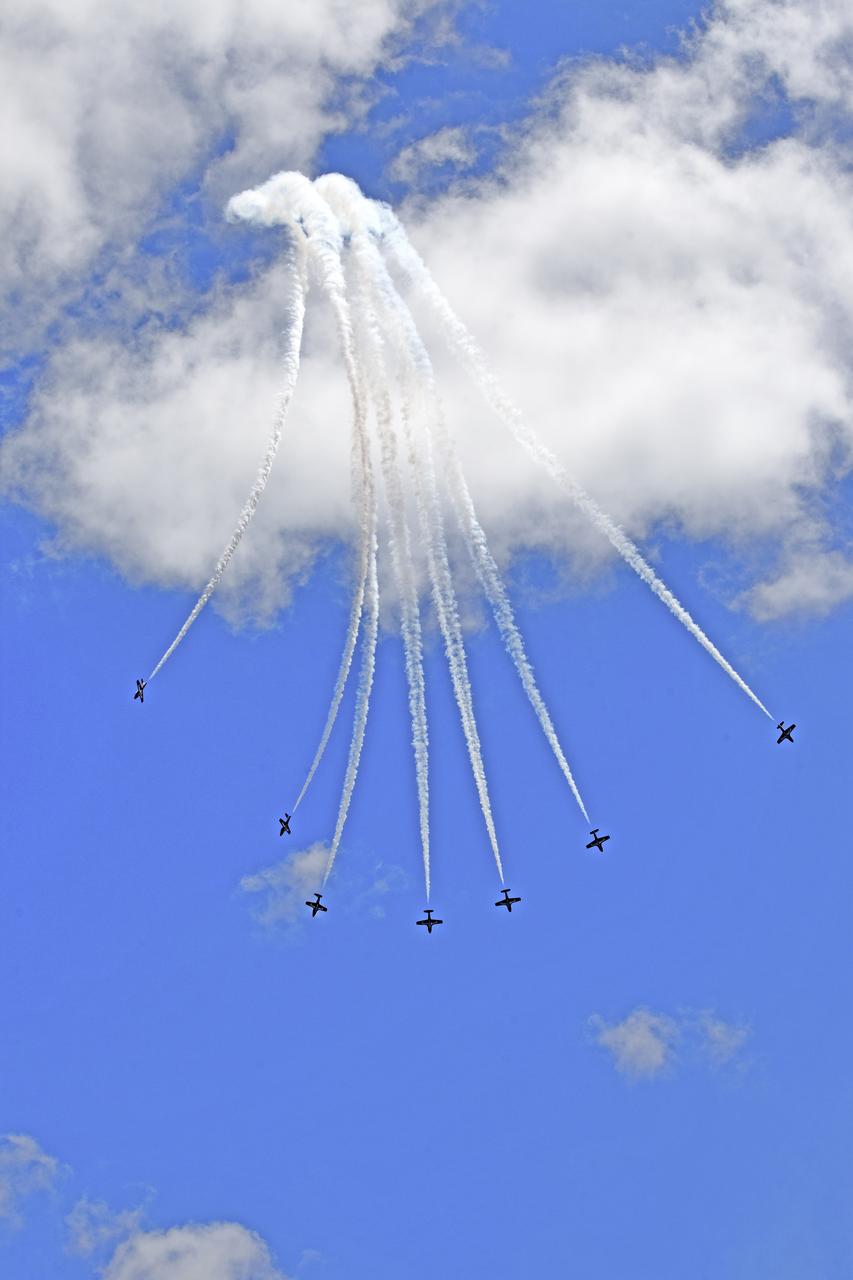
Canadian Forces Snowbirds perform an aerial acrobatic maneuver over NASA's Kennedy Space Center in Florida during a practice flight on May 9, 2018, between their scheduled U.S. air shows.
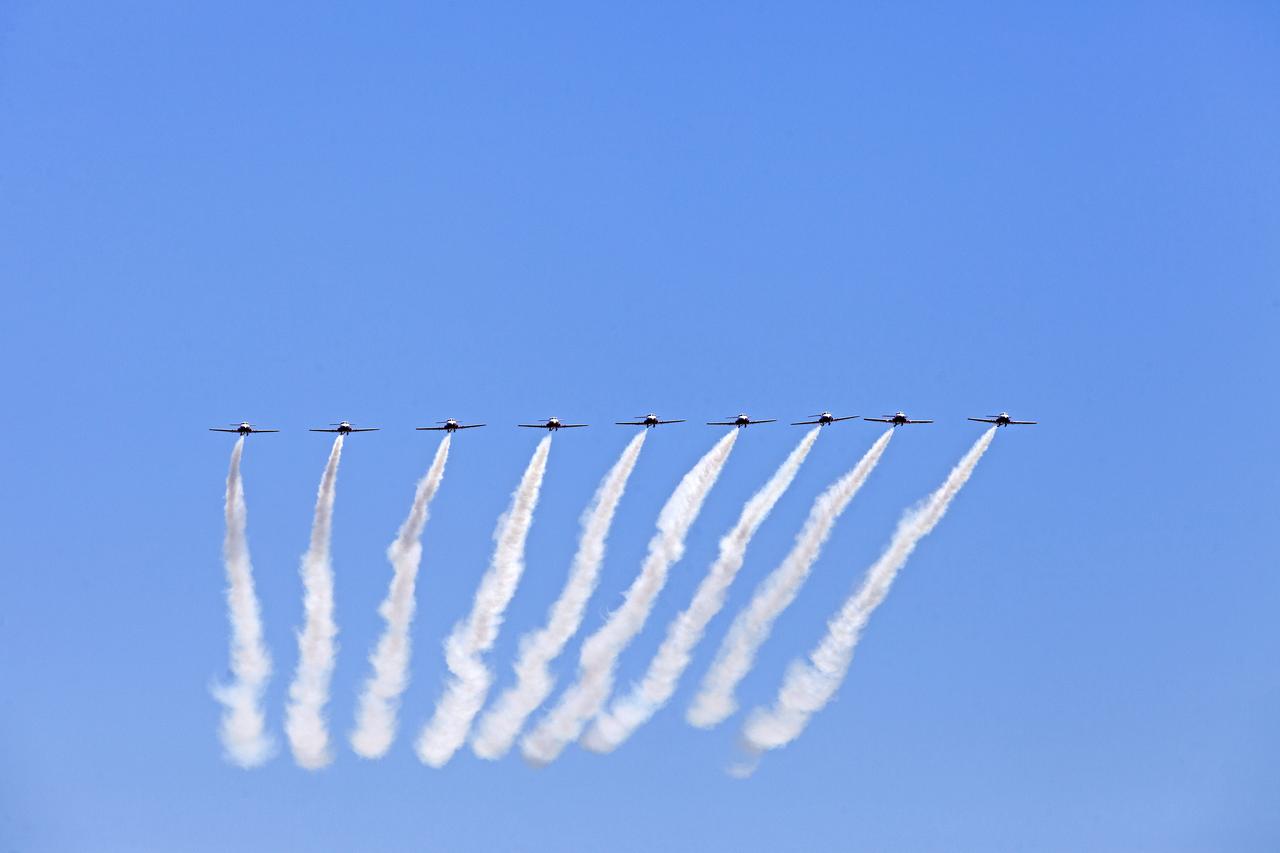
Canadian Forces Snowbirds fly in formation over NASA's Kennedy Space Center in Florida during a practice flight on May 9, 2018, between their scheduled U.S. air shows.
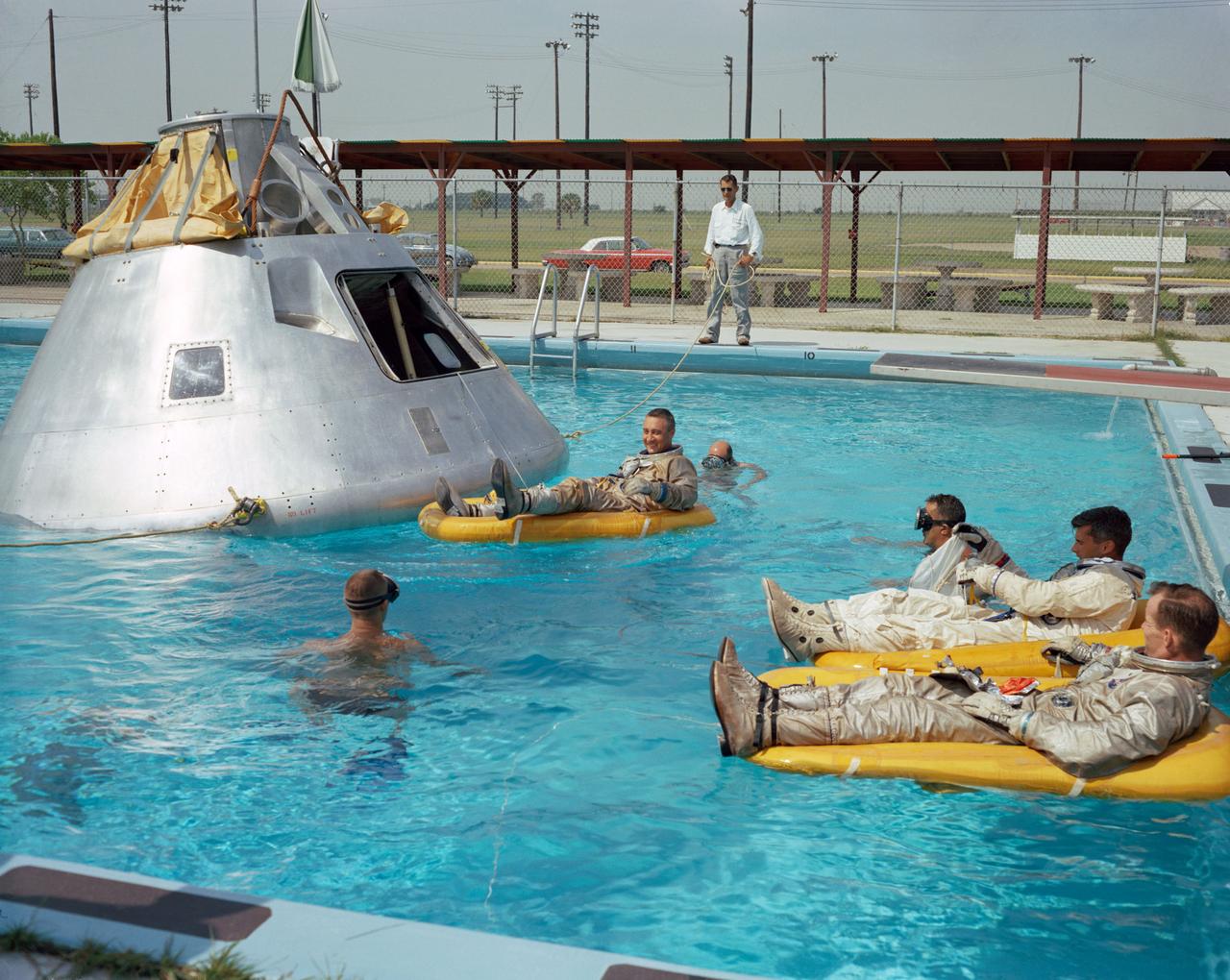
S66-51581 (June 1966) --- Prime crew for the first manned Apollo mission practice water egress procedures with full scale boilerplate model of their spacecraft. In the water at right is astronaut Edward H. White (foreground) and astronaut Roger B. Chaffee. In raft near the spacecraft is astronaut Virgil I. Grissom. NASA swimmers are in the water to assist in the practice session that took place at Ellington AFB, near the Manned Spacecraft Center, Houston.

jsc2026e037773 (May 5, 2026) --- NASA astronaut Jessica Watkins (left) assists CSA (Canadian Space Agency) astronaut Josh Kutryk (background) and NASA astronaut Luke Delaney (right) as they practice suiting up in spacesuits in an International Space Station airlock simulator at Johnson Space Center’s (JSC) Space Vehicle Mockup Facility in Houston, Texas. Astronauts familiarize themselves with spacesuit systems and procedures and practice Quest airlock operations before conducting spacewalk training at JSC’s Neutral Buoyancy Laboratory in simulated microgravity. Credit: NASA/Josh Valcarcel
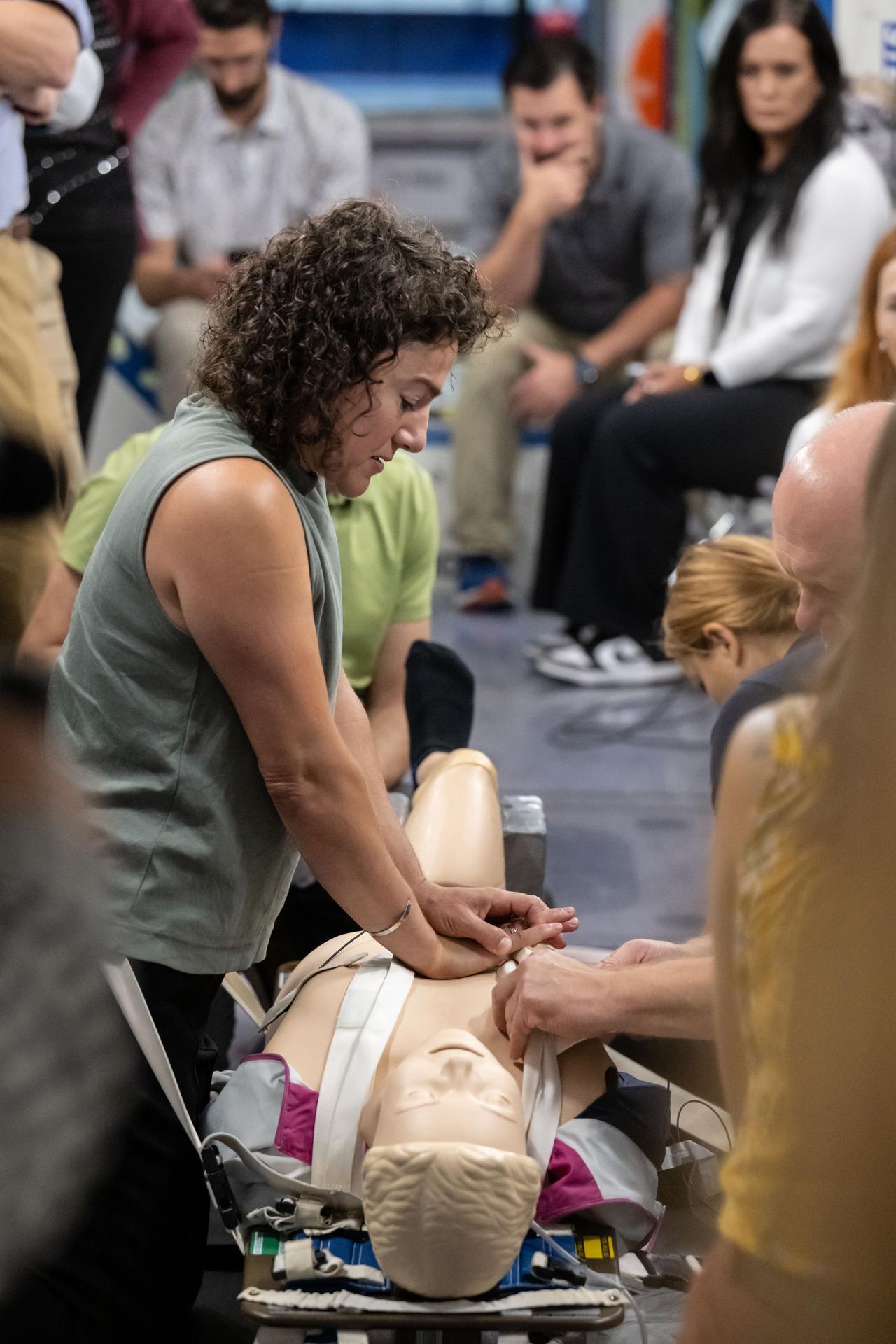
jsc2025e070047 (Aug. 21, 2025) --- NASA astronaut Jessica Meir practices cardiopulmonary resuscitation (CPR) during a medical emergency simulation as part of her training for NASA's SpaceX Crew-12 mission to the International Space Station. Surrounding Meir are various training support personnel at NASA's Johnson Space Center in Houston, Texas. Credit: NASA/Bill Stafford
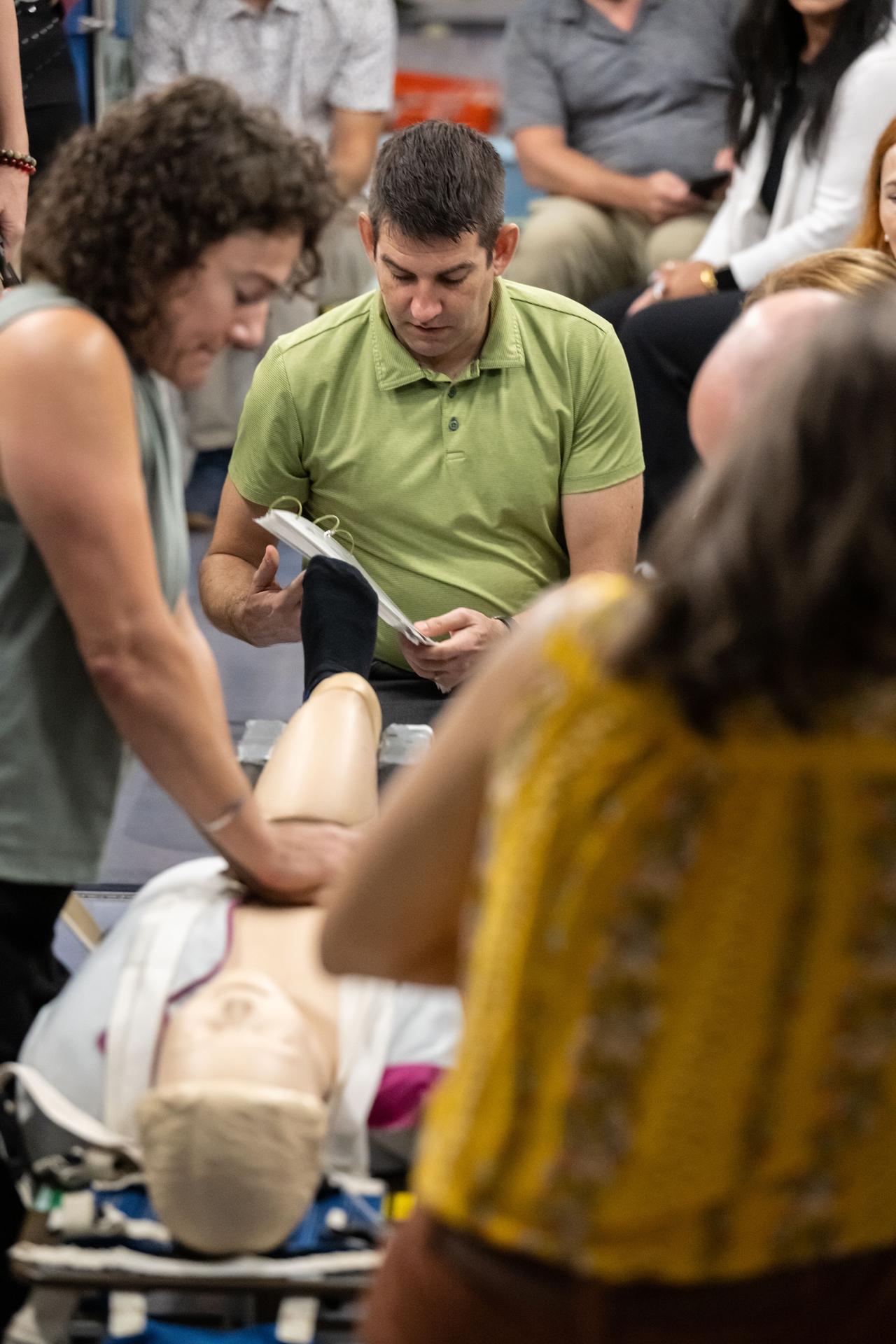
jsc2025e070045 (Aug. 21, 2025) --- NASA's SpaceX Crew-12 members Jessica Meir and Jack Hathaway, both NASA astronauts, practice cardiopulmonary resuscitation (CPR) during a medical emergency simulation as part of their training for mission to the International Space Station. Surrounding Meir and Hathaway are various training support personnel at NASA's Johnson Space Center in Houston, Texas. Credit: NASA/Bill Stafford
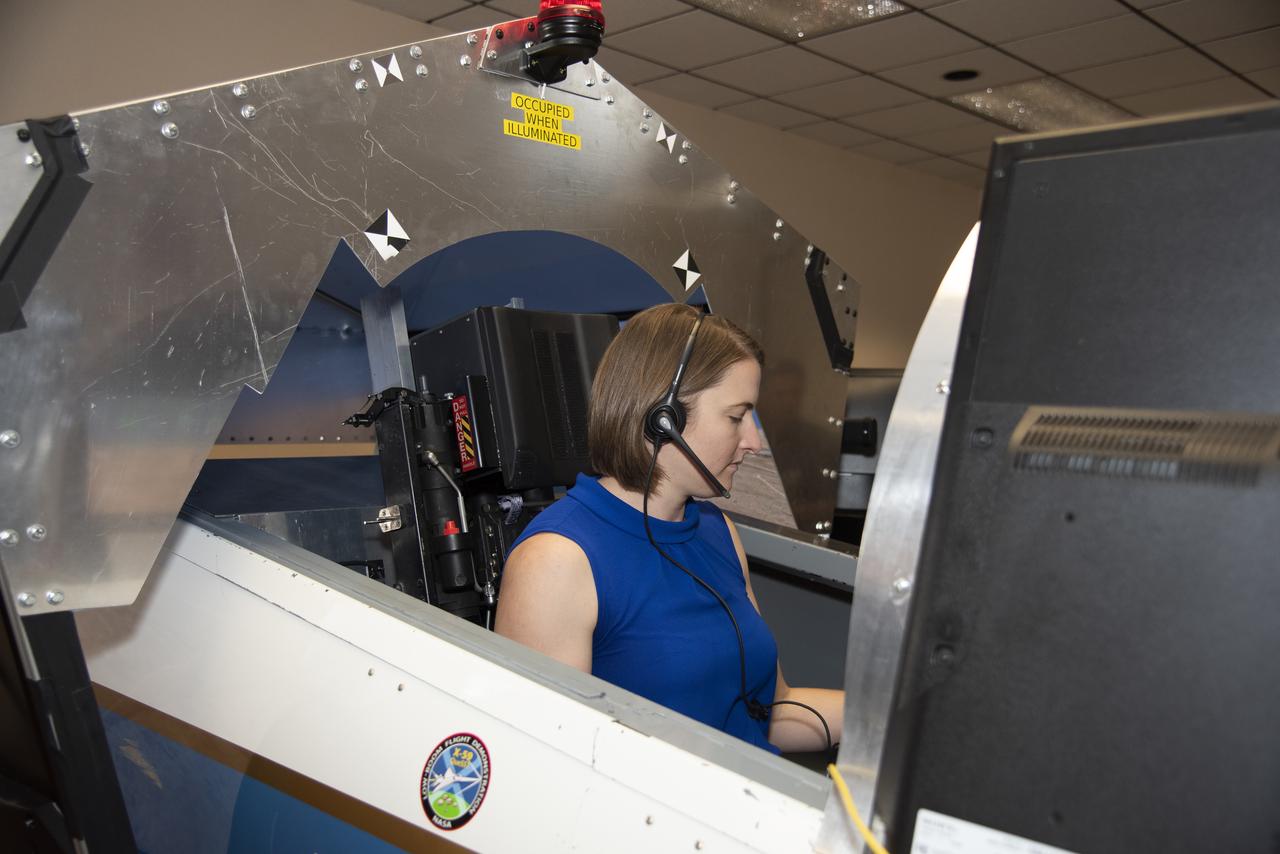
NASA's 2017 astronaut candidate Kayla Barron practices flying in an X-59 QueSST simulator at Armstrong Flight Research Center, in Southern California. The low boom flight demonstrator, X-59, being built at Lockheed Martin and was designed to fly at supersonic speeds over land without the loud noise of breaking the sound barrier and disturbing communities.
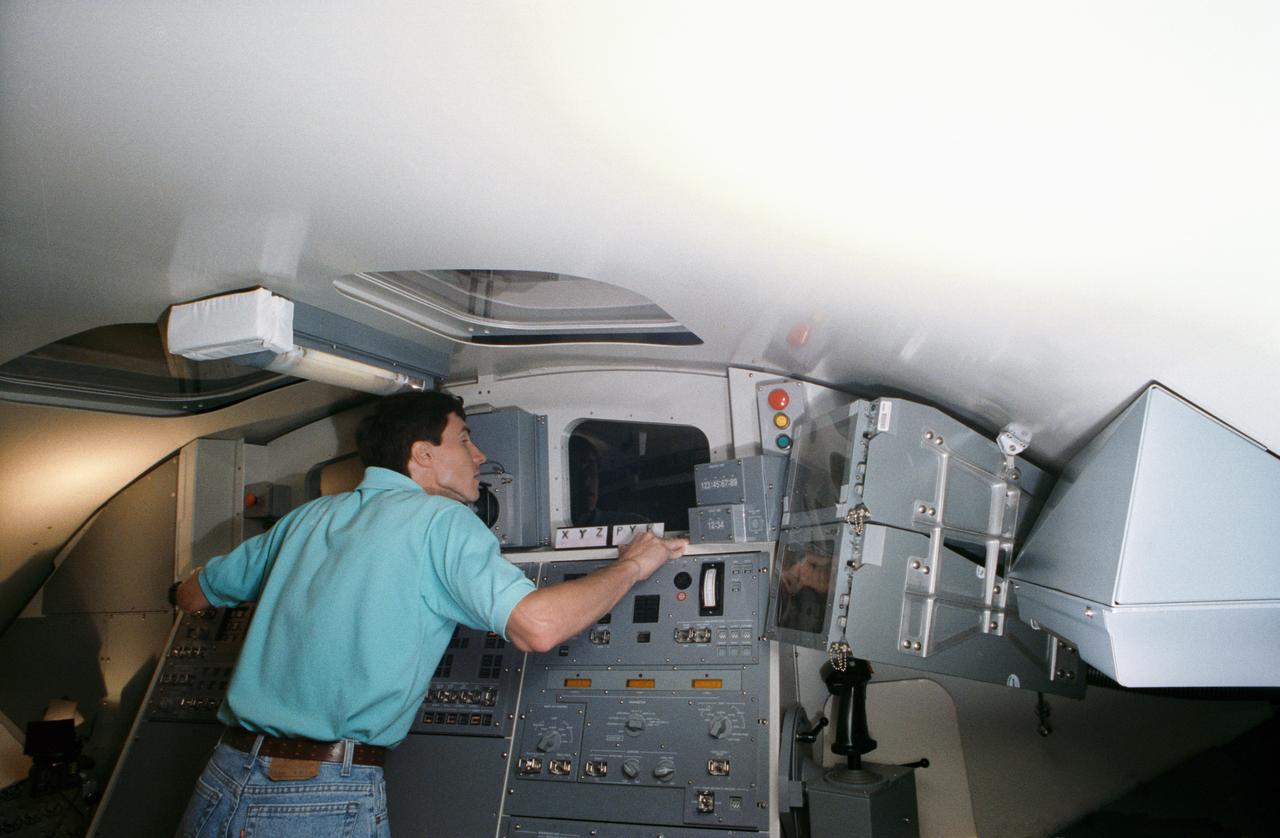
Cosmonaut Sergei Krikalev, STS-60 mission specialist, practices operating the Shuttle's Remote Manipulator System (RMS) during a training exercise at JSC's Shuttle mockup and integration laboratory.
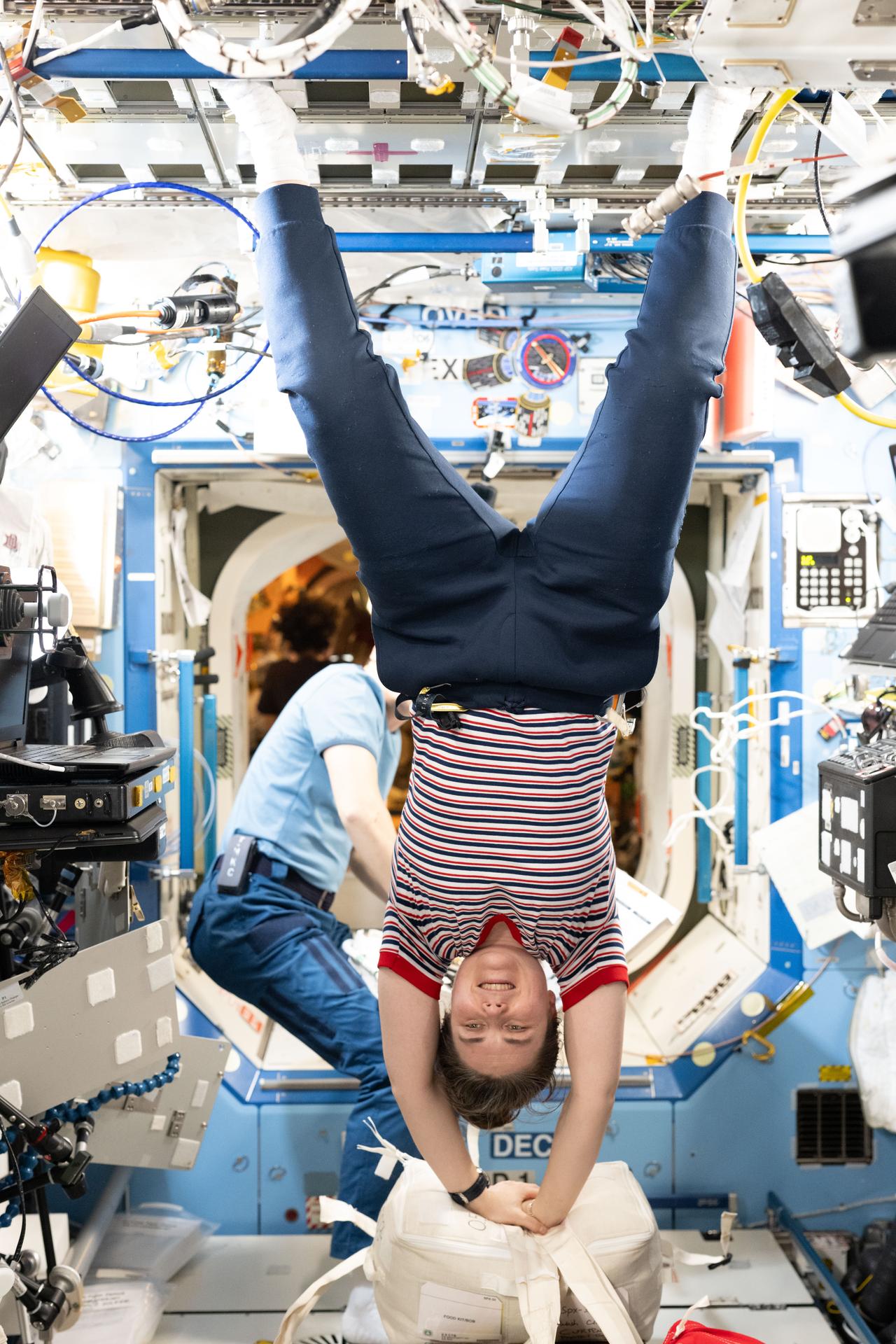
iss075e0088786 (Sept. 4, 2026) --- Roscosmos cosmonaut and Expedition 75 flight engineer Anna Kikina practices CPR in the weightless environment of the International Space Station. Performing chest compressions in microgravity requires securing the patient with restraints while the crew member braces their feet against a fixed surface to generate effective force. Credit: NASA/Anil Menon
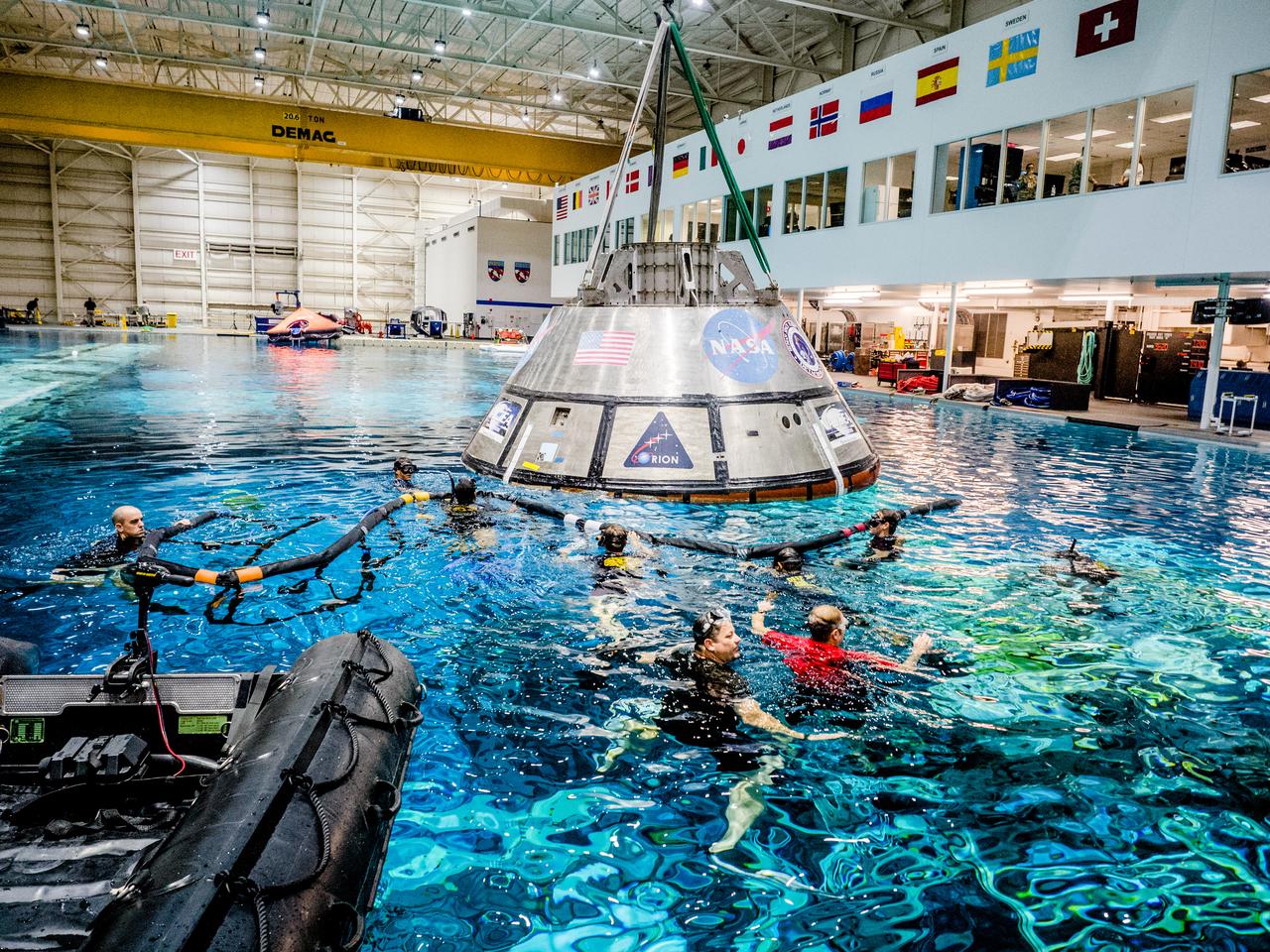
A group of U.S. Navy divers, Air Force pararescumen and Coast Guard rescue swimmers practice Orion underway recovery techniques this week in the Neutral Buoyancy Laboratory (NBL) at NASA’s Johnson Space Center in Houston on Sept. 21, 2016, to prepare for the first test flight of an uncrewed Orion spacecraft with the agency’s Space Launch System rocket during Artemis I. Part of Batch image transfer from Flickr.
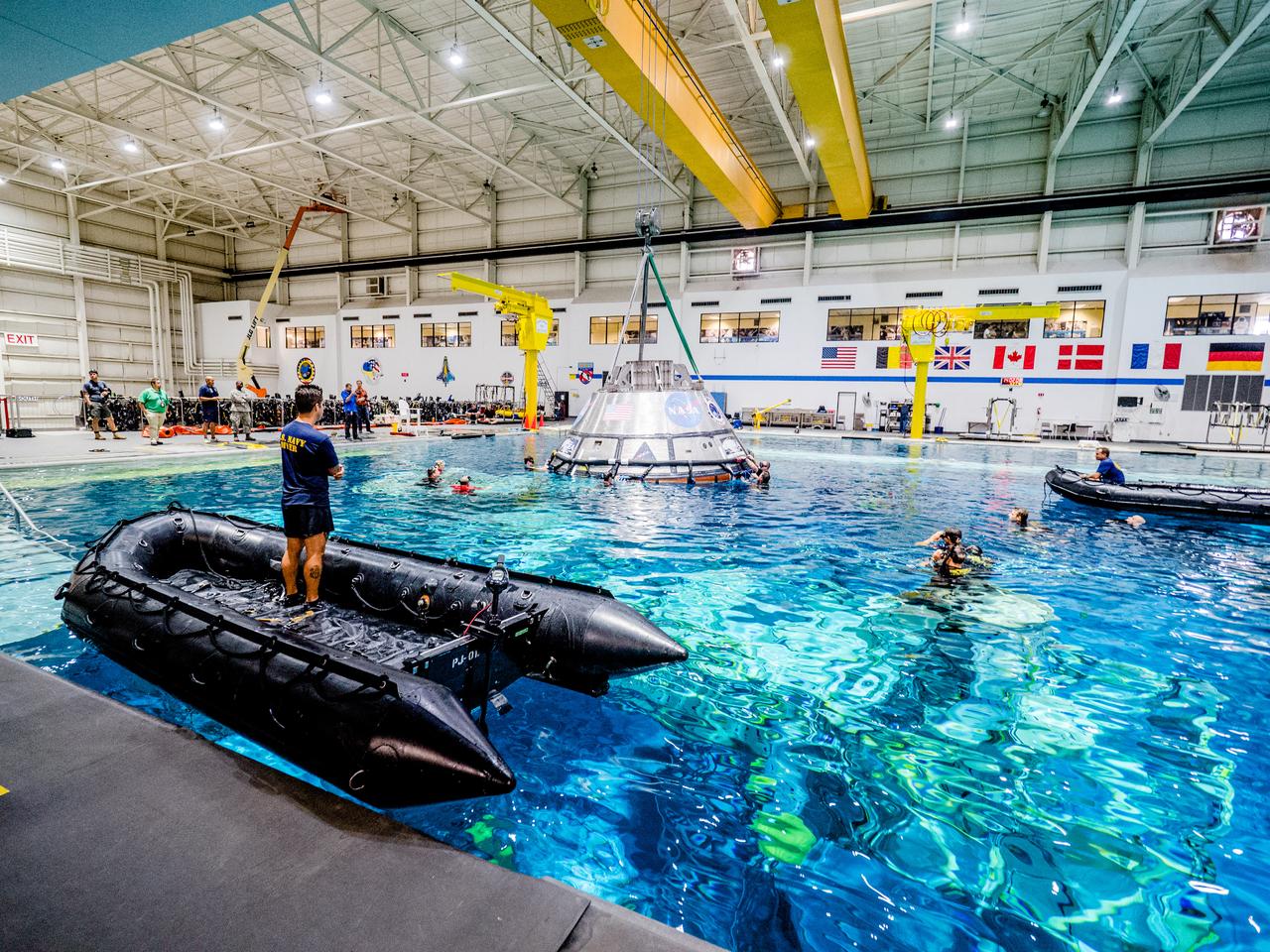
A group of U.S. Navy divers, Air Force pararescumen and Coast Guard rescue swimmers practice Orion underway recovery techniques this week in the Neutral Buoyancy Laboratory (NBL) at NASA’s Johnson Space Center in Houston on Sept. 21, 2016, to prepare for the first test flight of an uncrewed Orion spacecraft with the agency’s Space Launch System rocket during Artemis I.Part of Batch image transfer from Flickr.