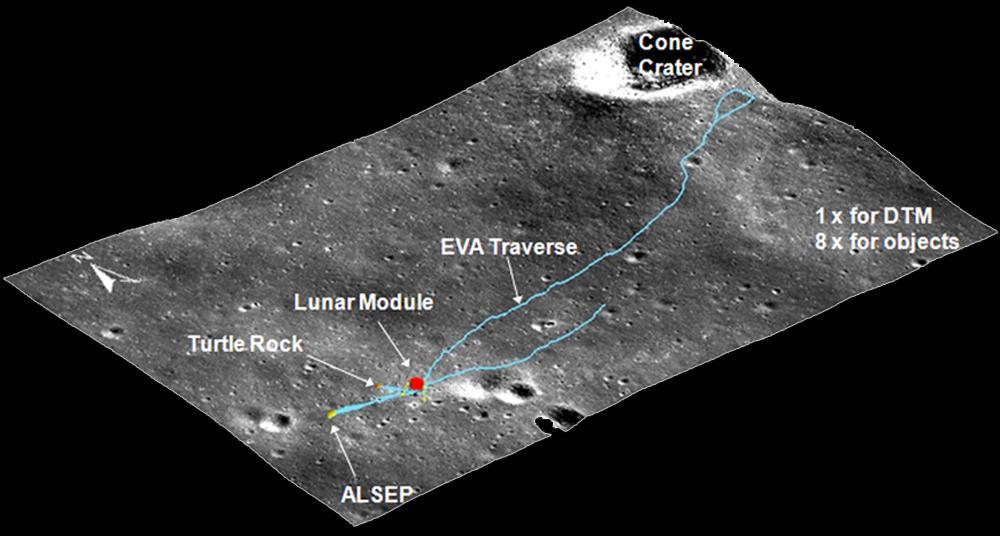
Precise 3D Measurements of Objects at Apollo 14 Landing Site
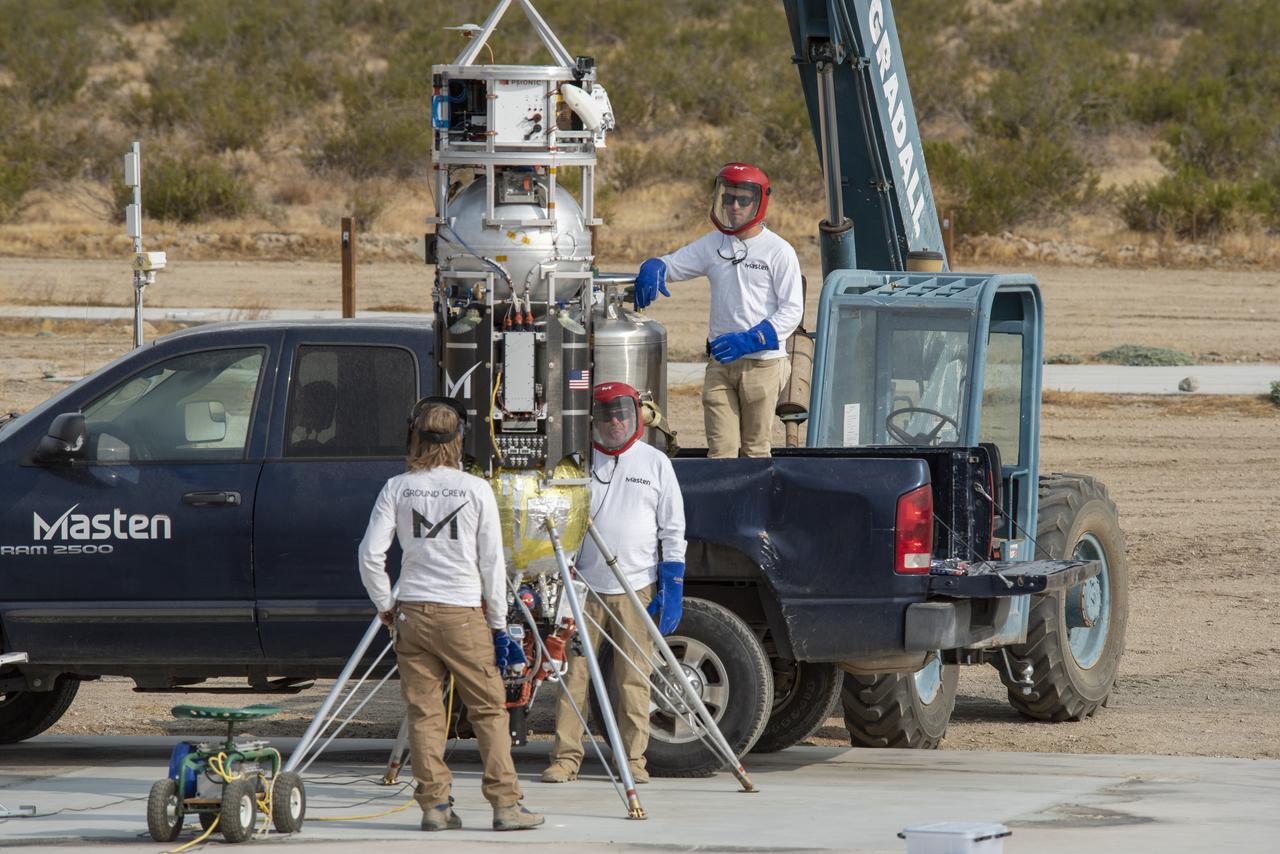
Masten Space Systems employees prepare its rocket to flight test NASA -licensed Psionic navigation doppler lidar technology that enables precision landing on celestial bodies where GPS for navigation only available on Earth is not an option.
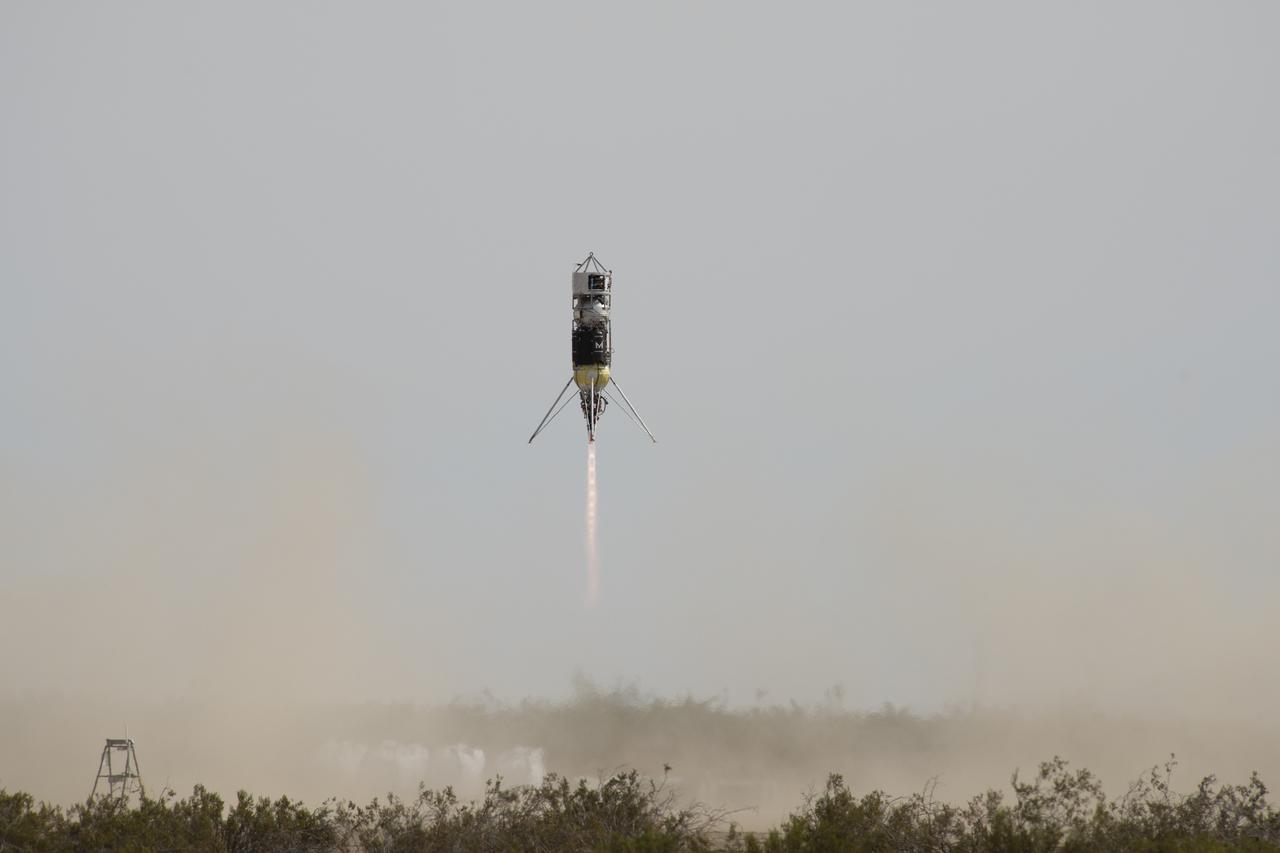
Masten Space Systems vertical takeoff vertical landing rocket launched September 10, 2020 to flight test NASA-licensed Psionic navigation doppler lidar technology that enables precision landing on celestial bodies where GPS for navigation only available on Earth is not an option.
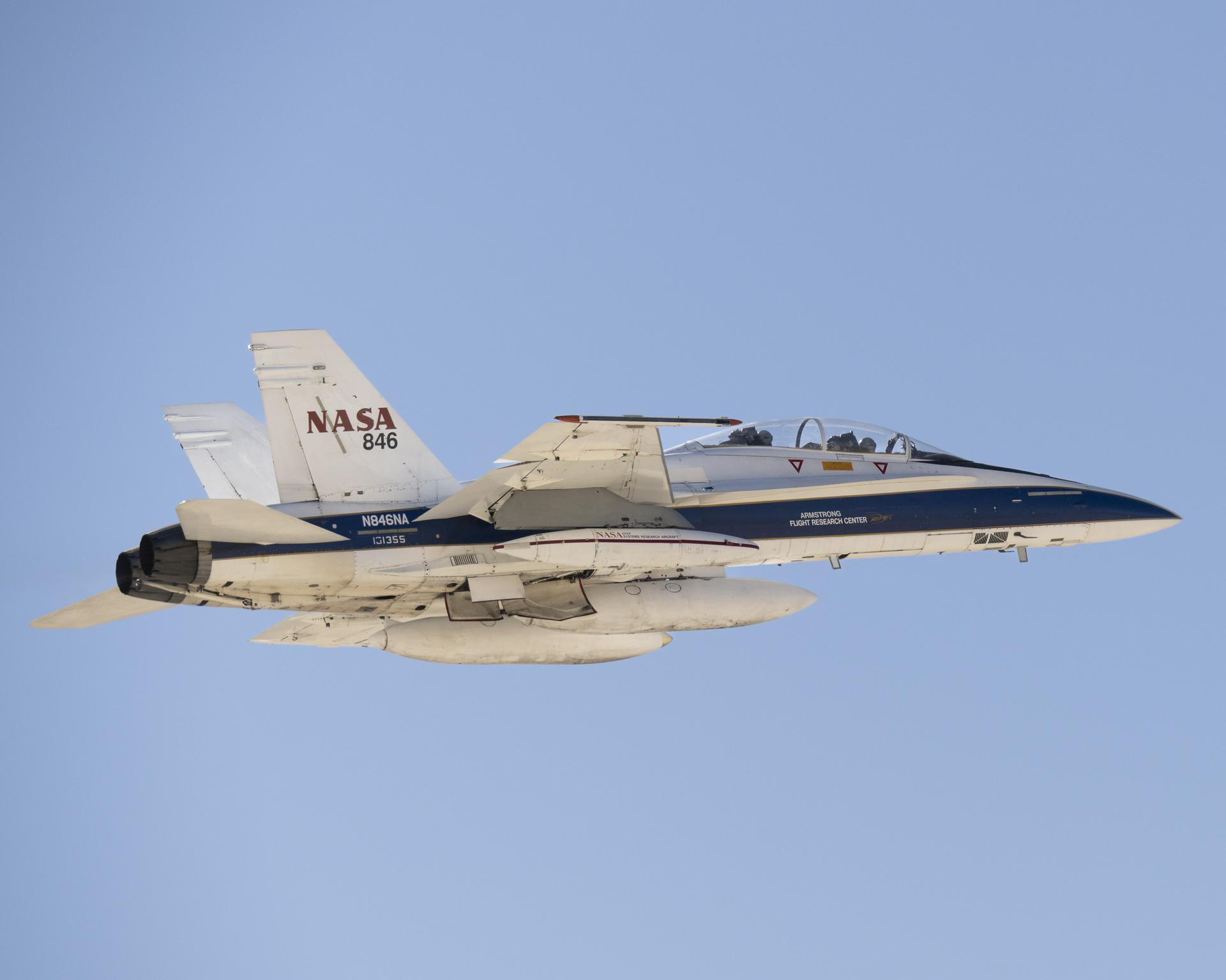
A NASA F/A-18 research aircraft flies near NASA’s Armstrong Flight Research Center in Edwards, California, on Feb. 24, 2025, testing a commercial precision landing technology for future space missions. The Psionic Space Navigation Doppler Lidar (PSNDL) system is installed in a pod located under the right wing of the aircraft.
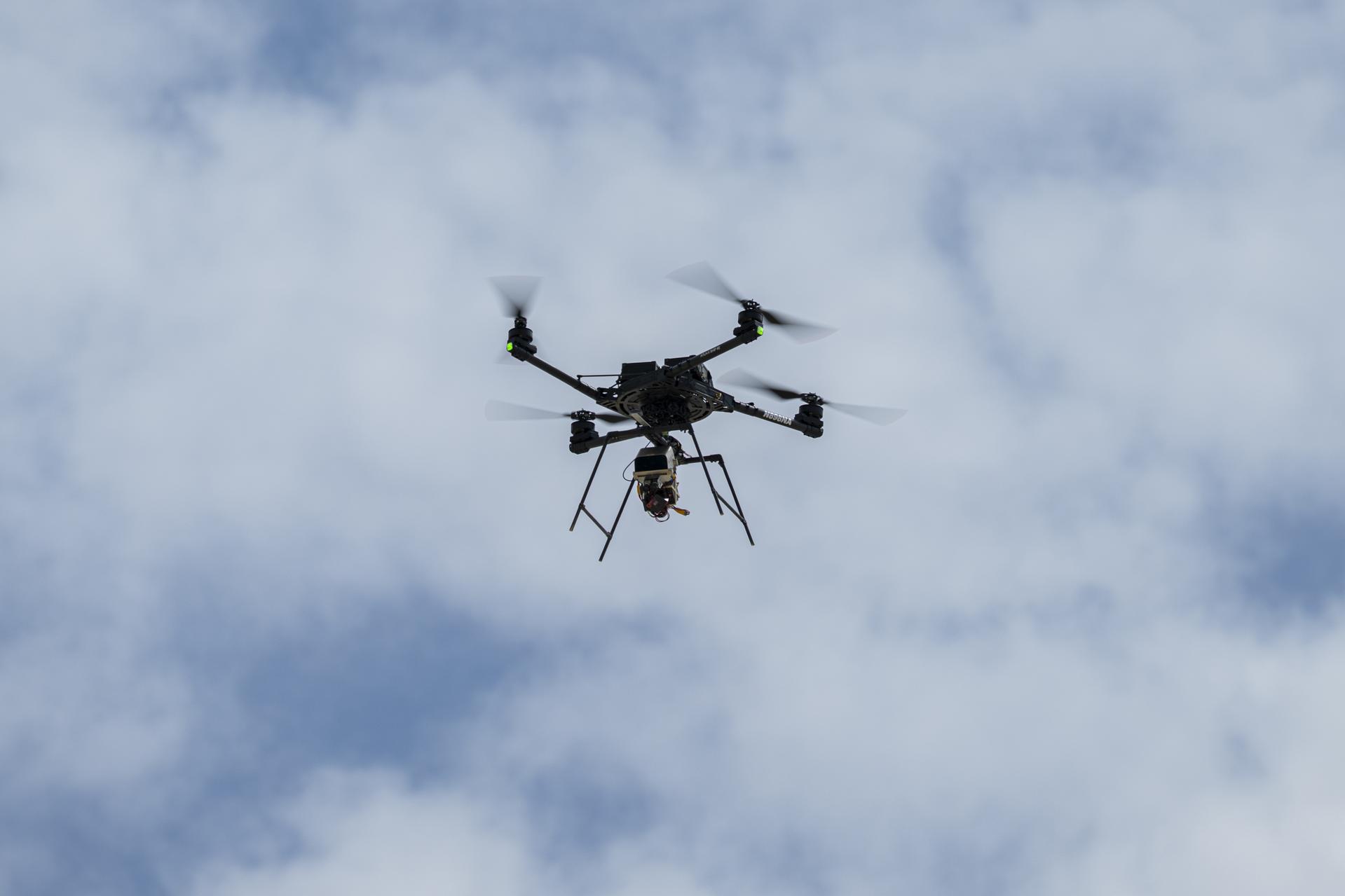
An Alta-X drone flies an advanced guidance and navigation system known as the Safe and Precise Landing – Integrated Capabilities Evolution (SPLICE) experiment near NASA’s Armstrong Flight Research Center in Edwards, California, on Thursday, Aug. 27, 2026. Researchers at NASA’s Johnson Space Center in Houston developed SPLICE, which successfully completed simulated lunar descent and landing maneuvers during recent testing. SPLICE will help spacecraft land precisely and detect and avoid potential hazards, which is critical for NASA missions to the Moon and to Mars.
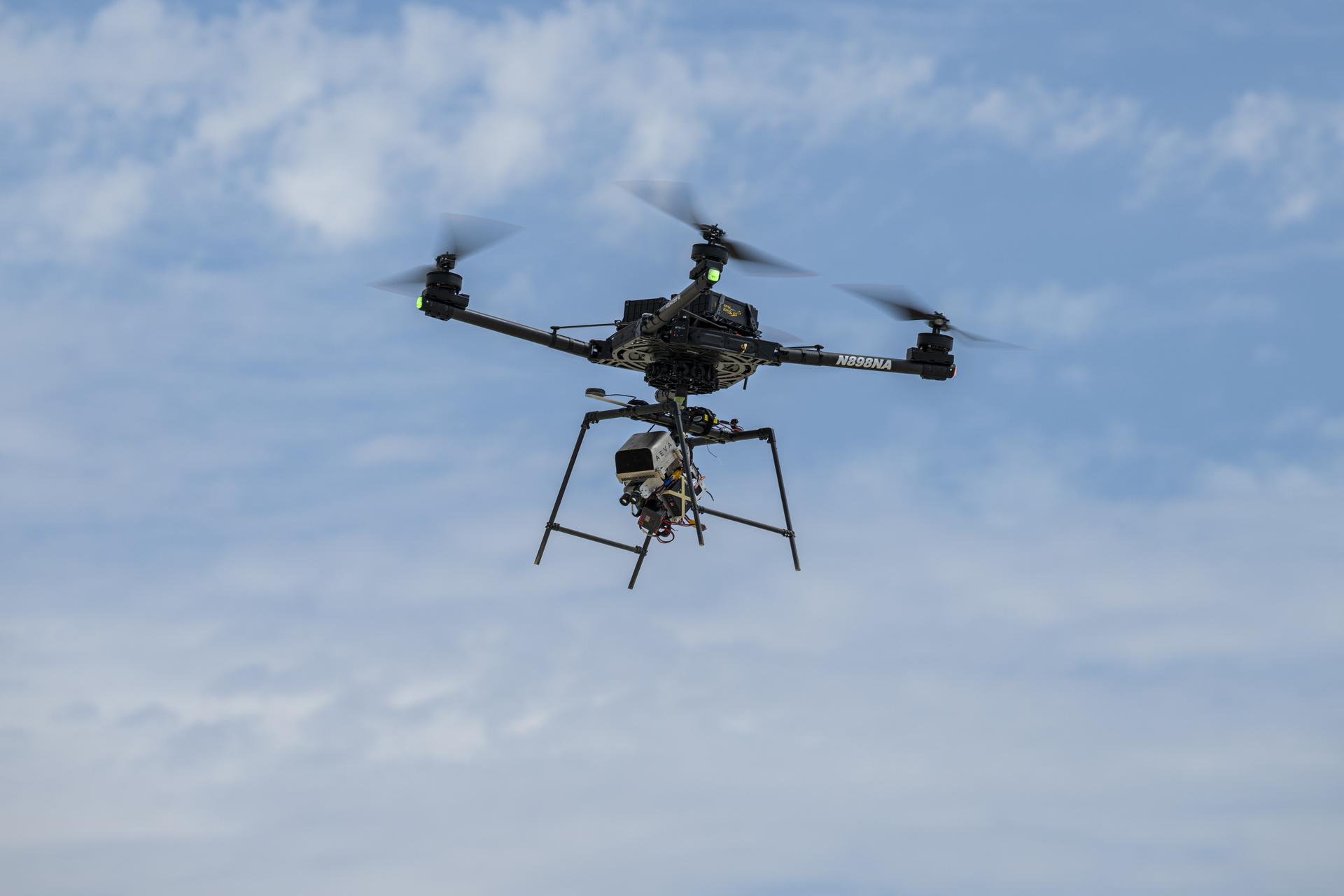
An Alta-X drone flies an advanced guidance and navigation system known as the Safe and Precise Landing – Integrated Capabilities Evolution (SPLICE) experiment near NASA’s Armstrong Flight Research Center in Edwards, California, on Thursday, Aug. 27, 2026. Researchers at NASA’s Johnson Space Center in Houston developed SPLICE, which successfully completed simulated lunar descent and landing maneuvers during recent testing. SPLICE will help spacecraft land precisely and detect and avoid potential hazards, which is critical for NASA missions to the Moon and to Mars.
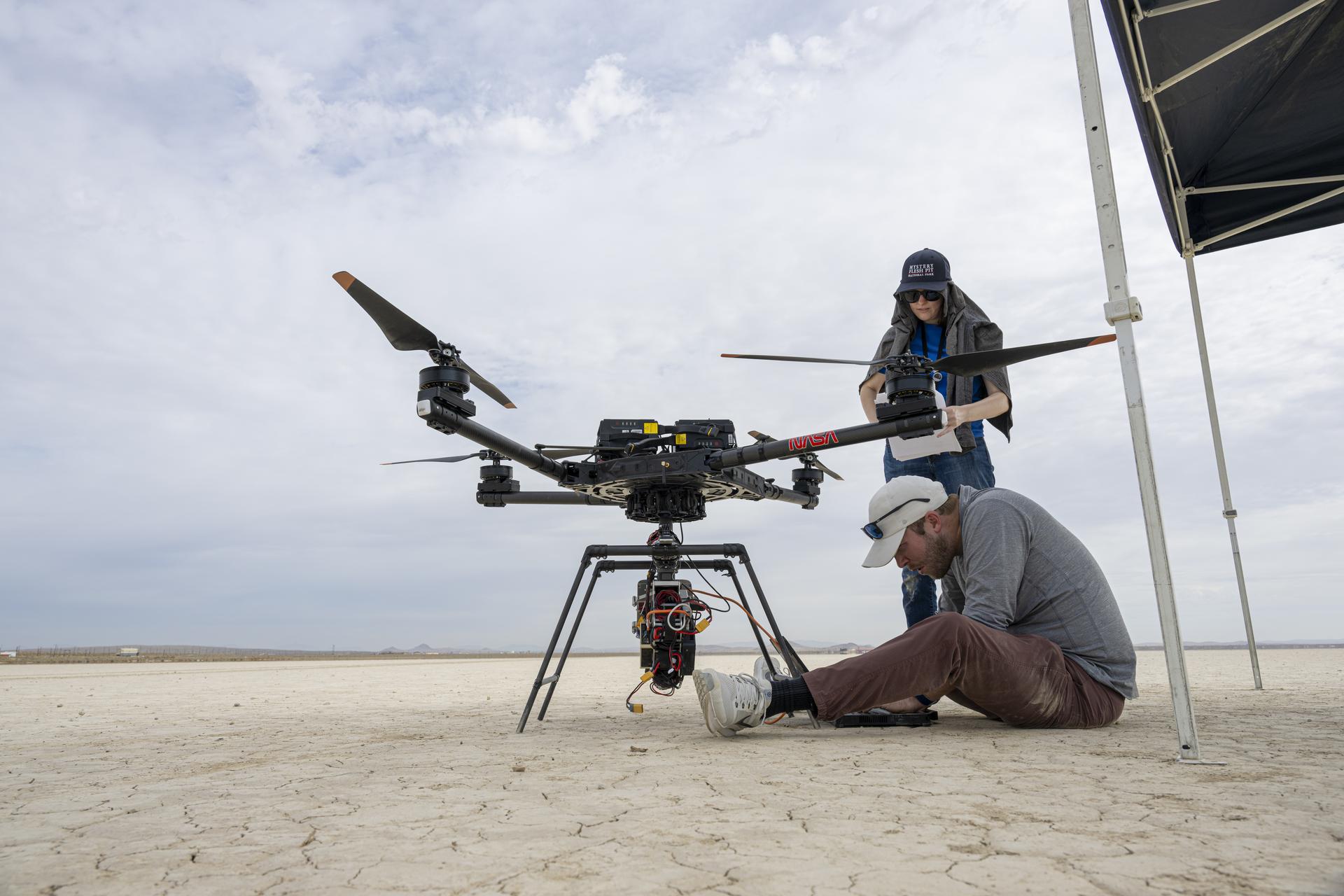
Davis Adams, project manager, sitting, and Jeanette Harper, flight software team member, check the guidance and navigation system known as the Safe and Precise Landing – Integrated Capabilities Evolution (SPLICE) experiment on an Alta-X drone near NASA’s Armstrong Flight Research Center in Edwards, California, on Thursday, Aug. 27, 2026. Researchers at NASA’s Johnson Space Center in Houston developed SPLICE, which recently completed simulated lunar descent and landing maneuvers. SPLICE will help spacecraft land precisely and detect and avoid potential hazards, which is critical for NASA missions to the Moon and to Mars.
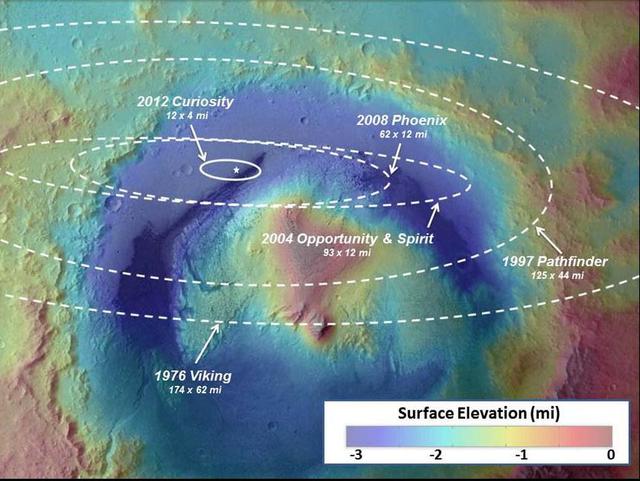
This image illustrates how spacecraft landings on Mars have become more and more precise over the years. Since NASA first Mars landing of Viking in 1976, the targeted landing regions, or ellipses, have shrunk.
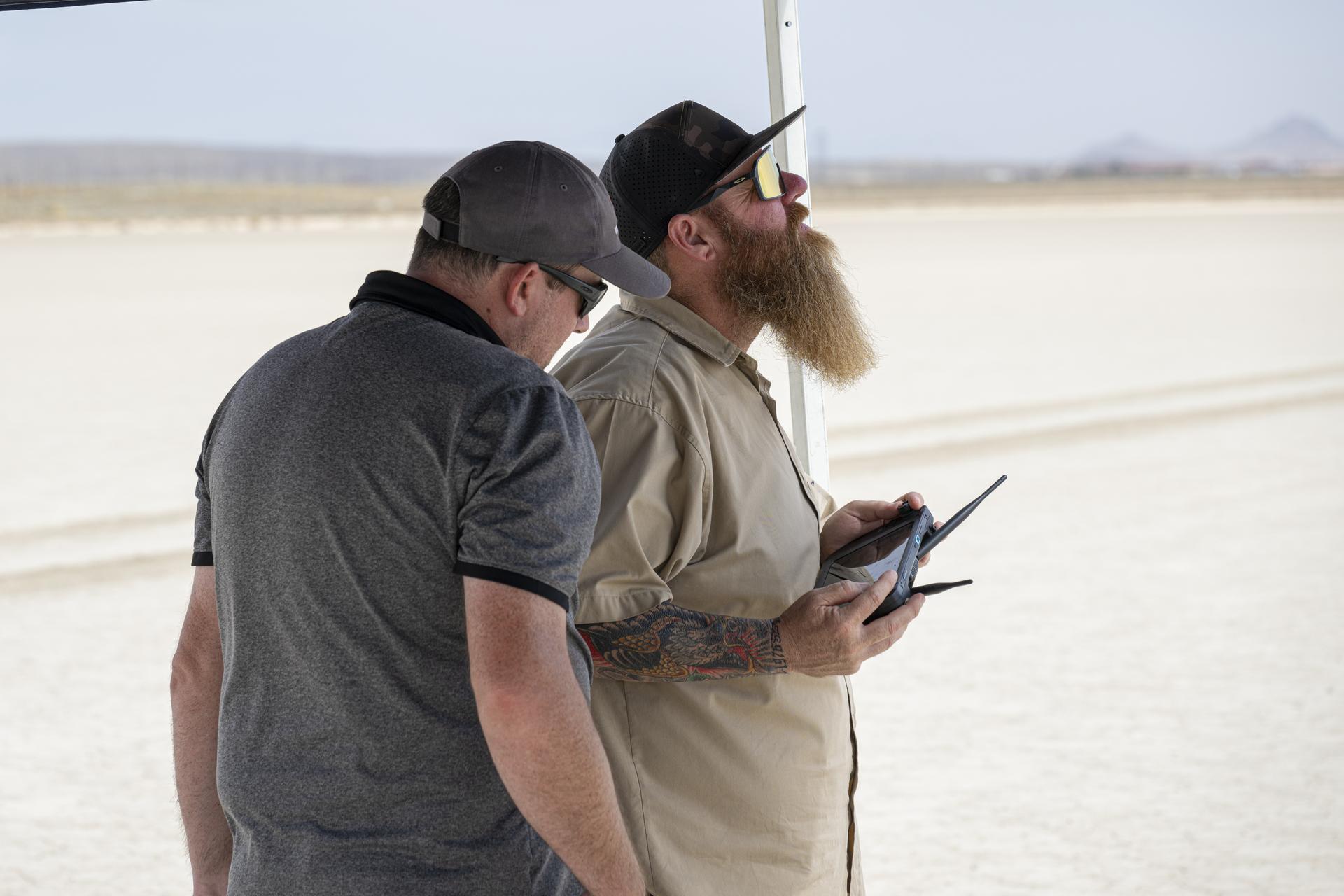
Justin Link, small uncrewed aircraft pilot, left, reads altitude data on a handheld display, as Justin Hall, Dale Reed Subscale Flight Research Laboratory chief pilot, flies NASA’s Alta-X drone near NASA’s Armstrong Flight Research Center in Edwards, California, on Thursday, Aug. 27, 2026. Researchers at NASA’s Johnson Space Center in Houston developed the advanced guidance and navigation system known as the Safe and Precise Landing – Integrated Capabilities Evolution (SPLICE) experiment, which is installed on the drone. SPLICE will help spacecraft land precisely and detect and avoid potential hazards, which is critical for NASA missions to the Moon and to Mars.
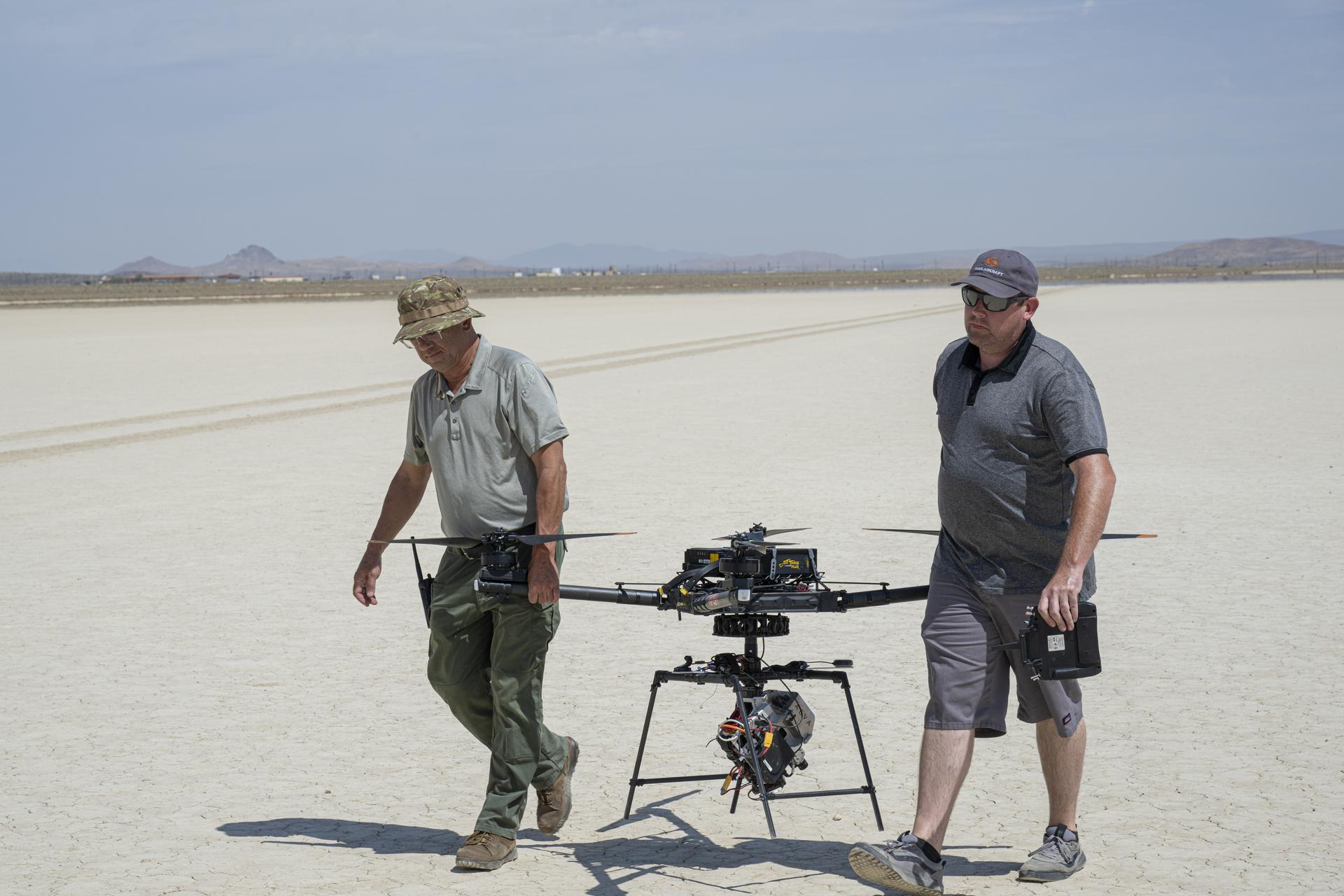
Derek Abramson, Dale Reed Subscale Flight Research Laboratory chief engineer, left, and Justin Link, small uncrewed aircraft pilot, carry NASA’s Alta-X drone near NASA’s Armstrong Flight Research Center in Edwards, California, on Thursday, Aug. 27, 2026. Researchers at NASA’s Johnson Space Center in Houston developed the advanced guidance and navigation system known as the Safe and Precise Landing – Integrated Capabilities Evolution (SPLICE) experiment, which is installed on this drone. SPLICE will help spacecraft land precisely and detect and avoid potential hazards, which is critical for NASA missions to the Moon and to Mars.
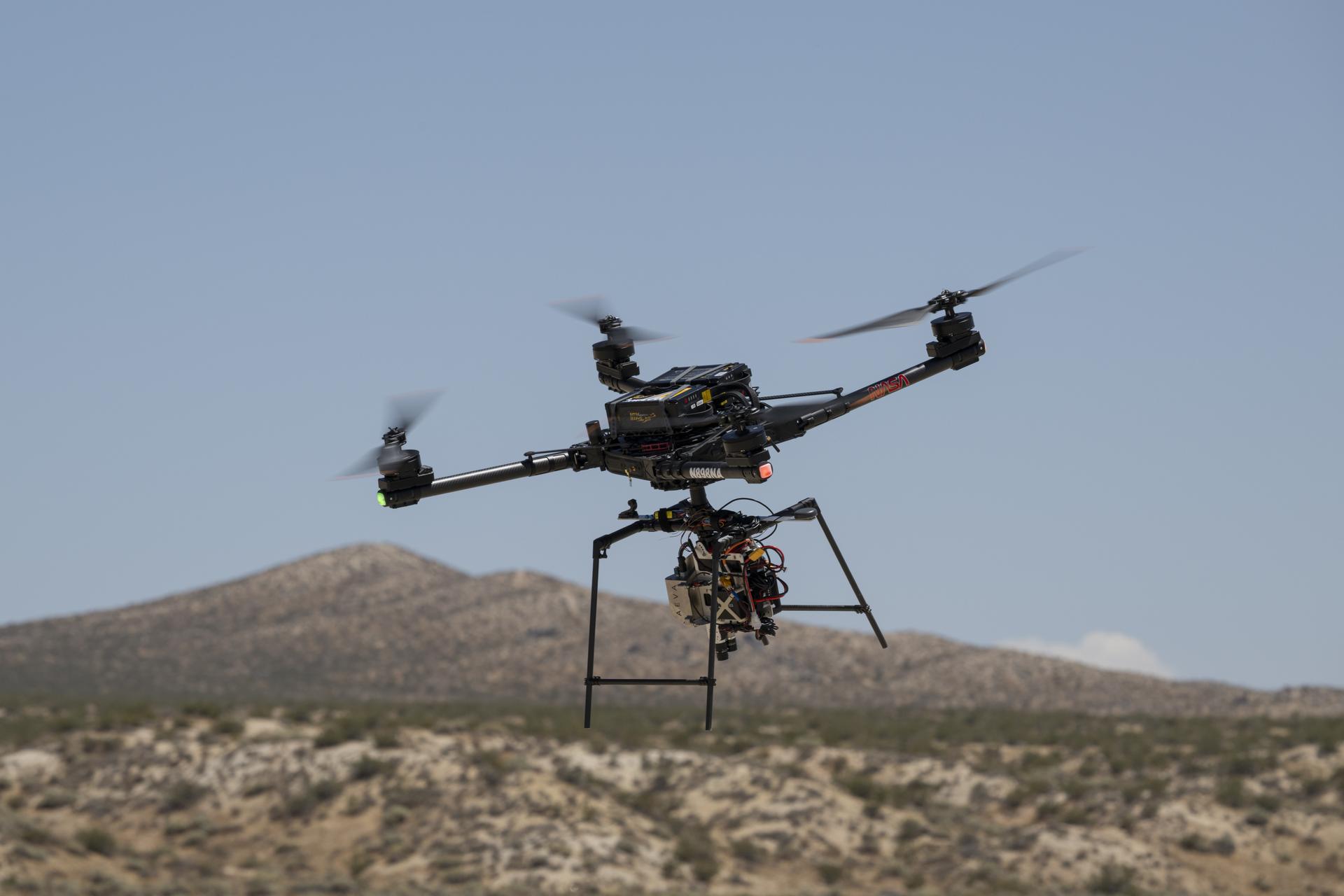
An Alta-X drone flies an advanced guidance and navigation system known as the Safe and Precise Landing – Integrated Capabilities Evolution (SPLICE) experiment near NASA’s Armstrong Flight Research Center in Edwards, California, on Wednesday, July 15, 2026. Researchers at NASA’s Johnson Space Center in Houston developed SPLICE, which successfully communicated with the remotely piloted aircraft during hover maneuvers in flight. SPLICE will help spacecraft land precisely and detect and avoid potential hazards, which is critical for NASA missions to the Moon and to Mars.
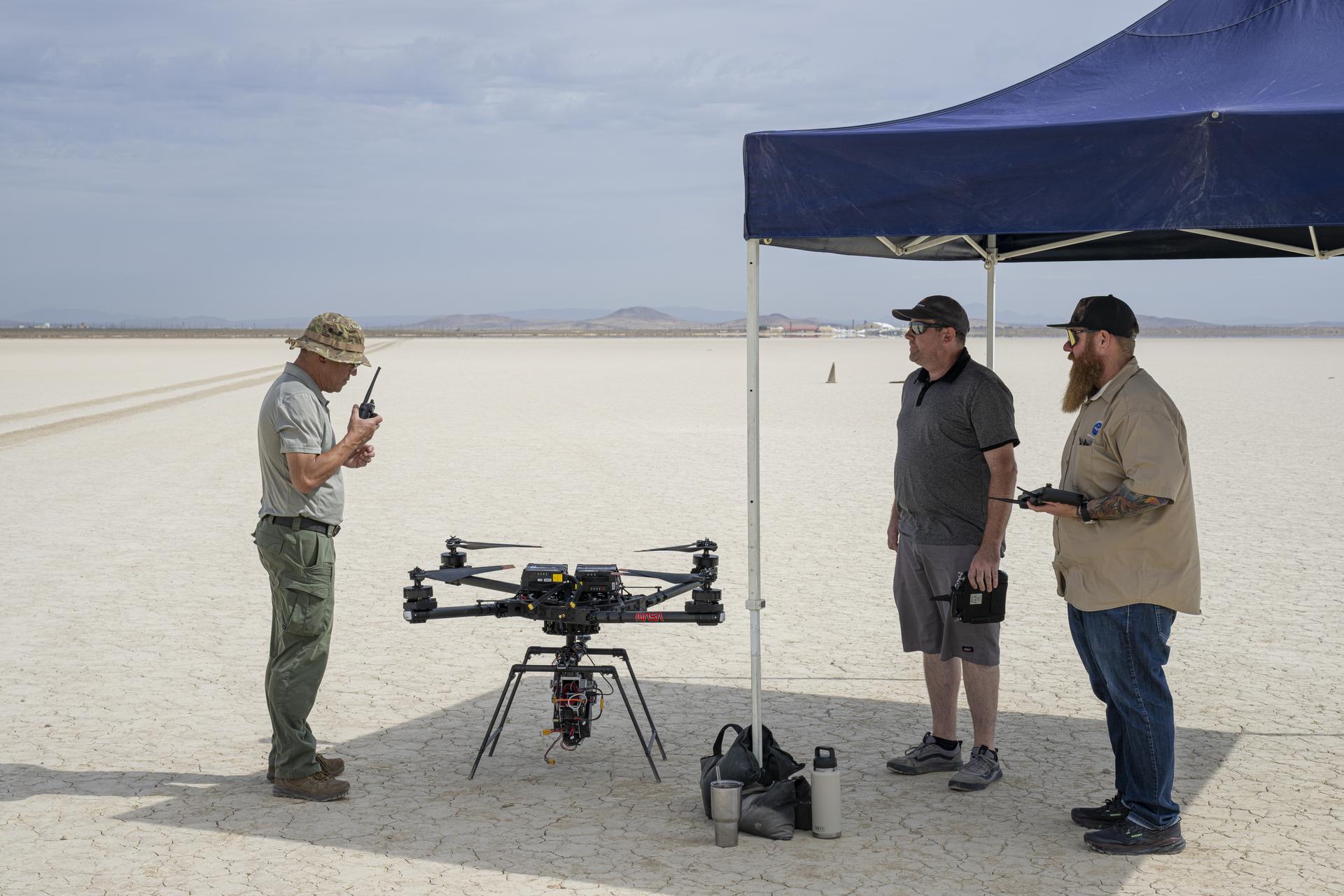
Derek Abramson, Dale Reed Subscale Flight Research Laboratory chief engineer, left, communicates with the Edwards Air Force Base air traffic control tower for approval to fly the Alta-X drone near NASA’s Armstrong Flight Research Center in Edwards, California, on Thursday, Aug. 27, 2026. Justin Link, small uncrewed aircraft pilot, second from left, and laboratory chief pilot Justin Hall await flight clearance. Researchers at NASA’s Johnson Space Center in Houston developed the advanced guidance and navigation system known as the Safe and Precise Landing – Integrated Capabilities Evolution (SPLICE) experiment, which is installed on the Alta-X. SPLICE will help spacecraft land precisely and detect and avoid potential hazards, which is critical for NASA missions to the Moon and to Mars.
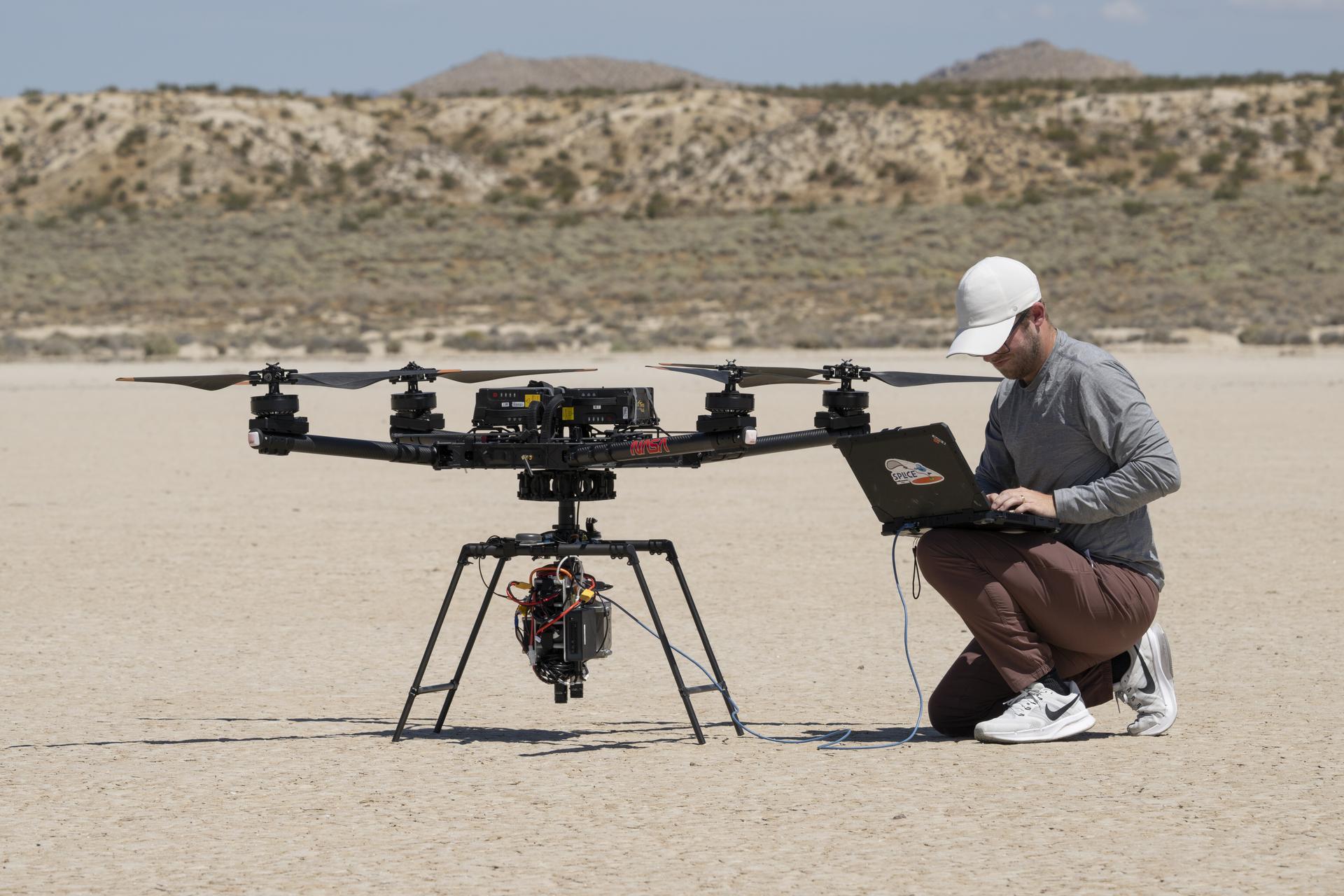
Davis Adams, project manager, confirms that an advanced guidance and navigation system known as the Safe and Precise Landing – Integrated Capabilities Evolution (SPLICE) experiment is communicating with an Alta-X drone near NASA’s Armstrong Flight Research Center in Edwards, California, on Wednesday, July 15, 2026. Researchers at NASA’s Johnson Space Center in Houston developed SPLICE, which successfully communicated with the remotely piloted aircraft during hover maneuvers in flight. SPLICE will help spacecraft land precisely and detect and avoid potential hazards, which is critical for NASA missions to the Moon and to Mars.
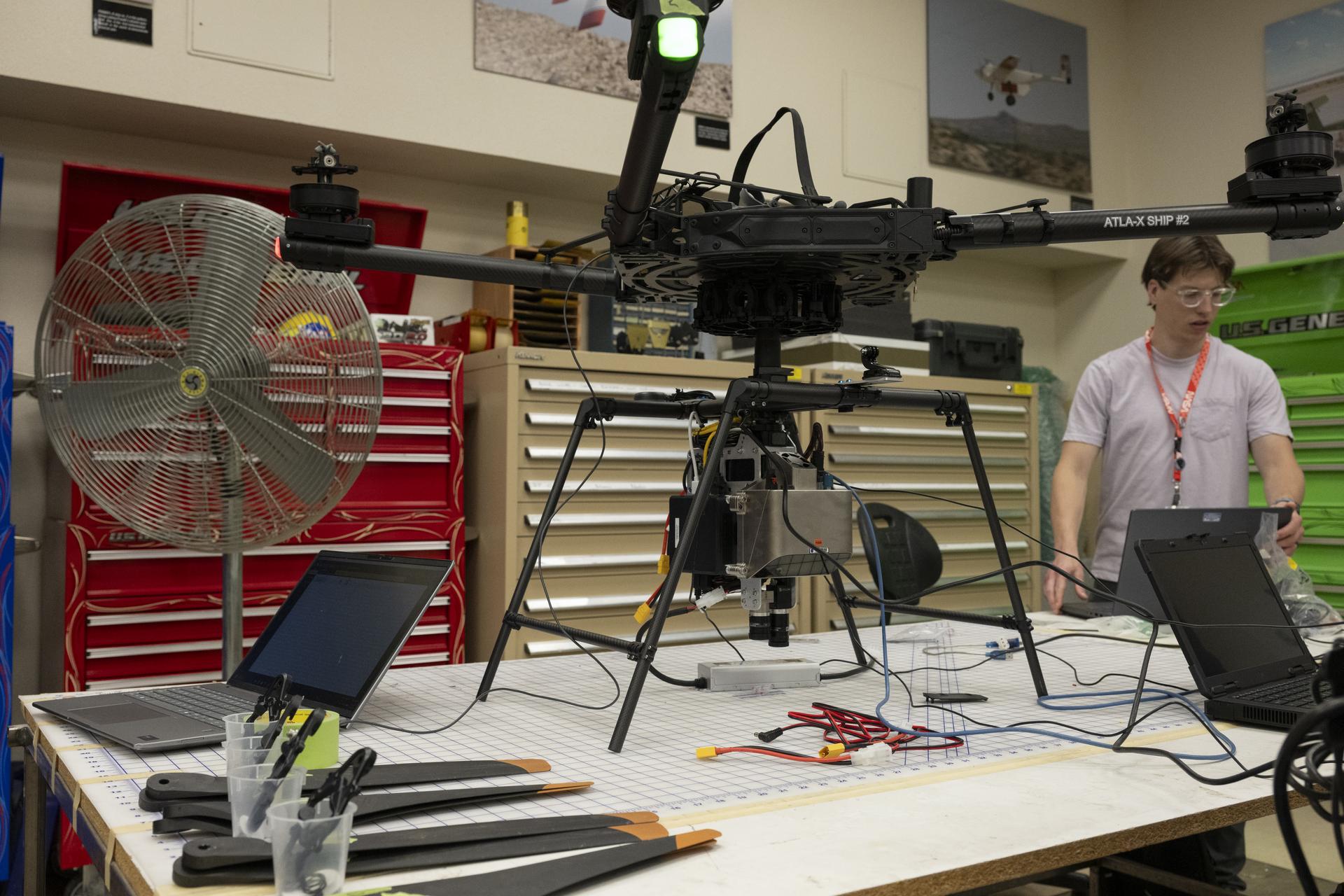
Isaac Rowe, flight software lead, tests how the advanced guidance and navigation system, known as the Safe and Precise Landing – Integrated Capabilities Evolution (SPLICE) experiment, communicates with the Alta-X drone at the Dale Reed Subscale Flight Research Laboratory at NASA’s Armstrong Flight Research Center in Edwards, California, on Monday, June 22, 2026. Rowe developed the system as part of a team at NASA’s Johnson Space Center in Houston. SPLICE will help spacecraft land precisely and detect and avoid potential hazards, which is critical for NASA missions to the Moon and to Mars.
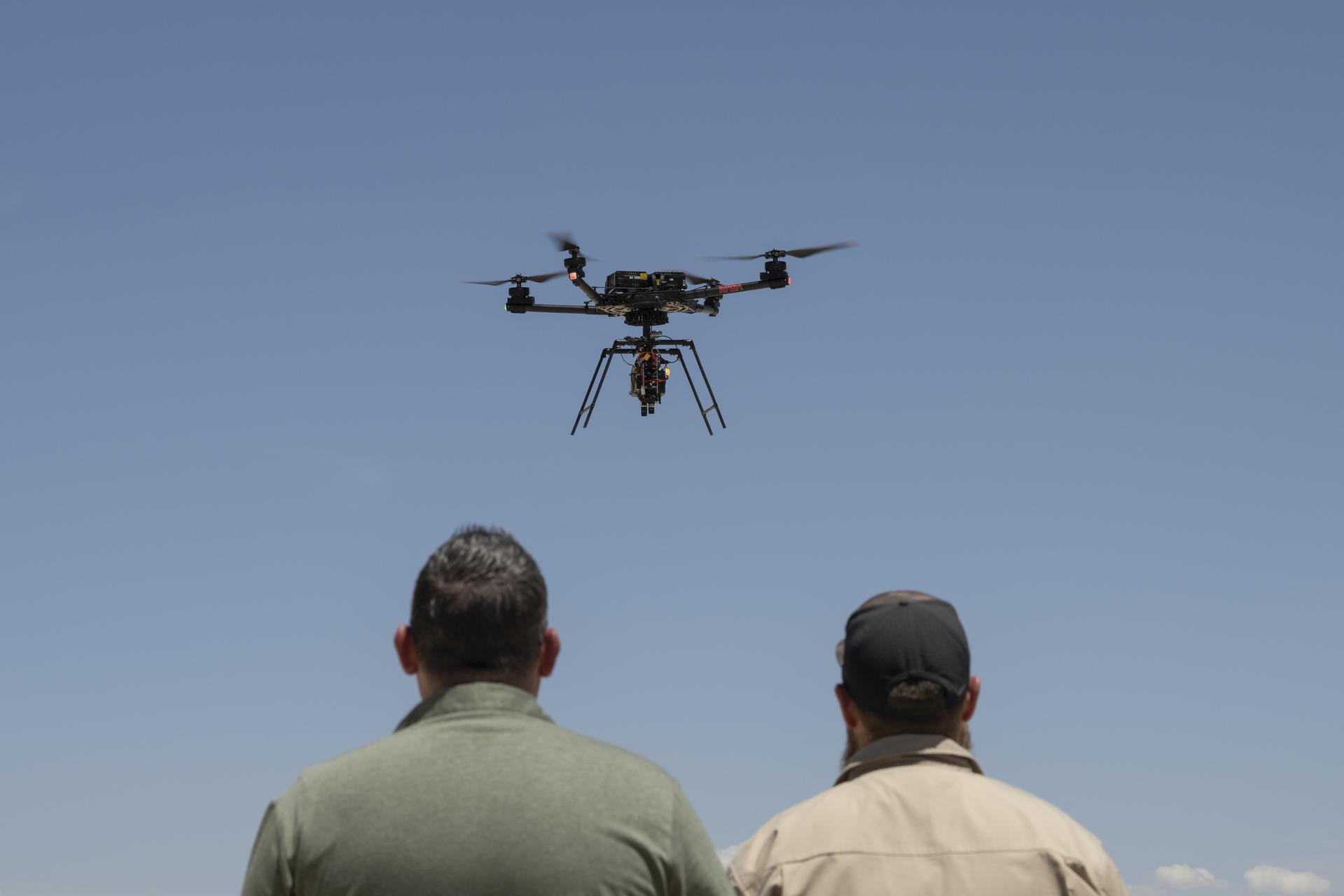
Justin Link, a small uncrewed aircraft pilot, left, and Justin Hall, chief pilot, fly a NASA Alta-X drone carrying an advanced guidance and navigation system known as the Safe and Precise Landing – Integrated Capabilities Evolution (SPLICE) experiment near NASA’s Armstrong Flight Research Center in Edwards, California, on Wednesday, July 15, 2026. Researchers at NASA’s Johnson Space Center in Houston developed SPLICE, which successfully communicated with the remotely piloted aircraft during hover maneuvers in flight. SPLICE will help spacecraft land precisely and detect and avoid potential hazards, which is critical for NASA missions to the Moon and to Mars.
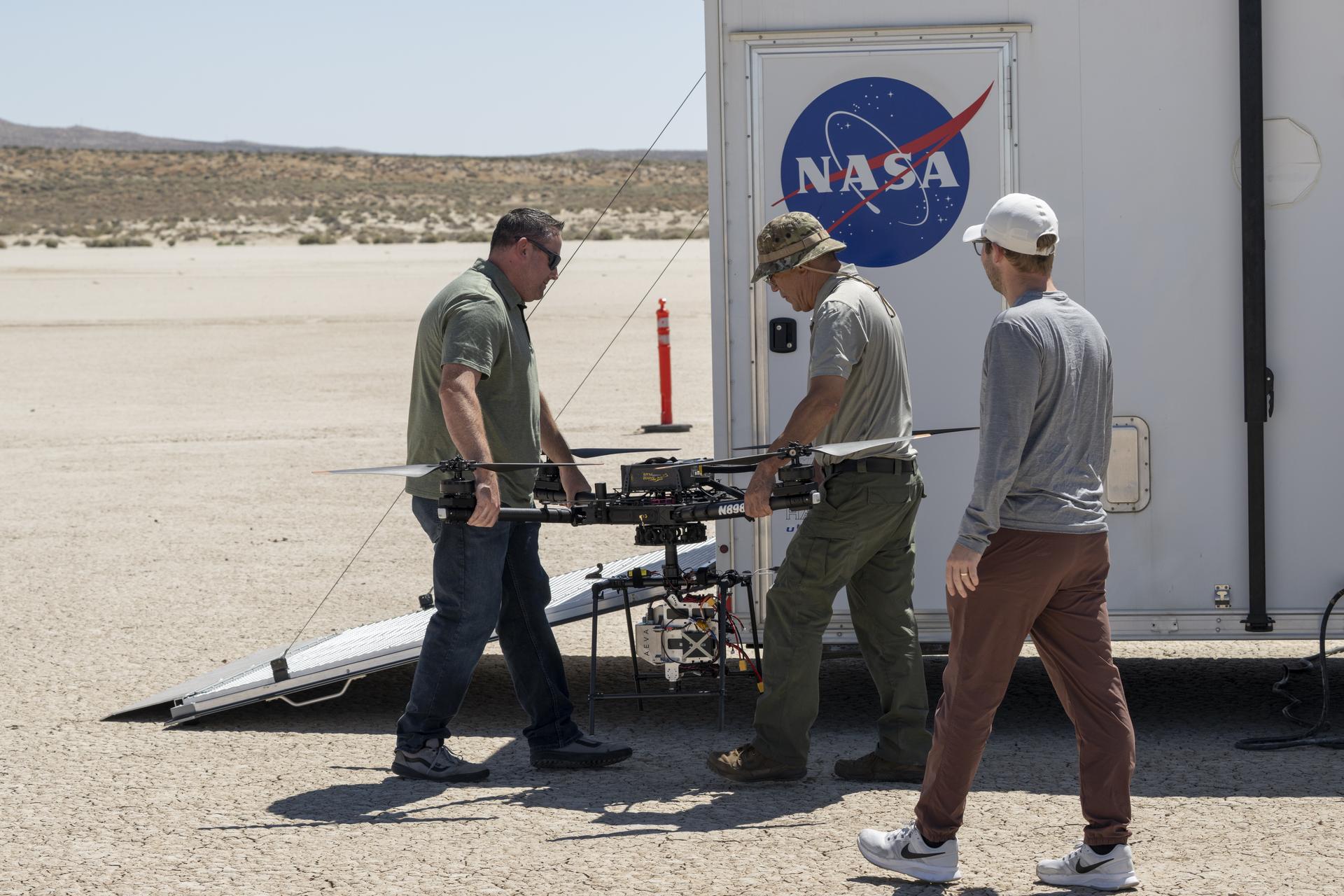
Justin Link, small uncrewed aircraft pilot, left, and Derek Abramson, chief engineer, carry NASA’s Alta-X drone as Davis Adams, project manager, observes test preparations near NASA’s Armstrong Flight Research Center in Edwards, California, on Wednesday, July 15, 2026. Researchers at NASA’s Johnson Space Center in Houston developed the advanced guidance and navigation system known as the Safe and Precise Landing – Integrated Capabilities Evolution (SPLICE) experiment, which was integrated with this drone. SPLICE will help spacecraft land precisely and detect and avoid potential hazards, which is critical for NASA missions to the Moon and to Mars.
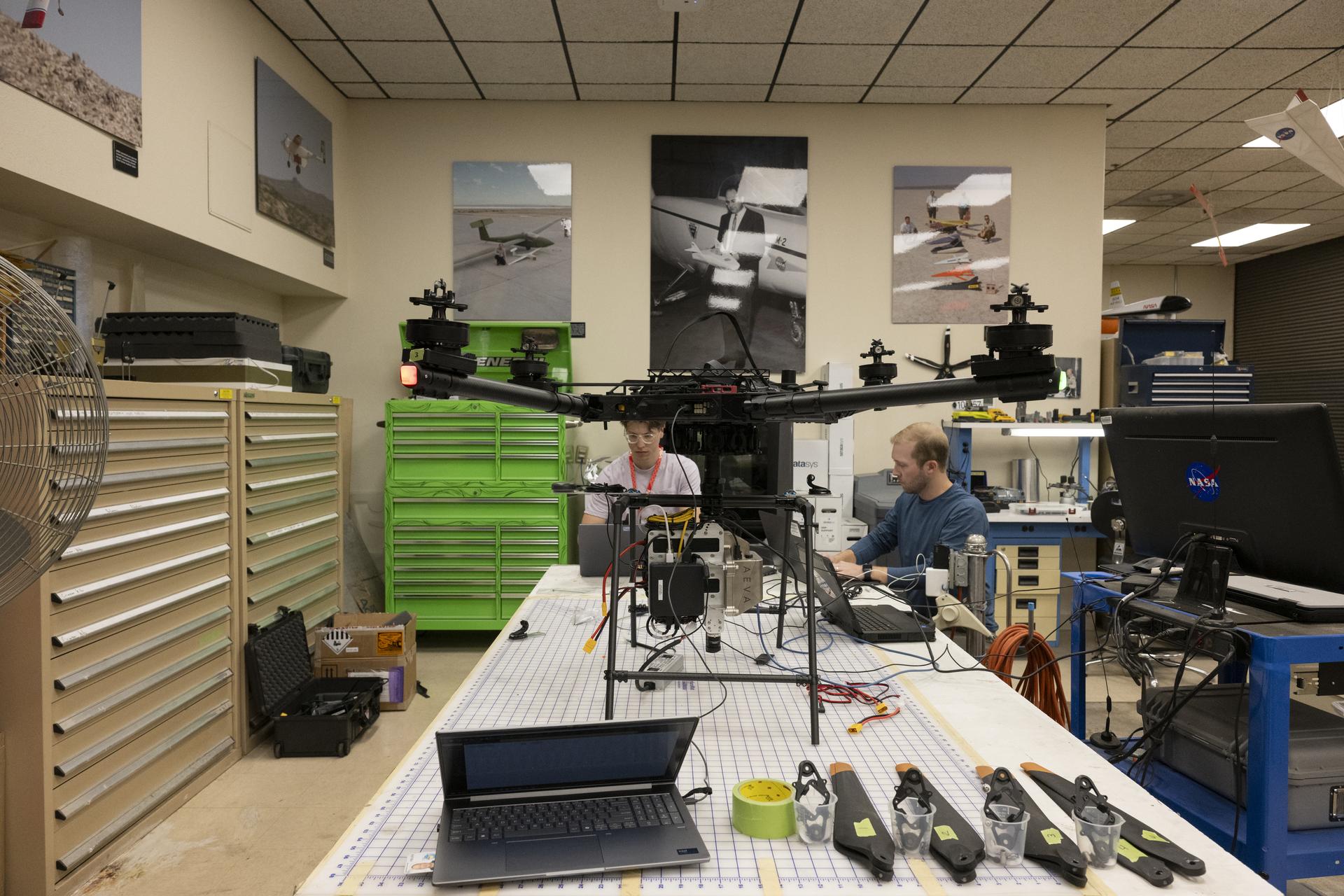
Isaac Rowe, left, flight software lead, and Davis Adams, project manager, work to integrate the advanced guidance and navigation system, known as the Safe and Precise Landing – Integrated Capabilities Evolution (SPLICE) experiment, with the Alta-X drone on Monday, June 22, 2026. Rowe and Adams developed the system at NASA’s Johnson Space Center in Houston. They worked with the Dale Reed Subscale Flight Research Laboratory team at NASA’s Armstrong Flight Research Center in Edwards, California, to test how the system and the drone communicated. The system will help spacecraft land precisely and detect and avoid potential hazards, which is critical for NASA missions to the Moon and to Mars.
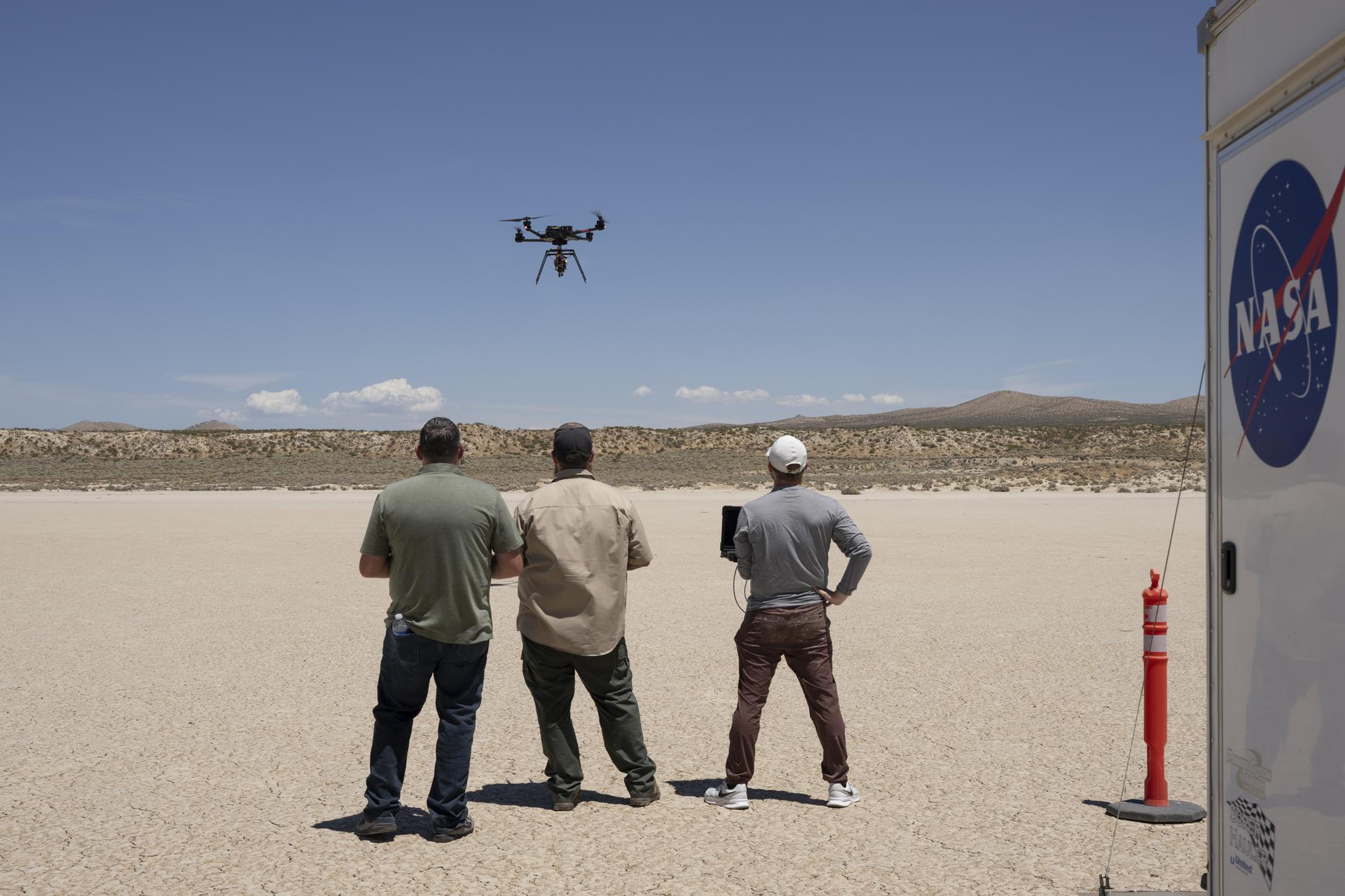
Justin Link, a small uncrewed aircraft pilot, left, Justin Hall, chief pilot, and Davis Adams, project manager, test an advanced guidance and navigation system known as the Safe and Precise Landing – Integrated Capabilities Evolution (SPLICE) experiment on an Alta-X drone near NASA’s Armstrong Flight Research Center in Edwards, California, on Wednesday, July 15, 2026. Researchers at NASA’s Johnson Space Center in Houston developed SPLICE, which successfully communicated with the remotely piloted aircraft during hover maneuvers in flight. SPLICE will help spacecraft land precisely and detect and avoid potential hazards, which is critical for NASA missions to the Moon and to Mars.
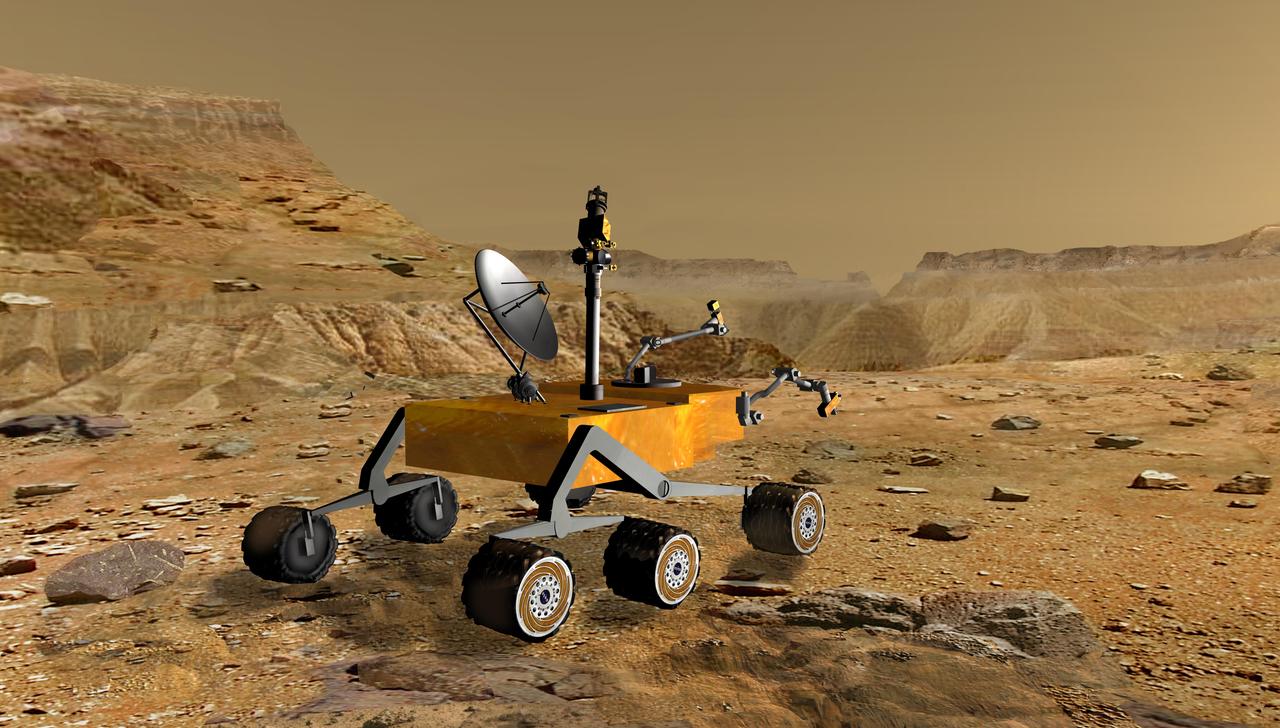
NASA Mars Science Laboratory travels near a canyon on Mars in this artist concept. The mission is under development for launch in 2009 and a precision landing on Mars in 2010.
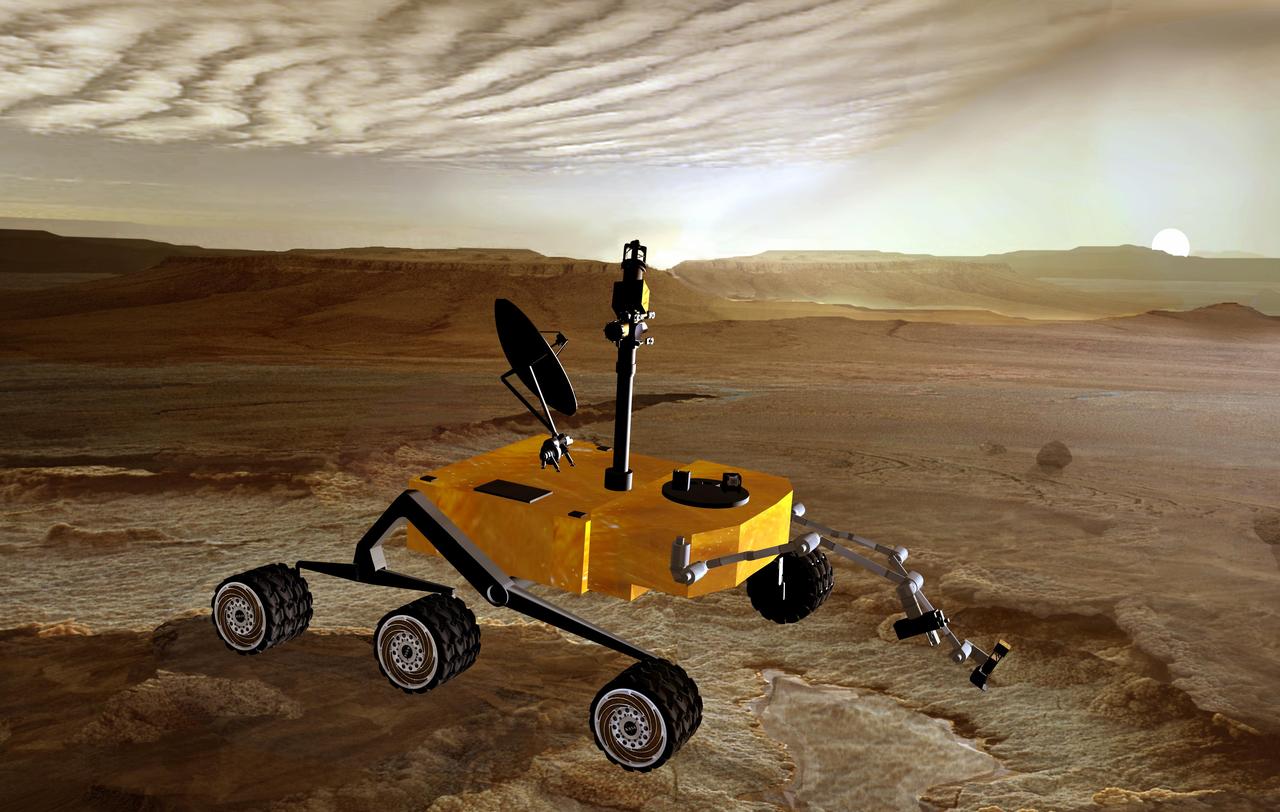
Sunset on Mars catches NASA Mars Science Laboratory in the foreground in this artist concept. The mission is under development for launch in 2009 and a precision landing on Mars in 2010.
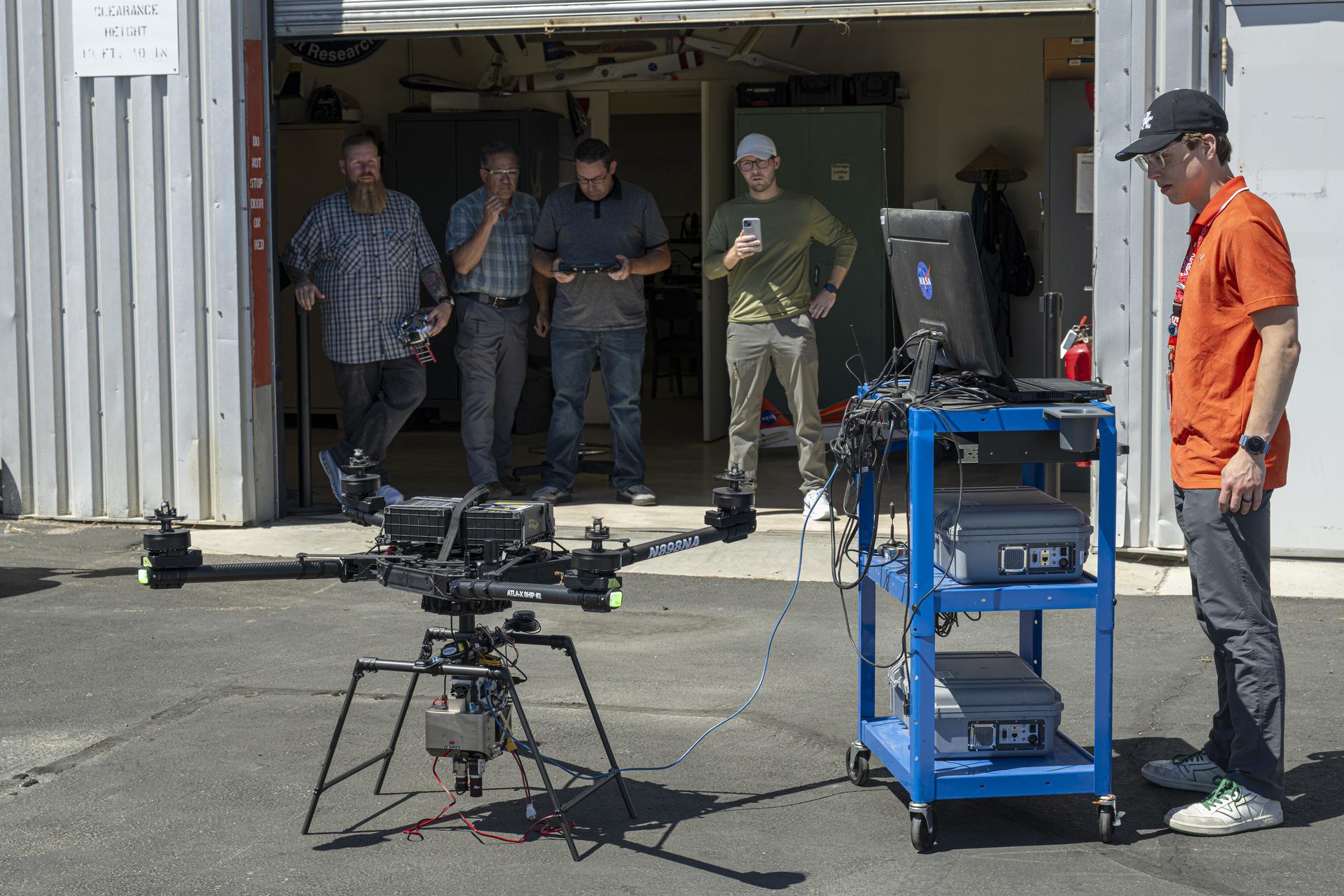
A team from NASA’s Johnson Space Center in Houston and NASA’s Armstrong Flight Research Center in Edwards, California, tests an advanced guidance and navigation system, known as the Safe and Precise Landing – Integrated Capabilities Evolution (SPLICE) experiment, with the Alta-X drone on Monday, June 22, 2026. From left are Dale Reed Subscale Flight Research Laboratory staff Justin Hall, chief pilot; Derek Abramson, chief engineer; Justin Link, a small uncrewed aircraft pilot; and, from Houston, Davis Adams, project manager, and Isaac Rowe, flight software lead. The system will help spacecraft land precisely and detect and avoid potential hazards, which is critical for NASA missions to the Moon and to Mars.
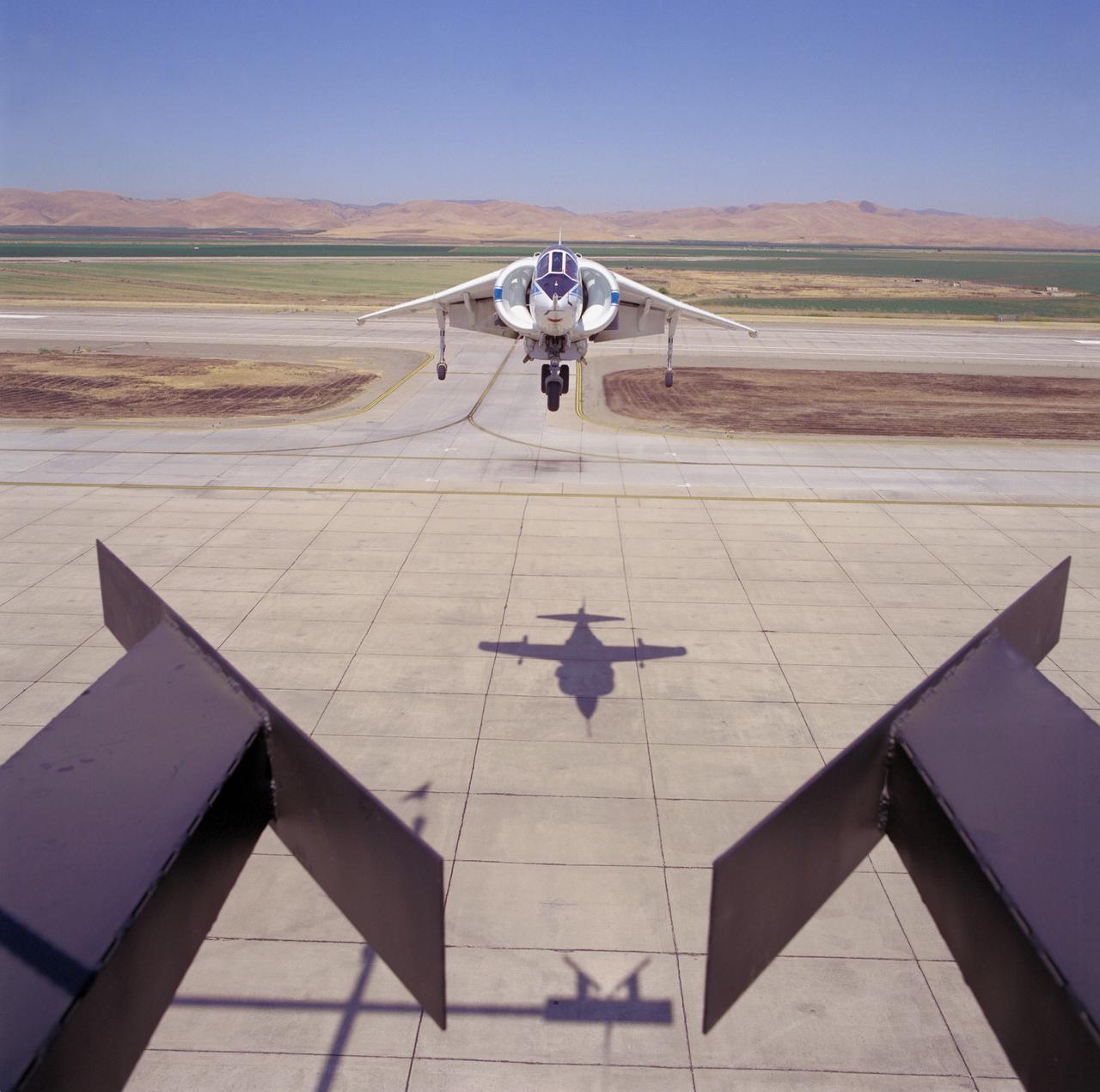
AV-8B (NASA-704) (VSRA) Crows Landing Precision Hover Test
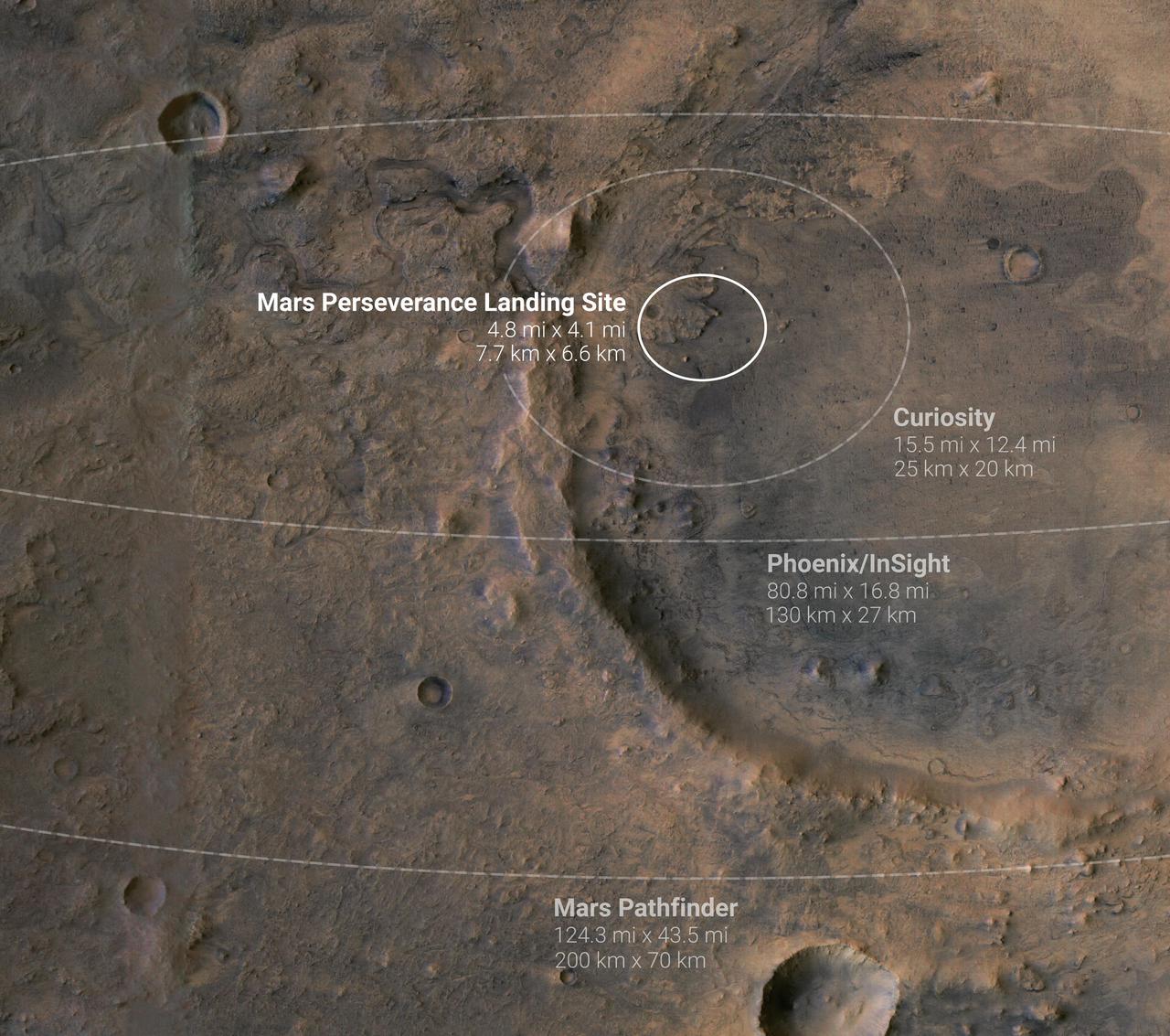
This annotated image shows landing ellipses for five NASA missions to Mars. A landing ellipse is the region within which a probe is expected to land based on its trajectory as it approaches the planet. A smaller landing ellipse means engineers have created a more precise model of the probe's expected trajectory. The four ellipses shown here are for the Perseverance Mars rover, Curiosity Mars rover, InSight Mars lander, Phoenix lander, and Mars Pathfinder probe. https://photojournal.jpl.nasa.gov/catalog/PIA24377
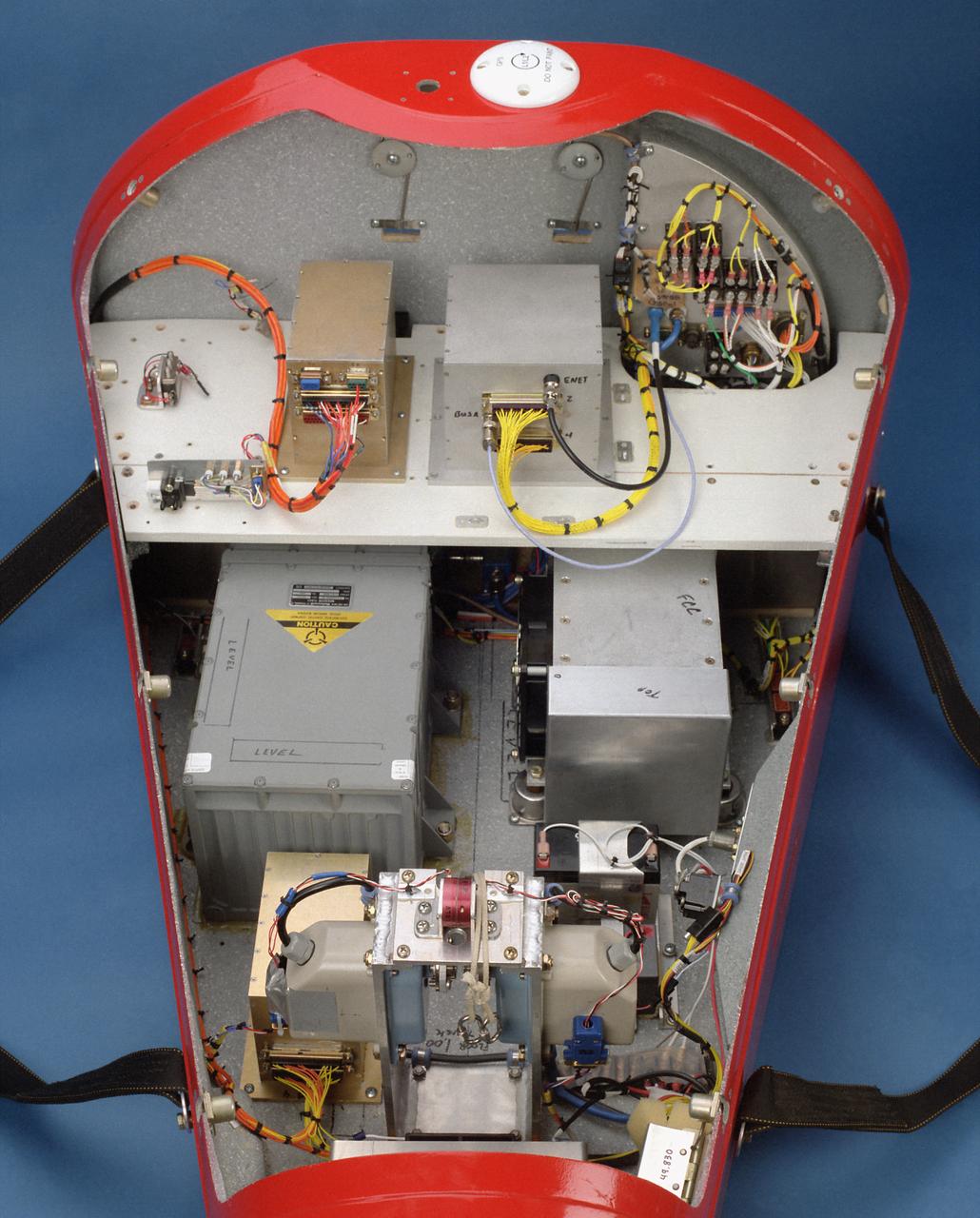
This photo shows the instrumentation and equipment inside the Spacewedge #3, a remotely-piloted research vehicle flown at the Dryden Flight Research Center, Edwards, California, to help develop technology for autonomous return systems for spacecraft as well as methods to deliver large Army cargo payloads to precise landings.
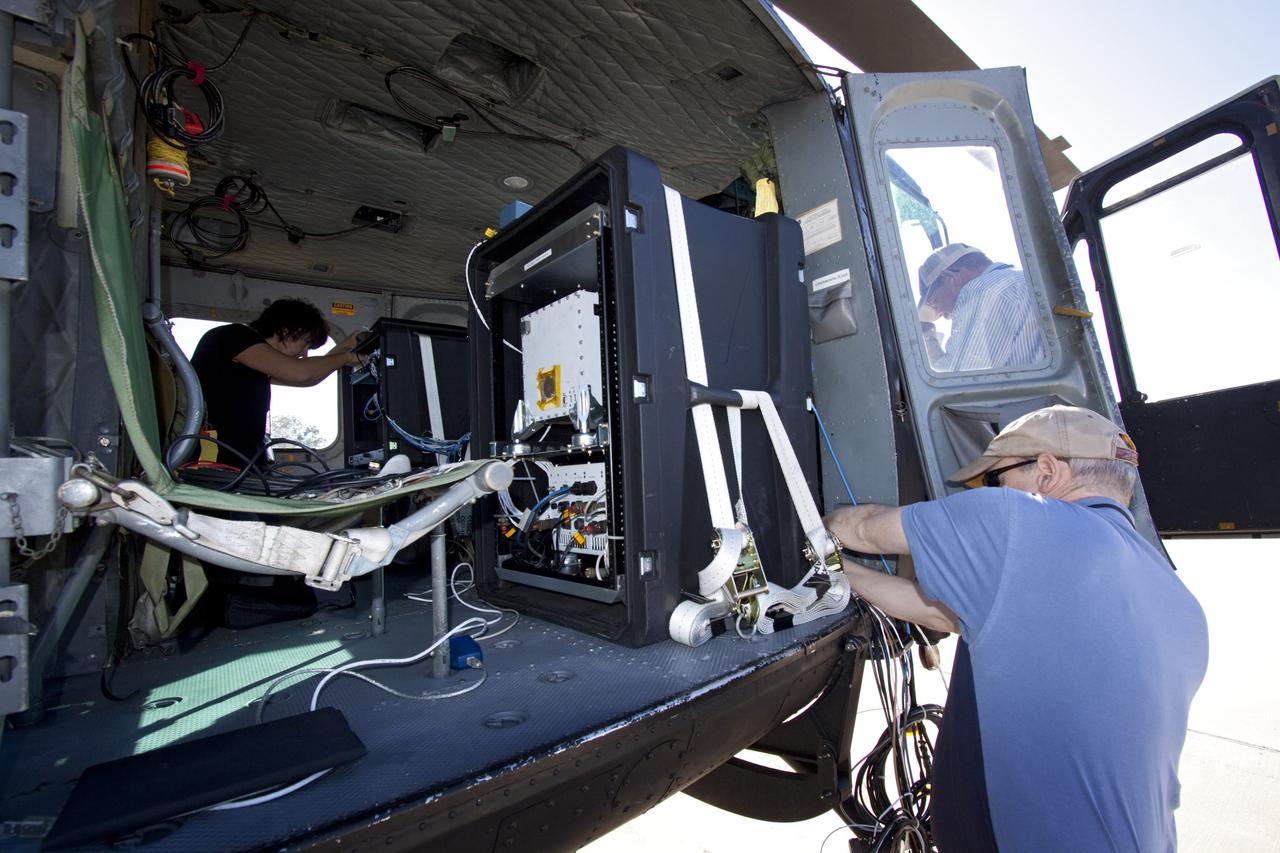
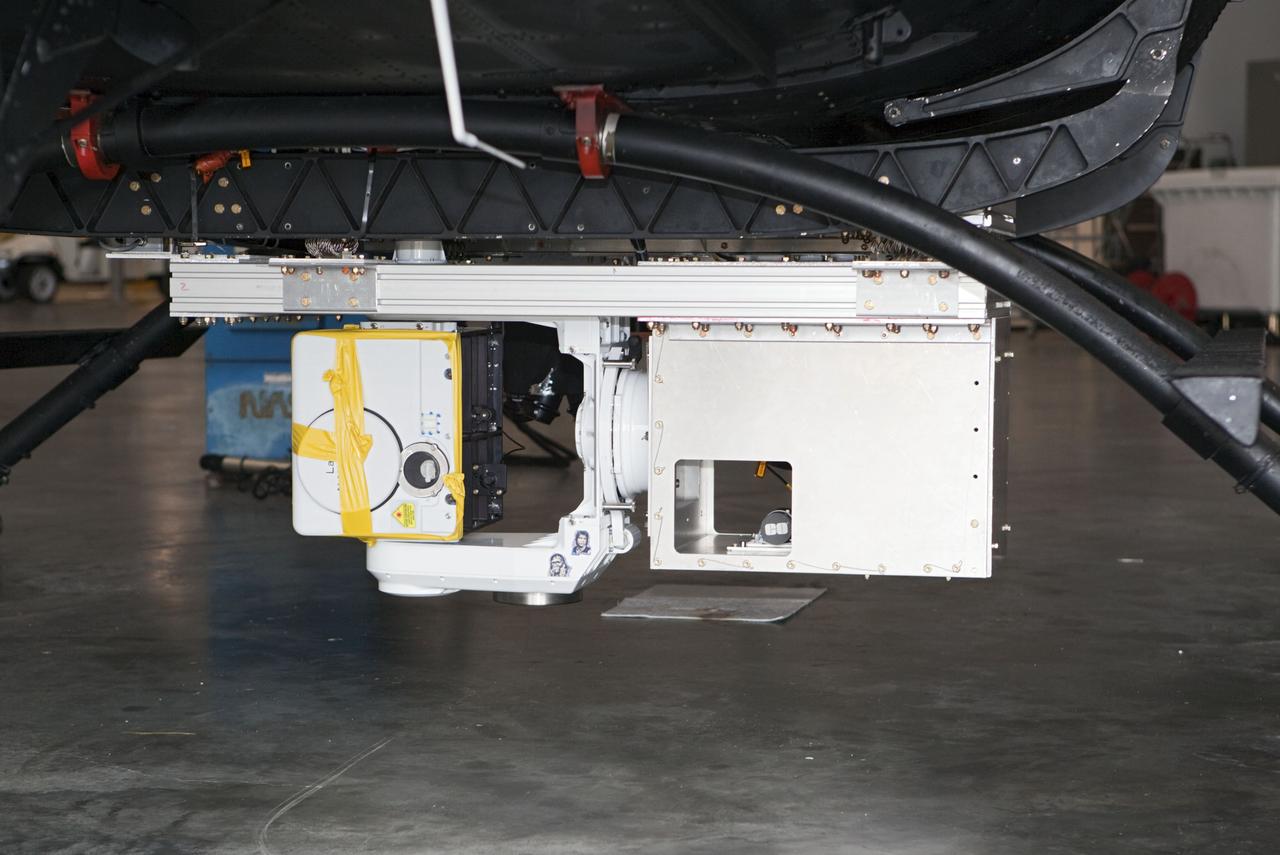
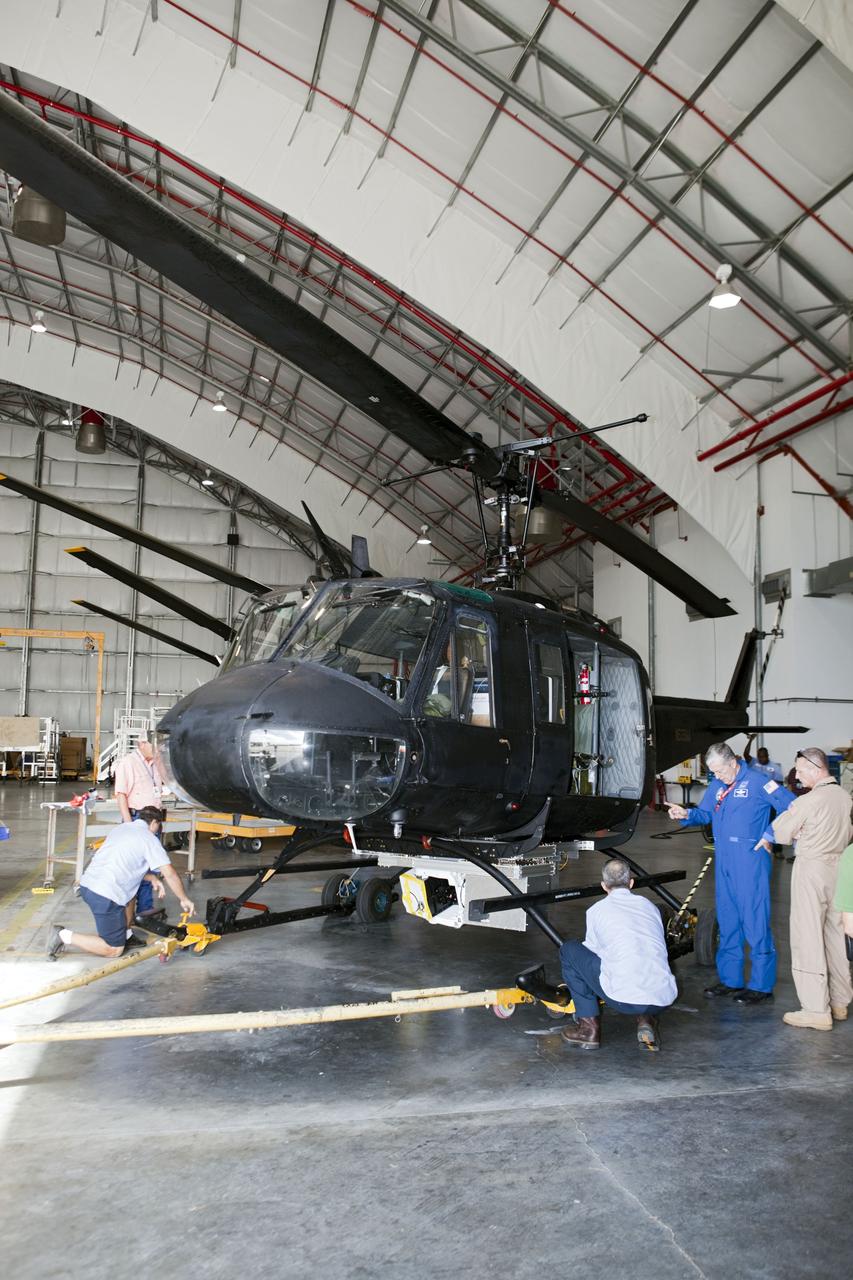
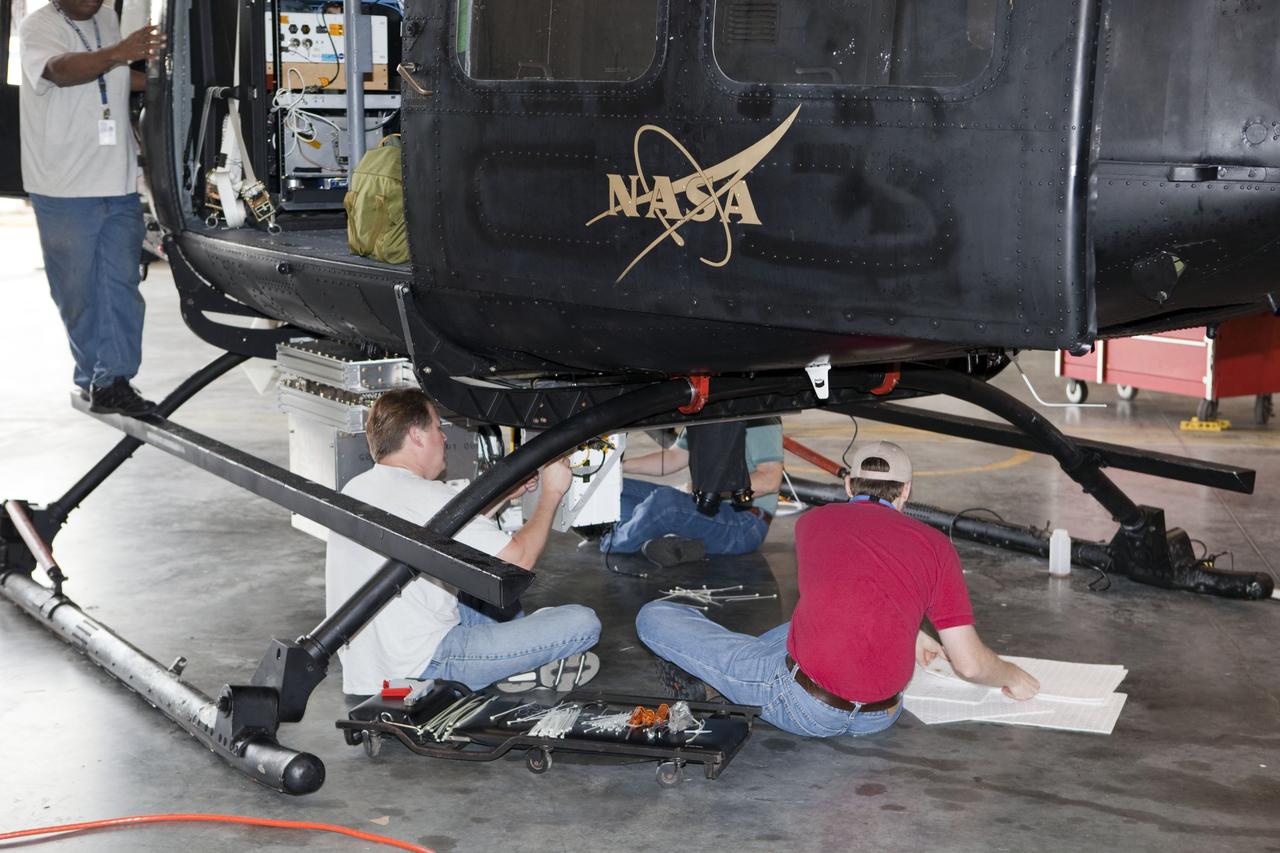
CAPE CANAVERAL, Fla. – Near the Shuttle Landing Facility at NASA's Kennedy Space Center in Florida, a technician installs hazard avoidance instrumentation on a Huey helicopter. Led by the Johnson Space Center and supported by Jet Propulsion Laboratory and Langley Research Center, the Autonomous Landing Hazard Avoidance Technology, or ALHAT, laser system provides a planetary lander the ability to precisely land safely on a surface while detecting any dangerous obstacles such as rocks, holes and slopes. Just north of Kennedy's Shuttle Landing Facility runway, a rock- and crater-filled planetary scape has been built so engineers can test the ability to negotiate away from risks. Photo credit: NASA/Jim Grossmann
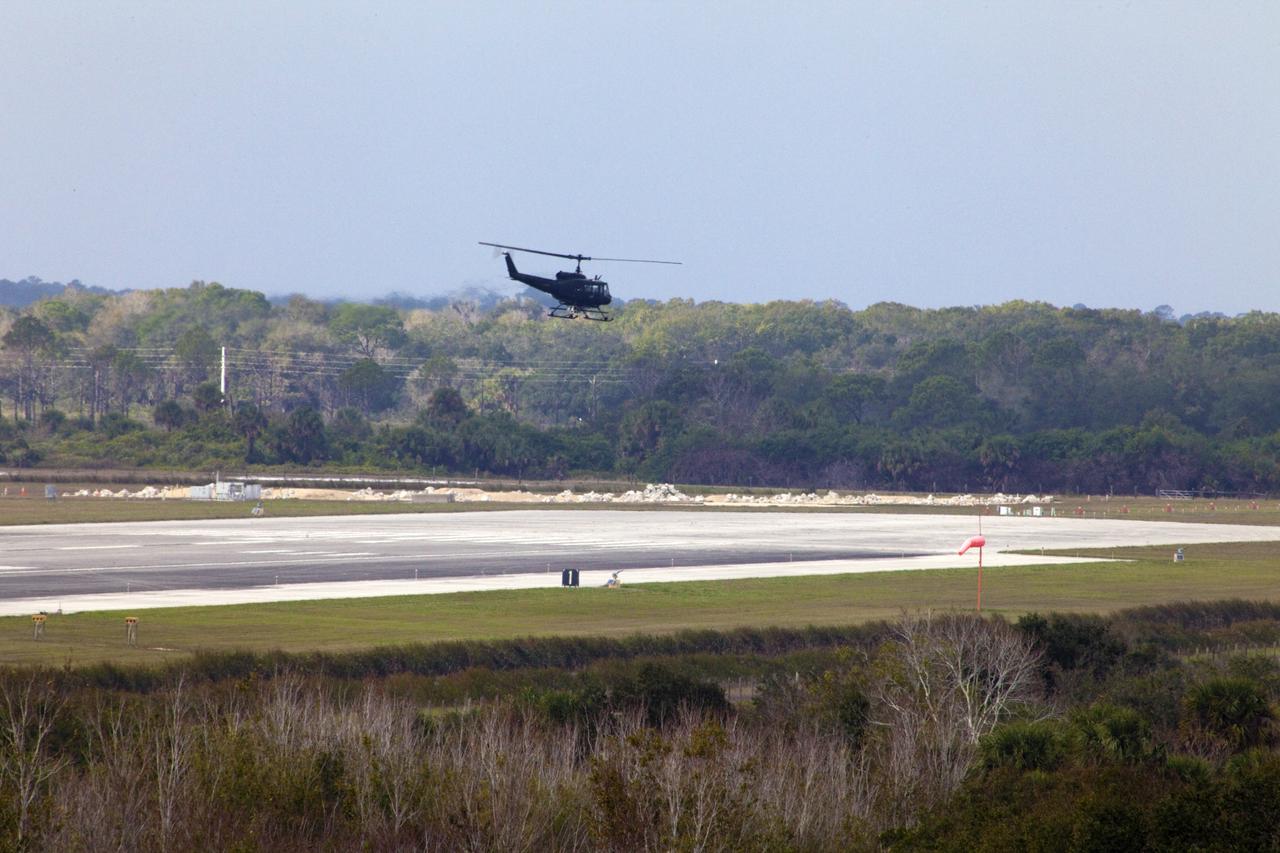
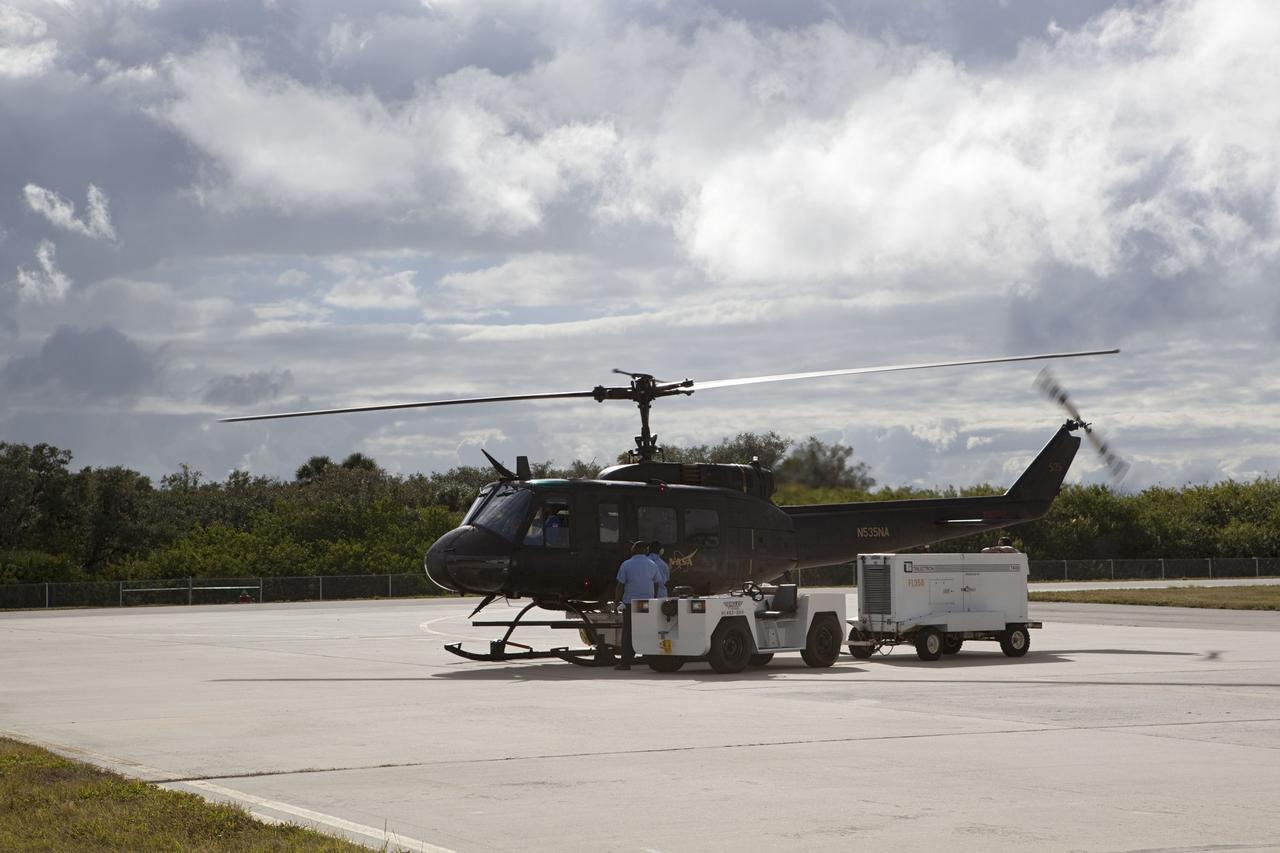
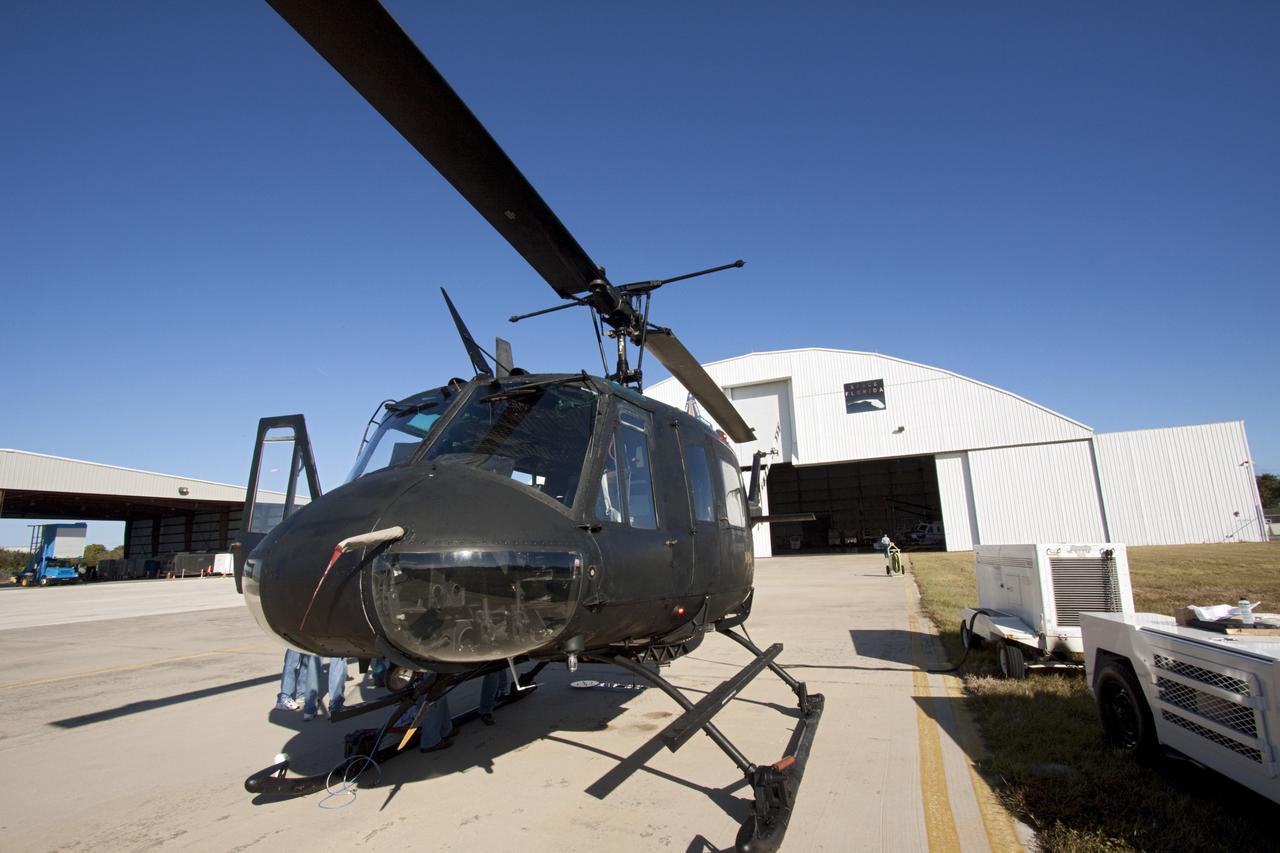
CAPE CANAVERAL, Fla. – A Huey helicopter tests hazard avoidance instrumentation at the Shuttle Landing Facility at NASA's Kennedy Space Center in Florida. Just north of Kennedy's Shuttle Landing Facility runway, a rock- and crater-filled planetary scape has been built so engineers can test the ability to negotiate away from risks using the instrument. Led by the Johnson Space Center and supported by Jet Propulsion Laboratory and Langley Research Center, the Autonomous Landing Hazard Avoidance Technology, or ALHAT, laser system provides a planetary lander the ability to precisely land safely on a surface while detecting any dangerous obstacles such as rocks, holes and slopes. Photo credit: NASA/Jim Grossmann
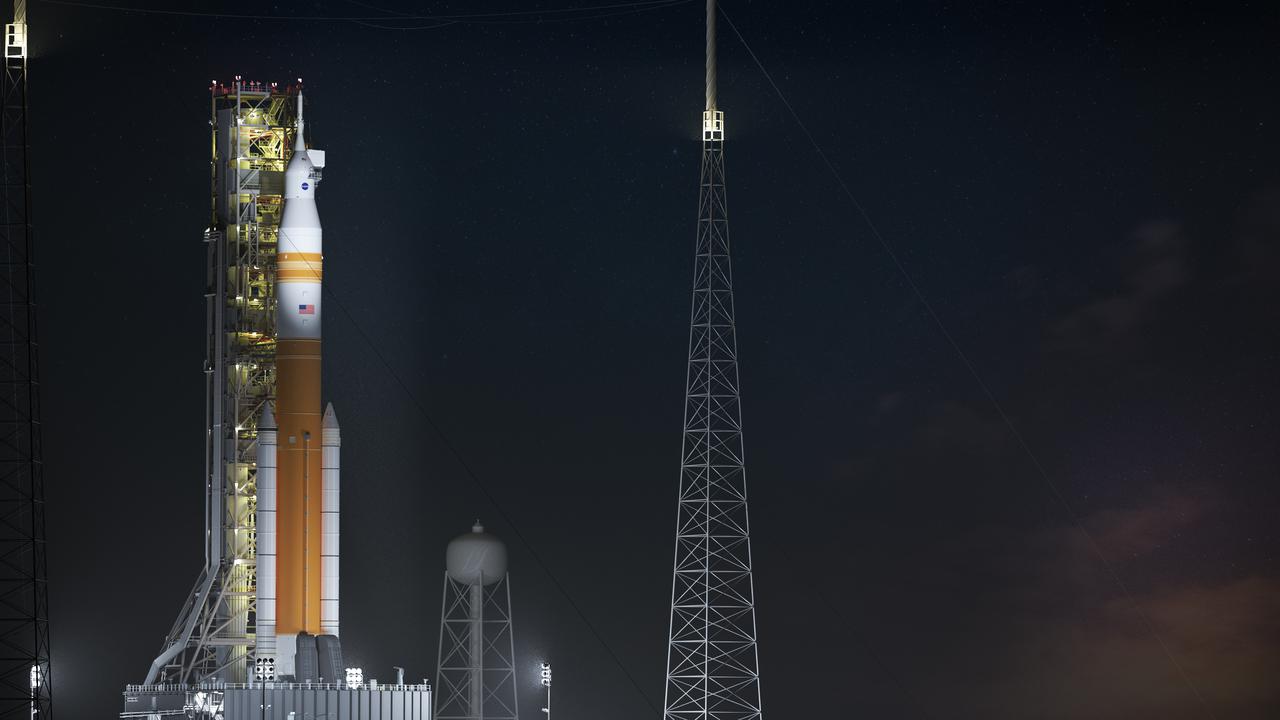
Illustration of nighttime scene of the evolved SLS Block 1B Crew variant on Pad 39B.. This configuration of the rocket, with the Exploration Upper Stage, will provide in-space propulsion to send astronauts in NASA’s Orion spacecraft and heavy cargo on a precise trajectory to the Moon. The evolution of the rocket to SLS Block 1B configuration with EUS enables SLS to launch 40% more cargo to the Moon along with the crew. Manufacturing both the core stage and Exploration Upper Stage is a collaborative effort between NASA and Boeing, the lead contractor for EUS and the SLS core stage. SLS is the only rocket that can send Orion, astronauts, and supplies to the Moon in a single mission. The SLS rocket, NASA’s Orion spacecraft, Gateway, and human landing system are part of NASA’s backbone for deep space exploration. Under the Artemis program, NASA is working to land the first woman and the next man on the Moon to pave the way for sustainable exploration at the Moon and future missions to Mars. (NASA)
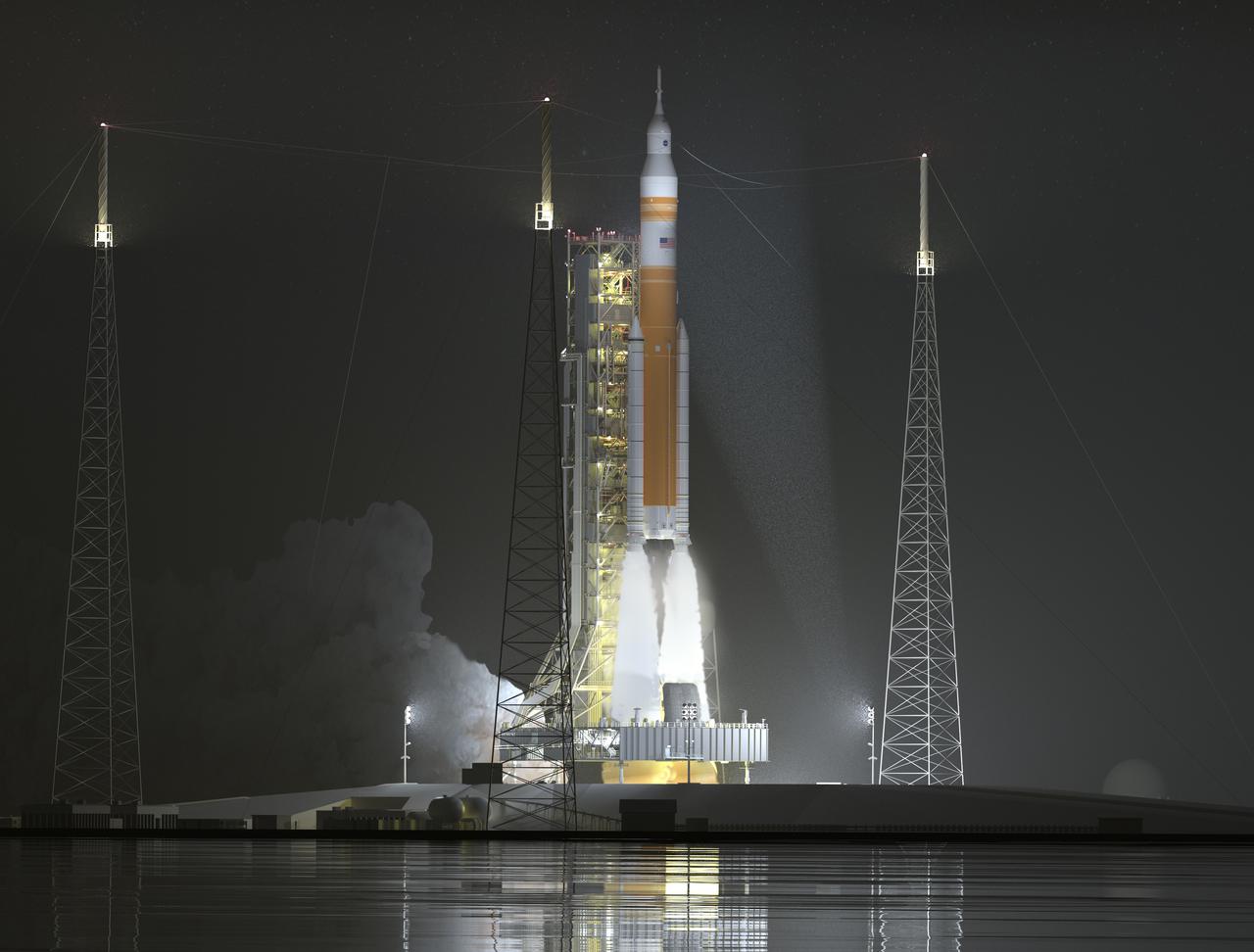
Illustration of the evolved SLS Block 1B Crew variant night launch. This configuration of the rocket, with the Exploration Upper Stage, will provide in-space propulsion to send astronauts in NASA’s Orion spacecraft and heavy cargo on a precise trajectory to the Moon. The evolution of the rocket to SLS Block 1B configuration with EUS enables SLS to launch 40% more cargo to the Moon along with the crew. Manufacturing both the core stage and Exploration Upper Stage is a collaborative effort between NASA and Boeing, the lead contractor for EUS and the SLS core stage. SLS is the only rocket that can send Orion, astronauts, and supplies to the Moon in a single mission. The SLS rocket, NASA’s Orion spacecraft, Gateway, and human landing system are part of NASA’s backbone for deep space exploration. Under the Artemis program, NASA is working to land the first woman and the next man on the Moon to pave the way for sustainable exploration at the Moon and future missions to Mars. (NASA) In album: B1B_Crew_SLS

Illustration of the SLS Exploration Upper Stage, or EUS. The Exploration Upper Stage will be used on the second configuration of the SLS rocket, known as Block 1B, and will provide in-space propulsion to send astronauts in NASA’s Orion spacecraft and heavy cargo on a precise trajectory to the Moon. The evolution of the rocket to SLS Block 1B configuration with EUS enables SLS to launch 40% more cargo to the Moon along with the crew. Manufacturing both the core stage and Exploration Upper Stage is a collaborative effort between NASA and Boeing, the lead contractor for EUS and the SLS core stage. SLS is the only rocket that can send Orion, astronauts, and supplies to the Moon in a single mission. The SLS rocket, NASA’s Orion spacecraft, Gateway, and human landing system are part of NASA’s backbone for deep space exploration. Under the Artemis program, NASA is working to land the first woman and the next man on the Moon to pave the way for sustainable exploration at the Moon and future missions to Mars. (NASA)
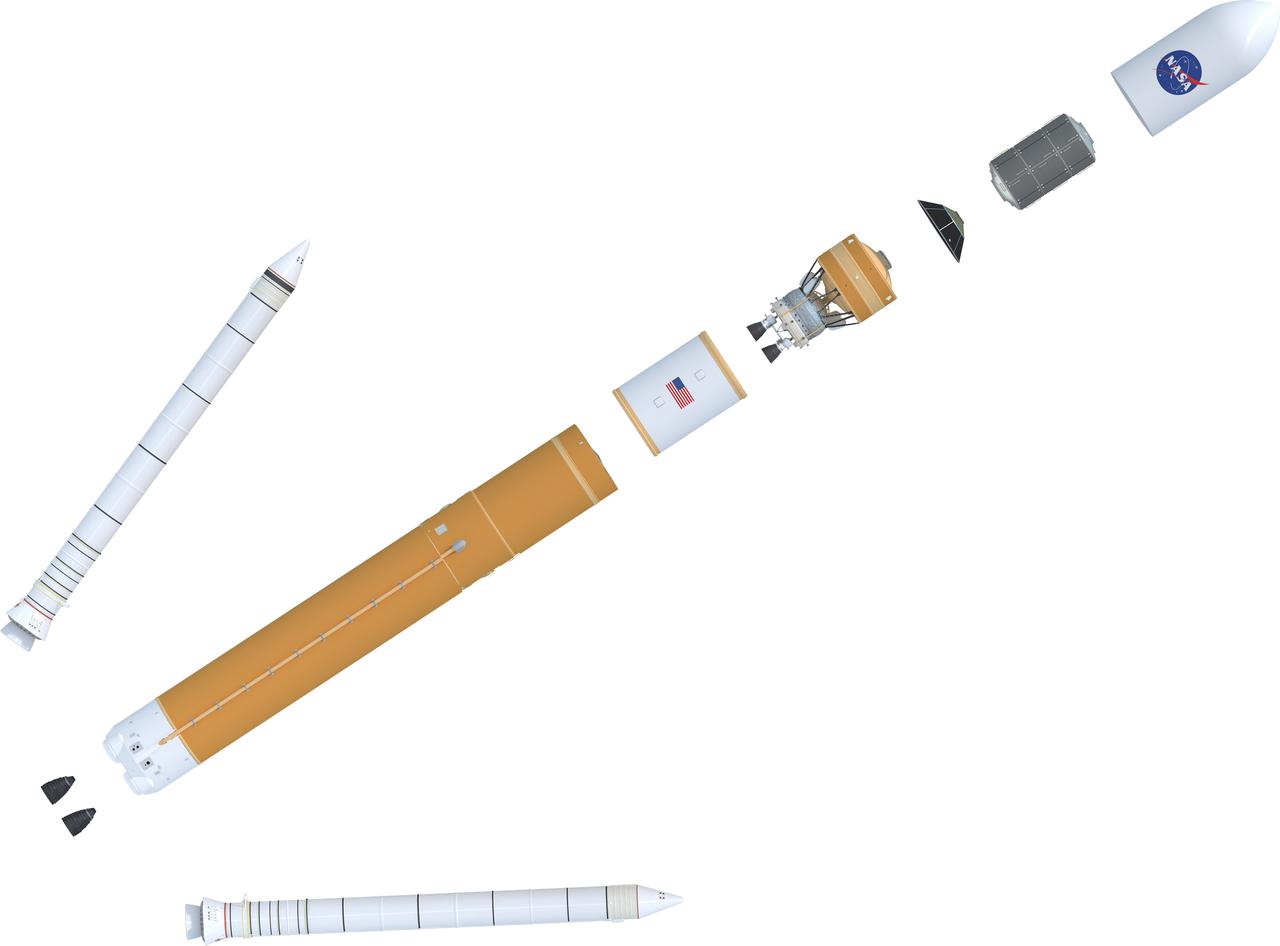
Expanded view illustration of elements of the evolved SLS Block 1B Crew variant. This configuration of the rocket, with the Exploration Upper Stage, will provide in-space propulsion to send astronauts in NASA’s Orion spacecraft and heavy cargo on a precise trajectory to the Moon. The evolution of the rocket to SLS Block 1B configuration with EUS enables SLS to launch 40% more cargo to the Moon along with the crew. Manufacturing both the core stage and Exploration Upper Stage is a collaborative effort between NASA and Boeing, the lead contractor for EUS and the SLS core stage. SLS is the only rocket that can send Orion, astronauts, and supplies to the Moon in a single mission. The SLS rocket, NASA’s Orion spacecraft, Gateway, and human landing system are part of NASA’s backbone for deep space exploration. Under the Artemis program, NASA is working to land the first woman and the next man on the Moon to pave the way for sustainable exploration at the Moon and future missions to Mars. (NASA)

Illustration of the SLS Exploration Upper Stage, or EUS. This configuration of the rocket, with the Exploration Upper Stage, will provide in-space propulsion to send astronauts in NASA’s Orion spacecraft and heavy cargo on a precise trajectory to the Moon. The evolution of the rocket to SLS Block 1B configuration with EUS enables SLS to launch 40% more cargo to the Moon along with the crew. Manufacturing both the core stage and Exploration Upper Stage is a collaborative effort between NASA and Boeing, the lead contractor for EUS and the SLS core stage. SLS is the only rocket that can send Orion, astronauts, and supplies to the Moon in a single mission. The SLS rocket, NASA’s Orion spacecraft, Gateway, and human landing system are part of NASA’s backbone for deep space exploration. Under the Artemis program, NASA is working to land the first woman and the next man on the Moon to pave the way for sustainable exploration at the Moon and future missions to Mars. (NASA)
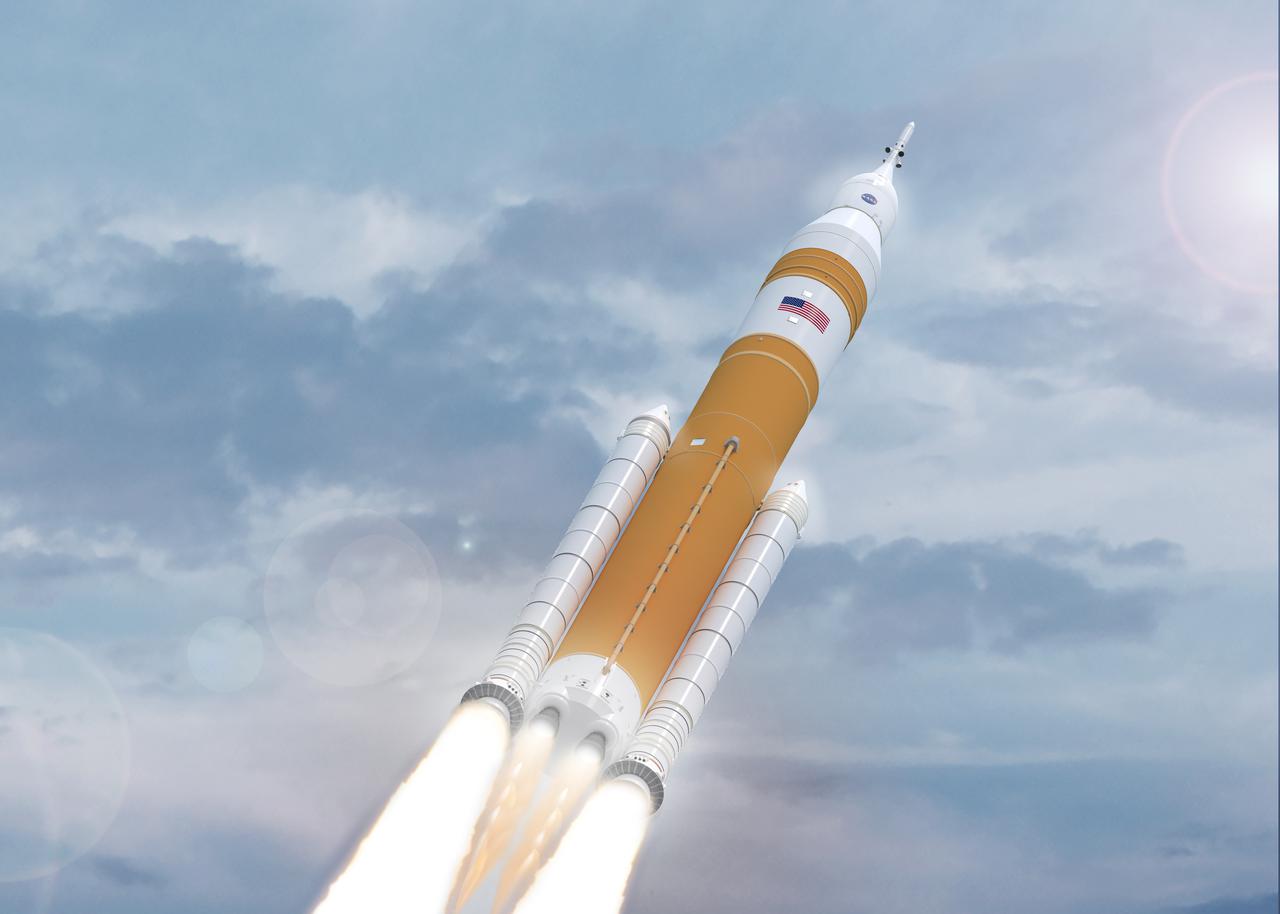
Illustration of evolved SLS Block 1B Crew variant in flight. This configuration of the rocket, with the Exploration Upper Stage, will provide in-space propulsion to send astronauts in NASA’s Orion spacecraft and heavy cargo on a precise trajectory to the Moon. The evolution of the rocket to SLS Block 1B configuration with EUS enables SLS to launch 40% more cargo to the Moon along with the crew. Manufacturing both the core stage and Exploration Upper Stage is a collaborative effort between NASA and Boeing, the lead contractor for EUS and the SLS core stage. SLS is the only rocket that can send Orion, astronauts, and supplies to the Moon in a single mission. The SLS rocket, NASA’s Orion spacecraft, Gateway, and human landing system are part of NASA’s backbone for deep space exploration. Under the Artemis program, NASA is working to land the first woman and the next man on the Moon to pave the way for sustainable exploration at the Moon and future missions to Mars. (NASA)

Illustration of the evolved SLS Block 1B Crew variant outer mold line. This configuration of the rocket, with the Exploration Upper Stage, will provide in-space propulsion to send astronauts in NASA’s Orion spacecraft and heavy cargo on a precise trajectory to the Moon. The evolution of the rocket to SLS Block 1B configuration with EUS enables SLS to launch 40% more cargo to the Moon along with the crew. Manufacturing both the core stage and Exploration Upper Stage is a collaborative effort between NASA and Boeing, the lead contractor for EUS and the SLS core stage. SLS is the only rocket that can send Orion, astronauts, and supplies to the Moon in a single mission. The SLS rocket, NASA’s Orion spacecraft, Gateway, and human landing system are part of NASA’s backbone for deep space exploration. Under the Artemis program, NASA is working to land the first woman and the next man on the Moon to pave the way for sustainable exploration at the Moon and future missions to Mars. (NASA)

Seen here, is a nighttime rendering of the evolved SLS Block 1B Crew variant positioned on the mobile launcher. This configuration of the rocket, with the Exploration Upper Stage, will provide in-space propulsion to send astronauts in NASA’s Orion spacecraft and heavy cargo on a precise trajectory to the Moon. The evolution of the rocket to SLS Block 1B configuration with EUS enables SLS to launch 40% more cargo to the Moon along with the crew. Manufacturing both the core stage and Exploration Upper Stage is a collaborative effort between NASA and Boeing, the lead contractor for EUS and the SLS core stage. SLS is the only rocket that can send Orion, astronauts, and supplies to the Moon in a single mission. The SLS rocket, NASA’s Orion spacecraft, Gateway, and human landing system are part of NASA’s backbone for deep space exploration. Under the Artemis program, NASA is working to land the first woman and the next man on the Moon to pave the way for sustainable exploration at the Moon and future missions to Mars. (NASA)
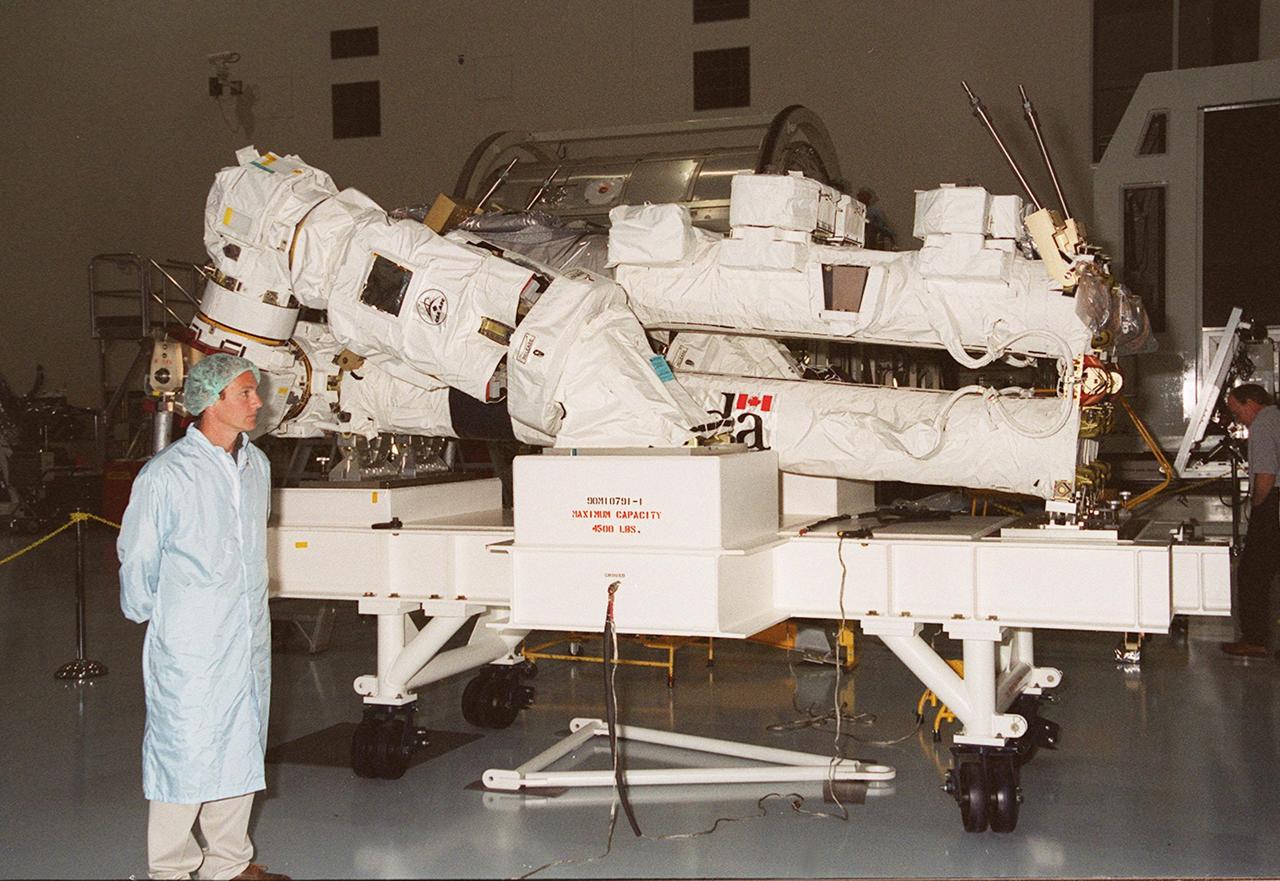
The Canadian Space Agency’s Space Station Remote Manipulator System (SSRMS) sits on the floor of the Space Station Processing Facility before transfer to a test stand . The 56-foot-long arm will be the primary means of transferring payloads between the orbiter payload bay and the International Space Station. Its three segments comprise seven joints for highly flexible land precise movement, making it capable of moving around the Station’s exterior like an inchworm. The SSRMS is scheduled for launch on STS-100 in April 2001
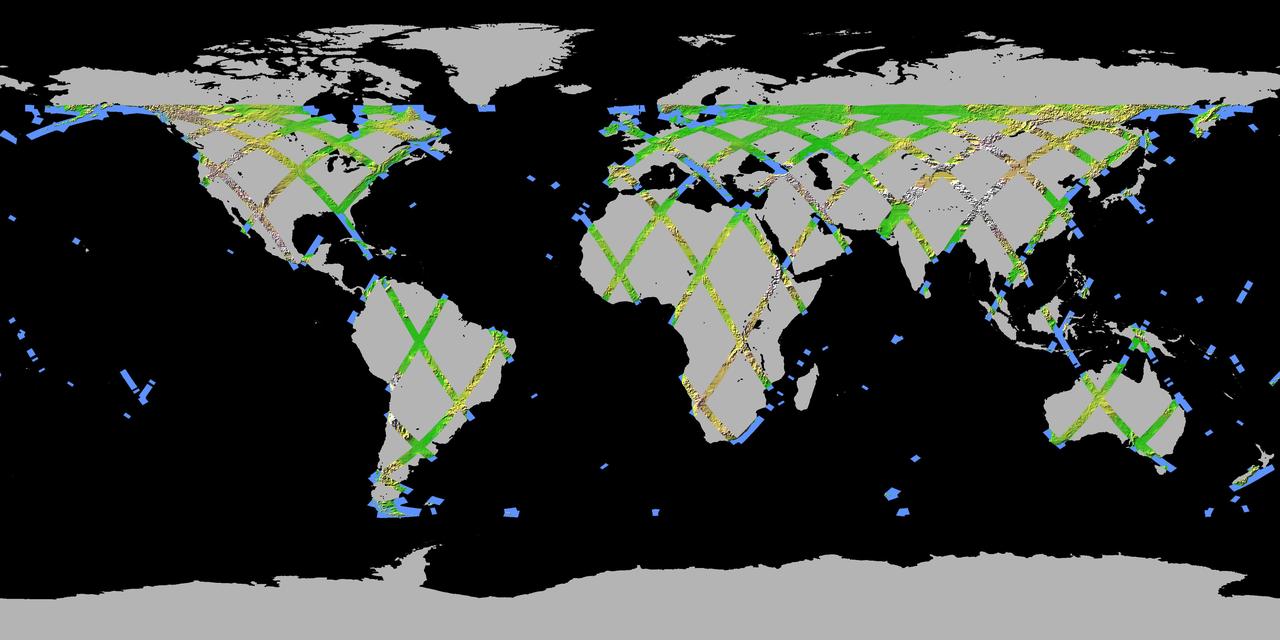
JSC2000E01555 (January 2000) --- A one-dimensional representation of Earth indicates only a portion of the total anticipated coverage area for the Shuttle Radar Topography Mission (SRTM). The primary objective of SRTM is to acquire a high-resolution topographic map of the Earth's land mass (between 60 degrees north and 56 degrees south latitude) and to test new technologies for deployment of large rigid structures and measurement of their distortions to extremely high precision.
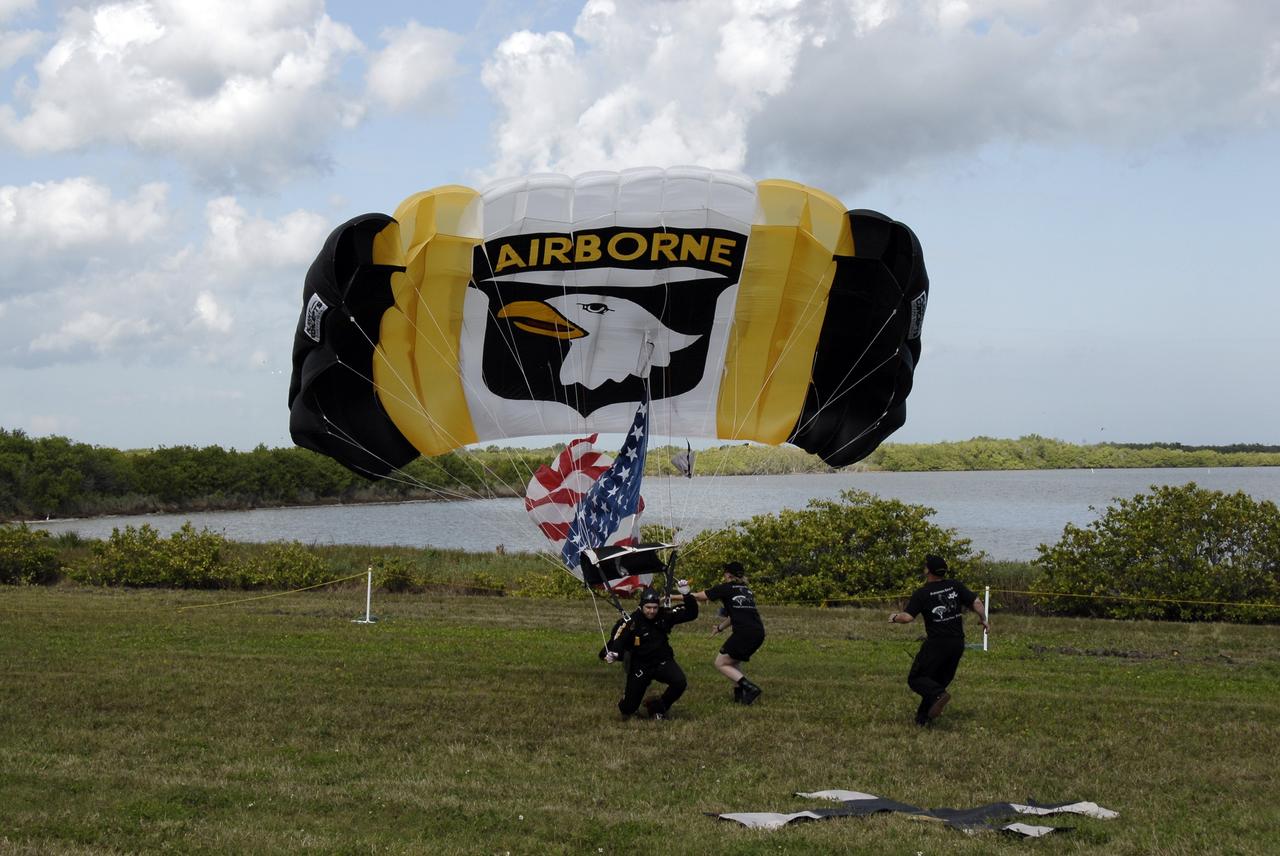
CAPE CANAVERAL, Fla. – A member of the 101st Airborne parachute demonstration team lands at NASA's Kennedy Space Center in Florida. The team performed at the Kennedy Space Center Visitor Complex Space and Air Show Nov. 8-9. This year’s show brought together the best in military aircraft, such as the F/A-18 Super Hornet and F-16 Fighting Falcon, coupled with precision pilots and veteran astronauts to celebrate spaceflight and aviation. The event included a water rescue demonstration by the 920th Rescue Wing. Photo credit: NASA/Kim Shiflett
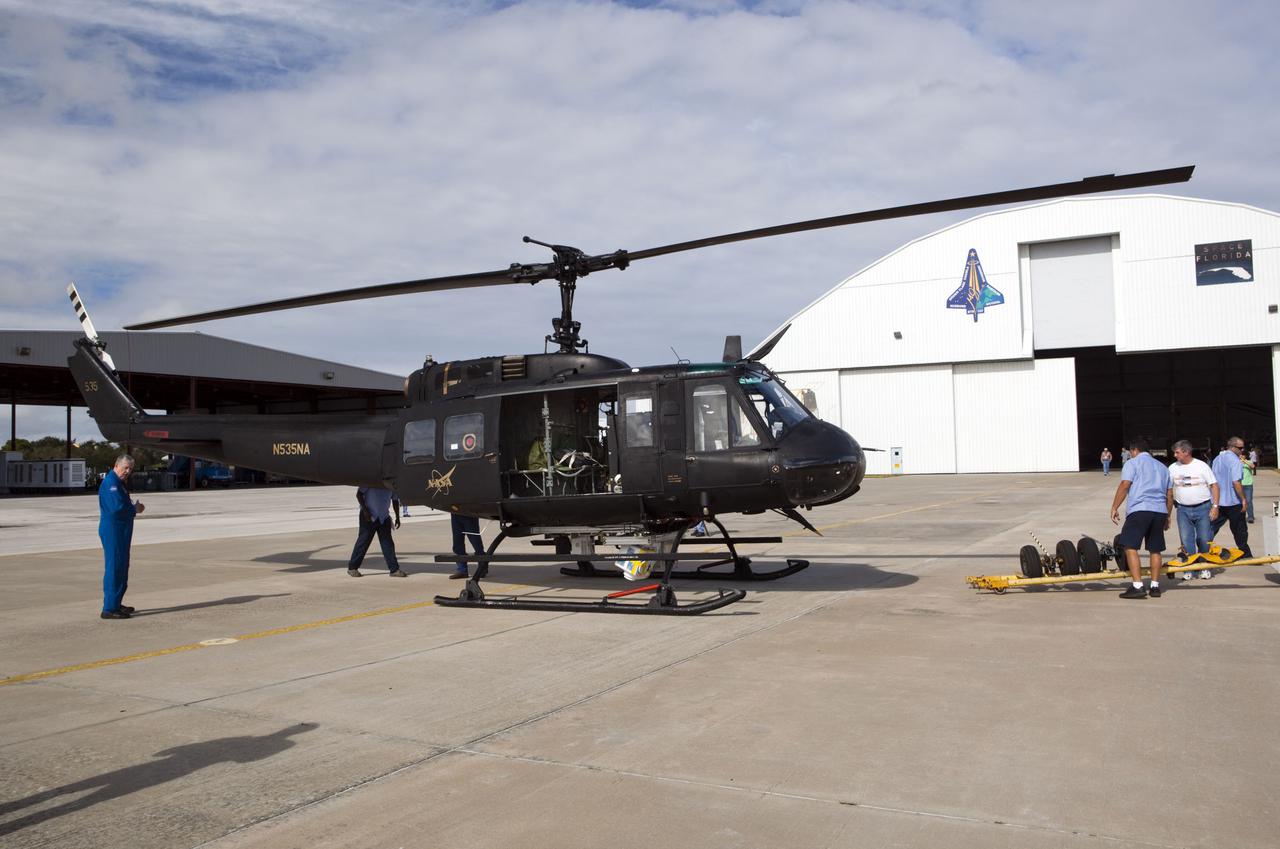
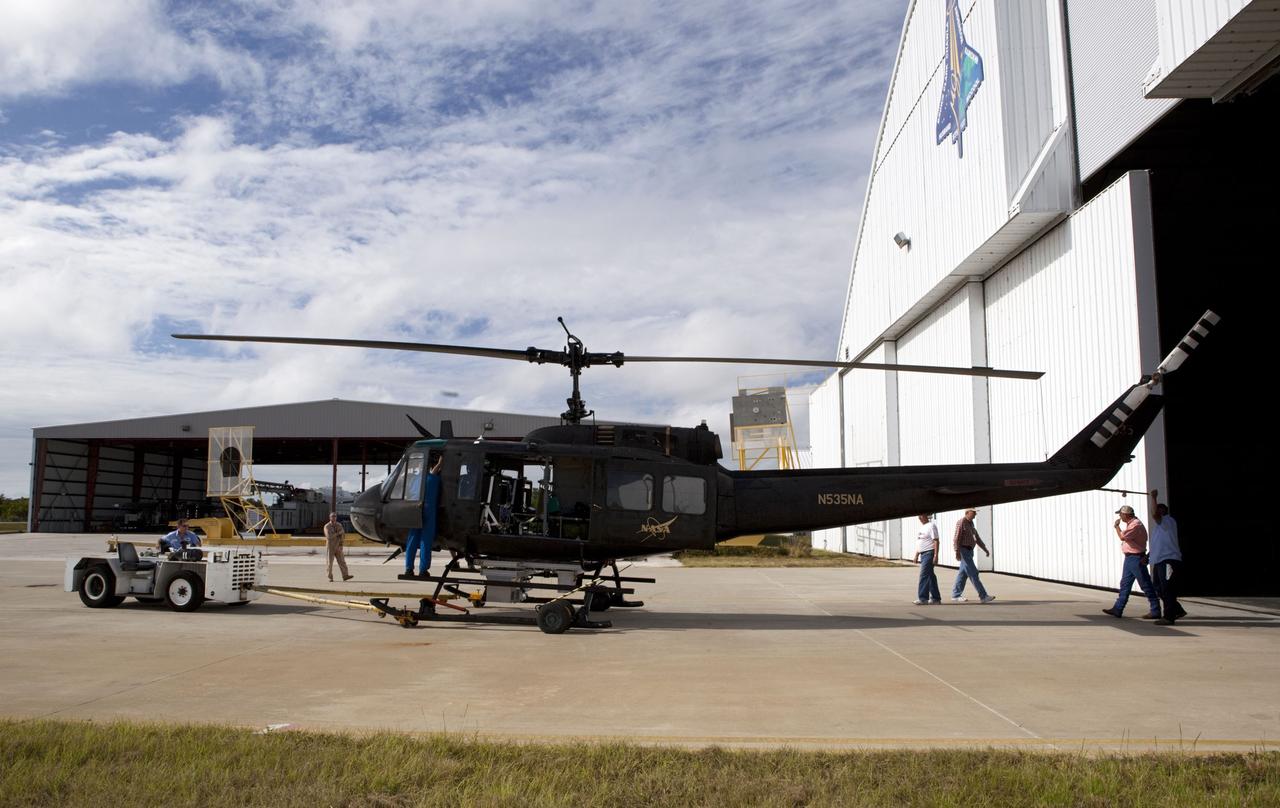
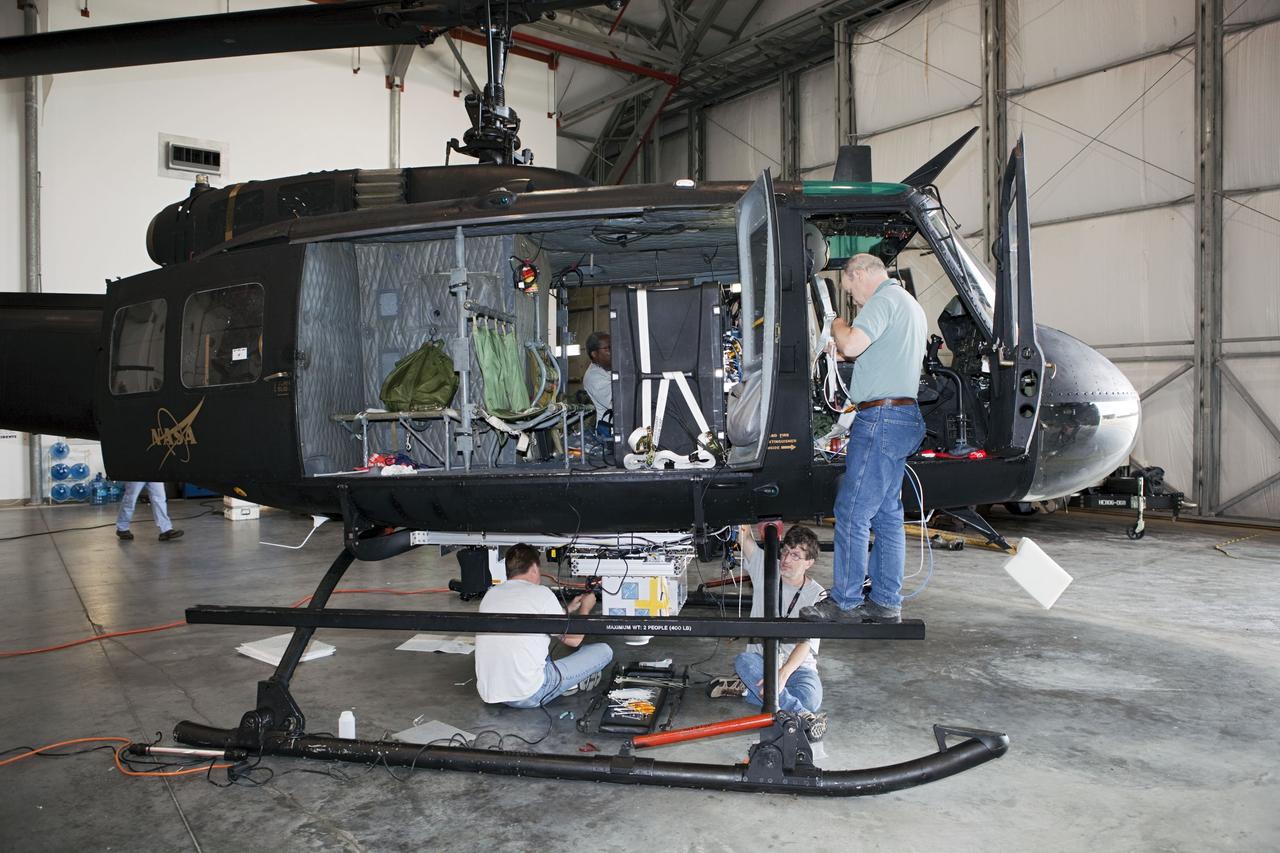
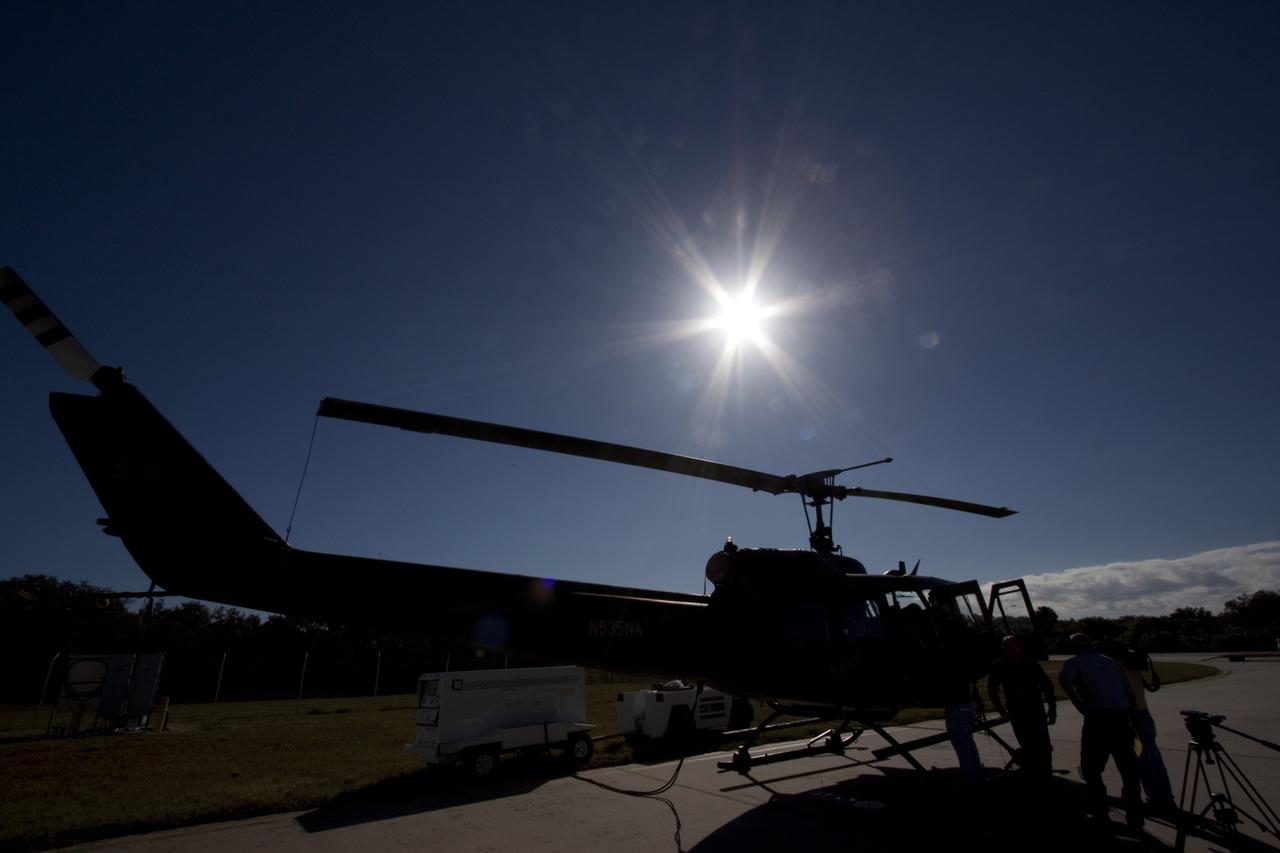
CAPE CANAVERAL, Fla. – Near the Shuttle Landing Facility at NASA's Kennedy Space Center in Florida, a space agency team installed and tested hazard avoidance instrumentation on a Huey helicopter. Led by the Johnson Space Center and supported by Jet Propulsion Laboratory and Langley Research Center, the Autonomous Landing Hazard Avoidance Technology, or ALHAT, laser system provides a planetary lander the ability to precisely land safely on a surface while detecting any dangerous obstacles such as rocks, holes and slopes. Just north of Kennedy's Shuttle Landing Facility runway, a rock- and crater-filled planetary scape has been built so engineers can test the ability to negotiate away from risks. Photo credit: NASA_Dmitri Gerondidakis
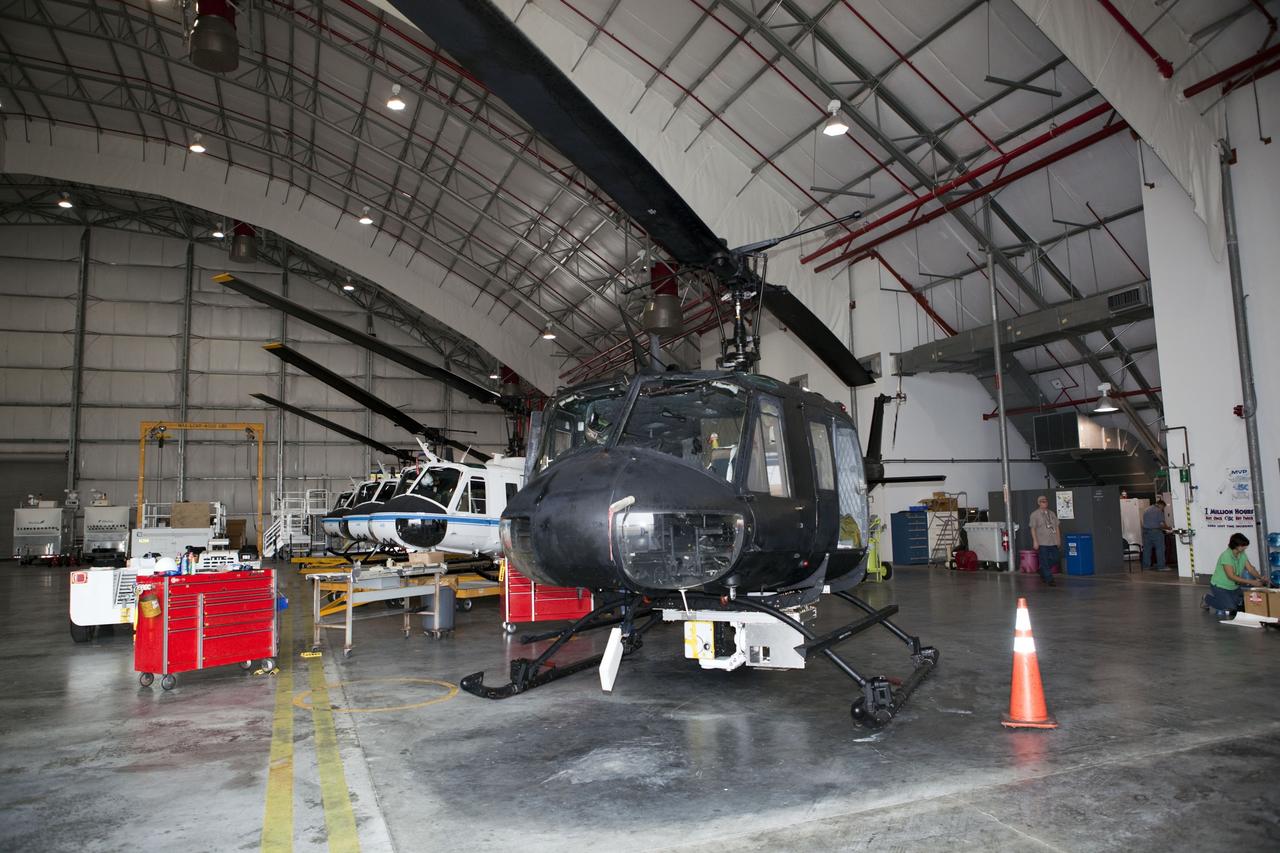
CAPE CANAVERAL, Fla. – Near the Shuttle Landing Facility at NASA's Kennedy Space Center in Florida, a space agency team installed and tested hazard avoidance instrumentation on a Huey helicopter. Led by the Johnson Space Center and supported by Jet Propulsion Laboratory and Langley Research Center, the Autonomous Landing Hazard Avoidance Technology, or ALHAT, laser system provides a planetary lander the ability to precisely land safely on a surface while detecting any dangerous obstacles such as rocks, holes and slopes. Just north of Kennedy's Shuttle Landing Facility runway, a rock- and crater-filled planetary scape has been built so engineers can test the ability to negotiate away from risks. Photo credit: NASA/Dmitri Gerondidakis
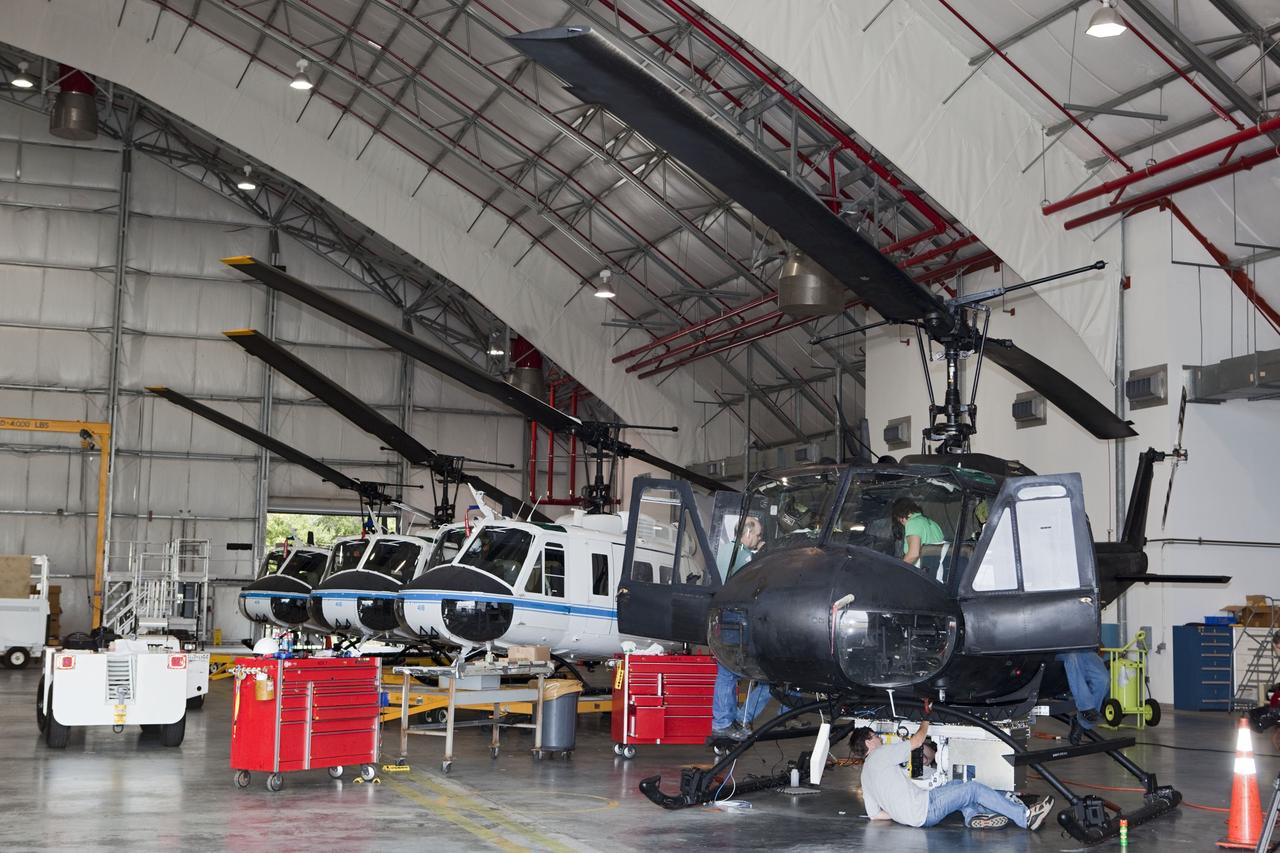
CAPE CANAVERAL, Fla. – Near the Shuttle Landing Facility at NASA's Kennedy Space Center in Florida, a space agency team installed and tested hazard avoidance instrumentation on a Huey helicopter. Led by the Johnson Space Center and supported by Jet Propulsion Laboratory and Langley Research Center, the Autonomous Landing Hazard Avoidance Technology, or ALHAT, laser system provides a planetary lander the ability to precisely land safely on a surface while detecting any dangerous obstacles such as rocks, holes and slopes. Just north of Kennedy's Shuttle Landing Facility runway, a rock- and crater-filled planetary scape has been built so engineers can test the ability to negotiate away from risks. Photo credit: NASA/Dmitri Gerondidakis
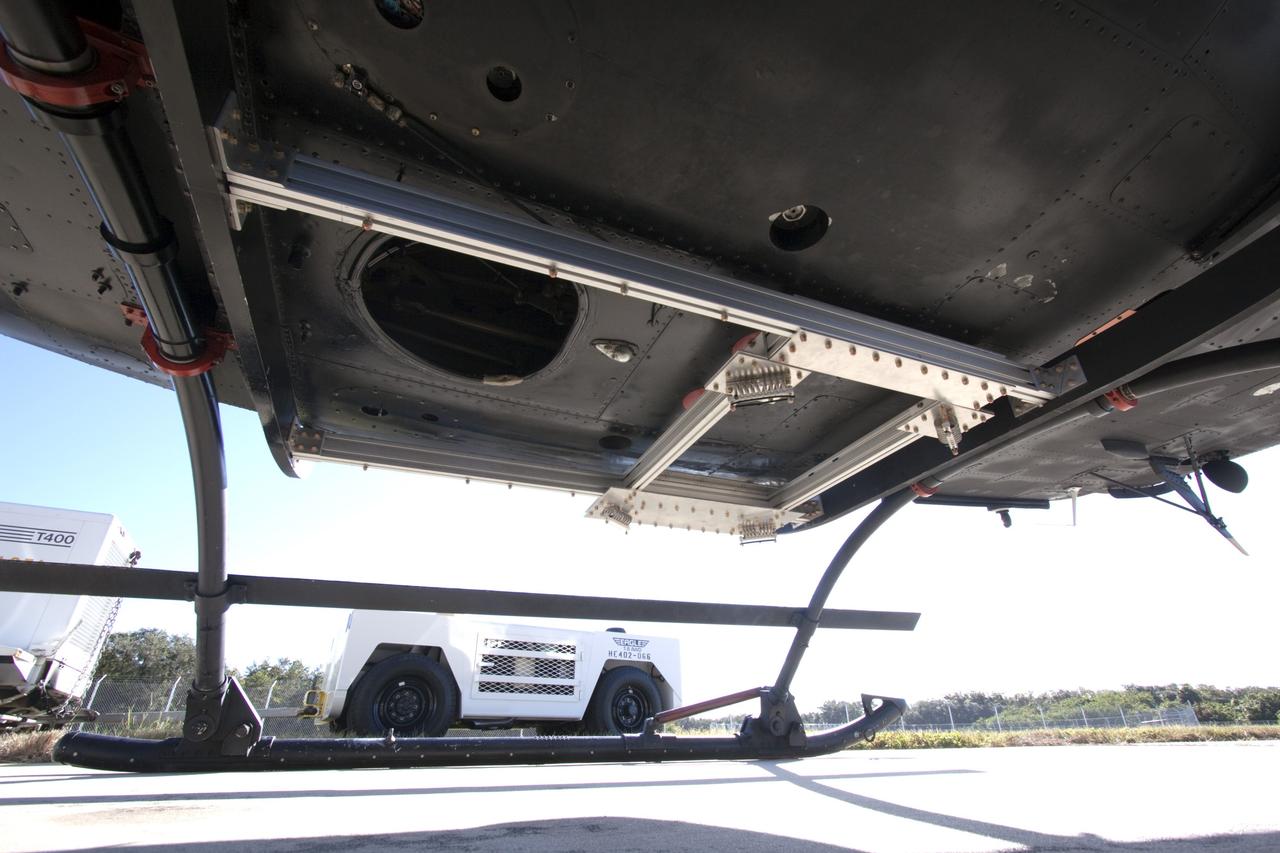
CAPE CANAVERAL, Fla. – Near the Shuttle Landing Facility at NASA's Kennedy Space Center in Florida, a space agency team installed and tested hazard avoidance instrumentation on a Huey helicopter. Led by the Johnson Space Center and supported by Jet Propulsion Laboratory and Langley Research Center, the Autonomous Landing Hazard Avoidance Technology, or ALHAT, laser system provides a planetary lander the ability to precisely land safely on a surface while detecting any dangerous obstacles such as rocks, holes and slopes. Just north of Kennedy's Shuttle Landing Facility runway, a rock- and crater-filled planetary scape has been built so engineers can test the ability to negotiate away from risks. Photo credit: NASA/Jim Grossmann
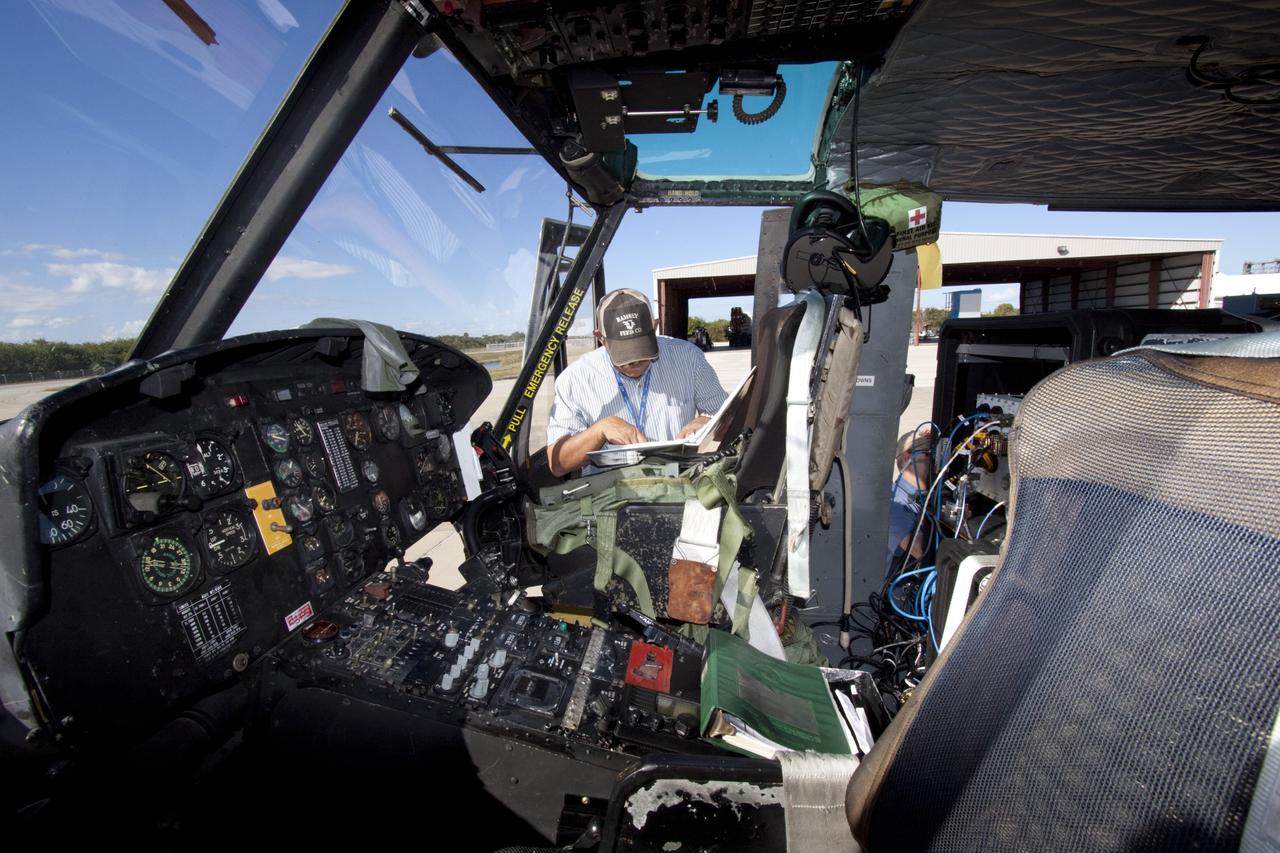
CAPE CANAVERAL, Fla. – Near the Shuttle Landing Facility at NASA's Kennedy Space Center in Florida, a technician tests hazard avoidance instrumentation recently installed on a Huey helicopter. Led by the Johnson Space Center and supported by Jet Propulsion Laboratory and Langley Research Center, the Autonomous Landing Hazard Avoidance Technology, or ALHAT, laser system provides a planetary lander the ability to precisely land safely on a surface while detecting any dangerous obstacles such as rocks, holes and slopes. Just north of Kennedy's Shuttle Landing Facility runway, a rock- and crater-filled planetary scape has been built so engineers can test the ability to negotiate away from risks. Photo credit: NASA/Jim Grossmann
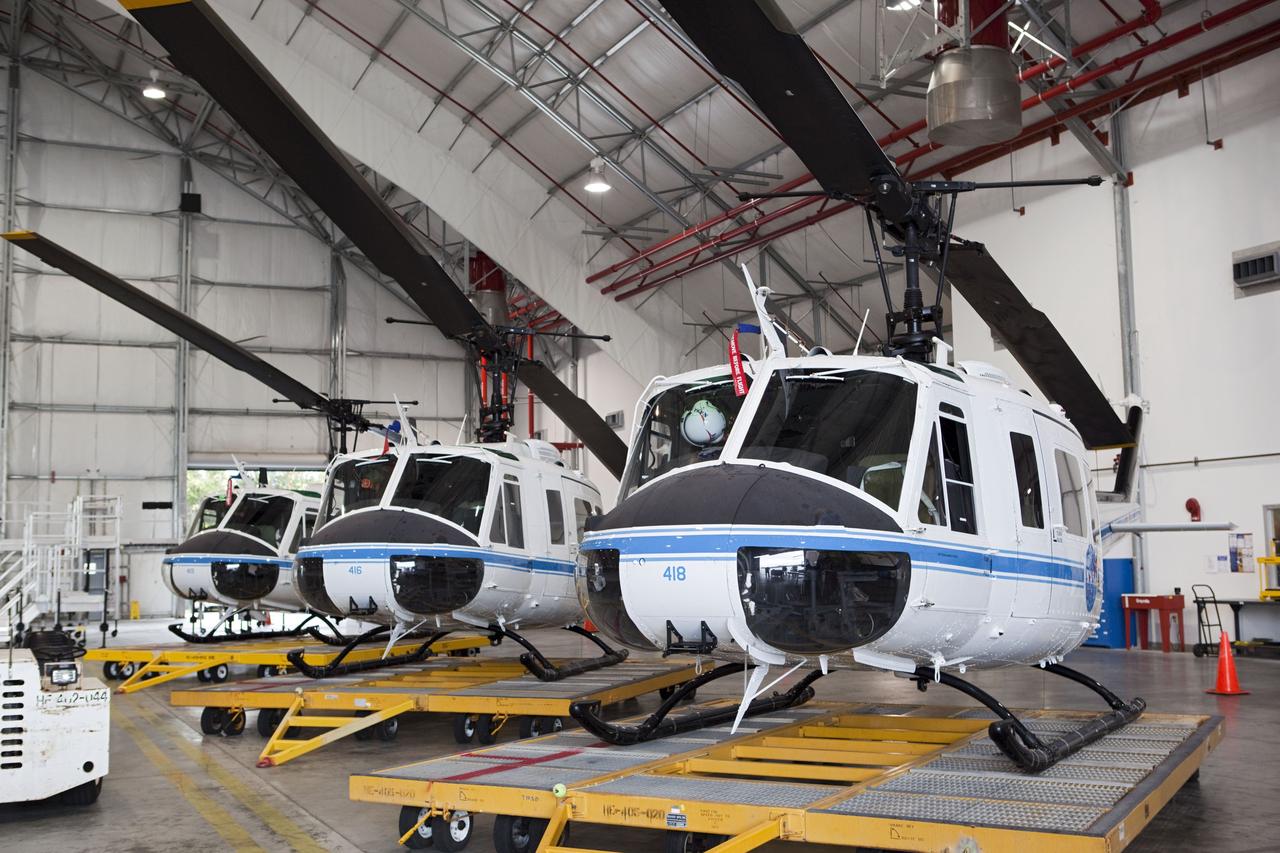
CAPE CANAVERAL, Fla. – Near the Shuttle Landing Facility at NASA's Kennedy Space Center in Florida, a space agency team installed and tested hazard avoidance instrumentation on a Huey helicopter. Led by the Johnson Space Center and supported by Jet Propulsion Laboratory and Langley Research Center, the Autonomous Landing Hazard Avoidance Technology, or ALHAT, laser system provides a planetary lander the ability to precisely land safely on a surface while detecting any dangerous obstacles such as rocks, holes and slopes. Just north of Kennedy's Shuttle Landing Facility runway, a rock- and crater-filled planetary scape has been built so engineers can test the ability to negotiate away from risks. Photo credit: NASA/Dmitri Gerondidakis
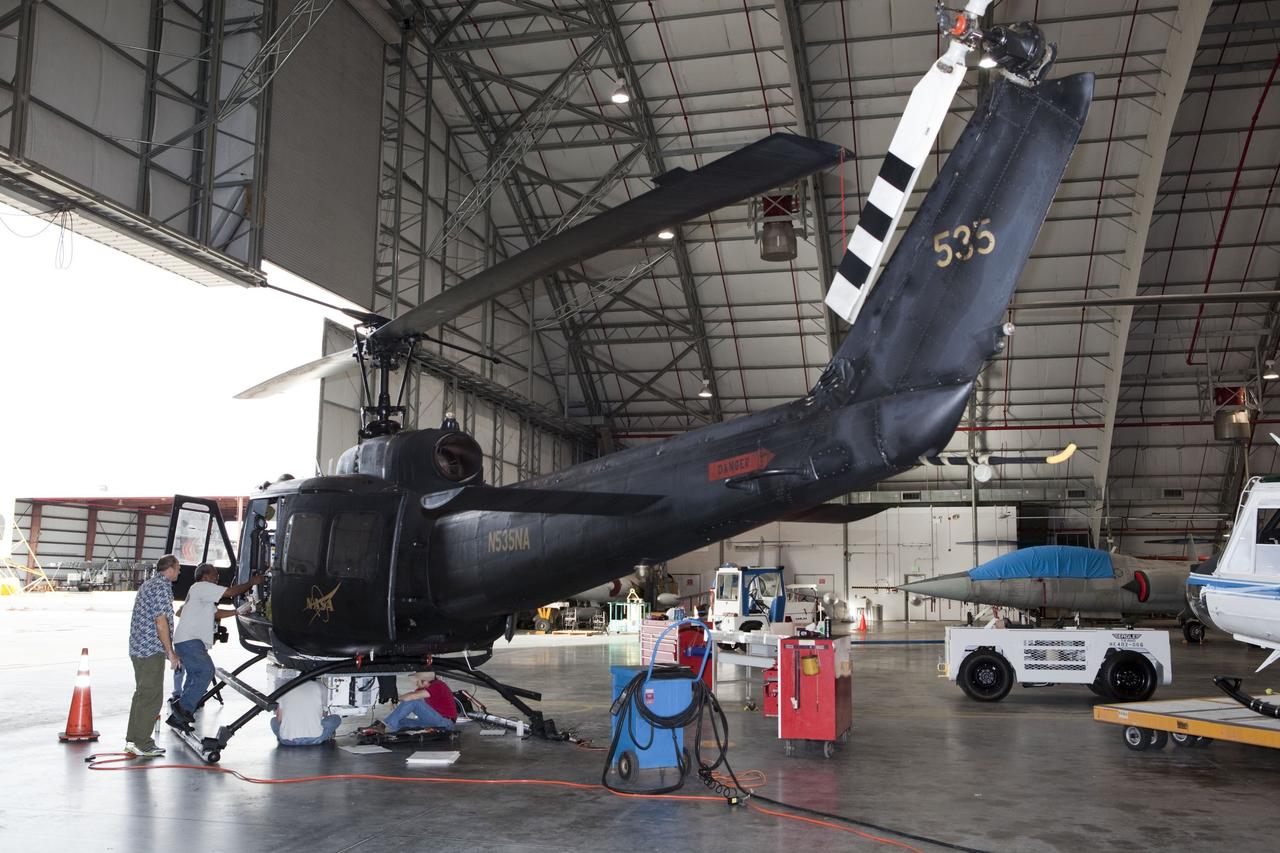
CAPE CANAVERAL, Fla. – Near the Shuttle Landing Facility at NASA's Kennedy Space Center in Florida, a space agency team installed and tested hazard avoidance instrumentation on a Huey helicopter. Led by the Johnson Space Center and supported by Jet Propulsion Laboratory and Langley Research Center, the Autonomous Landing Hazard Avoidance Technology, or ALHAT, laser system provides a planetary lander the ability to precisely land safely on a surface while detecting any dangerous obstacles such as rocks, holes and slopes. Just north of Kennedy's Shuttle Landing Facility runway, a rock- and crater-filled planetary scape has been built so engineers can test the ability to negotiate away from risks. Photo credit: NASA/Dmitri Gerondidakis
CAPE CANAVERAL, Fla. – Near the Shuttle Landing Facility at NASA's Kennedy Space Center in Florida, a space agency team installed and tested hazard avoidance instrumentation on a Huey helicopter. Led by the Johnson Space Center and supported by Jet Propulsion Laboratory and Langley Research Center, the Autonomous Landing Hazard Avoidance Technology, or ALHAT, laser system provides a planetary lander the ability to precisely land safely on a surface while detecting any dangerous obstacles such as rocks, holes and slopes. Just north of Kennedy's Shuttle Landing Facility runway, a rock- and crater-filled planetary scape has been built so engineers can test the ability to negotiate away from risks. Photo credit: NASA/Dmitri Gerondidakis
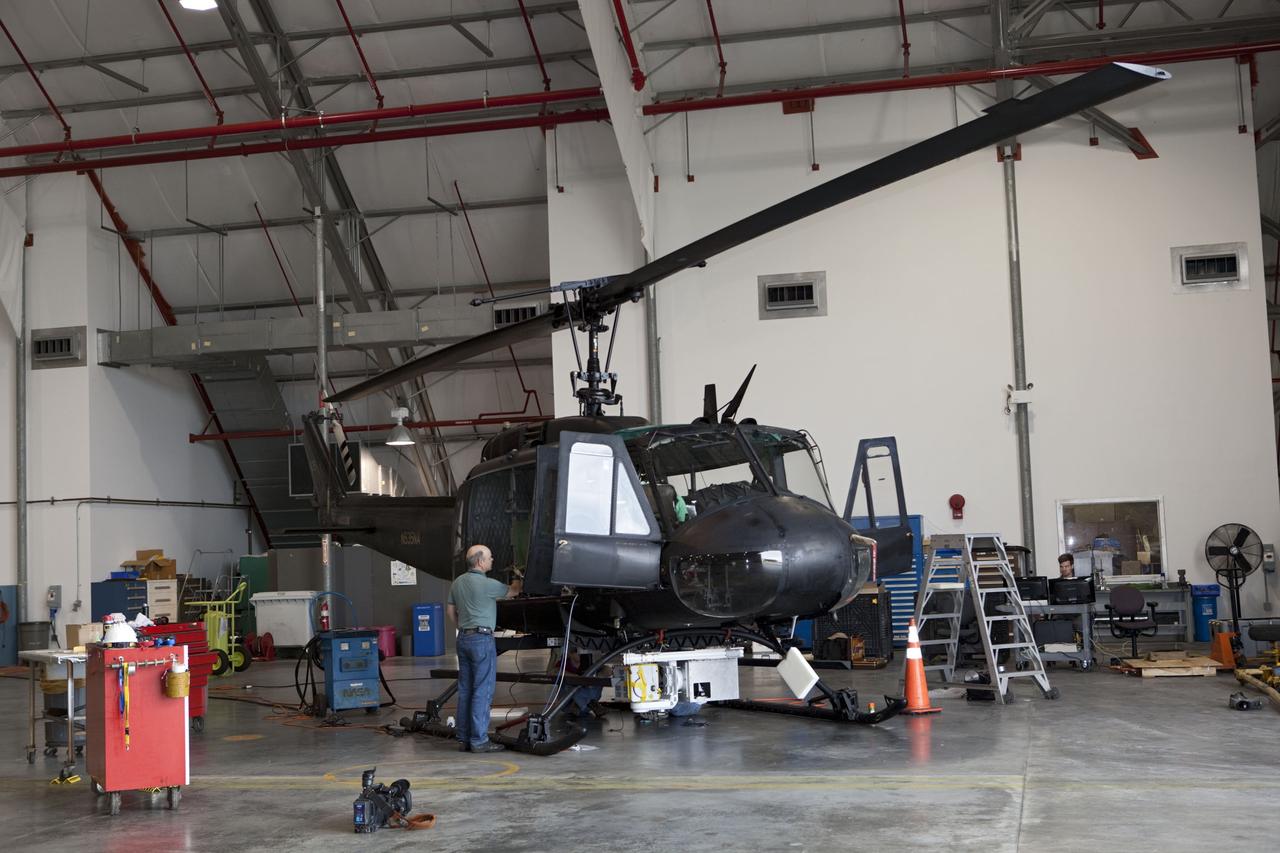
CAPE CANAVERAL, Fla. – Near the Shuttle Landing Facility at NASA's Kennedy Space Center in Florida, a space agency team installed and tested hazard avoidance instrumentation on a Huey helicopter. Led by the Johnson Space Center and supported by Jet Propulsion Laboratory and Langley Research Center, the Autonomous Landing Hazard Avoidance Technology, or ALHAT, laser system provides a planetary lander the ability to precisely land safely on a surface while detecting any dangerous obstacles such as rocks, holes and slopes. Just north of Kennedy's Shuttle Landing Facility runway, a rock- and crater-filled planetary scape has been built so engineers can test the ability to negotiate away from risks. Photo credit: NASA/Dmitri Gerondidakis
CAPE CANAVERAL, Fla. – Near the Shuttle Landing Facility at NASA's Kennedy Space Center in Florida, a space agency team installed and tested hazard avoidance instrumentation on a Huey helicopter. Led by the Johnson Space Center and supported by Jet Propulsion Laboratory and Langley Research Center, the Autonomous Landing Hazard Avoidance Technology, or ALHAT, laser system provides a planetary lander the ability to precisely land safely on a surface while detecting any dangerous obstacles such as rocks, holes and slopes. Just north of Kennedy's Shuttle Landing Facility runway, a rock- and crater-filled planetary scape has been built so engineers can test the ability to negotiate away from risks. Photo credit: NASA/Dmitri Gerondidakis
CAPE CANAVERAL, Fla. – Near the Shuttle Landing Facility at NASA's Kennedy Space Center in Florida, a space agency team installed and tested hazard avoidance instrumentation on a Huey helicopter. Led by the Johnson Space Center and supported by Jet Propulsion Laboratory and Langley Research Center, the Autonomous Landing Hazard Avoidance Technology, or ALHAT, laser system provides a planetary lander the ability to precisely land safely on a surface while detecting any dangerous obstacles such as rocks, holes and slopes. Just north of Kennedy's Shuttle Landing Facility runway, a rock- and crater-filled planetary scape has been built so engineers can test the ability to negotiate away from risks. Photo credit: NASA/Dmitri Gerondidakis
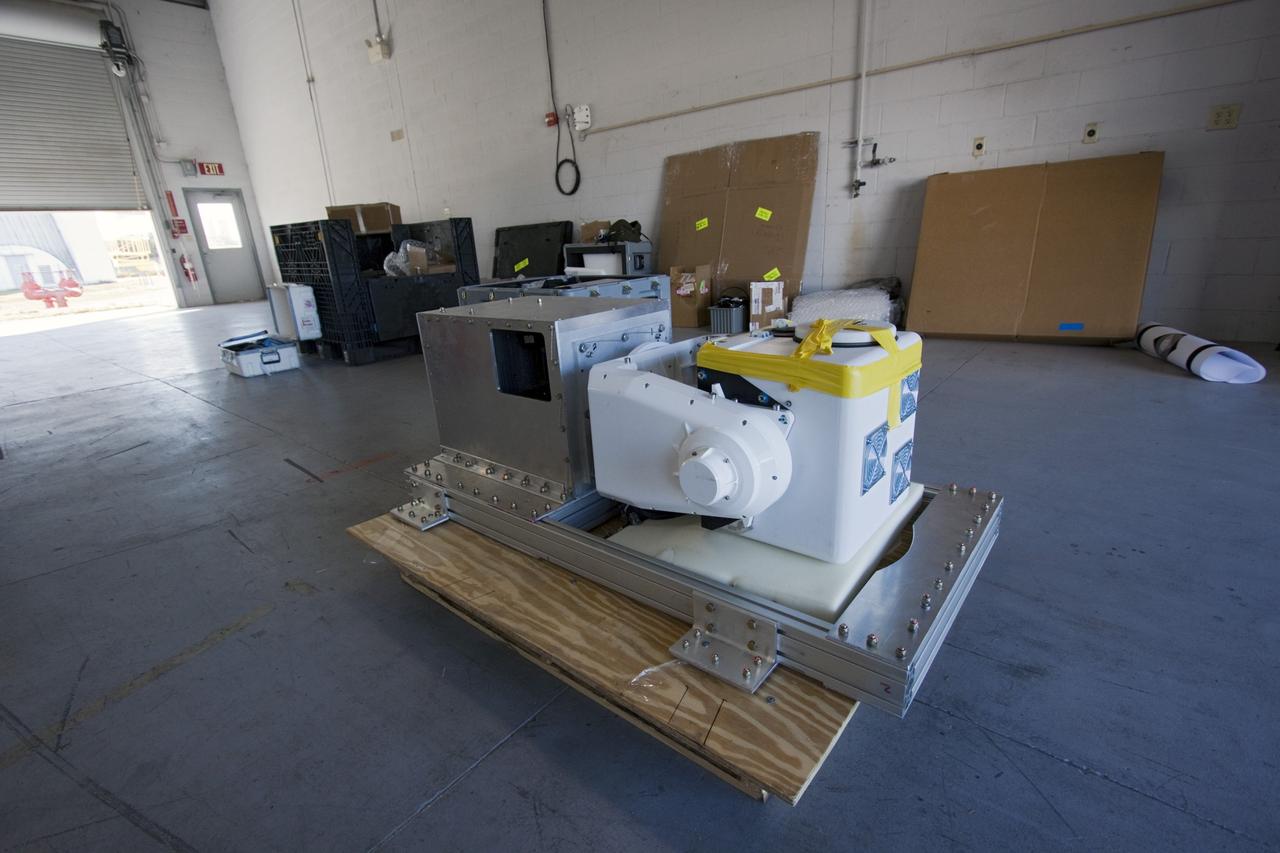
CAPE CANAVERAL, Fla. – Near the Shuttle Landing Facility at NASA's Kennedy Space Center in Florida, hazard avoidance instrumentation it being prepared for installation on a Huey helicopter. Led by the Johnson Space Center and supported by Jet Propulsion Laboratory and Langley Research Center, the Autonomous Landing Hazard Avoidance Technology, or ALHAT, laser system provides a planetary lander the ability to precisely land safely on a surface while detecting any dangerous obstacles such as rocks, holes and slopes. Just north of Kennedy's Shuttle Landing Facility runway, a rock- and crater-filled planetary scape has been built so engineers can test the ability to negotiate away from risks. Photo credit: NASA/Jim Grossmann
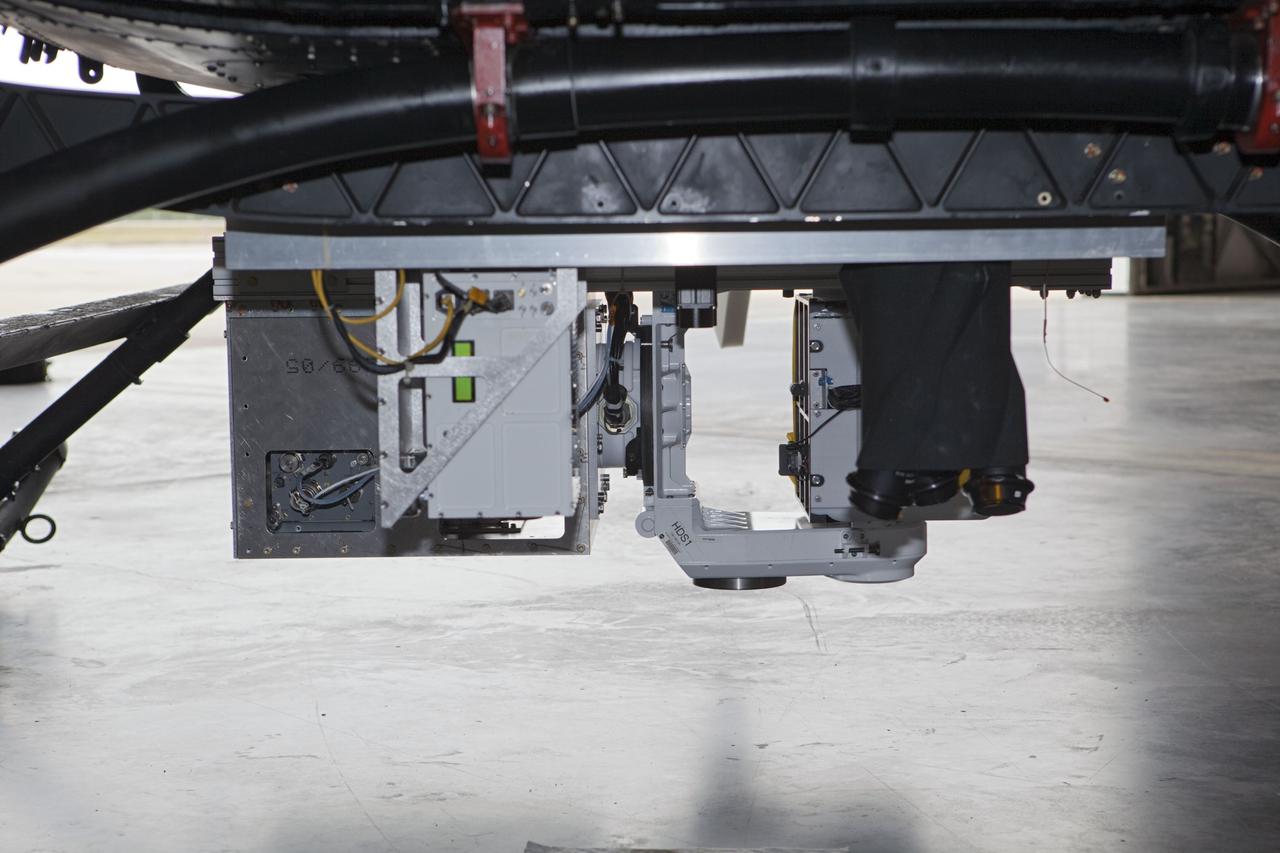
CAPE CANAVERAL, Fla. – Near the Shuttle Landing Facility at NASA's Kennedy Space Center in Florida, a space agency team installed and tested hazard avoidance instrumentation on a Huey helicopter. Led by the Johnson Space Center and supported by Jet Propulsion Laboratory and Langley Research Center, the Autonomous Landing Hazard Avoidance Technology, or ALHAT, laser system provides a planetary lander the ability to precisely land safely on a surface while detecting any dangerous obstacles such as rocks, holes and slopes. Just north of Kennedy's Shuttle Landing Facility runway, a rock- and crater-filled planetary scape has been built so engineers can test the ability to negotiate away from risks. Photo credit: NASA/Dmitri Gerondidakis
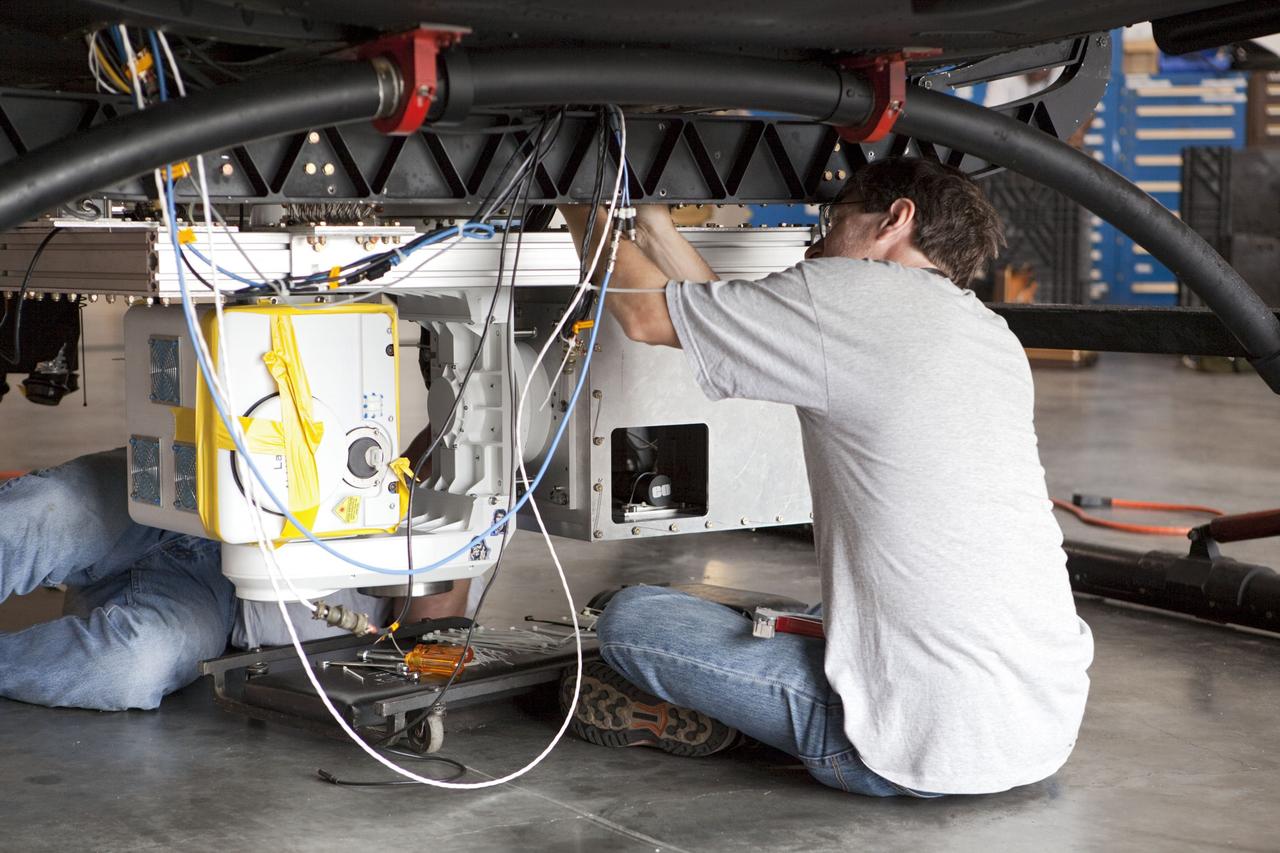
CAPE CANAVERAL, Fla. – Near the Shuttle Landing Facility at NASA's Kennedy Space Center in Florida, a space agency team installed and tested hazard avoidance instrumentation on a Huey helicopter. Led by the Johnson Space Center and supported by Jet Propulsion Laboratory and Langley Research Center, the Autonomous Landing Hazard Avoidance Technology, or ALHAT, laser system provides a planetary lander the ability to precisely land safely on a surface while detecting any dangerous obstacles such as rocks, holes and slopes. Just north of Kennedy's Shuttle Landing Facility runway, a rock- and crater-filled planetary scape has been built so engineers can test the ability to negotiate away from risks. Photo credit: NASA/Dmitri Gerondidakis
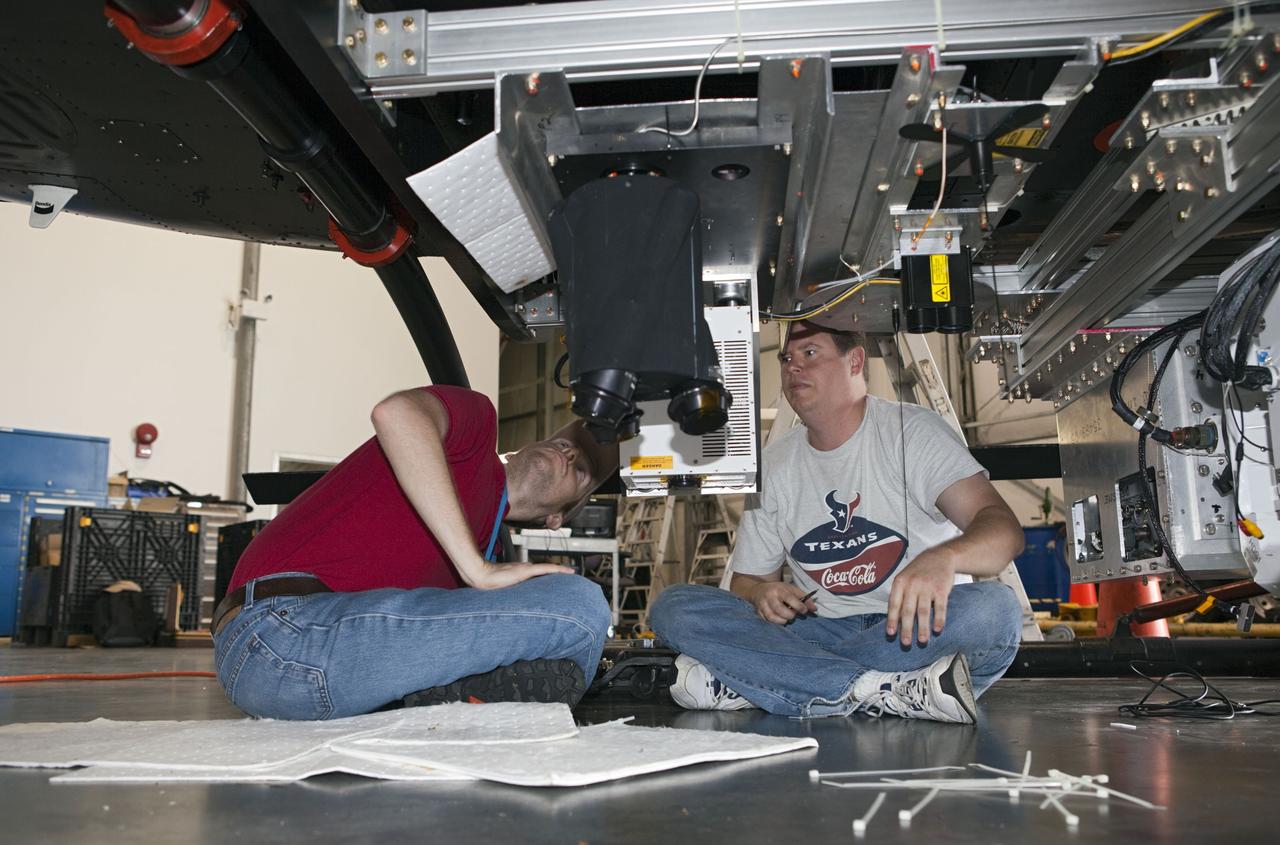
CAPE CANAVERAL, Fla. – Near the Shuttle Landing Facility at NASA's Kennedy Space Center in Florida, a space agency team installed and tested hazard avoidance instrumentation on a Huey helicopter. Led by the Johnson Space Center and supported by Jet Propulsion Laboratory and Langley Research Center, the Autonomous Landing Hazard Avoidance Technology, or ALHAT, laser system provides a planetary lander the ability to precisely land safely on a surface while detecting any dangerous obstacles such as rocks, holes and slopes. Just north of Kennedy's Shuttle Landing Facility runway, a rock- and crater-filled planetary scape has been built so engineers can test the ability to negotiate away from risks. Photo credit: NASA/Dmitri Gerondidakis
CAPE CANAVERAL, Fla. – Near the Shuttle Landing Facility at NASA's Kennedy Space Center in Florida, a space agency team installed and tested hazard avoidance instrumentation on a Huey helicopter. Led by the Johnson Space Center and supported by Jet Propulsion Laboratory and Langley Research Center, the Autonomous Landing Hazard Avoidance Technology, or ALHAT, laser system provides a planetary lander the ability to precisely land safely on a surface while detecting any dangerous obstacles such as rocks, holes and slopes. Just north of Kennedy's Shuttle Landing Facility runway, a rock- and crater-filled planetary scape has been built so engineers can test the ability to negotiate away from risks. Photo credit: NASA/Dmitri Gerondidakis
CAPE CANAVERAL, Fla. – Near the Shuttle Landing Facility at NASA's Kennedy Space Center in Florida, a space agency team installed and tested hazard avoidance instrumentation on a Huey helicopter. Led by the Johnson Space Center and supported by Jet Propulsion Laboratory and Langley Research Center, the Autonomous Landing Hazard Avoidance Technology, or ALHAT, laser system provides a planetary lander the ability to precisely land safely on a surface while detecting any dangerous obstacles such as rocks, holes and slopes. Just north of Kennedy's Shuttle Landing Facility runway, a rock- and crater-filled planetary scape has been built so engineers can test the ability to negotiate away from risks. Photo credit: NASA/Dmitri Gerondidakis
CAPE CANAVERAL, Fla. – Near the Shuttle Landing Facility at NASA's Kennedy Space Center in Florida, a space agency team installed and tested hazard avoidance instrumentation on a Huey helicopter. Led by the Johnson Space Center and supported by Jet Propulsion Laboratory and Langley Research Center, the Autonomous Landing Hazard Avoidance Technology, or ALHAT, laser system provides a planetary lander the ability to precisely land safely on a surface while detecting any dangerous obstacles such as rocks, holes and slopes. Just north of Kennedy's Shuttle Landing Facility runway, a rock- and crater-filled planetary scape has been built so engineers can test the ability to negotiate away from risks. Photo credit: NASA/Dmitri Gerondidakis
CAPE CANAVERAL, Fla. – Near the Shuttle Landing Facility at NASA's Kennedy Space Center in Florida, a space agency team installed and tested hazard avoidance instrumentation on a Huey helicopter. Led by the Johnson Space Center and supported by Jet Propulsion Laboratory and Langley Research Center, the Autonomous Landing Hazard Avoidance Technology, or ALHAT, laser system provides a planetary lander the ability to precisely land safely on a surface while detecting any dangerous obstacles such as rocks, holes and slopes. Just north of Kennedy's Shuttle Landing Facility runway, a rock- and crater-filled planetary scape has been built so engineers can test the ability to negotiate away from risks. Photo credit: NASA/Jim Grossmann
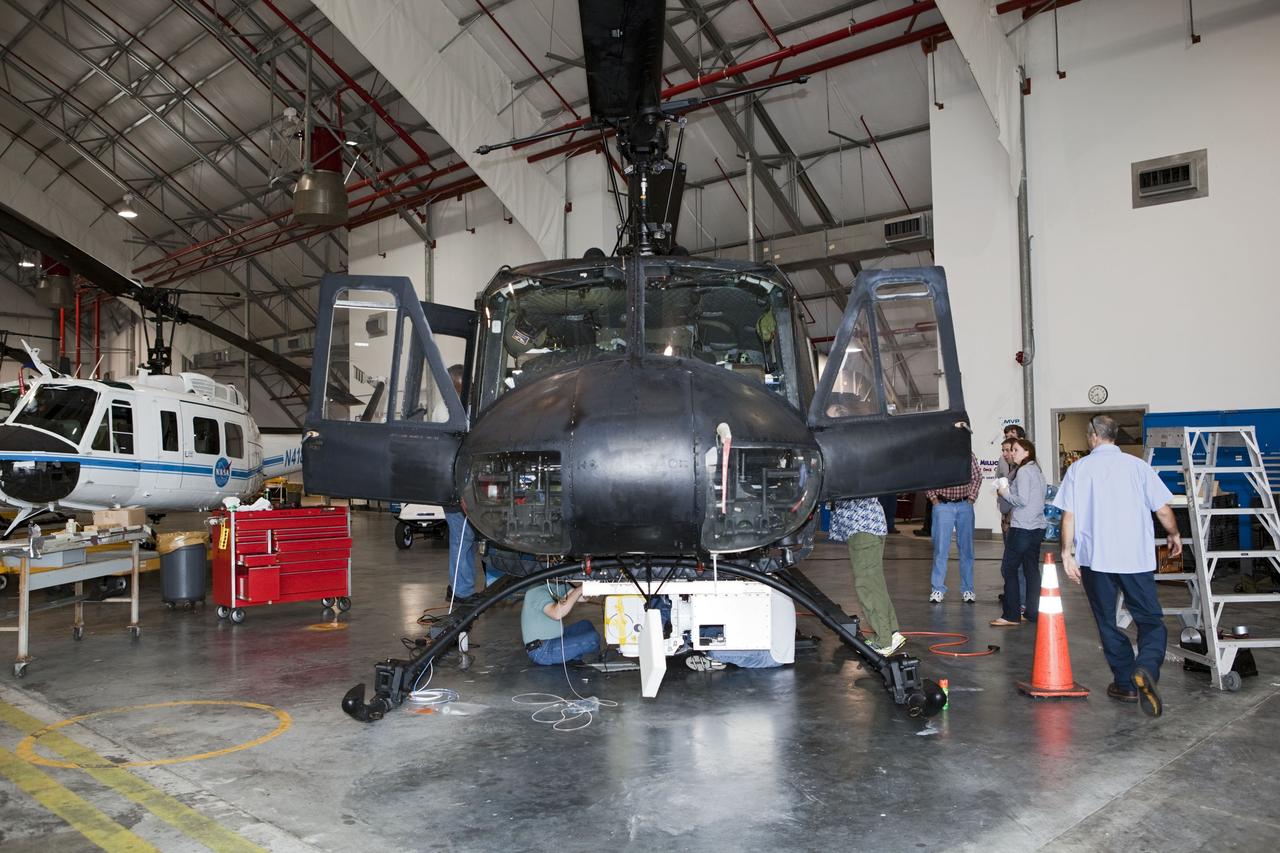
CAPE CANAVERAL, Fla. – Near the Shuttle Landing Facility at NASA's Kennedy Space Center in Florida, a space agency team installed and tested hazard avoidance instrumentation on a Huey helicopter. Led by the Johnson Space Center and supported by Jet Propulsion Laboratory and Langley Research Center, the Autonomous Landing Hazard Avoidance Technology, or ALHAT, laser system provides a planetary lander the ability to precisely land safely on a surface while detecting any dangerous obstacles such as rocks, holes and slopes. Just north of Kennedy's Shuttle Landing Facility runway, a rock- and crater-filled planetary scape has been built so engineers can test the ability to negotiate away from risks. Photo credit: NASA/Jim Grossmann
CAPE CANAVERAL, Fla. – Near the Shuttle Landing Facility at NASA's Kennedy Space Center in Florida, a space agency team installed and tested hazard avoidance instrumentation on a Huey helicopter. Led by the Johnson Space Center and supported by Jet Propulsion Laboratory and Langley Research Center, the Autonomous Landing Hazard Avoidance Technology, or ALHAT, laser system provides a planetary lander the ability to precisely land safely on a surface while detecting any dangerous obstacles such as rocks, holes and slopes. Just north of Kennedy's Shuttle Landing Facility runway, a rock- and crater-filled planetary scape has been built so engineers can test the ability to negotiate away from risks. Photo credit: NASA/Dmitri Gerondidakis
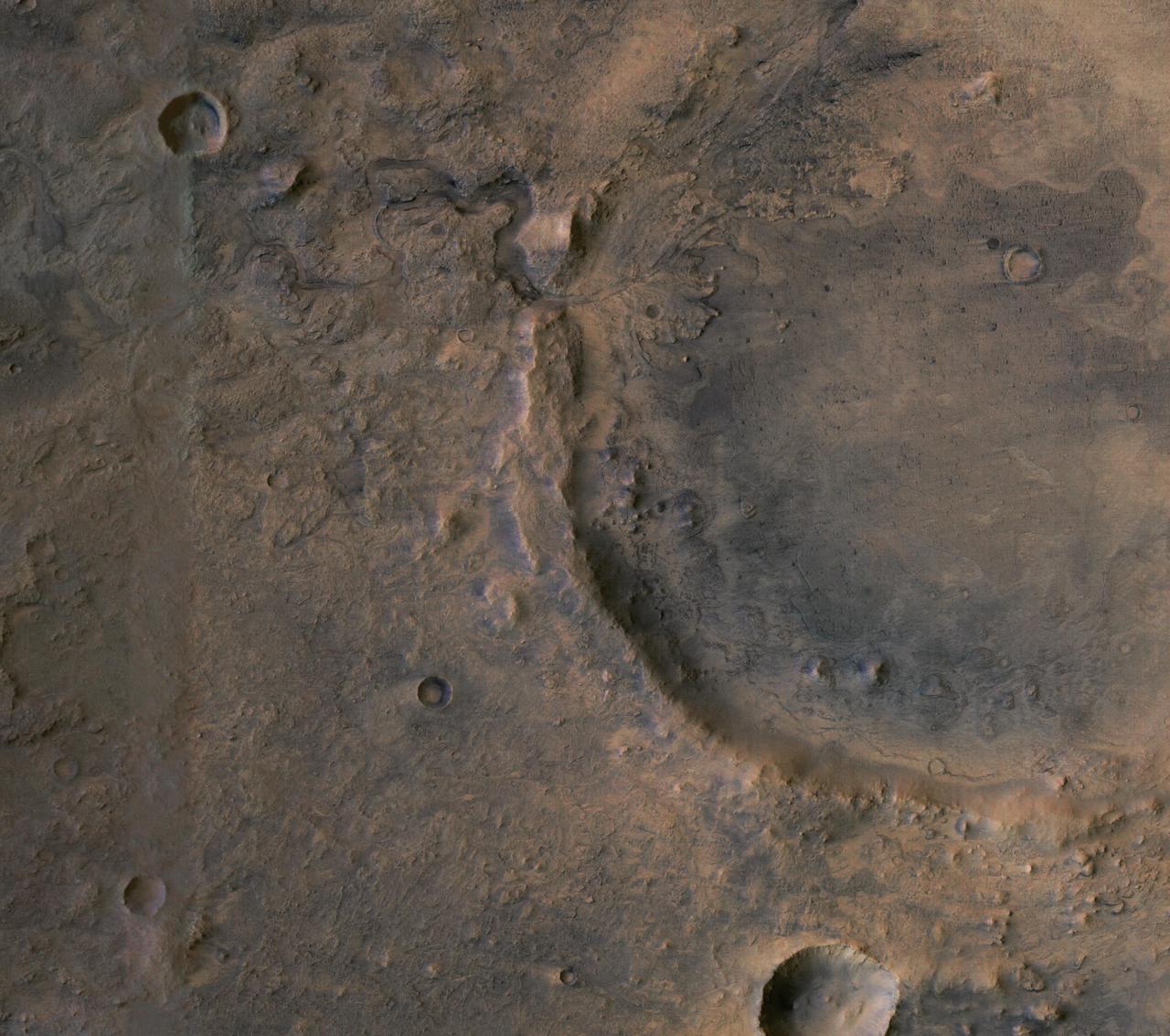
As landing technology improves and these landing ellipses shrink, missions can aim for more precise landings, opening up new areas of Mars to explore. Perseverance takes it two steps further than previous missions. First, it uses a new algorithm to time its parachute deployment based on distance to its target rather than vehicle velocity. This shrinks the landing ellipse to 4.8 miles by 4.1 miles (7.7 kilometers by 6.6 kilometers). Second, the rover uses maps stored in its memory to avoid landing hazards within that smaller ellipse during its propulsive descent phase. This allows Perseverance to target safe landing locations within Jezero Crater. The rover is set to land on Feb. 18, 2021. Improvements in interplanetary navigation tightened the landing ellipse of Mars Pathfinder in comparison with missions before it. It landed by bouncing on the surface with airbags, and has the largest ellipse in this image, measuring 124.3 miles by 43.5 miles (200 by 70 kilometers). The Phoenix and InSight landers used retrorockets to land on three legs, but still had large possible landing areas about 80.8 miles (130 kilometers) long. In 2012, the Curiosity team developed guided entry technology, shrinking its landing ellipse further. The spacecraft used small rockets to steer itself through the atmosphere as it headed toward Gale Crater. https://photojournal.jpl.nasa.gov/catalog/PIA24349
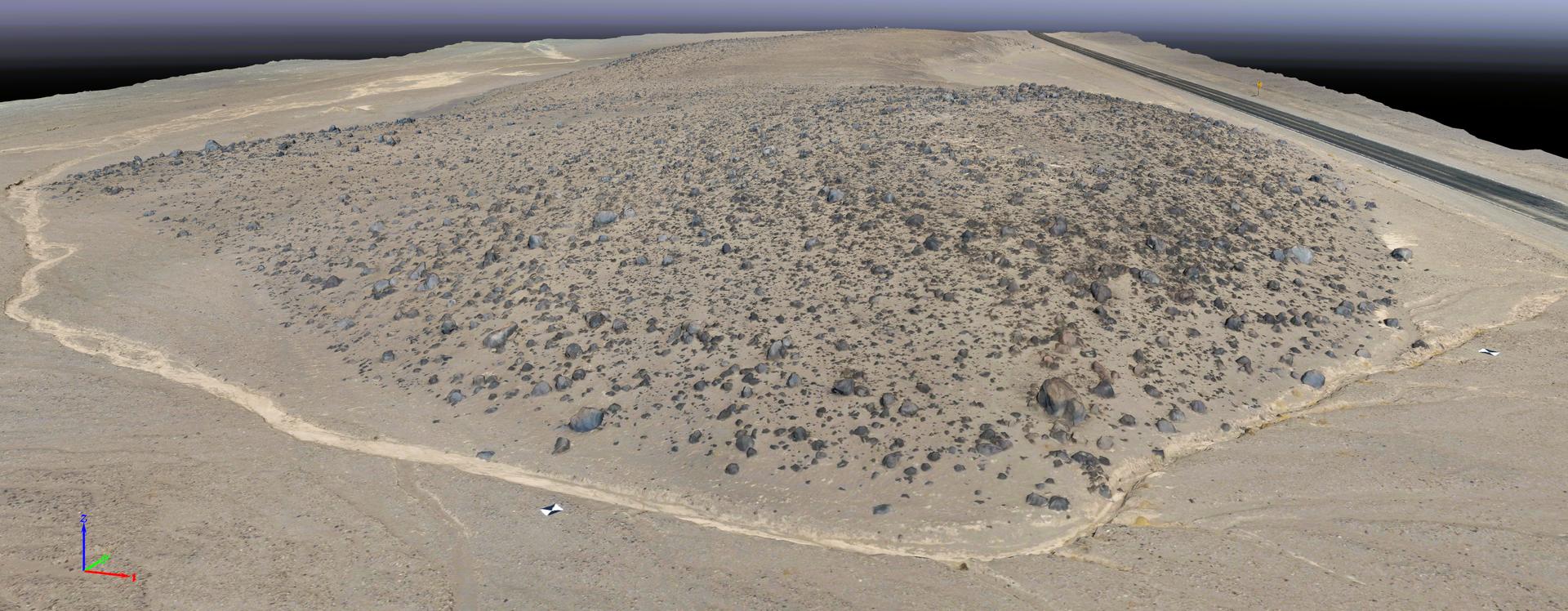
This rendering was created by research drones flying over Mars Hill, a region of Death Valley National Park that has been used by NASA’s Mars researchers since the 1970s, when the agency was preparing to land the twin Viking spacecraft. The hill’s rubbly, volcanic rock resembles the kind of inhospitable terrain that Mars rovers must navigate around and which posed a landing hazard for the Ingenuity Mars Helicopter. In September 2025, researchers from NASA’s Jet Propulsion Laboratory in Southern California flew research drones over Mars Hill as part of a test campaign to develop navigation software for future Mars rotorcraft. Being able to precisely land between rocks like those seen here is a critical capability to access similar Martian terrain in the future.
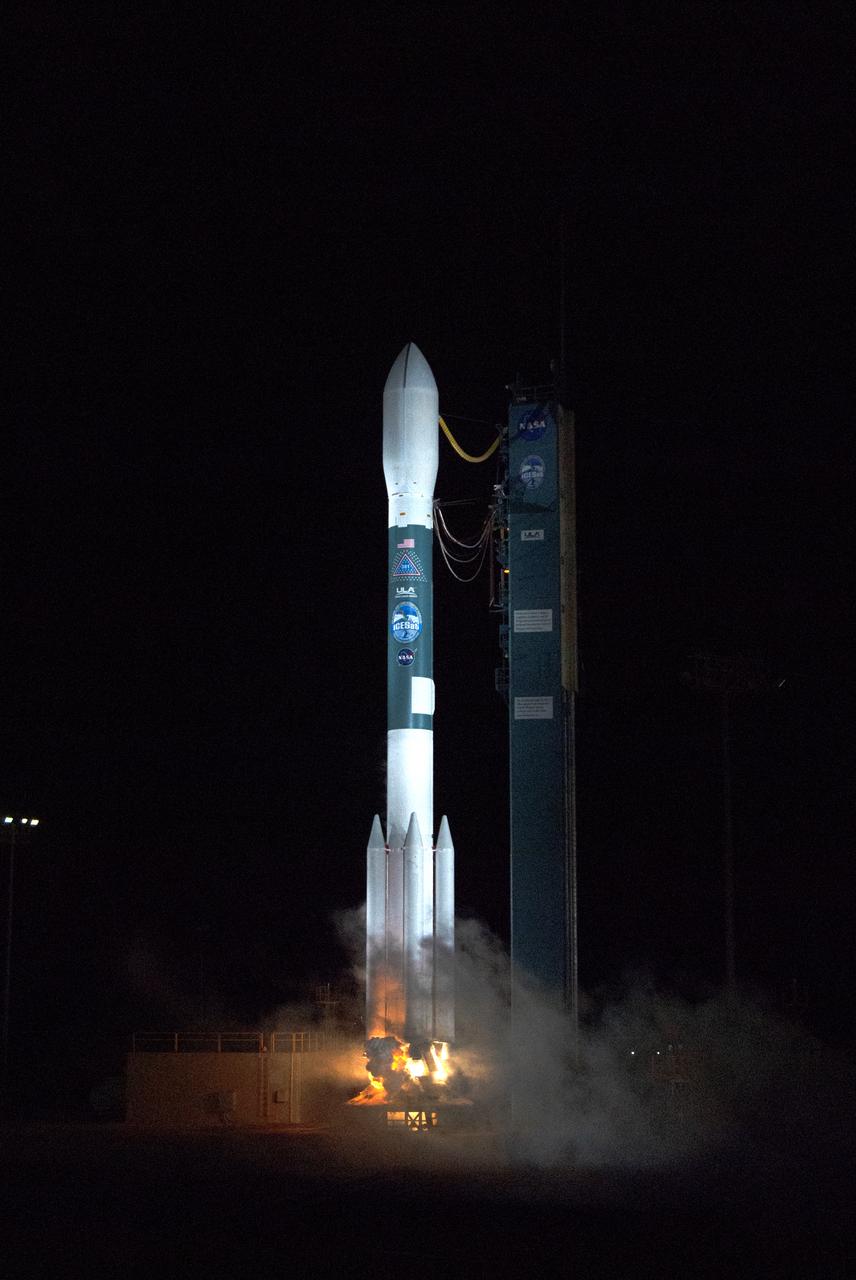
The final United Launch Alliance Delta II rocket lifts off from Space Launch Complex 2 at Vandenberg Air Force Base in California, on Sept. 15, 2018, carrying NASA's Ice, Cloud and land Elevation Satellite-2 (ICESat-2). Liftoff was at 9:02 a.m. EDT (6:02 a.m. PDT). The satellite will measure the height of our changing Earth, one laser pulse at a time, 10,000 laser pulses per second. ICESat-2 will provide scientists with height measurements that create a global portrait of Earth's third dimension, gathering date that can precisely track changes of terrain, including glaciers, sea ice and forests.

A SpaceX Falcon 9 rocket carrying Intuitive Machines’ Nova-C lunar lander lifts off from Launch Pad 39A at NASA’s Kennedy Space Center in Florida at 1:05 a.m. EST on Thursday, Feb. 15, 2024. As part of NASA’s CLPS (Commercial Lunar Payload Services) initiative and Artemis campaign, Intuitive Machines’ first lunar mission will carry NASA science and commercial payloads to the Moon to study plume-surface interactions, space weather/lunar surface interactions, radio astronomy, precision landing technologies, and a communication and navigation node for future autonomous navigation technologies.
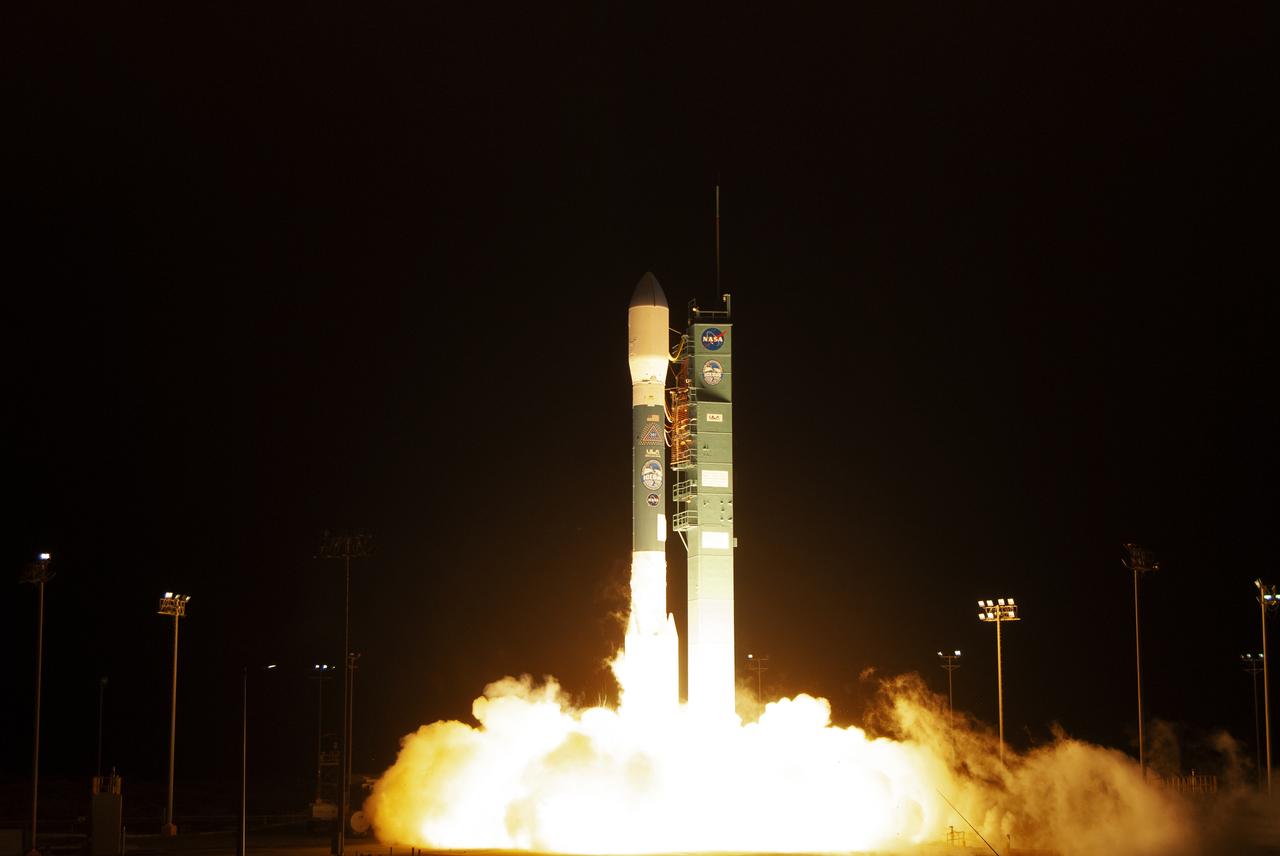
The final United Launch Alliance Delta II rocket lifts off from Space Launch Complex 2 at Vandenberg Air Force Base in California, on Sept. 15, 2018, carrying NASA's Ice, Cloud and land Elevation Satellite-2 (ICESat-2). Liftoff was at 9:02 a.m. EDT (6:02 a.m. PDT). The satellite will measure the height of our changing Earth, one laser pulse at a time, 10,000 laser pulses per second. ICESat-2 will provide scientists with height measurements that create a global portrait of Earth's third dimension, gathering date that can precisely track changes of terrain, including glaciers, sea ice and forests.
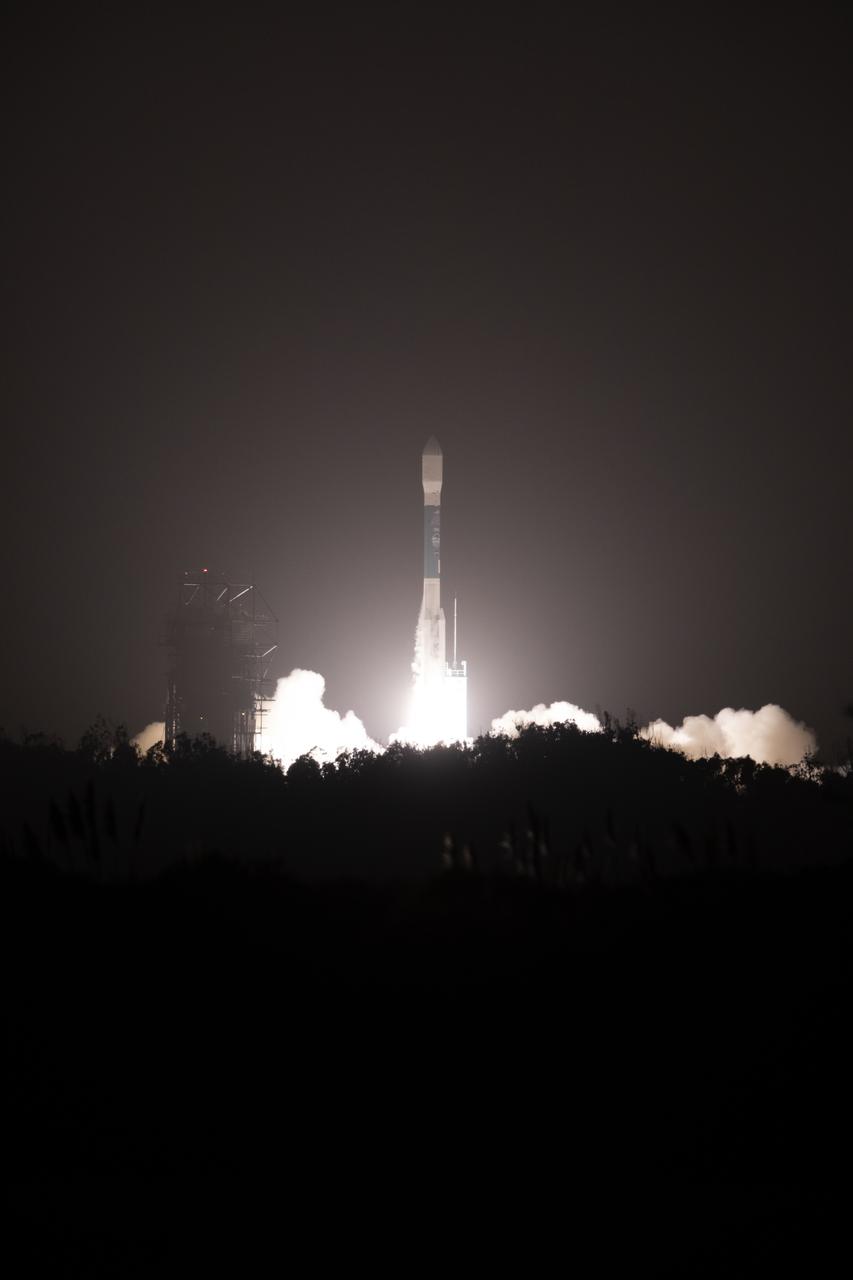
The final United Launch Alliance Delta II rocket lifts off from Space Launch Complex 2 at Vandenberg Air Force Base in California, on Sept. 15, 2018, carrying NASA's Ice, Cloud and land Elevation Satellite-2 (ICESat-2). Liftoff was at 9:02 a.m. EDT (6:02 a.m. PDT). The satellite will measure the height of our changing Earth, one laser pulse at a time, 10,000 laser pulses per second. ICESat-2 will provide scientists with height measurements that create a global portrait of Earth's third dimension, gathering date that can precisely track changes of terrain, including glaciers, sea ice and forests.
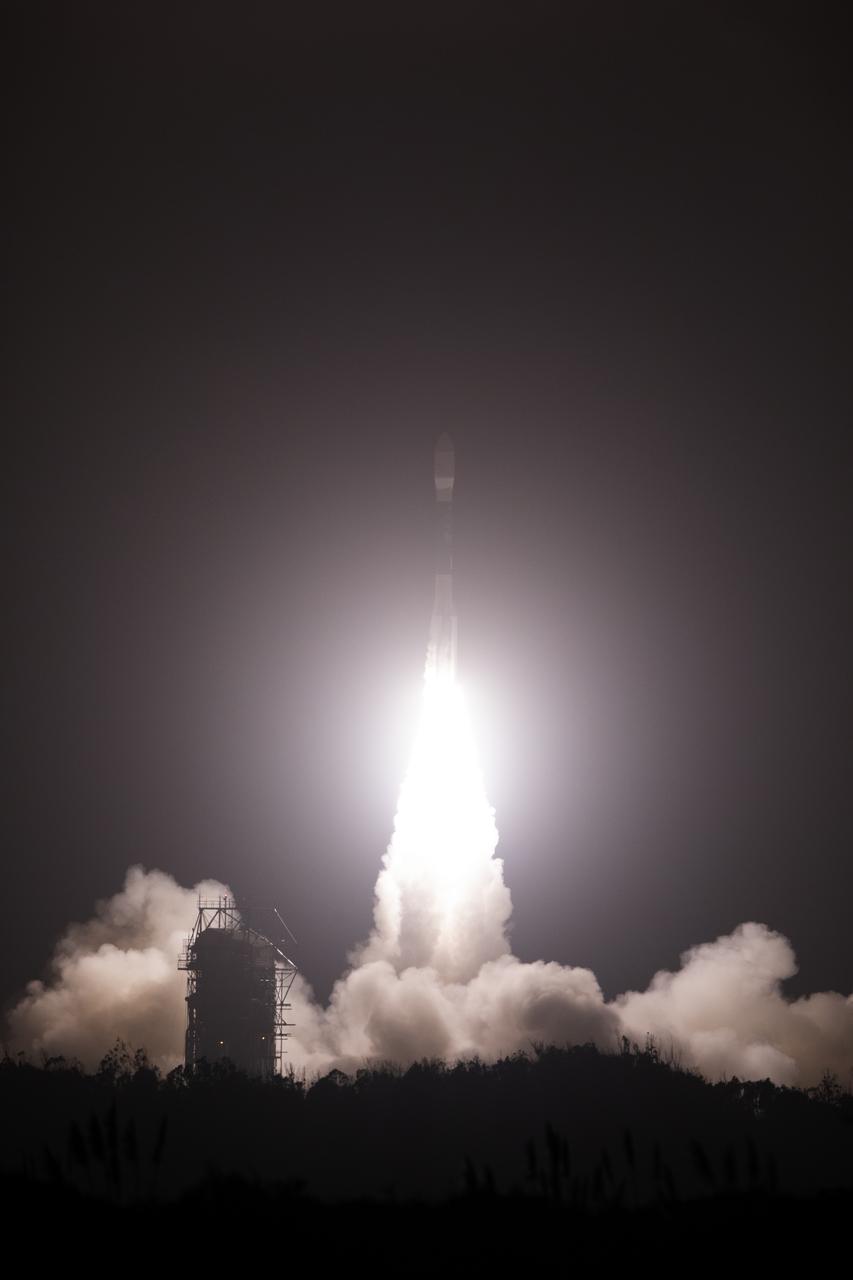
The final United Launch Alliance Delta II rocket lifts off from Space Launch Complex 2 at Vandenberg Air Force Base in California, on Sept. 15, 2018, carrying NASA's Ice, Cloud and land Elevation Satellite-2 (ICESat-2). Liftoff was at 9:02 a.m. EDT (6:02 a.m. PDT). The satellite will measure the height of our changing Earth, one laser pulse at a time, 10,000 laser pulses per second. ICESat-2 will provide scientists with height measurements that create a global portrait of Earth's third dimension, gathering date that can precisely track changes of terrain, including glaciers, sea ice and forests.
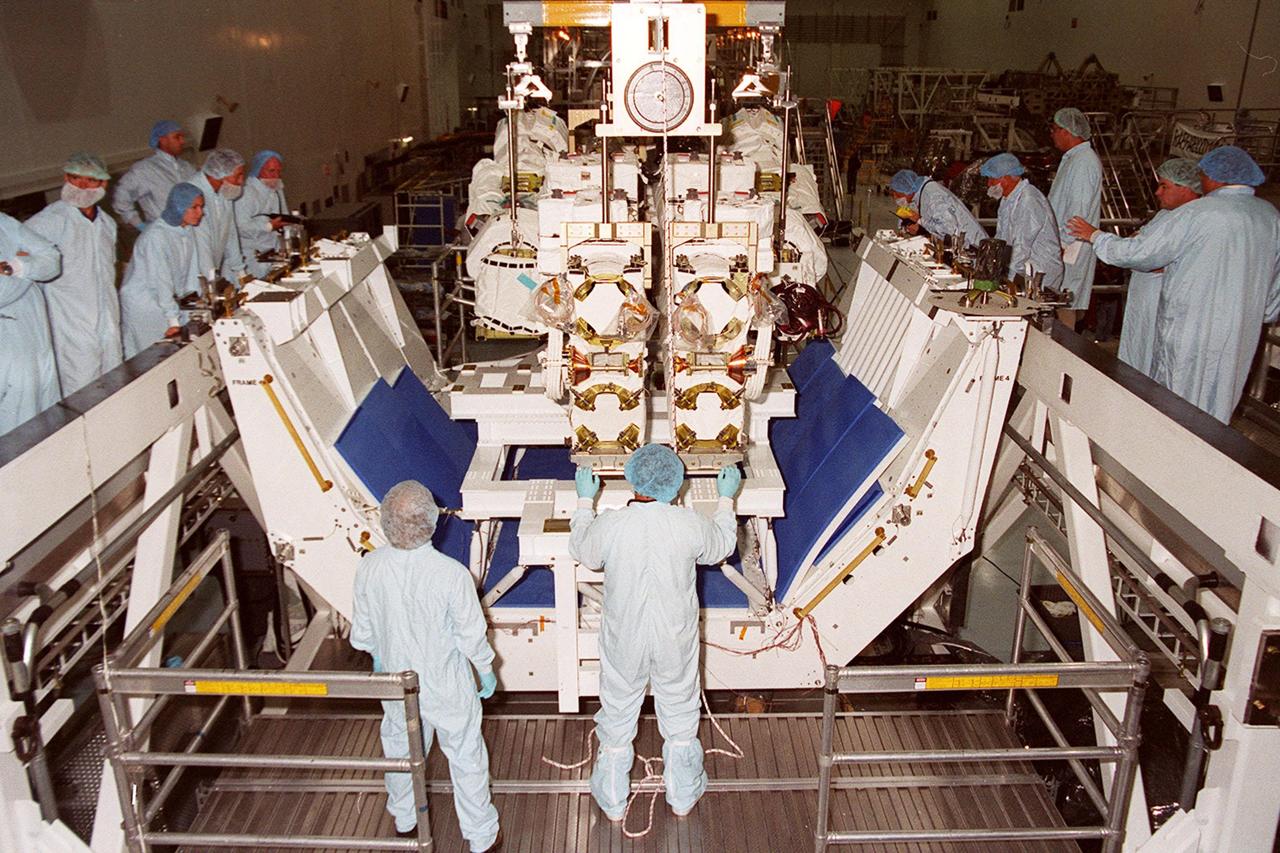
The Canadian Space Agency’s Space Station Remote Manipulator System (SSRMS) is lowered onto a test stand in the Space Station Processing Facility. At the test stand the SSRMS will be mated to its payload carrier. This pallet will later be installed into the payload bay of Space Shuttle Endeavour for launch to the International Space Station on STS-100 in April 2001. The 56-foot-long arm will be the primary means of transferring payloads between the orbiter payload bay and the Station. Its three segments comprise seven joints for highly flexible land precise movement, making it capable of moving around the Station’s exterior like an inchworm
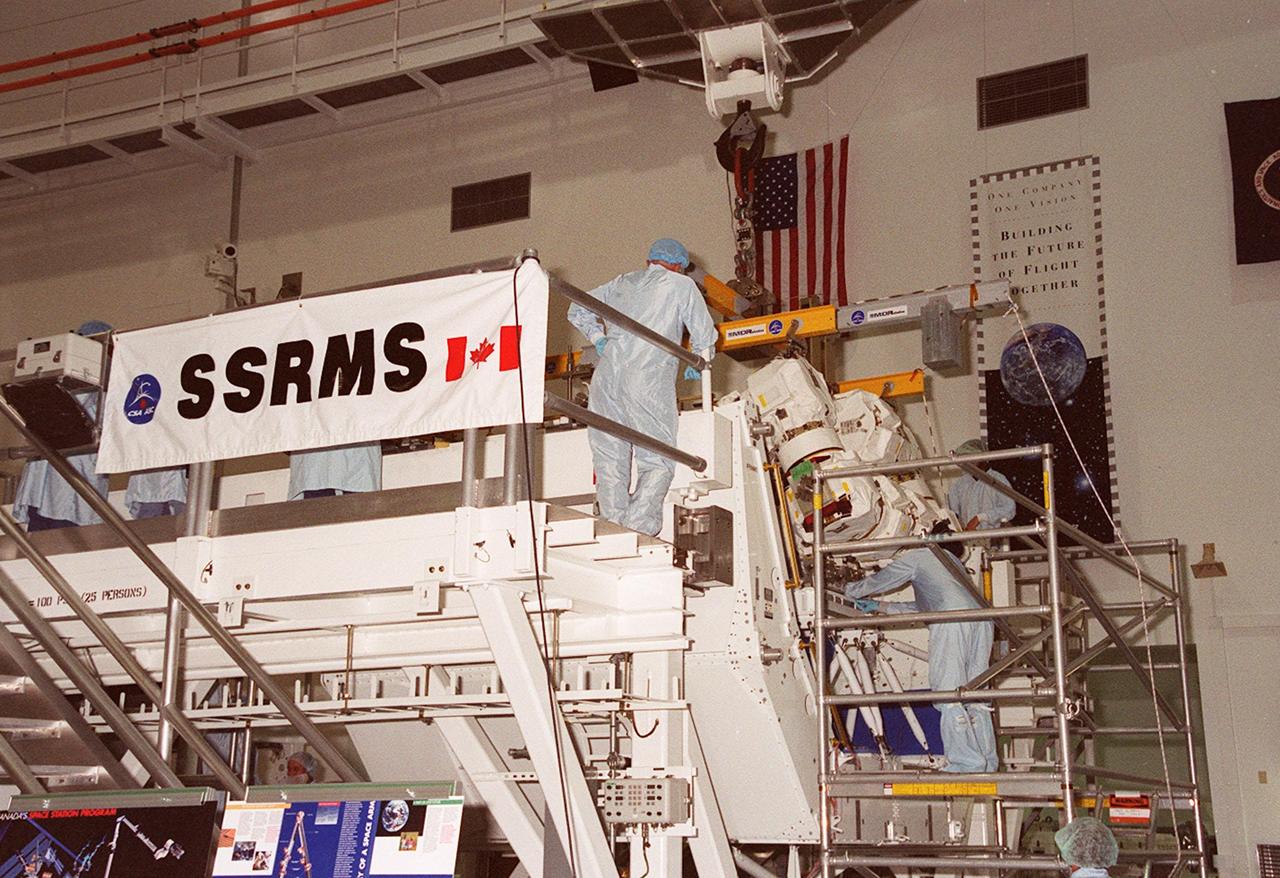
The Canadian Space Agency’s Space Station Remote Manipulator System (SSRMS) now occupies one of the work stands in the Space Station Processing Facility. There it will be mated to its payload carrier and later be installed into the payload bay of Space Shuttle Endeavour for launch to the International Space Station on STS-100 in April 2001. The 56-foot-long arm will be the primary means of transferring payloads between the orbiter payload bay and the Station. Its three segments comprise seven joints for highly flexible land precise movement, making it capable of moving around the Station’s exterior like an inchworm
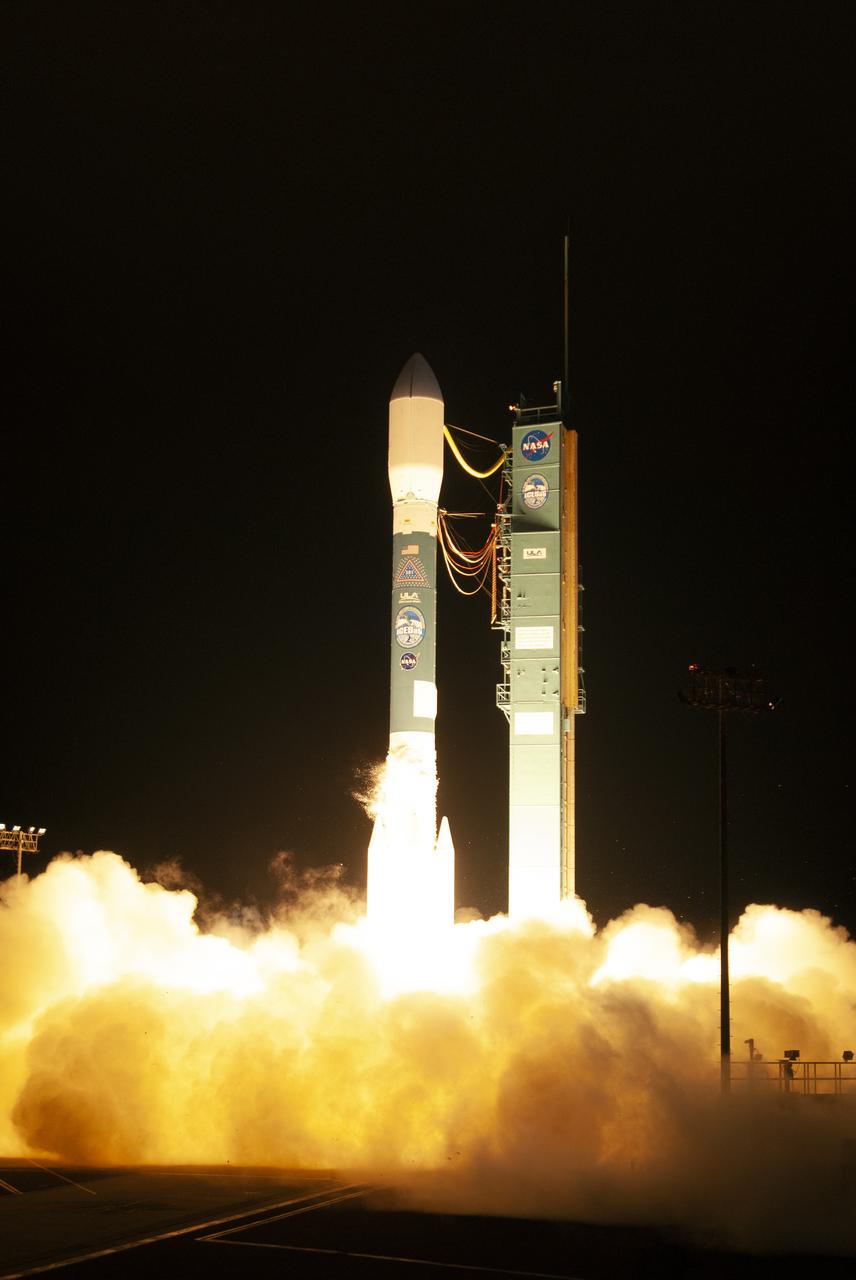
The final United Launch Alliance Delta II rocket lifts off from Space Launch Complex 2 at Vandenberg Air Force Base in California, on Sept. 15, 2018, carrying NASA's Ice, Cloud and land Elevation Satellite-2 (ICESat-2). Liftoff was at 9:02 a.m. EDT (6:02 a.m. PDT). The satellite will measure the height of our changing Earth, one laser pulse at a time, 10,000 laser pulses per second. ICESat-2 will provide scientists with height measurements that create a global portrait of Earth's third dimension, gathering date that can precisely track changes of terrain, including glaciers, sea ice and forests.

A SpaceX Falcon 9 rocket carrying Intuitive Machines’ Nova-C lunar lander lifts off from Launch Pad 39A at NASA’s Kennedy Space Center in Florida at 1:05 a.m. EST on Thursday, Feb. 15, 2024. As part of NASA’s CLPS (Commercial Lunar Payload Services) initiative and Artemis campaign, Intuitive Machines’ first lunar mission will carry NASA science and commercial payloads to the Moon to study plume-surface interactions, space weather/lunar surface interactions, radio astronomy, precision landing technologies, and a communication and navigation node for future autonomous navigation technologies.
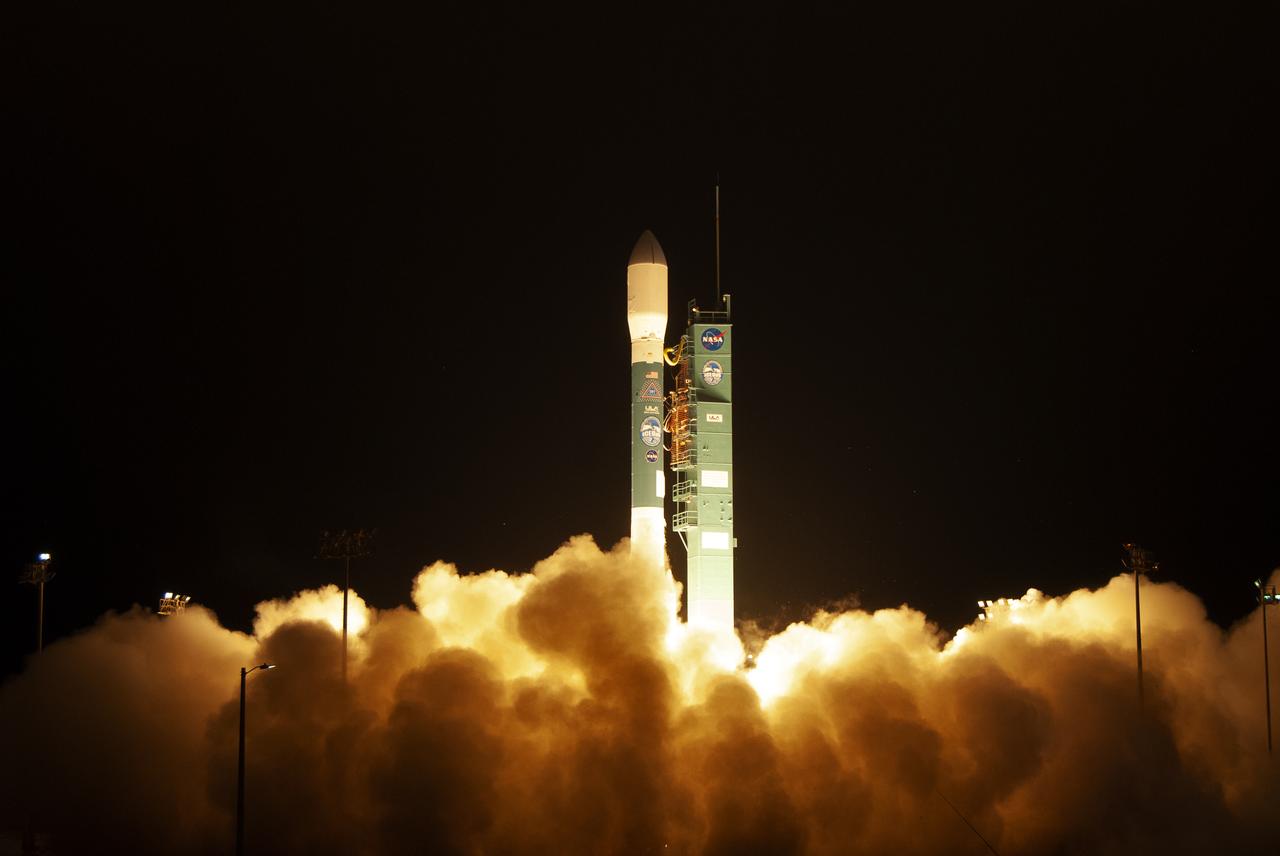
The final United Launch Alliance Delta II rocket lifts off from Space Launch Complex 2 at Vandenberg Air Force Base in California, on Sept. 15, 2018, carrying NASA's Ice, Cloud and land Elevation Satellite-2 (ICESat-2). Liftoff was at 9:02 a.m. EDT (6:02 a.m. PDT). The satellite will measure the height of our changing Earth, one laser pulse at a time, 10,000 laser pulses per second. ICESat-2 will provide scientists with height measurements that create a global portrait of Earth's third dimension, gathering date that can precisely track changes of terrain, including glaciers, sea ice and forests.
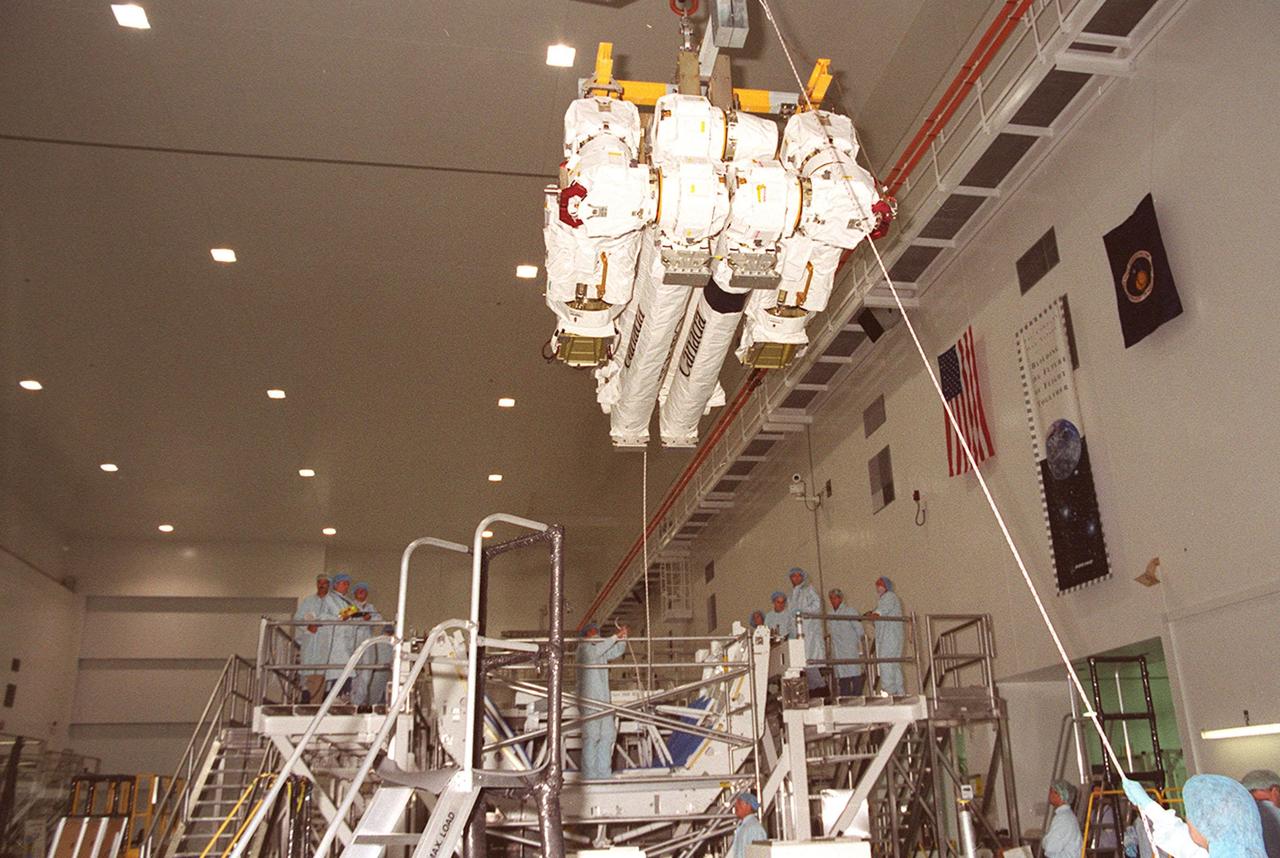
Workers in the Space Station Processing Facility help guide the Canadian Space Agency’s Space Station Remote Manipulator System (SSRMS) suspended from an overhead crane. The SSRMS is being moved to a test stand where it will be mated to its payload carrier. This pallet will later be installed into the payload bay of Space Shuttle Endeavour for launch to the International Space Station on STS-100 in April 2001. The 56-foot-long arm will be the primary means of transferring payloads between the orbiter payload bay and the Station. Its three segments comprise seven joints for highly flexible land precise movement, making it capable of moving around the Station’s exterior like an inchworm

A SpaceX Falcon 9 rocket carrying Intuitive Machines’ Nova-C lunar lander lifts off from Launch Pad 39A at NASA’s Kennedy Space Center in Florida at 1:05 a.m. EST on Thursday, Feb. 15, 2024. As part of NASA’s CLPS (Commercial Lunar Payload Services) initiative and Artemis campaign, Intuitive Machines’ first lunar mission will carry NASA science and commercial payloads to the Moon to study plume-surface interactions, space weather/lunar surface interactions, radio astronomy, precision landing technologies, and a communication and navigation node for future autonomous navigation technologies.
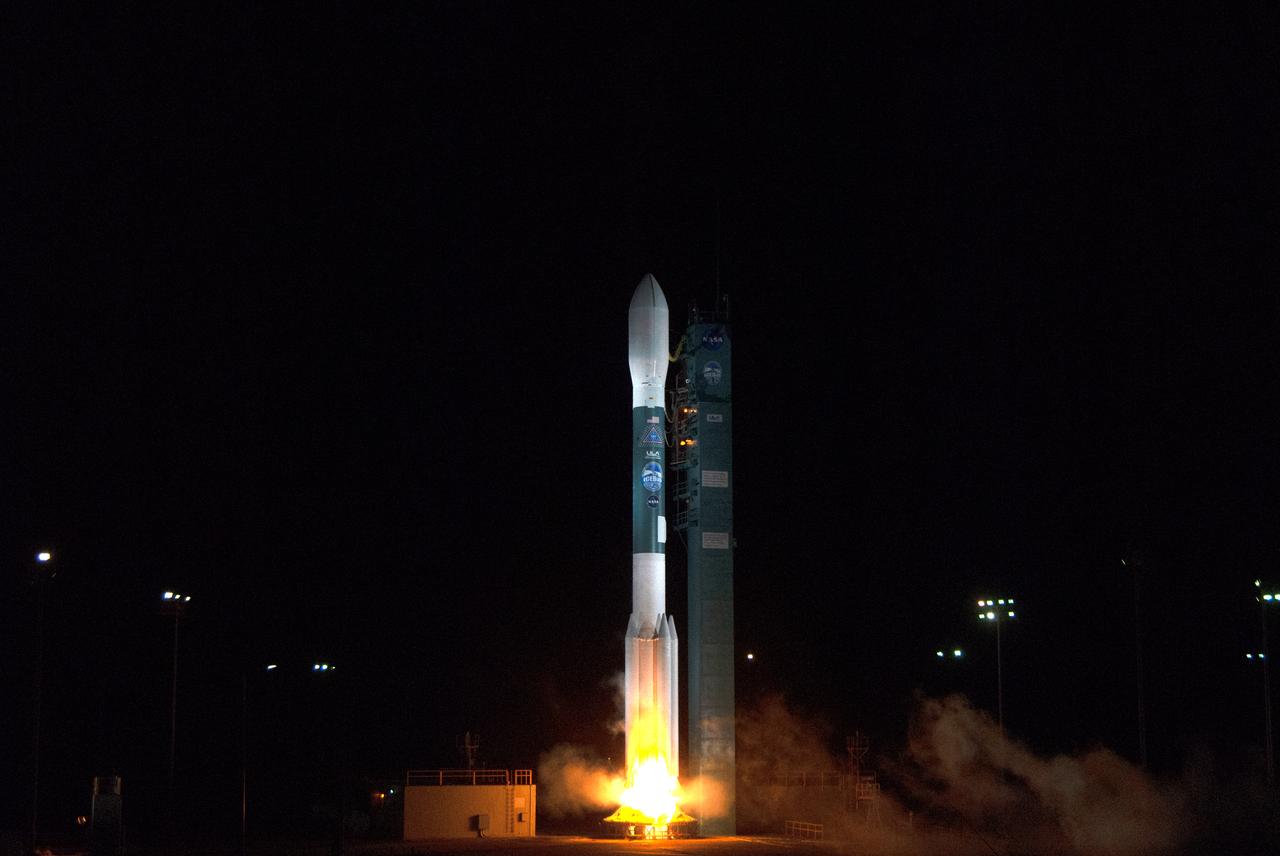
The final United Launch Alliance Delta II rocket lifts off from Space Launch Complex 2 at Vandenberg Air Force Base in California, on Sept. 15, 2018, carrying NASA's Ice, Cloud and land Elevation Satellite-2 (ICESat-2). Liftoff was at 9:02 a.m. EDT (6:02 a.m. PDT). The satellite will measure the height of our changing Earth, one laser pulse at a time, 10,000 laser pulses per second. ICESat-2 will provide scientists with height measurements that create a global portrait of Earth's third dimension, gathering date that can precisely track changes of terrain, including glaciers, sea ice and forests.
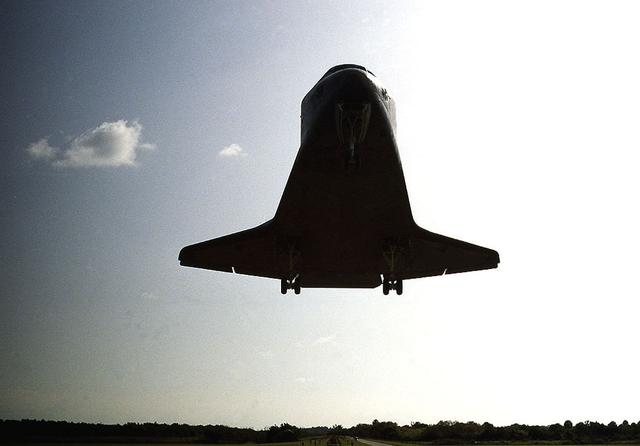
Aligned straight on with the red approach lights, the Orbiter Columbia (STS-52) glides toward Runway 33 of Kennedy Space Center's (KSC) Shuttle Landing Facility. The six member crew successfully completed deployment of the Laser Geodynamic Satellite II (LAGEOS), which is a spherical passive satellite covered with reflectors which are illuminated by ground-based lasers to determine precise measurements of the Earth's crustal movements. The crew also completed a series of materials processing experiments in the microgravity environment aboard the United States Microgravity Payload 1 (USMP-1) carried in the orbiter's cargo bay.
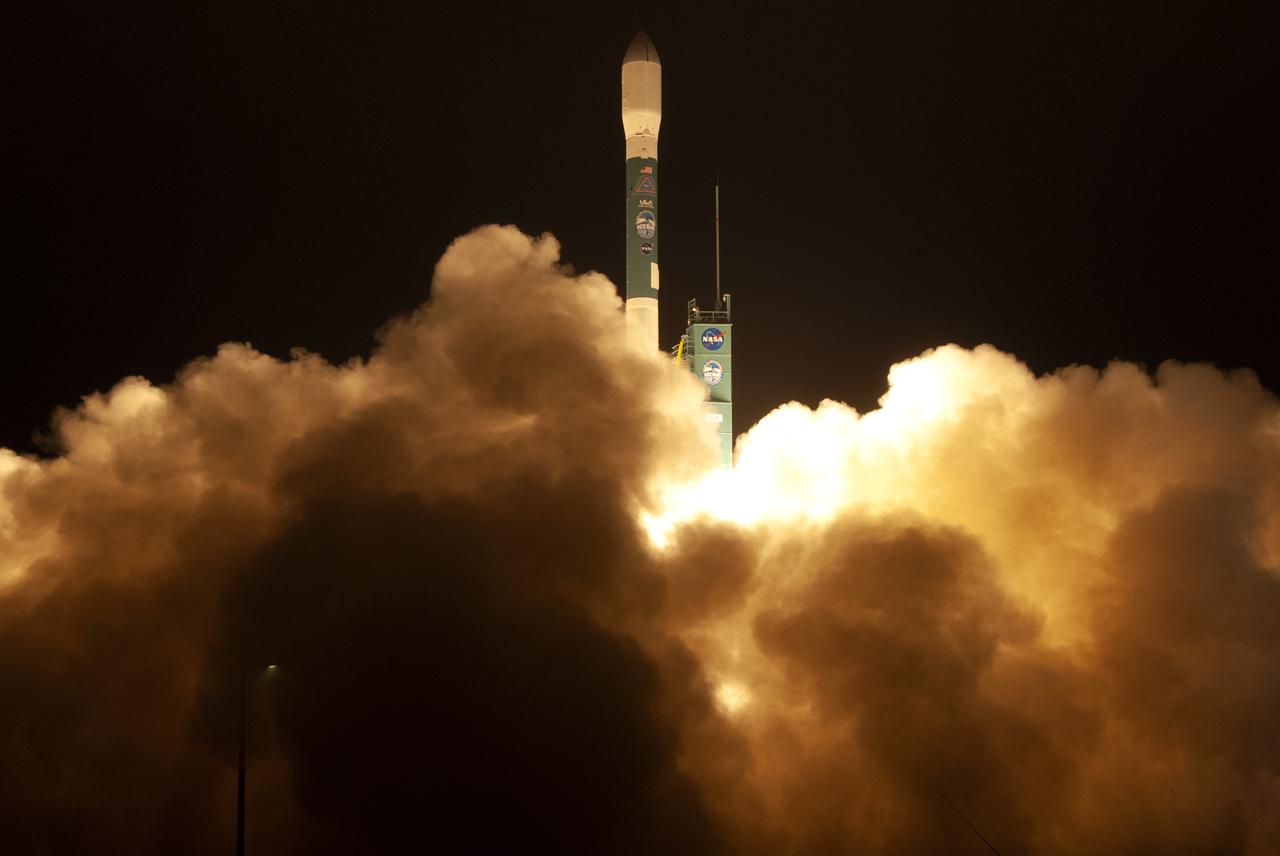
The final United Launch Alliance Delta II rocket lifts off from Space Launch Complex 2 at Vandenberg Air Force Base in California, on Sept. 15, 2018, carrying NASA's Ice, Cloud and land Elevation Satellite-2 (ICESat-2). Liftoff was at 9:02 a.m. EDT (6:02 a.m. PDT). The satellite will measure the height of our changing Earth, one laser pulse at a time, 10,000 laser pulses per second. ICESat-2 will provide scientists with height measurements that create a global portrait of Earth's third dimension, gathering date that can precisely track changes of terrain, including glaciers, sea ice and forests.

A SpaceX Falcon 9 rocket carrying Intuitive Machines’ Nova-C lunar lander lifts off from Launch Pad 39A at NASA’s Kennedy Space Center in Florida at 1:05 a.m. EST on Thursday, Feb. 15, 2024. As part of NASA’s CLPS (Commercial Lunar Payload Services) initiative and Artemis campaign, Intuitive Machines’ first lunar mission will carry NASA science and commercial payloads to the Moon to study plume-surface interactions, space weather/lunar surface interactions, radio astronomy, precision landing technologies, and a communication and navigation node for future autonomous navigation technologies.
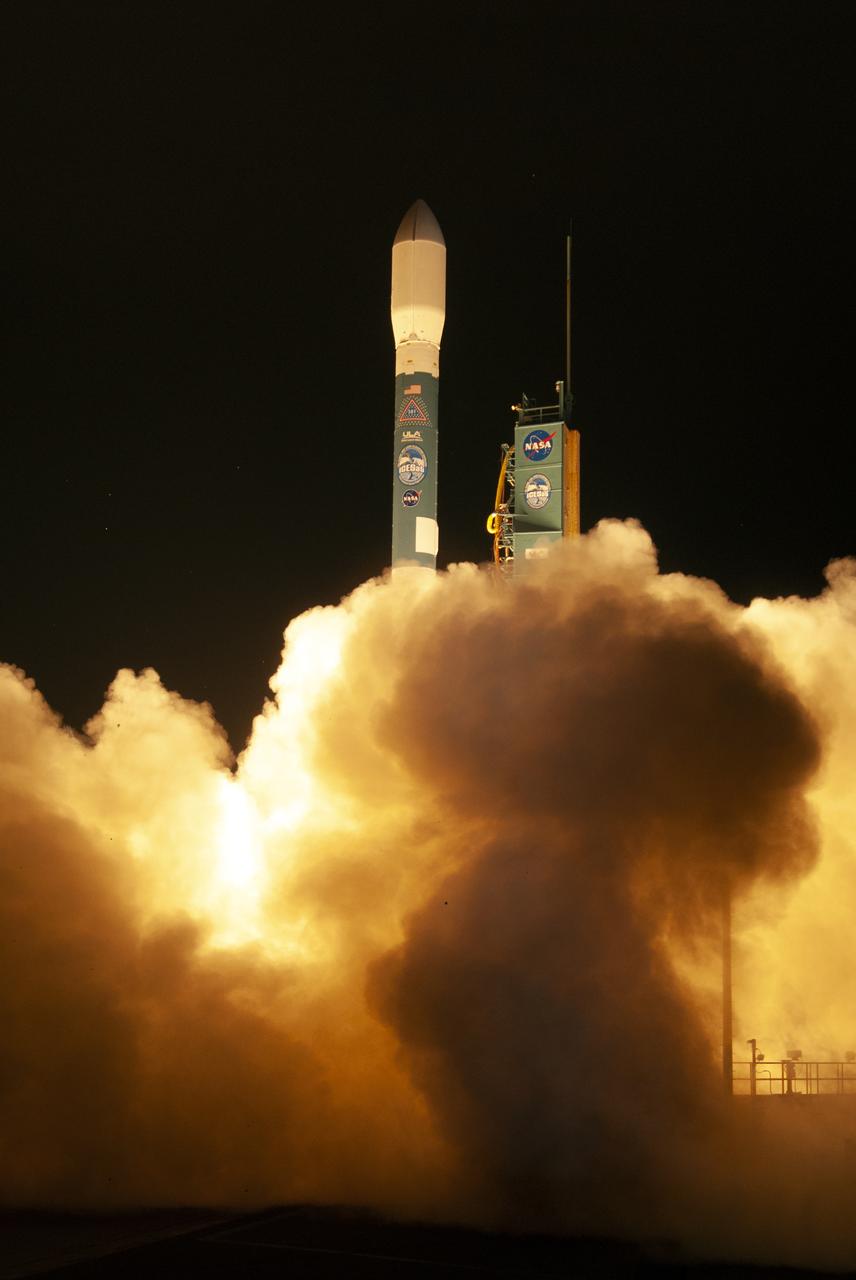
The final United Launch Alliance Delta II rocket lifts off from Space Launch Complex 2 at Vandenberg Air Force Base in California, on Sept. 15, 2018, carrying NASA's Ice, Cloud and land Elevation Satellite-2 (ICESat-2). Liftoff was at 9:02 a.m. EDT (6:02 a.m. PDT). The satellite will measure the height of our changing Earth, one laser pulse at a time, 10,000 laser pulses per second. ICESat-2 will provide scientists with height measurements that create a global portrait of Earth's third dimension, gathering date that can precisely track changes of terrain, including glaciers, sea ice and forests.
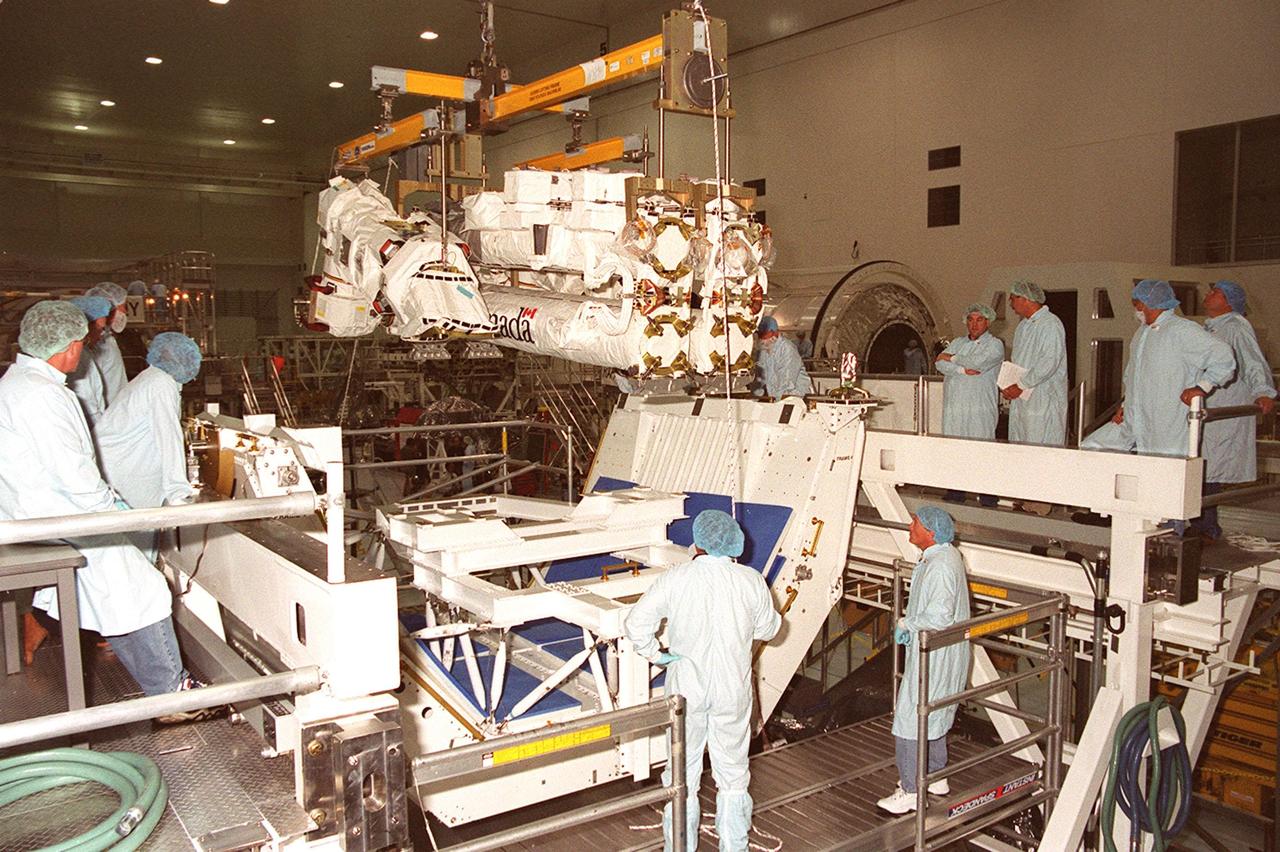
With gentle guidance, the Canadian Space Agency’s Space Station Remote Manipulator System (SSRMS) is lowered by crane onto a test stand in the Space Station Processing Facility. At the test stand the SSRMS it will be mated to its payload carrier. This pallet will later be installed into the payload bay of Space Shuttle Endeavour for launch to the International Space Station on STS-100 in April 2001. The 56-foot-long arm will be the primary means of transferring payloads between the orbiter payload bay and the Station. Its three segments comprise seven joints for highly flexible land precise movement, making it capable of moving around the Station’s exterior like an inchworm

A SpaceX Falcon 9 rocket carrying Intuitive Machines’ Nova-C lunar lander lifts off from Launch Pad 39A at NASA’s Kennedy Space Center in Florida at 1:05 a.m. EST on Thursday, Feb. 15, 2024. As part of NASA’s CLPS (Commercial Lunar Payload Services) initiative and Artemis campaign, Intuitive Machines’ first lunar mission will carry NASA science and commercial payloads to the Moon to study plume-surface interactions, space weather/lunar surface interactions, radio astronomy, precision landing technologies, and a communication and navigation node for future autonomous navigation technologies.
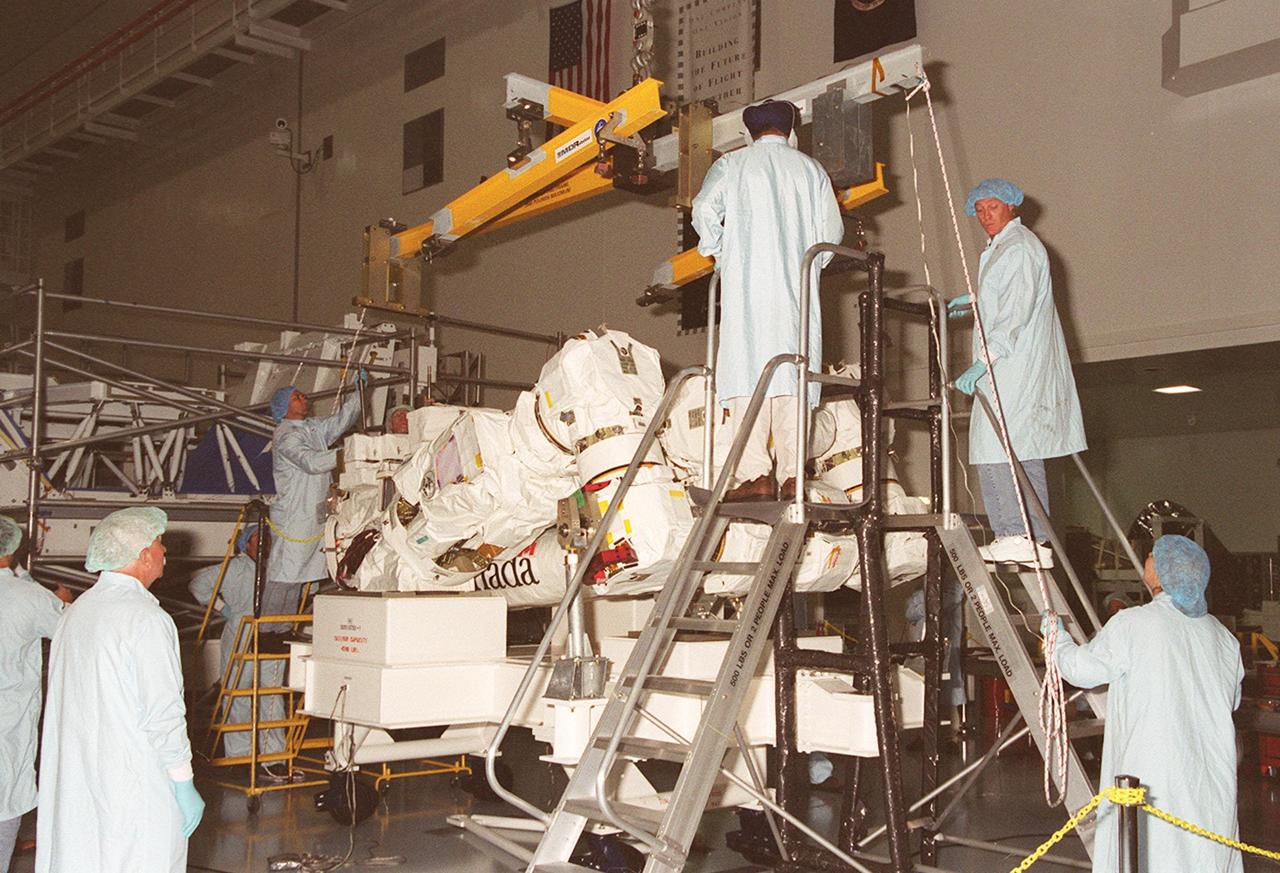
Workers in the Space Station Processing Facility help maneuver an overhead crane above the Canadian Space Agency’s Space Station Remote Manipulator System (SSRMS). The crane will lift and transfer the SSRMS to a test stand where it will be mated to its payload carrier. This pallet will later be installed into the payload bay of Space Shuttle Endeavour for launch to the International Space Station on STS-100 in April 2001. The 56-foot-long arm will be the primary means of transferring payloads between the orbiter payload bay and the Station. Its three segments comprise seven joints for highly flexible land precise movement, making it capable of moving around the Station’s exterior like an inchworm
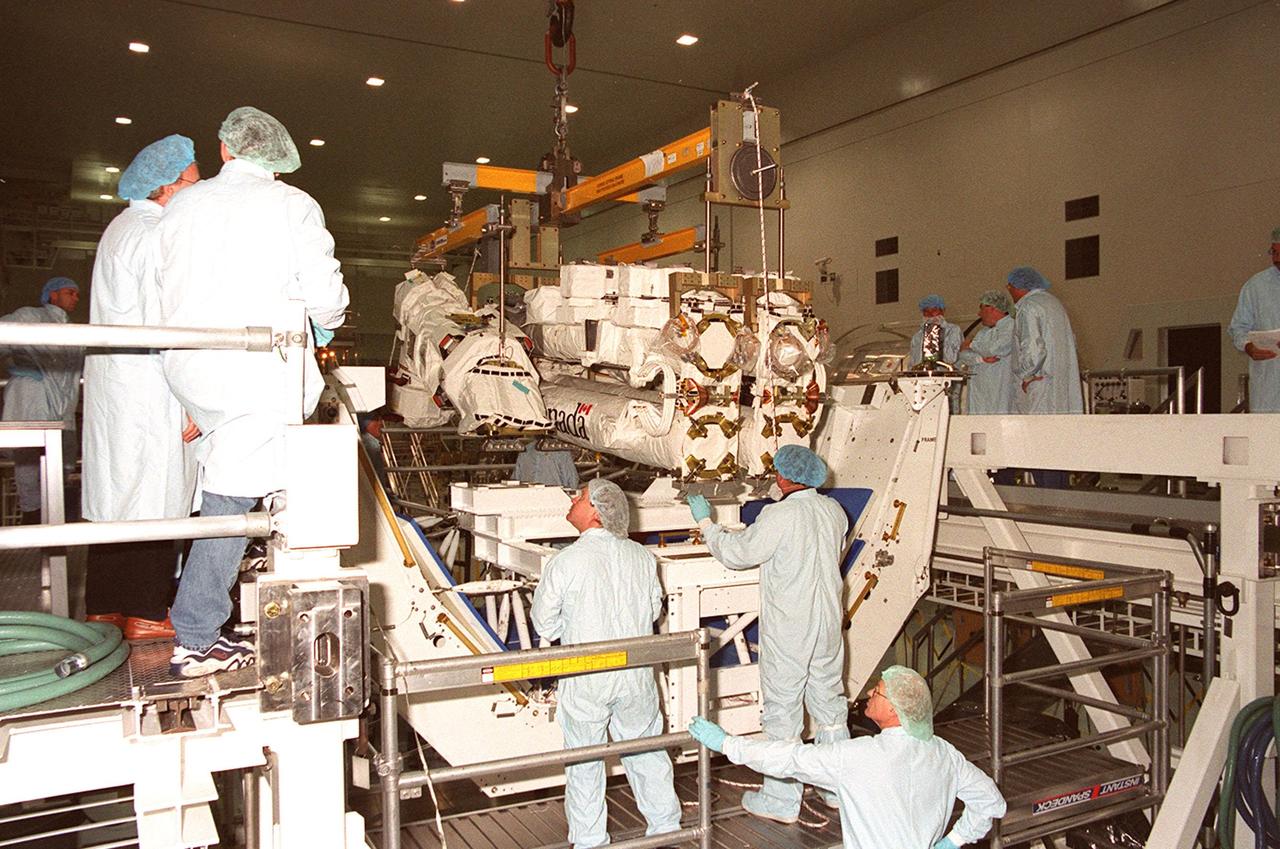
Workers in the Space Station Processing Facility help maneuver the Space Station Remote Manipulator System (SSRMS) onto a test stand. A component of the International Space Station provided by the Canadian Space Agency, the SSRMS will be mated to its payload carrier and later installed into the payload bay of Space Shuttle Endeavour for launch to the Station on STS-100 in April 2001. The 56-foot-long arm will be the primary means of transferring payloads between the orbiter payload bay and the Station. Its three segments comprise seven joints for highly flexible land precise movement, making it capable of moving around the Station’s exterior like an inchworm

A SpaceX Falcon 9 rocket carrying Intuitive Machines’ Nova-C lunar lander lifts off from Launch Pad 39A at NASA’s Kennedy Space Center in Florida at 1:05 a.m. EST on Thursday, Feb. 15, 2024. As part of NASA’s CLPS (Commercial Lunar Payload Services) initiative and Artemis campaign, Intuitive Machines’ first lunar mission will carry NASA science and commercial payloads to the Moon to study plume-surface interactions, space weather/lunar surface interactions, radio astronomy, precision landing technologies, and a communication and navigation node for future autonomous navigation technologies.
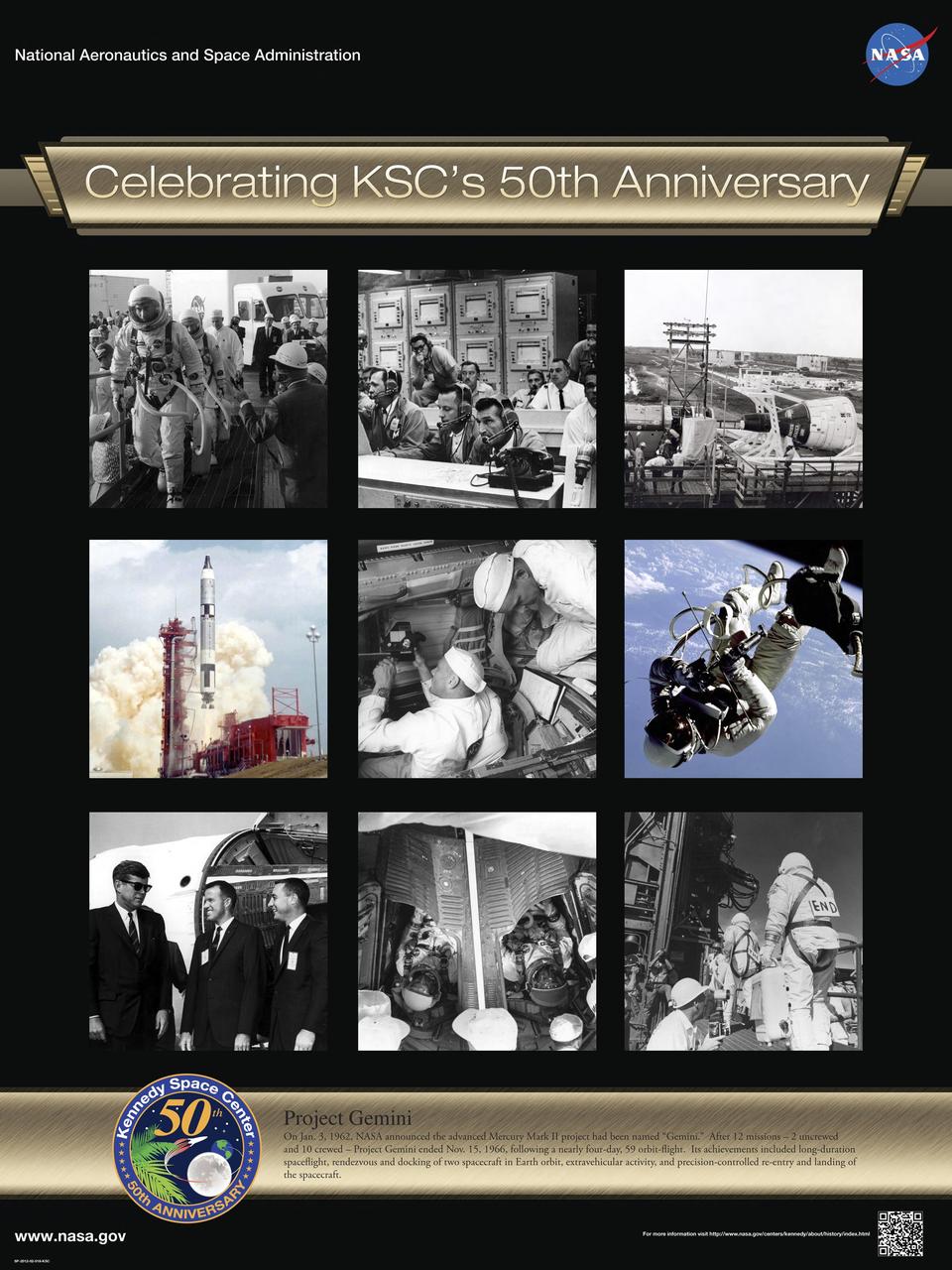
Project Gemini: On Jan. 3, 1962, NASA announced the advanced Mercury Mark II project had been named "Gemini." After 12 missions – 2 uncrewed and 10 crewed – Project Gemini ended Nov. 15, 1966, following a nearly four-day, 59 orbit-flight. Its achievements included long-duration spaceflight, rendezvous and docking of two spacecraft in Earth orbit, extravehicular activity, and precision-controlled re-entry and landing of the spacecraft. Poster designed by Kennedy Space Center Graphics Department/Greg Lee. Credit: NASA
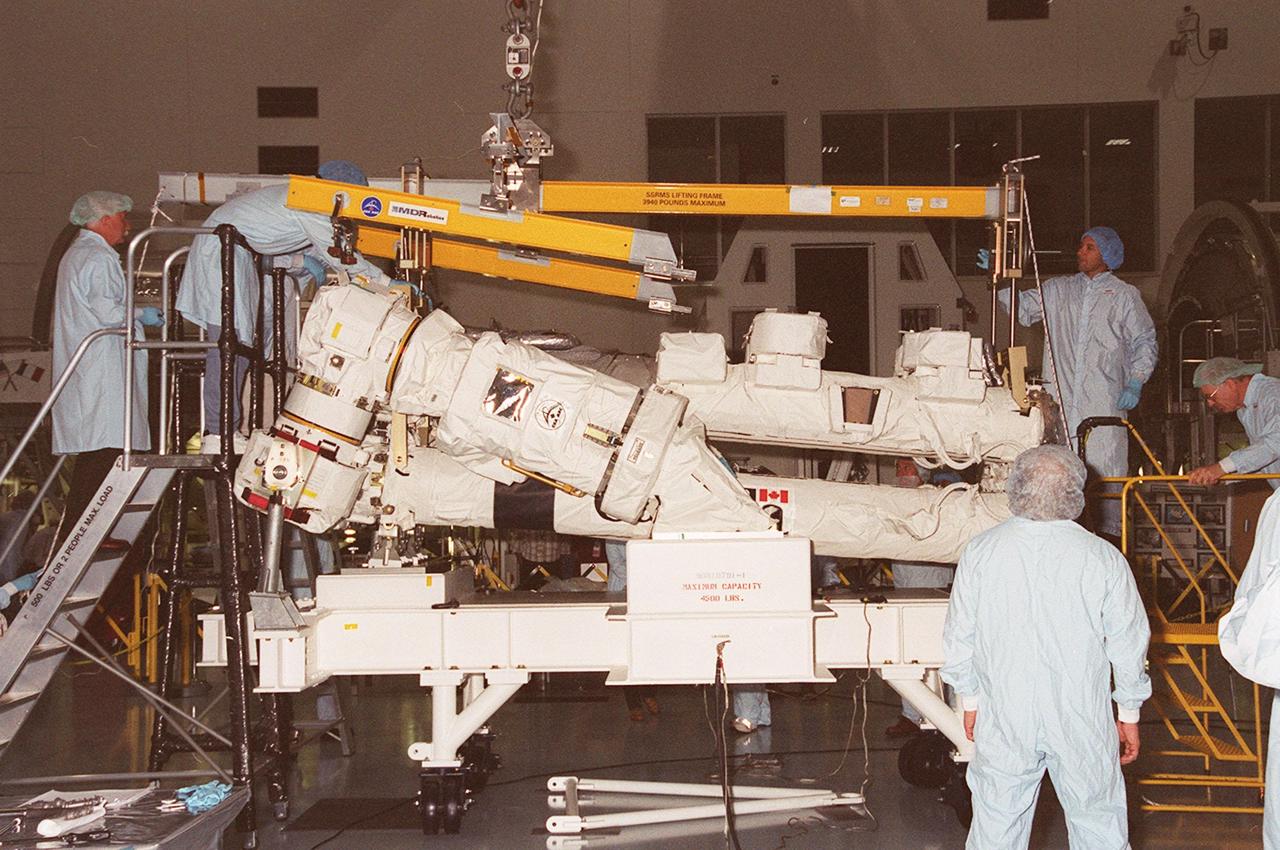
Workers in the Space Station Processing Facility attach an overhead crane to the Canadian Space Agency’s Space Station Remote Manipulator System (SSRMS). The crane will lift and transfer the SSRMS to a test stand where it will be mated to its payload carrier. This pallet will later be installed into the payload bay of Space Shuttle Endeavour for launch to the International Space Station on STS-100 in April 2001. The 56-foot-long arm will be the primary means of transferring payloads between the orbiter payload bay and the Station. Its three segments comprise seven joints for highly flexible land precise movement, making it capable of moving around the Station’s exterior like an inchworm
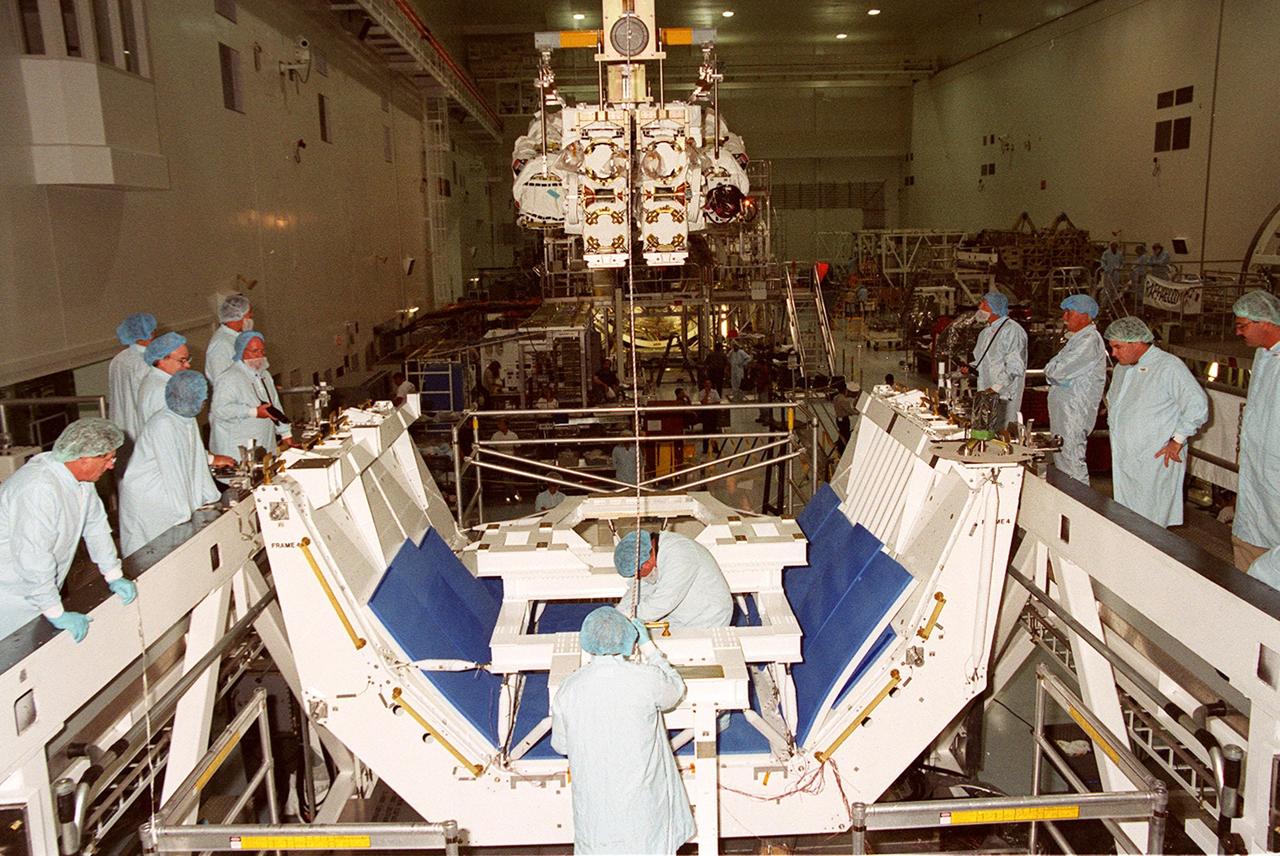
In the Space Station Processing Facility, the Canadian Space Agency’s Space Station Remote Manipulator System (SSRMS), suspended from an overhead crane, zeroes in on its destination, the test stand below. At the test stand the SSRMS it will be mated to its payload carrier. This pallet will later be installed into the payload bay of Space Shuttle Endeavour for launch to the International Space Station on STS-100 in April 2001. The 56-foot-long arm will be the primary means of transferring payloads between the orbiter payload bay and the Station. Its three segments comprise seven joints for highly flexible land precise movement, making it capable of moving around the Station’s exterior like an inchworm
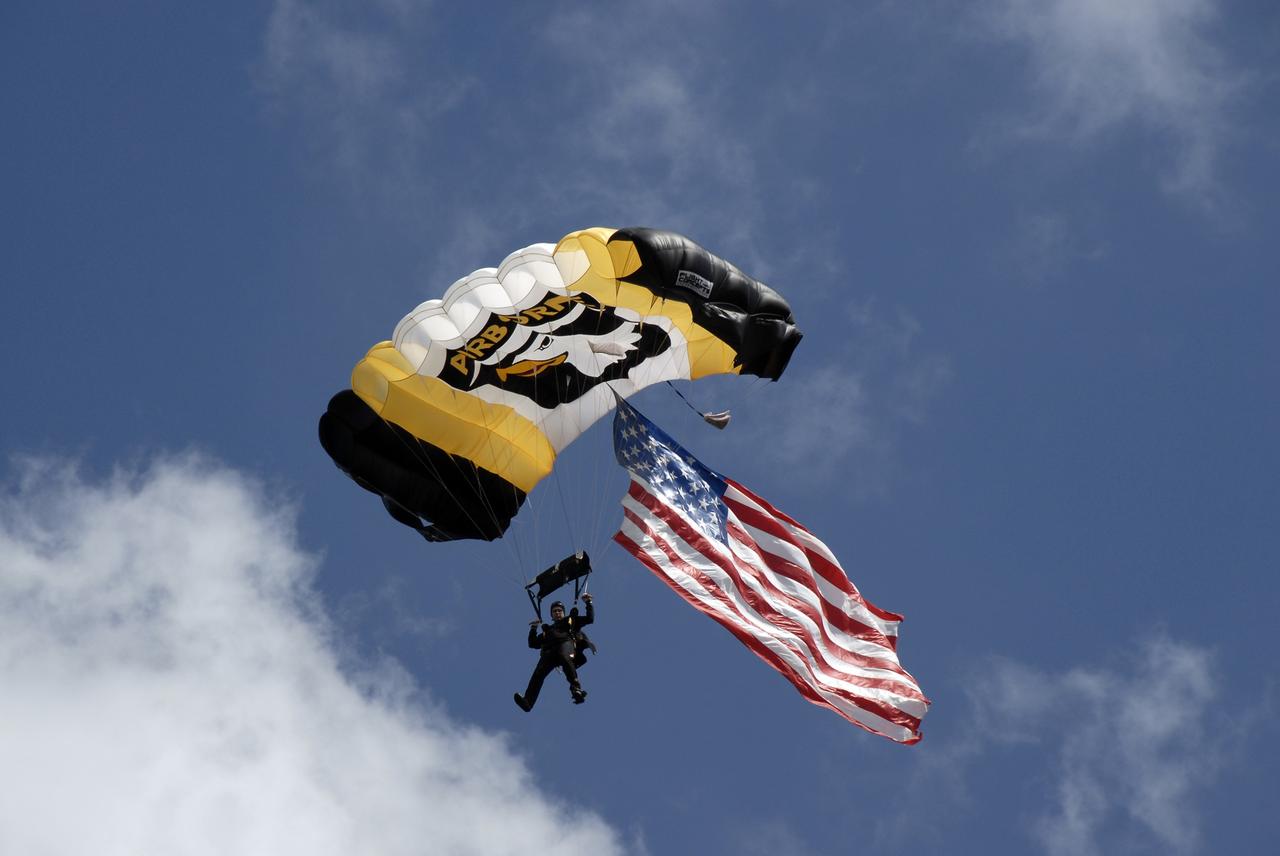
CAPE CANAVERAL, Fla. – A member of the 101st Airborne parachute demonstration team heads for landing at NASA's Kennedy Space Center in Florida. The team performed at the Kennedy Space Center Visitor Complex Space and Air Show Nov. 8-9. This year’s show brought together the best in military aircraft, such as the F/A-18 Super Hornet and F-16 Fighting Falcon, coupled with precision pilots and veteran astronauts to celebrate spaceflight and aviation. The event included a water rescue demonstration by the 920th Rescue Wing. Photo credit: NASA/Kim Shiflett

A SpaceX Falcon 9 rocket carrying Intuitive Machines’ Nova-C lunar lander lifts off from Launch Pad 39A at NASA’s Kennedy Space Center in Florida at 1:05 a.m. EST on Thursday, Feb. 15, 2024. As part of NASA’s CLPS (Commercial Lunar Payload Services) initiative and Artemis campaign, Intuitive Machines’ first lunar mission will carry NASA science and commercial payloads to the Moon to study plume-surface interactions, space weather/lunar surface interactions, radio astronomy, precision landing technologies, and a communication and navigation node for future autonomous navigation technologies.
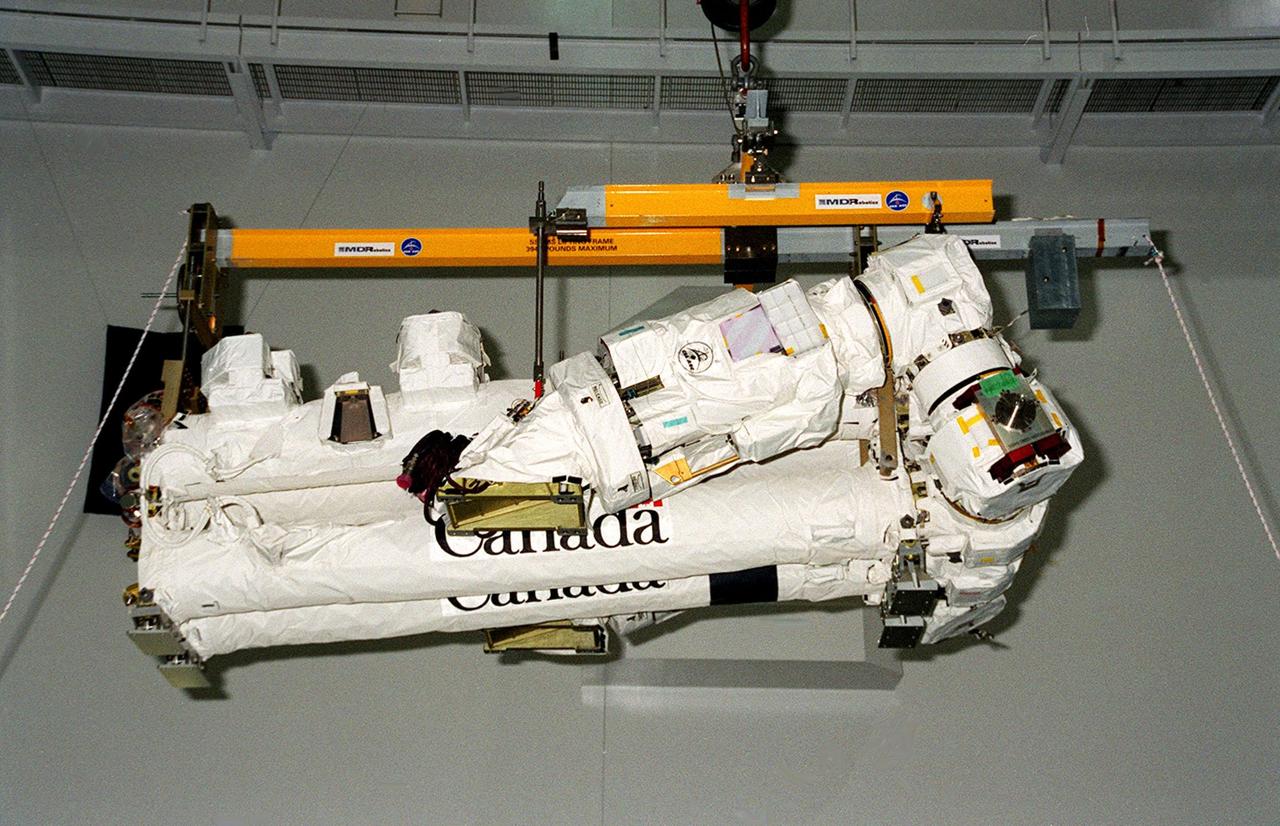
An overhead crane in the Space Station Processing Facility carries the Canadian Space Agency’s Space Station Remote Manipulator System (SSRMS) through the air to a test stand where it will be mated to its payload carrier. This pallet will later be installed into the payload bay of Space Shuttle Endeavour for launch to the International Space Station on STS-100 in April 2001. The 56-foot-long arm will be the primary means of transferring payloads between the orbiter payload bay and the Station. Its three segments comprise seven joints for highly flexible land precise movement, making it capable of moving around the Station’s exterior like an inchworm
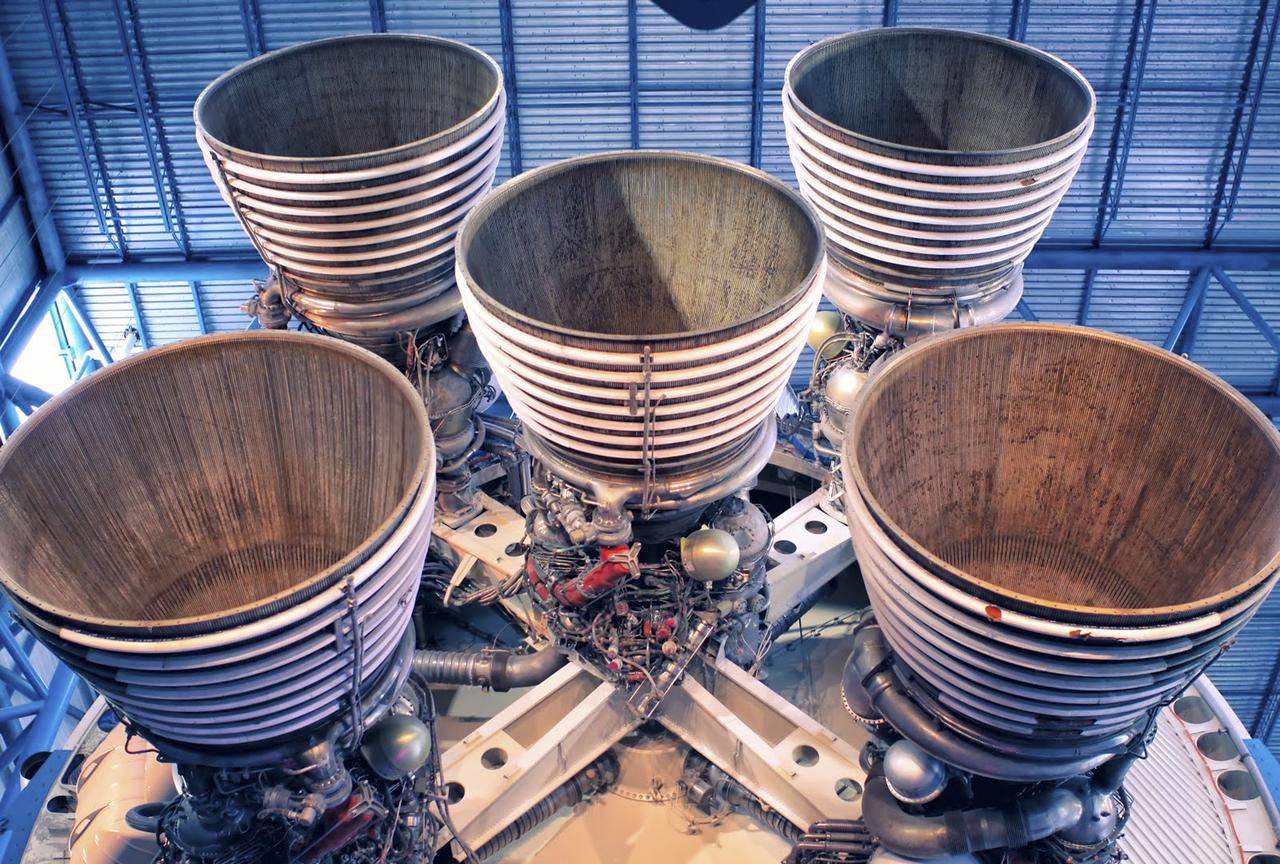
CAPE CANAVERAL, Fla. – As seen on Google Maps, the massive F-1 engines of the Saturn V's first stage on display inside the Apollo/Saturn V Center at the Kennedy Space Center Visitor Complex. Each engine stands 19 feet tall with a diameter of more than 12 feet. The five engines on the first stage produced 7.5 million pounds of thrust at liftoff. The Saturn V was used to launch NASA's Apollo missions to the moon which saw 12 astronauts land and work on the lunar surface. Google precisely mapped Kennedy Space Center and some of its historical facilities for the company's map page. Photo credit: Google/Wendy Wang
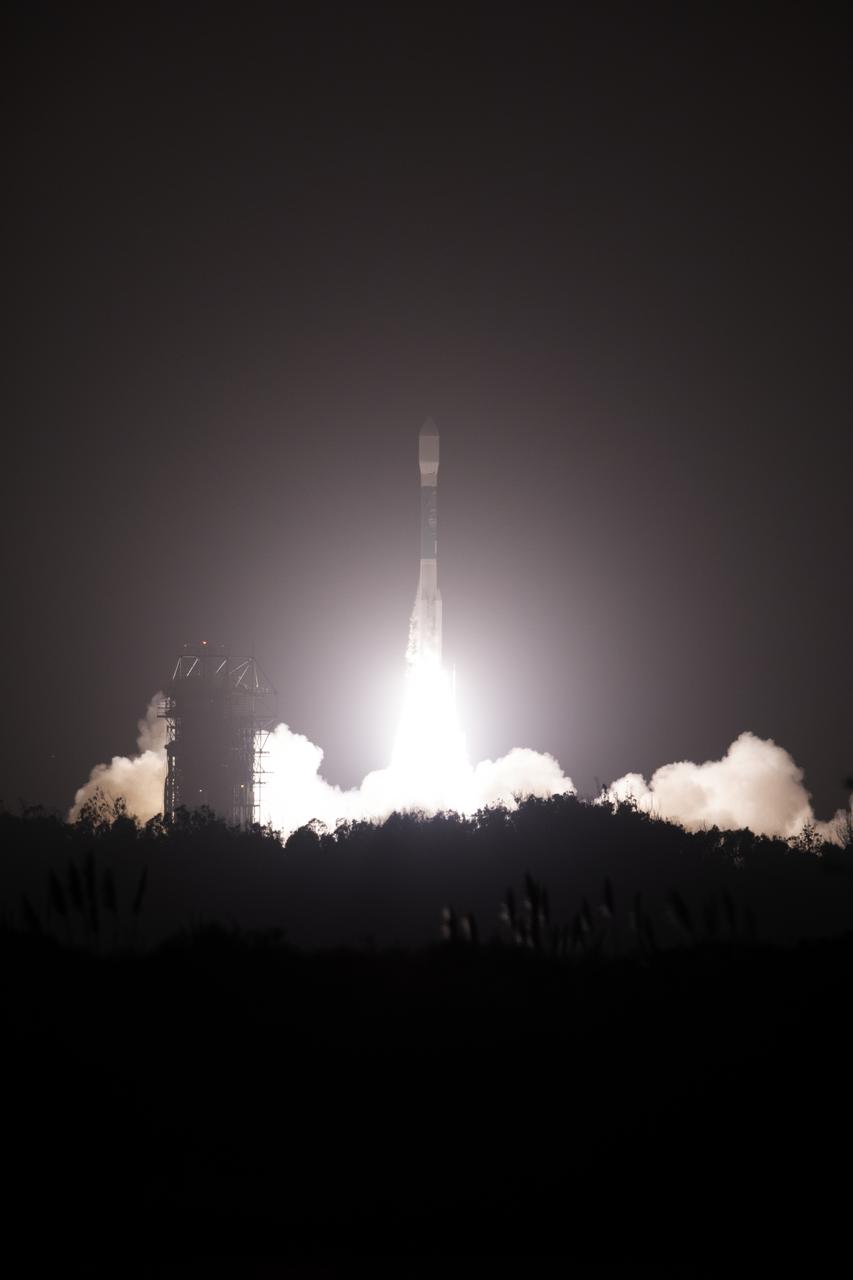
The final United Launch Alliance Delta II rocket lifts off from Space Launch Complex 2 at Vandenberg Air Force Base in California, on Sept. 15, 2018, carrying NASA's Ice, Cloud and land Elevation Satellite-2 (ICESat-2). Liftoff was at 9:02 a.m. EDT (6:02 a.m. PDT). The satellite will measure the height of our changing Earth, one laser pulse at a time, 10,000 laser pulses per second. ICESat-2 will provide scientists with height measurements that create a global portrait of Earth's third dimension, gathering date that can precisely track changes of terrain, including glaciers, sea ice and forests.
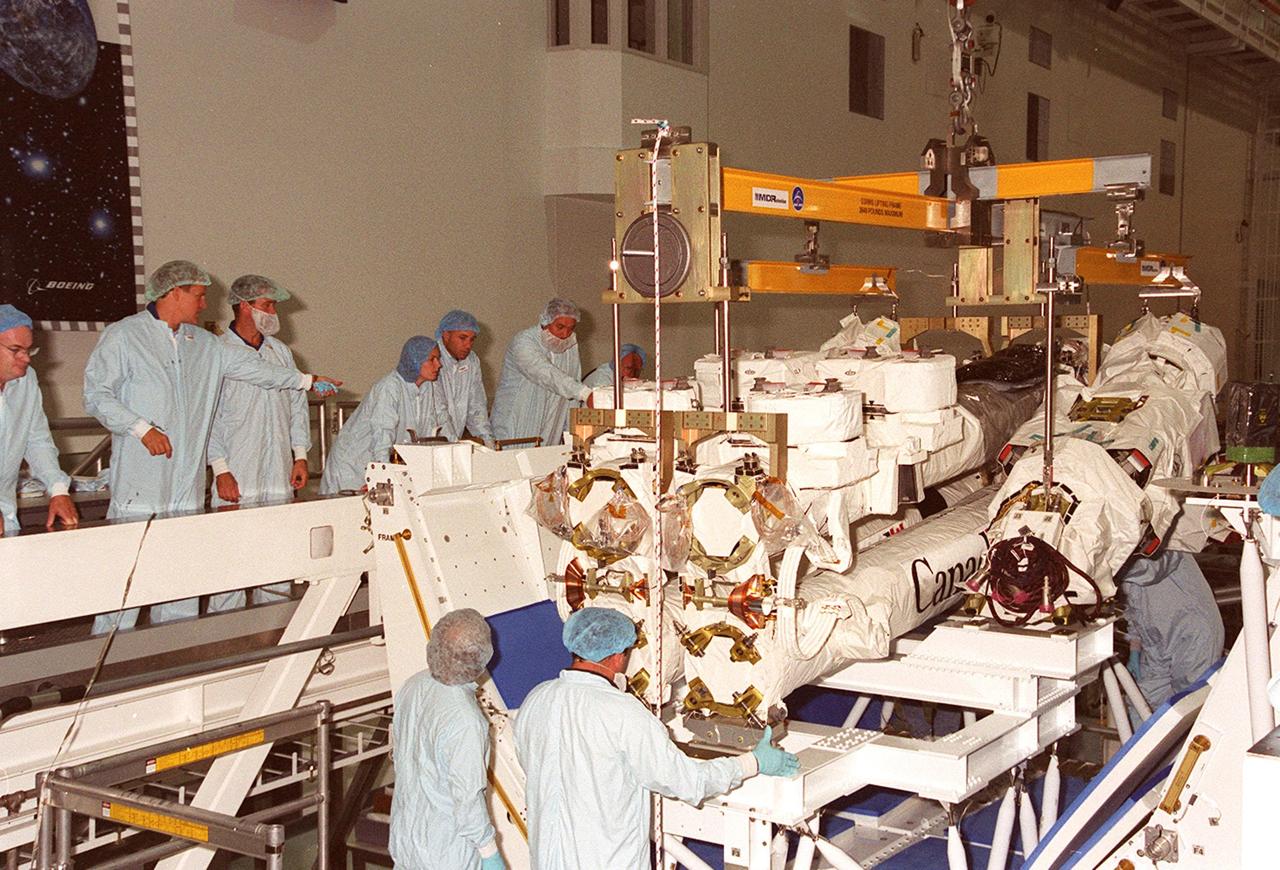
The Canadian Space Agency’s Space Station Remote Manipulator System (SSRMS) finally rests on a test stand in the Space Station Processing Facility. At the test stand the SSRMS will be mated to its payload carrier. This pallet will later be installed into the payload bay of Space Shuttle Endeavour for launch to the International Space Station on STS-100 in April 2001. The 56-foot-long arm will be the primary means of transferring payloads between the orbiter payload bay and the Station. Its three segments comprise seven joints for highly flexible land precise movement, making it capable of moving around the Station’s exterior like an inchworm
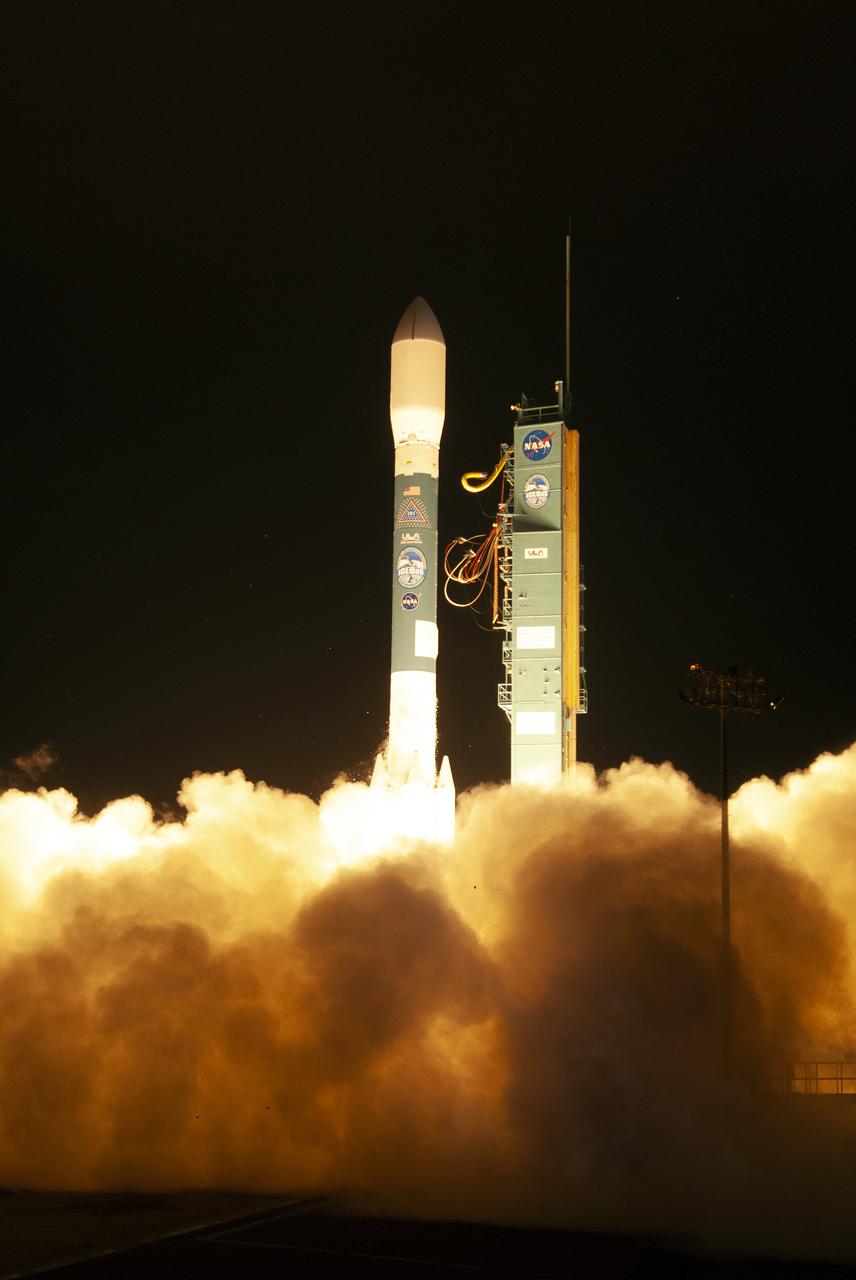
The final United Launch Alliance Delta II rocket lifts off from Space Launch Complex 2 at Vandenberg Air Force Base in California, on Sept. 15, 2018, carrying NASA's Ice, Cloud and land Elevation Satellite-2 (ICESat-2). Liftoff was at 9:02 a.m. EDT (6:02 a.m. PDT). The satellite will measure the height of our changing Earth, one laser pulse at a time, 10,000 laser pulses per second. ICESat-2 will provide scientists with height measurements that create a global portrait of Earth's third dimension, gathering date that can precisely track changes of terrain, including glaciers, sea ice and forests.
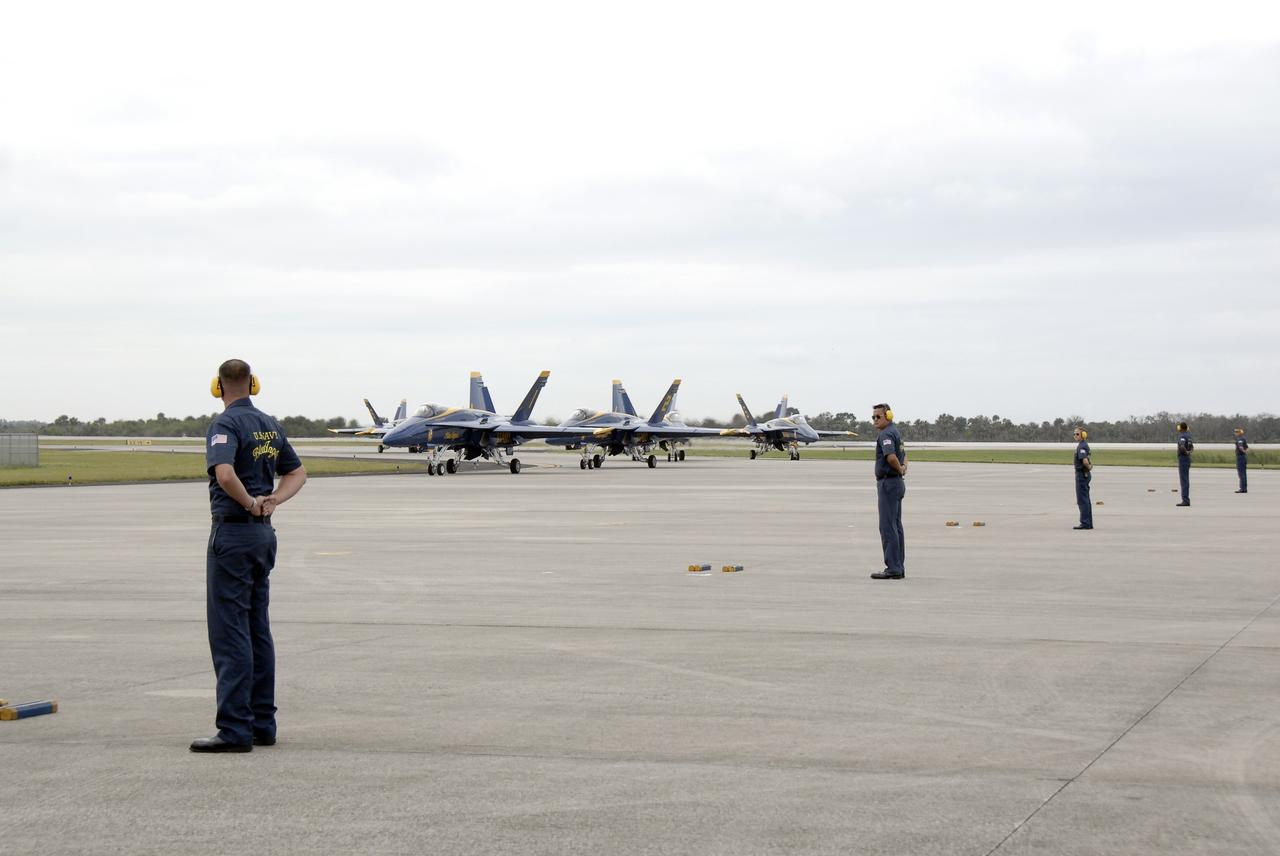
CAPE CANAVERAL, Fla. – The U.S. Navy's Blue Angels demonstration squadron lands at the Shuttle Landing Facility at NASA's Kennedy Space Center in Florida. They will perform at the Kennedy Space Center Visitor Complex Space and Air Show Nov. 8-9. The Navy's elite flight demonstration squadron will take to the skies in military aircraft demonstrations by the F-16 Fighting Falcon and F/A-18 Super Hornet jets for the second annual Space & Air Show at Kennedy. This year’s show brings together the best in military aircraft, coupled with precision pilots and veteran astronauts to celebrate spaceflight and aviation. The event includes military aircraft demonstrations by the F-16 Fighting Falcon and a water rescue demonstration by the 920th Rescue Wing. Photo credit: NASA/Kim Shiflett
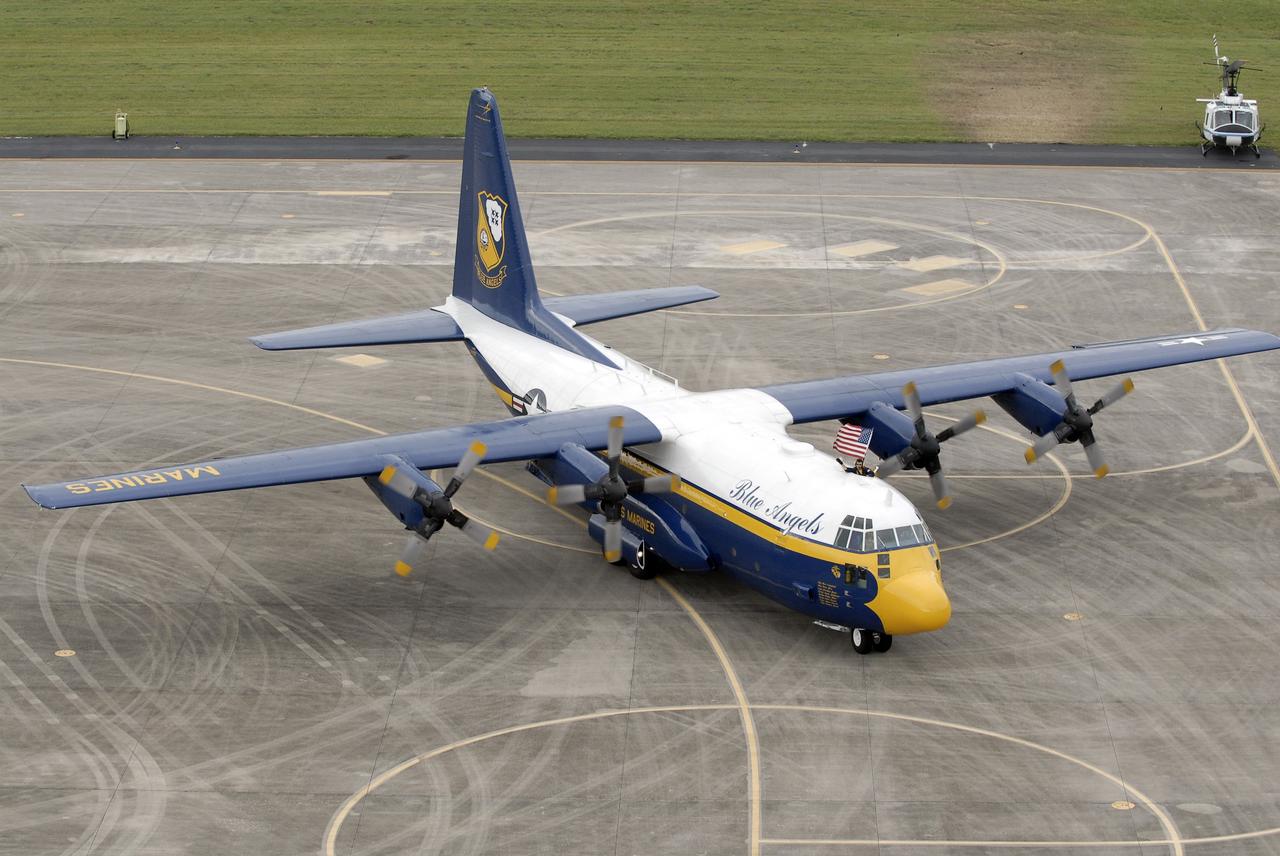
CAPE CANAVERAL, Fla. – A C-130 airplane flown by U.S. Marines lands at the Shuttle Landing Facility at NASA's Kennedy Space Center in Florida. The plane carries the support team for the U.S. Navy's Blue Angels, who are going to perform at the Kennedy Space Center Visitor Complex Space and Air Show Nov. 8-9. The Navy's elite flight demonstration squadron will take to the skies in military aircraft demonstrations by the F-16 Fighting Falcon and F/A-18 Super Hornet jets for the second annual Space & Air Show at Kennedy. This year’s show brings together the best in military aircraft, coupled with precision pilots and veteran astronauts to celebrate spaceflight and aviation. The event includes military aircraft demonstrations by the F-16 Fighting Falcon and a water rescue demonstration by the 920th Rescue Wing. Photo credit: NASA/Kim Shiflett
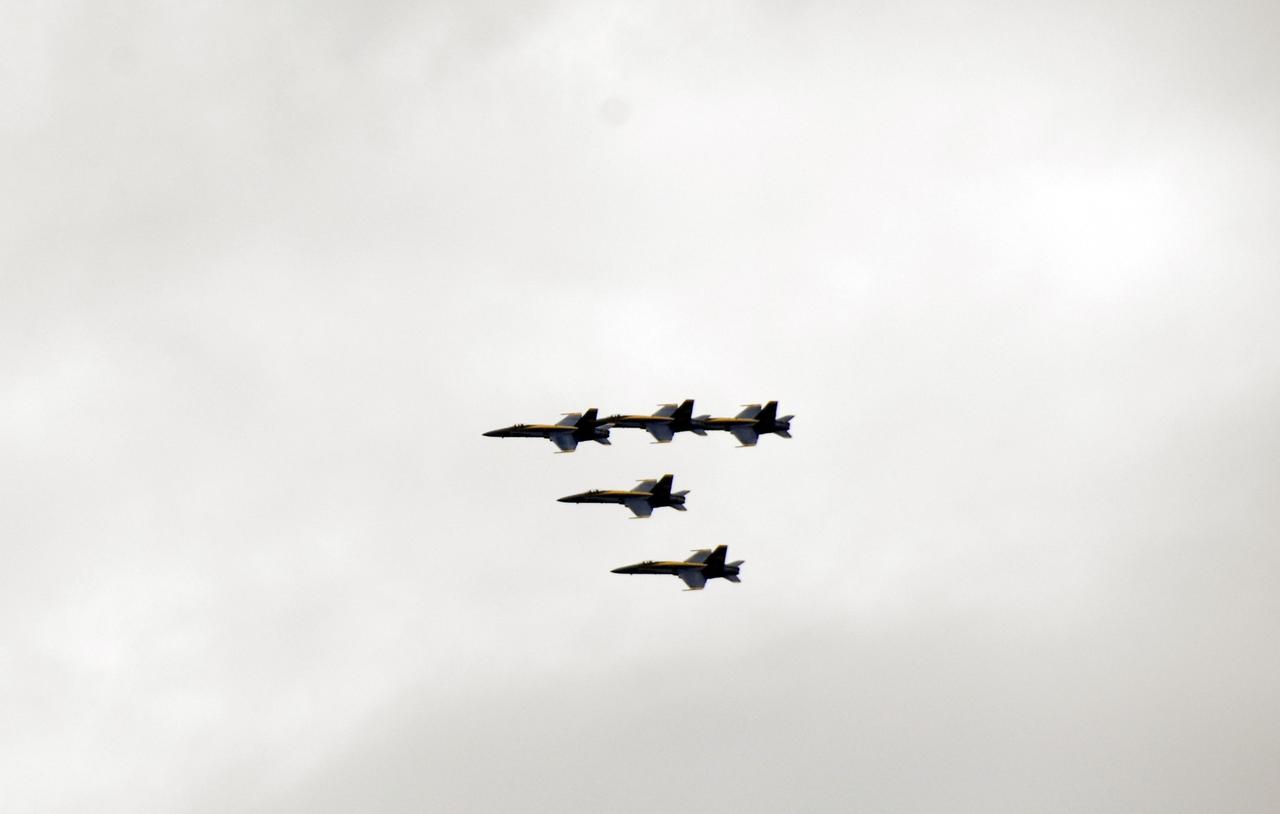
CAPE CANAVERAL, Fla. – The U.S. Navy's Blue Angels approach the Shuttle Landing Facility for a landing at NASA's Kennedy Space Center in Florida. They will perform at the Kennedy Space Center Visitor Complex Space and Air Show Nov. 8-9. The Navy's elite flight demonstration squadron will take to the skies in military aircraft demonstrations by the F-16 Fighting Falcon and F/A-18 Super Hornet jets for the second annual Space & Air Show at Kennedy. This year’s show brings together the best in military aircraft, coupled with precision pilots and veteran astronauts to celebrate spaceflight and aviation. The event includes military aircraft demonstrations by the F-16 Fighting Falcon and a water rescue demonstration by the 920th Rescue Wing. Photo credit: NASA/Kim Shiflett
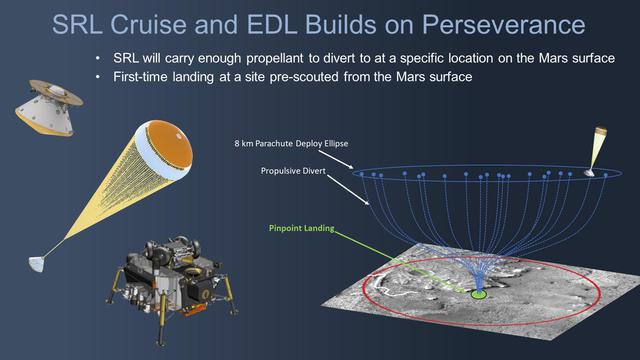
During the NASA Mars 2020 Perseverance rover mission, pristine samples of Mars rock and regolith (broken rock and dust) will be collected and sealed inside collection tubes. At strategic locations during the rover's drive, these tubes will be deposited onto the Martian surface to create collection points, or "depots." This marks the first phase of the Mars Sample Return campaign, which will be followed by the Sample Retrieval Lander mission in the late 2020s. Tasked with collecting these containers for their eventual return to Earth, the Sample Retrieval Lander will be the first Mars mission to land at a specific location already scouted out from the surface. As such, to enable such a precise landing close to one of these depots, the lander will carry enough fuel make a propulsive divert maneuver (powered by its rocket thrusters) after being slowed down sufficiently by its parachute on entering the Martian atmosphere. https://photojournal.jpl.nasa.gov/catalog/PIA24164
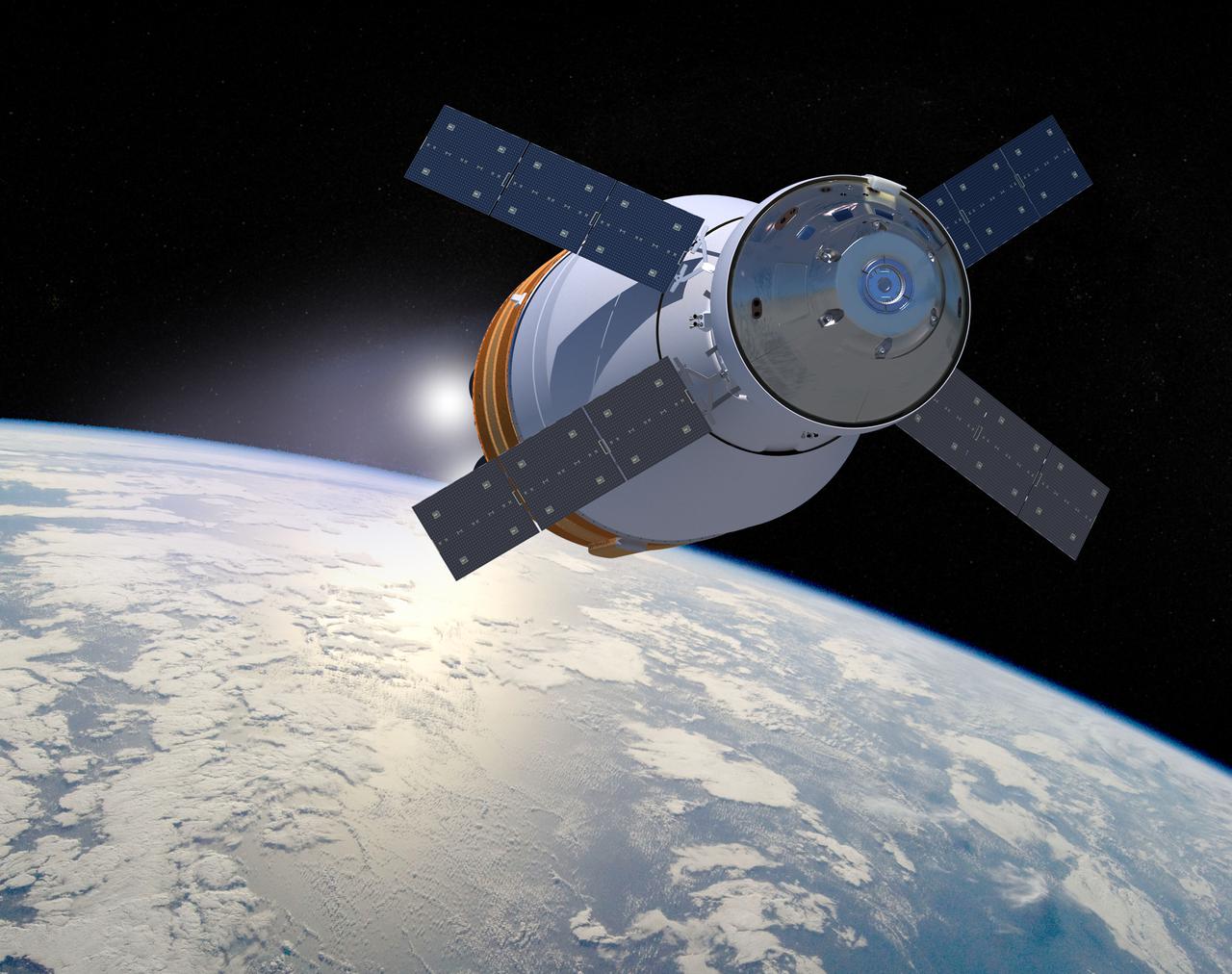
Seen here is an image of the SLS Exploration Upper Stage with the Orion Space craft on its way to a deep space mission. The Exploration Upper Stage will be used on the second configuration of the SLS rocket, known as Block 1B, and will provide in-space propulsion to send astronauts in NASA’s Orion spacecraft and heavy cargo on a precise trajectory to the Moon. The evolution of the rocket to SLS Block 1B configuration with EUS enables SLS to launch 40% more cargo to the Moon along with the crew. Manufacturing both the core stage and Exploration Upper Stage is a collaborative effort between NASA and Boeing, the lead contractor for EUS and the SLS core stage. SLS is the only rocket that can send Orion, astronauts, and supplies to the Moon in a single mission. The SLS rocket, NASA’s Orion spacecraft, Gateway, and human landing system are part of NASA’s backbone for deep space exploration. Under the Artemis program, NASA is working to land the first woman and the next man on the Moon to pave the way for sustainable exploration at the Moon and future missions to Mars. (NASA)
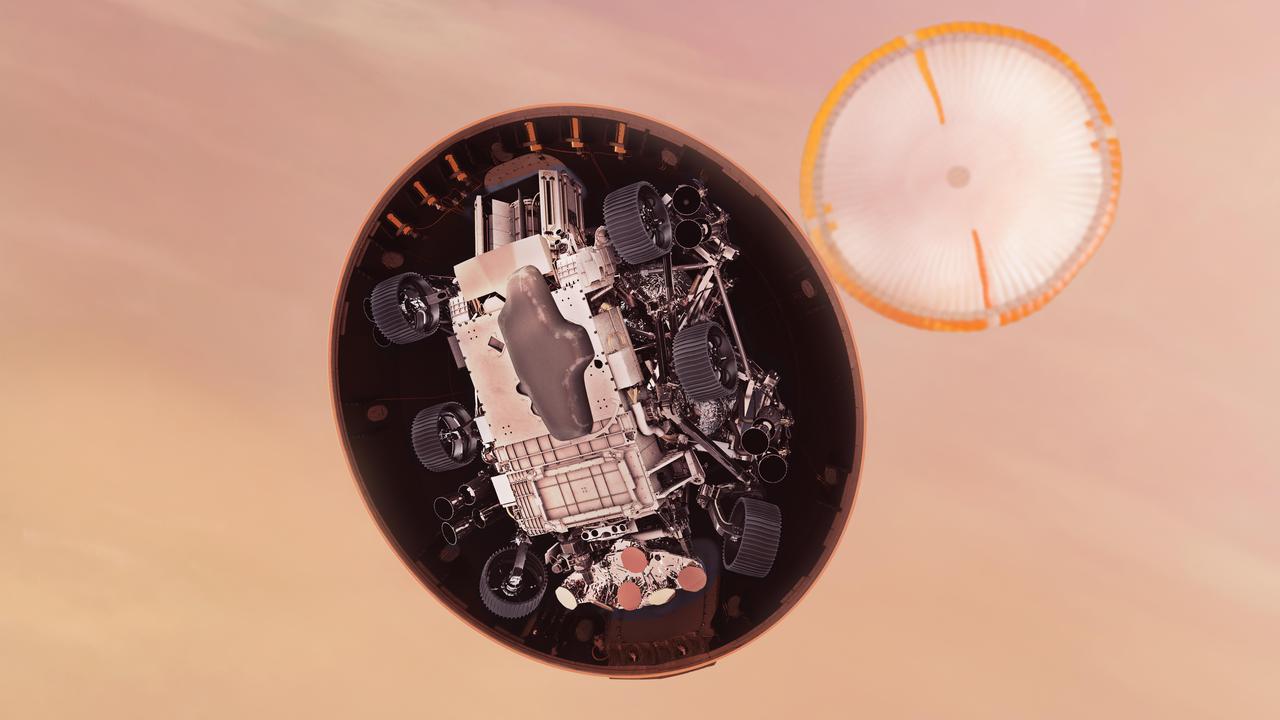
In this illustration, NASA's Perseverance rover gets its first look at the Martian surface below, after dropping its heat shield just under six minutes after entry into the Mars atmosphere. Hundreds of critical events must execute perfectly and exactly on time for the rover to land safely on Feb. 18, 2021. Entry, Descent, and Landing, or "EDL," begins when the spacecraft reaches the top of the Martian atmosphere, traveling nearly 12,500 mph (20,000 kph). EDL ends about seven minutes after atmospheric entry, with Perseverance stationary on the Martian surface. The parachute, 70.5 feet (21.5 meters) in diameter, deploys about 240 seconds after entry, at an altitude of about 7 miles (11 kilometers) and a velocity of about 940 mph (1,512 kph). The heat shield separates about 20 seconds, and the rover is exposed to the atmosphere of Mars for the first time. With a clear view of the ground, the landing radar and Terrain Relative Navigation system can begin determining the vehicle's precise altitude, position, and velocity in preparation for touchdown. https://photojournal.jpl.nasa.gov/catalog/PIA24317

A photon demonstration was conducted in front of news media and social media participants during a prelaunch mission briefing for NASA's Ice, Cloud and land Elevation Satellite-2 (ICESat-2), a mission to measure the changing height of Earth's ice, on Sept. 13, 2018 at Vandenberg Air Force Base (VAFB) in California. ICESat-2 will launch aboard a United Launch Alliance Delta II, the rocket’s final mission, from Space Launch Complex 2 at VAFB. Launch is scheduled for 8:46 a.m. EDT (5:46 a.m. PDT). The satellite will measure the height of our changing Earth, one laser pulse at a time, 10,000 laser pulses per second. ICESat-2 will provide scientists with height measurements that create a global portrait of Earth's third dimension, gathering date that can precisely track changes of terrain, including glaciers, sea ice and forests.
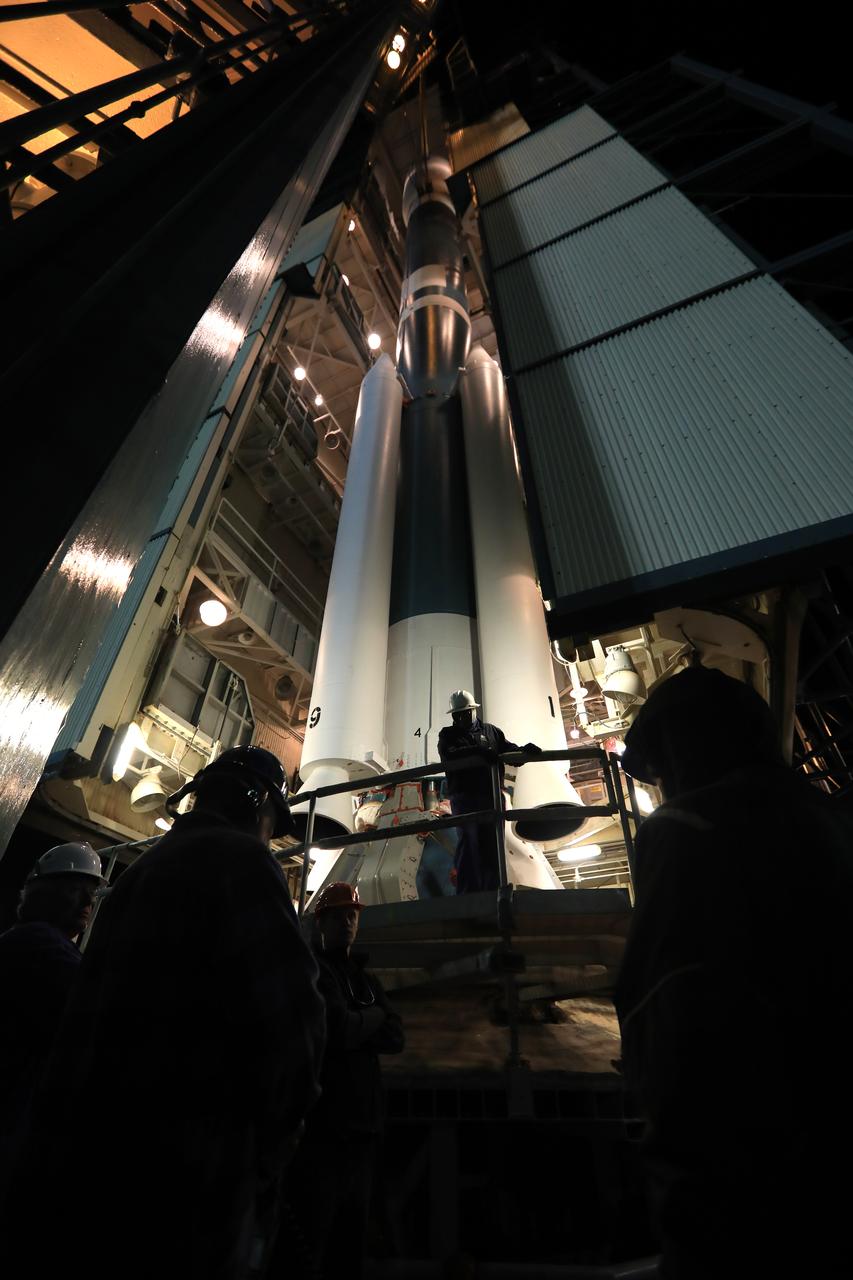
The gantry rolls back at Space Launch Complex 2 at Vandenberg Air Force Base in California, on Sept. 14, 2018, for the final United Launch Alliance Delta II rocket which will carry NASA's Ice, Cloud and land Elevation Satellite-2 (ICESat-2). Liftoff is scheduled for Sept. 15, 2018, at 8:46 a.m. EDT (5:46 a.m. PDT). The satellite will measure the height of our changing Earth, one laser pulse at a time, 10,000 laser pulses per second. ICESat-2 will provide scientists with height measurements that create a global portrait of Earth's third dimension, gathering date that can precisely track changes of terrain, including glaciers, sea ice and forests.