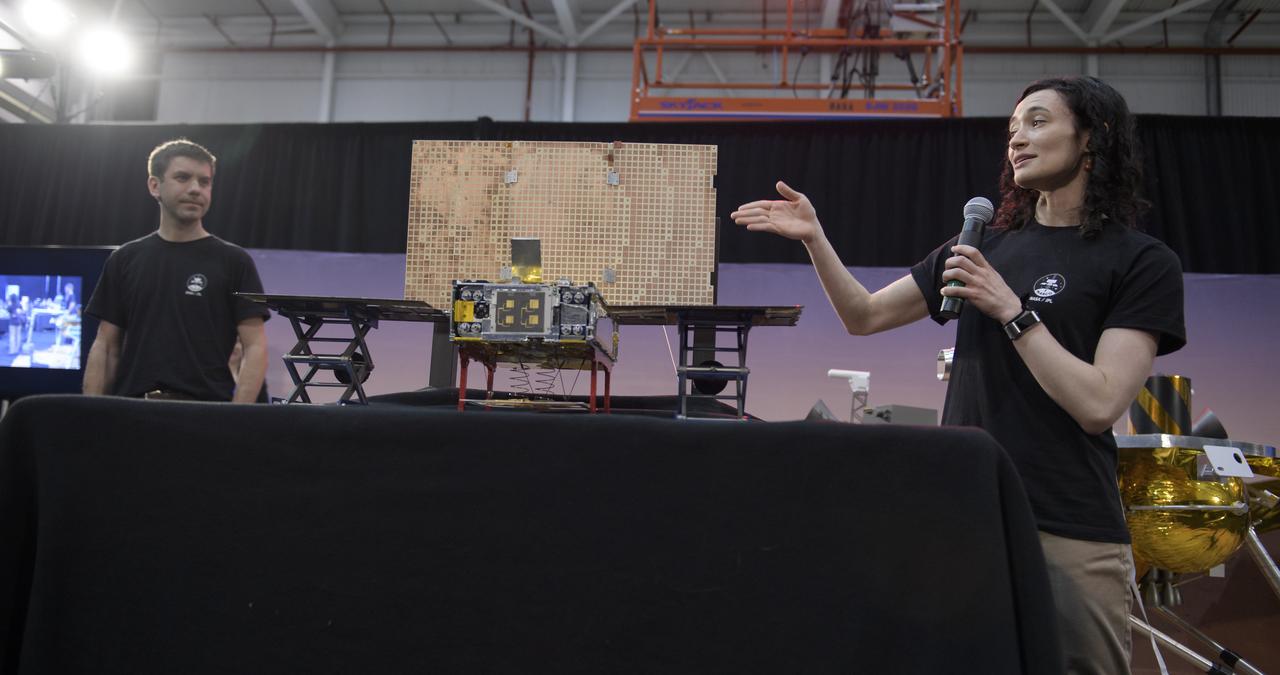
Andy Klesh, MarCO chief engineer, NASA JPL, left, and Annie Marinan, MarCO Systems Engineer, NASA JPL discuss NASA's Mars Cube One (MarCO) technology demonstration mission during a prelaunch media briefing, Thursday, May 3, 2018, at Vandenberg Air Force Base in California. MarCO, which is a separate mission launching on the same rocket at NASA’s InSight mission to Mars, will test new miniaturized deep space communication equipment. Photo Credit: (NASA/Bill Ingalls)
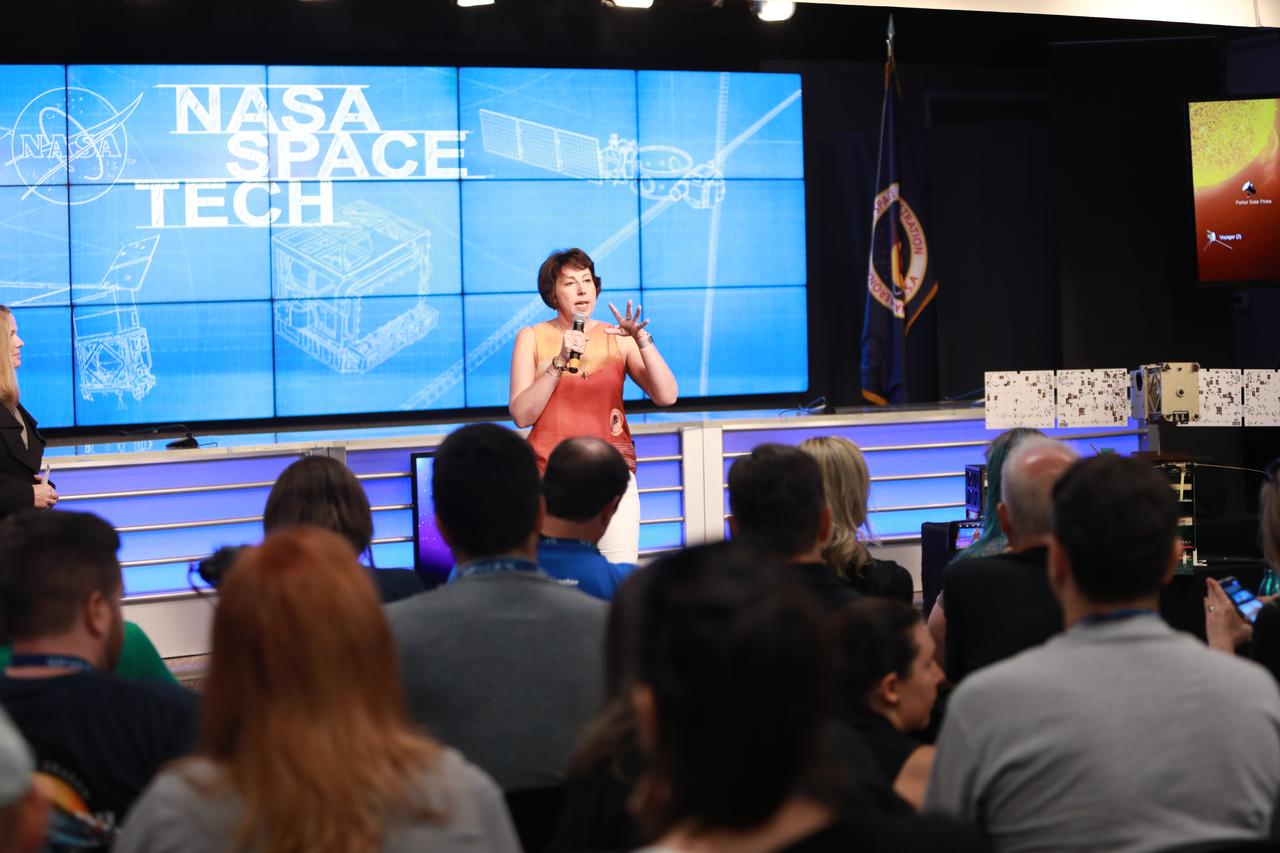
Nicky Fox, director of NASA’s Heliophysics Division, discusses the Space Environment Testbeds payload during a NASA prelaunch technology TV broadcast for the Space Test Program-2 (STP-2) at NASA’s Kennedy Space Center in Florida on June 23, 2019. The payload’s four experiments will reveal the ways local space weather affects spacecraft hardware. It is one of four NASA payloads scheduled to launch on a SpaceX Falcon Heavy rocket from Launch Complex 39A beginning at 11:30 p.m. EDT on June 24, 2019. STP-2 is managed by the U.S. Air Force Space and Missile Systems Center.

Laura Aguiar hosts NASA’s prelaunch technology show for Space Test Program-2 (STP-2) at Kennedy Space Center on June 23, 2019. STP-2 is managed by the U.S. Air Force Space and Missile Systems Center.

Jill Seubert, deputy principal investigator, from NASA’s Jet Propulsion Laboratory in Pasadena, California, explains the payload during a NASA prelaunch technology TV broadcast for the Space Test Program-2 (STP-2) mission at the agency’s Kennedy Space Center in Florida on June 23, 2019. The new space clock could improve how we navigate on the Moon, to Mars and beyond. The space clock is one of four NASA payloads scheduled to launch on a SpaceX Falcon Heavy rocket from Launch Complex 39A beginning at 11:30 p.m. EDT on June 24, 2019. STP-2 is managed by the U.S. Air Force Space and Missile Systems Center.

Laura Aguiar hosts NASA’s prelaunch technology show for Space Test Program-2 (STP-2) at Kennedy Space Center on June 23, 2019. STP-2 is managed by the U.S. Air Force Space and Missile Systems Center.
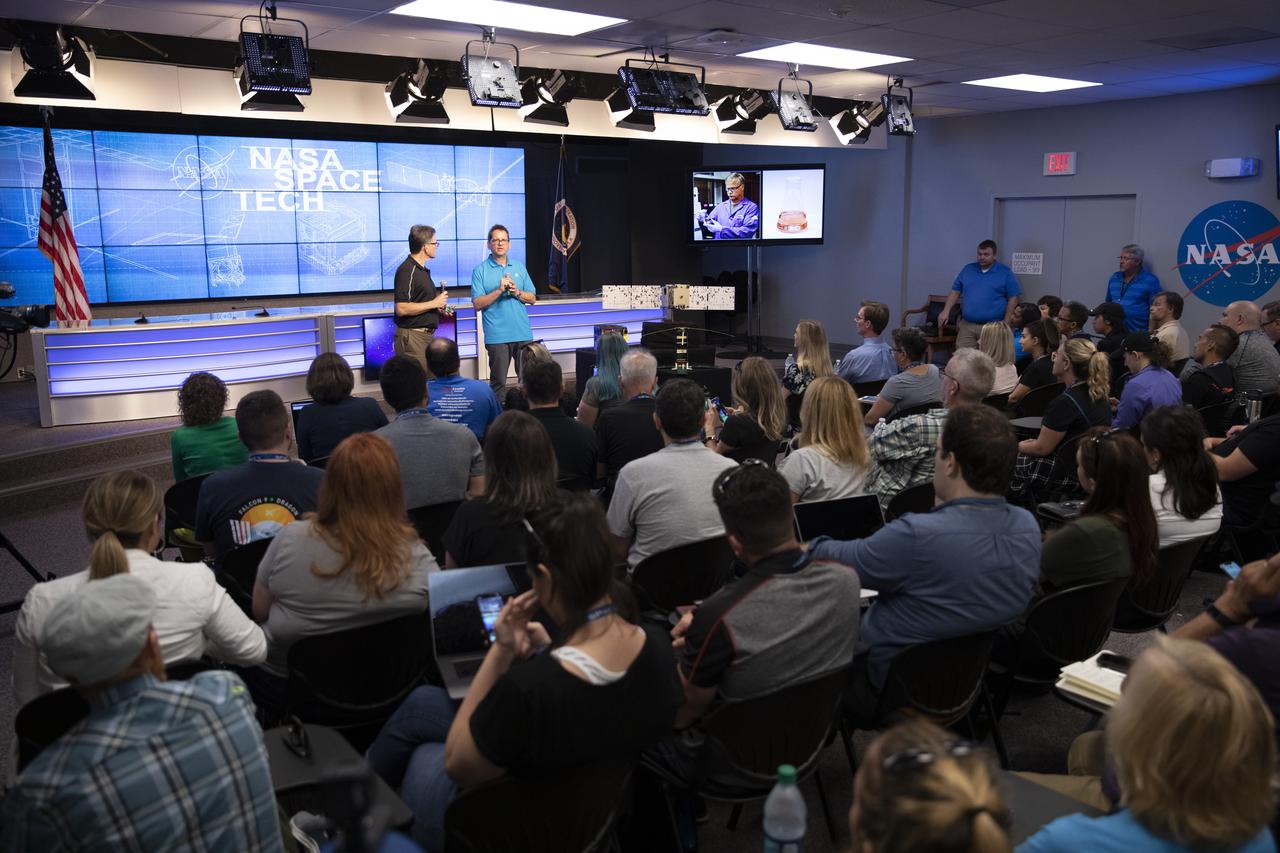
Chris McLean, (right) principal investigator for NASA’s Green Propellant Infusion Mission at Ball Aerospace, and Joe Cassady, (left), executive director of space at Aeroject Rocketdyne, explain the payload during a NASA prelaunch technology TV broadcast for the Space Test Program-2 (STP-2) mission at NASA’s Kennedy Space Center in Florida on June 23, 2019. The payload will help demonstrate this low toxicity, increased performance propellant and related systems so it can become a viable solution for future satellites. It is one of four NASA payloads scheduled to launch on a SpaceX Falcon Heavy rocket from Launch Complex 39A beginning at 11:30 p.m. EDT on June 24, 2019. STP-2 is managed by the U.S. Air Force Space and Missile Systems Center.
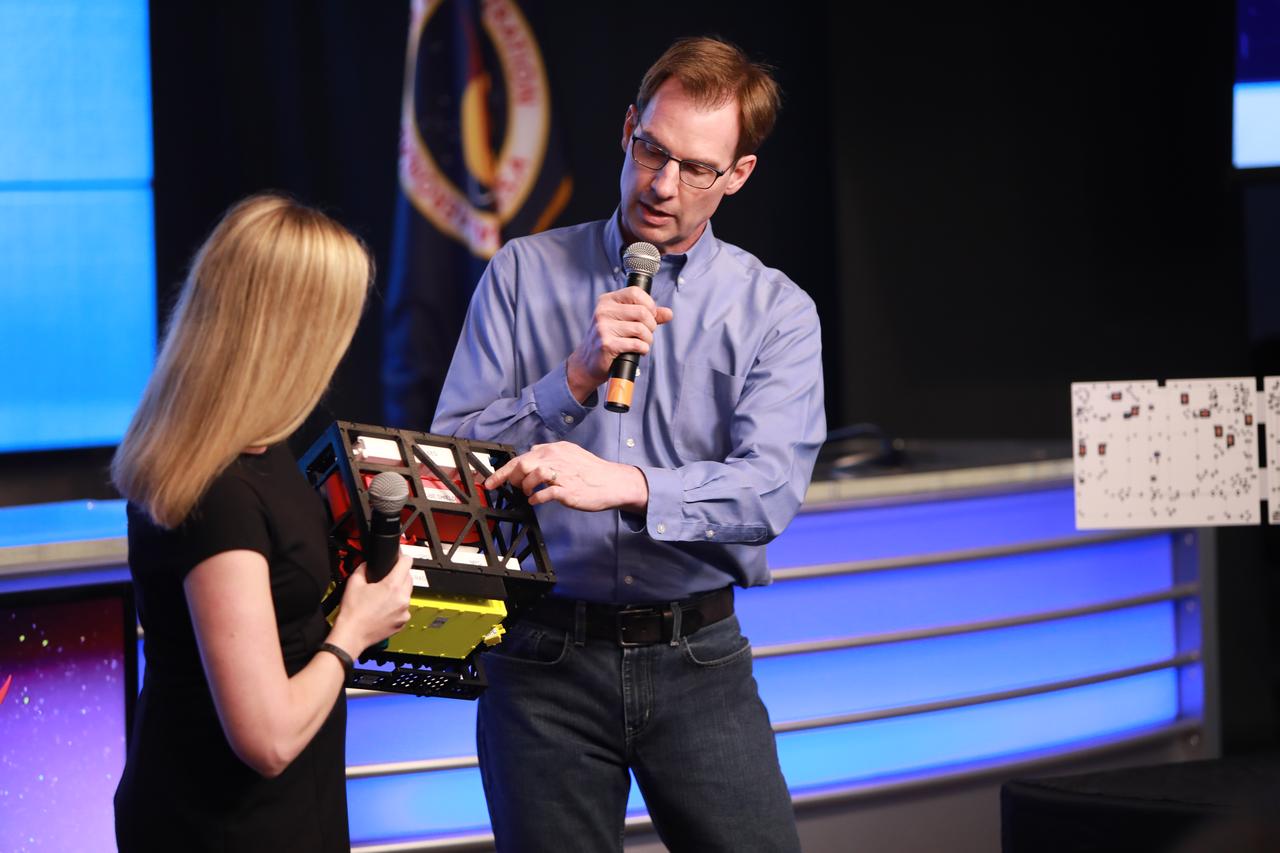
Todd Ely (right), principal investigator for NASA’s Deep Space Atomic Clock, and Deputy Principal Investigator Jill Seubert (left), both from NASA’s Jet Propulsion Laboratory in Pasadena, California, explain the payload during a NASA prelaunch technology TV broadcast for the Space Test Program-2 (STP-2) mission at the agency’s Kennedy Space Center in Florida on June 23, 2019. The new space clock could improve how we navigate on the Moon, to Mars and beyond. The space clock is one of four NASA payloads scheduled to launch on a SpaceX Falcon Heavy rocket from Launch Complex 39A beginning at 11:30 p.m. EDT on June 24, 2019. STP-2 is managed by the U.S. Air Force Space and Missile Systems Center.

Joe Cassady, executive director of space at Aeroject Rocketdyne, explains NASA’s Green Propellant Infusion Mission during a NASA prelaunch technology TV broadcast for the Space Test Program-2 (STP-2) mission at NASA’s Kennedy Space Center in Florida on June 23, 2019. The payload will help demonstrate this low toxicity, increased performance propellant and related systems so it can become a viable solution for future satellites. It is one of four NASA payloads scheduled to launch on a SpaceX Falcon Heavy rocket from Launch Complex 39A beginning at 11:30 p.m. EDT on June 24, 2019. STP-2 is managed by the U.S. Air Force Space and Missile Systems Center.
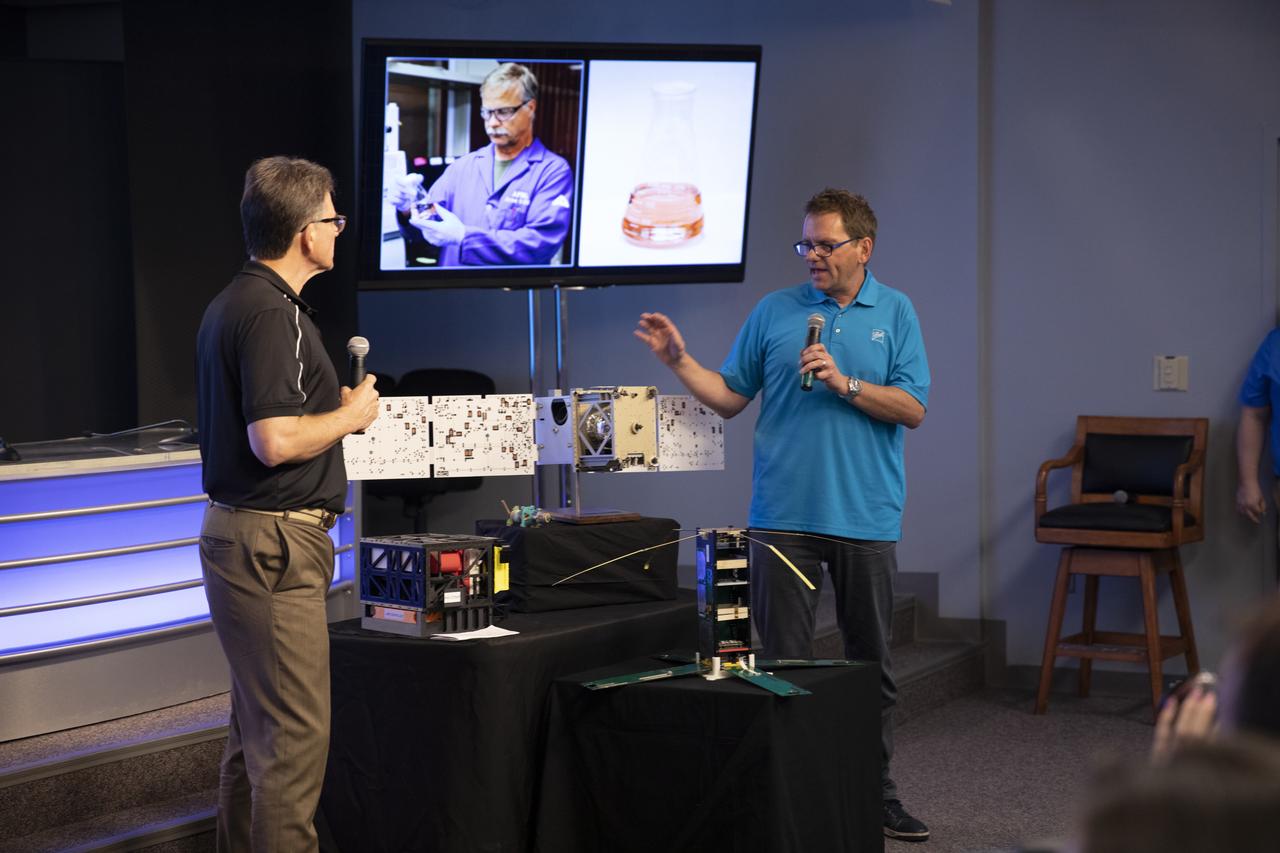
Chris McLean, (right) principal investigator for NASA’s Green Propellant Infusion Mission at Ball Aerospace, and Joe Cassady, (left), executive director of space at Aeroject Rocketdyne, explain the payload during a NASA prelaunch technology TV broadcast for the Space Test Program-2 (STP-2) mission at NASA’s Kennedy Space Center in Florida on June 23, 2019. The payload will help demonstrate this low toxicity, increased performance propellant and related systems so it can become a viable solution for future satellites. It is one of four NASA payloads scheduled to launch on a SpaceX Falcon Heavy rocket from Launch Complex 39A beginning at 11:30 p.m. EDT on June 24, 2019. STP-2 is managed by the U.S. Air Force Space and Missile Systems Center.

Jill Seubert, deputy principal investigator, from NASA’s Jet Propulsion Laboratory in Pasadena, California, explains the payload during a NASA prelaunch technology TV broadcast for the Space Test Program-2 (STP-2) mission at the agency’s Kennedy Space Center in Florida on June 23, 2019. The new space clock could improve how we navigate on the Moon, to Mars and beyond. The space clock is one of four NASA payloads scheduled to launch on a SpaceX Falcon Heavy rocket from Launch Complex 39A beginning at 11:30 p.m. EDT on June 24, 2019. STP-2 is managed by the U.S. Air Force Space and Missile Systems Center.
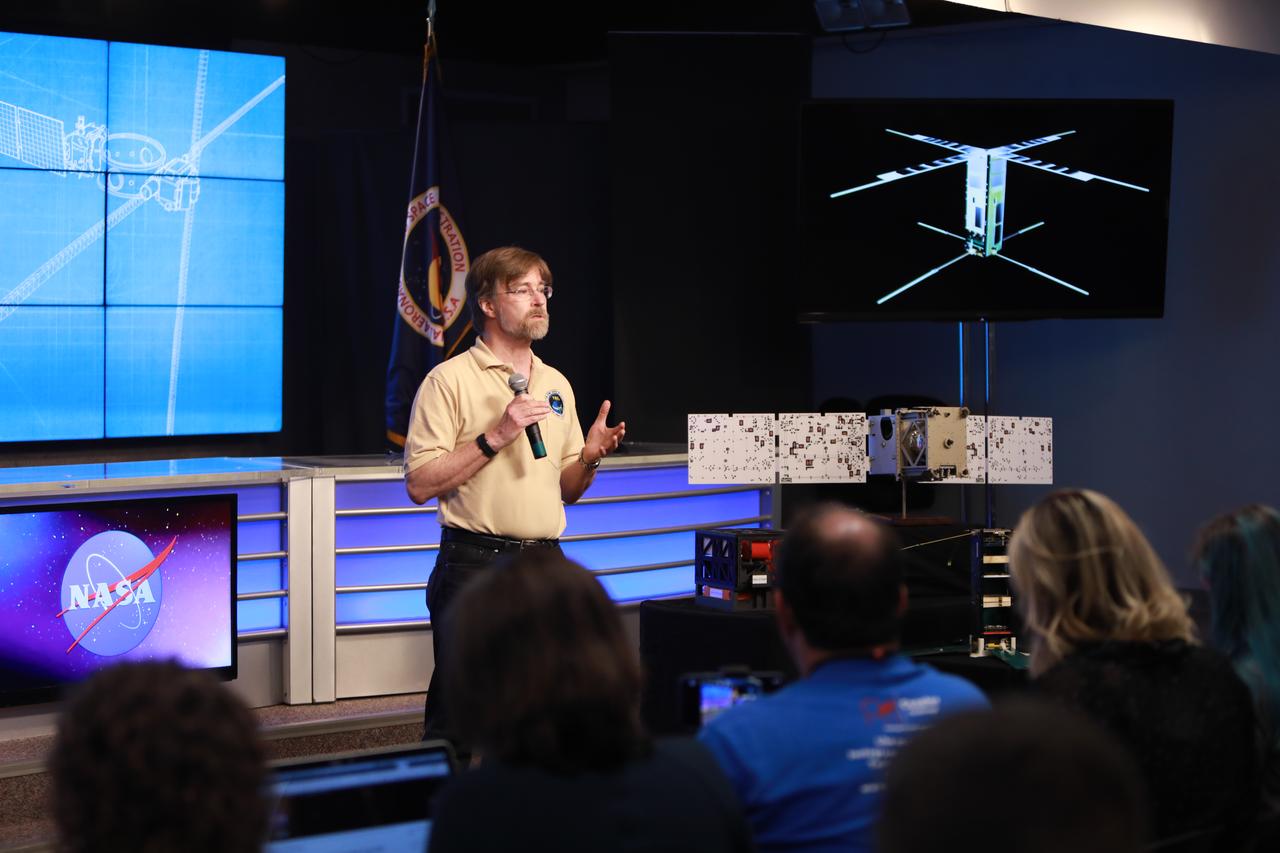
Rick Doe, payload program manager at SRI International, discusses the Enhanced Tandem Beacon Experiment during a NASA prelaunch technology TV show for the Space Test Program-2 (STP-2) mission at NASA’s Kennedy Space Center in Florida on June 23, 2019. The experiment’s two CubeSats will work with six other satellites to study irregularities in Earth’s upper atmosphere that interfere with GPS and communications signals. It is one of NASA payloads scheduled to launch on a SpaceX Falcon Heavy rocket from Launch Complex 39A beginning at 11:30 p.m. EDT on June 24, 2019. STP-2 is managed by the U.S. Air Force Space and Missile Systems Center.
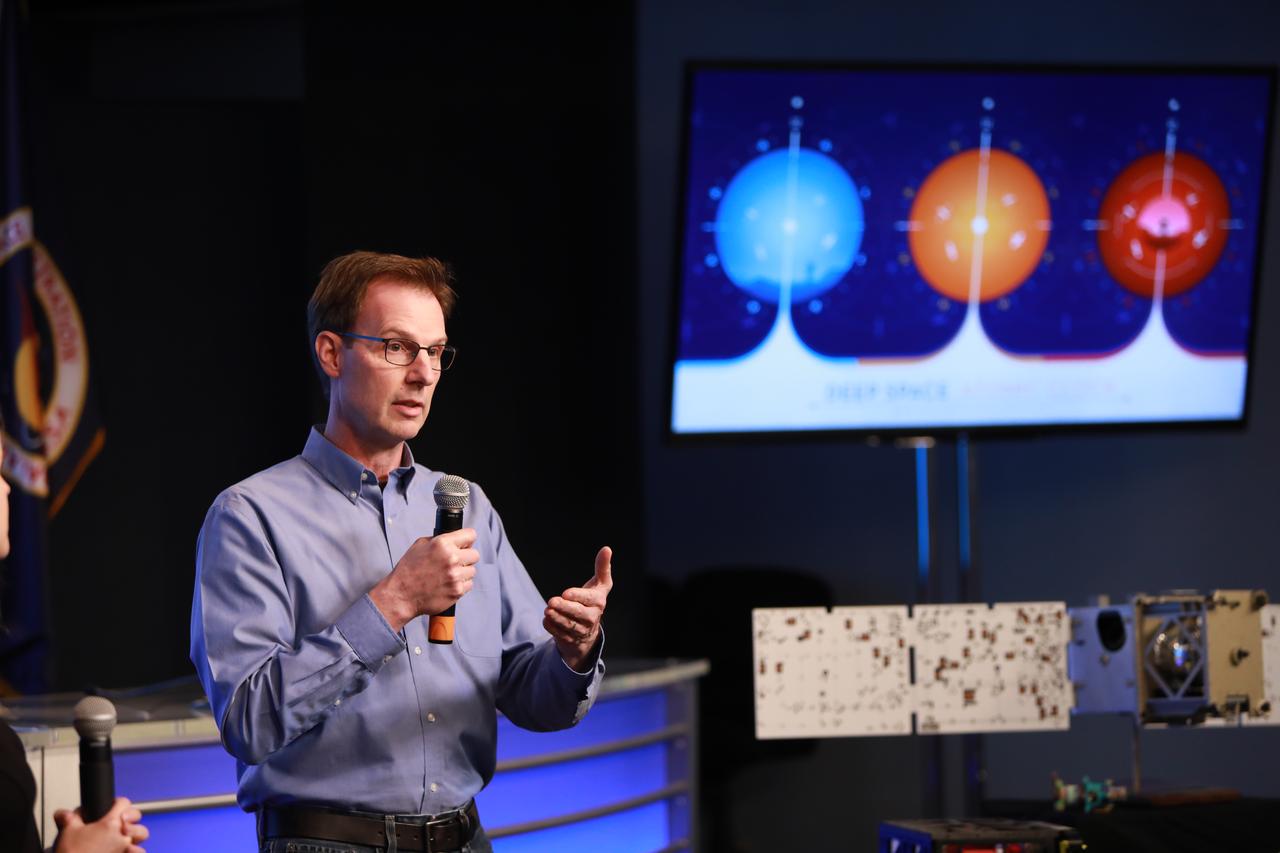
Todd Ely, principal investigator for NASA’s Deep Space Atomic Clock, from NASA’s Jet Propulsion Laboratory in Pasadena, California, explains the payload during a NASA prelaunch technology TV broadcast for the Space Test Program-2 (STP-2) mission at the agency’s Kennedy Space Center in Florida on June 23, 2019. The new space clock could improve how we navigate on the Moon, to Mars and beyond. The space clock is one of four NASA payloads scheduled to launch on a SpaceX Falcon Heavy rocket from Launch Complex 39A beginning at 11:30 p.m. EDT on June 24, 2019. STP-2 is managed by the U.S. Air Force Space and Missile Systems Center.

Nicky Fox, director of NASA’s Heliophysics Division, discusses the Space Environment Testbeds payload during a NASA prelaunch technology TV broadcast for the Space Test Program-2 (STP-2) at NASA’s Kennedy Space Center in Florida on June 23, 2019. The payload’s four experiments will reveal the ways local space weather affects spacecraft hardware. It is one of four NASA payloads scheduled to launch on a SpaceX Falcon Heavy rocket from Launch Complex 39A beginning at 11:30 p.m. EDT on June 24, 2019. STP-2 is managed by the U.S. Air Force Space and Missile Systems Center.

Tawnya Laughinghouse, NASA’s Technology Demonstration Missions program manager, talks about the NASA payloads hitching a ride on the Space Test Program-2 (STP-2) mission during a prelaunch technology TV broadcast at Kennedy Space Center in Florida on June 23, 2019. STP-2 is managed by the U.S. Air Force Space and Missile Systems Center.

Bhavya Lal, NASA associate administrator for technology, policy and strategy, participates in a prelaunch media briefing on the agency’s Moon to Mars exploration plans on Aug. 27, 2022, at NASA’s Kennedy Space Center in Florida, as the clock counts down to the launch of Artemis I scheduled for Aug. 29, at 8:33 a.m. EDT from Kennedy’s Launch Complex 39B. The first in a series of increasingly complex missions, Artemis I will provide a foundation for human deep space exploration and demonstrate our commitment and capability to extend human presence to the Moon and beyond. The primary goal of Artemis I is to thoroughly test the integrated systems before crewed missions by operating the spacecraft in a deep space environment, testing Orion’s heat shield, and recovering the crew module after reentry, descent, and splashdown.

Prasun Desai, NASA deputy associate administrator, Space Technology Mission Directorate, participates in a prelaunch media briefing on the agency’s Moon to Mars exploration plans on Aug. 27, 2022, at NASA’s Kennedy Space Center in Florida, as the clock counts down to the launch of Artemis I scheduled for Aug. 29, at 8:33 a.m. EDT from Kennedy’s Launch Complex 39B. The first in a series of increasingly complex missions, Artemis I will provide a foundation for human deep space exploration and demonstrate our commitment and capability to extend human presence to the Moon and beyond. The primary goal of Artemis I is to thoroughly test the integrated systems before crewed missions by operating the spacecraft in a deep space environment, testing Orion’s heat shield, and recovering the crew module after reentry, descent, and splashdown.
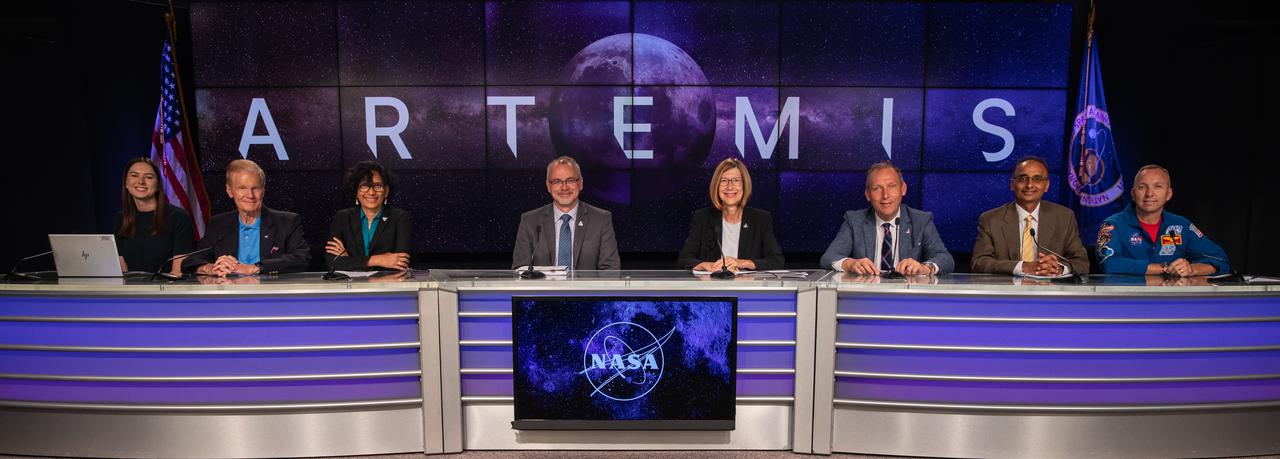
NASA holds a prelaunch media briefing on the agency’s Moon to Mars exploration plans on Aug. 27, 2022, at the agency’s Kennedy Space Center in Florida, as the clock counts down to the launch of Artemis I scheduled for Aug. 29, at 8:33 a.m. EDT from Kennedy’s Launch Complex 39B. From left, are Jackie McGuinness, NASA press secretary; Bill Nelson, NASA administrator; Bhavya Lal, NASA associate administrator for technology, policy and strategy; Jim Free, NASA associate administrator, Exploration Systems Development Mission Directorate; Kathy Lueders, NASA associate administrator, Space Operations Mission Directorate; Thomas Zurbuchen, NASA associate administrator, Science Mission Directorate; Prasun Desai, NASA deputy associate administrator, Space Technology Mission Directorate; and Randy Bresnik, NASA astronaut. The first in a series of increasingly complex missions, Artemis I will provide a foundation for human deep space exploration and demonstrate our commitment and capability to extend human presence to the Moon and beyond. The primary goal of Artemis I is to thoroughly test the integrated systems before crewed missions by operating the spacecraft in a deep space environment, testing Orion’s heat shield, and recovering the crew module after reentry, descent, and splashdown.
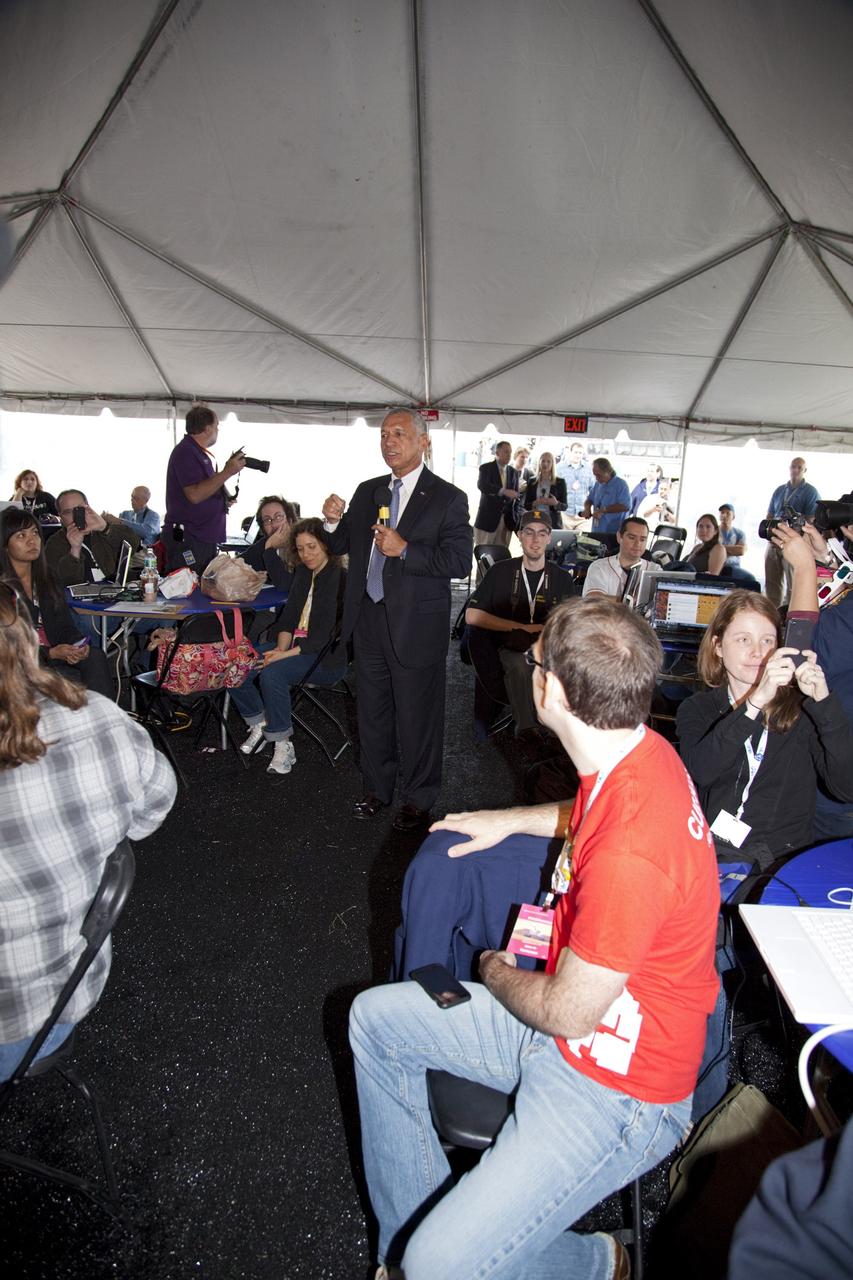
CAPE CANAVERAL, Fla. – NASA Administrator Charles Bolden addresses the participants of a NASA Tweetup in a tent set up at NASA Kennedy Space Center's Press Site in Florida during prelaunch activities for the agency’s Mars Science Laboratory (MSL) launch. Participants in the Tweetup are given the opportunity to listen to agency briefings, tour locations on the center normally off limits to visitors, and get a close-up view of Space Launch Complex-41 on Cape Canaveral Air Force Station. The tweeters will share their experiences with followers through the social networking site Twitter. The MSL mission will pioneer precision landing technology and a sky-crane touchdown to place a car-sized rover, Curiosity, near the foot of a mountain inside Gale Crater on Aug. 6, 2012. During a nearly two-year prime mission after landing, the rover will investigate whether the region has ever offered conditions favorable for microbial life, including the chemical ingredients for life. Liftoff of MSL aboard a United Launch Alliance Atlas V rocket from pad 41 is planned during a launch window which extends from 10:02 a.m. to 11:45 a.m. EST on Nov. 26. For more information, visit http://www.nasa.gov/msl. Photo credit: NASA/Frankie Martin
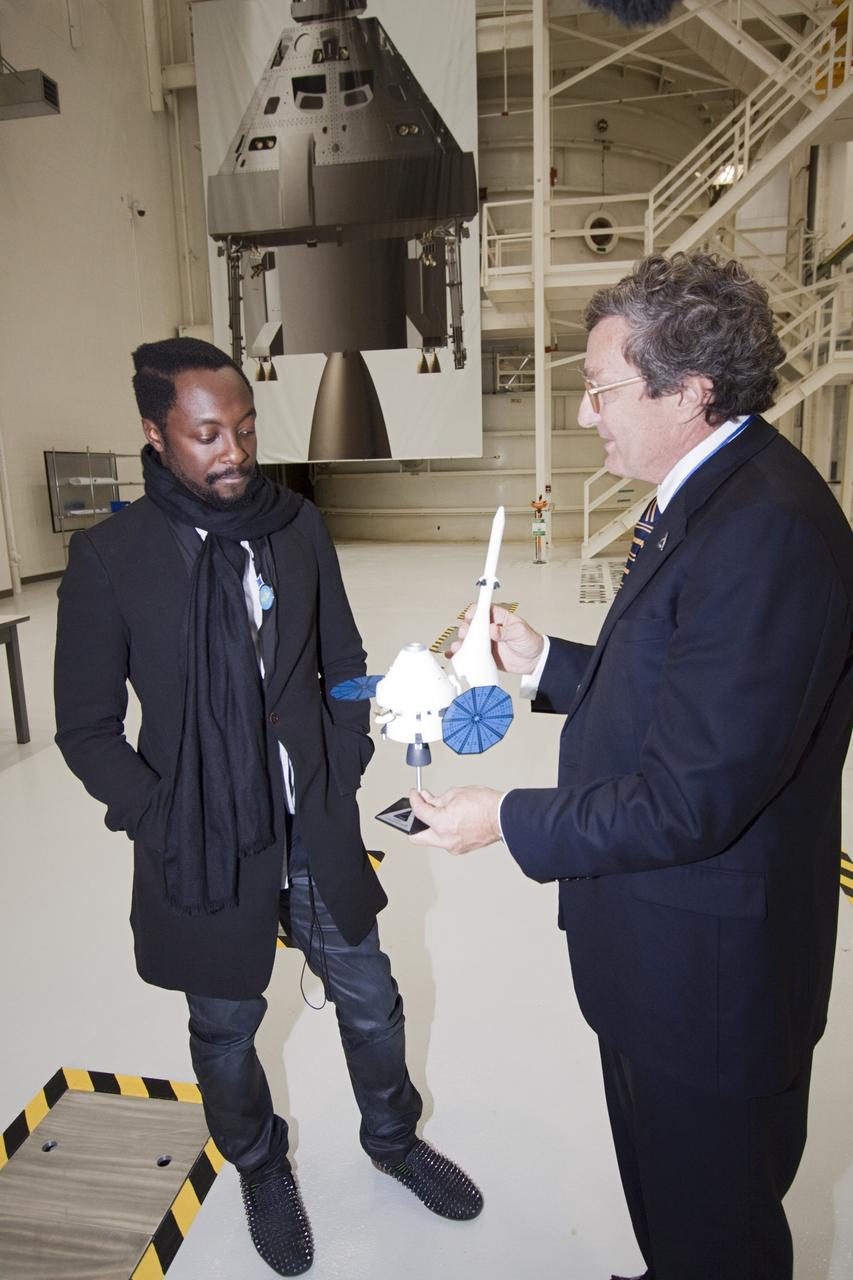
CAPE CANAVERAL, Fla. – At NASA Kennedy Space Center in Florida, Will.i.am (left), entertainer and member of The Black Eyed Peas, receives a briefing from Larry Price, Lockheed Martin deputy program manager, on the Orion Multi Purpose Crew Vehicle and the Space Launch System heavy-lift rocket during a tour of the Operations and Checkout Building (O&C). The visit to the O&C followed Will.i.am's participation in a NASA Tweetup. The Tweetup is part of prelaunch activities for the agency’s Mars Science Laboratory (MSL) launch and provides the opportunity for tweeters will share their experiences with followers through the social networking site Twitter. The MSL mission will pioneer precision landing technology and a sky-crane touchdown to place a car-sized rover, Curiosity, near the foot of a mountain inside Gale Crater on Aug. 6, 2012. During a nearly two-year prime mission after landing, the rover will investigate whether the region has ever offered conditions favorable for microbial life, including the chemical ingredients for life. Liftoff of MSL aboard a United Launch Alliance Atlas V rocket from Space Launch Complex-41 on Cape Canaveral Air Force Station was at 10:02 a.m. EST on Nov. 26. For more information, visit http://www.nasa.gov/msl. Photo credit: NASA/Jim Grossmann
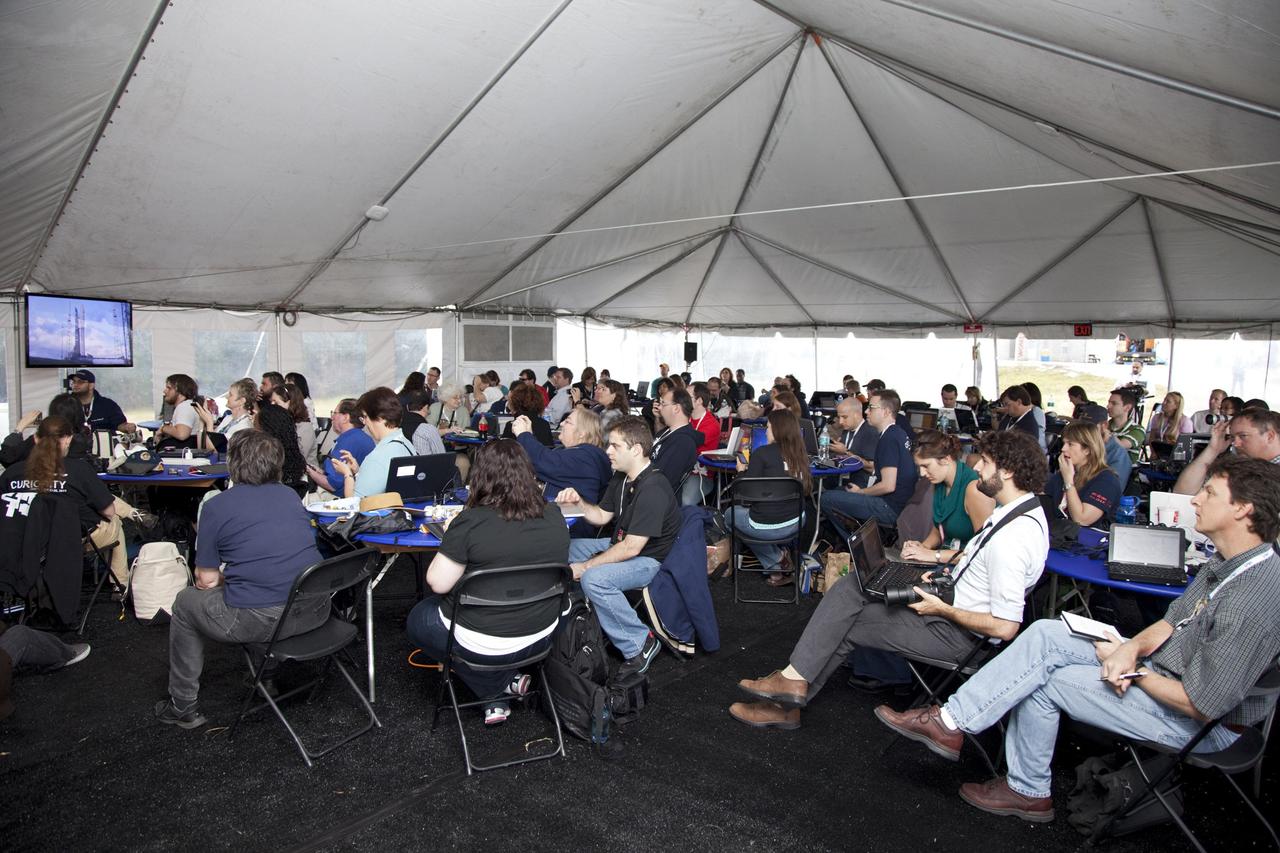
CAPE CANAVERAL, Fla. – A Tweetup gets under way in a tent set up at NASA Kennedy Space Center's Press Site in Florida during prelaunch activities for the agency’s Mars Science Laboratory (MSL) launch. Participants in the Tweetup are given the opportunity to listen to agency briefings, tour locations on the center normally off limits to visitors, and get a close-up view of Space Launch Complex-41 on Cape Canaveral Air Force Station. The tweeters will share their experiences with followers through the social networking site Twitter. The MSL mission will pioneer precision landing technology and a sky-crane touchdown to place a car-sized rover, Curiosity, near the foot of a mountain inside Gale Crater on Aug. 6, 2012. During a nearly two-year prime mission after landing, the rover will investigate whether the region has ever offered conditions favorable for microbial life, including the chemical ingredients for life. Liftoff of MSL aboard a United Launch Alliance Atlas V rocket from pad 41 is planned during a launch window which extends from 10:02 a.m. to 11:45 a.m. EST on Nov. 26. For more information, visit http://www.nasa.gov/msl. Photo credit: NASA/Frankie Martin

CAPE CANAVERAL, Fla. – Television personality Bill Nye the Science Guy talks to the participants of a NASA Tweetup in a tent set up at NASA Kennedy Space Center's Press Site in Florida during prelaunch activities for the agency’s Mars Science Laboratory (MSL) launch. Participants in the Tweetup are given the opportunity to listen to agency briefings, tour locations on the center normally off limits to visitors, and get a close-up view of Space Launch Complex-41 on Cape Canaveral Air Force Station. The tweeters will share their experiences with followers through the social networking site Twitter. The MSL mission will pioneer precision landing technology and a sky-crane touchdown to place a car-sized rover, Curiosity, near the foot of a mountain inside Gale Crater on Aug. 6, 2012. During a nearly two-year prime mission after landing, the rover will investigate whether the region has ever offered conditions favorable for microbial life, including the chemical ingredients for life. Liftoff of MSL aboard a United Launch Alliance Atlas V rocket from pad 41 is planned during a launch window which extends from 10:02 a.m. to 11:45 a.m. EST on Nov. 26. For more information, visit http://www.nasa.gov/msl. Photo credit: NASA/Frankie Martin
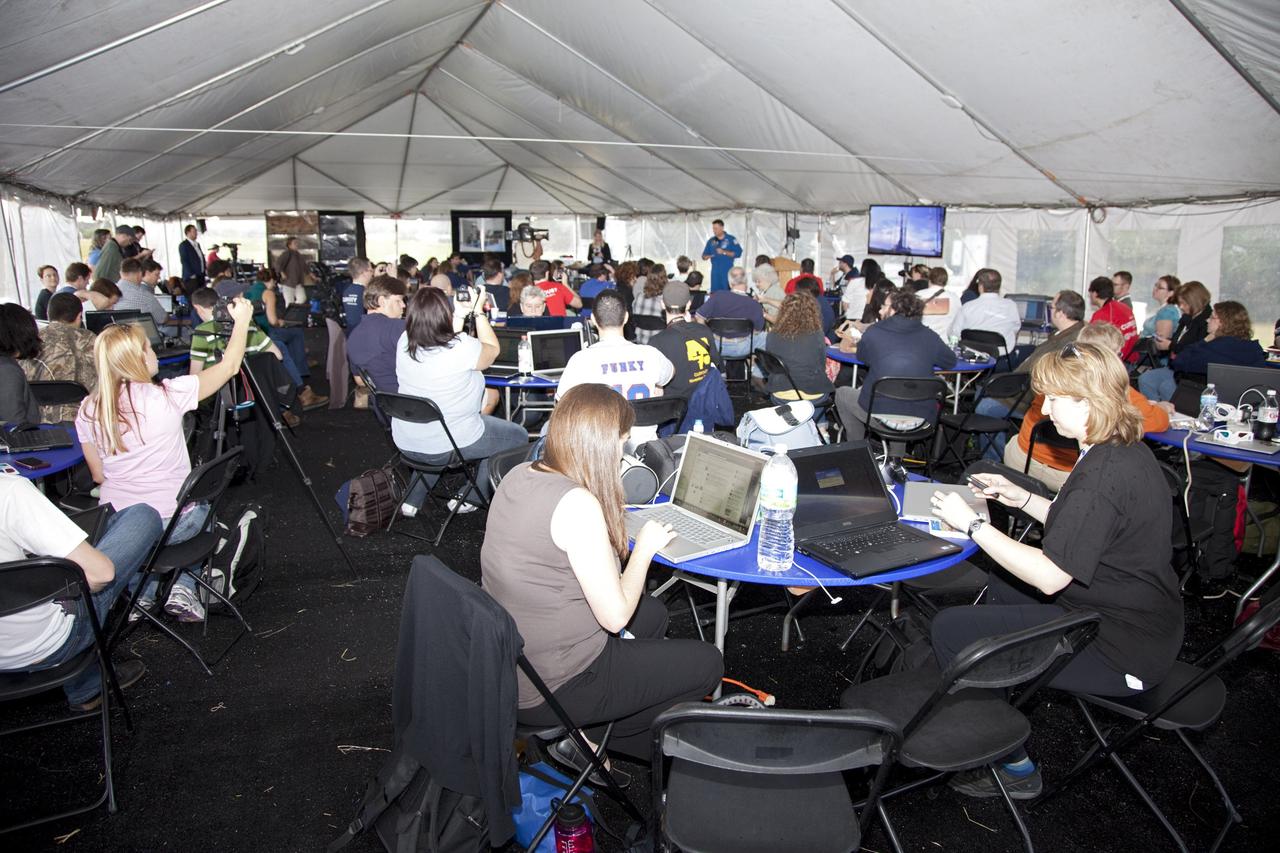
CAPE CANAVERAL, Fla. – NASA Tweetup participants hear a presentation by Expedition 25 astronaut Doug Wheelock in a tent set up at NASA Kennedy Space Center's Press Site in Florida during prelaunch activities for the agency’s Mars Science Laboratory (MSL) launch. Participants in the Tweetup are given the opportunity to listen to agency briefings, tour locations on the center normally off limits to visitors, and get a close-up view of Space Launch Complex-41 on Cape Canaveral Air Force Station. The tweeters will share their experiences with followers through the social networking site Twitter. The MSL mission will pioneer precision landing technology and a sky-crane touchdown to place a car-sized rover, Curiosity, near the foot of a mountain inside Gale Crater on Aug. 6, 2012. During a nearly two-year prime mission after landing, the rover will investigate whether the region has ever offered conditions favorable for microbial life, including the chemical ingredients for life. Liftoff of MSL aboard a United Launch Alliance Atlas V rocket from pad 41 is planned during a launch window which extends from 10:02 a.m. to 11:45 a.m. EST on Nov. 26. For more information, visit http://www.nasa.gov/msl. Photo credit: NASA/Frankie Martin
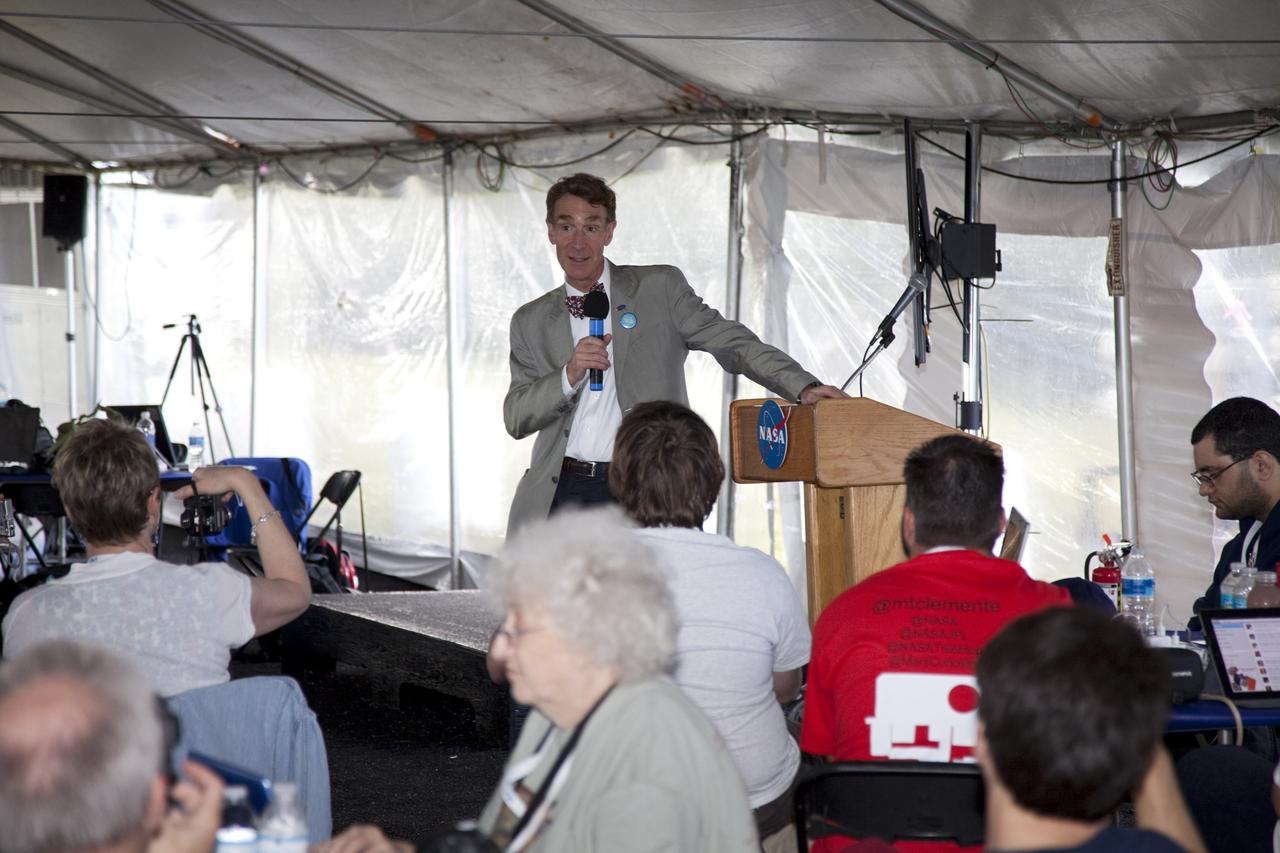
CAPE CANAVERAL, Fla. – Television personality Bill Nye the Science Guy talks to the participants of a NASA Tweetup in a tent set up at NASA Kennedy Space Center's Press Site in Florida during prelaunch activities for the agency’s Mars Science Laboratory (MSL) launch. Participants in the Tweetup are given the opportunity to listen to agency briefings, tour locations on the center normally off limits to visitors, and get a close-up view of Space Launch Complex-41 on Cape Canaveral Air Force Station. The tweeters will share their experiences with followers through the social networking site Twitter. The MSL mission will pioneer precision landing technology and a sky-crane touchdown to place a car-sized rover, Curiosity, near the foot of a mountain inside Gale Crater on Aug. 6, 2012. During a nearly two-year prime mission after landing, the rover will investigate whether the region has ever offered conditions favorable for microbial life, including the chemical ingredients for life. Liftoff of MSL aboard a United Launch Alliance Atlas V rocket from pad 41 is planned during a launch window which extends from 10:02 a.m. to 11:45 a.m. EST on Nov. 26. For more information, visit http://www.nasa.gov/msl. Photo credit: NASA/Frankie Martin
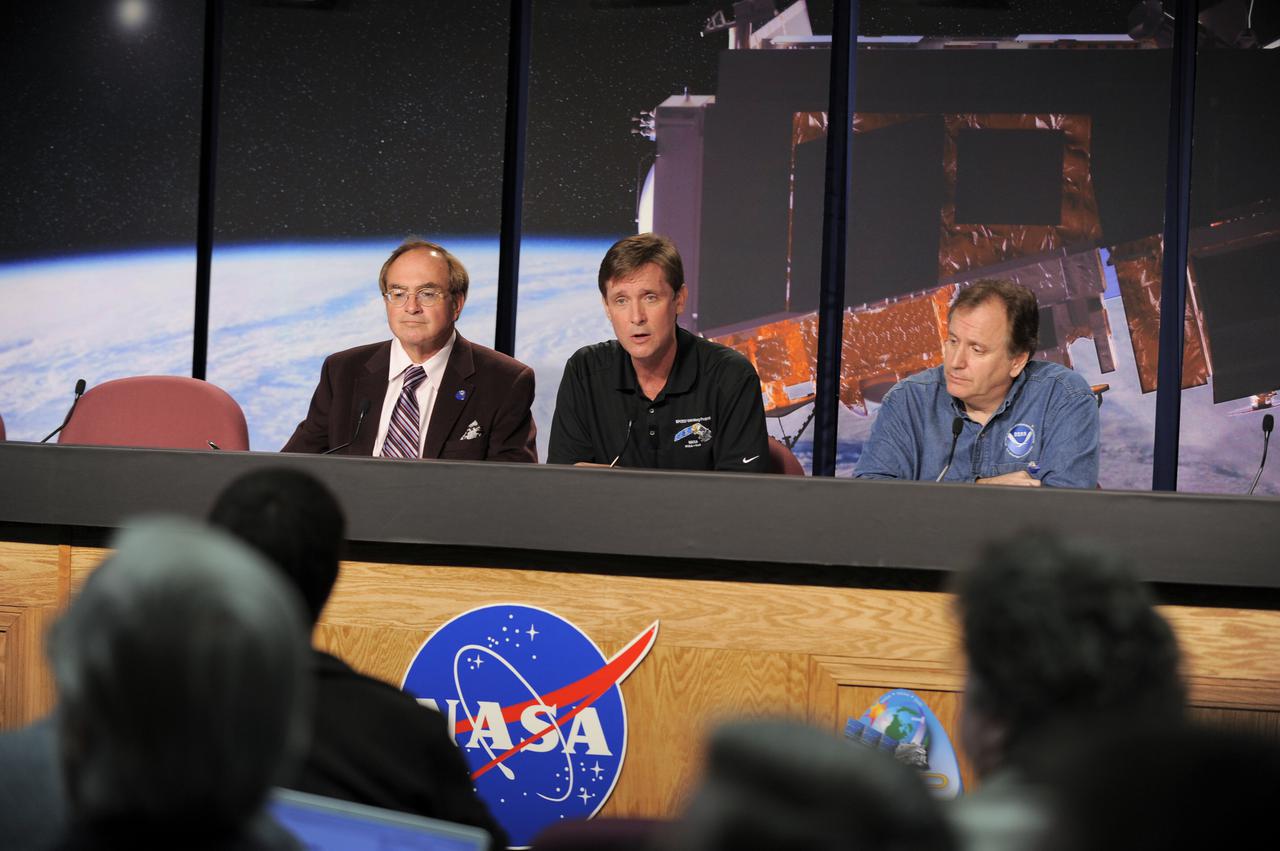
VANDENBERG AIR FORCE BASE, Calif. -- Participants in the prelaunch science briefing for NASA’s National Polar-orbiting Operational Environmental Satellite System Preparatory Project (NPP) spacecraft prepare to address members of the news media gathered at Vandenberg Air Force Base, Calif. Panelists are, from left, George Diller, NASA launch commentator, Jim Gleason, NPP project scientist, Goddard Space Flight Center, Greenbelt, Md., and Mitch Goldberg, NOAA Joint Polar Satellite System program scientist, Silver Spring, Md. NPP represents a critical first step in building the next-generation of Earth-observing satellites. NPP will carry the first of the new sensors developed for this satellite fleet, now known as the Joint Polar Satellite System (JPSS), to be launched in 2016. NPP is the bridge between NASA's Earth Observing System (EOS) satellites and the forthcoming series of JPSS satellites. The mission will test key technologies and instruments for the JPSS missions. NPP is targeted to launch Oct. 28 from Space Launch Complex-2 aboard a United Launch Alliance Delta II rocket. For more information, visit http:__www.nasa.gov_NPP. Photo credit: NASA_VAFB
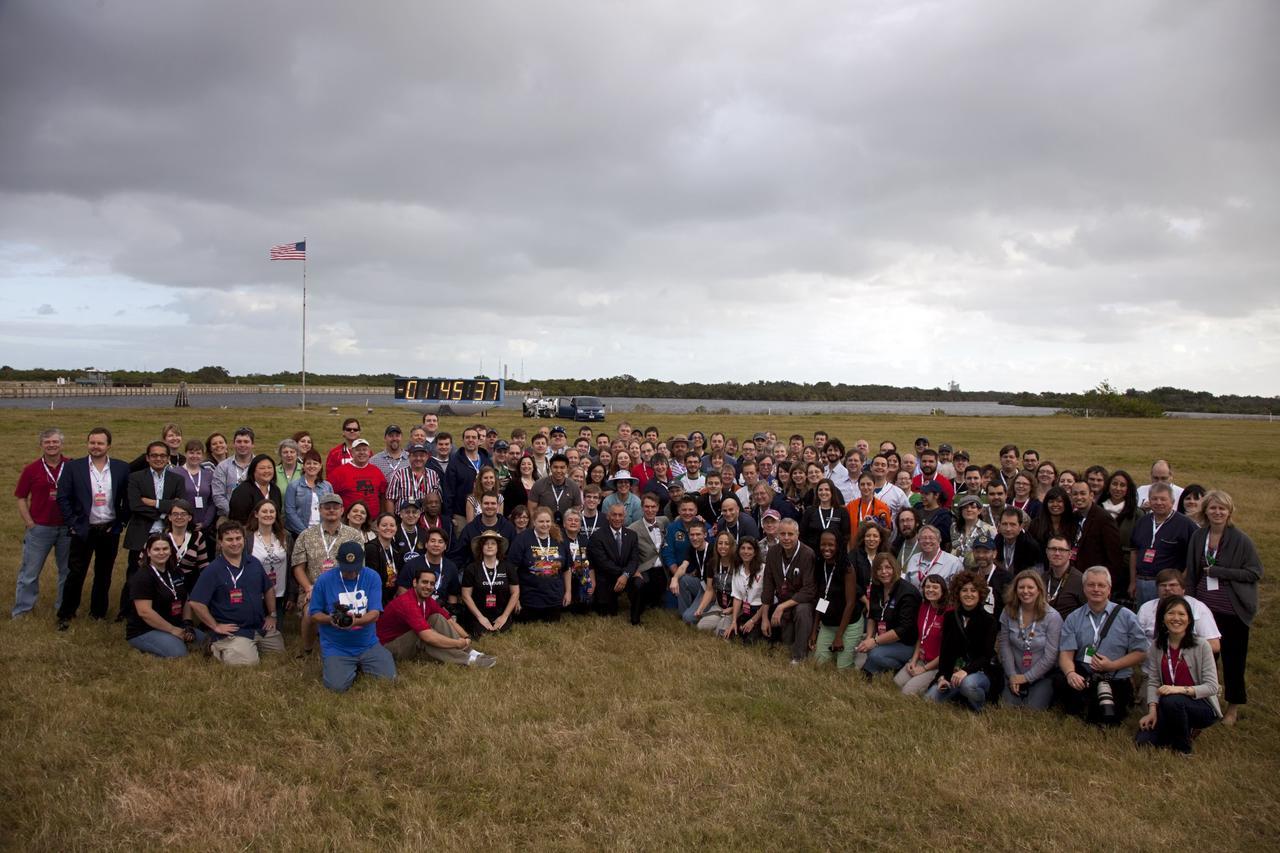
CAPE CANAVERAL, Fla. – Participants of a NASA Tweetup pose for a group portrait at NASA Kennedy Space Center's Press Site in Florida during prelaunch activities for the agency’s Mars Science Laboratory (MSL) launch. Behind them, the countdown clock ticks off the seconds to launch. Participants in the Tweetup are given the opportunity to listen to agency briefings, tour locations on the center normally off limits to visitors, and get a close-up view of Space Launch Complex-41 on Cape Canaveral Air Force Station. The tweeters will share their experiences with followers through the social networking site Twitter. The MSL mission will pioneer precision landing technology and a sky-crane touchdown to place a car-sized rover, Curiosity, near the foot of a mountain inside Gale Crater on Aug. 6, 2012. During a nearly two-year prime mission after landing, the rover will investigate whether the region has ever offered conditions favorable for microbial life, including the chemical ingredients for life. Liftoff of MSL aboard a United Launch Alliance Atlas V rocket from pad 41 is planned during a launch window which extends from 10:02 a.m. to 11:45 a.m. EST on Nov. 26. For more information, visit http://www.nasa.gov/msl. Photo credit: NASA/Frankie Martin
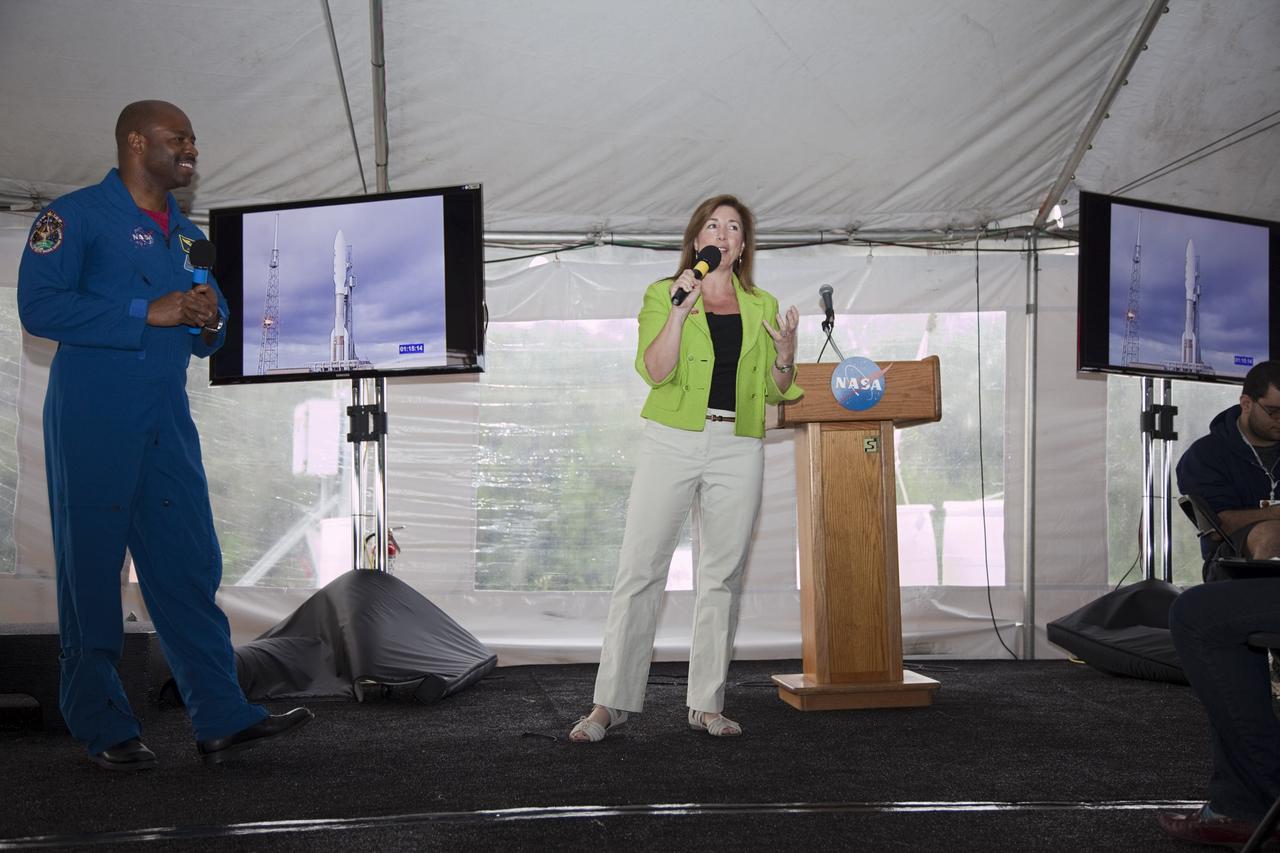
CAPE CANAVERAL, Fla. – NASA Deputy Administrator Lori Garver addresses the participants of a NASA Tweetup in a tent set up at NASA Kennedy Space Center's Press Site in Florida during prelaunch activities for the agency’s Mars Science Laboratory (MSL) launch. Former astronaut Leland Melvin, NASA associate administrator for Education, looks on at left. Participants in the Tweetup are given the opportunity to listen to agency briefings, tour locations on the center normally off limits to visitors, and get a close-up view of Space Launch Complex-41 on Cape Canaveral Air Force Station. The tweeters will share their experiences with followers through the social networking site Twitter. The MSL mission will pioneer precision landing technology and a sky-crane touchdown to place a car-sized rover, Curiosity, near the foot of a mountain inside Gale Crater on Aug. 6, 2012. During a nearly two-year prime mission after landing, the rover will investigate whether the region has ever offered conditions favorable for microbial life, including the chemical ingredients for life. Liftoff of MSL aboard a United Launch Alliance Atlas V rocket from pad 41 is planned during a launch window which extends from 10:02 a.m. to 11:45 a.m. EST on Nov. 26. For more information, visit http://www.nasa.gov/msl. Photo credit: NASA/Frankie Martin
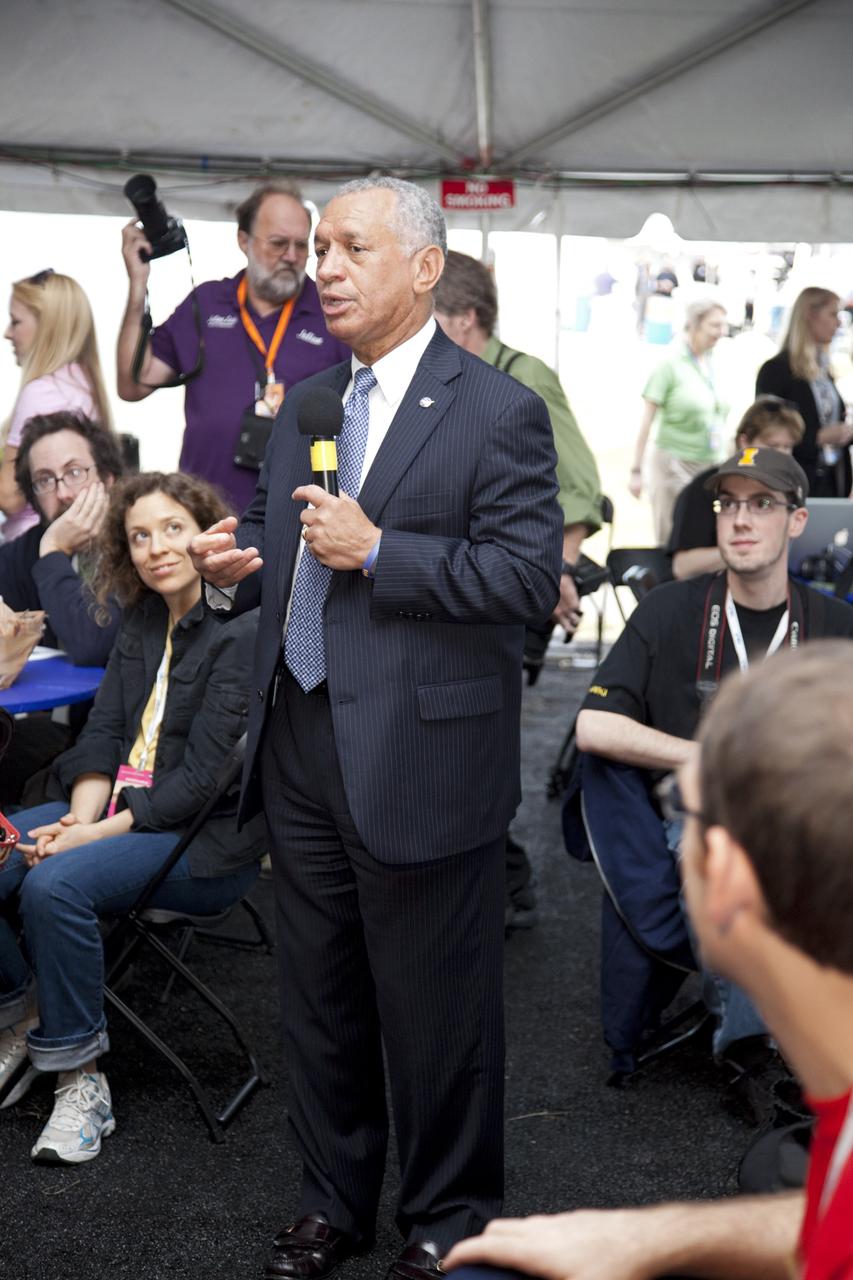
CAPE CANAVERAL, Fla. – NASA Administrator Charles Bolden addresses the participants of a NASA Tweetup in a tent set up at NASA Kennedy Space Center's Press Site in Florida during prelaunch activities for the agency’s Mars Science Laboratory (MSL) launch. Participants in the Tweetup are given the opportunity to listen to agency briefings, tour locations on the center normally off limits to visitors, and get a close-up view of Space Launch Complex-41 on Cape Canaveral Air Force Station. The tweeters will share their experiences with followers through the social networking site Twitter. The MSL mission will pioneer precision landing technology and a sky-crane touchdown to place a car-sized rover, Curiosity, near the foot of a mountain inside Gale Crater on Aug. 6, 2012. During a nearly two-year prime mission after landing, the rover will investigate whether the region has ever offered conditions favorable for microbial life, including the chemical ingredients for life. Liftoff of MSL aboard a United Launch Alliance Atlas V rocket from pad 41 is planned during a launch window which extends from 10:02 a.m. to 11:45 a.m. EST on Nov. 26. For more information, visit http://www.nasa.gov/msl. Photo credit: NASA/Frankie Martin
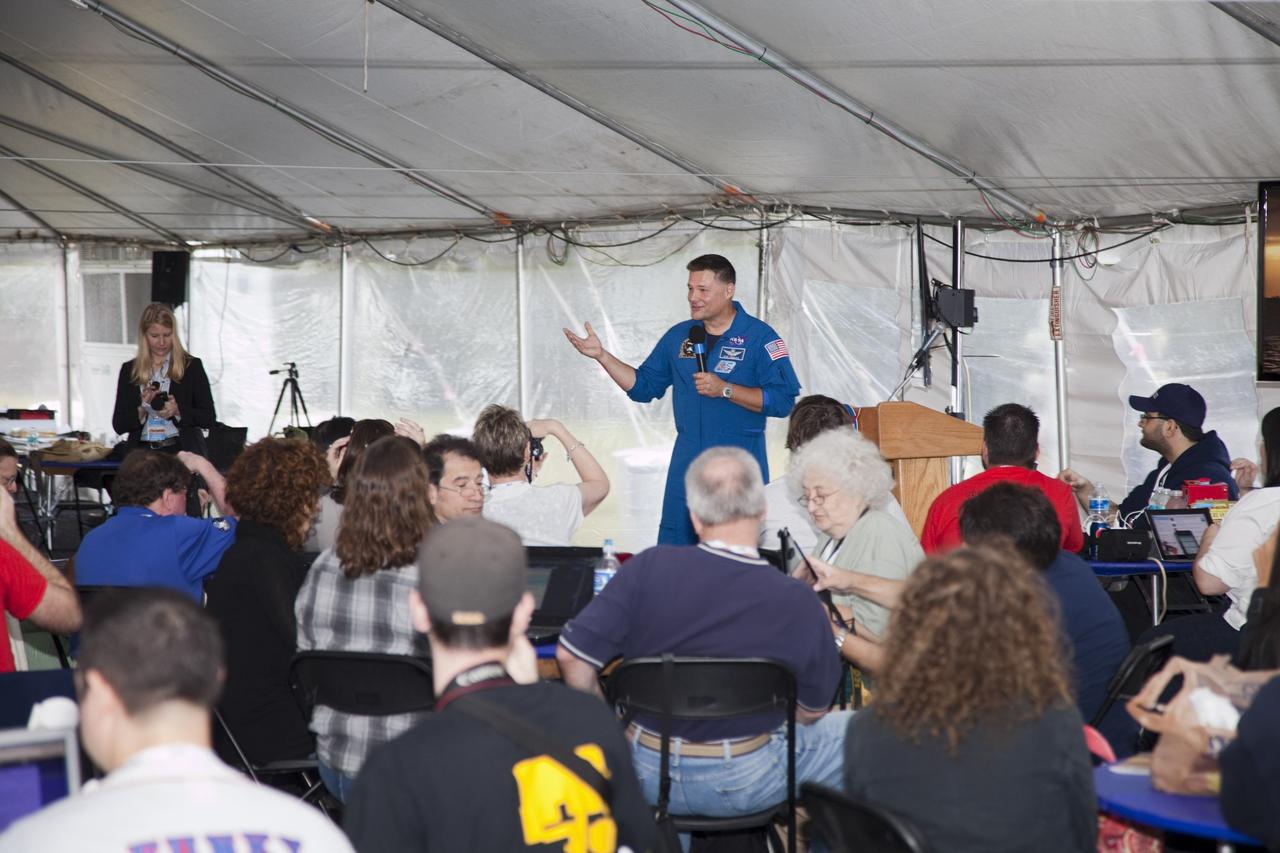
CAPE CANAVERAL, Fla. – Expedition 25 astronaut Doug Wheelock talks to the participants of a NASA Tweetup in a tent set up at NASA Kennedy Space Center's Press Site in Florida during prelaunch activities for the agency’s Mars Science Laboratory (MSL) launch. Participants in the Tweetup are given the opportunity to listen to agency briefings, tour locations on the center normally off limits to visitors, and get a close-up view of Space Launch Complex-41 on Cape Canaveral Air Force Station. The tweeters will share their experiences with followers through the social networking site Twitter. The MSL mission will pioneer precision landing technology and a sky-crane touchdown to place a car-sized rover, Curiosity, near the foot of a mountain inside Gale Crater on Aug. 6, 2012. During a nearly two-year prime mission after landing, the rover will investigate whether the region has ever offered conditions favorable for microbial life, including the chemical ingredients for life. Liftoff of MSL aboard a United Launch Alliance Atlas V rocket from pad 41 is planned during a launch window which extends from 10:02 a.m. to 11:45 a.m. EST on Nov. 26. For more information, visit http://www.nasa.gov/msl. Photo credit: NASA/Frankie Martin
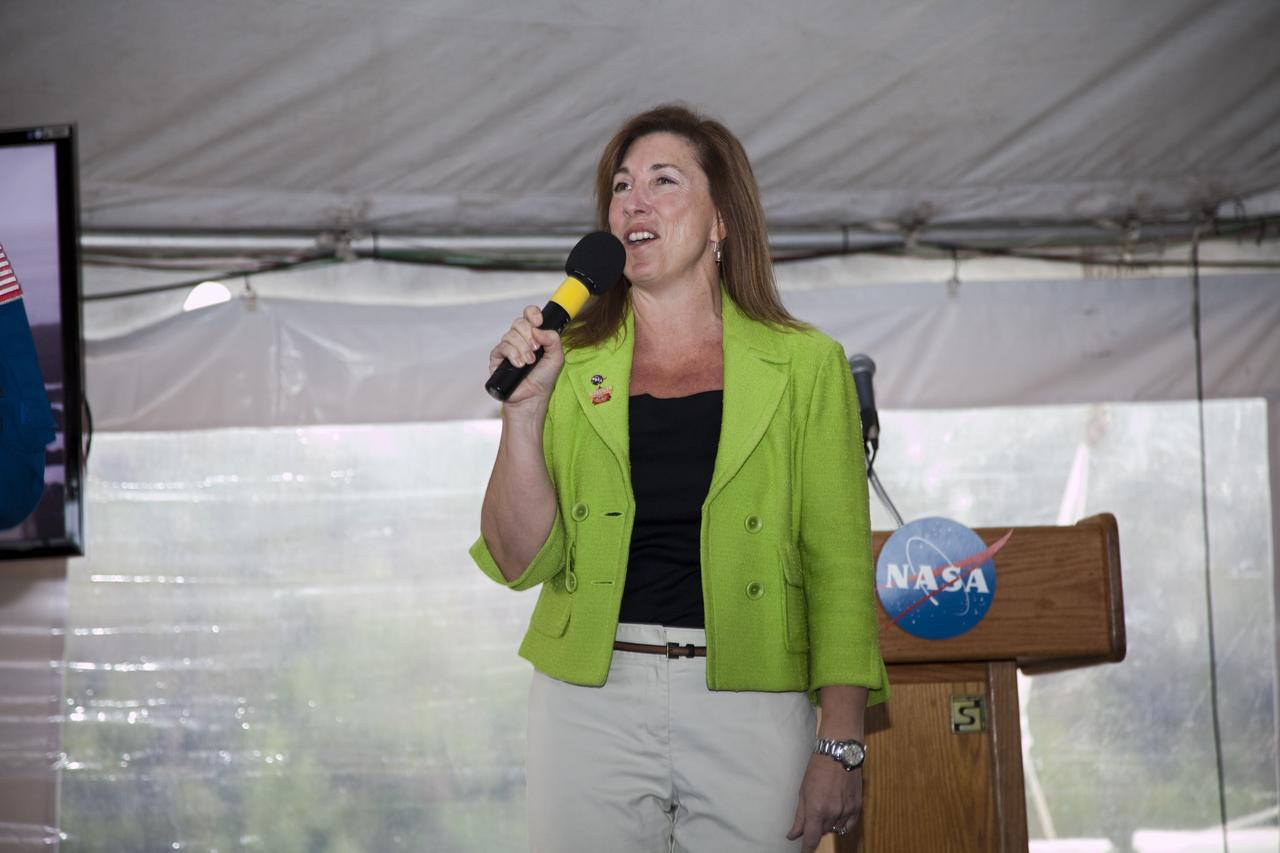
CAPE CANAVERAL, Fla. – NASA Deputy Administrator Lori Garver addresses the participants of a NASA Tweetup in a tent set up at NASA Kennedy Space Center's Press Site in Florida during prelaunch activities for the agency’s Mars Science Laboratory (MSL) launch. Participants in the Tweetup are given the opportunity to listen to agency briefings, tour locations on the center normally off limits to visitors, and get a close-up view of Space Launch Complex-41 on Cape Canaveral Air Force Station. The tweeters will share their experiences with followers through the social networking site Twitter. The MSL mission will pioneer precision landing technology and a sky-crane touchdown to place a car-sized rover, Curiosity, near the foot of a mountain inside Gale Crater on Aug. 6, 2012. During a nearly two-year prime mission after landing, the rover will investigate whether the region has ever offered conditions favorable for microbial life, including the chemical ingredients for life. Liftoff of MSL aboard a United Launch Alliance Atlas V rocket from pad 41 is planned during a launch window which extends from 10:02 a.m. to 11:45 a.m. EST on Nov. 26. For more information, visit http://www.nasa.gov/msl. Photo credit: NASA/Frankie Martin
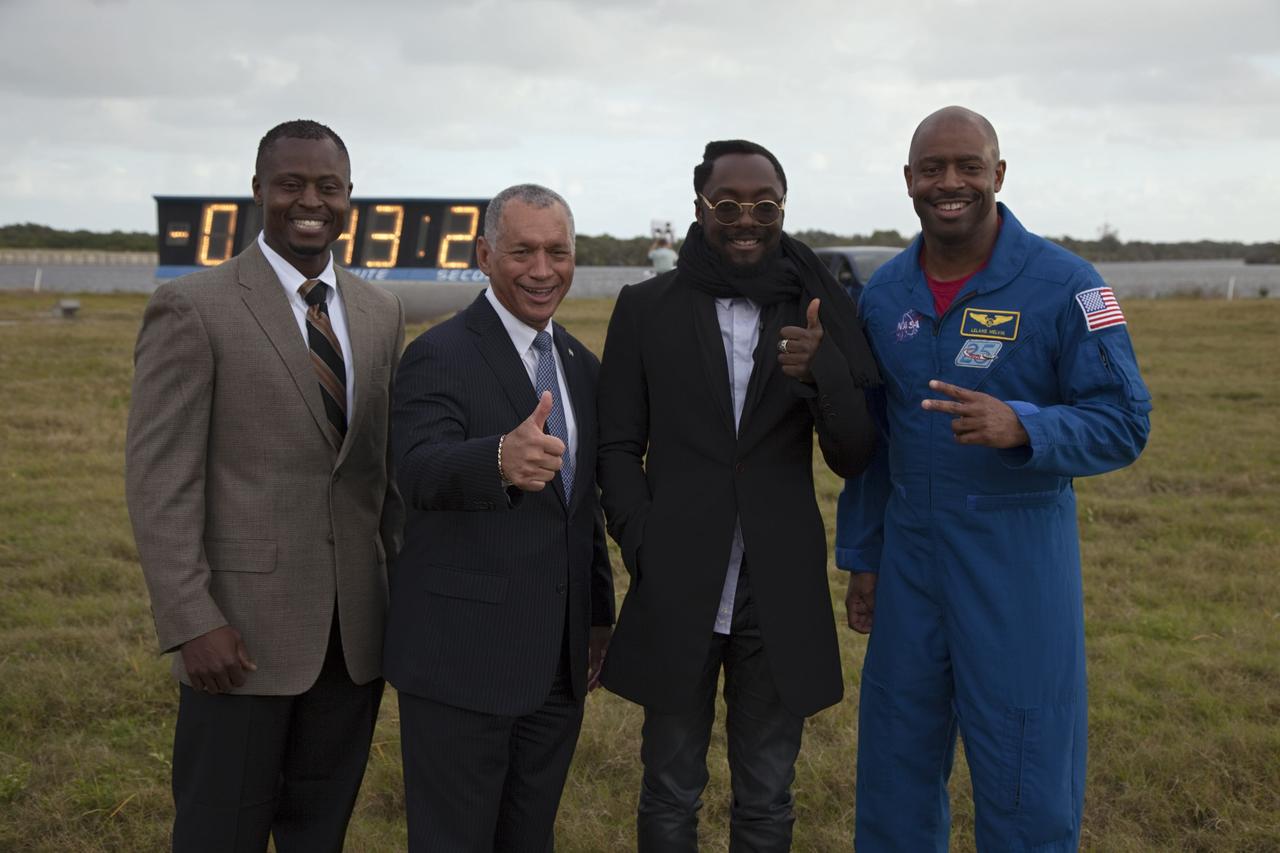
CAPE CANAVERAL, Fla. – From left, Yves Lamothe, lead systems engineer for the 21st Century Ground Systems Program at NASA Kennedy Space Center; NASA Administrator Charles Bolden; Will.i.am, entertainer and member of The Black Eyed Peas; and former astronaut Leland Melvin, NASA associate administrator for Education, take part in a Tweetup at NASA Kennedy Space Center's Press Site in Florida during prelaunch activities for the agency’s Mars Science Laboratory (MSL) launch. Behind them, the countdown clock ticks off the seconds to launch. Participants in the Tweetup are given the opportunity to listen to agency briefings, tour locations on the center normally off limits to visitors, and get a close-up view of Space Launch Complex-41 on Cape Canaveral Air Force Station. The tweeters will share their experiences with followers through the social networking site Twitter. The MSL mission will pioneer precision landing technology and a sky-crane touchdown to place a car-sized rover, Curiosity, near the foot of a mountain inside Gale Crater on Aug. 6, 2012. During a nearly two-year prime mission after landing, the rover will investigate whether the region has ever offered conditions favorable for microbial life, including the chemical ingredients for life. Liftoff of MSL aboard a United Launch Alliance Atlas V rocket from pad 41 is planned during a launch window which extends from 10:02 a.m. to 11:45 a.m. EST on Nov. 26. For more information, visit http://www.nasa.gov/msl. Photo credit: NASA/Frankie Martin
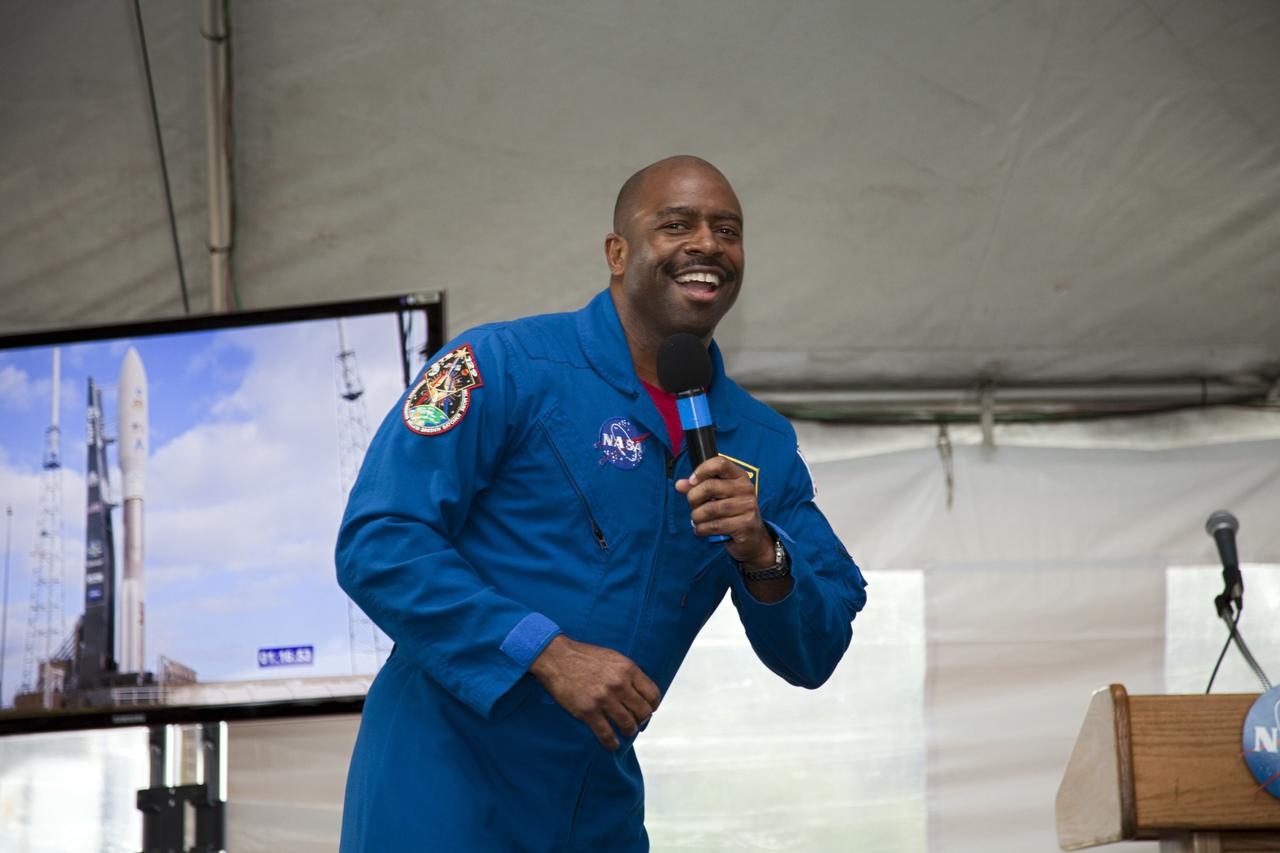
CAPE CANAVERAL, Fla. – Former astronaut Leland Melvin, NASA associate administrator for Education, takes part in a Tweetup in a tent set up at NASA Kennedy Space Center's Press Site in Florida during prelaunch activities for the agency’s Mars Science Laboratory (MSL) launch. Melvin flew on the space shuttle Atlantis' STS-122 mission in 2008 and STS-129 mission in 2009. Participants in the Tweetup are given the opportunity to listen to agency briefings, tour locations on the center normally off limits to visitors, and get a close-up view of Space Launch Complex-41 on Cape Canaveral Air Force Station. The tweeters will share their experiences with followers through the social networking site Twitter. The MSL mission will pioneer precision landing technology and a sky-crane touchdown to place a car-sized rover, Curiosity, near the foot of a mountain inside Gale Crater on Aug. 6, 2012. During a nearly two-year prime mission after landing, the rover will investigate whether the region has ever offered conditions favorable for microbial life, including the chemical ingredients for life. Liftoff of MSL aboard a United Launch Alliance Atlas V rocket from pad 41 is planned during a launch window which extends from 10:02 a.m. to 11:45 a.m. EST on Nov. 26. For more information, visit http://www.nasa.gov/msl. Photo credit: NASA/Frankie Martin
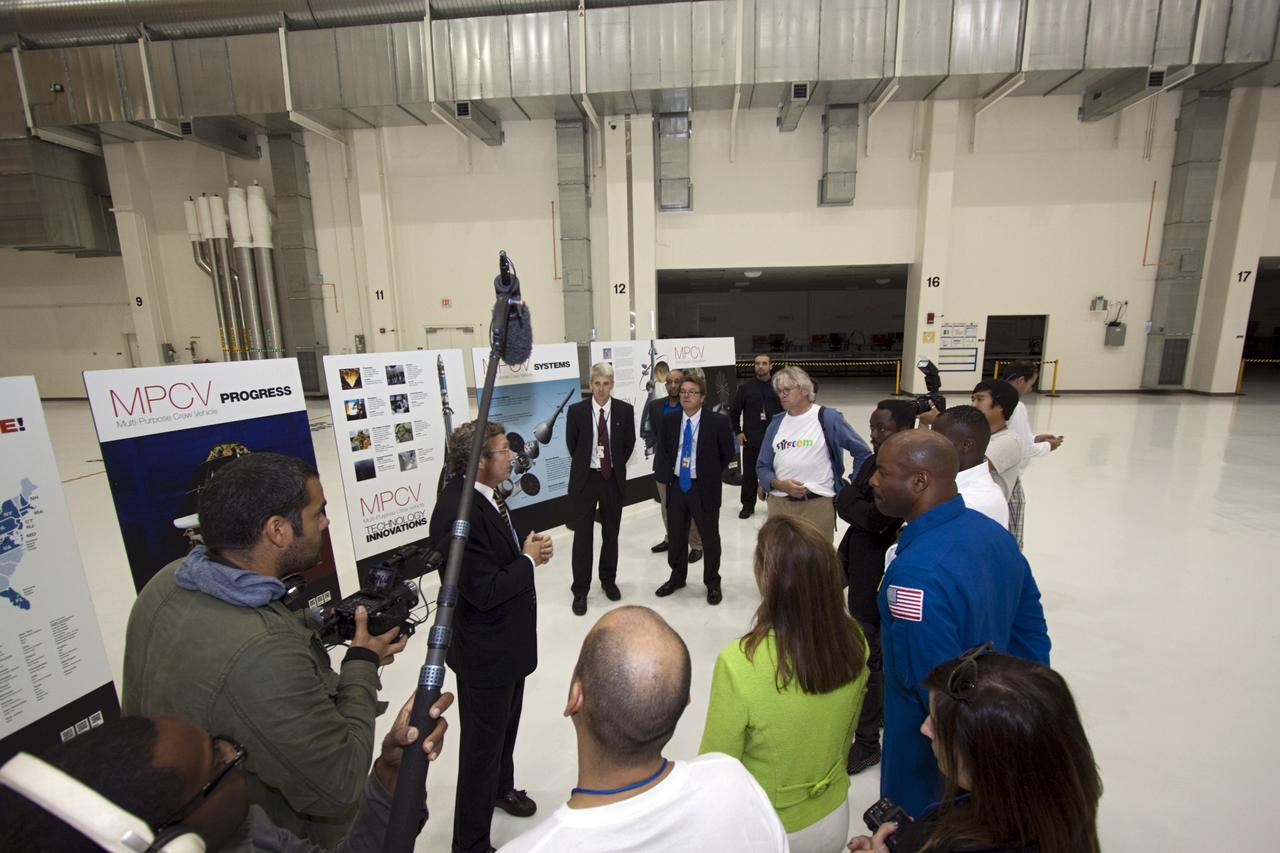
CAPE CANAVERAL, Fla. – At NASA Kennedy Space Center in Florida, presenters in a NASA Tweetup tour the Operations and Checkout Building (O&C). Listening to a briefing from from Larry Price, Lockheed Martin deputy program manager, on the Orion Multi Purpose Crew Vehicle are, from left, NASA Deputy Administrator Lori Garver (green jacket); former astronaut Leland Melvin, NASA associate administrator for Education (blue flight suit); Yves Lamothe, lead systems engineer for the 21st Century Ground Systems Program at Kennedy; Will.i.am, entertainer and member of The Black Eyed Peas; and Lars Perkins, chair of the Education and Public Outreach Committee of the NASA Advisory Council. The visit to the O&C followed their participation in a NASA Tweetup. The Tweetup is part of prelaunch activities for the agency’s Mars Science Laboratory (MSL) launch and provides the opportunity for tweeters will share their experiences with followers through the social networking site Twitter. The MSL mission will pioneer precision landing technology and a sky-crane touchdown to place a car-sized rover, Curiosity, near the foot of a mountain inside Gale Crater on Aug. 6, 2012. During a nearly two-year prime mission after landing, the rover will investigate whether the region has ever offered conditions favorable for microbial life, including the chemical ingredients for life. Liftoff of MSL aboard a United Launch Alliance Atlas V rocket from Space Launch Complex-41 on Cape Canaveral Air Force Station was at 10:02 a.m. EST on Nov. 26. For more information, visit http://www.nasa.gov/msl. Photo credit: NASA/Jim Grossmann
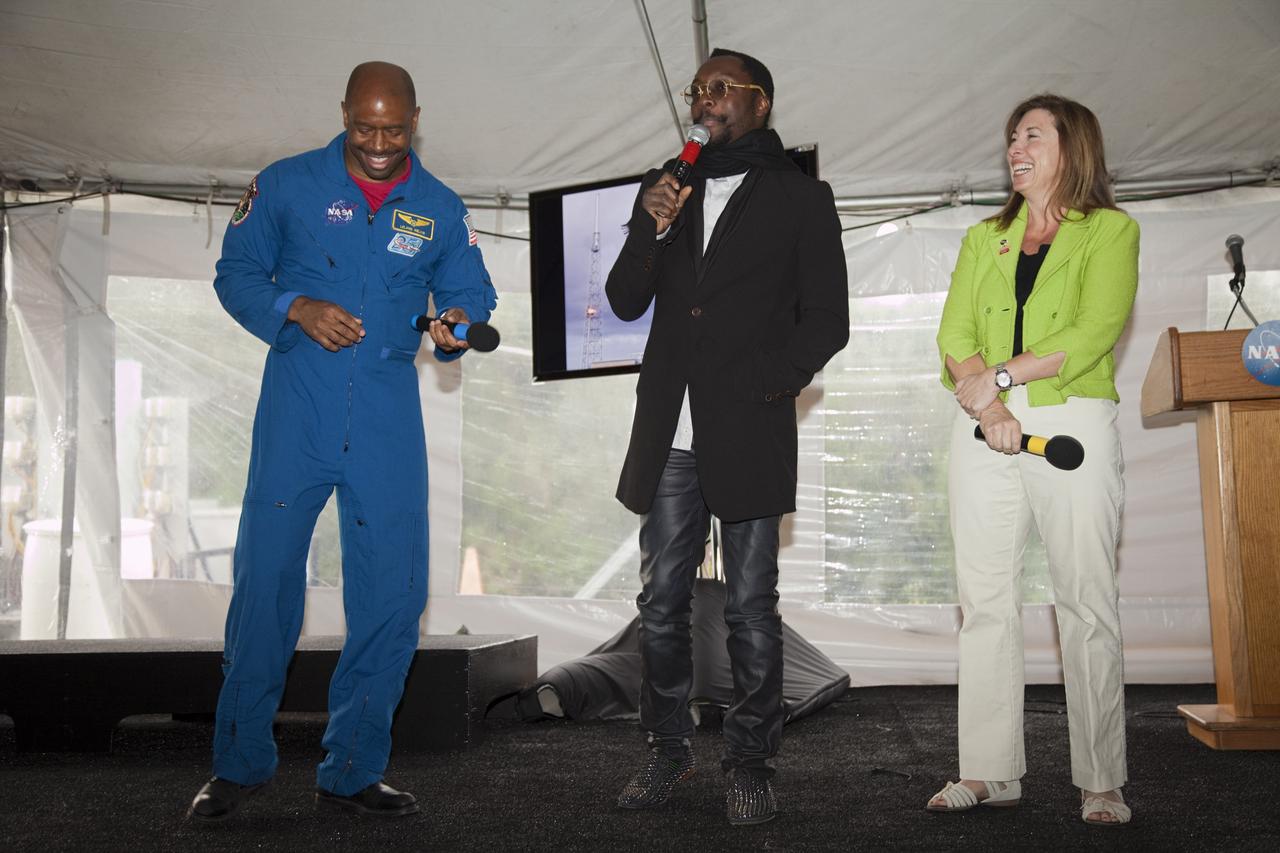
CAPE CANAVERAL, Fla. – From left, former astronaut Leland Melvin, NASA associate administrator for Education; Will.i.am, entertainer and member of The Black Eyed Peas; and NASA Deputy Administrator Lori Garver share a light moment with the participants of a NASA Tweetup in a tent set up at NASA Kennedy Space Center's Press Site in Florida during prelaunch activities for the agency’s Mars Science Laboratory (MSL) launch. Participants in the Tweetup are given the opportunity to listen to agency briefings, tour locations on the center normally off limits to visitors, and get a close-up view of Space Launch Complex-41 on Cape Canaveral Air Force Station. The tweeters will share their experiences with followers through the social networking site Twitter. The MSL mission will pioneer precision landing technology and a sky-crane touchdown to place a car-sized rover, Curiosity, near the foot of a mountain inside Gale Crater on Aug. 6, 2012. During a nearly two-year prime mission after landing, the rover will investigate whether the region has ever offered conditions favorable for microbial life, including the chemical ingredients for life. Liftoff of MSL aboard a United Launch Alliance Atlas V rocket from pad 41 is planned during a launch window which extends from 10:02 a.m. to 11:45 a.m. EST on Nov. 26. For more information, visit http://www.nasa.gov/msl. Photo credit: NASA/Frankie Martin
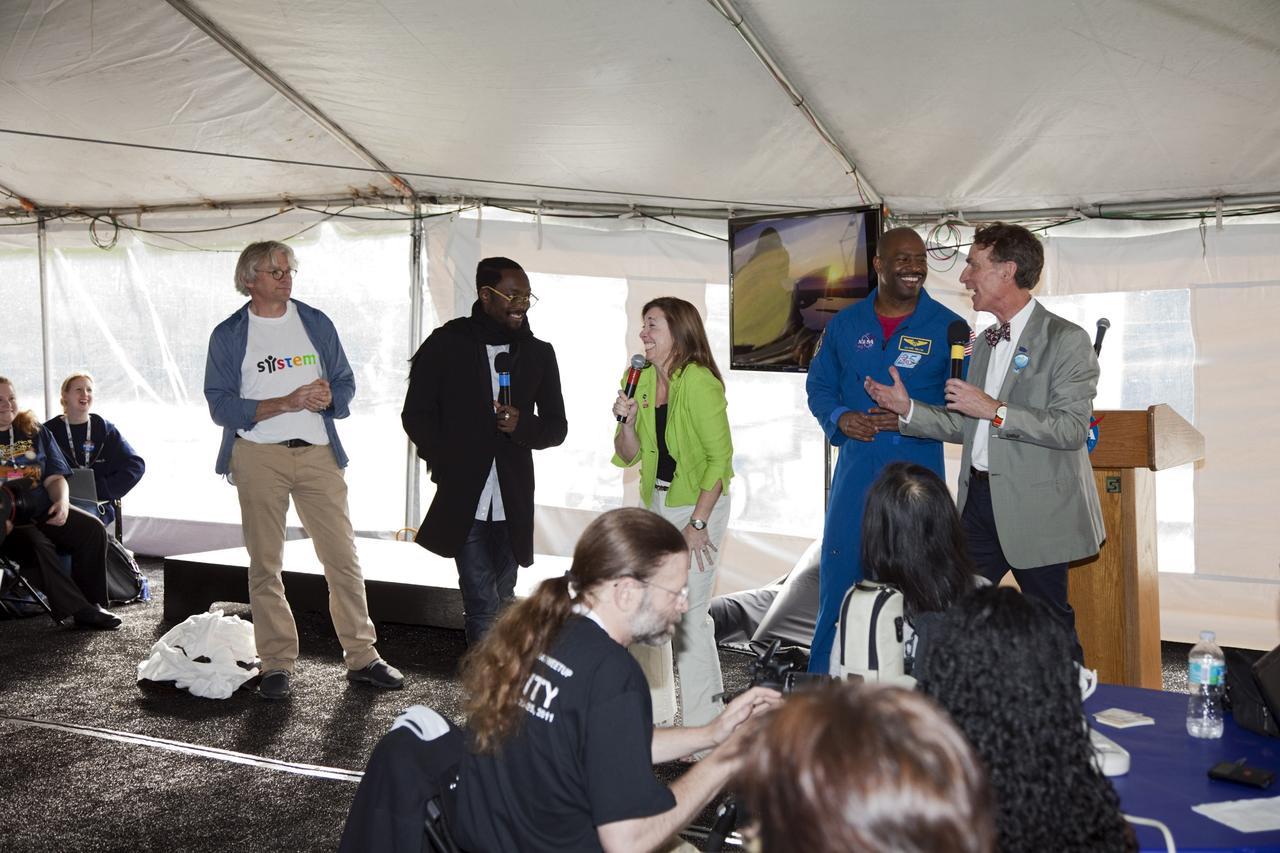
CAPE CANAVERAL, Fla. – From left, Lars Perkins, chair of the Education and Public Outreach Committee of the NASA Advisory Council; Will.i.am, entertainer and member of the pop group The Black Eyed Peas; NASA Deputy Administrator Lori Garver; former astronaut Leland Melvin, NASA associate administrator for Education; and television personality Bill Nye the Science Guy share a light moment with the participants of a NASA Tweetup in a tent set up at NASA Kennedy Space Center's Press Site in Florida during prelaunch activities for the agency’s Mars Science Laboratory (MSL) launch. Participants in the Tweetup are given the opportunity to listen to agency briefings, tour locations on the center normally off limits to visitors, and get a close-up view of Space Launch Complex-41 on Cape Canaveral Air Force Station. The tweeters will share their experiences with followers through the social networking site Twitter. The MSL mission will pioneer precision landing technology and a sky-crane touchdown to place a car-sized rover, Curiosity, near the foot of a mountain inside Gale Crater on Aug. 6, 2012. During a nearly two-year prime mission after landing, the rover will investigate whether the region has ever offered conditions favorable for microbial life, including the chemical ingredients for life. Liftoff of MSL aboard a United Launch Alliance Atlas V rocket from pad 41 is planned during a launch window which extends from 10:02 a.m. to 11:45 a.m. EST on Nov. 26. For more information, visit http://www.nasa.gov/msl. Photo credit: NASA/Frankie Martin
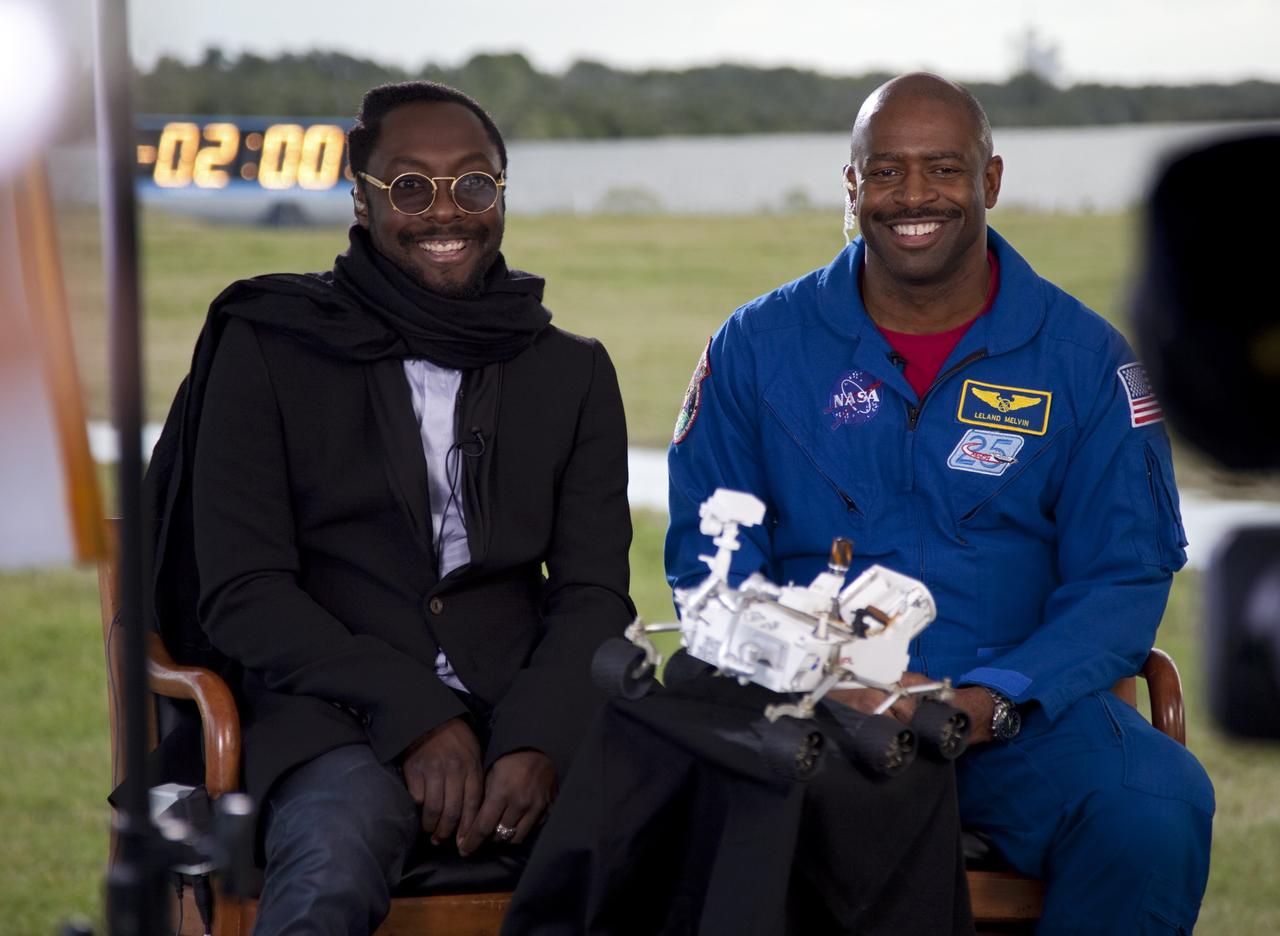
CAPE CANAVERAL, Fla. – Will.i.am, left, entertainer and member of The Black Eyed Peas, and former astronaut Leland Melvin, NASA associate administrator for Education, take part in a Tweetup at NASA Kennedy Space Center's Press Site in Florida during prelaunch activities for the agency’s Mars Science Laboratory (MSL) launch. Behind them glint the lights of the launch countdown clock. Participants in the Tweetup are given the opportunity to listen to agency briefings, tour locations on the center normally off limits to visitors, and get a close-up view of Space Launch Complex-41 on Cape Canaveral Air Force Station. The tweeters will share their experiences with followers through the social networking site Twitter. The MSL mission will pioneer precision landing technology and a sky-crane touchdown to place a car-sized rover, Curiosity, near the foot of a mountain inside Gale Crater on Aug. 6, 2012. During a nearly two-year prime mission after landing, the rover will investigate whether the region has ever offered conditions favorable for microbial life, including the chemical ingredients for life. Liftoff of MSL aboard a United Launch Alliance Atlas V rocket from pad 41 is planned during a launch window which extends from 10:02 a.m. to 11:45 a.m. EST on Nov. 26. For more information, visit http://www.nasa.gov/msl. Photo credit: NASA/Frankie Martin
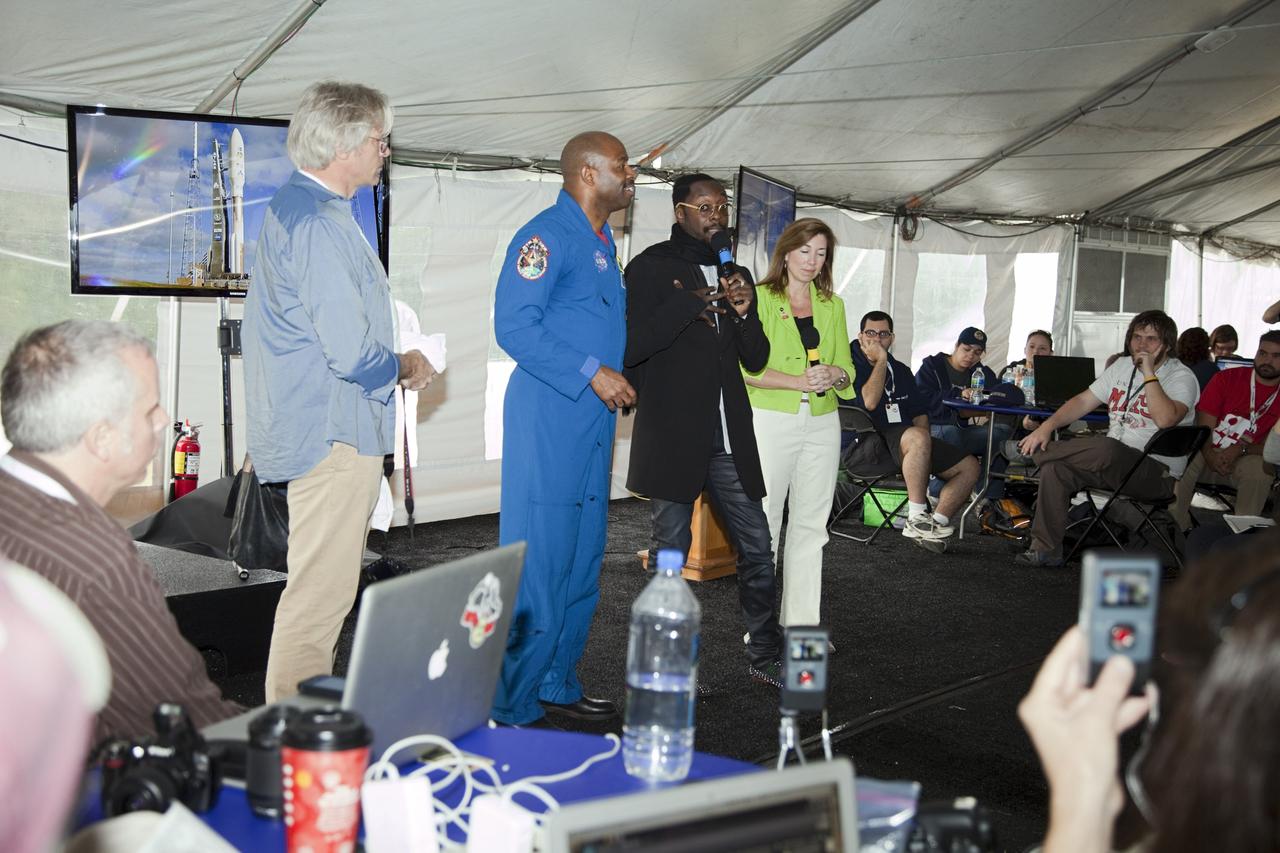
CAPE CANAVERAL, Fla. – From left, Lars Perkins, chair of the Education and Public Outreach Committee of the NASA Advisory Council; former astronaut Leland Melvin, NASA associate administrator for Education; Will.i.am, entertainer and member of The Black Eyed Peas; and NASA Deputy Administrator Lori Garver talk to the participants of a NASA Tweetup in a tent set up at NASA Kennedy Space Center's Press Site in Florida during prelaunch activities for the agency’s Mars Science Laboratory (MSL) launch. Participants in the Tweetup are given the opportunity to listen to agency briefings, tour locations on the center normally off limits to visitors, and get a close-up view of Space Launch Complex-41 on Cape Canaveral Air Force Station. The tweeters will share their experiences with followers through the social networking site Twitter. The MSL mission will pioneer precision landing technology and a sky-crane touchdown to place a car-sized rover, Curiosity, near the foot of a mountain inside Gale Crater on Aug. 6, 2012. During a nearly two-year prime mission after landing, the rover will investigate whether the region has ever offered conditions favorable for microbial life, including the chemical ingredients for life. Liftoff of MSL aboard a United Launch Alliance Atlas V rocket from pad 41 is planned during a launch window which extends from 10:02 a.m. to 11:45 a.m. EST on Nov. 26. For more information, visit http://www.nasa.gov/msl. Photo credit: NASA/Frankie Martin