
STS-132 WATER ON CRAWLERWAY PROHIBITING ROLLOUT
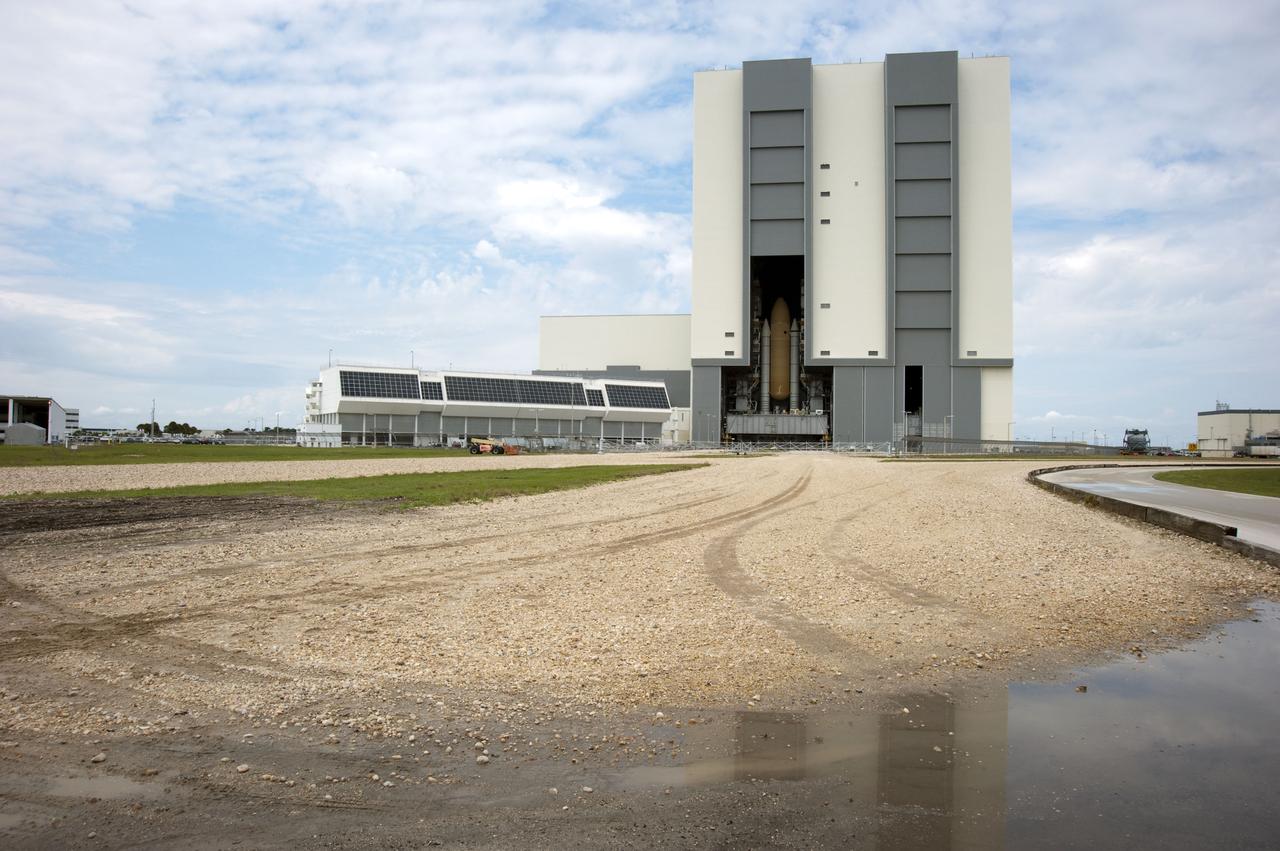
STS-132 WATER ON CRAWLERWAY PROHIBITING ROLLOUT

STS-132 WATER ON CRAWLERWAY PROHIBITING ROLLOUT

OSIRIS REx curation team attempting to remove the two stuck fasteners that are currently prohibiting the complete opening of the TAGSAM head. Photo Date: January 10, 2024. Location: Bldg. 31 - 2nd Floor - OSIRIS-REx lab. Photographer: Robert Markowitz
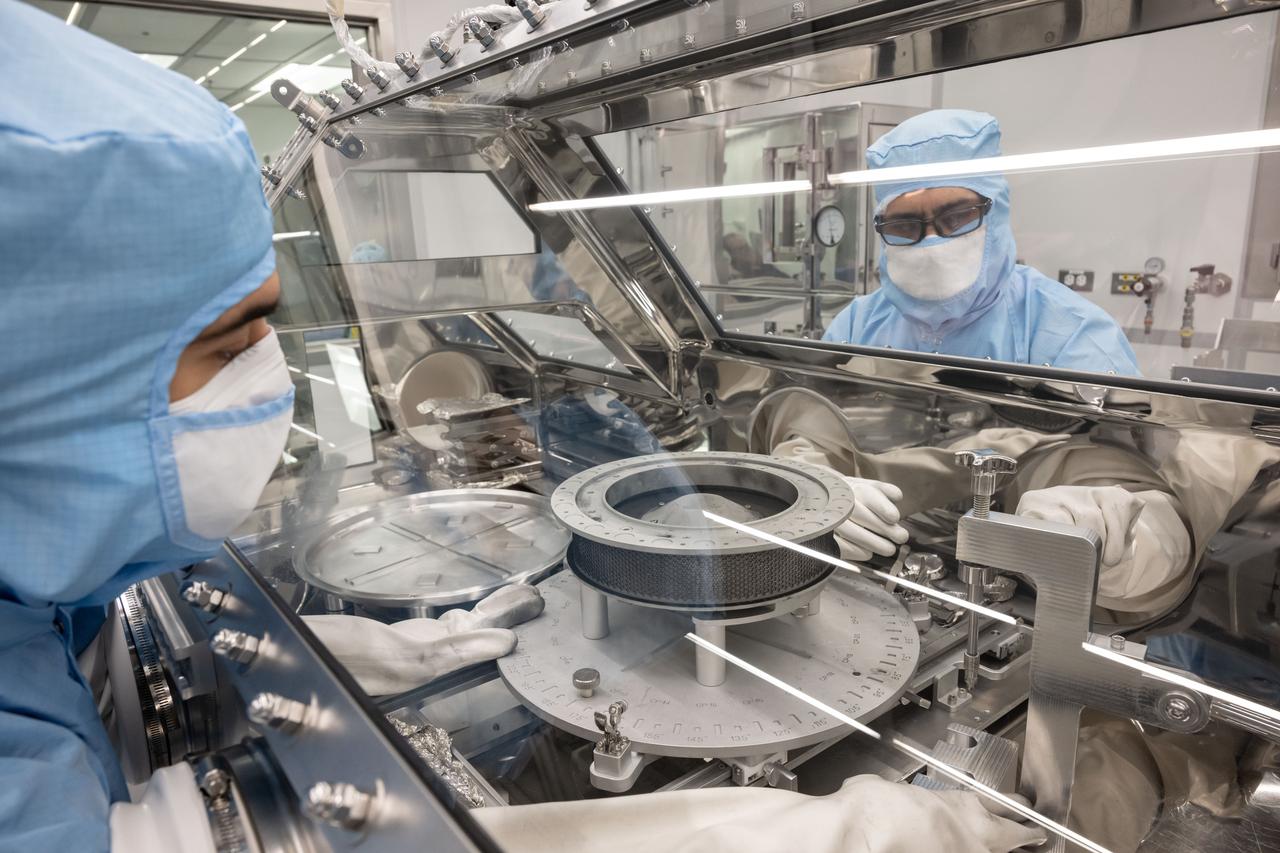
OSIRIS REx curation team attempting to remove the two stuck fasteners that are currently prohibiting the complete opening of the TAGSAM head. Photo Date: January 10, 2024. Location: Bldg. 31 - 2nd Floor - OSIRIS-REx lab. Photographer: Robert Markowitz

OSIRIS REx curation team attempting to remove the two stuck fasteners that are currently prohibiting the complete opening of the TAGSAM head. Photo Date: January 10, 2024. Location: Bldg. 31 - 2nd Floor - OSIRIS-REx lab. Photographer: Robert Markowitz

OSIRIS REx curation team attempting to remove the two stuck fasteners that are currently prohibiting the complete opening of the TAGSAM head. Photo Date: January 10, 2024. Location: Bldg. 31 - 2nd Floor - OSIRIS-REx lab. Photographer: Robert Markowitz
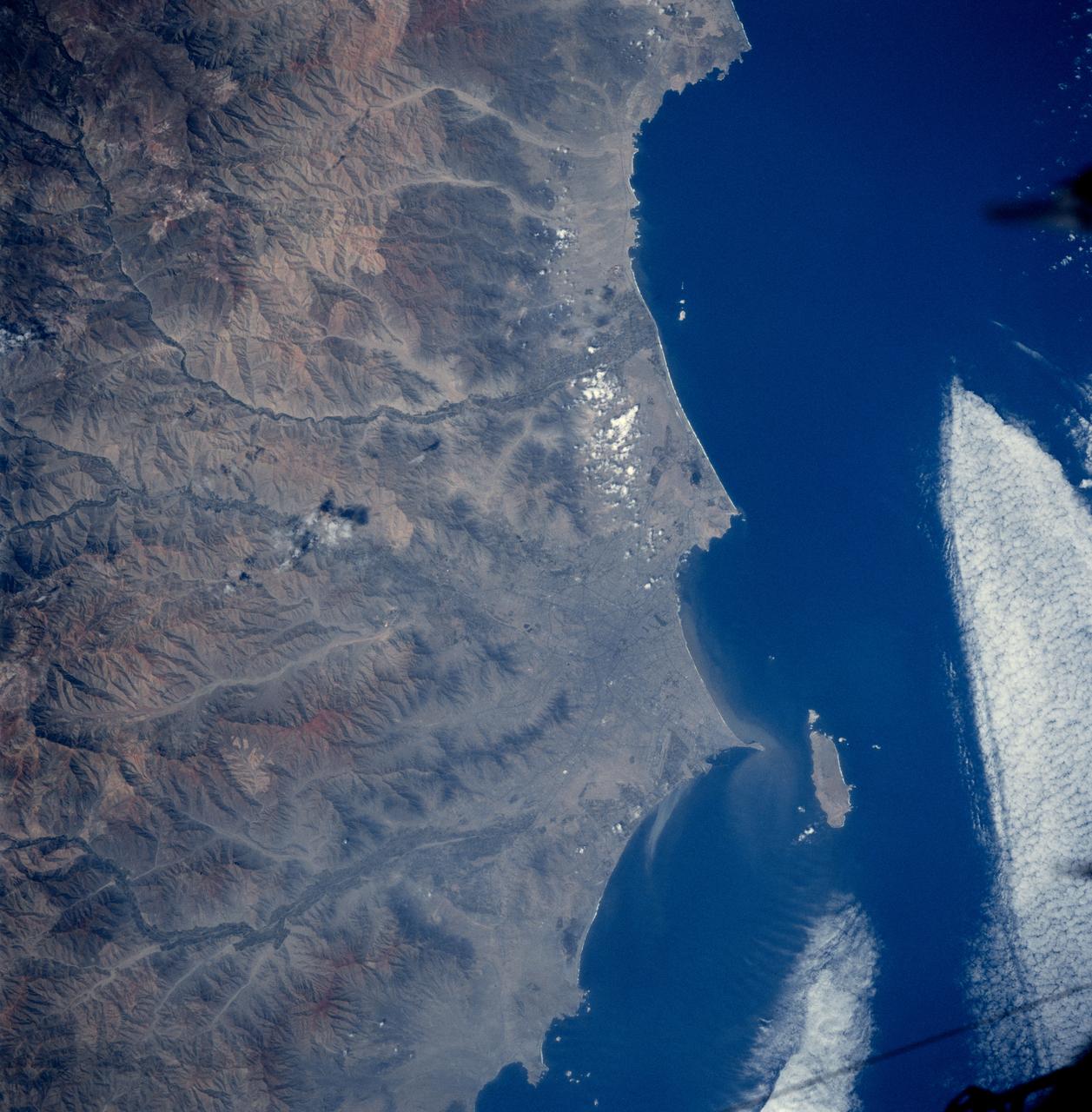
STS084-727-053 (15-24 May 1997) --- This view of Lima, Peru is among a very few photographed by astronauts who have orbited Earth since the early 1960's. Francisco Pizarro founded the city of Lima in 1535. Lima is located 13 kilometers (8 miles) inland from the Peruvian coast and is surrounded by coastal desert and the Andes mountains. Suburbs of Lima extend in all directions except to the east, where the Andes prohibits growth. The three rivers, Chillion to the northeast of Lima, the Rimac which runs through the northern part of the city, and the Mala to the southeast, all drain the central Andes. The island off the coast is San Lorenzo.
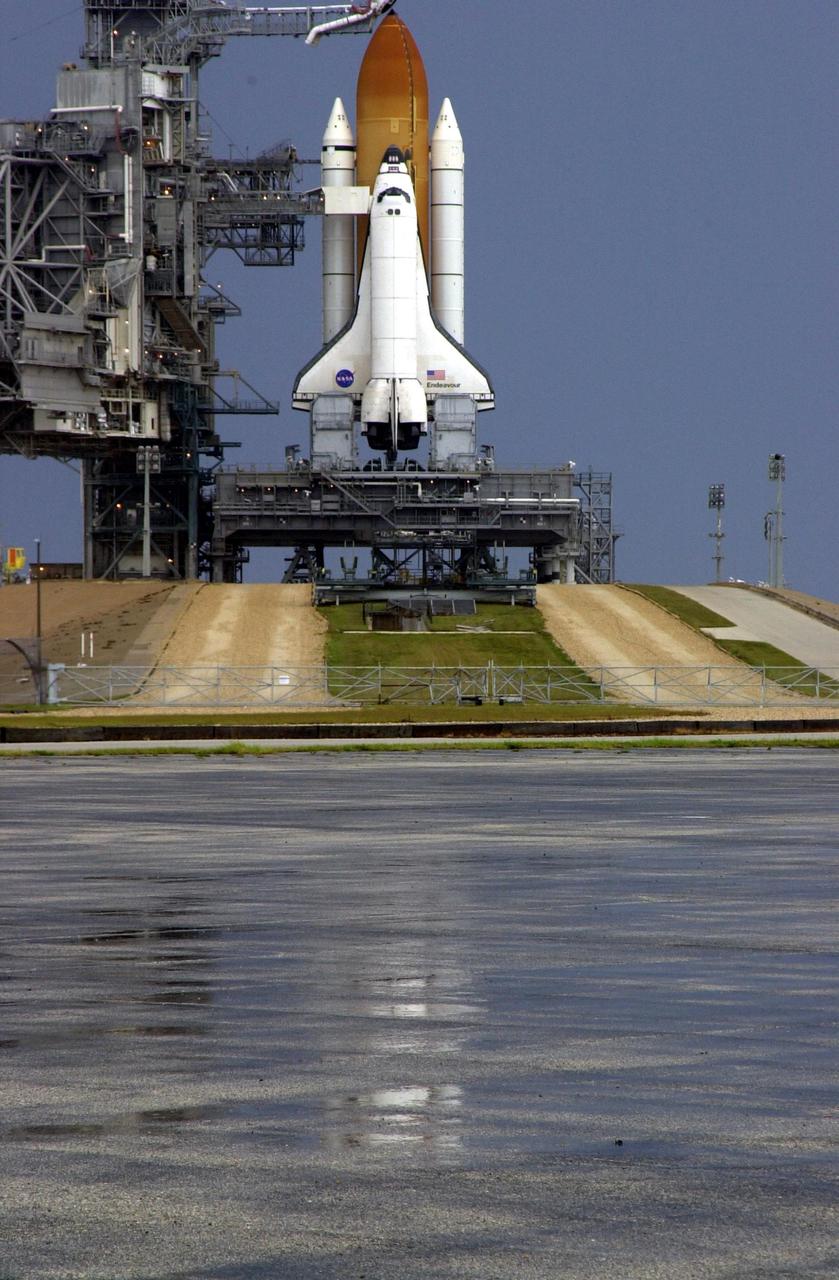
KENNEDY SPACE CENTER, FLA. -- Space Shuttle Endeavour sits poised for launch at Pad 39A after mission managers postponed today's launch of mission STS-111. Forecasters' predictions that weather would prohibit a launch attempt due to severe thunderstorms and rain showers within the vicinity of the launch pad were accurate as depicted by the rainwater on the pavement in the foreground. STS-111 is the second Utilization Flight to the International Space Station, carrying the Multi-Purpose Logistics Module Leonardo, the Mobile Base System (MBS), and a replacement wrist/roll joint for the Canadarm 2. Also on board will be the Expedition Five crew who will replace Expedition Four on the Station. Launch has been rescheduled for Monday, June 3, between 4 and 8 p.m. EDT
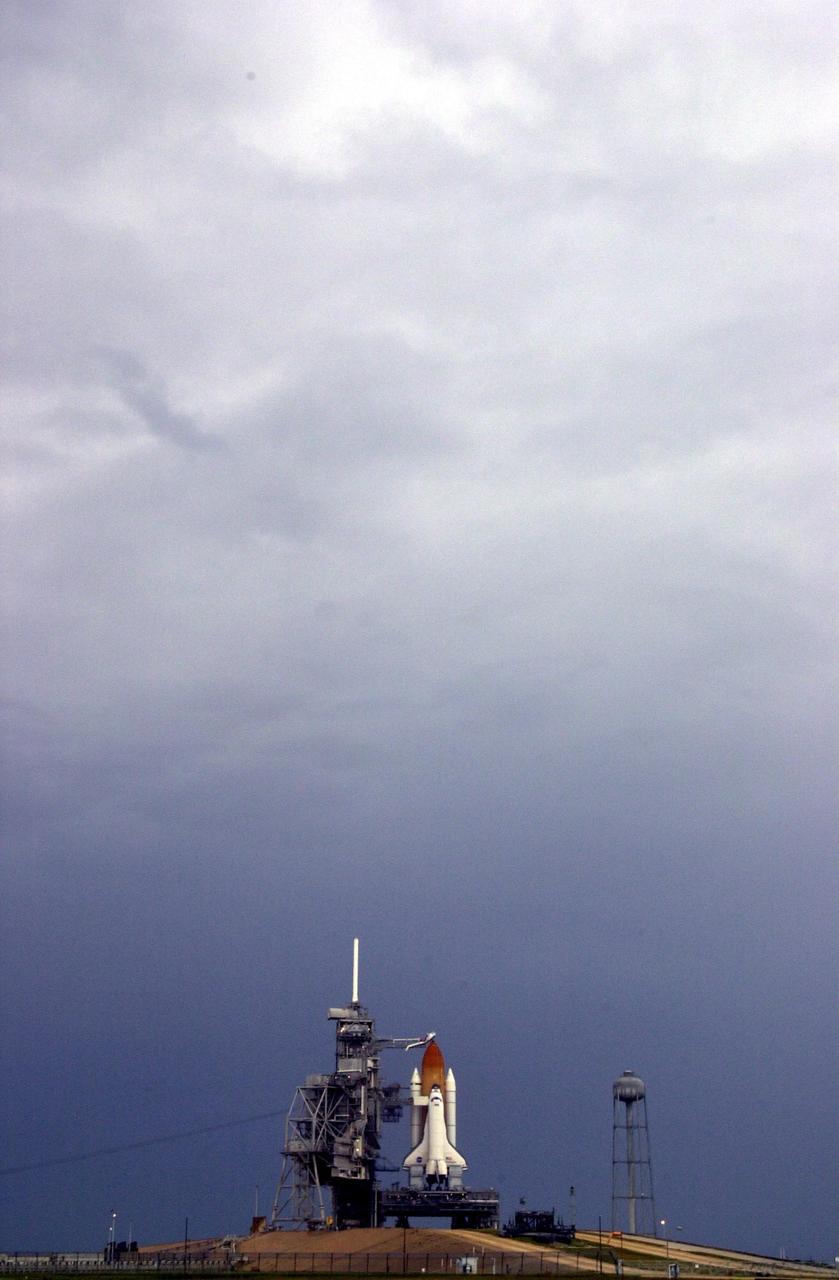
KENNEDY SPACE CENTER, FLA. -- Space Shuttle Endeavour is poised for launch at Pad 39A after mission managers postponed today's launch of mission STS-111. Forecasters' predictions that weather would prohibit a launch attempt due to severe thunderstorms and rain showers within the vicinity of the launch pad were accurate as depicted by the dark clouds overhead. STS-111 is the second Utilization Flight to the International Space Station, carrying the Multi-Purpose Logistics Module Leonardo, the Mobile Base System (MBS), and a replacement wrist/roll joint for the Canadarm 2. Also on board will be the Expedition Five crew who will replace Expedition Four on the Station. Launch has been rescheduled for Monday, June 3, between 4 and 8 p.m. EDT
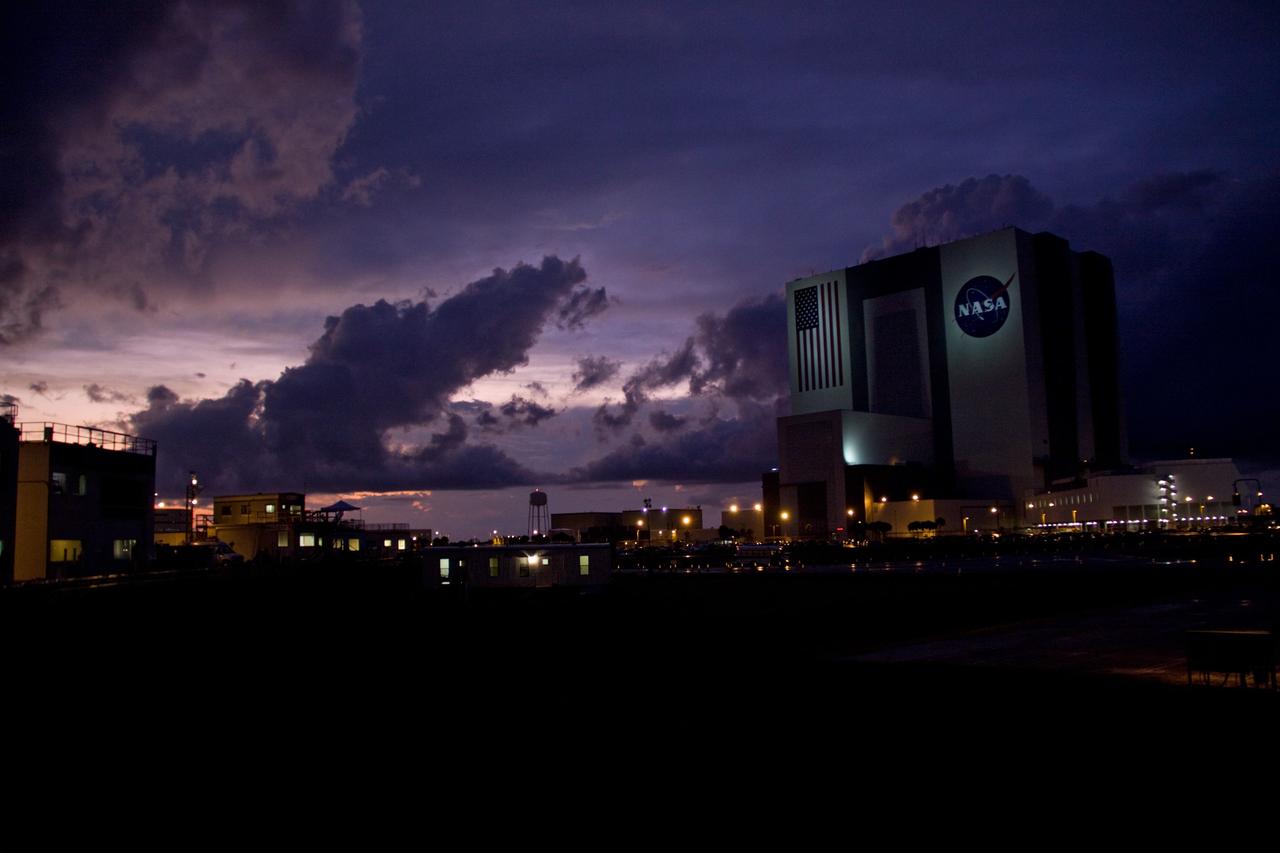
CAPE CANAVERAL, Fla. – Shortly after 8 p.m. EDT, black clouds from the west roll past the Vehicle Assembly Building at NASA's Kennedy Space Center in Florida. The center is in launch mode as the countdown continues for liftoff of space shuttle Discovery at 1:36 a.m. EDT Aug. 25 on the STS-128 mission. Weather plays a significant role in any launch attempt. Forecasters give only 20 percent probability of weather prohibiting launch. Discovery's 13-day mission will deliver more than 7 tons of supplies, science racks and equipment, as well as additional environmental hardware to sustain six crew members on the International Space Station. The equipment includes a freezer to store research samples, a new sleeping compartment and the COLBERT treadmill. The mission is the 128th in the Space Shuttle Program, the 37th flight of Discovery and the 30th station assembly flight. Photo credit: NASA/Troy Cryder

KENNEDY SPACE CENTER, FLA. -- Space Shuttle Endeavour is poised for launch at Pad 39A after mission managers postponed today's scheduled launch of mission STS-111. Forecasters' predictions that weather would prohibit a launch attempt due to severe thunderstorms and rain showers within the vicinity of the launch pad were accurate as depicted by the raindrops obscuring the photographer's view. STS-111 is the second Utilization Flight to the International Space Station, carrying the Multi-Purpose Logistics Module Leonardo, the Mobile Base System (MBS), and a replacement wrist/roll joint for the Canadarm 2. Also on board will be the Expedition Five crew who will replace Expedition Four on the Station. Launch has been rescheduled for Monday, June 3, between 4 and 8 p.m. EDT
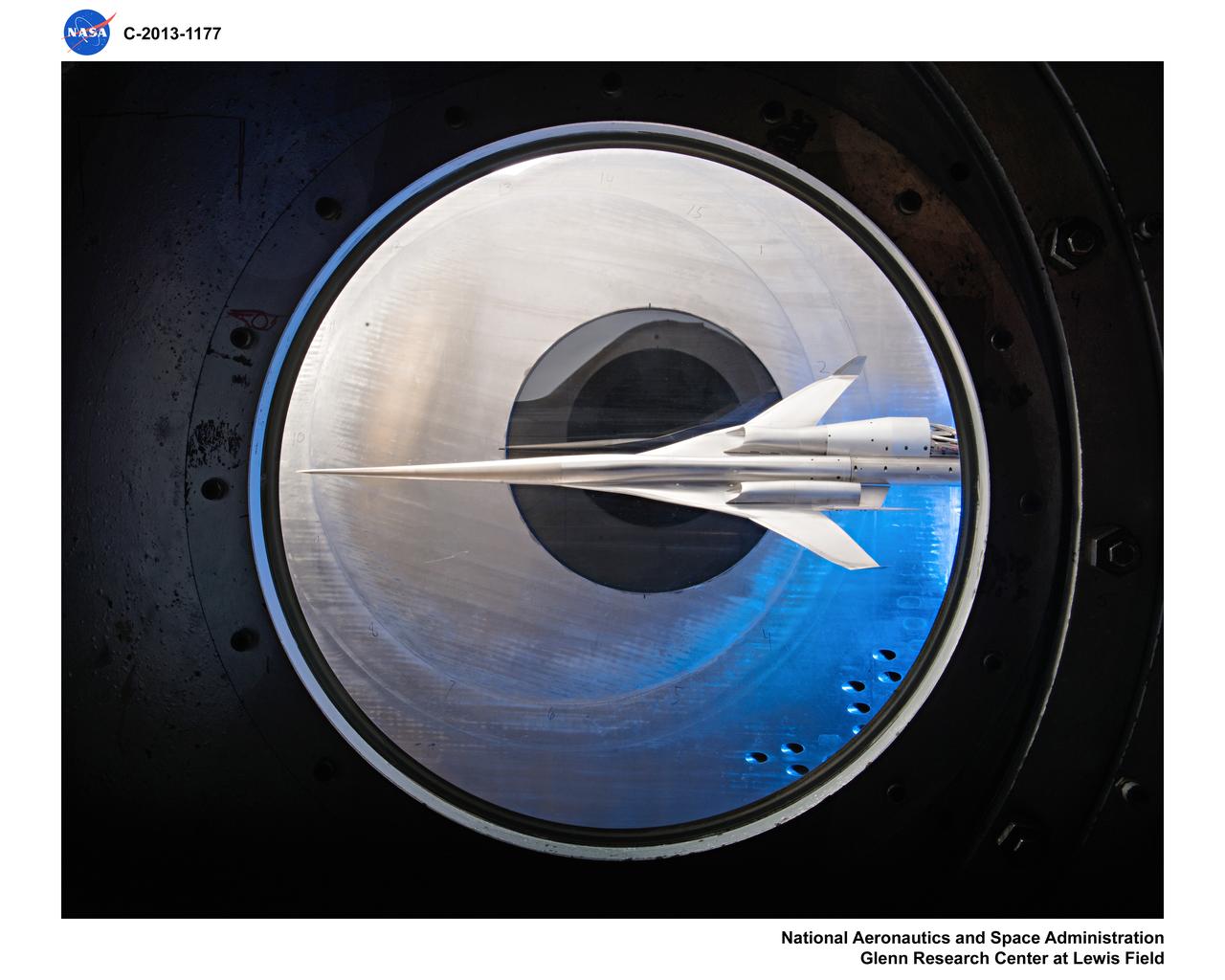
Supersonic Aircraft Model The window in the sidewall of the 8- by 6-foot supersonic wind tunnel at NASA's Glenn Research Center shows a 1.79 percent scale model of a future concept supersonic aircraft built by The Boeing Company. In recent tests, researchers evaluated the performance of air inlets mounted on top of the model to see how changing the amount of airflow at supersonic speeds through the inlet affected performance. The inlet on the pilot's right side (top inlet in this side view) is larger because it contains a remote-controlled device through which the flow of air could be changed. The work is part of ongoing research in NASA's Aeronautics Research Mission Directorate to address the challenges of making future supersonic flight over land possible. Researchers are testing overall vehicle design and performance options to reduce emissions and noise, and identifying whether the volume of sonic booms can be reduced to a level that leads to a reversal of the current ruling that prohibits commercial supersonic flight over land. Image Credit: NASA/Quentin Schwinn
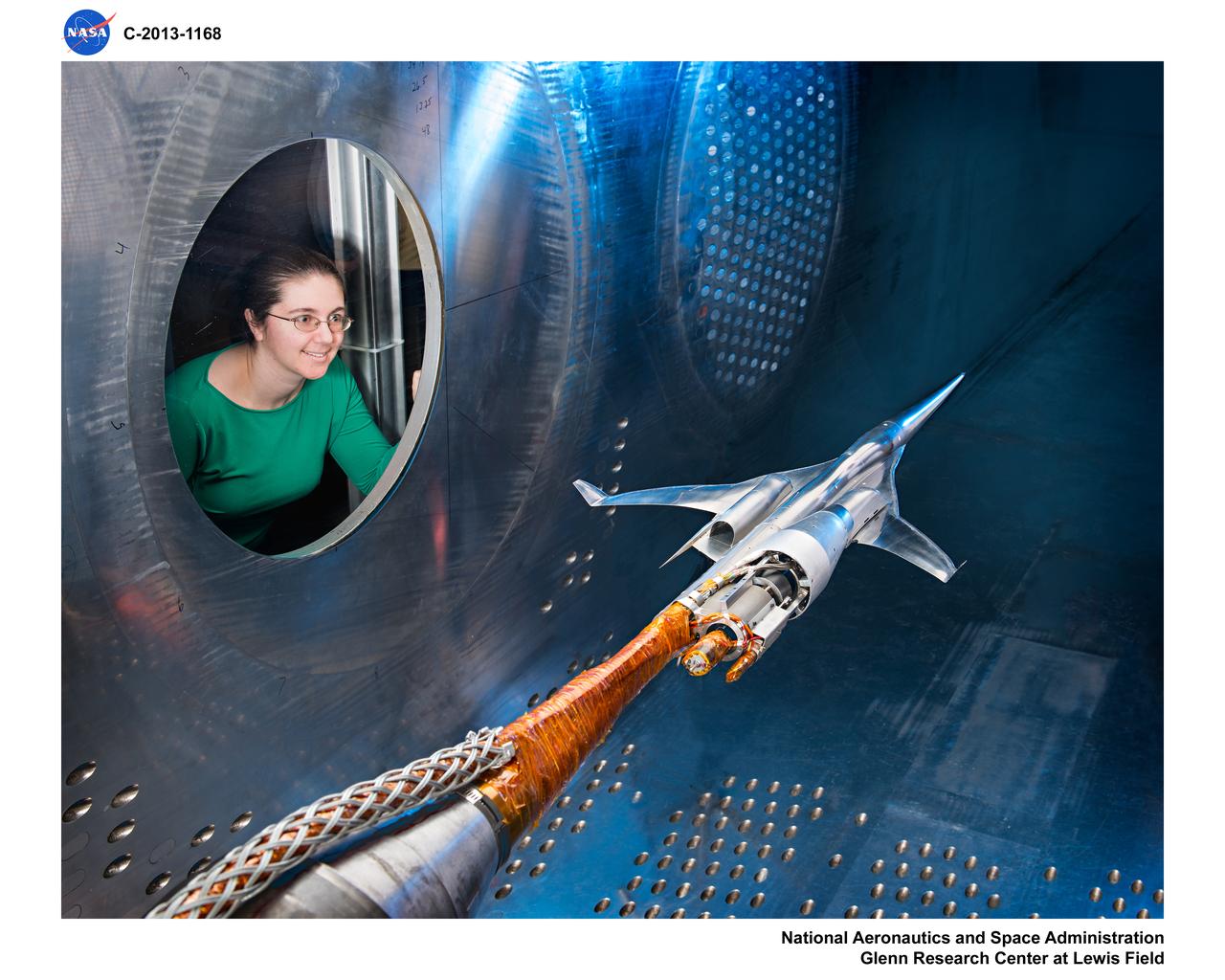
Supersonic Aircraft Model The window in the sidewall of the 8- by 6-foot supersonic wind tunnel at NASA's Glenn Research Center shows a 1.79 percent scale model of a future concept supersonic aircraft built by The Boeing Company. In recent tests, researchers evaluated the performance of air inlets mounted on top of the model to see how changing the amount of airflow at supersonic speeds through the inlet affected performance. The inlet on the pilot's right side (top inlet in this side view) is larger because it contains a remote-controlled device through which the flow of air could be changed. The work is part of ongoing research in NASA's Aeronautics Research Mission Directorate to address the challenges of making future supersonic flight over land possible. Researchers are testing overall vehicle design and performance options to reduce emissions and noise, and identifying whether the volume of sonic booms can be reduced to a level that leads to a reversal of the current ruling that prohibits commercial supersonic flight over land. Image Credit: NASA/Quentin Schwinn
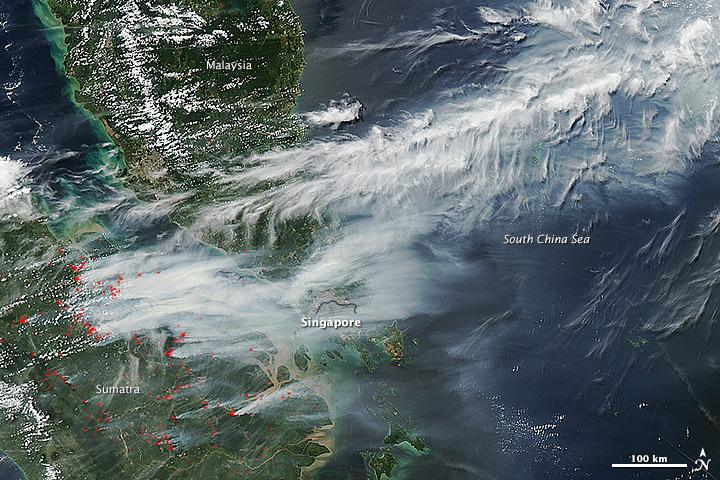
On June 19, 2013, NASA’s Aqua satellite captured a striking image of smoke billowing from illegal wildfires on the Indonesian island of Sumatra. The smoke blew east toward southern Malaysia and Singapore, and news media reported that thick clouds of haze had descended on Singapore, pushing pollution levels to record levels. Singapore’s primary measure of pollution, the Pollutant Standards Index (PSI)—a uniform measure of key pollutants similar to the Air Quality Index (AQI) used by the U.S. Environmental Protection Agency—spiked to 371 on the afternoon of June 20, 2013, the highest level ever recorded. The previous record occurred in 1997, when the index hit 226. Health experts consider any level above 300 to be “hazardous” to human health. Levels above 200 are considered “very unhealthy.” The image above was captured by the Moderate Resolution Imaging Spectroradiometer (MODIS), an instrument that observes the entire surface of Earth’s every 1 to 2 days. The image was captured during the afternoon at 6:30 UTC (2:30 p.m. local time). Though local laws prohibit it, farmers in Sumatra often burn forests during the dry season to prepare soil for new crops. The BBC reported that Singapore’s Prime Minister Lee Hsien Loong warned that the haze could “easily last for several weeks and quite possibly longer until the dry season ends in Sumatra.” NASA image by Jeff Schmaltz, LANCE/EOSDIS Rapid Response. Caption by Adam Voiland. Credit: <b><a href="http://www.earthobservatory.nasa.gov/" rel="nofollow"> NASA Earth Observatory</a></b> Instrument: Aqua - MODIS <b><a href="http://www.nasa.gov/audience/formedia/features/MP_Photo_Guidelines.html" rel="nofollow">NASA image use policy.</a></b> <b><a href="http://www.nasa.gov/centers/goddard/home/index.html" rel="nofollow">NASA Goddard Space Flight Center</a></b> enables NASA’s mission through four scientific endeavors: Earth Science, Heliophysics, Solar System Exploration, and Astrophysics. Goddard plays a leading role in NASA’s accomplishments by contributing compelling scientific knowledge to advance the Agency’s mission. <b>Follow us on <a href="http://twitter.com/NASA_GoddardPix" rel="nofollow">Twitter</a></b> <b>Like us on <a href="http://www.facebook.com/pages/Greenbelt-MD/NASA-Goddard/395013845897?ref=tsd" rel="nofollow">Facebook</a></b> <b>Find us on <a href="http://instagram.com/nasagoddard?vm=grid" rel="nofollow">Instagram</a></b>
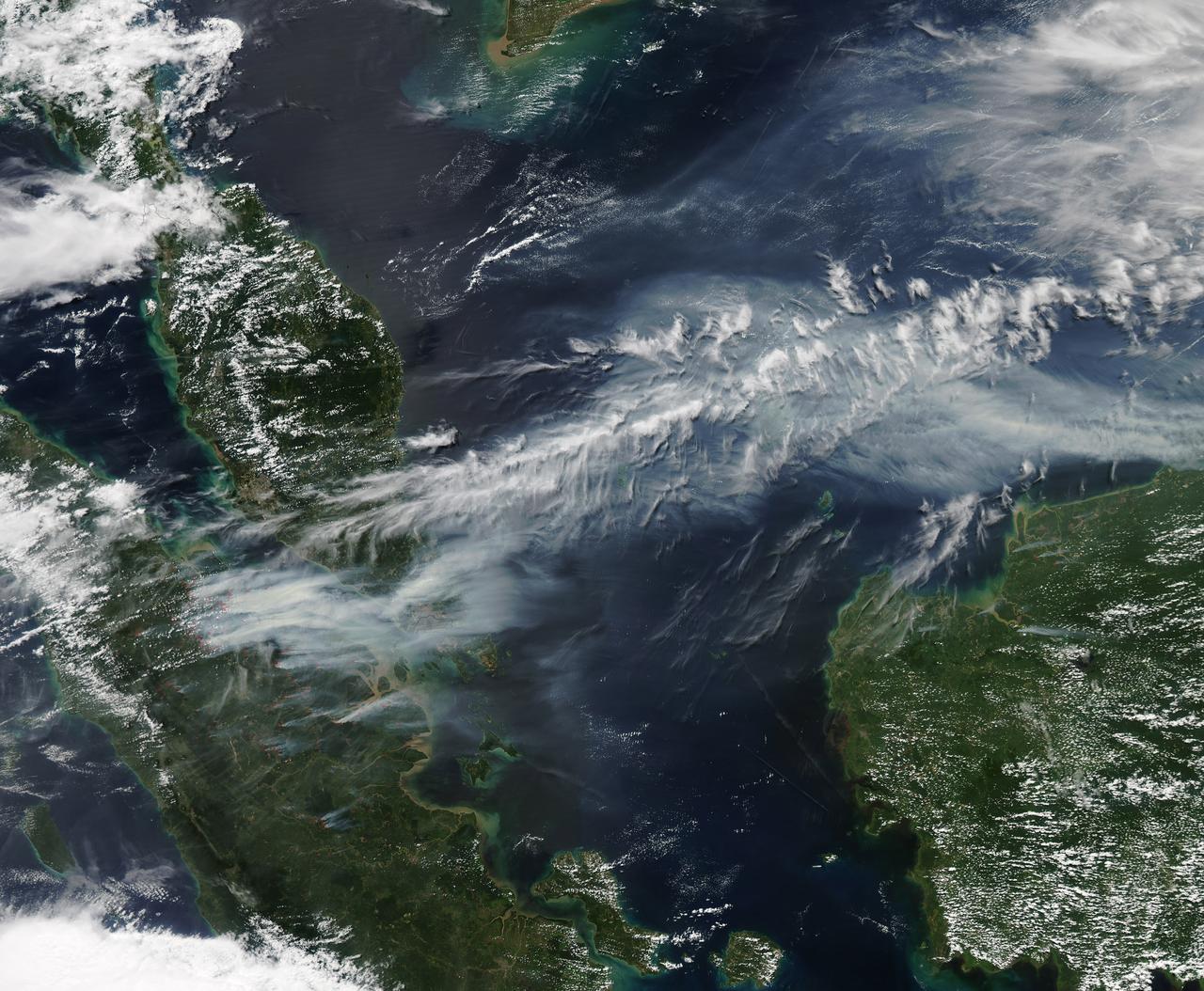
On June 19, 2013, NASA’s Aqua satellite captured a striking image of smoke billowing from illegal wildfires on the Indonesian island of Sumatra. The smoke blew east toward southern Malaysia and Singapore, and news media reported that thick clouds of haze had descended on Singapore, pushing pollution levels to record levels. Singapore’s primary measure of pollution, the Pollutant Standards Index (PSI)—a uniform measure of key pollutants similar to the Air Quality Index (AQI) used by the U.S. Environmental Protection Agency—spiked to 371 on the afternoon of June 20, 2013, the highest level ever recorded. The previous record occurred in 1997, when the index hit 226. Health experts consider any level above 300 to be “hazardous” to human health. Levels above 200 are considered “very unhealthy.” The image above was captured by the Moderate Resolution Imaging Spectroradiometer (MODIS), an instrument that observes the entire surface of Earth’s every 1 to 2 days. The image was captured during the afternoon at 6:30 UTC (2:30 p.m. local time). Though local laws prohibit it, farmers in Sumatra often burn forests during the dry season to prepare soil for new crops. The BBC reported that Singapore’s Prime Minister Lee Hsien Loong warned that the haze could “easily last for several weeks and quite possibly longer until the dry season ends in Sumatra.” NASA image by Jeff Schmaltz, LANCE/EOSDIS Rapid Response. Caption by Adam Voiland. Credit: <b><a href="http://www.earthobservatory.nasa.gov/" rel="nofollow"> NASA Earth Observatory</a></b> Instrument: Aqua - MODIS <b><a href="http://www.nasa.gov/audience/formedia/features/MP_Photo_Guidelines.html" rel="nofollow">NASA image use policy.</a></b> <b><a href="http://www.nasa.gov/centers/goddard/home/index.html" rel="nofollow">NASA Goddard Space Flight Center</a></b> enables NASA’s mission through four scientific endeavors: Earth Science, Heliophysics, Solar System Exploration, and Astrophysics. Goddard plays a leading role in NASA’s accomplishments by contributing compelling scientific knowledge to advance the Agency’s mission. <b>Follow us on <a href="http://twitter.com/NASA_GoddardPix" rel="nofollow">Twitter</a></b> <b>Like us on <a href="http://www.facebook.com/pages/Greenbelt-MD/NASA-Goddard/395013845897?ref=tsd" rel="nofollow">Facebook</a></b> <b>Find us on <a href="http://instagram.com/nasagoddard?vm=grid" rel="nofollow">Instagram</a></b>
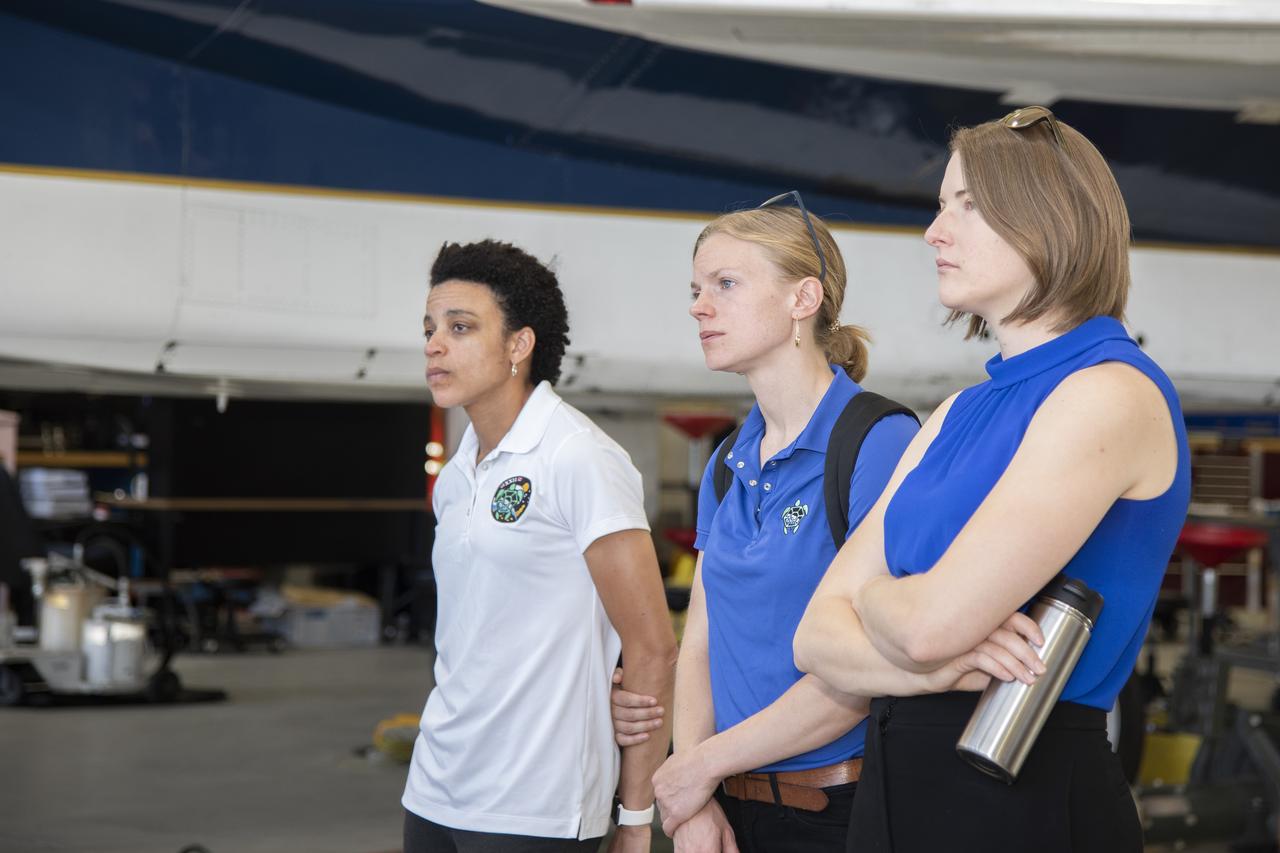
NASA’s 2017 astronaut candidates (L to R) Jessica Watkins, Zena Cardman, Kayla Barron toured aircraft hangar at Armstrong Flight Research Center, in Southern California where they were briefed on the use of Armstrong's F-15 and F-18 aircraft for studying sonic booms. The aircraft will be used during the development of the low-boom X-59 aircraft that is planned to fly supersonically over land, which is not allowed at this time because of the loud noise created when flying beyond the speed of sound.