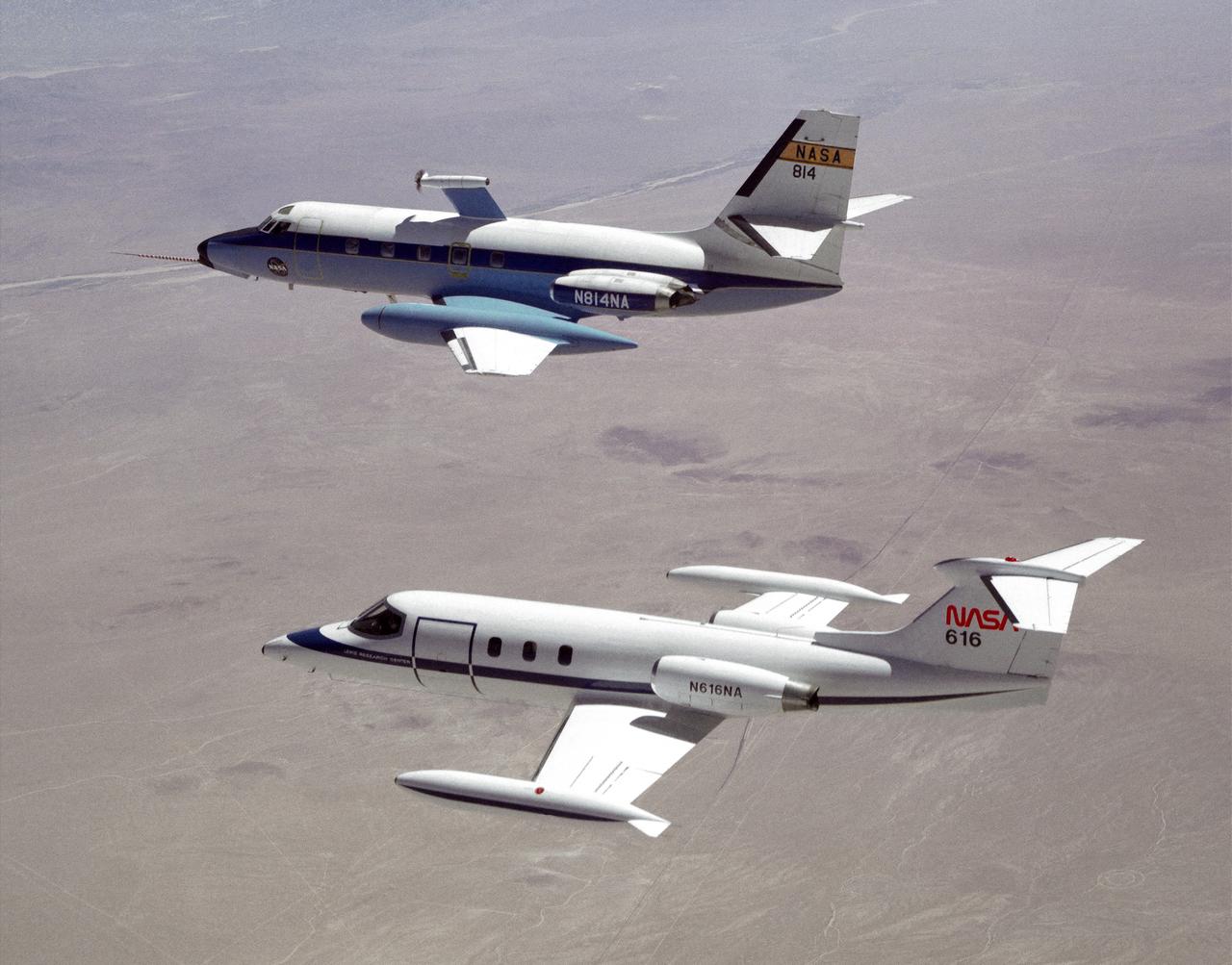
The NASA C-140 JetStar research aircraft (top) is followed by a NASA Learjet equipped with acoustic sensors during one of several tests of advanced propellors mounted on the vertical pylon atop the JetStar's fuselage. Several advanced prop designs were tested on the JetStar in 1982 by NASA's Dryden Flight Research Facility (DFRF), Edwards, California, to study the effects of noise created by propellors on aircraft structures and cabin interiors. To assess possible noise problems with the subscale turbofan, DFRF technicians mounted microphones on both the JetStar and the Learjet chase plane. DFRF then made measurements at close range and at longer distances. The data enabled structural changes and flightpath modifications.
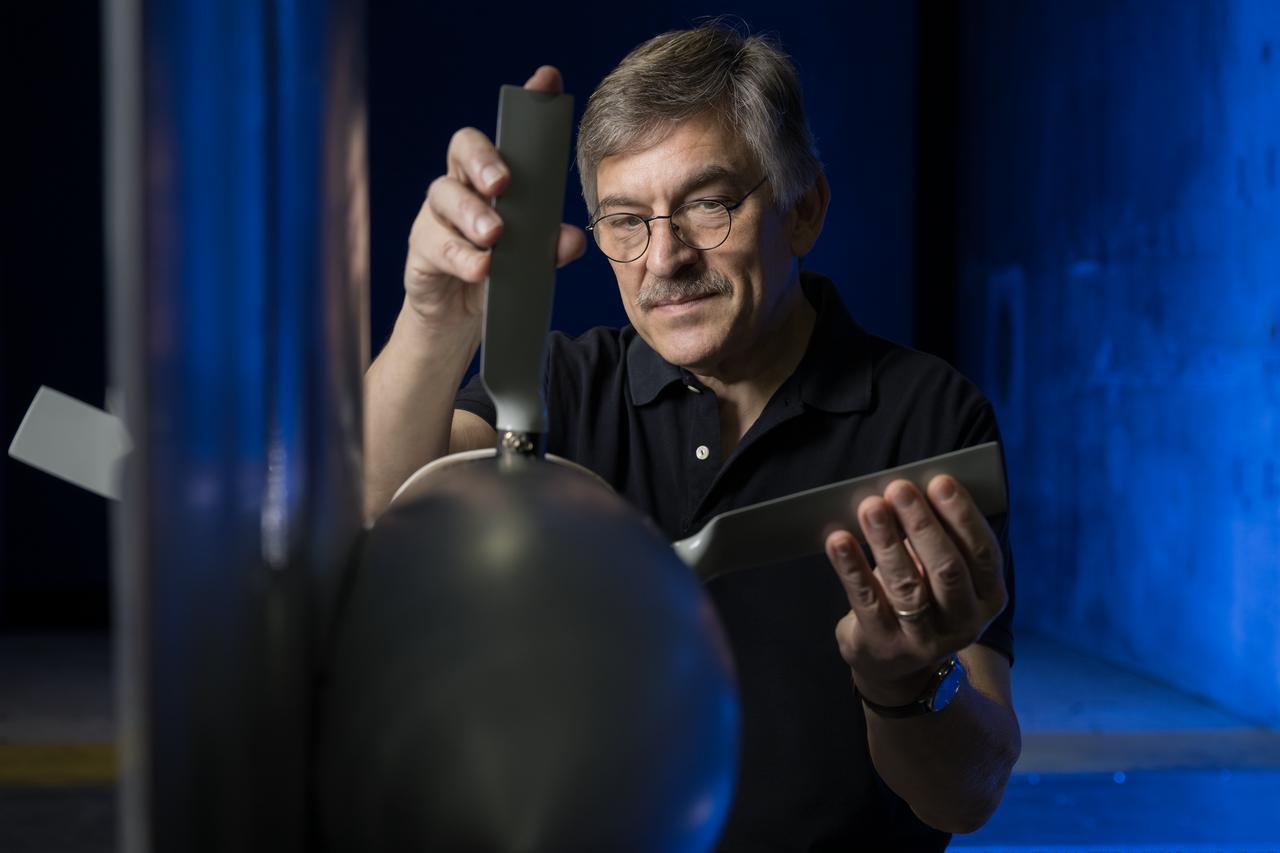
NASA researcher Norman W. Schaeffler adjusts a propellor, which is part of a 7-foot wing model that was recently tested at NASA’s Langley Research Center in Hampton, Virginia. In May and June, NASA researchers tested the wing in the 14-by-22-Foot Subsonic Wind Tunnel to collect data on critical propeller-wing interactions. The lessons learned from this testing will be shared with the public to support advanced air mobility aircraft development.
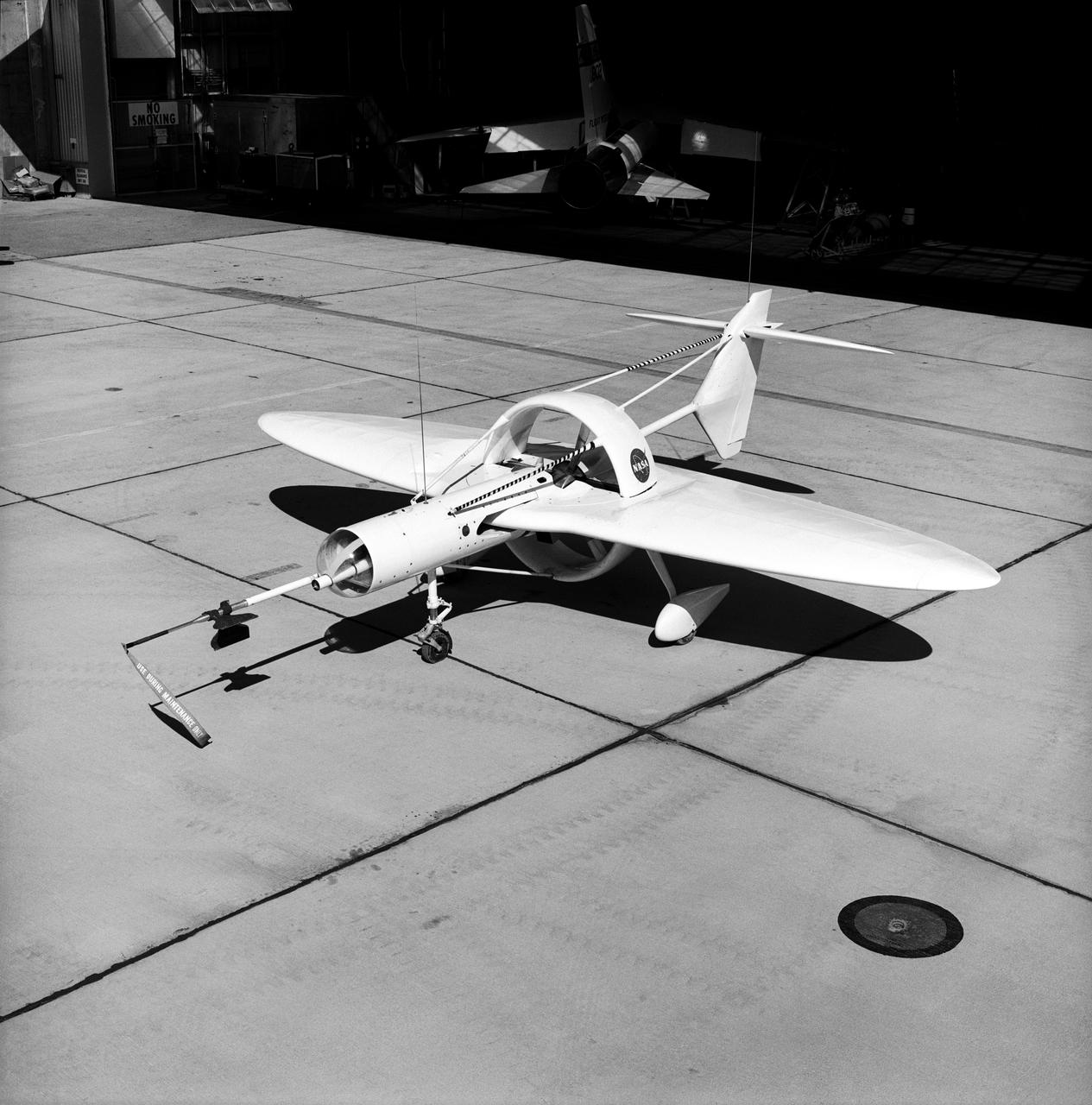
This 1976 photograph of the Oblique Wing Research Aircraft was taken in front of the NASA Flight Research Center hangar, located at Edwards Air Force Base, California. In the photograph the noseboom, pitot-static probe, and angles-of-attack and sideslip flow vanes(covered-up) are attached to the front of the vehicle. The clear nose dome for the television camera, and the shrouded propellor for the 90 horsepower engine are clearly seen.
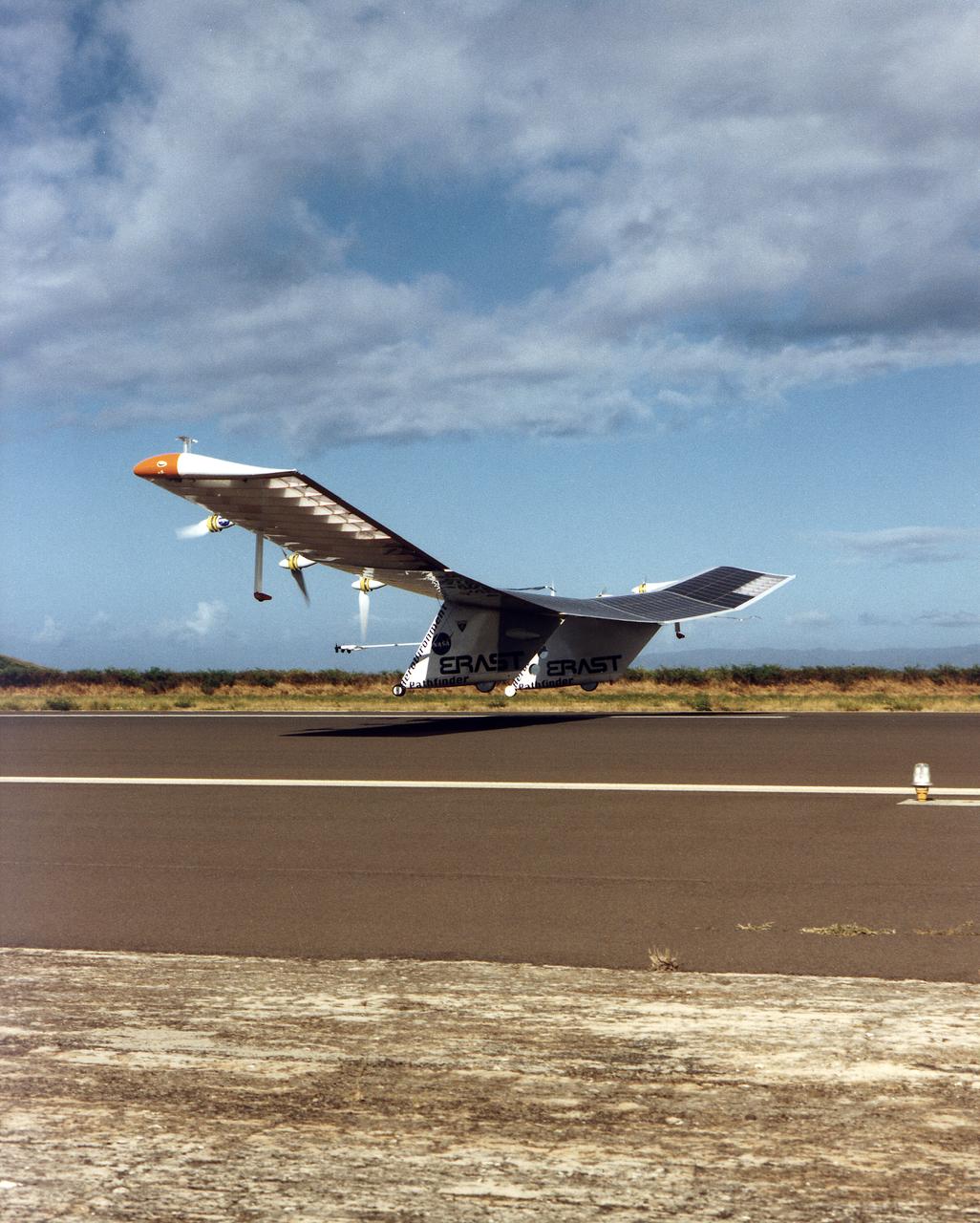
The Pathfinder aircraft has set a new unofficial world record for high-altitude flight of over 71,500 feet for solar-powered aircraft at the U.S. Navy's Pacific Missile Range Facility, Kauai, Hawaii. Pathfinder was designed and manufactured by AeroVironment, Inc, of Simi Valley, California, and was operated by the firm under a jointly sponsored research agreement with NASA's Dryden Flight Research Center, Edwards, California. Pathfinder's record-breaking flight occurred July 7, 1997. The aircraft took off at 11:34 a.m. PDT, passed its previous record altitude of 67,350 feet at about 5:45 p.m. and then reached its new record altitude at 7 p.m. The mission ended with a perfect nighttime landing at 2:05 a.m. PDT July 8. The new record is the highest altitude ever attained by a propellor-driven aircraft. Before Pathfinder, the altitude record for propellor-driven aircraft was 67,028 feet, set by the experimental Boeing Condor remotely piloted aircraft.
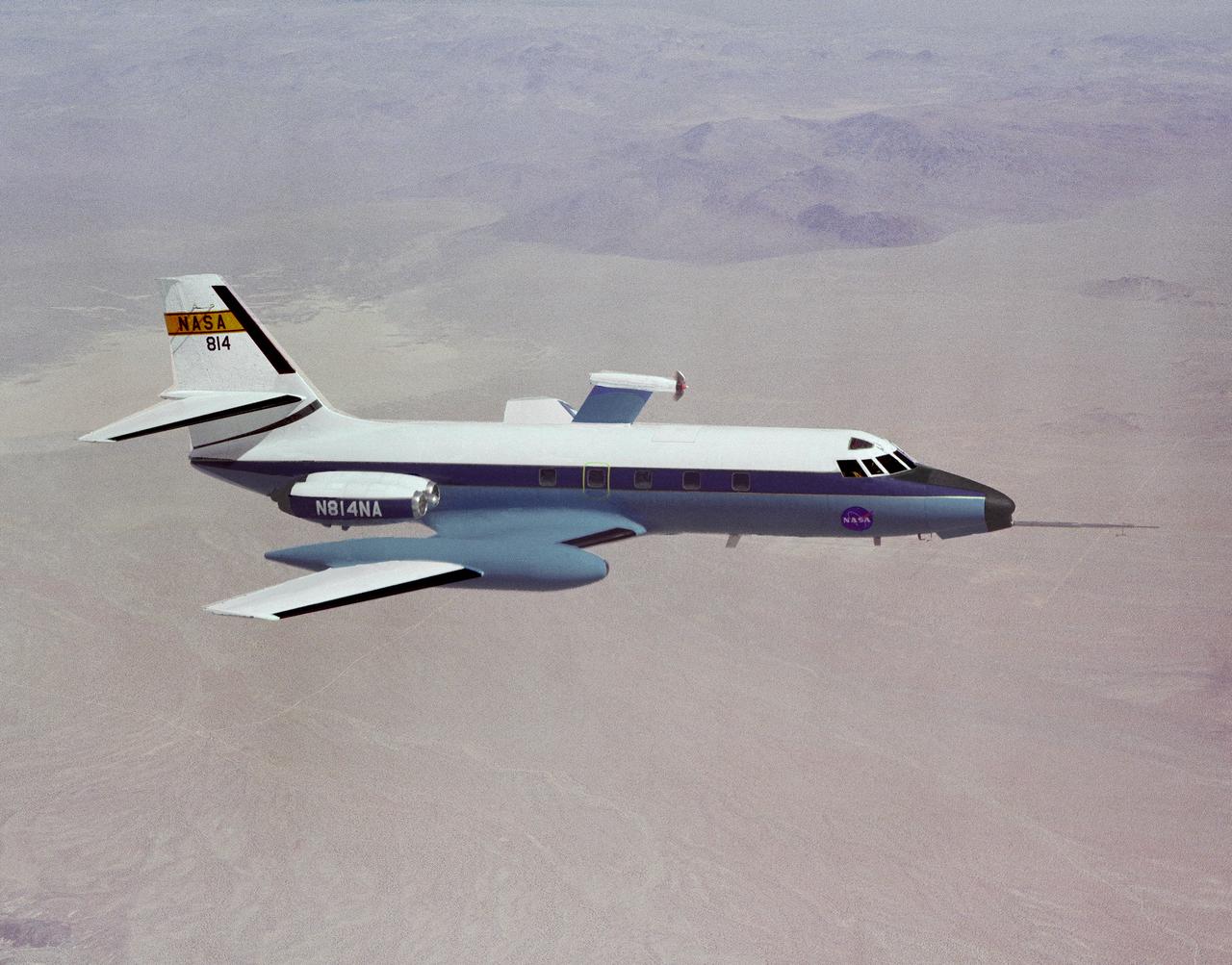
In this photograph, the C-140 JetStar is fitted with a model of a high-speed propeller. Three different designs were tested at NASA's Dryden Flight Research Facility in 1981-1982. Their swept-back blades were intended to increase the speed and fuel efficiency of turboprop aircraft. Speeds of Mach 0.8 were thought possible, while using 20 to 30 percent less fuel than standard jet engines.
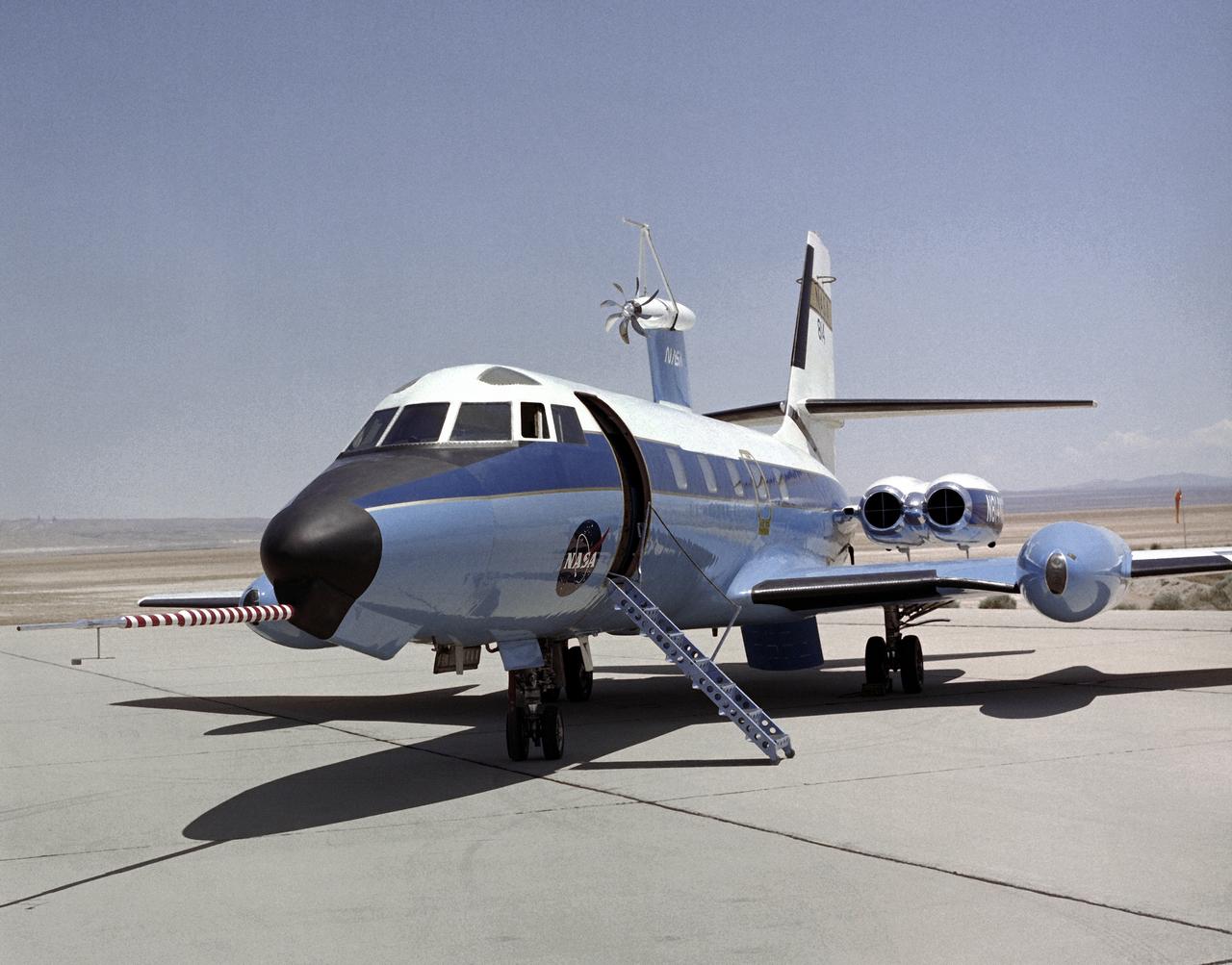
In this photo of the C-140 JetStar on the Dryden Ramp, a subscale propeller has been fitted to the upper fuselage of the aircraft.
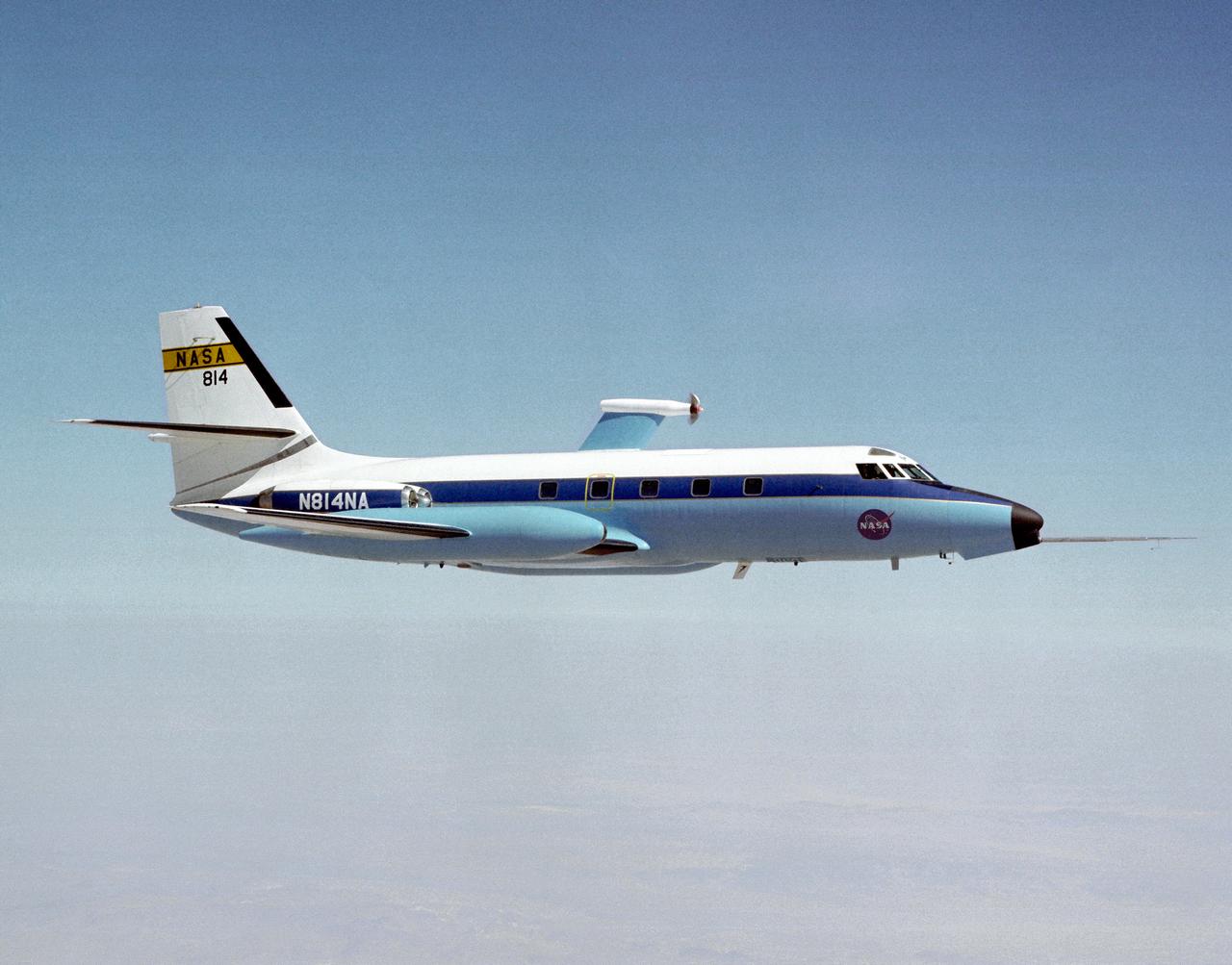
The Dryden C-140 JetStar during testing of advanced propfan designs. Dryden conducted flight research in 1981-1982 on several designs. The technology was developed under the direction of the Lewis Research Center (today the Glenn Research Center, Cleveland, OH) under the Advanced Turboprop Program. Under that program, Langley Research Center in Virginia oversaw work on accoustics and noise reduction. These efforts were intended to develop a high-speed and fuel-efficient turboprop system.
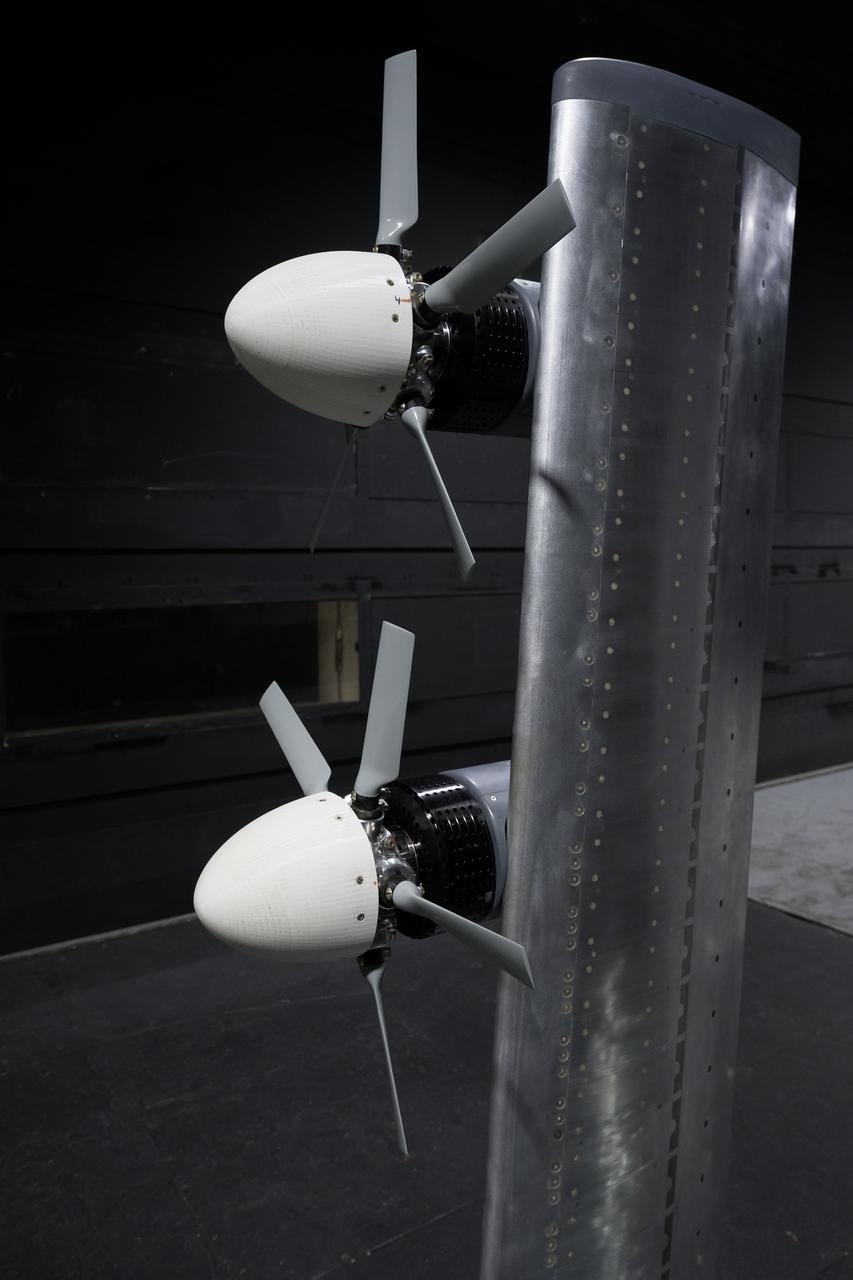
In May and June, NASA researchers tested a 7-foot wing model in the 14-by-22-Foot Subsonic Wind Tunnel at NASA’s Langley Research Center in Hampton, Virginia. The team collected data on critical propeller-wing interactions over the course of several weeks
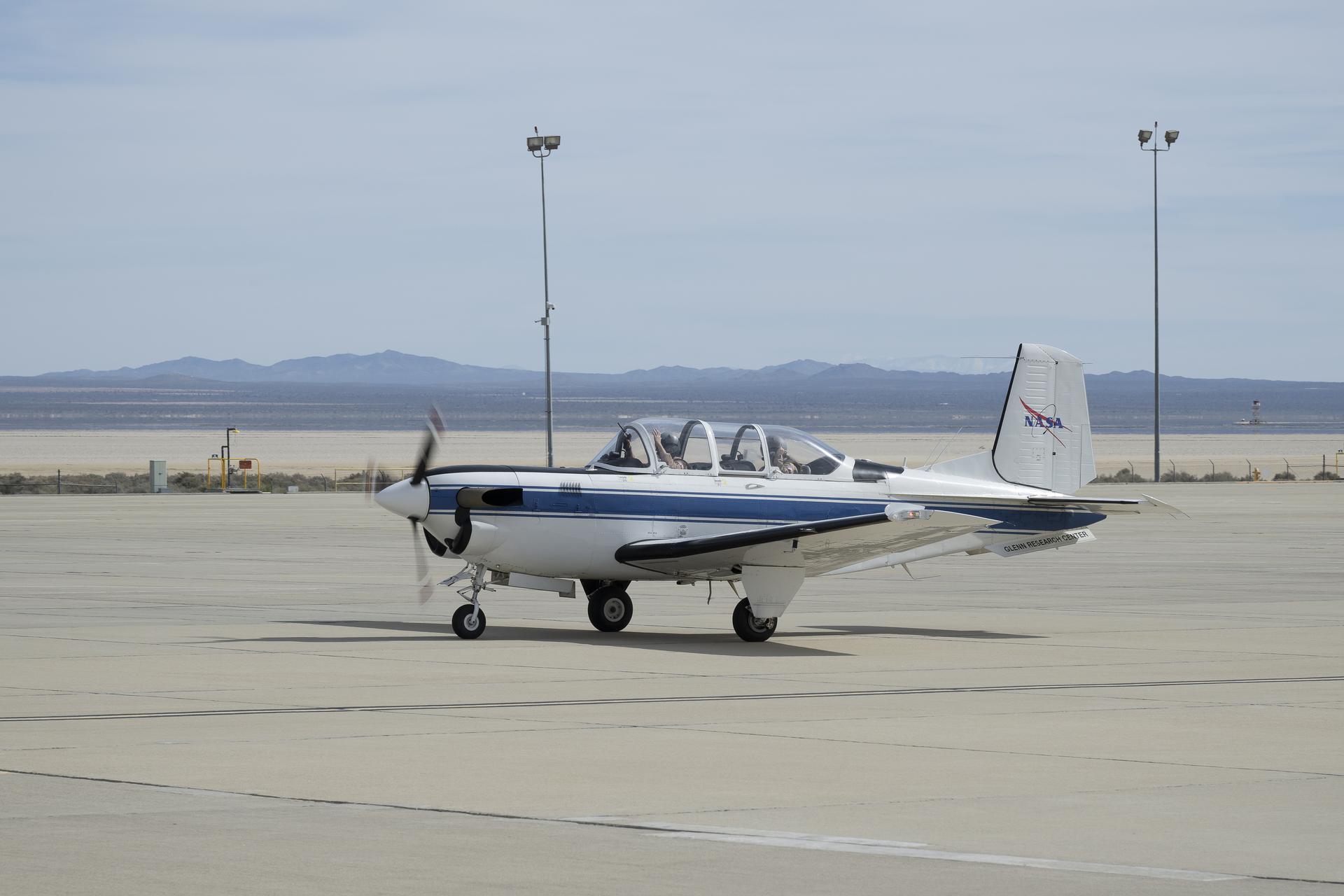
A NASA T-34 aircraft, tail number 602, arrived at NASA’s Armstrong Flight Research Center in Edwards, California, on Feb. 14, 2026. This aircraft was flown from NASA’s Glenn Research Center in Cleveland, to NASA Armstrong, to be evaluated for use as a flight research and pilot training platform for the center.
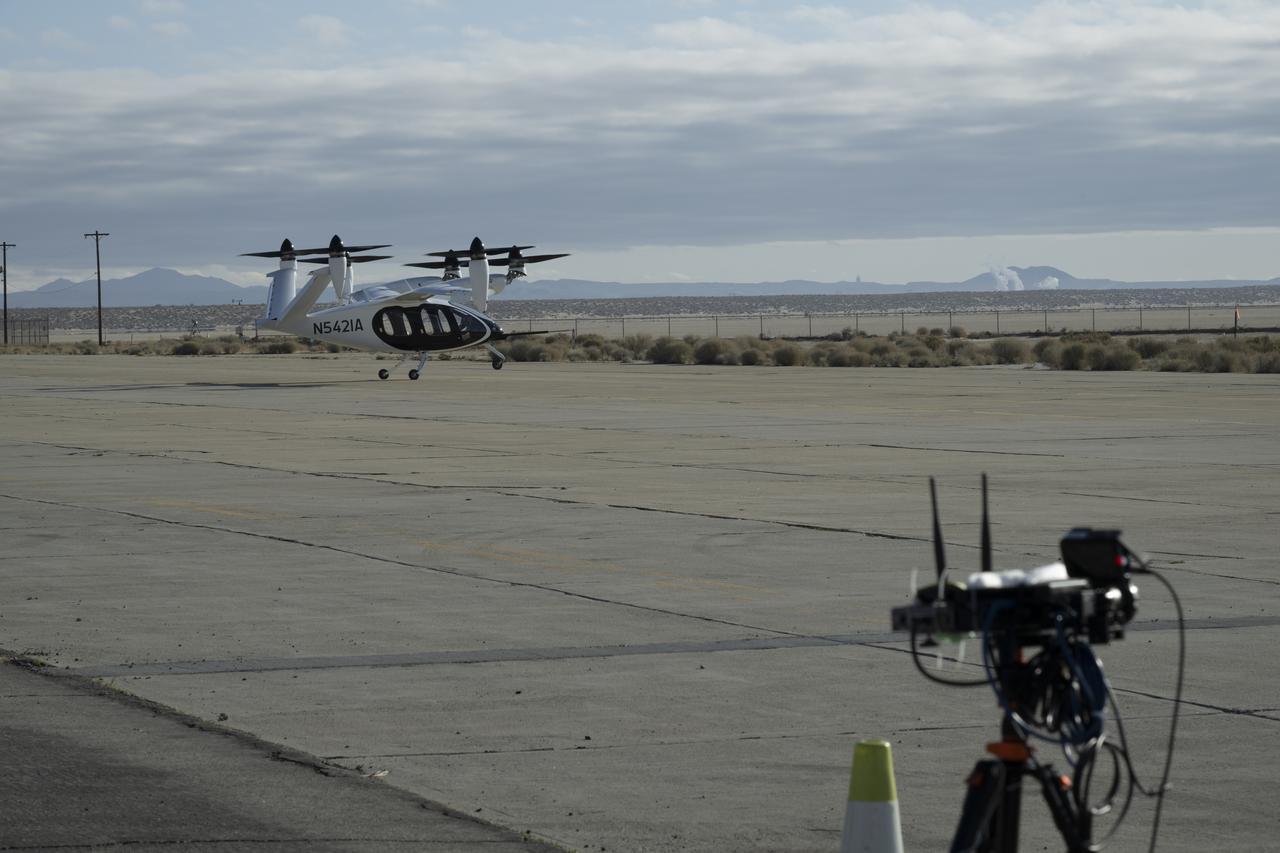
One of multiple NASA distributed sensing ground nodes is set up in the foreground while an experimental air taxi aircraft owned by Joby Aviation prepares to take off in the background near NASA’s Armstrong Flight Research Center in Edwards, California, on March 12, 2025. NASA is collecting information during this study to help advance future air taxi flights, especially those occurring in cities, to track aircraft moving through traffic corridors and around landing zones.
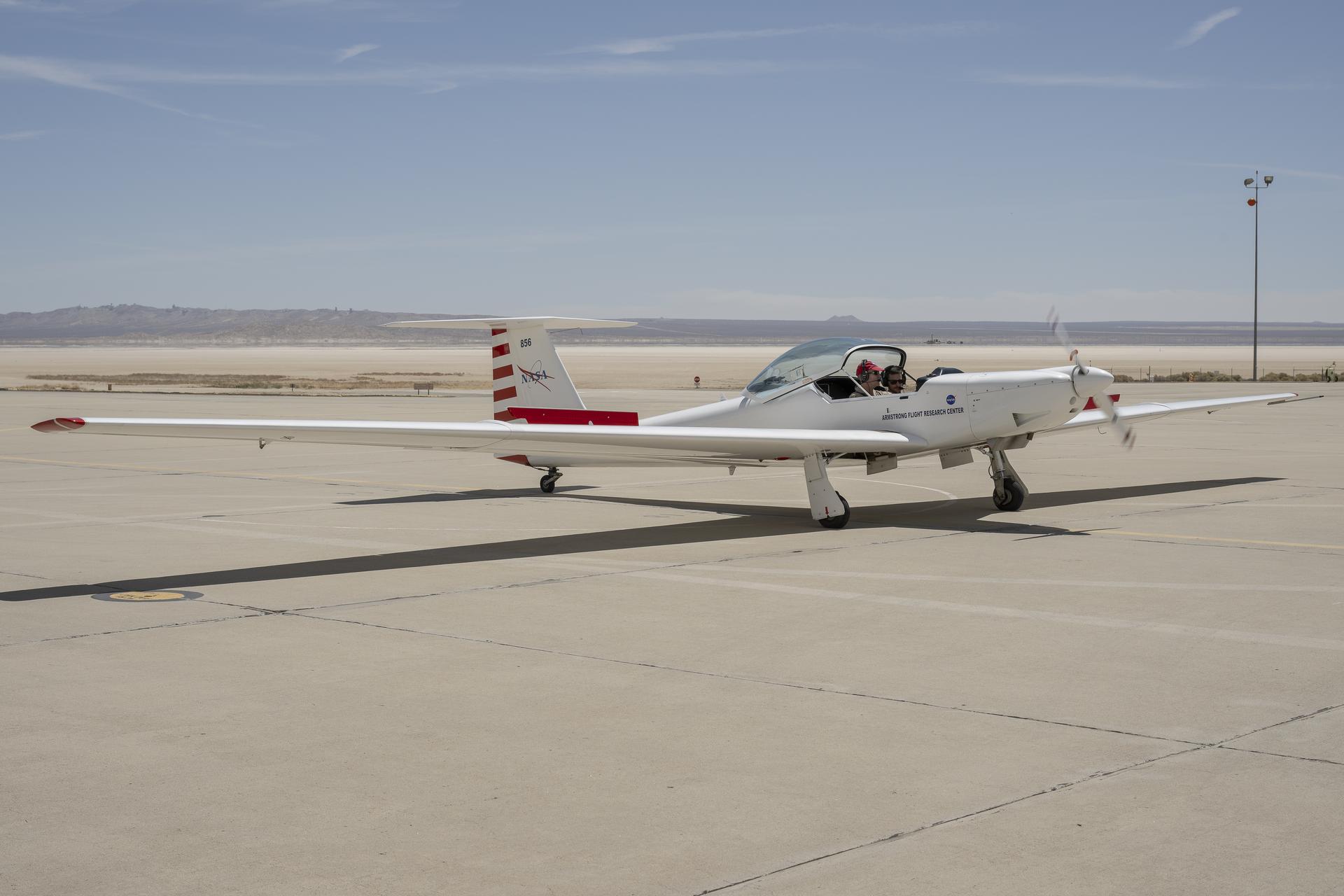
A NASA TG-14 sits on the ramp at NASA’s Armstrong Flight Research Center in Edwards, California, on Monday, Aug. 4, 2025, to support NASA’s Quesst mission.
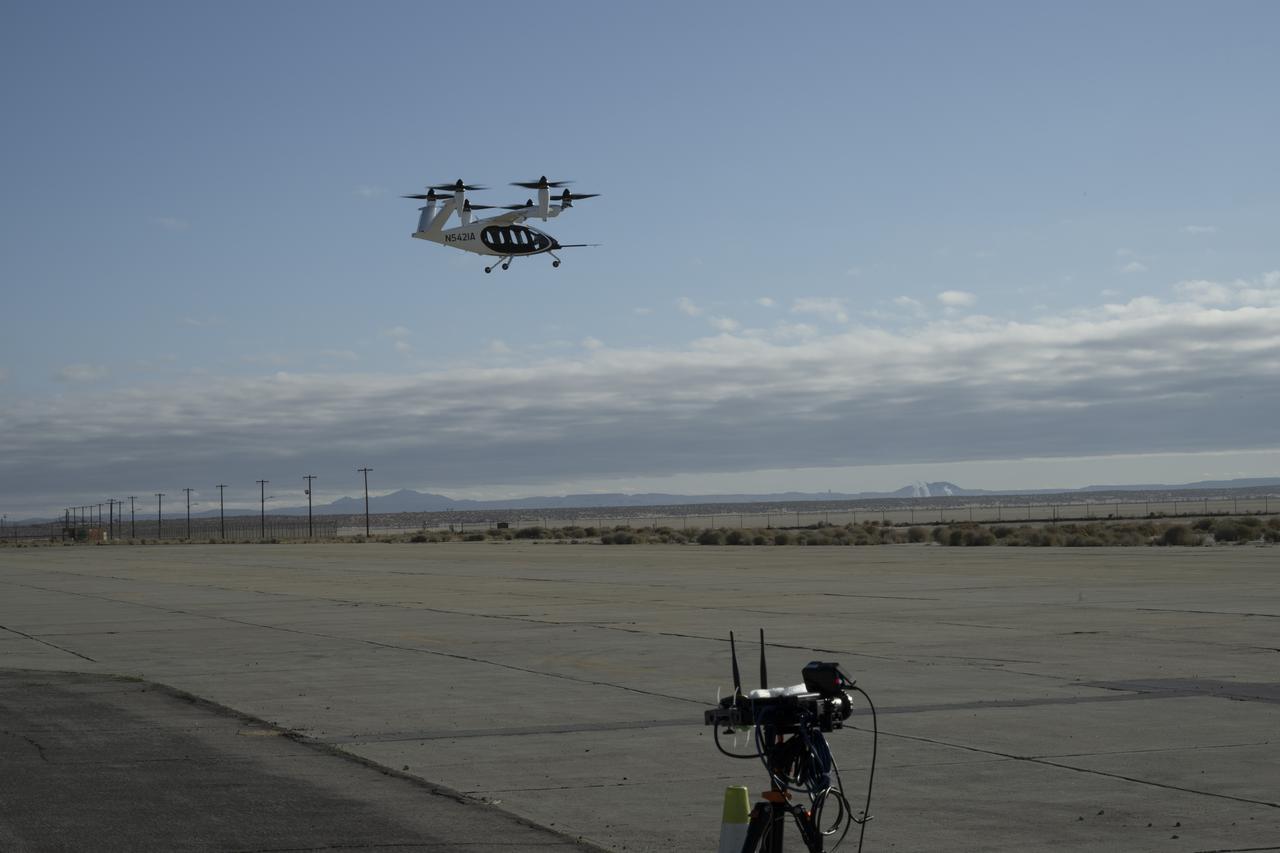
One of multiple NASA distributed sensing ground nodes is set up in the foreground while an experimental air taxi aircraft owned by Joby Aviation hovers in the background near NASA’s Armstrong Flight Research Center in Edwards, California, on March 12, 2025. NASA is collecting information during this study to help advance future air taxi flights, especially those occurring in cities, to track aircraft moving through traffic corridors and around landing zones.
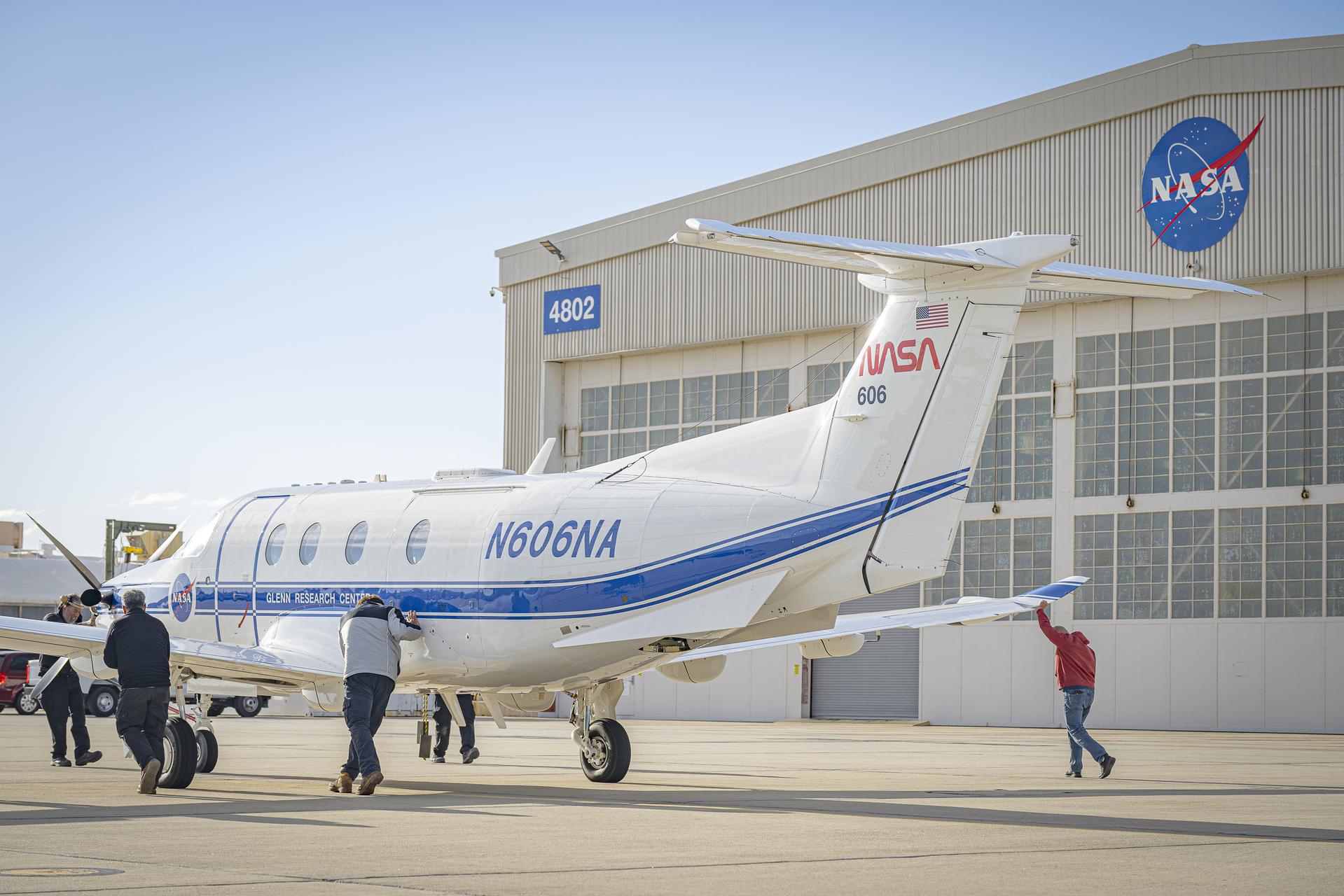
A Pilatus PC-12 aircraft, tail number 606, is being towed and pushed by a crew at NASA’s Armstrong Flight Research Center in Edwards, California, on Feb. 11, 2026. This aircraft is now housed at NASA Armstrong to continue supporting research at NASA’s Glenn Research Center in Cleveland, among other agency efforts.

A Pilatus PC-12 aircraft, tail number 606, is being towed and pushed by a crew at NASA’s Armstrong Flight Research Center in Edwards, California, on Feb. 11, 2026. This aircraft is now housed at NASA Armstrong to continue supporting research at NASA’s Glenn Research Center, among other agency efforts.
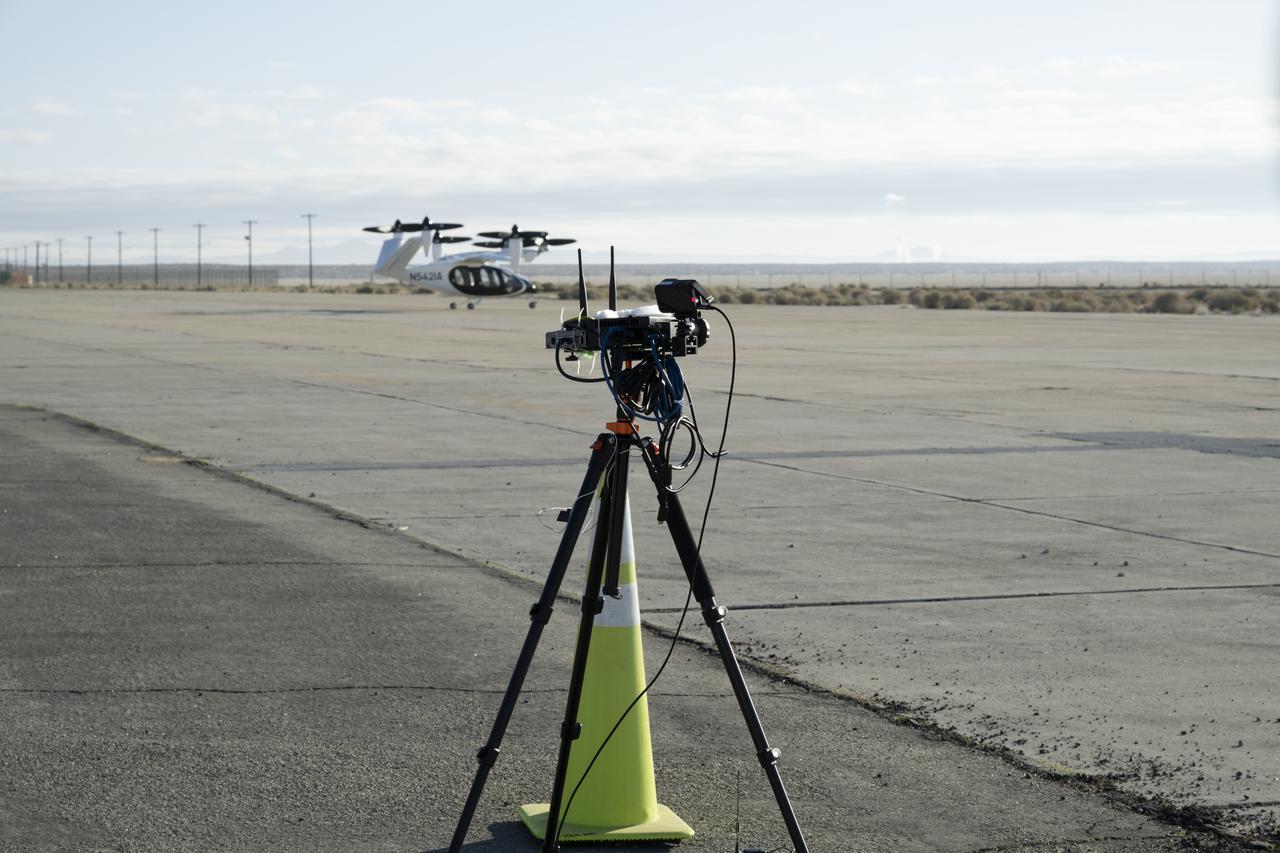
One of several NASA distributed sensing ground nodes is set up in the foreground while an experimental air taxi aircraft owned by Joby Aviation sits in the background near NASA’s Armstrong Flight Research Center in Edwards, California, on March 12, 2025. NASA is collecting information during this study to help advance future air taxi flights, especially those occurring in cities, to track aircraft moving through traffic corridors and around landing zones.