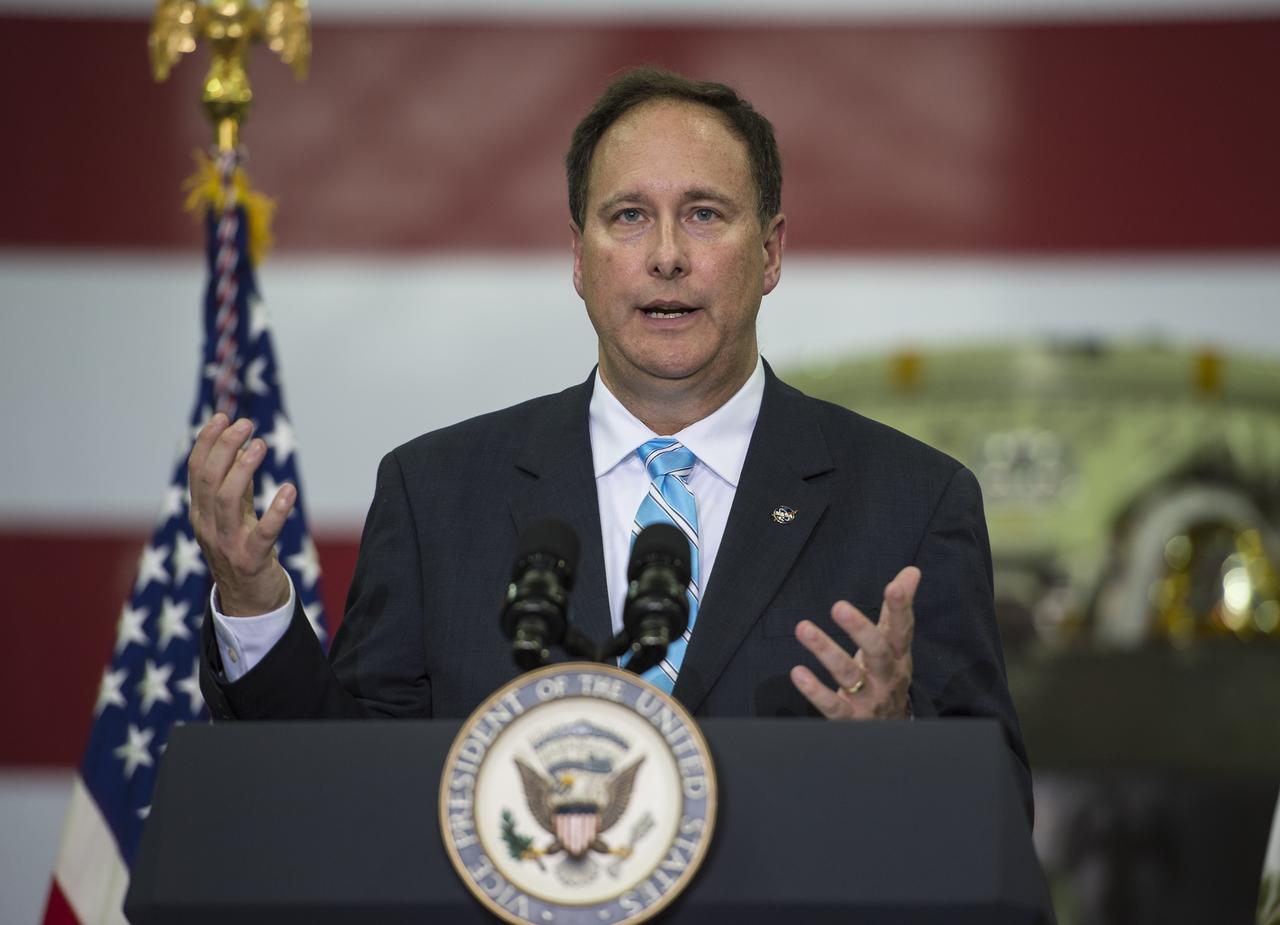
Acting NASA Director, Robert Lightfoot, welcomes guests and introduces Vice President Mike Pence, Thursday, July 6, 2017, at the Vehicle Assembly Building at NASA’s Kennedy Space Center (KSC) in Cape Canaveral, Florida. Vice President Mike Pence is also scheduled to speak at the event to highlight innovations made in America and tour some of the public/private partnership work that is helping to transform the center into a multi-user spaceport. Photo Credit: (NASA/Aubrey Gemignani)
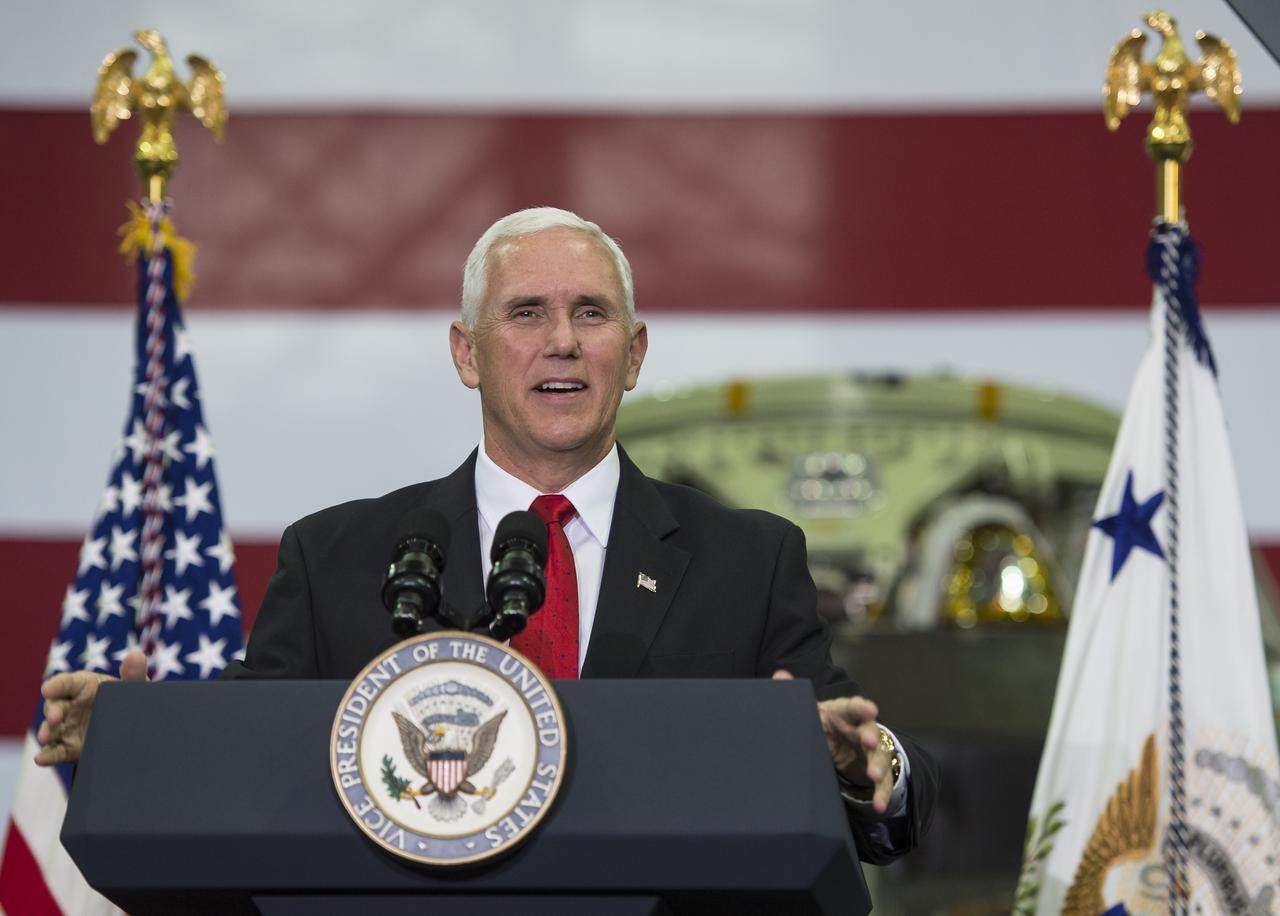
Vice President Mike Pence addresses NASA employees, Thursday, July 6, 2017, at the Vehicle Assembly Building at NASA’s Kennedy Space Center (KSC) in Cape Canaveral, Florida. The Vice President thanked employees for advancing American leadership in space, before going on a tour of the center that highlighted the public-private partnerships at KSC, as both NASA and commercial companies prepare to launch American astronauts from the multi-user spaceport. Photo Credit: (NASA/Aubrey Gemignani)
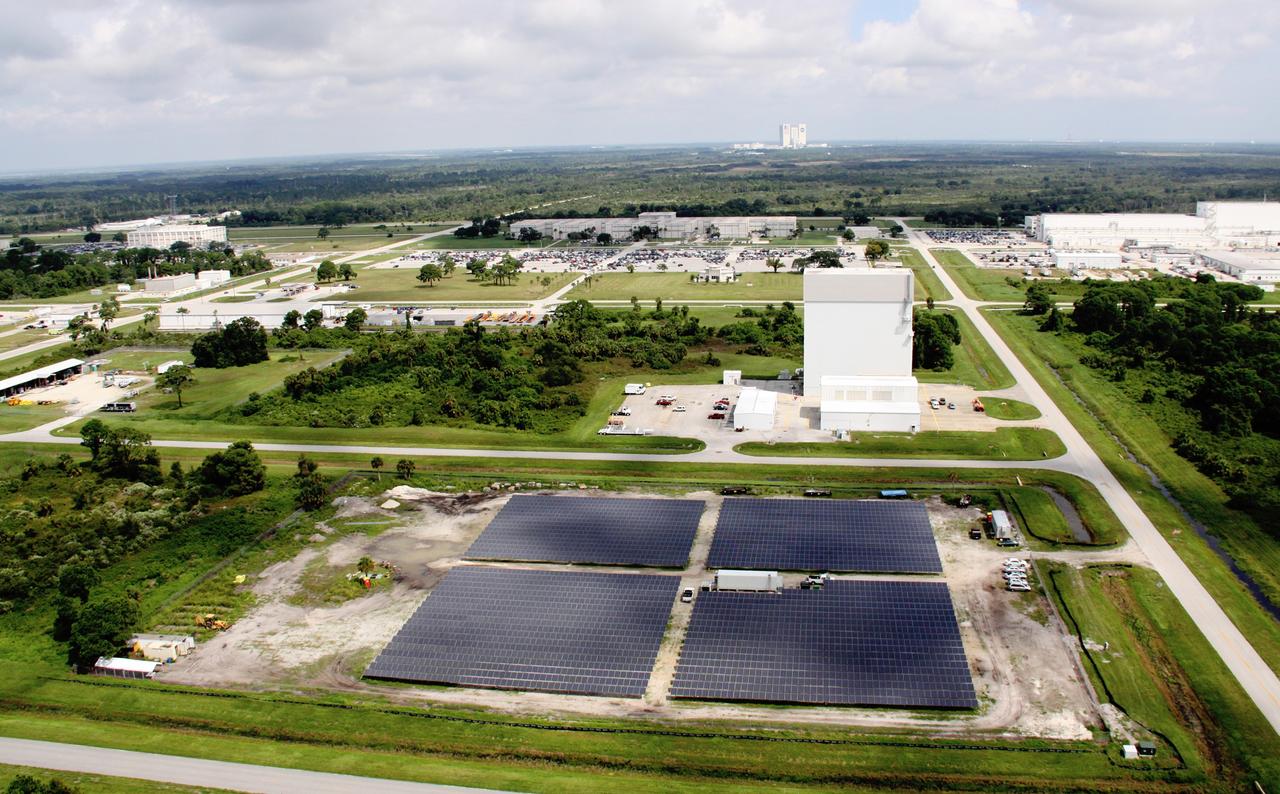
CAPE CANAVERAL, Fla. – An aerial view of the site in the Industrial Area of NASA's Kennedy Space Center in Florida where a solar power system is being built. The solar power systems are being constructed by NASA and Florida Power & Light Company as part of a public-private partnership that promotes a clean-energy future. This site located on 10 acres will produce about one megawatt of electricity for Kennedy to use. Photo credit: NASA/Troy Cryder
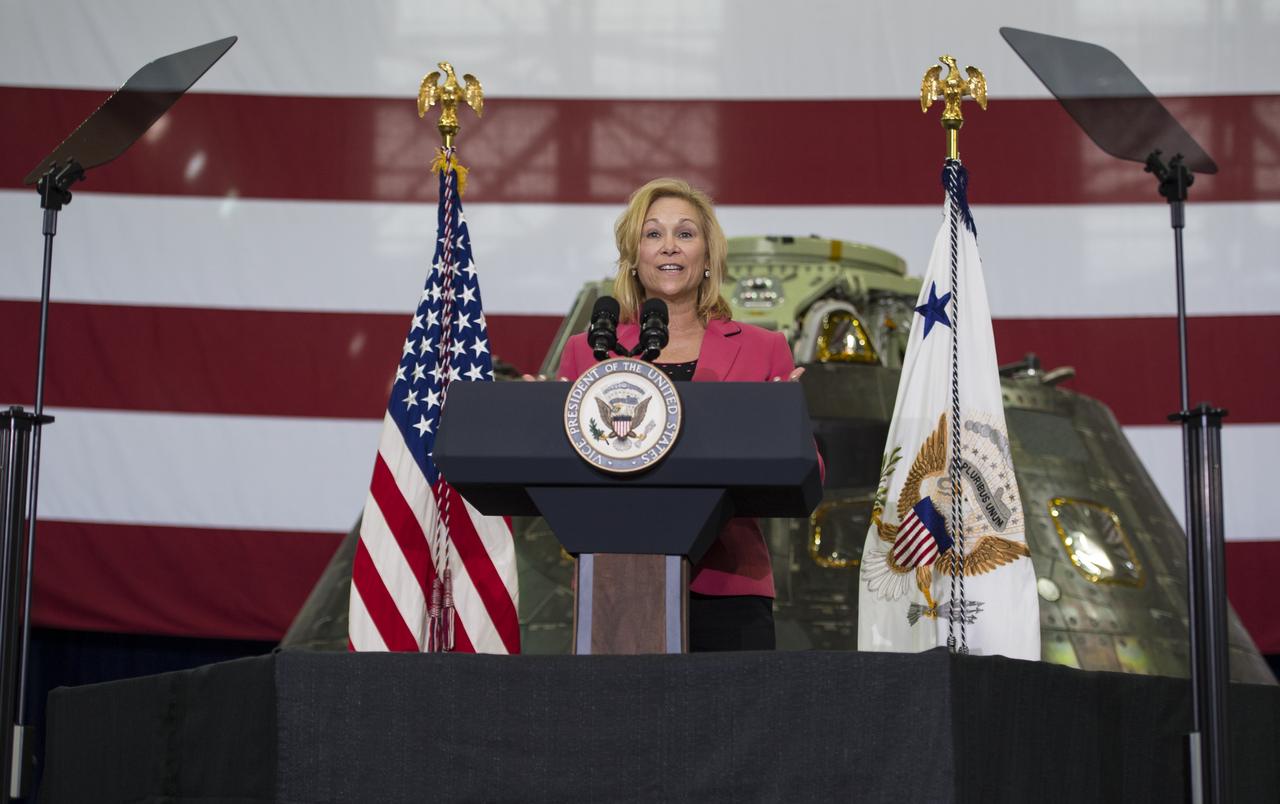
NASA Kennedy Space Center (KSC) Deputy Director Janet Petro welcomes guests and introduces KSC Director, Robert Cabana, Thursday, July 6, 2017, at the Vehicle Assembly Building at KSC in Cape Canaveral, Florida. Vice President Mike Pence is also scheduled to speak at the event to highlight innovations made in America and tour some of the public/private partnership work that is helping to transform the center into a multi-user spaceport. Photo Credit: (NASA/Aubrey Gemignani)
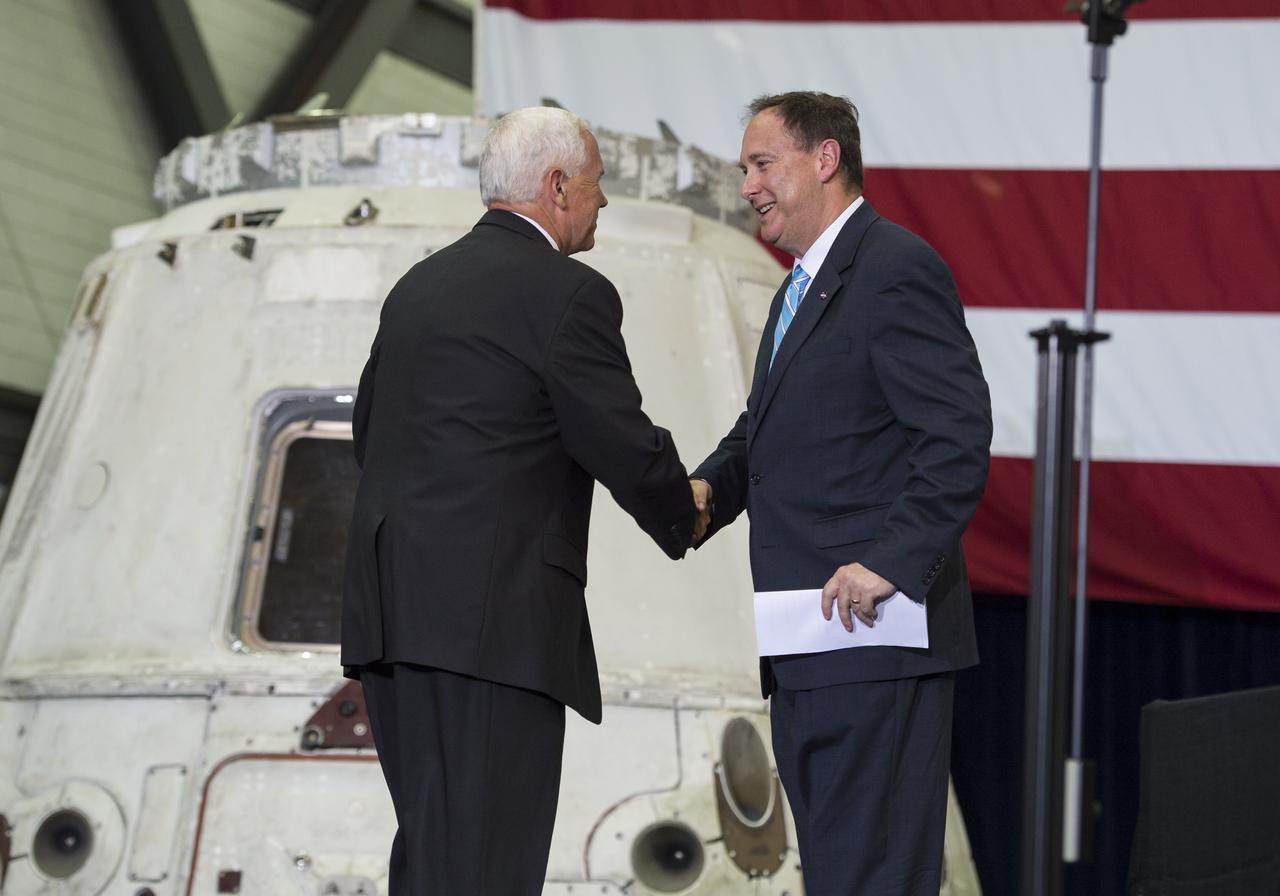
Vice President Mike Pence shakes hands with Acting NASA Administrator Robert Lightfoot before addressing NASA employees, Thursday, July 6, 2017, at the Vehicle Assembly Building at NASA’s Kennedy Space Center (KSC) in Cape Canaveral, Florida. The Vice President thanked employees for advancing American leadership in space, before going on a tour of the center that highlighted the public-private partnerships at KSC, as both NASA and commercial companies prepare to launch American astronauts from the multi-user spaceport. Photo Credit: (NASA/Aubrey Gemignani)
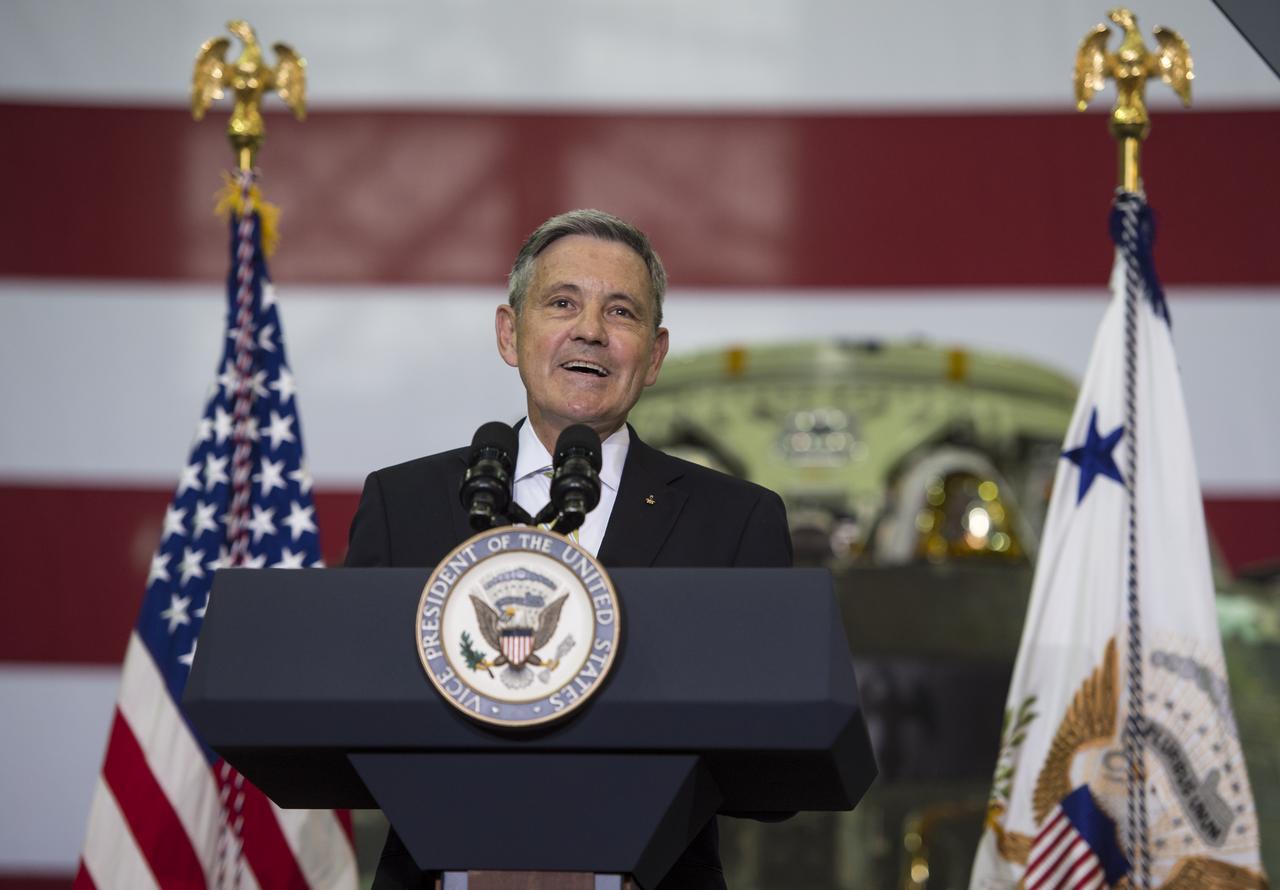
NASA Kennedy Space Center (KSC) Director Robert D. Cabana welcomes guests and introduces Acting NASA Administrator Robert Lightfoot, Thursday, July 6, 2017, at the Vehicle Assembly Building at KSC in Cape Canaveral, Florida. Vice President Mike Pence is also scheduled to speak at the event to highlight innovations made in America and tour some of the public/private partnership work that is helping to transform the center into a multi-user spaceport. Photo Credit: (NASA/Aubrey Gemignani)
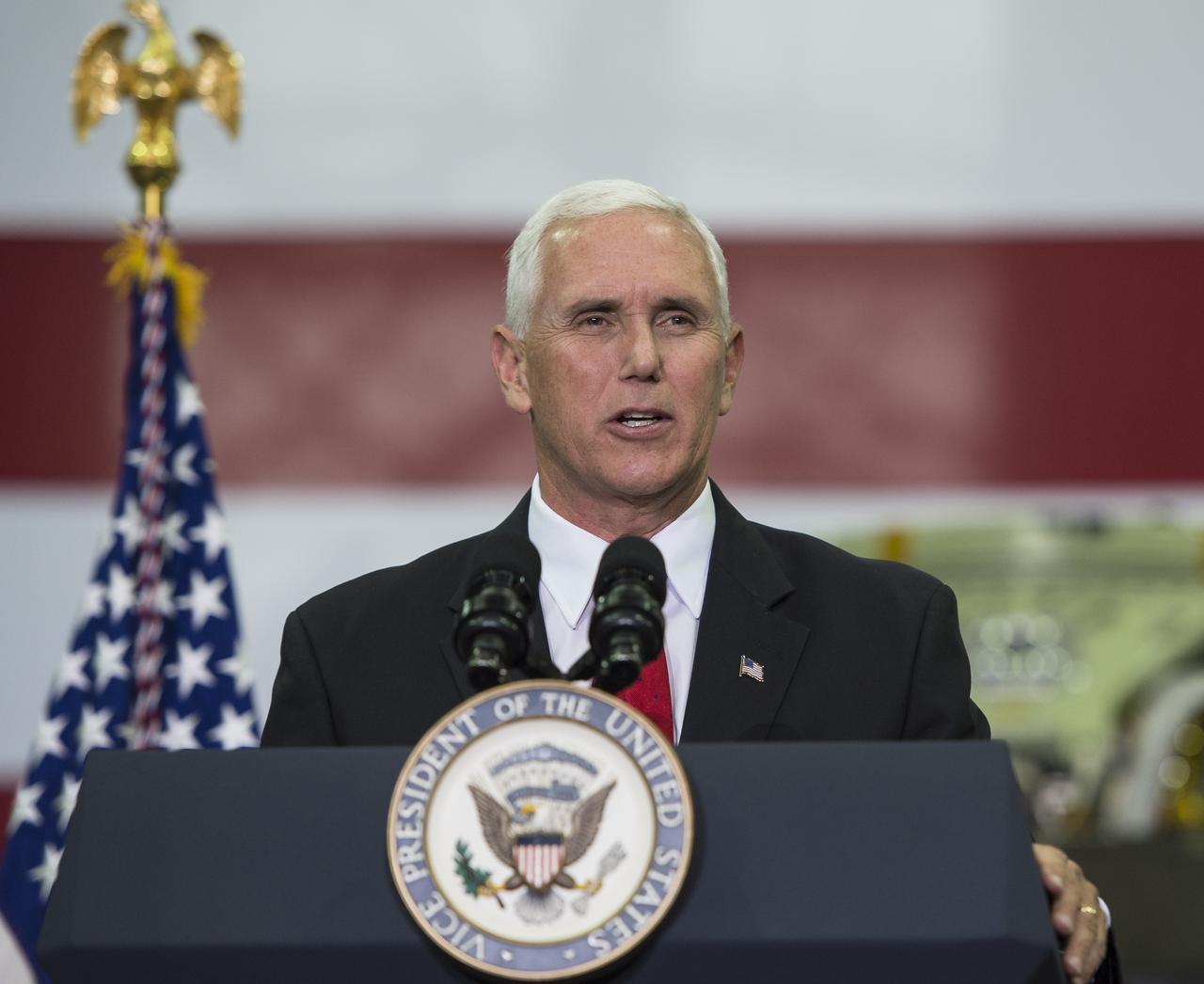
Vice President Mike Pence addresses NASA employees, Thursday, July 6, 2017, at the Vehicle Assembly Building at NASA’s Kennedy Space Center (KSC) in Cape Canaveral, Florida. The Vice President thanked employees for advancing American leadership in space, before going on a tour of the center that highlighted the public-private partnerships at KSC, as both NASA and commercial companies prepare to launch American astronauts from the multi-user spaceport. Photo Credit: (NASA/Aubrey Gemignani)
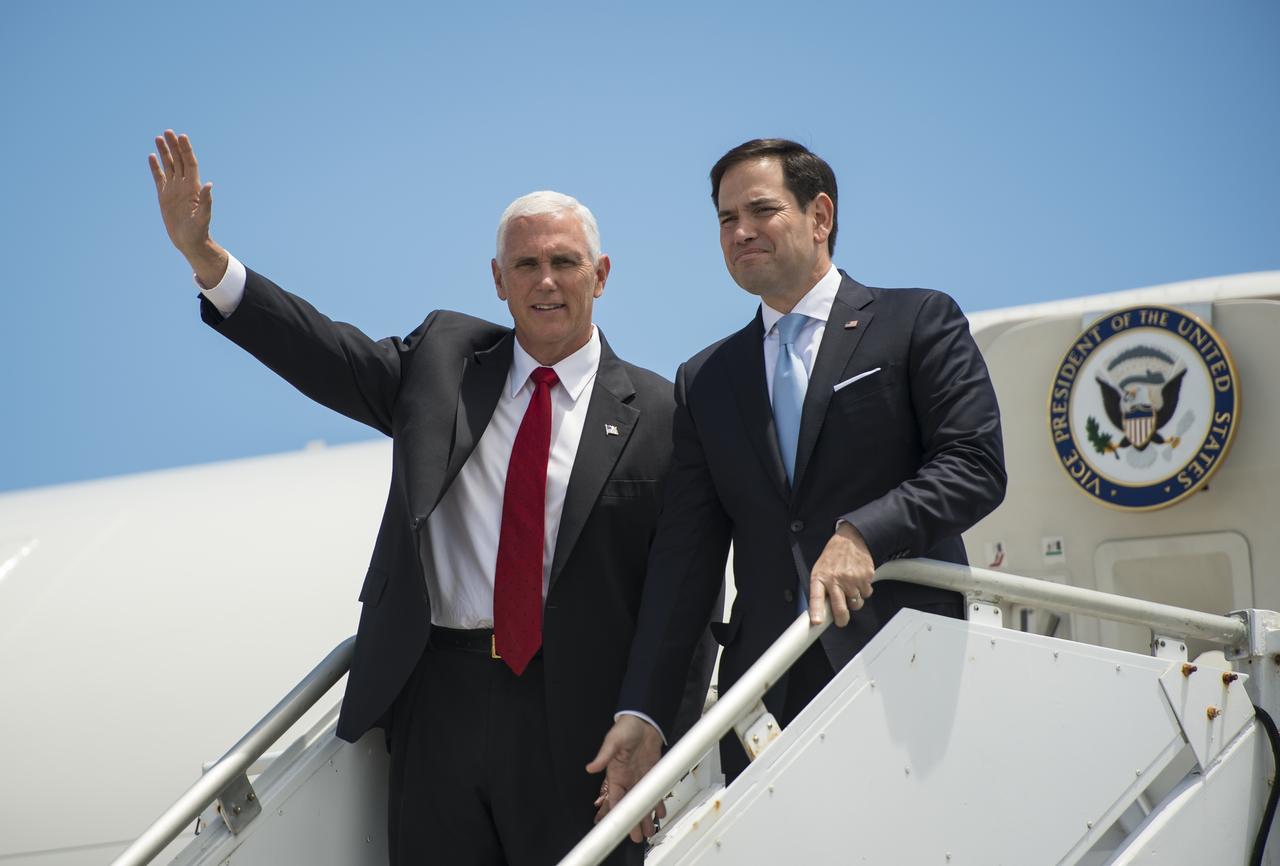
Vice President Mike Pence waves next to Sen. Marco Rubio, R-Fla., after they arrived on Air Force Two at the Shuttle Landing Facility (SLF) to highlight innovations made in America and tour some of the public/private partnership work that is helping to transform Kennedy Space Center (KSC) into a multi-user spaceport on Thursday, July 6, 2017 in Cape Canaveral, Florida. Photo Credit: (NASA/Aubrey Gemignani)
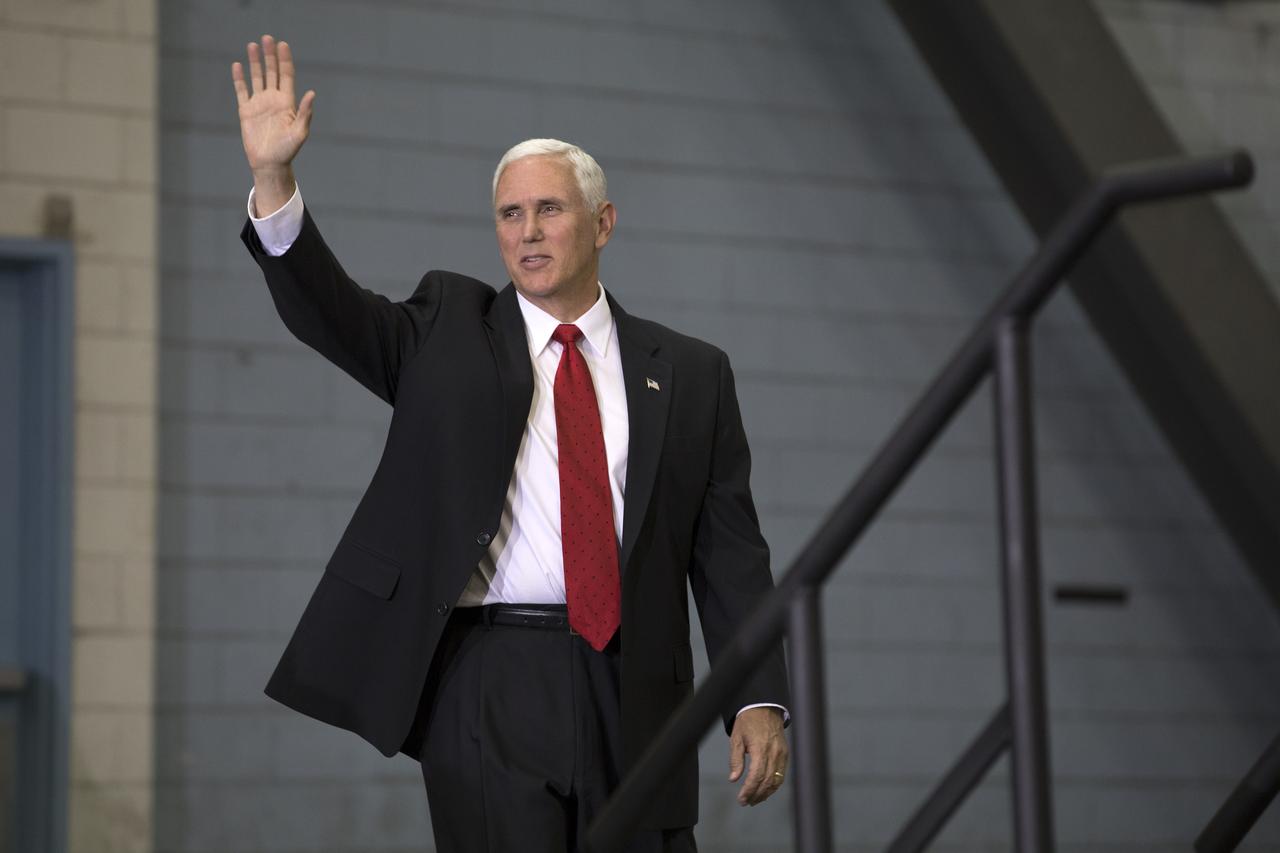
Vice President Mike Pence arrives at the Vehicle Assembly Building at NASA's Kennedy Space Center in Florida. During his visit, Pence spoke inside the iconic building, where he thanked employees for advancing American leadership in space. The Vice President also toured several facilities highlighting the public-private partnerships at Kennedy, as both NASA and commercial companies prepare to launch American astronauts from the multi-user spaceport.
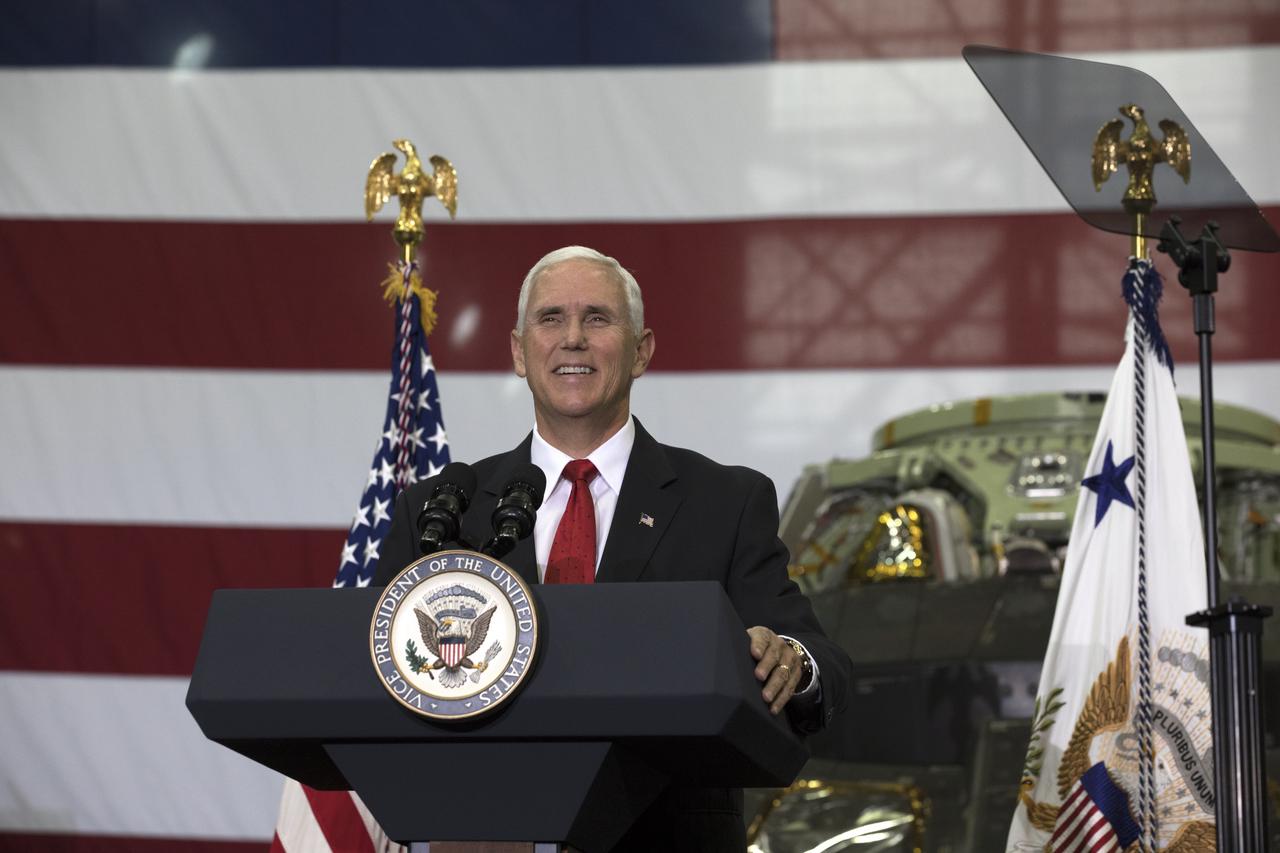
Vice President Mike Pence speaks before an audience of NASA leaders, U.S. and Florida government officials, and employees inside the Vehicle Assembly Building at NASA's Kennedy Space Center in Florida. Pence thanked employees for advancing American leadership in space. During his visit to Kennedy, the Vice President also toured several facilities highlighting the public-private partnerships, as both NASA and commercial companies prepare to launch American astronauts from the multi-user spaceport.
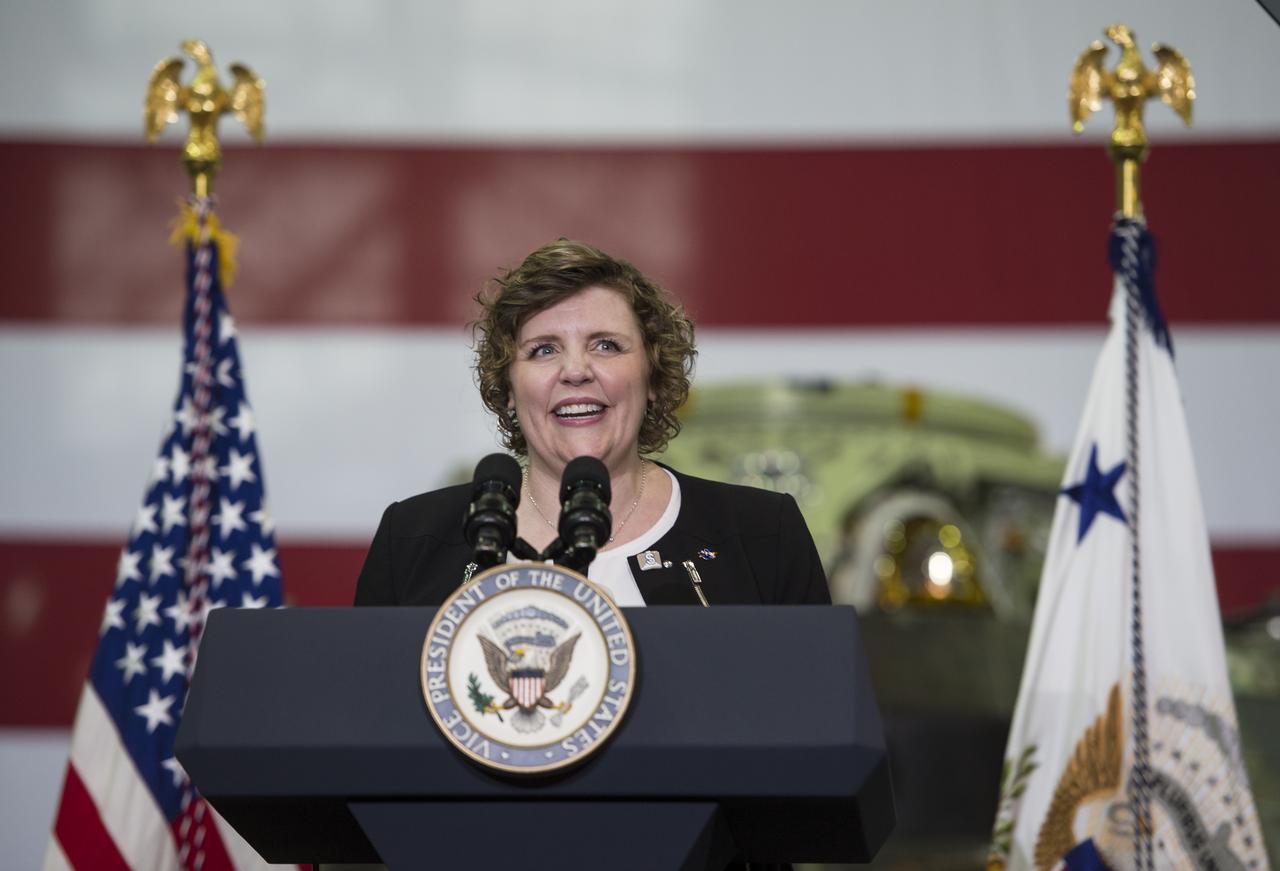
NASA Associate Administrator, Jen Rae Wang welcomes guests and introduces Deputy Director, Kennedy Space Center (KSC), Janet Petro, Thursday, July 6, 2017, at the Vehicle Assembly Building at KSC in Cape Canaveral, Florida. Vice President Mike Pence is also scheduled to speak at the event to highlight innovations made in America and tour some of the public/private partnership work that is helping to transform the center into a multi-user spaceport. Photo Credit: (NASA/Aubrey Gemignani)
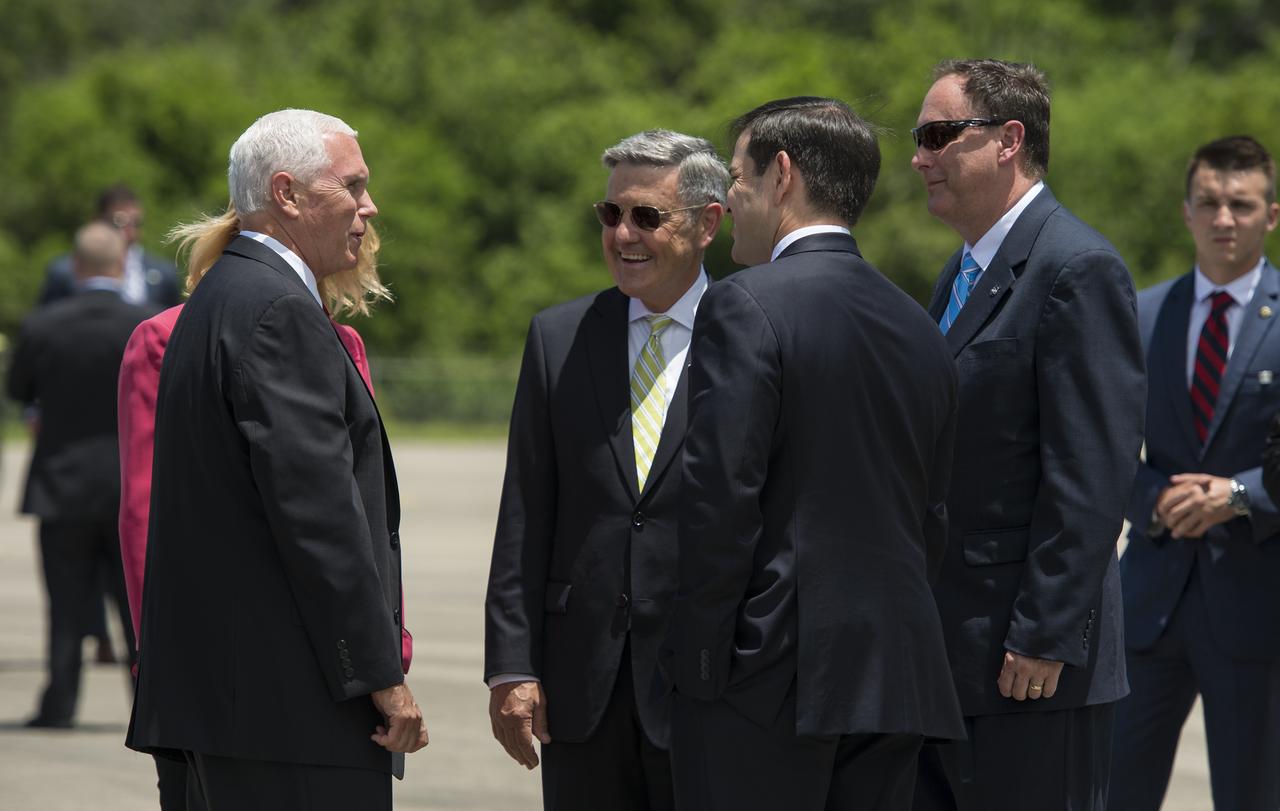
Vice President Mike Pence, left, greets Acting NASA Administrator Robert Lightfoot, right, and Director, Kennedy Space Center, Robert Cabana, second from left, with U.S. Senator Marco Rubio, center, after arriving at the Shuttle Landing Facility (SLF) to highlight innovations made in America and tour some of the public/private partnership work that is helping to transform Kennedy Space Center (KSC) into a multi-user spaceport on Thursday, July 6, 2017 in Cape Canaveral, Florida. Photo Credit: (NASA/Aubrey Gemignani)
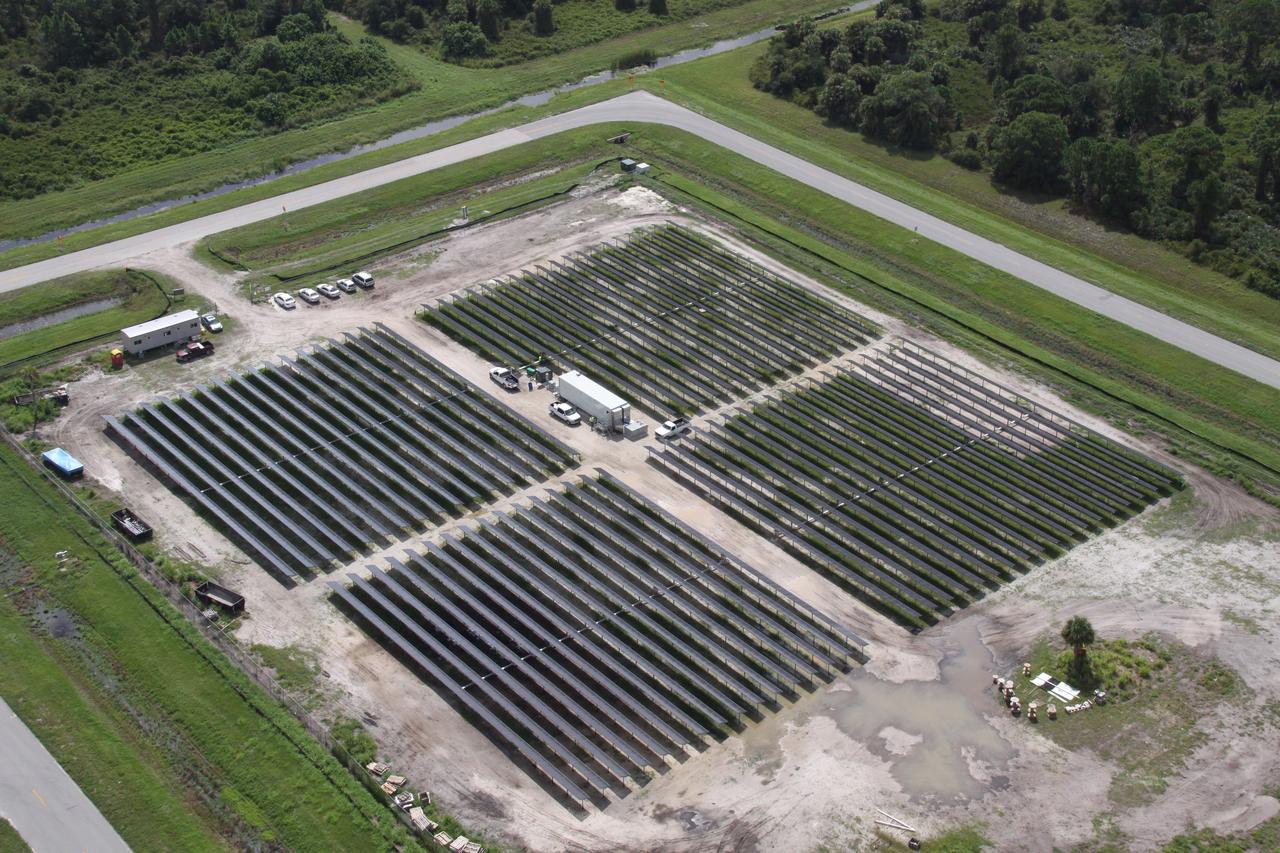
CAPE CANAVERAL, Fla. – An aerial view of the site in the Industrial Area of NASA's Kennedy Space Center in Florida where a solar power system is being built. The solar power systems are being constructed by NASA and Florida Power & Light Company as part of a public-private partnership that promotes a clean-energy future. This site located on 10 acres will produce about one megawatt of electricity for Kennedy to use. Photo credit: NASA/Troy Cryder
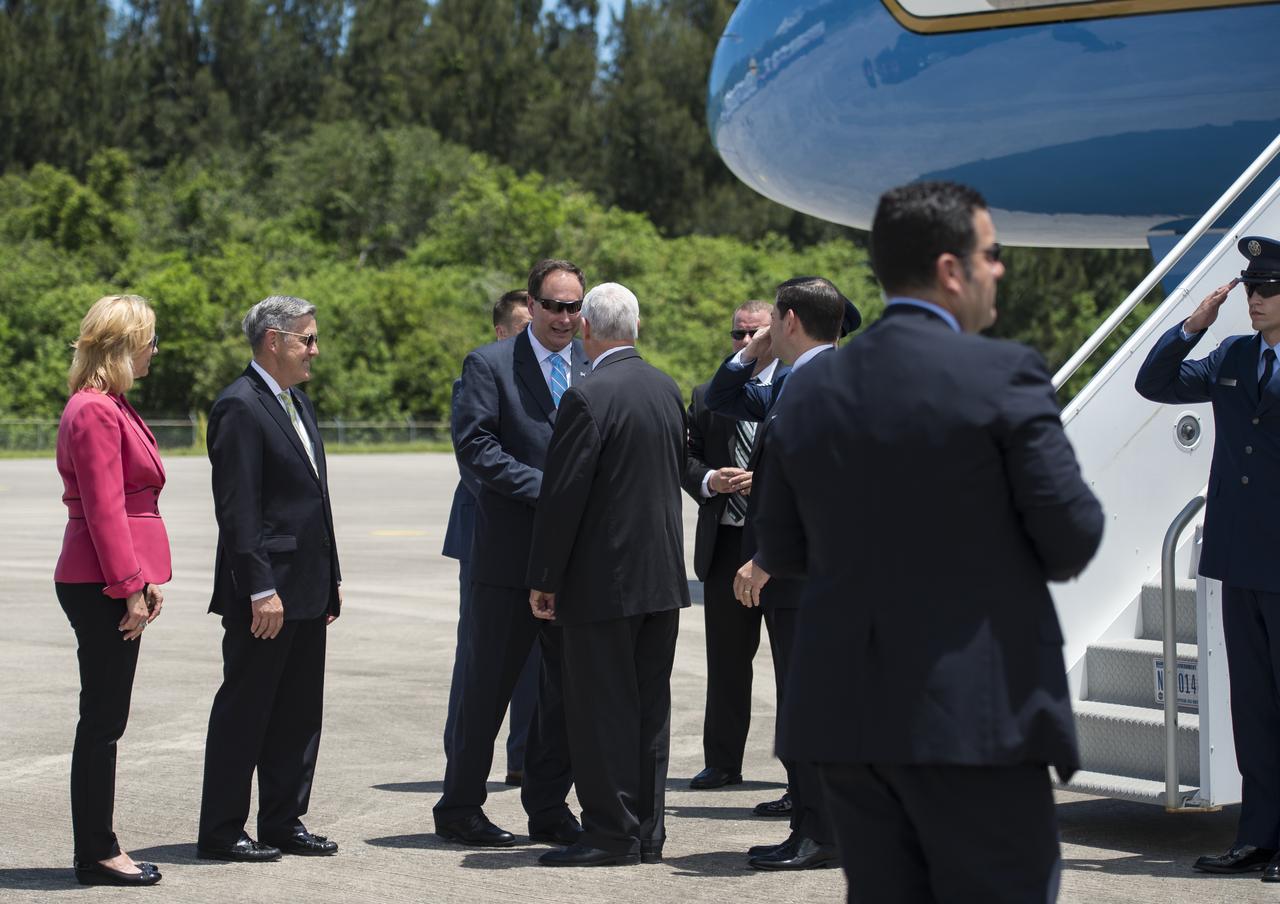
Vice President Mike Pence greets Acting NASA Administrator Robert Lightfoot after arriving at the Shuttle Landing Facility (SLF) to highlight innovations made in America and tour some of the public/private partnership work that is helping to transform Kennedy Space Center (KSC) into a multi-user spaceport on Thursday, July 6, 2017 in Cape Canaveral, Florida. Photo Credit: (NASA/Aubrey Gemignani)
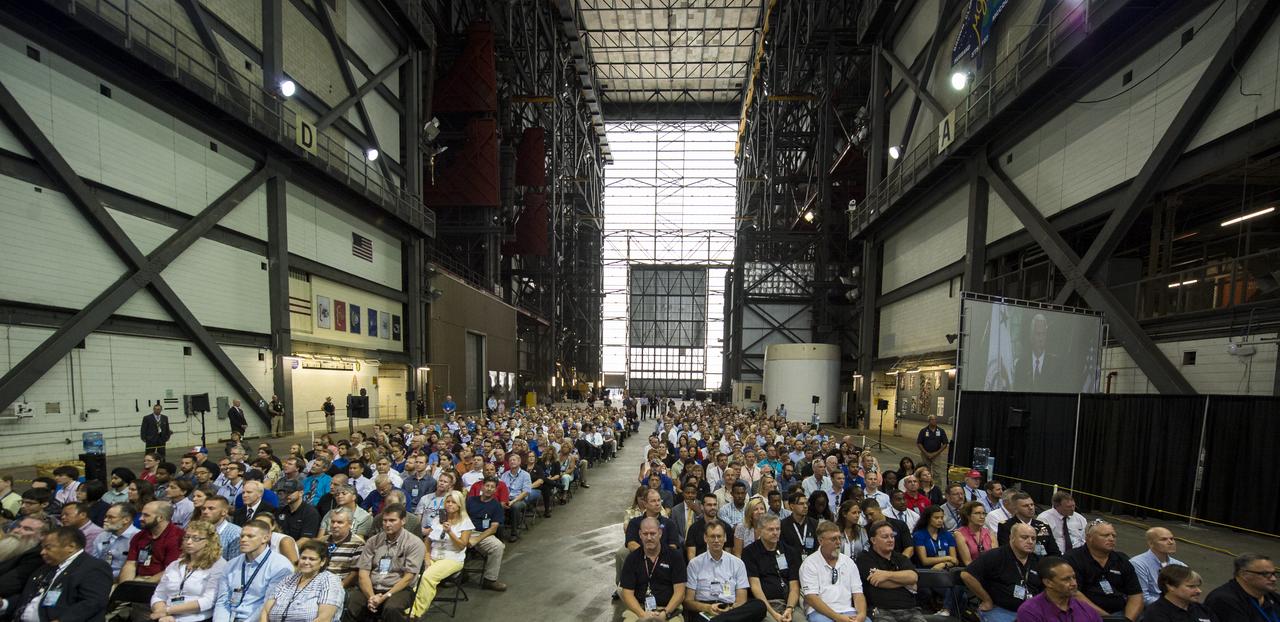
Vice President Mike Pence, as seen on the monitor at right, addresses NASA employees, Thursday, July 6, 2017, at the Vehicle Assembly Building at NASA’s Kennedy Space Center (KSC) in Cape Canaveral, Florida. The Vice President thanked employees for advancing American leadership in space, before going on a tour of the center that highlighted the public-private partnerships at KSC, as both NASA and commercial companies prepare to launch American astronauts from the multi-user spaceport. Photo Credit: (NASA/Aubrey Gemignani)
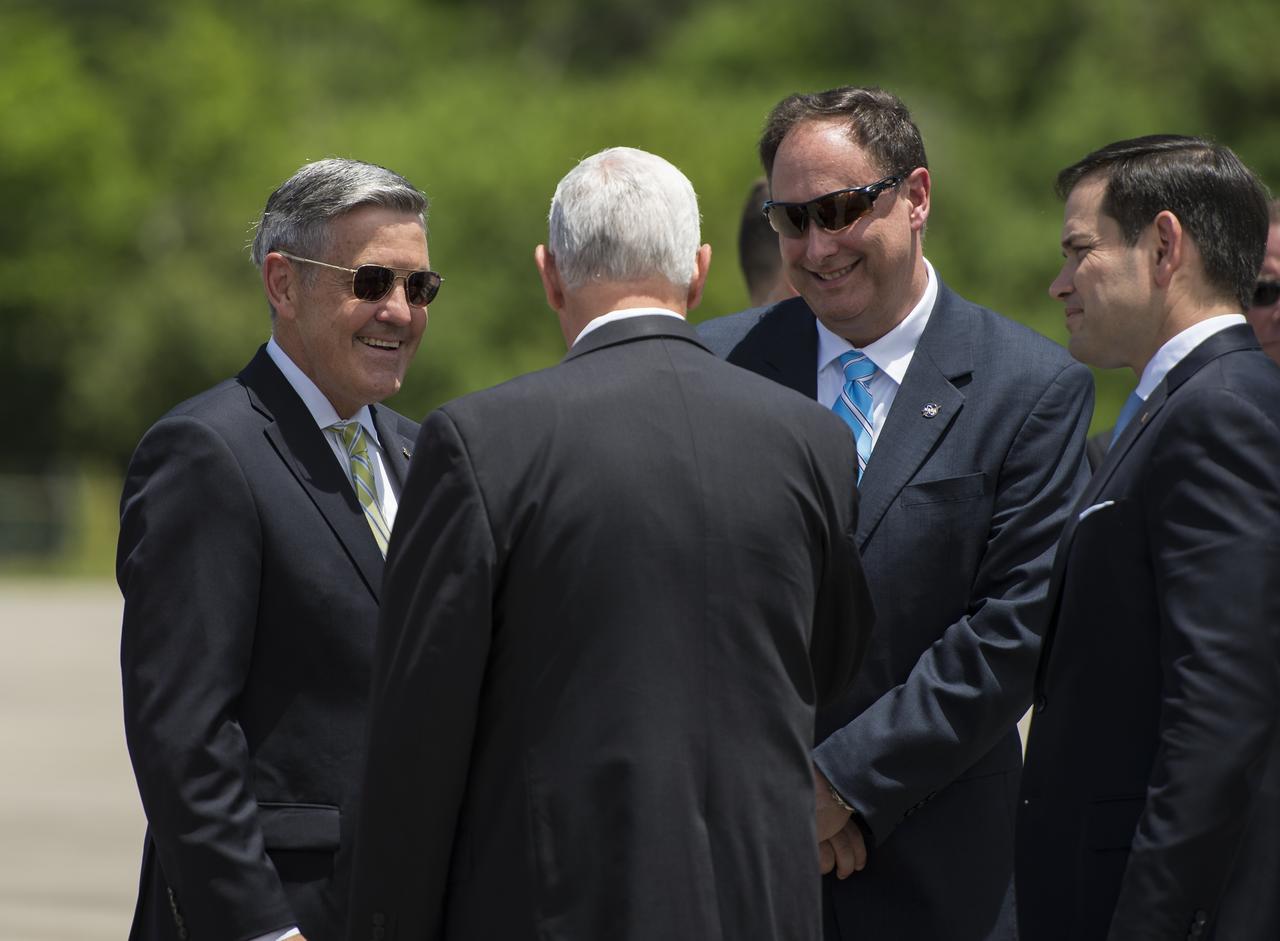
Vice President Mike Pence greets Acting NASA Administrator Robert Lightfoot, second from right, and Director, Kennedy Space Center, Robert Cabana, left, after arriving at the Shuttle Landing Facility (SLF) to highlight innovations made in America and tour some of the public/private partnership work that is helping to transform Kennedy Space Center (KSC) into a multi-user spaceport on Thursday, July 6, 2017 in Cape Canaveral, Florida. Photo Credit: (NASA/Aubrey Gemignani)
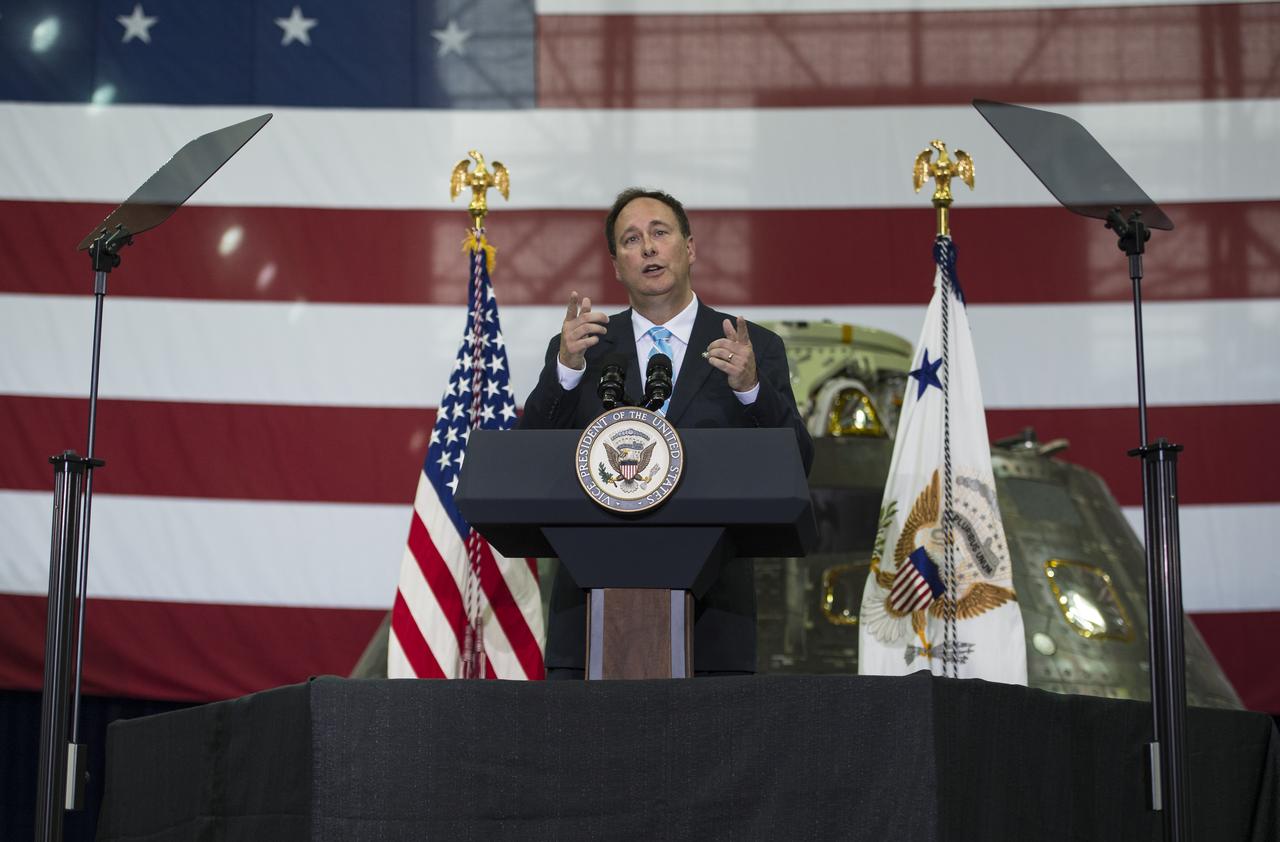
Acting NASA Director, Robert Lightfoot, welcomes guests and introduces Vice President Mike Pence, Thursday, July 6, 2017, at the Vehicle Assembly Building at NASA’s Kennedy Space Center (KSC) in Cape Canaveral, Florida. Vice President Mike Pence is also scheduled to speak at the event to highlight innovations made in America and tour some of the public/private partnership work that is helping to transform the center into a multi-user spaceport. Photo Credit: (NASA/Aubrey Gemignani)
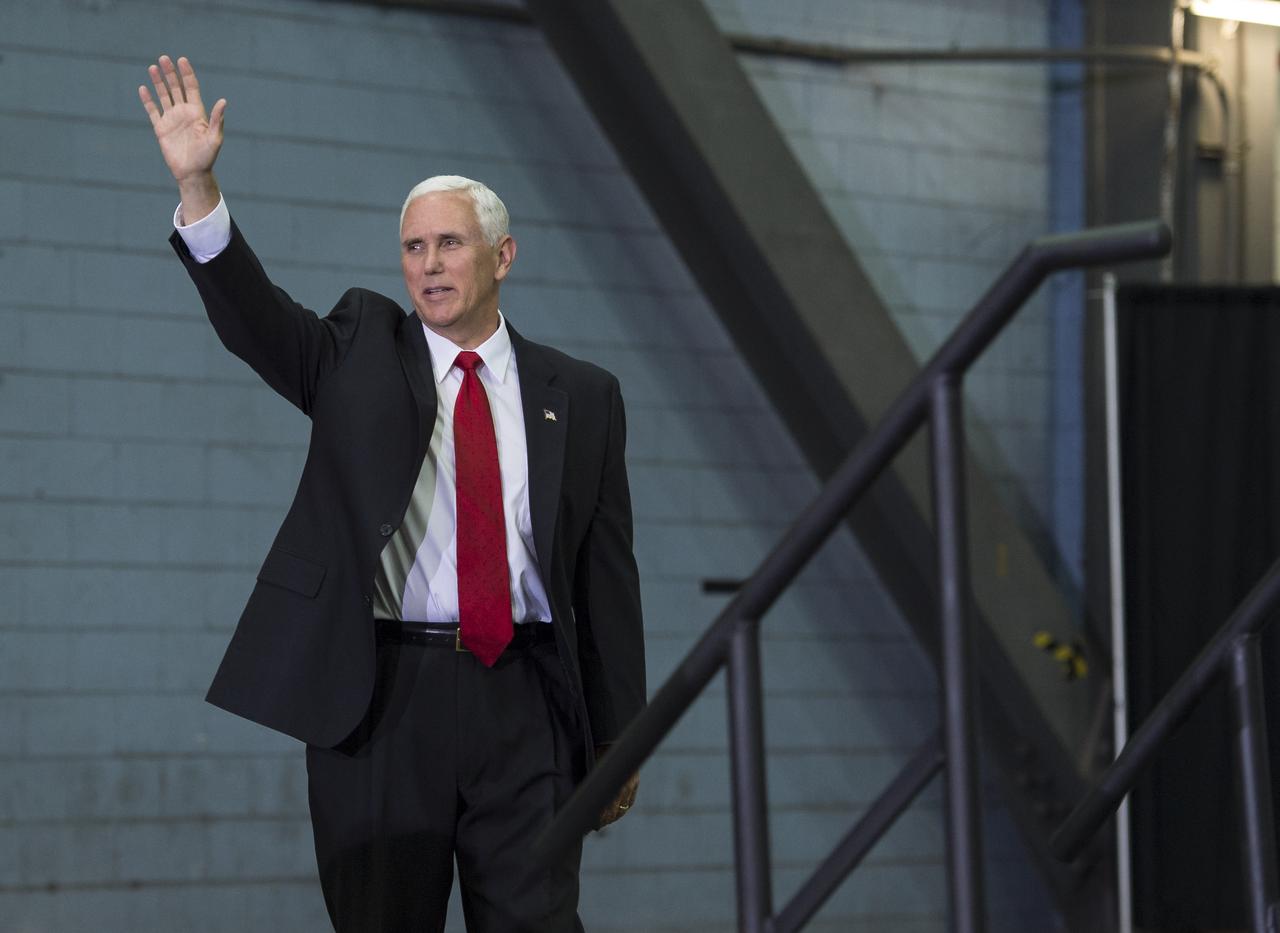
Vice President Mike Pence waves before addressing NASA employees, Thursday, July 6, 2017, at the Vehicle Assembly Building at NASA’s Kennedy Space Center (KSC) in Cape Canaveral, Florida. The Vice President thanked employees for advancing American leadership in space, before going on a tour of the center that highlighted the public-private partnerships at KSC, as both NASA and commercial companies prepare to launch American astronauts from the multi-user spaceport. Photo Credit: (NASA/Aubrey Gemignani)
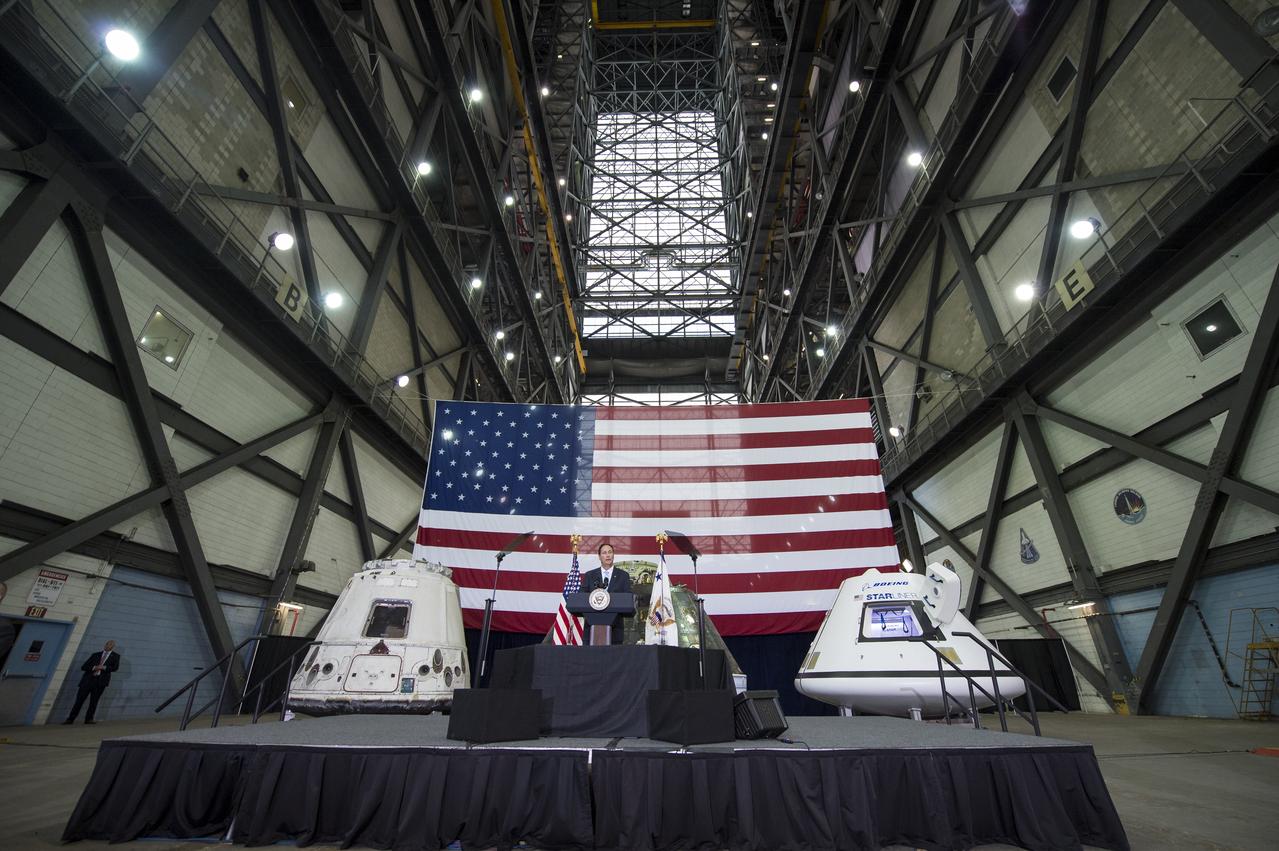
Acting NASA Director, Robert Lightfoot, welcomes guests and introduces Vice President Mike Pence, Thursday, July 6, 2017, at the Vehicle Assembly Building at NASA’s Kennedy Space Center (KSC) in Cape Canaveral, Florida. Vice President Mike Pence is also scheduled to speak at the event to highlight innovations made in America and tour some of the public/private partnership work that is helping to transform the center into a multi-user spaceport. Photo Credit: (NASA/Aubrey Gemignani)
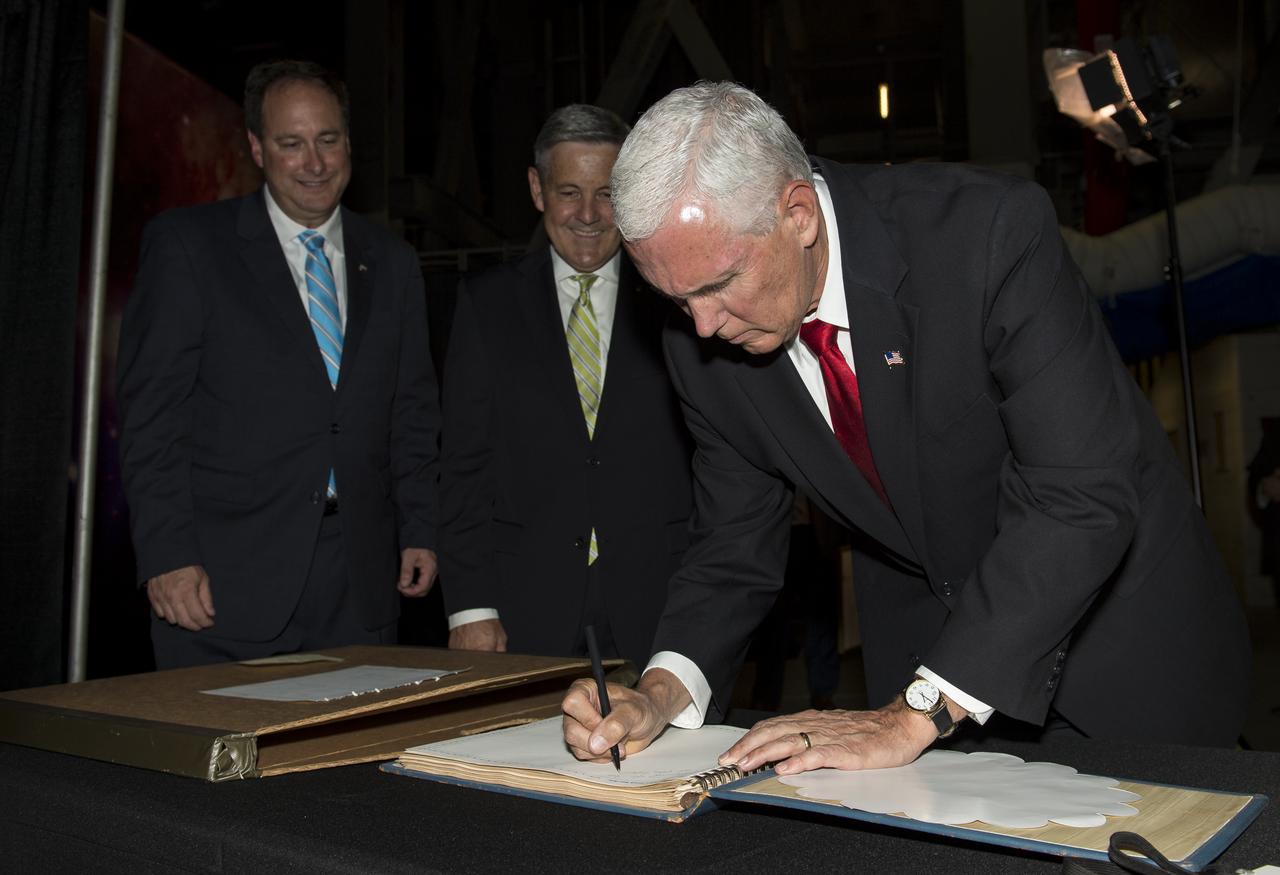
Vice President Mike Pence signs a NASA Kennedy Space Center (KSC) guest book while Acting NASA Administrator, Robert Lightfoot, left, and KSC's director, Robert D. Cabana, center, look on, Thursday, July 6, 2017, in the green room at KSC in Cape Canaveral, Florida. Vice President Mike Pence is scheduled to speak at the event to highlight innovations made in America and tour some of the public/private partnership work that is helping to transform the center into a multi-user spaceport. Photo Credit: (NASA/Aubrey Gemignani)
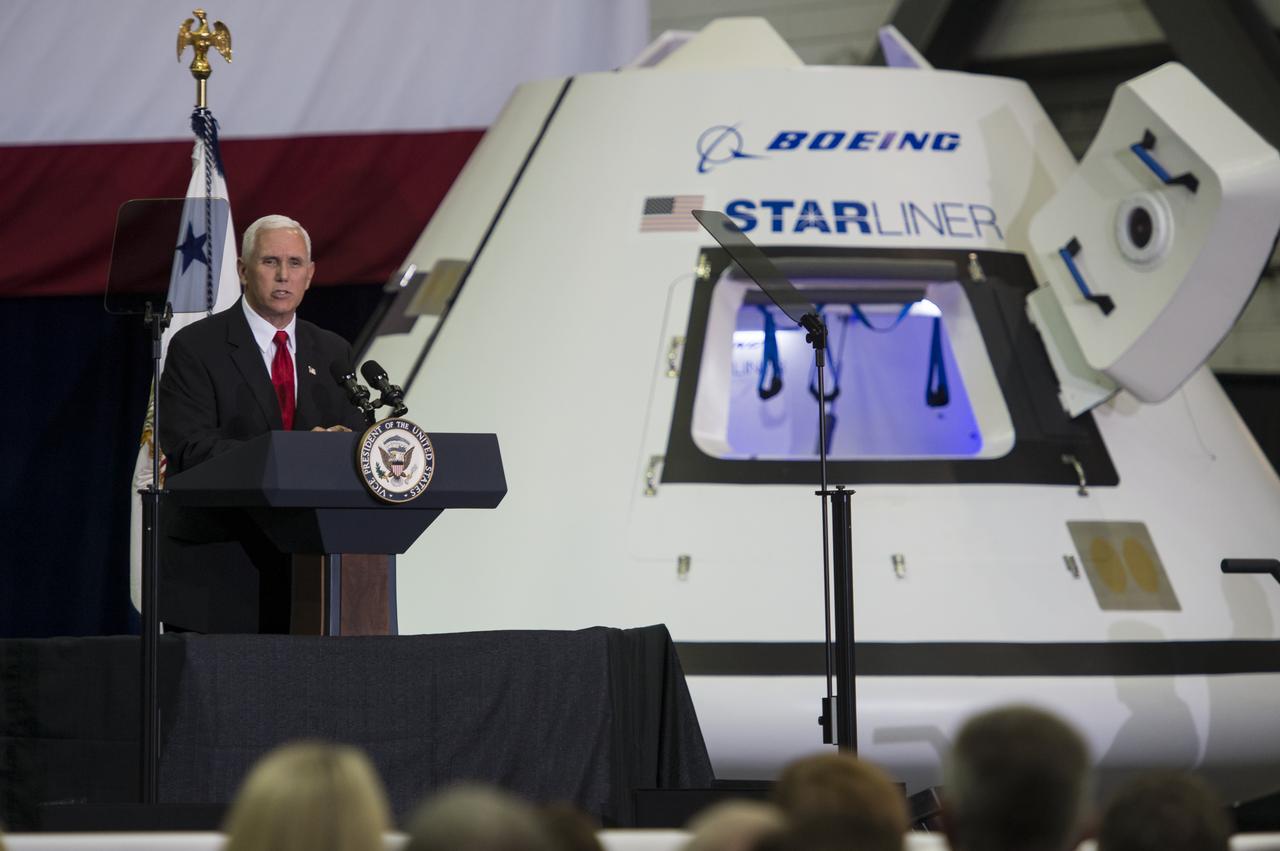
Vice President Mike Pence addresses NASA employees in front of a mockup of Boeing's Starliner capsule, Thursday, July 6, 2017, at the Vehicle Assembly Building at NASA’s Kennedy Space Center (KSC) in Cape Canaveral, Florida. The Vice President thanked employees for advancing American leadership in space, before going on a tour of the center that highlighted the public-private partnerships at KSC, as both NASA and commercial companies prepare to launch American astronauts from the multi-user spaceport. Photo Credit: (NASA/Aubrey Gemignani)
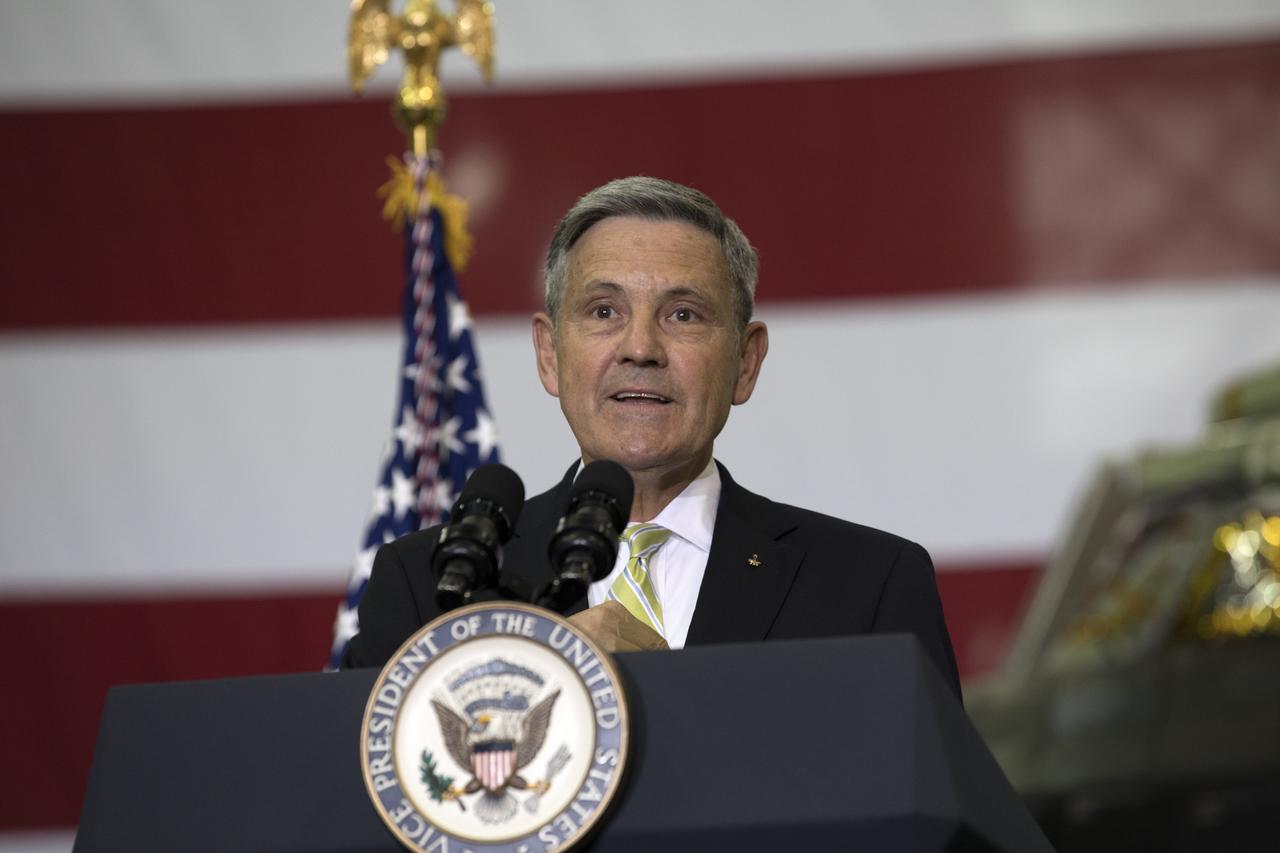
NASA Kennedy Space Center Director Robert Cabana addresses agency leaders, U.S. and Florida government officials, and employees inside the Vehicle Assembly Building during a visit by Vice President Mike Pence. Pence thanked employees for advancing American leadership in space. During his visit to Kennedy, the Vice President also toured several facilities highlighting the public-private partnerships, as both NASA and commercial companies prepare to launch American astronauts from the multi-user spaceport.
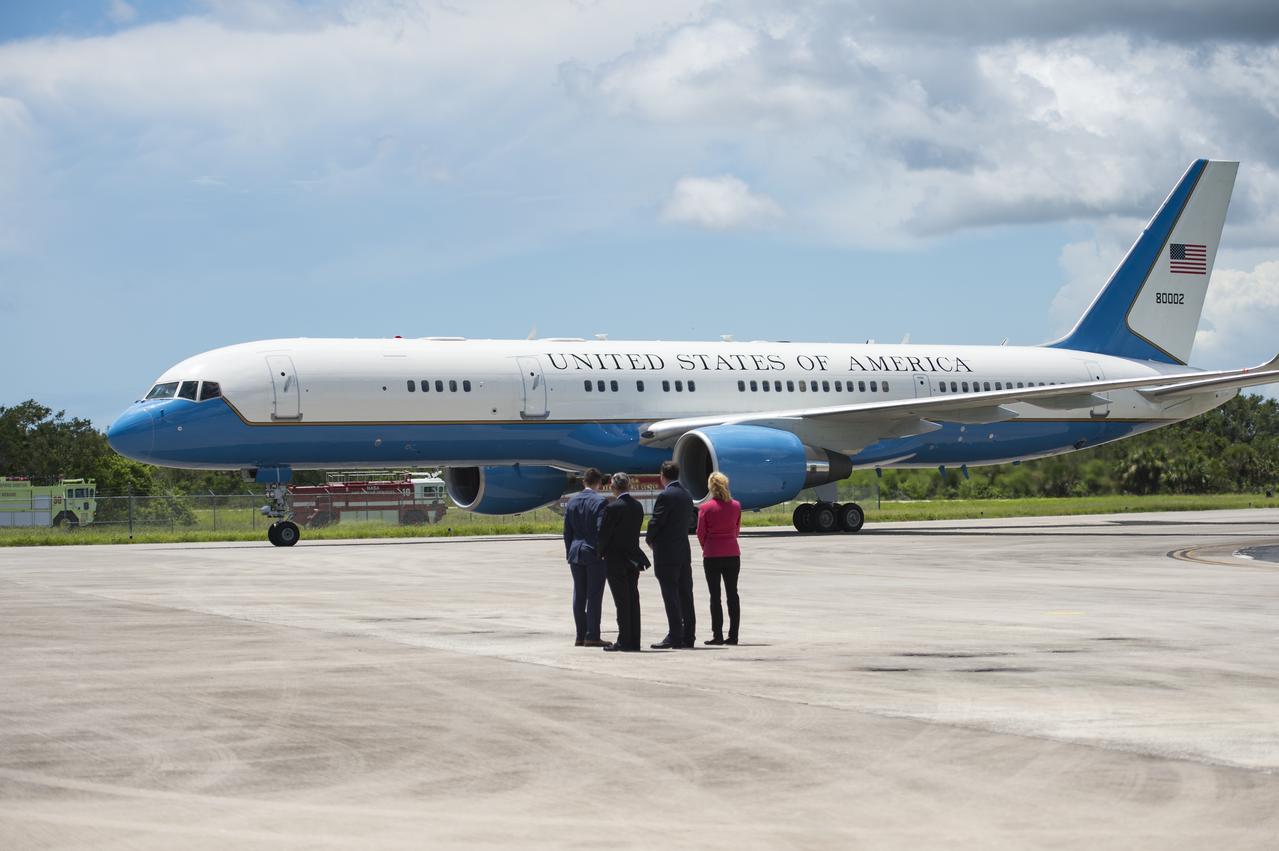
Vice President Mike Pence arrives in Air Force Two as NASA Leadership looks on, at the Shuttle Landing Facility (SLF) to highlight innovations made in America and tour some of the public/private partnership work that is helping to transform Kennedy Space Center (KSC) into a multi-user spaceport on Thursday, July 6, 2017 in Cape Canaveral, Florida. Photo Credit: (NASA/Aubrey Gemignani)
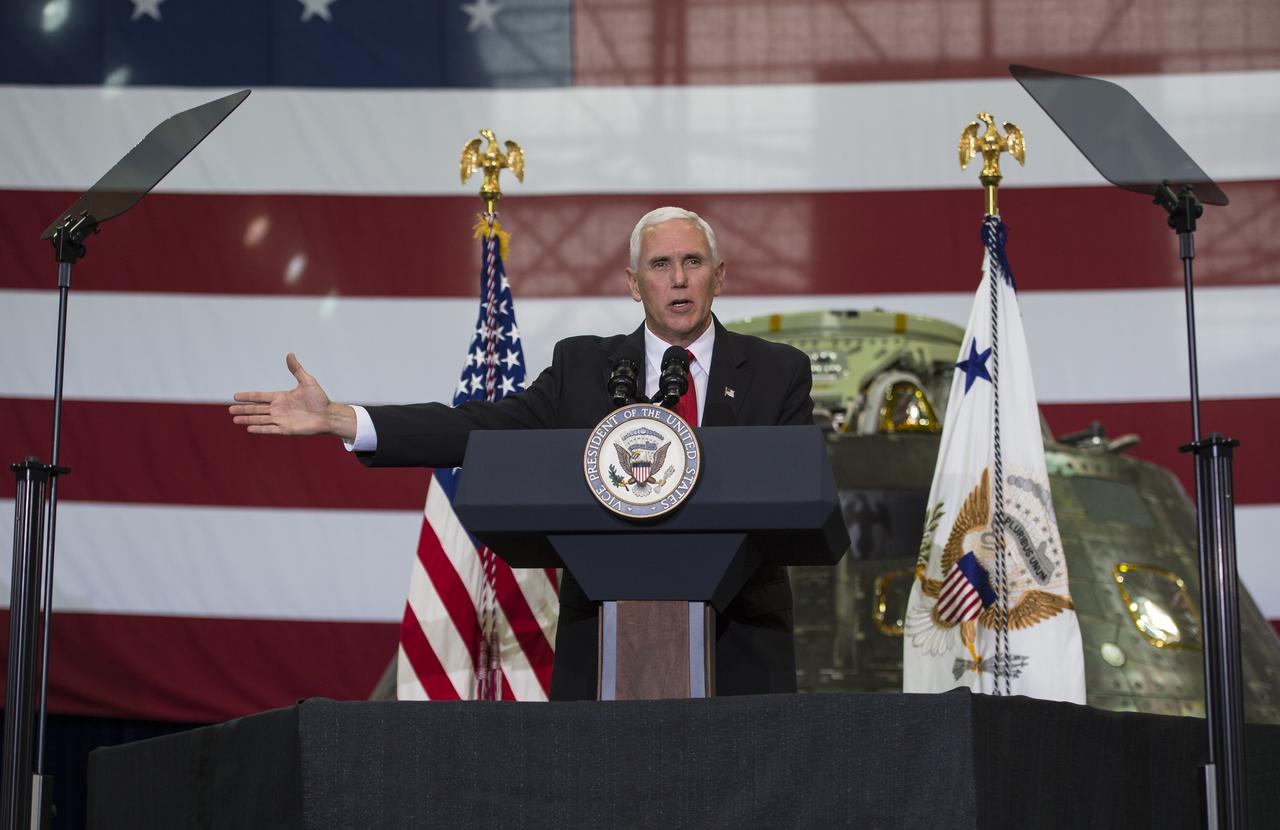
Vice President Mike Pence addresses NASA employees, Thursday, July 6, 2017, at the Vehicle Assembly Building at NASA’s Kennedy Space Center (KSC) in Cape Canaveral, Florida. The Vice President thanked employees for advancing American leadership in space, before going on a tour of the center that highlighted the public-private partnerships at KSC, as both NASA and commercial companies prepare to launch American astronauts from the multi-user spaceport. Photo Credit: (NASA/Aubrey Gemignani)
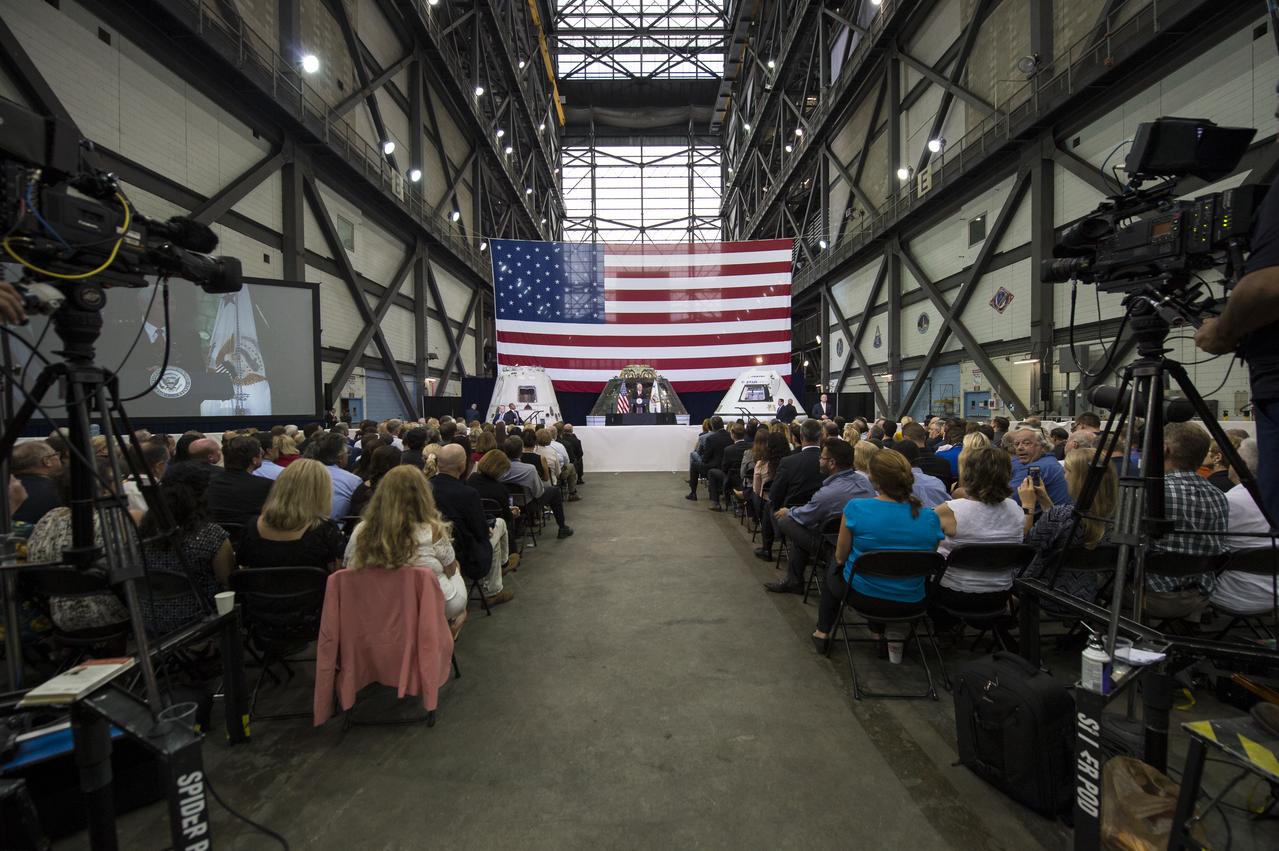
Vice President Mike Pence addresses NASA employees, Thursday, July 6, 2017, at the Vehicle Assembly Building at NASA’s Kennedy Space Center (KSC) in Cape Canaveral, Florida. The Vice President thanked employees for advancing American leadership in space, before going on a tour of the center that highlighted the public-private partnerships at KSC, as both NASA and commercial companies prepare to launch American astronauts from the multi-user spaceport. Photo Credit: (NASA/Aubrey Gemignani)
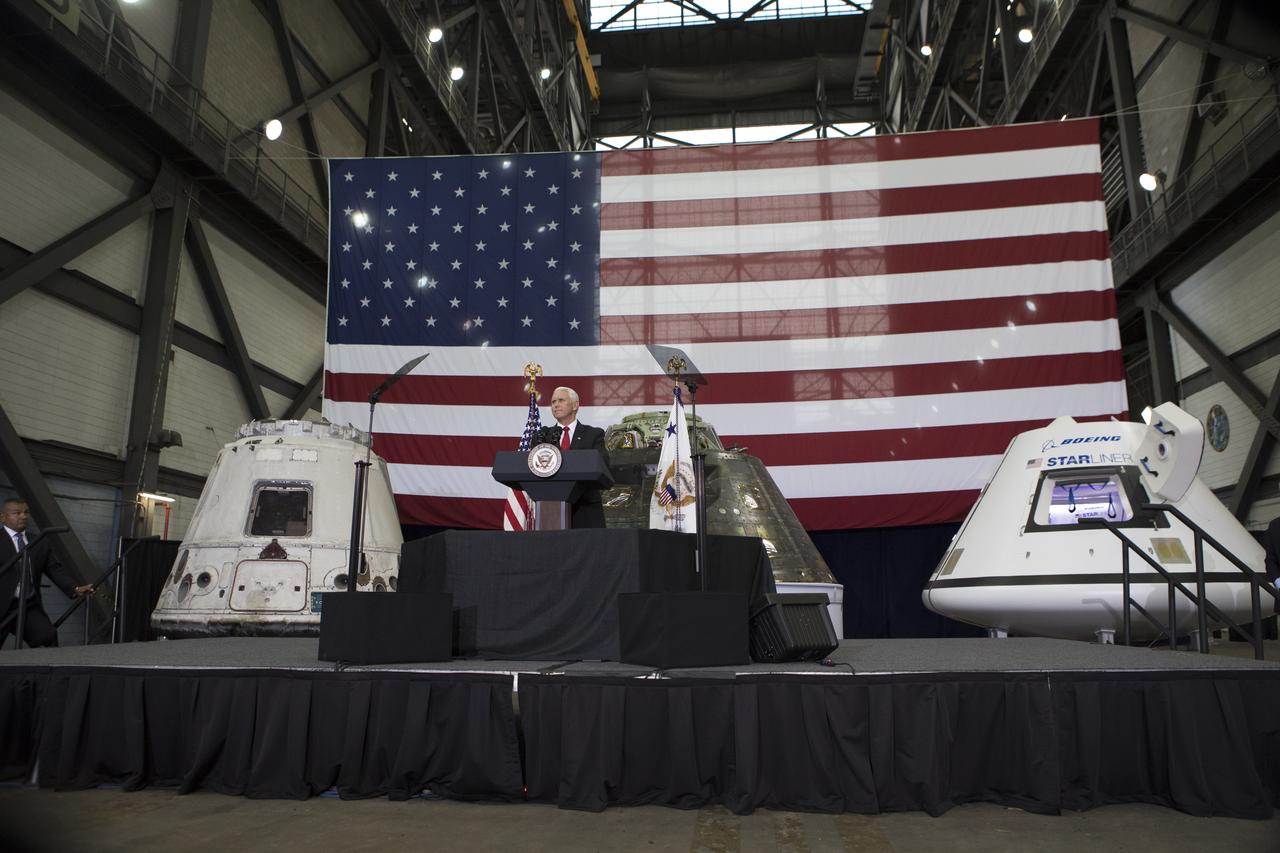
Vice President Mike Pence speaks before an audience of NASA leaders, U.S. and Florida government officials, and employees inside the Vehicle Assembly Building at NASA's Kennedy Space Center in Florida. Pence thanked employees for advancing American leadership in space. Behind the podium are, from the left, a flown SpaceX Dragon capsule, the Orion spacecraft flown on Exploration Flight test-1 in 2014, and a mockup of Boeing's CST-100 Starliner. During his visit to Kennedy, the Vice President also toured several facilities highlighting the public-private partnerships, as both NASA and commercial companies prepare to launch American astronauts from the multi-user spaceport.
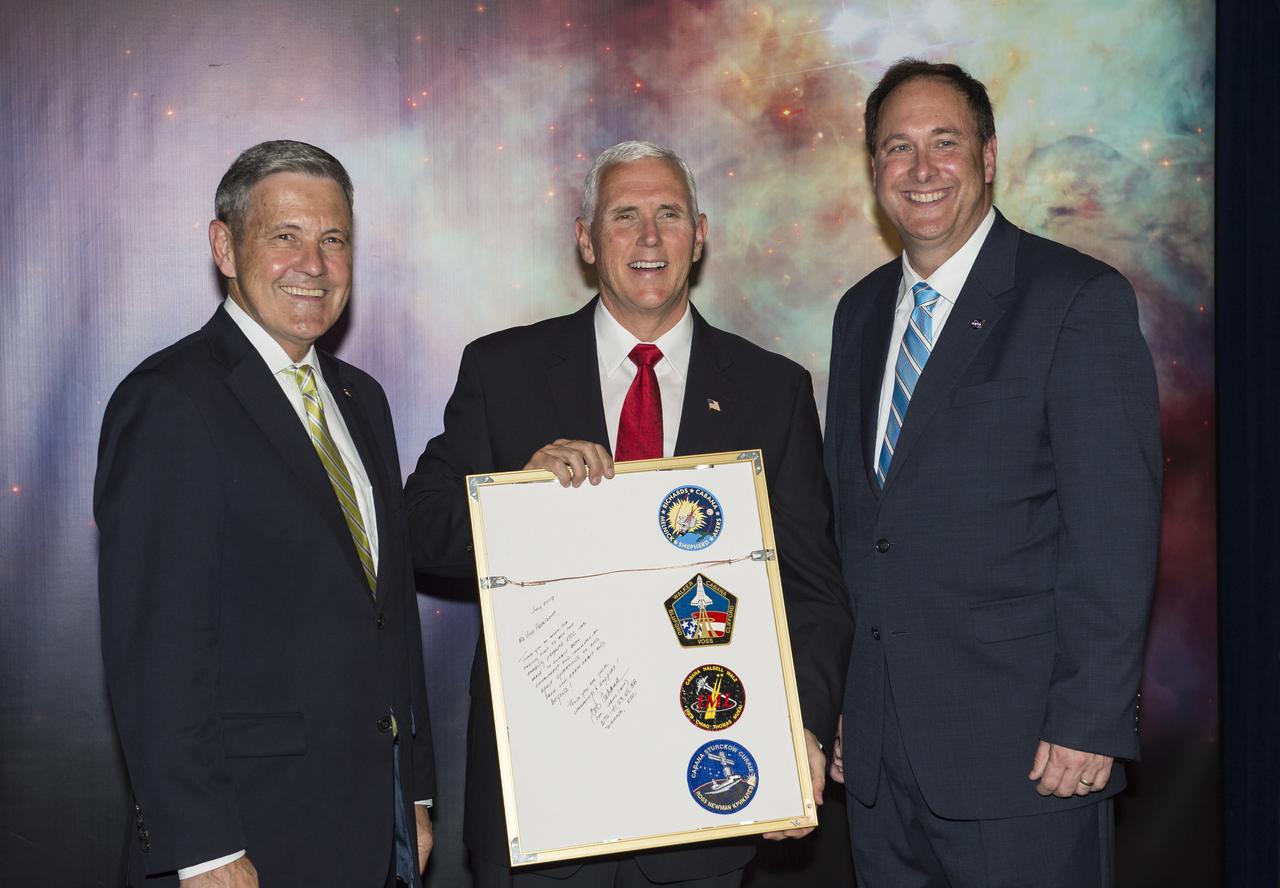
Vice President Mike Pence receives a commemorative montage from Kennedy Space Center (KSC) Director, Robert Cabana, left, and Acting NASA Administrator, Robert Lightfoot, right, including stickers on the back from all of Cabana's missions, Thursday, July 6, 2017, in the green room at KSC in Cape Canaveral, Florida. Vice President Mike Pence is scheduled to speak at the event to highlight innovations made in America and tour some of the public/private partnership work that is helping to transform the center into a multi-user spaceport. Photo Credit: (NASA/Aubrey Gemignani)
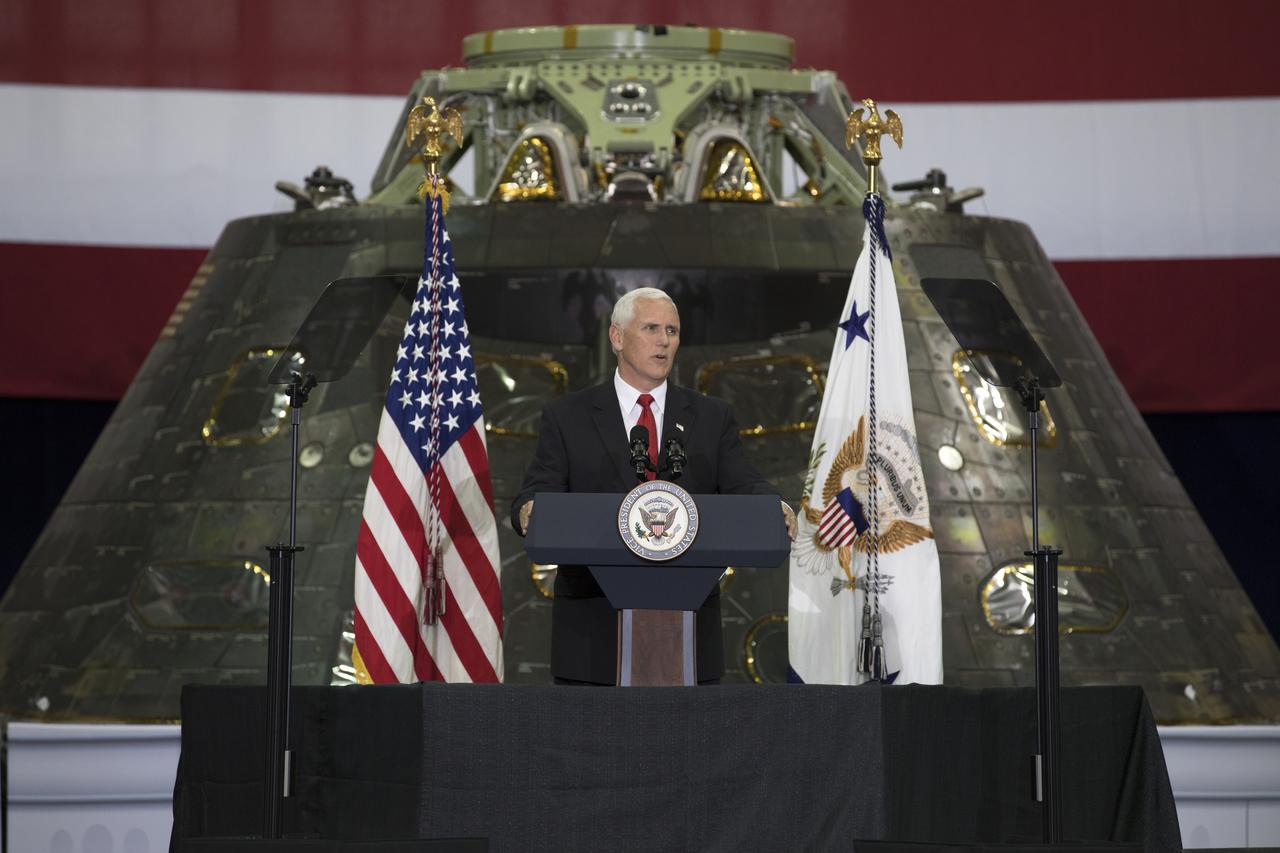
Vice President Mike Pence speaks before an audience of NASA leaders, U.S. and Florida government officials, and employees inside the Vehicle Assembly Building at NASA's Kennedy Space Center in Florida. Pence thanked employees for advancing American leadership in space. Behind the podium is the Orion spacecraft flown on Exploration Flight test-1 in 2014. During his visit to Kennedy, the Vice President also toured several facilities highlighting the public-private partnerships, as both NASA and commercial companies prepare to launch American astronauts from the multi-user spaceport.
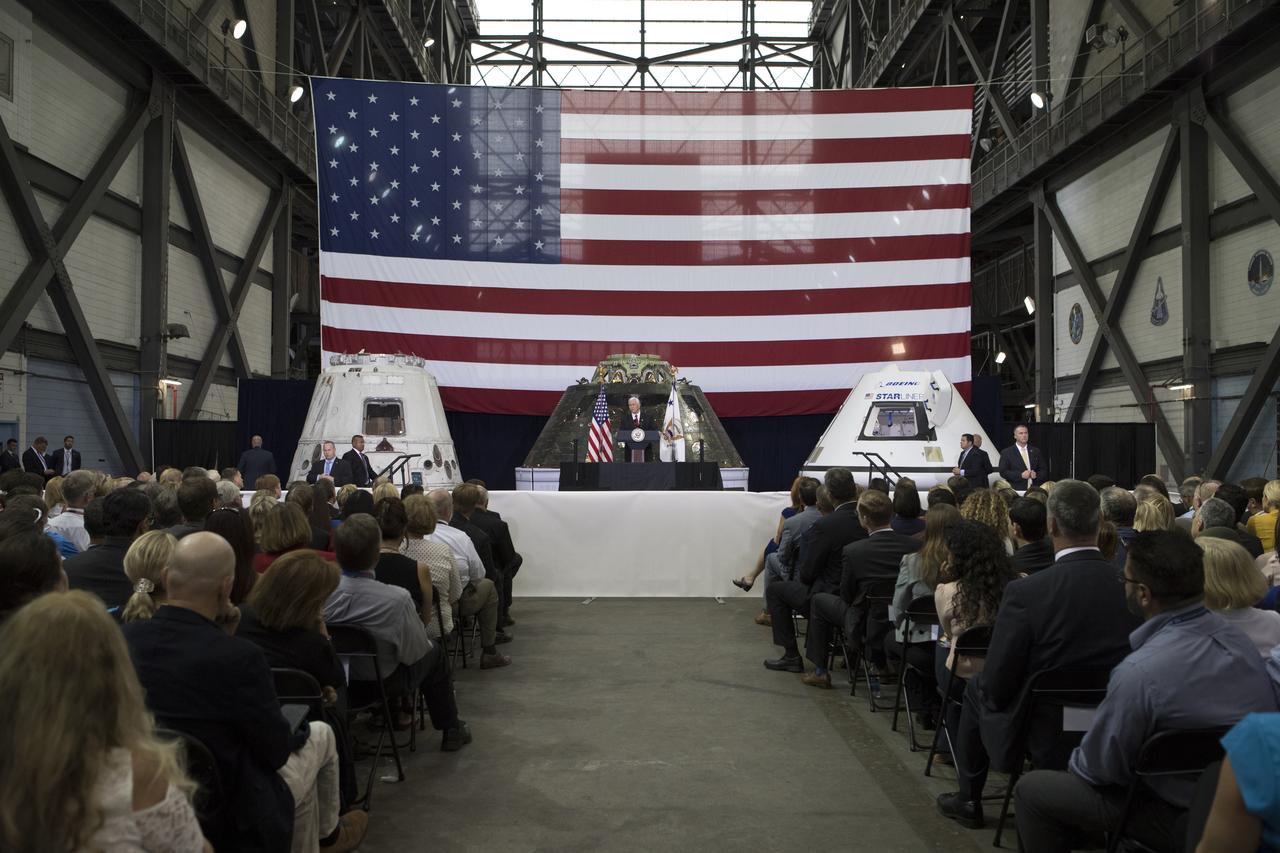
Vice President Mike Pence speaks before an audience of NASA leaders, U.S. and Florida government officials, and employees inside the Vehicle Assembly Building at NASA's Kennedy Space Center in Florida. Pence thanked employees for advancing American leadership in space. Behind the podium are, from the left, a flown SpaceX Dragon capsule, the Orion spacecraft flown on Exploration Flight test-1 in 2014, and a mockup of Boeing's CST-100 Starliner. During his visit to Kennedy, the Vice President also toured several facilities highlighting the public-private partnerships, as both NASA and commercial companies prepare to launch American astronauts from the multi-user spaceport.
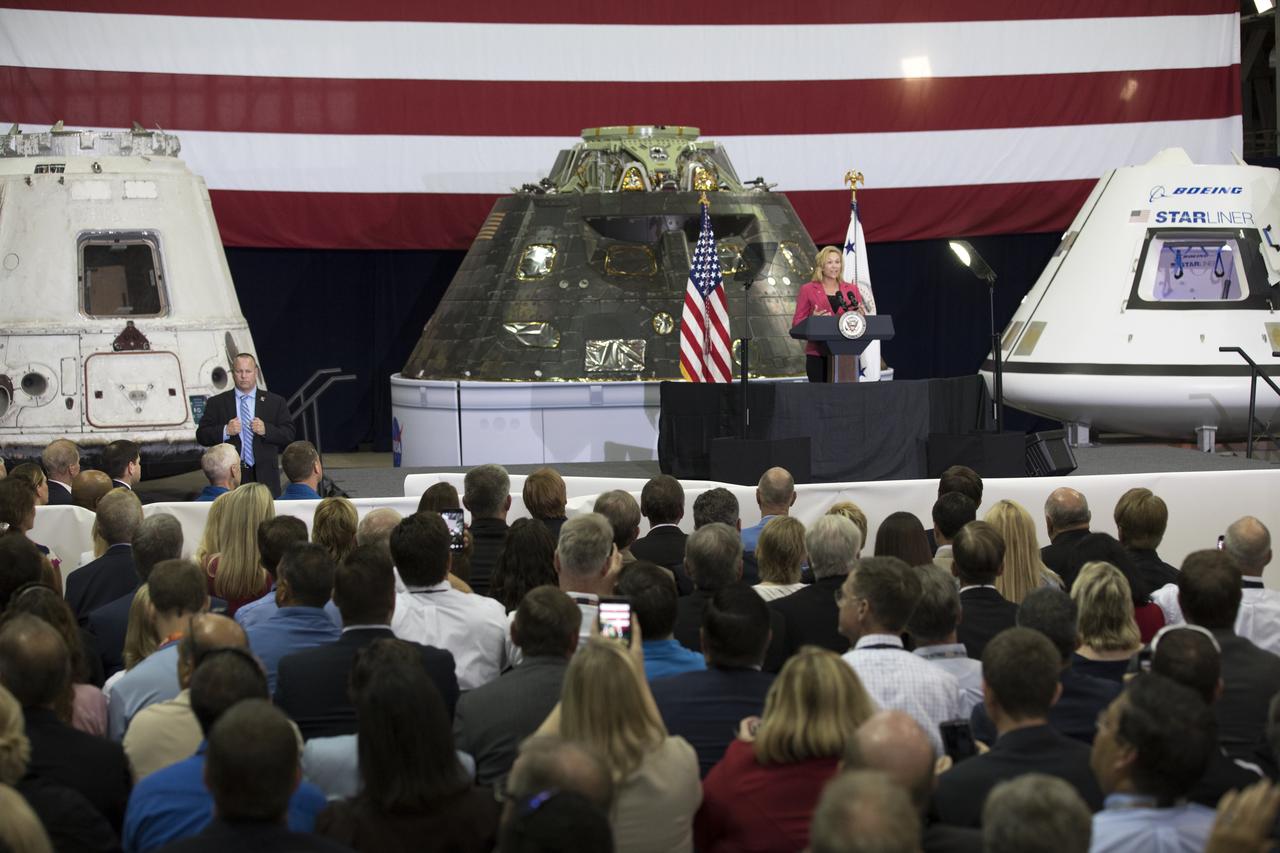
NASA Kennedy Space Center Deputy Director Janet Petro addresses agency leaders, U.S. and Florida government officials and employees inside the Vehicle Assembly Building during a visit by Vice President Mike Pence. Pence thanked employees for advancing American leadership in space. Behind the podium are, from the left, a flown SpaceX Dragon capsule, the Orion spacecraft flown on Exploration Flight test-1 in 2014, and a mockup of Boeing's CST-100 Starliner. During his visit to Kennedy, the Vice President also toured several facilities highlighting the public-private partnerships, as both NASA and commercial companies prepare to launch American astronauts from the multi-user spaceport.
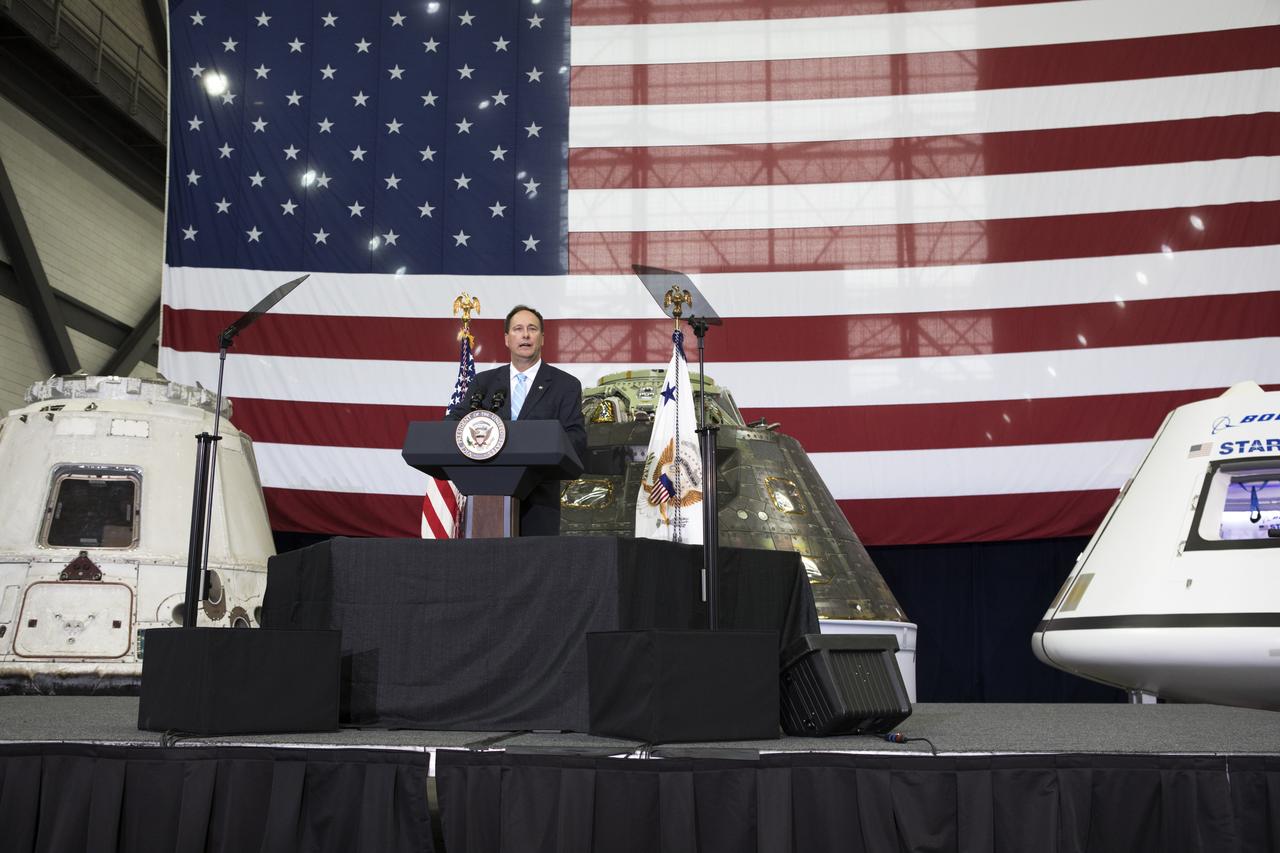
Acting NASA Administrator Robert Lightfoot addresses agency leaders, U.S. and Florida government officials, and employees inside the Vehicle Assembly Building at NASA's Kennedy Space Center in Florida during a visit by Vice President Mike Pence. Pence thanked employees for advancing American leadership in space. Behind the podium are, from the left, a flown SpaceX Dragon capsule, the Orion spacecraft flown on Exploration Flight test-1 in 2014, and a mockup of Boeing's CST-100 Starliner. During his visit to Kennedy, the Vice President also toured several facilities highlighting the public-private partnerships, as both NASA and commercial companies prepare to launch American astronauts from the multi-user spaceport.
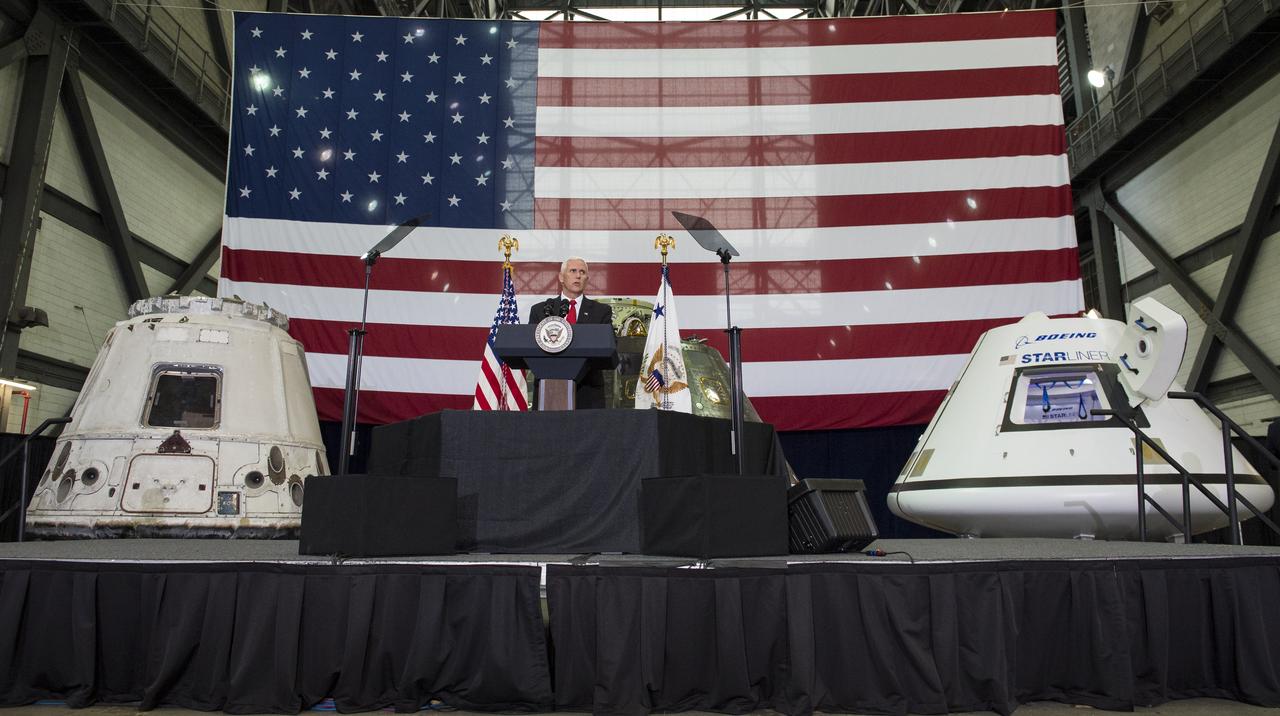
Vice President Mike Pence addresses NASA employees, in front of, from left to right, the SpaceX Dragon, NASA's Orion, and Boeing's Starliner, Thursday, July 6, 2017, at the Vehicle Assembly Building at NASA’s Kennedy Space Center (KSC) in Cape Canaveral, Florida. The Vice President thanked employees for advancing American leadership in space, before going on a tour of the center that highlighted the public-private partnerships at KSC, as both NASA and commercial companies prepare to launch American astronauts from the multi-user spaceport. Photo Credit: (NASA/Aubrey Gemignani)
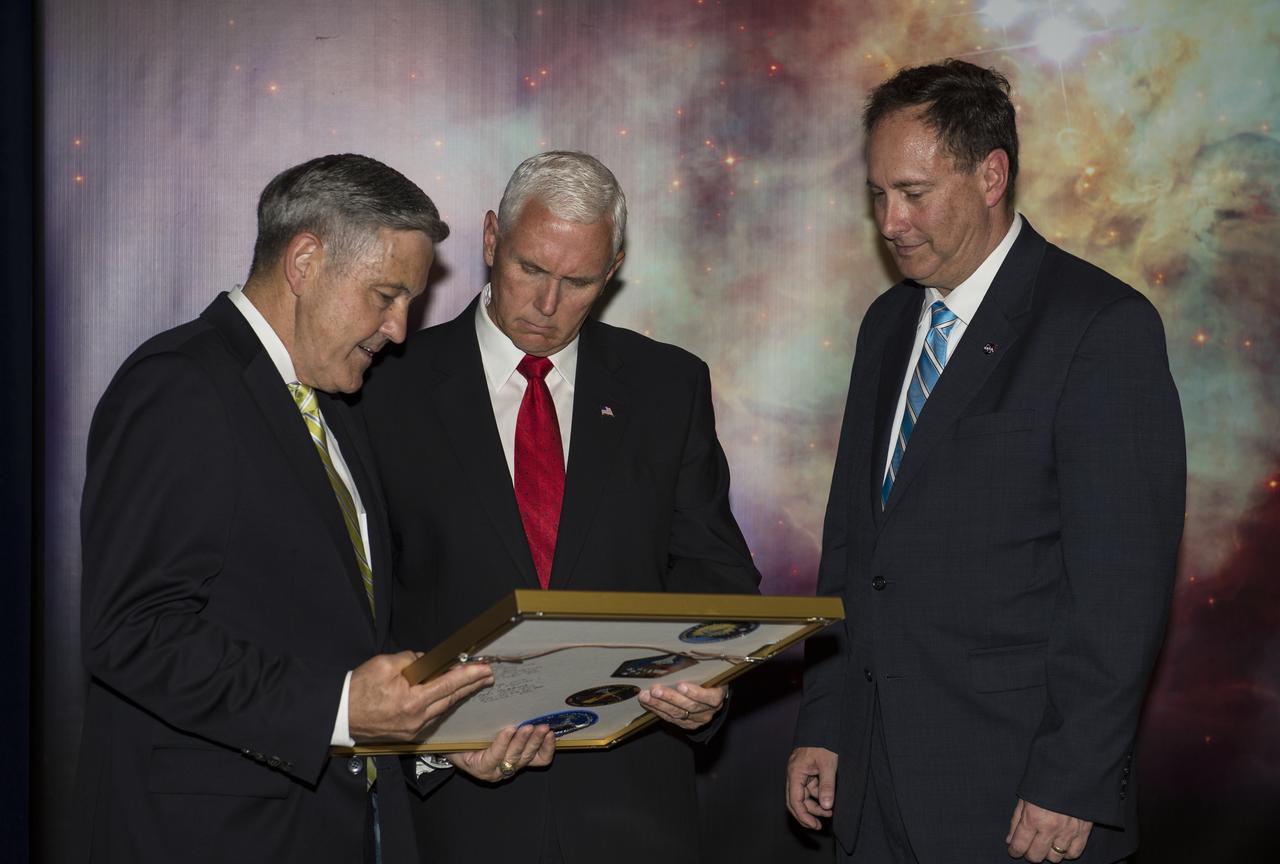
Vice President Mike Pence receives a commemorative montage including an Indiana flag, representing the Vice President's hometown, that was flown in space, from NASA's Kennedy Space Center (KSC) Director, Robert Cabana, left, and Acting NASA Administrator, Robert Lightfoot, right, Thursday, July 6, 2017, in the green room at NASA’s Kennedy Space Center (KSC) in Cape Canaveral, Florida. Vice President Mike Pence is scheduled to speak at the event to highlight innovations made in America and tour some of the public/private partnership work that is helping to transform the center into a multi-user spaceport. Photo Credit: (NASA/Aubrey Gemignani)
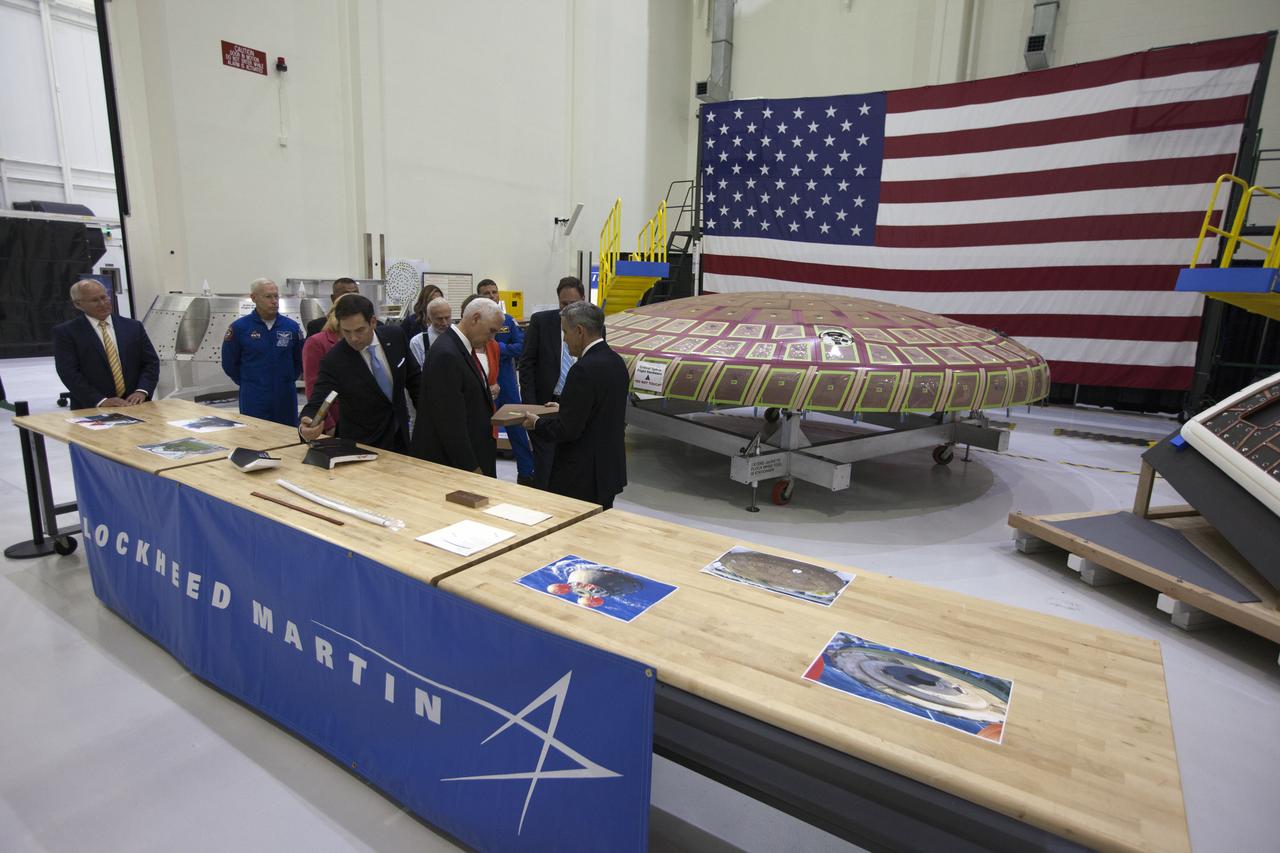
Vice President Mike Pence, center, and U.S. Senator Marco Rubio (R-FL), left, examine flight hardware during a tour of the Neil Armstrong Operations and Checkout Building at NASA's Kennedy Space Center in Florida, where the Orion spacecraft is being readied for a trip beyond the moon on its first integrated flight with the Space Launch System rocket. During his visit to Kennedy, Pence spoke inside the Vehicle Assembly Building, where he thanked employees for advancing American leadership in space. The Vice President also toured several facilities highlighting the public-private partnerships at Kennedy, as both NASA and commercial companies prepare to launch American astronauts from the multi-user spaceport.
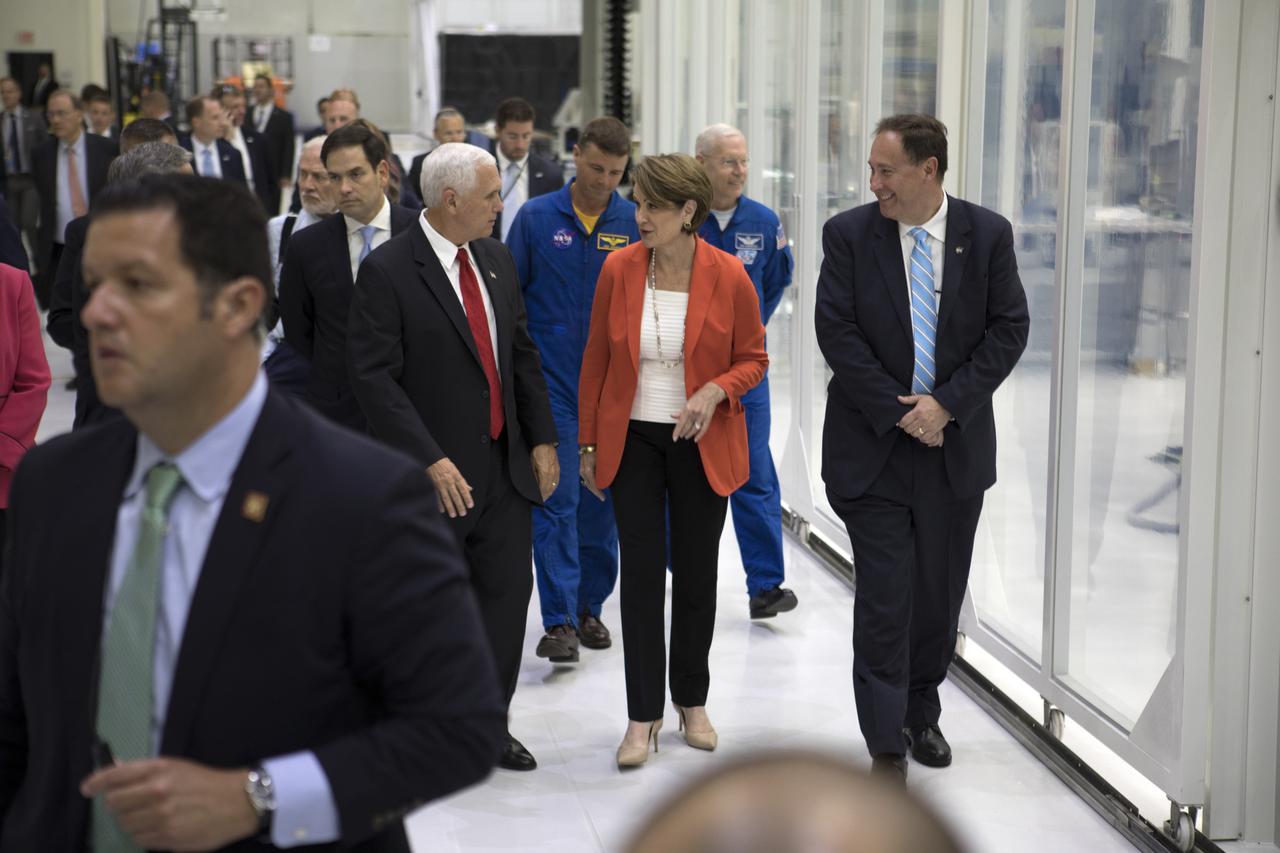
Vice President Mike Pence, center left, listens to Lockheed Martin Chairman, President and CEO Marillyn Hewson during a tour of the Neil Armstrong Operations and Checkout Building at NASA's Kennedy Space Center in Florida, where the Orion spacecraft is being readied for a trip beyond the moon on its first integrated flight with the Space Launch System rocket. Walking with them from left to right are U.S. Senator Marco Rubio (R-FL), NASA Astronauts Reid Wiseman and Pat Forrester, and NASA Acting Administrator Robert Lightfoot. During his visit to Kennedy, Pence spoke inside the Vehicle Assembly Building, where he thanked employees for advancing American leadership in space. The Vice President also toured several facilities highlighting the public-private partnerships at Kennedy, as both NASA and commercial companies prepare to launch American astronauts from the multi-user spaceport.
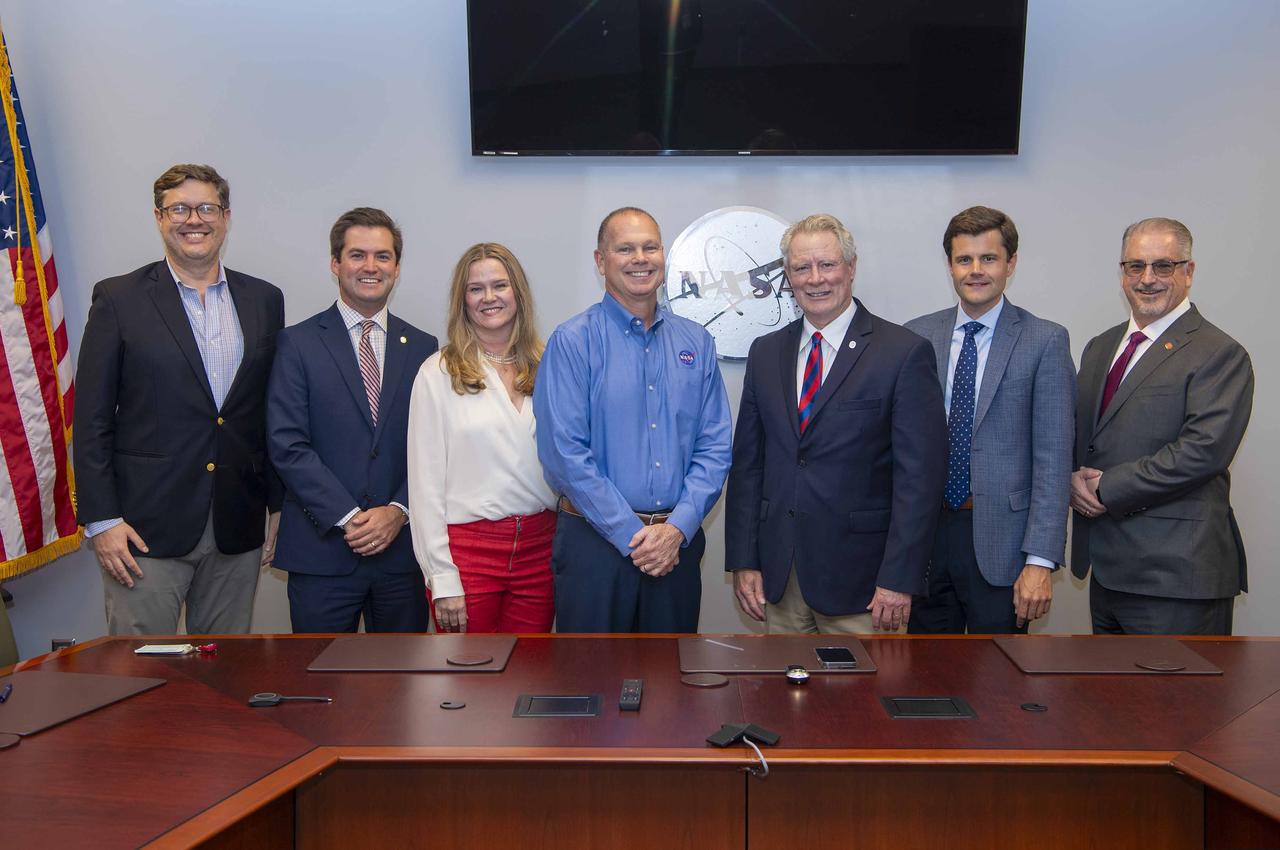
Mississippi Enterprise for Technology (MSET), a public-private partnership between Mississippi Development Authority, NASA, and Mississippi’s research institutions, hosted a visit for University of Mississippi leadership on Sept. 4 to NASA’s Stennis Space Center near Bay St. Louis, Mississippi. The visit showcased the center’s federal assets and the role Mississippi Enterprise for Technology plays in supporting industry and driving sustained economic development of the region and state. Pictured, from left to right, are: Davis Pace, president and CEO of MSET; William Kneip, director of External Relations and assistant to the Chancellor for Executive Affairs, University of Mississippi; Amy Lewis, executive director of Federal Relations, University of Mississippi; John Bailey, director of NASA Stennis; Dr. Glenn Boyce, chancellor of the University of Mississippi; Hughes Miller, senior director of Industry Engagement, University of Mississippi; and Dr. John Higginbotham, vice chancellor of Research and Economic Development, University of Mississippi.
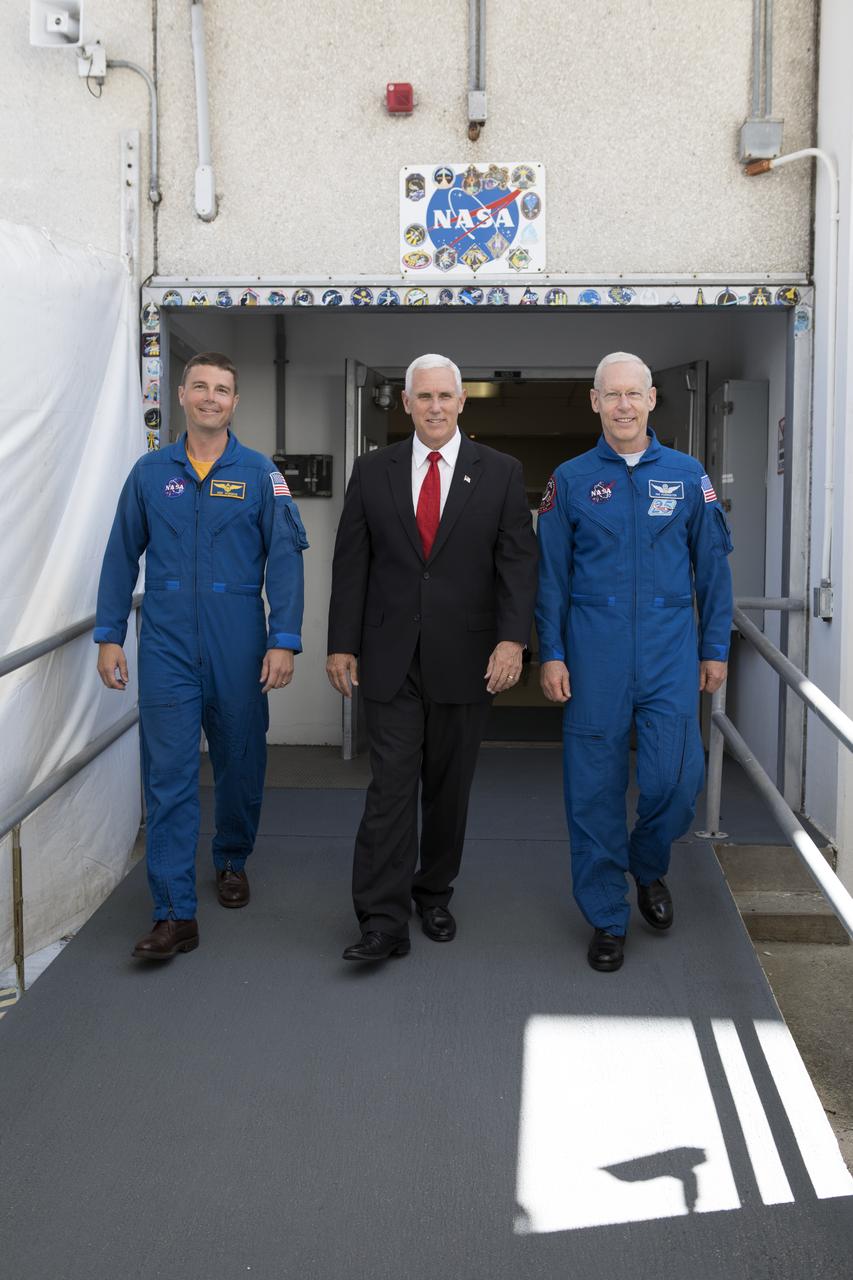
Vice President Mike Pence, center, is flanked by NASA Astronaut Reid Wiseman and NASA Astronaut Office Chief Pat Forrester as they walk out through the same door used by Apollo and space shuttle flight crews departing for the launch pad. Pence toured the Astronaut Crew Quarters during a stop at the Neil Armstrong Operations and Checkout Building at NASA's Kennedy Space Center in Florida, where the Orion spacecraft is being readied for a trip beyond the moon on its first integrated flight with the Space Launch System rocket. During his visit to Kennedy, Pence spoke inside the Vehicle Assembly Building, where he thanked employees for advancing American leadership in space. The Vice President also toured several facilities highlighting the public-private partnerships at Kennedy, as both NASA and commercial companies prepare to launch American astronauts from the multi-user spaceport.
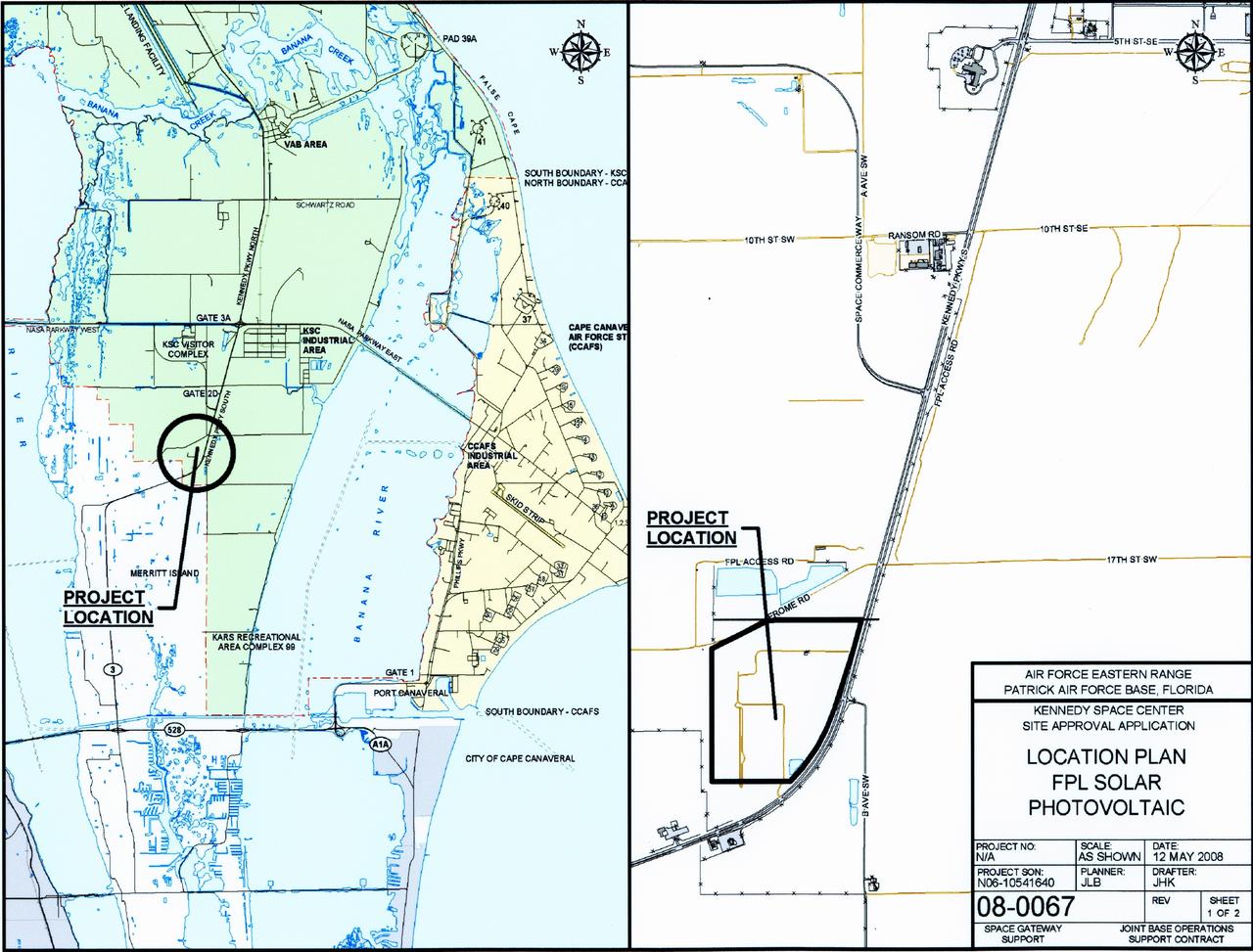
CAPE CANAVERAL, Fla. – These maps show one of the locations of the proposed solar power systems that NASA and Florida Power & Light Company are beginning to construct on NASA's Kennedy Space Center as part of a public-private partnership that promotes a clean-energy future. A groundbreaking ceremony took place on May 27 at the Kennedy Space Center Visitor Complex. FPL, Florida's largest electric utility, will build and maintain two solar photovoltaic power generation systems at Kennedy. One will produce an estimated 10 megawatts of emissions-free power for FPL customers, which is enough energy to serve roughly 1,100 homes. The second is a one-megawatt solar power facility that will provide renewable energy directly to Kennedy. The FPL facilities at NASA will help provide Florida residents and America's space program with new sources of clean energy that will cut reliance on fossil fuels and improve the environment by reducing greenhouse gas emissions. The one megawatt facility also will help NASA meet its goal for use of power generated from renewable energy. Photo courtesy of FPL

CAPE CANAVERAL, Fla. – An aerial view of the site in the Industrial Area of NASA's Kennedy Space Center in Florida where a solar power system will be built. The solar power systems are being constructed by NASA and Florida Power & Light Company as part of a public-private partnership that promotes a clean-energy future. A groundbreaking ceremony took place on May 27 at the Kennedy Space Center Visitor Complex. FPL, Florida's largest electric utility, will build and maintain two solar photovoltaic power generation systems at Kennedy. One will produce an estimated 10 megawatts of emissions-free power for FPL customers, which is enough energy to serve roughly 1,100 homes. The second, which will be built on the pictured location, is a one-megawatt solar power facility that will provide renewable energy directly to Kennedy. The FPL facilities at NASA will help provide Florida residents and America's space program with new sources of clean energy that will cut reliance on fossil fuels and improve the environment by reducing greenhouse gas emissions. The one megawatt facility also will help NASA meet its goal for use of power generated from renewable energy. Photo credit: NASA/Kim Shiflett
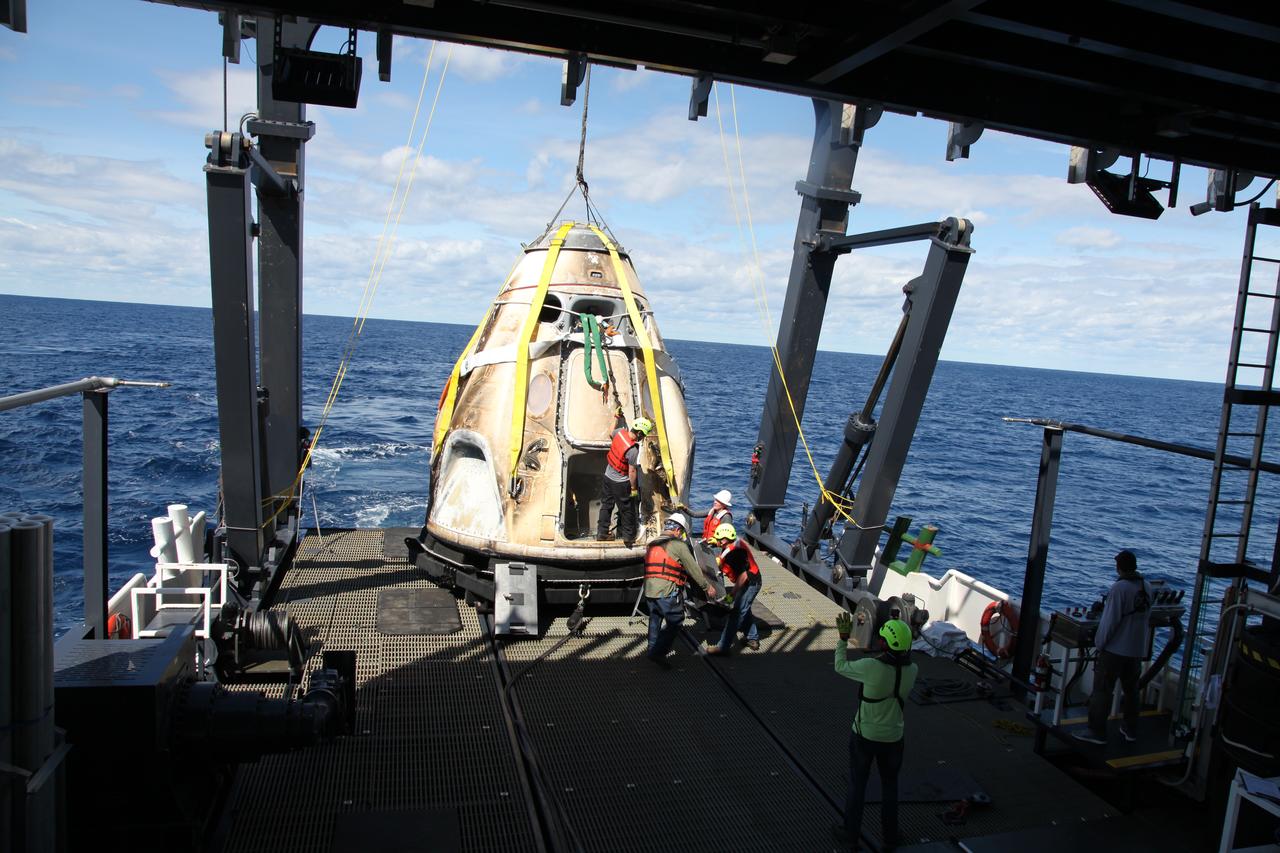
SpaceX’s Crew Dragon is loaded onto the company’s recovery ship, Go Searcher, in the Atlantic Ocean, about 200 miles off Florida’s east coast, on March 8, after returning from the International Space Station on the Demo-1 mission. The uncrewed spacecraft docked to the orbiting laboratory on March 3, following a 2:49 a.m. EST liftoff aboard a SpaceX Falcon 9 rocket from Launch Complex 39A at NASA’s Kennedy Space Center in Florida on March 2. The spacecraft undocked at 2:32 a.m., March 8, splashing down in the Atlantic Ocean, at 8:45 a.m. SpaceX’s inaugural flight with NASA’s Commercial Crew Program is the first flight test of a space system designed for humans built and operated by a commercial company through a public-private partnership. NASA and SpaceX will use data from Demo-1 to further prepare for Demo-2, the crewed flight test that will carry NASA astronauts Bob Behnken and Doug Hurley to the International Space Station later this year.
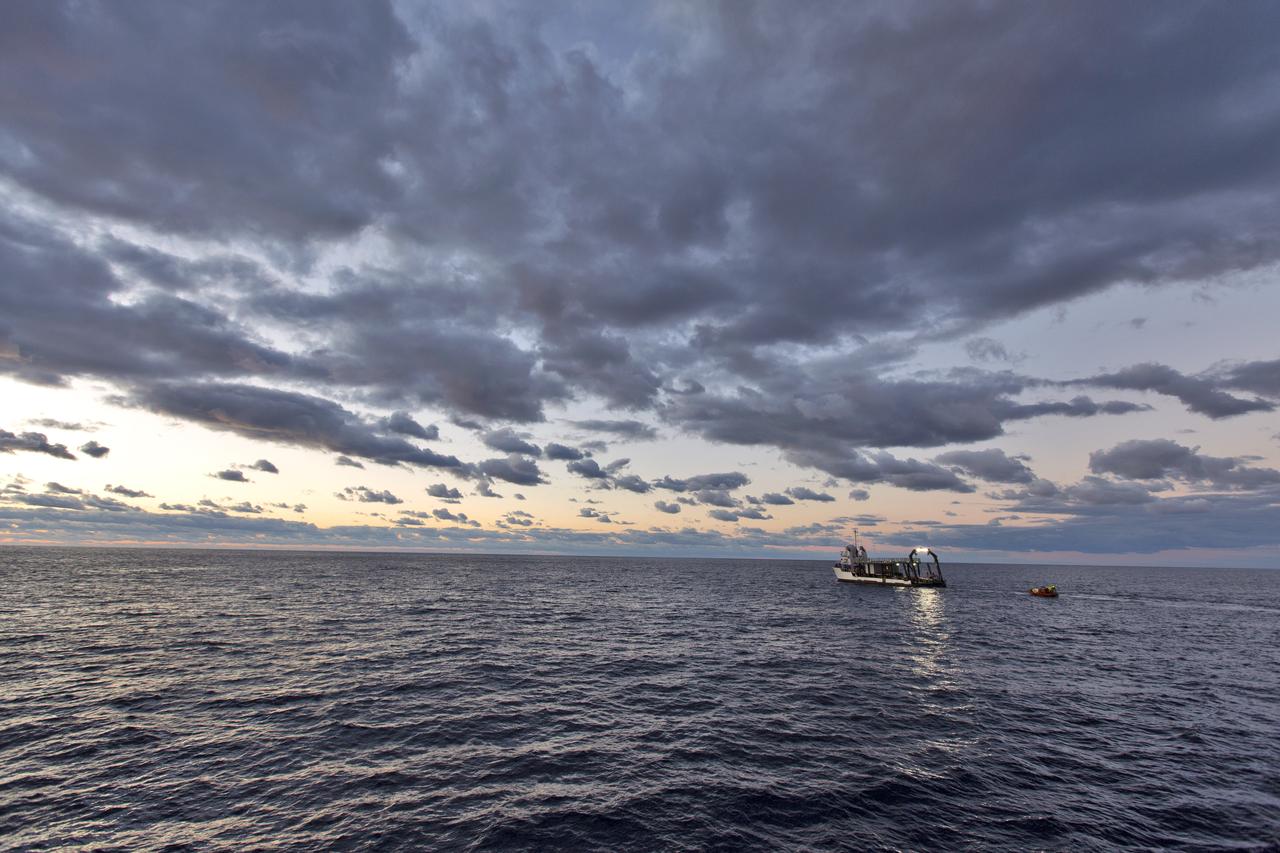
SpaceX’s recovery ship, Go Searcher, sails in the Atlantic Ocean off the east coast of Florida March 8, 2019, in preparation to retrieve the company’s Crew Dragon upon its return to Earth on the Demo-1 mission. The uncrewed spacecraft docked to the orbiting laboratory on March 3, following a 2:49 a.m. EST liftoff aboard a SpaceX Falcon 9 rocket from Launch Complex 39A at NASA’s Kennedy Space Center in Florida on March 2. The spacecraft undocked at 2:32 a.m., March 8, splashing down in the Atlantic Ocean at 8:45 a.m. SpaceX’s inaugural flight with NASA’s Commercial Crew Program is the first flight test of a space system designed for humans built and operated by a commercial company through a public-private partnership. NASA and SpaceX will use data from Demo-1 to further prepare for Demo-2, the crewed flight test that will carry NASA astronauts Bob Behnken and Doug Hurley to the International Space Station later this year.
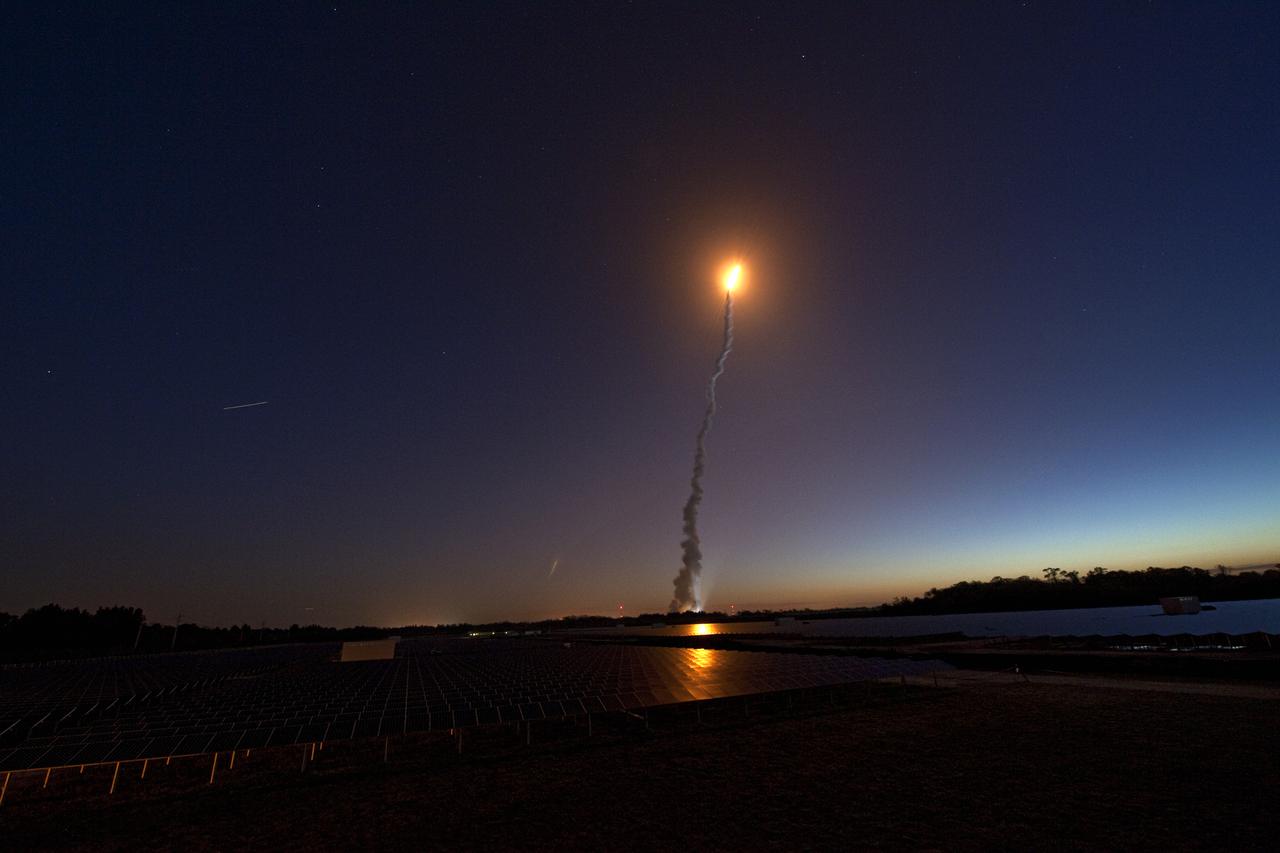
CAPE CANAVERAL, Fla. - The launch of space shuttle Discovery on the STS-131 mission was captured from a field of Florida Power and Light solar panels (foreground) off of S.R. 3 at NASA's Kennedy Space Center in Florida. NASA and FPL are members of a public-private partnership that promotes a clean-energy future and this site will produce an estimated 10 megawatts of emissions-free power for FPandL customers. Shuttle Discovery lifted off at 6:21 a.m. EDT on April 5, 2010. The seven-member STS-131 crew will deliver the multi-purpose logistics module Leonardo, filled with supplies, a new crew sleeping quarters and science racks that will be transferred to the International Space Station's laboratories. The crew also will switch out a gyroscope on the station’s truss, install a spare ammonia storage tank and retrieve a Japanese experiment from the station’s exterior. STS-131 is the 33rd shuttle mission to the station and the 131st shuttle mission overall. For information on the STS-131 mission and crew, visit http:__www.nasa.gov_mission_pages_shuttle_shuttlemissions_sts131_index.html. Photo credit: Courtesy of Adam Nehr

Vice President Mike Pence tours the Neil Armstrong Operations and Checkout Building at NASA's Kennedy Space Center in Florida, where the Orion spacecraft is being readied for a trip beyond the moon on its first integrated flight with the Space Launch System rocket. Pictured from left to right are NASA Kennedy Space Center Deputy Director Janet Petro; Acting NASA Administrator Robert Lightfoot; NASA Astronaut Reid Wiseman; Pence; NASA Astronaut Pat Forrester; retired astronaut Buzz Aldrin; U.S. Senator Marco Rubio (R-FL); Lockheed Martin Chairman, President and CEO Marillyn Hewson; and NASA Kennedy Space Center Director Robert Cabana. During his visit to Kennedy, Pence spoke inside the Vehicle Assembly Building, where he thanked employees for advancing American leadership in space. The Vice President also toured several facilities highlighting the public-private partnerships at Kennedy, as both NASA and commercial companies prepare to launch American astronauts from the multi-user spaceport.

SpaceX’s Crew Dragon approaches the International Space Station during the Demo-1 mission on Sunday, March 3, 2019. The uncrewed spacecraft docked to the orbiting laboratory following a 2:49 a.m. EST liftoff aboard a SpaceX Falcon 9 rocket from Launch Complex 39A at NASA’s Kennedy Space Center in Florida on March 2. Crew Dragon made 18 orbits of Earth before successfully attaching to the space station. The spacecraft undocked at 2:32 a.m., March 8, splashing down in the Atlantic Ocean, about 200 miles off Florida’s east coast, at 8:45 a.m. It arrived in Port Canaveral in Florida on the main deck of SpaceX’s recovery ship, Go Searcher, on March 9. SpaceX’s inaugural flight with NASA’s Commercial Crew Program is the first flight test of a space system designed for humans built and operated by a commercial company through a public-private partnership. NASA and SpaceX will use data from Demo-1 to further prepare for Demo-2, the crewed flight test that will carry NASA astronauts Bob Behnken and Doug Hurley to the International Space Station later this year.
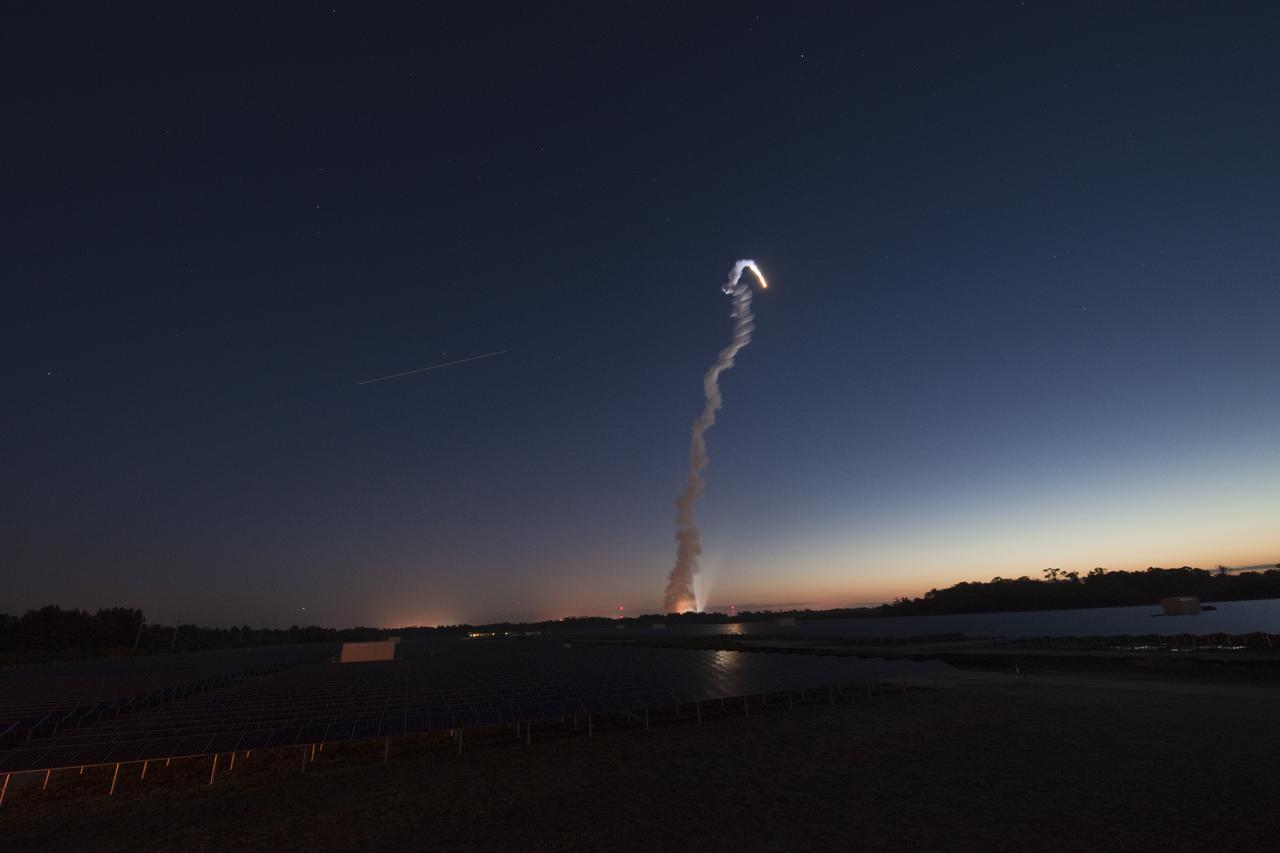
CAPE CANAVERAL, Fla. - The launch of space shuttle Discovery on the STS-131 mission was captured from a field of Florida Power and Light solar panels (foreground) off of S.R. 3 at NASA's Kennedy Space Center in Florida. NASA and FPL are members of a public-private partnership that promotes a clean-energy future and this site will produce an estimated 10 megawatts of emissions-free power for FPandL customers. Shuttle Discovery lifted off at 6:21 a.m. EDT on April 5, 2010. The seven-member STS-131 crew will deliver the multi-purpose logistics module Leonardo, filled with supplies, a new crew sleeping quarters and science racks that will be transferred to the International Space Station's laboratories. The crew also will switch out a gyroscope on the station’s truss, install a spare ammonia storage tank and retrieve a Japanese experiment from the station’s exterior. STS-131 is the 33rd shuttle mission to the station and the 131st shuttle mission overall. For information on the STS-131 mission and crew, visit http:__www.nasa.gov_mission_pages_shuttle_shuttlemissions_sts131_index.html. Photo credit: Courtesy of Adam Nehr
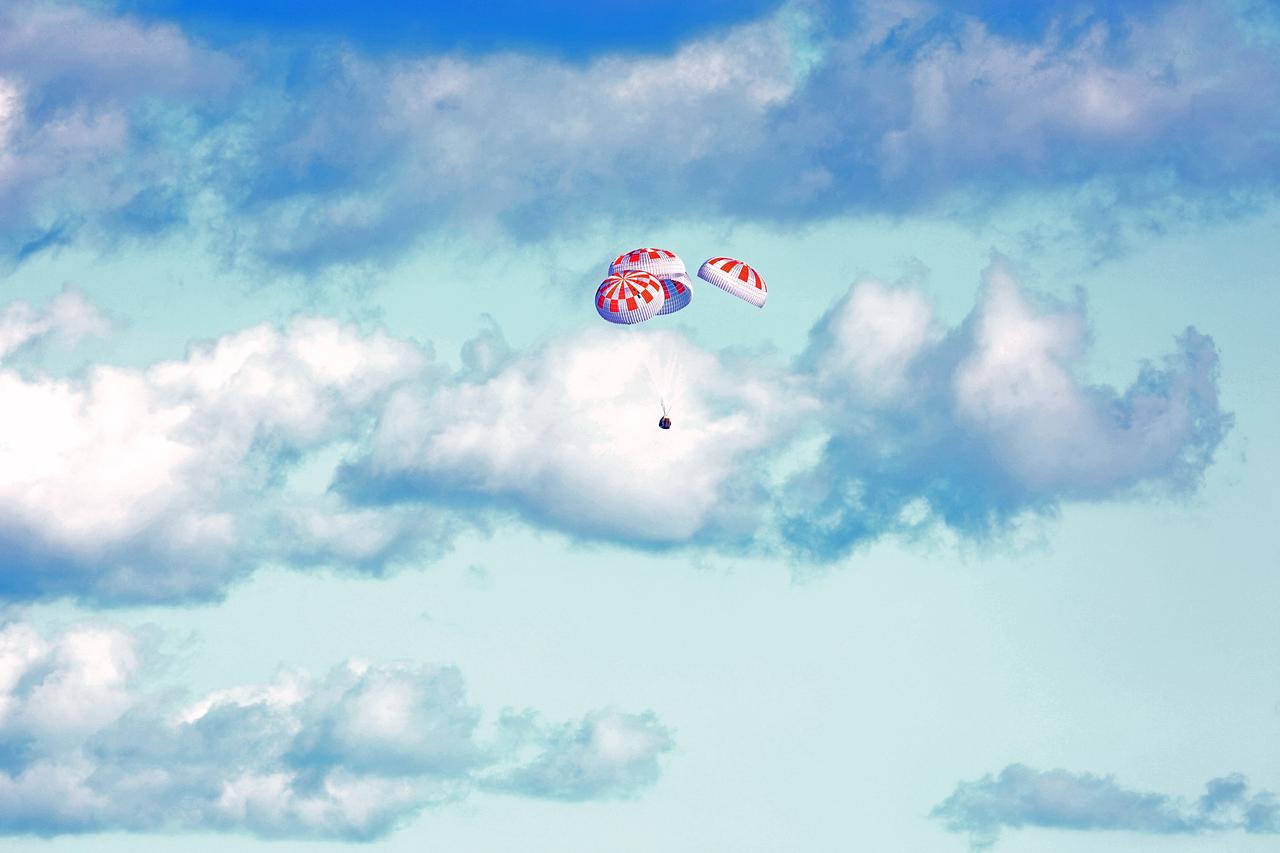
SpaceX’s Crew Dragon is guided by four parachutes toward the Atlantic Ocean on March 8 after returning from the International Space Station on the Demo-1 mission. The uncrewed spacecraft docked to the orbiting laboratory on March 3, following a 2:49 a.m. EST liftoff aboard a SpaceX Falcon 9 rocket from Launch Complex 39A at NASA’s Kennedy Space Center in Florida on March 2. Crew Dragon made 18 orbits of Earth before successfully attaching to the space station. The spacecraft undocked at 2:32 a.m., March 8, splashing down in the Atlantic Ocean, about 200 miles off Florida’s east coast at 8:45 a.m. SpaceX’s inaugural flight with NASA’s Commercial Crew Program is the first flight test of a space system designed for humans built and operated by a commercial company through a public-private partnership. NASA and SpaceX will use data from Demo-1 to further prepare for Demo-2, the crewed flight test that will carry NASA astronauts Bob Behnken and Doug Hurley to the International Space Station later this year.
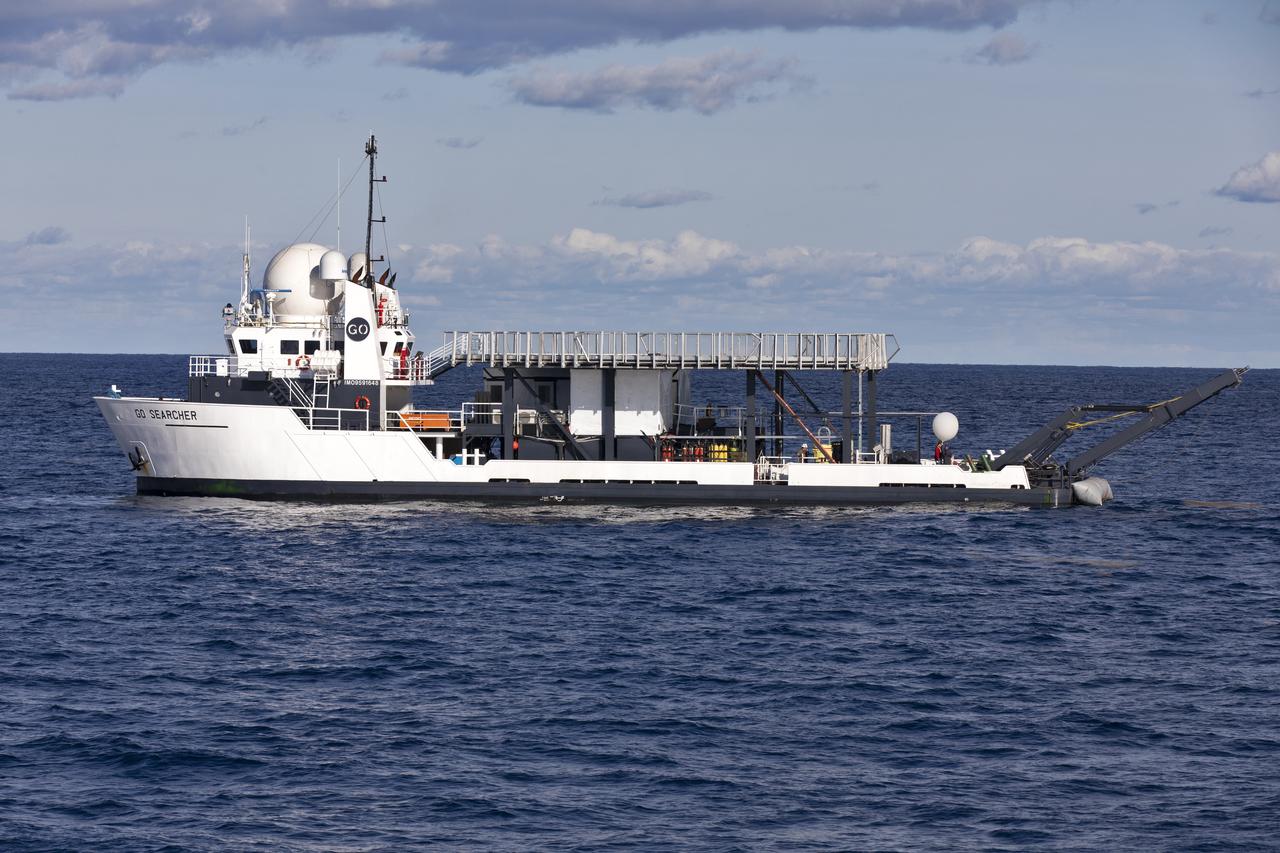
SpaceX’s recovery ship, Go Searcher, sails in the Atlantic Ocean off the east coast of Florida March 8, 2019, in preparation to retrieve the company’s Crew Dragon upon its return to Earth on the Demo-1 mission. The uncrewed spacecraft docked to the orbiting laboratory on March 3, following a 2:49 a.m. EST liftoff aboard a SpaceX Falcon 9 rocket from Launch Complex 39A at NASA’s Kennedy Space Center in Florida on March 2. The spacecraft undocked at 2:32 a.m., March 8, splashing down in the Atlantic Ocean at 8:45 a.m. SpaceX’s inaugural flight with NASA’s Commercial Crew Program is the first flight test of a space system designed for humans built and operated by a commercial company through a public-private partnership. NASA and SpaceX will use data from Demo-1 to further prepare for Demo-2, the crewed flight test that will carry NASA astronauts Bob Behnken and Doug Hurley to the International Space Station later this year.
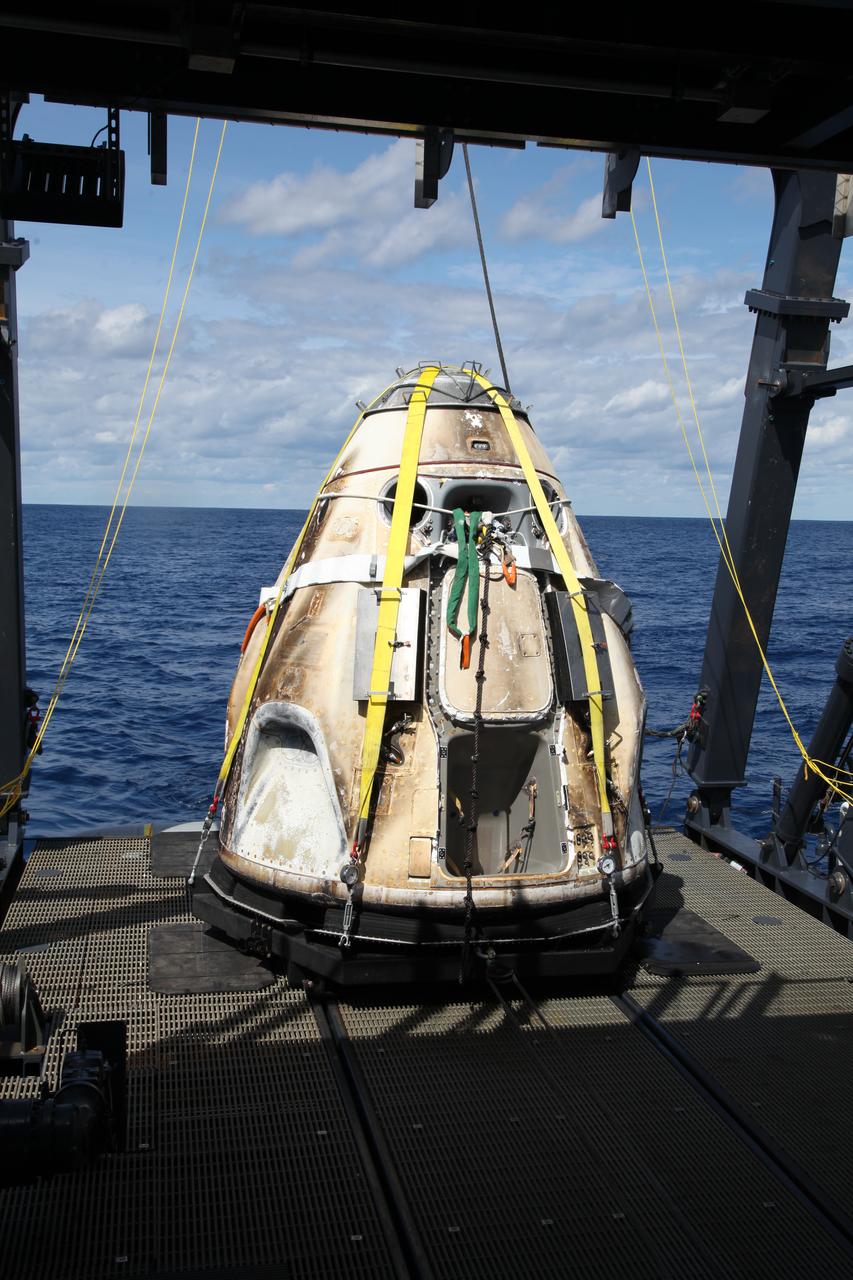
SpaceX’s Crew Dragon is loaded onto the company’s recovery ship, Go Searcher, in the Atlantic Ocean, about 200 miles off Florida’s east coast, on March 8, after returning from the International Space Station on the Demo-1 mission. The uncrewed spacecraft docked to the orbiting laboratory on March 3, following a 2:49 a.m. EST liftoff aboard a SpaceX Falcon 9 rocket from Launch Complex 39A at NASA’s Kennedy Space Center in Florida on March 2. The spacecraft undocked at 2:32 a.m., March 8, splashing down in the Atlantic Ocean, at 8:45 a.m. SpaceX’s inaugural flight with NASA’s Commercial Crew Program is the first flight test of a space system designed for humans built and operated by a commercial company through a public-private partnership. NASA and SpaceX will use data from Demo-1 to further prepare for Demo-2, the crewed flight test that will carry NASA astronauts Bob Behnken and Doug Hurley to the International Space Station later this year.
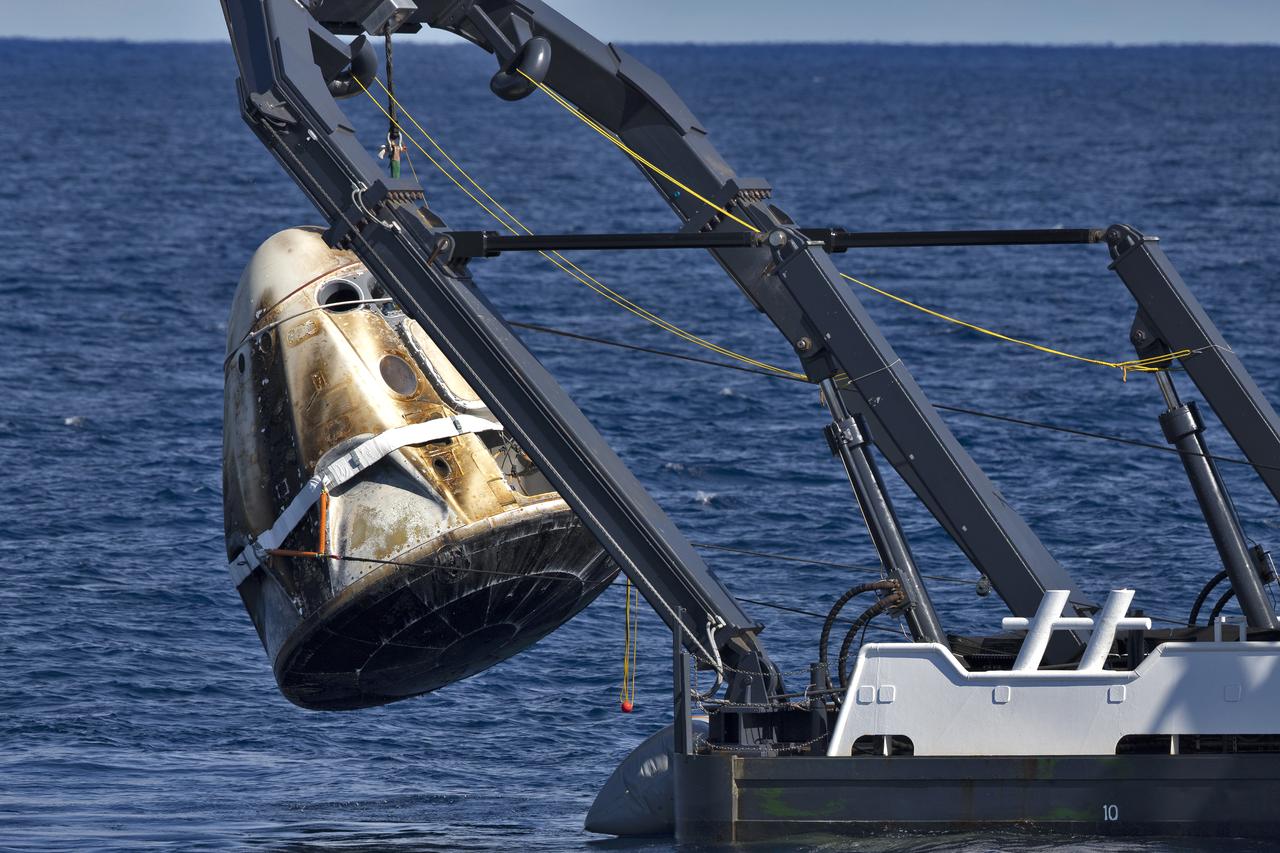
SpaceX’s Crew Dragon is retrieved by the company’s recovery ship, Go Searcher, in the Atlantic Ocean, about 200 miles off the east coast of Florida March 8, 2019, after its return to Earth on the Demo-1 mission. The uncrewed spacecraft docked to the orbiting laboratory on March 3, following a 2:49 a.m. EST liftoff aboard a SpaceX Falcon 9 rocket from Launch Complex 39A at NASA’s Kennedy Space Center in Florida on March 2. The spacecraft undocked at 2:32 a.m., March 8, splashing down in the Atlantic Ocean, at 8:45 a.m. SpaceX’s inaugural flight with NASA’s Commercial Crew Program is the first flight test of a space system designed for humans built and operated by a commercial company through a public-private partnership. NASA and SpaceX will use data from Demo-1 to further prepare for Demo-2, the crewed flight test that will carry NASA astronauts Bob Behnken and Doug Hurley to the International Space Station later this year.
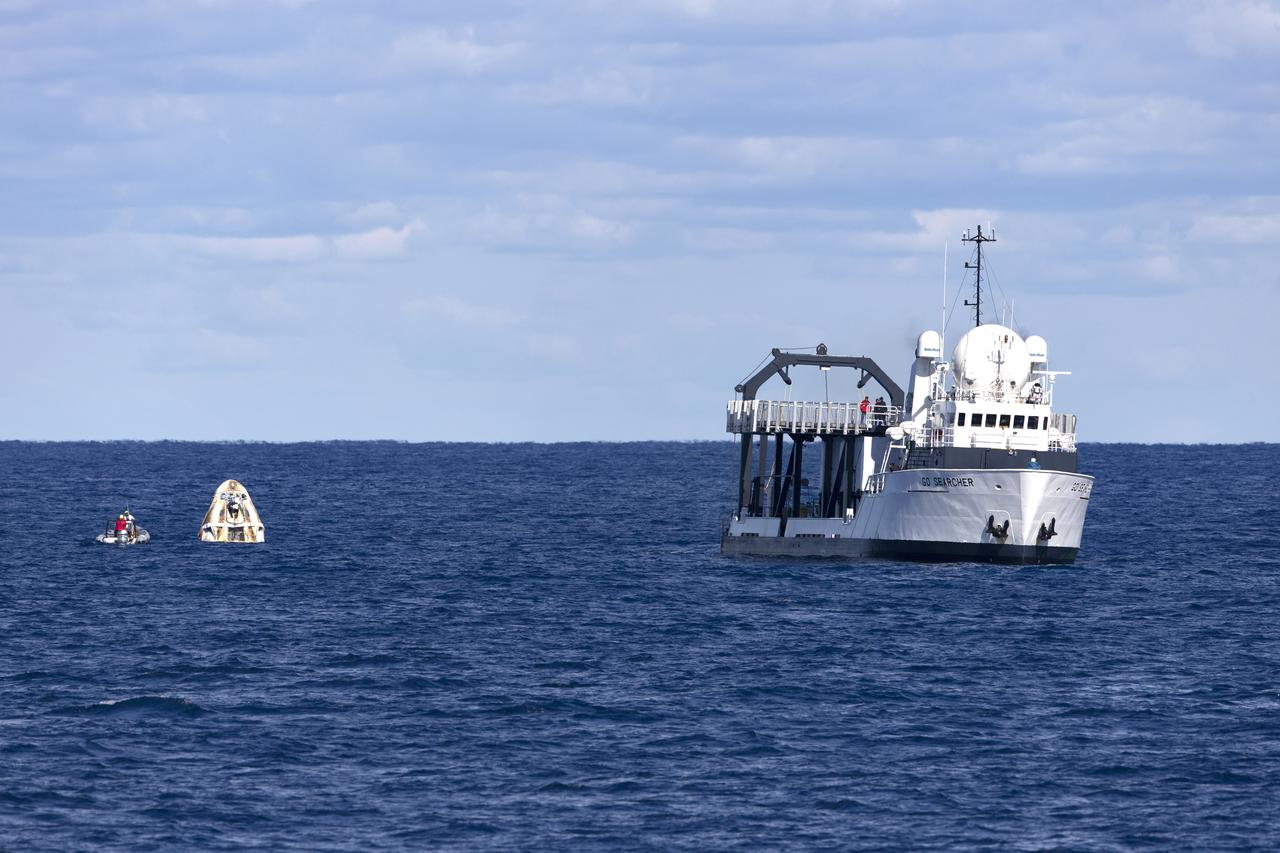
SpaceX’s recovery ship, Go Searcher, prepares to retrieve the company’s Crew Dragon from the Atlantic Ocean, about 200 miles off the east coast of Florida, March 8, 2019. The uncrewed spacecraft docked to the orbiting laboratory on March 3, following a 2:49 a.m. EST liftoff aboard a SpaceX Falcon 9 rocket from Launch Complex 39A at NASA’s Kennedy Space Center in Florida on March 2. The spacecraft undocked at 2:32 a.m., March 8, splashing down in the Atlantic Ocean at 8:45 a.m. SpaceX’s inaugural flight with NASA’s Commercial Crew Program, known as Demo-1, is the first flight test of a space system designed for humans built and operated by a commercial company through a public-private partnership. NASA and SpaceX will use data from Demo-1 to further prepare for Demo-2, the crewed flight test that will carry NASA astronauts Bob Behnken and Doug Hurley to the International Space Station later this year.

SpaceX’s Crew Dragon spacecraft arrives in Port Canaveral, Florida, aboard the company’s recovery ship, Go Searcher, on Saturday, March 9, 2019. Crew Dragon splashed down in the Atlantic Ocean, about 200 miles off Florida’s east coast, at 8:45 a.m. EST on March 8, after undocking from the International Space Station at 2:32 a.m. As part of the Demo-1 mission, the uncrewed spacecraft docked to the orbiting laboratory on March 3, following a 2:49 a.m. EST liftoff aboard a SpaceX Falcon 9 rocket from Launch Complex 39A at NASA’s Kennedy Space Center in Florida on March 2. SpaceX’s inaugural flight with NASA’s Commercial Crew Program is the first flight test of a space system designed for humans built and operated by a commercial company through a public-private partnership. NASA and SpaceX will use data from Demo-1 to further prepare for Demo-2, the crewed flight test that will carry NASA astronauts Bob Behnken and Doug Hurley to the International Space Station later this year.
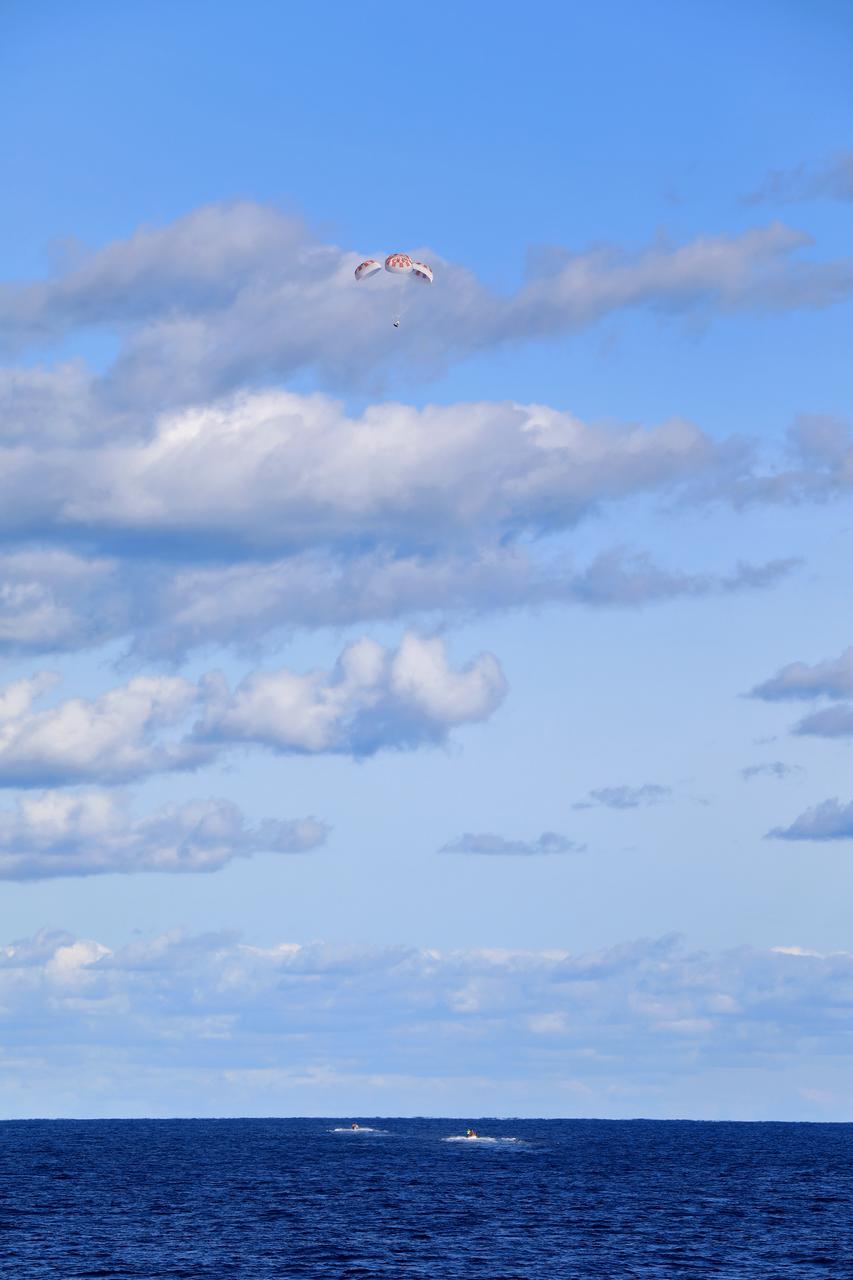
SpaceX’s Crew Dragon is guided by four parachutes toward the Atlantic Ocean on March 8 after returning from the International Space Station on the Demo-1 mission. The uncrewed spacecraft docked to the orbiting laboratory on March 3, following a 2:49 a.m. EST liftoff aboard a SpaceX Falcon 9 rocket from Launch Complex 39A at NASA’s Kennedy Space Center in Florida on March 2. Crew Dragon made 18 orbits of Earth before successfully attaching to the space station. The spacecraft undocked at 2:32 a.m., March 8, splashing down in the Atlantic Ocean, about 200 miles off Florida’s east coast at 8:45 a.m. SpaceX’s inaugural flight with NASA’s Commercial Crew Program is the first flight test of a space system designed for humans built and operated by a commercial company through a public-private partnership. NASA and SpaceX will use data from Demo-1 to further prepare for Demo-2, the crewed flight test that will carry NASA astronauts Bob Behnken and Doug Hurley to the International Space Station later this year.
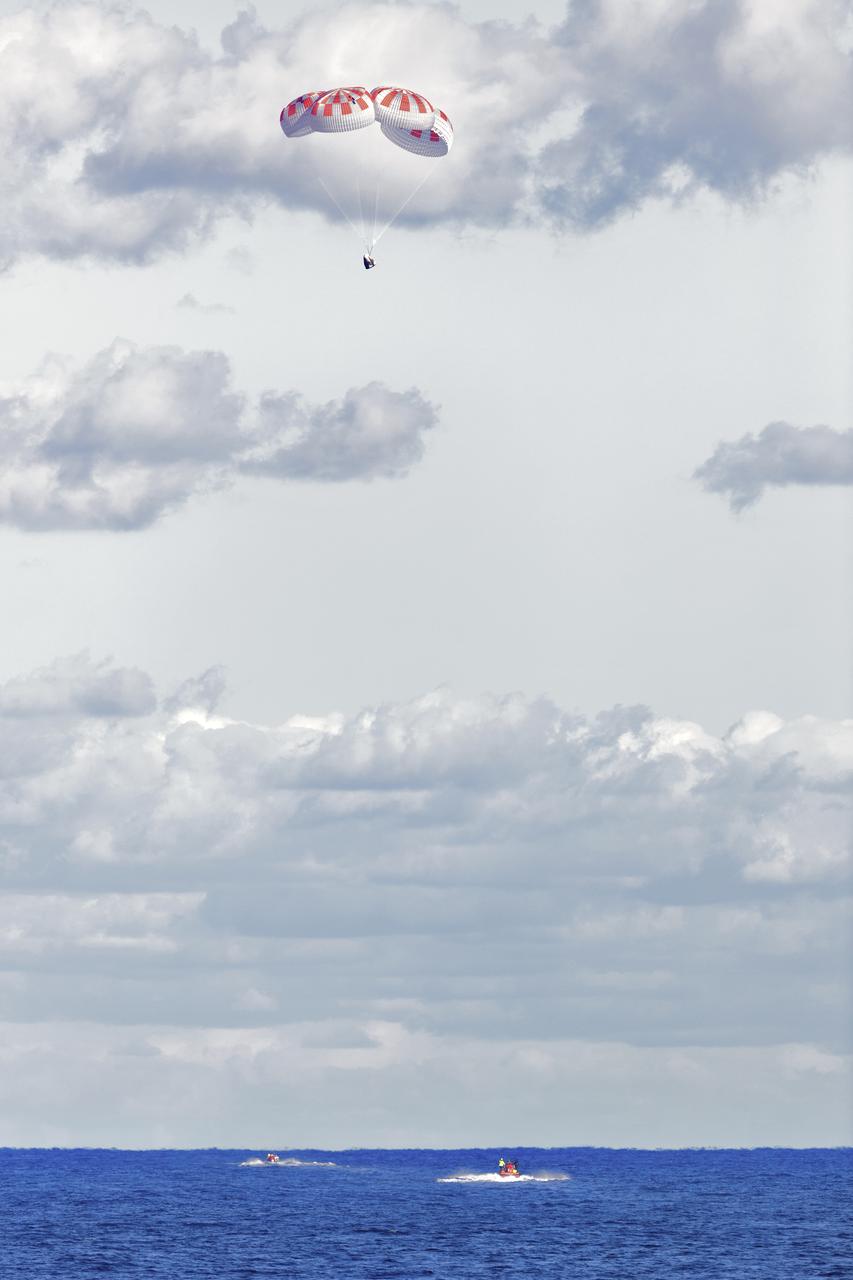
SpaceX’s Crew Dragon is guided by four parachutes toward the Atlantic Ocean on March 8, 2019, after returning from the International Space Station on the Demo-1 mission. The uncrewed spacecraft docked to the orbiting laboratory on March 3, following a 2:49 a.m. EST liftoff aboard a SpaceX Falcon 9 rocket from Launch Complex 39A at NASA’s Kennedy Space Center in Florida on March 2. Crew Dragon made 18 orbits of Earth before successfully attaching to the space station. The spacecraft undocked at 2:32 a.m., March 8, splashing down in the Atlantic Ocean, about 200 miles off Florida’s east coast at 8:45 a.m. SpaceX’s inaugural flight with NASA’s Commercial Crew Program is the first flight test of a space system designed for humans built and operated by a commercial company through a public-private partnership. NASA and SpaceX will use data from Demo-1 to further prepare for Demo-2, the crewed flight test that will carry NASA astronauts Bob Behnken and Doug Hurley to the International Space Station later this year.
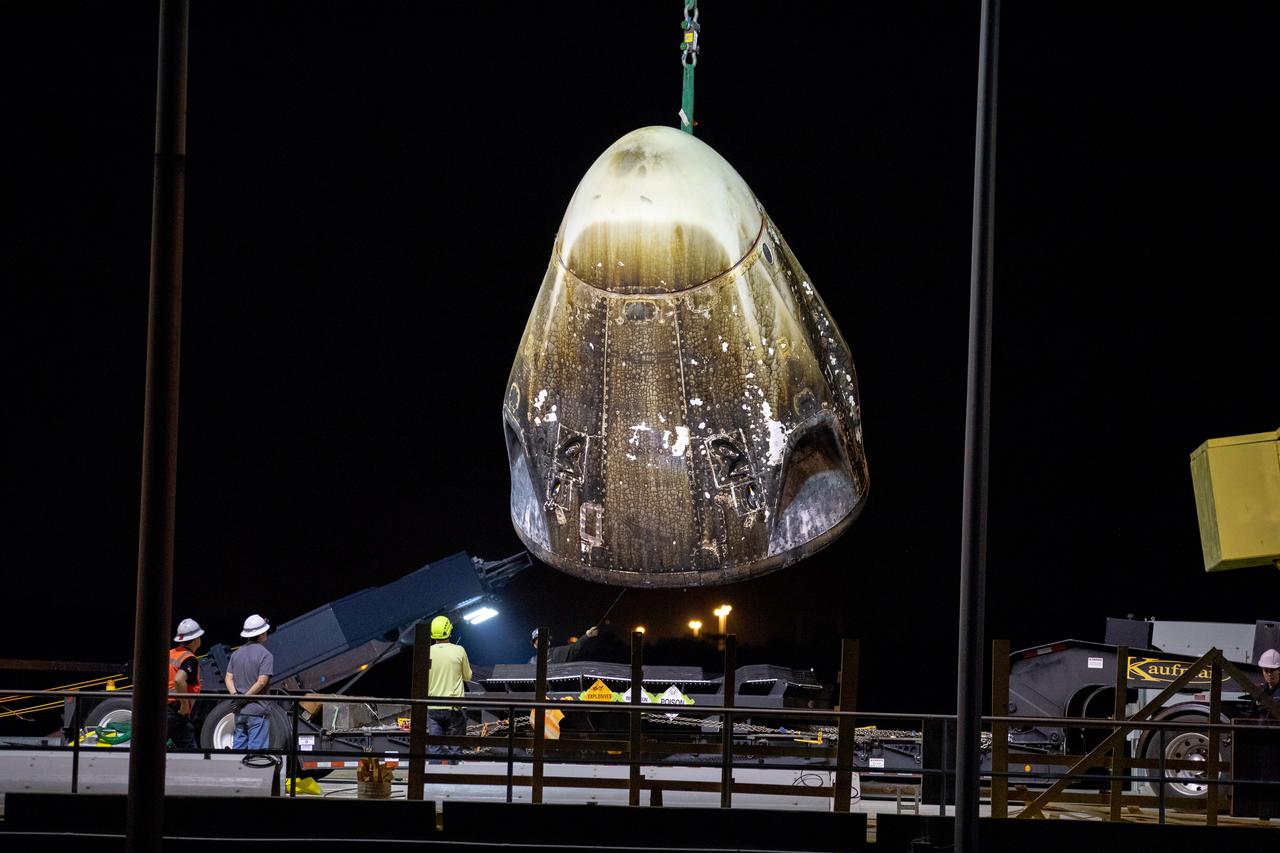
The SpaceX Crew Dragon spacecraft is offloaded from the company’s recovery ship, Go Searcher, in Florida’s Port Canaveral on Saturday, March 9, 2019. Crew Dragon splashed down in the Atlantic Ocean, about 200 miles off Florida’s east coast, at 8:45 a.m. EST on March 8, after undocking from the International Space Station at 2:32 a.m. As part of the Demo-1 mission, the uncrewed spacecraft docked to the orbiting laboratory on March 3, following a 2:49 a.m. EST liftoff aboard a SpaceX Falcon 9 rocket from Launch Complex 39A at NASA’s Kennedy Space Center in Florida on March 2. SpaceX’s inaugural flight with NASA’s Commercial Crew Program is the first flight test of a space system designed for humans built and operated by a commercial company through a public-private partnership. NASA and SpaceX will use data from Demo-1 to further prepare for Demo-2, the crewed flight test that will carry NASA astronauts Bob Behnken and Doug Hurley to the International Space Station later this year.
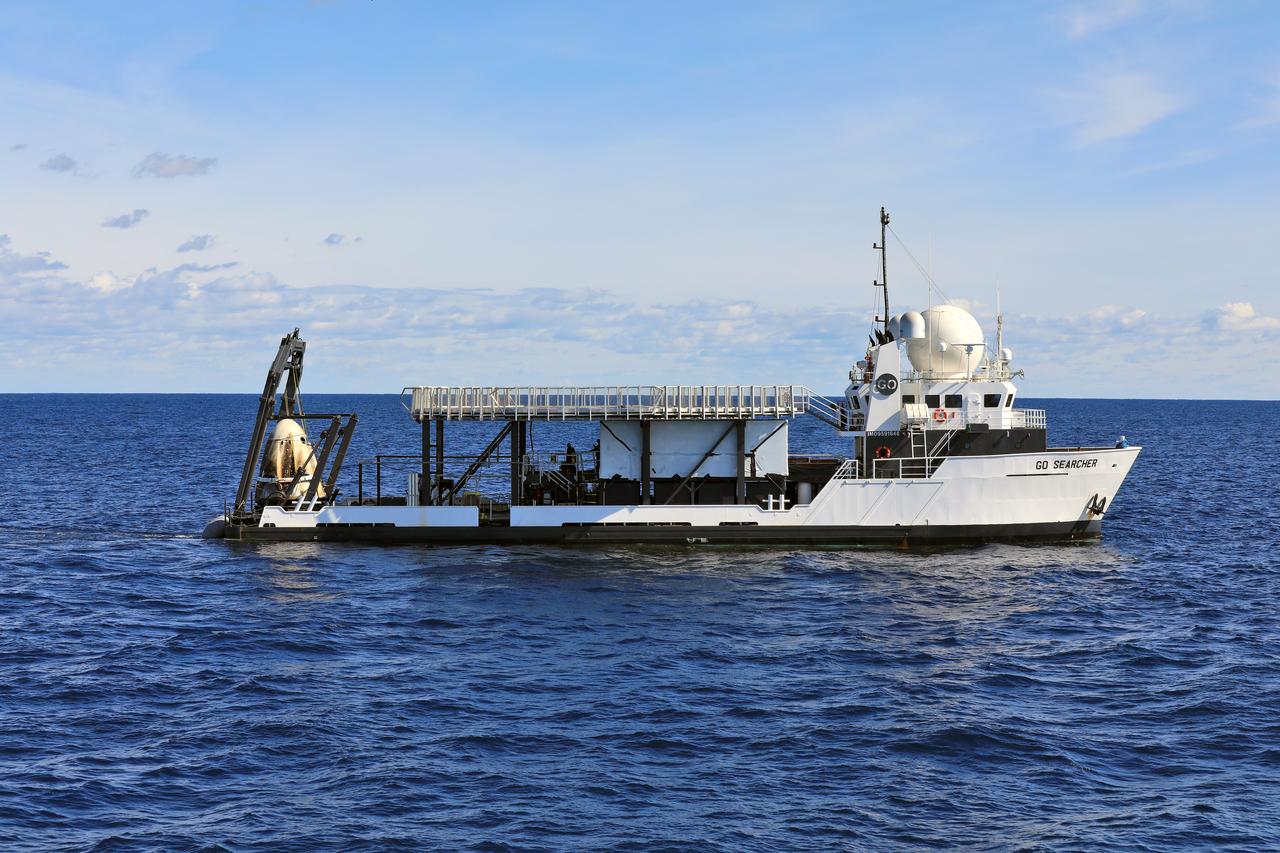
SpaceX’s Crew Dragon is carried by the company’s recovery ship, Go Searcher, in the Atlantic Ocean, about 200 miles off Florida’s east coast, on March 8, after returning from the International Space Station on the Demo-1 mission. The uncrewed spacecraft docked to the orbiting laboratory on March 3, following a 2:49 a.m. EST liftoff aboard a SpaceX Falcon 9 rocket from Launch Complex 39A at NASA’s Kennedy Space Center in Florida on March 2. Crew Dragon made 18 orbits of Earth before successfully attaching to the space station. The spacecraft undocked at 2:32 a.m., March 8, splashing down in the Atlantic Ocean, at 8:45 a.m. SpaceX’s inaugural flight with NASA’s Commercial Crew Program is the first flight test of a space system designed for humans built and operated by a commercial company through a public-private partnership. NASA and SpaceX will use data from Demo-1 to further prepare for Demo-2, the crewed flight test that will carry NASA astronauts Bob Behnken and Doug Hurley to the International Space Station later this year
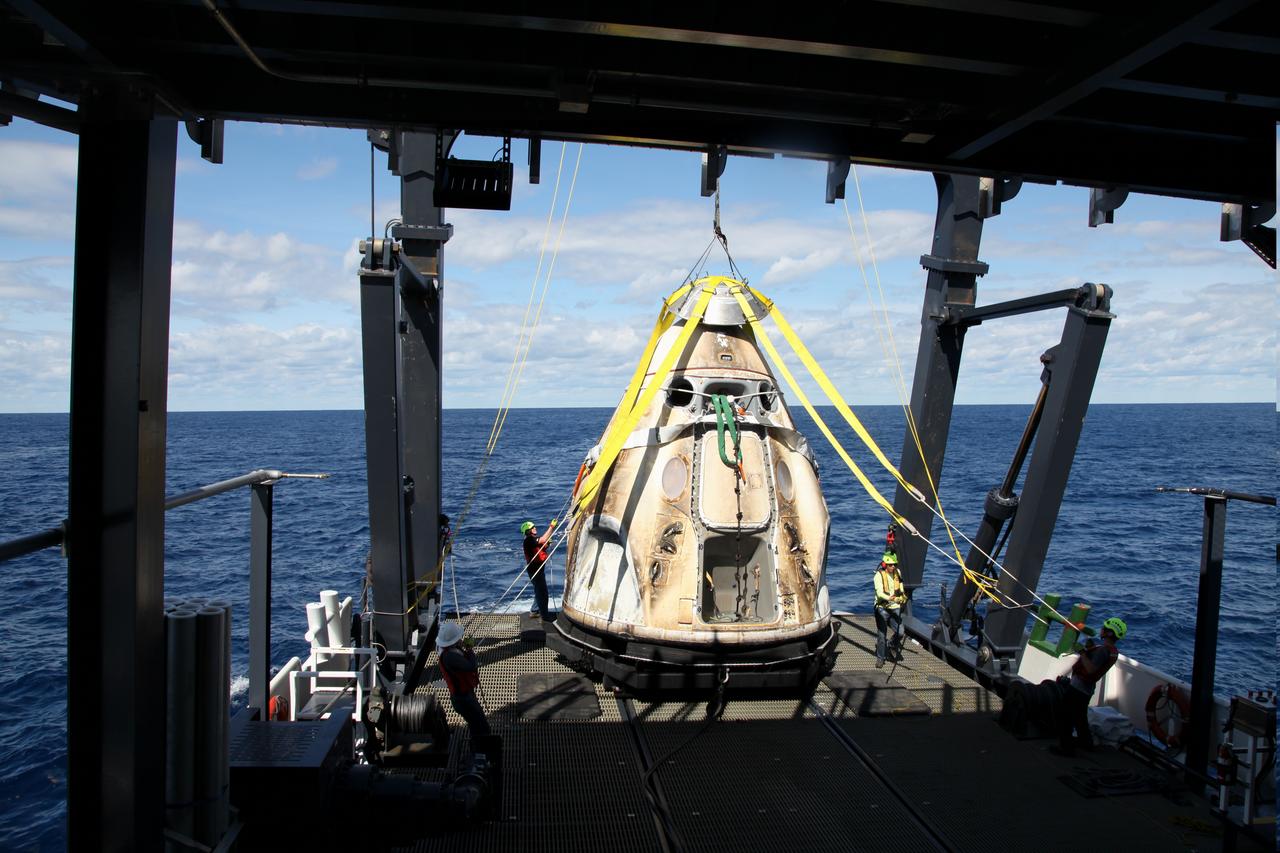
SpaceX’s Crew Dragon is loaded onto the company’s recovery ship, Go Searcher, in the Atlantic Ocean, about 200 miles off Florida’s east coast, on March 8, after returning from the International Space Station on the Demo-1 mission. The uncrewed spacecraft docked to the orbiting laboratory on March 3, following a 2:49 a.m. EST liftoff aboard a SpaceX Falcon 9 rocket from Launch Complex 39A at NASA’s Kennedy Space Center in Florida on March 2. The spacecraft undocked at 2:32 a.m., March 8, splashing down in the Atlantic Ocean, at 8:45 a.m. SpaceX’s inaugural flight with NASA’s Commercial Crew Program is the first flight test of a space system designed for humans built and operated by a commercial company through a public-private partnership. NASA and SpaceX will use data from Demo-1 to further prepare for Demo-2, the crewed flight test that will carry NASA astronauts Bob Behnken and Doug Hurley to the International Space Station later this year.
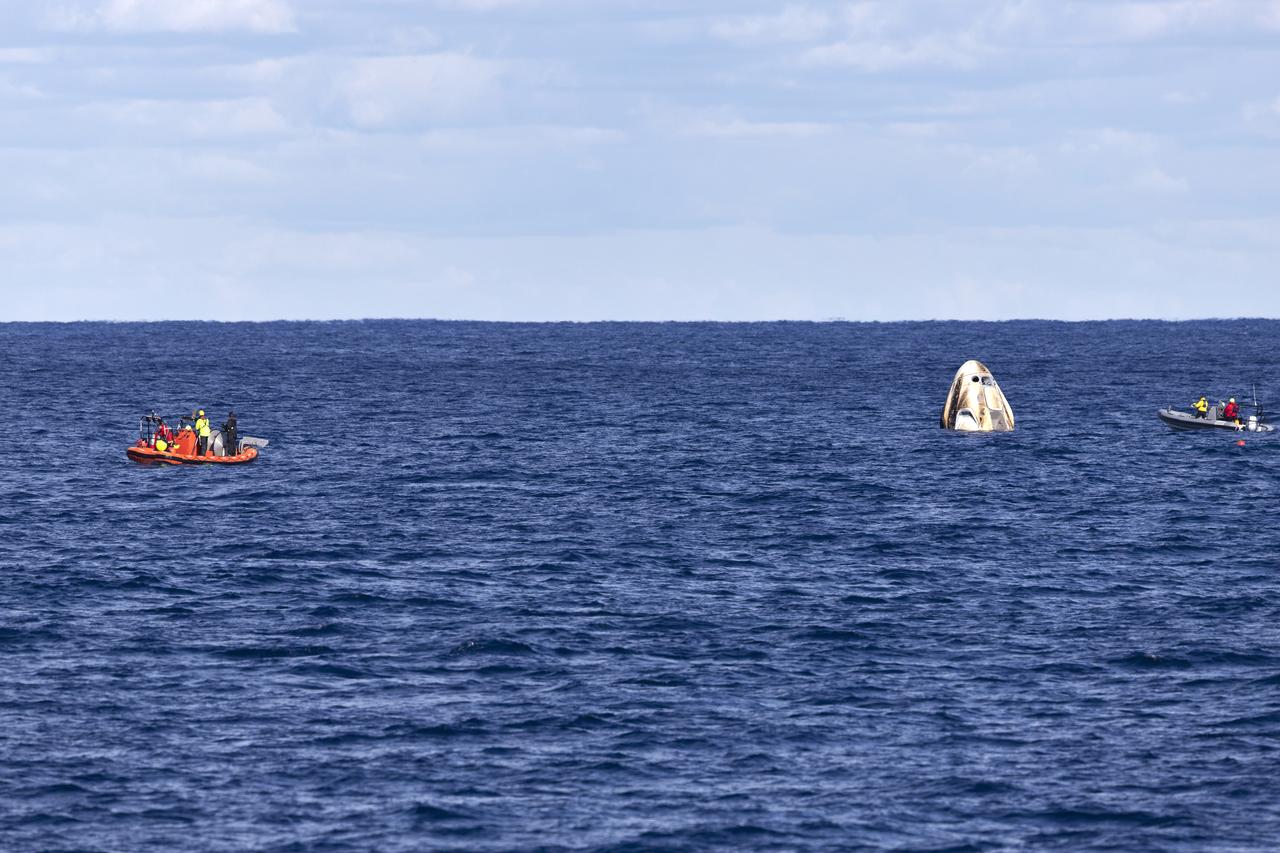
SpaceX’s Crew Dragon floats in the Atlantic Ocean, about 200 miles off Florida’s east coast, March 8, 2019, after returning from the International Space Station on the Demo-1 mission. The uncrewed spacecraft docked to the orbiting laboratory on March 3, following a 2:49 a.m. EST liftoff aboard a SpaceX Falcon 9 rocket from Launch Complex 39A at NASA’s Kennedy Space Center in Florida on March 2. The spacecraft undocked at 2:32 a.m., March 8, splashing down in the Atlantic Ocean at 8:45 a.m. SpaceX’s inaugural flight with NASA’s Commercial Crew Program is the first flight test of a space system designed for humans built and operated by a commercial company through a public-private partnership. NASA and SpaceX will use data from Demo-1 to further prepare for Demo-2, the crewed flight test that will carry NASA astronauts Bob Behnken and Doug Hurley to the International Space Station later this year.

SpaceX’s Crew Dragon is guided by four parachutes as it approaches splashdown in the Atlantic Ocean about 200 miles off Florida’s east coast on March 8, 2019, after returning from the International Space Station on the Demo-1 mission. The uncrewed spacecraft docked to the orbiting laboratory on March 3, following a 2:49 a.m. EST liftoff aboard a SpaceX Falcon 9 rocket from Launch Complex 39A at NASA’s Kennedy Space Center in Florida on March 2. Crew Dragon made 18 orbits of Earth before successfully attaching to the space station. The spacecraft undocked at 2:32 a.m., March 8, splashing down in the Atlantic Ocean at 8:45 a.m. SpaceX’s inaugural flight with NASA’s Commercial Crew Program is the first flight test of a space system designed for humans built and operated by a commercial company through a public-private partnership. NASA and SpaceX will use data from Demo-1 to further prepare for Demo-2, the crewed flight test that will carry NASA astronauts Bob Behnken and Doug Hurley to the International Space Station later this year.
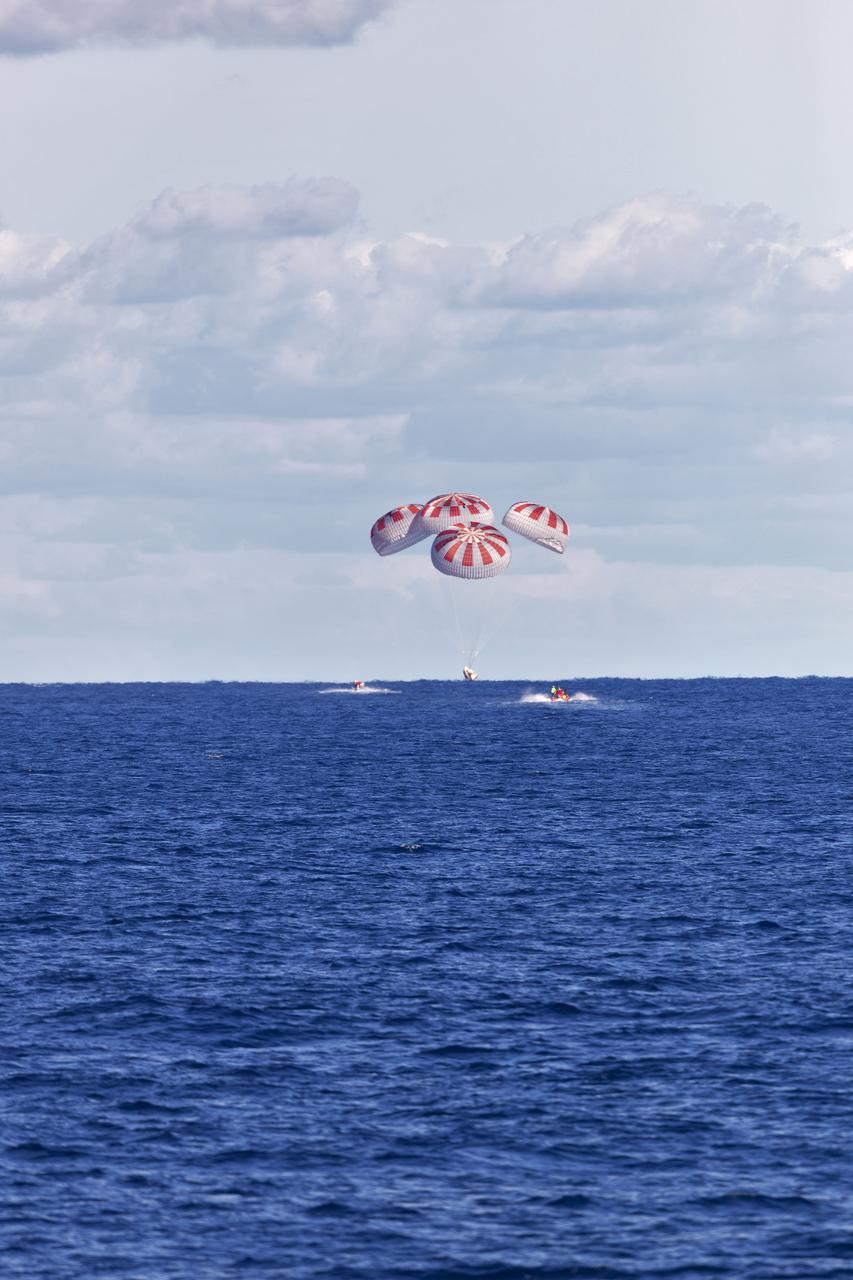
SpaceX’s Crew Dragon is guided by four parachutes as it splashes down in the Atlantic Ocean about 200 miles off Florida’s east coast on March 8, 2019, after returning from the International Space Station on the Demo-1 mission. The uncrewed spacecraft docked to the orbiting laboratory on March 3, following a 2:49 a.m. EST liftoff aboard a SpaceX Falcon 9 rocket from Launch Complex 39A at NASA’s Kennedy Space Center in Florida on March 2. Crew Dragon made 18 orbits of Earth before successfully attaching to the space station. The spacecraft undocked at 2:32 a.m., March 8, splashing down in the Atlantic Ocean at 8:45 a.m. SpaceX’s inaugural flight with NASA’s Commercial Crew Program is the first flight test of a space system designed for humans built and operated by a commercial company through a public-private partnership. NASA and SpaceX will use data from Demo-1 to further prepare for Demo-2, the crewed flight test that will carry NASA astronauts Bob Behnken and Doug Hurley to the International Space Station later this year.
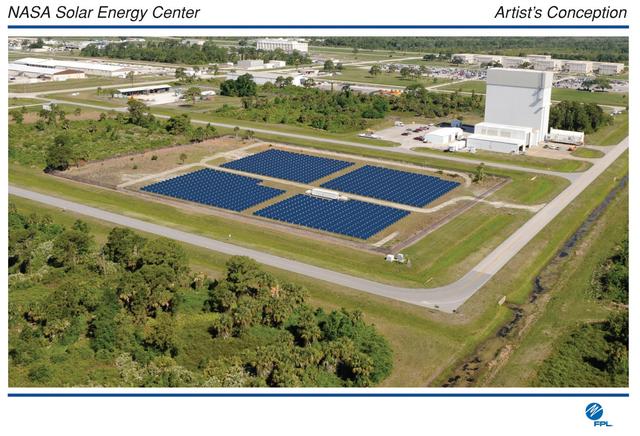
CAPE CANAVERAL, Fla. – This is a rendering of one of two proposed solar power systems that NASA and Florida Power & Light Company are beginning to construct on NASA's Kennedy Space Center as part of a public-private partnership that promotes a clean-energy future. A groundbreaking ceremony took place on May 27 at the Kennedy Space Center Visitor Complex. FPL, Florida's largest electric utility, will build and maintain two solar photovoltaic power generation systems at Kennedy. One will produce an estimated 10 megawatts of emissions-free power for FPL customers, which is enough energy to serve roughly 1,100 homes. The second is a one-megawatt solar power facility that will provide renewable energy directly to Kennedy. The FPL facilities at NASA will help provide Florida residents and America's space program with new sources of clean energy that will cut reliance on fossil fuels and improve the environment by reducing greenhouse gas emissions. The one megawatt facility also will help NASA meet its goal for use of power generated from renewable energy. Photo courtesy of FPL
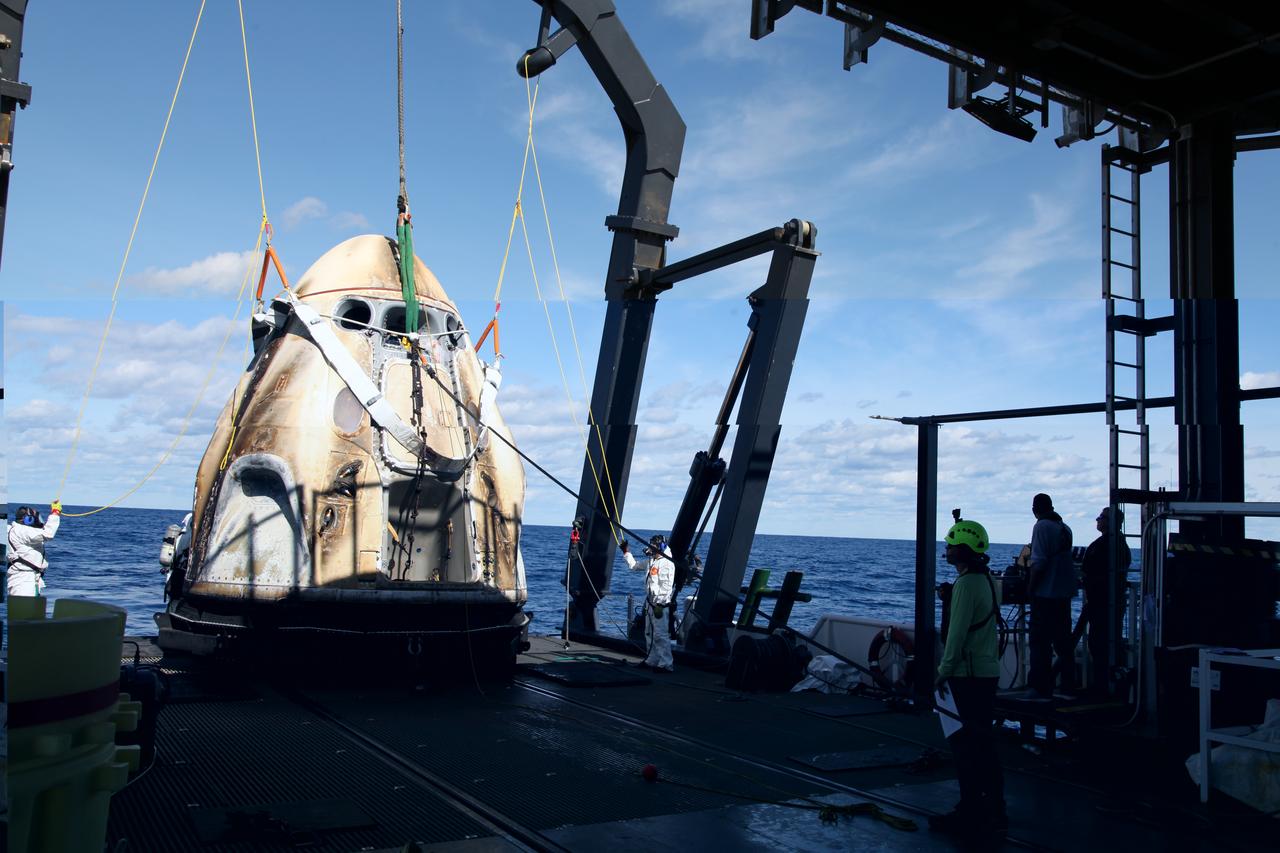
SpaceX’s Crew Dragon is loaded onto the company’s recovery ship, Go Searcher, in the Atlantic Ocean, about 200 miles off Florida’s east coast, on March 8, after returning from the International Space Station on the Demo-1 mission. The uncrewed spacecraft docked to the orbiting laboratory on March 3, following a 2:49 a.m. EST liftoff aboard a SpaceX Falcon 9 rocket from Launch Complex 39A at NASA’s Kennedy Space Center in Florida on March 2. The spacecraft undocked at 2:32 a.m., March 8, splashing down in the Atlantic Ocean, at 8:45 a.m. SpaceX’s inaugural flight with NASA’s Commercial Crew Program is the first flight test of a space system designed for humans built and operated by a commercial company through a public-private partnership. NASA and SpaceX will use data from Demo-1 to further prepare for Demo-2, the crewed flight test that will carry NASA astronauts Bob Behnken and Doug Hurley to the International Space Station later this year.
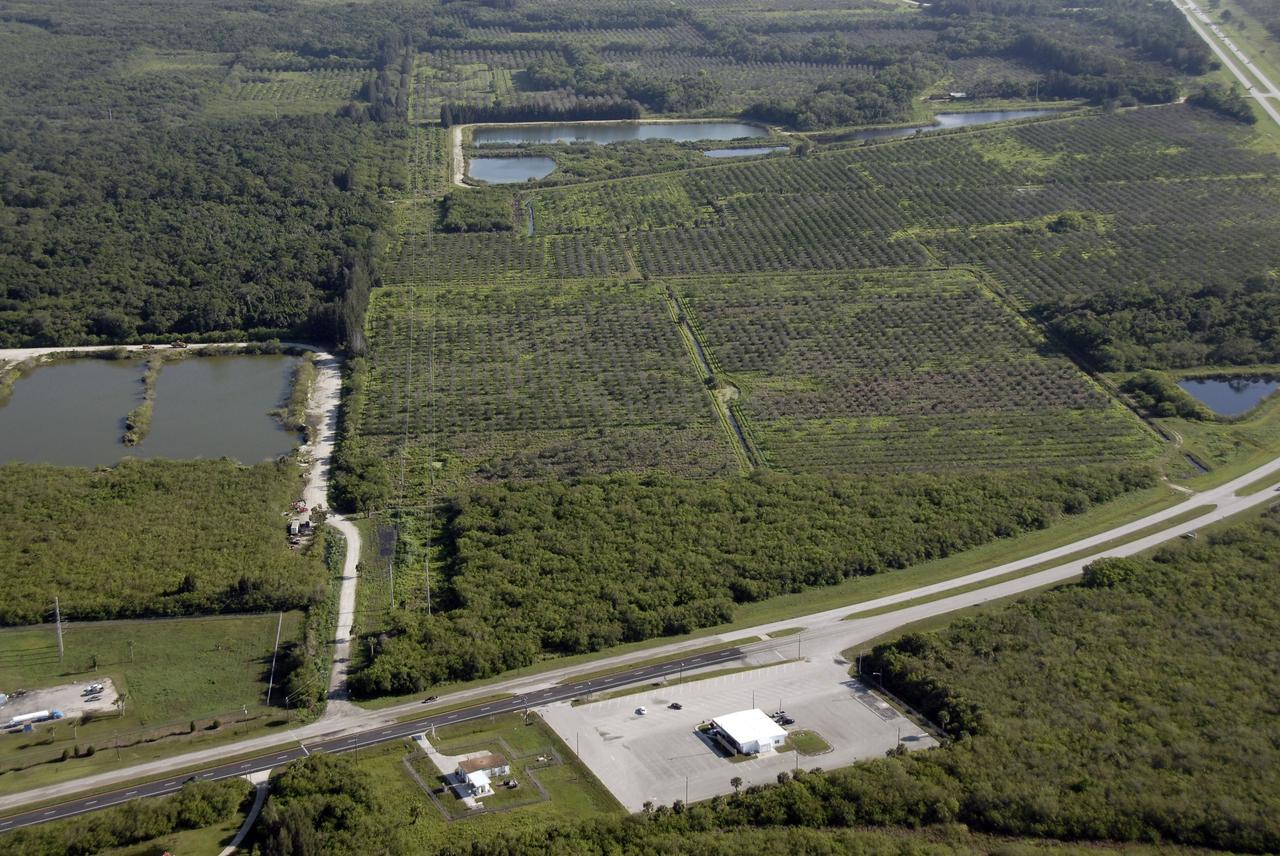
CAPE CANAVERAL, Fla. – An aerial view of the site on S.R. 3 on NASA's Kennedy Space Center in Florida where a solar power system will be built. The solar power systems are being constructed by NASA and Florida Power & Light Company as part of a public-private partnership that promotes a clean-energy future. A groundbreaking ceremony took place on May 27 at the Kennedy Space Center Visitor Complex. FPL, Florida's largest electric utility, will build and maintain two solar photovoltaic power generation systems at Kennedy. One, which will be built on the pictured location, will produce an estimated 10 megawatts of emissions-free power for FPL customers, which is enough energy to serve roughly 1,100 homes. The second is a one-megawatt solar power facility that will provide renewable energy directly to Kennedy. The FPL facilities at NASA will help provide Florida residents and America's space program with new sources of clean energy that will cut reliance on fossil fuels and improve the environment by reducing greenhouse gas emissions. The one megawatt facility also will help NASA meet its goal for use of power generated from renewable energy. Photo credit: NASA/Kim Shiflett
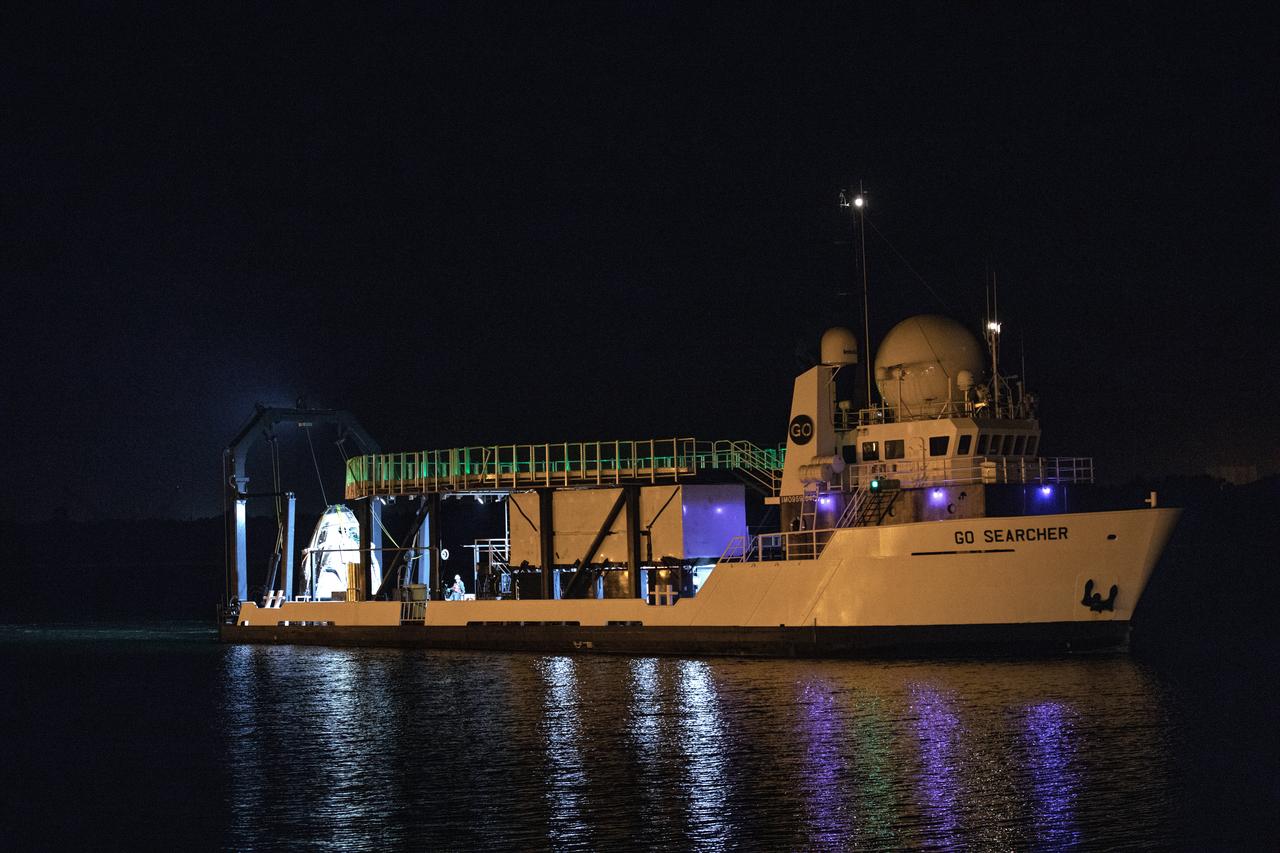
SpaceX’s recovery ship, Go Searcher, enters Port Canaveral in Florida on Saturday, March 9, 2019, with the company’s Crew Dragon spacecraft on its main deck. Crew Dragon splashed down in the Atlantic Ocean, about 200 miles off Florida’s east coast, at 8:45 a.m. EST on March 8, after undocking from the International Space Station at 2:32 a.m. As part of the Demo-1 mission, the uncrewed spacecraft docked to the orbiting laboratory on March 3, following a 2:49 a.m. EST liftoff aboard a SpaceX Falcon 9 rocket from Launch Complex 39A at NASA’s Kennedy Space Center in Florida on March 2. SpaceX’s inaugural flight with NASA’s Commercial Crew Program is the first flight test of a space system designed for humans built and operated by a commercial company through a public-private partnership. NASA and SpaceX will use data from Demo-1 to further prepare for Demo-2, the crewed flight test that will carry NASA astronauts Bob Behnken and Doug Hurley to the International Space Station later this year.

In the skies above NASA Armstrong in Southern California, Generation Orbit’s hypersonic pod is flight tested on agency C-20A.

NASA’s C-20A with Generation Orbit’s hypersonic pod attached undergoes flight test overs skies of Armstrong Flight Research Center.

NASA’s C-20A with Generation Orbit’s hypersonic testbed attached is chased by the agency’s F-18 jet for safety and photography.