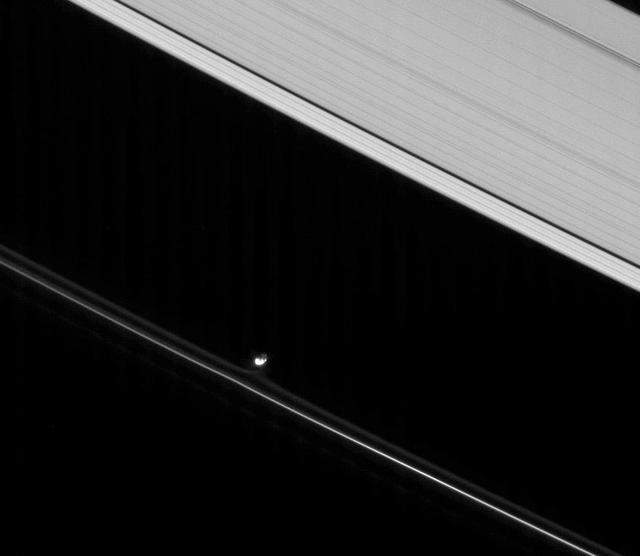
Pulling Away
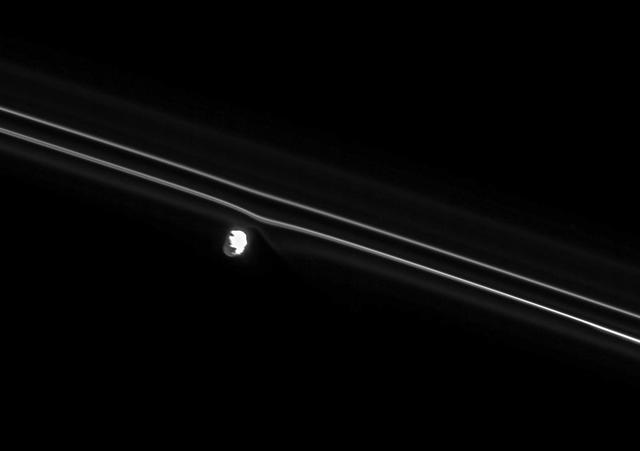
Feeling Gravity Pull
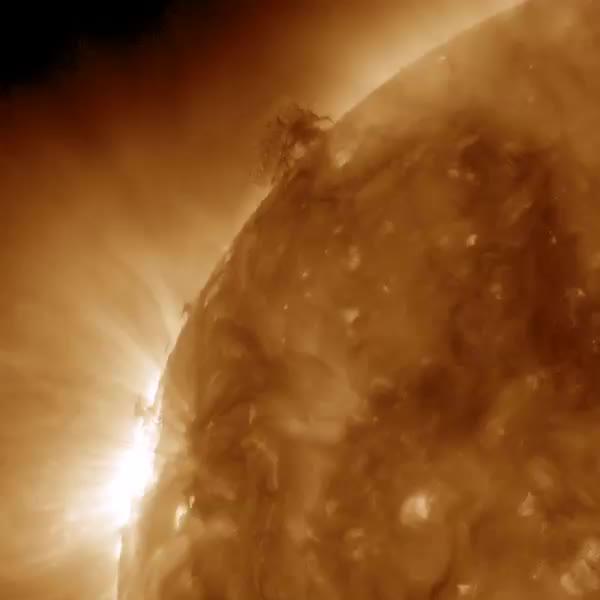
Dark strands of plasma hovering above the sun's surface began to interact with each other in a form of tug of war over two and a half days on June 28-30, 2015. At times, strands of plasma extended a tenuous connection between one area and the other. Twice the small tower of plasma to the lower left shot a burst of energy over to the quivering filament higher up. We are seeing the push and pull of magnetic forces revealed in a 193 wavelength of extreme ultraviolet light, typically colorized in brown. Credit: NASA/SDO <b><a href="http://www.nasa.gov/audience/formedia/features/MP_Photo_Guidelines.html" rel="nofollow">NASA image use policy.</a></b> <b><a href="http://www.nasa.gov/centers/goddard/home/index.html" rel="nofollow">NASA Goddard Space Flight Center</a></b> enables NASA’s mission through four scientific endeavors: Earth Science, Heliophysics, Solar System Exploration, and Astrophysics. Goddard plays a leading role in NASA’s accomplishments by contributing compelling scientific knowledge to advance the Agency’s mission. <b>Follow us on <a href="http://twitter.com/NASAGoddardPix" rel="nofollow">Twitter</a></b> <b>Like us on <a href="http://www.facebook.com/pages/Greenbelt-MD/NASA-Goddard/395013845897?ref=tsd" rel="nofollow">Facebook</a></b> <b>Find us on <a href="http://instagrid.me/nasagoddard/?vm=grid" rel="nofollow">Instagram</a></b>
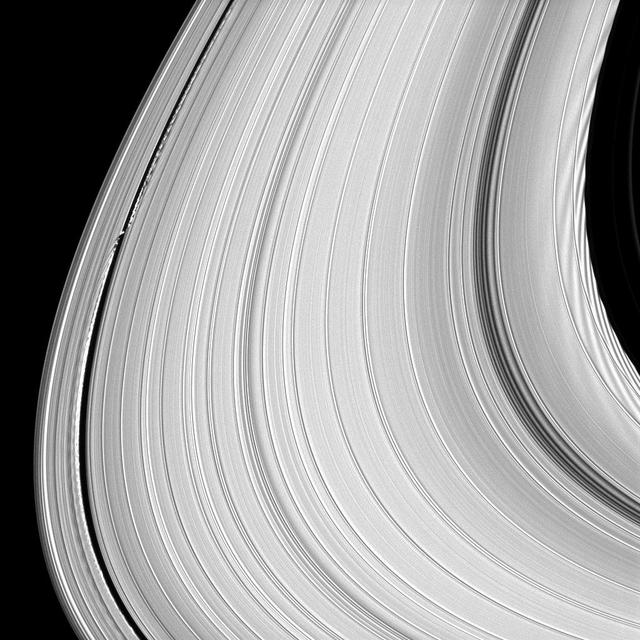
This image taken by NASA Cassini spacecraft shows that rather than being an unchanging disk of peaceful particles, the material that makes up Saturn rings is constantly pushed and pulled into spectacular shapes. At left is the moon Daphnis.
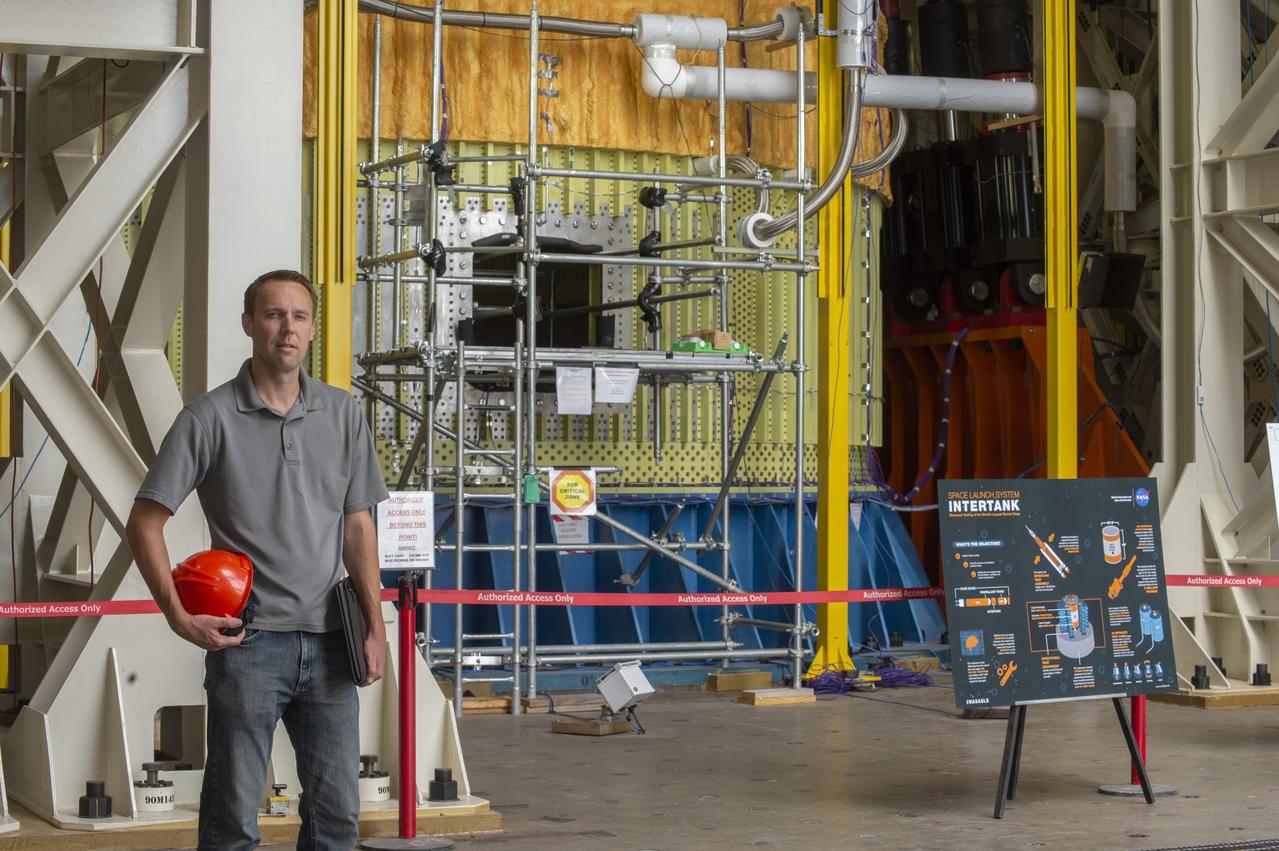
Preston Schmauch, SLS Stages Element Alternate Lead Systems Engineer, oversees testing of the Intertank Structural Test Article (STA), which will push, pull, and bend the STA with millions of pounds of force to prove the SLS Intertank can withstand the immense forces induced by aero, engine, and booster loads during flight.
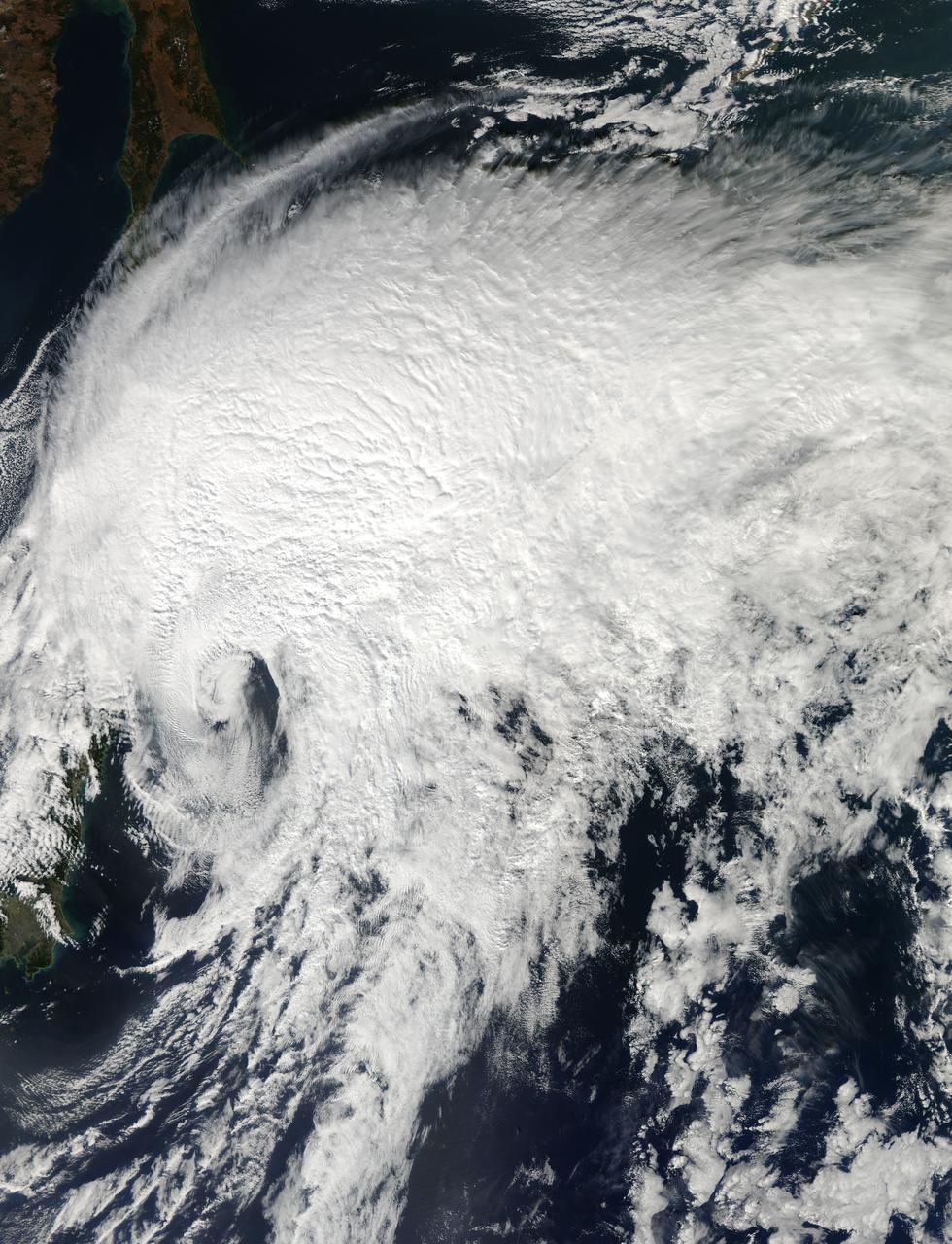
NASA's Aqua satellite passed over Extra-Tropical Storm Vongfong on Oct. 4 as it was moving away from Hokkaido, Japan, the northernmost of the big islands. Vongfong transitioned into an extra-tropical storm early on Oct. 4 as its core changed from warm to cold. The MODIS or Moderate Resolution Imaging Spectroradiometer instrument aboard NASA's Aqua satellite captured a visible image of Tropical Storm Vongfong over Japan on Oct. 14 at 03:15 UTC as it was southeast of the island of Hokkaido, Japan. The image showed that south of the center of circulation was almost devoid of clouds and showers, which were all pushed to the north and east of the center as a result of southwesterly wind shear. At 0300 UTC on Oct. 14, the Joint Typhoon Warning Center issued its final advisory on Tropical storm Vongfong. At that time Vongfong's center was located near 29.1 north latitude and 142.9 east longitude, about 111 nautical miles (127.7 miles/205.6 km) southeast of Misawa, Japan. Vongfong was moving to the northeast at a speedy 36 knots (41.4 mph/66.67 kph). Vongfong's maximum sustained winds were near 35 knots (40.2 mph/64.8 kph). Vongfong had transitioned into an extra-tropical system and will continue to move away from northern Japan and over the northwestern Pacific Ocean. Credit: NASA/GSFC/Jeff Schmaltz/MODIS Land Rapid Response Team <b><a href="http://www.nasa.gov/audience/formedia/features/MP_Photo_Guidelines.html" rel="nofollow">NASA image use policy.</a></b> <b><a href="http://www.nasa.gov/centers/goddard/home/index.html" rel="nofollow">NASA Goddard Space Flight Center</a></b> enables NASA’s mission through four scientific endeavors: Earth Science, Heliophysics, Solar System Exploration, and Astrophysics. Goddard plays a leading role in NASA’s accomplishments by contributing compelling scientific knowledge to advance the Agency’s mission. <b>Follow us on <a href="http://twitter.com/NASAGoddardPix" rel="nofollow">Twitter</a></b> <b>Like us on <a href="http://www.facebook.com/pages/Greenbelt-MD/NASA-Goddard/395013845897?ref=tsd" rel="nofollow">Facebook</a></b> <b>Find us on <a href="http://instagram.com/nasagoddard?vm=grid" rel="nofollow">Instagram</a></b>
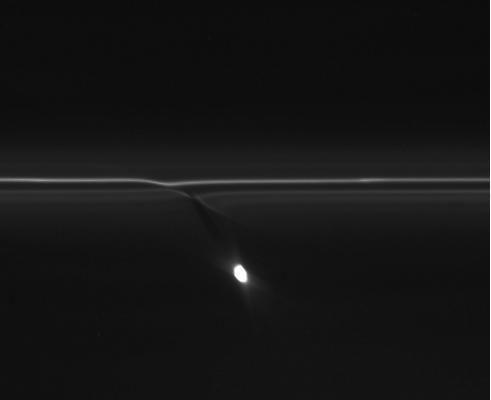
In this image from NASA Cassini spacecraft, the gravitational pull of Saturn moon Prometheus creates patterns in Saturn F ring.
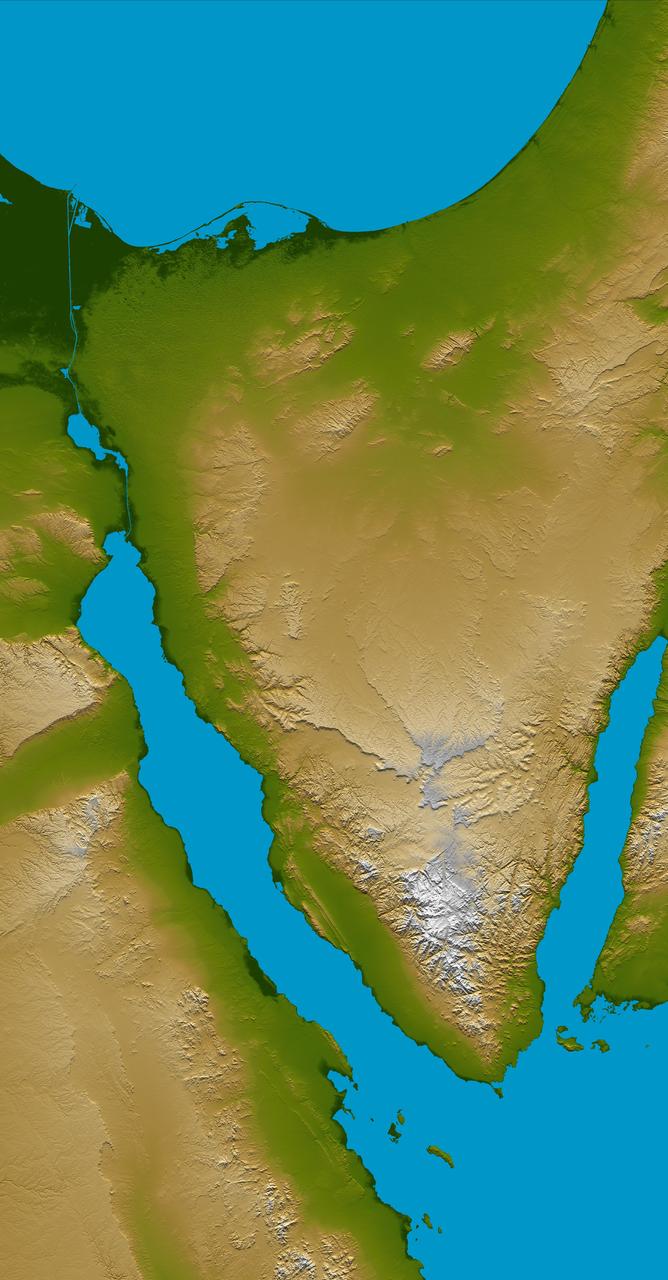
The Sinai Peninsula, located between Africa and Asia, is a result of those two continents pulling apart from each other.
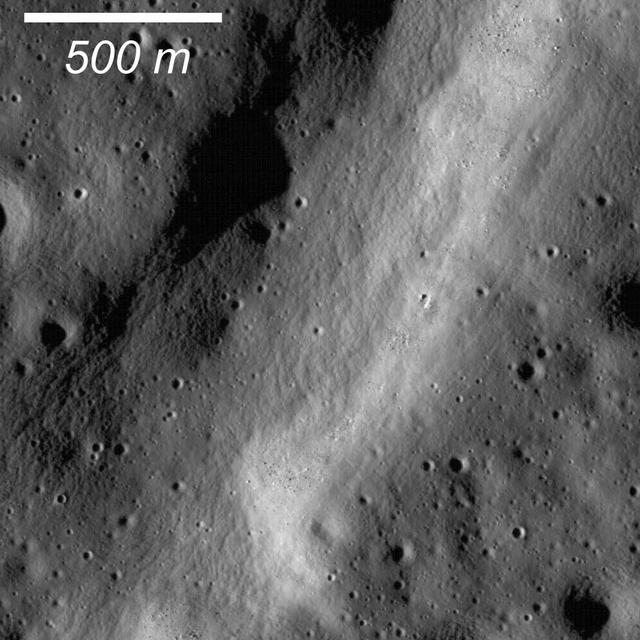
Graben are common extensional features on the Moon as well as the other terrestrial planets and icy satellites. This graben formed within a larger graben as captured by NASA Lunar Reconnaissance Orbiter.
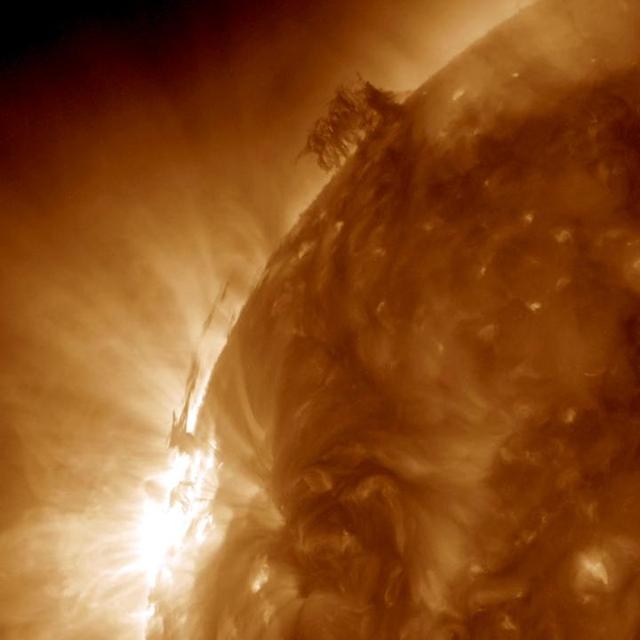
This still image from an animation from NASA GSFC Solar Dynamics Observatory shows dark strands of plasma hovering above the Sun surface beginning to interact with each other in a form of tug of war over two and a half days June 28-30, 2015.
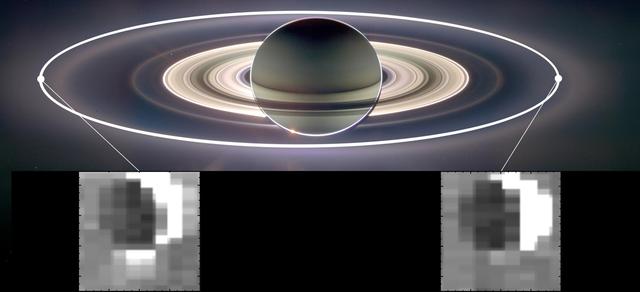
This set of images from NASA Cassini mission shows how the gravitational pull of Saturn affects the amount of spray coming from jets at the active moon Enceladus.
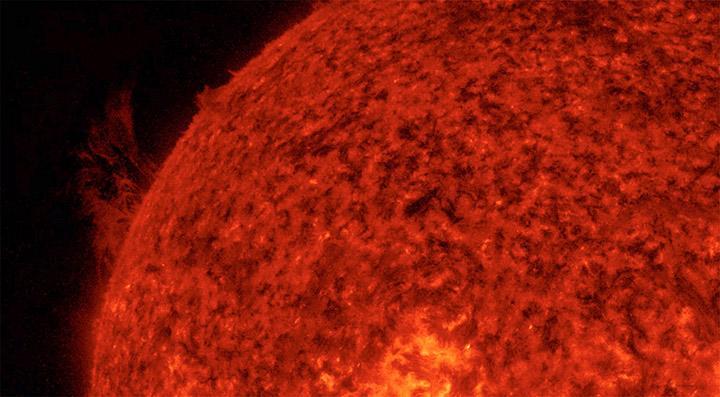
Strands and arches of plasma streamed above the edge of the Sun for over a day, pulled by powerful magnetic forces (Aug. 11-12, 2016). The tug and pull of material heated to about 60,000 degrees C. was viewed in extreme ultraviolet light. This kind of dynamic flow of materials is rather common, though this grouping was larger than most. http://photojournal.jpl.nasa.gov/catalog/PIA17913
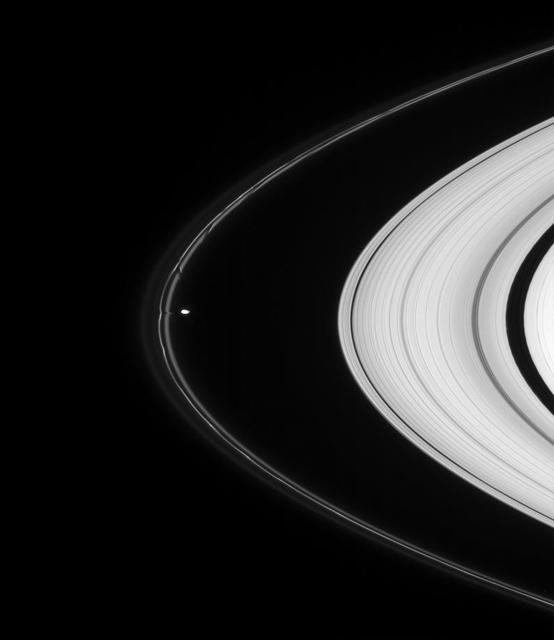
Prometheus pulls material from the tortured F ring in this highly detailed view. The aftereffects of the moon other recent encounters with the ring are visible above as dark channels in the inner ringlet
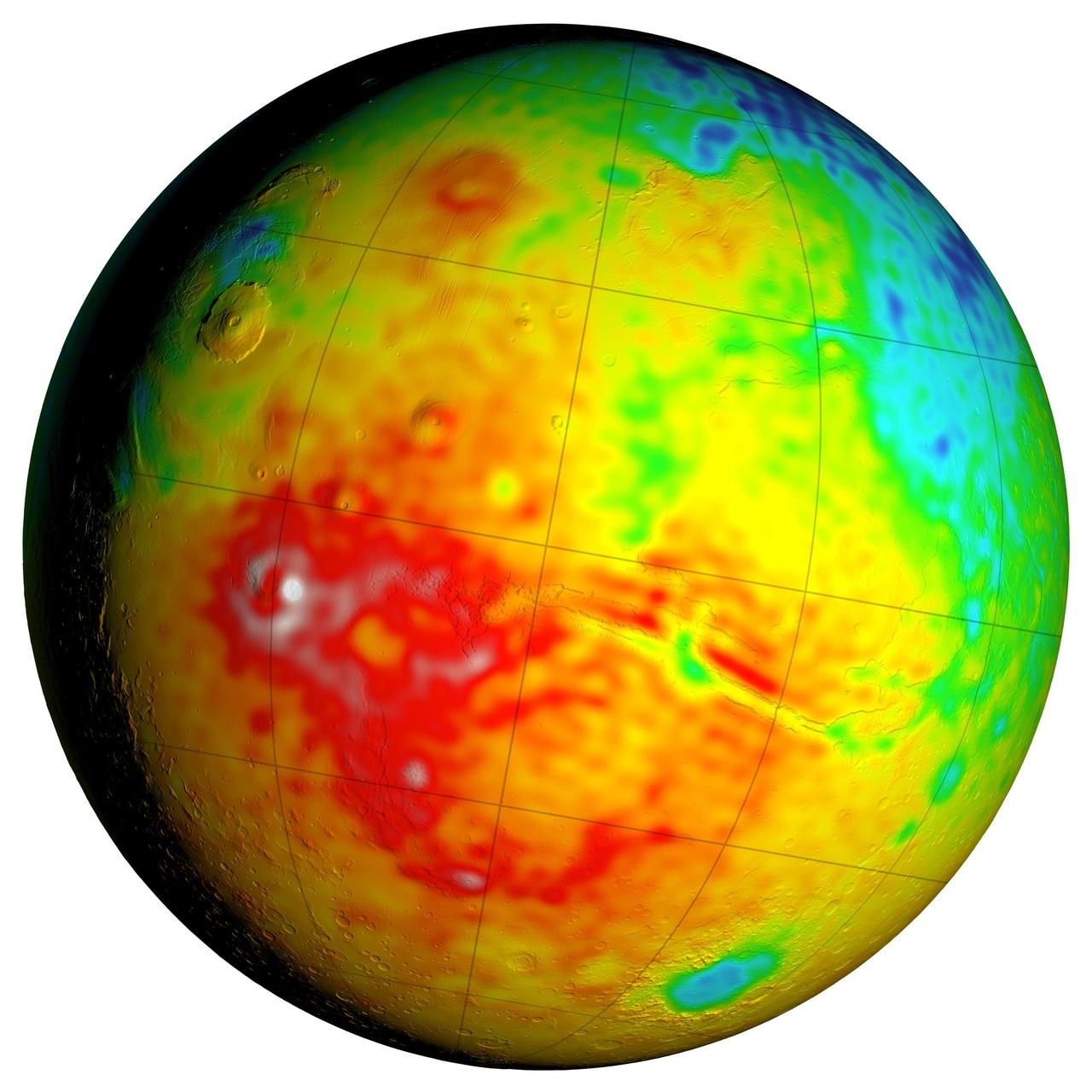
This Mars map shows variations in thickness of the planet crust, the relatively thin surface layer over the interior mantle of the planet. It shows unprecedented detail derived from new mapping of variations in Mars gravitational pull on orbiters.
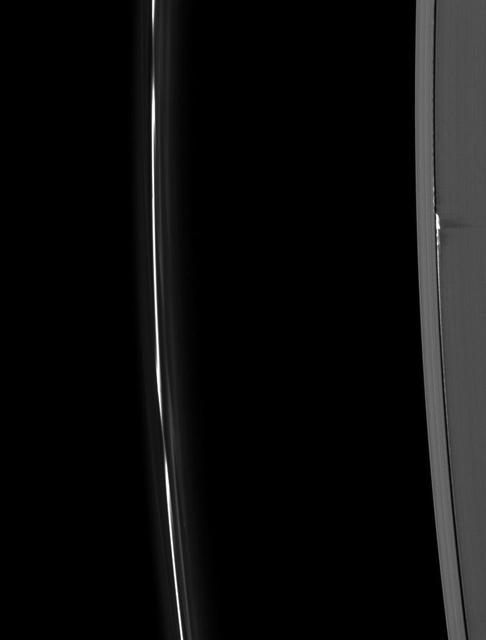
Ring material, pulled to spectacular heights above the ring plane by the gravity of the moon Daphnis, casts long shadows on Saturn’s A ring in this Cassini image taken about a month before the planet’s August 2009 equinox.
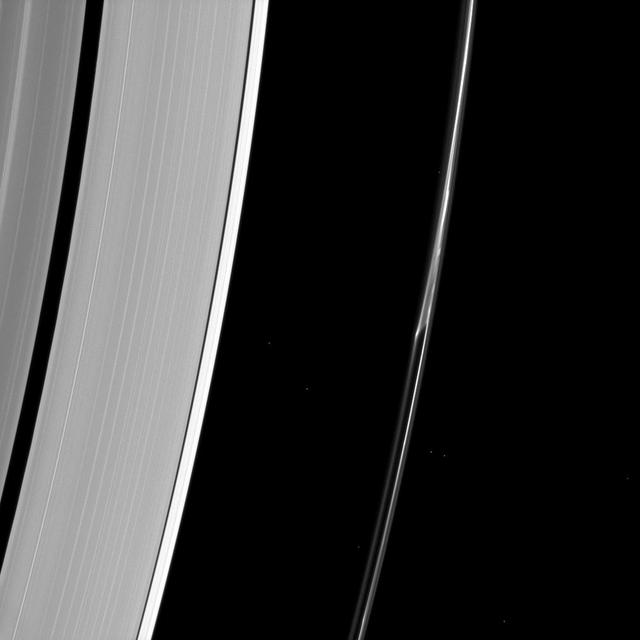
Saturn F ring often appears to do things other rings dont. In this image from NASA Cassini spacecraft, a strand of ring appears to separate from the core of the ring as if pulled apart by mysterious forces.

In December, 2011, NASA Terra spacecraft captured this image of a new volcanic island forming in the Red Sea. This region is part of the Red Sea Rift where the African and Arabian tectonic plates are pulling apart.
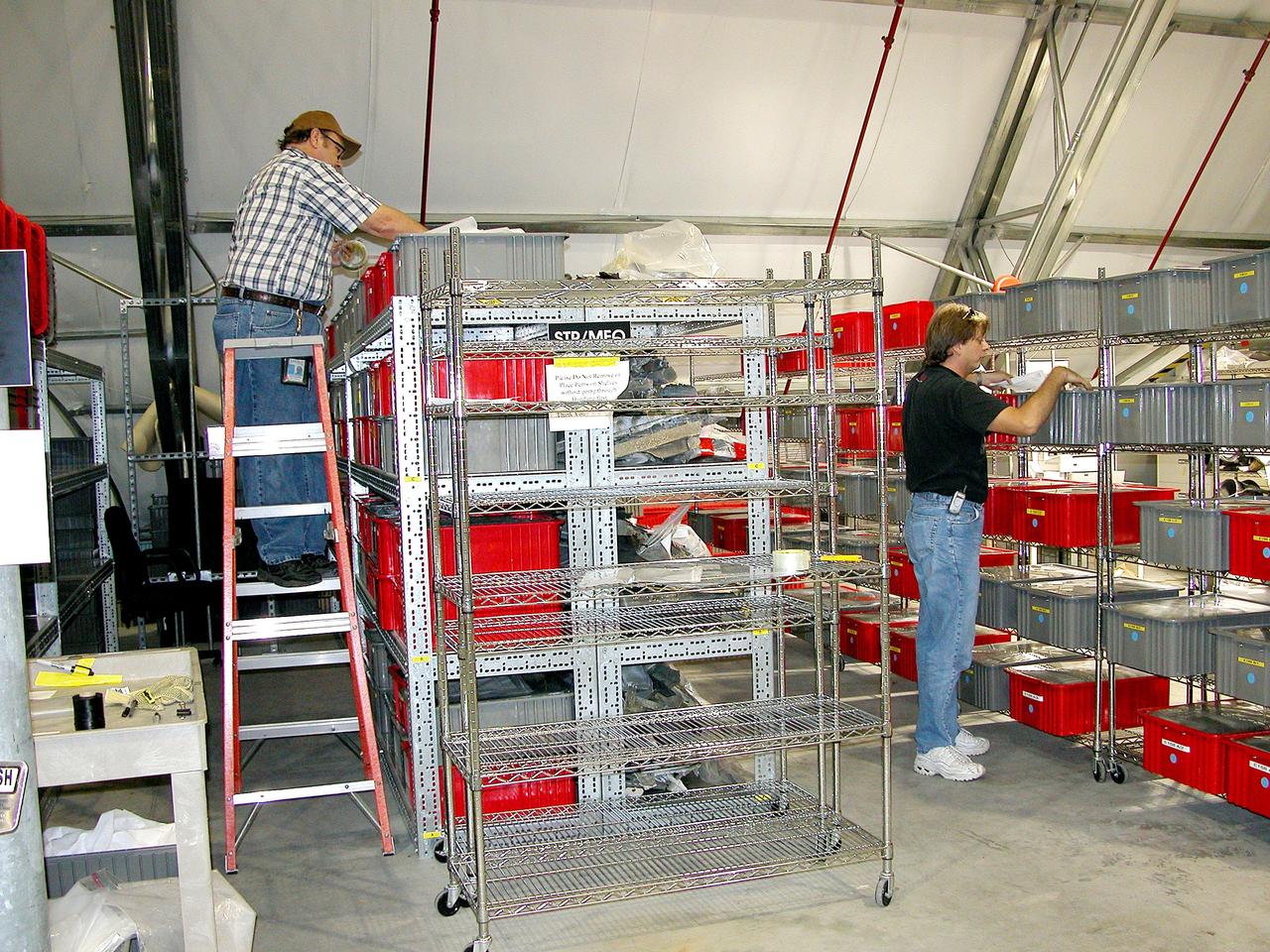
KENNEDY SPACE CENTER, FLA. - Workers in the Columbia Debris Hangar pull items from storage containers to transfer to storage in the Vehicle Assembly Building. About 83,000 pieces were shipped to KSC during search and recovery efforts in East Texas.
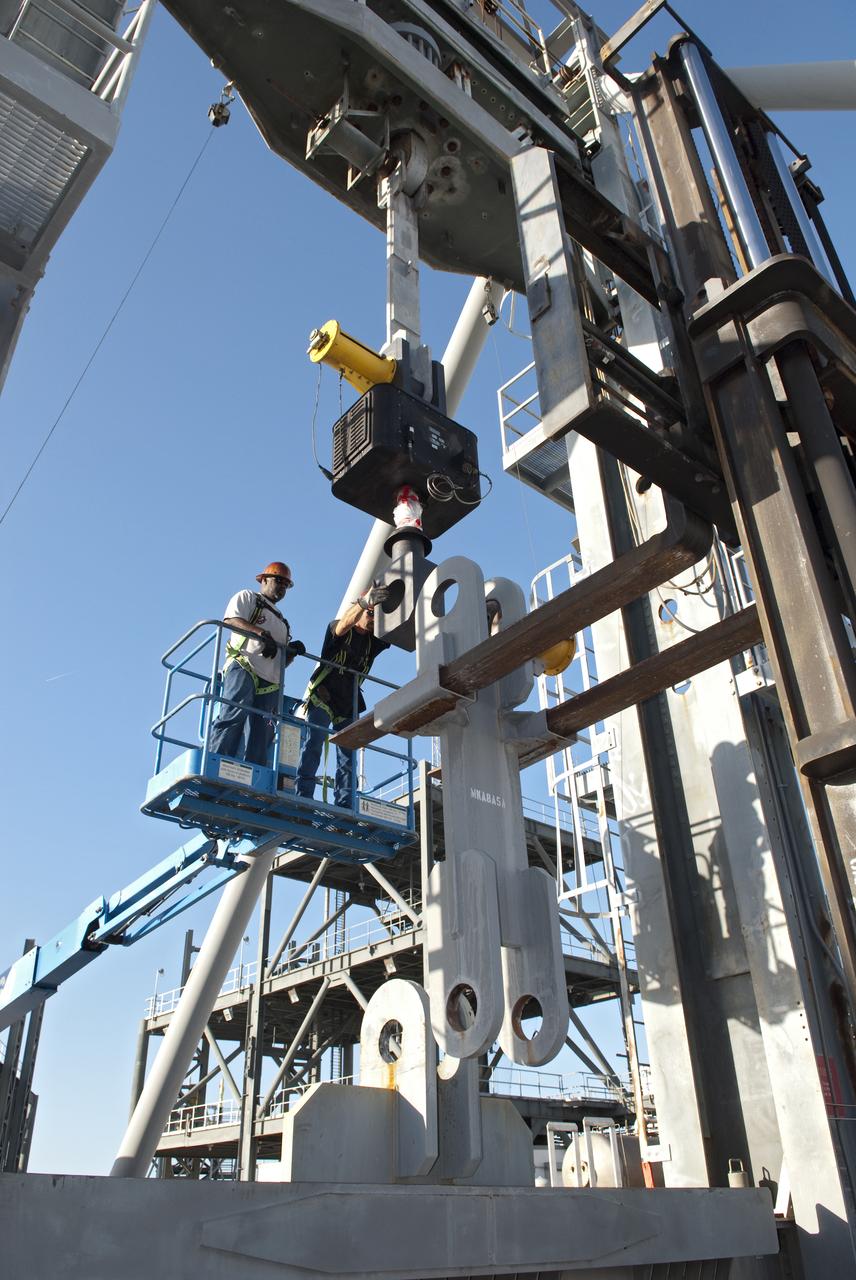
EXPLORATION - HYDRO SET PULL TEST 250 TON
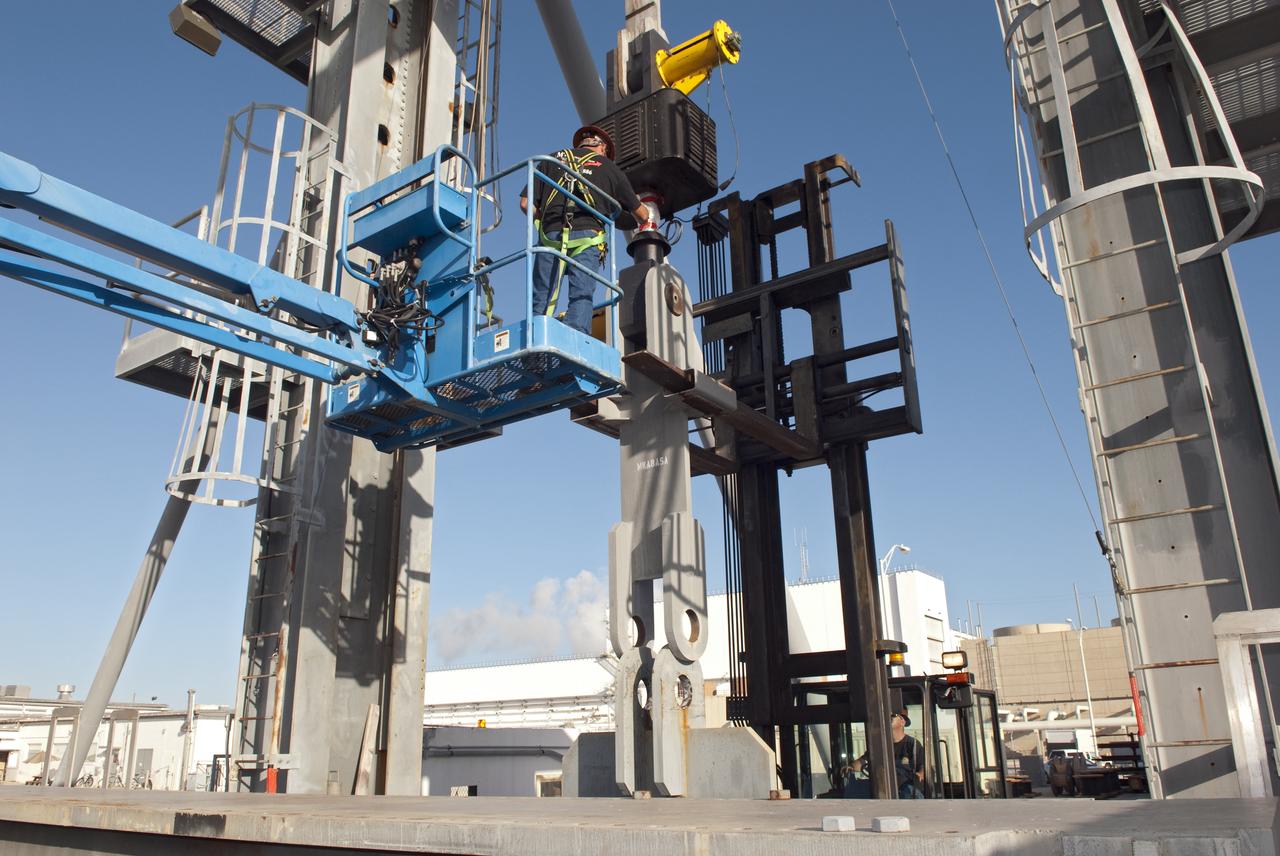
EXPLORATION - HYDRO SET PULL TEST 250 TON
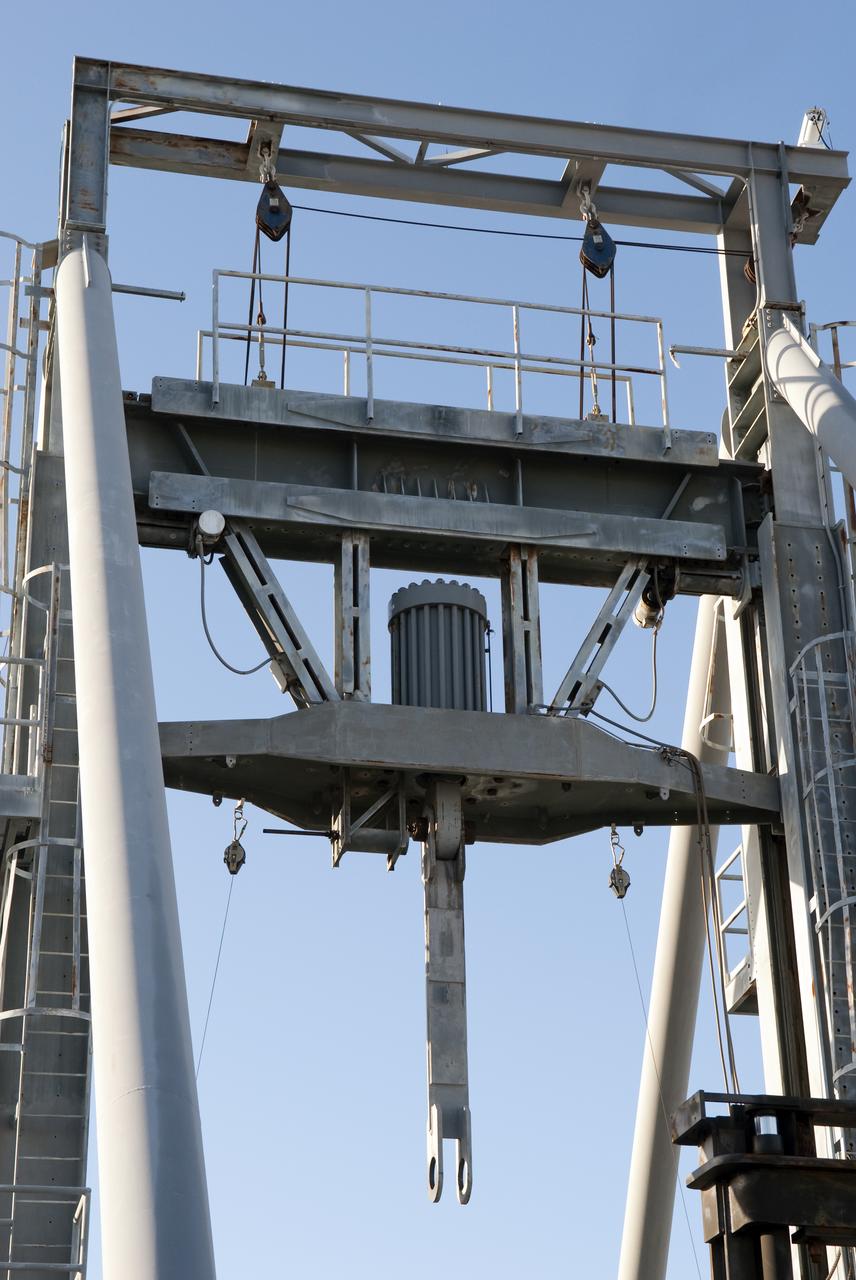
EXPLORATION - HYDRO SET PULL TEST 250 TON
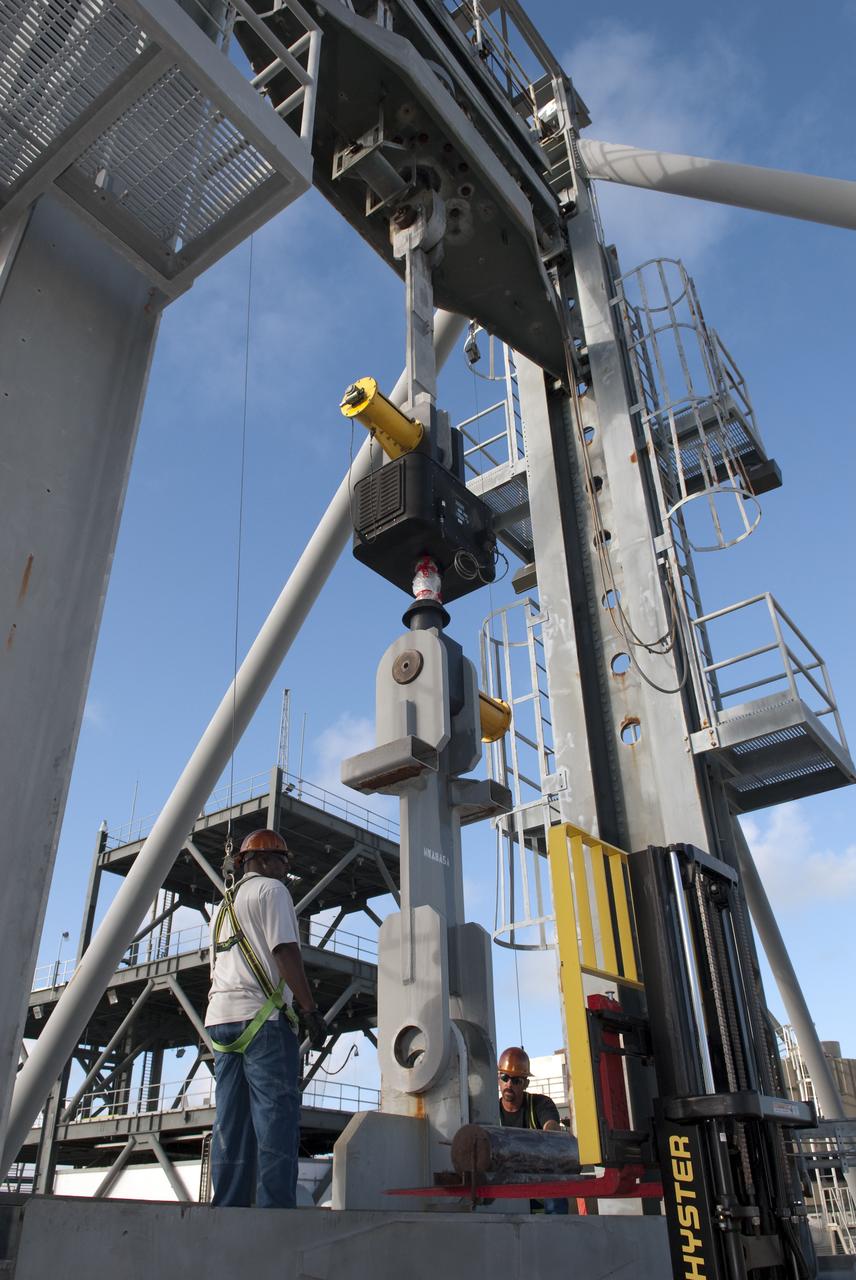
EXPLORATION - HYDRO SET PULL TEST 250 TON
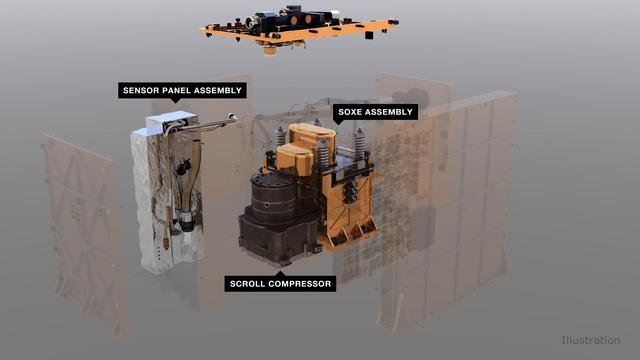
An illustration of MOXIE (Mars Oxygen ISRU Experiment) and its components. An air pump pulls in carbon dioxide gas from the Martian atmosphere, which is then regulated and fed to the Solid OXide Electrolyzer (SOXE), where it is electrochemically split to produce pure oxygen. https://photojournal.jpl.nasa.gov/catalog/PIA24177
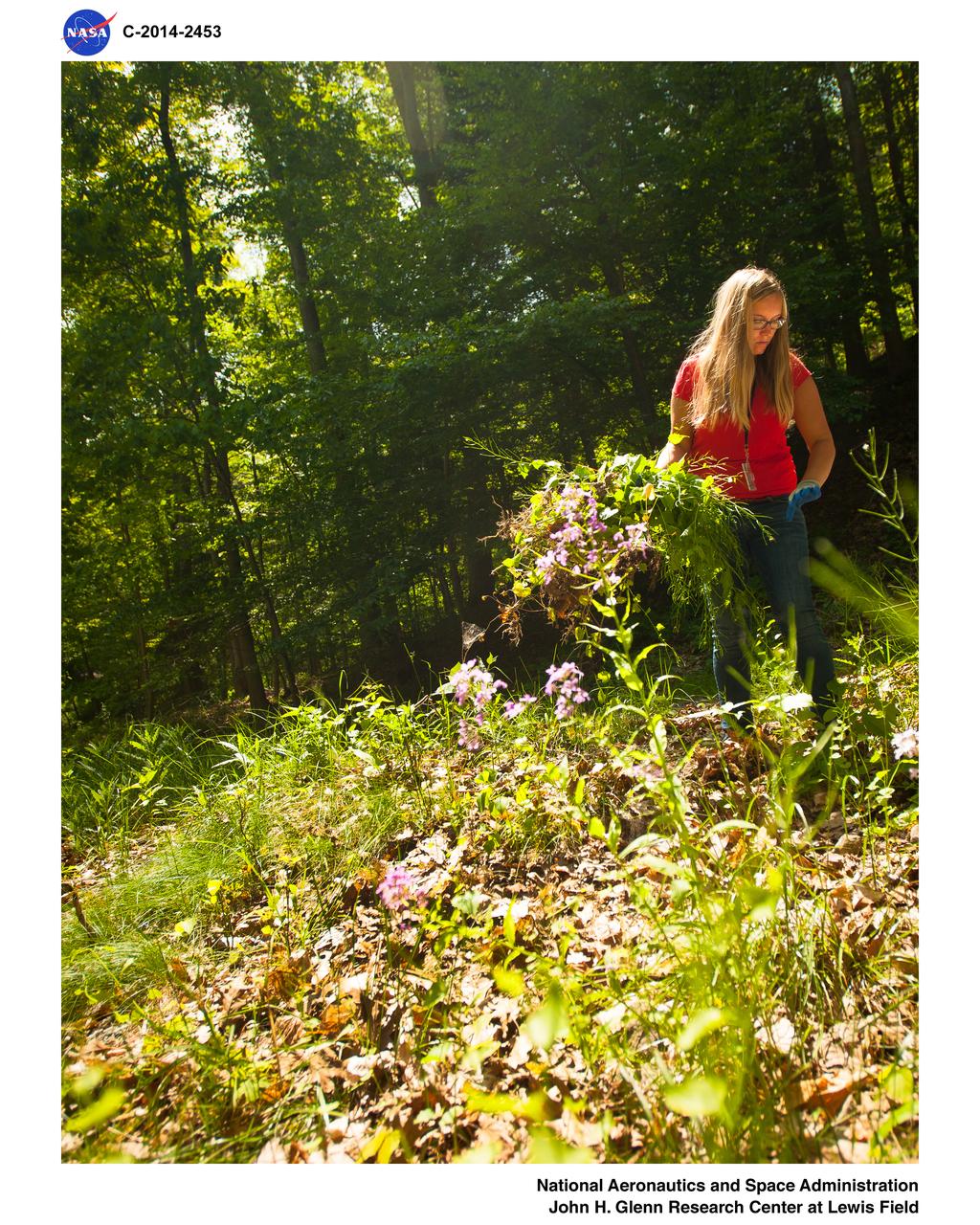
Garlic Mustard Pull by Glenn Research Center, GRC, Employees
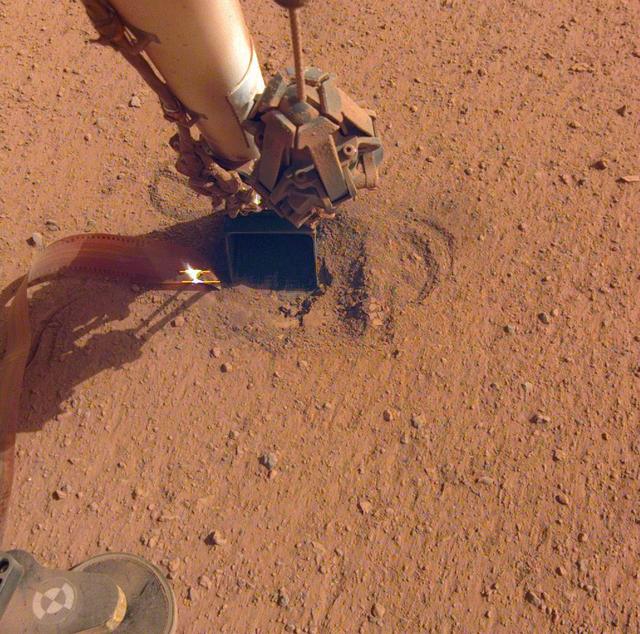
NASA's InSight lander retracted its robotic arm on Oct. 3, 2020, revealing the spot where the self-digging "mole" is attempting to burrow into the planet's surface. Attached to the mole is the copper-colored ribbon, which is laden with temperature sensors designed to measure the heat flow within Mars. In the months to come, the scoop seen on the end of the arm will be used to scrape and tamp down soil on top of the mole, in hopes of helping it dig. Movie available at https://photojournal.jpl.nasa.gov/catalog/PIA24098
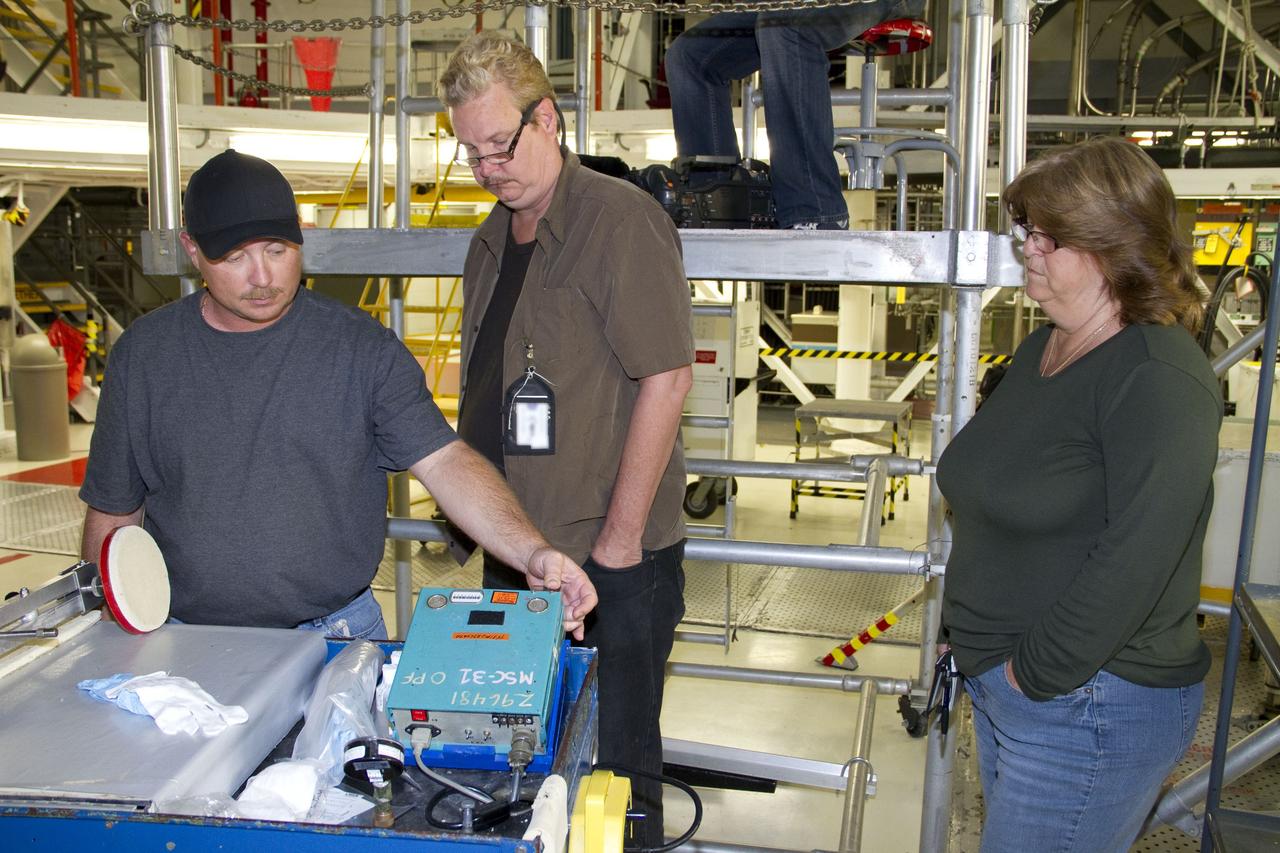
CAPE CANAVERAL, Fla. -- United Space Alliance technicians gear up for a pull test of shuttle Atlantis' thermal protection tiles in Orbiter Processing Facility-1 at NASA's Kennedy Space Center in Florida. The pull test measures the force it takes to pull a tile off of the shuttle in order to make sure the bond between the two is strong enough to withstand the force of launch and landing. Atlantis is being prepared for the STS-135 mission, which will deliver the Raffaello multipurpose logistics module packed with supplies, logistics and spare parts to the International Space Station. STS-135 is targeted to launch June 28, and will be the last spaceflight for the Space Shuttle Program. Photo credit: NASA/Jack Pfaller
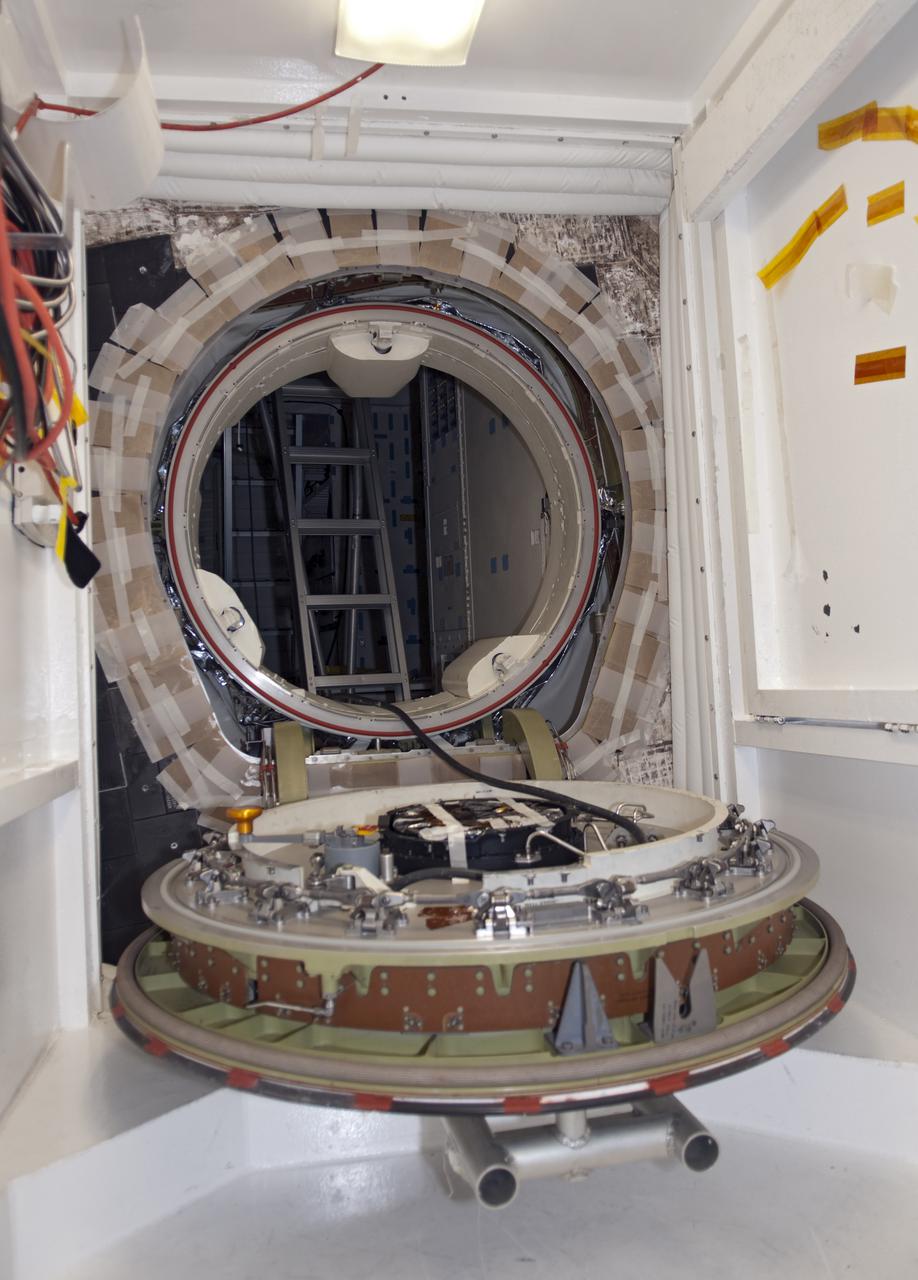
CAPE CANAVERAL, Fla. - Inside Orbiter Processing Facility-1 at Kennedy Space Center in Florida, shuttle Atlantis’ hatch closure is in the open position in preparation for the Mylar Pull Test. During the test, the hatch is closed and a scale is used to measure the force required to pull a piece of Mylar paper out from between the door and structural wall thermal barriers. The pull test is performed to ensure the integrity of the hatch and that it has closed properly. Atlantis is being processed for the STS-132 mission targeted for launch May 14. The six-member crew will deliver an Integrated Cargo Carrier and a Russian-built Mini Research Module to the International Space Station. Photo credit: NASA_Jim Grossmann
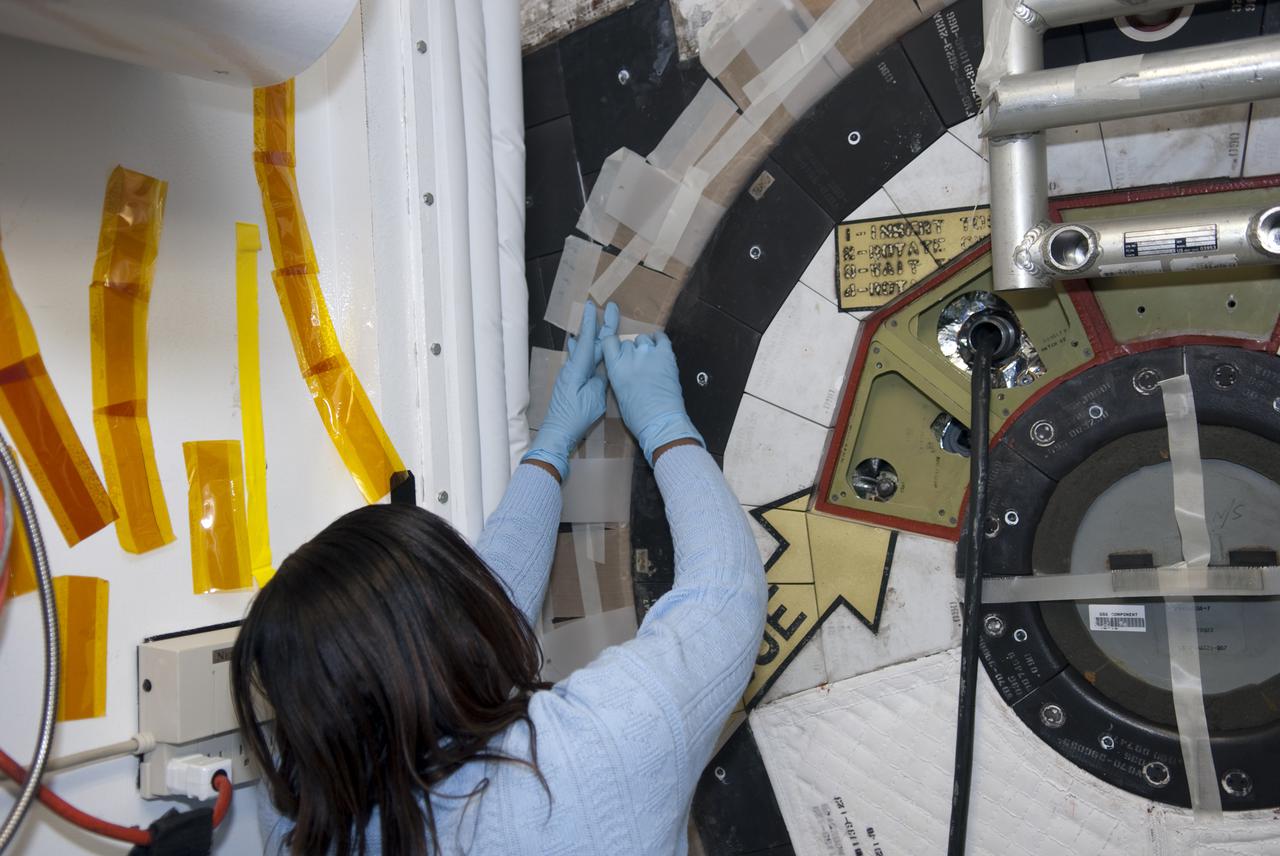
CAPE CANAVERAL, Fla. - Inside Orbiter Processing Facility-1 at Kennedy Space Center in Florida, a technician secures shuttle Atlantis’ hatch in preparation for the Mylar Pull Test. During the test, a scale is used to measure the force required to pull a piece of Mylar paper out from between the door and structural wall thermal barriers. The pull test is performed to ensure the integrity of the hatch and that it has closed properly. Atlantis is being processed for the STS-132 mission targeted for launch May 14. The six-member crew will deliver an Integrated Cargo Carrier and a Russian-built Mini Research Module to the International Space Station. Photo credit: NASA_Jim Grossmann
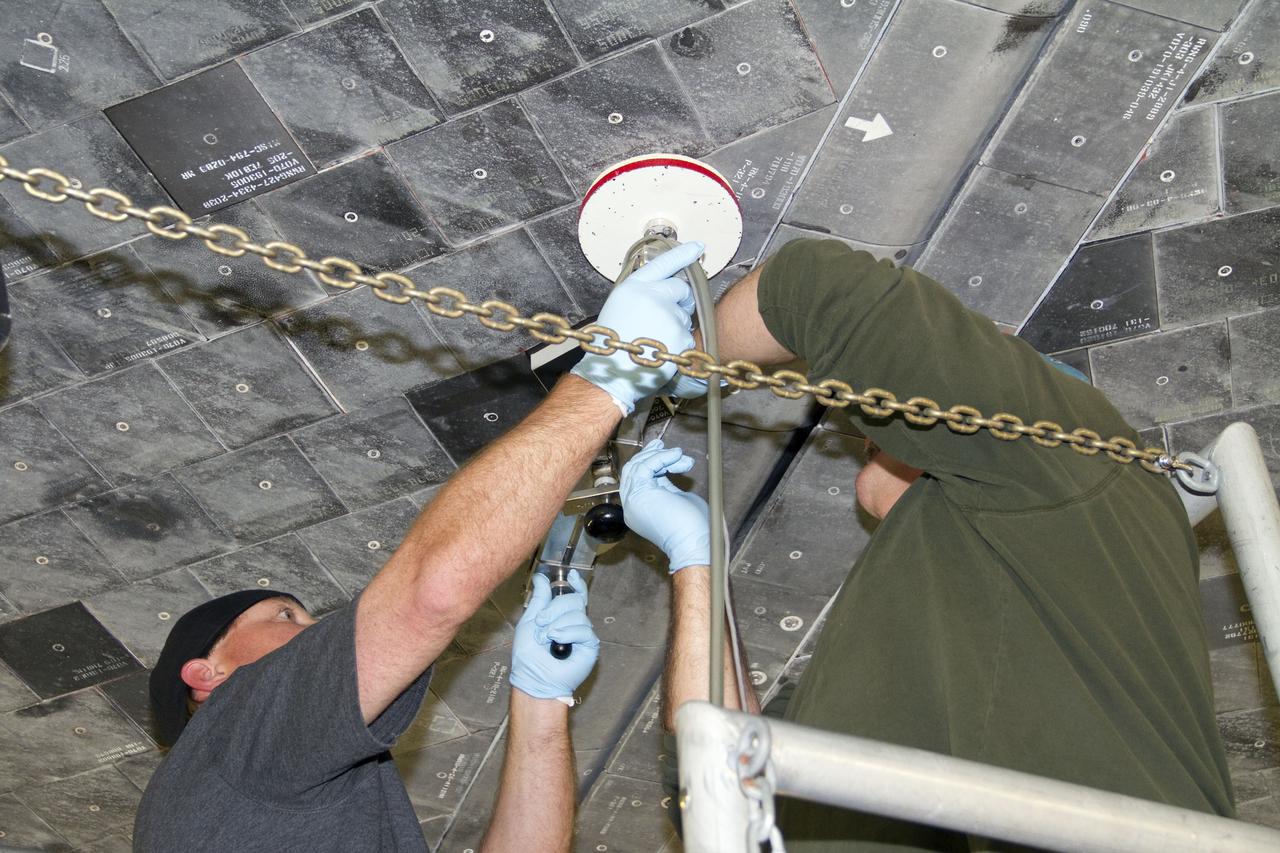
CAPE CANAVERAL, Fla. -- United Space Alliance technicians perform a pull test on shuttle Atlantis' thermal protection tiles in Orbiter Processing Facility-1 at NASA's Kennedy Space Center in Florida. The pull test measures the force it takes to pull a tile off of the shuttle in order to make sure the bond between the two is strong enough to withstand the force of launch and landing. Atlantis is being prepared for the STS-135 mission, which will deliver the Raffaello multipurpose logistics module packed with supplies, logistics and spare parts to the International Space Station. STS-135 is targeted to launch June 28, and will be the last spaceflight for the Space Shuttle Program. Photo credit: NASA/Jack Pfaller
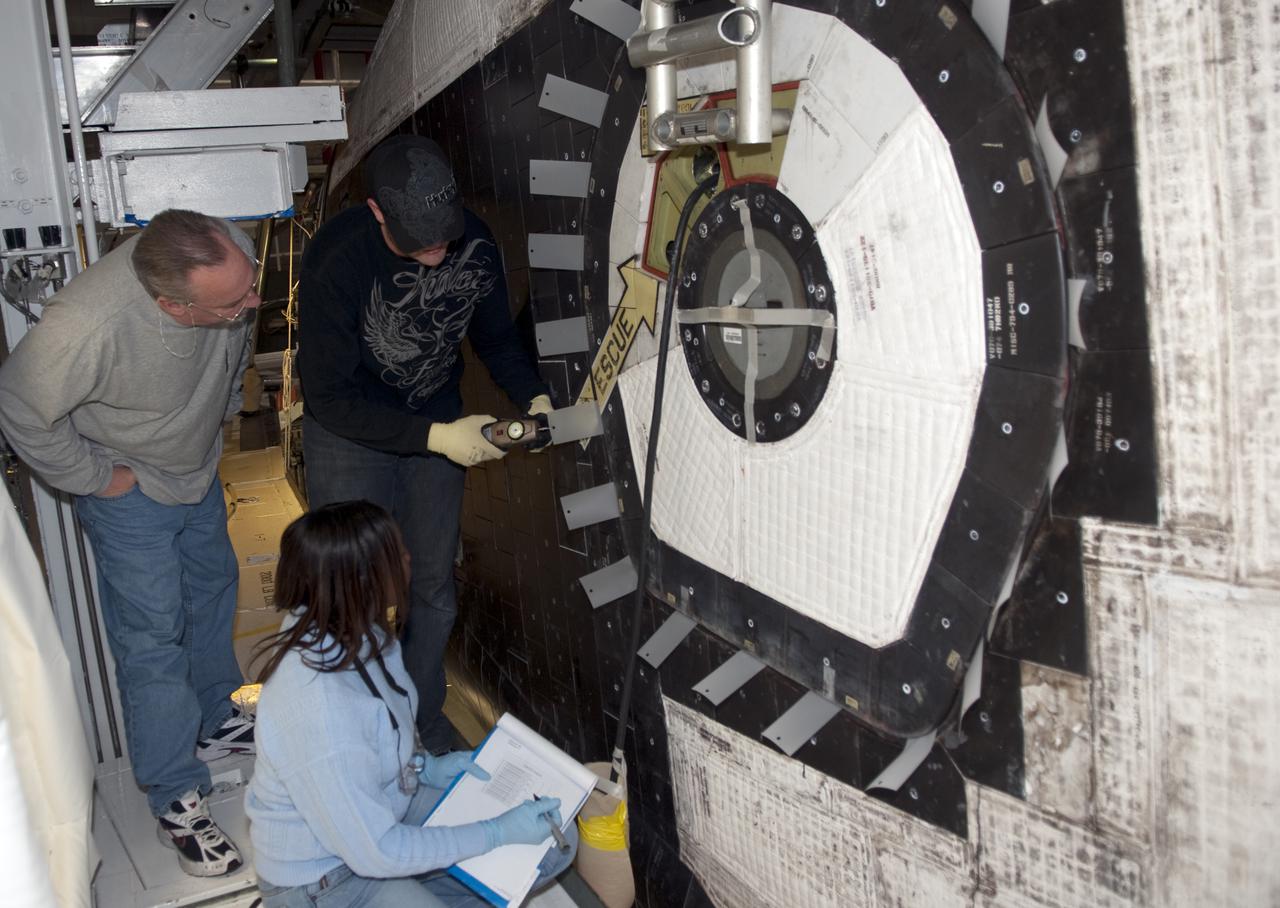
CAPE CANAVERAL, Fla. - Inside Orbiter Processing Facility-1 at Kennedy Space Center in Florida, technicians secure and check shuttle Atlantis’ hatch in preparation for the Mylar Pull Test. During the test, a scale is used to measure the force required to pull a piece of Mylar paper out from between the door and structural wall thermal barriers. The pull test is performed to ensure the integrity of the hatch and that it has closed properly. Atlantis is being processed for the STS-132 mission targeted for launch May 14. The six-member crew will deliver an Integrated Cargo Carrier and a Russian-built Mini Research Module to the International Space Station. Photo credit: NASA_Jim Grossmann
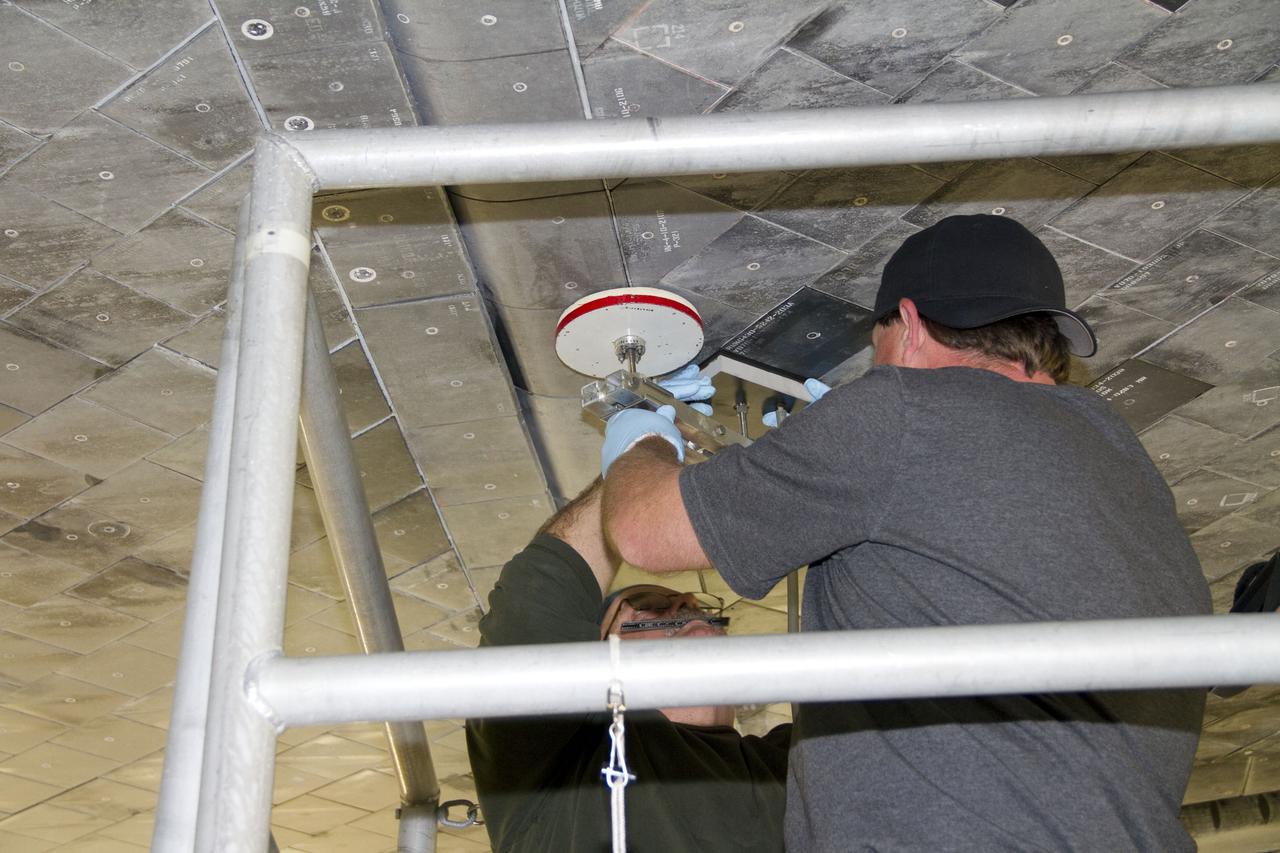
CAPE CANAVERAL, Fla. -- United Space Alliance technicians perform a pull test on shuttle Atlantis' thermal protection tiles in Orbiter Processing Facility-1 at NASA's Kennedy Space Center in Florida. The pull test measures the force it takes to pull a tile off of the shuttle in order to make sure the bond between the two is strong enough to withstand the force of launch and landing. Atlantis is being prepared for the STS-135 mission, which will deliver the Raffaello multipurpose logistics module packed with supplies, logistics and spare parts to the International Space Station. STS-135 is targeted to launch June 28, and will be the last spaceflight for the Space Shuttle Program. Photo credit: NASA/Jack Pfaller
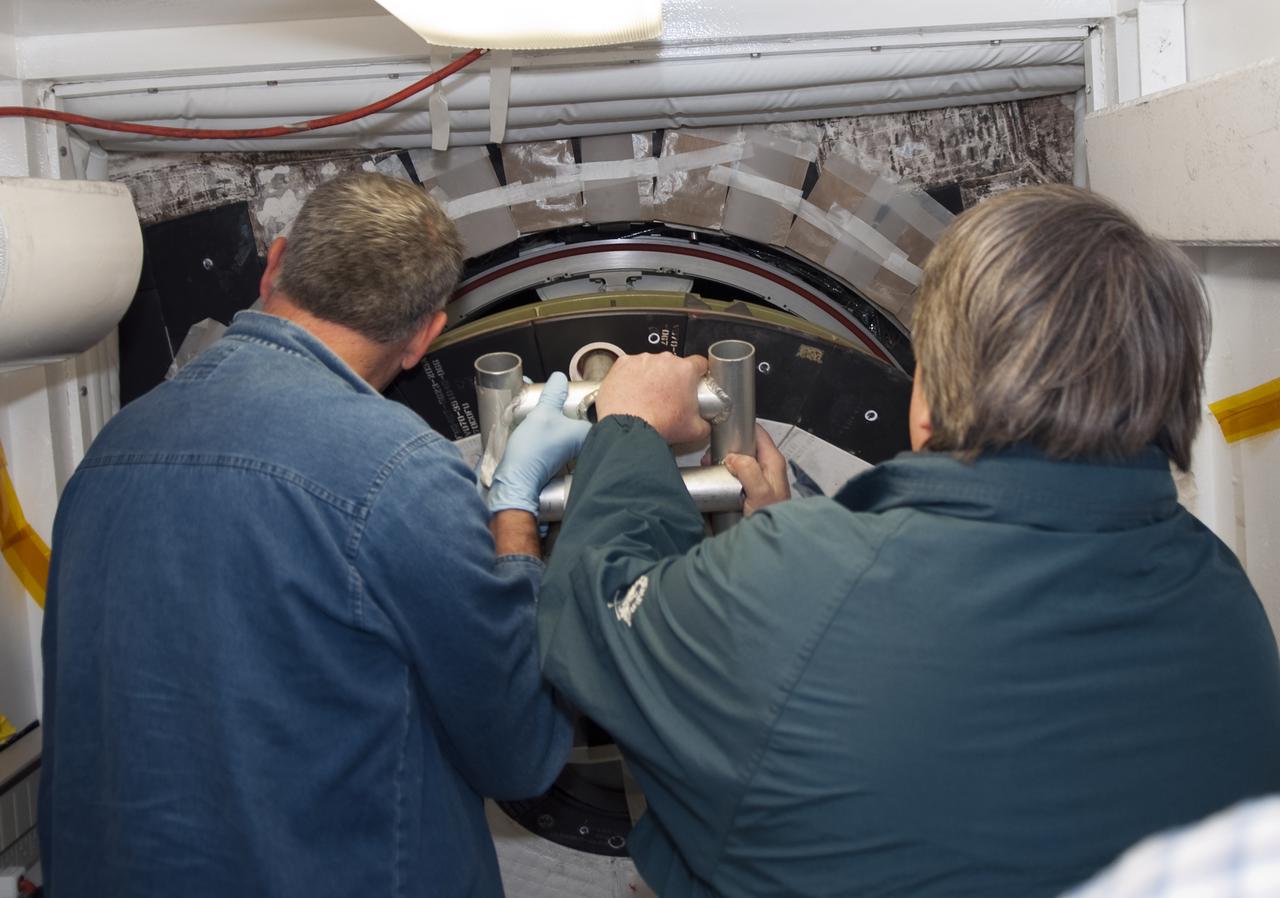
CAPE CANAVERAL, Fla. - Inside Orbiter Processing Facility-1 at Kennedy Space Center in Florida, technicians close shuttle Atlantis’ hatch in preparation for the Mylar Pull Test. During the test, the hatch is closed and a scale is used to measure the force required to pull a piece of Mylar paper out from between the door and structural wall thermal barriers. The pull test is performed to ensure the integrity of the hatch and that it has closed properly. Atlantis is being processed for the STS-132 mission targeted for launch May 14. The six-member crew will deliver an Integrated Cargo Carrier and a Russian-built Mini Research Module to the International Space Station. Photo credit: NASA_Jim Grossmann
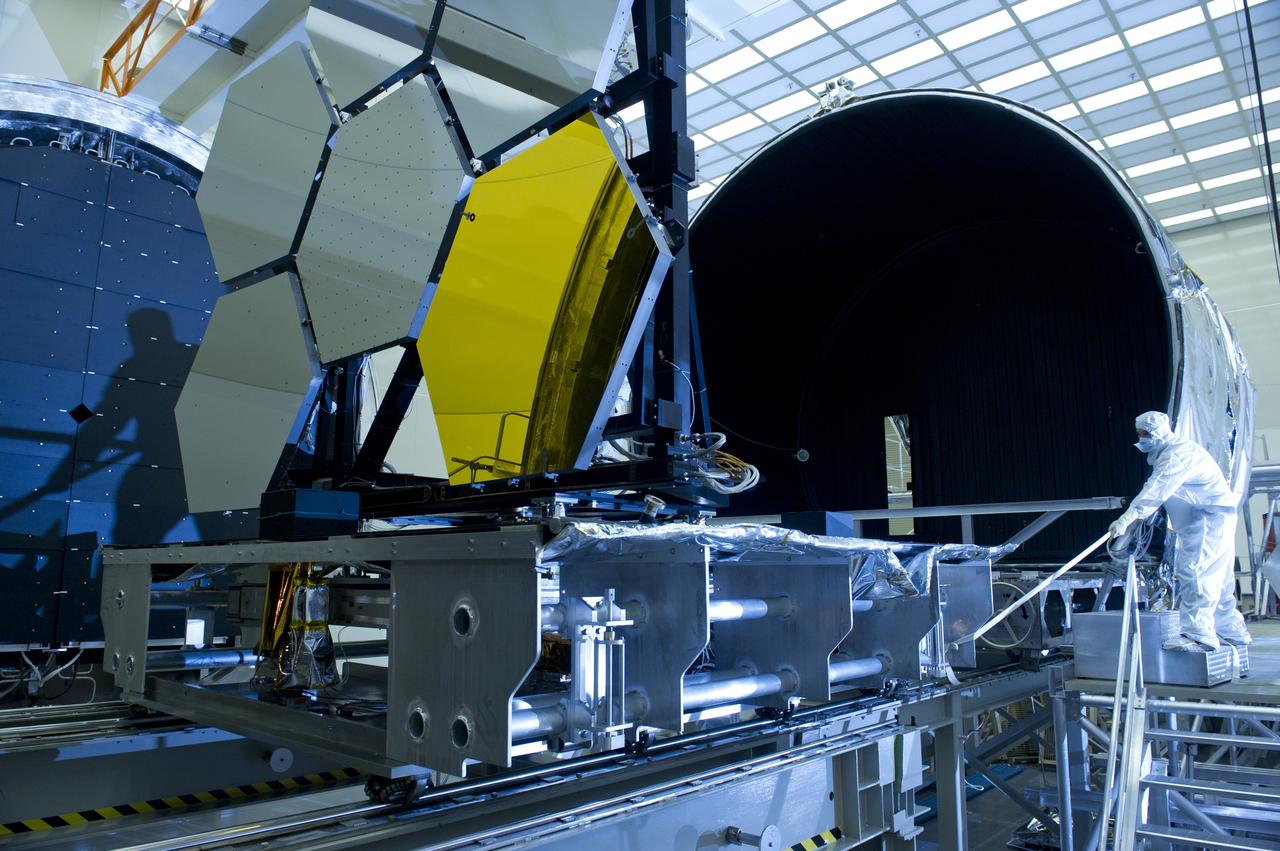
MARSHALL TEST ENGINEER HARLAN HAIGHT HELPS PULL JWST MIRROR ARRAY FROM CRYOGENICS CHAMBER.
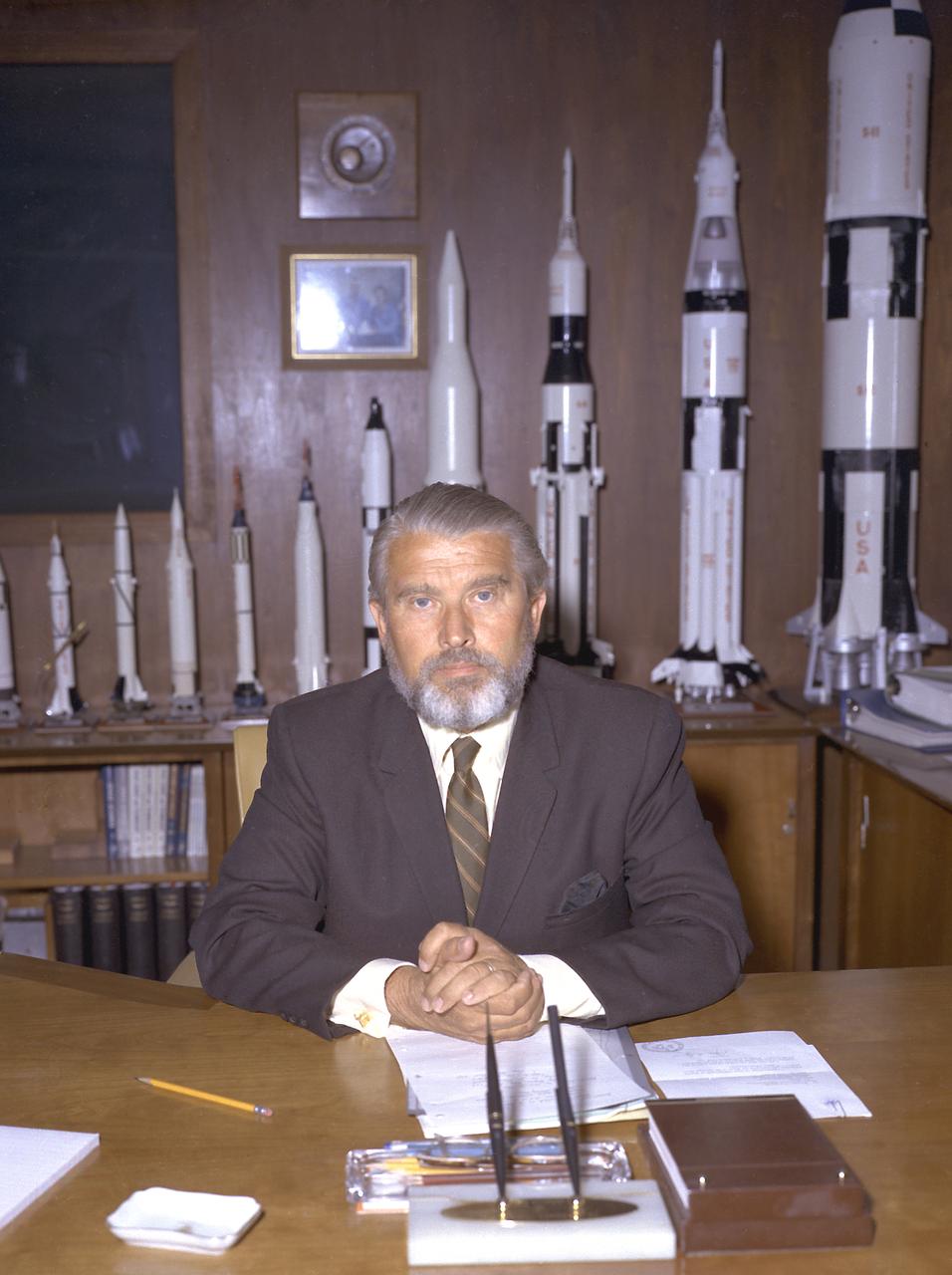
Upon return from a Bahamas vacation, Dr. von Braun pulled a practical joke upon his associates by sporting a beard.
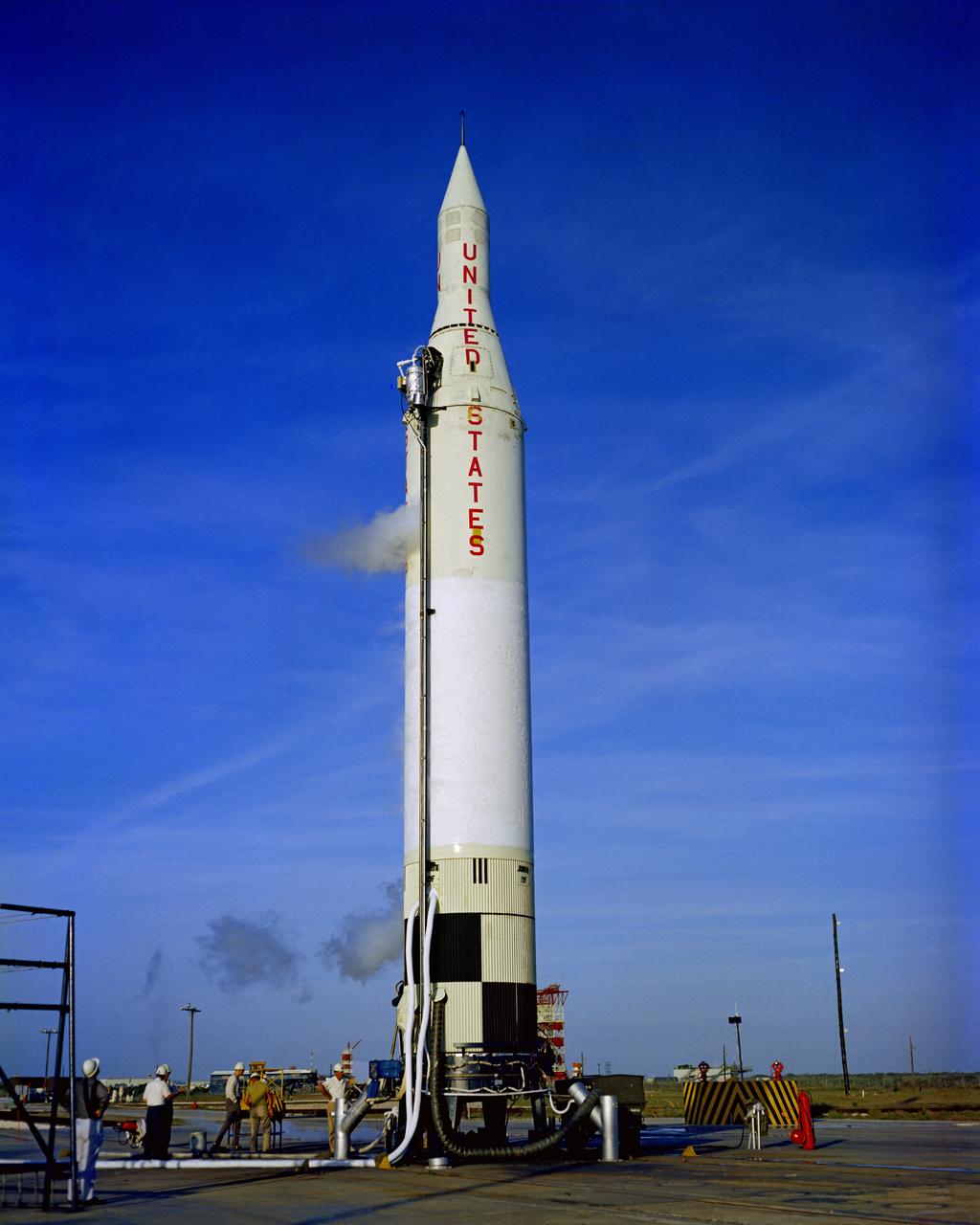
2/14/1961 JUNO II 19F STANDING ALONE ON LAUNCH TABLE AFTER GANTRY PULLED BACK. PAD 26B
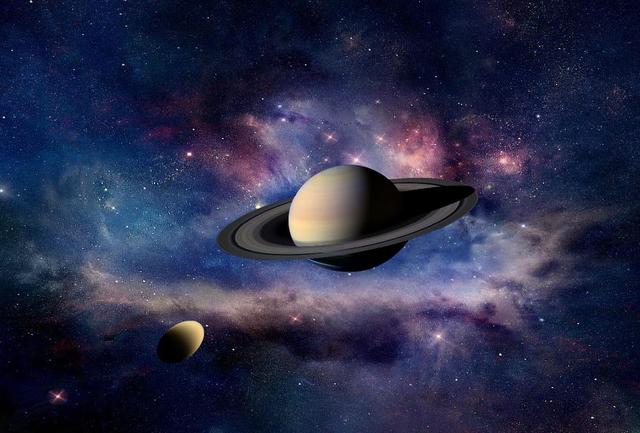
This artist concept shows tides on Titan raised by Saturn gravity, as detected by NASA Cassini spacecraft. Saturn gravitational pull on Titan, its largest moon, varies as Titan orbits along an elliptical path around the planet every 16 days.
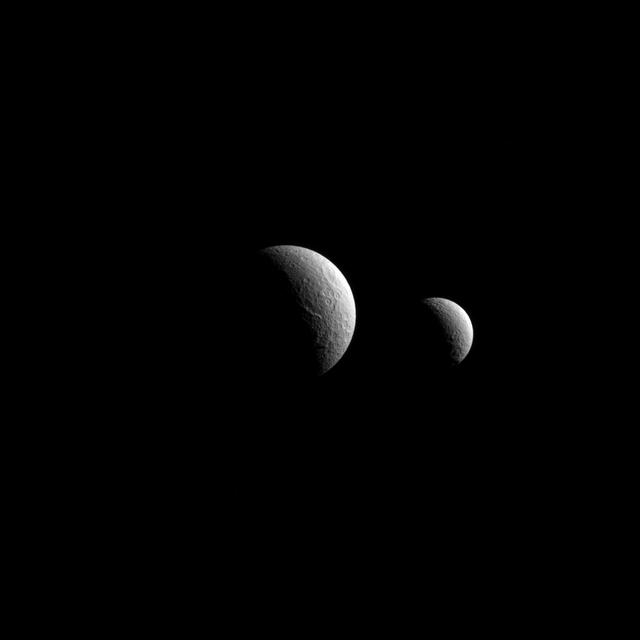
he view from NASA Cassini spacecraft looks toward the anti-Saturn sides of Tethys and Rhea. North on both moons is up. Rhea and Tethys are medium-sized moons that are large enough to have pulled themselves into round shapes.
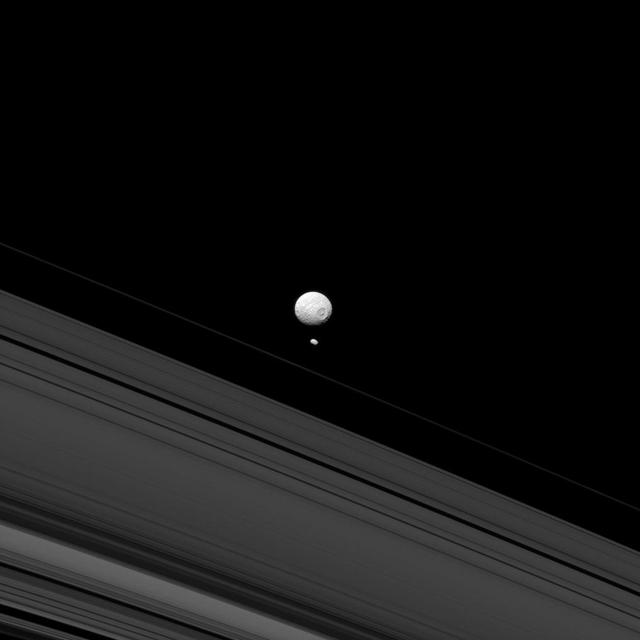
This image from NASA Cassini spacecraft reminds us of how different Mimas and Pandora are when they appear together; although both are moons of Saturn, Pandora small size means that it lacks sufficient gravity to pull itself into a round shape.
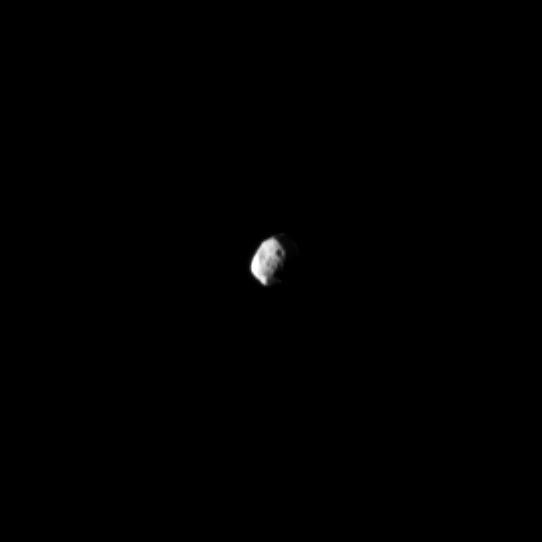
The Cassini spacecraft catches a glimpse of Janus, an irregularly shaped moon. Lacking sufficient gravity to pull itself into a round shape, Janus has had its lumpy primordial shape only slightly modified by impacts since its formation.
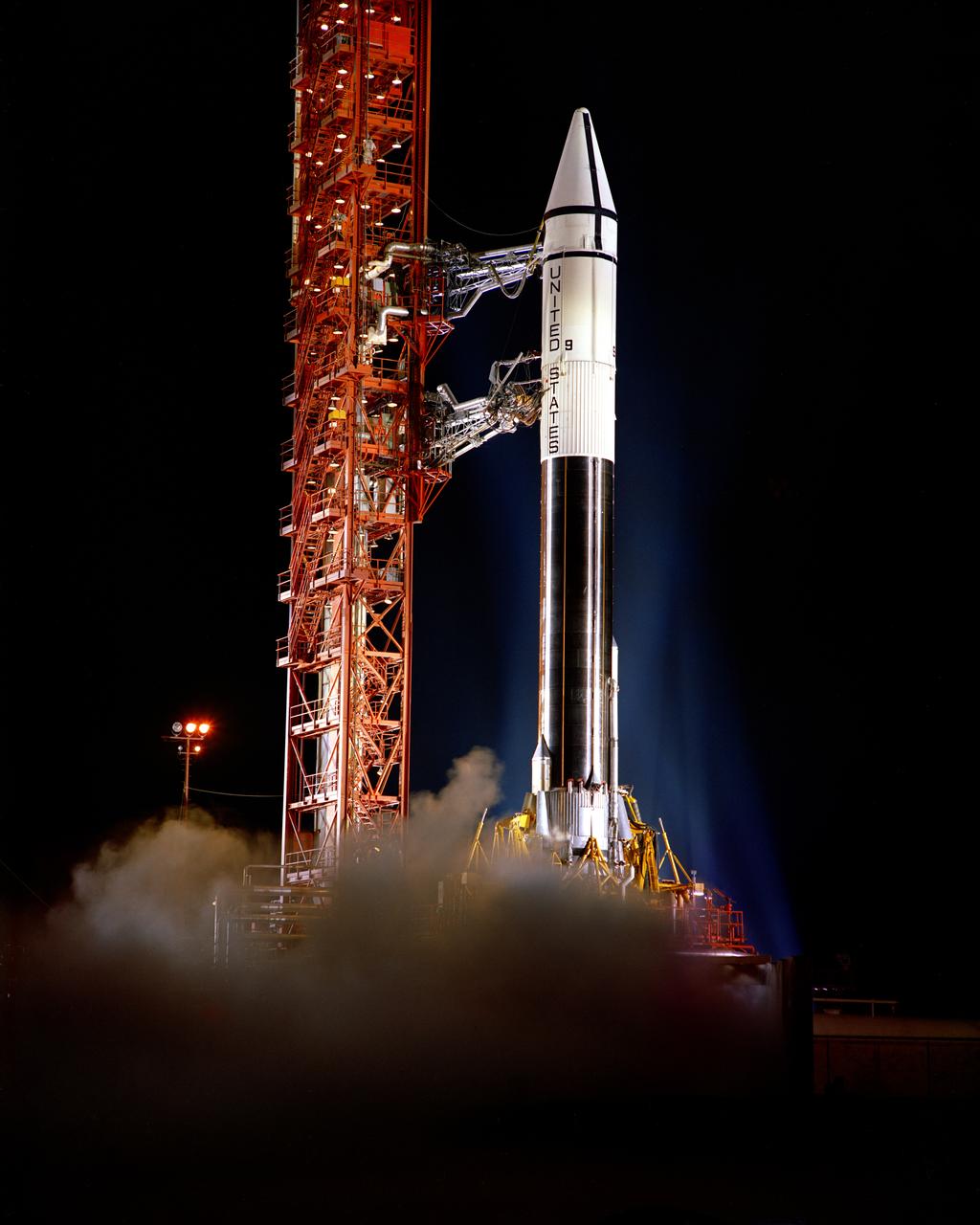
Pre-launch alert, Complex 36B. Gantry pull back with LOX vapor around launcher, Centaur 9. Surveyor Mass Model Spacecraft.
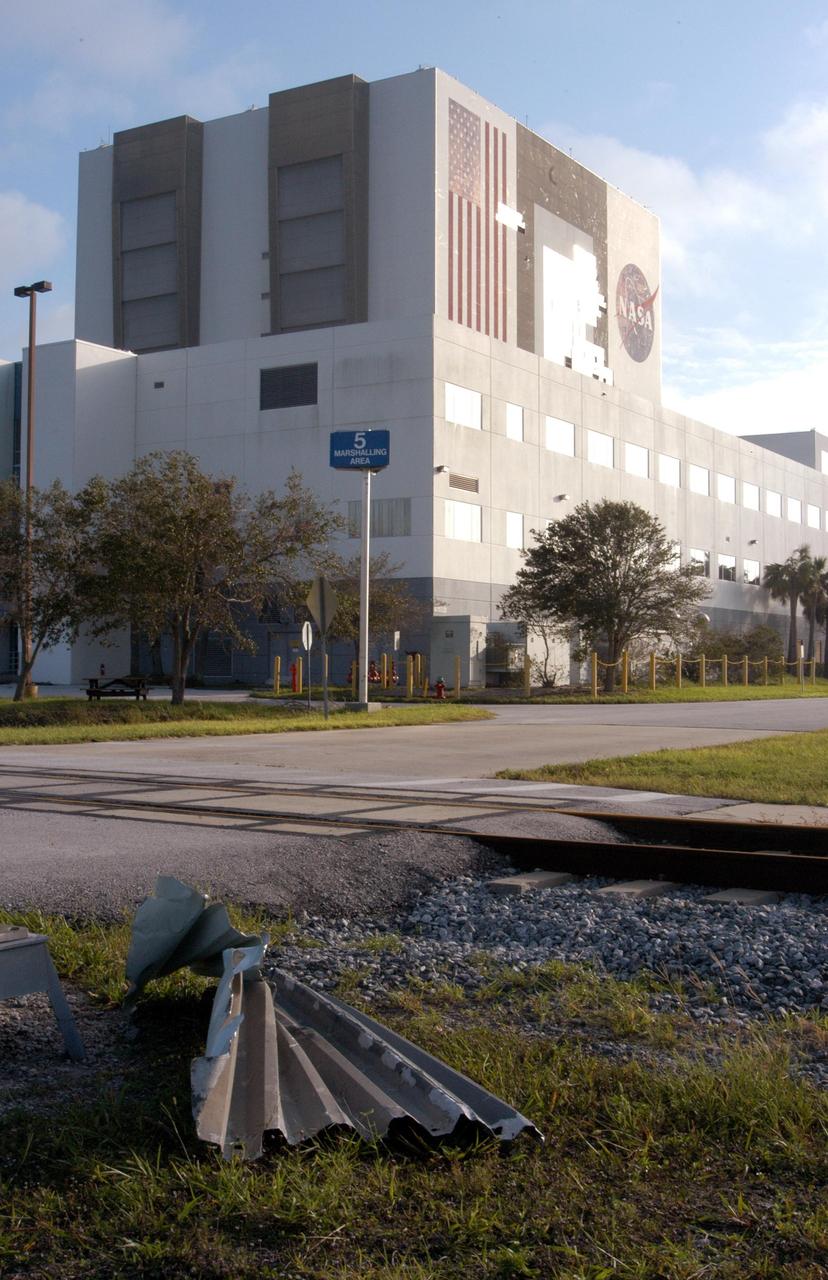
KENNEDY SPACE CENTER, FLA. - In the foreground lies a panel pulled from the wall of the Vehicle Assembly Building at KSC during the category 3 Hurricane Jeanne. The storm barreled through Central Florida Sept. 25-26 from the southeast. The VAB had lost 850 panels from the south wall during Hurricane Frances. Twenty-five additional panels were pulled off the east wall by the winds from Jeanne. This was the fourth hurricane in 6 weeks to batter the state.
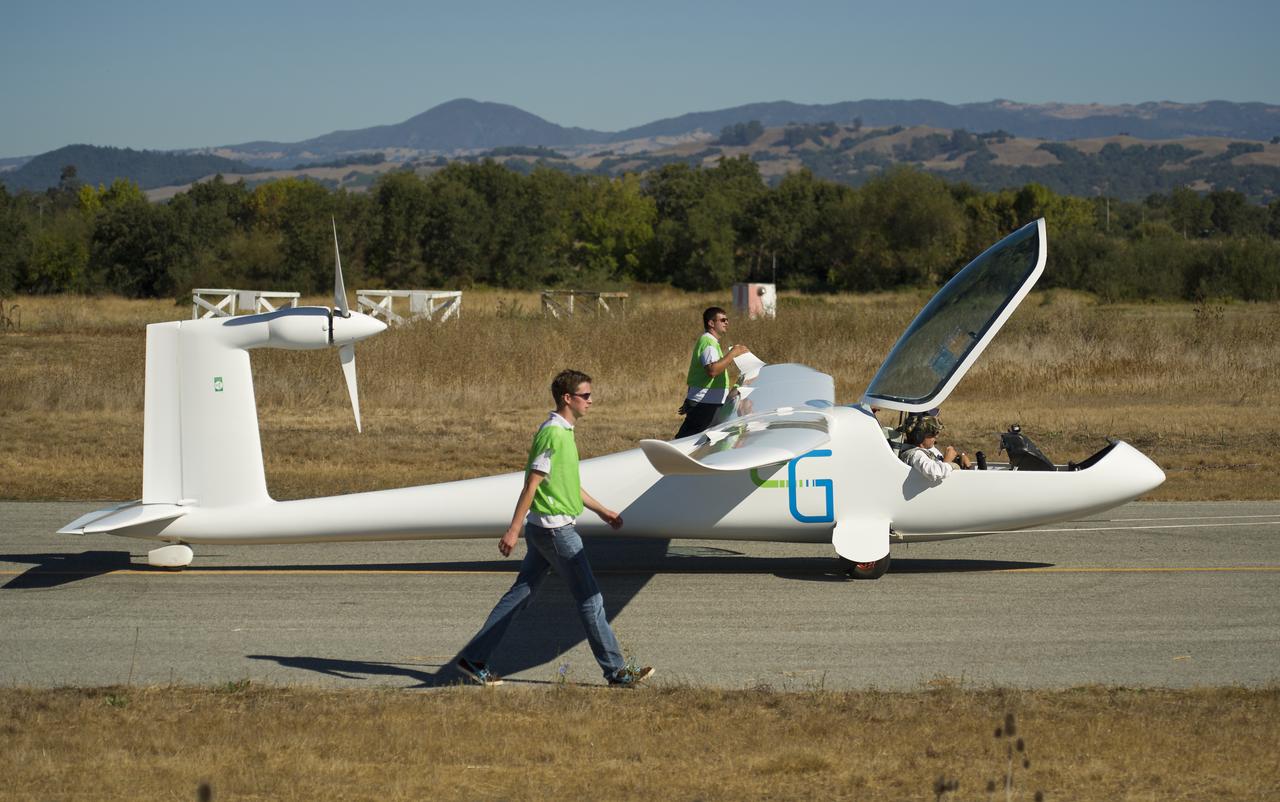
The e-Genius aircraft is pulled pulled out to the runway for the miles per gallon (MPG) flight during the 2011 Green Flight Challenge, sponsored by Google, at the Charles M. Schulz Sonoma County Airport in Santa Rosa, Calif. on Tuesday, Sept. 27, 2011. NASA and the Comparative Aircraft Flight Efficiency (CAFE) Foundation are having the challenge with the goal to advance technologies in fuel efficiency and reduced emissions with cleaner renewable fuels and electric aircraft. Photo Credit: (NASA/Bill Ingalls)

A solar prominence at the sun's edge put on quite a display of plasma being pushed and pulled by unstable magnetic fields (May 22-24, 2017). We call them hedgerow prominences because they look somewhat like a hedge of bushes. This is one of the better examples of this type of solar phenomenon than any we have seen in quite some time. Movies are available at https://photojournal.jpl.nasa.gov/catalog/PIA21650
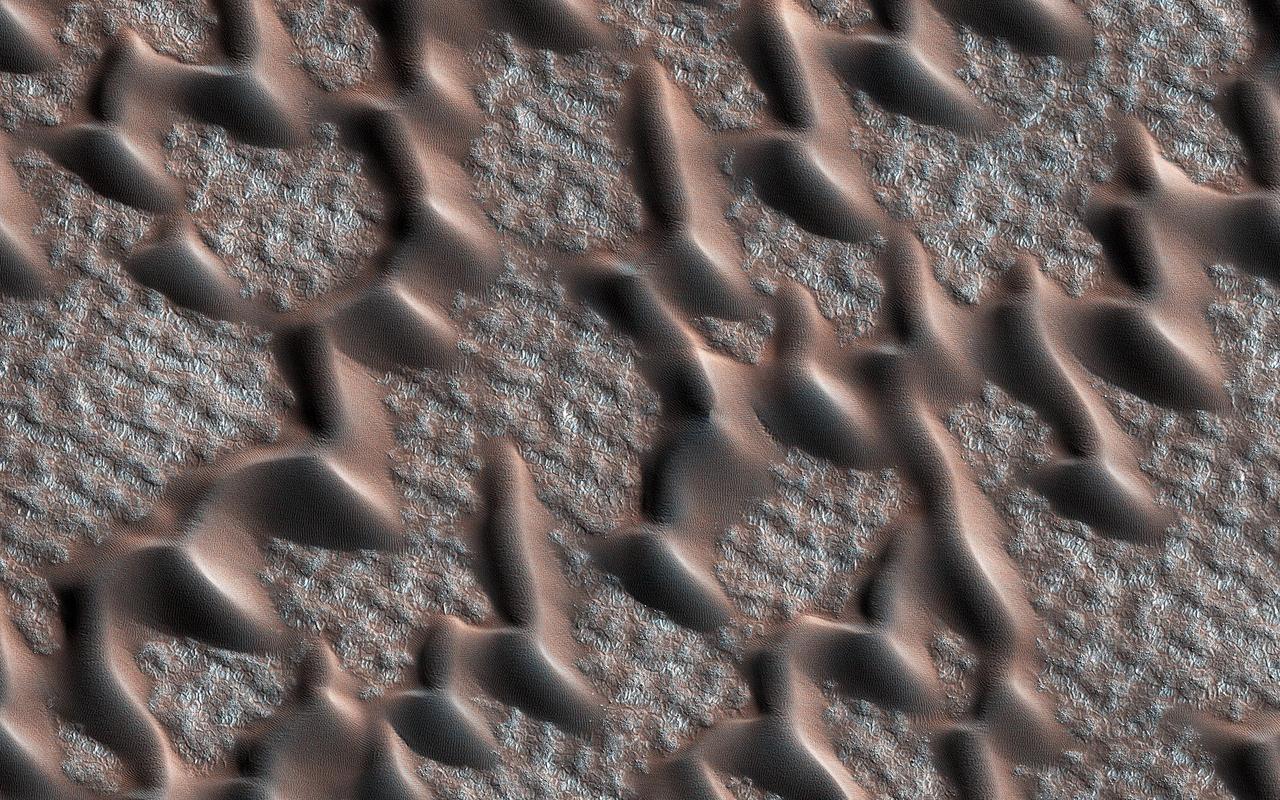
This image from NASA's Mars Reconnaissance Orbiter (MRO) shows the permanent polar cap of Mars, encircled by sand dunes and looking like pulled threads, these dunes march across a fabric of patterned ground. At this time of the Martian year the dunes are free of the seasonal dry ice that forms a temporary cover every winter. https://photojournal.jpl.nasa.gov/catalog/PIA22464
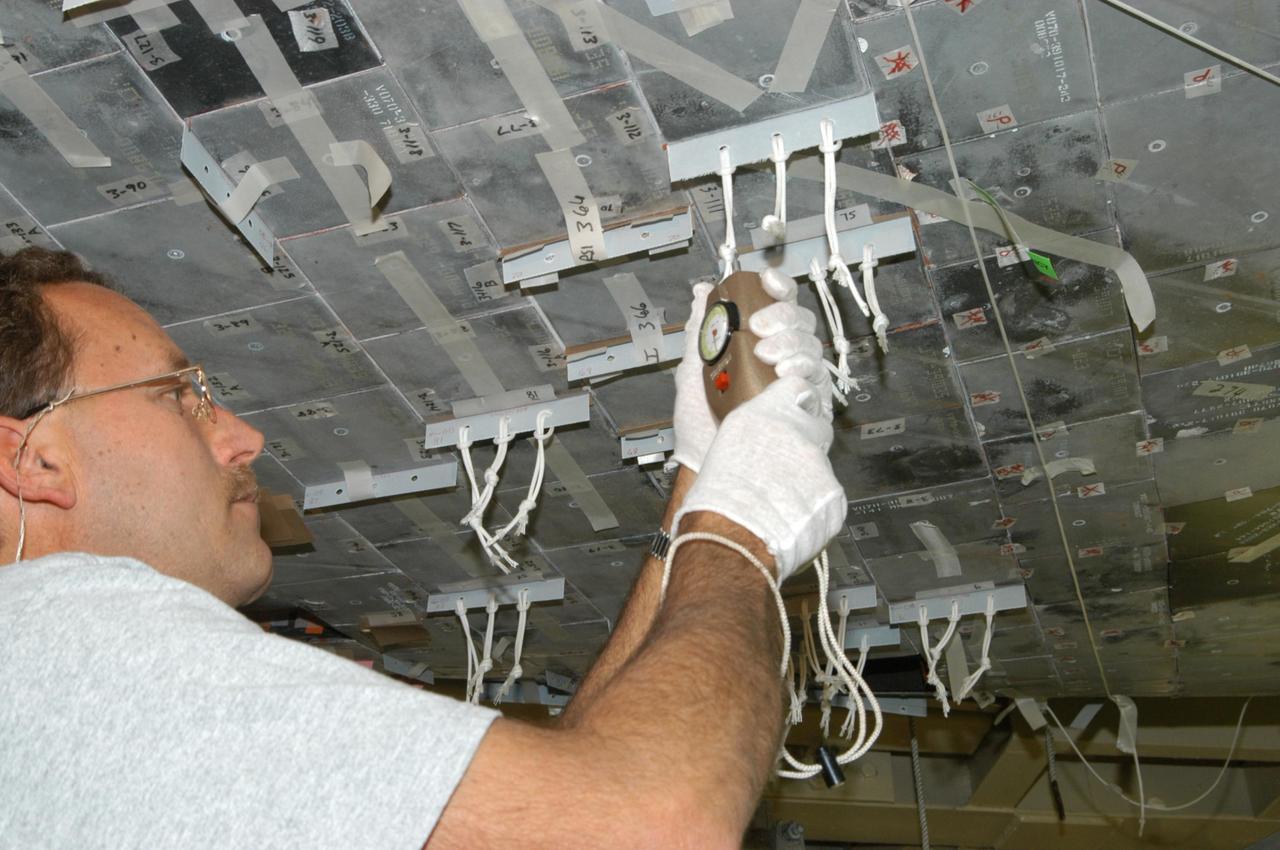
KENNEDY SPACE CENTER, FLA. -- United Space Alliance technician Gene Peavler performs pull tests on newly installed gap fillers. The test now requires three pulls at five pounds each, versus the previous testing of one pull at one-half pound. Discovery is being processed in Orbiter Processing Facility Bay 3 at NASA’s Kennedy Space Center. This work is being performed due to two gap fillers that were protruding from the underside of Discovery on the first Return to Flight mission, STS-114. New installation procedures have been developed to ensure the gap fillers stay in place and do not pose any hazard during the shuttle's re-entry to the atmosphere. Discovery is the scheduled orbiter for the second space shuttle mission in the return-to-flight sequence.
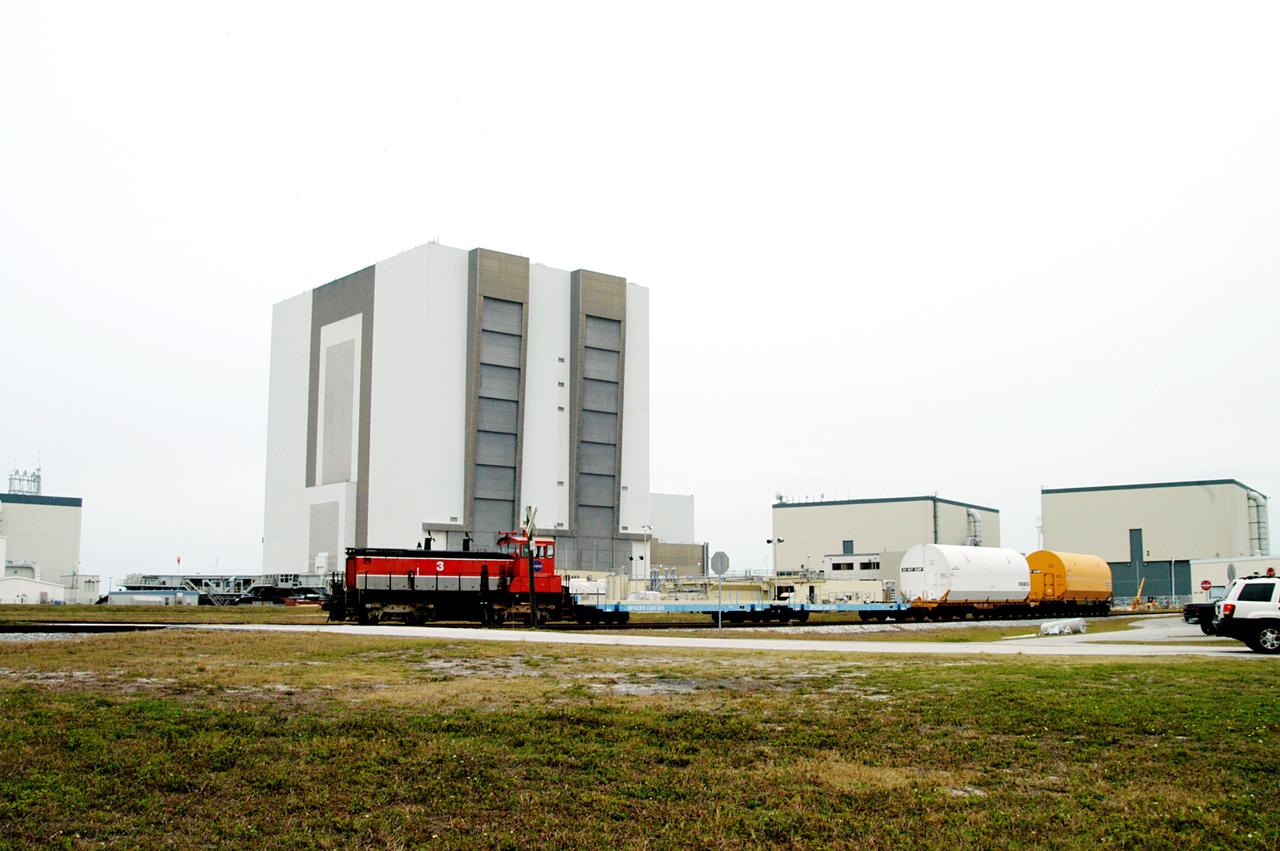
KENNEDY SPACE CENTER, FLA. - Moving past the 525-foot-high Vehicle Assembly Building, the red NASA engine pulls several containers enclosing segments of a solid rocket booster being returned to Utah for testing. The segments were part of the STS-114 stack. It is the first time actual flight segments that had been stacked for flight in the VAB are being returned for testing. They will undergo firing, which will enable inspectors to check the viability of the solid and verify the life expectancy for stacked segments.
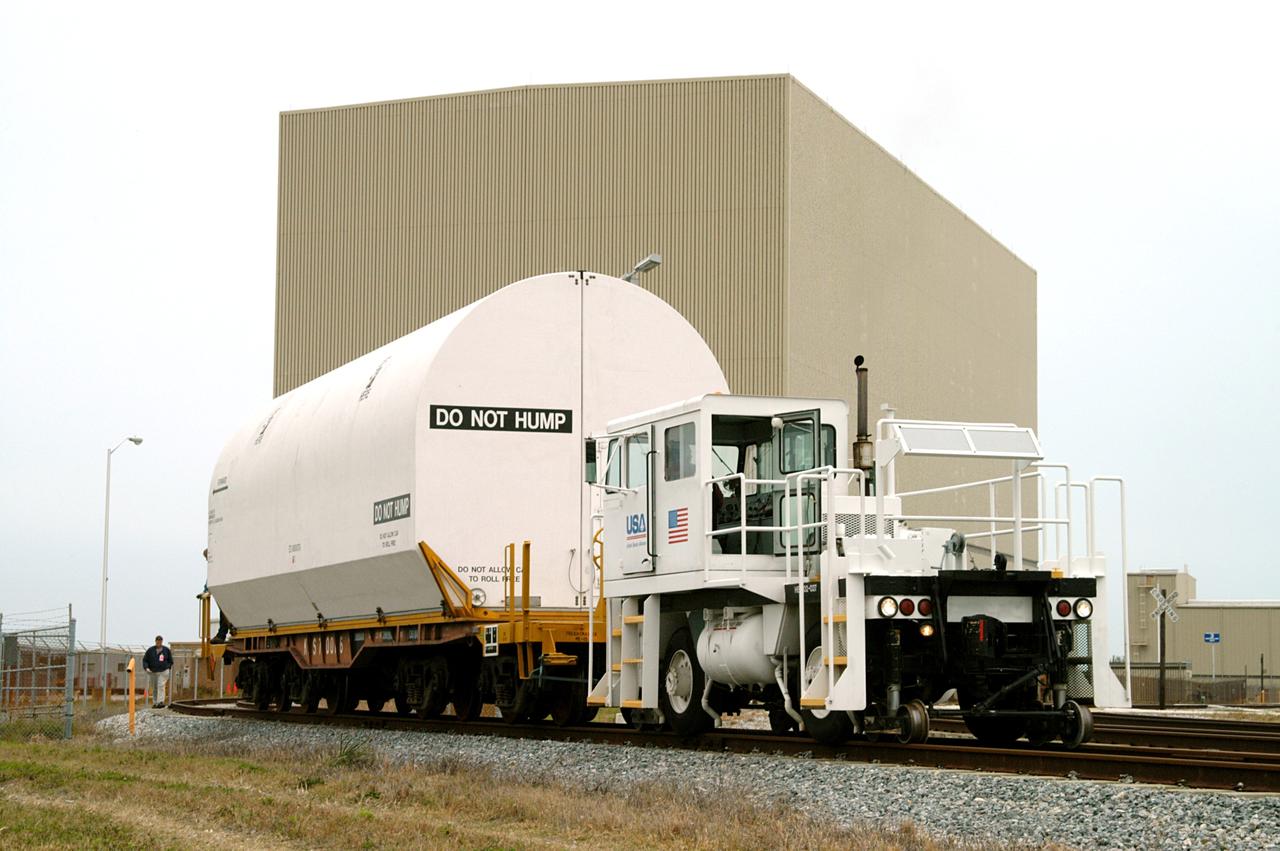
KENNEDY SPACE CENTER, FLA. - An engine pulls the container enclosing a segment of a solid rocket booster from the Rotation Processing and Surge Facility. The container will join others on the main track for a trip to Utah where the segments will undergo firing. The segments were part of the STS-114 stack. It is the first time actual flight segments that had been stacked for flight in the VAB are being returned for testing. They will undergo firing, which will enable inspectors to check the viability of the solid and verify the life expectancy for stacked segments.
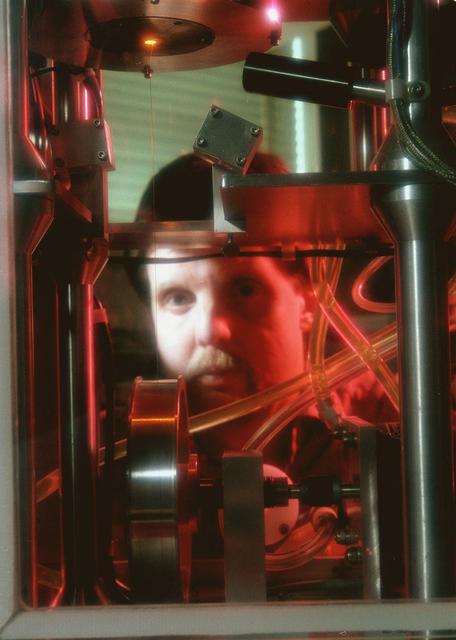
Scientists at Marshall's Materials and Processes Lab are pulling glass fibers from simulated lunar soil. This technology could lead to the building of thermally protected lunar buildings made of materials already there.
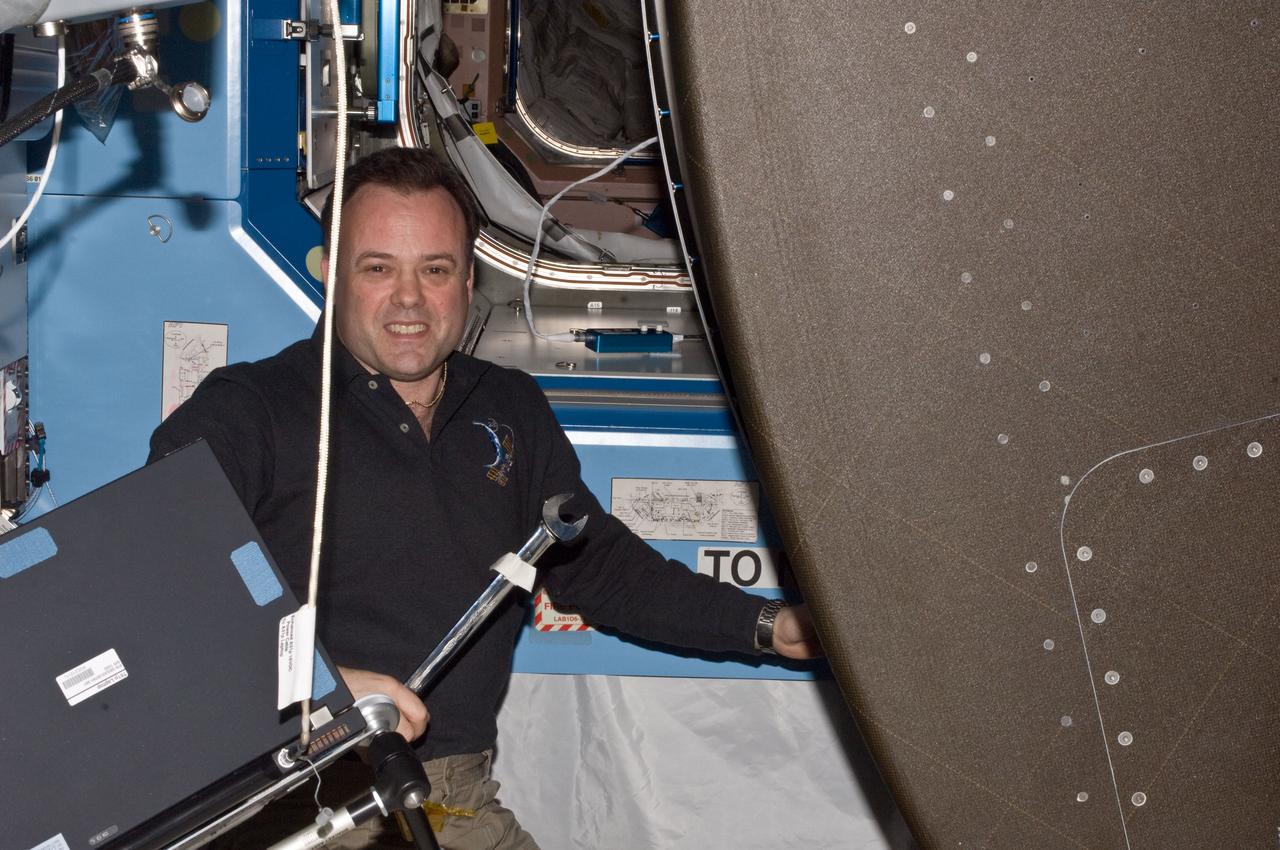
ISS028-E-017363 (17 July 2011) --- NASA astronaut Ron Garan, Expedition 28 flight engineer, works with a pulled rack in the U.S. lab or Destinty aboard the Internatinal Space Station.
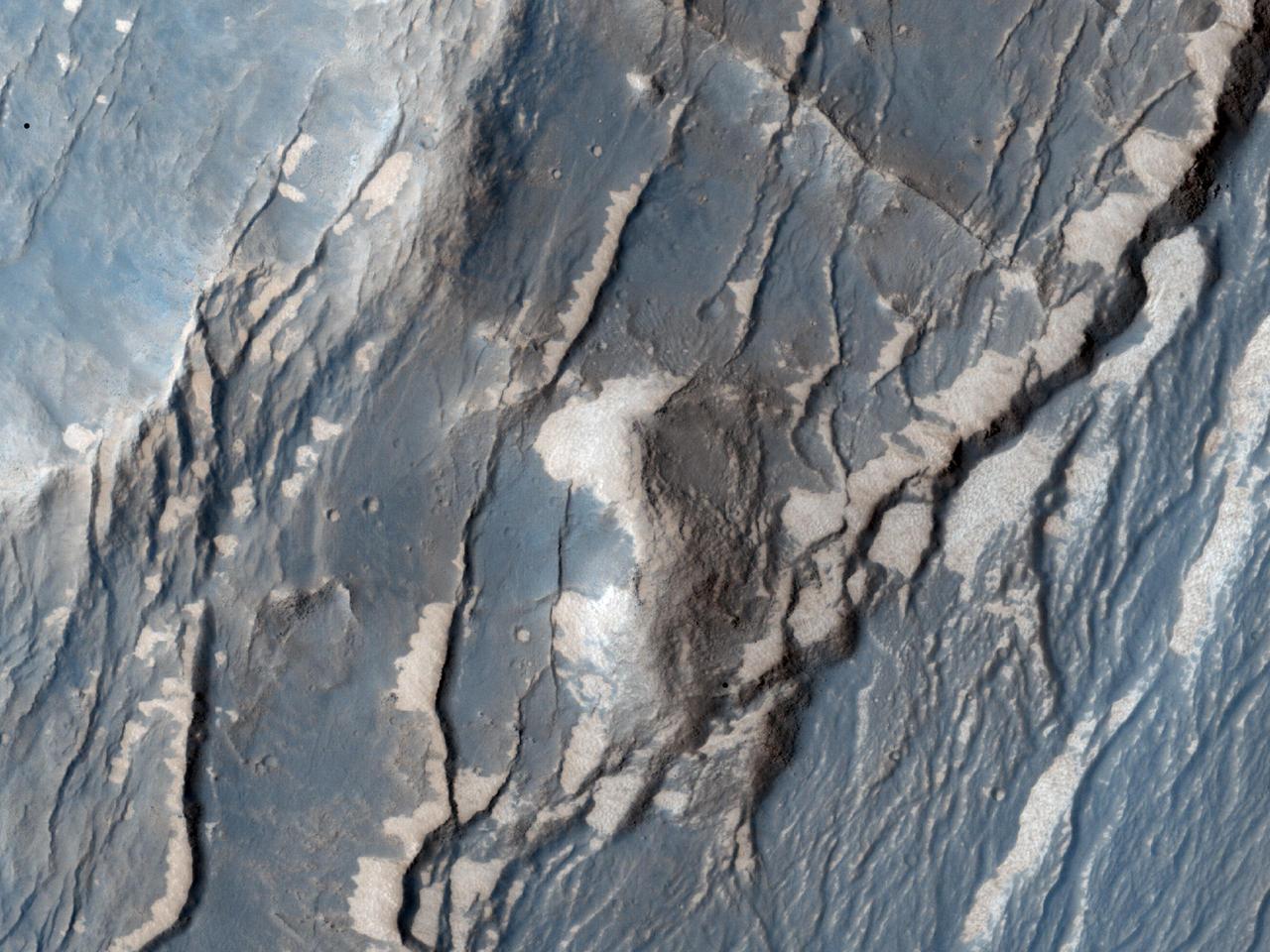
NASA Mars Reconnaissance Orbiter captured this image of the Claritas Fossae region, characterized by systems of graben. A graben forms when a block of the planet crust drops down between two faults, due to extension, or pulling, of the crust.
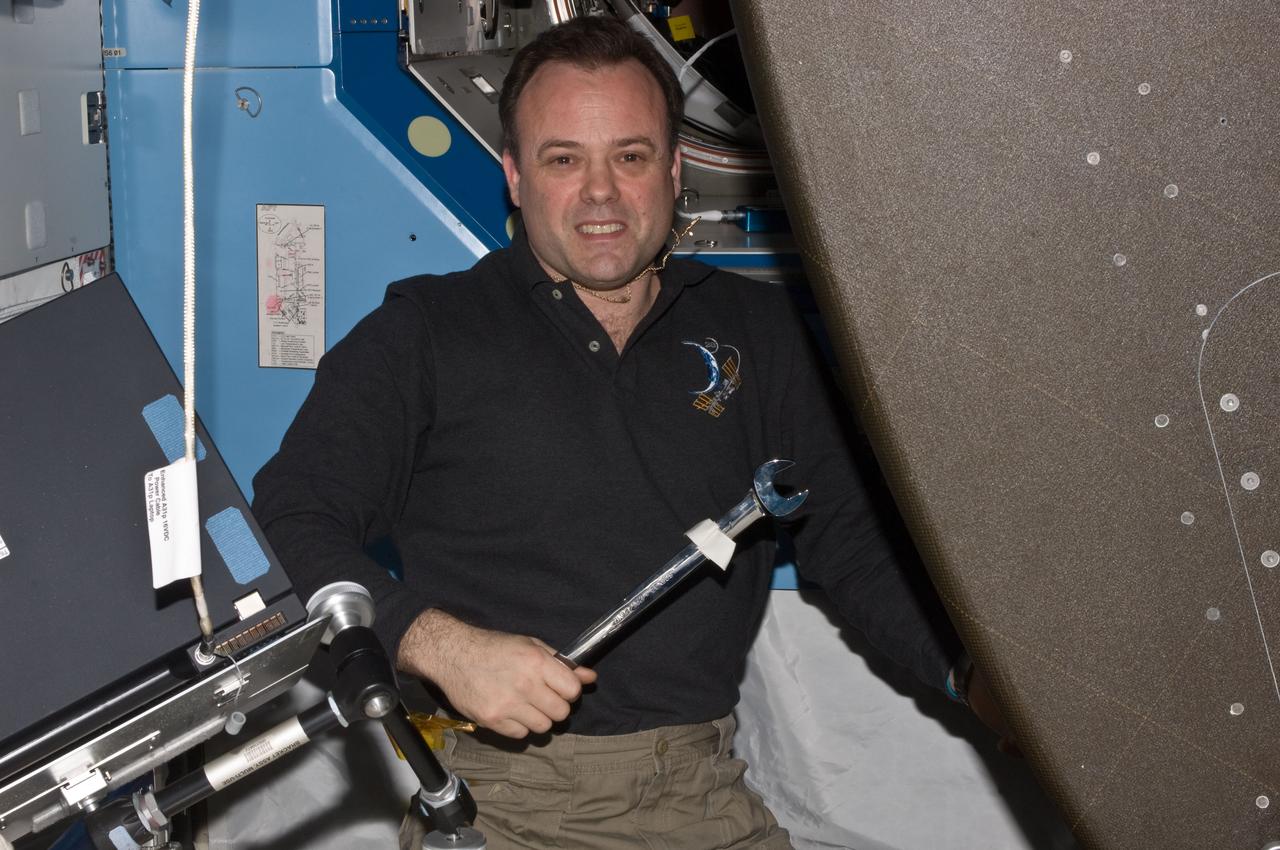
ISS028-E-017361 (17 July 2011) --- NASA astronaut Ron Garan, Expedition 28 flight engineer, works with a pulled rack in the U.S. lab or Destinty aboard the International Space Station.
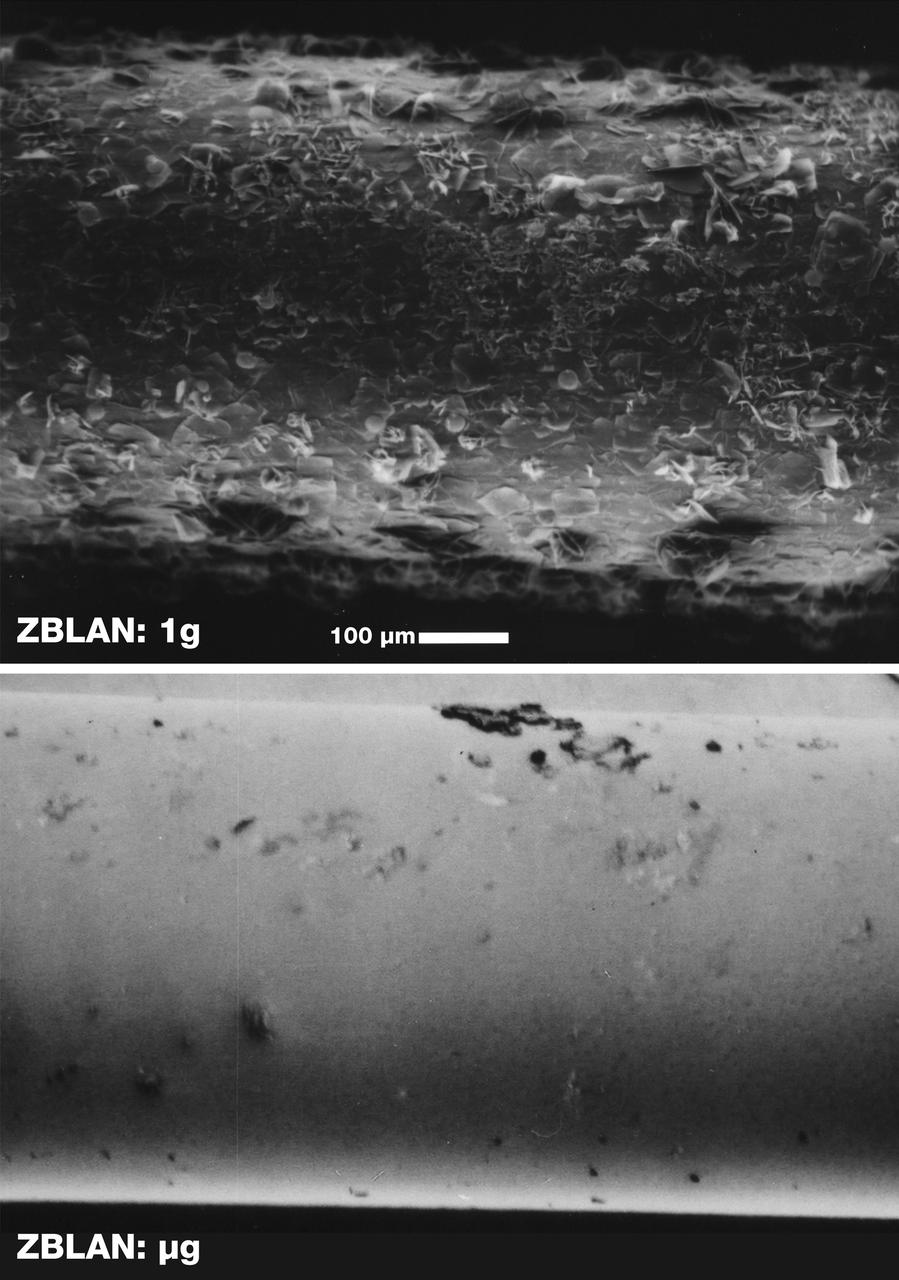
Scarning electron microscope images of the surface of ZBLAN fibers pulled in microgravity (ug) and on Earth (1g) show the crystallization that normally occurs in ground-based processing. The face of each crystal will reflect or refract a portion of the optical signal, thus degrading its quality. NASA is conducting research on pulling ZBLAN fibers in the low-g environment of space to prevent crystallization that limits ZBLAN's usefulness in optical fiber-based communications. ZBLAN is a heavy-metal fluoride glass that shows exdeptional promise for high-throughput communications with infrared lasers. Photo credit: NASA/Marshall Space Flight Center
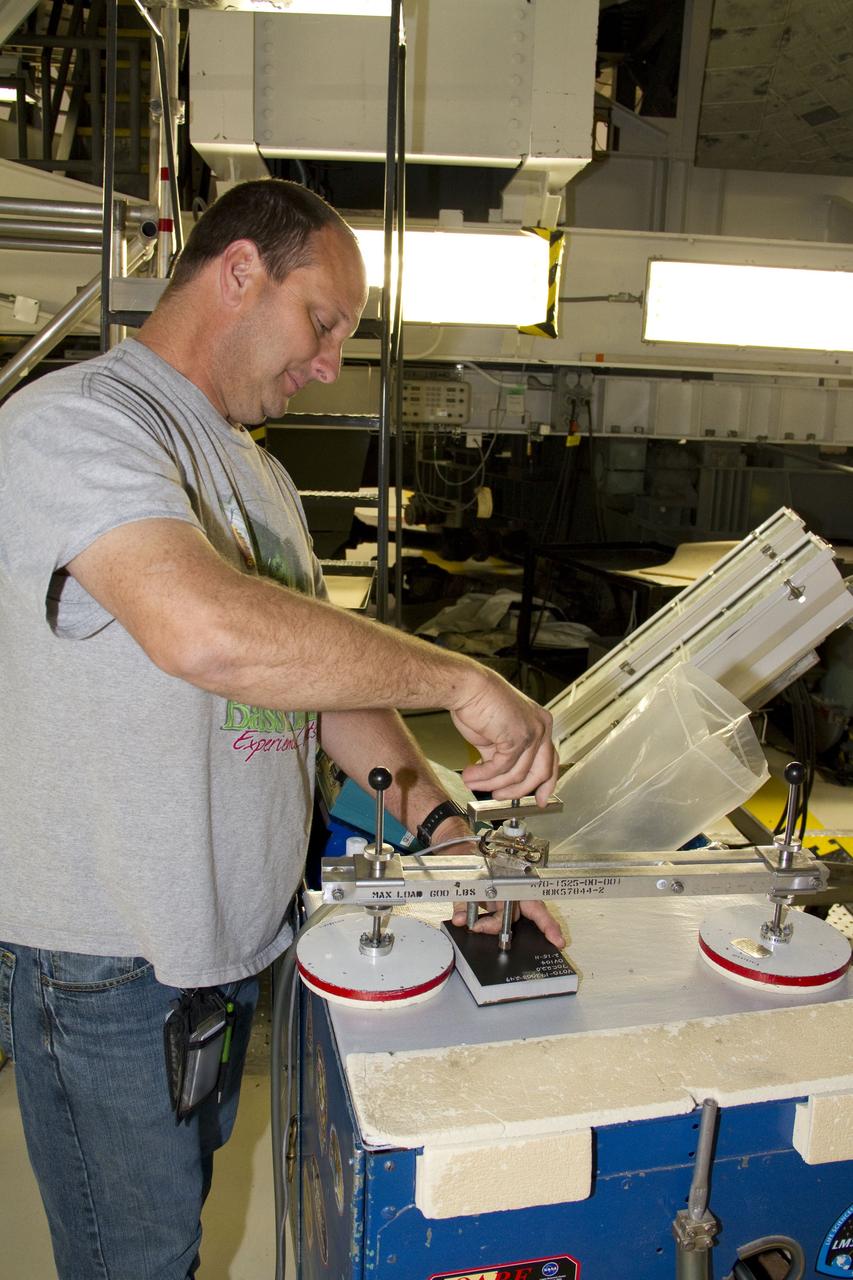
CAPE CANAVERAL, Fla. -- A United Space Alliance technician examines one of shuttle Atlantis' thermal protection tiles in Orbiter Processing Facility-1 at NASA's Kennedy Space Center in Florida. The tile went through a pull test, which measured the force it took to pull it off of the shuttle in order to make sure the bond between the two is strong enough to withstand the force of launch and landing. Atlantis is being prepared for the STS-135 mission, which will deliver the Raffaello multipurpose logistics module packed with supplies, logistics and spare parts to the International Space Station. STS-135 is targeted to launch June 28, and will be the last spaceflight for the Space Shuttle Program. Photo credit: NASA/Jack Pfaller
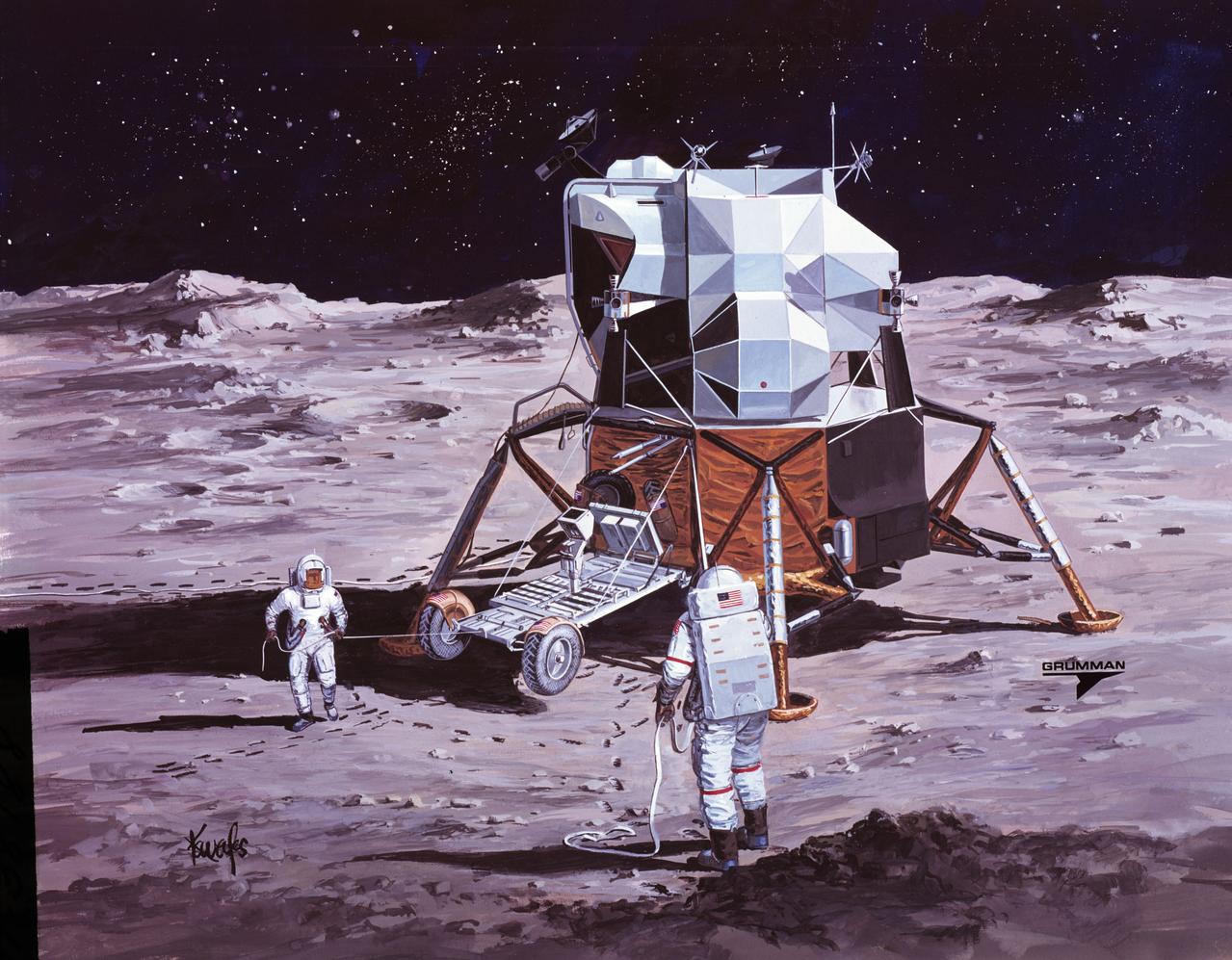
S71-38188 (26 June 1971) --- An artist's concept showing the Apollo 15 mission commander and the lunar module pilot performing deployment of the Lunar Roving Vehicle (LRV) on the lunar surface. The figure on the left represents astronaut James B. Irwin, lunar module pilot, who here is maintaining a constant pull on the deployment cable to help the LRV unfold, while astronaut David R. Scott (right), commander, pulls the tapes that lower the LRV to the surface. (This is the third in a series of Grumman Aerospace Corporation artist's concepts telling the lunar surface LRV deployment story of the Apollo 15 mission).
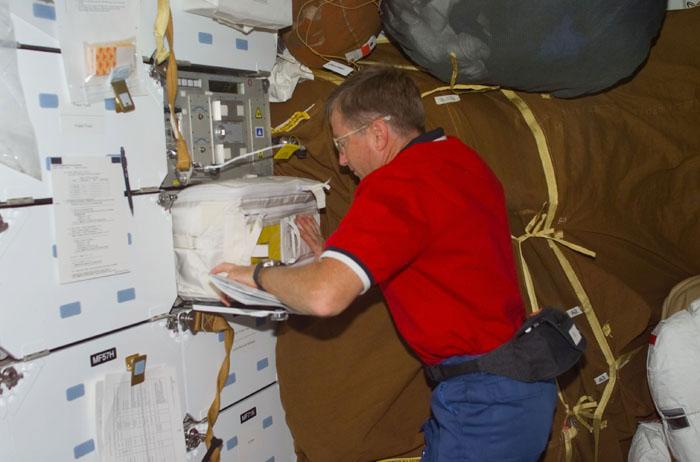
STS105-E-5160 (13 August 2001) --- Astronaut Frank L. Culbertson, Jr., Expedition Three mission commander, works with Dreamtime equipment on the mid deck of the Space Shuttle Discovery. Dreamtime is NASA's commercial collaborator on multi-media activities. This image was taken with a digital still camera.
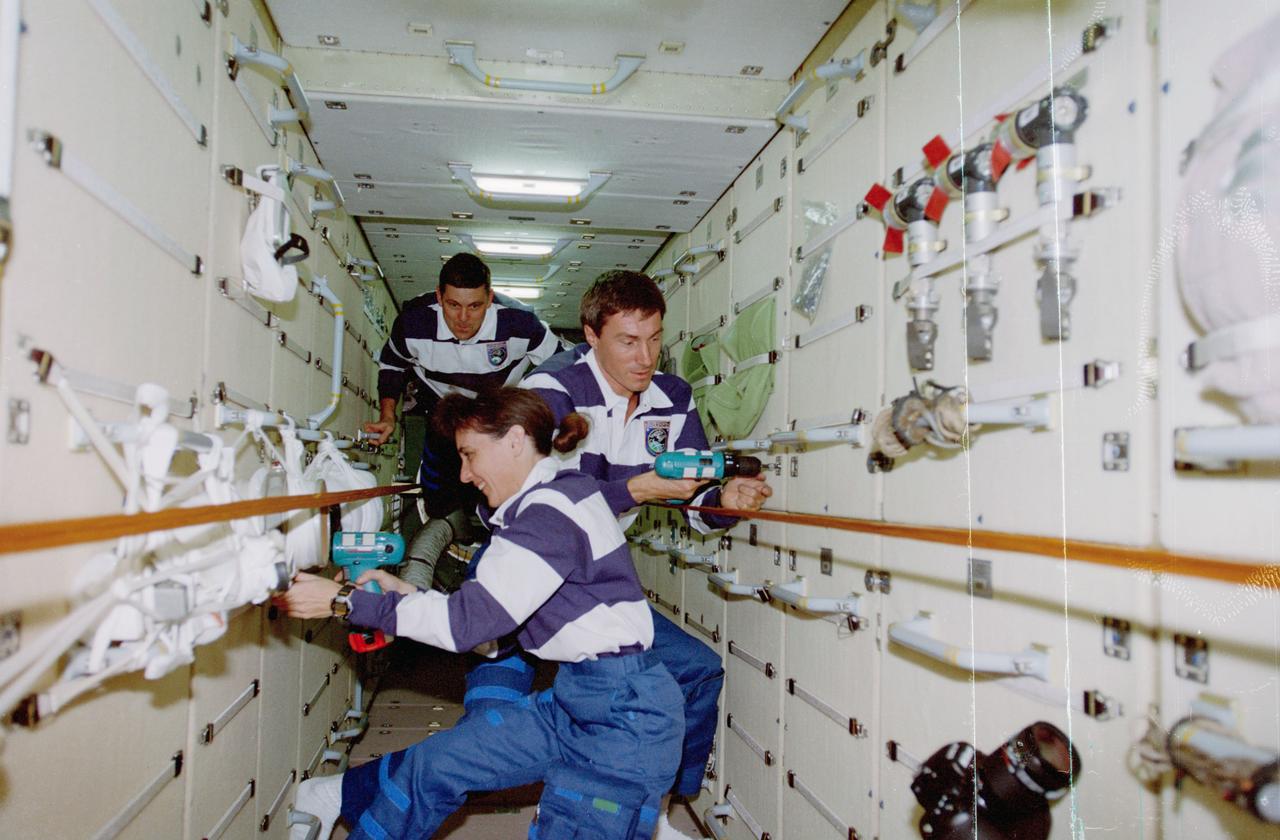
STS088-359-037 (4-15 Dec. 1998) --- Astronaut Nancy J. Currie and cosmonaut Sergei K. Krikalev, both mission specialists, use rechargeable power tools to manipulate nuts and bolts on the Russian-built Zarya module. Astronaut Robert D. Cabana, mission commander, translates along the rail network in the background. The six STS-88 crew members had earlier entered the module through the U.S.-built Unity connecting module. Rails, straps and tools indicate the crewmembers had been working awhile when this photo was taken. Krikalev, representing the Russian Space Agency (RSA), has been assigned as a member of the three-man initial International Space Station (ISS) crew.
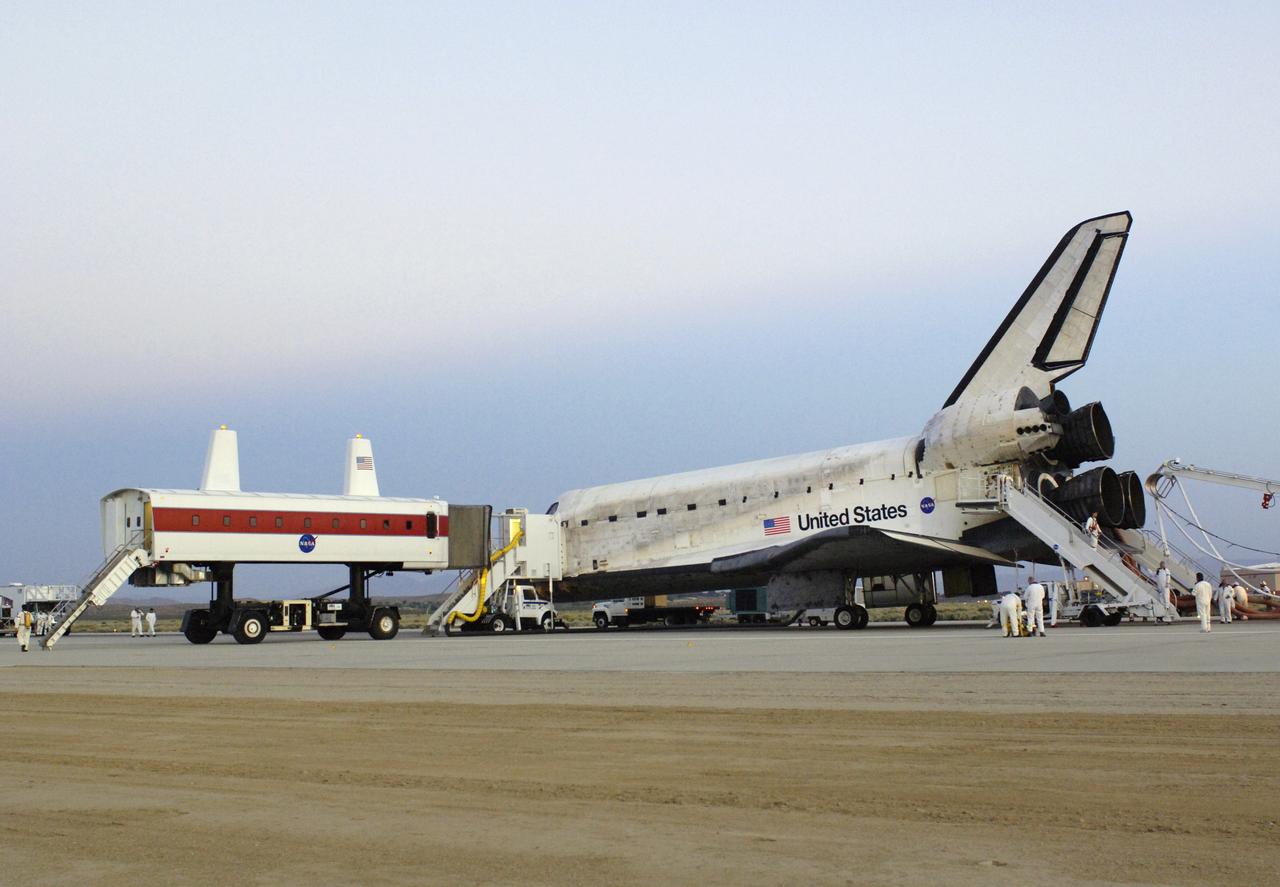
NASA's Crew Transport Vehicle, or CTV, pulls up to the Space Shuttle Discovery to offload the crew after a successful landing August 9, 2005 at Edwards Air Force Base, California. The landing marked the end of the STS-114 mission. Space Shuttle Discovery landed safely at NASA's Dryden Flight Research Center at Edwards Air Force Base in California at 5:11:22 a.m. PDT this morning, following the very successful 14-day STS-114 return to flight mission. During their two weeks in space, Commander Eileen Collins and her six crewmates tested out new safety procedures and delivered supplies and equipment the International Space Station. Discovery spent two weeks in space, where the crew demonstrated new methods to inspect and repair the Shuttle in orbit. The crew also delivered supplies, outfitted and performed maintenance on the International Space Station. A number of these tasks were conducted during three spacewalks. In an unprecedented event, spacewalkers were called upon to remove protruding gap fillers from the heat shield on Discovery's underbelly. In other spacewalk activities, astronauts installed an external platform onto the Station's Quest Airlock and replaced one of the orbital outpost's Control Moment Gyroscopes. Inside the Station, the STS-114 crew conducted joint operations with the Expedition 11 crew. They unloaded fresh supplies from the Shuttle and the Raffaello Multi-Purpose Logistics Module. Before Discovery undocked, the crews filled Raffeallo with unneeded items and returned to Shuttle payload bay. Discovery launched on July 26 and spent almost 14 days on orbit.
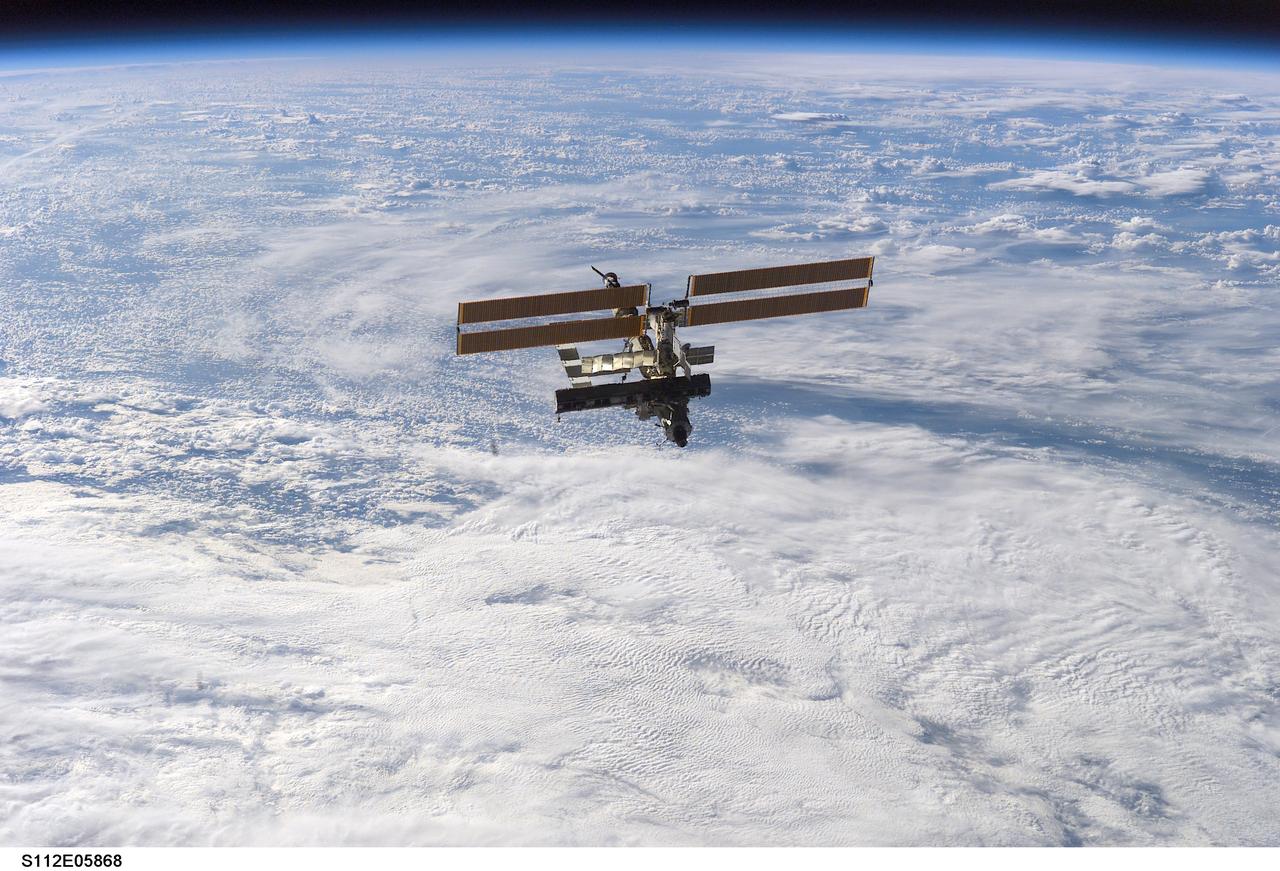
STS112-E-05868 (16 October 2002) --- Backdropped by a blanket of clouds, the International Space Station (ISS) was photographed by a crewmember on board the Space Shuttle Atlantis following the undocking of the two spacecraft. Atlantis pulled away from the complex at 8:13 a.m. (CDT) on October 16, 2002.
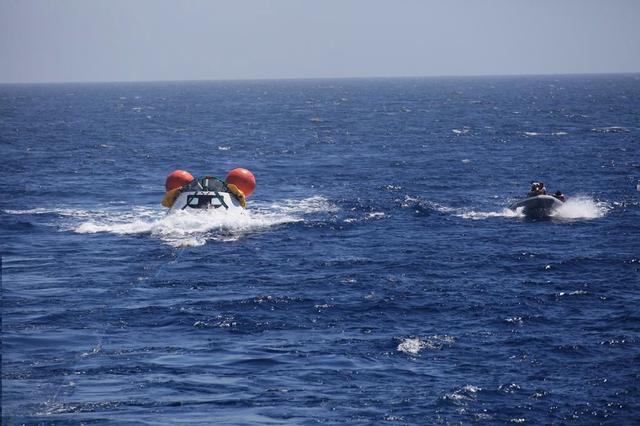
Orion recovery training and operations continue in the Pacific Ocean on Sept. 14, 2014. NASA and the Navy team on board the USS Salvor are evaluating procedures for pulling a test version of the spacecraft out of the ocean using the ship's crane. Part of Batch image transfer from Flickr.
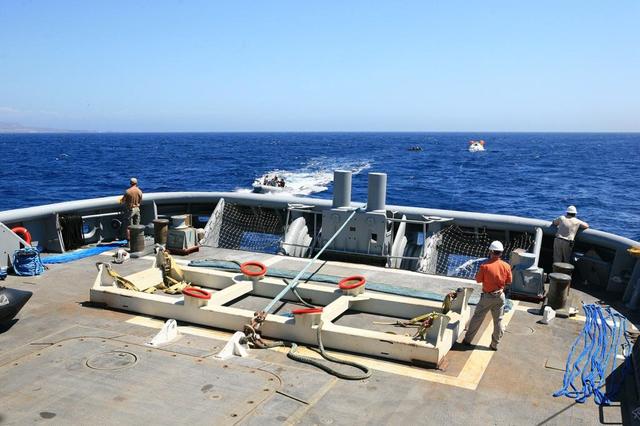
Orion recovery training and operations continue in the Pacific Ocean on Sept. 14, 2014. NASA and the Navy team on board the USS Salvor are evaluating procedures for pulling a test version of the spacecraft out of the ocean using the ship's crane. Part of Batch image transfer from Flickr.
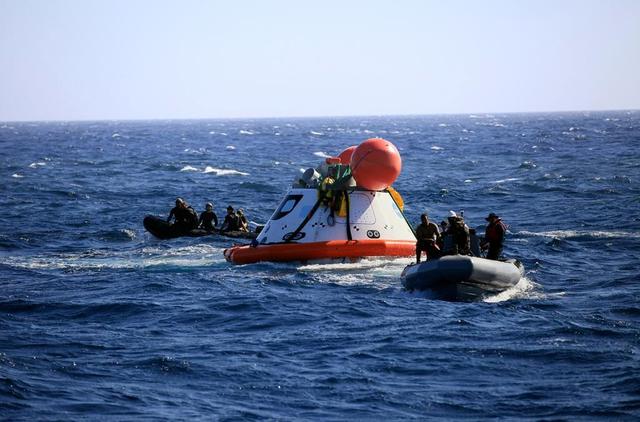
Orion recovery training and operations continue in the Pacific Ocean on Sept. 14, 2014. NASA and the Navy team on board the USS Salvor are evaluating procedures for pulling a test version of the spacecraft out of the ocean using the ship's crane. Part of Batch image transfer from Flickr.
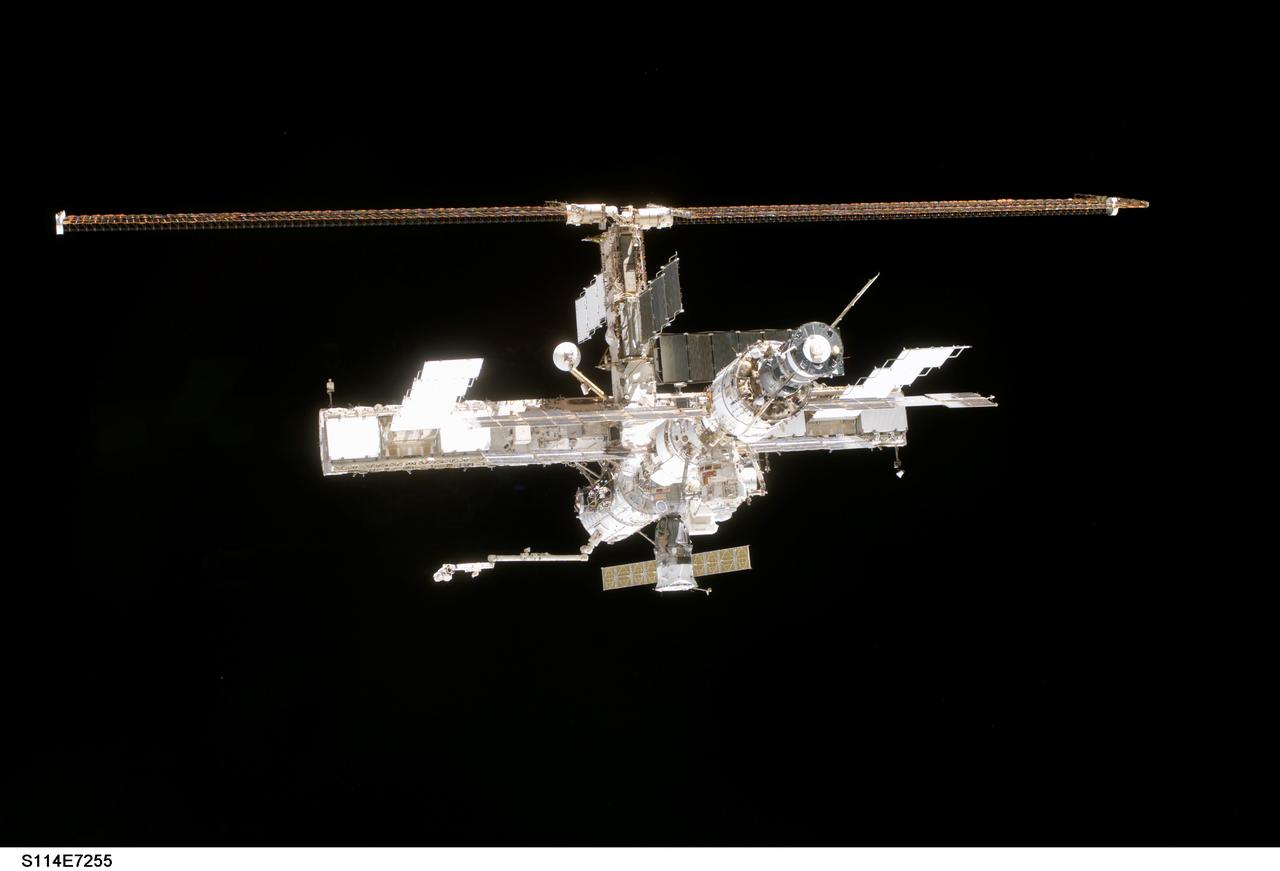
S114-E-7255 (6 August 2005) --- Backdropped by the blackness of space, this view of the International Space Station was photographed by a crewmember onboard the Space Shuttle Discovery following the undocking of the two spacecraft. Discovery pulled away from the complex at 2:24 a.m. (CDT) on August 6, 2005.
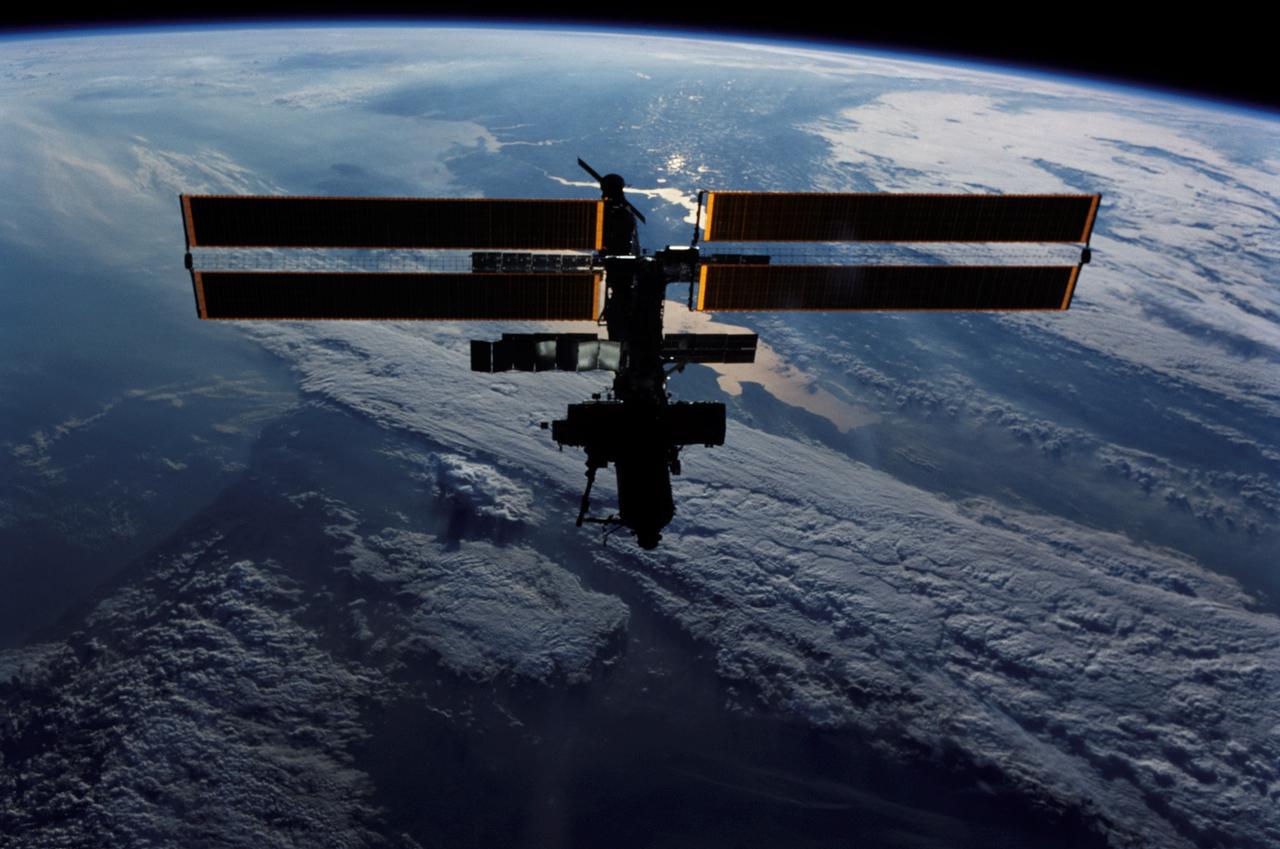
STS111-373-018 (15 June 2002) --- Silhouetted over Earth, this full view of the International Space Station (ISS) was photographed by a crewmember on board the Space Shuttle Endeavour following the undocking of the two spacecraft over western Kazakhstan. Endeavour pulled away from the complex at 9:32 a.m. (CDT) on June 15, 2002.
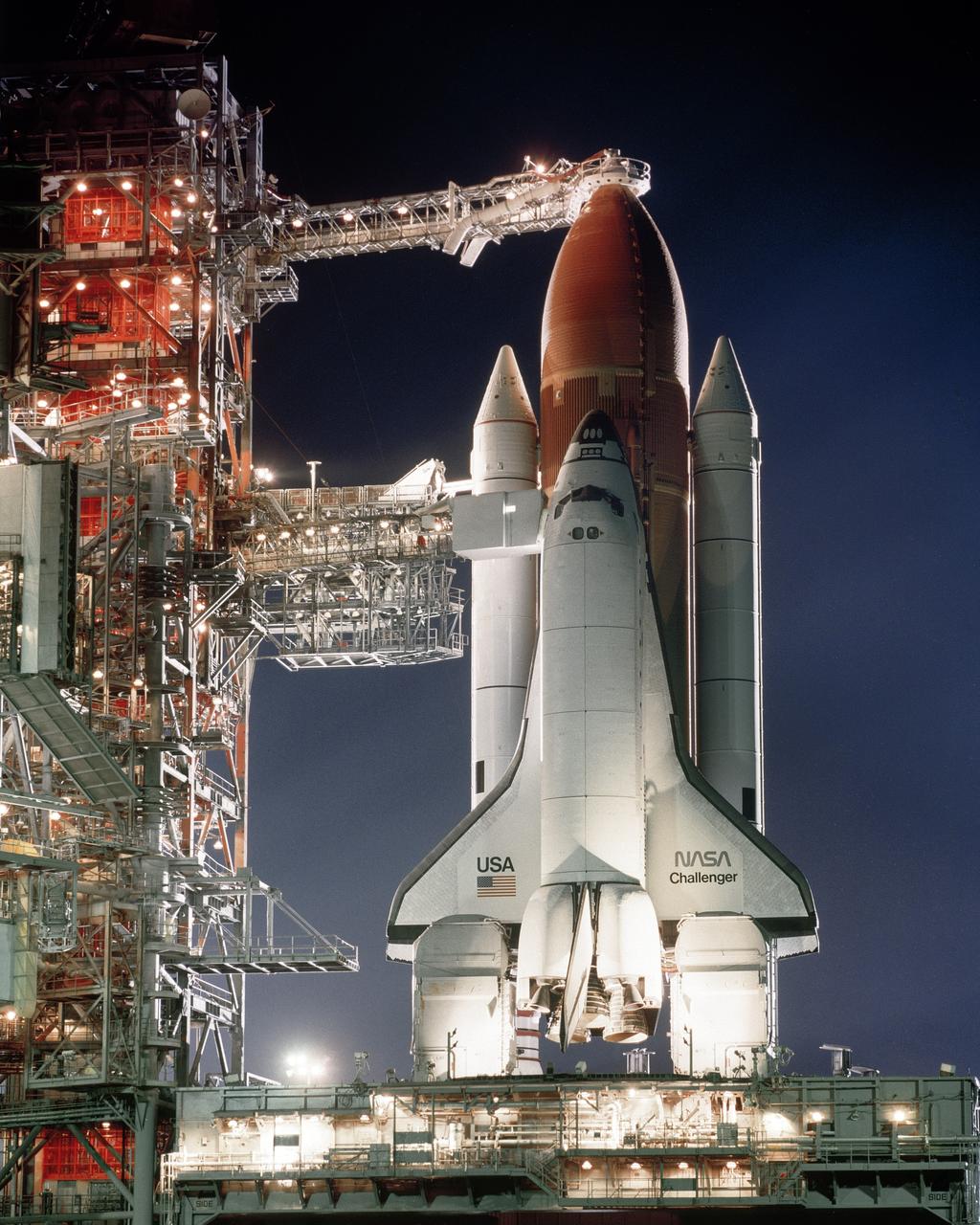
CAPE CANAVERAL, Fla. -- At the Kennedy Space Center in Florida, the rotating service structure has pulled back to the prelaunch position, the shuttle Challenger sits at Launch Pad 39-A bathed in billion candlepower searchlights ready to embark on it fourth space mission STS-41B, the 10th flight of the space shuttle. Photo Credit: NASA
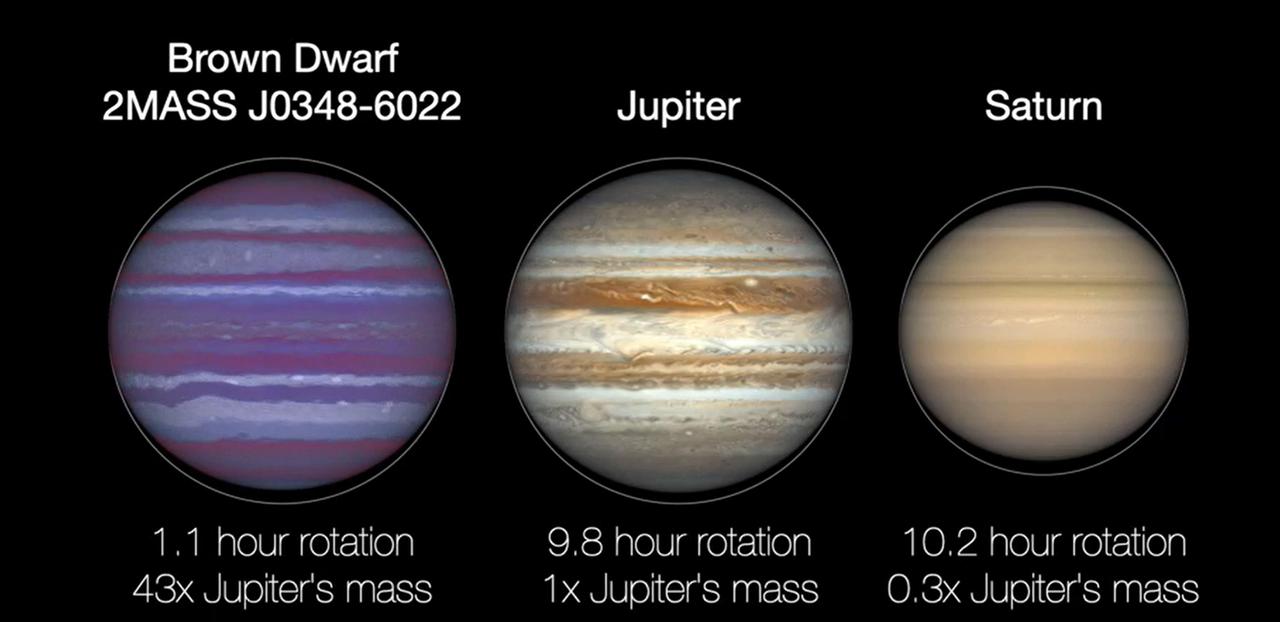
All spinning objects, from carousels to planets, generate centripetal force. If a planet rotates too fast, that force can pull it apart. Before that happens, the planet will experience "flattening," or bulging around its midsection, as seen in this animated illustration of a brown dwarf, Jupiter, and Saturn. Animation available at https://photojournal.jpl.nasa.gov/catalog/PIA24376
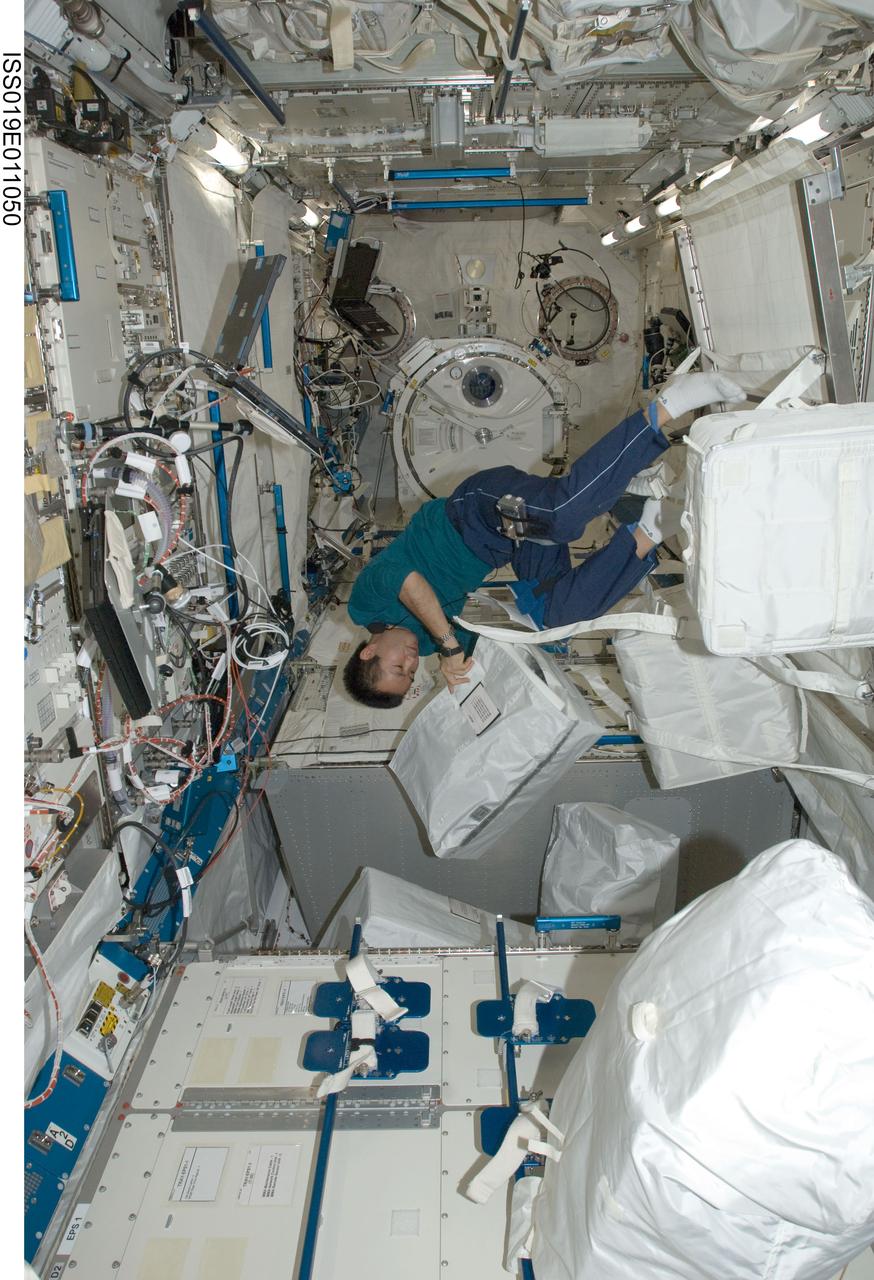
ISS019-E-011050 (27 April 2009) --- Japan Aerospace Exploration Agency (JAXA) astronaut Koichi Wakata, Expedition 19/20 flight engineer, pulls stowage bags from a rack in the Kibo laboratory of the International Space Station.
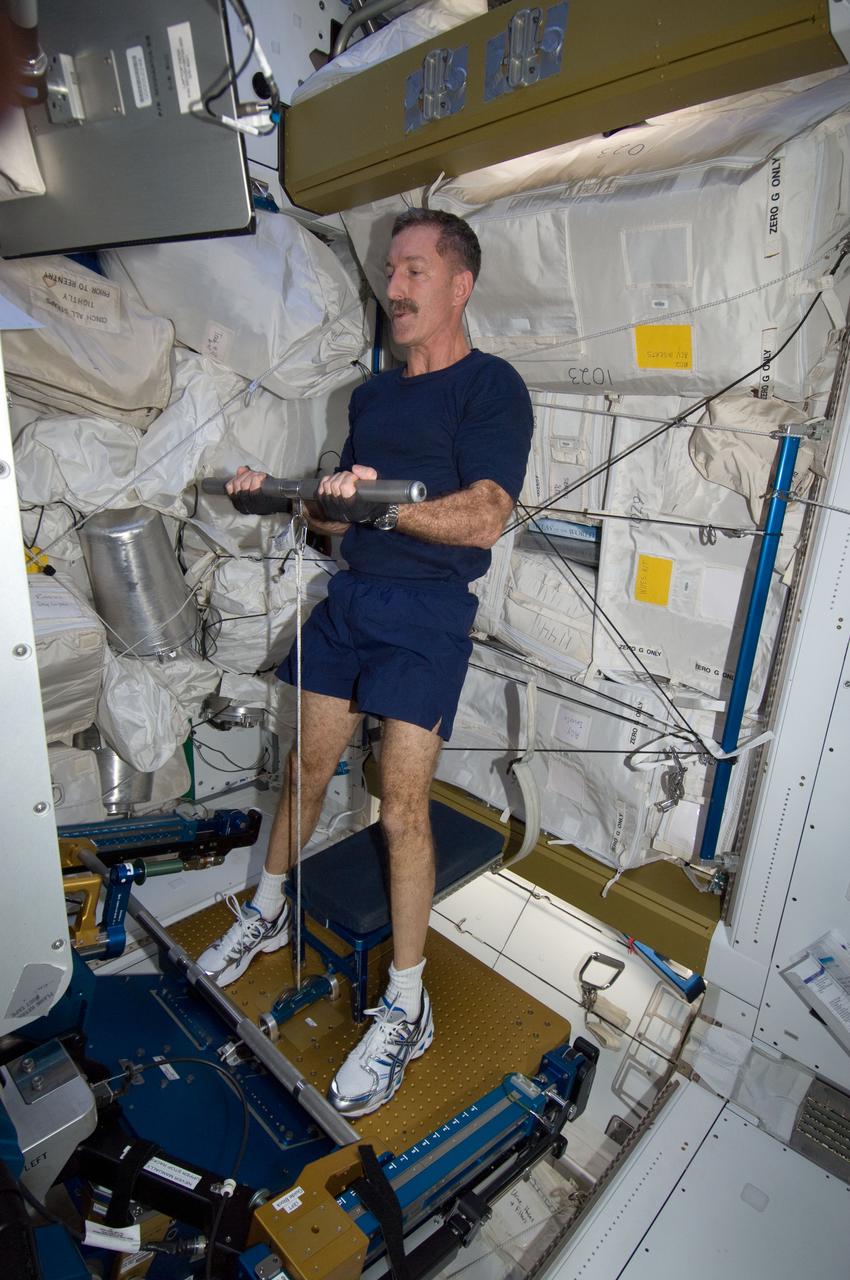
ISS030-E-012727 (18 Dec. 2011) --- NASA astronaut Dan Burbank, Expedition 30 commander, uses the short bar for the advanced Resistive Exercise Device (aRED) equipment to perform upper body strengthening pull-ups in the Tranquility node of the International Space Station.
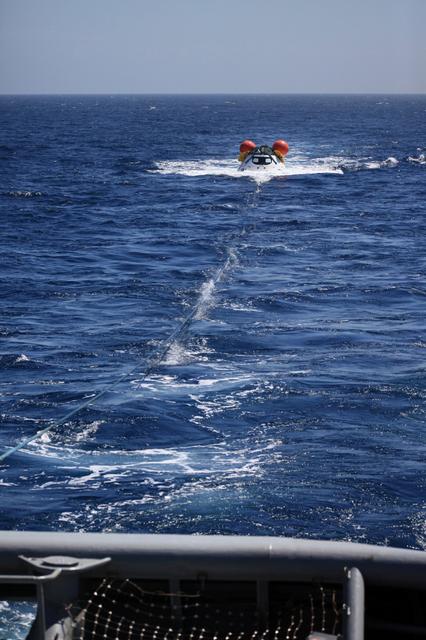
Orion recovery training and operations continue in the Pacific Ocean on Sept. 14, 2014. NASA and the Navy team on board the USS Salvor are evaluating procedures for pulling a test version of the spacecraft out of the ocean using the ship's crane. Part of Batch image transfer from Flickr.
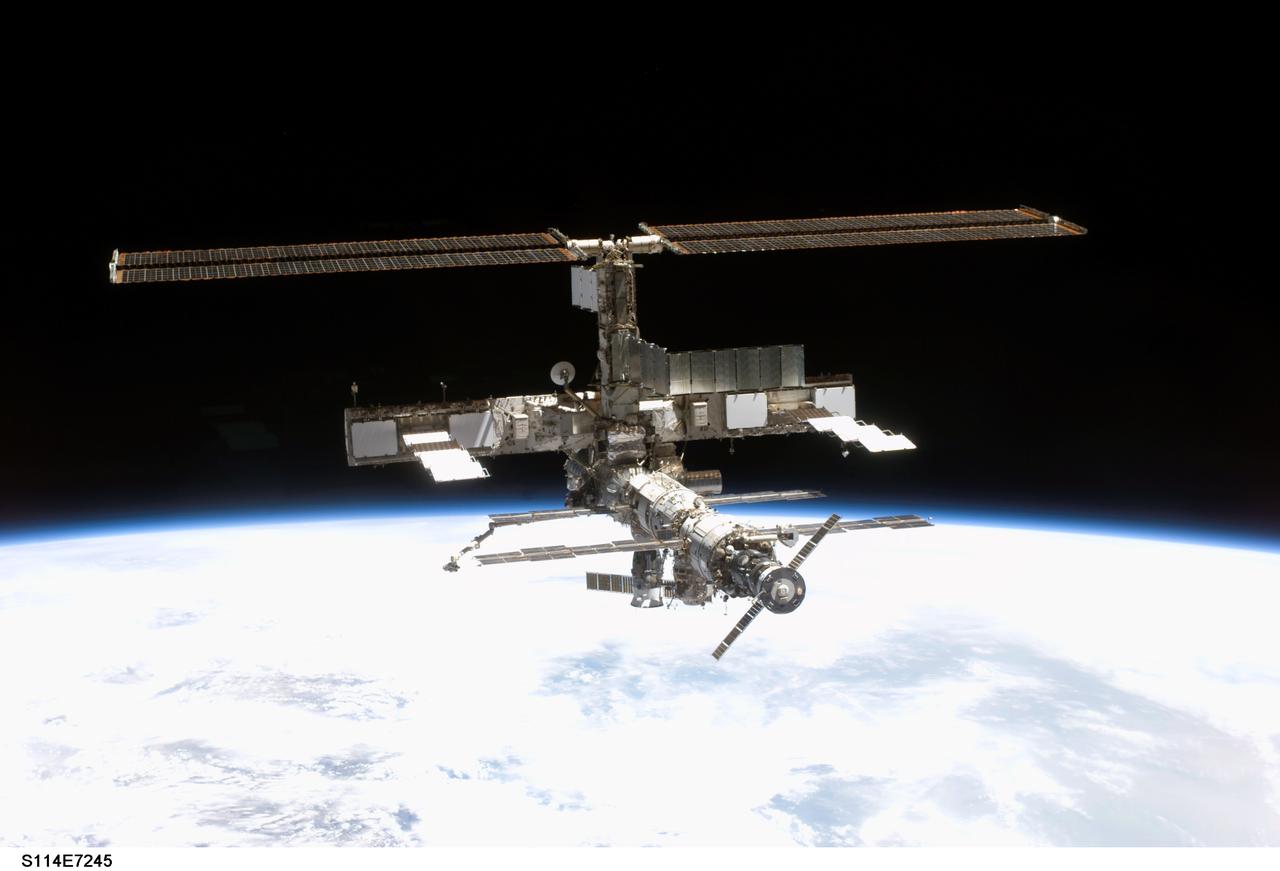
S114-E-7245 (6 August 2005) --- Backdropped by the blackness of space and Earth’s horizon, this full view of the International Space Station was photographed by a crewmember onboard the Space Shuttle Discovery following the undocking of the two spacecraft. Discovery pulled away from the complex at 2:24 a.m. (CDT) on August 6, 2005.
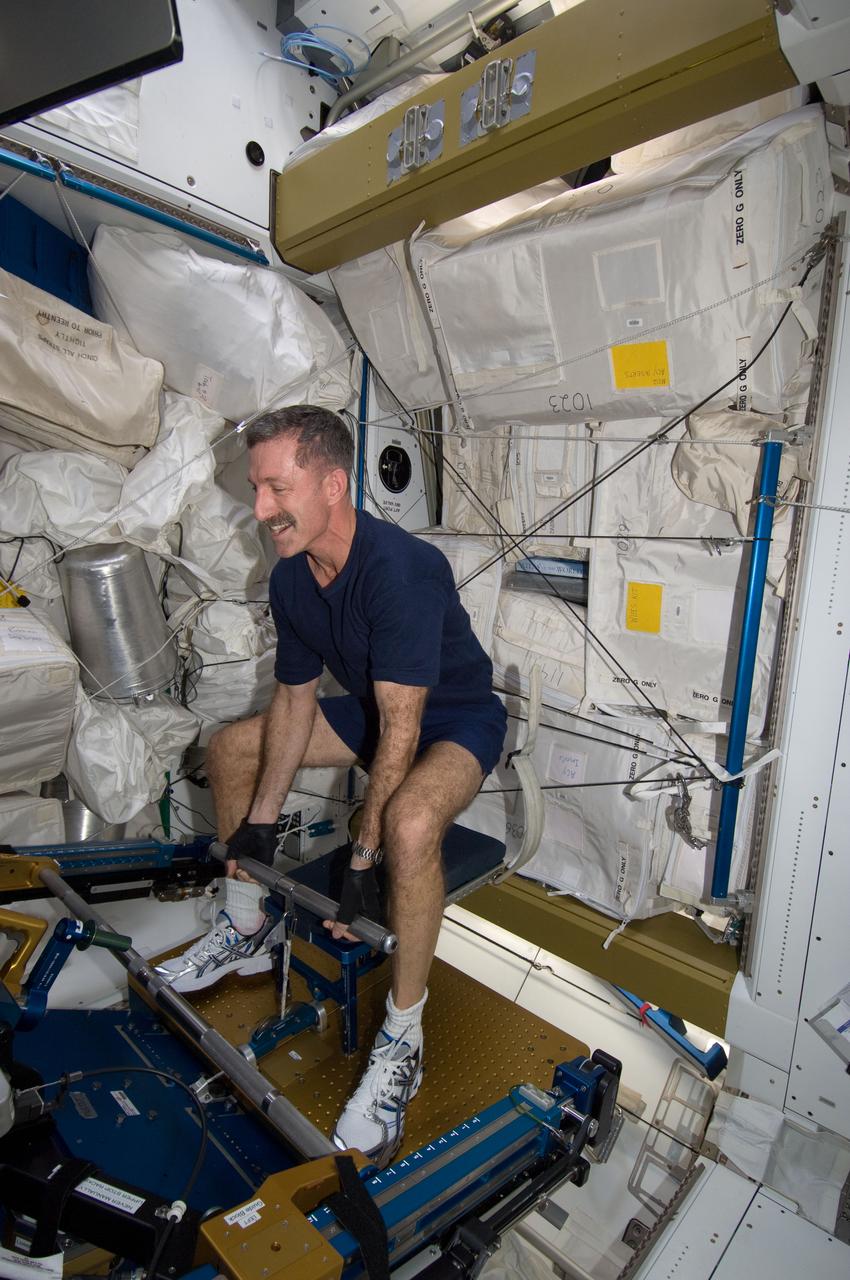
ISS030-E-012725 (18 Dec. 2011) --- NASA astronaut Dan Burbank, Expedition 30 commander, uses the short bar for the advanced Resistive Exercise Device (aRED) equipment to perform upper body strengthening pull-ups in the Tranquility node of the International Space Station.

ISS016-E-027914 (6 Feb. 2008) --- Astronaut Daniel Tani, Expedition 16 flight engineer, prepares to use the short bar for the Interim Resistive Exercise Device (IRED) to perform upper body strengthening pull-ups. The IRED hardware is located in the Unity node of the International Space Station.
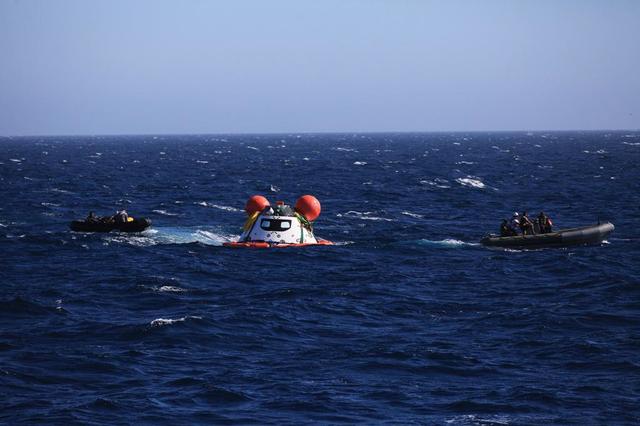
Orion recovery training and operations continue in the Pacific Ocean on Sept. 14, 2014. NASA and the Navy team on board the USS Salvor are evaluating procedures for pulling a test version of the spacecraft out of the ocean using the ship's crane. Part of Batch image transfer from Flickr.
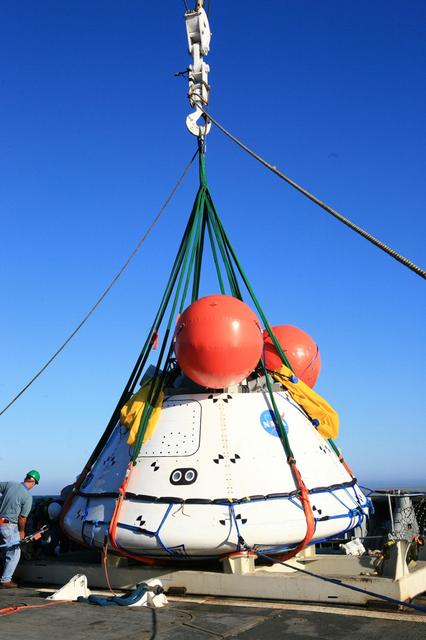
Orion recovery training and operations continue in the Pacific Ocean on Sept. 14, 2014. NASA and the Navy team on board the USS Salvor are evaluating procedures for pulling a test version of the spacecraft out of the ocean using the ship's crane. Part of Batch image transfer from Flickr.
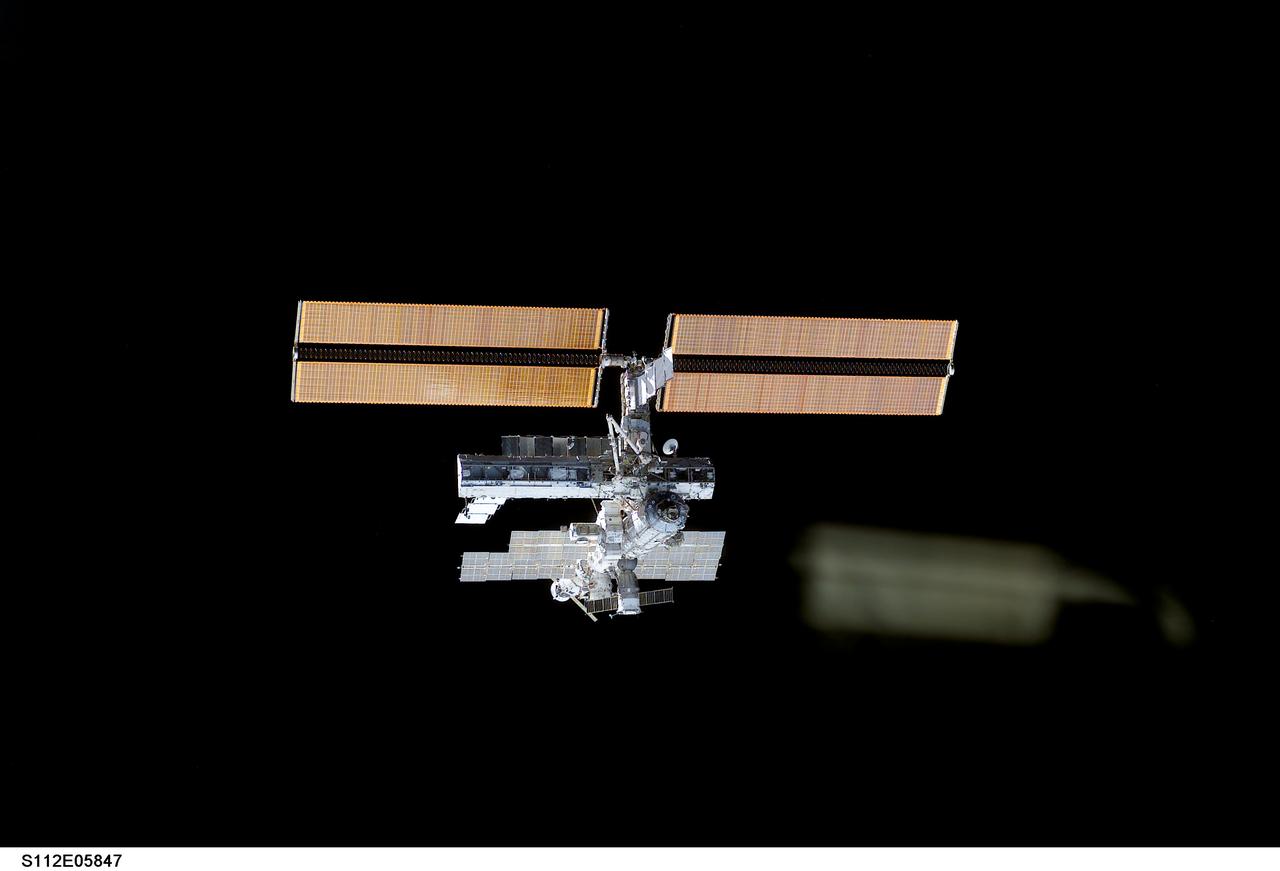
STS112-E-05847 (16 October 2002) --- Backdropped by the blackness of space, the International Space Station (ISS) was photographed by a crewmember on board the Space Shuttle Atlantis following the undocking of the two spacecraft. Atlantis pulled away from the complex at 8:13 a.m. (CDT) on October 16, 2002.
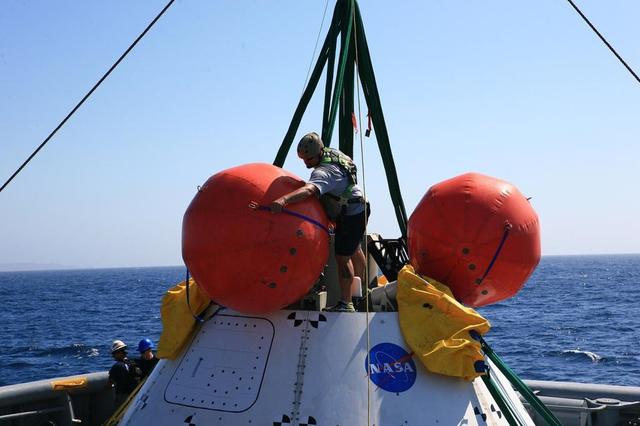
Orion recovery training and operations continue in the Pacific Ocean on Sept. 14, 2014. NASA and the Navy team on board the USS Salvor are evaluating procedures for pulling a test version of the spacecraft out of the ocean using the ship's crane. Part of Batch image transfer from Flickr.
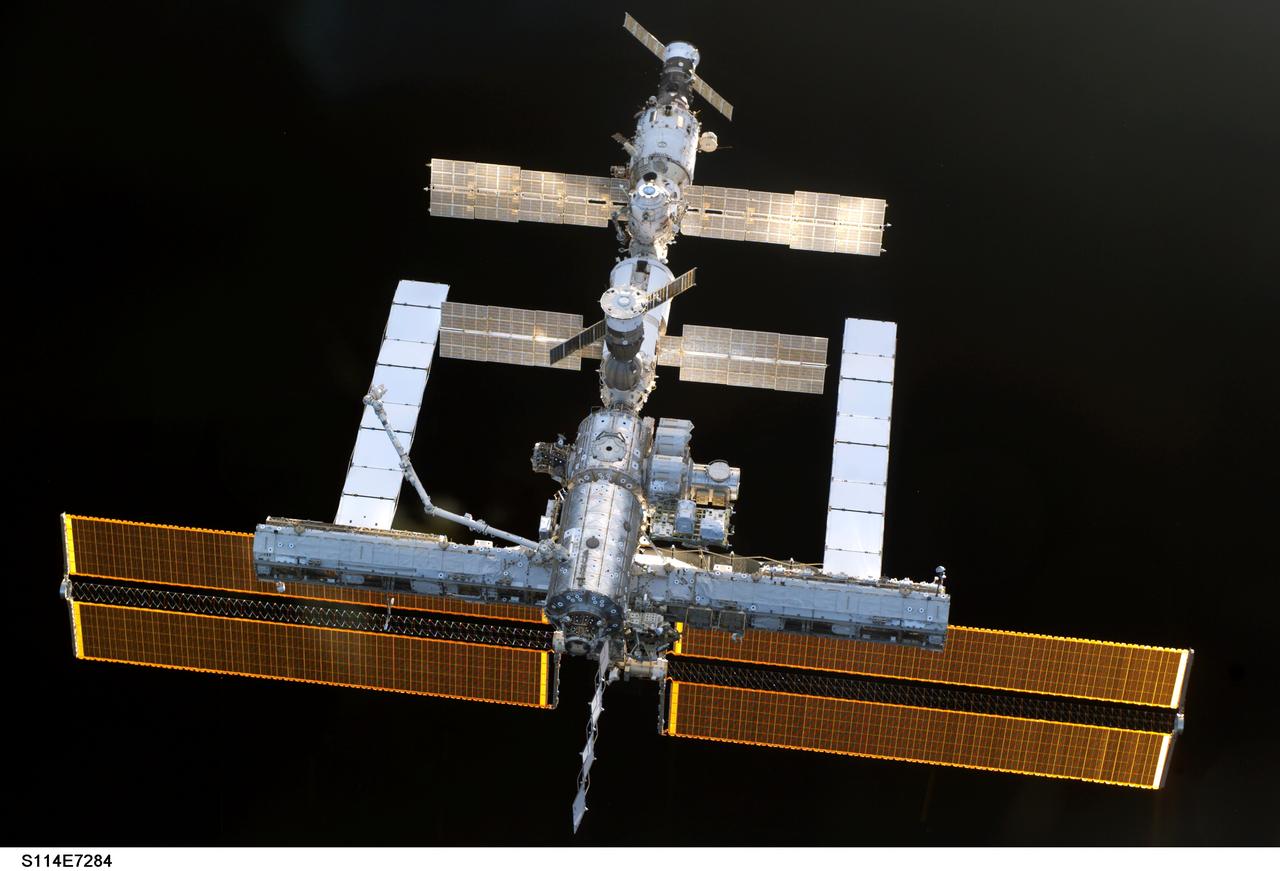
S114-E-7284 (6 August 2005) --- Backdropped by the blackness of space, this full view of the International Space Station was photographed by a crewmember onboard the Space Shuttle Discovery following the undocking of the two spacecraft. Discovery pulled away from the complex at 2:24 a.m. (CDT) on August 6, 2005.
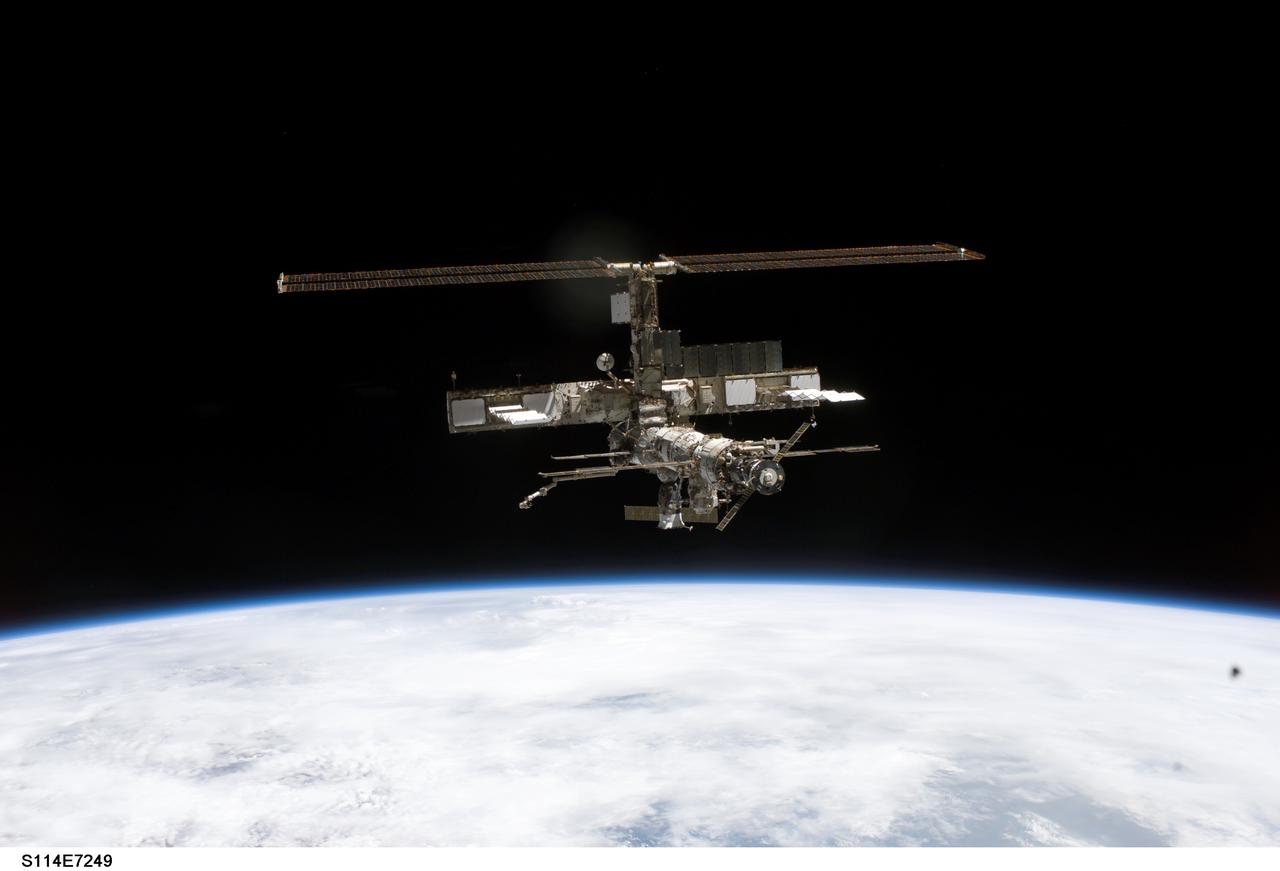
S114-E-7249 (6 August 2005) --- Backdropped by the blackness of space and Earth’s horizon, this view of the International Space Station was photographed by a crewmember onboard the Space Shuttle Discovery following the undocking of the two spacecraft. Discovery pulled away from the complex at 2:24 a.m. (CDT) on August 6, 2005.
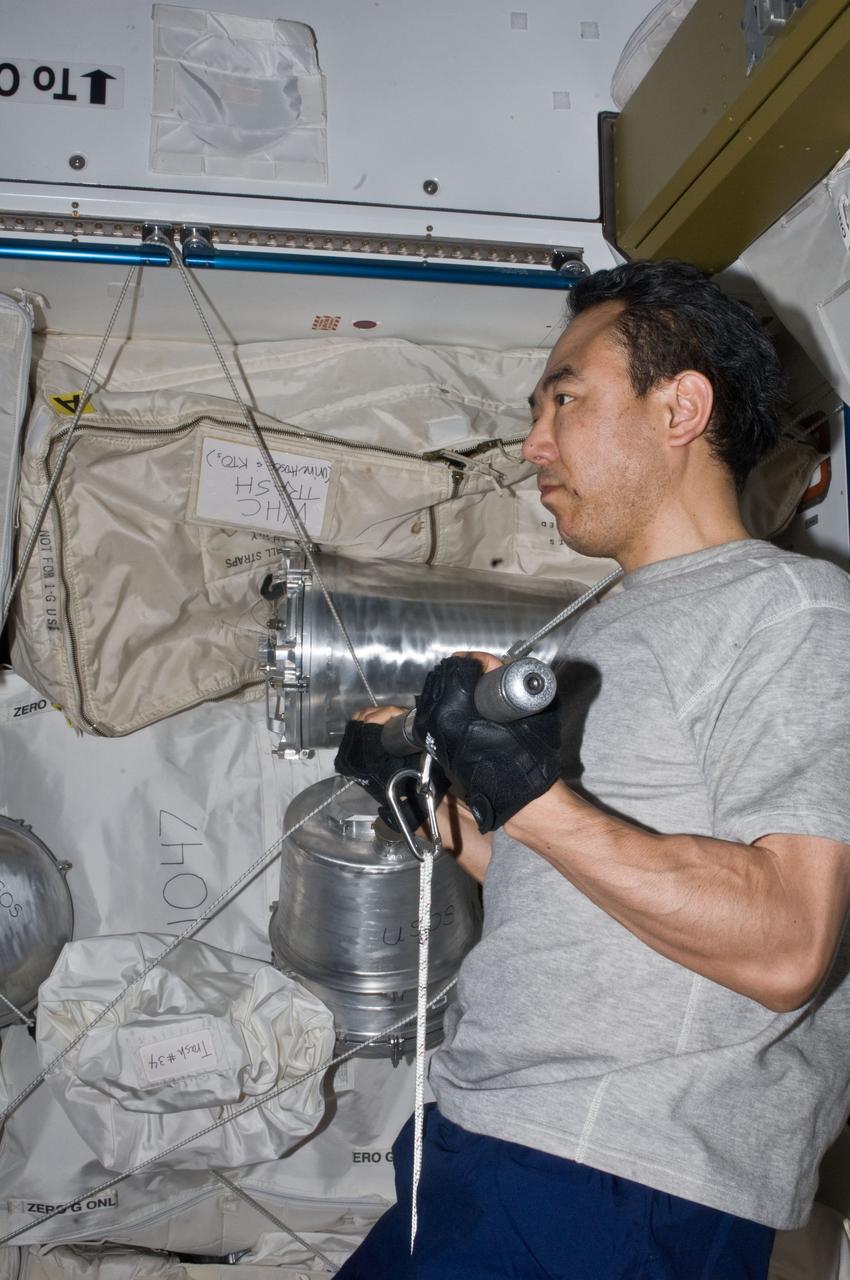
ISS028-E-019507 (30 July 2011) --- Japan Aerospace Exploration Agency astronaut Satoshi Furukawa, Expedition 28 flight engineer, uses the short bar for the advanced Resistive Exercise Device (aRED) equipment to perform upper body strengthening pull-ups in the Tranquility node of the International Space Station.

ISS016-E-027909 (6 Feb. 2008) --- Astronaut Daniel Tani, Expedition 16 flight engineer, uses the short bar for the Interim Resistive Exercise Device (IRED) to perform upper body strengthening pull-ups. The IRED hardware is located in the Unity node of the International Space Station.
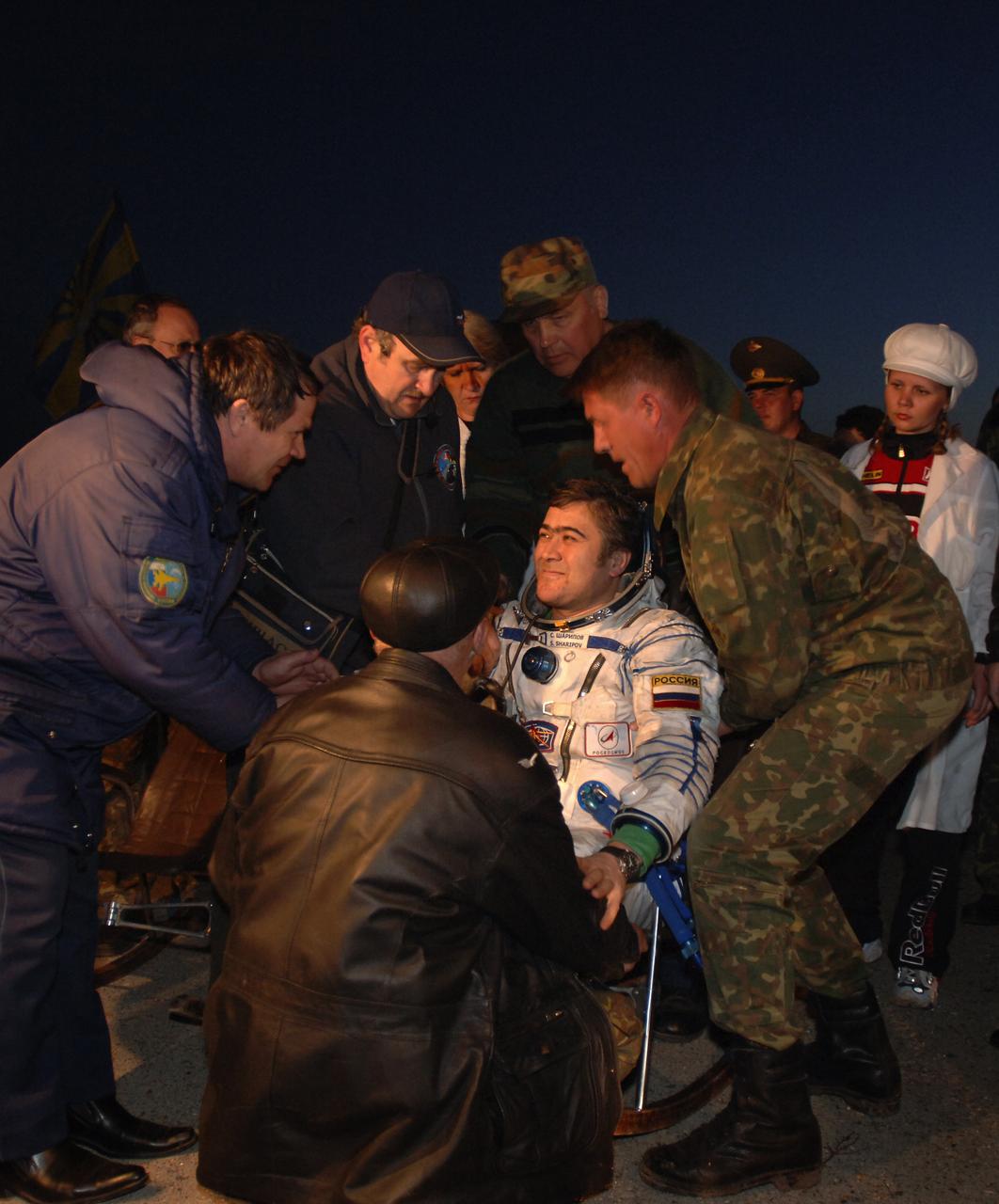
Expedition 10 Flight Engineer and Soyuz Commander Salizhan Sharipov sits in a chair after being pulled out of the Soyuz TMA-5 capsule, which landed northeast of the town of Arkalyk, Kazakhstan on Monday, April 25, 2005. Photo Credit: (NASA/Bill Ingalls)

STS112-382-003 (16 October 2002) --- Backdropped by the blackness of space, this full view of the International Space Station (ISS) was photographed by a crewmember on board the Space Shuttle Atlantis following the undocking of the two spacecraft. Atlantis pulled away from the complex at 8:13 a.m. (CDT) on October 16, 2002.
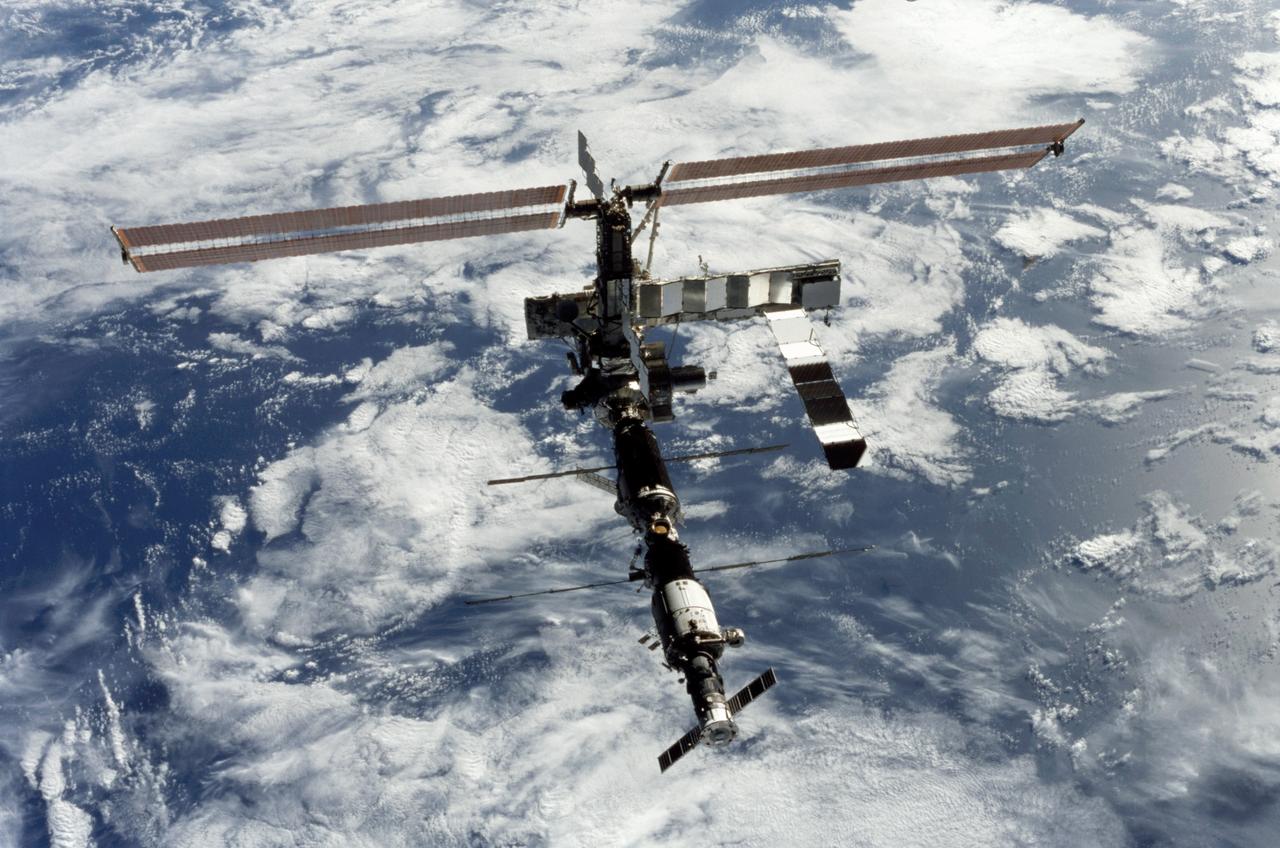
STS112-375-033 (16 October 2002) --- Backdropped by a blue and white Earth, this full view of the International Space Station (ISS) was photographed by a crewmember on board the Space Shuttle Atlantis following the undocking of the two spacecraft. Atlantis pulled away from the complex at 8:13 a.m. (CDT) on October 16, 2002.
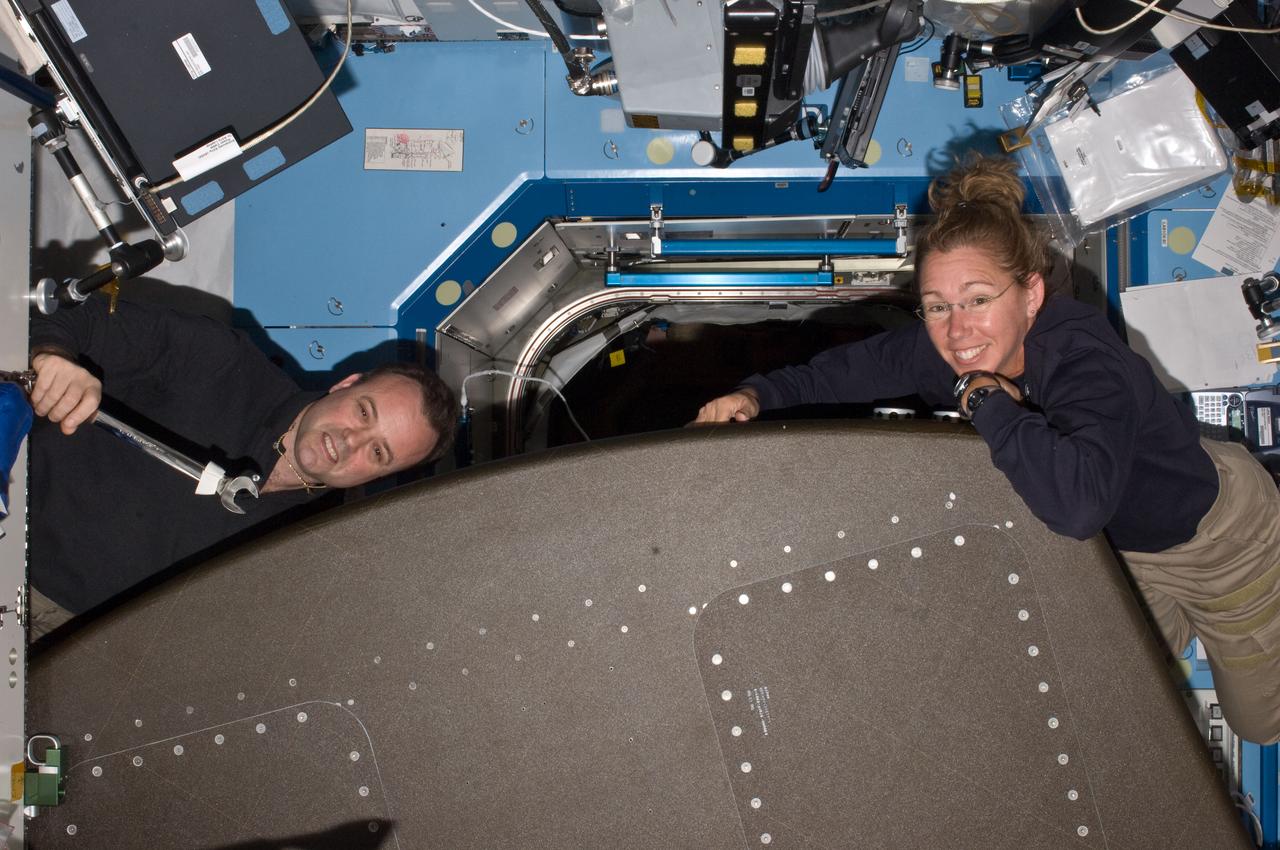
ISS028-E-017365 (17 July 2011) --- NASA astronauts Ron Garan, Expedition 28 flight engineer, and Sandy Magnus, STS-135 mission specialist, work with a pulled rack in the U.S. lab or Destiny aboard the International Space Station.
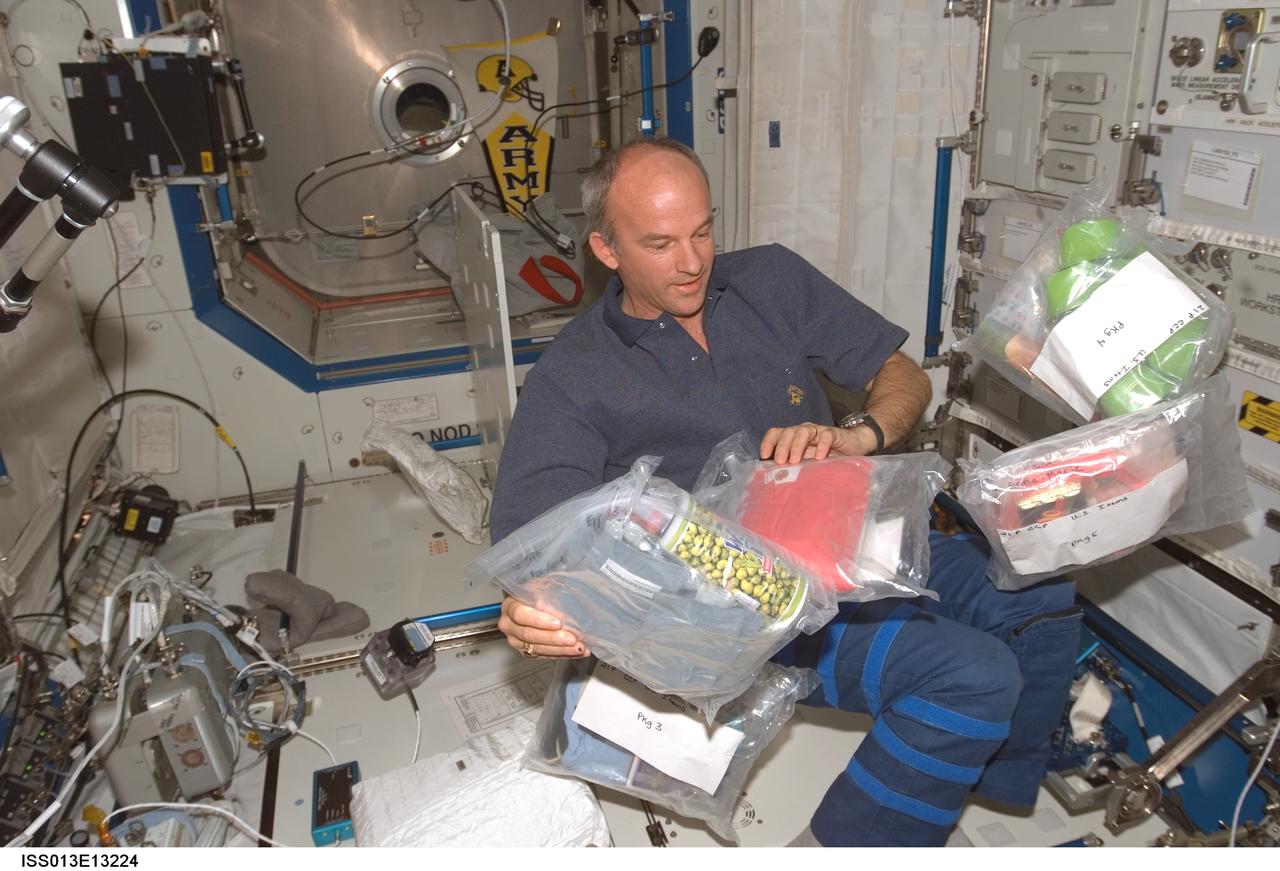
ISS013-E-13224 --- Inside the U.S. laboratory, astronaut Jeffrey N. Williams, Expedition 13 flight engineer and NASA science officer, pulls out some food items from among personal supplies for the current inhabitants of the International Space Station.
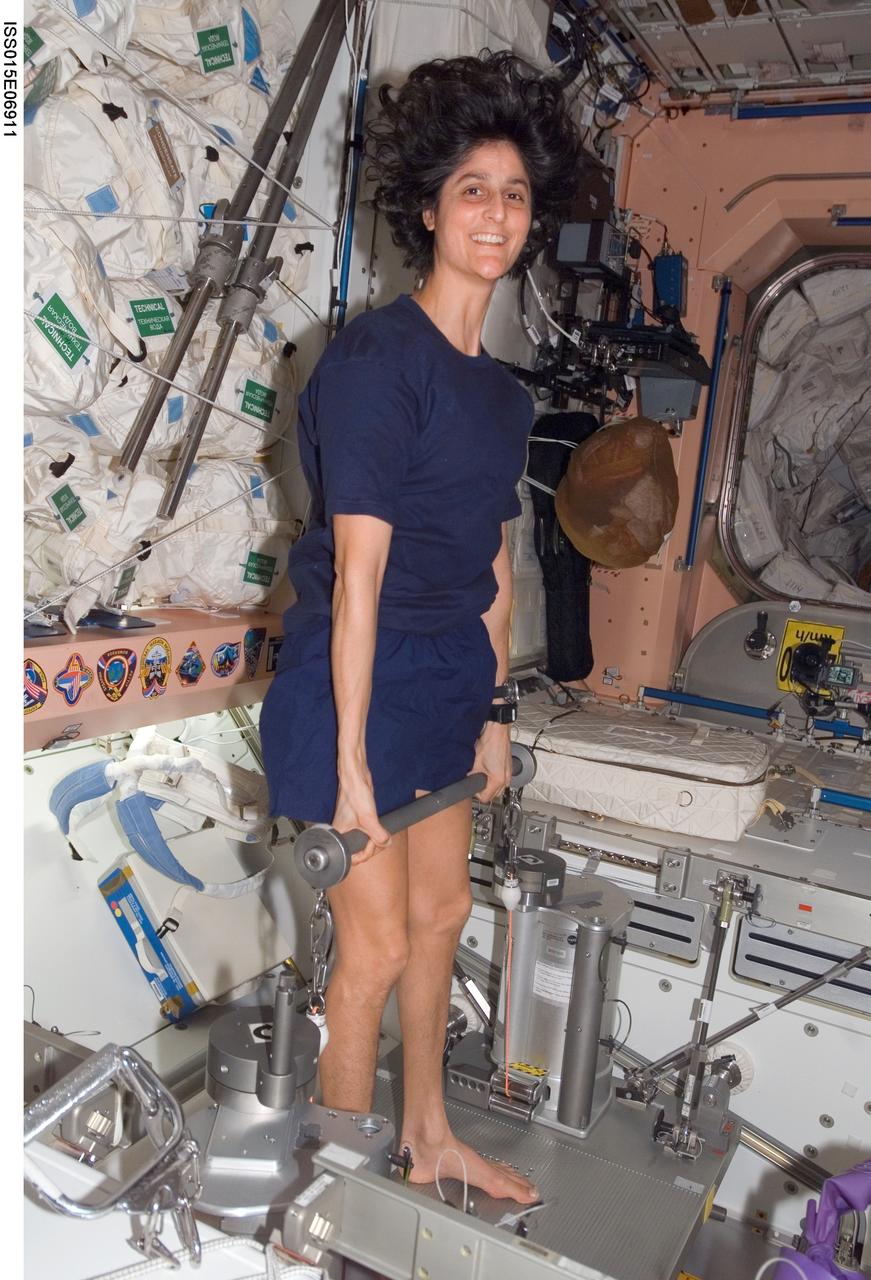
ISS015-E-06911 (7 May 2007) --- Astronaut Sunita L. Williams, Expedition 15 flight engineer, uses the short bar for the Interim Resistive Exercise Device (IRED) to perform upper body strengthening pull-ups. The IRED hardware is located in the Unity node of the International Space Station.
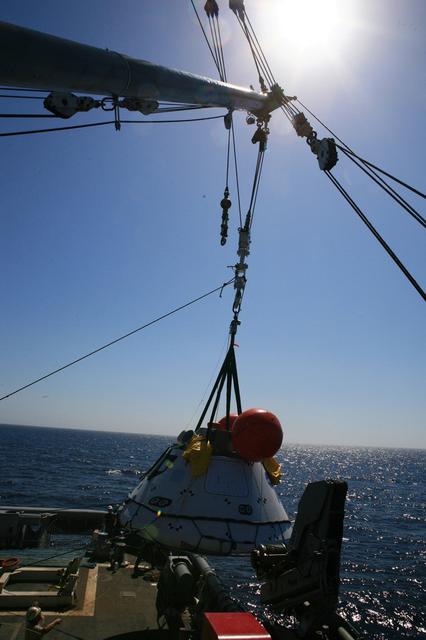
Orion recovery training and operations continue in the Pacific Ocean on Sept. 14, 2014. NASA and the Navy team on board the USS Salvor are evaluating procedures for pulling a test version of the spacecraft out of the ocean using the ship's crane. Part of Batch image transfer from Flickr.
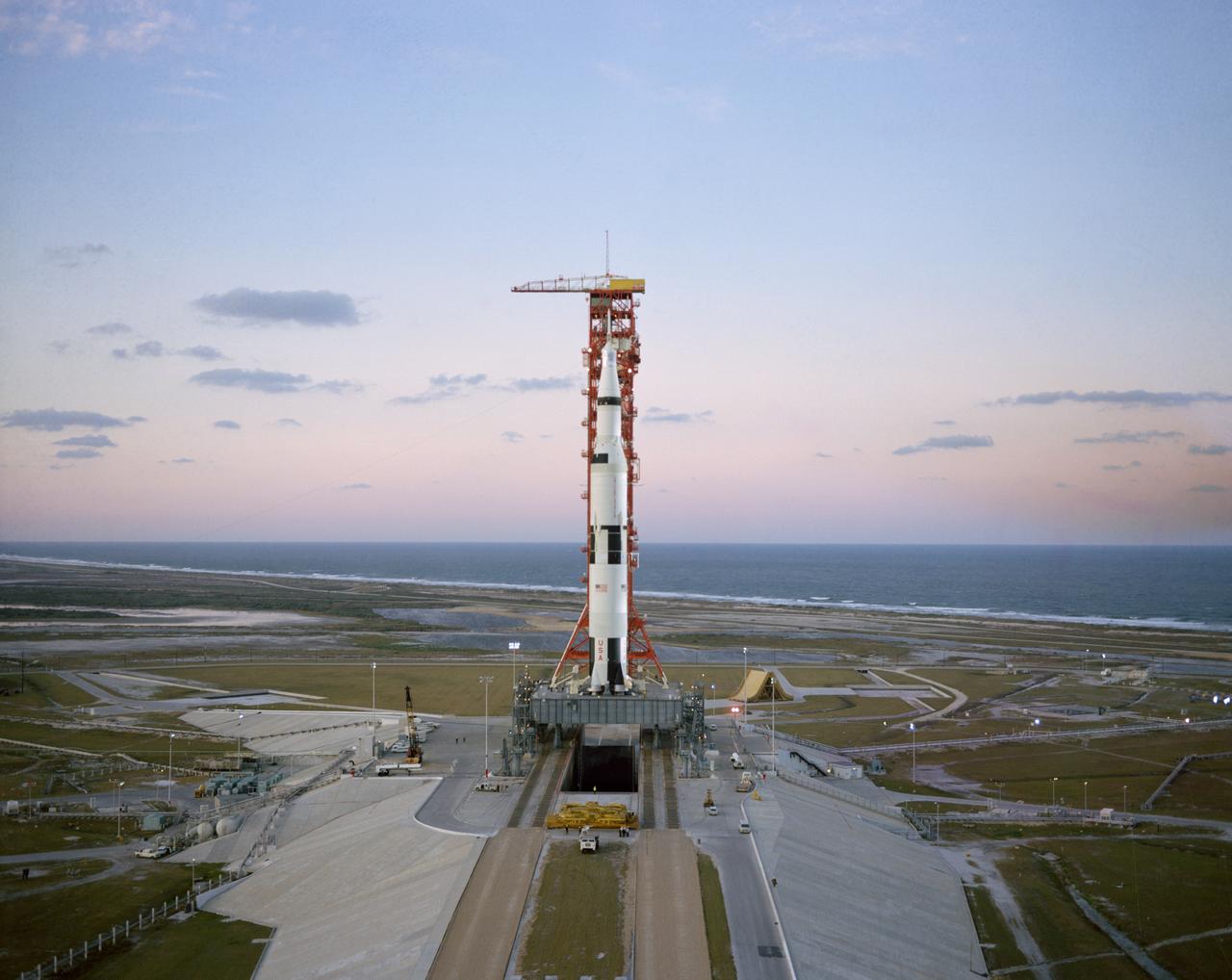
S68-55416 (17 Dec. 1968) --- High-angle view of the Apollo 8 (Spacecraft 103/Saturn 503) space vehicle at Pad A, Launch Complex 39, Kennedy Space Center (KSC). The Apollo 8 stack was photographed during a prelaunch alert-mobile service structure pull back.
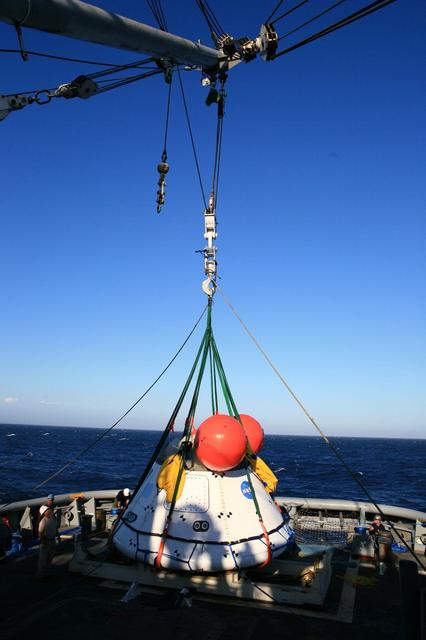
Orion recovery training and operations continue in the Pacific Ocean on Sept. 14, 2014. NASA and the Navy team on board the USS Salvor are evaluating procedures for pulling a test version of the spacecraft out of the ocean using the ship's crane. Part of Batch image transfer from Flickr.
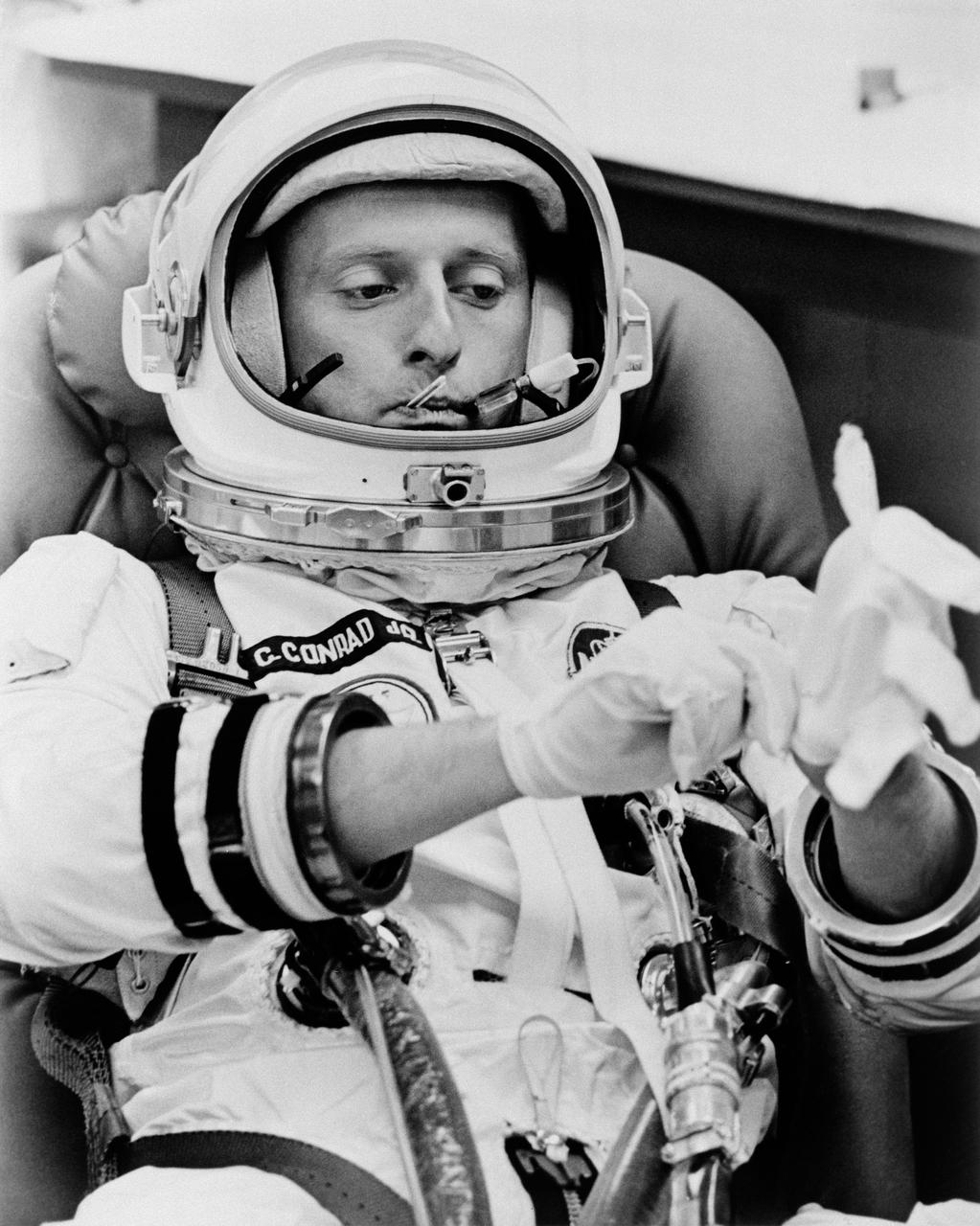
S65-46377 (21 Aug. 1965) --- Astronaut Charles Conrad Jr. pulls on a pair of white undergloves and has his temperature taken during suiting up operations on the morning of liftoff of Gemini-5 spaceflight from Cape Kennedy, Florida.
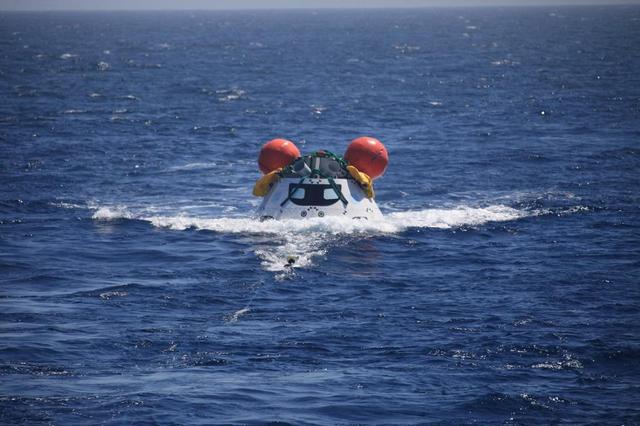
Orion recovery training and operations continue in the Pacific Ocean on Sept. 14, 2014. NASA and the Navy team on board the USS Salvor are evaluating procedures for pulling a test version of the spacecraft out of the ocean using the ship's crane. Part of Batch image transfer from Flickr.
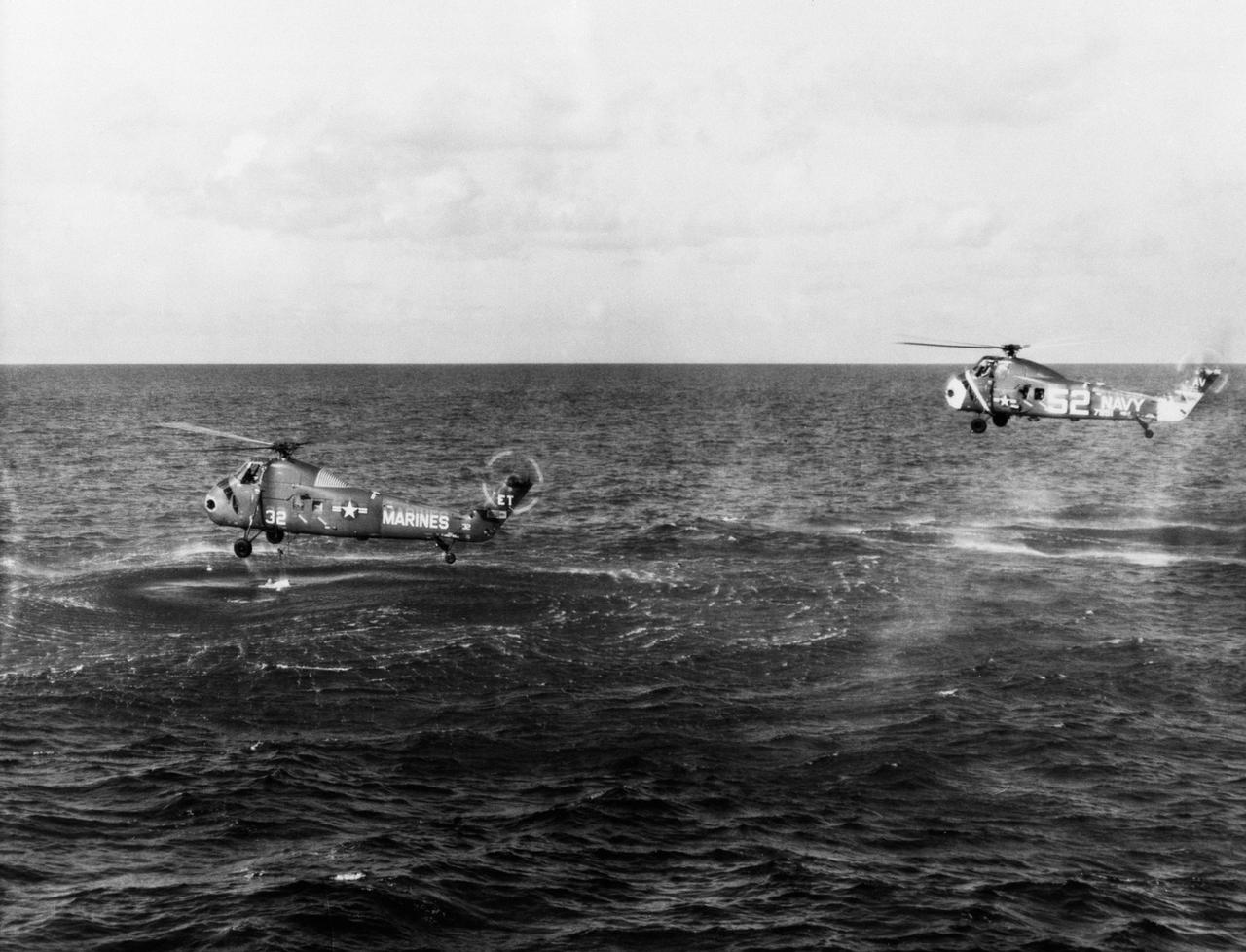
S61-02817 (21 July 1961) --- Attempted recovery of Mercury spacecraft at end of the Mercury-Redstone 4 (MR-4) mission. View shows the Marine helicopter pulled almost to the waters surface by the weight of the capsule, which filled with water. Behind the Marine helicopter, a Navy helicopter prepares to assist. Photo credit: NASA
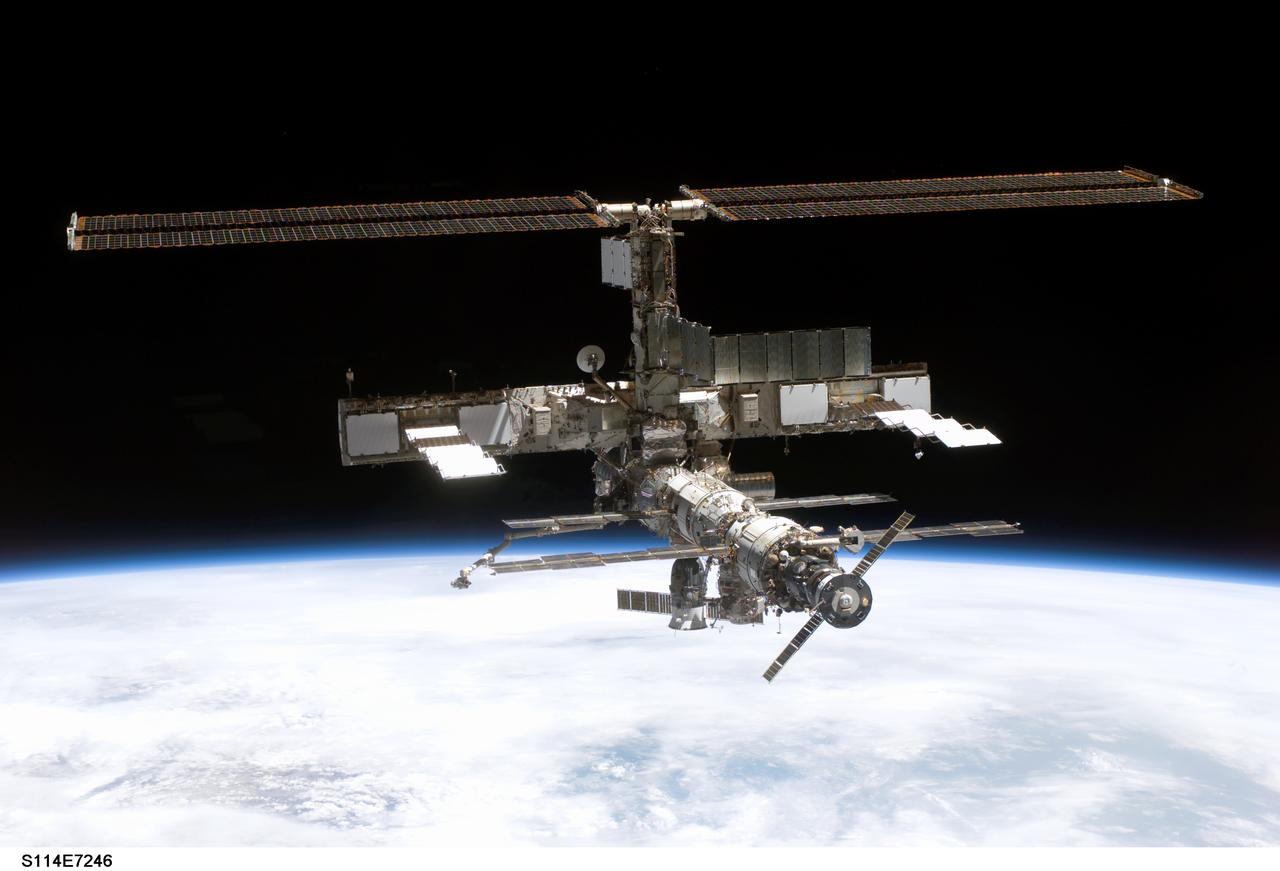
S114-E-7246 (6 August 2005) --- Backdropped by the blackness of space and Earth’s horizon, this full view of the International Space Station was photographed by a crewmember onboard the Space Shuttle Discovery following the undocking of the two spacecraft. Discovery pulled away from the complex at 2:24 a.m. (CDT) on August 6, 2005.
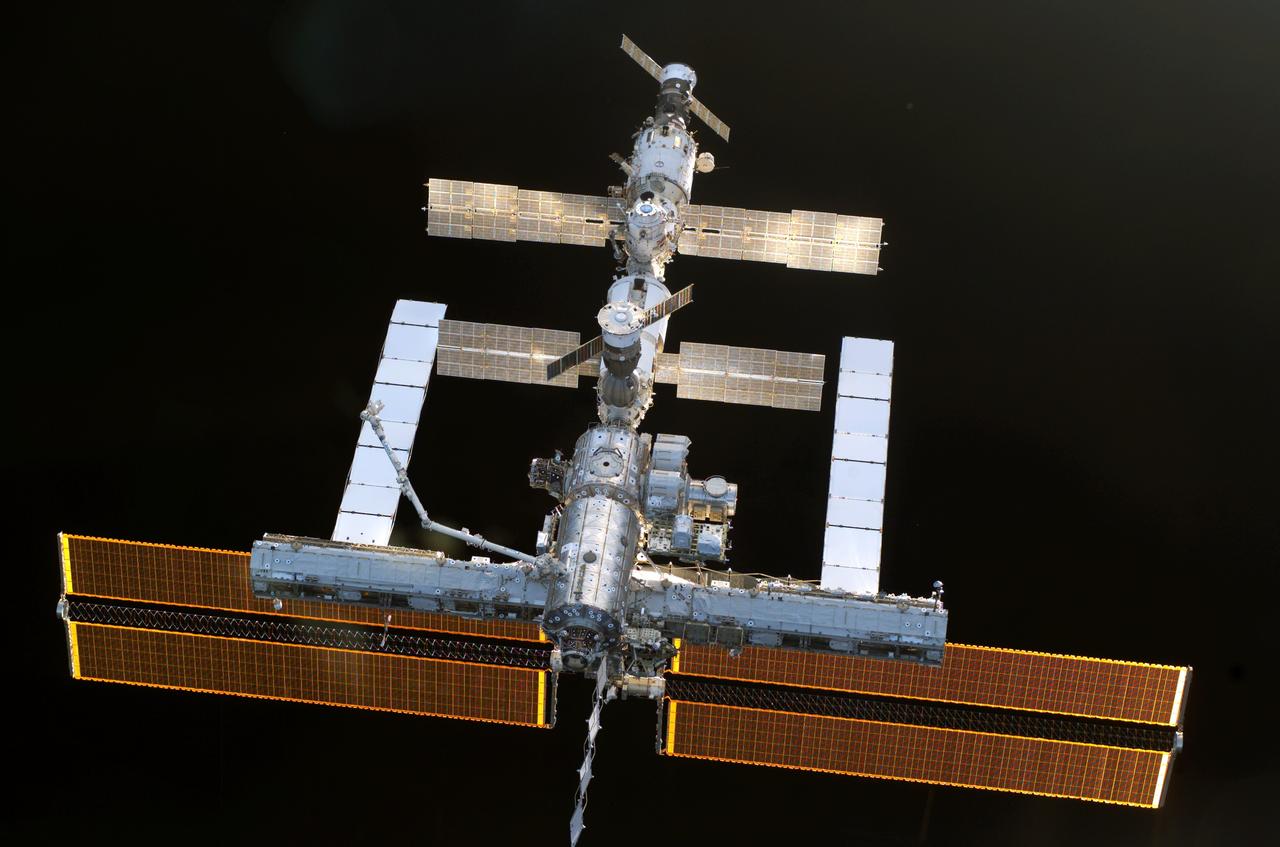
S114-E-7285 (6 August 2005) --- Backdropped by the blackness of space, this full view of the international space station was photographed by an STS-114 crewmember onboard the Space Shuttle Discovery following the undocking of the two spacecraft. Discovery pulled away from the complex at 2:24 a.m. (CDT) on Aug. 6, 2005.

ISS030-E-012724 (18 Dec. 2011) --- NASA astronaut Dan Burbank, Expedition 30 commander, uses the short bar for the advanced Resistive Exercise Device (aRED) equipment to perform upper body strengthening pull-ups in the Tranquility node of the International Space Station.
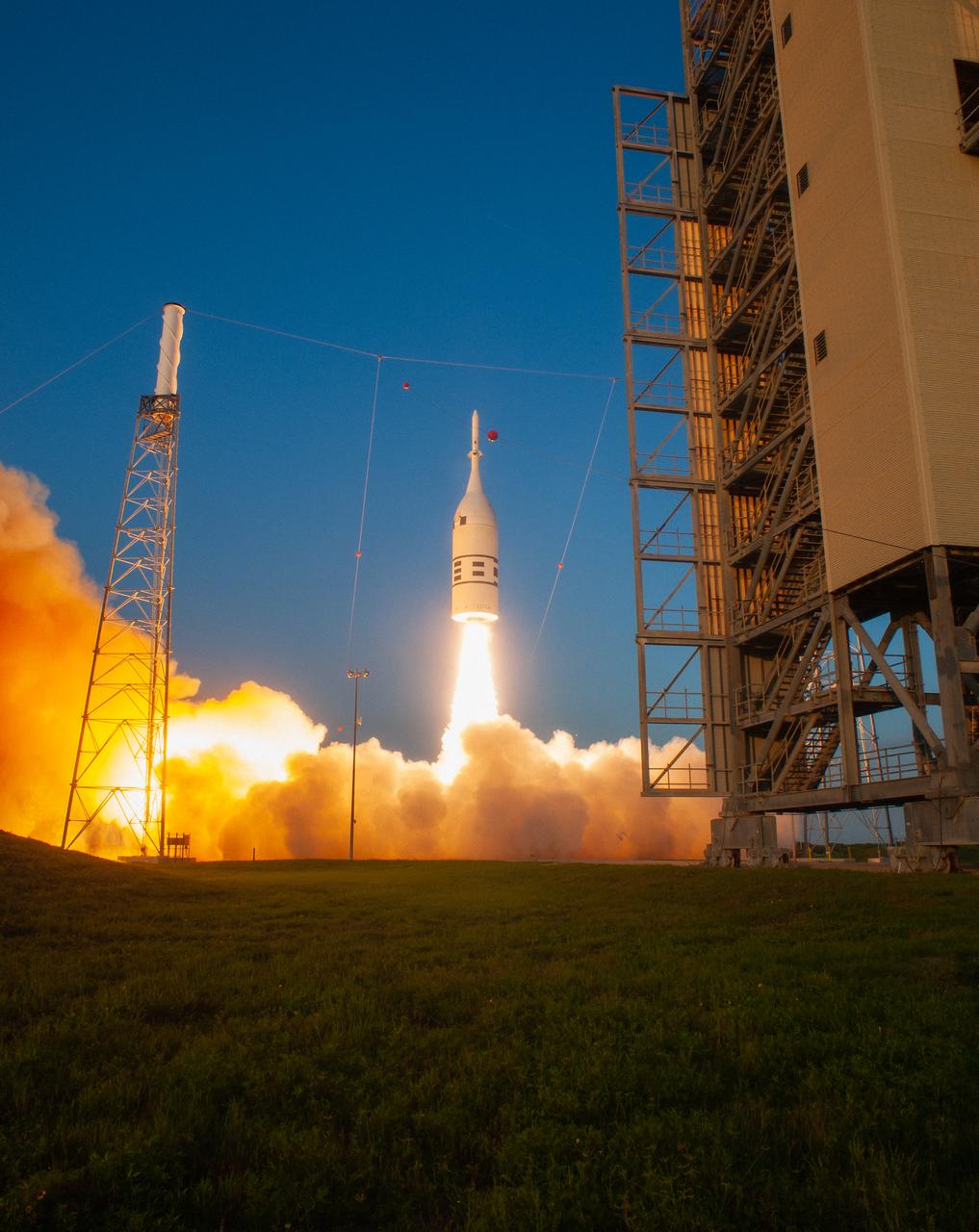
A fully functional Launch Abort System (LAS) with a test version of Orion attached, launches on NASA’s Ascent Abort-2 (AA-2) atop a Northrop Grumman provided booster on July 2, 2019, at 7 a.m. EDT, from Launch Pad 46 at Cape Canaveral Air Force Station in Florida. During AA-2, the booster will send the LAS and Orion to an altitude of 31,000 feet, traveling at Mach 1.15 (more than 1,000 mph). The LAS’ three motors will work together to pull the crew module away from the booster and prepare it for splashdown in the Atlantic Ocean. The flight test will prove that the abort system can pull crew to safety in the unlikely event of an emergency during ascent.
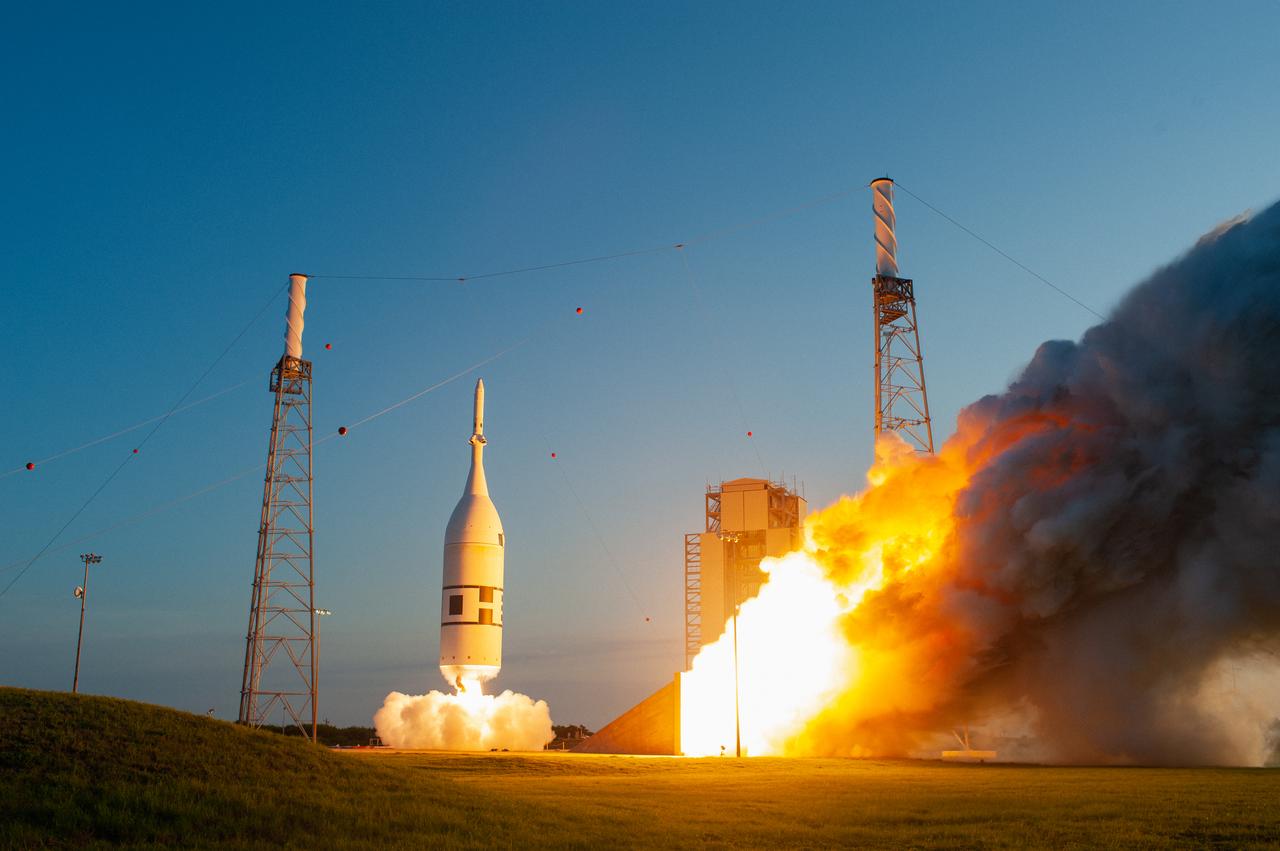
A fully functional Launch Abort System (LAS) with a test version of Orion attached, launches on NASA’s Ascent Abort-2 (AA-2) atop a Northrop Grumman provided booster on July 2, 2019, at 7 a.m. EDT, from Launch Pad 46 at Cape Canaveral Air Force Station in Florida. During AA-2, the booster will send the LAS and Orion to an altitude of 31,000 feet, traveling at Mach 1.15 (more than 1,000 mph). The LAS’ three motors will work together to pull the crew module away from the booster and prepare it for splashdown in the Atlantic Ocean. The flight test will prove that the abort system can pull crew to safety in the unlikely event of an emergency during ascent.
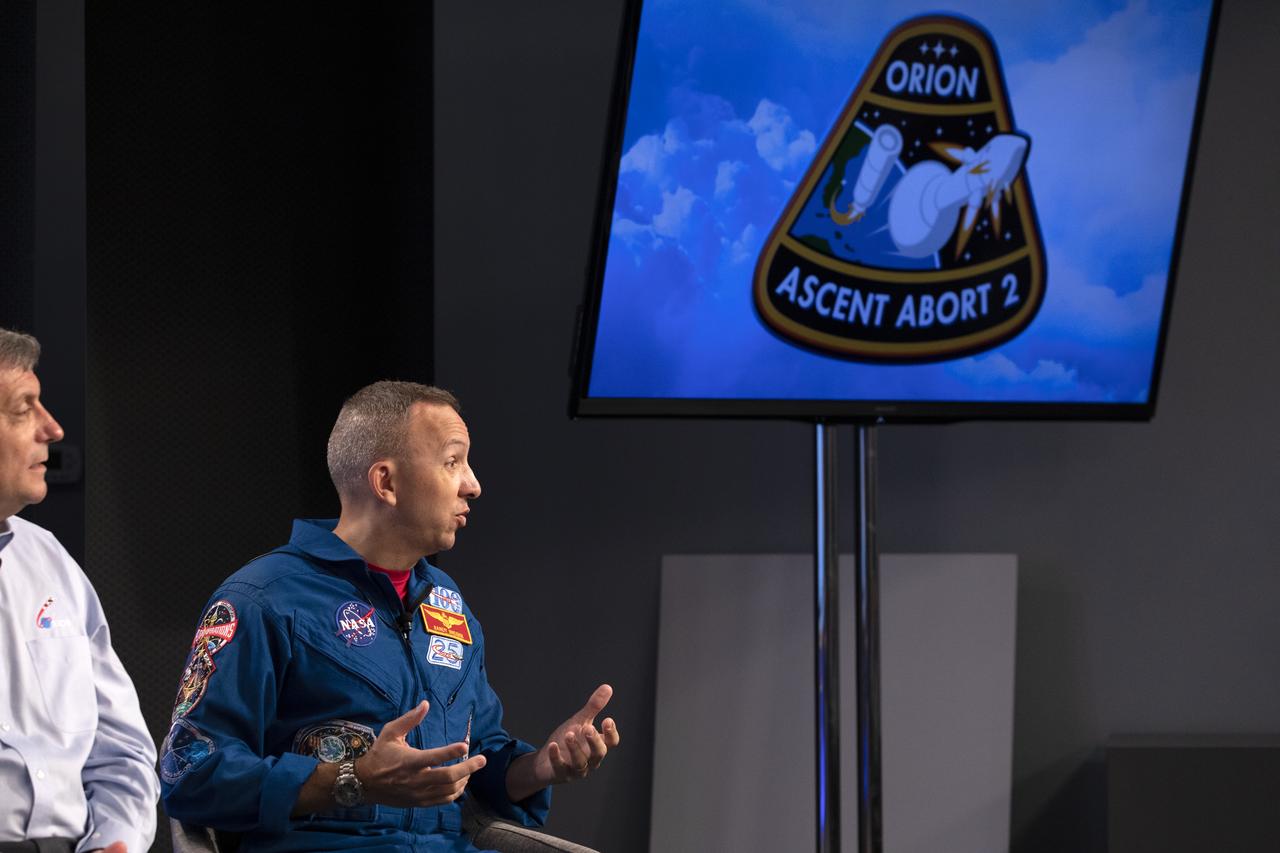
From left, Mark Kirasich, Orion Program manager; and Randy Bresnik, NASA astronaut, participate in a prelaunch news conference for NASA’s Ascent Abort-2 (AA-2) flight test at the agency’s Kennedy Space Center in Florida on July 1, 2019. For AA-2, a test version of the Orion spacecraft attached to a fully functional Launch Abort System (LAS) will launch atop a Northrop Grumman provided booster on July 2, 2019, from Launch Pad 46 at Cape Canaveral Air Force Station in Florida. During AA-2, the booster will send the LAS and Orion to an altitude of 31,000 feet, traveling at more than 1,000 mph. The LAS’ three motors will work together to pull the crew module away from the booster and prepare it for splashdown in the Atlantic Ocean. The flight test will prove that the abort system can pull crew to safety in the unlikely event of an emergency during ascent.
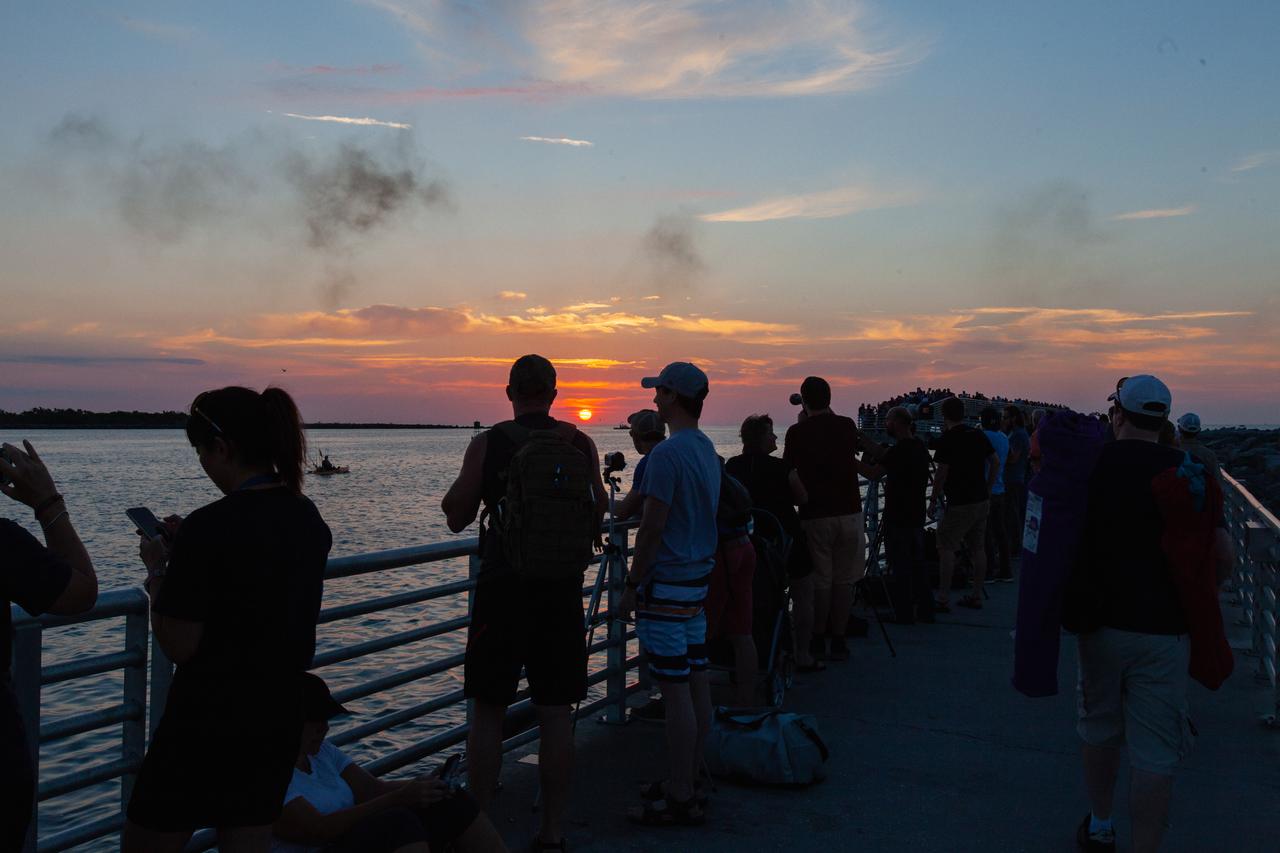
Crowds of spectators watch from Jetty Park in Cape Canaveral, Florida, on July 2, 2019, as a Northrop Grumman provided booster launches from Launch Pad 46 carrying, a fully functional Launch Abort System with a test version of Orion attached for NASA’s Ascent Abort-2 (AA-2). Launch time was 7 a.m. EDT. During AA-2, the booster will send the LAS and Orion to an altitude of 31,000 feet, traveling at Mach 1.15 (more than 1,000 mph). The LAS’ three motors will work together to pull the crew module away from the booster and prepare it for splashdown in the Atlantic Ocean. The flight test will prove that the abort system can pull crew to safety in the unlikely event of an emergency during ascent.
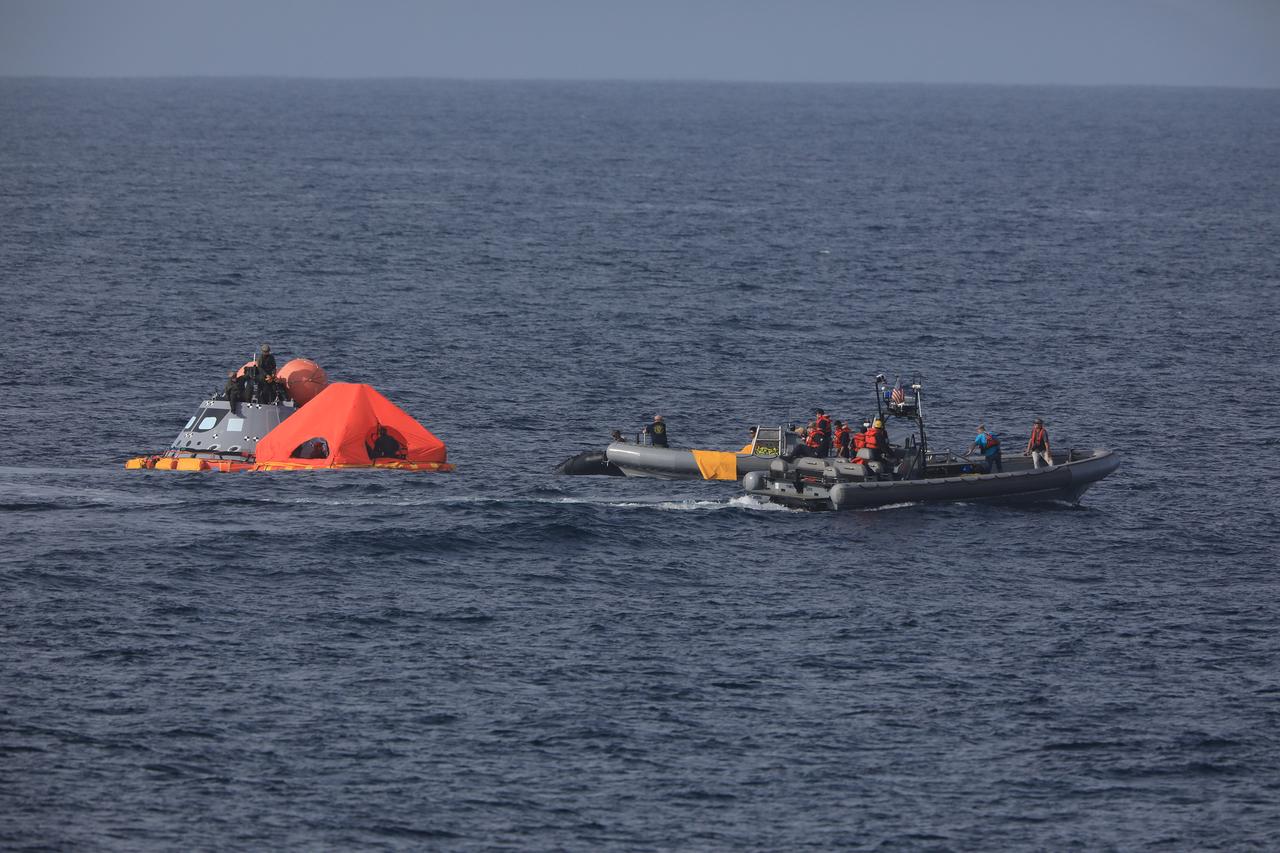
During Underway Recovery Test-7 (URT-7), U.S. Navy divers practice attaching the "front porch" on a test version of the Orion capsule. During recovery operations, future astronauts aboard Orion will have the choice to stay in the capsule while it is pulled into the well deck of a Navy ship, or be pulled out immediately and put on the front porch until taken by small boat back to the ship. URT-7 is one in a series of tests to verify and validate procedures and hardware that will be used to recover the Orion spacecraft after it splashes down in the Pacific Ocean following deep space exploration missions. Orion will have emergency abort capability, sustain the crew during space travel and provide safe re-entry from deep space return velocities.
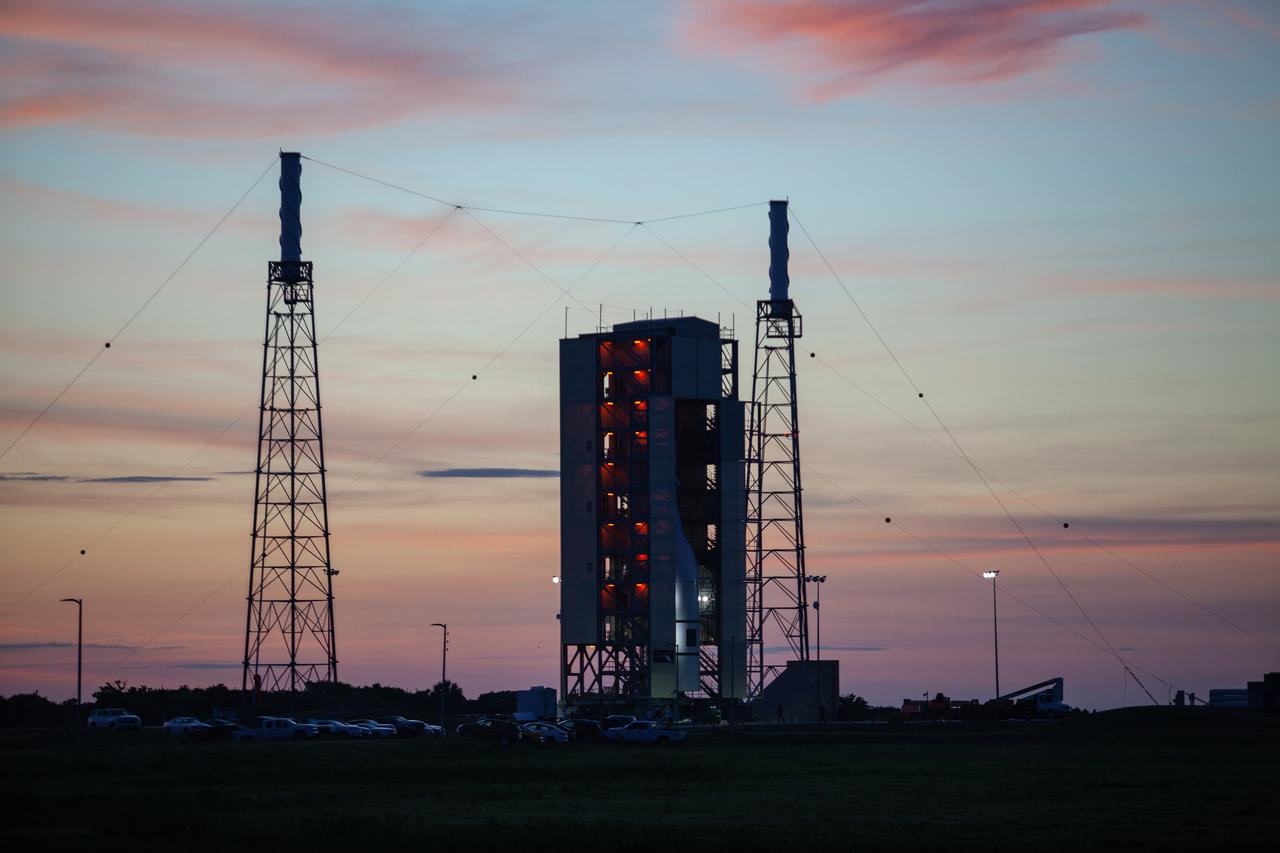
A sunrise view of Launch Complex 46 at Cape Canaveral Air Force Station in Florida on July 1, 2019. A fully functional Launch Abort System (LAS) mated to a test version of the Orion spacecraft are on a Northrop Grumman provided booster on the pad for launch on NASA’s Ascent Abort-2 (AA-2) flight test on July 2, 2019. The vertical integration facility surrounding the test vehicle begins to roll back from the pad. During AA-2, the booster will send the LAS and Orion to an altitude of 31,000 feet, traveling at more than 1,000 mph. The LAS’ three motors will work together to pull the crew module away from the booster and prepare it for splashdown in the Atlantic Ocean. The flight test will prove that the abort system can pull crew to safety in the unlikely event of an emergency during ascent.