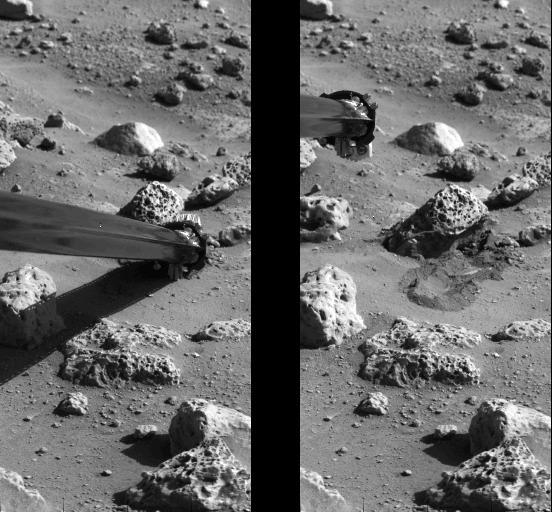
Mister Badger Pushing Mars Rock
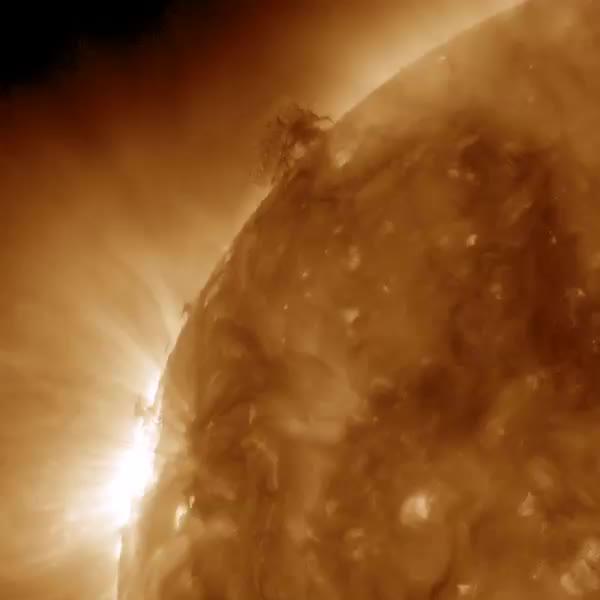
Dark strands of plasma hovering above the sun's surface began to interact with each other in a form of tug of war over two and a half days on June 28-30, 2015. At times, strands of plasma extended a tenuous connection between one area and the other. Twice the small tower of plasma to the lower left shot a burst of energy over to the quivering filament higher up. We are seeing the push and pull of magnetic forces revealed in a 193 wavelength of extreme ultraviolet light, typically colorized in brown. Credit: NASA/SDO <b><a href="http://www.nasa.gov/audience/formedia/features/MP_Photo_Guidelines.html" rel="nofollow">NASA image use policy.</a></b> <b><a href="http://www.nasa.gov/centers/goddard/home/index.html" rel="nofollow">NASA Goddard Space Flight Center</a></b> enables NASA’s mission through four scientific endeavors: Earth Science, Heliophysics, Solar System Exploration, and Astrophysics. Goddard plays a leading role in NASA’s accomplishments by contributing compelling scientific knowledge to advance the Agency’s mission. <b>Follow us on <a href="http://twitter.com/NASAGoddardPix" rel="nofollow">Twitter</a></b> <b>Like us on <a href="http://www.facebook.com/pages/Greenbelt-MD/NASA-Goddard/395013845897?ref=tsd" rel="nofollow">Facebook</a></b> <b>Find us on <a href="http://instagrid.me/nasagoddard/?vm=grid" rel="nofollow">Instagram</a></b>
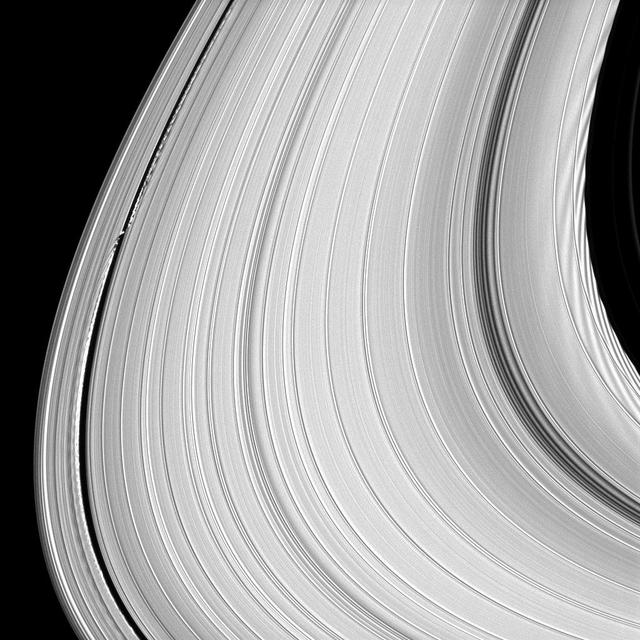
This image taken by NASA Cassini spacecraft shows that rather than being an unchanging disk of peaceful particles, the material that makes up Saturn rings is constantly pushed and pulled into spectacular shapes. At left is the moon Daphnis.
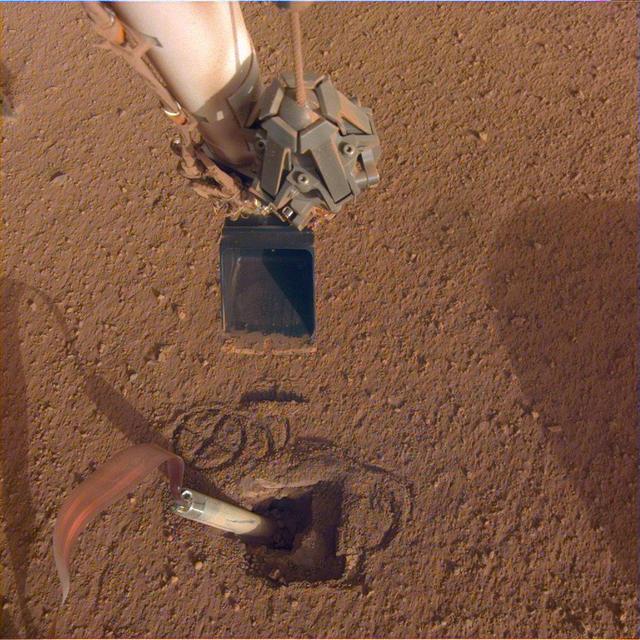
NASA's Mars InSight lander recently moved its robotic arm closer to the heat probe's digging device, called the "mole," in preparation to push on its top, or back cap. The InSight team hopes that pushing on this location will help the mole it bury itself and enable the heat probe to take Mars' temperature. Animation available at https://photojournal.jpl.nasa.gov/catalog/PIA23622
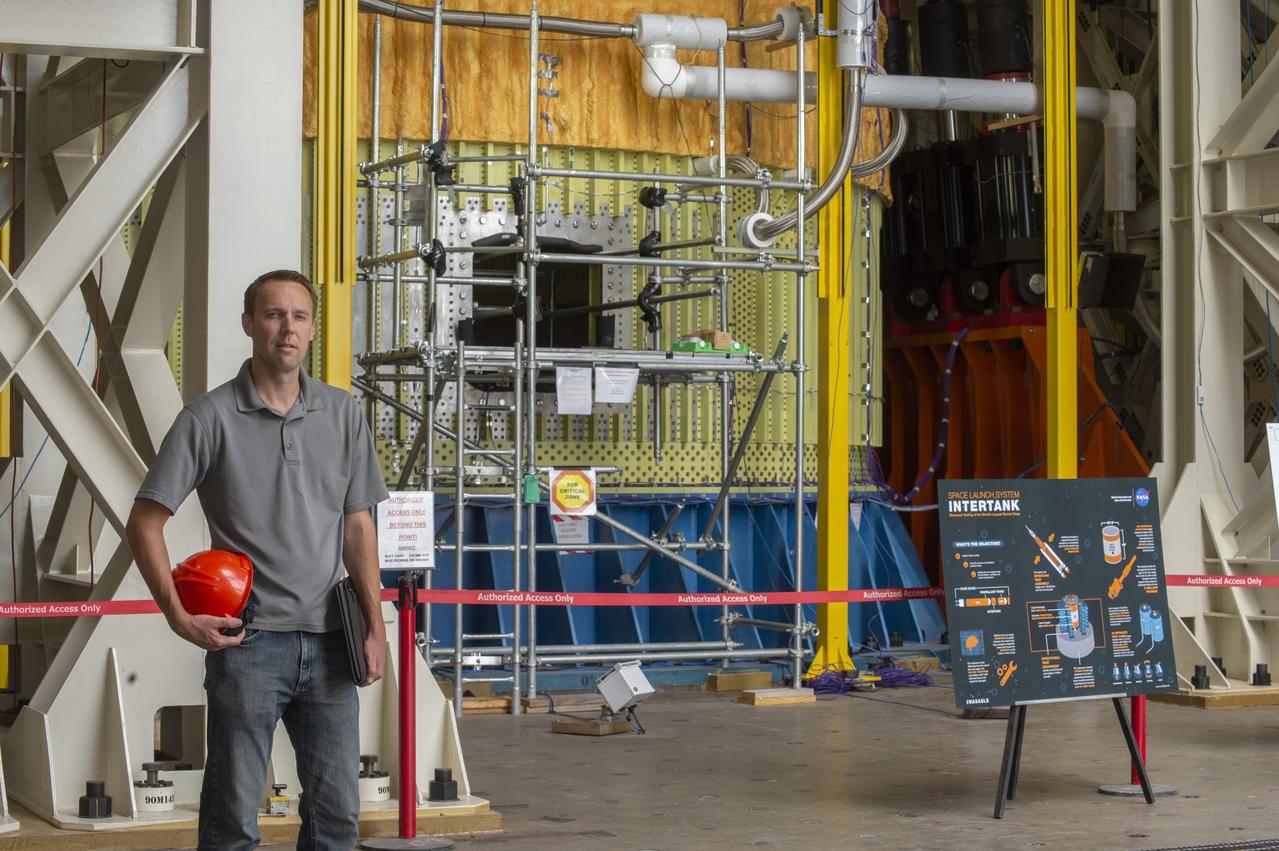
Preston Schmauch, SLS Stages Element Alternate Lead Systems Engineer, oversees testing of the Intertank Structural Test Article (STA), which will push, pull, and bend the STA with millions of pounds of force to prove the SLS Intertank can withstand the immense forces induced by aero, engine, and booster loads during flight.
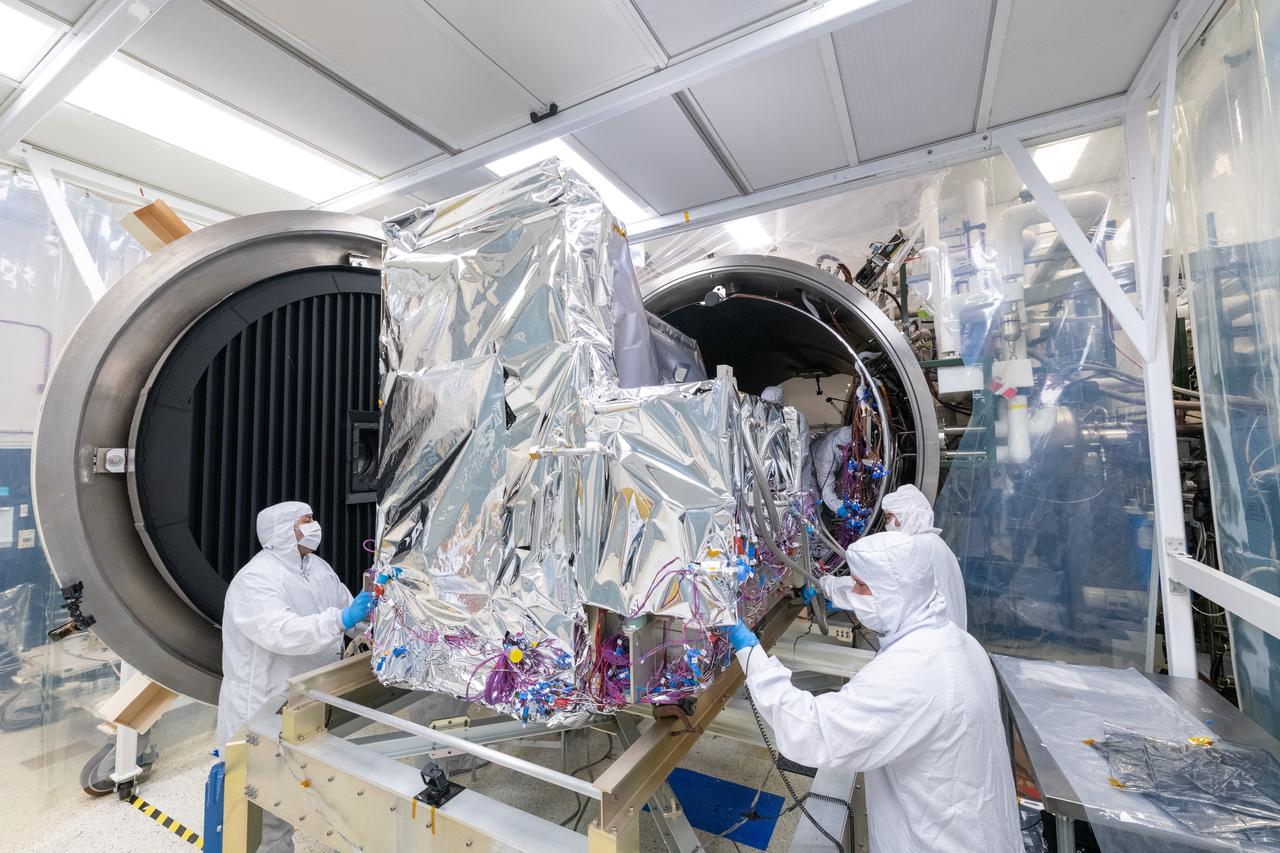
The Ocean Color Instrument (OCI) mechanical team aligns the instrument on a transportation sled and slowly pushes the instrument into a thermal vacuum chamber to prepare it for a sixty day thermal test to ensure the instrument will perform effectively once it launches into the airless environment of space. OCI is a highly advanced optical spectrometer that will be used to measure properties of light over portions of the electromagnetic spectrum. It will enable continuous measurement of light at finer wavelength resolution than previous NASA satellite sensors, extending key system ocean color data records for climate studies. OCI is PACE's (Plankton, Aerosol, Cloud, ocean Ecosystem) primary sensor built at Goddard Space Flight Center in Greenbelt, MD.
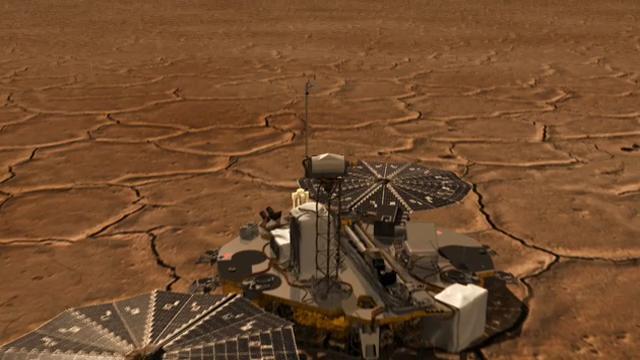
This is an image of a camera pushing through NASA Phoenix Mars Lander Stereo Surface Imager SSI.
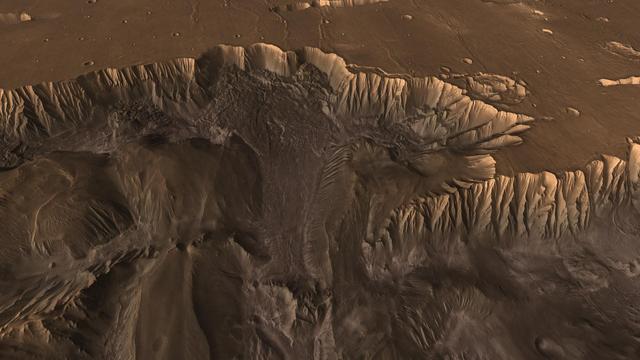
Flying through the canyons and over the ridges of Valles Marineris, viewers can experience some of the thrills that gripped explorers who pushed into unknown regions on Earth
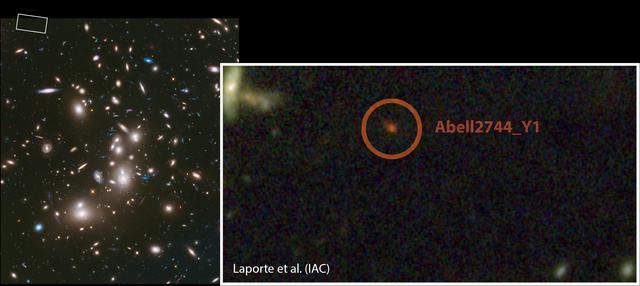
This image of the galaxy cluster Abell 2744 was obtained with NASA Hubble Space Telescope. The zoomed image shows the region around the galaxy Abell2744_Y1, one of the most distant galaxy candidates known.
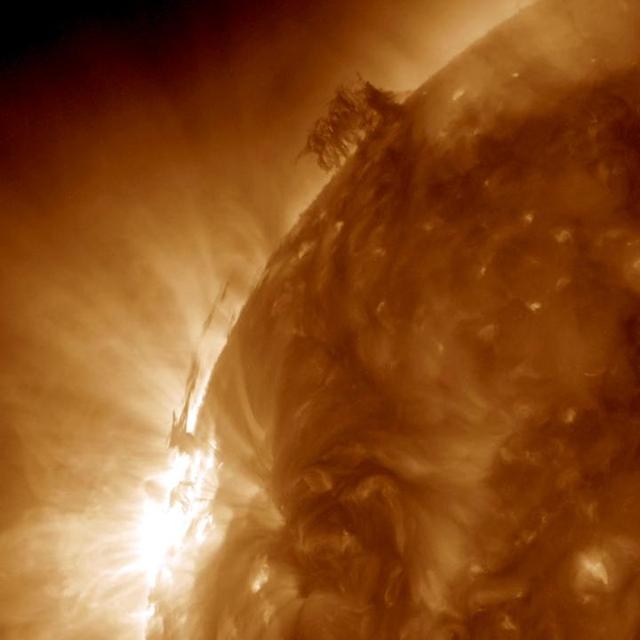
This still image from an animation from NASA GSFC Solar Dynamics Observatory shows dark strands of plasma hovering above the Sun surface beginning to interact with each other in a form of tug of war over two and a half days June 28-30, 2015.
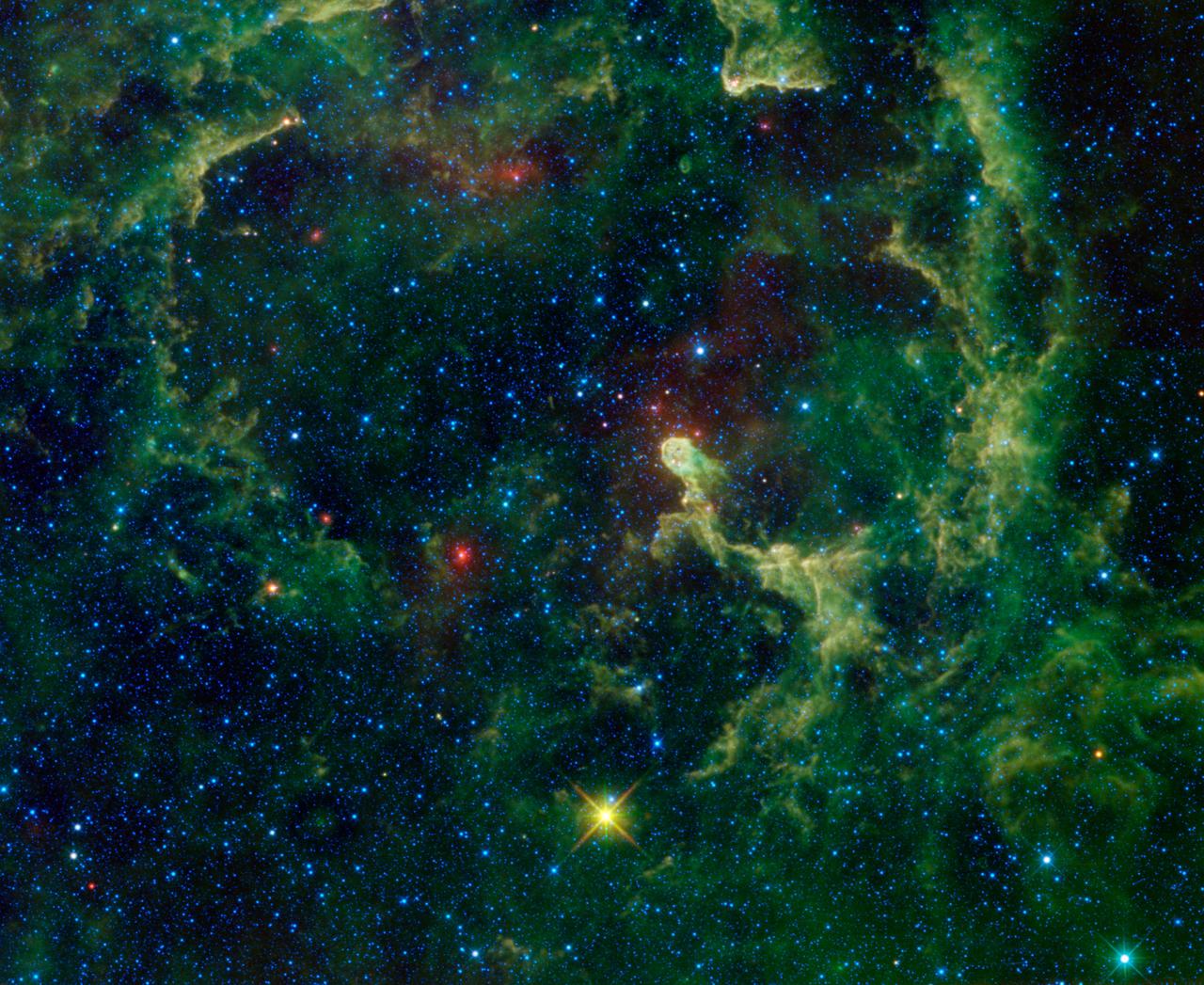
This image of the Elephant Trunk nebula from NASA Wide-field Survey Explorer shows clouds of dust and gas being pushed and eroded by a massive star. The bright trunk of the nebula near the center is an especially dense cloud.
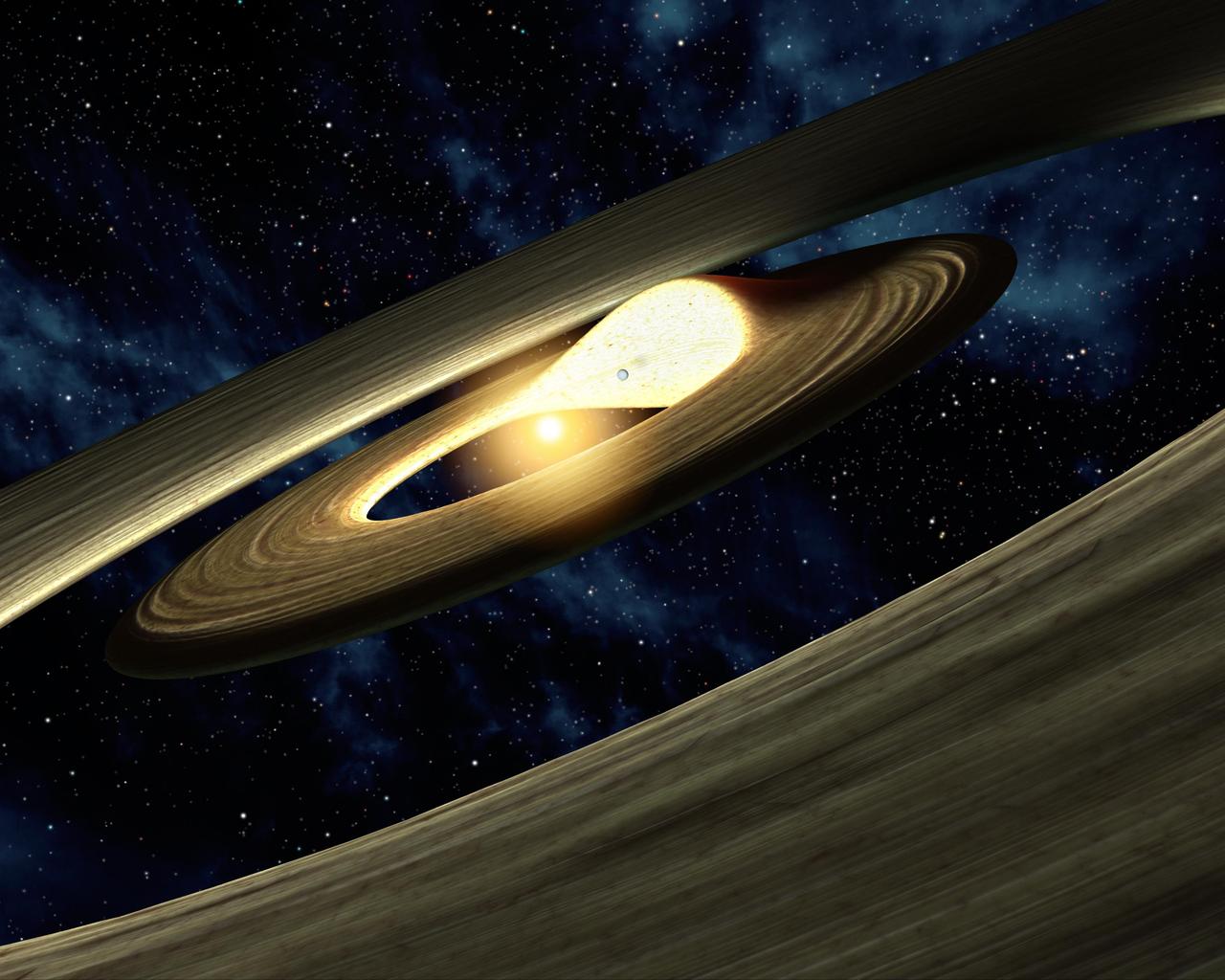
This artist conception shows a lump of material in a swirling, planet- forming disk. Astronomers using NASA Spitzer Space Telescope found evidence that either another star or a planet could be pushing planetary material together, as illustrated here.
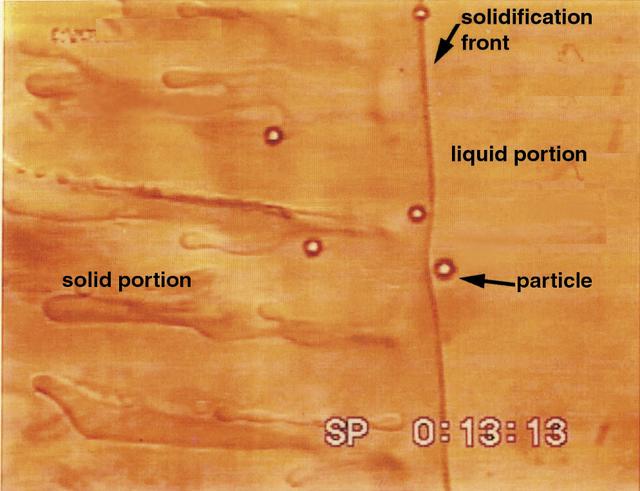
As a liquefied metal solidifies, particles dispersed in the liquid are either pushed ahead of or engulfed by the moving solidification front. Similar effects can be seen when the ground freezes and pushes large particles out of the soil. The Particle Engulfment and Pushing (PEP) experiment, conducted aboard the fourth U.S. Microgravity Payload (USMP-4) mission in 1997, used a glass and plastic beads suspended in a transparent liquid. The liquid was then frozen, trapping or pushing the particles as the solidifying front moved. This simulated the formation of advanced alloys and composite materials. Such studies help scientists to understand how to improve the processes for making advanced materials on Earth. The principal investigator is Dr. Doru Stefanescu of the University of Alabama. This image is from a video downlink.
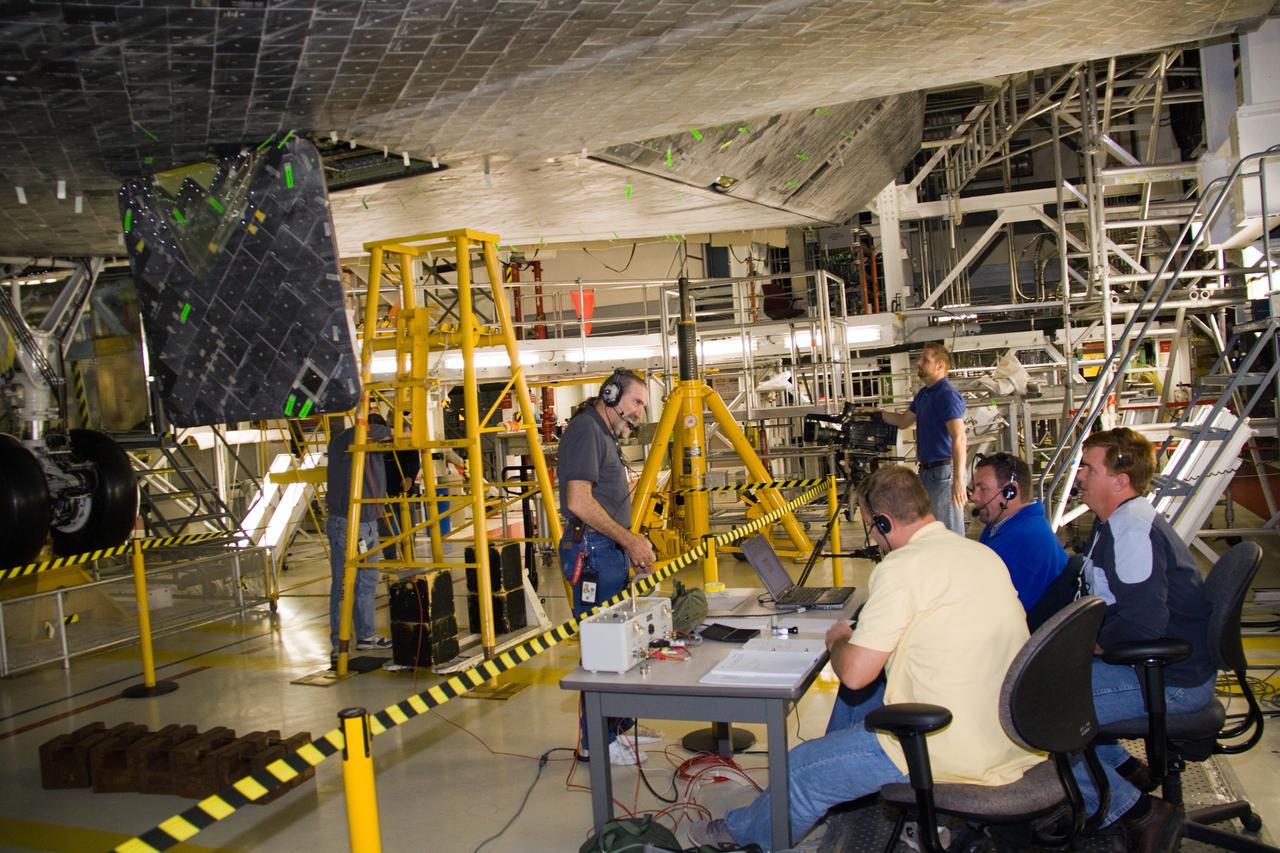
STS-132 ATLANTIS ET PUSH DOOR TEST
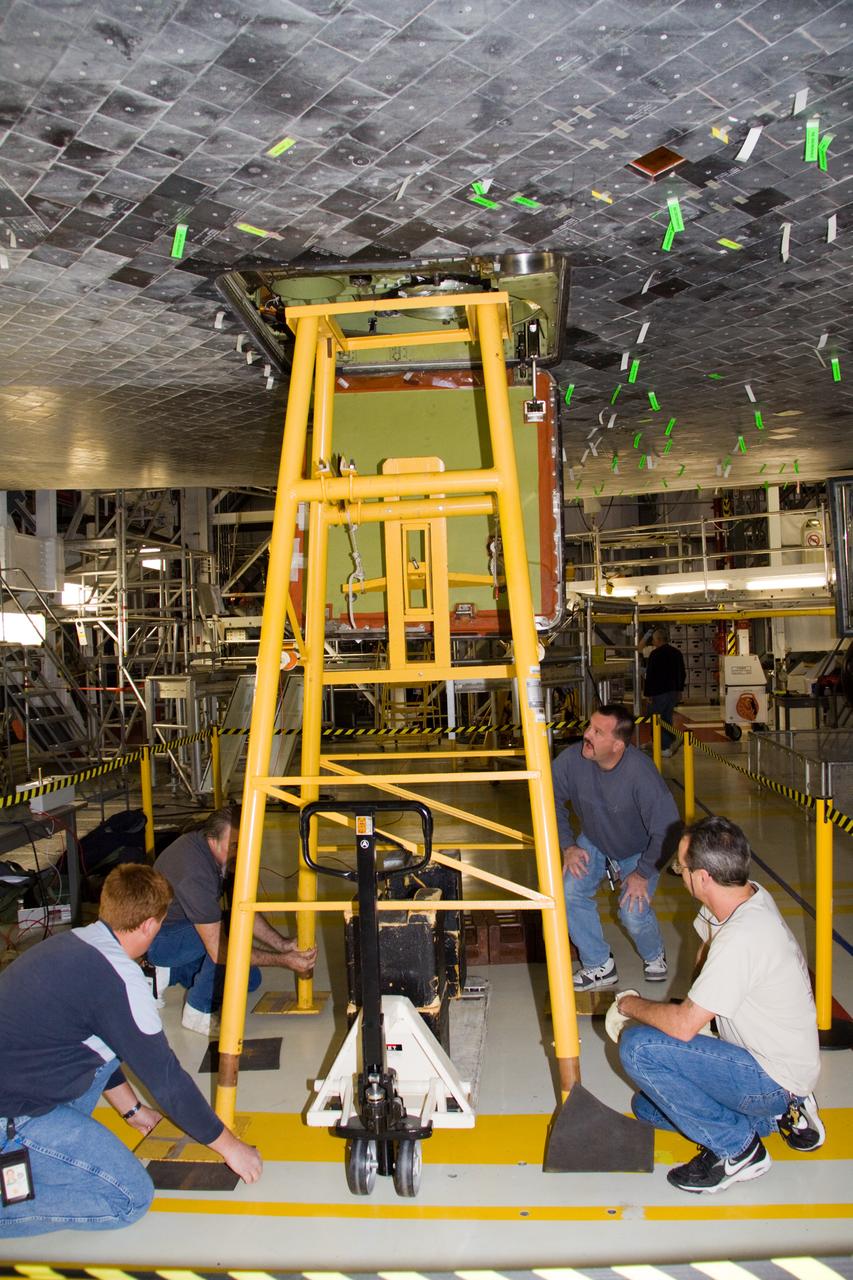
STS-132 ATLANTIS ET PUSH DOOR TEST
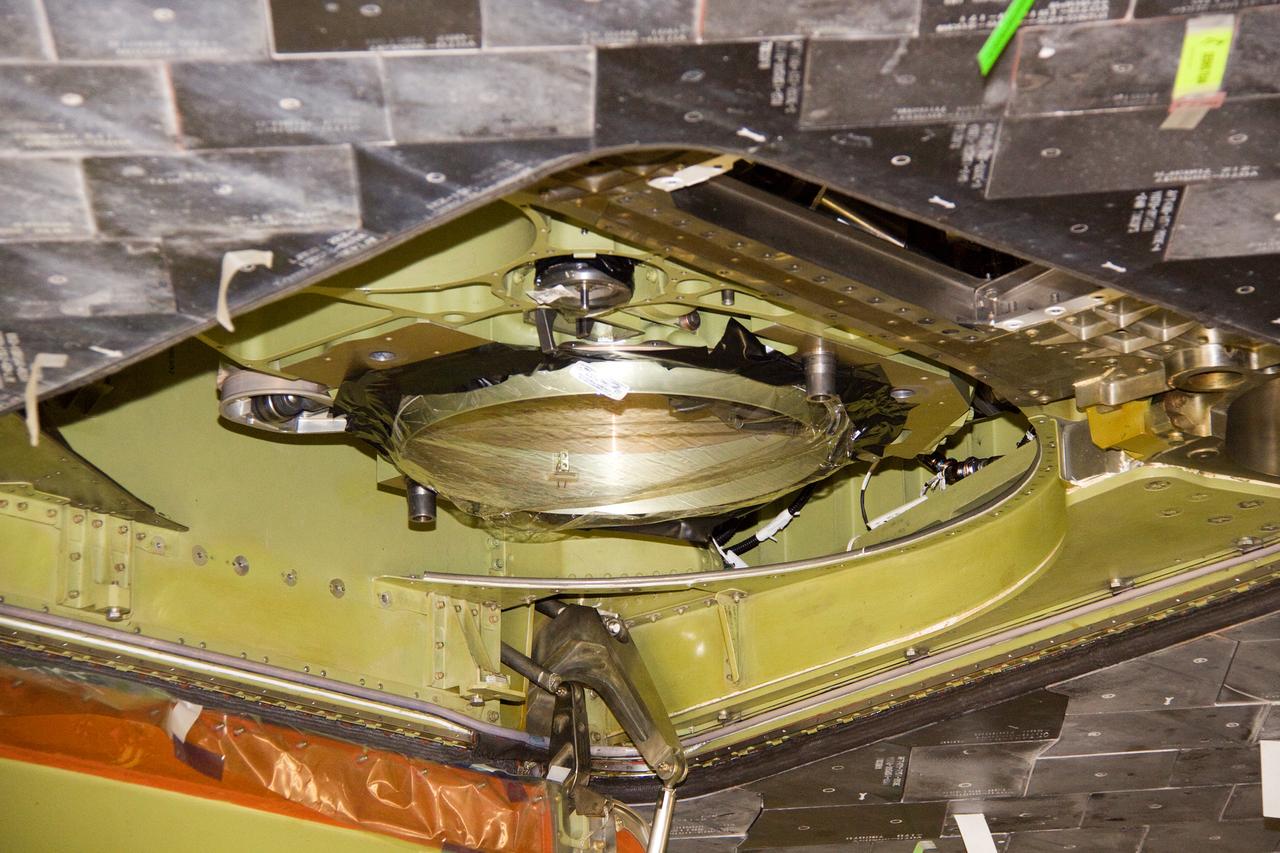
STS-132 ATLANTIS ET PUSH DOOR TEST
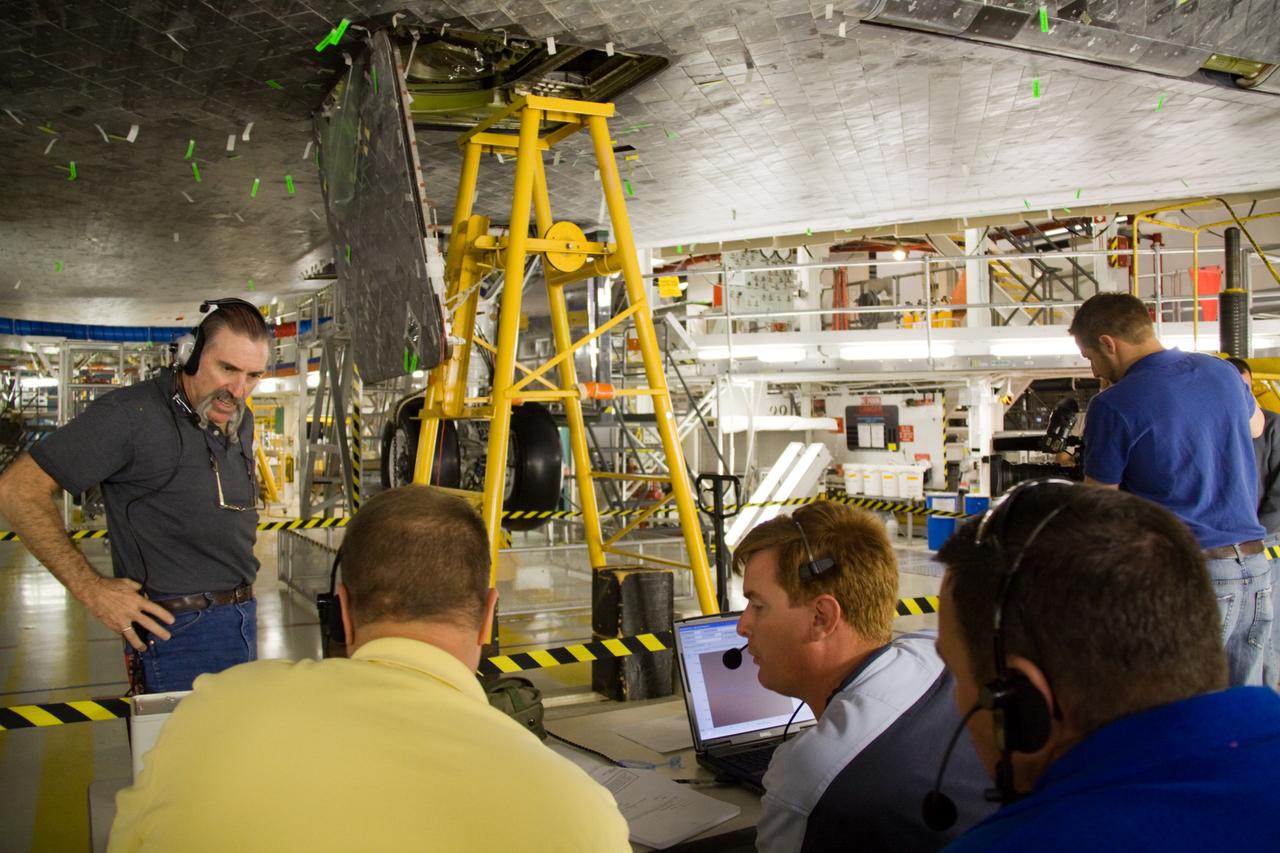
STS-132 ATLANTIS ET PUSH DOOR TEST
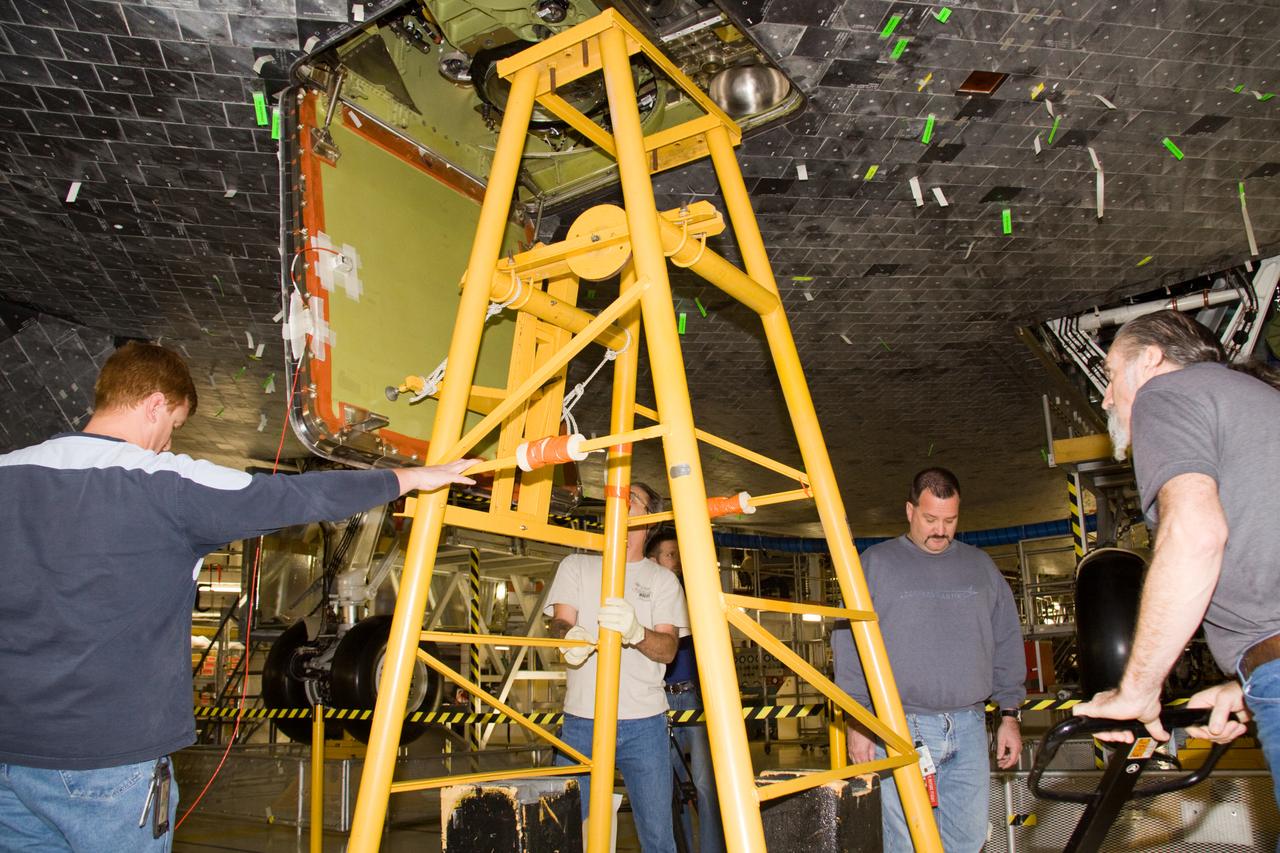
STS-132 ATLANTIS ET PUSH DOOR TEST
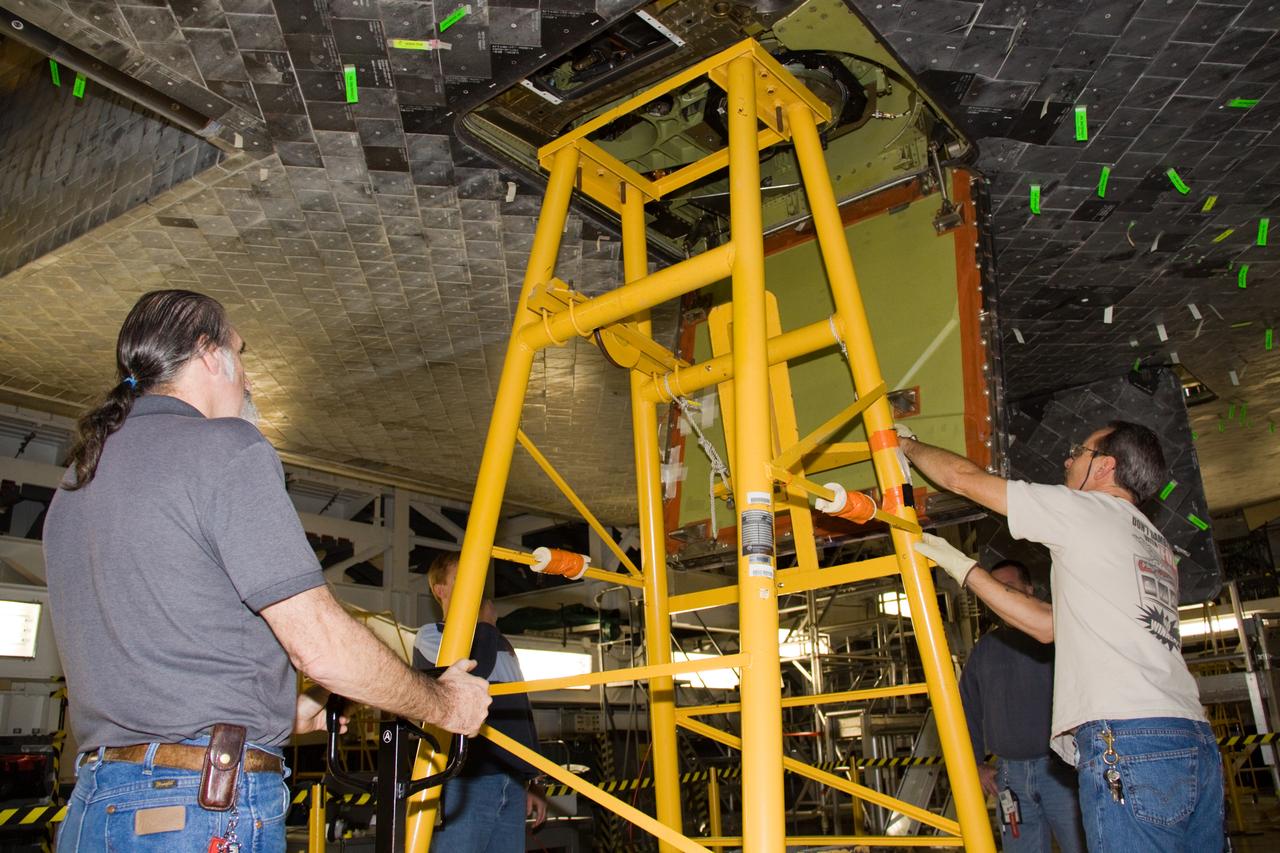
STS-132 ATLANTIS ET PUSH DOOR TEST
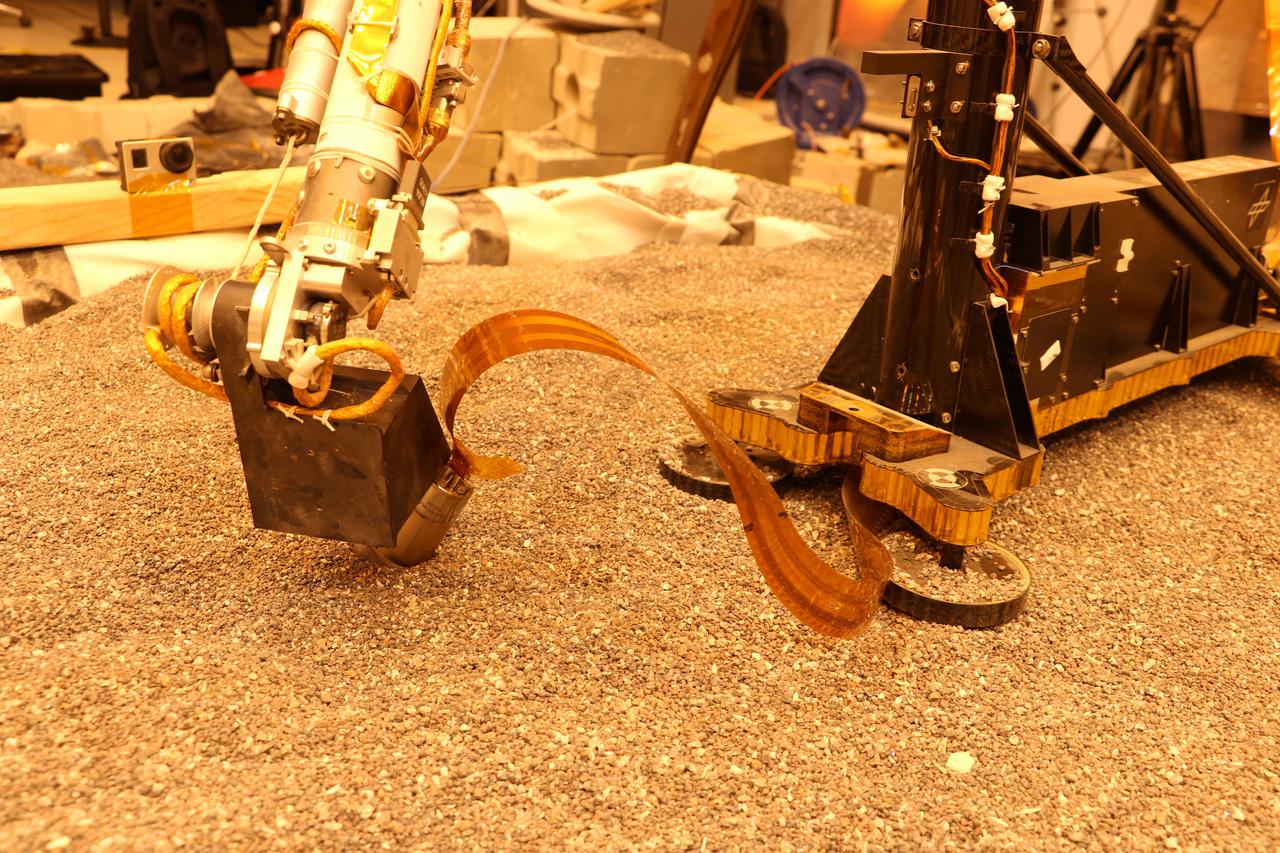
This test using an engineering model of the InSight lander here on Earth shows how the spacecraft on Mars will use its robotic arm to press on a digging device, called the "mole." https://photojournal.jpl.nasa.gov/catalog/PIA23619
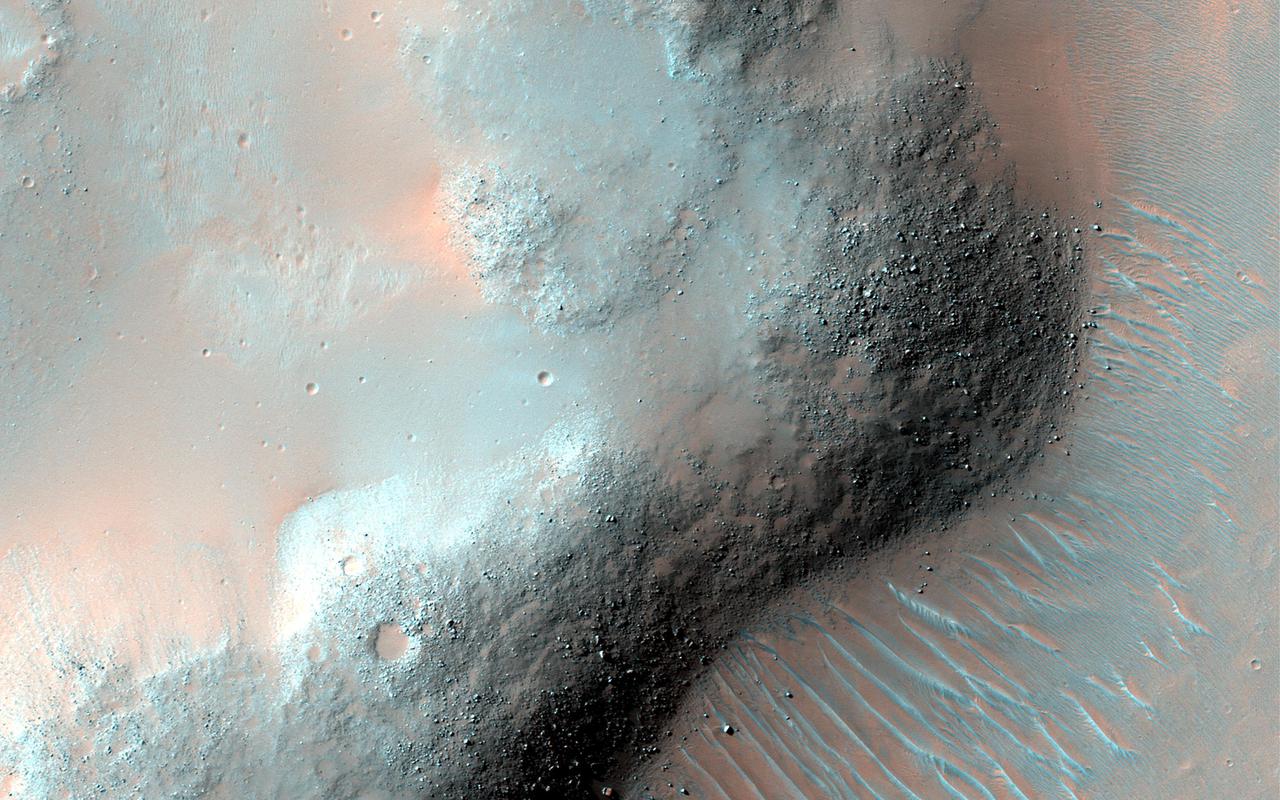
The surface of Mars has been pulled apart in places and smashed together in other places. This image shows a ridge that formed when the ground was pushed together, forming a wrinkle. These "wrinkle ridges" are observed across Mars and other bodies, such as the Moon and Earth, and serve as a record of ancient forces that shaped these planetary surfaces. https://photojournal.jpl.nasa.gov/catalog/PIA24944
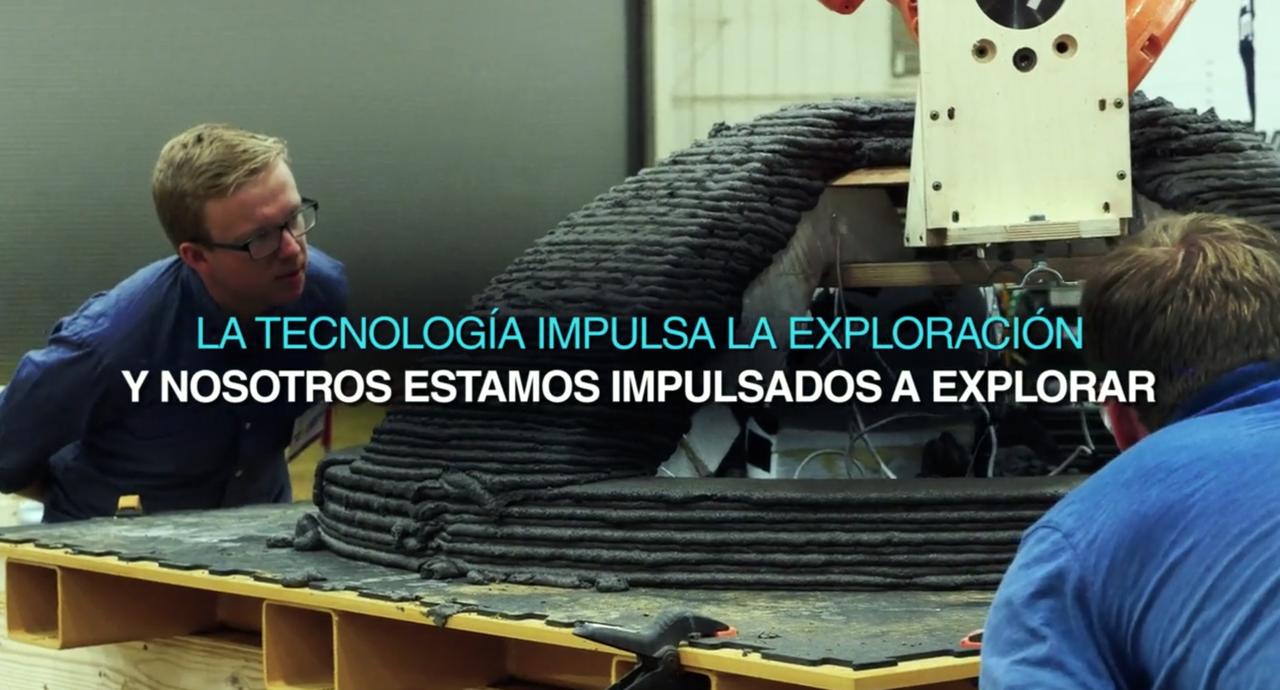
NASA is going to the Moon and on to Mars, in a measured, sustainable way. Working with U.S. companies and international partners, NASA will push the boundaries of human exploration forward to the Moon.
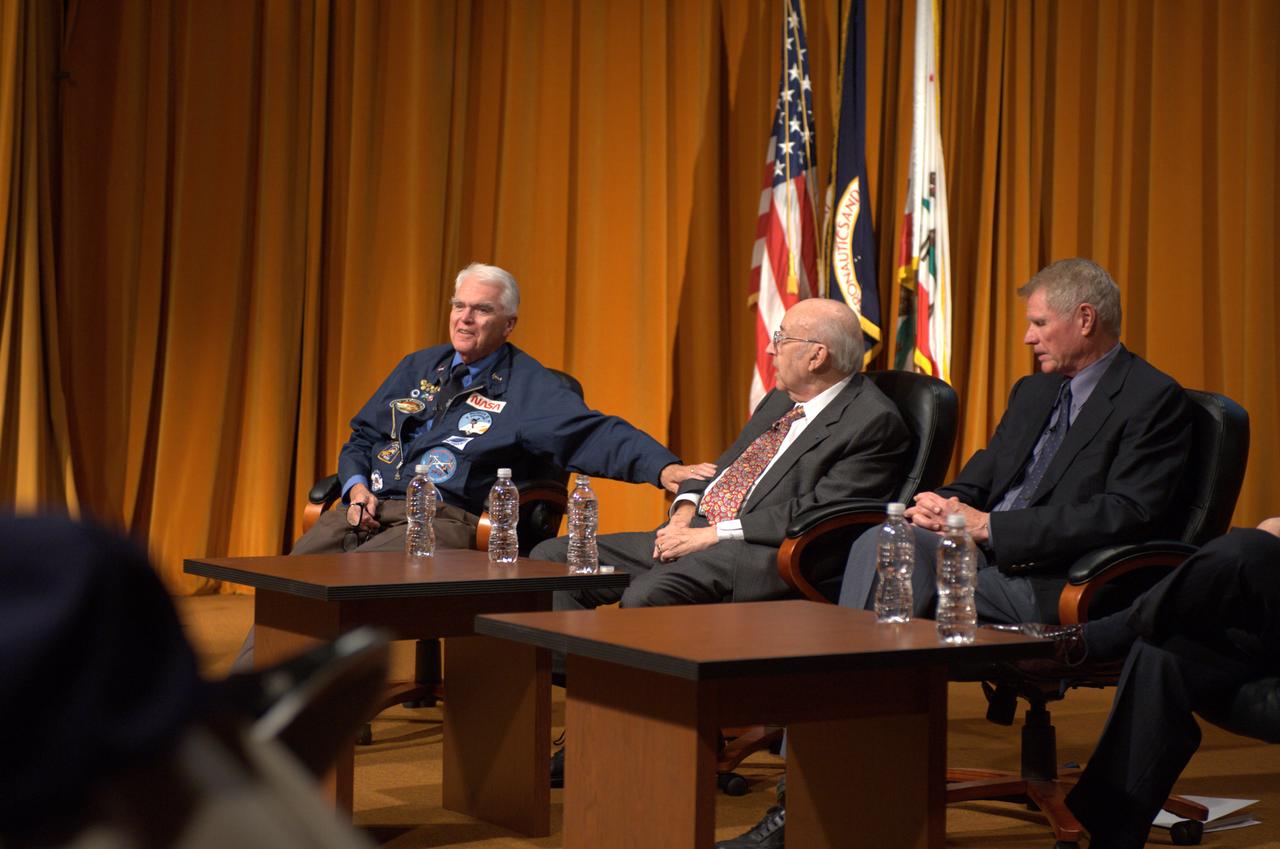
NASA's 50th Anniversay year. Panel discussion with four of NASA AMES's past center directors on how their tenure effected Ames and NASA. On the projects they pushed for and/or pushed forward and the culture of the center and the agency and how that worked for or against Ames, as well as major contributions of the time made by Ames Research Center. Panel L-R; Hans Mark, Sy Syvertson, Dale Compton, Scott Hubbard and Pete Worden, present director. (Past Directors served for periods from 1969 thru 2006)
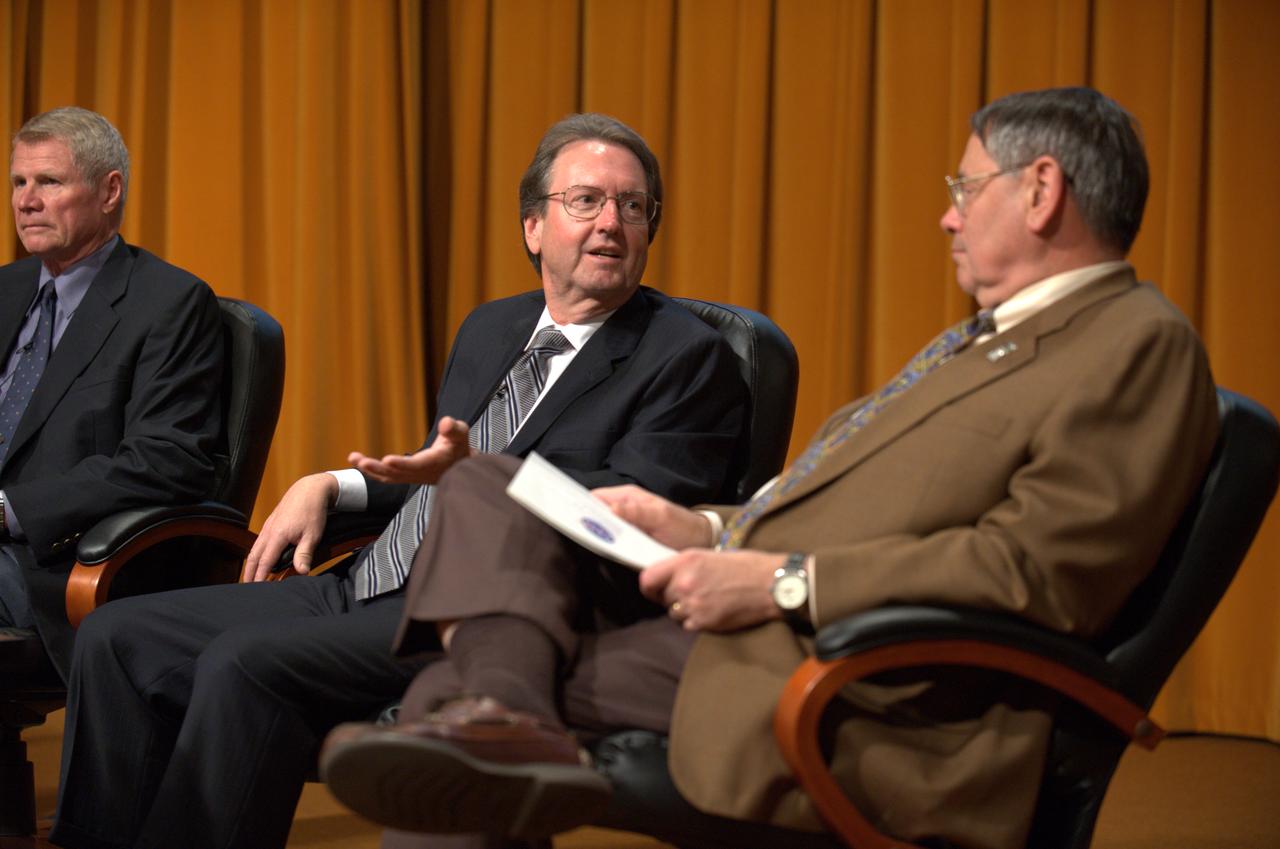
NASA's 50th Anniversay year. Panel discussion with four of NASA AMES's past center directors on how their tenure effected Ames and NASA. On the projects they pushed for and/or pushed forward and the culture of the center and the agency and how that worked for or against Ames, as well as major contributions of the time made by Ames Research Center. Panel L-R; Hans Mark, Sy Syvertson, Dale Compton, Scott Hubbard and Pete Worden, present director. (Past Directors served for periods from 1969 thru 2006)
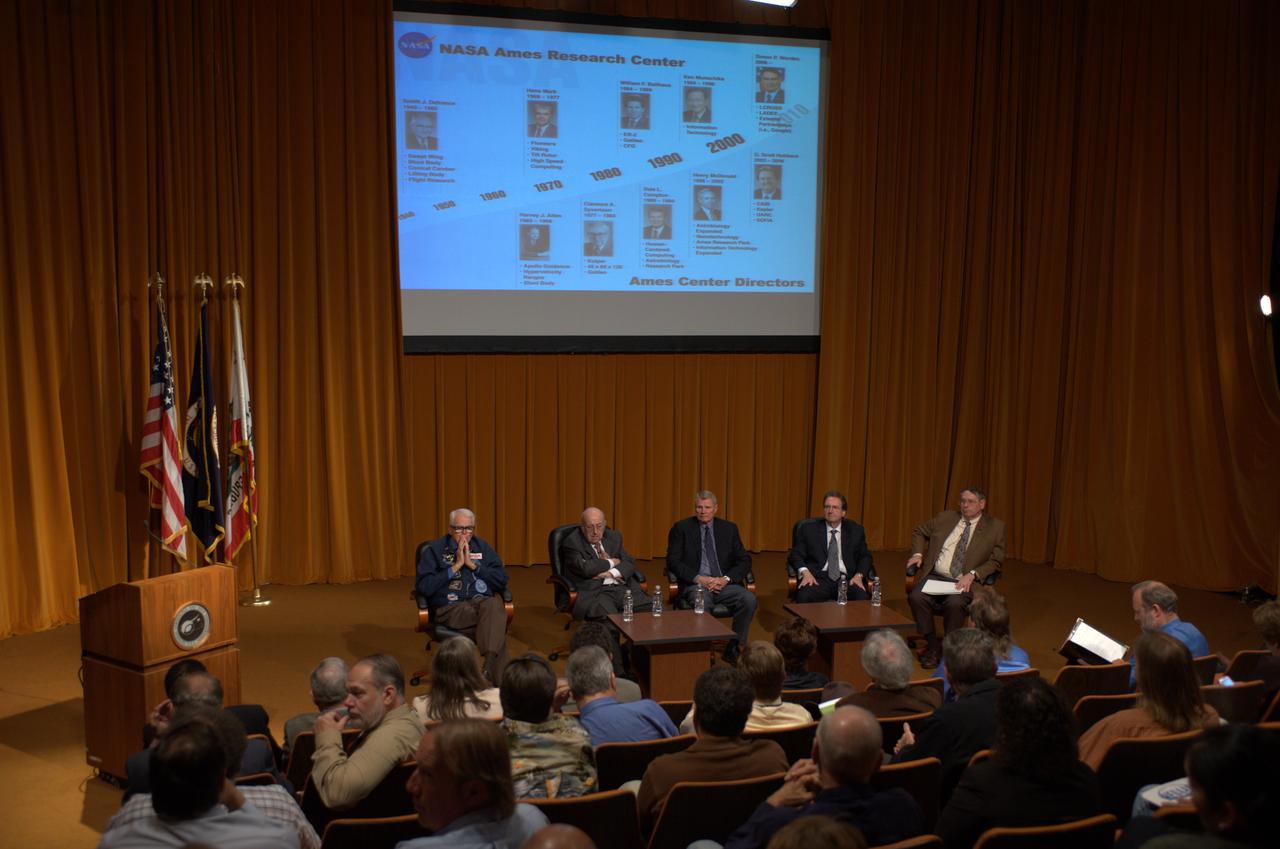
NASA's 50th Anniversay year. Panel discussion with four of NASA AMES's past center directors on how their tenure effected Ames and NASA. On the projects they pushed for and/or pushed forward and the culture of the center and the agency and how that worked for or against Ames, as well as major contributions of the time made by Ames Research Center. Panel L-R; Hans Mark, Sy Syvertson, Dale Compton, Scott Hubbard and Pete Worden, present director. (Past Directors served for periods from 1969 thru 2006)
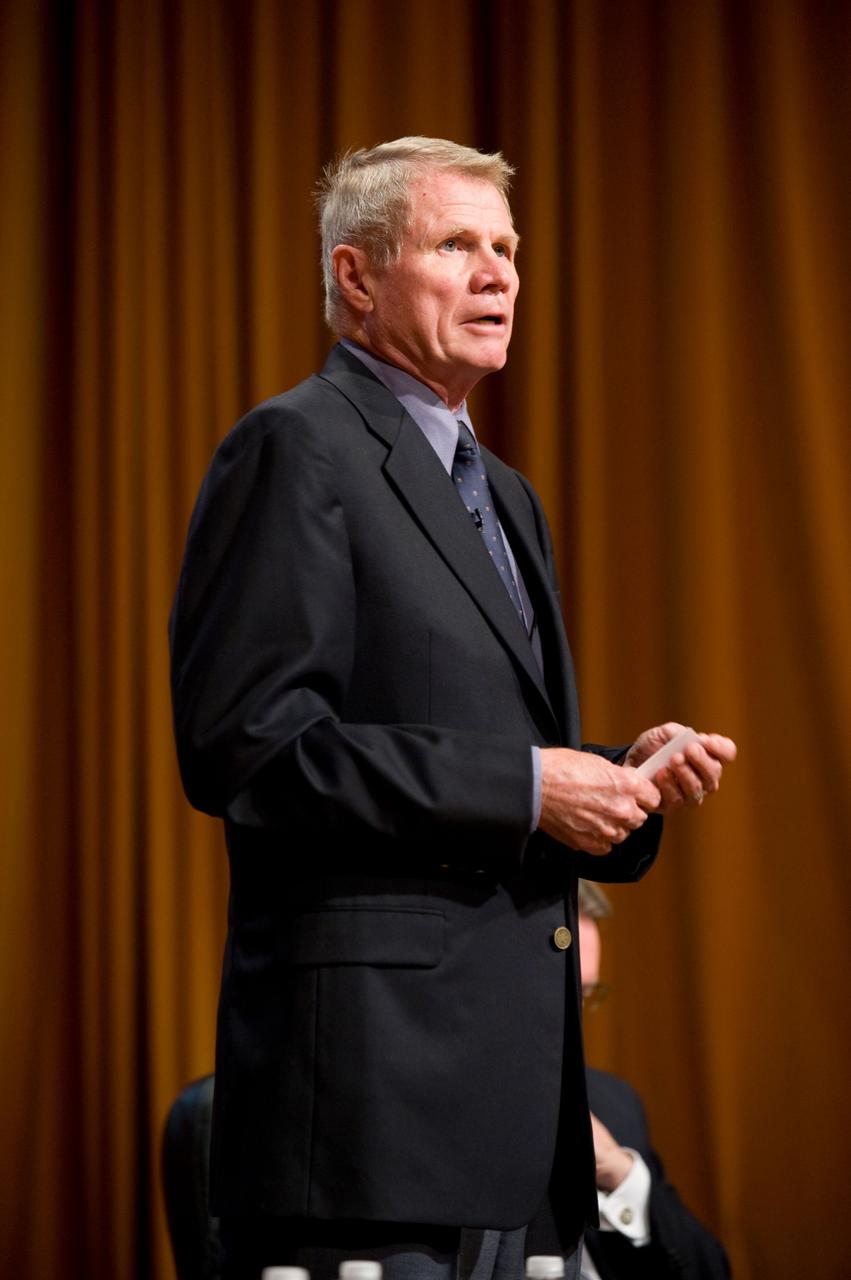
NASA's 50th Anniversay year. Panel discussion with four of NASA AMES's past center directors on how their tenure effected Ames and NASA. On the projects they pushed for and/or pushed forward and the culture of the center and the agency and how that worked for or against Ames, as well as major contributions of the time made by Ames Research Center. Panel L-R; Hans Mark, Sy Syvertson, Dale Compton, Scott Hubbard and Pete Worden, present director. (Past Directors served for periods from 1969 thru 2006)
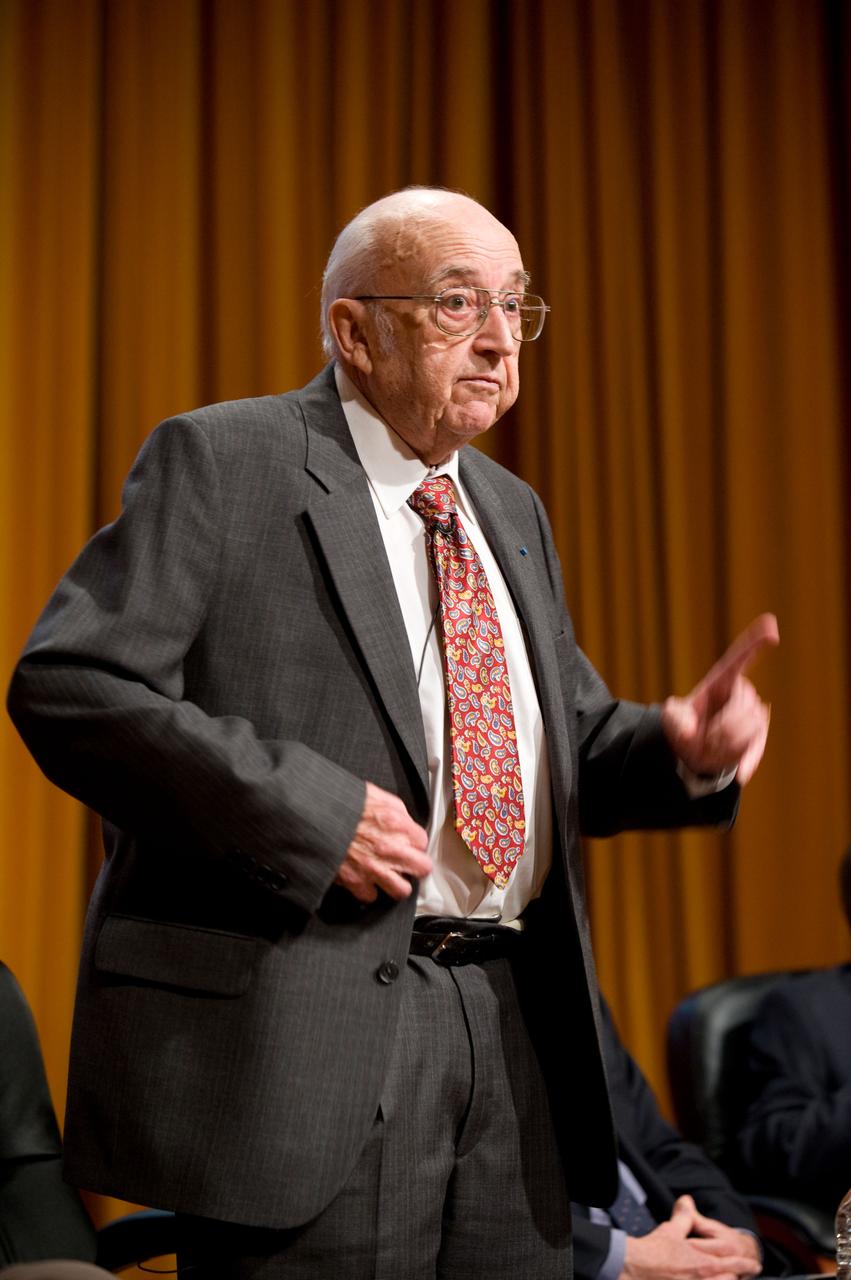
NASA's 50th Anniversay year. Panel discussion with four of NASA AMES's past center directors on how their tenure effected Ames and NASA. On the projects they pushed for and/or pushed forward and the culture of the center and the agency and how that worked for or against Ames, as well as major contributions of the time made by Ames Research Center. Panel L-R; Hans Mark, Sy Syvertson, Dale Compton, Scott Hubbard and Pete Worden, present director. (Past Directors served for periods from 1969 thru 2006)
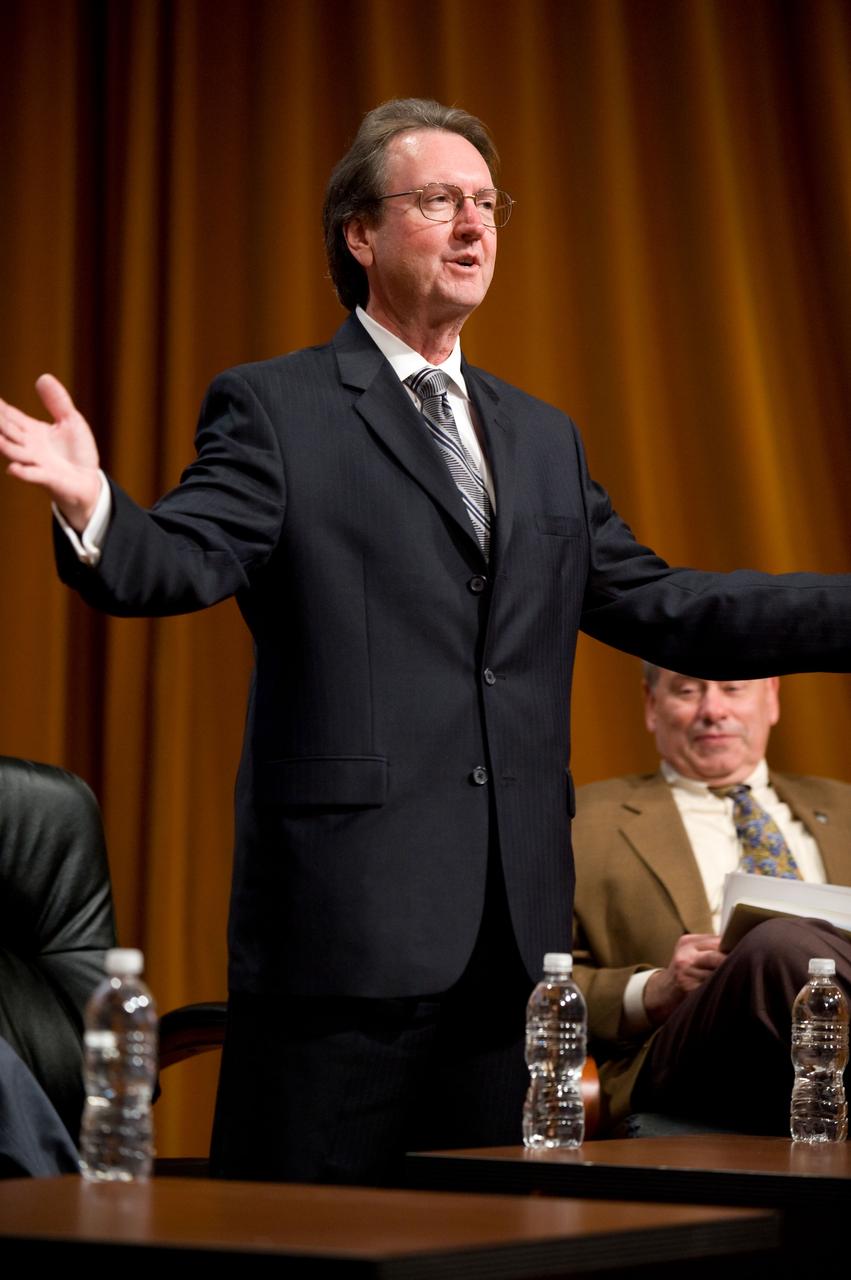
NASA's 50th Anniversay year. Panel discussion with four of NASA AMES's past center directors on how their tenure effected Ames and NASA. On the projects they pushed for and/or pushed forward and the culture of the center and the agency and how that worked for or against Ames, as well as major contributions of the time made by Ames Research Center. Panel L-R; Hans Mark, Sy Syvertson, Dale Compton, Scott Hubbard and Pete Worden, present director. (Past Directors served for periods from 1969 thru 2006)
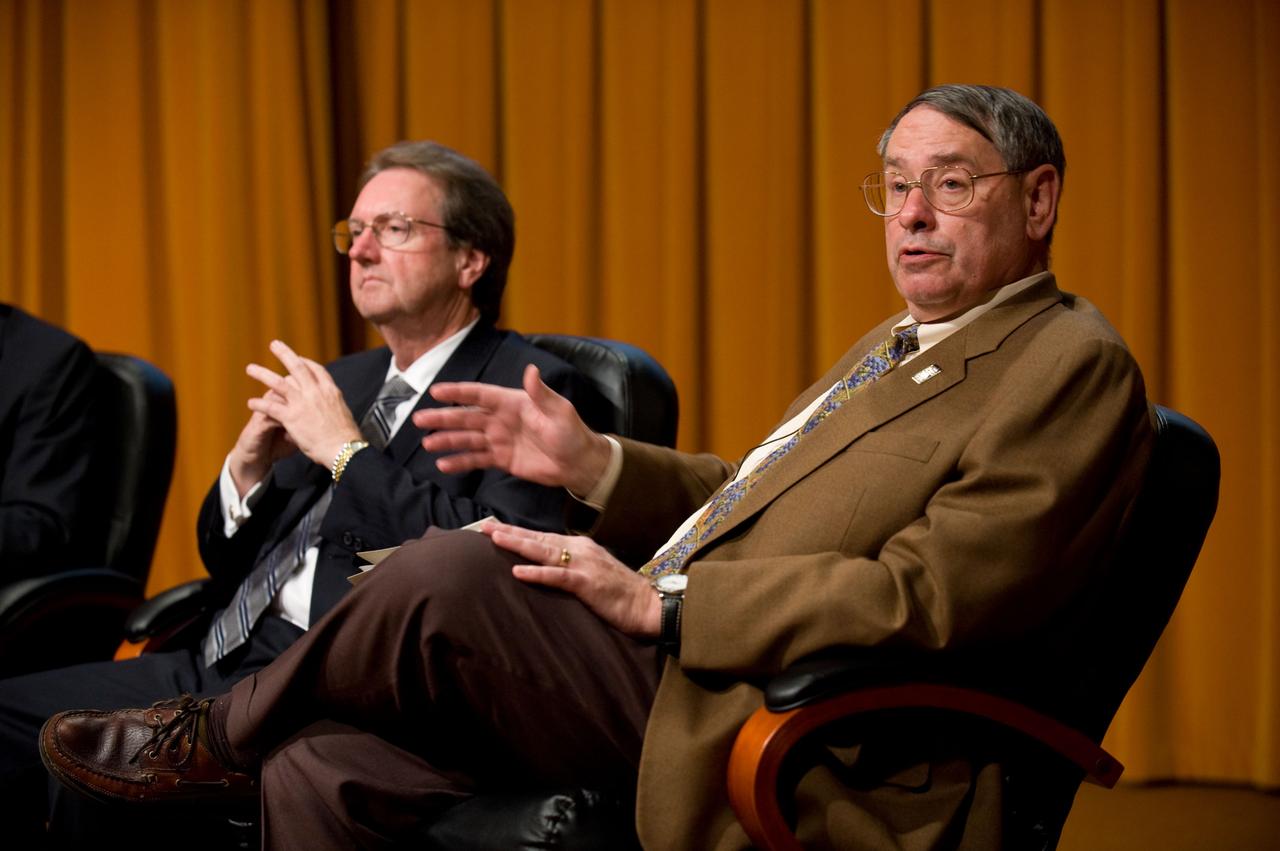
NASA's 50th Anniversay year. Panel discussion with four of NASA AMES's past center directors on how their tenure effected Ames and NASA. On the projects they pushed for and/or pushed forward and the culture of the center and the agency and how that worked for or against Ames, as well as major contributions of the time made by Ames Research Center. Panel L-R; Hans Mark, Sy Syvertson, Dale Compton, Scott Hubbard and Pete Worden, present director. (Past Directors served for periods from 1969 thru 2006) Scott Hubbard and Pete Worden
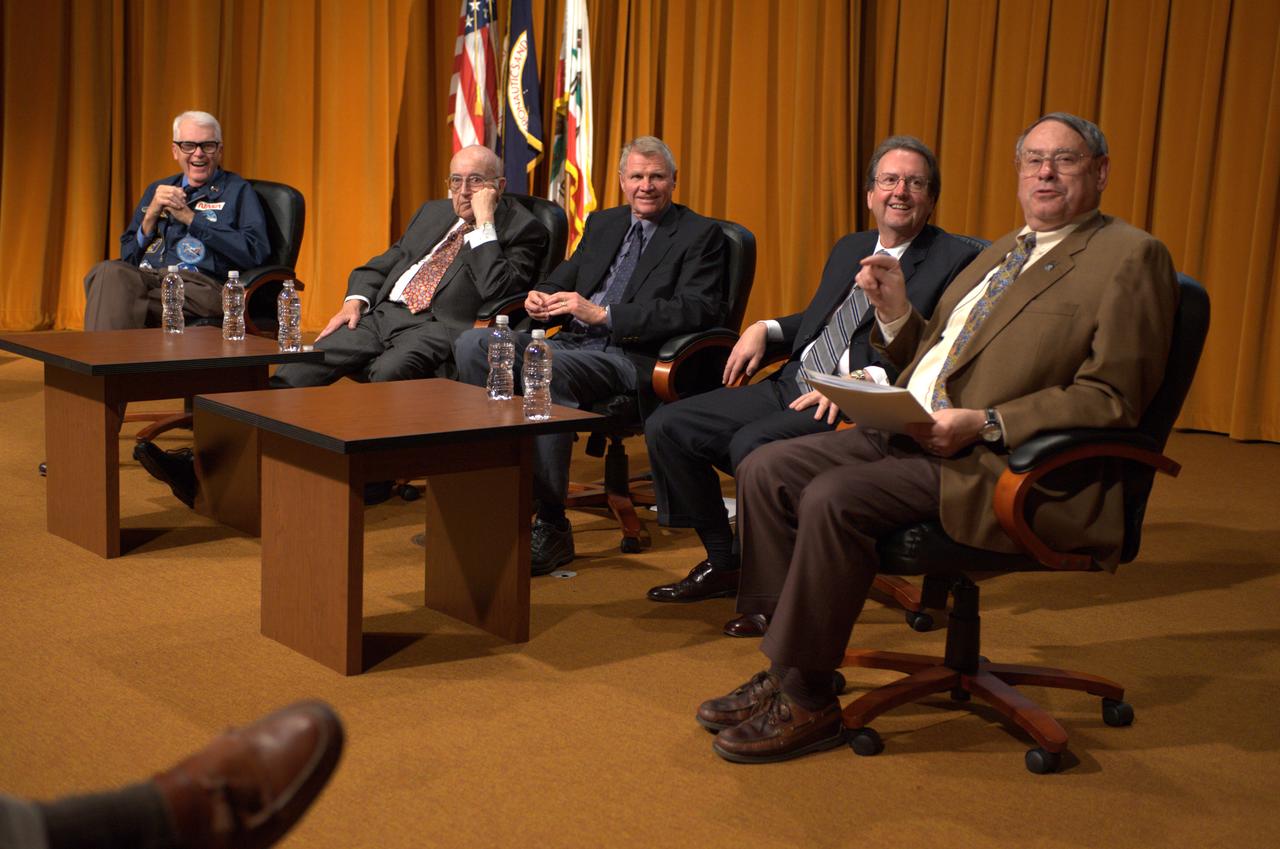
NASA's 50th Anniversay year. Panel discussion with four of NASA AMES's past center directors on how their tenure effected Ames and NASA. On the projects they pushed for and/or pushed forward and the culture of the center and the agency and how that worked for or against Ames, as well as major contributions of the time made by Ames Research Center. Panel L-R; Hans Mark, Sy Syvertson, Dale Compton, Scott Hubbard and Pete Worden, present director. (Past Directors served for periods from 1969 thru 2006)
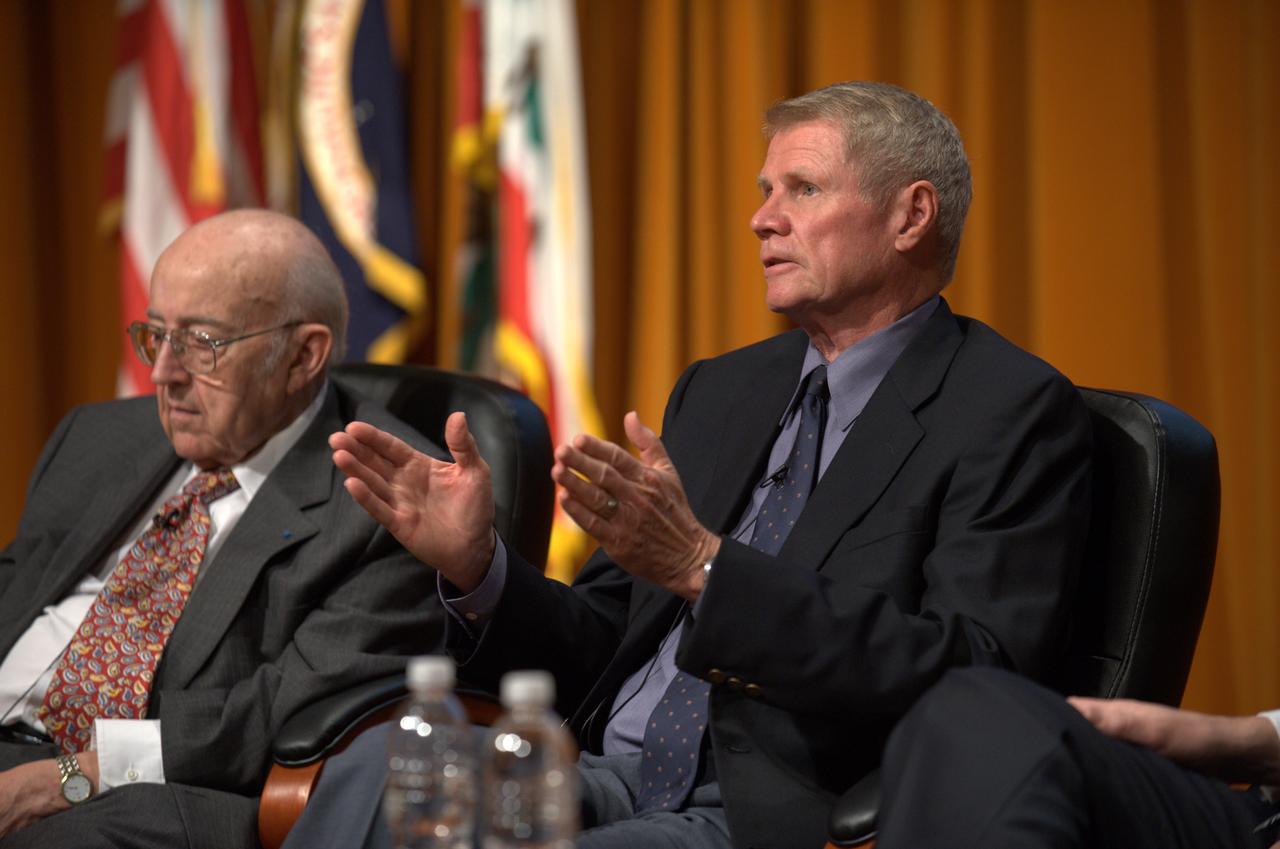
NASA's 50th Anniversay year. Panel discussion with four of NASA AMES's past center directors on how their tenure effected Ames and NASA. On the projects they pushed for and/or pushed forward and the culture of the center and the agency and how that worked for or against Ames, as well as major contributions of the time made by Ames Research Center. Panel L-R; Hans Mark, Sy Syvertson, Dale Compton, Scott Hubbard and Pete Worden, present director. (Past Directors served for periods from 1969 thru 2006) Dale Compton speaking.
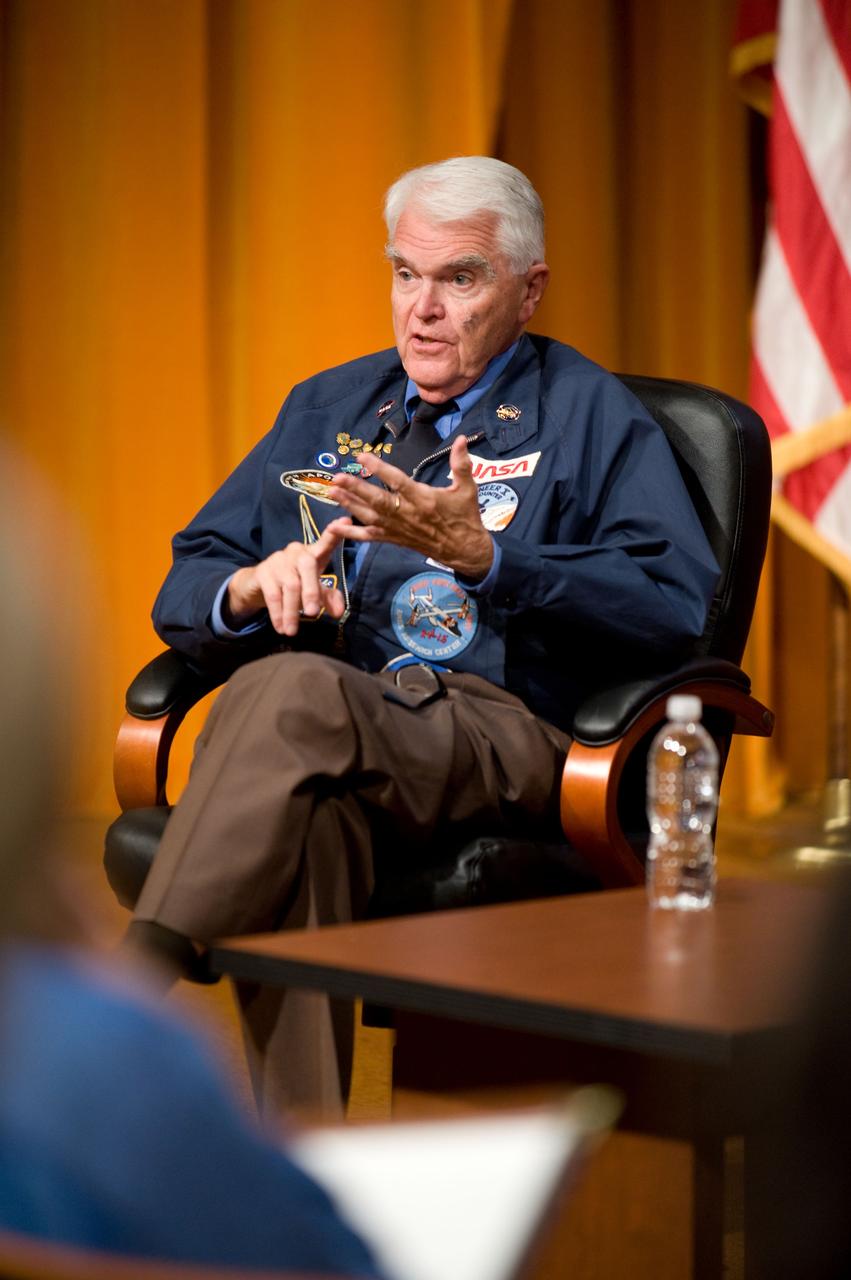
NASA's 50th Anniversay year. Panel discussion with four of NASA AMES's past center directors on how their tenure effected Ames and NASA. On the projects they pushed for and/or pushed forward and the culture of the center and the agency and how that worked for or against Ames, as well as major contributions of the time made by Ames Research Center. Panel L-R; Hans Mark, Sy Syvertson, Dale Compton, Scott Hubbard and Pete Worden, present director. (Past Directors served for periods from 1969 thru 2006)
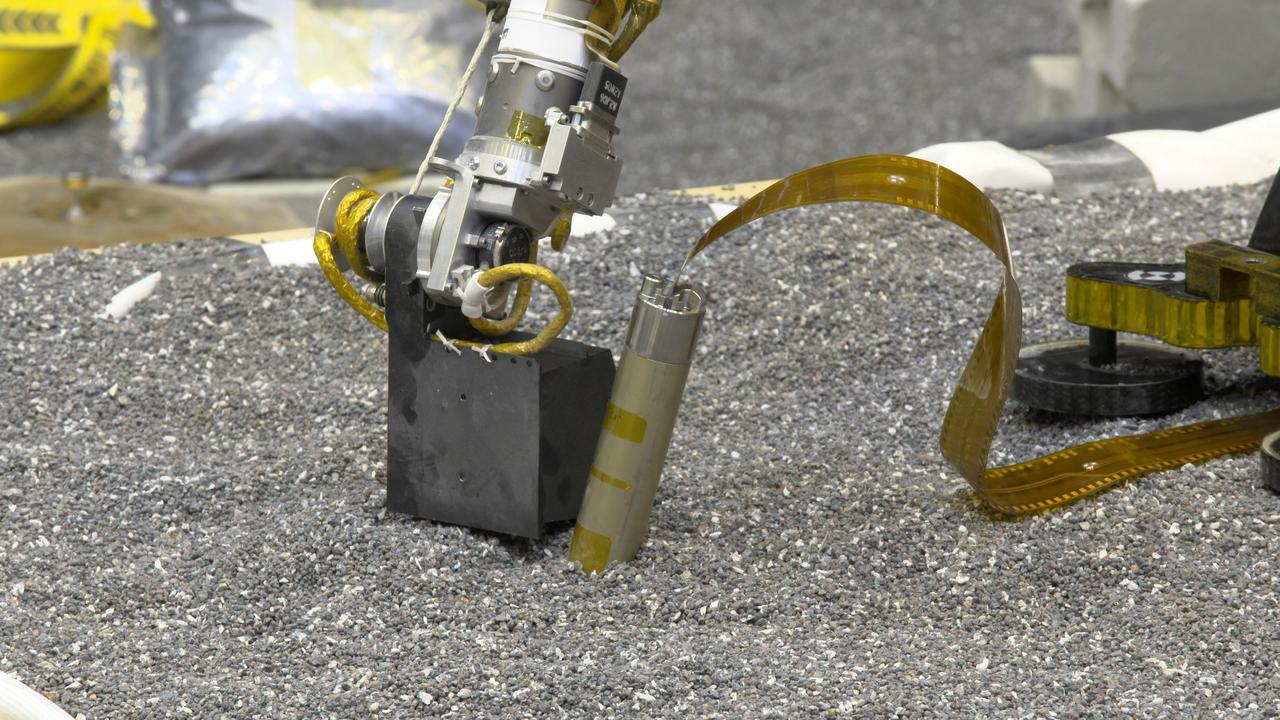
In a JPL lab, a replica of NASA InSight's robotic arm presses with its scoop on crushed garnet near a replica of the spacecraft's self-hammering "mole." Engineers believe pressing like this on Martian soil may help the mole dig by increasing friction of the surrounding soil. https://photojournal.jpl.nasa.gov/catalog/PIA23276

A solar prominence at the sun's edge put on quite a display of plasma being pushed and pulled by unstable magnetic fields (May 22-24, 2017). We call them hedgerow prominences because they look somewhat like a hedge of bushes. This is one of the better examples of this type of solar phenomenon than any we have seen in quite some time. Movies are available at https://photojournal.jpl.nasa.gov/catalog/PIA21650
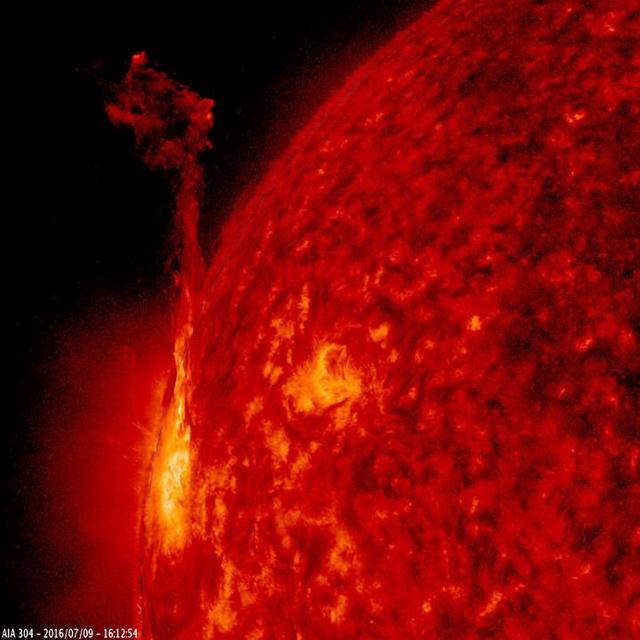
One active region at the edge of the Sun pushed out about ten thrusts of plasma in just over a day long period (July 9-10, 2016). All of them, propelled by magnetic forces, quickly withdrew back into the active region. The images were taken in a wavelength of extreme ultraviolet light. Movies are also available at the Photojournal. http://photojournal.jpl.nasa.gov/catalog/PIA20883

A Pilatus PC-12 aircraft, tail number 606, is being towed and pushed by a crew at NASA’s Armstrong Flight Research Center in Edwards, California, on Feb. 11, 2026. This aircraft is now housed at NASA Armstrong to continue supporting research at NASA’s Glenn Research Center, among other agency efforts.
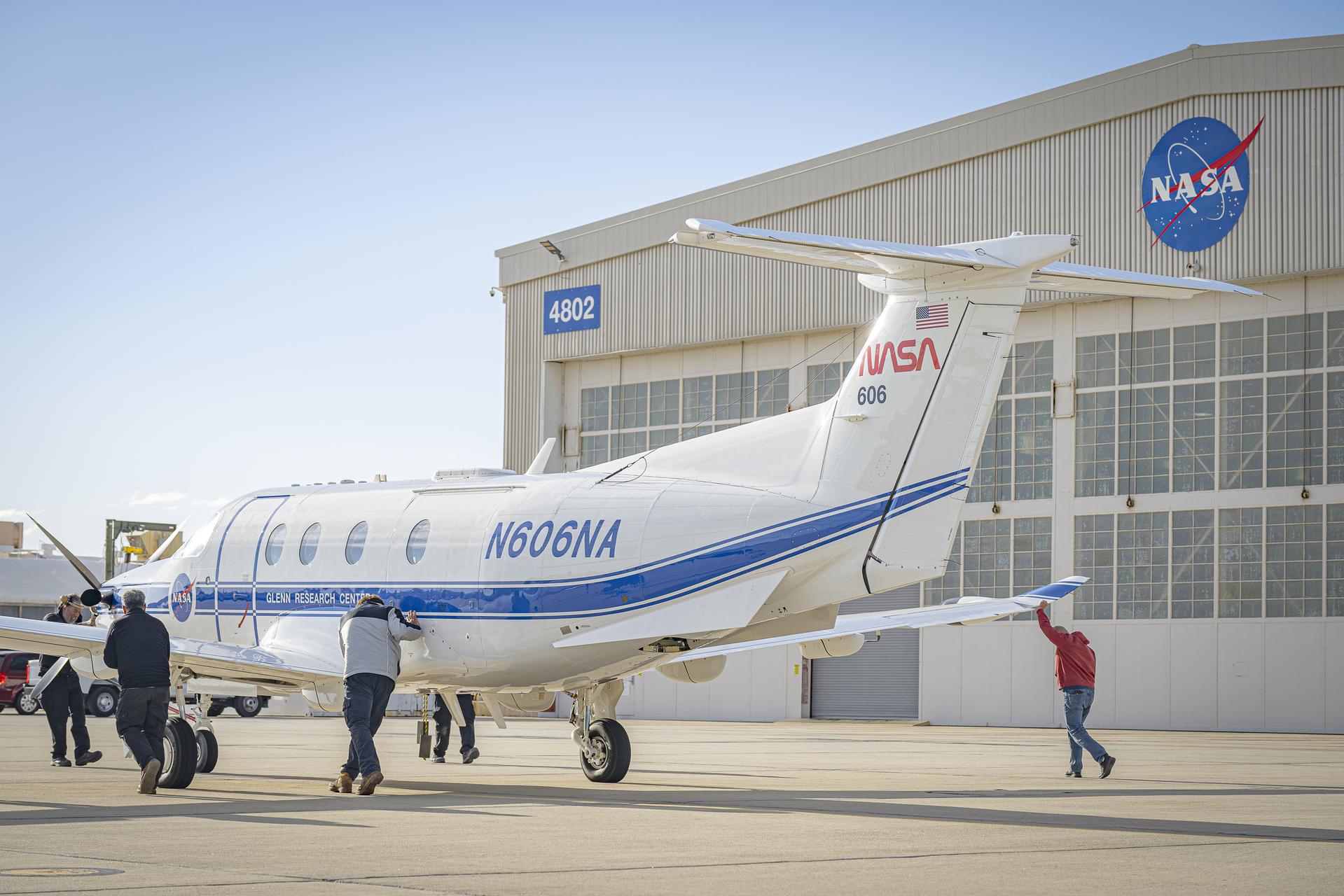
A Pilatus PC-12 aircraft, tail number 606, is being towed and pushed by a crew at NASA’s Armstrong Flight Research Center in Edwards, California, on Feb. 11, 2026. This aircraft is now housed at NASA Armstrong to continue supporting research at NASA’s Glenn Research Center in Cleveland, among other agency efforts.

Images from NASA New Horizons mission suggest that Pluto largest moon, Charon, once had a subsurface ocean that has long since frozen and expanded, pushing out on the moon surface.
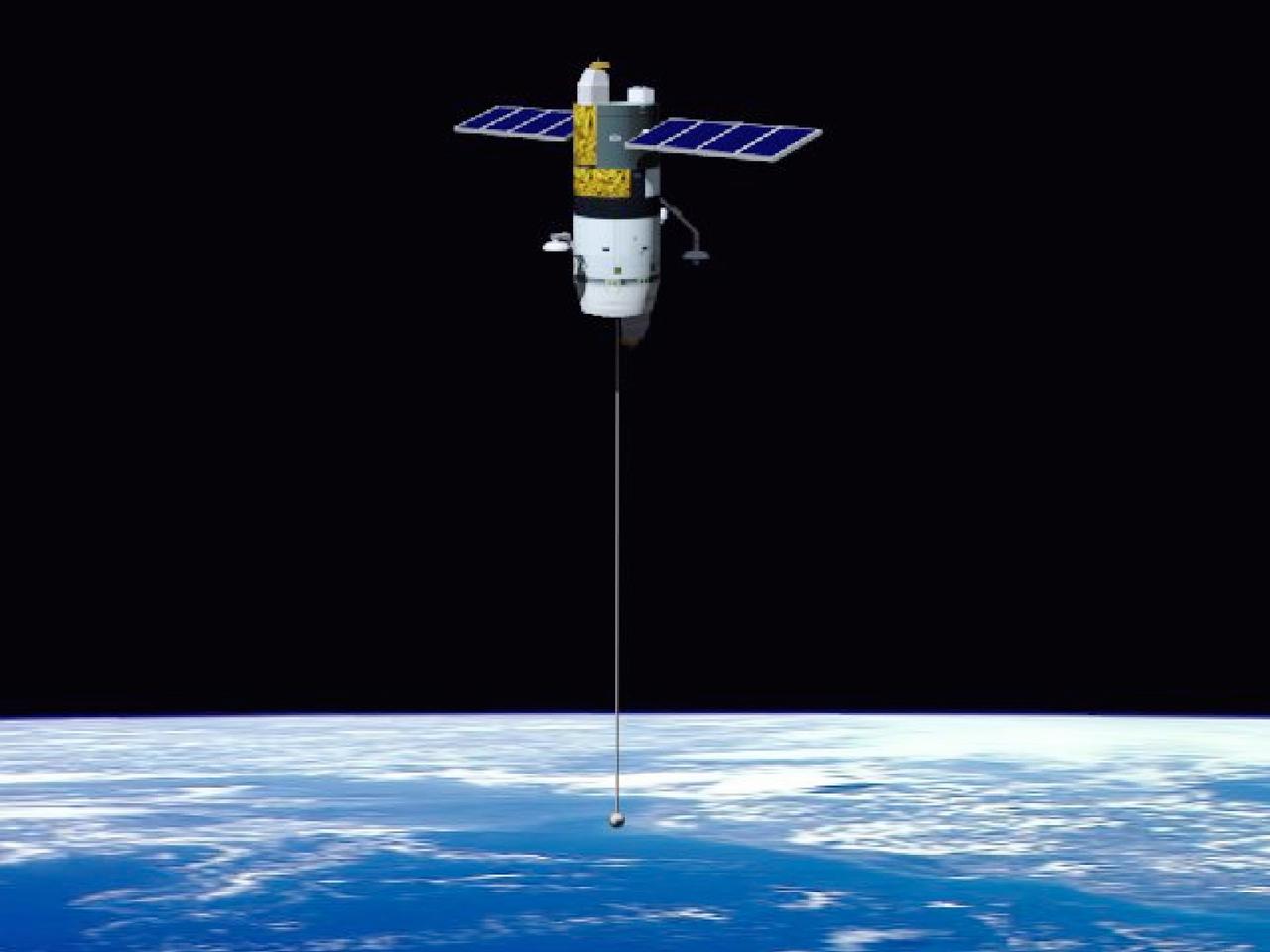
This picture is an artist's concept of an orbiting vehicle using the Electrodynamic Tethers Propulsion System. Relatively short electrodynamic tethers can use solar power to push against a planetary magnetic field to achieve propulsion without the expenditure of propellant.
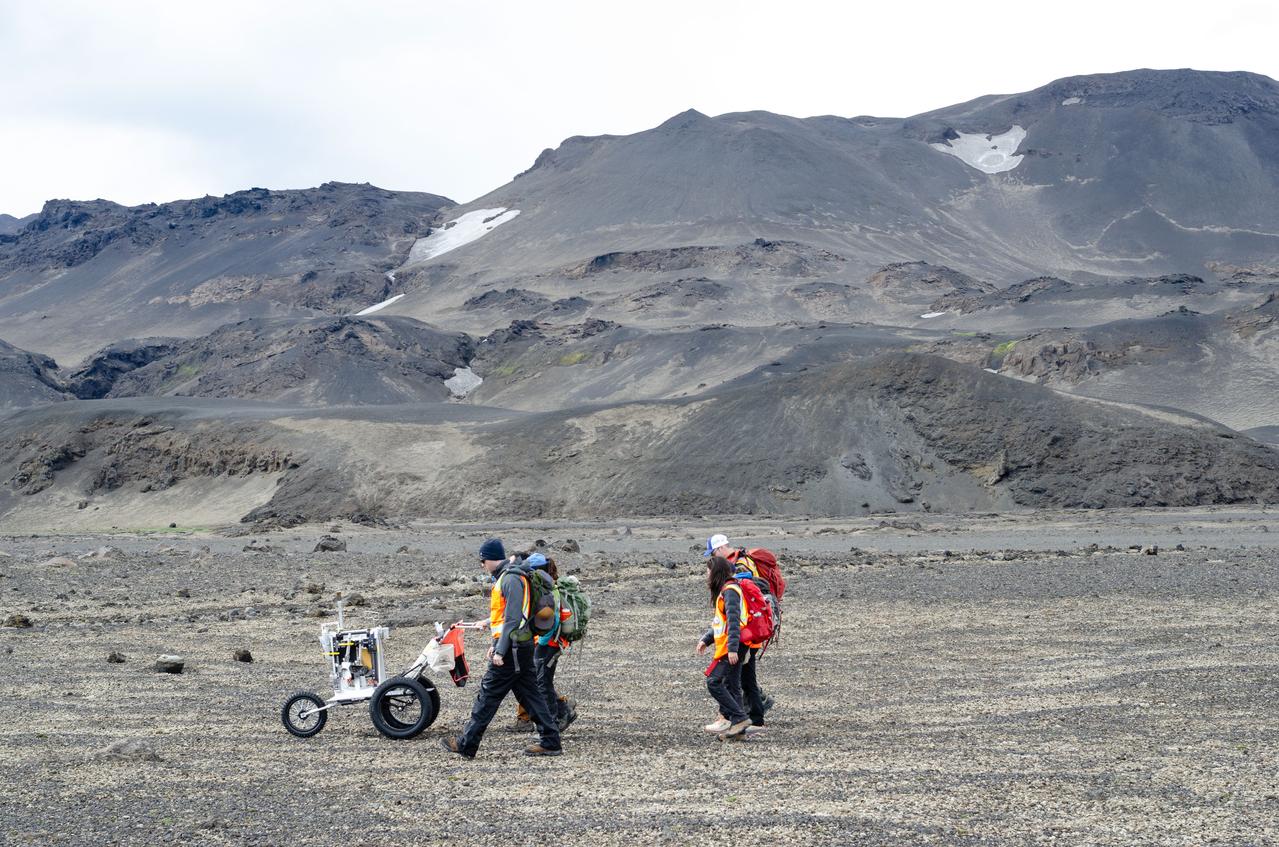
jsc2023e041422 --- Artemis II science trainers push a lunar tool cart across the lunar-like landscape of Iceland during an Artemis II crew geology field training.
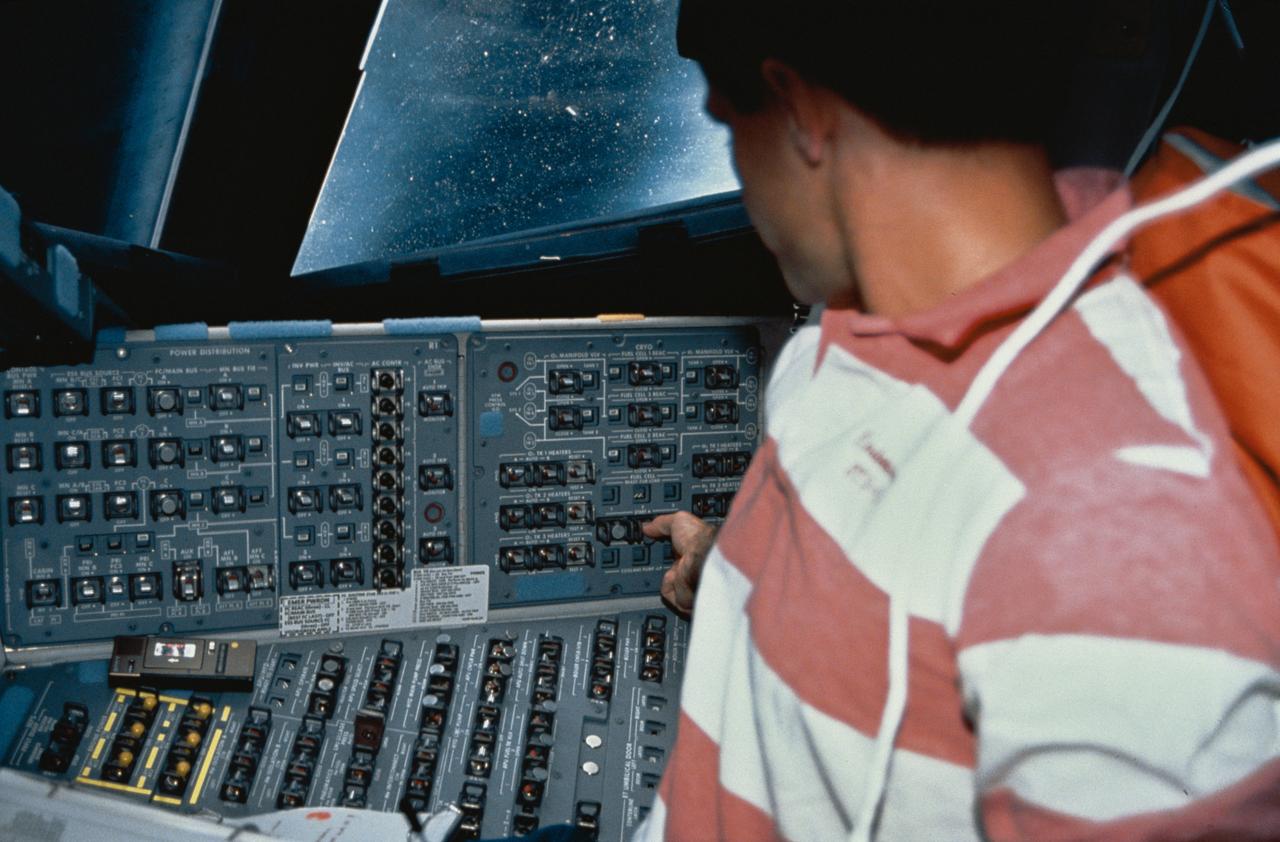
STS054-40-022 (13-19 Jan 1993) --- Astronaut Donald R. McMonagle, pilot, pushes a control switch for one of Endeavour's fuel cells from his station on the forward flight deck.
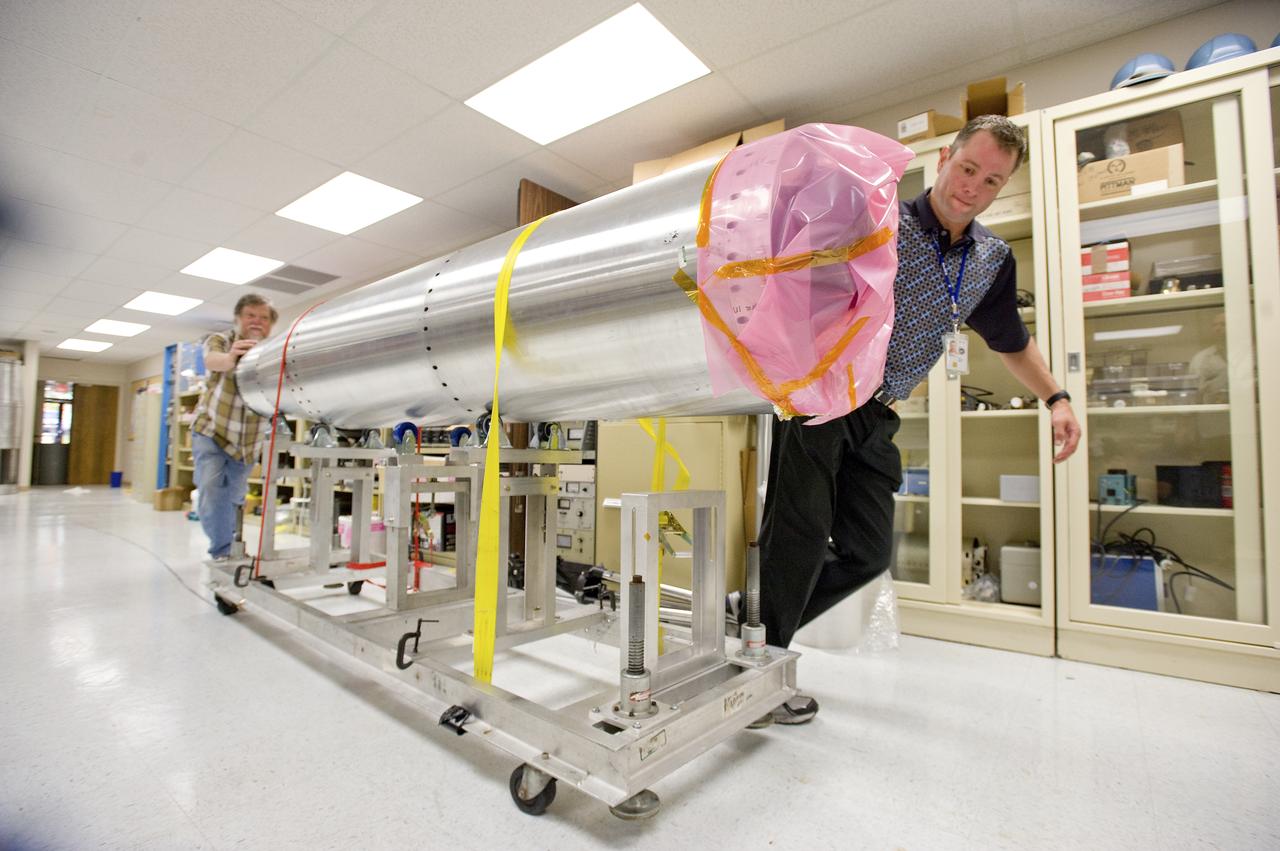
DR. JONATHAN CIRTAIN AND ED WEST PUSH SUMI OUT OF THE LAB AND TOWARD THE LOADING DOCK. SUMI SHIPPED TO WHITE SANDS MISSILE RANGE ON MAY 14, 2010.
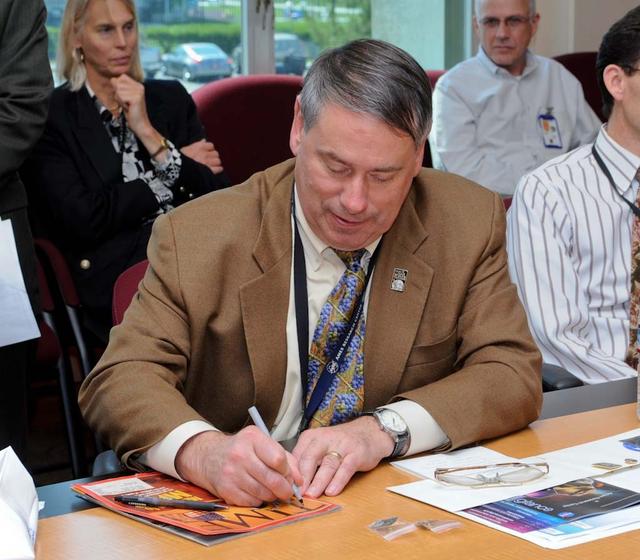
NASA's 50th Anniversay year. Panel discussion with four of NASA AMES's past center directors on how their tenure effected Ames and NASA. On the projects they pushed for and/or pushed forward and the culture of the center and the agency and how that worked for or against Ames, as well as major contributions of the time made by Ames Research Center. Panel L-R; Hans Mark, Sy Syvertson, Dale Compton, Scott Hubbard and Pete Worden, present director. (Past Directors served for periods from 1969 thru 2006) Pete Worden signing a Time Magazine cover with a story about NASA's Mission to Mars. for a Space fan from Flordia.
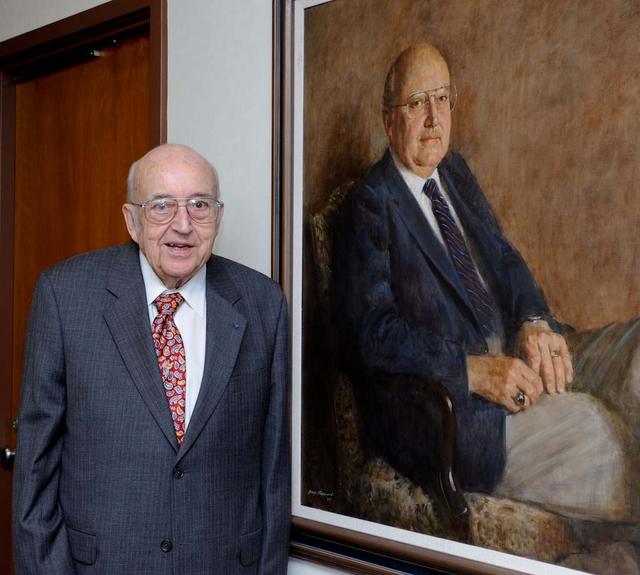
NASA's 50th Anniversay year. Panel discussion with four of NASA AMES's past center directors on how their tenure effected Ames and NASA. On the projects they pushed for and/or pushed forward and the culture of the center and the agency and how that worked for or against Ames, as well as major contributions of the time made by Ames Research Center. Panel L-R; Hans Mark, Sy Syvertson, Dale Compton, Scott Hubbard and Pete Worden, present director. (Past Directors served for periods from 1969 thru 2006) Sy Syverson posses with his portrait hanging in the hall of NASA Ames Administration Building N-200.
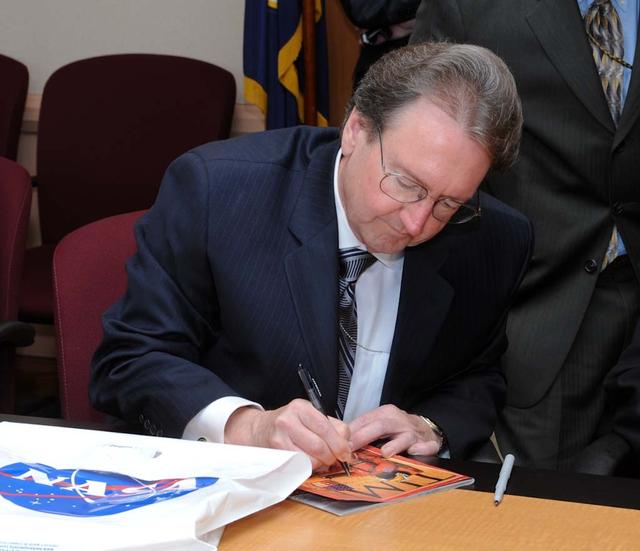
NASA's 50th Anniversay year. Panel discussion with four of NASA AMES's past center directors on how their tenure effected Ames and NASA. On the projects they pushed for and/or pushed forward and the culture of the center and the agency and how that worked for or against Ames, as well as major contributions of the time made by Ames Research Center. Panel L-R; Hans Mark, Sy Syvertson, Dale Compton, Scott Hubbard and Pete Worden, present director. (Past Directors served for periods from 1969 thru 2006) Scott Hubbard signing a Time Magazine cover with a story about NASA's Mission to Mars. for a Space fan from Flordia.
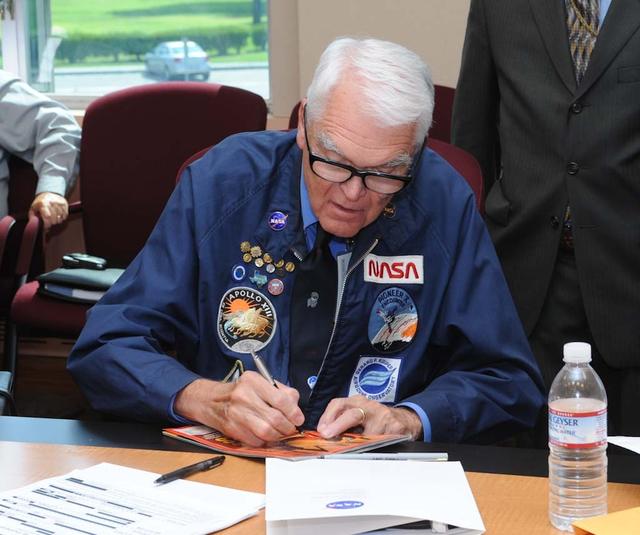
NASA's 50th Anniversay year. Panel discussion with four of NASA AMES's past center directors on how their tenure effected Ames and NASA. On the projects they pushed for and/or pushed forward and the culture of the center and the agency and how that worked for or against Ames, as well as major contributions of the time made by Ames Research Center. Panel L-R; Hans Mark, Sy Syvertson, Dale Compton, Scott Hubbard and Pete Worden, present director. (Past Directors served for periods from 1969 thru 2006) Hans Mark signing a Time Magazine cover with a story about NASA's Mission to Mars. for a Space fan from Flordia.
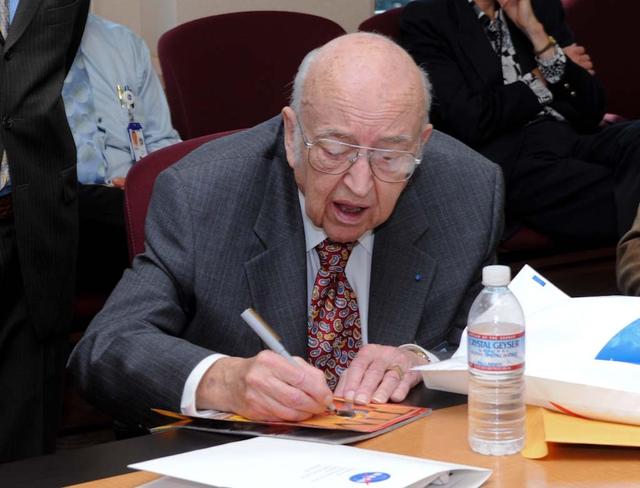
NASA's 50th Anniversay year. Panel discussion with four of NASA AMES's past center directors on how their tenure effected Ames and NASA. On the projects they pushed for and/or pushed forward and the culture of the center and the agency and how that worked for or against Ames, as well as major contributions of the time made by Ames Research Center. Panel L-R; Hans Mark, Sy Syvertson, Dale Compton, Scott Hubbard and Pete Worden, present director. (Past Directors served for periods from 1969 thru 2006) Sy Syvertson signing a Time Magazine cover with a story about NASA's Mission to Mars. for a Space fan from Flordia.
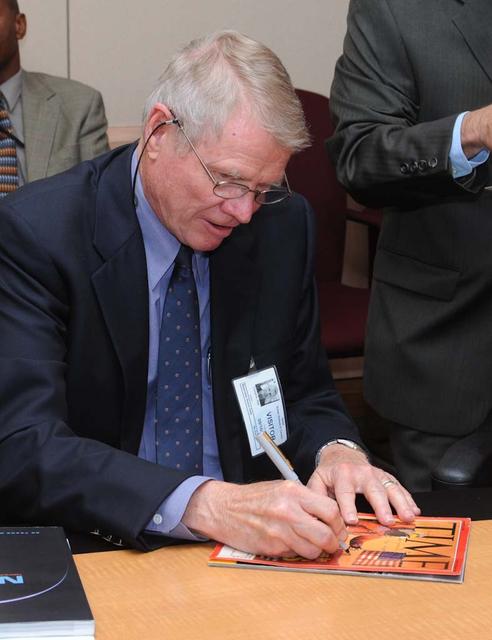
NASA's 50th Anniversay year. Panel discussion with four of NASA AMES's past center directors on how their tenure effected Ames and NASA. On the projects they pushed for and/or pushed forward and the culture of the center and the agency and how that worked for or against Ames, as well as major contributions of the time made by Ames Research Center. Panel L-R; Hans Mark, Sy Syvertson, Dale Compton, Scott Hubbard and Pete Worden, present director. (Past Directors served for periods from 1969 thru 2006) Dale Compton signing a Time Magazine cover with a story about NASA's Mission to Mars. for a Space fan from Flordia.
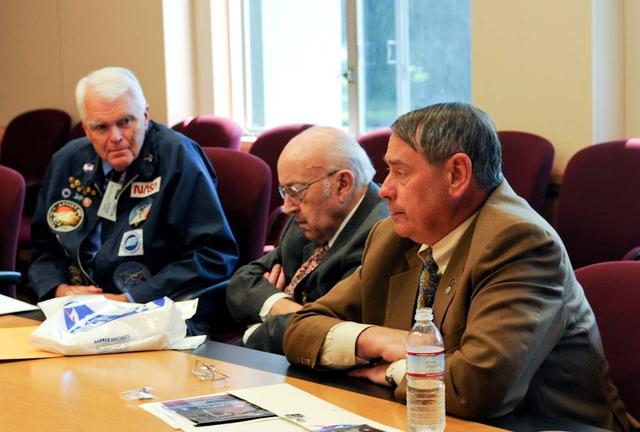
NASA's 50th Anniversay year. Panel discussion with four of NASA AMES's past center directors on how their tenure effected Ames and NASA. On the projects they pushed for and/or pushed forward and the culture of the center and the agency and how that worked for or against Ames, as well as major contributions of the time made by Ames Research Center. Panel L-R; Hans Mark, Sy Syvertson, Dale Compton, Scott Hubbard and Pete Worden, present director. (Past Directors served for periods from 1969 thru 2006) at a round table in the Boyd Room of N-200.
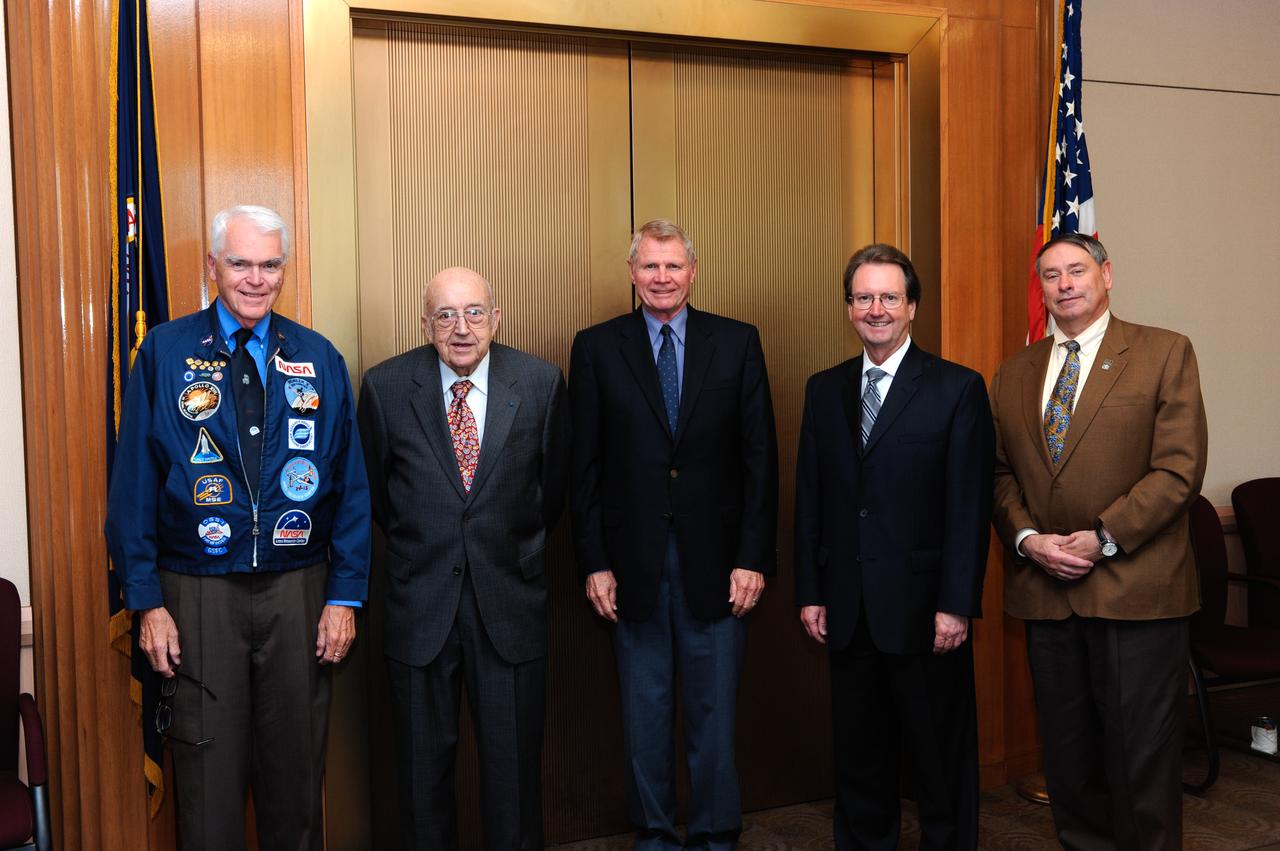
NASA's 50th Anniversay year. Panel discussion with four of NASA AMES's past center directors on how their tenure effected Ames and NASA. On the projects they pushed for and/or pushed forward and the culture of the center and the agency and how that worked for or against Ames, as well as major contributions of the time made by Ames Research Center. Panel L-R; Hans Mark, Sy Syvertson, Dale Compton, Scott Hubbard and Pete Worden, present director. (Past Directors served for periods from 1969 thru 2006) Ames Directors L-R: Hans Mark, Sy Syvertson, Dale Compton, Scott Hubbard and Pete Worden

NASA's Mars Reconnaissance Orbiter shows bright ripples line the topography in this region, formed within a past climate. Dark dunes and sand streaks (composed of basaltic sand) have moved and filled lower areas, pushed by more recent winds from the top towards the bottom of this image. Lobo Vallis is named for a river on the Ivory Coast. https://photojournal.jpl.nasa.gov/catalog/PIA22346
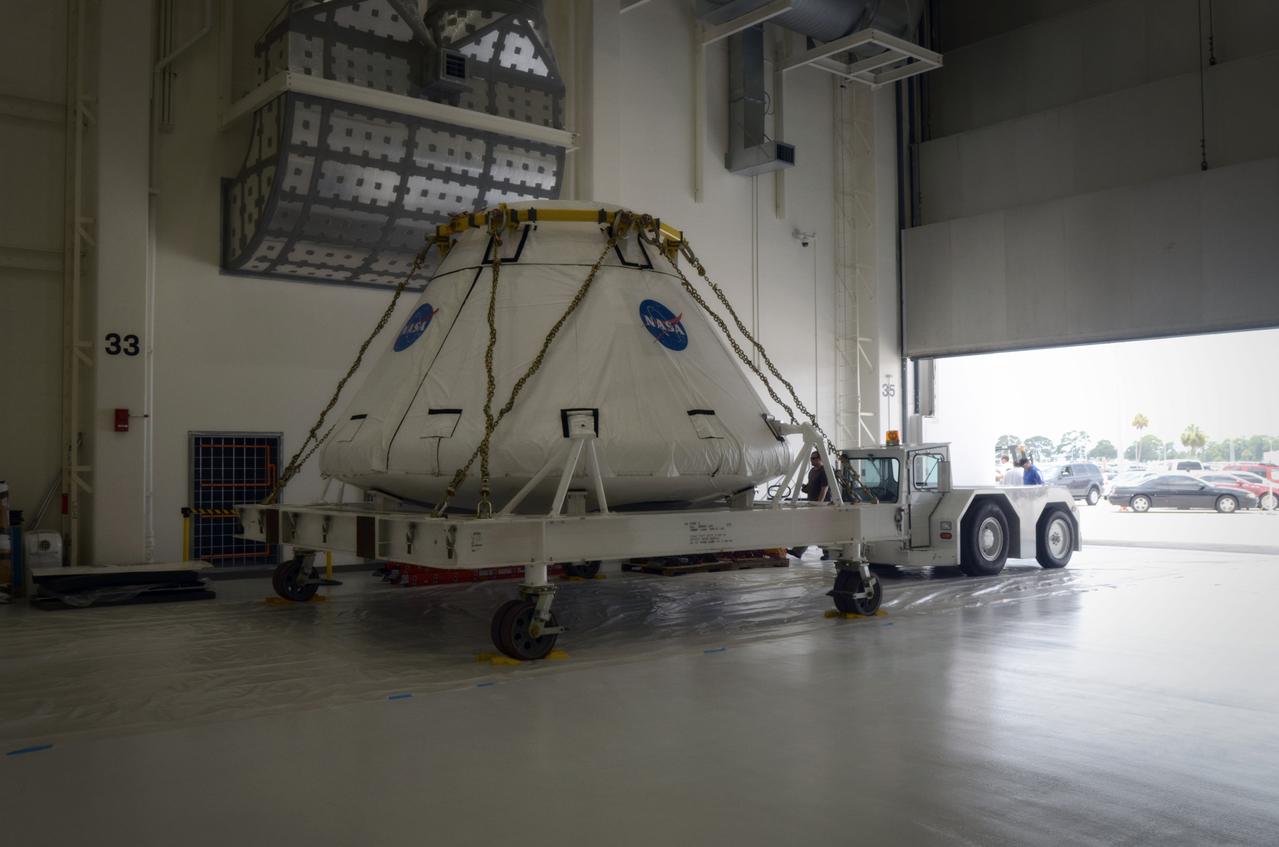
The Orion Pad Abort-1 (PA-1) crew module is pushed into the airlock at the Operations & Checkout (O&C) Building at Kennedy Space Center in Florida on July 11, 2011. Part of Batch image transfer from Flickr.
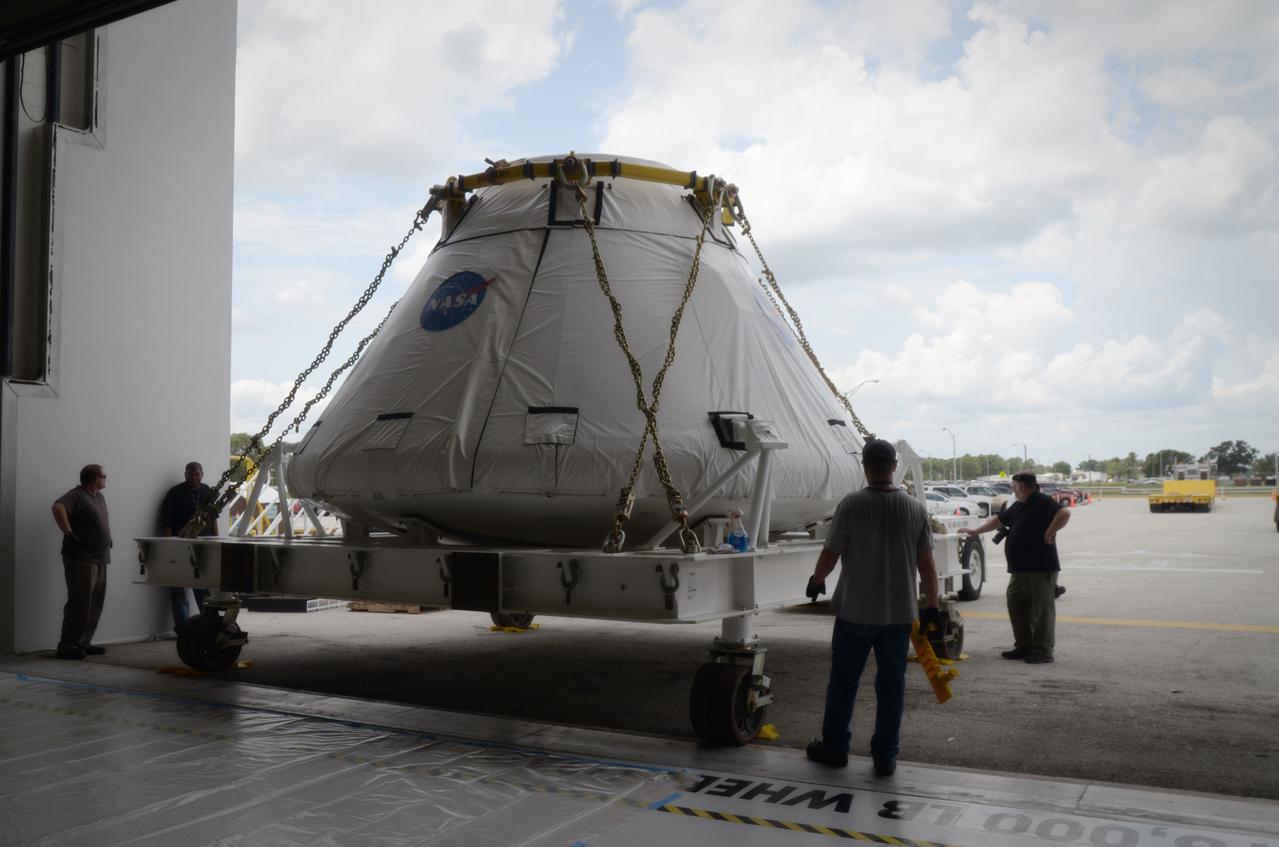
The Orion Pad Abort-1 (PA-1) crew module is pushed into the airlock at the Operations & Checkout (O&C) Building at Kennedy Space Center in Florida on July 11, 2011. Part of Batch image transfer from Flickr.
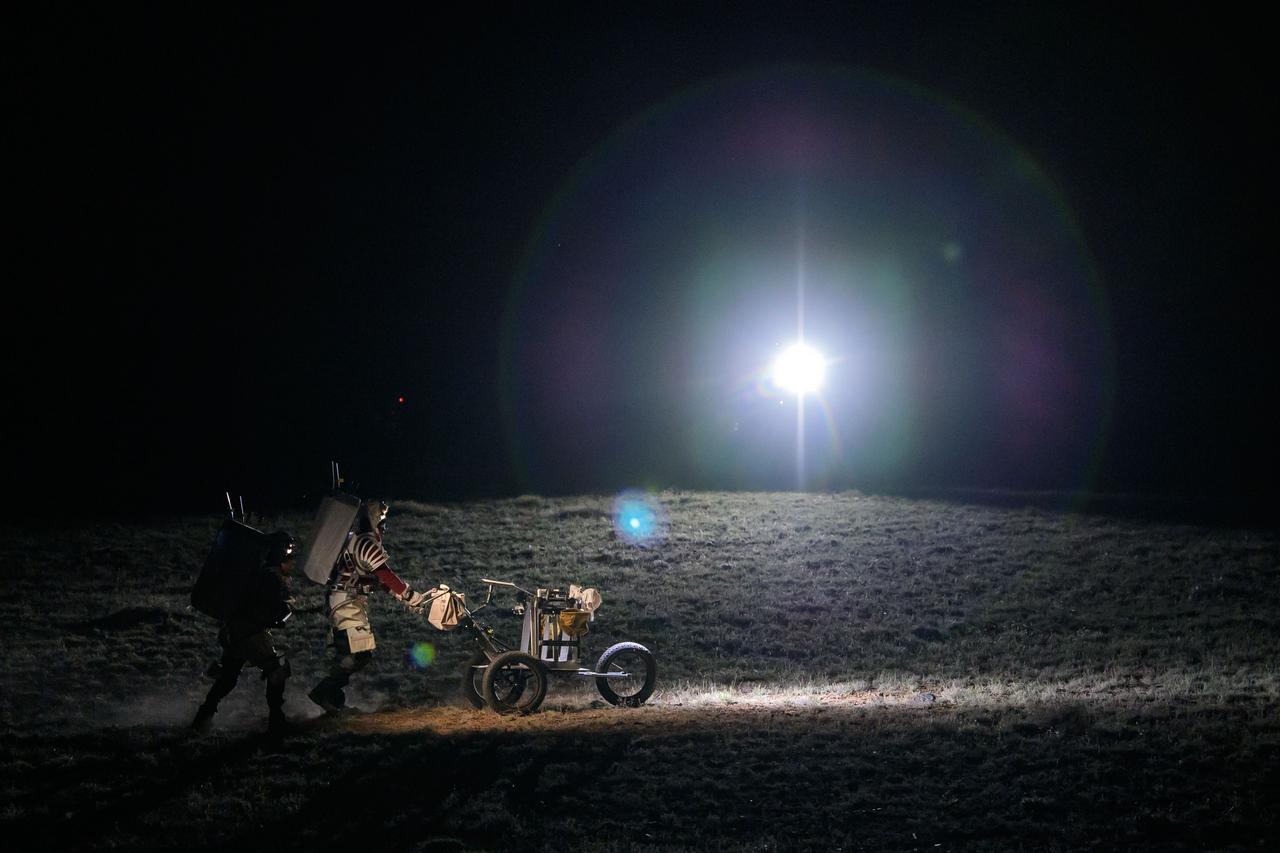
NASA astronaut Andre Douglas pushes a tool cart across the lunar-like landscape while NASA astronaut Kate Rubins follows close behind during a¬¬ nighttime simulated moonwalk in the San Francisco Volcanic Field in Northern Arizona on May 16, 2024. Credit: NASA/Josh Valcarcel
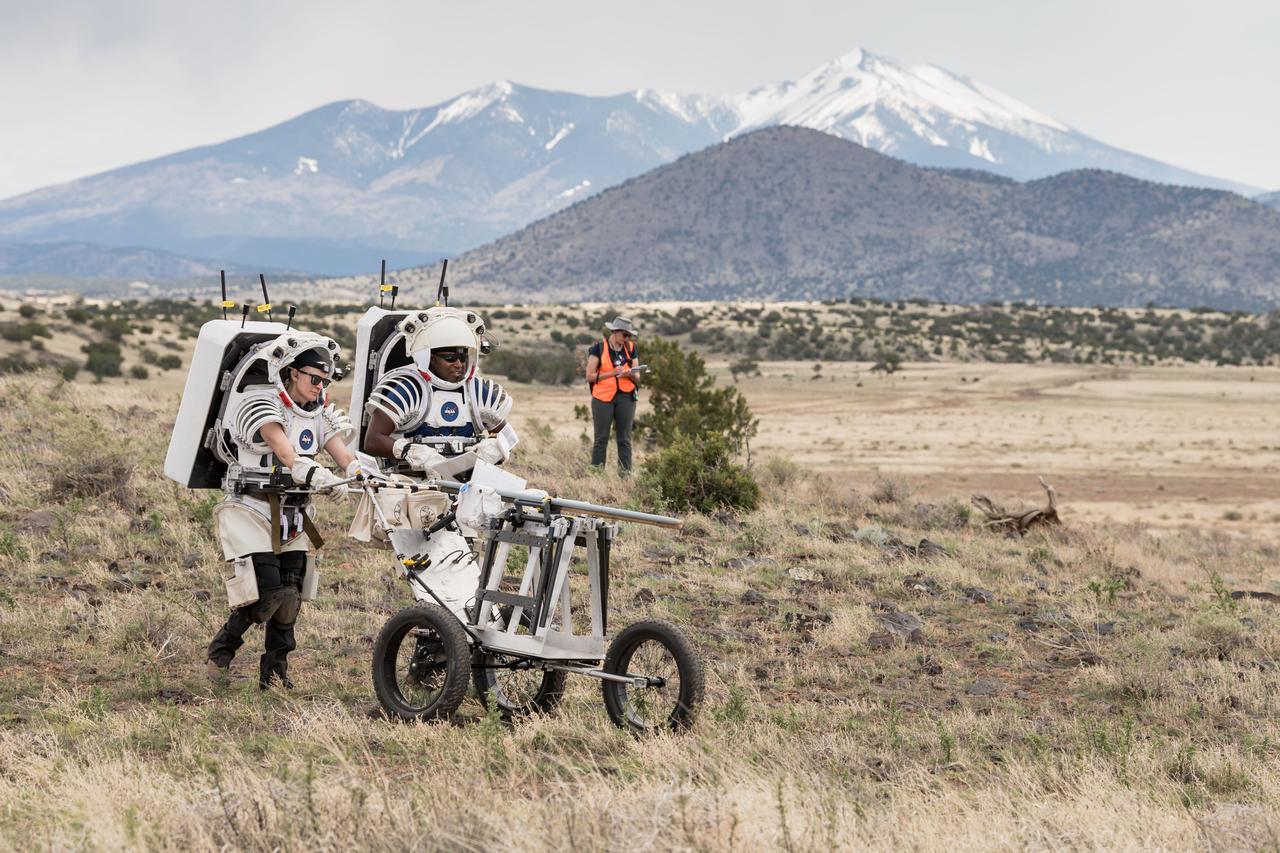
NASA astronauts Kate Rubins and Andre Douglas push a tool cart loaded with lunar tools through the San Francisco Volcanic Field north of Flagstaff, Arizona, as they practice moonwalking operations for Artemis III on May 13, 2024. Credit: NASA/Josh Valcarcel
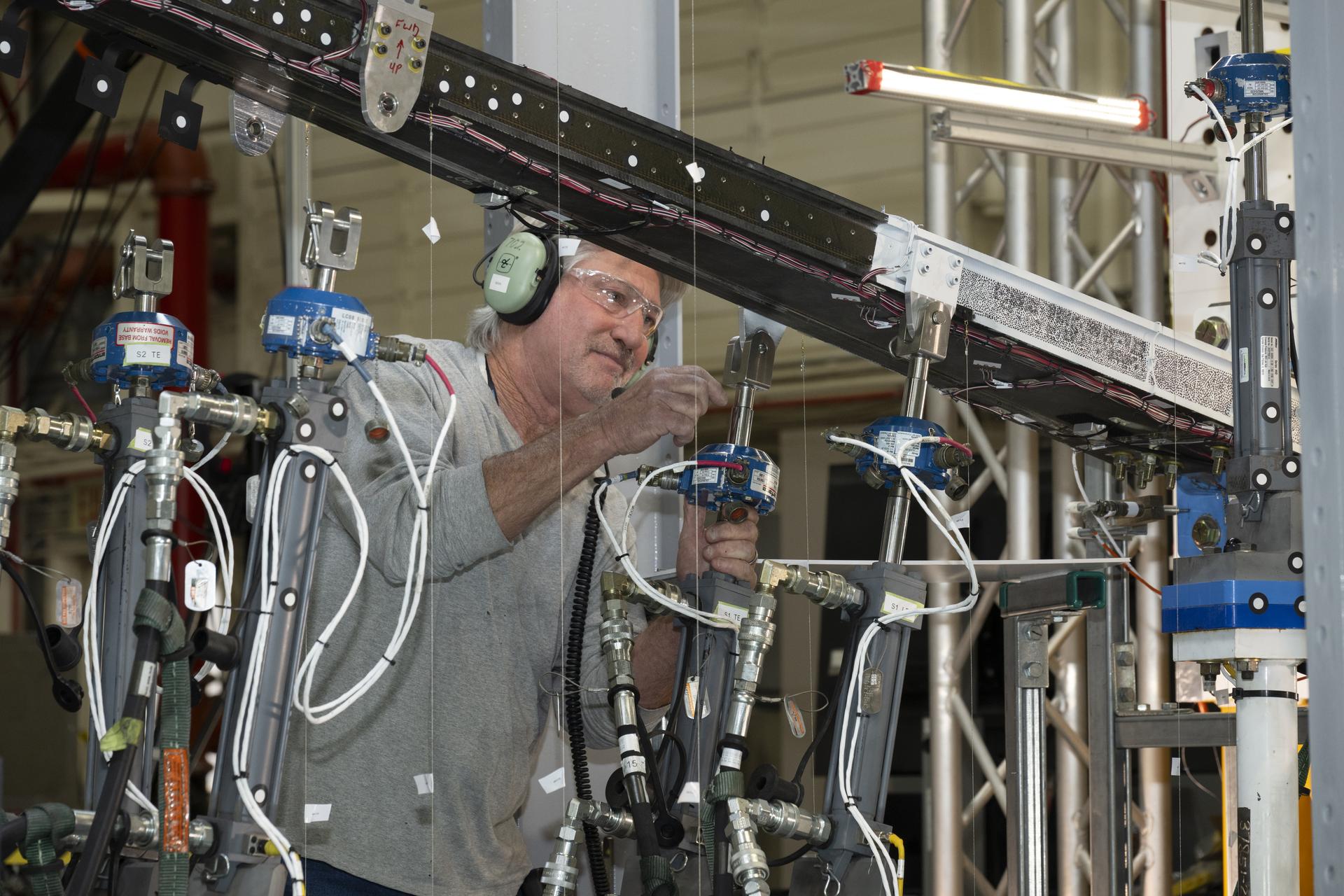
NASA research engineer Walter Hargis regulates the 15-foot Structural Wing Experiment Evaluating Truss-bracing model in the Flight Loads Laboratory at NASA’s Armstrong Flight Research Center in Edwards, California, on Tuesday, March 31, 2026. The model is part of NASA’s research to develop technologies for future ultra-efficient aircraft.
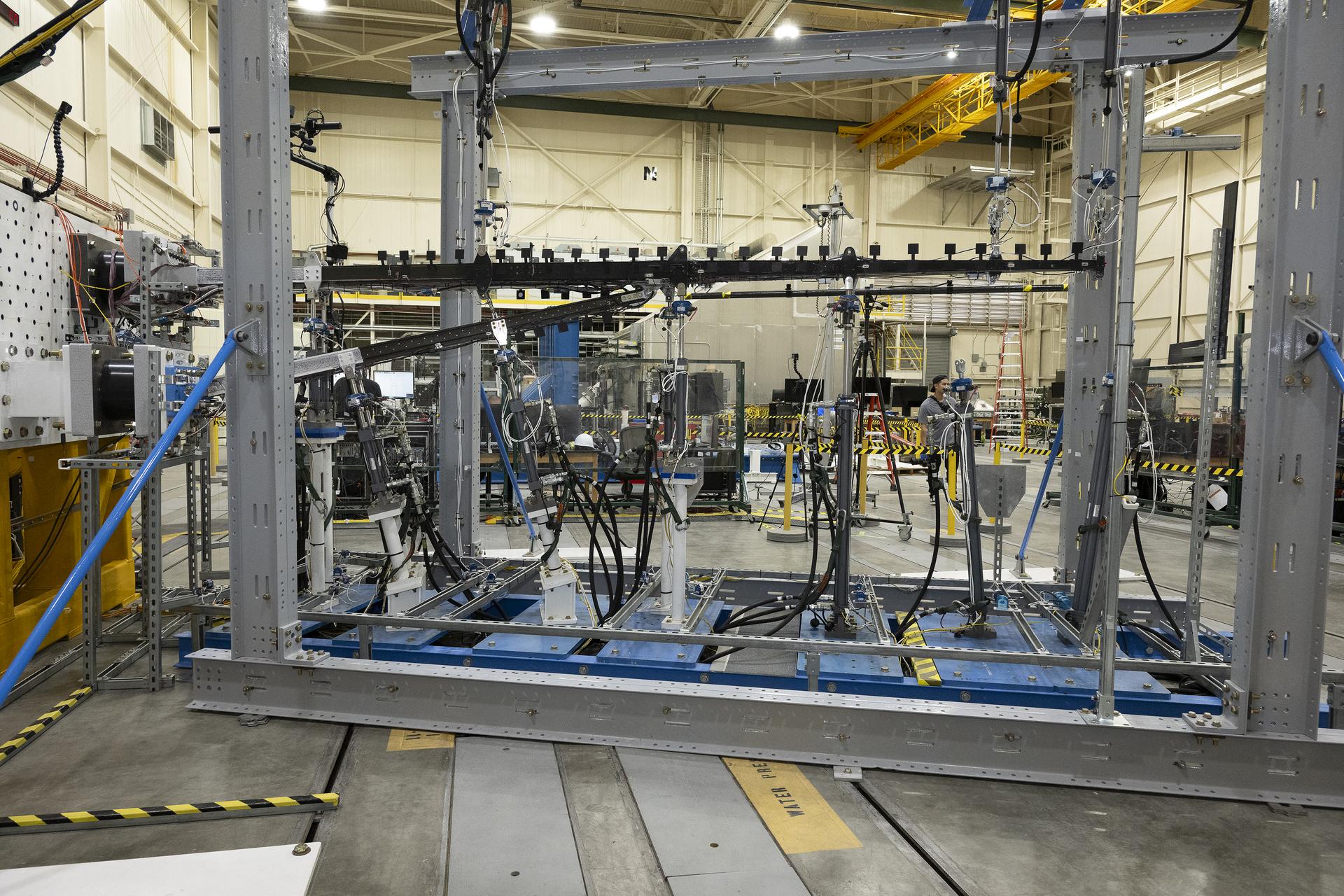
The 15-foot Structural Wing Experiment Evaluating Truss-bracing test article is fully installed in the Flight Loads Laboratory at NASA’s Armstrong Flight Research Center in Edwards, California, on Wednesday, May 20, 2026. The model is part of NASA’s research to develop technologies for future ultra-efficient aircraft.
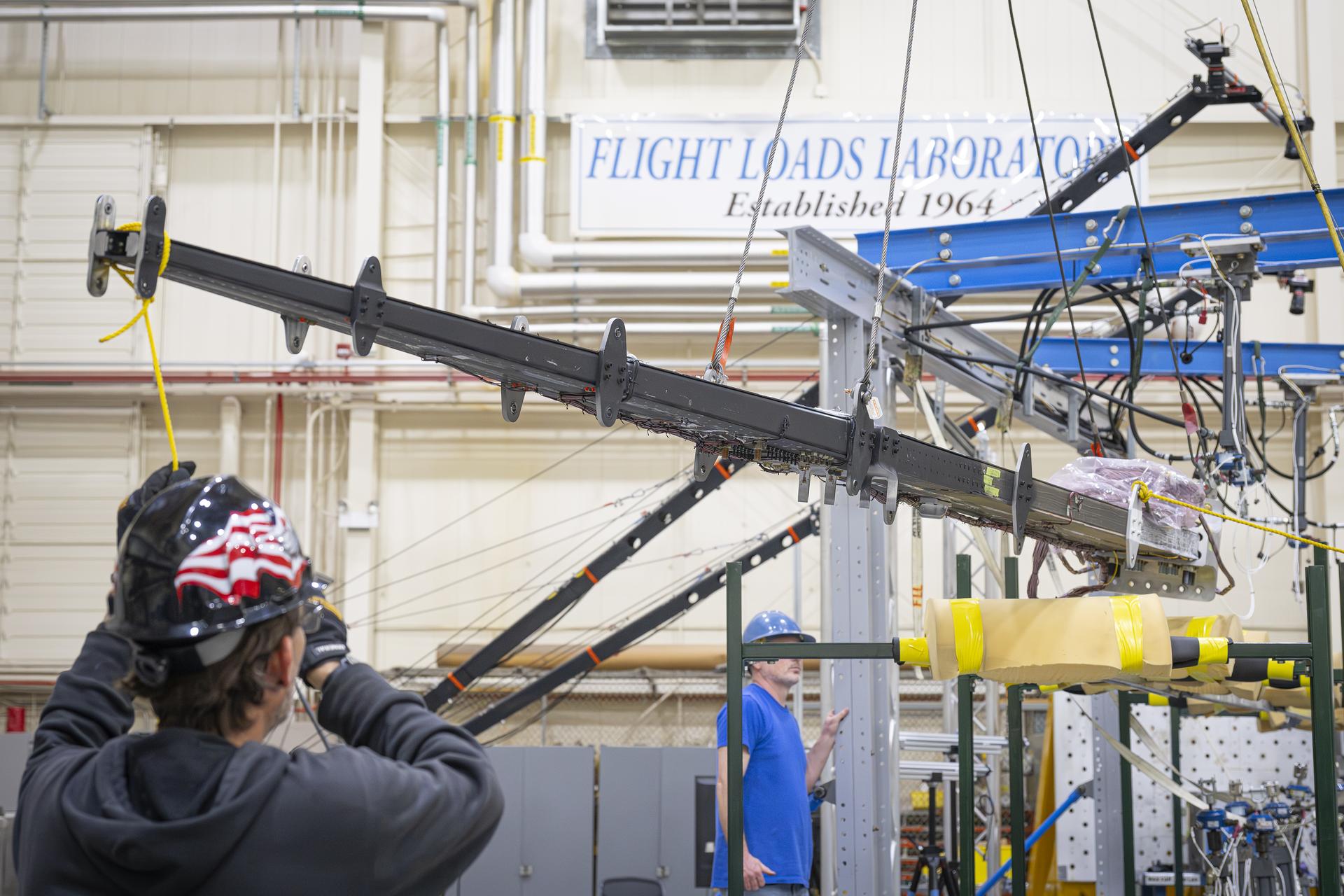
Lab technicians Jeff Howell, left and Chris Mount install the 15-foot Structural Wing Experiment Evaluating Truss-bracing model in the Flight Loads Lab at NASA’s Armstrong Flight Research Center in Edwards, California, Wednesday, February 11, 2026. The model is part of NASA’s research to develop technologies for future ultra-efficient aircraft.
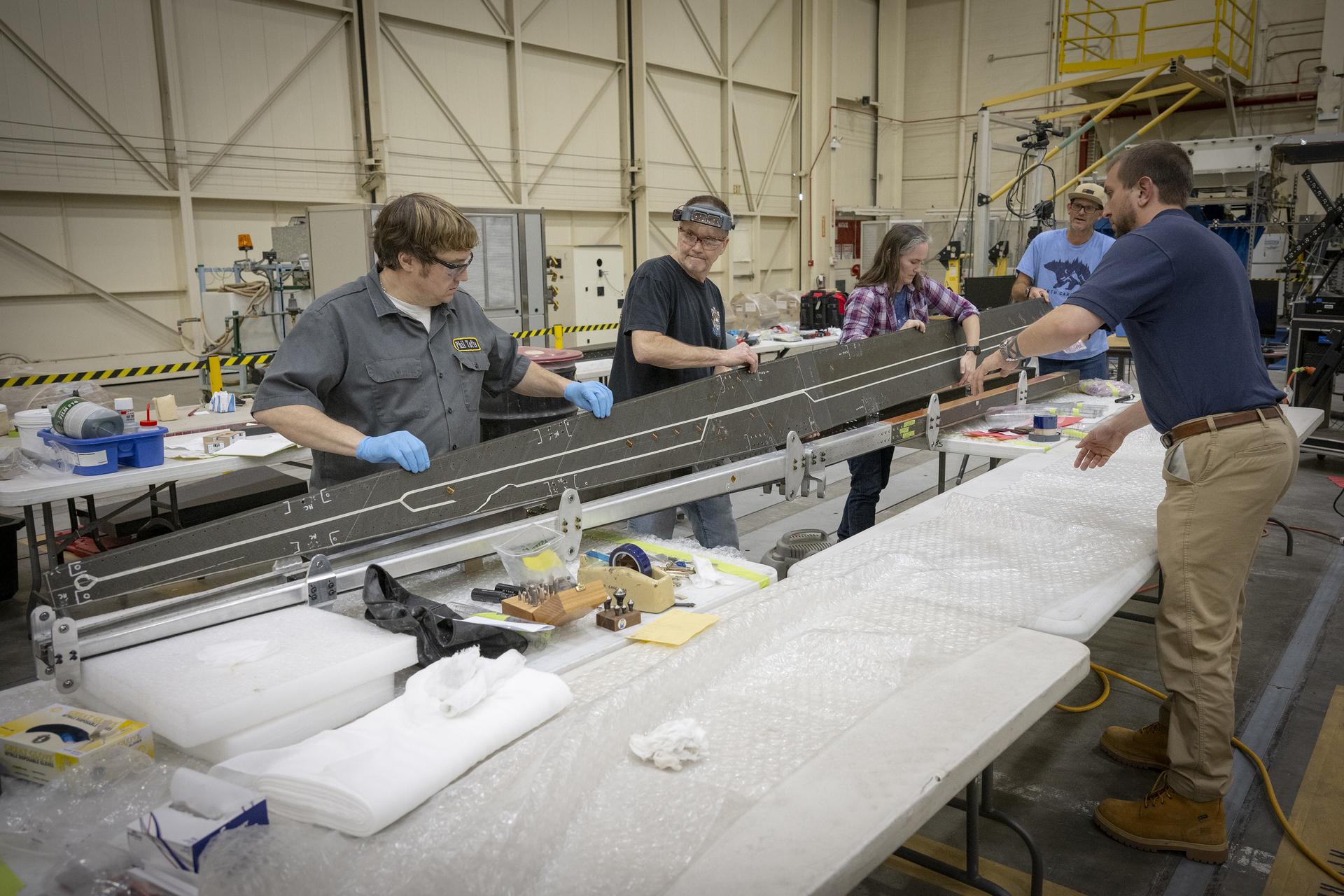
Lab technicians Phil Tofts, Chris McLain, and Jeff Howell and NASA engineers Erin Anderson and Richard Larson prepare the 15-foot Structural Wing Experiment Evaluating Truss-bracing model in the Flight Loads Laboratory at NASA’s Armstrong Flight Research Center in Edwards, California, on Thursday, Dec. 11, 2025. The model is part of NASA’s research to develop technologies for future ultra-efficient aircraft.
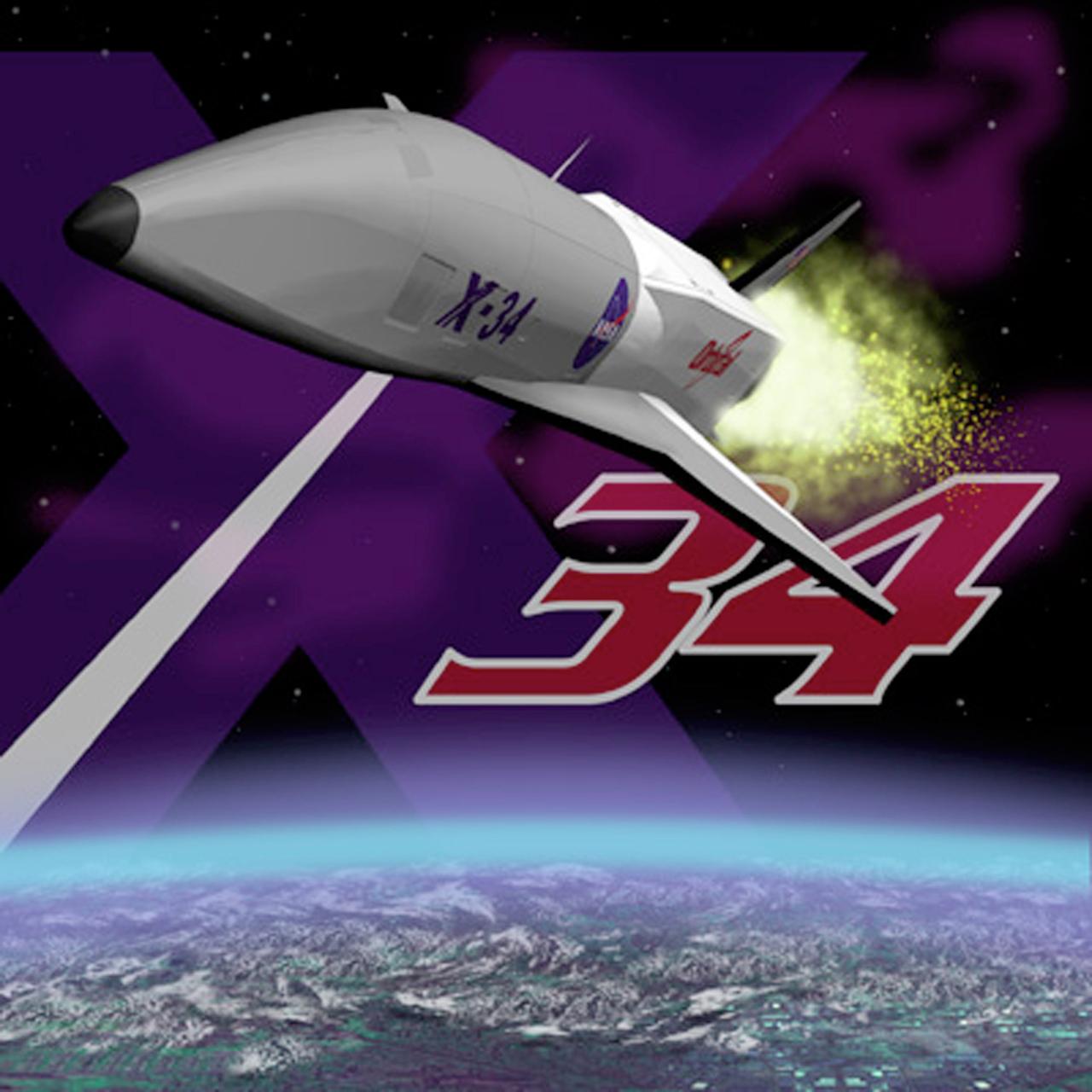
Pictured is NASA's poster art for the X-34 technology Demonstrator. The X-34 was part of NASA's Pathfinder Program which demonstrated advanced space transportation technologies through the use of flight experiments and experimental vehicles. These technology demonstrators and flight experiments would support the Agency's goal of dramatically reducing the cost of access to space and would define the future of space transportation pushing technology into a new era of space development and exploration at the dawn of the new century. The X-34 program was cancelled in 2001.
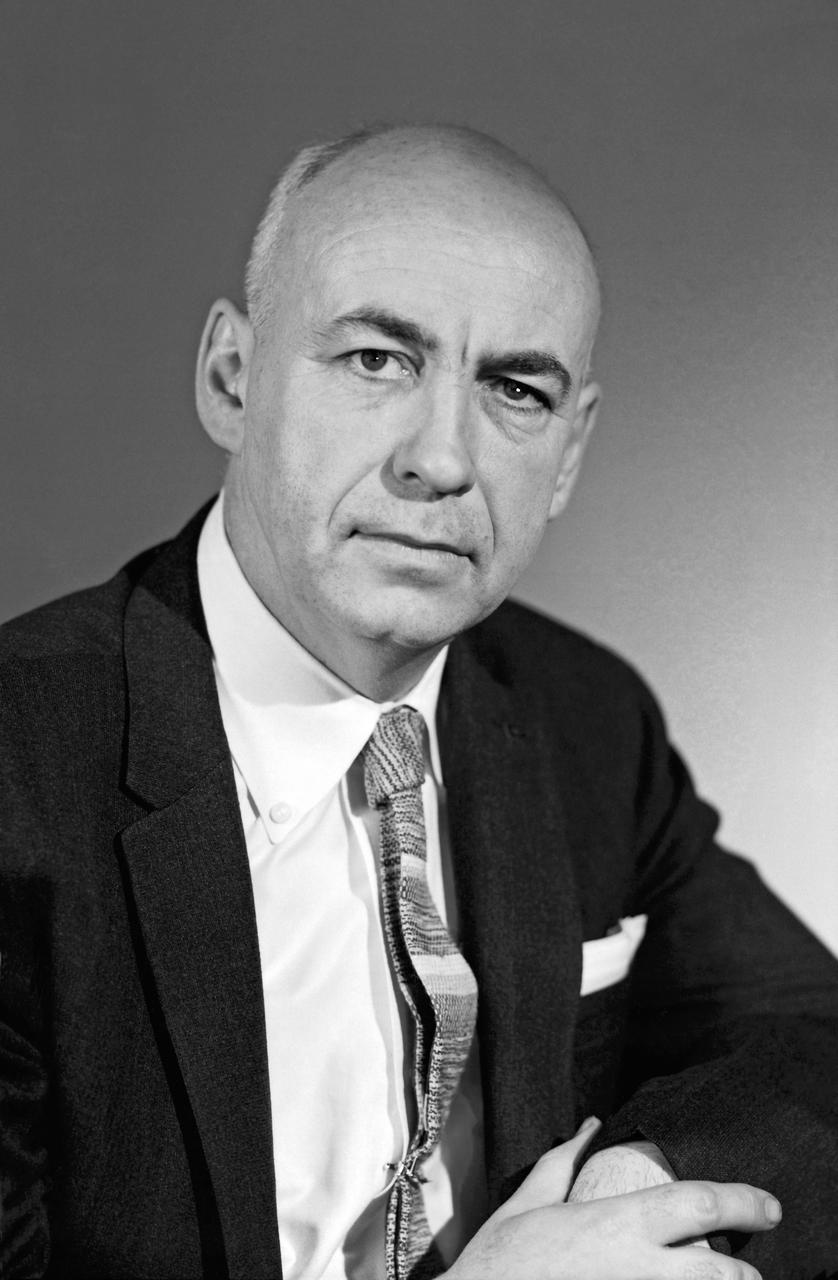
Portrait of Robert R. Gilruth. More than anyone else at Langley, began to push the idea that manned spaceflight was the next great challenge for aeronautic engineers. As head of NASA s Space Task Group, he was responsible for planning and carrying out Project Mercury, the country's first manned spaceflight program. Photograph published in Engineer in Charge: A History of the Langley Aeronautical Laboratory, 1917-1958 by James R. Hansen. Page 386.
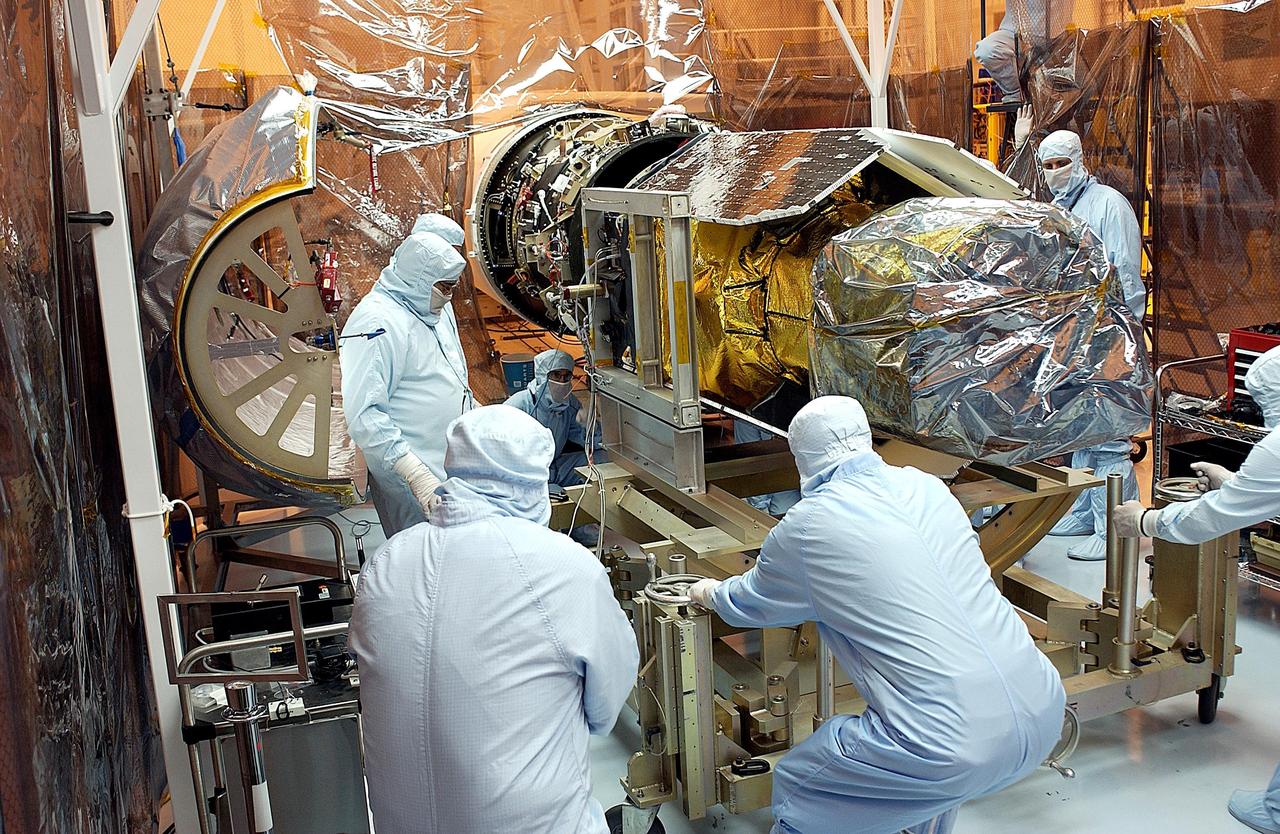
KENNEDY SPACE CENTER, FLA. -- Workers push the Galaxy Evolution Explorer (GALEX) spacecraft toward the Pegasus XL launch vehicle for a second mating. The March 26 launch was delayed to enable protective covers to be added to the Optical Wheel Assembly (OWA) on GALEX to avoid the possibility of a missing electrical cable fastener floating into and jamming the mechanism when GALEX is in orbit. Launch of GALEX is now scheduled for no earlier than April 26.
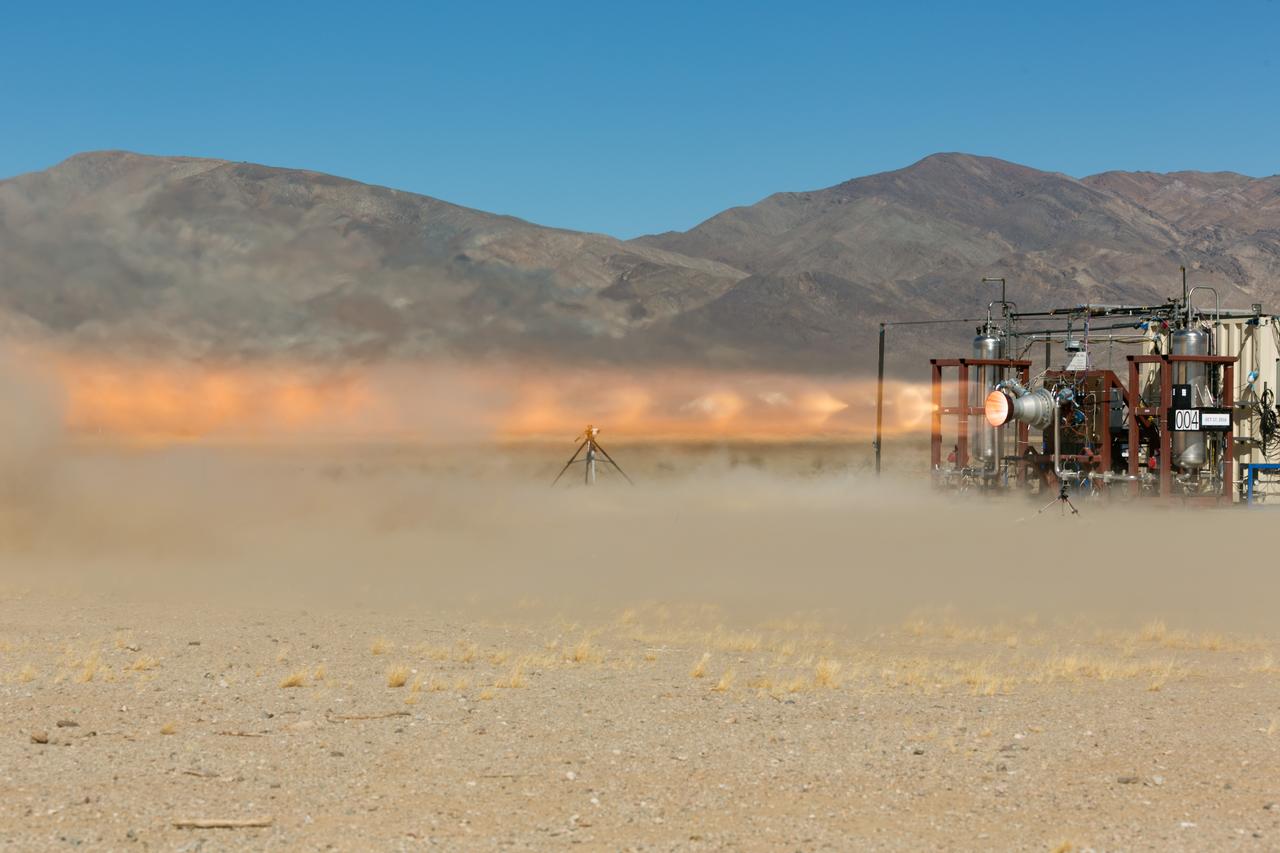
A launch abort engine built by Aerojet Rocketdyne is hot-fired during tests in the Mojave Desert in California. The engine produces up to 40,000 pounds of thrust and burns hypergolic propellants. The engines have been designed and built for use on Boeing’s CST-100 Starliner spacecraft in sets of four. In an emergency at the pad or during ascent, the engines would ignite to push the Starliner and its crew out of danger.
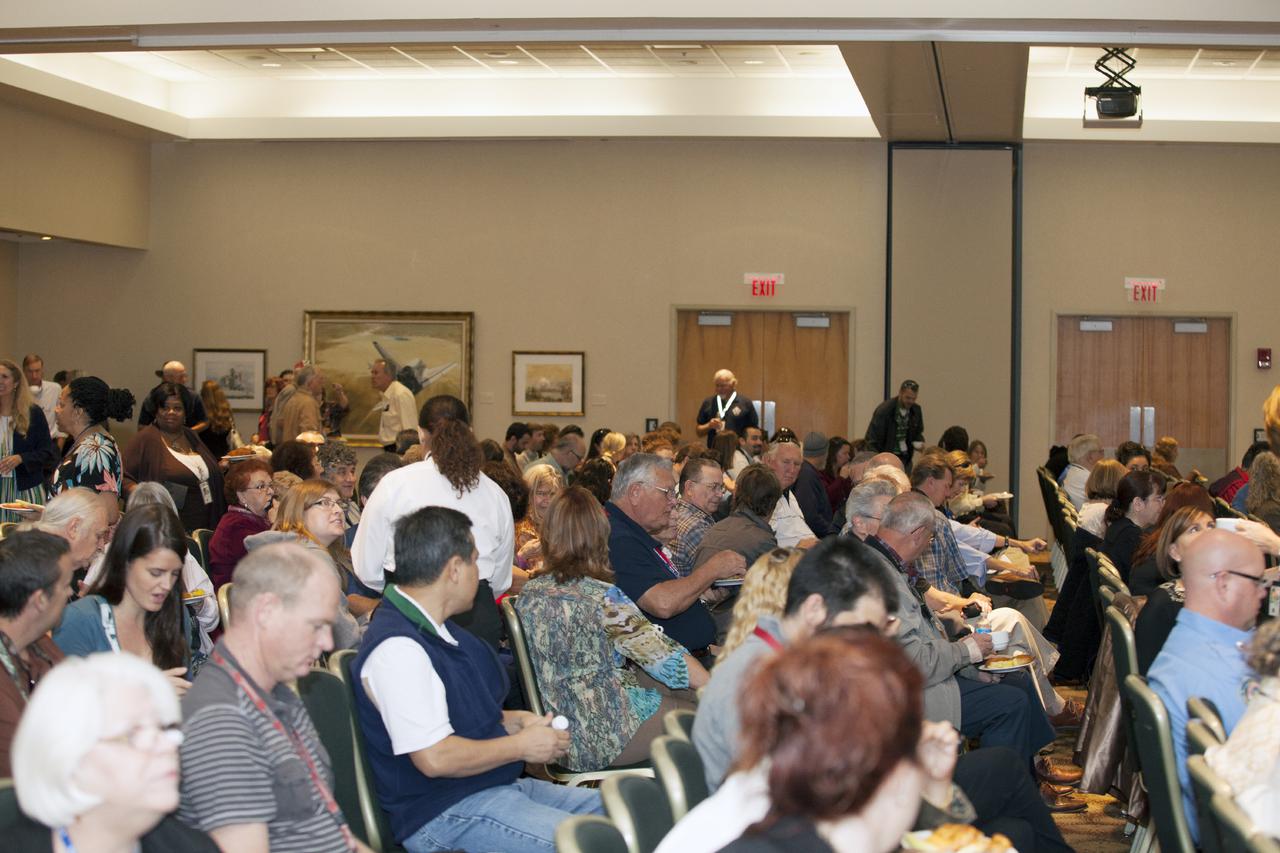
CAPE CANAVERAL, Fla. – NASA Kennedy Space Center volunteers fill the Debus Conference Facility at the Kennedy Space Center Visitor Complex in Florida for a KSC Volunteer Appreciation Event. The group was given a briefing by Kennedy Associate Director Kelvin Manning on future prospects for the space center, entitled 'Pushing the Boundaries.' To learn about NASA's Speakers Bureau, visit http:__speakers.grc.nasa.gov_speaker. Photo credit: NASA_Daniel Casper
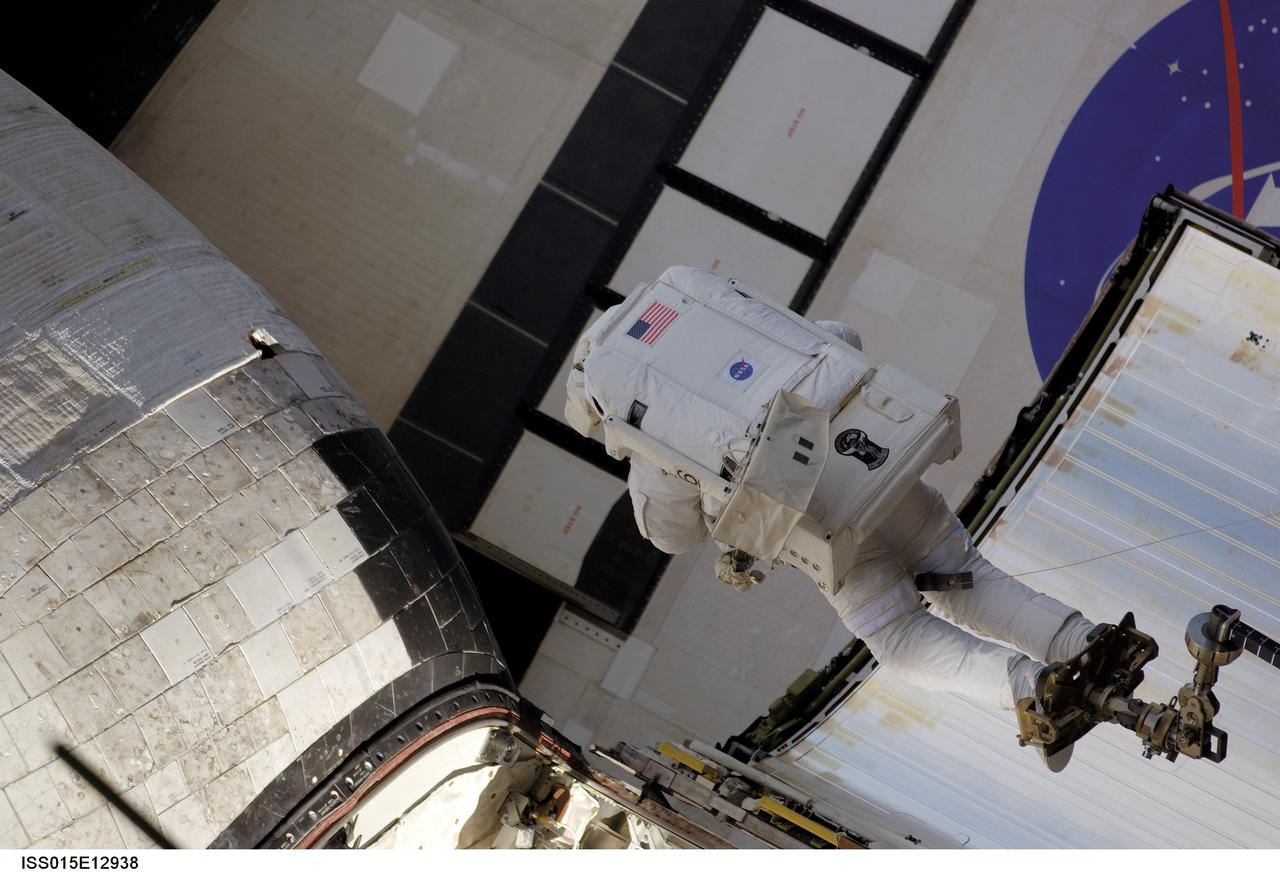
ISS015-E-12938 (15 June 2007) --- Anchored to a foot restraint on Space Shuttle Atlantis' remote manipulator system (RMS) robotic arm, astronaut John "Danny" Olivas, STS-117 mission specialist, moves toward Atlantis' port orbital maneuvering system (OMS) pod that was damaged during the shuttle's climb to orbit. During the repair, Olivas pushed the turned up portion of the thermal blanket back into position, used a medical stapler to secure the layers of the blanket, and pinned it in place against adjacent thermal tile.
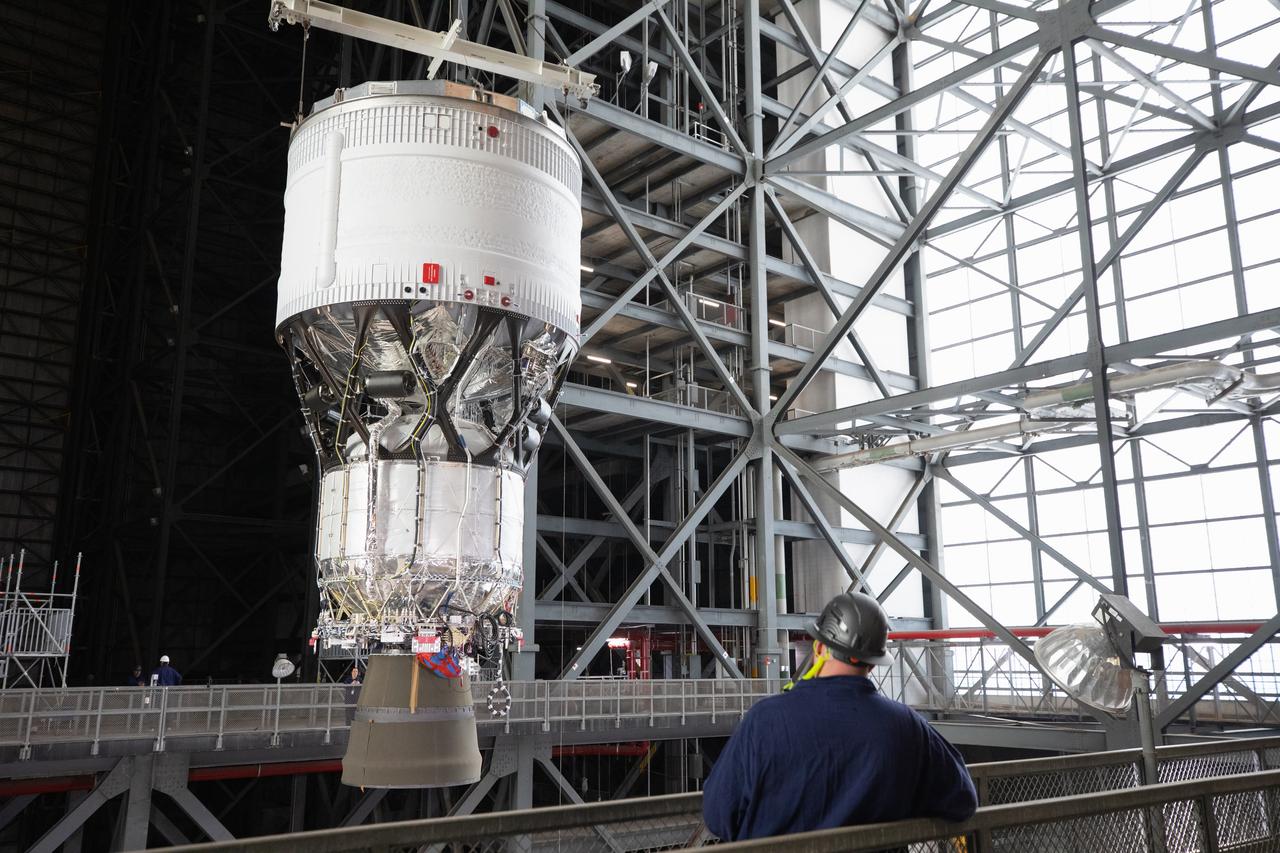
Teams with NASA’s Exploration Ground Systems Program begin integrating the interim cryogenic propulsion stage to the SLS (Space Launch System) launch vehicle stage adapter on Wednesday, April 30, 2025, inside the Vehicle Assembly Building at NASA’s Kennedy Space Center in Florida. The four-story propulsion system, built by Boeing and ULA (United Launch Alliance), is powered by an RL10 engine that will enable the Orion spacecraft to build up enough speed for the push toward the Moon during the Artemis II crewed test flight.
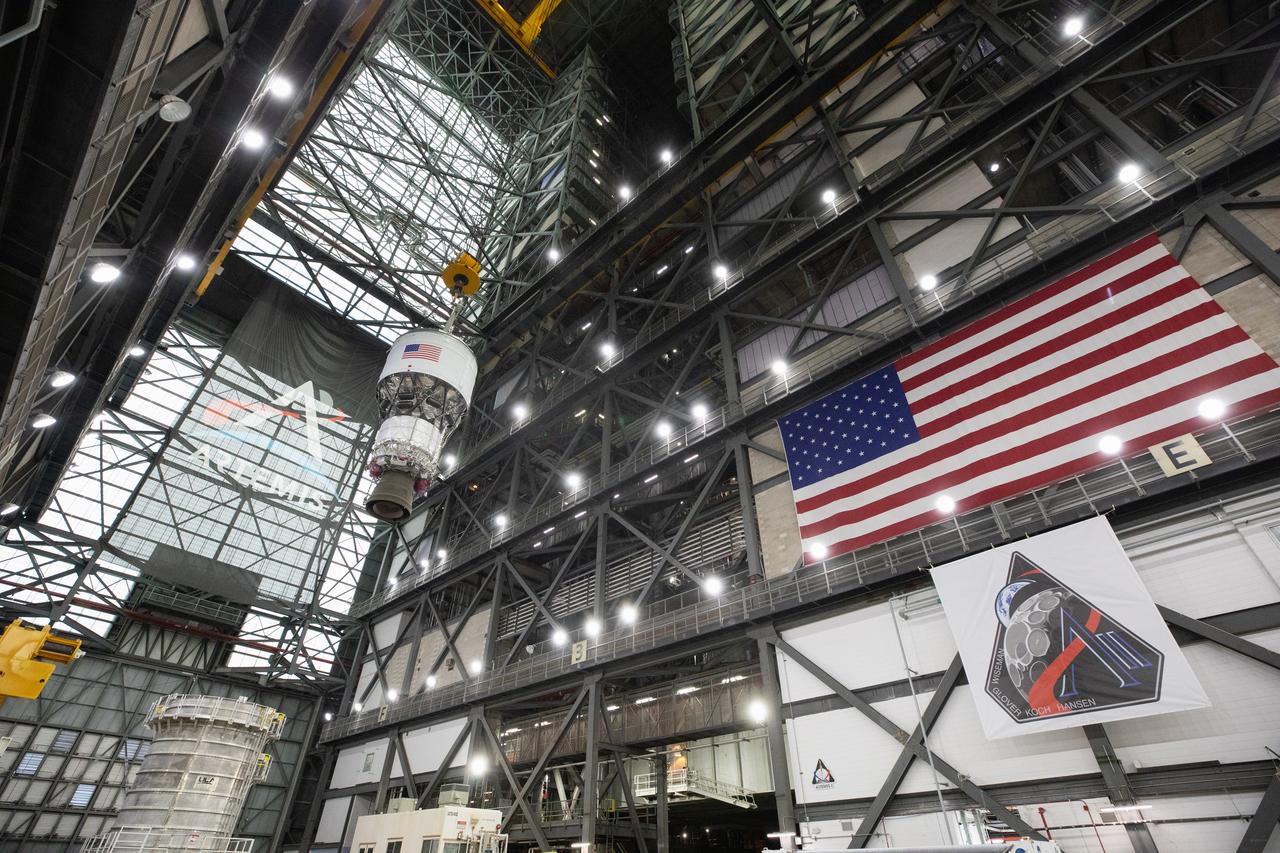
Teams with NASA’s Exploration Ground Systems Program begin integrating the interim cryogenic propulsion stage to the SLS (Space Launch System) launch vehicle stage adapter on Wednesday, April 30, 2025, inside the Vehicle Assembly Building at NASA’s Kennedy Space Center in Florida. The four-story propulsion system, built by Boeing and ULA (United Launch Alliance), is powered by an RL10 engine that will enable the Orion spacecraft to build up enough speed for the push toward the Moon during the Artemis II crewed test flight.
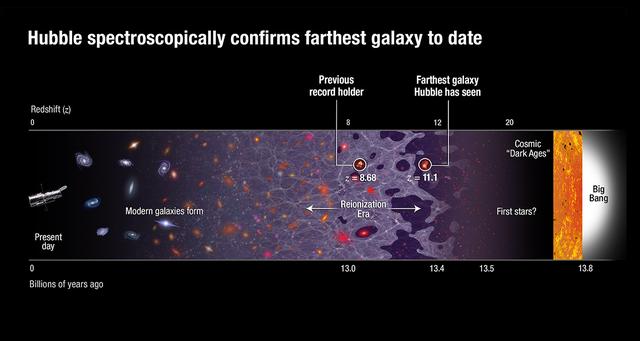
By pushing NASA’s Hubble Space Telescope to its limits, an international team of astronomers has shattered the cosmic distance record by measuring the farthest galaxy ever seen in the universe. This surprisingly bright infant galaxy, named GN-z11, is seen as it was 13.4 billion years in the past, just 400 million years after the Big Bang. GN-z11 is located in the direction of the constellation of Ursa Major. Read more: <a href="http://go.nasa.gov/1oSqHad" rel="nofollow">go.nasa.gov/1oSqHad</a>
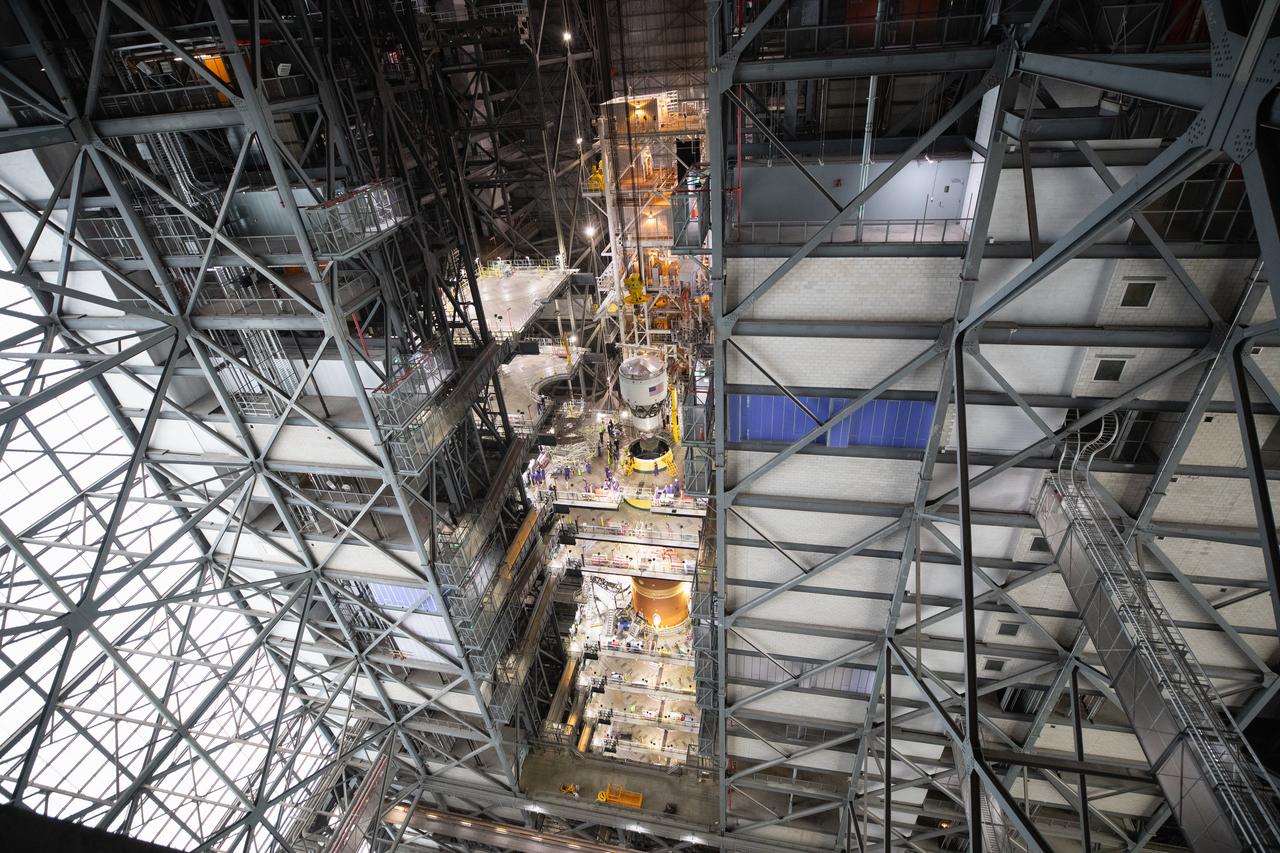
Teams with NASA’s Exploration Ground Systems Program begin integrating the interim cryogenic propulsion stage to the SLS (Space Launch System) launch vehicle stage adapter on Wednesday, April 30, 2025, inside the Vehicle Assembly Building at NASA’s Kennedy Space Center in Florida. The four-story propulsion system, built by Boeing and ULA (United Launch Alliance), is powered by an RL10 engine that will enable the Orion spacecraft to build up enough speed for the push toward the Moon during the Artemis II crewed test flight.
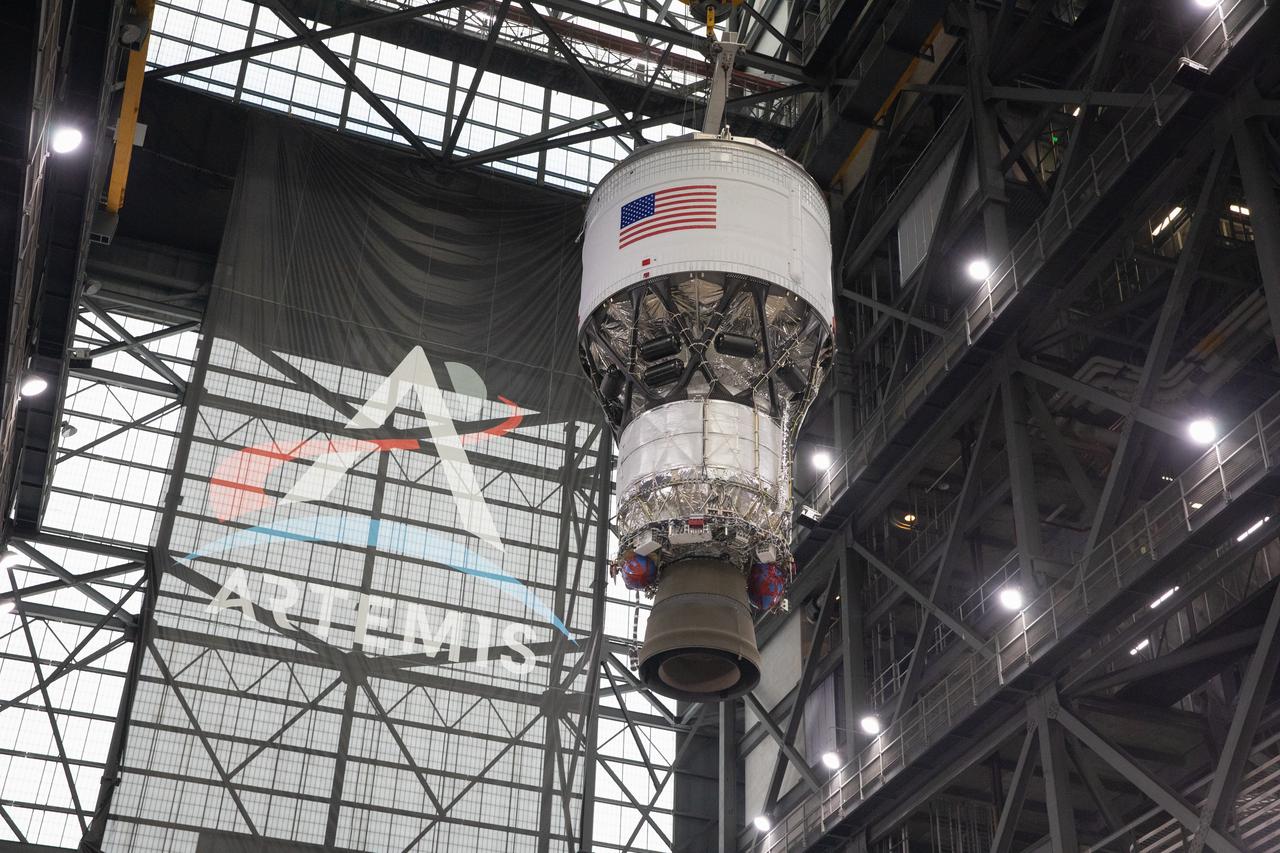
Teams with NASA’s Exploration Ground Systems Program begin integrating the interim cryogenic propulsion stage to the SLS (Space Launch System) launch vehicle stage adapter on Wednesday, April 30, 2025, inside the Vehicle Assembly Building at NASA’s Kennedy Space Center in Florida. The four-story propulsion system, built by Boeing and ULA (United Launch Alliance), is powered by an RL10 engine that will enable the Orion spacecraft to build up enough speed for the push toward the Moon during the Artemis II crewed test flight.
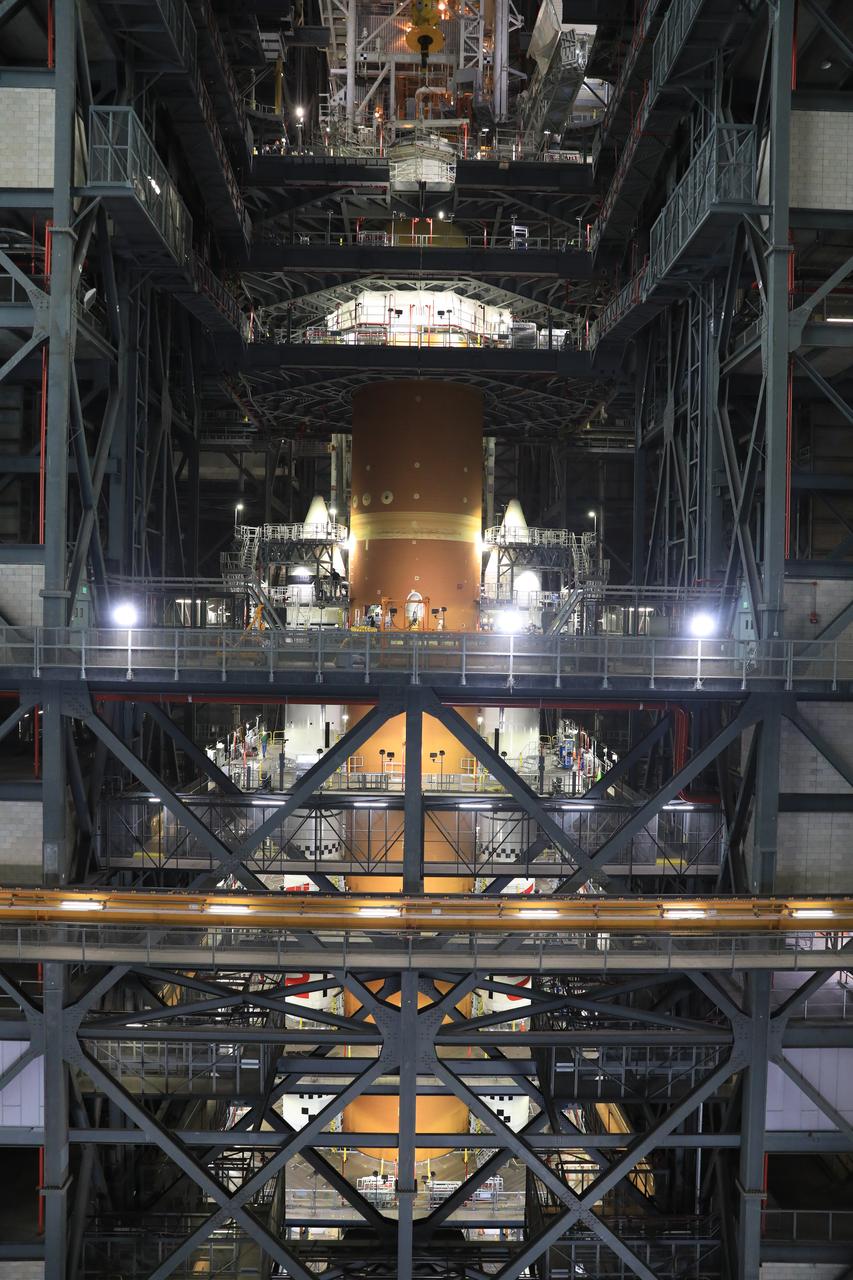
Teams with NASA’s Exploration Ground Systems Program finish integrating the interim cryogenic propulsion stage to the SLS (Space Launch System) launch vehicle stage adapter on Thursday, May 1, 2025, inside the Vehicle Assembly Building at NASA’s Kennedy Space Center in Florida. The four-story propulsion system, built by Boeing and ULA (United Launch Alliance), is powered by an RL10 engine that will enable the Orion spacecraft to build up enough speed for the push toward the Moon during the Artemis II crewed test flight.
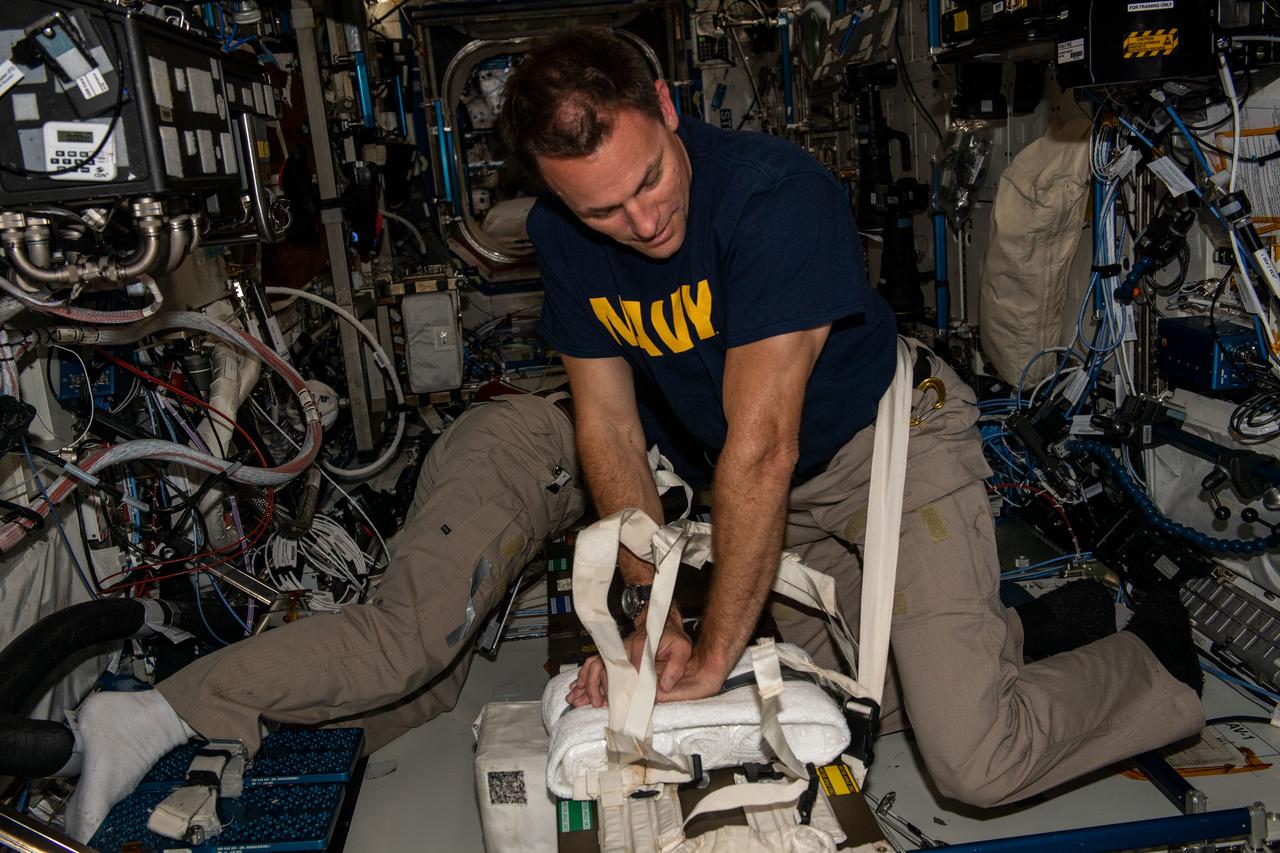
iss068e019662 (Oct. 27, 2022) --- NASA astronaut and Expedition 68 Flight Engineer Josh Cassada practices cardiopulmonary resuscitation (CPR) during a medical emergency drill in the weightless environment of the International Space Station. During the chest compressions a patient would be restrained with harnesses and the rescuing crew member may position themselves by pushing themselves with their feet on an opposing surface or restrain themselves with a harness when compressing by the patient's side.
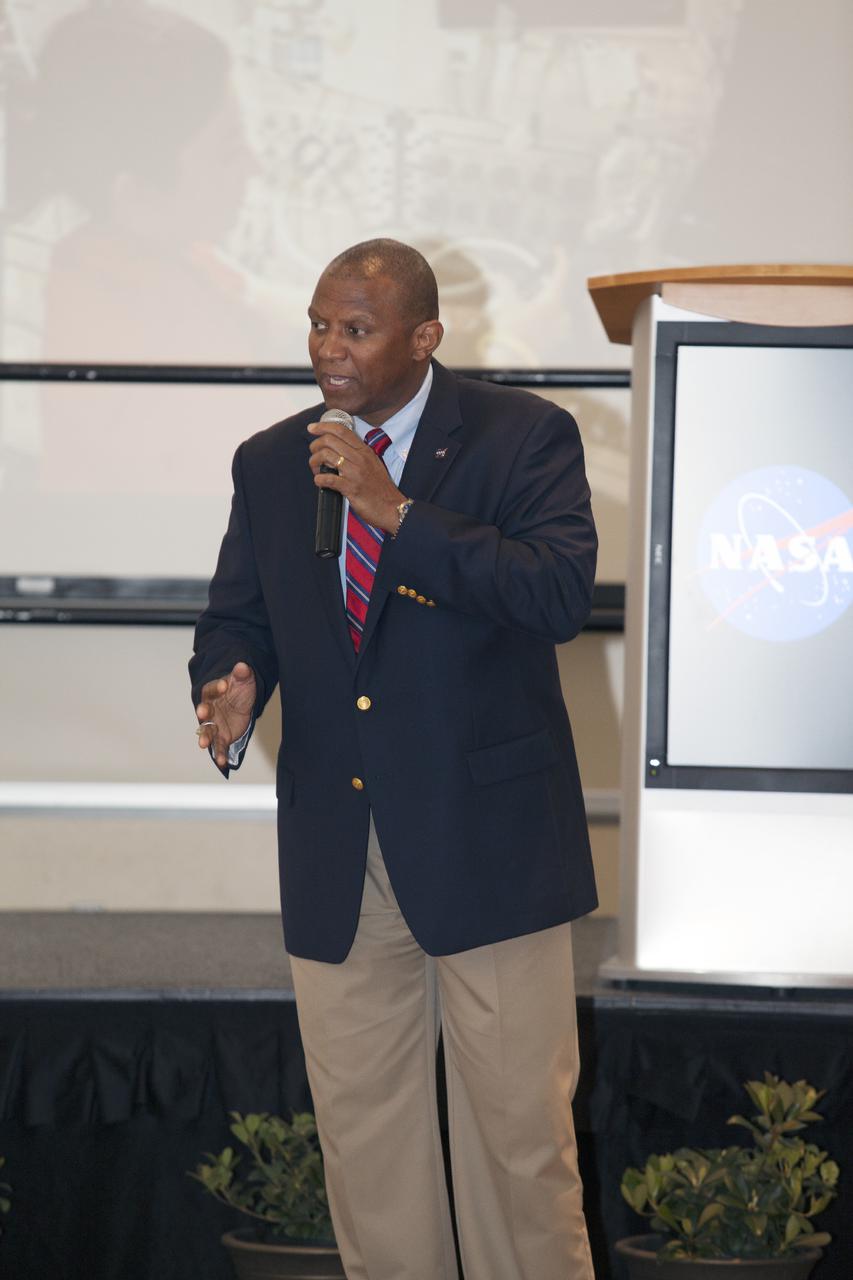
CAPE CANAVERAL, Fla. – NASA Kennedy Space Center Associate Director Kelvin Manning addresses Kennedy's volunteers during a KSC Volunteer Appreciation Event held in the Debus Conference Facility at the Kennedy Space Center Visitor Complex in Florida. Manning briefed the group on future prospects for the space center with a presentation entitled 'Pushing the Boundaries.' To learn about NASA's Speakers Bureau, visit http:__speakers.grc.nasa.gov_speaker. Photo credit: NASA_Daniel Casper
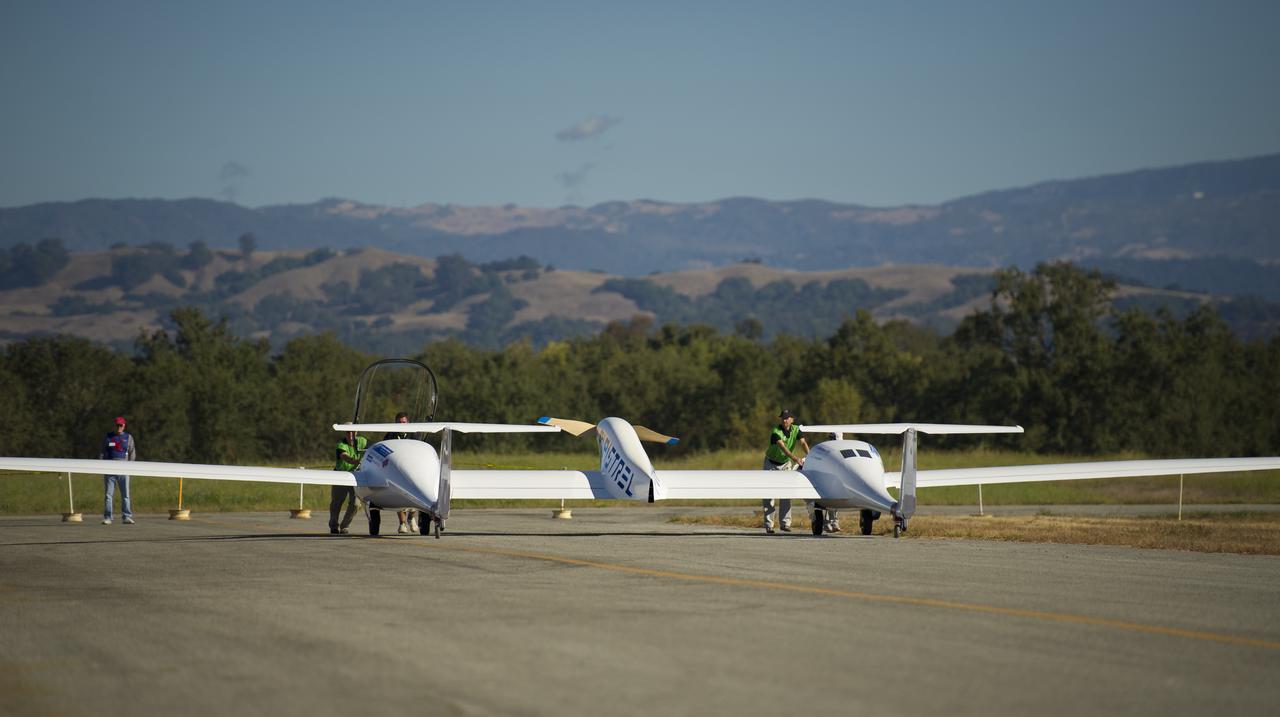
The Pipistrel-USA Taurus G4 aircraft is pushed back to the weigh-in hangar as they start the day's 2011 Green Flight Challenge competition, sponsored by Google, at the Charles M. Schulz Sonoma County Airport in Santa Rosa, Calif. on Monday, Sept. 26, 2011. NASA and the Comparative Aircraft Flight Efficiency (CAFE) Foundation are having the challenge with the goal to advance technologies in fuel efficiency and reduced emissions with cleaner renewable fuels and electric aircraft. Photo Credit: (NASA/Bill Ingalls)
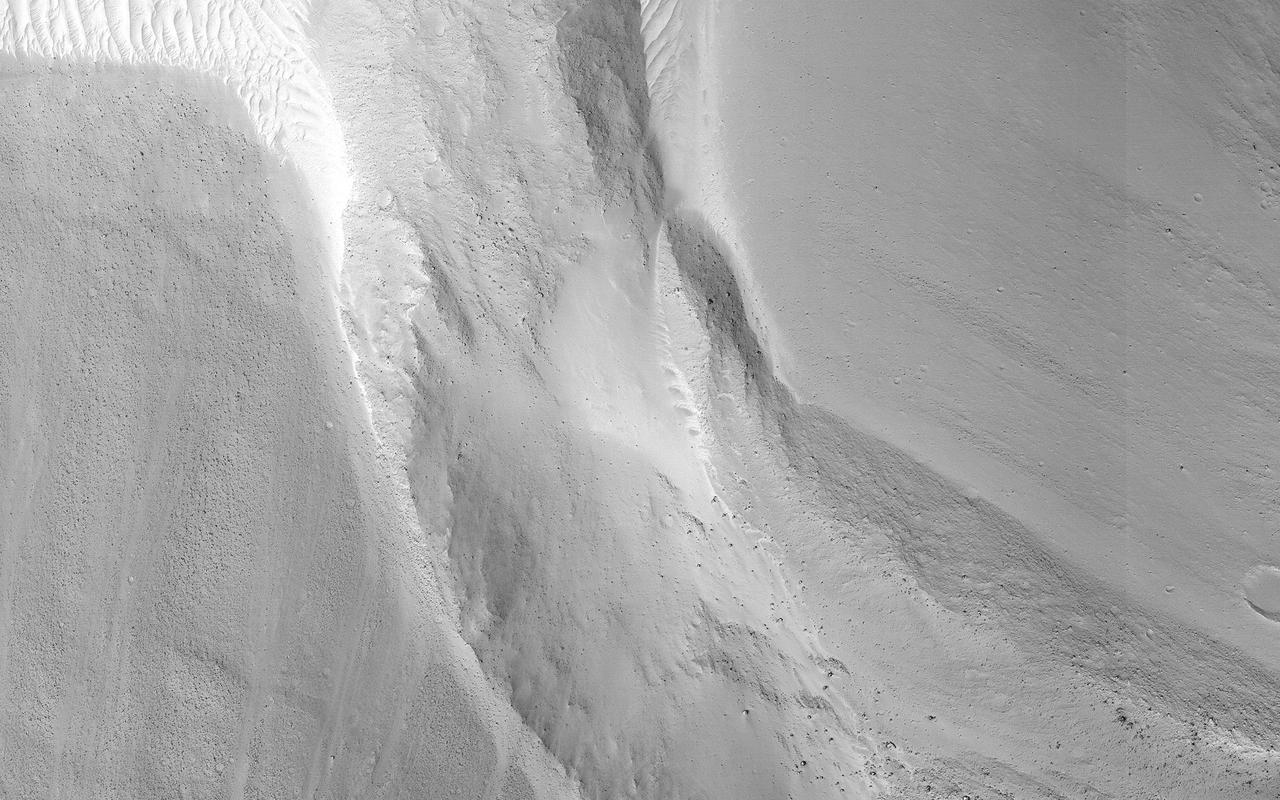
This image shows a small landslide in Iani Chaos. Landslides are common on Mars where there are steep slopes, including this area where there are numerous mounds and hills. What is unusual about this landslide is that it carved a path downslope as it moved, similar to a snow plow pushing away snow as it moves forward. This image is part of a stereo pair so that scientists will examine the landslide in 3D to understand its formation mechanism. https://photojournal.jpl.nasa.gov/catalog/PIA23232
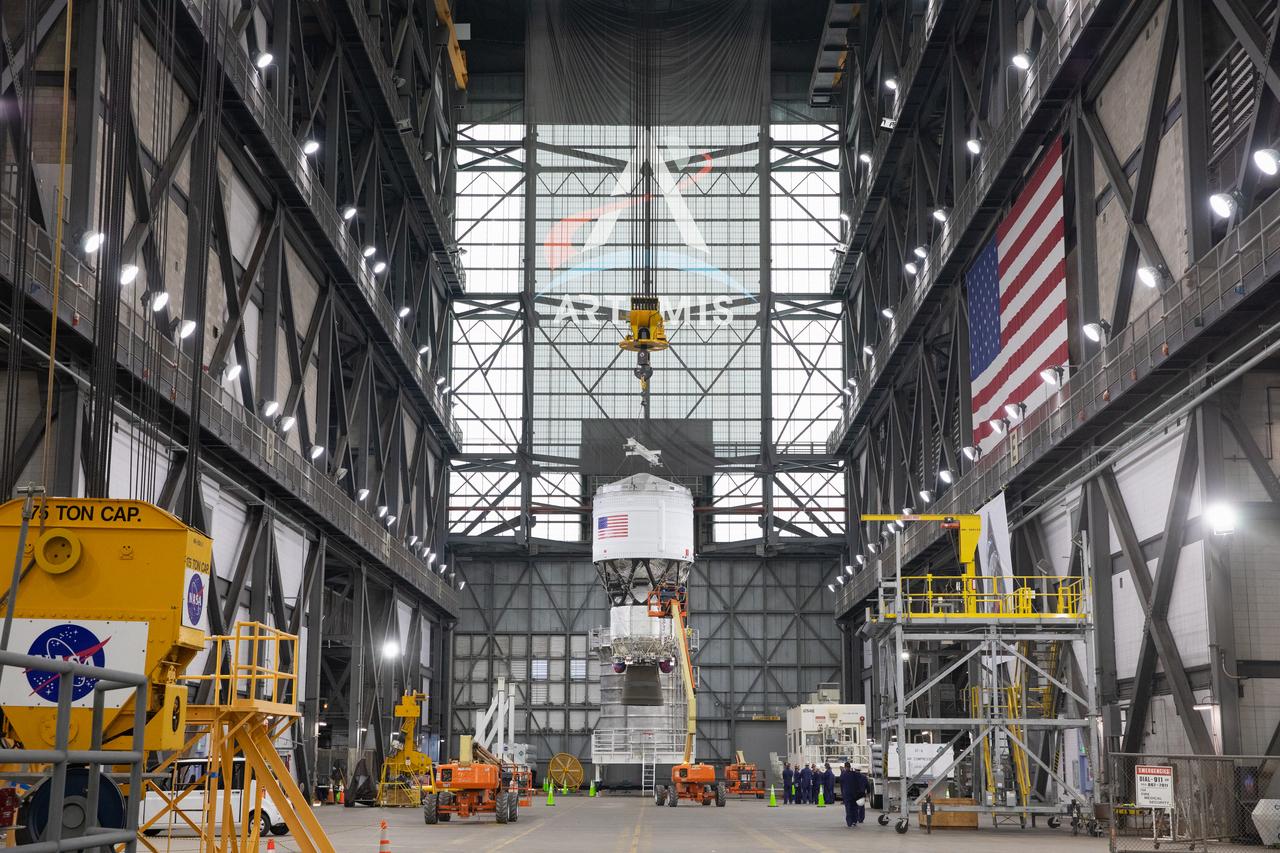
Teams with NASA’s Exploration Ground Systems Program begin integrating the interim cryogenic propulsion stage to the SLS (Space Launch System) launch vehicle stage adapter on Wednesday, April 30, 2025, inside the Vehicle Assembly Building at NASA’s Kennedy Space Center in Florida. The four-story propulsion system, built by Boeing and ULA (United Launch Alliance), is powered by an RL10 engine that will enable the Orion spacecraft to build up enough speed for the push toward the Moon during the Artemis II crewed test flight.
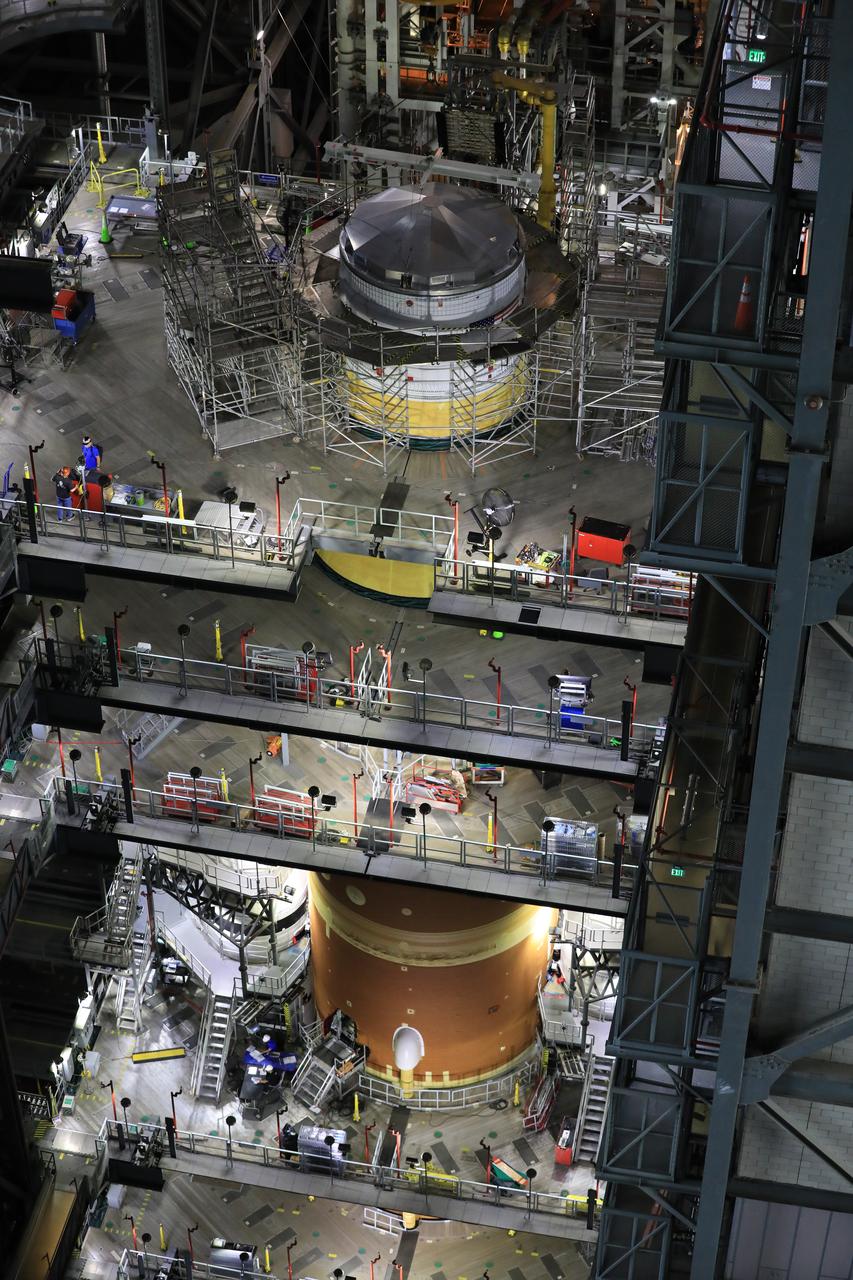
Teams with NASA’s Exploration Ground Systems Program finish integrating the interim cryogenic propulsion stage to the SLS (Space Launch System) launch vehicle stage adapter on Thursday, May 1, 2025, inside the Vehicle Assembly Building at NASA’s Kennedy Space Center in Florida. The four-story propulsion system, built by Boeing and ULA (United Launch Alliance), is powered by an RL10 engine that will enable the Orion spacecraft to build up enough speed for the push toward the Moon during the Artemis II crewed test flight.
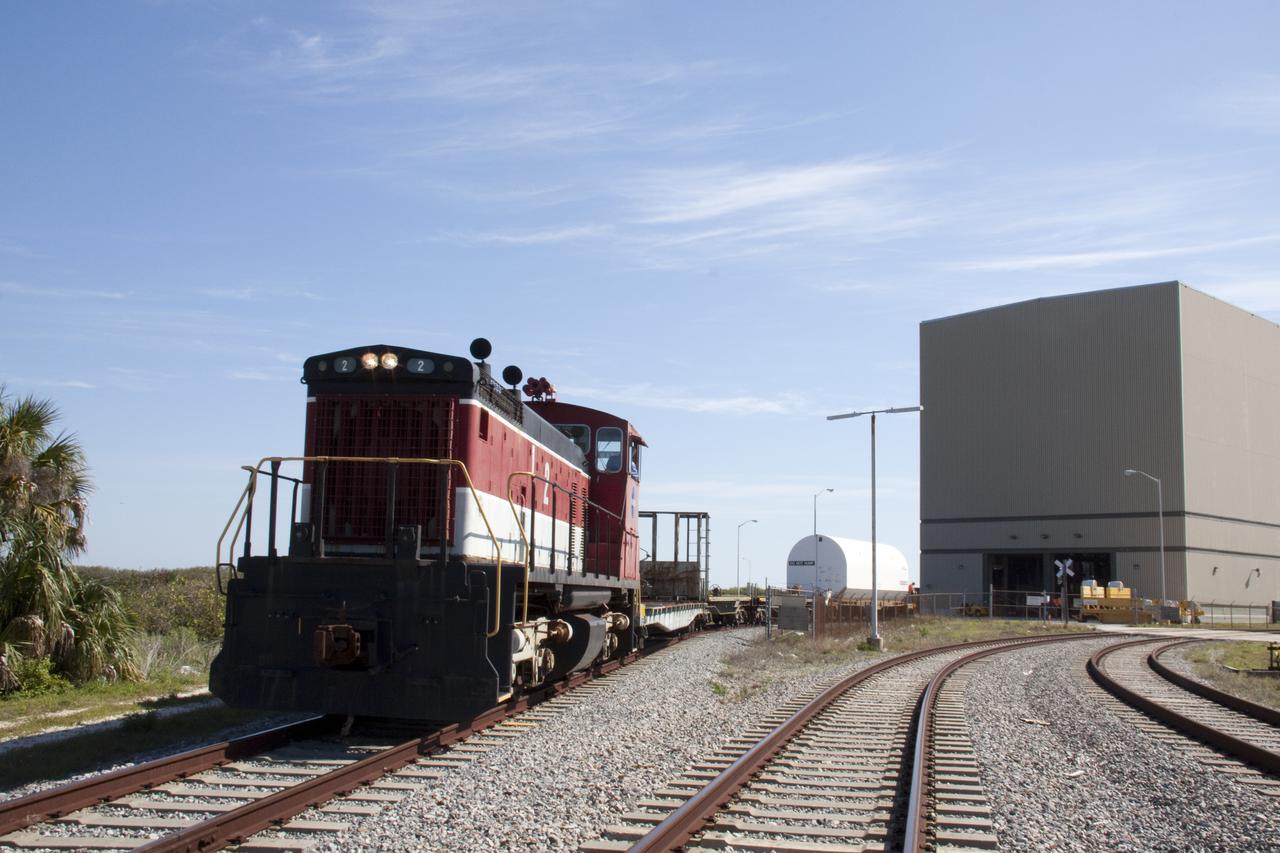
CAPE CANAVERAL, Fla. – Secured inside a railway car, a nozzle exit cone for a solid rocket booster that will be used on space shuttle Discovery's STS-133 mission is moved by locomotive no. 2 to the Rotation, Processing and Surge Facility at NASA's Kennedy Space Center in Florida. The boosters are manufactured by Alliant Techsystems Inc., or ATK. EGandG_URS runs Kennedy's railway system for NASA. The locomotive, one of three at Kennedy, will push the railway car into the facility, necessitating the use of spacer cars behind the locomotive as a safety measure. Photo credit: NASA_Troy Cryder
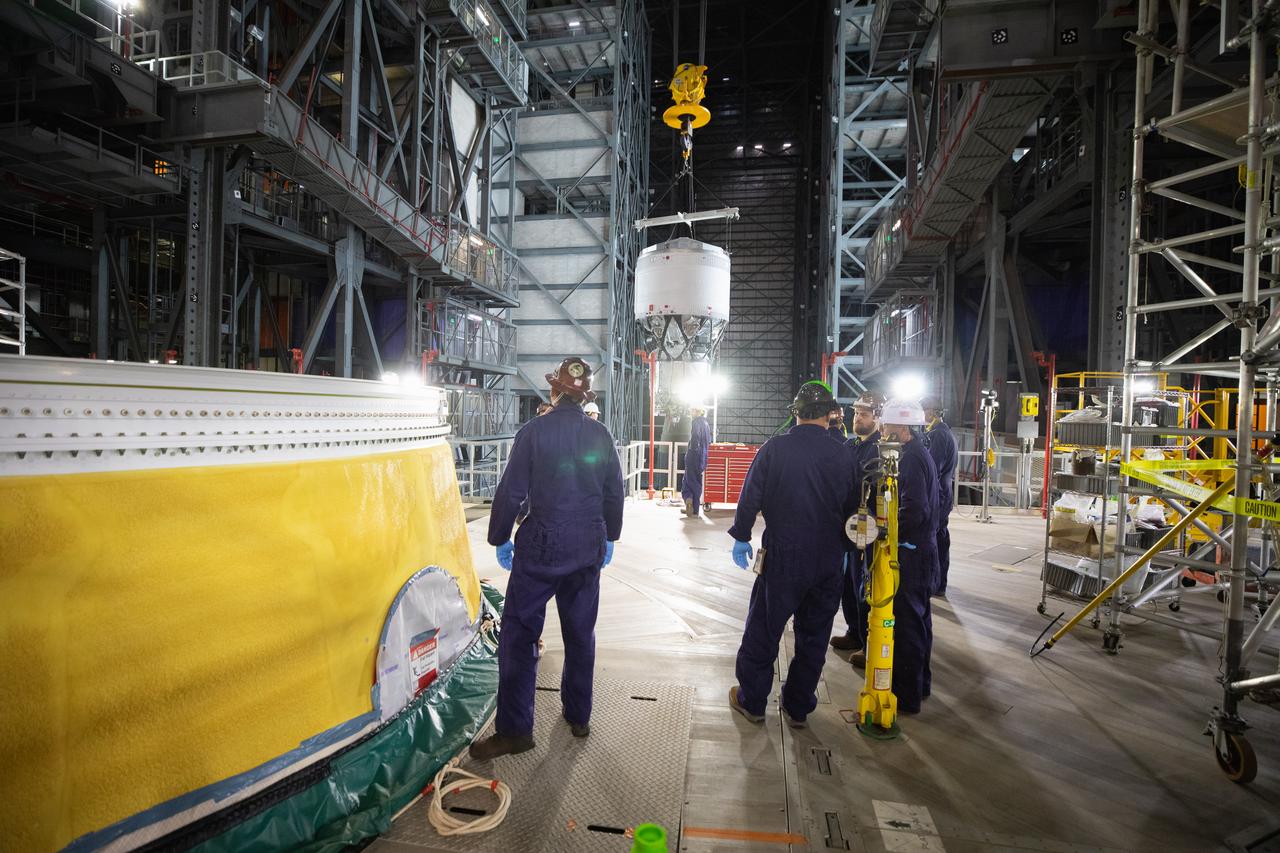
Teams with NASA’s Exploration Ground Systems Program begin integrating the interim cryogenic propulsion stage to the SLS (Space Launch System) launch vehicle stage adapter on Wednesday, April 30, 2025, inside the Vehicle Assembly Building at NASA’s Kennedy Space Center in Florida. The four-story propulsion system, built by Boeing and ULA (United Launch Alliance), is powered by an RL10 engine that will enable the Orion spacecraft to build up enough speed for the push toward the Moon during the Artemis II crewed test flight.
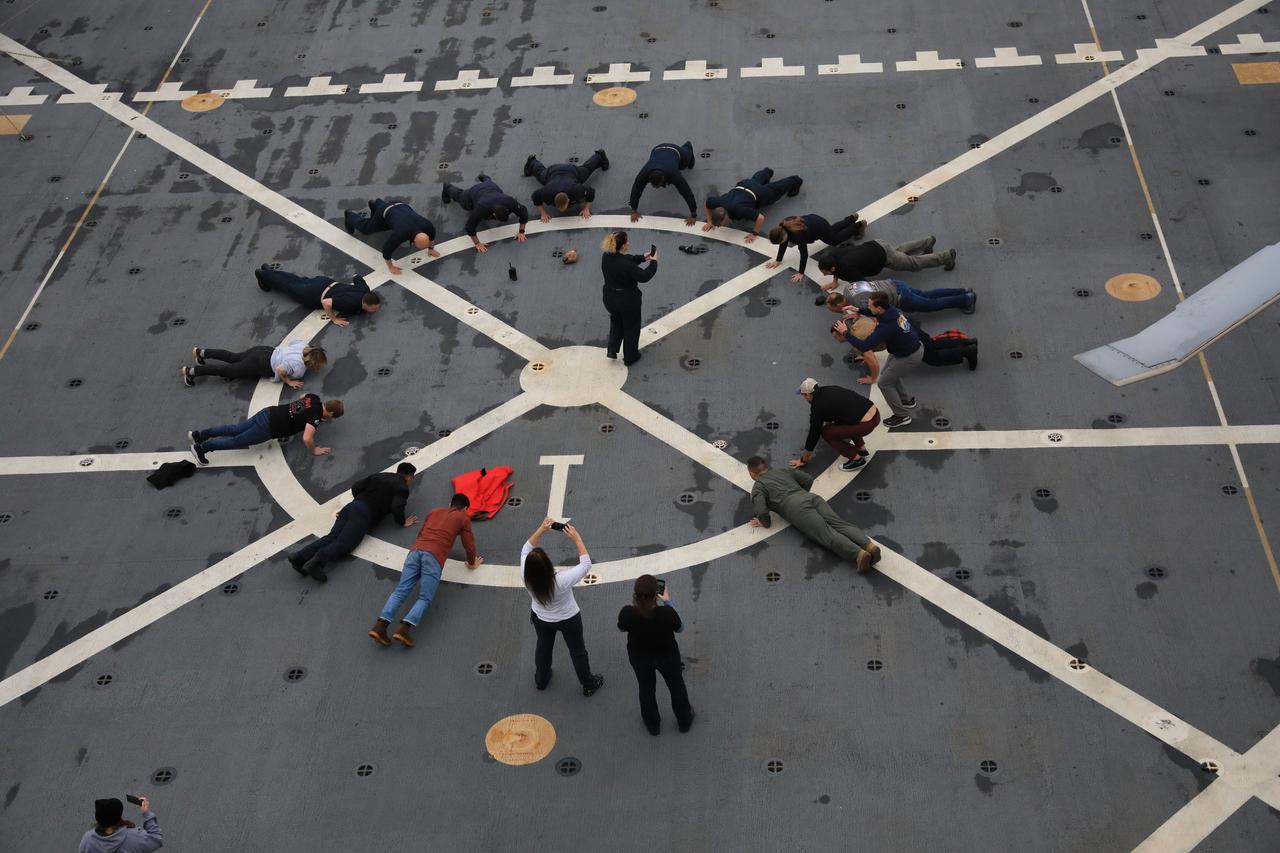
NASA’s Exploration Ground System’s Landing and Recovery team and partners from the Department of Defense aboard the USS San Diego do push-ups during Underway Recovery Test 11 (URT-11) off the coast of San Diego on Monday, Feb. 26, 2024. URT-11 is the eleventh in a series of Artemis recovery tests, and the first time NASA and its partners put their Artemis II recovery procedures to the test with the astronauts.
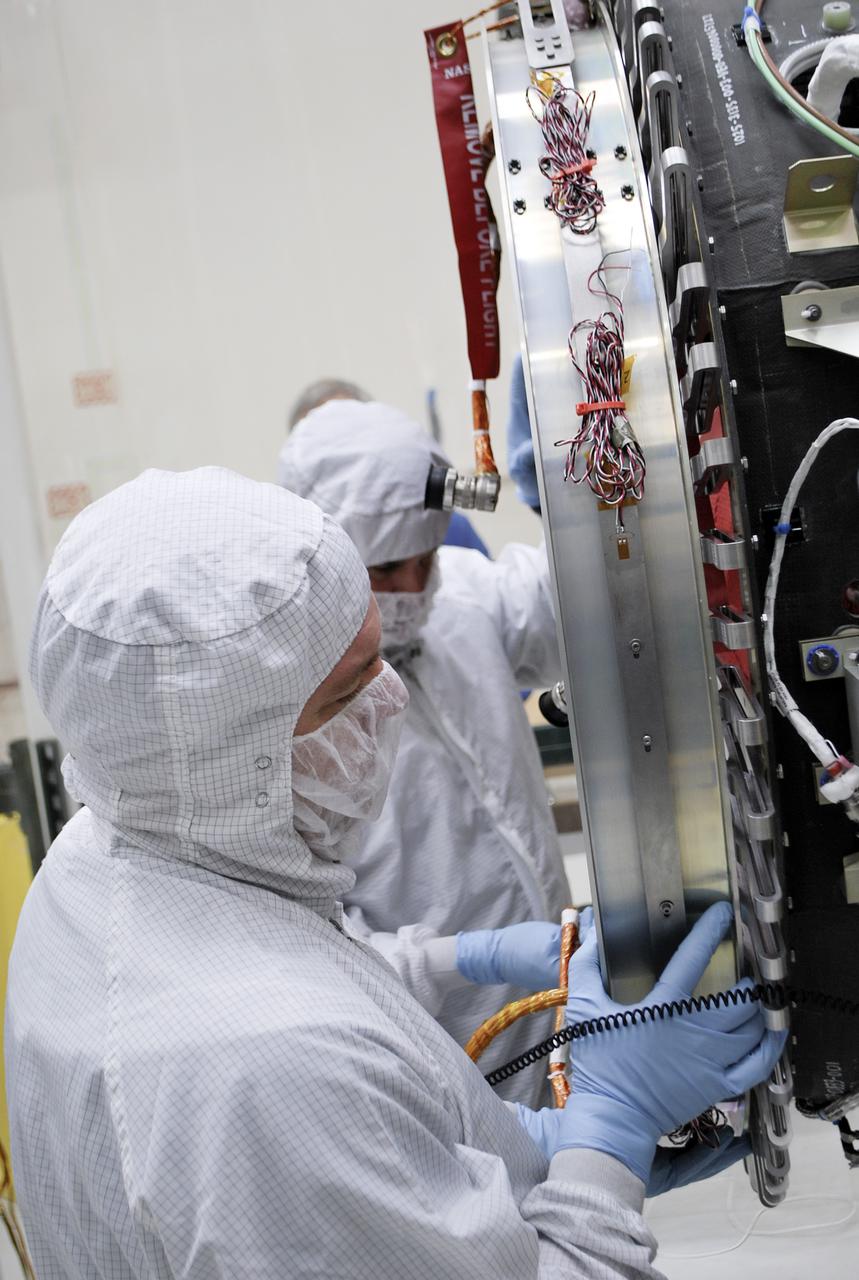
VANDENBERG AFB, Calif. – Technicians test fit the separation system that will push NASA's IRIS spacecraft away from an Orbital Pegasus XL rocket when IRIS reaches its proper orbit after launch. IRIS is short for Interface Region Imaging Spectrograph and the spacecraft's mission will improve our understanding of how heat and energy move through the deepest levels of the sun’s atmosphere, thereby increasing our ability to forecast space weather. Photo credit: VAFB_Randy Beaudoin

STS109-719-076 (1-12 March 2002) --- The astronauts on board the Space Shuttle Columbia took this 70mm picture featuring part of the eastern sea board. The oblique view looks northward from South Florida to the southern Appalachians. Most of the southeastern United States appears in crisp, clear air in the wake of a cold front that has pushed well off the mainland. Only a few jet stream and low-level clouds remain over South Florida and Gulf Stream.
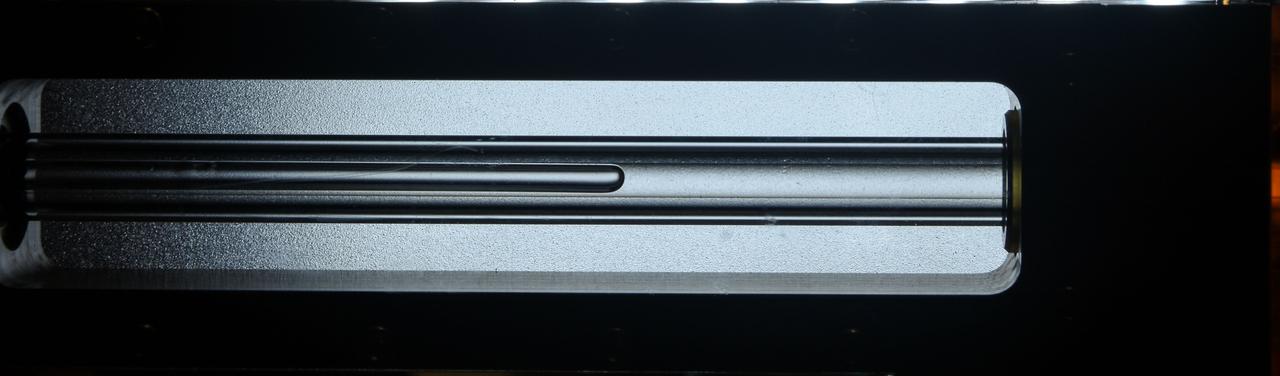
jsc2023e055883 (10/5/2023) --- Oil is pushed back into the reservoir by a jet of air during the reset phase of the investigation. As the oil moves back into the reservoir, it leaves behind a thin liquid film. The Gaucho Lung investigation will study fluid transport within gel-coated tubes to learn more about treatment programs for respiratory distress syndrome and develop new contamination control strategies. Image courtesy of University of California, Santa Barbara.
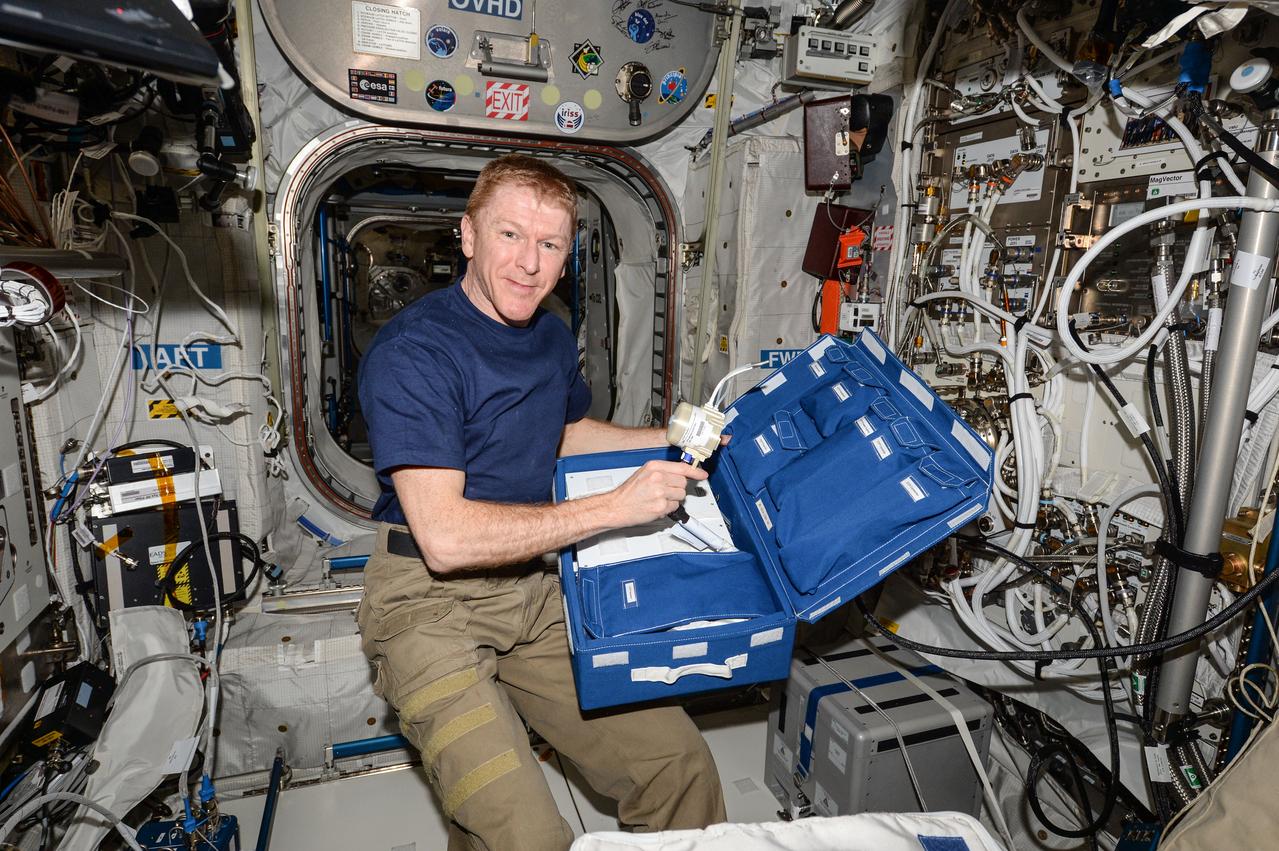
ISS047e106715 (05/06/2016) --- ESA (European Space Agency astronaut Tim Peake unpacks a cerebral and cochlear fluid pressure (CCFP) analyzer. The device is being tested to measure the pressure of the fluid in the skull, also known as intracranial pressure, which may increase due to fluid shifts in the body while in microgravity. It is hypothesized that the headward fluid shift that occurs during space flight leads to increased pressure in the brain, which may push on the back of the eye, causing it to change shape.
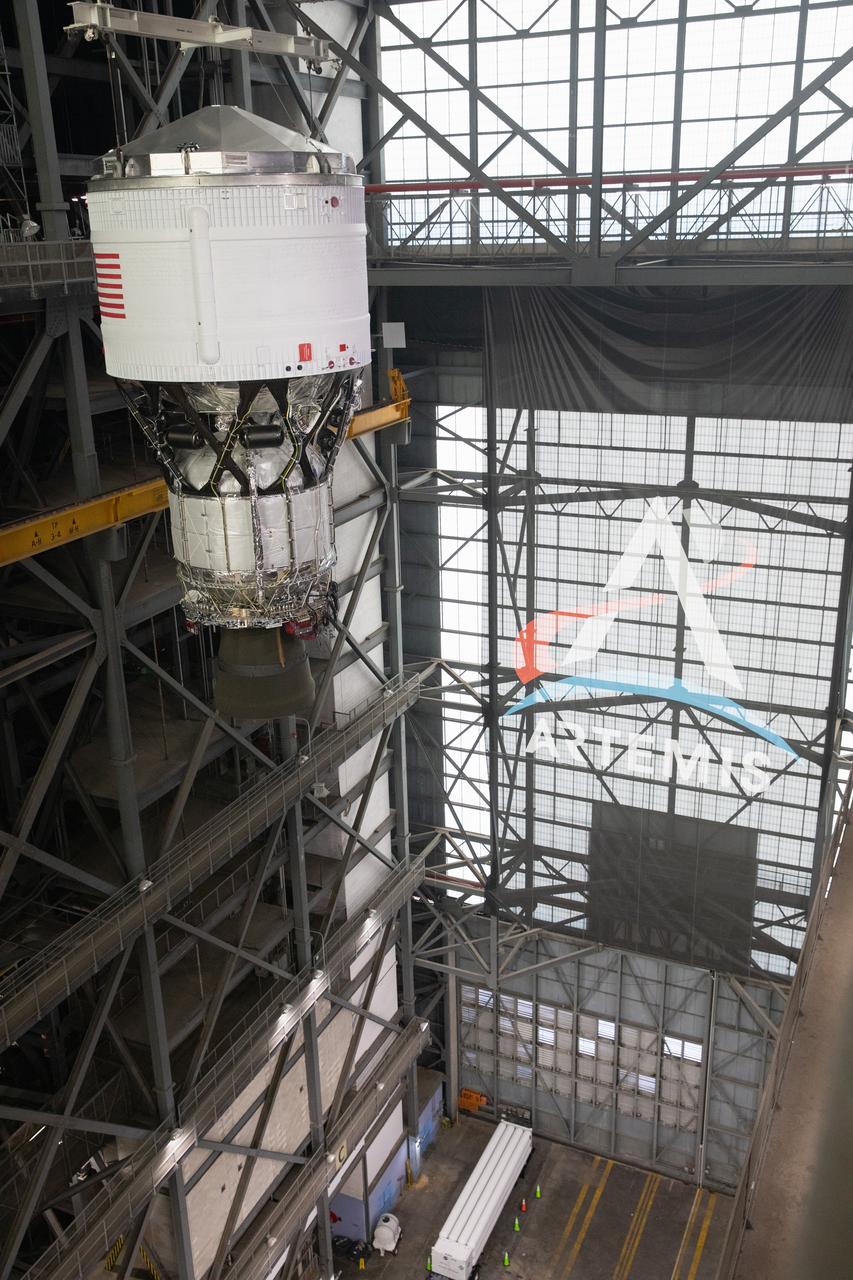
Teams with NASA’s Exploration Ground Systems Program begin integrating the interim cryogenic propulsion stage to the SLS (Space Launch System) launch vehicle stage adapter on Wednesday, April 30, 2025, inside the Vehicle Assembly Building at NASA’s Kennedy Space Center in Florida. The four-story propulsion system, built by Boeing and ULA (United Launch Alliance), is powered by an RL10 engine that will enable the Orion spacecraft to build up enough speed for the push toward the Moon during the Artemis II crewed test flight.
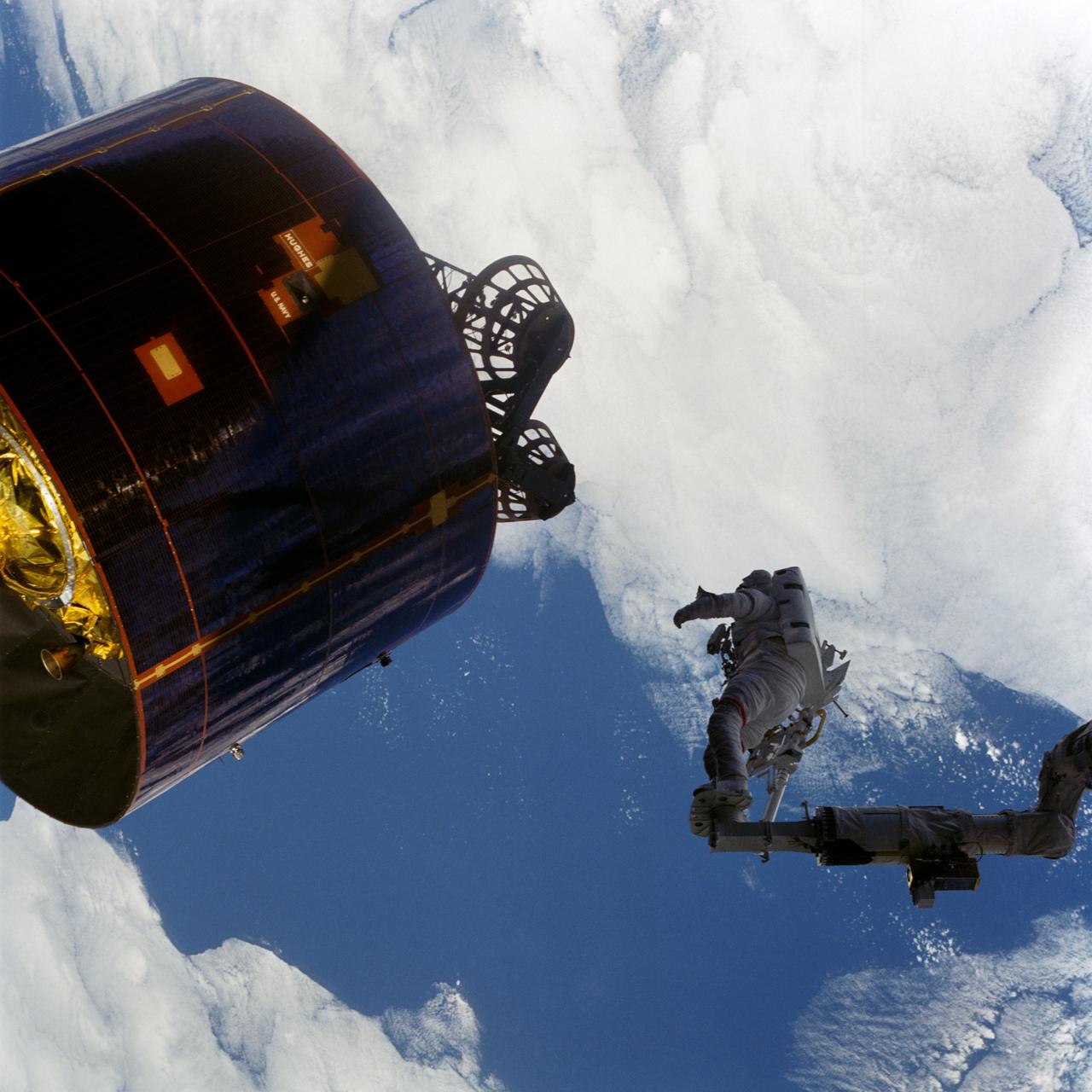
51I-44-012 (1 Sept. 1985) --- Astronaut James D. van Hoften looks on as the Syncom IVC-3 satellite responds to his push against it moments earlier. Dr. van Hoften, mission specialist, is anchored to a foot restraint on the end of the remote manipulator system (RMS) arm of the Earth-orbiting space shuttle Discovery. The 51-I crew members showed this photograph at their Sept. 11 postflight press conference. Photo credit: NASA
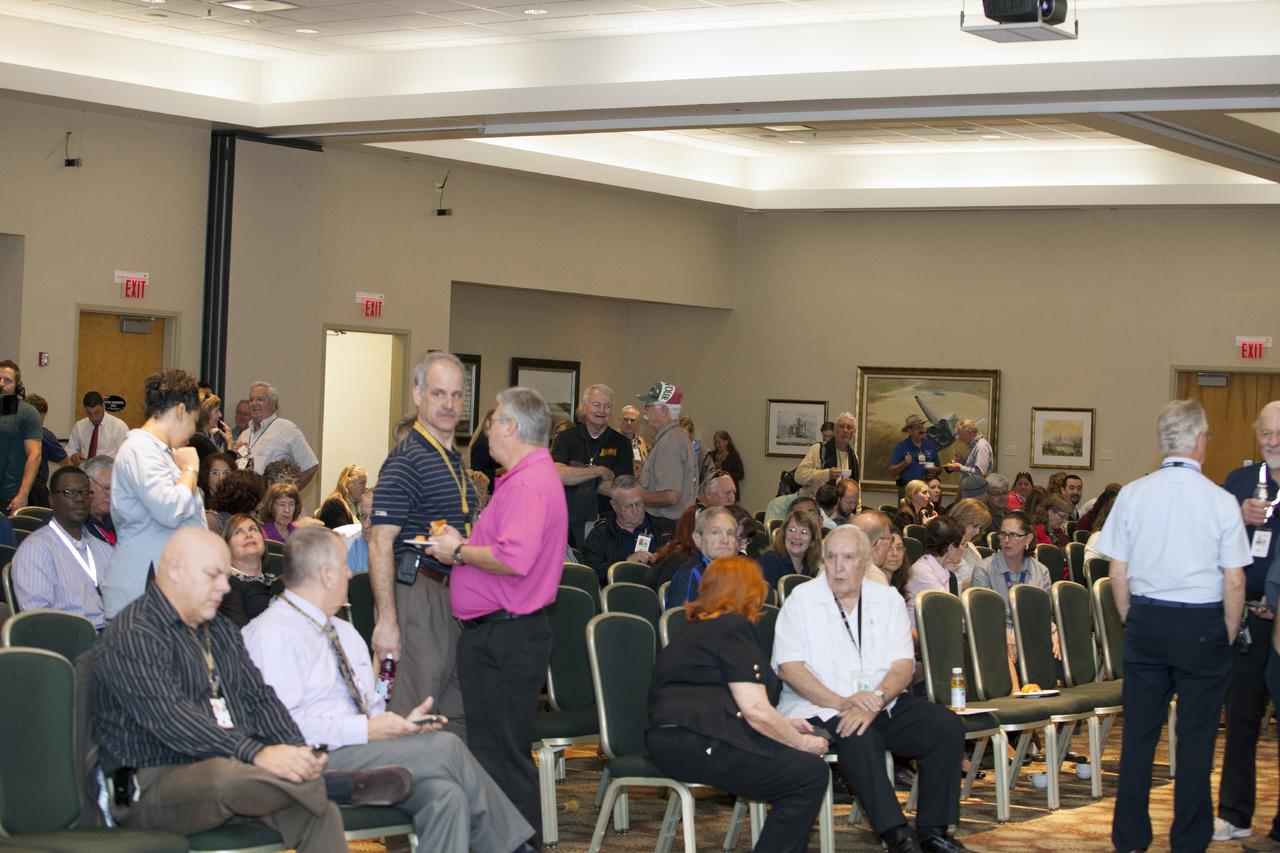
CAPE CANAVERAL, Fla. – NASA Kennedy Space Center volunteers turn out in full force for a KSC Volunteer Appreciation Event held in the Debus Conference Facility at the Kennedy Space Center Visitor Complex in Florida. The group was given a briefing by Kennedy Associate Director Kelvin Manning on future prospects for the space center, entitled 'Pushing the Boundaries.' To learn about NASA's Speakers Bureau, visit http:__speakers.grc.nasa.gov_speaker. Photo credit: NASA_Daniel Casper
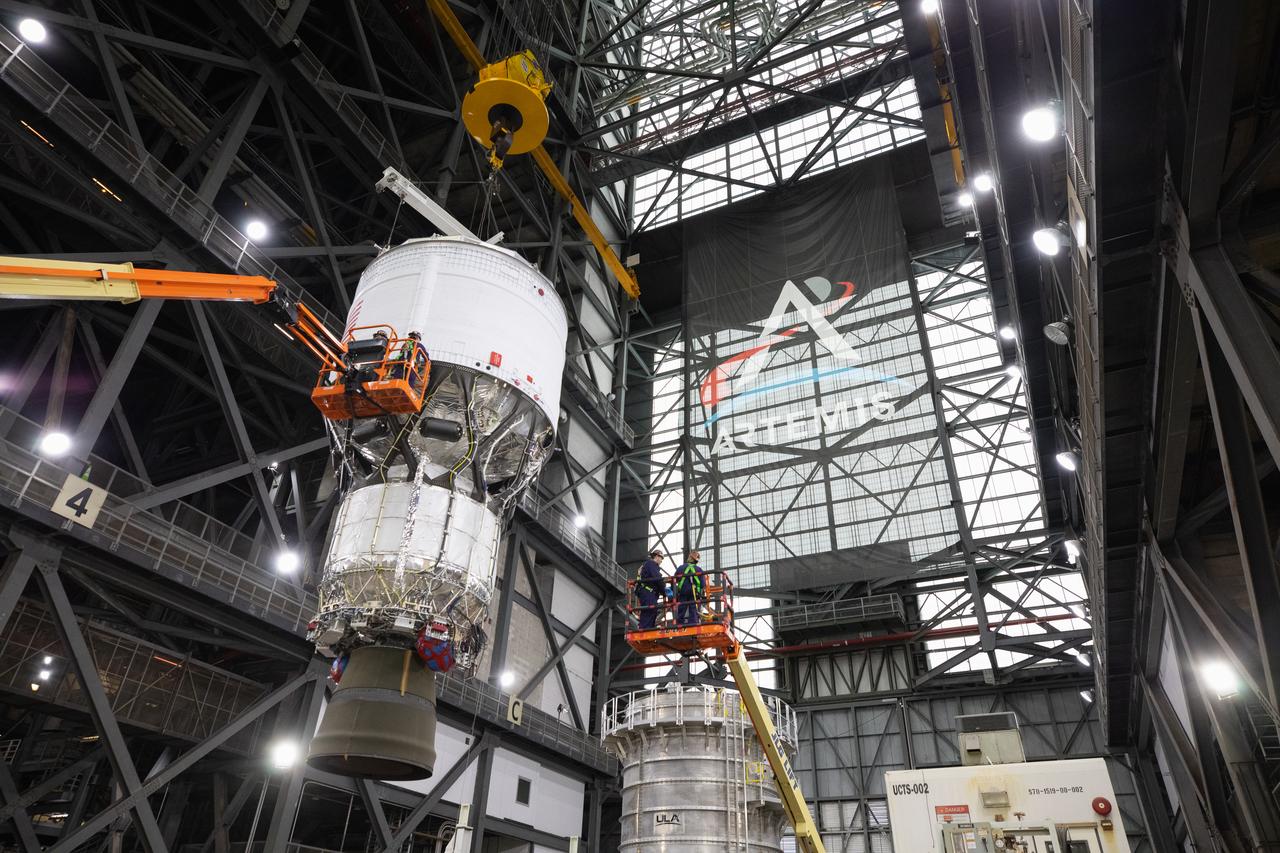
Teams with NASA’s Exploration Ground Systems Program begin integrating the interim cryogenic propulsion stage to the SLS (Space Launch System) launch vehicle stage adapter on Wednesday, April 30, 2025, inside the Vehicle Assembly Building at NASA’s Kennedy Space Center in Florida. The four-story propulsion system, built by Boeing and ULA (United Launch Alliance), is powered by an RL10 engine that will enable the Orion spacecraft to build up enough speed for the push toward the Moon during the Artemis II crewed test flight.
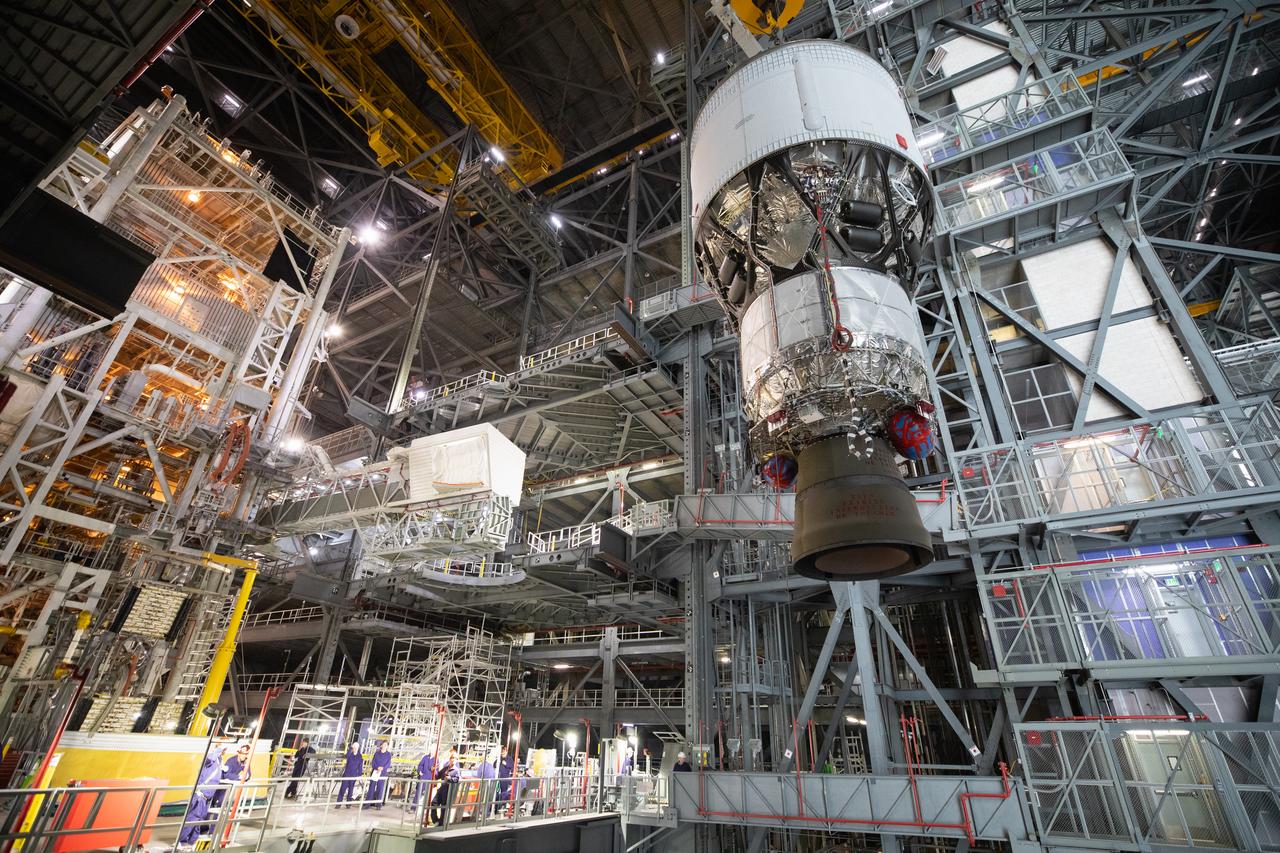
Teams with NASA’s Exploration Ground Systems Program begin integrating the interim cryogenic propulsion stage to the SLS (Space Launch System) launch vehicle stage adapter on Wednesday, April 30, 2025, inside the Vehicle Assembly Building at NASA’s Kennedy Space Center in Florida. The four-story propulsion system, built by Boeing and ULA (United Launch Alliance), is powered by an RL10 engine that will enable the Orion spacecraft to build up enough speed for the push toward the Moon during the Artemis II crewed test flight.
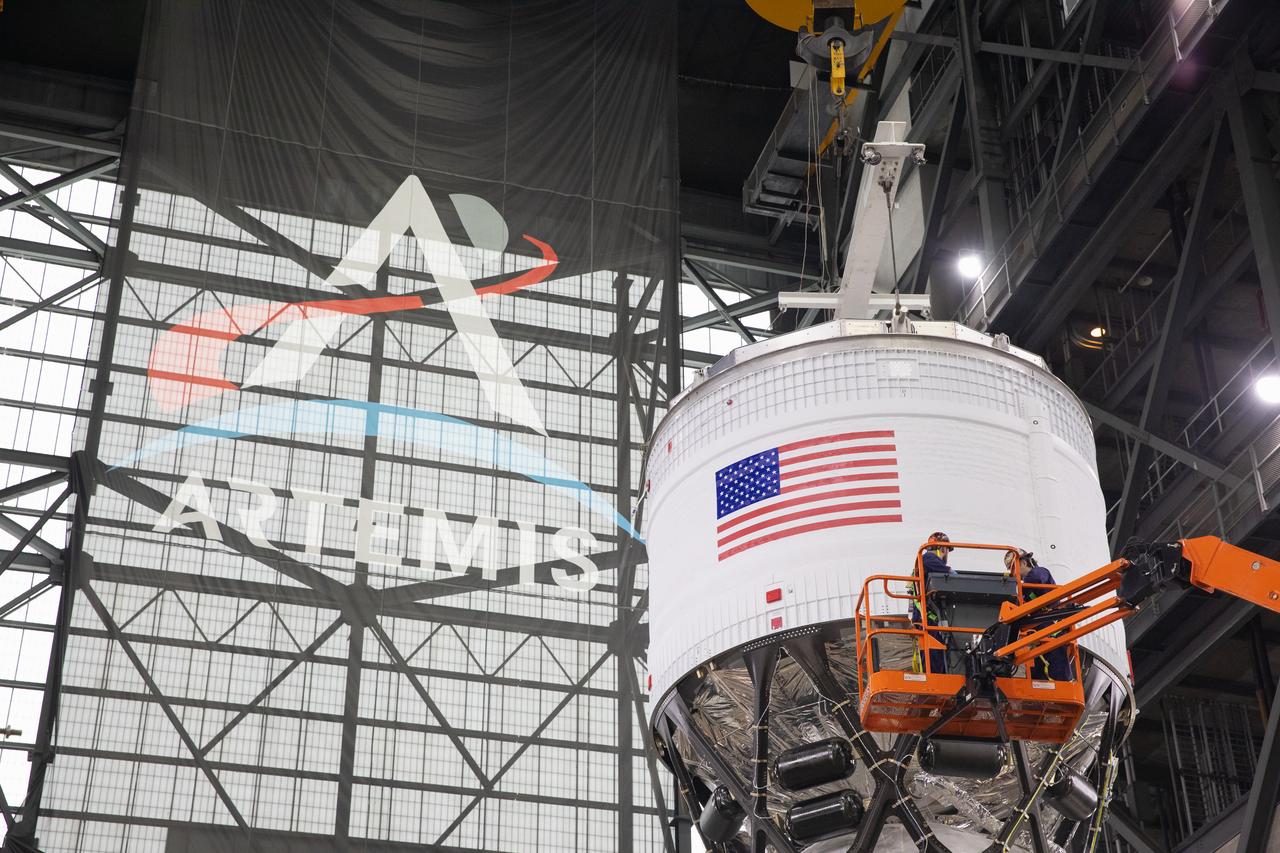
Teams with NASA’s Exploration Ground Systems Program begin integrating the interim cryogenic propulsion stage to the SLS (Space Launch System) launch vehicle stage adapter on Wednesday, April 30, 2025, inside the Vehicle Assembly Building at NASA’s Kennedy Space Center in Florida. The four-story propulsion system, built by Boeing and ULA (United Launch Alliance), is powered by an RL10 engine that will enable the Orion spacecraft to build up enough speed for the push toward the Moon during the Artemis II crewed test flight.
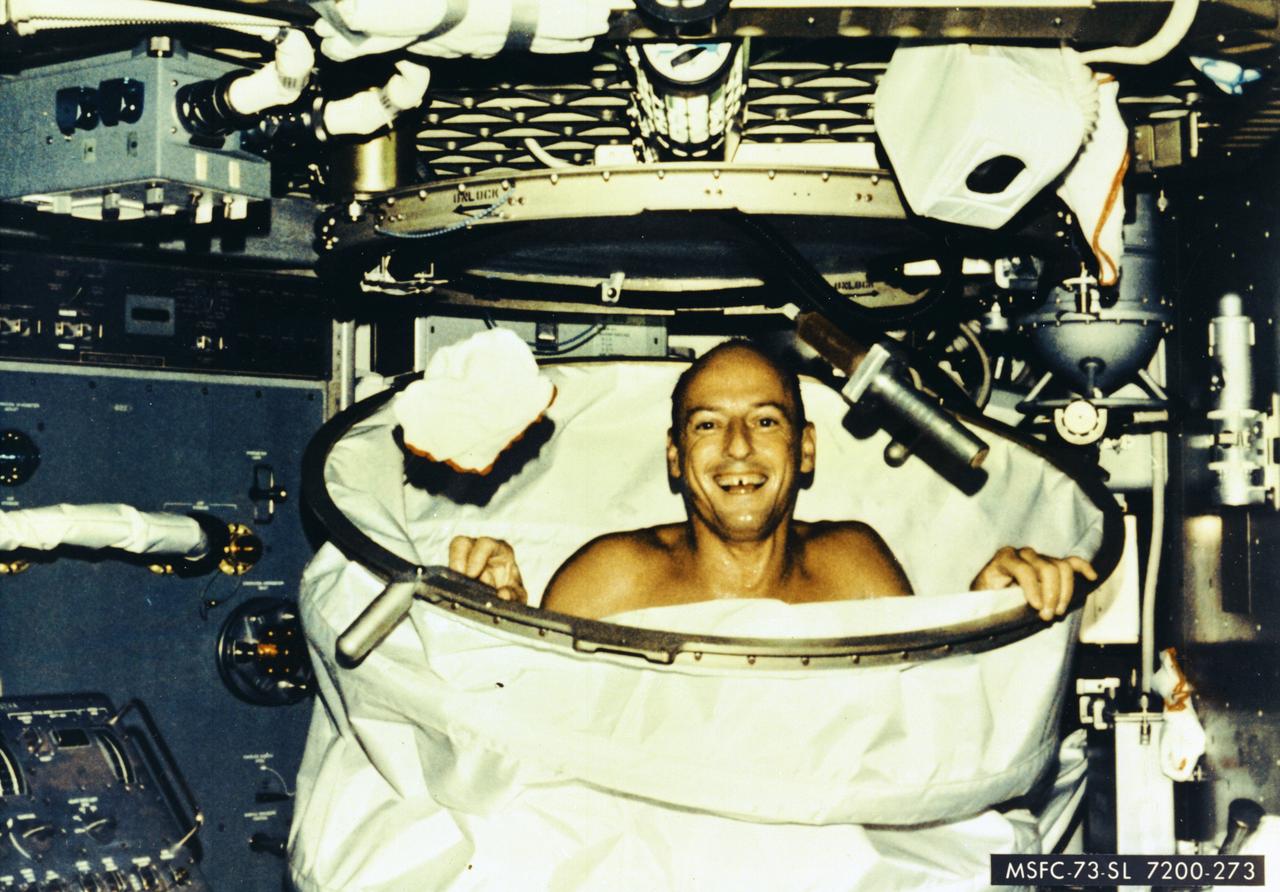
Astronaut Charles Conrad, Jr., Skylab-2 (SL-2) commander, smiles happily for the camera after a hot bath in the shower in the crew quarters of the Orbital Workshop of the Skylab space station. In deploying the shower facility, the shower curtain was pulled up from the floor and attached to the ceiling. The water came through a push button shower head attached to a flexible hose. Water was drawn off by a vacuum system.
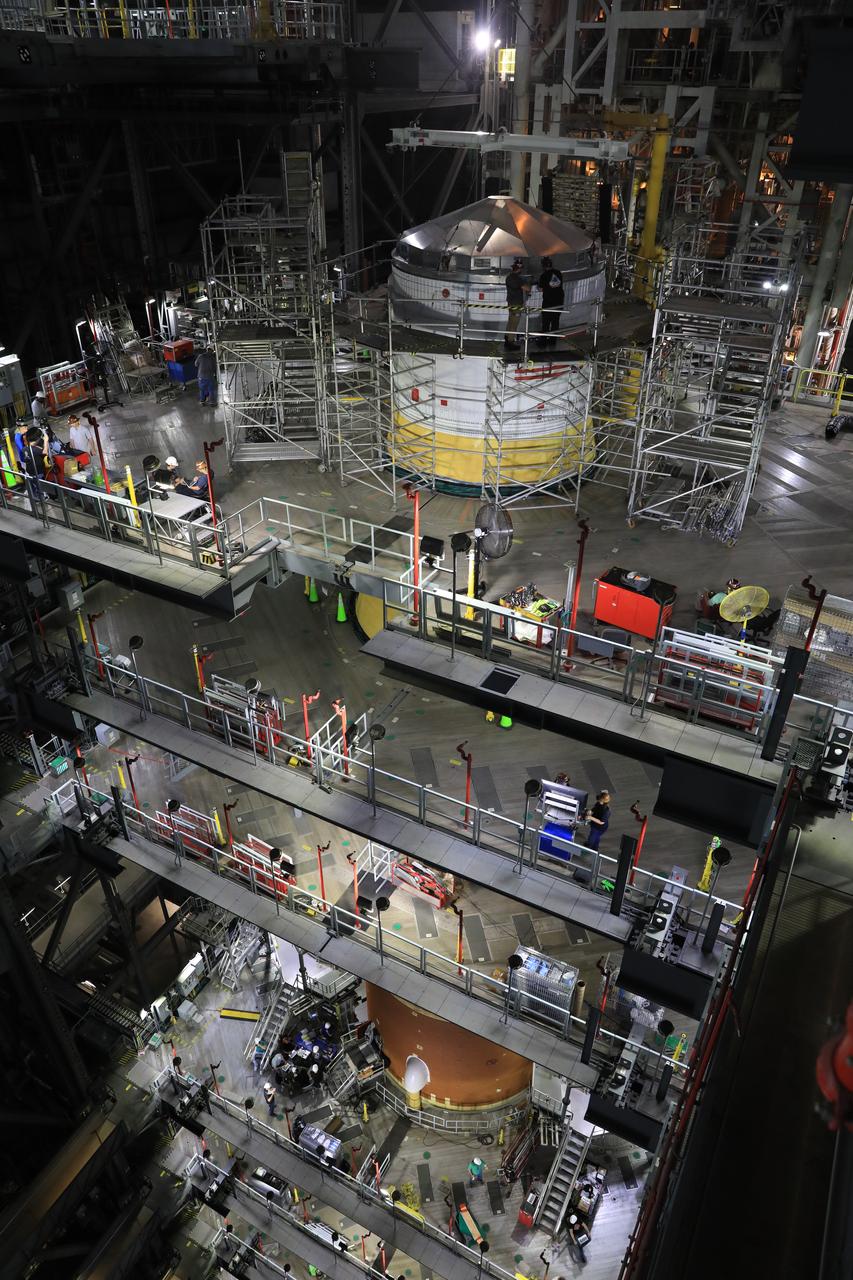
Teams with NASA’s Exploration Ground Systems Program finish integrating the interim cryogenic propulsion stage to the SLS (Space Launch System) launch vehicle stage adapter on Thursday, May 1, 2025, inside the Vehicle Assembly Building at NASA’s Kennedy Space Center in Florida. The four-story propulsion system, built by Boeing and ULA (United Launch Alliance), is powered by an RL10 engine that will enable the Orion spacecraft to build up enough speed for the push toward the Moon during the Artemis II crewed test flight.
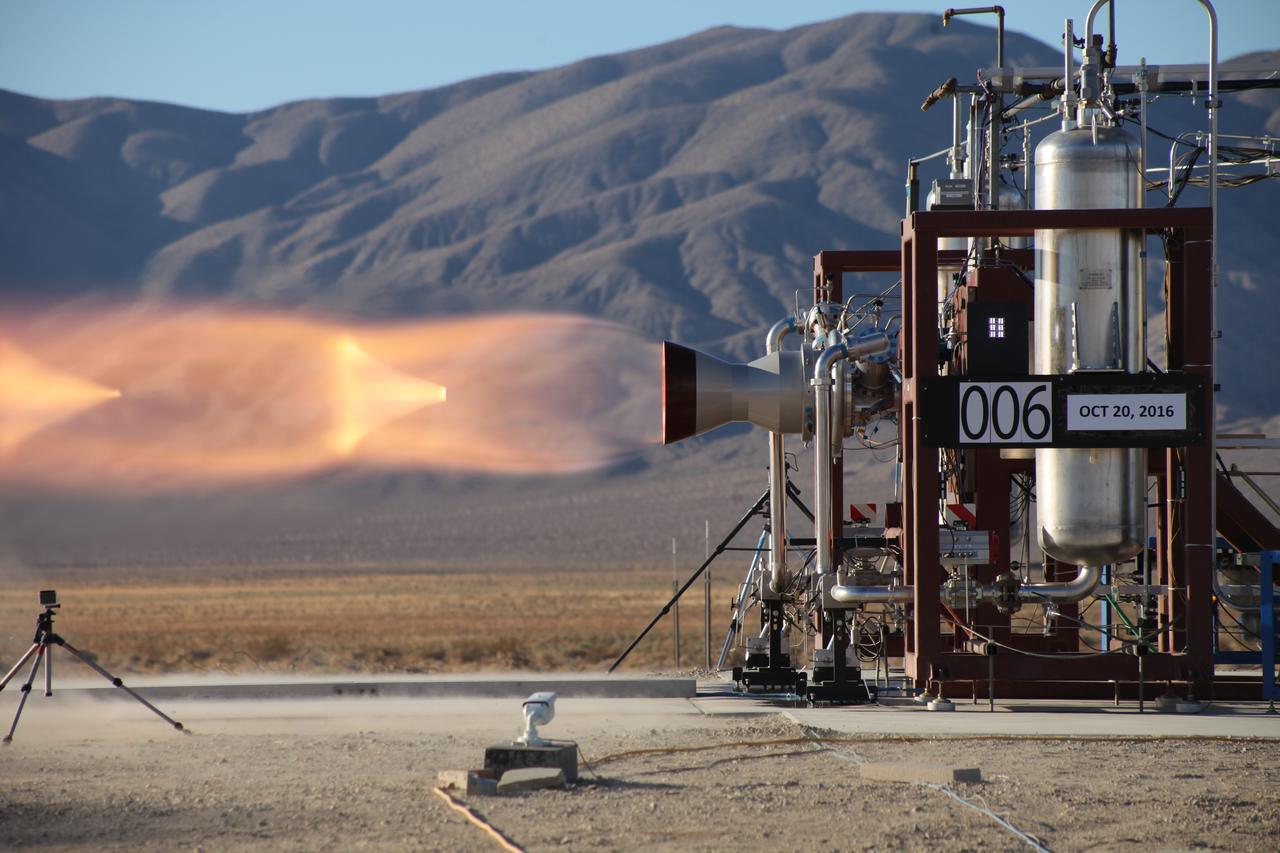
A launch abort engine built by Aerojet Rocketdyne is hot-fired during tests in the Mojave Desert in California. The engine produces up to 40,000 pounds of thrust and burns hypergolic propellants. The engines have been designed and built for use on Boeing’s CST-100 Starliner spacecraft in sets of four. In an emergency at the pad or during ascent, the engines would ignite to push the Starliner and its crew out of danger.
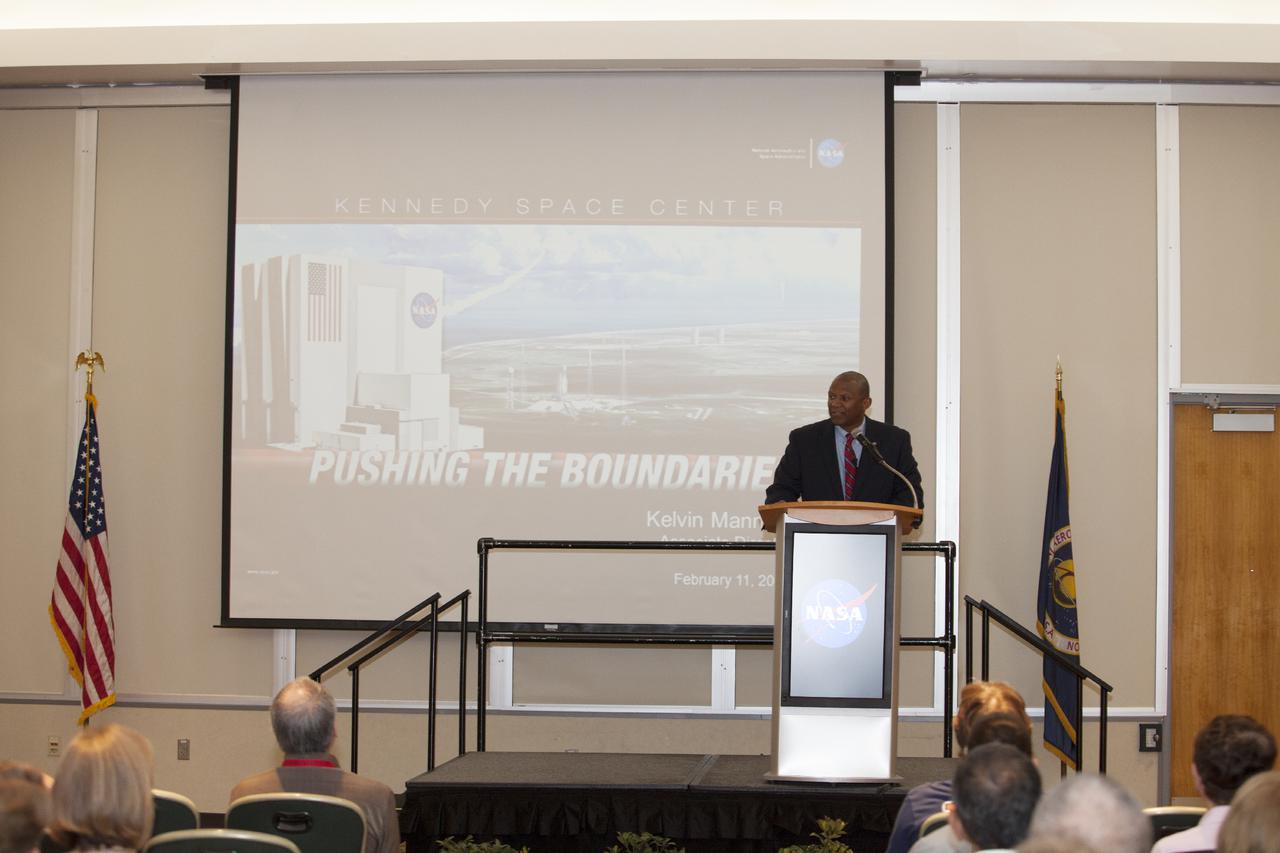
CAPE CANAVERAL, Fla. – NASA Kennedy Space Center Associate Director Kelvin Manning welcomes Kennedy's volunteers to a KSC Volunteer Appreciation Event held in the Debus Conference Facility at the Kennedy Space Center Visitor Complex in Florida. Manning briefed the group on future prospects for the space center with a presentation entitled 'Pushing the Boundaries.' To learn about NASA's Speakers Bureau, visit http:__speakers.grc.nasa.gov_speaker. Photo credit: NASA_Daniel Casper

Teams with NASA’s Exploration Ground Systems Program finish integrating the interim cryogenic propulsion stage to the SLS (Space Launch System) launch vehicle stage adapter on Thursday, May 1, 2025, inside the Vehicle Assembly Building at NASA’s Kennedy Space Center in Florida. The four-story propulsion system, built by Boeing and ULA (United Launch Alliance), is powered by an RL10 engine that will enable the Orion spacecraft to build up enough speed for the push toward the Moon during the Artemis II crewed test flight.
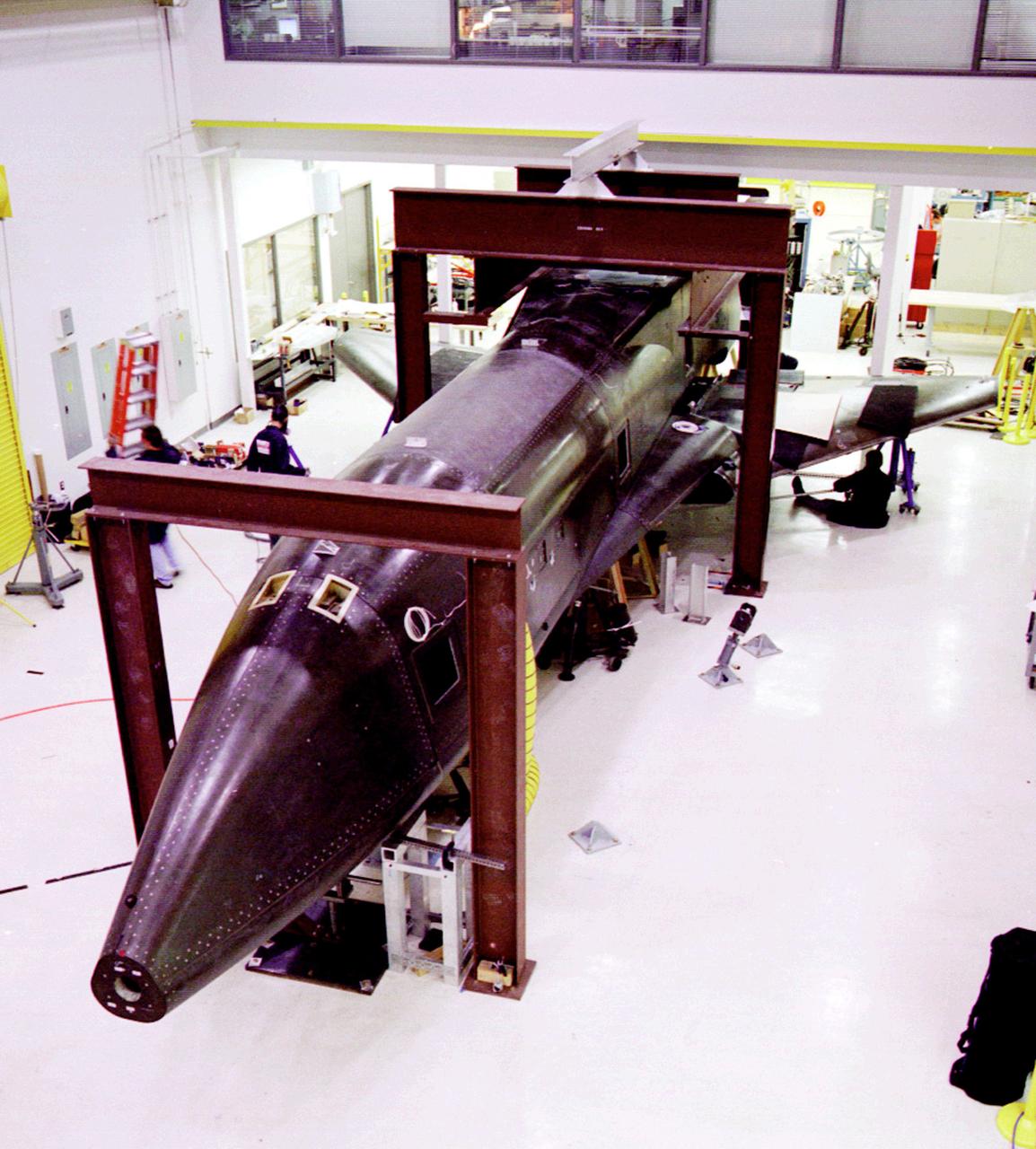
Pictured in the high bay, is the X-34 Technology Demonstrator in the process of completion. The X-34 wass part of NASA's Pathfinder Program which demonstrated advanced space transportation technologies through the use of flight experiments and experimental vehicles. These technology demonstrators and flight experiments supported the Agency's goal of dramatically reducing the cost of access to space and defined the future of space transportation pushing technology into a new era of space development and exploration at the dawn of the new century. The X-34 program was cancelled in 2001.
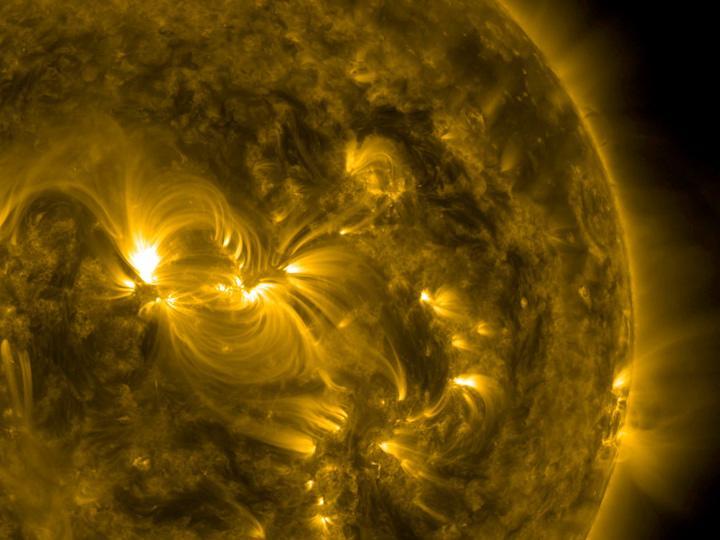
One broad active region sported a wonderful example of coiled magnetic field lines over almost a four-day period (July 15-18, 2016). The magnetic lines are easily visible in this 171 Angstrom wavelength of extreme ultraviolet light be cause charged particles are spiraling along the lines. The active region is a hotbed of struggling magnetic forces that were pushing out above the sun's surface. http://photojournal.jpl.nasa.gov/catalog/PIA17911
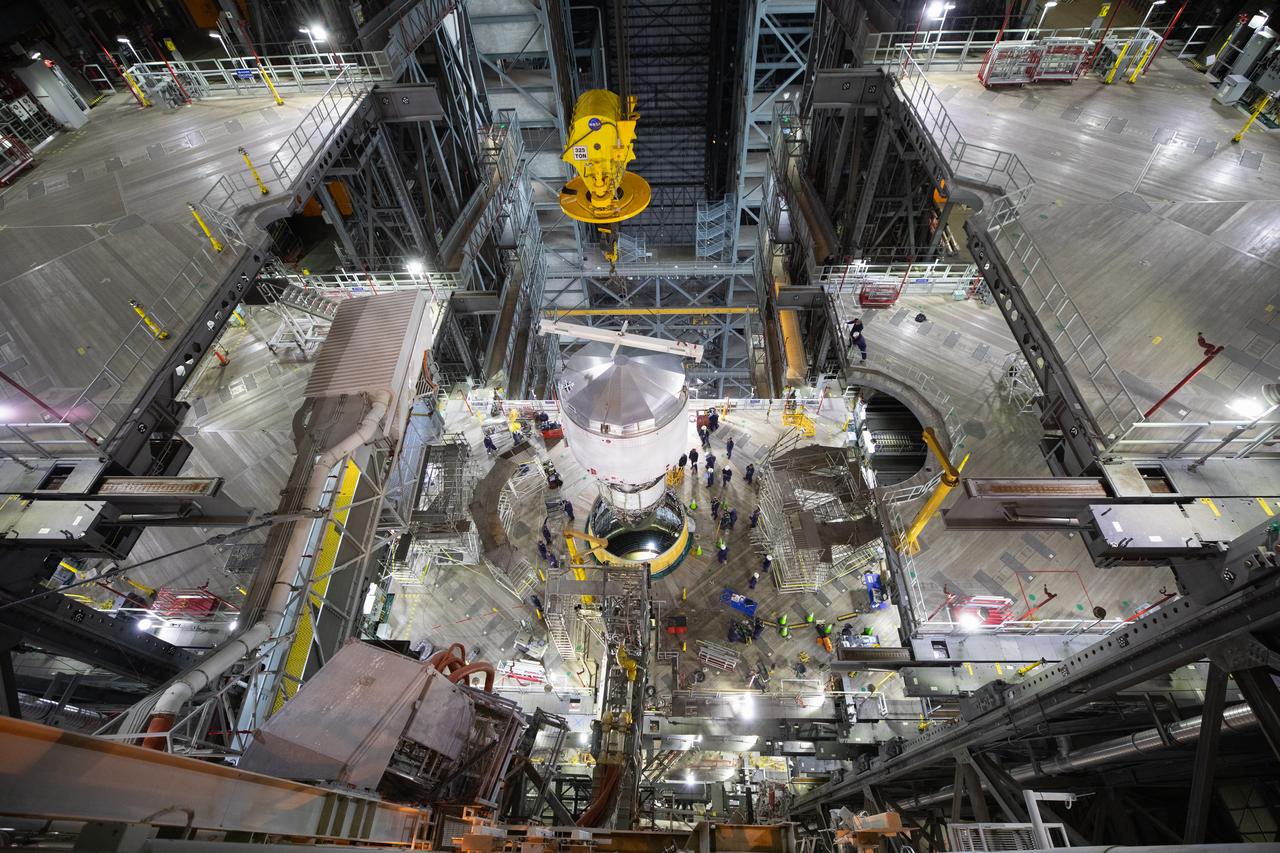
Teams with NASA’s Exploration Ground Systems Program begin integrating the interim cryogenic propulsion stage to the SLS (Space Launch System) launch vehicle stage adapter on Wednesday, April 30, 2025, inside the Vehicle Assembly Building at NASA’s Kennedy Space Center in Florida. The four-story propulsion system, built by Boeing and ULA (United Launch Alliance), is powered by an RL10 engine that will enable the Orion spacecraft to build up enough speed for the push toward the Moon during the Artemis II crewed test flight.

Teams with NASA’s Exploration Ground Systems Program begin integrating the interim cryogenic propulsion stage to the SLS (Space Launch System) launch vehicle stage adapter on Wednesday, April 30, 2025, inside the Vehicle Assembly Building at NASA’s Kennedy Space Center in Florida. The four-story propulsion system, built by Boeing and ULA (United Launch Alliance), is powered by an RL10 engine that will enable the Orion spacecraft to build up enough speed for the push toward the Moon during the Artemis II crewed test flight.

After the scoop on the end of NASA's Mars InSight lander was used to push down on the top of the spacecraft's "mole," or self-hammering heat probe, it was held in place to essentially block the mole from popping out of the soil. The movement of sand grains in the scoop, seen here, suggested that the mole had began bumping up against the bottom of the scoop while hammering on June 20, 2020. Movie available at https://photojournal.jpl.nasa.gov/catalog/PIA23896