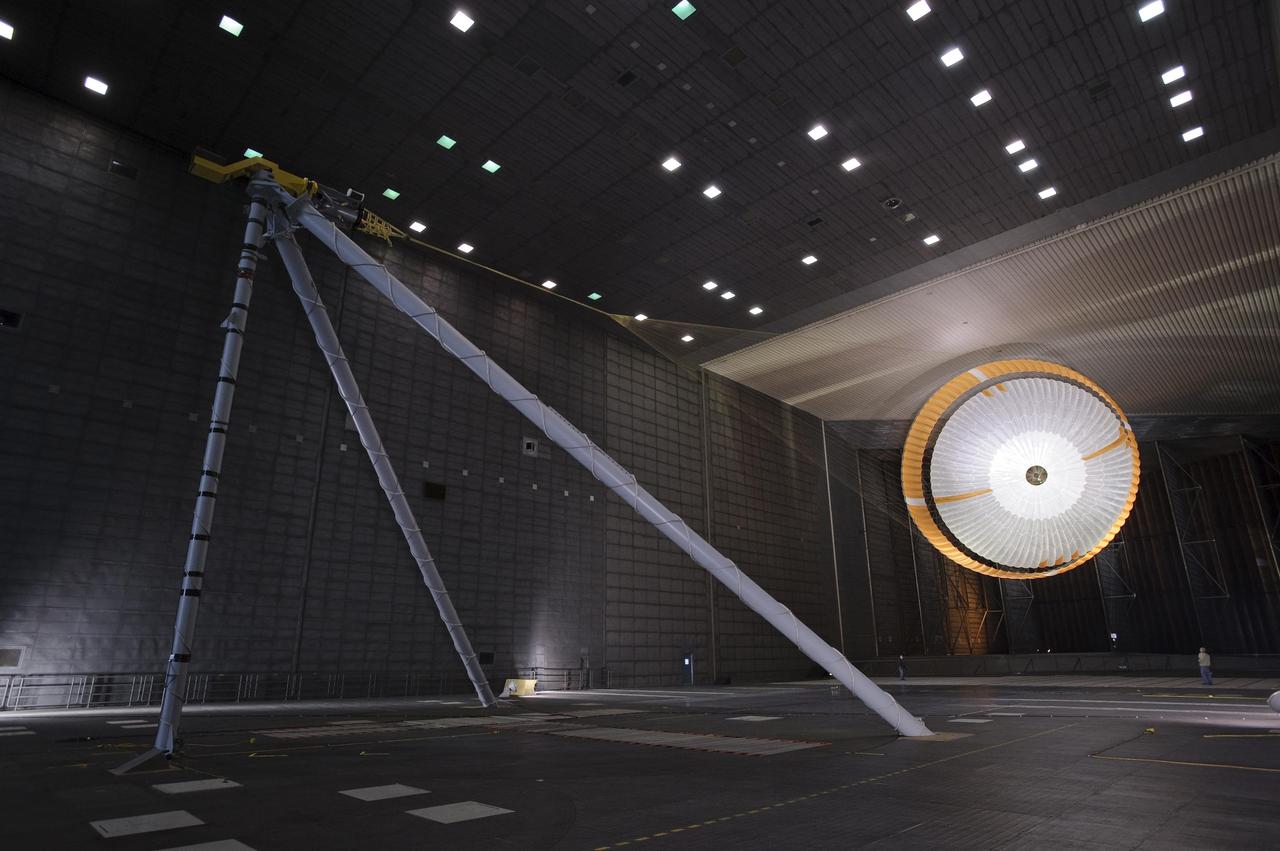
The parachute for NASA Mars Science Laboratory passed flight-qualification testing in March and April 2009 inside the world largest wind tunnel, at NASA Ames Research Center, Moffett Field, Calif.
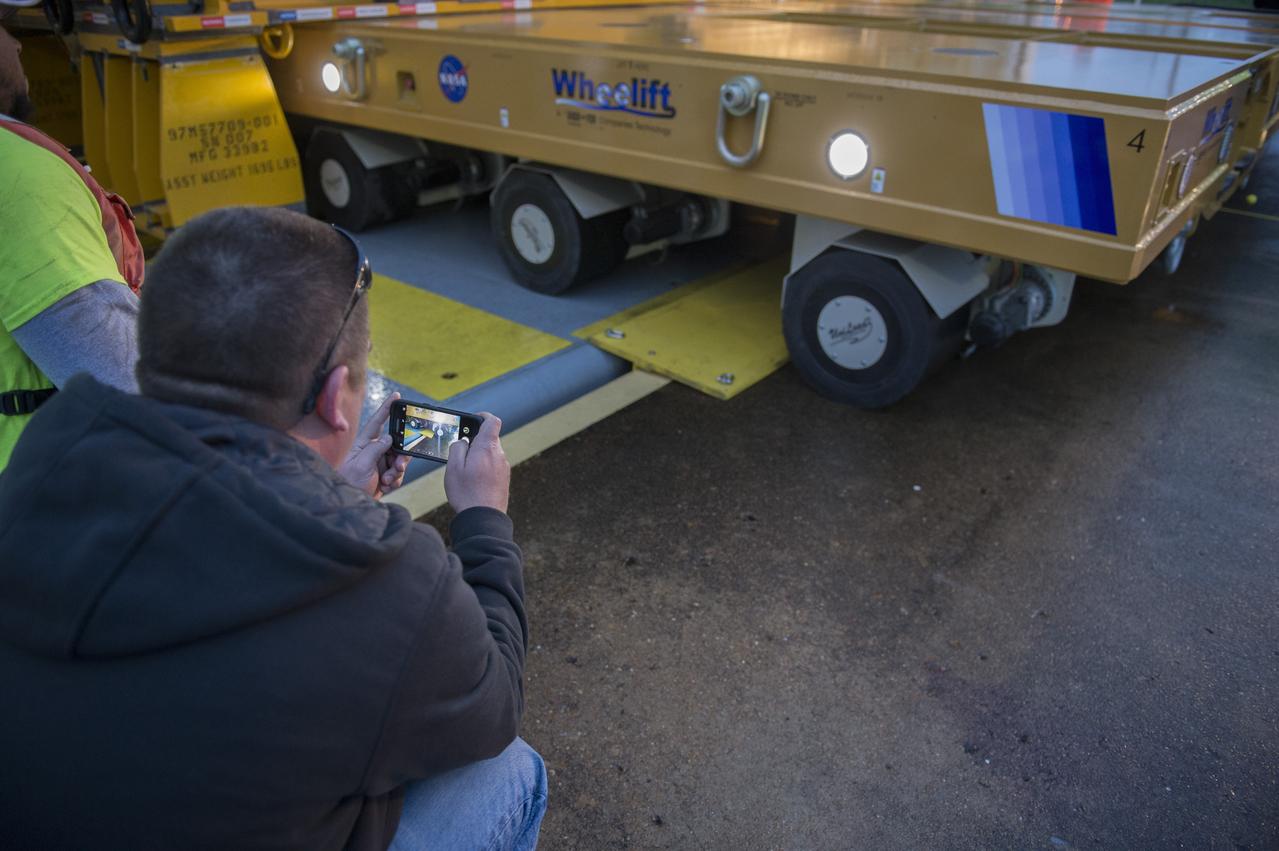
The SLS Stages Intertank Structural Test Assembly (STA) is rolling off the NASA Pegasus Barge at the MSFC Dock enroute to the MSFC 4619 Load Test Annex test facility for qualification testing
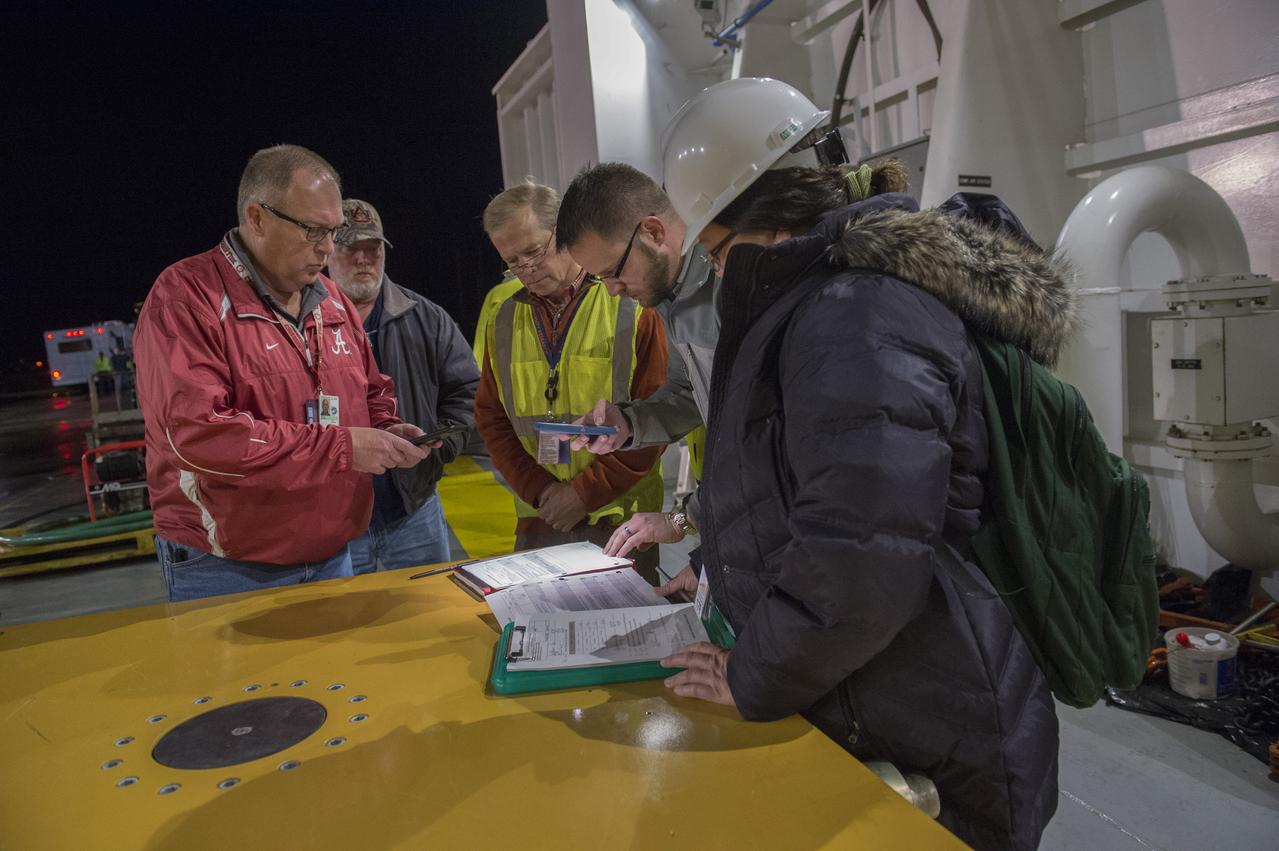
The SLS Stages Intertank Structural Test Assembly (STA) is rolling off the NASA Pegasus Barge at the MSFC Dock enroute to the MSFC 4619 Load Test Annex test facility for qualification testing
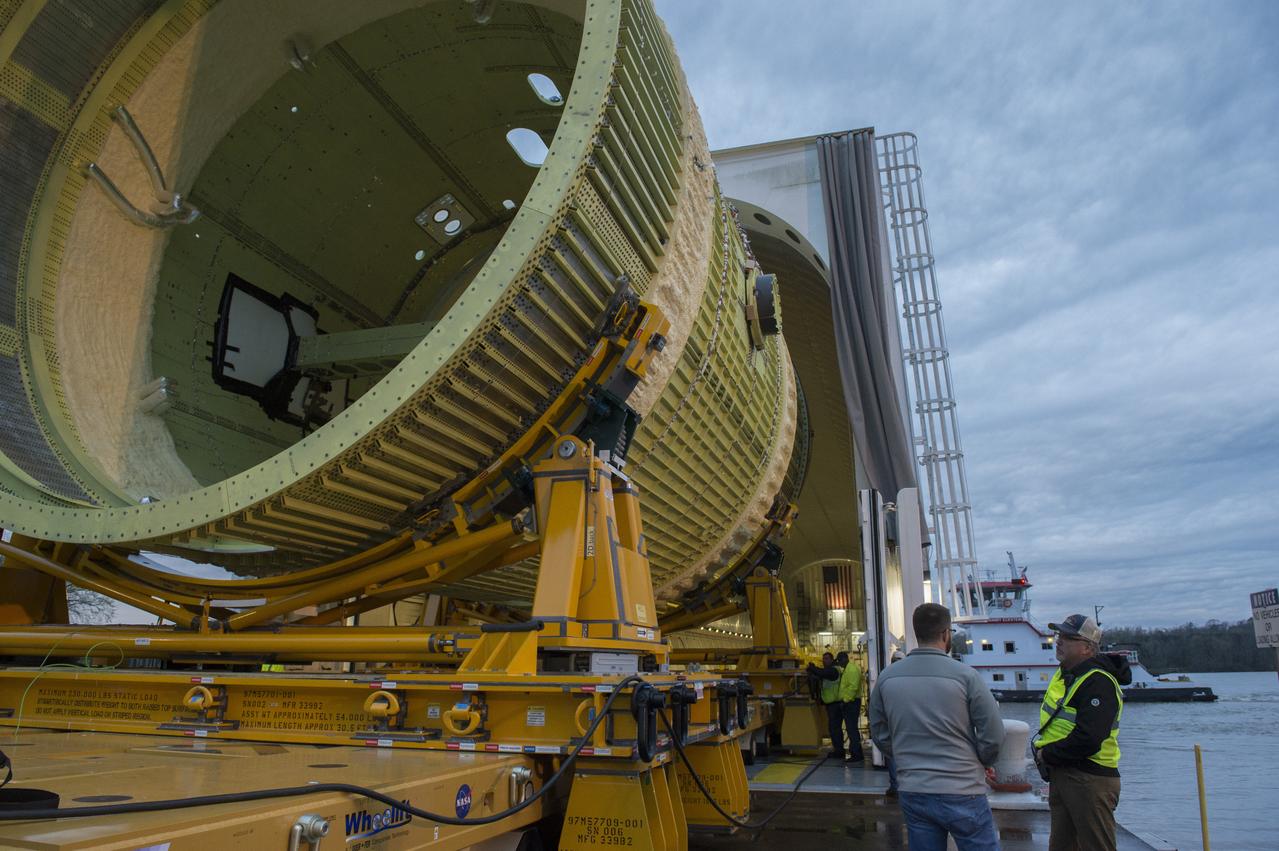
The SLS Stages Intertank Structural Test Assembly (STA) is rolling off the NASA Pegasus Barge at the MSFC Dock enroute to the MSFC 4619 Load Test Annex test facility for qualification testing
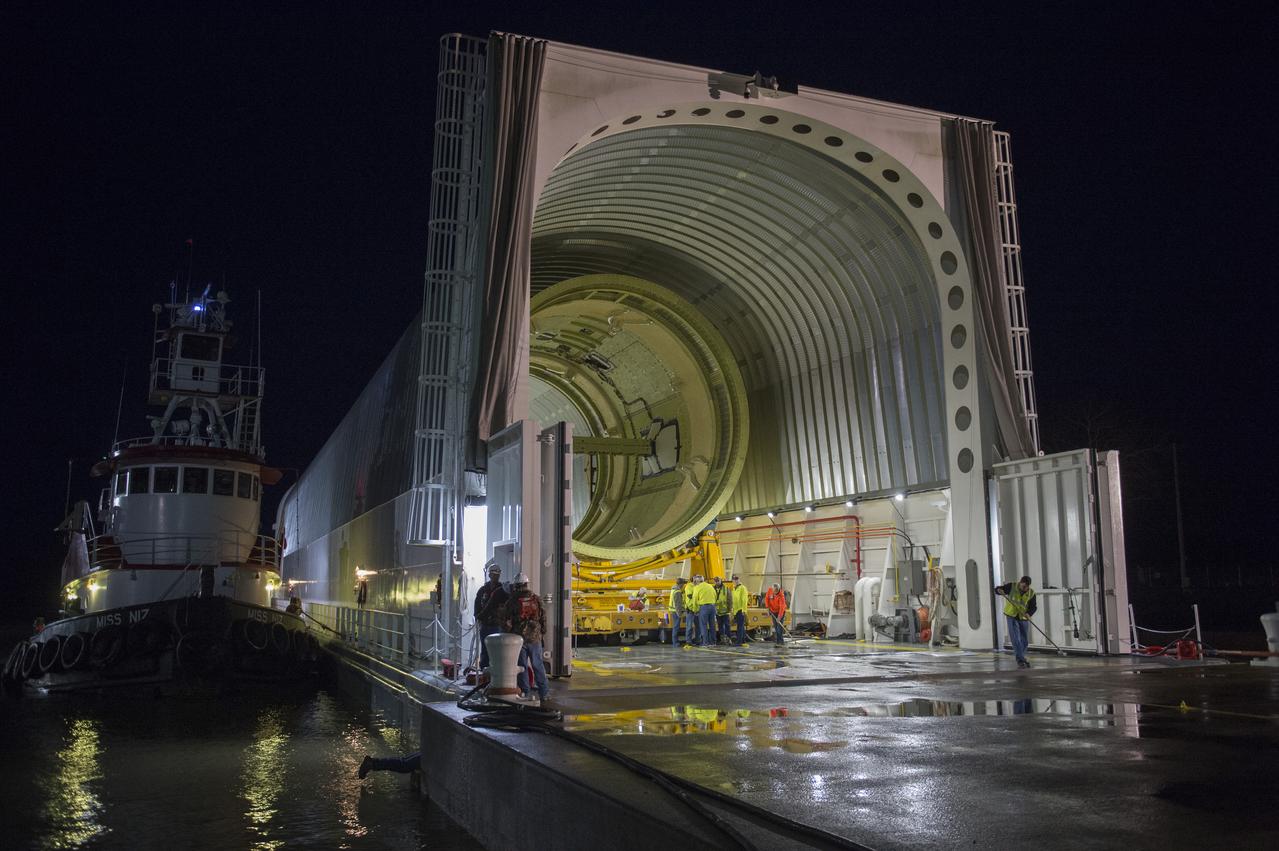
The SLS Stages Intertank Structural Test Assembly (STA) is rolling off the NASA Pegasus Barge at the MSFC Dock enroute to the MSFC 4619 Load Test Annex test facility for qualification testing
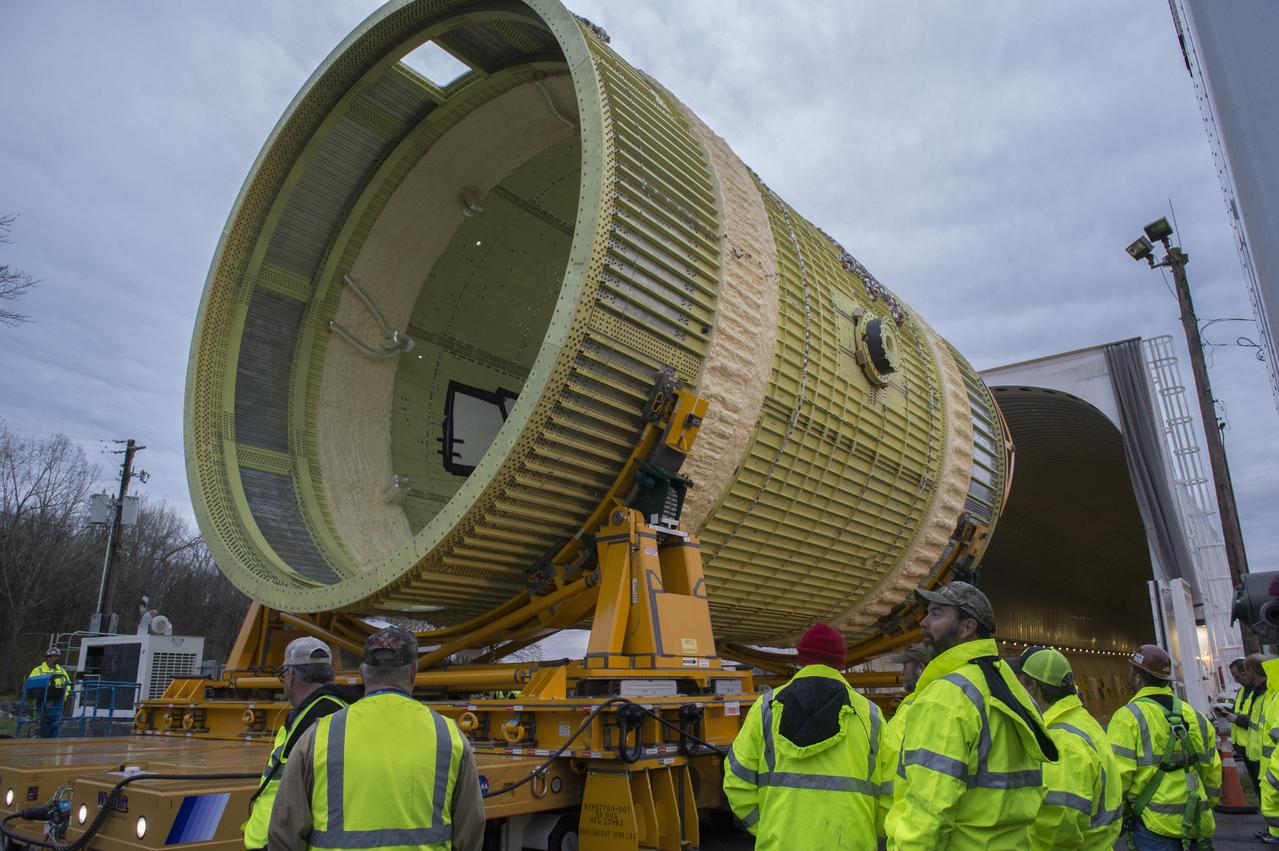
The SLS Stages Intertank Structural Test Assembly (STA) is rolling off the NASA Pegasus Barge at the MSFC Dock enroute to the MSFC 4619 Load Test Annex test facility for qualification testing
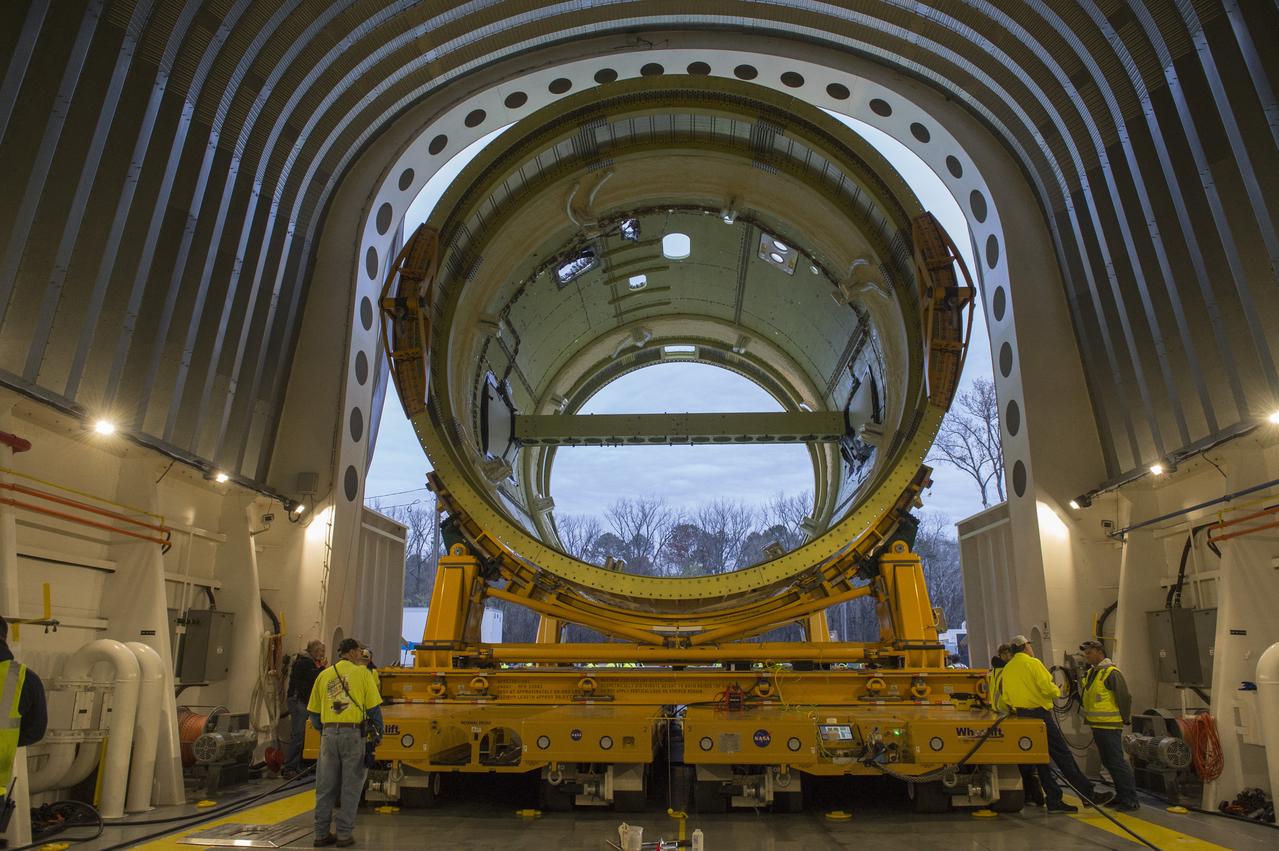
The SLS Stages Intertank Structural Test Assembly (STA) is rolling off the NASA Pegasus Barge at the MSFC Dock enroute to the MSFC 4619 Load Test Annex test facility for qualification testing
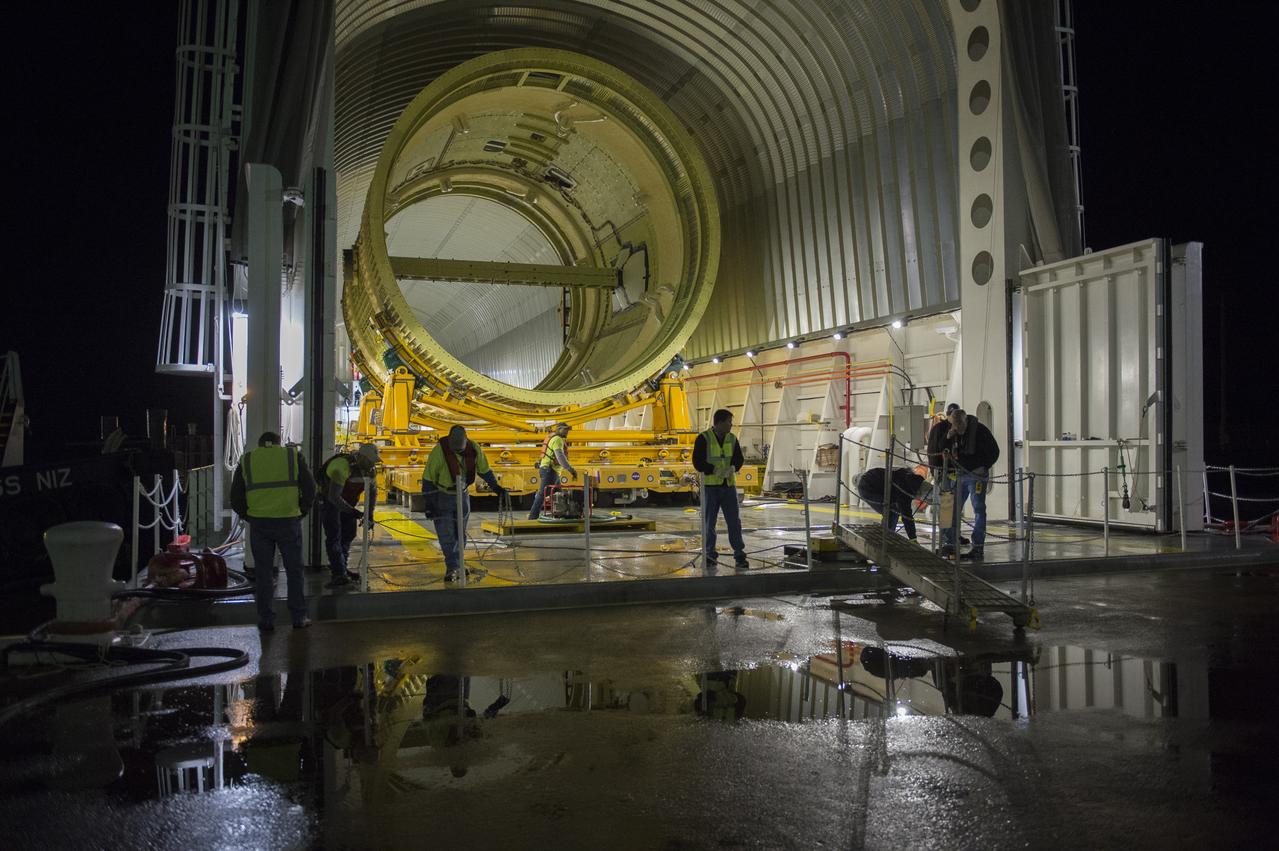
The SLS Stages Intertank Structural Test Assembly (STA) is rolling off the NASA Pegasus Barge at the MSFC Dock enroute to the MSFC 4619 Load Test Annex test facility for qualification testing
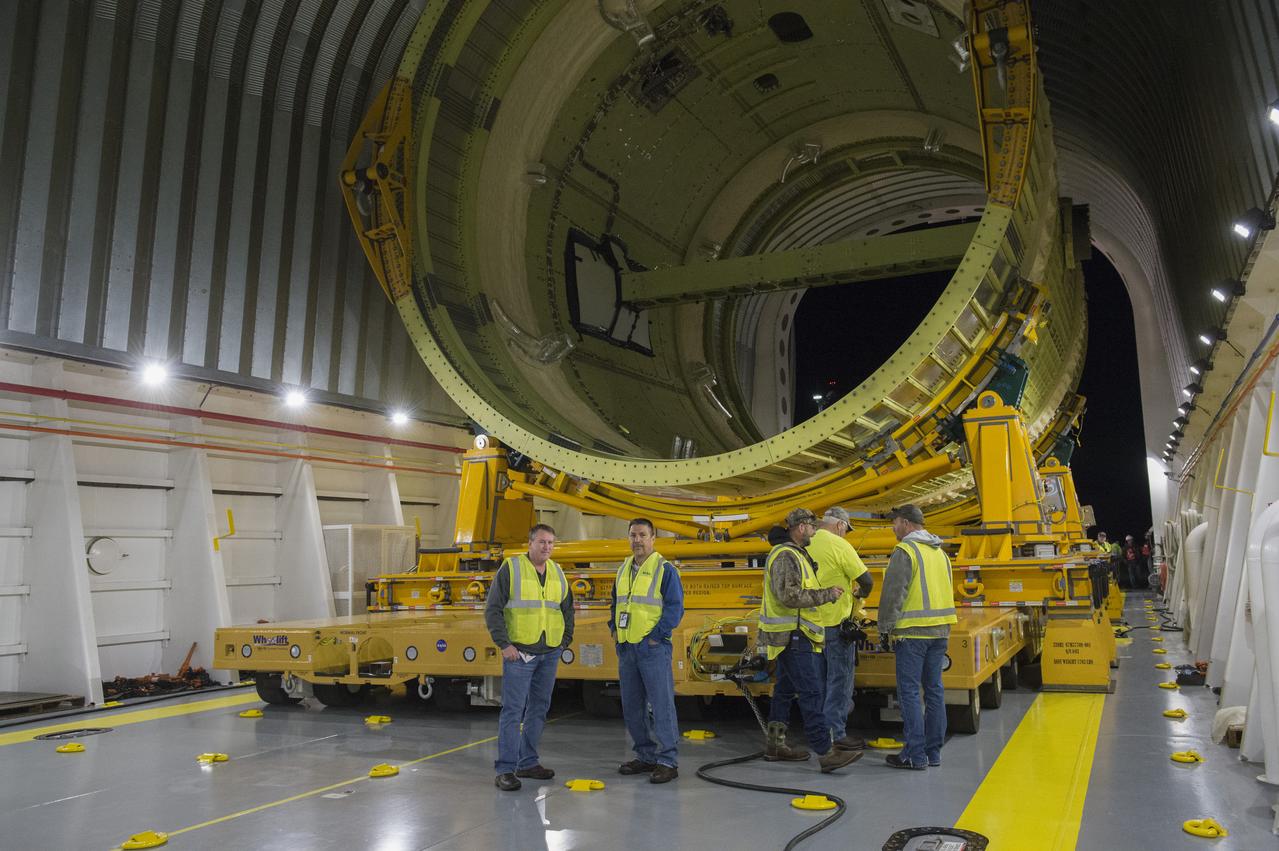
The SLS Stages Intertank Structural Test Assembly (STA) is rolling off the NASA Pegasus Barge at the MSFC Dock enroute to the MSFC 4619 Load Test Annex test facility for qualification testing
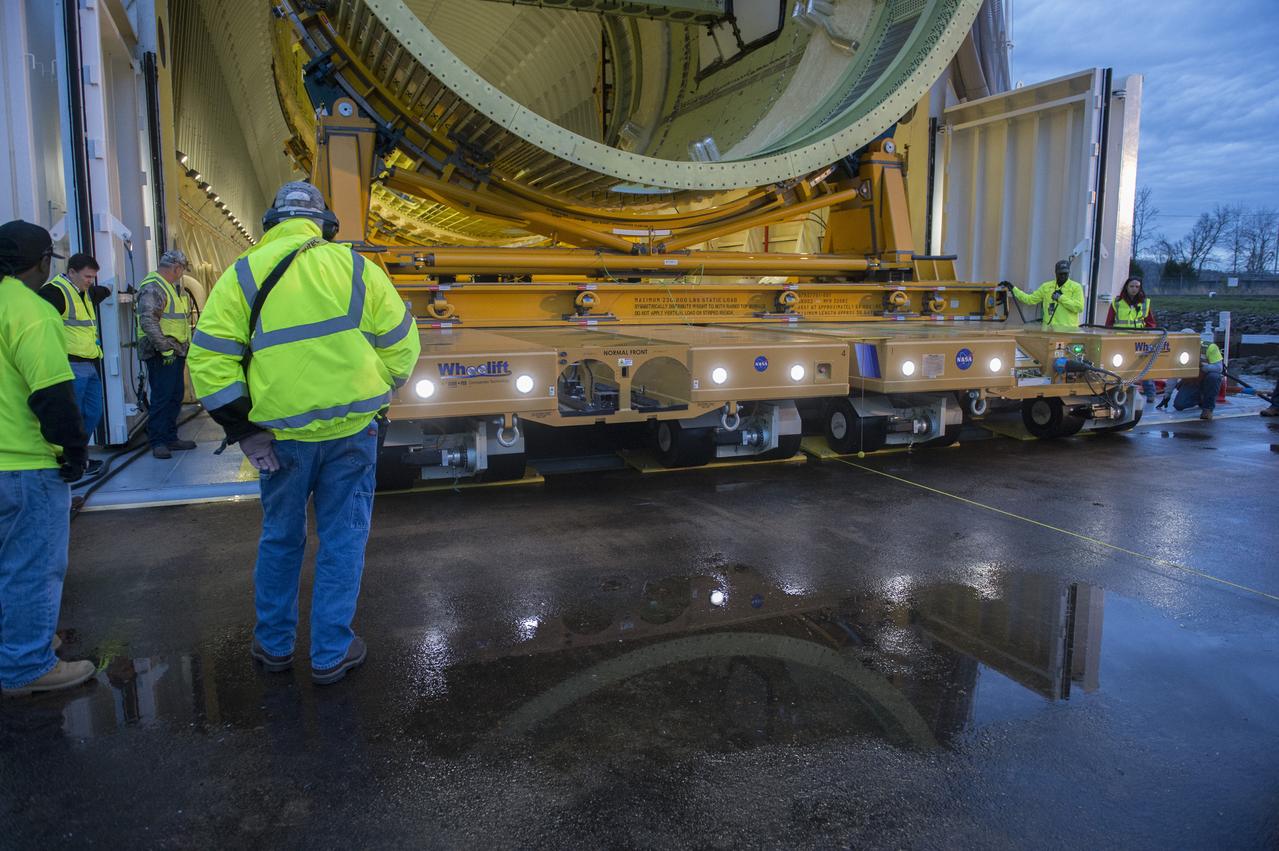
The SLS Stages Intertank Structural Test Assembly (STA) is rolling off the NASA Pegasus Barge at the MSFC Dock enroute to the MSFC 4619 Load Test Annex test facility for qualification testing
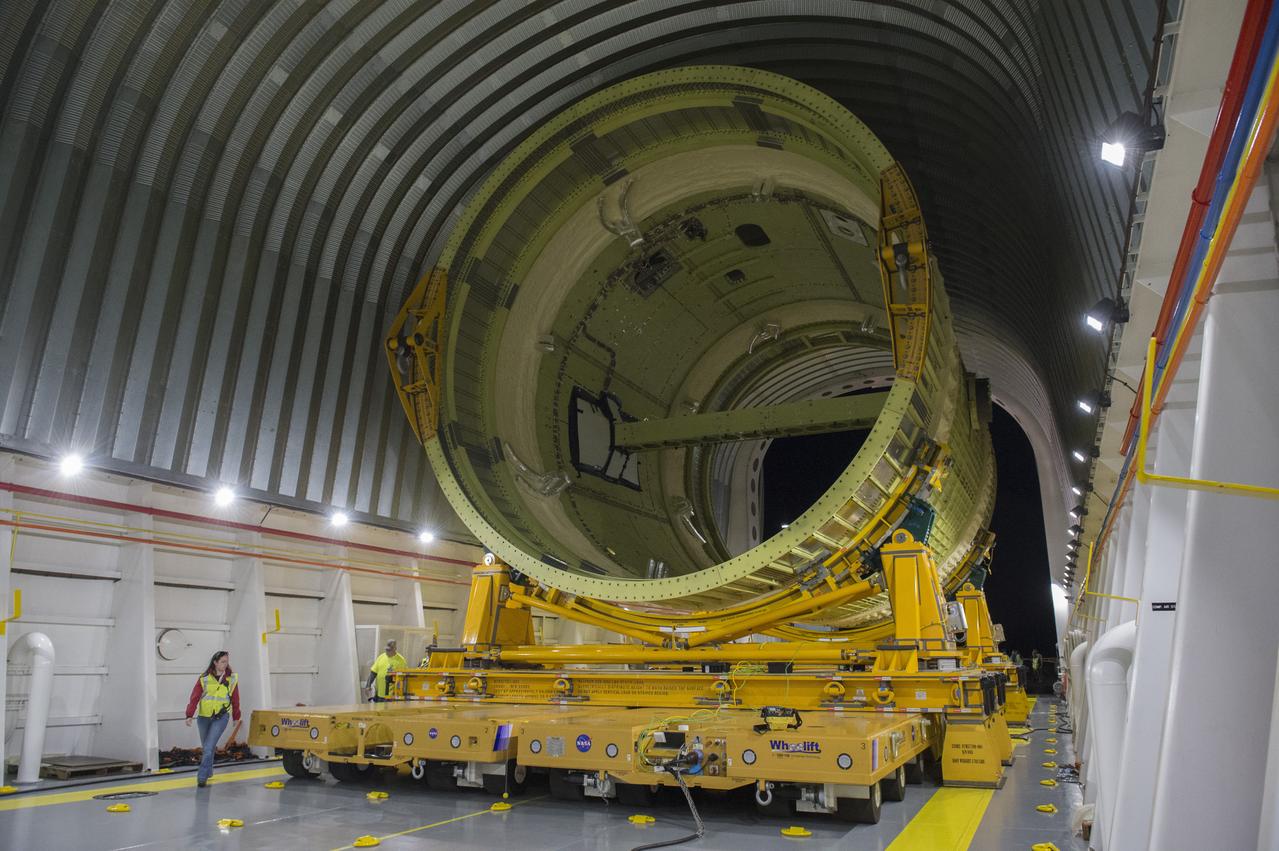
The SLS Stages Intertank Structural Test Assembly (STA) is rolling off the NASA Pegasus Barge at the MSFC Dock enroute to the MSFC 4619 Load Test Annex test facility for qualification testing
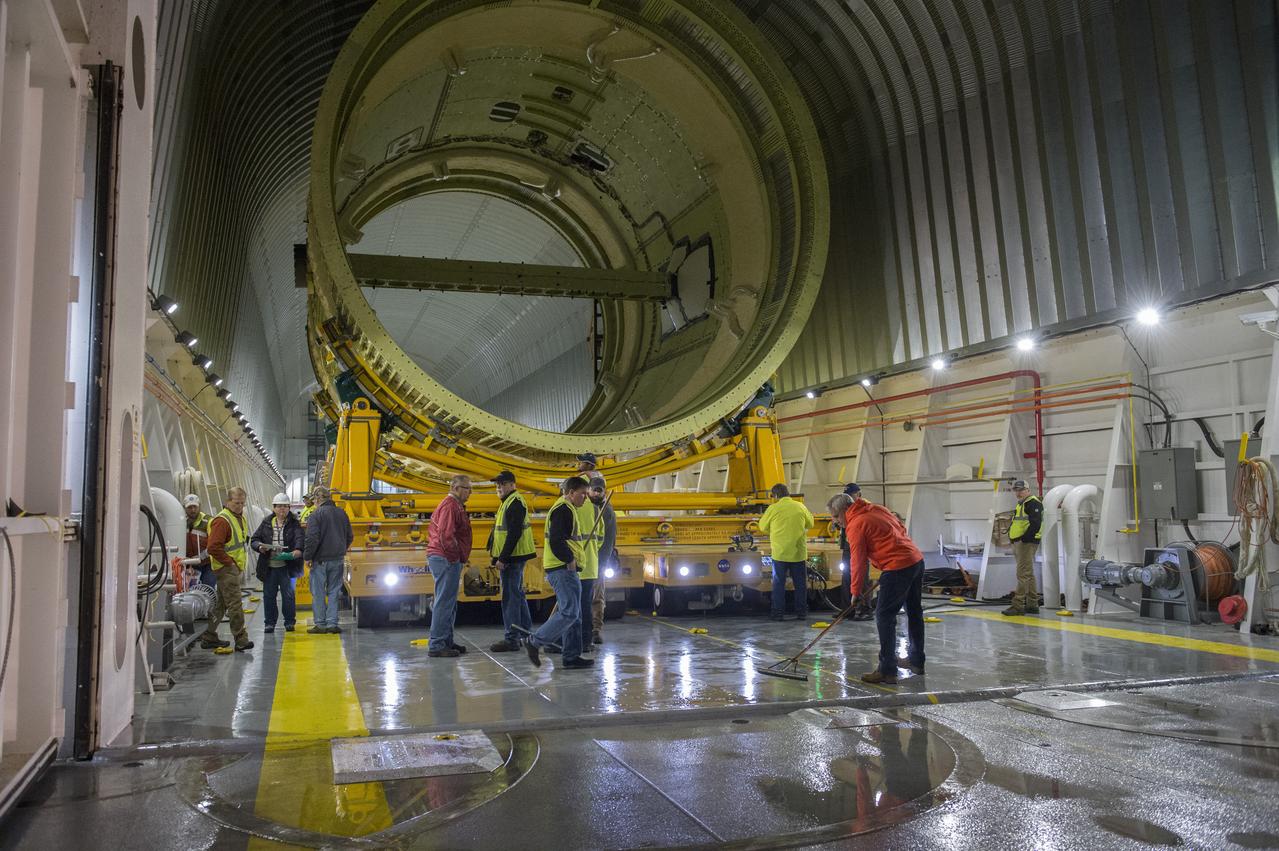
The SLS Stages Intertank Structural Test Assembly (STA) is rolling off the NASA Pegasus Barge at the MSFC Dock enroute to the MSFC 4619 Load Test Annex test facility for qualification testing
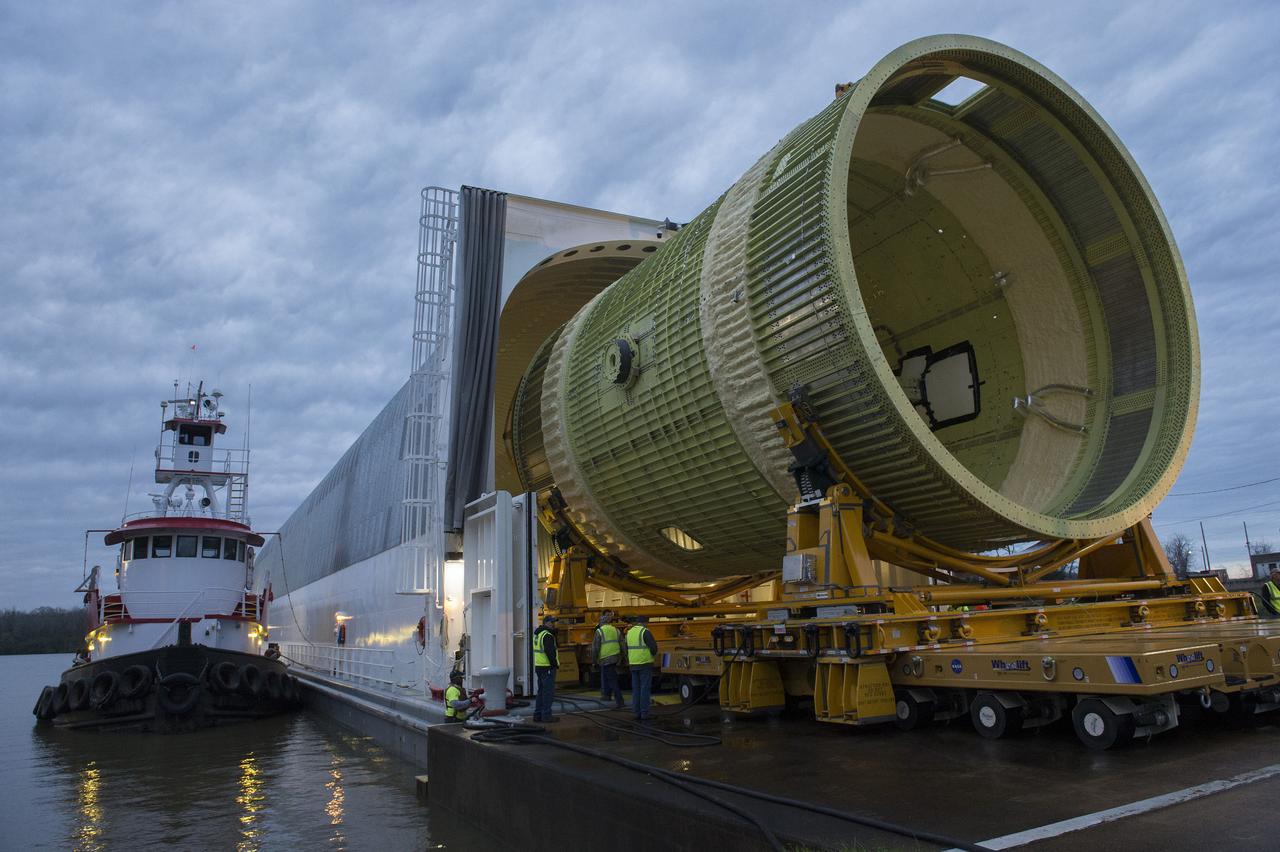
The SLS Stages Intertank Structural Test Assembly (STA) is rolling off the NASA Pegasus Barge at the MSFC Dock enroute to the MSFC 4619 Load Test Annex test facility for qualification testing. STA emerges from Barge Pegasus.
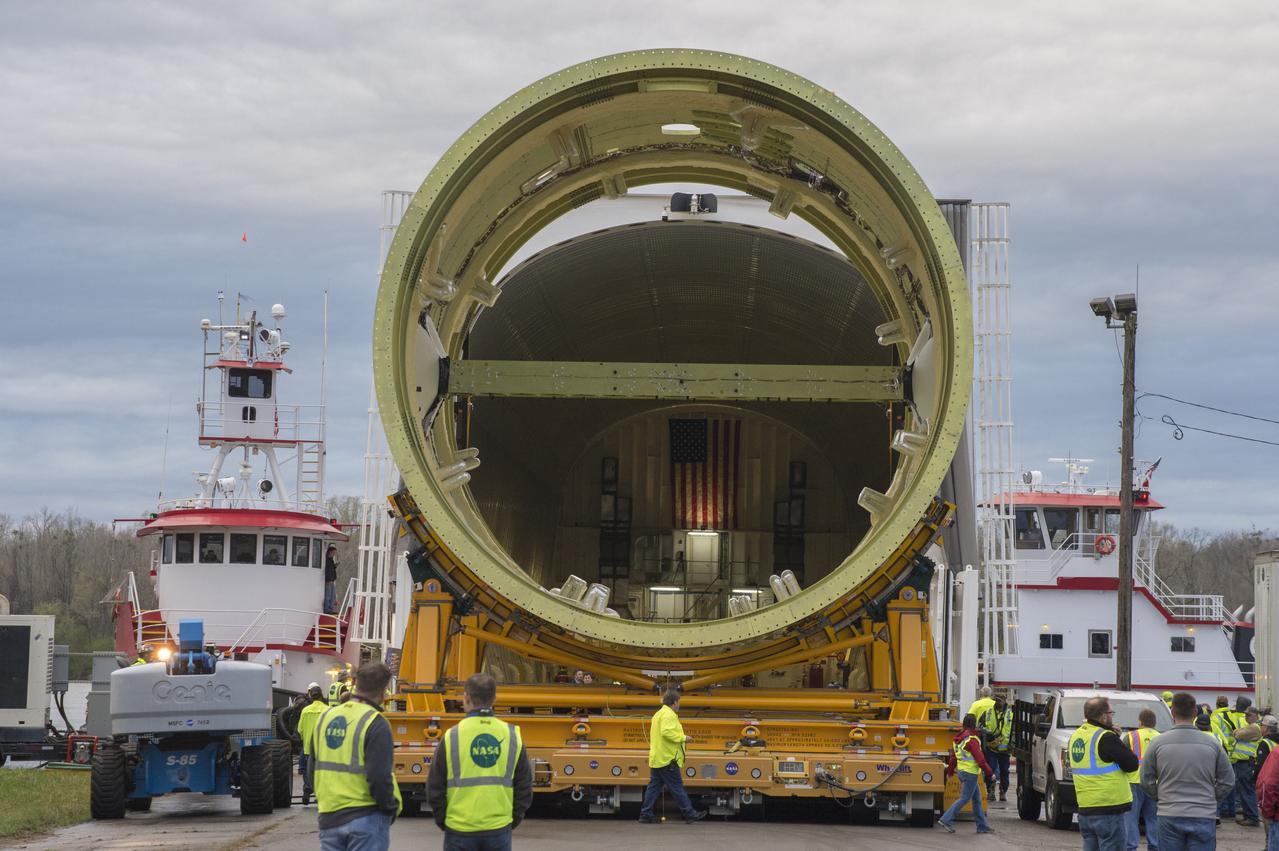
The SLS Stages Intertank Structural Test Assembly (STA) is rolling off the NASA Pegasus Barge at the MSFC Dock enroute to the MSFC 4619 Load Test Annex test facility for qualification testing. STA hardware completely free of barge and flanked by tug boats.
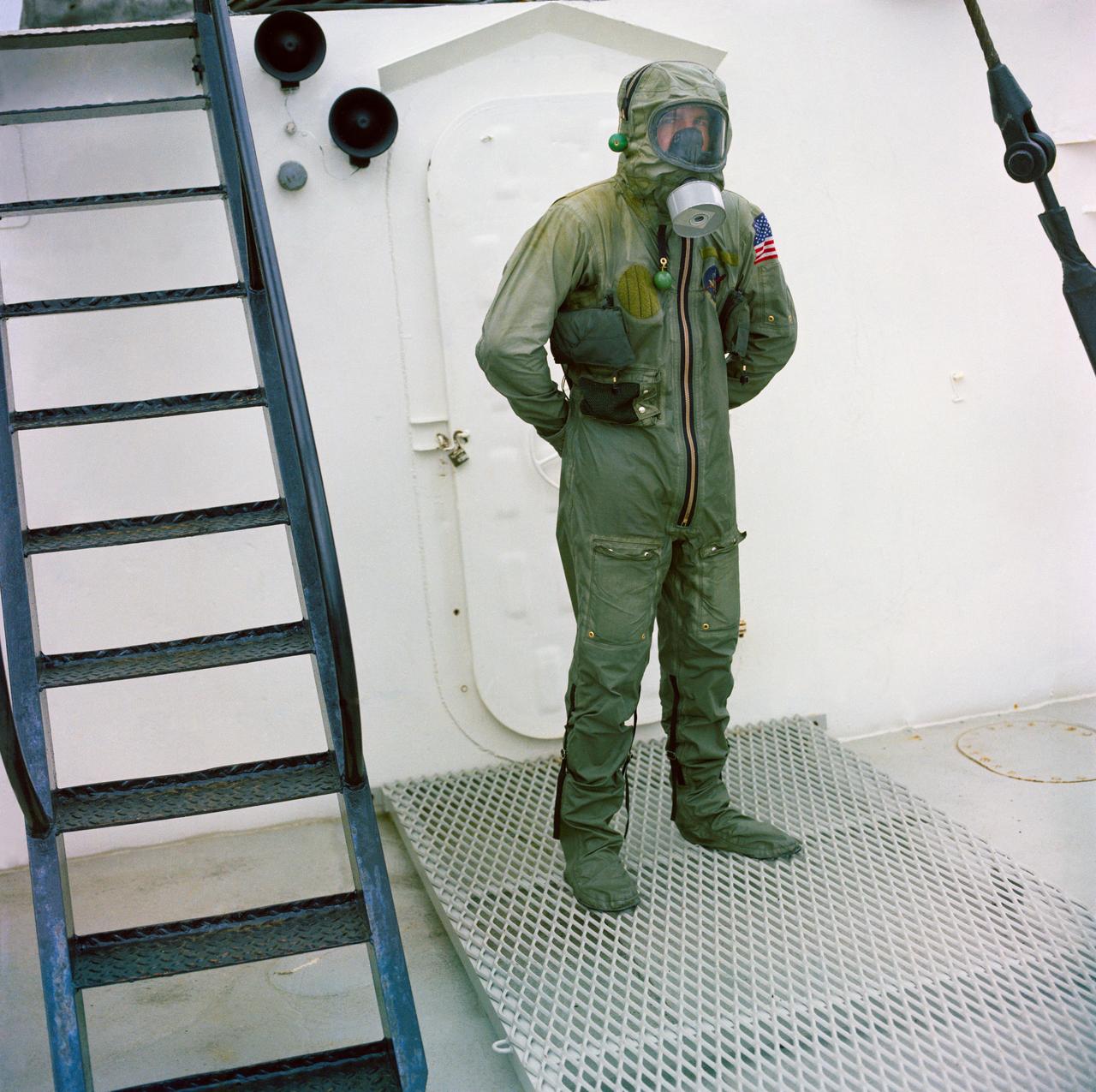
View of subject wearing Biological Isolation Garment (BIG) during a qualification test.
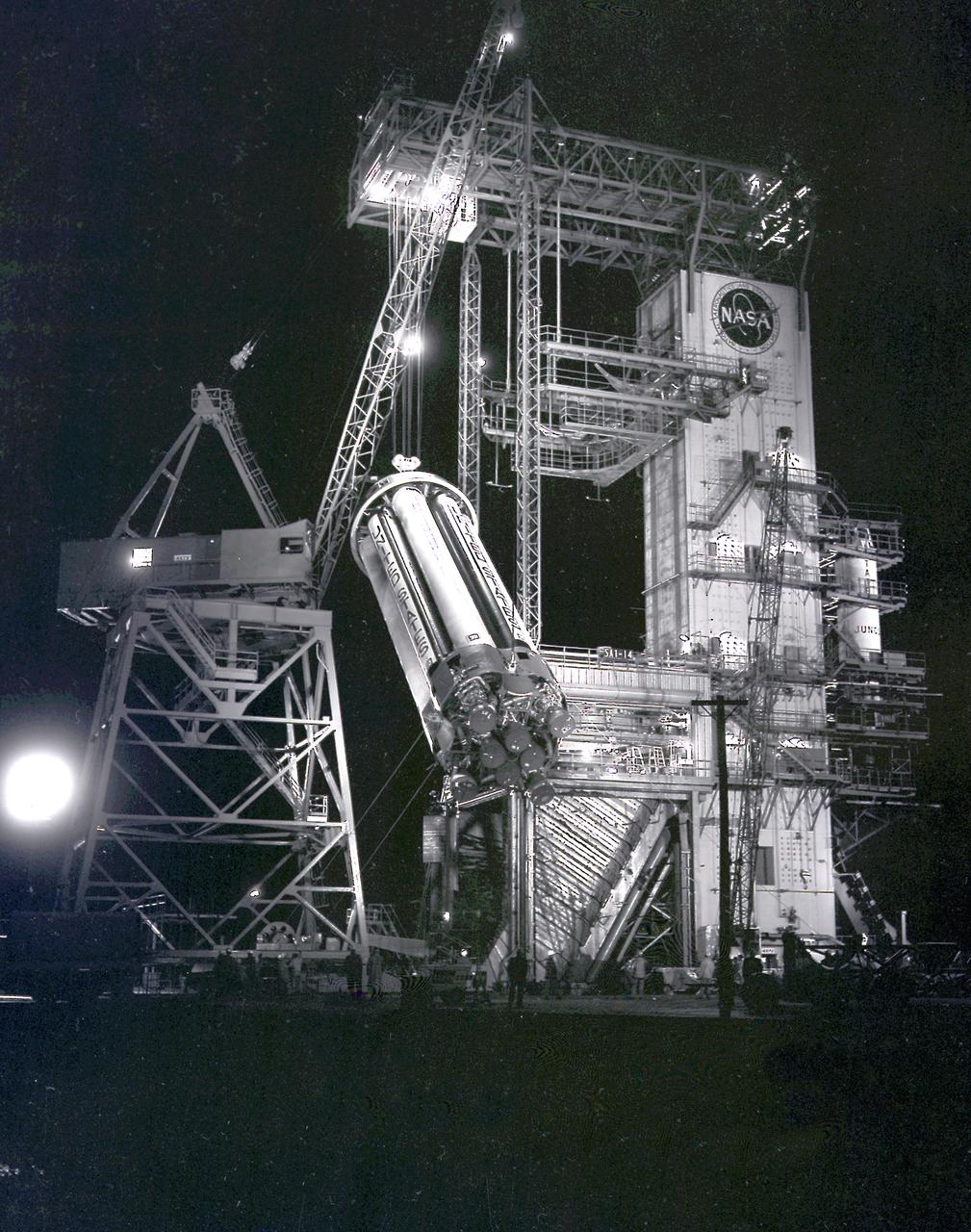
This night photograph depicts the SA-1 booster (Saturn I S-I stage) being removed from the test stand after the first flight qualification testing at the Marshall Space Flight Center (MSFC).
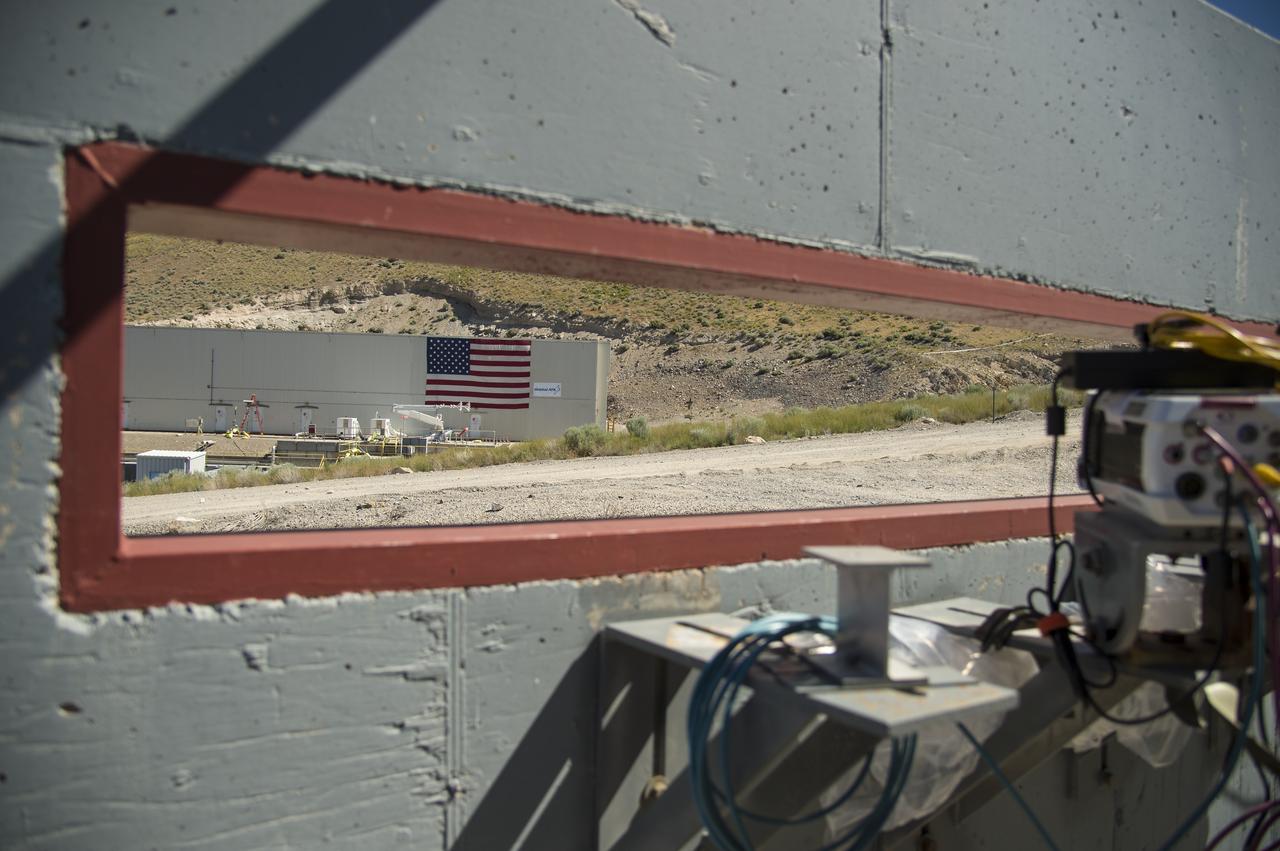
The test area where the second and final qualification motor (QM-2) test for the Space Launch System’s booster is seen through the window of a camera bunker, Sunday, June 26, 2016, at Orbital ATK Propulsion Systems test facilities in Promontory, Utah. The test is scheduled for Tuesday, June 28 at 10:05 a.m. EDT (8:05 a.m. MDT). Photo Credit: (NASA/Bill Ingalls)
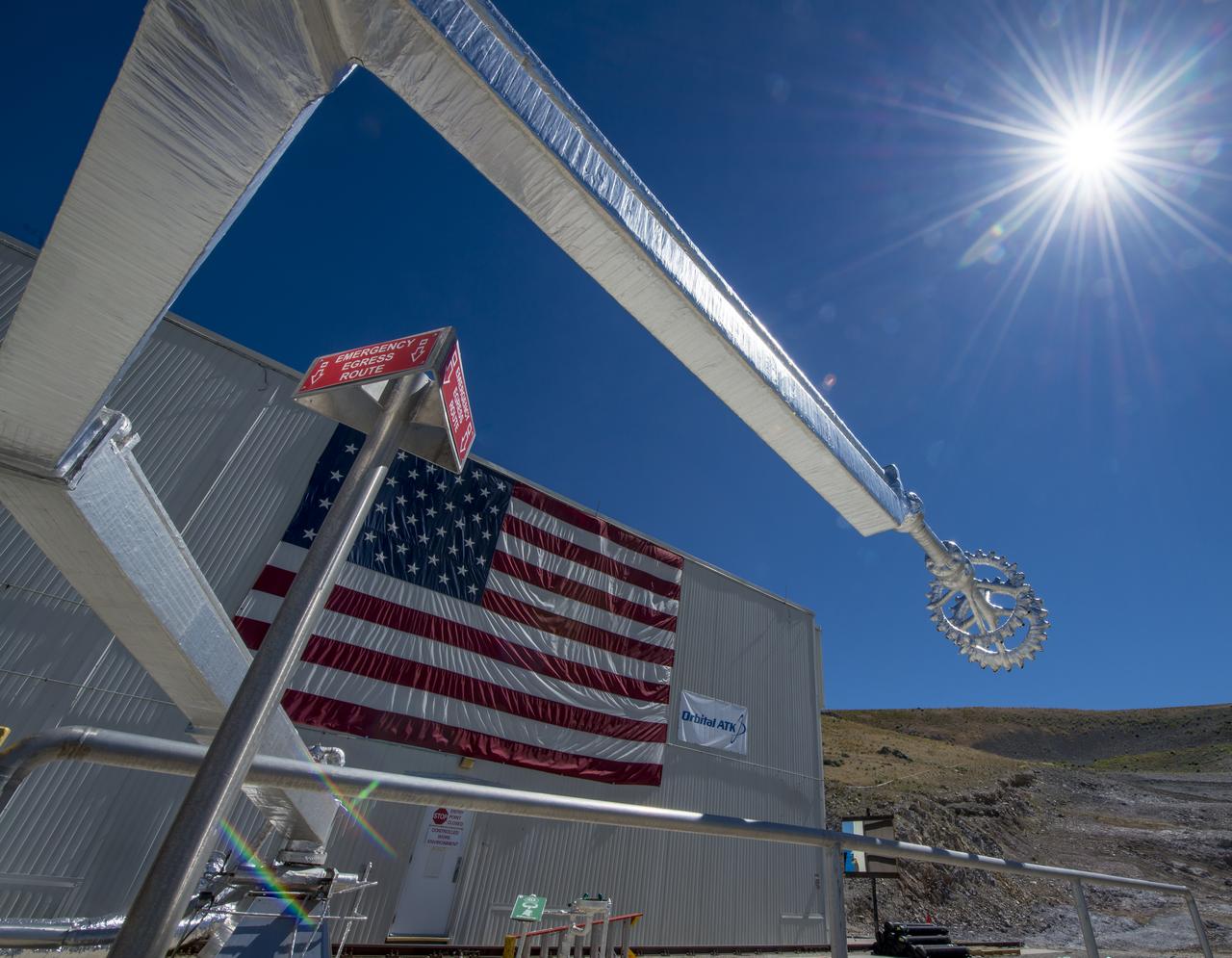
The quench system arm and nozzle are seen at the test area where the second and final qualification motor (QM-2) test for the Space Launch System’s booster will take place, Sunday, June 26, 2016, at Orbital ATK Propulsion Systems test facilities in Promontory, Utah. The test is scheduled for Tuesday, June 28 at 10:05 a.m. EDT (8:05 a.m. MDT). Photo Credit: (NASA/Bill Ingalls)
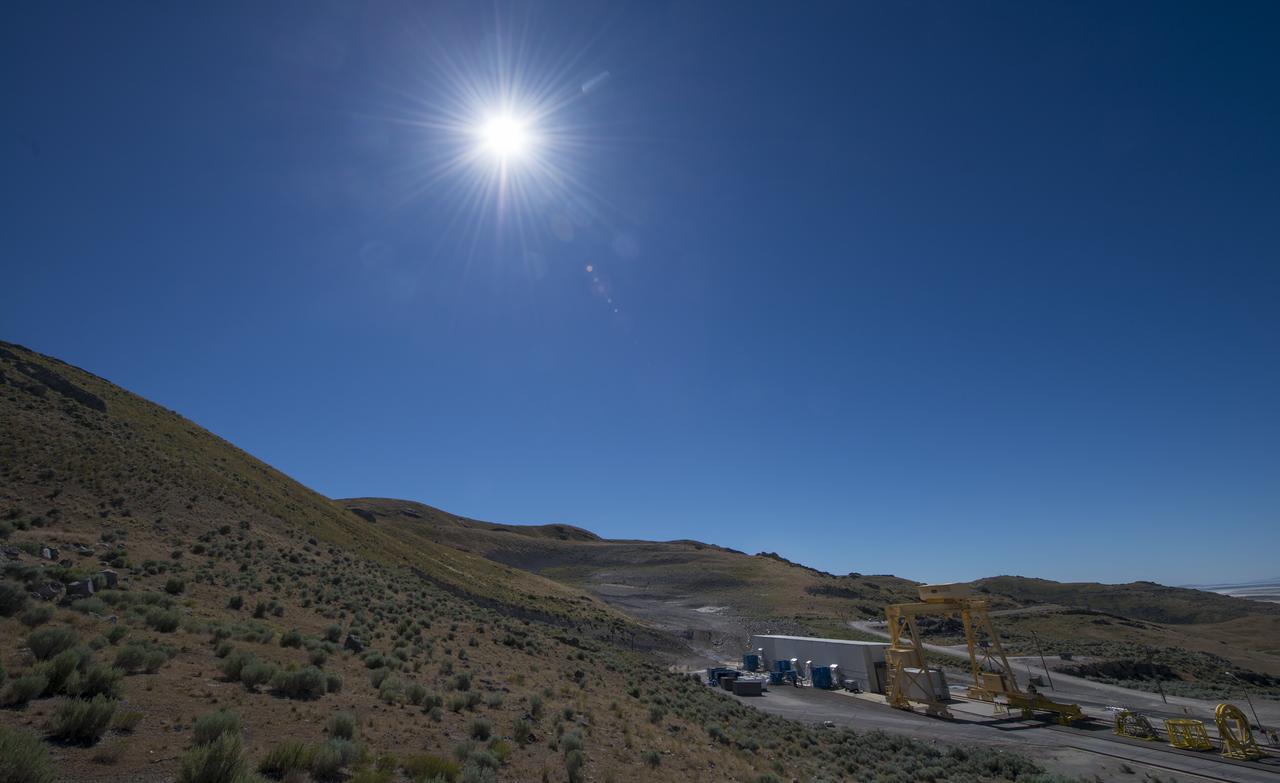
The test area where the second and final qualification motor (QM-2) test for the Space Launch System’s booster is seen Sunday, June 26, 2016, at Orbital ATK Propulsion Systems test facilities in Promontory, Utah. The test is scheduled for Tuesday, June 28 at 10:05 a.m. EDT (8:05 a.m. MDT). Photo Credit: (NASA/Bill Ingalls)
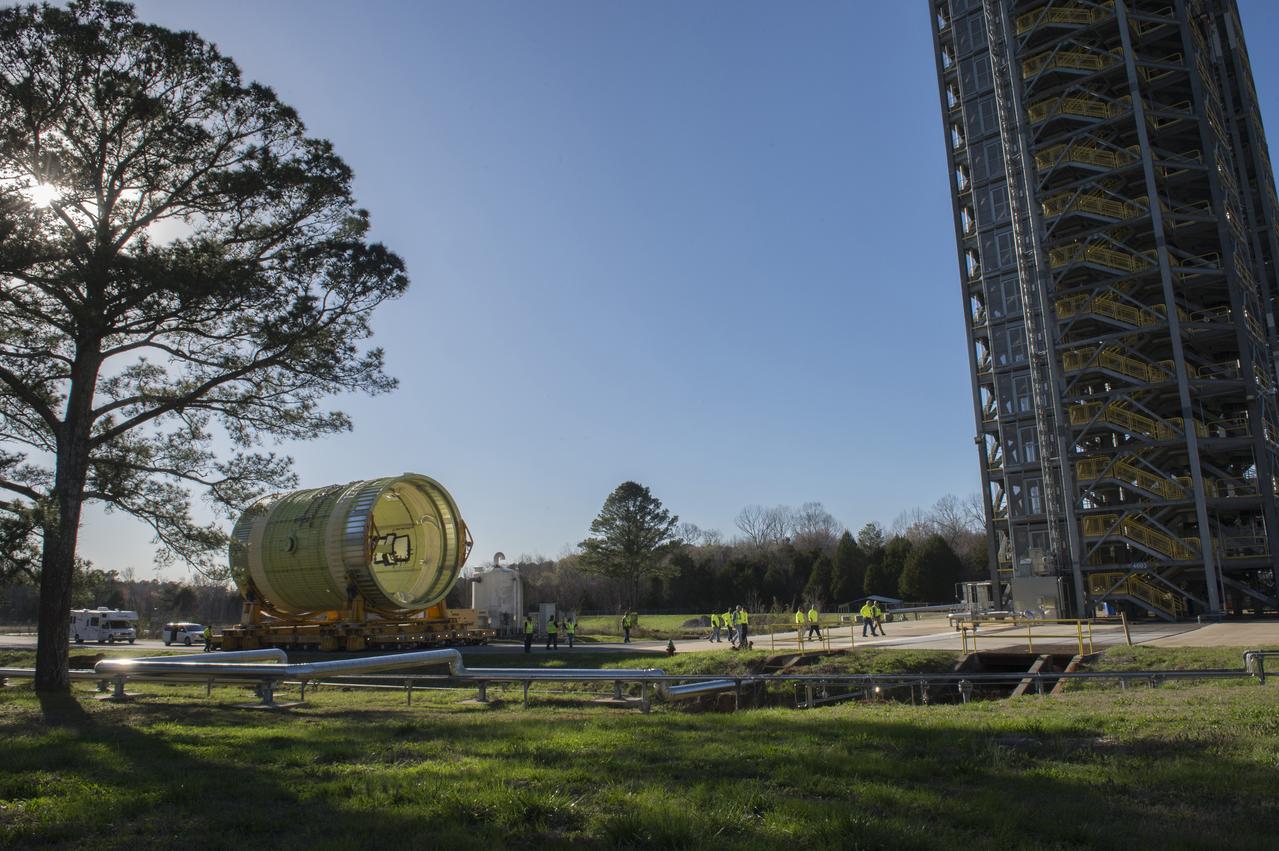
The SLS Stages Intertank Structural Test Assembly (STA) is rolling off the NASA Pegasus Barge at the MSFC Dock enroute to the MSFC 4619 Load Test Annex test facility for qualification testing via MSFC West Test Area. STA approaches Test Stand 4693, SLS LH2 test Stand, on way to Bldg. 4619
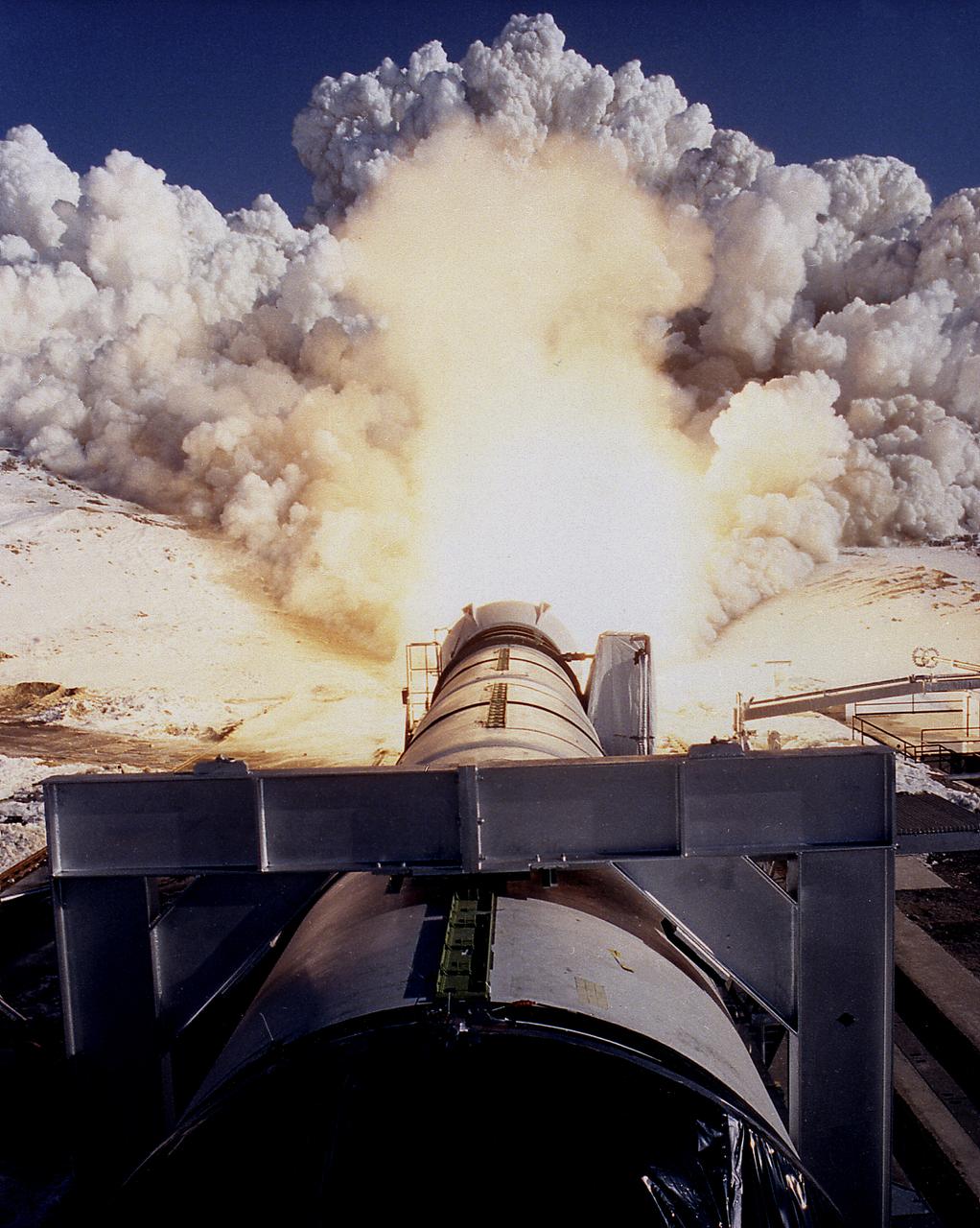
This photograph shows a static firing test of the Solid Rocket Qualification Motor-8 (QM-8) at the Morton Thiokol Test Site in Wasatch, Utah. The twin solid rocket boosters provide the majority of thrust for the first two minutes of flight, about 5.8 million pounds, augmenting the Shuttle's main propulsion system during liftoff. The major design drivers for the solid rocket motors (SRM's) were high thrust and reuse. The desired thrust was achieved by using state-of-the-art solid propellant and by using a long cylindrical motor with a specific core design that allows the propellant to burn in a carefully controlled marner. Under the direction of the Marshall Space Flight Center, the SRM's are provided by the Morton Thiokol Corporation.
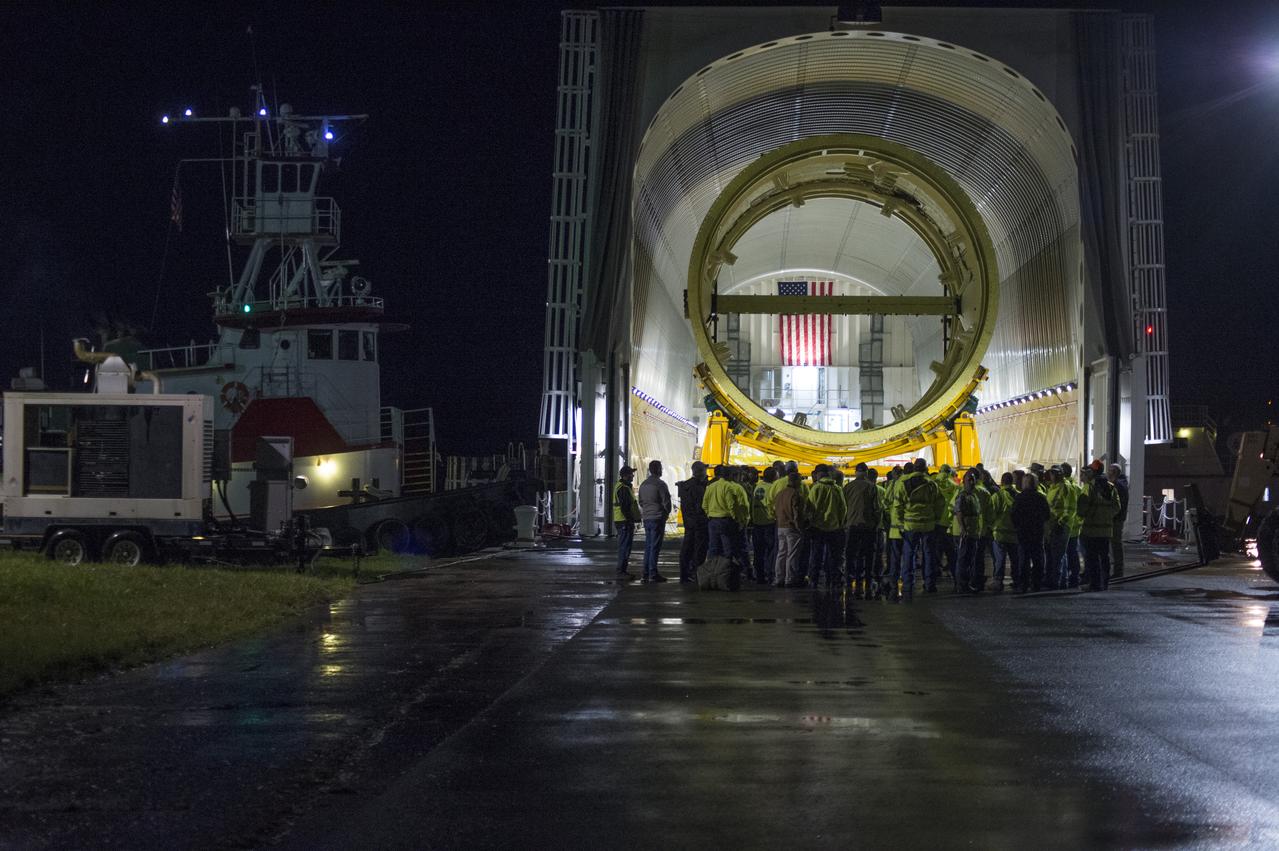
The SLS Stages Intertank Structural Test Assembly (STA) is rolling off the NASA Pegasus Barge at the MSFC Dock enroute to the MSFC 4619 Load Test Annex test facility for qualification testing. Members of MSFC Logistics Office and Move Team members gather for last minute instructions and safety briefing before off-loading STA hardware.
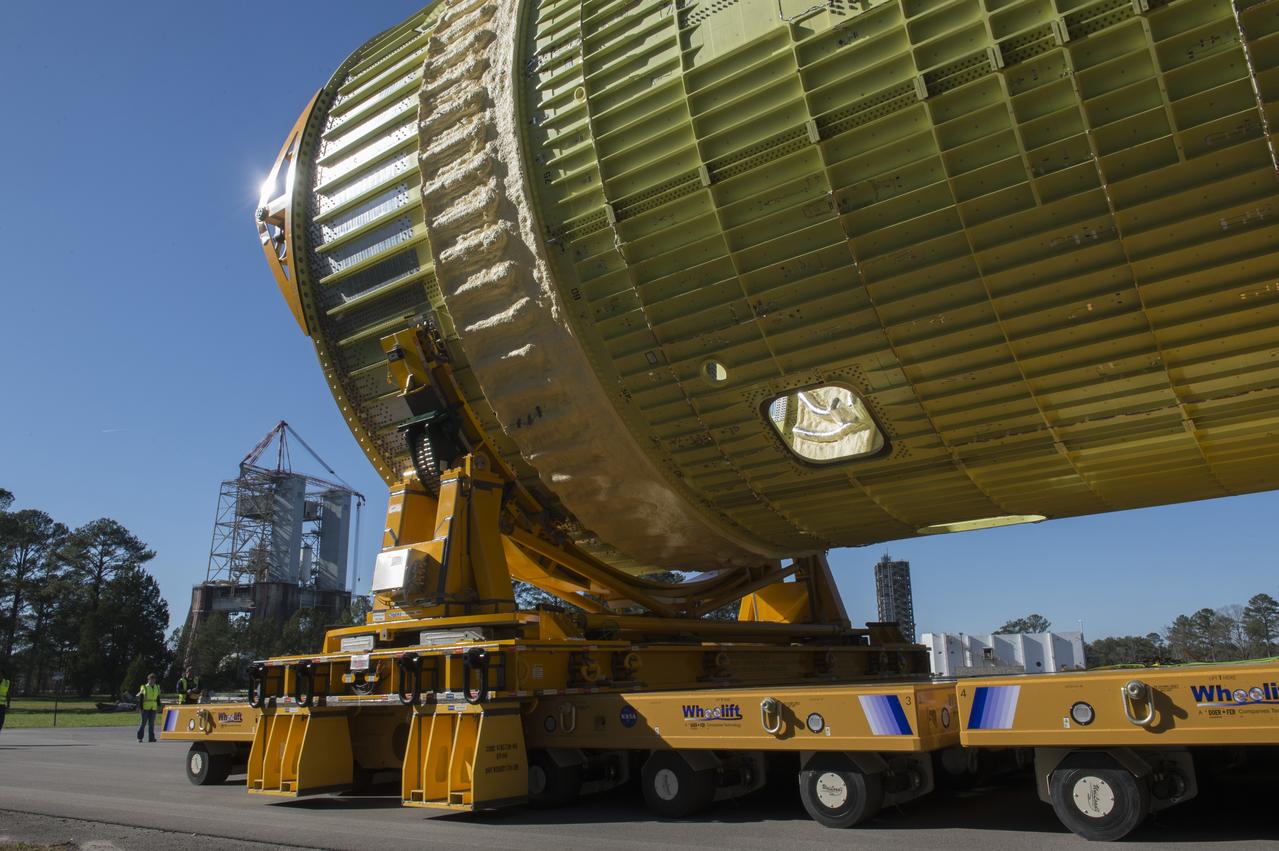
The SLS Stages Intertank Structural Test Assembly (STA) is rolling off the NASA Pegasus Barge at the MSFC Dock enroute to the MSFC 4619 Load Test Annex test facility for qualification testing via MSFC West Test Area. Historic Saturn 1-C test stand on far left, blockhouse 4670 on far right, SLS LH2 test stand, 4693, in center.

Photo shows how the Space Launch Sysetm (SLS) rocket liquid oxygen tank failed during a structural qualification test at NASA’s Marshall Space Flight Center in Huntsville, Alabama. The photos show both the water flowing from the tank as it ruptured and the resultant tear left in the tank when it buckled during the test. Engineers pushed the liquid oxygen structural test article to the limits on purpose. The tank is a test article that is identical to tanks that are part of the SLS core stage that will produce 2 million pounds of thrust to help launch the rocket on the Artemis missions to the Moon. During the test, hydraulic cylinders were then calibrated and positioned along the tank to apply millions of pounds of crippling force from all sides while engineers measured and recorded the effects of the launch and flight forces. For the test, water used to simulate the liquid oxygen flows out of the tank after it ruptures. The structural test campaign was conducted on the rocket to ensure the SLS rocket’s structure can endure the rigors of launch and safely send astronauts to the Moon on the Artemis missions. For more information: https://www.nasa.gov/exploration/systems/sls/nasa-completes-artemis-sls-structural-testing-campaign.html

Photo shows how the Space Launch Sysetm (SLS) rocket liquid oxygen tank failed during a structural qualification test at NASA’s Marshall Space Flight Center in Huntsville, Alabama. The photos show both the water flowing from the tank as it ruptured and the resultant tear left in the tank when it buckled during the test. Engineers pushed the liquid oxygen structural test article to the limits on purpose. The tank is a test article that is identical to tanks that are part of the SLS core stage that will produce 2 million pounds of thrust to help launch the rocket on the Artemis missions to the Moon. During the test, hydraulic cylinders were then calibrated and positioned along the tank to apply millions of pounds of crippling force from all sides while engineers measured and recorded the effects of the launch and flight forces. For the test, water used to simulate the liquid oxygen flows out of the tank after it ruptures. The structural test campaign was conducted on the rocket to ensure the SLS rocket’s structure can endure the rigors of launch and safely send astronauts to the Moon on the Artemis missions. For more information: https://www.nasa.gov/exploration/systems/sls/nasa-completes-artemis-sls-structural-testing-campaign.html

Photo shows how the Space Launch Sysetm (SLS) rocket liquid oxygen tank failed during a structural qualification test at NASA’s Marshall Space Flight Center in Huntsville, Alabama. The photos show both the water flowing from the tank as it ruptured and the resultant tear left in the tank when it buckled during the test. Engineers pushed the liquid oxygen structural test article to the limits on purpose. The tank is a test article that is identical to tanks that are part of the SLS core stage that will produce 2 million pounds of thrust to help launch the rocket on the Artemis missions to the Moon. During the test, hydraulic cylinders were then calibrated and positioned along the tank to apply millions of pounds of crippling force from all sides while engineers measured and recorded the effects of the launch and flight forces. For the test, water used to simulate the liquid oxygen flows out of the tank after it ruptures. The structural test campaign was conducted on the rocket to ensure the SLS rocket’s structure can endure the rigors of launch and safely send astronauts to the Moon on the Artemis missions. For more information: https://www.nasa.gov/exploration/systems/sls/nasa-completes-artemis-sls-structural-testing-campaign.html

Photo shows how the Space Launch Sysetm (SLS) rocket liquid oxygen tank failed during a structural qualification test at NASA’s Marshall Space Flight Center in Huntsville, Alabama. The photos show both the water flowing from the tank as it ruptured and the resultant tear left in the tank when it buckled during the test. Engineers pushed the liquid oxygen structural test article to the limits on purpose. The tank is a test article that is identical to tanks that are part of the SLS core stage that will produce 2 million pounds of thrust to help launch the rocket on the Artemis missions to the Moon. During the test, hydraulic cylinders were then calibrated and positioned along the tank to apply millions of pounds of crippling force from all sides while engineers measured and recorded the effects of the launch and flight forces. For the test, water used to simulate the liquid oxygen flows out of the tank after it ruptures. The structural test campaign was conducted on the rocket to ensure the SLS rocket’s structure can endure the rigors of launch and safely send astronauts to the Moon on the Artemis missions. For more information: https://www.nasa.gov/exploration/systems/sls/nasa-completes-artemis-sls-structural-testing-campaign.html
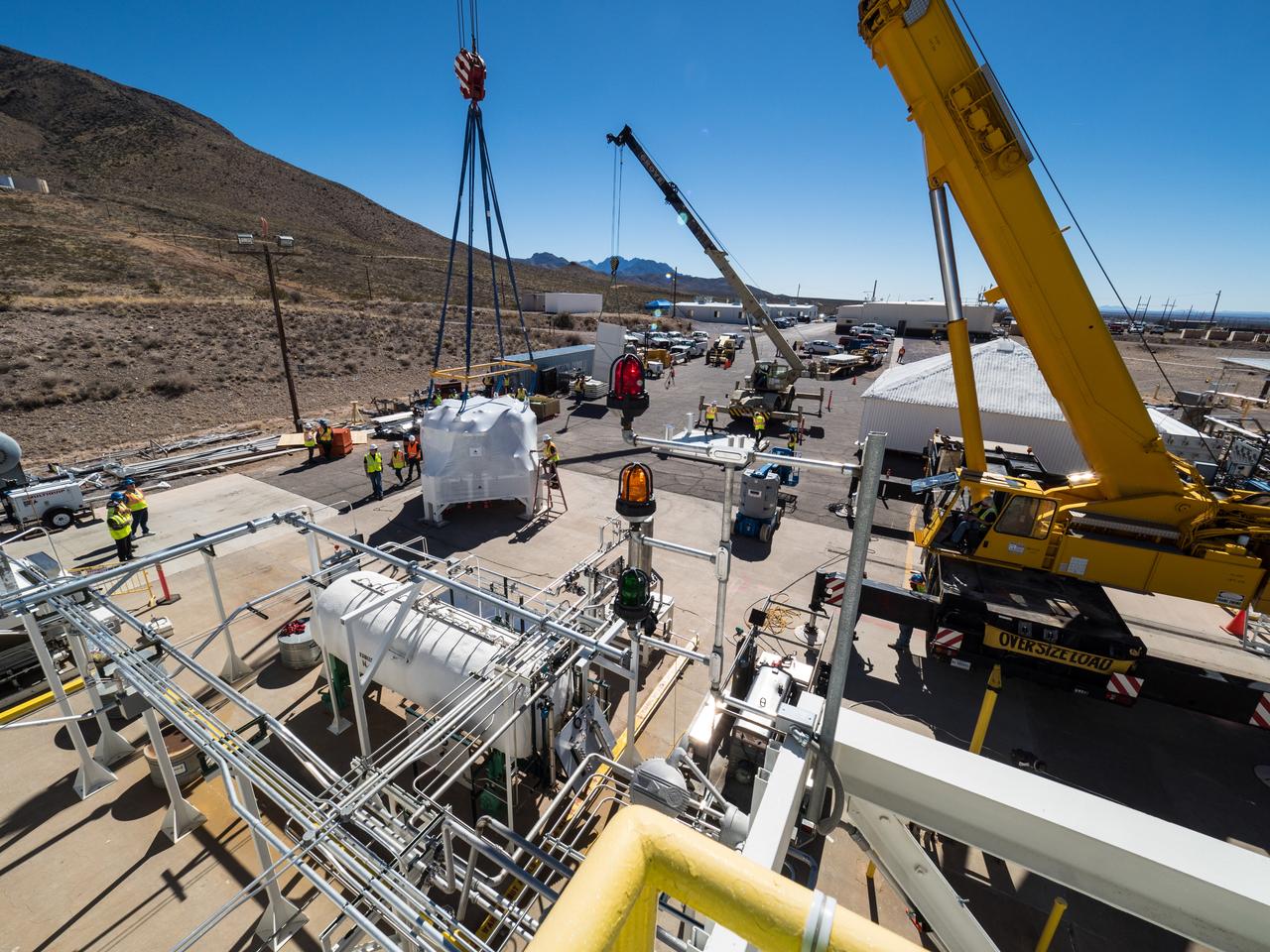
On Feb. 21, 2017 engineers successfully install ESA’s European Service Module Propulsion Qualification Module (PQM) at NASA’s White Sands Test Facility in New Mexico that was delivered by Airbus – ESA’s prime contractor for the Service Module. The module will be equipped with a total of 21 engines to support NASA’s Orion spacecraft: one U.S. Space Shuttle Orbital Maneuvering System (OMS) engine, eight auxiliary thrusters and 12 smaller thrusters produced by Airbus Safran Launchers in Germany. The all-steel PQM structure is used to test the propulsion systems on Orion, including “hot firing” of the OMS engine and thrusters.
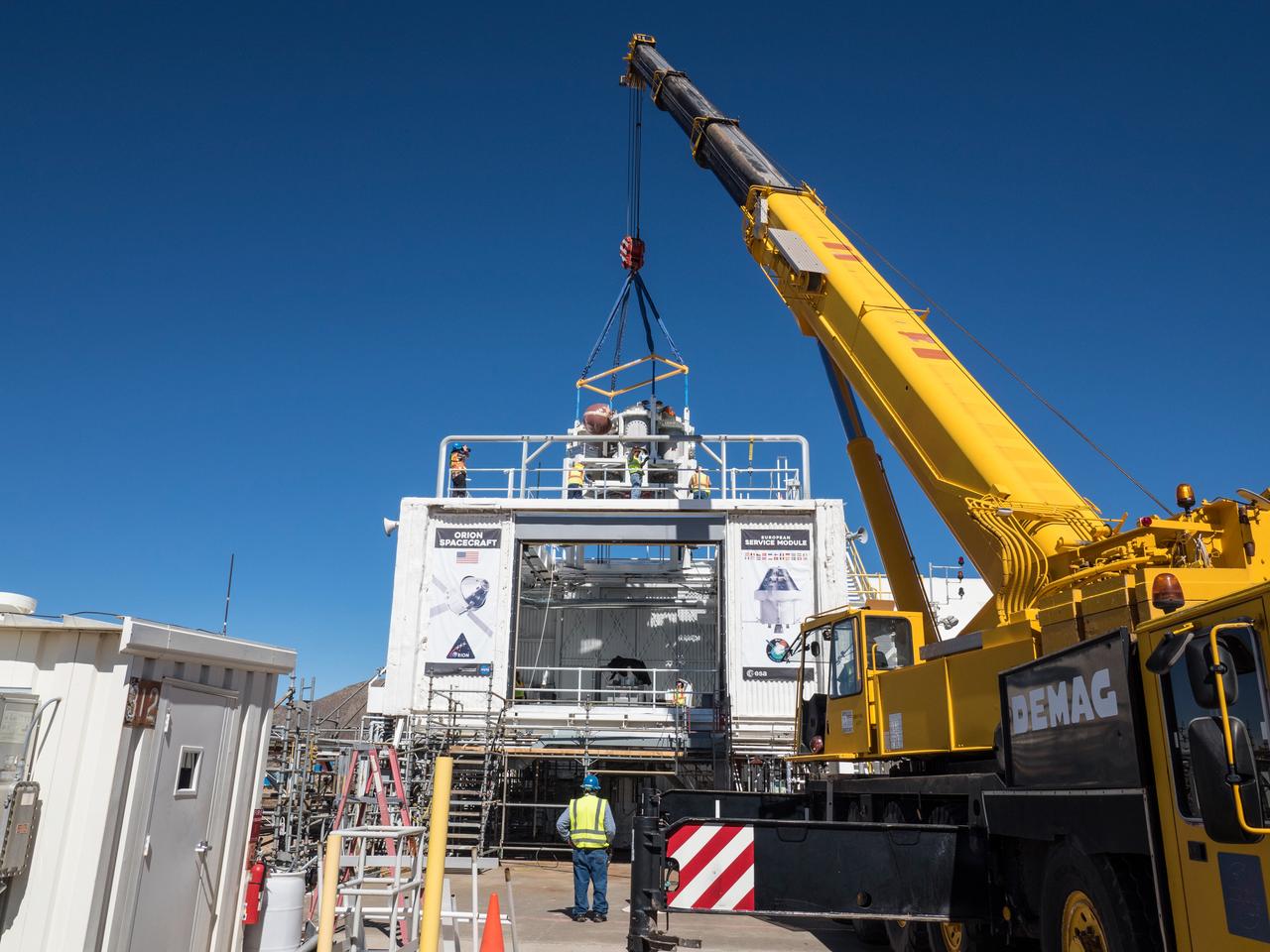
On Feb. 22, engineers successfully install ESA’s European Service Module Propulsion Qualification Module (PQM) at NASA’s White Sands Test Facility in New Mexico that was delivered by Airbus – ESA’s prime contractor for the Service Module. The module will be equipped with a total of 21 engines to support NASA’s Orion spacecraft: one U.S. Space Shuttle Orbital Maneuvering System (OMS) engine, eight auxiliary thrusters and 12 smaller thrusters produced by Airbus Safran Launchers in Germany. The all-steel PQM structure is used to test the propulsion systems on Orion, including “hot firing” of the OMS engine and thrusters.
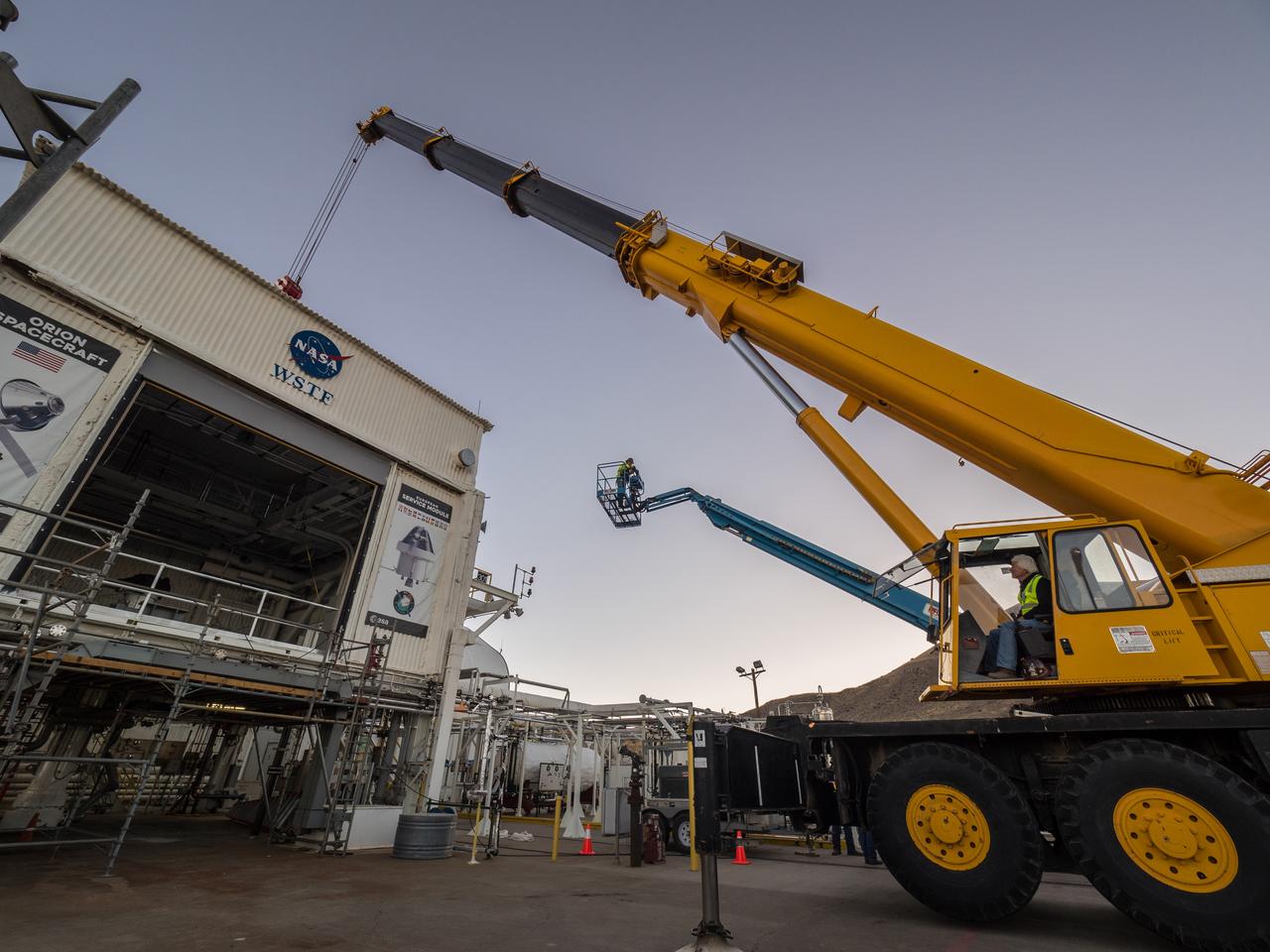
On Feb. 21, 2017 engineers successfully install ESA’s European Service Module Propulsion Qualification Module (PQM) at NASA’s White Sands Test Facility in New Mexico that was delivered by Airbus – ESA’s prime contractor for the Service Module. The module will be equipped with a total of 21 engines to support NASA’s Orion spacecraft: one U.S. Space Shuttle Orbital Maneuvering System (OMS) engine, eight auxiliary thrusters and 12 smaller thrusters produced by Airbus Safran Launchers in Germany. The all-steel PQM structure is used to test the propulsion systems on Orion, including “hot firing” of the OMS engine and thrusters.

On Feb. 21, 2017 engineers successfully install ESA’s European Service Module Propulsion Qualification Module (PQM) at NASA’s White Sands Test Facility in New Mexico that was delivered by Airbus – ESA’s prime contractor for the Service Module. The module will be equipped with a total of 21 engines to support NASA’s Orion spacecraft: one U.S. Space Shuttle Orbital Maneuvering System (OMS) engine, eight auxiliary thrusters and 12 smaller thrusters produced by Airbus Safran Launchers in Germany. The all-steel PQM structure is used to test the propulsion systems on Orion, including “hot firing” of the OMS engine and thrusters.
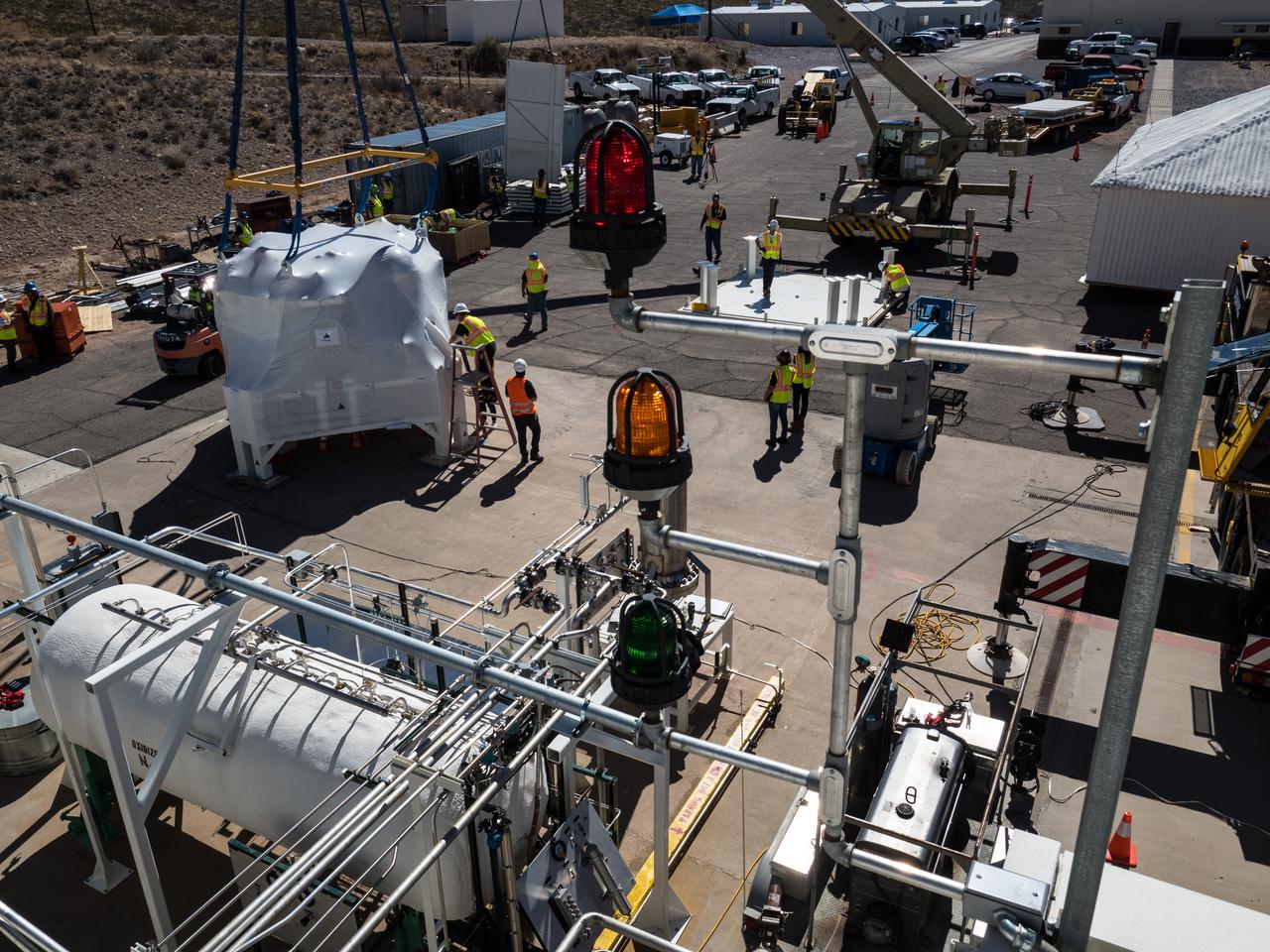
On Feb. 21, 2017 engineers successfully install ESA’s European Service Module Propulsion Qualification Module (PQM) at NASA’s White Sands Test Facility in New Mexico that was delivered by Airbus – ESA’s prime contractor for the Service Module. The module will be equipped with a total of 21 engines to support NASA’s Orion spacecraft: one U.S. Space Shuttle Orbital Maneuvering System (OMS) engine, eight auxiliary thrusters and 12 smaller thrusters produced by Airbus Safran Launchers in Germany. The all-steel PQM structure is used to test the propulsion systems on Orion, including “hot firing” of the OMS engine and thrusters.

On Feb. 22, engineers successfully install ESA’s European Service Module Propulsion Qualification Module (PQM) at NASA’s White Sands Test Facility in New Mexico that was delivered by Airbus – ESA’s prime contractor for the Service Module. The module will be equipped with a total of 21 engines to support NASA’s Orion spacecraft: one U.S. Space Shuttle Orbital Maneuvering System (OMS) engine, eight auxiliary thrusters and 12 smaller thrusters produced by Airbus Safran Launchers in Germany. The all-steel PQM structure is used to test the propulsion systems on Orion, including “hot firing” of the OMS engine and thrusters.
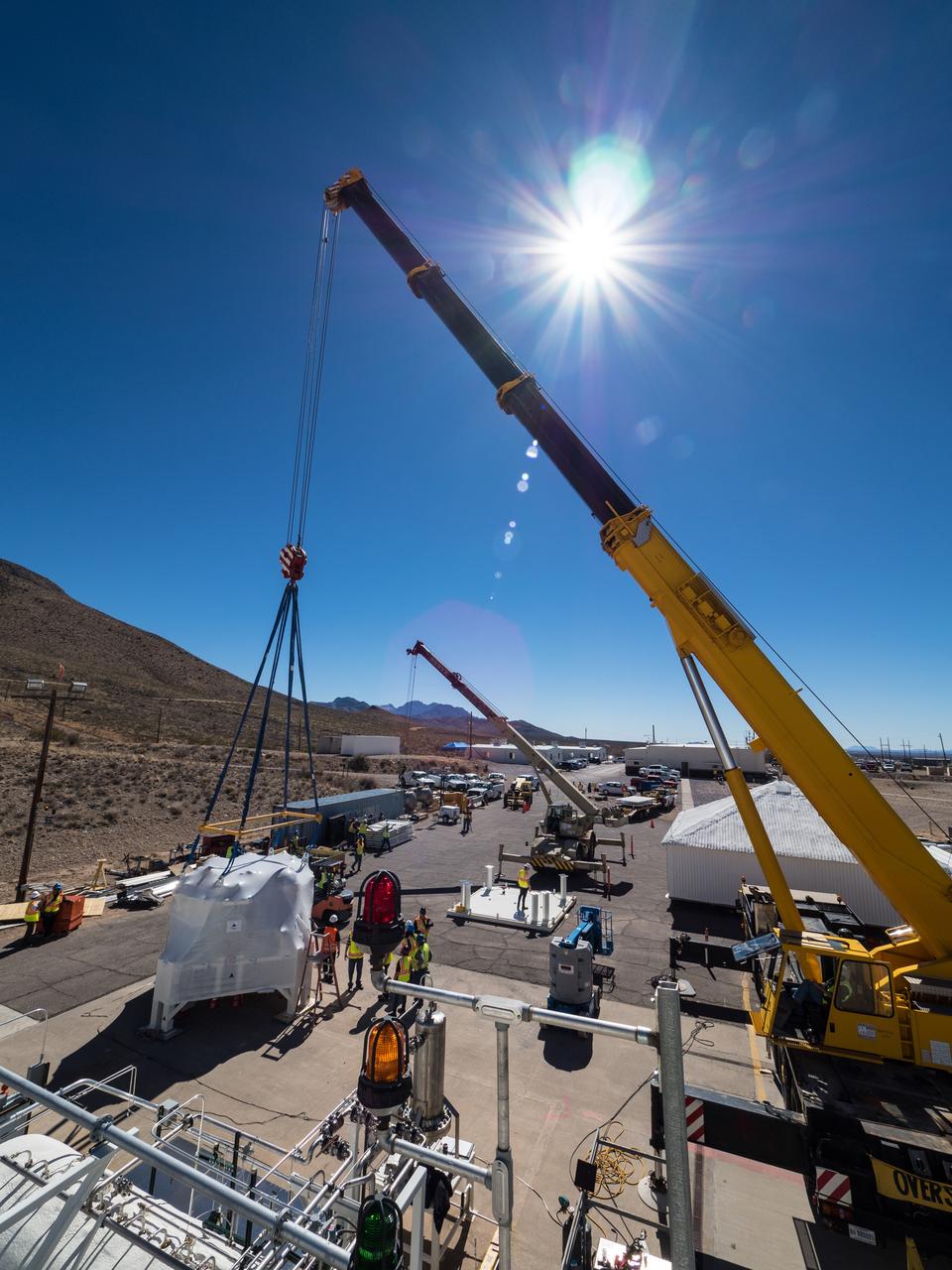
On Feb. 21, 2017 engineers successfully install ESA’s European Service Module Propulsion Qualification Module (PQM) at NASA’s White Sands Test Facility in New Mexico that was delivered by Airbus – ESA’s prime contractor for the Service Module. The module will be equipped with a total of 21 engines to support NASA’s Orion spacecraft: one U.S. Space Shuttle Orbital Maneuvering System (OMS) engine, eight auxiliary thrusters and 12 smaller thrusters produced by Airbus Safran Launchers in Germany. The all-steel PQM structure is used to test the propulsion systems on Orion, including “hot firing” of the OMS engine and thrusters.

On Feb. 21, 2017 engineers successfully install ESA’s European Service Module Propulsion Qualification Module (PQM) at NASA’s White Sands Test Facility in New Mexico that was delivered by Airbus – ESA’s prime contractor for the Service Module. The module will be equipped with a total of 21 engines to support NASA’s Orion spacecraft: one U.S. Space Shuttle Orbital Maneuvering System (OMS) engine, eight auxiliary thrusters and 12 smaller thrusters produced by Airbus Safran Launchers in Germany. The all-steel PQM structure is used to test the propulsion systems on Orion, including “hot firing” of the OMS engine and thrusters.
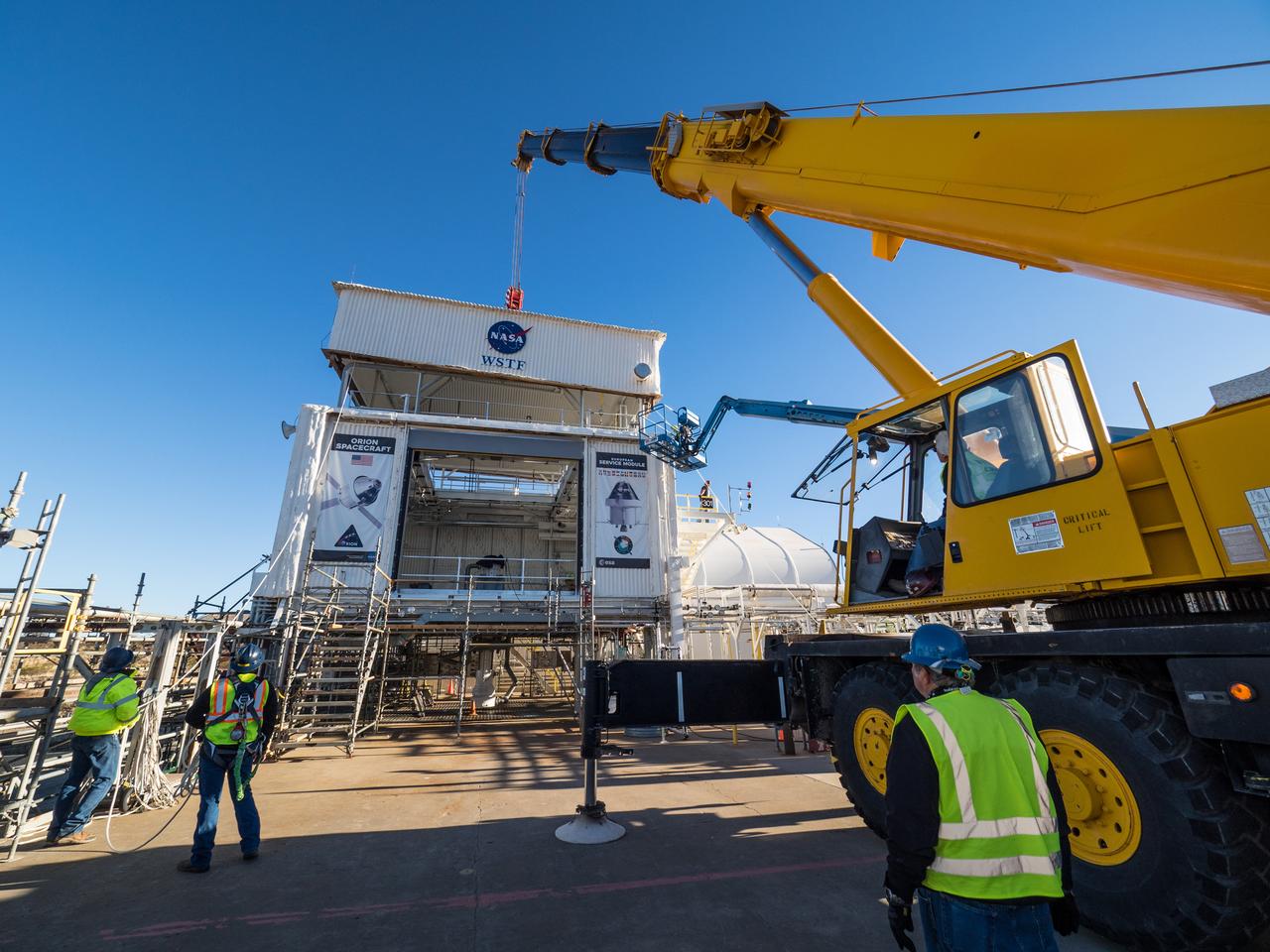
On Feb. 21, 2017 engineers successfully install ESA’s European Service Module Propulsion Qualification Module (PQM) at NASA’s White Sands Test Facility in New Mexico that was delivered by Airbus – ESA’s prime contractor for the Service Module. The module will be equipped with a total of 21 engines to support NASA’s Orion spacecraft: one U.S. Space Shuttle Orbital Maneuvering System (OMS) engine, eight auxiliary thrusters and 12 smaller thrusters produced by Airbus Safran Launchers in Germany. The all-steel PQM structure is used to test the propulsion systems on Orion, including “hot firing” of the OMS engine and thrusters.
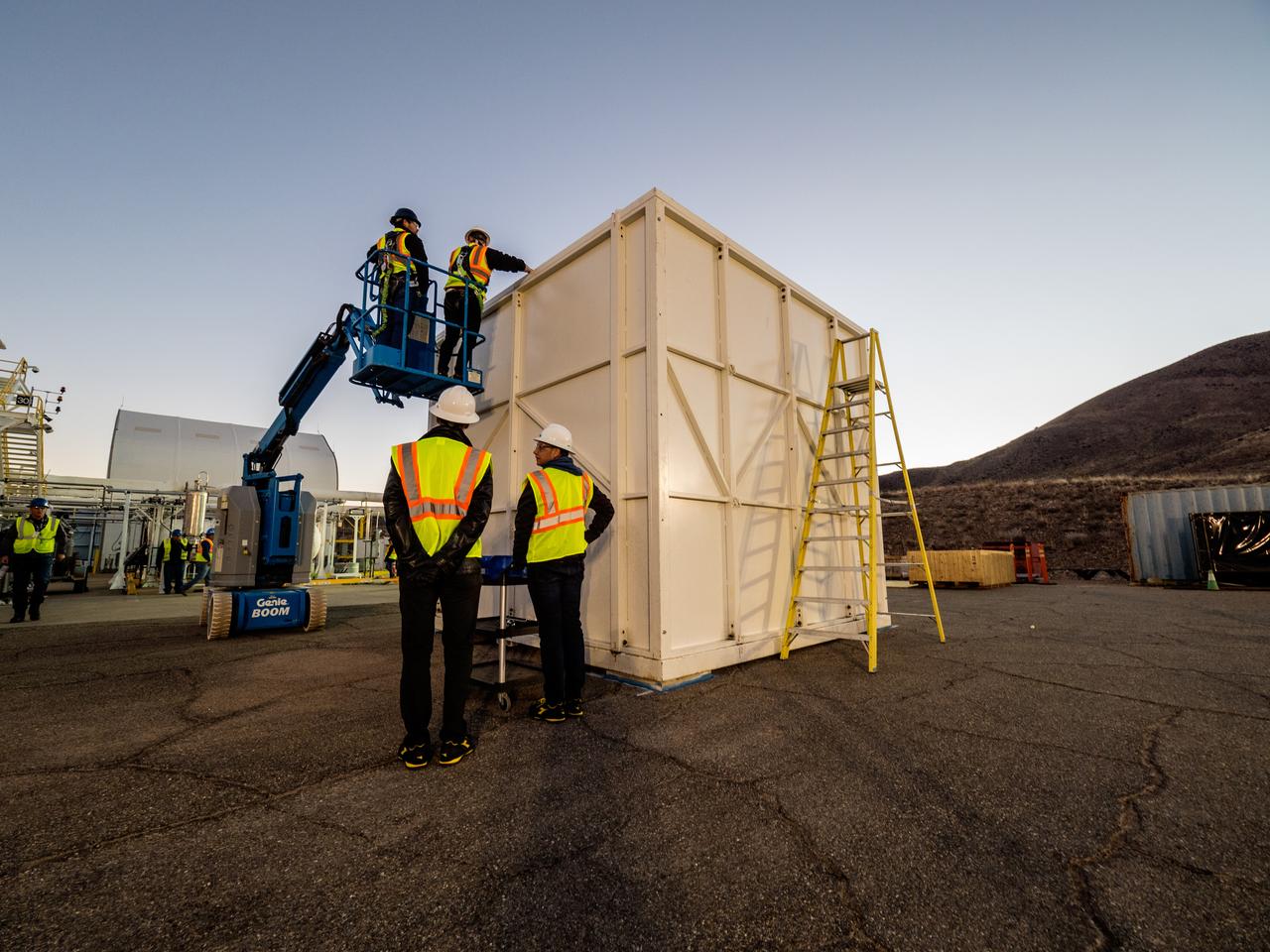
On Feb. 21, 2017 engineers successfully install ESA’s European Service Module Propulsion Qualification Module (PQM) at NASA’s White Sands Test Facility in New Mexico that was delivered by Airbus – ESA’s prime contractor for the Service Module. The module will be equipped with a total of 21 engines to support NASA’s Orion spacecraft: one U.S. Space Shuttle Orbital Maneuvering System (OMS) engine, eight auxiliary thrusters and 12 smaller thrusters produced by Airbus Safran Launchers in Germany. The all-steel PQM structure is used to test the propulsion systems on Orion, including “hot firing” of the OMS engine and thrusters.
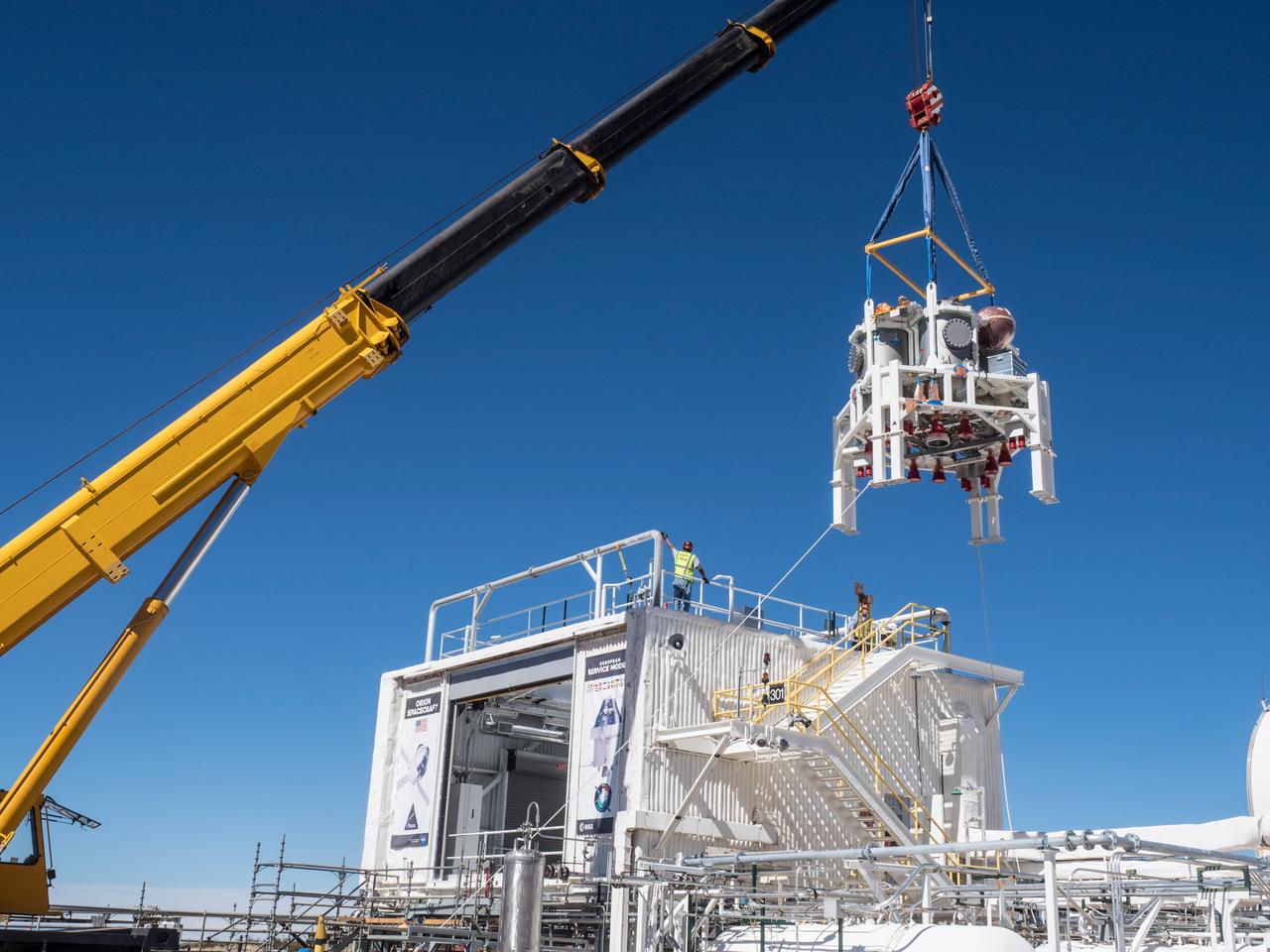
On Feb. 22, engineers successfully install ESA’s European Service Module Propulsion Qualification Module (PQM) at NASA’s White Sands Test Facility in New Mexico that was delivered by Airbus – ESA’s prime contractor for the Service Module. The module will be equipped with a total of 21 engines to support NASA’s Orion spacecraft: one U.S. Space Shuttle Orbital Maneuvering System (OMS) engine, eight auxiliary thrusters and 12 smaller thrusters produced by Airbus Safran Launchers in Germany. The all-steel PQM structure is used to test the propulsion systems on Orion, including “hot firing” of the OMS engine and thrusters.
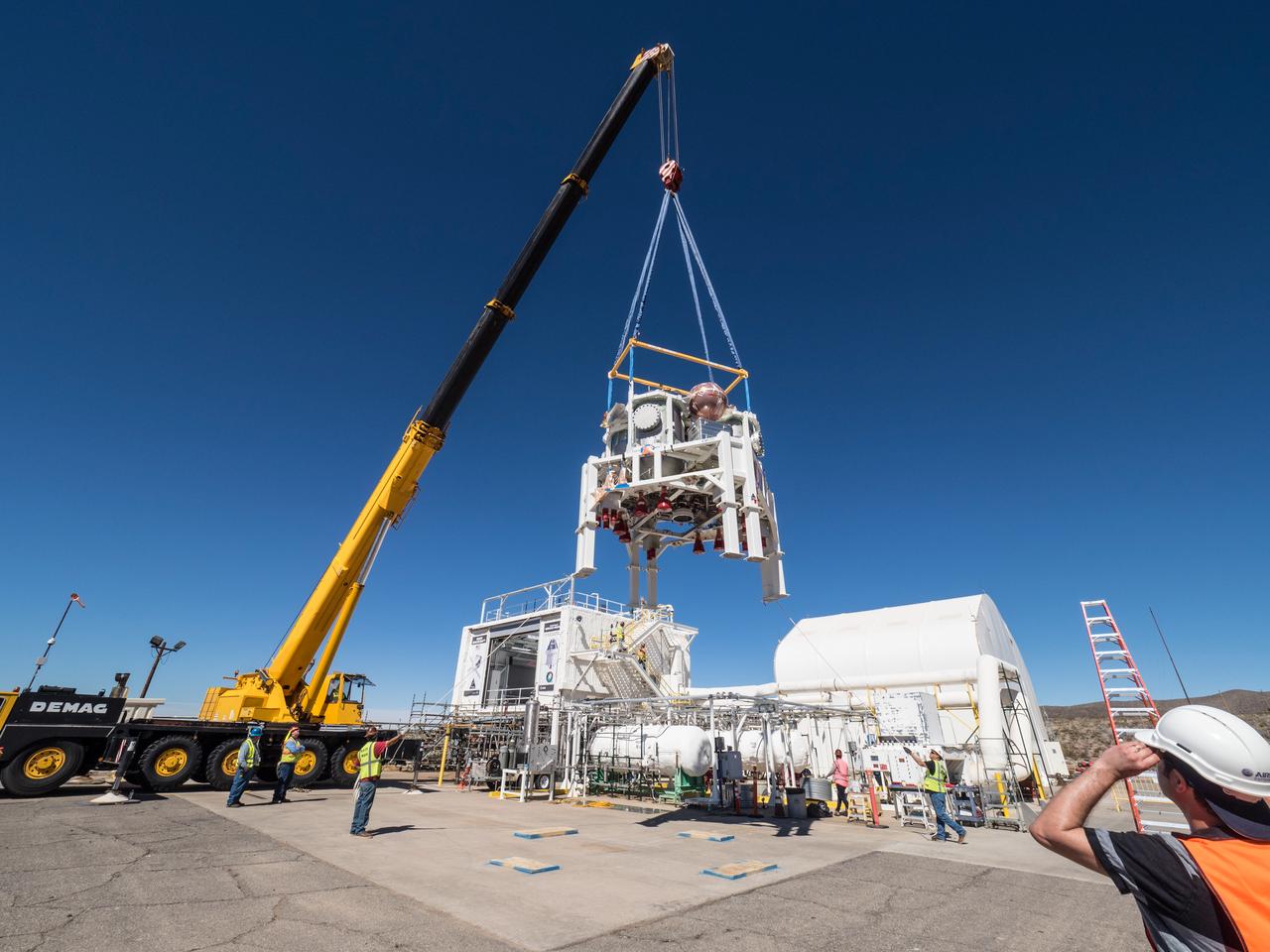
On Feb. 22, engineers successfully install ESA’s European Service Module Propulsion Qualification Module (PQM) at NASA’s White Sands Test Facility in New Mexico that was delivered by Airbus – ESA’s prime contractor for the Service Module. The module will be equipped with a total of 21 engines to support NASA’s Orion spacecraft: one U.S. Space Shuttle Orbital Maneuvering System (OMS) engine, eight auxiliary thrusters and 12 smaller thrusters produced by Airbus Safran Launchers in Germany. The all-steel PQM structure is used to test the propulsion systems on Orion, including “hot firing” of the OMS engine and thrusters.
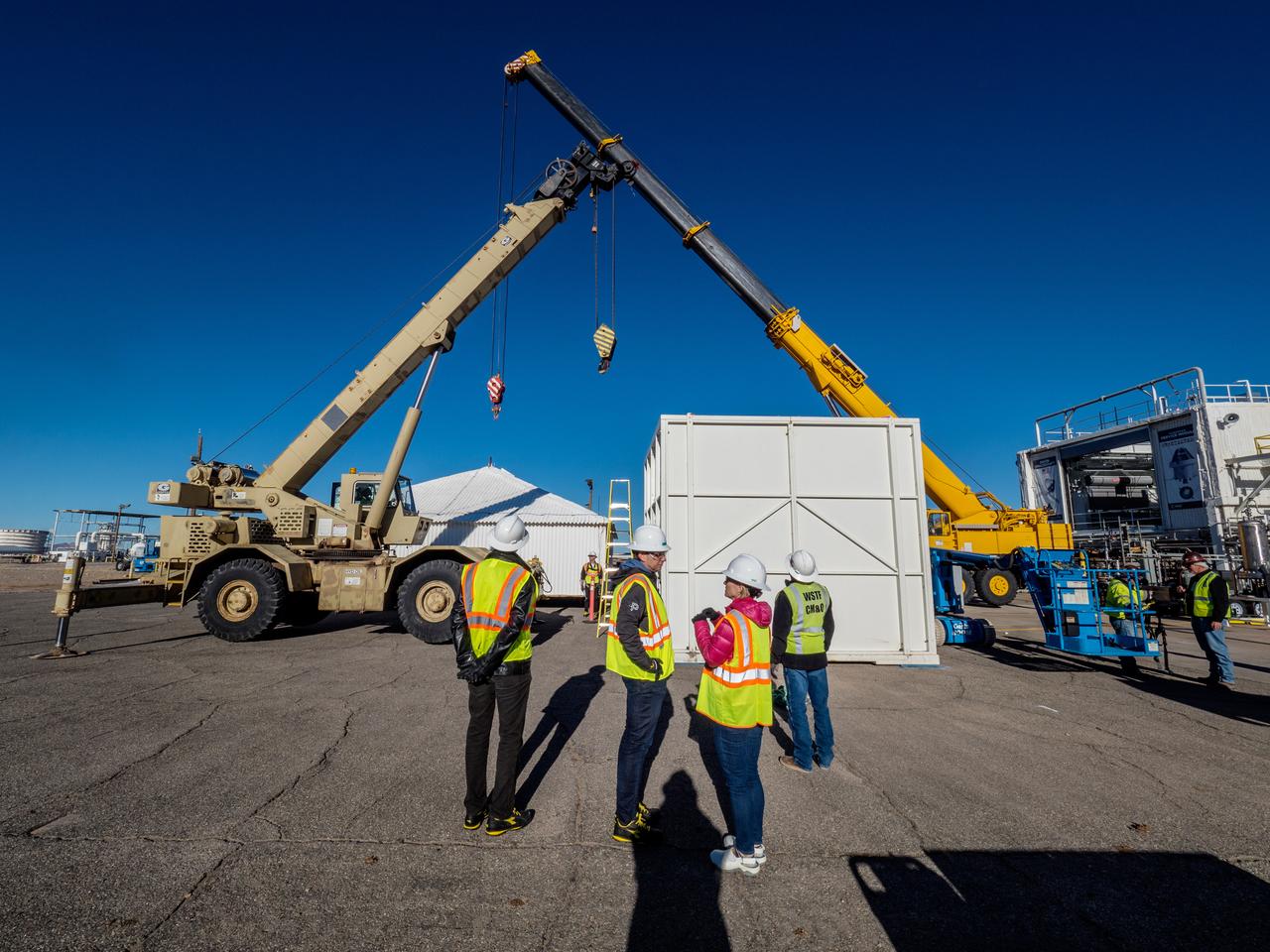
On Feb. 21, 2017 engineers successfully install ESA’s European Service Module Propulsion Qualification Module (PQM) at NASA’s White Sands Test Facility in New Mexico that was delivered by Airbus – ESA’s prime contractor for the Service Module. The module will be equipped with a total of 21 engines to support NASA’s Orion spacecraft: one U.S. Space Shuttle Orbital Maneuvering System (OMS) engine, eight auxiliary thrusters and 12 smaller thrusters produced by Airbus Safran Launchers in Germany. The all-steel PQM structure is used to test the propulsion systems on Orion, including “hot firing” of the OMS engine and thrusters.
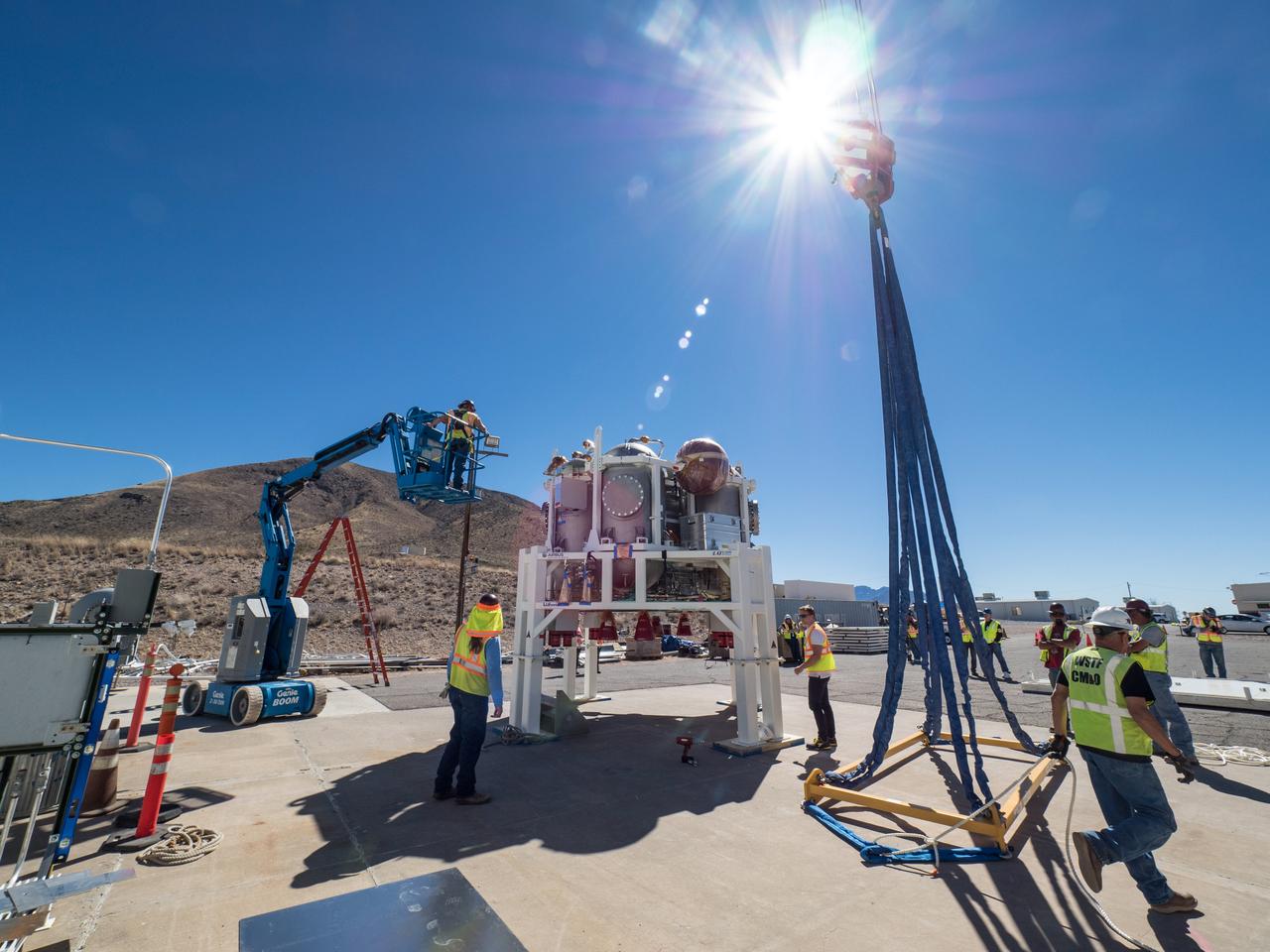
On Feb. 22, engineers successfully install ESA’s European Service Module Propulsion Qualification Module (PQM) at NASA’s White Sands Test Facility in New Mexico that was delivered by Airbus – ESA’s prime contractor for the Service Module. The module will be equipped with a total of 21 engines to support NASA’s Orion spacecraft: one U.S. Space Shuttle Orbital Maneuvering System (OMS) engine, eight auxiliary thrusters and 12 smaller thrusters produced by Airbus Safran Launchers in Germany. The all-steel PQM structure is used to test the propulsion systems on Orion, including “hot firing” of the OMS engine and thrusters.
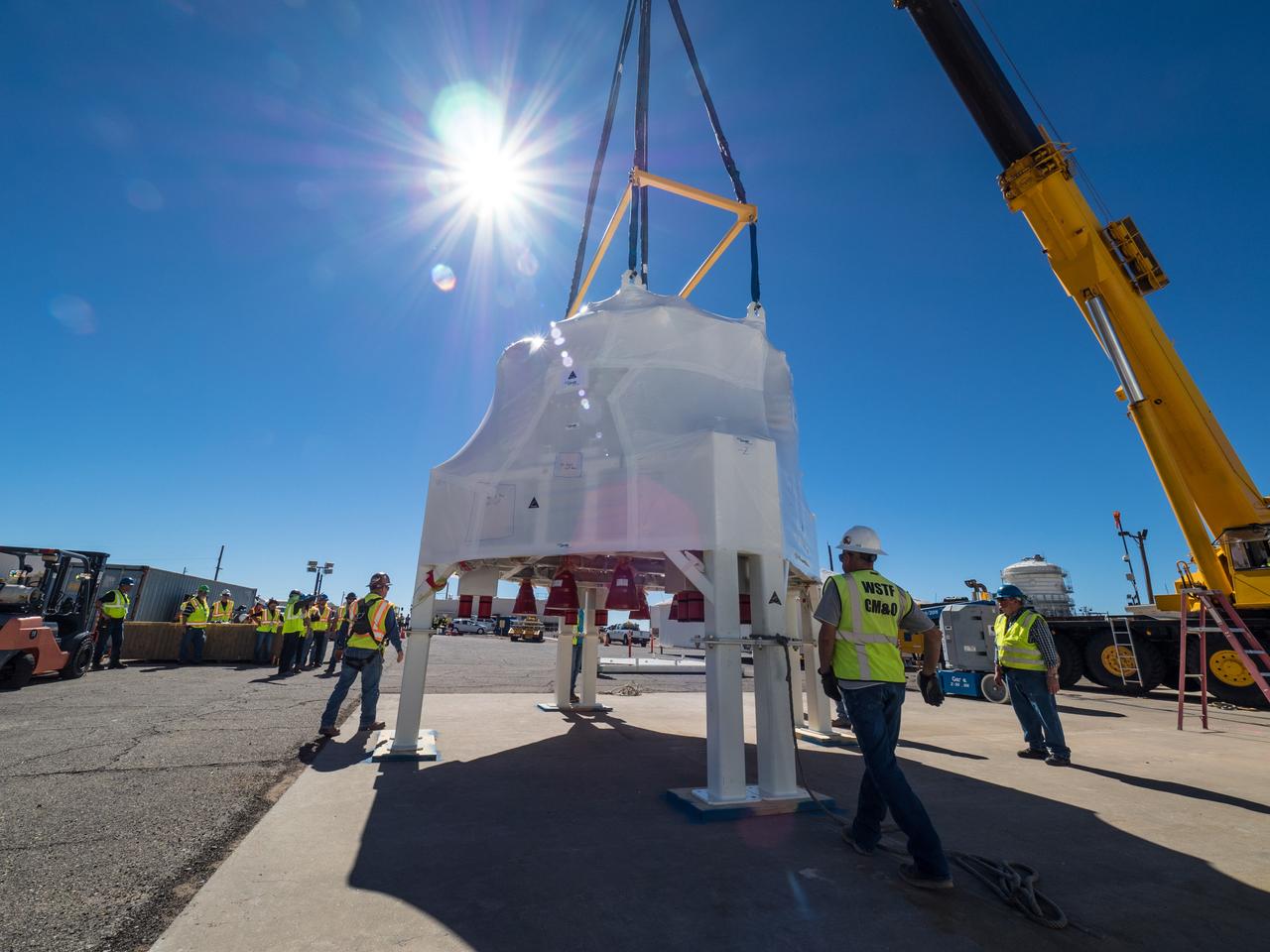
On Feb. 21, 2017 engineers successfully install ESA’s European Service Module Propulsion Qualification Module (PQM) at NASA’s White Sands Test Facility in New Mexico that was delivered by Airbus – ESA’s prime contractor for the Service Module. The module will be equipped with a total of 21 engines to support NASA’s Orion spacecraft: one U.S. Space Shuttle Orbital Maneuvering System (OMS) engine, eight auxiliary thrusters and 12 smaller thrusters produced by Airbus Safran Launchers in Germany. The all-steel PQM structure is used to test the propulsion systems on Orion, including “hot firing” of the OMS engine and thrusters.
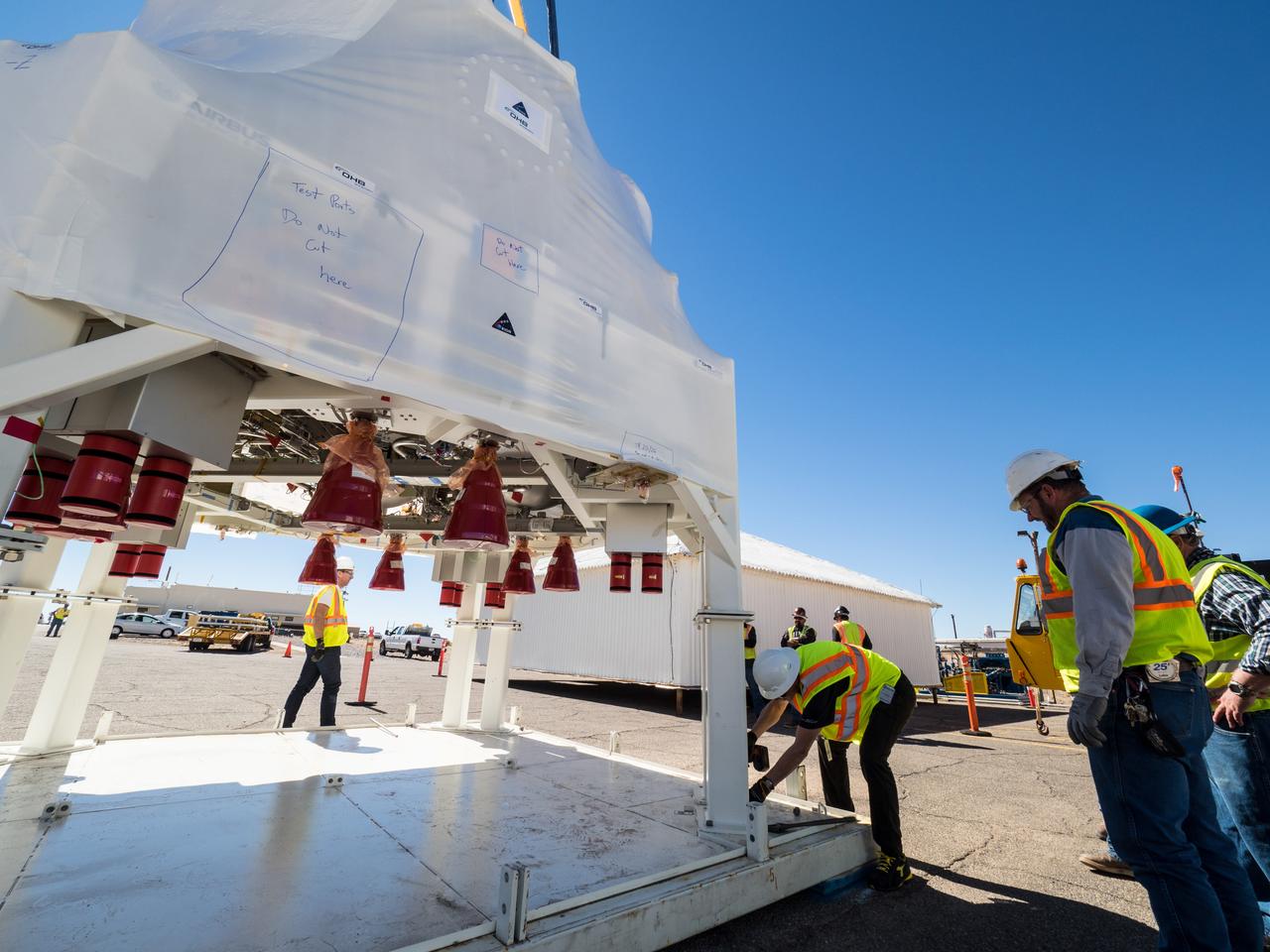
On Feb. 21, 2017 engineers successfully install ESA’s European Service Module Propulsion Qualification Module (PQM) at NASA’s White Sands Test Facility in New Mexico that was delivered by Airbus – ESA’s prime contractor for the Service Module. The module will be equipped with a total of 21 engines to support NASA’s Orion spacecraft: one U.S. Space Shuttle Orbital Maneuvering System (OMS) engine, eight auxiliary thrusters and 12 smaller thrusters produced by Airbus Safran Launchers in Germany. The all-steel PQM structure is used to test the propulsion systems on Orion, including “hot firing” of the OMS engine and thrusters.
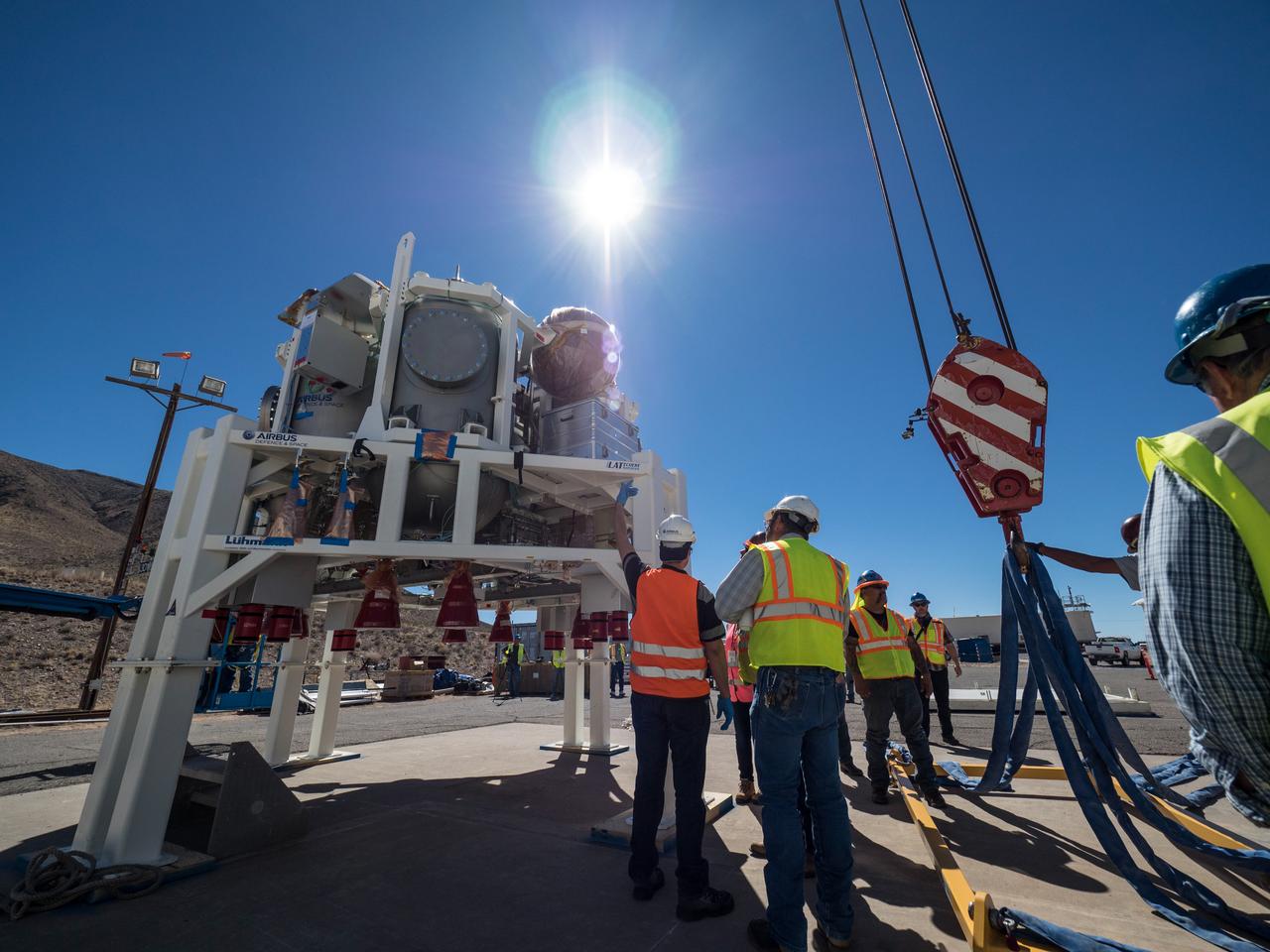
On Feb. 22, engineers successfully install ESA’s European Service Module Propulsion Qualification Module (PQM) at NASA’s White Sands Test Facility in New Mexico that was delivered by Airbus – ESA’s prime contractor for the Service Module. The module will be equipped with a total of 21 engines to support NASA’s Orion spacecraft: one U.S. Space Shuttle Orbital Maneuvering System (OMS) engine, eight auxiliary thrusters and 12 smaller thrusters produced by Airbus Safran Launchers in Germany. The all-steel PQM structure is used to test the propulsion systems on Orion, including “hot firing” of the OMS engine and thrusters.
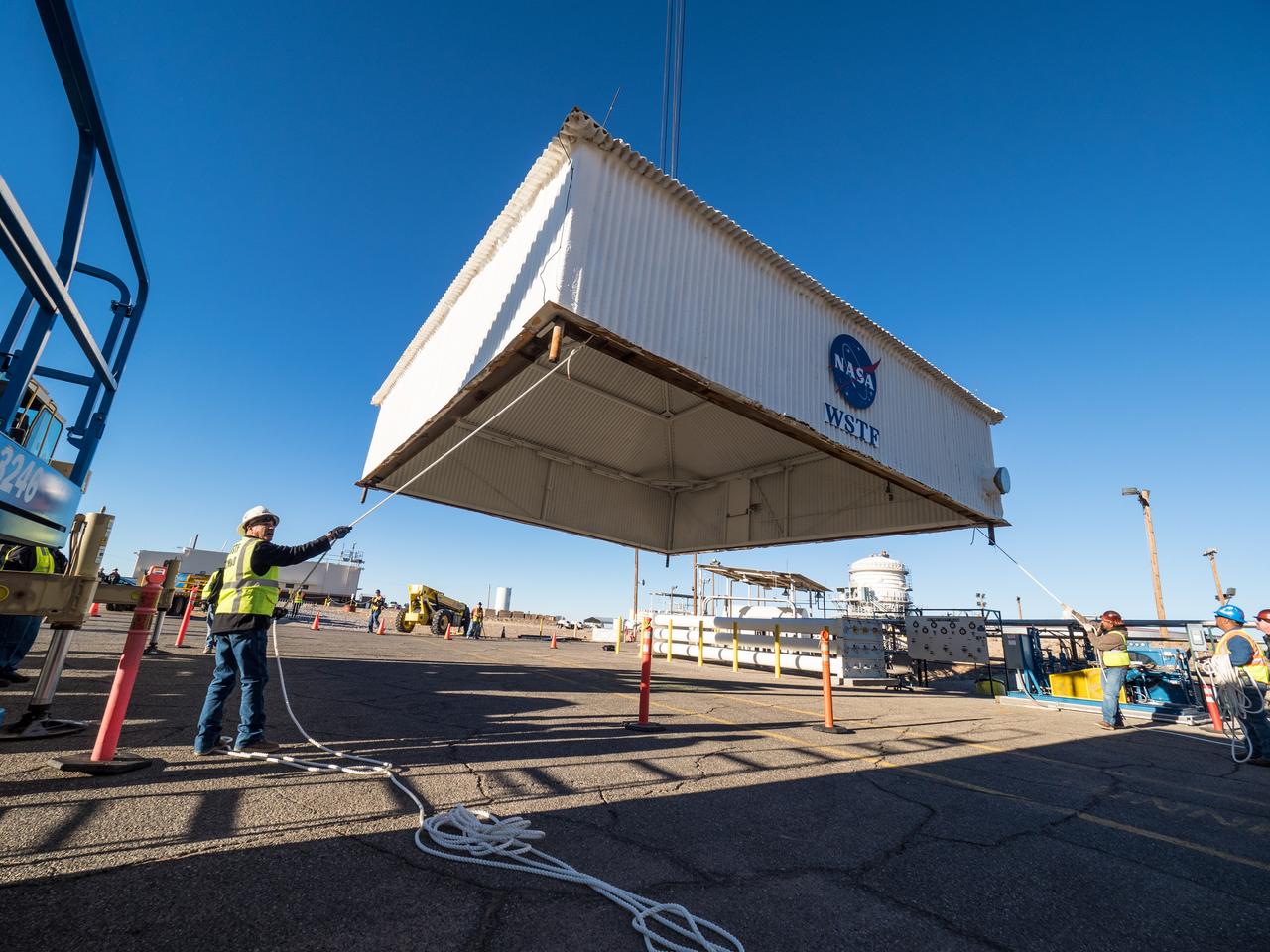
On Feb. 21, 2017 engineers successfully install ESA’s European Service Module Propulsion Qualification Module (PQM) at NASA’s White Sands Test Facility in New Mexico that was delivered by Airbus – ESA’s prime contractor for the Service Module. The module will be equipped with a total of 21 engines to support NASA’s Orion spacecraft: one U.S. Space Shuttle Orbital Maneuvering System (OMS) engine, eight auxiliary thrusters and 12 smaller thrusters produced by Airbus Safran Launchers in Germany. The all-steel PQM structure is used to test the propulsion systems on Orion, including “hot firing” of the OMS engine and thrusters.

On Feb. 21, 2017 engineers successfully install ESA’s European Service Module Propulsion Qualification Module (PQM) at NASA’s White Sands Test Facility in New Mexico that was delivered by Airbus – ESA’s prime contractor for the Service Module. The module will be equipped with a total of 21 engines to support NASA’s Orion spacecraft: one U.S. Space Shuttle Orbital Maneuvering System (OMS) engine, eight auxiliary thrusters and 12 smaller thrusters produced by Airbus Safran Launchers in Germany. The all-steel PQM structure is used to test the propulsion systems on Orion, including “hot firing” of the OMS engine and thrusters.
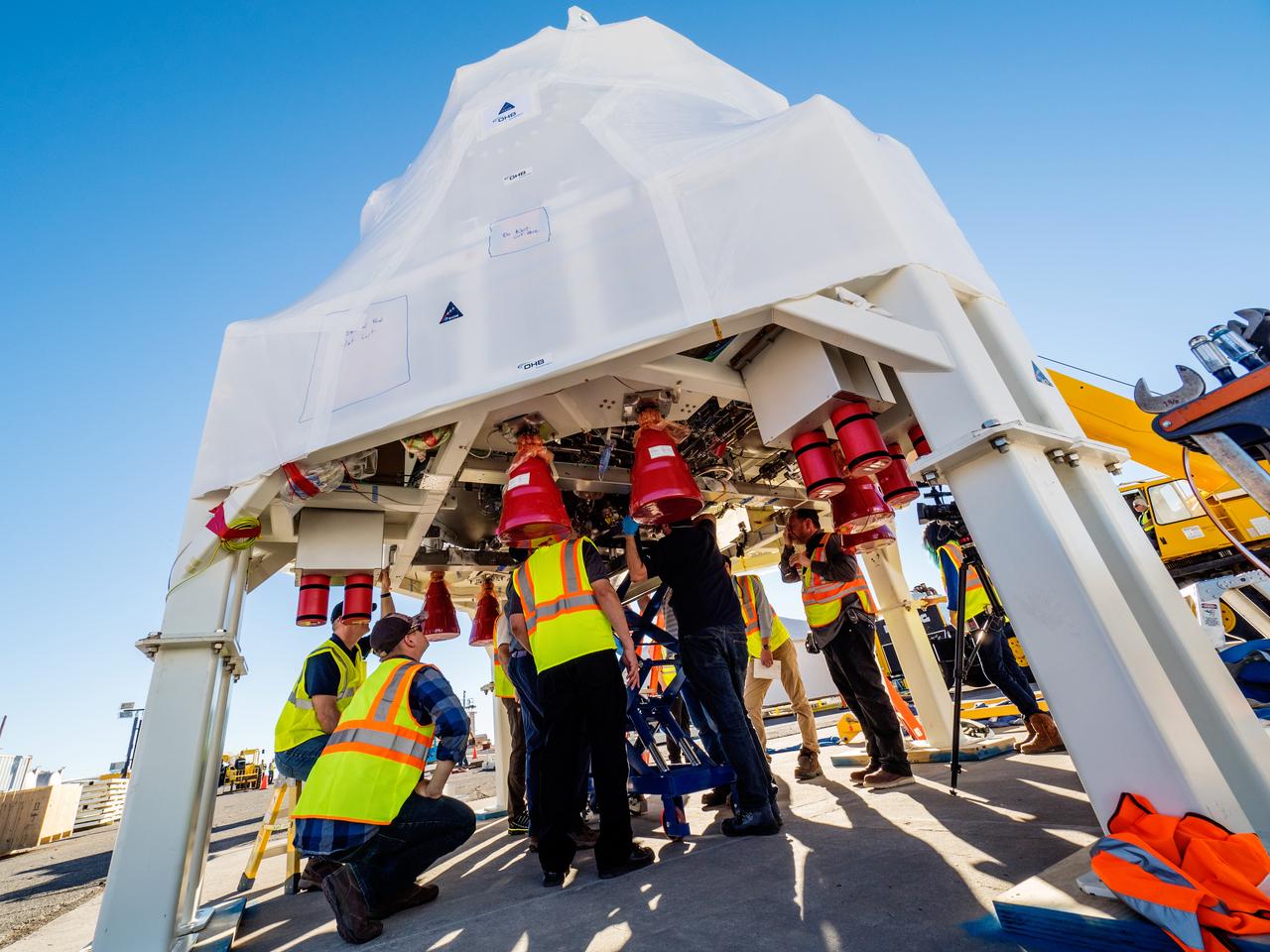
On Feb. 21, 2017 engineers successfully install ESA’s European Service Module Propulsion Qualification Module (PQM) at NASA’s White Sands Test Facility in New Mexico that was delivered by Airbus – ESA’s prime contractor for the Service Module. The module will be equipped with a total of 21 engines to support NASA’s Orion spacecraft: one U.S. Space Shuttle Orbital Maneuvering System (OMS) engine, eight auxiliary thrusters and 12 smaller thrusters produced by Airbus Safran Launchers in Germany. The all-steel PQM structure is used to test the propulsion systems on Orion, including “hot firing” of the OMS engine and thrusters.
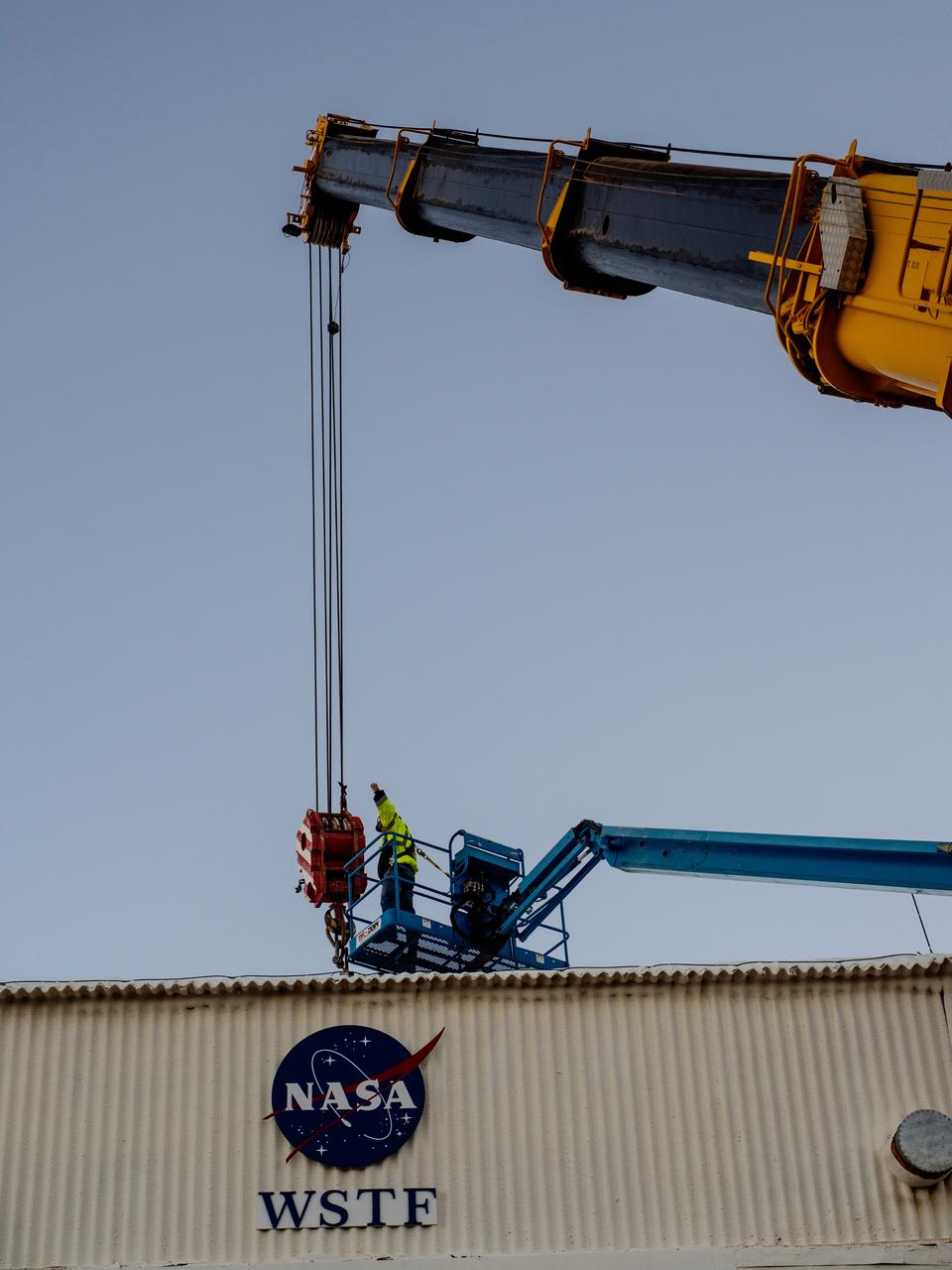
On Feb. 21, 2017 engineers successfully install ESA’s European Service Module Propulsion Qualification Module (PQM) at NASA’s White Sands Test Facility in New Mexico that was delivered by Airbus – ESA’s prime contractor for the Service Module. The module will be equipped with a total of 21 engines to support NASA’s Orion spacecraft: one U.S. Space Shuttle Orbital Maneuvering System (OMS) engine, eight auxiliary thrusters and 12 smaller thrusters produced by Airbus Safran Launchers in Germany. The all-steel PQM structure is used to test the propulsion systems on Orion, including “hot firing” of the OMS engine and thrusters.

On Feb. 21, 2017 engineers successfully install ESA’s European Service Module Propulsion Qualification Module (PQM) at NASA’s White Sands Test Facility in New Mexico that was delivered by Airbus – ESA’s prime contractor for the Service Module. The module will be equipped with a total of 21 engines to support NASA’s Orion spacecraft: one U.S. Space Shuttle Orbital Maneuvering System (OMS) engine, eight auxiliary thrusters and 12 smaller thrusters produced by Airbus Safran Launchers in Germany. The all-steel PQM structure is used to test the propulsion systems on Orion, including “hot firing” of the OMS engine and thrusters.
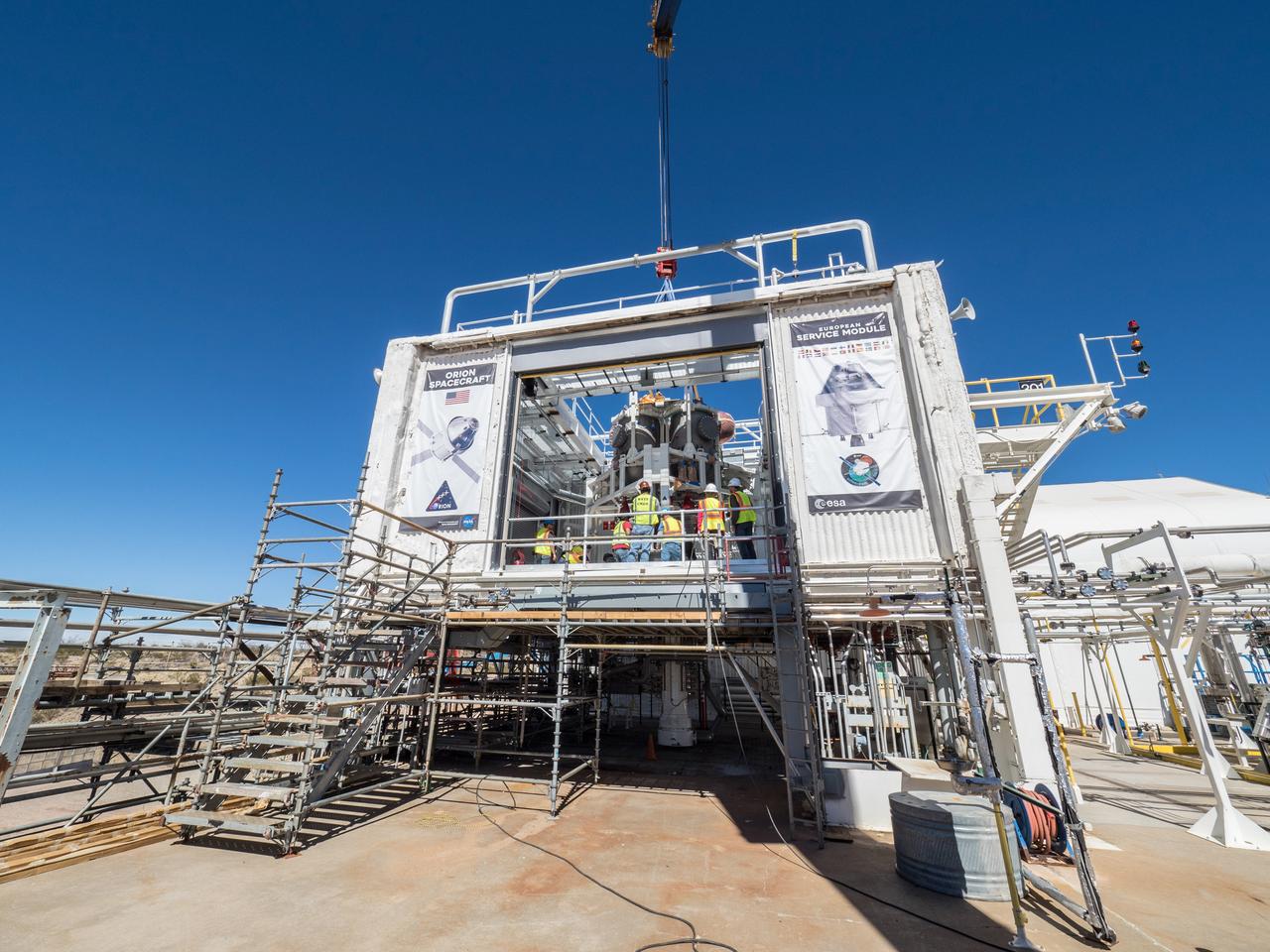
On Feb. 22, engineers successfully install ESA’s European Service Module Propulsion Qualification Module (PQM) at NASA’s White Sands Test Facility in New Mexico that was delivered by Airbus – ESA’s prime contractor for the Service Module. The module will be equipped with a total of 21 engines to support NASA’s Orion spacecraft: one U.S. Space Shuttle Orbital Maneuvering System (OMS) engine, eight auxiliary thrusters and 12 smaller thrusters produced by Airbus Safran Launchers in Germany. The all-steel PQM structure is used to test the propulsion systems on Orion, including “hot firing” of the OMS engine and thrusters.
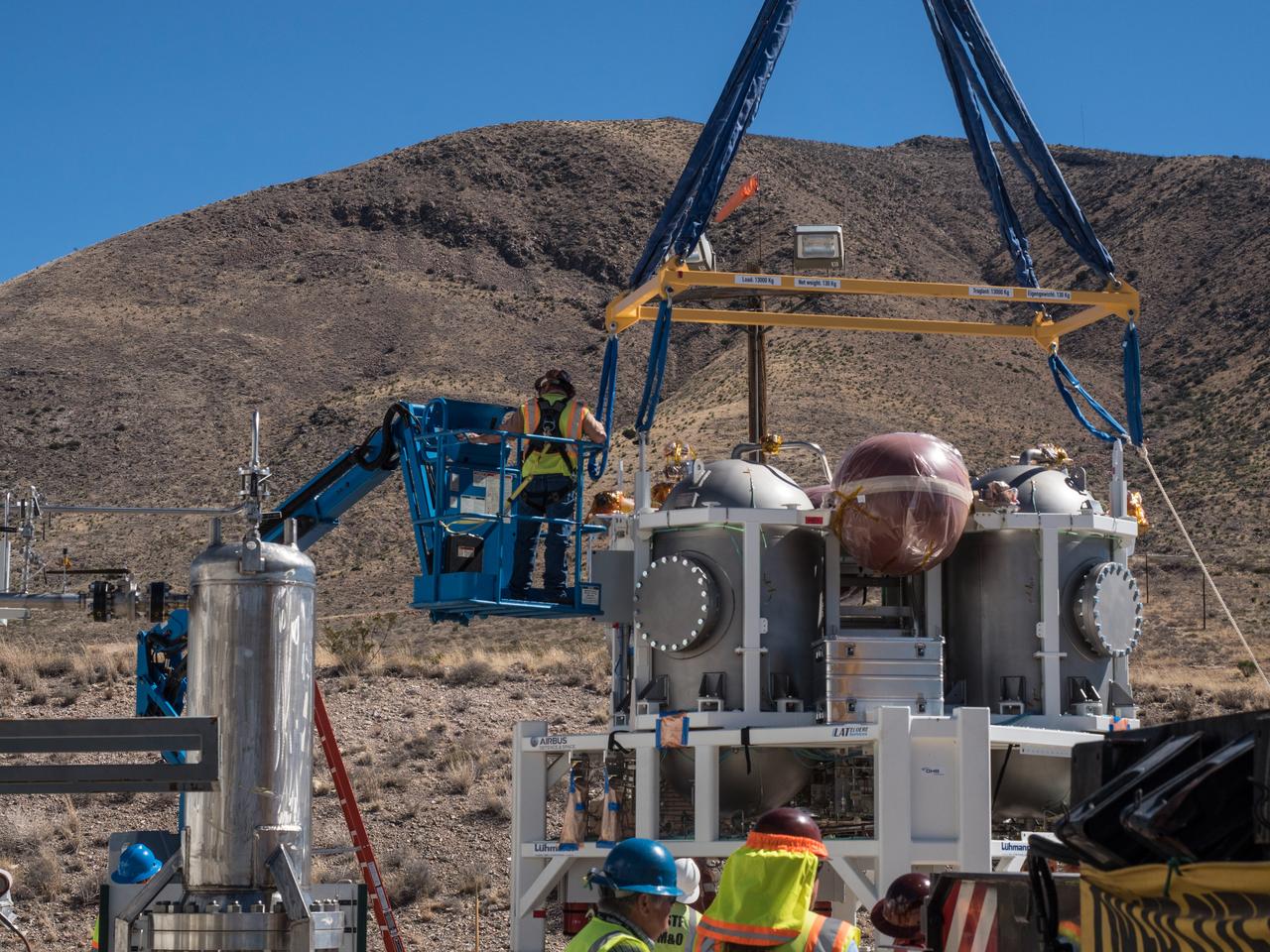
On Feb. 22, engineers successfully install ESA’s European Service Module Propulsion Qualification Module (PQM) at NASA’s White Sands Test Facility in New Mexico that was delivered by Airbus – ESA’s prime contractor for the Service Module. The module will be equipped with a total of 21 engines to support NASA’s Orion spacecraft: one U.S. Space Shuttle Orbital Maneuvering System (OMS) engine, eight auxiliary thrusters and 12 smaller thrusters produced by Airbus Safran Launchers in Germany. The all-steel PQM structure is used to test the propulsion systems on Orion, including “hot firing” of the OMS engine and thrusters.
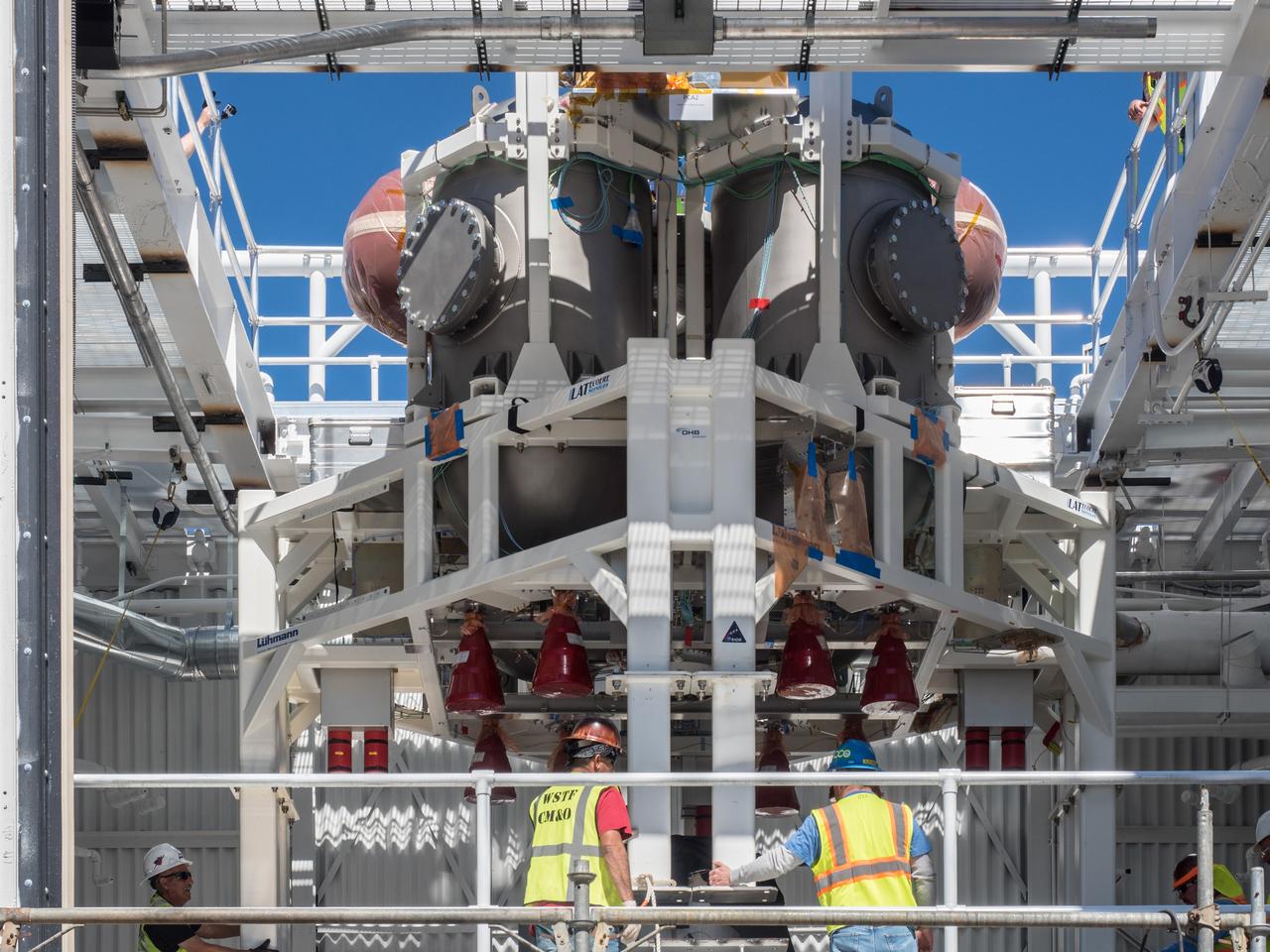
On Feb. 22, engineers successfully install ESA’s European Service Module Propulsion Qualification Module (PQM) at NASA’s White Sands Test Facility in New Mexico that was delivered by Airbus – ESA’s prime contractor for the Service Module. The module will be equipped with a total of 21 engines to support NASA’s Orion spacecraft: one U.S. Space Shuttle Orbital Maneuvering System (OMS) engine, eight auxiliary thrusters and 12 smaller thrusters produced by Airbus Safran Launchers in Germany. The all-steel PQM structure is used to test the propulsion systems on Orion, including “hot firing” of the OMS engine and thrusters.
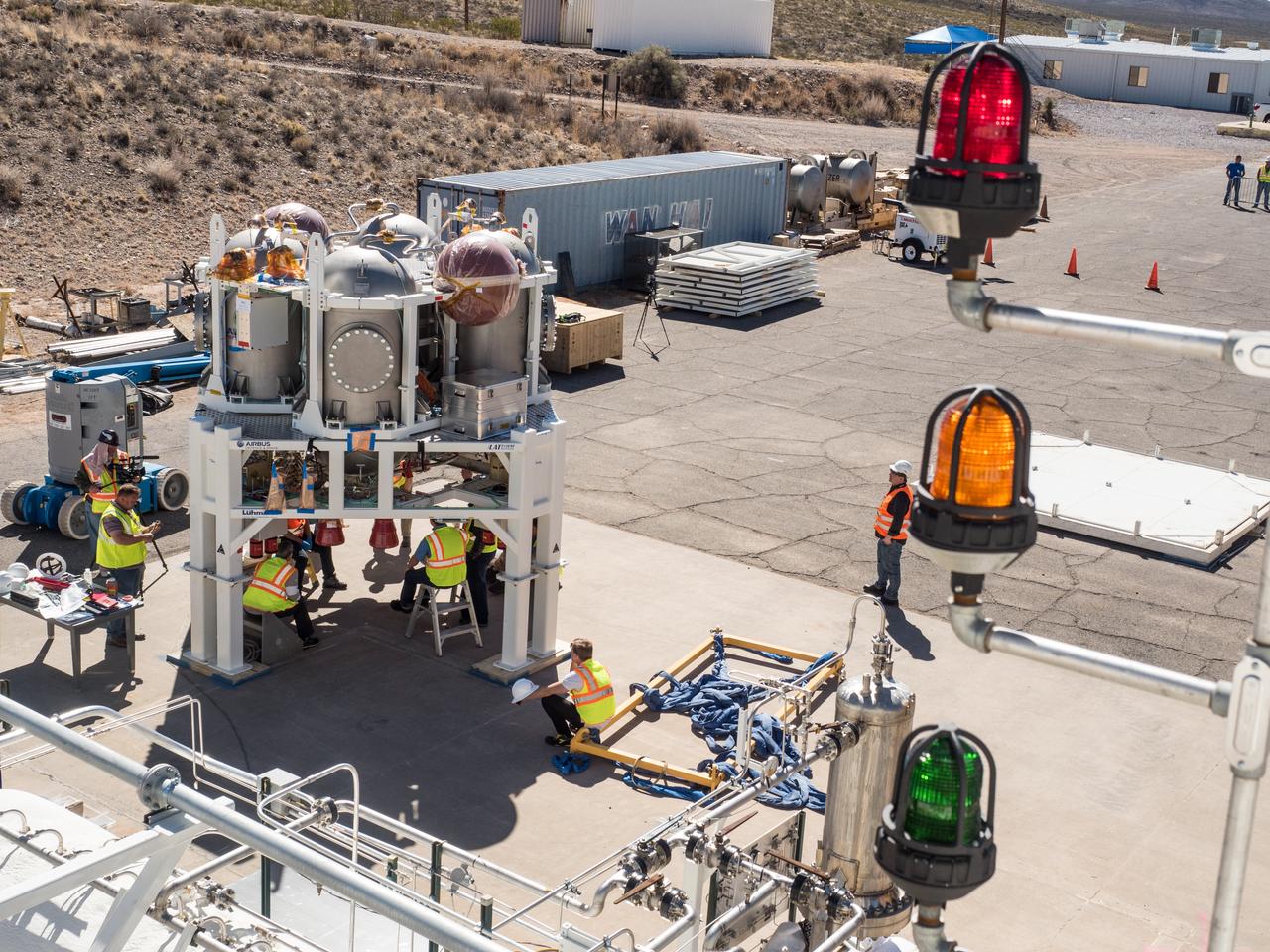
On Feb. 22, engineers successfully install ESA’s European Service Module Propulsion Qualification Module (PQM) at NASA’s White Sands Test Facility in New Mexico that was delivered by Airbus – ESA’s prime contractor for the Service Module. The module will be equipped with a total of 21 engines to support NASA’s Orion spacecraft: one U.S. Space Shuttle Orbital Maneuvering System (OMS) engine, eight auxiliary thrusters and 12 smaller thrusters produced by Airbus Safran Launchers in Germany. The all-steel PQM structure is used to test the propulsion systems on Orion, including “hot firing” of the OMS engine and thrusters.
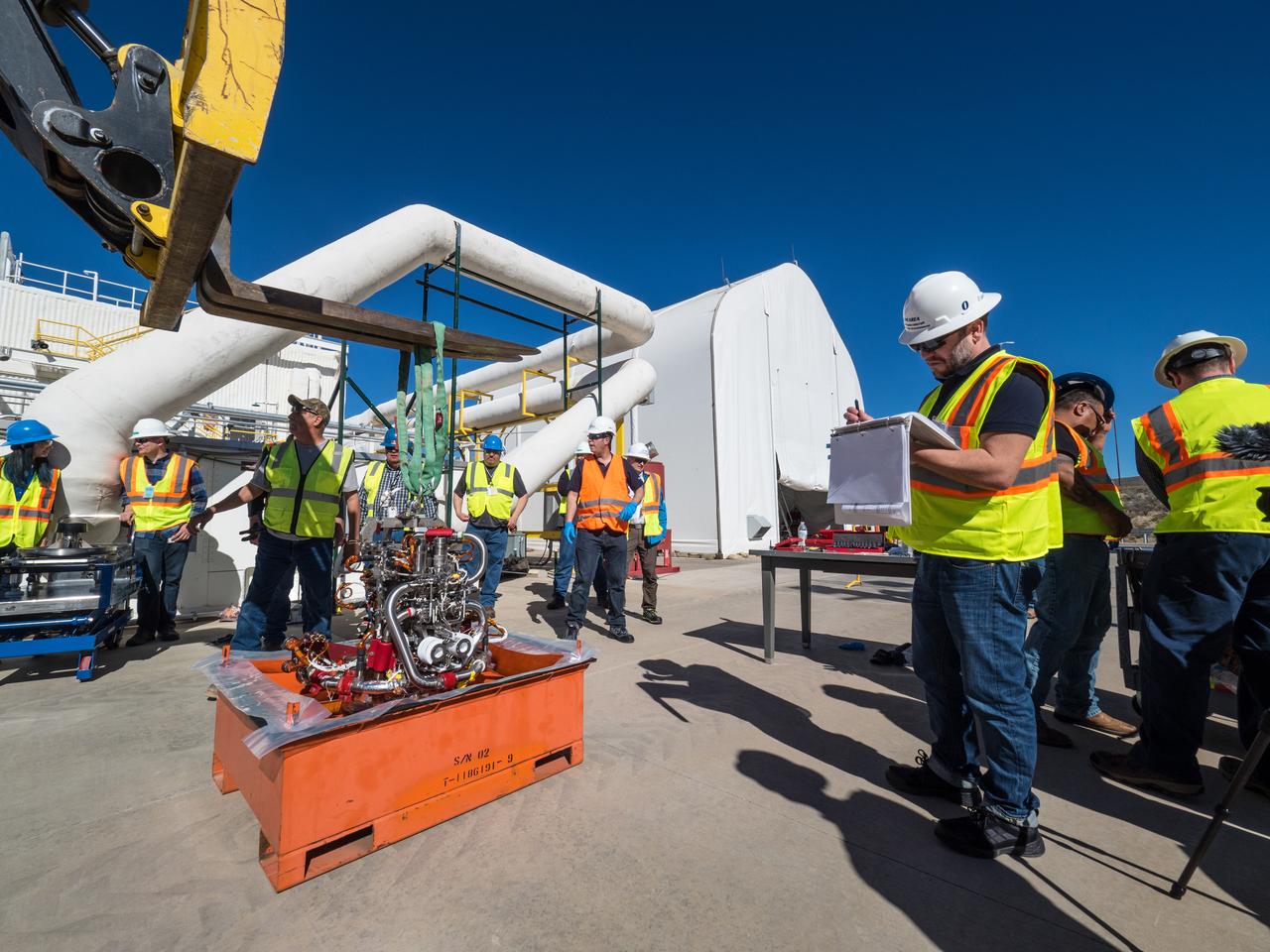
On Feb. 21, 2017 engineers successfully install ESA’s European Service Module Propulsion Qualification Module (PQM) at NASA’s White Sands Test Facility in New Mexico that was delivered by Airbus – ESA’s prime contractor for the Service Module. The module will be equipped with a total of 21 engines to support NASA’s Orion spacecraft: one U.S. Space Shuttle Orbital Maneuvering System (OMS) engine, eight auxiliary thrusters and 12 smaller thrusters produced by Airbus Safran Launchers in Germany. The all-steel PQM structure is used to test the propulsion systems on Orion, including “hot firing” of the OMS engine and thrusters.
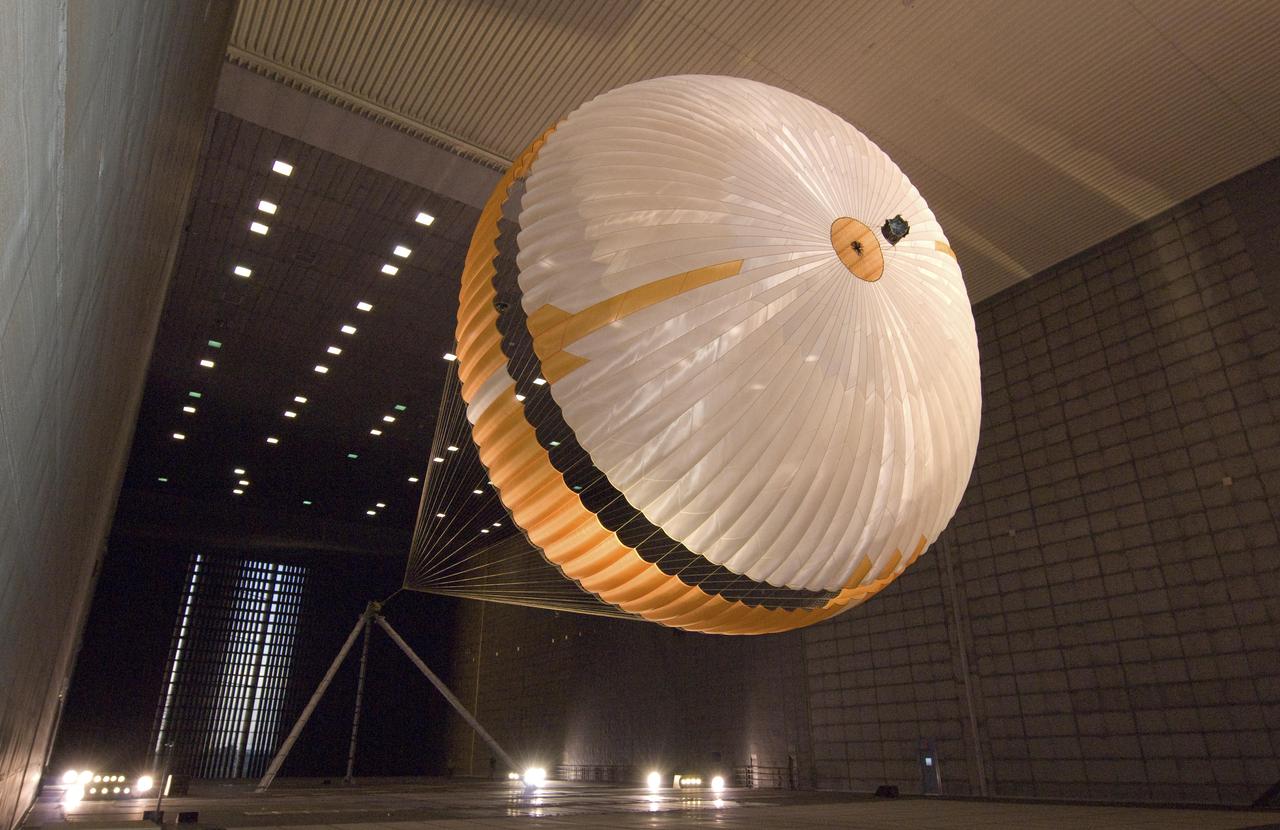
The parachute for NASA next mission to Mars passed flight-qualification testing in March and April 2009 inside the world largest wind tunnel, at NASA Ames Research Center, Moffett Field, Calif. NASA's Mars Science Laboratory mission, to be launched in 2011 and land on Mars in 2012, will use the largest parachute ever built to fly on an extraterrestrial mission. This image shows a duplicate qualification-test parachute inflated in an 80-mile-per-hour (36-meter-per-second) wind inside the test facility. The parachute uses a configuration called disk-gap-band. It has 80 suspension lines, measures more than 50 meters (165 feet) in length, and opens to a diameter of nearly 16 meters (51 feet). Most of the orange and white fabric is nylon, though a small disk of heavier polyester is used near the vent in the apex of the canopy due to higher stresses there. It is designed to survive deployment at Mach 2.2 in the Martian atmosphere, where it will generate up to 65,000 pounds of drag force. The wind tunnel is 24 meters (80 feet) tall and 37 meters (120 feet) wide, big enough to house a Boeing 737. It is part of the National Full-Scale Aerodynamics Complex, operated by the Arnold Engineering Development Center of the U.S. Air Force. http://photojournal.jpl.nasa.gov/catalog/PIA11995
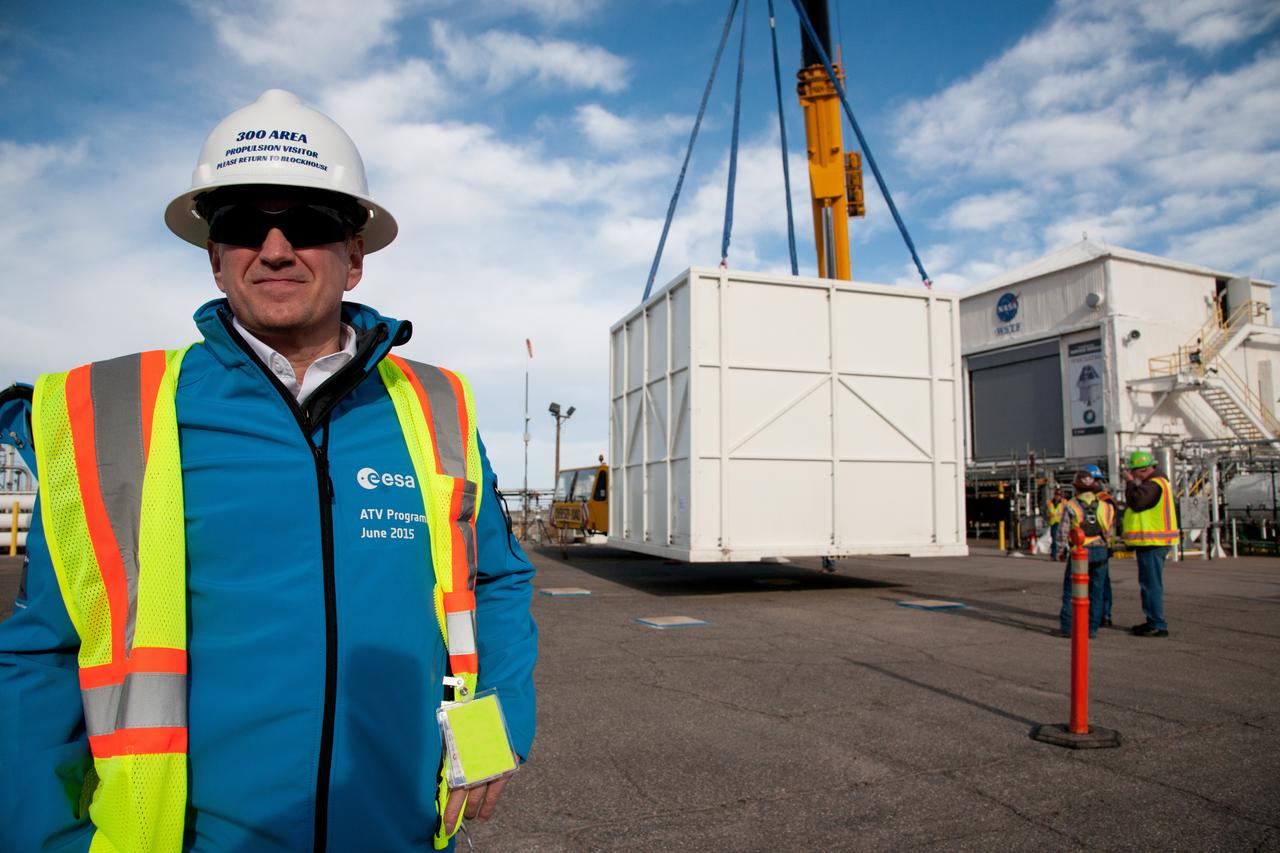
The European Service Module Propulsion Qualification Module (PQM) arrives at White Sands Test Facility in New Mexico on Feb. 18, 2017.
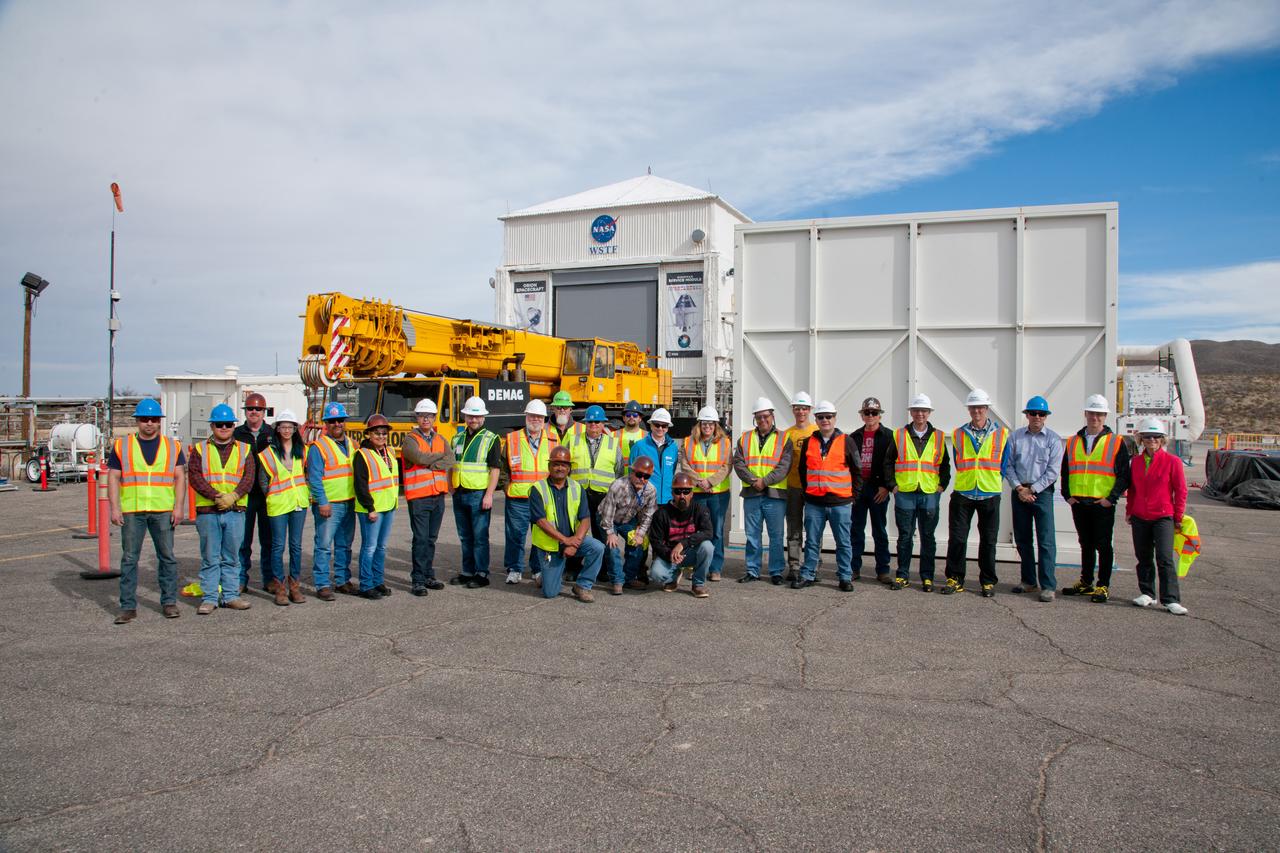
The European Service Module Propulsion Qualification Module (PQM) arrives at White Sands Test Facility in New Mexico on Feb. 18, 2017.

The European Service Module Propulsion Qualification Module (PQM) arrives at White Sands Test Facility in New Mexico on Feb. 18, 2017.
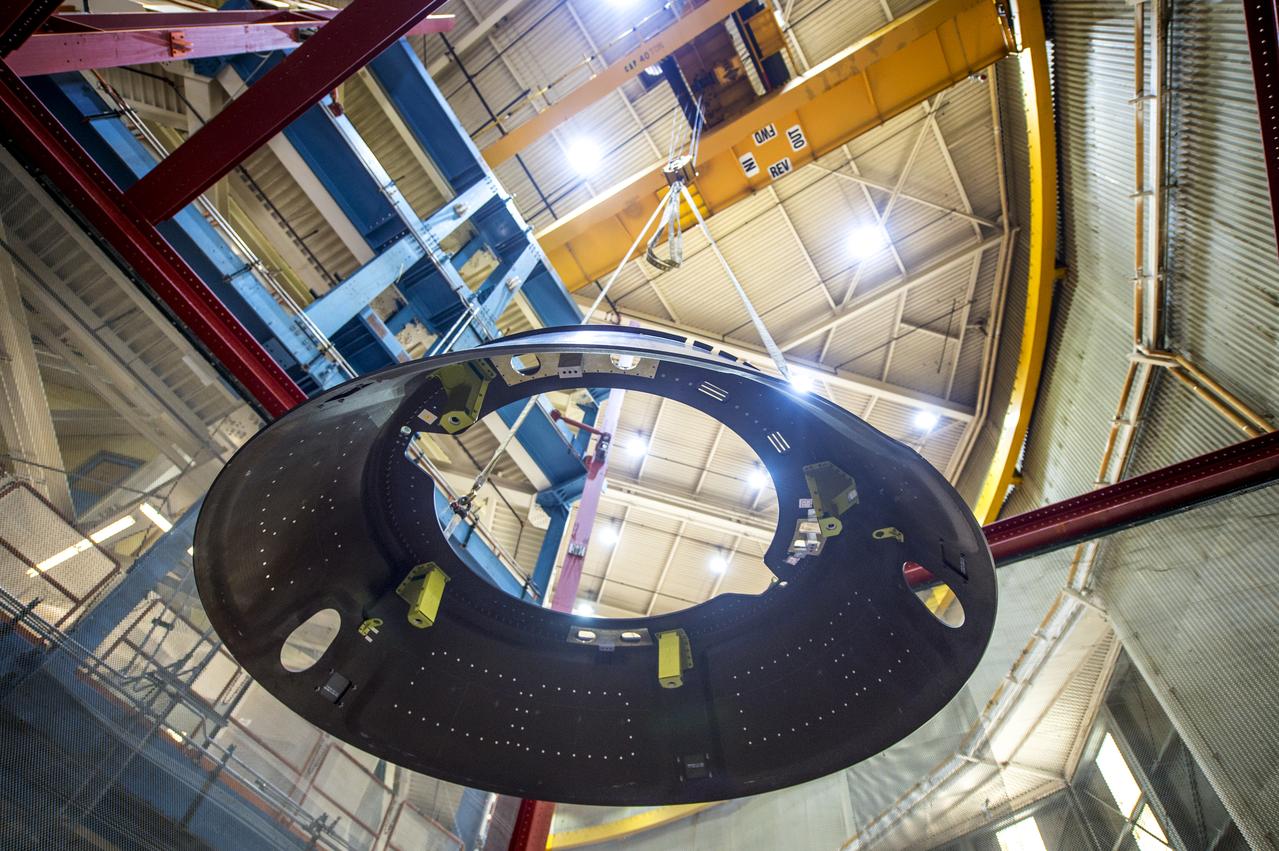
A heat shield is used during separation test activities with Boeing's Starliner structural test article. The test article is undergoing rigorous qualification testing at the company's Huntington Beach Facility in California. Boeing’s CST-100 Starliner will launch on the Atlas V rocket to the International Space Station as part of NASA’s Commercial Crew Program.
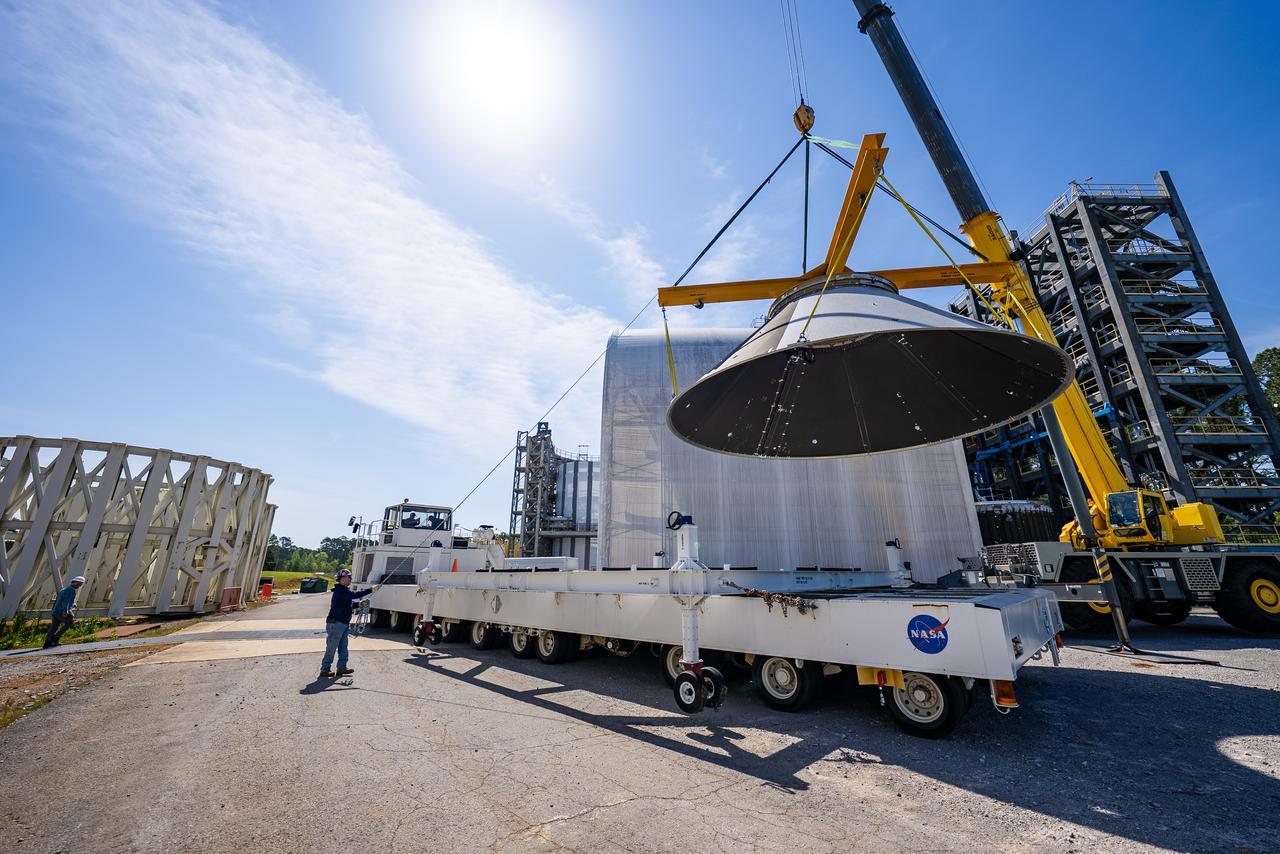
Technicians at NASA’s Marshall Space Flight Center in Huntsville, Alabama, are seen in these images taken April 17, 2025, moving the payload adapter test article from Building 4697 to Building 4705 for storage. This move marks the end of structural testing for the test article. Next, engineers will complete the qualification article and conduct additional for further testing before building the final flight hardware. Manufactured at Marshall, the test article underwent extensive and rigorous testing to validate the design before engineers finalized the configuration for the flight article. The newly completed composite payload adapter is an evolution from the Orion stage adapter to be used in the upgraded Block 1B configuration of the SLS (Space Launch System) rocket, debuting with Artemis IV.
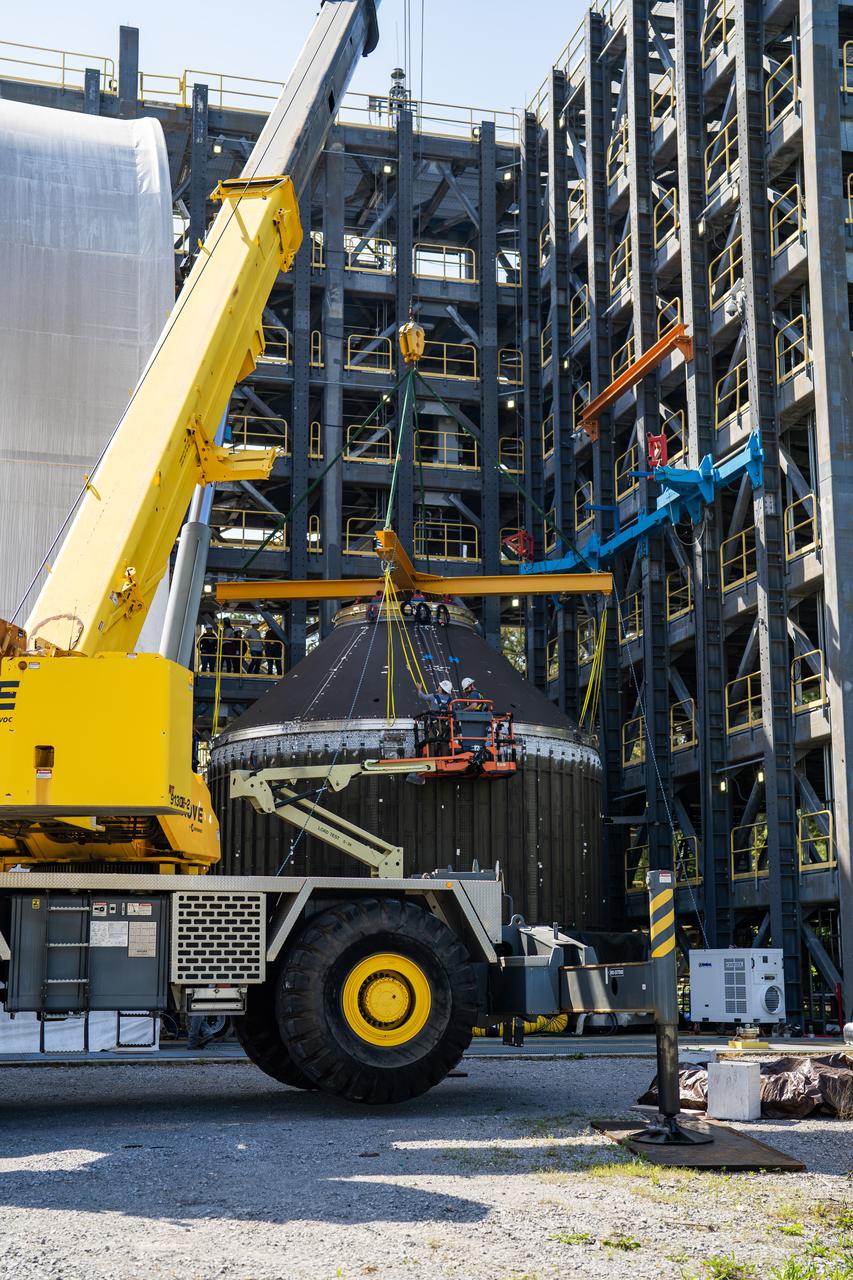
Technicians at NASA’s Marshall Space Flight Center in Huntsville, Alabama, are seen in these images taken April 17, 2025, moving the payload adapter test article from Building 4697 to Building 4705 for storage. This move marks the end of structural testing for the test article. Next, engineers will complete the qualification article and conduct additional for further testing before building the final flight hardware. Manufactured at Marshall, the test article underwent extensive and rigorous testing to validate the design before engineers finalized the configuration for the flight article. The newly completed composite payload adapter is an evolution from the Orion stage adapter to be used in the upgraded Block 1B configuration of the SLS (Space Launch System) rocket, debuting with Artemis IV.
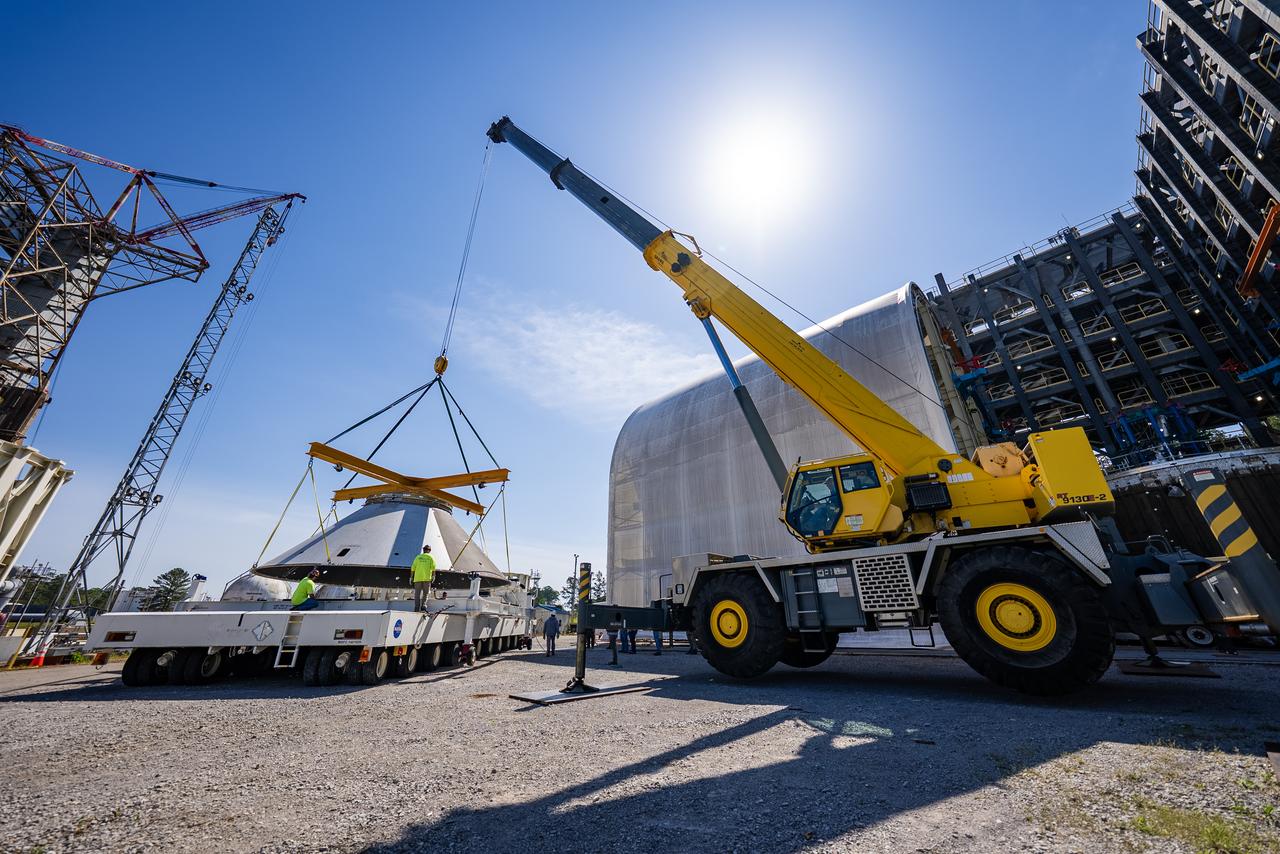
Technicians at NASA’s Marshall Space Flight Center in Huntsville, Alabama, are seen in these images taken April 17, 2025, moving the payload adapter test article from Building 4697 to Building 4705 for storage. This move marks the end of structural testing for the test article. Next, engineers will complete the qualification article and conduct additional for further testing before building the final flight hardware. Manufactured at Marshall, the test article underwent extensive and rigorous testing to validate the design before engineers finalized the configuration for the flight article. The newly completed composite payload adapter is an evolution from the Orion stage adapter to be used in the upgraded Block 1B configuration of the SLS (Space Launch System) rocket, debuting with Artemis IV.

Technicians at NASA’s Marshall Space Flight Center in Huntsville, Alabama, are seen in these images taken April 17, 2025, moving the payload adapter test article from Building 4697 to Building 4705 for storage. This move marks the end of structural testing for the test article. Next, engineers will complete the qualification article and conduct additional for further testing before building the final flight hardware. Manufactured at Marshall, the test article underwent extensive and rigorous testing to validate the design before engineers finalized the configuration for the flight article. The newly completed composite payload adapter is an evolution from the Orion stage adapter to be used in the upgraded Block 1B configuration of the SLS (Space Launch System) rocket, debuting with Artemis IV.
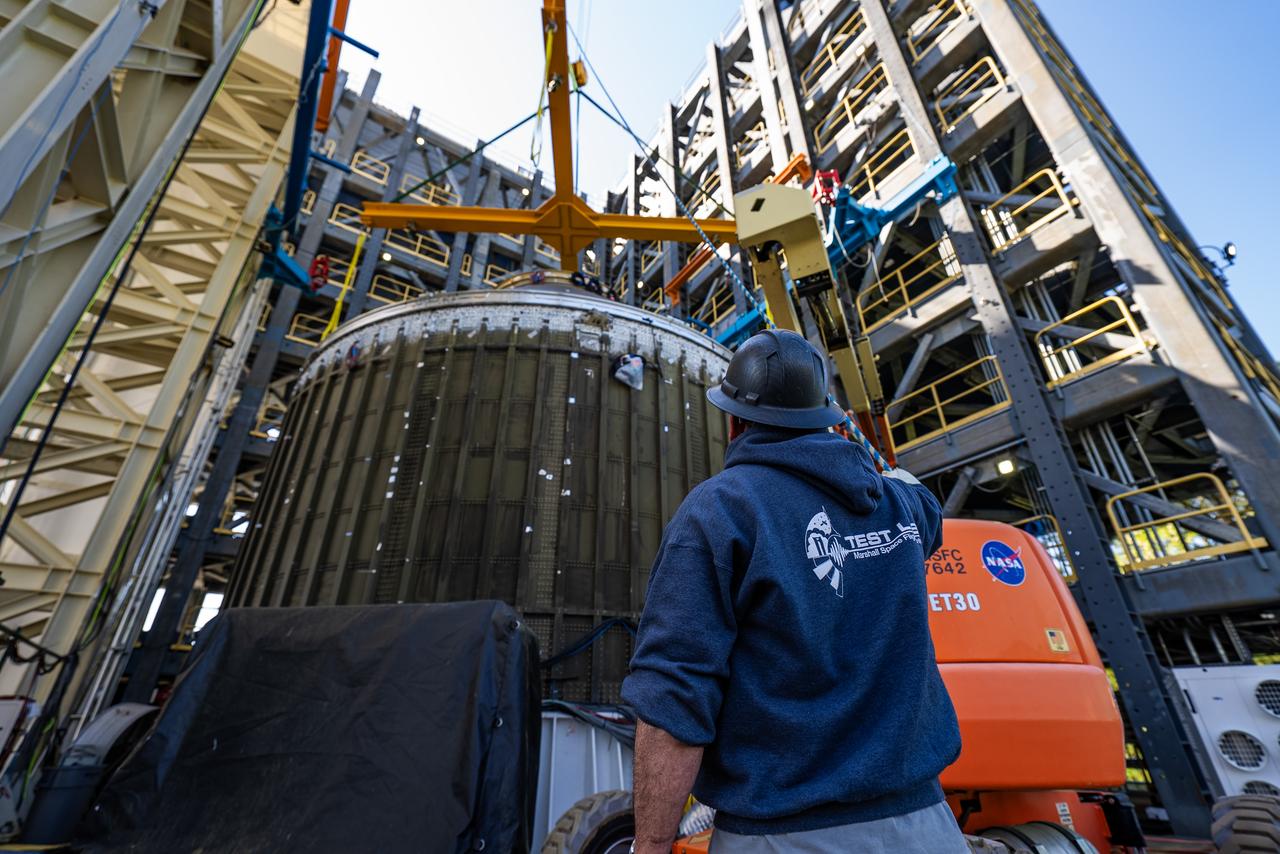
Technicians at NASA’s Marshall Space Flight Center in Huntsville, Alabama, are seen in these images taken April 17, 2025, moving the payload adapter test article from Building 4697 to Building 4705 for storage. This move marks the end of structural testing for the test article. Next, engineers will complete the qualification article and conduct additional for further testing before building the final flight hardware. Manufactured at Marshall, the test article underwent extensive and rigorous testing to validate the design before engineers finalized the configuration for the flight article. The newly completed composite payload adapter is an evolution from the Orion stage adapter to be used in the upgraded Block 1B configuration of the SLS (Space Launch System) rocket, debuting with Artemis IV.
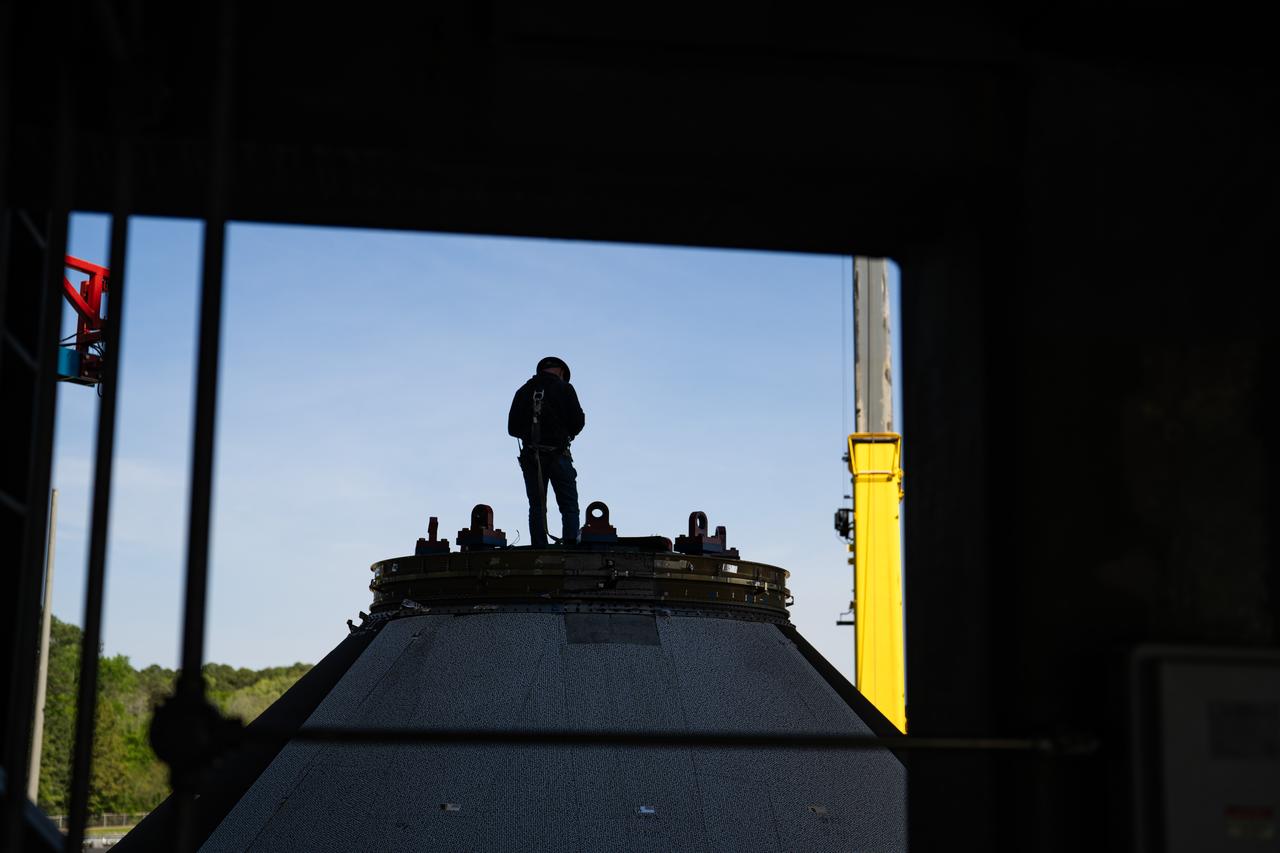
Technicians at NASA’s Marshall Space Flight Center in Huntsville, Alabama, are seen in these images taken April 17, 2025, moving the payload adapter test article from Building 4697 to Building 4705 for storage. This move marks the end of structural testing for the test article. Next, engineers will complete the qualification article and conduct additional for further testing before building the final flight hardware. Manufactured at Marshall, the test article underwent extensive and rigorous testing to validate the design before engineers finalized the configuration for the flight article. The newly completed composite payload adapter is an evolution from the Orion stage adapter to be used in the upgraded Block 1B configuration of the SLS (Space Launch System) rocket, debuting with Artemis IV.
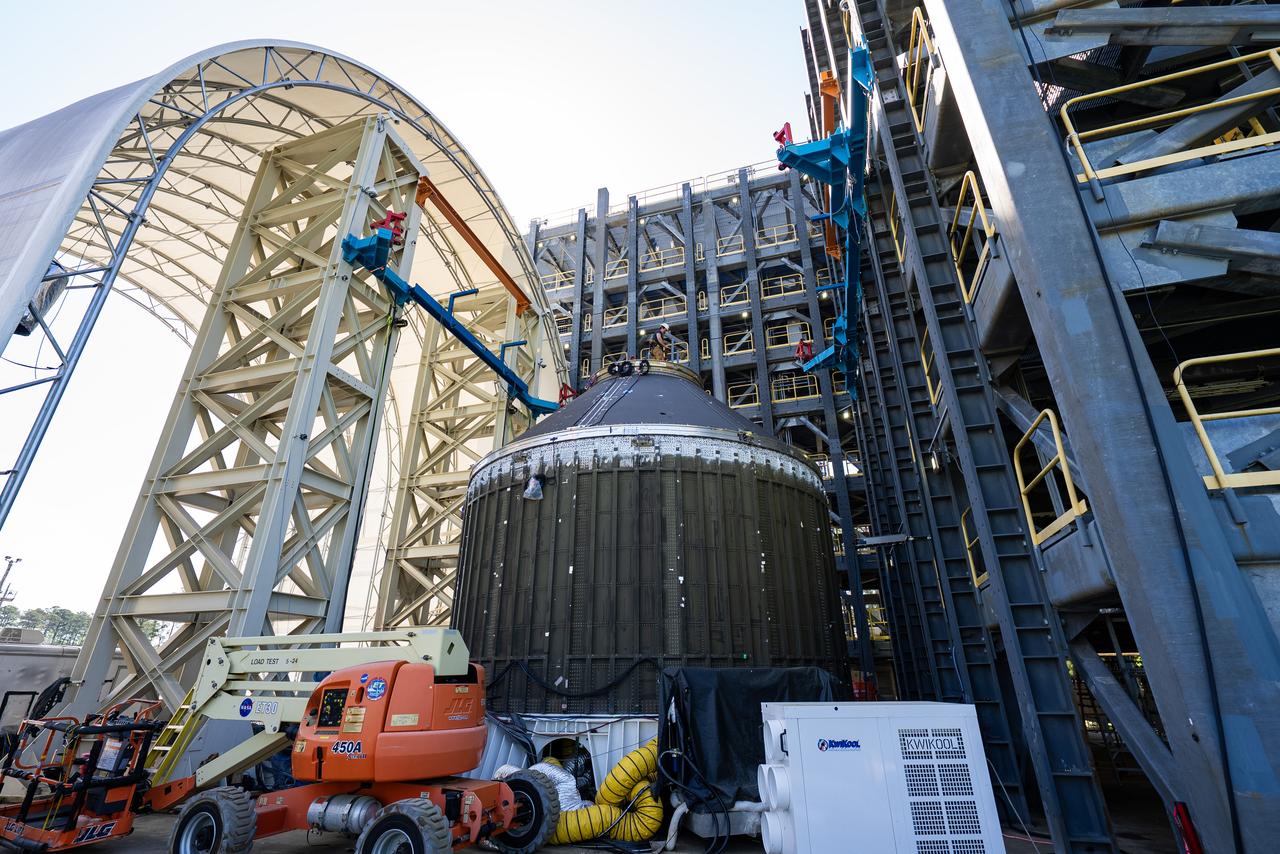
Technicians at NASA’s Marshall Space Flight Center in Huntsville, Alabama, are seen in these images taken April 17, 2025, moving the payload adapter test article from Building 4697 to Building 4705 for storage. This move marks the end of structural testing for the test article. Next, engineers will complete the qualification article and conduct additional for further testing before building the final flight hardware. Manufactured at Marshall, the test article underwent extensive and rigorous testing to validate the design before engineers finalized the configuration for the flight article. The newly completed composite payload adapter is an evolution from the Orion stage adapter to be used in the upgraded Block 1B configuration of the SLS (Space Launch System) rocket, debuting with Artemis IV.
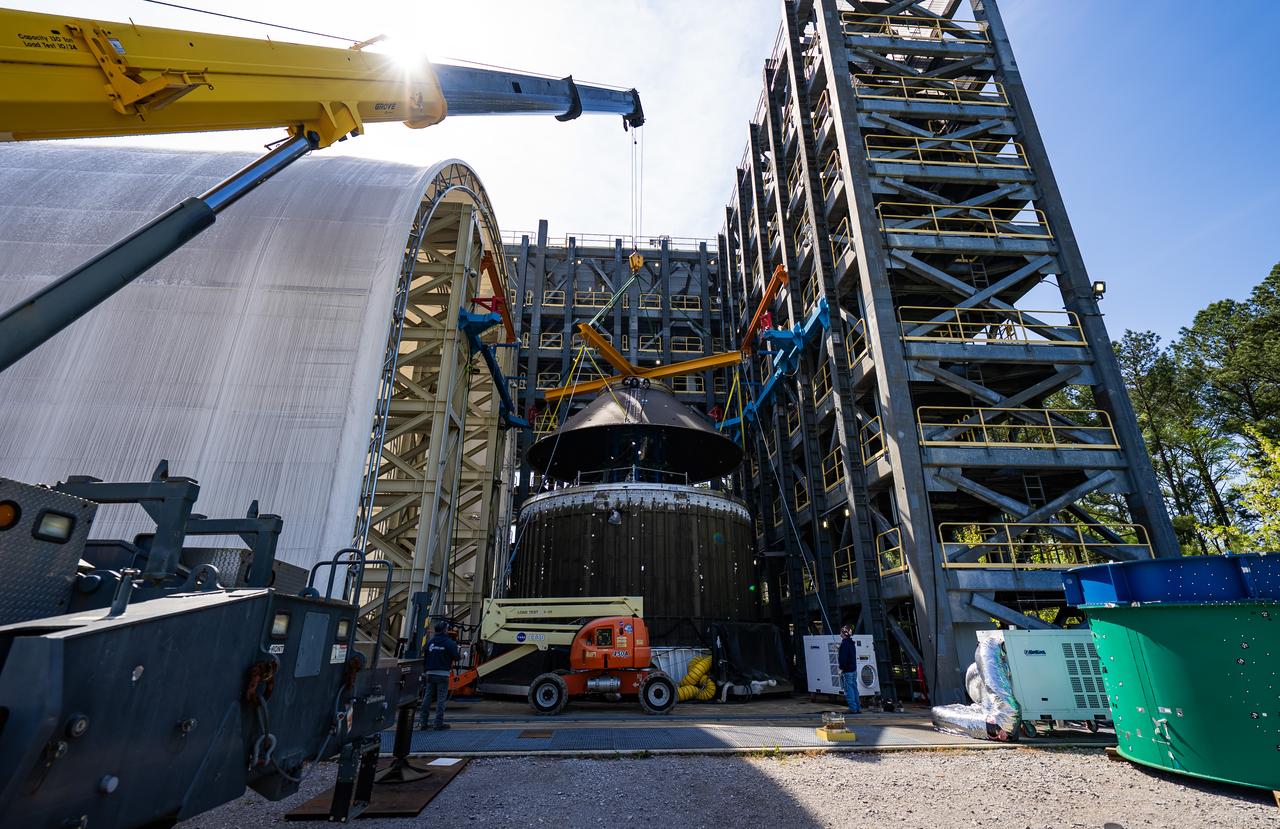
Technicians at NASA’s Marshall Space Flight Center in Huntsville, Alabama, are seen in these images taken April 17, 2025, moving the payload adapter test article from Building 4697 to Building 4705 for storage. This move marks the end of structural testing for the test article. Next, engineers will complete the qualification article and conduct additional for further testing before building the final flight hardware. Manufactured at Marshall, the test article underwent extensive and rigorous testing to validate the design before engineers finalized the configuration for the flight article. The newly completed composite payload adapter is an evolution from the Orion stage adapter to be used in the upgraded Block 1B configuration of the SLS (Space Launch System) rocket, debuting with Artemis IV.
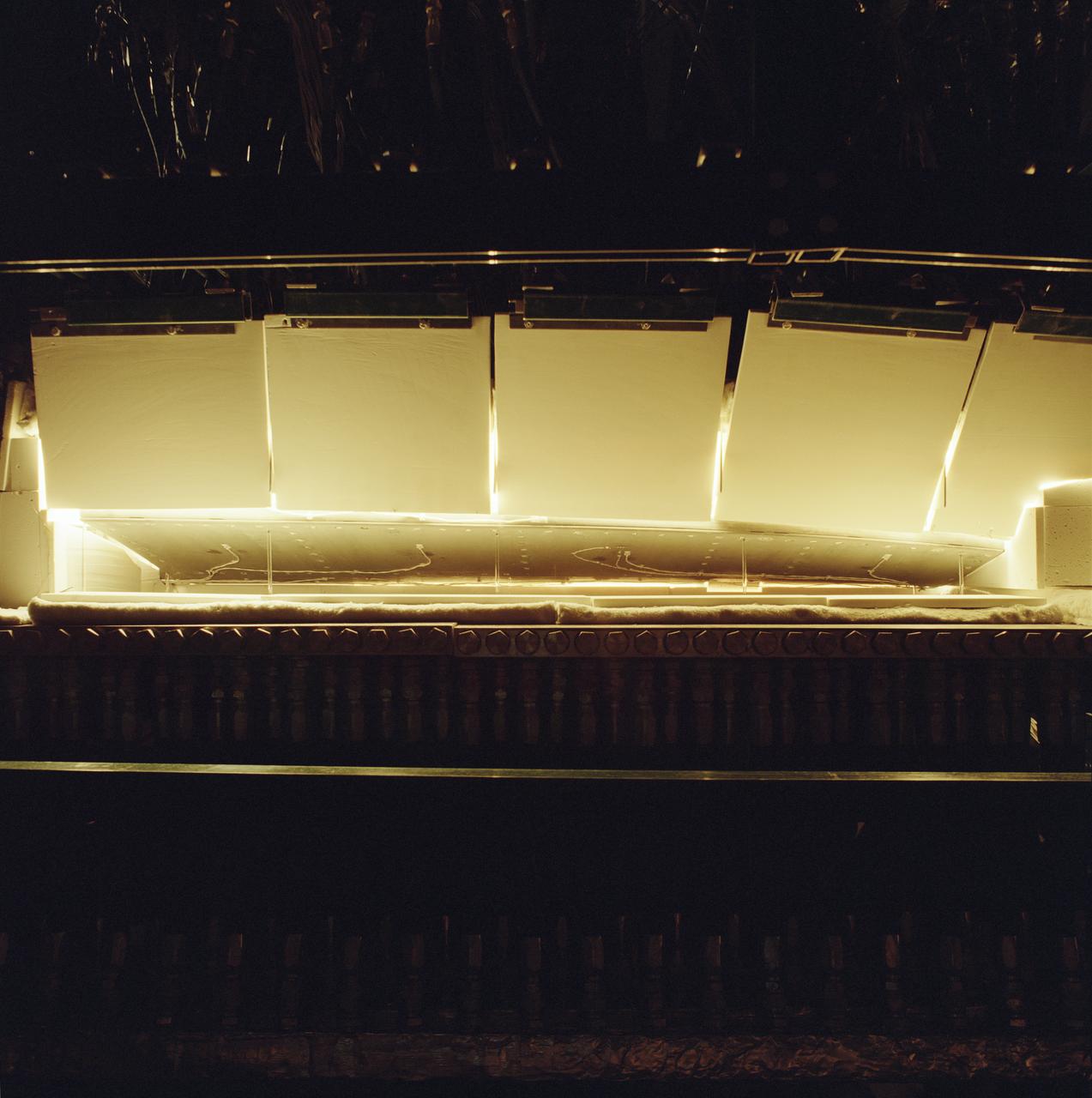
The X-37 advanced technology demonstrator flaperon unit was one of the first ever thermal and mechanical qualification tests of a carbon-carbon control surface designed for space flight. The test also featured extensive use of high-temperature fiber optic strain sensors. Peak temperatures reached 2,500 degrees Fahrenheit.

A test firing of the Qualification Motor-1 Solid Rocket Motor which will power the Space Launch System and Orion on Artemis I takes place in Promontory, Utah on March 11, 2015. Part of Batch image transfer from Flickr.

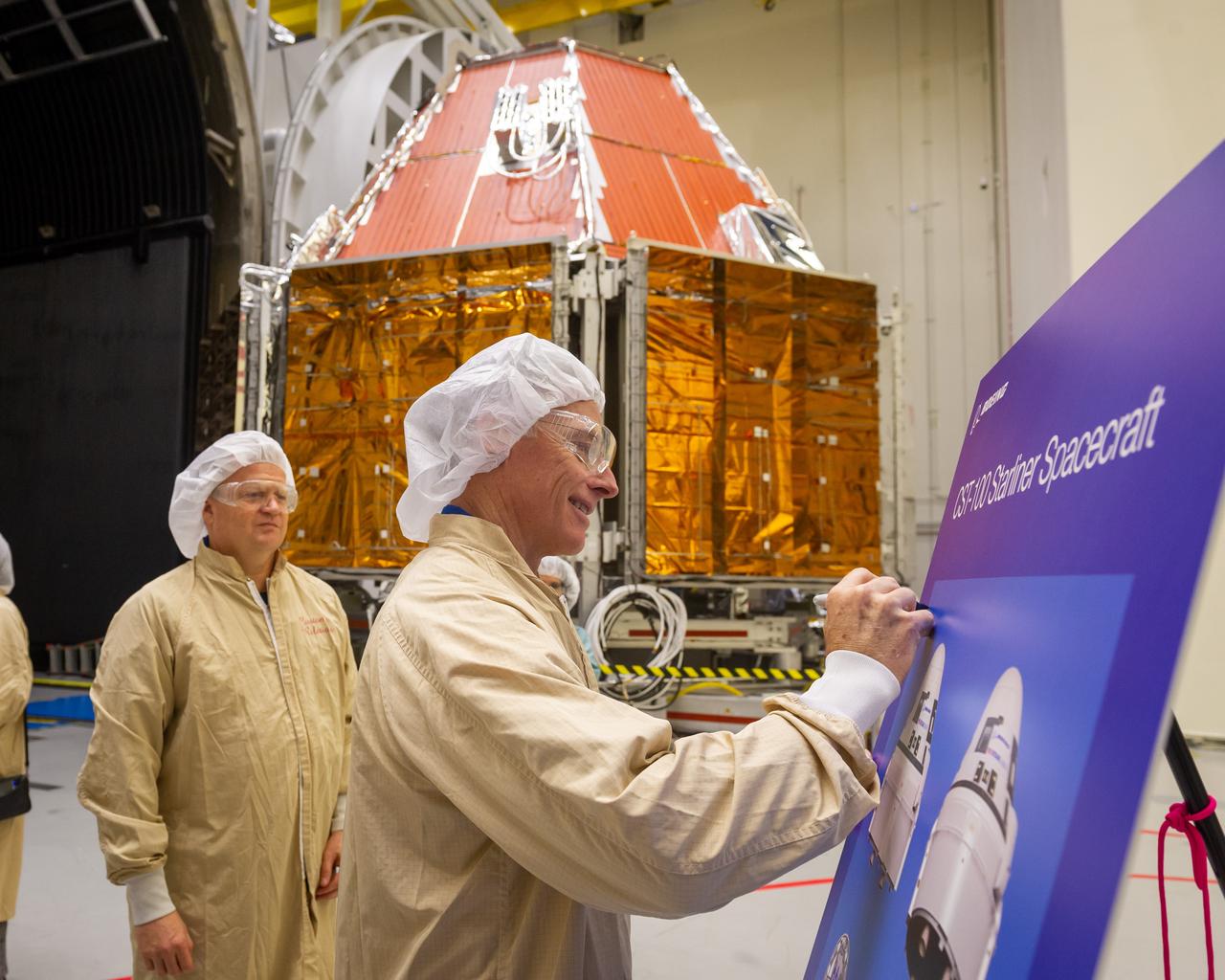
NASA’s Eric Boe is one of three astronauts who will fly on Boeing’s CST-100 Starliner in an upcoming Crew Flight Test to the International Space Station. Boe, along with fellow commercial crew astronauts Nicole Mann and Chris Ferguson, recently toured Boeing’s spacecraft testing facilities in Huntington Beach and El Segundo, Calif. Structural testing in Huntington Beach confirms the spacecraft can withstand the pressures it will experience during flight. Environmental qualification testing in El Segundo ensures the spacecraft can withstand the extreme environments of space.
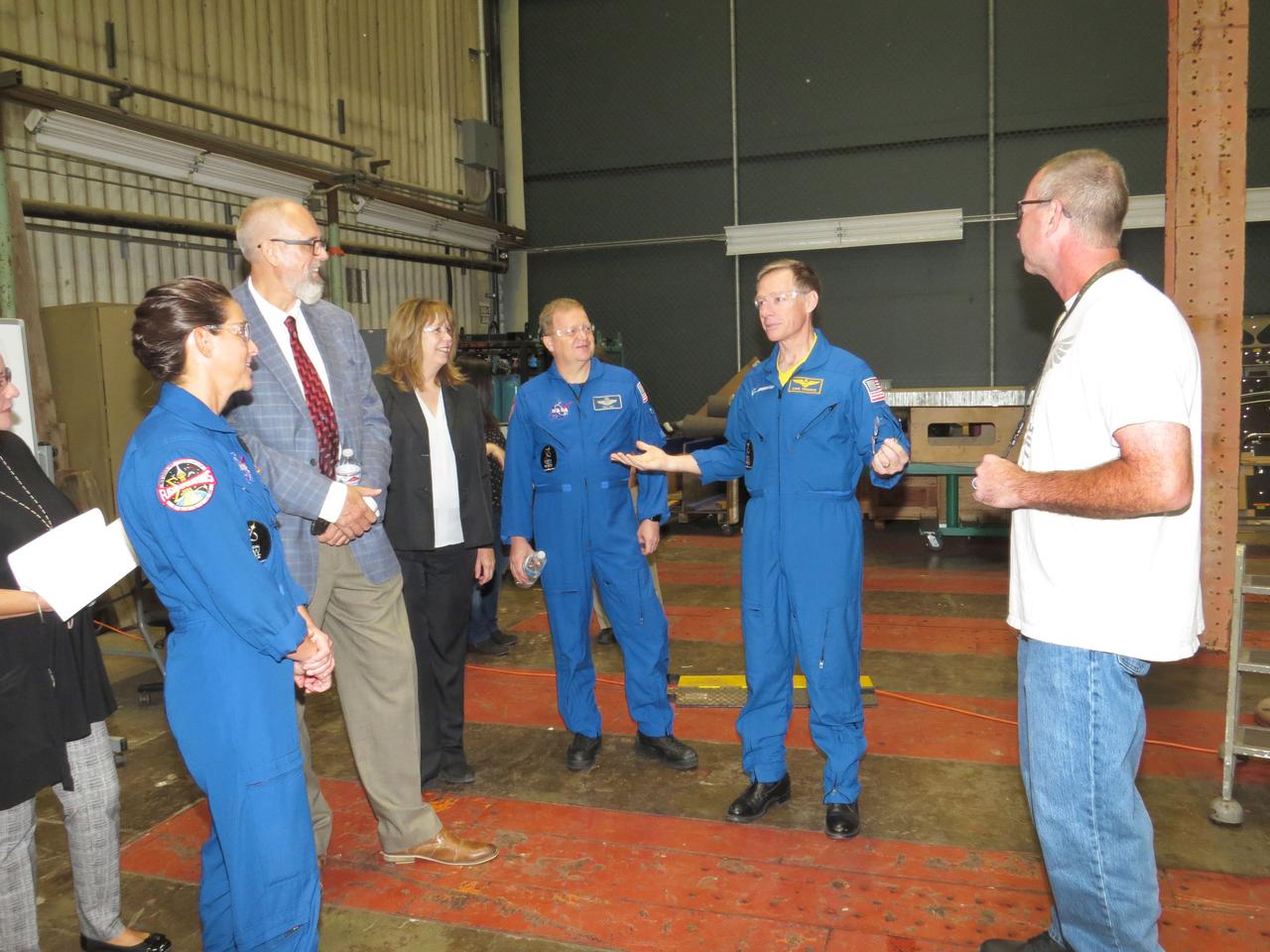
Commercial crew astronauts Nicole Mann, Eric Boe and Chris Ferguson recently toured Boeing’s spacecraft testing facilities in Huntington Beach, Calif. All three astronauts will fly on Boeing’s CST-100 Starliner in an upcoming Crew Flight Test to the International Space Station. Structural testing in Huntington Beach confirms the spacecraft can withstand the pressures it will experience during flight. Environmental qualification testing in El Segundo ensures the spacecraft can withstand the extreme environments of space.

Commercial Crew astronauts Chris Ferguson, Nicole Mann and Eric Boe recently toured spacecraft testing facilities in El Segundo and Huntington Beach, Calif. All three astronauts will fly on Boeing’s CST-100 Starliner in an upcoming crew flight test to the International Space Station. Environmental qualification testing in El Segundo ensures the spacecraft can withstand the extreme environments of space. Structural testing in Huntington Beach confirms the spacecraft can withstand the pressures it will experience during flight.
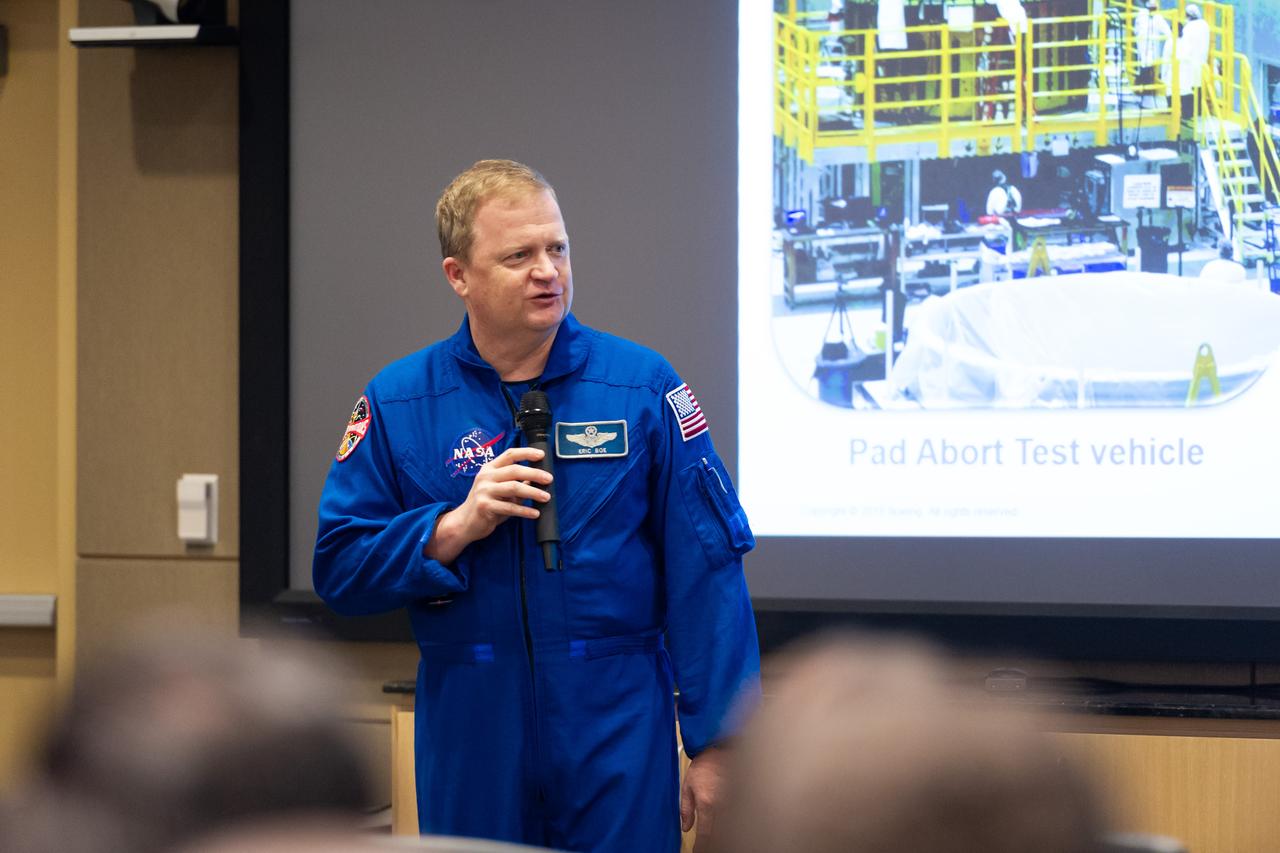
NASA’s Eric Boe recently toured Boeing’s spacecraft testing facilities in Huntington Beach and El Segundo, Calif., along with fellow commercial crew astronauts Nicole Mann and Chris Ferguson. All three will fly on Boeing’s CST-100 Starliner in an upcoming Crew Flight Test to the International Space Station. Structural testing in Huntington Beach confirms the spacecraft can withstand the pressures it will experience during flight. Environmental qualification testing in El Segundo ensures the spacecraft can withstand the extreme environments of space.
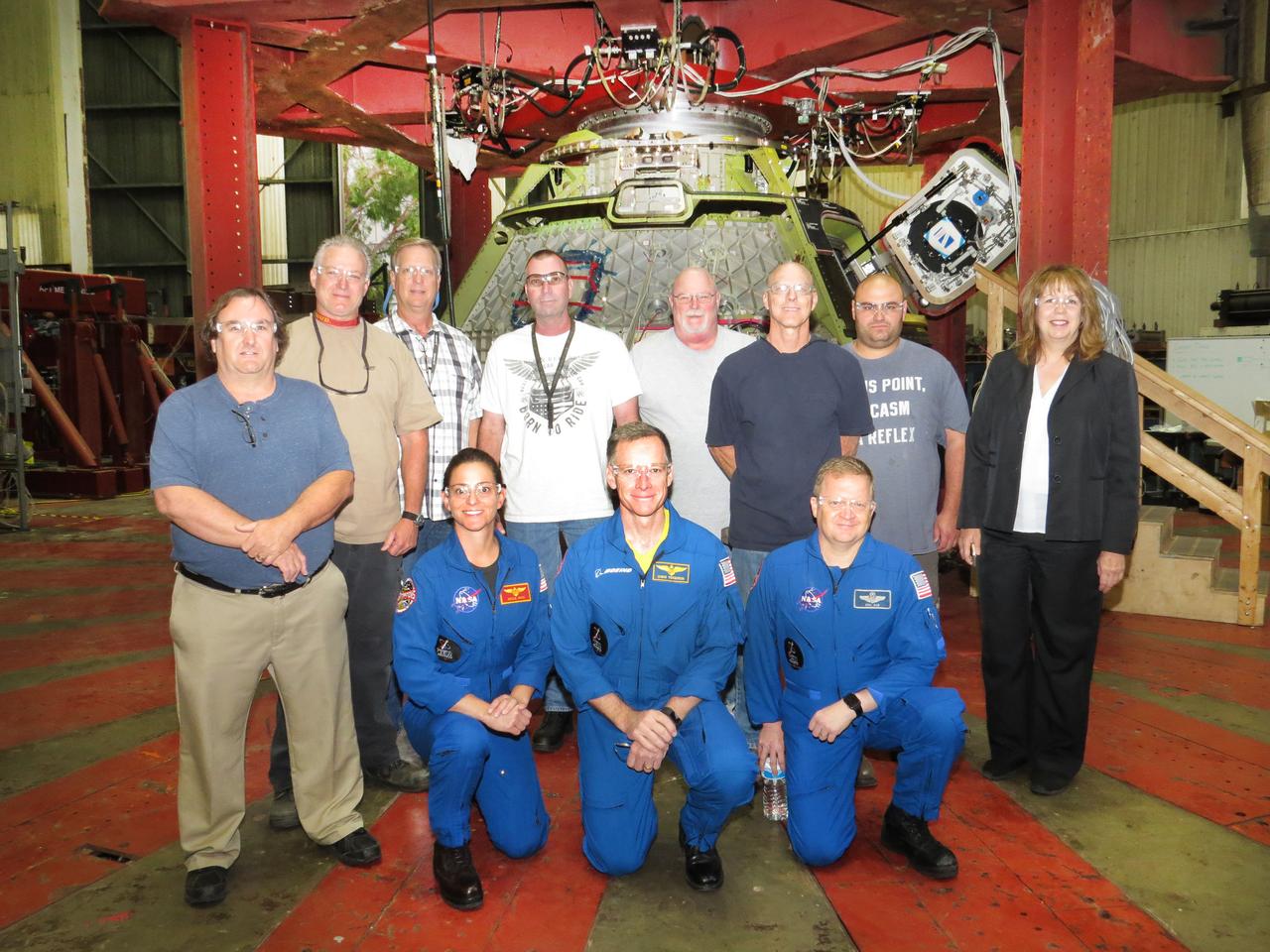
Commercial crew astronauts Nicole Mann, Chris Ferguson and Eric Boe recently toured Boeing’s spacecraft testing facilities in Huntington Beach and El Segundo, Calif. All three astronauts will fly on Boeing’s CST-100 Starliner in an upcoming Crew Flight Test to the International Space Station. Structural testing in Huntington Beach confirms the spacecraft can withstand the pressures it will experience during flight. Environmental qualification testing in El Segundo ensures the spacecraft can withstand the extreme environments of space.
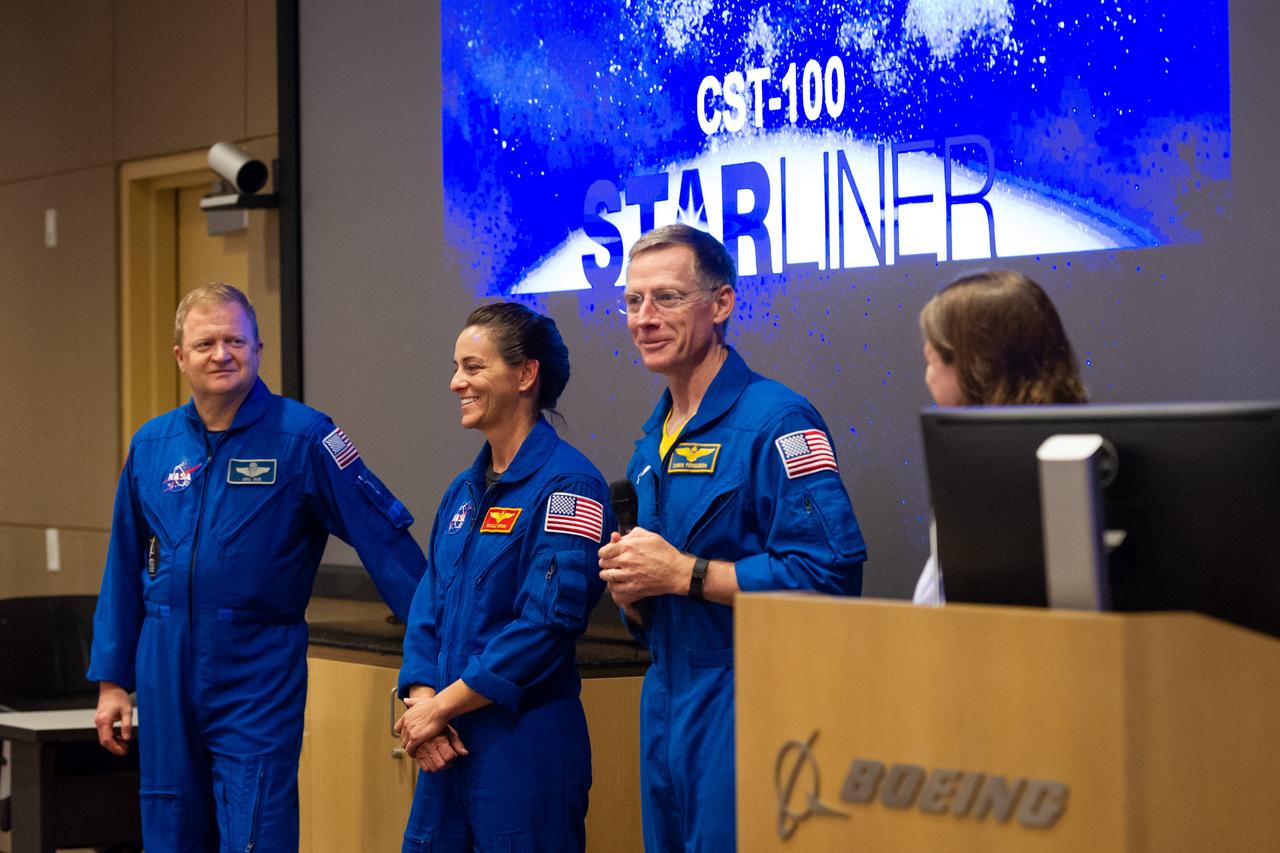
Commercial crew astronauts Eric Boe, Nicole Mann and Chris Ferguson recently toured Boeing’s spacecraft testing facilities in Huntington Beach and El Segundo, Calif. All three astronauts will fly on Boeing’s CST-100 Starliner in an upcoming Crew Flight Test to the International Space Station. Structural testing in Huntington Beach confirms the spacecraft can withstand the pressures it will experience during flight. Environmental qualification testing in El Segundo ensures the spacecraft can withstand the extreme environments of space.
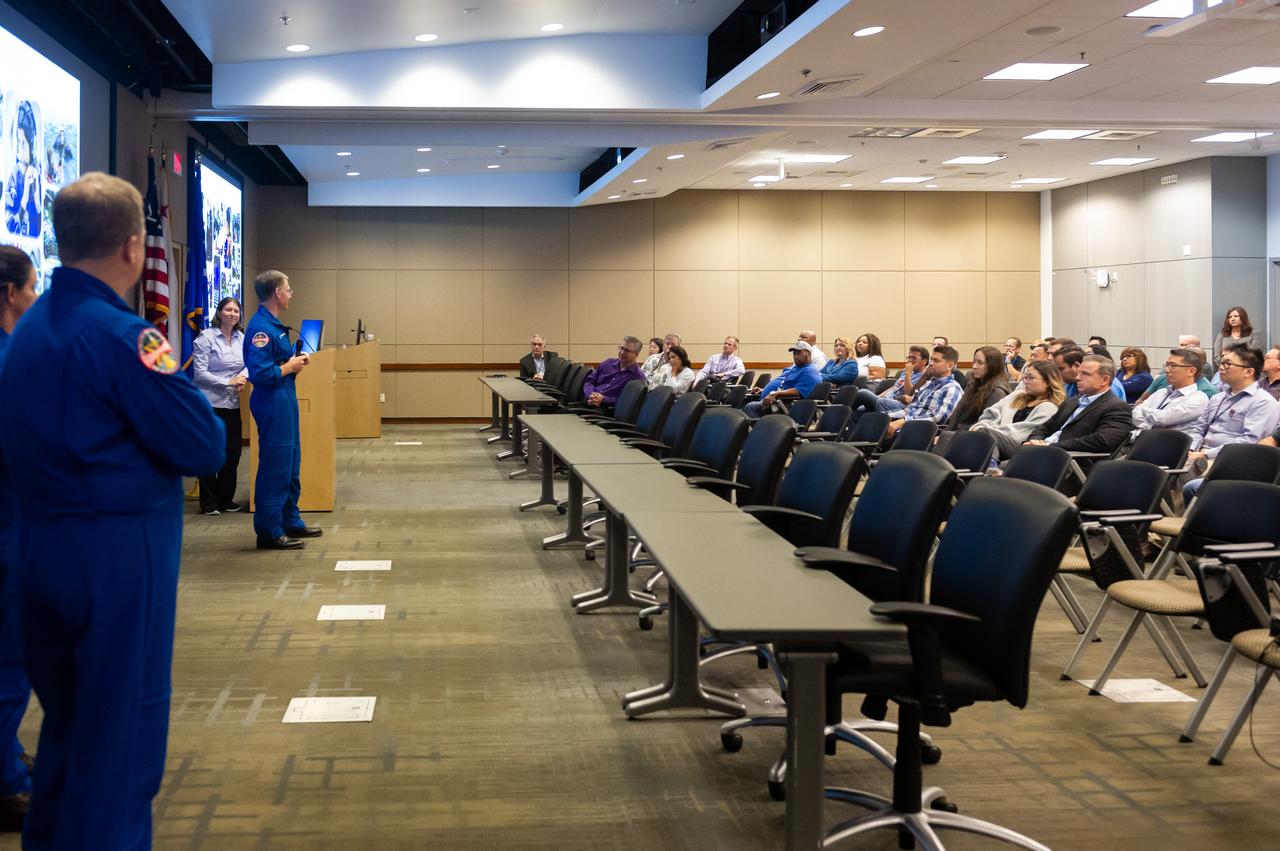
Commercial crew astronauts Eric Boe, Nicole Mann and Chris Ferguson recently toured Boeing’s spacecraft testing facilities in Huntington Beach and El Segundo, Calif. All three astronauts will fly on Boeing’s CST-100 Starliner in an upcoming Crew Flight Test to the International Space Station. Structural testing in Huntington Beach confirms the spacecraft can withstand the pressures it will experience during flight. Environmental qualification testing in El Segundo ensures the spacecraft can withstand the extreme environments of space.
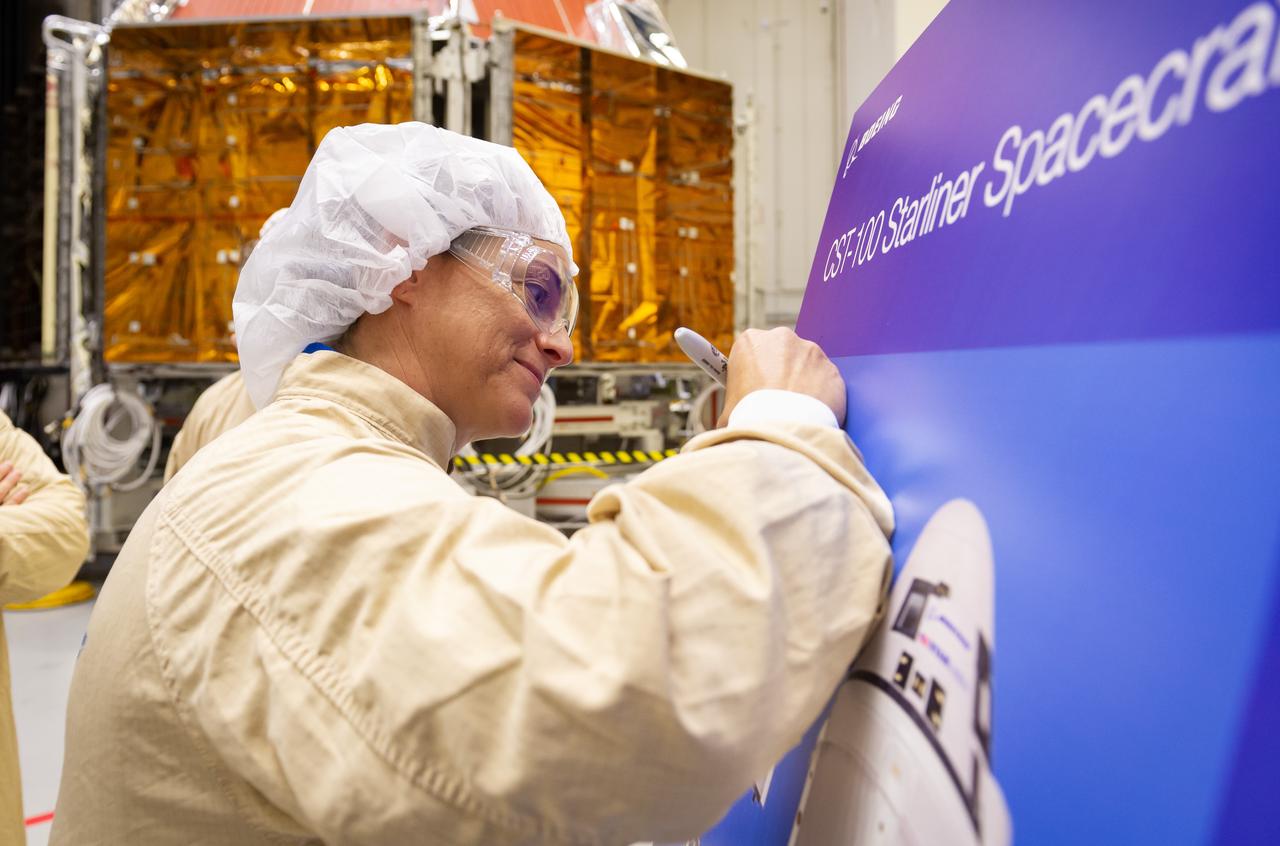
NASA’s Nicole Mann is one of three astronauts who will fly on Boeing’s CST-100 Starliner in an upcoming Crew Flight Test to the International Space Station. Mann, along with fellow commercial crew astronauts Eric Boe and Chris Ferguson, recently toured spacecraft testing facilities in Huntington Beach and El Segundo, Calif. Structural testing in Huntington Beach confirms the spacecraft can withstand the pressures it will experience during flight. Environmental qualification testing in El Segundo ensures the spacecraft can withstand the extreme environments of space.
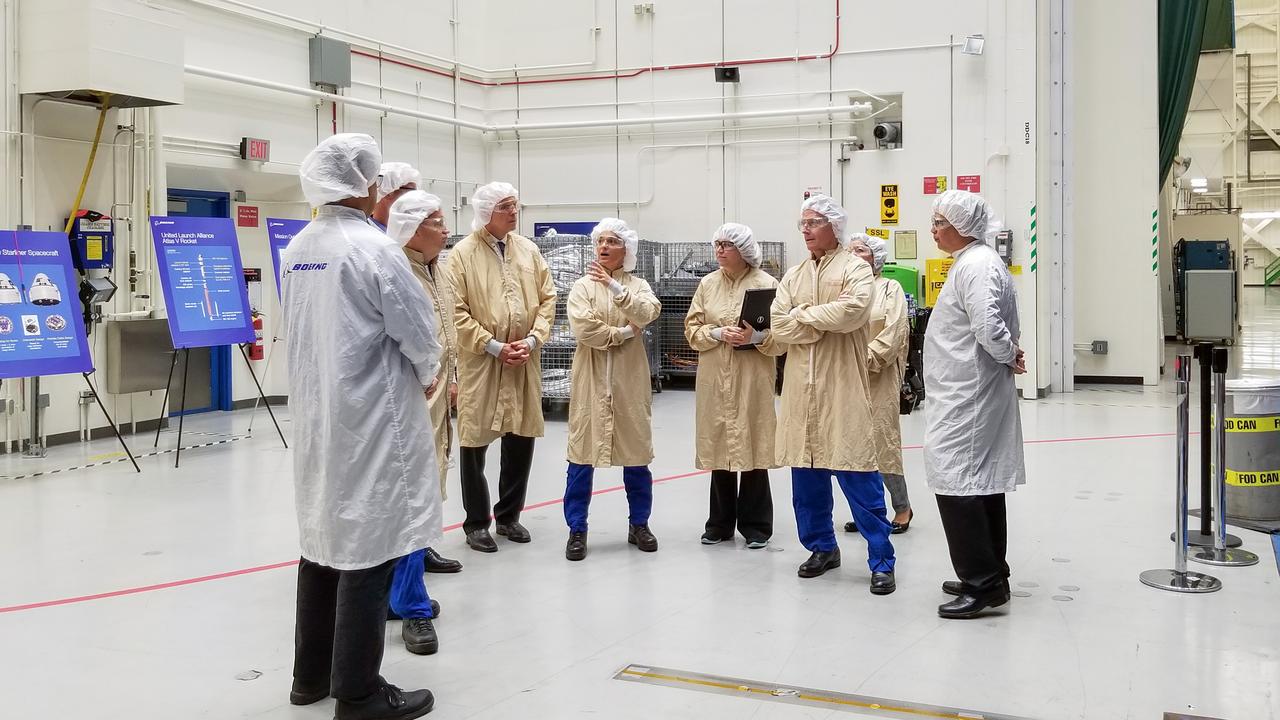
Commercial crew astronauts Eric Boe, Chris Ferguson and Nicole Mann recently toured Boeing’s spacecraft testing facilities in Huntington Beach and El Segundo, Calif. All three astronauts will fly on Boeing’s CST-100 Starliner in an upcoming Crew Flight Test to the International Space Station. Structural testing in Huntington Beach confirms the spacecraft can withstand the pressures it will experience during flight. Environmental qualification testing in El Segundo ensures the spacecraft can withstand the extreme environments of space.
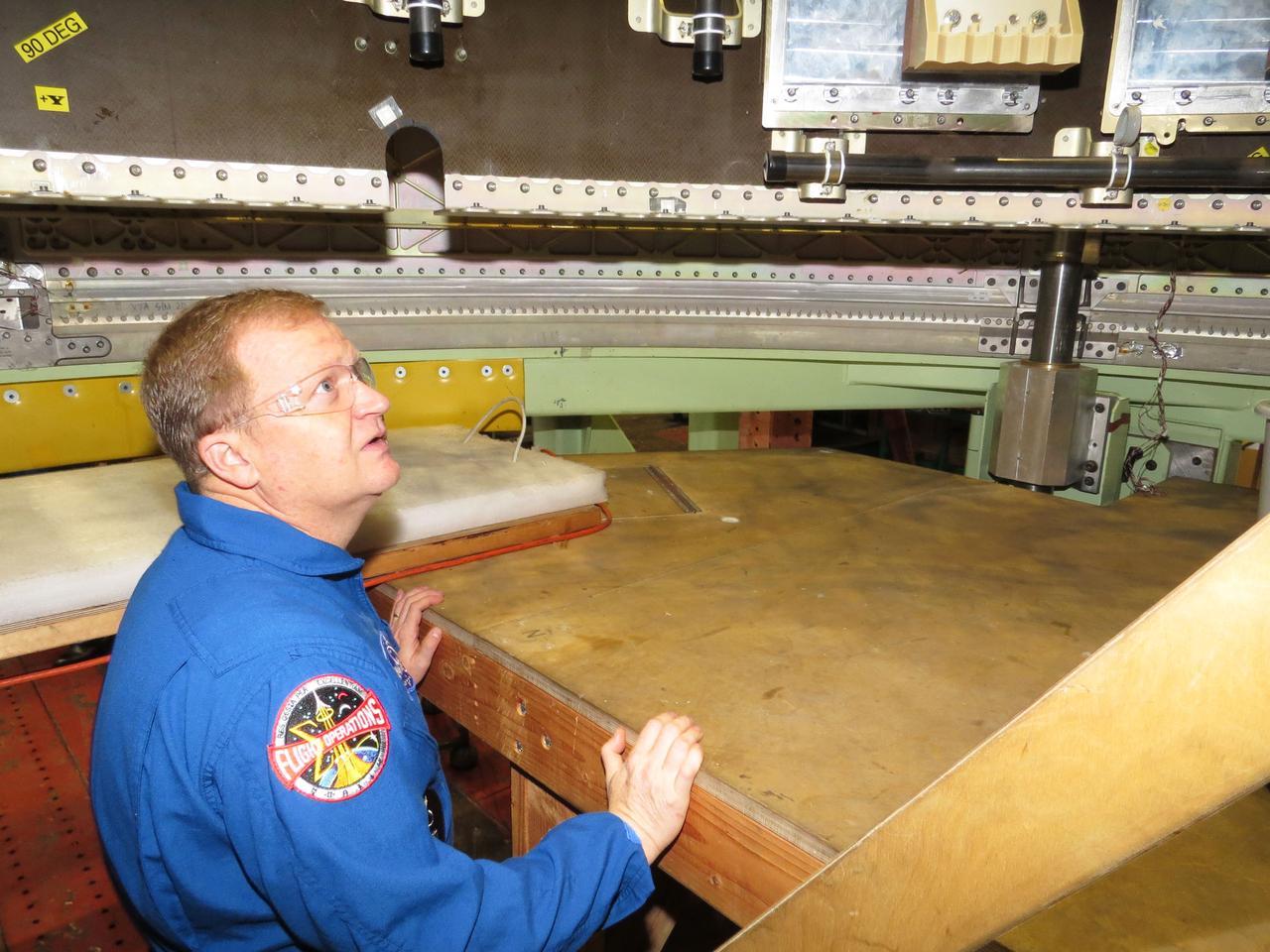
NASA’s Eric Boe is one of three astronauts who will fly on Boeing’s CST-100 Starliner in an upcoming Crew Flight Test to the International Space Station. Boe, along with fellow commercial crew astronauts Nicole Mann and Chris Ferguson, recently toured Boeing’s spacecraft testing facilities in Huntington Beach and El Segundo, Calif. Structural testing in Huntington Beach confirms the spacecraft can withstand the pressures it will experience during flight. Environmental qualification testing in El Segundo ensures the spacecraft can withstand the extreme environments of space.
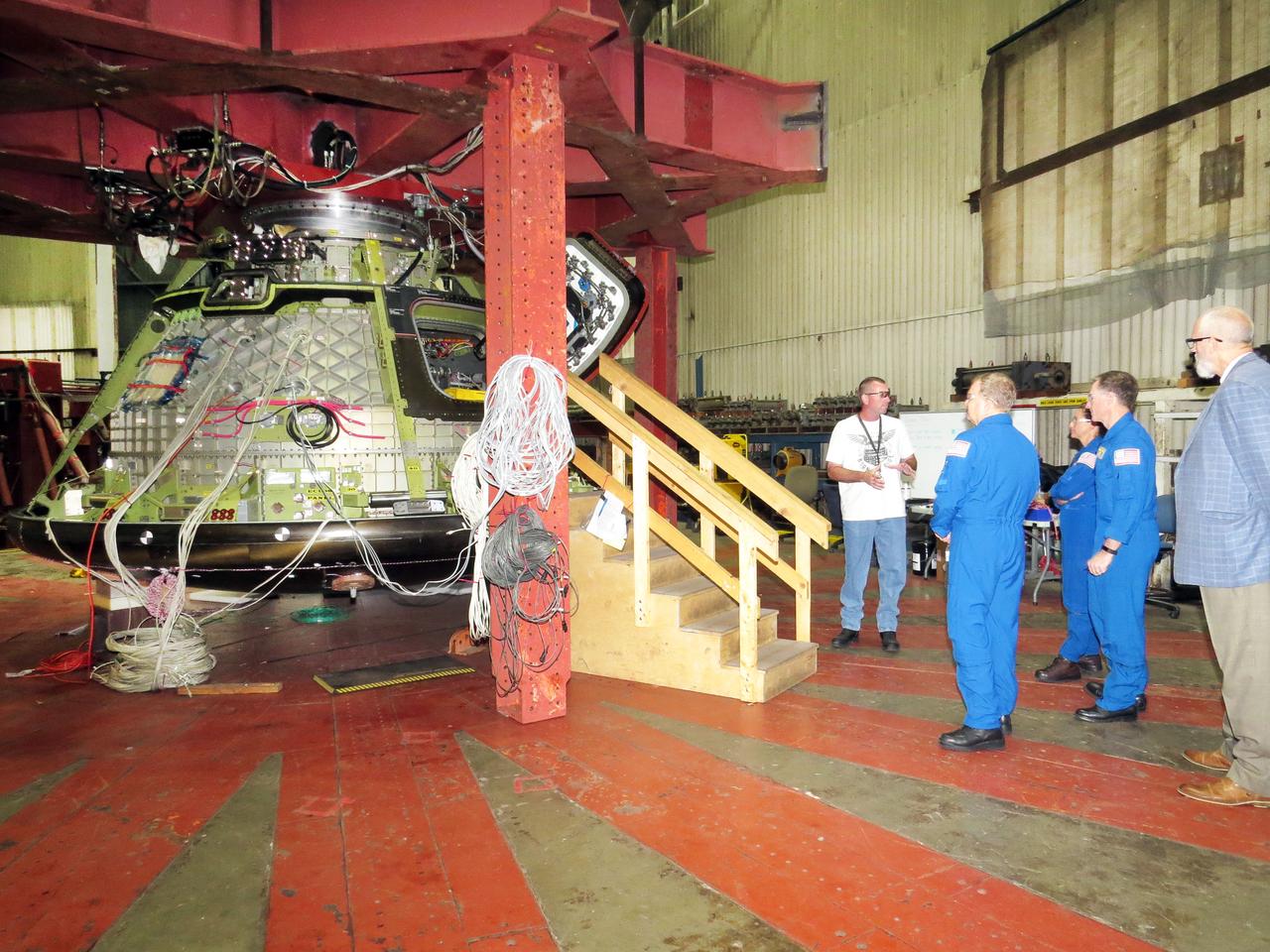
Commercial Crew astronauts Chris Ferguson, Nicole Mann and Eric Boe recently toured spacecraft testing facilities in El Segundo and Huntington Beach, Calif. All three astronauts will fly on Boeing’s CST-100 Starliner in an upcoming crew flight test to the International Space Station. Environmental qualification testing in El Segundo ensures the spacecraft can withstand the extreme environments of space. Structural testing in Huntington Beach confirms the spacecraft can withstand the pressures it will experience during flight.
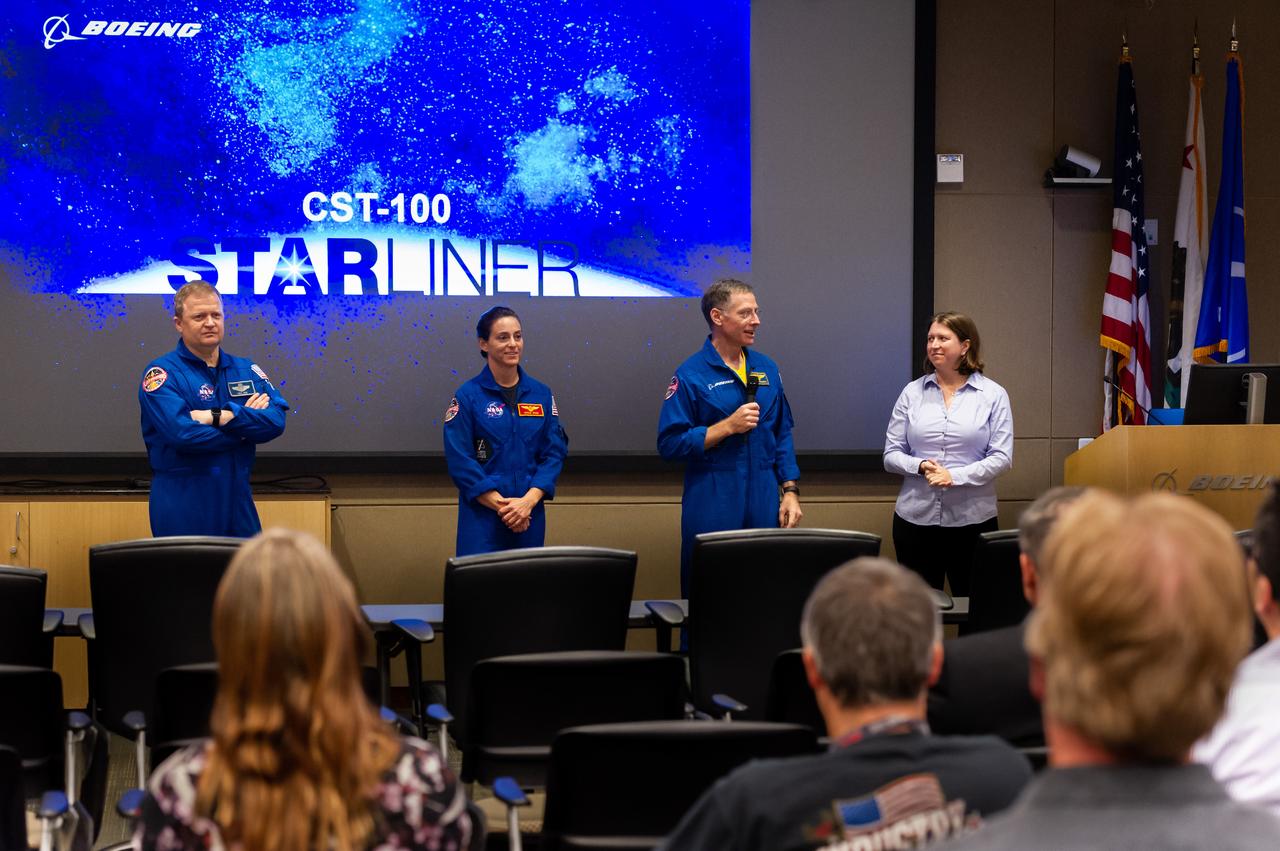
Commercial crew astronauts Eric Boe, Nicole Mann and Chris Ferguson recently toured Boeing’s spacecraft testing facilities in Huntington Beach and El Segundo, Calif. All three astronauts will fly on Boeing’s CST-100 Starliner in an upcoming Crew Flight Test to the International Space Station. Structural testing in Huntington Beach confirms the spacecraft can withstand the pressures it will experience during flight. Environmental qualification testing in El Segundo ensures the spacecraft can withstand the extreme environments of space.
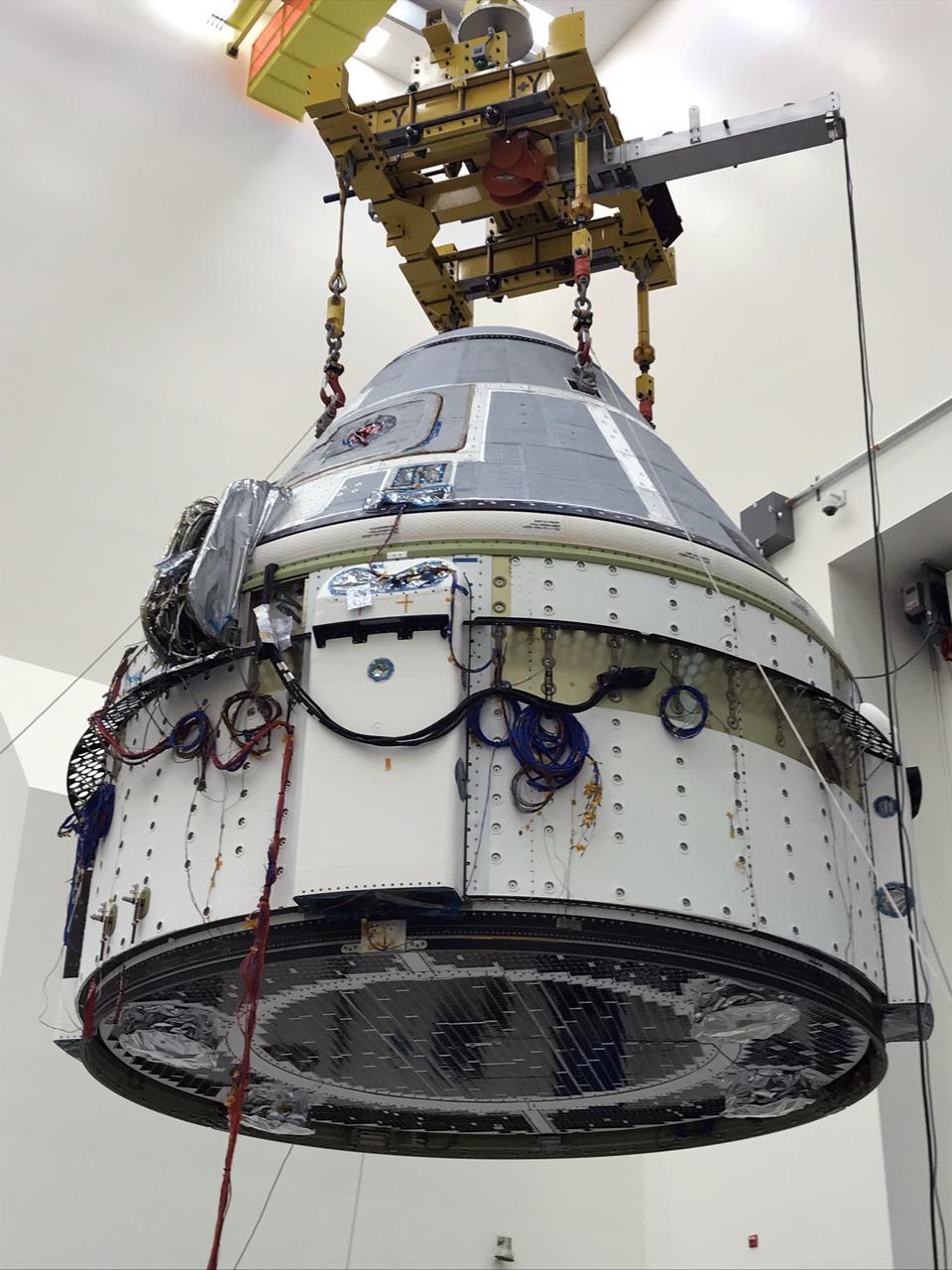
Boeing’s CST-100 Starliner is lifted into a test chamber at Boeing’s Space Environment Test Facility in El Segundo, Calif. There, Boeing engineers conducted different environmental qualification test programs, proving the vehicle is capable of withstanding the harsh environments it will see during launch, ascent and orbit. This is the Starliner that will be used for Boeing’s Crew Flight Test as part of NASA’s Commercial Crew Program, which is working with Boeing to return human spaceflight launches to the space station from U.S. soil.
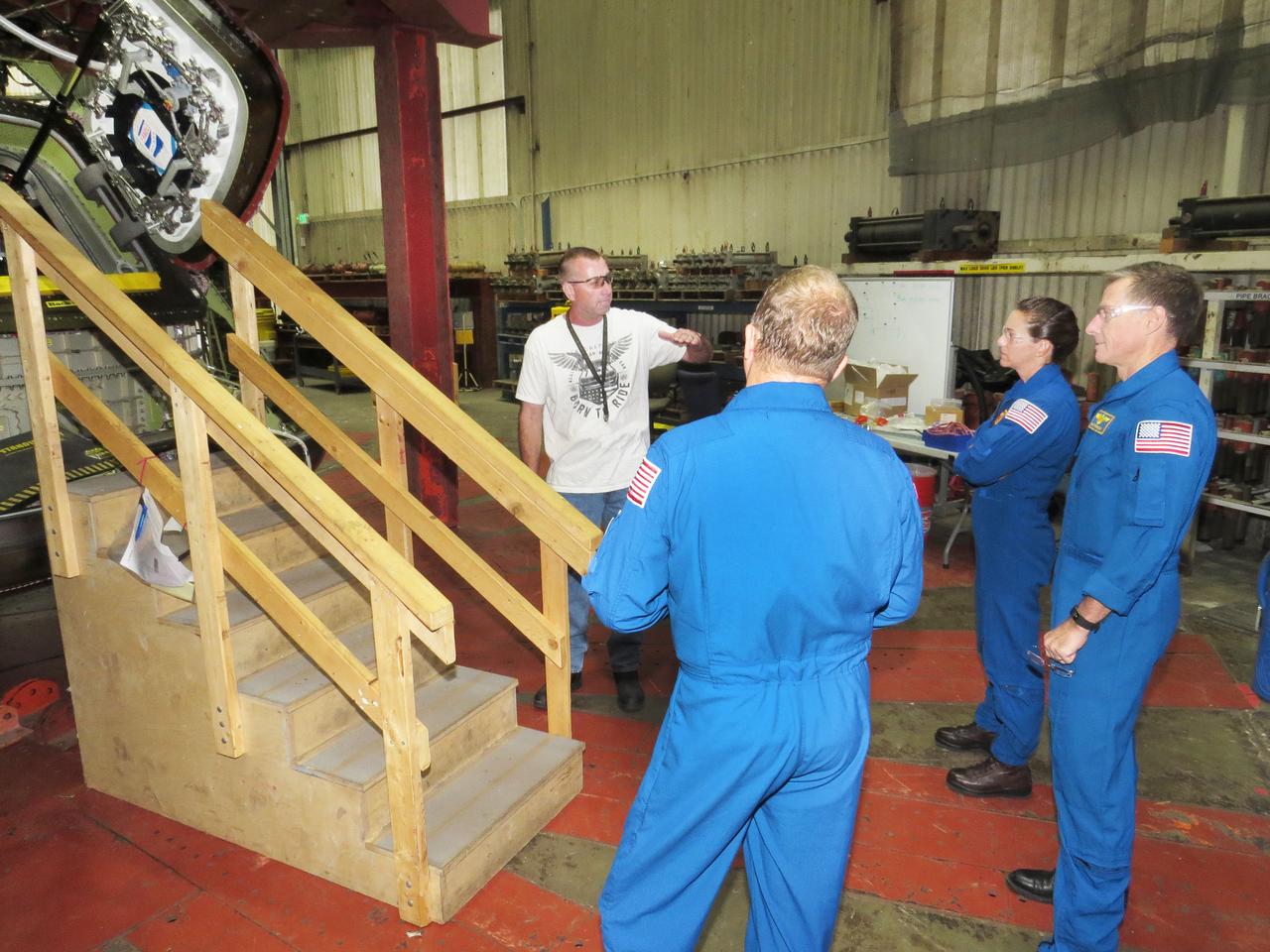
Commercial crew astronauts Eric Boe, Chris Ferguson and Nicole Mann recently toured Boeing’s spacecraft testing facilities in Huntington Beach and El Segundo, Calif. All three astronauts will fly on Boeing’s CST-100 Starliner in an upcoming Crew Flight Test to the International Space Station. Structural testing in Huntington Beach confirms the spacecraft can withstand the pressures it will experience during flight. Environmental qualification testing in El Segundo ensures the spacecraft can withstand the extreme environments of space.
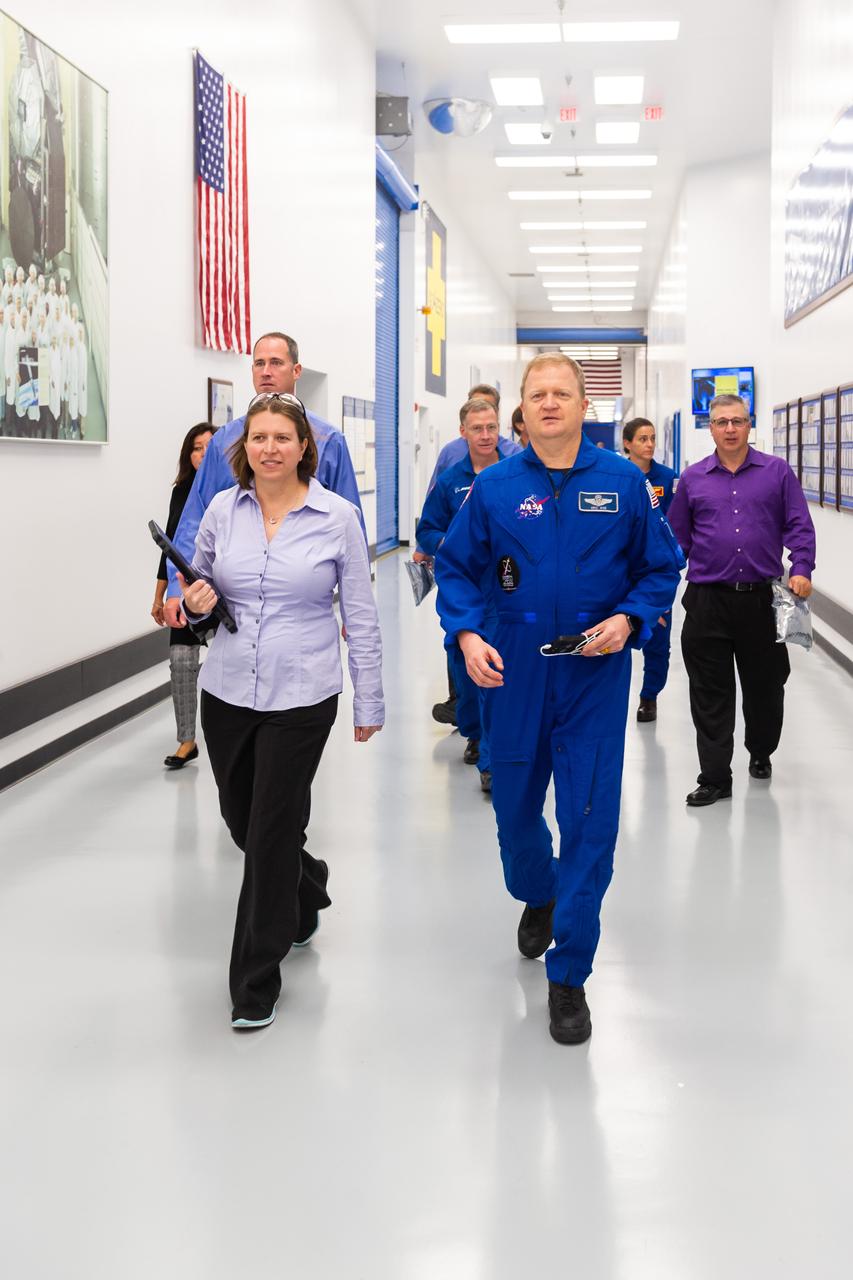
NASA astronaut Eric Boe recently toured Boeing’s spacecraft testing facilities in Huntington Beach and El Segundo, Calif., along with fellow commercial crew astronauts Nicole Mann and Chris Ferguson. All three will fly on Boeing’s CST-100 Starliner in an upcoming Crew Flight Test to the International Space Station. Structural testing in Huntington Beach confirms the spacecraft can withstand the pressures it will experience during flight. Environmental qualification testing in El Segundo ensures the spacecraft can withstand the extreme environments of space.

NASA’s Nicole Mann is one of three astronauts who will fly on Boeing’s CST-100 Starliner in an upcoming Crew Flight Test to the International Space Station. Mann, along with fellow commercial crew astronauts Eric Boe and Chris Ferguson, recently toured Boeing’s spacecraft testing facilities in Huntington Beach and El Segundo, Calif. Structural testing in Huntington Beach confirms the spacecraft can withstand the pressures it will experience during flight. Environmental qualification testing in El Segundo ensures the spacecraft can withstand the extreme environments of space.
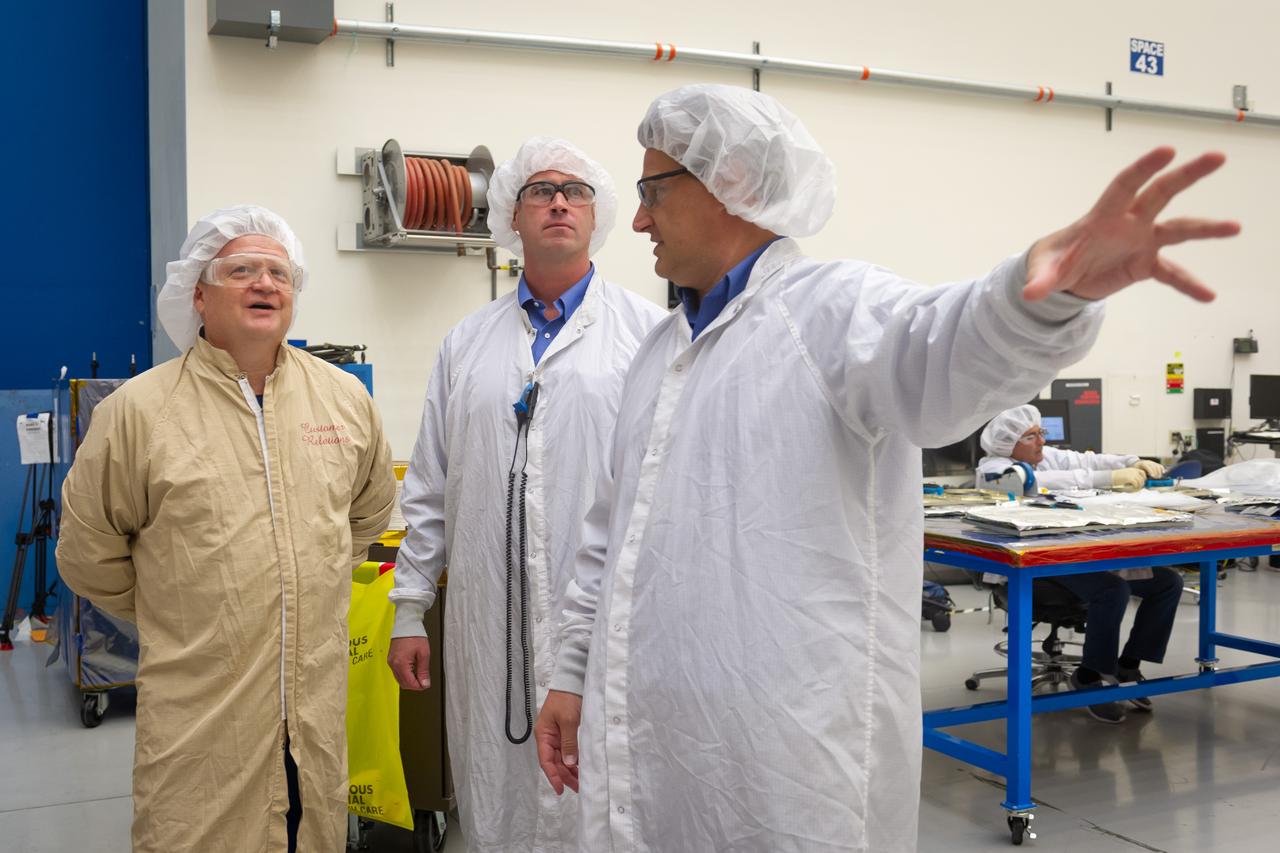
NASA’s Eric Boe, left, is one of three astronauts who will fly on Boeing’s CST-100 Starliner in an upcoming crew flight test to the International Space Station. Boe, along with fellow commercial crew astronauts Nicole Mann and Chris Ferguson, recently toured spacecraft testing facilities in Huntington Beach and El Segundo, Calif. Structural testing in Huntington Beach confirms the spacecraft can withstand the pressures it will experience during flight. Environmental qualification testing in El Segundo ensures the spacecraft can withstand the extreme environments of space.
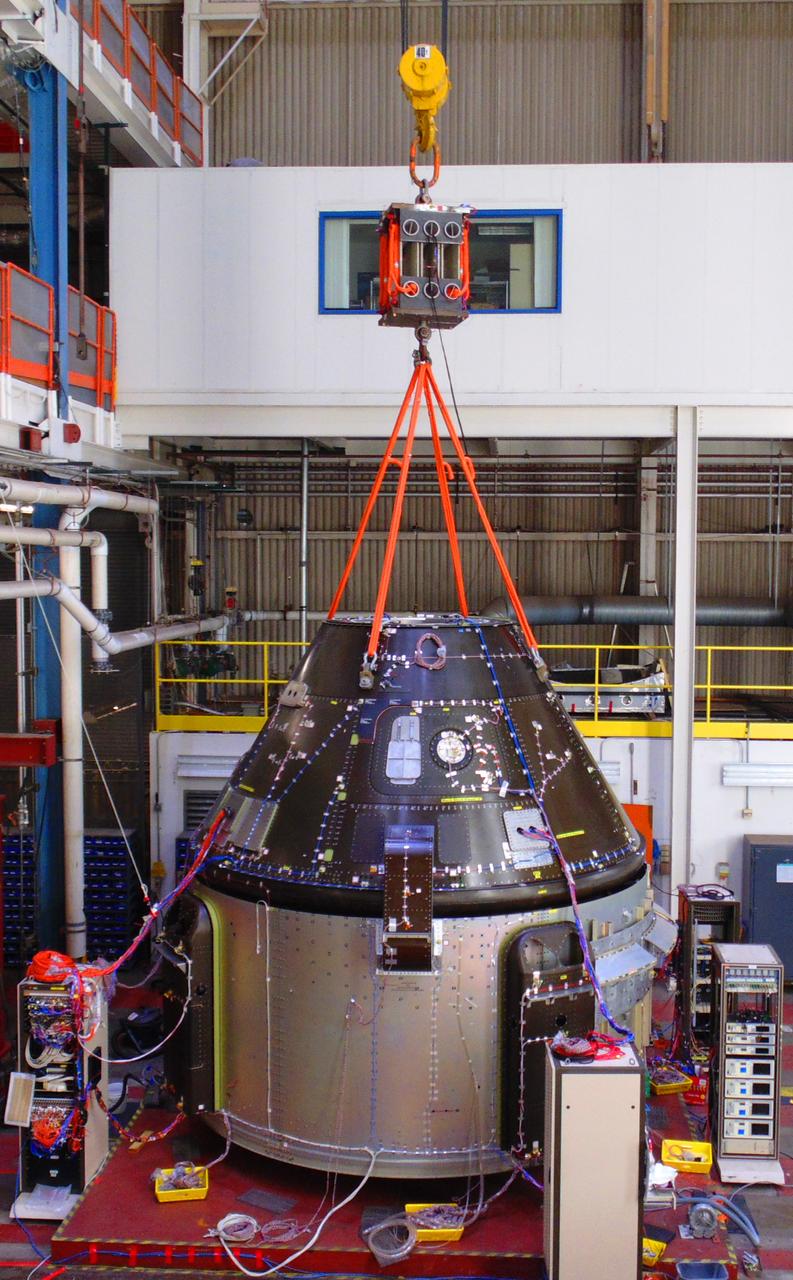
A Starliner structural test article at Boeing's Huntington Beach Facility in California, where the spacecraft, including the service module and other hardware of the Atlas V upper stage, are undergoing rigorous qualification testing, including tests like shock, separation and vibration. Boeing’s CST-100 Starliner will launch on the Atlas V rocket to the International Space Station as part of NASA’s Commercial Crew Program.
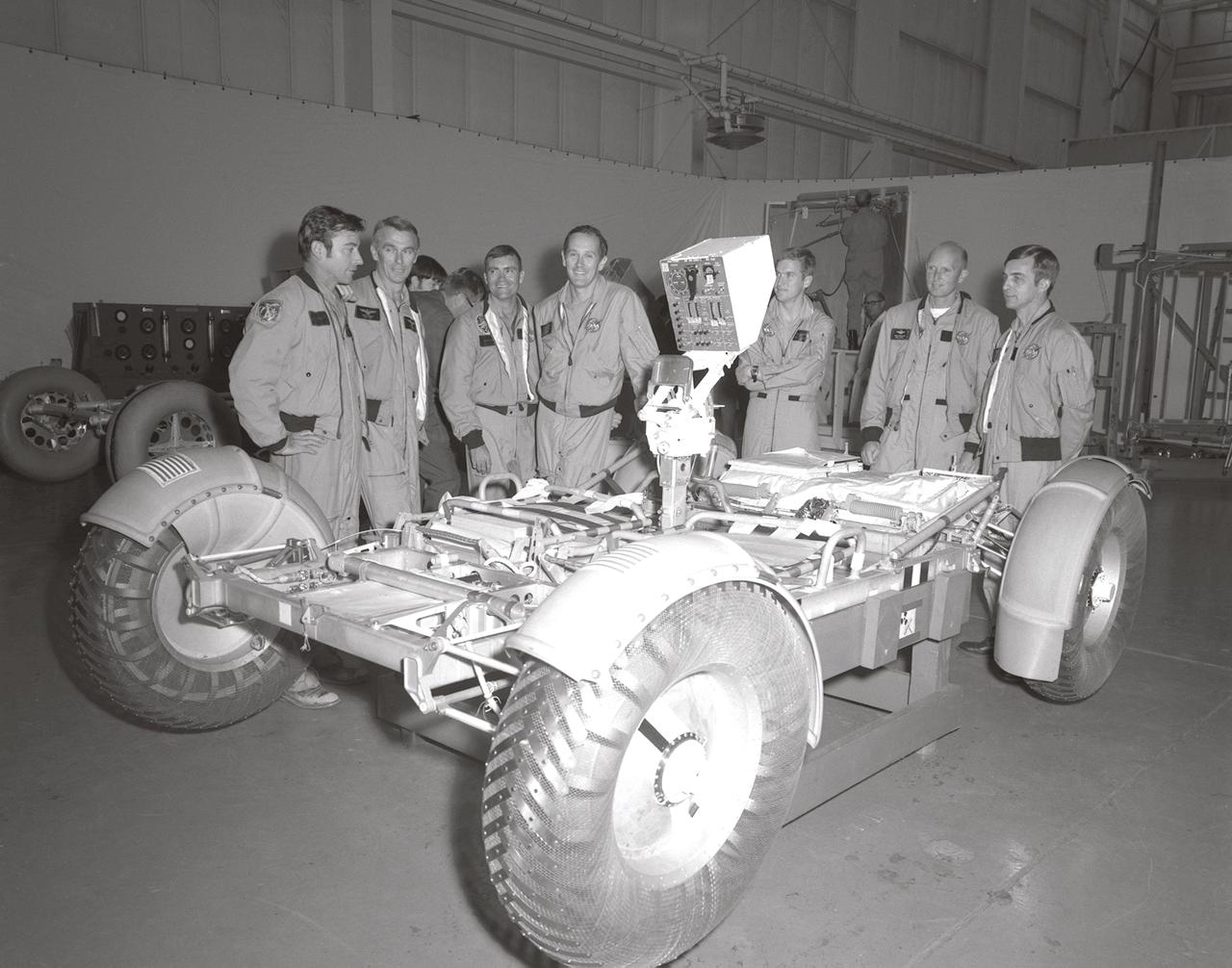
In this November 1971 photograph, (from left to right) Astronauts John Young, Eugene Cernan, Charles Duke, Fred Haise, Anthony England, Charles Fullerton, and Donald Peterson await deployment tests of the Lunar Roving Vehicle (LRV) qualification test unit in building 4649 at the Marshall Space Flight Center (MSFC). The LRV, developed under the direction of the MSFC, was designed to allow Apollo astronauts a greater range of mobility on the lunar surface during the last three lunar exploration missions; Apollo 15, Apollo 16, and Apollo 17.
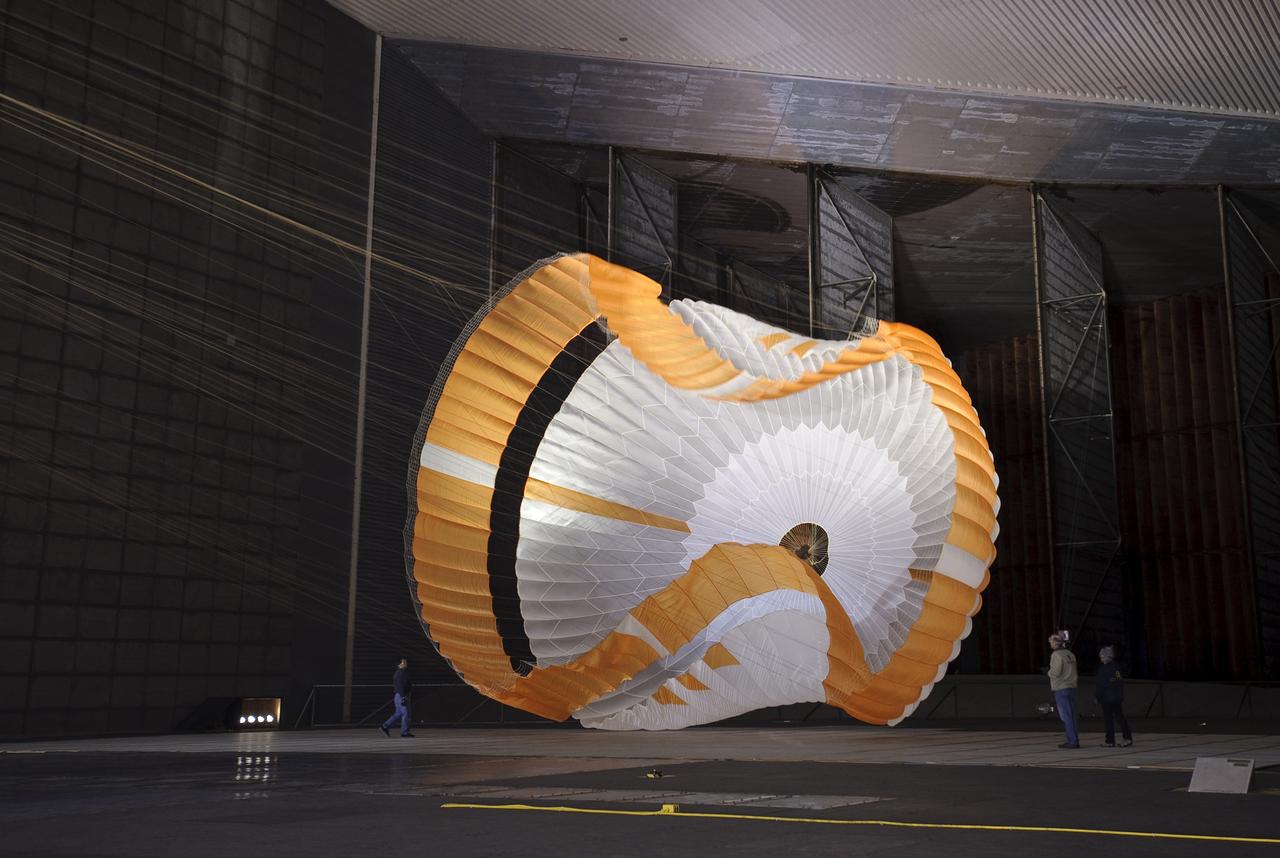
Mars Science Laboratory (MSL) parachuste test in the NASA Ames 80x120ft Subsonic Wind Tunnel at Moffett Field, Calif. (TR #22 - Phase 6) is the largest ever built to fly on an extraterrestrail mission. This image shows the qualification-test parachute beginning to open a few seconds after it was launched from a mortar into an 80-mile-per-hour (36-meter-per-second) wind.
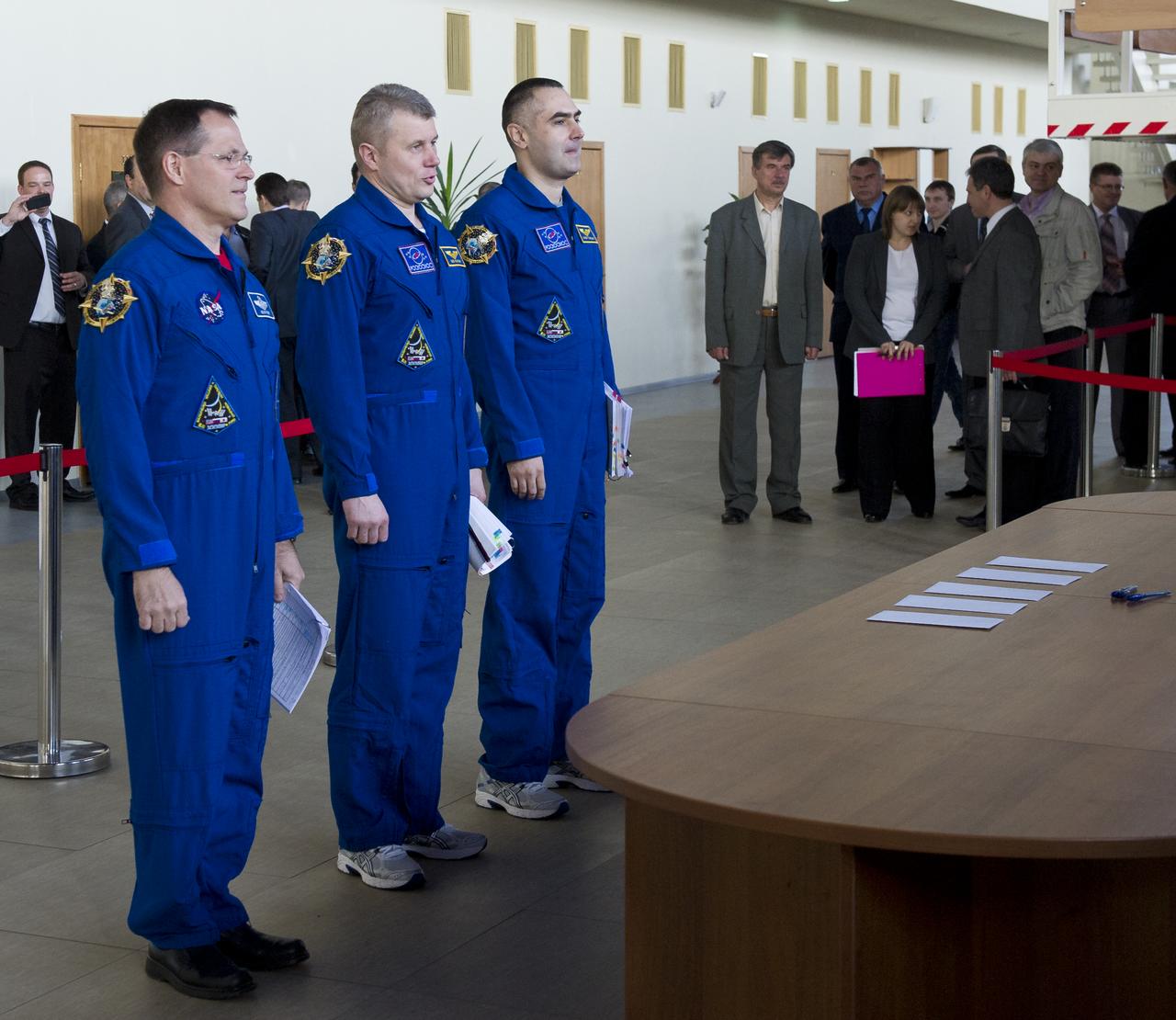
Expedition 31 NASA backup crew member Kevin Ford, left, Oleg Novitskiy and Evgeny Tarelkin, third from left, select International Space Station Russian segment event simulation test cards for their final qualification test in preparation for flight, Tuesday, April 24, 2012 at the Gagarin Cosmonaut Training Center in Star City, Russia. Photo Credit: (NASA/Carla Cioffi)
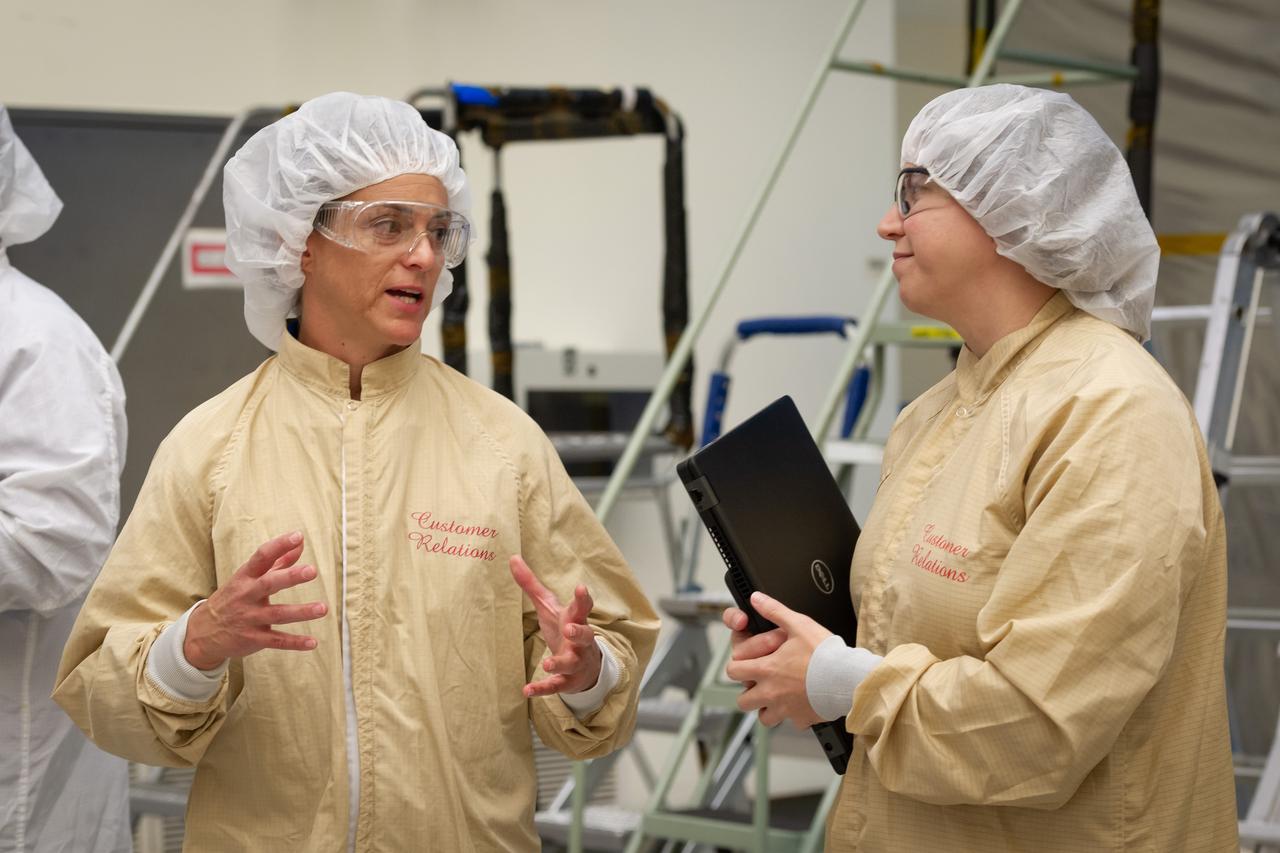
NASA astronaut Nicole Mann, left, is one of three astronauts who will fly on Boeing’s CST-100 Starliner in an upcoming Crew Flight Test to the International Space Station. Mann, along with fellow commercial crew astronauts Eric Boe and Chris Ferguson, recently toured Boeing’s spacecraft testing facilities in Huntington Beach and El Segundo, Calif. Structural testing in Huntington Beach confirms the spacecraft can withstand the pressures it will experience during flight. Environmental qualification testing in El Segundo ensures the spacecraft can withstand the extreme environments of space.
Boeing astronaut Chris Ferguson is one of three astronauts who will fly on Boeing’s CST-100 Starliner in an upcoming Crew Flight Test to the International Space Station as part of the Commercial Crew Program. Ferguson, along with NASA astronauts Nicole Mann and Eric Boe, recently toured Boeing’s spacecraft testing facilities in Huntington Beach and El Segundo, Calif. Structural testing in Huntington Beach confirms the spacecraft can withstand the pressures it will experience during flight. Environmental qualification testing in El Segundo ensures the spacecraft can withstand the extreme environments of space.
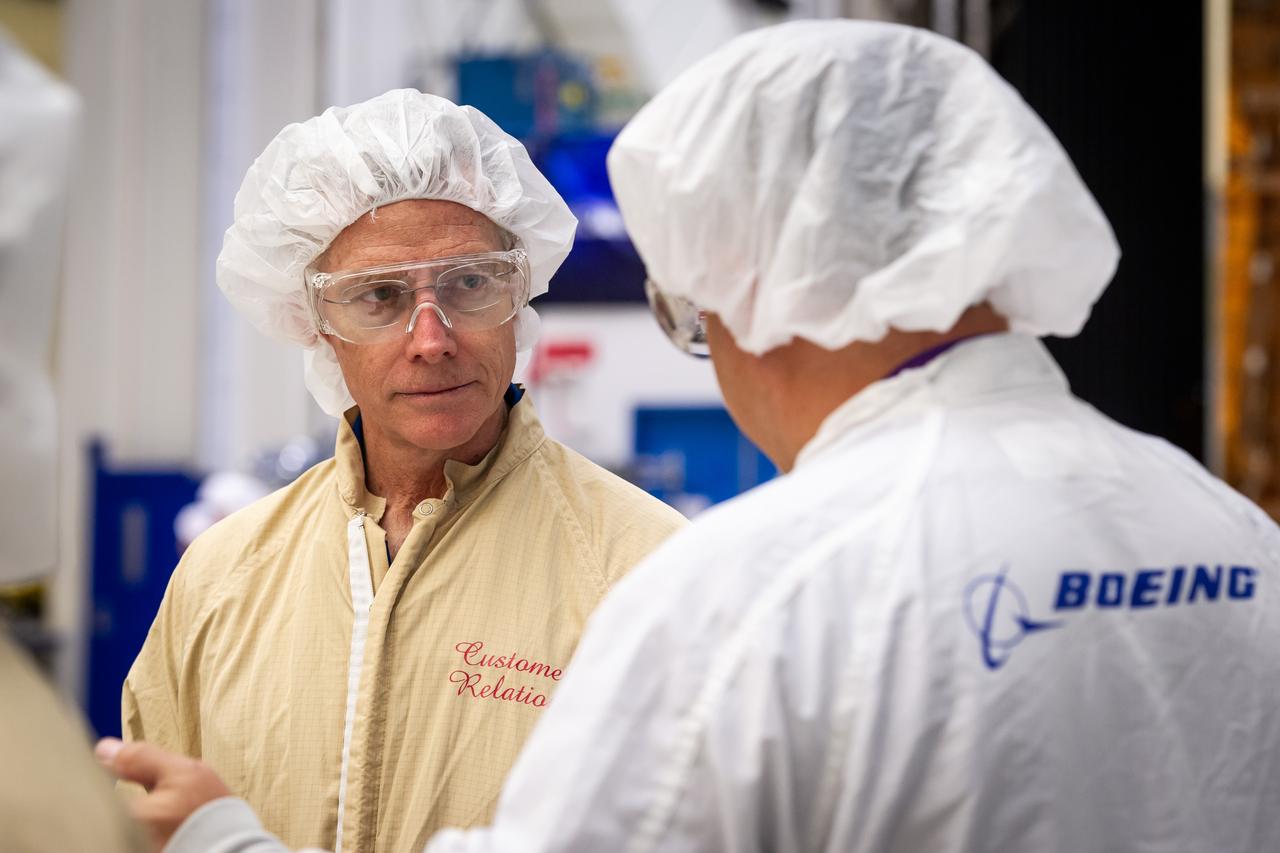
Boeing astronaut Chris Ferguson is one of three astronauts who will fly on Boeing’s CST-100 Starliner in an upcoming Crew Flight Test to the International Space Station as part of the Commercial Crew Program. Ferguson, along with NASA astronauts Nicole Mann and Eric Boe, recently toured spacecraft testing facilities in Huntington Beach and El Segundo, Calif. Structural testing in Huntington Beach confirms the spacecraft can withstand the pressures it will experience during flight. Environmental qualification testing in El Segundo ensures the spacecraft can withstand the extreme environments of space.
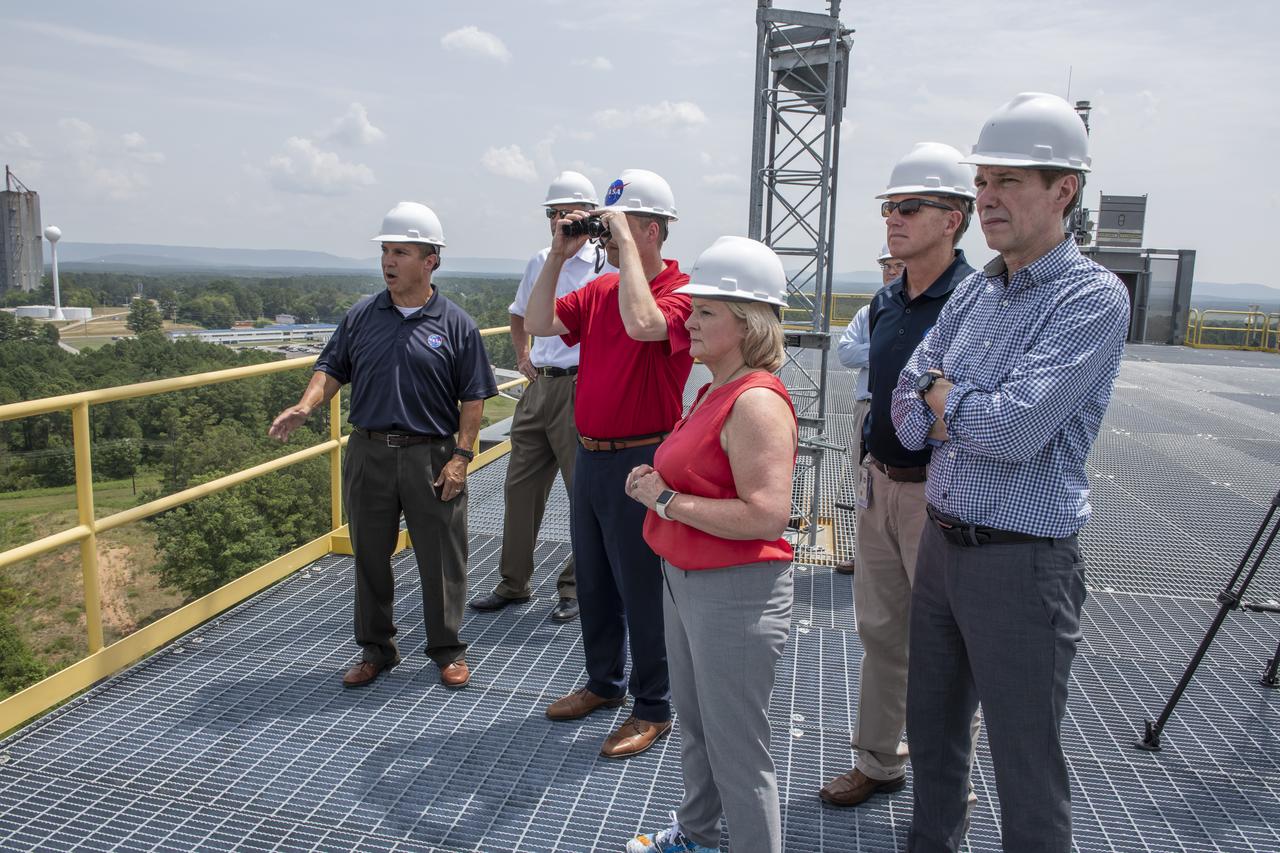
On August 15, 2018 NASA Administrator Jim Bridenstine visited Marshall Space Flight Center. Upon his arrival he was greeted by MSFC Acting Director Jody Singer along with the senior management team. From atop Marshall’s Test Stand 4693, NASA Administrator Jim Bridenstine and SLS Stages Integration Manager Tim Flores discuss the capabilities of Marshall’s newest test stand. The qualification test version of the liquid hydrogen tank for the Space Launch System’s core stage will be positioned between the stand’s 221-foot-tall twin towers where it will be pushed, pulled and subjected to the stresses it will endure during liftoff and flight.
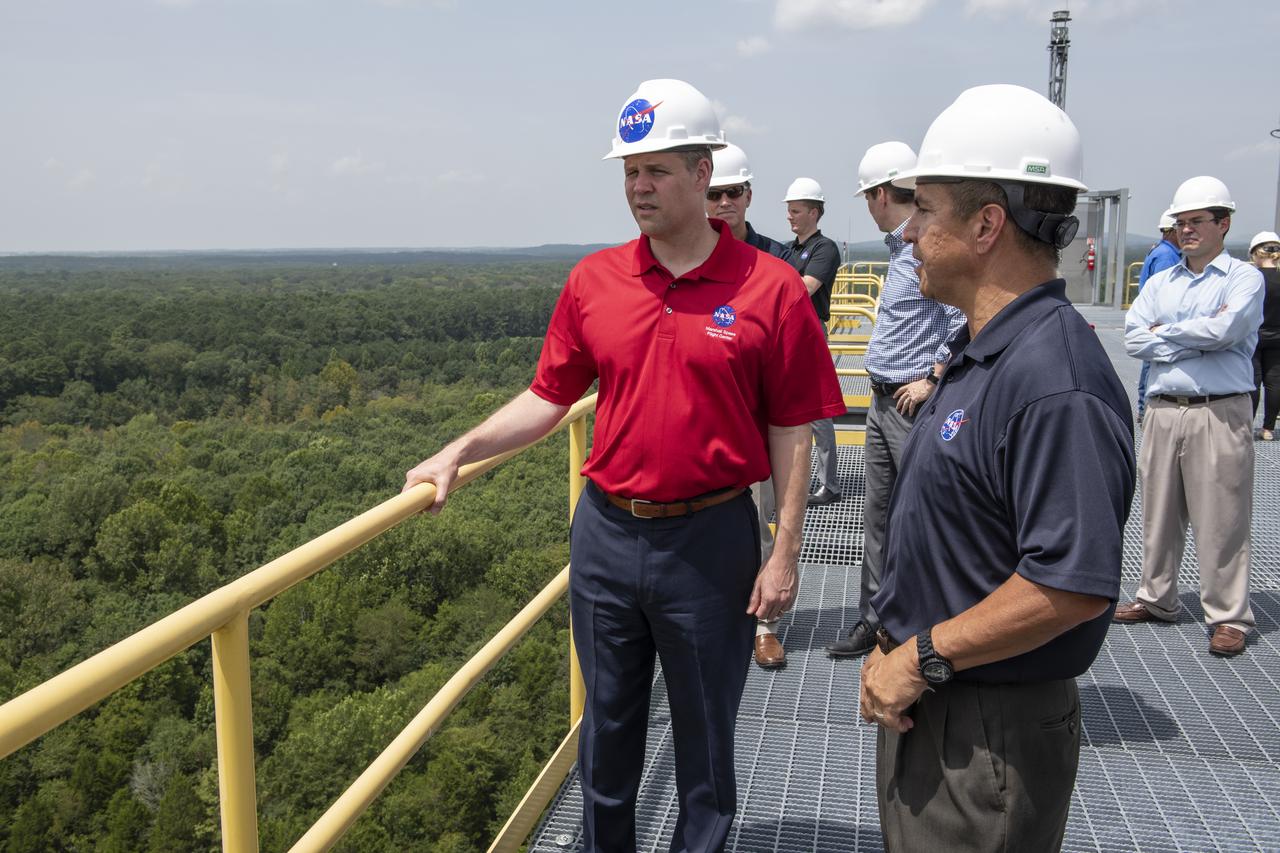
On August 15, 2018 NASA Administrator Jim Bridenstine visited Marshall Space Flight Center. Upon his arrival he was greeted by MSFC Acting Director Jody Singer along with the senior management team. From atop Marshall’s Test Stand 4693, NASA Administrator Jim Bridenstine and SLS Stages Integration Manager Tim Flores discuss the capabilities of Marshall’s newest test stand. The qualification test version of the liquid hydrogen tank for the Space Launch System’s core stage will be positioned between the stand’s 221-foot-tall twin towers where it will be pushed, pulled and subjected to the stresses it will endure during liftoff and flight.
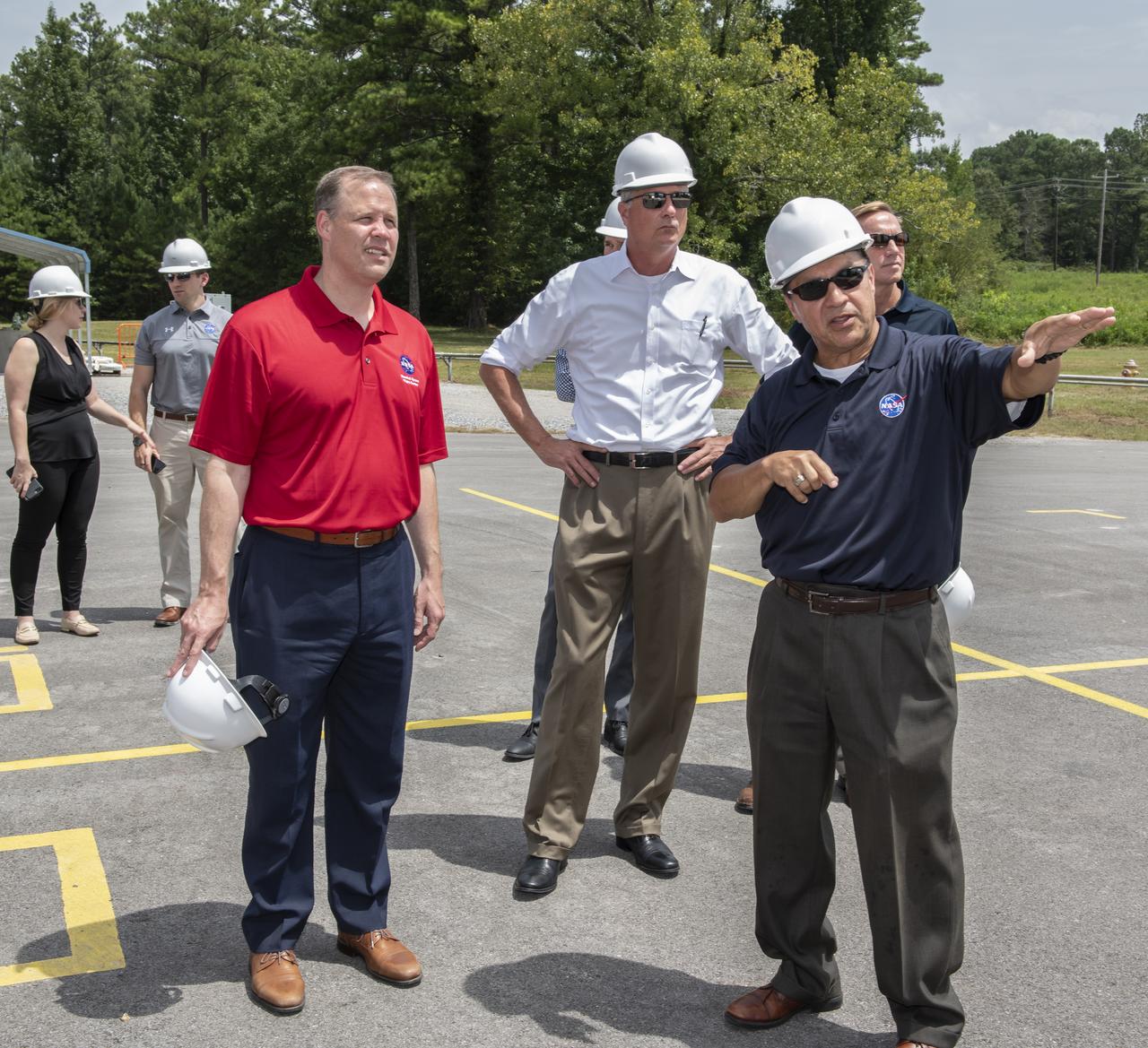
On August 15, 2018 NASA Administrator Jim Bridenstine visited Marshall Space Flight Center. Upon his arrival he was greeted by MSFC Acting Director Jody Singer along with the senior management team. From atop Marshall’s Test Stand 4693, NASA Administrator Jim Bridenstine and SLS Stages Integration Manager Tim Flores discuss the capabilities of Marshall’s newest test stand. The qualification test version of the liquid hydrogen tank for the Space Launch System’s core stage will be positioned between the stand’s 221-foot-tall twin towers where it will be pushed, pulled and subjected to the stresses it will endure during liftoff and flight.
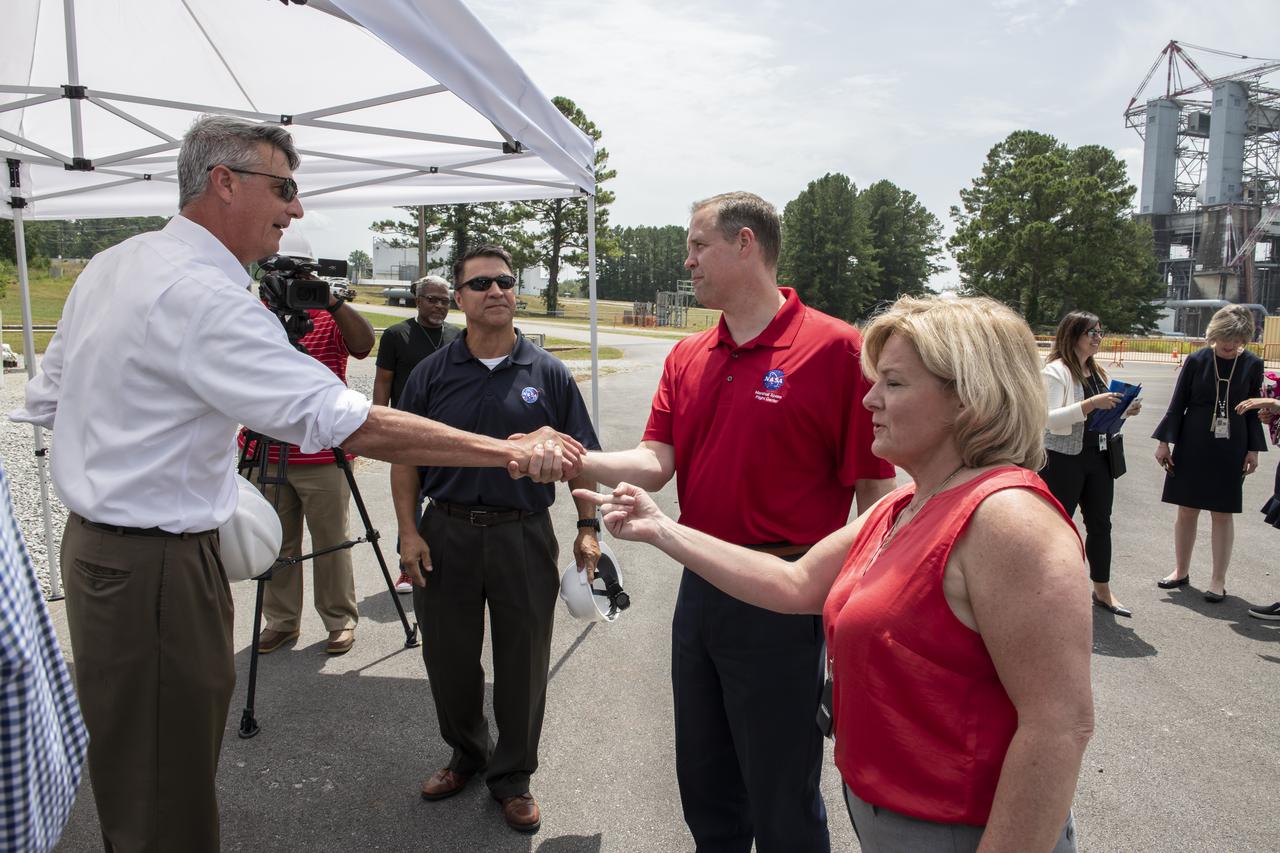
On August 15, 2018 NASA Administrator Jim Bridenstine visited Marshall Space Flight Center. Upon his arrival he was greeted by MSFC Acting Director Jody Singer along with the senior management team. From atop Marshall’s Test Stand 4693, NASA Administrator Jim Bridenstine and SLS Stages Integration Manager Tim Flores discuss the capabilities of Marshall’s newest test stand. The qualification test version of the liquid hydrogen tank for the Space Launch System’s core stage will be positioned between the stand’s 221-foot-tall twin towers where it will be pushed, pulled and subjected to the stresses it will endure during liftoff and flight.
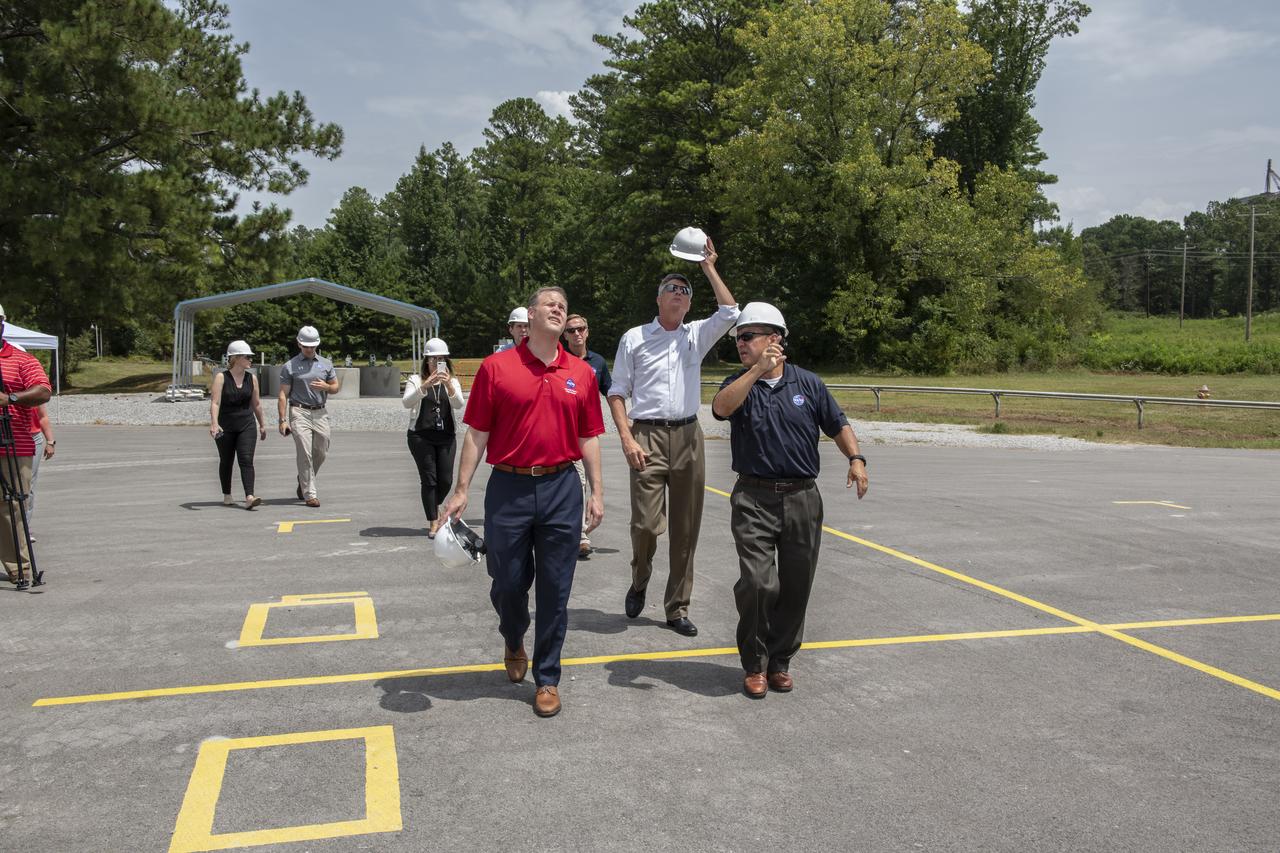
On August 15, 2018 NASA Administrator Jim Bridenstine visited Marshall Space Flight Center. Upon his arrival he was greeted by MSFC Acting Director Jody Singer along with the senior management team. From atop Marshall’s Test Stand 4693, NASA Administrator Jim Bridenstine and SLS Stages Integration Manager Tim Flores discuss the capabilities of Marshall’s newest test stand. The qualification test version of the liquid hydrogen tank for the Space Launch System’s core stage will be positioned between the stand’s 221-foot-tall twin towers where it will be pushed, pulled and subjected to the stresses it will endure during liftoff and flight.
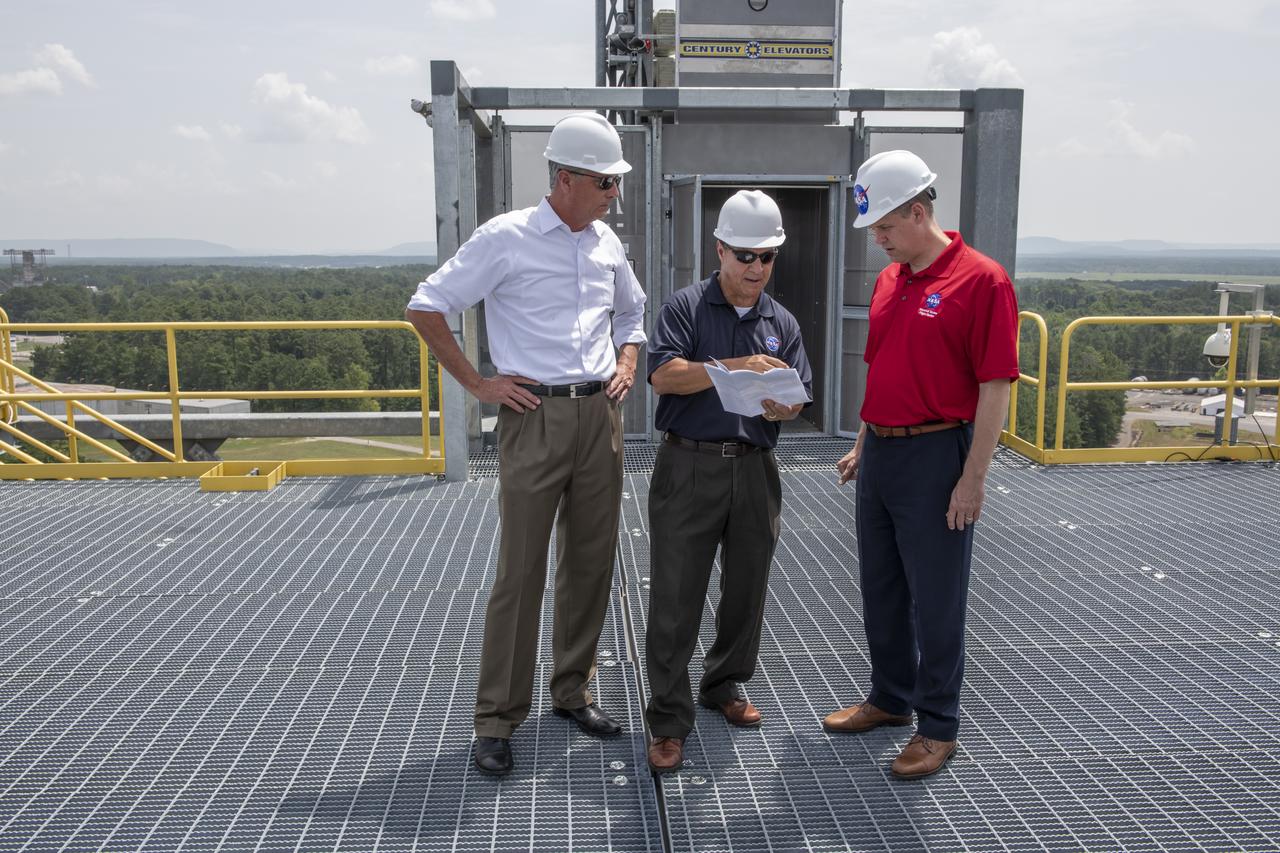
On August 15, 2018 NASA Administrator Jim Bridenstine visited Marshall Space Flight Center. Upon his arrival he was greeted by MSFC Acting Director Jody Singer along with the senior management team. From atop Marshall’s Test Stand 4693, NASA Administrator Jim Bridenstine and SLS Stages Integration Manager Tim Flores discuss the capabilities of Marshall’s newest test stand. The qualification test version of the liquid hydrogen tank for the Space Launch System’s core stage will be positioned between the stand’s 221-foot-tall twin towers where it will be pushed, pulled and subjected to the stresses it will endure during liftoff and flight.
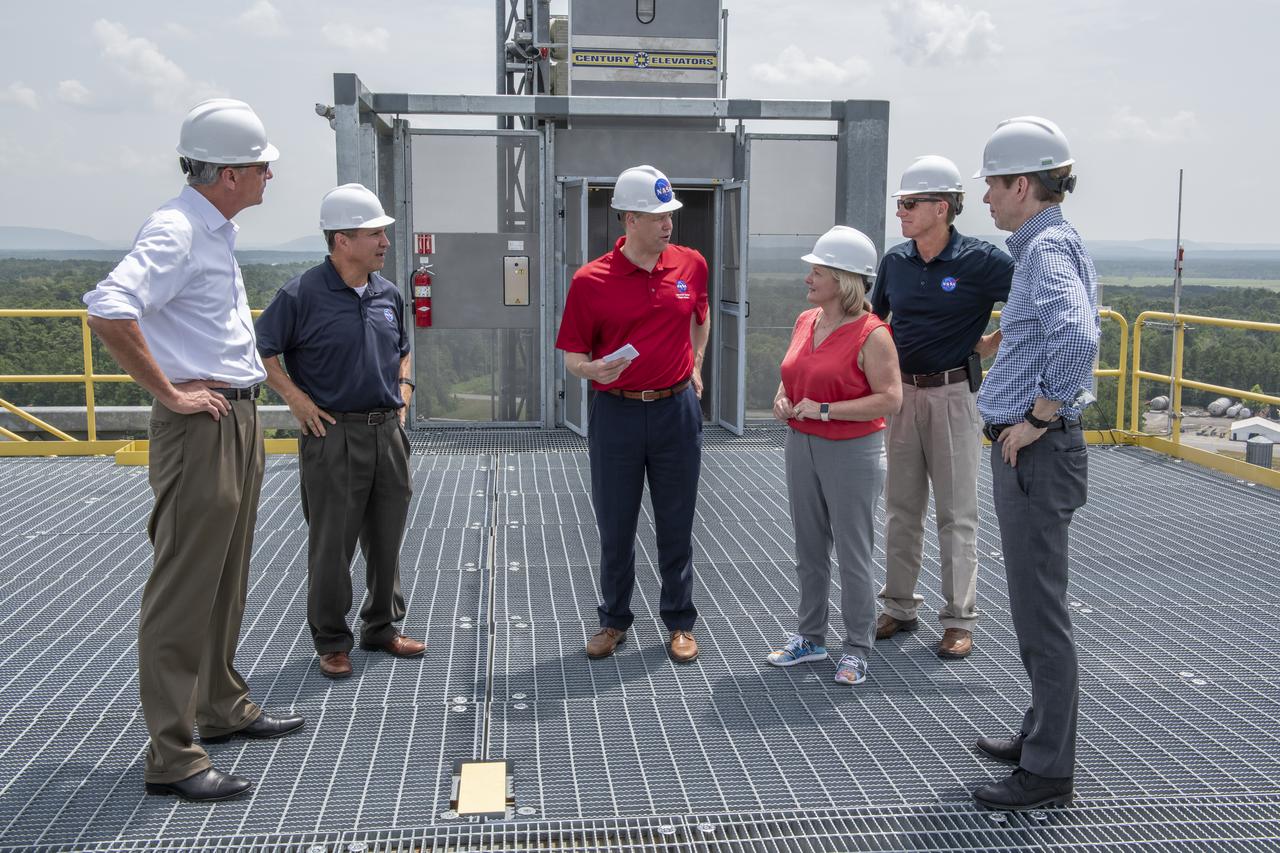
On August 15, 2018 NASA Administrator Jim Bridenstine visited Marshall Space Flight Center. Upon his arrival he was greeted by MSFC Acting Director Jody Singer along with the senior management team. From atop Marshall’s Test Stand 4693, NASA Administrator Jim Bridenstine and SLS Stages Integration Manager Tim Flores discuss the capabilities of Marshall’s newest test stand. The qualification test version of the liquid hydrogen tank for the Space Launch System’s core stage will be positioned between the stand’s 221-foot-tall twin towers where it will be pushed, pulled and subjected to the stresses it will endure during liftoff and flight.