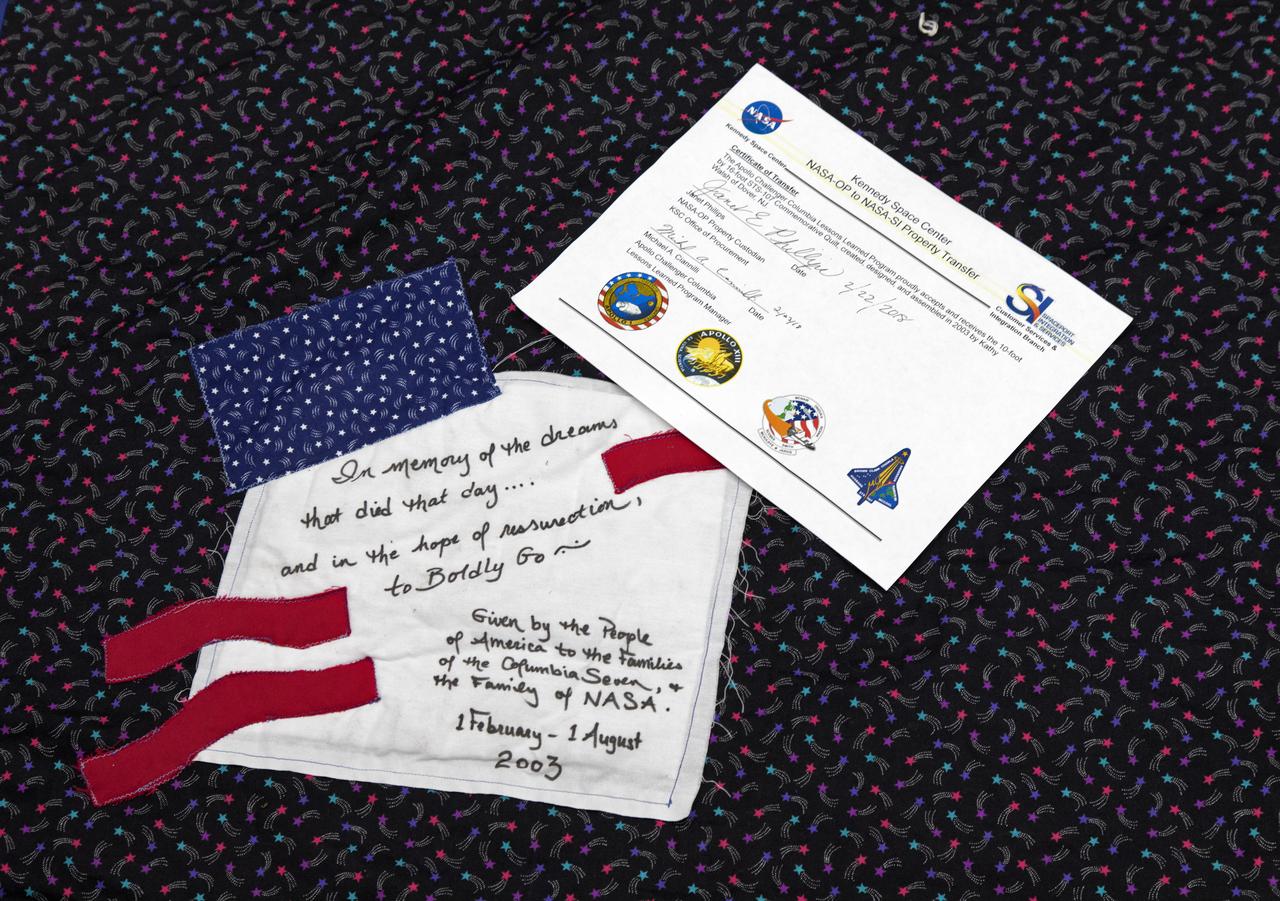
A certificate and quilt square are on display that confirms the transfer of a giant hand-made quilt in honor of space shuttle Columbia and her crew from the Office of Procurement to the Columbia Preservation Room inside the Vehicle Assembly Building at NASA's Kennedy Space Center in Florida. The quilt was made by Katherine Walsh, a lifelong NASA and space program fan originally from Kentucky. The quilt will be displayed in the preservation room with its certificate as part of NASA's Apollo, Challenger, Columbia Lessons Learned Program.

A giant hand-made quilt in honor of space shuttle Columbia and her crew was turned over to the Columbia Preservation Room inside the Vehicle Assembly Building at NASA's Kennedy Space Center in Florida. The quilt was made by Katherine Walsh, a lifelong NASA and space program fan originally from Kentucky. From left, behind the quilt are Janet Phillips, property custodian in Kennedy's Office of Procurement; and Mike Ciannilli, Apollo, Challenger, Columbia Lessons Learned Program manager
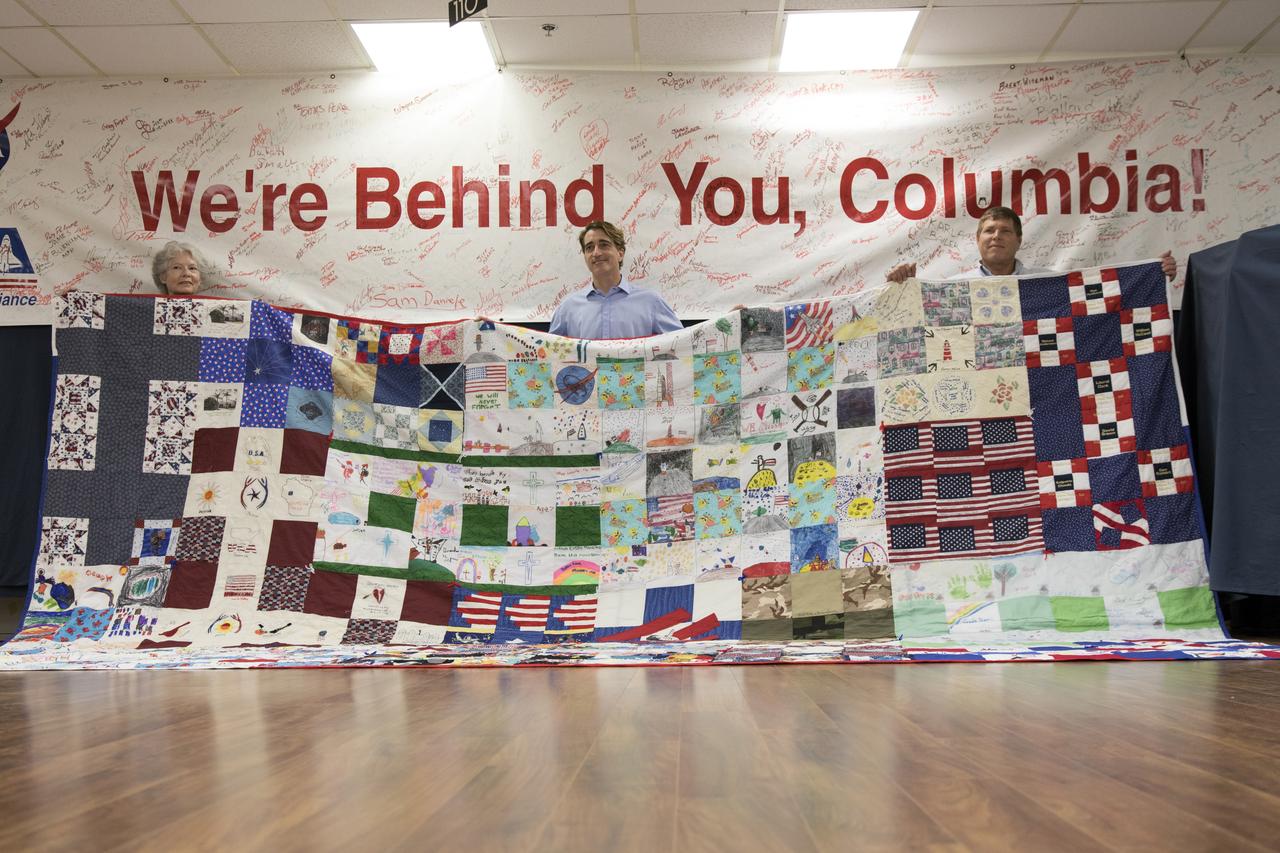
A giant hand-made quilt in honor of space shuttle Columbia and her crew was turned over to the Columbia Preservation Room inside the Vehicle Assembly Building at NASA's Kennedy Space Center in Florida. The quilt was made by Katherine Walsh, a lifelong NASA and space program fan originally from Kentucky. From left, behind the quilt are Janet Phillips, property custodian in Kennedy's Office of Procurement; Mike Ciannilli, Apollo, Challenger, Columbia Lessons Learned Program manager; and Kevin Panik, customer advocate in Spaceport Integration.
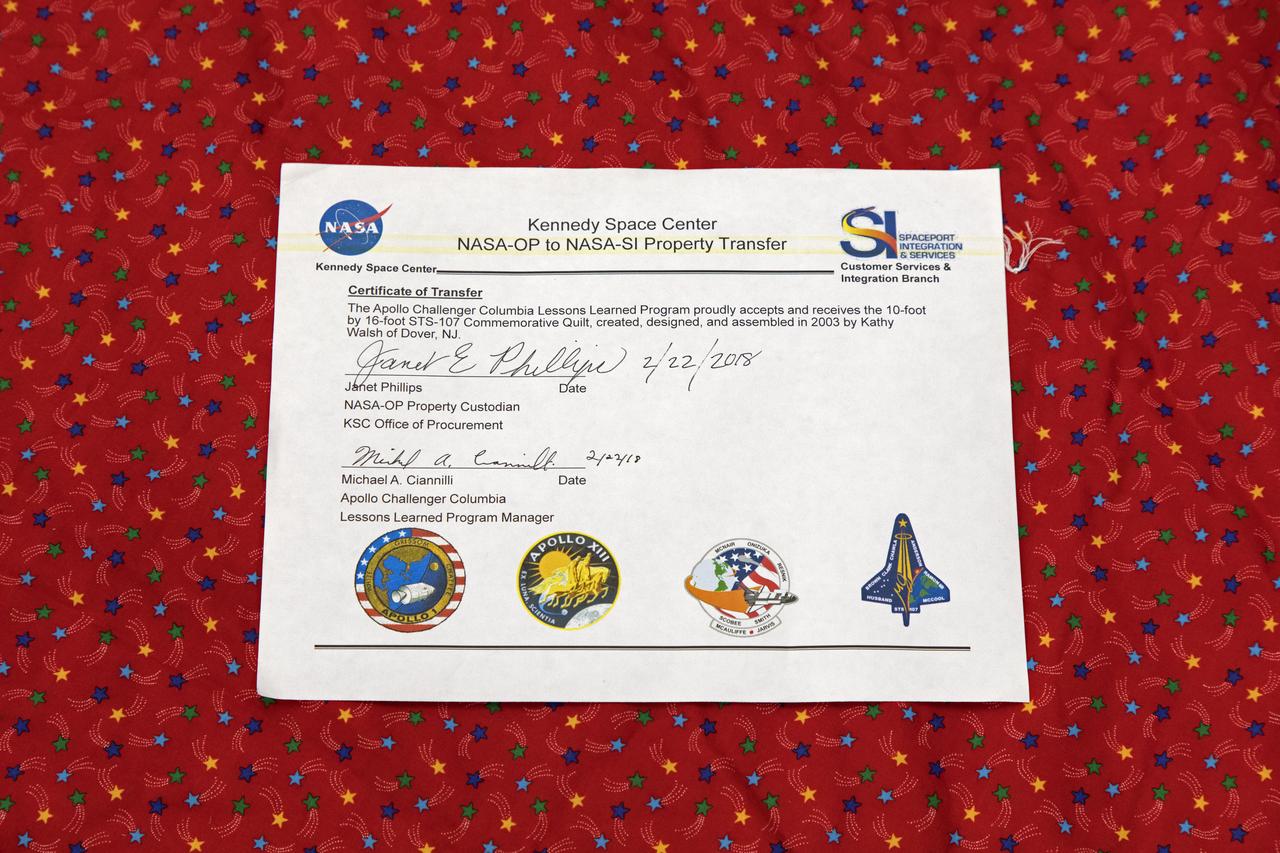
A certificate is on display that confirms the transfer of a giant hand-made quilt in honor of space shuttle Columbia and her crew from the Office of Procurement to the Columbia Preservation Room inside the Vehicle Assembly Building at NASA's Kennedy Space Center in Florida. The quilt was made by Katherine Walsh, a lifelong NASA and space program fan originally from Kentucky. The quilt will be displayed with its certificate in the preservation room as part of NASA's Apollo, Challenger, Columbia Lessons Learned Program.

Mike Ciannilli, Apollo, Challenger, Columbia Lessons Learned Program manager, at right, accepts a certificate for turnover of a hand-made quilt in honor of space shuttle Columbia and her crew from Janet Phillips, property custodian in NASA Kennedy Space Center's Office of Procurement. Turnover of the quilt took place in the Columbia Preservation Room inside the Vehicle Assembly Building at Kennedy Space Center in Florida. The quilt was made by Katherine Walsh, a lifelong NASA and space program fan originally from Kentucky.
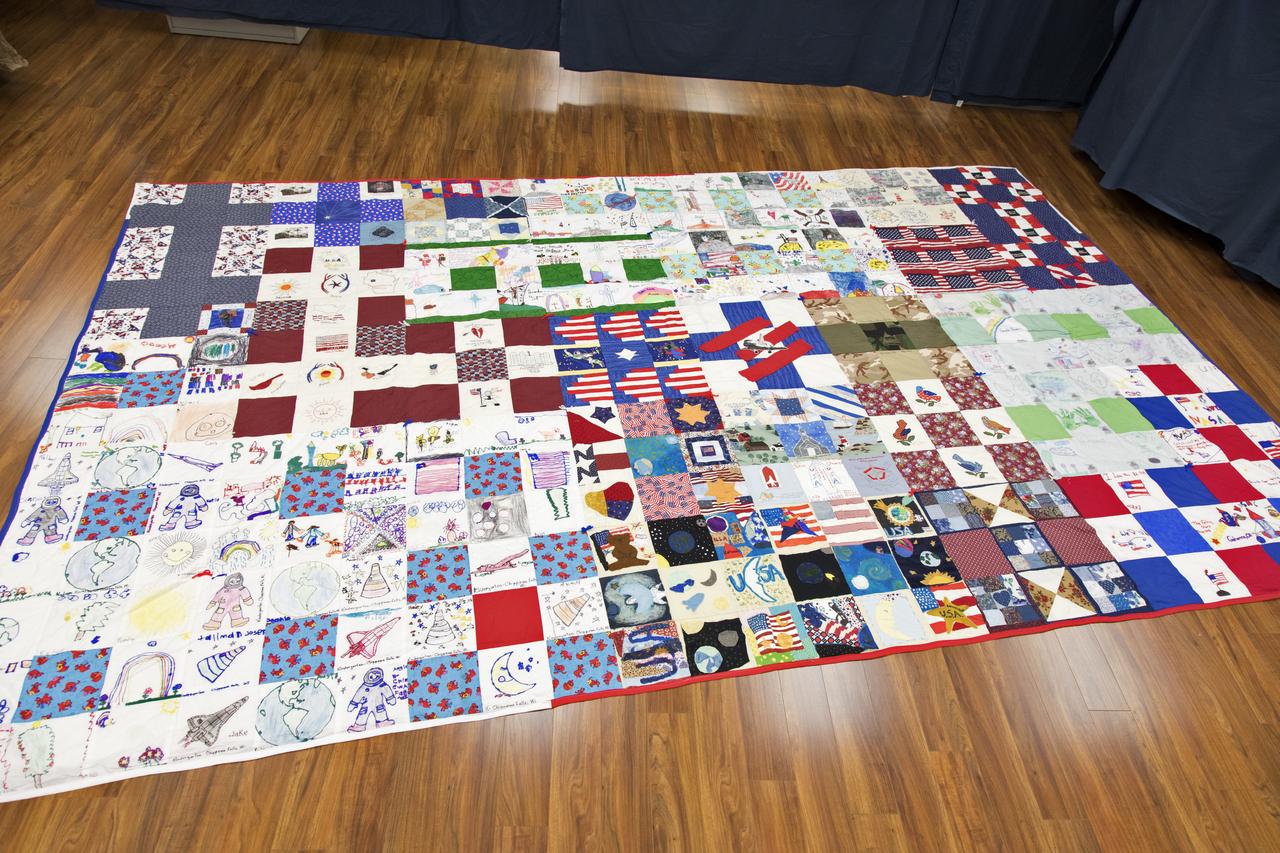
A giant hand-made quilt in honor of space shuttle Columbia and her crew was turned over to the Columbia Preservation Room inside the Vehicle Assembly Building at NASA's Kennedy Space Center in Florida. The quilt was made by Katherine Walsh, a lifelong NASA and space program fan originally from Kentucky.
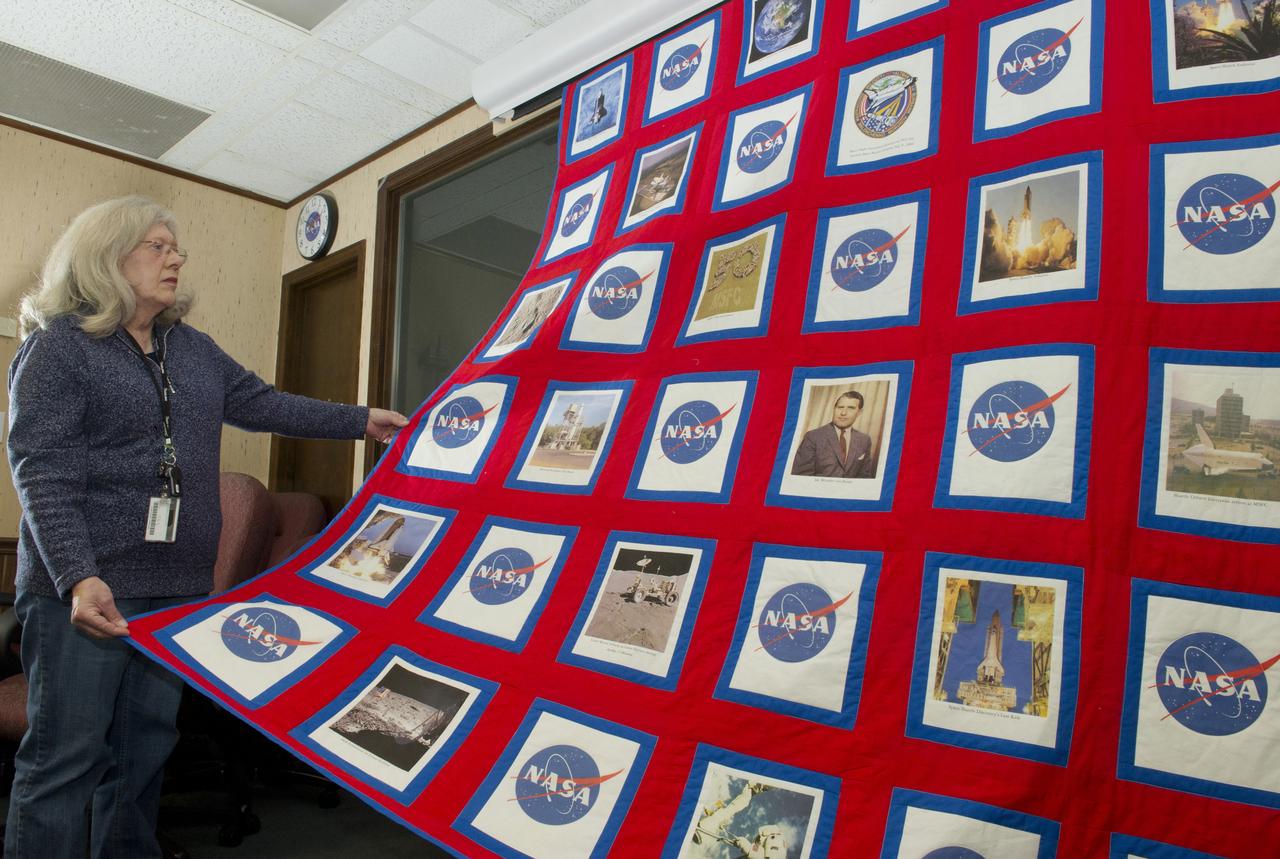
CAROL REED ADMIRES QUILT MADE BY HER MOTHER, ERMADINE RALPH FOR HER FRIEND NORMA BOLANDER AS A RETIREMENT PRESENT.
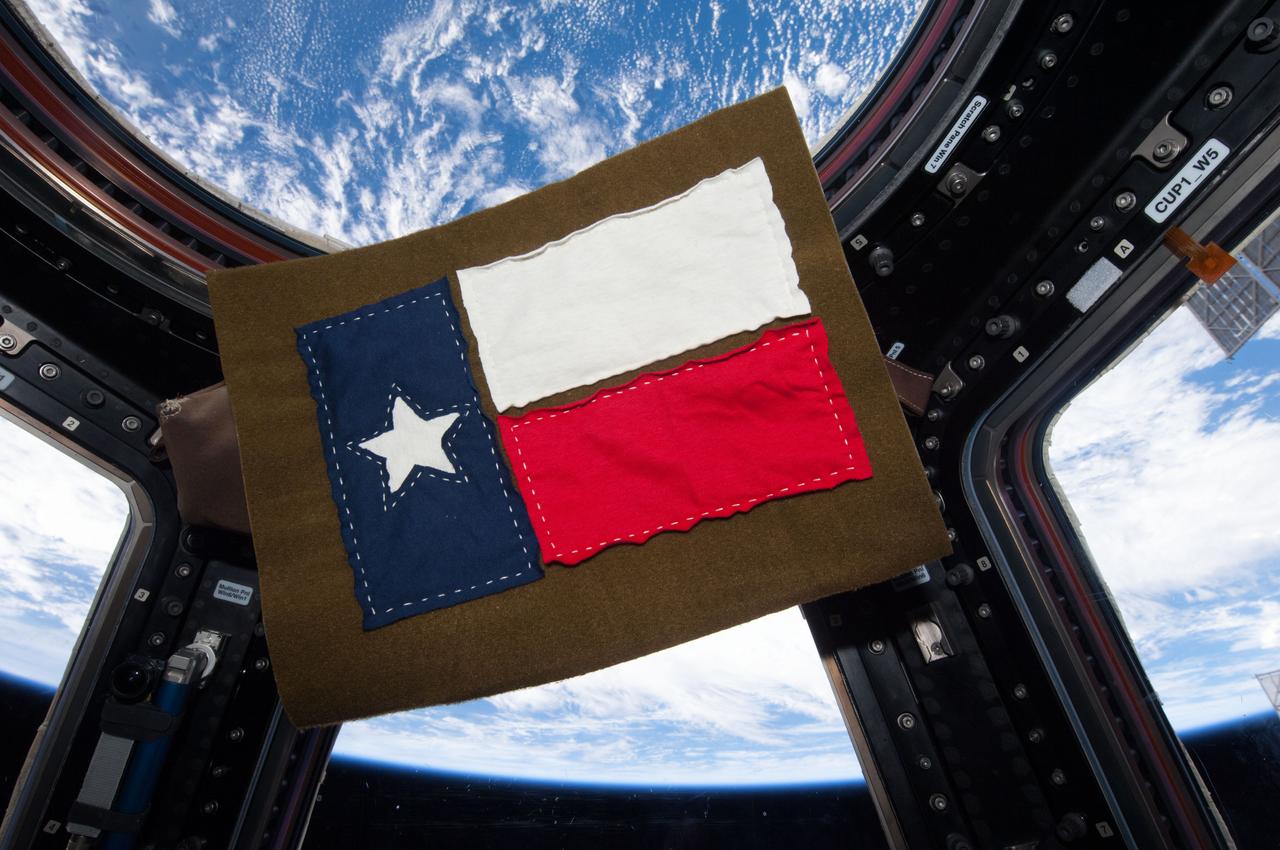
ISS037-E-004972 (27 Sept. 2013) --- Seen floating on the Cupola of the Earth-orbiting International Space Station, this quilt block, paying tribute to the state of Texas or the Lone Star state, was fashioned from T-shirts onboard the orbital outpost by Expedition 37 Flight Engineer Karen Nyberg. The NASA astronaut has spent much of her off-duty time on the station sewing and fashioning various items, using only a handful of tools she took aboard and whatever materials that have been available.
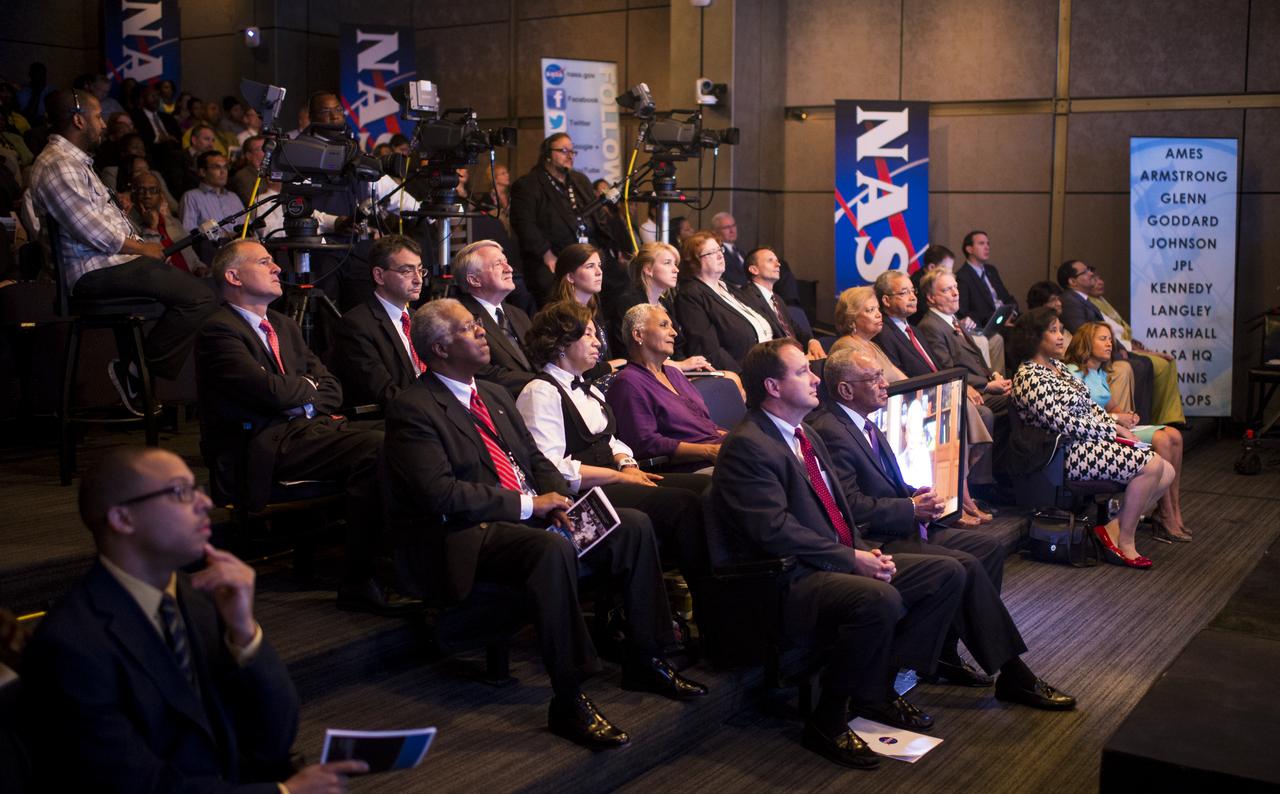
The audience watches as Nikki Giovanni, a poet and professor at Virginia Polytechnic and State University, reads her poem entitled "Quilting the Black-Eyed Pea (We’re Going to Mars)" via a pre-recorded video at at an event celebrating the 50th Anniversary of the Civil Rights Act of 1964 on Monday, June 23, 2014 in the James E. Webb Auditorium at NASA Headquarters in Washington, DC. The event highlighted the influence of the Civil Rights Act on NASA. Photo Credit: (NASA/Joel Kowsky)
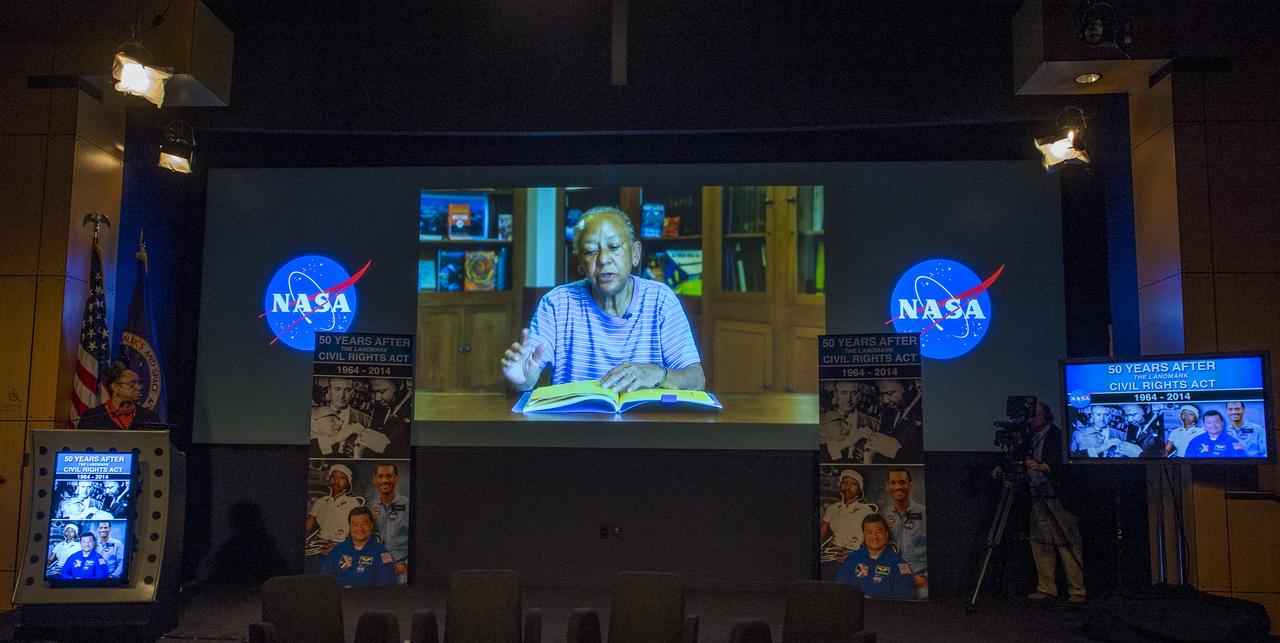
Nikki Giovanni, a poet and professor at Virginia Polytechnic and State University, reads her poem entitled "Quilting the Black-Eyed Pea (We’re Going to Mars)" via a pre-recorded video at an event celebrating the 50th Anniversary of the Civil Rights Act of 1964 on Monday, June 23, 2014 in the James E. Webb Auditorium at NASA Headquarters in Washington, DC. The event highlighted the influence of the Civil Rights Act on NASA. Photo Credit: (NASA/Joel Kowsky)
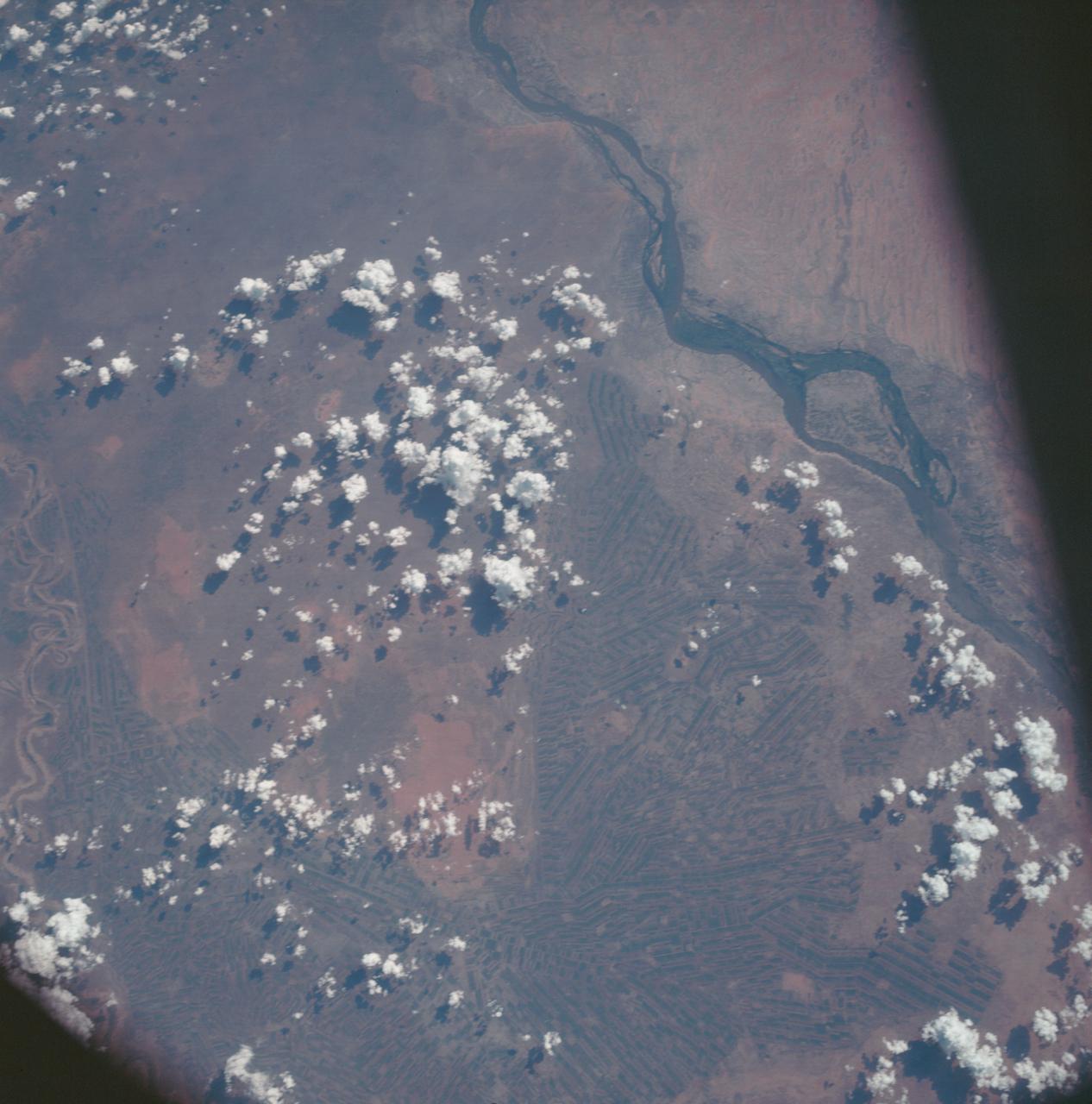
AS7-06-1718 (14 Oct. 1968) --- Sudan, showing White Nile and Blue Nile rivers below Khartoum, as seen from the Apollo 7 spacecraft during its 44th revolution of Earth. Photographed from an altitude of approximately 130 nautical miles, at ground elapsed time of 69 hours and 10 minutes. Note quilted-patchwork effect created by irrigated cultivated land.
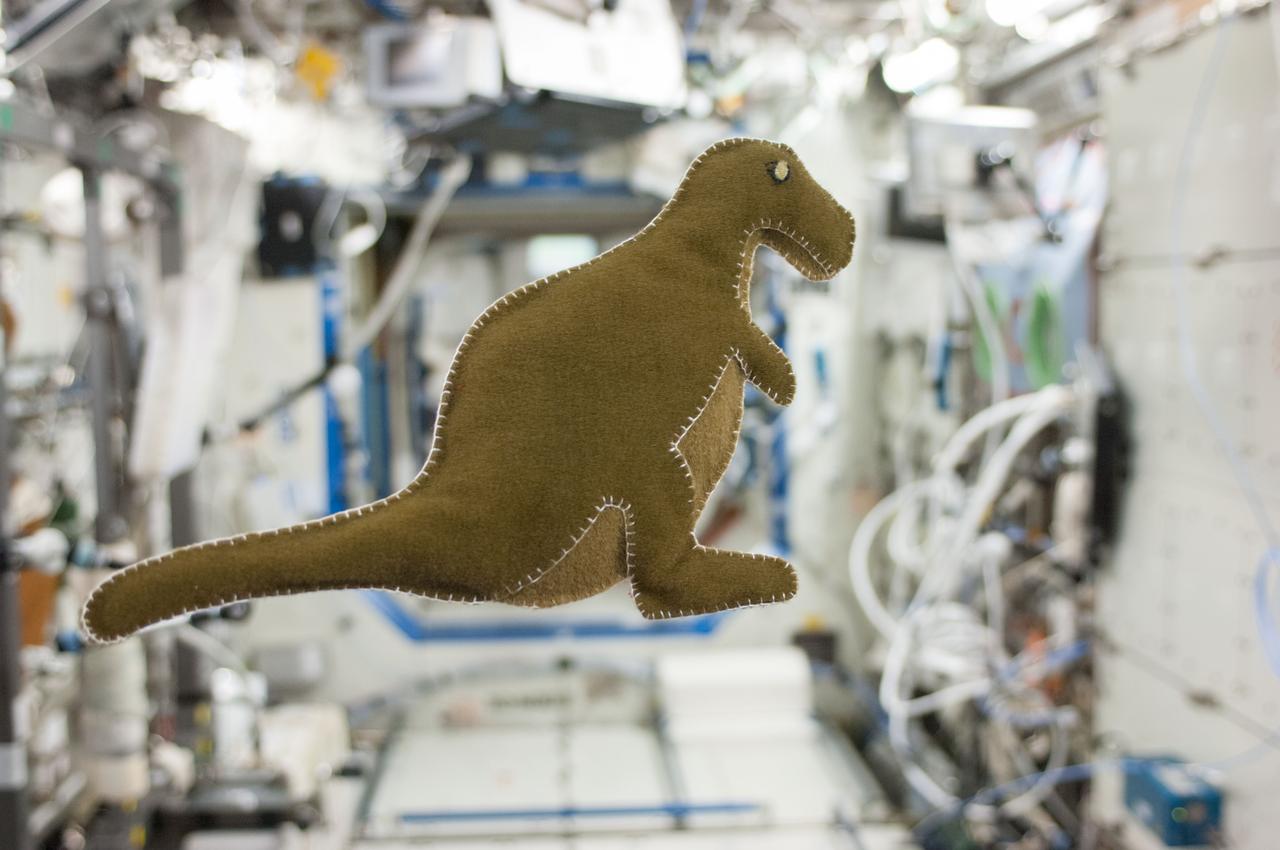
ISS037-E-002783 (22 Sept. 2013) --- NASA astronaut Karen Nyberg, Expedition 37 flight engineer, made this stuffed dinosaur toy aboard the International Space Station, using scraps of food-packaging liners and a T-shirt. She sent images of it to her young son on Sept. 22. Many of the astronaut’s hobbies lean toward artistic pursuits. She has let it be known that she loves to create different things through quilting, sewing and sketching. Nyberg took four “fat quarters” (pieces of fabric that are 18 by 22 inches) with her to the International Space Station along with needles, thread and a sketchbook when she launched to space on May 28.
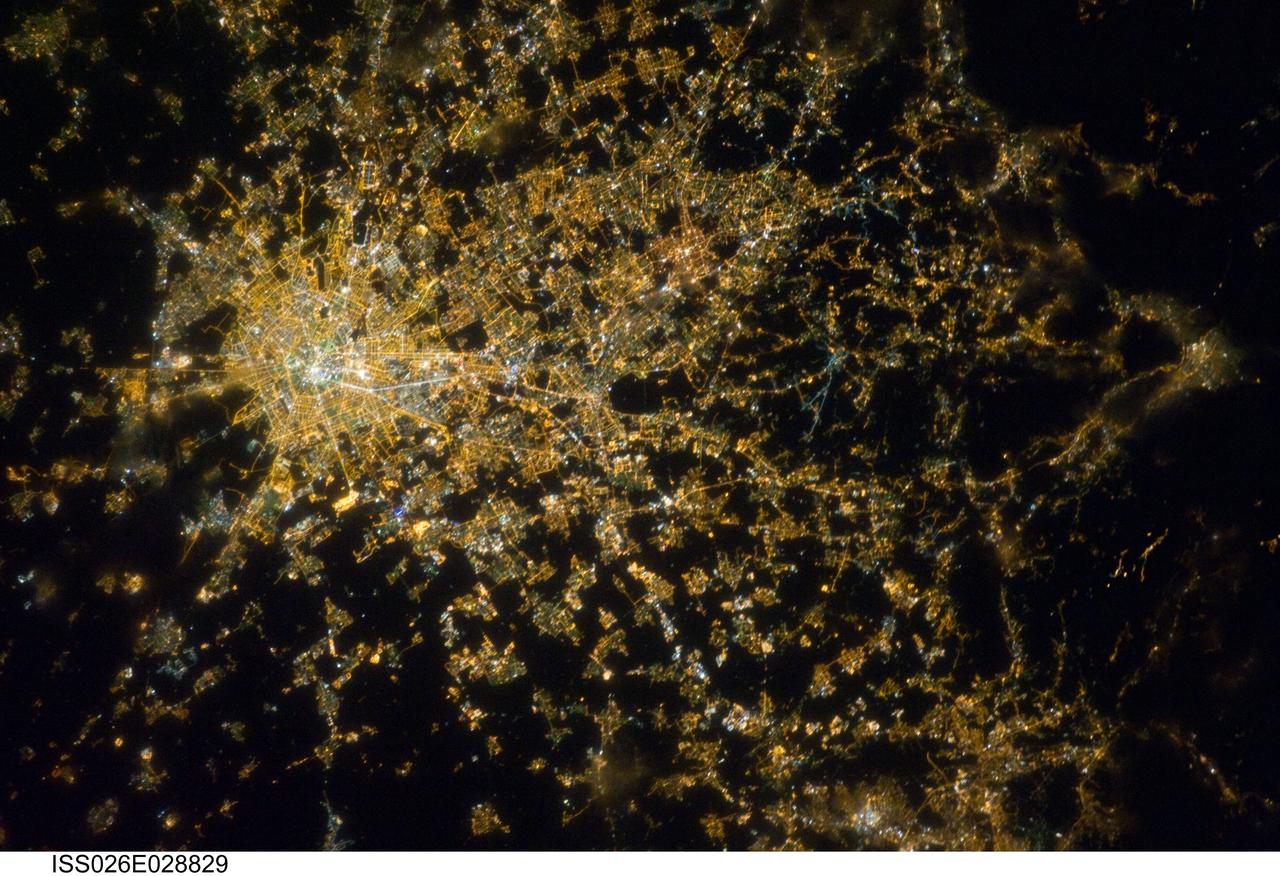
ISS026-E-028829 (22 Feb. 2011) --- Milan, Italy metropolitan area is featured in this night time view photographed by an Expedition 26 crew member on the International Space Station. The metropolitan area of Milan (or Milano) illuminates the Italian region of Lombardy, in a pattern evocative of a patchwork quilt, in this photograph. The city of Milan proper forms a dense cluster of lights at center left; brilliant white lights indicate the historic center of the city where the Duomo di Milano (Milan Cathedral) is located. Large dark regions to the south of Milan contain mostly agricultural fields. To the north, numerous smaller cities are interspersed with agricultural fields giving way to forested areas as one approaches the Italian Alps (not shown). Low patchy clouds diffuse the city lights, producing isolated regions in the image that appear blurred. The Milan urban area is located within the Po Valley, a large plain bordered by the Adriatic Sea to the south and the Italian Alps to the north. Milan has the largest metropolitan area in Italy, and the fifth largest in the European Union.
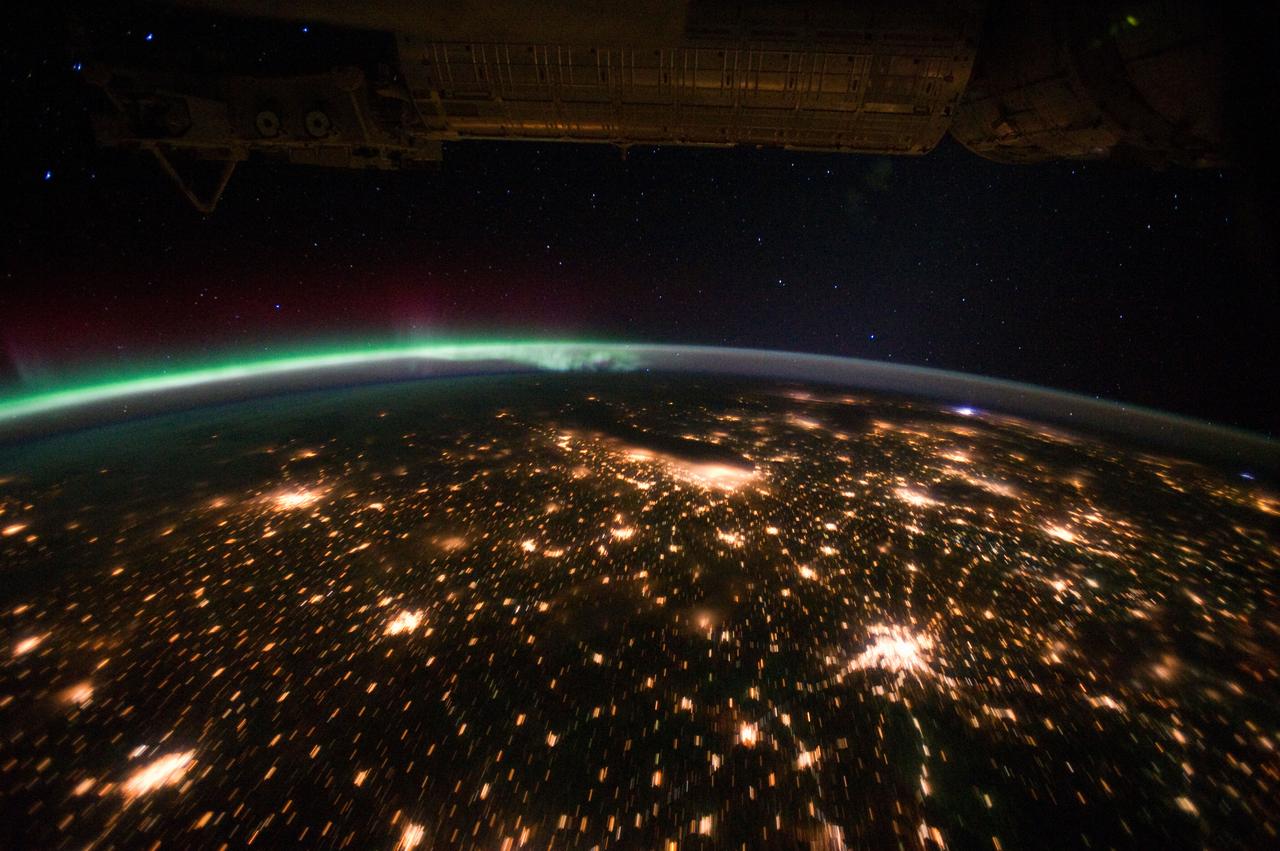
ISS029-E-012564 (29 Sept. 2011) --- The Midwestern United States at night with Aurora Borealis is featured in this image photographed by an Expedition 29 crew member on the International Space Station. The night skies viewed from the space station are illuminated with light from many sources. For example, the Midwestern United States presents a night-time appearance not unlike a patchwork quilt when viewed from orbit. The artificial light from human settlements appears everywhere with a characteristic yellow tinge in this photograph. But green light of the Aurora Borealis also appears strongly in this view (top left)—even seeming to be reflected off Earth’s surface—in Canada—beneath the aurora. A small white patch of light is almost certainly lightning from a storm on the East coast (top right). Part of the International Space Station appears across the top of the image. This photograph highlights the Chicago, IL, metropolitan area as the largest cluster of lights at center, next to the dark patch of Lake Michigan. The other largest metropolitan areas include St. Louis, MO (lower right), Minneapolis–St. Paul, MN (left) and the Omaha–Council Bluffs region on the Nebraska–Iowa border (lower left). City light clusters give an immediate sense of relative city size; demographers have used night time satellite imagery to make estimates of city populations, especially in the developing world where city growth can be very rapid. The U.S. northeast seaboard lies in the most oblique (meaning viewed at an angle) part of the image at top right, just beyond the Appalachian Mts., a dark winding zone without major cities. Scales change significantly in oblique views: Omaha is only 200 kilometers from Des Moines, but appears roughly the same distance from Minneapolis—which is actually 375 kilometers to the north of Des Moines. In addition to the major metropolitan areas, the rectangular NS/EW-oriented pattern of townships is clearly visible in the rural, lower left part of the image. This pattern instantly gives the sense of north orientation (toward the top left corner) and is a distinctive characteristic of the United States, so that ISS crew members can quickly know which continent they are flying over even at night. In contrast to the regular township pattern, interstate highways converge on St. Louis (e.g. Hwy 44), Chicago and other large cities, much like wheel spokes around a central hub. Rivers—major visual features in daylight—become almost invisible at night. The course of the Mississippi River appears as a slightly meandering zone from Minneapolis through St. Louis (dashed line)—the river course continues out of the lower right corner of the image.