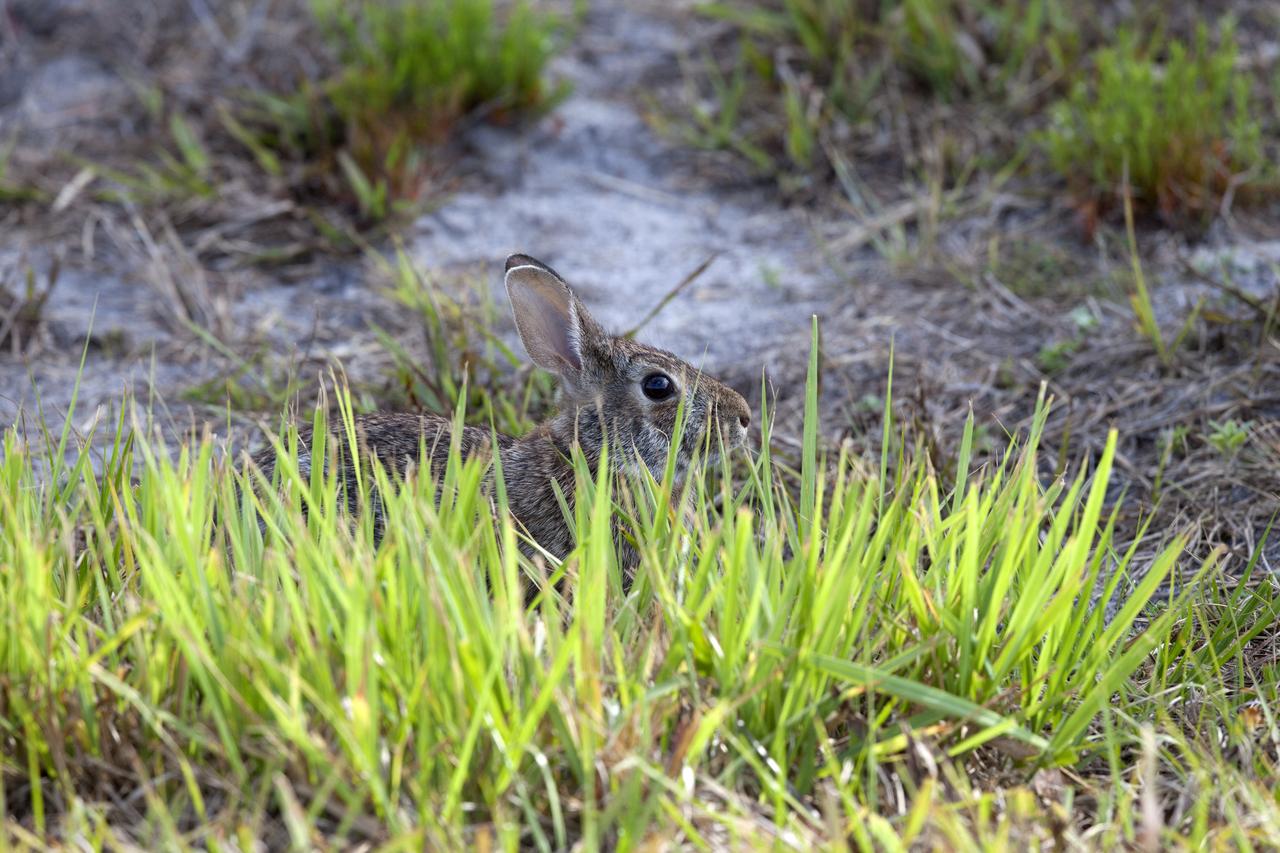
A rabbit sits in the underbrush at NASA's Kennedy Space Center in Florida. The center shares a border with the Merritt Island National Wildlife Refuge. More than 330 native and migratory bird species, 25 mammals, 117 fishes and 65 amphibians and reptiles call Kennedy and the wildlife refuge home.
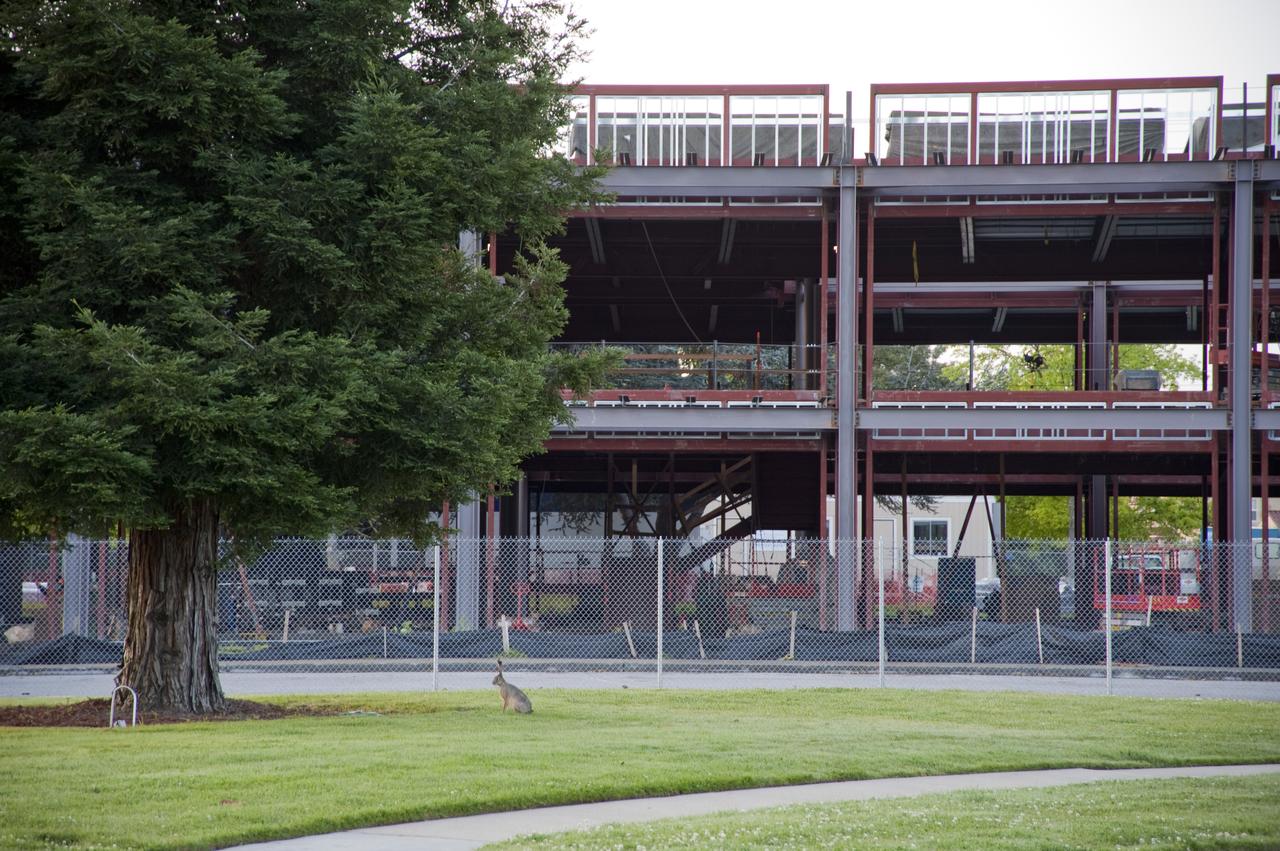
Construction of the new NASA Ames Green Building dubbed Sustainability Base located on the Ames Research Center campus at Moffett Field, CA. Jack rabbit in foreground.
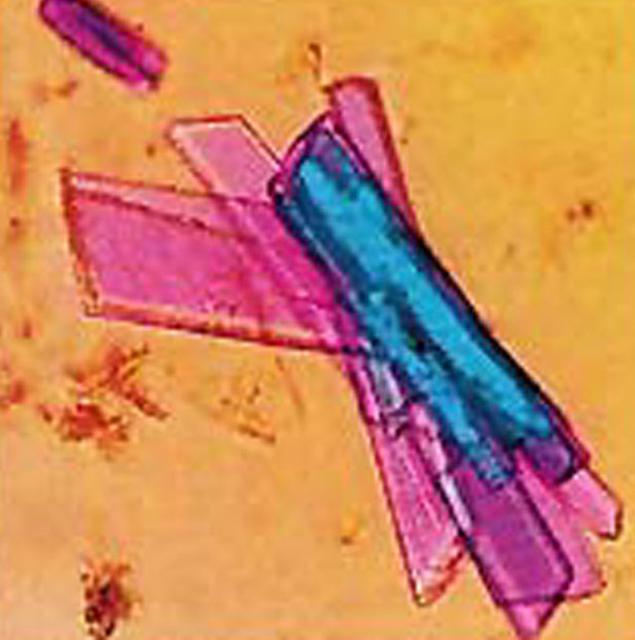
(Rabbit) Converts the major storage form of high energy phosphate (creatine phosphate) to usable energy form (ATP). A major muscle enzyme and implicated in some muscle diseases.
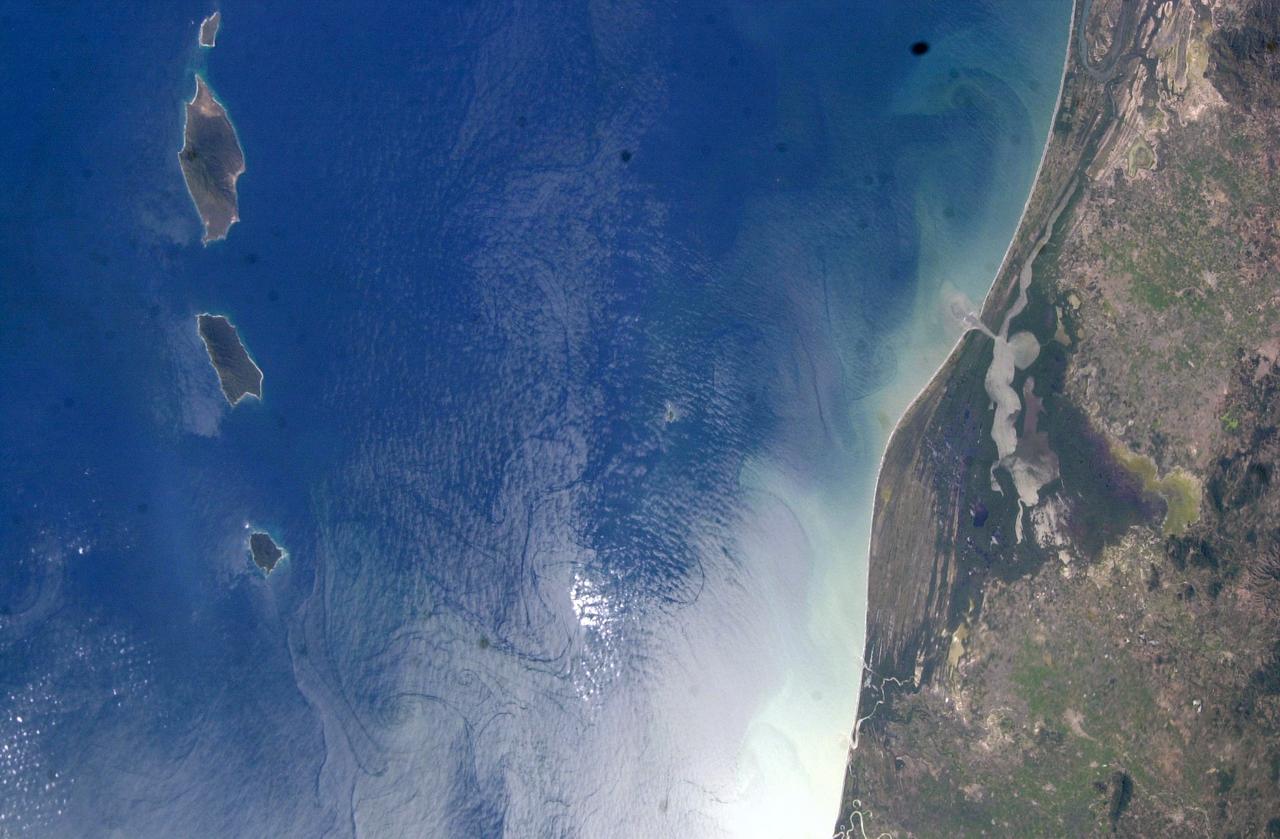
ISS006-E-51456 (2003) --- Marias Islands, Mexico is featured in this image photographed by an Expedition Six crewmember on the International Space Station. The view shows the land-sea interactions along a section of Mexico's west coast just south of Mazatlan and the Isla Marias archipelago. The islands are a manifestation of intersecting plate boundaries -- the East Pacific Rise spreading center that traces south from the Gulf of California, and the subduction zone that consumes the Cocos plate beneath southern Mexico. These islands are biologically important: they comprise the Islas Marias Biosphere Reserve and contain endemic species of raccoons and rabbits, and important habitat for birds and marine life. Between the islands and the mainland, swirling surface currents are highlighted by the sun glint reflecting off the ocean surface. Along the Mexican coast, water flows out from a coastal lagoon, and near shore currents carry sediment (light colored water) along the beach front.
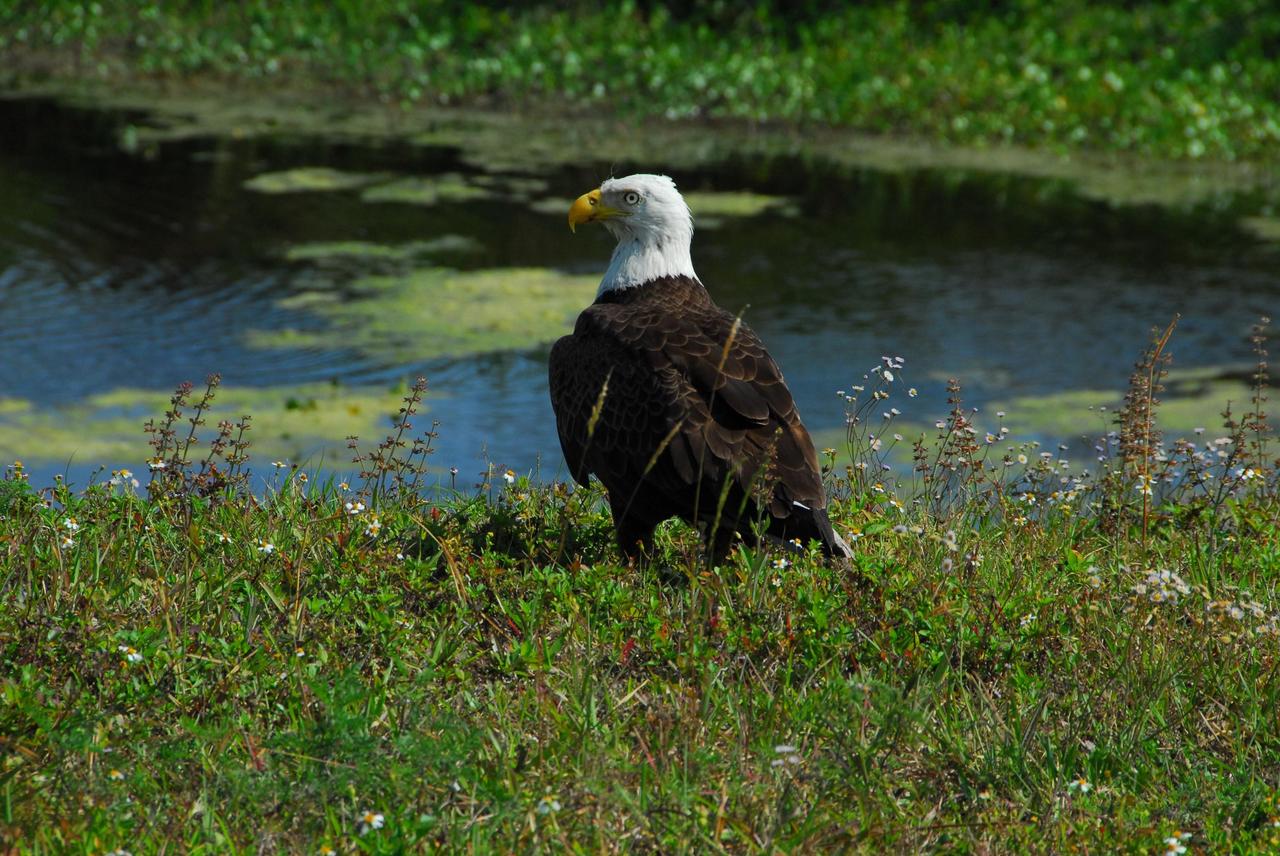
KENNEDY SPACE CENTER, FLA. -- This adult bald eagle rests on the ground near a pond close to S.R. 3 in NASA's Kennedy Space Center. Bald eagles live near large bodies of open water such as lakes, marshes, seacoasts and rivers, where there are plenty of fish to eat and tall trees for nesting and roosting. Bald eagles feed primarily on fish, but also eat small animals (ducks, coots, muskrats, turtles, rabbits, snakes, etc.) and occasional carrion (dead animals). They are sometimes seen among a gathering of vultures at the site of a fresh meal. Bald eagles have a presence in every U. S. state except Hawaii. Bald eagles use a specific territory for nesting (they mate for life), winter feeding or a year-round residence. Its natural domain is from Alaska to Baja, California, and from Maine to Florida. There are a dozen eagle nests both in KSC and in the Merritt Island National Wildlife Refuge, which surrounds KSC. The refuge includes several wading bird rookeries, many osprey nests, up to 400 manatees during the spring, and approximately 2,500 Florida scrub jays. It also is a major wintering area for migratory birds. More than 500 species of wildlife inhabit the refuge, with 15 considered federally threatened or endangered. Photo credit: NASA/George Shelton
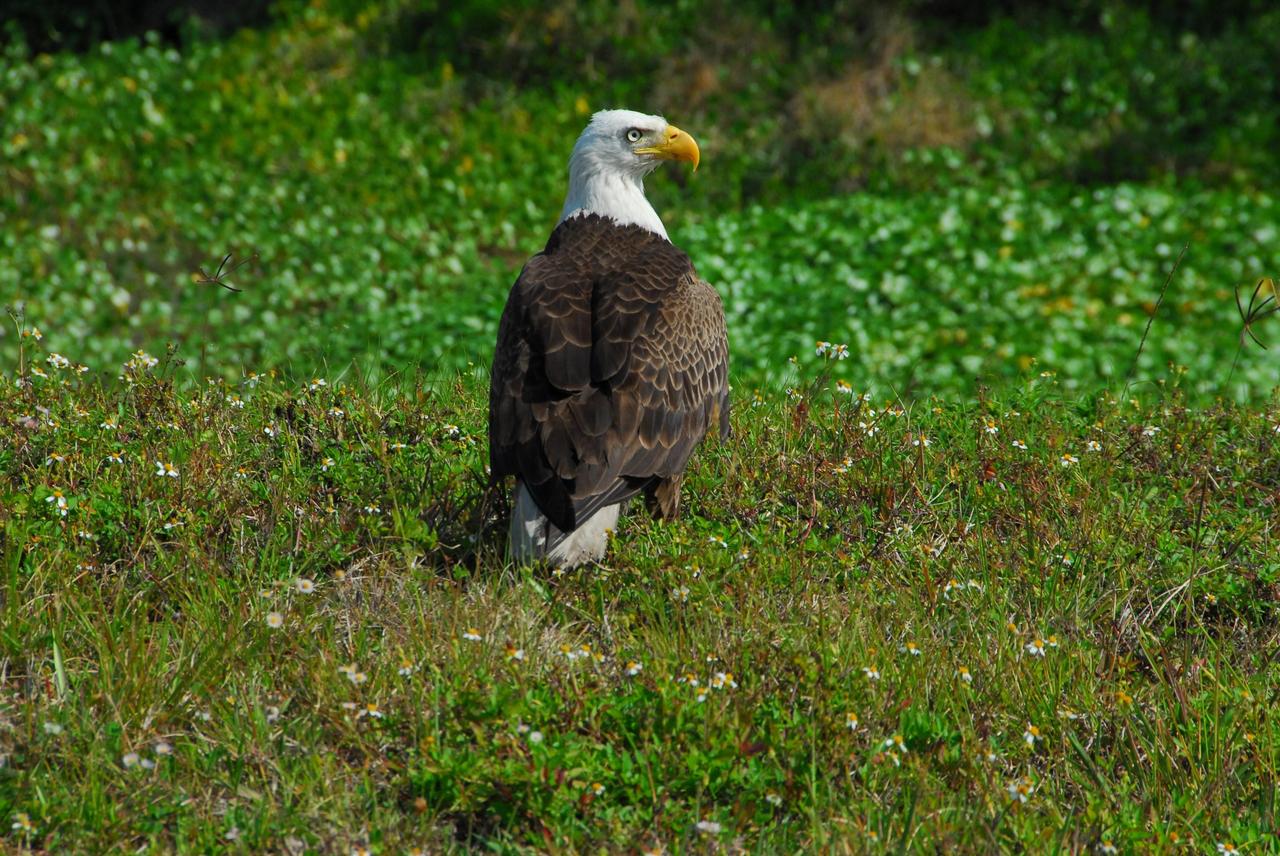
KENNEDY SPACE CENTER, FLA. -- This adult bald eagle rests on the ground near a pond close to S.R. 3 in NASA's Kennedy Space Center. Bald eagles live near large bodies of open water such as lakes, marshes, seacoasts and rivers, where there are plenty of fish to eat and tall trees for nesting and roosting. Bald eagles feed primarily on fish, but also eat small animals (ducks, coots, muskrats, turtles, rabbits, snakes, etc.) and occasional carrion (dead animals). They are sometimes seen among a gathering of vultures at the site of a fresh meal. Bald eagles have a presence in every U. S. state except Hawaii. Bald eagles use a specific territory for nesting (they mate for life), winter feeding or a year-round residence. Its natural domain is from Alaska to Baja, California, and from Maine to Florida. There are a dozen eagle nests both in KSC and in the Merritt Island National Wildlife Refuge, which surrounds KSC. The refuge includes several wading bird rookeries, many osprey nests, up to 400 manatees during the spring, and approximately 2,500 Florida scrub jays. It also is a major wintering area for migratory birds. More than 500 species of wildlife inhabit the refuge, with 15 considered federally threatened or endangered. Photo credit: NASA/George Shelton
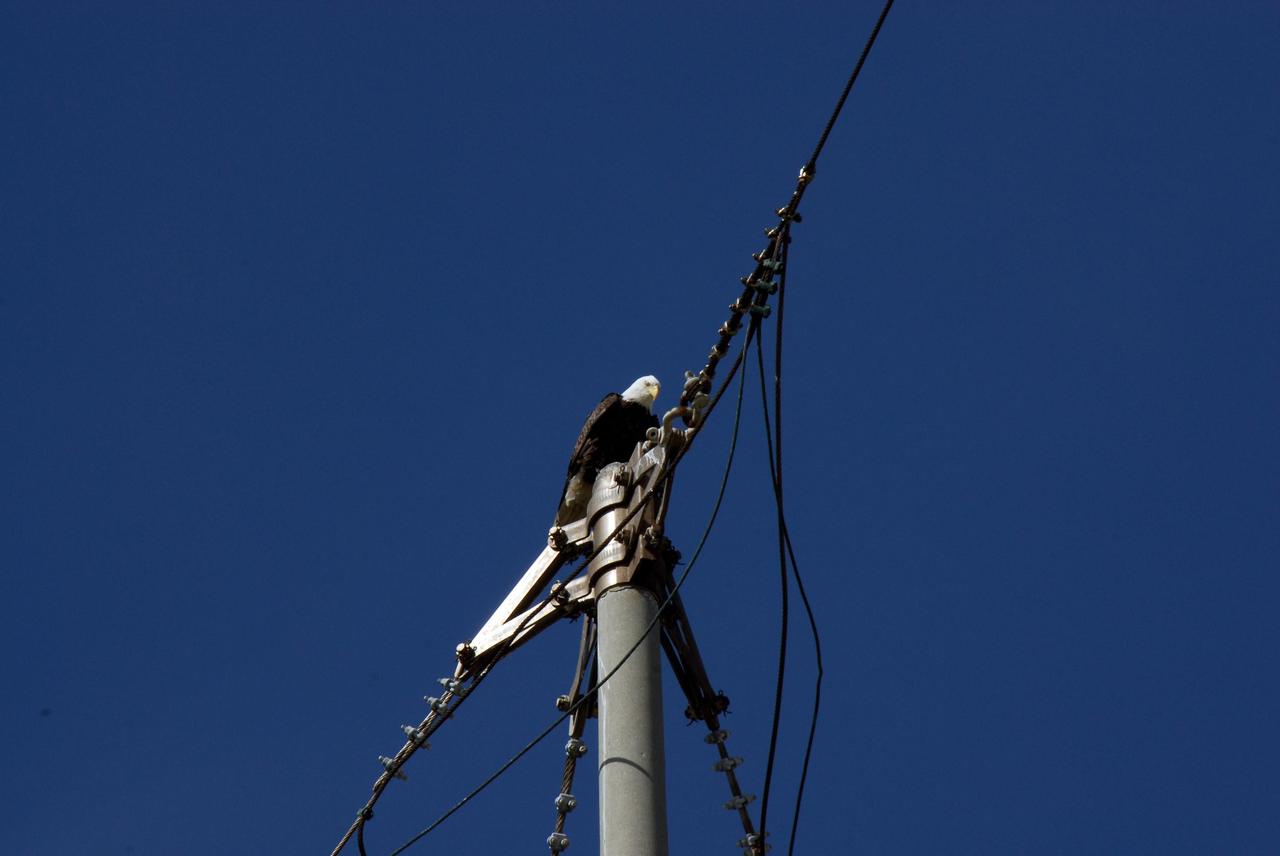
KENNEDY SPACE CENTER, FLA. -- A bald eagle perches on a pole on Launch Pad 39A, seemingly monitoring the instruction of the space shuttle Atlantis STS-122 crew on slidewire basket operation, part of the emergency exit system on the fixed service structure of the pad. Bald eagles use a specific territory for nesting (they mate for life), winter feeding or a year-round residence. Its natural domain is from Alaska to Baja, California, and from Maine to Florida. Bald eagles have a presence in every U. S. state except Hawaii. There are a dozen eagle nests in both Kennedy Space Center and the Merritt Island National Wildlife Refuge, which surrounds Kennedy. Bald eagles live near large bodies of open water such as lakes, marshes, seacoasts and rivers, where there are plenty of fish to eat and tall trees for nesting and roosting. Bald eagles feed primarily on fish, but also eat small animals (ducks, coots, muskrats, turtles, rabbits, snakes, etc.). Photo credit: NASA/Kim Shiflett