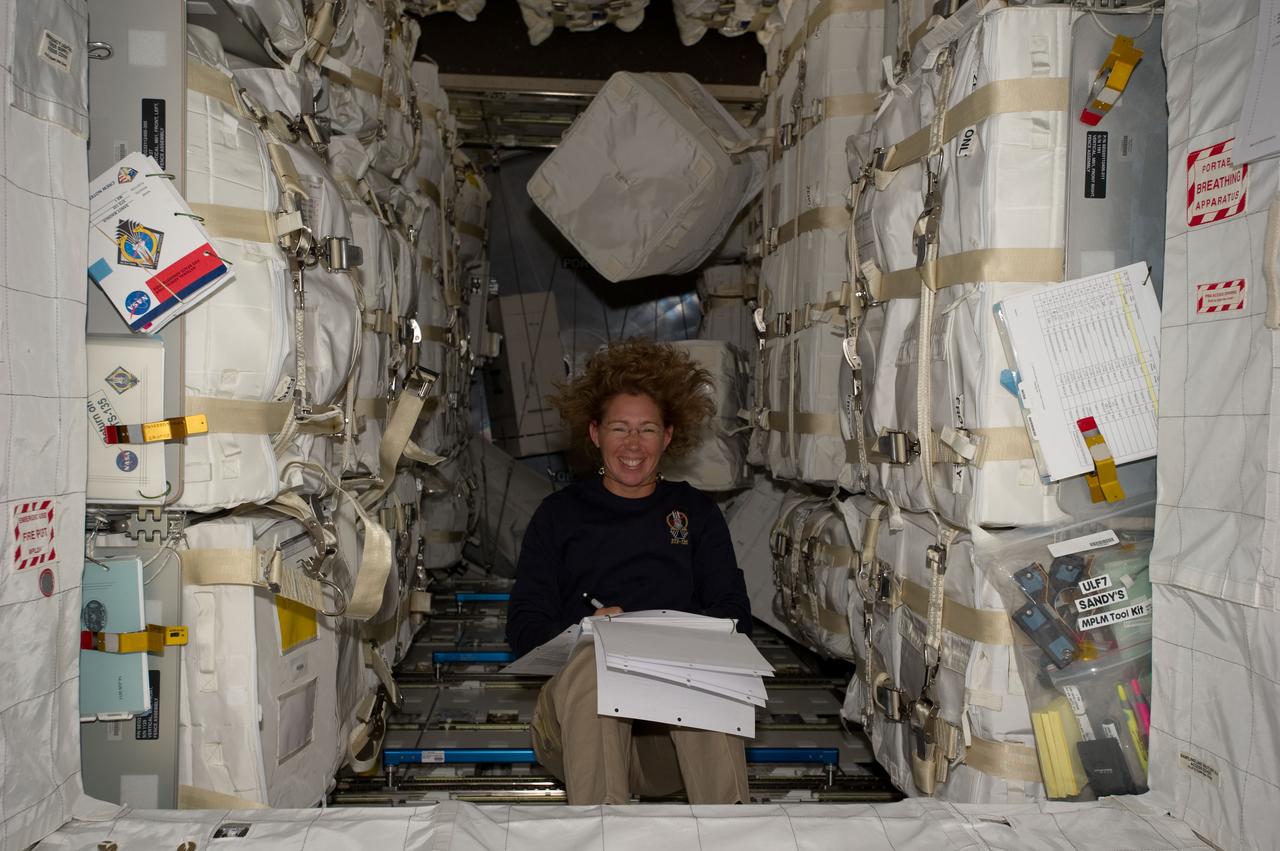
S135-E-007478 (12 July 2011) --- Surrounded by supplies and spare parts in the Raffaello multi-purpose logistics module, NASA astronaut Sandy Magnus continues her role as "load master" for the joint activities of the Atlantis and International Space Station crews. The tons of items are for use and consumption for the station and its crews. Raffaello was transported up to the station by Magnus and her three crewmates aboard the space shuttle. Photo credit: NASA
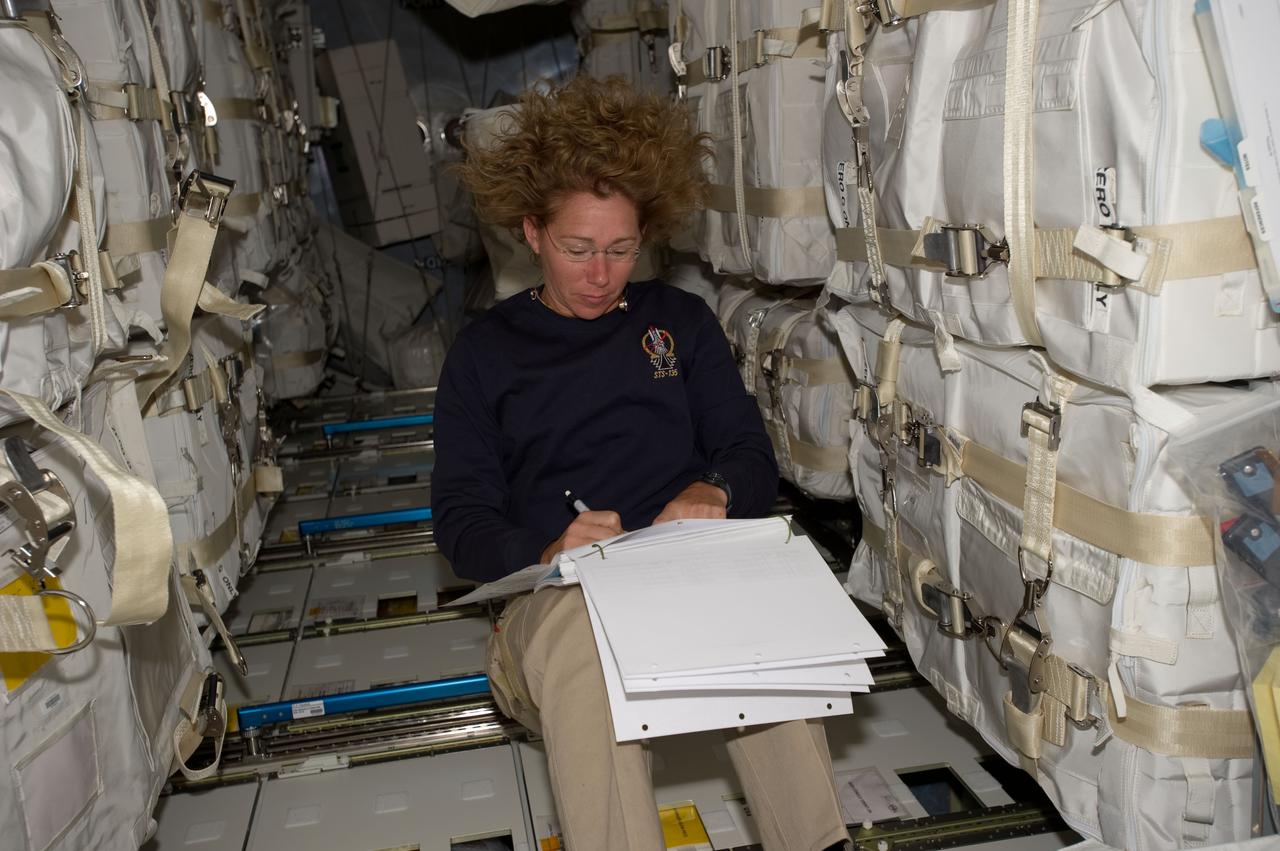
S135-E-007479 (12 July 2011) --- Surrounded by supplies and spare parts in the Raffaello multi-purpose logistics module, NASA astronaut Sandy Magnus continues her role as "load master" for the joint activities of the Atlantis and International Space Station crews. The tons of items are for use and consumption for the station and its crews. Raffaello was transported up to the station by Magnus and her three crewmates aboard the space shuttle. Photo credit: NASA
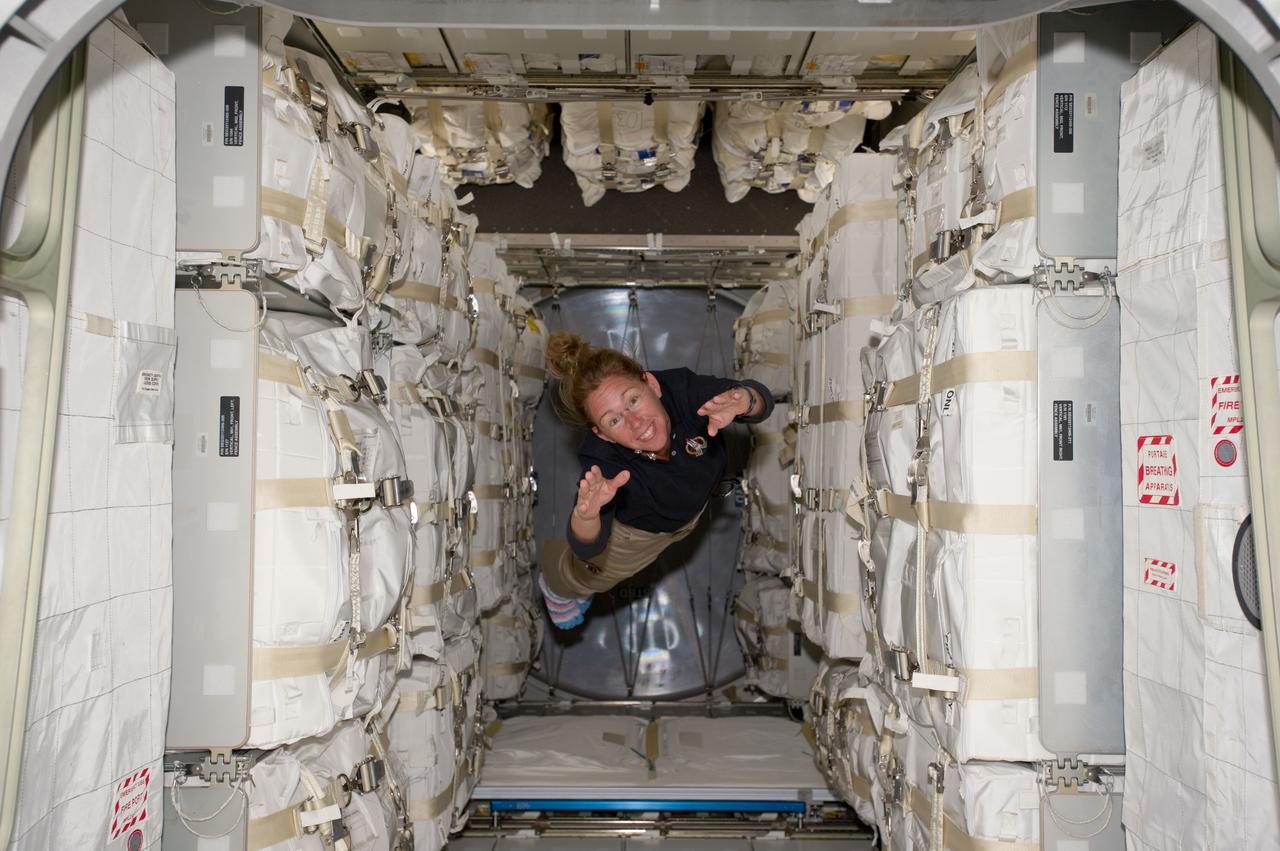
S135-E-007420 (11 July 2011) --- NASA astronaut Sandy Magnus, STS-135 mission specialist, may well be thinking of the word "ocean" for two reasons. Her navigation in the weightlessness of space could be loosely compared to swimming, and she is surrounded by an "ocean” of supplies and equipment in the Raffaello multi-purpose logistics module. The supplies and spare parts are for use and consumption for the International Space Station and its crews. Raffaello was transported up to the station by Magnus and her three crewmates aboard the space shuttle Atlantis. Photo credit: NASA
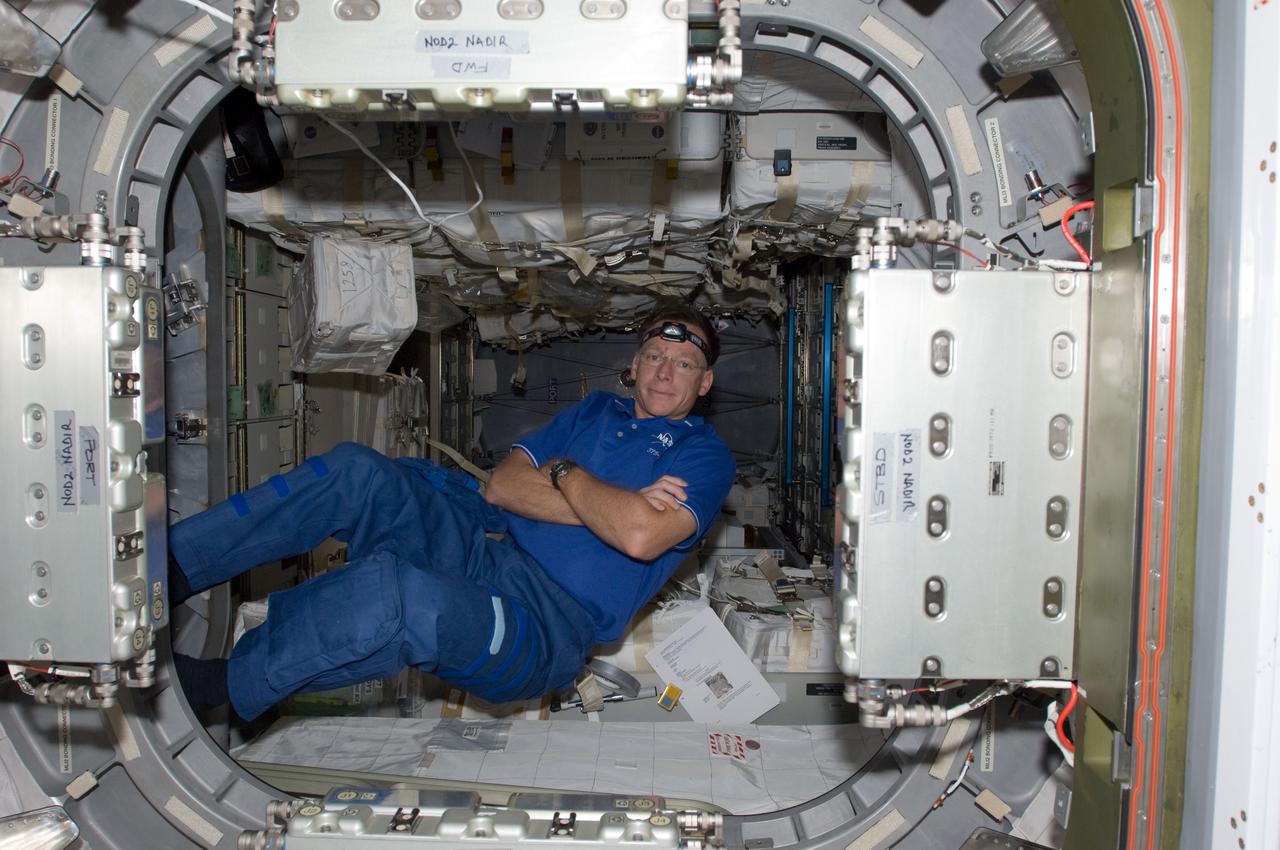
S135-E-008870 (17 July 2011) --- This image shows NASA astronaut Chris Ferguson, STS-135 commander, in the Raffaello multi-purpose logistics module. The photo serves as the "after" shot following a great amount of work by joint crews from Atlantis and the International Space Station to transfer supplies to and from the two spacecraft. Approximately a week earlier Ferguson posed for the "before" version. Photo credit: NASA
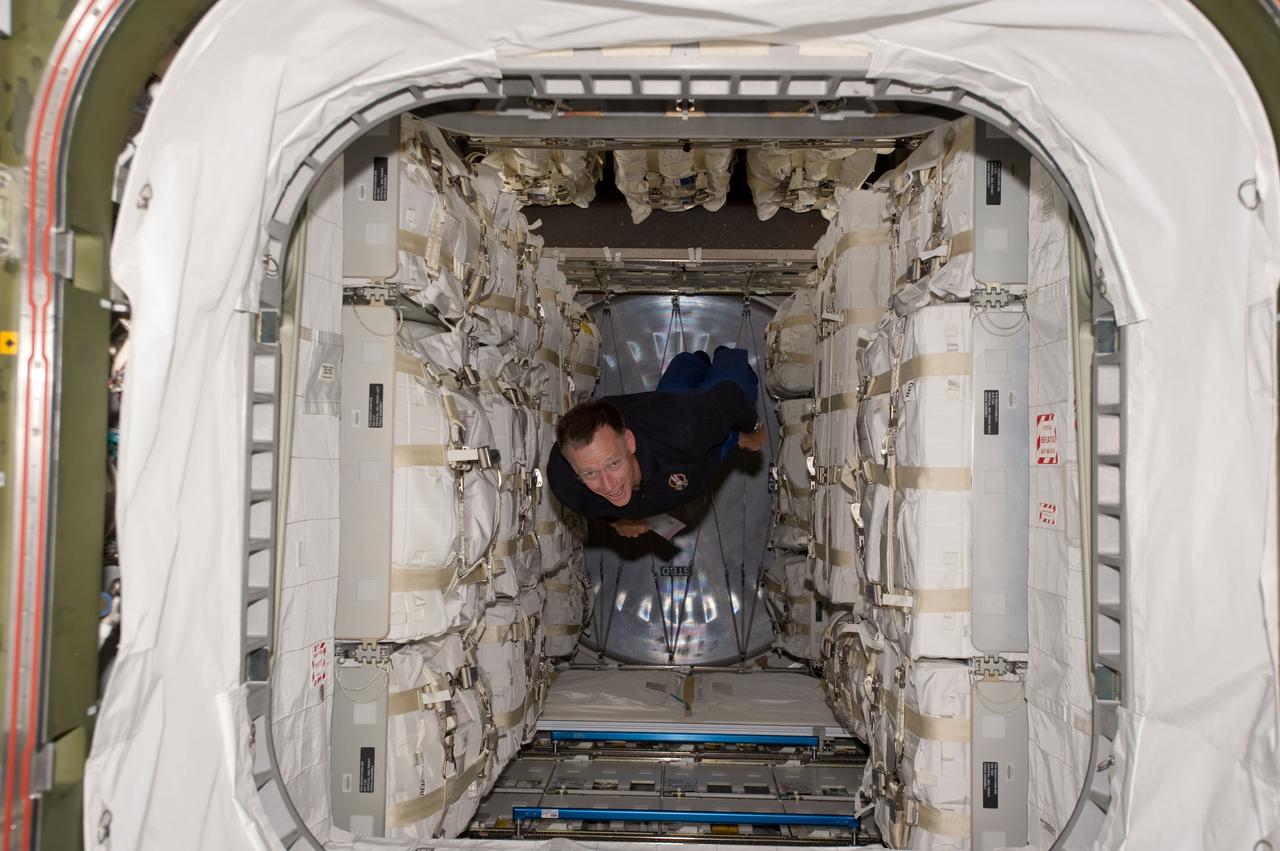
S135-E-007426 (11 July 2011) --- NASA astronaut Chris Ferguson, STS-135 commander, floats through the Raffaello multi-purpose logistics module packed with supplies and spare parts for the International Space Station. Ferguson and his three crewmates carried the module in Atlantis' cargo bay on their trip to link up with the orbital outpost. Photo credit: NASA
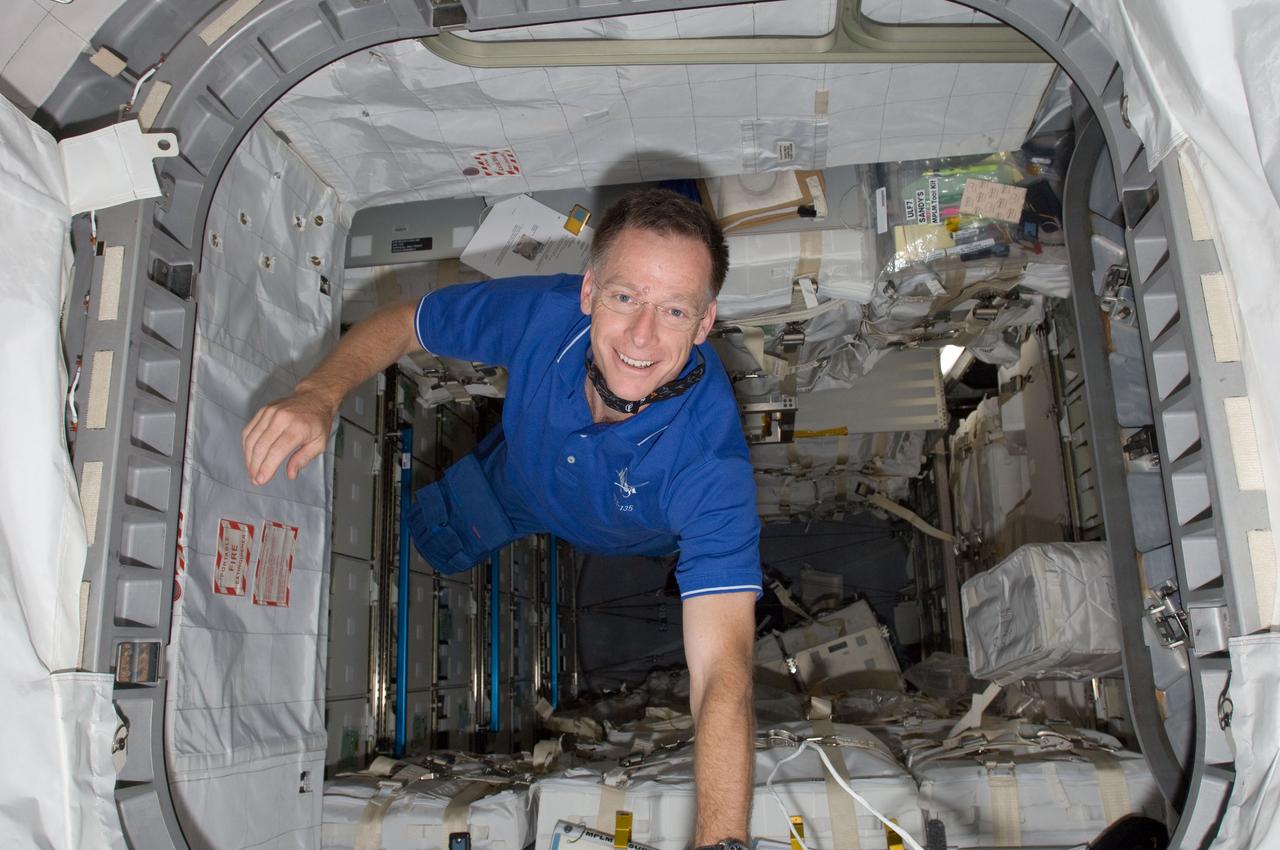
S135-E-008852 (17 July 2011) --- This image shows NASA astronaut Chris Ferguson, STS-135 commander, in the Raffaello multi-purpose logistics module. The photo serves as the "after" shot following a great amount of work by joint crews from Atlantis and the International Space Station to transfer supplies to and from the two spacecraft. Approximately a week earlier Ferguson posed for the "before" version. Photo credit: NASA
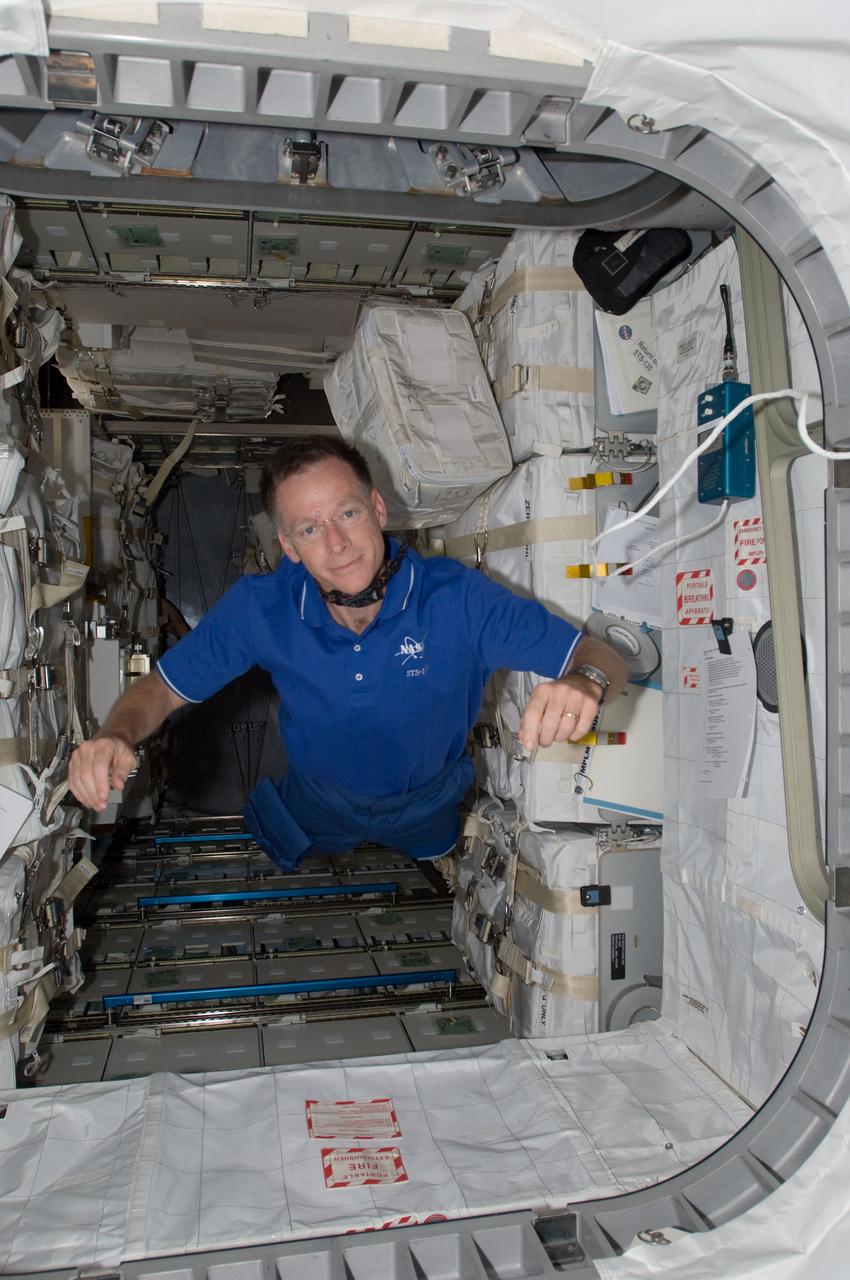
S135-E-008850 (17 July 2011) --- This image shows NASA astronaut Chris Ferguson, STS-135 commander, in the Raffaello multi-purpose logistics module. The photo serves as the "after" shot following a great amount of work by joint crews from Atlantis and the International Space Station to transfer supplies to and from the two spacecraft. Approximately a week earlier Ferguson posed for the "before" version. Photo credit: NASA
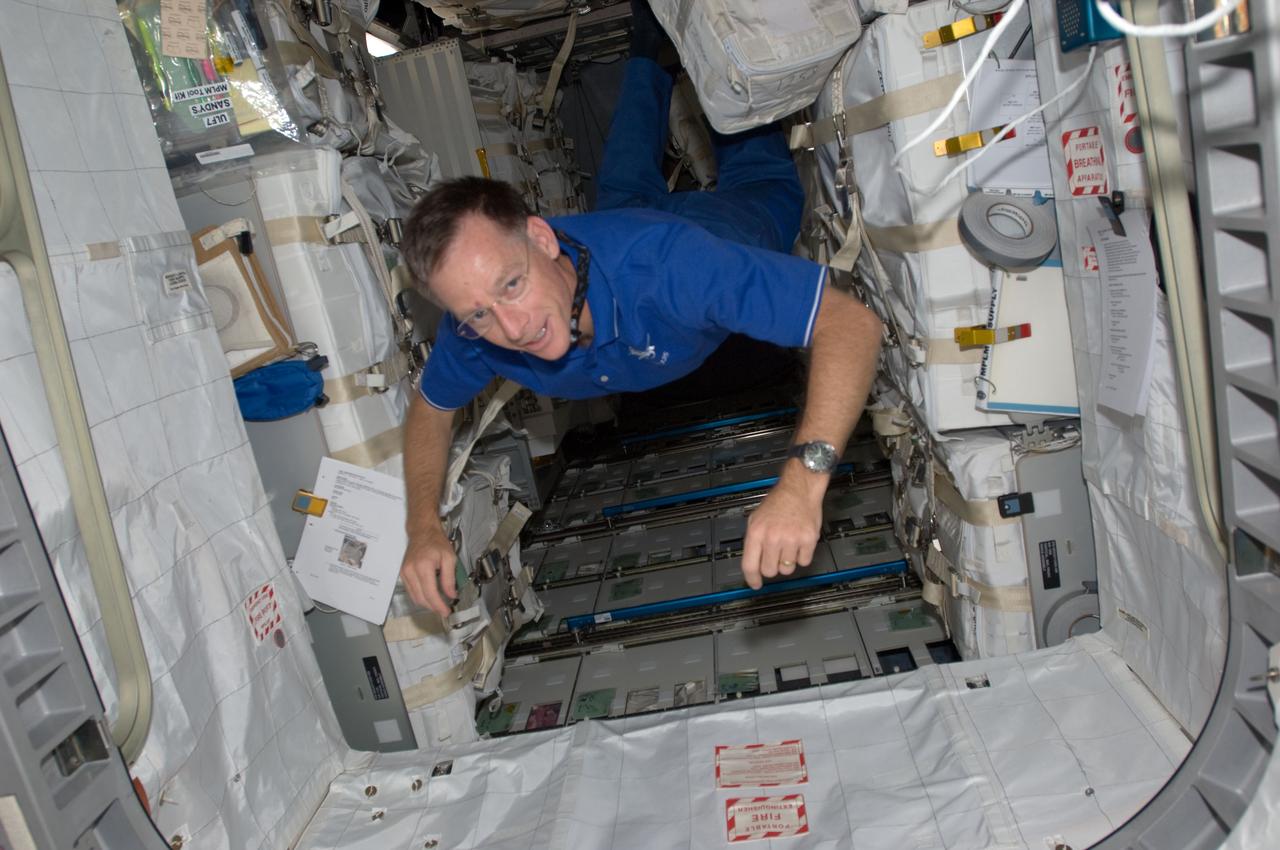
S135-E-008851 (17 July 2011) --- This image shows NASA astronaut Chris Ferguson, STS-135 commander, in the Raffaello multi-purpose logistics module. The photo serves as the "after" shot following a great amount of work by joint crews from Atlantis and the International Space Station to transfer supplies to and from the two spacecraft. Approximately a week earlier Ferguson posed for the "before" version. Photo credit: NASA
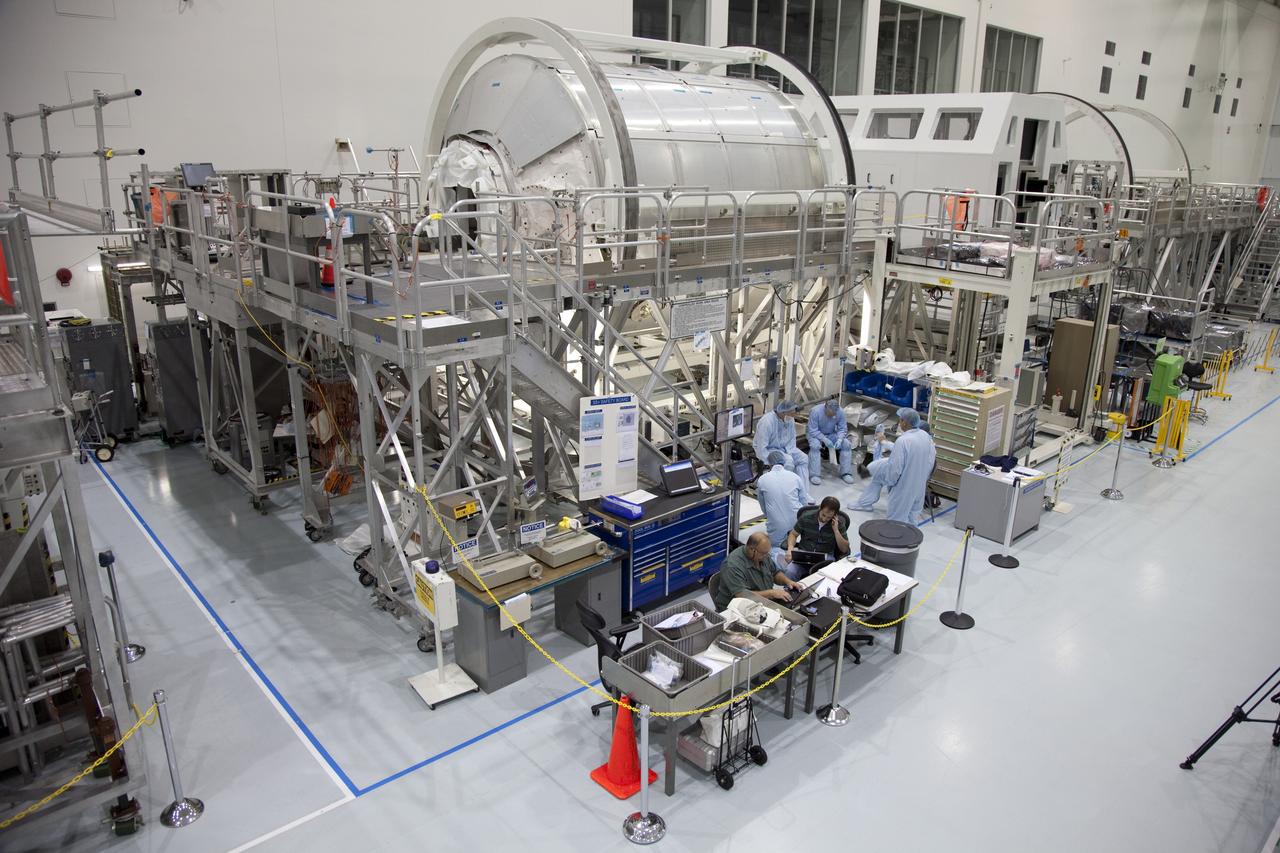
CAPE CANAVERAL, Fla. -- In the Space Station Processing Facility at NASA's Kennedy Space Center in Florida, technicians garbed in protective wear, commonly known as 'bunny suits,' prepare to install the cargo inside the Raffaello multi-purpose logistics module for shuttle Atlantis' flight to the International Space Station. Atlantis and its payload is being prepared for the STS-135 mission, which will deliver the Raffaello multi-purpose logistics module packed with supplies and spare parts to the station. Atlantis is targeted to launch June 28, and will be the last shuttle flight for the Space Shuttle Program. For more information visit, http://www.nasa.gov/mission_pages/shuttle/shuttlemissions/sts135/index.html. Photo credit: NASA/Frankie Martin
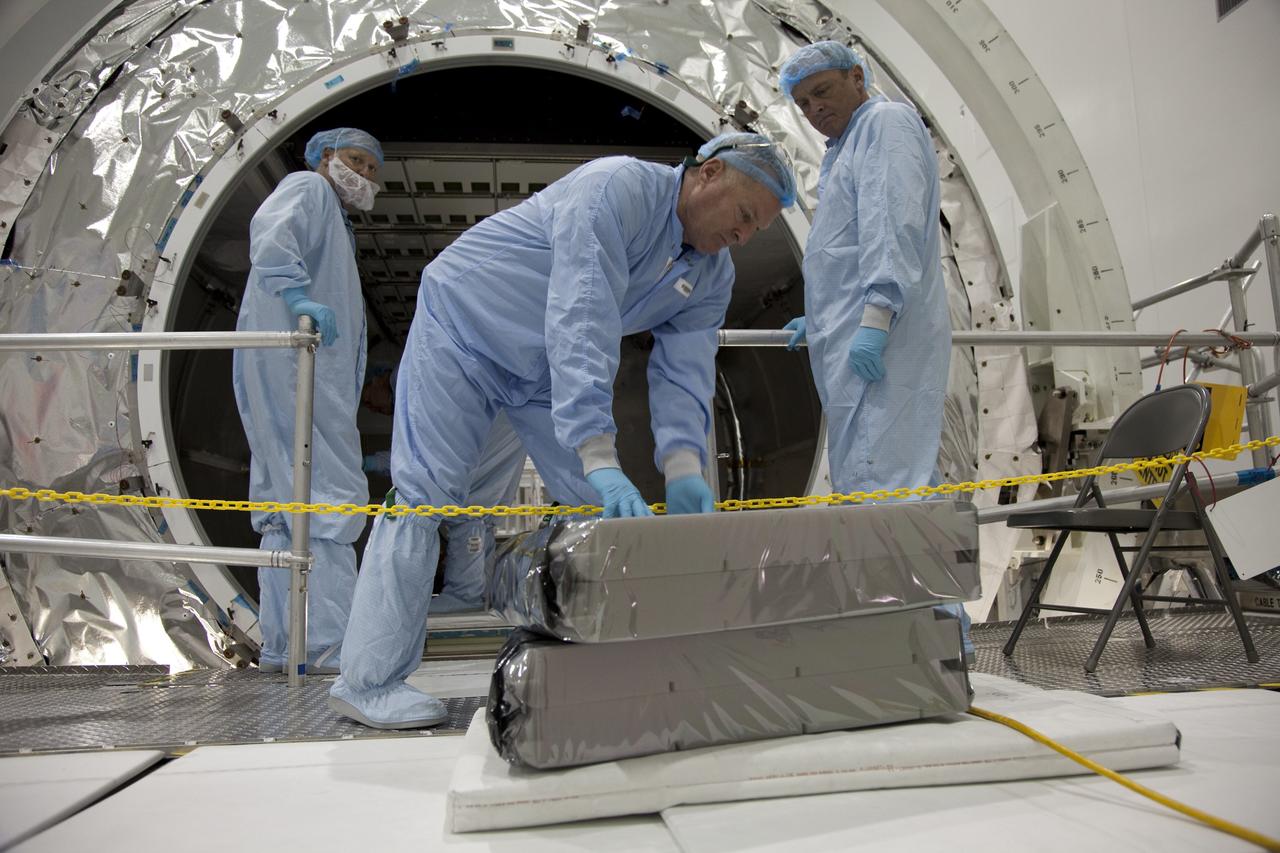
CAPE CANAVERAL, Fla. -- In the Space Station Processing Facility at NASA's Kennedy Space Center in Florida, technicians garbed in protective wear, commonly known as 'bunny suits,' begin to install the cargo inside the Raffaello multi-purpose logistics module for shuttle Atlantis' flight to the International Space Station. Atlantis and its payload is being prepared for the STS-135 mission, which will deliver the Raffaello multi-purpose logistics module packed with supplies and spare parts to the station. Atlantis is targeted to launch June 28, and will be the last shuttle flight for the Space Shuttle Program. For more information visit, http://www.nasa.gov/mission_pages/shuttle/shuttlemissions/sts135/index.html. Photo credit: NASA/Frankie Martin
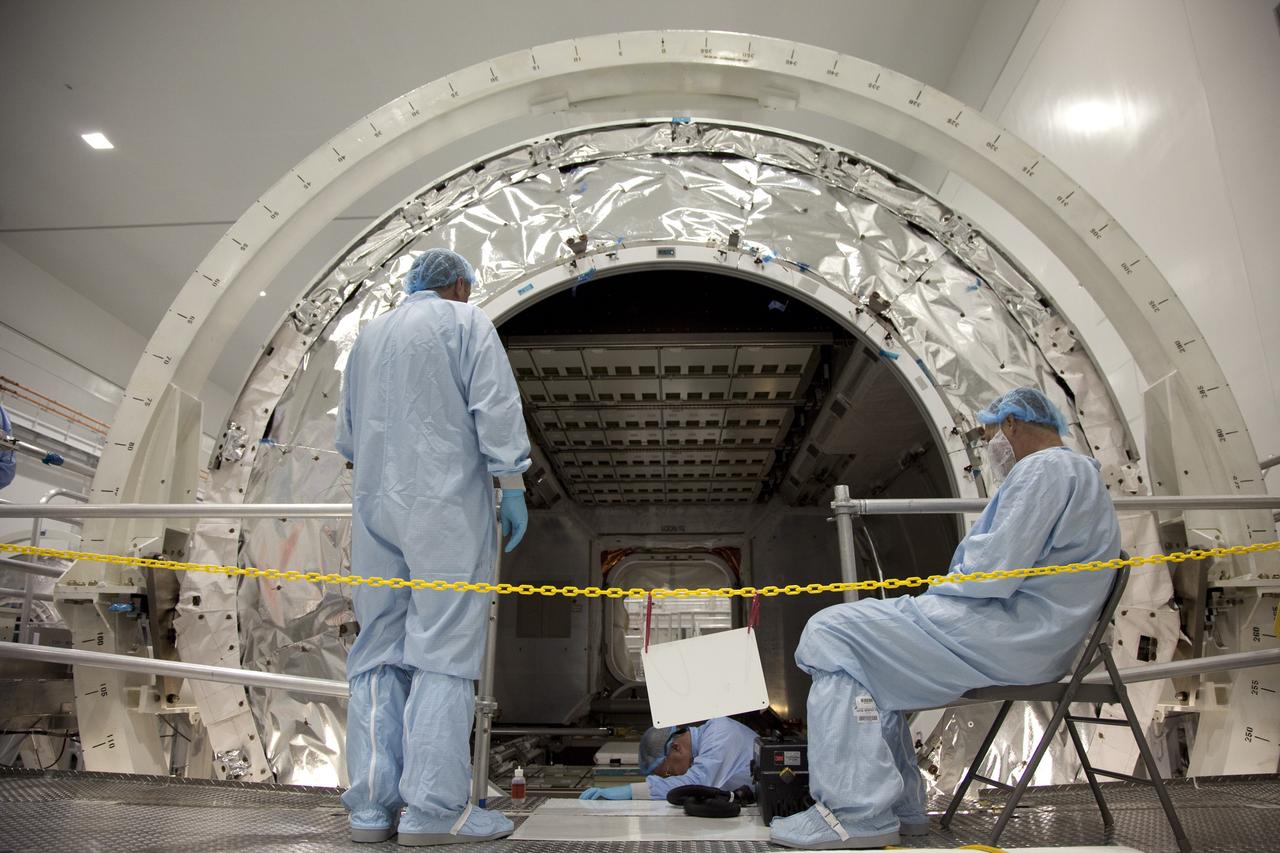
CAPE CANAVERAL, Fla. -- In the Space Station Processing Facility at NASA's Kennedy Space Center in Florida, technicians garbed in protective wear, commonly known as 'bunny suits,' prepare to install the cargo inside the Raffaello multi-purpose logistics module for shuttle Atlantis' flight to the International Space Station. Atlantis and its payload is being prepared for the STS-135 mission, which will deliver the Raffaello multi-purpose logistics module packed with supplies and spare parts to the station. Atlantis is targeted to launch June 28, and will be the last shuttle flight for the Space Shuttle Program. For more information visit, http://www.nasa.gov/mission_pages/shuttle/shuttlemissions/sts135/index.html. Photo credit: NASA/Frankie Martin
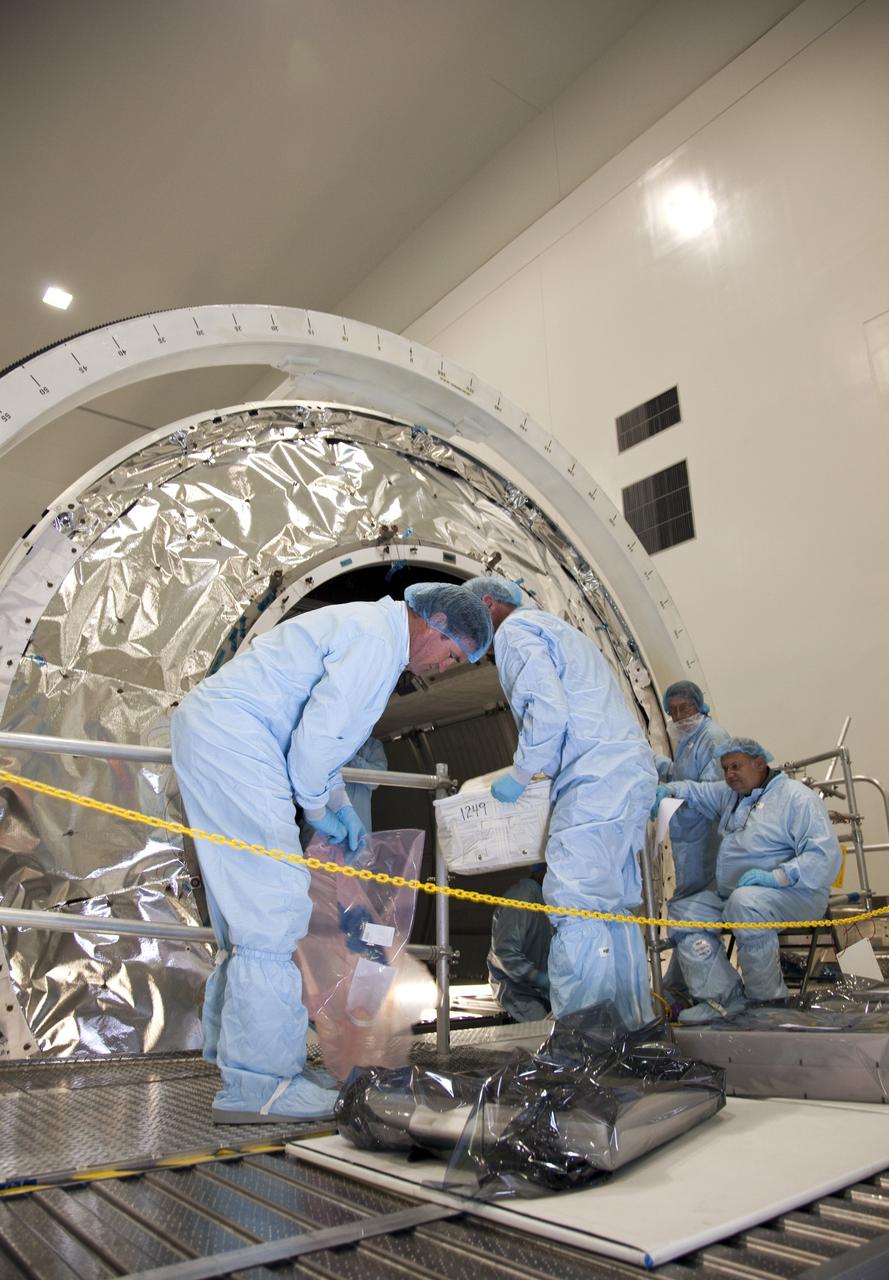
CAPE CANAVERAL, Fla. -- In the Space Station Processing Facility at NASA's Kennedy Space Center in Florida, technicians garbed in protective wear, commonly known as 'bunny suits,' install the cargo inside the Raffaello multi-purpose logistics module for shuttle Atlantis' flight to the International Space Station. Atlantis and its payload is being prepared for the STS-135 mission, which will deliver the Raffaello multi-purpose logistics module packed with supplies and spare parts to the station. Atlantis is targeted to launch June 28, and will be the last shuttle flight for the Space Shuttle Program. For more information visit, http://www.nasa.gov/mission_pages/shuttle/shuttlemissions/sts135/index.html. Photo credit: NASA/Frankie Martin
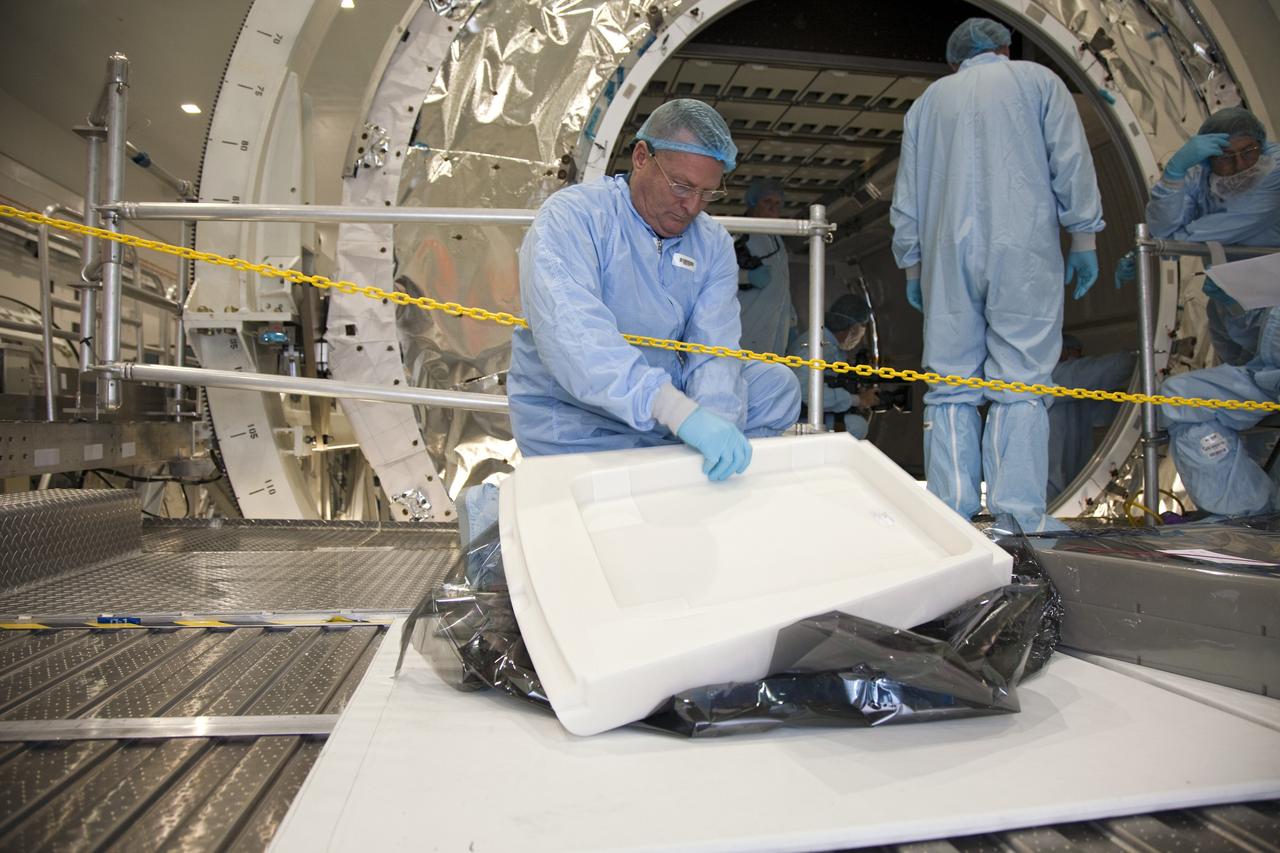
CAPE CANAVERAL, Fla. -- In the Space Station Processing Facility at NASA's Kennedy Space Center in Florida, a technician, garbed in protective wear, commonly known as a 'bunny suit,' inspects a piece of equipment prior to installation into the Raffaello multi-purpose logistics module for shuttle Atlantis' flight to the International Space Station. Atlantis and its payload is being prepared for the STS-135 mission, which will deliver the Raffaello multi-purpose logistics module packed with supplies and spare parts to the station. Atlantis is targeted to launch June 28, and will be the last shuttle flight for the Space Shuttle Program. For more information visit, http://www.nasa.gov/mission_pages/shuttle/shuttlemissions/sts135/index.html. Photo credit: NASA/Frankie Martin
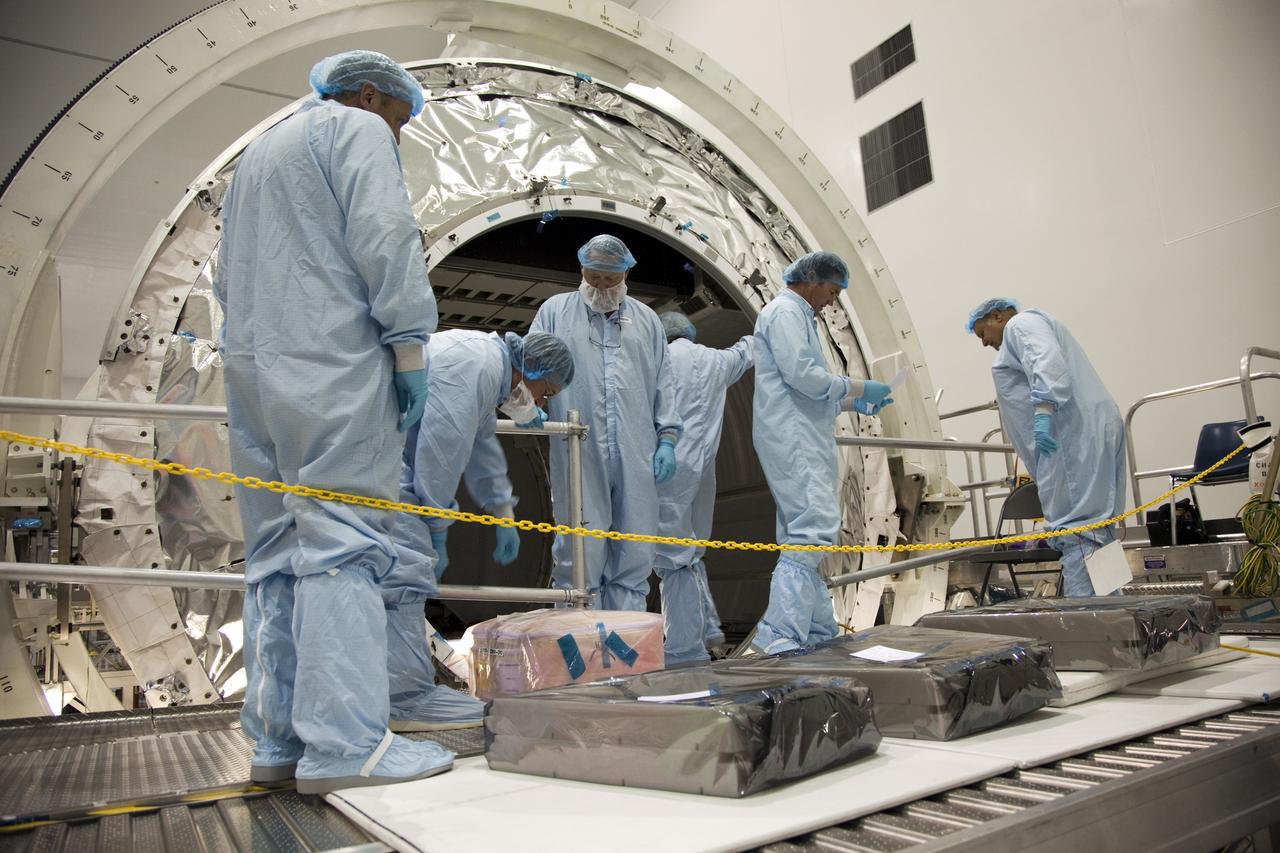
CAPE CANAVERAL, Fla. -- In the Space Station Processing Facility at NASA's Kennedy Space Center in Florida, technicians garbed in protective wear, commonly known as 'bunny suits,' install the cargo inside the Raffaello multi-purpose logistics module for shuttle Atlantis' flight to the International Space Station. Atlantis and its payload is being prepared for the STS-135 mission, which will deliver the Raffaello multi-purpose logistics module packed with supplies and spare parts to the station. Atlantis is targeted to launch June 28, and will be the last shuttle flight for the Space Shuttle Program. For more information visit, http://www.nasa.gov/mission_pages/shuttle/shuttlemissions/sts135/index.html. Photo credit: NASA/Frankie Martin
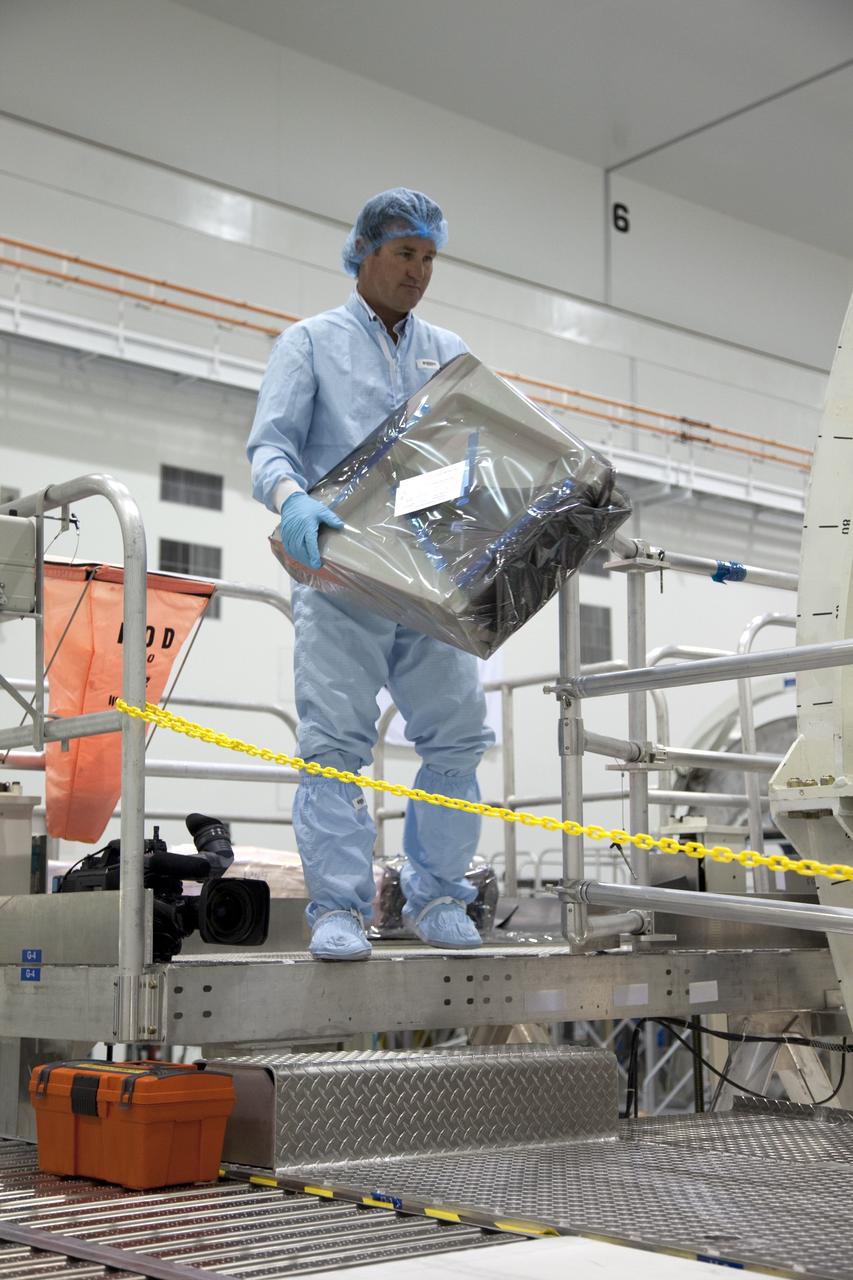
CAPE CANAVERAL, Fla. -- In the Space Station Processing Facility at NASA's Kennedy Space Center in Florida, technicians garbed in protective wear, commonly known as 'bunny suits,' install the cargo inside the Raffaello multi-purpose logistics module for shuttle Atlantis' flight to the International Space Station. Atlantis and its payload is being prepared for the STS-135 mission, which will deliver the Raffaello multi-purpose logistics module packed with supplies and spare parts to the station. Atlantis is targeted to launch June 28, and will be the last shuttle flight for the Space Shuttle Program. For more information visit, http://www.nasa.gov/mission_pages/shuttle/shuttlemissions/sts135/index.html. Photo credit: NASA/Frankie Martin
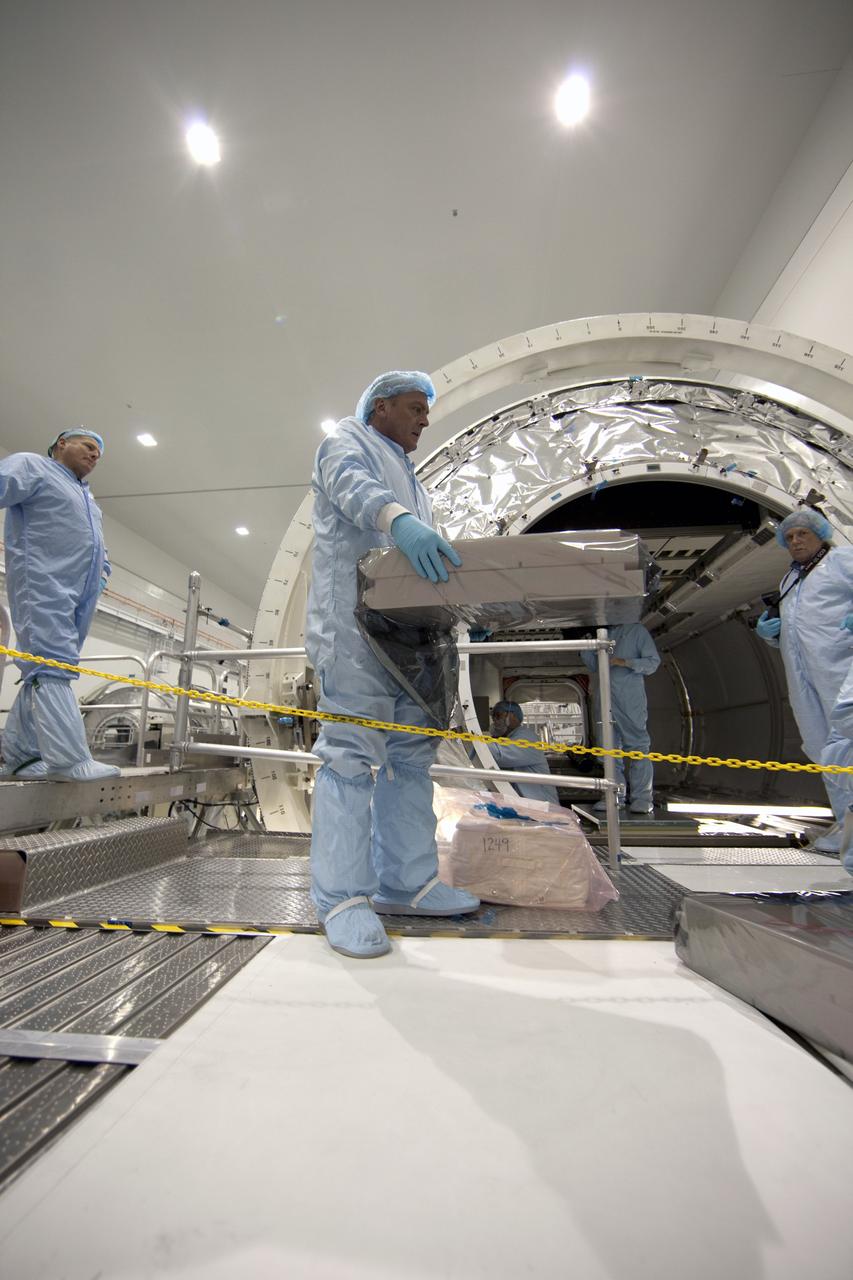
CAPE CANAVERAL, Fla. -- In the Space Station Processing Facility at NASA's Kennedy Space Center in Florida, a technician, garbed in protective wear, commonly known as a 'bunny suit,' carries equipment that will be installed into the Raffaello multi-purpose logistics module for shuttle Atlantis' flight to the International Space Station. Atlantis and its payload is being prepared for the STS-135 mission, which will deliver the Raffaello multi-purpose logistics module packed with supplies and spare parts to the station. Atlantis is targeted to launch June 28, and will be the last shuttle flight for the Space Shuttle Program. For more information visit, http://www.nasa.gov/mission_pages/shuttle/shuttlemissions/sts135/index.html. Photo credit: NASA/Frankie Martin
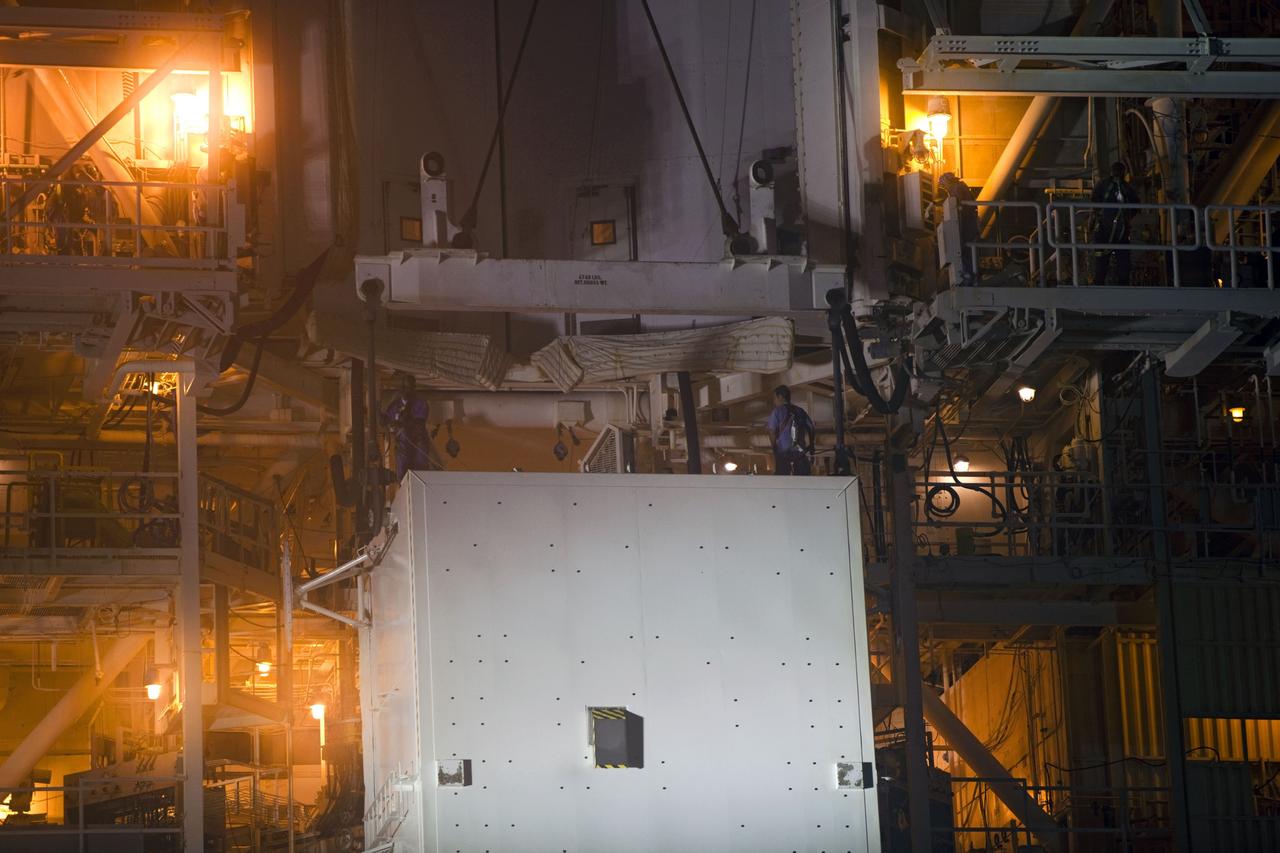
CAPE CANAVERAL, Fla. -- A canister, carrying the Raffaello multi-purpose logistics module (MPLM) for space shuttle Atlantis' STS-135 mission to the International Space Station, arrives at Launch Pad 39A at NASA's Kennedy Space Center in Florida. Workers attach an overhead crane to the canister carrying the Raffaello multi-purpose logistics module (MPLM) which will be lifted to the payload changeout room. The payload ground-handling mechanism then will be used to transfer Raffaello out of the canister into Atlantis' payload bay. Next, the rotating service structure that protects the shuttle from the elements and provides access will be rotated back into place. Commander Chris Ferguson, Pilot Doug Hurley and Mission Specialists Sandra Magnus and Rex Walheim are targeted to lift off on Atlantis July 8, taking with them the MPLM packed with supplies, logistics and spare parts to the station. The STS-135 mission also will fly a system to investigate the potential for robotically refueling existing satellites and return a failed ammonia pump module to help NASA better understand the failure mechanism and improve pump designs for future systems. STS-135 will be the 33rd flight of Atlantis, the 37th shuttle mission to the space station, and the 135th and final mission of NASA's Space Shuttle Program. For more information visit, www.nasa.gov/mission_pages/shuttle/shuttlemissions/sts135/index.html. Photo credit: NASA/Dimitri Gerondidakis
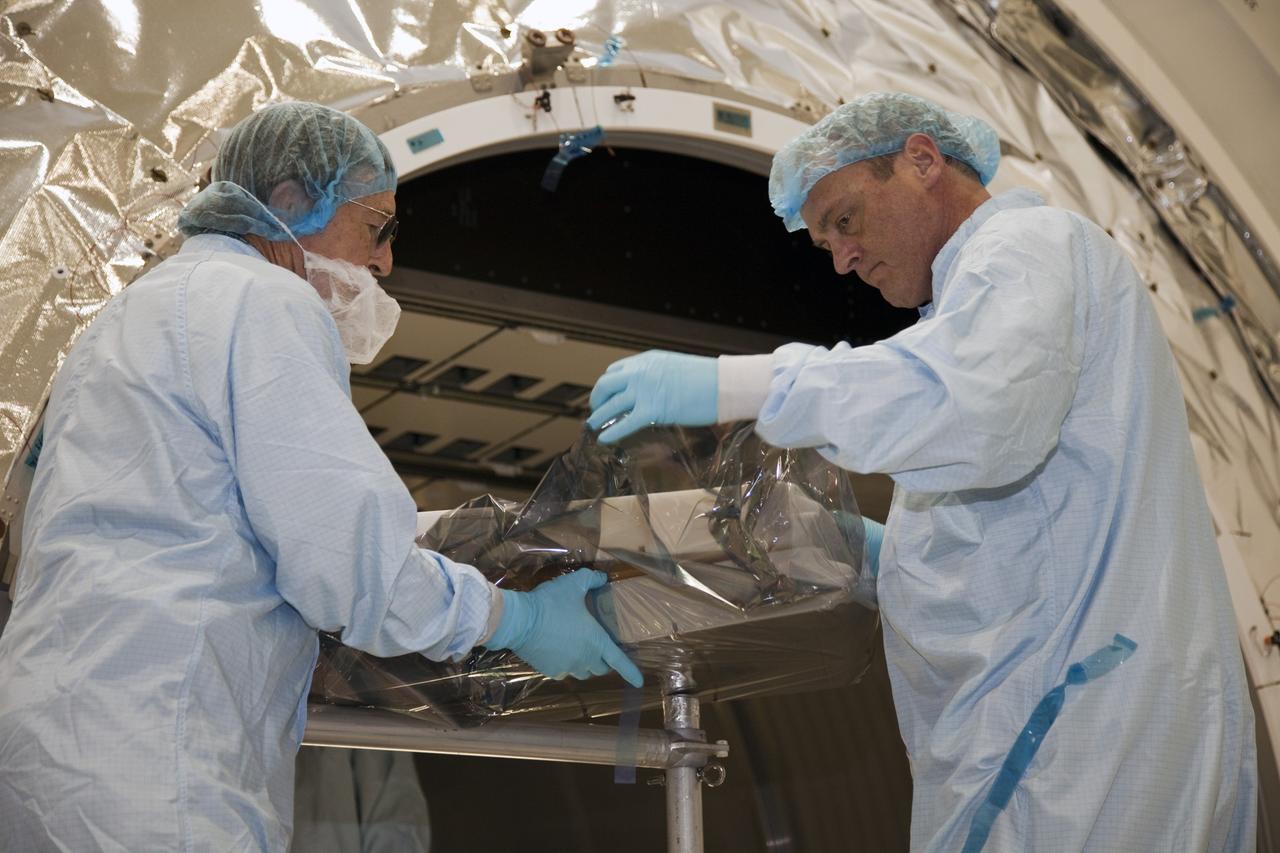
CAPE CANAVERAL, Fla. -- In the Space Station Processing Facility at NASA's Kennedy Space Center in Florida, technicians garbed in protective wear, commonly known as 'bunny suits,' check the protective wrapping of a piece of equipment prior to installation into the Raffaello multi-purpose logistics module for shuttle Atlantis' flight to the International Space Station. Atlantis and its payload is being prepared for the STS-135 mission, which will deliver the Raffaello multi-purpose logistics module packed with supplies and spare parts to the station. Atlantis is targeted to launch June 28, and will be the last shuttle flight for the Space Shuttle Program. For more information visit, http://www.nasa.gov/mission_pages/shuttle/shuttlemissions/sts135/index.html. Photo credit: NASA/Frankie Martin
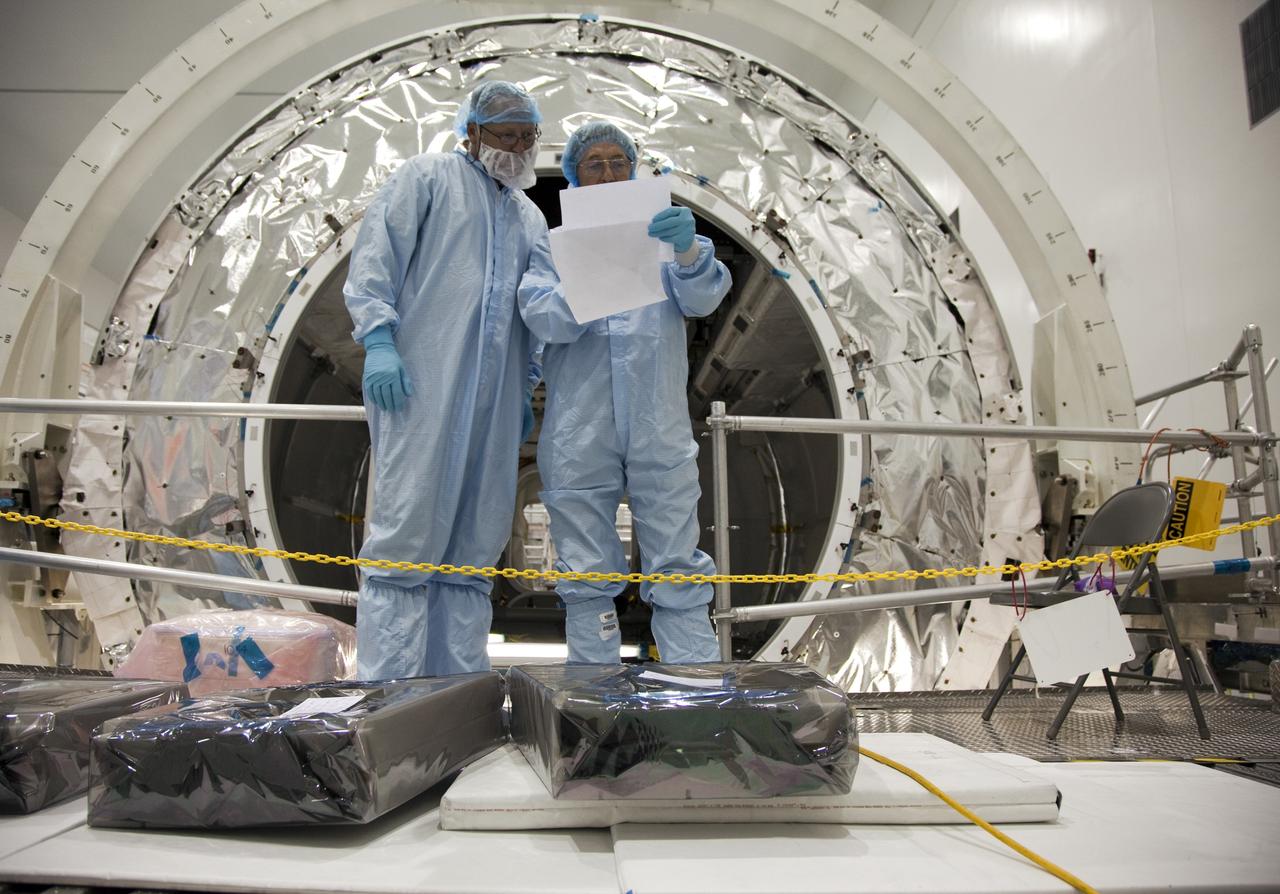
CAPE CANAVERAL, Fla. -- In the Space Station Processing Facility at NASA's Kennedy Space Center in Florida, technicians garbed in protective wear, commonly known as 'bunny suits,' check out the installation plans for the correct placement of the cargo inside the Raffaello multi-purpose logistics module for shuttle Atlantis' flight to the International Space Station. Atlantis and its payload is being prepared for the STS-135 mission, which will deliver the Raffaello multi-purpose logistics module packed with supplies and spare parts to the station. Atlantis is targeted to launch June 28, and will be the last shuttle flight for the Space Shuttle Program. For more information visit, http://www.nasa.gov/mission_pages/shuttle/shuttlemissions/sts135/index.html. Photo credit: NASA/Frankie Martin
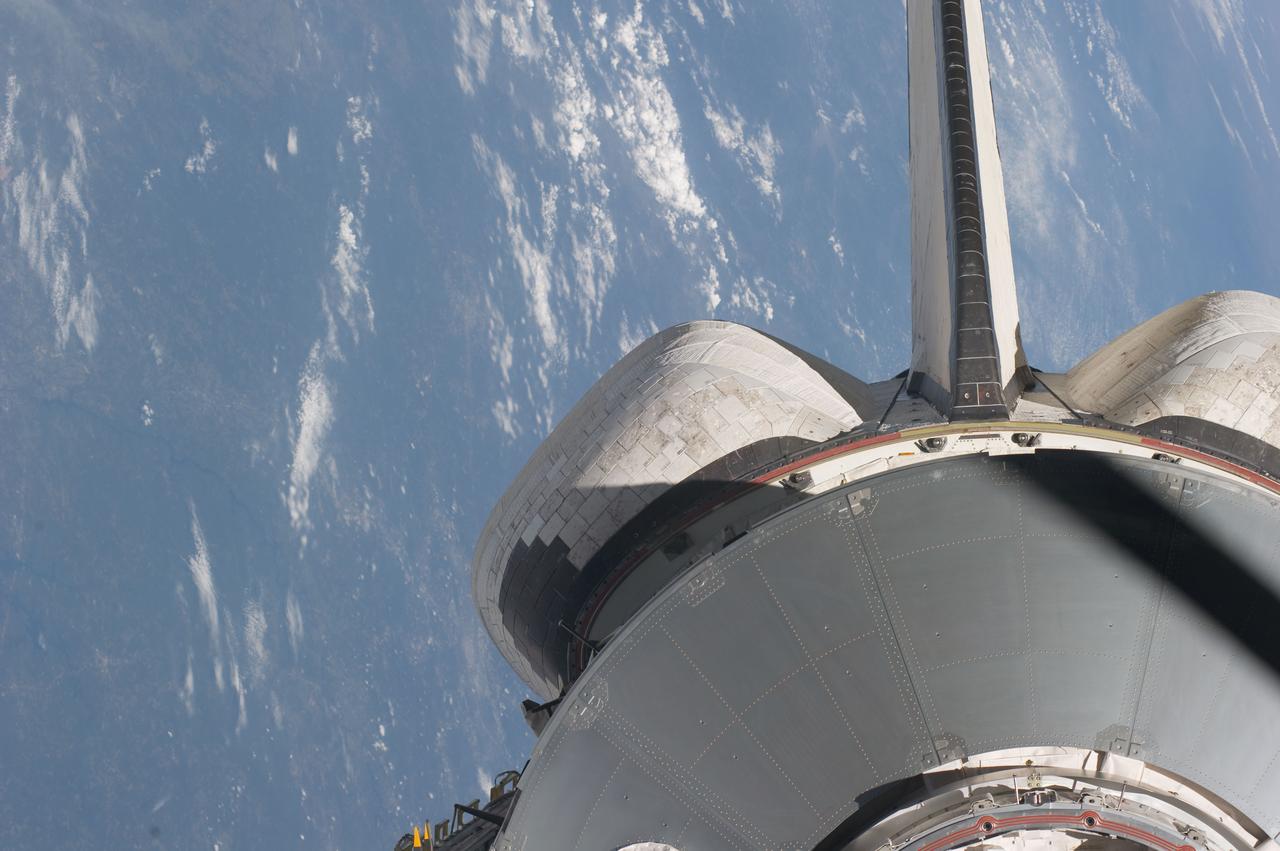
S135-E-006449(9 July 2011) --- Backdropped against a mostly blue Earth scene, part of the Raffaello multi-purpose logistics module, packed with supplies and spare parts for the International Space Station, the vertical stabilizer of space shuttle Atlantis and the orbital maneuvering system (OMS) pods are seen in this view photographed by one of the STS-135 crewmembers using windows on the spacecraft's aft flight deck during the mission's second day of activities in Earth orbit. Photo credit: NASA
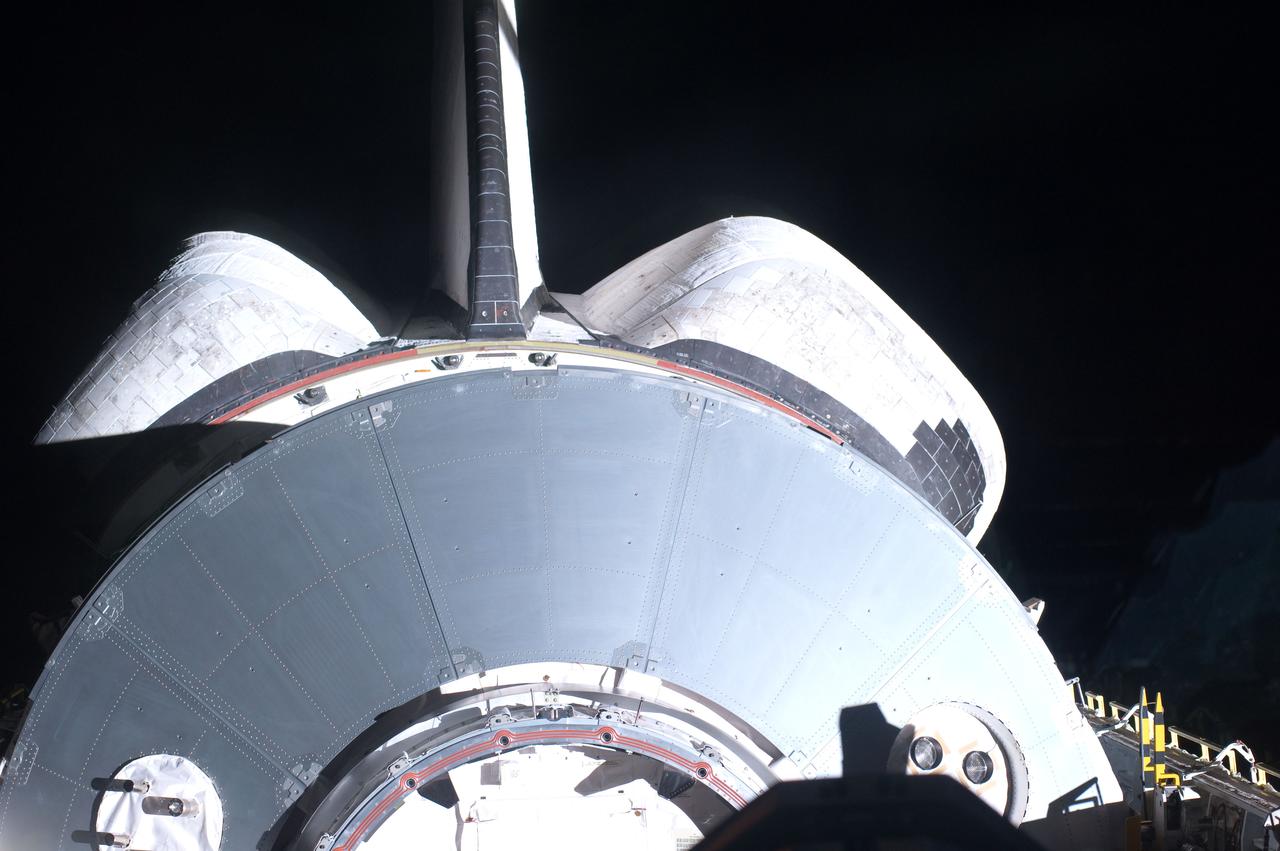
S135-E-006440 (9 July 2011) --- Part of the Raffaello multi-purpose logistics module, packed with supplies and spare parts for the International Space Station, the vertical stabilizer of space shuttle Atlantis and the orbital maneuvering system (OMS) pods are seen in this view photographed by one of the STS-135 crewmembers using windows on the spacecraft's aft flight deck during the mission's second day of activities in Earth orbit. Photo credit: NASA
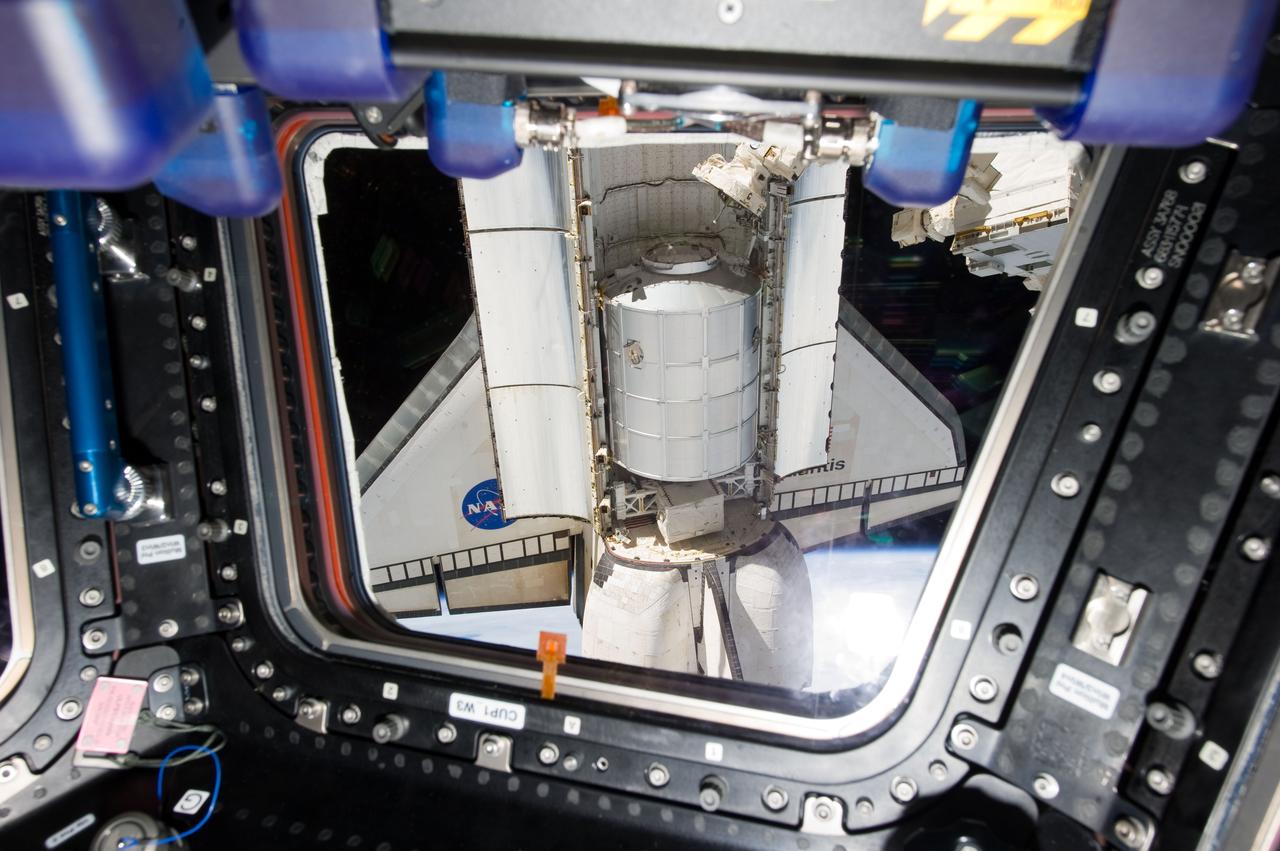
S135-E-009330 (18 July 2011) --- As seen through one of the windows on the International Space Station's Cupola, this is a view of the space shuttle Atlantis and its Raffaello multi-purpose logistics module during the final day of being docked with the International Space Station. Photo credit: NASA
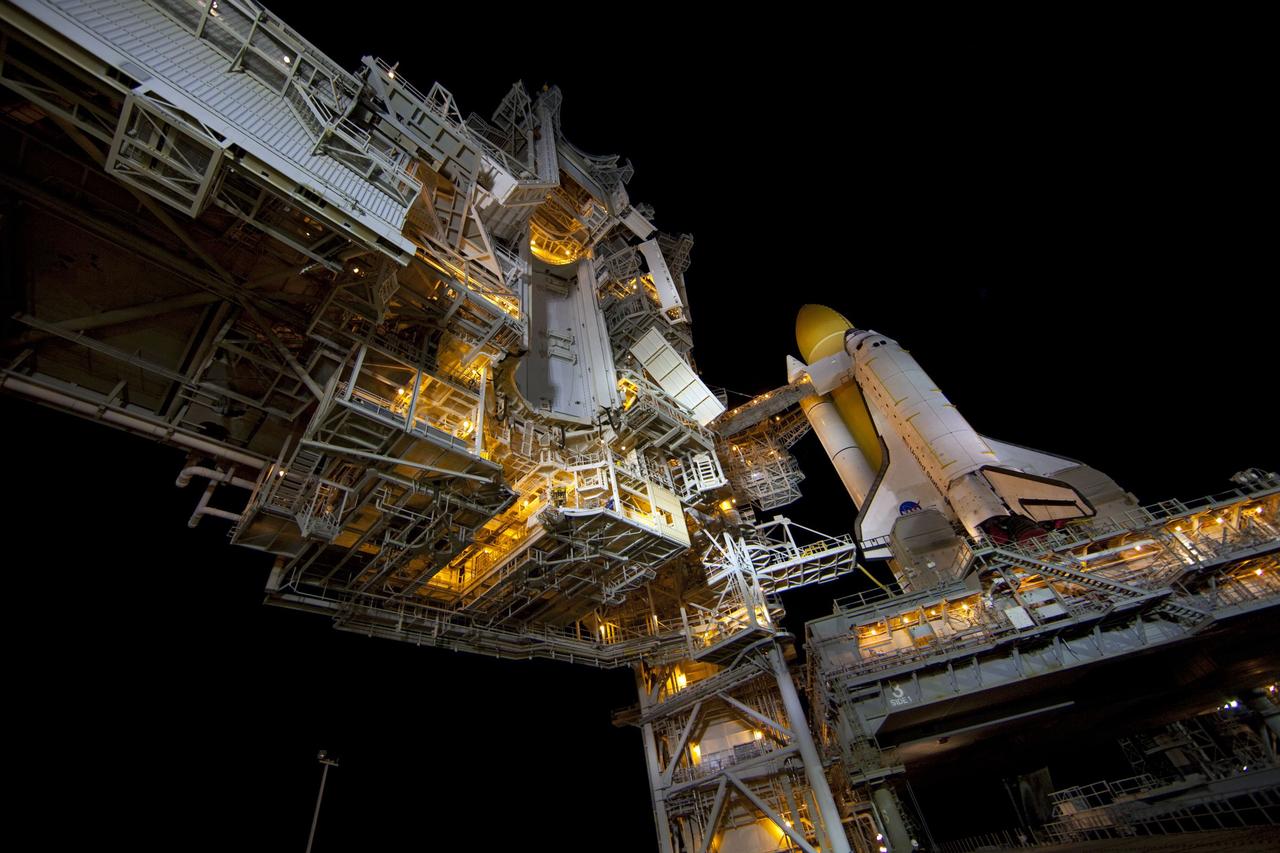
CAPE CANAVERAL, Fla. -- A canister, carrying the Raffaello multi-purpose logistics module (MPLM) for space shuttle Atlantis' STS-135 mission to the International Space Station, arrives at Launch Pad 39A at NASA's Kennedy Space Center in Florida. The canister will be lifted to the payload changeout room (seen here center of image). The payload ground-handling mechanism then will be used to transfer Raffaello out of the canister into Atlantis' payload bay. Next, the rotating service structure that protects the shuttle from the elements and provides access will be rotated back into place. Commander Chris Ferguson, Pilot Doug Hurley and Mission Specialists Sandra Magnus and Rex Walheim are targeted to lift off on Atlantis July 8, taking with them the MPLM packed with supplies, logistics and spare parts to the station. The STS-135 mission also will fly a system to investigate the potential for robotically refueling existing satellites and return a failed ammonia pump module to help NASA better understand the failure mechanism and improve pump designs for future systems. STS-135 will be the 33rd flight of Atlantis, the 37th shuttle mission to the space station, and the 135th and final mission of NASA's Space Shuttle Program. For more information visit, www.nasa.gov/mission_pages/shuttle/shuttlemissions/sts135/index.html. Photo credit: NASA/Frank Michaux
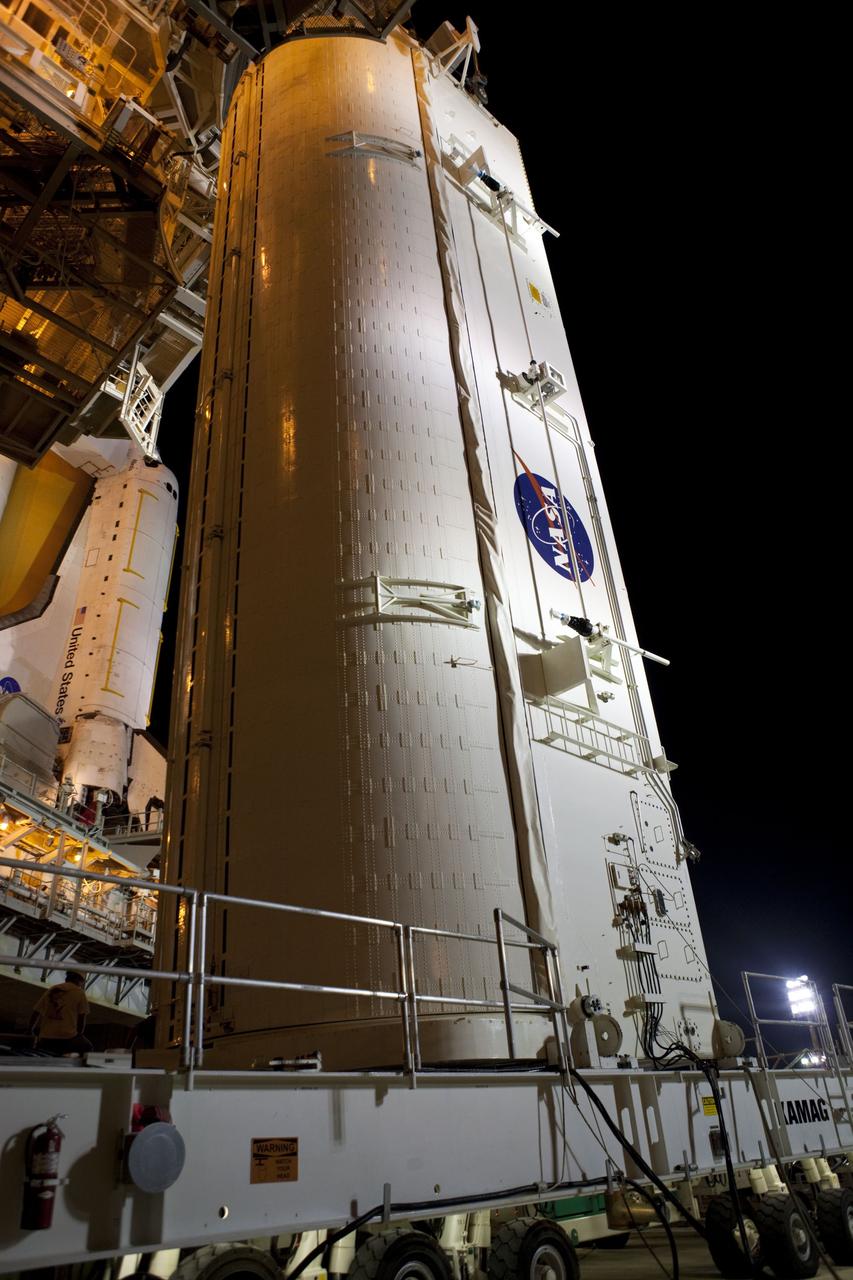
CAPE CANAVERAL, Fla. -- A canister, carrying the Raffaello multi-purpose logistics module (MPLM) for space shuttle Atlantis' STS-135 mission to the International Space Station, arrives at Launch Pad 39A at NASA's Kennedy Space Center in Florida. The canister will be lifted to the payload changeout room. The payload ground-handling mechanism then will be used to transfer Raffaello out of the canister into Atlantis' payload bay. Next, the rotating service structure that protects the shuttle from the elements and provides access will be rotated back into place. Commander Chris Ferguson, Pilot Doug Hurley and Mission Specialists Sandra Magnus and Rex Walheim are targeted to lift off on Atlantis July 8, taking with them the MPLM packed with supplies, logistics and spare parts to the station. The STS-135 mission also will fly a system to investigate the potential for robotically refueling existing satellites and return a failed ammonia pump module to help NASA better understand the failure mechanism and improve pump designs for future systems. STS-135 will be the 33rd flight of Atlantis, the 37th shuttle mission to the space station, and the 135th and final mission of NASA's Space Shuttle Program. For more information visit, www.nasa.gov/mission_pages/shuttle/shuttlemissions/sts135/index.html. Photo credit: NASA/Dimitri Gerondidakis
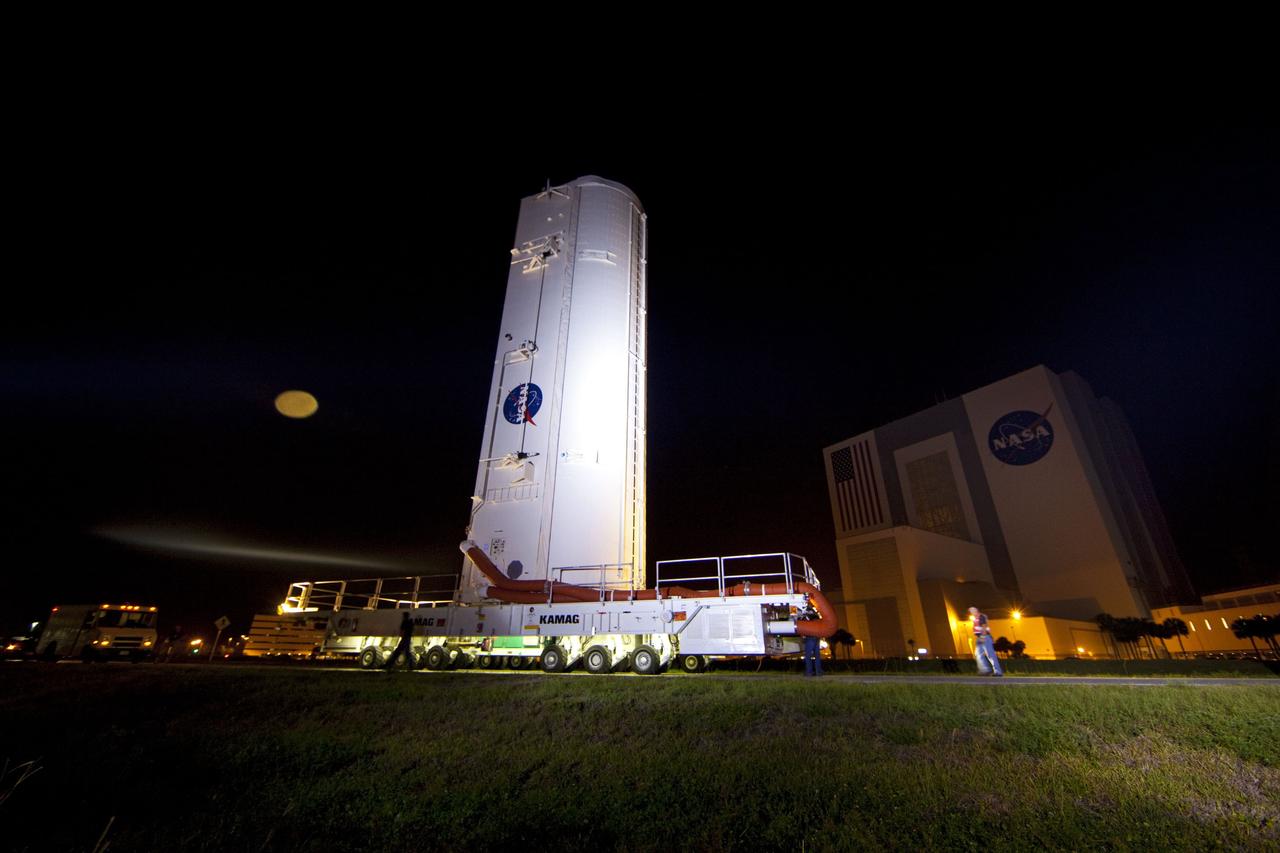
CAPE CANAVERAL, Fla. -- The container that carries the Raffaello multi-purpose logistics module (MPLM), secured on its transportation vehicle, makes its way past the Vehicle Assembly Building to Launch Pad 39A at NASA's Kennedy Space Center in Florida. Once there, the canister will be lifted to the payload changeout room. The payload ground-handling mechanism then will be used to transfer Raffaello out of the canister into space shuttle Atlantis' payload bay. Next, the rotating service structure that protects the shuttle from the elements and provides access will be rotated back into place. Commander Chris Ferguson, Pilot Doug Hurley and Mission Specialists Sandra Magnus and Rex Walheim are targeted to lift off on Atlantis July 8, taking with them the MPLM packed with supplies, logistics and spare parts to the station. The STS-135 mission also will fly a system to investigate the potential for robotically refueling existing satellites and return a failed ammonia pump module to help NASA better understand the failure mechanism and improve pump designs for future systems. STS-135 will be the 33rd flight of Atlantis, the 37th shuttle mission to the space station, and the 135th and final mission of NASA's Space Shuttle Program. For more information visit, www.nasa.gov/mission_pages/shuttle/shuttlemissions/sts135/index.html. Photo credit: NASA/Frank Michaux
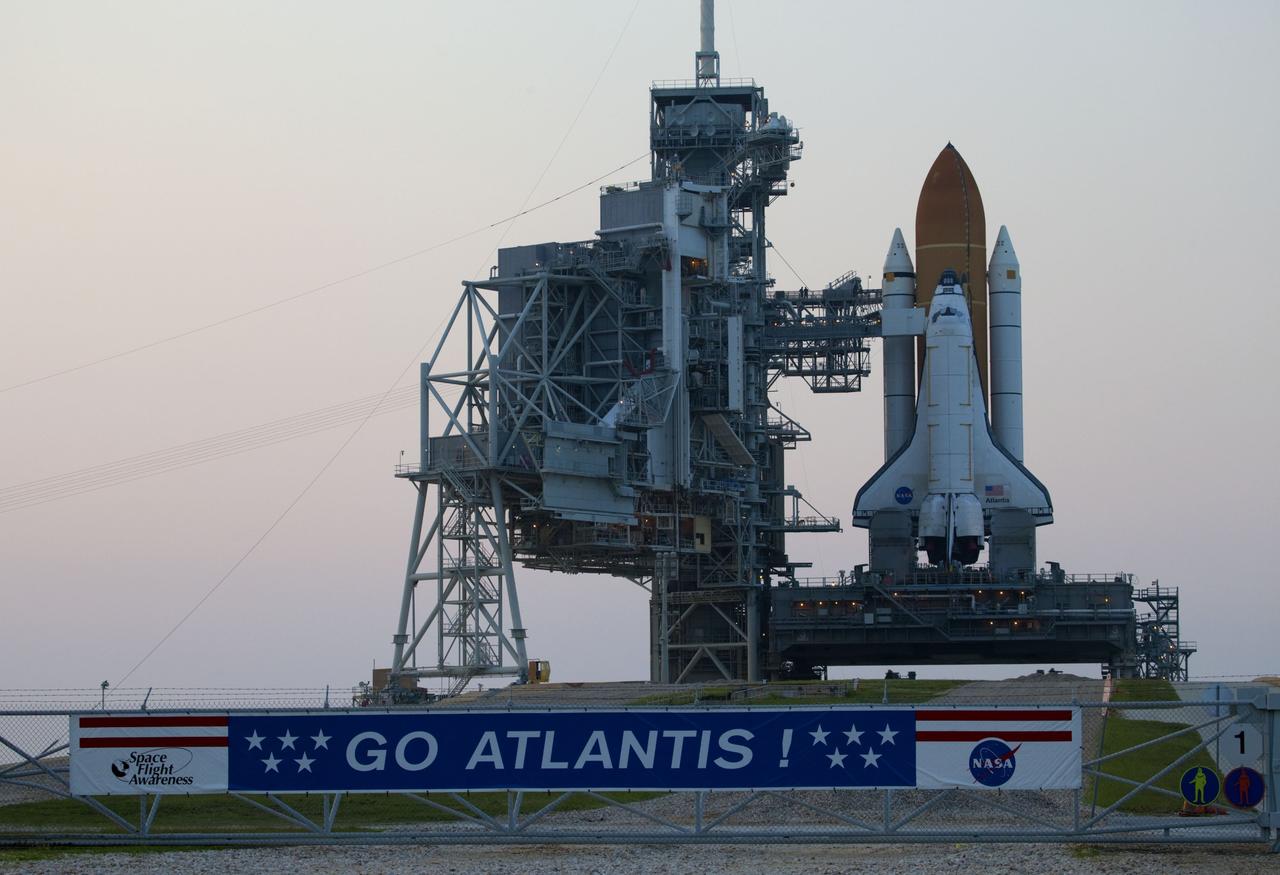
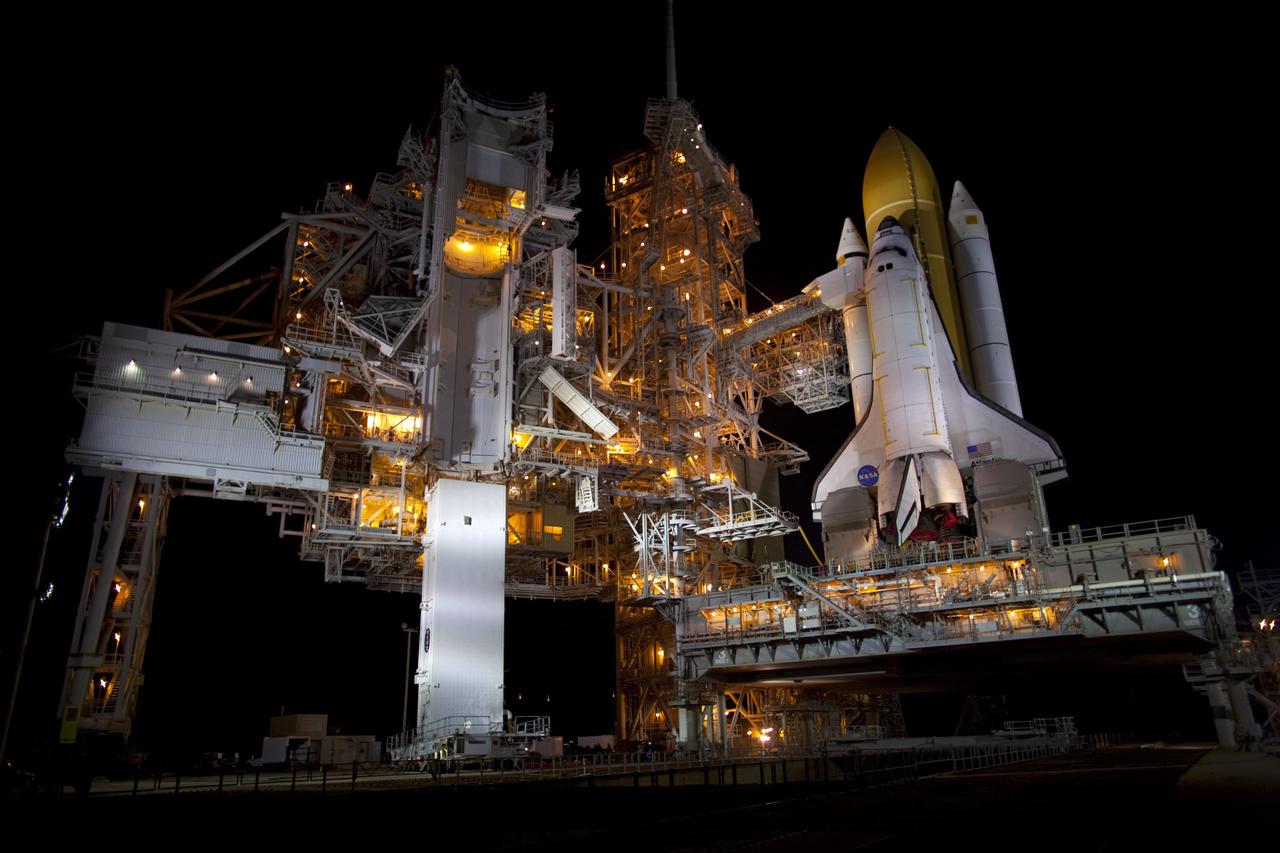
CAPE CANAVERAL, Fla. -- After sunset, lights glow on Launch Pad 39A at NASA's Kennedy Space Center in Florida as space shuttle Atlantis awaits delivery of the Raffaello multi-purpose logistics module (MPLM) in its transportation canister. Once delivered, the canister will be lifted to the payload changeout room. The payload ground-handling mechanism then will be used to transfer Raffaello out of the canister into Atlantis' payload bay. Next, the rotating service structure that protects the shuttle from the elements and provides access will be rotated back into place. Commander Chris Ferguson, Pilot Doug Hurley and Mission Specialists Sandra Magnus and Rex Walheim are targeted to lift off on Atlantis July 8, taking with them the MPLM packed with supplies, logistics and spare parts to the station. The STS-135 mission also will fly a system to investigate the potential for robotically refueling existing satellites and return a failed ammonia pump module to help NASA better understand the failure mechanism and improve pump designs for future systems. STS-135 will be the 33rd flight of Atlantis, the 37th shuttle mission to the space station, and the 135th and final mission of NASA's Space Shuttle Program. For more information visit, www.nasa.gov/mission_pages/shuttle/shuttlemissions/sts135/index.html. Photo credit: NASA/Frank Michaux
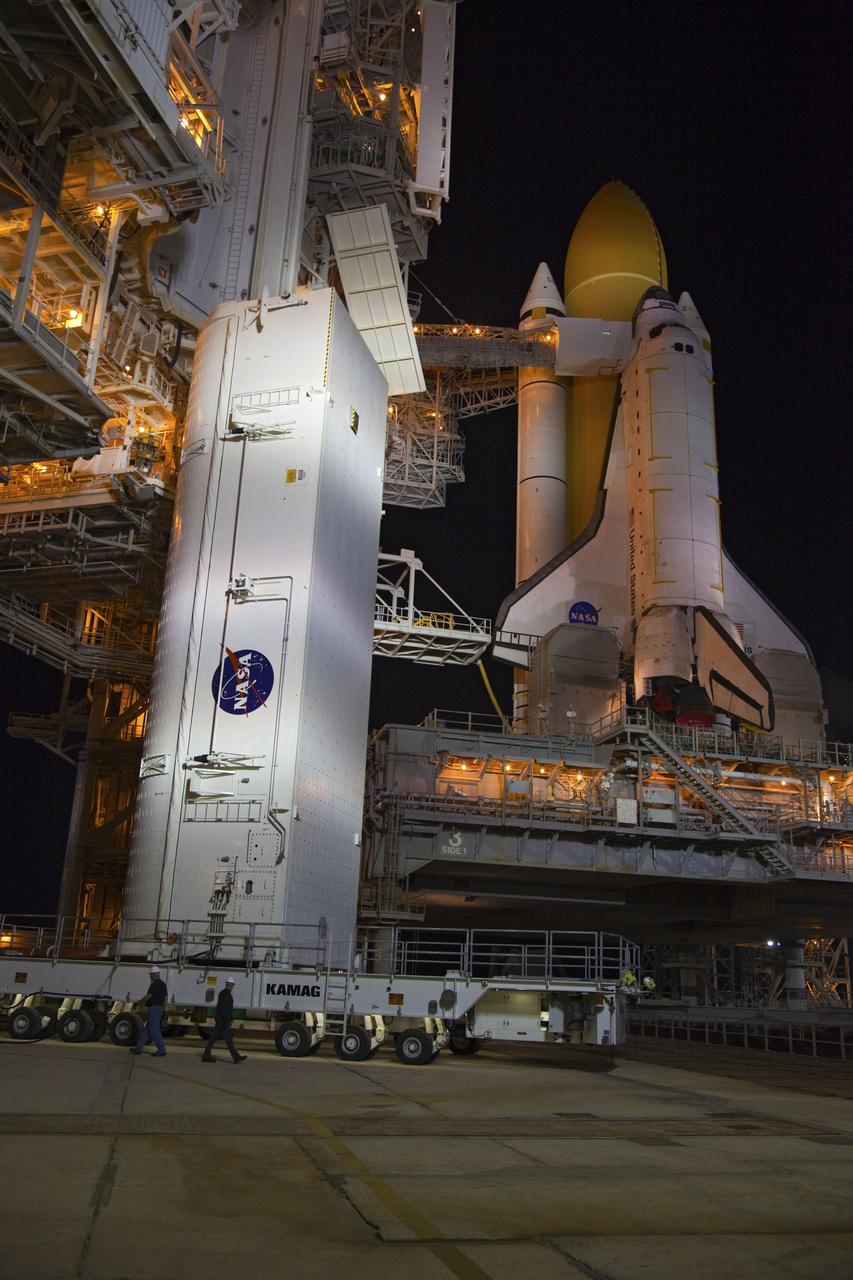
CAPE CANAVERAL, Fla. -- A canister, carrying the Raffaello multi-purpose logistics module (MPLM) for space shuttle Atlantis' STS-135 mission to the International Space Station, arrives at Launch Pad 39A at NASA's Kennedy Space Center in Florida. The canister will be lifted to the payload changeout room. The payload ground-handling mechanism then will be used to transfer Raffaello out of the canister into Atlantis' payload bay. Next, the rotating service structure that protects the shuttle from the elements and provides access will be rotated back into place. Commander Chris Ferguson, Pilot Doug Hurley and Mission Specialists Sandra Magnus and Rex Walheim are targeted to lift off on Atlantis July 8, taking with them the MPLM packed with supplies, logistics and spare parts to the station. The STS-135 mission also will fly a system to investigate the potential for robotically refueling existing satellites and return a failed ammonia pump module to help NASA better understand the failure mechanism and improve pump designs for future systems. STS-135 will be the 33rd flight of Atlantis, the 37th shuttle mission to the space station, and the 135th and final mission of NASA's Space Shuttle Program. For more information visit, www.nasa.gov/mission_pages/shuttle/shuttlemissions/sts135/index.html. Photo credit: NASA/Frank Michaux
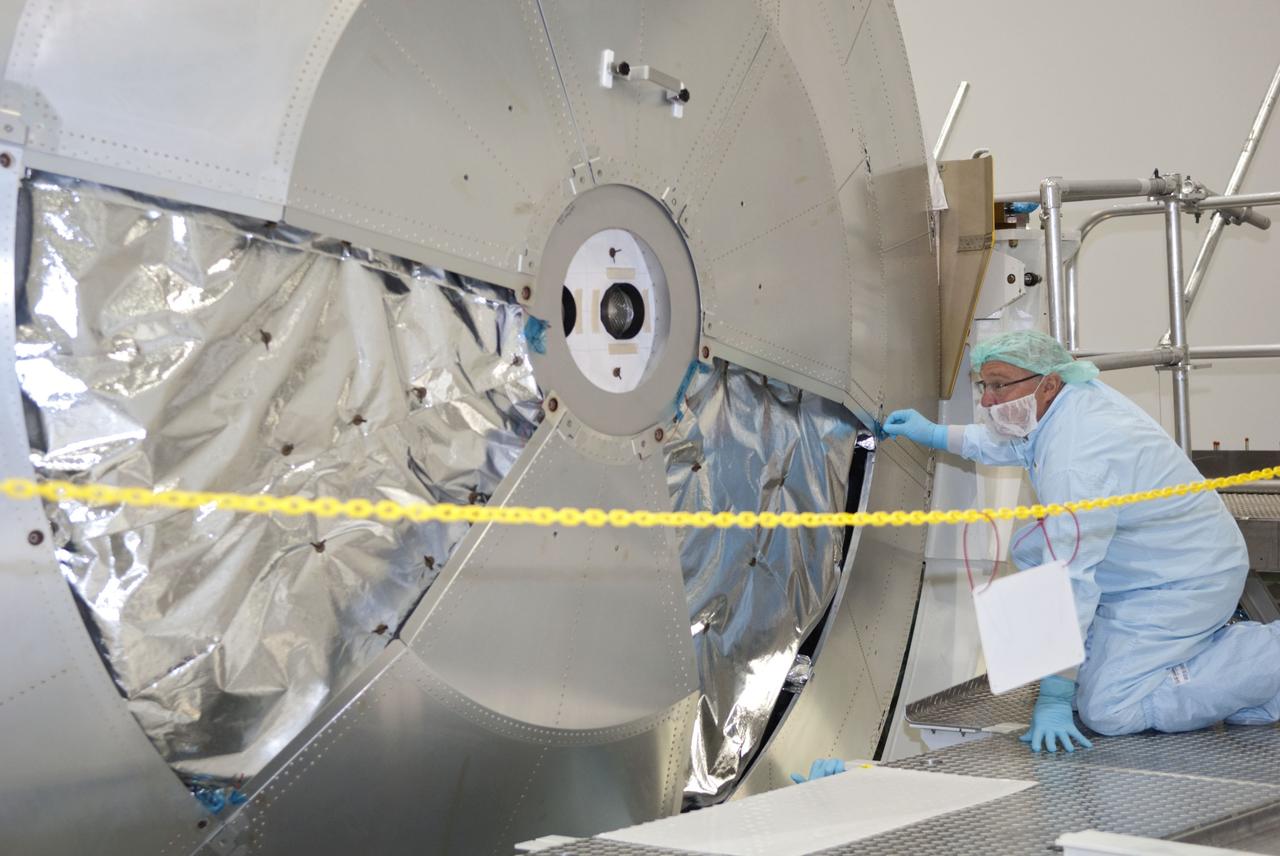
CAPE CANAVERAL, Fla. -- In the Space Station Processing Facility at NASA's Kennedy Space Center in Florida, technicians are installing a debris shield over the aft hatch on the Raffaello multi-purpose logistics module for shuttle Atlantis' flight to the International Space Station. Commander Chris Ferguson, Pilot Doug Hurley and Mission Specialists Sandra Magnus and Rex Walheim are targeted to lift off on July 8, taking with them the Raffaello multi-purpose logistics module packed with supplies, logistics and spare parts. The STS-135 mission also will fly a system to investigate the potential for robotically refueling existing spacecraft and return a failed ammonia pump module to help NASA better understand the failure mechanism and improve pump designs for future systems. STS-135 will be the 33rd flight of Atlantis, the 37th shuttle mission to the space station, and the 135th and final mission of NASA's Space Shuttle Program. For more information visit, www.nasa.gov/mission_pages/shuttle/shuttlemissions/sts135/index.html. Photo credit: NASA/Jim Grossmann
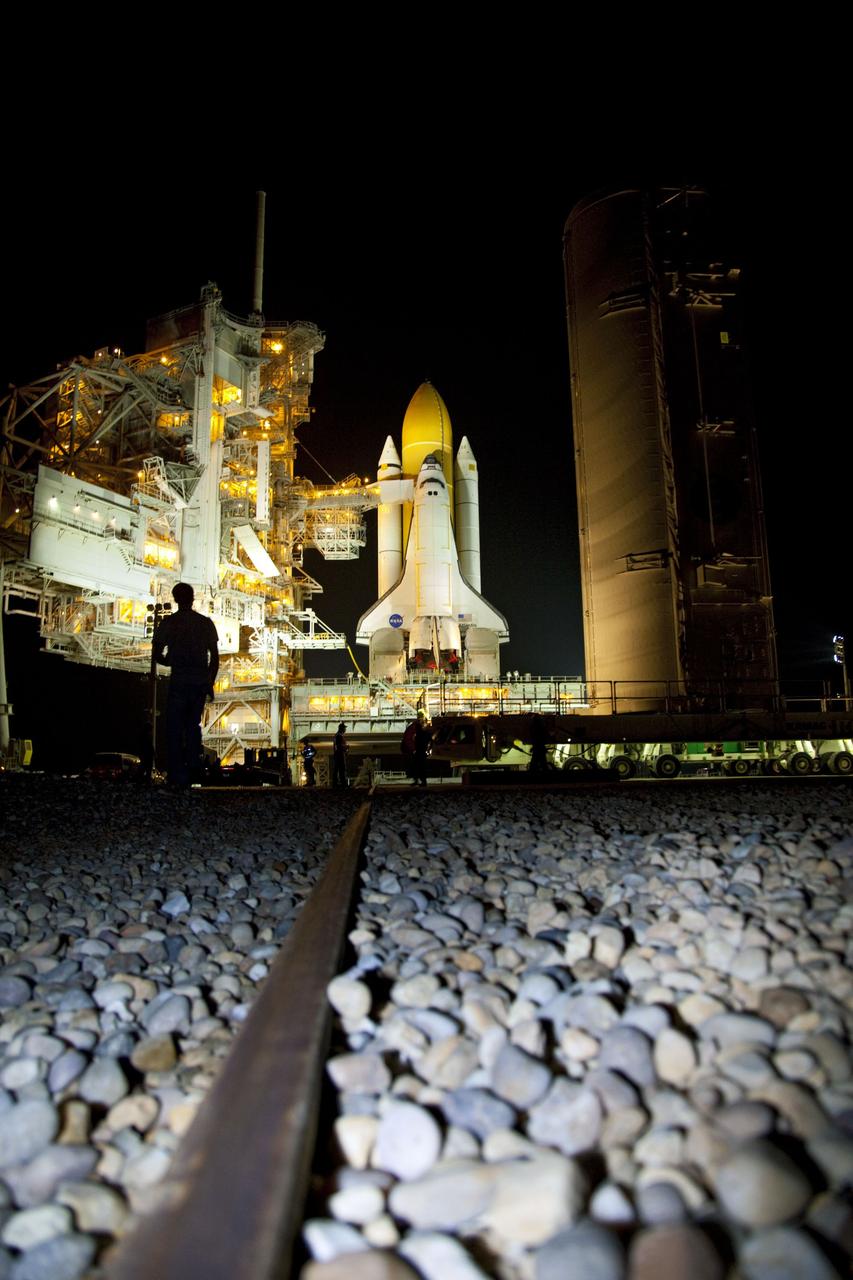
CAPE CANAVERAL, Fla. -- A canister, carrying the Raffaello multi-purpose logistics module (MPLM) for space shuttle Atlantis' STS-135 mission to the International Space Station, arrives at Launch Pad 39A at NASA's Kennedy Space Center in Florida. The canister will be lifted to the payload changeout room. The payload ground-handling mechanism then will be used to transfer Raffaello out of the canister into Atlantis' payload bay. Next, the rotating service structure that protects the shuttle from the elements and provides access will be rotated back into place. Commander Chris Ferguson, Pilot Doug Hurley and Mission Specialists Sandra Magnus and Rex Walheim are targeted to lift off on Atlantis July 8, taking with them the MPLM packed with supplies, logistics and spare parts to the station. The STS-135 mission also will fly a system to investigate the potential for robotically refueling existing satellites and return a failed ammonia pump module to help NASA better understand the failure mechanism and improve pump designs for future systems. STS-135 will be the 33rd flight of Atlantis, the 37th shuttle mission to the space station, and the 135th and final mission of NASA's Space Shuttle Program. For more information visit, www.nasa.gov/mission_pages/shuttle/shuttlemissions/sts135/index.html. Photo credit: NASA/Frank Michaux
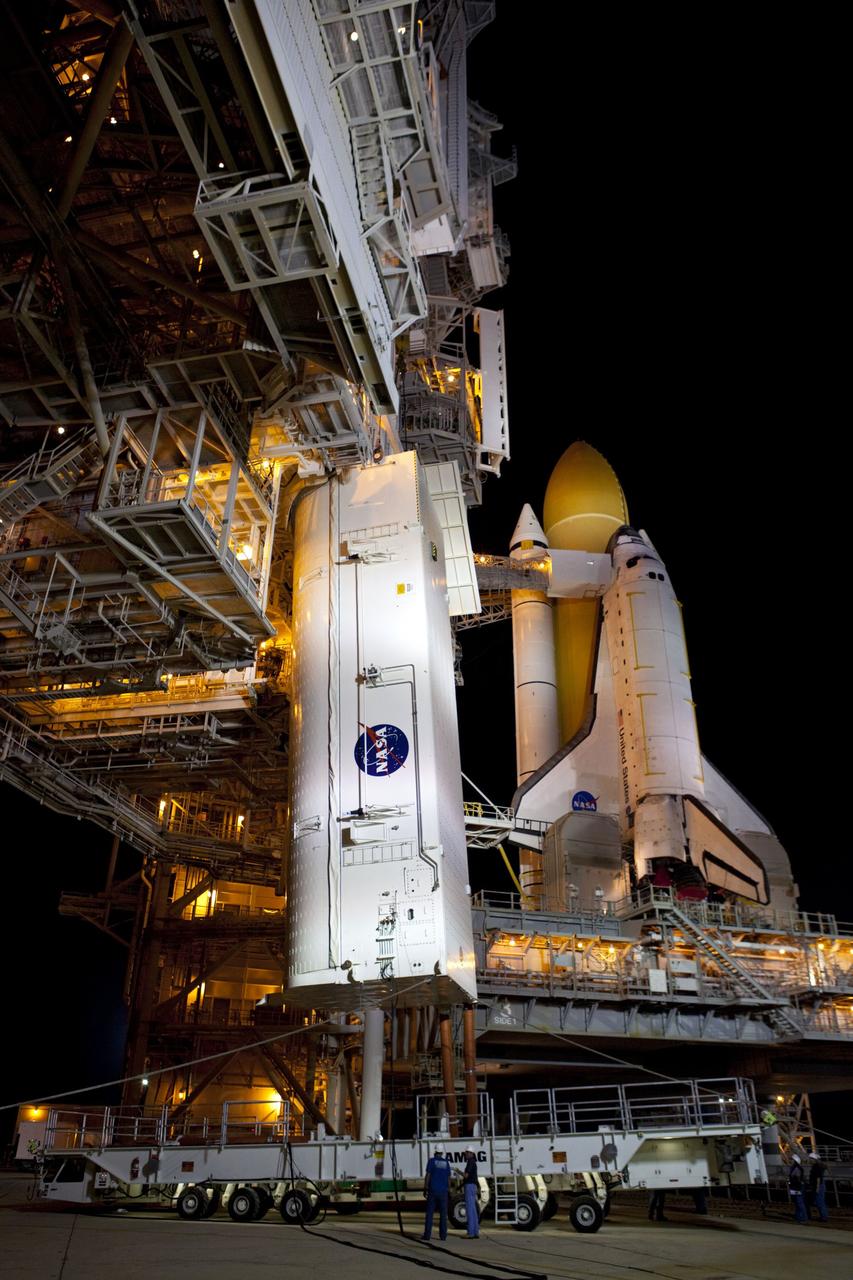
CAPE CANAVERAL, Fla. -- The payload canister carrying the Raffaello multi-purpose logistics module (MPLM) is lifted to the payload changeout room on the rotating service structure (RSS) on Launch Pad 39A at NASA's Kennedy Space Center in Florida. Umbilical hoses, maintaining a controlled environment for the cargo are attached to the lower end of the canister. The payload ground-handling mechanism then will be used to transfer Raffaello out of the canister into Atlantis' payload bay. Next, the RSS that protects the shuttle from the elements and provides access will be rotated back into place. Commander Chris Ferguson, Pilot Doug Hurley and Mission Specialists Sandra Magnus and Rex Walheim are targeted to lift off on Atlantis July 8, taking with them the MPLM packed with supplies, logistics and spare parts to the station. The STS-135 mission also will fly a system to investigate the potential for robotically refueling existing satellites and return a failed ammonia pump module to help NASA better understand the failure mechanism and improve pump designs for future systems. STS-135 will be the 33rd flight of Atlantis, the 37th shuttle mission to the space station, and the 135th and final mission of NASA's Space Shuttle Program. For more information visit, www.nasa.gov/mission_pages/shuttle/shuttlemissions/sts135/index.html. Photo credit: NASA/Dimitri Gerondidakis
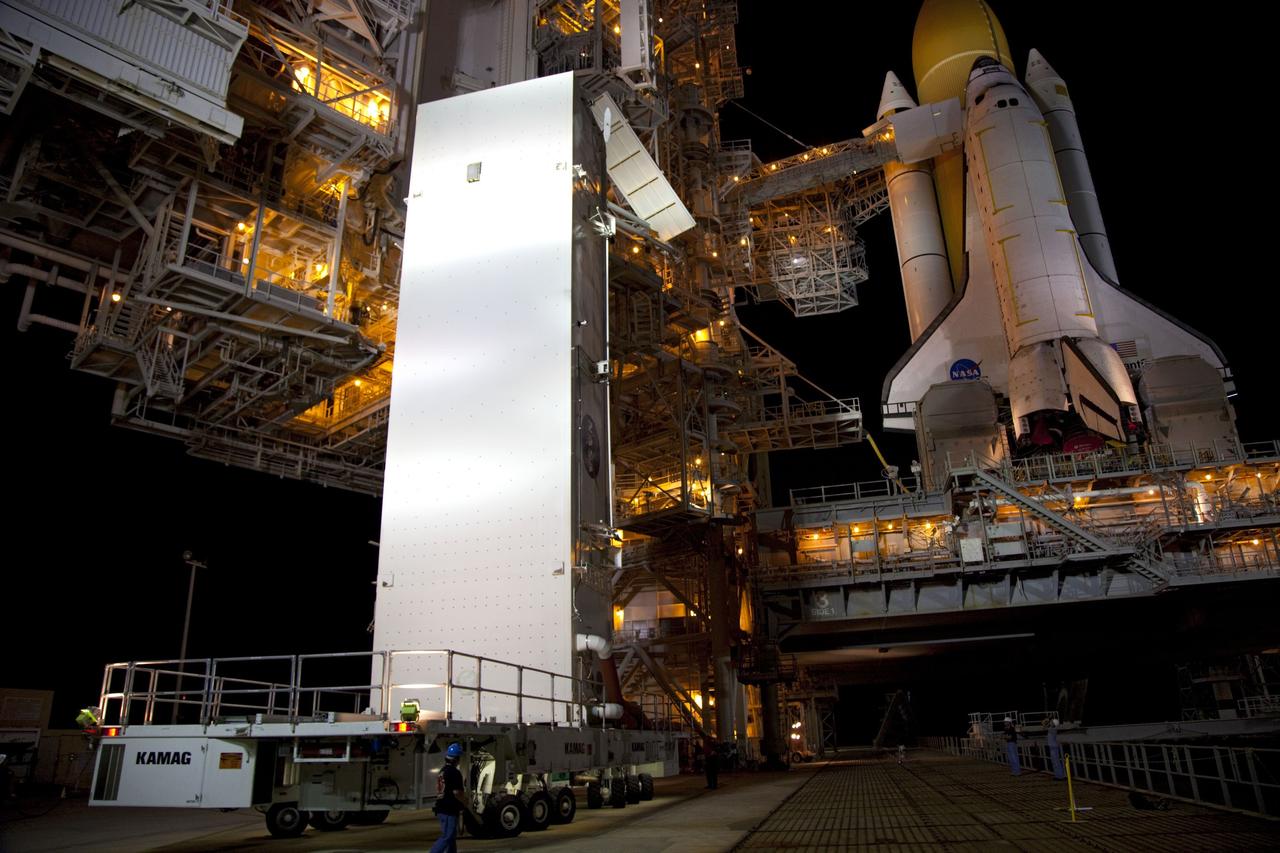
CAPE CANAVERAL, Fla. -- A canister, carrying the Raffaello multi-purpose logistics module (MPLM) for space shuttle Atlantis' STS-135 mission to the International Space Station, arrives at Launch Pad 39A at NASA's Kennedy Space Center in Florida. The canister will be lifted to the payload changeout room. The payload ground-handling mechanism then will be used to transfer Raffaello out of the canister into Atlantis' payload bay. Next, the rotating service structure that protects the shuttle from the elements and provides access will be rotated back into place. Commander Chris Ferguson, Pilot Doug Hurley and Mission Specialists Sandra Magnus and Rex Walheim are targeted to lift off on Atlantis July 8, taking with them the MPLM packed with supplies, logistics and spare parts to the station. The STS-135 mission also will fly a system to investigate the potential for robotically refueling existing satellites and return a failed ammonia pump module to help NASA better understand the failure mechanism and improve pump designs for future systems. STS-135 will be the 33rd flight of Atlantis, the 37th shuttle mission to the space station, and the 135th and final mission of NASA's Space Shuttle Program. For more information visit, www.nasa.gov/mission_pages/shuttle/shuttlemissions/sts135/index.html. Photo credit: NASA/Frank Michaux
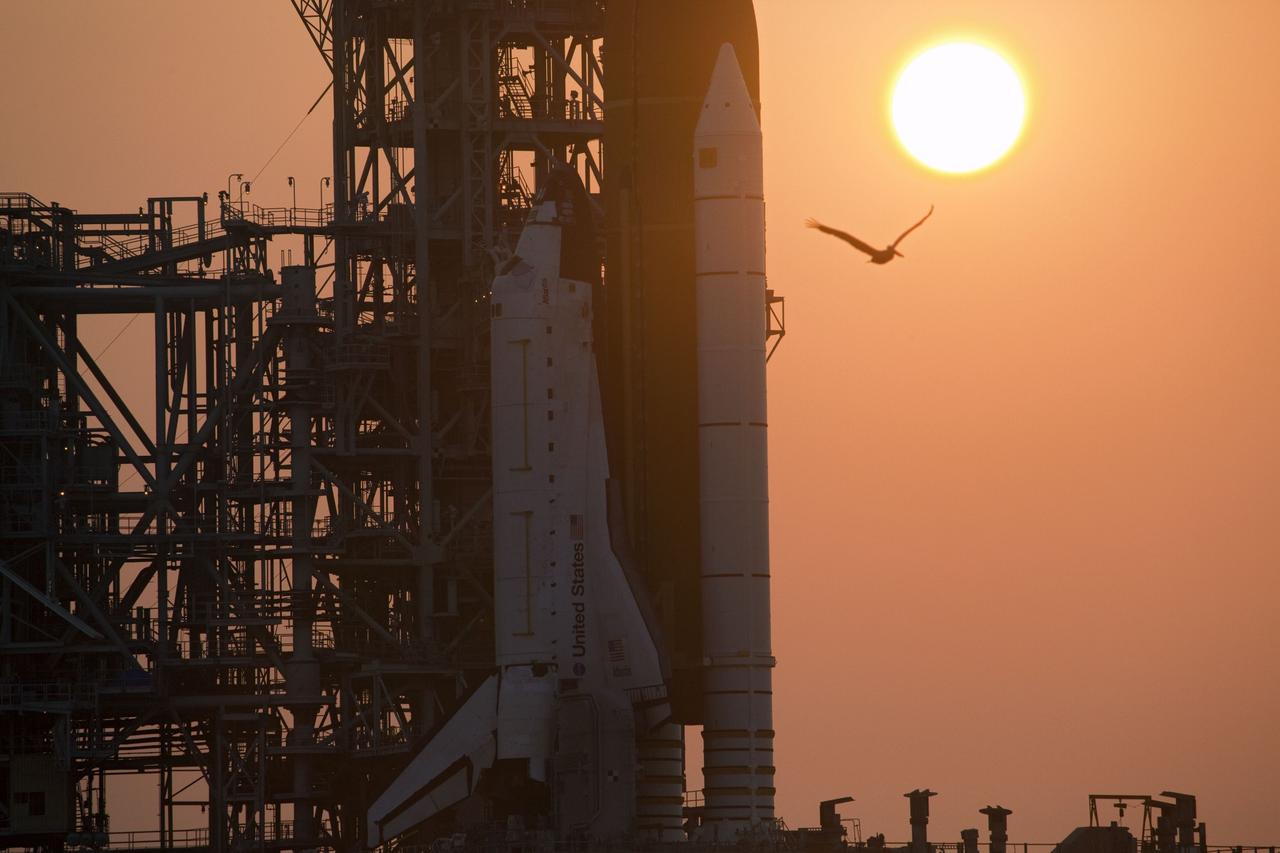
CAPE CANAVERAL, Fla. -- A hazy sun sets over Launch Pad 39A at NASA's Kennedy Space Center in Florida as space shuttle Atlantis awaits delivery of the Raffaello multi-purpose logistics module (MPLM) in its transportation canister. Once delivered, the canister will be lifted to the payload changeout room. The payload ground-handling mechanism then will be used to transfer Raffaello out of the canister into Atlantis' payload bay. Next, the rotating service structure that protects the shuttle from the elements and provides access will be rotated back into place. Commander Chris Ferguson, Pilot Doug Hurley and Mission Specialists Sandra Magnus and Rex Walheim are targeted to lift off on Atlantis July 8, taking with them the MPLM packed with supplies, logistics and spare parts to the station. The STS-135 mission also will fly a system to investigate the potential for robotically refueling existing satellites and return a failed ammonia pump module to help NASA better understand the failure mechanism and improve pump designs for future systems. STS-135 will be the 33rd flight of Atlantis, the 37th shuttle mission to the space station, and the 135th and final mission of NASA's Space Shuttle Program. For more information visit, www.nasa.gov/mission_pages/shuttle/shuttlemissions/sts135/index.html. Photo credit: NASA/Frank Michaux
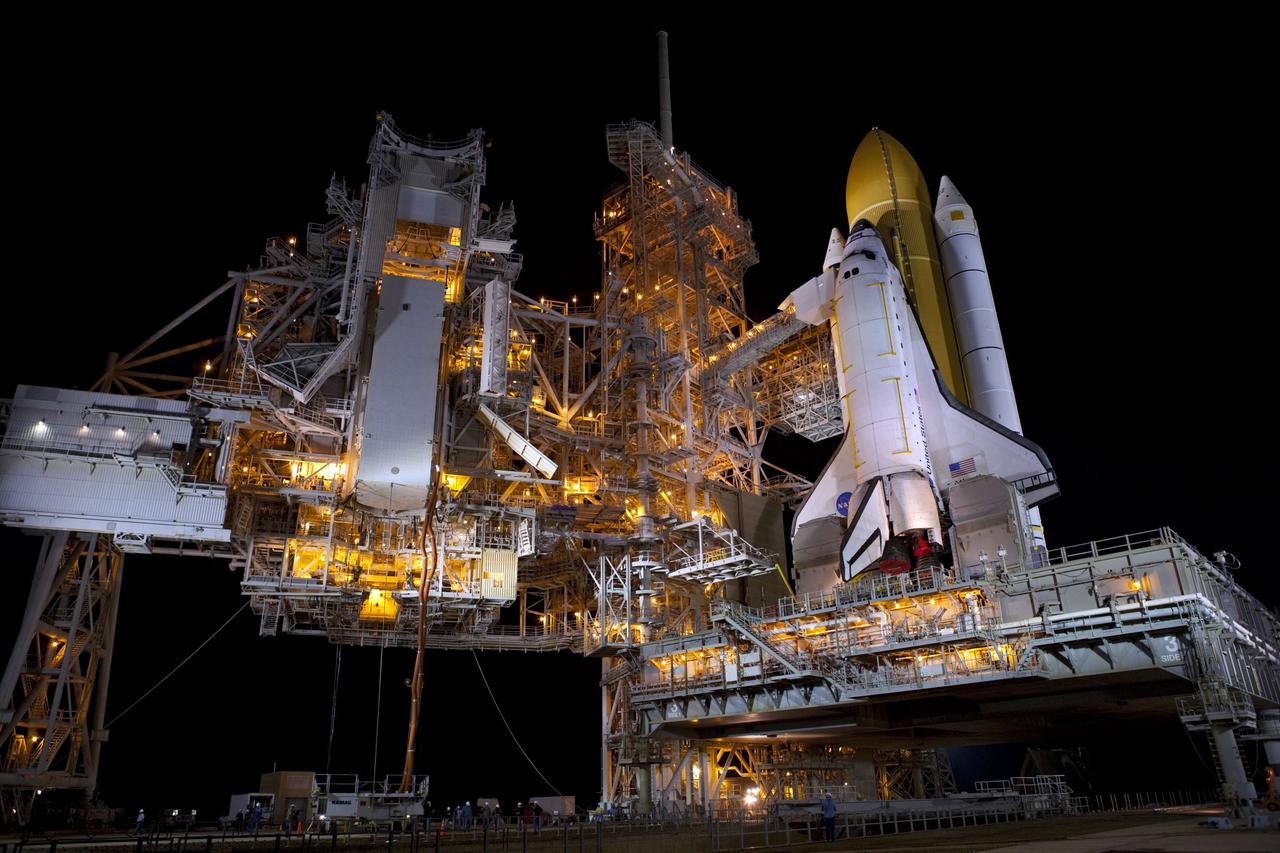
CAPE CANAVERAL, Fla. -- The payload canister carrying the Raffaello multi-purpose logistics module (MPLM) is lifted to the payload changeout room on the rotating service structure (RSS) on Launch Pad 39A at NASA's Kennedy Space Center in Florida. Umbilical hoses, maintaining a controlled environment for the cargo are attached to the lower end of the canister. The payload ground-handling mechanism then will be used to transfer Raffaello out of the canister into Atlantis' payload bay. Next, the RSS that protects the shuttle from the elements and provides access will be rotated back into place. Commander Chris Ferguson, Pilot Doug Hurley and Mission Specialists Sandra Magnus and Rex Walheim are targeted to lift off on Atlantis July 8, taking with them the MPLM packed with supplies, logistics and spare parts to the station. The STS-135 mission also will fly a system to investigate the potential for robotically refueling existing satellites and return a failed ammonia pump module to help NASA better understand the failure mechanism and improve pump designs for future systems. STS-135 will be the 33rd flight of Atlantis, the 37th shuttle mission to the space station, and the 135th and final mission of NASA's Space Shuttle Program. For more information visit, www.nasa.gov/mission_pages/shuttle/shuttlemissions/sts135/index.html. Photo credit: NASA/Dimitri Gerondidakis
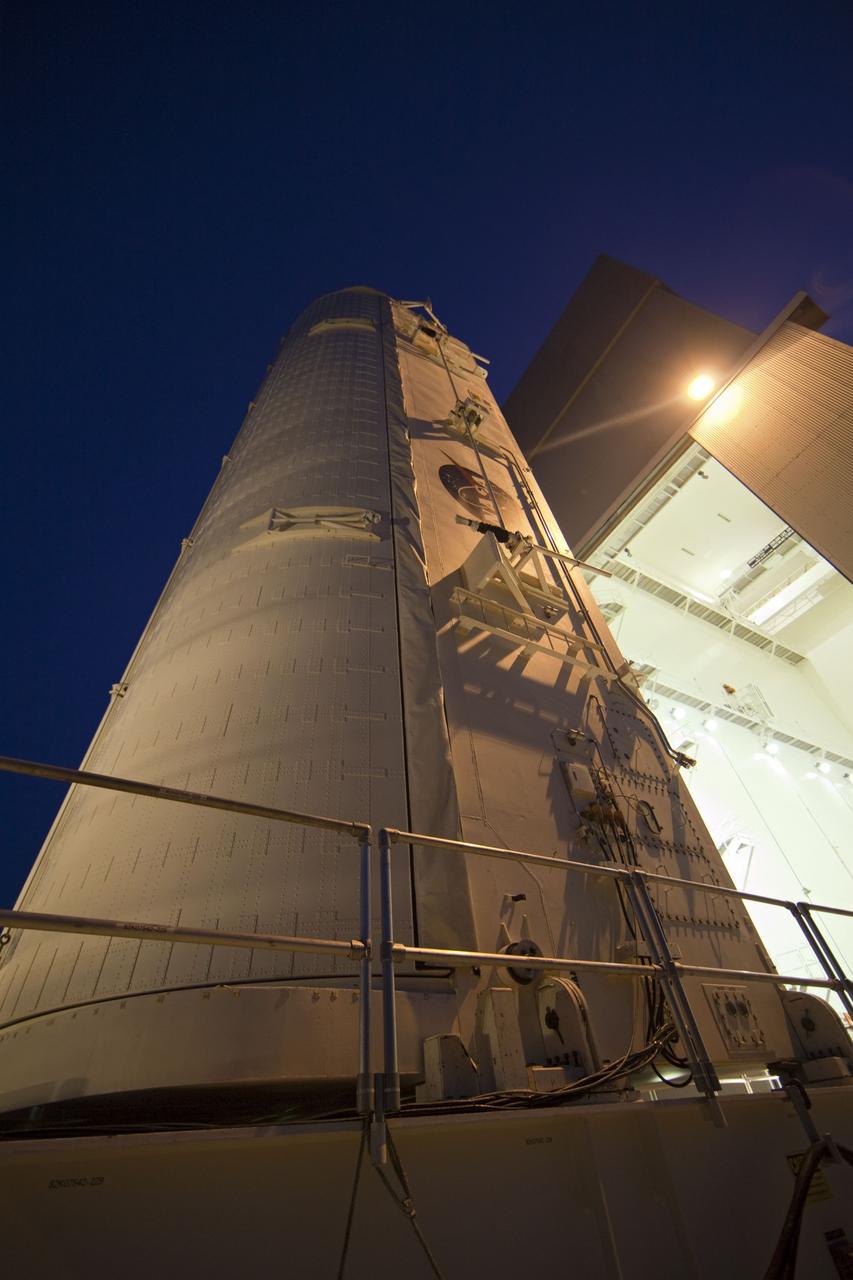
CAPE CANAVERAL, Fla. -- The container that carries the Raffaello multi-purpose logistics module (MPLM), secured on its transportation vehicle, begins its journey from the Canister Rotation Facility to Launch Pad 39A at NASA's Kennedy Space Center in Florida. Once there, the canister will be lifted to the payload changeout room. The payload ground-handling mechanism then will be used to transfer Raffaello out of the canister into space shuttle Atlantis' payload bay. Next, the rotating service structure that protects the shuttle from the elements and provides access will be rotated back into place. Commander Chris Ferguson, Pilot Doug Hurley and Mission Specialists Sandra Magnus and Rex Walheim are targeted to lift off on Atlantis July 8, taking with them the MPLM packed with supplies, logistics and spare parts to the station. The STS-135 mission also will fly a system to investigate the potential for robotically refueling existing satellites and return a failed ammonia pump module to help NASA better understand the failure mechanism and improve pump designs for future systems. STS-135 will be the 33rd flight of Atlantis, the 37th shuttle mission to the space station, and the 135th and final mission of NASA's Space Shuttle Program. For more information visit, www.nasa.gov/mission_pages/shuttle/shuttlemissions/sts135/index.html. Photo credit: NASA/Frank Michaux
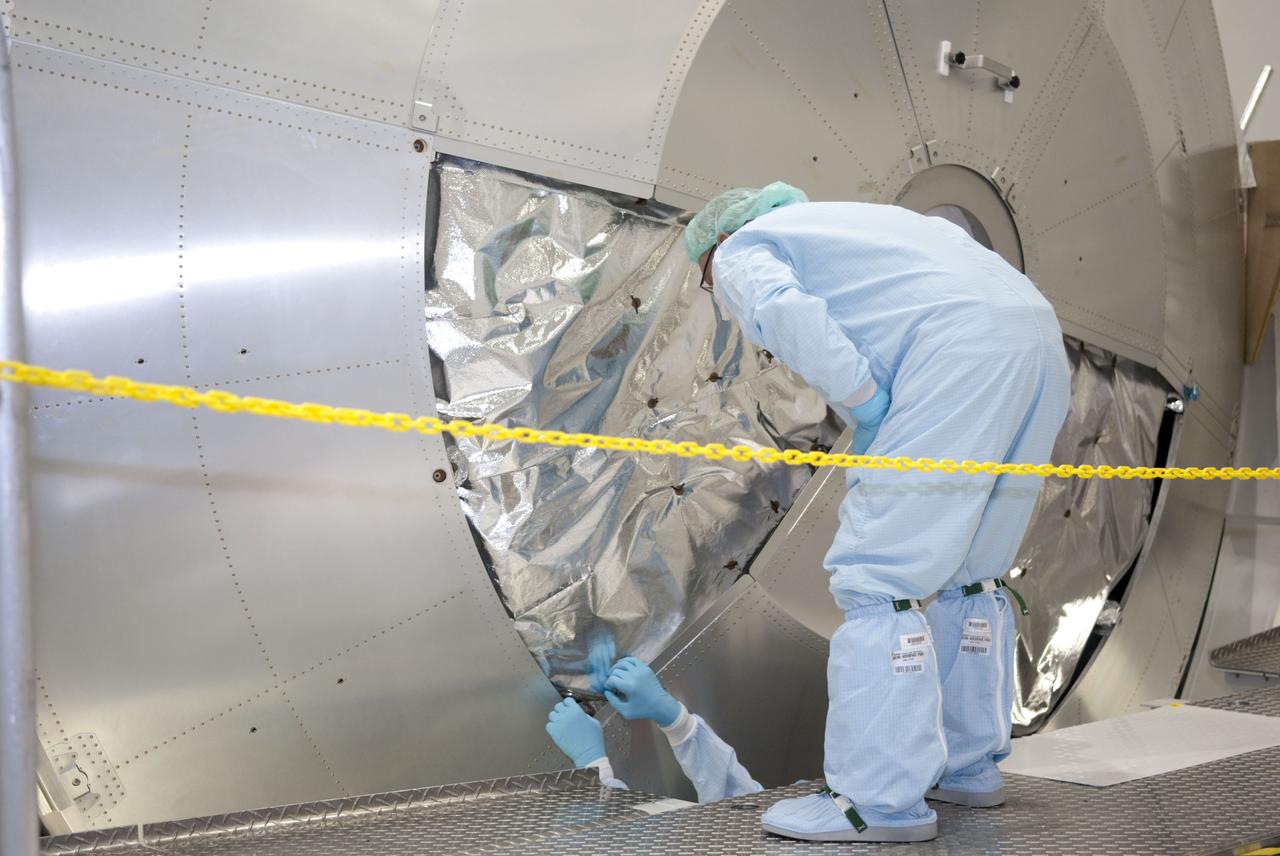
CAPE CANAVERAL, Fla. -- In the Space Station Processing Facility at NASA's Kennedy Space Center in Florida, technicians are installing a debris shield over the aft hatch on the Raffaello multi-purpose logistics module for shuttle Atlantis' flight to the International Space Station. Commander Chris Ferguson, Pilot Doug Hurley and Mission Specialists Sandra Magnus and Rex Walheim are targeted to lift off on July 8, taking with them the Raffaello multi-purpose logistics module packed with supplies, logistics and spare parts. The STS-135 mission also will fly a system to investigate the potential for robotically refueling existing spacecraft and return a failed ammonia pump module to help NASA better understand the failure mechanism and improve pump designs for future systems. STS-135 will be the 33rd flight of Atlantis, the 37th shuttle mission to the space station, and the 135th and final mission of NASA's Space Shuttle Program. For more information visit, www.nasa.gov/mission_pages/shuttle/shuttlemissions/sts135/index.html. Photo credit: NASA/Jim Grossmann
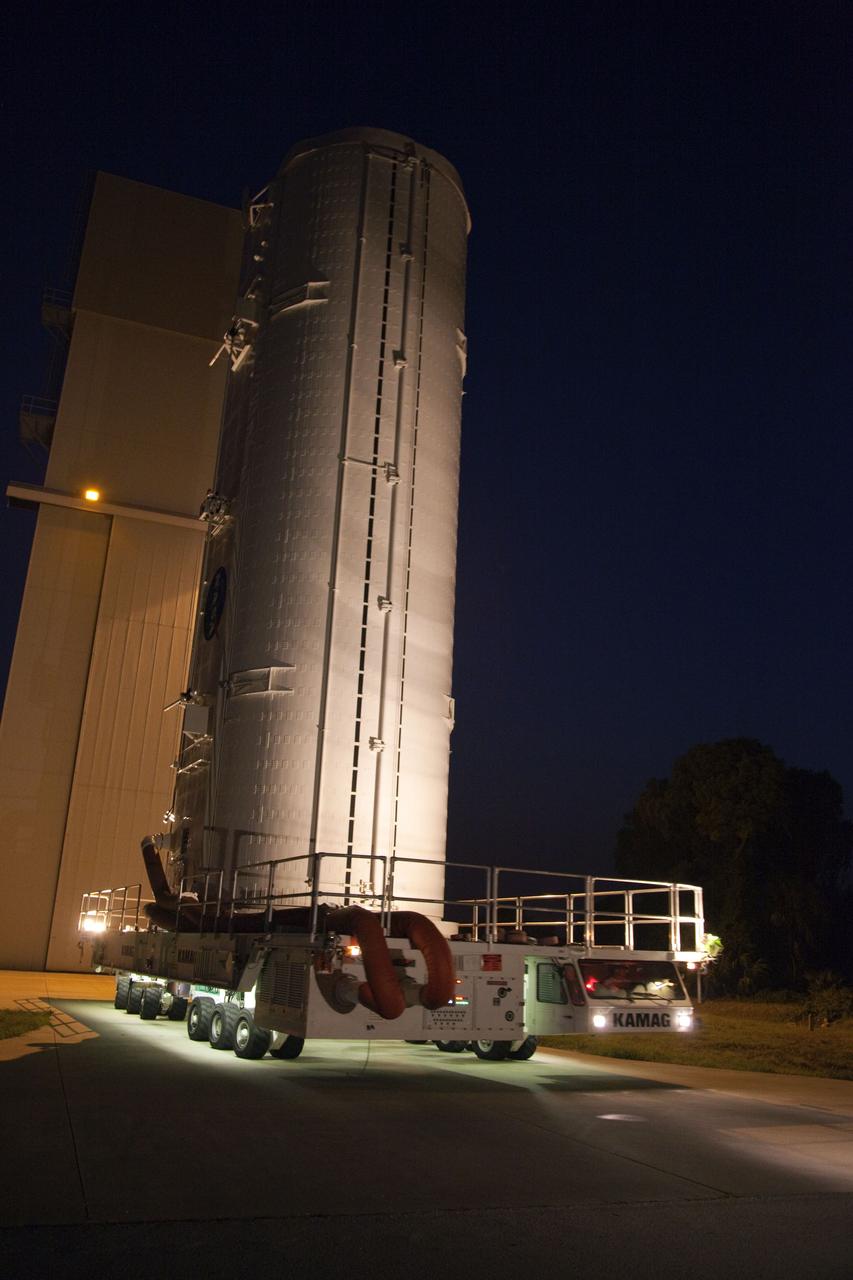
CAPE CANAVERAL, Fla. -- The container that carries the Raffaello multi-purpose logistics module (MPLM), secured on its transportation vehicle, begins its journey from the Canister Rotation Facility to Launch Pad 39A at NASA's Kennedy Space Center in Florida. Once there, the canister will be lifted to the payload changeout room. The payload ground-handling mechanism then will be used to transfer Raffaello out of the canister into space shuttle Atlantis' payload bay. Next, the rotating service structure that protects the shuttle from the elements and provides access will be rotated back into place. Commander Chris Ferguson, Pilot Doug Hurley and Mission Specialists Sandra Magnus and Rex Walheim are targeted to lift off on Atlantis July 8, taking with them the MPLM packed with supplies, logistics and spare parts to the station. The STS-135 mission also will fly a system to investigate the potential for robotically refueling existing satellites and return a failed ammonia pump module to help NASA better understand the failure mechanism and improve pump designs for future systems. STS-135 will be the 33rd flight of Atlantis, the 37th shuttle mission to the space station, and the 135th and final mission of NASA's Space Shuttle Program. For more information visit, www.nasa.gov/mission_pages/shuttle/shuttlemissions/sts135/index.html. Photo credit: NASA/Frank Michaux
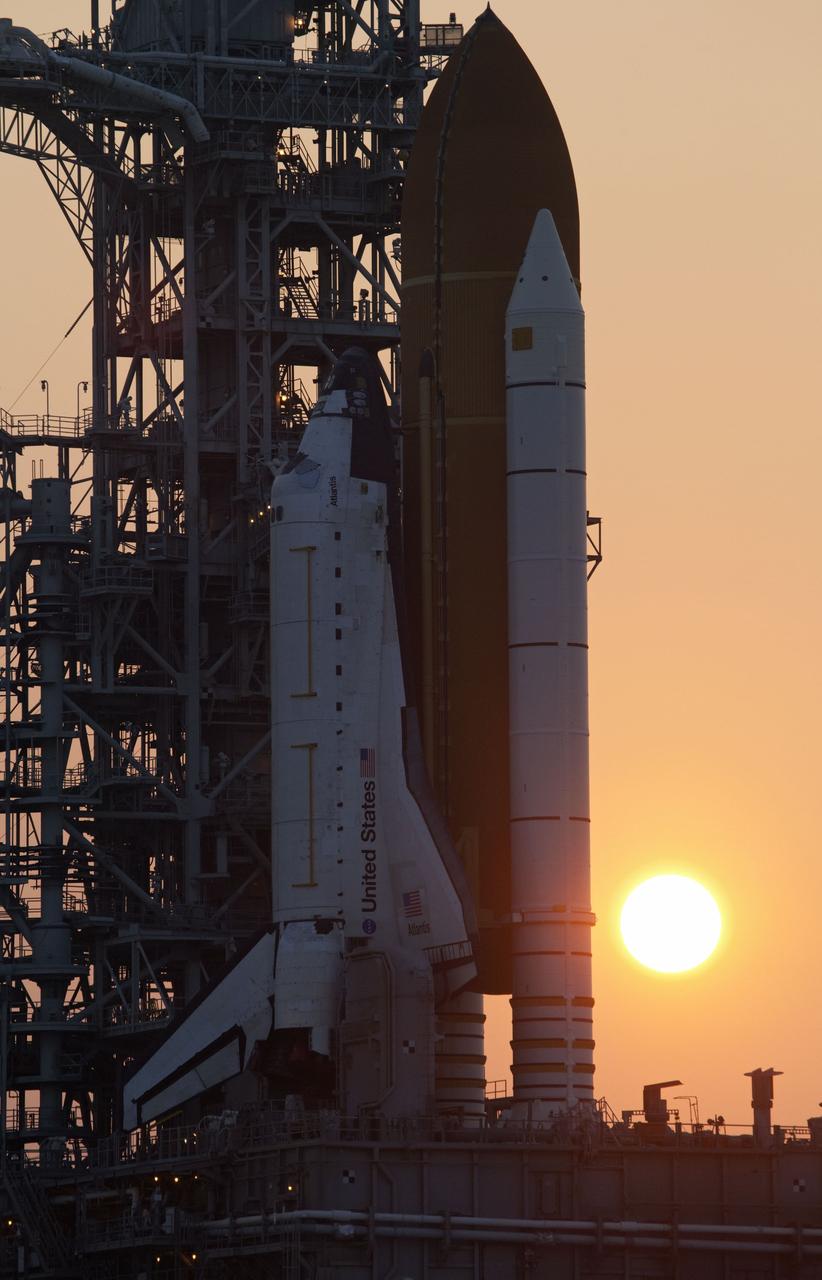
CAPE CANAVERAL, Fla. -- A hazy sun sets over Launch Pad 39A at NASA's Kennedy Space Center in Florida as space shuttle Atlantis awaits delivery of the Raffaello multi-purpose logistics module (MPLM) in its transportation canister. Once delivered, the canister will be lifted to the payload changeout room. The payload ground-handling mechanism then will be used to transfer Raffaello out of the canister into Atlantis' payload bay. Next, the rotating service structure that protects the shuttle from the elements and provides access will be rotated back into place. Commander Chris Ferguson, Pilot Doug Hurley and Mission Specialists Sandra Magnus and Rex Walheim are targeted to lift off on Atlantis July 8, taking with them the MPLM packed with supplies, logistics and spare parts to the station. The STS-135 mission also will fly a system to investigate the potential for robotically refueling existing satellites and return a failed ammonia pump module to help NASA better understand the failure mechanism and improve pump designs for future systems. STS-135 will be the 33rd flight of Atlantis, the 37th shuttle mission to the space station, and the 135th and final mission of NASA's Space Shuttle Program. For more information visit, www.nasa.gov/mission_pages/shuttle/shuttlemissions/sts135/index.html. Photo credit: NASA/Frank Michaux
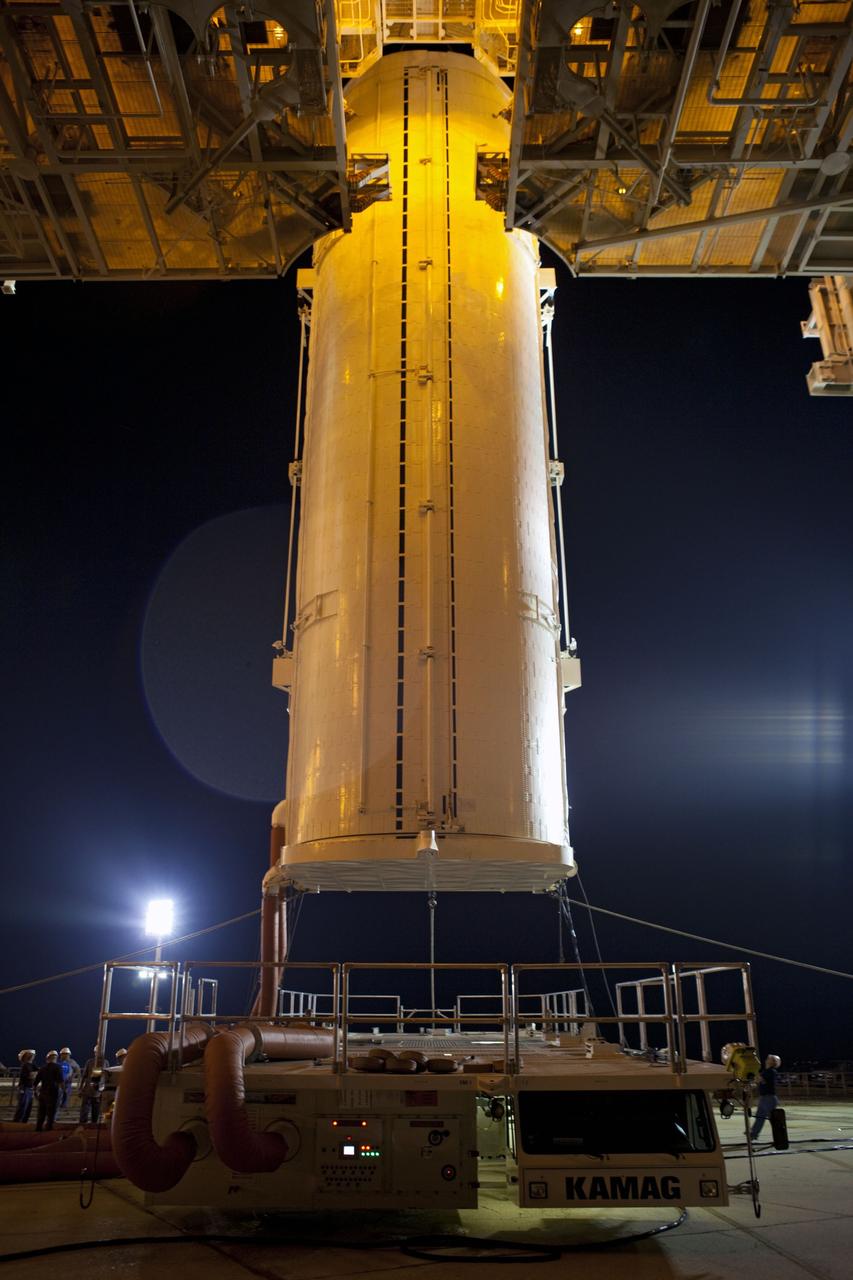
CAPE CANAVERAL, Fla. -- The payload canister carrying the Raffaello multi-purpose logistics module (MPLM) is lifted to the payload changeout room on the rotating service structure (RSS) on Launch Pad 39A at NASA's Kennedy Space Center in Florida. Umbilical hoses, maintaining a controlled environment for the cargo are attached to the lower end of the canister. The payload ground-handling mechanism then will be used to transfer Raffaello out of the canister into Atlantis' payload bay. Next, the RSS that protects the shuttle from the elements and provides access will be rotated back into place. Commander Chris Ferguson, Pilot Doug Hurley and Mission Specialists Sandra Magnus and Rex Walheim are targeted to lift off on Atlantis July 8, taking with them the MPLM packed with supplies, logistics and spare parts to the station. The STS-135 mission also will fly a system to investigate the potential for robotically refueling existing satellites and return a failed ammonia pump module to help NASA better understand the failure mechanism and improve pump designs for future systems. STS-135 will be the 33rd flight of Atlantis, the 37th shuttle mission to the space station, and the 135th and final mission of NASA's Space Shuttle Program. For more information visit, www.nasa.gov/mission_pages/shuttle/shuttlemissions/sts135/index.html. Photo credit: NASA/Dimitri Gerondidakis
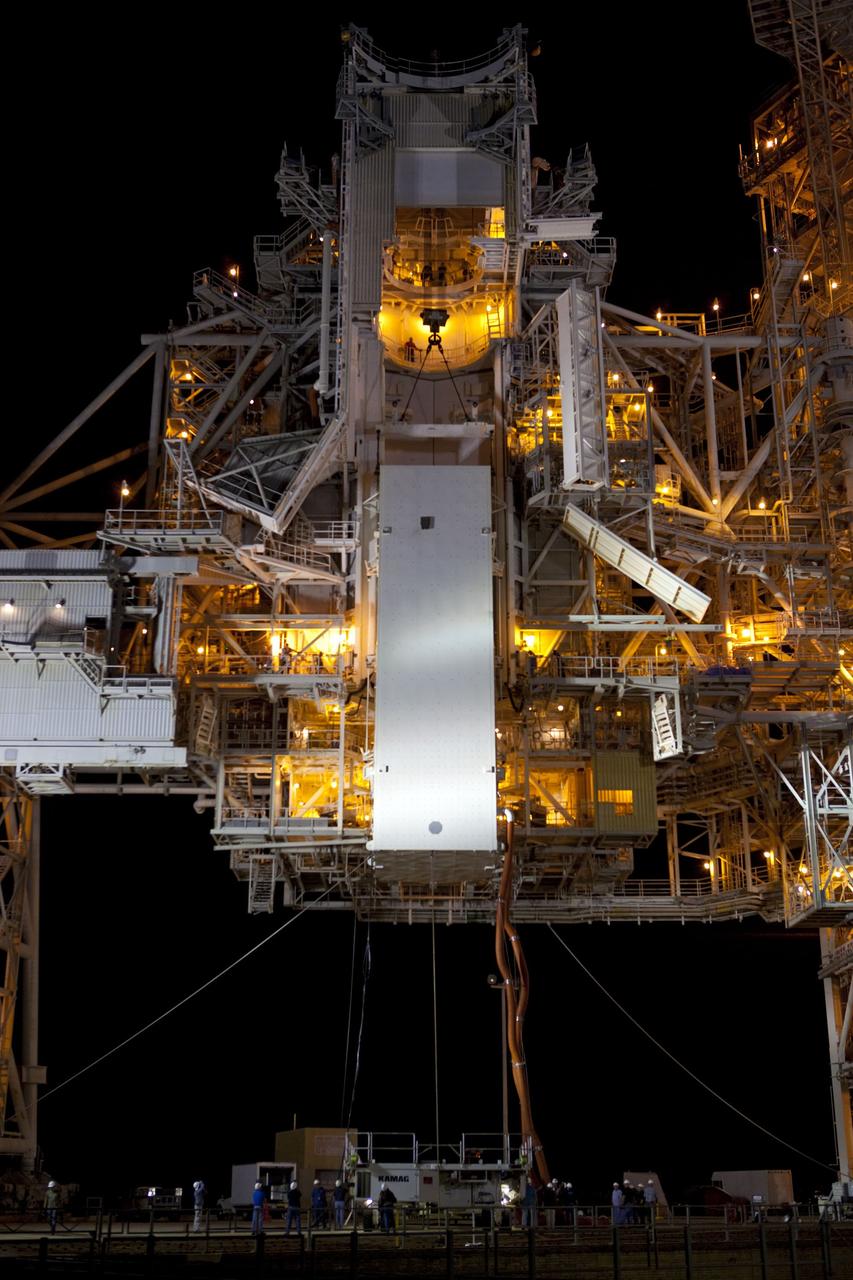
CAPE CANAVERAL, Fla. -- The payload canister carrying the Raffaello multi-purpose logistics module (MPLM) is lifted to the payload changeout room on the rotating service structure (RSS) on Launch Pad 39A at NASA's Kennedy Space Center in Florida. Umbilical hoses, maintaining a controlled environment for the cargo are attached to the lower end of the canister. The payload ground-handling mechanism then will be used to transfer Raffaello out of the canister into Atlantis' payload bay. Next, the RSS that protects the shuttle from the elements and provides access will be rotated back into place. Commander Chris Ferguson, Pilot Doug Hurley and Mission Specialists Sandra Magnus and Rex Walheim are targeted to lift off on Atlantis July 8, taking with them the MPLM packed with supplies, logistics and spare parts to the station. The STS-135 mission also will fly a system to investigate the potential for robotically refueling existing satellites and return a failed ammonia pump module to help NASA better understand the failure mechanism and improve pump designs for future systems. STS-135 will be the 33rd flight of Atlantis, the 37th shuttle mission to the space station, and the 135th and final mission of NASA's Space Shuttle Program. For more information visit, www.nasa.gov/mission_pages/shuttle/shuttlemissions/sts135/index.html. Photo credit: NASA/Dimitri Gerondidakis
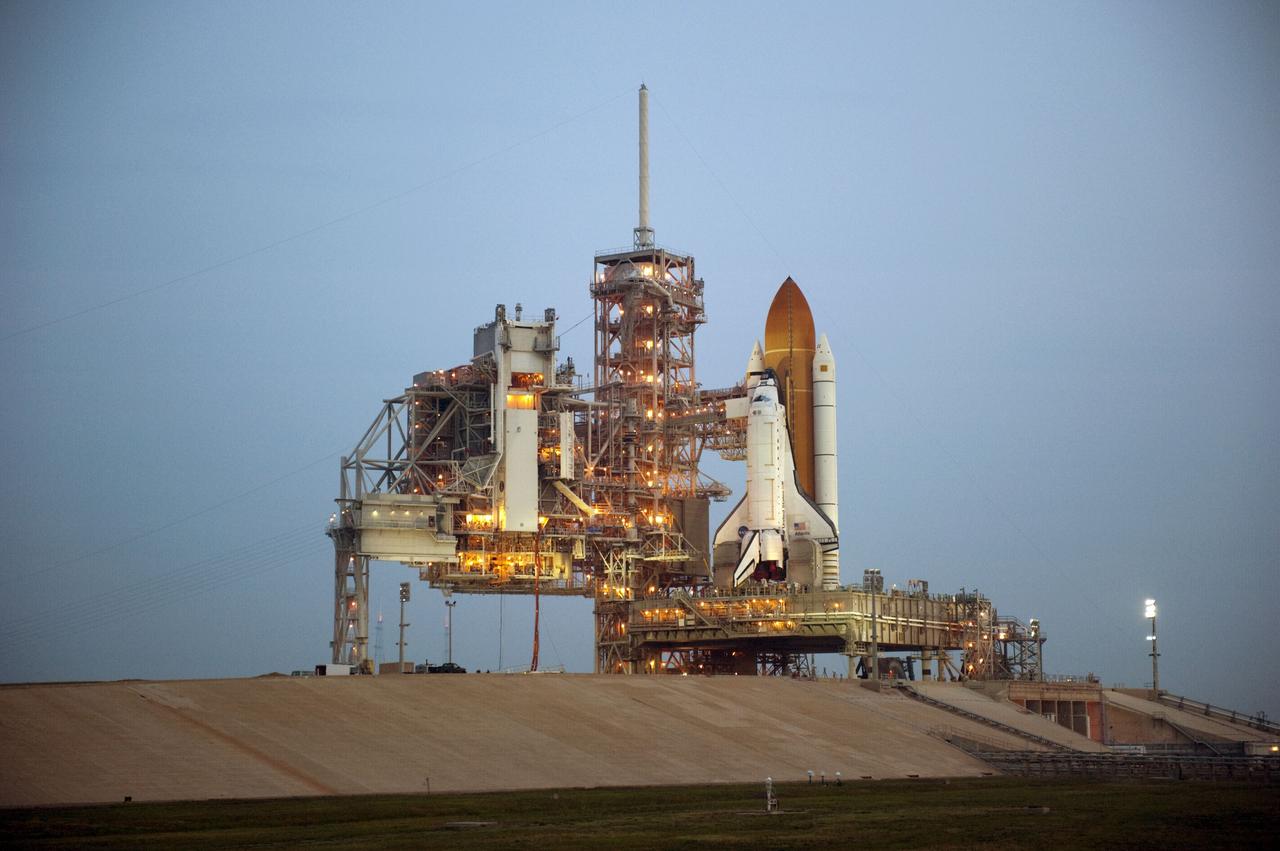
CAPE CANAVERAL, Fla. -- Sunrise at NASA's Kennedy Space Center in Florida finds space shuttle Atlantis on Launch Pad 39A after the payload canister carrying the Raffaello multi-purpose logistics module (MPLM) was lifted into the payload changeout room. The payload ground-handling mechanism then will be used to transfer Raffaello out of the canister into Atlantis' payload bay. Next, the rotating service structure that protects the shuttle from the elements and provides access will be rotated back into place. Commander Chris Ferguson, Pilot Doug Hurley and Mission Specialists Sandra Magnus and Rex Walheim are targeted to lift off on space shuttle Atlantis July 8, taking with them the MPLM packed with supplies, logistics and spare parts to the International Space Station. The STS-135 mission also will fly a system to investigate the potential for robotically refueling existing satellites and return a failed ammonia pump module to help NASA better understand the failure mechanism and improve pump designs for future systems. STS-135 will be the 33rd flight of Atlantis, the 37th shuttle mission to the space station, and the 135th and final mission of NASA's Space Shuttle Program. For more information visit, www.nasa.gov/mission_pages/shuttle/shuttlemissions/sts135/index.html. Photo credit: NASA/Kim Shiflett
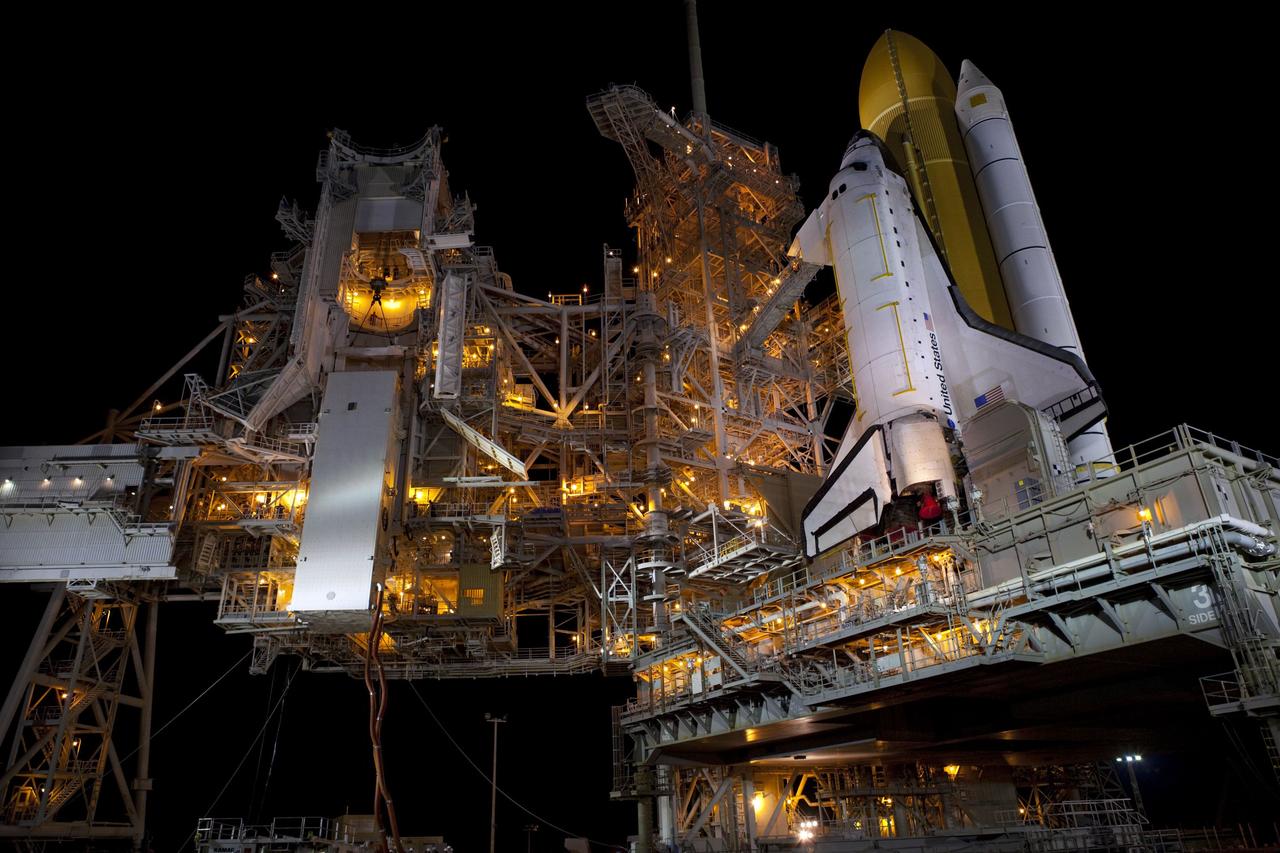
CAPE CANAVERAL, Fla. -- The payload canister carrying the Raffaello multi-purpose logistics module (MPLM) is lifted to the payload changeout room on the rotating service structure (RSS) on Launch Pad 39A at NASA's Kennedy Space Center in Florida. Umbilical hoses, maintaining a controlled environment for the cargo are attached to the lower end of the canister. The payload ground-handling mechanism then will be used to transfer Raffaello out of the canister into Atlantis' payload bay. Next, the RSS that protects the shuttle from the elements and provides access will be rotated back into place. Commander Chris Ferguson, Pilot Doug Hurley and Mission Specialists Sandra Magnus and Rex Walheim are targeted to lift off on Atlantis July 8, taking with them the MPLM packed with supplies, logistics and spare parts to the station. The STS-135 mission also will fly a system to investigate the potential for robotically refueling existing satellites and return a failed ammonia pump module to help NASA better understand the failure mechanism and improve pump designs for future systems. STS-135 will be the 33rd flight of Atlantis, the 37th shuttle mission to the space station, and the 135th and final mission of NASA's Space Shuttle Program. For more information visit, www.nasa.gov/mission_pages/shuttle/shuttlemissions/sts135/index.html. Photo credit: NASA/Dimitri Gerondidakis
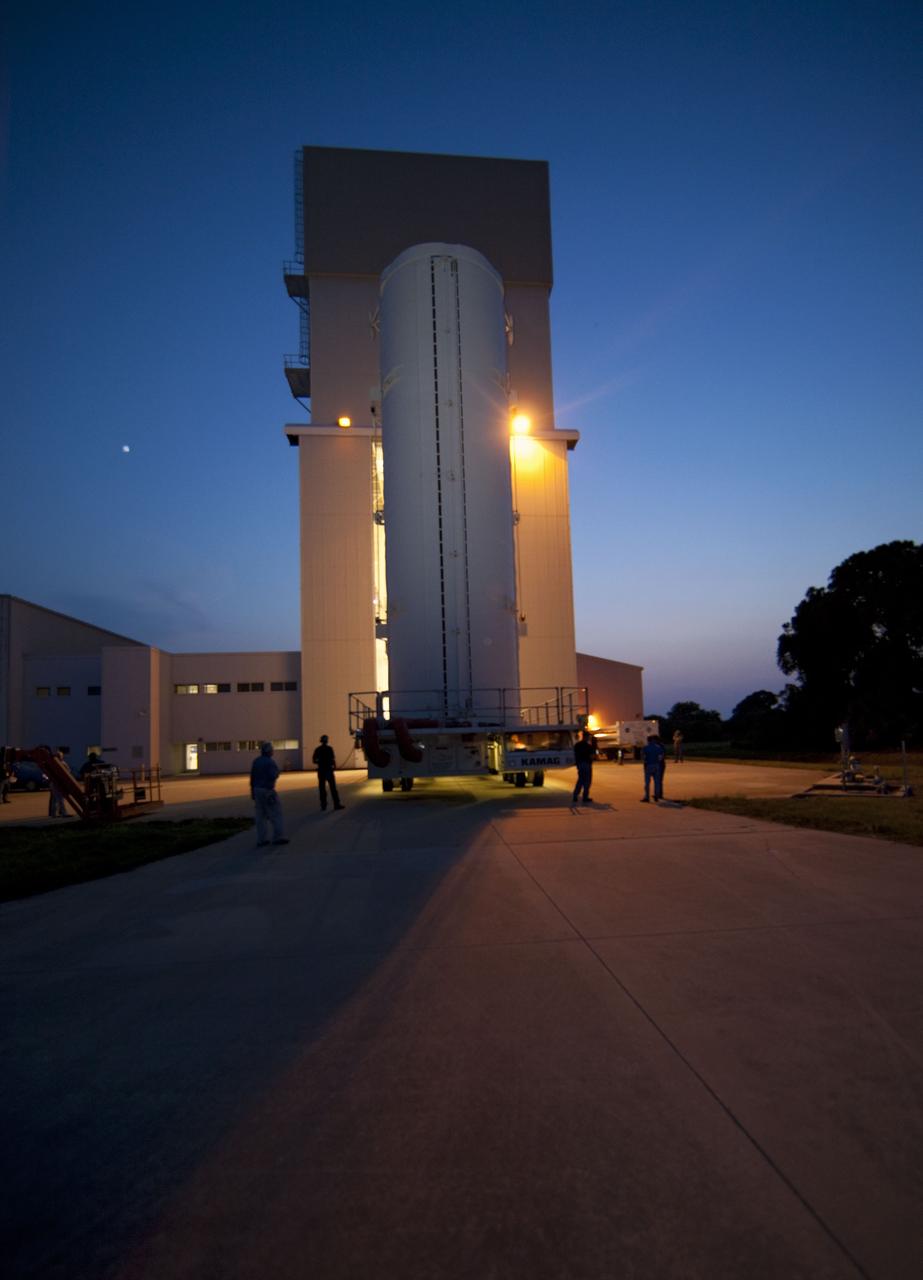
CAPE CANAVERAL, Fla. -- The container that carries the Raffaello multi-purpose logistics module (MPLM), secured on its transportation vehicle, begins its journey from the Canister Rotation Facility to Launch Pad 39A at NASA's Kennedy Space Center in Florida. Once there, the canister will be lifted to the payload changeout room. The payload ground-handling mechanism then will be used to transfer Raffaello out of the canister into space shuttle Atlantis' payload bay. Next, the rotating service structure that protects the shuttle from the elements and provides access will be rotated back into place. Commander Chris Ferguson, Pilot Doug Hurley and Mission Specialists Sandra Magnus and Rex Walheim are targeted to lift off on Atlantis July 8, taking with them the MPLM packed with supplies, logistics and spare parts to the station. The STS-135 mission also will fly a system to investigate the potential for robotically refueling existing satellites and return a failed ammonia pump module to help NASA better understand the failure mechanism and improve pump designs for future systems. STS-135 will be the 33rd flight of Atlantis, the 37th shuttle mission to the space station, and the 135th and final mission of NASA's Space Shuttle Program. For more information visit, www.nasa.gov/mission_pages/shuttle/shuttlemissions/sts135/index.html. Photo credit: NASA/Frank Michaux
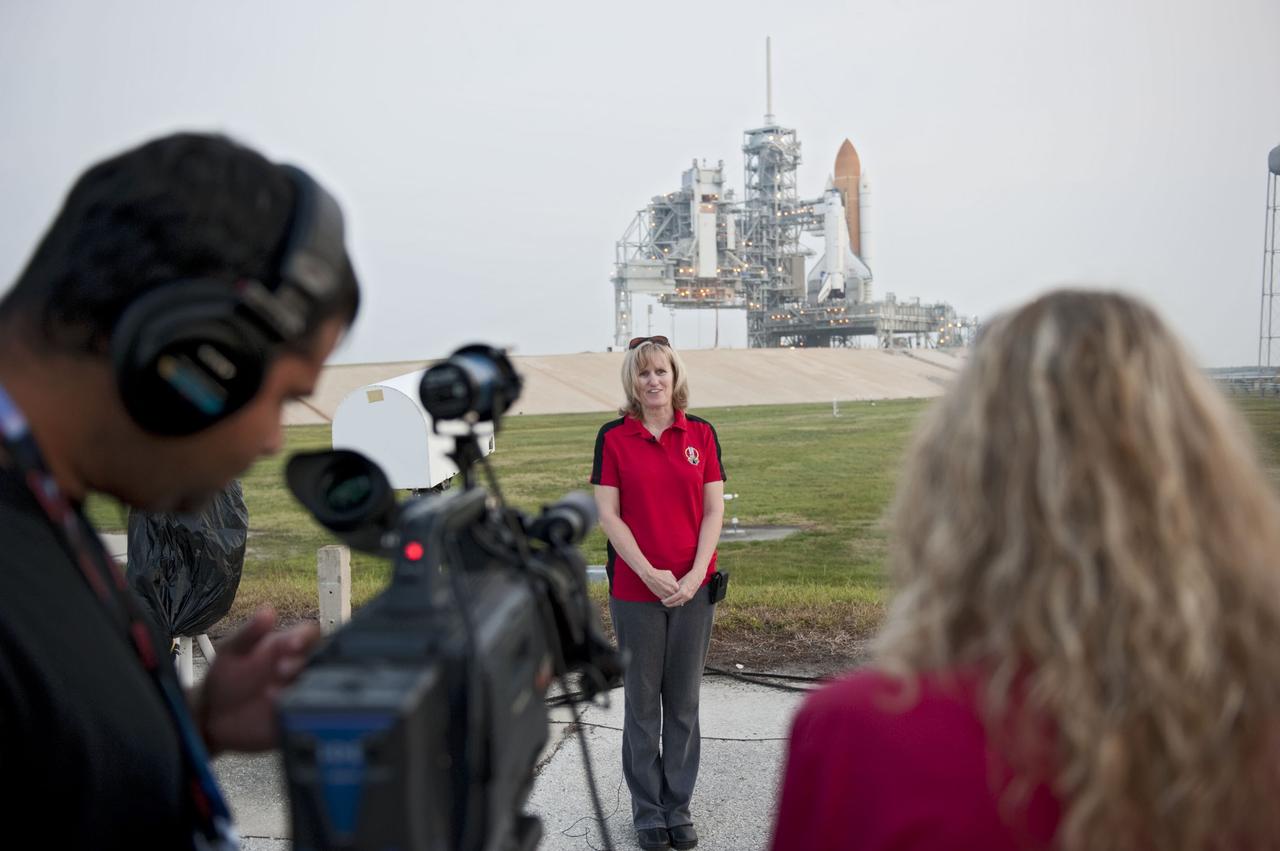
CAPE CANAVERAL, Fla. -- Near Launch Pad 39A at NASA's Kennedy Space Center in Florida, space shuttle Atlantis' Flow Director Angie Brewer speaks to media. The Raffaello multi-purpose logistics module (MPLM) was delivered to the pad overnight and lifted into the payload changeout room. The payload ground-handling mechanism then will be used to transfer Raffaello out of the canister into Atlantis' payload bay. Next, the rotating service structure that protects the shuttle from the elements and provides access will be rotated back into place. In the background is shuttle Atlantis, waiting to launch on the STS-135 mission. Commander Chris Ferguson, Pilot Doug Hurley and Mission Specialists Sandra Magnus and Rex Walheim are targeted to lift off on space shuttle Atlantis July 8, taking with them the MPLM packed with supplies, logistics and spare parts to the International Space Station. The STS-135 mission also will fly a system to investigate the potential for robotically refueling existing satellites and return a failed ammonia pump module to help NASA better understand the failure mechanism and improve pump designs for future systems. STS-135 will be the 33rd flight of Atlantis, the 37th shuttle mission to the space station, and the 135th and final mission of NASA's Space Shuttle Program. For more information visit, www.nasa.gov/mission_pages/shuttle/shuttlemissions/sts135/index.html. Photo credit: NASA/Kim Shiflett
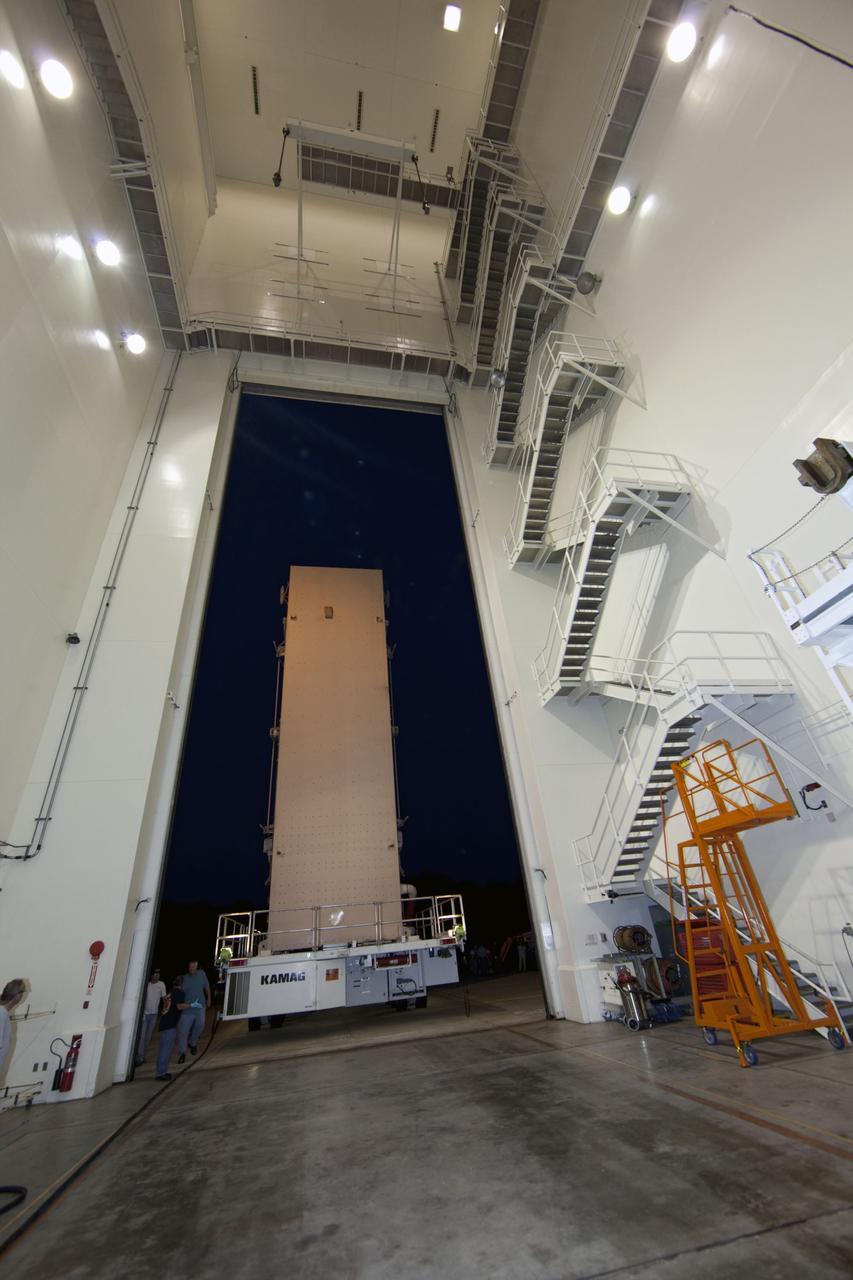
CAPE CANAVERAL, Fla. -- The container that carries the Raffaello multi-purpose logistics module (MPLM), secured on its transportation vehicle, begins its journey from the Canister Rotation Facility to Launch Pad 39A at NASA's Kennedy Space Center in Florida. Once there, the canister will be lifted to the payload changeout room. The payload ground-handling mechanism then will be used to transfer Raffaello out of the canister into space shuttle Atlantis' payload bay. Next, the rotating service structure that protects the shuttle from the elements and provides access will be rotated back into place. Commander Chris Ferguson, Pilot Doug Hurley and Mission Specialists Sandra Magnus and Rex Walheim are targeted to lift off on Atlantis July 8, taking with them the MPLM packed with supplies, logistics and spare parts to the station. The STS-135 mission also will fly a system to investigate the potential for robotically refueling existing satellites and return a failed ammonia pump module to help NASA better understand the failure mechanism and improve pump designs for future systems. STS-135 will be the 33rd flight of Atlantis, the 37th shuttle mission to the space station, and the 135th and final mission of NASA's Space Shuttle Program. For more information visit, www.nasa.gov/mission_pages/shuttle/shuttlemissions/sts135/index.html. Photo credit: NASA/Frank Michaux
CAPE CANAVERAL, Fla. -- A canister, carrying the Raffaello multi-purpose logistics module (MPLM) for space shuttle Atlantis' STS-135 mission to the International Space Station, arrives at Launch Pad 39A at NASA's Kennedy Space Center in Florida. The canister will be lifted to the payload changeout room. The payload ground-handling mechanism then will be used to transfer Raffaello out of the canister into Atlantis' payload bay. Next, the rotating service structure that protects the shuttle from the elements and provides access will be rotated back into place. Commander Chris Ferguson, Pilot Doug Hurley and Mission Specialists Sandra Magnus and Rex Walheim are targeted to lift off on Atlantis July 8, taking with them the MPLM packed with supplies, logistics and spare parts to the station. The STS-135 mission also will fly a system to investigate the potential for robotically refueling existing satellites and return a failed ammonia pump module to help NASA better understand the failure mechanism and improve pump designs for future systems. STS-135 will be the 33rd flight of Atlantis, the 37th shuttle mission to the space station, and the 135th and final mission of NASA's Space Shuttle Program. For more information visit, www.nasa.gov/mission_pages/shuttle/shuttlemissions/sts135/index.html. Photo credit: NASA/Frank Michaux
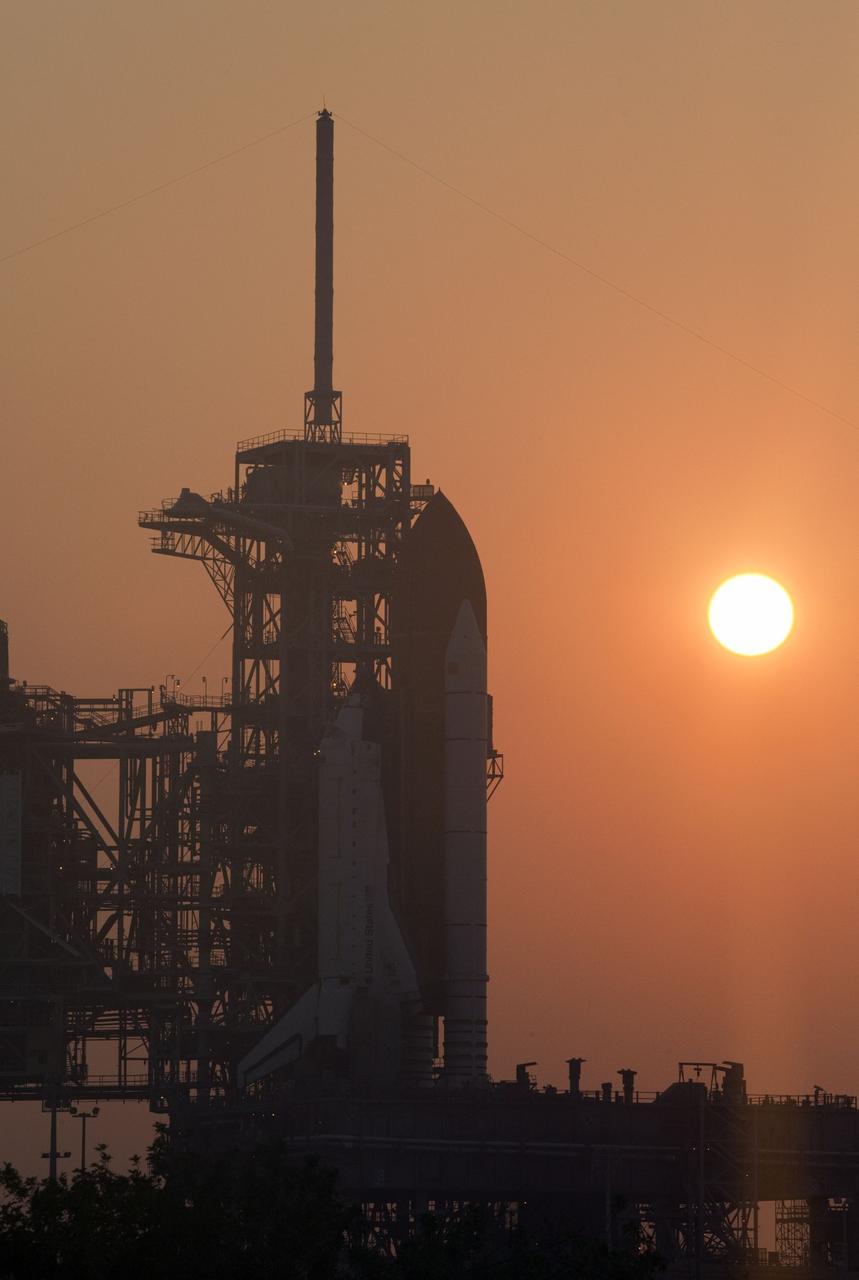
CAPE CANAVERAL, Fla. -- A hazy sun sets over Launch Pad 39A at NASA's Kennedy Space Center in Florida as space shuttle Atlantis awaits delivery of the Raffaello multi-purpose logistics module (MPLM) in its transportation canister. Once delivered, the canister will be lifted to the payload changeout room. The payload ground-handling mechanism then will be used to transfer Raffaello out of the canister into Atlantis' payload bay. Next, the rotating service structure that protects the shuttle from the elements and provides access will be rotated back into place. Commander Chris Ferguson, Pilot Doug Hurley and Mission Specialists Sandra Magnus and Rex Walheim are targeted to lift off on Atlantis July 8, taking with them the MPLM packed with supplies, logistics and spare parts to the station. The STS-135 mission also will fly a system to investigate the potential for robotically refueling existing satellites and return a failed ammonia pump module to help NASA better understand the failure mechanism and improve pump designs for future systems. STS-135 will be the 33rd flight of Atlantis, the 37th shuttle mission to the space station, and the 135th and final mission of NASA's Space Shuttle Program. For more information visit, www.nasa.gov/mission_pages/shuttle/shuttlemissions/sts135/index.html. Photo credit: NASA/Frank Michaux

CAPE CANAVERAL, Fla. -- A canister, carrying the Raffaello multi-purpose logistics module (MPLM) for space shuttle Atlantis' STS-135 mission to the International Space Station, arrives at Launch Pad 39A at NASA's Kennedy Space Center in Florida. The canister will be lifted to the payload changeout room. The payload ground-handling mechanism then will be used to transfer Raffaello out of the canister into Atlantis' payload bay. Next, the rotating service structure that protects the shuttle from the elements and provides access will be rotated back into place. Commander Chris Ferguson, Pilot Doug Hurley and Mission Specialists Sandra Magnus and Rex Walheim are targeted to lift off on Atlantis July 8, taking with them the MPLM packed with supplies, logistics and spare parts to the station. The STS-135 mission also will fly a system to investigate the potential for robotically refueling existing satellites and return a failed ammonia pump module to help NASA better understand the failure mechanism and improve pump designs for future systems. STS-135 will be the 33rd flight of Atlantis, the 37th shuttle mission to the space station, and the 135th and final mission of NASA's Space Shuttle Program. For more information visit, www.nasa.gov/mission_pages/shuttle/shuttlemissions/sts135/index.html. Photo credit: NASA/Frank Michaux
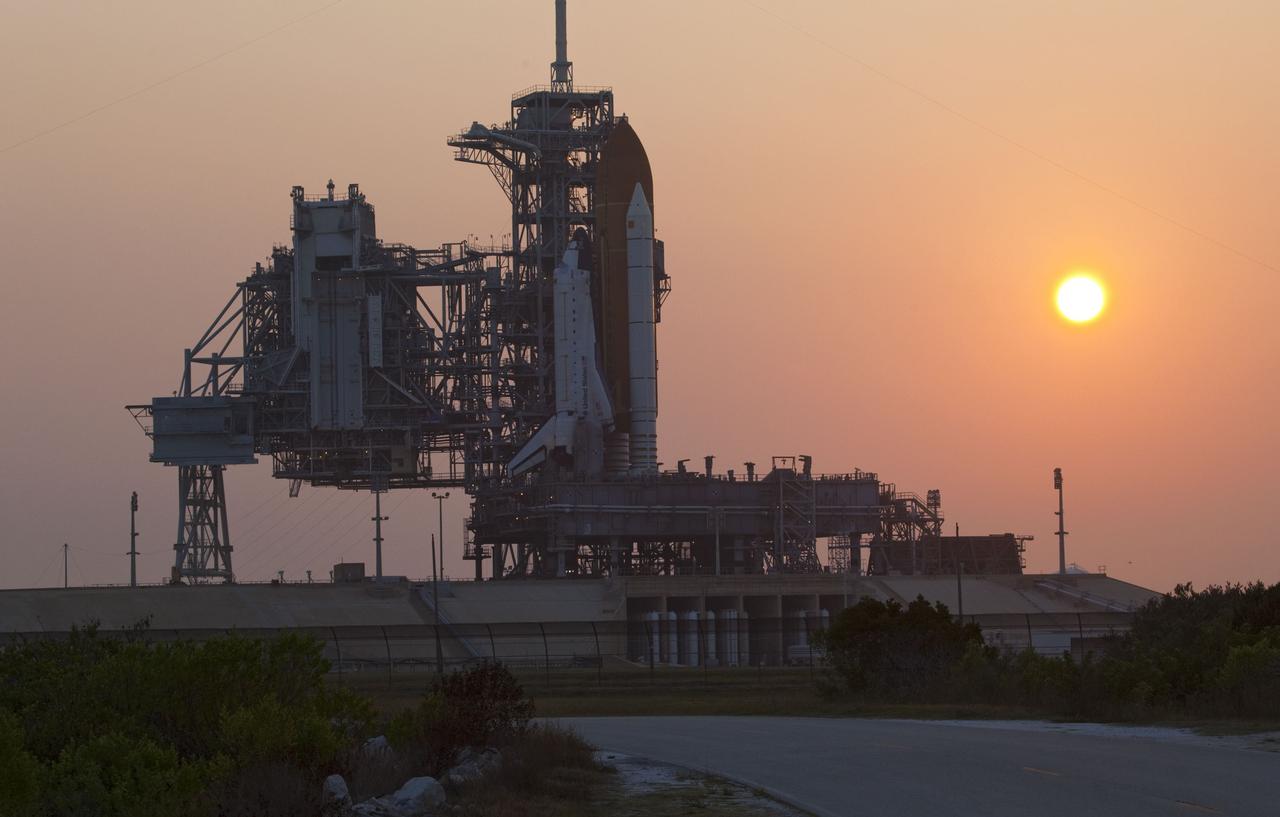
CAPE CANAVERAL, Fla. -- A hazy sun sets over Launch Pad 39A at NASA's Kennedy Space Center in Florida as space shuttle Atlantis awaits delivery of the Raffaello multi-purpose logistics module (MPLM) in its transportation canister. Once delivered, the canister will be lifted to the payload changeout room. The payload ground-handling mechanism then will be used to transfer Raffaello out of the canister into Atlantis' payload bay. Next, the rotating service structure that protects the shuttle from the elements and provides access will be rotated back into place. Commander Chris Ferguson, Pilot Doug Hurley and Mission Specialists Sandra Magnus and Rex Walheim are targeted to lift off on Atlantis July 8, taking with them the MPLM packed with supplies, logistics and spare parts to the station. The STS-135 mission also will fly a system to investigate the potential for robotically refueling existing satellites and return a failed ammonia pump module to help NASA better understand the failure mechanism and improve pump designs for future systems. STS-135 will be the 33rd flight of Atlantis, the 37th shuttle mission to the space station, and the 135th and final mission of NASA's Space Shuttle Program. For more information visit, www.nasa.gov/mission_pages/shuttle/shuttlemissions/sts135/index.html. Photo credit: NASA/Frank Michaux
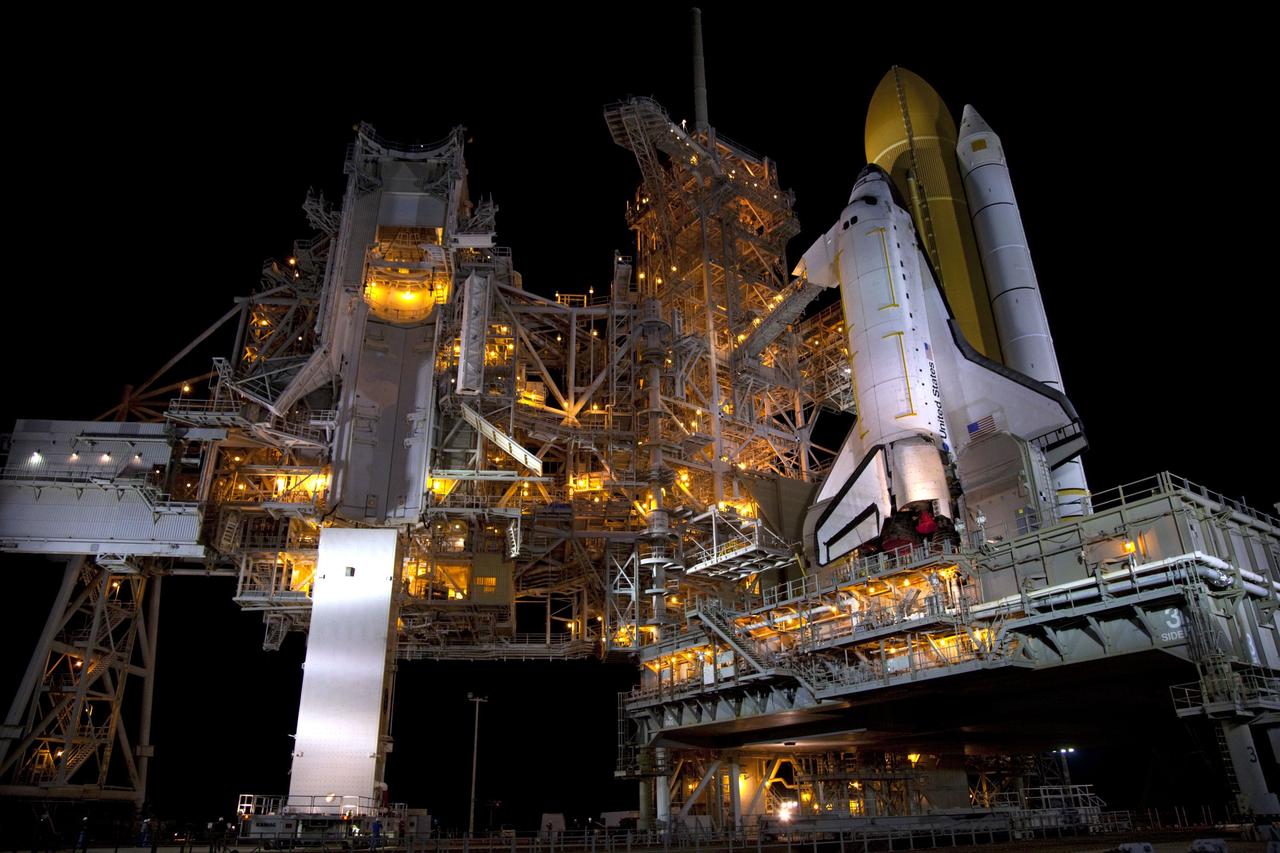
CAPE CANAVERAL, Fla. -- After sunset, lights glow on Launch Pad 39A at NASA's Kennedy Space Center in Florida as space shuttle Atlantis awaits delivery of the Raffaello multi-purpose logistics module (MPLM) in its transportation canister. Once delivered, the canister will be lifted to the payload changeout room. The payload ground-handling mechanism then will be used to transfer Raffaello out of the canister into Atlantis' payload bay. Next, the rotating service structure that protects the shuttle from the elements and provides access will be rotated back into place. Commander Chris Ferguson, Pilot Doug Hurley and Mission Specialists Sandra Magnus and Rex Walheim are targeted to lift off on Atlantis July 8, taking with them the MPLM packed with supplies, logistics and spare parts to the station. The STS-135 mission also will fly a system to investigate the potential for robotically refueling existing satellites and return a failed ammonia pump module to help NASA better understand the failure mechanism and improve pump designs for future systems. STS-135 will be the 33rd flight of Atlantis, the 37th shuttle mission to the space station, and the 135th and final mission of NASA's Space Shuttle Program. For more information visit, www.nasa.gov/mission_pages/shuttle/shuttlemissions/sts135/index.html. Photo credit: NASA/Frank Michaux
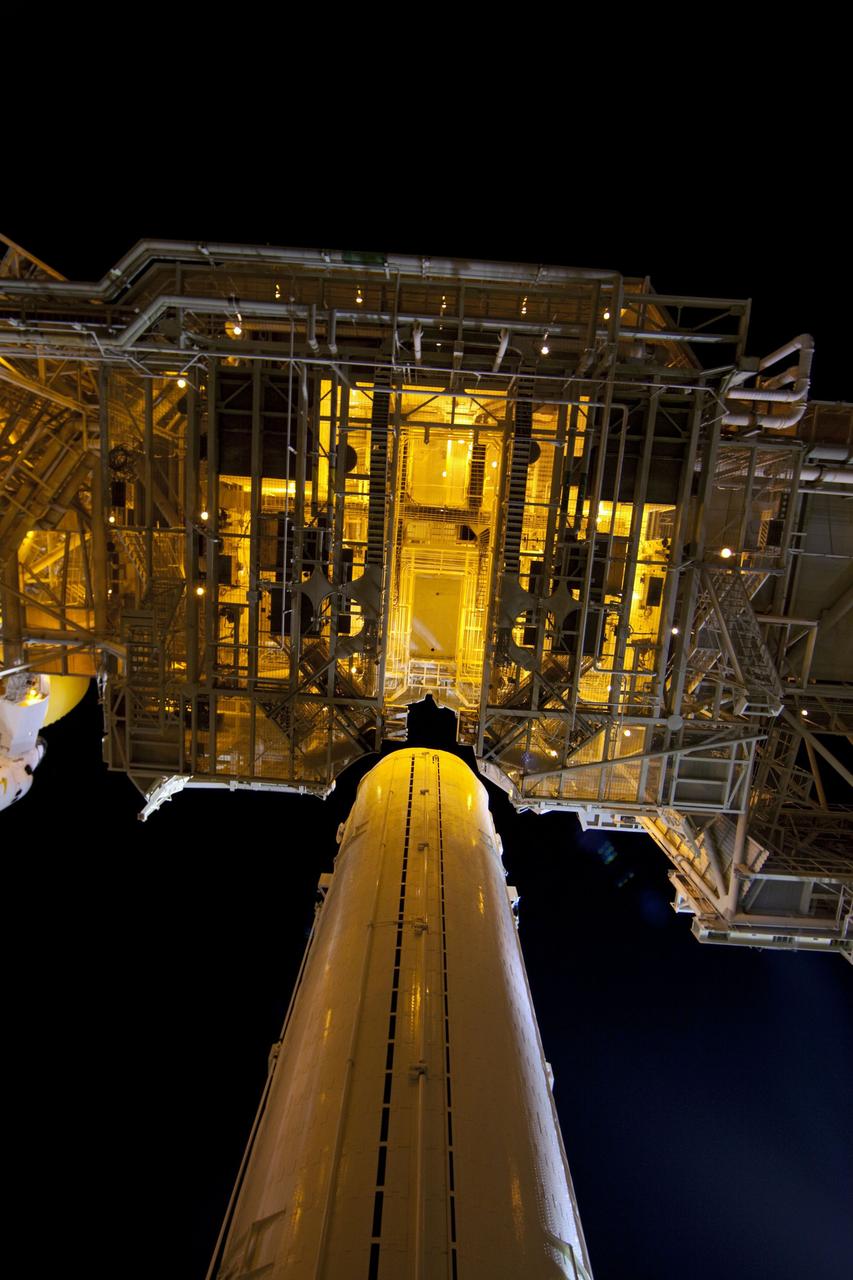
CAPE CANAVERAL, Fla. -- A canister, carrying the Raffaello multi-purpose logistics module (MPLM) for space shuttle Atlantis' STS-135 mission to the International Space Station, arrives at Launch Pad 39A at NASA's Kennedy Space Center in Florida. The canister will be lifted to the payload changeout room. The payload ground-handling mechanism then will be used to transfer Raffaello out of the canister into Atlantis' payload bay. Next, the rotating service structure that protects the shuttle from the elements and provides access will be rotated back into place. Commander Chris Ferguson, Pilot Doug Hurley and Mission Specialists Sandra Magnus and Rex Walheim are targeted to lift off on Atlantis July 8, taking with them the MPLM packed with supplies, logistics and spare parts to the station. The STS-135 mission also will fly a system to investigate the potential for robotically refueling existing satellites and return a failed ammonia pump module to help NASA better understand the failure mechanism and improve pump designs for future systems. STS-135 will be the 33rd flight of Atlantis, the 37th shuttle mission to the space station, and the 135th and final mission of NASA's Space Shuttle Program. For more information visit, www.nasa.gov/mission_pages/shuttle/shuttlemissions/sts135/index.html. Photo credit: NASA/Frank Michaux
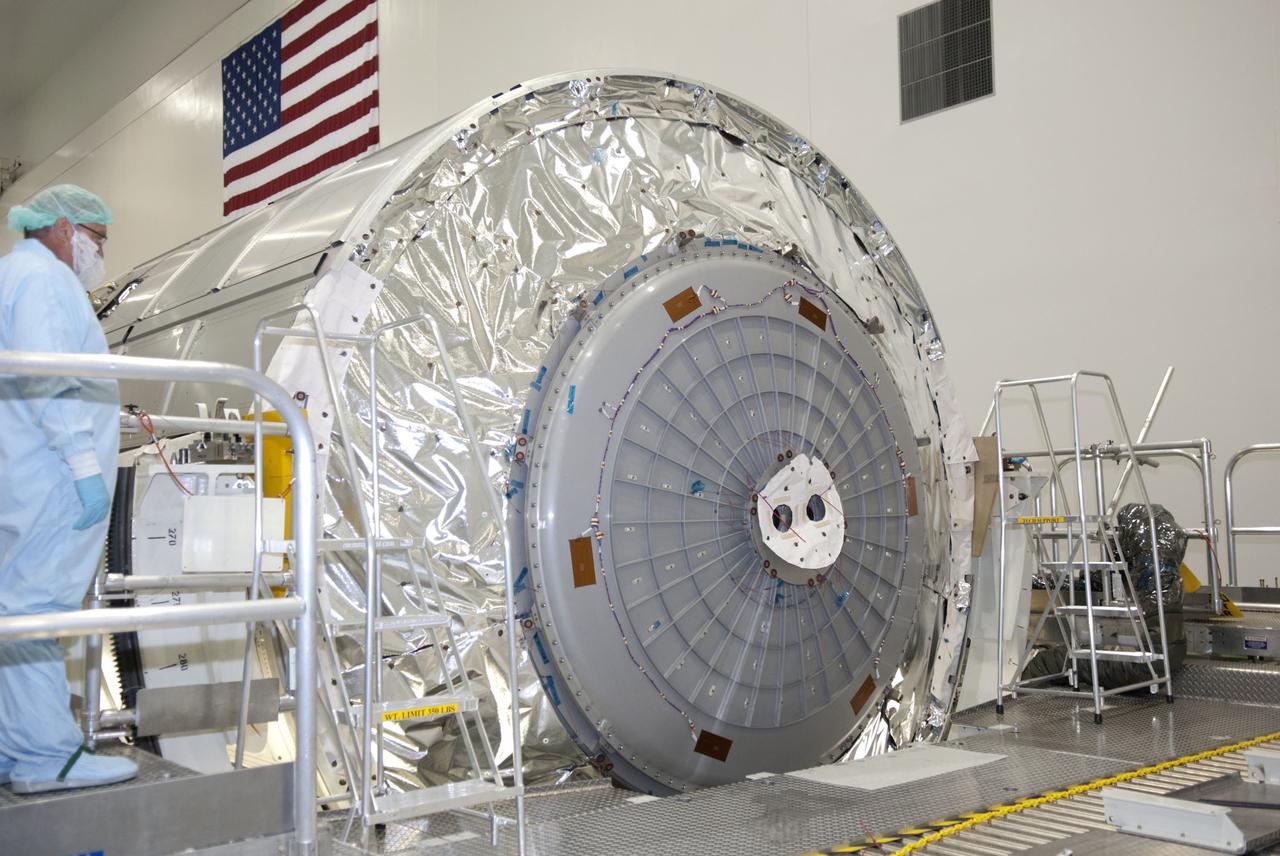
CAPE CANAVERAL, Fla. -- In the Space Station Processing Facility at NASA's Kennedy Space Center in Florida, technicians installed the aft hatch on the Raffaello multi-purpose logistics module for shuttle Atlantis' flight to the International Space Station. Commander Chris Ferguson, Pilot Doug Hurley and Mission Specialists Sandra Magnus and Rex Walheim are targeted to lift off on July 8, taking with them the Raffaello multi-purpose logistics module packed with supplies, logistics and spare parts. The STS-135 mission also will fly a system to investigate the potential for robotically refueling existing spacecraft and return a failed ammonia pump module to help NASA better understand the failure mechanism and improve pump designs for future systems. STS-135 will be the 33rd flight of Atlantis, the 37th shuttle mission to the space station, and the 135th and final mission of NASA's Space Shuttle Program. For more information visit, www.nasa.gov/mission_pages/shuttle/shuttlemissions/sts135/index.html. Photo credit: NASA/Jim Grossmann
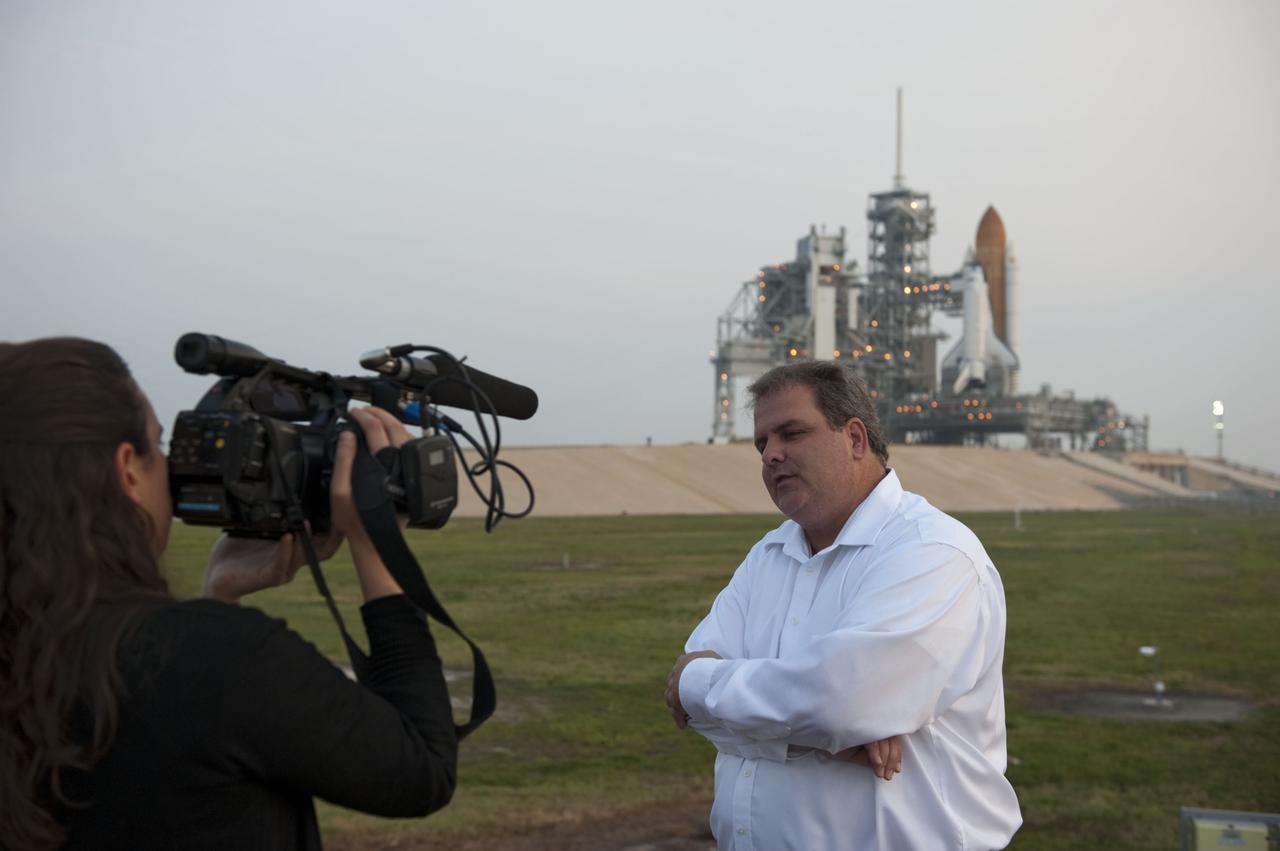
CAPE CANAVERAL, Fla. -- Near Launch Pad 39A at NASA's Kennedy Space Center in Florida, Payload Mission Manager Joe Delai speaks to media. The Raffaello multi-purpose logistics module (MPLM) was delivered to the pad overnight and lifted into the payload changeout room. The payload ground-handling mechanism then will be used to transfer Raffaello out of the canister into Atlantis' payload bay. Next, the rotating service structure that protects the shuttle from the elements and provides access will be rotated back into place. In the background is shuttle Atlantis, waiting to launch on the STS-135 mission. Commander Chris Ferguson, Pilot Doug Hurley and Mission Specialists Sandra Magnus and Rex Walheim are targeted to lift off on space shuttle Atlantis July 8, taking with them the MPLM packed with supplies, logistics and spare parts to the International Space Station. The STS-135 mission also will fly a system to investigate the potential for robotically refueling existing satellites and return a failed ammonia pump module to help NASA better understand the failure mechanism and improve pump designs for future systems. STS-135 will be the 33rd flight of Atlantis, the 37th shuttle mission to the space station, and the 135th and final mission of NASA's Space Shuttle Program. For more information visit, www.nasa.gov/mission_pages/shuttle/shuttlemissions/sts135/index.html. Photo credit: NASA/Kim Shiflett
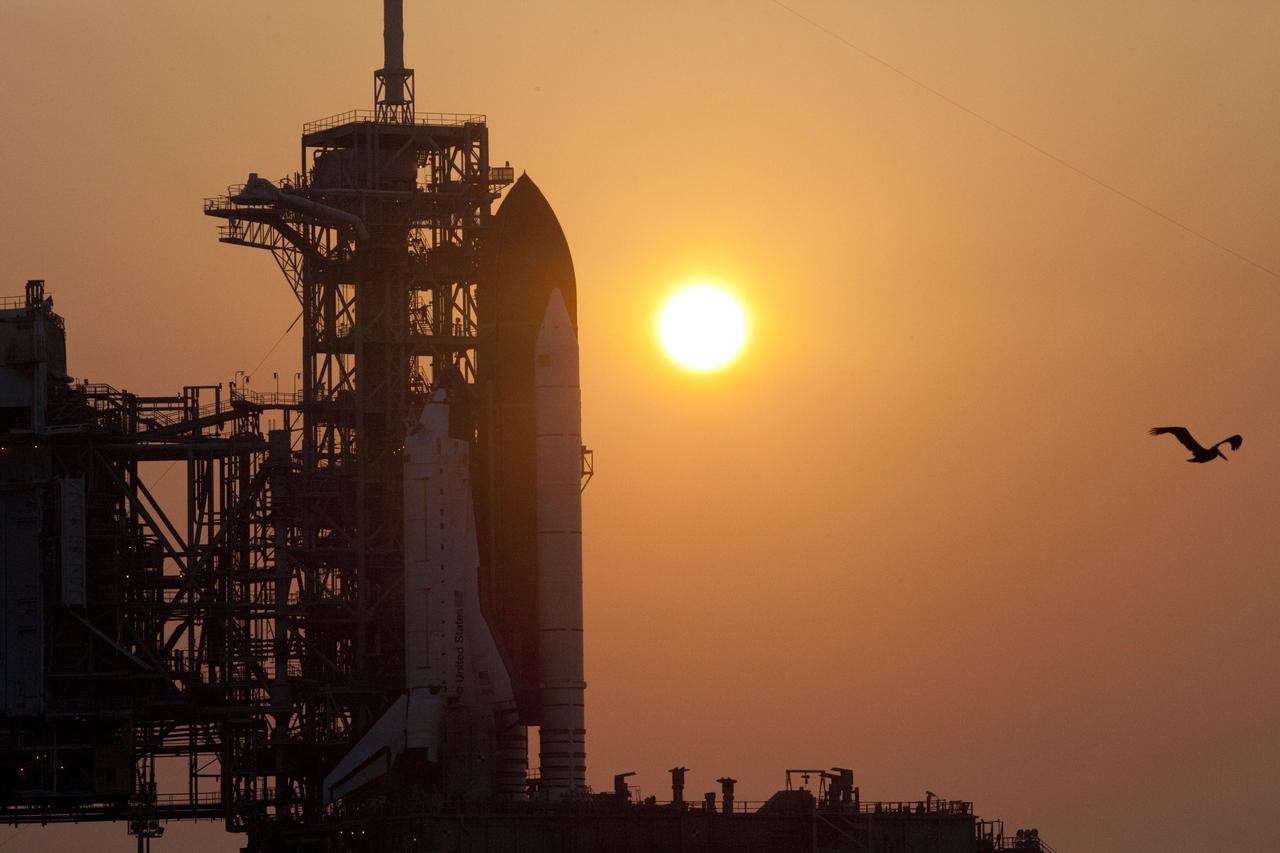
CAPE CANAVERAL, Fla. -- A hazy sun sets over Launch Pad 39A at NASA's Kennedy Space Center in Florida as space shuttle Atlantis awaits delivery of the Raffaello multi-purpose logistics module (MPLM) in its transportation canister. Once delivered, the canister will be lifted to the payload changeout room. The payload ground-handling mechanism then will be used to transfer Raffaello out of the canister into Atlantis' payload bay. Next, the rotating service structure that protects the shuttle from the elements and provides access will be rotated back into place. Commander Chris Ferguson, Pilot Doug Hurley and Mission Specialists Sandra Magnus and Rex Walheim are targeted to lift off on Atlantis July 8, taking with them the MPLM packed with supplies, logistics and spare parts to the station. The STS-135 mission also will fly a system to investigate the potential for robotically refueling existing satellites and return a failed ammonia pump module to help NASA better understand the failure mechanism and improve pump designs for future systems. STS-135 will be the 33rd flight of Atlantis, the 37th shuttle mission to the space station, and the 135th and final mission of NASA's Space Shuttle Program. For more information visit, www.nasa.gov/mission_pages/shuttle/shuttlemissions/sts135/index.html. Photo credit: NASA/Frank Michaux
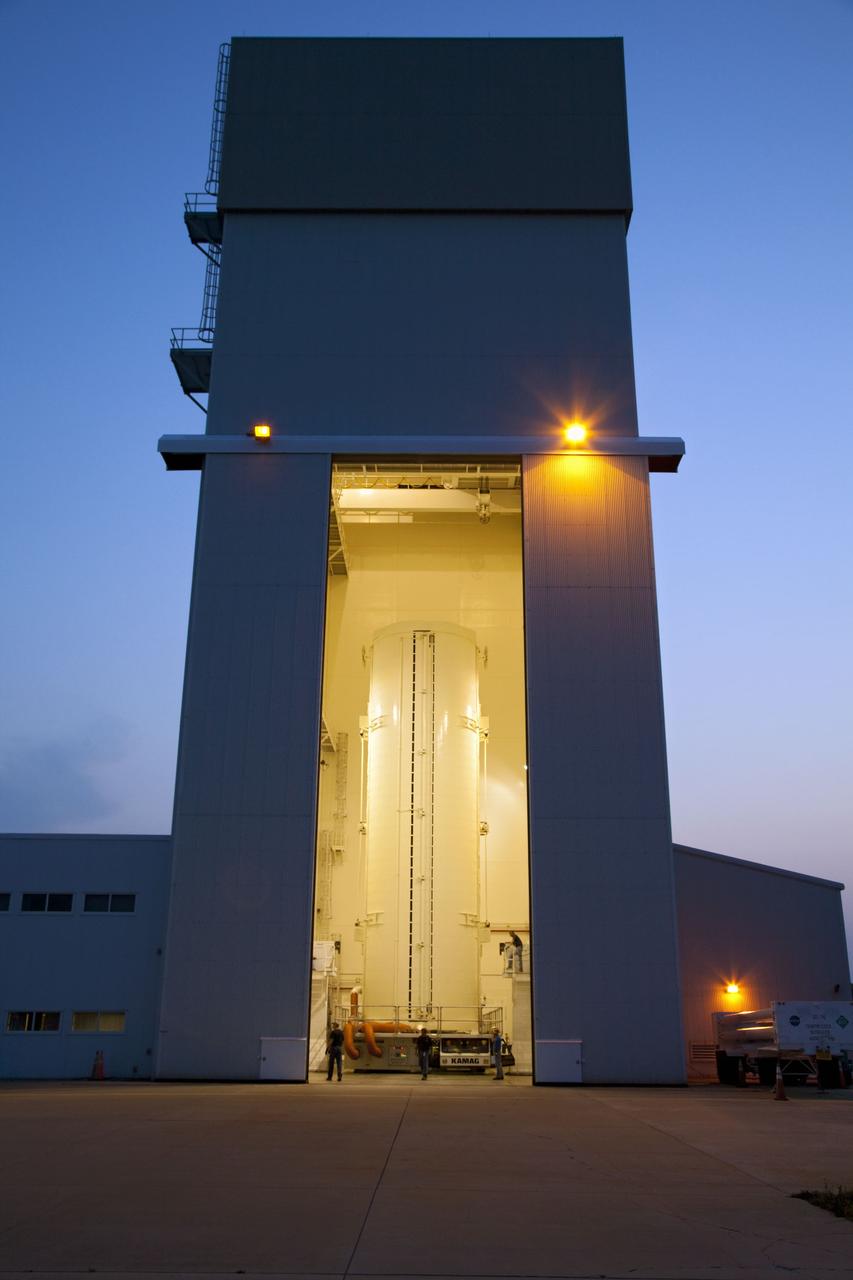
CAPE CANAVERAL, Fla. -- Inside the Canister Rotation Facility, the container that carries the Raffaello multi-purpose logistics module (MPLM), secured on its transportation vehicle, is ready for its journey to Launch Pad 39A at NASA's Kennedy Space Center in Florida. Once there, the canister will be lifted to the payload changeout room. The payload ground-handling mechanism then will be used to transfer Raffaello out of the canister into space shuttle Atlantis' payload bay. Next, the rotating service structure that protects the shuttle from the elements and provides access will be rotated back into place. Commander Chris Ferguson, Pilot Doug Hurley and Mission Specialists Sandra Magnus and Rex Walheim are targeted to lift off on Atlantis July 8, taking with them the MPLM packed with supplies, logistics and spare parts to the station. The STS-135 mission also will fly a system to investigate the potential for robotically refueling existing satellites and return a failed ammonia pump module to help NASA better understand the failure mechanism and improve pump designs for future systems. STS-135 will be the 33rd flight of Atlantis, the 37th shuttle mission to the space station, and the 135th and final mission of NASA's Space Shuttle Program. For more information visit, www.nasa.gov/mission_pages/shuttle/shuttlemissions/sts135/index.html. Photo credit: NASA/Frank Michaux
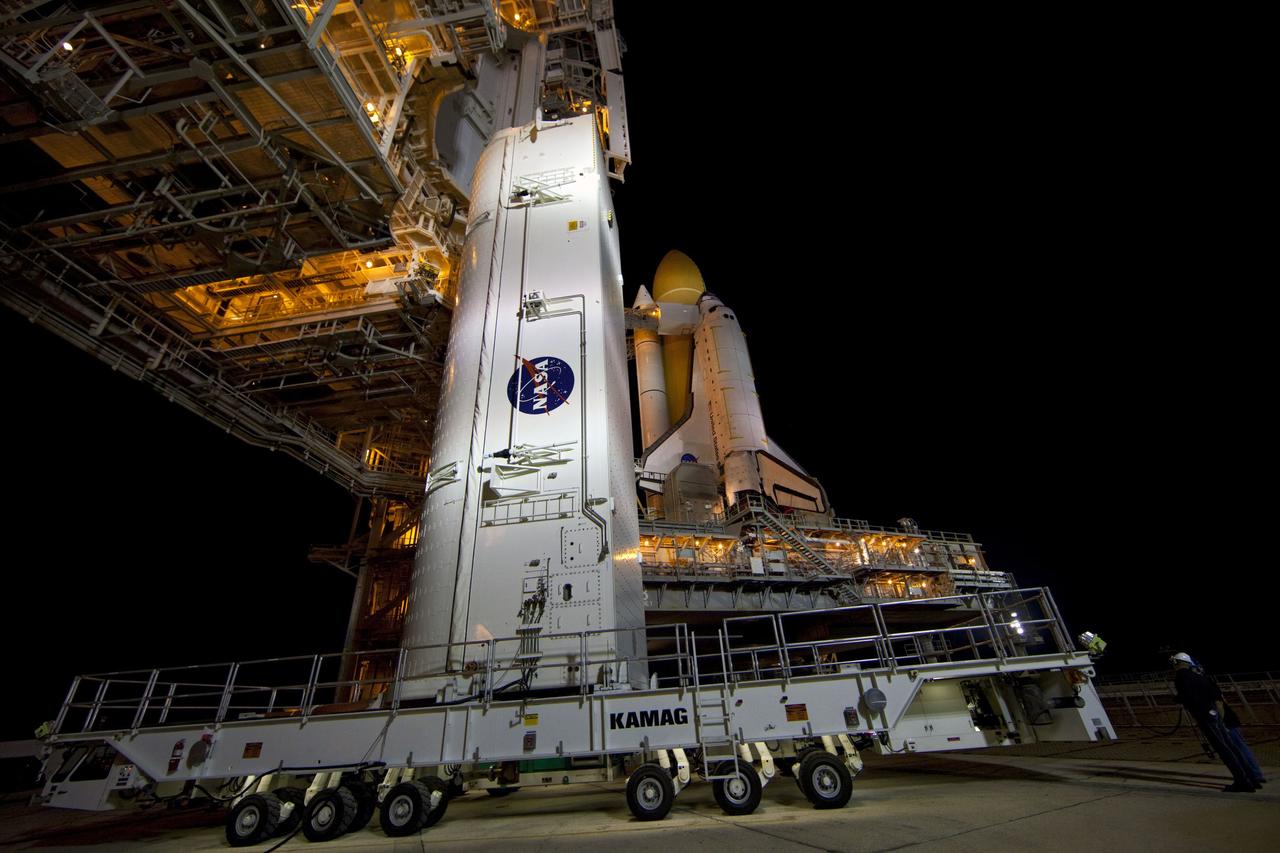
CAPE CANAVERAL, Fla. -- A canister, carrying the Raffaello multi-purpose logistics module (MPLM) for space shuttle Atlantis' STS-135 mission to the International Space Station, arrives at Launch Pad 39A at NASA's Kennedy Space Center in Florida. The canister will be lifted to the payload changeout room. The payload ground-handling mechanism then will be used to transfer Raffaello out of the canister into Atlantis' payload bay. Next, the rotating service structure that protects the shuttle from the elements and provides access will be rotated back into place. Commander Chris Ferguson, Pilot Doug Hurley and Mission Specialists Sandra Magnus and Rex Walheim are targeted to lift off on Atlantis July 8, taking with them the MPLM packed with supplies, logistics and spare parts to the station. The STS-135 mission also will fly a system to investigate the potential for robotically refueling existing satellites and return a failed ammonia pump module to help NASA better understand the failure mechanism and improve pump designs for future systems. STS-135 will be the 33rd flight of Atlantis, the 37th shuttle mission to the space station, and the 135th and final mission of NASA's Space Shuttle Program. For more information visit, www.nasa.gov/mission_pages/shuttle/shuttlemissions/sts135/index.html. Photo credit: NASA/Frank Michaux
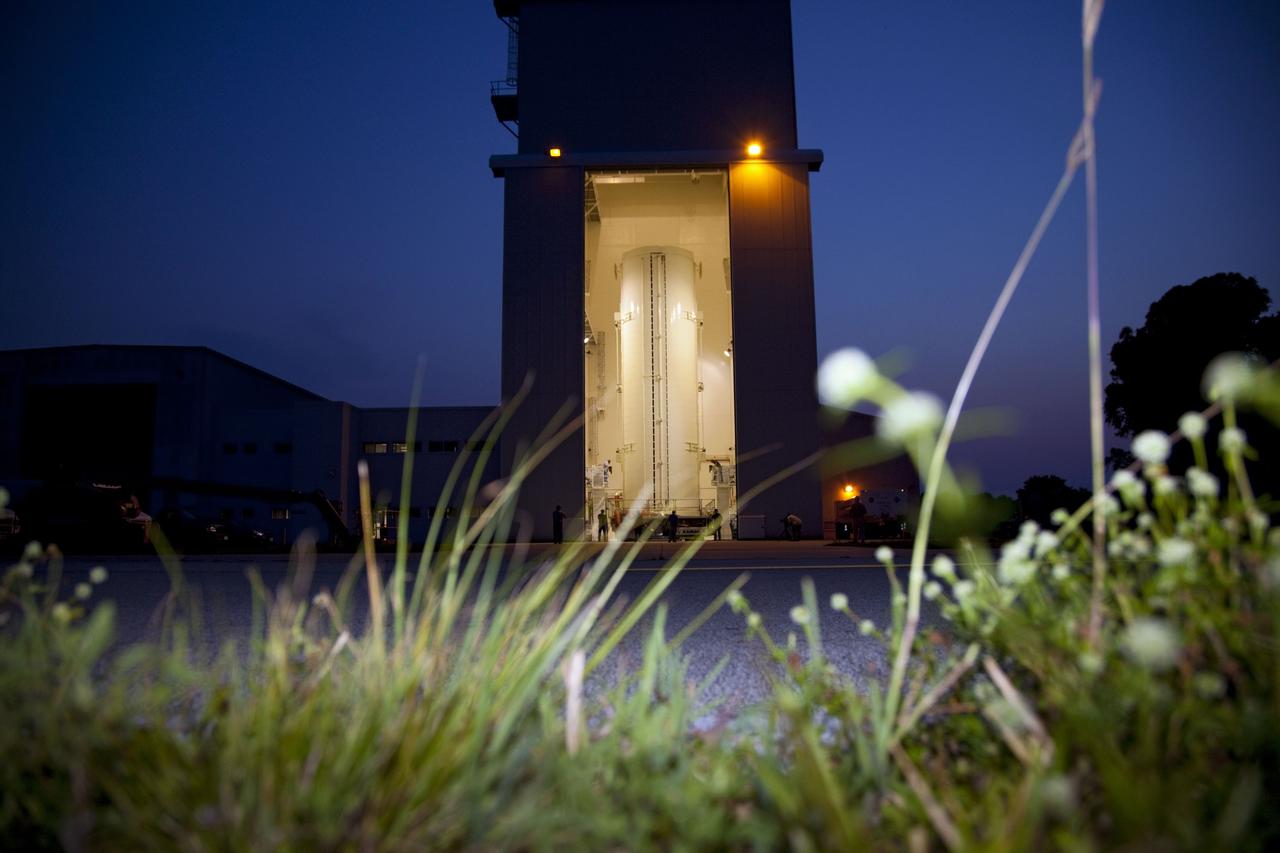
CAPE CANAVERAL, Fla. -- Inside the Canister Rotation Facility, the container that carries the Raffaello multi-purpose logistics module (MPLM), secured on its transportation vehicle, is ready for its journey to Launch Pad 39A at NASA's Kennedy Space Center in Florida. Once there, the canister will be lifted to the payload changeout room. The payload ground-handling mechanism then will be used to transfer Raffaello out of the canister into space shuttle Atlantis' payload bay. Next, the rotating service structure that protects the shuttle from the elements and provides access will be rotated back into place. Commander Chris Ferguson, Pilot Doug Hurley and Mission Specialists Sandra Magnus and Rex Walheim are targeted to lift off on Atlantis July 8, taking with them the MPLM packed with supplies, logistics and spare parts to the station. The STS-135 mission also will fly a system to investigate the potential for robotically refueling existing satellites and return a failed ammonia pump module to help NASA better understand the failure mechanism and improve pump designs for future systems. STS-135 will be the 33rd flight of Atlantis, the 37th shuttle mission to the space station, and the 135th and final mission of NASA's Space Shuttle Program. For more information visit, www.nasa.gov/mission_pages/shuttle/shuttlemissions/sts135/index.html. Photo credit: NASA/Frank Michaux
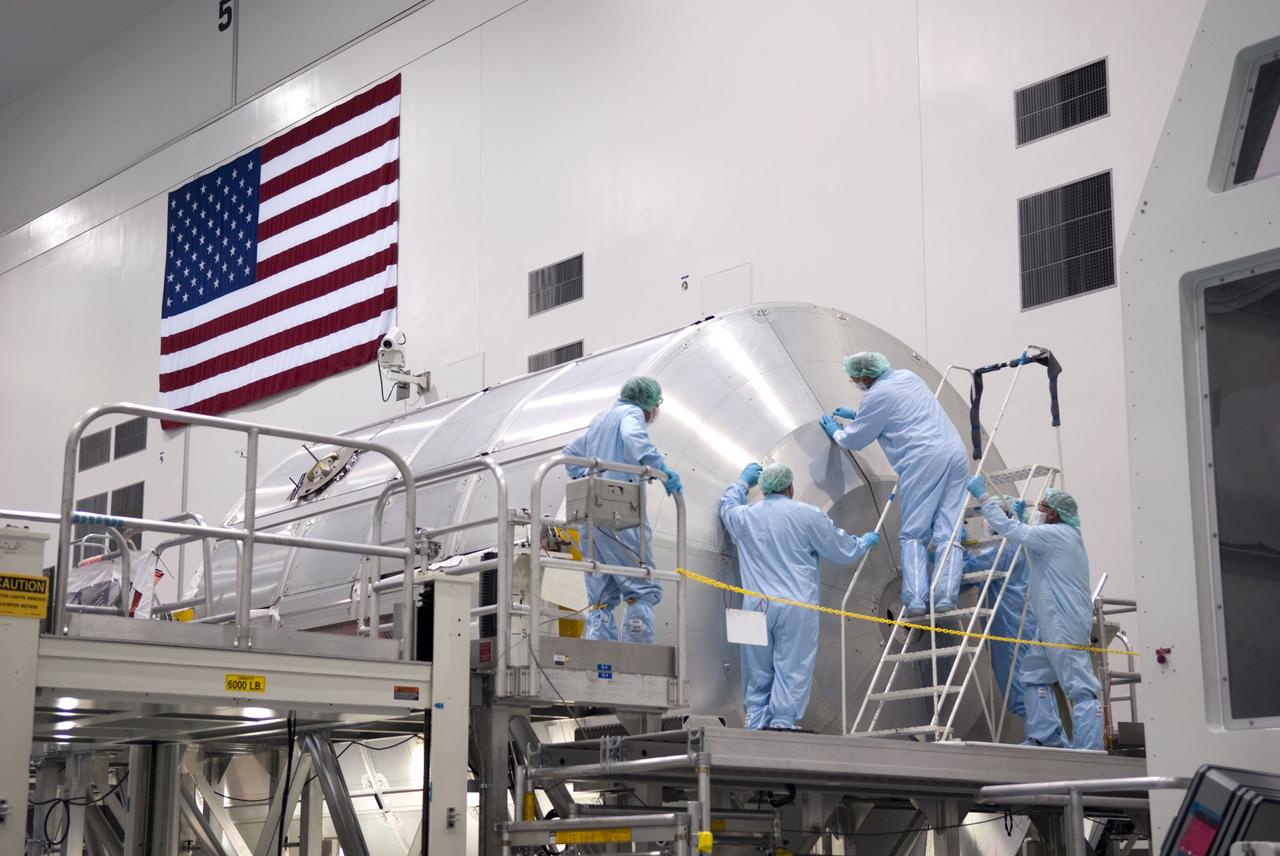
CAPE CANAVERAL, Fla. -- In the Space Station Processing Facility at NASA's Kennedy Space Center in Florida, technicians are installing a debris shield over the aft hatch on the Raffaello multi-purpose logistics module for shuttle Atlantis' flight to the International Space Station. Commander Chris Ferguson, Pilot Doug Hurley and Mission Specialists Sandra Magnus and Rex Walheim are targeted to lift off on July 8, taking with them the Raffaello multi-purpose logistics module packed with supplies, logistics and spare parts. The STS-135 mission also will fly a system to investigate the potential for robotically refueling existing spacecraft and return a failed ammonia pump module to help NASA better understand the failure mechanism and improve pump designs for future systems. STS-135 will be the 33rd flight of Atlantis, the 37th shuttle mission to the space station, and the 135th and final mission of NASA's Space Shuttle Program. For more information visit, www.nasa.gov/mission_pages/shuttle/shuttlemissions/sts135/index.html. Photo credit: NASA/Jim Grossmann
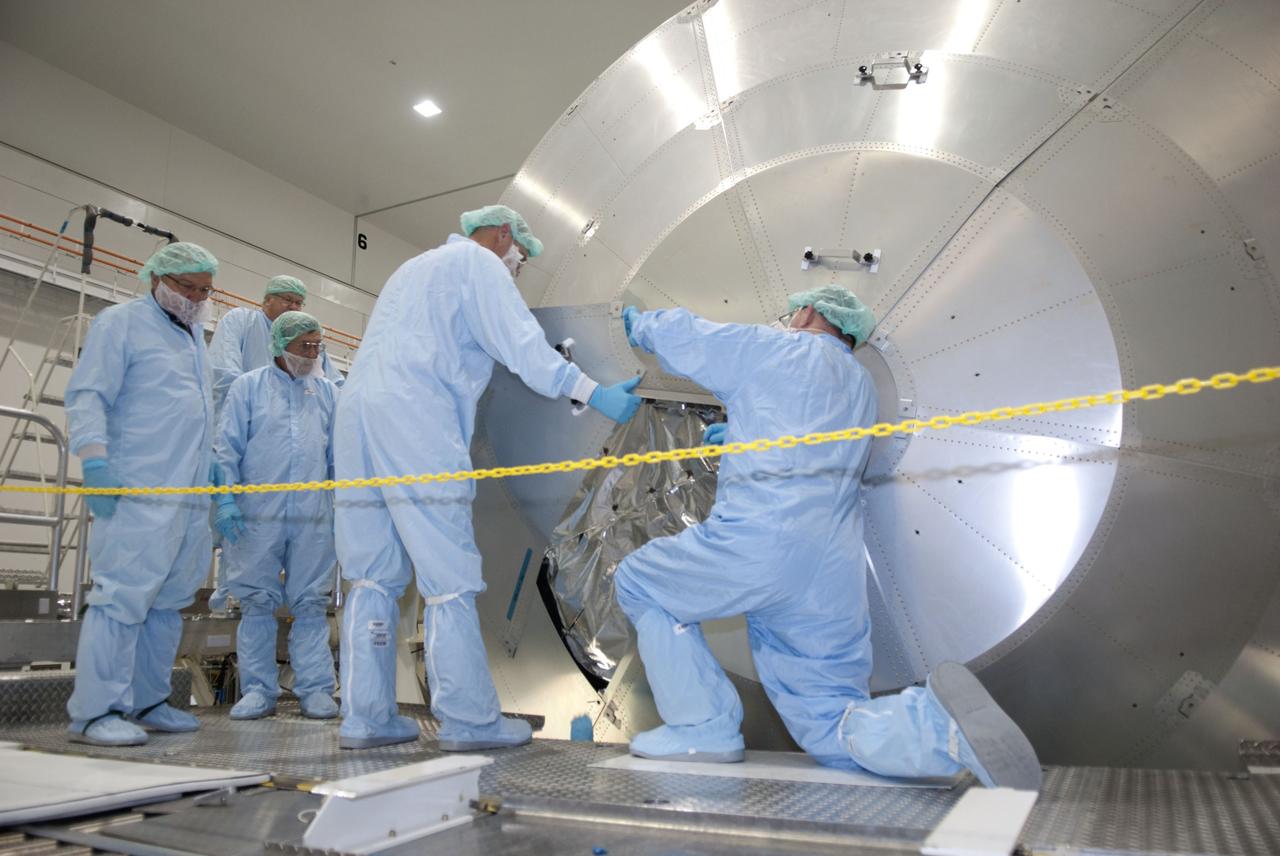
CAPE CANAVERAL, Fla. -- In the Space Station Processing Facility at NASA's Kennedy Space Center in Florida, technicians are installing a debris shield over the aft hatch on the Raffaello multi-purpose logistics module for shuttle Atlantis' flight to the International Space Station. Commander Chris Ferguson, Pilot Doug Hurley and Mission Specialists Sandra Magnus and Rex Walheim are targeted to lift off on July 8, taking with them the Raffaello multi-purpose logistics module packed with supplies, logistics and spare parts. The STS-135 mission also will fly a system to investigate the potential for robotically refueling existing spacecraft and return a failed ammonia pump module to help NASA better understand the failure mechanism and improve pump designs for future systems. STS-135 will be the 33rd flight of Atlantis, the 37th shuttle mission to the space station, and the 135th and final mission of NASA's Space Shuttle Program. For more information visit, www.nasa.gov/mission_pages/shuttle/shuttlemissions/sts135/index.html. Photo credit: NASA/Jim Grossmann
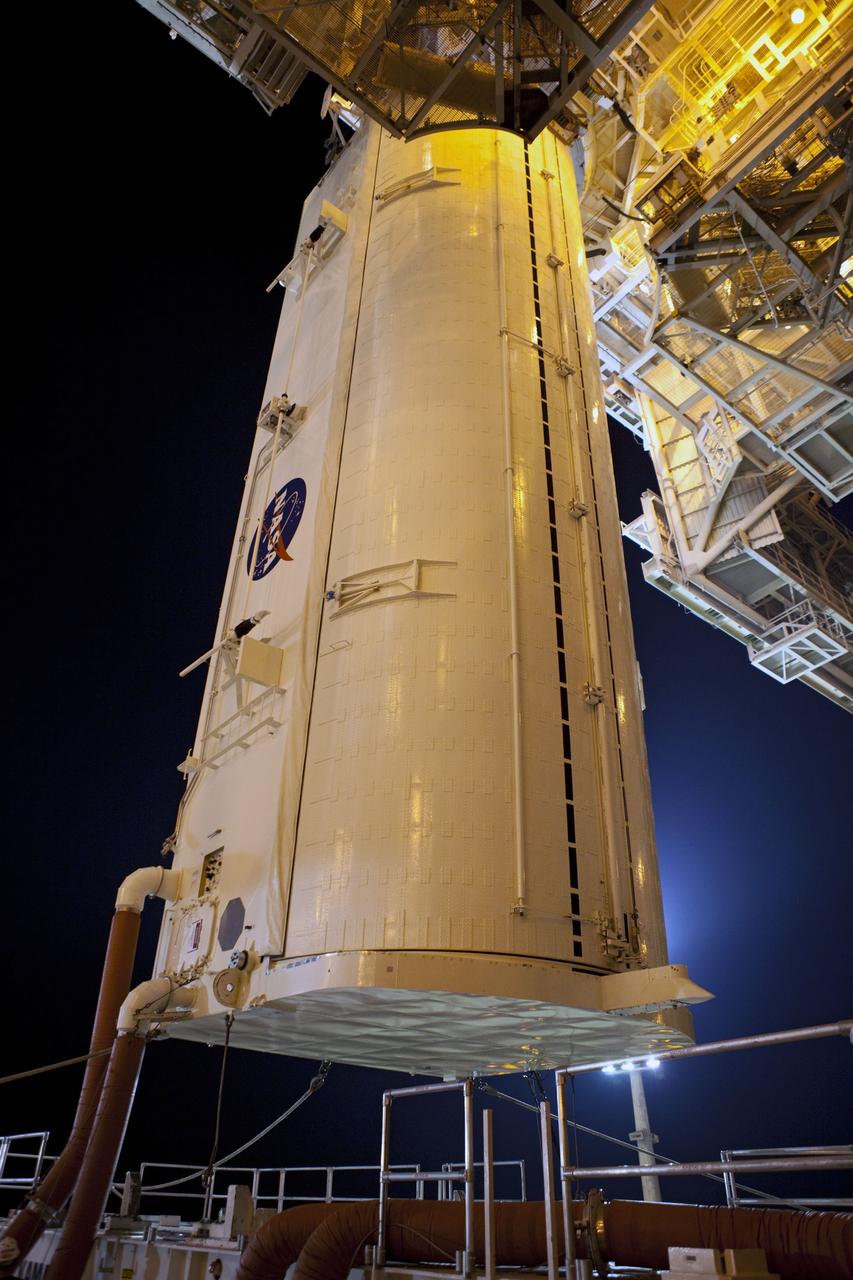
CAPE CANAVERAL, Fla. -- The payload canister carrying the Raffaello multi-purpose logistics module (MPLM) is lifted to the payload changeout room on the rotating service structure (RSS) on Launch Pad 39A at NASA's Kennedy Space Center in Florida. Umbilical hoses, maintaining a controlled environment for the cargo are attached to the lower end of the canister. The payload ground-handling mechanism then will be used to transfer Raffaello out of the canister into Atlantis' payload bay. Next, the RSS that protects the shuttle from the elements and provides access will be rotated back into place. Commander Chris Ferguson, Pilot Doug Hurley and Mission Specialists Sandra Magnus and Rex Walheim are targeted to lift off on Atlantis July 8, taking with them the MPLM packed with supplies, logistics and spare parts to the station. The STS-135 mission also will fly a system to investigate the potential for robotically refueling existing satellites and return a failed ammonia pump module to help NASA better understand the failure mechanism and improve pump designs for future systems. STS-135 will be the 33rd flight of Atlantis, the 37th shuttle mission to the space station, and the 135th and final mission of NASA's Space Shuttle Program. For more information visit, www.nasa.gov/mission_pages/shuttle/shuttlemissions/sts135/index.html. Photo credit: NASA/Dimitri Gerondidakis
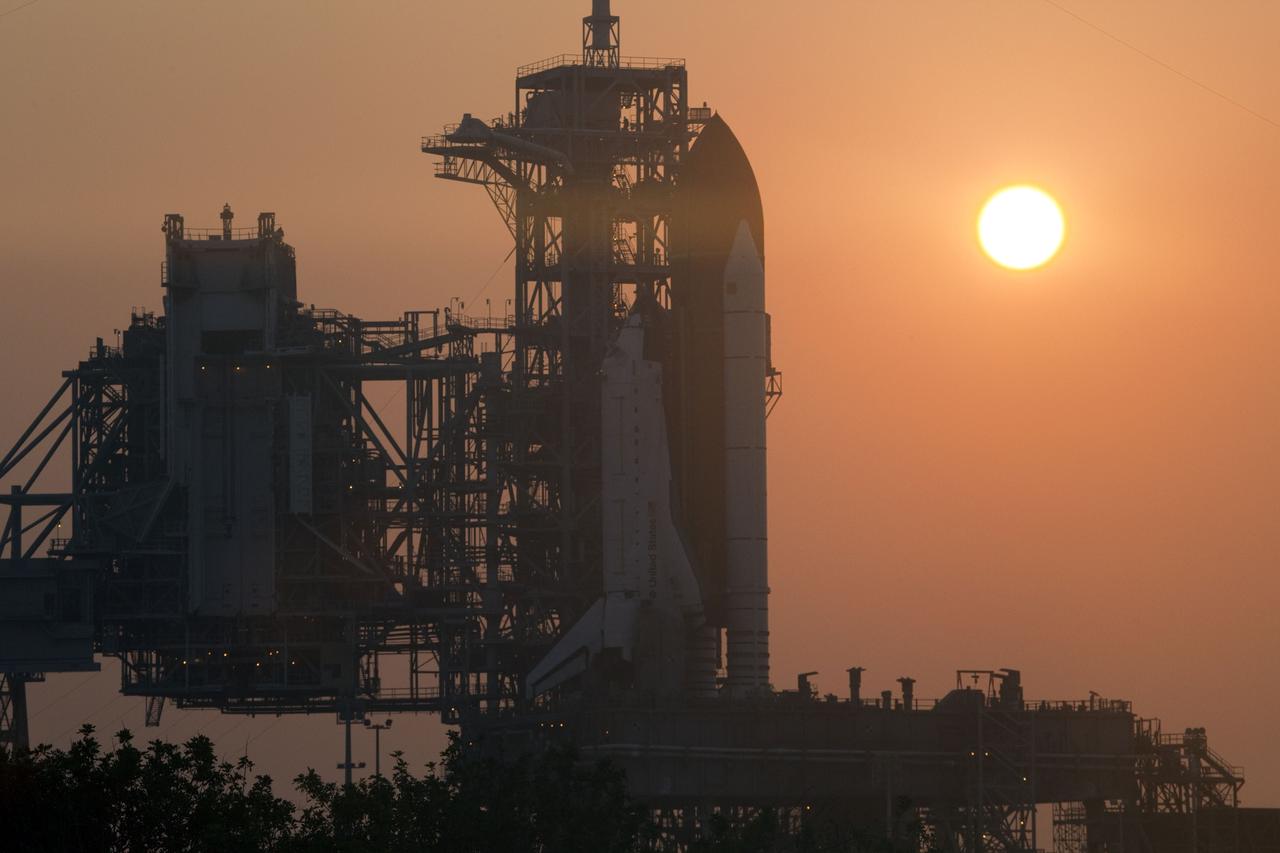
CAPE CANAVERAL, Fla. -- A hazy sun sets over Launch Pad 39A at NASA's Kennedy Space Center in Florida as space shuttle Atlantis awaits delivery of the Raffaello multi-purpose logistics module (MPLM) in its transportation canister. Once delivered, the canister will be lifted to the payload changeout room. The payload ground-handling mechanism then will be used to transfer Raffaello out of the canister into Atlantis' payload bay. Next, the rotating service structure that protects the shuttle from the elements and provides access will be rotated back into place. Commander Chris Ferguson, Pilot Doug Hurley and Mission Specialists Sandra Magnus and Rex Walheim are targeted to lift off on Atlantis July 8, taking with them the MPLM packed with supplies, logistics and spare parts to the station. The STS-135 mission also will fly a system to investigate the potential for robotically refueling existing satellites and return a failed ammonia pump module to help NASA better understand the failure mechanism and improve pump designs for future systems. STS-135 will be the 33rd flight of Atlantis, the 37th shuttle mission to the space station, and the 135th and final mission of NASA's Space Shuttle Program. For more information visit, www.nasa.gov/mission_pages/shuttle/shuttlemissions/sts135/index.html. Photo credit: NASA/Frank Michaux
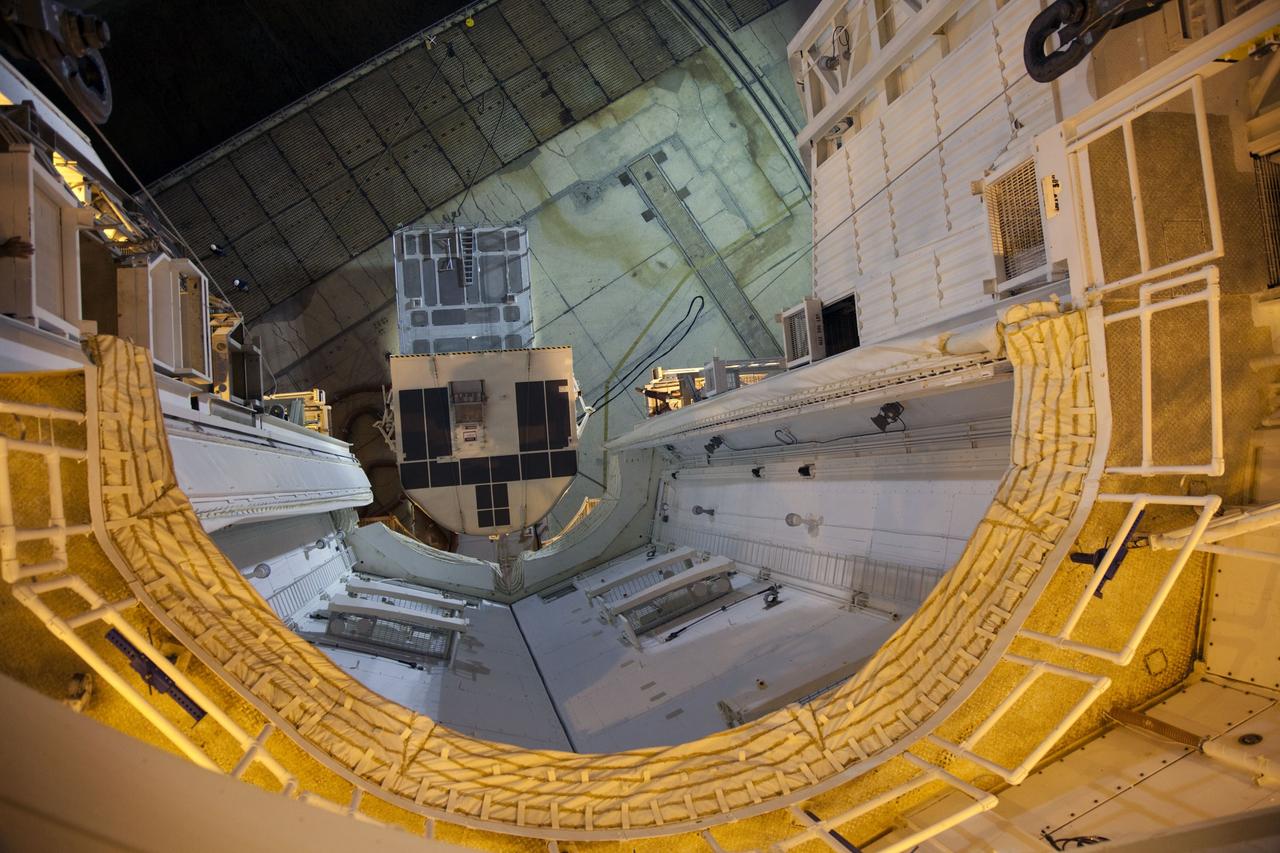
CAPE CANAVERAL, Fla. -- On Launch Pad 39A at NASA's Kennedy Space Center in Florida, the Raffaello multi-purpose logistics module (MPLM) payload for space shuttle Atlantis' STS-135 mission to the International Space Station can be seen from inside the payload changeout room (PCR). The payload canister will be lifted to the PCR and the payload ground-handling mechanism then will be used to transfer Raffaello out of the canister into Atlantis' payload bay. Next, the rotating service structure that protects the shuttle from the elements and provides access will be rotated back into place. Commander Chris Ferguson, Pilot Doug Hurley and Mission Specialists Sandra Magnus and Rex Walheim are targeted to lift off on Atlantis July 8, taking with them the MPLM packed with supplies, logistics and spare parts to the station. The STS-135 mission also will fly a system to investigate the potential for robotically refueling existing satellites and return a failed ammonia pump module to help NASA better understand the failure mechanism and improve pump designs for future systems. STS-135 will be the 33rd flight of Atlantis, the 37th shuttle mission to the space station, and the 135th and final mission of NASA's Space Shuttle Program. For more information visit, www.nasa.gov/mission_pages/shuttle/shuttlemissions/sts135/index.html. Photo credit: NASA/Frank Michaux
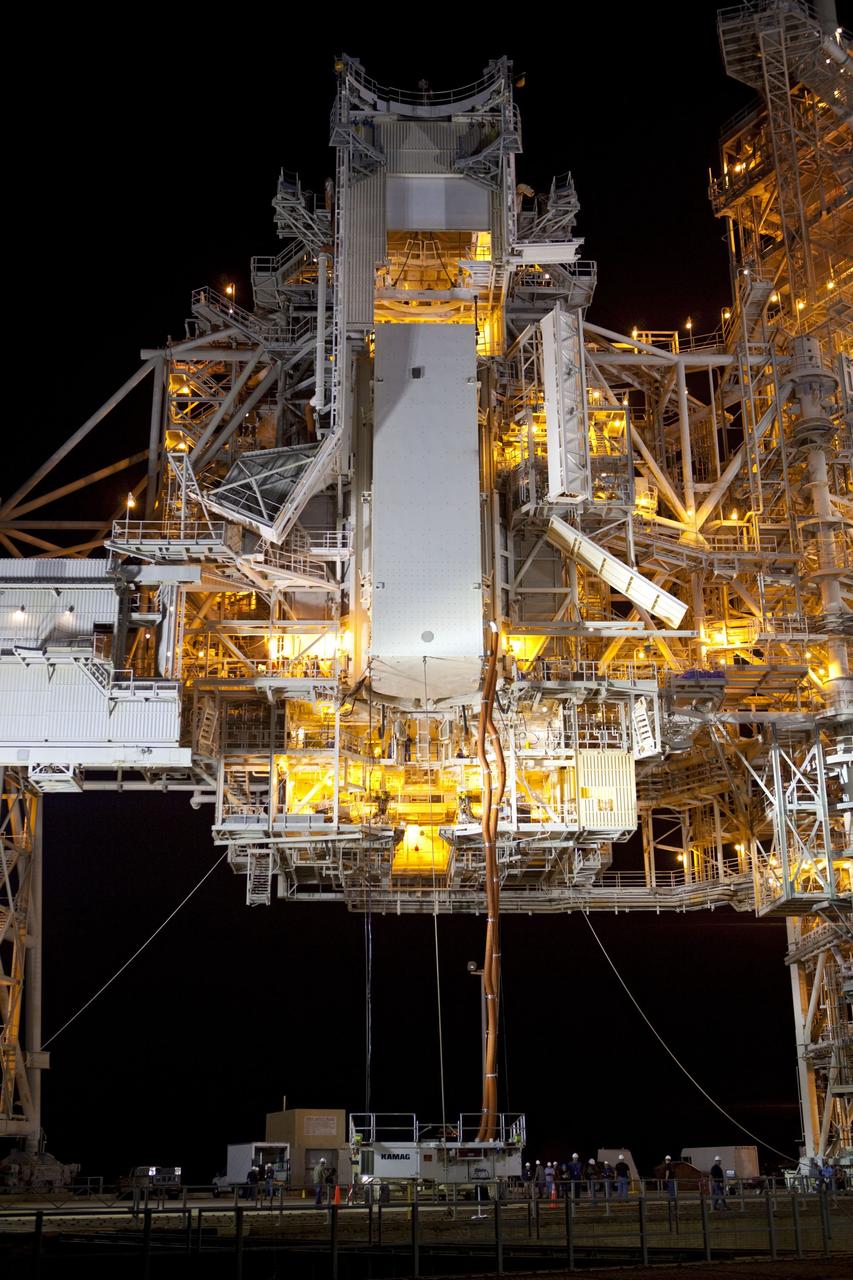
CAPE CANAVERAL, Fla. -- The payload canister carrying the Raffaello multi-purpose logistics module (MPLM) is lifted to the payload changeout room on the rotating service structure (RSS) on Launch Pad 39A at NASA's Kennedy Space Center in Florida. Umbilical hoses, maintaining a controlled environment for the cargo are attached to the lower end of the canister. The payload ground-handling mechanism then will be used to transfer Raffaello out of the canister into Atlantis' payload bay. Next, the RSS that protects the shuttle from the elements and provides access will be rotated back into place. Commander Chris Ferguson, Pilot Doug Hurley and Mission Specialists Sandra Magnus and Rex Walheim are targeted to lift off on Atlantis July 8, taking with them the MPLM packed with supplies, logistics and spare parts to the station. The STS-135 mission also will fly a system to investigate the potential for robotically refueling existing satellites and return a failed ammonia pump module to help NASA better understand the failure mechanism and improve pump designs for future systems. STS-135 will be the 33rd flight of Atlantis, the 37th shuttle mission to the space station, and the 135th and final mission of NASA's Space Shuttle Program. For more information visit, www.nasa.gov/mission_pages/shuttle/shuttlemissions/sts135/index.html. Photo credit: NASA/Dimitri Gerondidakis
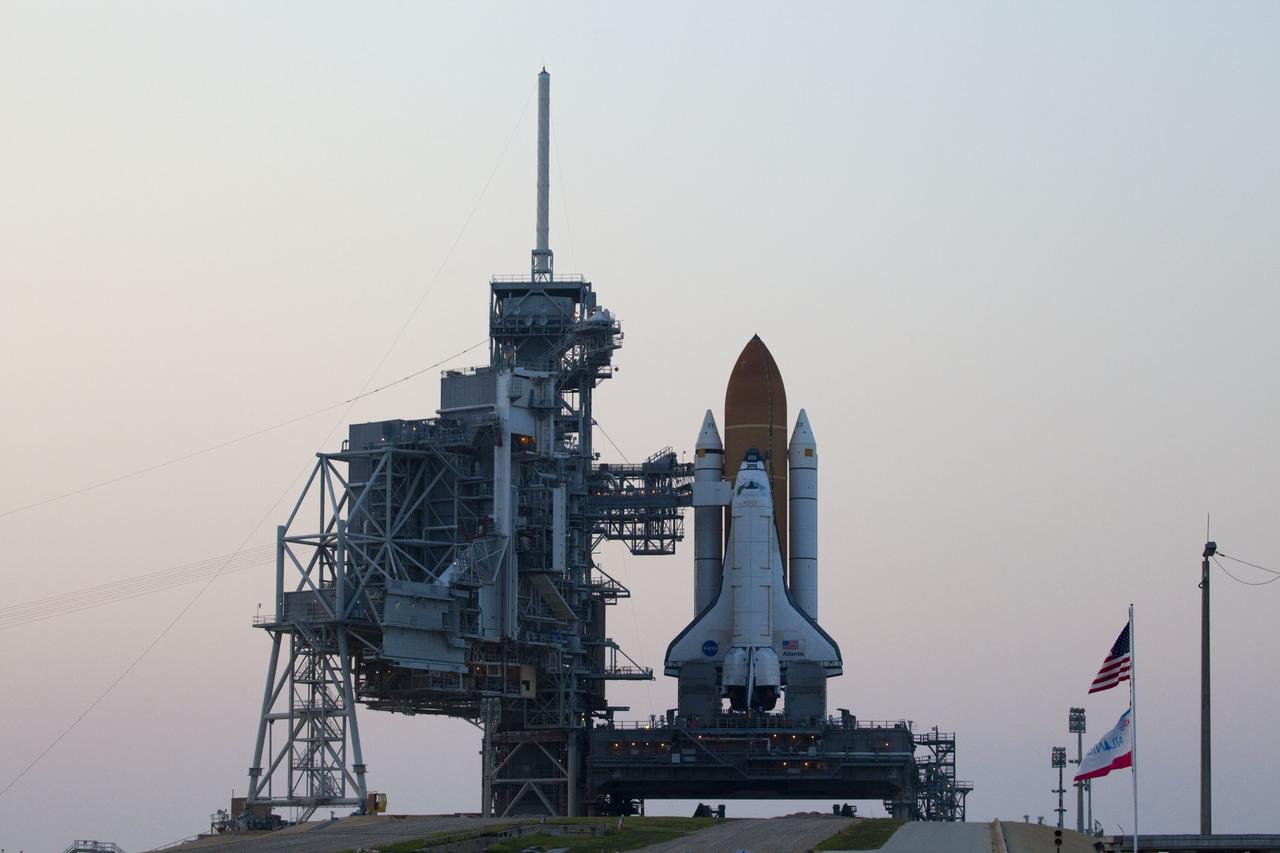
CAPE CANAVERAL, Fla. -- After sunset, lights glow on Launch Pad 39A at NASA's Kennedy Space Center in Florida as space shuttle Atlantis awaits delivery of the Raffaello multi-purpose logistics module (MPLM) in its transportation canister. Once delivered, the canister will be lifted to the payload changeout room. The payload ground-handling mechanism then will be used to transfer Raffaello out of the canister into Atlantis' payload bay. Next, the rotating service structure that protects the shuttle from the elements and provides access will be rotated back into place. Commander Chris Ferguson, Pilot Doug Hurley and Mission Specialists Sandra Magnus and Rex Walheim are targeted to lift off on Atlantis July 8, taking with them the MPLM packed with supplies, logistics and spare parts to the station. The STS-135 mission also will fly a system to investigate the potential for robotically refueling existing satellites and return a failed ammonia pump module to help NASA better understand the failure mechanism and improve pump designs for future systems. STS-135 will be the 33rd flight of Atlantis, the 37th shuttle mission to the space station, and the 135th and final mission of NASA's Space Shuttle Program. For more information visit, www.nasa.gov/mission_pages/shuttle/shuttlemissions/sts135/index.html. Photo credit: NASA/Frank Michaux
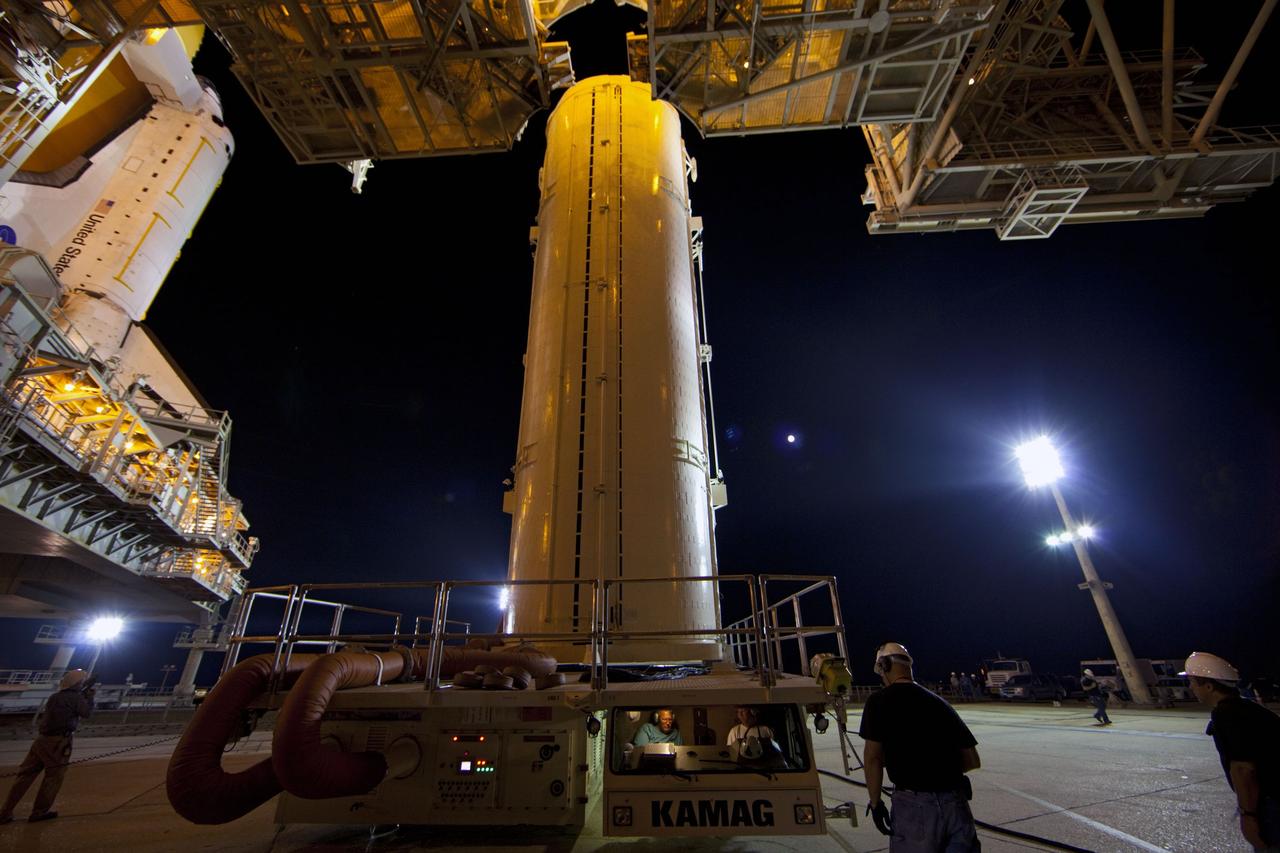
CAPE CANAVERAL, Fla. -- A canister, carrying the Raffaello multi-purpose logistics module (MPLM) for space shuttle Atlantis' STS-135 mission to the International Space Station, arrives at Launch Pad 39A at NASA's Kennedy Space Center in Florida. The canister will be lifted to the payload changeout room. The payload ground-handling mechanism then will be used to transfer Raffaello out of the canister into Atlantis' payload bay. Next, the rotating service structure that protects the shuttle from the elements and provides access will be rotated back into place. Commander Chris Ferguson, Pilot Doug Hurley and Mission Specialists Sandra Magnus and Rex Walheim are targeted to lift off on Atlantis July 8, taking with them the MPLM packed with supplies, logistics and spare parts to the station. The STS-135 mission also will fly a system to investigate the potential for robotically refueling existing satellites and return a failed ammonia pump module to help NASA better understand the failure mechanism and improve pump designs for future systems. STS-135 will be the 33rd flight of Atlantis, the 37th shuttle mission to the space station, and the 135th and final mission of NASA's Space Shuttle Program. For more information visit, www.nasa.gov/mission_pages/shuttle/shuttlemissions/sts135/index.html. Photo credit: NASA/Frank Michaux
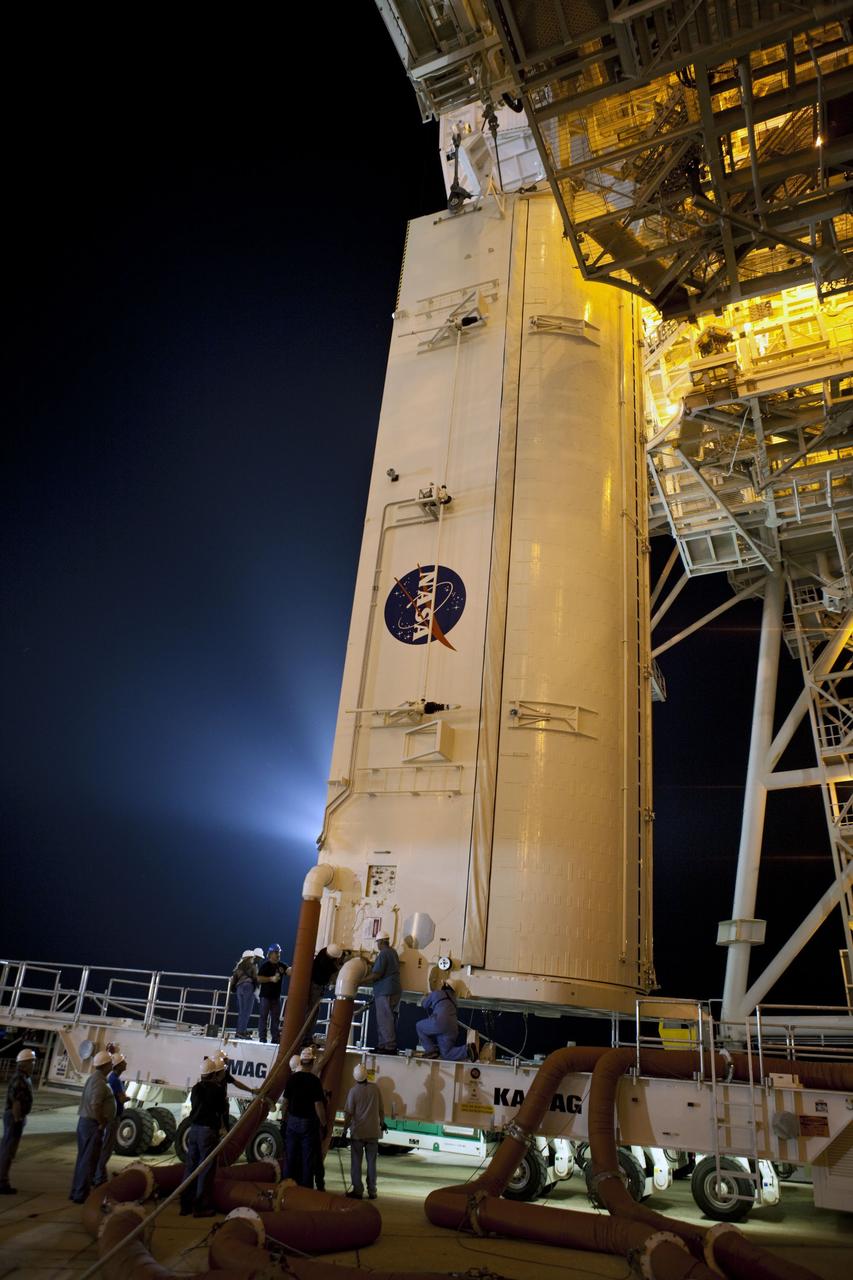
CAPE CANAVERAL, Fla. -- Workers attach umbilical hoses that maintain a controlled environment inside the canister carrying the Raffaello multi-purpose logistics module (MPLM). The payload was delivered to Launch Pad 39A at NASA's Kennedy Space Center in Florida for space shuttle Atlantis' STS-135 mission to the International Space Station. The canister is being lifted into the payload changeout room. The payload ground-handling mechanism then will be used to transfer Raffaello out of the canister into Atlantis' payload bay. Next, the rotating service structure that protects the shuttle from the elements and provides access will be rotated back into place. Commander Chris Ferguson, Pilot Doug Hurley and Mission Specialists Sandra Magnus and Rex Walheim are targeted to lift off on Atlantis July 8, taking with them the MPLM packed with supplies, logistics and spare parts to the station. The STS-135 mission also will fly a system to investigate the potential for robotically refueling existing satellites and return a failed ammonia pump module to help NASA better understand the failure mechanism and improve pump designs for future systems. STS-135 will be the 33rd flight of Atlantis, the 37th shuttle mission to the space station, and the 135th and final mission of NASA's Space Shuttle Program. For more information visit, www.nasa.gov/mission_pages/shuttle/shuttlemissions/sts135/index.html. Photo credit: NASA/Dimitri Gerondidakis
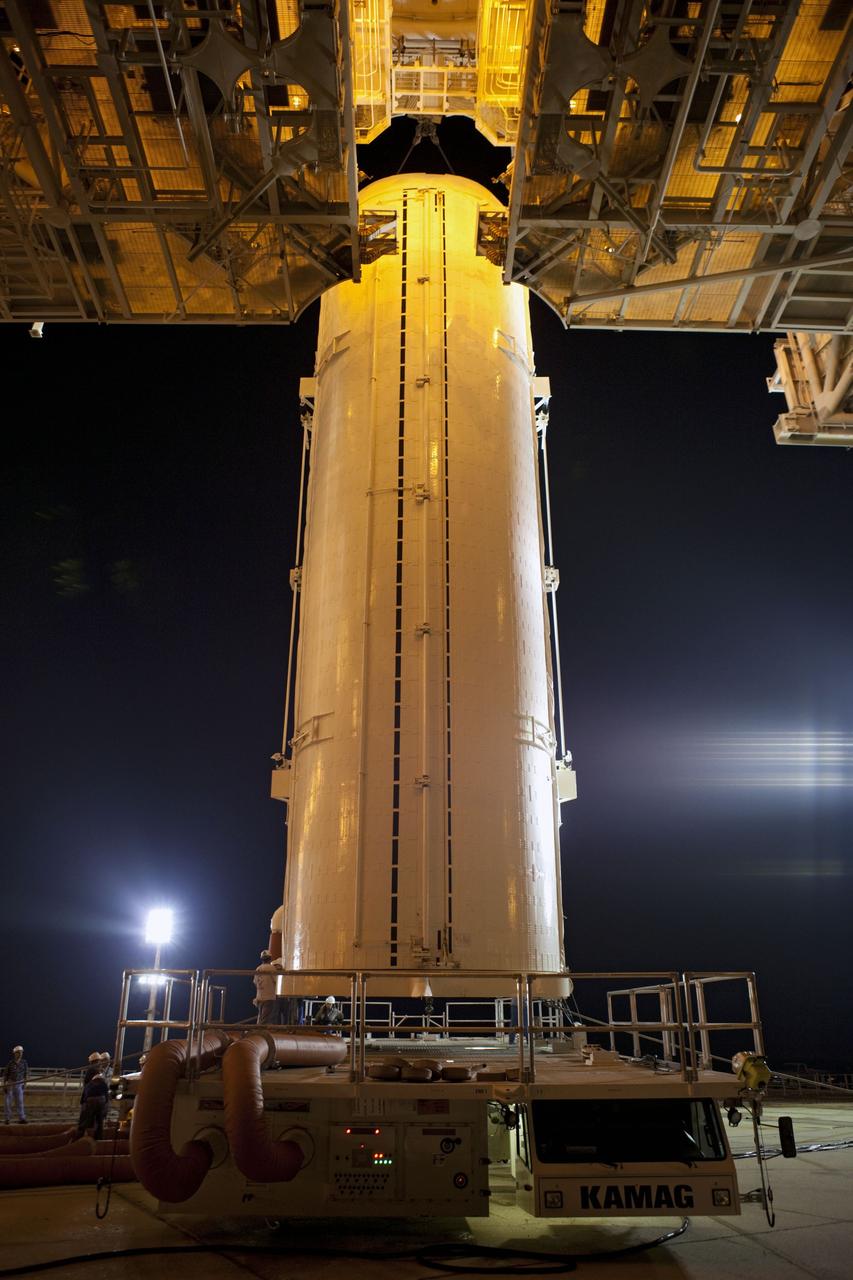
CAPE CANAVERAL, Fla. -- An overhead crane lifts the canister carrying the Raffaello multi-purpose logistics module (MPLM) off its transporter to the payload changeout room. The payload was delivered to Launch Pad 39A at NASA's Kennedy Space Center in Florida for space shuttle Atlantis' STS-135 mission to the International Space Station. The payload ground-handling mechanism then will be used to transfer Raffaello out of the canister into Atlantis' payload bay. Next, the rotating service structure that protects the shuttle from the elements and provides access will be rotated back into place. Commander Chris Ferguson, Pilot Doug Hurley and Mission Specialists Sandra Magnus and Rex Walheim are targeted to lift off on Atlantis July 8, taking with them the MPLM packed with supplies, logistics and spare parts to the station. The STS-135 mission also will fly a system to investigate the potential for robotically refueling existing satellites and return a failed ammonia pump module to help NASA better understand the failure mechanism and improve pump designs for future systems. STS-135 will be the 33rd flight of Atlantis, the 37th shuttle mission to the space station, and the 135th and final mission of NASA's Space Shuttle Program. For more information visit, www.nasa.gov/mission_pages/shuttle/shuttlemissions/sts135/index.html. Photo credit: NASA/Dimitri Gerondidakis
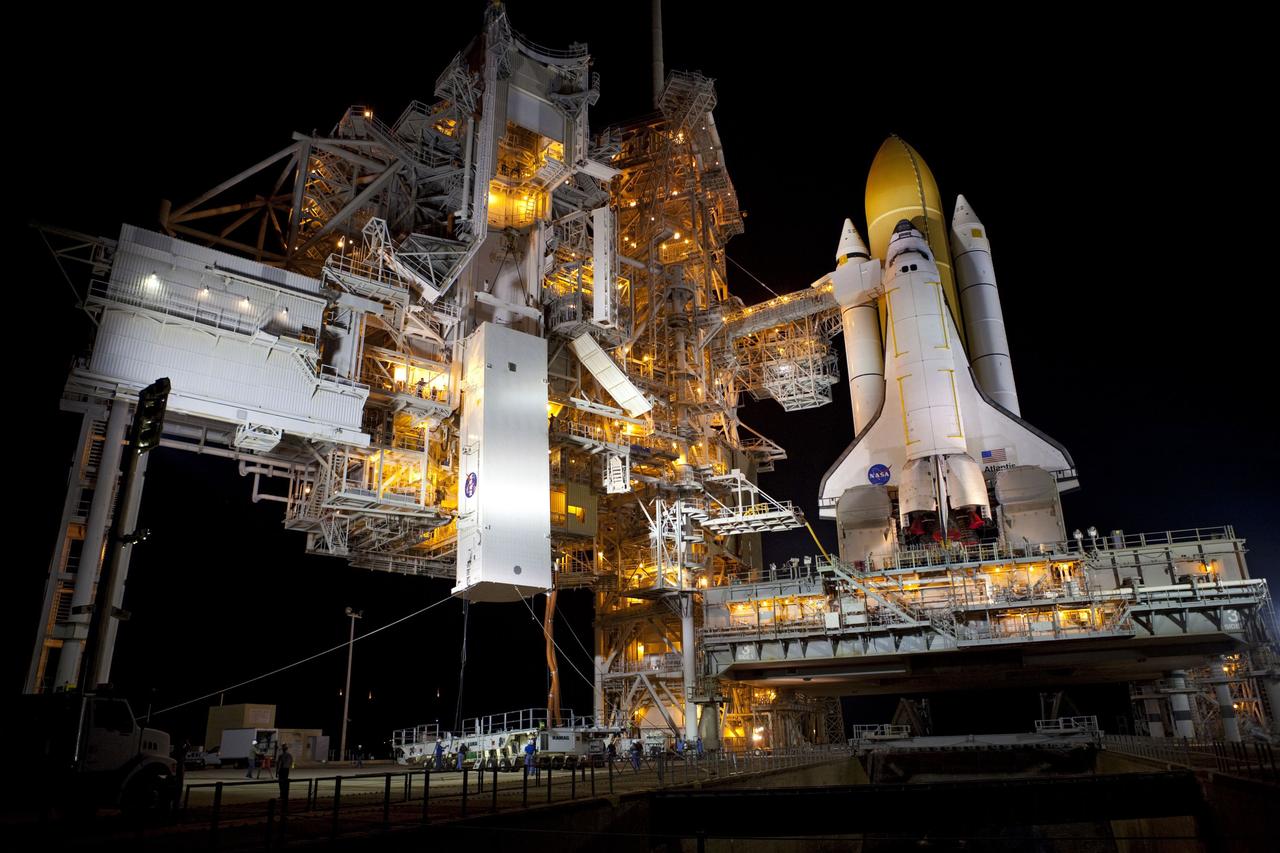
CAPE CANAVERAL, Fla. -- The payload canister carrying the Raffaello multi-purpose logistics module (MPLM) is lifted to the payload changeout room on the rotating service structure (RSS) on Launch Pad 39A at NASA's Kennedy Space Center in Florida. Umbilical hoses, maintaining a controlled environment for the cargo are attached to the lower end of the canister. The payload ground-handling mechanism then will be used to transfer Raffaello out of the canister into Atlantis' payload bay. Next, the RSS that protects the shuttle from the elements and provides access will be rotated back into place. Commander Chris Ferguson, Pilot Doug Hurley and Mission Specialists Sandra Magnus and Rex Walheim are targeted to lift off on Atlantis July 8, taking with them the MPLM packed with supplies, logistics and spare parts to the station. The STS-135 mission also will fly a system to investigate the potential for robotically refueling existing satellites and return a failed ammonia pump module to help NASA better understand the failure mechanism and improve pump designs for future systems. STS-135 will be the 33rd flight of Atlantis, the 37th shuttle mission to the space station, and the 135th and final mission of NASA's Space Shuttle Program. For more information visit, www.nasa.gov/mission_pages/shuttle/shuttlemissions/sts135/index.html. Photo credit: NASA/Dimitri Gerondidakis
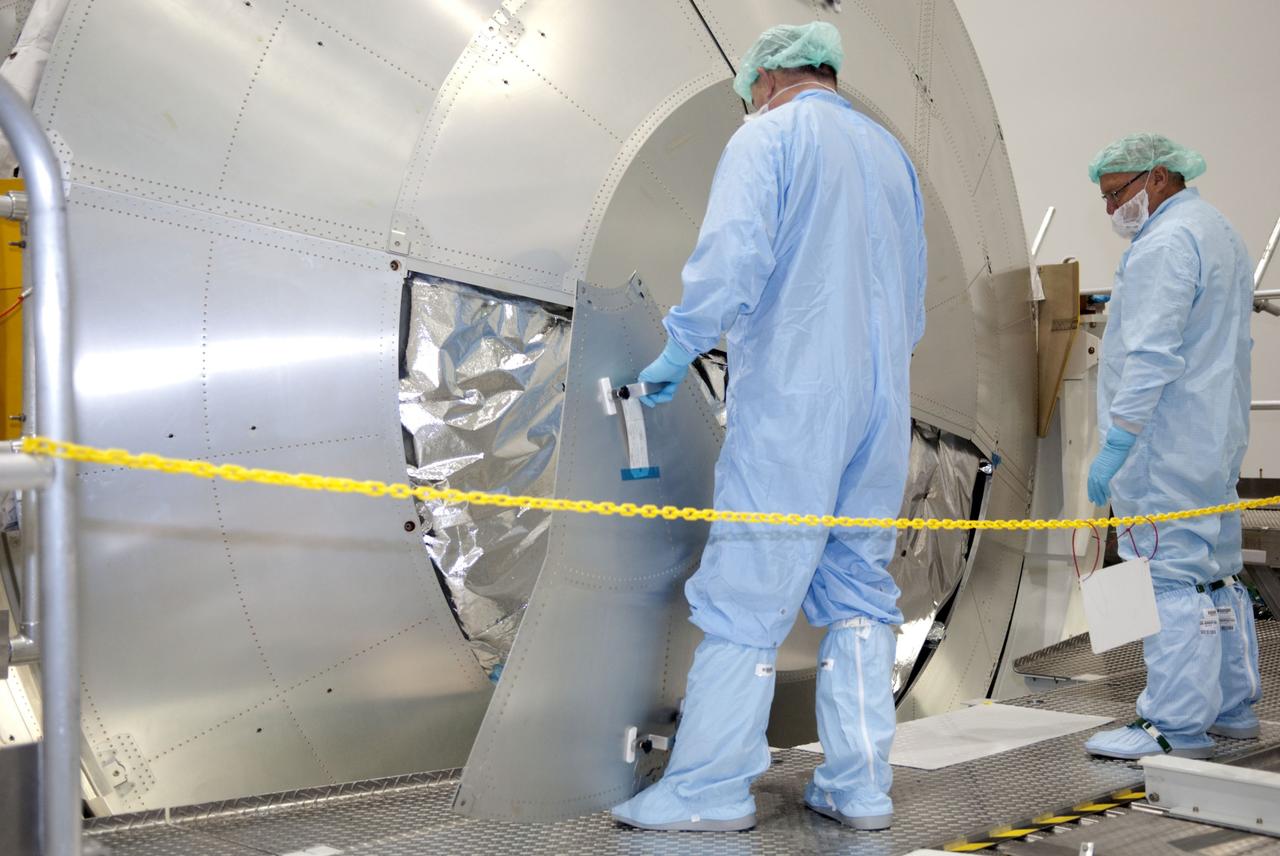
CAPE CANAVERAL, Fla. -- In the Space Station Processing Facility at NASA's Kennedy Space Center in Florida, technicians are installing a debris shield over the aft hatch on the Raffaello multi-purpose logistics module for shuttle Atlantis' flight to the International Space Station. Commander Chris Ferguson, Pilot Doug Hurley and Mission Specialists Sandra Magnus and Rex Walheim are targeted to lift off on July 8, taking with them the Raffaello multi-purpose logistics module packed with supplies, logistics and spare parts. The STS-135 mission also will fly a system to investigate the potential for robotically refueling existing spacecraft and return a failed ammonia pump module to help NASA better understand the failure mechanism and improve pump designs for future systems. STS-135 will be the 33rd flight of Atlantis, the 37th shuttle mission to the space station, and the 135th and final mission of NASA's Space Shuttle Program. For more information visit, www.nasa.gov/mission_pages/shuttle/shuttlemissions/sts135/index.html. Photo credit: NASA/Jim Grossmann
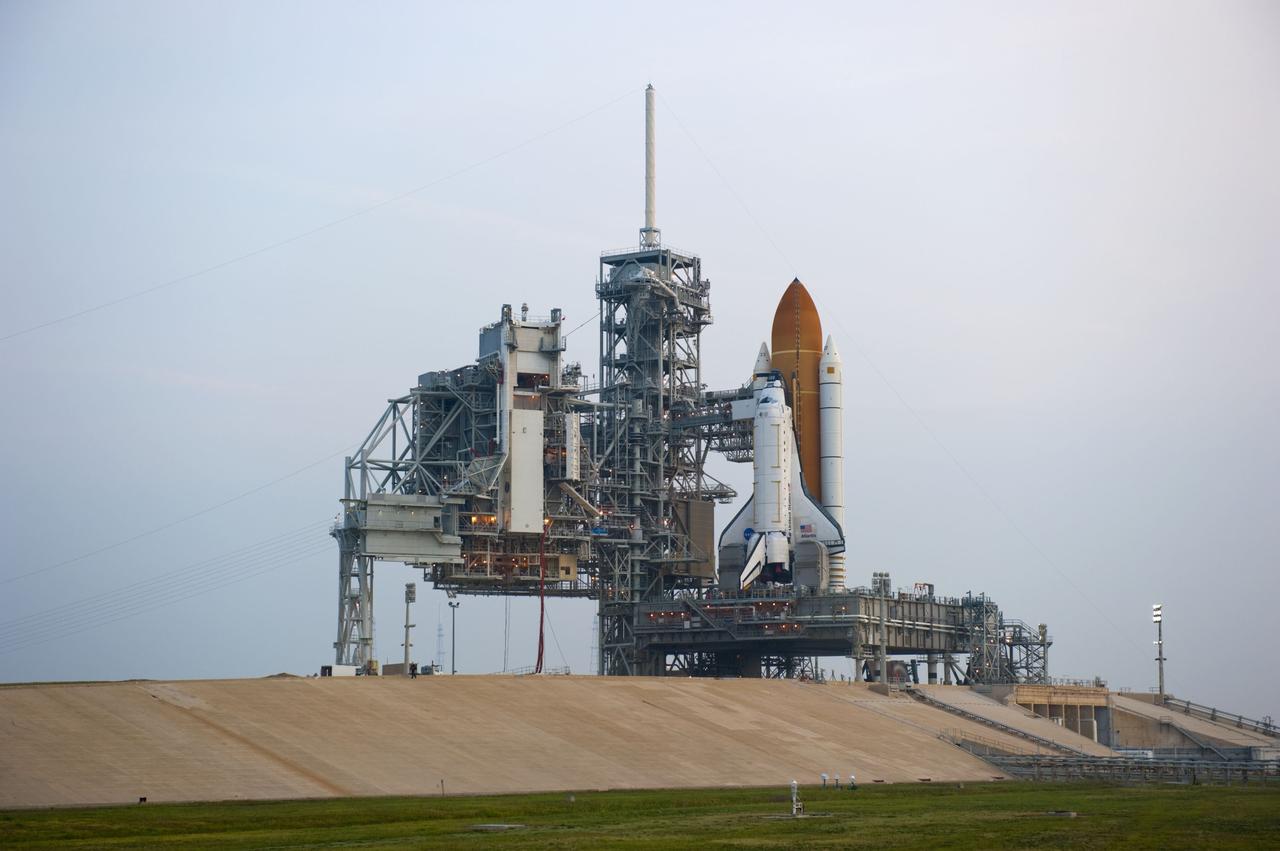
CAPE CANAVERAL, Fla. -- Sunrise at NASA's Kennedy Space Center in Florida finds space shuttle Atlantis on Launch Pad 39A after the payload canister carrying the Raffaello multi-purpose logistics module (MPLM) was lifted into the payload changeout room. The payload ground-handling mechanism then will be used to transfer Raffaello out of the canister into Atlantis' payload bay. Next, the rotating service structure that protects the shuttle from the elements and provides access will be rotated back into place. Commander Chris Ferguson, Pilot Doug Hurley and Mission Specialists Sandra Magnus and Rex Walheim are targeted to lift off on space shuttle Atlantis July 8, taking with them the MPLM packed with supplies, logistics and spare parts to the International Space Station. The STS-135 mission also will fly a system to investigate the potential for robotically refueling existing satellites and return a failed ammonia pump module to help NASA better understand the failure mechanism and improve pump designs for future systems. STS-135 will be the 33rd flight of Atlantis, the 37th shuttle mission to the space station, and the 135th and final mission of NASA's Space Shuttle Program. For more information visit, www.nasa.gov/mission_pages/shuttle/shuttlemissions/sts135/index.html. Photo credit: NASA/Kim Shiflett
CAPE CANAVERAL, Fla. -- A canister, carrying the Raffaello multi-purpose logistics module (MPLM) for space shuttle Atlantis' STS-135 mission to the International Space Station, arrives at Launch Pad 39A at NASA's Kennedy Space Center in Florida. The canister will be lifted to the payload changeout room. The payload ground-handling mechanism then will be used to transfer Raffaello out of the canister into Atlantis' payload bay. Next, the rotating service structure that protects the shuttle from the elements and provides access will be rotated back into place. Commander Chris Ferguson, Pilot Doug Hurley and Mission Specialists Sandra Magnus and Rex Walheim are targeted to lift off on Atlantis July 8, taking with them the MPLM packed with supplies, logistics and spare parts to the station. The STS-135 mission also will fly a system to investigate the potential for robotically refueling existing satellites and return a failed ammonia pump module to help NASA better understand the failure mechanism and improve pump designs for future systems. STS-135 will be the 33rd flight of Atlantis, the 37th shuttle mission to the space station, and the 135th and final mission of NASA's Space Shuttle Program. For more information visit, www.nasa.gov/mission_pages/shuttle/shuttlemissions/sts135/index.html. Photo credit: NASA/Dimitri Gerondidakis
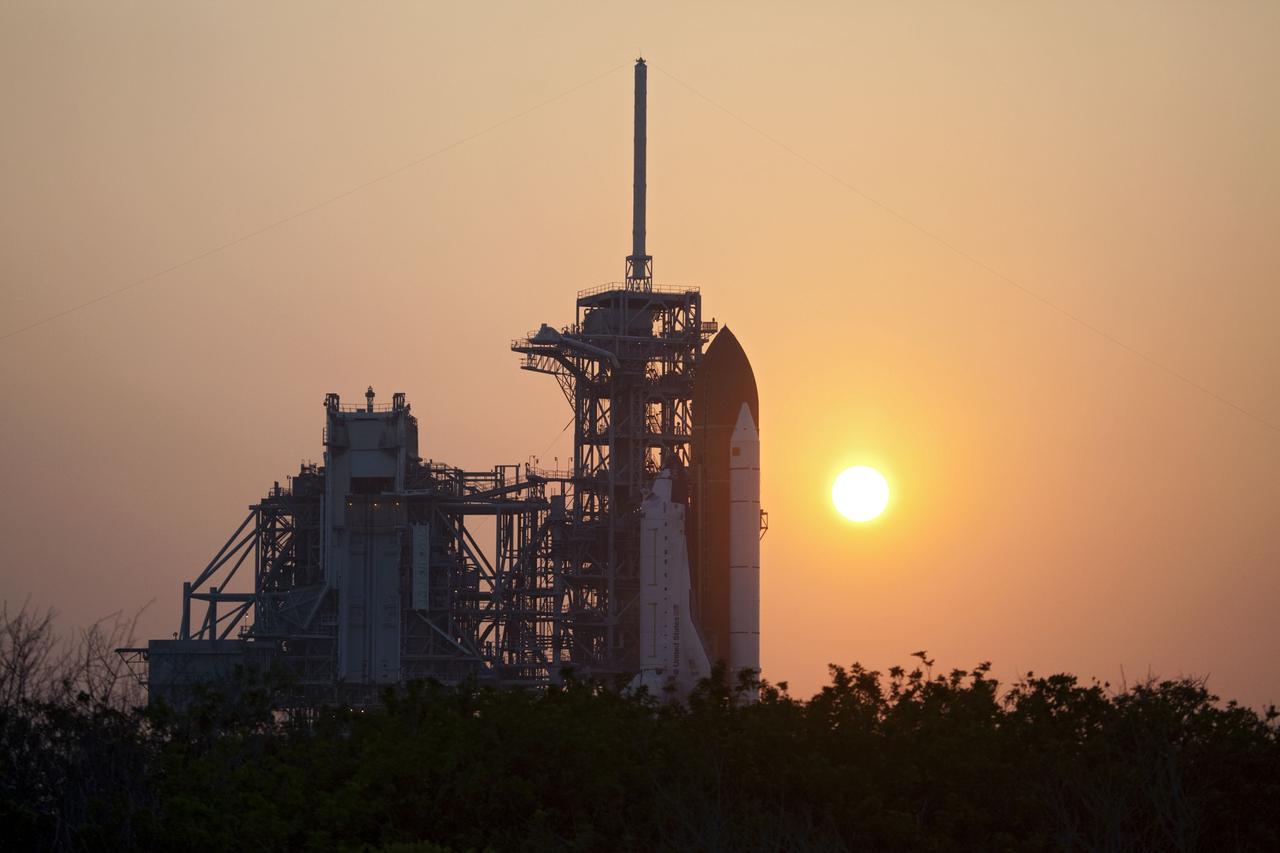
CAPE CANAVERAL, Fla. -- A hazy sun sets over Launch Pad 39A at NASA's Kennedy Space Center in Florida as space shuttle Atlantis awaits delivery of the Raffaello multi-purpose logistics module (MPLM) in its transportation canister. Once delivered, the canister will be lifted to the payload changeout room. The payload ground-handling mechanism then will be used to transfer Raffaello out of the canister into Atlantis' payload bay. Next, the rotating service structure that protects the shuttle from the elements and provides access will be rotated back into place. Commander Chris Ferguson, Pilot Doug Hurley and Mission Specialists Sandra Magnus and Rex Walheim are targeted to lift off on Atlantis July 8, taking with them the MPLM packed with supplies, logistics and spare parts to the station. The STS-135 mission also will fly a system to investigate the potential for robotically refueling existing satellites and return a failed ammonia pump module to help NASA better understand the failure mechanism and improve pump designs for future systems. STS-135 will be the 33rd flight of Atlantis, the 37th shuttle mission to the space station, and the 135th and final mission of NASA's Space Shuttle Program. For more information visit, www.nasa.gov/mission_pages/shuttle/shuttlemissions/sts135/index.html. Photo credit: NASA/Frank Michaux
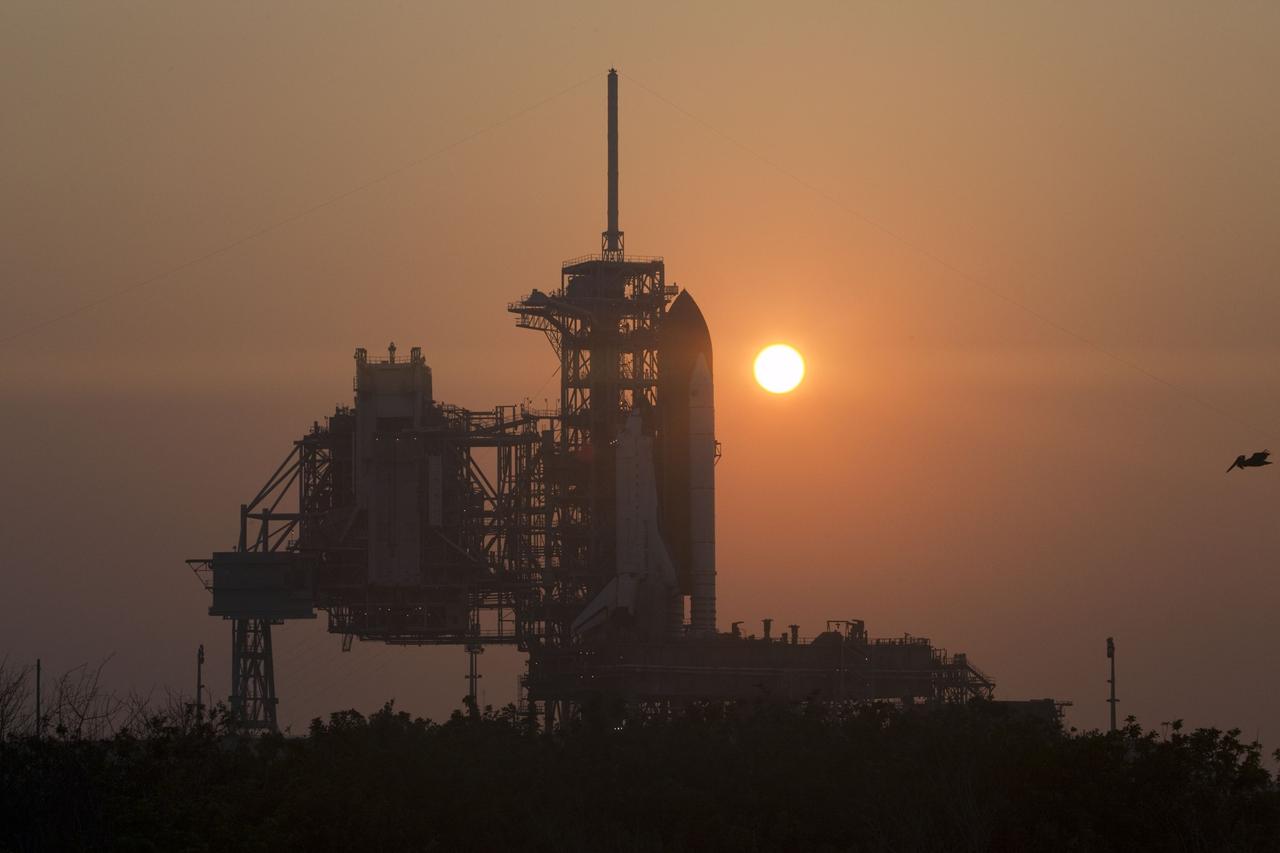
CAPE CANAVERAL, Fla. -- A hazy sun sets over Launch Pad 39A at NASA's Kennedy Space Center in Florida as space shuttle Atlantis awaits delivery of the Raffaello multi-purpose logistics module (MPLM) in its transportation canister. Once delivered, the canister will be lifted to the payload changeout room. The payload ground-handling mechanism then will be used to transfer Raffaello out of the canister into Atlantis' payload bay. Next, the rotating service structure that protects the shuttle from the elements and provides access will be rotated back into place. Commander Chris Ferguson, Pilot Doug Hurley and Mission Specialists Sandra Magnus and Rex Walheim are targeted to lift off on Atlantis July 8, taking with them the MPLM packed with supplies, logistics and spare parts to the station. The STS-135 mission also will fly a system to investigate the potential for robotically refueling existing satellites and return a failed ammonia pump module to help NASA better understand the failure mechanism and improve pump designs for future systems. STS-135 will be the 33rd flight of Atlantis, the 37th shuttle mission to the space station, and the 135th and final mission of NASA's Space Shuttle Program. For more information visit, www.nasa.gov/mission_pages/shuttle/shuttlemissions/sts135/index.html. Photo credit: NASA/Frank Michaux
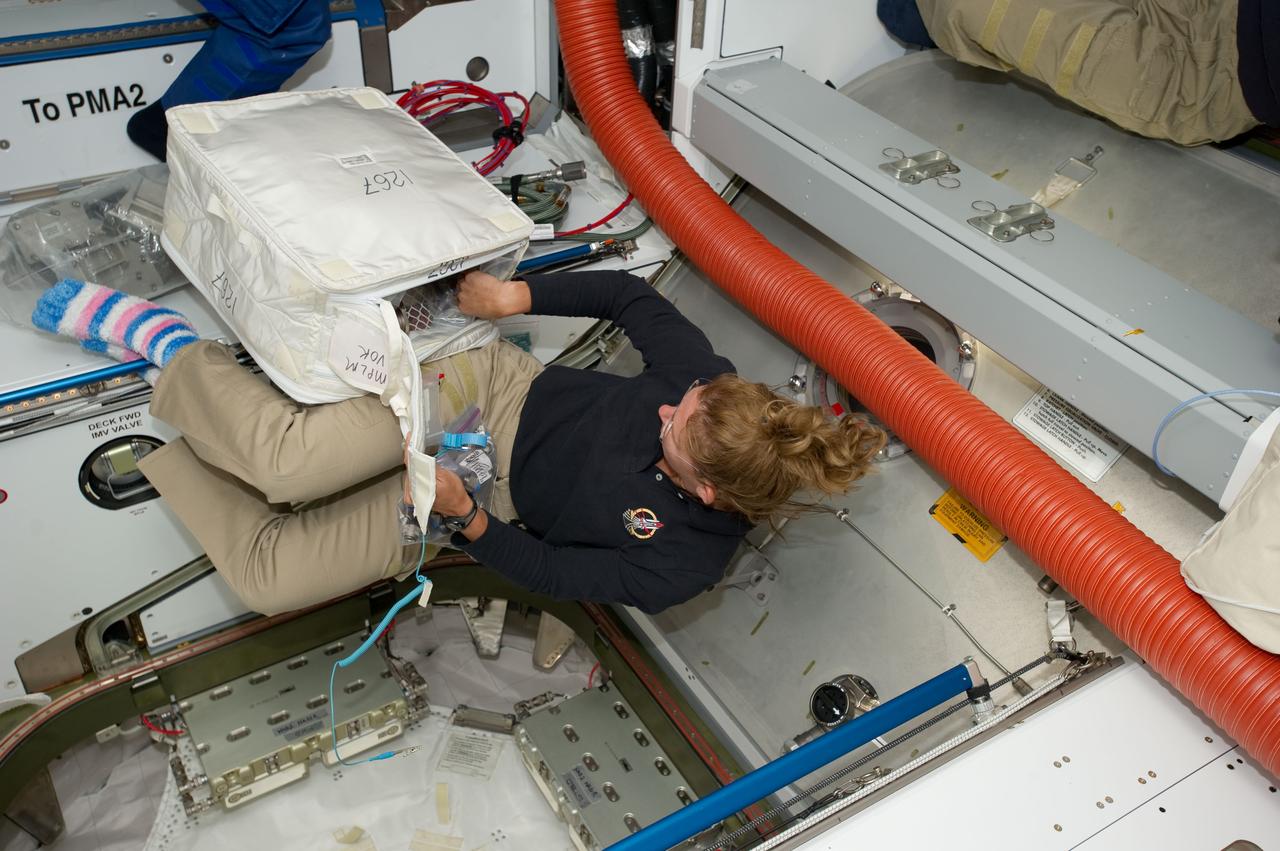
S135-E-007401 (11 July 2011) --- Toting a cargo transfer bag filled with supplies that was carried aboard Raffaello in Atlantis' cargo bay, NASA astronaut Sandy Magnus participates in a very busy move operation on the fourth day in space for the STS-135 crew. She is in Node 2 or Harmony, near the PMA-2 passageway, on the International Space Station. She is sporting the striped socks that she rediscovered on the station which had remained there since her long duration stay on the orbital outpost a few years ago. Photo credit: NASA
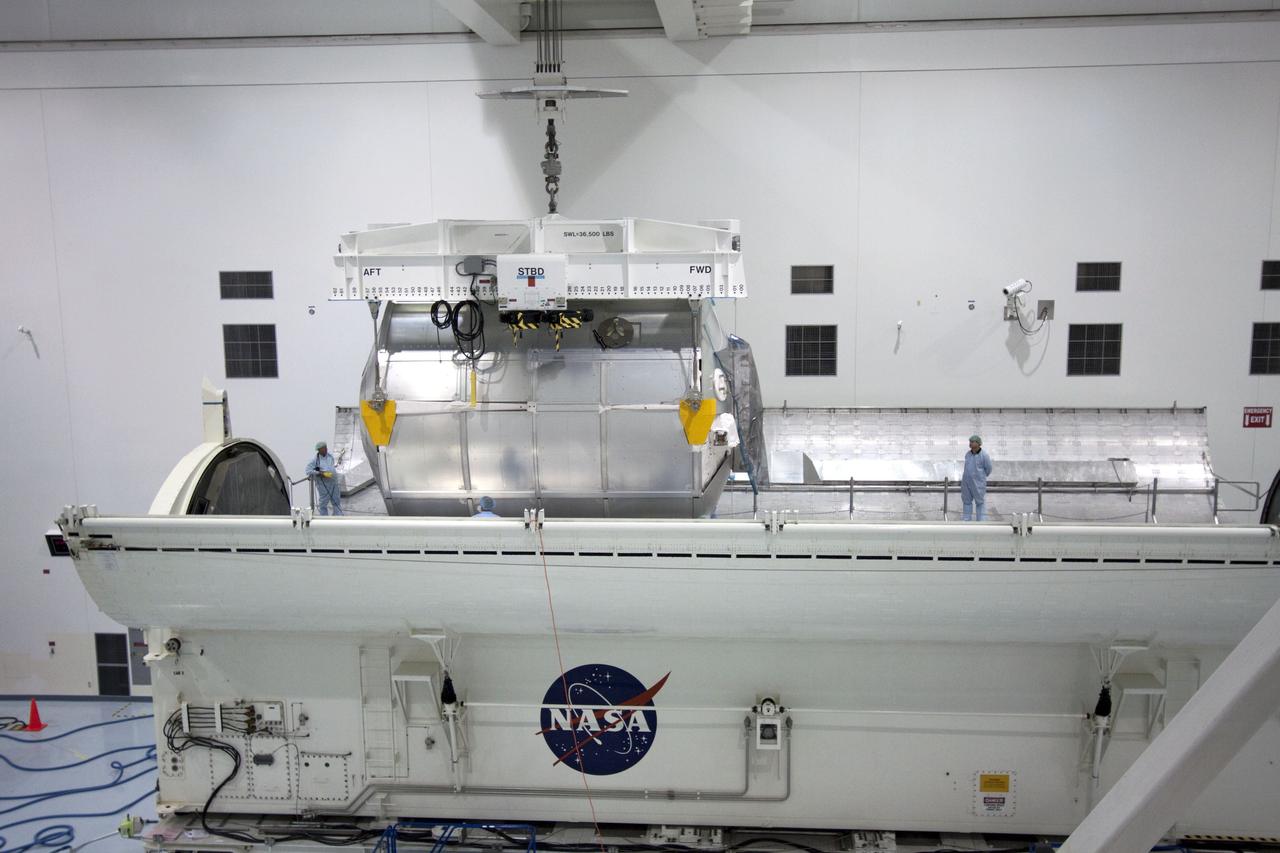
CAPE CANAVERAL, Fla. -- In the Space Station Processing Facility at NASA's Kennedy Space Center in Florida, an overhead crane lowers the Raffaello multi-purpose logistics module, or MPLM, into a payload canister. Commander Chris Ferguson, Pilot Doug Hurley and Mission Specialists Sandra Magnus and Rex Walheim are targeted to lift off on space shuttle Atlantis July 8, taking with them the MPLM packed with supplies, logistics and spare parts to the International Space Station. The STS-135 mission also will fly a system to investigate the potential for robotically refueling existing spacecraft and return a failed ammonia pump module to help NASA better understand the failure mechanism and improve pump designs for future systems. STS-135 will be the 33rd flight of Atlantis, the 37th shuttle mission to the space station, and the 135th and final mission of NASA's Space Shuttle Program. For more information, visit www.nasa.gov/mission_pages/shuttle/shuttlemissions/sts135/index.html. Photo credit: NASA/Jim Grossmann
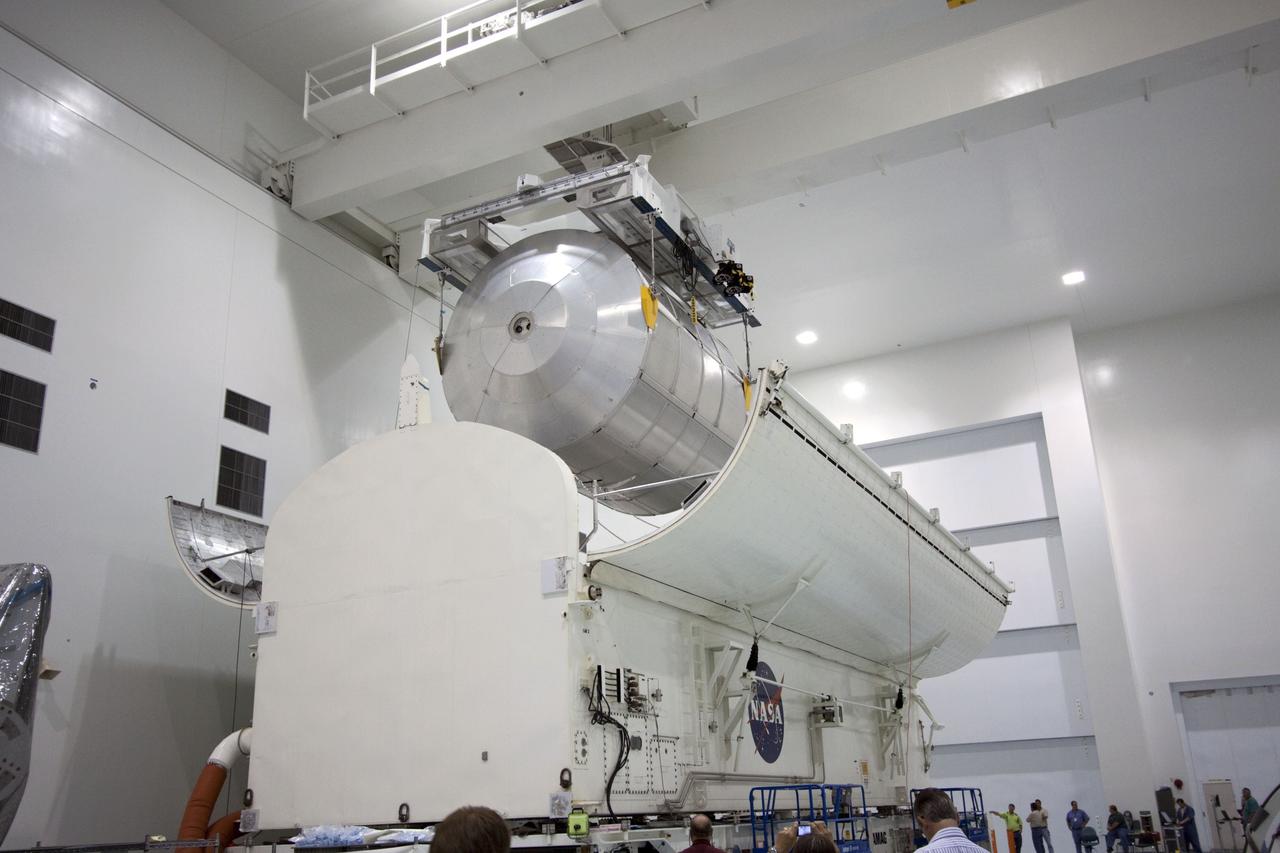
CAPE CANAVERAL, Fla. -- In the Space Station Processing Facility at NASA's Kennedy Space Center in Florida, an overhead crane lowers the Raffaello multi-purpose logistics module, or MPLM, into a payload canister. Commander Chris Ferguson, Pilot Doug Hurley and Mission Specialists Sandra Magnus and Rex Walheim are targeted to lift off on space shuttle Atlantis July 8, taking with them the MPLM packed with supplies, logistics and spare parts to the International Space Station. The STS-135 mission also will fly a system to investigate the potential for robotically refueling existing spacecraft and return a failed ammonia pump module to help NASA better understand the failure mechanism and improve pump designs for future systems. STS-135 will be the 33rd flight of Atlantis, the 37th shuttle mission to the space station, and the 135th and final mission of NASA's Space Shuttle Program. For more information, visit www.nasa.gov/mission_pages/shuttle/shuttlemissions/sts135/index.html. Photo credit: NASA/Jim Grossmann
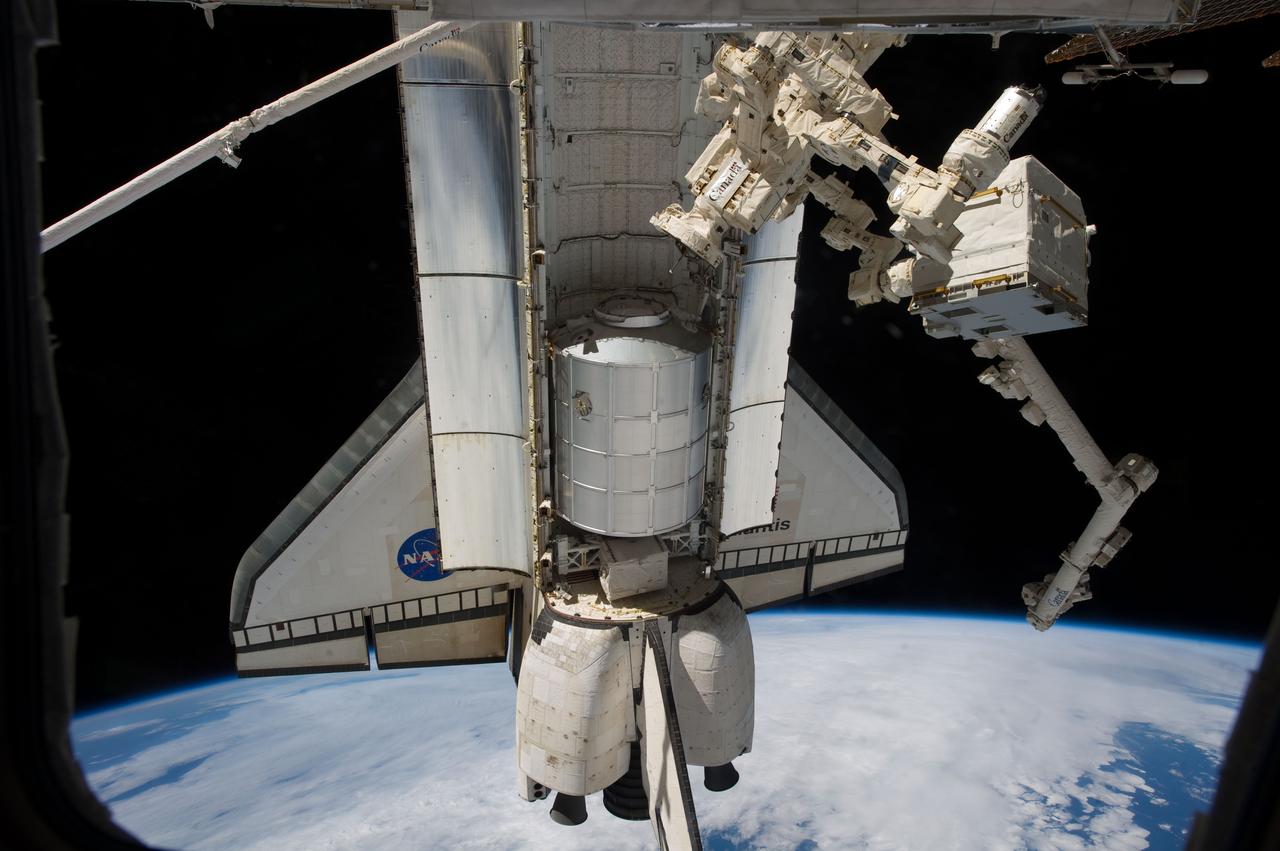
S135-E-009332 (18 July 2011) --- This is a view of the space shuttle Atlantis and its Raffaello multi-purpose logistics module during the final day of being docked with the International Space Station. The object connected to the station at right in the grasp of Dextre, a robot hand, is the Cargo Transport Container-2 (CTC-2) which was delivered by JAXA's HTV-2 vehicle earlier in the year. Photo credit: NASA
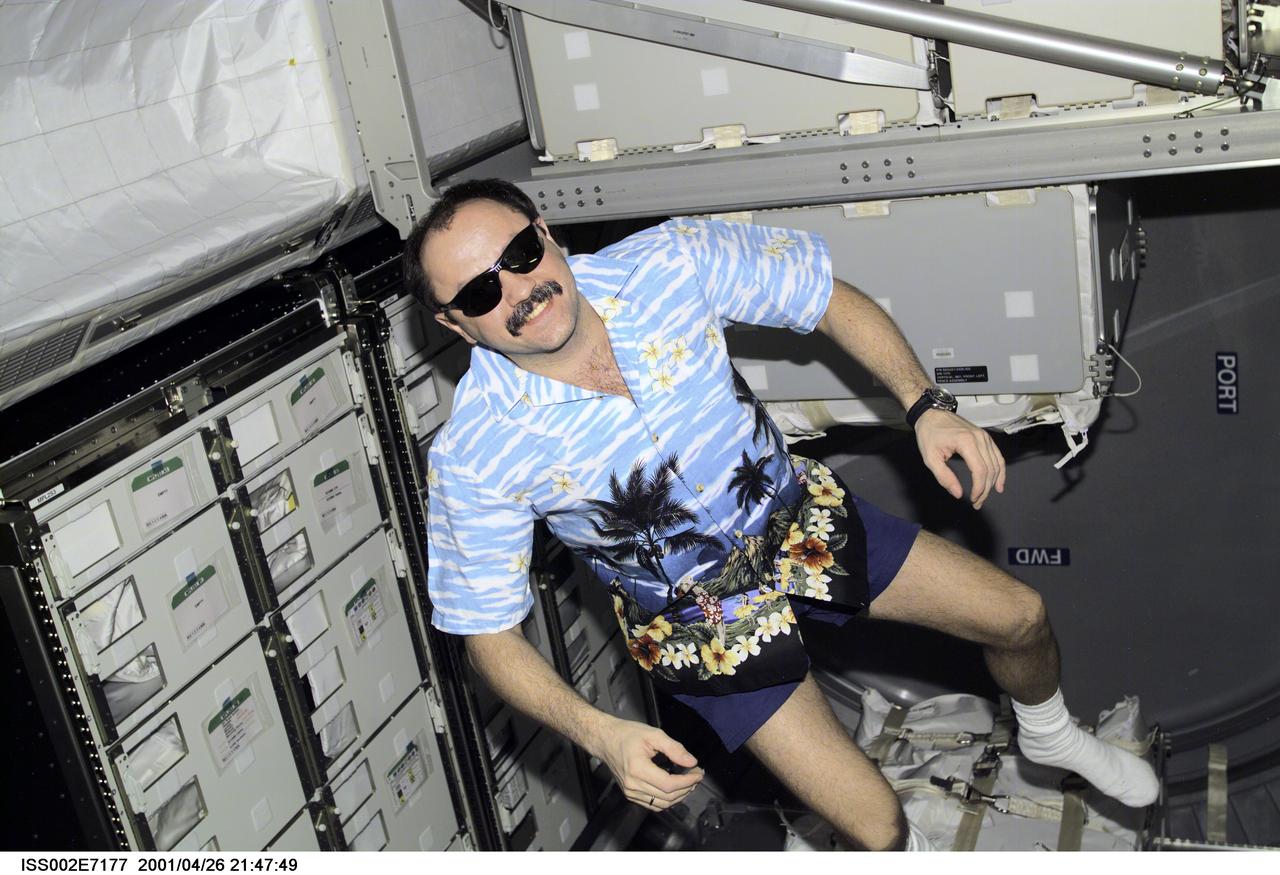
ISS002-E-7177 (26 April 2001) --- Rosaviakosmos cosmonaut Yury V. Usachev, Expedition Two commander, currently hosting six astronauts and a cosmonaut from the Endeavour's STS-100 mission, joins in the dress mode of the day--Hawaiian shirt and sunshades--as he pitches in to help in the moving process. He is in the recently-docked Italian-built Raffaello Multi-Purpose Logistics Module, which will return to Earth with the shuttle. The photo was recorded with a digital still camera.
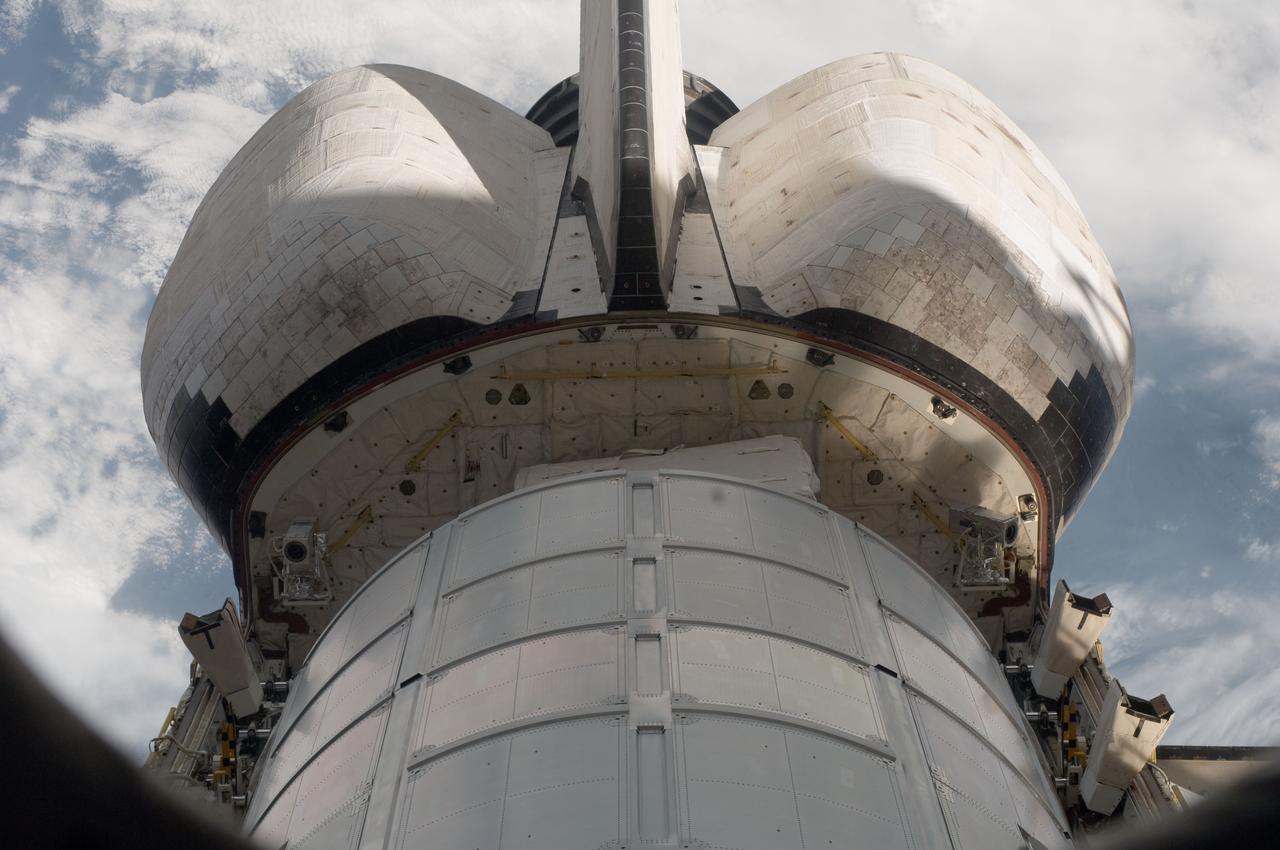
ISS028-E-017435 (18 July 2011) --- The space shuttle Atlantis' cargo bay now holds the Raffaello multi-purpose logistics module, as photographed by one of the Expedition 28 crew members onboard the International Space Station before the two spacecraft undocked.
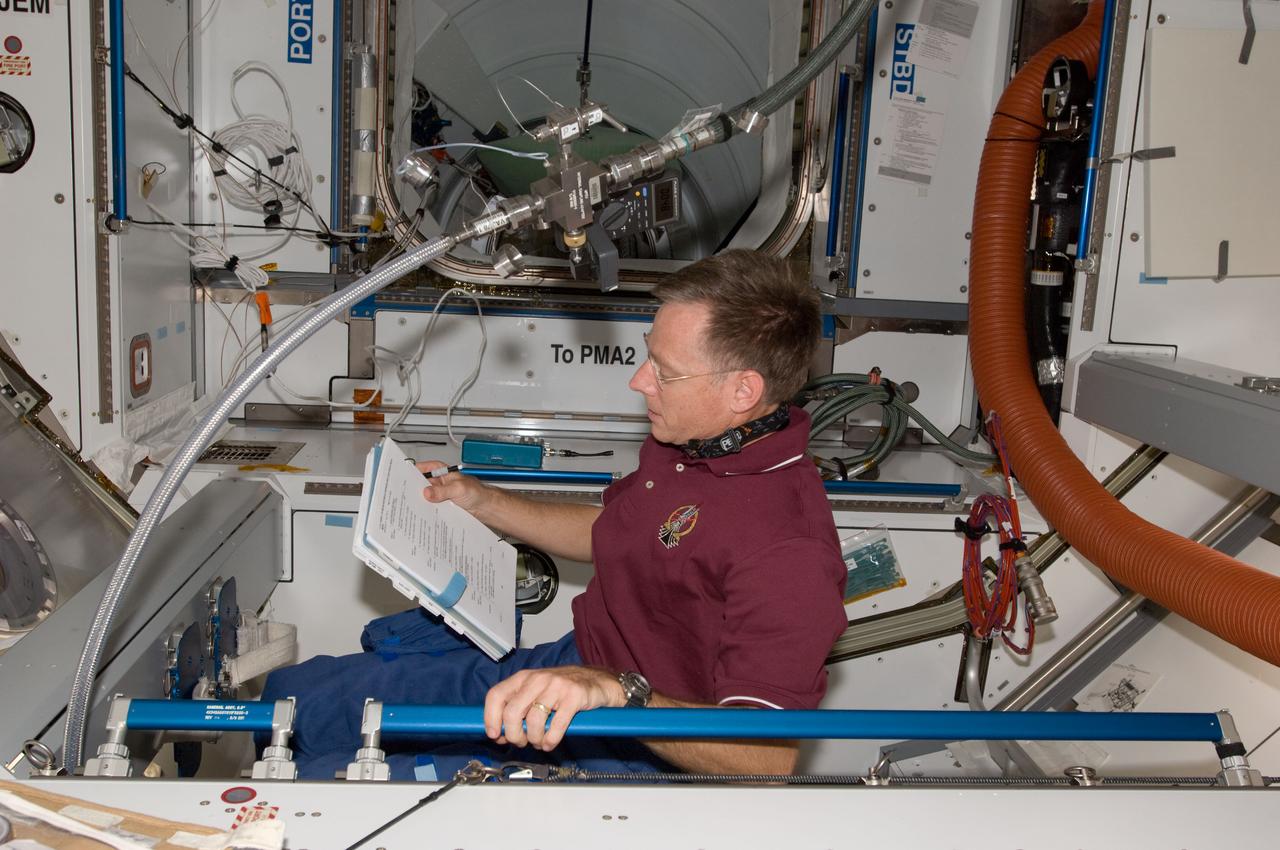
S135-E-009509 (18 July 2011) --- In the Node 2 or Harmony on the International Space Station, NASA astronaut Chris Ferguson, STS-135 commander, is getting ready to join crewmates (out of frame) to uninstall the Raffaello multi-purpose logistics module and transfer it back to the payload bay of Atlantis. Photo credit: NASA
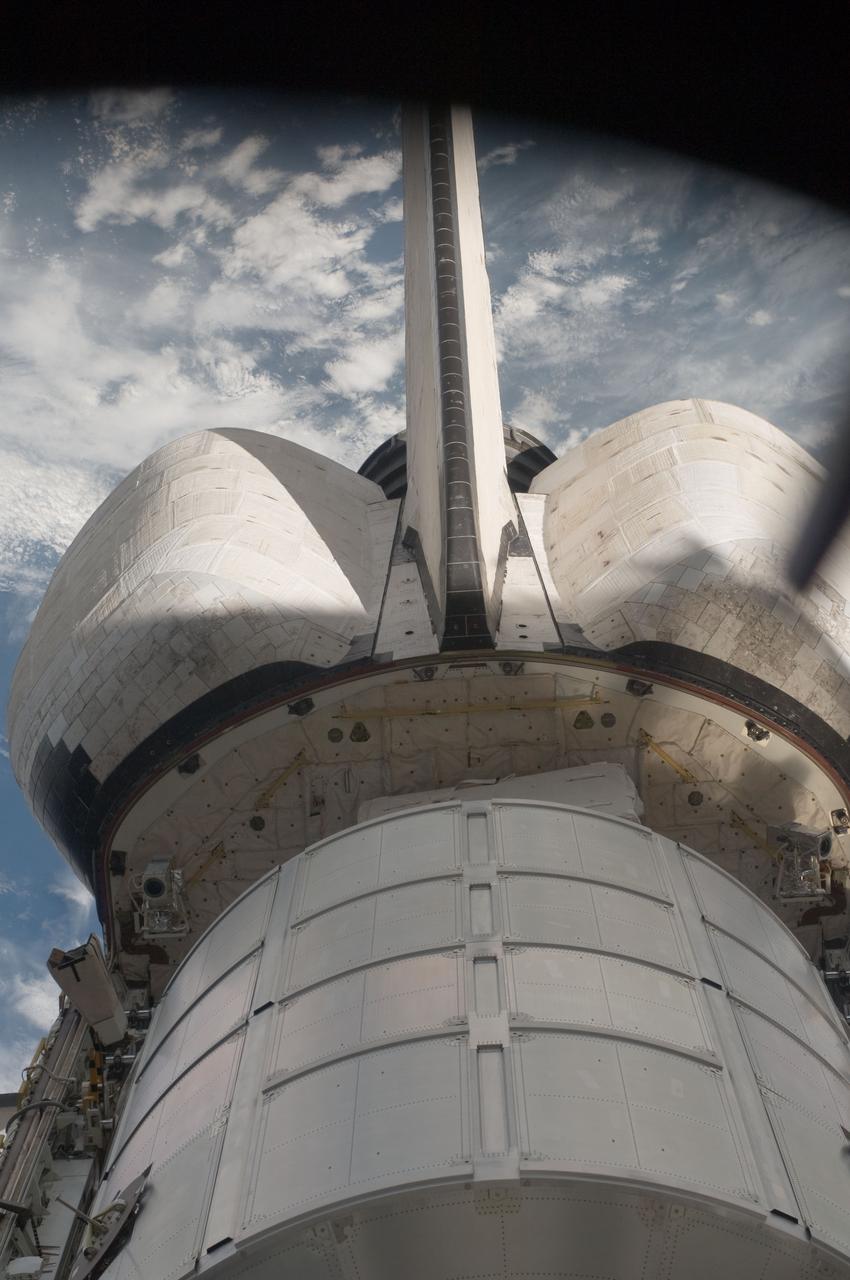
ISS028-E-017434 (18 July 2011) --- The space shuttle Atlantis' cargo bay now holds the Raffaello multi-purpose logistics module, as photographed by one of the Expedition 28 crew members onboard the International Space Station before the two spacecraft undocked.
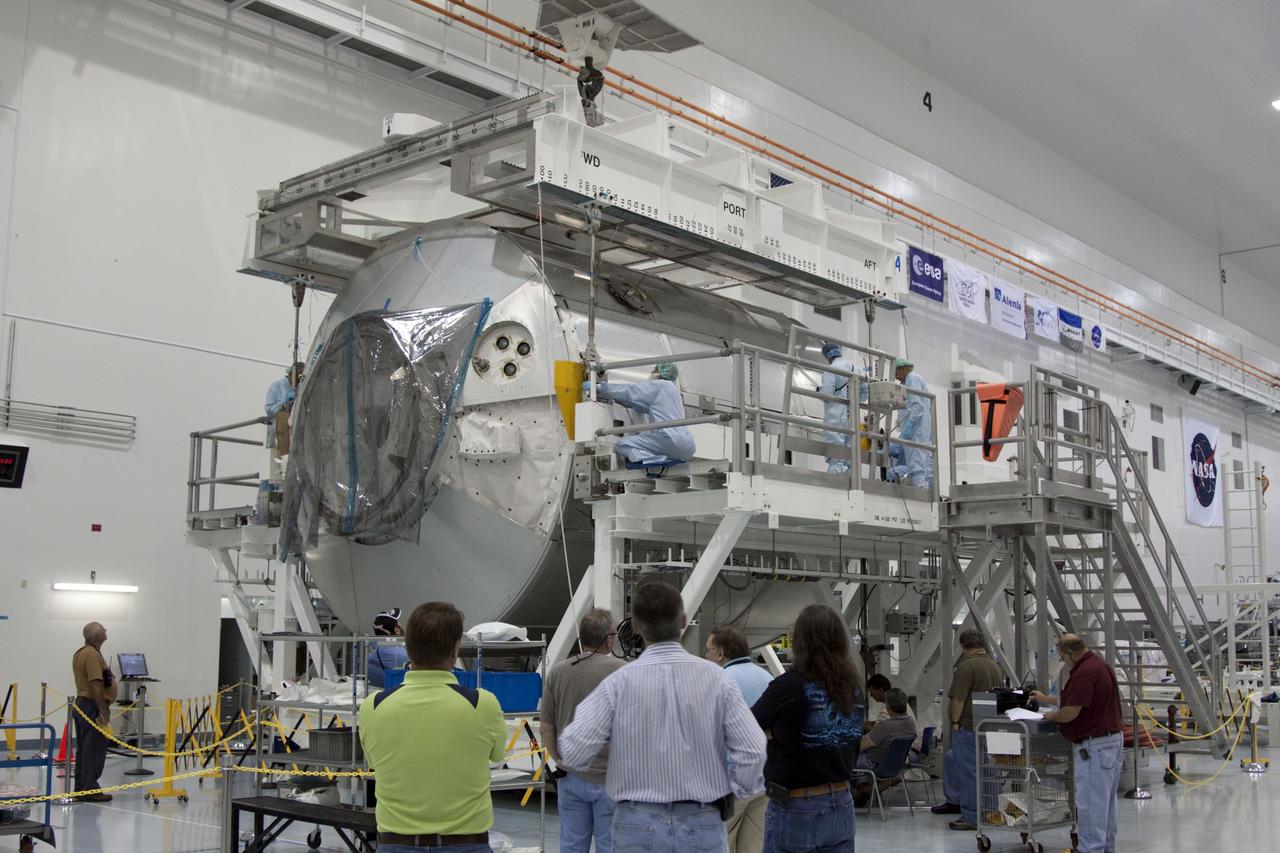
CAPE CANAVERAL, Fla. -- In the Space Station Processing Facility at NASA's Kennedy Space Center in Florida, technicians make a final check of the Raffaello multi-purpose logistics module, or MPLM, before it is moved into a payload canister. Commander Chris Ferguson, Pilot Doug Hurley and Mission Specialists Sandra Magnus and Rex Walheim are targeted to lift off on space shuttle Atlantis July 8, taking with them the MPLM packed with supplies, logistics and spare parts to the International Space Station. The STS-135 mission also will fly a system to investigate the potential for robotically refueling existing spacecraft and return a failed ammonia pump module to help NASA better understand the failure mechanism and improve pump designs for future systems. STS-135 will be the 33rd flight of Atlantis, the 37th shuttle mission to the space station, and the 135th and final mission of NASA's Space Shuttle Program. For more information, visit www.nasa.gov/mission_pages/shuttle/shuttlemissions/sts135/index.html. Photo credit: NASA/Jim Grossmann
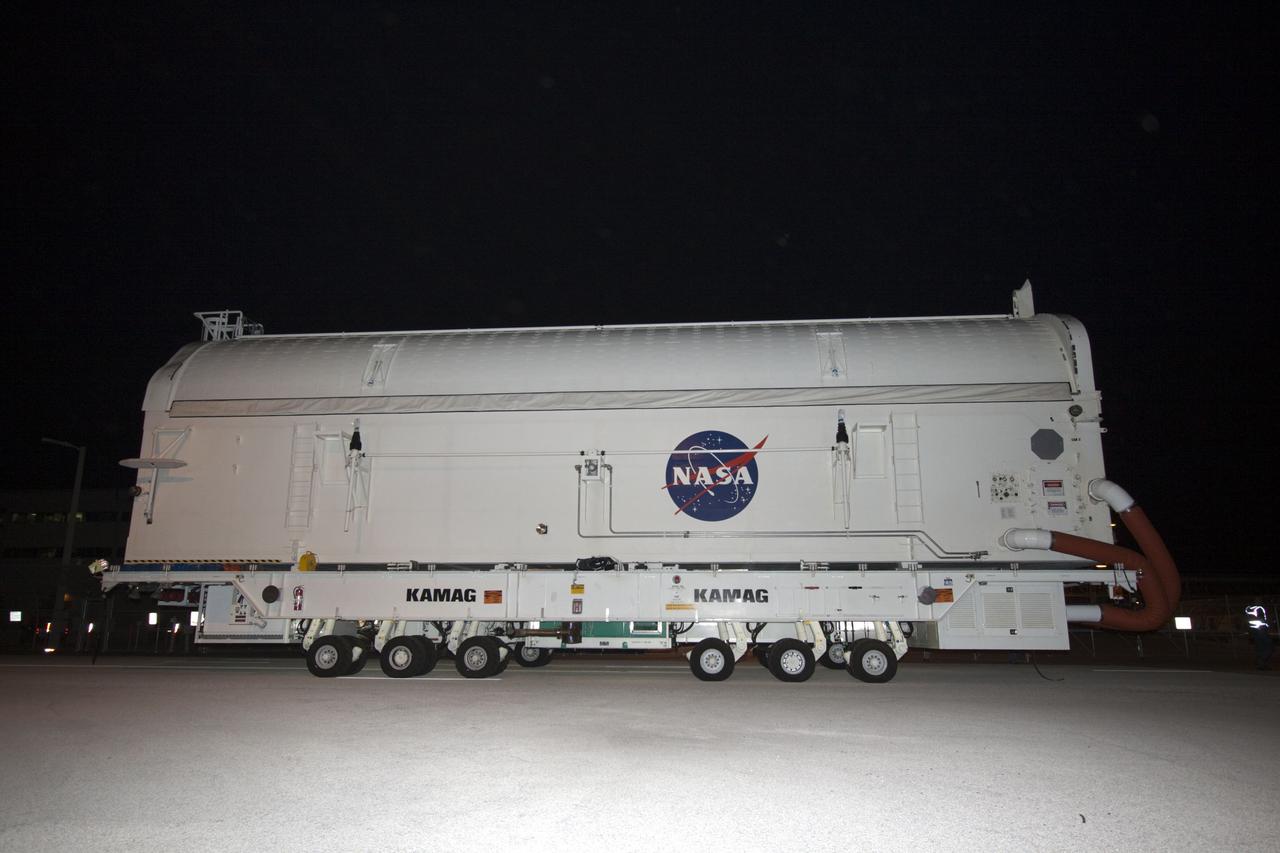
CAPE CANAVERAL, Fla. -- Workers move the payload canister, atop its transporter with the Raffaello multi-purpose logistics module, or MPLM, secured inside, from the Space Station Processing Facility at NASA's Kennedy Space Center in Florida to the Canister Rotation Facility. Commander Chris Ferguson, Pilot Doug Hurley and Mission Specialists Sandra Magnus and Rex Walheim are targeted to lift off on space shuttle Atlantis July 8, taking with them the MPLM packed with supplies, logistics and spare parts to the International Space Station. The STS-135 mission also will fly a system to investigate the potential for robotically refueling existing spacecraft and return a failed ammonia pump module to help NASA better understand the failure mechanism and improve pump designs for future systems. STS-135 will be the 33rd flight of Atlantis, the 37th shuttle mission to the space station, and the 135th and final mission of NASA's Space Shuttle Program. For more information, visit www.nasa.gov/mission_pages/shuttle/shuttlemissions/sts135/index.html. Photo credit: NASA/Jim Grossmann
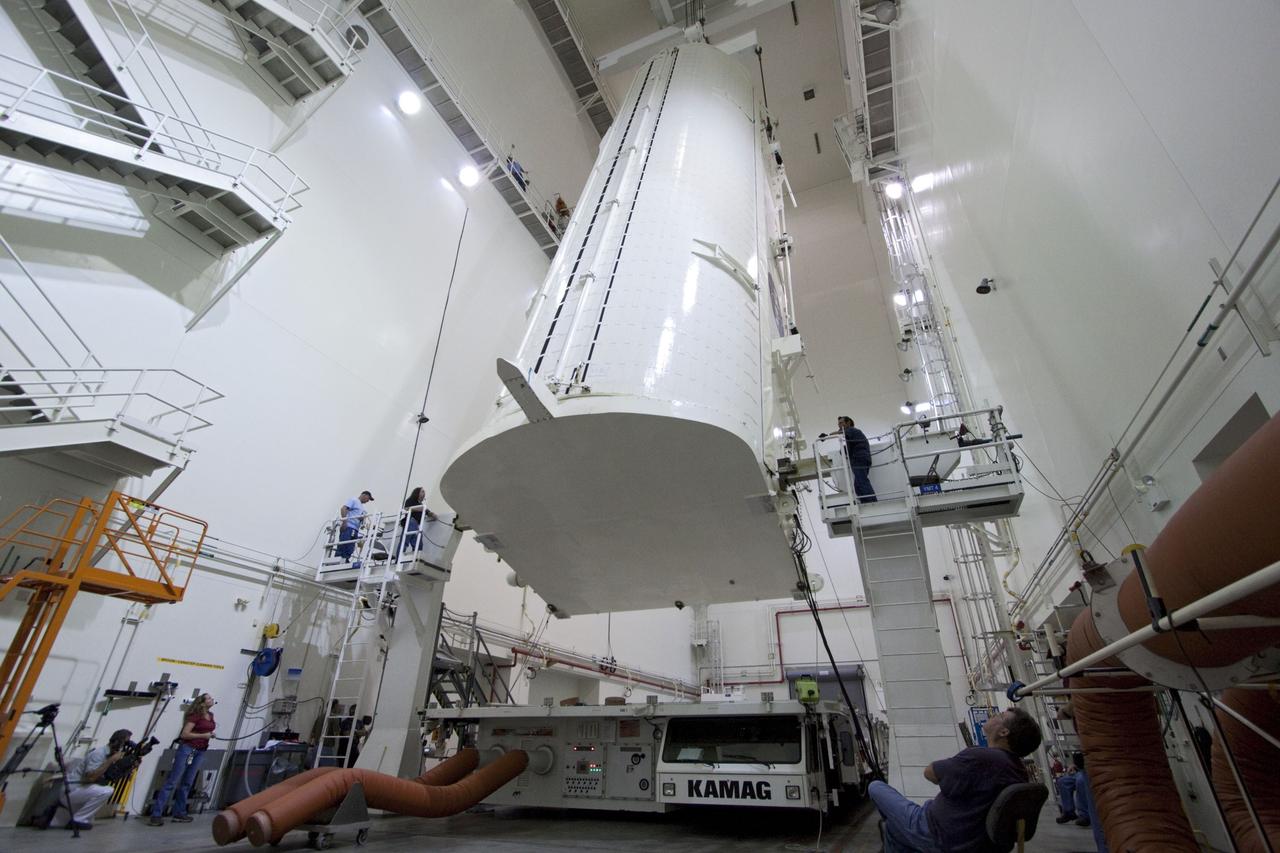
CAPE CANAVERAL, Fla. -- Workers monitor the progress of a canister, carrying the Raffaello multi-purpose logistics module, or MPLM, for the STS-135 mission, as it is rotated from a horizontal to vertical position in the Canister Rotation Facility at NASA's Kennedy Space Center in Florida. Commander Chris Ferguson, Pilot Doug Hurley and Mission Specialists Sandra Magnus and Rex Walheim are targeted to lift off on space shuttle Atlantis July 8, taking with them the MPLM packed with supplies, logistics and spare parts to the International Space Station. The STS-135 mission also will fly a system to investigate the potential for robotically refueling existing spacecraft and return a failed ammonia pump module to help NASA better understand the failure mechanism and improve pump designs for future systems. STS-135 will be the 33rd flight of Atlantis, the 37th shuttle mission to the space station, and the 135th and final mission of NASA's Space Shuttle Program. For more information, visit www.nasa.gov/mission_pages/shuttle/shuttlemissions/sts135/index.html. Photo credit: NASA/Jack Pfaller
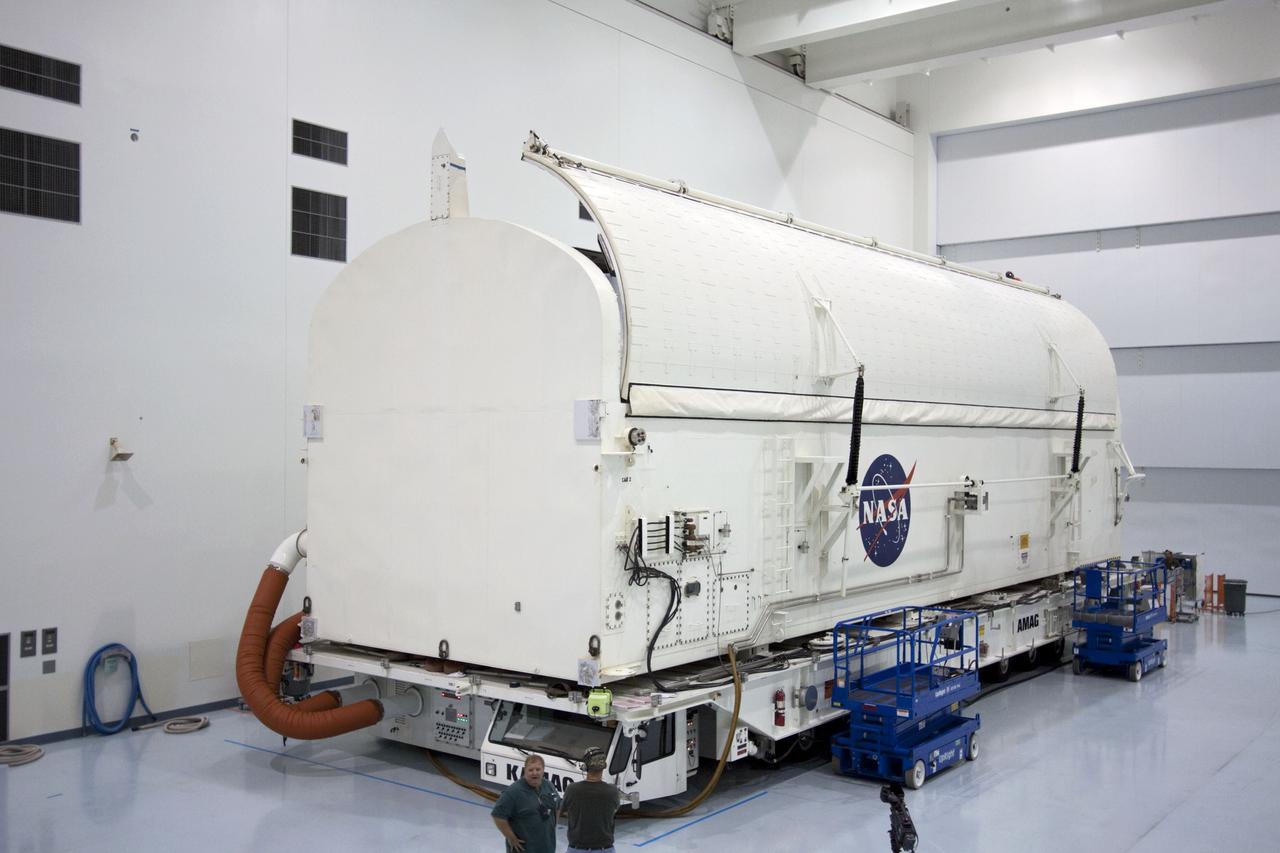
CAPE CANAVERAL, Fla. -- In the Space Station Processing Facility at NASA's Kennedy Space Center in Florida, the clamshell doors on the canister atop its transporter have closed around the Raffaello multi-purpose logistics module, or MPLM, secured inside. Commander Chris Ferguson, Pilot Doug Hurley and Mission Specialists Sandra Magnus and Rex Walheim are targeted to lift off on space shuttle Atlantis July 8, taking with them the MPLM packed with supplies, logistics and spare parts to the International Space Station. The STS-135 mission also will fly a system to investigate the potential for robotically refueling existing spacecraft and return a failed ammonia pump module to help NASA better understand the failure mechanism and improve pump designs for future systems. STS-135 will be the 33rd flight of Atlantis, the 37th shuttle mission to the space station, and the 135th and final mission of NASA's Space Shuttle Program. For more information, visit www.nasa.gov/mission_pages/shuttle/shuttlemissions/sts135/index.html. Photo credit: NASA/Jim Grossmann
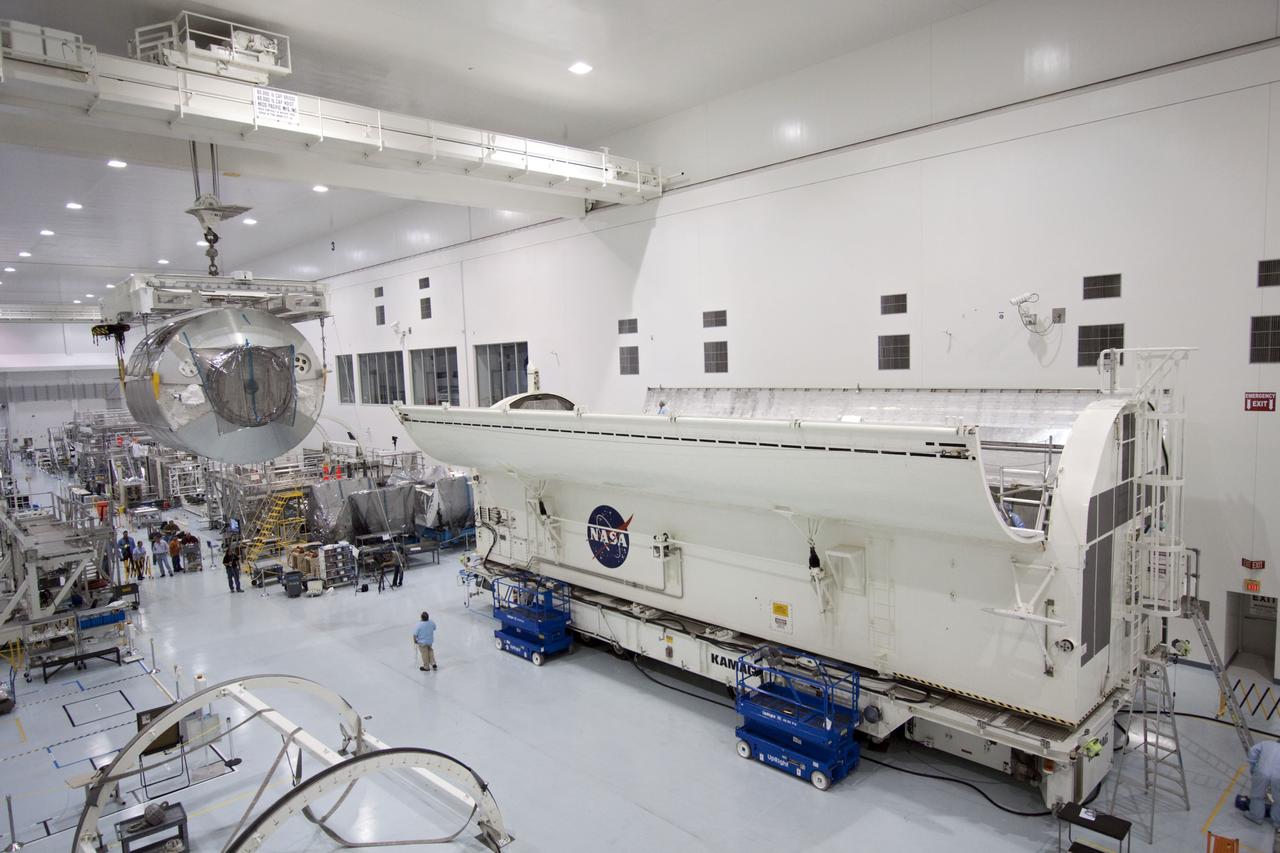
CAPE CANAVERAL, Fla. -- In the Space Station Processing Facility at NASA's Kennedy Space Center in Florida, an overhead crane moves the Raffaello multi-purpose logistics module, or MPLM, toward a payload canister. Commander Chris Ferguson, Pilot Doug Hurley and Mission Specialists Sandra Magnus and Rex Walheim are targeted to lift off on space shuttle Atlantis July 8, taking with them the MPLM packed with supplies, logistics and spare parts to the International Space Station. The STS-135 mission also will fly a system to investigate the potential for robotically refueling existing spacecraft and return a failed ammonia pump module to help NASA better understand the failure mechanism and improve pump designs for future systems. STS-135 will be the 33rd flight of Atlantis, the 37th shuttle mission to the space station, and the 135th and final mission of NASA's Space Shuttle Program. For more information, visit www.nasa.gov/mission_pages/shuttle/shuttlemissions/sts135/index.html. Photo credit: NASA/Jim Grossmann
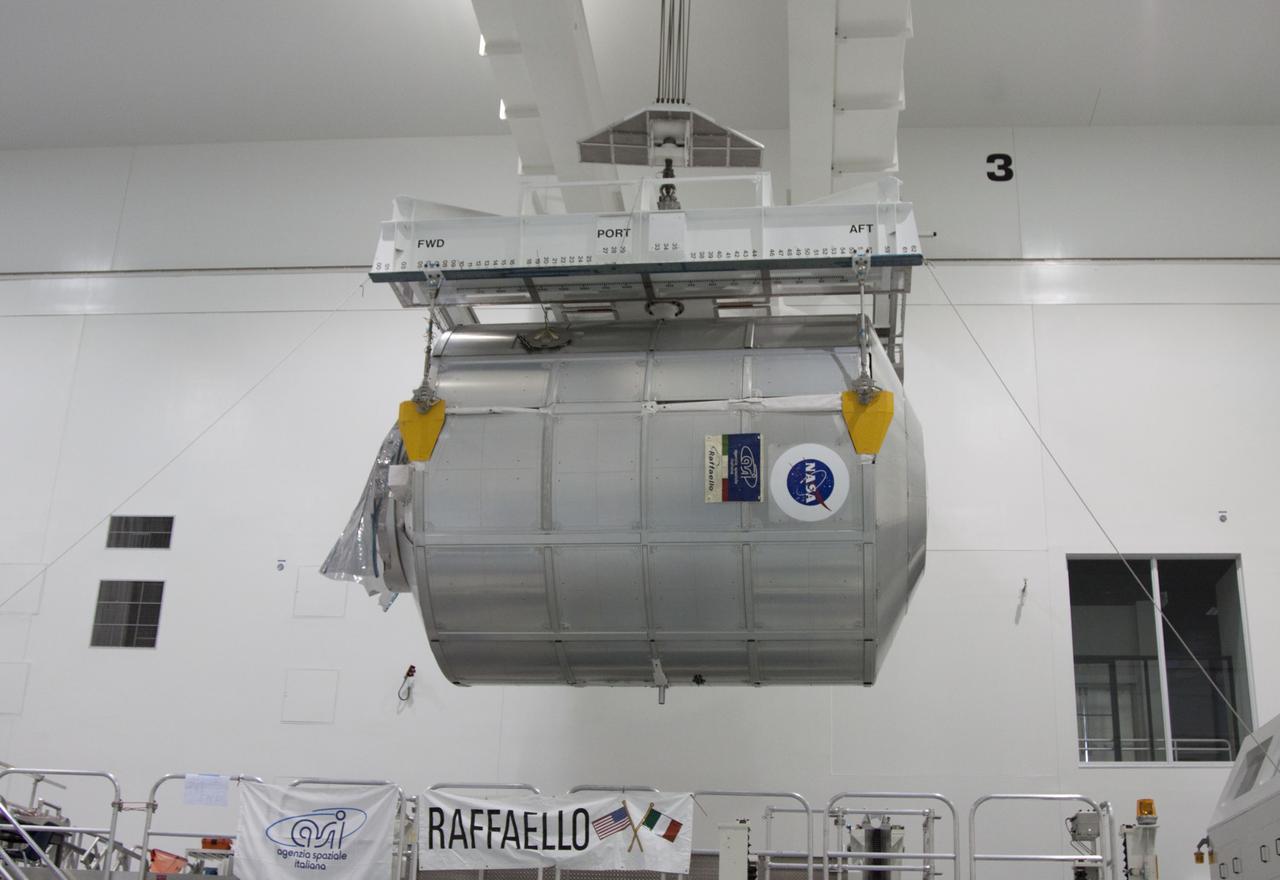
CAPE CANAVERAL, Fla. -- In the Space Station Processing Facility at NASA's Kennedy Space Center in Florida, an overhead crane moves the Raffaello multi-purpose logistics module, or MPLM, toward a payload canister. Commander Chris Ferguson, Pilot Doug Hurley and Mission Specialists Sandra Magnus and Rex Walheim are targeted to lift off on space shuttle Atlantis July 8, taking with them the MPLM packed with supplies, logistics and spare parts to the International Space Station. The STS-135 mission also will fly a system to investigate the potential for robotically refueling existing spacecraft and return a failed ammonia pump module to help NASA better understand the failure mechanism and improve pump designs for future systems. STS-135 will be the 33rd flight of Atlantis, the 37th shuttle mission to the space station, and the 135th and final mission of NASA's Space Shuttle Program. For more information, visit www.nasa.gov/mission_pages/shuttle/shuttlemissions/sts135/index.html. Photo credit: NASA/Jim Grossmann
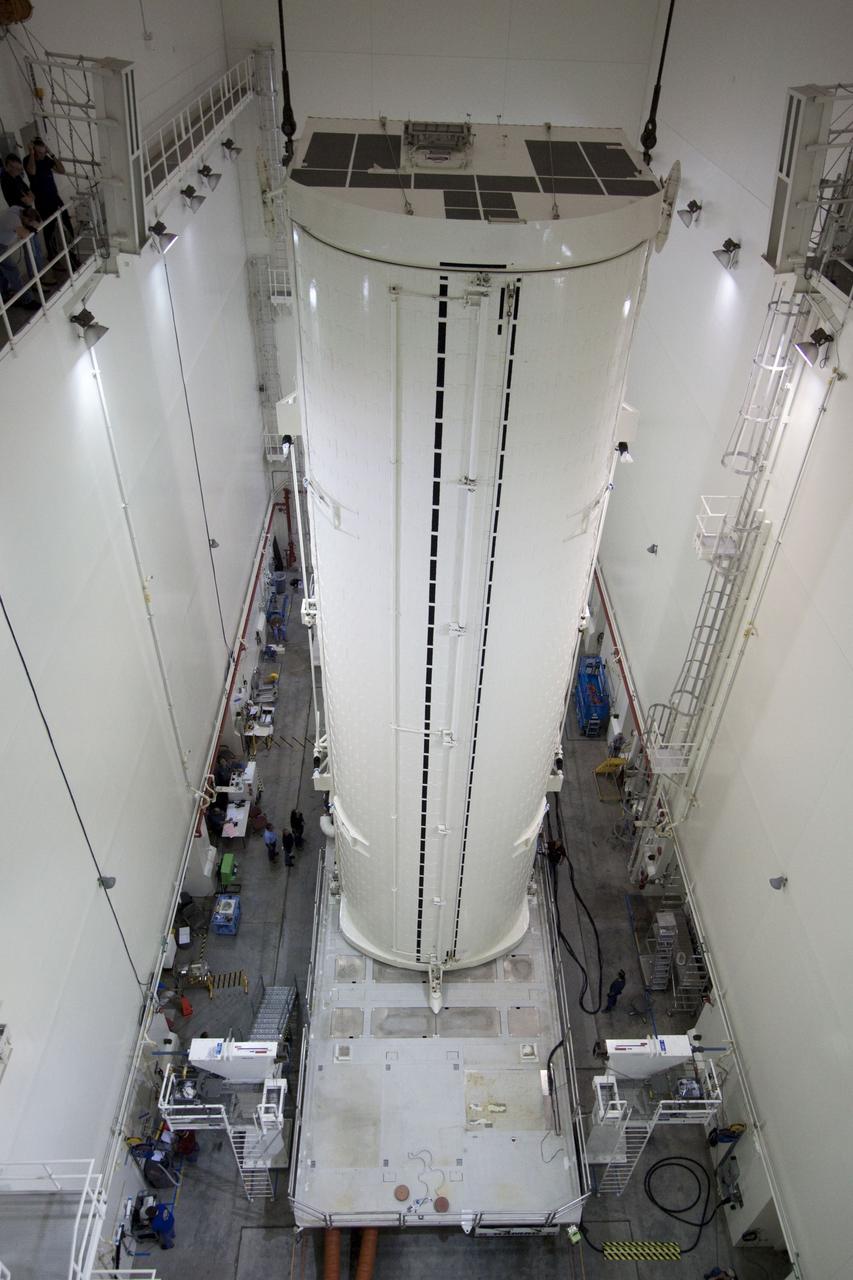
CAPE CANAVERAL, Fla. -- After being rotated from a horizontal to vertical position, the canister that contains the Raffaello multi-purpose logistics module, or MPLM, for the STS-135 mission, has been lowered onto a transportation vehicle in the Canister Rotation Facility at NASA's Kennedy Space Center in Florida. Commander Chris Ferguson, Pilot Doug Hurley and Mission Specialists Sandra Magnus and Rex Walheim are targeted to lift off on space shuttle Atlantis July 8, taking with them the MPLM packed with supplies, logistics and spare parts to the International Space Station. The STS-135 mission also will fly a system to investigate the potential for robotically refueling existing spacecraft and return a failed ammonia pump module to help NASA better understand the failure mechanism and improve pump designs for future systems. STS-135 will be the 33rd flight of Atlantis, the 37th shuttle mission to the space station, and the 135th and final mission of NASA's Space Shuttle Program. For more information, visit www.nasa.gov/mission_pages/shuttle/shuttlemissions/sts135/index.html. Photo credit: NASA/Jack Pfaller
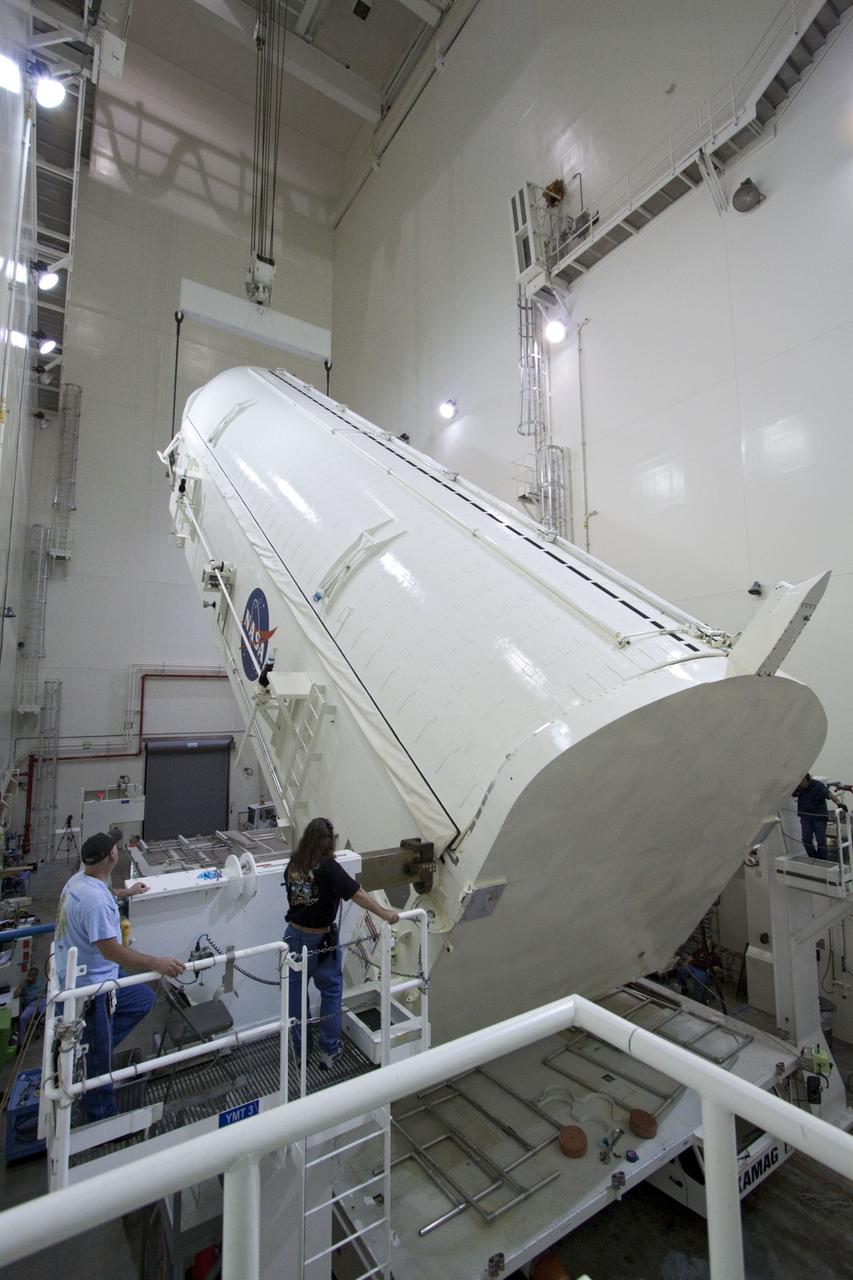
CAPE CANAVERAL, Fla. -- Workers monitor the progress of a canister, carrying the Raffaello multi-purpose logistics module, or MPLM, for the STS-135 mission, as it is rotated from a horizontal to vertical position in the Canister Rotation Facility at NASA's Kennedy Space Center in Florida. Commander Chris Ferguson, Pilot Doug Hurley and Mission Specialists Sandra Magnus and Rex Walheim are targeted to lift off on space shuttle Atlantis July 8, taking with them the MPLM packed with supplies, logistics and spare parts to the International Space Station. The STS-135 mission also will fly a system to investigate the potential for robotically refueling existing spacecraft and return a failed ammonia pump module to help NASA better understand the failure mechanism and improve pump designs for future systems. STS-135 will be the 33rd flight of Atlantis, the 37th shuttle mission to the space station, and the 135th and final mission of NASA's Space Shuttle Program. For more information, visit www.nasa.gov/mission_pages/shuttle/shuttlemissions/sts135/index.html. Photo credit: NASA/Jack Pfaller
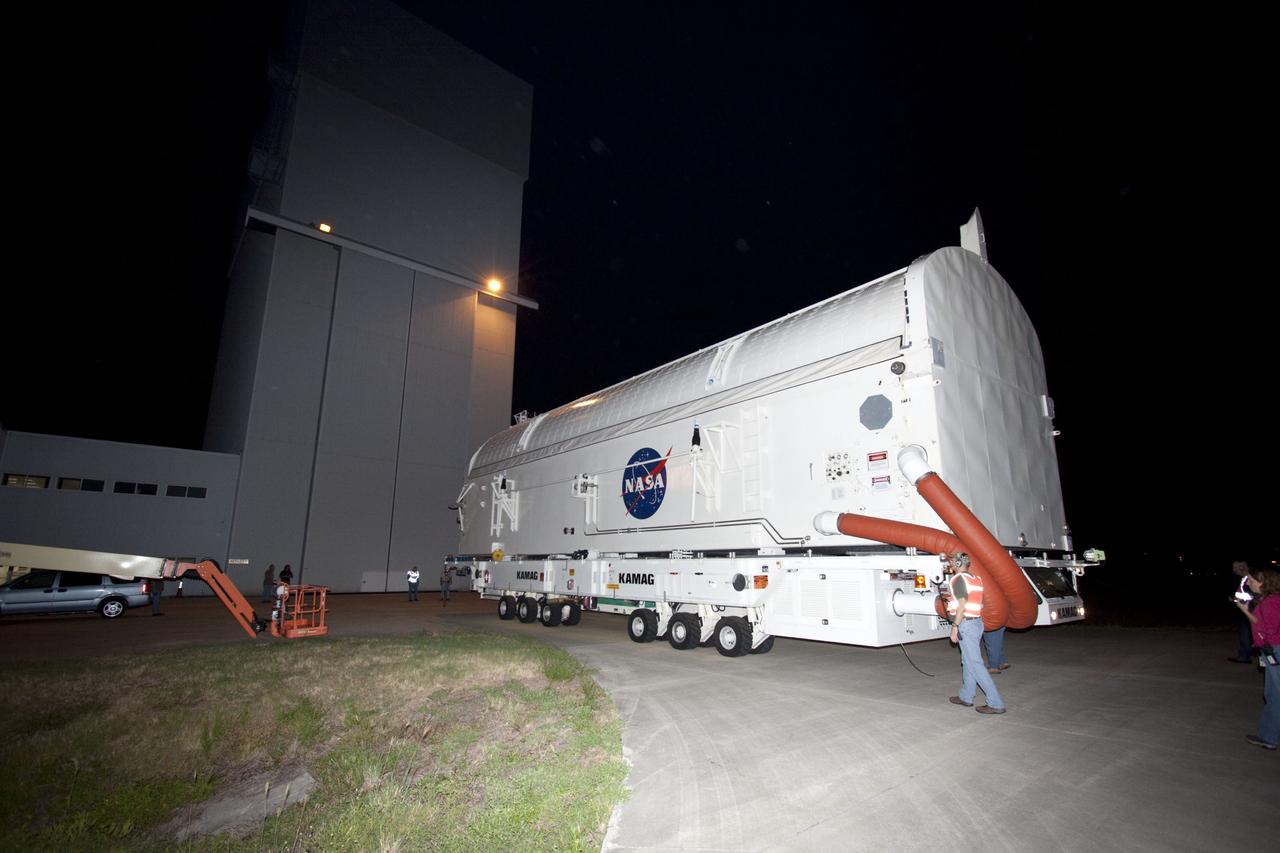
CAPE CANAVERAL, Fla. -- Workers move the payload canister, atop its transporter with the Raffaello multi-purpose logistics module, or MPLM, secured inside, from the Space Station Processing Facility at NASA's Kennedy Space Center in Florida to the Canister Rotation Facility. Commander Chris Ferguson, Pilot Doug Hurley and Mission Specialists Sandra Magnus and Rex Walheim are targeted to lift off on space shuttle Atlantis July 8, taking with them the MPLM packed with supplies, logistics and spare parts to the International Space Station. The STS-135 mission also will fly a system to investigate the potential for robotically refueling existing spacecraft and return a failed ammonia pump module to help NASA better understand the failure mechanism and improve pump designs for future systems. STS-135 will be the 33rd flight of Atlantis, the 37th shuttle mission to the space station, and the 135th and final mission of NASA's Space Shuttle Program. For more information, visit www.nasa.gov/mission_pages/shuttle/shuttlemissions/sts135/index.html. Photo credit: NASA/Jim Grossmann
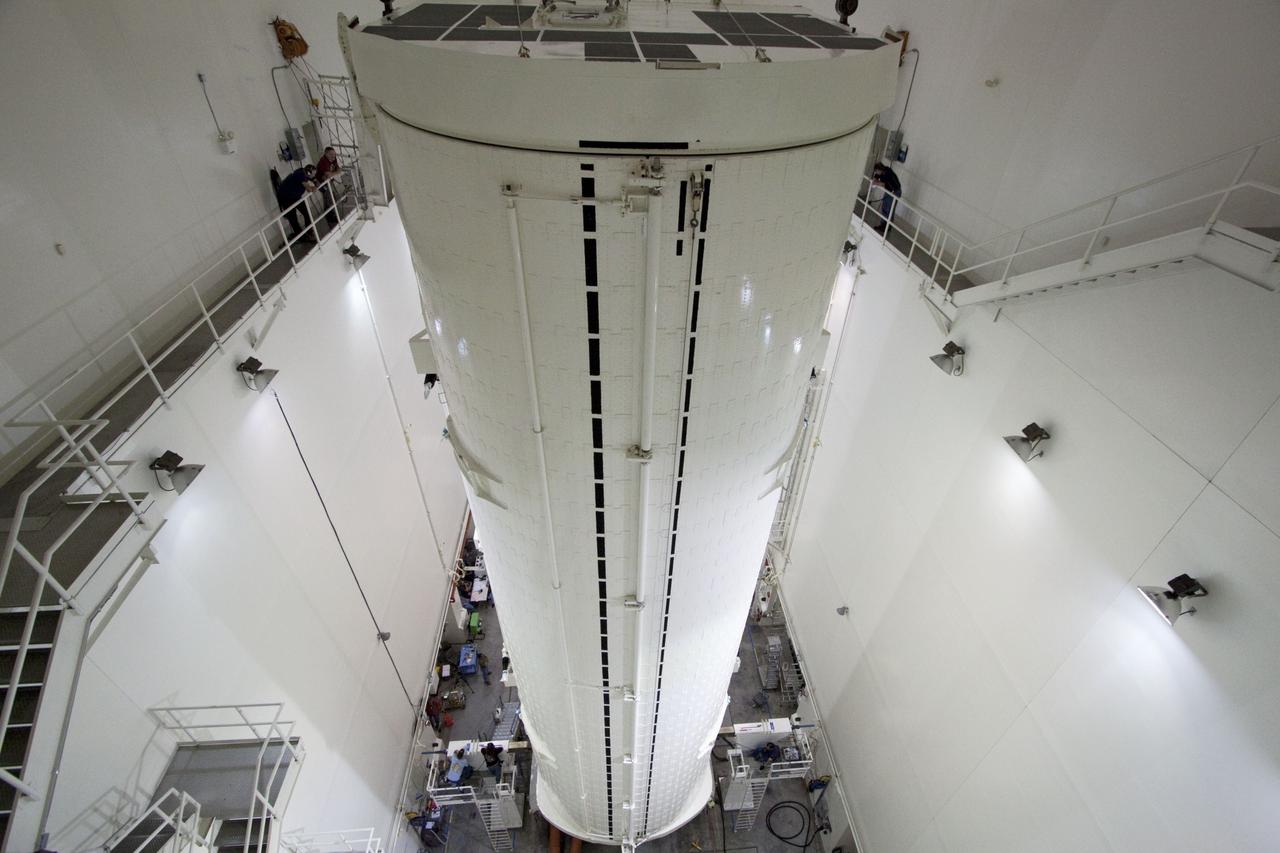
CAPE CANAVERAL, Fla. -- After being rotated from a horizontal to vertical position, the canister that contains the Raffaello multi-purpose logistics module, or MPLM, for the STS-135 mission, will be lowered onto a transportation vehicle in the Canister Rotation Facility at NASA's Kennedy Space Center in Florida. Commander Chris Ferguson, Pilot Doug Hurley and Mission Specialists Sandra Magnus and Rex Walheim are targeted to lift off on space shuttle Atlantis July 8, taking with them the MPLM packed with supplies, logistics and spare parts to the International Space Station. The STS-135 mission also will fly a system to investigate the potential for robotically refueling existing spacecraft and return a failed ammonia pump module to help NASA better understand the failure mechanism and improve pump designs for future systems. STS-135 will be the 33rd flight of Atlantis, the 37th shuttle mission to the space station, and the 135th and final mission of NASA's Space Shuttle Program. For more information, visit www.nasa.gov/mission_pages/shuttle/shuttlemissions/sts135/index.html. Photo credit: NASA/Jack Pfaller
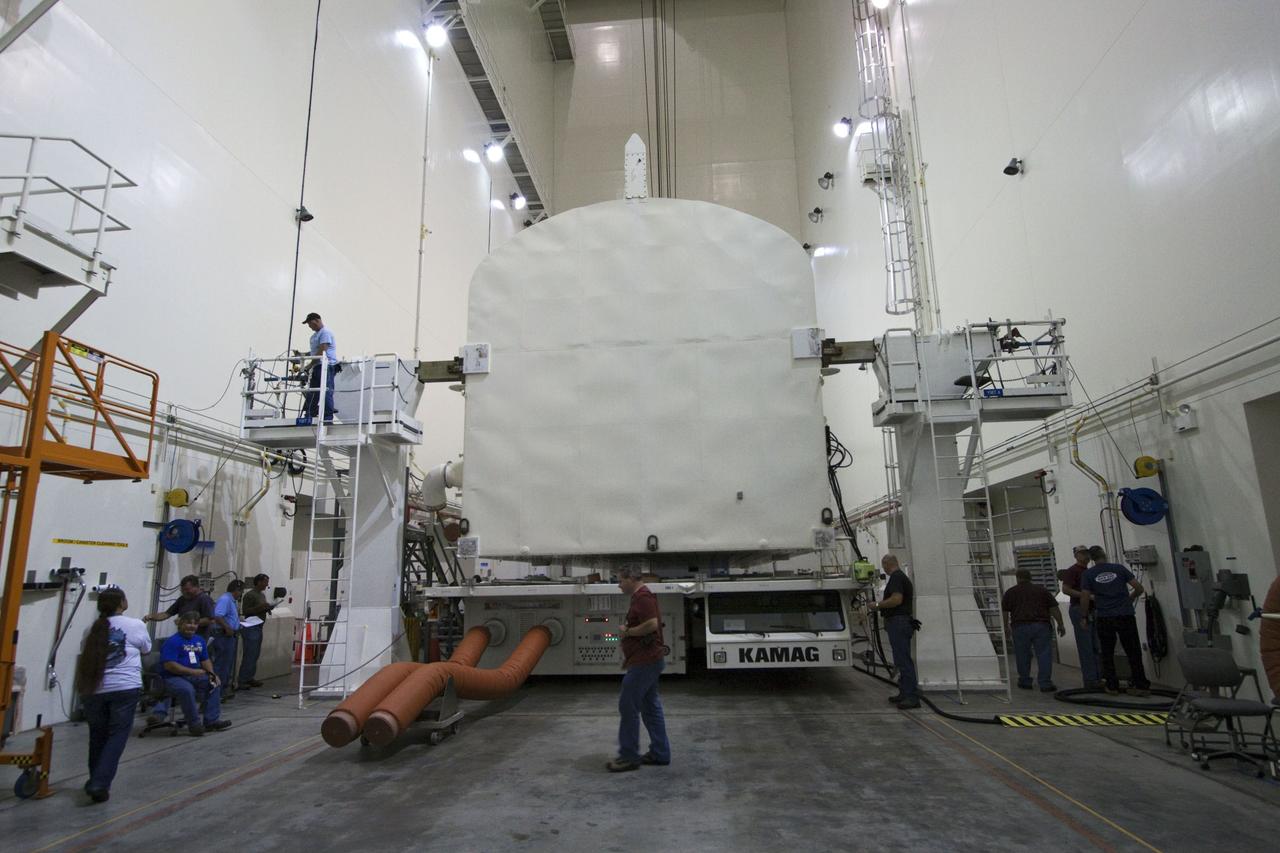
CAPE CANAVERAL, Fla. -- A canister, carrying the Raffaello multi-purpose logistics module, or MPLM, for the STS-135 mission, will be rotated from a horizontal to vertical position in the Canister Rotation Facility at NASA's Kennedy Space Center in Florida. Commander Chris Ferguson, Pilot Doug Hurley and Mission Specialists Sandra Magnus and Rex Walheim are targeted to lift off on space shuttle Atlantis July 8, taking with them the MPLM packed with supplies, logistics and spare parts to the International Space Station. The STS-135 mission also will fly a system to investigate the potential for robotically refueling existing spacecraft and return a failed ammonia pump module to help NASA better understand the failure mechanism and improve pump designs for future systems. STS-135 will be the 33rd flight of Atlantis, the 37th shuttle mission to the space station, and the 135th and final mission of NASA's Space Shuttle Program. For more information, visit www.nasa.gov/mission_pages/shuttle/shuttlemissions/sts135/index.html. Photo credit: NASA/Jack Pfaller
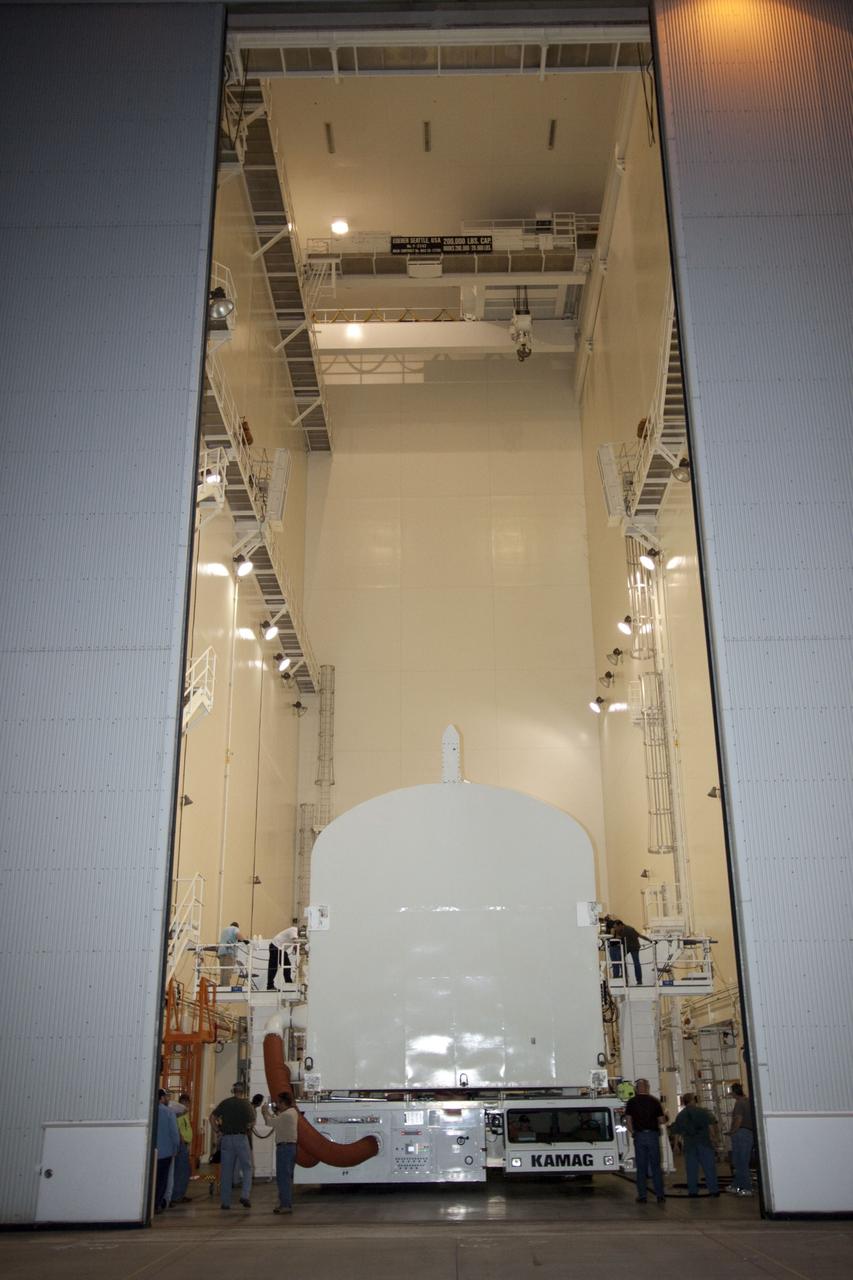
CAPE CANAVERAL, Fla. -- Workers move the payload canister, atop its transporter with the Raffaello multi-purpose logistics module, or MPLM, secured inside, into the Canister Rotation Facility at NASA's Kennedy Space Center in Florida. Commander Chris Ferguson, Pilot Doug Hurley and Mission Specialists Sandra Magnus and Rex Walheim are targeted to lift off on space shuttle Atlantis July 8, taking with them the MPLM packed with supplies, logistics and spare parts to the International Space Station. The STS-135 mission also will fly a system to investigate the potential for robotically refueling existing spacecraft and return a failed ammonia pump module to help NASA better understand the failure mechanism and improve pump designs for future systems. STS-135 will be the 33rd flight of Atlantis, the 37th shuttle mission to the space station, and the 135th and final mission of NASA's Space Shuttle Program. For more information, visit www.nasa.gov/mission_pages/shuttle/shuttlemissions/sts135/index.html. Photo credit: NASA/Jim Grossmann
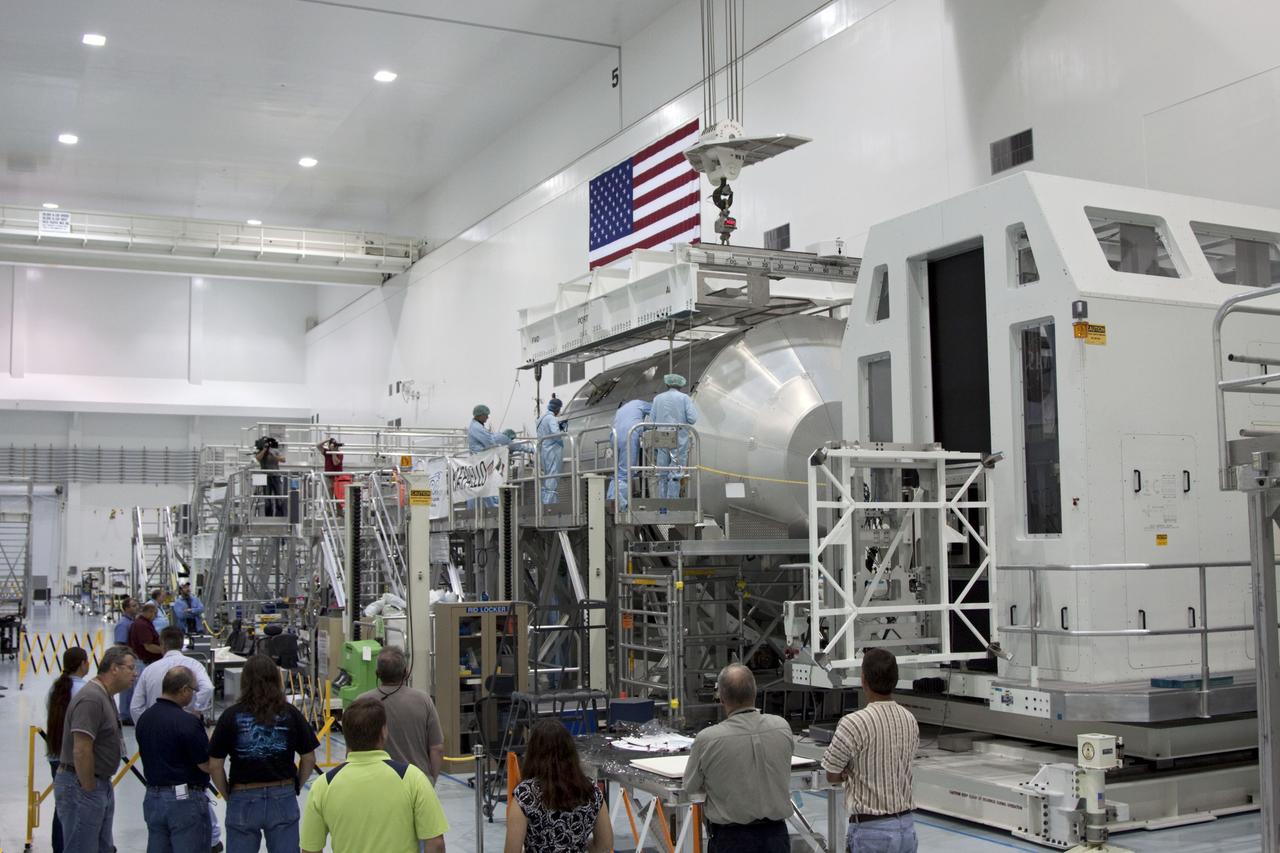
CAPE CANAVERAL, Fla. -- In the Space Station Processing Facility at NASA's Kennedy Space Center in Florida, technicians lower an overhead crane toward the Raffaello multi-purpose logistics module, or MPLM, for its move toward a payload canister. Commander Chris Ferguson, Pilot Doug Hurley and Mission Specialists Sandra Magnus and Rex Walheim are targeted to lift off on space shuttle Atlantis July 8, taking with them the MPLM packed with supplies, logistics and spare parts to the International Space Station. The STS-135 mission also will fly a system to investigate the potential for robotically refueling existing spacecraft and return a failed ammonia pump module to help NASA better understand the failure mechanism and improve pump designs for future systems. STS-135 will be the 33rd flight of Atlantis, the 37th shuttle mission to the space station, and the 135th and final mission of NASA's Space Shuttle Program. For more information, visit www.nasa.gov/mission_pages/shuttle/shuttlemissions/sts135/index.html. Photo credit: NASA/Jim Grossmann
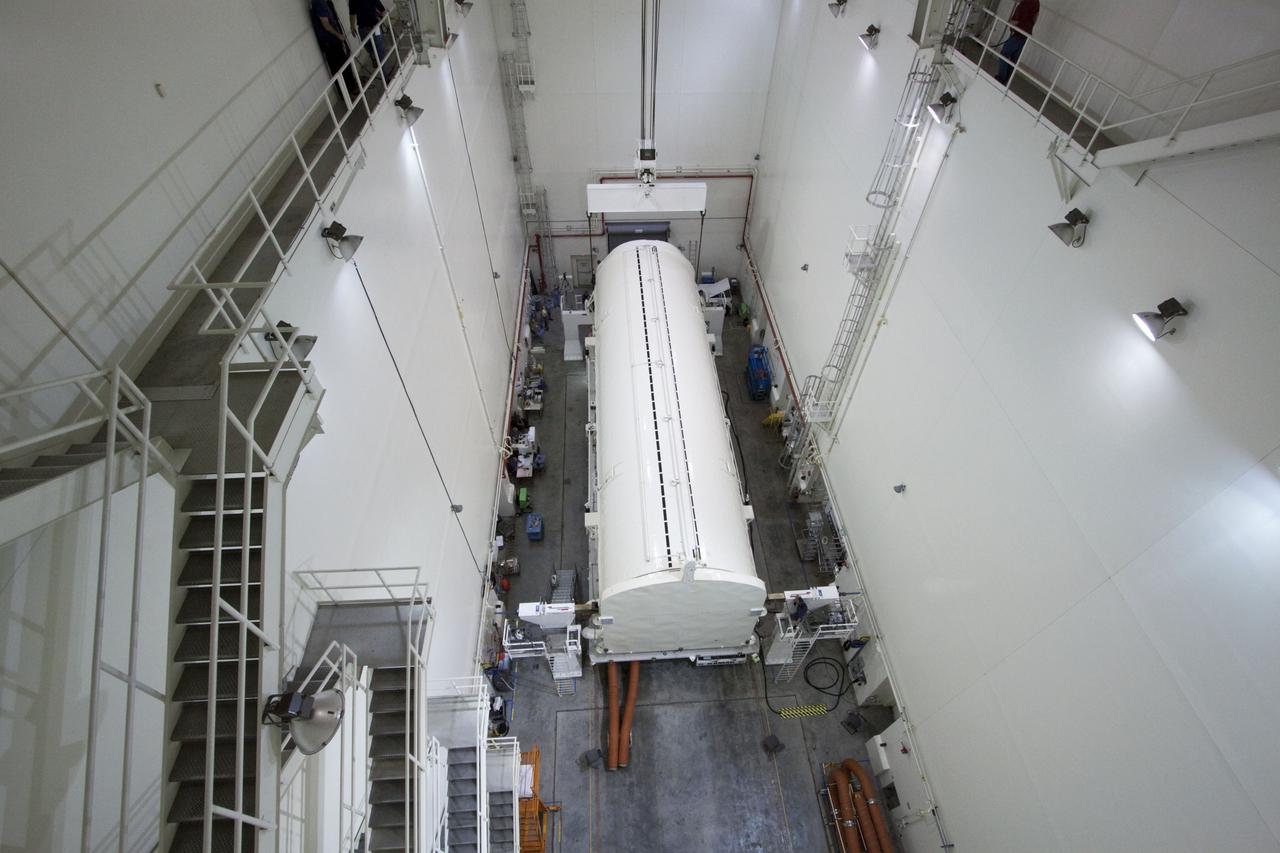
CAPE CANAVERAL, Fla. -- Workers prepare a canister, carrying the Raffaello multi-purpose logistics module, or MPLM, for the STS-135 mission, to be rotated from a horizontal to vertical position in the Canister Rotation Facility at NASA's Kennedy Space Center in Florida. Commander Chris Ferguson, Pilot Doug Hurley and Mission Specialists Sandra Magnus and Rex Walheim are targeted to lift off on space shuttle Atlantis July 8, taking with them the MPLM packed with supplies, logistics and spare parts to the International Space Station. The STS-135 mission also will fly a system to investigate the potential for robotically refueling existing spacecraft and return a failed ammonia pump module to help NASA better understand the failure mechanism and improve pump designs for future systems. STS-135 will be the 33rd flight of Atlantis, the 37th shuttle mission to the space station, and the 135th and final mission of NASA's Space Shuttle Program. For more information, visit www.nasa.gov/mission_pages/shuttle/shuttlemissions/sts135/index.html. Photo credit: NASA/Jack Pfaller
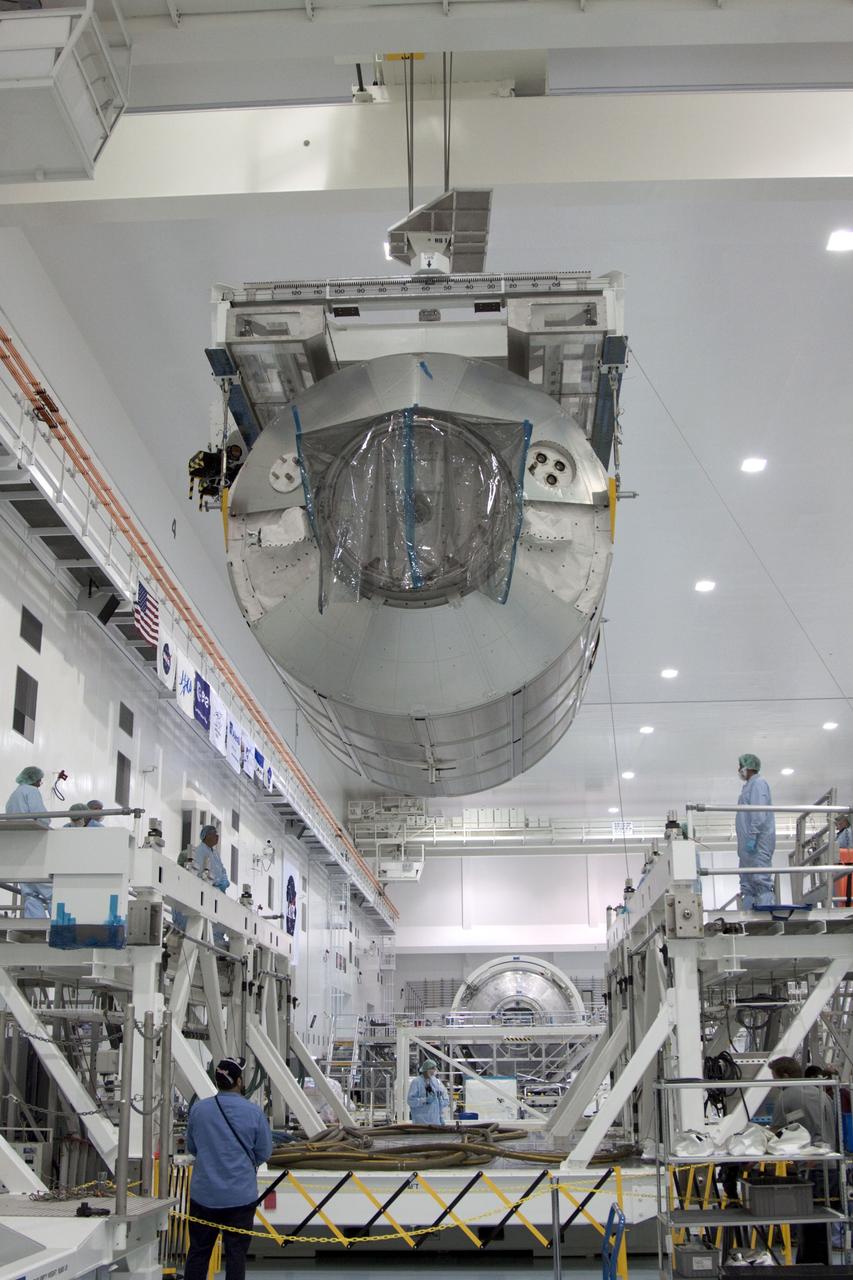
CAPE CANAVERAL, Fla. -- In the Space Station Processing Facility at NASA's Kennedy Space Center in Florida, an overhead crane moves the Raffaello multi-purpose logistics module, or MPLM, toward a payload canister. Commander Chris Ferguson, Pilot Doug Hurley and Mission Specialists Sandra Magnus and Rex Walheim are targeted to lift off on space shuttle Atlantis July 8, taking with them the MPLM packed with supplies, logistics and spare parts to the International Space Station. The STS-135 mission also will fly a system to investigate the potential for robotically refueling existing spacecraft and return a failed ammonia pump module to help NASA better understand the failure mechanism and improve pump designs for future systems. STS-135 will be the 33rd flight of Atlantis, the 37th shuttle mission to the space station, and the 135th and final mission of NASA's Space Shuttle Program. For more information, visit www.nasa.gov/mission_pages/shuttle/shuttlemissions/sts135/index.html. Photo credit: NASA/Jim Grossmann
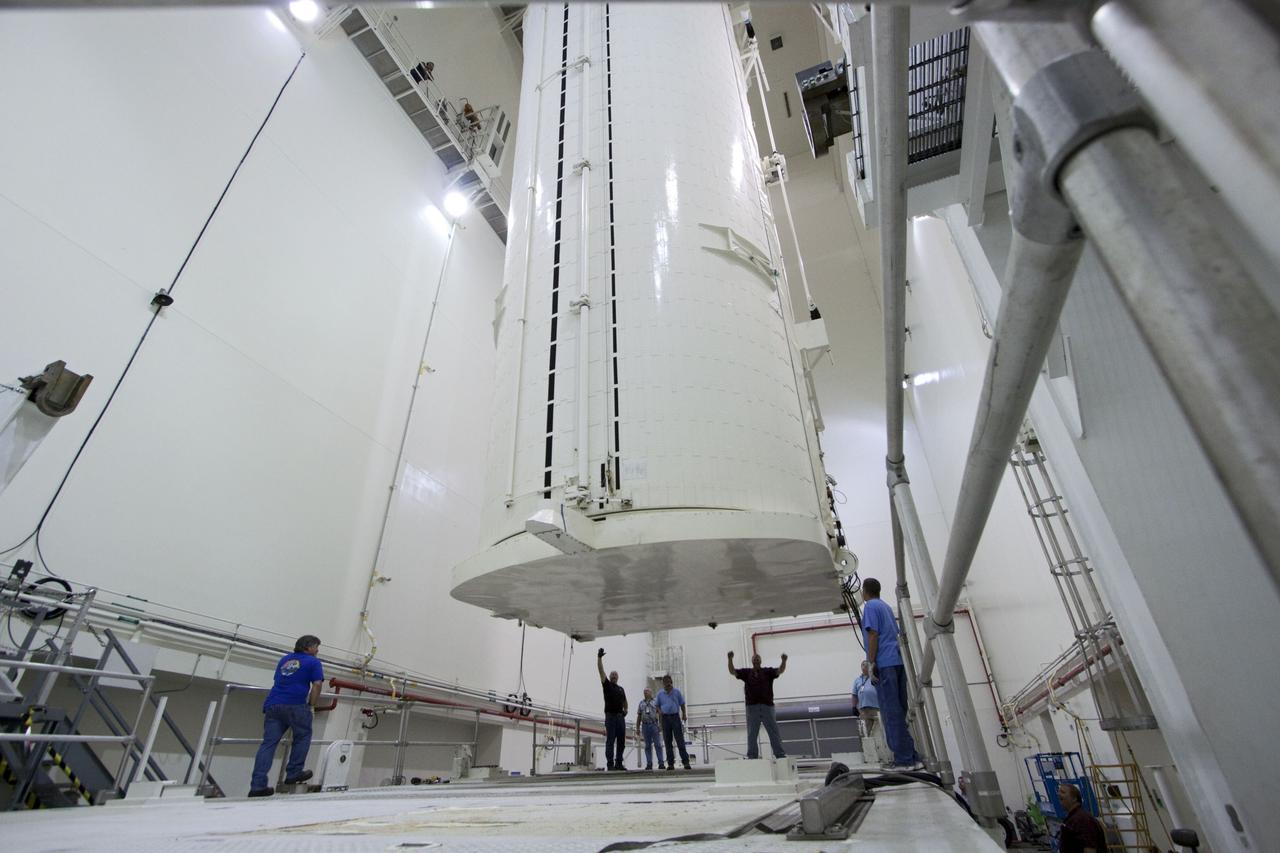
CAPE CANAVERAL, Fla. -- After being rotated from a horizontal to vertical position, the canister that contains the Raffaello multi-purpose logistics module, or MPLM, for the STS-135 mission, is lowered onto a transportation vehicle in the Canister Rotation Facility at NASA's Kennedy Space Center in Florida. Commander Chris Ferguson, Pilot Doug Hurley and Mission Specialists Sandra Magnus and Rex Walheim are targeted to lift off on space shuttle Atlantis July 8, taking with them the MPLM packed with supplies, logistics and spare parts to the International Space Station. The STS-135 mission also will fly a system to investigate the potential for robotically refueling existing spacecraft and return a failed ammonia pump module to help NASA better understand the failure mechanism and improve pump designs for future systems. STS-135 will be the 33rd flight of Atlantis, the 37th shuttle mission to the space station, and the 135th and final mission of NASA's Space Shuttle Program. For more information, visit www.nasa.gov/mission_pages/shuttle/shuttlemissions/sts135/index.html. Photo credit: NASA/Jack Pfaller
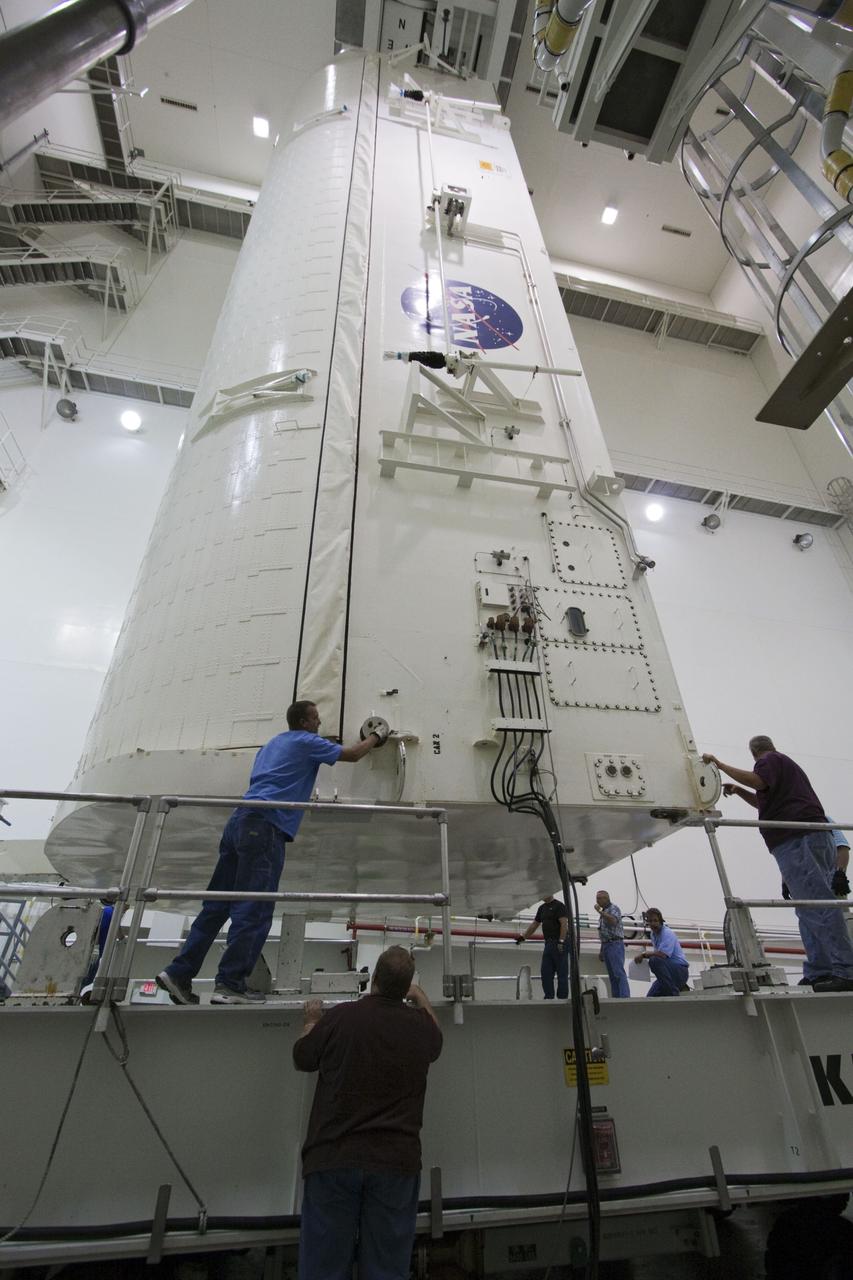
CAPE CANAVERAL, Fla. -- After being rotated from a horizontal to vertical position, the canister that contains the Raffaello multi-purpose logistics module, or MPLM, for the STS-135 mission, is lowered onto a transportation vehicle in the Canister Rotation Facility at NASA's Kennedy Space Center in Florida. Commander Chris Ferguson, Pilot Doug Hurley and Mission Specialists Sandra Magnus and Rex Walheim are targeted to lift off on space shuttle Atlantis July 8, taking with them the MPLM packed with supplies, logistics and spare parts to the International Space Station. The STS-135 mission also will fly a system to investigate the potential for robotically refueling existing spacecraft and return a failed ammonia pump module to help NASA better understand the failure mechanism and improve pump designs for future systems. STS-135 will be the 33rd flight of Atlantis, the 37th shuttle mission to the space station, and the 135th and final mission of NASA's Space Shuttle Program. For more information, visit www.nasa.gov/mission_pages/shuttle/shuttlemissions/sts135/index.html. Photo credit: NASA/Jack Pfaller
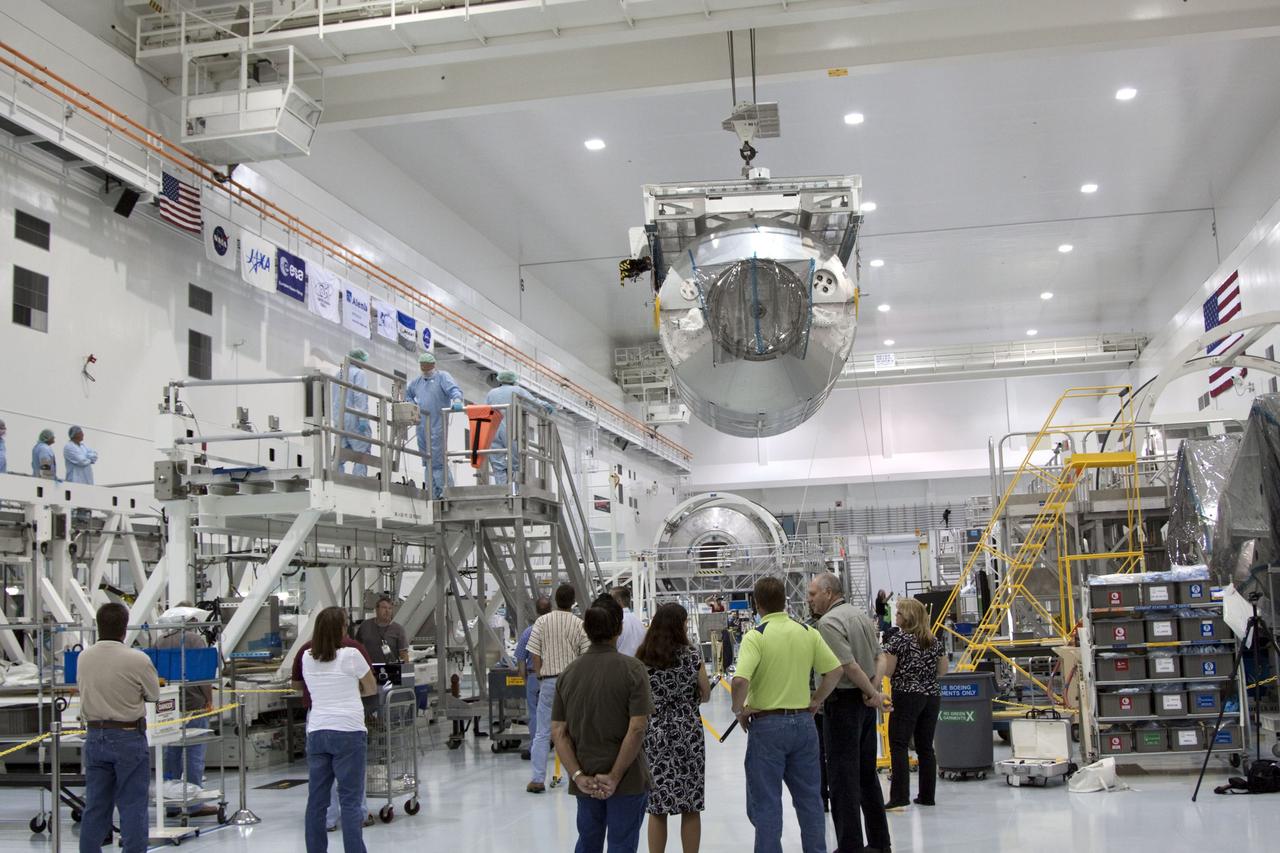
CAPE CANAVERAL, Fla. -- In the Space Station Processing Facility at NASA's Kennedy Space Center in Florida, an overhead crane moves the Raffaello multi-purpose logistics module, or MPLM, toward a payload canister. Commander Chris Ferguson, Pilot Doug Hurley and Mission Specialists Sandra Magnus and Rex Walheim are targeted to lift off on space shuttle Atlantis July 8, taking with them the MPLM packed with supplies, logistics and spare parts to the International Space Station. The STS-135 mission also will fly a system to investigate the potential for robotically refueling existing spacecraft and return a failed ammonia pump module to help NASA better understand the failure mechanism and improve pump designs for future systems. STS-135 will be the 33rd flight of Atlantis, the 37th shuttle mission to the space station, and the 135th and final mission of NASA's Space Shuttle Program. For more information, visit www.nasa.gov/mission_pages/shuttle/shuttlemissions/sts135/index.html. Photo credit: NASA/Jim Grossmann
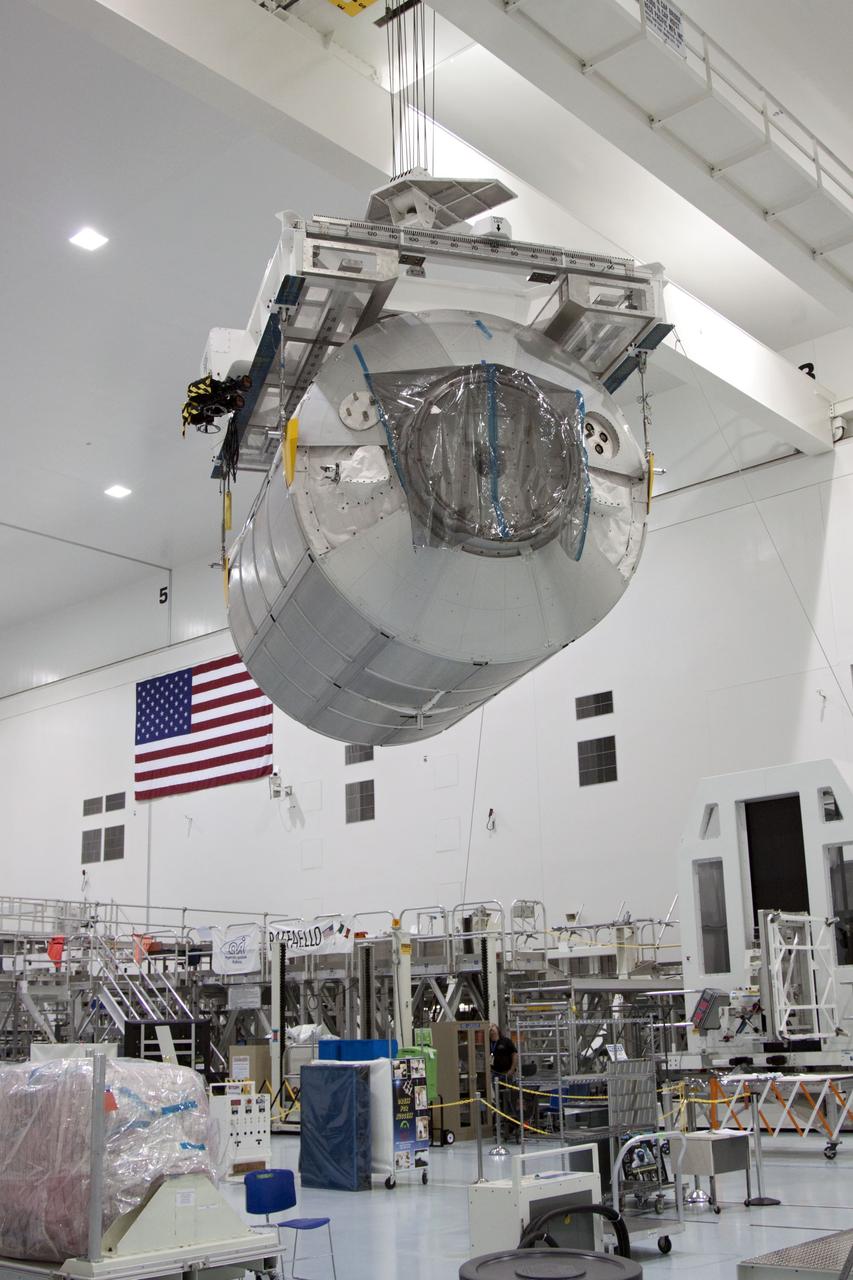
CAPE CANAVERAL, Fla. -- In the Space Station Processing Facility at NASA's Kennedy Space Center in Florida, an overhead crane moves the Raffaello multi-purpose logistics module, or MPLM, toward a payload canister. Commander Chris Ferguson, Pilot Doug Hurley and Mission Specialists Sandra Magnus and Rex Walheim are targeted to lift off on space shuttle Atlantis July 8, taking with them the MPLM packed with supplies, logistics and spare parts to the International Space Station. The STS-135 mission also will fly a system to investigate the potential for robotically refueling existing spacecraft and return a failed ammonia pump module to help NASA better understand the failure mechanism and improve pump designs for future systems. STS-135 will be the 33rd flight of Atlantis, the 37th shuttle mission to the space station, and the 135th and final mission of NASA's Space Shuttle Program. For more information, visit www.nasa.gov/mission_pages/shuttle/shuttlemissions/sts135/index.html. Photo credit: NASA/Jim Grossmann
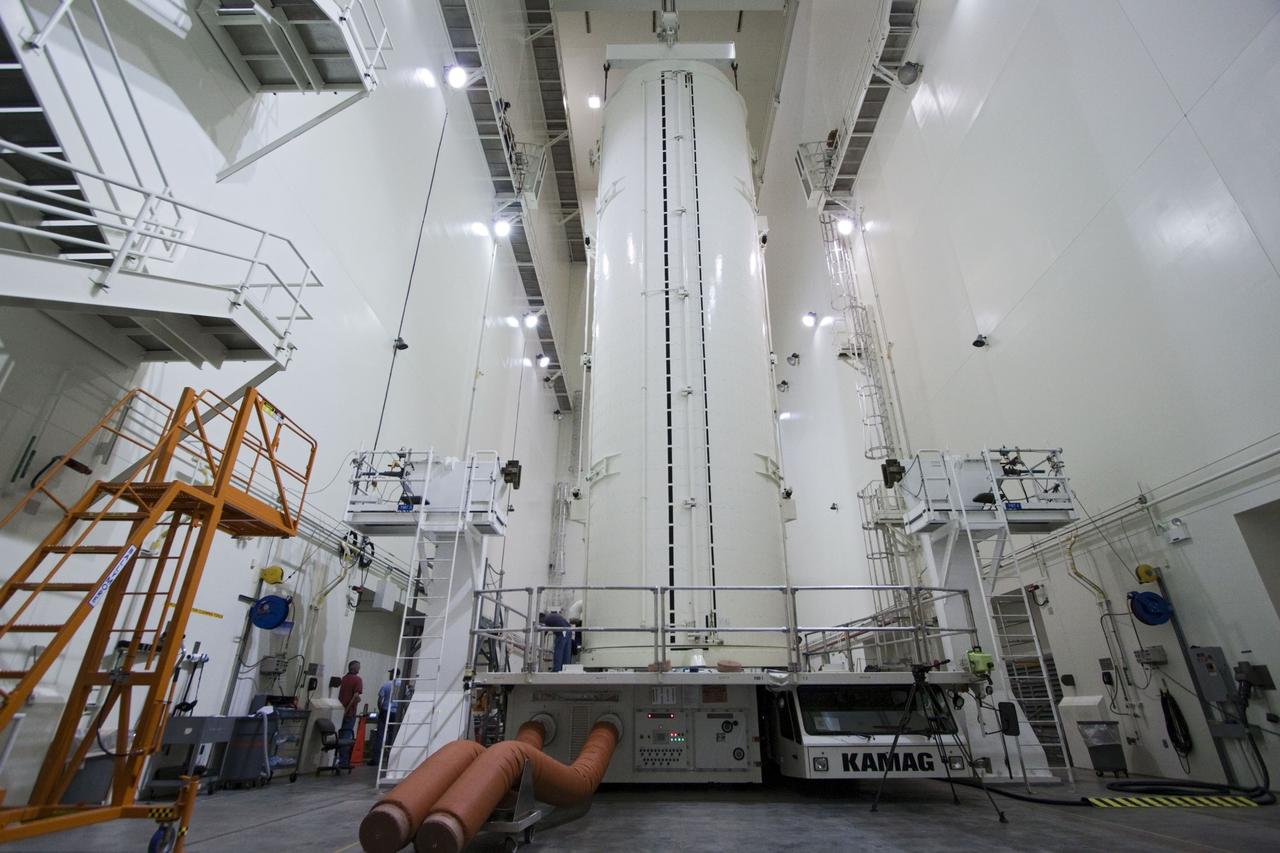
CAPE CANAVERAL, Fla. -- After being rotated from a horizontal to vertical position, the canister that contains the Raffaello multi-purpose logistics module, or MPLM, for the STS-135 mission, has been lowered onto a transportation vehicle in the Canister Rotation Facility at NASA's Kennedy Space Center in Florida. Commander Chris Ferguson, Pilot Doug Hurley and Mission Specialists Sandra Magnus and Rex Walheim are targeted to lift off on space shuttle Atlantis July 8, taking with them the MPLM packed with supplies, logistics and spare parts to the International Space Station. The STS-135 mission also will fly a system to investigate the potential for robotically refueling existing spacecraft and return a failed ammonia pump module to help NASA better understand the failure mechanism and improve pump designs for future systems. STS-135 will be the 33rd flight of Atlantis, the 37th shuttle mission to the space station, and the 135th and final mission of NASA's Space Shuttle Program. For more information, visit www.nasa.gov/mission_pages/shuttle/shuttlemissions/sts135/index.html. Photo credit: NASA/Jack Pfaller