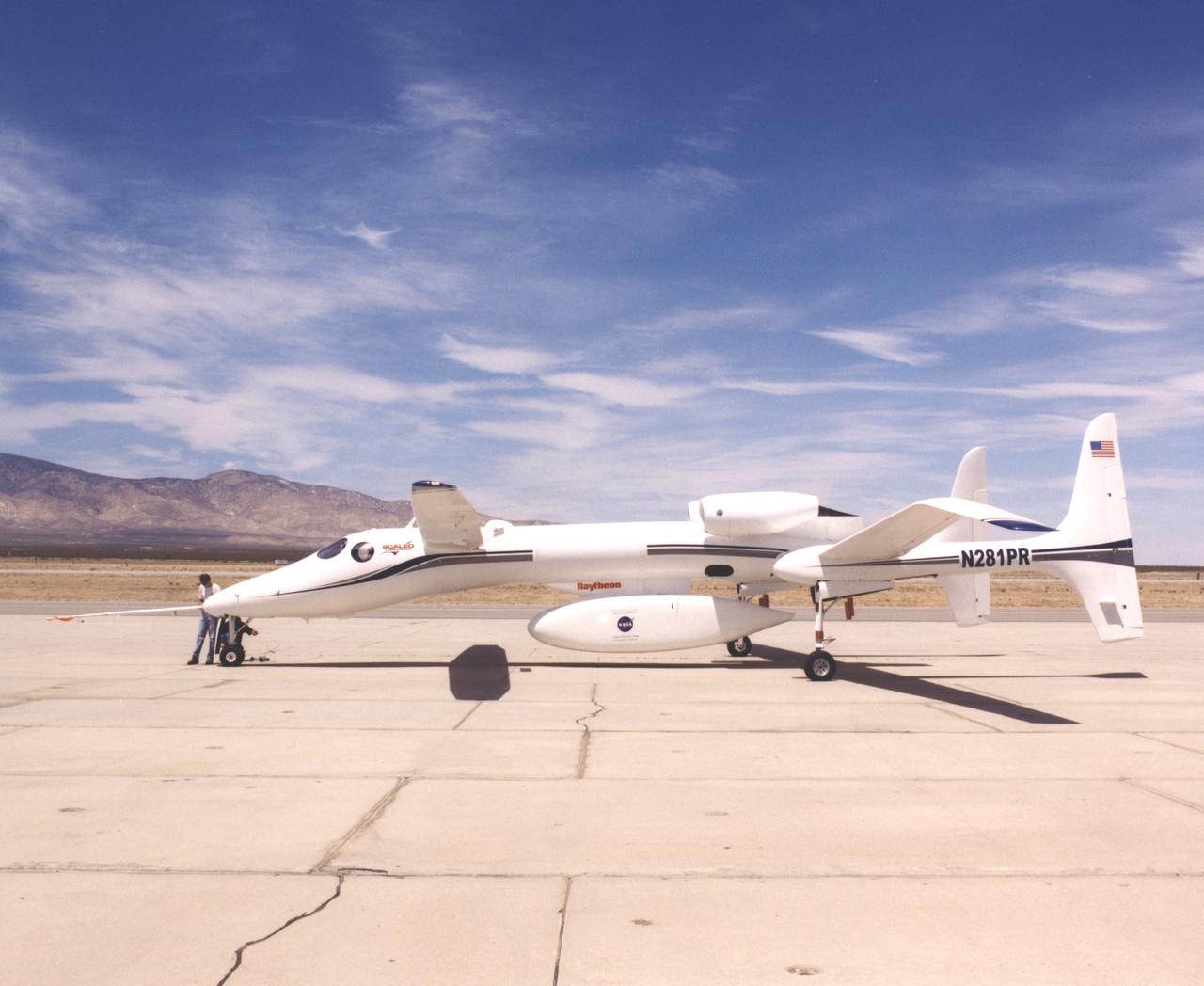
Forward Ramp Deploy
Forward Ramp Deploy
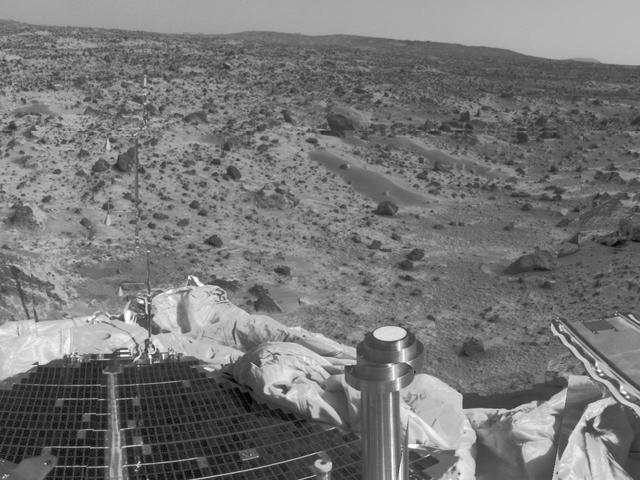
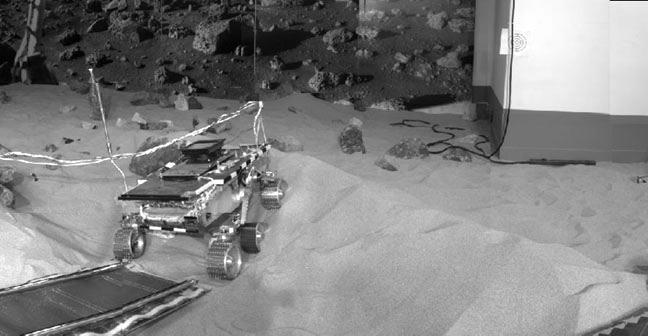
Forward Ramp & Low Gain Antenna
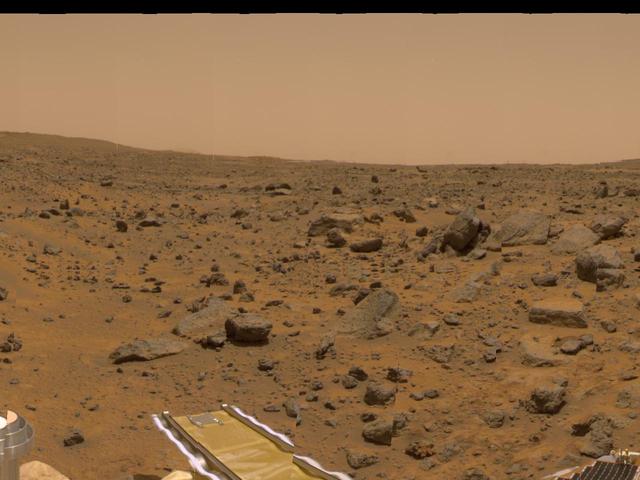
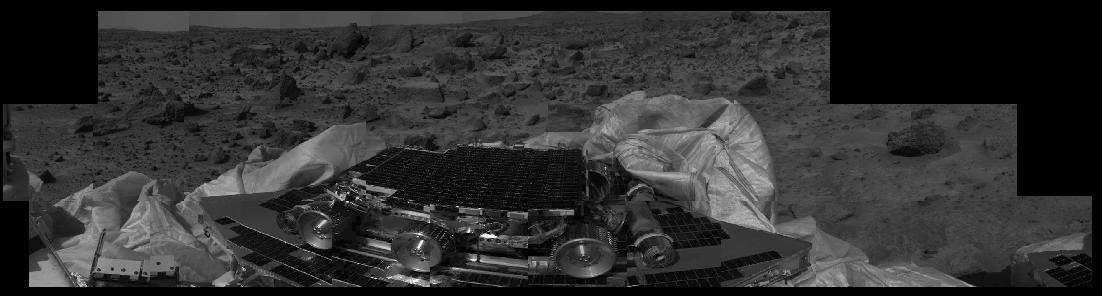
Forward Ramp Within 360-degree Panorama
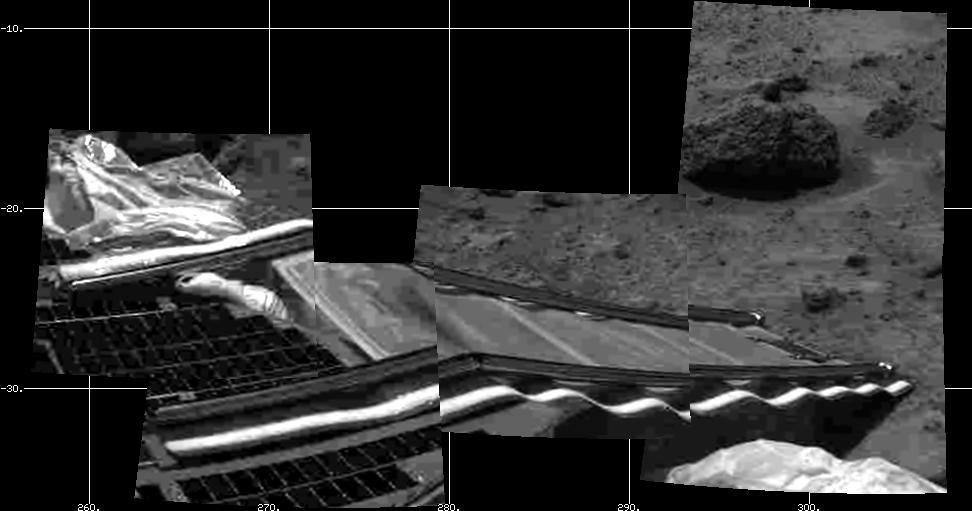
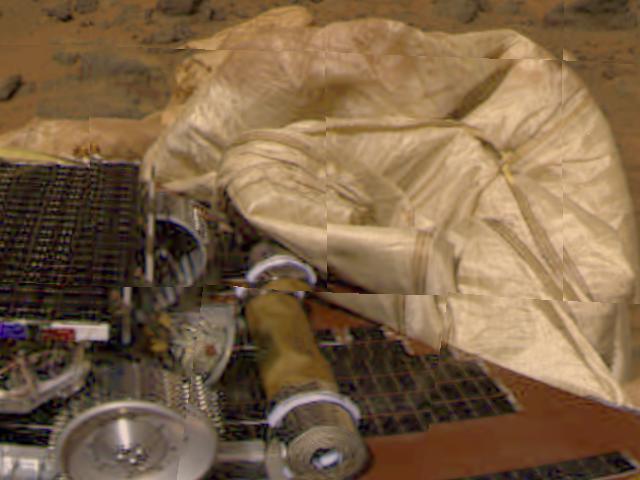
NASA's Mars Pathfinder's rear rover ramp can be seen successfully unfurled in this image, taken at the end of Sol 2 by the Imager for Mars Pathfinder (IMP). This ramp was later used for the deployment of the microrover Sojourner, which occurred at the end of Sol 2. Areas of a lander petal and deflated airbag are visible at left. The image helped Pathfinder scientists determine that the rear ramp was the one to use for rover deployment. At upper right is the rock dubbed "Barnacle Bill," which Sojourner will later study.  http://photojournal.jpl.nasa.gov/catalog/PIA00627
Pathfinder Rear Ramp
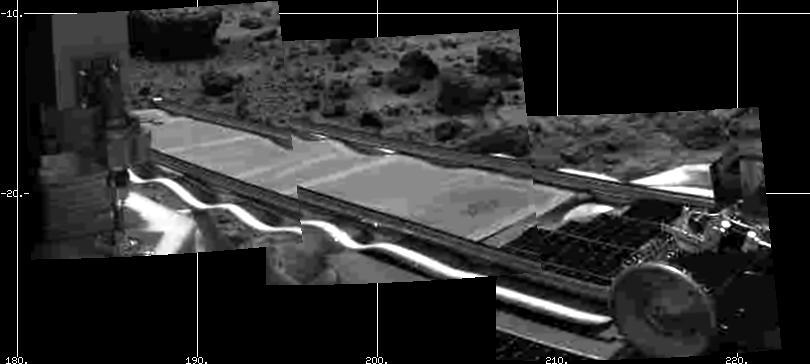
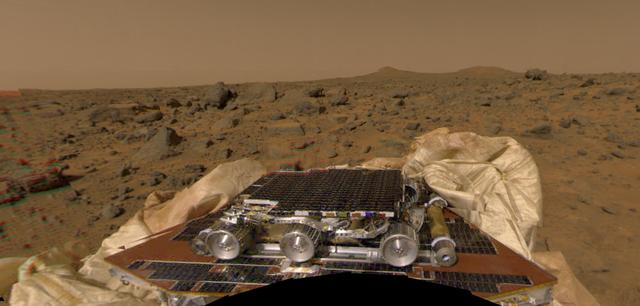
Mars Pathfinder's forward rover ramp can be seen successfully unfurled in this image, taken at the end of Sol 2 by the Imager for Mars Pathfinder (IMP). This ramp was not used for the deployment of the microrover Sojourner, which occurred at the end of Sol 2. Sojourner can be seen still latched to one of the lander's petals, waiting for the command sequence that would execute its descent off of the lander's petal. The imager helped Pathfinder scientists determine whether to deploy the rover using the forward or backward ramps and the nature of the first rover traverse.  http://photojournal.jpl.nasa.gov/catalog/PIA00628
Pathfinder Ramp Deploy Image
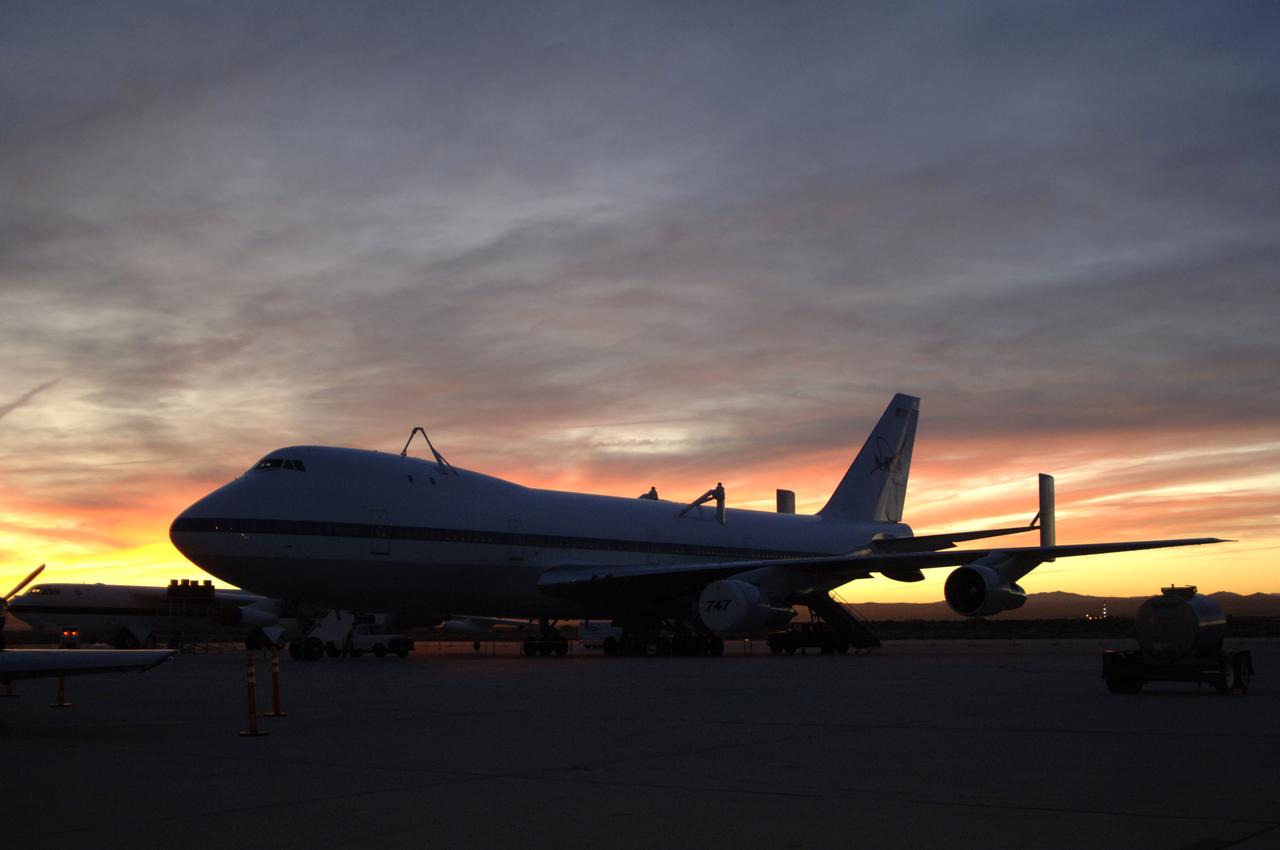
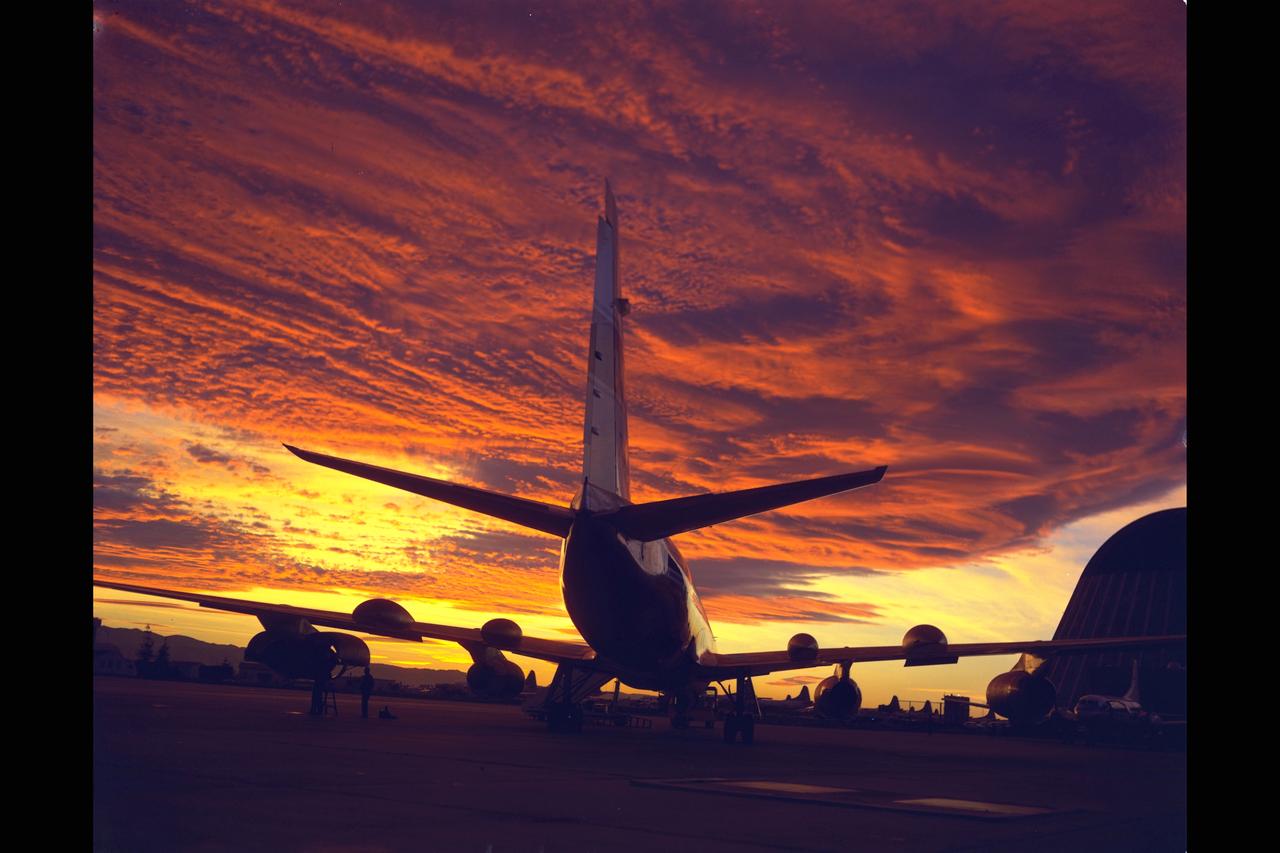
One of NASA's two modified Boeing 747 Shuttle Carrier Aircraft is silhouetted against the morning sky at sunrise on the ramp at Edwards Air Force Base.
One of NASA's two modified Boeing 747 Shuttle Carrier Aircraft is silhouetted against the morning sky at sunrise on the ramp at Edwards Air Force Base
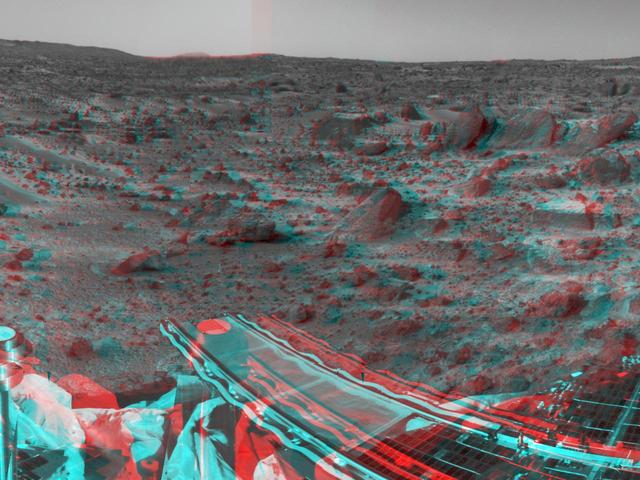
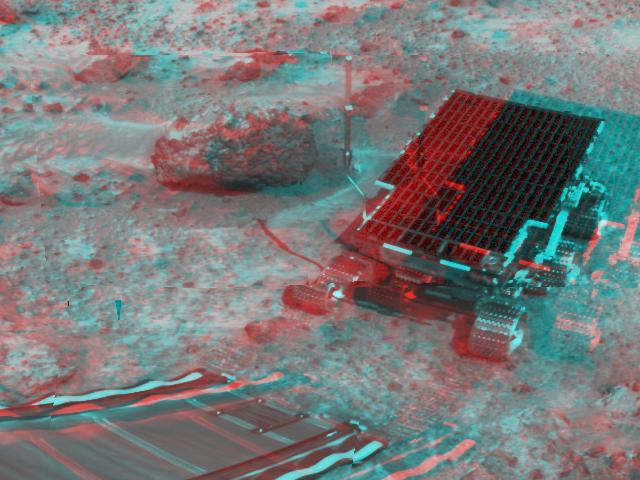
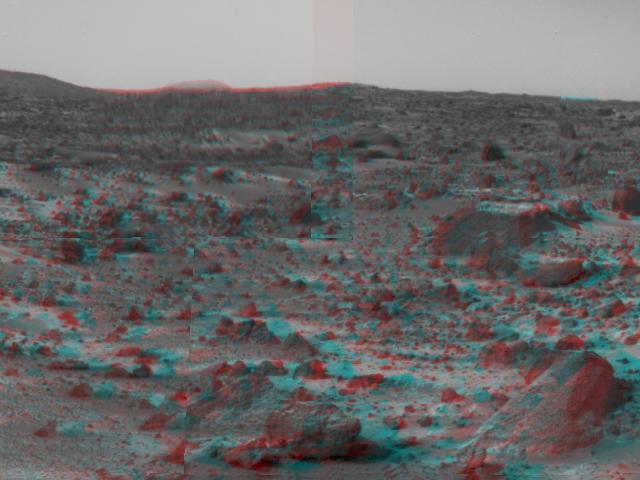
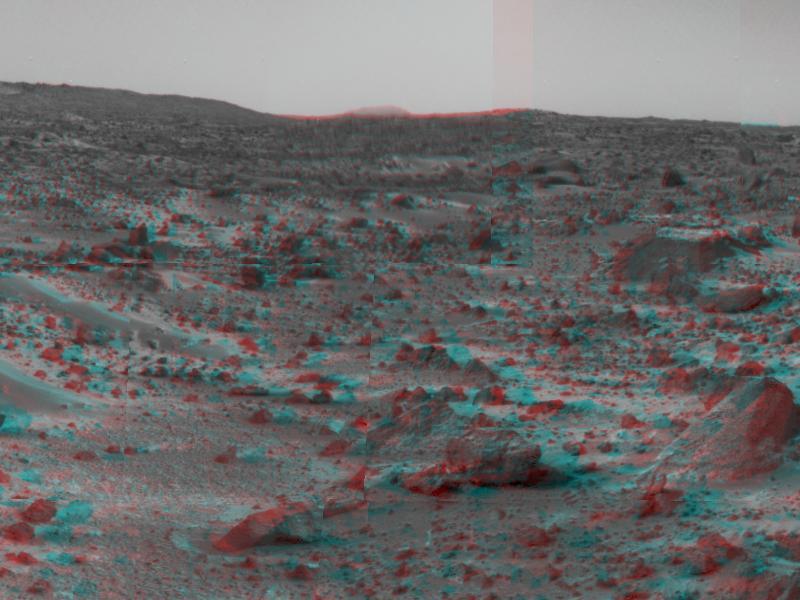
NASA Mars Pathfinder forward rover ramp can be seen successfully unfurled in this image, taken in stereo by the Imager camera. 3-D glasses are necessary to identify surface detail.
Forward Ramp in 3-D
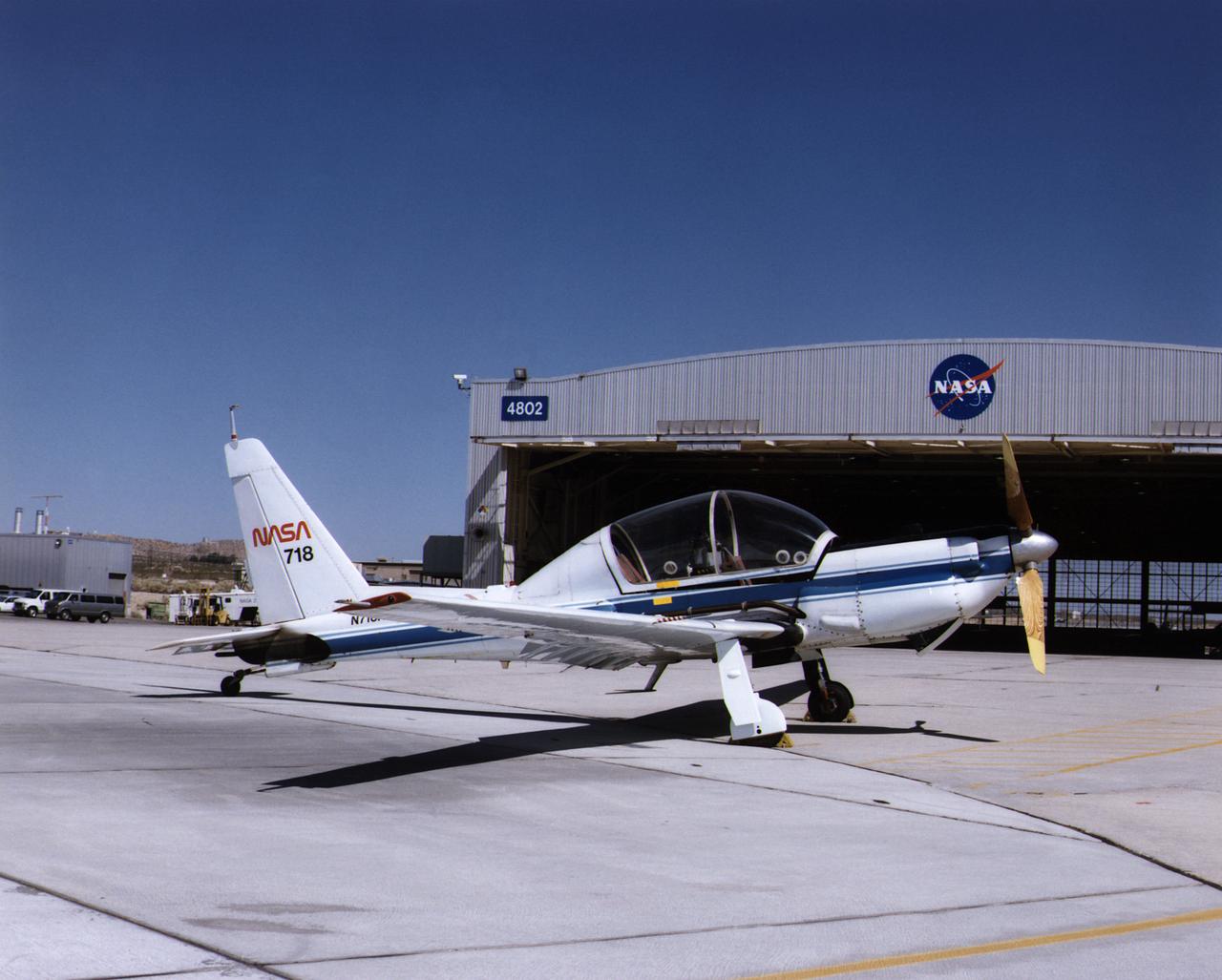
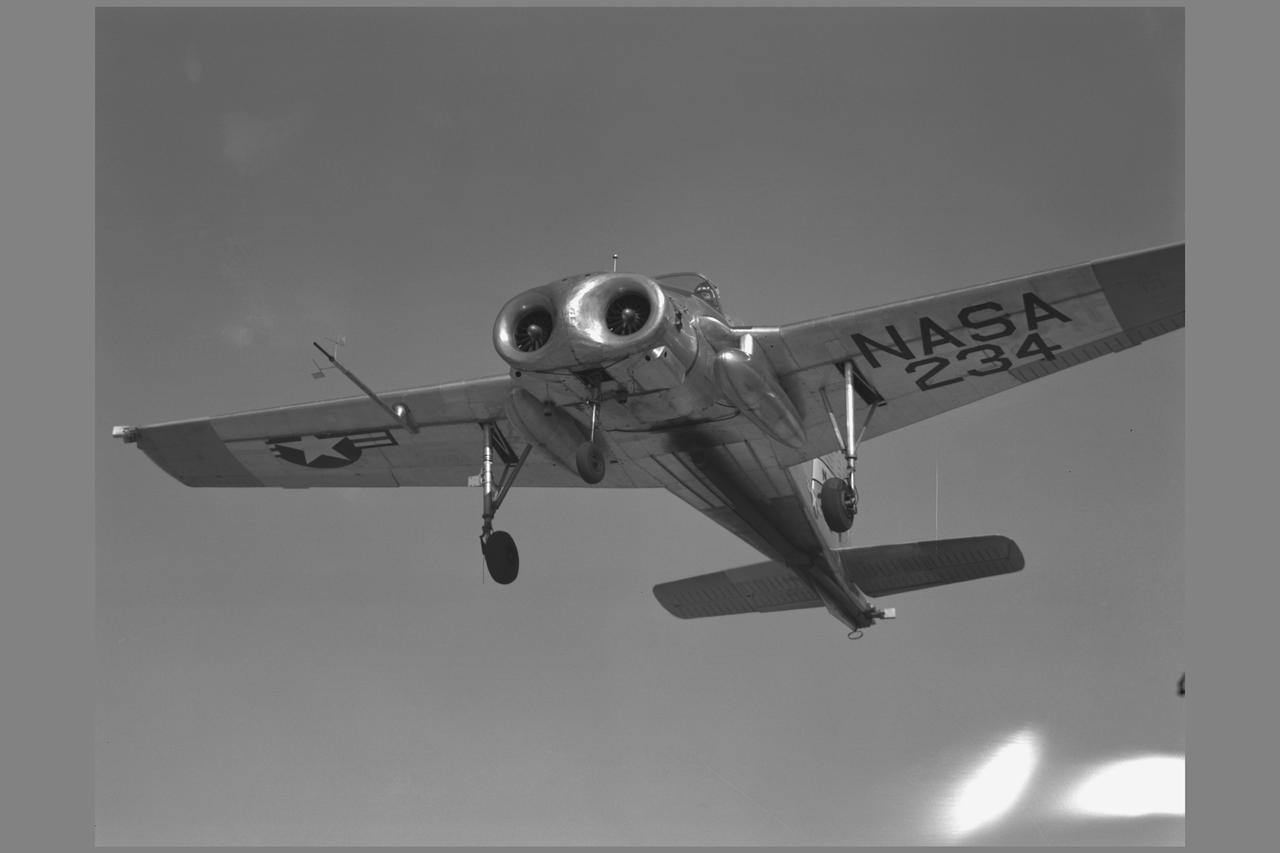
NASA's YO-3A parked on the Dryden ramp.
YO-3A parked on ramp
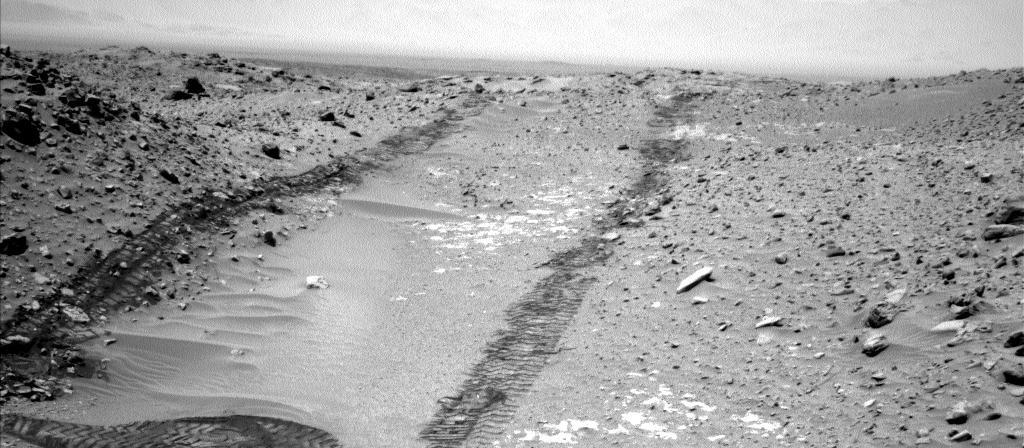
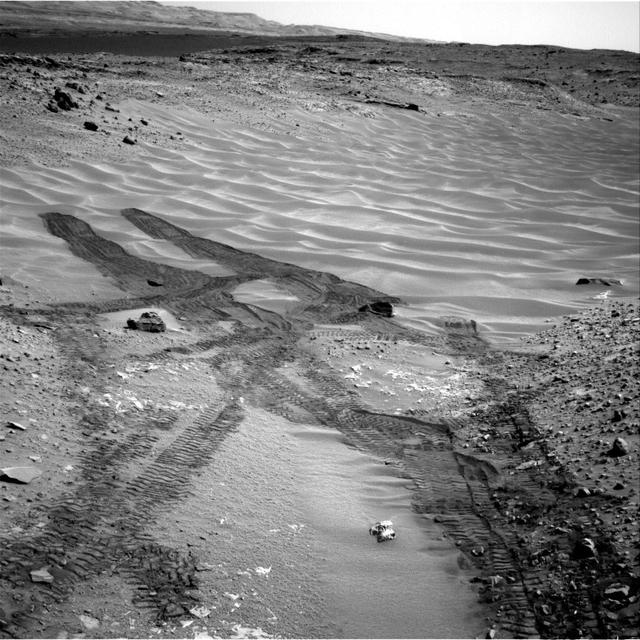
This image from NASA Curiosity Mars rover looks down the ramp at the northeastern end of Hidden Valley and across the sandy-floored valley to lower slopes of Mount Sharp on the horizon.
Down Northeastern Ramp into Hidden Valley on Mars
In this image from NASA Curiosity Mars rover looking up the ramp at the northeastern end of Hidden Valley, a pale outcrop including drilling target Bonanza King is at the center of the scene.
Looking Up the Ramp Holding Bonanza King on Mars
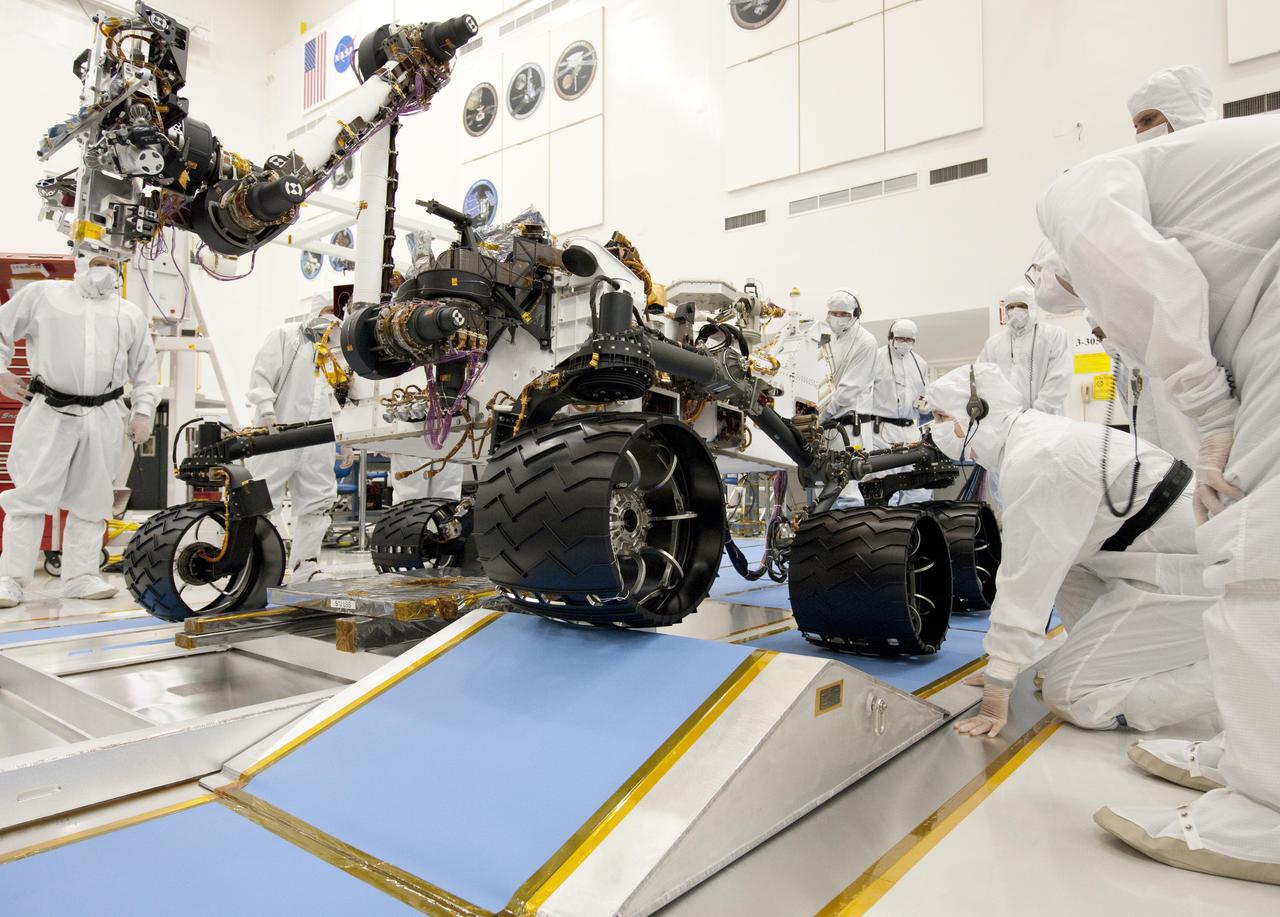
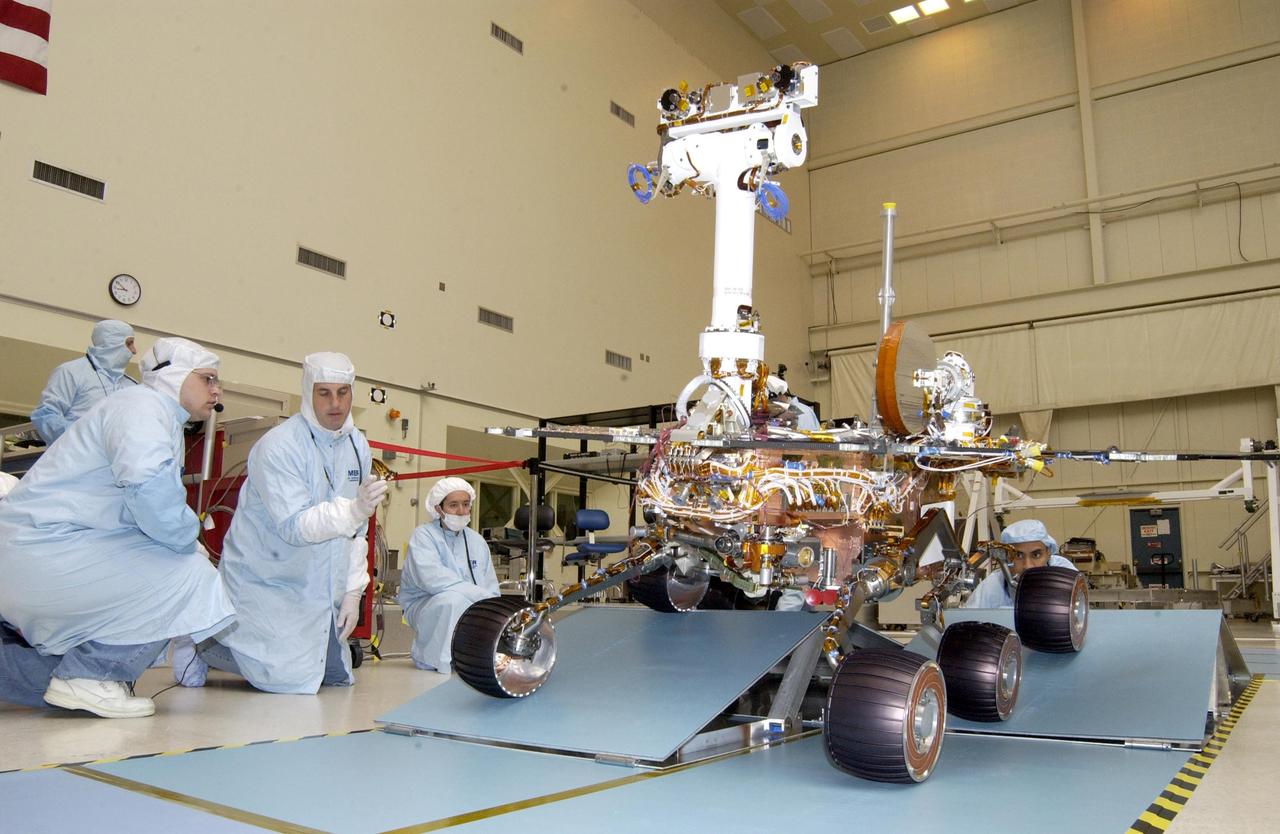
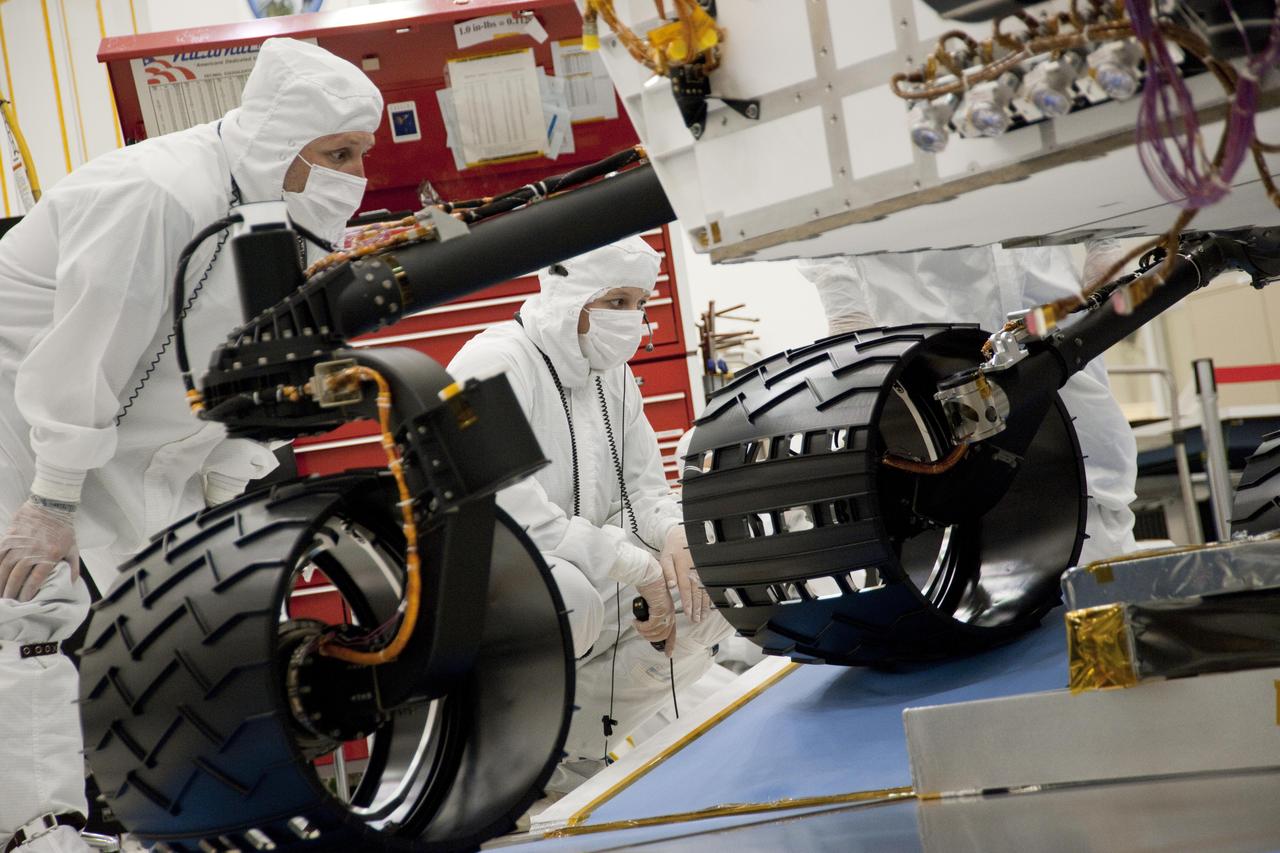
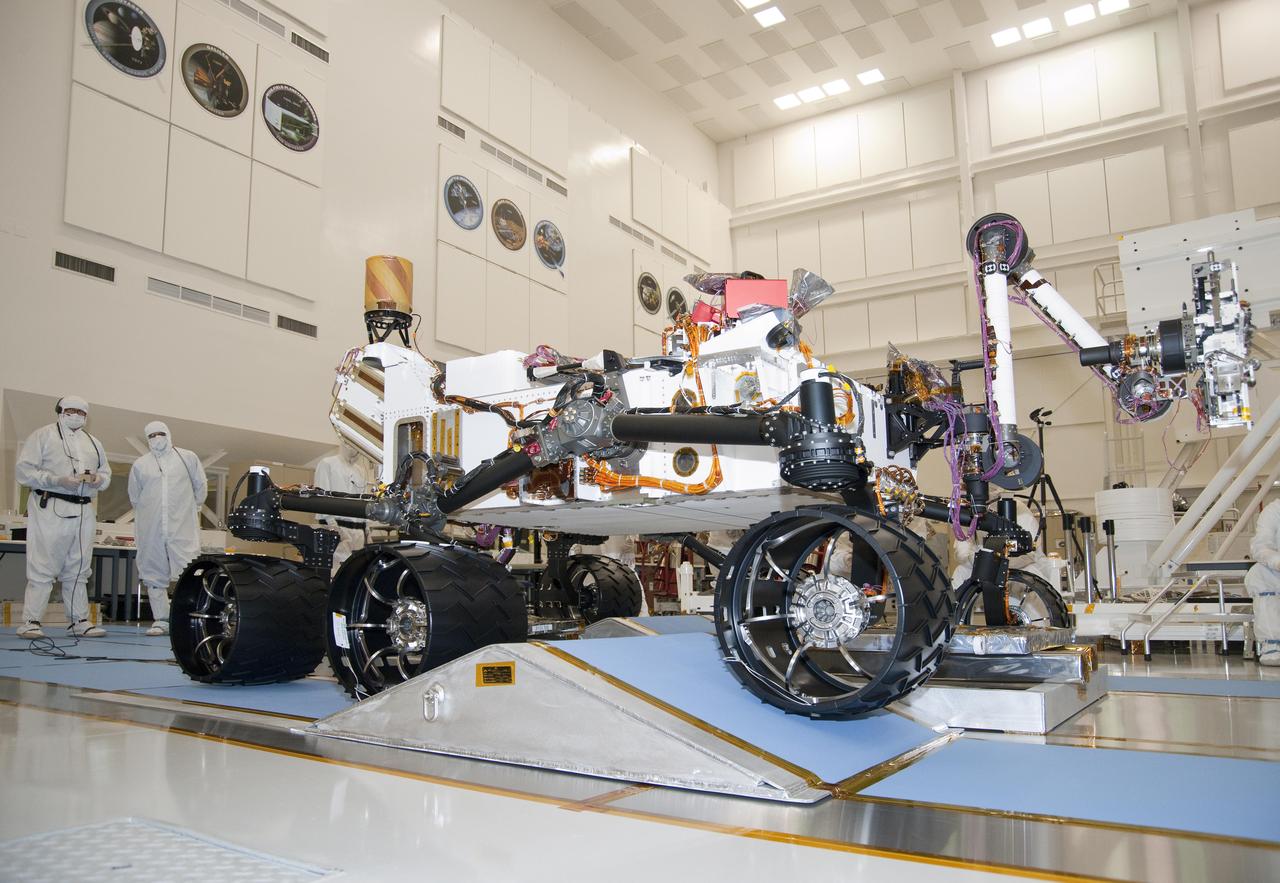
NASA next Mars rover, Curiosity, drives up a ramp during a test at NASA Jet Propulsion Laboratory, Pasadena, Calif. The rover, like its smaller predecessors already on Mars, uses a rocker bogie suspension system to drive over uneven ground.
Ramp Drive Test for Curiosity Mars Rover
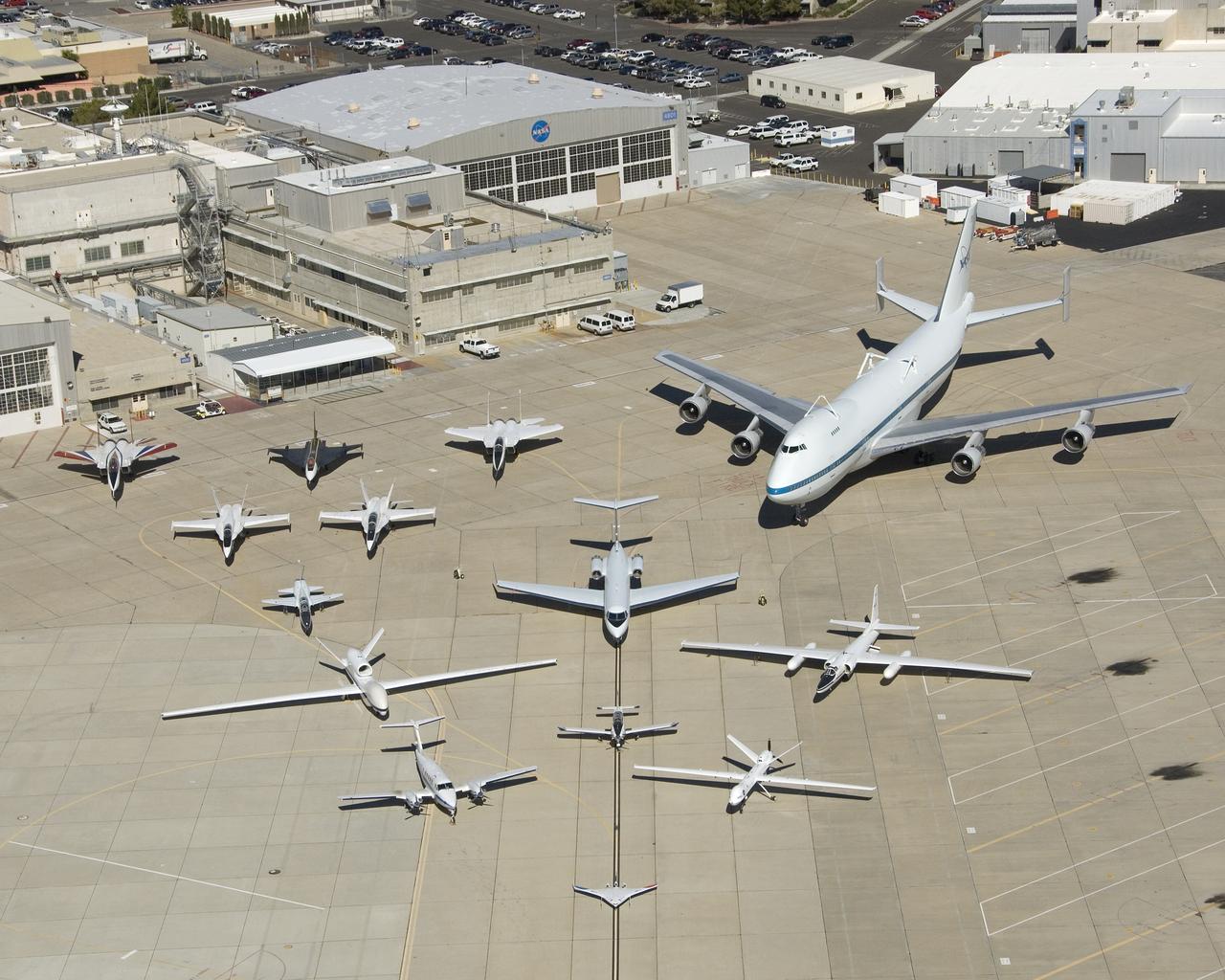
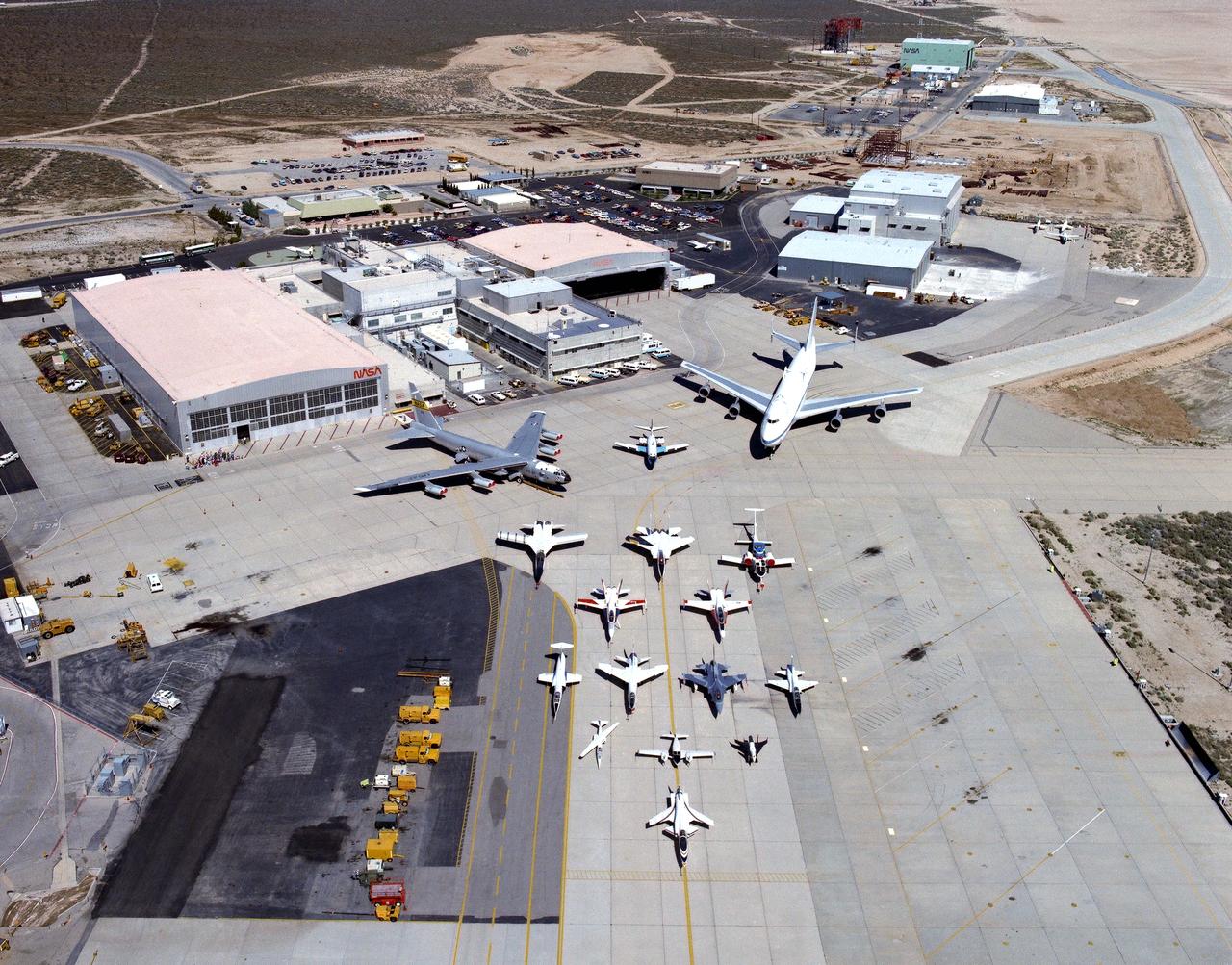
Dryden Aircraft Operations Facility - aircraft fleet on ramp
ED08-0292-2
The Lockheed Martin/Boeing Tier III- (minus) unpiloted aerial vehicle undergoing an engine run on the ramp at the Dryden Flight Research Center, Edwards, California.
Tier 3- DarkStar engine run on ramp
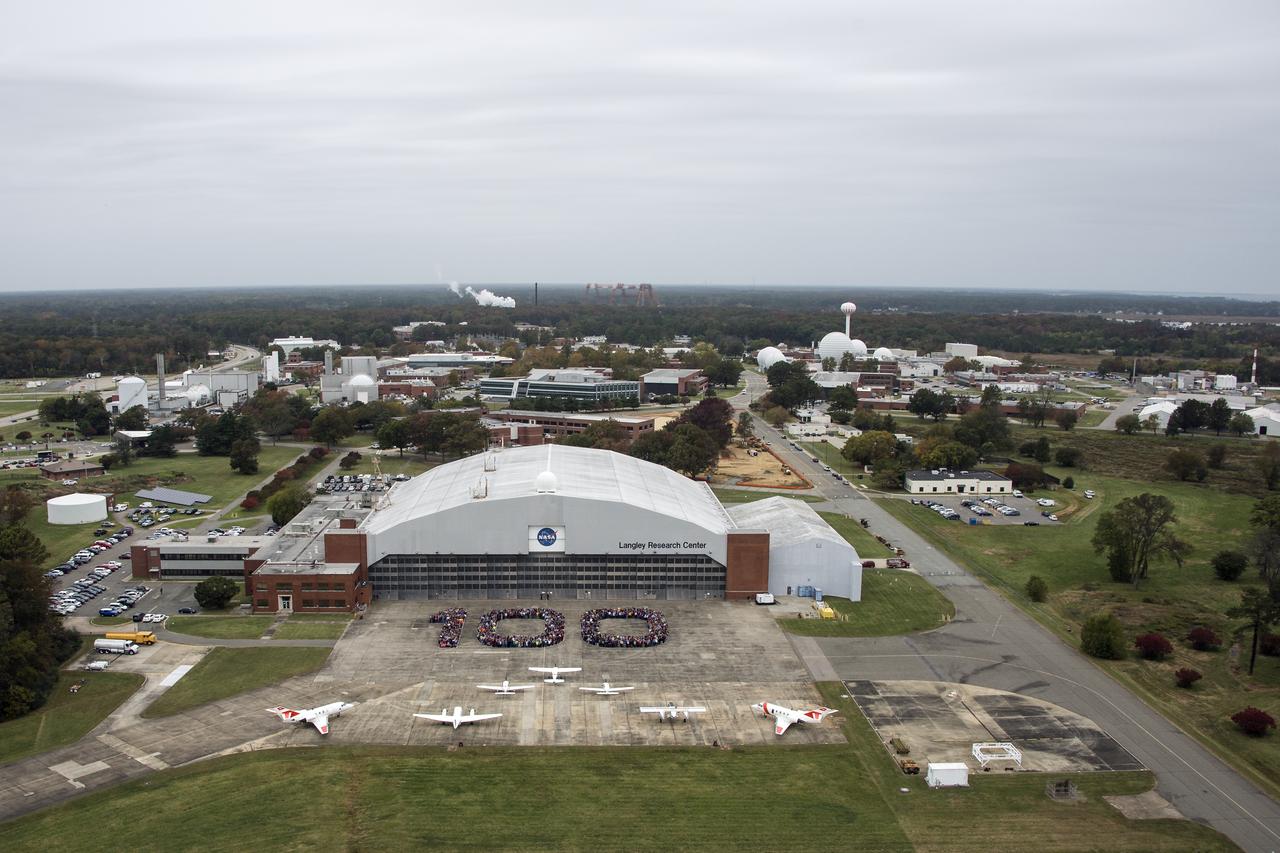
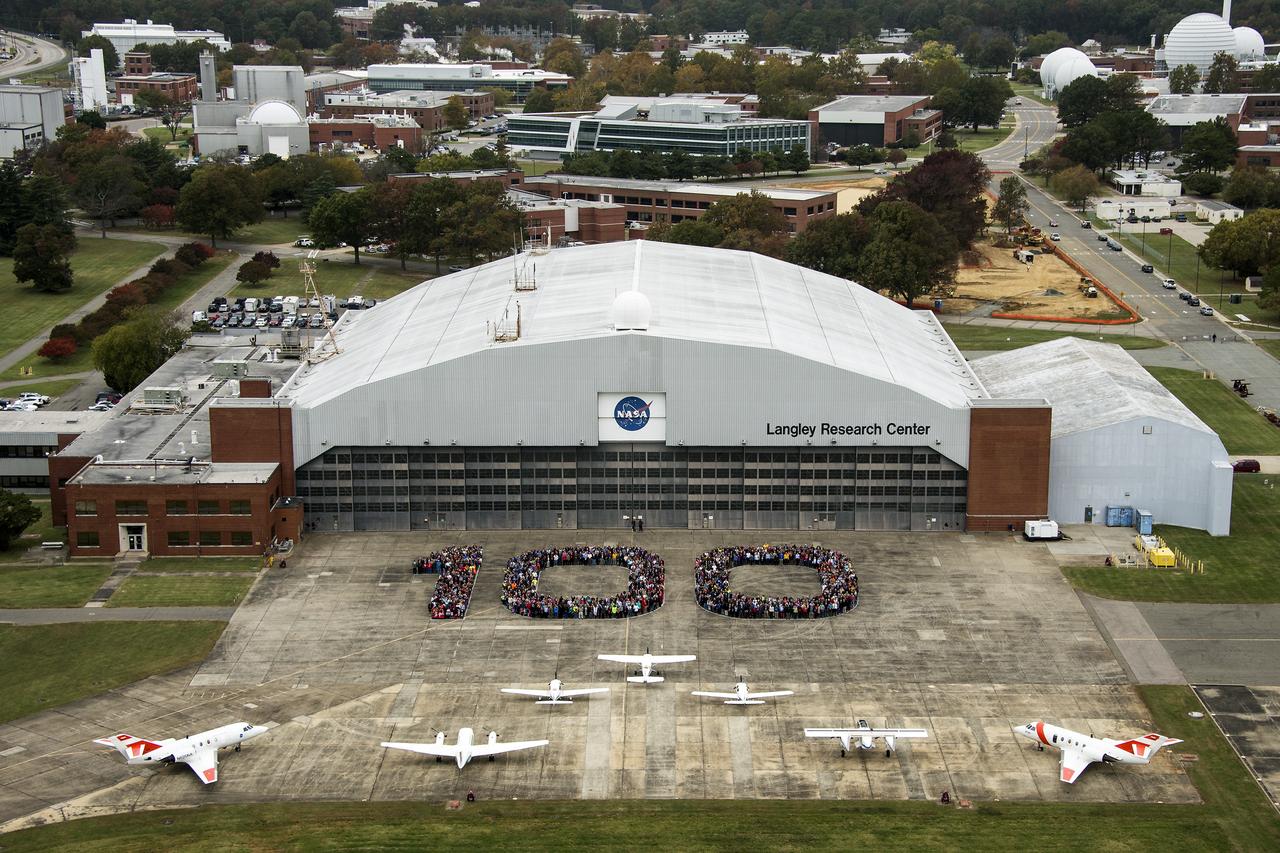
Aerial photos of NASA Langley employees gathered on the back ramp in the shape of 100.
100th Anniversary Aerial
Aerial photos of NASA Langley employees gathered on the back ramp in the shape of 100.
100th Anniversary Aerial
Aerial photos of NASA Langley employees gathered on the back ramp in the shape of 100.
NASA Langley's 100th Anniversary Aerial Photo
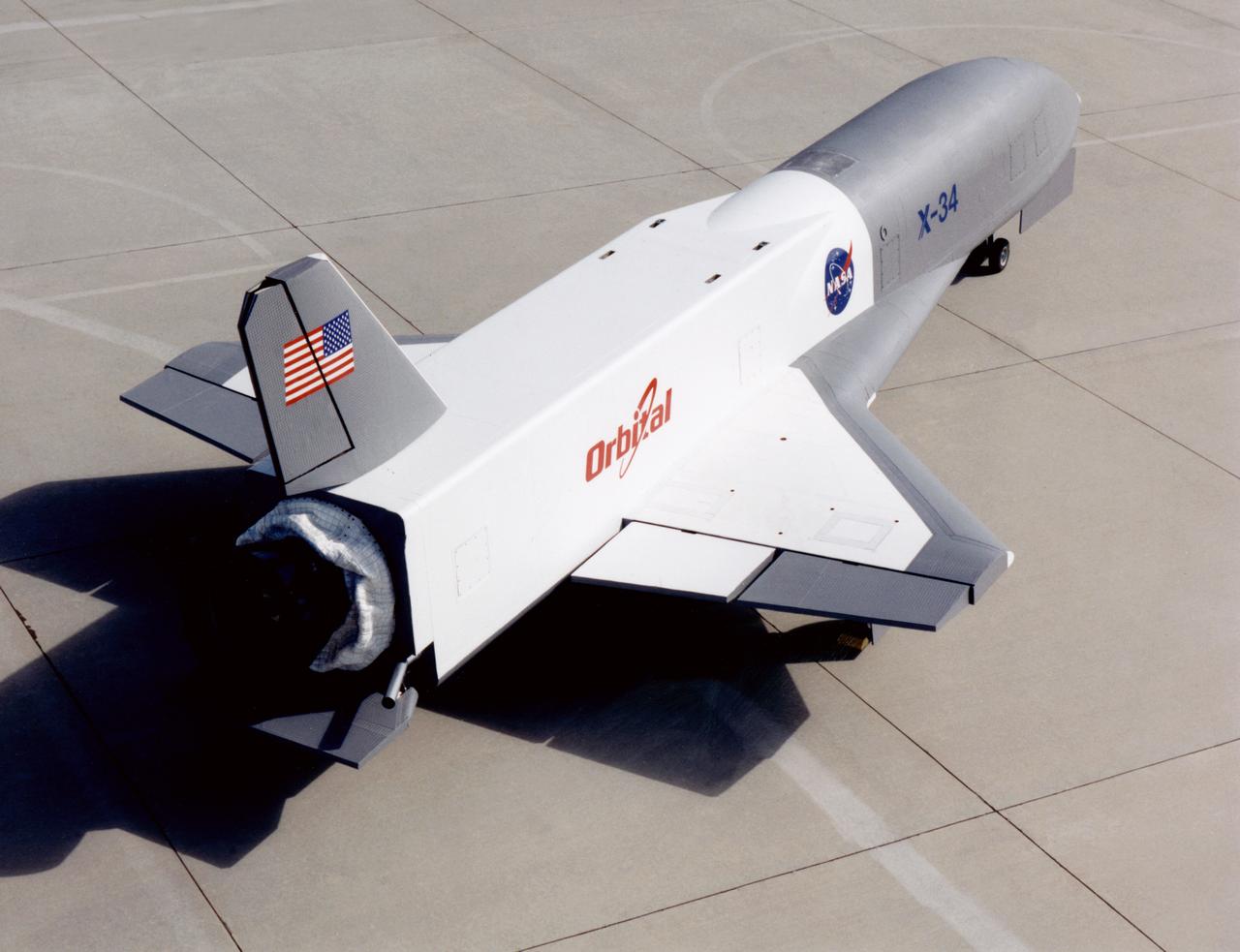
X-34 Technology Testbed Demonstrator on NASA Dryden ramp
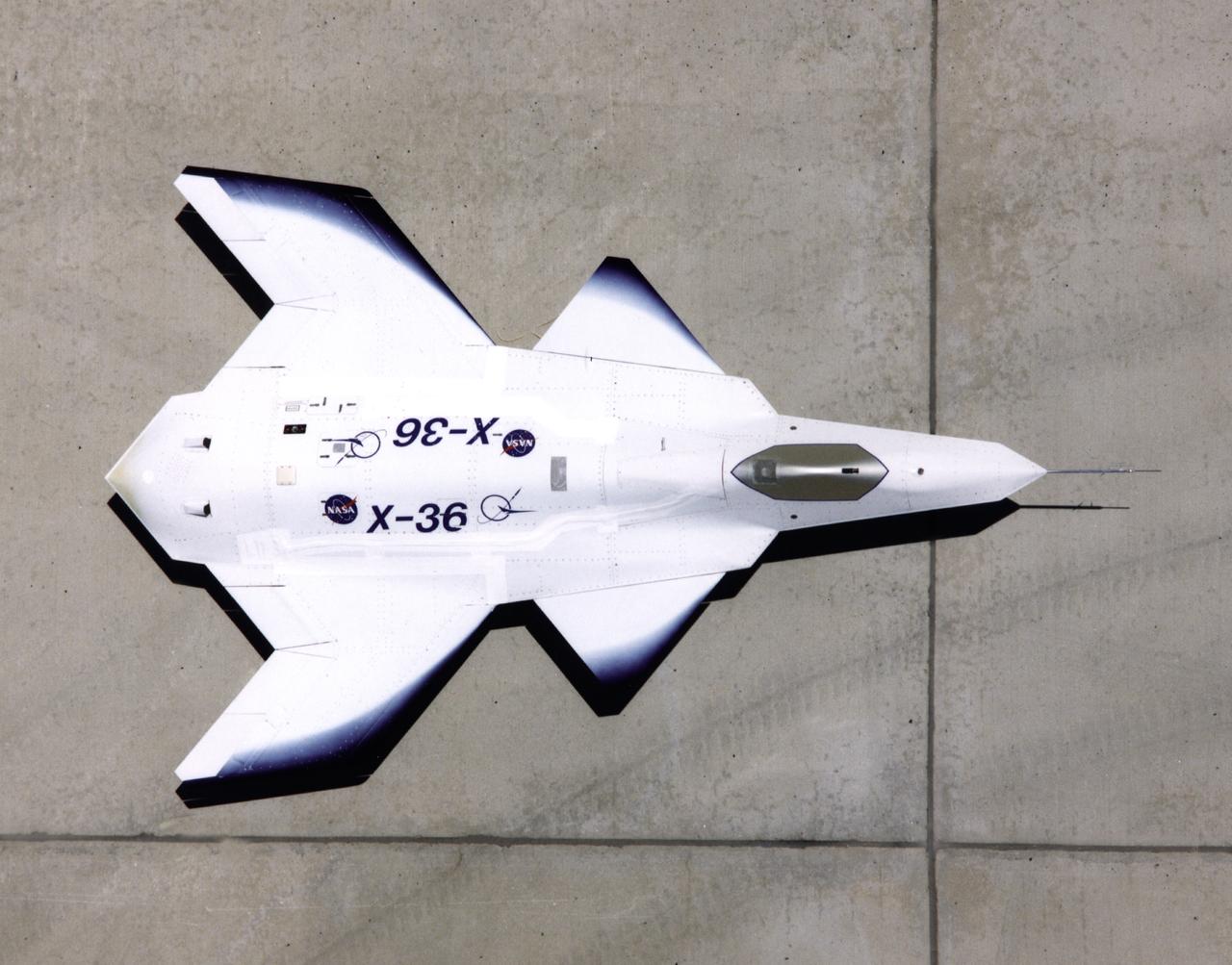
This look-down view of the X-36 Tailless Fighter Agility Research Aircraft on the ramp at NASA’s Dryden Flight Research Center, Edwards, California, clearly shows the unusual wing and canard design of the remotely-piloted aircraft.
X-36 on Ramp Viewed from Above
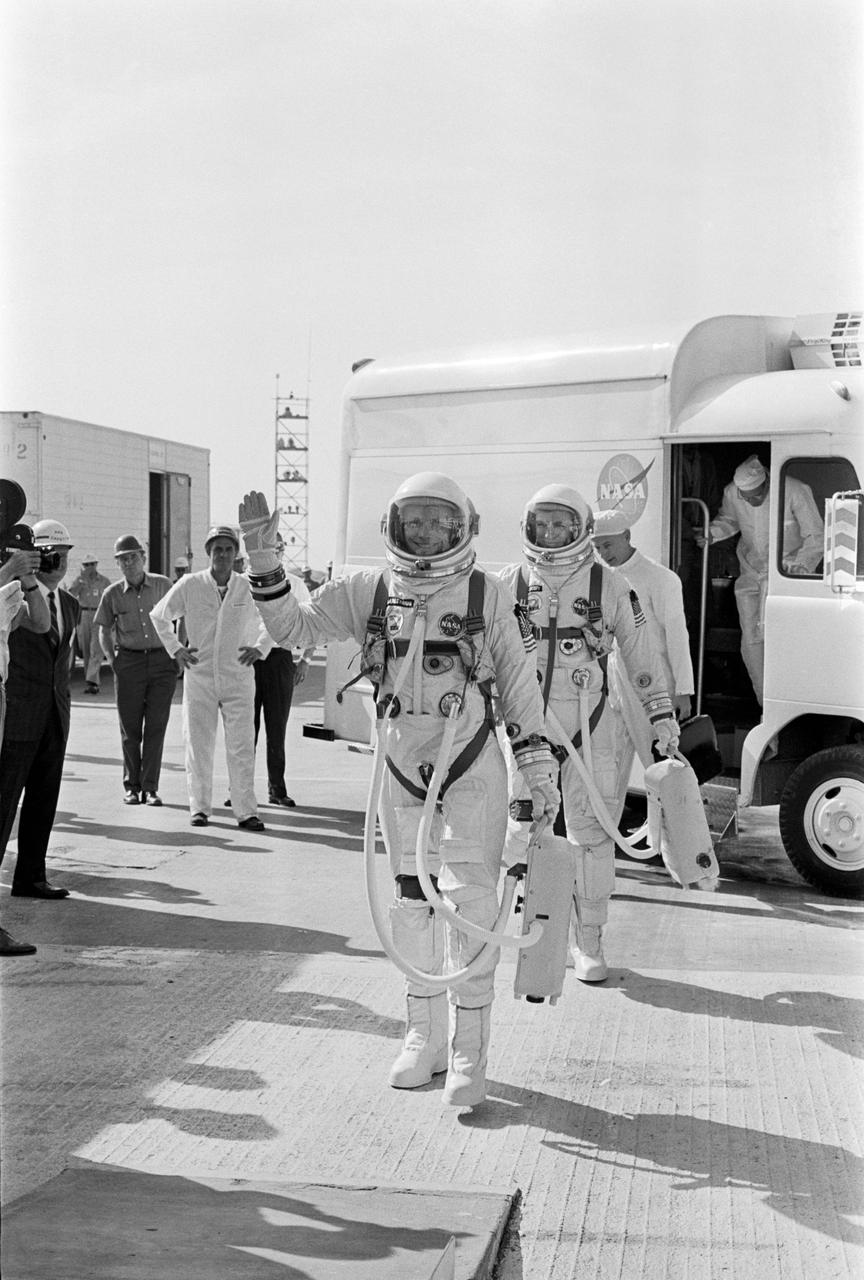
S66-24447 (16 March 1966) --- Astronauts Neil A. Armstrong and David R. Scott walk up the ramp at Pad 19 during Gemini-8 prelaunch countdown. Photo credit: NASA
GEMINI-TITAN-8 - PRELAUNCH - WALKUP RAMP
Astronauts White and James A. McDivitt are shown walking up the ramp toward the gantry elevator at Pad 19.                                CAPE KENNEDY, FL                             CN
WALK UP RAMP - ASTRONAUT EDWARD H. WHITE II - MISC. - CAPE
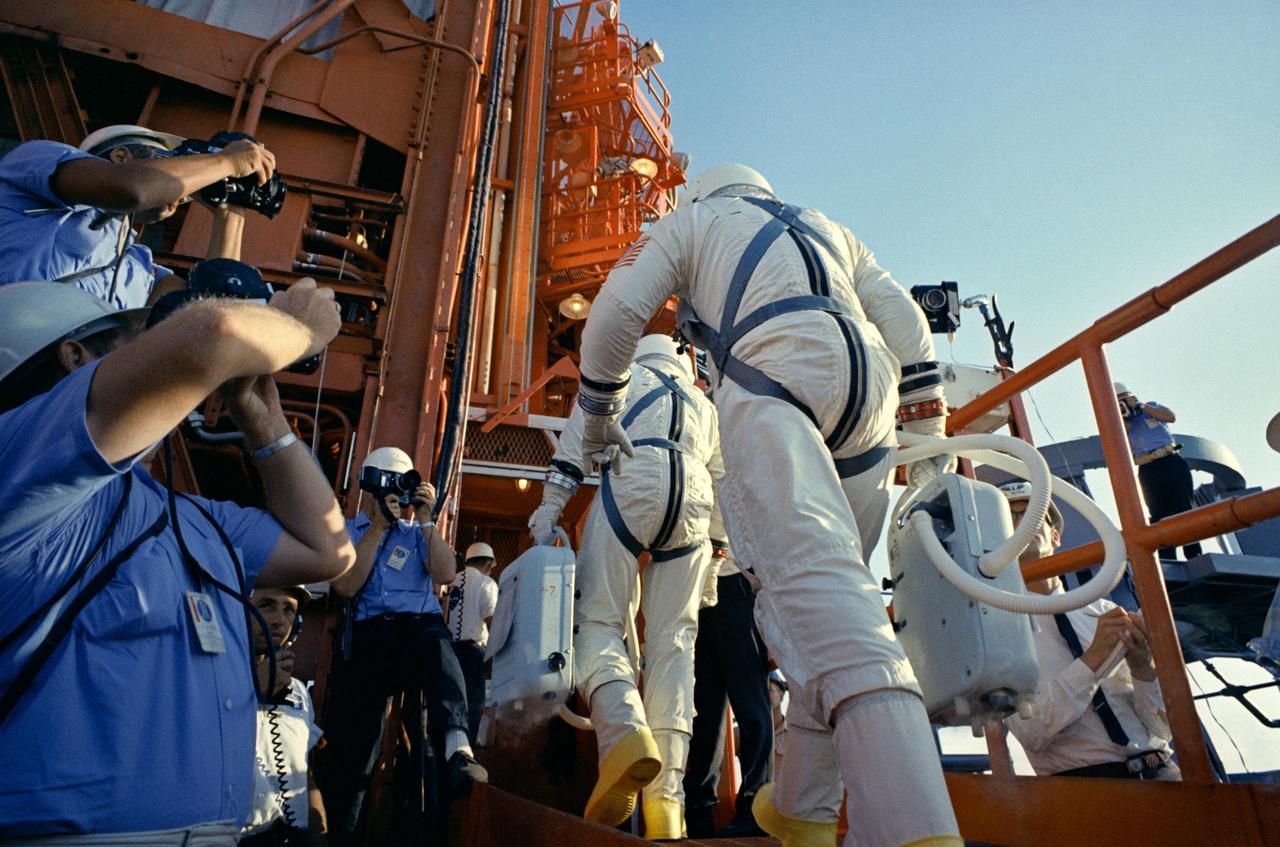
S65-28739 (21 Aug. 1965) --- Back view of astronauts L. Gordon Cooper Jr. (foreground) and Charles Conrad Jr. walking up gantry ramp after arriving at Pad 19 during Gemini-5 countdown at Cape Kennedy, Florida.
WALK UP RAMP (BACKWARDS) (PRIME CREW) - CAPE
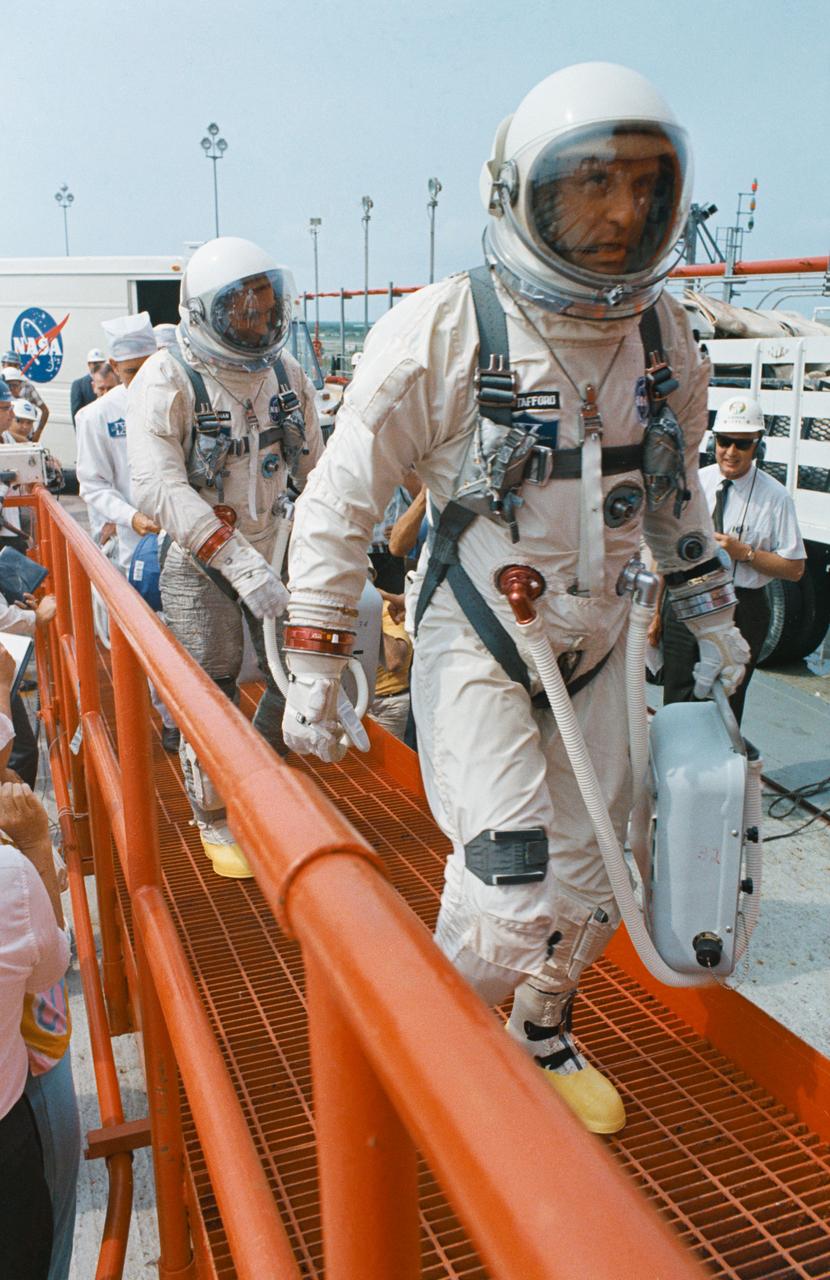
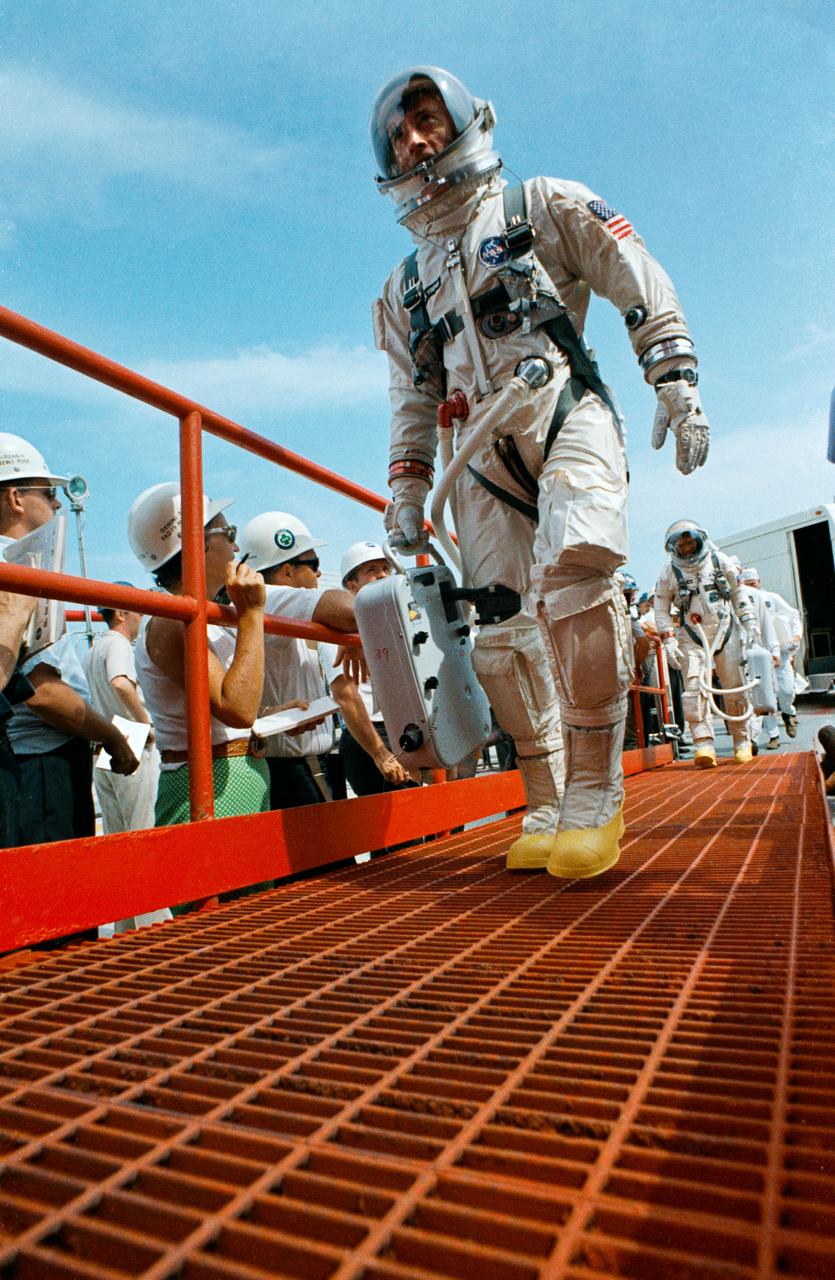
S66-32149 (3 June 1966) --- Astronauts Thomas P. Stafford (foreground), command pilot, and Eugene A. Cernan, pilot, walk up the ramp at Pad 19 during the Gemini-9A prelaunch countdown. Photo credit: NASA
WALK UP RAMP - ASTRONAUT THOMAS P. STAFFORD - MISC.
At right, NASA Sojourner has traveled off the lander rear ramp and onto the surface of Mars. The rock Barnacle Bill and the rear ramp is to the left of Sojourner. 3D glasses are necessary to identify surface detail.
Sojourner near Barnacle Bill - 3-D
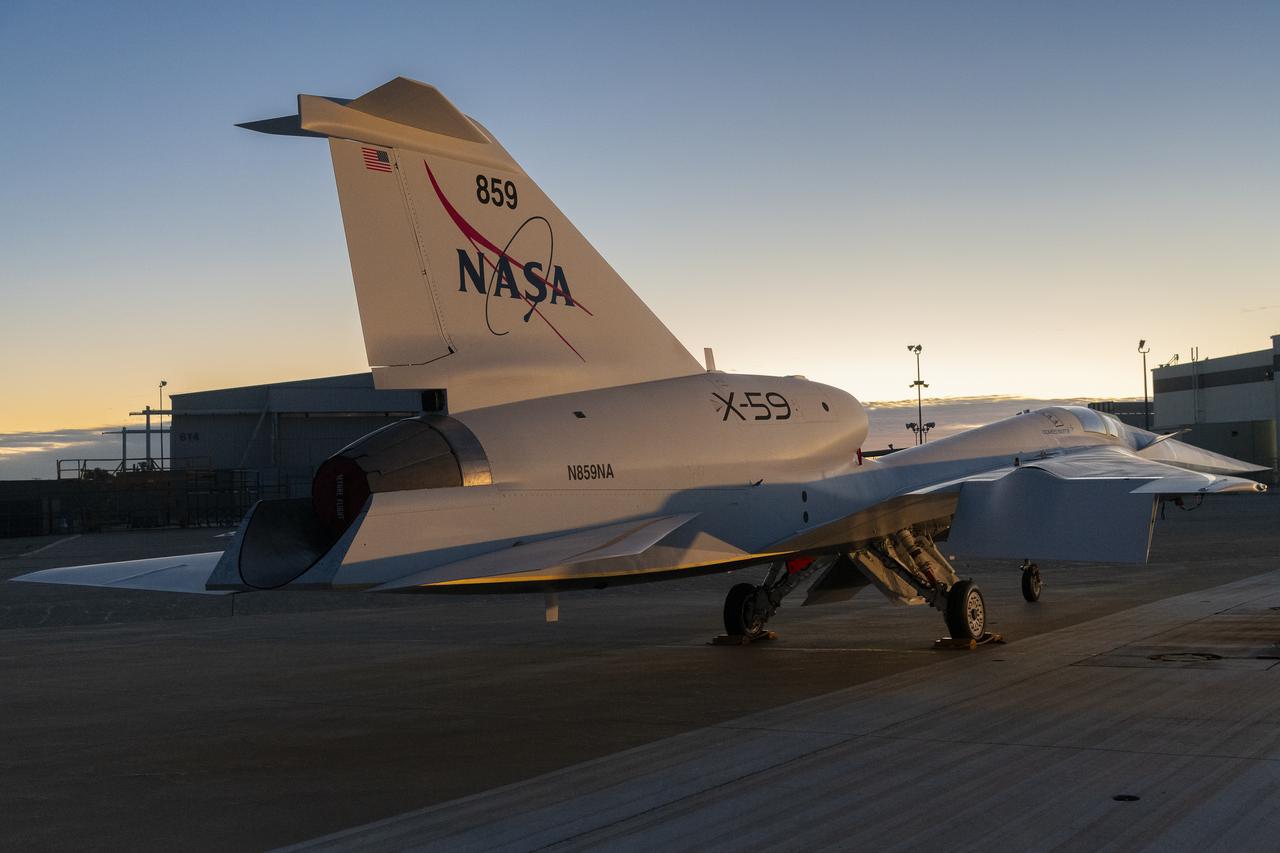
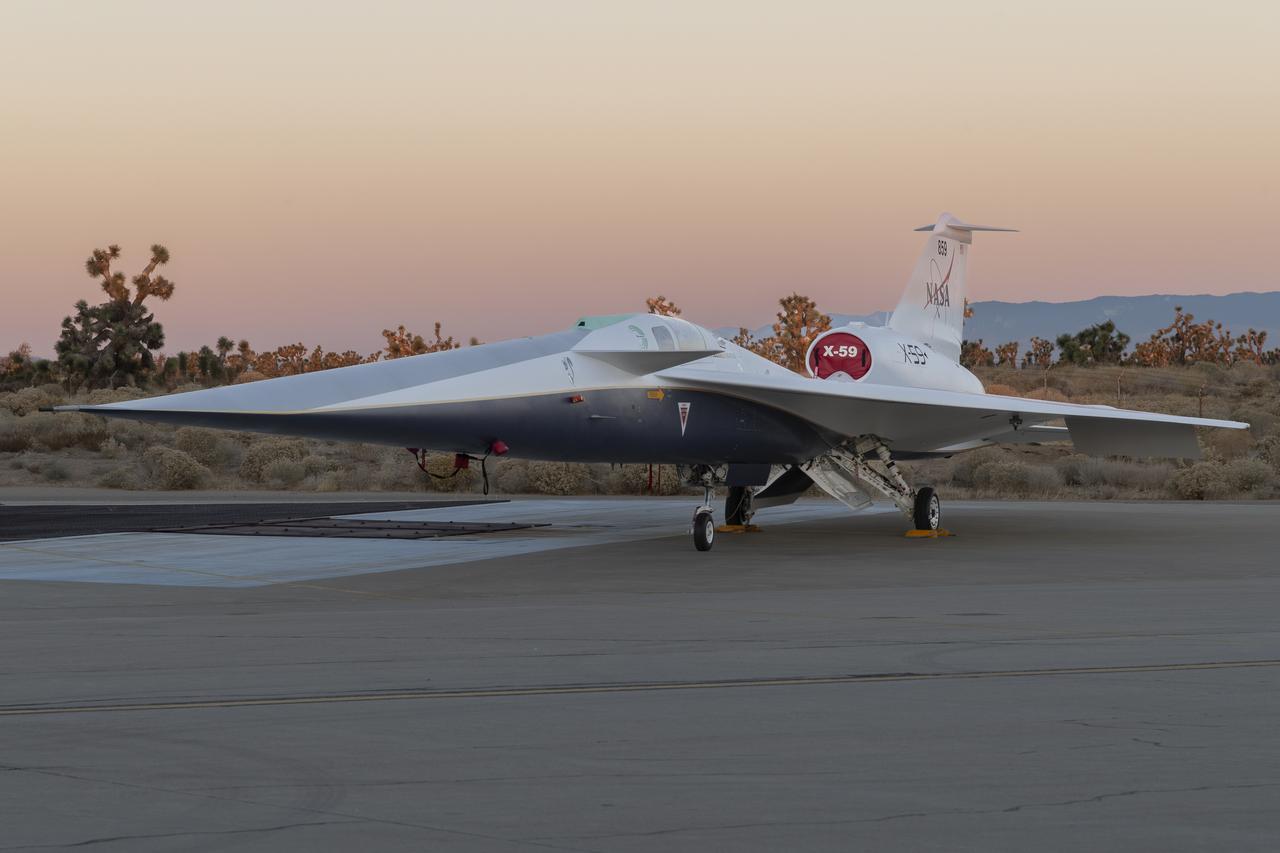
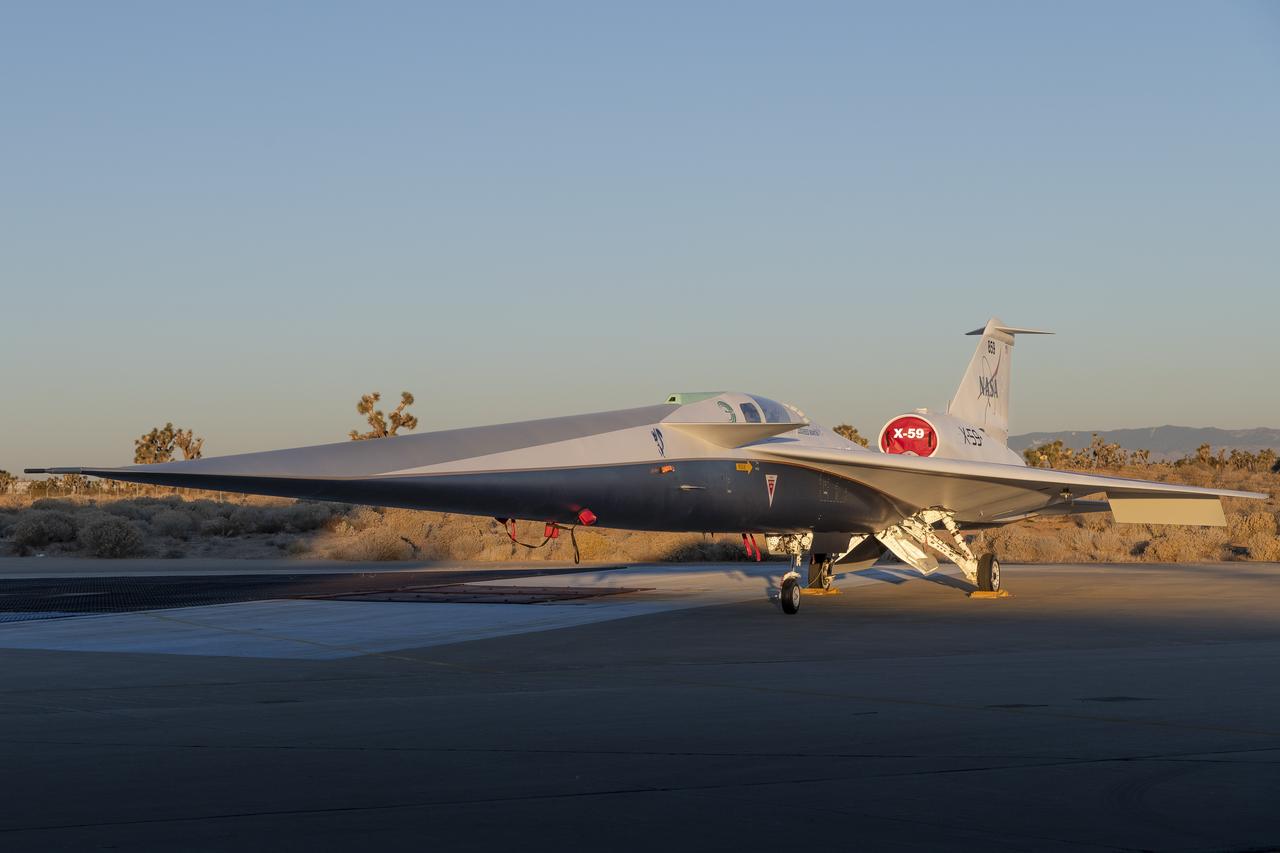
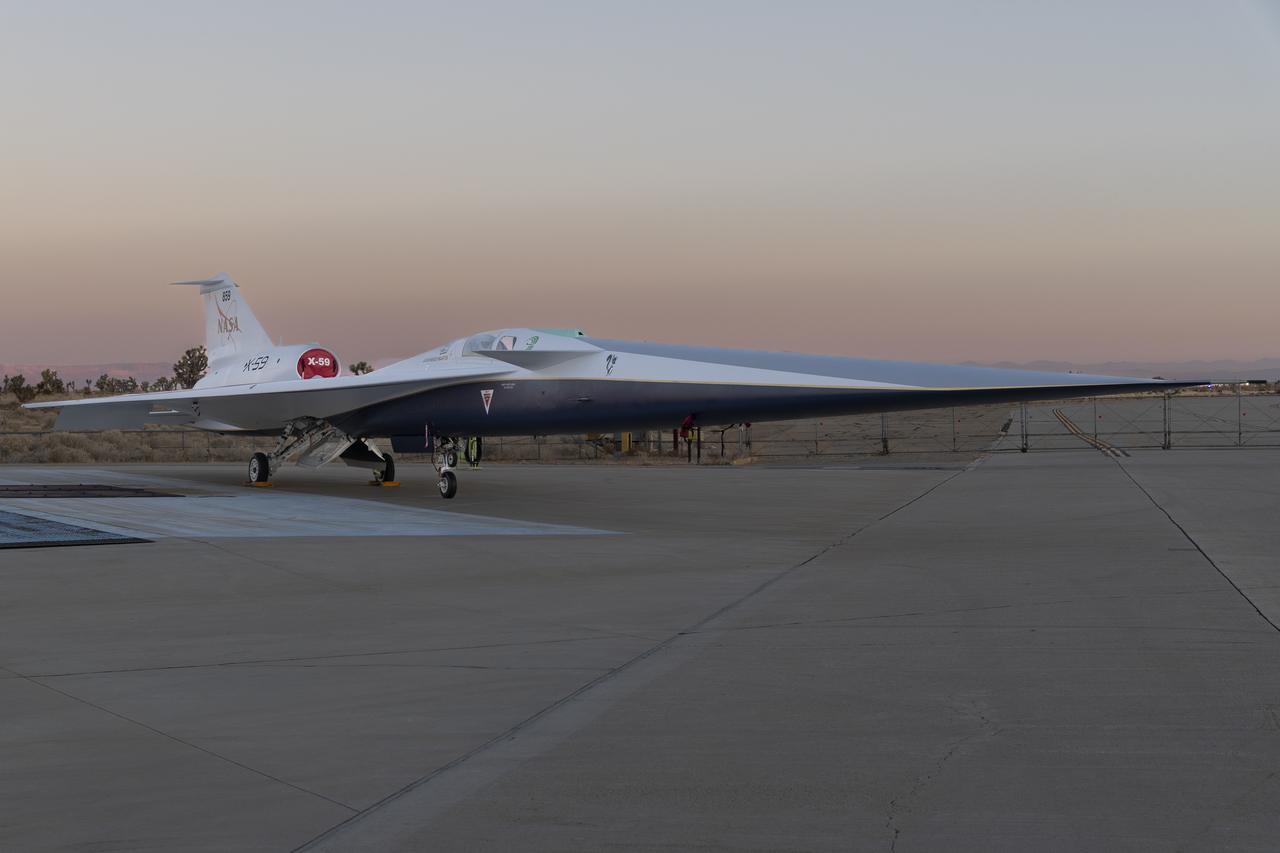
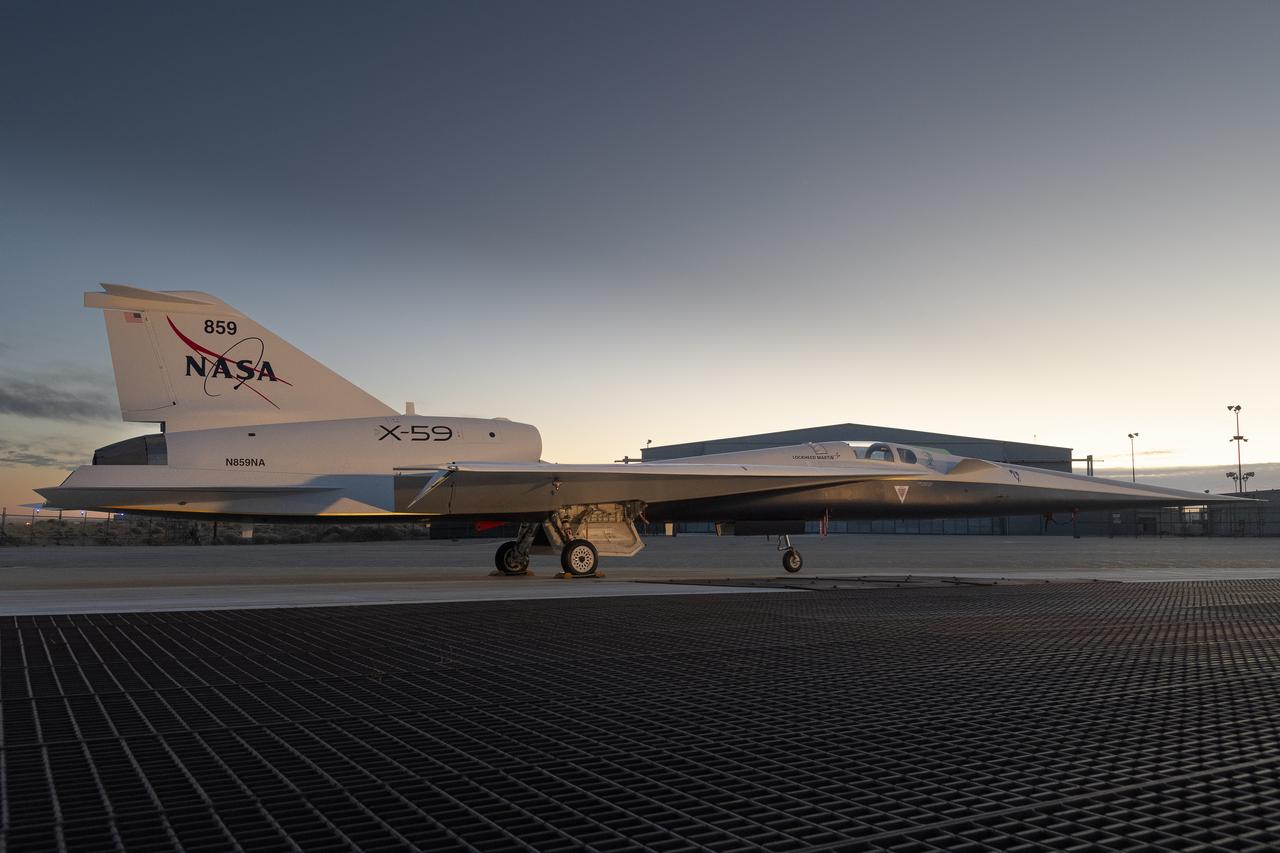
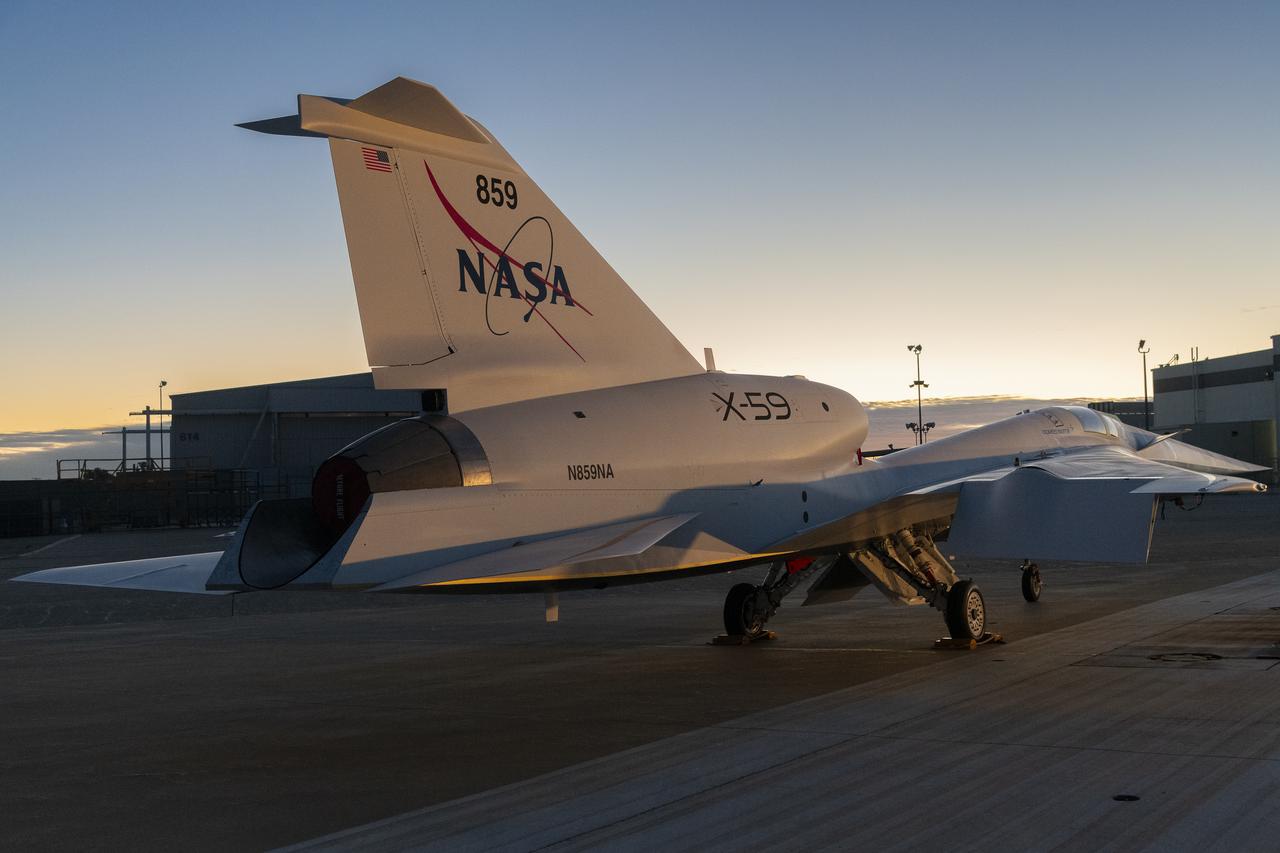
NASA’s X-59 quiet supersonic research aircraft sits on the ramp at Lockheed Martin Skunk Works in Palmdale, California during sunrise, shortly after completion of painting. With its unique design, including a 38-foot-long nose, the X-59 was built to demonstrate the ability to fly supersonic, or faster than the speed of sound, while reducing the typically loud sonic boom produced by aircraft at such speeds to a quieter sonic “thump”. The X-59 is the centerpiece of NASA’s Quesst mission, which seeks to solve one of the major barriers to supersonic flight over land, currently banned in the United States, by making sonic booms quieter.
NASA’s X-59 Sits on Ramp
NASA’s X-59 quiet supersonic research aircraft sits on the ramp at Lockheed Martin Skunk Works in Palmdale, California during sunrise, shortly after completion of painting. With its unique design, including a 38-foot-long nose, the X-59 was built to demonstrate the ability to fly supersonic, or faster than the speed of sound, while reducing the typically loud sonic boom produced by aircraft at such speeds to a quieter sonic “thump”. The X-59 is the centerpiece of NASA’s Quesst mission, which seeks to solve one of the major barriers to supersonic flight over land, currently banned in the United States, by making sonic booms quieter.
NASA’s X-59 Sits on Ramp
NASA’s X-59 quiet supersonic research aircraft sits on the ramp at Lockheed Martin Skunk Works in Palmdale, California during sunrise, shortly after completion of painting. With its unique design, including a 38-foot-long nose, the X-59 was built to demonstrate the ability to fly supersonic, or faster than the speed of sound, while reducing the typically loud sonic boom produced by aircraft at such speeds to a quieter sonic “thump”. The X-59 is the centerpiece of NASA’s Quesst mission, which seeks to solve one of the major barriers to supersonic flight over land, currently banned in the United States, by making sonic booms quieter.
NASA’s X-59 Sits on Ramp
NASA’s X-59 quiet supersonic research aircraft sits on the ramp at Lockheed Martin Skunk Works in Palmdale, California during sunrise, shortly after completion of painting. With its unique design, including a 38-foot-long nose, the X-59 was built to demonstrate the ability to fly supersonic, or faster than the speed of sound, while reducing the typically loud sonic boom produced by aircraft at such speeds to a quieter sonic “thump”. The X-59 is the centerpiece of NASA’s Quesst mission, which seeks to solve one of the major barriers to supersonic flight over land, currently banned in the United States, by making sonic booms quieter.
NASA’s X-59 Sits on Ramp
NASA’s X-59 quiet supersonic research aircraft sits on the ramp at Lockheed Martin Skunk Works in Palmdale, California during sunrise, shortly after completion of painting. With its unique design, including a 38-foot-long nose, the X-59 was built to demonstrate the ability to fly supersonic, or faster than the speed of sound, while reducing the typically loud sonic boom produced by aircraft at such speeds to a quieter sonic “thump”. The X-59 is the centerpiece of NASA’s Quesst mission, which seeks to solve one of the major barriers to supersonic flight over land, currently banned in the United States, by making sonic booms quieter.
NASA’s X-59 Sits on Ramp
NASA’s X-59 quiet supersonic research aircraft sits on the ramp at Lockheed Martin Skunk Works in Palmdale, California during sunrise, shortly after completion of painting. With its unique design, including a 38-foot-long nose, the X-59 was built to demonstrate the ability to fly supersonic, or faster than the speed of sound, while reducing the typically loud sonic boom produced by aircraft at such speeds to a quieter sonic “thump”. The X-59 is the centerpiece of NASA’s Quesst mission, which seeks to solve one of the major barriers to supersonic flight over land, currently banned in the United States, by making sonic booms quieter.
NASA’s X-59 Sits on Ramp
Data from the American Airlines ramp tower at Charlotte airport is among the information to be coordinated as part of ATD-2.
atd-2briefing
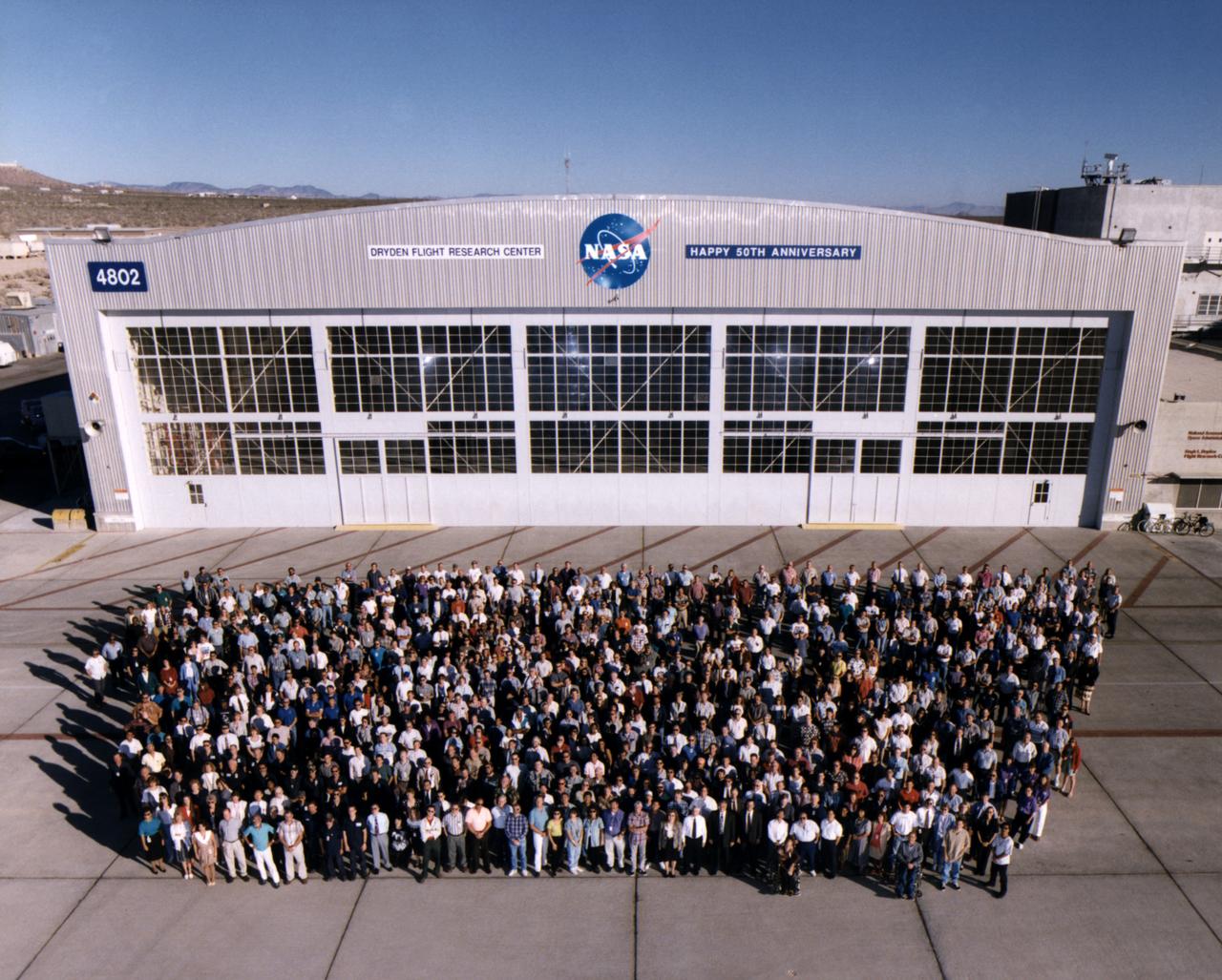
Complete NASA Dryden Staff of 1996 for 50th anniversary, on back ramp of building 4800
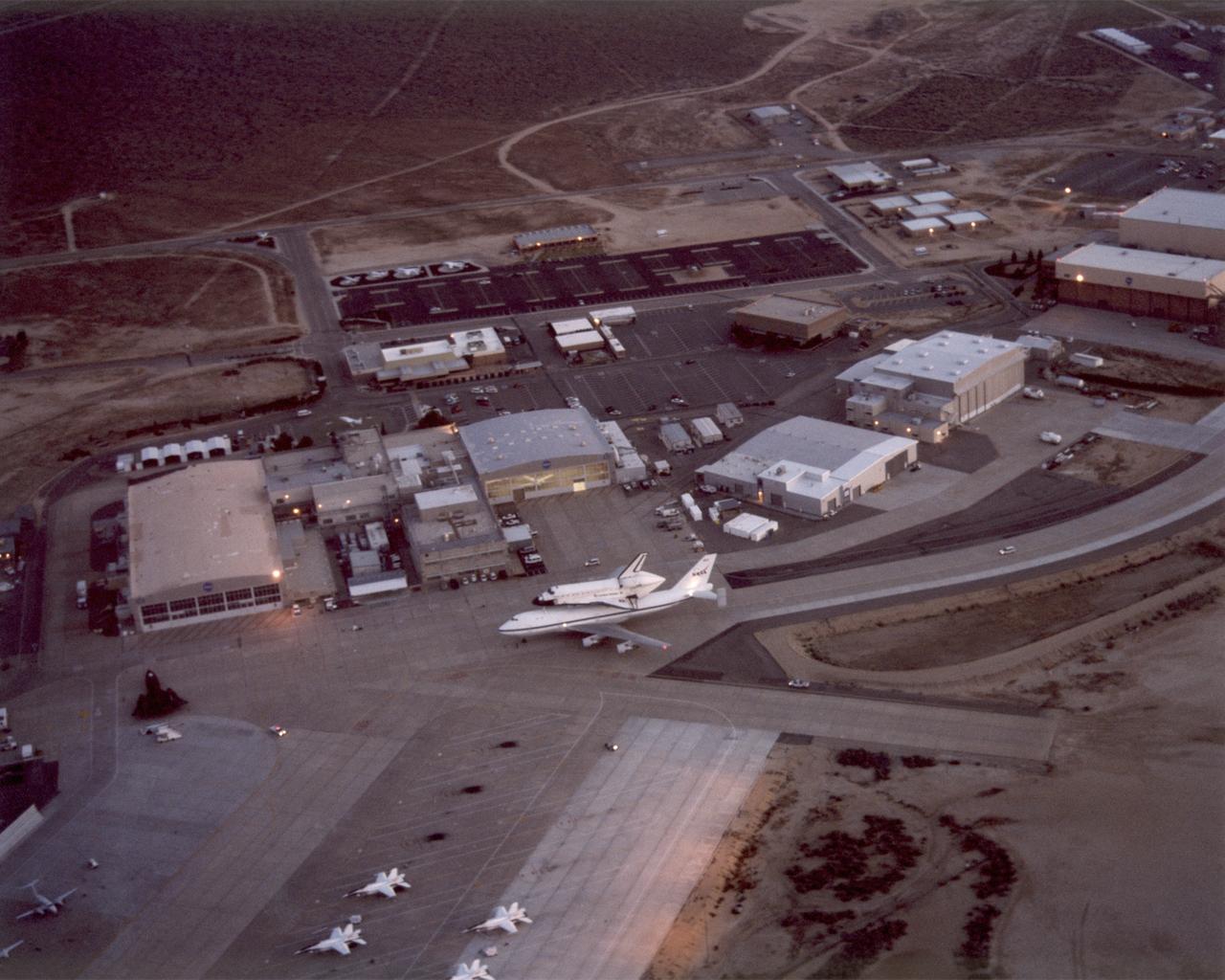
Aerial photo of NASA Dryden Flight Research Center with the Endeavour Space Shuttle and 747 Shuttle Carrier Aircraft taxiing on ramp.
Aerial photo of NASA Dryden Flight Research Center with the Endeavour Space Shuttle and 747 Shuttle Carrier Aircraft taxiing on ramp
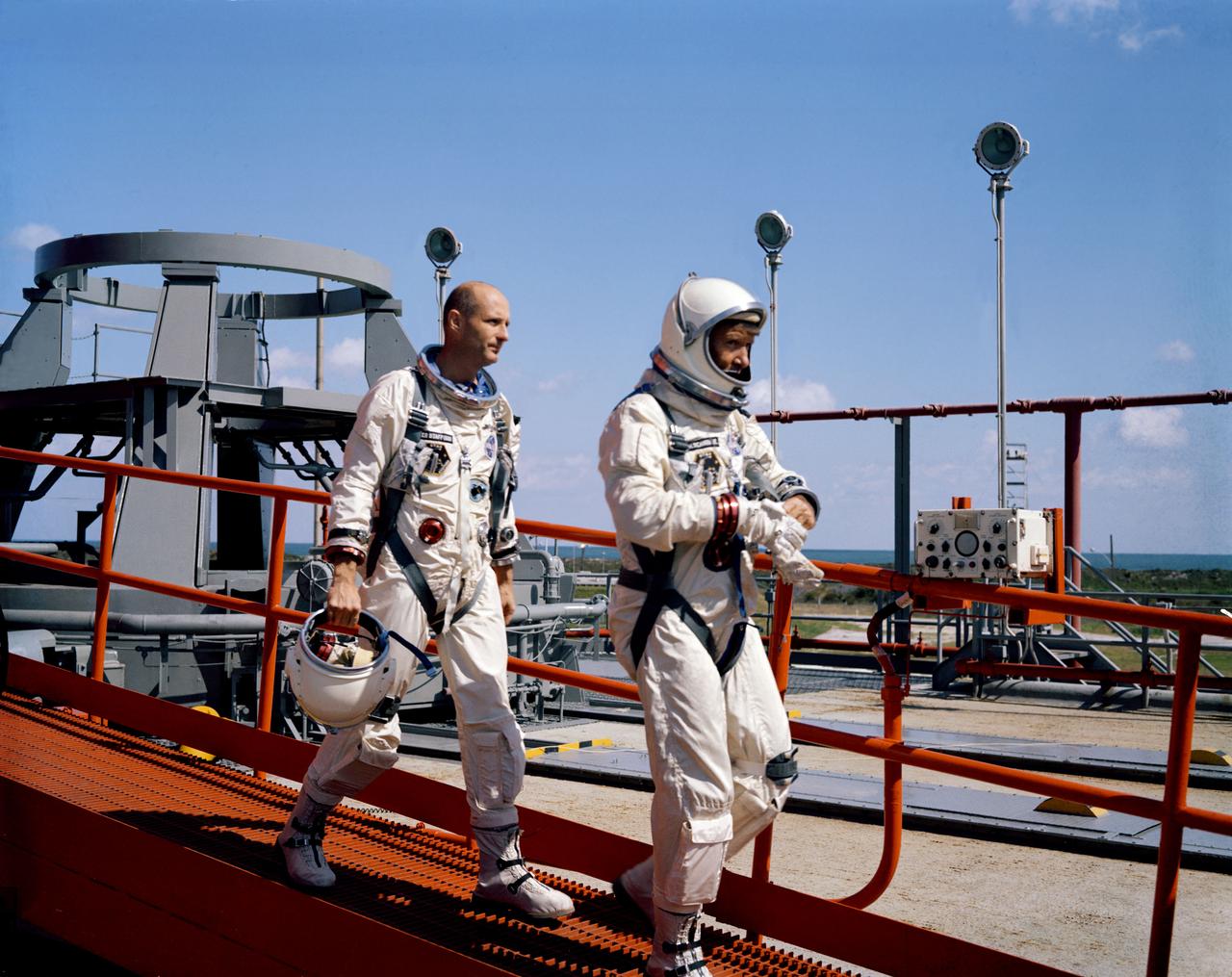
S65-57964 (25 Oct. 1965) --- The prime crew of the Gemini-6 spaceflight walk down the ramp at Pad 19 after leaving the Gemini-6 spacecraft. Astronaut Walter M. Schirra Jr. (leading) is command pilot; and astronaut Thomas P. Stafford is pilot. The Oct. 25 Gemini-6 launch was scrubbed because the Agena, intended as a rendezvous target vehicle in the mission, failed to achieve orbit. Photo credit: NASA or National Aeronautics and Space Administratio
WALKUP DOWN RAMP (AFTER MISSION SCRUBBED) - - MISC.
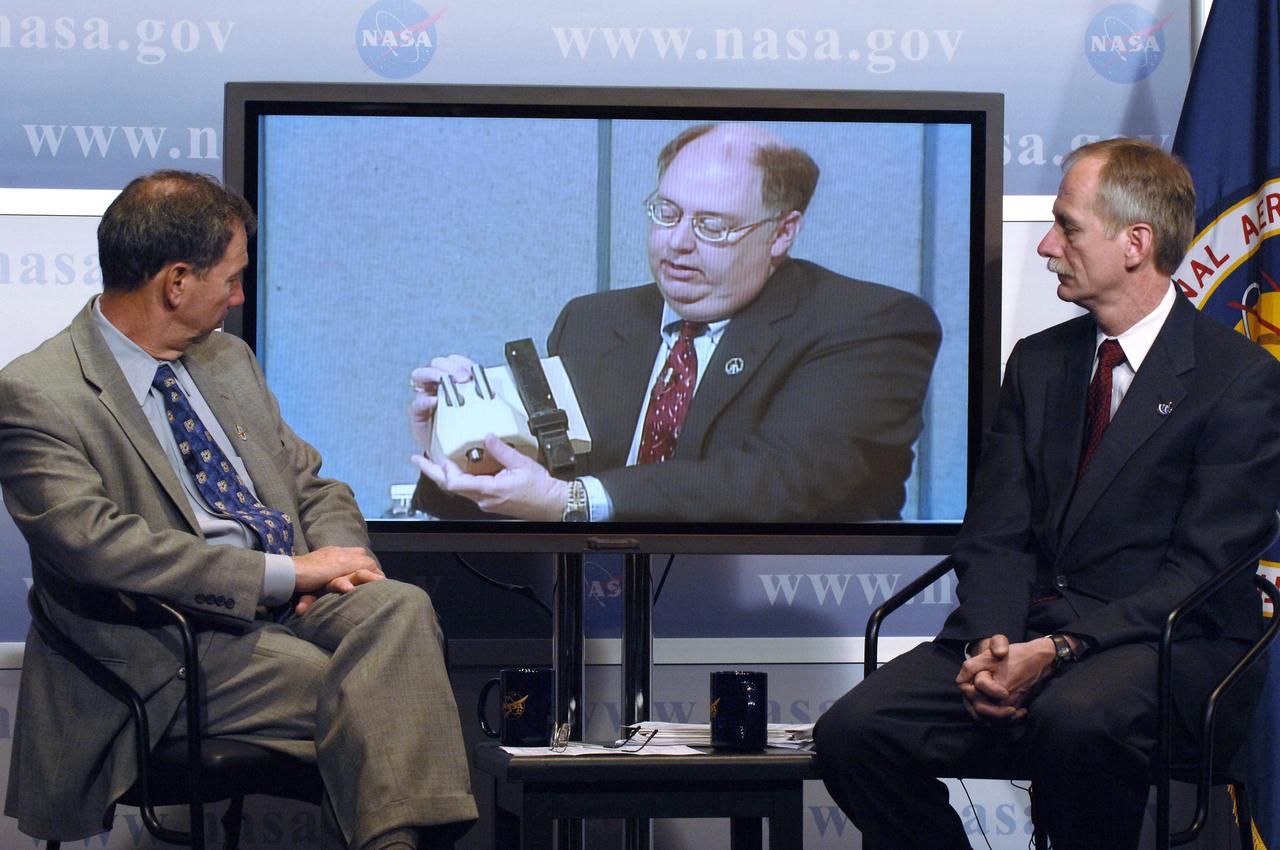
NASA Administrator Michael Griffin, left, and Associate Administrator for Space Operations William Gerstenmaier, right, look on as Space Shuttle Program Manager Wayne Hale talks from NASA's Marshall Space Flight Center about the space shuttle's ice frost ramps during a media briefing about the space shuttle program and processing for the STS-121 mission, Friday, April 28, 2006, at NASA Headquarters in Washington. Photo Credit (NASA/Bill Ingalls)
STS-121 Space Shuttle Processing Update
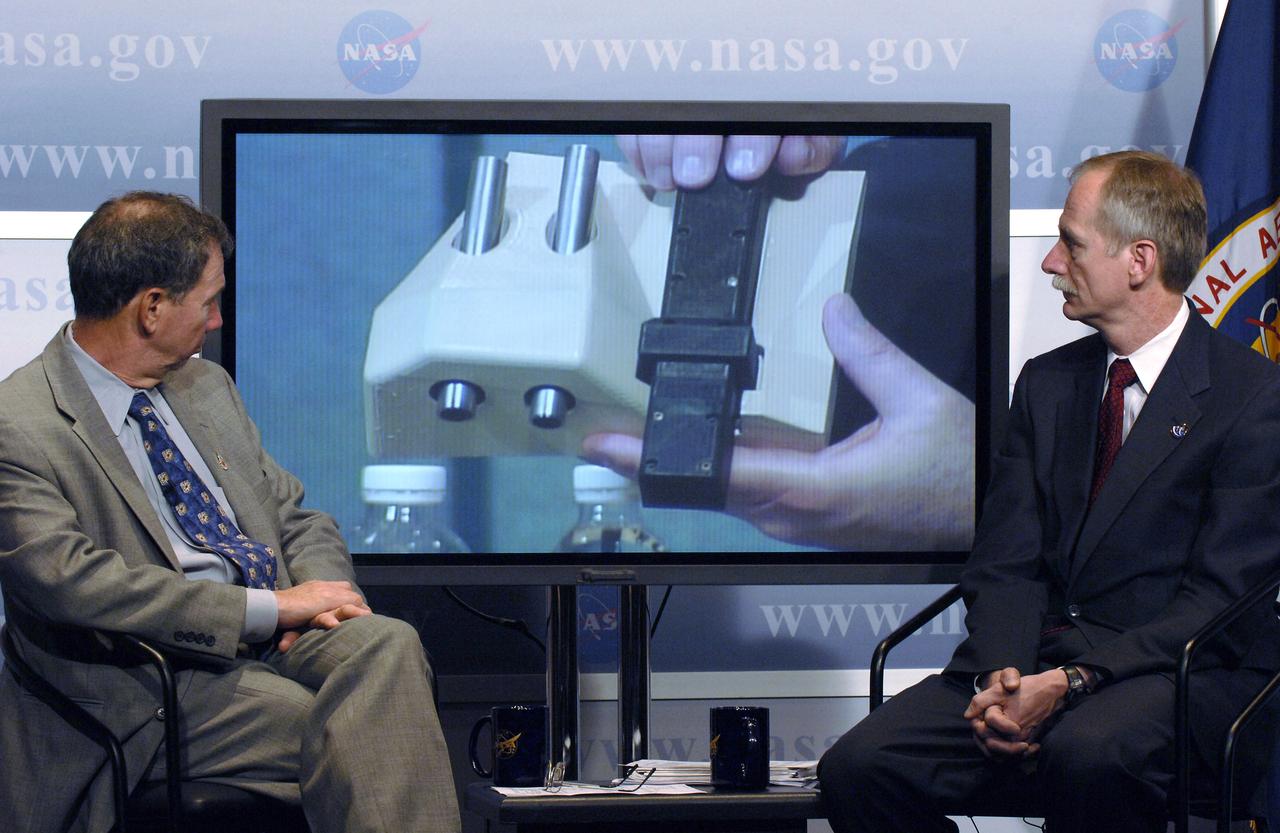
NASA Administrator Michael Griffin, left, and Associate Administrator for Space Operations William Gerstenmaier, right, look on as Space Shuttle Program Manager Wayne Hale from NASA's Marshall Space Flight Center, holds a test configuration of an ice frost ramp during a media briefing about the space shuttle program and processing for the STS-121 mission, Friday, April 28, 2006, at NASA Headquarters in Washington. Photo Credit (NASA/Bill Ingalls)
STS-121 Space Shuttle Processing Update
S65-28737 (21 Aug. 1965) --- Astronauts L. Gordon Cooper Jr. (foreground) and Charles Conrad Jr. walk up gantry ramp after arriving at Pad 19 during Gemini-5 countdown at Cape Kennedy, Florida.
GEMINI-TITAN (GT)-V - PRIME CREW - WALK UP RAMP - CAPE
NASA pilot Ed Lewis with the T-34C aircraft on the Dryden Flight Research Center Ramp. The aircraft was previously used at the Lewis Research Center in propulsion experiments involving turboprop engines, and was used as a chase aircraft at Dryden for smaller and slower research projects.  Chase aircraft accompany research flights for photography and video purposes, and also as support for safety and research. At Dryden, the T-34 is used mainly for smaller remotely piloted vehicles which fly slower than NASA's F-18's, used for larger scale projects. This aircraft was returned to the U.S. Navy in May of 2002.
Pilot Ed Lewis with T-34C aircraft on ramp
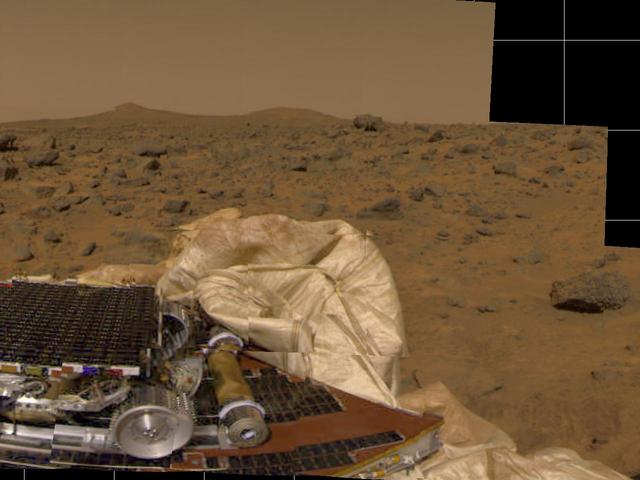
The Imager for Mars Pathfinder (IMP) took this image of surrounding terrain in the mid-morning on Mars (2:30 PM Pacific Daylight Time) earlier today. Part of the small rover, Sojourner, is visible on the left side of the picture. The tan cylinder to the right of the rover is one of two rolled-up ramps by which the rover will descend to the ground. The white, billowy material in the center of the picture is part of the airbag system. Many rocks of different shapes and sizes are visible between the lander and the horizon. Two hills are visible on the horizon. The notch on the left side of the leftmost conical hill is an artifact of the processing of this picture.  http://photojournal.jpl.nasa.gov/catalog/PIA00613
Martian Terrain, Unfurled Rover Ramps & Deflated Airbags
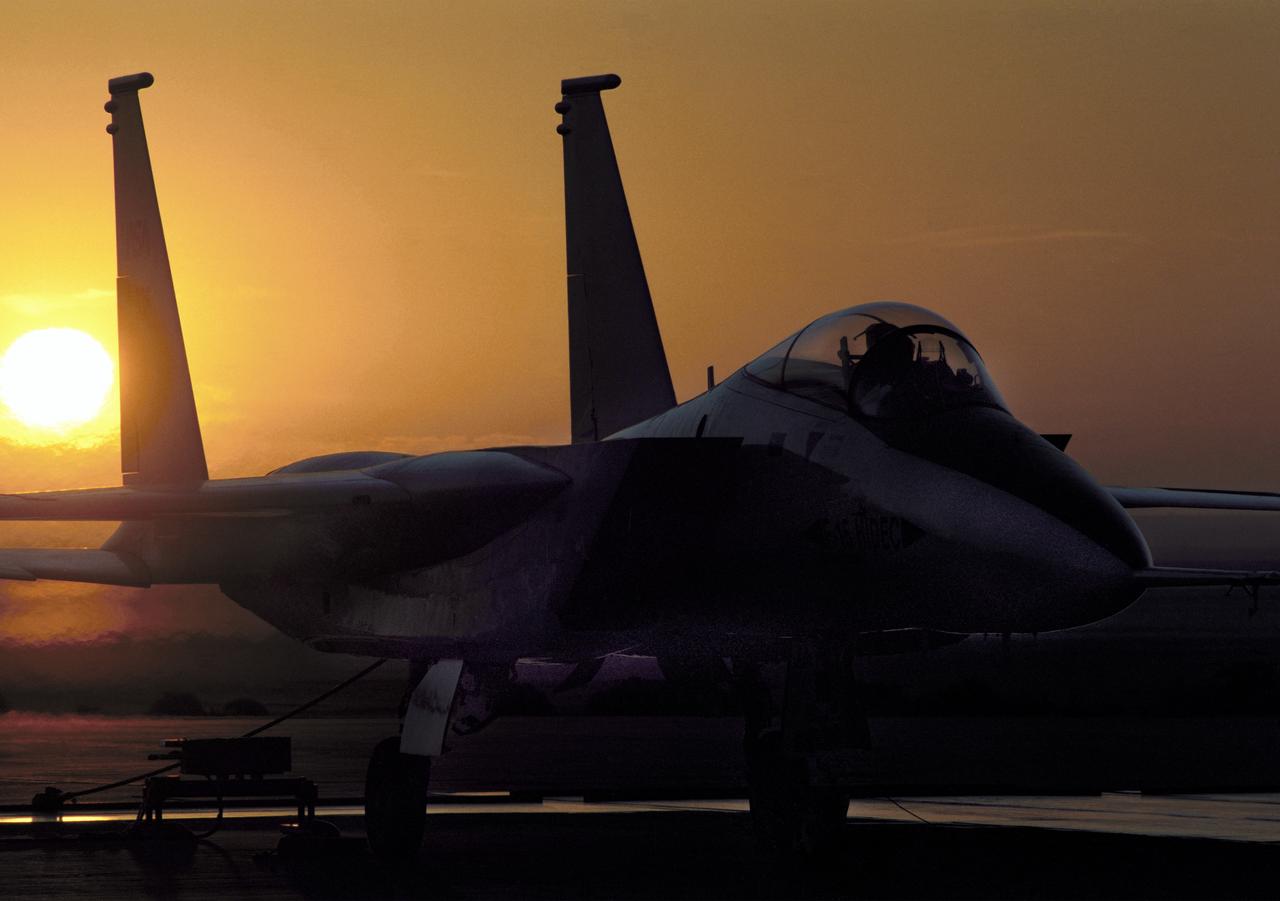
NASA's highly modified F-15A (Serial #71-0287) used for digital electronic flight and engine control systems research, at sunrise on the ramp at the Dryden Flight Research Facility, Edwards, California. The F-15 was called the HIDEC (Highly Integrated Digital Electronic Control) flight facility. Research programs flown on the testbed vehicle have demonstrated improved rates of climb, fuel savings, and engine thrust by optimizing systems performance. The aircraft also tested and evaluated a computerized self-repairing flight control system for the Air Force that detects damaged or failed flight control surfaces. The system then reconfigures undamaged control surfaces so the mission can continue or the aircraft is landed safely.
F-15 HiDEC taxi on ramp at sunrise
NASA's Sojourner rover and undeployed ramps onboard the Mars Pathfinder spacecraft can be seen in this image, by the Imager for Mars Pathfinder (IMP) on July 4 (Sol 1). This image has been corrected for the curvature created by parallax. The microrover Sojourner is latched to the petal, and has not yet been deployed. The ramps are a pair of deployable metal reels which will provide a track for the rover as it slowly rolls off the lander, over the spacecraft's deflated airbags, and onto the surface of Mars. Pathfinder scientists will use this image to determine whether it is safe to deploy the ramps. One or both of the ramps will be unfurled, and then scientists will decide whether the rover will use either the forward or backward ramp for its descent.  http://photojournal.jpl.nasa.gov/catalog/PIA00621
Color Mosaic of Rover & Terrain
Dryden Flight Research Center - aircraft fleet on ramp
ED08-0292-1
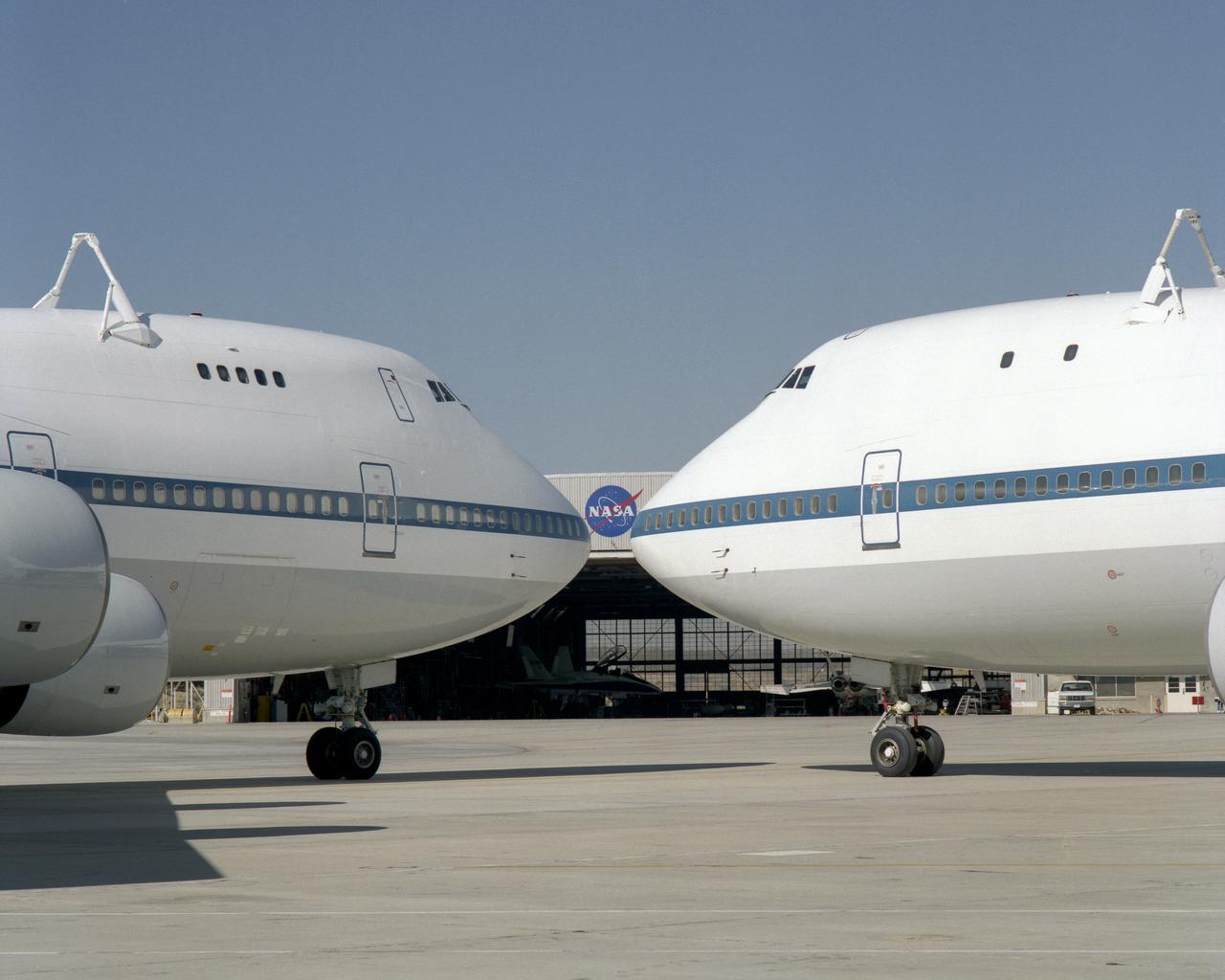
The NASA logo on a hangar is framed by the noses of NASA's two modified 747 Shuttle Carrier Aircraft on the ramp at NASA Dryden in this 1995 photo.
The NASA logo on a hangar is framed by the noses of NASA's two modified 747 Shuttle Carrier Aircraft on the ramp at NASA Dryden in this 1995 photo
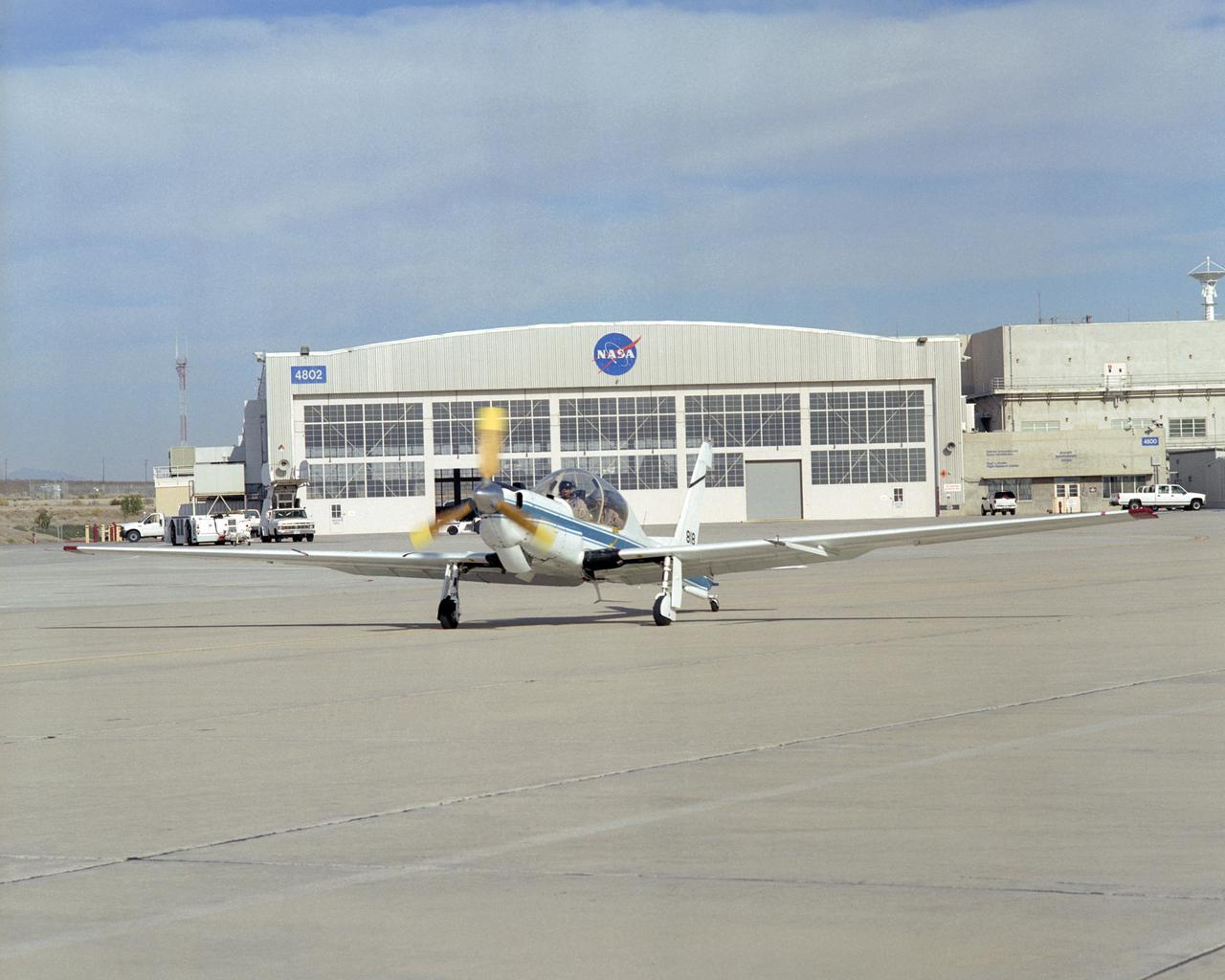
NASA's ultra-quiet YO-3A acoustics research aircraft taxis out from the ramp at the Dryden Flight Research Center before a pilot checkout flight.
NASA's ultra-quiet YO-3A acoustics research aircraft taxis out from the ramp at the Dryden Flight Research Center before a pilot checkout flight
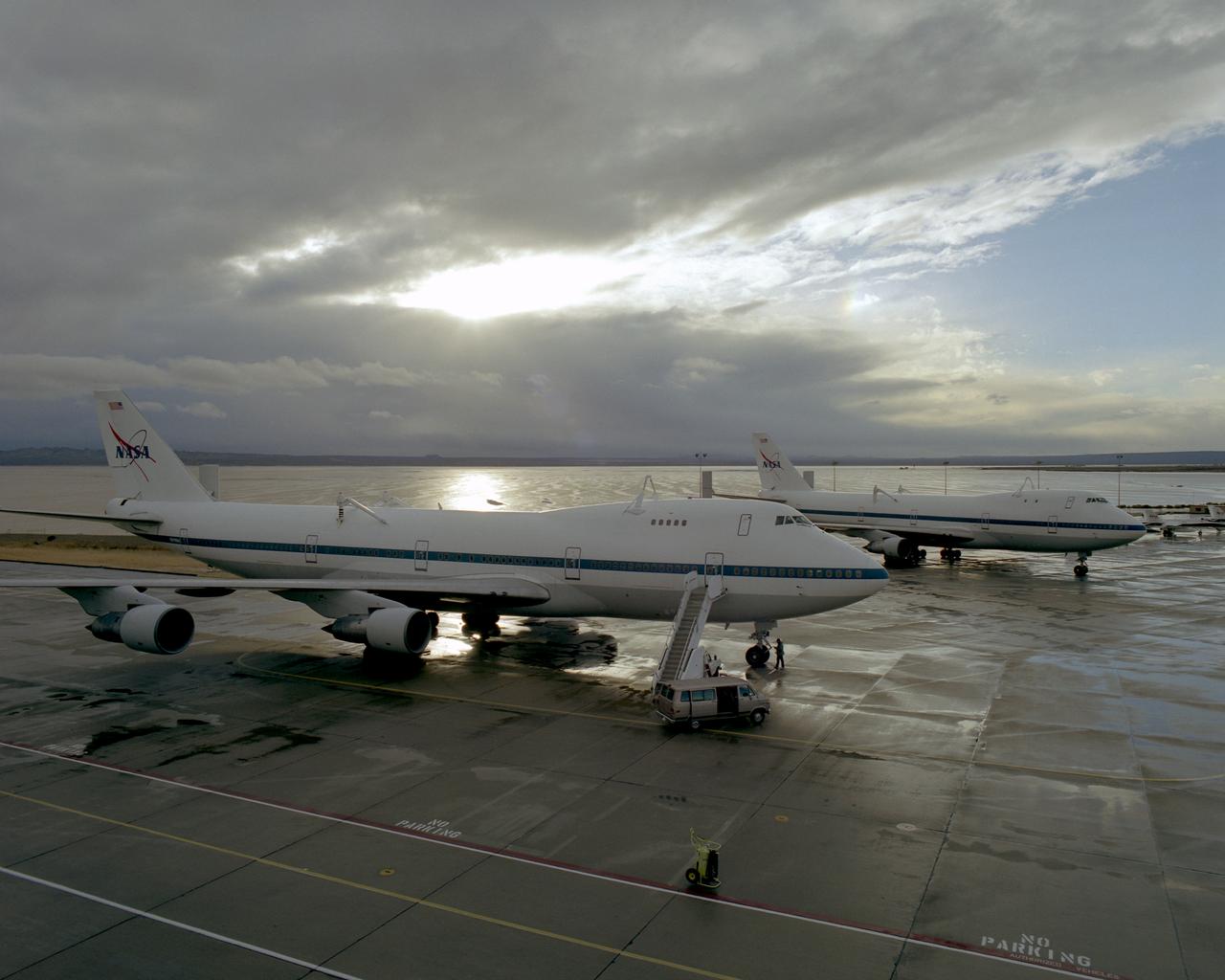
The sun begins to break through the clouds over NASA's two 747 Shuttle Carrier Aircraft on the NASA Dryden ramp after a rain shower in February 2001.
The sun begins to break through the clouds over NASA's two 747 Shuttle Carrier Aircraft on the NASA Dryden ramp after a rain shower in February 2001
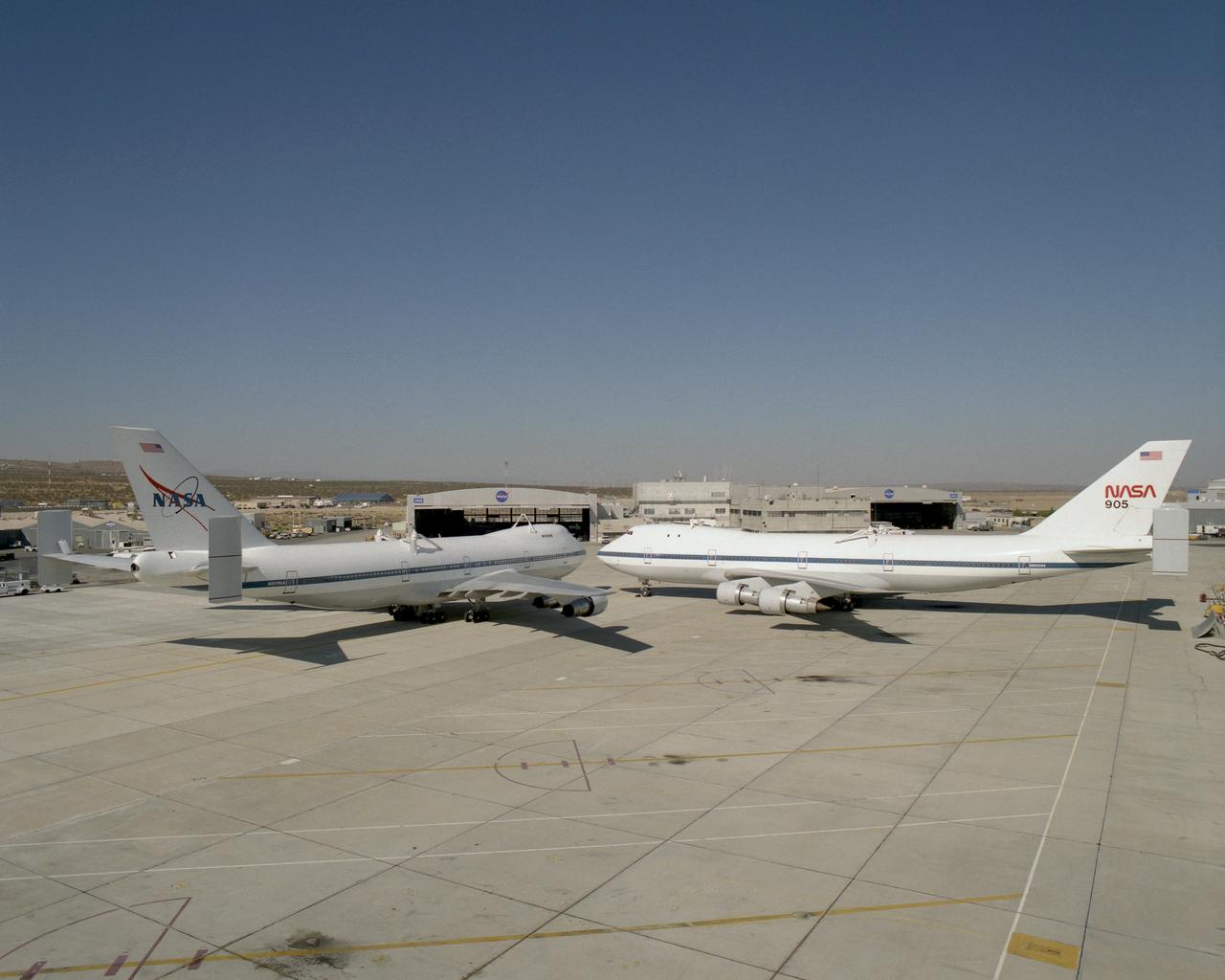
NASA's two modified Boeing 747 Shuttle Carrier Aircraft #911 (left) and #905 (right) were nose-to-nose on the ramp at NASA Dryden in this 1995 photo.
NASA's two modified Boeing 747 Shuttle Carrier Aircraft #911 (left) and #905 (right) were nose-to-nose on the ramp at NASA Dryden in this 1995 photo
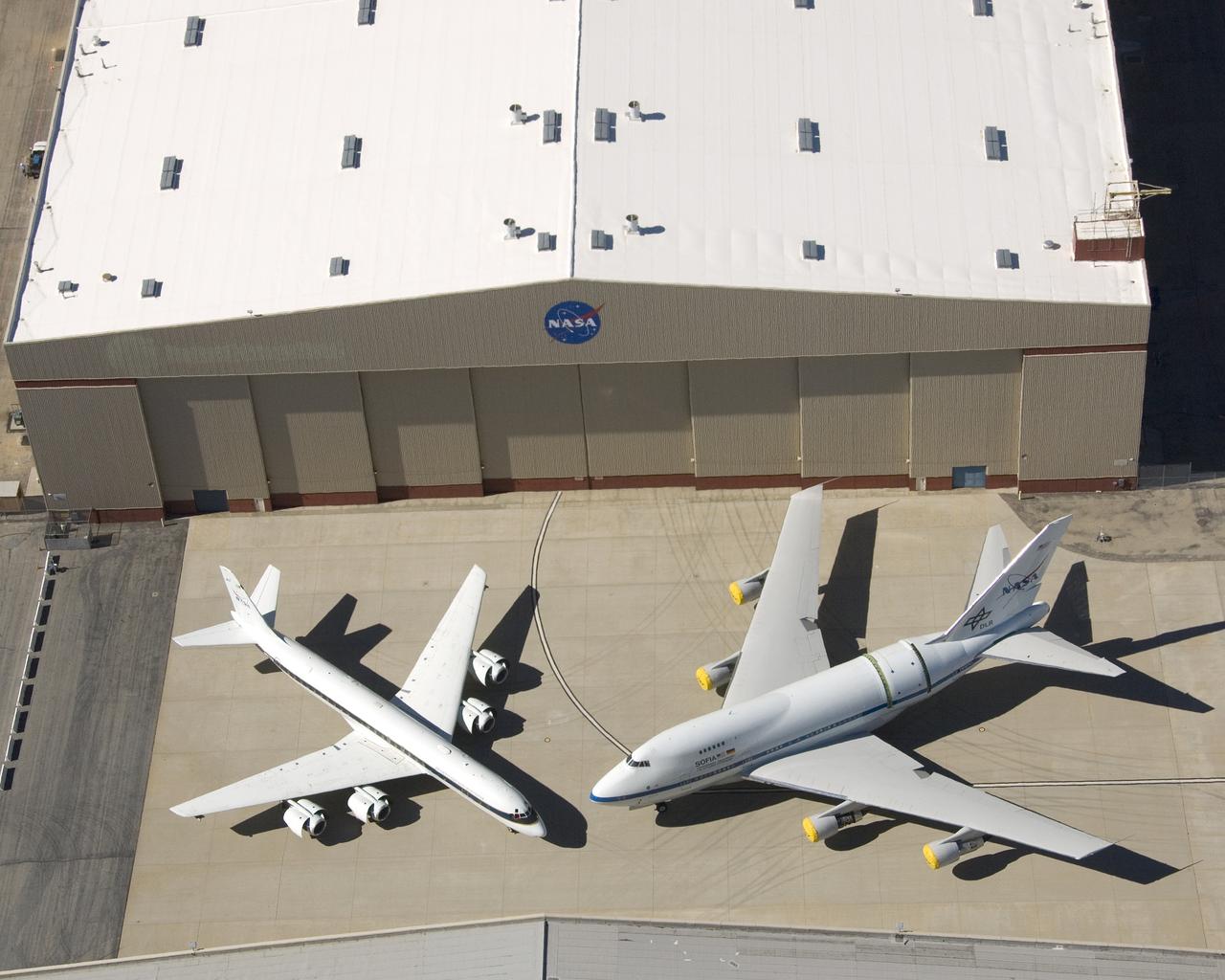
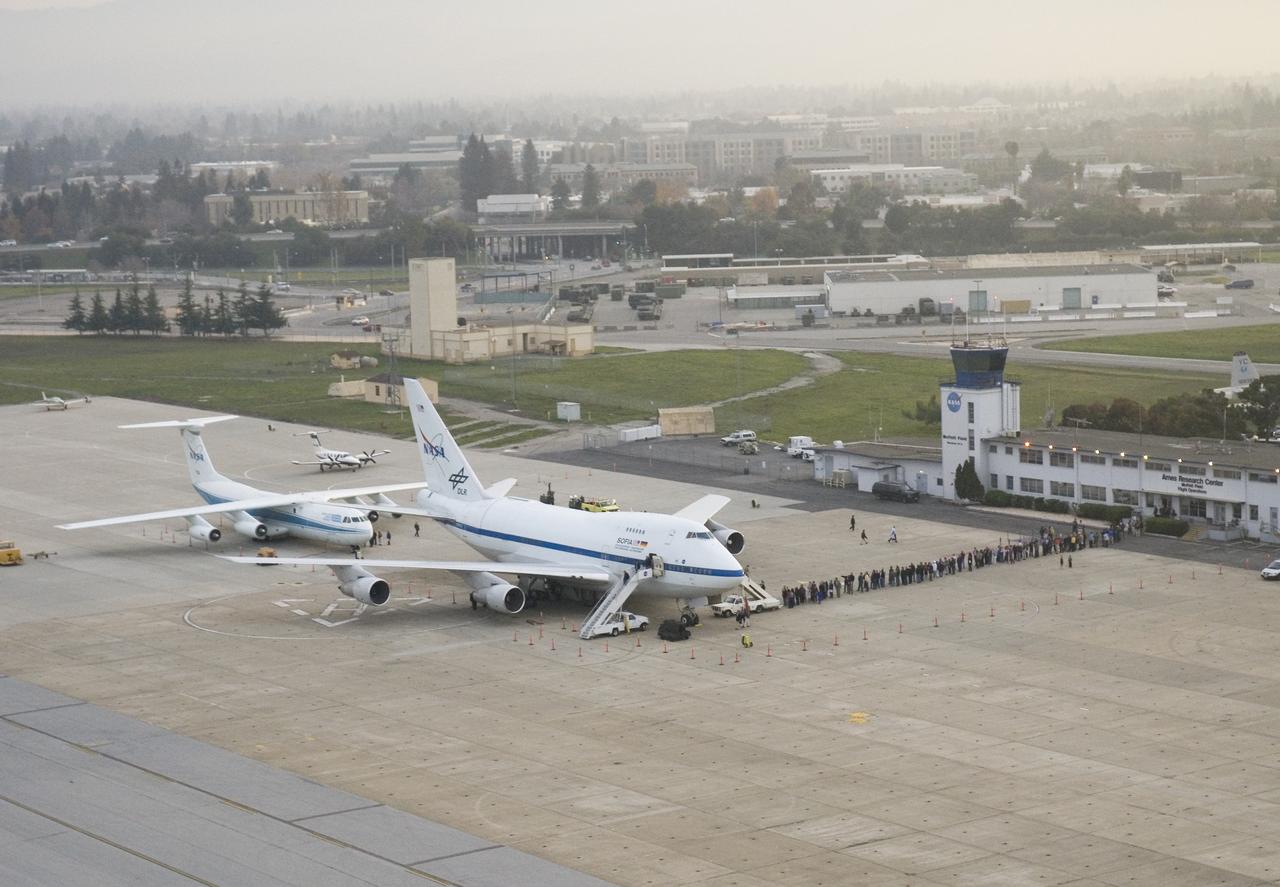
NASA's new SOFIA observatory shared the ramp with its predecessor, the now-retired Kuiper Airborne Observatory, during open house at NASA Ames Research Center.
NASA's new SOFIA observatory shared the ramp with its predecessor, the now-retired Kuiper Airborne Observatory, during open house at NASA Ames Research Center
NASA Rover 2 is driven over staggered ramps to test the suspension range of motion.
Rover 2 Driving Test
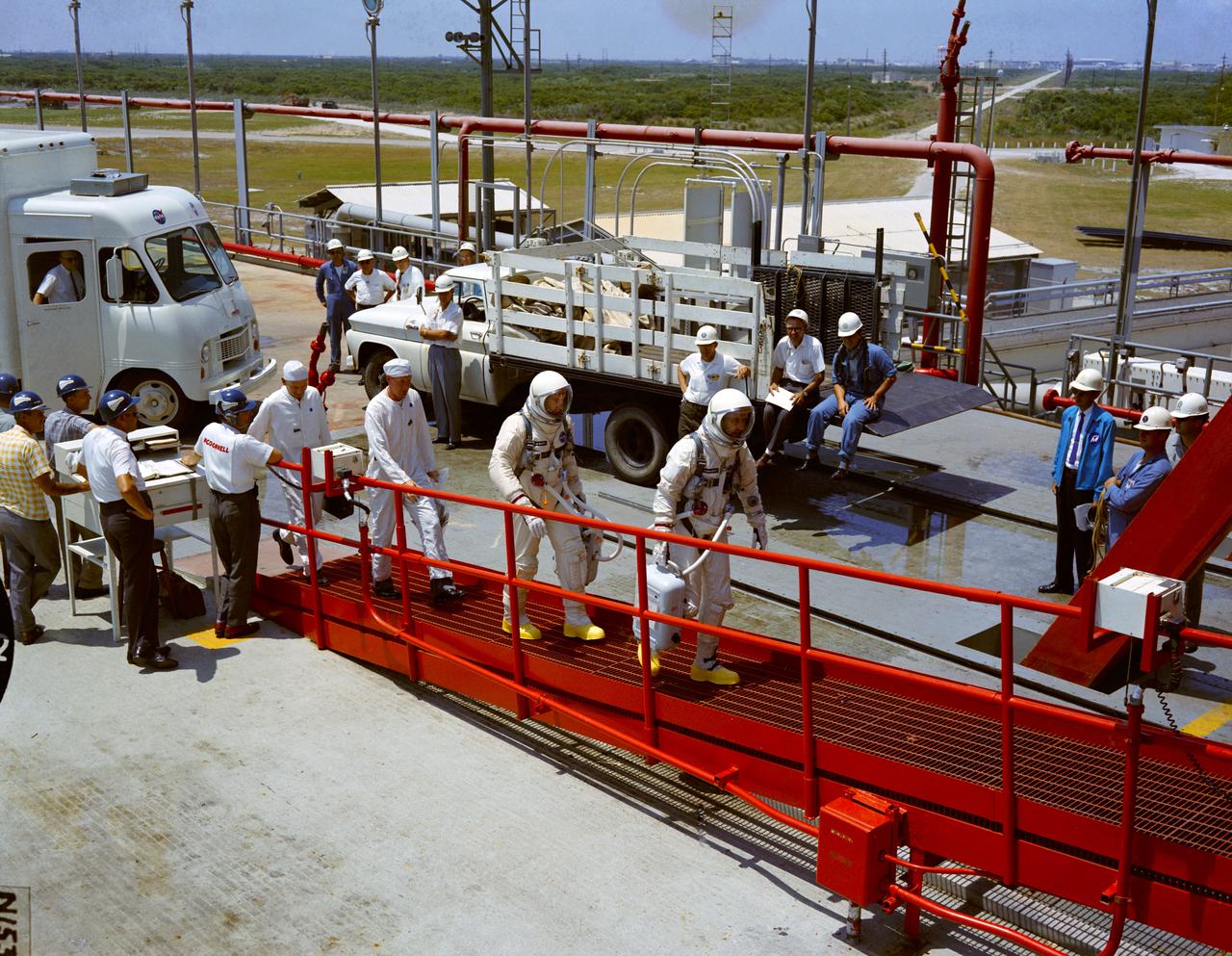
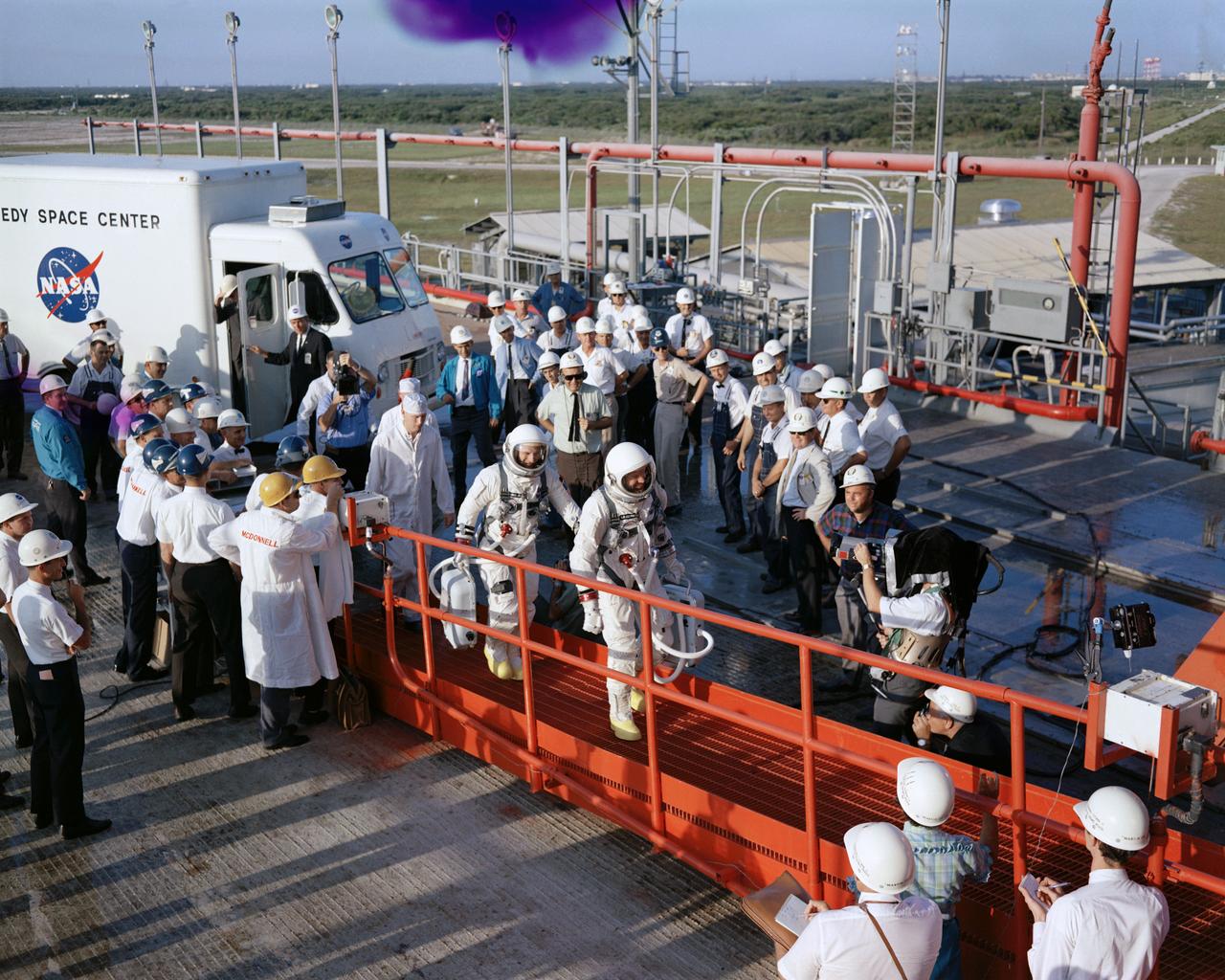
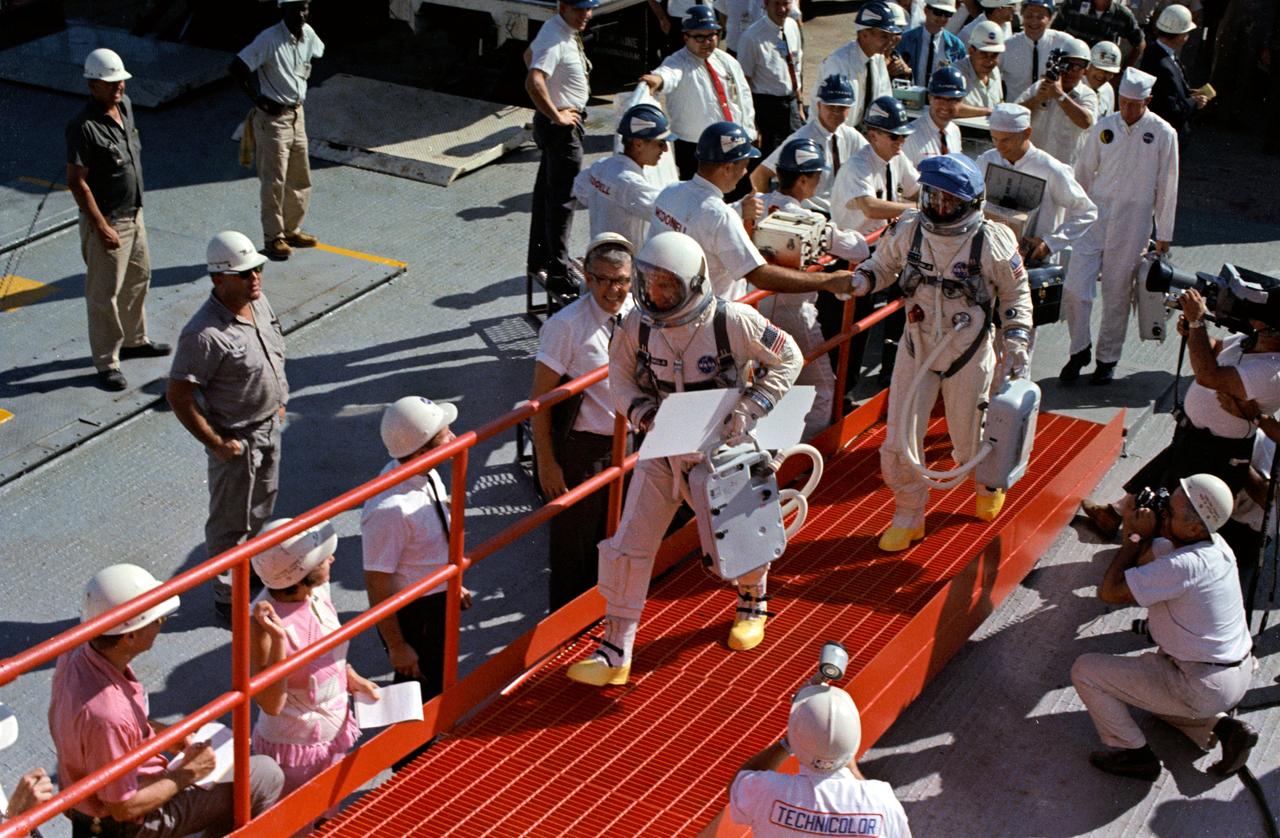
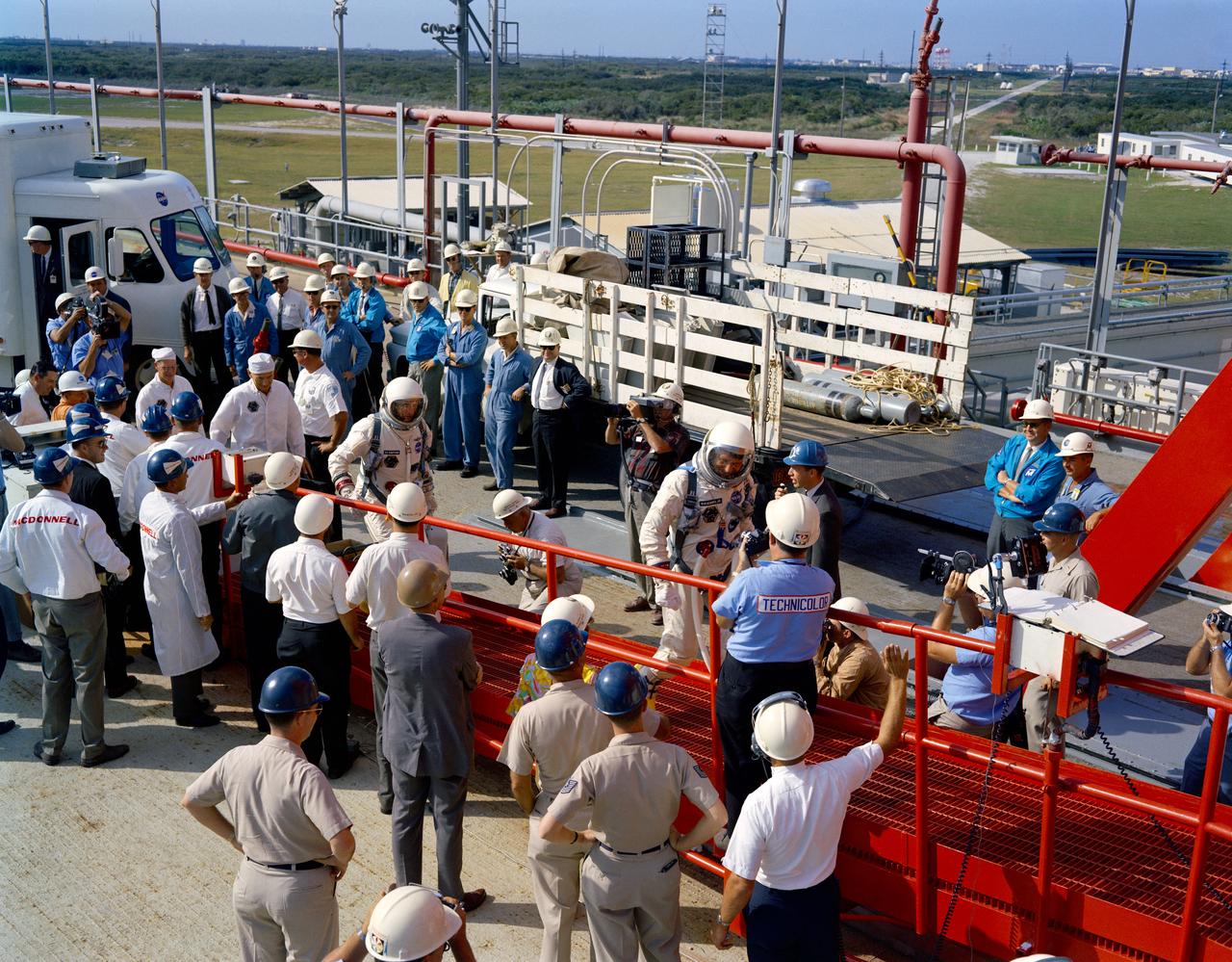
S66-59966 (11 Nov. 1966) --- Astronauts James A. Lovell Jr. (leading), command pilot, and Edwin E. Aldrin Jr., pilot, walk up the ramp at Pad 19 after arriving from the Launch Complex 16 suiting trailer during the prelaunch countdown. Moments later they entered the elevator which took them to the white room and the waiting Gemini-12 spacecraft. Liftoff was at 3:46 p.m. (EST), Nov. 11, 1966. Photo credit: NASA
PRELAUNCH - GEMINI-TITAN (GT)-12 - WALK UP RAMP - CAPE
S66-42754 (18 July 1966) --- Astronauts John W. Young (leading), command pilot, and Michael Collins, pilot, walk up the ramp at Pad 19 after arriving from the Launch Complex 16 suiting trailer during the prelaunch countdown. Moments later they entered the elevator which took them to the white room and the waiting Gemini-10 spacecraft. Liftoff was at 5:20 p.m. (EST), July 18, 1966. Photo credit: NASA
Astronauts Young and Collins walk up ramp at Pad 19 during countdown
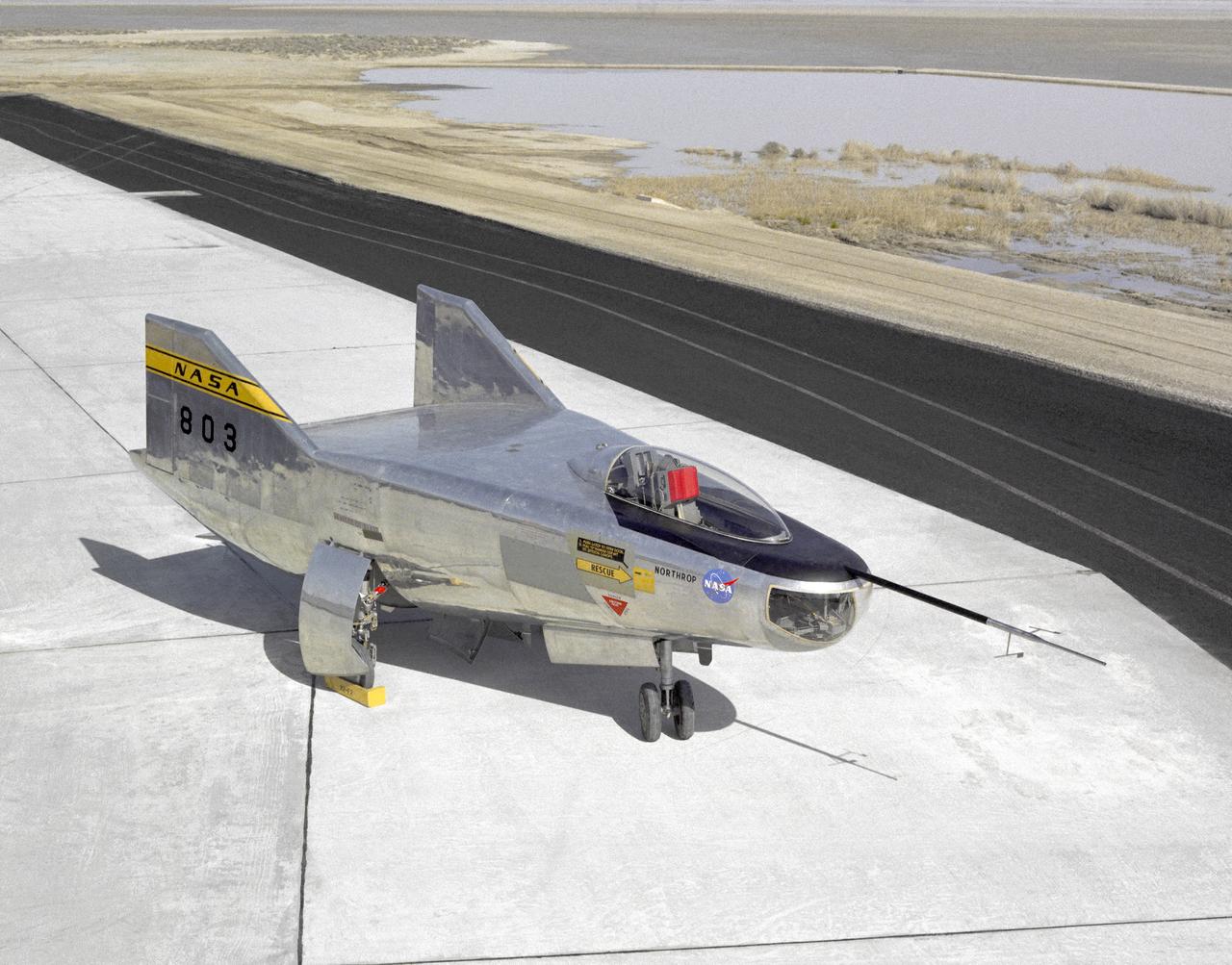
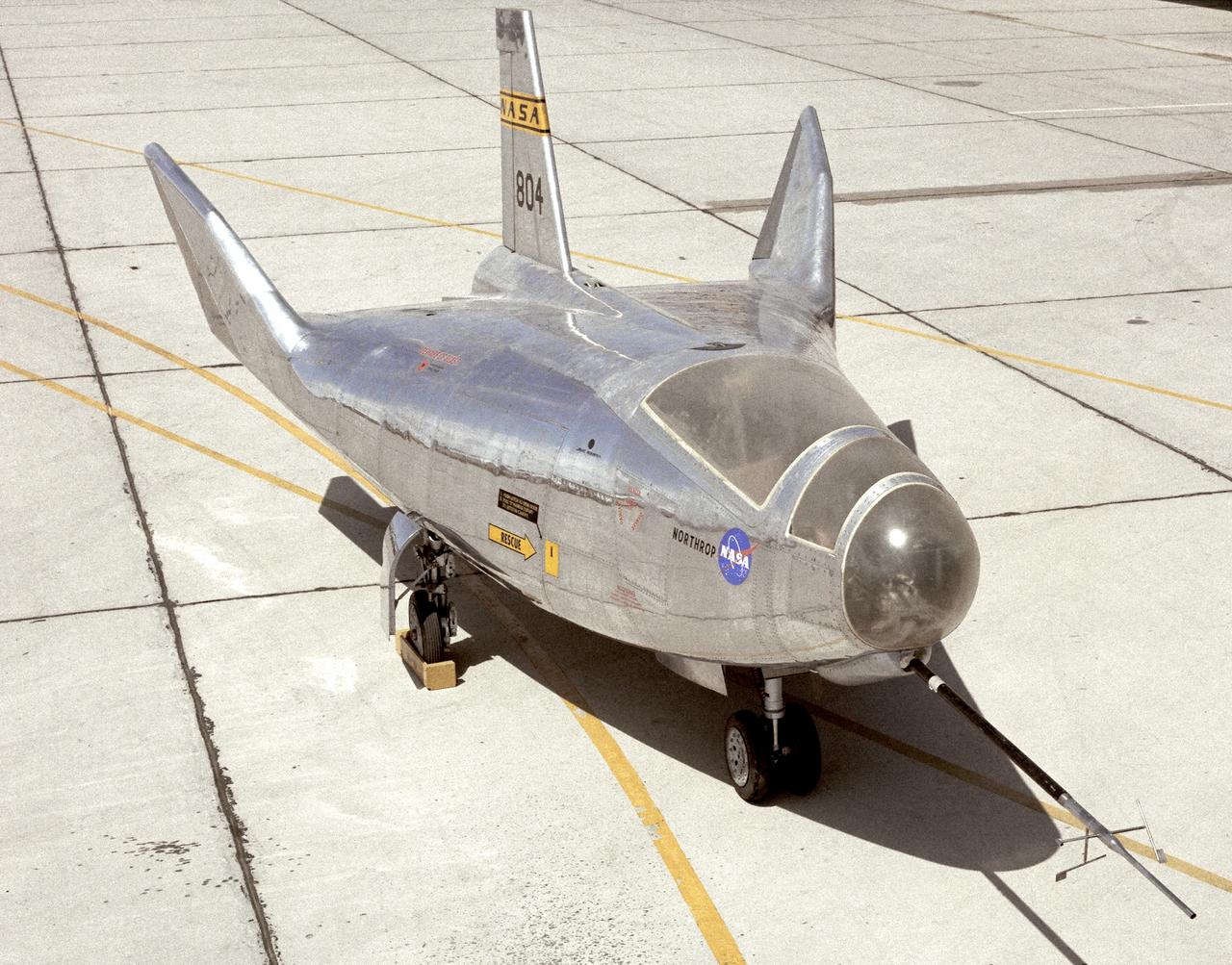
The M2-F2 Lifting Body is seen here on the ramp at the NASA Dryden Flight Research Center. The success of Dryden's M2-F1 program led to NASA's development and construction of two heavyweight lifting bodies based on studies at NASA's Ames and Langley research centers -- the M2-F2 and the HL-10, both built by the Northrop Corporation. The "M" refers to "manned" and "F" refers to "flight" version. "HL" comes from "horizontal landing" and 10 is for the tenth lifting body model to be investigated by Langley.  The first flight of the M2-F2 -- which looked much like the "F1" -- was on July 12, 1966. Milt Thompson was the pilot. By then, the same B-52 used to air launch the famed X-15 rocket research aircraft was modified to also carry the lifting bodies. Thompson was dropped from the B-52's wing pylon mount at an altitude of 45,000 feet on that maiden glide flight.  The M2-F2 weighed 4,620 pounds, was 22 feet long, and had a width of about 10 feet.  On May 10, 1967, during the sixteenth glide flight leading up to powered flight, a landing accident severely damaged the vehicle and seriously injured the NASA pilot, Bruce Peterson.  NASA pilots and researchers realized the M2-F2 had lateral control problems, even though it had a stability augmentation control system. When the M2-F2 was rebuilt at Dryden and redesignated the M2-F3, it was modified with an additional third vertical fin -- centered between the tip fins -- to improve control characteristics.  The M2-F2/F3 was the first of the heavy-weight, entry-configuration lifting bodies. Its successful development as a research test vehicle answered many of the generic questions about these vehicles.  NASA donated the M2-F3 vehicle to the Smithsonian Institute in December 1973. It is currently hanging in the Air and Space Museum along with the X-15 aircraft number 1, which was its hangar partner at Dryden from 1965 to 1969.
M2-F2 on ramp
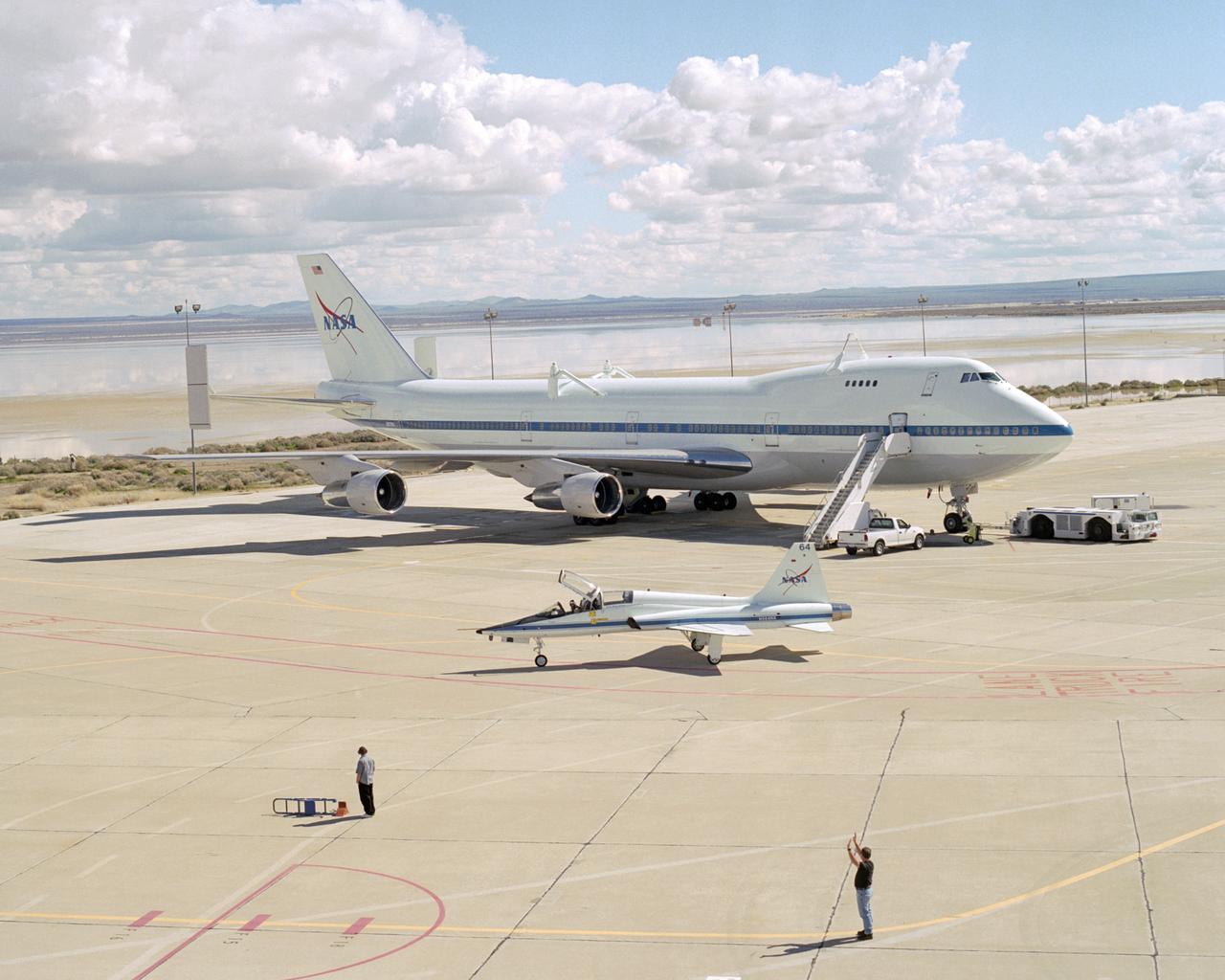
Puffy white clouds and a flooded lakebed form a backdrop as a T-38 support aircraft taxies across the ramp in front of NASA's Boeing 747 Shuttle Carrier Aircraft.
White clouds and a flooded lakebed form a backdrop as a T-38 support aircraft taxies across the ramp in front of NASA's Boeing 747 Shuttle Carrier Aircraft
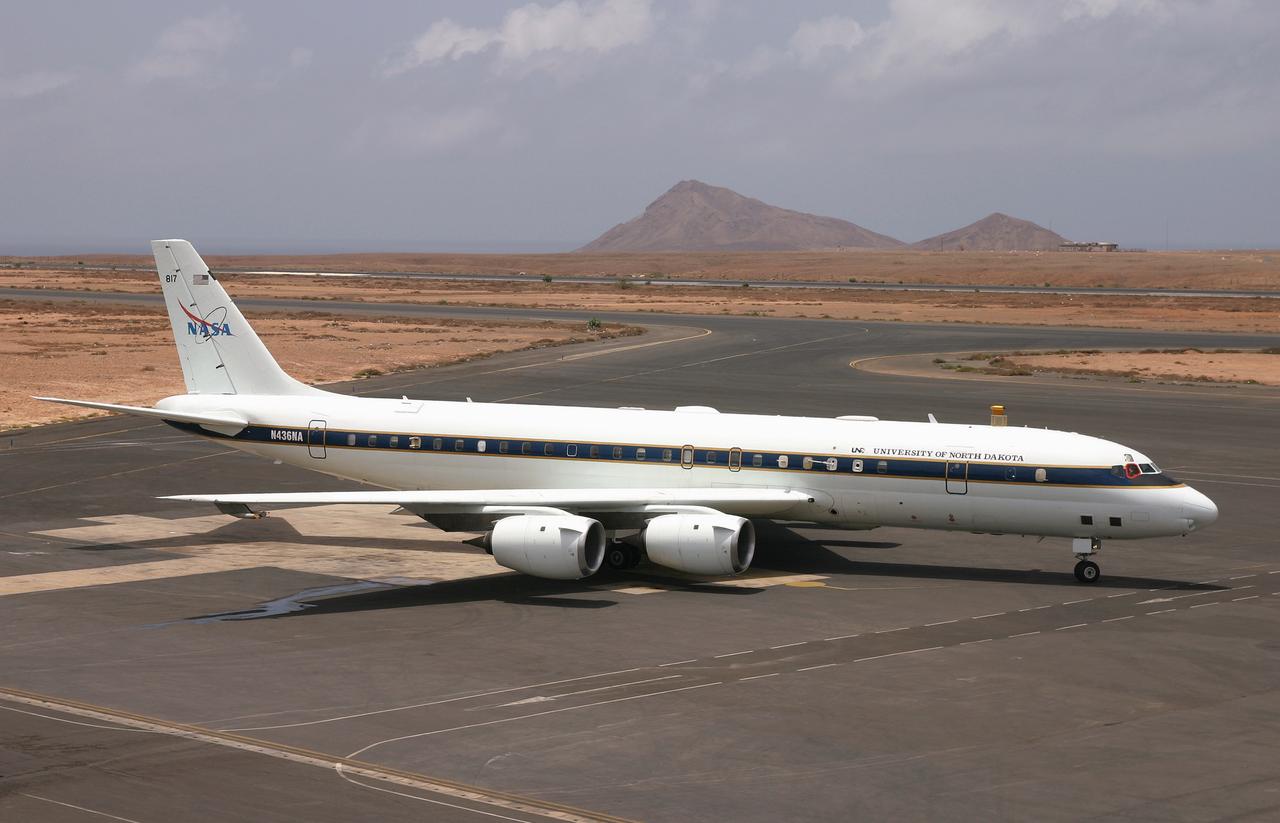
NASA's DC-8 Flying Laboratory taxis up to the ramp at Sal Island's Amilcar Cabral International Airport after a science flight for the NAMMA mission. (Ames photo # ACD06-0135-035)
NASA's DC-8 Flying Laboratory taxis up to the ramp at Sal Island's Amilcar Cabral International Airport after a science flight for the NAMMA mission
S65-57962 (25 Oct. 1965) --- The Gemini-6 prime crew arrives at Pad 19 during the Gemini-6 countdown. Leading up the ramp is astronaut Walter M. Schirra Jr., command pilot, followed by astronaut Thomas P. Stafford, pilot. Moments later they entered the spacecraft in the white room atop the Titan launch vehicle. Since the Agena, intended as a rendezvous target vehicle in the Gemini-6 mission, failed to achieve orbit, the Oct. 25 launch was scrubbed. Photo credit: NASA or National Aeronautics and Space Administration
WALKUP RAMP (GT-6 PRIME CREW)(PRIOR TO SCRUB) - - MISC.
This image from the Imager for Mars Pathfinder (IMP) camera shows the rear part of the Sojourner rover, the rolled-up rear ramp, and portions of the partially deflated airbags. The Alpha Proton X-ray Spectrometer instrument is protruding from the rear (right side) of the rover. The airbags behind the rover are presently blocking the ramp from being safely unfurled. The ramps are a pair of deployable metal reels that will provide a track for the rover as it slowly rolls off the lander, and onto the surface of Mars, once Pathfinder scientists determine it is safe to do so.  http://photojournal.jpl.nasa.gov/catalog/PIA00614
Airbags and Sojourner Rover
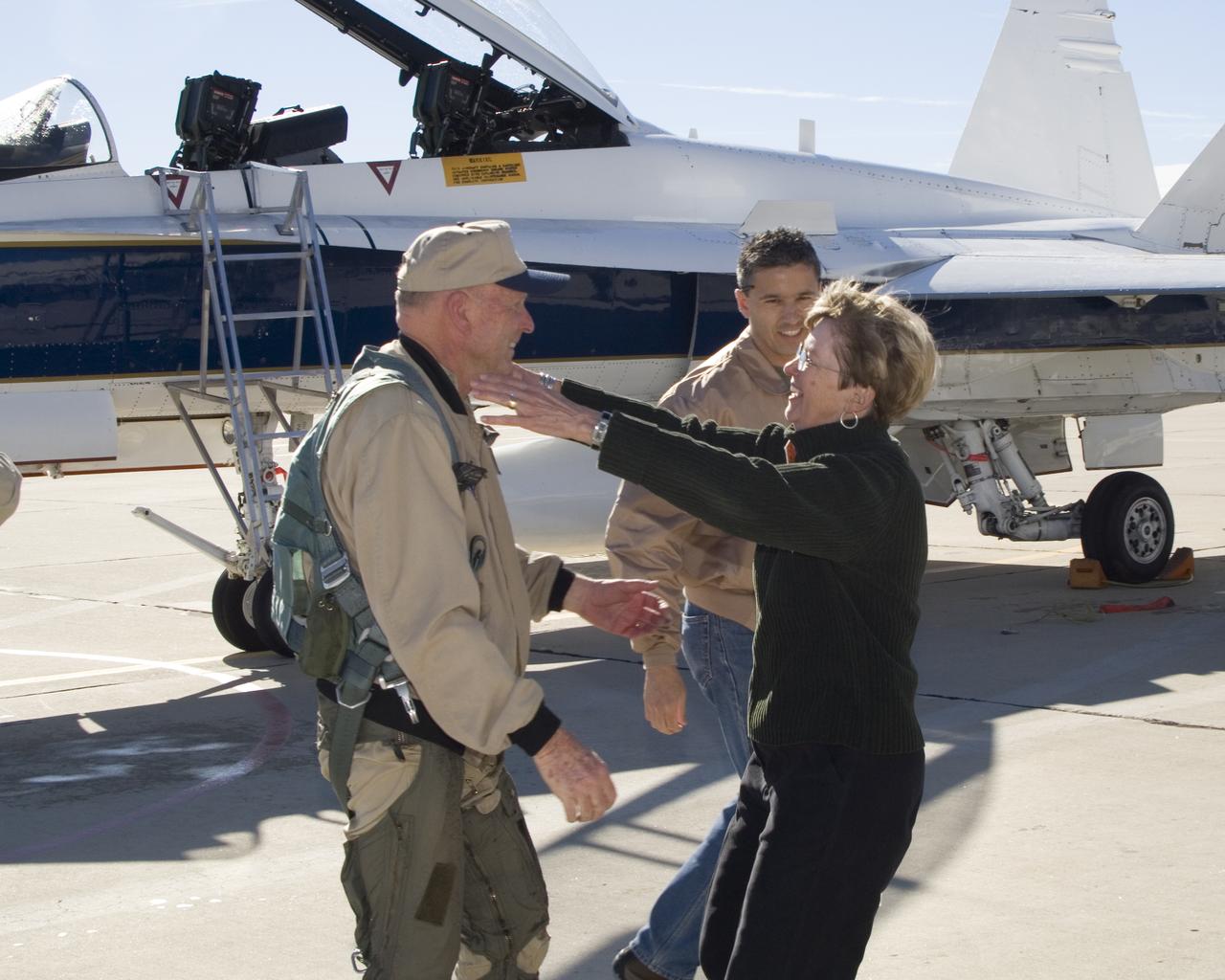
NASA Dryden research pilot Gordon Fullerton is greeted by his wife Marie on the Dryden ramp after his final flight in a NASA F/A-18 on Dec. 21, 2007.
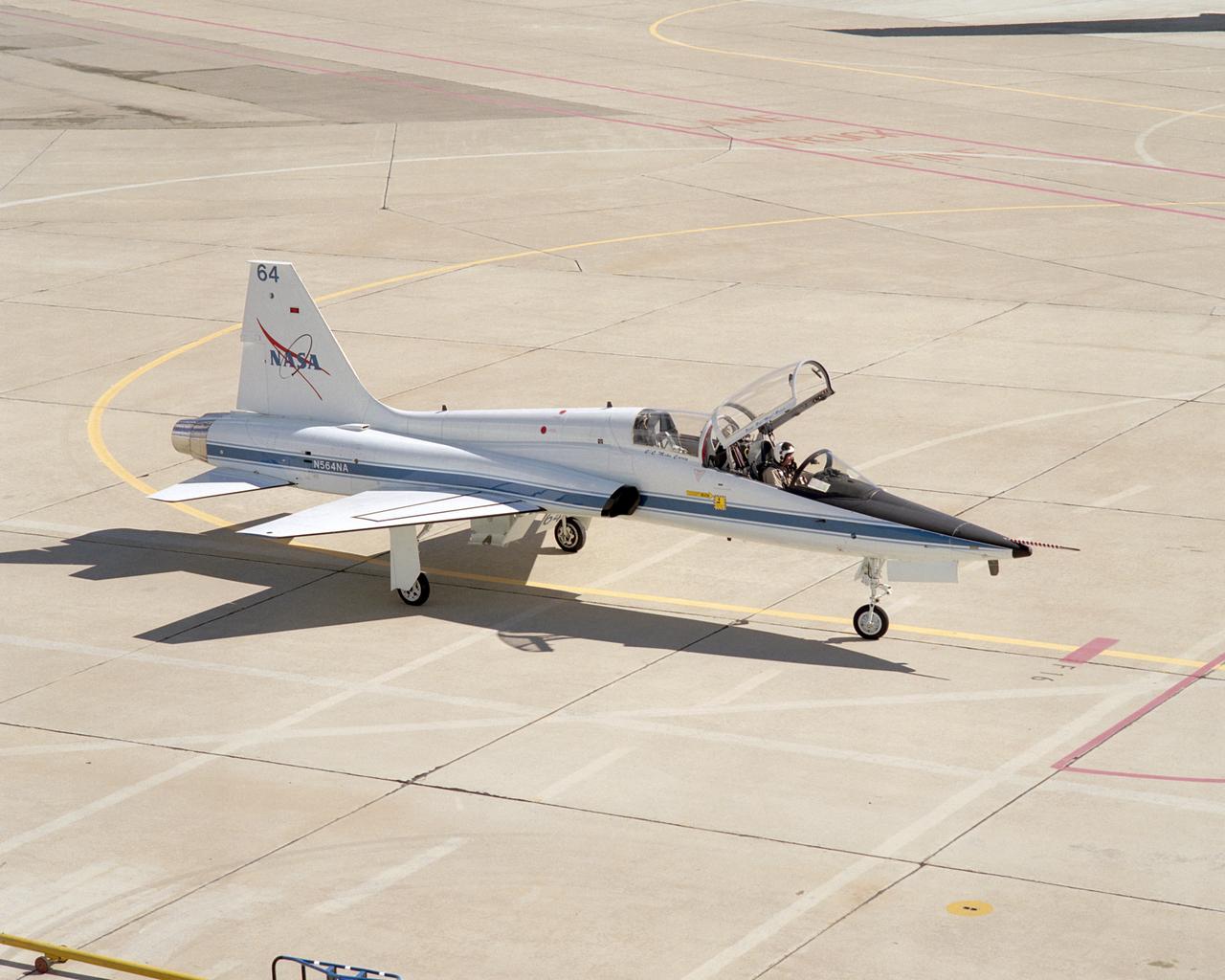
Pilot Gordon Fullerton taxies NASA Dryden's "newest" mission support aircraft, a T-38 Talon, into position on the ramp upon its arrival on February 24, 2005.
Pilot Gordon Fullerton taxies NASA Dryden's "newest" mission support aircraft, a T-38 Talon, into position on the ramp upon its arrival on February 24, 2005
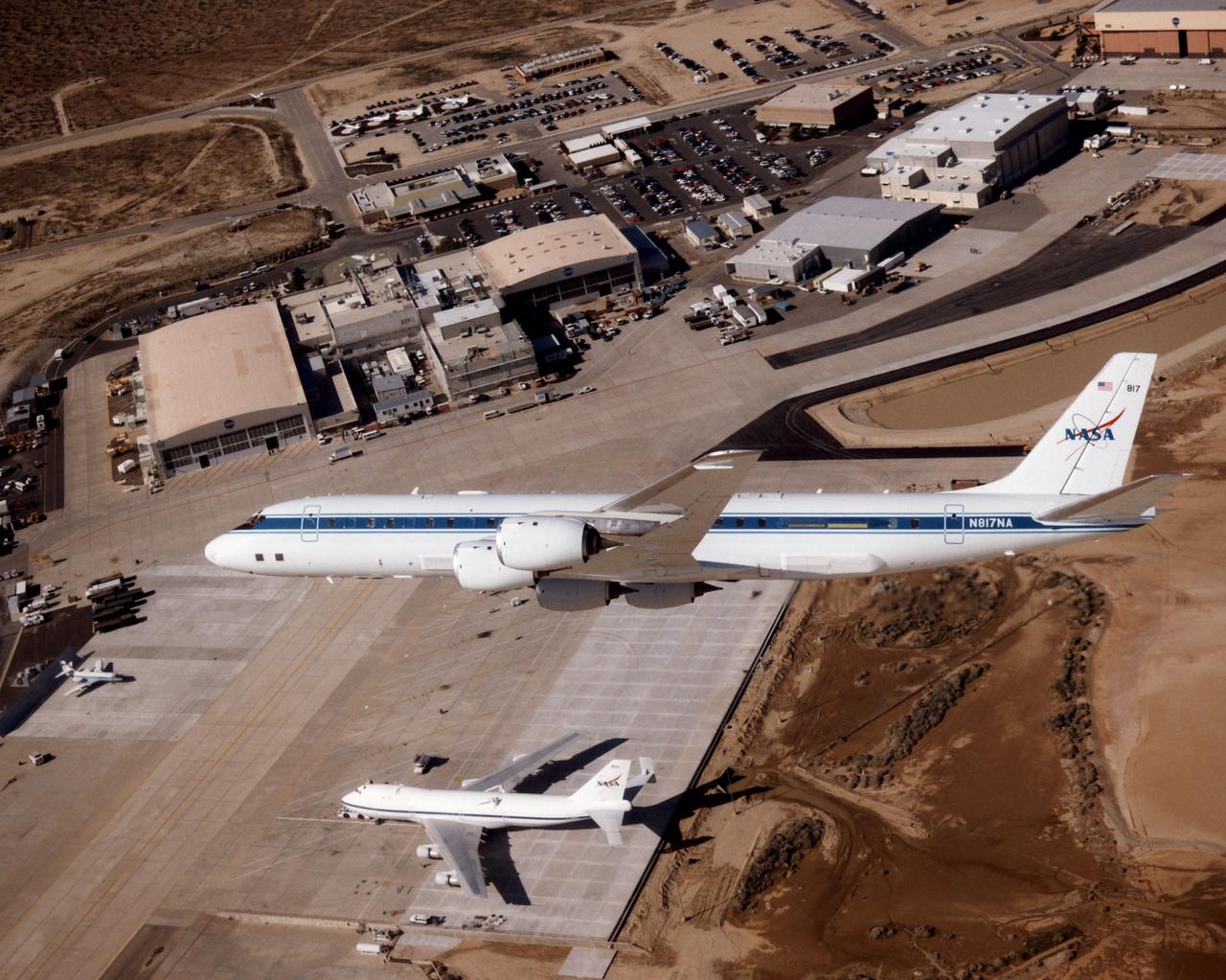
The DC-8 aircraft is seen making a banking turn high above the NASA Dryden ramp. This view of the DC-8's left side reveals some of the modifications necessary for particular on-board experiments. To the right of the DC-8 is the edge of Rogers Dry Lake. Above the aircraft's forward fuselage is the Dryden Flight Research Center headquarters building, while other NASA facilities extend down the flightline to the right. Below the DC-8 is the Shuttle Carrier Aircraft (SCA), on which are visible attachment points for the Shuttle Orbiter.
DC-8 Airborne Laboratory in flight over NASA Dryden center with SCA 747 on ramp
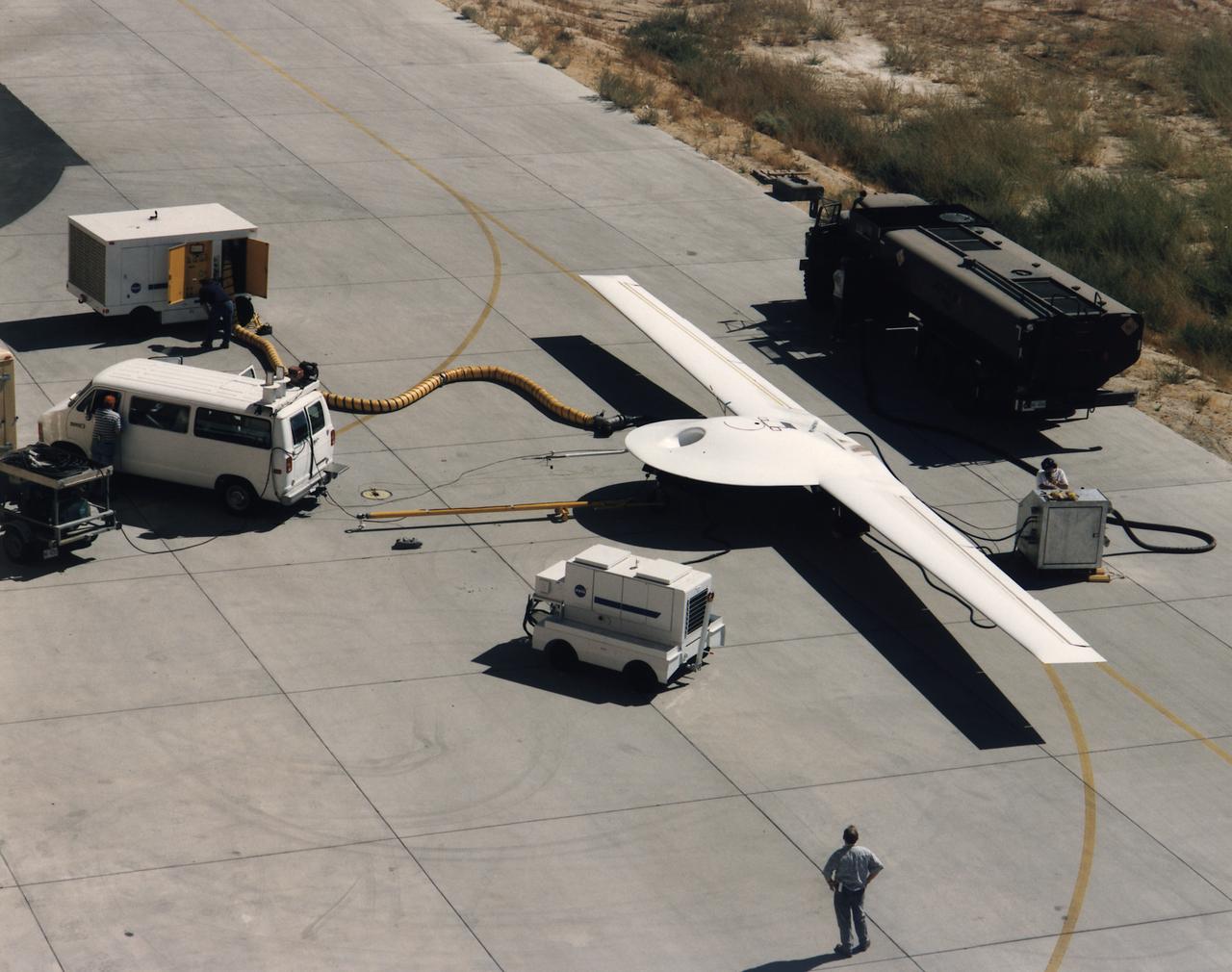
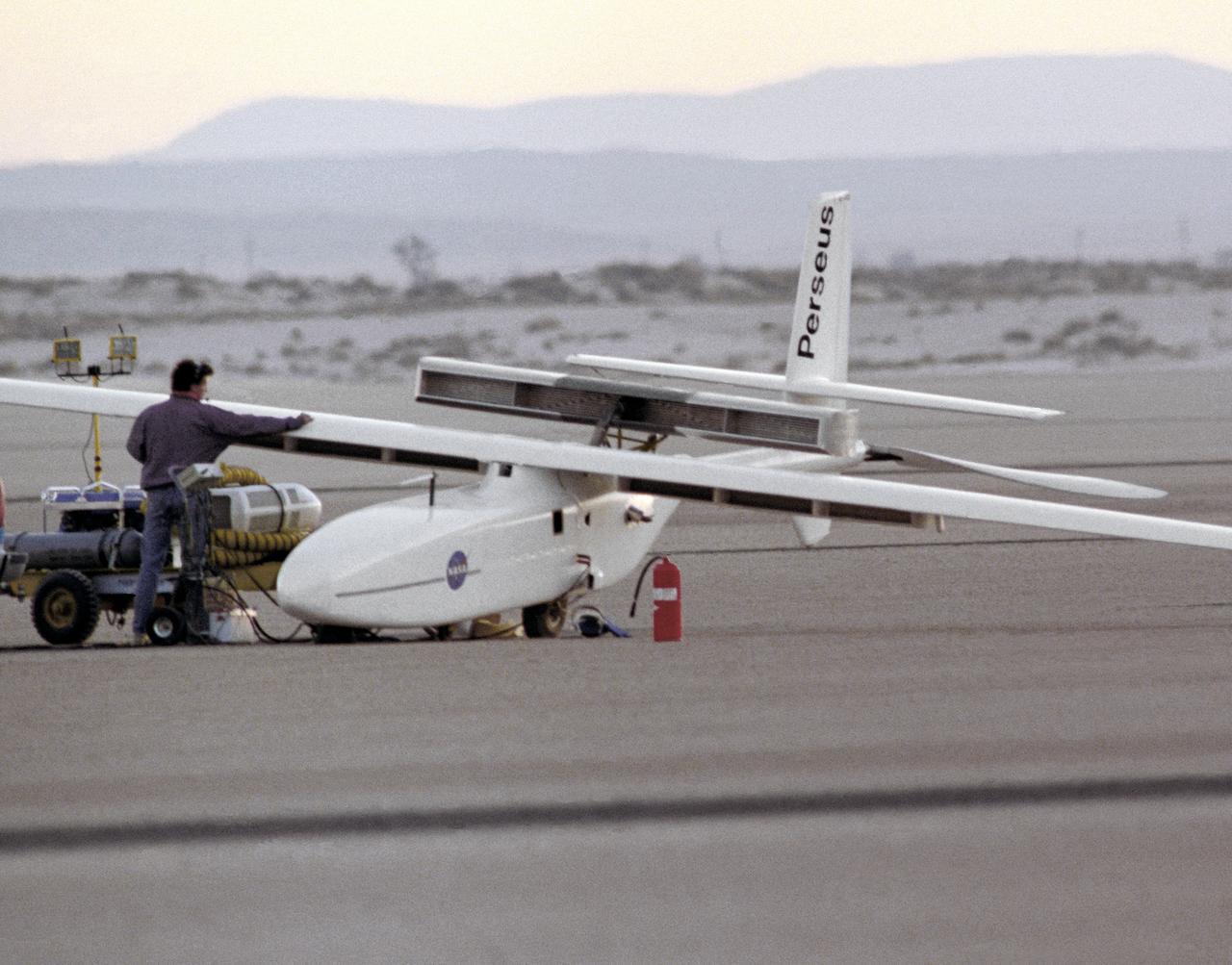
The Perseus A, a remotely-piloted, high-altitude research vehicle, is seen just after landing on Rogers Dry Lake at the Dryden Flight Research Center, Edwards, California. The Perseus A had a unique method of takeoff and landing. To make the aircraft as aerodynamic and lightweight as possible, designers gave it only two very small centerline wheels for landing. These wheels were very close to the fuselage, and therefore produced very little drag. However, since the fuselage sat so close to the ground, it was necessary to keep the large propeller at the rear of the aircraft locked in a horizontal position during takeoff. The aircraft was towed to about 700 feet in the air, where the engine was started and the aircraft began flying under its own power.
Perseus A on Ramp
B-57B on ramp
EC82-20732
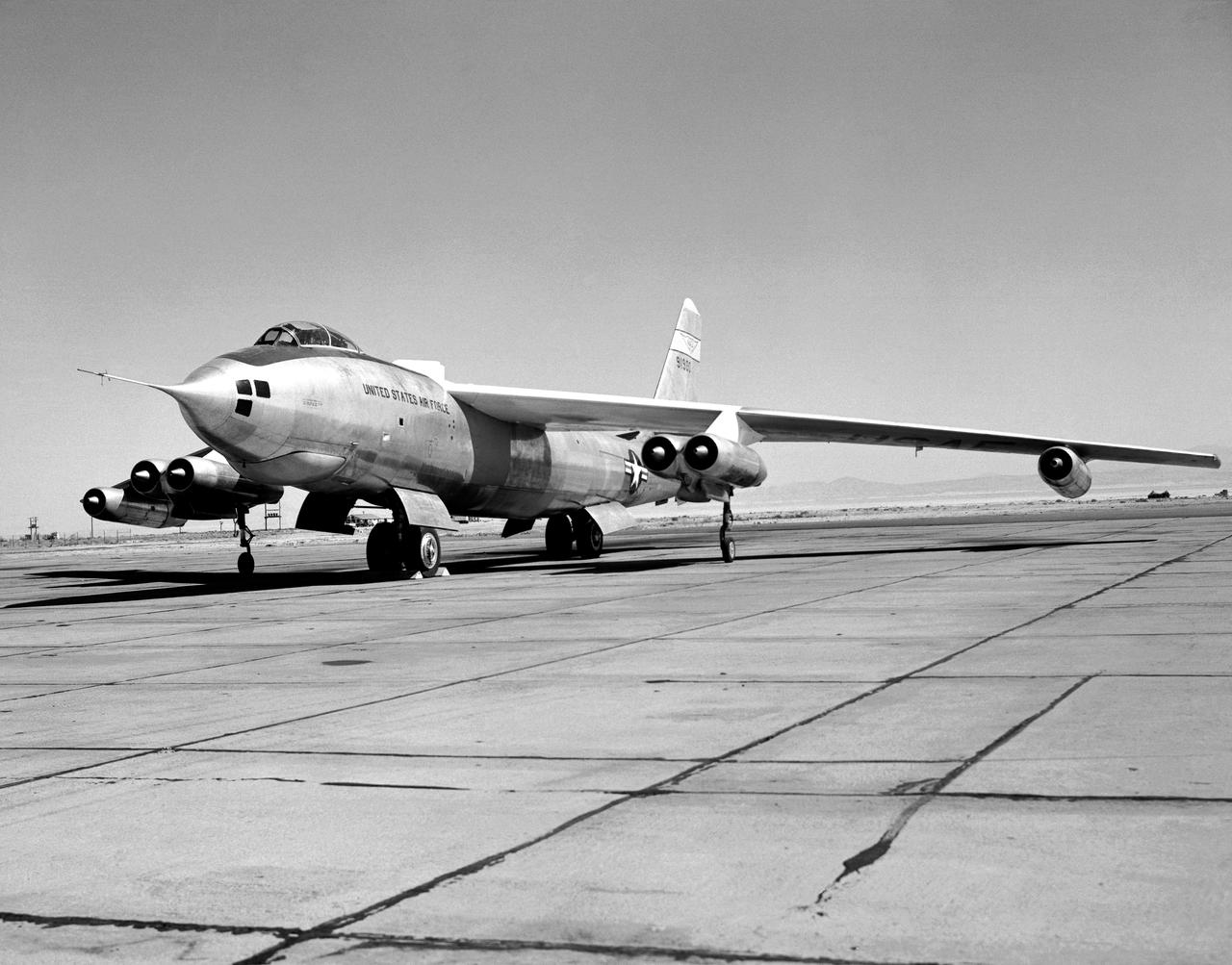
B-47A on ramp
E53-1044
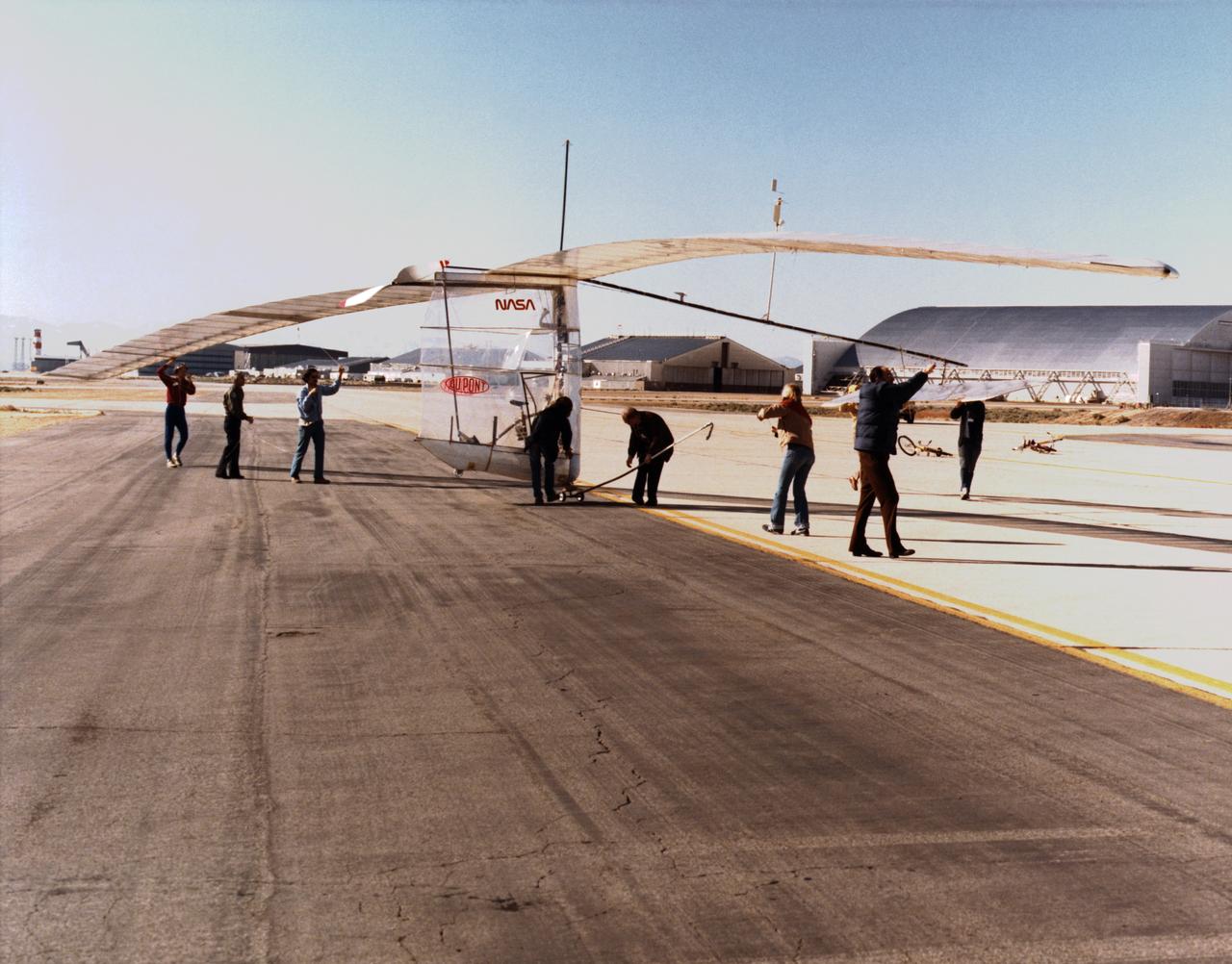
Gossamer Albatross on ramp with crew
EC80-12557
NASA Mars Pathfinder forward rover ramp can be seen successfully unfurled in this image, taken in stereo by the Imager camera. The large rock dubbed Wedge is at lower right. 3-D glasses are necessary to identify surface detail.
Martian Terrain & Wedge in 3-D
The suspension system on NASA Mars rover Curiosity easily accommodates rolling over a ramp in this Sept. 10, 2010, test drive inside the Spacecraft Assembly Facility at NASA Jet Propulsion Laboratory, Pasadena, Calif.
NASA Next Mars Rover on a Test Drive
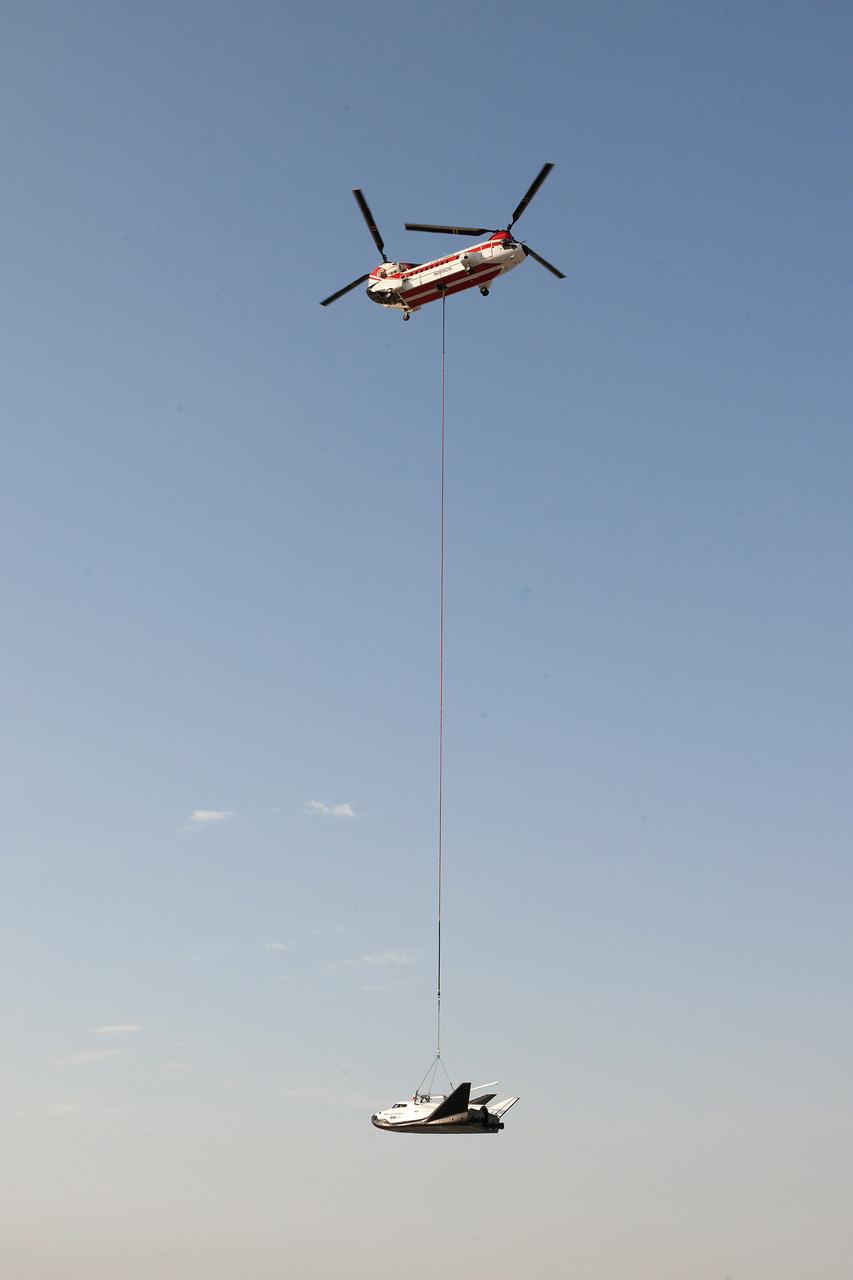
Sierra Nevada's Dream Chaser lifted off ramp on Wednesday, Aug. 30  at NASA Armstrong Flight Research Center by Columbia 234 UT helicopter for captive carry flight.
AFRC2017-0245-051
NASA Mars Pathfinder forward rover ramp can be seen successfully unfurled in this image, taken in stereo by the Imager camera. The large rock dubbed Wedge is at lower right. 3-D glasses are necessary to identify surface detail.
Martian Terrain & Wedge in 3-D
Marie Curie rover drives down the rear ramp during Operational Readiness Test ORT 4. NASA Pathfinder, a low-cost Discovery mission, is the first of a new fleet of spacecraft that are planned to explore Mars.
Marie
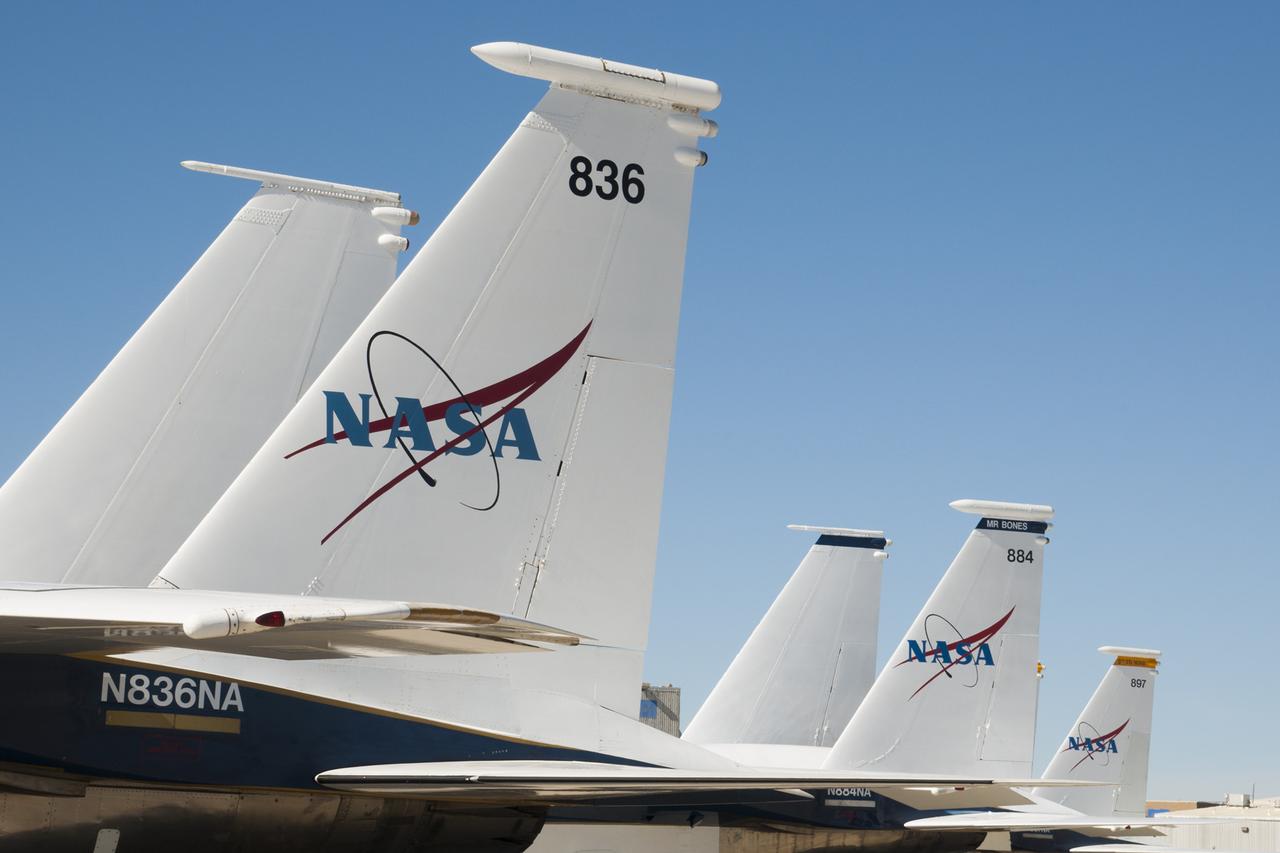
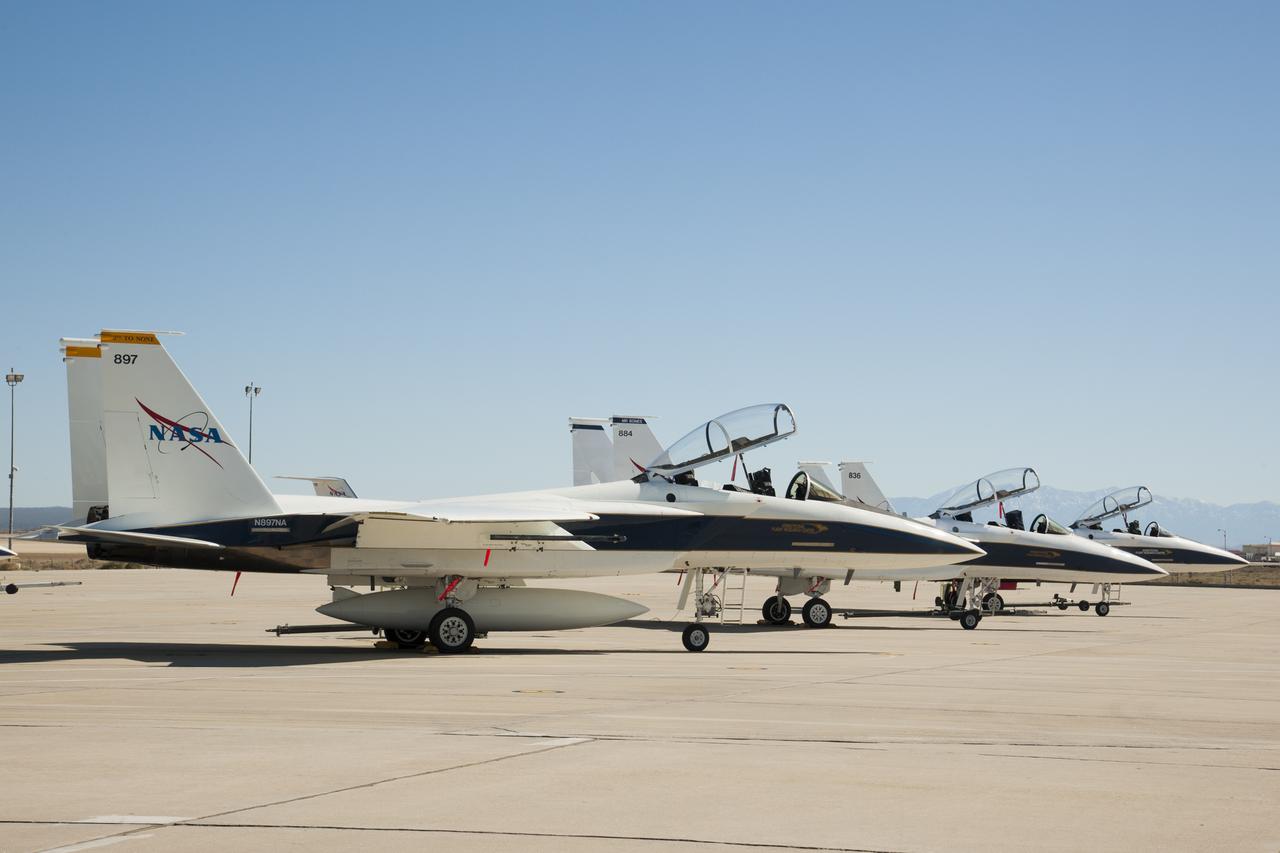
Left to right: workhorse F-15B #836, "Mr. Bones" F-15D #884, and "2nd to None" F-15D #897 on the back ramp at NASA's Neil A. Armstrong Flight Research Center.
AFRC2016-0073-72
Test operators monitor how NASA Mars rover Curiosity handles driving over a ramp during a test on Sept. 10, 2010, inside the Spacecraft Assembly Facility at NASA Jet Propulsion Laboratory, Pasadena, Calif.
Eyes on Curiosity Rover Driving
Left to right: "2nd to None" (F-15D #897), "Mr. Bones" (F-15D #884), and workhorse F-15B #836 on the back ramp at NASA's Neil A. Armstrong Flight Research Center.
AFRC2016-0073-80
Bell-47 Helicopter #822 on ramp
EC82-18422A
C-20A on NASA Dryden Ramp
EC02-0226-5
This image shows that the Mars Pathfinder airbags have been successfully retracted, allowing safe deployment of the rover ramps. The Sojourner rover, still in its deployed position, is at center image, and rocks are visible in the background. Mars Pathfinder landed successfully on the surface of Mars today at 10:07 a.m. PDT.  http://photojournal.jpl.nasa.gov/catalog/PIA00617
Airbag Retraction
The HL-10, seen here parked on the ramp at NASA's Flight Research Center in 1966, had a radically different shape from that of the M2-F2/F3. While the M2s were flat on top and had rounded undersides (giving them a bathtub shape), the HL-10 had a flat lower surface and a rounded top. Both shapes provided lift without wings, however. This photo was taken before the HL-10's fins were modified.
ECN-1289
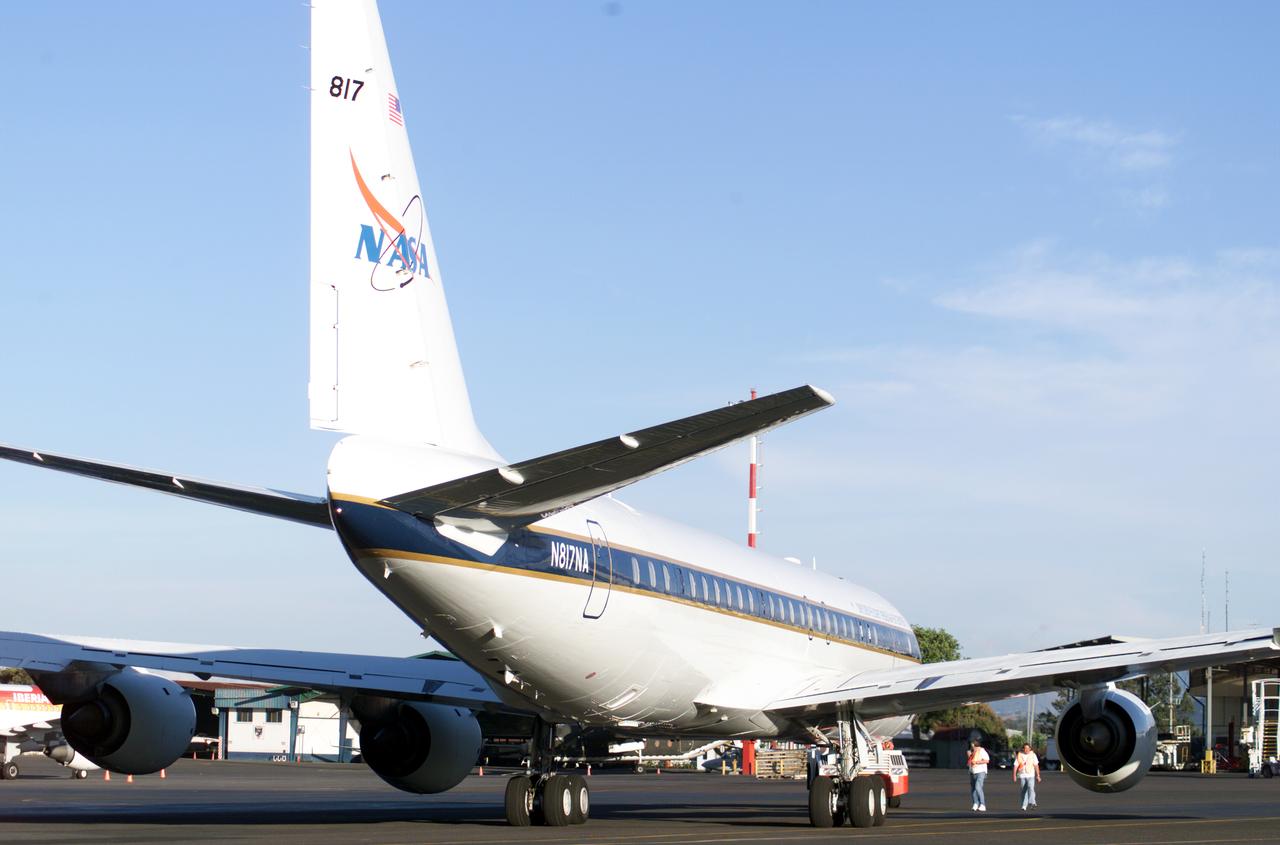
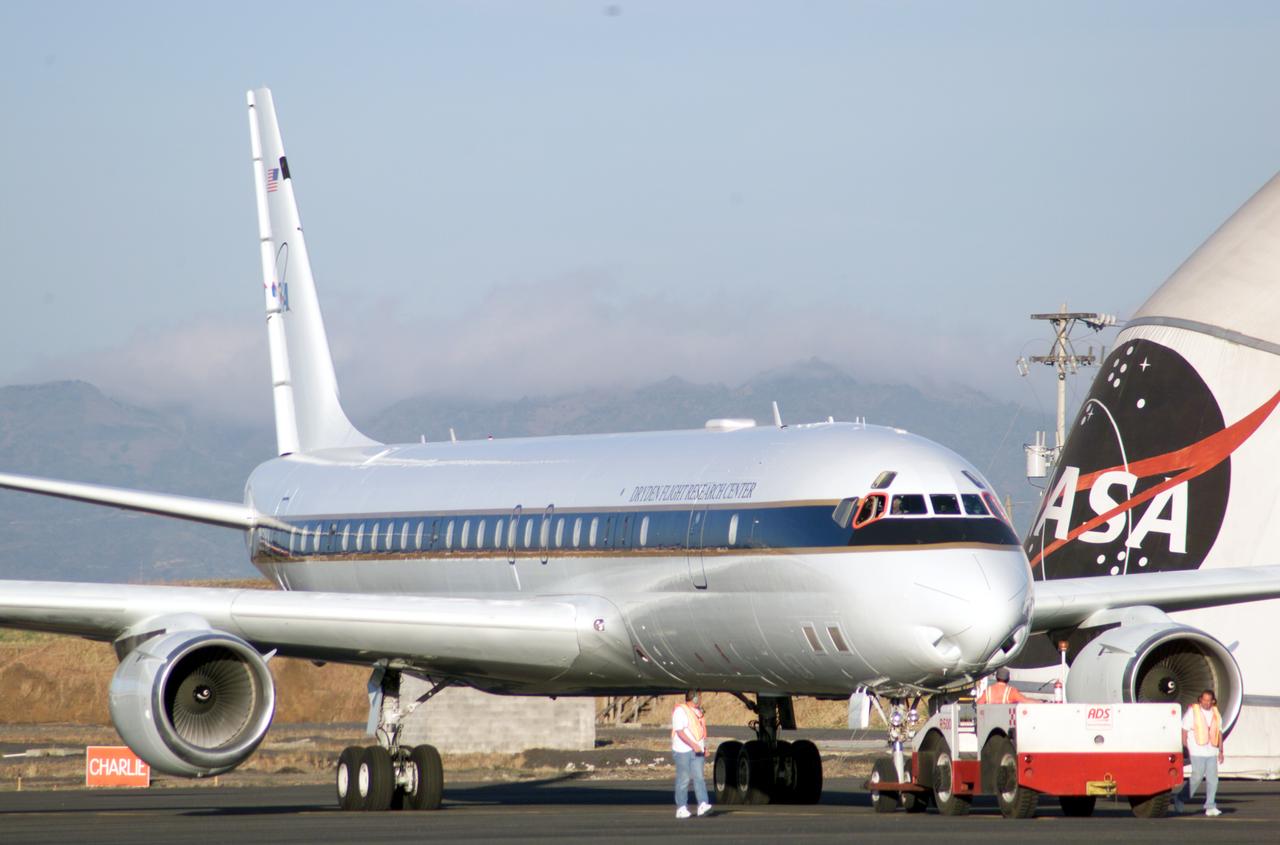
NASA Dryden's DC-8 on the ramp at Jaun Santamaria International Airport, San Jose, Costa Rica during the AirSAR 2004 campaign. AirSAR 2004 is a three-week expedition by an international team of scientists that will use an all-weather imaging tool, called the Airborne Synthetic Aperture Radar (AirSAR), in a mission ranging from the tropical rain forests of Central America to frigid Antarctica.
NASA Dryden's DC-8 on the ramp at Jaun Santamaria International Airport, San Jose, Costa Rica during the AirSAR 2004 campaign
NASA Dryden's DC-8 on the ramp at Jaun Santamaria International Airport, San Jose, Costa Rica during the AirSAR 2004 campaign. AirSAR 2004 is a three-week expedition by an international team of scientists that will use an all-weather imaging tool, called the Airborne Synthetic Aperture Radar (AirSAR), in a mission ranging from the tropical rain forests of Central America to frigid Antarctica.
NASA Dryden's DC-8 on the ramp at Jaun Santamaria International Airport, San Jose, Costa Rica during the AirSAR 2004 campaign
NASA Dryden's DC-8 on the ramp at Jaun Santamaria International Airport, San Jose, Costa Rica during the AirSAR 2004 campaign. AirSAR 2004 is a three-week expedition by an international team of scientists that will use an all-weather imaging tool, called the Airborne Synthetic Aperture Radar (AirSAR), in a mission ranging from the tropical rain forests of Central America to frigid Antarctica.
NASA Dryden's DC-8 on the ramp at Jaun Santamaria International Airport, San Jose, Costa Rica, during the AirSAR 2004 campaign
AMES CH-47 (NASA-737) ON RAMP
ARC-1989-AC89-0234-131
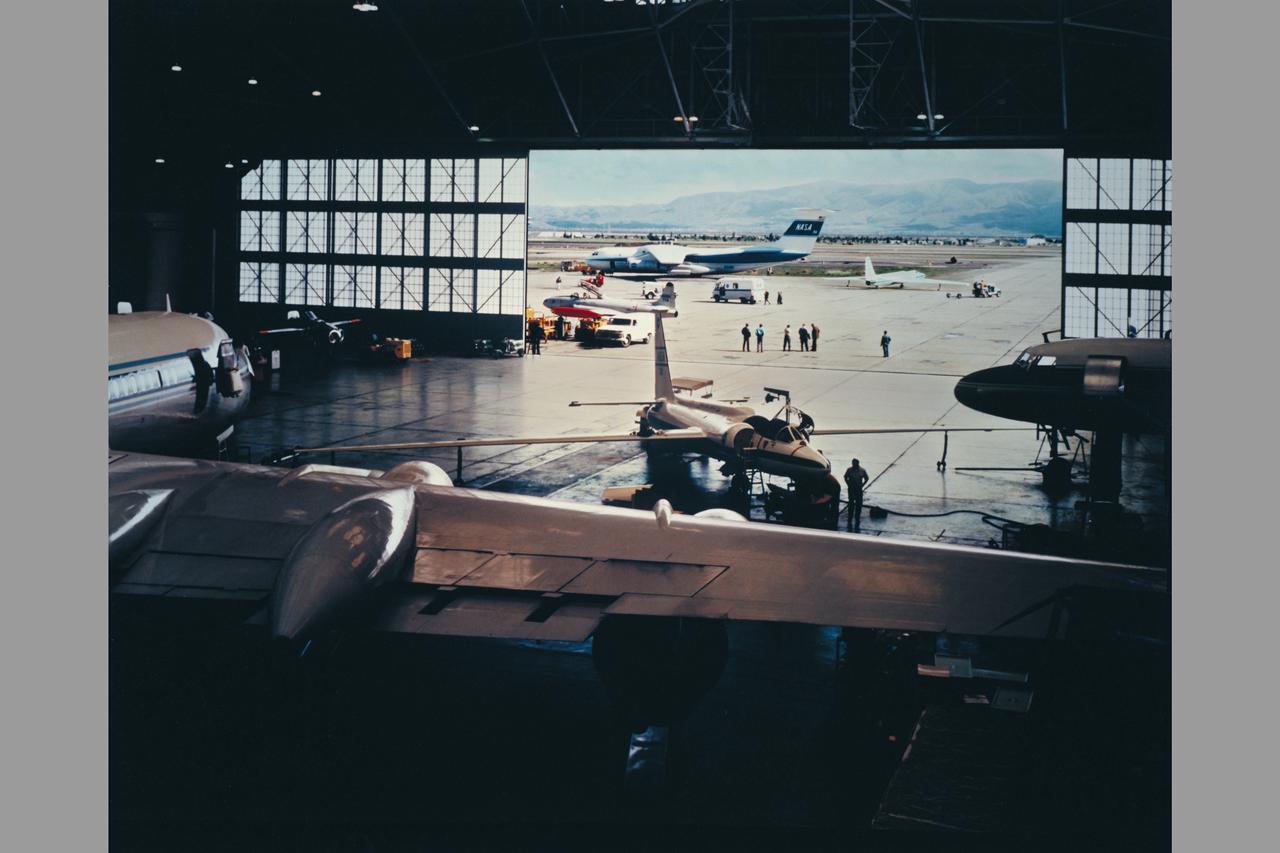
Dryden Aircraft Fleet on ramp and facility - 1988
EC88-0051-20
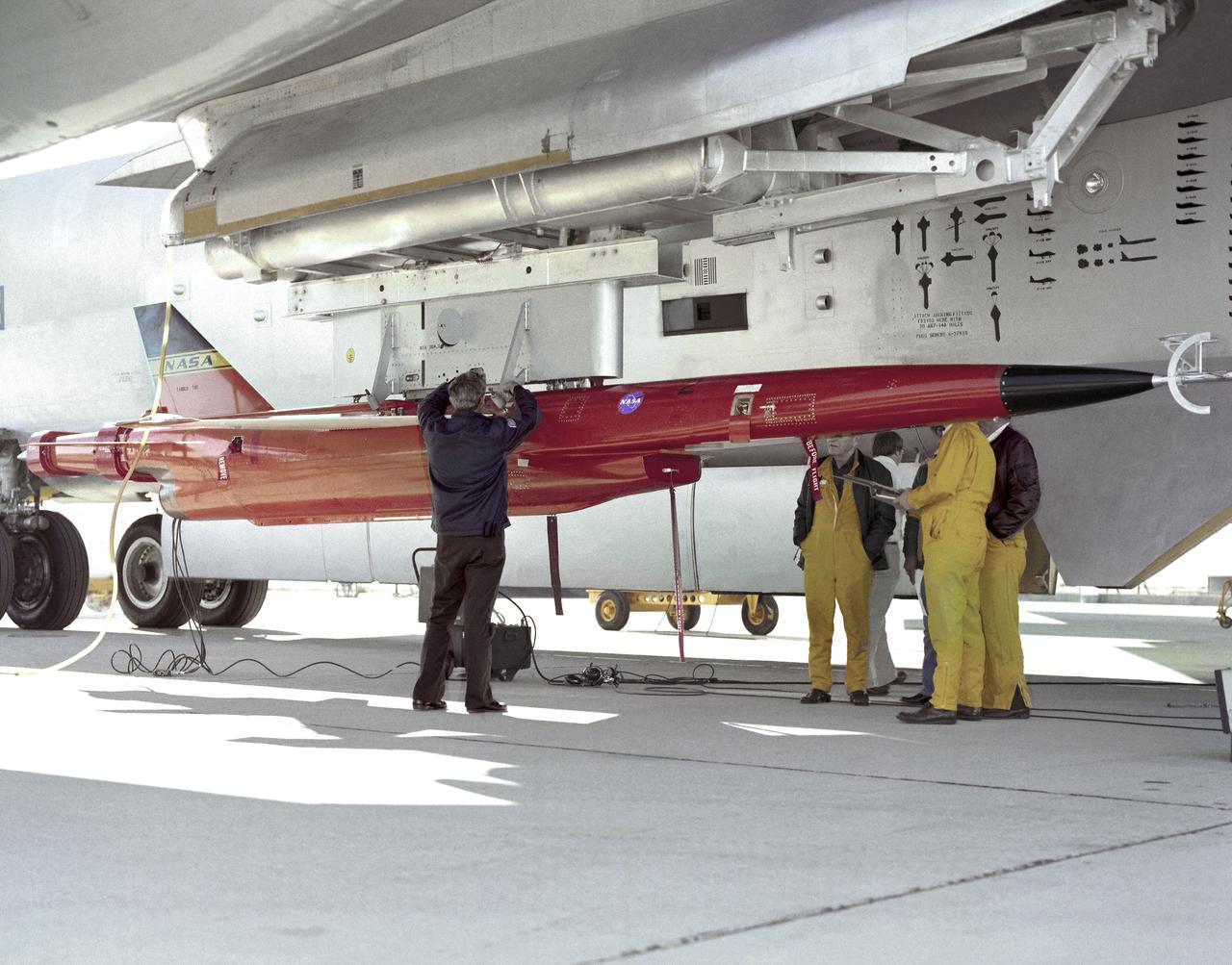
DAST Mated to B-52 on Ramp - Close-up
EC79-10247
X-14A over ramp at Ames Research Center
ARC-1962-A-29966
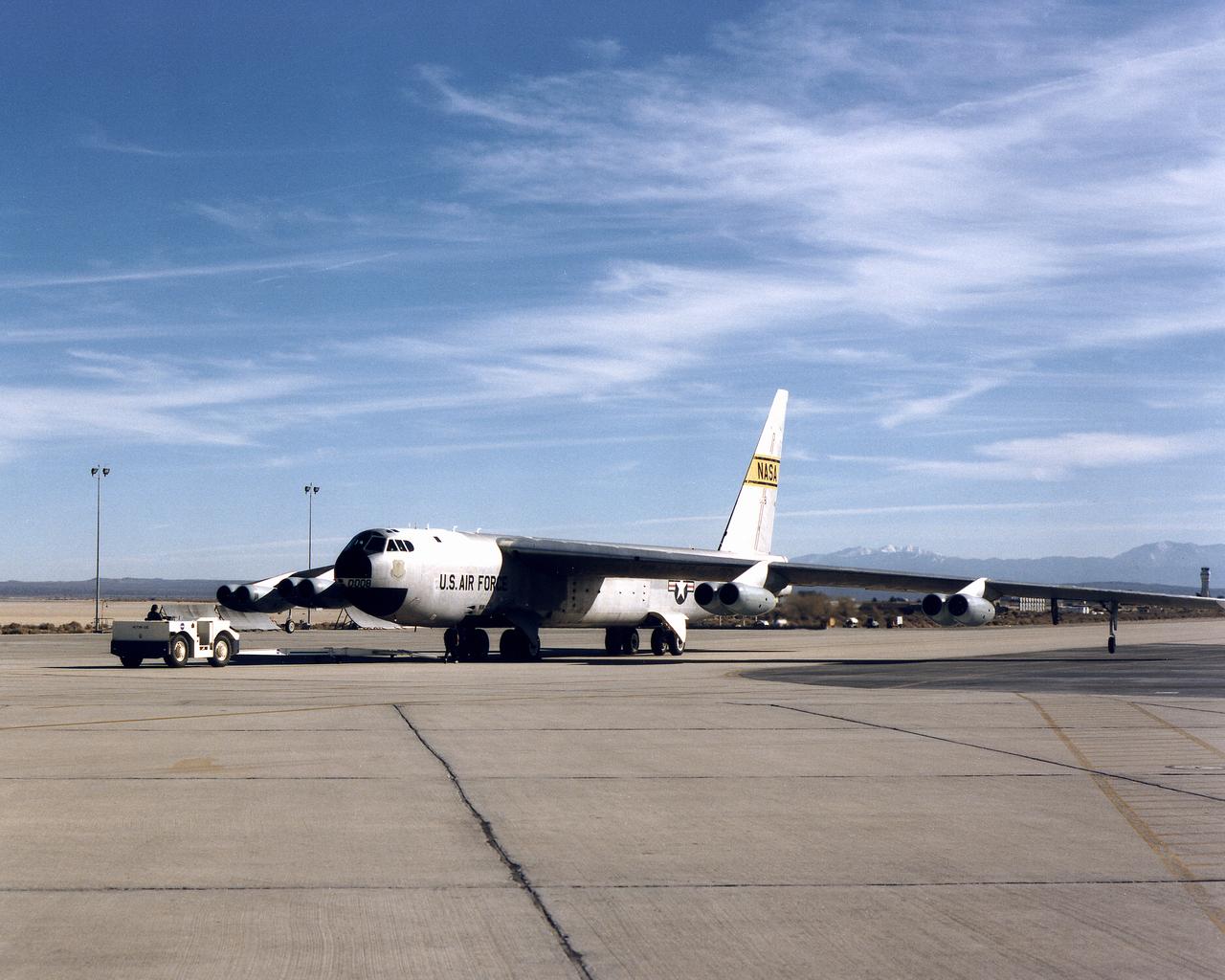
Dryden B-52 Launch Aircraft on Dryden Ramp
EC96-43808-2
CV-990 (NASA 711) on Ames ramp at sunrise
ARC-1974-AC74-0550
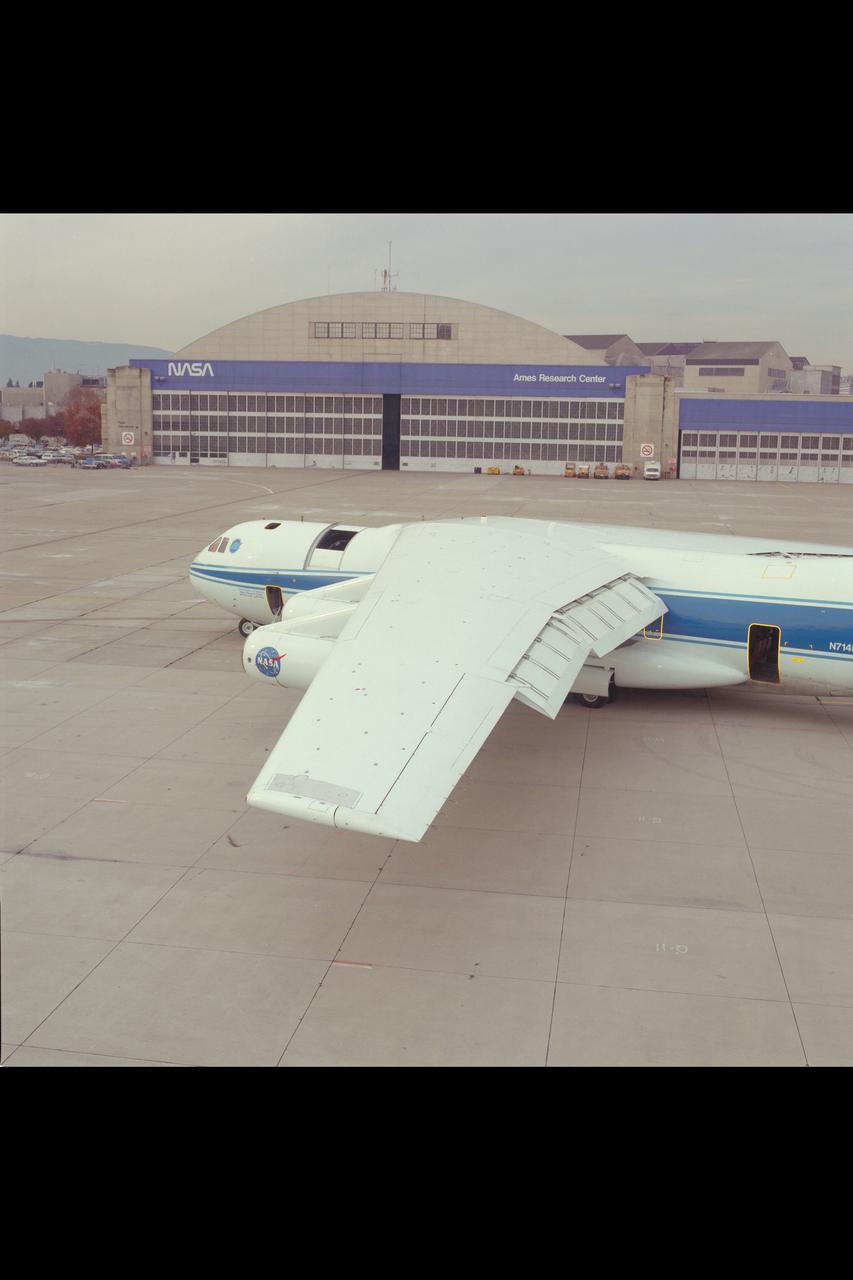
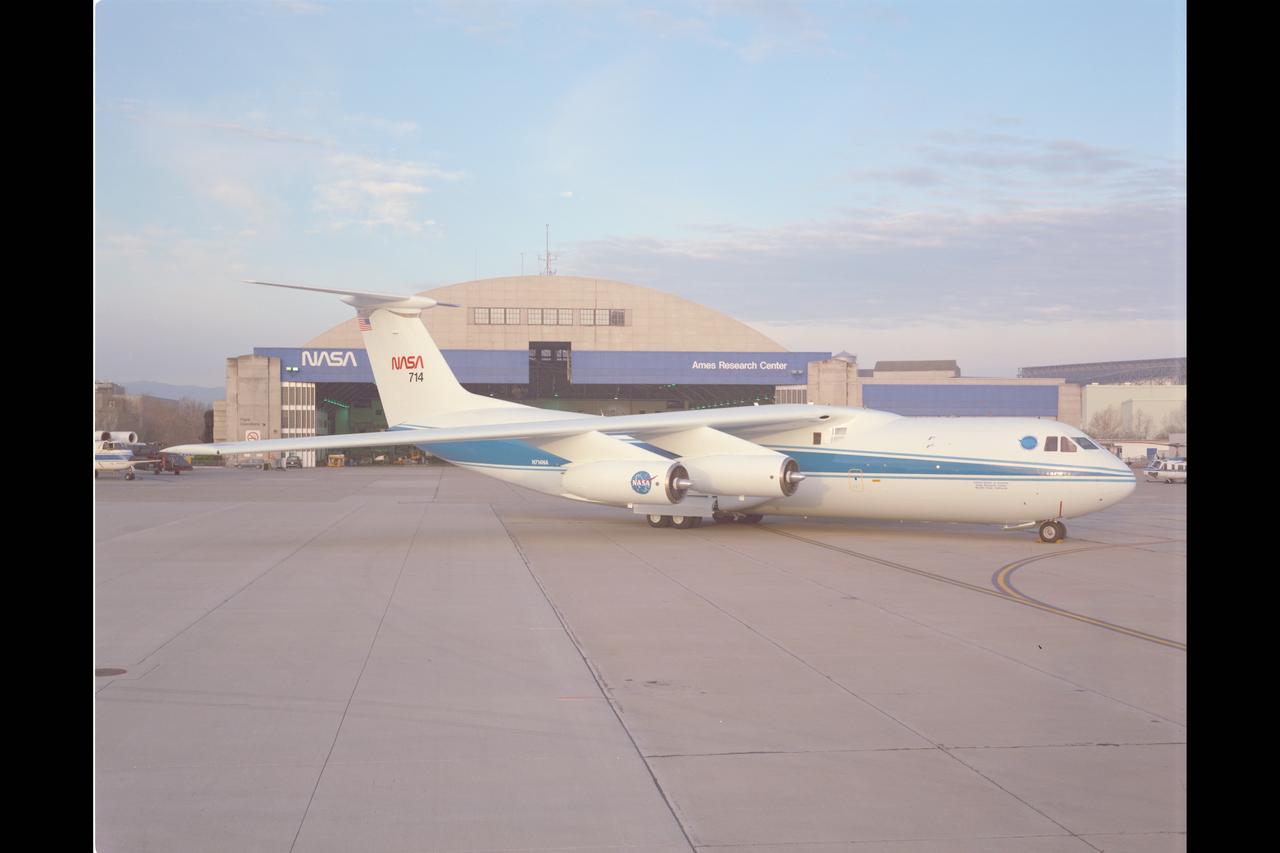
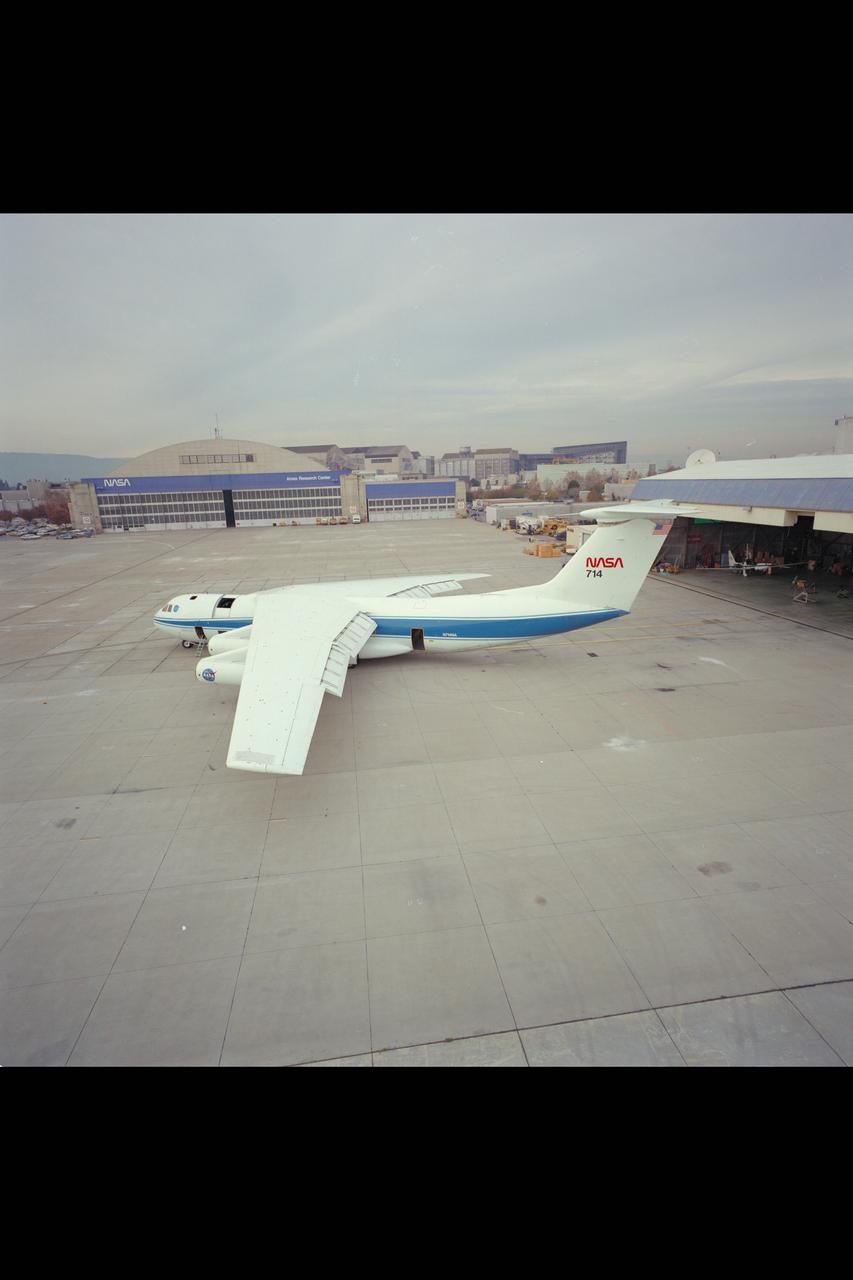
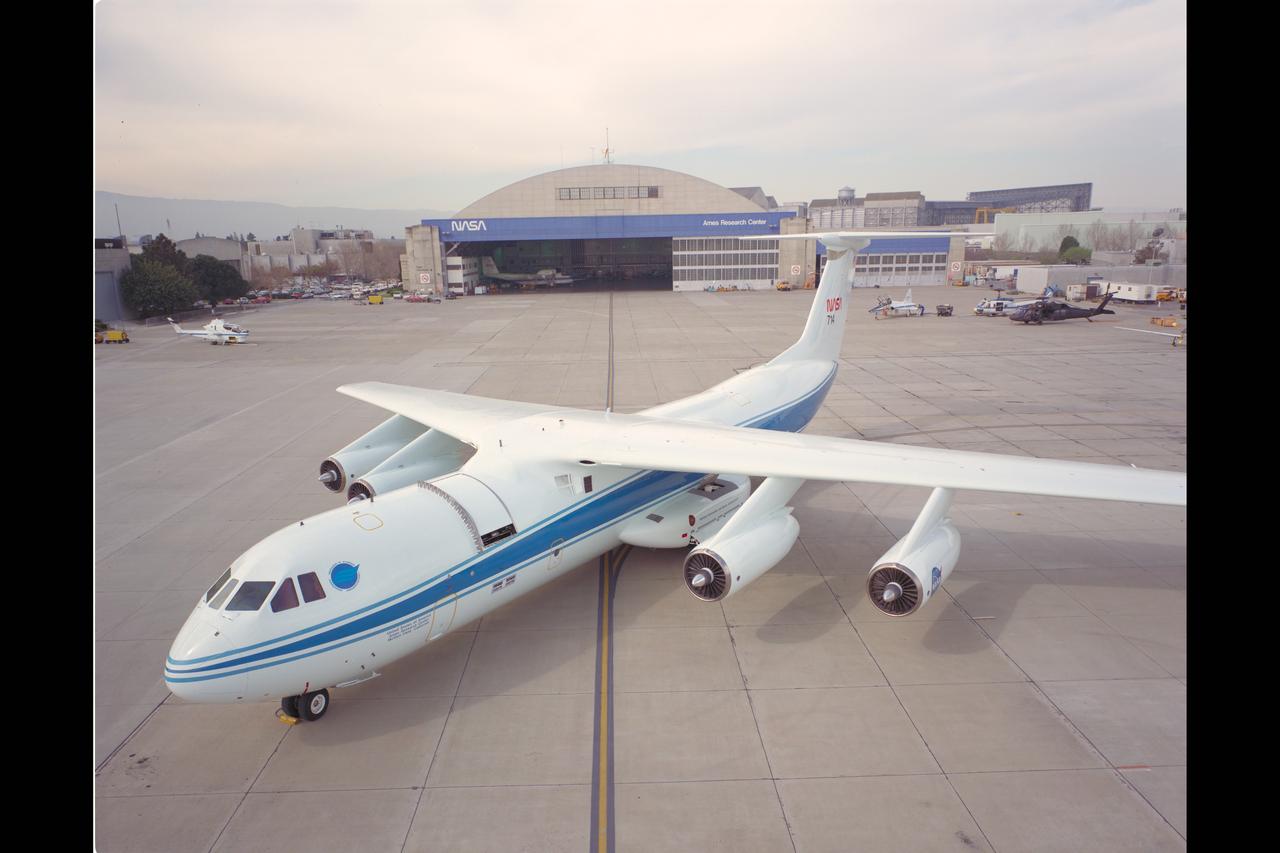
C-141 KAO (NASA-714) on ramp
ARC-1990-AC90-0361-7
C-141 KAO (NASA-714) on ramp
ARC-1990-AC90-0361-3
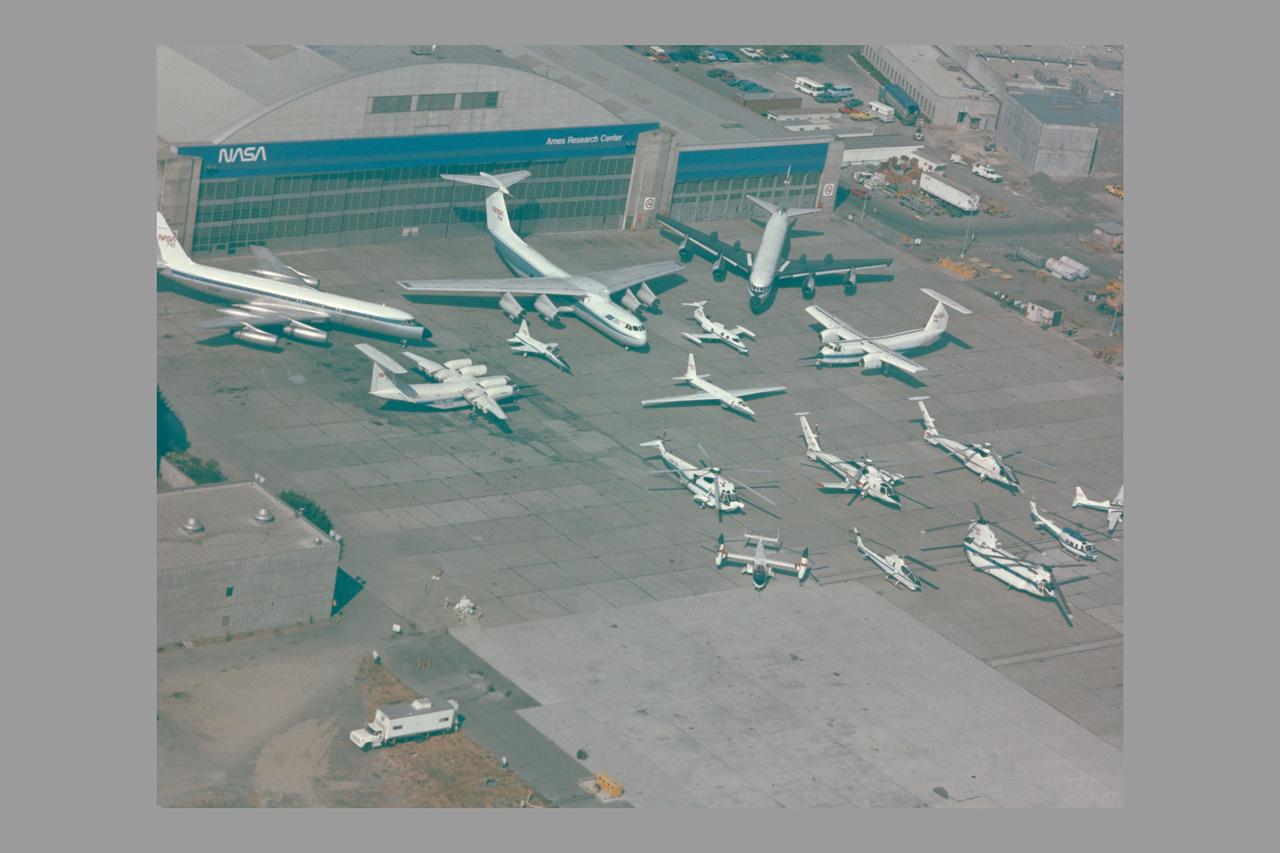
NASA Aircraft in Hangar and on Ramp (N-211)
ARC-1972-AC72-2293
C-141 KAO (NASA-714) on ramp
ARC-1990-AC90-0361-11
C-141 KAO (NASA-714) on ramp (fisheye view)
ARC-1990-AC90-0361-2
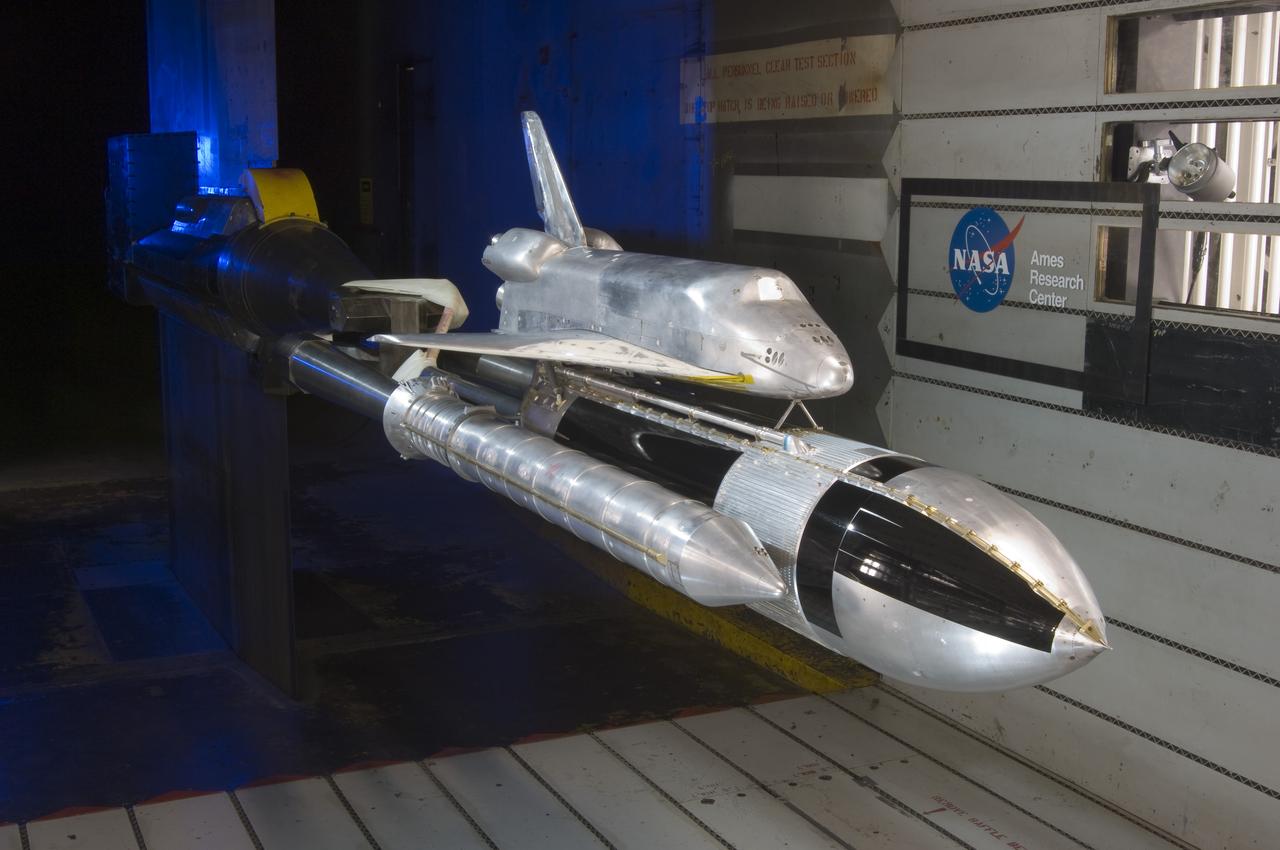
Space Shuttle 3% acoustics model with Pal ramp in Ames 11ft. w.t.
ARC-2009-ACD06-0051-010
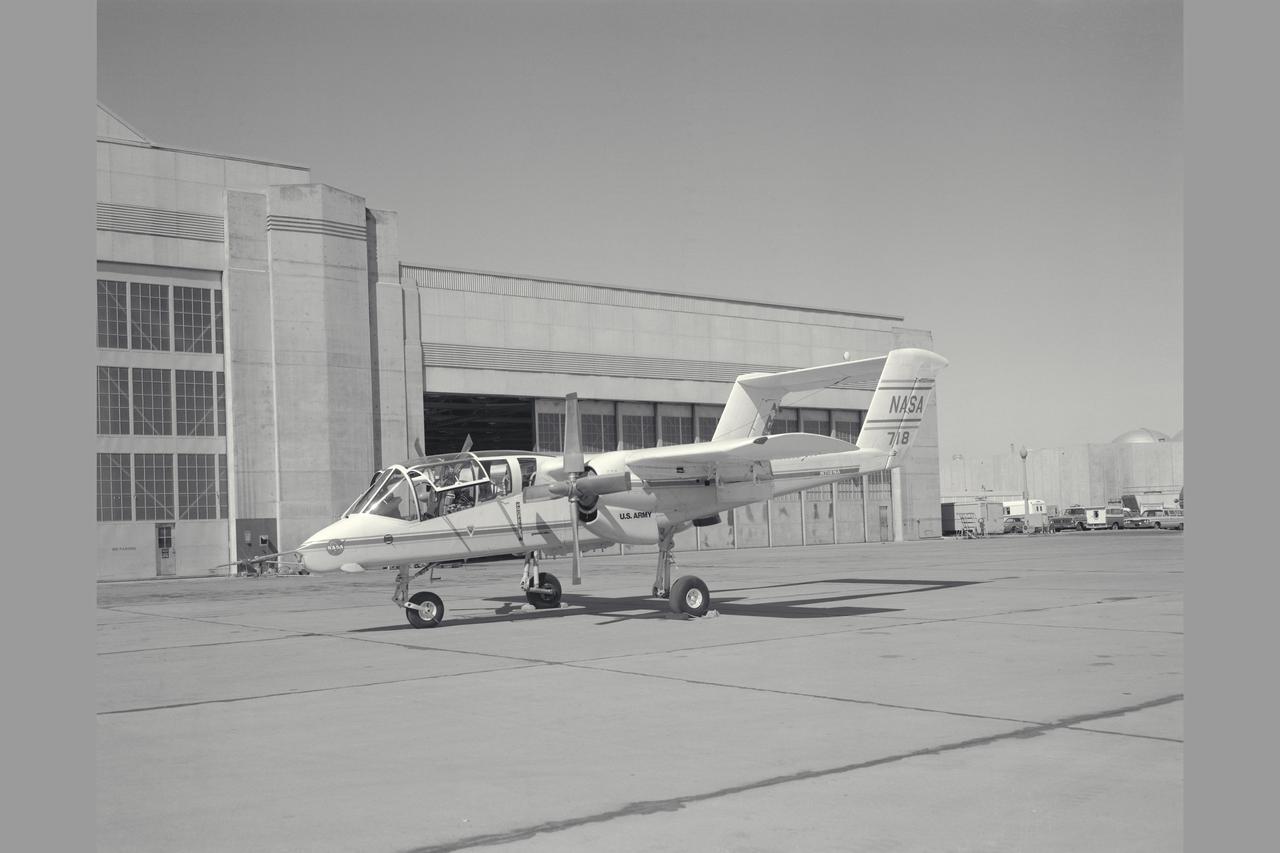
OV-10A (NASA-718) on NASA Ames Ramp: pilot Bob Innis
ARC-1971-A71-7045
The Proteus high-altitude aircraft on the ramp at the Mojave Airport in Mojave, California.
ERAST Program Proteus Aircraft on Runway at Mojave Airport in Mojave, California
SH-3G (NASA-735) Helicopter on roll out from Ames ramp
ARC-1969-AC88-0504-1
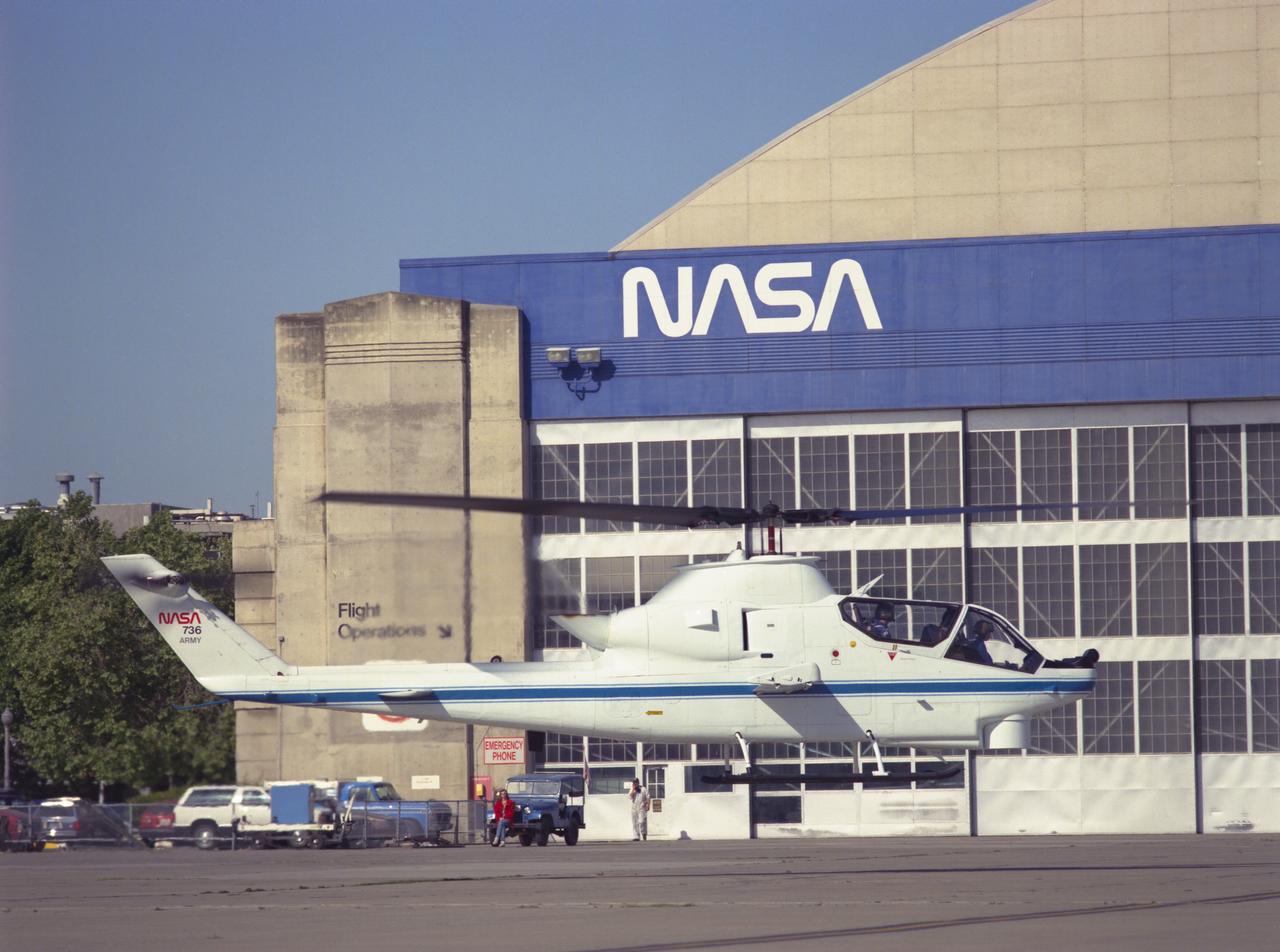
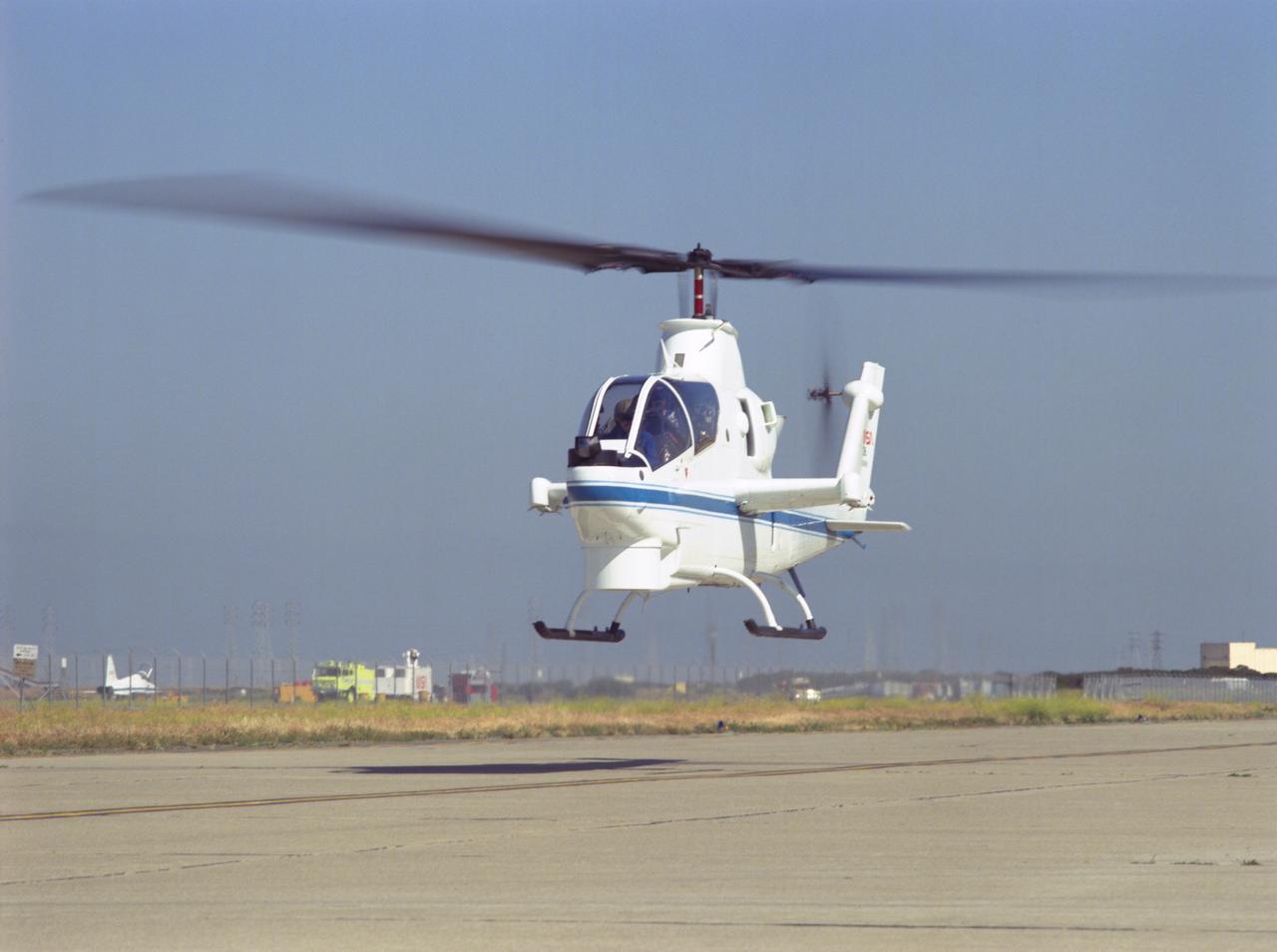
Cobra AH-1G (NASA-736) helicopter hovering on Ames ramp
ARC-1990-AC90-0178-90
Ames Pilot George Cooper and F-84F airplane on ramp
ARC-1955-A-20068
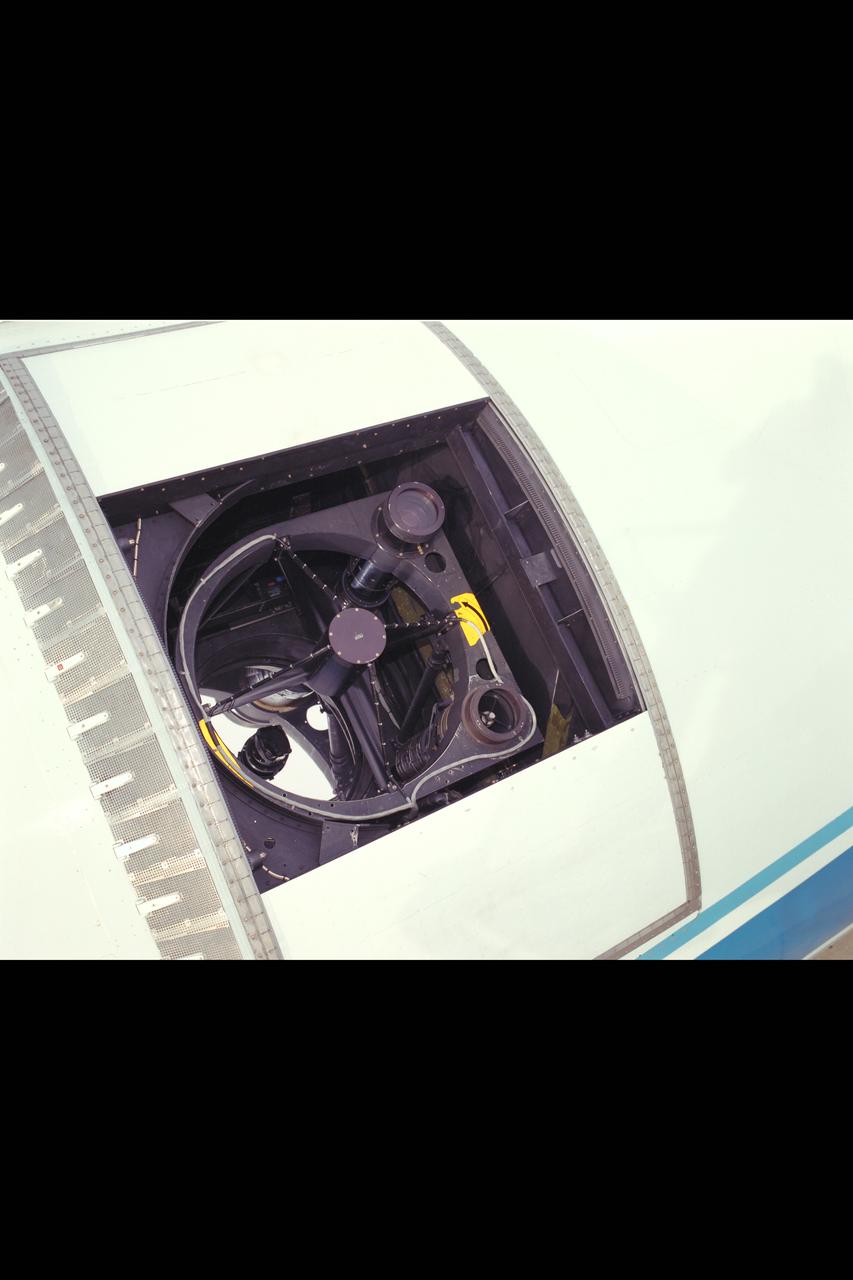
C-141 KAO (NASA-714) on ramp (Close-up of the telescope)
ARC-1990-AC90-0361-8
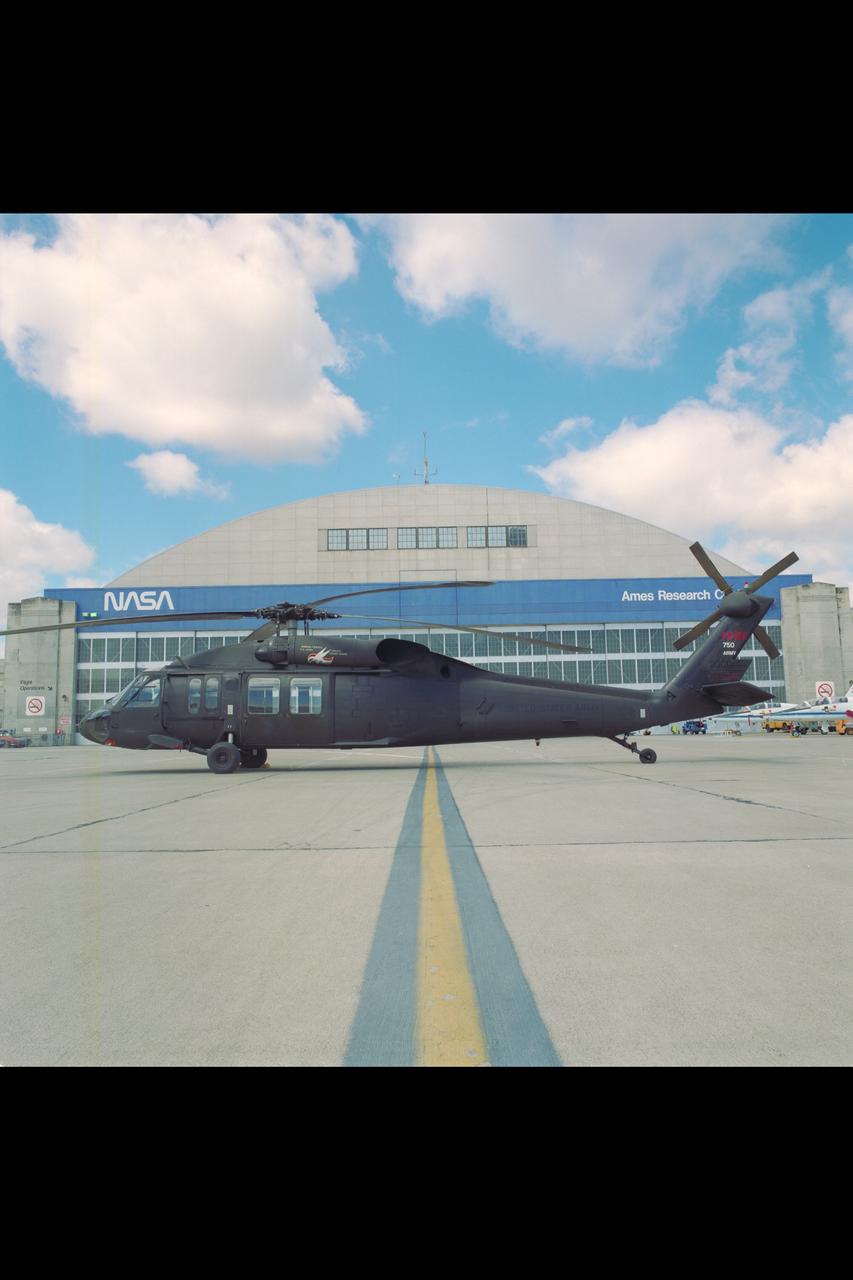
UH-60 (NASA-750) on Ames ramp - side view in front of hangar
ARC-1990-AC90-0483-1
MTPV - MOBILE TELEVISION PRODUCTION VEHICLE - NIGHT VIEW ON THE RAMP AT THE HANGAR
GRC-2000-C-00717
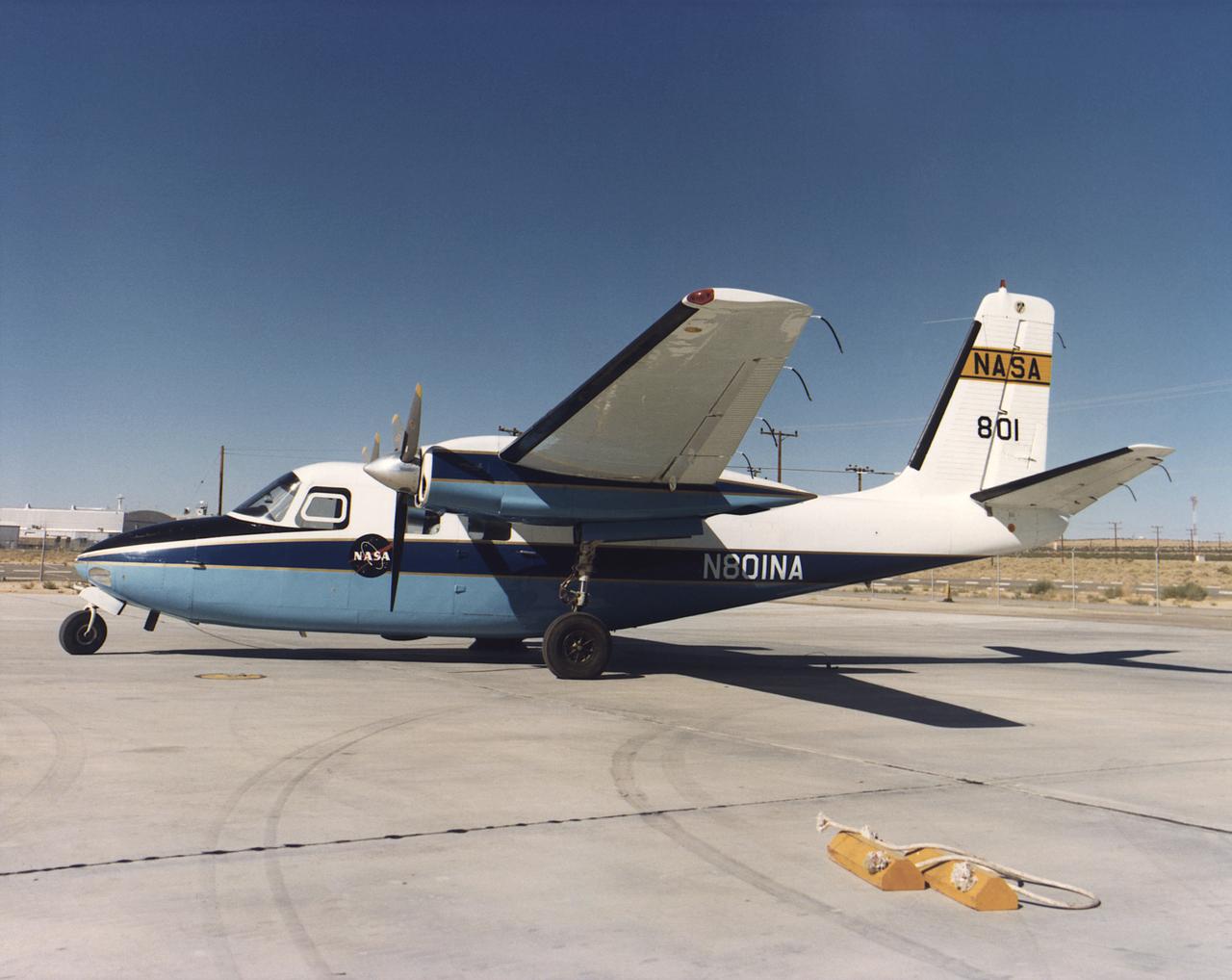
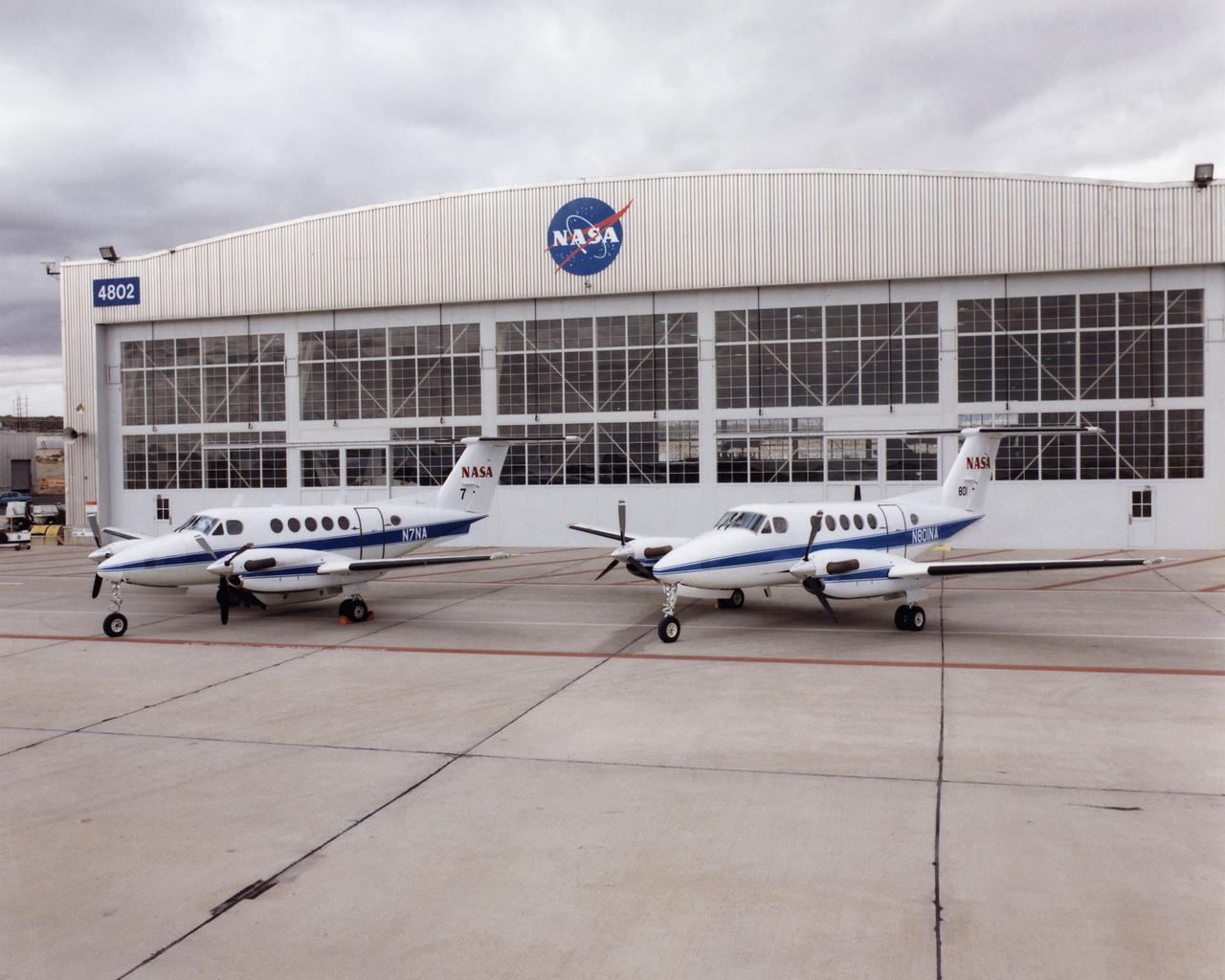
NASA N801NA and NASA 7 together on the NASA Dryden ramp.
EC97-44321-1
Cobra AH-1G (NASA-736) helicopter hovering on Ames ramp
ARC-1990-AC90-0178-85
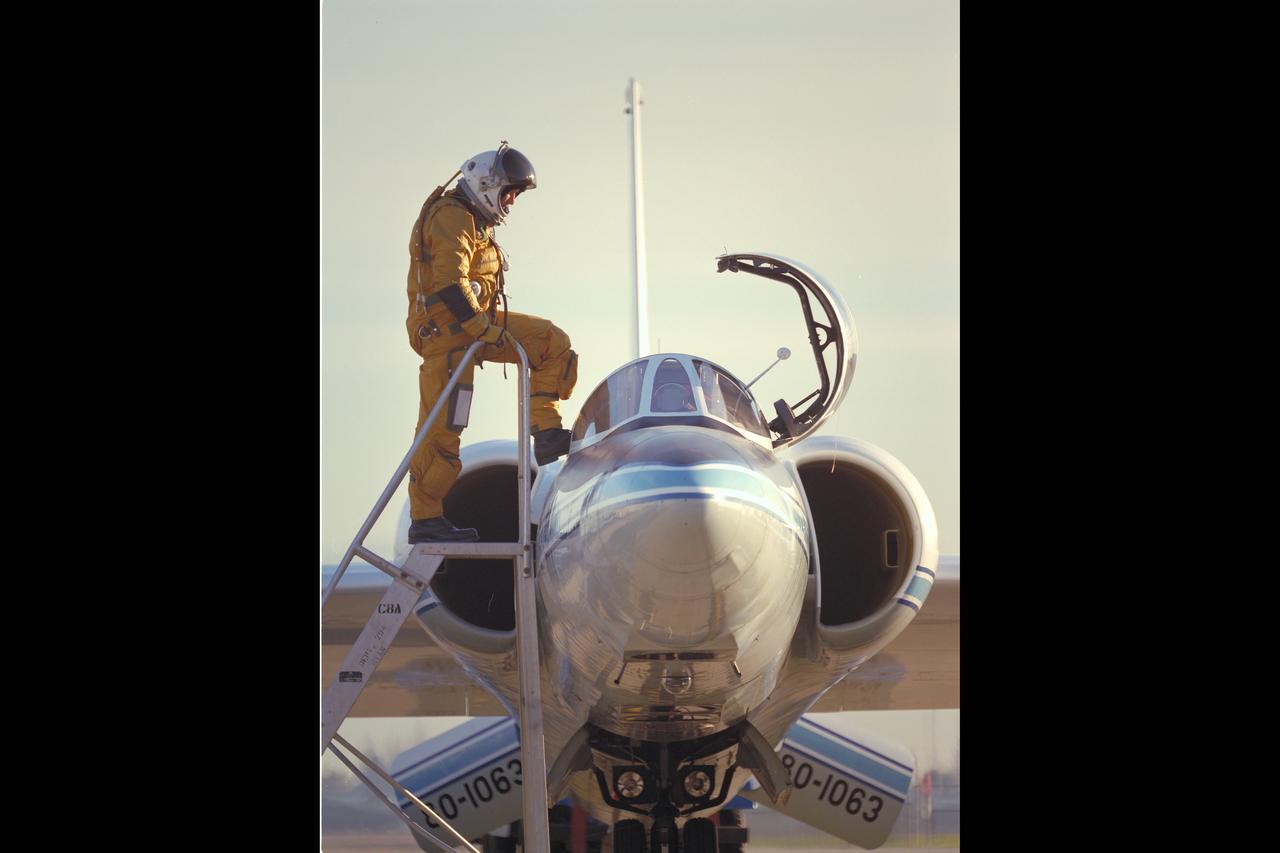
ER-2 on Ames Ramp with Pilot James Barrillearx entering cockpit
ARC-1987-AC87-0912-2