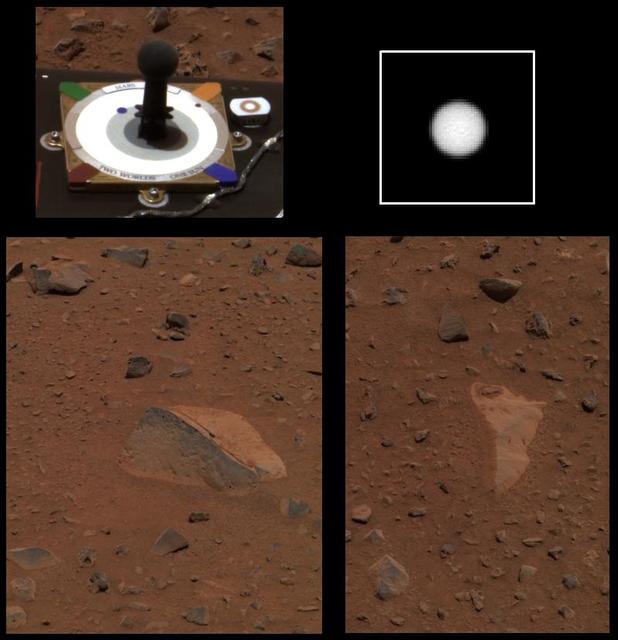
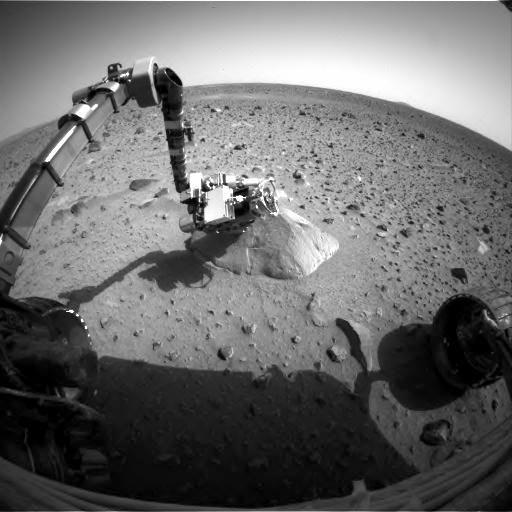
Recovering Spirit Sends a New Picture
Recovering Spirit Sets Sight on Cake
Last weekend's late October snow may have melted in Maryland, Delaware, parts of Pennsylvania and New Jersey, but residents in north central Connecticut are still dealing with the effects of the storm.   According to Connecticut Light and Power, 430,868 residents were still without power today, Nov. 3, 2011. For estimated restoration times, visit their website at: <a href="http://www.cl-p.com/stormcenter/estimates/" rel="nofollow">www.cl-p.com/stormcenter/estimates/</a>.   A late October snowstorm from a Nor'easter blanketed the eastern U.S. from West Virginia to Maine and broke records the weekend before Halloween Monday. NASA's Aqua satellite flew over the region on October 30 after the snow was ending in New England and captured the ghostly blanket of white.   When NASA's Aqua satellite passed over the northeastern U.S. on November 2, 2011 at 2:00 p.m. EDT, the Moderate Resolution Imaging Spectroradiometer (MODIS) instrument captured a detailed image of the remaining snowfall.   Snow still covers the ground in western and central Connecticut, southeastern New York, western and central Massachusetts, and parts of Vermont, New Hampshire and Maine. Over the Atlantic, cirrocumulus clouds create a diagonal border.  The image was created at NASA's Goddard Space Flight Center in Greenbelt, Md.  Image Credit: NASA Goddard MODIS Rapid Response Team; Caption: NASA Goddard, Rob Gutro  <b><a href="http://www.nasa.gov/audience/formedia/features/MP_Photo_Guidelines.html" rel="nofollow">NASA image use policy.</a></b>  <b><a href="http://www.nasa.gov/centers/goddard/home/index.html" rel="nofollow">NASA Goddard Space Flight Center</a></b> enables NASA’s mission through four scientific endeavors: Earth Science, Heliophysics, Solar System Exploration, and Astrophysics. Goddard plays a leading role in NASA’s accomplishments by contributing compelling scientific knowledge to advance the Agency’s mission.  <b>Follow us on <a href="http://twitter.com/NASA_GoddardPix" rel="nofollow">Twitter</a></b>  <b>Like us on <a href="http://www.facebook.com/pages/Greenbelt-MD/NASA-Goddard/395013845897?ref=tsd" rel="nofollow">Facebook</a></b>  <b>Find us on <a href="http://instagrid.me/nasagoddard/?vm=grid" rel="nofollow">Instagram</a></b>
Satellite Sees Remaining Northeast Snowfall, Connecticut Still Recovering
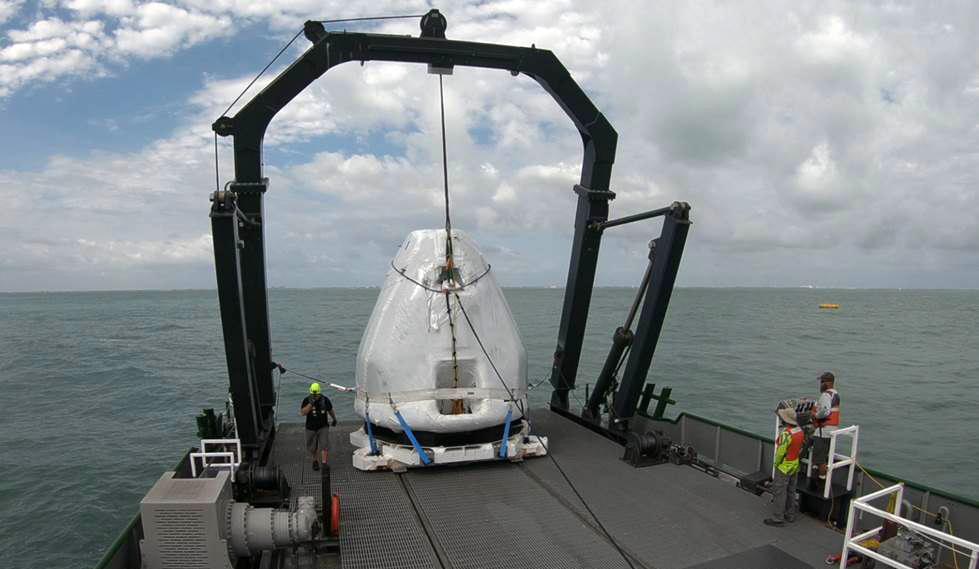
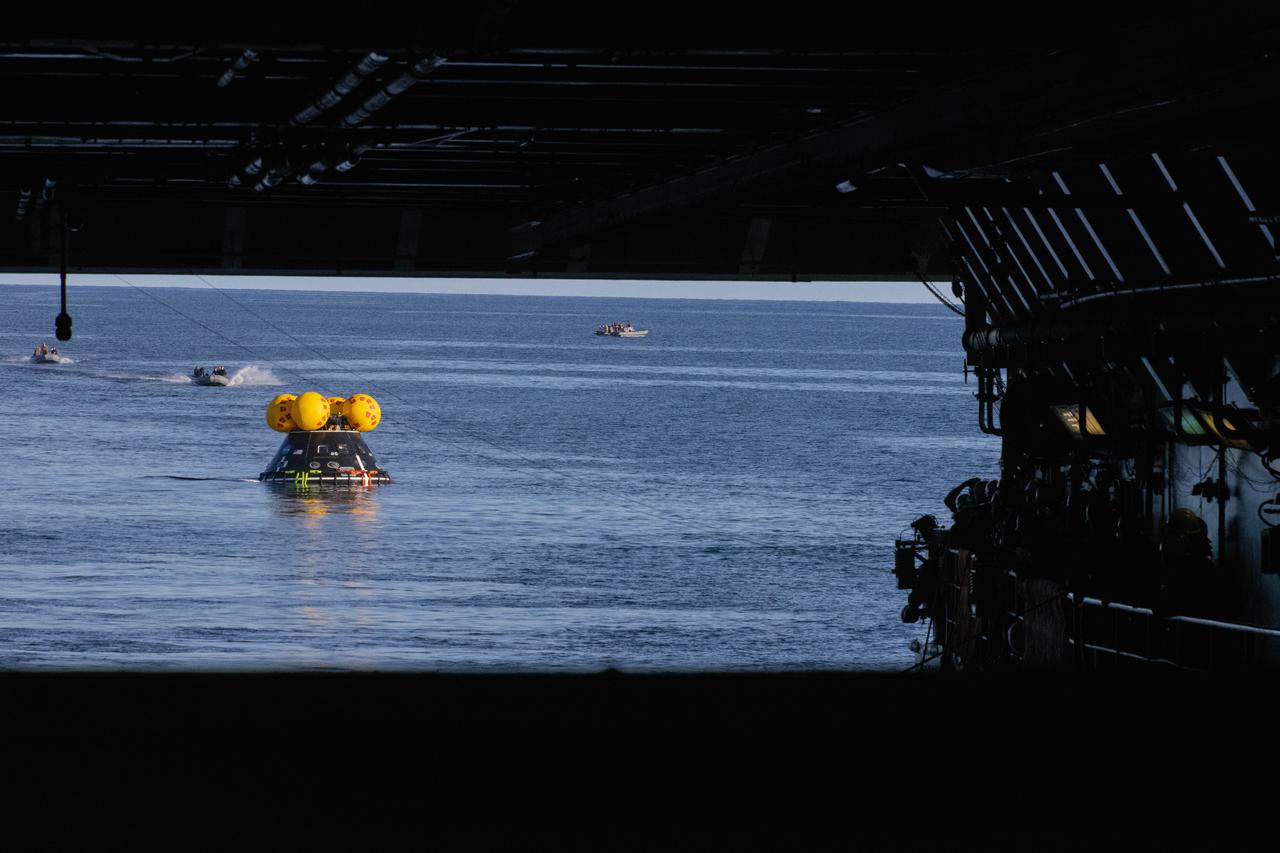
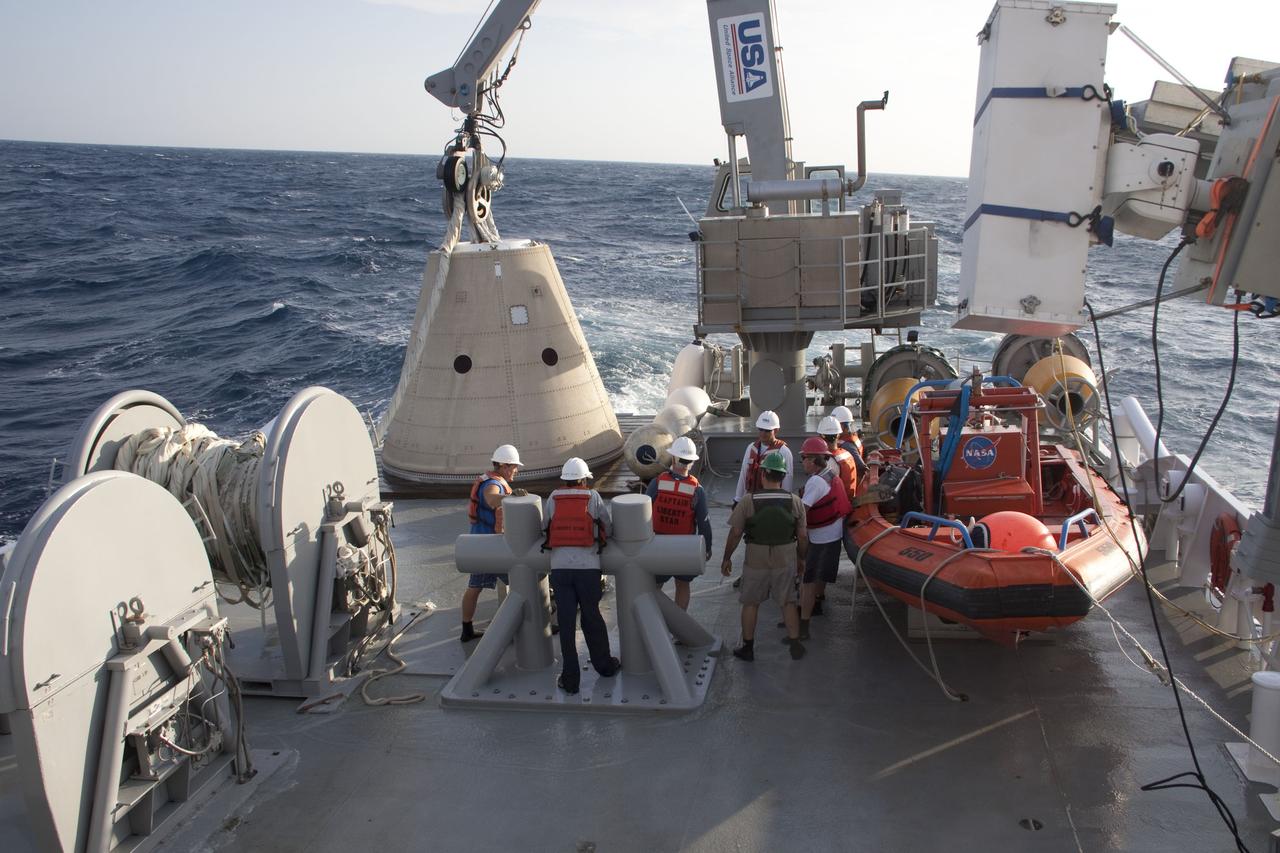
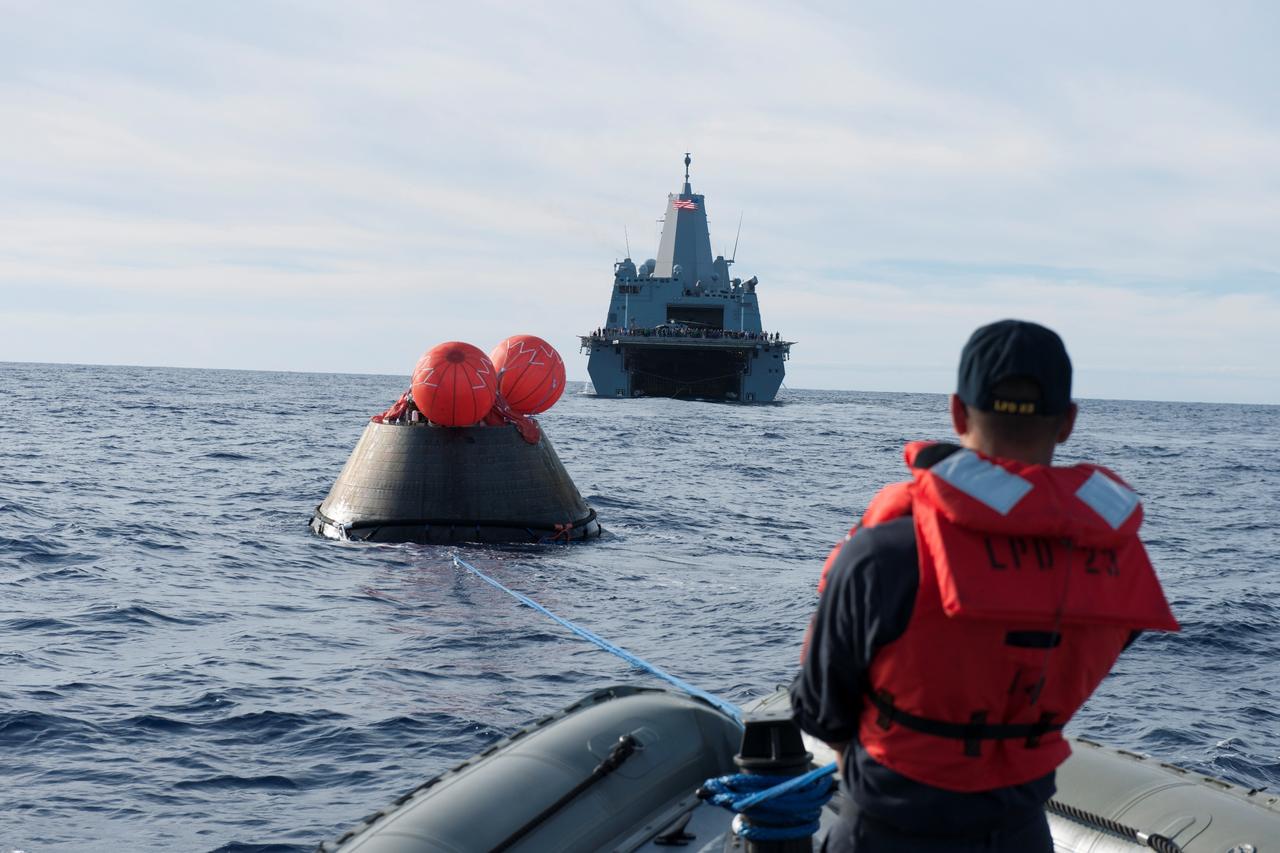
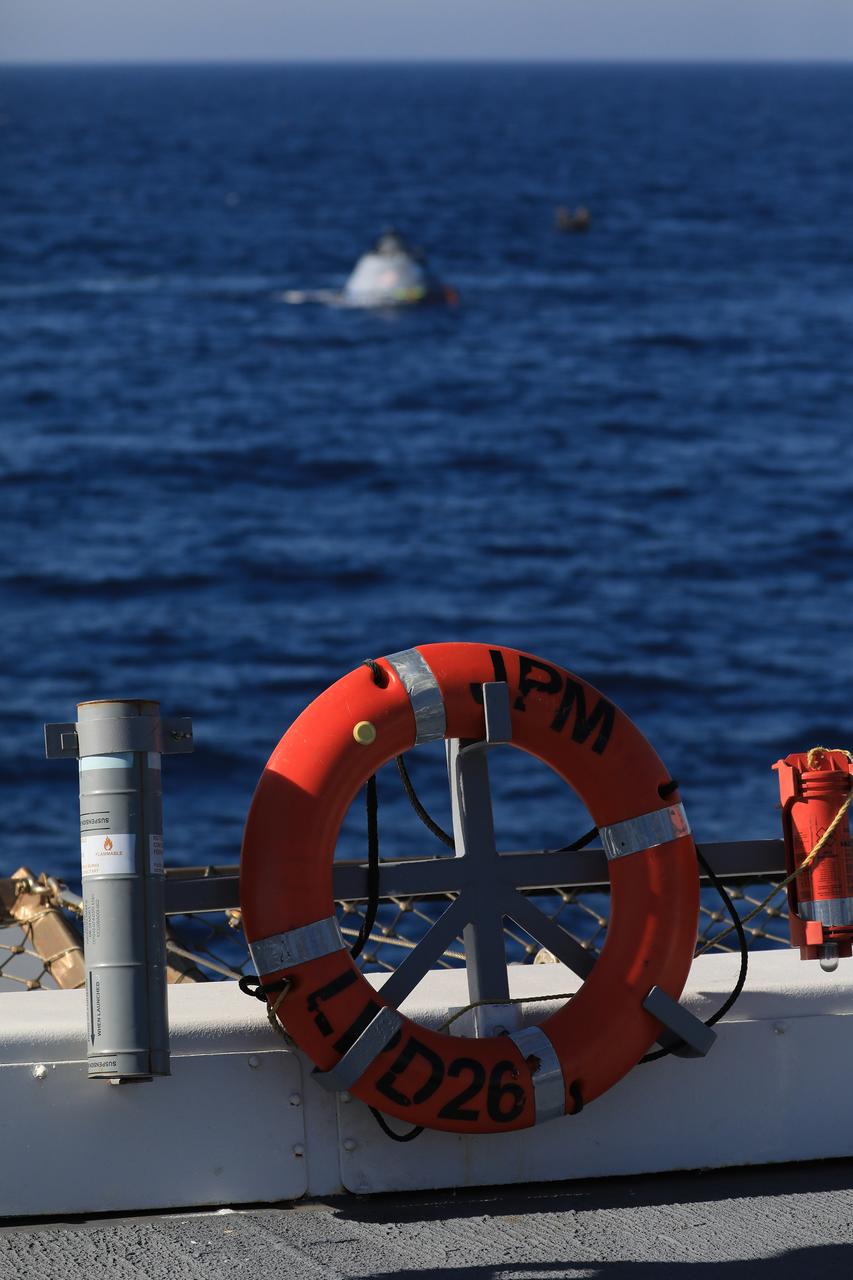
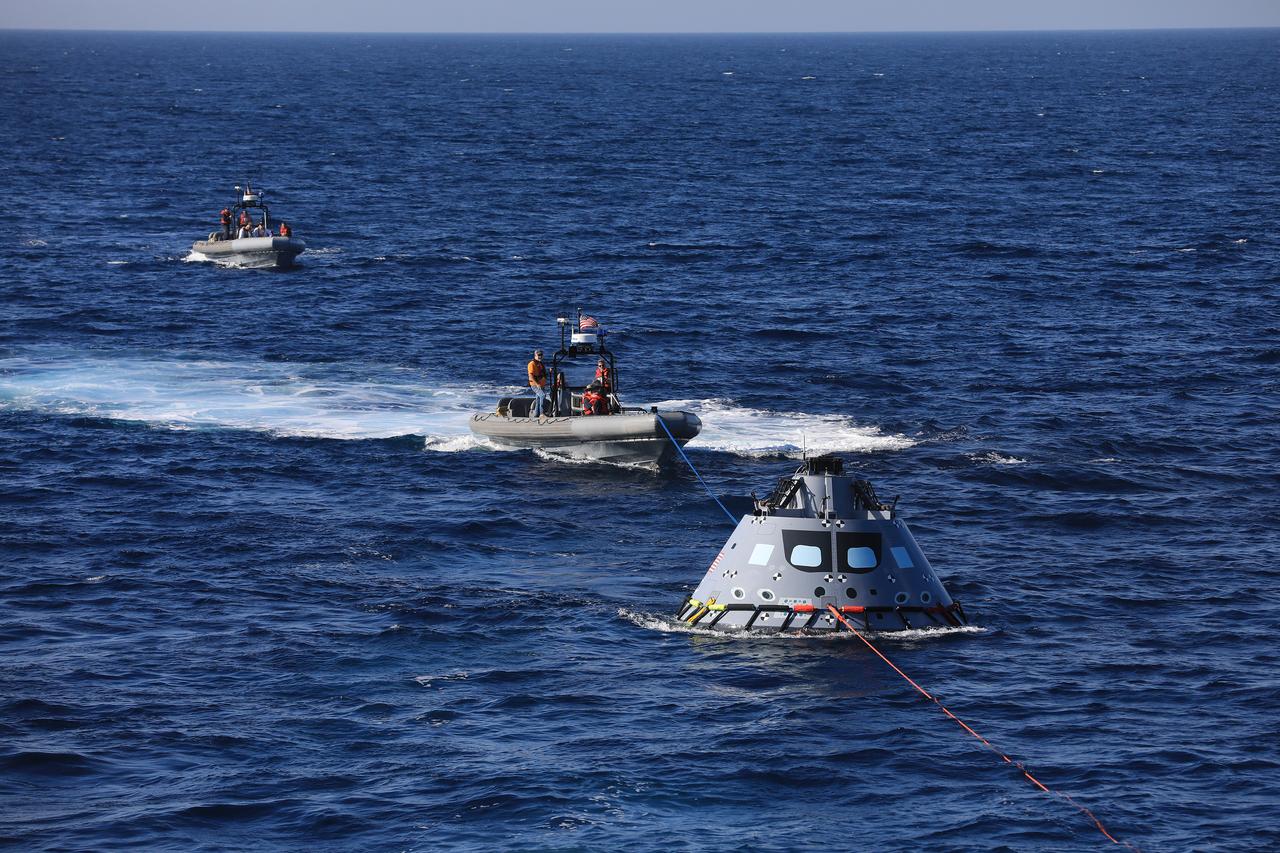
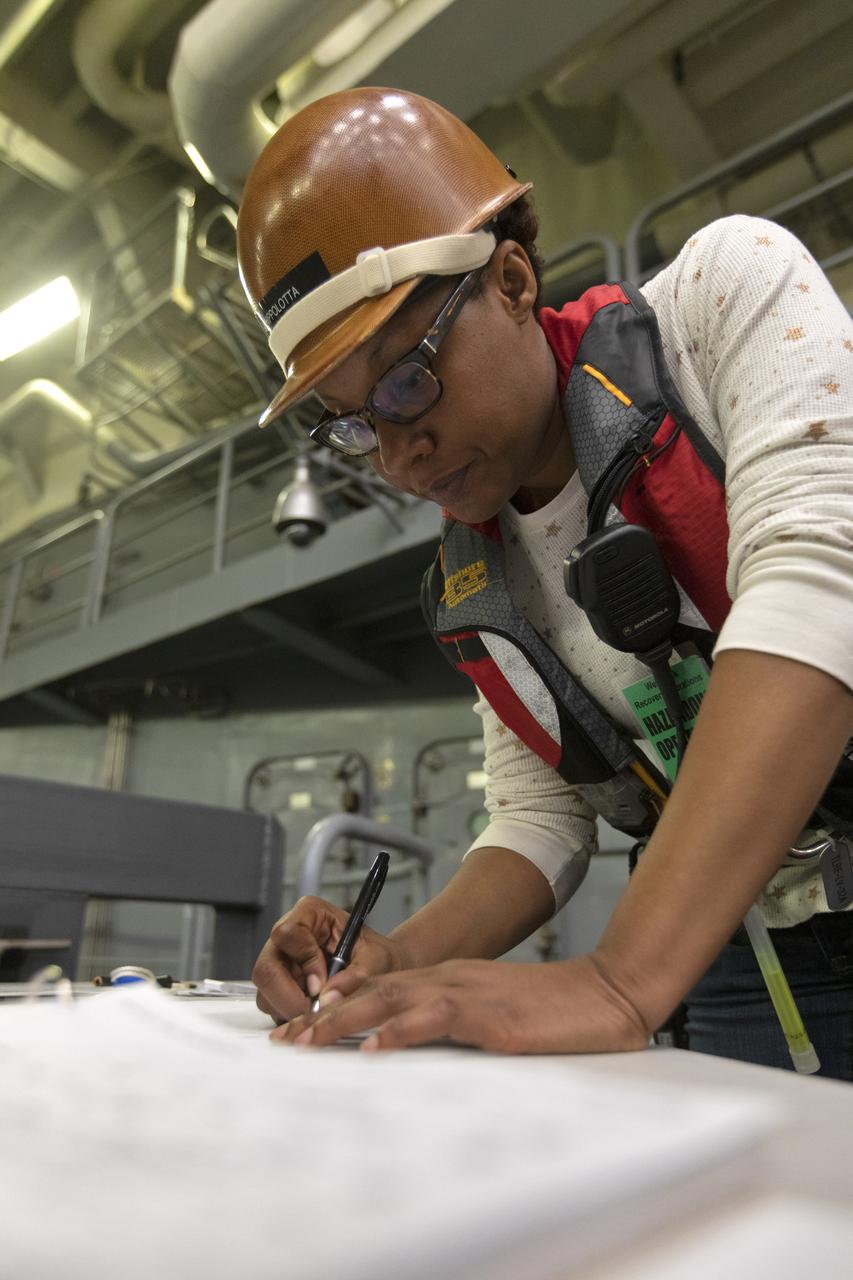
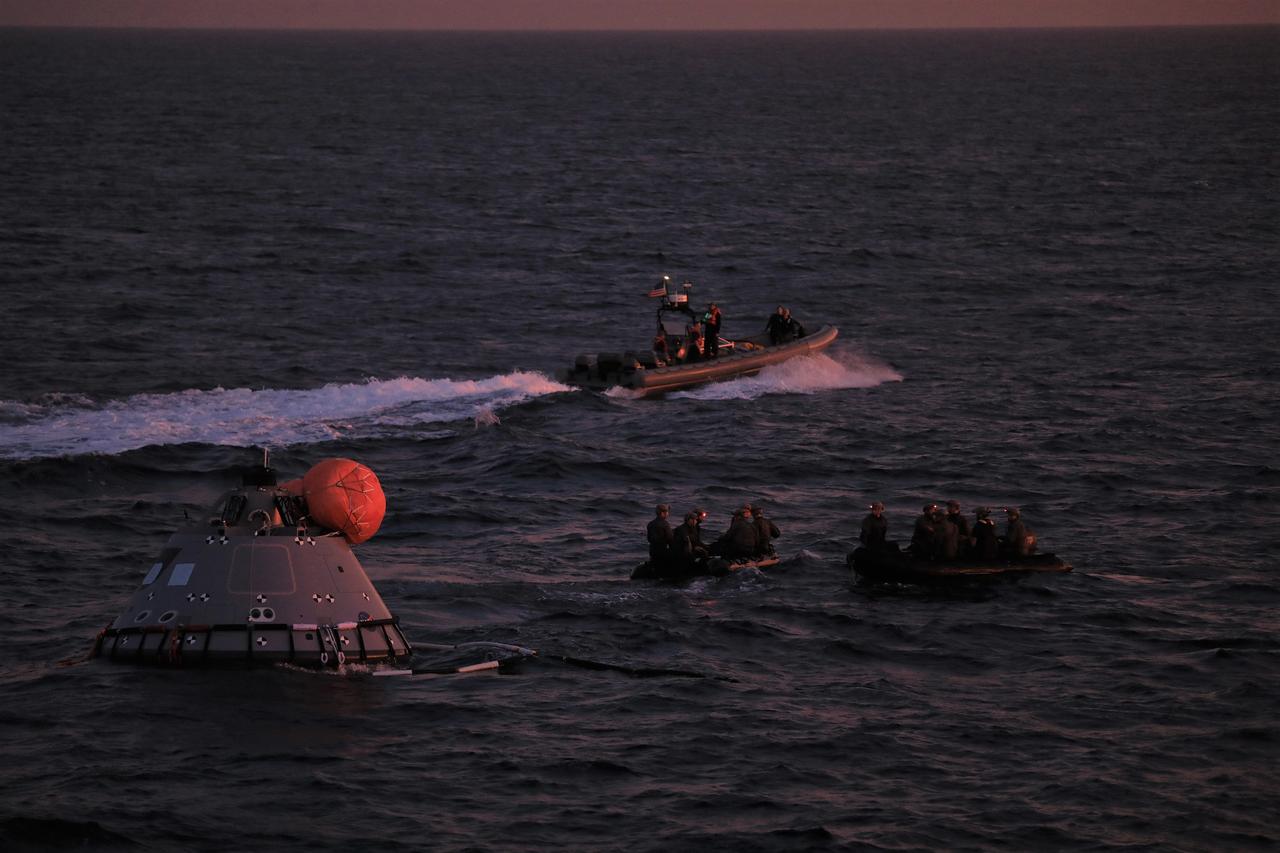
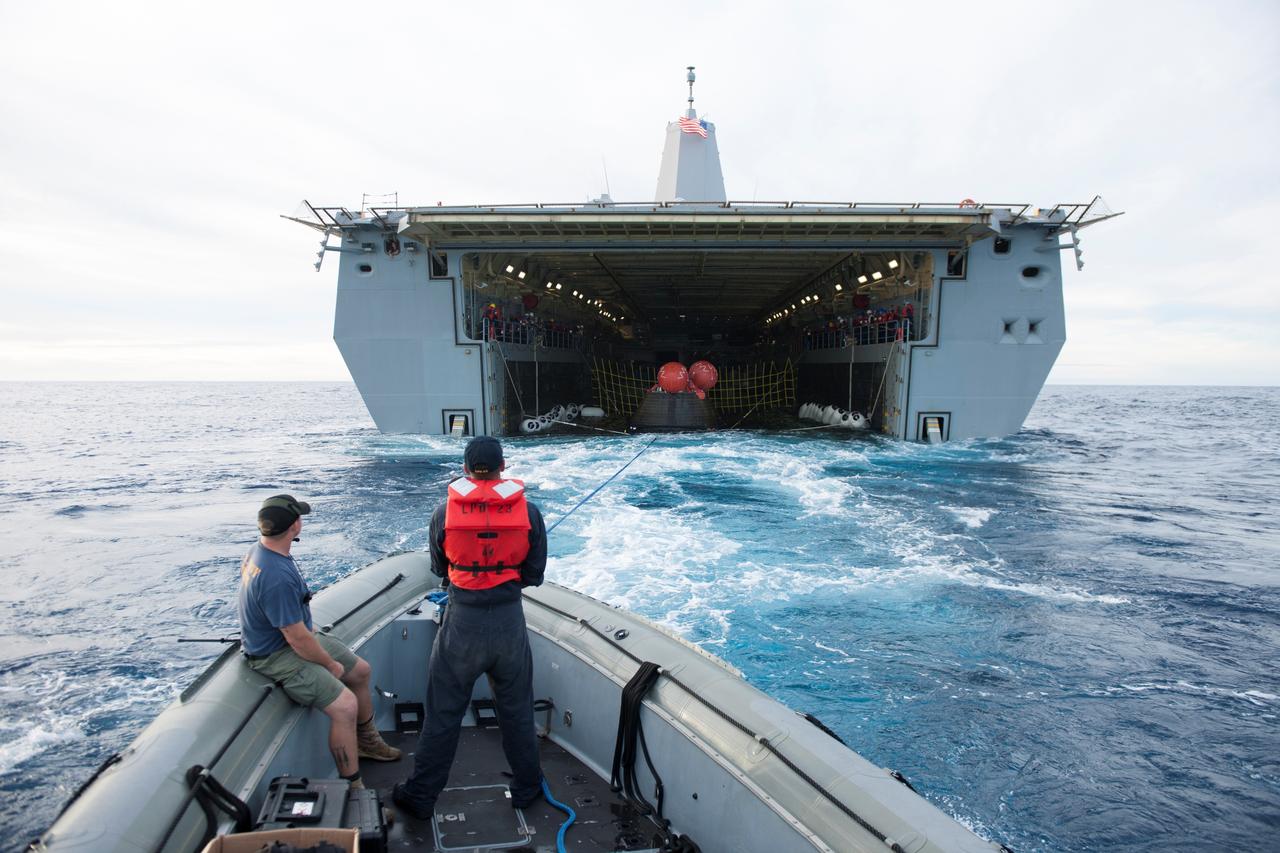
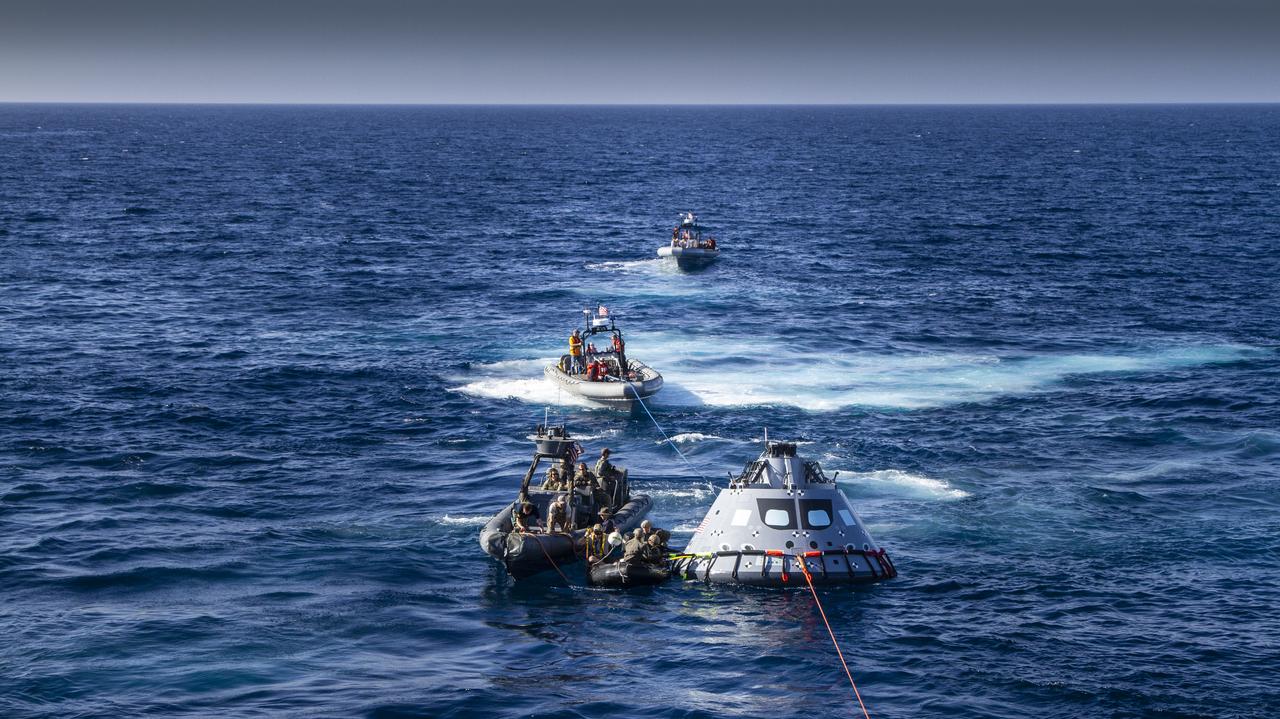
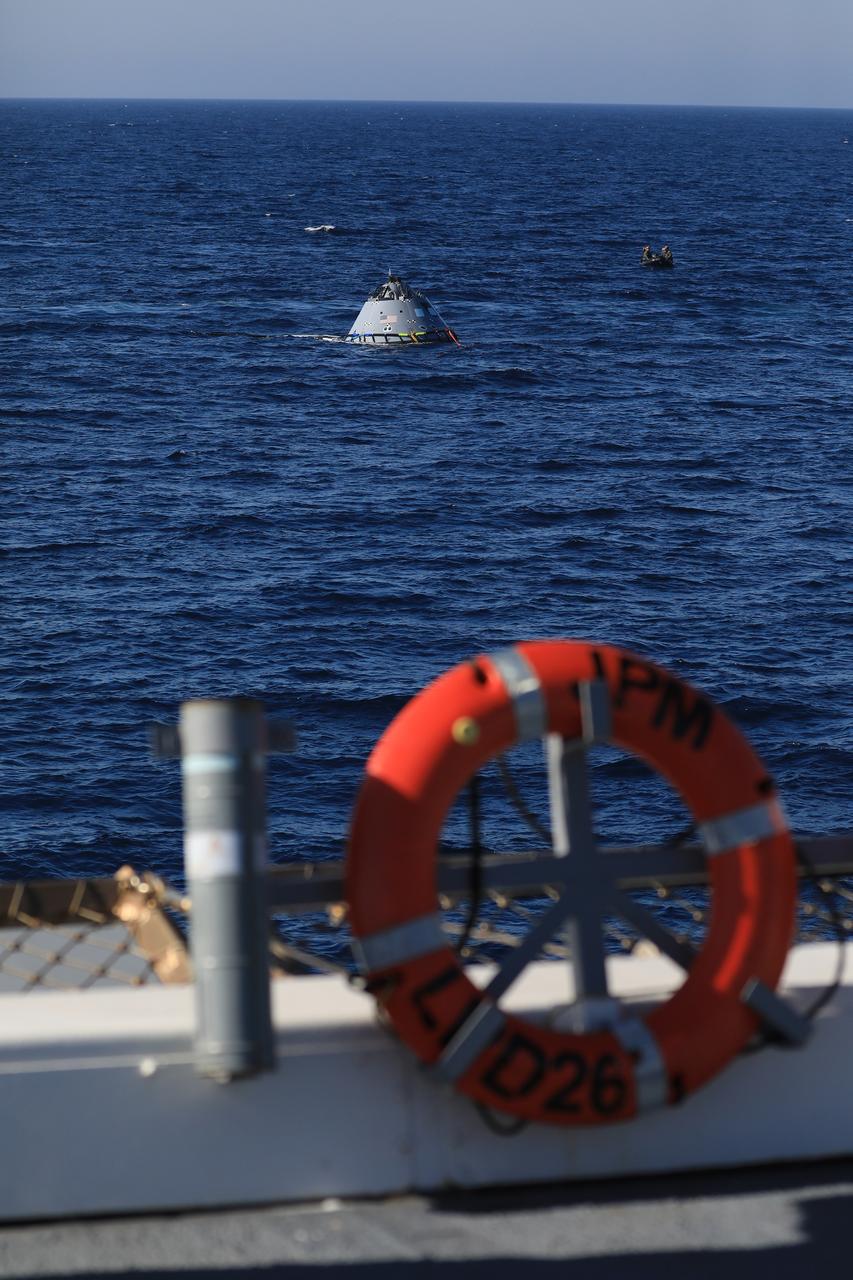
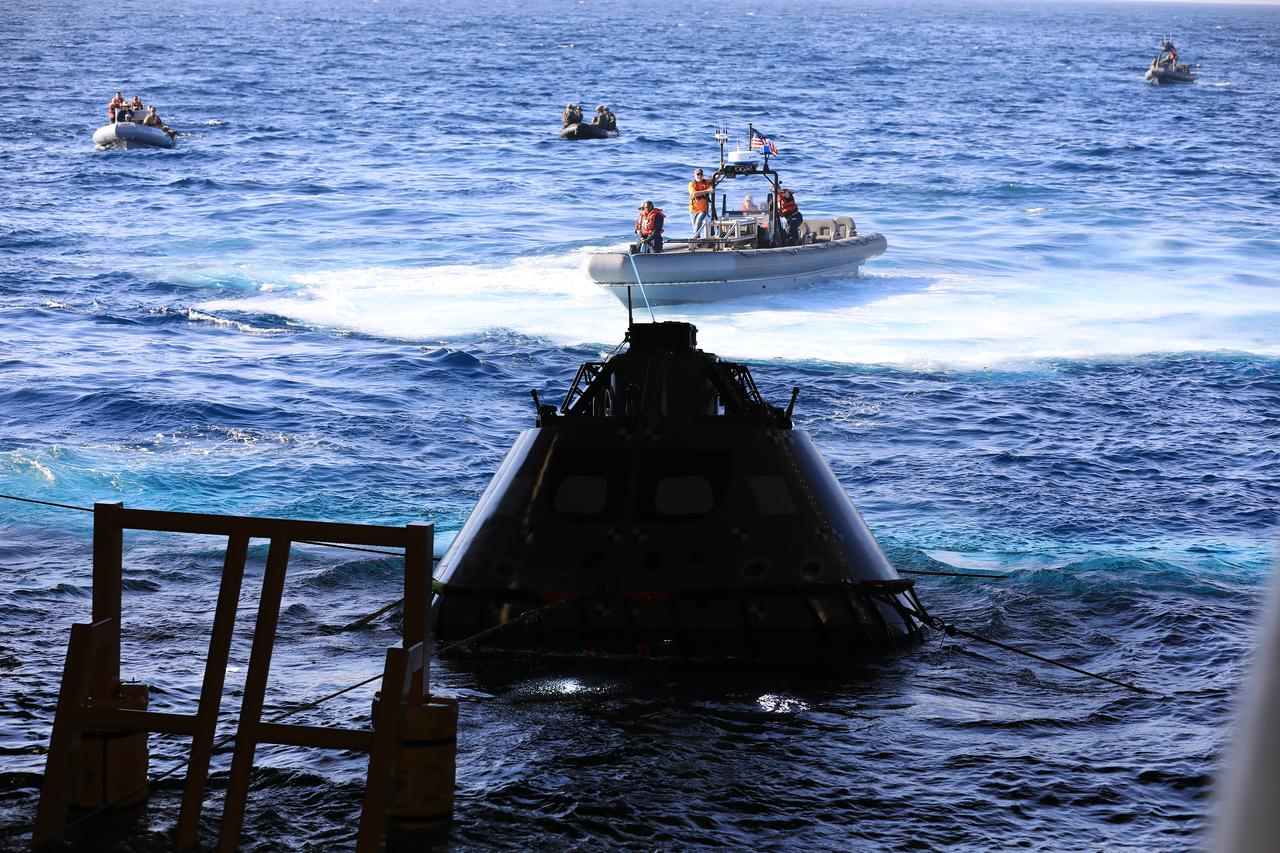
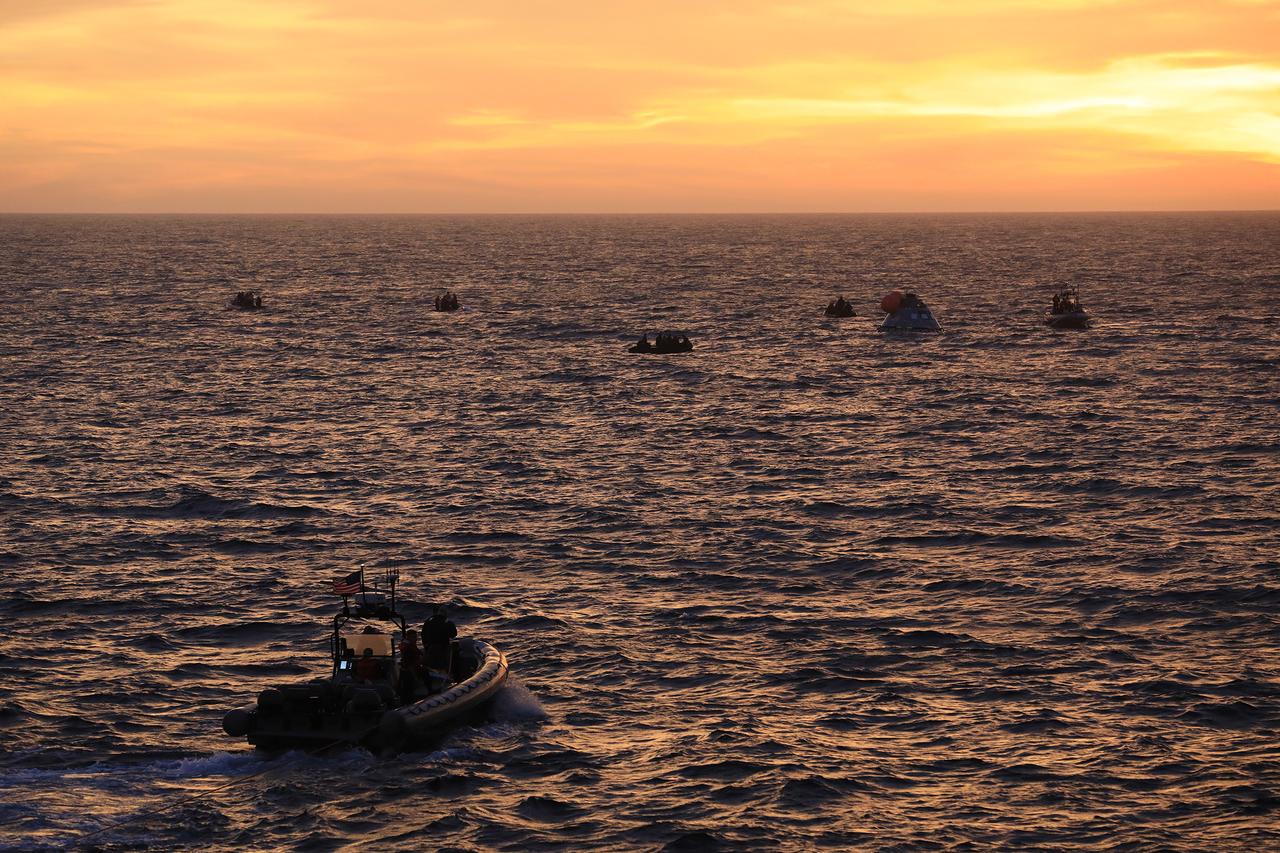
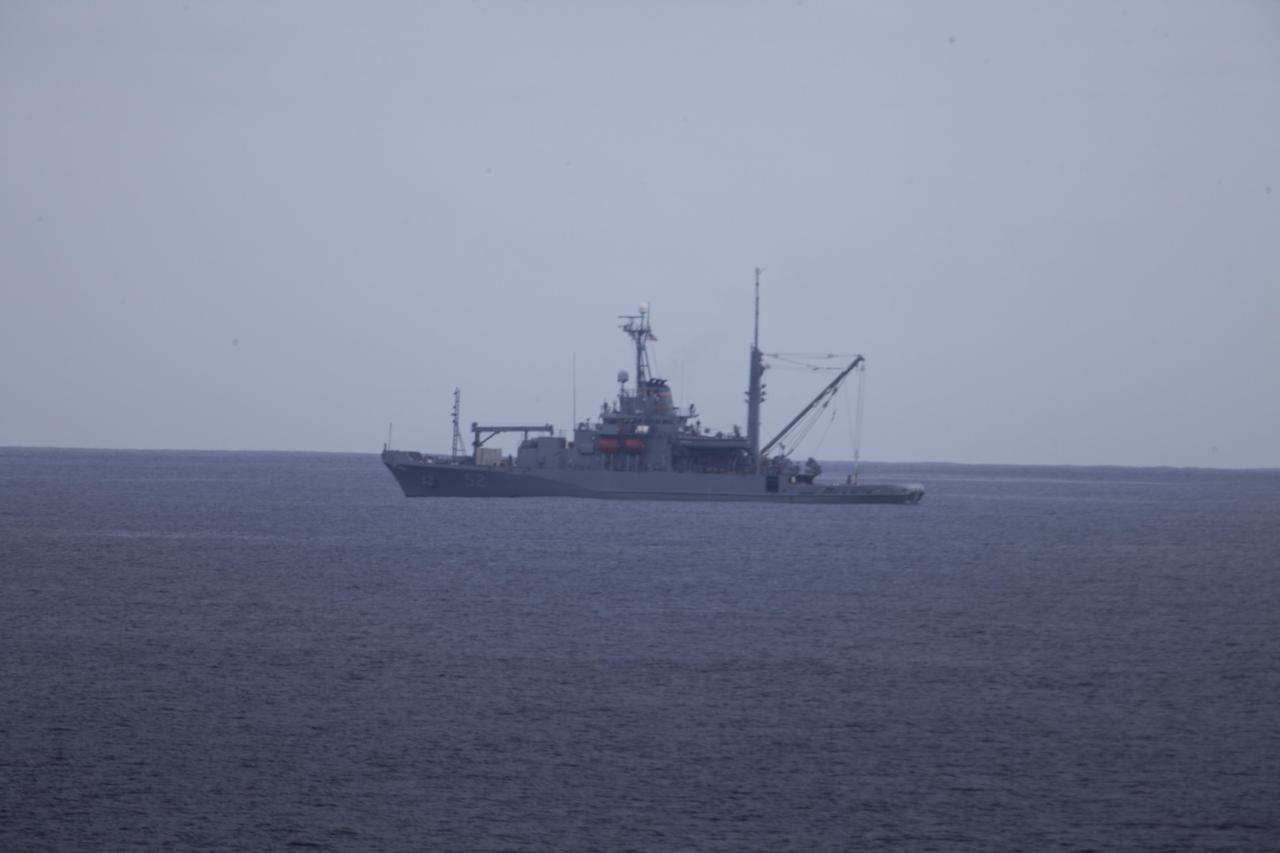
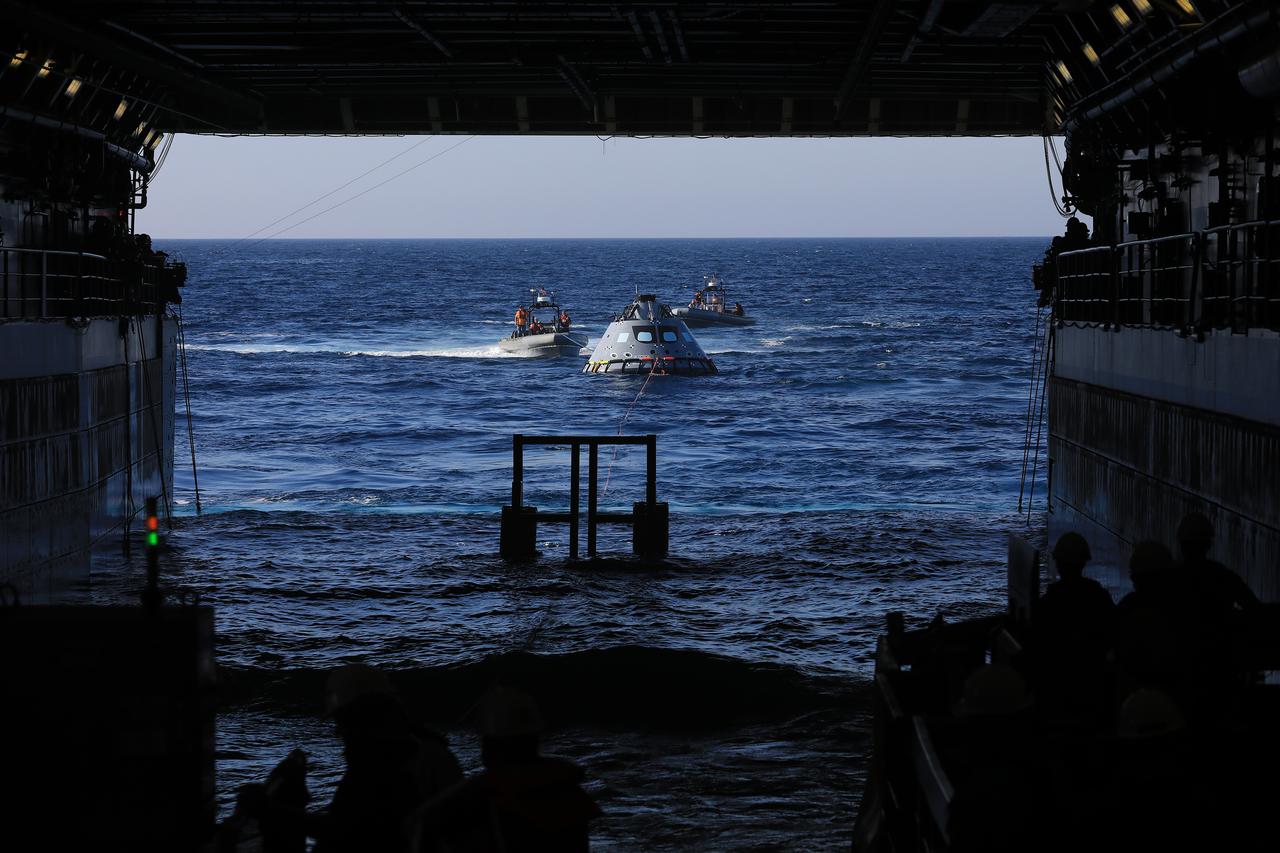
On February 28, SpaceX completed a demonstration of their ability to recover the crew and capsule after a nominal water splashdown. This marks an important recovery milestone and joint test. The timeline requirement from splashdown to crew egress onboard the ship is one hour, and the recovery team demonstrated that they can accomplish this operation under worst-case conditions in under 45 minutes. Further improvements are planned to shorten the recovery time even more as the team works to build a process that is safe, repeatable, and efficient.
SpaceX Recovery Training
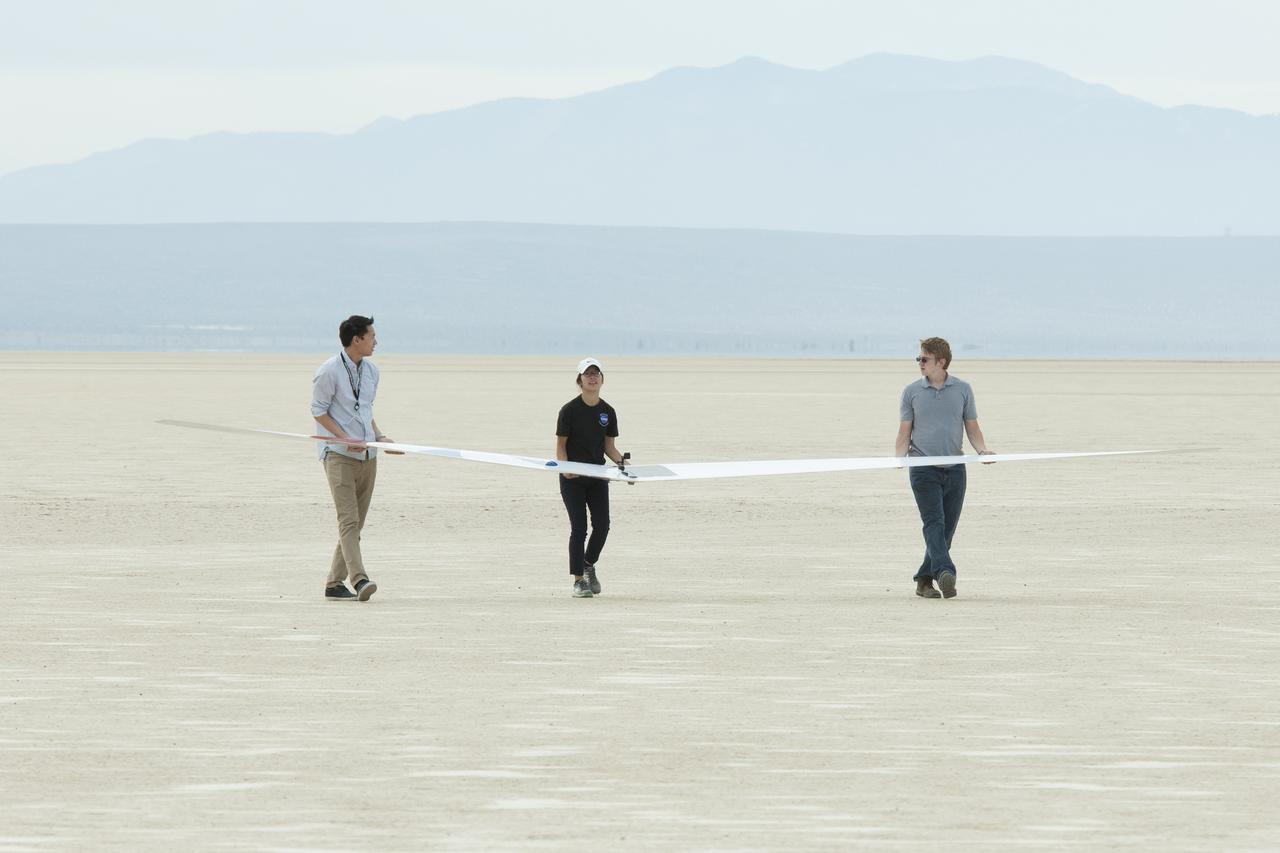
David Lee, Golda Nguyen and Scott Gleason recover the Prandtl-D No. 3 after one of its first flights.
ED15-0330-084
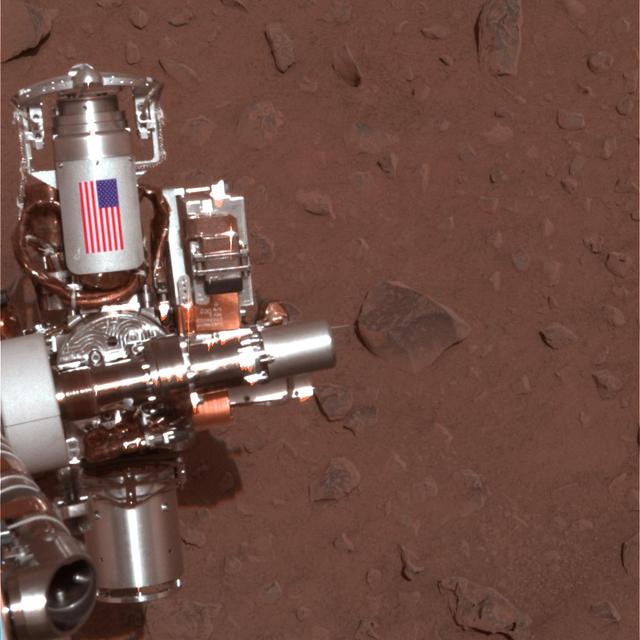
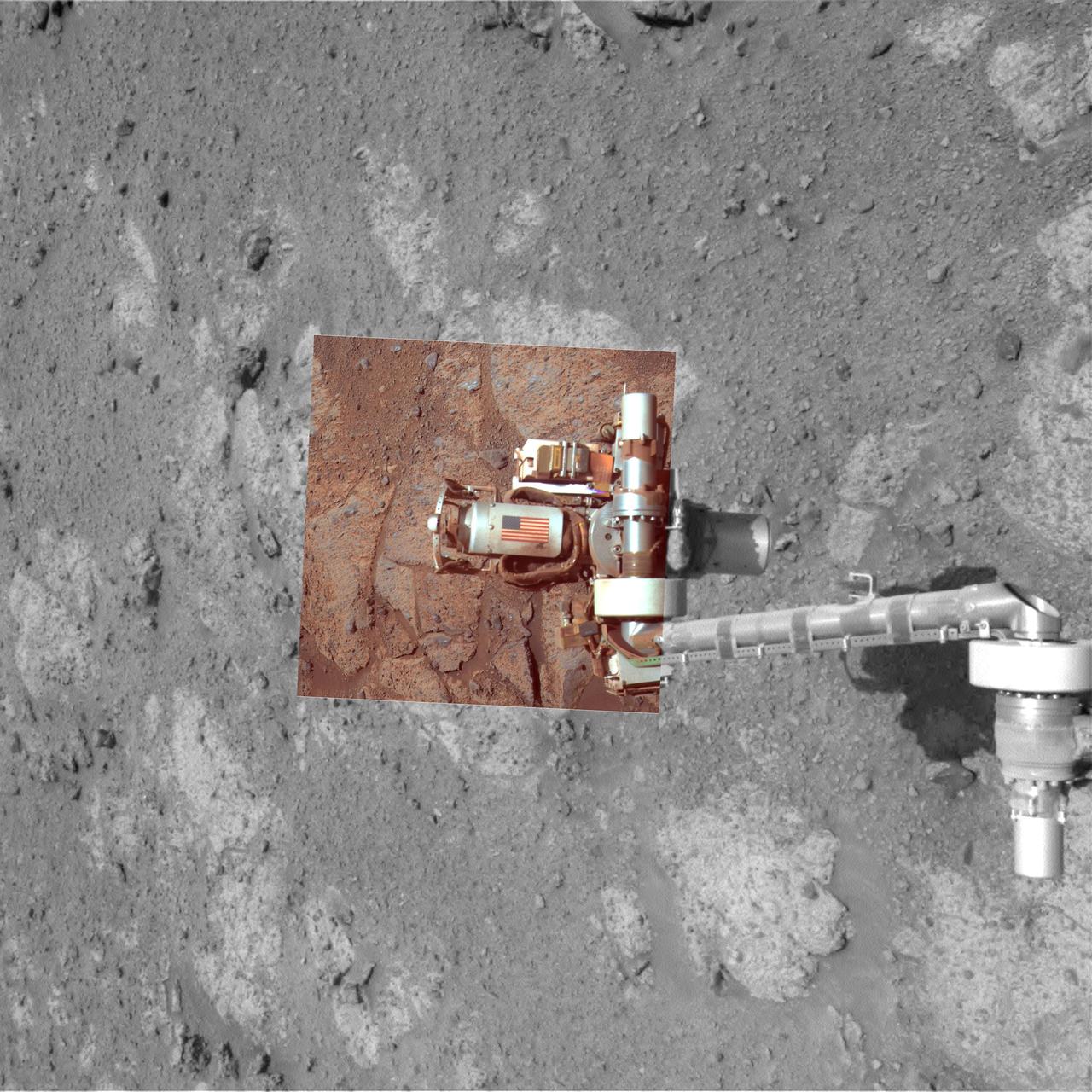
The piece of metal with the American flag on it in this image of a NASA rover on Mars is made of aluminum recovered from the site of the World Trade Center towers in the weeks after their destruction.
Interplanetary Memorial to Victims of Sept. 11, 2001
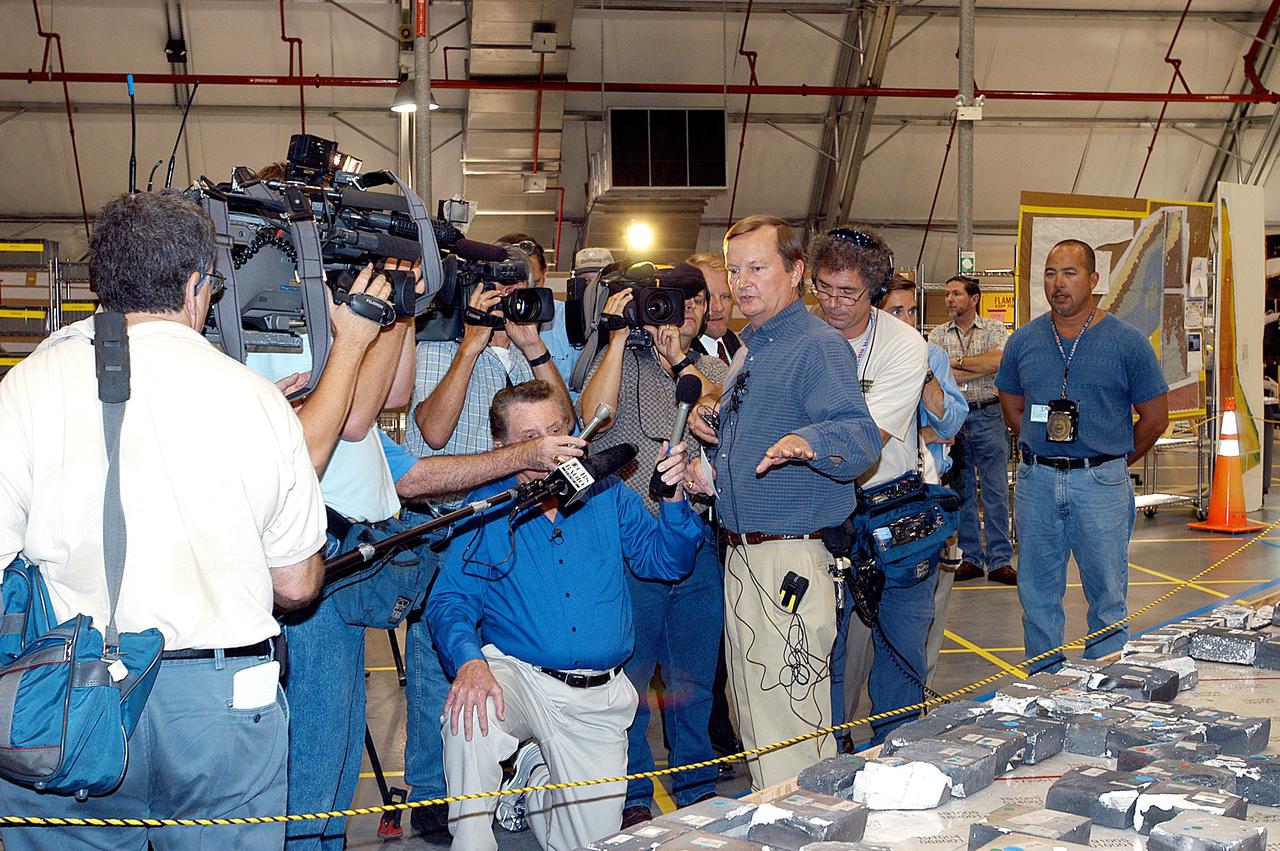
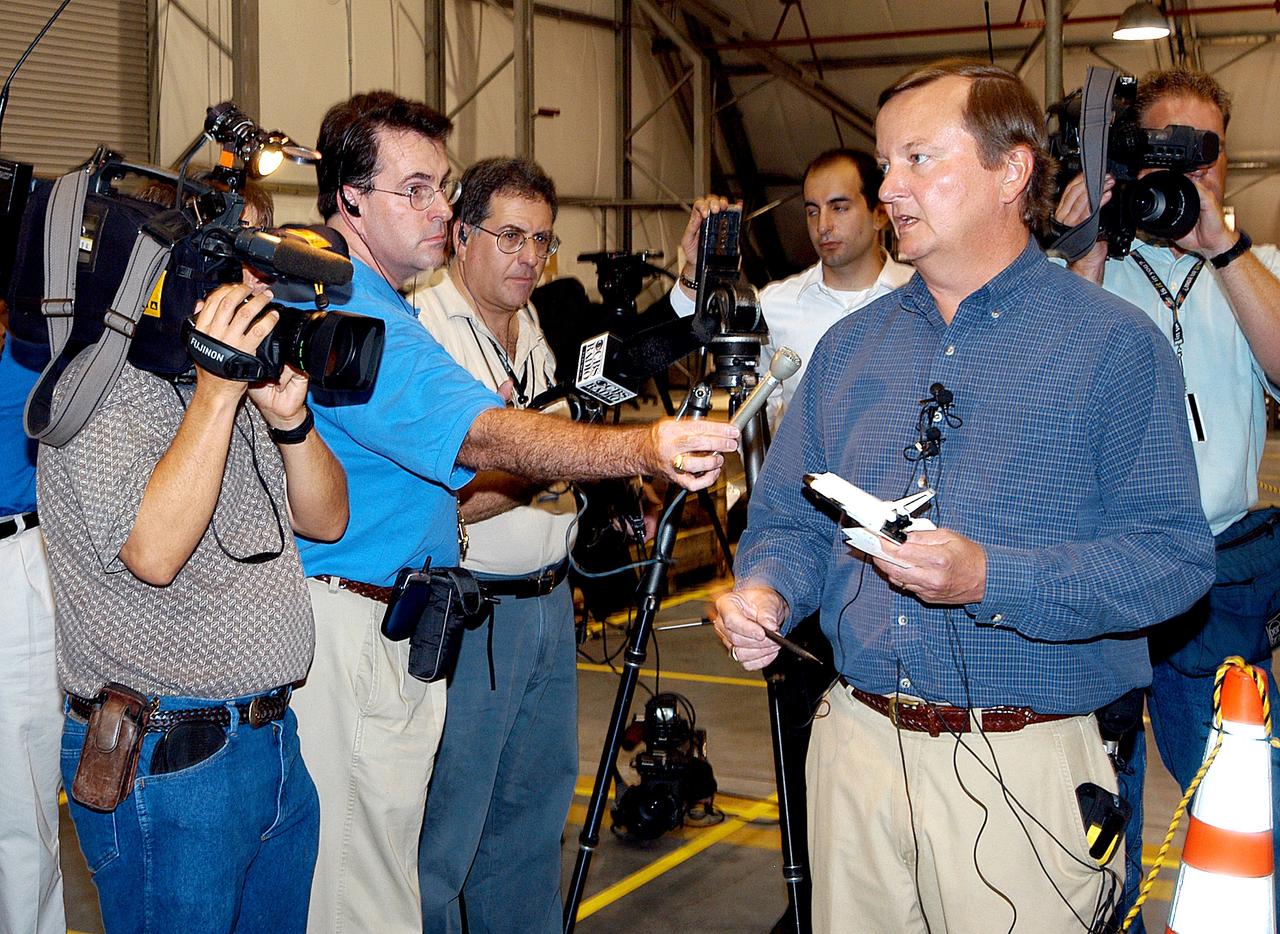
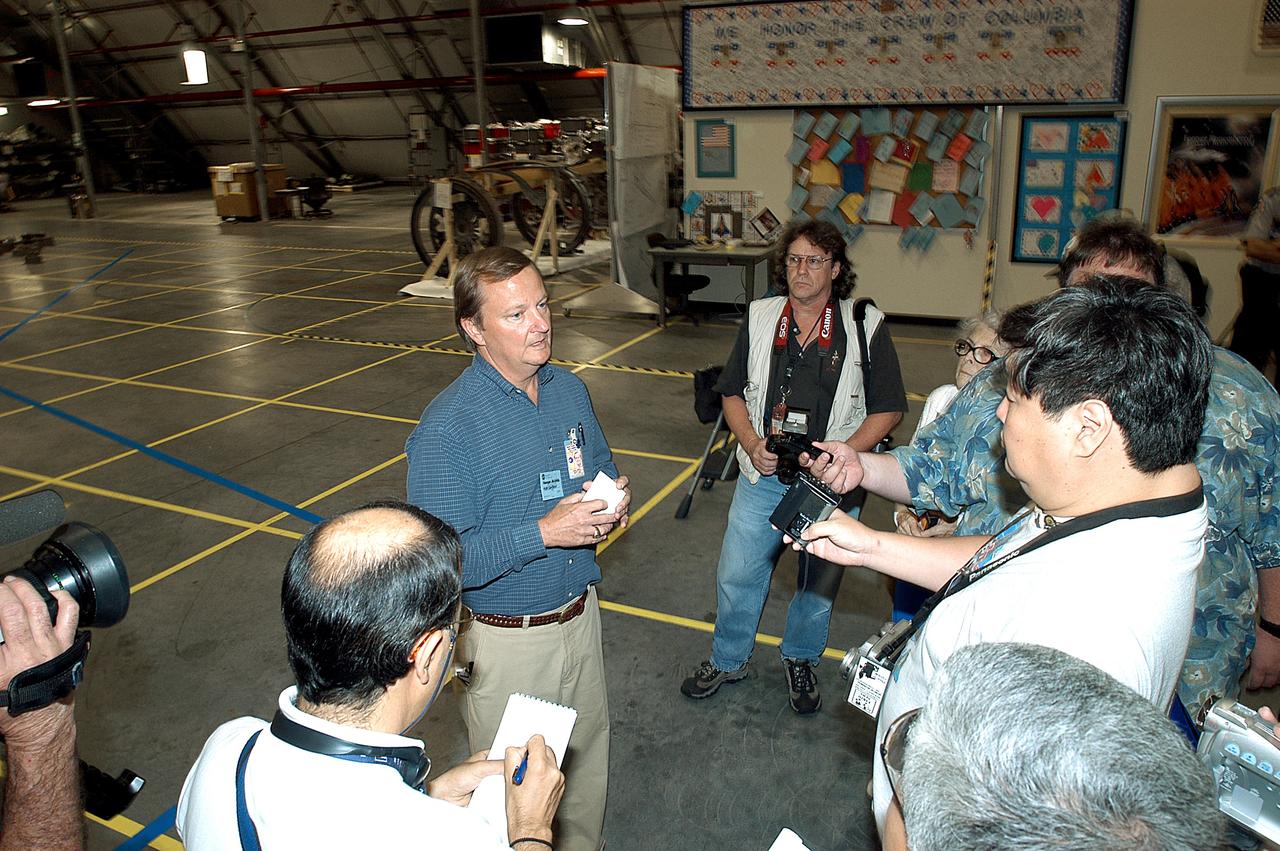
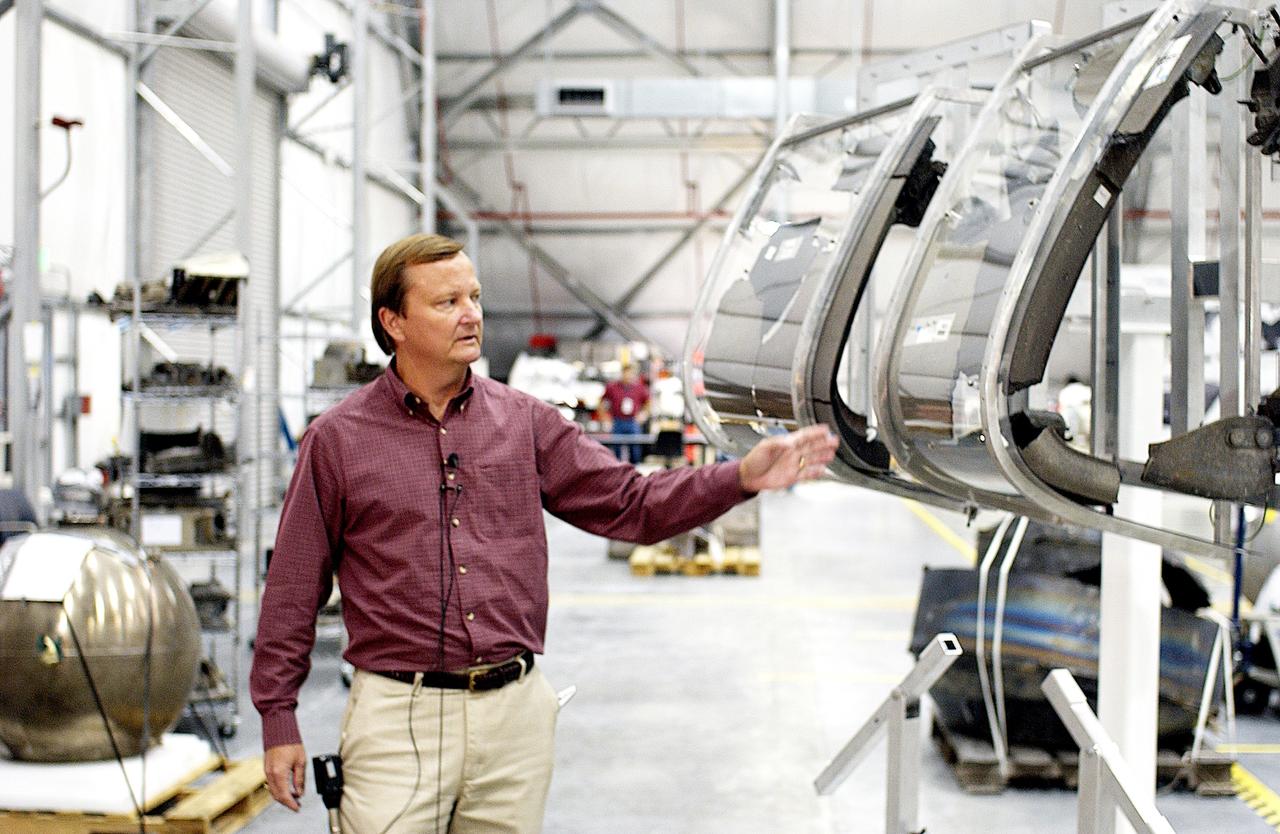
KENNEDY SPACE CENTER, FLA. - In the Columbia Debris Hangar,  Shuttle Launch Director Mike Leinbach  points to some of the tiles recovered from the orbiter as he explains to the media about activities that have taken place since the Columbia accident on Feb. 1, 2003.  STS-107 debris recovery and reconstruction operations are winding down.  To date, nearly 84,000 pieces of debris have been recovered and sent to KSC. That represents about 38 percent of the dry weight of Columbia, equaling almost 85,000 pounds.
KENNEDY SPACE CENTER, FLA. - In the Columbia Debris Hangar, Shuttle Launch Director Mike Leinbach points to some of the tiles recovered from the orbiter as he explains to the media about activities that have taken place since the Columbia accident on Feb. 1, 2003. STS-107 debris recovery and reconstruction operations are winding down. To date, nearly 84,000 pieces of debris have been recovered and sent to KSC. That represents about 38 percent of the dry weight of Columbia, equaling almost 85,000 pounds.
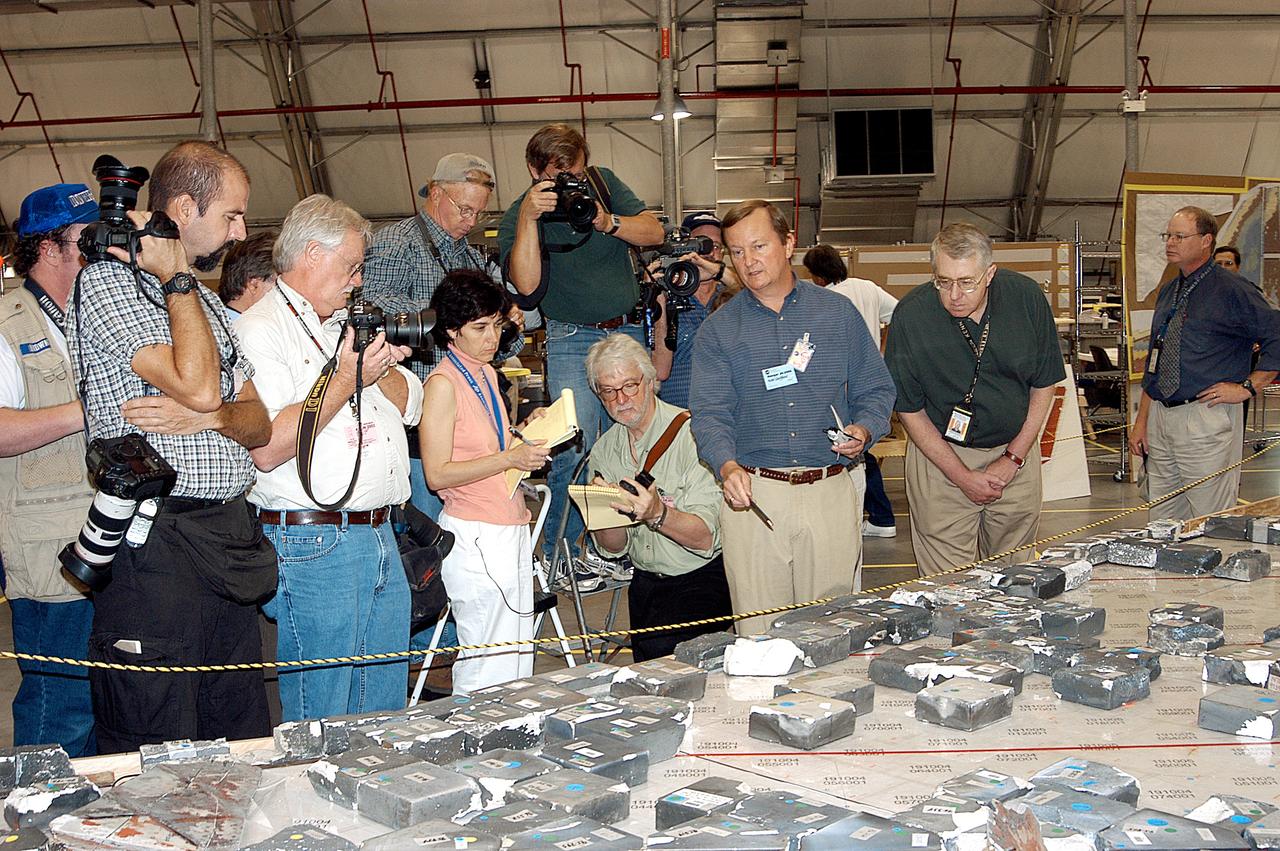
KENNEDY SPACE CENTER, FLA. -  In the Columbia Debris Hangar,  Shuttle Launch Director Mike Leinbach  (center) points to some of the tiles recovered from the orbiter as he explains to the media about activities that have taken place since the Columbia accident on Feb. 1, 2003.  STS-107 debris recovery and reconstruction operations are winding down.  To date, nearly 84,000 pieces of debris have been recovered and sent to KSC. That represents about 38 percent of the dry weight of Columbia, equaling almost 85,000 pounds.
KENNEDY SPACE CENTER, FLA. - In the Columbia Debris Hangar, Shuttle Launch Director Mike Leinbach (center) points to some of the tiles recovered from the orbiter as he explains to the media about activities that have taken place since the Columbia accident on Feb. 1, 2003. STS-107 debris recovery and reconstruction operations are winding down. To date, nearly 84,000 pieces of debris have been recovered and sent to KSC. That represents about 38 percent of the dry weight of Columbia, equaling almost 85,000 pounds.
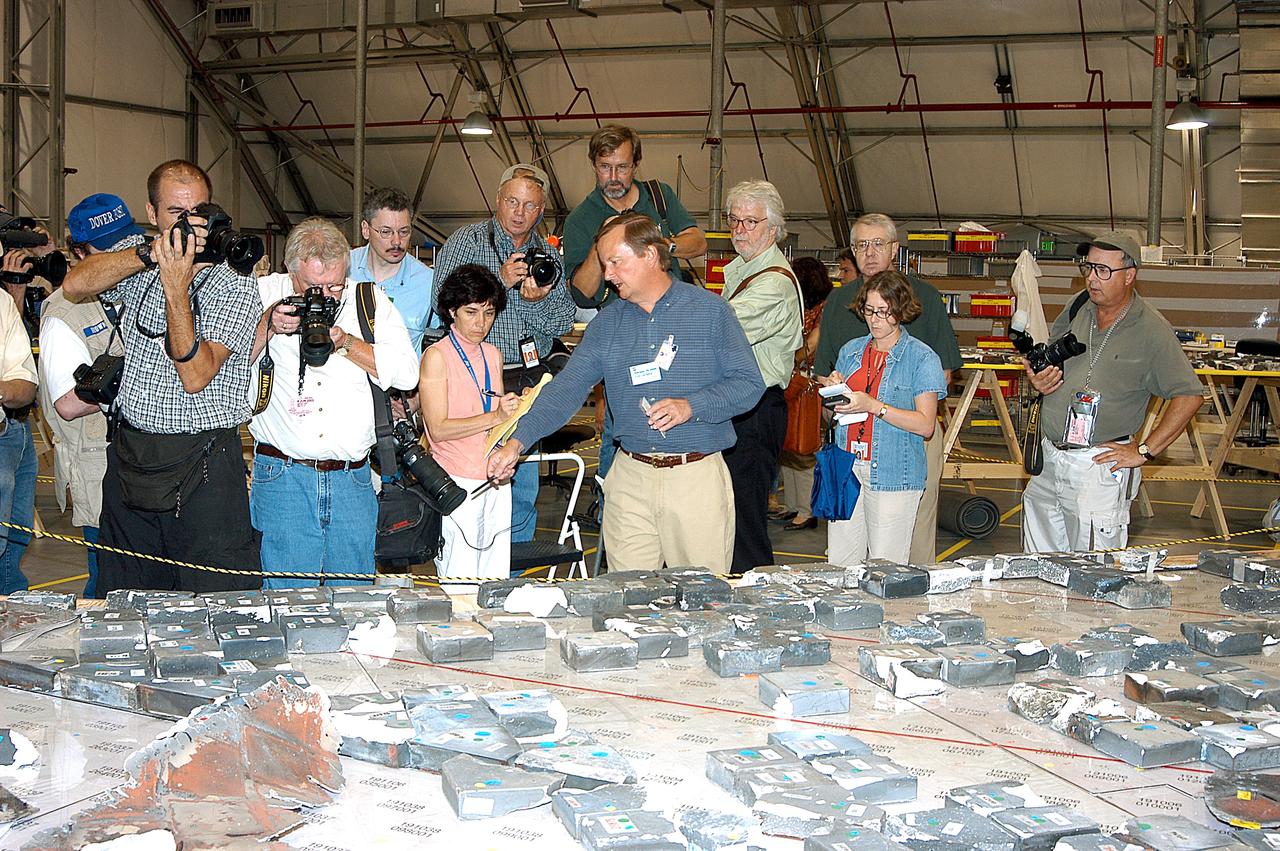
KENNEDY SPACE CENTER, FLA. -  In the Columbia Debris Hangar,  Shuttle Launch Director Mike Leinbach  points to some of the tiles recovered from the orbiter as he explains to the media about activities that have taken place since the Columbia accident on Feb. 1, 2003.  STS-107 debris recovery and reconstruction operations are winding down.  To date, nearly 84,000 pieces of debris have been recovered and sent to KSC. That represents about 38 percent of the dry weight of Columbia, equaling almost 85,000 pounds.
KENNEDY SPACE CENTER, FLA. - In the Columbia Debris Hangar, Shuttle Launch Director Mike Leinbach points to some of the tiles recovered from the orbiter as he explains to the media about activities that have taken place since the Columbia accident on Feb. 1, 2003. STS-107 debris recovery and reconstruction operations are winding down. To date, nearly 84,000 pieces of debris have been recovered and sent to KSC. That represents about 38 percent of the dry weight of Columbia, equaling almost 85,000 pounds.
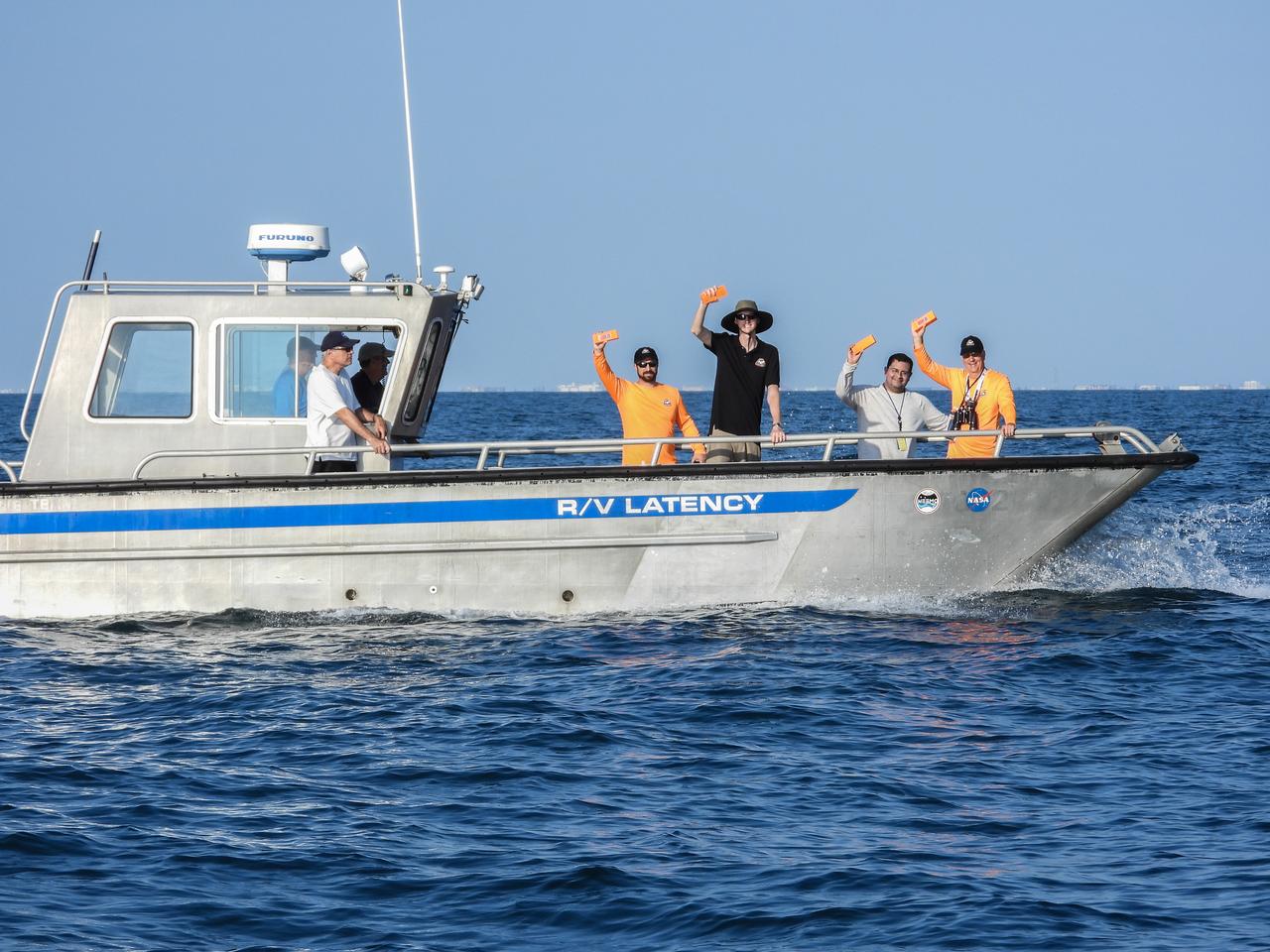
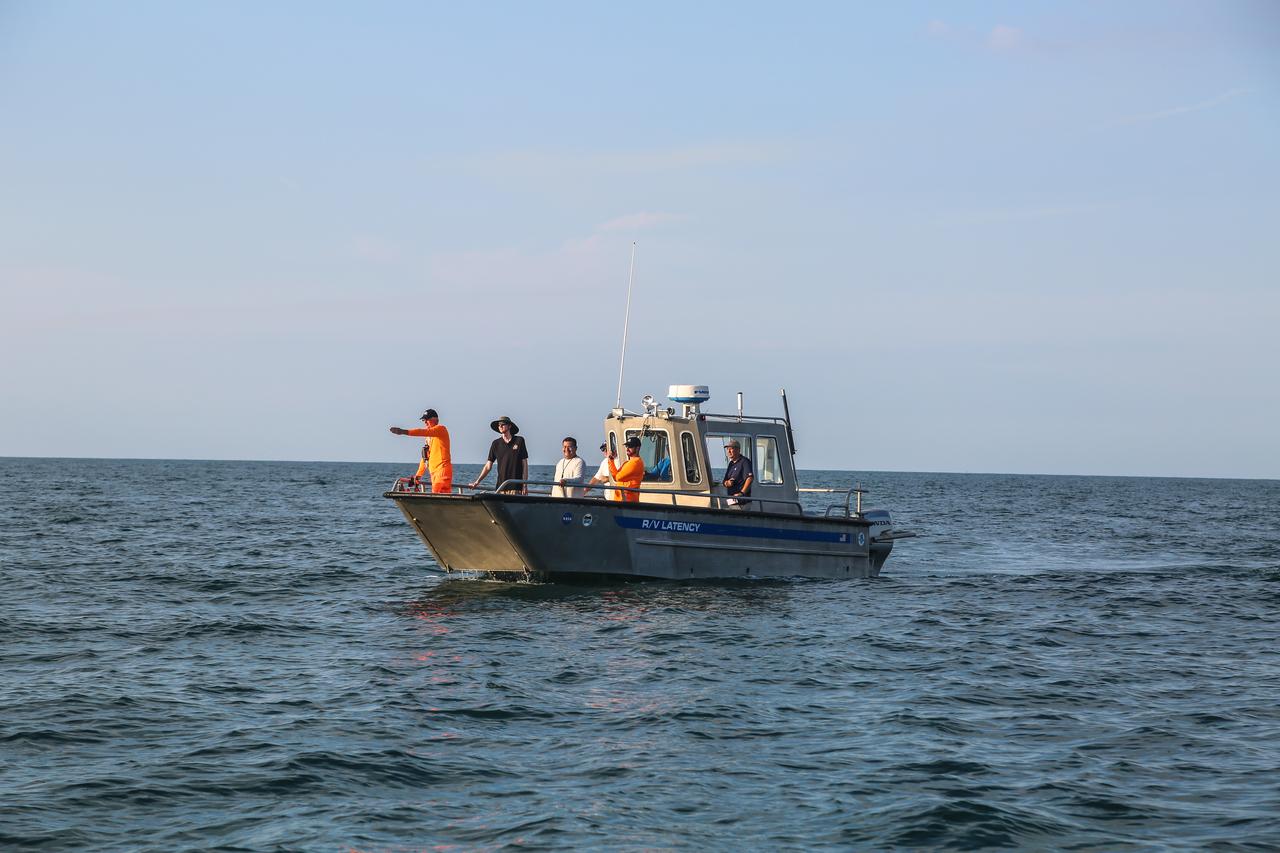
Members of the NASA Ejectable Data Recorder Recovery Team display some of the ejectable data recorders they recovered in the Atlantic Ocean off the coast of Florida on July 2, 2019, after the Ascent Abort-2 (AA-2) flight test. During AA-2, a fully functional Launch Abort System (LAS) with a test version of Orion attached, launched atop a Northrop Grumman provided booster from Launch Pad 46 at Cape Canaveral Air Force Station on July 2, 2019. Liftoff was at 7 a.m. EDT. During AA-2, the booster sent the LAS and Orion to an altitude of 31,000 feet, traveling at Mach 1.15 (more than 1,000 mph). The LAS’ three motors worked together to pull the crew module away from the booster and prepare it for splashdown in the Atlantic Ocean. The flight test proves that the abort system can pull crew to safety in the unlikely event of an emergency during ascent. Data from the recorders will be analyzed by engineers.
NASA AA-2 team recovering EDRs in the open water
This view from NASA rover Opportunity, of an American flag on metal recovered from the site of the World Trade Center towers shortly after their destruction, was taken on Mars on Sept. 11, 2011, the 10th anniversary of the attacks on the towers.
Memorial Image Taken on Mars on Sept. 11, 2011
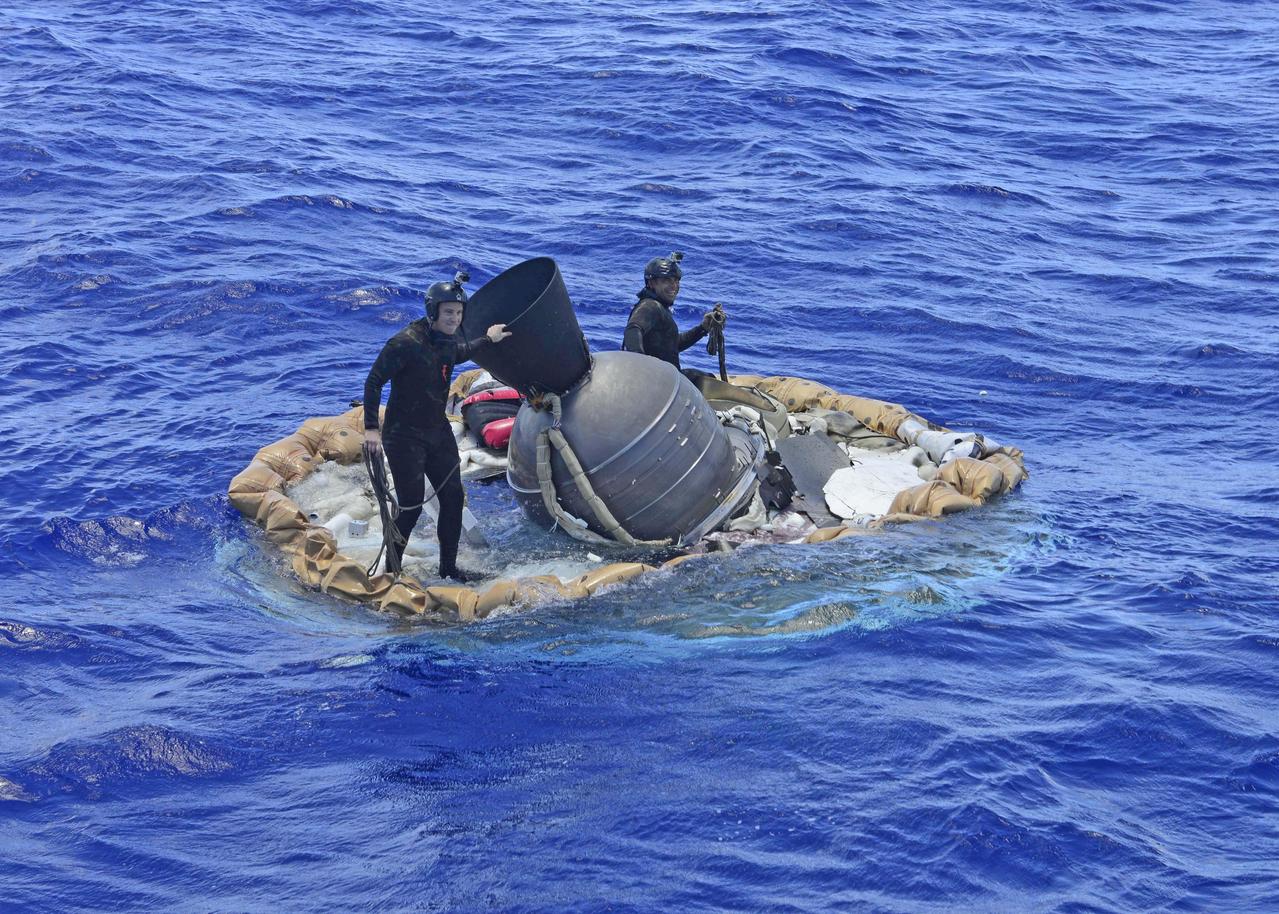
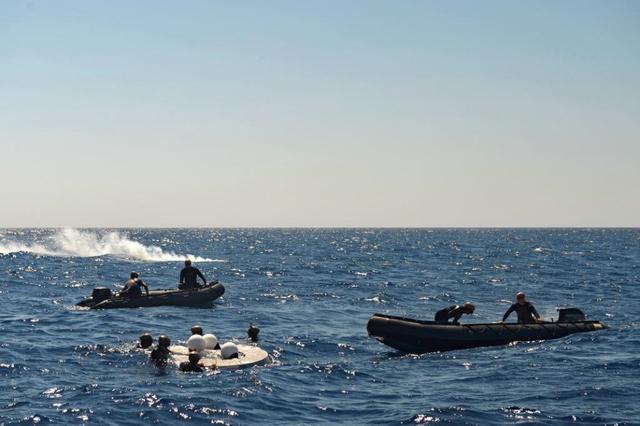
Two members of the U.S. Navy's Mobile Diving Salvage Unit (MDSU) 1 Explosive Ordnance Detachment work on recovering the test vehicle for NASA's Low-Density Supersonic Decelerator (LDSD) project. The saucer-shaped LDSD craft splashed down at 11:49 a.m. HST (2:49 PDT/5:49 p.m. EDT) Monday, June 8, 2015, in the Pacific Ocean off the west coast of the Kauai, Hawaii, after a four-hour experimental flight test that investigated new technologies for landing future robotic and human Mars missions.  During the flight test, a Supersonic Inflatable Aerodynamic Decelerator (SIAD) and a supersonic parachute were deployed. The SIAD operated as expected, dramatically slowing the test vehicle's velocity. When the parachute was deployed into the supersonic slipstream, it appeared to blossom to full inflation prior to the emergence of a tear which then propagated and destroyed the parachute's canopy. As a result, the saucer's splashdown in the Pacific Ocean was hard, resulting in fracturing parts of the structure.  Memory cards containing comprehensive test data -- including high-speed, high-resolution imagery recorded during the flight -- were successfully recovered. Also recovered were the test vehicle and its components, the supersonic parachute, the ballute used to deploy the parachute, and a large weather balloon that initially carried the saucer to an altitude of 120,000 feet.  http://photojournal.jpl.nasa.gov/catalog/PIA19684
Saucer Shoal: LDSD Recovery off Kauai
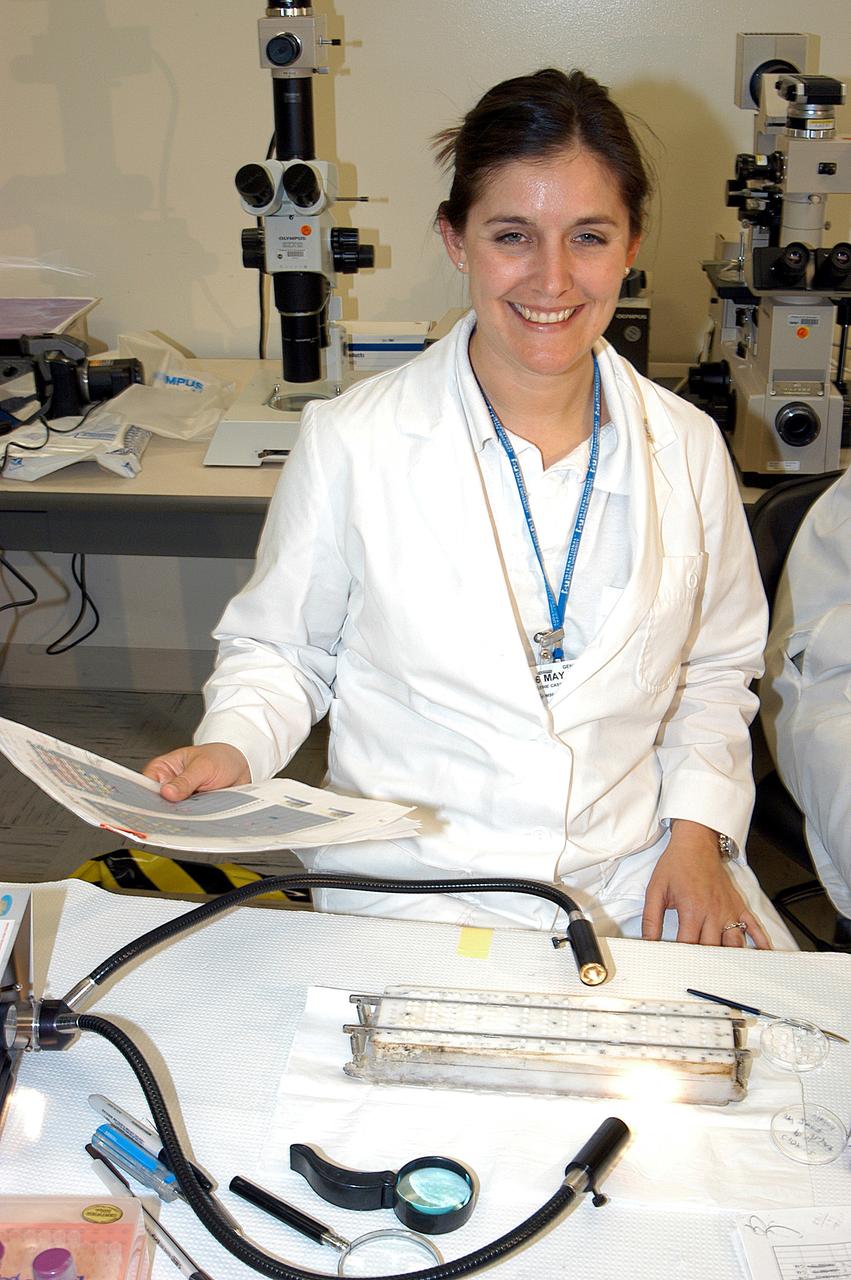
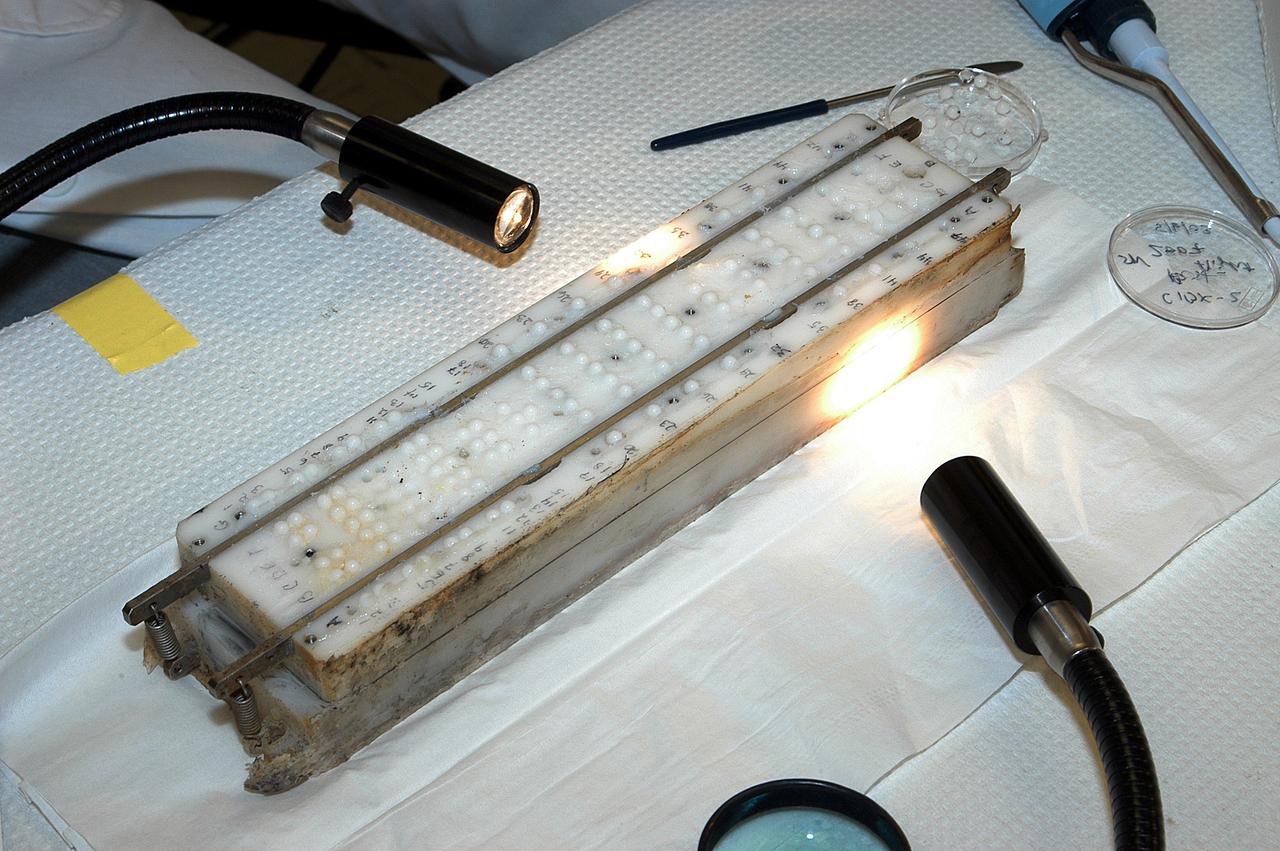
KENNEDY SPACE CENTER, FLA. -   Valerie Cassanto is one of the scientists recovering experiments found during the search for Columbia debris.  Included in the Commercial ITA Biomedical Experiments payload on mission STS-107 are urokinase cancer research, microencapsulation of drugs, the Growth of Bacterial Biofilm on Surfaces during Spaceflight (GOBBSS), and tin crystal formation.
KENNEDY SPACE CENTER, FLA. - Valerie Cassanto is one of the scientists recovering experiments found during the search for Columbia debris. Included in the Commercial ITA Biomedical Experiments payload on mission STS-107 are urokinase cancer research, microencapsulation of drugs, the Growth of Bacterial Biofilm on Surfaces during Spaceflight (GOBBSS), and tin crystal formation.
NASA’s Exploration Ground System’s Landing and Recovery team, partners from the Department of Defense, and U.S. Navy personnel aboard the USS San Diego assist NASA’s Artemis II crew members from left to right NASA astronauts Christina Koch and Victor Glover from a boat during practice recovery procedures during Underway Recovery Test 11 (URT-11) off the coast of San Diego, California on Tuesday, Feb. 27, 2024. URT-11 is the eleventh in a series of Artemis recovery tests, and the first time NASA and its partners put their Artemis II recovery procedures to the test with the astronauts.
URT-11 CMTA Deploy & Recover Night Ops
NASA’s Exploration Ground System’s Landing and Recovery team, partners from the Department of Defense, and U.S. Navy personnel aboard the USS San Diego practice recovery procedures using a mockup of the Orion spacecraft, during Underway Recovery Test 11 (URT-11) off the coast of San Diego, California on Tuesday, Feb. 27, 2024. URT-11 is the eleventh in a series of Artemis recovery tests, and the first time NASA and its partners put their Artemis II recovery procedures to the test with the astronauts.
URT-11 CMTA Deploy & Recover Night Ops
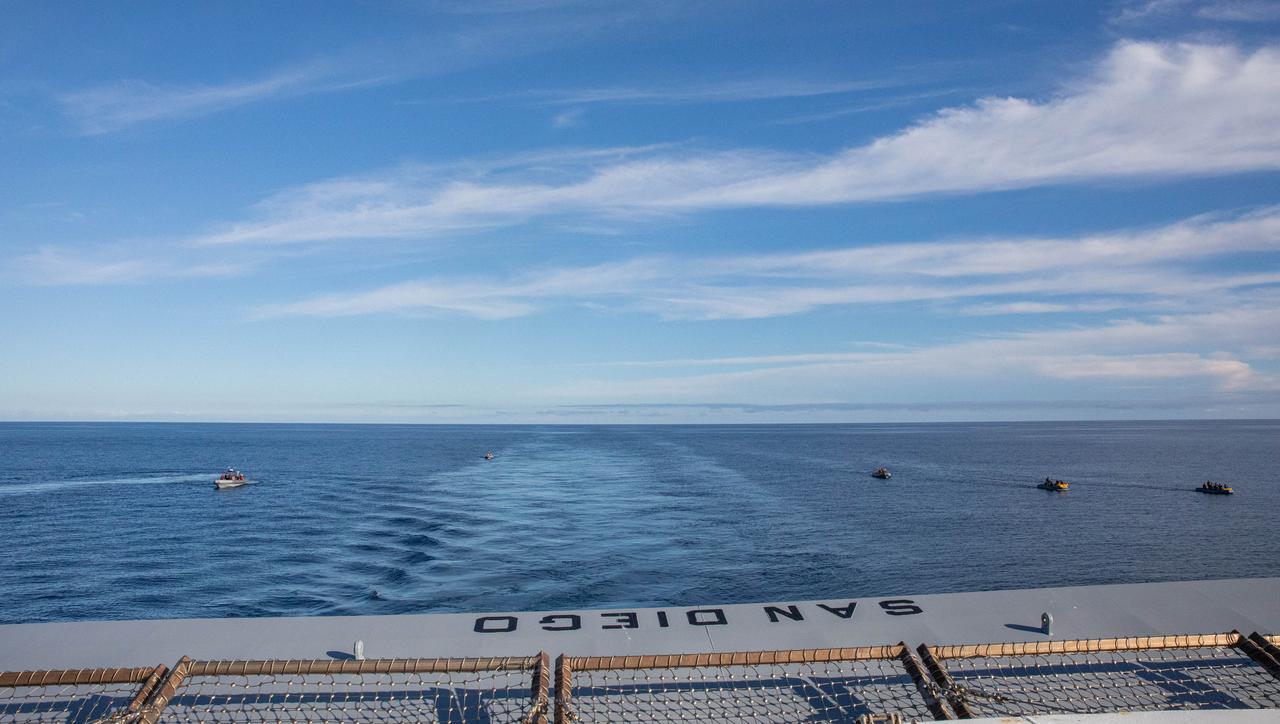
NASA’s Exploration Ground System’s Landing and Recovery team, partners from the Department of Defense, and U.S. Navy personnel practice recovery procedures in boats during Underway Recovery Test 11 (URT-11) off the coast of San Diego on Tuesday, Feb. 27, 2024. URT-11 is the eleventh in a series of Artemis recovery tests, and the first time NASA and its partners put their Artemis II recovery procedures to the test with the astronauts.
URT-11 CMTA Deploy & Recover Night Ops
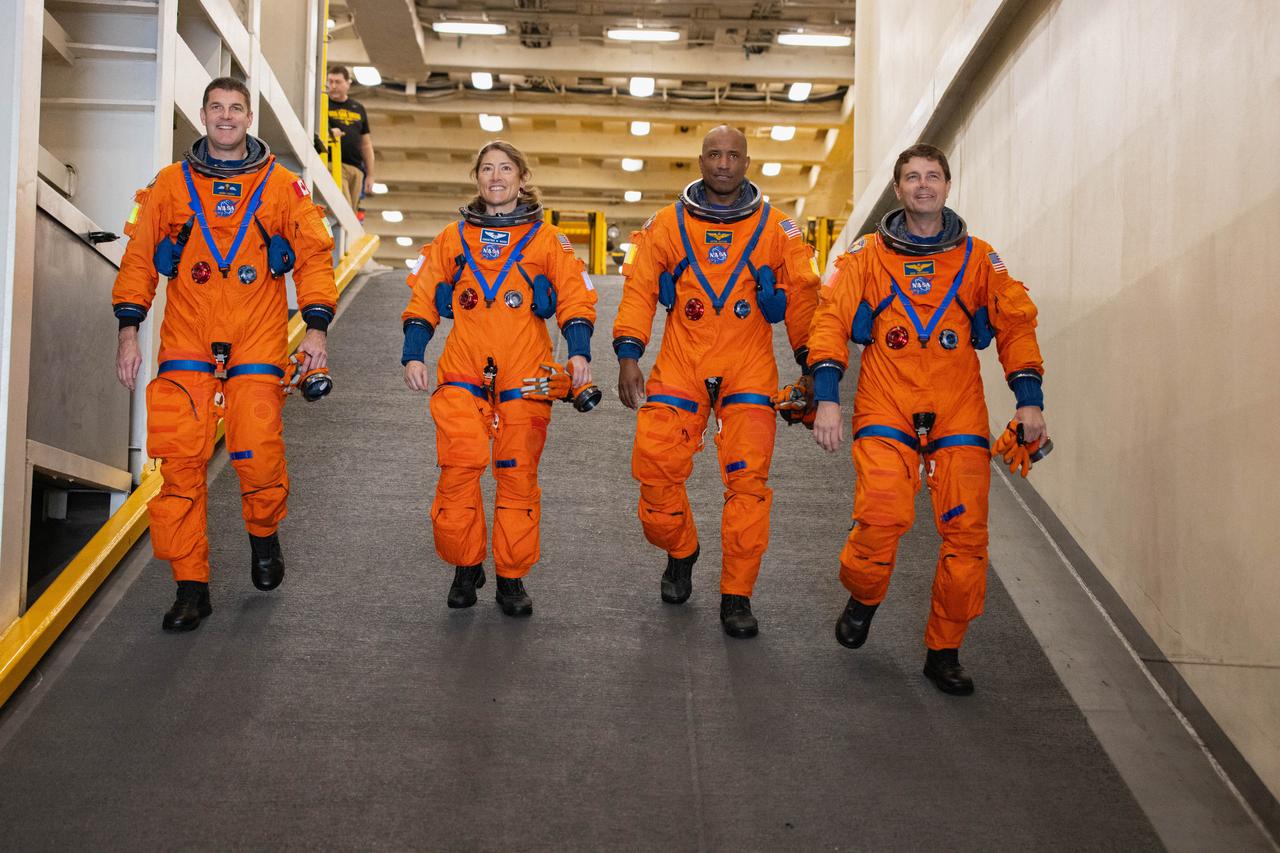
NASA’s Artemis II crew members from left to right CSA (Canadian Space Agency) astronaut Jeremy Hansen, and NASA astronauts Christina Koch, Victor Glover, and Reid Wiseman walk in the well deck of the USS San Diego during Underway Recovery Test 11 (URT-11), as NASA’s Exploration Ground System’s Landing and Recovery team and partners from the Department of Defense aboard the ship practice recovery procedures using the Crew Module Test Article off the coast of San Diego, California on Tuesday, Feb. 27, 2024. URT-11 is the eleventh in a series of Artemis recovery tests, and the first time NASA and its partners put their Artemis II recovery procedures to the test with the astronauts.
URT-11 CMTA Deploy & Recover Night Ops
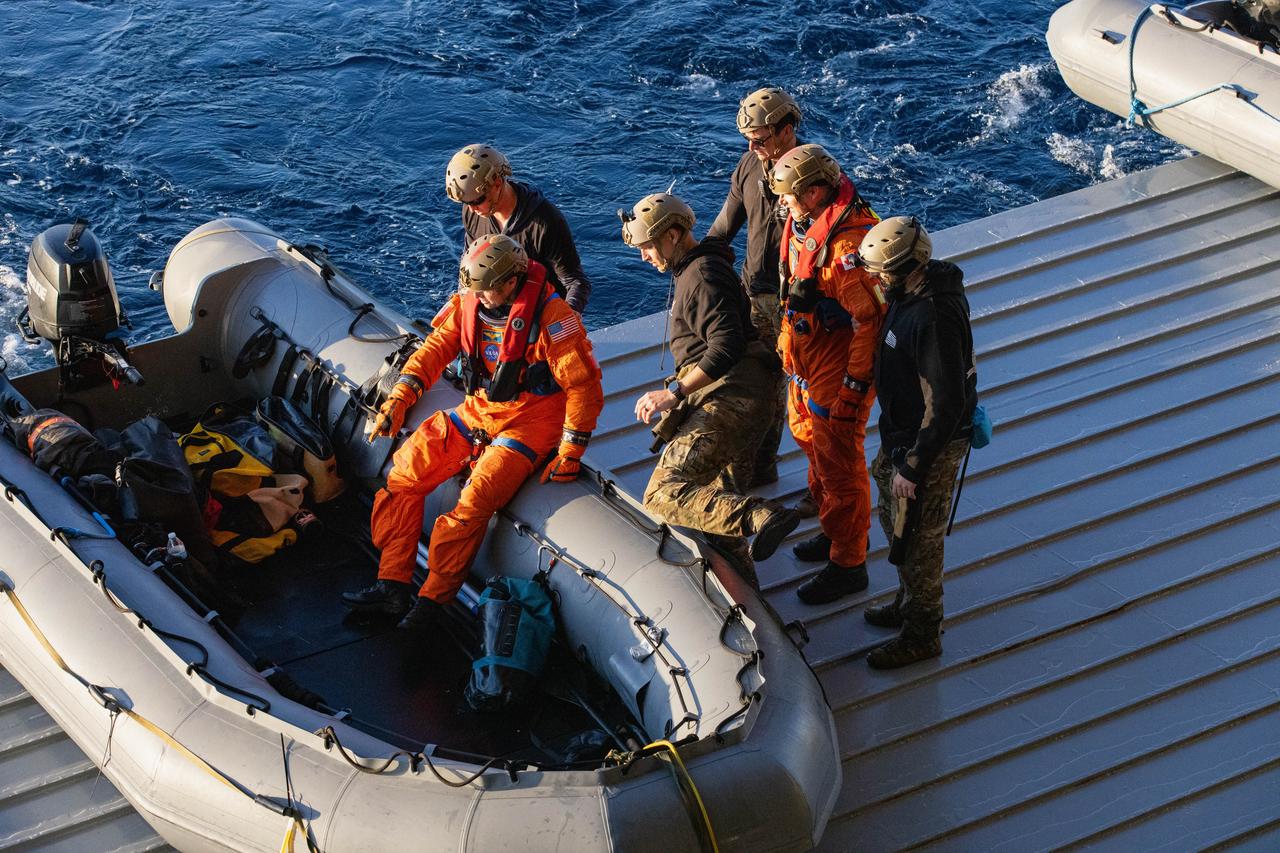
NASA’s Exploration Ground System’s Landing and Recovery team, partners from the Department of Defense, and U.S. Navy personnel aboard the USS San Diego assist NASA’s Artemis II crew members from left to right NASA astronaut Reid Wiseman and CSA (Canadian Space Agency) astronaut Jeremy Hansen prepare to push off the well deck in a boat to head to the mockup of the Orion spacecraft during practice recovery procedures during Underway Recovery Test 11 (URT-11) off the coast of San Diego, California on Tuesday, Feb. 27, 2024. URT-11 is the eleventh in a series of Artemis recovery tests, and the first time NASA and its partners put their Artemis II recovery procedures to the test with the astronauts.
URT-11 CMTA Deploy & Recover Night Ops
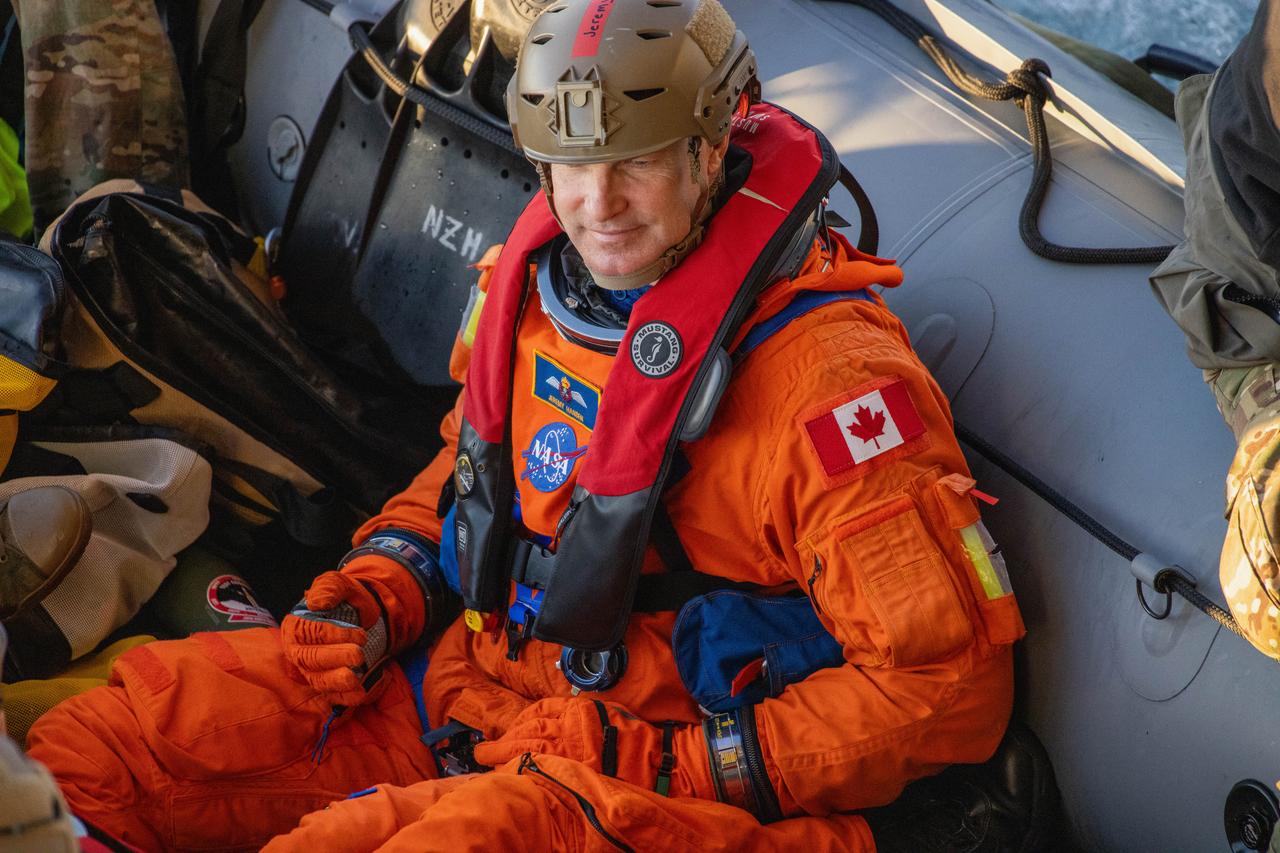
NASA’s Artemis II crew member CSA (Canadian Space Agency) astronaut Jeremy Hansen sits in a boat following practice recovery procedures during Underway Recovery Test 11 (URT-11) off the coast of San Diego, California on Tuesday, Feb. 27, 2024. URT-11 is the eleventh in a series of Artemis recovery tests, and the first time NASA and its partners put their Artemis II recovery procedures to the test with the astronauts.
URT-11 CMTA Deploy & Recover Night Ops
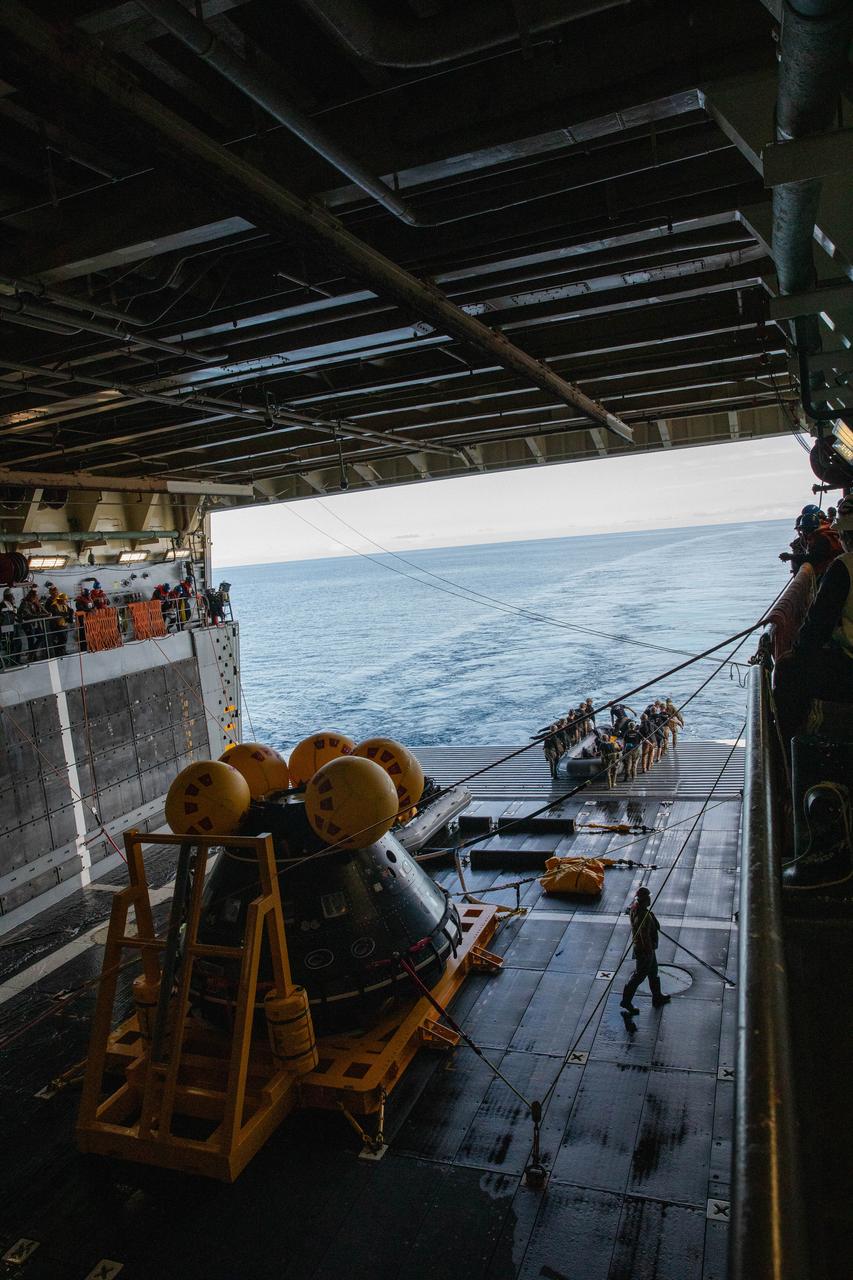
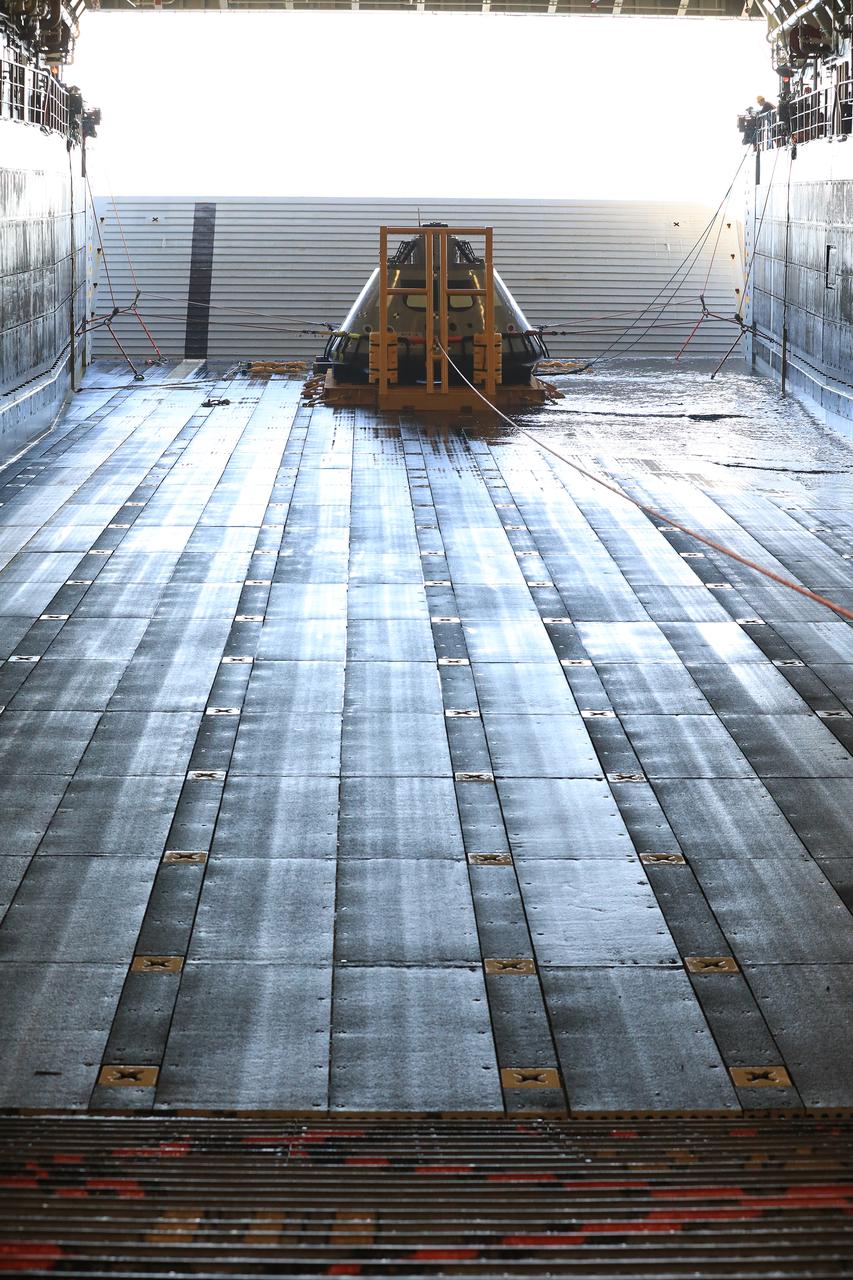
Members of NASA’s Exploration Ground System’s Landing and Recovery team and partners from the Department of Defense aboard the USS San Diego practice recovery procedures during Underway Recovery Test 11 (URT-11) off the coast of San Diego on Tuesday, Feb. 27, 2024. The team works to secure the Crew Module Test Article and align it on its stand inside the ship’s well deck. URT-11 is the eleventh in a series of Artemis recovery tests, and the first time NASA and its partners put their Artemis II recovery procedures to the test with the astronauts.
URT-11 CMTA Deploy & Recover Night Ops
NASA’s Artemis II crew members, from left to right, NASA astronauts Reid Wiseman, Victor Glover, and Christina Koch, and CSA (Canadian Space Agency) astronaut Jeremy Hansen, check their suits and adjust their helmets aboard the USS San Diego before beginning practice recovery procedures using the Crew Module Test Article off the coast of San Diego, California on Tuesday, Feb. 27, 2024. URT-11 is the eleventh in a series of Artemis recovery tests, and the first time NASA and its partners put their Artemis II recovery procedures to the test with the astronauts.
URT-11 CMTA Deploy & Recover Night Ops
NASA’s Exploration Ground System’s Landing and Recovery team, partners from the Department of Defense, and U.S. Navy personnel aboard the USS San Diego assist NASA’s Artemis II crew members from left to right NASA astronauts Christina Koch and Victor Glover from a boat during practice recovery procedures during Underway Recovery Test 11 (URT-11) off the coast of San Diego, California on Tuesday, Feb. 27, 2024. URT-11 is the eleventh in a series of Artemis recovery tests, and the first time NASA and its partners put their Artemis II recovery procedures to the test with the astronauts.
URT-11 CMTA Deploy & Recover Night Ops
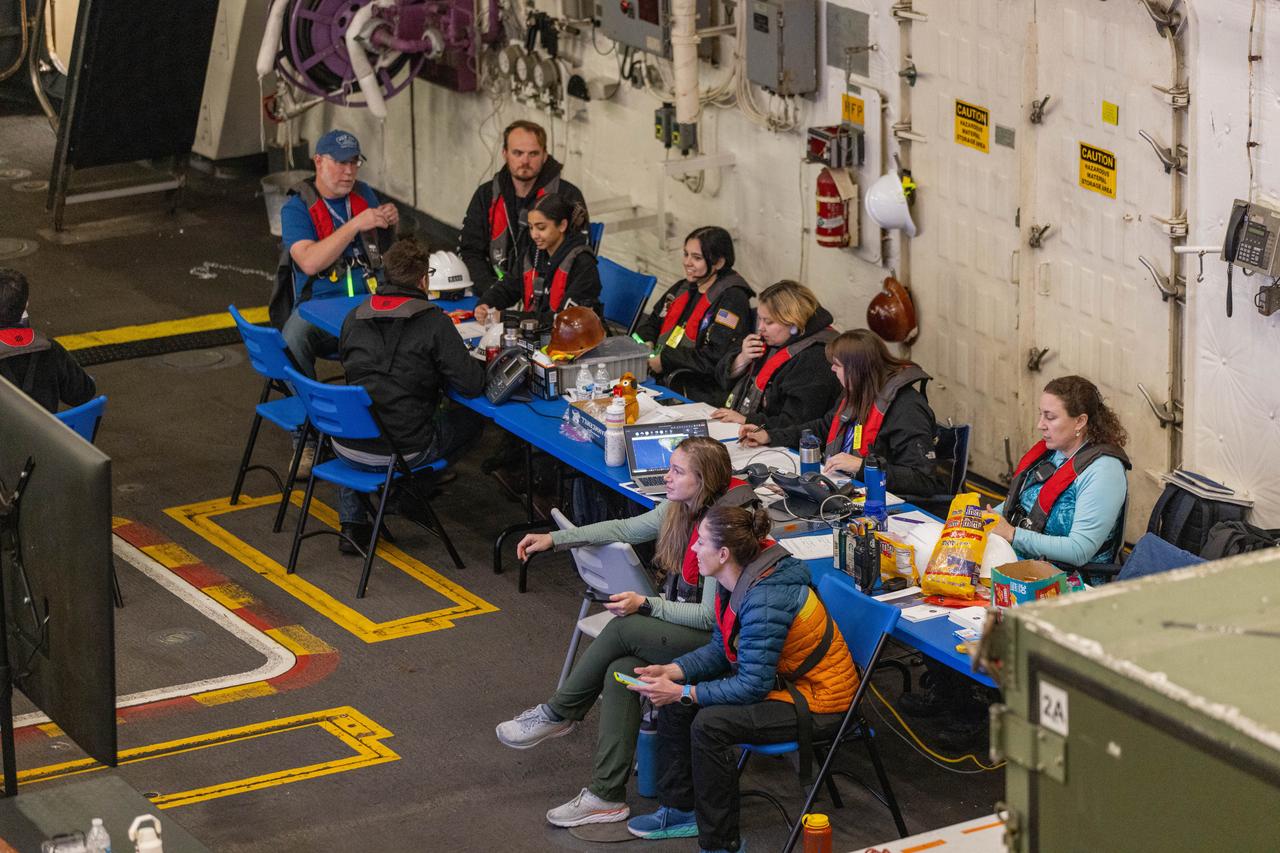
Members of NASA’s Exploration Ground System’s Landing and Recovery team and partners from the Department of Defense aboard the USS San Diego take a break following practice recovery procedures during Underway Recovery Test 11 (URT-11) off the coast of San Diego on Tuesday, Feb. 27, 2024. URT-11 is the eleventh in a series of Artemis recovery tests, and the first time NASA and its partners put their Artemis II recovery procedures to the test with the astronauts.
URT-11 CMTA Deploy & Recover Night Ops
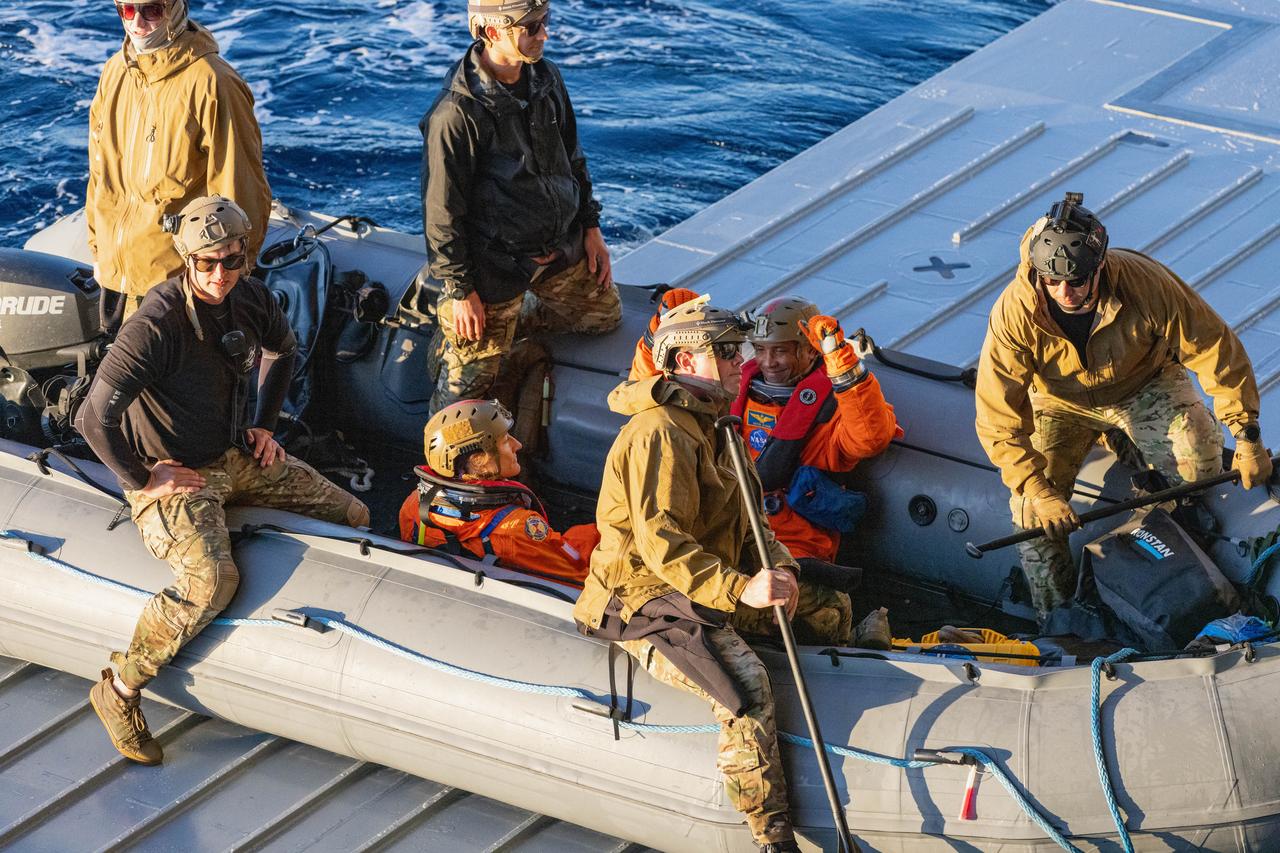
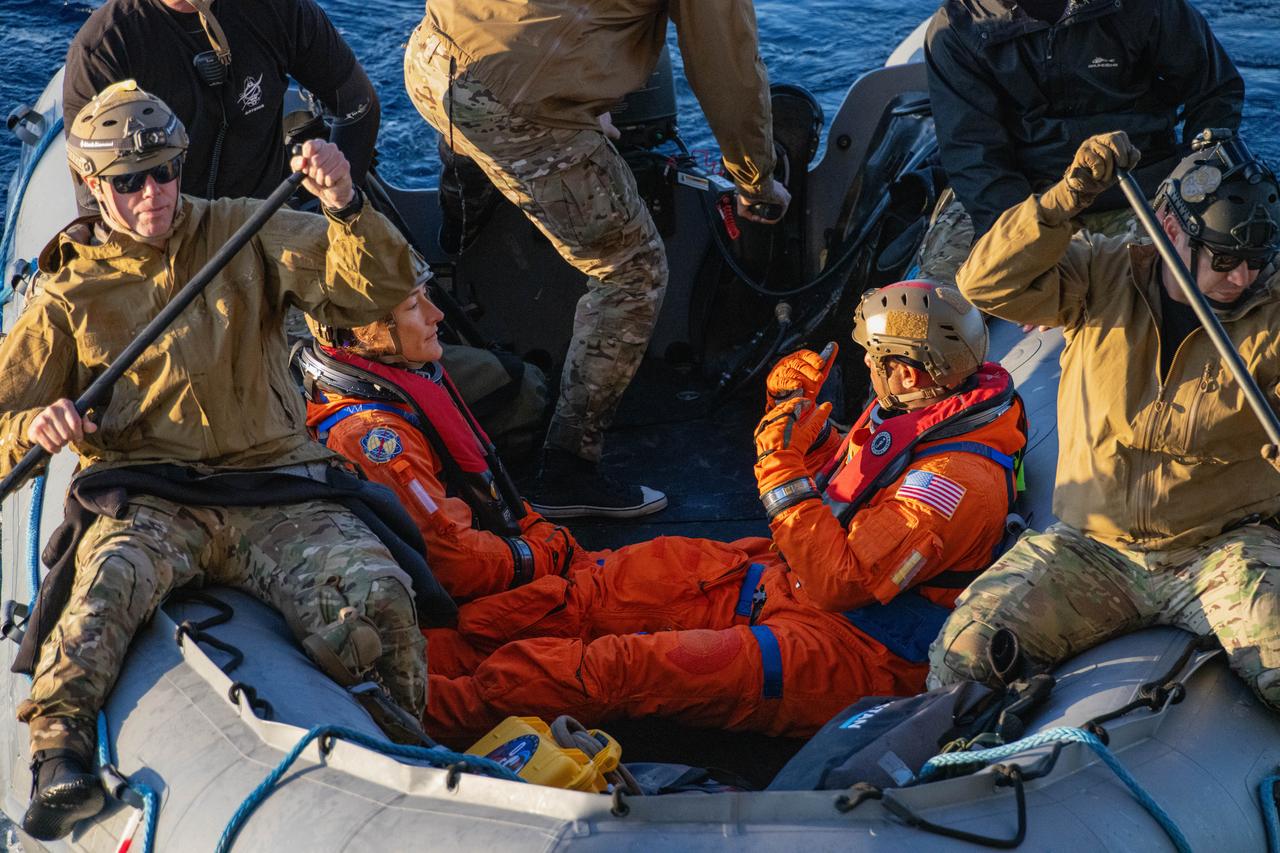
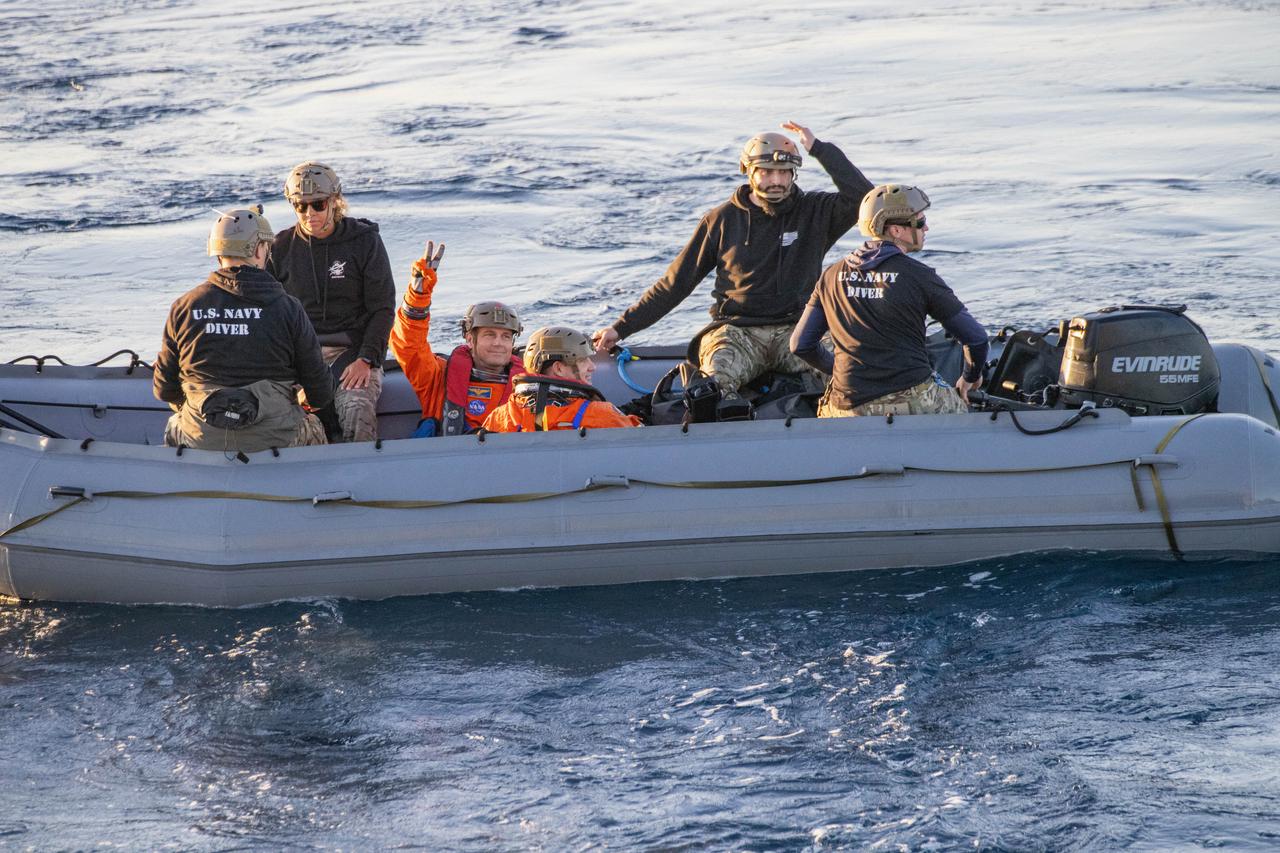
NASA’s Artemis II crew members, from back to front, NASA astronaut Reid Wiseman flashes the peace sign  with CSA (Canadian Space Agency) astronaut Jeremy Hansen while sitting in a boat during practice recovery procedures during Underway Recovery Test 11 (URT-11) off the coast of San Diego, California on Tuesday, Feb. 27, 2024. URT-11 is the eleventh in a series of Artemis recovery tests, and the first time NASA and its partners put their Artemis II recovery procedures to the test with the astronauts.
URT-11 CMTA Deploy & Recover Night Ops
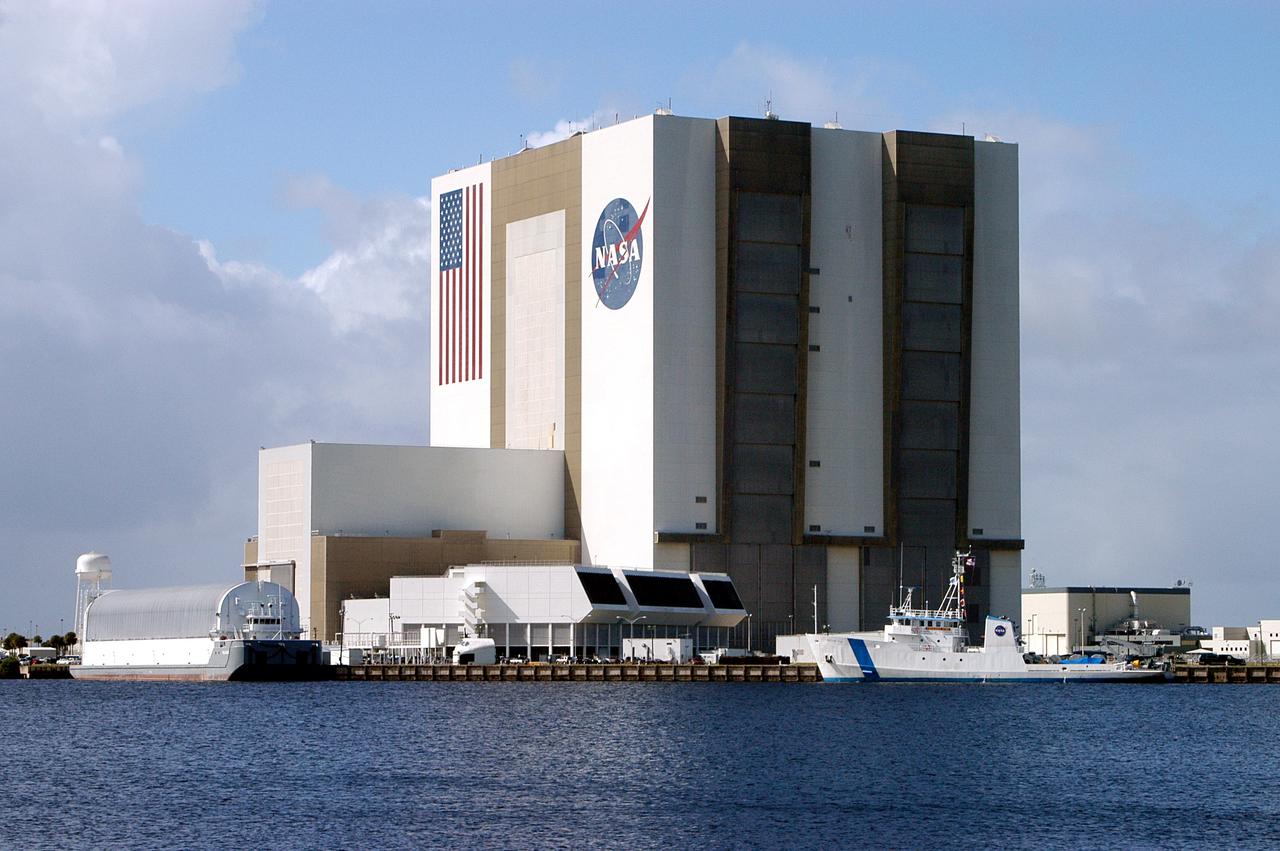
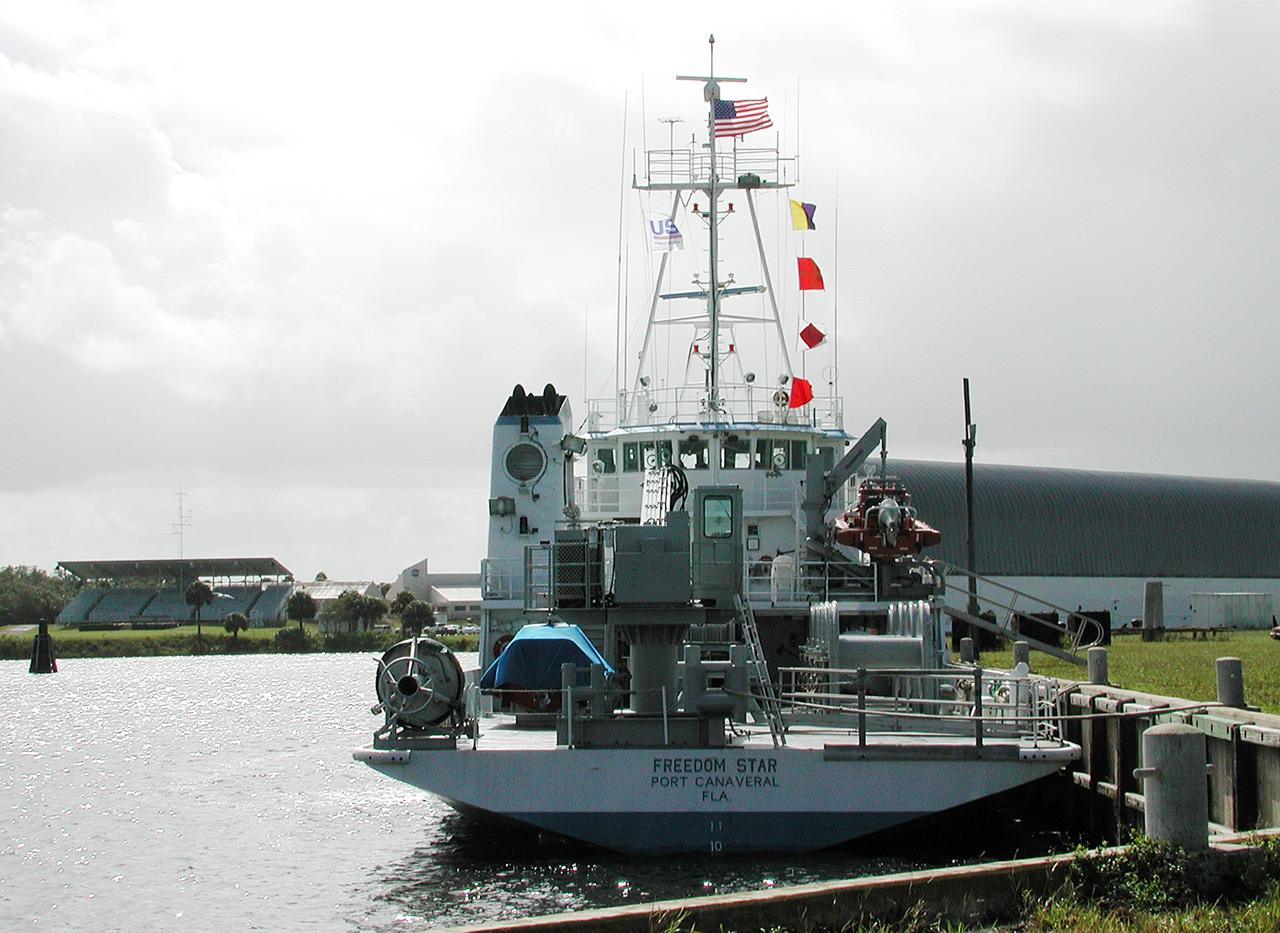
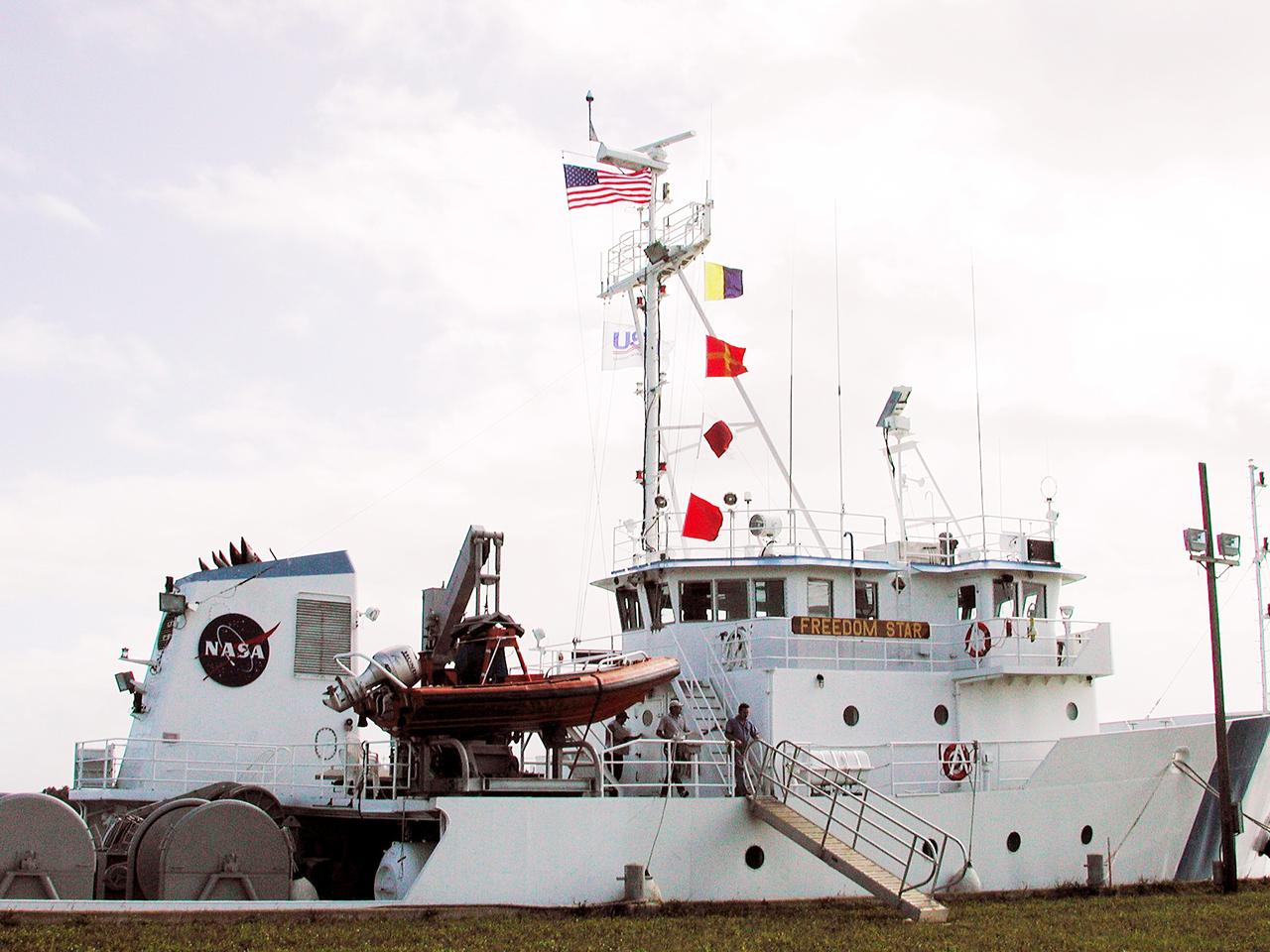
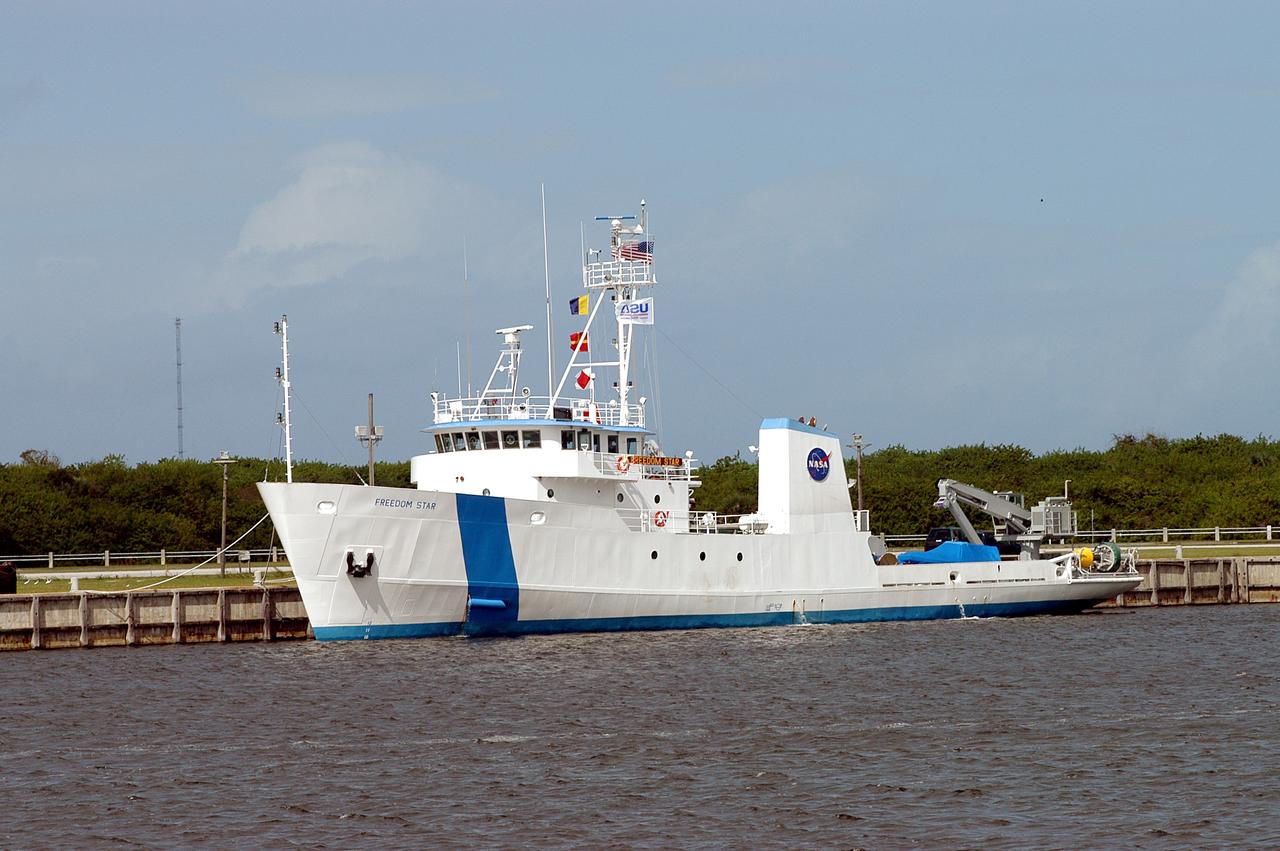
KENNEDY SPACE CENTER, FLA. -  The Freedom Star is berthed at the Turn Basin near the Vehicle Assembly Building.  The ship has recently returned to KSC after refurbishment at Fort George Island, Fla., including new paint.  Freedom Star is one of the solid rocket booster (SRB) retrieval ships built to recover the SRB casings released over the Atlantic Ocean after launch of a Space Shuttle.  In addition to the SRBs, the ship recovers the drogue and main parachutes that slow the boosters’ speed before splashdown.  Some of the retrieval equipment can be seen on the rear deck.  The ships also tow the external tanks built at the Michoud Space Systems Assembly Facility near New Orleans to Port Canaveral, Fla.  Freedom Star was brought to KSC today for a visit by NATO Parliamentarians.
KENNEDY SPACE CENTER, FLA. - The Freedom Star is berthed at the Turn Basin near the Vehicle Assembly Building. The ship has recently returned to KSC after refurbishment at Fort George Island, Fla., including new paint. Freedom Star is one of the solid rocket booster (SRB) retrieval ships built to recover the SRB casings released over the Atlantic Ocean after launch of a Space Shuttle. In addition to the SRBs, the ship recovers the drogue and main parachutes that slow the boosters’ speed before splashdown. Some of the retrieval equipment can be seen on the rear deck. The ships also tow the external tanks built at the Michoud Space Systems Assembly Facility near New Orleans to Port Canaveral, Fla. Freedom Star was brought to KSC today for a visit by NATO Parliamentarians.
KENNEDY SPACE CENTER, FLA. - The Freedom Star is berthed at the Turn Basin near the Vehicle Assembly Building.  The ship has recently returned to KSC after refurbishment at Fort George Island, Fla., including new paint.  Freedom Star is one of the solid rocket booster (SRB) retrieval ships built to recover the SRB casings released over the Atlantic Ocean after launch of a Space Shuttle.  In addition to the SRBs, the ship recovers the drogue and main parachutes that slow the boosters’ speed before splashdown.  Some of the retrieval equipment can be seen on the rear deck.  The ships also tow the external tanks built at the Michoud Space Systems Assembly Facility near New Orleans to Port Canaveral, Fla.  Freedom Star was brought to KSC today for a visit by NATO Parliamentarians.
KENNEDY SPACE CENTER, FLA. - The Freedom Star is berthed at the Turn Basin near the Vehicle Assembly Building. The ship has recently returned to KSC after refurbishment at Fort George Island, Fla., including new paint. Freedom Star is one of the solid rocket booster (SRB) retrieval ships built to recover the SRB casings released over the Atlantic Ocean after launch of a Space Shuttle. In addition to the SRBs, the ship recovers the drogue and main parachutes that slow the boosters’ speed before splashdown. Some of the retrieval equipment can be seen on the rear deck. The ships also tow the external tanks built at the Michoud Space Systems Assembly Facility near New Orleans to Port Canaveral, Fla. Freedom Star was brought to KSC today for a visit by NATO Parliamentarians.
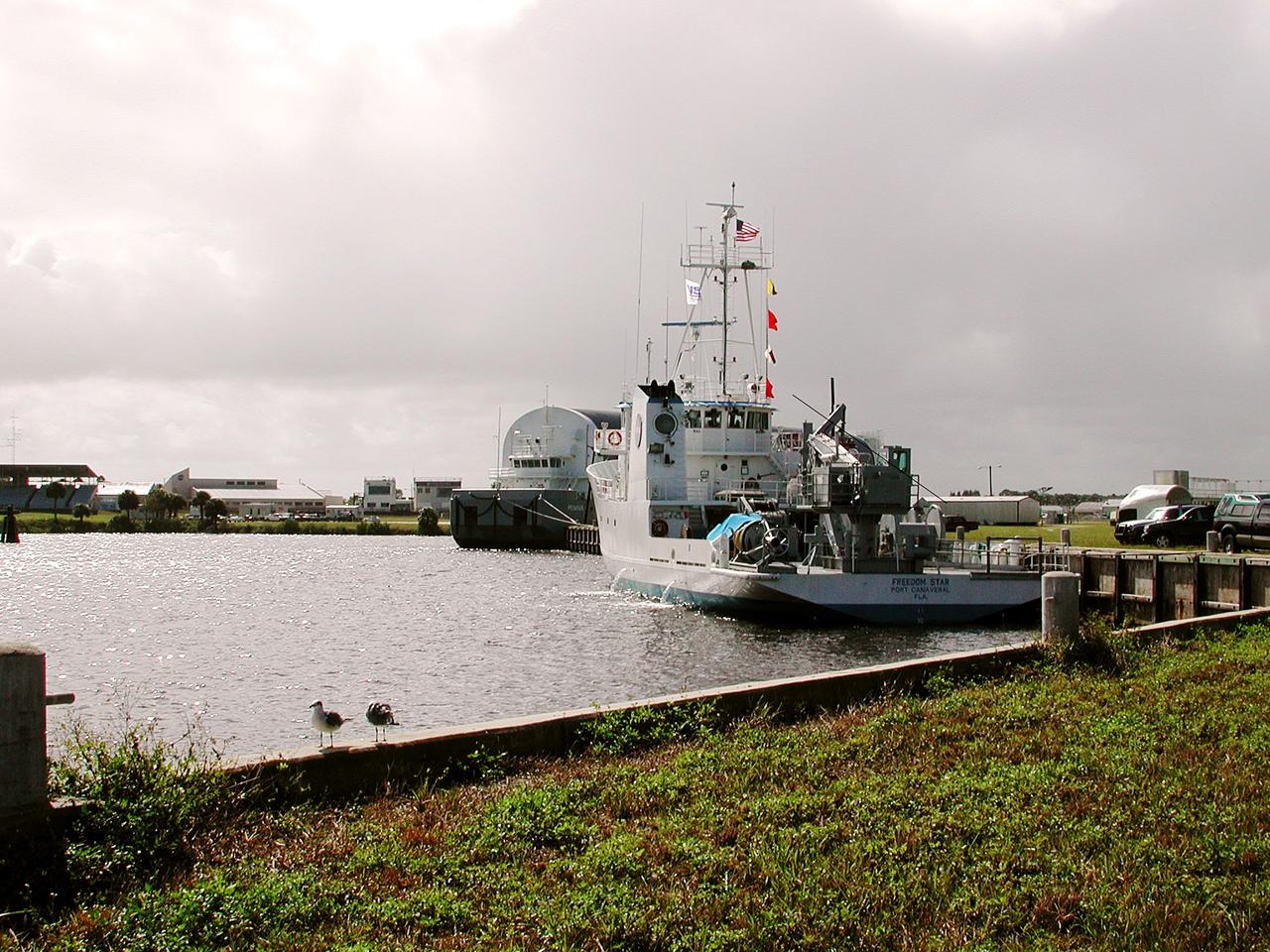
KENNEDY SPACE CENTER, FLA. - The Freedom Star is berthed at the Turn Basin near the Vehicle Assembly Building.  The ship has recently returned to KSC after refurbishment at Fort George Island, Fla., including new paint.  Freedom Star is one of the solid rocket booster (SRB) retrieval ships built to recover the SRB casings released over the Atlantic Ocean after launch of a Space Shuttle.  In addition to the SRBs, the ship recovers the drogue and main parachutes that slow the boosters’ speed before splashdown.  Some of the retrieval equipment can be seen on the rear deck.  The ships also tow the external tanks built at the Michoud Space Systems Assembly Facility near New Orleans to Port Canaveral, Fla.  Freedom Star was brought to KSC today for a visit by NATO Parliamentarians.
KENNEDY SPACE CENTER, FLA. - The Freedom Star is berthed at the Turn Basin near the Vehicle Assembly Building. The ship has recently returned to KSC after refurbishment at Fort George Island, Fla., including new paint. Freedom Star is one of the solid rocket booster (SRB) retrieval ships built to recover the SRB casings released over the Atlantic Ocean after launch of a Space Shuttle. In addition to the SRBs, the ship recovers the drogue and main parachutes that slow the boosters’ speed before splashdown. Some of the retrieval equipment can be seen on the rear deck. The ships also tow the external tanks built at the Michoud Space Systems Assembly Facility near New Orleans to Port Canaveral, Fla. Freedom Star was brought to KSC today for a visit by NATO Parliamentarians.
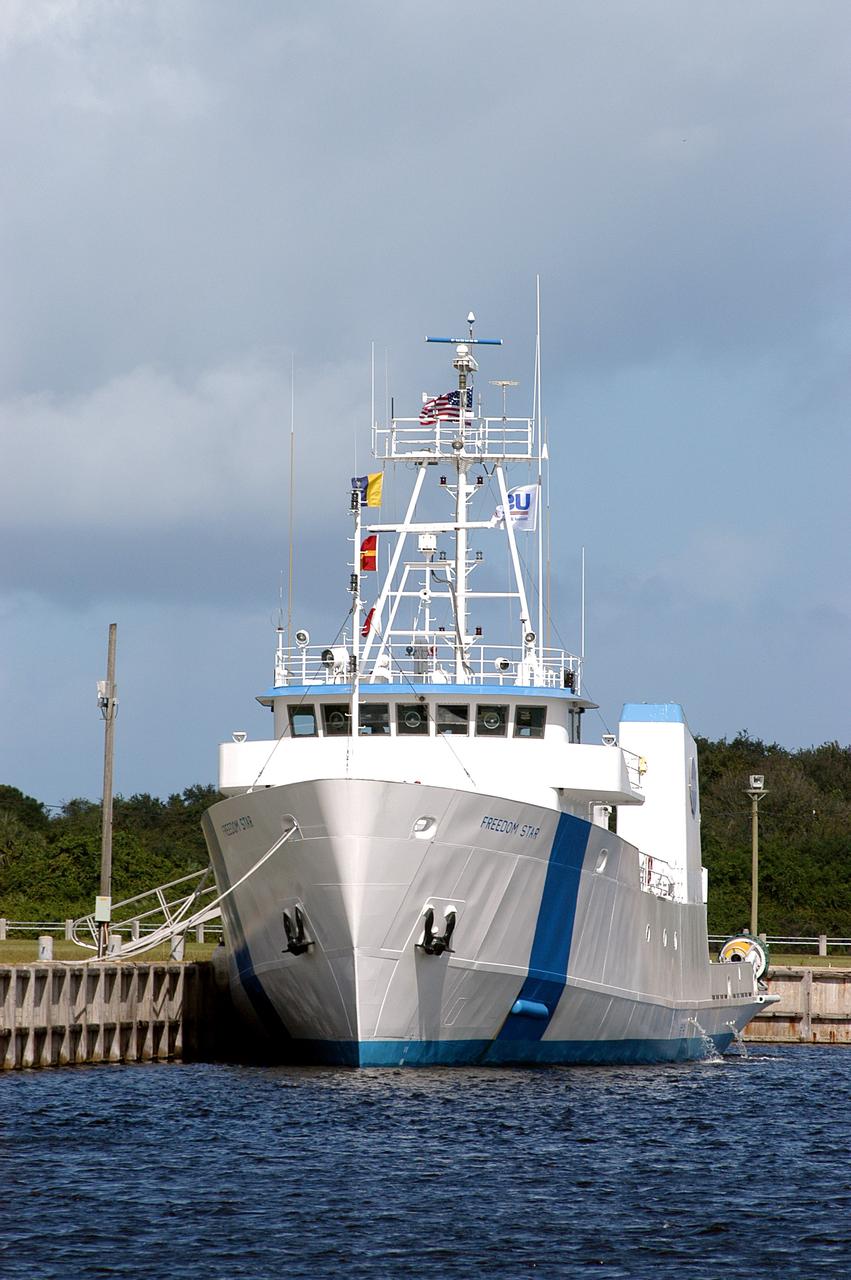
KENNEDY SPACE CENTER, FLA. - The Freedom Star is berthed at the Turn Basin near the Vehicle Assembly Building.  The ship has recently returned to KSC after refurbishment at Fort George Island, Fla., including new paint.  Freedom Star is one of the solid rocket booster (SRB) retrieval ships built to recover the SRB casings released over the Atlantic Ocean after launch of a Space Shuttle.  In addition to the SRBs, the ship recovers the drogue and main parachutes that slow the boosters’ speed before splashdown.  The ships also tow the external tanks built at the Michoud Space Systems Assembly Facility near New Orleans to Port Canaveral, Fla.  Freedom Star was brought to KSC today for a visit by NATO Parliamentarians.
KENNEDY SPACE CENTER, FLA. - The Freedom Star is berthed at the Turn Basin near the Vehicle Assembly Building. The ship has recently returned to KSC after refurbishment at Fort George Island, Fla., including new paint. Freedom Star is one of the solid rocket booster (SRB) retrieval ships built to recover the SRB casings released over the Atlantic Ocean after launch of a Space Shuttle. In addition to the SRBs, the ship recovers the drogue and main parachutes that slow the boosters’ speed before splashdown. The ships also tow the external tanks built at the Michoud Space Systems Assembly Facility near New Orleans to Port Canaveral, Fla. Freedom Star was brought to KSC today for a visit by NATO Parliamentarians.
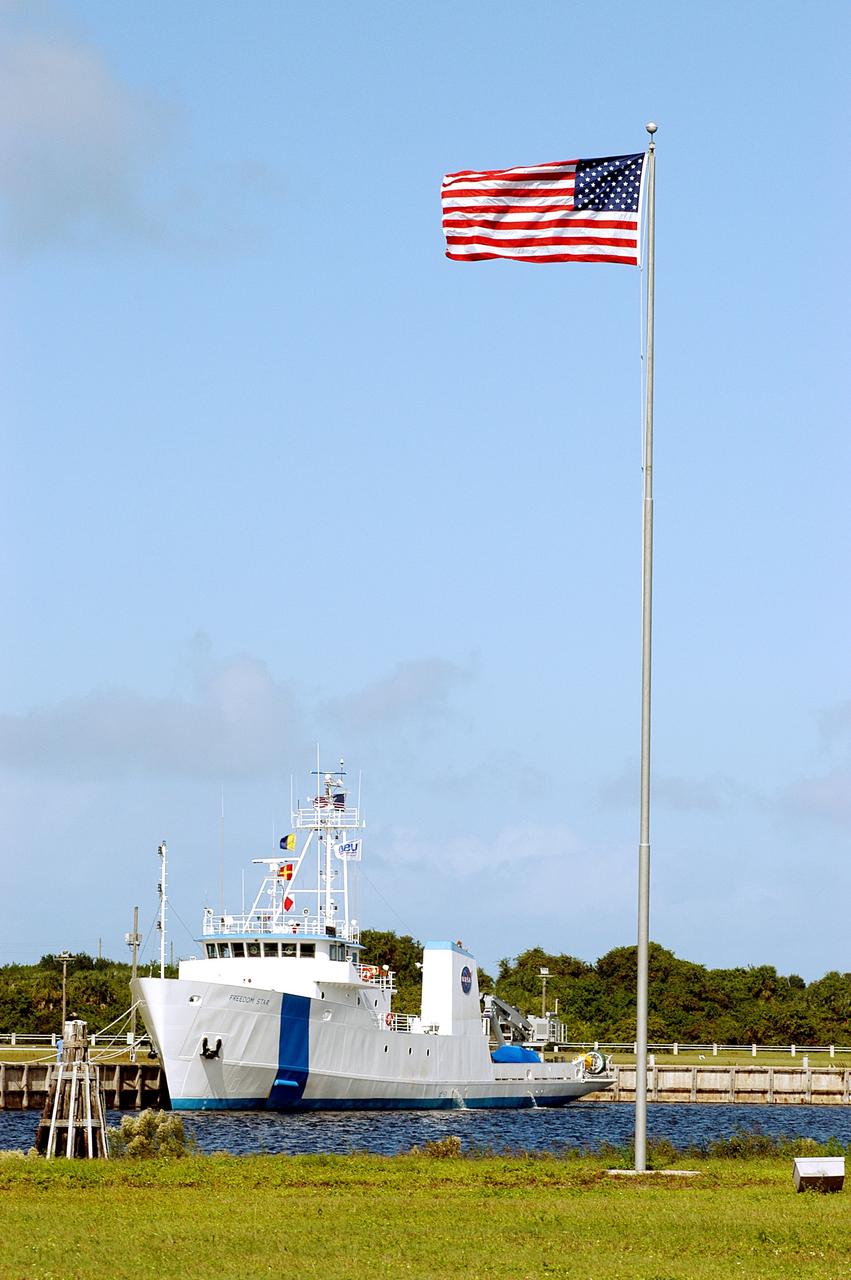
KENNEDY SPACE CENTER, FLA. -  The Freedom Star is berthed at the Turn Basin near the Vehicle Assembly Building and NASA-KSC News Center.  The flag is near the News Center.   The ship has recently returned to KSC after refurbishment at Fort George Island, Fla., including new paint.  Freedom Star is one of the solid rocket booster (SRB) retrieval ships built to recover the SRB casings released over the Atlantic Ocean after launch of a Space Shuttle.  In addition to the SRBs, the ship recovers the drogue and main parachutes that slow the boosters’ speed before splashdown.   The ships also tow the external tanks built at the Michoud Space Systems Assembly Facility near New Orleans to Port Canaveral, Fla.  Freedom Star was brought to KSC today for a visit by NATO Parliamentarians.
KENNEDY SPACE CENTER, FLA. - The Freedom Star is berthed at the Turn Basin near the Vehicle Assembly Building and NASA-KSC News Center. The flag is near the News Center. The ship has recently returned to KSC after refurbishment at Fort George Island, Fla., including new paint. Freedom Star is one of the solid rocket booster (SRB) retrieval ships built to recover the SRB casings released over the Atlantic Ocean after launch of a Space Shuttle. In addition to the SRBs, the ship recovers the drogue and main parachutes that slow the boosters’ speed before splashdown. The ships also tow the external tanks built at the Michoud Space Systems Assembly Facility near New Orleans to Port Canaveral, Fla. Freedom Star was brought to KSC today for a visit by NATO Parliamentarians.
KENNEDY SPACE CENTER, FLA. - The Freedom Star is berthed at the Turn Basin near the Vehicle Assembly Building.  The ship has recently returned to KSC after refurbishment at Fort George Island, Fla., including new paint.  Freedom Star is one of the solid rocket booster (SRB) retrieval ships built to recover the SRB casings released over the Atlantic Ocean after launch of a Space Shuttle.  In addition to the SRBs, the ship recovers the drogue and main parachutes that slow the boosters’ speed before splashdown.  Some of the retrieval equipment can be seen on the rear deck.  The ships also tow the external tanks built at the Michoud Space Systems Assembly Facility near New Orleans to Port Canaveral, Fla.  Freedom Star was brought to KSC today for a visit by NATO Parliamentarians.
KENNEDY SPACE CENTER, FLA. - The Freedom Star is berthed at the Turn Basin near the Vehicle Assembly Building. The ship has recently returned to KSC after refurbishment at Fort George Island, Fla., including new paint. Freedom Star is one of the solid rocket booster (SRB) retrieval ships built to recover the SRB casings released over the Atlantic Ocean after launch of a Space Shuttle. In addition to the SRBs, the ship recovers the drogue and main parachutes that slow the boosters’ speed before splashdown. Some of the retrieval equipment can be seen on the rear deck. The ships also tow the external tanks built at the Michoud Space Systems Assembly Facility near New Orleans to Port Canaveral, Fla. Freedom Star was brought to KSC today for a visit by NATO Parliamentarians.
KENNEDY SPACE CENTER, FLA. -  The Freedom Star is berthed at the Turn Basin near the Vehicle Assembly Building.  The ship has recently returned to KSC after refurbishment at Fort George Island, Fla., including new paint.  Freedom Star is one of the solid rocket booster (SRB) retrieval ships built to recover the SRB casings released over the Atlantic Ocean after launch of a Space Shuttle.  In addition to the SRBs, the ship recovers the drogue and main parachutes that slow the boosters’ speed before splashdown.   The ships also tow the external tanks built at the Michoud Space Systems Assembly Facility near New Orleans to Port Canaveral, Fla.  Freedom Star was brought to KSC today for a visit by NATO Parliamentarians.
KENNEDY SPACE CENTER, FLA. - The Freedom Star is berthed at the Turn Basin near the Vehicle Assembly Building. The ship has recently returned to KSC after refurbishment at Fort George Island, Fla., including new paint. Freedom Star is one of the solid rocket booster (SRB) retrieval ships built to recover the SRB casings released over the Atlantic Ocean after launch of a Space Shuttle. In addition to the SRBs, the ship recovers the drogue and main parachutes that slow the boosters’ speed before splashdown. The ships also tow the external tanks built at the Michoud Space Systems Assembly Facility near New Orleans to Port Canaveral, Fla. Freedom Star was brought to KSC today for a visit by NATO Parliamentarians.
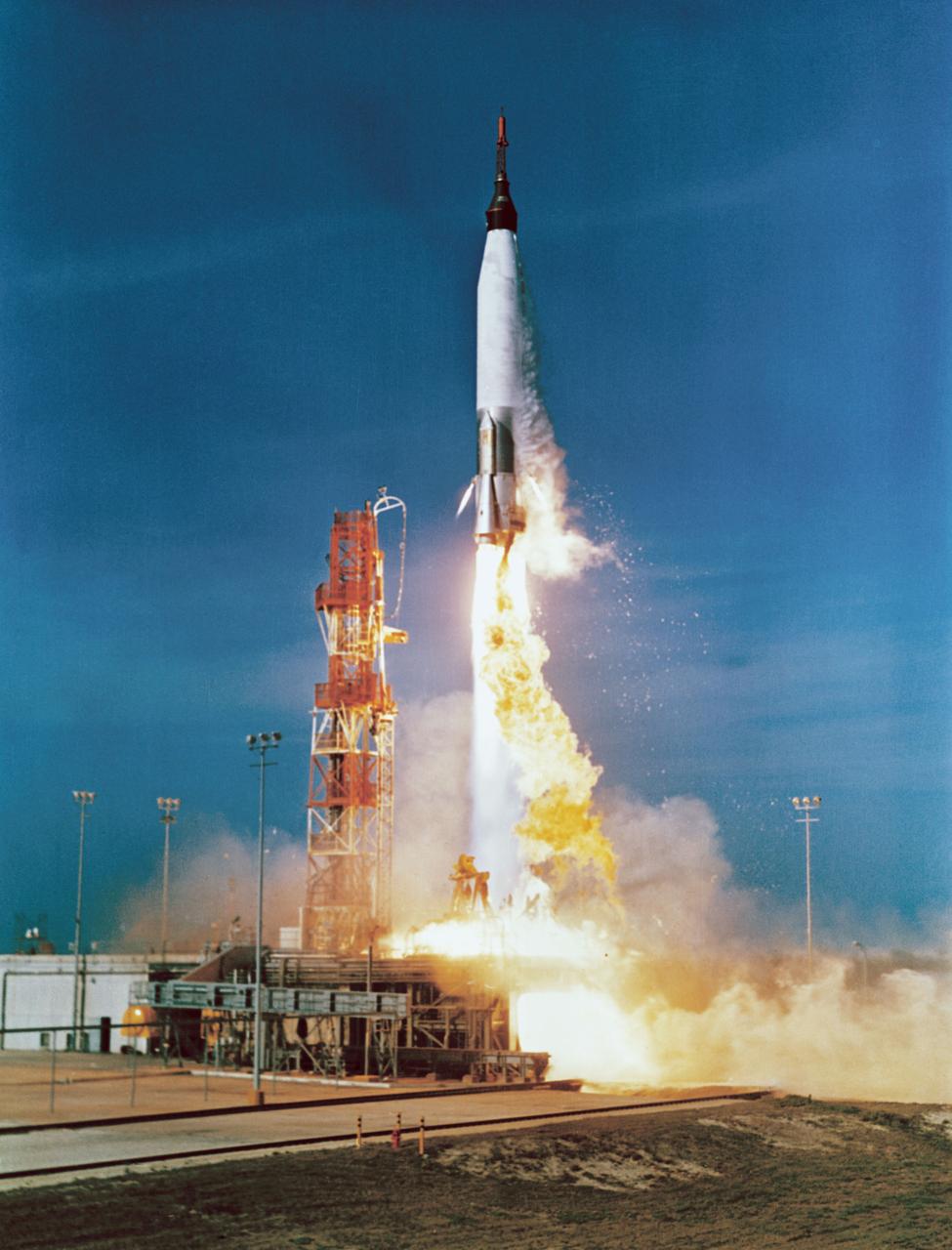
S61-01226 (21 Feb. 1961) --- Launch of the unmanned Mercury-Atlas 2 (MA-2) vehicle for a suborbital test flight of the Mercury capsule. The upper part of Atlas is stengthened by an eight-inch wide stainless steel band. The capsule was recovered less than one hour after launch. The altitude was 108 miles. Speed was 13,000 mph. Recovered 1,425 miles downrange. Photo credit: NASA
MERCURY-ATLAS (MA)-2 - LIFTOFF - CAPE
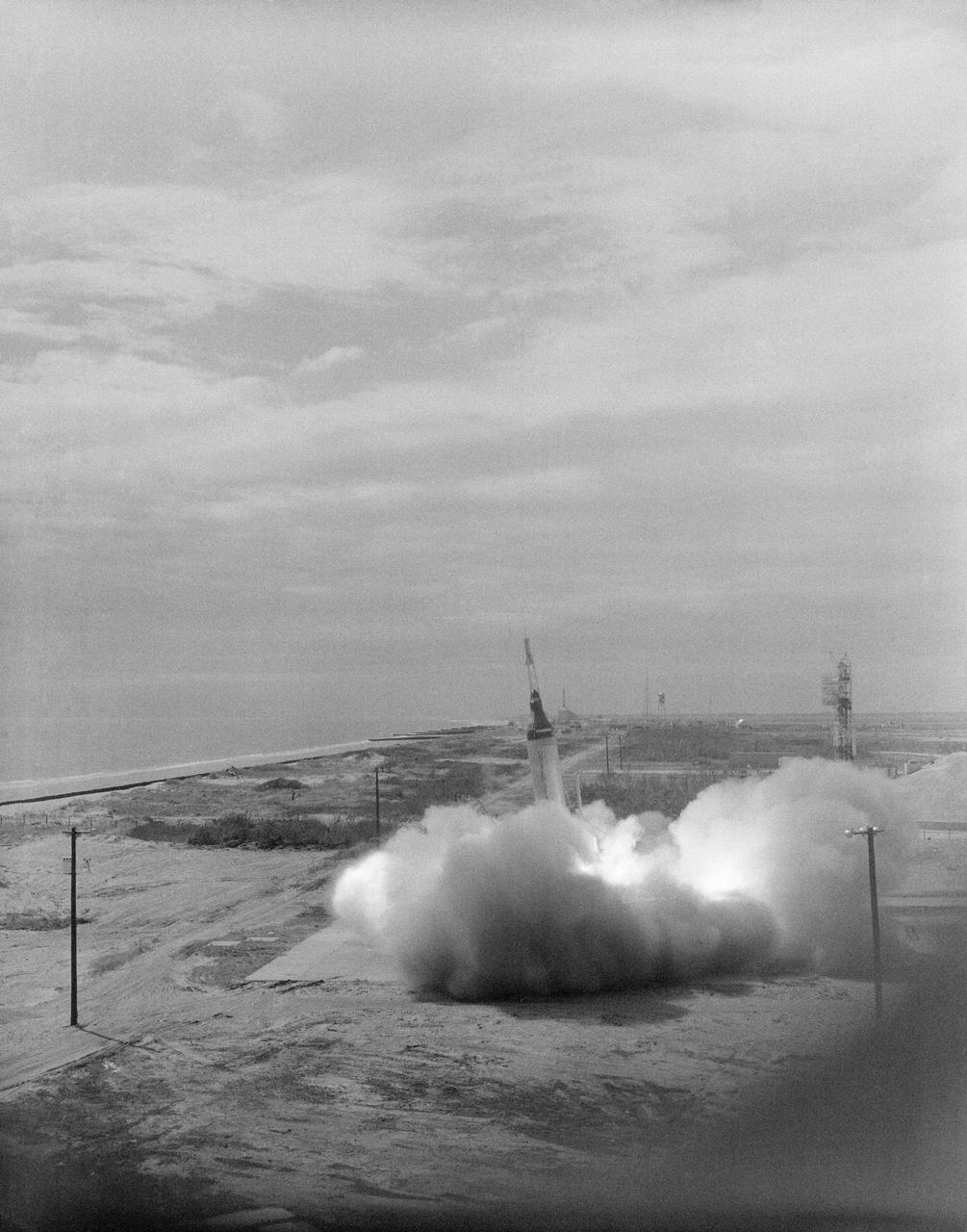
S61-01372 (21 Feb. 1961) --- Launch of the unmanned Mercury-Atlas 2 (MA-2) vehicle for a suborbital test flight of the Mercury capsule. The upper part of Atlas is stengthened by an eight-inch wide stainless steel band. The capsule was recovered less than one hour after launch. The altitude was 108 miles. Speed was 13,000 mph. Recovered 1,425 miles downrange. Photo credit: NASA
LITTLE JOE 5A - CAPSULE 14
CAPE CANAVERAL, Fla. -- Crew members from Liberty Star, one of NASA's solid rocket booster retrieval ships, have recovered and secured the right spent booster nose cap to a pallet on the ship's deck that was recovered from the Atlantic Ocean after Discovery's final launch.        The shuttle’s two solid rocket booster casings and associated flight hardware are recovered in the Atlantic Ocean after every launch by Freedom Star and Liberty Star. The boosters impact the Atlantic about seven minutes after liftoff and the retrieval ships are stationed about 10 miles from the impact area at the time of splashdown. After the spent segments are processed, they will be transported to Utah, where they will be refurbished and stored, if needed. Photo credit: NASA/Frank Michaux
KSC-2011-1865
KENNEDY SPACE CENTER, FLA. - The apparatus shown was designed to hold microcapsules for research on mission STS-107.  It is one over several  included in the Commercial ITA Biomedical Experiments payload.  The box was recently recovered during the search for Columbia debris.  The drug delivery system and spaceflight hardware was developed jointly by JSC, the Institute for Research Inc. and Instrumentation Technology Associates Inc. to conduct microencapsulation experiments under microgravity conditions.
KENNEDY SPACE CENTER, FLA. - The apparatus shown was designed to hold microcapsules for research on mission STS-107. It is one over several included in the Commercial ITA Biomedical Experiments payload. The box was recently recovered during the search for Columbia debris. The drug delivery system and spaceflight hardware was developed jointly by JSC, the Institute for Research Inc. and Instrumentation Technology Associates Inc. to conduct microencapsulation experiments under microgravity conditions.
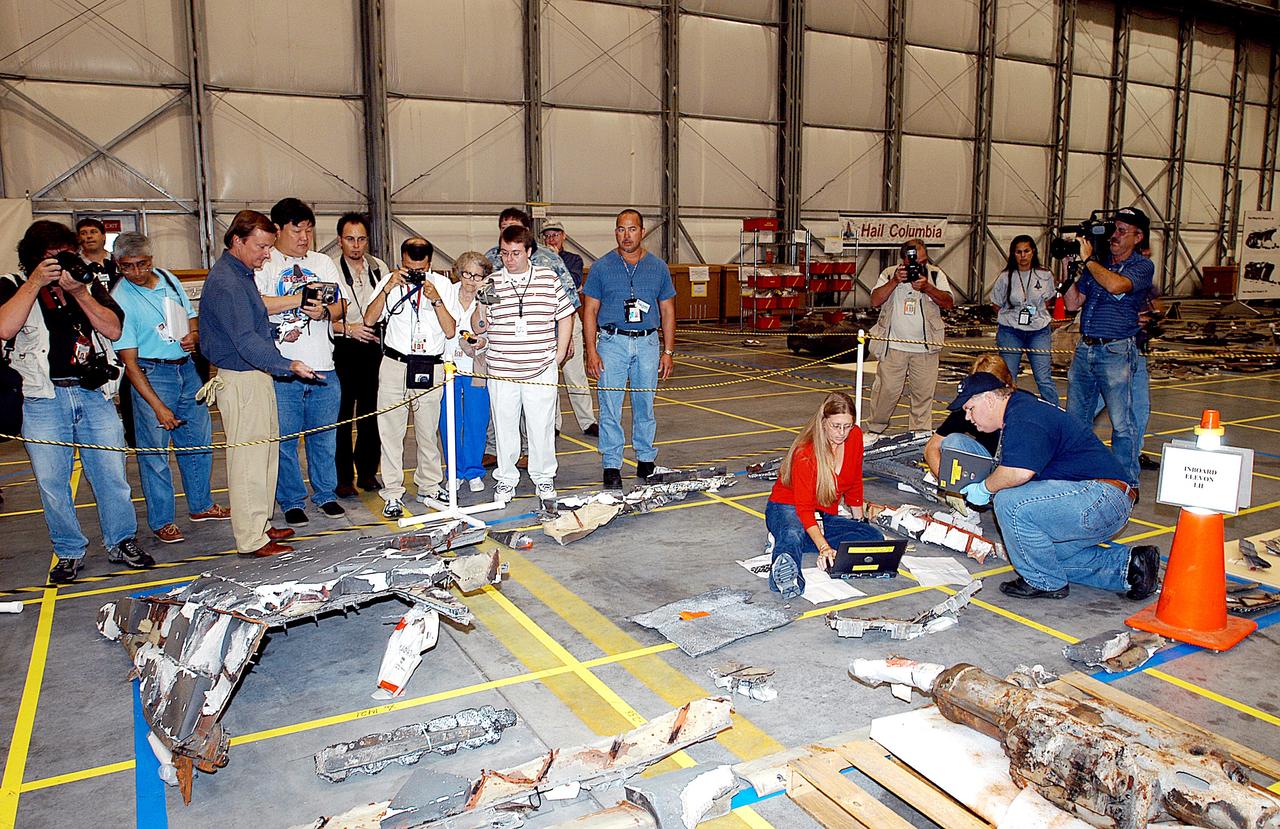
KENNEDY SPACE CENTER, FLA. - In the Columbia Debris Hangar,  Shuttle Launch Director Mike Leinbach  points to some of the debris as he explains to the media about activities that have taken place since the Columbia accident on Feb. 1, 2003.  STS-107 debris recovery and reconstruction operations are winding down.  To date, nearly 84,000 pieces of debris have been recovered and sent to KSC. That represents about 38 percent of the dry weight of Columbia, equaling almost 85,000 pounds.
KENNEDY SPACE CENTER, FLA. - In the Columbia Debris Hangar, Shuttle Launch Director Mike Leinbach points to some of the debris as he explains to the media about activities that have taken place since the Columbia accident on Feb. 1, 2003. STS-107 debris recovery and reconstruction operations are winding down. To date, nearly 84,000 pieces of debris have been recovered and sent to KSC. That represents about 38 percent of the dry weight of Columbia, equaling almost 85,000 pounds.
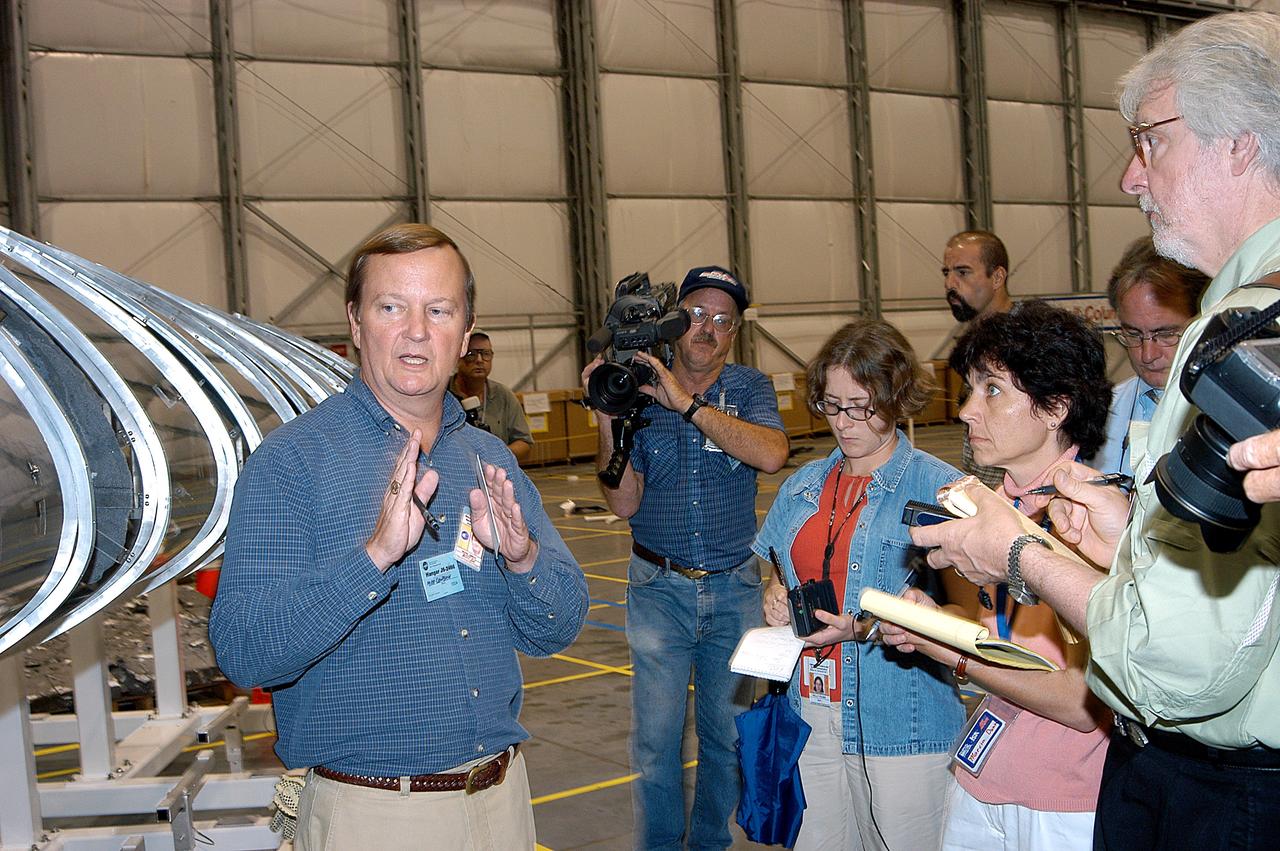
KENNEDY SPACE CENTER, FLA. - In the Columbia Debris Hangar,  Shuttle Launch Director Mike Leinbach  (right) talks to the media about activities that have taken place since the Columbia accident on Feb. 1, 2003.  STS-107 debris recovery and reconstruction operations are winding down.  To date, nearly 84,000 pieces of debris have been recovered and sent to KSC. That represents about 38 percent of the dry weight of Columbia, equaling almost 85,000 pounds.
KENNEDY SPACE CENTER, FLA. - In the Columbia Debris Hangar, Shuttle Launch Director Mike Leinbach (right) talks to the media about activities that have taken place since the Columbia accident on Feb. 1, 2003. STS-107 debris recovery and reconstruction operations are winding down. To date, nearly 84,000 pieces of debris have been recovered and sent to KSC. That represents about 38 percent of the dry weight of Columbia, equaling almost 85,000 pounds.
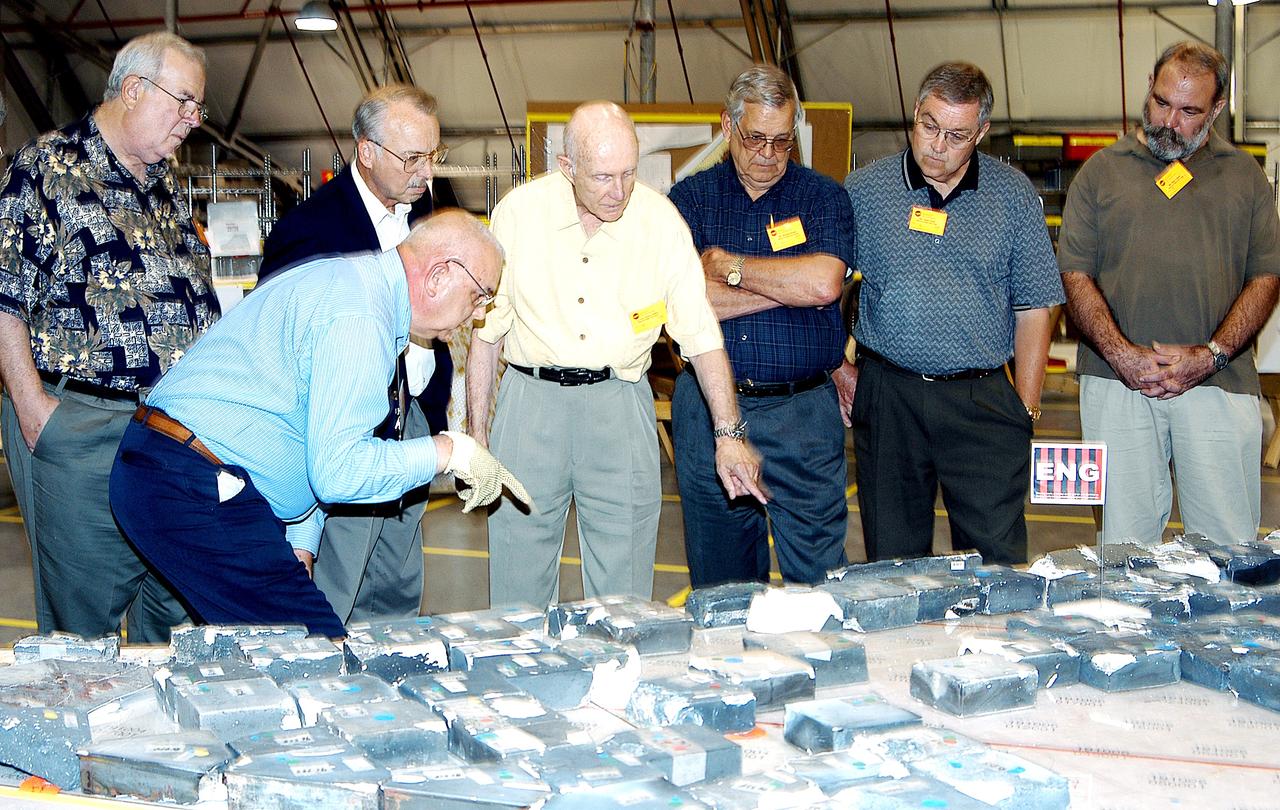
KENNEDY SPACE CENTER, FLA.  -  In the Columbia Debris Hangar, members of the  Stafford-Covey Return to Flight Task Group (SCTG) look at tiles recovered.  Chairing the task group are Richard O. Covey, former Space Shuttle commander, and Thomas P. Stafford (center), Apollo commander.  Chartered by NASA Administrator Sean O’Keefe, the task group will perform an independent assessment of NASA’s implementation of the final recommendations by the Columbia Accident Investigation Board.
KENNEDY SPACE CENTER, FLA. - In the Columbia Debris Hangar, members of the Stafford-Covey Return to Flight Task Group (SCTG) look at tiles recovered. Chairing the task group are Richard O. Covey, former Space Shuttle commander, and Thomas P. Stafford (center), Apollo commander. Chartered by NASA Administrator Sean O’Keefe, the task group will perform an independent assessment of NASA’s implementation of the final recommendations by the Columbia Accident Investigation Board.
KENNEDY SPACE CENTER, FLA. - In the Columbia Debris Hangar,  Shuttle Launch Director Mike Leinbach  points to some of the debris as he explains to the media about activities that have taken place since the Columbia accident on Feb. 1, 2003.  STS-107 debris recovery and reconstruction operations are winding down.  To date, nearly 84,000 pieces of debris have been recovered and sent to KSC. That represents about 38 percent of the dry weight of Columbia, equaling almost 85,000 pounds.
KENNEDY SPACE CENTER, FLA. - In the Columbia Debris Hangar, Shuttle Launch Director Mike Leinbach points to some of the debris as he explains to the media about activities that have taken place since the Columbia accident on Feb. 1, 2003. STS-107 debris recovery and reconstruction operations are winding down. To date, nearly 84,000 pieces of debris have been recovered and sent to KSC. That represents about 38 percent of the dry weight of Columbia, equaling almost 85,000 pounds.
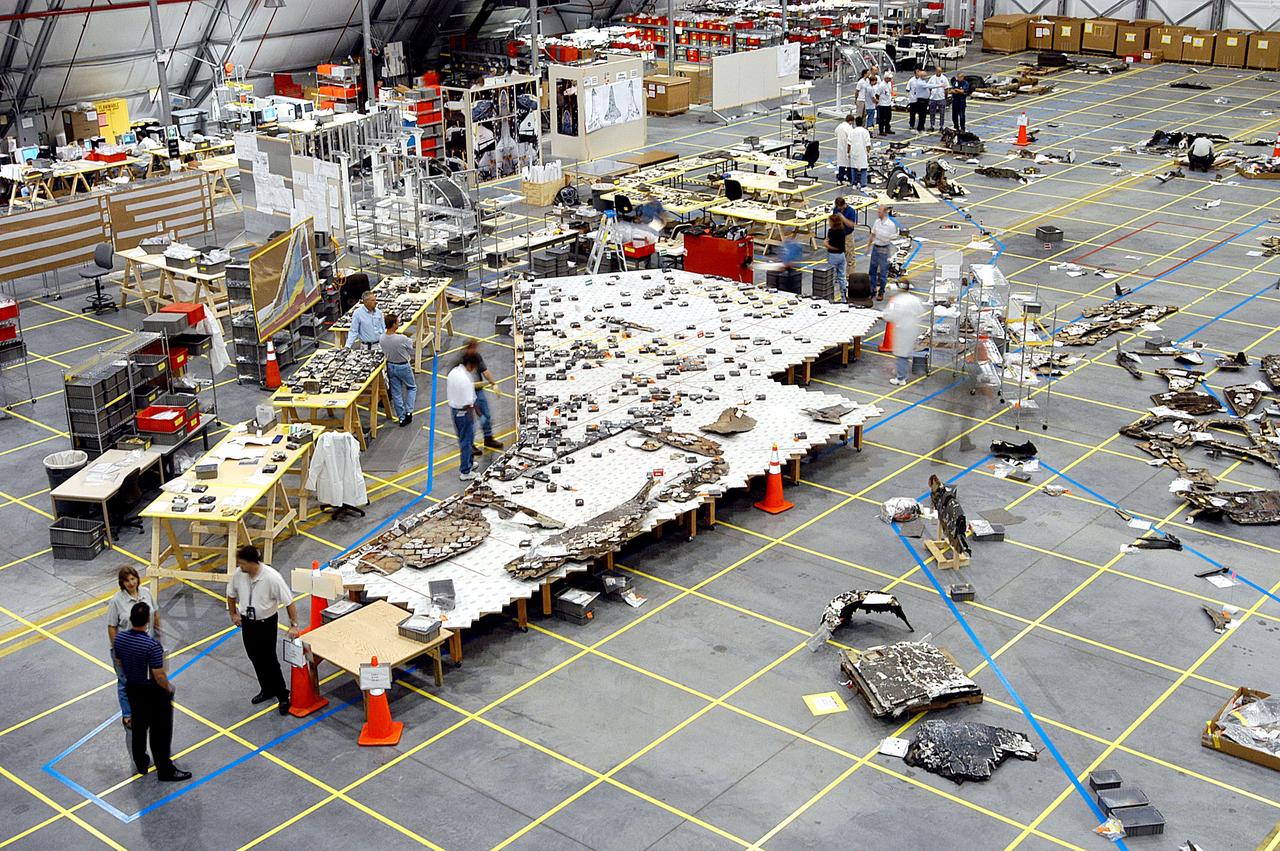
KENNEDY SPACE CENTER, FLA. -  In the RLV hangar, members of the Columbia Reconstruction Team work to identify pieces of Thermal Protection System tile from the left wing of Columbia recovered during the search and recovery efforts in East Texas.  The items shipped to KSC number more than 82,000 and weigh 84,800 pounds or 38 percent of the total dry weight of Columbia. Of those items, 78,760 have been identified, with 753 placed on the left wing grid in the Hangar.
KENNEDY SPACE CENTER, FLA. - In the RLV hangar, members of the Columbia Reconstruction Team work to identify pieces of Thermal Protection System tile from the left wing of Columbia recovered during the search and recovery efforts in East Texas. The items shipped to KSC number more than 82,000 and weigh 84,800 pounds or 38 percent of the total dry weight of Columbia. Of those items, 78,760 have been identified, with 753 placed on the left wing grid in the Hangar.
KENNEDY SPACE CENTER, FLA. -  In the Columbia Debris Hangar,  Shuttle Launch Director Mike Leinbach  talks to the media about activities that have taken place since the Columbia accident on Feb. 1, 2003.  Behind him is a model of the left wing of the orbiter.  STS-107 debris recovery and reconstruction operations are winding down.  To date, nearly 84,000 pieces of debris have been recovered and sent to KSC. That represents about 38 percent of the dry weight of Columbia, equaling almost 85,000 pounds.
KENNEDY SPACE CENTER, FLA. - In the Columbia Debris Hangar, Shuttle Launch Director Mike Leinbach talks to the media about activities that have taken place since the Columbia accident on Feb. 1, 2003. Behind him is a model of the left wing of the orbiter. STS-107 debris recovery and reconstruction operations are winding down. To date, nearly 84,000 pieces of debris have been recovered and sent to KSC. That represents about 38 percent of the dry weight of Columbia, equaling almost 85,000 pounds.
KENNEDY SPACE CENTER, FLA. - The media get a guided tour of the Columbia Debris Hangar.  Shuttle Launch Director Mike Leinbach discussed activities that have taken place since the Columbia accident on Feb. 1, 2003.  STS-107 debris recovery and reconstruction operations are winding down.  To date, nearly 84,000 pieces of debris have been recovered and sent to KSC. That represents about 38 percent of the dry weight of Columbia, equaling almost 85,000 pounds.
KENNEDY SPACE CENTER, FLA. - The media get a guided tour of the Columbia Debris Hangar. Shuttle Launch Director Mike Leinbach discussed activities that have taken place since the Columbia accident on Feb. 1, 2003. STS-107 debris recovery and reconstruction operations are winding down. To date, nearly 84,000 pieces of debris have been recovered and sent to KSC. That represents about 38 percent of the dry weight of Columbia, equaling almost 85,000 pounds.
KENNEDY SPACE CENTER, FLA. - While talking to the media in the RLV Hangar, Shuttle Launch Director Mike Leinbach points to the model of the leading edge of an orbiter’s left wing that is being used to reconstruct Columbia’s wing with the recovered debris.  The items shipped to KSC number more than 82,000 and weigh 84,800 pounds or 38 percent of the total dry weight of Columbia.  Of those items, 78,760 have been identified, with 753 placed on the left wing grid in the Hangar.
KENNEDY SPACE CENTER, FLA. - While talking to the media in the RLV Hangar, Shuttle Launch Director Mike Leinbach points to the model of the leading edge of an orbiter’s left wing that is being used to reconstruct Columbia’s wing with the recovered debris. The items shipped to KSC number more than 82,000 and weigh 84,800 pounds or 38 percent of the total dry weight of Columbia. Of those items, 78,760 have been identified, with 753 placed on the left wing grid in the Hangar.
KENNEDY SPACE CENTER, FLA. -  In the Columbia Debris Hangar,  Shuttle Launch Director Mike Leinbach  (right) talks to the media about activities that have taken place since the Columbia accident on Feb. 1, 2003.  STS-107 debris recovery and reconstruction operations are winding down.  To date, nearly 84,000 pieces of debris have been recovered and sent to KSC. That represents about 38 percent of the dry weight of Columbia, equaling almost 85,000 pounds.
KENNEDY SPACE CENTER, FLA. - In the Columbia Debris Hangar, Shuttle Launch Director Mike Leinbach (right) talks to the media about activities that have taken place since the Columbia accident on Feb. 1, 2003. STS-107 debris recovery and reconstruction operations are winding down. To date, nearly 84,000 pieces of debris have been recovered and sent to KSC. That represents about 38 percent of the dry weight of Columbia, equaling almost 85,000 pounds.
KENNEDY SPACE CENTER, FLA. - In the Columbia Debris Hangar,  Shuttle Launch Director Mike Leinbach  (right) talks to the media about activities that have taken place since the Columbia accident on Feb. 1, 2003.  STS-107 debris recovery and reconstruction operations are winding down.  To date, nearly 84,000 pieces of debris have been recovered and sent to KSC. That represents about 38 percent of the dry weight of Columbia, equaling almost 85,000 pounds.
KENNEDY SPACE CENTER, FLA. - In the Columbia Debris Hangar, Shuttle Launch Director Mike Leinbach (right) talks to the media about activities that have taken place since the Columbia accident on Feb. 1, 2003. STS-107 debris recovery and reconstruction operations are winding down. To date, nearly 84,000 pieces of debris have been recovered and sent to KSC. That represents about 38 percent of the dry weight of Columbia, equaling almost 85,000 pounds.
KENNEDY SPACE CENTER, FLA. -  In the Columbia Debris Hangar,  Shuttle Launch Director Mike Leinbach  (left) talks to the media about activities that have taken place since the Columbia accident on Feb. 1, 2003.  Behind him is a model of the left wing of the orbiter.  STS-107 debris recovery and reconstruction operations are winding down.  To date, nearly 84,000 pieces of debris have been recovered and sent to KSC. That represents about 38 percent of the dry weight of Columbia, equaling almost 85,000 pounds.
KENNEDY SPACE CENTER, FLA. - In the Columbia Debris Hangar, Shuttle Launch Director Mike Leinbach (left) talks to the media about activities that have taken place since the Columbia accident on Feb. 1, 2003. Behind him is a model of the left wing of the orbiter. STS-107 debris recovery and reconstruction operations are winding down. To date, nearly 84,000 pieces of debris have been recovered and sent to KSC. That represents about 38 percent of the dry weight of Columbia, equaling almost 85,000 pounds.
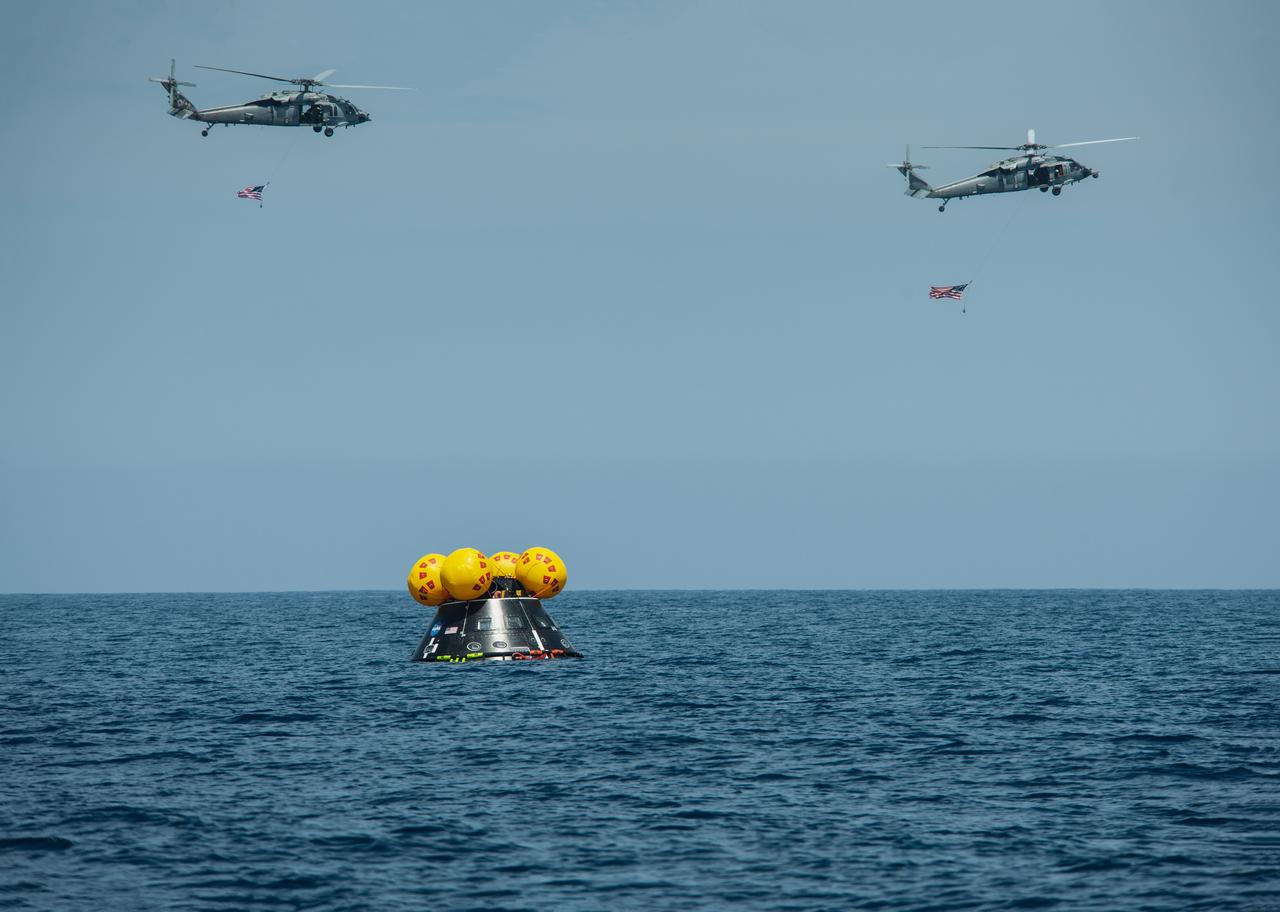
The US Navy and NASA recovery teams are on station off the cost of California on Dec. 3, 2014 and ready to recover Orion after Exploration Flight Test-1 (EFT-1) landing.
Orion Recovery Team
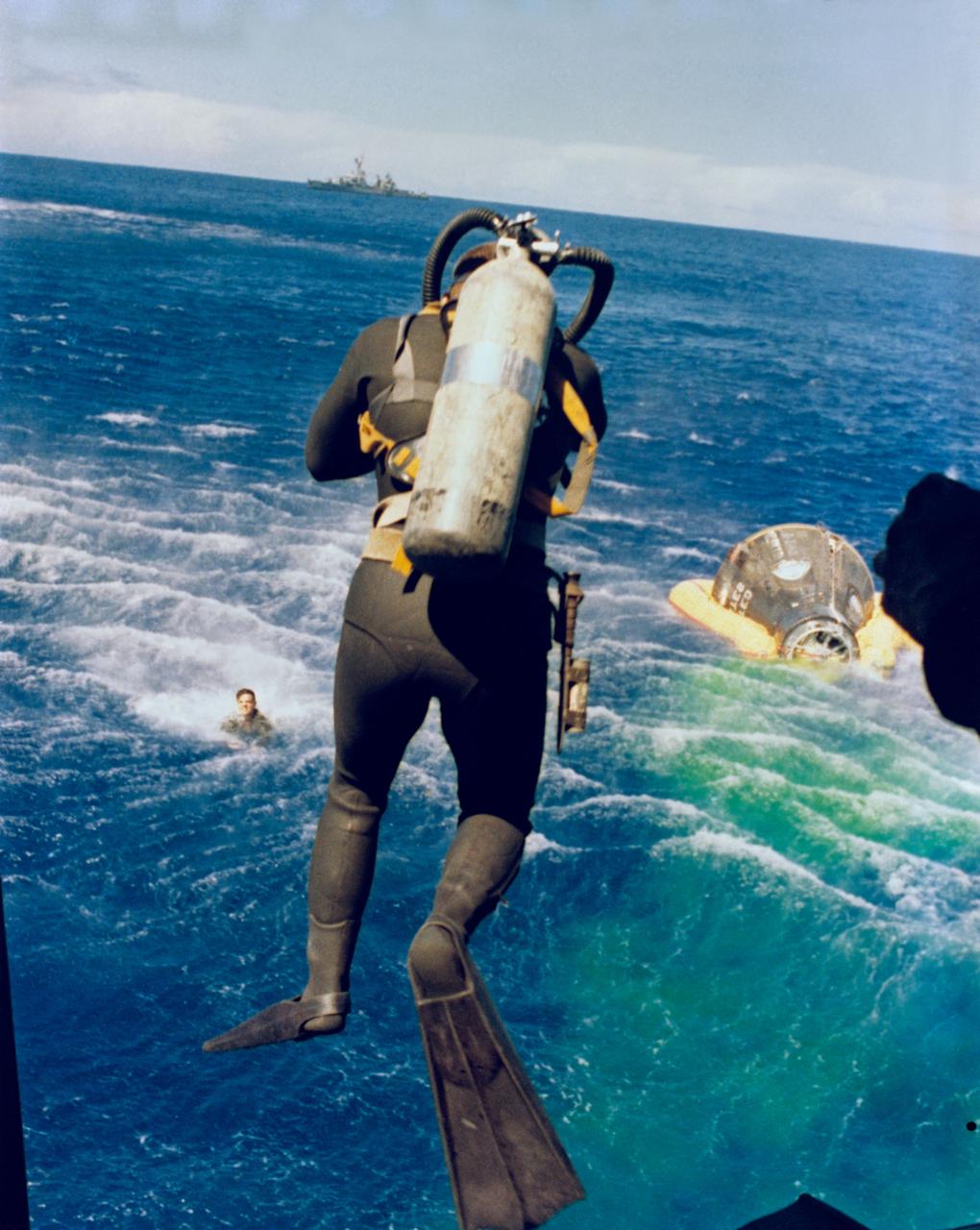
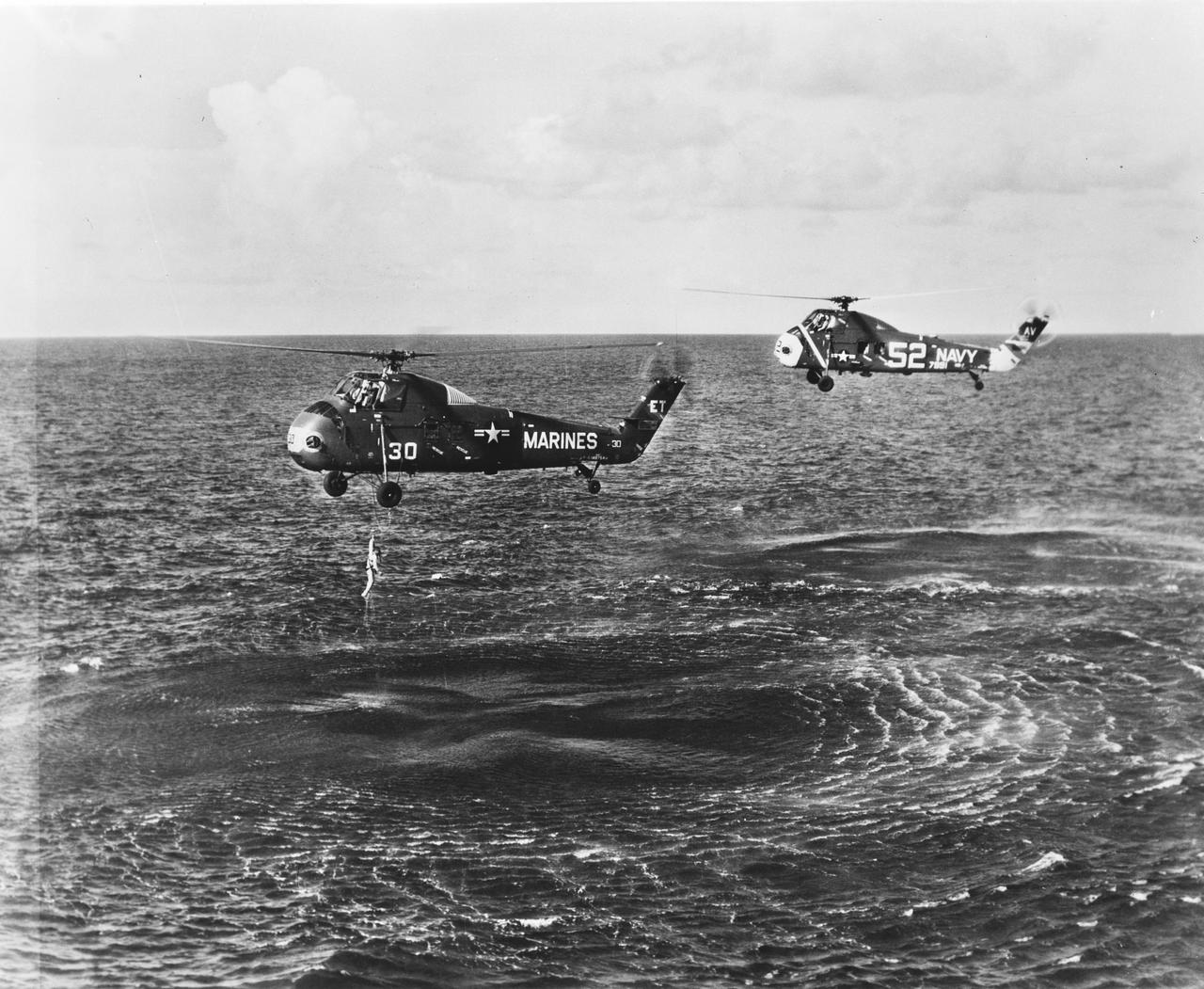
S65-46627 (29 Aug. 1965) --- Navy divers exit their helicopter to recover the Gemini-5 spacecraft and astronauts. The NASA Headquarters alternative photo number is 65-H-669.
GEMINI-TITAN (GT)-5 - RECOVERY - FROGMAN - ATLANTIC
The US Navy and NASA recovery teams are on station off the cost of California on Dec. 3, 2014 and ready to recover Orion after Exploration Flight Test-1 (EFT-1) landing.
Orion Recovery Team
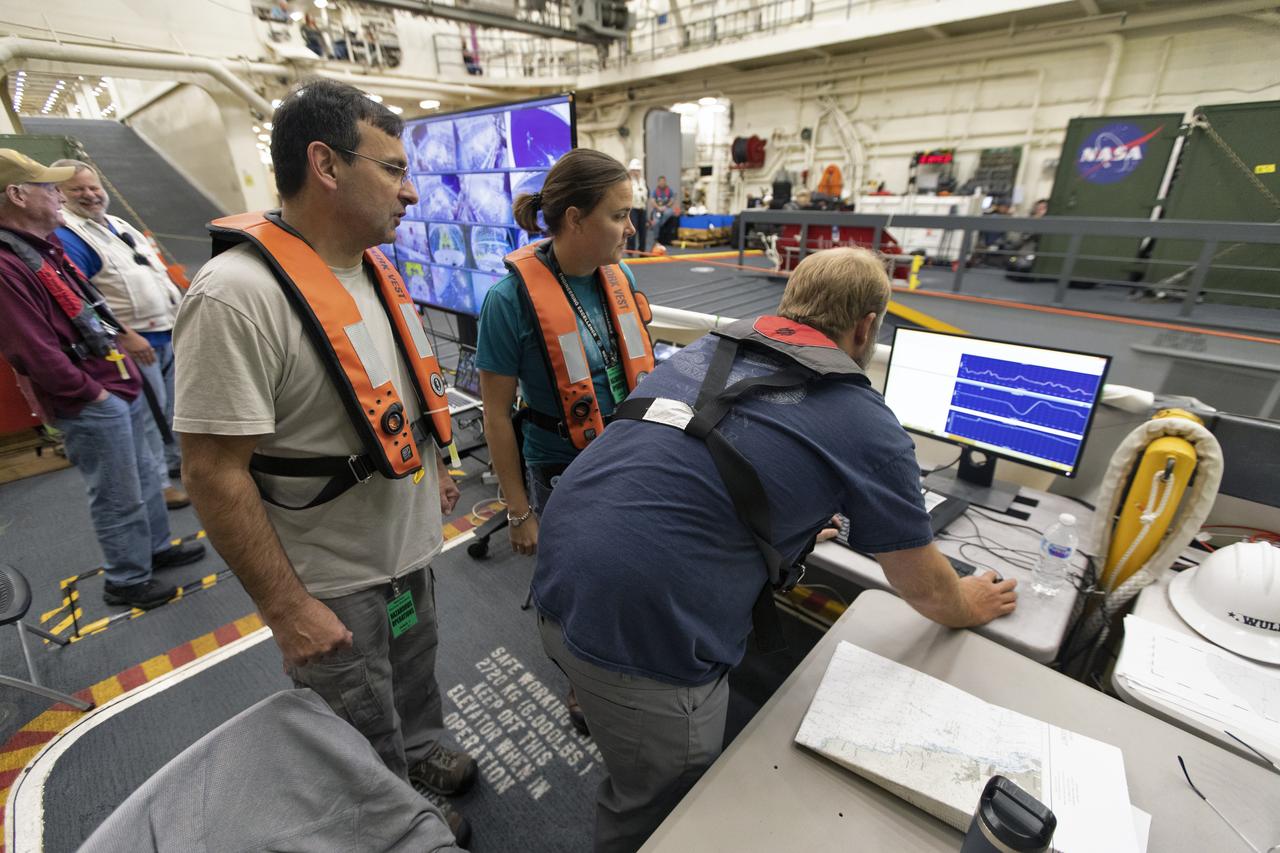
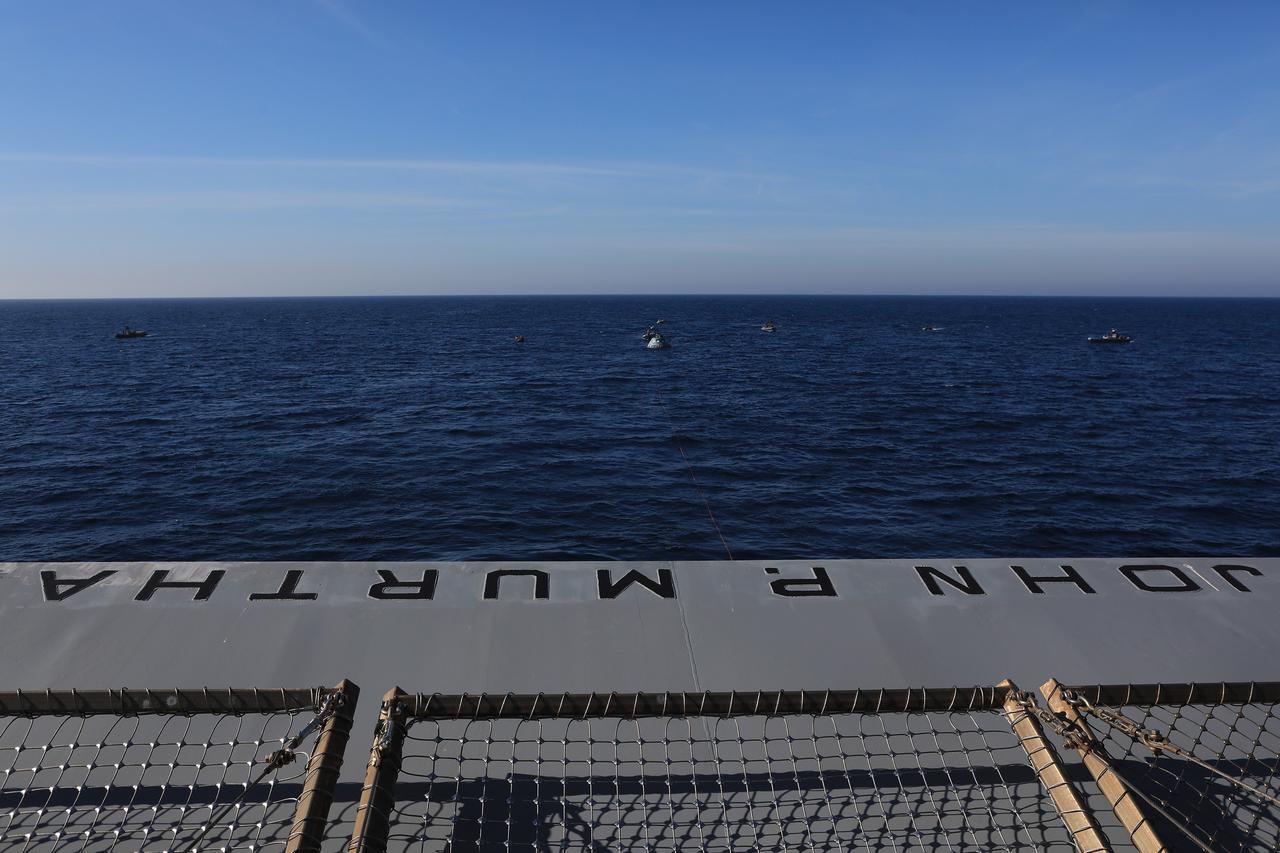
Wave trackers with Applied Physical Sciences monitor ocean wave conditions during Underway Recovery Test-7 (URT-7) aboard the USS John P. Murtha on Nov. 4, 2018. NASA's Recovery Team, along with the U.S. Navy, practice recovering a test version of the Orion capsule as part of URT-7 in the Pacific Ocean. URT-7 is one in a series of tests to verify and validate procedures and hardware that will be used to recover the Orion spacecraft after it splashes down in the Pacific Ocean following deep space exploration missions. Orion will have emergency abort capability, sustain the crew during space travel and provide safe re-entry from deep space return velocities.
Underway Recovery Test 7 (URT-7) - Day 6 Activities
The Exploration Ground Systems Recovery Team, based out of Kennedy Space Center in Florida, is practicing recovering a test version of the Orion capsule during Underway Recovery Test-7 (URT-7), on Oct. 31, 2018, aboard the USS John P. Murtha, in the Pacific Ocean. URT-7 is one in a series of tests to verify and validate procedures and hardware that will be used to recover the Orion spacecraft after it splashes down in the Pacific Ocean following deep space exploration missions. Orion will have emergency abort capability, sustain the crew during space travel and provide safe re-entry from deep space return velocities.
Underway Recovery Test 7 (URT-7) - Day 2 Activities
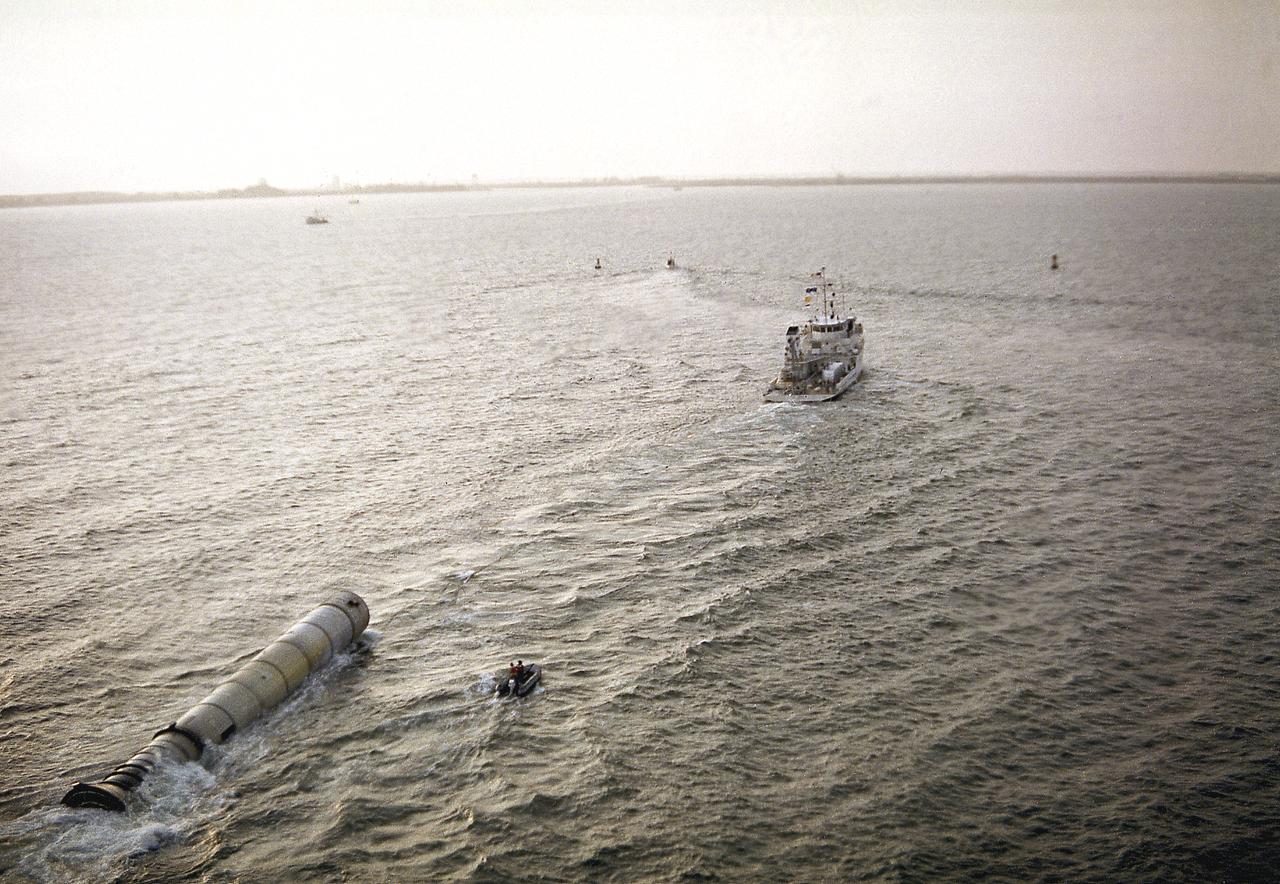
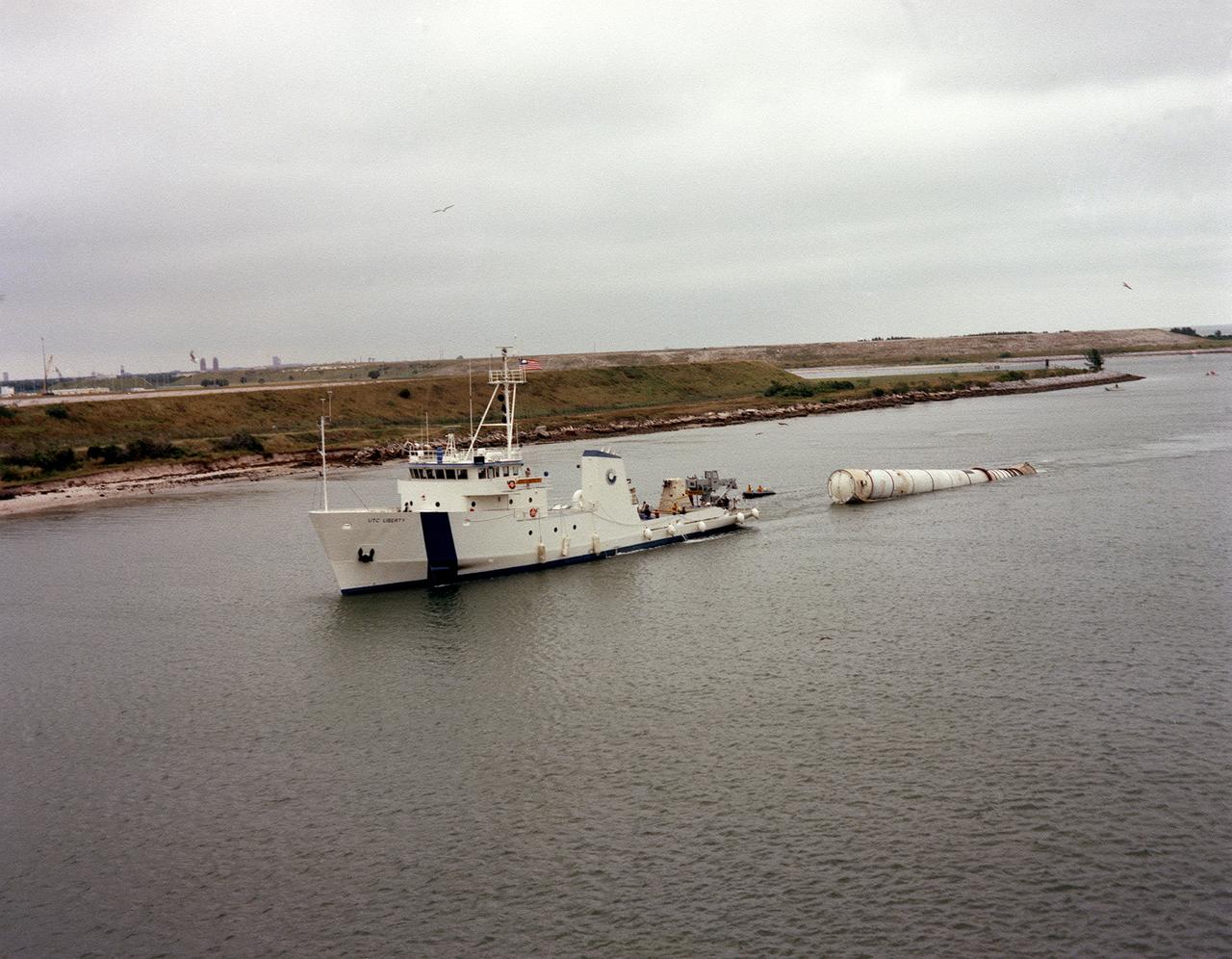
The towing ship, Liberty, towed a recovered solid rocket booster (SRB) for the STS-3 mission to Port Canaveral, Florida. The recovered SRB would be inspected and refurbished for reuse. The Shuttle's SRB's and solid rocket motors (SRM's) are the largest ever built and the first designed for refurbishment and reuse. Standing nearly 150-feet high, the twin boosters provide the majority of thrust for the first two minutes of flight, about 5.8 million pounds. The requirement for reusability dictated durable materials and construction to preclude corrosion of the hardware exposed to the harsh seawater environment. The SRB contains a complete recovery subsystem that includes parachutes, beacons, lights, and tow fixture.
Space Shuttle Projects
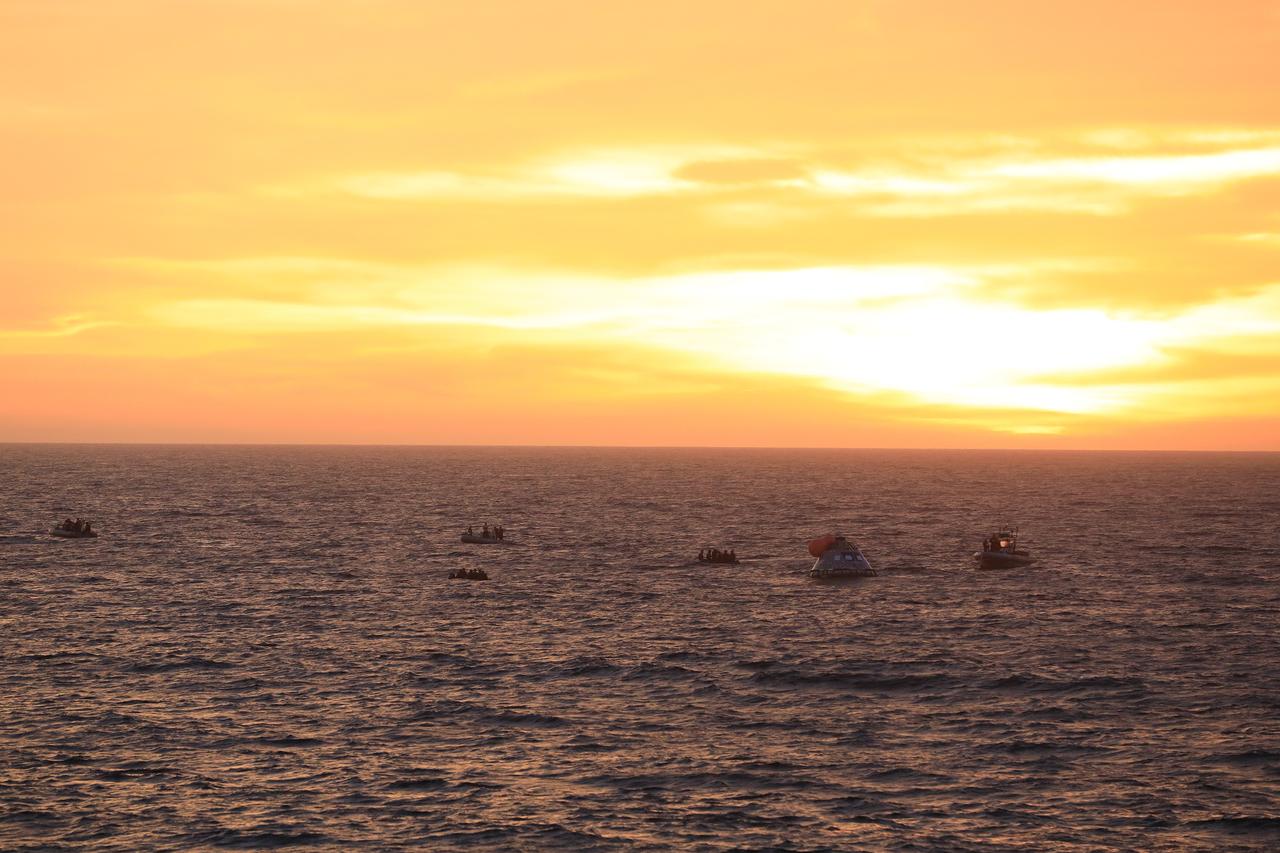
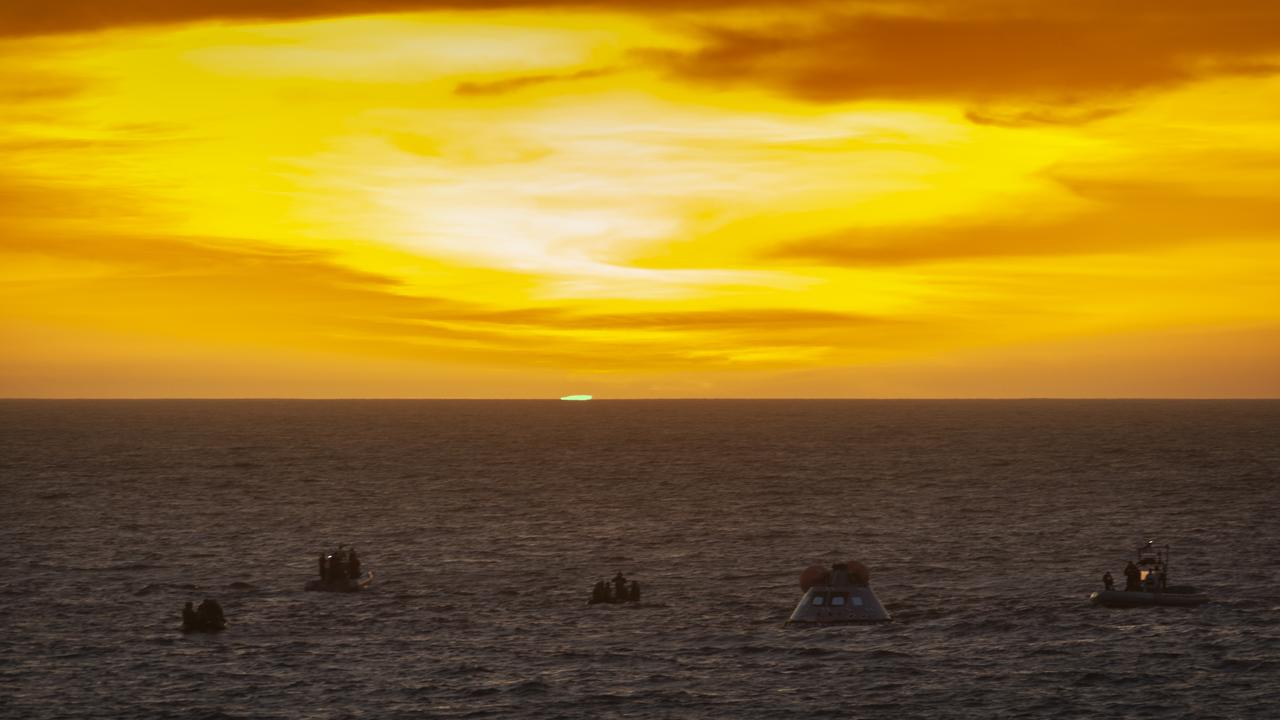
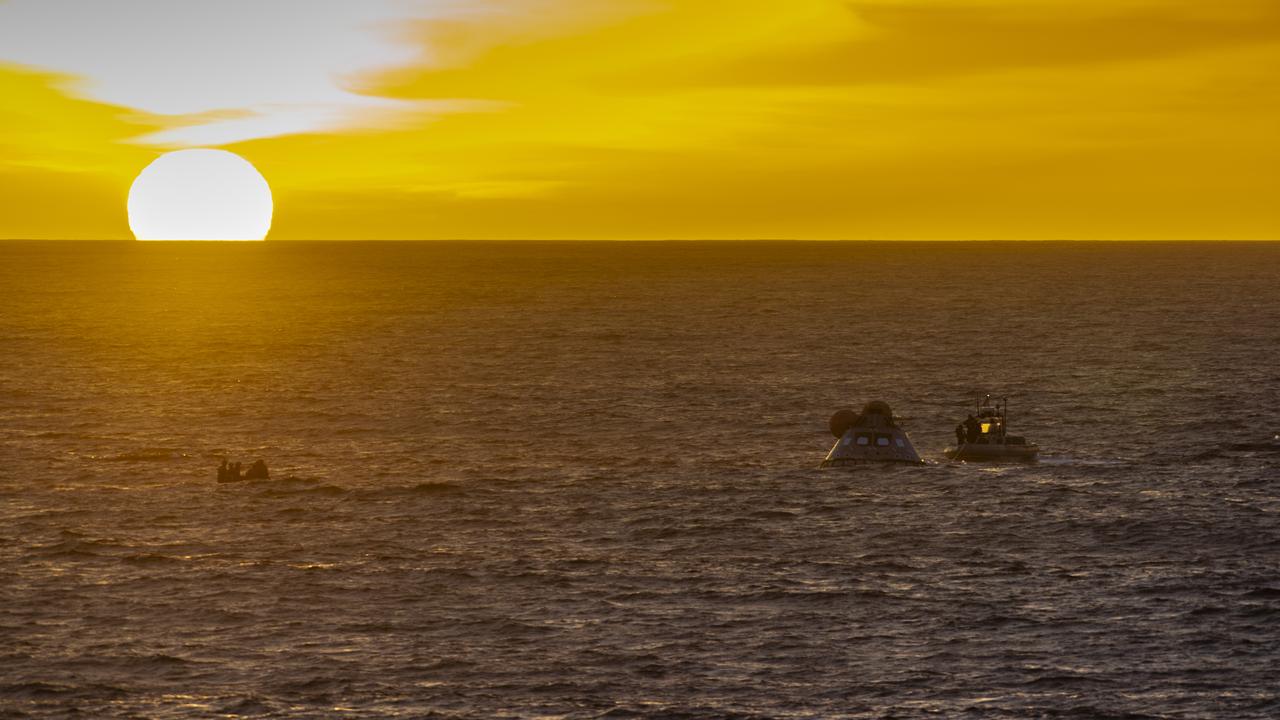
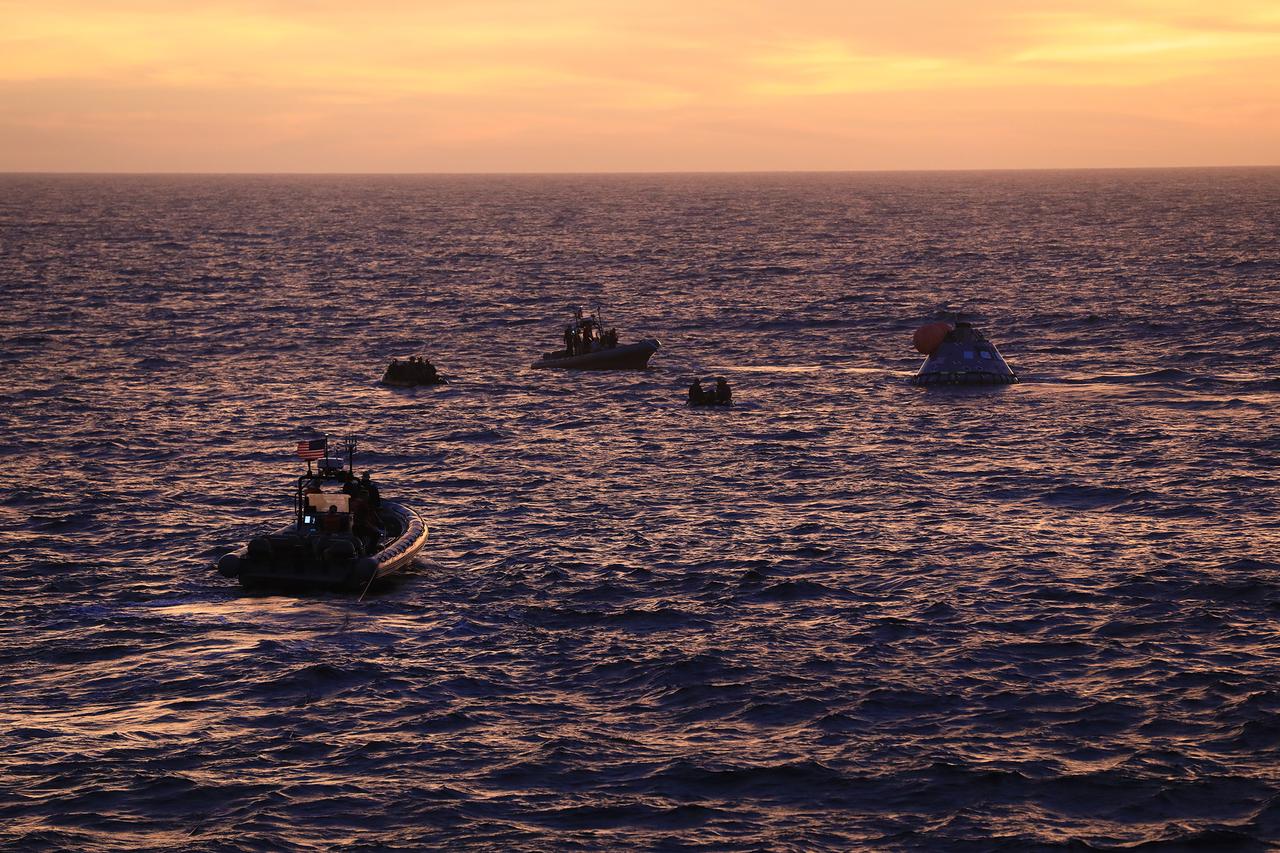
At sunset on Nov. 1, 2018, NASA's Recovery Team, along with the U.S. Navy, practice recovering a test version of the Orion capsule as part of Underway Recovery Test-7 (URT-7) in the Pacific Ocean. URT-7 is one in a series of tests to verify and validate procedures and hardware that will be used to recover the Orion spacecraft after it splashes down in the Pacific Ocean following deep space exploration missions. Orion will have emergency abort capability, sustain the crew during space travel and provide safe re-entry from deep space return velocities.
Underway Recovery Test 7 (URT-7) - Day 3 Activities
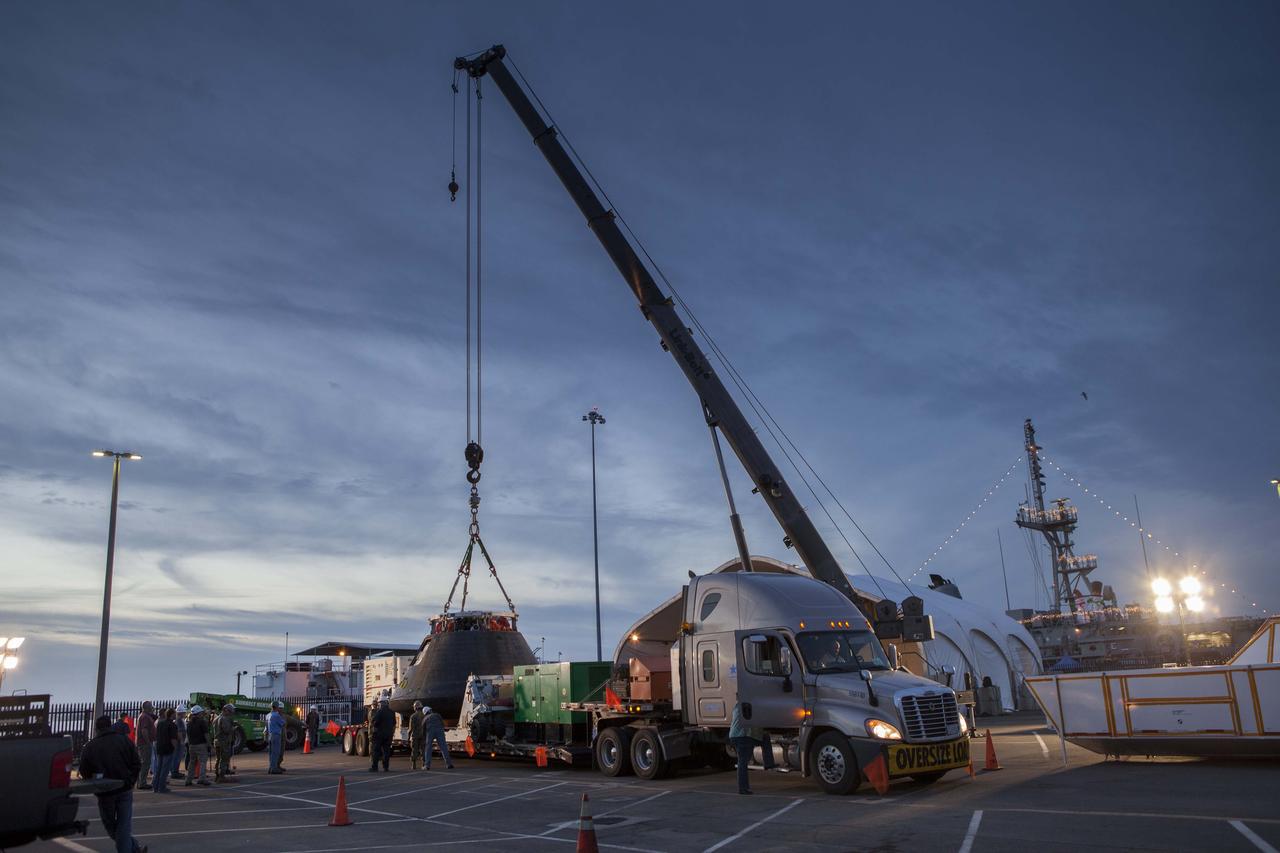
The Orion crew module is being lowered onto the crew module transportation fixture at the Mole Pier at Naval Base San Diego in California. The fixture has been secured on the back of a flatbed truck. Orion is being prepared for the overland trip back to NASA's Kennedy Space Center in Florida. Orion was recovered from the Pacific Ocean after completing a two-orbit, four-and-a-half hour mission Dec. 5 to test systems critical to crew safety, including the launch abort system, the heat shield and the parachute system. NASA, the U.S. Navy and Lockheed Martin coordinated efforts to recover Orion. The Ground Systems Development and Operations Program led the recovery, offload and pre-transportation efforts.
Orion is Taken From Ship & Put in Shipping Container
U.S. Navy personnel aboard a rigid hull inflatable boat help recover NASA's Orion spacecraft following its splashdown in the Pacific Ocean after its first flight test in Earth orbit. The USS Anchorage is in the background. NASA, the U.S. Navy and Lockheed Martin are coordinating efforts to recover Orion and secure the spacecraft in the well deck of the USS Anchorage. Orion completed a two-orbit, four-and-a-half hour mission, to test systems critical to crew safety, including the launch abort system, the heat shield and the parachute system. The Ground Systems Development and Operations Program is leading the recovery efforts.
Orion Splashdown Recovery
The Exploration Ground Systems recovery team, along with the U.S. Navy, practice recovering a test version of the Orion capsule during Underway Recovery Test-7 (URT-7) onboard the USS John P. Murtha, on Oct. 31, 2018, in the Pacific Ocean. URT-7 is one in a series of tests to verify and validate procedures and hardware that will be used to recover the Orion spacecraft after it splashes down in the Pacific Ocean following deep space exploration missions. Orion will have emergency abort capability, sustain the crew during space travel and provide safe re-entry from deep space return velocities.
Underway Recovery Test 7 (URT-7) - Day 2 Activities
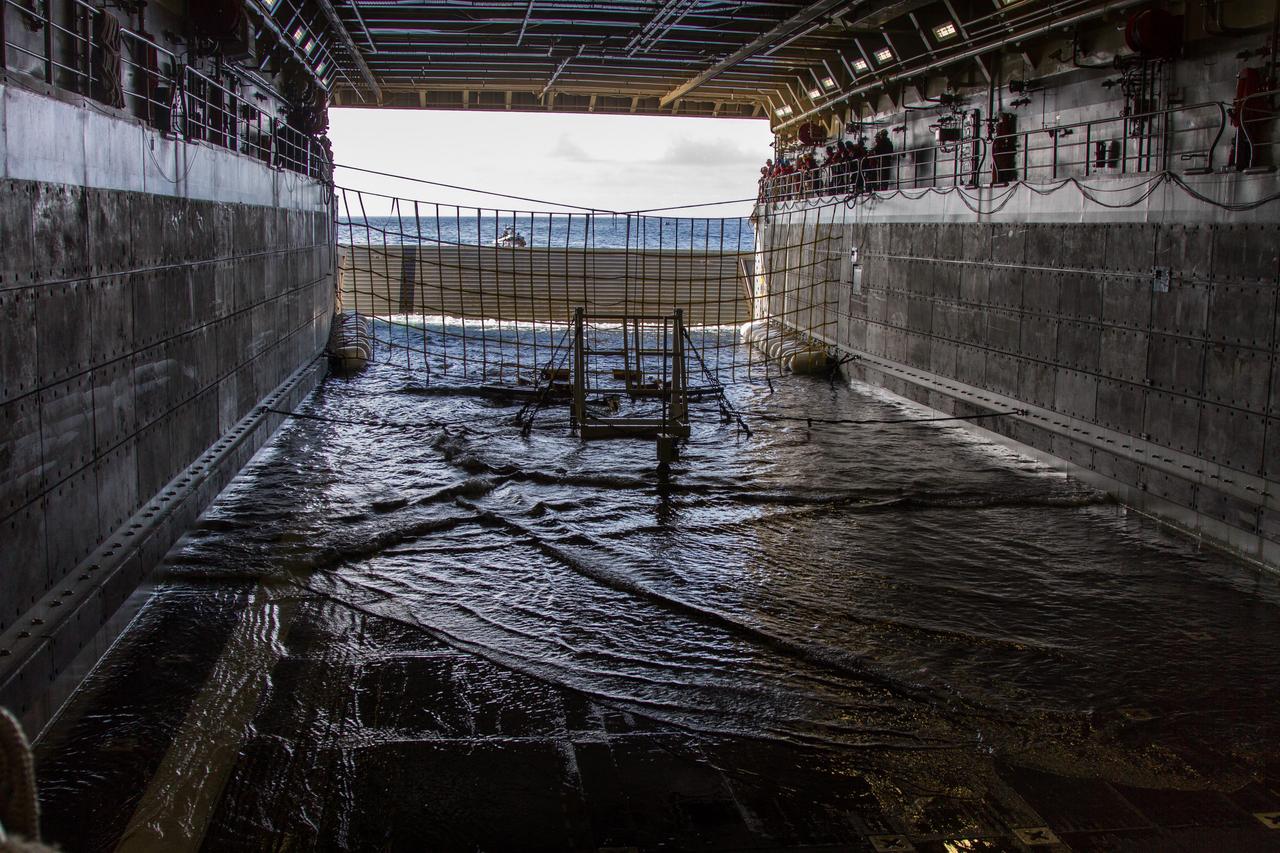
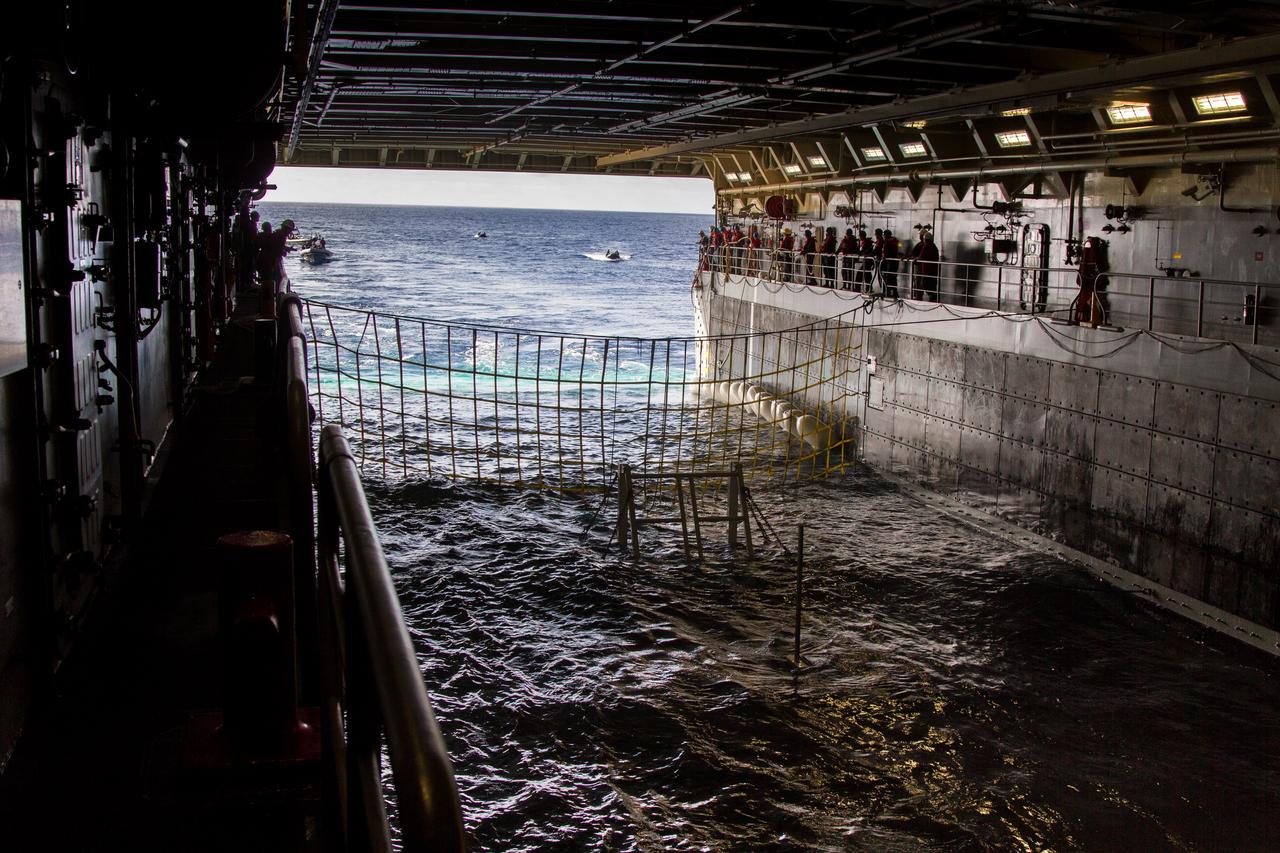
The Exploration Ground Systems recovery team, along with the U.S. Navy, practice recovering a test version of the Orion capsule and bringing it inside the well deck of the USS John P. Murtha during Underway Recovery Test-7 (URT-7) on Oct. 31, 2018, in the Pacific Ocean. URT-7 is one in a series of tests to verify and validate procedures and hardware that will be used to recover the Orion spacecraft after it splashes down in the Pacific Ocean following deep space exploration missions. Orion will have emergency abort capability, sustain the crew during space travel and provide safe re-entry from deep space return velocities.
Underway Recovery Test 7 (URT-7) - Day 2 Activities
At sunset on Nov. 1, 2018, NASA's Recovery Team, along with the U.S. Navy, practice recovering a test version of the Orion capsule as part of Underway Recovery Test-7 (URT-7) in the Pacific Ocean. URT-7 is one in a series of tests to verify and validate procedures and hardware that will be used to recover the Orion spacecraft after it splashes down in the Pacific Ocean following deep space exploration missions. Orion will have emergency abort capability, sustain the crew during space travel and provide safe re-entry from deep space return velocities.
Underway Recovery Test 7 (URT-7) - Day 3 Activities
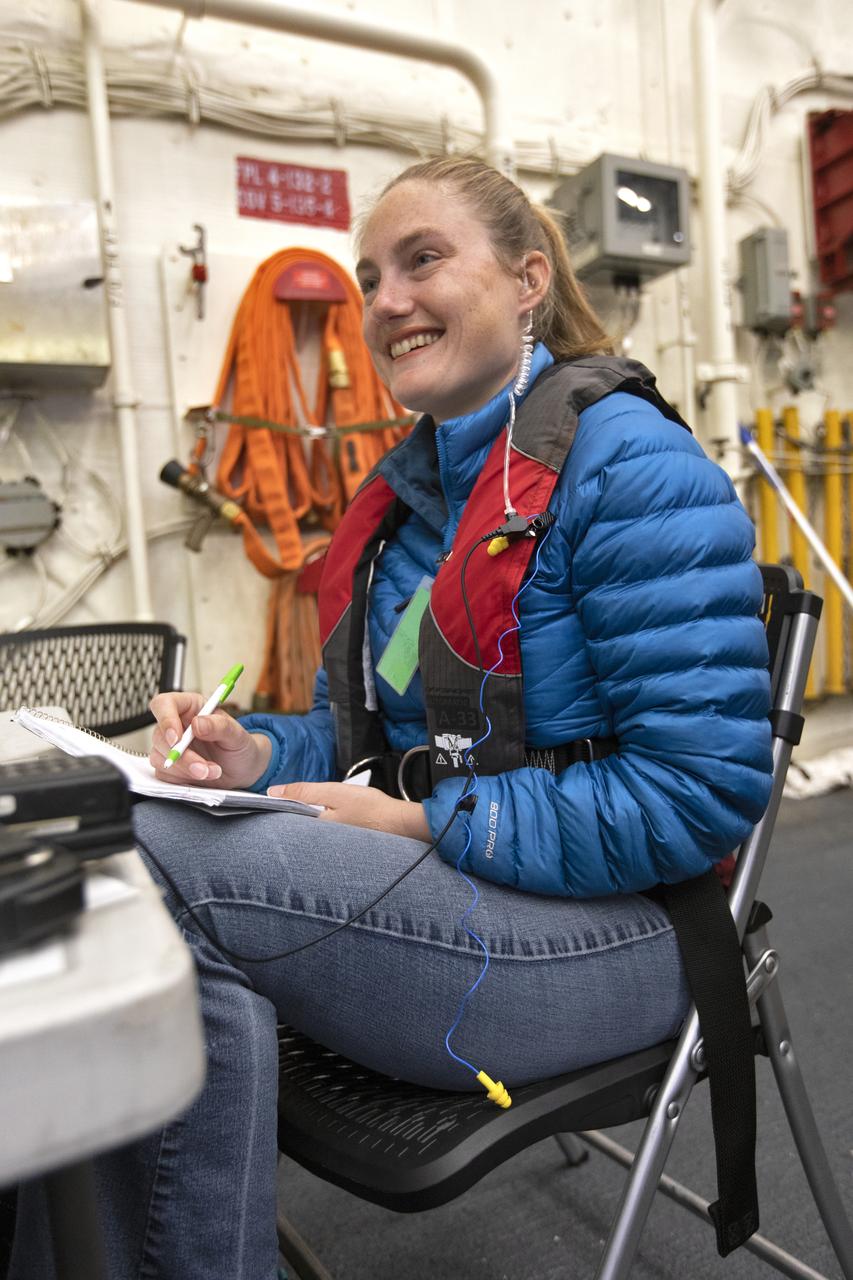
Tracy Parks, Recovery Operations integrator with Jacobs, reviews procedures during Underway Recovery Test-7 (URT-7), aboard the USS John P. Murtha on Nov. 4, 2018. NASA's Recovery Team, along with the U.S. Navy, practice recovering a test version of the Orion capsule as part of URT-7 in the Pacific Ocean. URT-7 is one in a series of tests to verify and validate procedures and hardware that will be used to recover the Orion spacecraft after it splashes down in the Pacific Ocean following deep space exploration missions. Orion will have emergency abort capability, sustain the crew during space travel and provide safe re-entry from deep space return velocities.
Underway Recovery Test 7 (URT-7) - Day 6 Activities
At sunset on Nov. 1, 2018, NASA's Recovery Team, along with the U.S. Navy, practice recovering a test version of the Orion capsule as part of Underway Recovery Test-7 (URT-7) in the Pacific Ocean. URT-7 is one in a series of tests to verify and validate procedures and hardware that will be used to recover the Orion spacecraft after it splashes down in the Pacific Ocean following deep space exploration missions. Orion will have emergency abort capability, sustain the crew during space travel and provide safe re-entry from deep space return velocities.
Underway Recovery Test 7 (URT-7) - Day 3 Activities
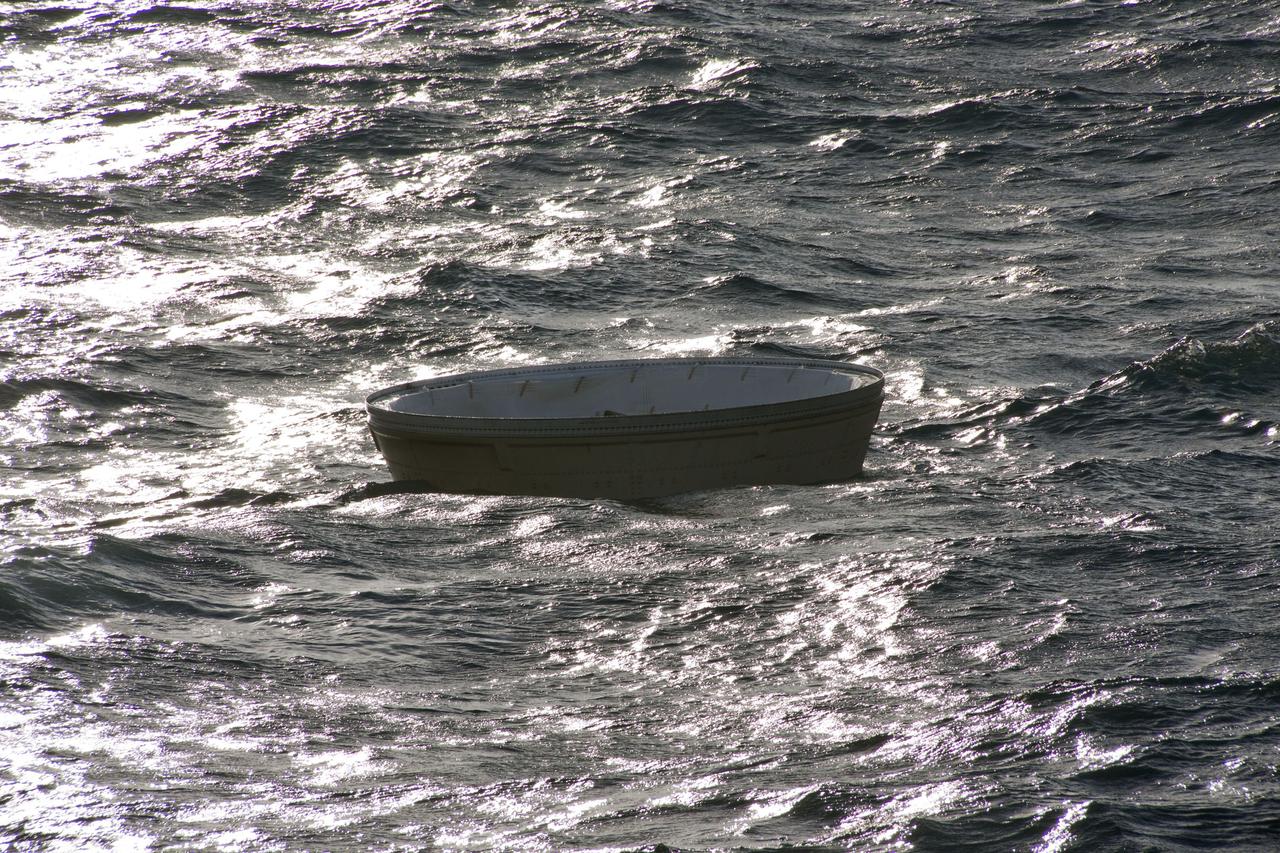
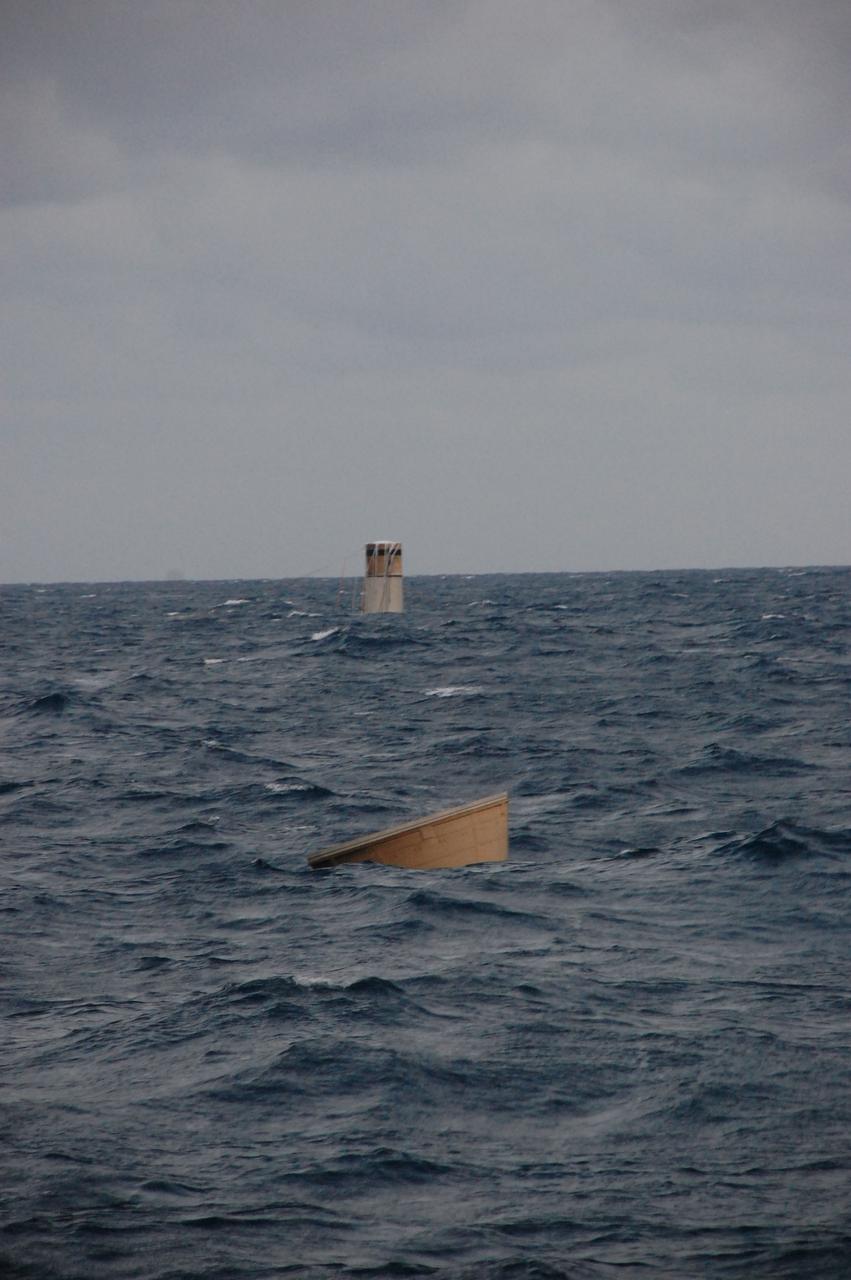
CAPE CANAVERAL, Fla. -- A nose cap from the right spent booster can be seen bobbing in the Atlantic Ocean, waiting to be recovered by the crew members of Liberty Star, one of NASA's solid rocket booster retrieval ships.          The shuttle’s two solid rocket booster casings and associated flight hardware are recovered in the Atlantic Ocean after every launch by Freedom Star and Liberty Star. The boosters impact the Atlantic about seven minutes after liftoff and the retrieval ships are stationed about 10 miles from the impact area at the time of splashdown. After the spent segments are processed, they will be transported to Utah, where they will be refurbished and stored, if needed. Photo credit: NASA/Frank Michaux
KSC-2011-1861
Stacey Provin, operations project engineer with NASA, reviews procedures during Underway Recovery Test-7 (URT-7), aboard the USS John P. Murtha on Nov. 4, 2018. NASA's Recovery Team, along with the U.S. Navy, practice recovering a test version of the Orion capsule as part of URT-7 in the Pacific Ocean. URT-7 is one in a series of tests to verify and validate procedures and hardware that will be used to recover the Orion spacecraft after it splashes down in the Pacific Ocean following deep space exploration missions. Orion will have emergency abort capability, sustain the crew during space travel and provide safe re-entry from deep space return velocities.
Underway Recovery Test 7 (URT-7) - Day 6 Activities
A test version of the Orion capsule sits in its cradle after being recovered from the Pacific Ocean during Underway Recovery Test-7 (URT) on Oct. 31, 2018, aboard the USS John P. Murtha. URT-7 is one in a series of tests to verify and validate procedures and hardware that will be used to recover the Orion spacecraft after it splashes down in the Pacific Ocean following deep space exploration missions. Orion will have emergency abort capability, sustain the crew during space travel and provide safe re-entry from deep space return velocities.
Underway Recovery Test 7 (URT-7) - Day 2 Activities
CAPE CANAVERAL, Fla. -- The nose cap and the top of a spent booster can be seen bobbing in the Atlantic Ocean, waiting to be recovered by the crew members of Freedom Star, one of NASA's solid rocket booster retrieval ships.       The shuttle’s two solid rocket booster casings and associated flight hardware are recovered in the Atlantic Ocean after every launch by Liberty Star and Freedom Star. The boosters impact the Atlantic about seven minutes after liftoff and the retrieval ships are stationed about 10 miles from the impact area at the time of splashdown. After the spent segments are processed, they will be transported to Utah, where they will be refurbished and stored, if needed. Photo credit: NASA/Ben Smegelsky
KSC-2011-1807
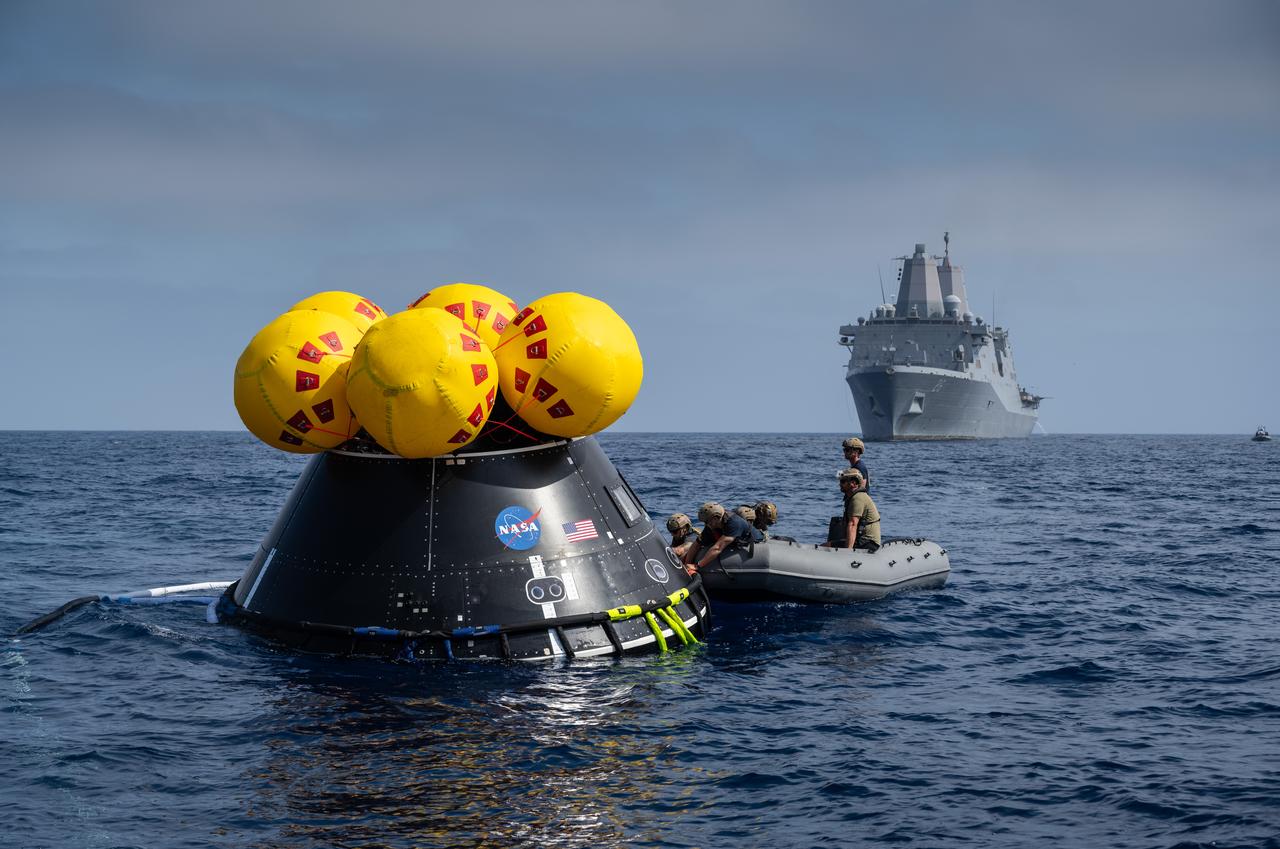
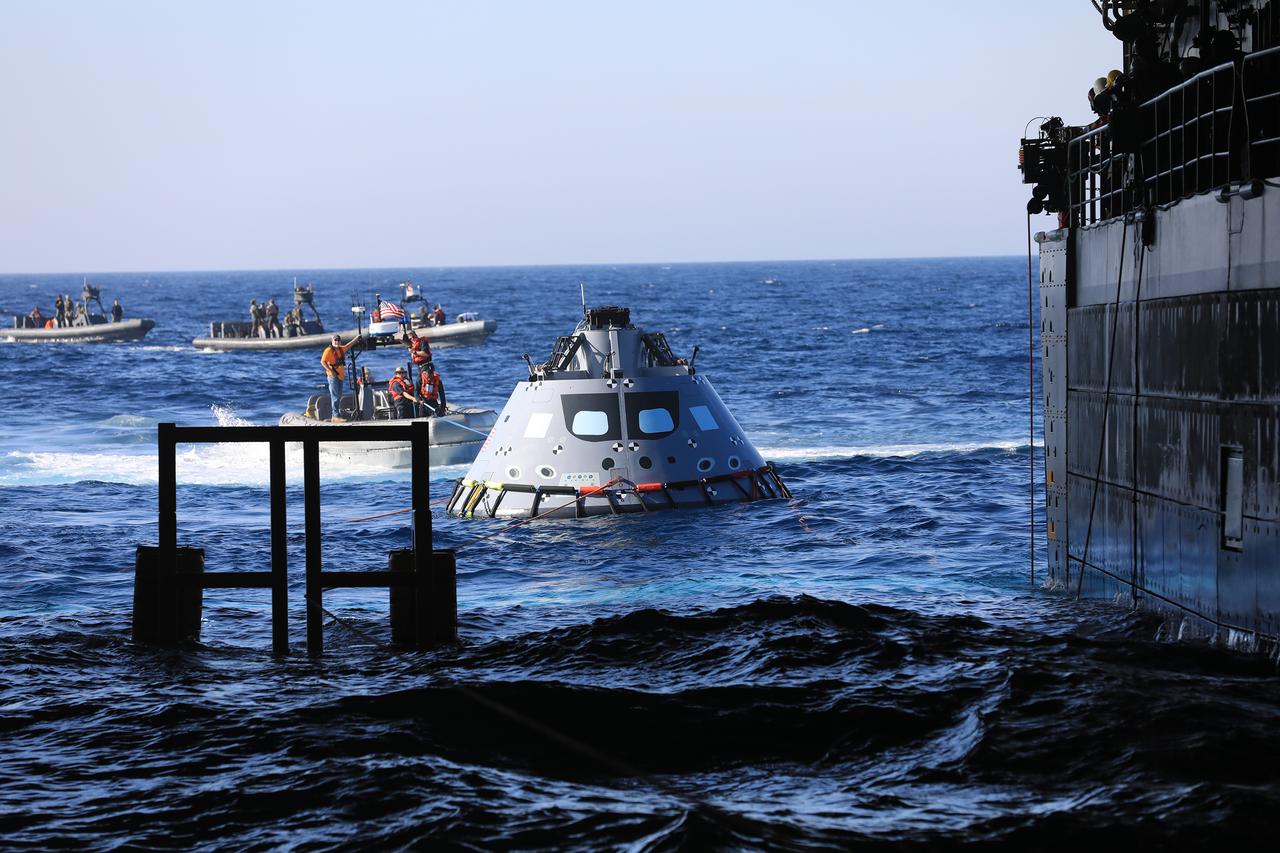
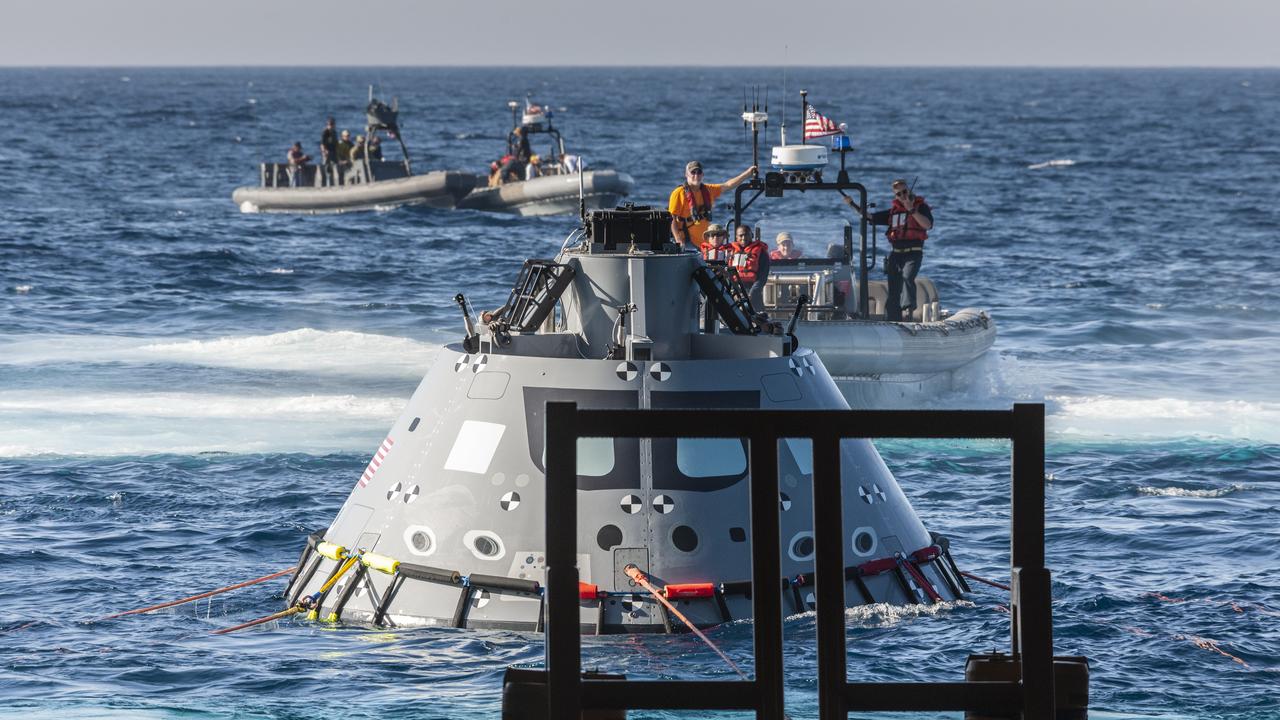
The Crew Module Test Article (CMTA) is seen in the waters of the Pacific Ocean during NASA’s Underway Recovery Test 10 (URT-10). The CMTA is a full-scale mockup of the Orion Spacecraft and is used by NASA and its Department of Defense partners to practice recovery procedures for crewed Artemis missions. URT-10 is the first test specifically in support of the Artemis II mission and allowed the team to practice what it will be like to recover astronauts and get them back to the recovery ship safely. In this photo Navy divers from Explosive Ordnance Disposal (EOD) Expeditionary Support Unit 1 secure the CMTA and prepare it to be recovered back inside USS John P Murtha.
Artemis II Orion Underway Recovery Test 10 (URT-10) - Day 4
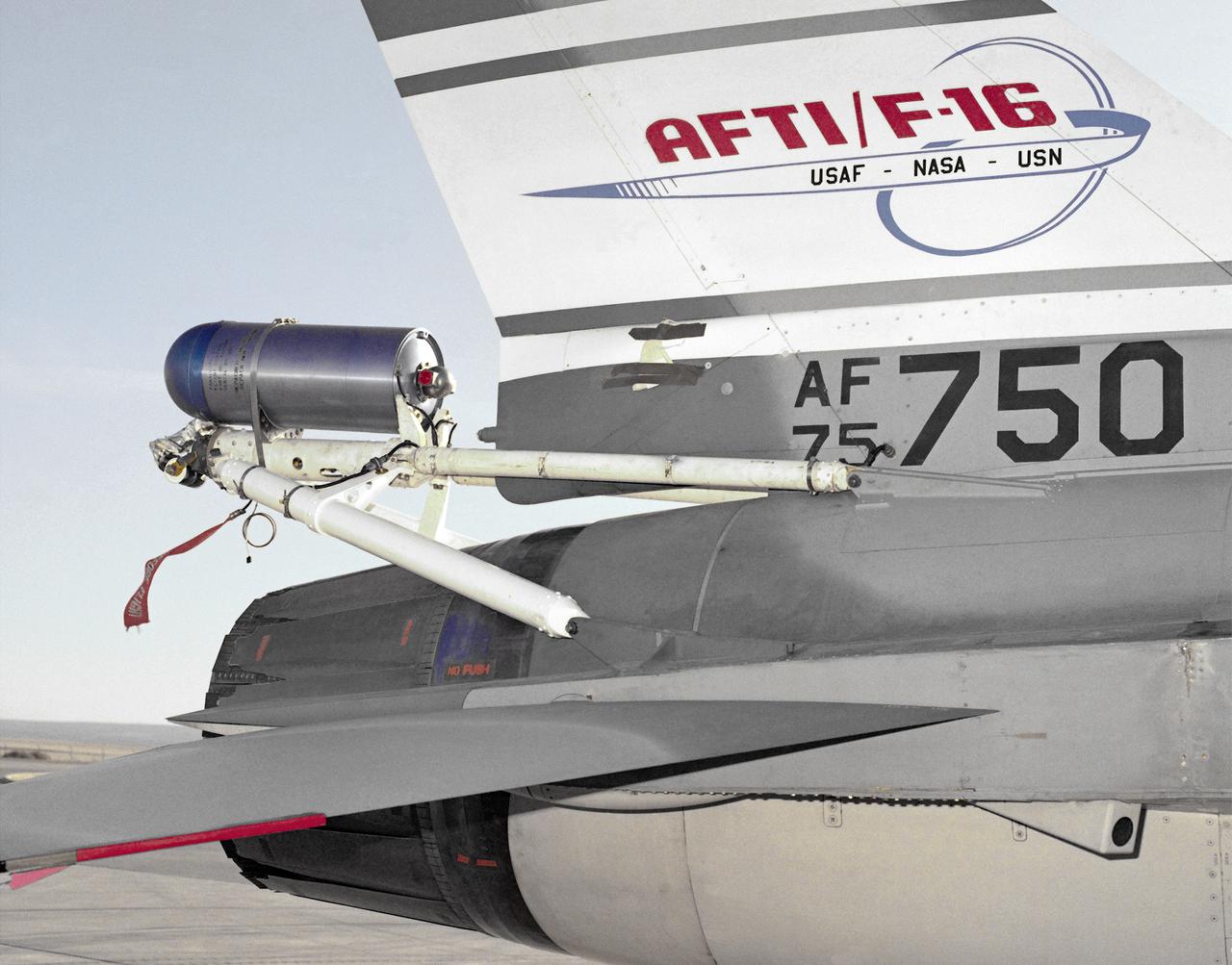
A close-up photo of the spin chute mounted on the rear fuselage of the AFTI F-16, a safety device designed to prevent the loss of aircraft in spin conditions. Under some circumstances, pilots cannot recover from spins using normal controls. It these instances, the spin chute is deployed, thus "breaking" the spin and enabling the pilot to recover. The spin chute is held in a metal cylinder attached to the AFTI F-16 by four tubes, a structure strong enough to withstand the shock of the spin chute opening. Unlike the air probe in the last photo, spin chutes are not standard equipment on research or prototype aircraft but are commonly attached expressly for actual spin tests.
ECN-22193
At sunset on Nov. 1, 2018, NASA's Recovery Team, along with the U.S. Navy, practice recovering a test version of the Orion capsule as part of Underway Recovery Test-7 (URT-7) in the Pacific Ocean. URT-7 is one in a series of tests that the Exploration Ground Systems Recovery Team, along with the U.S. Navy, are conducting to verify and validate procedures and hardware that will be used to recover the Orion spacecraft after it splashes down in the Pacific Ocean following deep space exploration missions. Orion will have emergency abort capability, sustain the crew during space travel and provide safe re-entry from deep space return velocities.
Underway Recovery Test 7 (URT-7) - Day 3 Activities
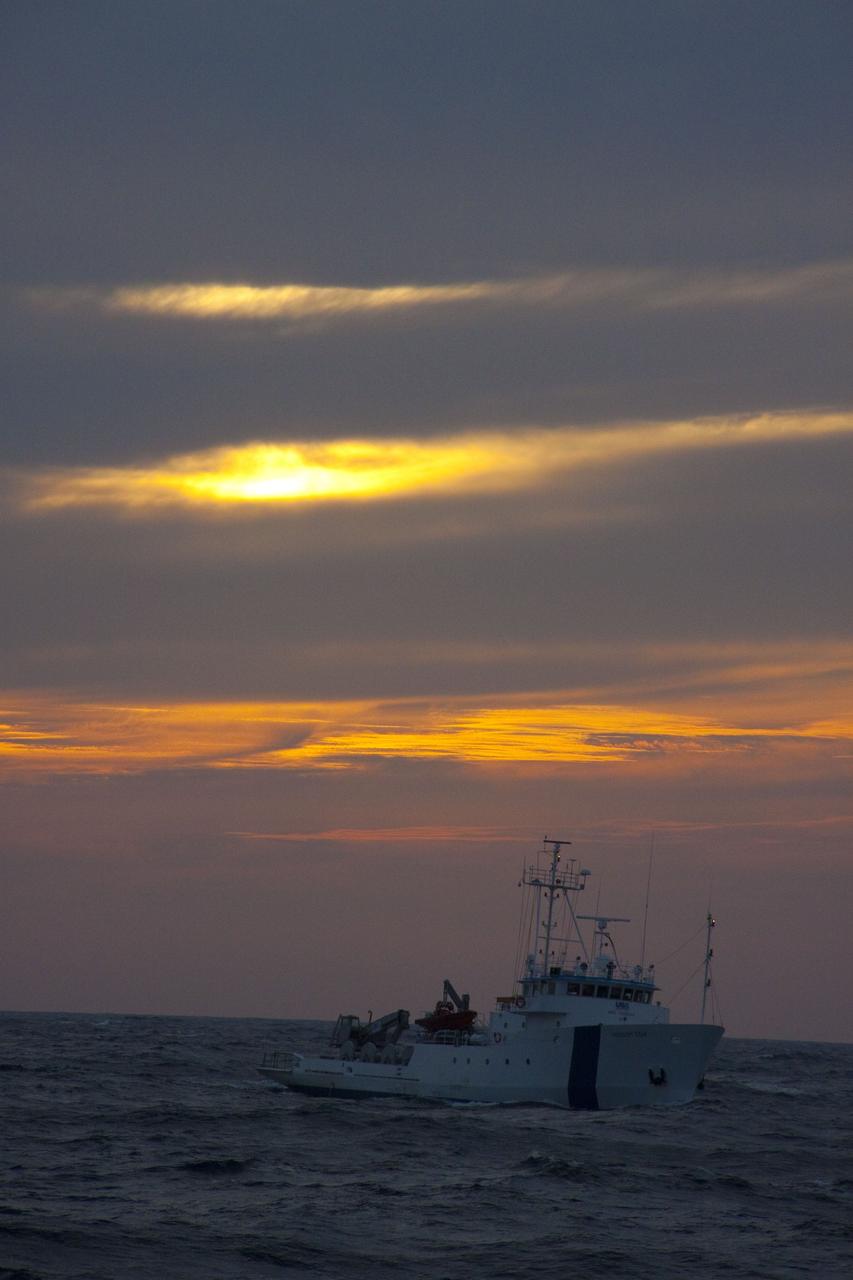
CAPE CANAVERAL, Fla. -- Dusk descends on the Freedom Star, one of NASA's solid rocket booster retrieval ships stationed in the Atlantic Ocean, to recover the right spent booster after it splashed down following space shuttle Discovery's final launch.            The shuttle’s two solid rocket booster casings and associated flight hardware are recovered in the Atlantic Ocean after every launch by Freedom Star and Liberty Star. The boosters impact the Atlantic about seven minutes after liftoff and the retrieval ships are stationed about 10 miles from the impact area at the time of splashdown. After the spent segments are processed, they will be transported to Utah, where they will be refurbished and stored, if needed. Photo credit: NASA/Frank Michaux
KSC-2011-1867
The Exploration Ground Systems Recovery Team, along with the U.S. Navy, practice recovering a test version of the Orion capsule and bringing it inside the well deck of the USS John P. Murtha during Underway Recovery Test-7 (URT-7) on Oct. 31, 2018, in the Pacific Ocean. URT-7 is one in a series of tests to verify and validate procedures and hardware that will be used to recover the Orion spacecraft after it splashes down in the Pacific Ocean following deep space exploration missions. Orion will have emergency abort capability, sustain the crew during space travel and provide safe re-entry from deep space return velocities.
Underway Recovery Test 7 (URT-7) - Day 2 Activities
At sunset on Nov. 1, 2018, NASA's Recovery Team, along with the U.S. Navy, practice recovering a test version of the Orion capsule as part of Underway Recovery Test-7 (URT-7) in the Pacific Ocean. URT-7 is one in a series of tests that the Exploration Ground Systems Recovery Team, along with the U.S. Navy, are conducting to verify and validate procedures and hardware that will be used to recover the Orion spacecraft after it splashes down in the Pacific Ocean following deep space exploration missions. Orion will have emergency abort capability, sustain the crew during space travel and provide safe re-entry from deep space return velocities.
Underway Recovery Test 7 (URT-7) - Day 3 Activities
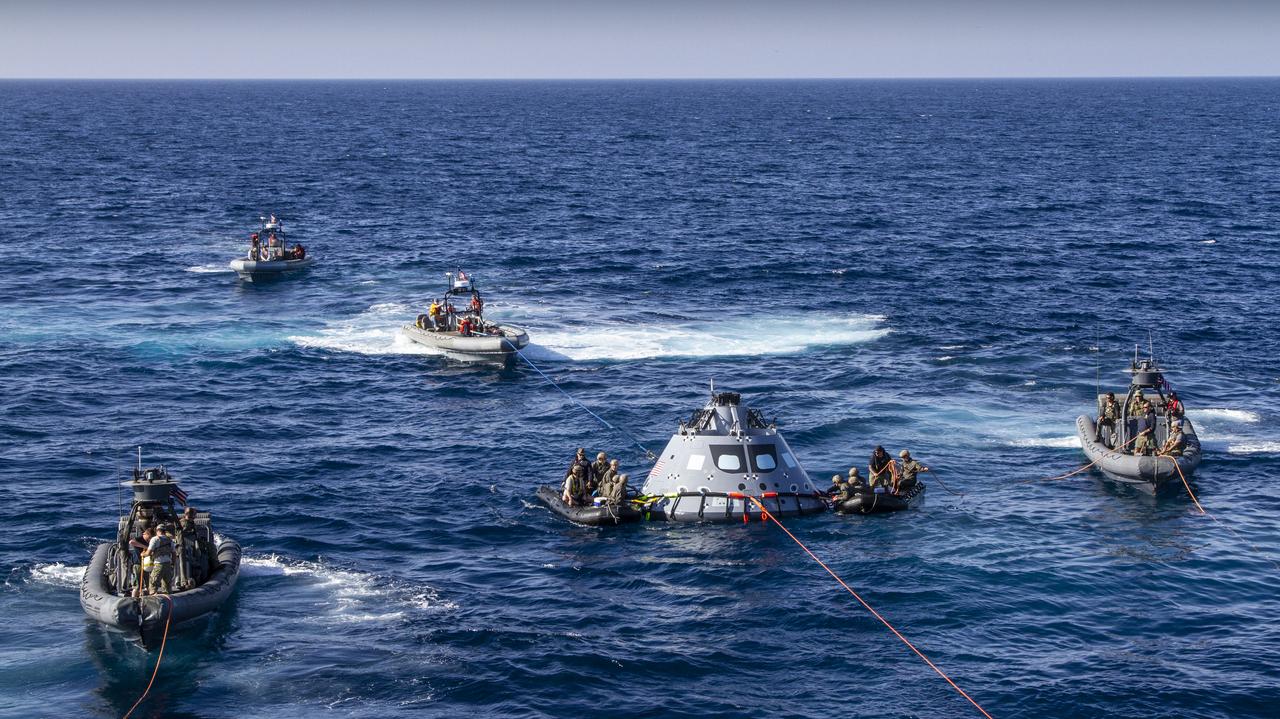
NASA's Recovery Team, along with the U.S. Navy, practice recovering a test version of the Orion capsule as part of Underway Recovery Test-7 (URT-7) in the Pacific Ocean. URT-7 is one in a series of tests that the Exploration Ground Systems Recovery Team, along with the U.S. Navy, are conducting to verify and validate procedures and hardware that will be used to recover the Orion spacecraft after it splashes down in the Pacific Ocean following deep space exploration missions. Orion will have emergency abort capability, sustain the crew during space travel and provide safe re-entry from deep space return velocities.
Underway Recovery Test 7 (URT-7) - Day 2 Activities
U.S. Navy personnel aboard a rigid hull inflatable boat help recover NASA's Orion spacecraft following its splashdown in the Pacific Ocean after its first flight test in Earth orbit. Orion is towed into the flooded well deck of the USS Anchorage. NASA, the U.S. Navy and Lockheed Martin coordinated efforts to recover Orion, the forward bay cover and main parachutes. Orion completed a two-orbit, four-and-a-half hour mission, to test systems critical to crew safety, including the launch abort system, the heat shield and the parachute system. The Ground Systems Development and Operations Program is leading the recovery efforts.
Orion Splashdown Recovery
Recovery team members work to retrieve a test version of Orion's forward bay cover from the Pacific Ocean on Sept. 16, 2014. NASA and the Navy are working together this week to test tools and techniques that will be used to recover the spacecraft once it splashes down following Exploration Flight Test-1 (EFT-1). The forward bay cover protects the top section of Orion's crew module until the spacecraft is almost ready to land. It is jettisoned to allow Orion's parachutes to deploy and must be recovered separately from the crew module.  Part of Batch image transfer from Flickr.
Orion Underway Recovery Tests 3 & 4
NASA's Recovery Team, along with the U.S. Navy, practice recovering a test version of the Orion capsule as part of Underway Recovery Test-7 (URT-7) in the Pacific Ocean. URT-7 is one in a series of tests that the Exploration Ground Systems Recovery Team, along with the U.S. Navy, are conducting to verify and validate procedures and hardware that will be used to recover the Orion spacecraft after it splashes down in the Pacific Ocean following deep space exploration missions. Orion will have emergency abort capability, sustain the crew during space travel and provide safe re-entry from deep space return velocities.
Underway Recovery Test 7 (URT-7) - Day 2 Activities
The Exploration Ground Systems recovery team, along with the U.S. Navy, practice recovering a test version of the Orion capsule during Underway Recovery Test-7 (URT-7) onboard the USS John P. Murtha, on Oct. 31, 2018, in the Pacific Ocean. URT-7 is one in a series of tests to verify and validate procedures and hardware that will be used to recover the Orion spacecraft after it splashes down in the Pacific Ocean following deep space exploration missions. Orion will have emergency abort capability, sustain the crew during space travel and provide safe re-entry from deep space return velocities.
Underway Recovery Test 7 (URT-7) - Day 2 Activities
The Crew Module Test Article (CMTA) is seen in the waters of the Pacific Ocean during NASA’s Underway Recovery Test 10 (URT-10). The CMTA is a full-scale mockup of the Orion spacecraft and is used by NASA and its Department of Defense partners to practice recovery procedures for crewed Artemis missions. URT-10 is the first test specifically in support of the Artemis II mission and allowed the team to practice what it will be like to recover astronauts and get them back to the recovery ship safely. In this photo, Navy divers from Explosive Ordnance Disposal (EOD) Expeditionary Support Unit 1 secure the CMTA and prepare it to be recovered back inside USS John P. Murtha.
Artemis II Orion Underway Recovery Test 10 (URT-10) - Day 5
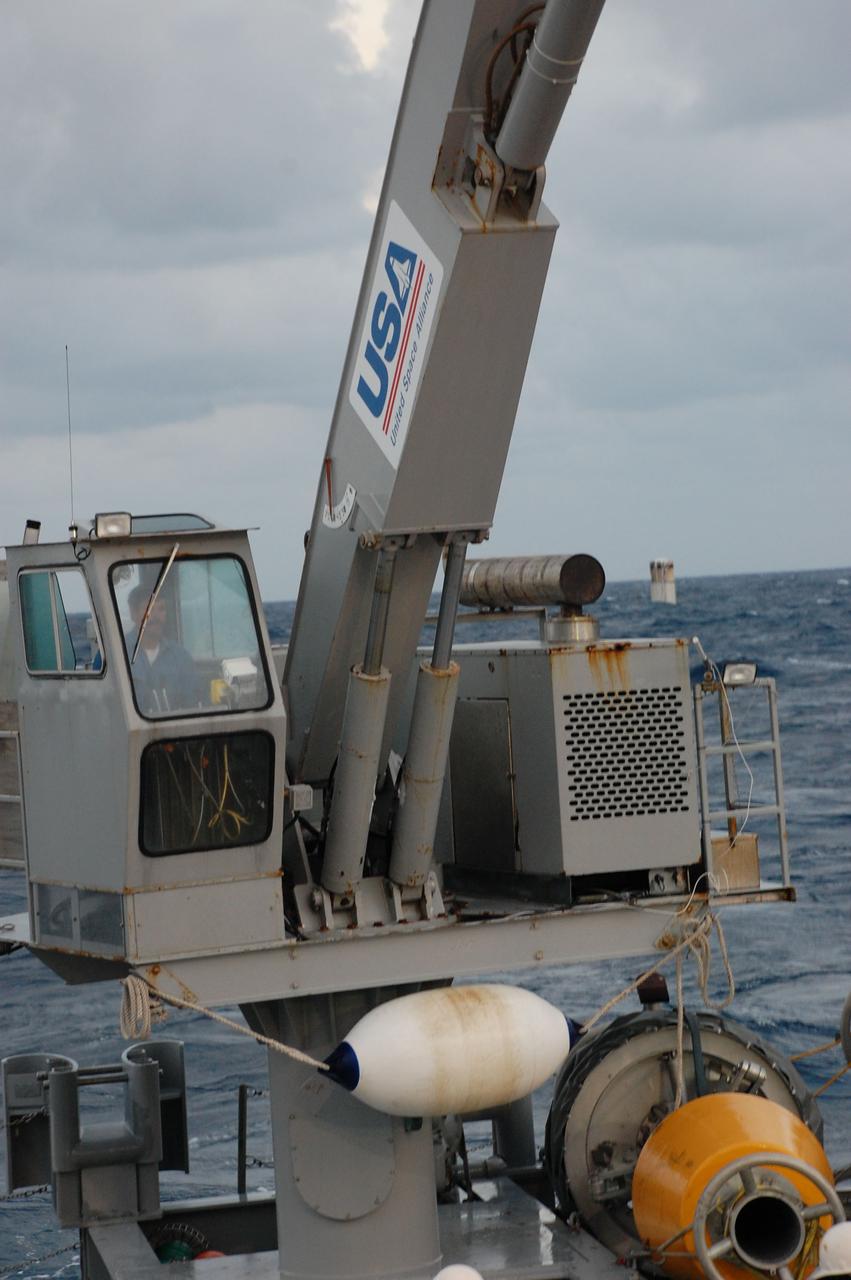
CAPE CANAVERAL, Fla. -- A worker on Freedom Star, one of NASA's solid rocket booster retrieval ships, manipulates a crane to recover the left solid rocket booster from the Atlantic Ocean after space shuttle Discovery's STS-133 launch.        The shuttle’s two solid rocket booster casings and associated flight hardware are recovered in the Atlantic Ocean after every launch by Liberty Star and Freedom Star. The boosters impact the Atlantic about seven minutes after liftoff and the retrieval ships are stationed about 10 miles from the impact area at the time of splashdown. After the spent segments are processed, they will be transported to Utah, where they will be refurbished and stored, if needed. Photo credit: NASA/Ben Smegelsky
KSC-2011-1806
At sunset on Nov. 1, 2018, NASA's Recovery Team, along with the U.S. Navy, practice recovering a test version of the Orion capsule as part of Underway Recovery Test-7 (URT-7) in the Pacific Ocean. URT-7 is one in a series of tests to verify and validate procedures and hardware that will be used to recover the Orion spacecraft after it splashes down in the Pacific Ocean following deep space exploration missions. Orion will have emergency abort capability, sustain the crew during space travel and provide safe re-entry from deep space return velocities.
Underway Recovery Test 7 (URT-7) - Day 3 Activities
NASA Recovery Team members with Exploration Ground Systems (EGS) and the U.S. Navy practice recovering a test version of the Orion capsule on Oct. 31, 2018, during Underway Recovery Test-7 (URT-7) in the Pacific Ocean. URT-7 is one in a series of tests that the EGS Recovery Team, along with the U.S. Navy, are conducting to verify and validate procedures and hardware that will be used to recover the Orion spacecraft after it splashes down in the Pacific Ocean following deep space exploration missions. Orion will have emergency abort capability, sustain the crew during space travel and provide safe re-entry from deep space return velocities.
Underway Recovery Test 7 (URT-7) - Day 2 Activities
The Exploration Ground Systems Recovery Team, along with the U.S. Navy, practice recovering a test version of the Orion capsule and bringing it inside the well deck of the USS John P. Murtha during Underway Recovery Test-7 (URT-7) on Oct. 31, 2018, in the Pacific Ocean. URT-7 is one in a series of tests to verify and validate procedures and hardware that will be used to recover the Orion spacecraft after it splashes down in the Pacific Ocean following deep space exploration missions. Orion will have emergency abort capability, sustain the crew during space travel and provide safe re-entry from deep space return velocities.
Underway Recovery Test 7 (URT-7) - Day 2 Activities
At sunset on Nov. 1, 2018, NASA's Recovery Team, along with the U.S. Navy, practice recovering a test version of the Orion capsule as part of Underway Recovery Test-7 (URT-7) in the Pacific Ocean. URT-7 is one in a series of tests to verify and validate procedures and hardware that will be used to recover the Orion spacecraft after it splashes down in the Pacific Ocean following deep space exploration missions. Orion will have emergency abort capability, sustain the crew during space travel and provide safe re-entry from deep space return velocities.
Underway Recovery Test 7 (URT-7) - Day 3 Activities
On the third day of preparations for recovery of Orion after its splashdown in the Pacific Ocean, the USNS Salvor is in the Pacific Ocean, nearby the USS Anchorage, about 600 miles off the coast of Baja, California. The Salvor will be used to recover Orion in the event that the spacecraft cannot be recovered using the well deck of the USS Anchorage. NASA, Lockheed Martin and U.S. Navy personnel are preparing for recovery of the crew module, forward bay cover and parachutes after the spacecraft's return from space and splashdown in the Pacific Ocean. The Ground Systems Development and Operations Program is leading the recovery efforts.
Day 3 on the USS Anchorage for the Recovery of Orion
The Exploration Ground Systems recovery team, along with the U.S. Navy, practice recovering a test version of the Orion capsule and bringing it inside the well deck of the USS John P. Murtha during Underway Recovery Test-7 (URT-7) on Oct. 31, 2018, in the Pacific Ocean. URT-7 is one in a series of tests to verify and validate procedures and hardware that will be used to recover the Orion spacecraft after it splashes down in the Pacific Ocean following deep space exploration missions. Orion will have emergency abort capability, sustain the crew during space travel and provide safe re-entry from deep space return velocities.
Underway Recovery Test 7 (URT-7) - Day 2 Activities
The towing ship, Liberty, towed a recovered solid rocket booster (SRB) for the STS-5 mission to Port Canaveral, Florida. The recovered SRB would be inspected and refurbished for reuse. The Shuttle's SRB's and solid rocket motors (SRM's) are the largest ever built and the first designed for refurbishment and reuse. Standing nearly 150-feet high, the twin boosters provide the majority of thrust for the first two minutes of flight, about 5.8 million pounds. The requirement for reusability dictated durable materials and construction to preclude corrosion of the hardware exposed to the harsh seawater environment. The SRB contains a complete recovery subsystem that includes parachutes, beacons, lights, and tow fixture.
Space Shuttle Projects
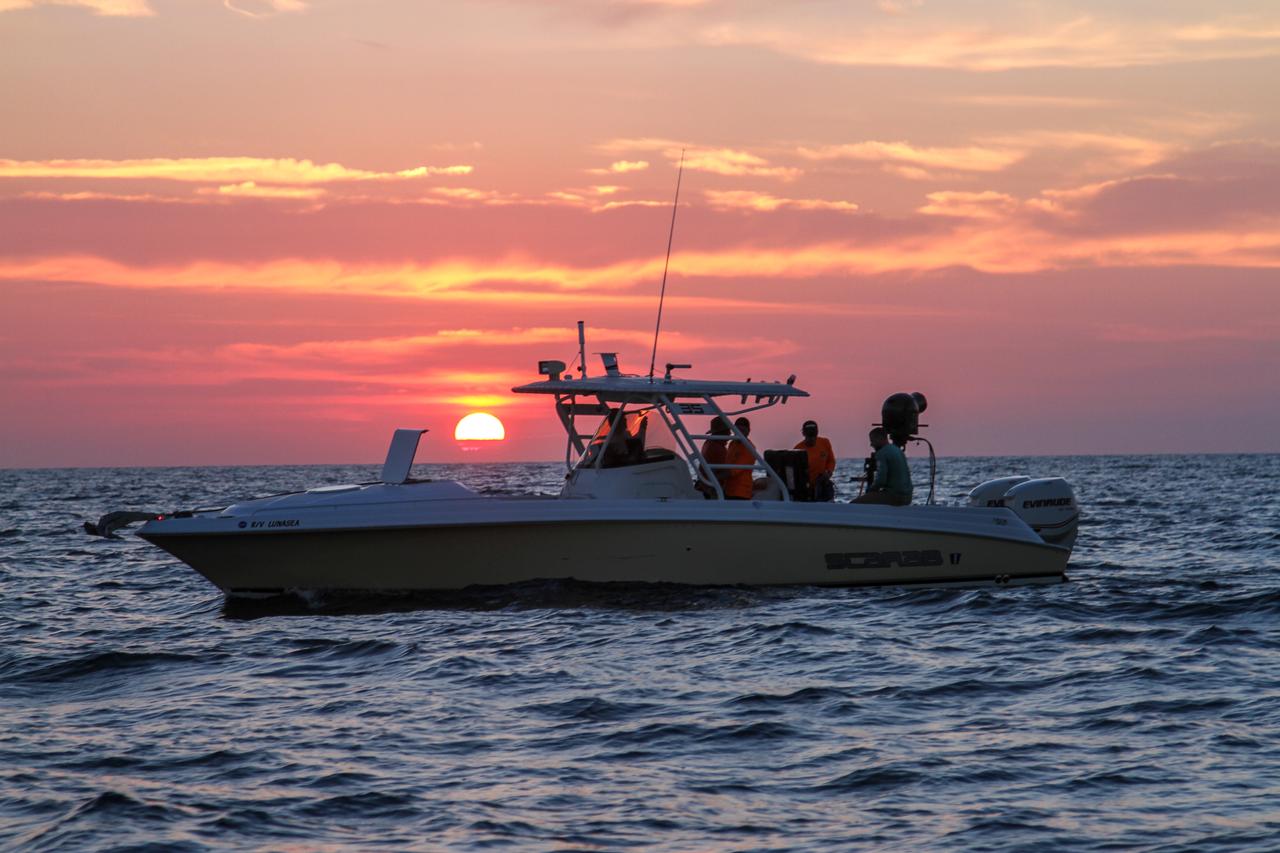
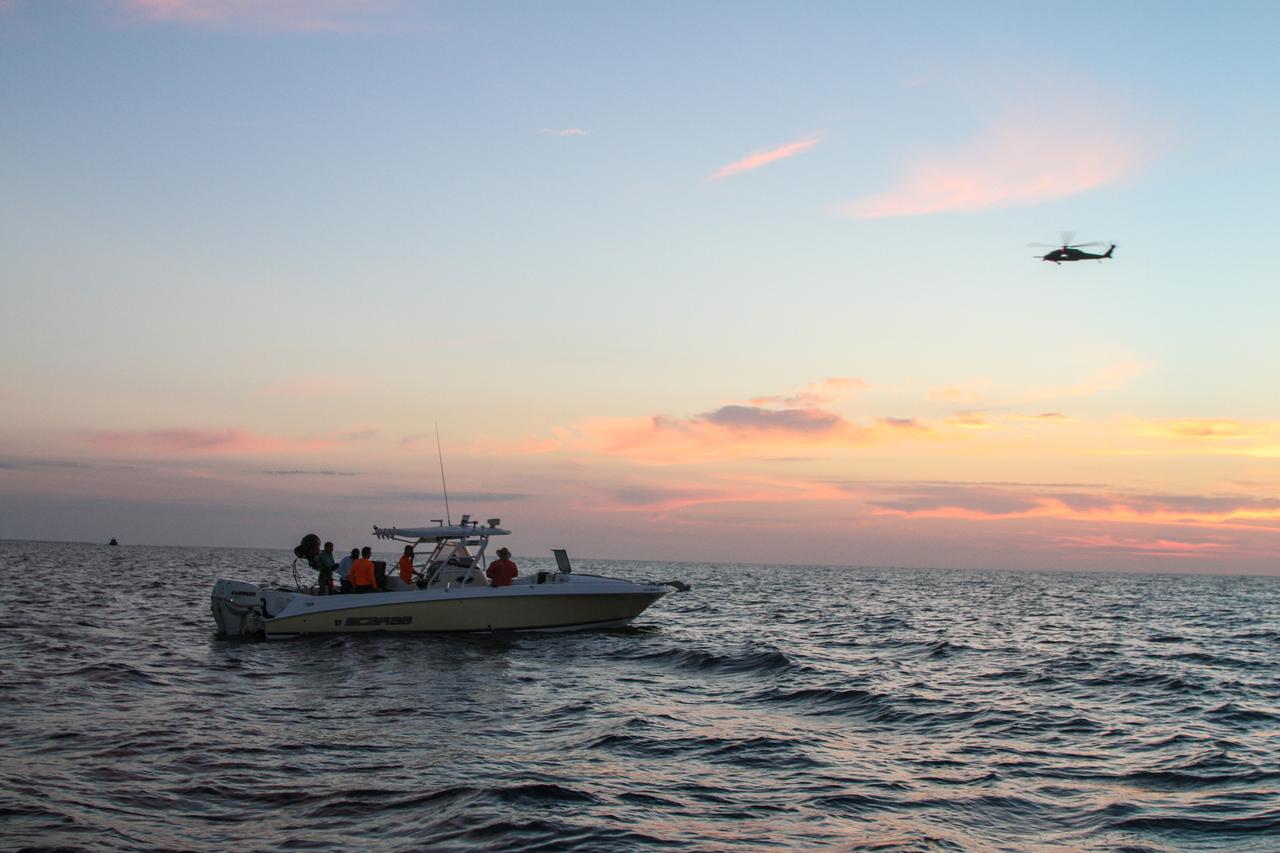
Members of the NASA Ejectable Data Recorder Recovery Team search for the ejectable data recorders in the Atlantic Ocean off the coast of Florida on July 2, 2019, after the Ascent Abort-2 (AA-2) flight test. During AA-2, a fully functional Launch Abort System (LAS) with a test version of Orion attached, launched atop a Northrop Grumman provided booster from Launch Pad 46 at Cape Canaveral Air Force Station on July 2, 2019. Liftoff was at 7 a.m. EDT. During AA-2, the booster sent the LAS and Orion to an altitude of 31,000 feet, traveling at Mach 1.15 (more than 1,000 mph). The LAS’ three motors worked together to pull the crew module away from the booster and prepare it for splashdown in the Atlantic Ocean. The flight test proves that the abort system can pull crew to safety in the unlikely event of an emergency during ascent. Data from the recorders will be analyzed by engineers.
NASA AA-2 team recovering EDRs in the open water
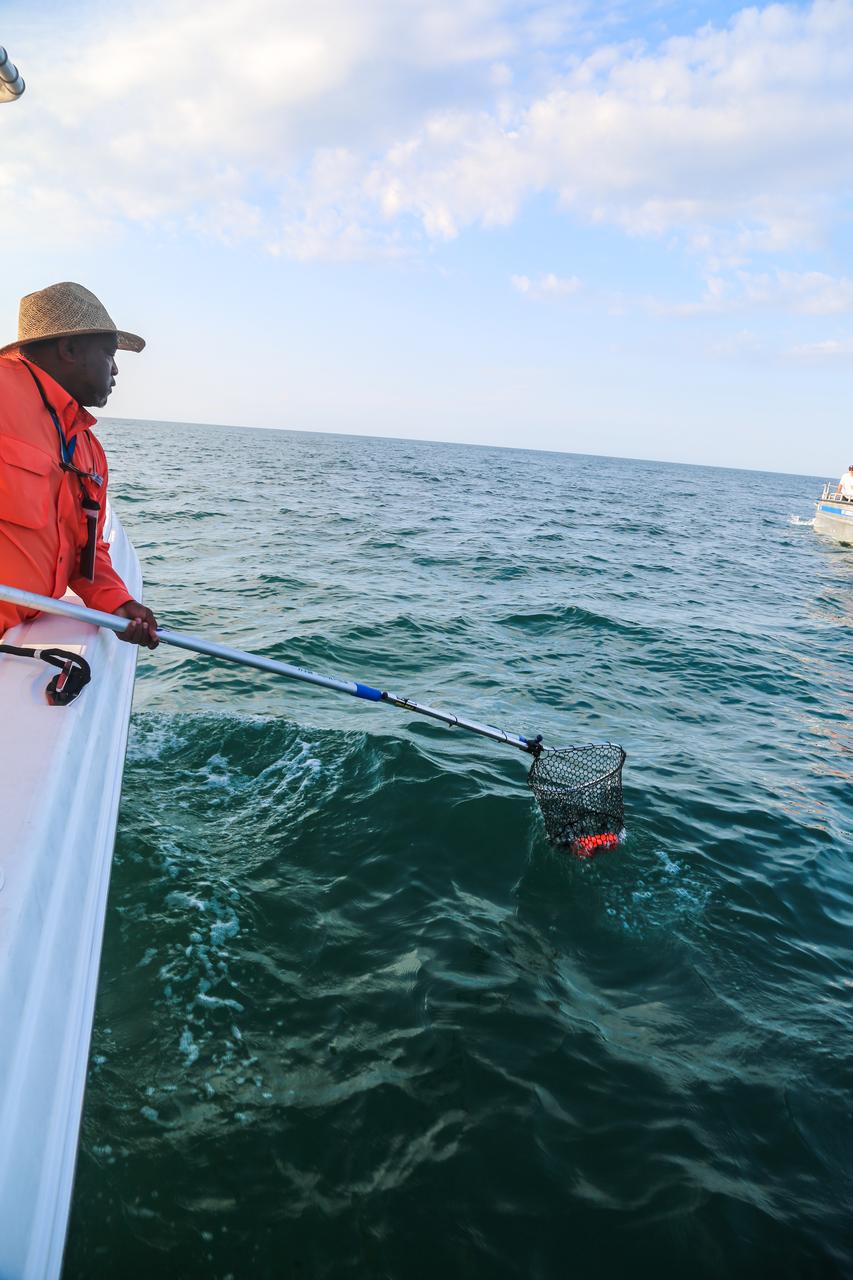
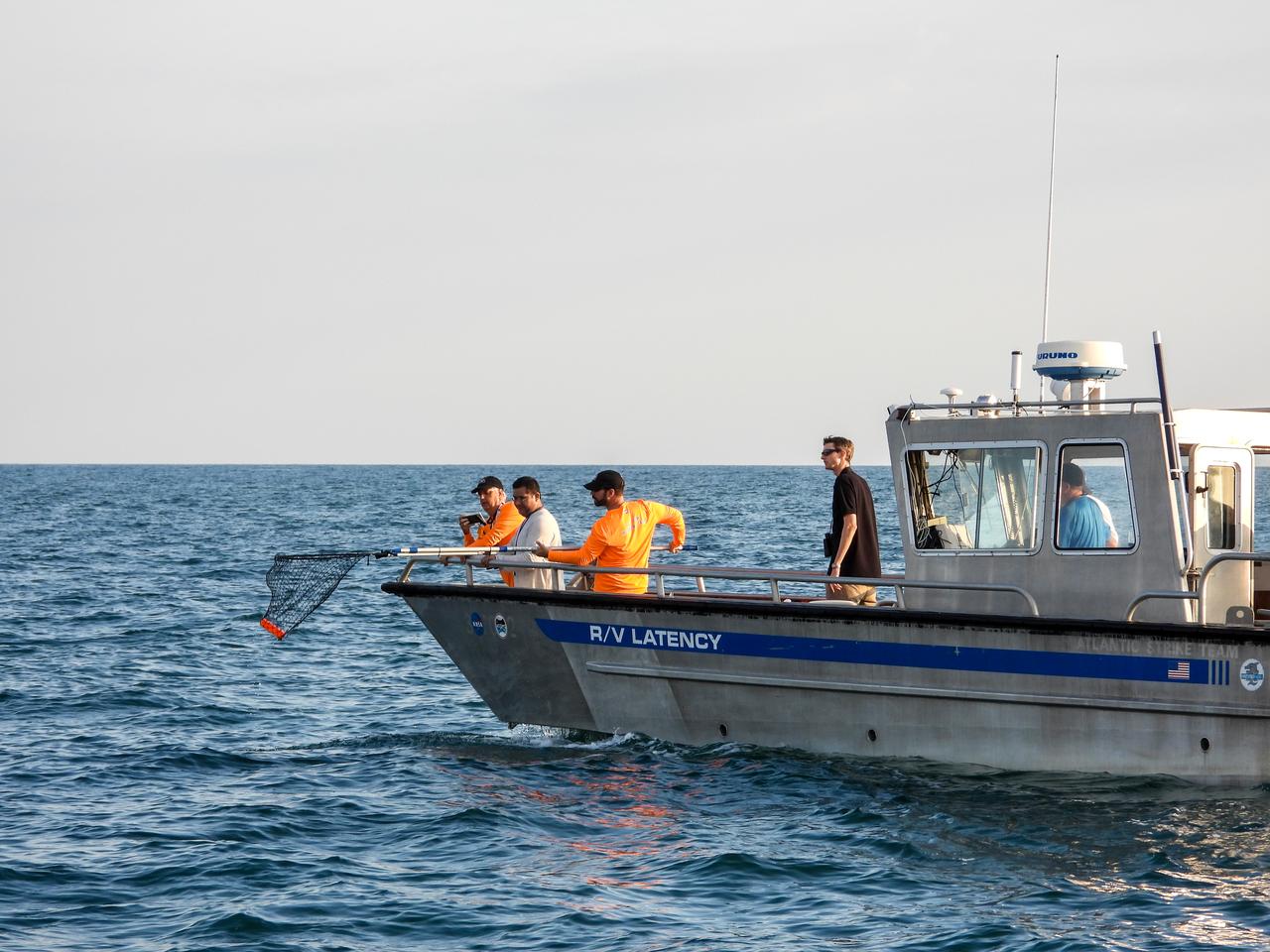
One of the 12 ejectable data recorders from NASA’s Ascent Abort-2 (AA-2) flight test is retrieved from the Atlantic Ocean off the coast of Florida by the NASA Ejectable Data Recorder Recovery Team on July 2, 2019. During AA-2, a fully functional Launch Abort System (LAS) with a test version of Orion attached, launched atop a Northrop Grumman provided booster from Launch Pad 46 at Cape Canaveral Air Force Station on July 2, 2019. Liftoff was at 7 a.m. EDT. During AA-2, the booster sent the LAS and Orion to an altitude of 31,000 feet, traveling at Mach 1.15 (more than 1,000 mph). The LAS’ three motors worked together to pull the crew module away from the booster and prepare it for splashdown in the Atlantic Ocean. The flight test proves that the abort system can pull crew to safety in the unlikely event of an emergency during ascent. Data from the recorders will be analyzed by engineers.
NASA AA-2 team recovering EDRs in the open water
Members of the NASA Ejectable Data Recorder Recovery Team search for the ejectable data recorders in the Atlantic Ocean off the coast of Florida on July 2, 2019, after the Ascent Abort-2 (AA-2) flight test. During AA-2, a fully functional Launch Abort System (LAS) with a test version of Orion attached, launched atop a Northrop Grumman provided booster from Launch Pad 46 at Cape Canaveral Air Force Station on July 2, 2019. Liftoff was at 7 a.m. EDT. During AA-2, the booster sent the LAS and Orion to an altitude of 31,000 feet, traveling at Mach 1.15 (more than 1,000 mph). The LAS’ three motors worked together to pull the crew module away from the booster and prepare it for splashdown in the Atlantic Ocean. The flight test proves that the abort system can pull crew to safety in the unlikely event of an emergency during ascent. Data from the recorders will be analyzed by engineers.
NASA AA-2 team recovering EDRs in the open water
Members of the NASA Ejectable Data Recorder Recovery Team search for the ejectable data recorders in the Atlantic Ocean off the coast of Florida on July 2, 2019, after the Ascent Abort-2 (AA-2) flight test. During AA-2, a fully functional Launch Abort System (LAS) with a test version of Orion attached, launched atop a Northrop Grumman provided booster from Launch Pad 46 at Cape Canaveral Air Force Station on July 2, 2019. Liftoff was at 7 a.m. EDT. During AA-2, the booster sent the LAS and Orion to an altitude of 31,000 feet, traveling at Mach 1.15 (more than 1,000 mph). The LAS’ three motors worked together to pull the crew module away from the booster and prepare it for splashdown in the Atlantic Ocean. The flight test proves that the abort system can pull crew to safety in the unlikely event of an emergency during ascent. Data from the recorders will be analyzed by engineers.
NASA AA-2 team recovering EDRs in the open water
One of the 12 ejectable data recorders from NASA’s Ascent Abort-2 (AA-2) flight test is retrieved from the Atlantic Ocean off the coast of Florida by the NASA Ejectable Data Recorder Recovery Team on July 2, 2019. During AA-2, a fully functional Launch Abort System (LAS) with a test version of Orion attached, launched atop a Northrop Grumman provided booster from Launch Pad 46 at Cape Canaveral Air Force Station on July 2, 2019. Liftoff was at 7 a.m. EDT. During AA-2, the booster sent the LAS and Orion to an altitude of 31,000 feet, traveling at Mach 1.15 (more than 1,000 mph). The LAS’ three motors worked together to pull the crew module away from the booster and prepare it for splashdown in the Atlantic Ocean. The flight test proves that the abort system can pull crew to safety in the unlikely event of an emergency during ascent. Data from the recorders will be analyzed by engineers.
NASA AA-2 team recovering EDRs in the open water
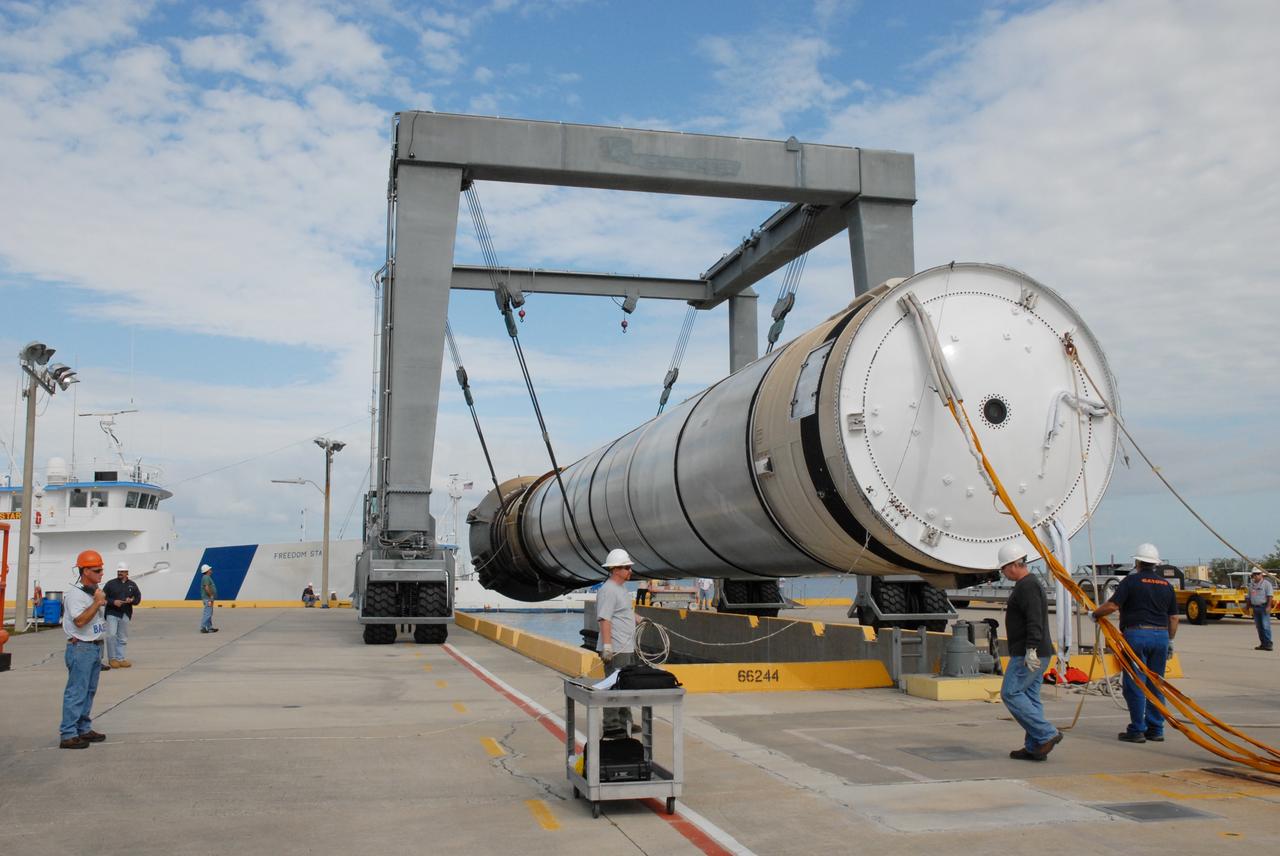
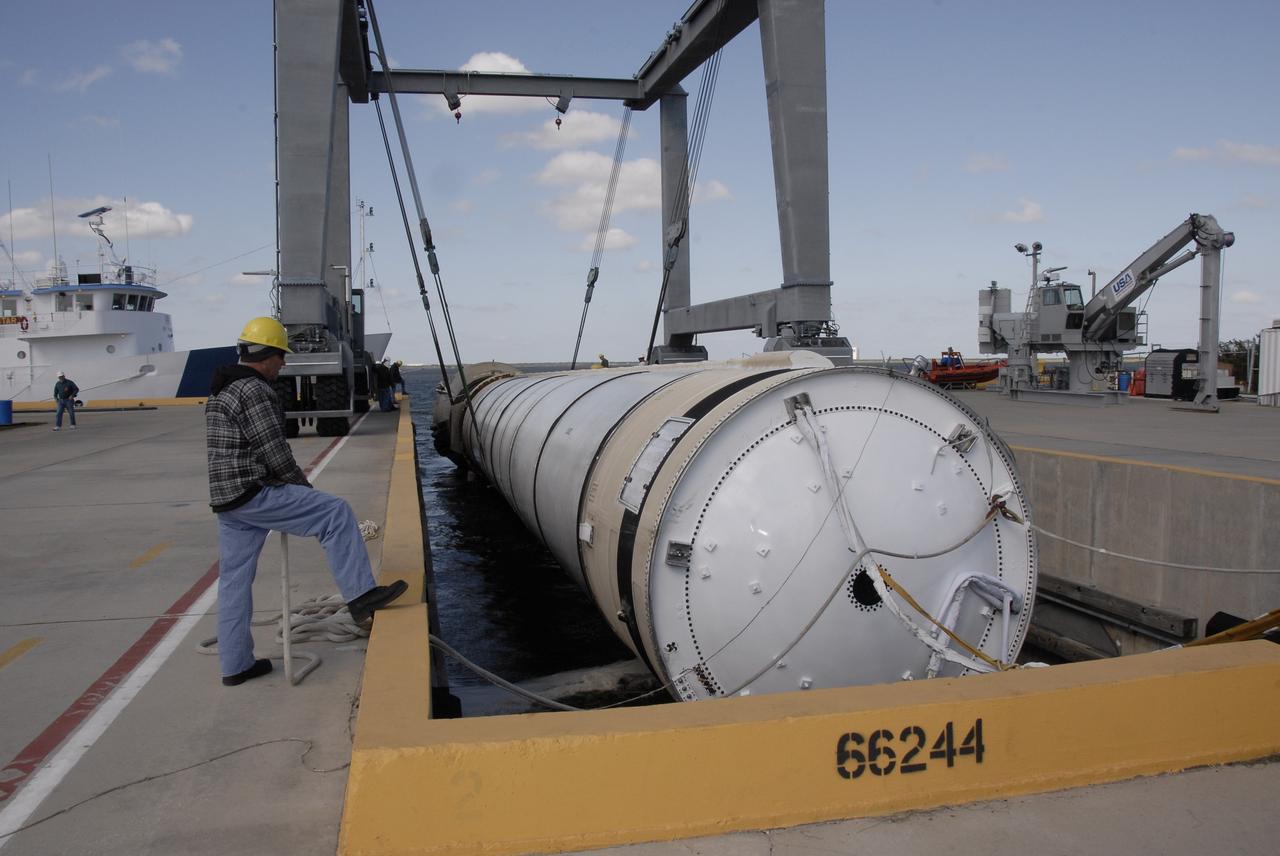
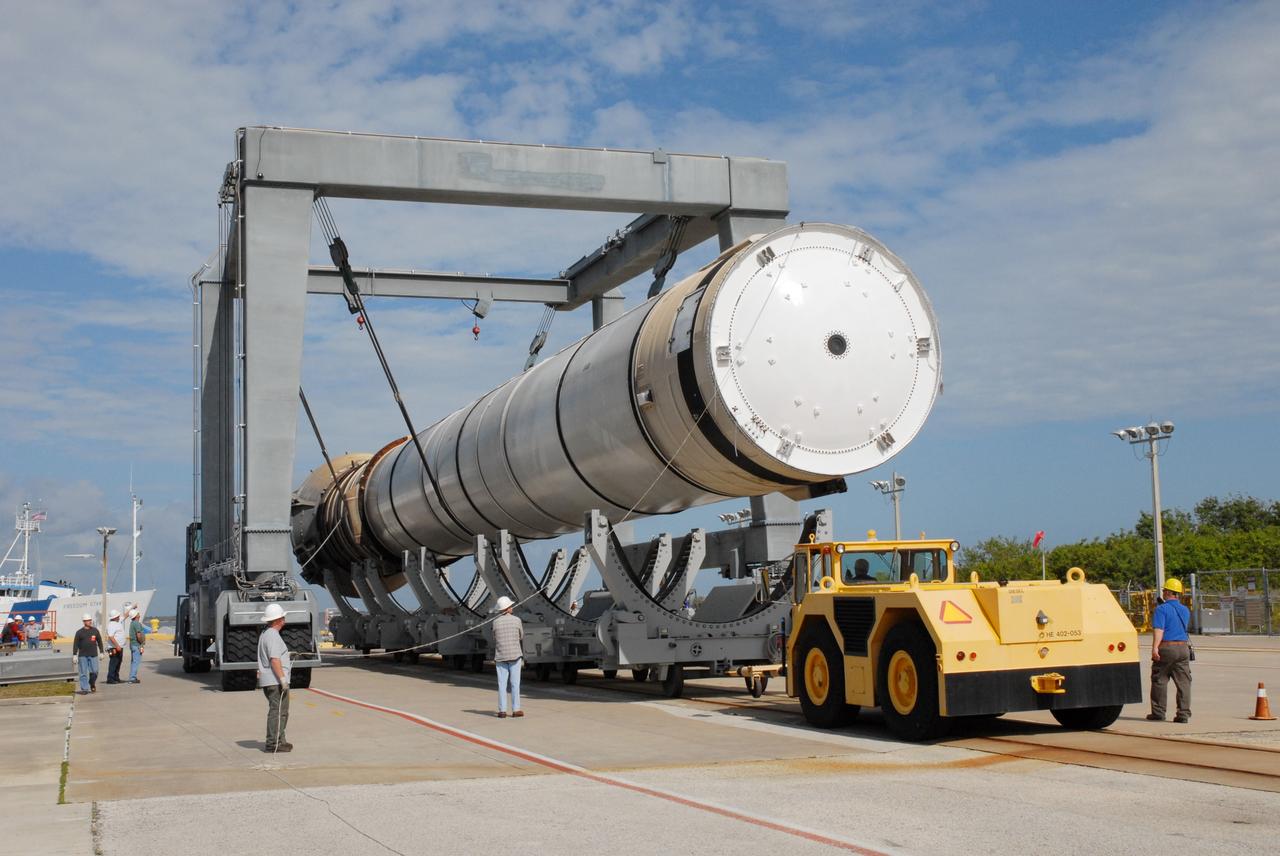
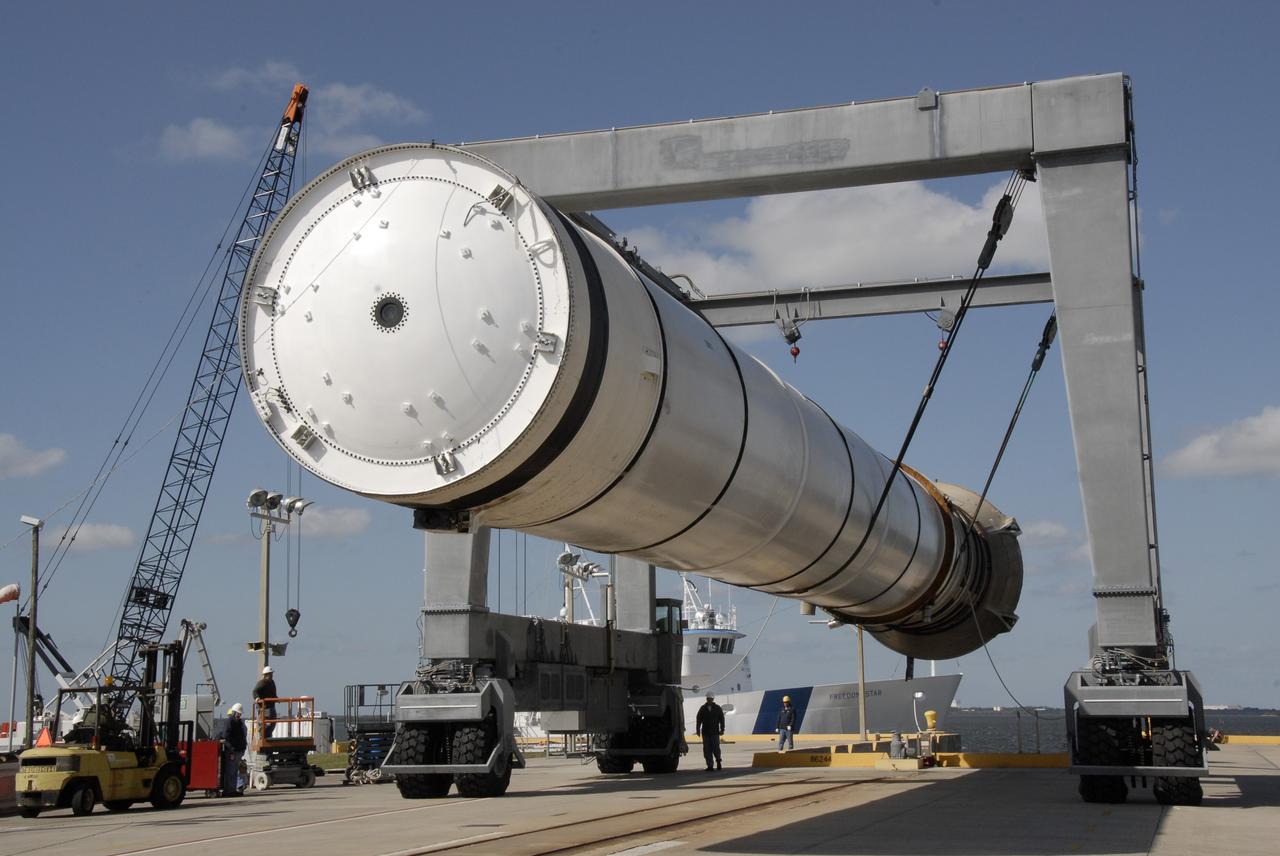
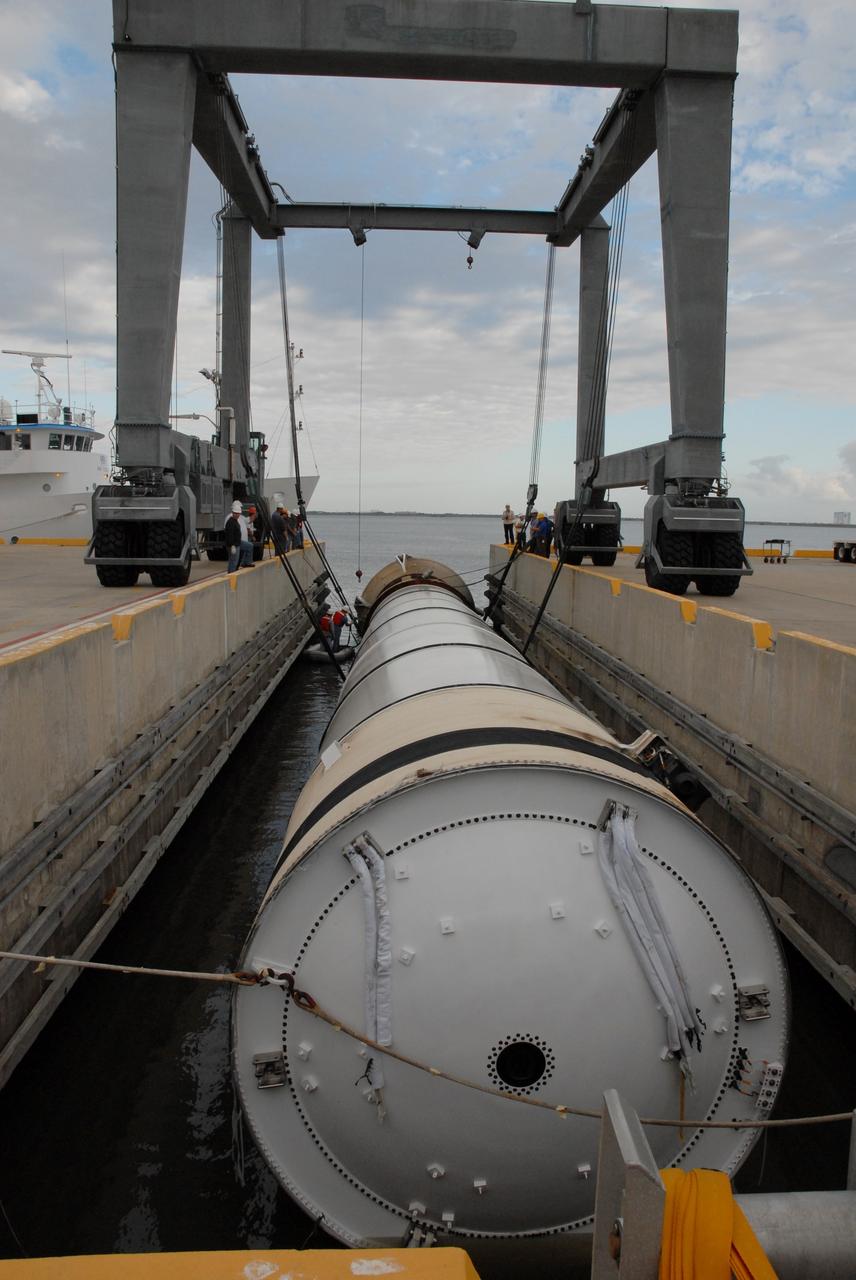
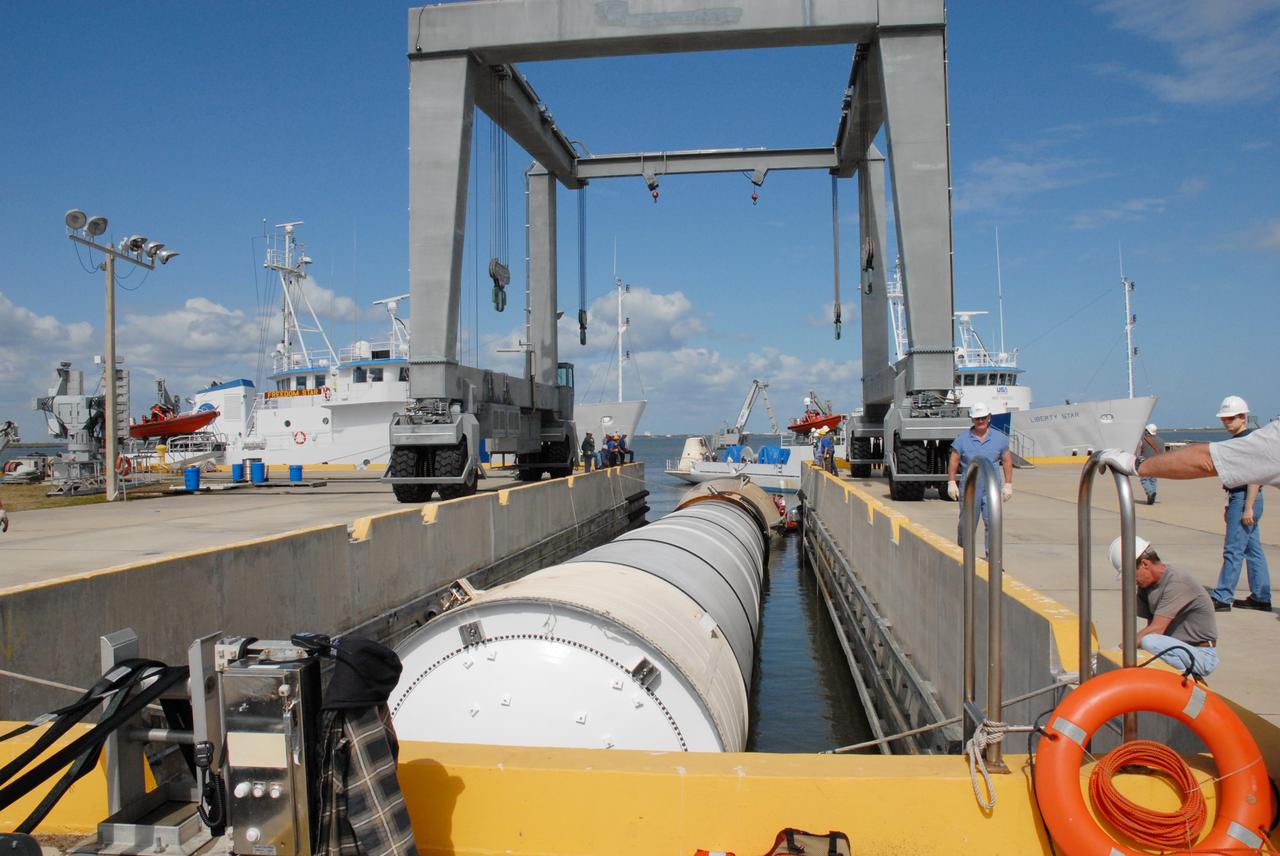
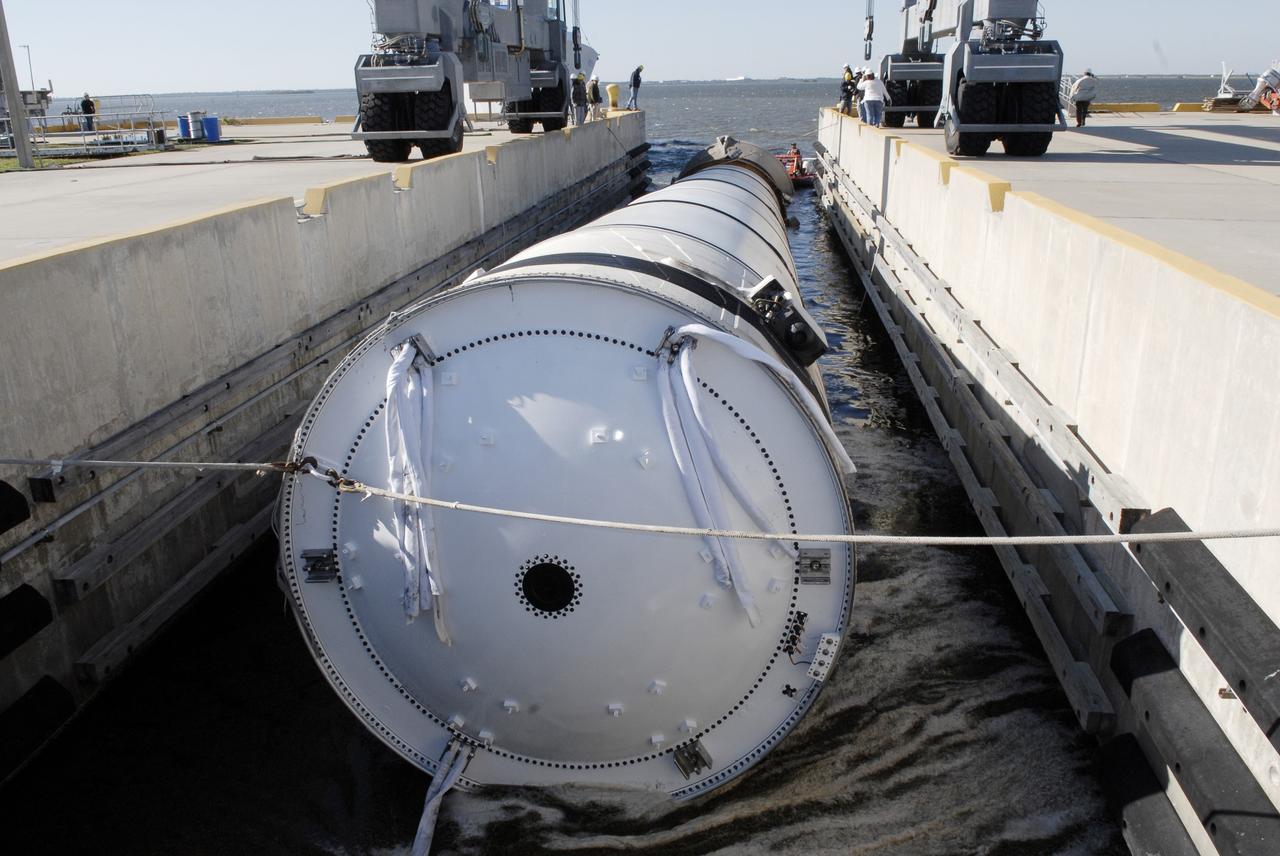
CAPE CANAVERAL, Fla. – At the dock at Hangar AF at Cape Canaveral Air Force Station in Florida, the solid rocket booster is lifted out of the water by the straddle crane.  The booster, used during space shuttle Discovery's launch from NASA's Kennedy Space Center in Florida March 15 on mission STS-119, will be placed on a transporter. The space shuttle’s solid rocket booster casings and associated flight hardware are recovered at sea after a launch. The spent rockets were recovered by NASA's Solid Rocket Booster Retrieval Ships Freedom Star and Liberty Star. The boosters impact the Atlantic Ocean approximately seven minutes after liftoff.  The splashdown area is a square of about six by nine nautical miles located about 140 nautical miles downrange from the launch pad. The retrieval ships are stationed approximately 8 to 10 nautical miles from the impact area at the time of splashdown. As soon as the boosters enter the water, the ships accelerate to a speed of 15 knots and quickly close on the boosters. The pilot chutes and main parachutes are the first items to be brought on board. With the chutes and frustum recovered, attention turns to the boosters. The ship’s tow line is connected and the booster is returned to the Port and, after transfer to a position alongside the ship, to Hangar AF. There, the expended boosters are disassembled, refurbished and reloaded with solid propellant for reuse.  Photo credit: NASA/Jack Pfaller
KSC-2009-2142
CAPE CANAVERAL, Fla. –   At the dock at Hangar AF at Cape Canaveral Air Force Station in Florida, workers move the spent solid rocket booster to an area beneath the straddle crane that will lift it out of the water. The booster is from space shuttle Endeavour, which launched Nov. 14 on the STS-126 mission. The space shuttle’s solid rocket booster casings and associated flight hardware are recovered at sea. The spent rocket was recovered by NASA's Solid Rocket Booster Retrieval Ship Freedom Star. The boosters impact the Atlantic Ocean approximately seven minutes after liftoff. The splashdown area is a square of about six by nine nautical miles located about 140 nautical miles downrange from the launch pad. The retrieval ships are stationed approximately 8 to 10 nautical miles from the impact area at the time of splashdown. As soon as the boosters enter the water, the ships accelerate to a speed of 15 knots and quickly close on the boosters. The pilot chutes and main parachutes are the first items to be brought on board. With the chutes and frustum recovered, attention turns to the boosters. The ship’s tow line is connected and the booster is returned to the Port and, after transfer to a position alongside the ship, to Hangar AF. There, the expended boosters are disassembled, refurbished and reloaded with solid propellant for reuse. Photo credit: NASA/Kim Shiflett
KSC-08pd3733
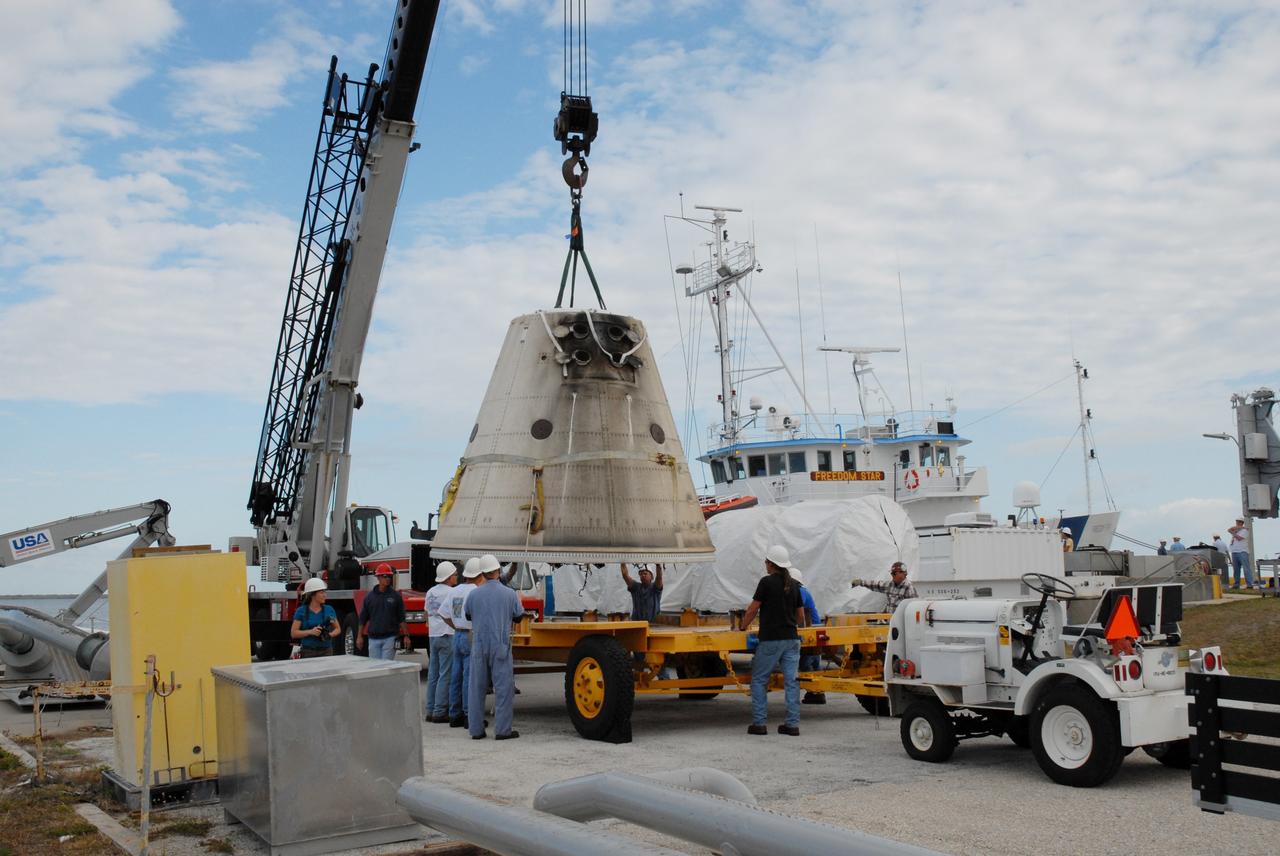
CAPE CANAVERAL, Fla. – At the dock at Hangar AF at Cape Canaveral Air Force Station in Florida, the frustum of a solid rocket booster is moved onto a transporter.  The booster was used during space shuttle Discovery's launch on mission STS-119 from NASA's Kennedy Space Center in Florida March 15.  The space shuttle’s solid rocket booster casings and associated flight hardware are recovered at sea after a launch. The spent rockets were recovered by NASA's Solid Rocket Booster Retrieval Ships Freedom Star and Liberty Star. The boosters impact the Atlantic Ocean approximately seven minutes after liftoff.  The splashdown area is a square of about six by nine nautical miles located about 140 nautical miles downrange from the launch pad. The retrieval ships are stationed approximately 8 to 10 nautical miles from the impact area at the time of splashdown. As soon as the boosters enter the water, the ships accelerate to a speed of 15 knots and quickly close on the boosters. The pilot chutes and main parachutes are the first items to be brought on board. With the chutes and frustum recovered, attention turns to the boosters. The ship’s tow line is connected and the booster is returned to the Port and, after transfer to a position alongside the ship, to Hangar AF. There, the expended boosters are disassembled, refurbished and reloaded with solid propellant for reuse.  Photo credit: NASA/Jack Pfaller
KSC-2009-2140
CAPE CANAVERAL, Fla. – At the dock at Hangar AF at Cape Canaveral Air Force Station in Florida, the straddle crane lowers a solid rocket booster onto a transporter. The booster was used during space shuttle Discovery's launch from NASA's Kennedy Space Center in Florida March 15 on mission STS-119. The space shuttle’s solid rocket booster casings and associated flight hardware are recovered at sea after a launch. The spent rockets were recovered by NASA's Solid Rocket Booster Retrieval Ships Freedom Star and Liberty Star. The boosters impact the Atlantic Ocean approximately seven minutes after liftoff.  The splashdown area is a square of about six by nine nautical miles located about 140 nautical miles downrange from the launch pad. The retrieval ships are stationed approximately 8 to 10 nautical miles from the impact area at the time of splashdown. As soon as the boosters enter the water, the ships accelerate to a speed of 15 knots and quickly close on the boosters. The pilot chutes and main parachutes are the first items to be brought on board. With the chutes and frustum recovered, attention turns to the boosters. The ship’s tow line is connected and the booster is returned to the Port and, after transfer to a position alongside the ship, to Hangar AF. There, the expended boosters are disassembled, refurbished and reloaded with solid propellant for reuse.  Photo credit: NASA/Jack Pfaller
KSC-2009-2143
CAPE CANAVERAL, Fla. –   At the dock at Hangar AF at Cape Canaveral Air Force Station in Florida, the straddle crane lifts a spent solid rocket booster to allow saltwater contamination to be rinsed off. The booster is from space shuttle Endeavour, which launched Nov. 14 on the STS-126 mission. The space shuttle’s solid rocket booster casings and associated flight hardware are recovered at sea. The spent rocket was recovered by NASA's Solid Rocket Booster Retrieval Ship Freedom Star. The boosters impact the Atlantic Ocean approximately seven minutes after liftoff. The splashdown area is a square of about six by nine nautical miles located about 140 nautical miles downrange from the launch pad. The retrieval ships are stationed approximately 8 to 10 nautical miles from the impact area at the time of splashdown. As soon as the boosters enter the water, the ships accelerate to a speed of 15 knots and quickly close on the boosters. The pilot chutes and main parachutes are the first items to be brought on board. With the chutes and frustum recovered, attention turns to the boosters. The ship’s tow line is connected and the booster is returned to the Port and, after transfer to a position alongside the ship, to Hangar AF. There, the expended boosters are disassembled, refurbished and reloaded with solid propellant for reuse. Photo credit: NASA/Kim Shiflett
KSC-08pd3734
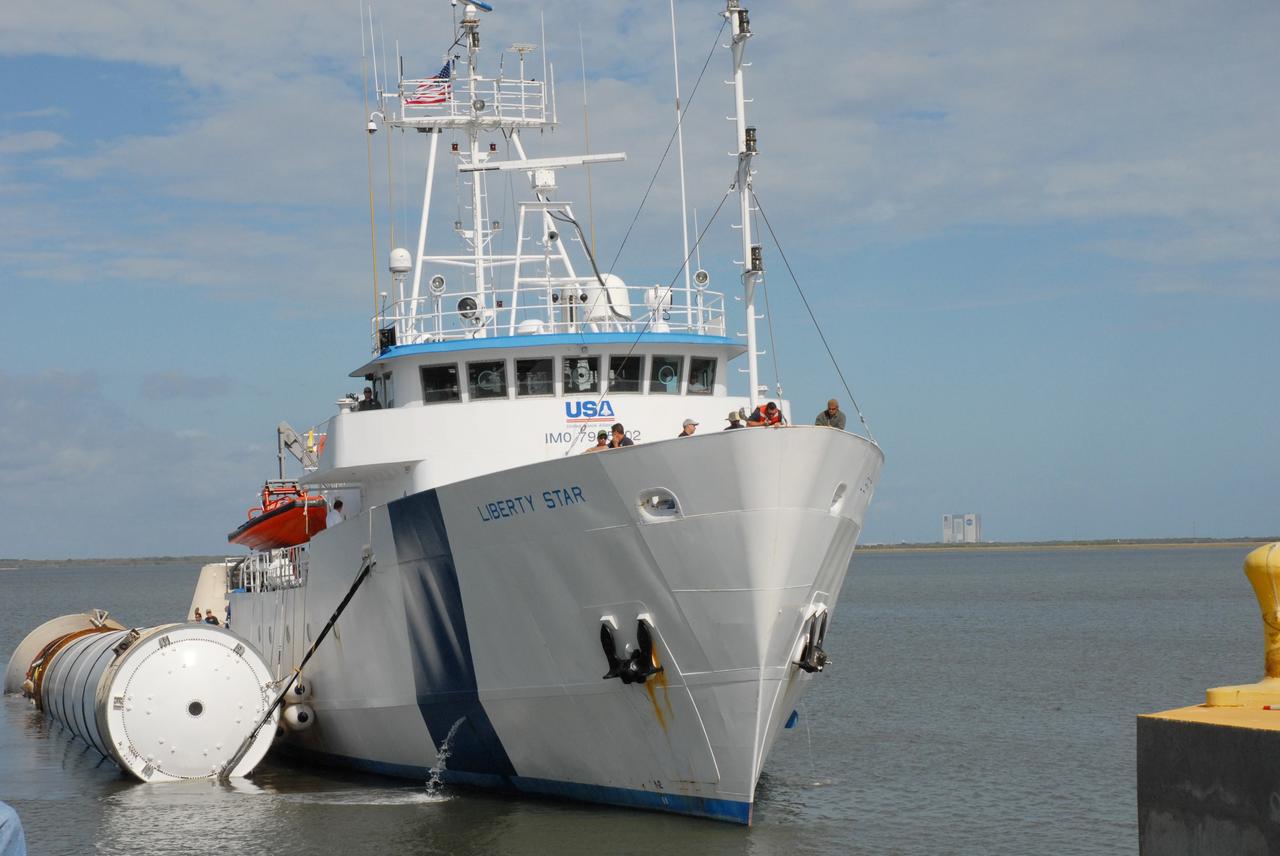
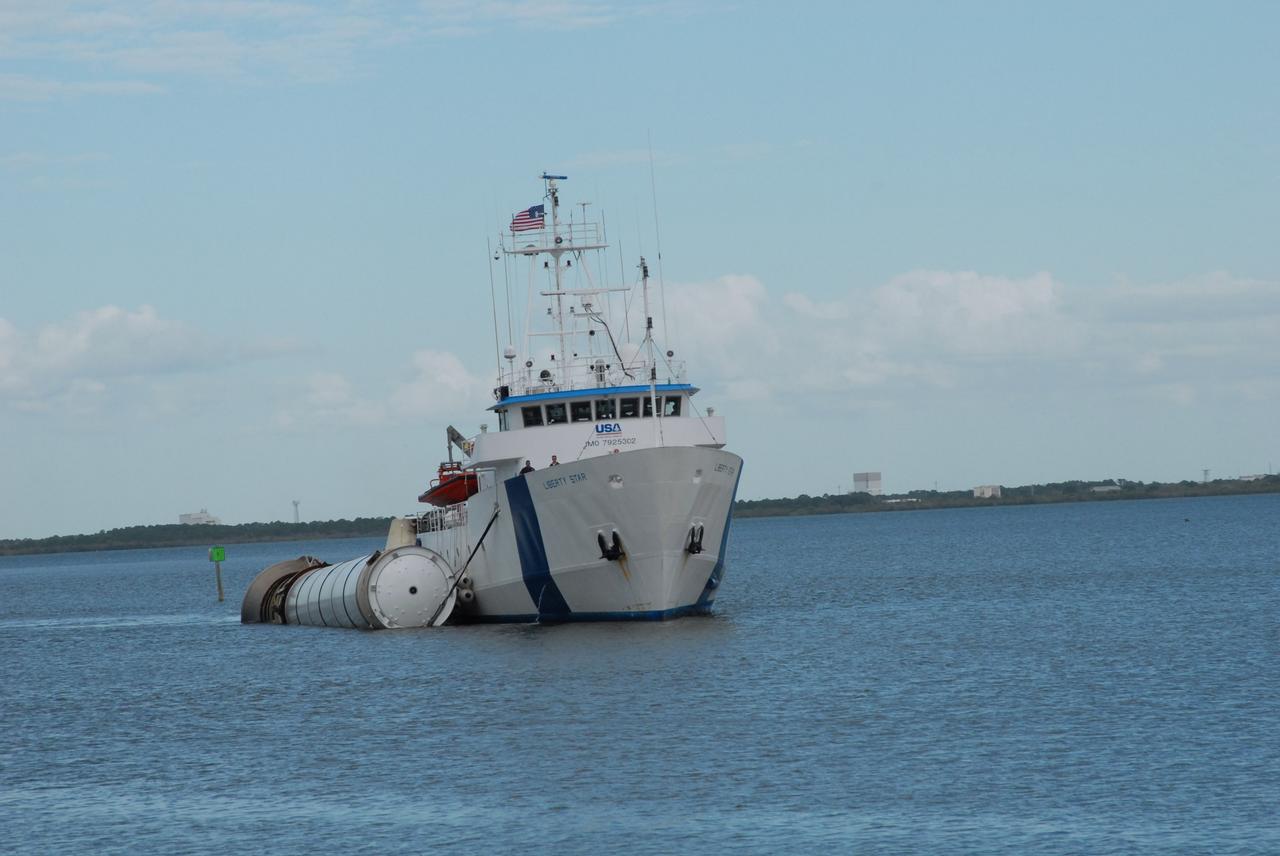
CAPE CANAVERAL, Fla. – The Solid Rocket Booster Retrieval Ship Liberty Star tows a booster to the dock at Hangar AF at Cape Canaveral Air Force Station in Florida.  The booster was used during space shuttle Discovery's launch from NASA's Kennedy Space Center in Florida March 15 on mission STS-119. The space shuttle’s solid rocket booster casings and associated flight hardware are recovered at sea after a launch. The spent rockets were recovered by NASA's Solid Rocket Booster Retrieval Ships Freedom Star and Liberty Star. The boosters impact the Atlantic Ocean approximately seven minutes after liftoff.  The splashdown area is a square of about six by nine nautical miles located about 140 nautical miles downrange from the launch pad. The retrieval ships are stationed approximately 8 to 10 nautical miles from the impact area at the time of splashdown. As soon as the boosters enter the water, the ships accelerate to a speed of 15 knots and quickly close on the boosters. The pilot chutes and main parachutes are the first items to be brought on board. With the chutes and frustum recovered, attention turns to the boosters. The ship’s tow line is connected and the booster is returned to the Port and, after transfer to a position alongside the ship, to Hangar AF. There, the expended boosters are disassembled, refurbished and reloaded with solid propellant for reuse.  Photo credit: NASA/Jack Pfaller
KSC-2009-2144
CAPE CANAVERAL, Fla. – At the dock at Hangar AF at Cape Canaveral Air Force Station in Florida, one of the  solid rocket boosters used during space shuttle Discovery's launch March 15 on mission STS-119 is moved to an area beneath the straddle crane that will lift it out of the water.  The space shuttle’s solid rocket booster casings and associated flight hardware are recovered at sea after a launch. The spent rockets were recovered by NASA's Solid Rocket Booster Retrieval Ships Freedom Star and Liberty Star. The boosters impact the Atlantic Ocean approximately seven minutes after liftoff.  The splashdown area is a square of about six by nine nautical miles located about 140 nautical miles downrange from the launch pad. The retrieval ships are stationed approximately 8 to 10 nautical miles from the impact area at the time of splashdown. As soon as the boosters enter the water, the ships accelerate to a speed of 15 knots and quickly close on the boosters. The pilot chutes and main parachutes are the first items to be brought on board. With the chutes and frustum recovered, attention turns to the boosters. The ship’s tow line is connected and the booster is returned to the Port and, after transfer to a position alongside the ship, to Hangar AF. There, the expended boosters are disassembled, refurbished and reloaded with solid propellant for reuse.  Photo credit: NASA/Jack Pfaller
KSC-2009-2139
CAPE CANAVERAL, Fla. – At the dock at Hangar AF at Cape Canaveral Air Force Station in Florida, a solid rocket boosters used during space shuttle Discovery's launch from NASA's Kennedy Space Center in Florida March 15 on mission STS-119 waits in an area beneath the straddle crane that will lift it out of the water. The space shuttle’s solid rocket booster casings and associated flight hardware are recovered at sea after a launch. The spent rockets were recovered by NASA's Solid Rocket Booster Retrieval Ships Freedom Star and Liberty Star. The boosters impact the Atlantic Ocean approximately seven minutes after liftoff.  The splashdown area is a square of about six by nine nautical miles located about 140 nautical miles downrange from the launch pad. The retrieval ships are stationed approximately 8 to 10 nautical miles from the impact area at the time of splashdown. As soon as the boosters enter the water, the ships accelerate to a speed of 15 knots and quickly close on the boosters. The pilot chutes and main parachutes are the first items to be brought on board. With the chutes and frustum recovered, attention turns to the boosters. The ship’s tow line is connected and the booster is returned to the Port and, after transfer to a position alongside the ship, to Hangar AF. There, the expended boosters are disassembled, refurbished and reloaded with solid propellant for reuse.  Photo credit: NASA/Jack Pfaller
KSC-2009-2145
CAPE CANAVERAL, Fla. – The Solid Rocket Booster Retrieval Ship Liberty Star tows a booster to the dock at Hangar AF at Cape Canaveral Air Force Station in Florida.  The booster was used during space shuttle Discovery's launch from NASA's Kennedy Space Center in Florida March 15 on mission STS-119.  The space shuttle’s solid rocket booster casings and associated flight hardware are recovered at sea after a launch. The spent rockets were recovered by NASA's Solid Rocket Booster Retrieval Ships Freedom Star and Liberty Star. The boosters impact the Atlantic Ocean approximately seven minutes after liftoff.  The splashdown area is a square of about six by nine nautical miles located about 140 nautical miles downrange from the launch pad. The retrieval ships are stationed approximately 8 to 10 nautical miles from the impact area at the time of splashdown. As soon as the boosters enter the water, the ships accelerate to a speed of 15 knots and quickly close on the boosters. The pilot chutes and main parachutes are the first items to be brought on board. With the chutes and frustum recovered, attention turns to the boosters. The ship’s tow line is connected and the booster is returned to the Port and, after transfer to a position alongside the ship, to Hangar AF. There, the expended boosters are disassembled, refurbished and reloaded with solid propellant for reuse.  Photo credit: NASA/Jack Pfaller
KSC-2009-2141
CAPE CANAVERAL, Fla. –   At the dock at Hangar AF at Cape Canaveral Air Force Station in Florida, the spent solid rocket booster from space shuttle Endeavour's launch Nov. 14 on mission STS-126 is moved to an area beneath the straddle crane that will lift it out of the water.  The space shuttle’s solid rocket booster casings and associated flight hardware are recovered at sea. The spent rocket was recovered by NASA's Solid Rocket Booster Retrieval Ship Freedom Star.  The boosters impact the Atlantic Ocean approximately seven minutes after liftoff. The splashdown area is a square of about six by nine nautical miles located about 140 nautical miles downrange from the launch pad. The retrieval ships are stationed approximately 8 to 10 nautical miles from the impact area at the time of splashdown. As soon as the boosters enter the water, the ships accelerate to a speed of 15 knots and quickly close on the boosters. The pilot chutes and main parachutes are the first items to be brought on board. With the chutes and frustum recovered, attention turns to the boosters. The ship’s tow line is connected and the booster is returned to the Port and, after transfer to a position alongside the ship, to Hangar AF. There, the expended boosters are disassembled, refurbished and reloaded with solid propellant for reuse. Photo credit: NASA/Kim Shiflett
KSC-08pd3732
S61-02819 (21 July 1961) --- A U.S. Marine Corps helicopter retrieves astronaut Virgil I. Grissom from the Atlantic Ocean following the Mercury-Redstone 4 (MR-4) spaceflight.  Grissom's "Liberty Bell" Mercury spacecraft sank to the bottom of the ocean and was not recovered. Photo credit: NASA
Recovery - Mercury Astronaut Virgil Grissom - End - Mercury-Reddstone (MR)-4 Mission