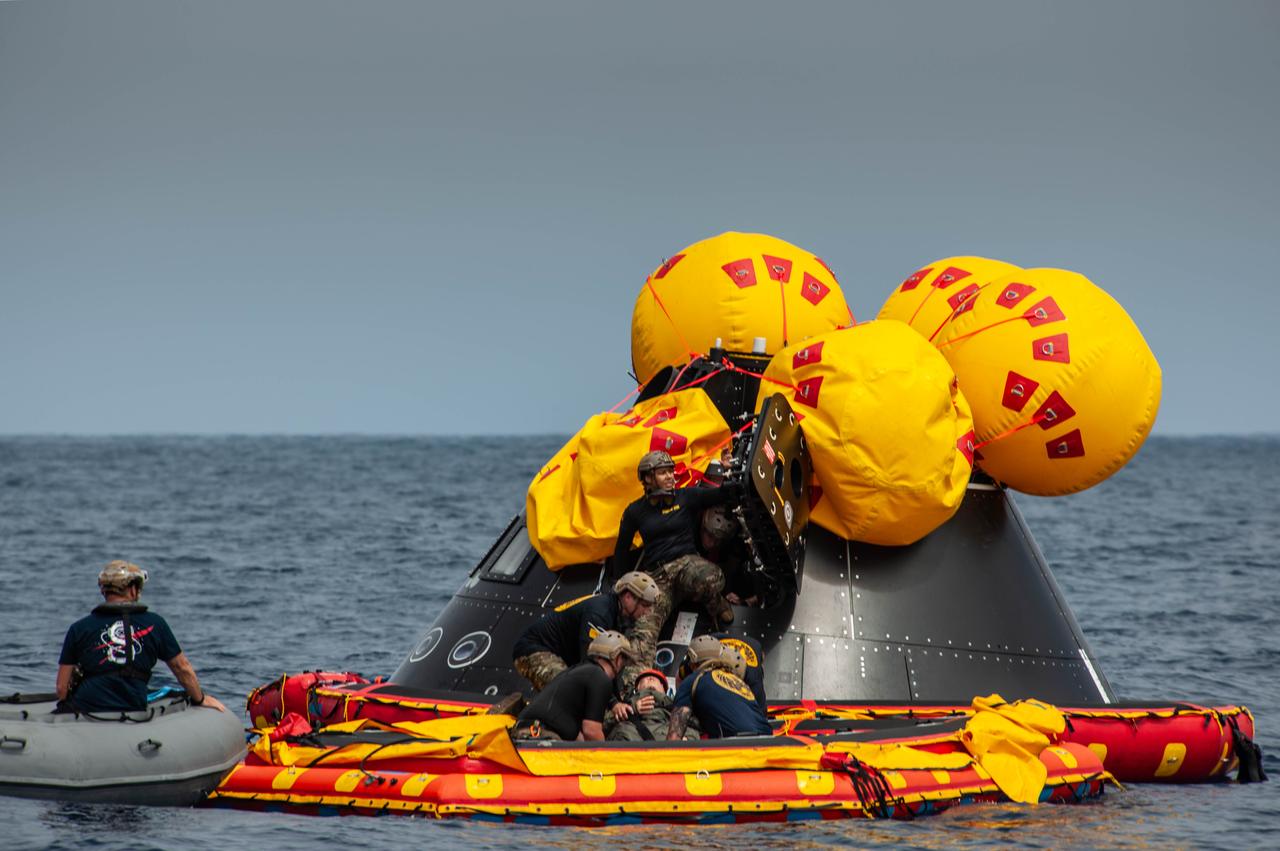
Navy divers from Explosive Ordnance Disposal (EOD) Expeditionary Support Unit 1 practice contingency recovery procedures with a manikin and the Orion Crew Module Test Article (CMTA) in the Pacific Ocean as part of NASA’s Underway Recovery Test 10 (URT-10). The divers are trained in open water and small boat procedures and will be the team to help Artemis astronauts exit the Orion spacecraft and make it safely to the recovery ship after splashdown in addition to preparing the spacecraft to be transported back inside the recovery ship.
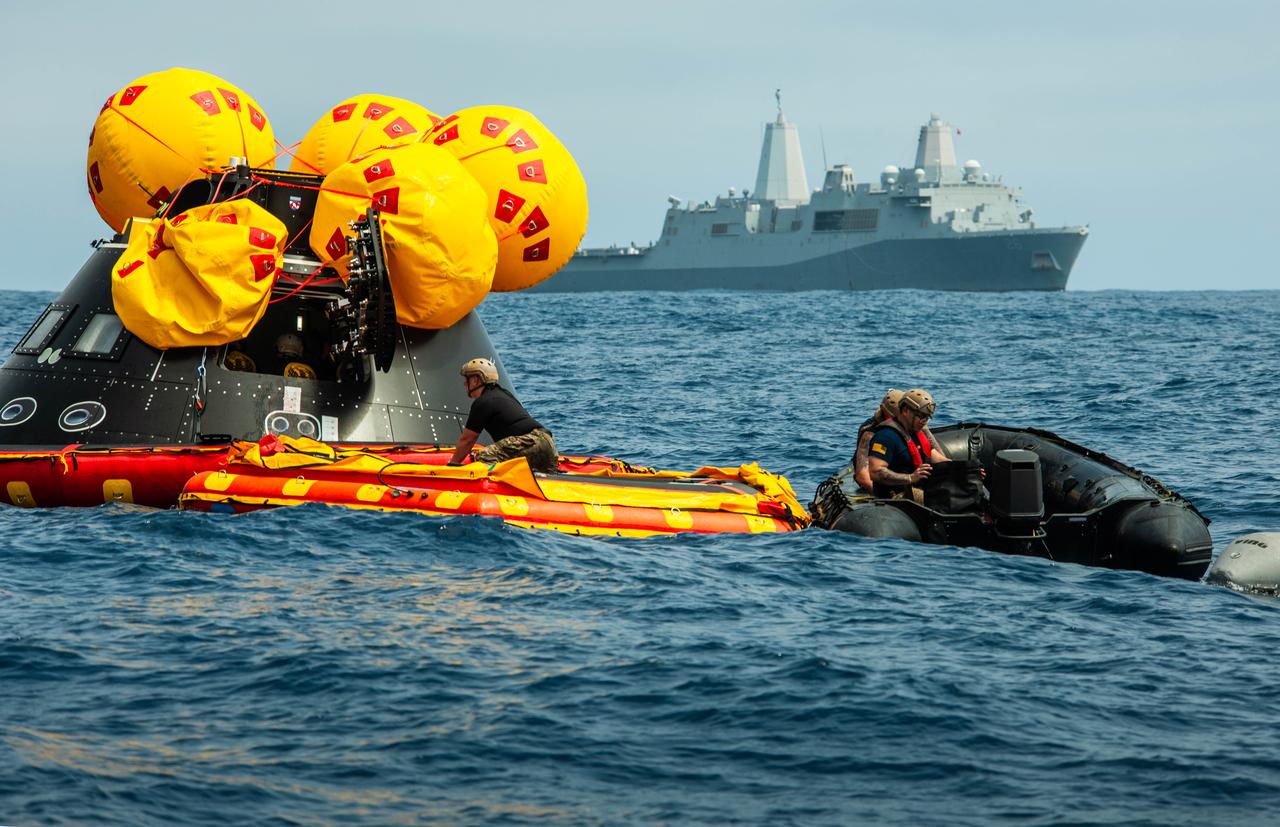
Navy divers from Explosive Ordnance Disposal (EOD) Expeditionary Support Unit 1 work to secure the Orion Crew Module Test Article (CMTA) in the Pacific Ocean as part of NASA’s Underway Recovery Test 10 (URT-10). The divers are trained in open water and small boat procedures and will be the team to help Artemis astronauts exit the Orion spacecraft and make it safely to the recovery ship after splashdown in addition to preparing the spacecraft to be transported back inside the recovery ship.
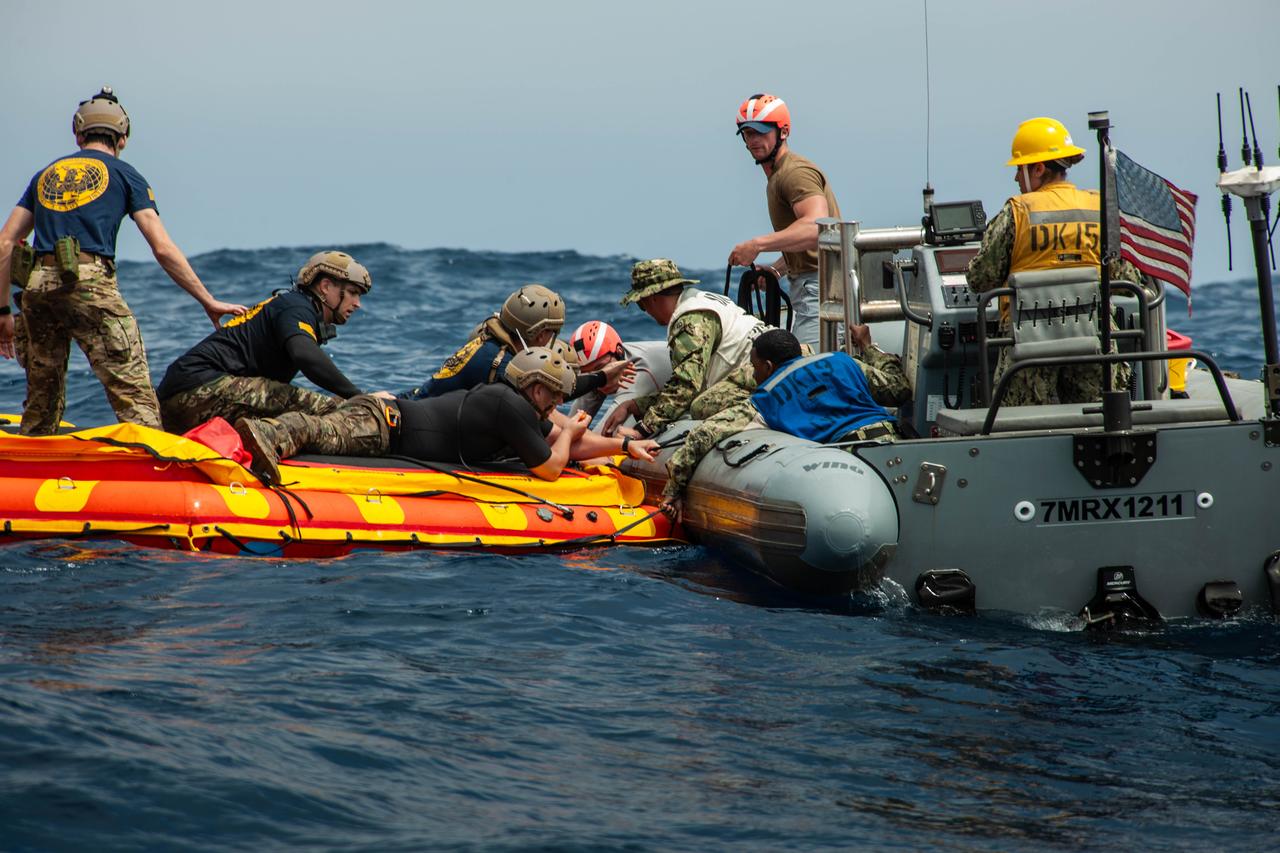
Navy divers from Explosive Ordnance Disposal (EOD) Expeditionary Support Unit 1 work to secure the Orion Crew Module Test Article (CMTA) in the Pacific Ocean as part of NASA’s Underway Recovery Test 10 (URT-10). The divers are trained in open water and small boat procedures and will be the team to help Artemis astronauts exit the Orion spacecraft and make it safely to the recovery ship after splashdown in addition to preparing the spacecraft to be transported back inside the recovery ship.
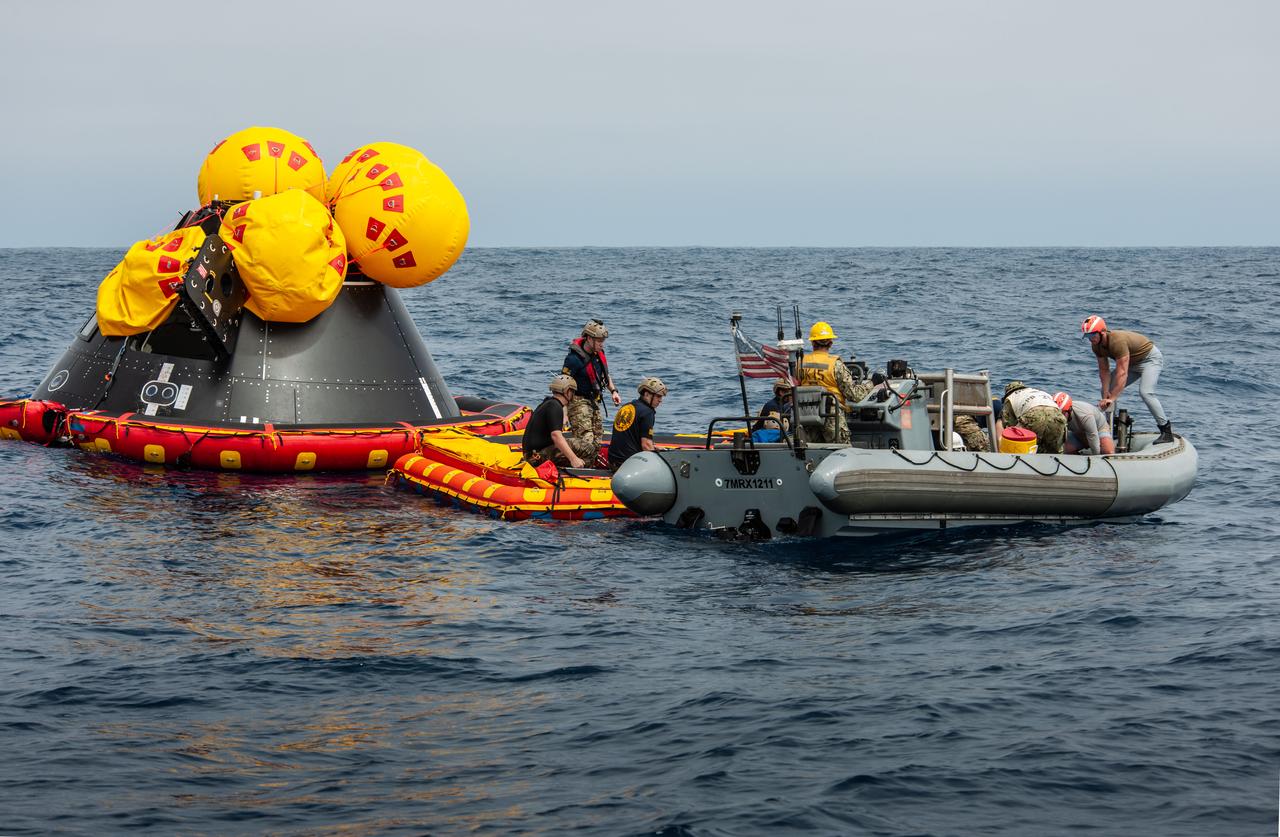
Navy divers from Explosive Ordnance Disposal (EOD) Expeditionary Support Unit 1 work to secure the Orion Crew Module Test Article (CMTA) in the Pacific Ocean as part of NASA’s Underway Recovery Test 10 (URT-10). The divers are trained in open water and small boat procedures and will be the team to help Artemis astronauts exit the Orion spacecraft and make it safely to the recovery ship after splashdown in addition to preparing the spacecraft to be transported back inside the recovery ship.
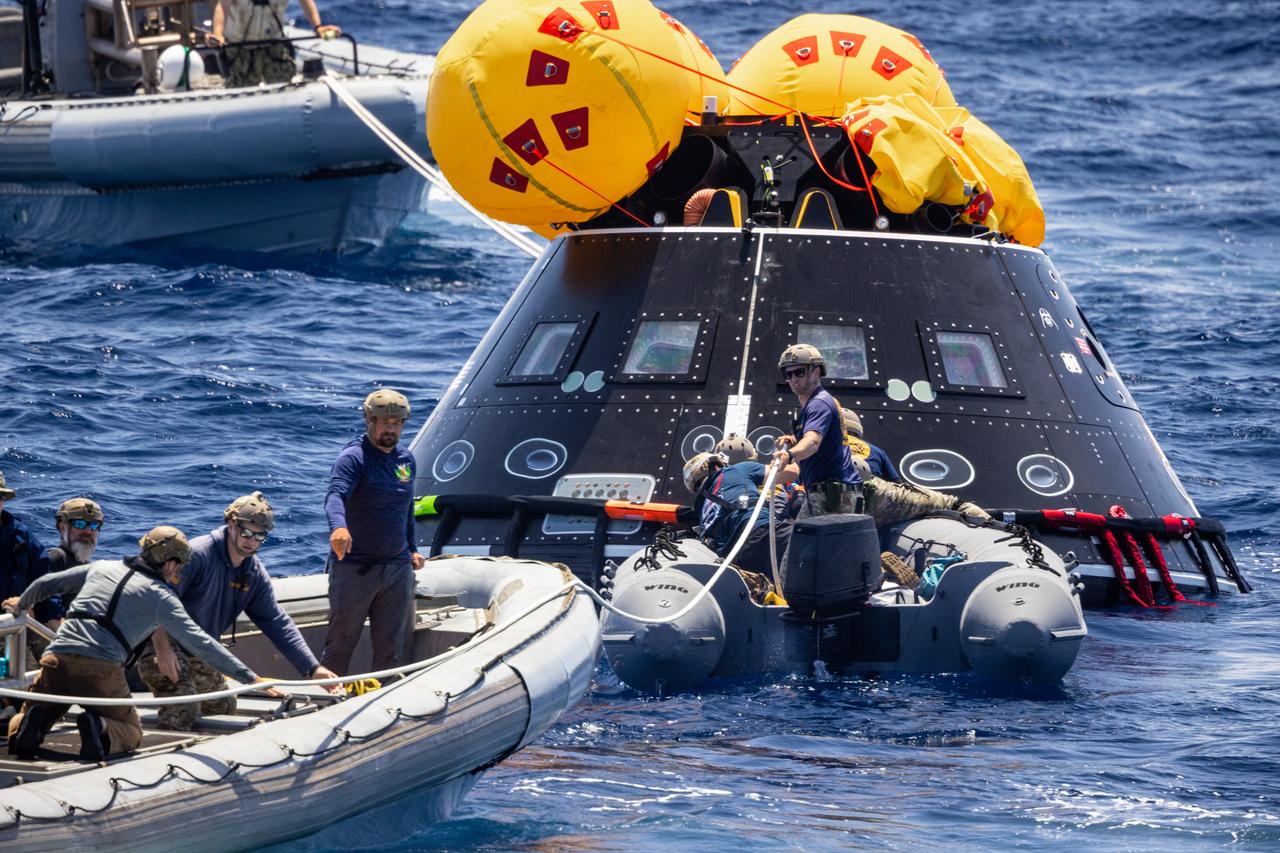
Navy divers from Explosive Ordnance Disposal (EOD) Expeditionary Support Unit 1 work to secure the Orion Crew Module Test Article (CMTA) in the Pacific Ocean as part of NASA’s Underway Recovery Test 10 (URT-10). The divers are trained in open water and small boat procedures and will be the team to help Artemis astronauts exit the Orion spacecraft and make it safely to the recovery ship after splashdown in addition to preparing the spacecraft to be transported back inside the recovery ship.
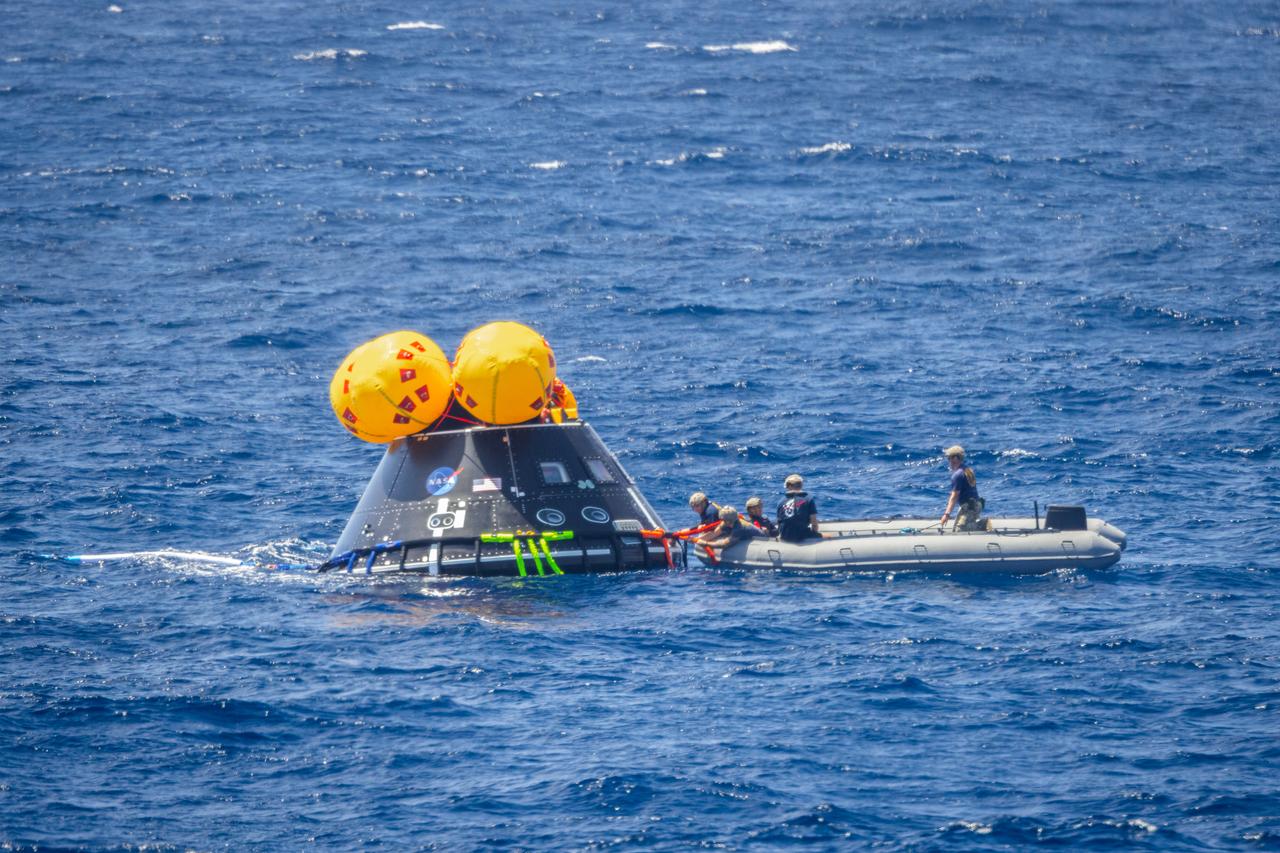
Navy divers from Explosive Ordnance Disposal (EOD) Expeditionary Support Unit 1 work to secure the Orion Crew Module Test Article (CMTA) in the Pacific Ocean as part of NASA’s Underway Recovery Test 10 (URT-10). The divers are trained in open water and small boat procedures and will be the team to help Artemis astronauts exit the Orion spacecraft and make it safely to the recovery ship after splashdown in addition to preparing the spacecraft to be transported back inside the recovery ship.
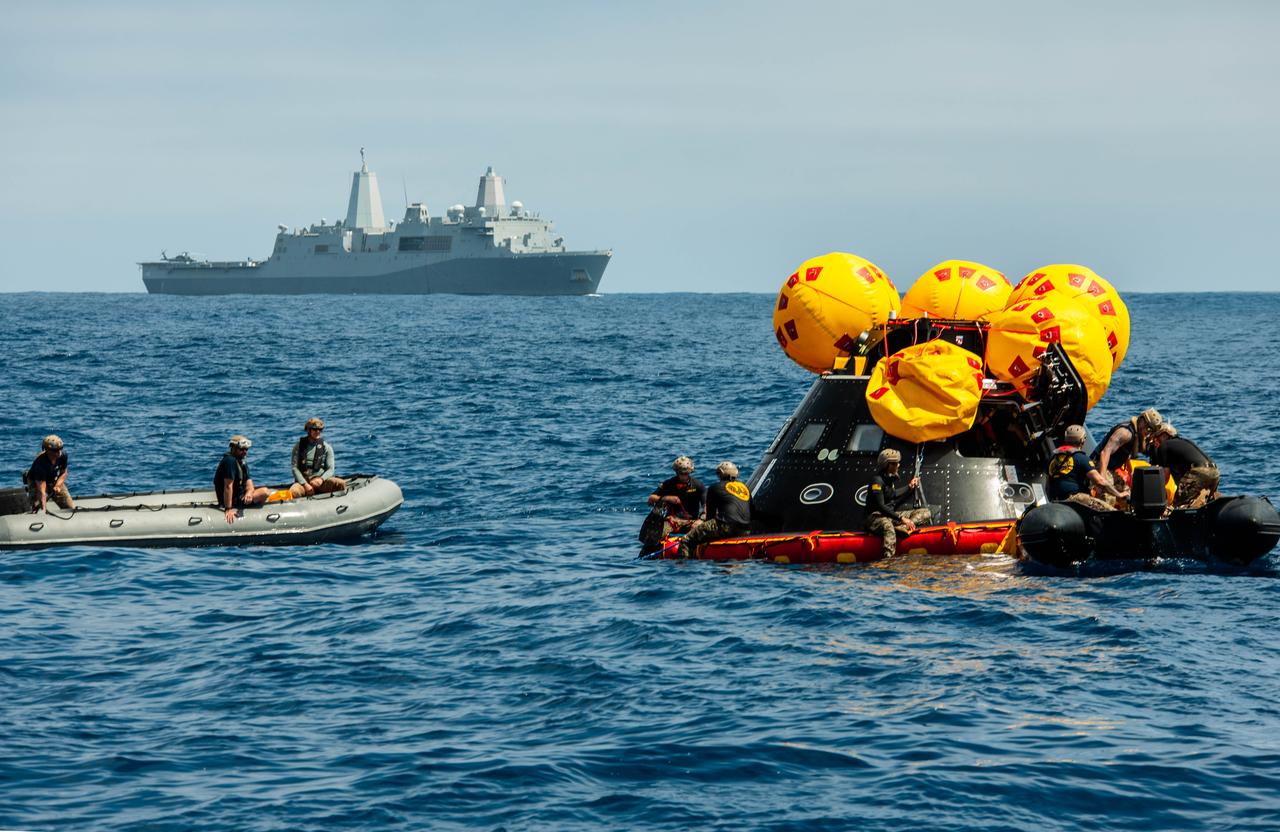
Navy divers from Explosive Ordnance Disposal (EOD) Expeditionary Support Unit 1 work to secure the Orion Crew Module Test Article (CMTA) in the Pacific Ocean as part of NASA’s Underway Recovery Test 10 (URT-10). The divers are trained in open water and small boat procedures and will be the team to help Artemis astronauts exit the Orion spacecraft and make it safely to the recovery ship after splashdown in addition to preparing the spacecraft to be transported back inside the recovery ship.
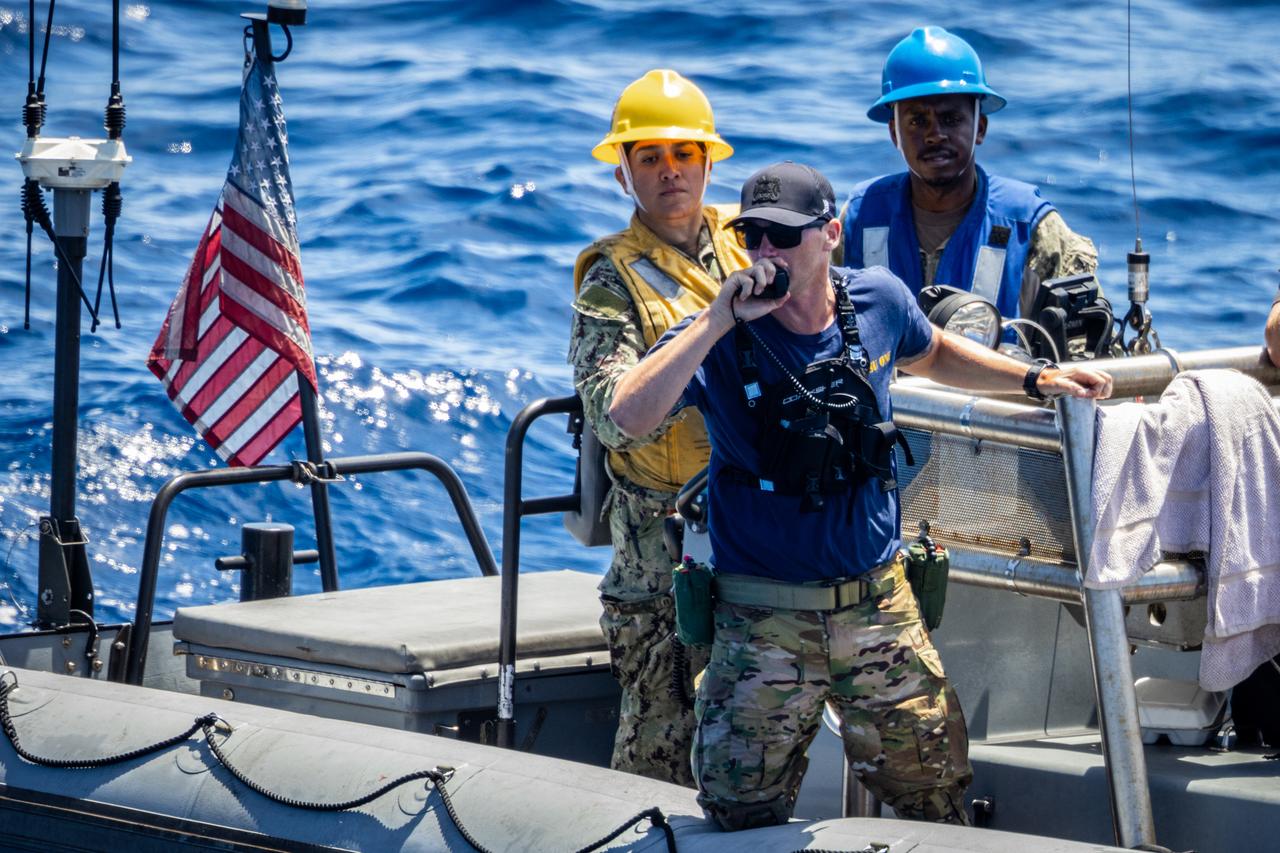
Navy divers from Explosive Ordnance Disposal (EOD) Expeditionary Support Unit 1 work to secure the Orion Crew Module Test Article (CMTA) in the Pacific Ocean as part of NASA’s Underway Recovery Test 10 (URT-10). The divers are trained in open water and small boat procedures and will be the team to help Artemis astronauts exit the Orion spacecraft and make it safely to the recovery ship after splashdown in addition to preparing the spacecraft to be transported back inside the recovery ship.
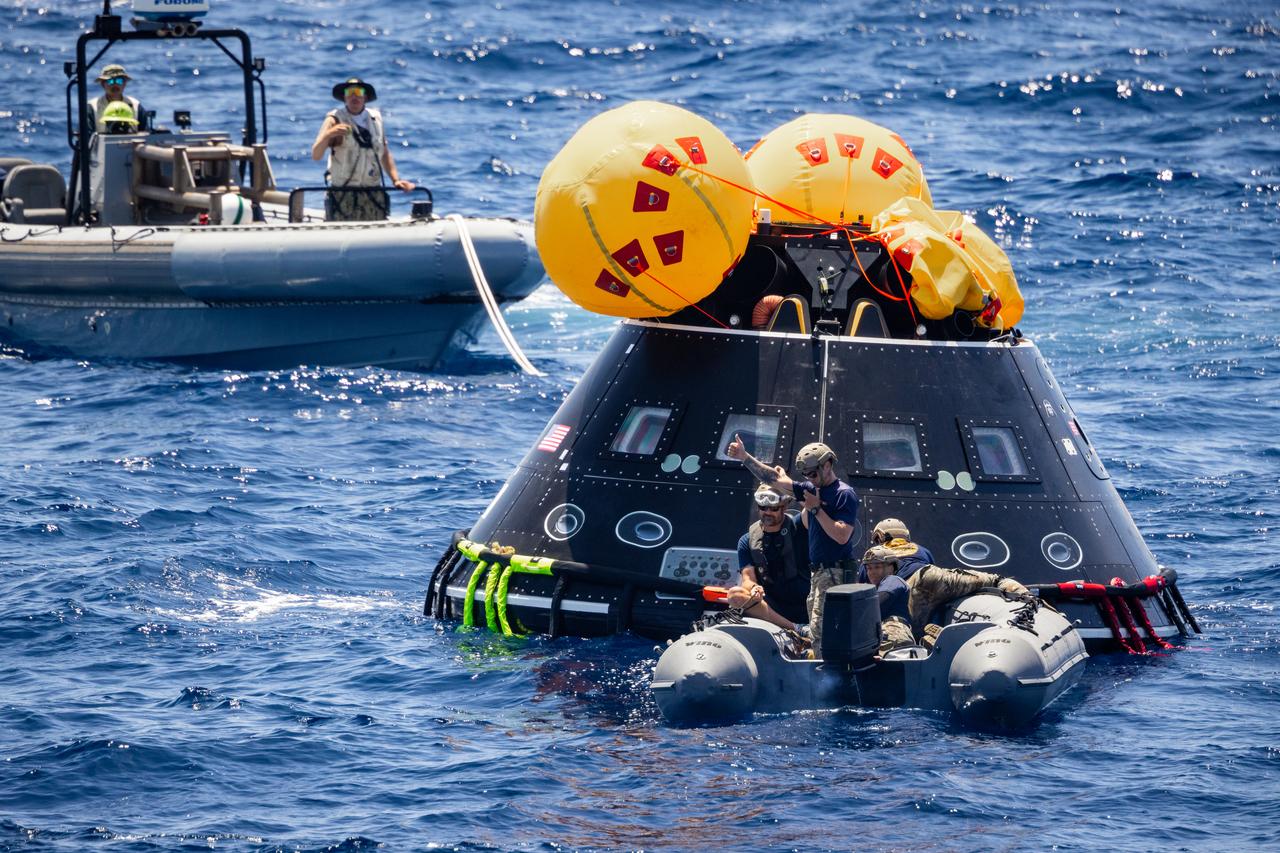
Navy divers from Explosive Ordnance Disposal (EOD) Expeditionary Support Unit 1 work to secure the Orion Crew Module Test Article (CMTA) in the Pacific Ocean as part of NASA’s Underway Recovery Test 10 (URT-10). The divers are trained in open water and small boat procedures and will be the team to help Artemis astronauts exit the Orion spacecraft and make it safely to the recovery ship after splashdown in addition to preparing the spacecraft to be transported back inside the recovery ship.
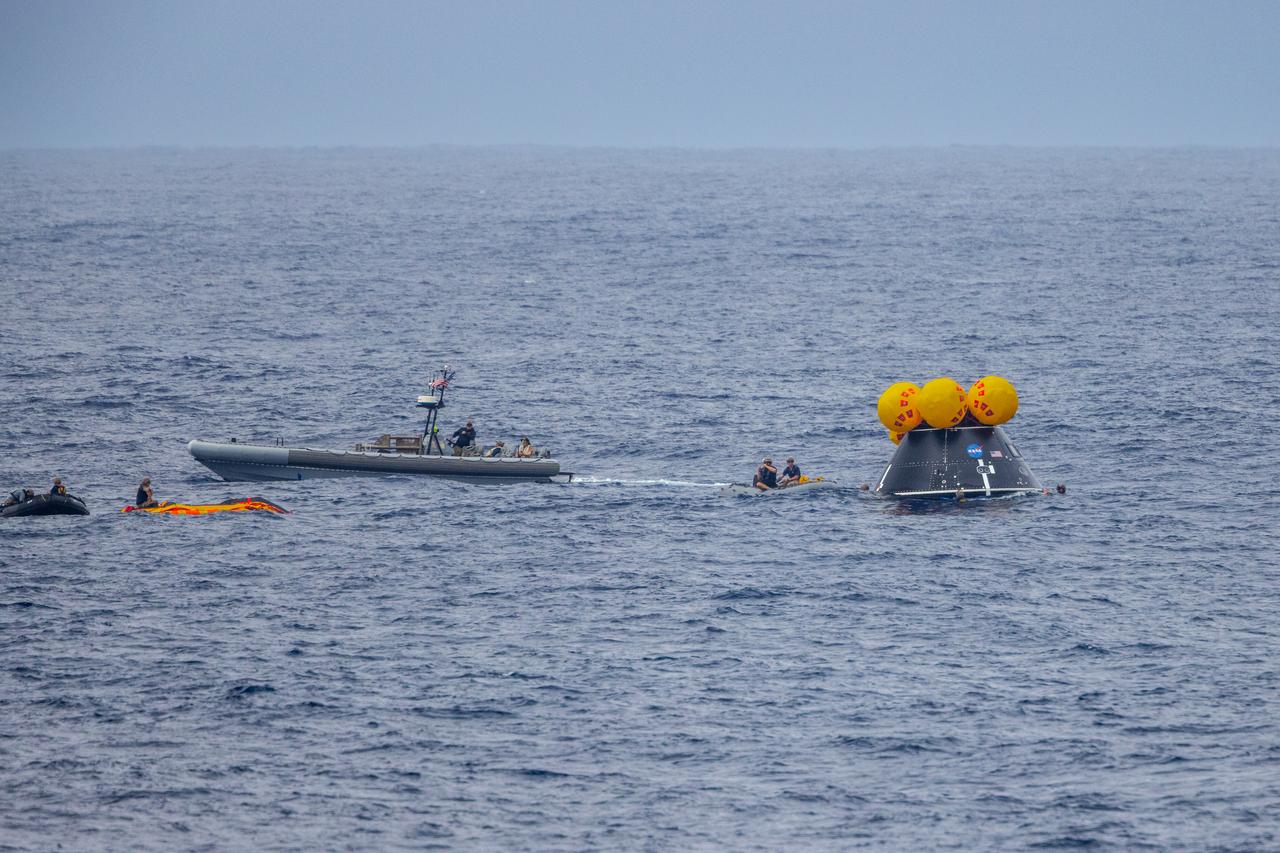
Navy divers from Explosive Ordnance Disposal (EOD) Expeditionary Support Unit 1 work to secure the Orion Crew Module Test Article (CMTA) in the Pacific Ocean as part of NASA’s Underway Recovery Test 10 (URT-10). The divers are trained in open water and small boat procedures and will be the team to help Artemis astronauts exit the Orion spacecraft and make it safely to the recovery ship after splashdown in addition to preparing the spacecraft to be transported back inside the recovery ship.
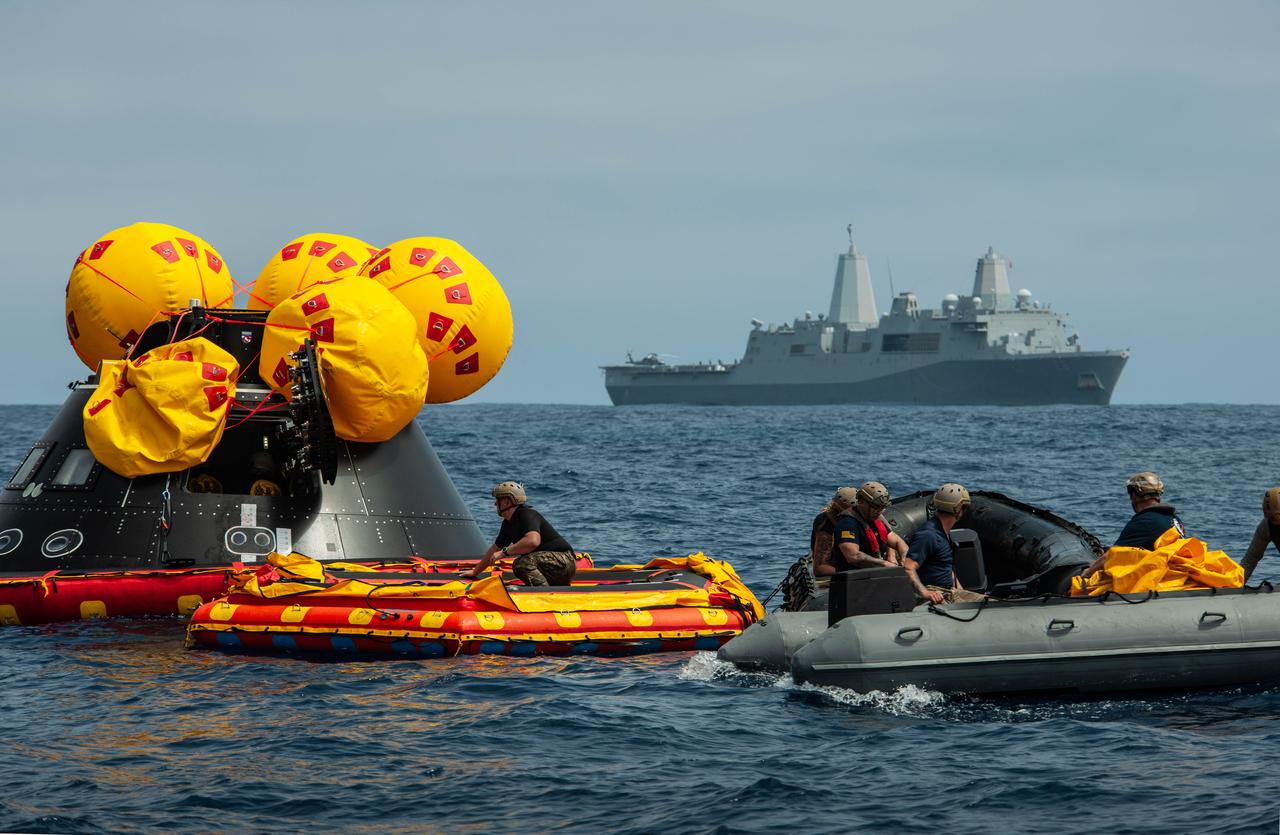
Navy divers from Explosive Ordnance Disposal (EOD) Expeditionary Support Unit 1 work to secure the Orion Crew Module Test Article (CMTA) in the Pacific Ocean as part of NASA’s Underway Recovery Test 10 (URT-10). The divers are trained in open water and small boat procedures and will be the team to help Artemis astronauts exit the Orion spacecraft and make it safely to the recovery ship after splashdown in addition to preparing the spacecraft to be transported back inside the recovery ship.
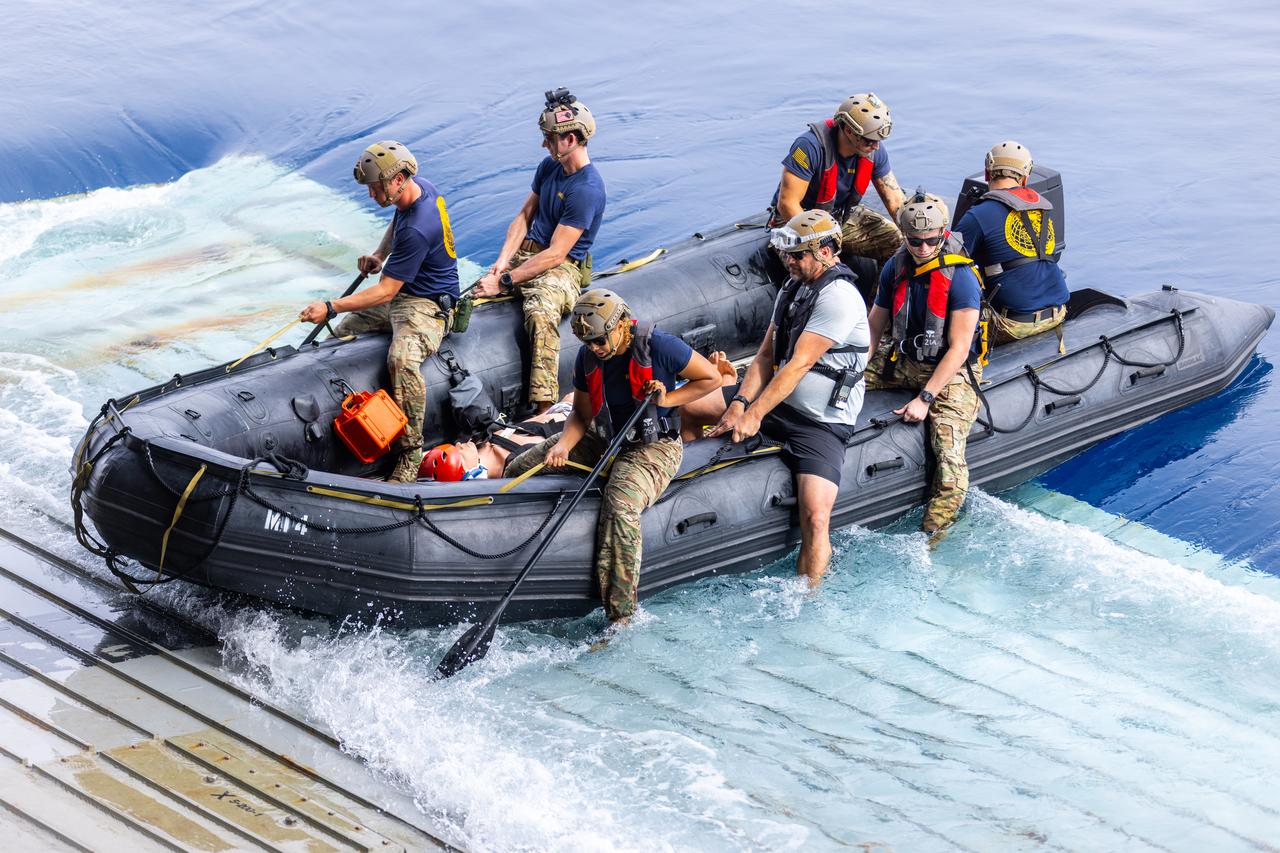
Navy divers from Explosive Ordnance Disposal (EOD) Expeditionary Support Unit 1 prepare to enter the Pacific Ocean from the well deck of USS John P Murtha as part of NASA’s Underway Recovery Test 10 (URT-10). The divers are trained in open water and small boat procedures and will be the team to help Artemis astronauts exit the Orion spacecraft and make it safely to the recovery ship after splashdown.
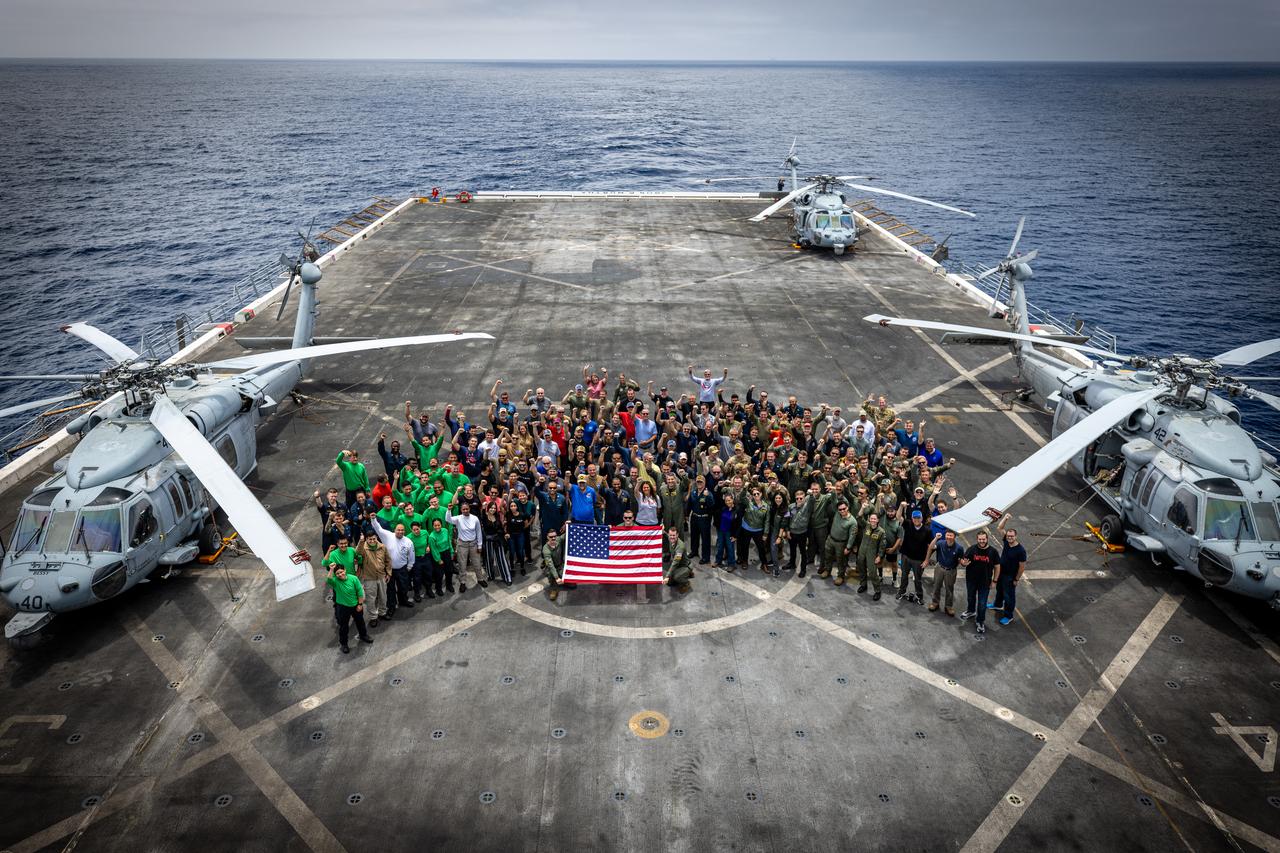
Members of NASA’s Landing and Recovery team and partners from the Department of Defense stand on the flight deck of USS John P. Murtha during Underway Recovery Test 10 (URT-10) off the coast of San Diego. URT-10 is the tenth in a series of Artemis recovery tests, but the first time NASA and its partners from the Department of Defense put their Artemis II recovery procedures to the test.
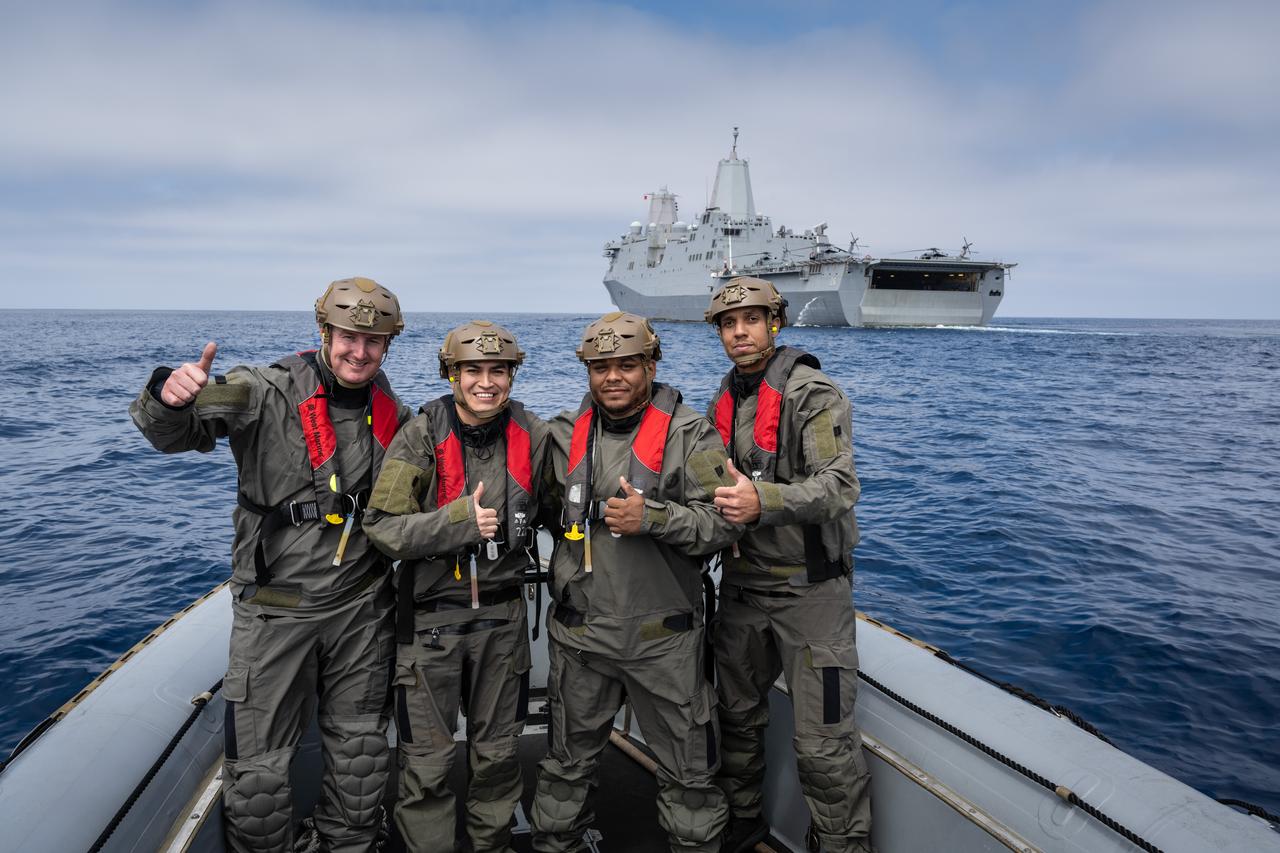
Four Naval helicopter pilots from Helicopter Sea Combat Squadron (HSC) 23 “Wildcards” pose for a photo in the Pacific Ocean as they prepare to participate in an Artemis II recovery test as part of NASA’s Underway Recovery Test 10. During recovery practice, these four pilots acted as Artemis II astronauts and were placed inside the Orion Crew Module Test Article, recovered from the capsule onto an inflatable “front porch” and then lifted via helicopter back to the flight deck of USS John P Murtha.
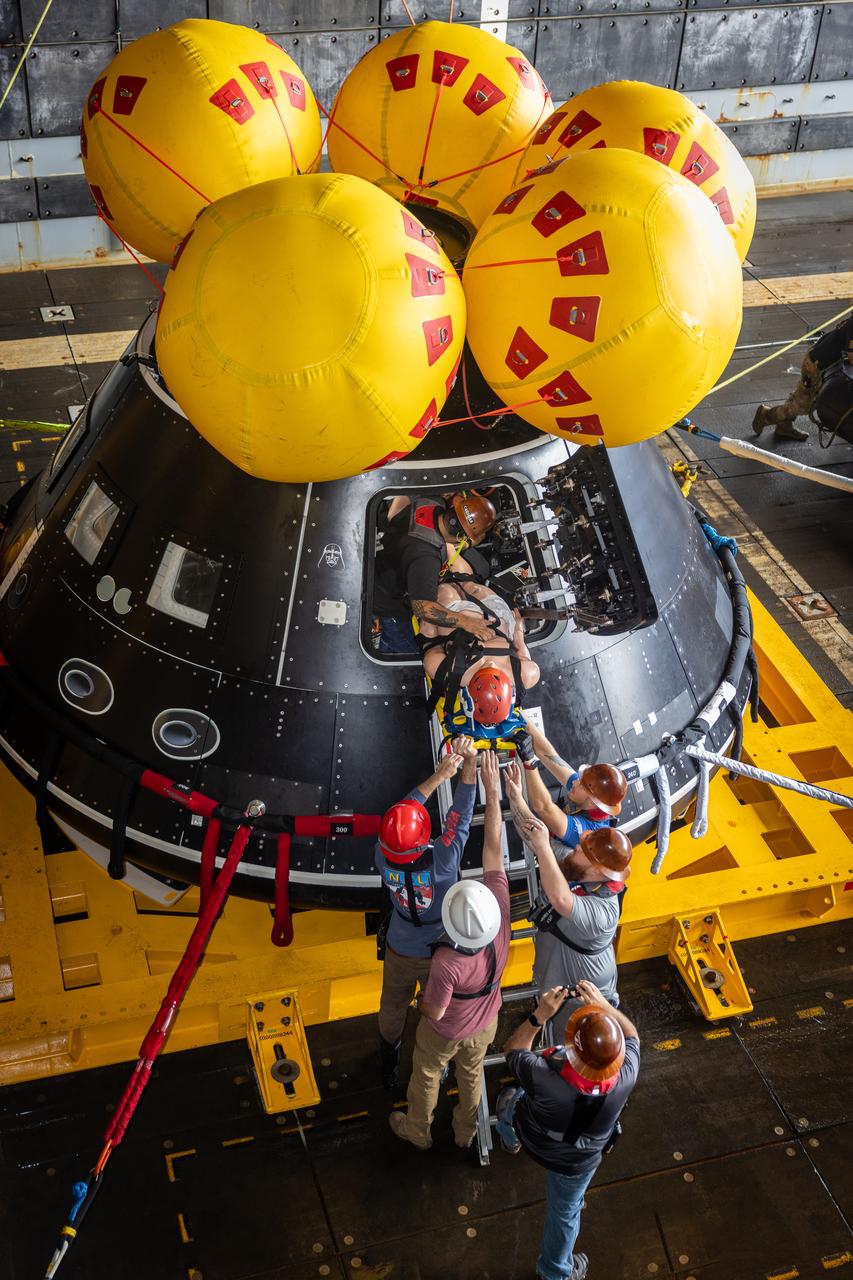
Members of NASA’s Landing and Recovery team load a mannequin into the Crew Module Test Article (CMTA) during Underway Recovery Test 10 in the Pacific Ocean. The CMTA is a is a full-scale mockup of the Orion spacecraft and is used by NASA and its Department of Defense partners to practice recovery procedures for crewed Artemis missions. The team uses the mannequin to practice recovering astronauts out of the capsule and safely getting them to the recovery vessel nearby.
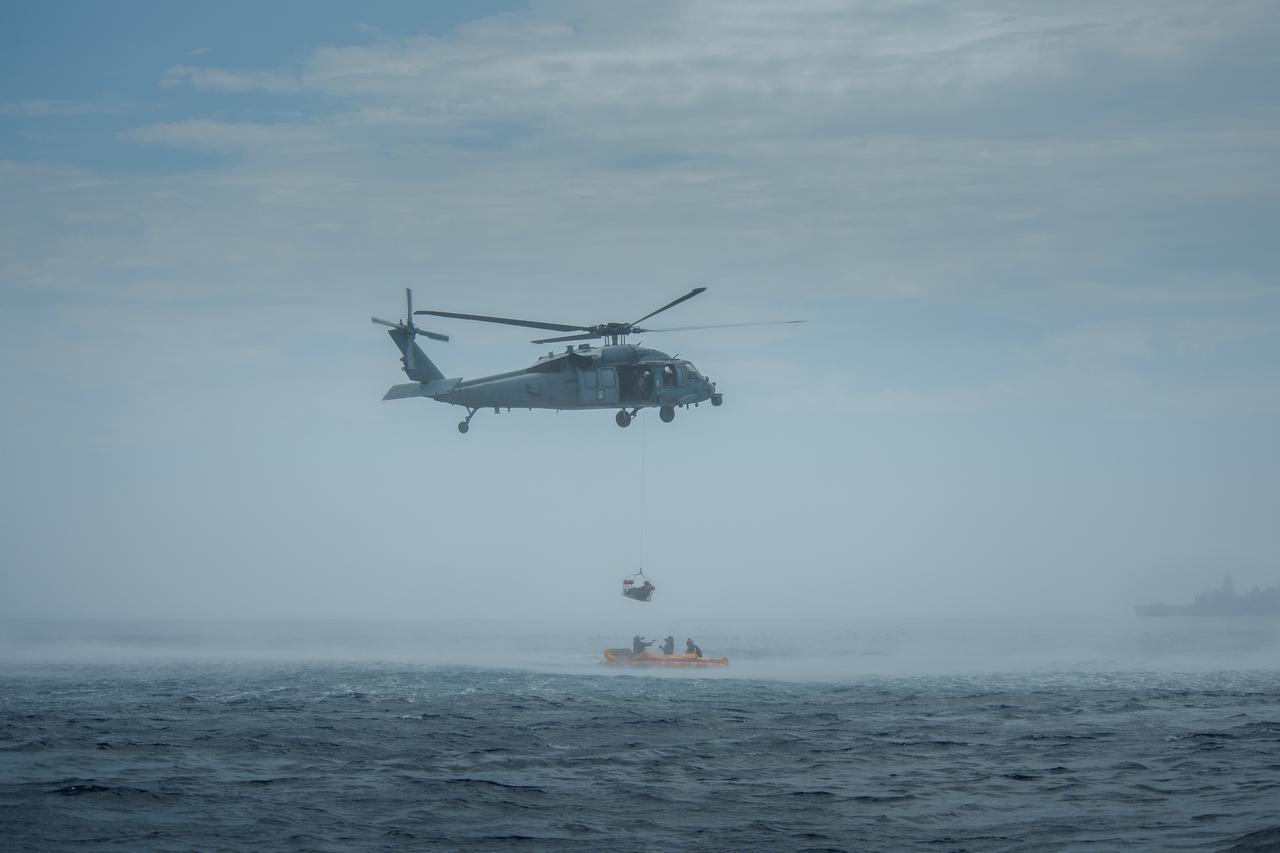
NASA, Navy, and Air Force personnel practice Artemis recovery procedures in the Pacific Ocean as part of Underway Recovery Test 10 (URT-10) off the coast of San Diego. In this photo, Naval helicopter pilots from Helicopter Sea Combat Squadron (HSC) 23 “Wildcards” lift a pilot in a basket from an inflatable “front porch” that allows astronauts to be recovered out of the Orion spacecraft. Navy divers from Explosive Ordnance Disposal (EOD) Expeditionary Support Unit 1 are the first to reach the spacecraft after splashdown and will assist the astronauts in getting inside the helicopter baskets prior to be flown back to the recovery ship.
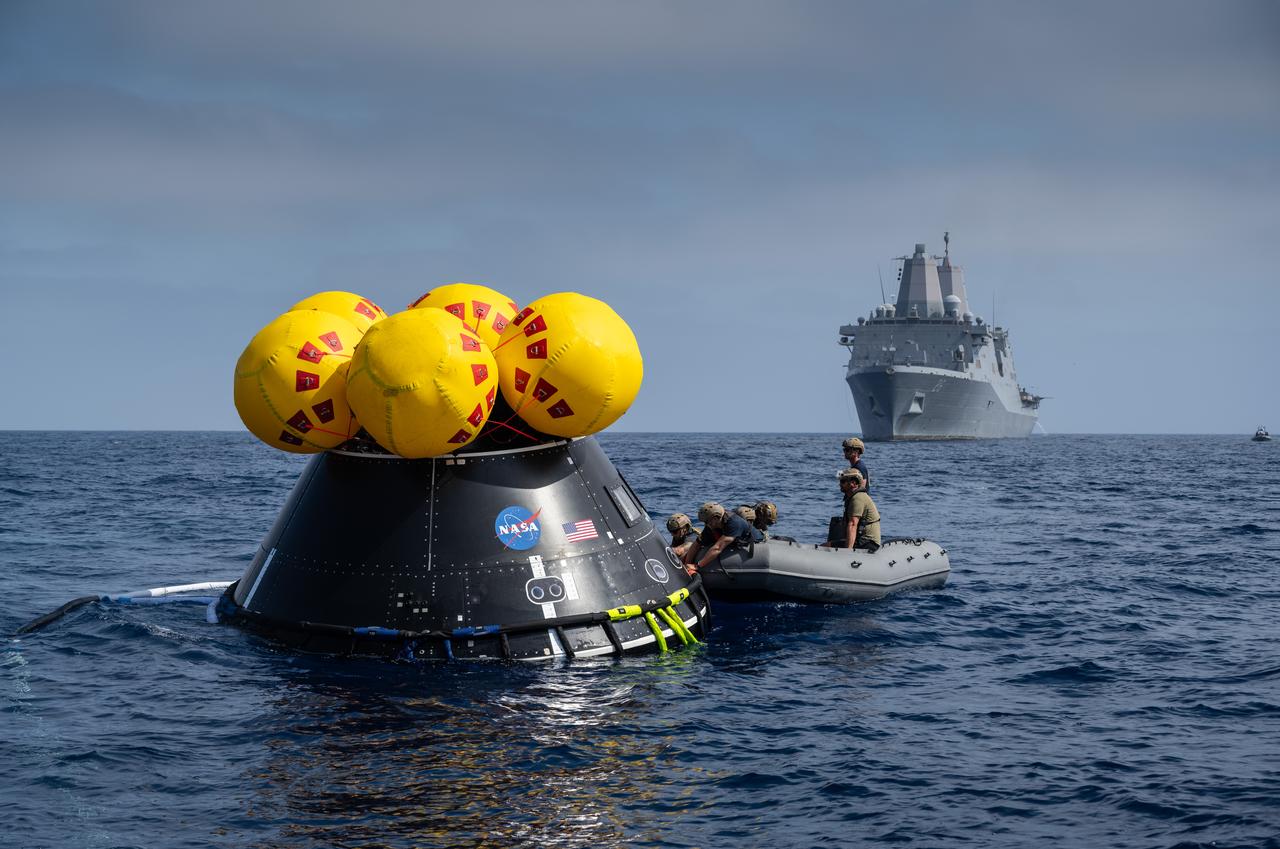
The Crew Module Test Article (CMTA) is seen in the waters of the Pacific Ocean during NASA’s Underway Recovery Test 10 (URT-10). The CMTA is a full-scale mockup of the Orion Spacecraft and is used by NASA and its Department of Defense partners to practice recovery procedures for crewed Artemis missions. URT-10 is the first test specifically in support of the Artemis II mission and allowed the team to practice what it will be like to recover astronauts and get them back to the recovery ship safely. In this photo Navy divers from Explosive Ordnance Disposal (EOD) Expeditionary Support Unit 1 secure the CMTA and prepare it to be recovered back inside USS John P Murtha.
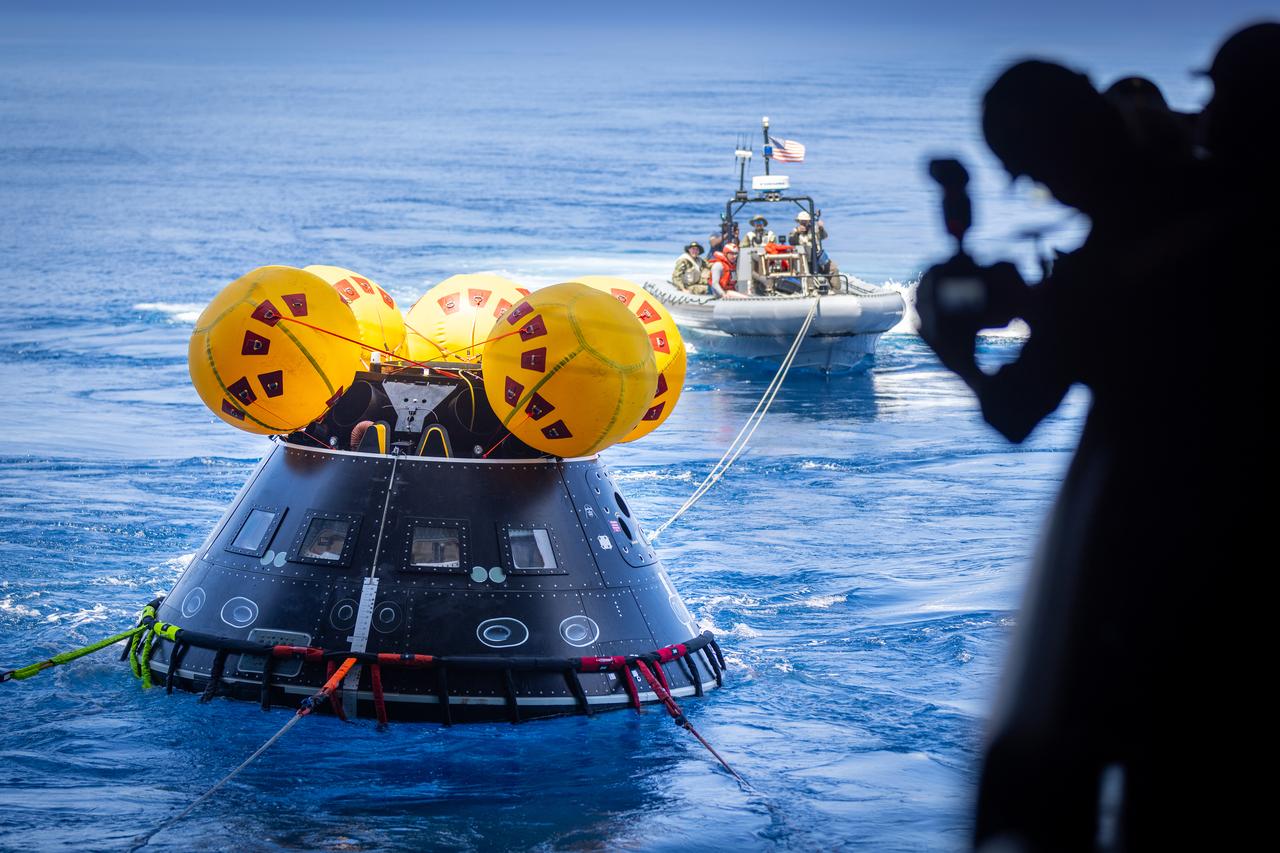
The Crew Module Test Article (CMTA) is seen in the waters of the Pacific Ocean during NASA’s Underway Recovery Test 10 (URT-10). The CMTA is a full-scale mockup of the Orion spacecraft and is used by NASA and its Department of Defense partners to practice recovery procedures for crewed Artemis missions. URT-10 is the first test specifically in support of the Artemis II mission and allowed the team to practice what it will be like to recover astronauts and get them back to the recovery ship safely.
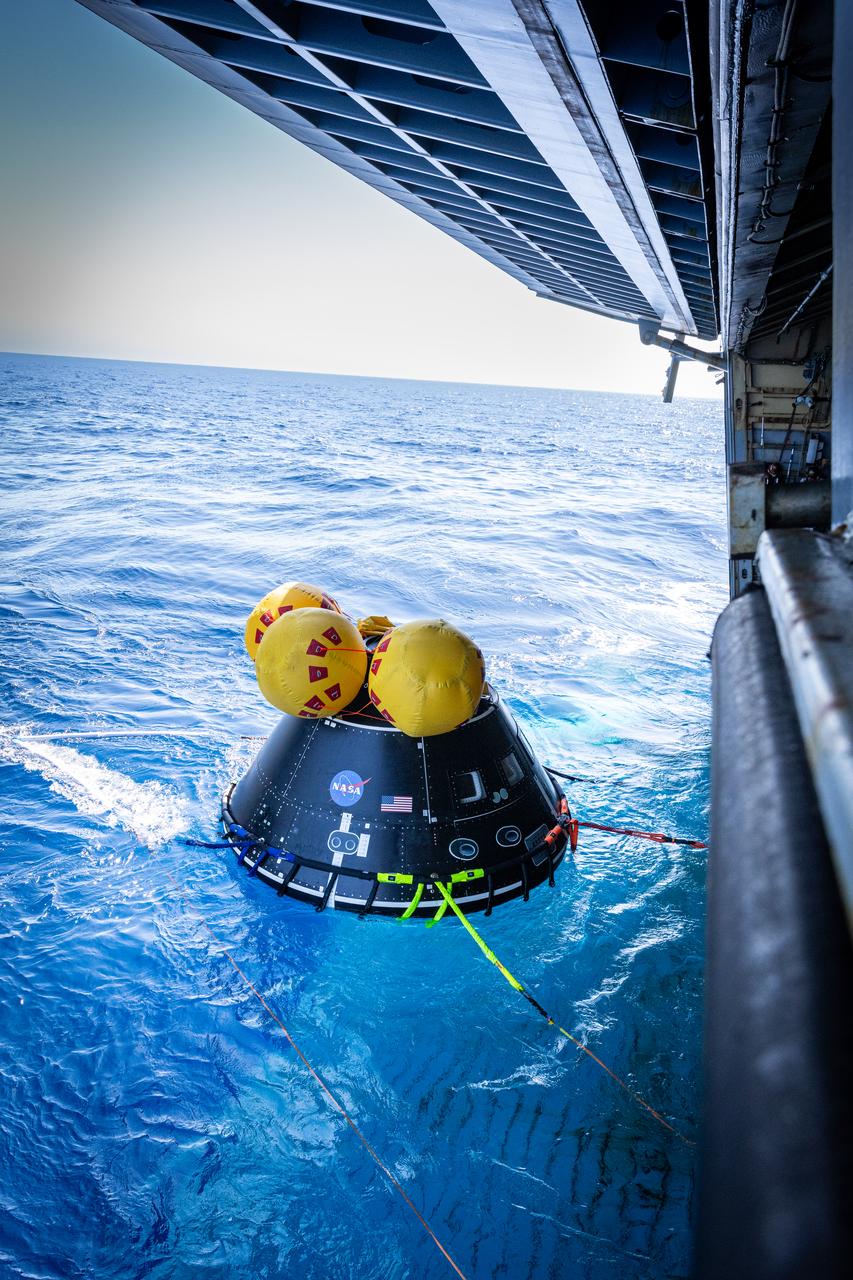
The Crew Module Test Article (CMTA) is seen in the waters of the Pacific Ocean during NASA’s Underway Recovery Test 10 (URT-10). The CMTA is a full-scale mockup of the Orion spacecraft and is used by NASA and its Department of Defense partners to practice recovery procedures for crewed Artemis missions. URT-10 is the first test specifically in support of the Artemis II mission and allowed the team to practice what it will be like to recover astronauts and get them back to the recovery ship safely.
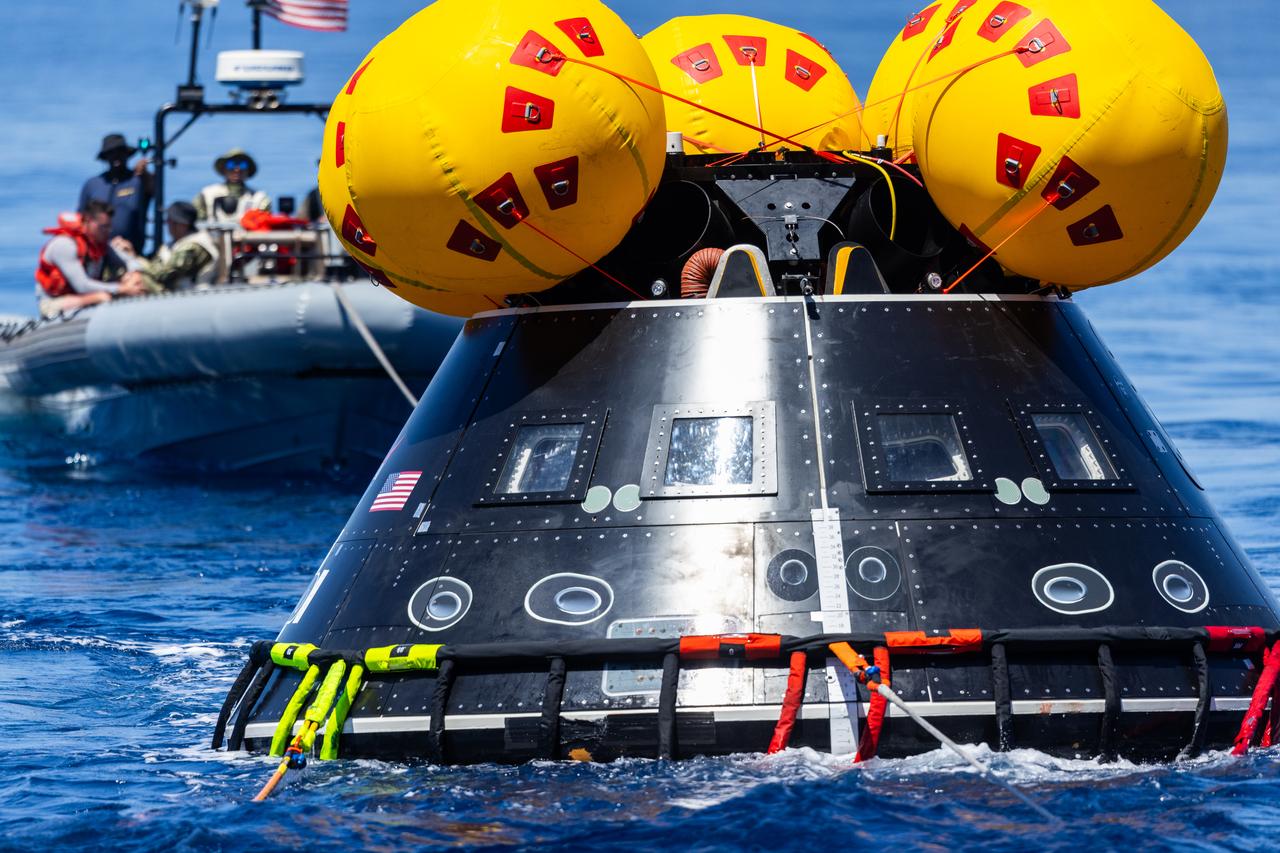
The Crew Module Test Article (CMTA) is seen in the waters of the Pacific Ocean during NASA’s Underway Recovery Test 10 (URT-10). The CMTA is a full-scale mockup of the Orion spacecraft and is used by NASA and its Department of Defense partners to practice recovery procedures for crewed Artemis missions. URT-10 is the first test specifically in support of the Artemis II mission and allowed the team to practice what it will be like to recover astronauts and get them back to the recovery ship safely.
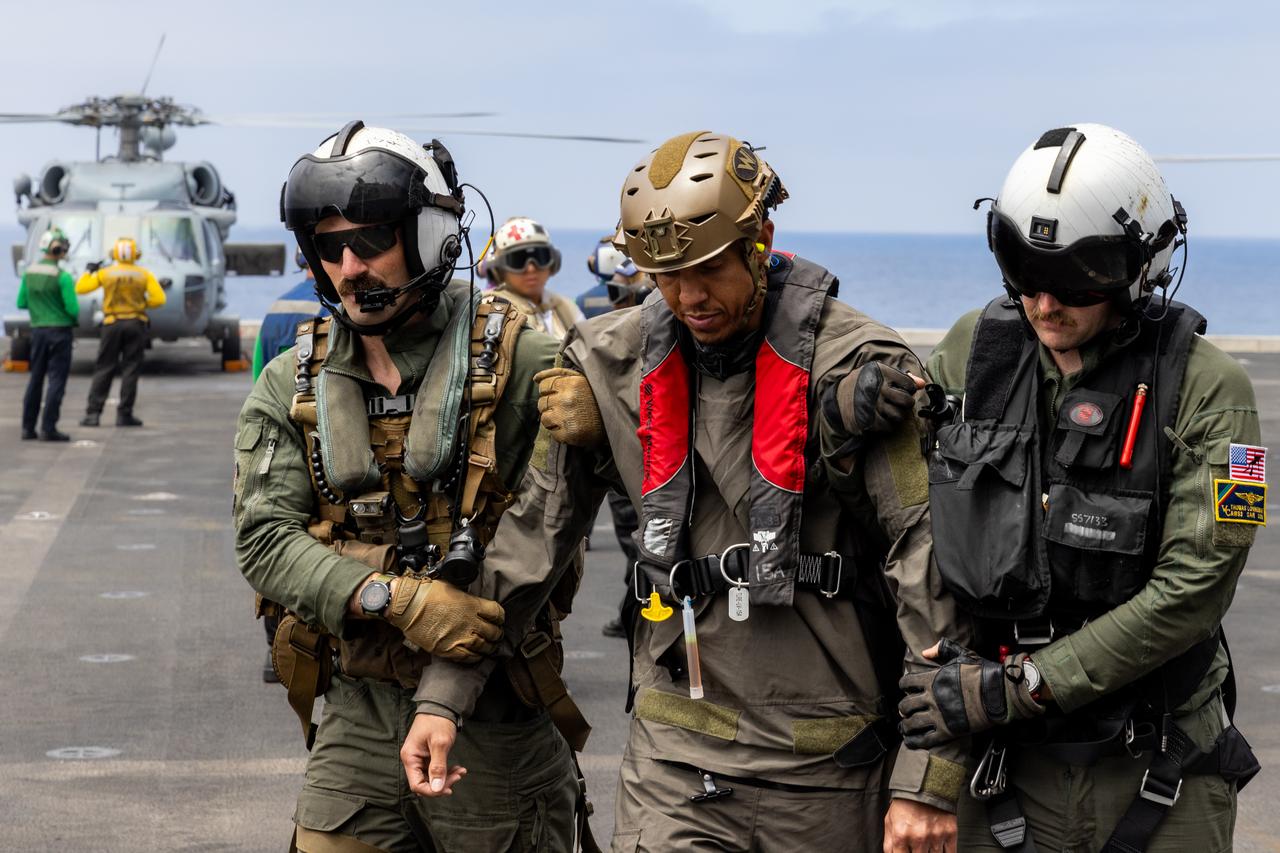
Naval helicopter pilots from Helicopter Sea Combat Squadron (HSC) 23 “Wildcards” escort a pilot acting as an Artemis II astronaut on the ships flight deck during an Artemis II mission recovery simulation as part of NASA’s Underway Recovery Test 10 off the coast of San Diego. HSC-23 will be responsible for flying the Artemis II crew from the Orion spacecraft to the recovery vessel once they splash down after a 10-day mission around the Moon.

Members of NASA’s Landing and Recovery team, along with partners from the Department of Defense, practice Artemis recovery procedures as part of Underway Recovery Test 10 (URT-10) off the coast of San Diego on Aug. 1, 2023. The event involved the use of the Crew Module Test Article (CMTA), a full-scale mockup of NASA’s Orion spacecraft. URT-10 is the 10th in a series of Artemis recovery tests, but marked the first time NASA and its partners from the Department of Defense put their Artemis II recovery procedures to the test.
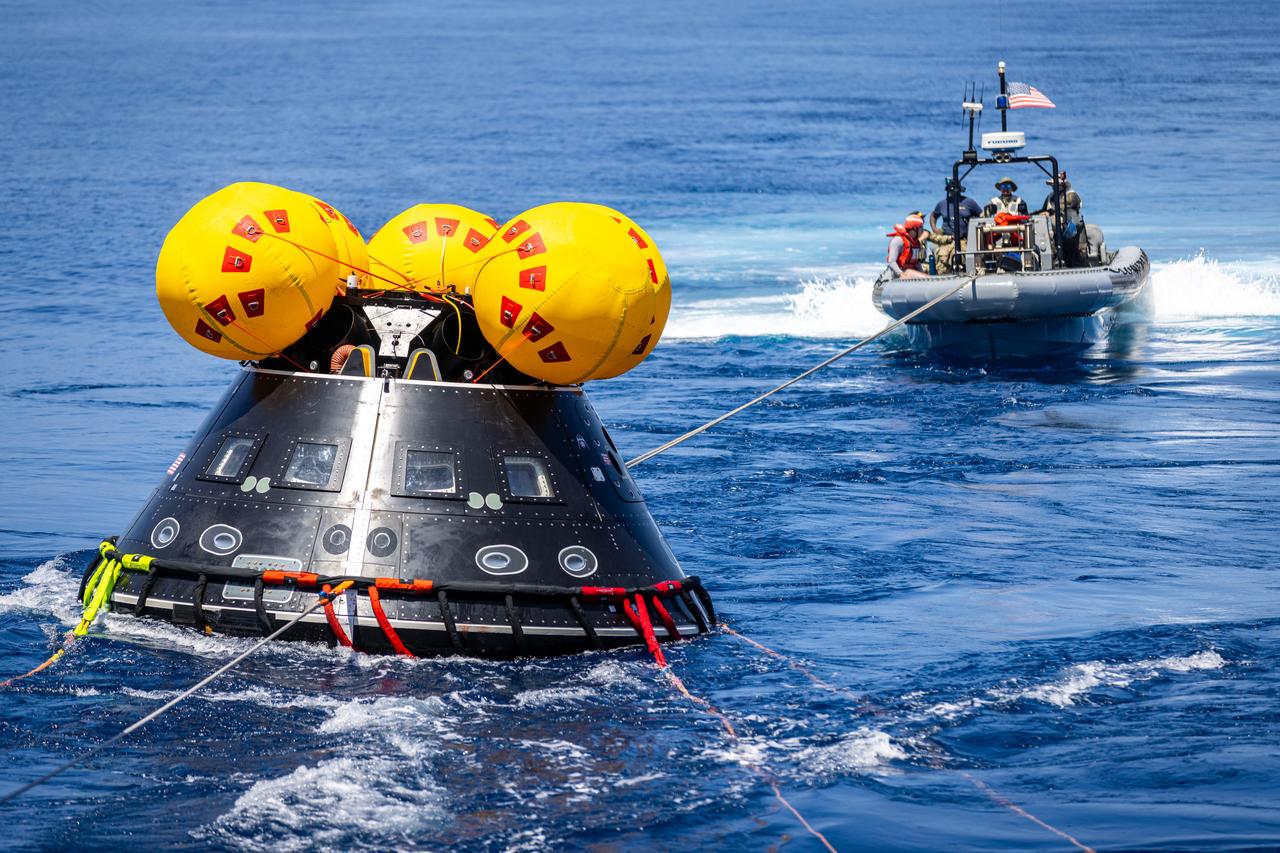
The Crew Module Test Article (CMTA) is seen in the waters of the Pacific Ocean during NASA’s Underway Recovery Test 10 (URT-10). The CMTA is a full-scale mockup of the Orion spacecraft and is used by NASA and its Department of Defense partners to practice recovery procedures for crewed Artemis missions. URT-10 is the first test specifically in support of the Artemis II mission and allowed the team to practice what it will be like to recover astronauts and get them back to the recovery ship safely.
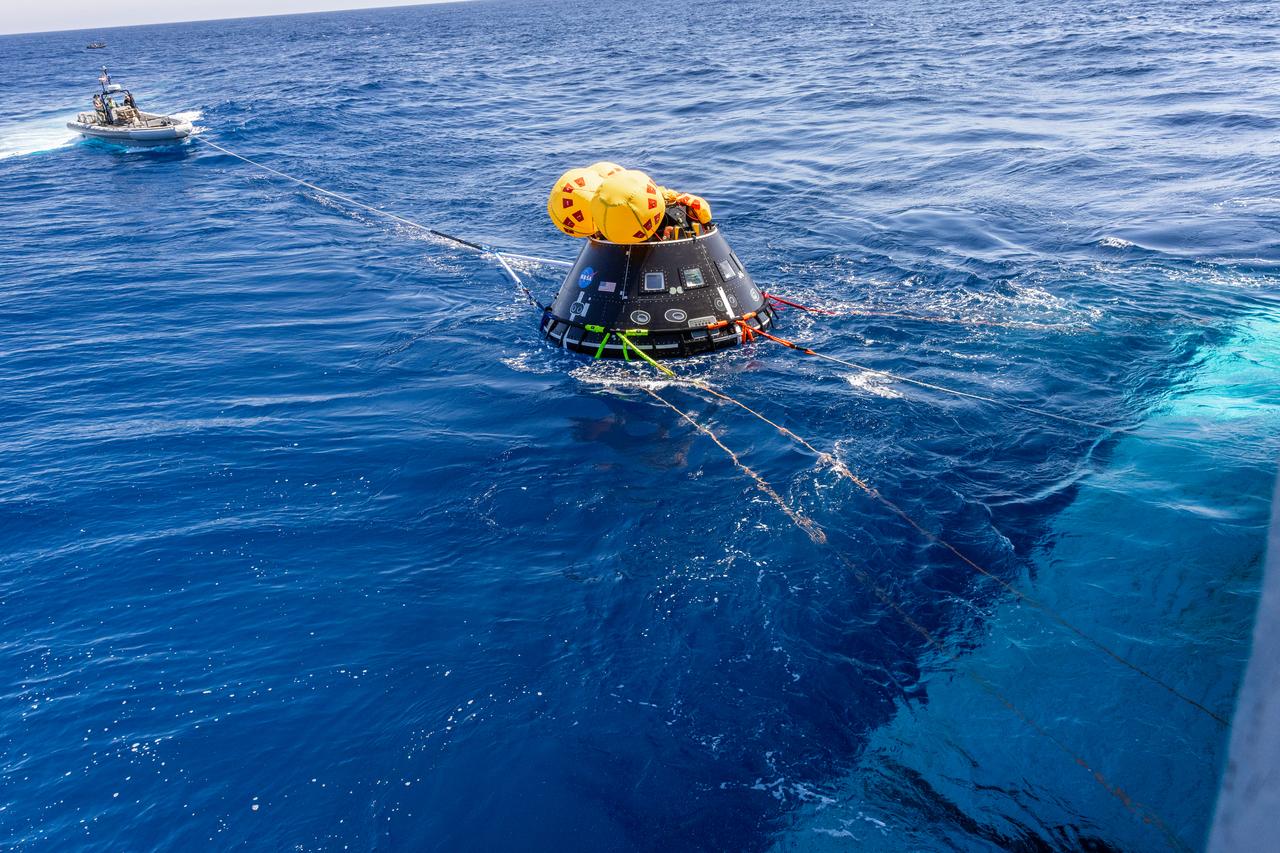
The Crew Module Test Article (CMTA) is seen in the waters of the Pacific Ocean during NASA’s Underway Recovery Test 10 (URT-10). The CMTA is a full-scale mockup of the Orion spacecraft and is used by NASA and its Department of Defense partners to practice recovery procedures for crewed Artemis missions. URT-10 is the first test specifically in support of the Artemis II mission and allowed the team to practice what it will be like to recover astronauts and get them back to the recovery ship safely.
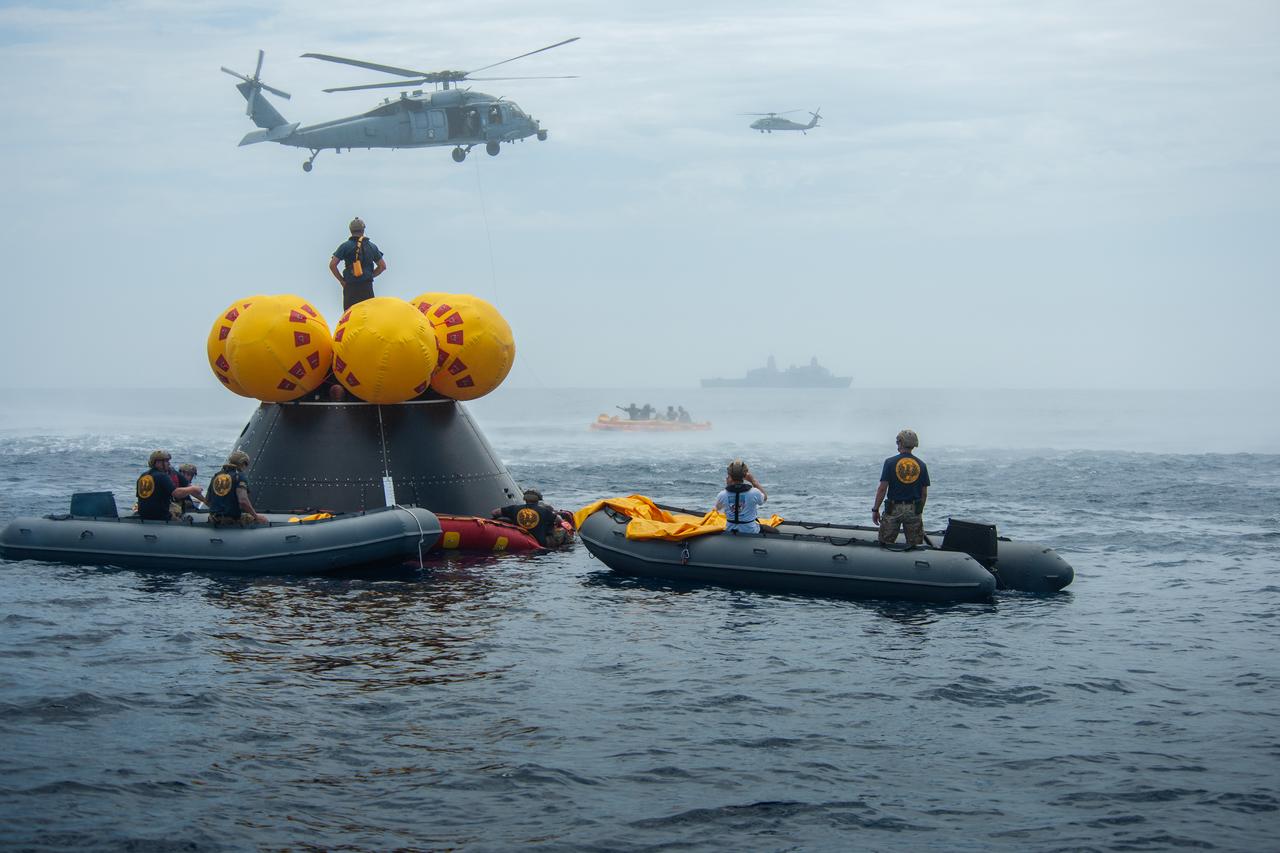
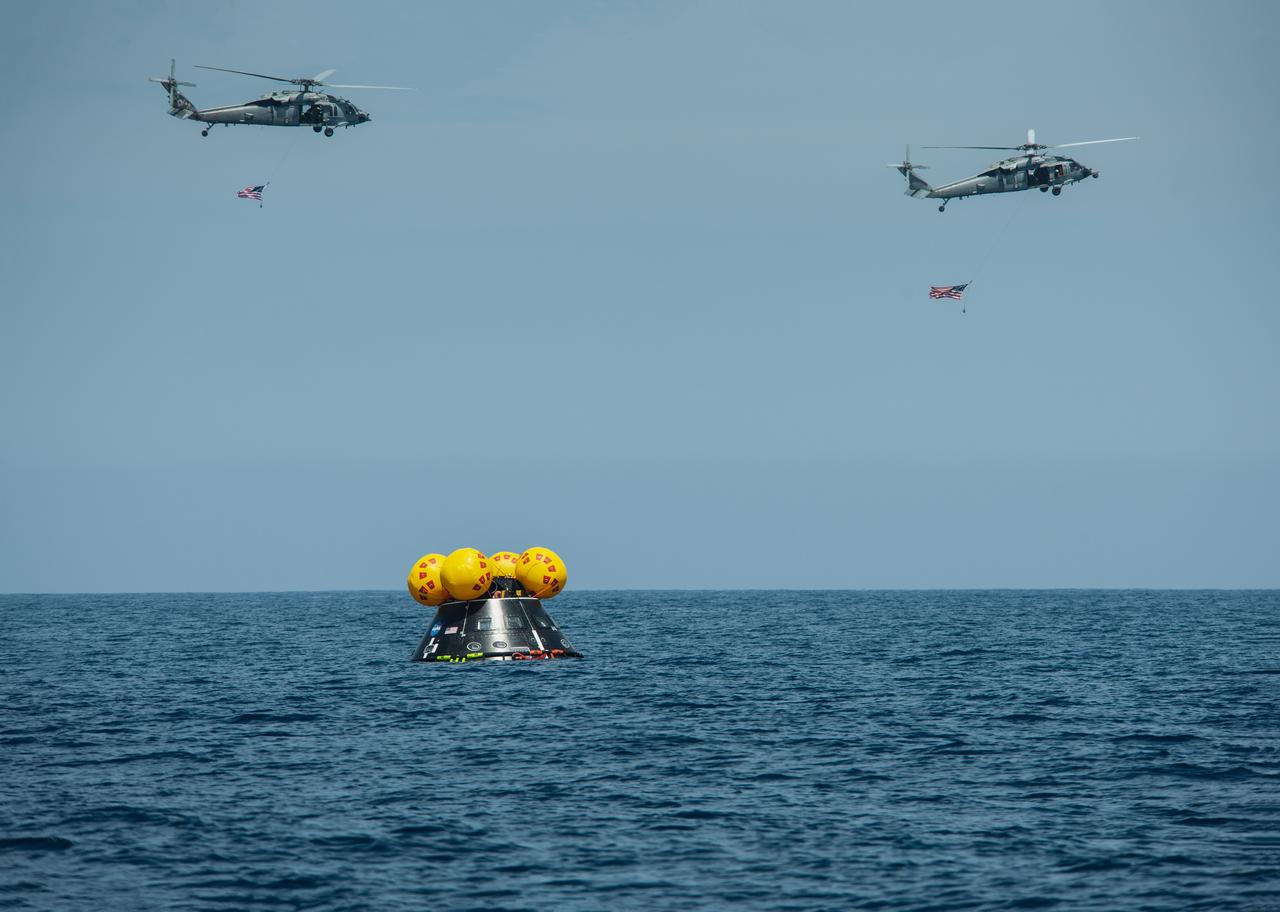
Naval helicopter pilots from Helicopter Sea Combat Squadron (HSC) 23 “Wildcards” fly over the Orion Crew Module Test Article (CMTA) with American flags after completing flight operations during an Artemis II mission simulation during NASA’s Underway Recovery Test 10 (URT-10) off the coast of San Diego.

Members of NASA’s Landing and Recovery team, along with partners from the Department of Defense, practice Artemis recovery procedures as part of Underway Recovery Test 10 (URT-10) off the coast of San Diego on July 31, 2023. The event involved the use of the Crew Module Test Article (CMTA), a full-scale mockup of NASA’s Orion spacecraft. URT-10 is the 10th in a series of Artemis recovery tests, but marked the first time NASA and its partners from the Department of Defense put their Artemis II recovery procedures to the test.
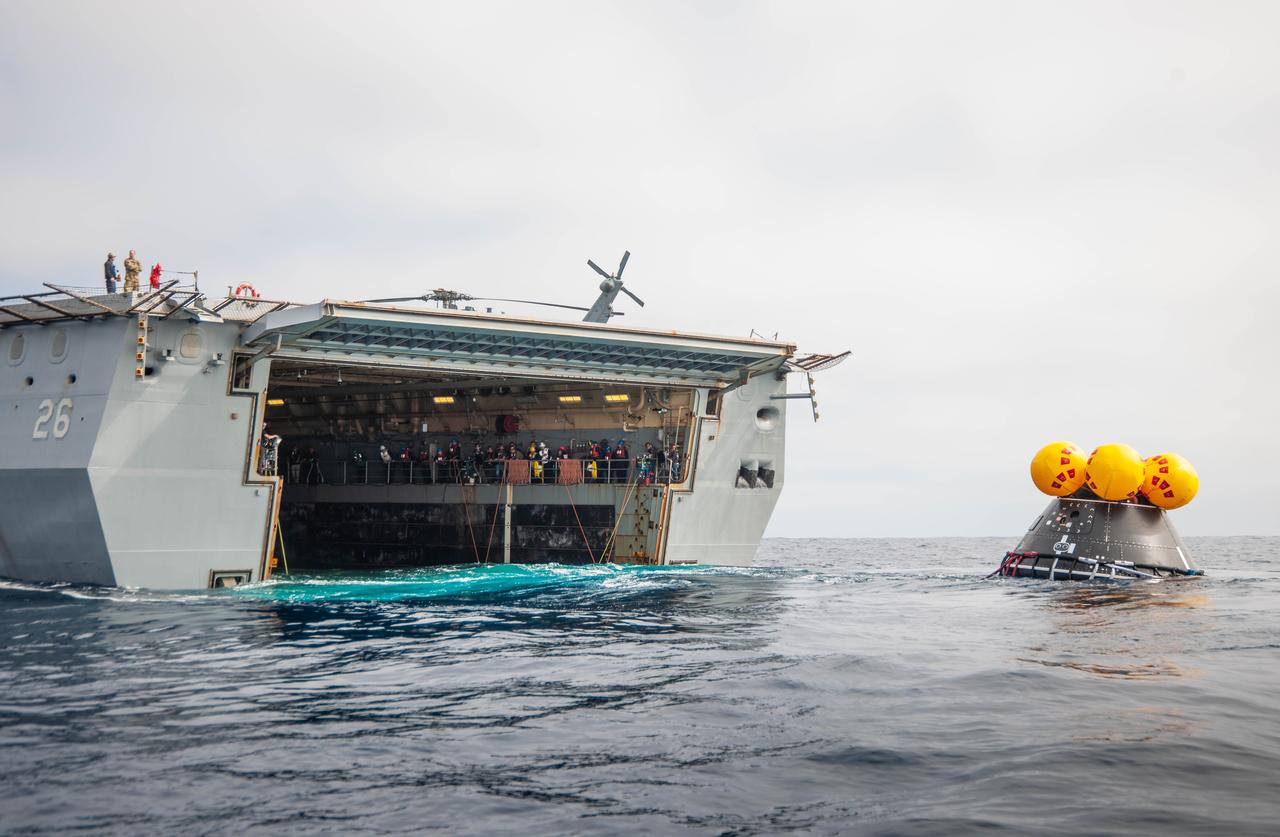
The Crew Module Test Article (CMTA) is seen in the waters of the Pacific Ocean during NASA’s Underway Recovery Test 10 (URT-10). The CMTA is a full-scale mockup of the Orion spacecraft and is used by NASA and its Department of Defense partners to practice recovery procedures for crewed Artemis missions. URT-10 is the first test specifically in support of the Artemis II mission and allowed the team to practice what it will be like to recover astronauts and get them back to the recovery ship safely.

Members of NASA’s Landing and Recovery team, along with partners from the Department of Defense, practice Artemis recovery procedures as part of Underway Recovery Test 10 (URT-10) off the coast of San Diego on July 31, 2023. The event involved the use of the Crew Module Test Article (CMTA), a full-scale mockup of NASA’s Orion spacecraft. URT-10 is the 10th in a series of Artemis recovery tests, but marked the first time NASA and its partners from the Department of Defense put their Artemis II recovery procedures to the test.
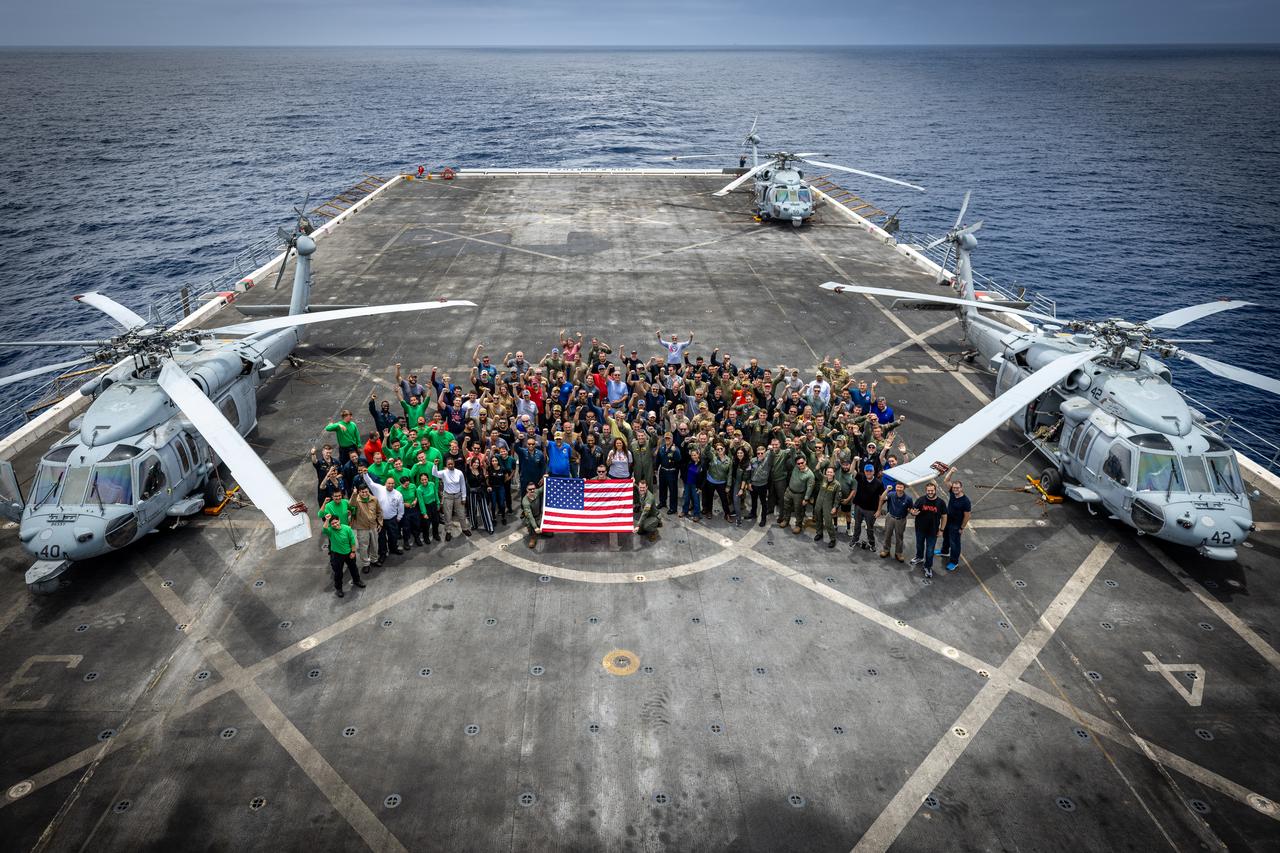
Members of NASA’s Landing and Recovery team and partners from the Department of Defense stand on the flight deck of USS John P. Murtha during Underway Recovery Test 10 (URT-10) off the coast of San Diego. URT-10 is the tenth in a series of Artemis recovery tests, but the first time NASA and its partners from the Department of Defense put their Artemis II recovery procedures to the test.

Members of NASA’s Landing and Recovery team, along with partners from the Department of Defense, practice Artemis recovery procedures as part of Underway Recovery Test 10 (URT-10) off the coast of San Diego on Aug. 1, 2023. The event involved the use of the Crew Module Test Article (CMTA), a full-scale mockup of NASA’s Orion spacecraft. URT-10 is the 10th in a series of Artemis recovery tests, but marked the first time NASA and its partners from the Department of Defense put their Artemis II recovery procedures to the test.
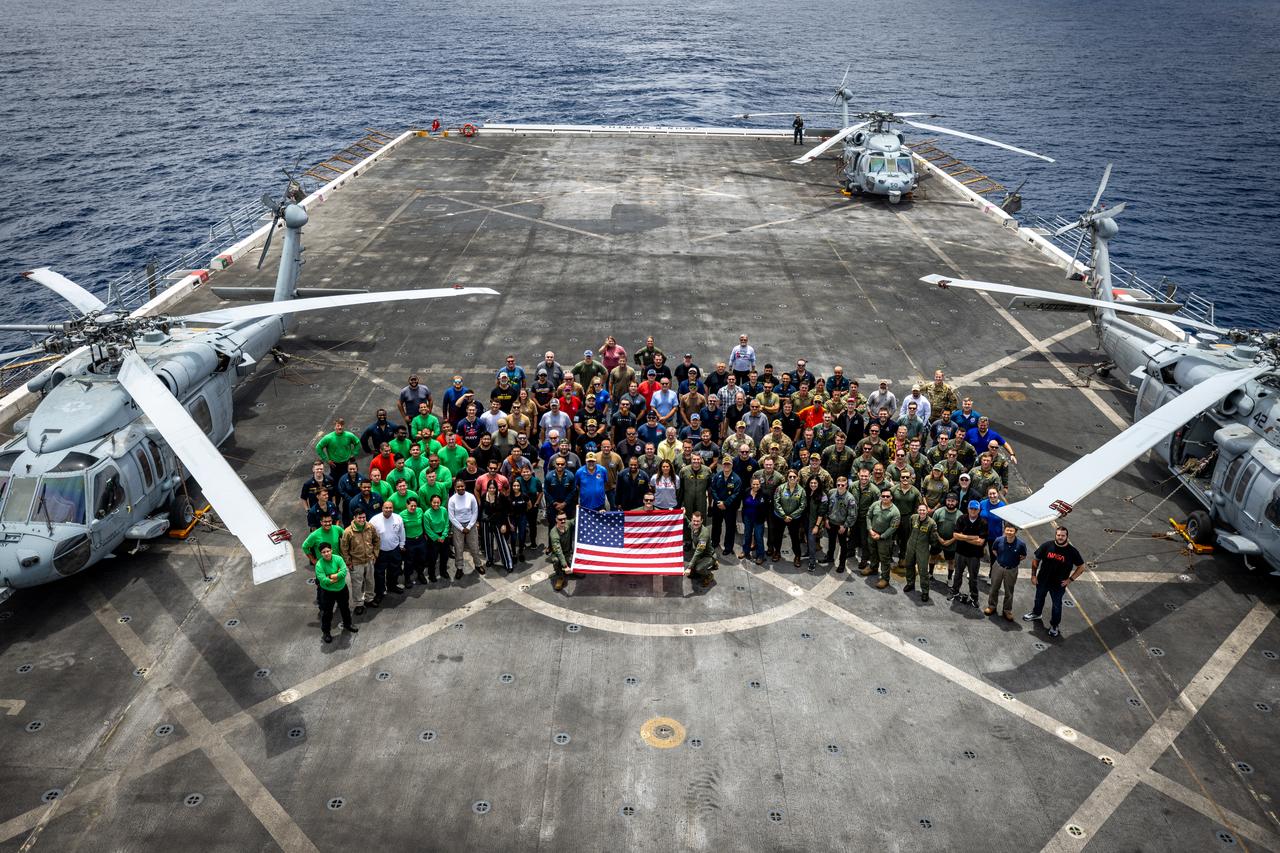
Members of NASA’s Landing and Recovery team and partners from the Department of Defense stand on the flight deck of USS John P. Murtha during Underway Recovery Test 10 (URT-10) off the coast of San Diego. URT-10 is the tenth in a series of Artemis recovery tests, but the first time NASA and its partners from the Department of Defense put their Artemis II recovery procedures to the test.
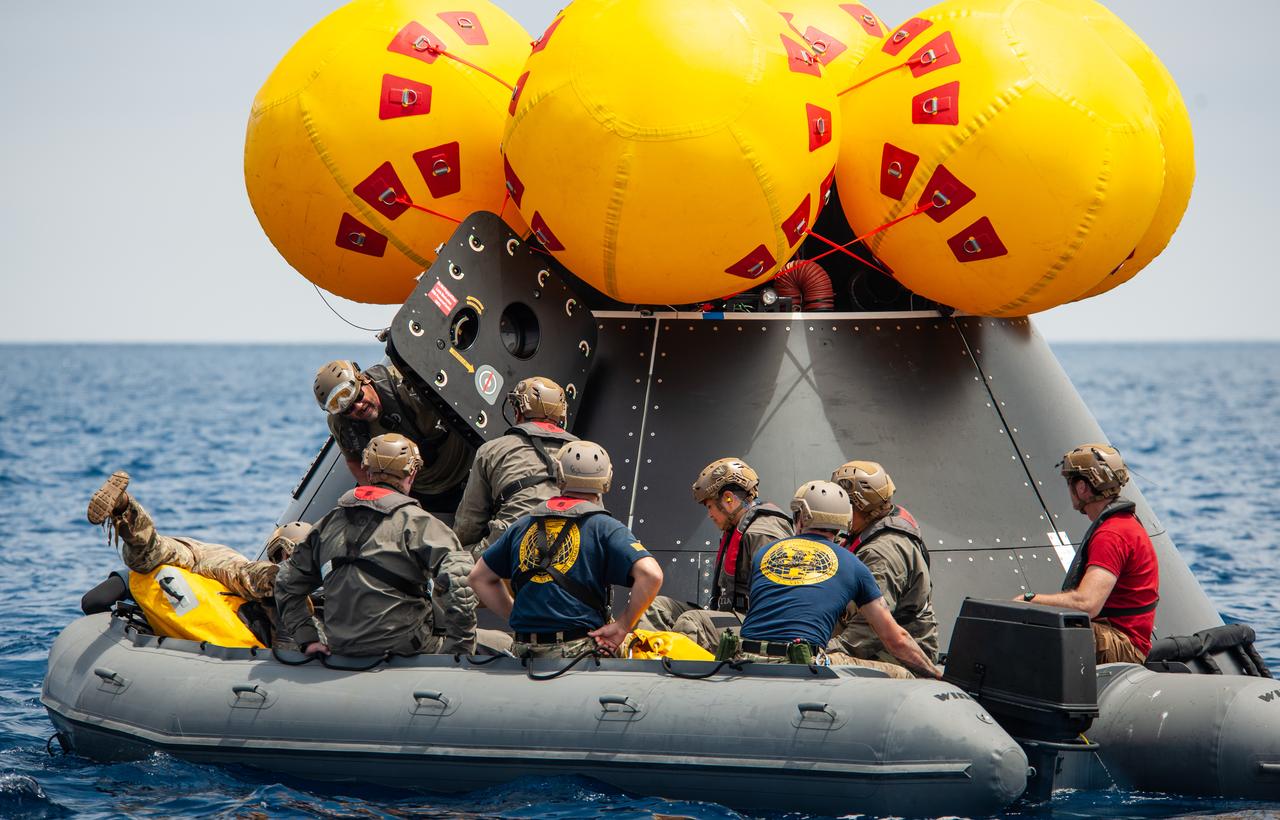
NASA, Navy, and Air Force personnel practice Artemis recovery procedures in the Pacific Ocean as part of Underway Recovery Test-10 off the coast of San Diego. In this photo Navy divers are seen entering the Orion Crew Module Test Article to prepare to practice recovering astronauts out of the spacecraft and onto an inflatable “front porch” where the crew will be picked up with helicopters and lifted up via helicopter back to the recovery vessel.
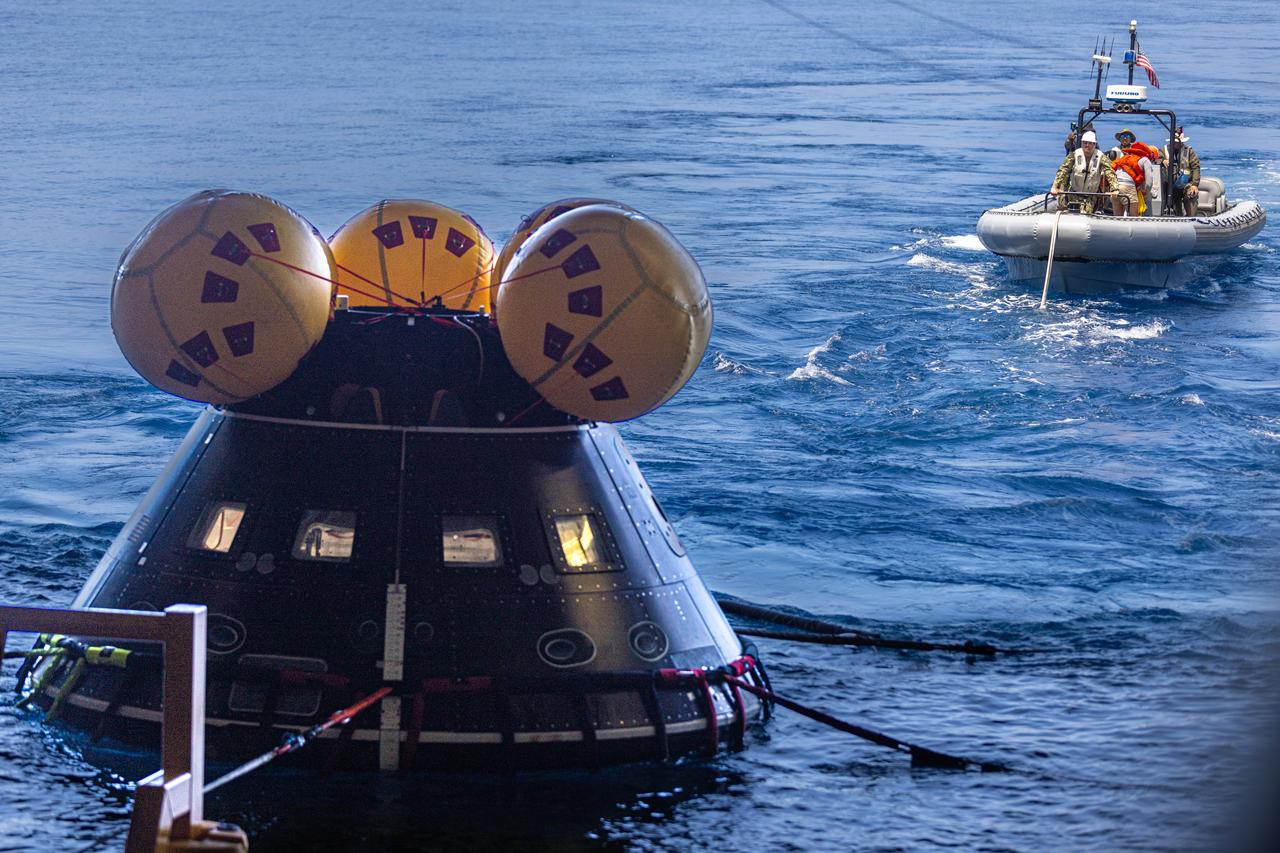
The Crew Module Test Article (CMTA) is seen in the waters of the Pacific Ocean during NASA’s Underway Recovery Test 10 (URT-10). The CMTA is a full-scale mockup of the Orion spacecraft and is used by NASA and its Department of Defense partners to practice recovery procedures for crewed Artemis missions. URT-10 is the first test specifically in support of the Artemis II mission and allowed the team to practice what it will be like to recover astronauts and get them back to the recovery ship safely.

Members of NASA’s Landing and Recovery team, along with partners from the Department of Defense, practice Artemis recovery procedures as part of Underway Recovery Test 10 (URT-10) off the coast of San Diego on Aug. 1, 2023. The event involved the use of the Crew Module Test Article (CMTA), a full-scale mockup of NASA’s Orion spacecraft. URT-10 is the 10th in a series of Artemis recovery tests, but marked the first time NASA and its partners from the Department of Defense put their Artemis II recovery procedures to the test.
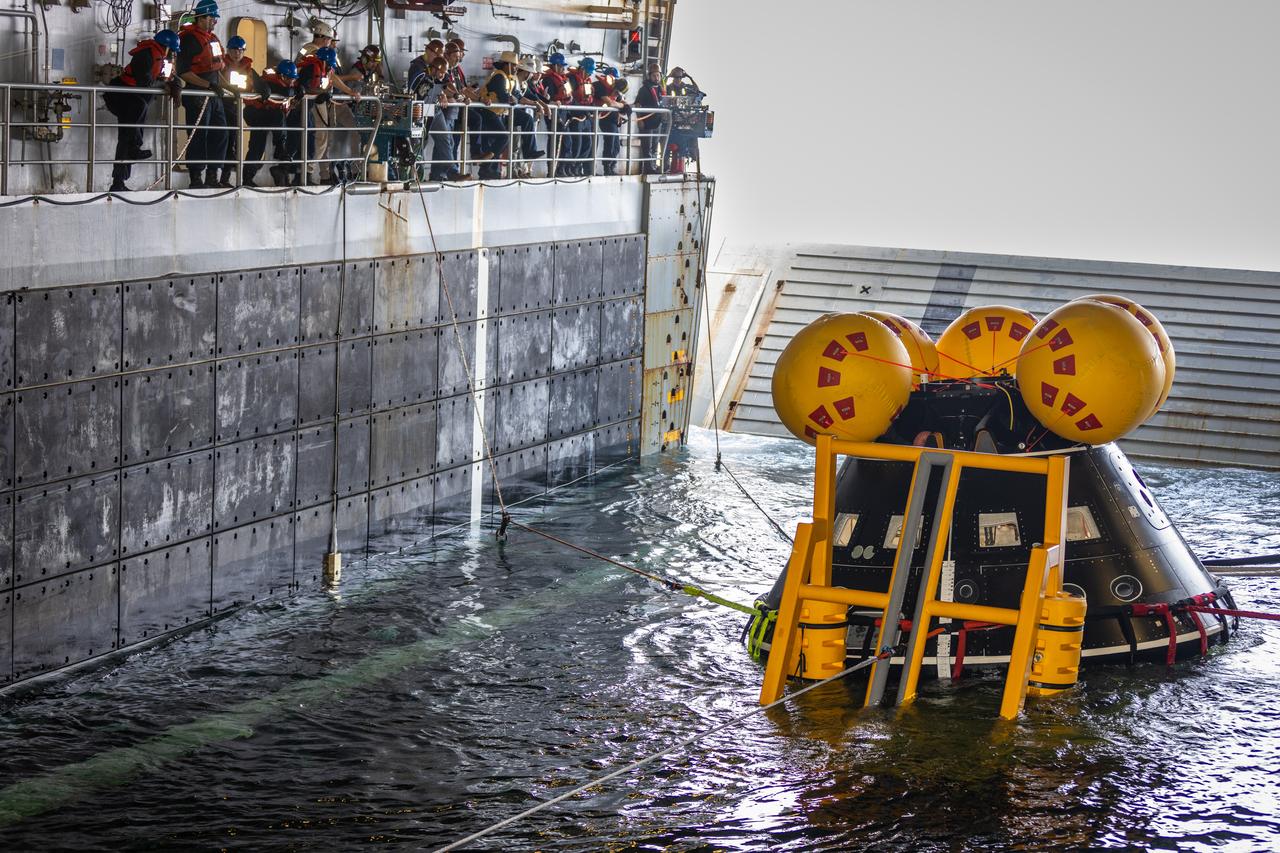
The Crew Module Test Article (CMTA) is seen in the waters of the Pacific Ocean during NASA’s Underway Recovery Test 10 (URT-10). The CMTA is a full-scale mockup of the Orion spacecraft and is used by NASA and its Department of Defense partners to practice recovery procedures for crewed Artemis missions. URT-10 is the first test specifically in support of the Artemis II mission and allowed the team to practice what it will be like to recover astronauts and get them back to the recovery ship safely.

Members of NASA’s Landing and Recovery team, along with partners from the Department of Defense, practice Artemis recovery procedures as part of Underway Recovery Test 10 (URT-10) off the coast of San Diego on July 31, 2023. The event involved the use of the Crew Module Test Article (CMTA), a full-scale mockup of NASA’s Orion spacecraft. URT-10 is the 10th in a series of Artemis recovery tests, but marked the first time NASA and its partners from the Department of Defense put their Artemis II recovery procedures to the test.
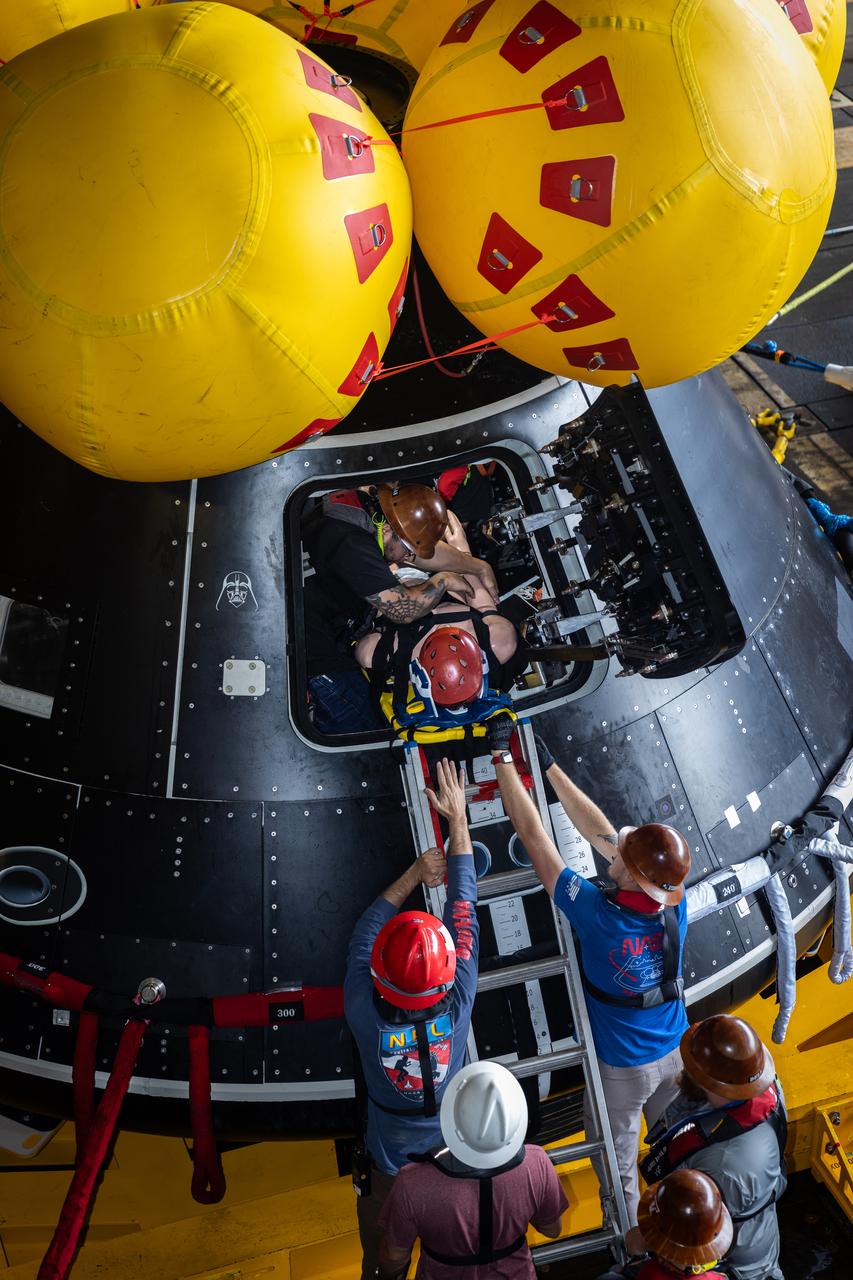
Members of NASA’s Landing and Recovery team load a mannequin into the Crew Module Test Article (CMTA) during Underway Recovery Test 10 in the Pacific Ocean. The CMTA is a is a full-scale mockup of the Orion spacecraft and is used by NASA and its Department of Defense partners to practice recovery procedures for crewed Artemis missions. The team uses the mannequin to practice recovering astronauts out of the capsule and safely getting them to the recovery vessel nearby.
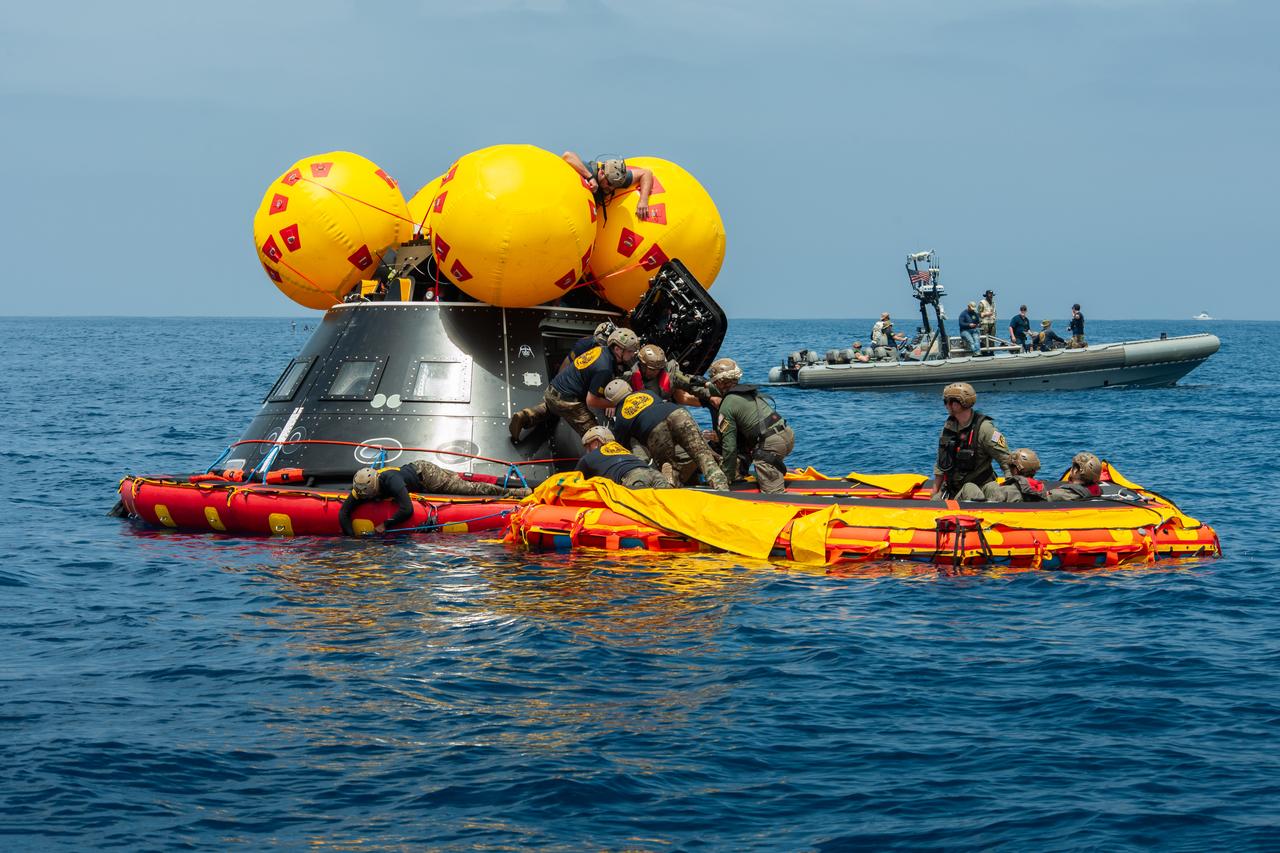
NASA, Navy, and Air Force personnel practice Artemis recovery procedures in the Pacific Ocean as part of Underway Recovery Test 10 (URT-10) off the coast of San Diego. In this photo, Navy divers are seen entering the Orion Crew Module Test Article (CMTA) and assisting a simulated crew member exiting the spacecraft to practice recovering astronauts out of the spacecraft and onto an inflatable “front porch” where the crew will be picked up with helicopters and lifted up via helicopter back to the recovery vessel.
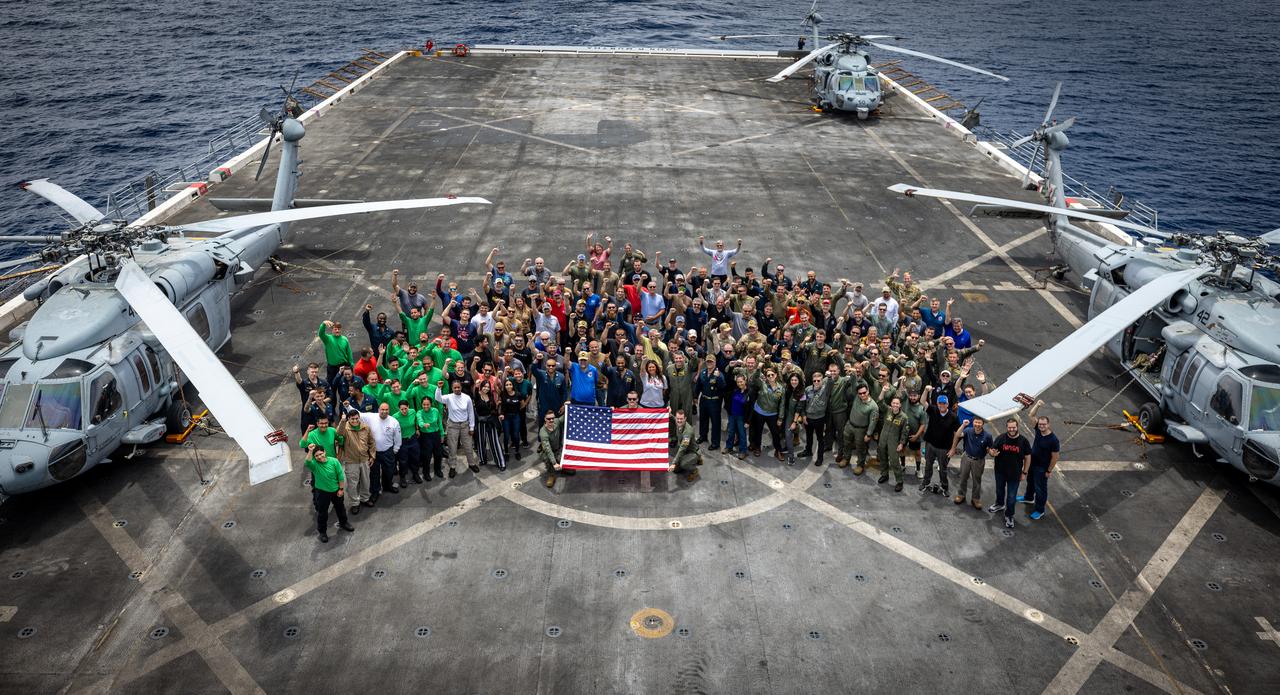
Members of NASA’s Landing and Recovery team and partners from the Department of Defense stand on the flight deck of USS John P. Murtha during Underway Recovery Test 10 (URT-10) off the coast of San Diego. URT-10 is the tenth in a series of Artemis recovery tests, but the first time NASA and its partners from the Department of Defense put their Artemis II recovery procedures to the test.

Members of NASA’s Landing and Recovery team, along with partners from the Department of Defense, practice Artemis recovery procedures as part of Underway Recovery Test 10 (URT-10) off the coast of San Diego on Aug. 1, 2023. The event involved the use of the Crew Module Test Article (CMTA), a full-scale mockup of NASA’s Orion spacecraft. URT-10 is the 10th in a series of Artemis recovery tests, but marked the first time NASA and its partners from the Department of Defense put their Artemis II recovery procedures to the test.
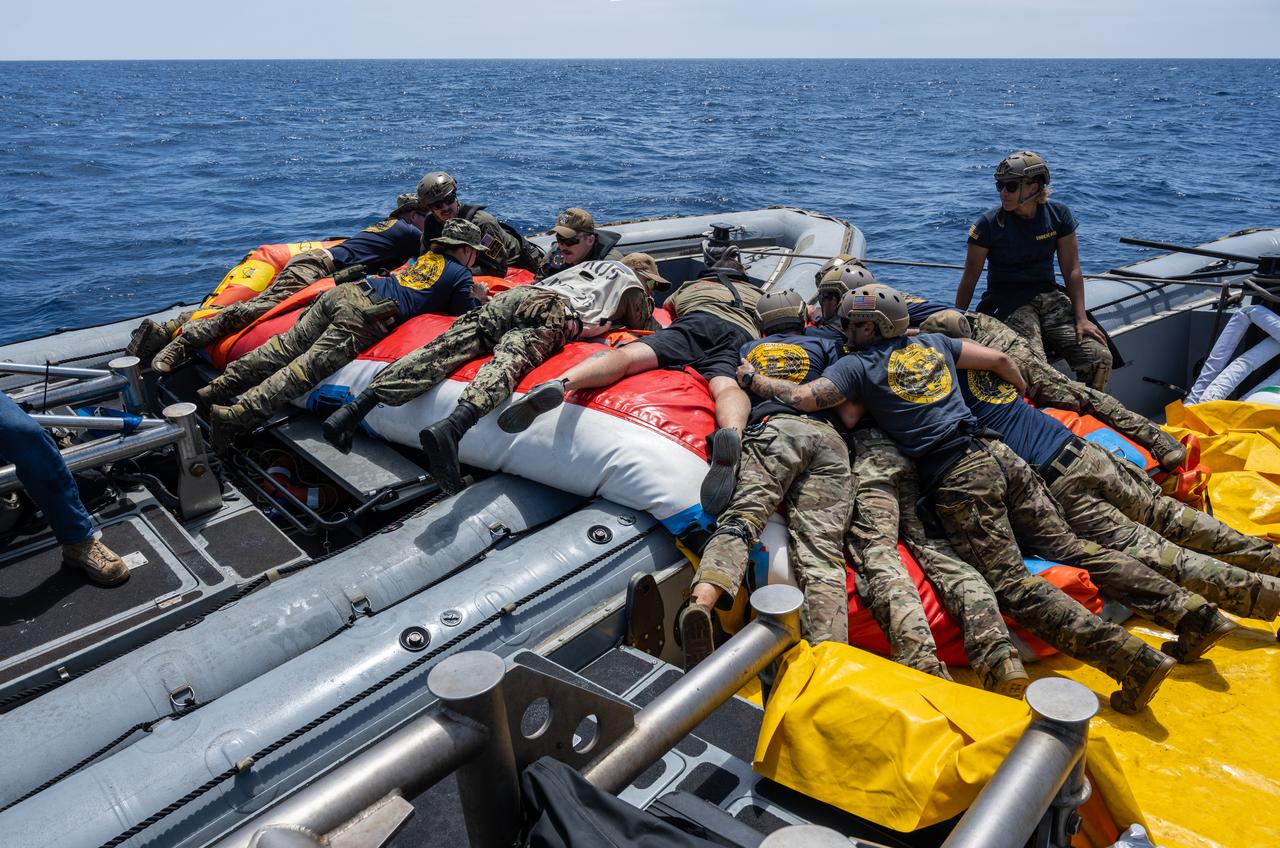
Navy Divers from Explosive Ordnance Disposal (EOD) Expeditionary Support Unit 1, sailors from USS John P Murtha and NASA Open Water Lead, Tim Goddard, work to deflate Artemis recovery equipment after a simulated Artemis recovery operation as part of NASA’s Underway Recovery Test 10. The team will use these inflatables as a platform for astronauts as they exit the Orion spacecraft after splashing down in the Pacific Ocean

Four Naval helicopter pilots from Helicopter Sea Combat Squadron (HSC) 23 “Wildcards” pose for a photo in the Pacific Ocean as they prepare to participate in an Artemis II recovery test as part of NASA’s Underway Recovery Test 10 (URT-10). During recovery practice, these four pilots acted as Artemis II astronauts and were placed inside the Orion Crew Module Test Article (CMTA) recovered from the capsule onto an inflatable “front porch” and then lifted via helicopter back to the flight deck of USS John P. Murtha.
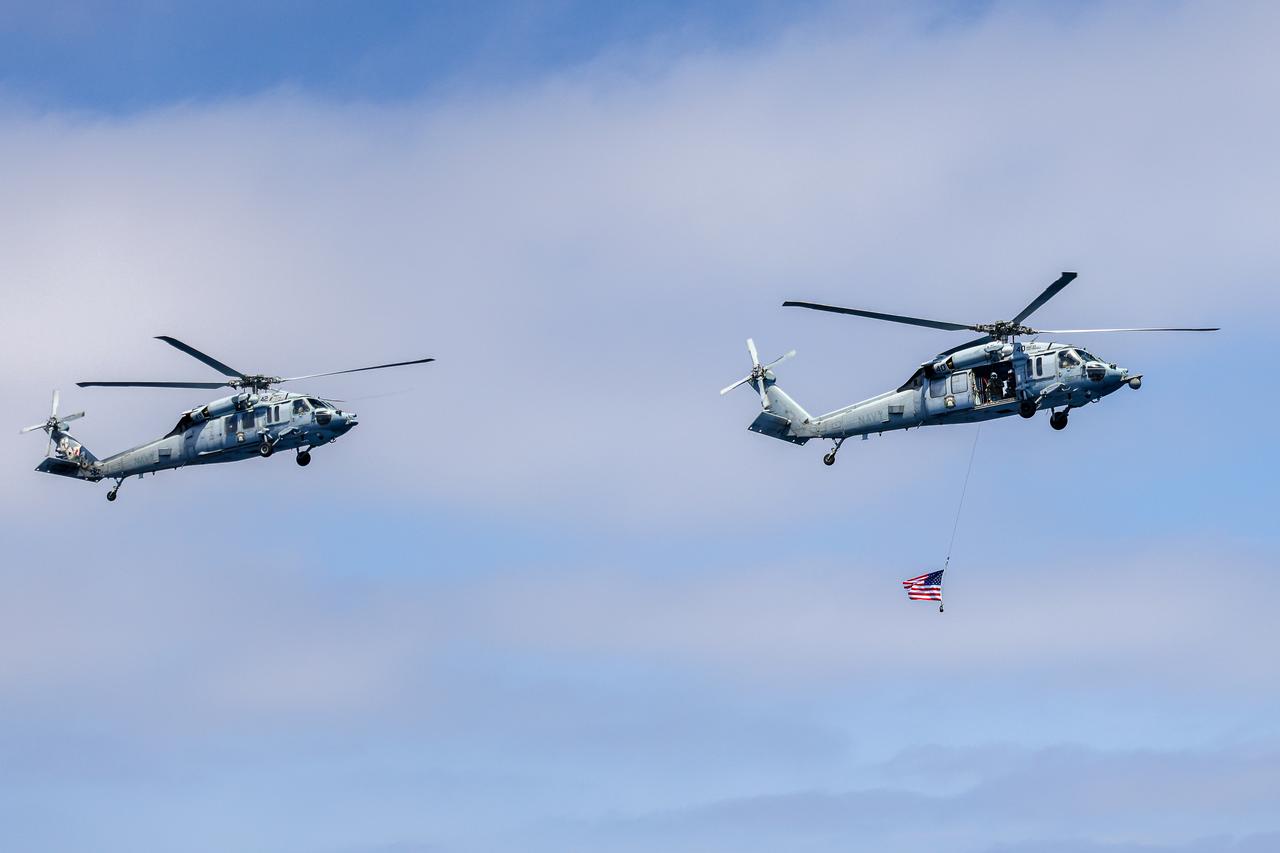
Naval helicopter pilots from Helicopter Sea Combat Squadron (HSC) 23 “Wildcards” fly over USS John P Murtha with an American flag after completing flight operations during an Artemis II mission simulation during NASA’s Underway Recovery Test 10 off the coast of San Diego.
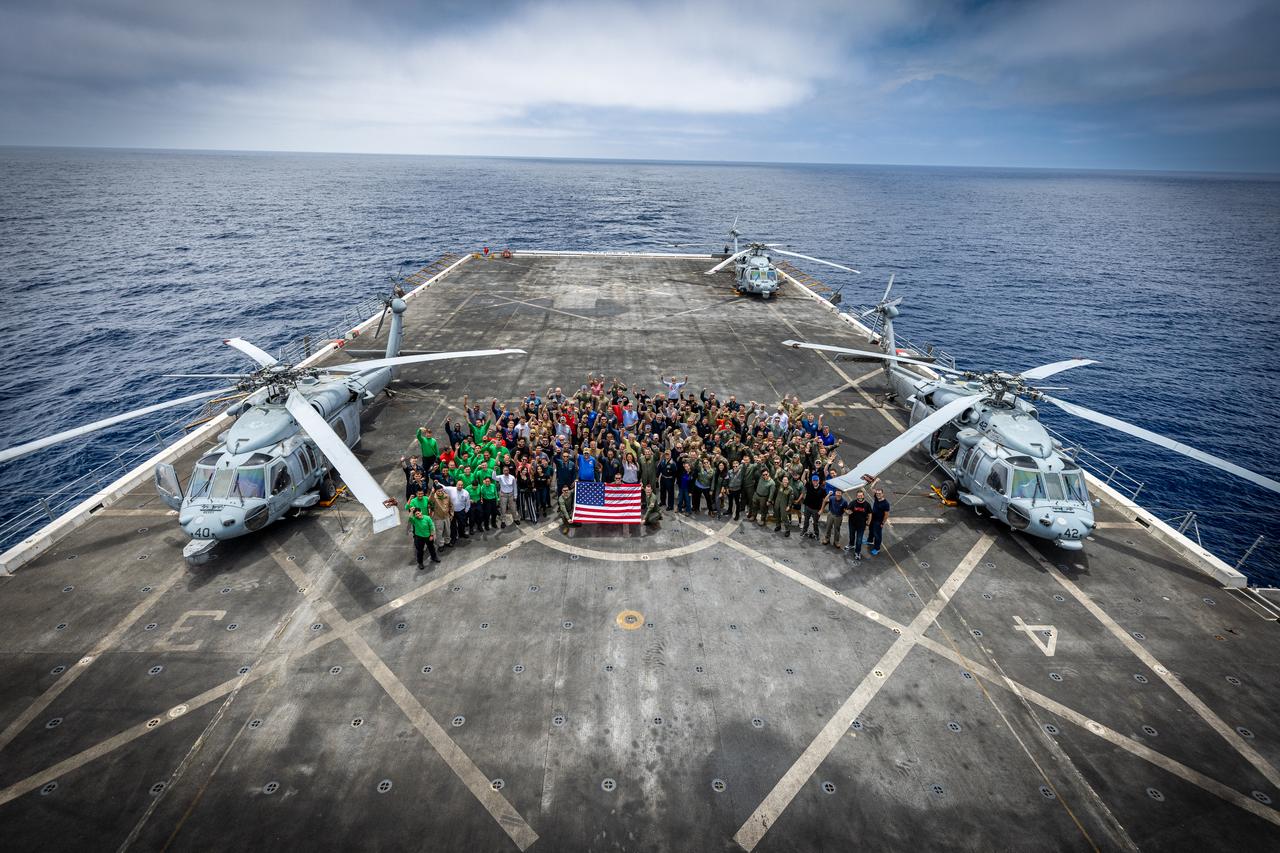
Members of NASA’s Landing and Recovery team and partners from the Department of Defense stand on the flight deck of USS John P. Murtha during Underway Recovery Test 10 (URT-10) off the coast of San Diego. URT-10 is the tenth in a series of Artemis recovery tests, but the first time NASA and its partners from the Department of Defense put their Artemis II recovery procedures to the test.
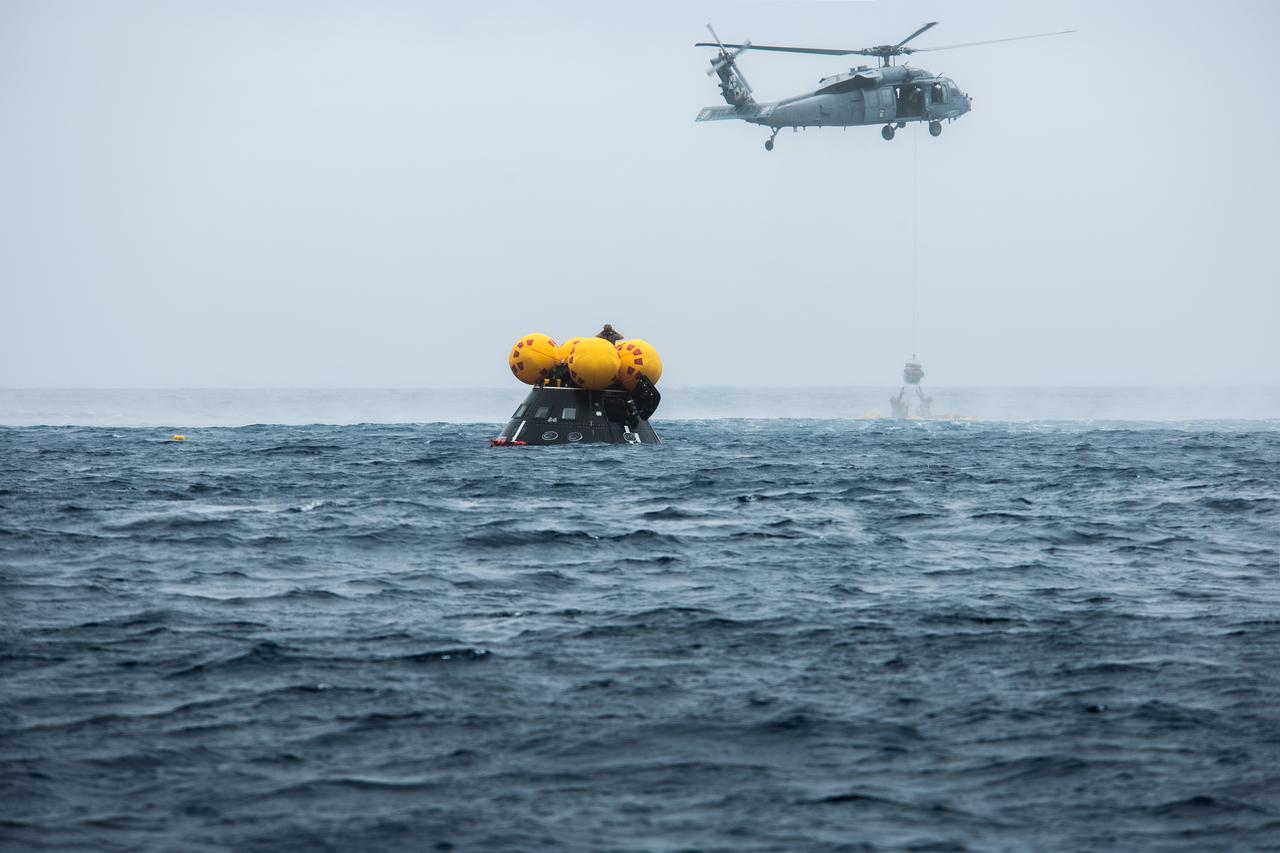
NASA, Navy, and Air Force personnel practice Artemis recovery procedures in the Pacific Ocean as part of Underway Recovery Test-10 off the coast of San Diego. In this photo Naval helicopter pilots from Helicopter Sea Combat Squadron (HSC) 23 “Wildcards” lift a pilot in a basket from an inflatable “front porch” that allows astronauts to be recovered out of the Orion spacecraft. Navy Divers from Explosive Ordnance Disposal (EOD) Expeditionary Support Unit 1 are the first to reach the spacecraft after splashdown and will assist the astronauts in getting inside the helicopter baskets prior to be flown back to the recovery ship.
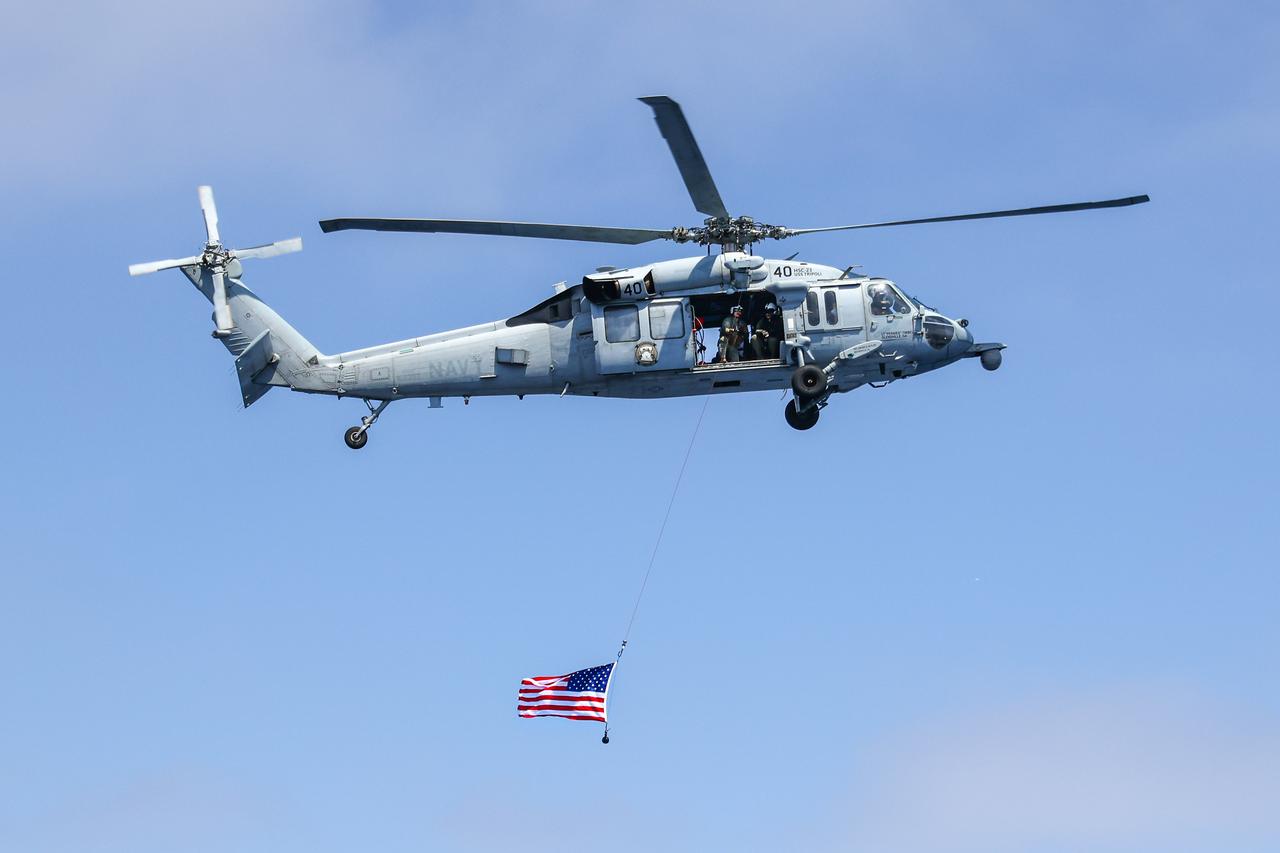
Naval helicopter pilots from Helicopter Sea Combat Squadron (HSC) 23 “Wildcards” fly over USS John P Murtha with an American flag after completing flight operations during an Artemis II mission simulation during NASA’s Underway Recovery Test 10 off the coast of San Diego.
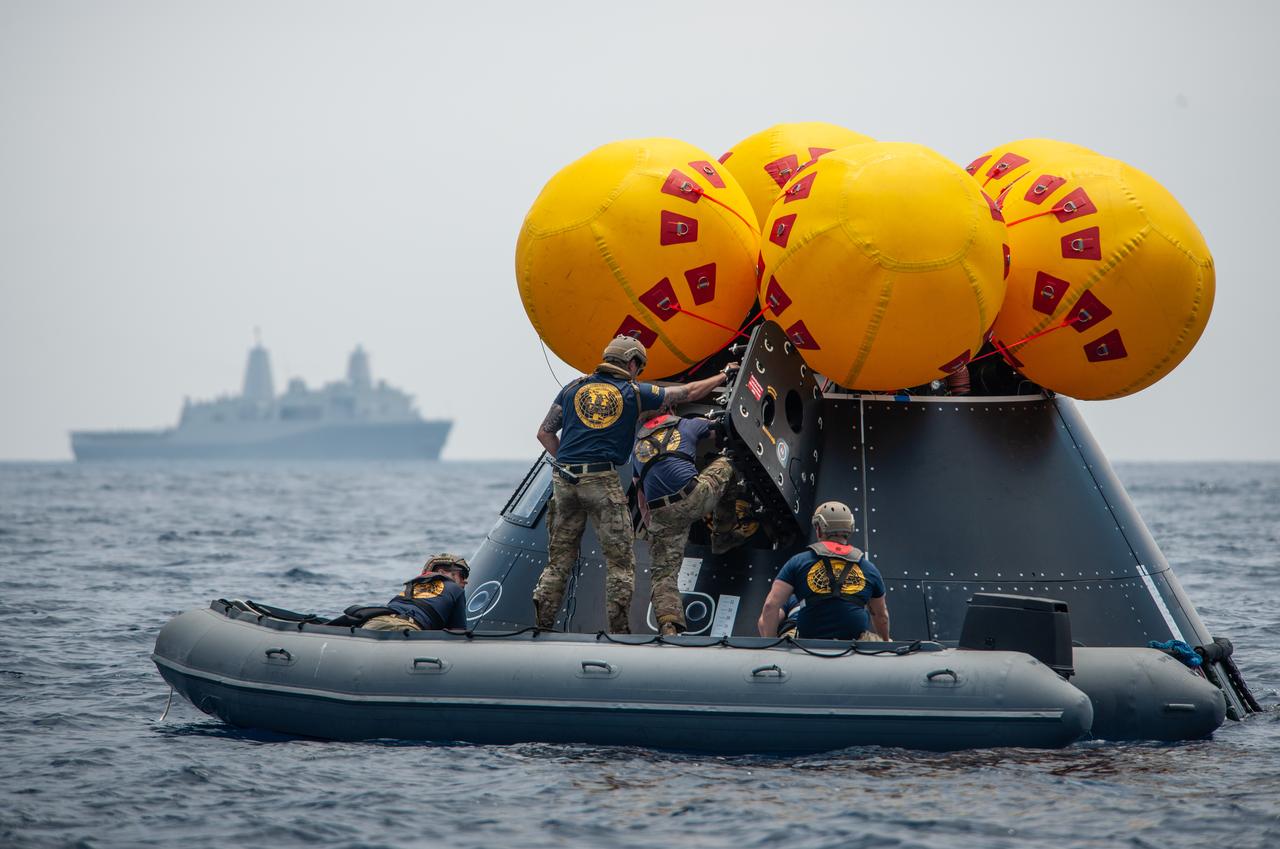
NASA, Navy, and Air Force personnel practice Artemis recovery procedures in the Pacific Ocean as part of Underway Recovery Test-10 off the coast of San Diego. In this photo Navy divers are seen entering the Orion Crew Module Test Article to prepare to practice recovering astronauts out of the spacecraft and onto an inflatable “front porch” where the crew will be picked up with helicopters and lifted up via helicopter back to the recovery vessel.
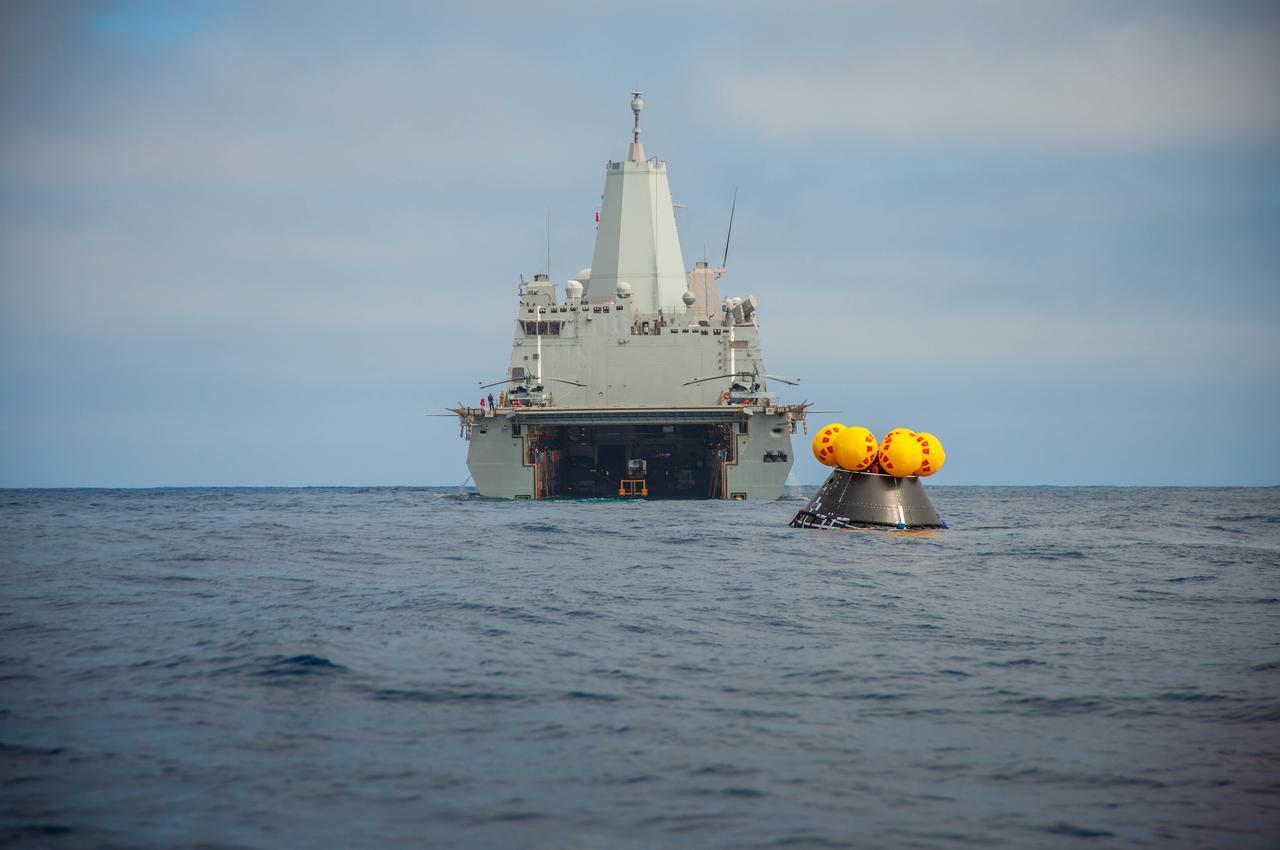
The Crew Module Test Article (CMTA) is seen in the waters of the Pacific Ocean during NASA’s Underway Recovery Test 10 (URT-10). The CMTA is a full-scale mockup of the Orion spacecraft and is used by NASA and its Department of Defense partners to practice recovery procedures for crewed Artemis missions. URT-10 is the first test specifically in support of the Artemis II mission and allowed the team to practice what it will be like to recover astronauts and get them back to the recovery ship safely.
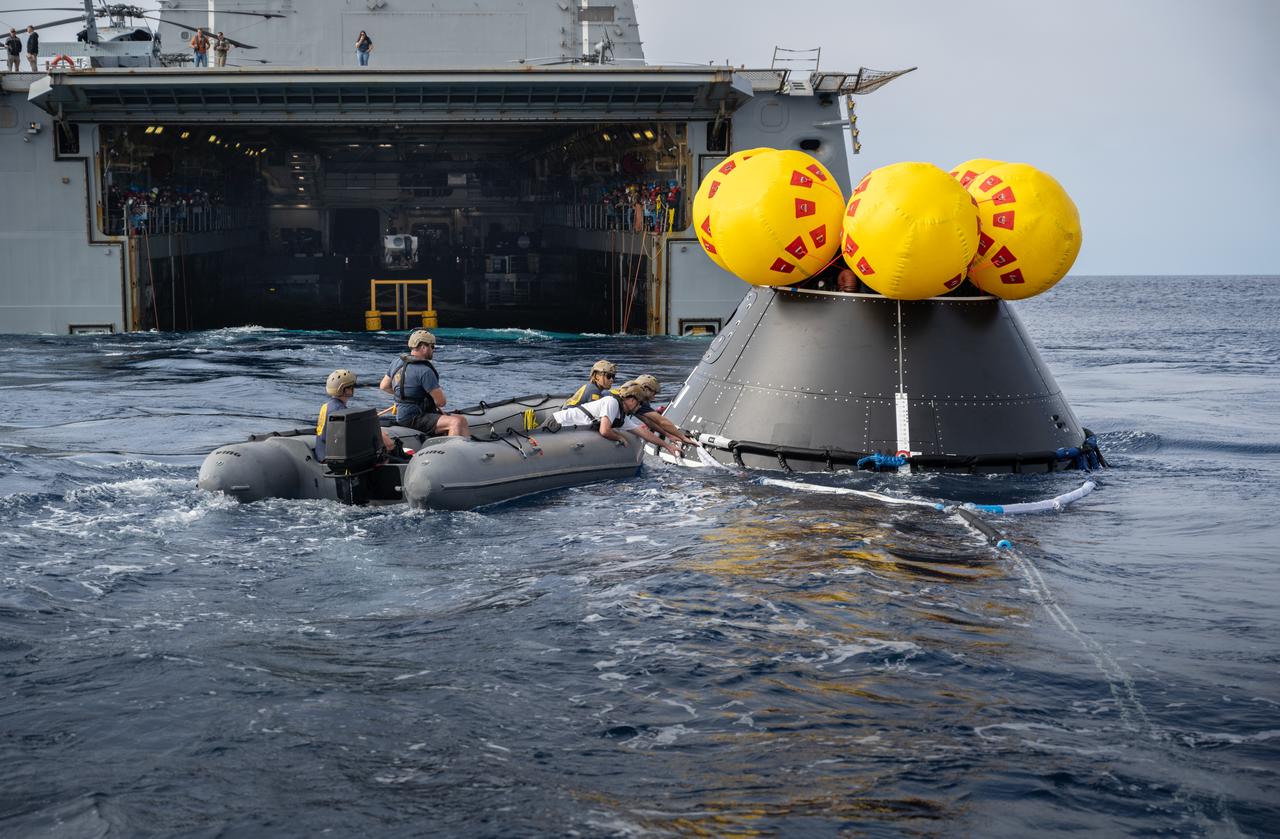
NASA, Navy, and Air Force personnel practice Artemis recovery procedures in the Pacific Ocean as part of Underway Recovery Test 10 (URT-10) off the coast of San Diego. In this photo, Navy divers are seen surrounding the Orion Crew Module Test Article (CMTA) and preparing to recover it inside the recovery ship while simulated astronauts are picked up on an inflatable “front porch” by Naval helicopter pilots from Helicopter Sea Combat Squadron (HSC) 23 “Wildcards” and flown back to the USS John P. Murtha.
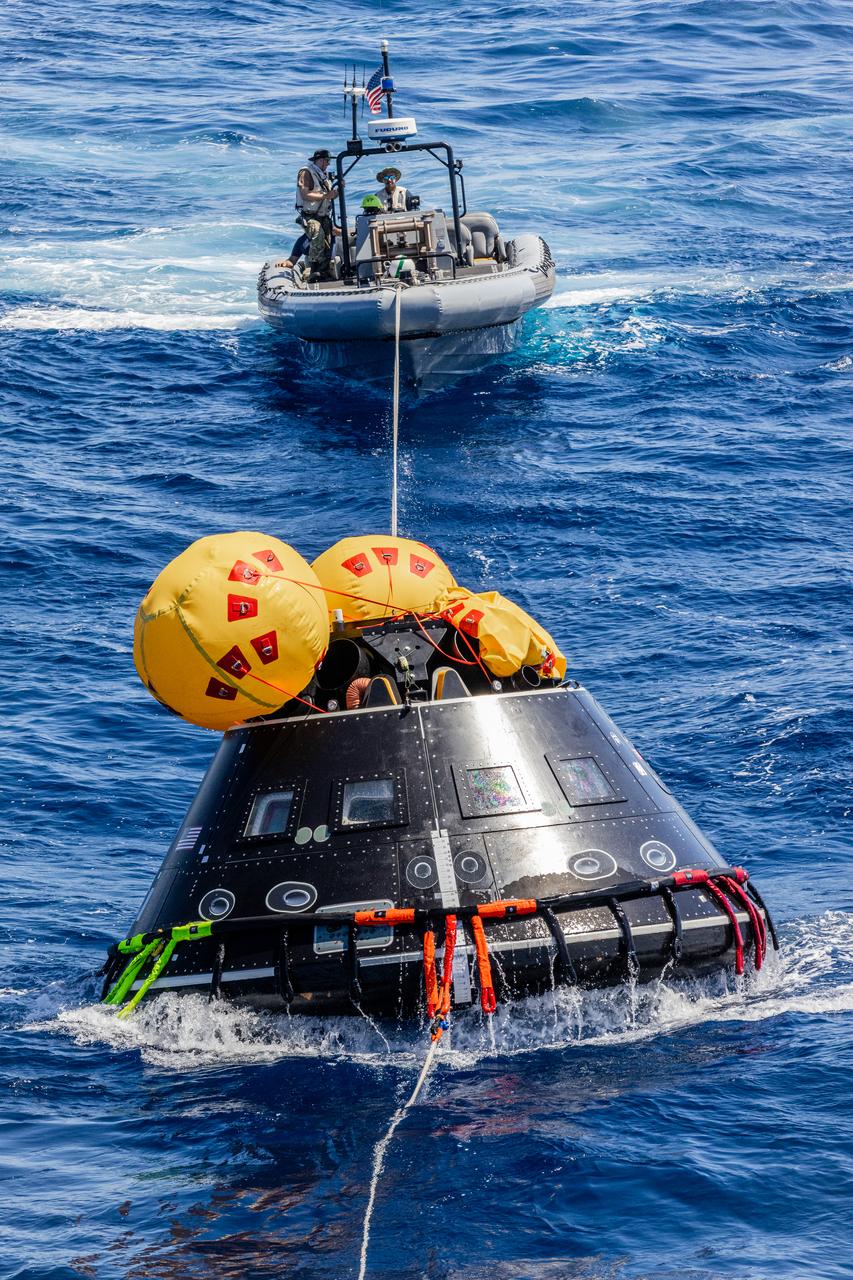
The Crew Module Test Article (CMTA) is seen in the waters of the Pacific Ocean during NASA’s Underway Recovery Test 10 (URT-10). The CMTA is a full-scale mockup of the Orion spacecraft and is used by NASA and its Department of Defense partners to practice recovery procedures for crewed Artemis missions. URT-10 is the first test specifically in support of the Artemis II mission and allowed the team to practice what it will be like to recover astronauts and get them back to the recovery ship safely.
Members of NASA’s Landing and Recovery team, along with partners from the Department of Defense, practice Artemis recovery procedures as part of Underway Recovery Test 10 (URT-10) off the coast of San Diego on July 31, 2023. The event involved the use of the Crew Module Test Article (CMTA), a full-scale mockup of NASA’s Orion spacecraft. URT-10 is the 10th in a series of Artemis recovery tests, but marked the first time NASA and its partners from the Department of Defense put their Artemis II recovery procedures to the test.
The Crew Module Test Article (CMTA) is seen in the waters of the Pacific Ocean during NASA’s Underway Recovery Test 10 (URT-10). The CMTA is a full-scale mockup of the Orion spacecraft and is used by NASA and its Department of Defense partners to practice recovery procedures for crewed Artemis missions. URT-10 is the first test specifically in support of the Artemis II mission and allowed the team to practice what it will be like to recover astronauts and get them back to the recovery ship safely. In this photo, Navy divers from Explosive Ordnance Disposal (EOD) Expeditionary Support Unit 1 secure the CMTA and prepare it to be recovered back inside USS John P. Murtha.

Members of NASA’s Landing and Recovery team, along with partners from the Department of Defense, practice Artemis recovery procedures as part of Underway Recovery Test 10 (URT-10) off the coast of San Diego on Aug. 1, 2023. The event involved the use of the Crew Module Test Article (CMTA), a full-scale mockup of NASA’s Orion spacecraft. URT-10 is the 10th in a series of Artemis recovery tests, but marked the first time NASA and its partners from the Department of Defense put their Artemis II recovery procedures to the test.
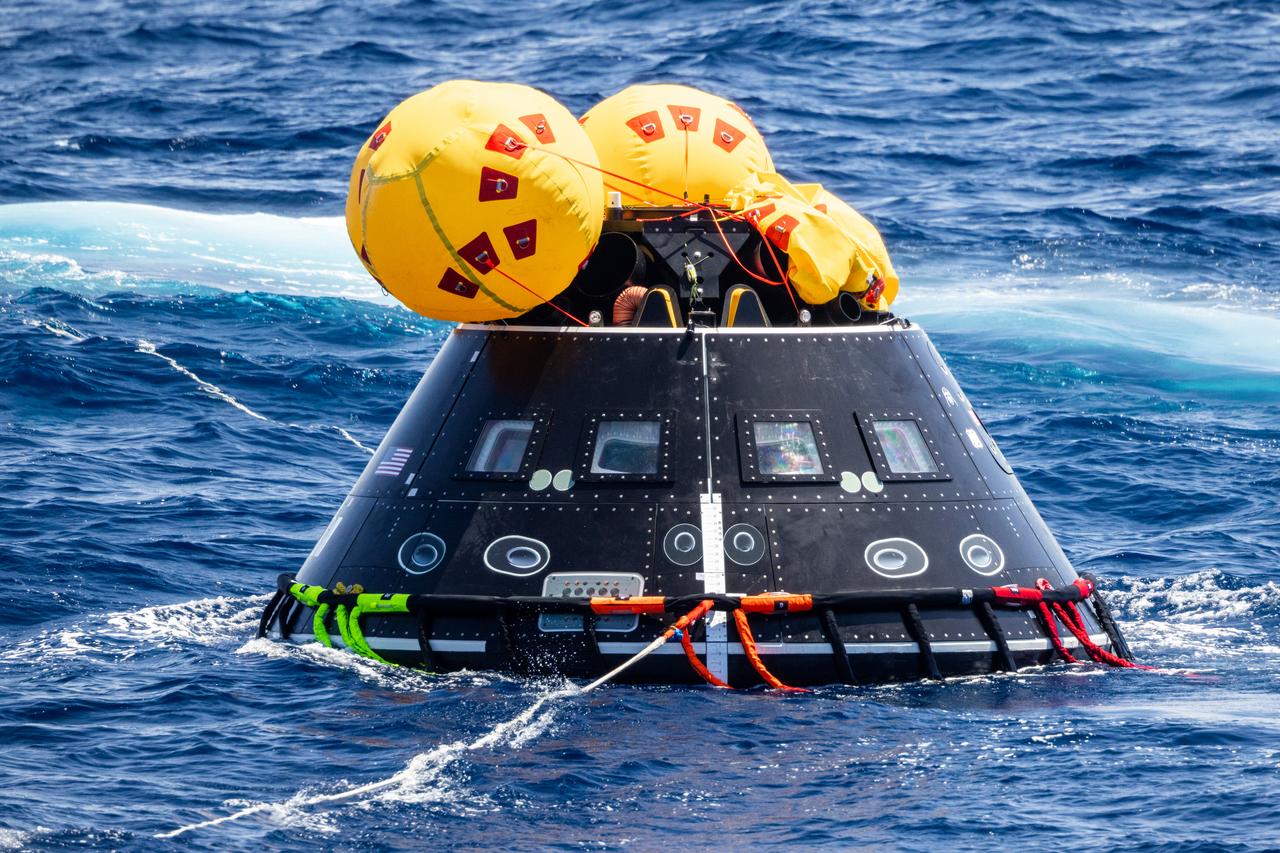
The Crew Module Test Article (CMTA) is seen in the waters of the Pacific Ocean during NASA’s Underway Recovery Test 10 (URT-10). The CMTA is a full-scale mockup of the Orion spacecraft and is used by NASA and its Department of Defense partners to practice recovery procedures for crewed Artemis missions. URT-10 is the first test specifically in support of the Artemis II mission and allowed the team to practice what it will be like to recover astronauts and get them back to the recovery ship safely.
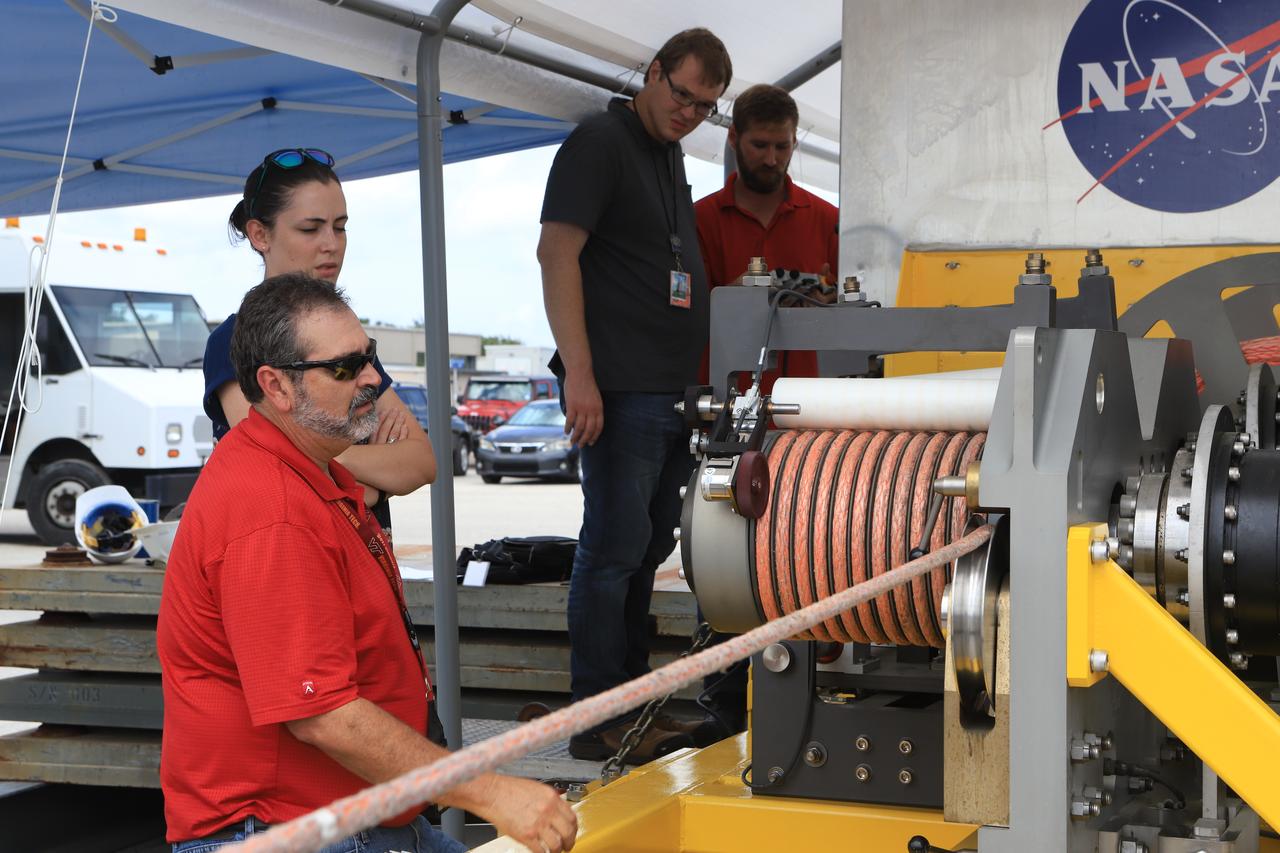
Winch Training For URT-7
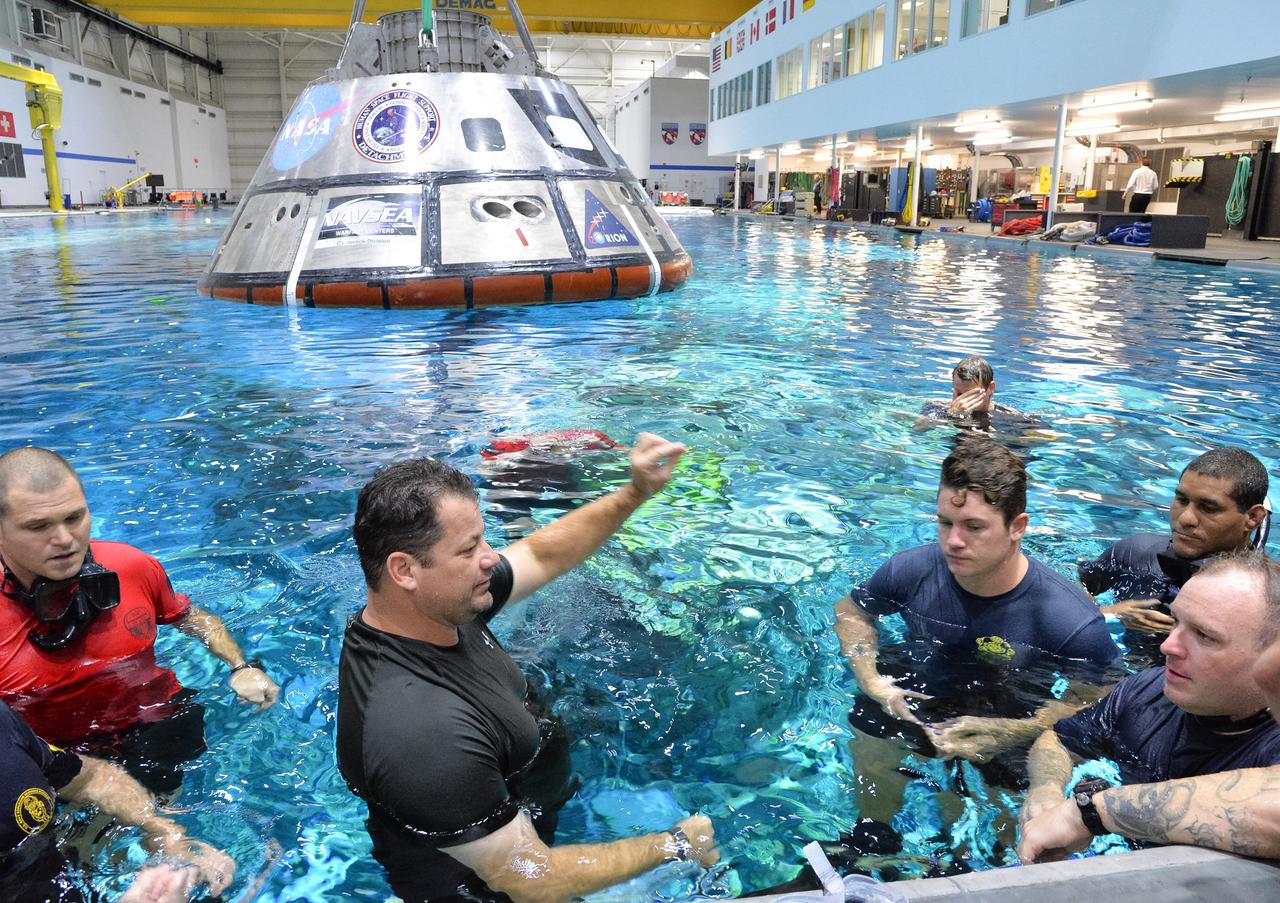
Tim Goddard, center, NASA Open Water Recovery Operations director, reviews recovery procedures with U.S. Navy divers, Air Force pararescuemen and Coast Guard rescue swimmers during training in the Neutral Buoyancy Laboratory at NASA’s Johnson Space Center in Houston. The group is practicing Orion underway recovery techniques using a test version of the Orion spacecraft. Training will help the team prepare for Underway Recovery Test 5 for Exploration Mission 1 aboard the USS San Diego in the Pacific Ocean off the coast of California in October. The Ground Systems Development and Operations Program, along with the U.S. Navy and Lockheed Martin, are preparing the recovery team, hardware and operations to support EM-1 recovery.
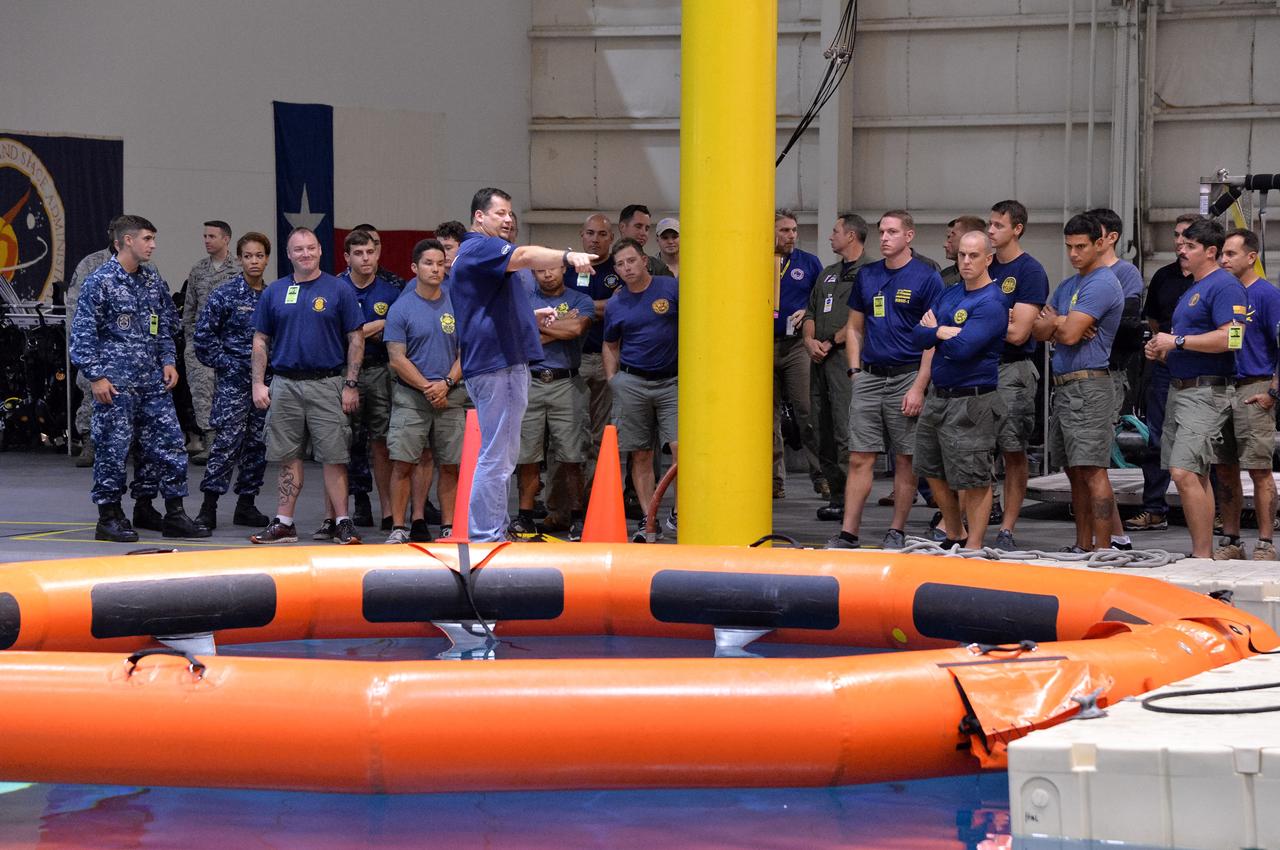
Tim Goddard, NASA Open Water Recovery Operations director, briefs U.S. Navy divers, Air Force pararescuemen and Coast Guard rescue swimmers during training in the Neutral Buoyancy Laboratory at NASA’s Johnson Space Center in Houston. The group is preparing to practice Orion underway recovery techniques using a test version of the Orion spacecraft. Training will help the team prepare for Underway Recovery Test 5 for Exploration Mission 1 aboard the USS San Diego in the Pacific Ocean off the coast of California in October. The Ground Systems Development and Operations Program, along with the U.S. Navy and Lockheed Martin, are preparing the recovery team, hardware and operations to support EM-1 recovery.
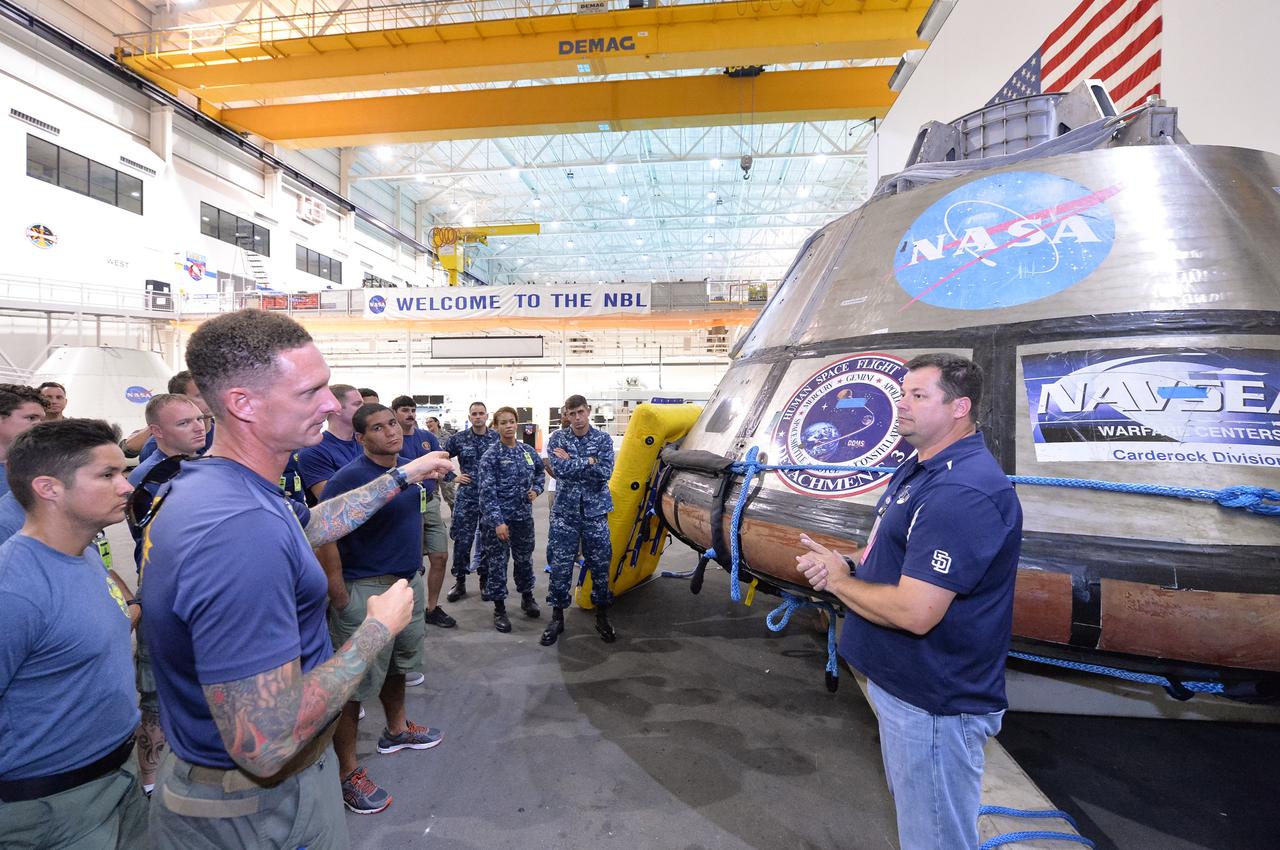
Tim Goddard, far right, NASA Open Water Recovery Operations director, briefs U.S. Navy divers, Air Force pararescuemen and Coast Guard rescue swimmers during training in the Neutral Buoyancy Laboratory at NASA’s Johnson Space Center in Houston. The group is preparing to practice Orion underway recovery techniques using a test version of the Orion spacecraft. Training will help the team prepare for Underway Recovery Test 5 for Exploration Mission 1 aboard the USS San Diego in the Pacific Ocean off the coast of California in October. The Ground Systems Development and Operations Program, along with the U.S. Navy and Lockheed Martin, are preparing the recovery team, hardware and operations to support EM-1 recovery.
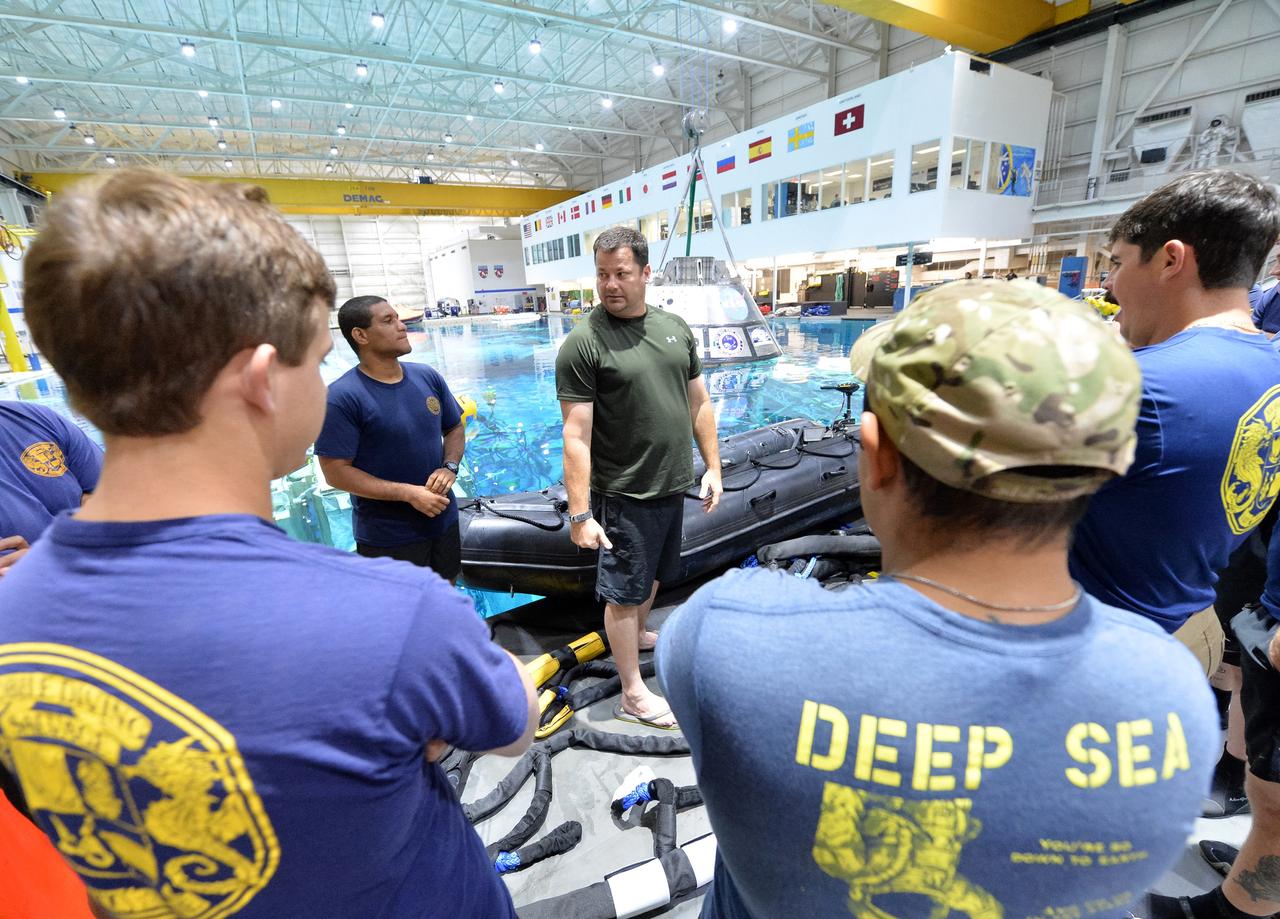
Tim Goddard, center, NASA Open Water Recovery Operations director, briefs U.S. Navy divers, Air Force pararescuemen and Coast Guard rescue swimmers during training in the Neutral Buoyancy Laboratory at NASA’s Johnson Space Center in Houston. The group will practice Orion underway recovery techniques using a test version of the Orion spacecraft. Training will help the team prepare for Underway Recovery Test 5 for Exploration Mission 1 aboard the USS San Diego in the Pacific Ocean off the coast of California in October. The Ground Systems Development and Operations Program, along with the U.S. Navy and Lockheed Martin, are preparing the recovery team, hardware and operations to support EM-1 recovery.
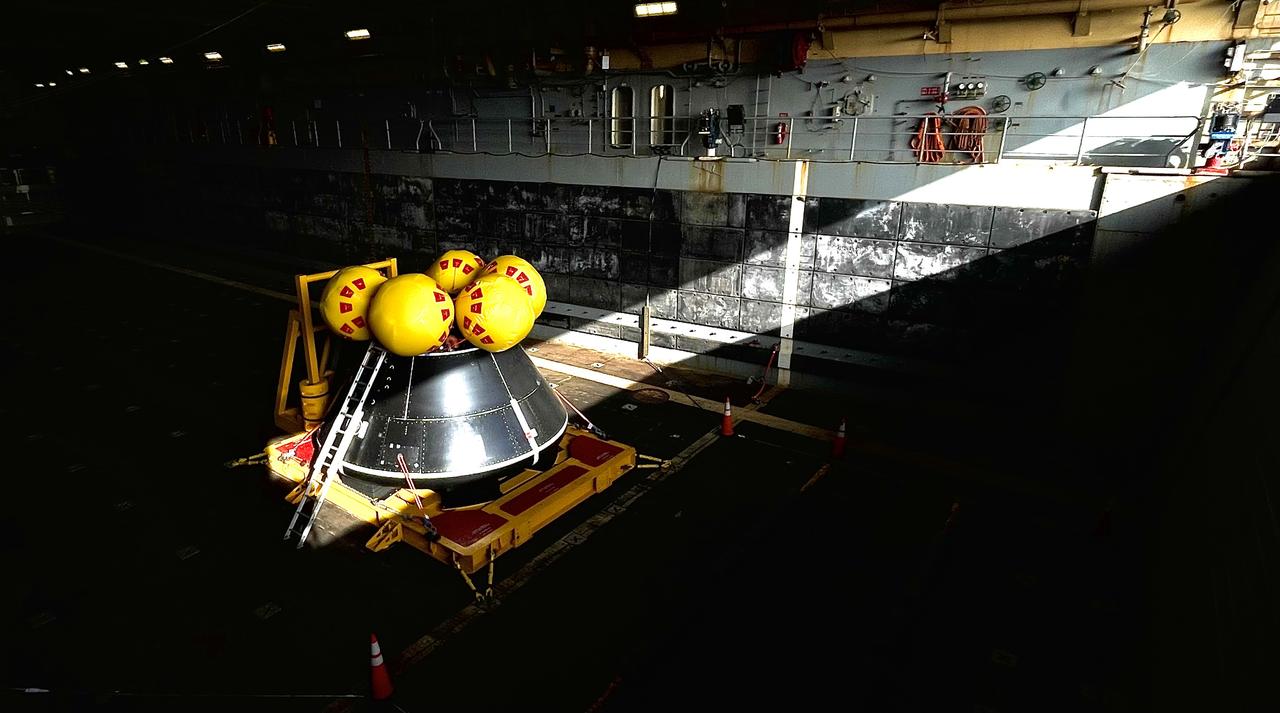
While onboard the USS John P. Murtha, NASA and the Department of Defense practice Artemis II recovery operations with the Crew Module Test Article (CMTA) in July of 2023. The CMTA is a full-scale mockup of the Orion spacecraft and is used to verify the recovery team is ready to support crew recovery after missions to the Moon.
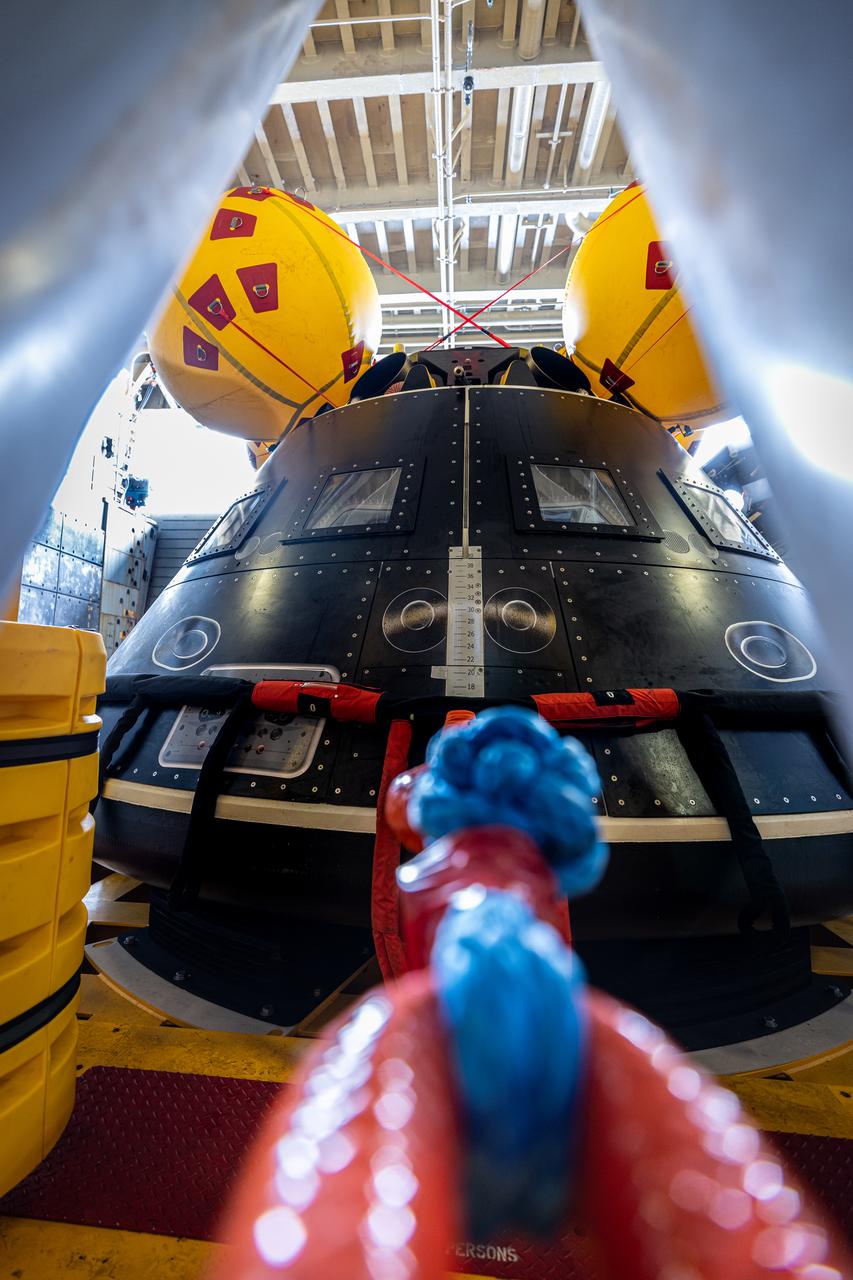
While onboard the USS John P. Murtha, NASA and the Department of Defense practice Artemis II recovery operations with the Crew Module Test Article (CMTA) in July of 2023. The CMTA is a full-scale mockup of the Orion spacecraft and is used to verify the recovery team is ready to support crew recovery after missions to the Moon.
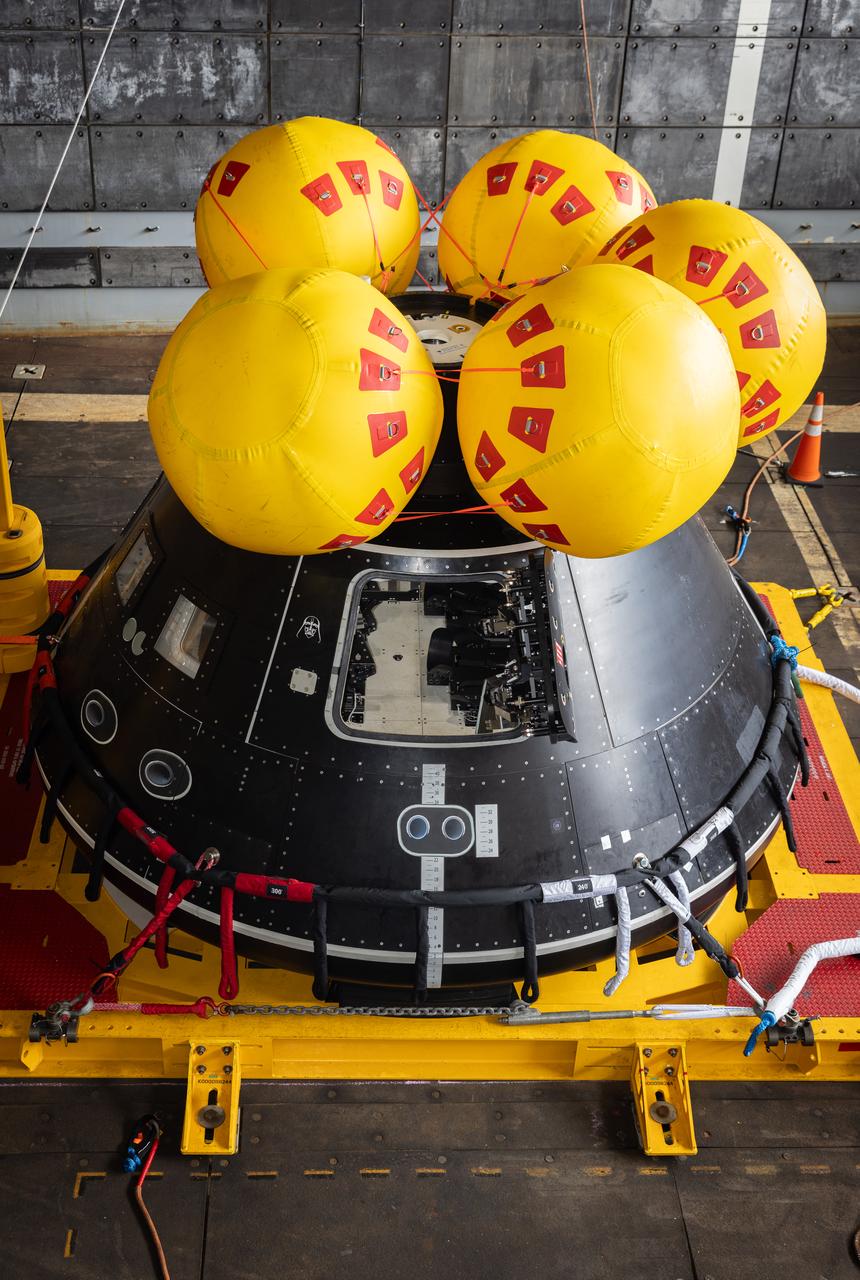
While onboard the USS John P. Murtha, NASA and the Department of Defense practice Artemis II recovery operations with the Crew Module Test Article (CMTA) in July of 2023. The CMTA is a full-scale mockup of the Orion spacecraft and is used to verify the recovery team is ready to support crew recovery after missions to the Moon.
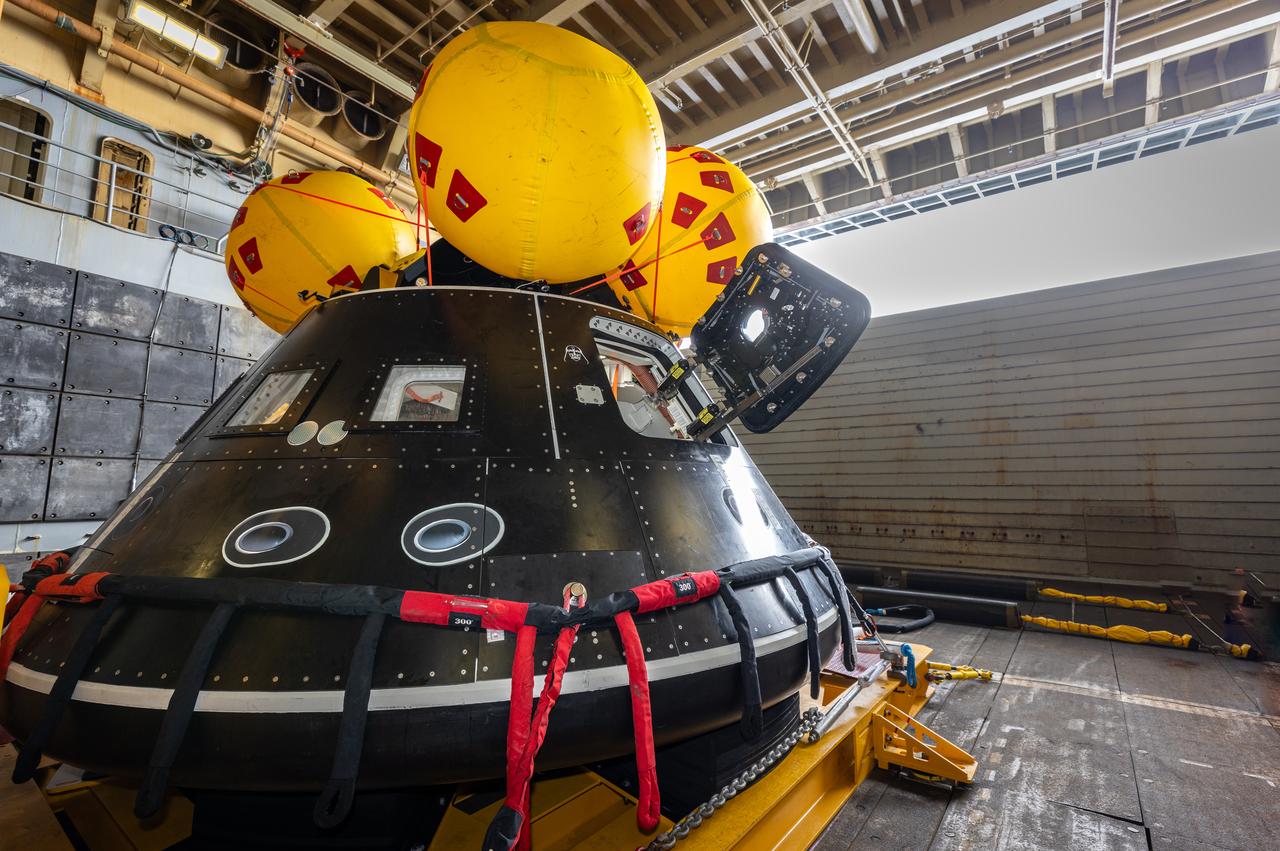
While onboard the USS John P. Murtha, NASA and the Department of Defense practice Artemis II recovery operations with the Crew Module Test Article (CMTA) in July of 2023. The CMTA is a full-scale mockup of the Orion spacecraft and is used to verify the recovery team is ready to support crew recovery after missions to the Moon.
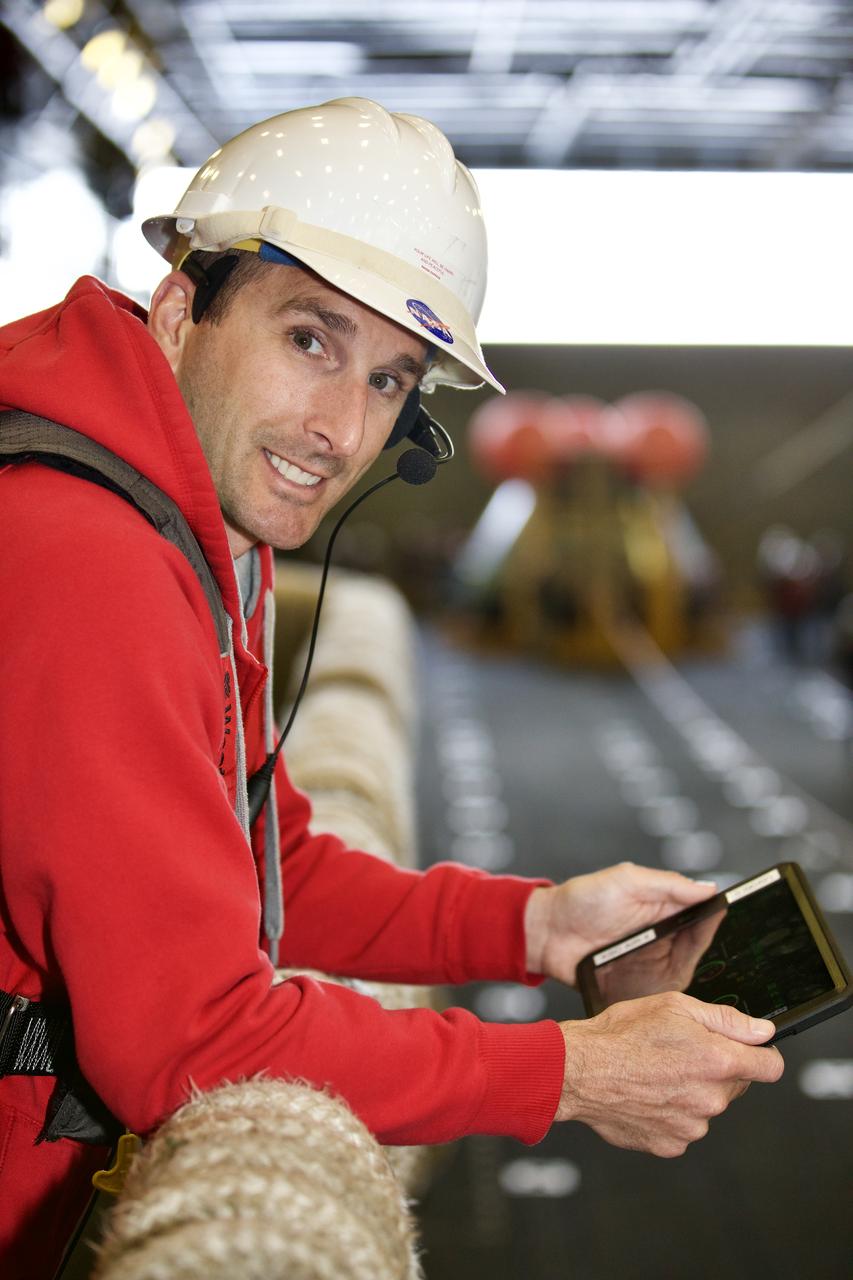
Jeremy Parr participates in the training of new Landing and Recovery team members during Underway Recovery Test-8. NASA is preparing for an Orion splashdown in the Pacific Ocean after Artemis I.
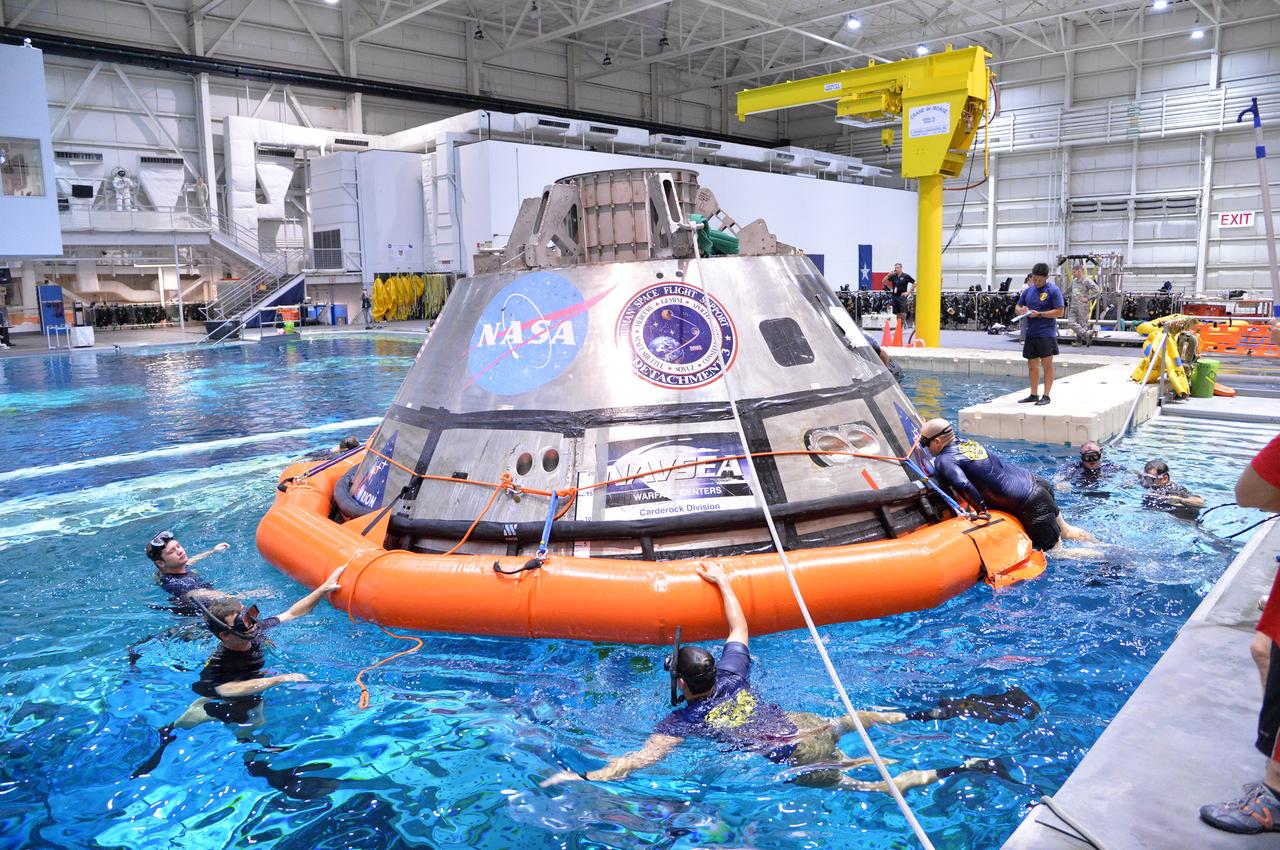
U.S. Navy divers, Air Force pararescuemen and Coast Guard rescue swimmers practice Orion recovery techniques at the Neutral Buoyancy Laboratory (NBL) at the agency’s Johnson Space Center in Houston. The recovery team is practicing underway recovery techniques using a test version of the Orion spacecraft. Training will help the team prepare for Underway Recovery Test 5 for Exploration Mission 1 aboard the USS San Diego in the Pacific Ocean off the coast of California in October. The Ground Systems Development and Operations Program, along with the U.S. Navy and Lockheed Martin, are preparing the recovery team, hardware and operations to support EM-1 recovery.
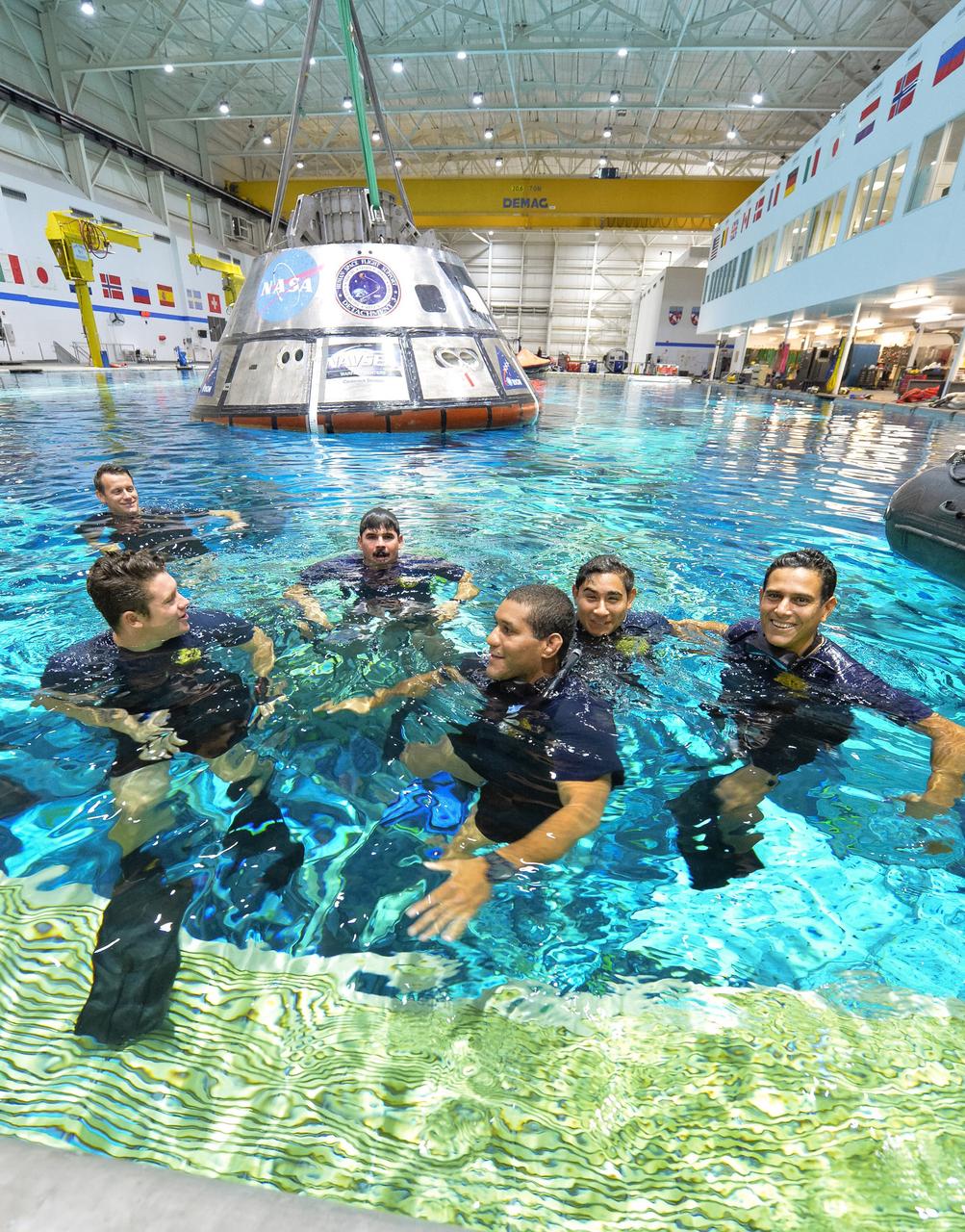
U.S. Navy divers are training in the Neutral Buoyancy Laboratory at NASA’s Johnson Space Center in Houston. Navy divers, Air Force pararescuemen and Coast Guard rescue swimmers practice Orion underway recovery techniques using a test version of the Orion spacecraft. Training will help the team prepare for Underway Recovery Test 5 for Exploration Mission 1 aboard the USS San Diego in the Pacific Ocean off the coast of California in October. The Ground Systems Development and Operations Program, along with the U.S. Navy and Lockheed Martin, are preparing the recovery team, hardware and operations to support EM-1 recovery.
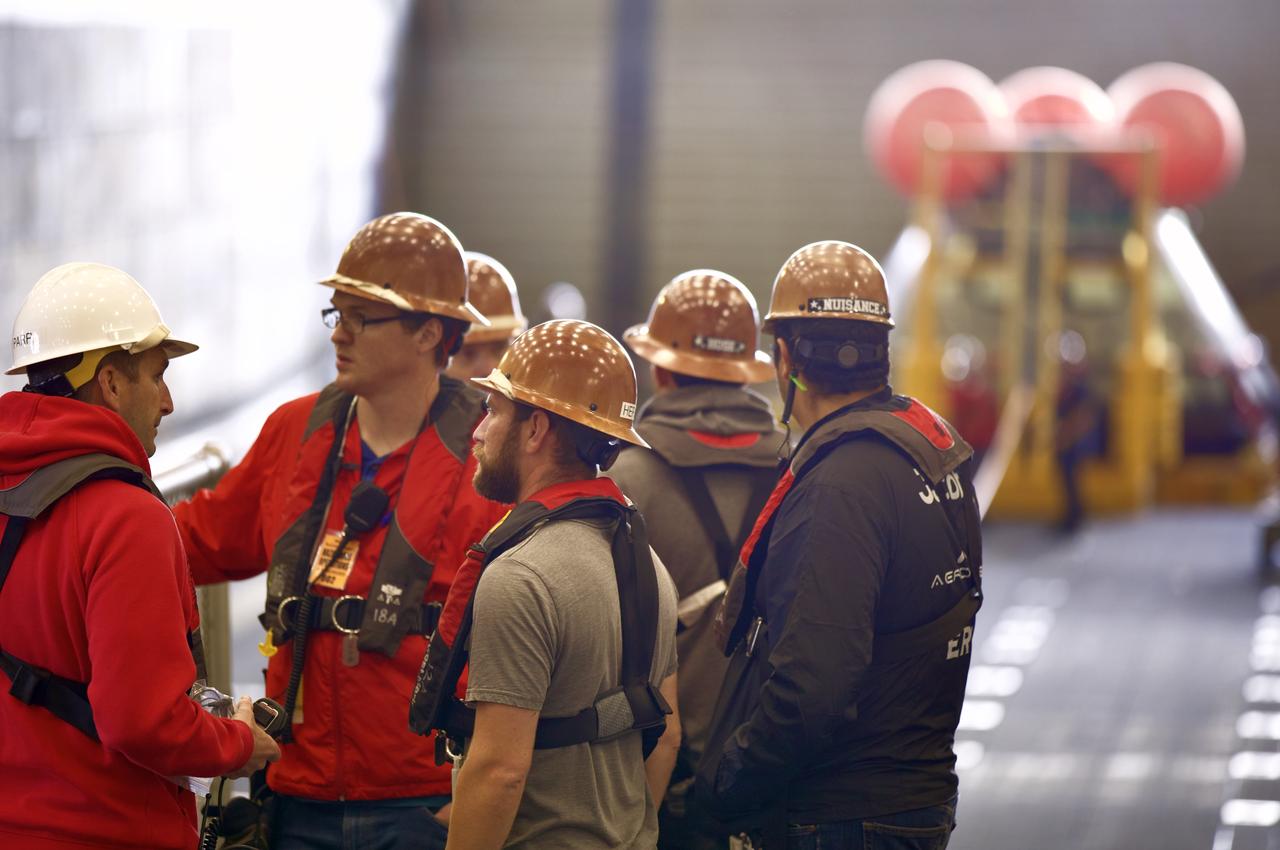
Eric Hernandez (middle) trains Landing and Recovery team members as NASA prepares for an Orion splashdown in the Pacific Ocean after Artemis I.
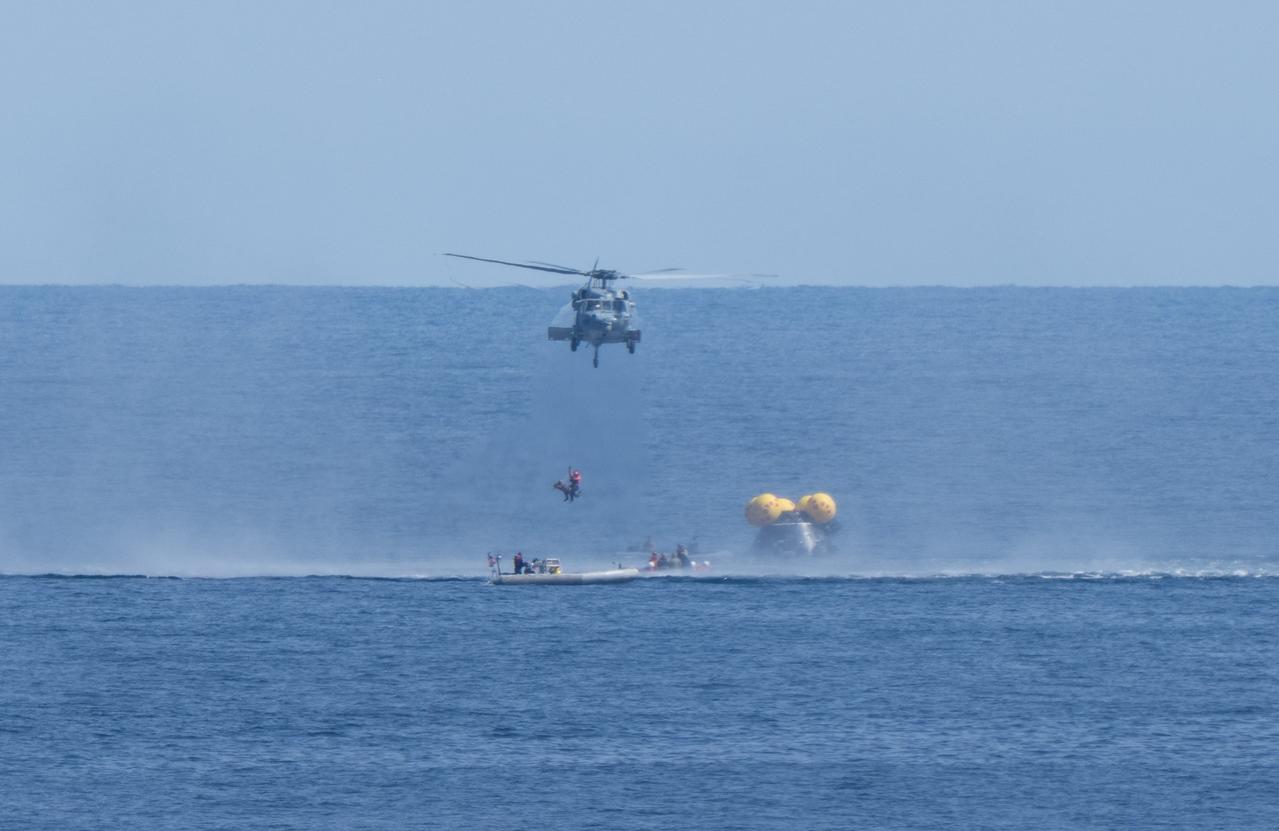
A Navy MH-60 Seahawk from Helicopter Sea Combat Squadron (HSC) 23 is seen as it lifts a training manikin as teams practice Artemis recovery procedures during Underway Recovery Test-12 onboard USS Somerset off the coast of California, Thursday, March 27, 2025. During the test, NASA and Department of Defense teams are practicing to ensure recovery procedures are validated as NASA plans to send the Artemis II astronauts around the Moon and splashdown in the Pacific Ocean. Photo Credit: (NASA/Joel Kowsky) 1st lift
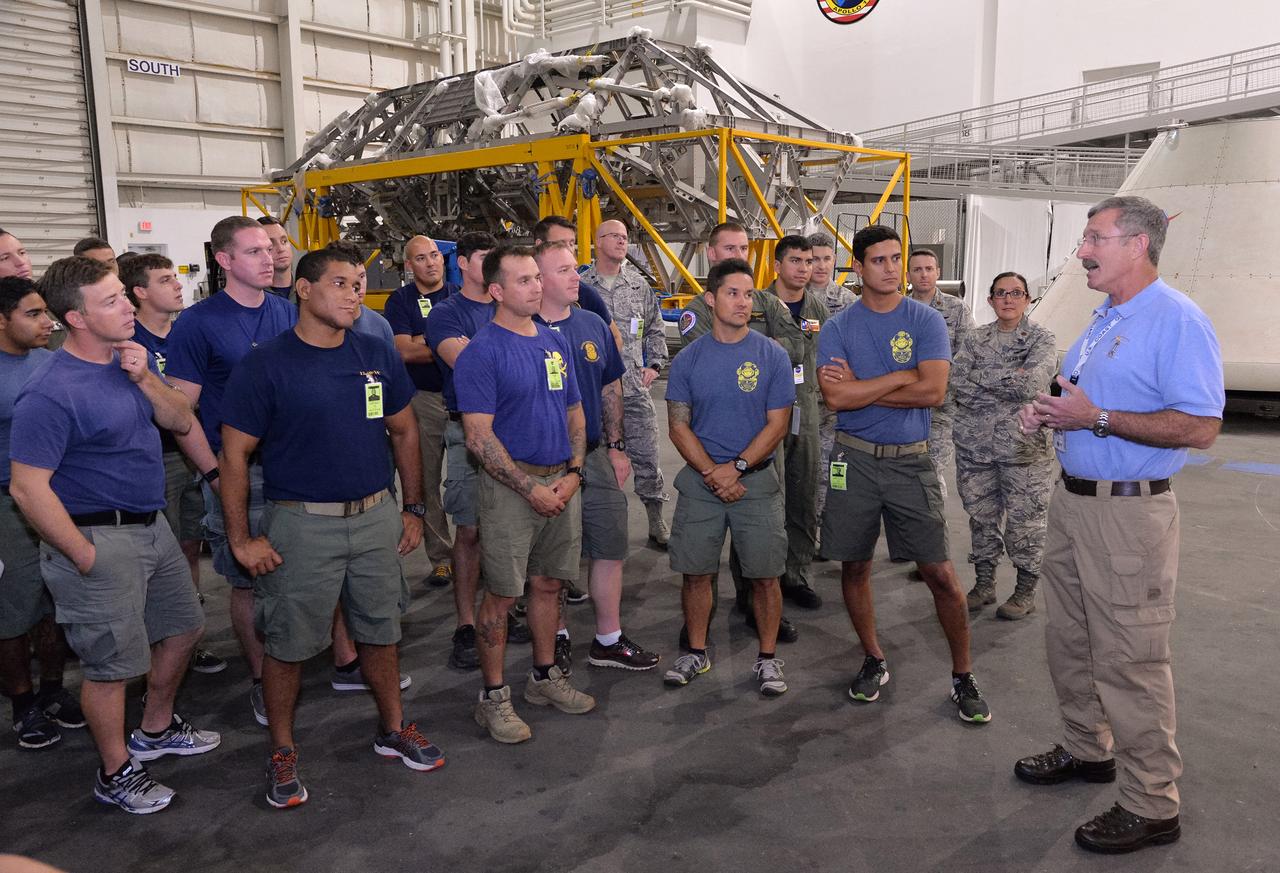
NASA astronaut Dan Burbank speaks to a group of U.S. Navy divers at the Neutral Buoyancy Laboratory (NBL) at the agency’s Johnson Space Center in Houston. Navy divers, Air Force pararescuemen and Coast Guard rescue swimmers are preparing to practice Orion underway recovery techniques with a test version of the Orion spacecraft. Training will help the team prepare for Underway Recovery Test 5 for Exploration Mission 1 aboard the USS San Diego in the Pacific Ocean off the coast of California in October. The Ground Systems Development and Operations Program, along with the U.S. Navy and Lockheed Martin, are preparing the recovery team, hardware and operations to support EM-1 recovery.
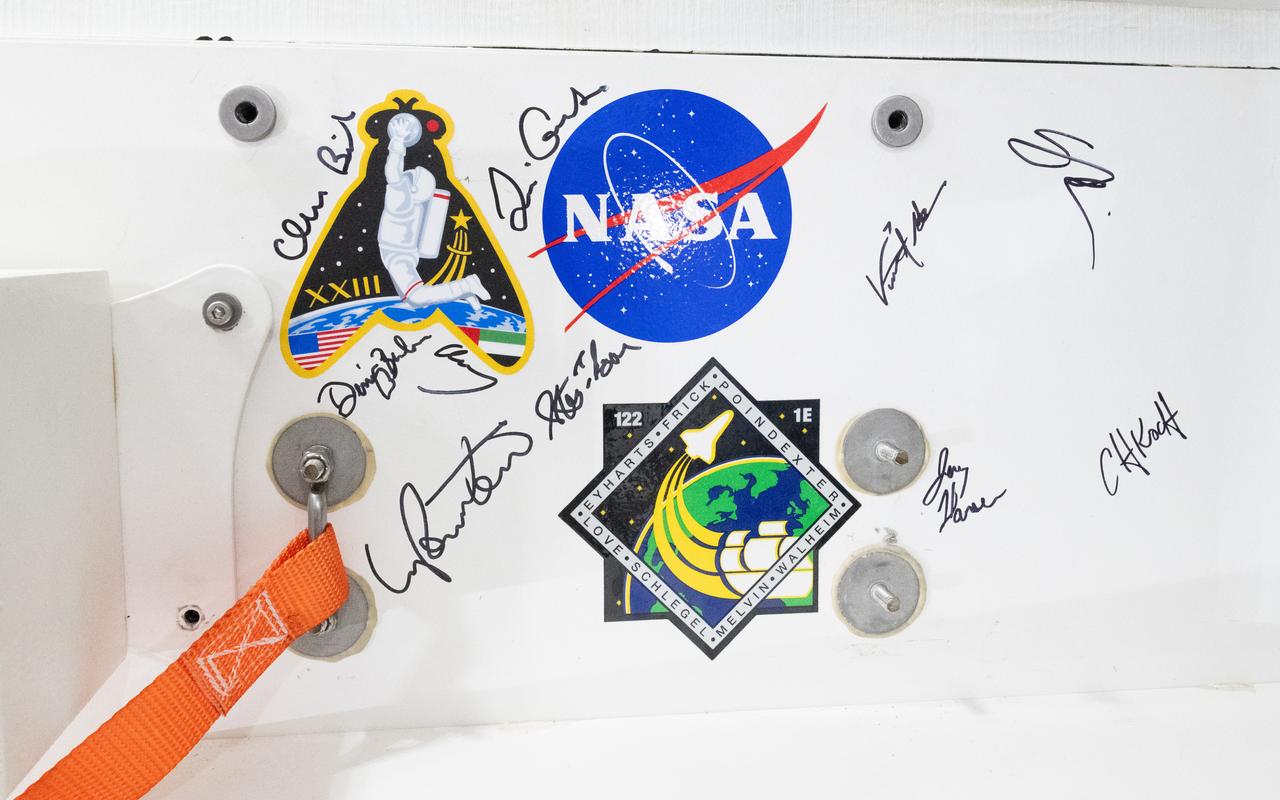
Signatures of astronauts who have participated in Artemis recovery training are seen on a panel inside the Crew Module Test Article (CMTA) during Underway Recovery Test-12 onboard USS Somerset off the coast of California, Saturday, March 29, 2025. During the test, NASA and Department of Defense teams are practicing to ensure recovery procedures are validated as NASA plans to send the Artemis II astronauts around the Moon and splashdown in the Pacific Ocean. Photo Credit: (NASA/Joel Kowsky)
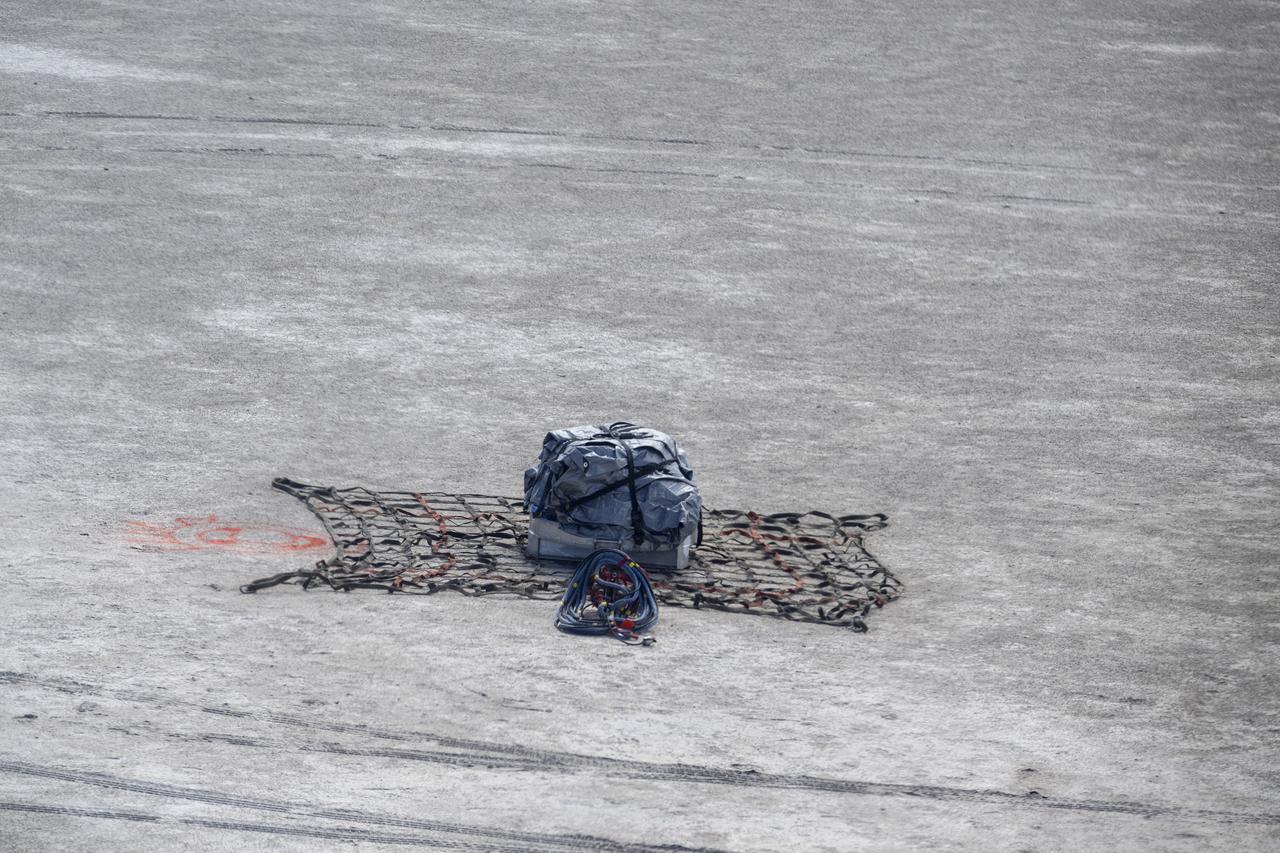
A training model of the sample return capsule is seen from the cockpit of a helicopter as recovery teams participate training in preparation for the retrieval of the sample return capsule from NASA's OSIRIS-REx mission, Wednesday, July 19, 2023, at the Department of Defense's Utah Test and Training Range. The sample was collected from the asteroid Bennu in October 2020 by NASA’s OSIRIS-REx spacecraft and will return to Earth on September 24th, landing under parachute at the Utah Test and Training Range. Photo Credit: (NASA/Keegan Barber)
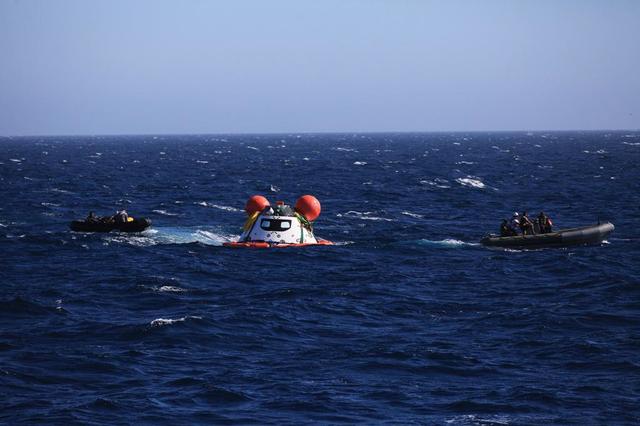
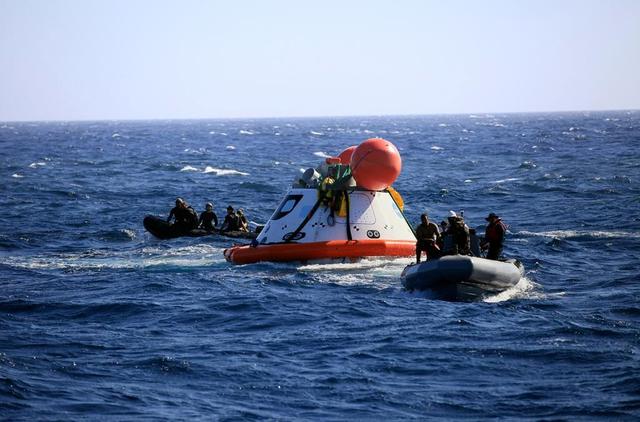
Orion recovery training and operations continue in the Pacific Ocean on Sept. 14, 2014. NASA and the Navy team on board the USS Salvor are evaluating procedures for pulling a test version of the spacecraft out of the ocean using the ship's crane. Part of Batch image transfer from Flickr.
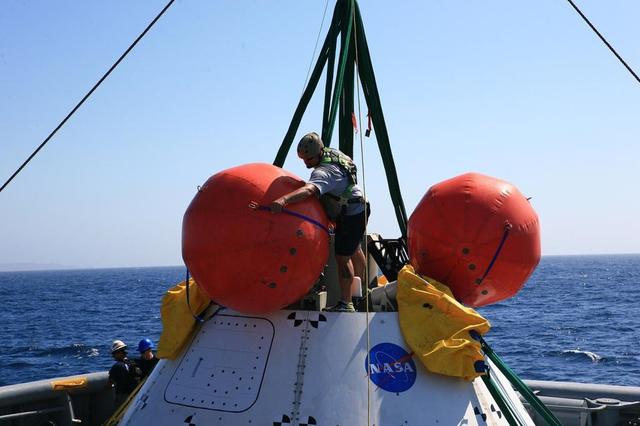
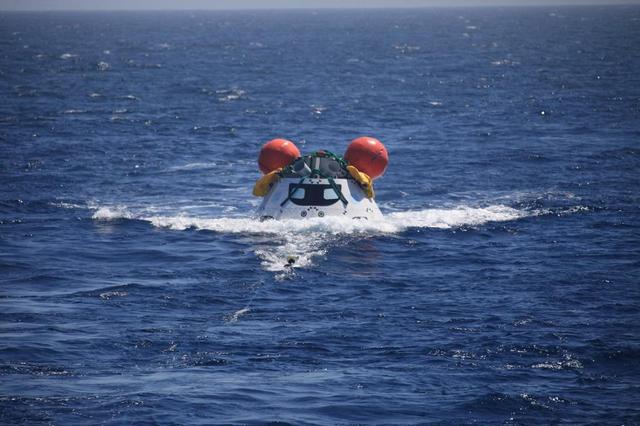
Orion recovery training and operations continue in the Pacific Ocean on Sept. 14, 2014. NASA and the Navy team on board the USS Salvor are evaluating procedures for pulling a test version of the spacecraft out of the ocean using the ship's crane. Part of Batch image transfer from Flickr.
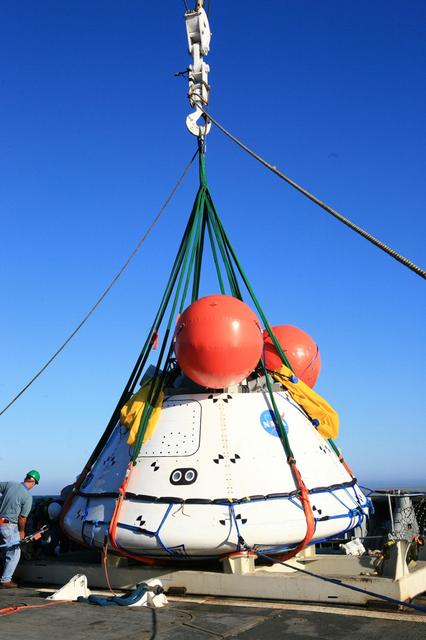
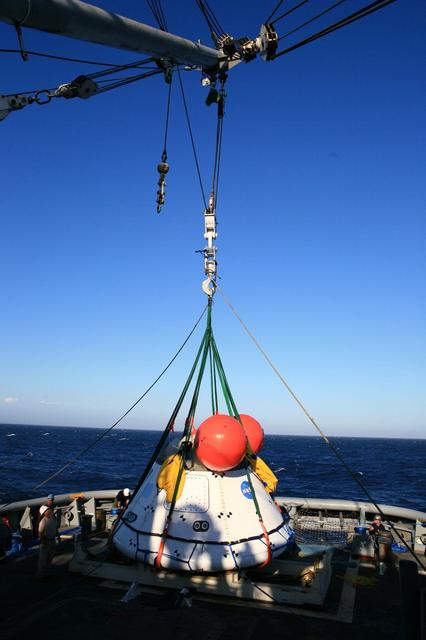
Orion recovery training and operations continue in the Pacific Ocean on Sept. 14, 2014. NASA and the Navy team on board the USS Salvor are evaluating procedures for pulling a test version of the spacecraft out of the ocean using the ship's crane. Part of Batch image transfer from Flickr.
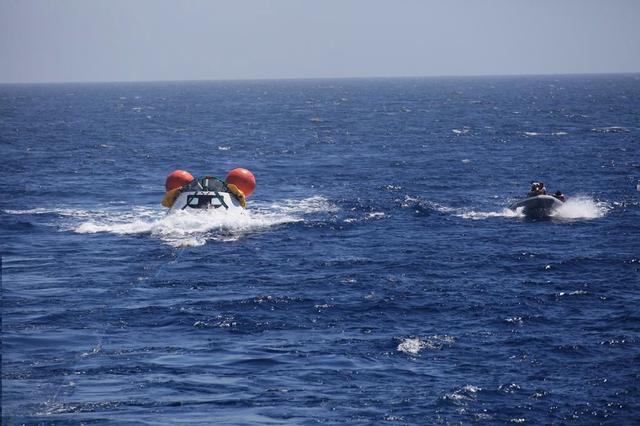
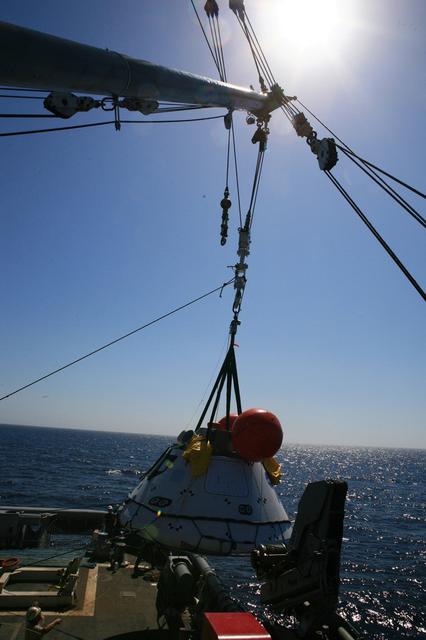
Orion recovery training and operations continue in the Pacific Ocean on Sept. 14, 2014. NASA and the Navy team on board the USS Salvor are evaluating procedures for pulling a test version of the spacecraft out of the ocean using the ship's crane. Part of Batch image transfer from Flickr.
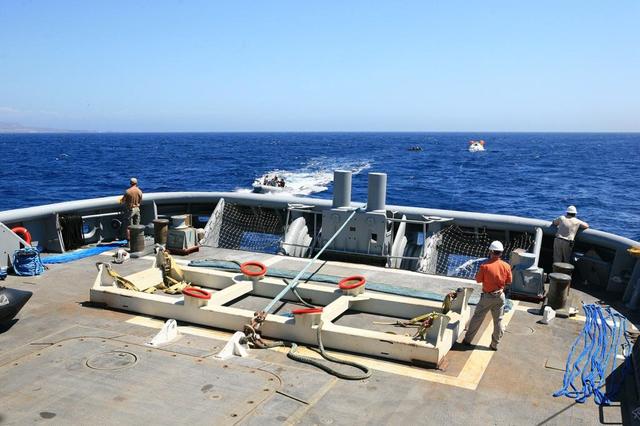
Orion recovery training and operations continue in the Pacific Ocean on Sept. 14, 2014. NASA and the Navy team on board the USS Salvor are evaluating procedures for pulling a test version of the spacecraft out of the ocean using the ship's crane. Part of Batch image transfer from Flickr.
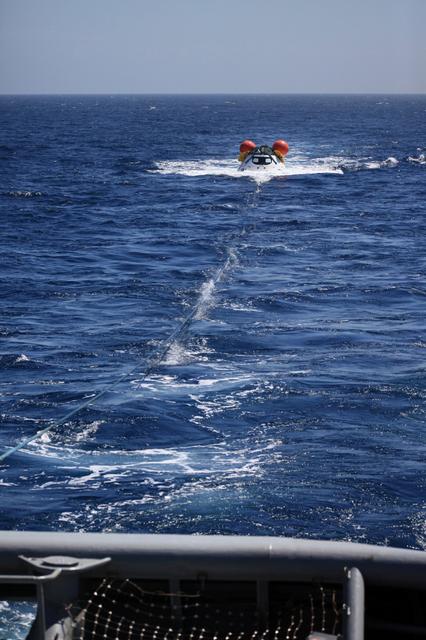
Orion recovery training and operations continue in the Pacific Ocean on Sept. 14, 2014. NASA and the Navy team on board the USS Salvor are evaluating procedures for pulling a test version of the spacecraft out of the ocean using the ship's crane. Part of Batch image transfer from Flickr.
Orion recovery training and operations continue in the Pacific Ocean on Sept. 14, 2014. NASA and the Navy team on board the USS Salvor are evaluating procedures for pulling a test version of the spacecraft out of the ocean using the ship's crane. Part of Batch image transfer from Flickr.
Orion recovery training and operations continue in the Pacific Ocean on Sept. 14, 2014. NASA and the Navy team on board the USS Salvor are evaluating procedures for pulling a test version of the spacecraft out of the ocean using the ship's crane. Part of Batch image transfer from Flickr.
Orion recovery training and operations continue in the Pacific Ocean on Sept. 14, 2014. NASA and the Navy team on board the USS Salvor are evaluating procedures for pulling a test version of the spacecraft out of the ocean using the ship's crane. Part of Batch image transfer from Flickr.
Orion recovery training and operations continue in the Pacific Ocean on Sept. 14, 2014. NASA and the Navy team on board the USS Salvor are evaluating procedures for pulling a test version of the spacecraft out of the ocean using the ship's crane. Part of Batch image transfer from Flickr.
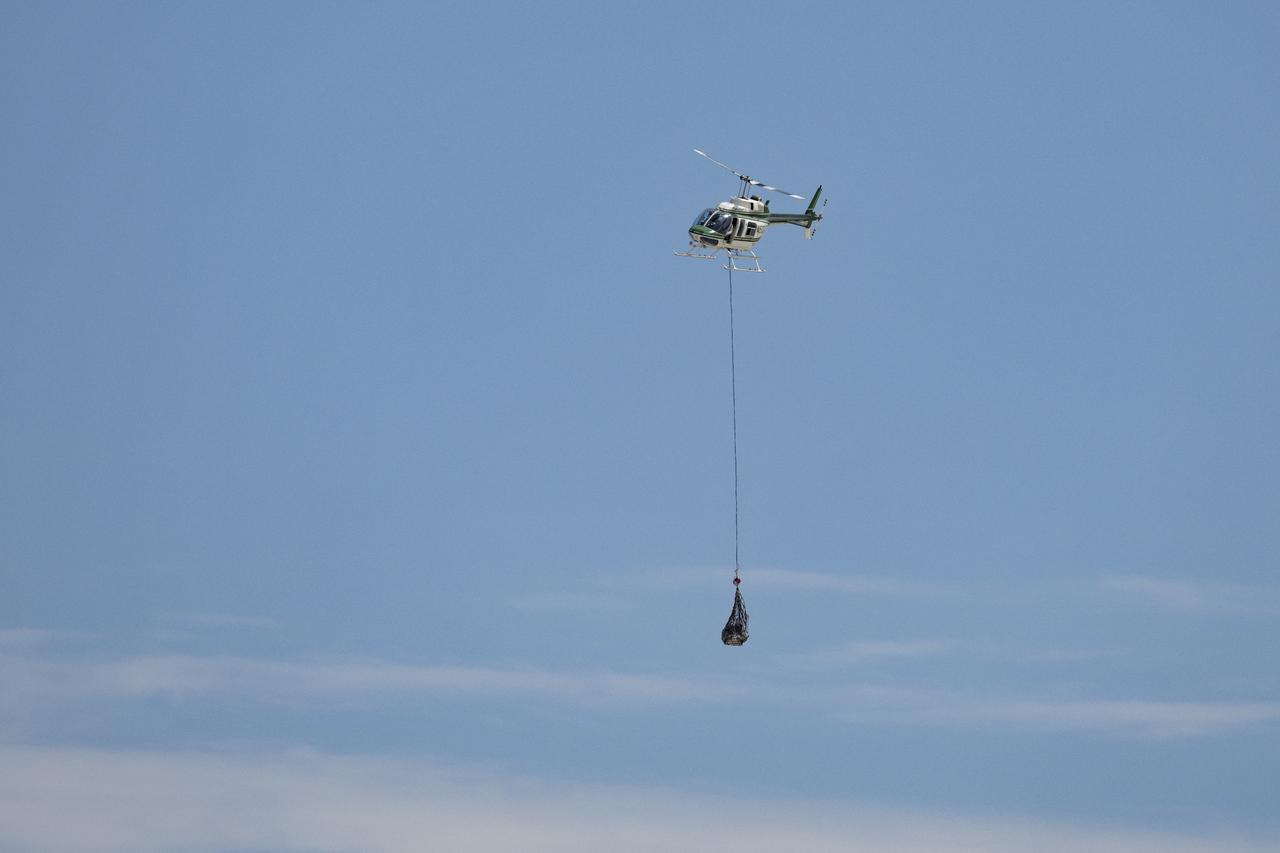
Recovery teams participate in helicopter training in preparation for the retrieval of the sample return capsule from NASA's OSIRIS-REx mission, Wednesday, July 19, 2023, at the Department of Defense's Utah Test and Training Range. The sample was collected from the asteroid Bennu in October 2020 by NASA’s OSIRIS-REx spacecraft and will return to Earth on September 24th, landing under parachute at the Utah Test and Training Range. Photo Credit: (NASA/Keegan Barber)
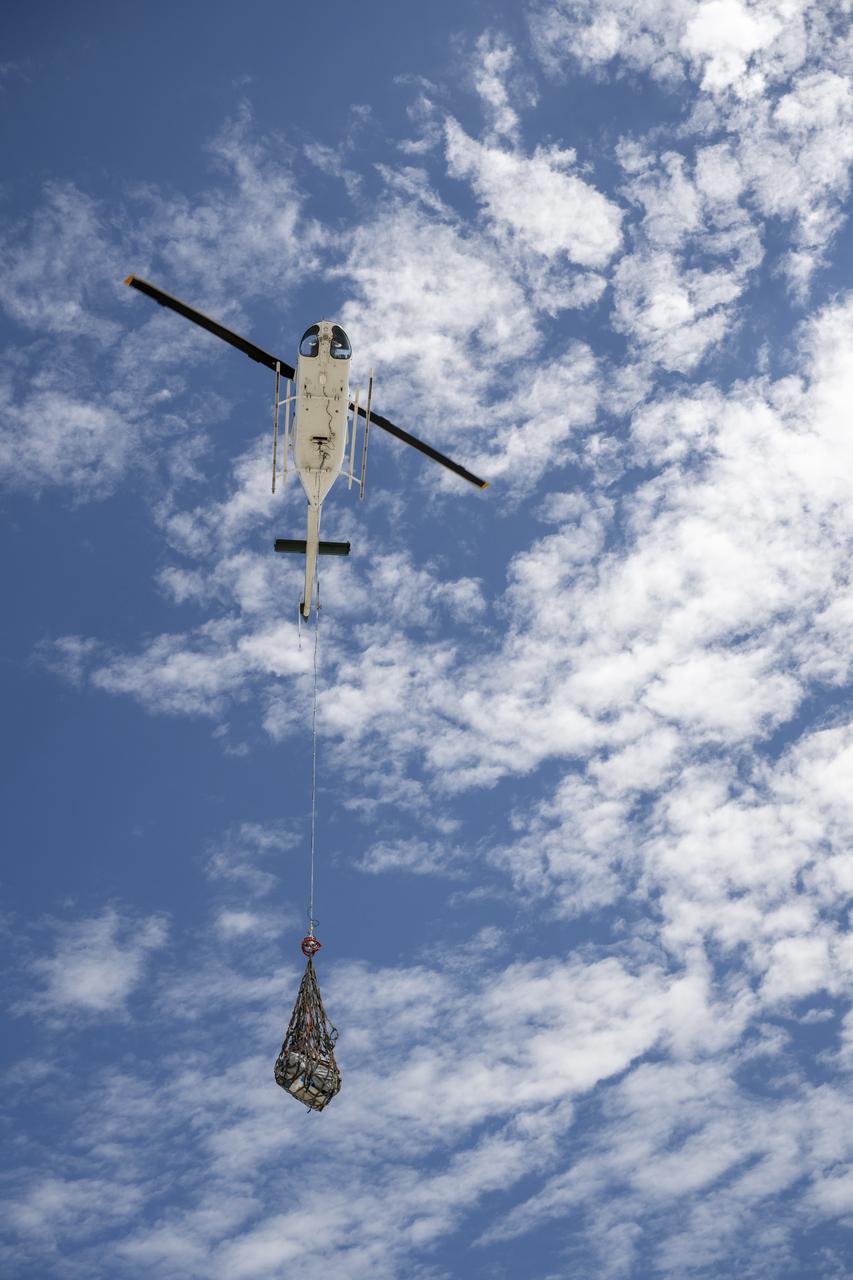
Recovery teams participate in helicopter training in preparation for the retrieval of the sample return capsule from NASA's OSIRIS-REx mission, Wednesday, July 19, 2023, at the Department of Defense's Utah Test and Training Range. The sample was collected from the asteroid Bennu in October 2020 by NASA’s OSIRIS-REx spacecraft and will return to Earth on September 24th, landing under parachute at the Utah Test and Training Range. Photo Credit: (NASA/Keegan Barber)
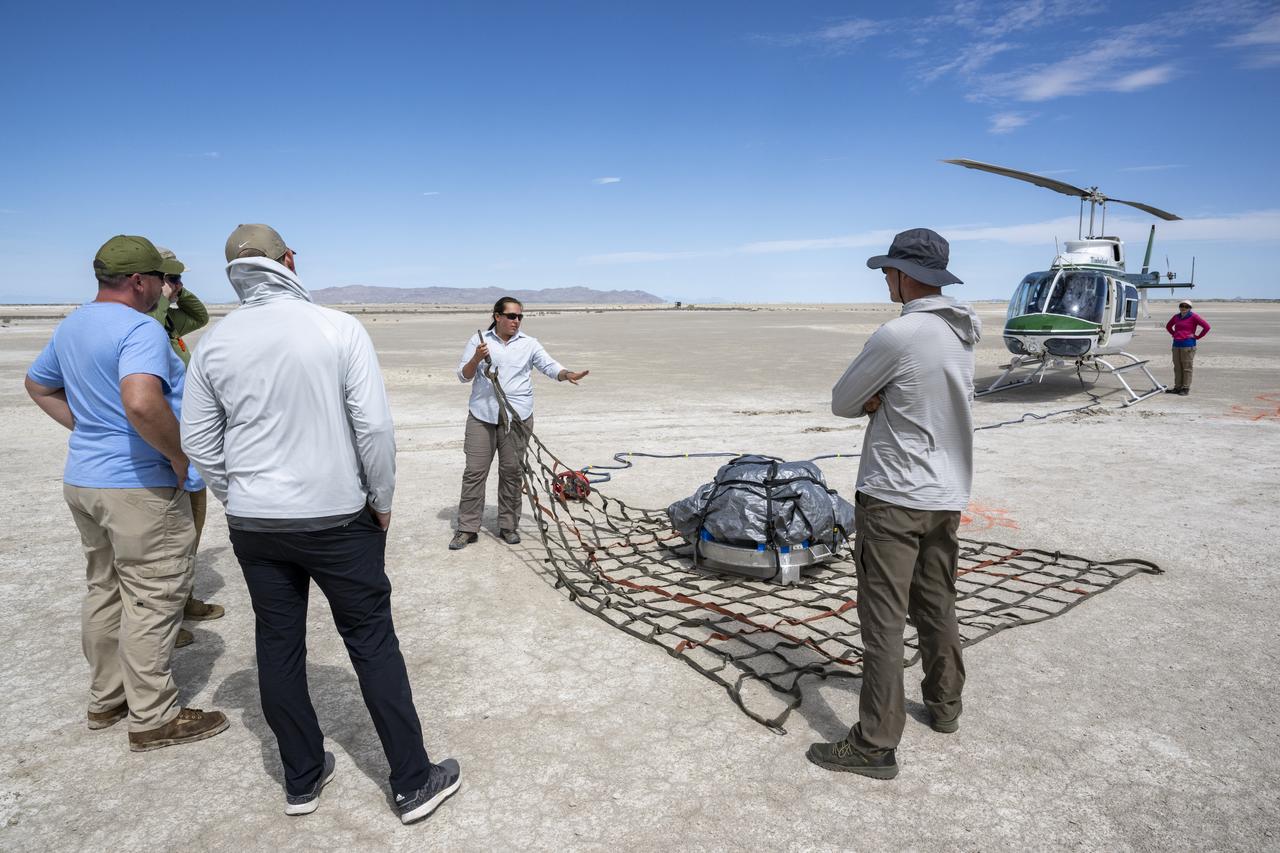
Recovery teams participate in helicopter training in preparation for the retrieval of the sample return capsule from NASA's OSIRIS-REx mission, Wednesday, July 19, 2023, at the Department of Defense's Utah Test and Training Range. The sample was collected from the asteroid Bennu in October 2020 by NASA’s OSIRIS-REx spacecraft and will return to Earth on September 24th, landing under parachute at the Utah Test and Training Range. Photo Credit: (NASA/Keegan Barber)
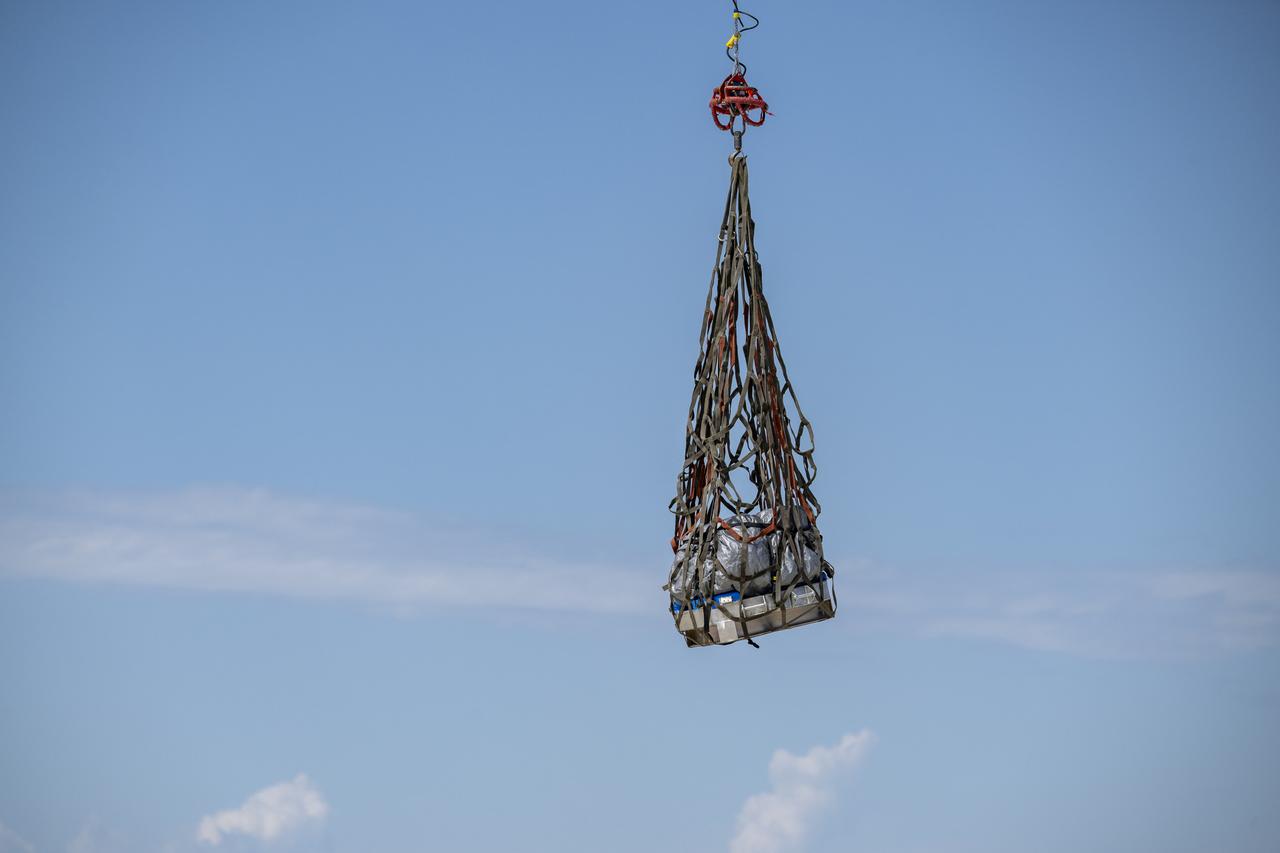
Recovery teams participate in helicopter training in preparation for the retrieval of the sample return capsule from NASA's OSIRIS-REx mission, Wednesday, July 19, 2023, at the Department of Defense's Utah Test and Training Range. The sample was collected from the asteroid Bennu in October 2020 by NASA’s OSIRIS-REx spacecraft and will return to Earth on September 24th, landing under parachute at the Utah Test and Training Range. Photo Credit: (NASA/Keegan Barber)
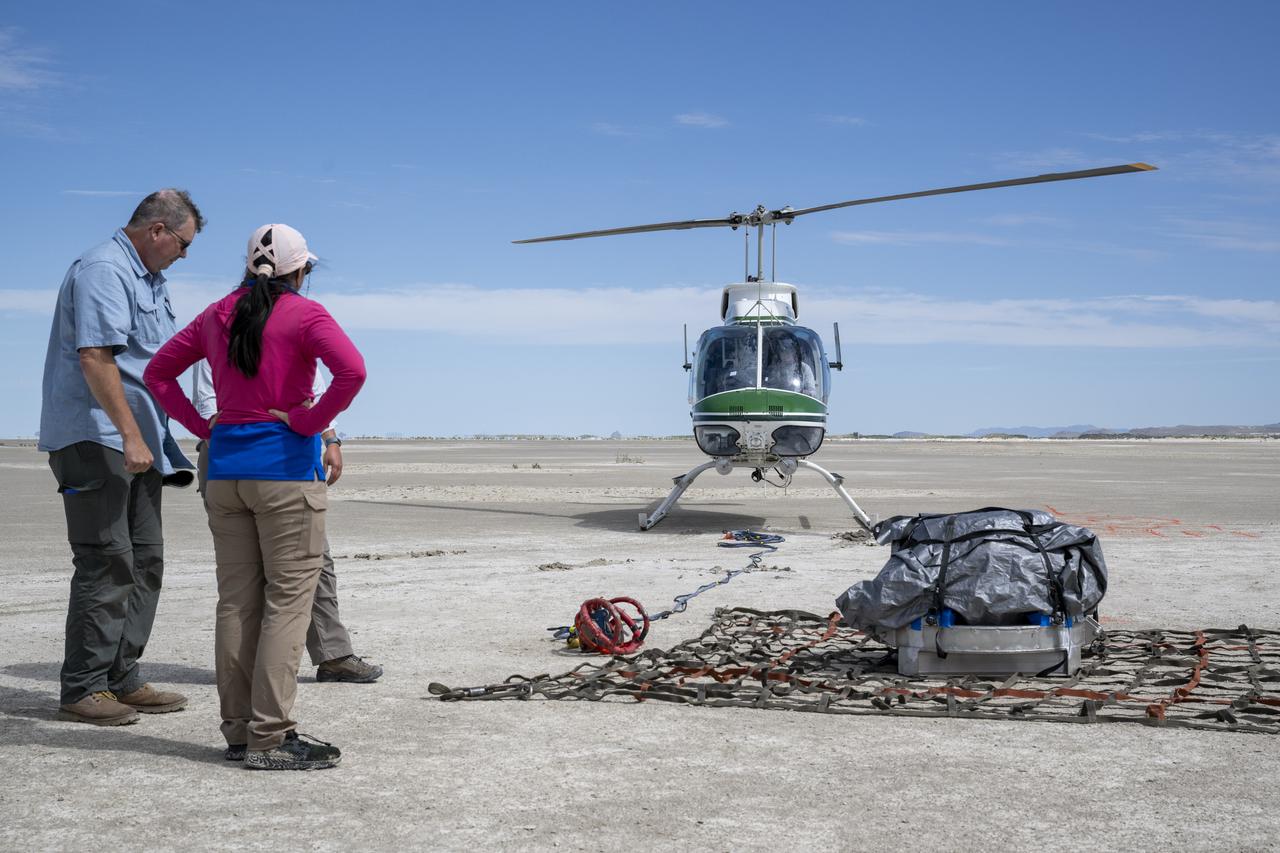
Recovery teams participate in helicopter training in preparation for the retrieval of the sample return capsule from NASA's OSIRIS-REx mission, Wednesday, July 19, 2023, at the Department of Defense's Utah Test and Training Range. The sample was collected from the asteroid Bennu in October 2020 by NASA’s OSIRIS-REx spacecraft and will return to Earth on September 24th, landing under parachute at the Utah Test and Training Range. Photo Credit: (NASA/Keegan Barber)
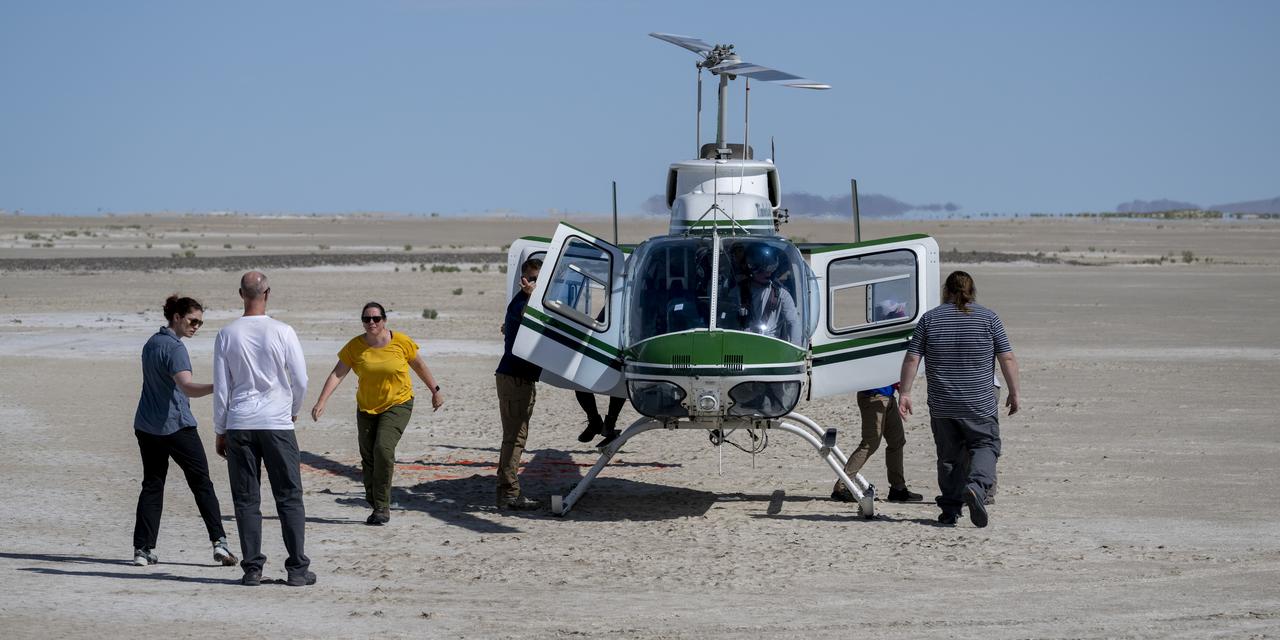
Recovery teams participate in helicopter training in preparation for the retrieval of the sample return capsule from NASA's OSIRIS-REx mission, Wednesday, July 19, 2023, at the Department of Defense's Utah Test and Training Range. The sample was collected from the asteroid Bennu in October 2020 by NASA’s OSIRIS-REx spacecraft and will return to Earth on September 24th, landing under parachute at the Utah Test and Training Range. Photo Credit: (NASA/Keegan Barber)
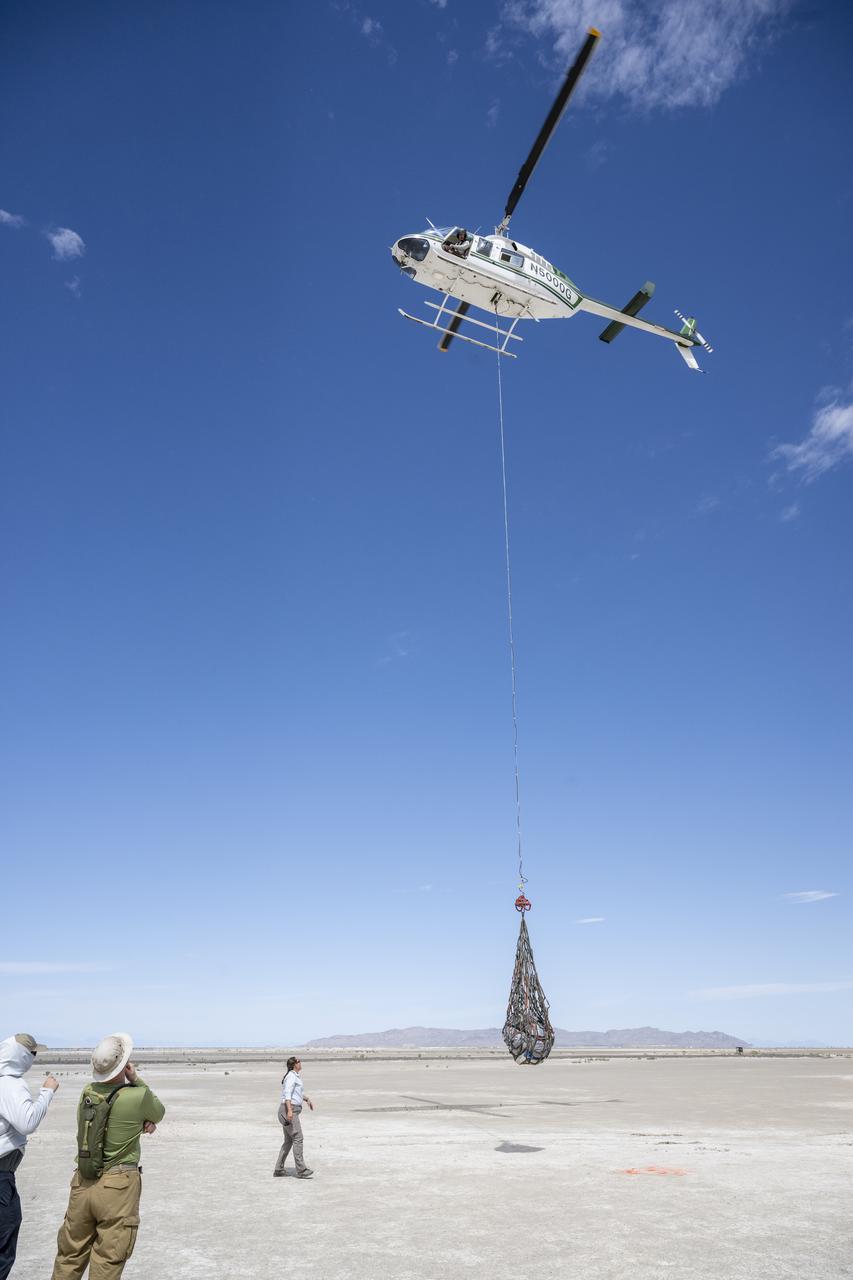
Recovery teams participate in helicopter training in preparation for the retrieval of the sample return capsule from NASA's OSIRIS-REx mission, Wednesday, July 19, 2023, at the Department of Defense's Utah Test and Training Range. The sample was collected from the asteroid Bennu in October 2020 by NASA’s OSIRIS-REx spacecraft and will return to Earth on September 24th, landing under parachute at the Utah Test and Training Range. Photo Credit: (NASA/Keegan Barber)
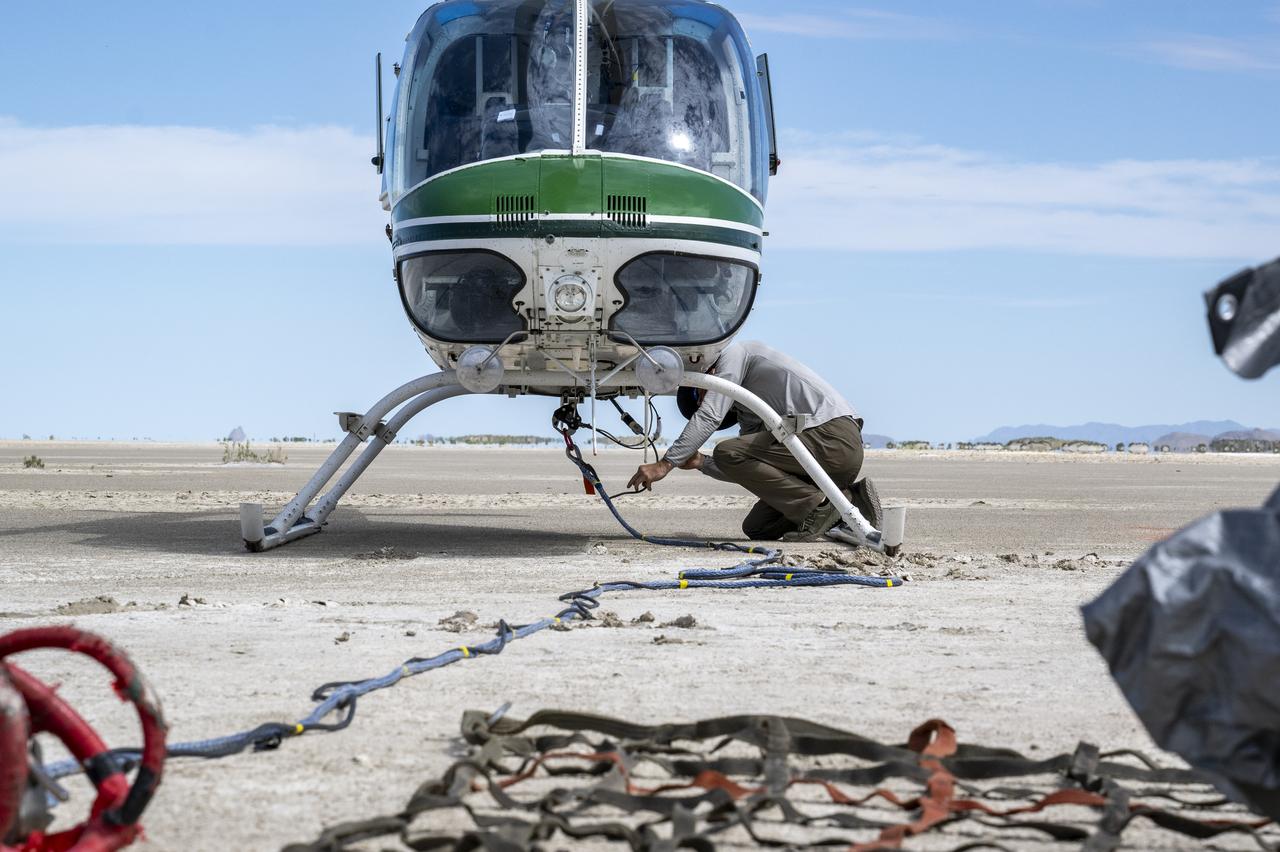
Recovery teams participate in helicopter training in preparation for the retrieval of the sample return capsule from NASA's OSIRIS-REx mission, Wednesday, July 19, 2023, at the Department of Defense's Utah Test and Training Range. The sample was collected from the asteroid Bennu in October 2020 by NASA’s OSIRIS-REx spacecraft and will return to Earth on September 24th, landing under parachute at the Utah Test and Training Range. Photo Credit: (NASA/Keegan Barber)
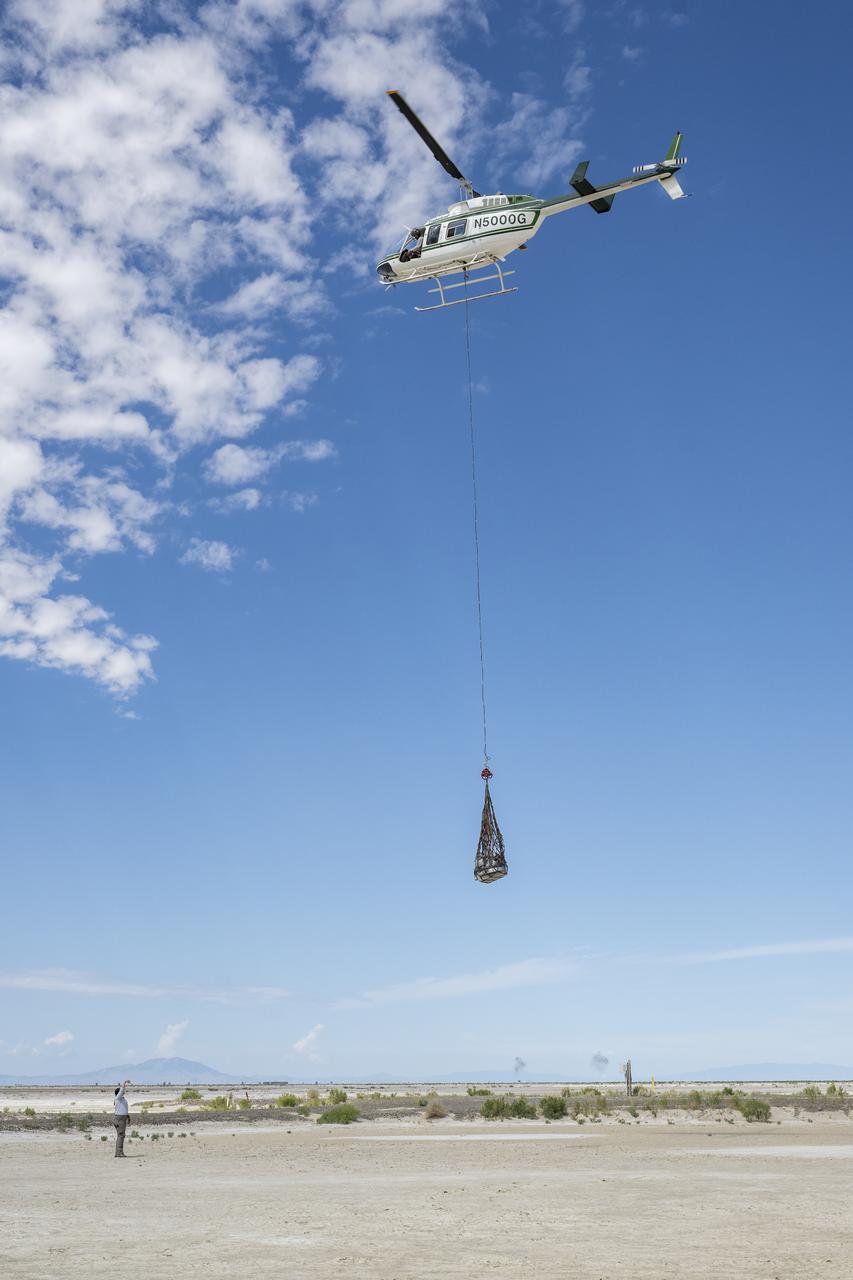
Recovery teams participate in helicopter training in preparation for the retrieval of the sample return capsule from NASA's OSIRIS-REx mission, Wednesday, July 19, 2023, at the Department of Defense's Utah Test and Training Range. The sample was collected from the asteroid Bennu in October 2020 by NASA’s OSIRIS-REx spacecraft and will return to Earth on September 24th, landing under parachute at the Utah Test and Training Range. Photo Credit: (NASA/Keegan Barber)
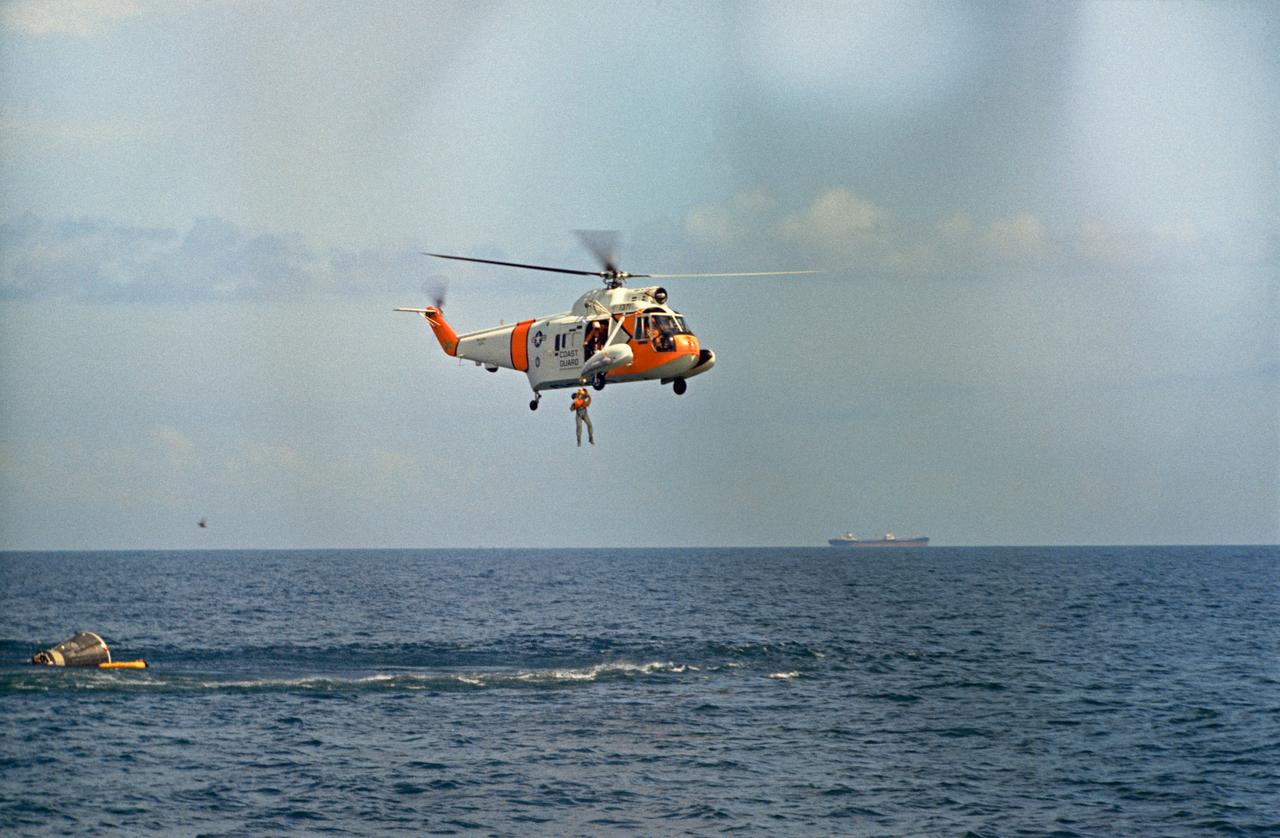
S65-55565 (15 Oct. 1965) --- Astronaut Frank Borman, Gemini-7 prime crew command pilot, is hoisted out of the water by a U.S. Coast Guard recovery team during water egress training in the Gulf of Mexico. The training is in preparation for the planned 14-day mission in space of the Gemini-7 spacecraft. Astronaut James A. Lovell Jr., prime crew pilot, also took part in the training. Photo credit: NASA
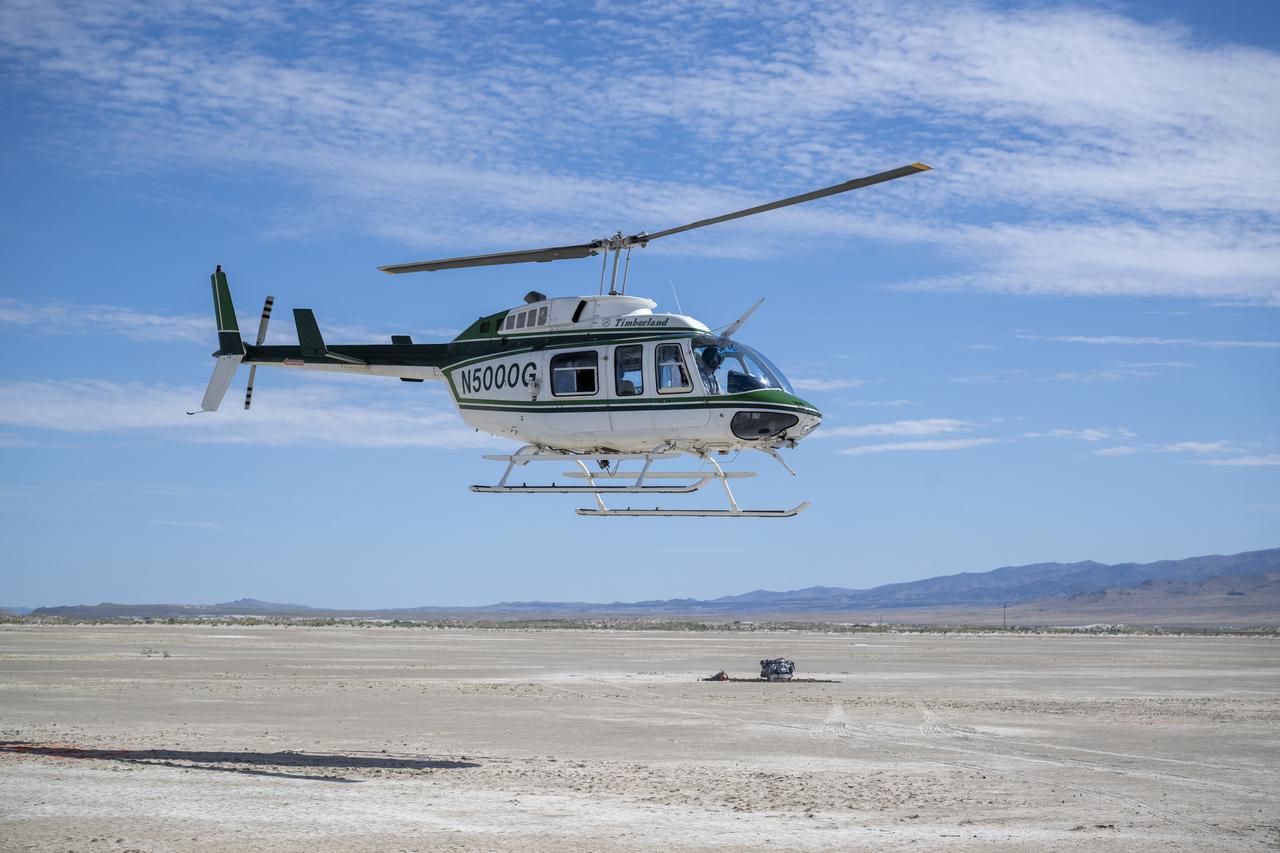
Recovery teams participate in helicopter training in preparation for the retrieval of the sample return capsule from NASA's OSIRIS-REx mission, Wednesday, July 19, 2023, at the Department of Defense's Utah Test and Training Range. The sample was collected from the asteroid Bennu in October 2020 by NASA’s OSIRIS-REx spacecraft and will return to Earth on September 24th, landing under parachute at the Utah Test and Training Range. Photo Credit: (NASA/Keegan Barber)
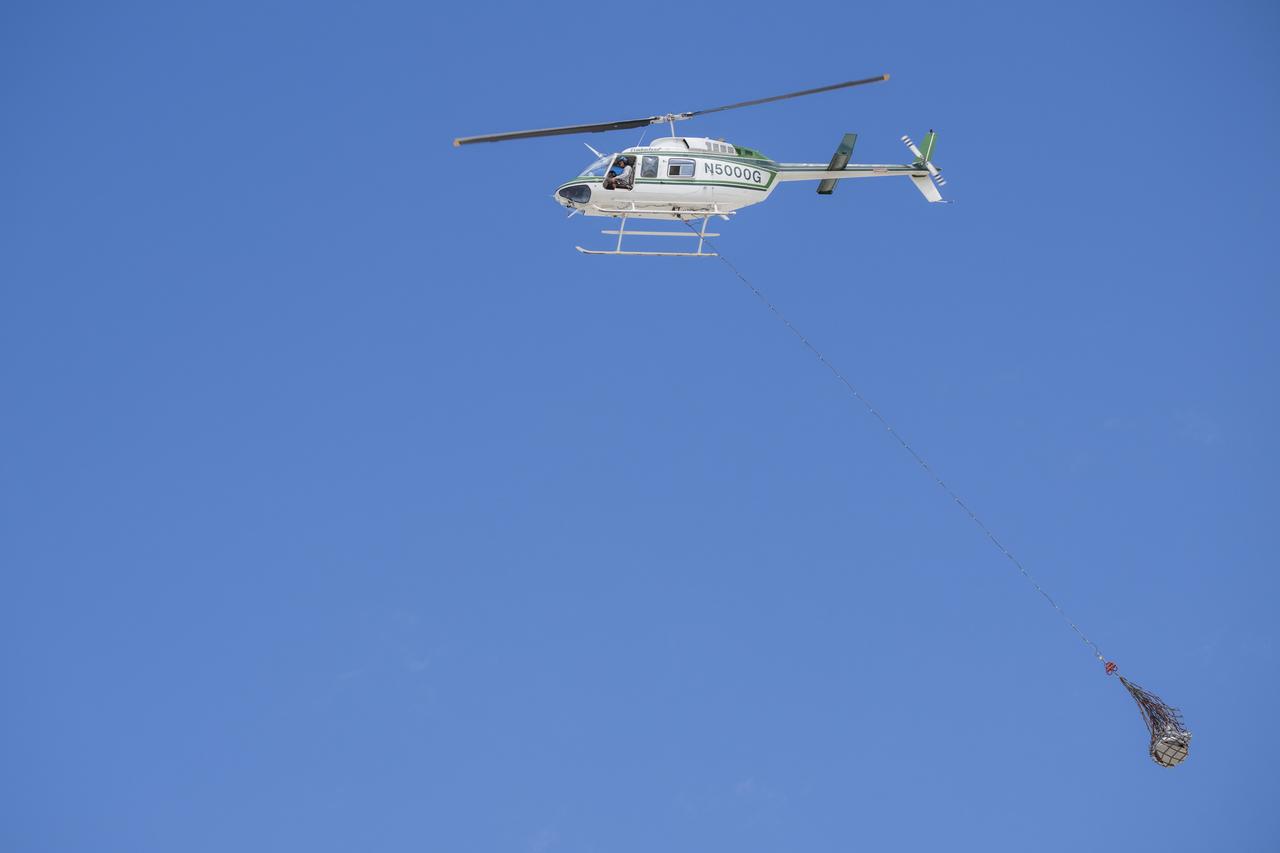
Recovery teams participate in helicopter training in preparation for the retrieval of the sample return capsule from NASA's OSIRIS-REx mission, Wednesday, July 19, 2023, at the Department of Defense's Utah Test and Training Range. The sample was collected from the asteroid Bennu in October 2020 by NASA’s OSIRIS-REx spacecraft and will return to Earth on September 24th, landing under parachute at the Utah Test and Training Range. Photo Credit: (NASA/Keegan Barber)
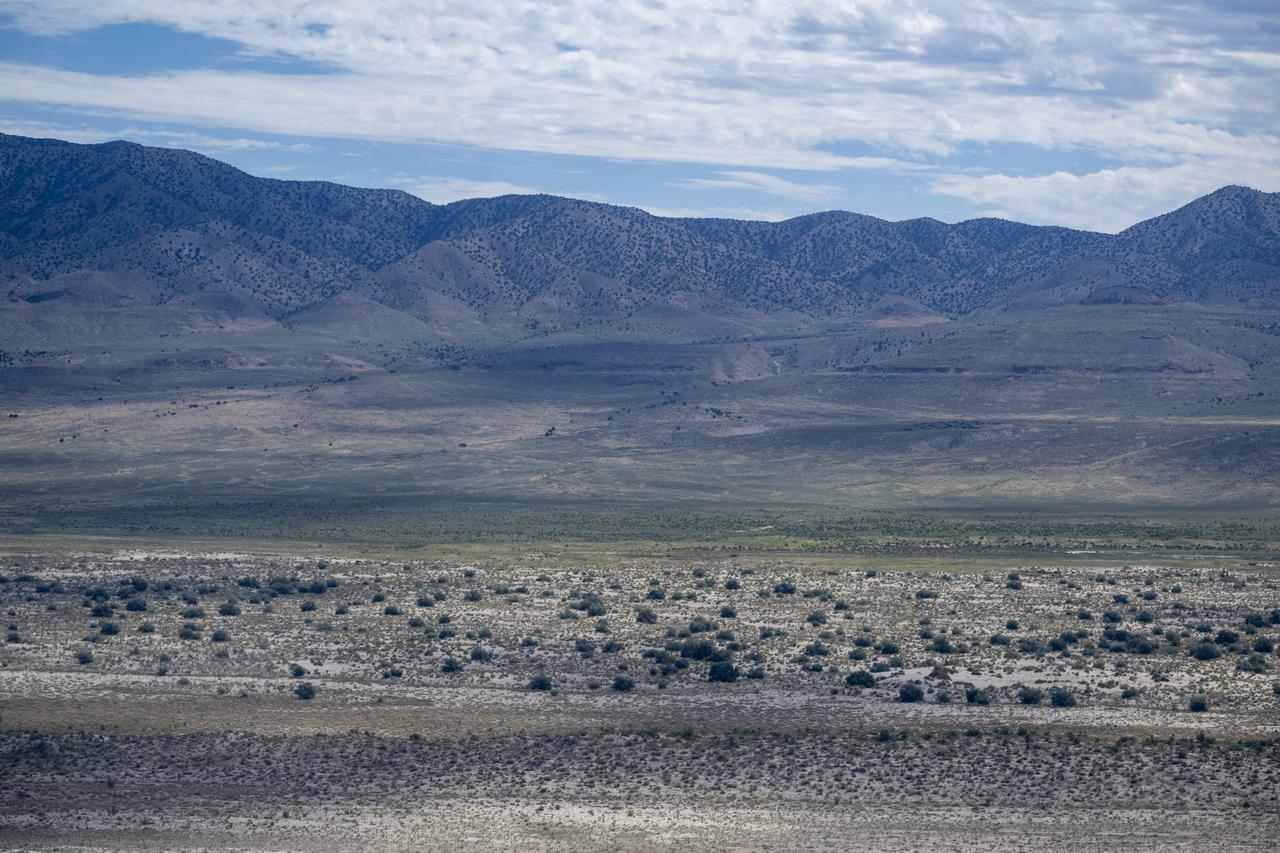
The Department of Defense's Utah Test and Training Range is seen from the cockpit of a helicopter, Wednesday, July 19, 2023, as recovery teams participate in helicopter training in preparation for the retrieval of the sample return capsule from NASA's OSIRIS-REx mission. The sample was collected from the asteroid Bennu in October 2020 by NASA’s OSIRIS-REx spacecraft and will return to Earth on September 24th, landing under parachute at the Utah Test and Training Range. Photo Credit: (NASA/Keegan Barber)
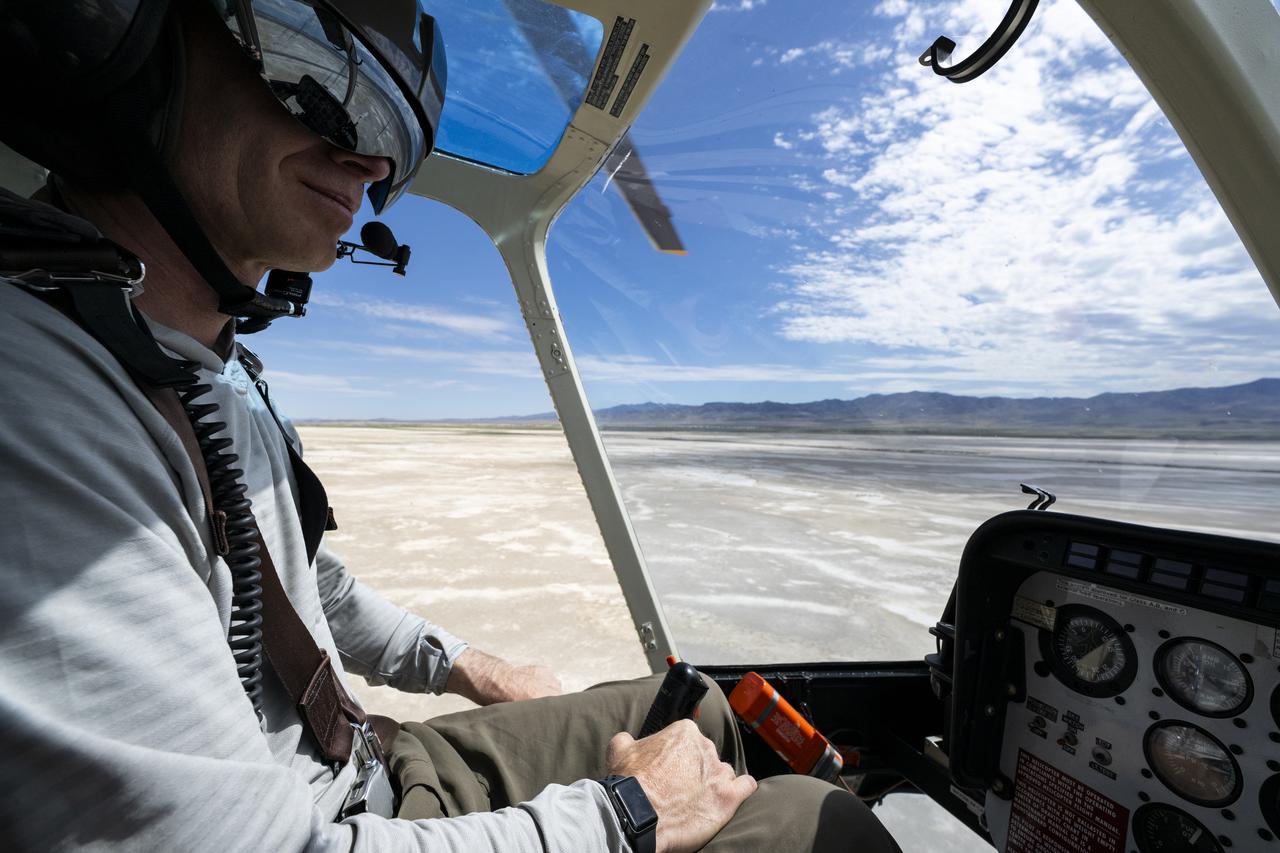
The Department of Defense's Utah Test and Training Range is seen from the cockpit of a helicopter, Wednesday, July 19, 2023, as recovery teams participate in helicopter training in preparation for the retrieval of the sample return capsule from NASA's OSIRIS-REx mission. The sample was collected from the asteroid Bennu in October 2020 by NASA’s OSIRIS-REx spacecraft and will return to Earth on September 24th, landing under parachute at the Utah Test and Training Range. Photo Credit: (NASA/Keegan Barber)
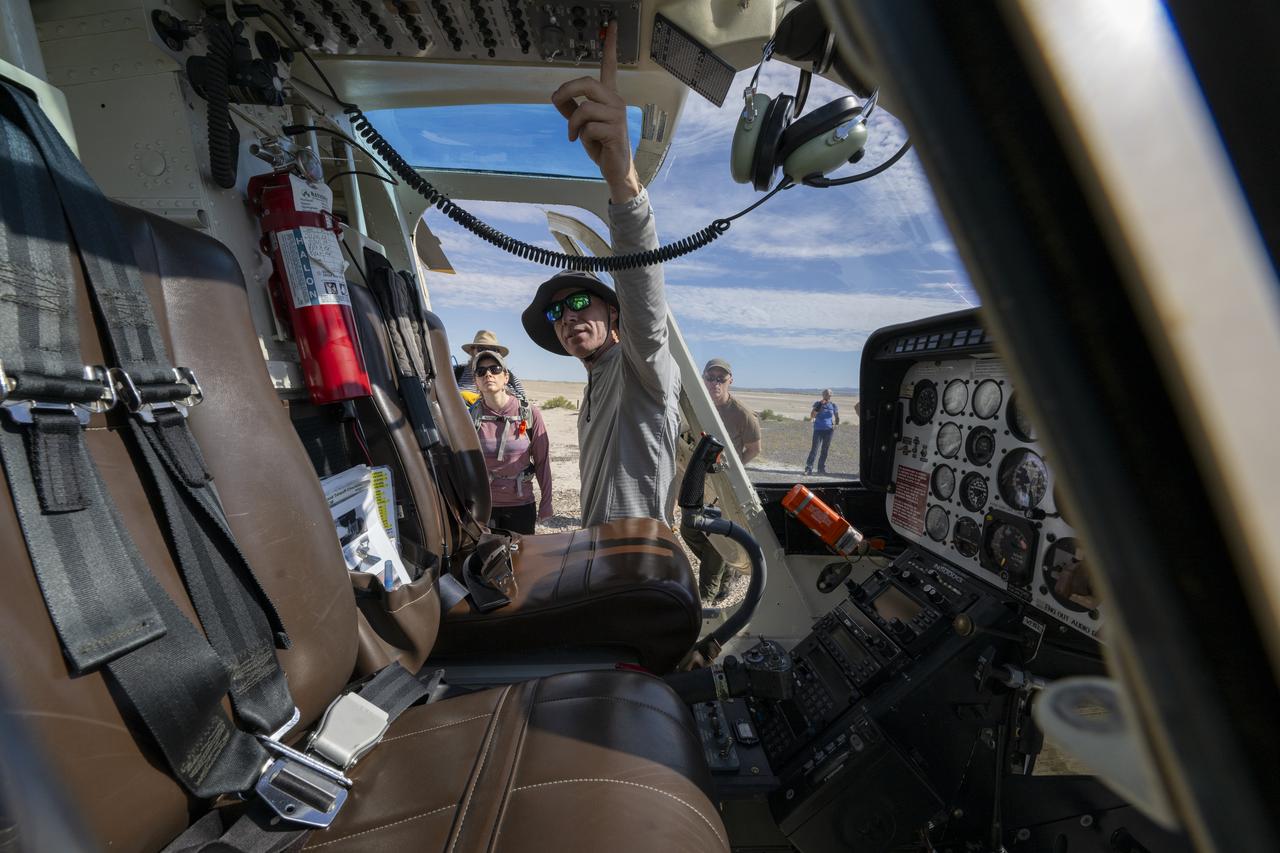
Recovery teams participate in helicopter training in preparation for the retrieval of the sample return capsule from NASA's OSIRIS-REx mission, Wednesday, July 19, 2023, at the Department of Defense's Utah Test and Training Range. The sample was collected from the asteroid Bennu in October 2020 by NASA’s OSIRIS-REx spacecraft and will return to Earth on September 24th, landing under parachute at the Utah Test and Training Range. Photo Credit: (NASA/Keegan Barber)
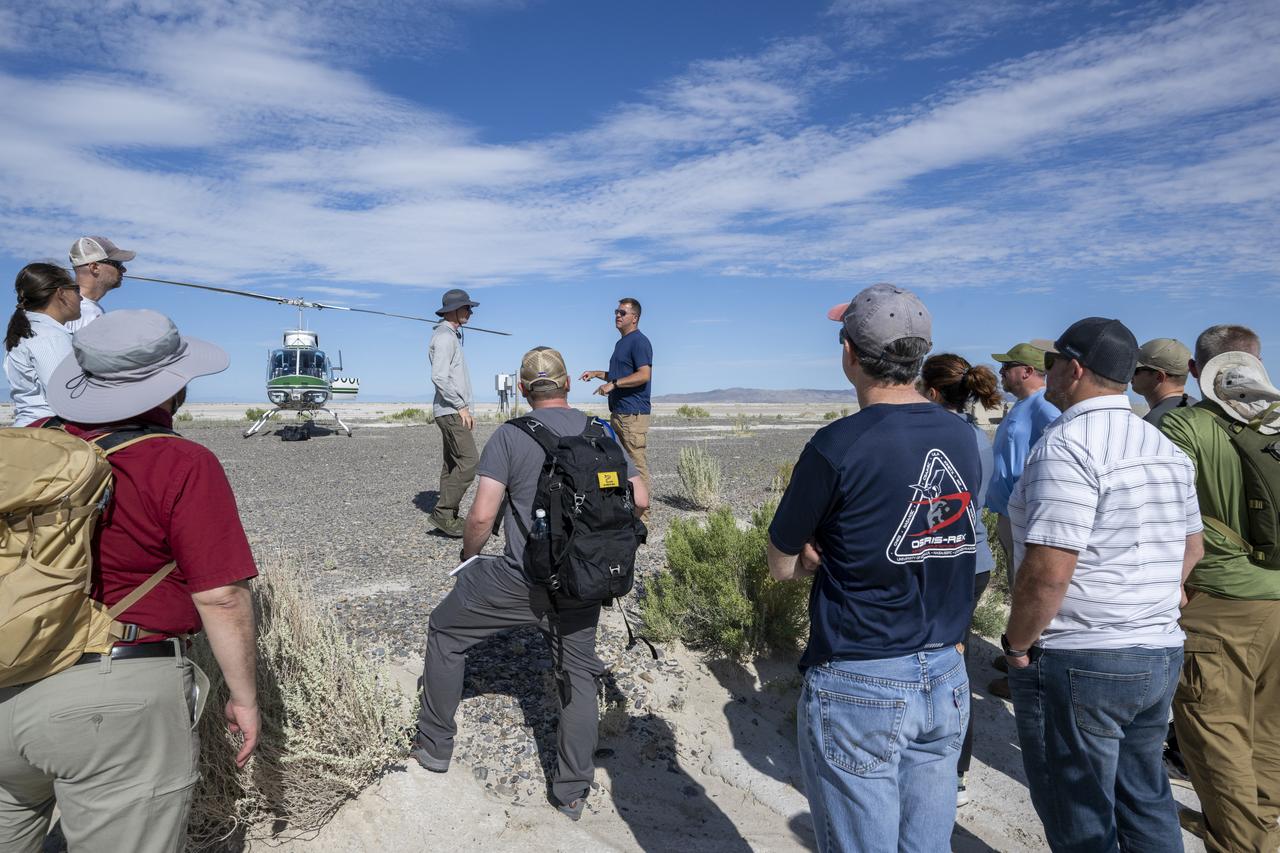
Recovery teams participate in helicopter training in preparation for the retrieval of the sample return capsule from NASA's OSIRIS-REx mission, Wednesday, July 19, 2023, at the Department of Defense's Utah Test and Training Range. The sample was collected from the asteroid Bennu in October 2020 by NASA’s OSIRIS-REx spacecraft and will return to Earth on September 24th, landing under parachute at the Utah Test and Training Range. Photo Credit: (NASA/Keegan Barber)
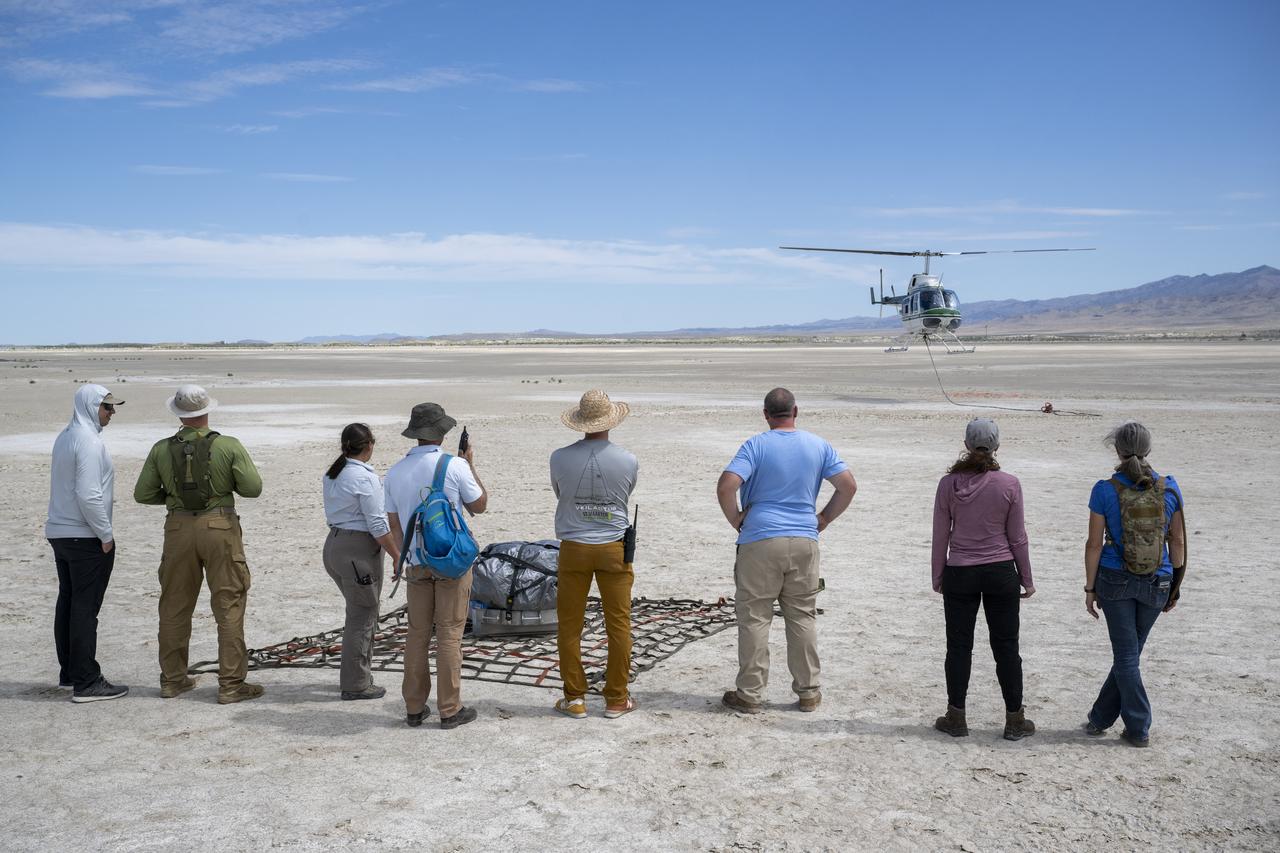
Recovery teams participate in helicopter training in preparation for the retrieval of the sample return capsule from NASA's OSIRIS-REx mission, Wednesday, July 19, 2023, at the Department of Defense's Utah Test and Training Range. The sample was collected from the asteroid Bennu in October 2020 by NASA’s OSIRIS-REx spacecraft and will return to Earth on September 24th, landing under parachute at the Utah Test and Training Range. Photo Credit: (NASA/Keegan Barber)
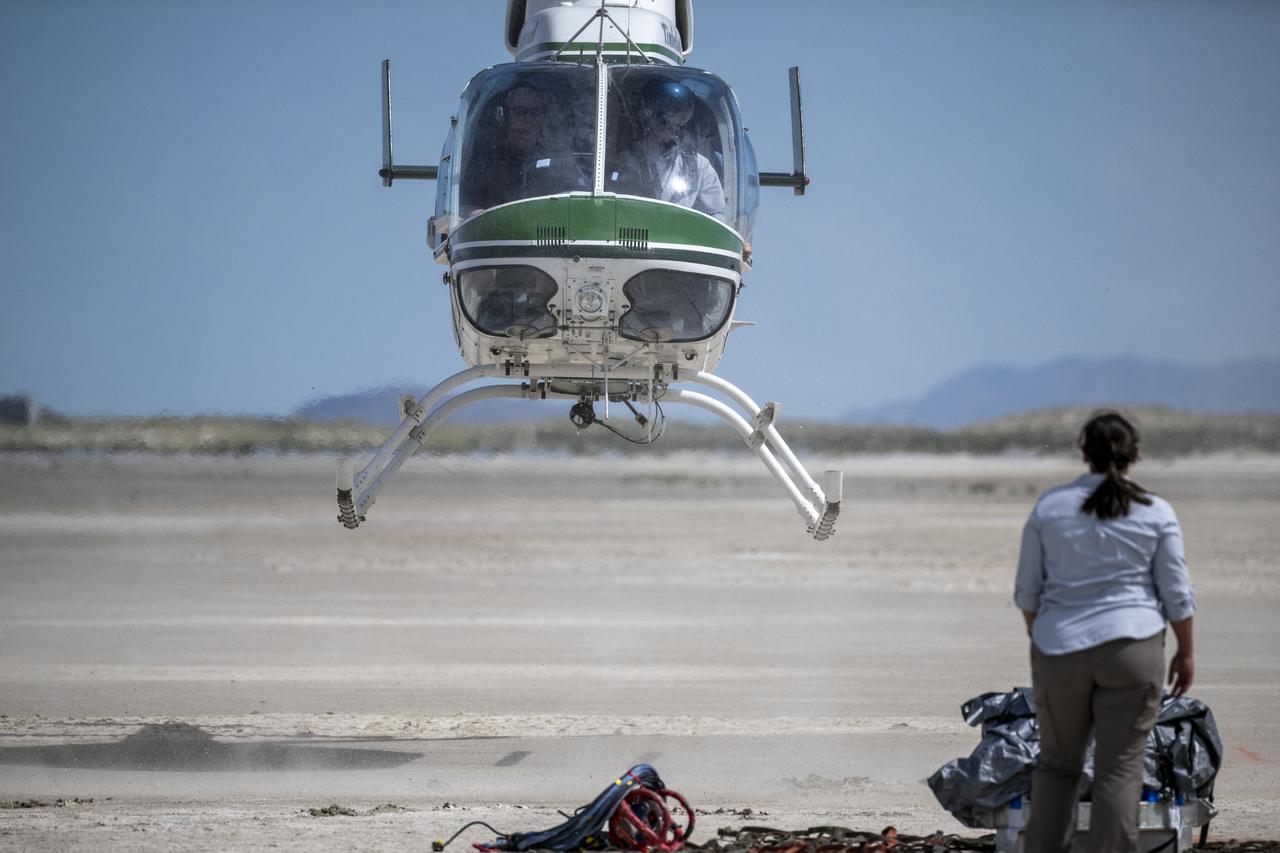
Recovery teams participate in helicopter training in preparation for the retrieval of the sample return capsule from NASA's OSIRIS-REx mission, Wednesday, July 19, 2023, at the Department of Defense's Utah Test and Training Range. The sample was collected from the asteroid Bennu in October 2020 by NASA’s OSIRIS-REx spacecraft and will return to Earth on September 24th, landing under parachute at the Utah Test and Training Range. Photo Credit: (NASA/Keegan Barber)
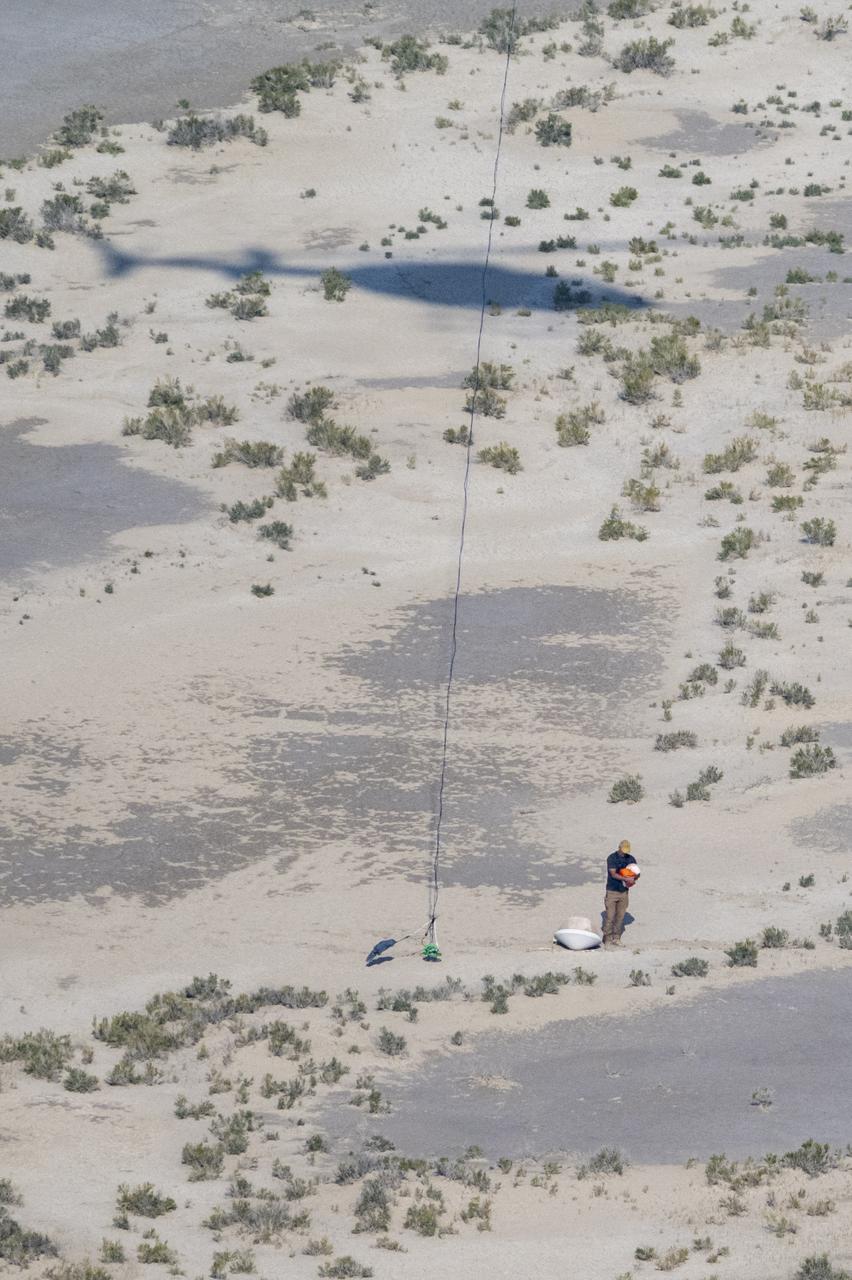
A recovery team member is seen with the training model of the sample return capsule following a drop test in preparation for the retrieval of the sample return capsule from NASA's OSIRIS-REx mission, Wednesday, Aug. 30, 2023, at the Department of Defense's Utah Test and Training Range. The sample was collected from asteroid Bennu in October 2020 by NASA’s OSIRIS-REx spacecraft and will return to Earth on September 24th, landing under parachute at the Utah Test and Training Range. Photo Credit: (NASA/Keegan Barber)